Home Posts tagged Restaurants (Page 12)
Departments

Liberty Mutual Receives Tax Incentive

SPRINGFIELD — Liberty Mutual Insurance Co. and its new customer-service center have been approved for tax incentives by the state Economic Assistance Coordinating Council. The new center, located in the Springfield Technical Community College Technology Park on Federal Street, has 124 employees. To qualify for the tax incentives, it must hire an additional 164 workers. The tax savings for the first year in fiscal year 2010 is expected to be $50,000, based on a 50% exemption on the new growth in the property’s value. Under a five-year approved plan, the exemption will decline by 10% each year, from 50% in fiscal year 2010 to a final-year exemption of 10% in fiscal 2014. Liberty Mutual is expected to invest $6 million in the project.

Pioneer Valley Tourism Guide Has New Format

SPRINGFIELD — The Greater Springfield Convention and Visitors Bureau (GSCVB) has published the 2009-2010 Guide to Massachusetts’ Pioneer Valley, which is now available free to potential visitors to the region, as well as local residents. The guide has been restyled as a more-portable, 5-inch by 8-inch, 98-page, four-color, glossy magazine. Guide highlights include information on the region’s top attractions, accommodations, and restaurants, all of which are GSCVB members. The guide also features useful maps of the downtown areas of Springfield, Amherst, and Northampton, and was designed by Design & Advertising Associates of Springfield and printed by Dynagraph in Canton. For more information on the tourism guide, call (413) 755-1351 or (800) 723-1548, or log onto www.valleyvisitor.com.

Business Confidence Rises Slightly in April

BOSTON — The Associated Industries of Mass. (AIM) Business Confidence Index added 1.9 points to 35.4 in April, its second consecutive monthly rise following February’s historic low of 33.3. Though two small gains barely constitute a trend, AIM officials have been seeing signs in its survey since February that the economic decline — now the longest of the post-World War II era — could bottom out soon, according to Raymond G. Torto, global chief economist at CB Richard Ellis Group Inc. Torto also serves as chair of AIM’s board of economic advisors. The index, which is based on a 100-point scale on which 50 is neutral, was down 14.7 points from April 2008, when it recorded its last ‘positive’ reading (50.1). The past five months have produced the five worst readings since the index was initiated in July 1991.

Foreclosures Remained at Record Levels in April

NEW YORK — RealtyTrac, an online marketplace for foreclosure properties, recently released its April 2009 U.S. Foreclosure Market Report, which shows foreclosure filings — default notices, auction-sale notices, and bank repossessions — were reported on 342,038 U.S. properties during the month, an increase of less than 1% from the previous month and an increase of 32% from April 2008. The report also shows that one in every 374 U.S. housing units received a foreclosure filing in April, the highest monthly foreclosure rate ever posted since RealtyTrac began issuing its report in January 2005. Total foreclosure activity in April ended up slightly above the previous month, once again hitting a record-high level, according to James J. Saccacio, chief executive officer of RealtyTrac. Saccacio added that much of this activity is at the initial stages of foreclosure — the default and auction stages — while bank repossessions, or REOs, were down on a monthly and annual basis to their lowest level since March 2008. Saccacio noted that this trend suggests that many lenders and servicers are beginning foreclosure proceedings on delinquent loans that had been delayed by legislative and industry moratoria.

Economy Stabilizing Despite Trade Deficit

WASHINGTON — U.S. Commerce Secretary Gary Locke recently reported that U.S. exports decreased by 2.4% to $123.6 billion since February 2009. Imports decreased 1.0% to $151.2 billion. Overall, the trade deficit grew 5.5% during the same time period. Locke noted that the numbers are better than many economists had predicted, and it is worth noting that the trade deficit is half of what it was in the first quarter of 2008. Locke added that, while the country has begun to see a few “promising shoots of green,” there is still much work to be done.

Unemployment Rises to 25-year High

NEW YORK — In the week ending May 9, the advance figure for seasonally adjusted initial unemployment claims was 637,000, an increase of 32,000 from the previous week’s revised figure of 605,000. The four-week moving average was 630,500, an increase of 6,000 from the previous week’s revised average of 624,500. The advance seasonally adjusted insured unemployment rate was 4.9% for the week ending May 2, an increase of 0.1 percentage point from the prior week’s unrevised rate of 4.8%. The fiscal year-to-date average for seasonally adjusted insured unemployment for all programs is 5.01 million. The advance number of actual initial claims under state programs, unadjusted, totaled 565,395 in the week ending May 9, an increase of 27,856 from the previous week. There were 325,480 initial claims in the comparable week in 2008. The advance unadjusted insured unemployment rate was 4.6% during the week ending May 2, a decrease of 0.1 percentage point from the prior week. The advance unadjusted number for persons claiming UI benefits in state programs totaled 6,166,785, a decrease of 95,837 from the preceding week. A year earlier, the rate was 2.1%, and the volume was 2,845,952. Extended benefits were available in Alaska, Arizona, Arkansas, California, Connecticut, the District of Columbia, Idaho, Illinois, Indiana, Kentucky, Maine, Massachusetts, Michigan, Minnesota, Montana, Nevada, New Jersey, North Carolina, Ohio, Oregon, Pennsylvania, Puerto Rico, Rhode Island, South Carolina, Vermont, Washington, and Wisconsin during the week ending April 25. The highest insured unemployment rates in the week ending April 25 were in Michigan (7.8%), Oregon (7.5%), Pennsylvania (6.5%), Wisconsin (6.4%), Nevada (6.3%), Idaho (6.1%), Puerto Rico (5.9%), Vermont (5.8%), Alaska (5.7%), and Rhode Island (5.7%). The largest increases in initial claims for the week ending May 2 were in Illinois (2,052), Kansas (2,025), Puerto Rico (1,781), Indiana (1,051), and Ohio (1,013), with the largest decreases in New York (13,386), Michigan (10,952), North Carolina (8,988), Massachusetts (3,705), and Connecticut (2,802).

Departments

Business Market Show

May 13: The Affiliated Chambers of Commerce of Greater Springfield Inc. will showcase the products and services of some 200 regional businesses at the 2009 Business Market Show Conference and Exhibition at the MassMutual Center in Springfield. The seventh annual Taste the Market will also be conducted during the show, featuring food prepared by restaurants and caterers chosen and sponsored by participating exhibitors. The day begins at 7:15 a.m. with the May Breakfast Club, featuring speaker Gov. Deval Patrick, who will share his insights on the state’s upcoming fiscal year as well as some of the current initiatives of his administration. Doors to the show will open following the breakfast at 9 a.m. In addition, there will be a host of free business seminars offered throughout the day. A complete schedule of seminars and exhibitors can be found at www.businessmarketshow.com. A microbrew tasting given by Azon Liquors is planned from noon to 2 p.m., and the Taste the Market will be conducted from 3 to 5 p.m. The conference and exhibition ends at 5 p.m.

World’s Largest Pancake Breakfast

May 16: Springfield’s annual breakfast of hot, hearty pancakes will be served by hundreds of volunteers from 8 to 11 a.m. on Main Street to celebrate the city’s 373rd birthday. The family-friendly event includes breakfast, entertainment and interactive activities. Tickets cost $1 for children, $3 for adults, and are free to area students with a complimentary ticket distributed through area school systems. For more information, visit www.spiritofspringfield.org.

Brown Bag Lunch Series

May 21: Amherst-based Marigold Fund founder Gary Moorehead will present a lecture titled “Afghanistan Lives and Labor” at noon at One Financial Plaza Community Room, third floor, 1350 Main St., Springfield. The lecture, part of the Instant Issues Brown Bag Lunch Series, is sponsored by the World Affairs Council of Western Mass. Moorehead has lived in Afghanistan since 2003, founding Marigold Fund in 2004. Until 2008, he worked as a program manager on projects funded by the U.S. State Department and others, building schools and homes for returning refugees. The cost of the lecture is $8 (bring a lunch) or $15 (tuna, turkey, or vegetarian sandwich). Reservations must be made by calling (413) 733-0110.

Estate Planning Workshops for Parents

May 27, June 3: Attorney David K. Webber of Shatz, Schwartz and Fentin, P.C., with offices in Springfield and Northampton, will present two free workshops titled “Estate Planning Workshops for Parents of Young Children” at the Sunderland Library Community Room, 20 School St. Workshops are planned from 5:30 to 7:30 p.m., and are open to the public. Pre-registered participants will be offered the opportunity to complete a will, health care proxy, and durable power of attorney at a reduced rate. For more information and to register, call (413) 737-1131.

Economic Illusions Lecture

May 28: Edward Guay, principal of Wintonbury Risk Management in Bloomfield, Conn., will present a lecture titled “Recovering from Economic Illusions and Global Credit Shocks” at noon at One Financial Plaza Community Room, third floor, 1350 Main St., Springfield. The lecture, part of the Instant Issues Brown Bag Lunch Series, is sponsored by the World Affairs Council of Western Mass. Guay is a global macro strategist. He has a long history of accurately predicting major shifts in business, financial, and political conditions. Guay specializes in the identification of those forces for change that will shape future events, either gradually or in climactic fashion, causing consensus business, investment, political, or geopolitical strategies to go awry. The cost of the lecture is $8 (bring a lunch) or $15 (tuna, turkey, or vegetarian sandwich). Reservations must be made by calling (413) 733-0110.

Leadership Development & Teambuilding

June 15: SkillPath Seminars will present a daylong conference titled “Leadership Development & Teambuilding” at the Holiday Inn, 711 Dwight St., Springfield. Workshops include: “Developing the Leader within You,” “30 Tips for Becoming an Inspired Leader,” “It All Starts with You … Discover Your Team Player Style,” and “Building a Team That’s a Reflection of You.” Also, “Leadership Mistakes You Don’t Have to Make,” “Light the Fire of Excellence in Your Team,” “Speak So Others Know How to Follow,” “Positive Feedback … the Fuel of High Performance,” “A Team Approach to Dealing with Unacceptable Behavior,” and “What Teams Really Need from Their Leaders.” The conference is targeted for managers, supervisors, team leaders, and team members who would like to learn skills to motivate, inspire, lead, and succeed. The enrollment fee is $199 per person, or $189 each with four or more. For more information, call (800) 873-7545 or visit www.skillpath.com.

Departments

Women’s Professional Development Conference

April 30: Bay Path College in Longmeadow will host the 14th annual Women’s Professional Development Conference from 7:30 a.m. to 4:30 p.m. at the MassMutual Center in downtown Springfield. For more information, call (413) 565-1293 or visit www.baypath.edu.

Auction and Wine/Beer Tasting

May 1: The Chicopee Chamber of Commerce will sponsor its popular Auction and Beer/Wine Tasting at the Castle of Knights on Memorial Drive in Chicopee. Funds raised from the event will benefit local businesses and nonprofit organizations throughout the area. A new feature of the fund-raiser includes a professional appraisal of one antique item from Kimball’s Auction & Estate Services and Hollister Jewelry and Coins. The appraisal is free with the price of admission. Tickets are $20 per person. To reserve tickets, call the chamber office at (413) 594-2101, or visit www.chicopeechamber.org. The general public is invited to attend.

‘Tourism Trends’ Seminar

May 6: The Greater Springfield Convention and Visitors Bureau (GSCVB) and the Greater Hartford Convention & Visitors Bureau (GHCVB) will co-present “Tourism Trends,” a seminar that will examine the future of tourism as well as provide an update in hospitality and travel trends, at noon at the New England Air Museum in Windsor Locks, Conn. Featured speakers will include Maureen O’Hanlon, a senior partner of the Prism Partnership, and Kiran Jain, director of marketing and development at Bradley International Airport. The seminar will begin with a lunch at noon, followed by the presentations. A tour of the New England Air Museum is available following the program. The cost to attend is $12 for GSCVB or GHCVB members, and $20 for non-members. The deadline to register is May 1. For more information, call Alyssa Carvalho, GSCVB membership manager, at (413) 755-1347.

Business Market Show

May 13: The Affiliated Chambers of Commerce of Greater Springfield Inc. will showcase the products and services of some 200 regional businesses at the 2009 Business Market Show Conference and Exhibition at the MassMutual Center in Springfield. The seventh annual Taste the Market will also be conducted during the show, featuring food prepared by restaurants and caterers chosen and sponsored by participating exhibitors. The day begins at 7:15 a.m. with the May Breakfast Club, featuring speaker Gov. Deval Patrick, who will share his insights on the state’s upcoming fiscal year as well as some of the current initiatives of his administration. Doors to the show will open following the breakfast at 9 a.m. In addition, a host of free business seminars will be offered throughout the day. A complete schedule of seminars and exhibitors can be found at www.businessmarketshow.com. A microbrew tasting given by Azon Liquors is planned from noon to 2 p.m., and the Taste the Market will be conducted from 3 to 5 p.m. The conference and exhibition ends at 5 p.m. For more information, call (413) 787-1555.

Brown Bag Lunch Series

May 21: Amherst-based Marigold Fund founder Gary Moorehead will present a lecture titled “Afghanistan Lives and Labor” at noon at One Financial Plaza Community Room, third floor, 1350 Main St., Springfield. The lecture, part of the Instant Issues Brown Bag Lunch Series, is sponsored by the World Affairs Council of Western Mass. Moorehead has lived in Afghanistan since 2003, founding Marigold Fund in 2004. Until 2008, he worked as a program manager on projects funded by the U.S. State Department and others, building schools and homes for returning refugees. The cost of the lecture is $8 (bring a lunch) or $15 (tuna, turkey, or vegetarian sandwich). Reservations must be made by calling (413) 733-0110.

Economic Illusions Lecture

May 28: Edward Guay, principal of Wintonbury Risk Management in Bloomfield, Conn., will present a lecture titled “Recovering from Economic Illusions and Global Credit Shocks” at noon at One Financial Plaza Community Room, third floor, 1350 Main St., Springfield. The lecture, part of the Instant Issues Brown Bag Lunch Series, is sponsored by the World Affairs Council of Western Mass. Guay is a global macro strategist. He has a long history of accurately predicting major shifts in business, financial, and political conditions. Guay specializes in the identification of those forces for change that will shape future events, either gradually or in climactic fashion, causing consensus business, investment, political, or geopolitical strategies to go awry. The cost of the lecture is $8 (bring a lunch) or $15 (tuna, turkey, or vegetarian sandwich). Reservations must be made by calling (413) 733-0110.

‘Leadership Development & Teambuilding’

June 15: SkillPath Seminars will present a daylong conference titled “Leadership Development & Teambuilding” at the Holiday Inn, 711 Dwight St., Springfield. Workshops include: “Developing the Leader within You,” “30 Tips for Becoming an Inspired Leader,” “It All Starts with You … Discover Your Team Player Style,” and “Building a Team That’s a Reflection of You.” Also, “Leadership Mistakes You Don’t Have to Make,” “Light the Fire of Excellence in Your Team,” “Speak So Others Know How to Follow,” “Positive Feedback … the Fuel of High Performance,” “A Team Approach to Dealing with Unacceptable Behavior,” and “What Teams Really Need from Their Leaders.” The conference is targeted for managers, supervisors, team leaders, and team members who would like to learn skills to motivate, inspire, lead and succeed. Enrollment fee is $199 per person or $189 each with four or more. For more information, call (800) 873-7545 or visit www.skillpath.com.

Bonfire ’09

May 21: A large, roaring bonfire and top-rated live music will provide a great early-summer evening out for area students and families just before the Memorial Day weekend, and all the fun will be for a great cause. A new, nonprofit organization based in Belchertown, Future Leadership: Journey 2009, is going to make raising funds for educational travel a cool evening for kids and adults in the area with this first-annual event. A huge bonfire and DoOkiE, a Green Day tribute band that plays all over the nation, will take over the Chestnut Hill athletic fields from 7 to 10 p.m. The Bonfire ’09 event is open to all friends, family, and residents of the area, and will have plenty of police and fire protection. “Andy the Armadillo” of the Springfield restaurant Texas Roadhouse will be on site, as well as other forms of entertainment. The new organization is in the process of applying for a state nonprofit certificate and will assist six Belchertown High School students in raising funds for educational travel to Europe and Africa this summer. The two travel destinations are with two different programs: Future Leaders of Ghana (FLoGhana) and People to People (P2P). FLoGhana became a 501(c)3 in 2007 by Andrea Boyko of Belchertown and is a nonprofit organization dedicated to paving the way for positive change in Ghana’s education system and increasing awareness of Ghana in the U.S. through volunteer action. The volunteer program sends qualified teachers and student/adult volunteers to help improve the rural schools of Ghana. Volunteers also bring with them much-needed school supplies from the U.S. so the Ghanan teachers can continue to provide high-quality education long after the volunteers leave. Volunteers experience an adventure of their own while continuing the mission of FLoGhana. For more information, call (413) 323-6064 or (413) 687-3144.

Sections Supplements
Restaurant Venture Will Light Up a Dark Spot in Tower Square
John DeVoie

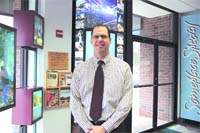
John DeVoie, seen standing in the future home of the second Hot Table location, believes Tower Square is ideal for his venture.

John DeVoie knows the recent history of the restaurant site in the southeast corner of Tower Square — it’s been vacant for nearly a year and has seen several establishments come and go over the past decade — and he’s not fazed by it one bit.

That’s because he believes the failures, if some could even be called that, were due to circumstances or factors that had nothing to do with location. And, more to the point, he’s quite confident that he has a product, or model, that will succeed in that highly visible spot.

It’s called Hot Table, a name derived from a form of fast, casual dining DeVoie experienced in Italy (more on that later), and placed over an eatery that he and his brother, Chis, opened in the 16 Acres section of Springfield roughly two years ago. The establishment features signature panini sandwiches — from ‘three cheese chicken’ to ‘steak horseradish’ — and has successfully drawn business from nearby MassMutual, Western New England College and other schools in the area, and the surrounding residential community.

And when the brothers DeVoie, natives of Springfield, opened the doors to the eatery, they did so with the understanding that they were starting a business, not a single sandwich and coffee shop.

“The initial plans called for opening a second location within 18 to 24 months, and we’re right at two years, so we’re on schedule,” he said, adding quickly that they would likely have moved sooner, but last fall was not the time to be seeking capital to open a restaurant.

But long before last autumn, the location of that second restaurant started to come into focus. Officials with Tower Square and the DeVoie brothers started talking roughly a year ago, said John, noting that both had some clear objectives. The property’s owners wanted a stable tenant that could draw visitors to the corner of Main Street and Boland Way, said DeVoie, adding that he and his brother wanted a site with both vast potential and great visibility with which to expand and brand Hot Table.

It took some time to get the deal done, but now that work has commenced at the site, there is optimism that the new restaurant will breathe some life into the still-struggling retail component within Tower Square, and provide more momentum for the DeVoies’ business venture.

“The corner spot at Tower Square is the most visible location in downtown, and the importance of having a vibrant business at that location is imeasurable,” said Russell Denver, president of the Affiliated Chambers of Commerce of Greater Springfield. “Hot Table has proven at its Breckwood Boulevard site that it knows what it takes to attract professionals and students alike to their business to be profitable.”

Said DeVoie, “we’re happy to be lighting up that corner. This location is going to help us brand Hot Table. Everyone goes to Main and Bolland eventually, and when they do, they’re going to see our name, and so when we go to Westfield or West Springfield, or another community in the region, people will know us.”

As he talked about the factors that led to the recent press event announcing Hot Table’s pending arrival downtown, DeVoie flashed back to a visit to the 16 Acres restaurant last year by Fred Christensen, Tower Square’s senior property manager.

“He came to see the operation, and when he arrived, there was a long line of people going almost out the door,” DeVoie recalled. “He saw all the people with MassMutual badges and noted that they not only drove a mile to get there, but probably had to walk a mile first to get to their cars in the parking lot. That was enough for him.”

As for DeVoie and the Tower Square space, he was pretty much already sold, although there was considerable negotiating still to do. And the ensuing deal appears to give both parties what they want and need: for Tower Square, a drawing-card tenant that fills a highly visible void; and for Hot Table, an affordable location at one of the region’s busiest intersections.

That figures nicely into the growth plans for the business, which DeVoie conceptualized after spending 18 years in corporate sales for Alcoa and realizing that it was time for something else. “I was 40, and I knew that, in sales, they generally try to put you out to pasture when you’re 50,” he explained. “I had some time to go, but that 10 years comes up fast.”

DeVoie said he has long wanted to launch his own business, and when he started seriously considering options, he focused on one apparently common in Italy. There, small shops called Tavola Caldas serve hot, fresh food and desserts quickly to their patrons. The literal English translation of that phrase is ‘hot table,’ the name trademarked and then given to the venture by the DeVoies and their brother-in-law, Don Watroba, also a co-founder.

The three chose a somewhat tired strip mall across Wilbraham Road from Western New England College to start their venture, citing its proximity to MassMutual and several schools, and also what they considered an “underserved” area.

And they used that same word to describe downtown Springfield. Indeed, while there are several restaurants downtown, DeVoie said there isn’t anything quite like what Hot Table has to offer — a mix of gourmet coffee, unique panini sandwiches, and affordable prices.

“Our intent was to start our company in Springfield, grow our name regionally, and then see where that takes us,” he said, referring to the initial five-year plan and speculation about what might follow.

“We wanted the second store to be close to the first one, and we looked at the demographics of what we do, specializing in breakfast and lunch, and said, ‘OK, where’s the highest concentration of people working in one spot in Western Mass? It’s not Longmeadow, it’s not Northampton, it’s not Holyoke — it’s downtown Springfield, and that’s where we want to be.

“And in our efforts to build a regional brand, what better place to drop a store than right in the heart of the biggest city in Western Mass. and in the best piece of real estate in the city?” he asked as he continued. “That was evidenced by our press conference; we didn’t have a press conference when we opened in 16 Acres, and we wouldn’t have had one if we were opening in West Springfield.”

That press conference was attended by a number of civic and business leaders who expressed the hope that Hot Table would create a spark in the downtown and eventually help light up much more than one currently dark space.

And DeVoie believes his venture can provide one.

“Knowing the history of that site, I’d say there is an element of risk involved with it,” said DeVoie. “But we’re very confident in the product we sell and the service we provide — and we’re also confident in Springfield and in Tower Square.”

—George O’Brien

Features
Agawam Wants to Balance Commercial Growth with Rural Charm
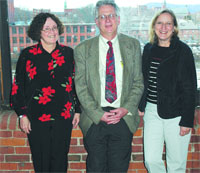
Deborah Dachos (left, with Mayor Susan Dawson)

Deborah Dachos (left, with Mayor Susan Dawson) says the time has come for residents to re-evalute the Tennis Road property.

Agawam is the first colonial settlement in the Pioneer Valley and, from its early beginnings in 1635, has always had a rich agricultural history.

What makes this community of 30,000 residents different from many others in the region is this link to the farms of yesteryear, yet with a suburban presence at the other side of a bridge from the city of Springfield. Like other bedroom communities in the Valley, more than 75% of the town’s population commutes out of town.

Mayor Susan Dawson recently told BusinessWest that it is just that balance of the rural and suburban which initially drew her to the town. “When I moved here, I came from outside Philadelphia,” she said, “and I was looking for a suburban community. But I also wasn’t really looking for ‘big,’ because at college in Lancaster County, Pa., I really enjoyed that agricultural side of things.”

While many other communities struggle with foreclosures and tax defaults, Dawson said that because Agawam is solidly in the middle of the economic spectrum, her town hasn’t been affected to the extent that one reads elsewhere. The median family income hovers around $59,000, and the median sale price of homes from the most recent statistics comes in at just under $200,000.

While Agawam prides itself on that small-town charm, it is also home to one of the region’s largest tourist draws: Six Flags New England. Despite a history with that entertainment giant, the town has struggled in recent years for an appropriate balance of its residential and commercial areas, and town officials and residents say the time has come to address this situation again, learning from past divisive issues.

Tennis, Anyone?

Deborah Dachos is the town planner for Agawam, and she likes to look on the bright side of the current economic climate. “One thing we’ve noticed is that the number of applications for new development has significantly decreased over the last year,” she said. “But that gives me the opportunity to do things I might not normally have the time to do.”

What Dachos was specifically referring to is a townwide, comprehensive economic-development survey to address what she, others in Town Hall, and many residents feel is an important, if not the most important, issue: commercial development in Agawam. Sent out to residents via mail, E-mail, and a local newspaper, the survey seeks answers to a variety of questions about retail preferences in the 01001 zip code.

But more importantly, the survey addresses the concerns that townspeople might have with what is known in town as ‘the Tennis Road property,’ one of the most valuable pieces of undeveloped land bordering Route 57.

Three years ago, an out-of-state developer petitioned to change the zoning on the property to enable commercial, retail construction. A binding referendum question was defeated by a margin of 3 to 1. The prevailing thought from that vote was that Agawam residents do not want a big-box retailer in town, especially one that would negatively impact the smaller residential roads leading to the site and also the high school across the highway.

Dachos said the time has come to re-evaluate that property. “We put that question into the survey to revisit Tennis Road,” she said. “It appeared that, from anecdotal information, people were opposed to someone from the outside. The fear was that some New Yorker was going to come in and circumvent local and state laws, and build something that would be too big for the town.

“At the time,” she continued, “the perception from the referendum vote was that residents said we definitely don’t want commercial development on that property. But the survey results aren’t suggesting that right now. People want new retail development there, but they want very specific things.”

Ed Borgatti is the owner of E.B.’s, a popular Agawam restaurant, and is also the former president of the Agawam Chamber of Commerce. Remembering that referendum, and the developer whose plans were cut short, he believes it wasn’t the right time, nor the right way, to proceed with such a proposal.

“The developer who wanted to build out the Tennis Road property a few years back made some serious missteps,” he told BusinessWest. “He wasn’t a bad person; he just went about it the wrong way for Agawam. He was from out of the area, he used PR people and lawyers from Springfield, and basically people in Agawam are not thrilled to feel like the big city is trying to muscle them into decisions.

“He should have gotten a consultant from town,” Borgatti continued, “and he should have hired an Agawam lawyer … but as it happened, the town politicians sat down at the meeting, and in come all these guys from Springfield, and that was just the wrong thing to do.”

Dachos said that now is the time for the voices of Agawam to decide what they would like for Tennis Road. “The residents and the community need to speak up,” she said. “For the first time, it’s not a developer from outside the community saying, ‘this is what we’re going to give you,’ or ‘this is what you’re going to get.’ It is us saying, ‘OK, do you want something there, and if so, what do you want?’ So we, as a town, can say to a potential developer that this is what the community says it want, and what it will support.”

She noted that there is a developer interested in the property right now, but the administration wants to promote what the community has an interest in.

Big, but Not Too Big

Dave Ratner is the owner of Dave’s Soda and Pet Food City, one of the stalwarts in the town’s local business establishment. After 34 years of successful operations in the community, Ratner knows a thing or two about how things work, and he still finds Agawam a good fit.

“Well, one of the things about Agawam that makes it good for a home-grown business,” he said, “is that when real-estate brokers from chain stores come to town looking to establish a presence, we’re not on a major highway, so they say, ‘there can’t be any kind of marketplace here,’ and they stay away. And these days, trust me, when you’re an independent business owner, that’s very good for you.”

But Ratner admits that such lack of competition can be too much of a good thing. “The flip side to that is, there’s more traffic when you do have major, national tenants.”

Elaborating on this conundrum, Ratner said that it might not be a bad idea for a few of the bigger players on the national retail scene coming to town wouldn’t be a bad idea at all. “I think if we got one or two major tenants in Agawam, the whole stock of the town would go up.”

Ratner gives a great deal of credit to the town leaders in their efforts to bring successful tenants to the other building abutting his store, formerly housing the now defunct Steve & Barry’s. “The officials in the town are wonderful to work with. Anything that I’ve ever needed, they’ve helped with.

“It was amazing how much coaxing the town had to do to get Steve & Barry’s to come to this plaza,” he continued. “The brokers came from New York; they drove by here and said, ‘well, this is a terrible location.’ It’s not on Route 5, so they didn’t want to open up. But as it turns out, this was one of the best stores for that chain in the region. In little ol’ Agawam.”

Even though much of the town’s focus is on the new dirt that could be developed on Tennis Road, many members of the community wonder if such development could revitalize the sagging fortunes of the Agawam Towne Plaza, as reported in these pages recently after the bankruptcy of Steve & Barry’s shut down the one anchor store in an otherwise nearly empty plaza.

Both Dawson and Dachos mentioned the lengths to which the town strived to get that retailer into the plaza, hoping that, with such a strong presence, the vacancy signs in the windows would be replaced with new business opportunities. But what makes Tennis Road such a desirable commercial property also makes the Towne Center a more difficult sell. “There is a large, vocal group that really wants to see something happen in that plaza,” Dachos said. “People just can’t understand that the buildings are old, the street visibility is not great, and it lacks the highway location.”

Roller-coaster Ride

Even though the big-box stores have had a rough road in breaking ground in Agawam, the Six Flags complex has successfully co-existed with the town. Dachos gives that company a gold star for its efforts to be a good neighbor.

“They’ve invested a tremendous amount of revenue, several million dollars, in parking lots, pedestrian bridges, and road improvements, to reduce gridlock,” she explained. “Six Flags has been, from my perspective, a very good neighbor here in town. And it supports a lot of social and civic organizations. The taxes and the jobs are great. We don’t hear the complaints that we did when it became a Six Flags facility, where people couldn’t get out of their driveway for hours and hours.”

Dawson agreed. “Someone might think that a giant presence like Six Flags would be an issue for small-town Agawam would be such a giant presence like Six Flags. But that hasn’t been the case.”

Responding to the recent news of hard times and possible bankruptcy for the nationwide chain, Dawson said that despite the grumblings of impending doom, the company’s local operation should be riding the roller coaster A-OK. “According to the information I’ve gotten from them, they are looking at reorganizing, which simply means that they are going to reorganize their debt. But the services they provide will still be the same. As long as the public doesn’t stop going to their entertainment areas, the company will stay sound.”

Borgatti, meanwhile, sees the future of his hometown as looking bright. And the word he used to describe this optimism was vision.

“We’ve always lacked vision in business development in this town,” he said. “But we are going in a positive direction now.”

“I think people are afraid that development immediately means that we are going to lose our small-town charm,” he continued. “But they can live in harmony. There’s always that fear some big developer from out of the area is going to come in and take over for their own benefit. But there are people who grew up here who have a good idea of how to develop and still keep the town spirit intact.”

Dachos agreed. “Primarily this development interest we’re seeing right now is home-grown, and the developers who are proposing the subdivisions are local guys who have confidence that things are going to improve, and they want to get ahead of the curve and get their projects approved so that they are ready to go. New restaurants are opening up by local residents who have had dreams for years, and who are now just plowing ahead and doing it.”

Dawson weighed in with her final thoughts on the controversial issue of Tennis Road and its future. “What Agawam is going to have to do is make some tough decisions about development,” she said, “because we can have development — which means new tax growth, new revenue — and it can be clustered so that it doesn’t negatively affect our residential areas.

“My goal is for affordable senior housing as well as commercial development that people want. It’s going to be a win for everyone in town. We’ll see what happens.”

Sections Supplements
This Entrepreneurial Venture Has Provided Many Valuable Lessons
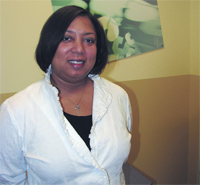
Deborah Alli says her venture represents a way for her to give back to the community — and scratch an entrepreneurial itch.

Deborah Alli says her venture represents a way for her to give back to the community — and scratch an entrepreneurial itch.

Deborah Alli thought she was ready to start her own business a few years ago.

But her boss at Computer Science Corp. (CSC) called and presented her with another long-term consulting assignment — this one much closer to home than most of her others, which have taken her to Tokyo, New Delhi, and Texas, among other places — and she took it. And by the time it was over (actually, long before it ended), she was really ready.

And thus she commenced a lengthy search for the right way to scratch her entrepreneurial itch, and found one in a franchise of the Huntington Learning Center, which she opened late last year in the Five Town Plaza in Springfield.

But the center, which provides a host of individual testing and tutoring services, does more than satisfy Alli’s thirst to be a business owner. It also fulfills her desire to give something back to her hometown of Springfield — a facility that may help achieve progress with some of the issues confronting the city, especially high drop-out rates, a skills gap involving many sectors of the economy, and poverty.

“One of the major issues in Springfield today is education,” she told BusinessWest. “A learning center like this one is something the city needs. I knew that I wanted to do something in the community that was helping, or giving back, in some way.”

Just a few months into her new career, Alli says that all her extensive research has paid off. She finds the learning center to be as rewarding a venture as she thought it would be, and, from a business standpoint, she believes she’s in the right place at the right time — despite an economic downturn that has touched virtually every business sector.

And she believes President Obama gets much of the credit for that.

“He’s given a great sense of hope to a lot of people who otherwise would not have considered what kind of job they might be able to obtain or what their children can do,” she explained. “They may have set some really low bars, and Barack Obama’s presidency has raised the bar for a lot of people.

“I sensed this that night,” she said, referring to his Election Day remarks. “And I hope I’m right. I hope he inspires a lot of people to realize what can be achieved.”

In this issue, BusinessWest explores Alli’s desire to reach higher, and how she found what she considers the perfect outlet for giving back to the community she grew up in and fueling her entrepreneurial drive.

Learning Curves

Alli did two tours of duty, if one can call them that, in Tokyo, working for CSC Japan as what was known as a ‘business process architect and senior consulting principal.’ First, she consulted for the Nicos Life Insurance Co., specifically on a nearly three-year-long project to convert databases into a new computer system. Similar work came two years later for Manulife Japan.

She has many colorful anecdotes about working in that nation and in that culture, and some interesting observations. For example, she said that, while the language barrier presented some stern challenges, being a woman was a far bigger problem, apparently. “There isn’t a glass ceiling there,” she explained. “It’s made of titanium — you just can’t get through it.”

She started thinking about launching her own business even before her first stint in Japan in 1997, but put those plans on the back burner because she thought the assignment overseas would help her career-wise and confidence-wise. And as it turned out, she was right.

“When I went to Japan, I put my life on hold,” she explained. “But I thought to myself, ‘I need to do this — this is something totally different, it’s a new challenge. And I’m certainly glad I went. I wouldn’t trade that experience for anything.”

Overall, though, she said, a “conformist mentality” prevails in Japan, and after several months, she was starting to conform — and not liking it.

“I was becoming one of those numbers,” she explained. “If it was going to rain, I carried my umbrella; I got to the subway station at exactly the same time every day. I was becoming part of the crowd … I saw the same people standing in line for the train every day. And I knew I needed more.”

Elaborating, she said that, from a career-development standpoint, she again needed a new and different challenge, one that would meet many personal and professional needs. “I knew that something was missing for me — I needed to feel more satisfied about what I was doing.”

It would be several more years before she would find what she was looking for, but Alli told BusinessWest that the wait — not to mention the hard work and planning — would be well-worth it.

Backing up a little, and dating herself somewhat, Alli said she grew up in Winchester Square, which has long been known as Mason Square, and saw the struggles of many people from that neighborhood to acquire the skills and the ambition needed to succeed in business and in life.

“I wanted to get involved and do something about the issues that are facing Springfield,” she said, adding that this mindset was with her as she was considering a number of options for a business venture to call her own. She said she looked at restaurants and several franchising possibilities in that realm, but ultimately decided she wanted something that contributed more to the community and its overall well-being.

A Stern Test

She looked at several learning center chains, including Sylvan, Club Z, Princeton Review, and others, but eventually opted for Huntington after research into its products and philosophy.

“The Huntington model wraps itself around the student,” she said. “It’s very family-oriented, and it’s about more than teaching people skills — it’s also about teaching life strategies.”

The center, which has one full-time and eight part-time teachers and serves clients from across the region, provides a number of individual testing and tutoring services, she noted, involving reading, study skills, writing, phonics, math, spelling, and SAT/ACT preparation work. Most clients are children, but there are programs for adults as well.

And the client list is quite diverse, she continued, noting that many of the young people who come to the center have difficulties with learning, and there are also some who are doing well, but their parents want them to do better and gain needed confidence.

As for her own transition, from employee to employer, Alli says she’s handled the learning curve fairly well, and credited her previous work experiences, which were, in many ways, entrepreneurial in nature.

“For starters, I’m used to working long hours … in Japan, everyone works 11 or 12 hours a day,” she joked. “But beyond that, I was managing different parts of projects and always managing some type of team. I had a lot of autonomy — I only spoke to my manager once a month if I was lucky — so I was gaining good experience for this.”

Alli says she’s been helped, from a competitive standpoint, by the closing of a Sylvan Learning Center facility in East Longmeadow several months ago, but the bigger boost, business-wise, may come from the recently sworn-in president and his ability to inspire people to set higher bars for themselves.

“It’s only been a few weeks, but I can already sense that he’s having an impact on people,” she explained. “Because of him, I think people will want to reach higher than maybe they thought was possible.”

Meanwhile, the current economic conditions, while not outwardly good for business, may also inspire more people to seek help for themselves or their children.

“I think parents are looking around and realizing that their children are going to have to someday take care of themselves,” she told BusinessWest. “To do that, they’re going to need skills, and they’re going to need confidence.”

Learning Experience

Returning to her past life in the corporate world, Alli said there was much about it that unnerved her, particularly a “dog-eat-dog mentality” that she saw in Tokyo, Houston, and even Springfield and Hartford.

“It was all about getting ahead,” she explained. “With these management styles coming out now, people are pitted against one another and have become very aggressive toward each other, and there’s no concern for the repercussions of your actions toward others. What people are being taught is that this is how you get ahead in the world.”

Teaching people that there may be other ways to get where one wants to go is just one of the lessons Alli wants to impart at Huntington, a business venture that doubles as a way for its owner to contibute to the city she grew up in.

“When you’re working with people, you should be looking for ways to lift each other up, not keep them down,” she continued. “That’s one of things I want to do here — show people that they can succeed without crushing someone else; we should be working to help each other — always.”

If she can succeed with that assignment, then she really will be giving back to the community.

George O’Brien can be reached at[email protected]

Cover Story
River’s Landing Partners Take Their Vision to the Bank
Cover

Cover

A year after opening the doors to their River’s Landing concept at the site of the old Basketball Hall of Fame, partners Peter Pappas and Mike Spagnoli are pleased with the results, but certainly not content. They’re looking to expand their project — and make a broader impact on Springfield’s turnaround efforts.

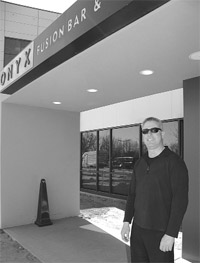
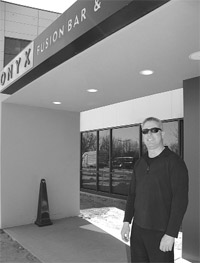
Mike Spagnoli was working the room at the Onyx Fusion Bar & Restaurant a few weeks ago when one of the patrons got up from his dinner to have a word with him.

He wanted to pass along some compliments about the establishment and his experience that night, and, to help get the job done, let Spagnoli in on something that fellow members of the Springfield Riverfront Development Corp. (SRDC) probably wouldn’t want him to know. Or maybe they would.

“He said that after Peter and I made our original presentation to the board and left the room, members of the committee started laughing out loud — they all had a big laugh,” said Spagnoli, referring to plans, laid out more than three years ago now by himself and partner Peter Pappas, for an entertainment- and fitness-focused complex at the old Basketball Hall of Fame. “One of people on the board announced after we left, ‘what a couple of dreamers.’”

From the tone of these comments, Spagnoli told BusinessWest, he interpreted them to mean that, at least according to this individual, those laughing naysayers on the board were wrong about the two partners and their plans, and that the gleaming complex, which also includes an LA Fitness and ProEX Physical Therapy center, is a dream that has become a successful reality.

Others have said or implied the same thing, said Pappas, who, like Spagnoli, takes enormous pride in hearing such remarks, because they are heard amid a still-vibrant chorus of negativism, doubts, and even rumors of impending closure of one or more of those aforementioned businesses.

“The more people tell us we can’t do something, the more that makes me want to succeed,” Pappas remarked on the first anniversary of the opening of what is called River’s Landing, a $14 million, privately financed project.

Still, both partners know that even if they — and apparently others — are pleased with the performance to date at River’s Landing (despite the recession), there is considerable work to be done if they are to turn more of those naysayers into believers. Indeed, while the partners market themselves extensively, and their complex can be seen by the nearly 200,000 cars that pass by each day on I-91, there remains a lack of awareness on the part of some as to just what has become of the old Hall.

As evidence, Papas referenced a quick tour of the complex he had just given, one that momentarily delayed his conversation with BusinessWest.

“Those two women own a salon in East Longmeadow,” he said as they left for the parking lot. “They said they’d heard some things about us but didn’t really know what we were all about. Now they know, and they say they’ll be back.”

Both partners have given many similar tours over the past several months. They have been part and parcel to a first year in business marked by promising numbers that have met or exceeded projections in the business plan, but also some frustration that doubts persist about this venture and that some, like those salon owners, don’t really know what’s happening across the parking lot from the new Hall of Fame.

“Every day, we’re winning over people,” said Pappas. “But we still have a ways to go; it’s going to take two years before people really believe in us.”

As they mark their first-year anniversary, Spagnoli and Pappas say they’re waging fights on several fronts simultaneously. Building awareness of Onyx is just one of them. Others include hard work to ensure the success of LA Fitness, which is crucial to efforts to convince other national chains that the region (not Springfield by itself) has the requisite demographics for such ventures to thrive.

Meanwhile, the two are exploring any and all options to create more parking in the complex — a clear need — while also working with the other restaurants at the site to promote the riverfront as a destination. And they’re also trying to expand their footprint as well, with development of the neighboring, and vacant, former visitors center into another fitness-related facility — perhaps a racquetball center or a climbing wall.

For this issue, BusinessWest talked at length with the two partners about the state of their vision and the prospects for the future. In doing so, they offered candid remarks on everything from the enormous growth potential of the riverfront to the frustration they’re feeling as they attempt to broaden their impact on the City of Homes and the surrounding region.

Back to the Future

Pappas will sometimes refer to his partner and childhood friend as ‘Dr. Spagnoli.’

That’s a nod to what was, until River’s Landing, the top line on his professional resume.

It seems that in Calabasas, Calif., near Malibu, where he lives and works, Spagnoli, a chiropractic physician, is known to some as the ‘chiropractor to the stars.’ Indeed, his list of clients includes Joe Pesci, Bruce Willis, Hilary Swank, and Priscilla Presley, whom, he says, he helped get ready physically for her stint on Dancing with the Stars.

Spagnoli has done some acting himself; he had a small role in The Last Don, appeared in both Casper movies, and even had a bit part in some 24 episodes that aired two years ago.

But today, most of his attention and his energies are focused on the health of River’s Landing and on helping it play a lead role in the fortunes of Springfield and its riverfront. “This is my primary focus,” he explained. “I put so much time in here I had to hire two full-time doctors to cover me — this is a hell of a commitment.”

Pappas used different and much stronger words to describe his level of investment in this endeavor: “If this didn’t work, they’d take my kids away from me,” he said, referring to the financial limb he’s on. “That’s what I mean when I say I’m 100% committed to this; some say they’re 99% committed … there’s a big difference between 99% and 100%.”

And yet, for all their confidence and commitment to their concept, Spagnoli and Pappas say they can almost understand why there was so much doubt concerning it — almost. The vision was certainly unique for this region, they acknowledged, and the backgrounds the partners brought to the table gave little indication that they could handle a venture of this magnitude.

In the end, said Pappas, the SRDC chose their project because there were no other options. “They picked us because they essentially had nothing else, and I mean nothing else,” he explained, referring to a limited list of alternatives topped by a public-market concept based loosely on a model in Portland, Me. “If they had anything else, they would have taken it; that’s how little faith people really had in this.”

Spagnoli had faith in the vision almost from the moment Pappas told him about his idea for the old Hall soon after he mpotored by it about 3 1/2 years ago.

“I was in my car drinking a coffee when I called Mike in LA,” Pappas explained. “I said, ‘I just drove by the old Hall of Fame, it’s been vacant for a while. I don’t know what they’re doing with it, but wouldn’t that make a great sports and entertainment complex?’”

Said Spagnoli, “I’m in my car and I close my eyes for a quick second and pictured it. I’ve had three sports medicine clinics within LA Fitness facilities in California, and I knew that LA Fitness was looking to expand, so I immediately felt it. I said, ‘Peter that’s an unbelievably great idea — let’s do it.’”

But it would take a long time for the two to take the concept even one step beyond their collective imaginations. In fact, it took almost a year just to get before the SRDC, tell the members about their idea, and, as they found out later, get laughed at.

As the two recounted for BusinessWest, there was little support among area elected officials, some of whom seemed bent on seeing a publicly funded project in the old Hall of Fame.

“There was not one politician who wanted us to do this, because there was nothing in it for them because it was a private business,” said Pappas, who quickly amended that statement, noting support from former state Sen. Brian Lees, former Springfield Mayor Charles Ryan, and, to a lesser extent, U.S. Rep. Richard Neal.

And while trying to sell their concept to elected leaders, the two were also pitching it to LA Fitness, and it wasn’t an easy sell, said Pappas. That’s because this was a new model for the chain, which usually has stand-alone facilities in retail centers, and also because Springfield’s demographics usually frighten off national chains.

“The demographics for Springfield are horrible — the average household income in the city is $30,000, and the national average is $42,000 — that’s how bad it is,” he told BusinessWest. “So what we had to do was sell them on the demographics for the region, which are much better. We convinced them that this location is easy to get to from Agawam, from the West Side, from East Longmeadow, from Longmeadow. Still, this was a leap of faith for them.”

As for the SRDC, at least from the partners’ perspective, it seemed the only hope for the site, but still a laughing matter.

“They never thought we could do it,” said Spagnoli. “To this day, I don’t think they ever thought we were for real.”

More Food for Thought

Spagnoli told BusinessWest that he brought some props with him to that climactic SRDC meeting during which the board was going to choose a development team.

One was a pie plate on a stick, which he held in the air to signify ‘pie in the sky,’ or his take on the public-market proposal, which, at one point, Pappas referred to as “an expensive tomato stand.” The other was a rock, chosen to indicate the partners’ belief that their concept was rock-solid.

Whether the board actually had no real choice as to which project to award the nod, as Pappas suggests, remains a matter of speculation. But even after River’s Landing was chosen, and a year after it opened, the two partners still find themselves having to prove that this complex is, indeed, worthy of that rock.

They say the numbers from Onyx’ first year in business, half of which comprised a recognized recession that some say is the worst in 70 years, are, in fact, solid. Spagnoli said there were 350 people in the restaurant that night when he was pulled aside by the SRDC member, and there have been many evenings like that, despite the pronounced downturn.

“These are not great times for anyone, and that includes the restaurant business,” Pappas told BusinessWest. “But we’re doing very well considering the times we’re in.”

They attribute this to a combination of factors — from the fusion menu to the uniqueness of the facility — that give the restaurant a decidedly different look and feel. “One compliment we hear all the time,” said Pappas, “is people saying, ‘we don’t feel like we’re in Western Mass. when we’re here — we feel like we’re in Boston or New York or LA”

The partners said they created Onyx, which wasn’t really part of the original plan, because they simply couldn’t find the right chain for the site, although there were a few offers. “Remember, chains don’t believe in Springfield,” said Pappas, adding that, as a result, he and Spagnoli blueprinted a different kind of facility, one that blends fine dining with entertainment and a club-like atmosphere.

Pappas and Spagnoli acknowledge that times are tough, but they have no regrets about what would seem to most to be poor timing for a complex with businesses dependent on discretionary spending.

“I wouldn’t change our timing at all, even if I could,” said Pappas. “The nice thing about being in lean times is that it helps you to operate lean. It also pushes us to provide more value to people, because that’s what they’re looking for; they’ll still go out and spend that $50 or $100 for dinner for two, but they want value for it.”

To accentuate that emphasis on value, the two partners have created a special promotion, called the “Onyx experience” — dinner for two and a bottle of wine for $50 — which Spagnoli calls “affordable elegance.”

As for the other components of River’s Landing, Pappas and Spagnoli said both tenants are off to good starts. The two stressed repeatedly that LA Fitness does not disclose numbers, so they used words instead.

“They’re doing extremely well here,” said Spagnoli. “They’ve become believers in Springfield and this region, and that faith is being rewarded.”

Court of Opinion

But while they’re generally pleased with the first-year results, the partners are in no way content. There are several initiatives, in various stages of advancement, they are pursuing to bolster the River’s Landing venture, the riverfront as a whole, the Columbus Avenue corridor, and Springfield’s downtown.

They are taking a lead role, for example, in the creation of the Riverfront Restaurant Assoc., which will work to market the five eateries in the Hall of Fame complex — Onyx, Max’s Tavern, Pazzo’s, Pizzeria Uno, and Samuel’s sports bar — as a destination, and otherwise work to improve the competitive position of that cluster.

The theory, said Spagnoli, is that restaurants grouped in one tight area can grow the pie for the individual players, not create competitive disadvantages — and there is ample evidence (Northampton is the best example in this market, he says) that the theory is valid.

“In California, the most-successful places I’ve been to, and this is up and down the coast, have projects very similar to this one, with a theme,” he explained. “And there are at least four to seven great restaurants in close proximity to one another.”

Pappas nodded his head in agreement, and said the region can easily support such a cluster of residents, with some aggressive marketing and maybe a little help from the economy.

“There are 600,000 people living within a 10- or 15-mile radius of this point,” he said. “And there are 180,000 cars going by every day on I-91; this is not a small market.”

This is a point that both partners make to retail-chain executives and investors with whom they’ve discussed Springfield in general, the old York Street Jail site, and properties on both sides of Columbus Avenue. Such discussions are just one indication that Pappas and Spagnoli don’t want to stop with River’s Landing.

Indeed, the two responded to a request for qualifications concerning the Court Square property, which has been vacant for several years. They submitted a plan for either a boutique hotel or market-rate apartments — something they say is needed to spark some life in the central business district — and were disappointed not to be among those development teams chosen to move on to the next stage in the process.

“I didn’t even get a call to discuss the RFQ — apparently they wanted bigger names,” said Pappas. “That was nearly two years ago, and the building is still sitting empty; it’s very frustrating.”

He used that same word to describe what’s happening (or not happening) with the visitors center.

“We would like to expand in there and we’re ready to go,” he said, referring to two stated options — racquetball courts or a climbing wall that was part of the original vision for River’s Landing and the only piece that didn’t become reality. “It’s really frustrating how slowly things are moving, but hopefully we can get something done.”

As they talked about the present and the future, both partners recalled something Ryan s
id to them at the groundbreaking for River’s Landing.

“He hugged me, and Peter said, ‘continue to help us take this city back block by block,’” said Spagnoli. “That’s where it begins, with one block, or one building. That’s what we’re trying to do.”

Dream Weavers

Hanging on a wall in the front lobby at Onyx is a framed copy of a page from the May 9, 2007 edition of the New York Times. The headline reads “Glimmers of Hope in Springfield, Massachusetts.”

There are two photos accompanying the story relating progress in the City of Homes — one depicting construction of the new home for Performance Food Group in the industrial park created on land adjacent to Smith & Wesson, and the other showing the transformation of the old Hall of Fame, roughly eight months away from completion.

The partners said they placed the story there to display their pride in being part of a turnaround they say is still very much a work in progress, and an effort they want to play a bigger role in.

Time will tell if River’s Landing becomes all that its creators hope it will, and if they can expand upon that venture with other initiatives on the riverfront and perhaps well beyond it.

But one thing is for sure. No one is laughing at these two dreamers anymore.

George O’Brien can be reached at[email protected]

Sections Supplements
WSC Wants Its Students, or ‘Permanent Tourists,’ to Help Revive Downtown Westfield

Evan Dobelle, the recently installed president of Westfield State College, is no stranger to comprehensive town-gown initiatives, or what he calls “partnerships in urban America.” He’s helped orchestrate them in places ranging from Lowell, Mass. to Honolulu, Hawaii. His latest project is in the so-called Whip City, where he intends to create more student housing downtown, thus providing a boost to an underachieving central business district.

Confidence.

That’s the word Evan Dobelle uses when describing the first stages of a plan for Westfield State College’s student housing expansions into the frayed downtown of its host city.

“We all have certain degrees of expertise,” the 19th president of the college told BusinessWest. “Mine has always been about partnerships in urban America. I really think that’s the reality of the future. We can’t proceed in business as silos.”

Since he first came to the helm of the college in December 2007, Dobelle has been active in an ambitious, yet extremely popular and very realistic plan to integrate the college and the city’s downtown.

Westfield Mayor Michael Boulanger told BusinessWest recently that he has lived in the city for 32 years, and, “frankly, it seems that for 31 of those years, Westfield State College might as well have been an island 1,000 miles away, because it had no involvement with the community whatsoever.”

But since the first meeting between the mayor and the new president in January 2008, just after Boulanger took office, that large gap has been closing, figuratively if not yet literally.

“It really started with my thoughts on moving a used bookstore downtown,” said Boulanger, “and finding reasons to bring students downtown, maybe earmarking some properties for student apartments. And he came back that it was his desire to fully build student housing in the downtown.”

What is underway currently is the first wave of a plan for WSC to utilize downtown buildings for student housing, with that development the catalyst for urban renewal, as well as for further college facilities to integrate into the city center.

Whipping Up Some Momentum

Dobelle is no stranger to bridging colleges and their communities. Prior to his appointment at WSC, and as president of four other colleges, he coordinated expanding relationships between the schools and their host municipalities from as far afield as Lowell to Honolulu.

Acknowledging Westfield’s current downtown, Dobelle said that it is not realistic to think that one can simply build or expand service-sector businesses there without a population to access them. “In Westfield,” he said, “I see the students’ role as ‘permanent tourists.’ They have the disposable income to attract those restaurants, movie theaters, and coffee houses as opposed to trying to attract those businesses first, when there is no base.”

Boulanger agrees completely.

“The city has for many years tried to stimulate or revitalize downtown by getting businesses down there,” he said, “thinking that that is what would attract people. But it really doesn’t work that way. In reality, the way it works is that a consistent population of people with money to spend will attract the businesses.”

Initially, the plan is to develop student housing in existing apartment buildings downtown, with the potential for new service-sector businesses at street level. Such a primary, and realistic, goal speaks to giving confidence to the community that such a project can exist on Main Street, rather than a drafting table.

“When you see something happening,” said Dobelle, “when you see a crane in the air, you see a business open, or a ribbon cut, it’s a big deal. When that happens, I think that begins the flow to Westfield, which is a town of growth, and a town of relative affluence. It’s all doable, but it’s all predicated on that first contract we sign for student housing. If we even have a contract which says that in one year’s time we’re going to have 100 students living downtown, you’ll see it all happen. It will be a gold rush.”

And if all goes according to plan, it won’t be long before one sees construction workers on city streets. Boulanger said that the college funded an architect to conceptualize designs for various possibilities downtown, employing the services of William Rawn Associates of Boston, which has had great success at both Williams College and Northeastern University, among other prestigious clients.

According to Boulanger, an RFP (request for proposal) has been issued to developers, and the response numbers remain private and with the Division of Capital Asset Management, the governing body for construction of public works projects for the Commonwealth. But the mayor says that “it is my understanding that the response has been very positive, and that the numbers are favorable.”

What makes this initial project a winning situation for just about everyone involved begins with the developers themselves, said the mayor. From their perspective, there is a guaranteed full occupancy of residential property, with promised 10-year leases from the college. Further, by privately owning these structures, the property continues to exist as taxable real estate for the city.

Dobelle called this an excellent opportunity to make state funds work in the revitalization of the city. “This is the ability to leverage tax dollars, going to a state school, in a public and private partnership that further leverages future development of other taxpaying industries, to broaden the tax base for the city.”

The president cited the long and laborious process to build new dormitories on campus as a motivating factor for casting his eye on the city center. “We can get students downtown in dormitory housing in less than a year, whereas a new dormitory to be built on campus would take us four,” he said.

Initially, Dobelle strives for housing approximately 100-200 students, but, he said, “I’d like to see that number over the next three to five years grow to more than 1,000.”

And of course, for the city, there are those ‘permanent tourists’ — students with all the needs for the services and facilities necessary to stimulate strong business opportunities.

But Wait, There’s More

Dobelle is optimistic that, with the student housing going forward, future interest in the city isn’t far behind. He mentioned an associate of William Rawn’s, Gideon Lester, the artistic director of the American Repertory Theater in Cambridge, Mass., who is very positive about an arts rebirth in the city.

“His vision,” said Dobelle, “is that Westfield, at the entrance to the Berkshires, is an ideal place for creative people of all backgrounds — be it music, voice, dance, playwrights — who are simply outpriced in downtown New York or Boston.

“We are equidistant from both of those cities, and thus can become a community of artists, with performing space and practice space that’s affordable, in a place that could eventually become a ‘hot’ city.”

“It doesn’t take much to transform that downtown into a hip place,” he continued, “with coffeehouses, black-box theaters, and perhaps, eventually, if we can make the numbers pencil out, a performing-arts center. Not of huge scale, but a few hundred seats.”

Dobelle acknowledged that, with a successful pipeline into the city, the likelihood of a performing-arts center for the school would be far greater. With the economy in its current condition, he said, the reality is that it would be close to 10 years at the earliest before the campus could see construction of a new theater space.

In City Hall, Boulanger agreed that housing is just the first step. Thinking back on those first few meetings with Dobelle, the mayor remembered a lunch he and the president attended.

“He asked me what I thought about the potential for the performing-arts branch of his college downtown, and I think all I said was ‘absolutely,’” said Boulanger.

There are numerous existing venues downtown which, with little effort, could be working performance spaces, Boulanger said. He cited the First Congregational Church and the Westfield Women’s Club as two spots for performance, but also added, “that’s not to say that there aren’t plenty of other vacant facilities that would accommodate other arts, galleries, or arts classrooms.”

With a larger student population downtown, Boulanger sees this as the perfect time for a project he has long wanted to see in his city — a multimodal transportation center. While this would better service the needs of the college students away from campus, the mayor sees this as another step in the ongoing revitalization and reassessment of the city’s downtown infrastructure. He mentioned that, in a recent meeting with Mass. Secretary of Transportation James Aloisi, the administrator also agreed.

What Boulanger sees as another potential benefit to the city is a new look at reorganizing the traffic plans for downtown. “There’s basically a four-lane highway going through the center of the city,” he said. “And there’s not much there to slow it down. I think that reconfiguring parking and traffic on Elm Street could go a long way toward making the streets safe for both cars and pedestrians.”

Course of Action

Ultimately, both men feel confident in each other’s role in what has been a meeting of like minds. Dobelle said that, so far, he is excited by the progress in the first stage of the student housing initiative in the city. “If Westfield becomes that vibrant place we expect it to be, then it’s only going to benefit us.”

And in City Hall, Boulanger is happy to see his city turn into one of those college towns he traveled to during the preparation for his mayoral campaign.

“Look at Keene, N.H.,” he said. “In the last 15 years, a collaboration between the college and that city created a great deal of vitality, with stores, restaurants, all walks of citizenry. It’s a great place to visit.”

He expects the same for Westfield, thanks, in large part, to those ‘permanent tourists.’

Departments

Car Sales Tumble in January

NEW YORK — Rental car companies pulling back on purchases was the latest problem plaguing the auto industry in January, with sales plunging 38%. The auto-sales drop last month was the worst since 1982. Auto executives attribute the decline in fleet sales to a decline in demand for travel and rental cars. Ford inventories were 420,000 vehicles at the end of January, which is 156,000 vehicles lower than a year ago.  During the past 12 months, Ford’s inventories were reduced by 27% — consistent with the company’s sales decline (22%) during this same period. Ford, Lincoln, and Mercury sales totaled 90,596 in January, down 39% versus a year ago. Retail sales to individual customers were down 27%. Fleet sales were down 65% including a 90% decline in sales to daily rental customers. Ford and industry sales in January were consistent with Ford planning assumptions. Ford expects new, recent, and future fiscal and monetary actions to help improve conditions in the second half of the year. Driven by an 80% reduction in fleet sales, General Motors dealers in the U.S. delivered 129,227 vehicles in January, down 49% compared with a year ago. Retail sales were off 38%, but retail market share held steady compared with December. GM’s retail share performance was assisted by reduced-rate APR financing capacity through GMAC and a GM loyalty cash offer. GM January total car sales of 43,943 were off 58%, and total truck sales of 85,284 were down 42% compared with a year ago. GM has announced reductions in first quarter production to adjust inventories for marketplace demand. For Toyota, January sales of 117,287 vehicles represented a decrease of 34.4% from last January, on a daily-selling-rate basis. The Toyota Division posted January sales of 102,565 units, a decrease of 34.9% from last January. The Lexus Division reported January sales of 14,722 units, a decrease of 30.3% from a year ago. The sales results were all worse than Edmunds.com, a sales tracker, had predicted. For the year, Edmunds.com expects a 30% decline in year-over-year sales for the auto industry.

Easthampton Plant Sheds Jobs

EASTHAMPTON — Berry Plastics officials have been mum about the exact number of workers it recently laid off, but estimates range from 100 to 150, according to Thomas W. Brown, chairman of the city’s Economic Development Commis-sion. Berry Plastics is the largest employer in the city, and Brown estimates the layoff represented nearly 30% of its workforce. The factory on O’Neil Street makes tubes for the cosmetic and food industries. Current production figures were unavailable at press time. Brown noted that the company had been shedding jobs for years, both as Berry Plastics and under previous owners. Berry Plastics is owned by an investment firm based in New York City, and has announced an $80 million expansion plan for its Evansville, Ill., plant that could translate into 150 new jobs. The expansion project will allow the company to make plastic cups and similar products. On a related note, since Berry officials did not lay off more than 33% of its active work force, they were not required to give 60 days notice to employees and to local, state, and federal governments under the Worker Readjustment and Training Act. U.S. Sen. John F. Kerry, D-Mass., is among the federal lawmakers who are working to change the law which would call for 90 days notice and require notification for any layoff of more than 100 and any layoff of 50 to 99 if it equals a third of the work force. Town officials and regional business leaders are currently working together in the hopes of securing a tax-incentive program or workforce-training grant that will assist Berry in keeping the remainder of the jobs in Easthampton.

Friendly Axes 13

WILBRAHAM — Thirteen office workers from Friendly Ice Cream Corp. headquarters were recently laid off. Company officials noted that field staff and restaurant workers were not affected by the layoffs. Since 1935, when the first Friendly’s Ice Cream shop in Springfield was opened, the company has grown to 505 corporate owned and franchised restaurants.

UMass Forms Task Force on Reorganization

AMHERST — A task force of department chairs and faculty has been formed by UMass Chancellor Robert C. Holub to advise the administration on a proposed academic reorganization that calls for eliminating four colleges and creating two new ones. In an all-campus E-mail sent Feb. 3, Holub said the Task Force on Reorganization (TFR) will include representatives from the colleges of Humanities and Fine Arts, Natural Resources and the Environment, Natural Sciences and Mathematics, and Social and Behavioral Sciences. The panel is being led by Jane Fountain, professor of Political Science and Public Policy. Holub is asking the task force to examine the idea of creating a new College of Arts and Sciences, a model that was suggested at the general faculty meeting on Jan. 29. The panel will deliberate on the proposed actions and respond to the chancellor by March 6. Under the chancellor’s proposal, the colleges of Humanities and Fine Arts, Natural Resources and the Environment, Natural Sciences and Mathematics, and Social and Behavioral Sciences would be reconstituted into two new units, which Holub is referring to as the College of Humanities, Arts, and Social Sciences and the College of Natural Sciences. Holub is also proposing that Resource Economics shift to the Isenberg School of Management and that the School of Nursing retain its autonomy and have an associate dean or an executive director from among its current faculty, but that it be administered through a renamed College of Public Health and Health Sciences. On the financial side, Holub said various models project potential savings of $1.3 million to $1.5 million per year. The chancellor added he does not want to cause undue panic among individuals working in the current colleges about their jobs. “As you may know, I have promised the unions on campus that I will not announce any layoffs until the campus has more information on fees and federal money, both of which will be essential in determining how we move forward this year and next year,” he said.

January Job Losses Worst in 34 Years

NEW YORK — Both the number of unemployed people (11.6 million) and the unemployment rate (7.6%) rose in January, according to the Bureau of Labor Statistics of the U.S. Department of Labor. Over the past 12 months, the number of unemployed people has increased by 4.1 million, and the unemployment rate has risen by 2.7 percentage points. The unemployment rate continued to trend upward in January for adult men (7.6%), adult women (6.2%), whites (6.9%), blacks (12.6%), and Hispanics (9.7%). The jobless rate for teenagers was unchanged at 20.8%. The unemployment rate for Asians was 6.2% in January, not seasonally adjusted. Among the unemployed, the number of job losers and people who completed temporary jobs increased to 7 million in January. This measure has grown by 3.2 million during the last 12 months. The number of long-term unemployed (those jobless for 27 weeks or more) was little-changed at 2.6 million in January. Over the past 12 months, the number of long-term unemployed was up by 1.3 million. The number of people unemployed less than five weeks rose to 3.7 million in January. The number of people who worked part-time for economic reasons was essentially unchanged in January at 7.8 million; however, this measure was up by 3.1 million over the past 12 months.

Judd Wire Cuts Staff

MONTAGUE — Less than a year after its celebration of 20- and 55-year anniversaries with employees, Judd Wire Inc. laid off 15 of its 275 workers in early February. In a company statement, Judd Wire noted that the layoffs were due to declining demand for cars and trucks. The company manufactures wire for Ford F-150 trucks, Hondas, Hyundais, and products including iPods. In addition, Judd Wire makes wire for B-2 bombers and other aircraft. In 2008, Judd Wire celebrated its 55th anniversary of Thomas Judd founding the firm in Turners Falls, as well as the 20th anniversary of Judd becoming a member of its parent company, Sumitomo Electric Industries. In addition to the 15 workers, Judd Wire had previously terminated its temporary employees.

Opinion

The business news is pretty bleak these days, and on a number of fronts.

There have been scary headlines concerning the restaurant sector, hotels, retail, the auto industry … and just last week came the stunning news that Brandeis University, facing a huge hit to its endowment and calamitous losses from the Madoff scandal, is actually selling the collection in its art museum for more than $300 million.

But the most disturbing news concerns jobs.

Analysts called Jan. 26 “Bloody Monday,” because more than 70,000 jobs were lost on that day alone. Another 11,000 cuts were announced the following Tuesday. Locally, the jobless rate in the Greater Springfield area climbed to 7.2% for the month of December, up a full percentage point from November.

Job losses are critical because when people are out of work — or fear that they soon will be — they become more cautious and conservative in their spending. This leads to reductions in production in factories, the closing of restaurants and hotels, and shrinkage among some major retail chains.

This leads to more layoffs, which puts more people out of work and prompts even more to fear that they may face a similar fate, which leads to reductions in production in factories … you get the idea.

All this underscores why the stimulus plan being discussed on Capitol Hill must create jobs right now, this quarter.

However, some early details about what’s in the plan show that only a small percentage of the money in the package will be spent this year

Specifically, of the $30 billion the House bill allots for highway projects, for example, less than $4 billion would be spent before 2011. And of the $18.5 billion earmarked for renewable energy, less than $3 billion would actually be spent within two years.

While there are widespread questions about the relative worth of any stimulus package of this type, one has to doubt whether one with such delayed action will help stem the tide of job losses — and resulting negative impact on virtually every sector of the economy.

Instead, proceeding with such a package would amount to simply throwing money at the problem, which every analyst has warned against — especially when one considers the sky-high levels of debt the nation is absorbing — and President Obama insists is not the case.

It’s not too late to retool this plan and forestall more of the announcements like the one Mass. Gov. Deval Patrick made recently. He unveiled a $1.1 billion round of emergency budgets — including large reductions in local aid — that will lead to reductions in service, tough times at public colleges and universities at a time when applications to those institutions are soaring, and, most importantly, thousands of layoffs.

As we wrote recently, giving Patrick a check for $2 billion today will do a lot more good than putting $2 billion into a troubled bank that will likely keep it in the vault, or targeting $2 billion for a ‘green’ energy development that won’t put anyone to work for two years, when the recession will presumably be over.

At a time when colleges are selling their art collections to raise cash, drastic steps must be taken to restore confidence, keep people working, and put people laid off on Bloody Monday back to work.

Time is of the essence when it comes to a stimulus package, but it’s more important to get it right than to get it done fast.

Departments

Tabletop Business Expo

Jan. 21: The Women’s Partnership, a division of the Affiliated Chambers of Commerce of Greater Springfield Inc., is still accepting reservations for its annual Tabletop Business Expo, slated from 11:30 a.m. to 1:30 p.m. at the Clarion Hotel on Riverdale Street, West Springfield. Now in its 11th year, the expo offers an affordable opportunity to network and to showcase one’s business to hundreds of professionals. Highlights of the affair include interactive exhibits and a presentation by personal chef Bill Collins. Reservations are required and may be made by calling Diane Swanson at the ACCGS office, 1441 Main St., Springfield, (413) 787-1555, or via E-mail to [email protected].  Booth reservations include one lunch ticket at a cost of $75; lunch/event tickets are $25.

Chamber Nite

January 21: The Berkshire Chamber of Commerce will host Chamber Nite at the Greylock Federal Credit Union, 150 West St., Pittsfield, from 5 to 7 p.m. Hors d’oeuvres will be served during the networking event, which includes an update on the Berkshire United Way campaign. In addition, a name from all those who donated to the United Way campaign will be drawn and will win their choice of a 2009 Nissan Sentra or $10,000 in cash, donated by Johnson Ford-Lincoln-Mercury-Nissan and Greylock Federal Credit Union. Chamber Nite events are open to Berkshire Chamber members and their employees. For more information, call (413) 499-4000, ext. 26.

State of the State

Jan. 22: Mass. Lt. Gov. Tim Murray will visit Whalley Computer Associates in Southwick to participate in a seminar for mayors, town leaders, and school superintendents, beginning at 8:30 a.m. Paul Whalley, vice president of Whalley Computer Associates, will follow Murray’s presentation with a discussion titled “Saving Jobs and Money by Reducing IT Costs.” The presentation is intended to empower mayors, town business managers, and school superintendents to intelligently reduce their IT expenses while improving the end users’ experience. City, town, and school executives are encouraged to invite their IT directors to the meeting. Seating is limited for the breakfast and tour of Whalley Computer Associates. To register, contact Justin Newman prior to Jan. 16 at (413) 569-4245. Persons unable to attend the meeting but who would like more information on ways to significantly reduce IT costs may contact Mark Duarte at (413) 569-4231.

Jimmy Fund Benefit

Jan. 23: More than 30 of the area’s finest restaurants and caterers will present “Around the World with Chefs for Jimmy” from 6:30 to 9:30 p.m. at Chez Josef in Agawam. The 19th annual Jimmy Fund and Dana-Farber Cancer Institute fund-raiser will feature culinary delights, as well as a silent auction. Door-prize drawings are also planned. Tickets are $75 and are available in advance only. For more information, call the regional Jimmy Fund office in West Springfield at (413) 546-6938, or visit www.jimmyfund.org/chefs-for-jimmy .  The Jimmy Fund supports the fight against cancer at Boston’s Dana-Farber Cancer Institute.

WorldQuest Competition

Jan. 24: The World Affairs Council of Western Mass. will host its fourth annual Academic WorldQuest competition at Western New England College in Springfield, beginning at 2 p.m. Academic WorldQuest is an international affairs quiz featuring 10 rounds of 10 questions on a variety of topics, including current events, globalization, transnational crime, alternative fuels, and population in developing countries. The event is open to student teams representing Springfield public high schools. The public is welcome to attend the free affair. For more information, call the World Affairs Council office at (413) 733-0110.

CLIO Awards

Jan. 28: The Ad Club of Western Mass. will showcase the 2008 CLIO Awards for television from 11:30 a.m. to 1:30 p.m. in Rivers Memorial at Western New England College in Springfield. The CLIO Awards honor creative excellence and innovation in the advertising, design, and interactive industries. Tickets are $25 for Ad Club members, $35 for future members, and $15 for students. Registration is necessary by Jan. 23 and may be made by visiting www.adclubwm.org  or by calling (413) 736-CLUB.

The Aging Brain

Feb. 5: A lecture titled “The Aging Brain: The Agile Mind” will be presented by Posit Science of San Francisco, Calif., as part of the Kaleidoscope lecture series at Bay Path College in Longmeadow. The lecture, beginning at 7 p.m., includes a post-discussion demonstration of a brain exercise to learn how to make the aging brain more agile. The free event is open to the public and will be conducted in Breck Suite in Wright Hall. For more information, call (413) 565-1066 or visit www.baypath.edu .

Outlook 2009

Feb. 9:  U.S. Congressman John Tanner will provide the keynote address at the Affiliated Chambers’ annual Outlook program to be staged at Chez Josef in Agawam, beginning at 11:45 a.m. The Outlook program, made possible through the sponsorship of presenting sponsor Health New England; platinum sponsors Eastern States Exposition, MassMutual Financial Group, PeoplesBank, Western Massachusetts Electric Co., and sound sponsor Zasco Productions, LLC, offers business professionals a first-hand opportunity to gain regional, state, and federal perspectives on legislative issues, politics, and economies. Tanner has represented Tennessee’s 8th District for the past 20 years and is a cofounder of a growing alliance of moderate-to-conservative Democrats known as the Blue Dog Coalition. Founded in 1995, the Blue Dog Coalition was so named because its members felt they had been “squeezed from the left and the right until they turned blue in the face.” Tanner is a leader in the fight for fiscal responsibility, supports pro-growth economic policies, and is in the forefront in the fight to eliminate the federal debt. U.S. Congressman Richard E. Neal will introduce Tanner during the Outlook program. Massachusetts Senate President Therese Murray has been invited to present the state outlook, and Springfield Mayor Domenic Sarno will provide the regional outlook. Outlook 2009 will begin with an invitation-only social hour at 11:15 a.m., and the program will begin at 11:45 a.m. Tickets are $45 per ticket for members of the Affiliated Chambers of Commerce of Greater Springfield and $65 per ticket for non-members. Tables of 10 and 12 are available. Reservations must be made in writing and in advance. Sign up online at www.myonlinechamber.com, or mail, E-mail, or fax to Diane Swanson, Events Manager, 1441 Main St., Suite 133, Springfield, MA 01103-1449. E-mail: [email protected] ; fax: (413) 755-1322. Reservation deadline is Feb. 6.

Winter Weekend

Feb. 14-16: Hancock Shaker Village in Hancock will stage its annual Winter Weekend, which will feature ice harvesting at the Shaker Reservoir, horse-drawn sleigh rides, and nature walks. Visitors will also have an opportunity to participate in craft projects, cooking demonstrations, and tours of historic Shaker buildings. The ice-harvesting demonstrations will be led by Dennis Picard, who appeared last year in Absolure Zero, The Conquest of Cold, a PBS Nova program. For more information, call (800) 817-1137, or visit www.hancockshakervillage.org .

Women and Retirement

Feb. 26: Shelly Colville, a registered representative of the National Planning Corporation, will present a lecture titled “Women and Retirement: Are You Saving Wisely?” as part of the Kaleidoscope lecture series at Bay Path College in Longmeadow. Colville will lead women and men of all ages in an Oppenheimer Funds workshop to guide them to a better understanding of planning for the future. The free event is open to the public and will be conducted in Breck Suite in Wright Hall. For more information, call (413) 565-1066 or visit www.baypath.edu .

Features
Easthampton Is ‘Maturing’ as a Center for the Arts
The conversion of the old town hall into CitySpace is one of many arts-focused initiatives in Easthampton.

The conversion of the old town hall into CitySpace is one of many arts-focused initiatives in Easthampton.

Editor’s Note: In this issue, Business-West begins a new series that will provide snapshots of many of the cities and towns in Western Mass. In each issue, a different community will be highlighted in a program intended to inform readers about the issues and challenges facing these cities and towns, while also providing some of the flavor that makes each community different. This series will include communities in the four counties of Western Mass. — Berkshire, Franklin, Hampden, and Hampshire — and begins with the Hampshire County jewel Easthampton, one of the region’s newest cities.

Michael Tauznik is Easthampton’s first, and still its only, mayor. He was first elected in 1995, giving him tenure surpassed only by North Adams’s long-time corner-office holder, John Barrett III, who has been in his seat since 1984 and is the longest-serving mayor in the Commonwealth.

Beyond the very unofficial title of ‘dean’ of Springfield-Holyoke-area mayors, Tauznik’s lengthy stint in what can now be called City Hall. has given him a front row seat to an ongoing evolution of this community’s economy. A former mill town where everything from paper to rubber stoppers; from cleaning products to the stretch bands in underwear were produced, Easthampton has become a more arts- and culture-focused community, with much of that old mill space now occupied by painters, sculptors, photographers, upholsterers, furniture makers, and others who find the community an attractive and affordable alternative to Northampton.

Meanwhile, the community’s old town/city hall is undergoing a transformation that underscores this fiscal evolution. It’s called CitySpace, the name given to the effort to convert the Main Street landmark into a center for the arts and arts-related businesses. The first floor is now occupied by a gallery and frame shop, and there are preliminary plans to take the spacious auditorium on the second floor where town meetings were once staged and convert it to a performance venue.

And starting this summer, the city will become home to something called the Easthampton Bear Fest. From June through mid-October, the community’s downtown will host an exhibit of life-sized, fiberglass bears (like the cows seen in some communities and the whales that populate Cape Cod) that are creatively painted, decorated, and festooned by artisans from Easthampton and the region and placed in various public spaces within an easy walking tour. A total of 30 bears, 20 life-size and 10 smaller, will be displayed. The bears will be sponsored by businesses and individuals, and will be auctioned off at the end of the festival to benefit Riverside Industries Art Program, Easthampton Public Schools art programs, the artists who decorate them, and Easthampton City Arts.

That’s quite a change from the days when most everyone who lived in the town worked at one of a dozen major mills.

But while Easthampton is embracing the arts and the artisans, its manufacturing heritage is not exactly a thing of the past. In many ways, it’s still a thing of the present, said Tauznik, with several major players, including Berry Tubed Products, October Co., Stevens Urethane, and others, employing more than 1,000 people.

There are far fewer of the major employers that called this community home decades ago, said Eric Snyder, director of the city’s Chamber of Commerce, adding that Easthampton, like most other area cities and towns, now relies on small businesses and diversity to remain vibrant.

“Easthampton’s progression is still a work in progress,” said Synder, who told BusinessWest that the city is “maturing” as a center of arts and culture and home to small and very small businesses. “We’re still at a point where we’re growing, and there’s greater realization that is what’s happening in Easthampton; people are taking notice of what’s going on here.”

In this issue, BusinessWest, in the course of profiling Easthampton, will examine this maturation process and what lies ahead for this gem in the shadow of Mount Tom.

Brush with Fame

It’s called Art Walk Easthampton.

That’s the name attached to a program started two years ago and staged on the second Saturday of every month. Residents and visitors are encouraged to walk around the community and, while doing so, visit some of galleries and arts venues and get a sampling of local, regional, and national talent.

Such venues include the Blue Guitar Gallery, Easthampton City Arts (the non-profit group formed in 2005 to enhance the collaborative efforts of the artist and business communities in the city), the Lathrop Inn Art Gallery, Nashawannuck Gallery, and the Pioneer Arts Center of Easthamp-ton. Each venue is identified by a bright yellow Art Walk banner; there’s even a similarly colored shuttle bus.

The fact that this community now has a monthly art walk with its own Web site (www.artwalkeasthampton.org) speaks to the changes that have taken place over the past few decades, said Snyder, adding that change is ongoing and constant.

The transformation began while the community was still actually a town, said Tauznik, noting that, over the past 15-20 years, Easthampton has seen many of its old mills become small-business incubators and homes to hundreds of artisans. The first of these conversions was at One Cottage Street, an old mill that once made elastic bands for undergarments and other uses.

The property was eventually taken over by Riverside Industries Inc., a nonprofit agency serving the developmentally disabled, which began leasing out some of the cavernous space for use as studios and workshops. By the late ’90s, a cultural community had taken root on the property, one that continues to grow, thrive, and inspire similar ventures today.

The city’s evolution continued with the biggest of these mill conversions — at the sprawling former home to Stanley Home Products, later Stanhome, on Pleasant Street. The 500,000-square-foot building is home to dozens of businesses and has become both a business address and a destination, with a number of restaurants and shops that bring visitors — and dollars — into Easthampton from outside its borders.

Today, the tenant list includes everything from a maker of decorative gift baskets to a driving school.

There have been other, smaller mill conversions, including the one at the former Paragon Rubber Co. plant just down the road from Eastworks (see story, page 39). The sum of these efforts has given the town a solid foundation on which to build and a chamber membership roster at more than 350, and growing.

“This is really a community of small businesses now,” said Snyder, whose job it is to serve and engage his members. “They’re the backbone of the economy here.”

The emergence of an arts community has brought attention — and large numbers of visitors — to the city’s downtown, said Tauznik, noting that one challenge for the community is to market itself and thus increase its visibility.

Art Walk Easthampton has certainly helped in this regard, he said, and the bear festival provides an additional boost to the efforts to move Easthampton off the list of best-kept secrets.

Like Snyder, Tauznik said Easthampton is in the midst of a maturation process as it grows and promotes its cultural economy. And continued growth will be challenged in the short term by the recession and its impact on town finances.

Like virtually all communities, Easthampton is facing sharp declines in auto excise tax receipts and other forms of revenue, as well as the threat of cuts in local aid from the Commonwealth. Thus, the city will have to become creative itself as it searches for funding sources for projects like CitySpace.

“Finding money to do some of the things we want to do will be difficult, but doable,” he said, noting that the community recently secured funds to help the owners of the Paragon building install new windows along Pleasant Street. “We’re going to have to be diligent and imaginative.”

Not Your Run-of-the-mill Town

“Connecting the Past with the Future.”

That’s one of the working slogans used by Eastworks in its promotional efforts, and in many ways it speaks to what the community is trying to do as it continues to evolve and mature.

It’s not leaving the past behind, said Tauznik, noting, again, that the city embraces its manufacturing heritage and still relies on that sector for needed jobs. But like all communities, it must diversify to remain vibrant.

It has been made considerable strides in that regard, but, as Snyder and the mayor noted, there’s still work to do with this work in progress.

George O’Brien can be reached at[email protected]

Departments

Bay Path Receives NSF Awards

LONGMEADOW — The National Science Foundation (NSF) recently awarded a grant of $505,920 to Bay Path College to support scholarships and activities to attract and retain undergraduate women, in particular minority students, in biology, biotechnology, and forensic science. A primary goal of the grant will be to ensure that academically talented but financially challenged students who wish to pursue a career in the sciences will receive a scholarship and other financial assistance. Scholarship grants of up to $10,000 per year for four years will be available to academically qualified students. Additionally, work-study and research internships in a student’s given field of interest will be funded, allowing her to develop valuable career experience while earning money. Also, a book fund will be established to aid students in purchasing increasingly expensive science textbooks. The college will make its first awards for spring 2009. Bay Path President Carol A. Leary noted that, as part of the college’s five-year plan, focusing on significant investments in science education also coincides with Massachusetts Gov. Deval Patrick taking steps to secure the state a global position in the life sciences and biotechnology industry with a $1 billion, 10-year Life Sciences Bill that has been signed by the state Senate and House. With this grant, Bay Path students will be well-positioned to take advantage of job opportunities as a result of this important initiative for Massachusetts, added Leary.

Hampden Bancorp Declares Dividend

SPRINGFIELD — Officials at Hampden Bancorp Inc., the holding company for Hampden Bank, recently announced that net income for the three months ended Sept. 30 was $47,000, as compared to $521,000 for the same period in 2007. The decrease in net income was primarily the result of an increase in the provision for loan losses of $422,000 for the three months ended Sept. 30, compared to the same period in 2007. The increase in the provision for loan losses is due to increases in loan delinquencies, growth in the loan portfolio, and general economic conditions, according to bank officials. The company’s total assets increased by $7.7 million, or 1.4%, from $543.8 million at June 30 to $551.5 million at Sept. 30. Deposits increased $12.1 million, or 3.6%, to $343.5 million at Sept. 30, from $331.4 million at June 30. In other news, the board of directors declared a quarterly cash dividend of $0.03 per common share, payable on Nov. 26 to shareholders of record at the close of business on Nov. 12.

Seahorse Labware Expands

CHICOPEE — Seahorse Labware recently leased 3,750 square feet of additional space at its 300 Griffith Road site to accommodate growth, according to company officials. Initially, the additional space will be for warehouse use; however, officials note that the space may be converted for lab or manufacturing processes over time. Seahorse now occupies 30,000 square feet in the multi-tenant facility in Westover Airpark North, managed by Development Associates of Agawam. Seahorse services the life-sciences industry with instruments and consumable labware products for biological research and drug discovery.

MassMutual Approves $1.35B Dividend

SPRINGFIELD — Massachusetts Mutual Life Insurance Company recently approved the payment of approximately $1.35 billion in dividends to eligible participating policyholders in 2009. The payout reflects a dividend interest rate of 7.6% on new eligible participating life-insurance policies. MassMutual, as a mutual company, is owned by its policyholders, meaning they share in the ownership of the company. Customers who purchase participating products from MassMutual receive an equitable share of a portion of the company’s divisible surplus in the form of dividends as approved by MassMutual’s Board of Directors each year. Company officials note that MassMutual has consistently paid dividends since the 1860s.

Peter Pan Celebrates 75th; Driver Saluted

SPRINGFIELD — Peter Pan Bus Lines driver Everett Anderson, who recently completed his 38th year of accident-free driving, was honored Nov. 5 for his accomplishment at the Affiliated Chambers of Commerce of Greater Springfield breakfast. Peter Pan’s 75th anniversary was also saluted at the morning affair. As a surprise for Anderson, a new model Peter Pan coach was unveiled with a wrap reading “Three Million Miles of Accident-Free Driving — Everett Anderson.” Anderson is one of a handful of motorcoach or commercial truck drivers nationwide to become a 3 million-mile safe driver, according to the National Safety Council. He is the second Peter Pan motorcoach operator to reach this milestone. A city resident, Anderson began driving for Peter Pan in 1970. During his tenture, he has received its highest honor, the Peter C. Picknelly Founder’s Award for excellence and the Mrs. Picknelly Sr. Award – Driver of the Year. Peter Pan serves more than 100 communities throughout the northeast corridor with daily express scheduled service, including Boston, Philadelphia, Baltimore, New York, and Washington, D.C.

Business Assists Local Families

HOLYOKE — Employees of Ace Fire and Water Restoration Inc. recently donated toys and books to the local Women, Infants and Children (WIC) program in the city. A wooden activity center, blocks, and Sesame Street books were among the donated items. Ace co-owner Gary Brunelle noted that his company was “very pleased” to present the toys and books to an important resource for local families. “Suffering property damage is especially stressful when young children are involved — this was a no-brainer,” he added.

Pacesetter Award Winners Named

HOLYOKE — Winners of the 2008 Pacesetter Awards were recently spotlighted at an awards breakfast, sponsored by the Greater Holyoke Chamber of Commerce. The honorees were CRA Inc. as Small Business of the Year; Conklin Office Furniture, Inc., Pacesetter Award; Square One, Non-Profit Operational Excellence Award; and Western Mass. Enterprise Fund Inc., Business Advocate of the Year. Pacesetter Committee Chair Kathleen Buckley of Holyoke Medical Center noted that Holyoke has an abundance of small companies and nonprofit organizations that are highly successful and meeting challenges daily through ingenuity and outstanding management practices.

Sunshine Village Relocates

WESTFIELD — Sunshine Village, a nonprofit organization that cares for individuals with developmental disabilities, recently relocated its day-habilitation program to 74 Franklin St. Donna Erickson, program manager for the satellite location, noted that the new space offers more room for training and activities and is a more convenient location for most of its participants. In addition to its headquarters and worksite in Chicopee as well as the Westfield site, the organization maintains day-hab programs in West Springfield, Holyoke and Three Rivers. As part of its program, participants learn fundamental life skills, participate in self-help activities, and work to build a greater sense of self-worth. An open house is planned during the holiday season to introduce the program to the public.

Student Prince Is ‘Legendary Restaurant’

SPRINGFIELD — Each fall for the past 13 years, Gourmet has published a special restaurant issue that explores the newest trends in restaurants. This fall, Gourmet editor-in-chief Ruth Reichl wanted the October edition to be “different.” She noted on the Gourmet Web site that her staff went looking for a few grand American restaurants that have stood the test of time. Of the 20 ‘legendary’ American restaurants that met that criteria — and still serve great food — was the Student Prince. For information on the restaurant, visit www.studentprince.com.

New Owner at Danco/Danish Inspirations

WEST HATFIELD — A wide selection of clearance and discontinued items at Danco/Danish Inspirations may be purchased at further reductions in price this holiday season when making a donation to the United Way of Hampshire County, according to new owner Peter Knapp. Knapp noted that, during the holidays, various suppliers of Danish Inspirations will participate with incentives on their items if donations are made. Knapp added that he feels this is a “wonderful opportunity” to make good on his commitment to offer new designs and events to benefit the community. Since 1983, Danish Inspirations at Danco Modern has specialized in contemporary furniture and accessories. For more information, visit www.dancomodern.com.

ESB Sponsors Town Celebration

EASTHAMPTON — Easthampton Savings Bank recently contributed $15,000 to the Town of Hadley 350th Committee to help celebrate the town’s 1659 founding. The celebration will kick off in January with a dinner dance and continue with events and programs throughout 2009, including a lecture series, workshops, a picnic, a parade, a block party, a town history day, a fair, and a road race. David Martula, co-chair of the Hadley 350th Committee, noted that without the generosity of businesses and donors, it would have been impossible to plan such a varied and comprehensive list of activities. “Thanks to our donors, our celebration will go down as one of the most memorable in our history,” he said.

Sections Supplements
Claudio Guerra Elevates Pub Fare at Paradise City Tavern
Claudio Guerra, left, with Operations Manager Bill Collins,

Claudio Guerra, left, with Operations Manager Bill Collins, says Northampton’s combination of sophistication and fun make it the ideal setting for upscale pub food and cask ale.

They came first out of loyalty.

“When we first opened for business, we had a couple come in from Amherst, who wanted to check it out,” said Claudio Guerra, referring to Paradise City Tavern, the prolific restaurateur’s latest venture, which opened in Northampton in July. The couple had been fans of the now-closed Del Raye Bar & Grille, a far more elegant restaurant that was closed to make way for this new, upscale pub.

“As they looked at the menu, I said, ‘how do you like it?’” Guerra said. “They said, ‘we don’t.’ So I asked why. They said, ‘why would we cross the bridge for hamburgers and beer?’”

But they stayed and ordered: a burger, a flatbread pizza, and a couple of draughts. “I walked over later and asked how everything was, and they said, ‘OK, this is worth crossing the bridge.’ That’s my favorite moment here.”

That satisfaction derives, no doubt, from the challenge of convincing people that quality food is quality food, no matter the price or décor. Because a tavern this is — albeit one with a few twists.

“We’re trying to provide the most delicious but affordable pub food we can produce,” Guerra explained. “A burger is not just a burger; we’re trying to do the best hamburger you can find. The french fries are cut every day from raw potatoes. And the flatbread pizzas are made with some whole wheat in them, not some generic garbage.”

‘Generic,’ in fact, is not a word that comes to mind when perusing the flatbread options. Sure, the ‘Gumba’ is loaded with traditional pepperoni, meatball, and sausage, but more adventurous palates might appreciate the ‘Frenchy,’ with duck confit, melted leeks, and goat cheese; or the ‘Ham & Gruyere,’ which features those two toppings along with green grape slices.

Somehow, the ingredients fit together — just like the diverse destinations that make up Guerra’s ever-expanding chain.

Finding a Home

Born in Germany to Italian parents, he emigrated to New York City as a boy in 1963, and literally grew up around the restaurant business. His father first worked seven days a week between two jobs — as a head waiter for a top French restaurant, and as the night manager for a second, 24-hour French eatery. After 10 years, he had saved enough money to move to Long Island, where he opened his own restaurant, eventually expanding that endeavor to four establishments.

The younger Guerra, meanwhile, spent his boyhood checking coats, busing tables, and washing dishes, and after high school, he decided to follow in his father’s footsteps. He underwent a two-year apprenticeship in Bavaria, Germany, then returned to America in the early 1980s to help his father open a restaurant in Hartford, Conn. called the Mill on the River.

On his days off, he took road trips to find a place where he could launch an enterprise of his own. When he arrived in Northampton, he fell in love with it — even though the town was far from the bustling center of arts and culture it is today. He ate that first night at the Eastside Grill, which was packed, but didn’t have a lot of competition.

Guerra started to see possibilities, realizing in short order that Northampton was populated by educated, progressive-minded people who appreciated quality and creativity in a restaurant. Pizzeria Paradiso was his first venture there, followed in the next several years by two additional downtown ventures, the more upscale Spoleto and Del Raye.

Over the past several years, Guerra expanded his empire further, opening two more Northampton restaurants — Spoleto Express, a lunch-oriented Italian eatery; and Mama Iguana’s, serving Mexican fare — and a second Spoleto in East Longmeadow. But while the lower-priced establishments have been humming along fine, he noticed a trend at the Del Raye.

“For years, it was a home run,” he told BusinessWest. “But, to be honest, after 9/11 we saw a gradual slowdown in business, which accelerated in the middle of last year. The Del Raye opened up 10 years ago, but it’s a completely different economic environment today. When people are starting to put $60 or $70 in their gas tank, they think twice before they spend $60 or $70 for dinner. So the writing was on the wall.”

Paradise City Tavern is a different entity altogether, although the culinary staff from the Del Raye is largely intact. In addition, the restaurant features 12 microbeers on tap (Guerra said he could offer more, but wants the kegs drained quickly to keep the beer fresh), and is also among just 500 or so locations in the U.S. to serve up what’s known as cask ale, which is beer brewed right in the barrel from which it’s eventually tapped.

“Cask beer is called ‘real ale’ in Europe,” said Bill Collins, operations manager of Guerra’s restaurant chain. “All the yeast is still there, so it’s naturally carbonated. It’s got a much different flavor than other beer, and it’s served at about 59 degrees, not ice-cold. It’s got a cult following … it’s the way beer was first drank.”

Guerra agreed. “It’s closer to the pure taste of what the brewer intends,” he told BusinessWest. “I come from a philosophy that the less food is handled and futzed with, the happier I am with it. And this is as real as it gets. The customers here are really educated about beer, and they’re really thrilled about the casks.”

Unlike other restaurants he’s operated, this one doesn’t cater to one niche, said Guerra. “We get an early family-dinner crowd because we’re family-friendly, and then there’s a normal dinner crowd, and then after they leave, we get the drinking crowd. In fact, we’re open from 4 to 2, and half our sales here are after 11. We’ll bring in bands and DJs, and it turns into a spontaneous party.”

All in all, he’s happy with his latest venture, although he was nervous about turning the Del Raye — an elegant, white-tablecloth type of establishment — into a tavern. But it was a move he felt he had to make.

“A lot of people hang onto a model they’re familiar and comfortable with,” Guerra said. “I think a lot of people, in my shoes with the Del Raye, would have tried to stick it out, and probably not successfully. The Del Raye was special to me; I met my wife there. But, while it was painful, I made the decision to get rid of it.

“In business,” he continued, “you have to stay up on the times and be hyper-aware of the realities of your competition, the economy, and the mood of the customers. You have be flexible like Play-Doh and keep moving if you’re going to be successful.”

Having a Ball

Besides the music, Paradise City Tavern strives to throw other creative entertainment at guests. The day Guerra spoke with BusinessWest, the staff was getting ready to show the cult stoner-bowling flick The Big Lebowski on one of the five large-screen TVs, and giving away 50 games courtesy of Northampton Bowl.

And next spring will see the addition of an outdoor deck, which will add about 100 seats. One reason Guerra didn’t build one right away is that he knew business would be strong when the restaurant first opened, and wants to extend the excitement into next year by creating a second buzz around the deck.

Guerra’s philosophy has always been simple — “you have to treat your customers and your employees they way you’d like to be treated,” he said — but his strategy in such a crowded restaurant market is more complex. It comes down to knowing what a community needs, he said, and then providing it.

“If you’re driving into town and you want a place that has good food, microbeers, a lot of sports on TV, now you’ve got a place,” he continued. “It’s filling a niche; it’s not rocket science. And today, the lower you can charge for quality food, the busier you’re going to be. It’s a function of the economy. People are nervous — as they should be.”

All the more reason to escape from stress with a flatbread pizza and a drink — even if you have to cross a bridge to do it.

Joseph Bednar can be reached at[email protected]

Sections Supplements
The Matter of Personal Liability for Restaurant Debt

Restaurants in Massachusetts can be organized to do business in many different corporate forms, including sole proprietorships, partnerships, corporations, and limited-liability companies. When restaurateurs choose to operate their business using a corporate form such as an LLC, it is often with the belief that, should the business fail to be profitable or close altogether, the owners will not be personally liable for the restaurant’s debts.

Unfortunately, even if the restaurant is operated as a corporate entity, there are instances where the restaurant’s owners may be liable for debts incurred in the operation of their business. One frequently occurring example is when a restaurant’s owner signs a so-called ‘personal guarantee.’ Often, the personal guarantee is found on the last page of a form contract, lease, or credit application, and it is not completely read or understood by the person signing the document.

In most instances, if the business defaults on its obligations, a personal guarantee contractually obligates its signor to pay from his or her own assets the obligations of the business to the creditor holding the personal guarantee. Frequently, personal guarantees are written so they do not require that the creditor initially look to business assets to satisfy the restaurant’s debt, but instead allow the creditor to immediately pursue the guarantor for payment.

Complications may also arise where there is more than one principal or owner, and therefore more than one guarantor of the restaurant’s debt. Personal guarantees from multiple individuals generally allow a creditor to seek payment for the entire debt from any or all of the principals, and often do not require that the principals pay their proportional ‘share’ of the debt. Rather, the creditor may collect all of the outstanding debt from the guarantor they believe to be most solvent.

Unless the restaurant is well-financed, or the principals have a proven track record of success in the industry, it is likely that lending institutions such as banks and institutional suppliers will seek personal guarantees from the restaurant’s principals. When faced with the possibility of signing a personal guarantee, there are a number of things restaurateurs should consider.

  • Decide if you really need this vendor or lender. Restaurateurs should initially determine whether there are other suppliers of this good or service that do not require a personal guarantee. If there are, an analysis of the competing providers should be conducted to determine whether the benefits provided by the entity requiring the personal guarantee outweigh the risks associated with personal liability. If the benefits do not outweigh the risks, or the benefits are marginal, it may be in the restaurateur’s interest to select a vendor that does not require a personal guarantee.
  • Read and understand the guarantee. If the analysis runs in favor of the supplier requiring the guarantee, restaurateurs should be certain to read and understand the terms and conditions of the guarantee. For example, among other things, it is important to understand whether the guarantee requires that the creditor initially look to corporate assets to satisfy the restaurant’s debt before seeking liability on the guarantee. Similarly, restaurateurs should also know whether they are guaranteeing the payment of the creditor’s attorneys’ fees and costs, should enforcement of the guarantee become necessary.
  • Try to negotiate the terms of the guarantee. If a potential supplier or creditor has a form personal guarantee in its agreement, restaurateurs should ask that the personal guarantee section be deleted from the agreement. Depending on the size of the supplier, its business requirements, and its perception of your business, some suppliers are willing to delete personal guarantees entirely in order to gain the restaurant’s business. Alternatively, if a supplier is not willing to delete the personal guarantee entirely, many suppliers are willing to negotiate the length and other conditions of the guarantee.
  • Ensure that all principals sign a personal guarantee. If there is more than one principal in the restaurant, and you are being asked to personally guarantee the restaurant’s debt, in most instances you should require that each principal of the restaurant sign a personal guarantee as a condition of your signature. This requirement, along with appropriate provisions in the restaurant’s operating agreement or bylaws, will ensure that all principals are equally liable for the debt and that each principal has recourse against the other in the event that a creditor seeks recovery on the personal guarantee from only one principal.
  • Place a homestead on your principal residence. While most commercial-lending institutions such as banks require physical collateral such as a mortgage on real property, most purveyors or suppliers do not. Since there is generally no mortgage securing the debt owed to the purveyor or supplier, Mass. General Laws may allow you to protect a substantial amount of equity in your principal residence. Placing a homestead on your principal residence will, in many instances, protect the equity you have in your home, even if you previously signed a personal guarantee.
  • Restaurateurs doing business as limited-liability entities, such as corporations or LLCs, should think long and hard before guaranteeing the debt of their business, because doing so effectively strips many of the protections afforded by those entities. Fortunately, if a restaurateur seeks advice from an attorney, accountant, or other professional knowledgeable in this area before signing a personal guarantee or any legal contract, he or she may be able to avoid many of the pitfalls which often accompany such guarantees.

    Mark A. Tanner is an attorney in the Northampton office of the law firm of Bacon Wilson, P.C. Prior to practicing law, he graduated from the Hotel, Restaurant and Travel Administration Program at UMass Amherst and the MBA program at the University of Colorado. He managed corporate restaurants for Houlihan’s and Ruby Tuesday in Massachusetts, New Jersey, and Colorado. Tanner currently advises numerous restaurateurs and other businesses in litigation and business planning matters. This article is provided for informational purposes only, does not constitute legal advice, and should not supplement independent legal advice.

    Sections Supplements
    350 Grill Has Become a Choice Venue
    350 Grill

    The proprietors of 350 Grill see the restaurant as one of many cogs in the rebirth of downtown Springfield.

    The original plan was for something much different — a simple luncheon facility catering mostly to the business crowd. But those plans changed, considerably, and what has emerged with the 350 Grill is an intriguing addition to the downtown Springfield restaurant and entertainment scene, one that appeals to many different audiences.

    Sherri Via says that, although the original business plan for the 350 Grill wasn’t actually written in pencil, it might as well have been.

    That’s how much things changed since the initial concept was first put on the drawing board close to two years ago.

    Indeed, what was originally conceived as a venue to provide a significant upgrade to lunch offerings for the neighboring Mardi Gras gentlemen’s club has instead become one of the more intriguing and successful additions to the downtown Springfield restaurant and entertainment scene.

    Instead of the burgers-and-hot-dogs menu originally contemplated by Via — a long-time employee and, in many respects, business partner of Jim Santinello, who owns the Mardi Gras and other venues — 350 Grill features a wide array of steaks, a ‘Kansas City veal chop,’ and ‘lobster ravioli.’ It’s a mix, and a venue, that is drawing constituencies from downtown businesspeople to some of the bikers who invade the city on Thursday nights during the warmer months.

    “Things just kept … evolving,” said Via, who used that word early and often as she talked about this entrepreneurial venture in progress, which will soon celebrate its first year in business with high hopes and expectations for the future. “One thing just led to another and, well, here we are.”

    While all that evolution has created a successful addition to Springfield’s entertainment sector, it has led to some growing pains as well, said Via, who brings roughly 30 years of experience in the hospitality sector to her role as proprietor of the ‘Grill.’

    The kitchen, for example, is much too small and in other ways inadequate for the menu being featured. “It has only eight burners, and that’s clearly not enough,” Via said, noting that this situation led to some early problems and even a few apologies from management concerning service.

    But there are plans being readied to rectify that situation, she continued, adding that there are other remedial steps being taken or in discussion. First and foremost, the building to the other side of the restaurant, an eyesore for decades, will be razed this fall, providing space for additional parking, she said.

    Meanwhile, the Grill’s menu continues to change, providing a degree of freshness that Via demands, and new wrinkles continue to be added. In other words, the evolution is ongoing.

    The Pasta Is Prologue

    Via acknowledged that some people might naturally have had doubts about whether last December was the time, and downtown Springfield the place, to be launching a new restaurant.

    But she had no such doubts.

    Although 350 Grill was a work in progress right up until the day it opened — and even after the ribbon was cut — she believed in the concept, and also in Springfield and its downtown.

    “I think Springfield can and will come back, and I believe we’re a part of that process,” she said. “What the city needs is some positive thinking about what has happened, and what will happen down the road.

    “Overall, the more businesses — restaurants — you have downtown, the better it is for everyone,” she continued, clearly espousing the ‘grow the pie’ theory of the hospitality sector that embraces competition. “When that happens, you create vibrancy, and sooner or later, people will come to your establishment.”

    Via said her decision to press on and create the restaurant that patrons see today was based more on gut instinct than any real market research into whether such a venue was wanted or needed. And thus far, her instincts appear to be good.

    Flashing back to early 2007, Via said the 350 Grill — the original version of the eatery — was born of need, specifically a desire to vastly improve the quality and quantity of lunch offerings for Mardi Gras patrons. Needless to say — although she did say it in several ways — the plans changed.

    As renovations to what was a long-time dance club started to take shape, Via said she sensed an opportunity to go well beyond the original vision and create something far more upscale that would attract a larger and significantly more diverse clientele. Such an opportunity dovetailed nicely with her own career ambition to operate a fine-dining establishment.

    What eventually emerged is called a steakhouse by some — because there are several different cuts on the menu — but it is much more than that, said Via.

    There are a number of seafood options — from sea bass to swordfish to shrimp florentine — as well pasta dishes, chicken, lamb, and more. Meanwhile, the menu of appetizers, or tapas, is diverse and includes everything from artichoke francaise to veal meatballs.

    The lunch menu, which has proven to be popular among the business crowd, has some usual suspects — a signature burger, a Reuben, and a turkey melt, for example — but also a grilled swordfish sandwich and a ‘blue plate special.’

    Via’s sister, Doreen, presides over the cramped kitchen as executive chef, and she changes up the various menus every four months, said Sherri, to keep the overall product fresh.

    The need to continually alter and add to the menu is just one of many lessons Via says she learned over more than three decades in the hospitality business that she is now applying to 350 Grill. Others include everything from the need for a constant focus on value — in whatever ways it can be achieved — to keeping the bathrooms clean.

    “I’ve been a waitress, a bartender, a hostess, a manager … you name it, I’ve done it,” she said. “And I’m glad I’ve done all those things because I have insight into those jobs and every aspect of this business.

    “You learn a few things when you’ve been in this business as long as I have,” she continued. “The key is to successfully apply what you’ve learned.”

    Meanwhile, Via is tapping into her contacts within the business and cultural communities (she’s on the board of directors of CityStage and Symphony Hall and is heavily involved with the local chapter of the American Cancer Society) to tap into those constituencies and thus grow her customer base through what is always the best marketing tool in this business — word of mouth.

    And while the first year or so in operation has generally exceeded most expectations, Via knows that the restaurant business is more challenging than most not in it would think. Consumers are fickle, she explained, and economic conditions can change the scene in a heartbeat.

    That’s why she’s focused on applying those aforementioned lessons, listening to customers, and responding with continuous changes and improvements.

    A Job Well-done

    Indeed, as she talked with Business-West, Via was getting ready for the lunch crowd — and also a meeting with an architect to discuss options for expanding the grill’s kitchen.

    It’s not a question of whether that will happen, but how, she said, adding that, in many respects, the evolutionary process continues at this venue, which didn’t take the shape of those original plans.

    And no one’s complaining.

    George O’Brien can be reached at[email protected]
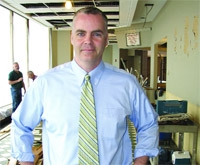
    Features
    Caterer Peg Boxold Has Persevered Through Determination, Diversification
    Peg Boxold

    Peg Boxold says her recipe for success has always had creativity as the main ingredient.

    Peg Boxold knows what it’s like to maneuver one’s way through a recession.

    She and partner Mike Martel, both veterans of the Marriott Hotel in downtown Springfield, started their catering business, Elegant Affairs, in early 1989, about the same time as the start of a severe economic downturn that would last, by some estimates, for four years.

    The company was launched almost exclusively on corporate functions, and many of the companies that headed up the early client list — Monarch Capital, Bank of New England West, and Heritage Bancorp — would soon disappear from the landscape. Meanwhile, most all of those left were thinking about survival, not lavishing clients and employees with smoked salmon and shrimp cocktail.

    Boxold told BusinessWest that she and Martel survived those lean years by being, in a word, creative. As an example, she said the company would work with businesses of all shapes and sizes to stage events that were fun and cost-effective, if not exactly elaborate.

    “We were creative … we did whatever we had to do to make it through those times,” she explained. “We picked up a lot of business with people who couldn’t afford a big hurrah, but still wanted to do something.”

    Today, entrepreneurial creativity is still the watchword, but Boxold, who would become sole proprietor of this venture after Martel left to pursue other business opportunities in 2001, is being challenged by much more than the economy these days.

    Indeed, the landscape for caterers, especially in this market, has changed dramatically over the years, she said, so much so that many of the traditional caterers doing business in the Pioneer Valley years ago are no longer doing so. There are many more banquet halls now vying for corporate and personal events such as weddings and showers, and many of these establishments, as well as a number of area restaurants, are catering events off their own sites, she said, citing a few of the additional challenges facing her nearly two decades after she started out.

    Meanwhile, downtown Springfield, where she has always based her business, is far less vibrant than it was years ago, with many banks and other corporate clients and potential clients now gone or relocated to the suburbs. Very recently, the soaring prices of food and gasoline have brought additional burdens in the form of expenses she can’t easily pass on to clients.

    And then, there’s the Basketball Hall of Fame and the exclusive catering contract awarded to Max’s Tavern, located in the Hall complex, for all events staged at the shrine.

    Boxold handled hundreds of events at the old Hall, and a few at the new one, before Max’s arrived, and she’s still quite bitter about that deal and how it went down.

    “No one told us anything,” she explained, adding quickly that, amid swirling rumors, she sought and was granted a meeting with Hall officials, who gave her the news. “We did a number of events for free or at cost to help them raise the money to build the new Hall, and then they turn around and give the contract to a Connecticut-based restaurant chain…”

    She didn’t actually finish that thought before moving on to another one — the fact that the loss of the Hall of Fame business nearly doomed her venture.

    But she has persevered, through determination and diversification, which, in this case, means everything from handling the food service at Springfield’s Franconia Golf Course to successfully managing a vegan wedding a few years ago.

    “That’s tougher than kosher catering — you have to read a lot of labels,” she said with a laugh, adding that every additional event or contract helps with the all-important task of keeping the calendar full, which is the ultimate recipe for success for any catering venture.

    In this issue, BusinessWest looks at how Boxold has managed to find the right ingredients for continued success in a field where entrepreneurs have to think outside the box lunch.

    Food for Thought

    As she talked about the very early days of Elegant Affairs and the years that preceded them, Boxold eased back in her chair, smiled, and shook her head slightly, as if to indicate a degree of disbelief as to just how good things were, at least when compared to today.

    “The money was flowing in those days,” she recalled of the mid-’80s, when the economy, downtown Springfield, and most of the major corporations doing business there were booming. Monarch Capital, then based in the office tower that bears its name, hosted a number of lavish affairs, she said, and the 28th floor of Baystate West (later renamed Tower Square), home to Baybank, was also hopping with events that kept several catering companies busy. “Downtown Springfield was the place to be,” she said.

    It all came to a crashing halt not long after Elegant Affairs was launched, she recalled, adding that it was a weekly, or seemingly daily, struggle to keep the fledgling operation going, an experience that steeled her for subsequent downturns in the economy and a host of other challenges.

    Boxold says she gained the necessary experience — and intestinal fortitude — for her chosen entrepreneurial venture through years of hard, disciplined work at the Springfield Marriott.

    She started there in 1976 as housekeeping manager, later moved on to human-resources functions, and eventually shifted gears and went into the catering side of the operation — working her way up to director of on-site operations at the downtown hotel. Martel, meanwhile, ascended to supervisor of outside catering. In early 1989, the two decided to go into business for themselves, and set up shop in the Marketplace building, where they operated an on-site deli (mostly to provide cash flow) and an off-site catering business that soon became the main focus, especially as the recession took its toll on the deli.

    Success with the catering venture, both before and especially after the recession hit, came through relationships and thus cultivation of a client list that included a number of major corporations, such as MassMutual and Baystate Health, but also business and civic groups ranging from chambers of commerce to the Spirit of Springfield to the Springfield Civic Center. And the Basketball Hall of Fame.

    In 1991, the business was moved across the road, to 1380 Main St. and space that includes what has come to be known as the Glass House — there are windows on three sides — that seats about 80 and has hosted everything from bridal and baby showers to events for a host of Springfield mayors.

    Over the years, there have been some memorable events, on-site but especially off-site — such as a small dinner arranged for relatives of a coma patient who came out of that coma as the meal was being consumed — as well as some catering for celebrities; that list includes Tony Bennett, Mikhail Baryshnikov, Pearl Jam, and several past NBA greats.

    As the landscape in the region has changed, literally and figuratively, Boxold and her venture have had to adjust accordingly. There are fewer major corporate players than there were 20 years ago, she explained, and as for those that remain, the extravagance of the past has been replaced by a general cost-consciousness that places a premium on value, but also the necessary elegance and, increasingly, creativity.

    Meanwhile, there are a number of new players in the field, making it that much more difficult to fill the slate, which Boxold says she still manages to do through imagination and cultivating opportunities when and where she can.

    Just Desserts

    As she talked with BusinessWest, Boxold stopped for a minute to get some water for Sophie, her cairn terrier, who was rather loud in her requests for something to drink, and then louder still as she sought — and was granted — a game of ‘fetch the empty water bottle.’

    “She’s here (at work) a lot,” said Boxold. “When mommy’s working 15-hour days, there’s no one at home to be with her, so she comes here.”

    Long hours are part of the equation in this business, and have been since the beginning, said Boxold, noting that she, like others in this field, must rely on volume — in whatever ways it can be amassed.

    Indeed, on a recent Thursday, Boxold was prepping for a busy but typical weekend, one that would feature several events, including a wedding, on Friday evening, two more weddings and several smaller get-togethers on Saturday, and another 14 or 15 hours worth of catering jobs on Sunday, including two bridal showers.

    Pulling off such weekends requires logistical skills as well as some imagination, especially when it comes to staffing, she explained, adding that she has a cell phone full of numbers for employees past and present, as well as family members — and she isn’t shy about using it.

    “Sometimes, you wind up calling people you haven’t seen in two years,” she said of staffing demands. “You just do what’s necessary — you have to be creative, and you’ve got to make it happen; these days, there are some times when you can’t really say ‘no’ to someone — you’ve got to stay alive.

    “On Monday mornings, I’m dead,” she continued. “It takes me until nearly noon to clear my head and get on with planning out another week.”

    But packed calendars in June, July, August, September, and especially December are needed to get the company through what have become painfully slow winters and early springs, said Boxold, who shook her head as she talked about the many challenges involved with keeping a staff of 60 working and her company in the black.

    A big part of that challenge has come in the form of increased competition, she said, noting that the field still has traditional caterers, although fewer of them, and a host of restaurants and banquet facilities now doing work on- and off-site. Couple this with a weakened economy, a desire among many business owners to cut back on entertainment, fuel surcharges that come with every delivery, and $4-per-gallon gasoline for her own fleet, and it makes for some rough going.

    In this environment, players in the catering field have to be flexible and imaginative, she said, adding that the addition of the work at Franconia provides a steady, helpful addition to the cash flow.

    A few years ago, Boxold formed a relationship with the owners of Wyckoff Country Club in Holyoke, giving her a steady supply of weddings that put her volume well above what it was before that arrangement. Wyckoff has since been sold, and that relationship has ended, but she still handles dozens of weddings a year at venues such as the Carriage House at the Barney Estate, Look Park in Northampton, Stanley Park in Westfield, Worthington Pond Farm & Gardens in Somers, Conn., and many others.

    The best source of business remains word-of-mouth referrals, she said, and they are amassed by doing more than putting together a good menu, said Boxold, adding that her company has to go a step, or many steps, beyond what might be expected.

    With regard to weddings, this means being more like a wedding coordinator than a company that simply handles the food and the bar, she explained.

    “You have to take the bride and the groom and make them think about the details and how their day is going to unfold,” she explained.

    “And the timing is key. At most venues, people have five hours for a wedding, and that goes by like that,” she said, snapping her fingers. “It’s a blur, and that’s why I tell people I have to give them great food, great service, and also help them maximize their time.”

    Success also comes from being able to handle just about anything a potential client might throw at you, she said, adding that this means everything from an exotic venue for a wedding — like the New England Air Museum in Windsor Locks, in one case — to different or exotic menu offerings, such as that vegan wedding.

    “You have to keep your food items updated and trendy — and healthy,” she explained, adding that she must stay atop everything from the latest attitudes on carbs to the growing problem with peanut allergies to finding gluten-free ingredients. “It’s all part of paying attention to details, which clients want and appreciate.”

    Taste of Success

    Boxold’s office, one of the unique workspaces carved out of the old Haynes Hotel, which was once one of Springfield’s finest, is cluttered with some items reflecting her fondness for the Red Sox — a framed photo of Ted Williams and Babe Ruth, a calendar with photos of players, and one of those pink hats, among others. There are also a few gifts from clients (bottles of wine and rum, for example), and a sampling of the small tokens given to guests at weddings.

    And on the far wall is a framed copy of a Republican article from Oct. 10, 1993. The newspaper did a series of stories on recession survivors under the banner “Beating the Odds,” and Elegant Affairs was that Sunday’s profile.

    Boxold actually has the piece framed in a few places in her headquarters space downtown. She told BusinessWest that it reminds her of the hardships she’s overcome and how business is a persistent struggle.

    And given the many new challenges facing her today, she’s still beating the odds.

    George O’Brien can be reached at[email protected]
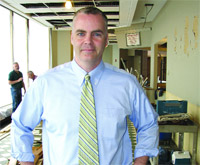
    Departments

    Let’s Hear It for the Boys & Girls Club

    The Springfield Boys & Girls Club was the recipient of Merrill Lynch’s 2nd annual “Party with a Purpose” benefit at the Log Cabin in Holyoke on July 26. Above, from left: Gary McCarthy, executive director, and Barbara Kolosowski, director of Development, Springfield Boys & Girls Club; and David Lusteg, vice president, senior resident director, wealth-management advisor of Merrill Lynch’s Springfield office. At right: Valerie Duncan (left), financial advisor of global wealth at Merrill Lynch’s Hartford office, and Alyson Roberts, vice president, relationship manager, private banking with the Wachovia Wealth Management division of New Haven, Conn.


    Summer Sizzle

    On June 23, “What’s Cooking, Kids?” of East Longmeadow held its fifth Celebrity Chef night since it opened for business in October 2007. Every month, “What’s Cooking, Kids?” hosts chefs from local restaurants to prepare and serve a five-course meal to in-studio guests. Above left, from left: John Thomas, managing partner of Max’s Tavern; Jen Matthews, owner, and Jenna Goodman, creative director of “What’s Cooking, Kids?” and Dorian Puka, executive chef of Max’s Tavern. Above, guests wait for their first course: from left, Diane Minicucci, RN at Baystate Medical Center; Dan Minicucci, fashion photographer; and Damon D’Amico, president of Alden Medical of West Springfield. At left, from left: Beth Benoit and Tim Giguere, culinary educators with “What’s Cooking, Kids?” and Geoff Sullivan, area manager of Altheus Personal Training.

    Uncategorized

    The large sheets of plain white paper, obviously torn from an easel and replete with wording in several different colors of magic marker, are still taped to the side of a bookcase in Marlene Marrocco’s office in Greenfield City Hall.

    They’ve been there for more than three years now, and together, they comprise many of the key thoughts expressed by attendees of the very first meeting of the no-longer-active Downtown Coordinating Committee. The lead page, with the phrase ‘Long-term Goals’ written at the top, has a list of bulleted items that include ‘Relocate the courthouse,’ ‘Development Plan for Rooney’s,’ and ‘Revitalize all Bank Row buildings.’

    The sheets are still there because those issues and others are still unresolved, said Marrocco, the city’s director of Economic Development and Marketing, who nevertheless expressed hope that the pages may soon find a recycling bin.

    That’s because there is considerable momentum downtown, she explained, noting several new restaurants and stores, ranging from a Bart’s Homemade to a Hannoush Jewelers location to a Tofu-A-Go-Go franchise, among others, all of which have opened over the past year or so. And she wants to build on that momentum through an action plan that may well take a vacancy rate that is comparatively low for area small-city downtowns, and drive it lower still.

    And Bank Row is the starting point.

    This is the actual name given to the short street that sits across from City Hall in the community’s central business district. There are five buildings on it (several once housed banks, hence the name), and four of them are largely or completely vacant and have been for a decade or more. The three buildings that will soon come under the control of the Greenfield Redevelopment Authority (GRA) after they are taken by eminent domain were the initial focus of a feasibility and pre-development study centered on the upper floors of those structures and their potential for residential development.

    Quickly, the scope of the project expanded to include a number of buildings near Court Square and along Main Street, said Marrocco, adding that the firm hired to do that study, Boston-based Concord Square Planning & Development Inc., has concluded that such development is feasible, and perhaps likely.

    That’s because Greenfield’s downtown is in some respects better off than others in this region, said Concord Square President Ted Carman. He told BusinessWest that while some cities have been severely impacted by large shopping malls, thus losing much of their status as retail destinations, Greenfield has not.

    In fact, that city has one of the few surviving downtown department stores (Wilson’s) in the Northeast, he explained. It also has another rarity, a multiplex theater in a downtown area, as well as a number of restaurants and shops.

    “The community has a very solid foundation that can be built upon,” Carman said, adding that downtown Greenfield will likely become even more desirable if and when a planned big-box department store is built off French King Highway, just a few miles from downtown.

    Such a development will enable more residents from surrounding communities to shop in Greenfield rather than travel north to Brattleboro, Vt. or south to Hadley’s Hampshire Mall to do so, he explained, and it will give more people commuting between Greater Springfield and Southern Vermont ample reason to get off I-91 at the city roughly halfway between the two.

    But while there is optimism about the prospects for the further growth downtown, there are challenges, said Carman, noting that workable financing must be obtained. It will be sought through state and federal historical tax credits (the buildings involved are in an historical district) and New Markets tax credits, and there is considerable competition for all these.

    What’s in Store?

    As she gave BusinessWest a quick walking tour of Greenfield’s CBD, Marrocco pointed across Main Street to the Bart’s Homemade ice cream shop that opened its doors last fall and the Thai Blue Ginger eatery next door, which arrived a few months later.

    “We used to have 14 restaurants downtown, and now we have 20,” she said, adding that this quick math is one of many ways to quantify and qualify progress and vitality downtown. Another is the ongoing work on the first floor of the Clark Building, located on the other side of Main Street and adjacent to City Hall. A large restaurant is planned for that first floor, with expectations for residential or office development on the upper floors.

    Still another is the arrival of the 100-seat restaurant called Hope and Olive, so-named because it sits at the corner of the those streets. It was opened late last year by one of the co-owners of the former Bottle of Bread eatery in Shelbourne Falls — which was destroyed by fire in 2005 — and some new partners. The principals actively sought to locate an establishment in Greenfield, and specifically this site, the former Polish American Citizens Hall, because of the vibrancy and continued growth of the city’s downtown, said Marrocco, who played a major role in making the deal happen.

    As she swept her hand across both sides of Main Street, Marrocco said there are few first-floor vacancies at the moment and, overall, generally quick turnaround when storefronts do go dark, which is considered a sign of confidence and optimism when it comes to a downtown area.

    But there are some lingering, long-time trouble spots that have been sources of frustration for succeeding waves of city officials, she said.

    And it was this frustration that eventually led to creation of the Downtown Coordinating Committee, she said, adding that it was formed to set a course for the CBD and keep attention focused on that area. Some progress was achieved, but mostly with shorter-term goals and issues well within the city’s control.

    These include establishment of a larger police presence downtown, forming a parking committee, new and improved lighting, some art in the form of sculptures, ADA compliance, improvements to Veterans Park, and other steps to make the area safer and more conducive to business.

    “We did as much as we could, realistically, but there are many things the city can’t control,” said Marrocco, who put the desire for a development plan for Rooney’s — a privately owned, multi-use, largely vacant property on Main Street — in that category. “The things we could do, we did.

    “But then, things kind of fizzled out,” she said, adding that the committee became frustrated in its efforts to achieve progress with those more-complicated, longer-term issues, such as the Bank Row properties, which have officially become eyesores.

    A few years ago, said Marrocco, there was talk of taking a step back, or at least sideways, and undertaking a new master plan involving the downtown or perhaps the entire community, an initiative that, while still under consideration, will have to wait until funding becomes available.

    “The downtown master plan was based on a master plan for the town that was 20 years old, so we said, ‘if we’re going to do this right, we need a new master plan,’” she explained. “But we’re looking at $150,000 or more to do it; we put it in the capital budget, it wasn’t approved for fiscal ’09, and we don’t know when it might get approved.”

    Meanwhile, beyond the money, or lack thereof, there was some consternation, if that’s the right word, about yet another study in a community known for doing studies but not doing anything with the results.

    “The problem with a master plan, like any plan, is that they’re no good without an implementation plan,” said Marrocco. “Over the years, Greenfield has done more plans than it can handle, but no one has ever implemented one of them; that’s because it’s very difficult to do that. It’s easy to write a plan, and not so easy to implement one.”

    So instead of waiting for a plan that may not materialize for years, the Planning Department decided to take some action, she continued, noting that it took a $60,000 grant from the state and hired Concord Square to gauge the feasibility of upper-floor development in downtown buildings.

    To date, a total of 12 buildings, including Wilson’s, which has a few vacant floors, and the theater complex, have become part of the initiative, said Carman, adding that discussions have focused on bringing more retail and offices to first-floor spaces and market-rate housing to upper floors.

    “In each case, we’re exploring reuse options that can be effectively financed,” he explained, adding that the Hartford-based consulting firm Bartram & Cochran has been hired to do an economic feasibility study that will outline the best possible reuses for each building.

    “Artist live-work space is one of the things we’re looking at,” he explained, “as well as generating more incubator-type spaces. These uses should work fine in Greenfield … we see considerable demand for that kind of space.”

    Carman said he has considerable experience working to revitalize downtowns in Western Mass., with work in Pittsfield, North Adams, Great Barrington, and others on his résumé. The Greenfield project is similar to others he’s undertaken, but the planned funding mechanism — historical tax credits — is unique and challenging.

    “No one’s really put the financing together quite like this,” he explained, “and it gets complicated when you have eight or nine property owners involved like we do here. That’s part of the challenge here — to pull it all together with these many disparate individuals and interests.

    “But we think there’s a good likelihood that this will happen, because everyone has a lot to gain if it does work,” he continued. “And by everyone, I mean the city, the banks, the existing business community, existing business tenants, and, of course, the property owners.”

    Success Stories

    Marrocco told BusinessWest that if she had her druthers — and the wherewithal — she would place signs on all the properties now included in this emerging action plan.

    “And they would say, ‘this is not vacant space — it’s an opportunity waiting to happen,’” she said, adding that she believes there is no shortage of people ready and willing to take advantage of such opportunities.

    If she’s right, and if the financing can be pulled together during future rounds of tax credits, then Greenfield can solve some decades-old problems and create still more vibrancy in its downtown.

    And Marrocco can finally take those pages down off her bookcase.

    George O’Brien can be reached at[email protected]
    Sections Supplements
    Why ‘Viral Marketing’ Is Catching On

    Hear word of anything ‘viral,’ and our first response is to cover our mouths and wash our hands. In the case of viral marketing, however, companies of all sizes are embracing this burgeoning advertising tactic and learning how to leverage it, and thus fostering a healthier bottom line.

    The term ‘viral marketing’ might conjure up images of haz-mat suits and facemasks, but marketing and advertising professionals say it need not be so scary.

    “One way to explain viral marketing is to step outside the commercial arena,” said Michelle van Schouwen, president of van Schouwen Associates (VSA) in Longmeadow. “It works like a rumor or an urban myth. It’s also like gossip — it spreads through the willing involvement of many people.”
    By definition, viral marketing refers to any type of marketing that propagates itself by encouraging people to pass the message on to others. This could refer to word-of-mouth or ‘tell-a-friend’ campaigns, but in today’s technology-driven world, efforts are most often carried out online and via E-mail.

    Companies looking to expose their brand or message to a large audience are turning more frequently to E-mail campaigns that will foster high pass-along rates (free gifts or offers of online activities are one way to boost the forwards), video and photo sites like YouTube or Flickr, social networking portals such as Facebook or Twitter, and to the blogosphere, hoping visitors will see something they like and send it to a friend or colleague.

    Take, for instance, Excel Dryer. Based in East Longmeadow, Excel developed and now manufactures and sells the Xcelerator hand dryer, which delivers a high-powered, and much more effective, blast of air to get the job done in restrooms across the country. It’s proven to be a successful business gambit, but also a source of wonderment for many a restroom visitor since its launch.

    van Schouwen, whose company serves as Excel’s public relations and marketing partner, said viral marketing has been particularly beneficial for the company — a surprising development for its CEO.

    “The company didn’t create the word of mouth,” she said. “The Xcelerator dryer pops up frequently on blogs, in words, and in pictures, and generates incredible enthusiasm and funny comments from users. It’s an amazing phenomenon.”

    Ill Communication

    Indeed, a search on YouTube for ‘Xcelerator hand dryer’ returns videos posted by tourists, diners in restaurants, and giddy teenagers who discovered the dryers and felt they were cool enough to film and post for millions to view.

    “This is the craziest hand dryer I’ve ever seen,” says one amateur videographer who posts under the screen name ‘Poppytoad.’ She then pans to the dryer — pausing briefly on the brand logo — before demonstrating its capabilities.

    Another poster, ‘lavalencia,’ reports from a bathroom in Mexico.

    “There’s a dryer here called the Xcelerator,” she says, again panning to that logo. “For specific reasons. Watch!”

    van Schouwen said that once VSA and Excel realized there was a groundswell of conversation happening online regarding the Xcelerator, they began tracking it more formally. The existing and continuing online presence of the product is a perfect example of how viral marketing works; it lies in wait, starts to spread, and eventually, it’s everywhere.

    “One doesn’t have to be a corporation to do this kind of marketing,” said van Schouwen. “An individual can create a huge impact if the message is compelling, and YouTube provides powerful examples of viral campaigns. There have already been several examples from the current presidential race. For better or worse, Rev. Jeremiah Wright’s sermons on race and America, when propelled forth on YouTube, drew the attention of the nation, and forced Barack Obama to address tough issues and eventually to leave his church.”

    Michelle Abdow, president of Market Mentors in West Springfield, said viral marketing can work — and, therefore, is gaining acceptance and use — because it relies on creating or identifying common ground and connecting people.

    That video of a man putting his face under the Xcelerator to puff out his cheeks? A viewer will send that only to friends he knows will be intrigued by a title such as Trey v. the Xcelerator, and therefore the audience has already been pre-qualified.

    “You can think of viral marketing as a type of marketing that spreads, not through traditional means of advertising, but by shared experiences,” said Abdow. “Viral marketing describes any strategy that encourages people to pass on a marketing message to others, which will then hopefully evoke enough emotion for the message to continue being spread, creating the potential for exponential growth in the message’s exposure and influence.”

    She added that, due to this somewhat grass-roots approach, viral marketing is also attractive because of its potential for low overhead and high returns.

    “Viral marketing can be inexpensive and can allow for high frequency,” she said, “and it’s a a growing segment for all kinds of companies. It’s also an effective tool for companies that wish to target a younger audience.”

    Hair Apparent

    While Excel’s online presence started inadvertently, other firms have used viral marketing in similar ways and very deliberately, with intriguing results.

    In 2007, for instance, multi-national corporation Unilever made headlines after it was discovered (or intentionally leaked) that a popular YouTube video of a bride having a pre-wedding, post-hair appointment meltdown was actually a staged production devised by Unilever’s marketing firm, Capital C, to promote the company’s Sunsilk line of hair care products.

    In two weeks, the video was viewed 2.8 million times; that number later rose to more than 12 million, and Sunsilk moved into a more traditional ad campaign using a tag line from the video’s title — ‘wig out.’

    David Goff, president of Goff Media in Northampton, said low-budget productions like Wig Out are proof that creating an initial murmur online is becoming the first course of action for many companies and marketing firms, which will use the viral pieces as a jumping off point for other modes of advertising.

    “Due to the growth of the Internet and E-mail forwarding between users, this type of marketing has gained tremendous acceptance as a methodology to grow a product through Internet buzz and referrals,” he explained. “Marketers have made efforts to create interesting E-mails and video files that recipients will find enjoyable or interesting to view, with the hope that these recipients will pass it along through the E-mail chain, or refer people to their Web site.”

    Viral marketing isn’t effective only through light-hearted videos and pranks, however. van Schouwen said one of the most successful viral campaigns to date was launched earlier this decade by the Internet-based E-mail service Hotmail, prompting other free E-mail sites to follow its lead.

    “In business, these E-mail sites are classic examples of successful viral marketing. Companies like Hotmail give away accounts, and include a message about ‘free Hotmail’ with every E-mail a user sends,” said van Schouwen. “The user ends up spreading the message that Hotmail offers free accounts without doing anything, and Hotmail thus continues to grow rapidly.”

    Abdow agreed that Hotmail’s tactics have become one of the hallmarks of viral marketing, largely because they were so effective and yet so simple.

    “Hotmail’s viral marketing was really when viral made its first really successful debut online,” she said. “What did Hotmail have to gain? More page views, which was a selling feature when looking for companies to advertise with Hotmail.”

    A Shot in the Arm

    Of course, like any developing marketing or branding tactic, viral marketing does have its pitfalls.

    There’s the potential for creating a bad or offensive experience for some members of an audience, for instance, or for changes or shifts to the core brand or message as a viral piece spreads through various channels (not unlike when kids play the telephone game).

    And, there’s that four-letter word for World 2.0: spam.

    “Some messages can be annoying and fill up pages with nonsense; spam is often seen as part of this type of Internet marketing,” said Abdow, noting that spam is an extreme example of some of the kinks that still need to be worked out of viral marketing. These kinks, in turn, are one reason why most companies are still a long way from relying solely on this genre to promote themselves or a service or product.

    “When you rely on word of mouth and someone has a bad experience with a company’s product or service, the experience is multiplied significantly and could have a substantial negative impact,” she said. “Viral allows for inconsistencies, and marketing initiatives need to maintain a level of consistency. It’s an inherent fault, which can spiral out of control.”

    van Schouwen agreed, and conveyed this sentiment another way: “it’s iffy,” she said of viral marketing in its current form. “For one thing, like gossip, a viral message can take on a life of its own and change meaning as it spreads. Also, it requires real creativity, and it’s difficult to determine if a campaign will take off.

    “Imitating another viral marketing campaign typically doesn’t work,” she added. “The Million Dollar Homepage sold ‘Web real estate’ at a dollar a pixel (in 2005) and paid for its creator’s college education many times over. But attempts to create similar sites have bombed.”

    Passing It Around

    But there are some measurable positives that suggest that viral marketing is going to continue to evolve. Goff said that, in addition to its use as an advertising vehicle, viral can also help companies get a better handle on their ‘CSI,’ or customer satisfaction index.

    “Viral marketing can also be viewed as traditional word-of-mouth advertising, where a happy customer refers your business to several more customers,” he said. “Many companies invest regularly in customer-service training, quality reviews, and measuring their CSI. Some large companies, like General Motors, actually bonus their franchises that score high in their CSI reports.”

    Goff went on to note that Wikipedia, the largest free-content encyclopedia online, reports that a satisfied customer tells an average of three people about a product or service he or she likes though basic word-of-mouth referrals. Through viral campaigns, however, the average individual will reach out to 11 people.

    There are other signs of progress in this arena, despite the unhealthy ring ‘viral marketing’ has to it. The first, said Abdow, is its natural fit with technology and the increasingly ubiquitous access to that technology.

    “Eventually, all companies will jump on the viral marketing bandwagon if they are not on it already, and some won’t even realize it,” she said. “In today’s day and age, we are all connected by our fingertips, through BlackBerrys, iPhones, PDAs or just regular cell phones that allow texting and Internet access. This connectivity is in itself a viral network, as it is how we share our interests with one another.”

    van Schouwen agreed that as viral marketing progresses, more companies and individuals will use it either to identify products or services they need or to introduce them to others. Traditional marketing is far from being replaced, she cautioned, but the role viral is playing in the marketplace at large is creating a new, interesting option to consider.

    “Viral marketing often works best when paired with really engaging, daring concepts,” she said. “It’s usually not a first choice for a conservative company whose strategy doesn’t involve taking unnecessary risks or chancing that a campaign will fizzle. It’s tough to guarantee that a viral marketing campaign will succeed, but many do succeed wildly.”

    That said, van Schouwen concluded with a few hopes of her own for the future of viral marketing. For one, she hopes to see savvy entrepreneurs using innovative concepts to create successful campaigns, and in general would like to see viral maintain its offbeat, risk-taking identity.

    One thing she’d love to see change, though, is the name.

    “Of course, I hope marketers will try to rename it,” she said. “Perhaps as social networking, or word-of-mouth marketing … anything that doesn’t sound like a head cold.”

    Sections Supplements
    Creating a Financial Strategy for the Long Haul

    Conventional wisdom tells us that once you start getting a paycheck, you should save a portion of it for retirement.

    Too bad life gets in the way: illness, children’s education, home renovations, job loss, divorce, and more can all dip into funds earmarked for retirement. It’s no wonder that 44% of Americans age 55 and older have saved less than $100,000, according to a Retirement Confidence Survey by the Employee Benefit Research Institute.

    Still, it’s important for Americans — even those in their 50s and 60s — to know that it’s not too late to jumpstart their savings as they approach retirement. What follows are some simple financial strategies to consider:

    Know what you’ll need. Take the time to figure out — and revisit — how much money you’ll need in retirement. Experts estimate that retirees generally need at least 70% to 80% of their pre-retirement income. You can tap into Web sites that help calculate your life expectancy and how long your money will last in retirement. Among the sites featuring financial calculators are www.longevitygame.com, www.smartmoney.com, www.aarp.org, and www.ssa.gov. If you haven’t already, it might be helpful to talk with a financial professional to develop a strategy to meet your individual needs. Here are some points to remember:

    Cut the debt. Eliminating consumer debt and curbing spending is a critical precursor to retirement. This may not be easy, however, since the average American carries $2,328 in credit card debt, according to 2005 research by Myvesta, a non-profit consumer education organization.

    If credit cards are sabotaging your pocketbook, you can call your credit card company and renegotiate the interest rates being charged. You can also make a point to pay a set amount of extra money toward your debt. Look for this money by cutting out expenses you could do without — regular trips to coffee shops, pricey restaurants, membership fees for services you don’t really use. It’s also wise to destroy your credit cards and keep just one card in hiding in case of emergencies.

    Check how you’re saving. Many experts suggest that pre-retirees save at least 10% of their annual gross income, but those with fewer resources may need to save more. In any case, how you save can be as important as how much you save.

    First, always contribute as much as you can in savings plans. The government allows workers age 50 and over to save more than younger employees with ‘catch-up contributions,’ allowing older workers to contribute thousands more to their 401(k)s and IRAs each year. The maximum contribution limit for an IRA (Roth or traditional) is $4,000 for the general population and $5,000 for those 50 and older by year-end. For 401(k)s, the maximum contribution limit for pre-tax employee contributions is $15,000 for the general population; for those 50 and older by year-end, the limit is $20,000.

    Annuities are another savings vehicle worth considering. They offer a tax-advantaged way to guarantee an income for life, or, alternatively, a set amount of income for a specific number of years. In general, funds can be withdrawn from an account after age 59 1/2, at which time the earnings withdrawn are taxed. Withdrawals prior to age 59 1/2 may be subject to ordinary income taxes and a 10% IRS early-withdrawal penalty. It’s best to consult with a tax advisor for specific tax advice.

    Be prepared for health’s ups and downs. While Americans are living longer, there are no guarantees for good health. Health-related expenses can impact the income you’ll need in retirement while medical conditions can jeopardize your retirement plans. It’s estimated that 60% of people over the age of 65 will need help with health and personal needs and activities of daily living as they grow older. Having insurance for such needs may be a consideration.

    Consider working at least part-time. If you receive a regular paycheck, you don’t have to draw as much from your investments to get by. This gives your savings a chance to grow and lowers the risk of your portfolio running dry. Employer-paid medical insurance for you and your spouse may also be a major benefit, especially if you’re waiting for Medicare to kick in.

    Another way to look at working: those who retire at 65, work two days a week, and earn 40% of their pre-retirement salary can increase their savings by 30% over five years.

    Even with retirement only a decade or less away, those in their 50s have the power to make the most of their prime earning years while refining their retirement strategies. By saving, investing, and preparing wisely, pre-retirees can ensure a growing retirement nest egg for years to come.

    John H. Joyce is a financial representative with Northwestern Mutual Financial Network, the marketing name for the sales and distribution arm of the Northwestern Mutual Life Insurance Company (NM) in Milwaukee, Wis., its affiliates and subsidiaries. Joyce is an insurance agent of NM based in Springfield. Securities are offered through Northwestern Mutual Investment Services, LLC, 1351 Main St., Springfield, member FINRA and SIPC. NM is not a broker dealer; (413) 748-8744;[email protected];nmfn.co/johnjoyce. This article is for educational and informational purposes only. It is not intended to be used for tax or legal advice.

    Sections Supplements
    Why Your Customers Will Never Be the Same

    ‘Let’s put it all behind us.’ These few words capture Americans’ unquenchable optimism. If there’s a roadblock, we go around it, and no hurdle is ever too high. Nothing stops us. We regroup and move on. Besides, tomorrow will be a better day.

    Without such a heritage, we would be a far lesser nation.

    Yet, there is nothing less than a sea change taking place. We have been forced to turn to Middle Eastern and Asian countries to save us from financial disaster, the same ones that have long been siphoning off millions of U.S. jobs.

    If all this isn’t enough, we are rendered impotent to do anything about rising energy costs and falling home prices. The situation is so serious that hundreds of thousands of consumers have abandoned their homes before foreclosure. On top of all that, we’ve parked our pickups and abandoned buying SUVs.

    At the supermarket, Spam sales have shot up for the first time in 40 years, while canned beans and macaroni and cheese fly off the shelves. Half the current crop of college graduates is boomeranging back home, and families are missing from family restaurants.

    Unquestionably, our country and the economy are in the midst of what may be an unprecedented upheaval that no one can escape. Incredibly, however, many in sales and marketing seem to ignore the unpleasant realities, even pretending the harsh realities don’t exist.

    But in the words of Warren Buffett, “the party’s over.”

    Rather than burying our heads in the sand, a much more productive approach is to discover the marketing and sales messages that make sense to customers in a clearly painful economic situation. Here are five essential marketing and sales themes:

    1. It’s time to stop pretending nothing has changed. It took a decade for General Motors and Ford Motor Company to finally confess that the auto-buying public wants small, fuel-efficient vehicles. They are on life support today because they couldn’t resist blaming their problems on just about everything else as they failed to see that they were the ones on the wrong road.

    There’s a huge lesson in all this. It’s not just that buying behavior has changed. There’s far more to it: those in marketing and sales often persist in the belief that it’s someone else’s customers whose buying behavior has changed. They want to believe that their customers are different.

    We want to believe that we will get over this and every other hurdle and all will once again be well. When the term ‘downsizing’ was first heard nearly 20 years ago, we said it was a temporary situation, even though there were indications that it was a permanent part of the corporate landscape.

    The point: basing marketing and sales on what we want to believe rather than reality can and will hurt us.

    2. Recognize that caution prevails. Let’s face it — there’s a serious problem when the auto repo trucks roam the nation’s suburban neighborhoods day and night, while a Mortgage Bankers Assoc. report indicates that nearly 1 in 10 American homeowners with a mortgage faced foreclosure or fell behind in their payments in the first quarter of 2008.

    Then, pile on the dramatic downsizing of the nation’s airlines, add widespread job insecurity and the fact that companies are warning employees to be alert to gas tank thefts, and there’s a flood of uncertainty and fear. To ignore this situation is a strategic mistake.

    A more beneficial approach is to create marketing strategies and sales messages that acknowledge the uncertainty and demonstrate how buying your products or using your services minimizes risk and creates greater security.

    The point: no one wants to get in too deep into anything. Offering assurance that customers will avoid getting in trouble is an appealing message.

    3. The desire to do something is strong. Whether the current ‘green revolution’ is real or a fad is irrelevant. There may be some of both. The cynics are always quick to point out that such activities as annual ‘clean up the town’ days or ‘save the something or other’ are more PR than practical. Even so, in times of crisis, people want to feel that they are doing something to help. They remember these experiences for years to come.

    It’s difficult to get our arms around global warming, and we’re impotent when it comes to doing anything about the price of oil. Yet, we want to feel that we’re helping, and the current green movement is a way to take a stand.

    During World War II, millions of Americans planted ‘Victory Gardens’ and collected scrap rubber (including millions of elastics), cans of fat, and tons of metal. All this may have helped the war effort, but it also gave Americans the opportunity to be involved.

    The point: finding ways to support and align ourselves with the ‘green revolution’ or similar movements allows consumers and companies to feel they are making a difference and that we are all in this together.

    4. Life is filled with disappointment. No matter how you look at it, Americans are being bombarded with disappointment: pensions are disappearing, and cost-of-living increases and the day one can retire are fading. Even the horizons of those largely unaffected by such experiences are changing.

    As Sandra Block of USA Today writes, “Patty Stewart of Redlands, Calif., is beginning to think she won’t be able to retire at 65. Or 67. Or possibly ever.” With the drop in her 401(k) and the equity in her home sinking fast, retirement may be an illusion.

    Since the 1950s, we have been able to gratify more desires than any people on earth, culminating in the bizarre belief that $50,000 or $60,000 annual incomes could support $400,000 and $600,000 mortgages.

    Now, disappointment prevails. Even Boomers are moving back in with their parents, and their kids are joining two generations under the same roof.

    To some extent, gratification is not just being delayed; it is disappearing.

    The point: the genius of Starbucks is immediate, low-cost gratification. It took the founder to see that the company had strayed from this path. The product is affordable, immediate gratification, a powerful message in all marketing and sales today.

    5. Get off the slam-dunk sales mentality. Selling is a tough job, but had it not been for a population that could afford the plethora of products and services produced by U.S. corporations, it would have been a thousand times more difficult.

    Companies have been able to raise quotas, cut commissions, minimize territories, and give little support to their salespeople and get away with it, primarily because most of the fruit was waiting to fall to the ground.

    That party is over, too, leaving companies unhappy with their salespeople and salespeople making excuses without really knowing what’s wrong.

    The problem was expressed by an insurance agency president when he said, “what we need is more sales,” as if there is some magical way to turn doubting, worried, cautious, reluctant customers into instant buyers. He is not alone with his ‘slam-dunk’ sales mentality.

    The point: the marketing-sales challenge today is one of identifying and cultivating specific customers with messages that speak to their perceptions and understanding of where they are in life. That takes time, time, and more time. We have left ‘getting the sale’ behind, and now we are in a period where ‘deserving the sale’ prevails.

    The only real marketing and sales challenge today is having the strength and will to take our marketing and sales direction from our customers instead of from our companies.

    Sections Supplements
    Friendly’s Has Sweet Success With New Biofuel-processing Program

    There’s something cooking in a small lab in Chicopee, at the Friendly Ice Cream Corp.’s distribution headquarters.

    But it’s not a recipe for a new sundae or Supermelt. Friendly’s has introduced something new from the fryolator — it’s creating biofuel from used vegetable oil to help power its fleet of trucks and heat its warehouses.

    Barry Bechard, distribution services supervisor for Friendly Ice Cream Corp. and one of the driving forces behind this new initiative, said the process of learning how to convert used oil into usable biodiesel began about a year ago, when many companies, especially those with large transportation and delivery components like Friendly’s, began evaluating what they could do to offset rising fuel costs.

    “It was probably a couple of years ago that people started talking about different fuels they could use,” said Bechard, “and we began hearing about the possibility of transferring our trucks over to biodiesel.”

    He said that, with the help of institutions involved with biofuel production and use — including UConn, which works with companies of various sizes to educate and help them implement the necessary systems — Friendly Ice Cream began to get a handle on what needed to be done to start using biodeisel. Moreover, Bechard said, the company realized it was already primed for the biofuel production in its own right, particularly in one key area: an abundance of the raw material needed to get started.

    “Access to the oil is what ties everything together for us,” Bechard explained. “If we didn’t have it, the program just wouldn’t be as beneficial. All of our restaurants use quite a few gallons of vegetable oil, and up until recently, it’s just been a waste byproduct that we were giving to rendering plants. But when we learned how biodiesel is made, we realized we could start making it on our own.”

    Fries, Fribbles, and the

    Fast Lane

    Last year, Friendly’s made about 5,000 gallons of biodiesel by preparing used vegetable oil for mixture with standard diesel fuel. This year, the company hopes to produce about 35,000 gallons, thus offsetting fuel usage in the majority of its trucks making deliveries throughout the Northeast. The biofuel is also being used as a heating oil additive in the company’s Wilbraham headquarters.

    Jim Dangleis, director of Northeast Distribution for Friendly Ice Cream, said the company, with its scores of restaurants and existing infrastructure that makes delivering oil for biofuel production easily implemented, was uniquely positioned to launch the program without creating an added draw on resources.

    “The key here is that we’re using used oil,” he said. “There’s been a lot of buzz about biofuel lately, but a lot of outfits are using virgin oil, which takes resources away from other things and gives biofuel production a bit of a black eye.”

    However, once the oil-reuse program was presented to Friendly’s restaurants, about 150 locations jumped on board, creating a partnership between the franchises and the parent corporation.

    “It creates a company-wide incentive,” said Dangleis. “I’m glad we started looking at biodiesel when we did, because now diesel prices are through the roof and we have something in place to help. Reducing fuel costs, in the long run, puts less of a burden on the restaurants.”

    The restaurants are welcoming the new program, he said, because, on their end, it amounts to an innovative recycling initiative that both employees and customers can get behind.

    “The process turns a waste product into a useful product,” he said. “The trucks run cleaner and quieter, and the fuel burns cleaner and more efficiently. Everyone wants to get behind something that’s green — it’s good business, and it’s good PR.”

    Room for Seconds

    The Friendly’s biofuel initiative also signals the start of a new chapter in the company’s already-colorful history. Not unlike the first Friendly’s location, opened by Prestley and Curtis Blake in Springfield in 1935, the Friendly biodiesel processing center is a modest yet carefully planned endeavor.

    “You can’t just buy these labs,” said Dangleis. “You need to actually create one, and put it together with pumps and vats and tubing. There’s a huge learning curve in setting this up and getting regulatory permission, but everybody’s behind this. We’ve received a lot of help on company, state, and federal levels.”

    Bechard agreed, noting that he’s received the support of everyone from district managers to maintenance personnel. He’s part of the endeavor’s front line, sacrificing clean shirts for oil stains, and ice cream cones for measuring cups of goo.

    “It’s not the cleanest job,” he said, “and I’m no expert, but there’s a lot to learn that is very interesting to learn.”

    Bechard alternately calls the biofuel production at Friendly a “homegrown system” or his “backyard still.” Indeed, the facility encompasses a small garage, and was built from scratch using materials found at any local home-improvement store. But the neatly arranged tanks, heaters, and other implements represent a conversion lab that is always humming.

    Employees at the distribution center had a tongue-in-cheek sign created for the garage that reads ‘Friendly Biodiesel World Headquarters,’ and while it may have started as a joke, that bright green sign is fast becoming a point of pride.

    Despite its size, the lab produces between 800 and 1,000 gallons of biodiesel a week, blending purified oil with standard diesel fuel (the mixture includes between 5% and 10% cooking oil).

    There’s only about 10 feet separating where the process begins and ends, but there’s plenty of new lingo to be learned along the way. Bechard explained that vegetable oil used in frying is delivered to restaurants for use in what are called ‘cubies.’ The biofuel program requires that the restaurants refill the cubies with used oil, and the packages are then sent back to the distribution facility for processing.

    The used oil, French fry bits and all, goes into a large trough where it’s strained, and then transferred to a ‘feeder tank’ in 42-gallon batches. Standard water heaters, just like those seen in basements across the country, are used to heat the oil to about 110 degrees, at which point various tests are performed to ensure the oil is at the right pH level — about 7, said Bechard.

    Then, the oil is transferred again into a separation tank, segregating the usable oil from unusable byproducts, and finally to a mixing tank, where air is pumped in continuously to remove excess moisture. From there, the oil is ‘splash-blended’ with diesel fuel and is ready for use in Friendly trucks.

    Two simple mason jars tell the story of how used oil becomes fuel for a fleet of tractor-trailers. One holds a sample of cloudy fry oil before distillation, and a second holds the clear, honey-colored result. Bechard said that, despite hours of straining, testing, transferring, and bubbling, the fuel actually remains edible, though few people are lining up to test that theory.

    “I think most people are just going to take our word for it on that one,”
    he said with a laugh, noting, however, that other corporations have caught wind of the biofuel production at Friendly and have approached the company looking for guidance. “It’s a new focus for a lot of people, and they’re coming to ask us questions. It’s a neat situation.”

    Biofuel for Breakfast?

    That said, Dangleis noted that Friendly’s is approaching the level of biofuel production it would like to stay at for a while, and there are no immediate plans to further expand the program. The trucks can only handle about a 10% addition of oil before the benefits start to lessen, and while he’s happy to answer the questions of other businesses, he doesn’t see biofuel ending up on any proverbial Friendly’s menu any time soon.

    “We’re still in the restaurant business,” he said, “but this has become a real team effort to make something happen that is great for our needs.”

    Sections Supplements
    CISA’s Model for Locally Grown Produce is Putting Western Mass. Farms on the Map

    Helping farms introduce their products to the local marketplace is one part of CISA’s mission, but there are several other aspects of the organization’s work that place greater emphasis on integrating the community at large with the agricultural economy to help people eat healthier — and promote social change through everyday decisions.

    At a time when the world is focused on differences — be they political, religious, or just matters of taste — Phil Korman, executive director of South Deerfield-based Community Involved in Sustaining Agriculture (CISA), said his organization focuses on the one thing that we all share, and always have.

    “One thing that’s definitely true for everyone is that we all eat,” he said. “And it’s part of our core mission to make local, fresh produce a part of our community’s everyday decisions.”

    CISA has been in existence for 15 years, providing marketing support and advocacy to local farmers (or producers) and buyers across the region, as well as bolstering access within the community at large to fresh, local food.

    A largely member-driven organization, its influence is felt most predominantly in three counties of Western Mass.: Franklin, Hampden, and Hampshire. However, that reach is gradually expanding to include parts of Worcester County and some of the Berkshires.

    Several programs of CISA also bring local products to buyers in other parts of New England, further adding to its name recognition as a proponent of sustainable agriculture and buying locally, and the organization also partners with other groups across the country.

    Korman said this work is important on a number of levels. It assists the local agriculture force, one of the largest business sectors in Western Mass., and in turn gives the region’s economy a needed shot in the arm.

    But it also, says Korman, helps to preserve the area’s rural character by maintaining its farmland, creates a positive impact on the environment by promoting the purchase of fresh produce in lieu of processed, packaged foods, and adds to the overall social well-being of Western Mass. by making a strong bridge between agriculture and community.

    “The agricultural economy is so important here,” he said, “but agriculture is also important to the landscape — the vistas we see, and the food culture we have. CISA really represents the diversity of the community; there are lots of reasons why we love where we live, and this ties a lot of those reasons together.”

    A Menu of Options

    CISA has a number of programs that formalize this work to increase access to local food produced by local producers. Four separate initiatives fall under the group’s ‘business development and marketing’ arm, while two round out the ‘community access to local food’ project. CISA’s advocacy efforts are also ongoing, and factor into both community and business-related programs.

    CISA’s largest endeavor is its Be a Local Hero — Buy Locally Campaign, the longest-running such program in the country, founded in 1999. It works by promoting local farms through point-of-purchase materials, events, and advertising.

    Korman said CISA promotes agriculture in general through its marketing efforts, but noted that the Local Hero program has proven to be a particularly strong brand.

    Bolstered by the involvment of CISA’s membership, ‘Be a Local Hero’ is the country’s longest-running and most comprehensive ‘buy local’ program for farm products.

    The Local Hero campaign uses a wide array of paid advertising — print, radio, and the Web among them — to engage the public and increase support for local farmers.

    CISA’s bright yellow logo, seen everywhere from bumper stickers to bread aisles (bright yellow stickers differentiate local products from others in stores), is a key part of this multi-channel marketing effort, as well.

    “We did a study in Franklin and Hampshire counties that reported that 82% of local residents recognize the Local Hero logo,” Korman said. “And in 2006, we surveyed our producers, and 90% said that the program had a positive impact on their business. They’ve also found that if they don’t sticker all of the product going to a store for sale, the unstickered units actually move slower.”

    There’s also a training component; once an individual or business becomes a member of the program, they’re eligible to take part in workshops covering everything from financial literacy to wholesale markets.

    The success of the program has earned CISA some national attention — it collaborates frequently with other agriculture-based assistance, marketing, and advocacy organizations across the country that are looking to replicate the model in their communities. Sometimes, groups travel to Western Mass. to meet with CISA staff, and other times, CISA sends representatives to other locales. The agency has also penned a manual titled Harvesting Support for Locally Grown Food that offers a primer of sorts to any community looking to start a buy-local campaign.

    “We’re so well-established that we get contacted a lot, and we do some national consulting,” said Korman. “It’s not often that a nonprofit like us is a marketing leader. But we’re also so excited that it works as well as it does to keep us connected to the community.”

    CISA also publishes a Food Products Guide each year, in both print and on the Web, which lists all of the places CISA members produce and sell local food. In addition to a listing of farms, stores, farmers markets, and restaurants, the guide also includes a regional farm- and food-festival calendar and a ‘farm product availability chart,’ designed to further promote buying locally year-round (and keep the guide itself hanging around, too).

    “People have gotten disconnected from how and when food grows,” Korman said. “This tells them when different things are coming out, and they can find out in the guide which farms produce what.”

    Finally, CISA chooses three recipients of Local Hero awards each year as a capstone event of the program, in recognition of achievement furthering CISA’s mission and sustainable agriculture in general. The winners can be individuals or organizations, and range from farm owners to journalists to other nonprofit groups in the region.

    Margaret Christie, special projects director with CISA, said the Buy Local program was created to allow people working in agriculture — not just farmers, but farmers’ markets, restaurants, grocery stores, landscapers, garden centers, foresters, fiber producers, and others — to connect with the community more easily and effectively.

    Share Cropping

    “When we launched Buy Local, we were looking for ways everyone could work together better,” said Christie. “A lot of groups needed a buy-local campaign.”

    She added that creating Buy Local didn’t require a lot of explanation, though — they were already aware of many of the potential positives associated with sustainable agriculture, but needed a way to harness that potential, and an independent entity to organize those efforts.

    “Before we launched, we did some research, and found that people already understood that buying local helps the economy,” she said. “But they saw it as something that could be more convenient. Our mission became helping people do what they already wanted to do.”

    Today, about 170 farms participate in the program, and Buy Local foods and products can be found in a variety of stores, from farmstands to small grocers to large supermarkets, including Big Y and Stop & Shop locations. In addition, more than 30 restaurants buy ingredients from Local Hero farms.

    But beyond the Buy Local Campaign, there are several other CISA initiatives working concurrently to reconnect the community with its agricultural roots. These include farm sales to institutions such as medical centers and colleges, programs for senior citizens, and the Farm2City program that provides for deliveries of fresh farm goods to various urban centers.

    All three of these initiatives recruit members to become ‘shareholders,’ allowing businesses, organizations, and community members to buy in, essentially, and receive produce and other products during various times of the year, particularly in the summer and fall months. Farm sales to institutions, for example, provide ingredients for cafeterias and dining halls but also what amounts to exclusive farmers’ markets for employees.

    “What you’re saying when you become a shareholder is, ‘I want to help this farm be sustainable and share in the bounty,’” said Korman. “It also provides another line of capital to the farmers, helping the economy, which is on everyone’s minds these days. Thinking locally also addresses other concerns many people have today, including environmental issues.”

    Christie said Baystate Medical Center is one of the largest participants in this program; employees sign up to be members, and can purchase produce and other goods directly on-site when suppliers make seasonal visits.

    “Employees can even set up a payroll deduction plan, so the cost of their purchases is spread out over the whole year,” Christie said. “This is another good example of our range, and an assistance program that connects farms directly with the consumer, as well as creating new wholesale markets.”

    Similar to the institutional farm sales program, Senior FarmShare also serves as a membership-driven project, recruiting low-income senior citizens to become ‘shareholders’ at a farm in their local area, in order to receive a share of the produce each summer. Farms deliver food to about 340 senior centers, apartment complexes, and independent- and assisted-living facilities in the region.

    And Farm2City is an effort to raise awareness of locally grown food in urban areas; individuals can purchase shares from area farms, and farmers deliver the shares once a week from June through October to workplaces and community hubs.

    All of these programs are geared toward that larger goal of easier access for all types of individuals to locally grown food, but CISA also works directly with the agricultural sector to boost the health of their industry as a whole, too.

    The Pioneer Valley Women in Agriculture Network, for instance, sponsors activities for the growing number of women farmers in Western Mass., from seminars on how to stay healthy while farming to Web site development, Internet sales, and risk-management courses.

    So-called ‘agritourism’ events such as festivals and farm tours raise awareness of individual farms and the breadth of the products they produce — CiderDay, FiberTwist, the Garlic & Arts Festival, and the Tomato Festival are just a few events on the calendar — and, on a more serious note, CISA works to involve local farmers, retailers, and other members and supporters in its advocacy efforts on a legislative level.

    “There are so many things involved in this aspect that there’s a move here to involve farmers in the Northeast more in the discussions on a federal level,” said Korman, adding that CISA regularly holds forums for farmers and citizens to keep both groups abreast of trends on state and national levels that could affect the health of local agriculture. “Hunger is a big part of these discussions — it’s a societal issue that we’re looking to chip away at. Also, we’re constantly evaluating how we can make our farms even more sustainable, and more vibrant.”

    Fruits of Labor

    Moving forward, Christie said CISA is looking to diversify even more, conducting some additional market research and tailoring new programs to address current and developing needs.

    “We’re setting up for larger volume,” she said. “We’re interested in learning how to do more with larger outfits, for instance. Farms need to be fairly large to supply the warehouses of major supermarket chains or other entities, so we’re looking at what’s necessary to fit into these larger systems.

    “We’re also looking at consolidating product to get more food out to more people, more often, so they can make the choice to eat locally more easily throughout the year regardless of income or schedule,” Christie continued. “We’ll do a year of research to answer the questions surrounding these areas, and to determine what we can launch and when.”

    Overall, it will be a busy year for CISA for this reason and others. While planning for a new set of initiatives is underway, a series of events will also be kicking off as part of a year-long celebration of CISA’s 15th year in operation.

    It’s a busy itinerary, but Korman returned to the notion that CISA’s many programs remain bound by one, overriding constant.

    “It really is all about the fruits and veggies — and potatoes and cheese and yogurt and wool,” he said. “All of our goals are tied together because they each allow people to pair their values with the decisions they make about what they buy, and what they eat.”

    Opinion

    Some of the casualties have been chalked up as ‘coincidences.’ That’s the term that many people used when three restaurants on or near Main Street closed within a few days of each other recently.

    Meanwhile, others have been called ‘inevitable signs of the times,’ or something to that effect, and the recent closing of Edwards Book Store fits nicely into that category — the small independent book store is certainly a dying breed in these days of Barnes & Noble and Amazon.com.

    But while some of the business closings in downtown Springfield can be neatly explained away, to one degree or another, the sum of these failures is certainly cause for concern and food for deep thought about just what the future can and should hold for the central business district.

    The latest blow came several days ago, when the owners of Hannoush Jewelers, long a mainstay in Tower Square, announced that they would be shuttering their storefront amid declining sales. “We tried to hang on,” company Vice President Nabil Hannoush told the local press. “With the traffic flow, it was getting a little tough.”

    This was a reference to the foot traffic in Tower Square, which in recent years has been confined mostly to people who work in that tower or within a few blocks of it. It is becoming increasingly clear that this constituency is simply not enough to support many businesses downtown, and that something must be done to bring more people into the downtown — somehow.

    Before elaborating, we must note that there are some positive things happening downtown. There is a FedEx Kinko’s opening in the Johnson’s Bookstore building downtown. Meanwhile, a new financial institution, Nuvo Bank, is drawing closer to its planned opening in long-vacant space within Tower Square.

    And while some businesses are choosing to leave downtown Springfield for the suburbs (the Novak Agency among them), there are some who are choosing to stay, like Court Square Group, which recently moved into the half-vacant One Financial Plaza (see story, page 48).

    But most everyone who doesn’t work for the Chamber of Commerce would likely admit to being concerned about downtown and the general state of vibrancy, or lack thereof. The retail component of Tower Square is fast becoming a ghost town, save for Dunkin Donuts (there are always long lines there) and the banks — and we’re not really sure how well they’re doing with those branches.

    It’s clear that the old argument that people will do business where they work holds only so much water, as Hannoush Jewelers and some of those banks would attest. The key, again, is to get people from outside the downtown, outside the city, even outside the region, to want to come downtown.

    Anyone old enough to remember the ’70s knows that this is doable. Long-time area residents remember when downtown Springfield was the place to be. Of course, that’s when Johnson’s, Forbes & Wallace, Steiger’s, Herman’s World of Sporting Goods, and other retail establishments were open — and the Holyoke Mall wasn’t. In those days, people had a reason to come to Main Street — actually, many of them.

    There are still some reasons, like the MassMutual Center and some surviving restaurants and clubs, but simply not enough of them.

    Creating more reasons is clearly the top priority for city planning officials and the administrators of Tower Square. Perhaps the tower can re-invent itself by moving away from traditional retail and into something different, such as outlet stores (not like the one that was there!) or offerings that cater to the creative community.

    Meanwhile, there are opportunities with the soon-to-be vacant federal building to create opportunities to stimulate some vibrancy, perhaps even through market-rate housing.

    Beyond the coincidences and those signs of the times, evidence is mounting that the downtown needs a battle plan — and a spark. And above all else, it needs to create more of those reasons for people to come.

    Cover Story
    Brimfield’s Antique Shows: A Regional Treasure

    Nearing its 50-year anniversary, the Brimfield Antique Shows are a tourism magnet for shoppers from around the globe. As the events continue to evolve, celebrity endorsements, technological advances, and increasing interest in the unique experience of hunting for treasures are creating a solid base for growth in this tiny New England town.

    It’s one of Martha Stewart’s favorite ‘good things.’
    It’s a constant haunt for staffers from Ralph Lauren, who come armed with cameras to snap photos of vintage fabrics that could inspire new clothing lines.

    And recently, Oprah Winfrey caught wind of the oldest outdoor antique show in the U.S. and its acres of one-of-a-kind items, featuring it in her magazine, O.

    Not a shabby following for a flea market that began back in 1959 with one man operating out of the tailgate of his pickup truck.
    What’s now known as the Brimfield Antique Shows started with a local auctioneer looking for a way to sell some of his goods without the use of a podium and gavel, who began holding informal sales on Saturday afternoons. Other entrepreneurs saw passersby stopping to have a peek, and gradually began setting up their own tables of wares, and from there, it mushroomed.

    Today, the shows, held three weeks out of the year in May, July, and September, are among the most widely recognized markets of their kind around the world, and are almost synonymous with the town of Brimfield’s name to many antique aficionados. The shows are sometimes still referred to as the flea markets or just ‘the fleas,’ but residents closely involved with the show, such as Bill Simonic, owner of the Yankee Cricket B&B and Web master for the privately maintained site Brimfield.com, say that’s become a bit of a misnomer.

    “People come for the antiques before anything else — that’s why they’re here,” he said. “Plenty of people have tried selling plenty of other things on the grounds, but there’s nothing like seeing and touching something that might not exist anywhere else. There’s nothing like the hunt.”

    The shows operate under an intriguing business model, too, with no one coordinator or managing body, but rather a number of property owners (also known as show promoters), local business owners, and dealers working in concert with the town and its government to make each week-long event a success.

    The Brimfield Show Promoters Assoc. (BSPA) is a major driving force, made up of promoters — primarily those who own the fields and buildings that accommodate dealers, and line Brimfield’s share of Route 20. The Quaboag Hills Chamber of Commerce works closely with promoters and the town to promote the shows, and professional associations such as the Heritage Corridor Bed & Breakfast Group, made up of B&B owners, keep tabs on this important source of bread and butter. All of these groups serve as watchdogs over publicity, show information, developing regulations on the legislative level, and even the weather.

    Each promoter advertises individually through the usual channels (newspapers, trade journals, radio, and some new forays into television), and sometimes, more frequently now than ever, as a group. There’s no official Web site for the shows, but many exist, including Brimfield.com, maintained by Simonic; BrimfieldExchange.com, maintained by Tim May, who also owns May’s Antique Market and the Brimfield Pocket Guide; and a site created by the Quaboag Hills Chamber of Commerce.

    All of the promoters’ fields that are flooded with dealers, buyers, and individual shoppers during the shows are individually owned plots of land — there are about 20 of them. In the off-months, these fields are downright desolate, but during show weeks, people line up on opening day like runners in the Boston marathon, maps in hand, ready to pick the tables over for the perfect find.

    And, as various show promoters have realized over the years, one of the secrets of the Brimfield Shows’ success is that the proverbial ‘perfect something’ is different for everyone. Sometimes, it’s a Japanese tourist staying at the Yankee Cricket, shrugging off jetlag to be the first to find some specific vintage books. Other times, it’s a wealthy socialite looking for new furnishings for her vacation home. And sometimes, it’s Martha Stewart, looking at shabby chic teapots and tableware, and taking careful notes.

    A New Day Dawning

    While shoppers strain at the gates before a show opens at daybreak (“that’s part of the draw,” said May), most are unaware that a complicated, if not choreographed, dance is happening on the other side of the entrance.

    May explained that the shows grew relatively unchecked until the late 1980s and early 1990s, when residents began realizing the lack of a pre-approved schedule for the shows, and the days dealers would begin arriving en masse were causing disruptions across town.

    “It wasn’t until then that the town instituted new regulations on the shows,” said May, “and the result is largely what you see today, which works pretty well for everyone.”

    The town government imposed limitations on the events — each of the three show weeks must now be identified more than a year in advance (they’re different every year, but begin on a Tuesday and extend until Sunday) — and approved by the Board of Selectmen. The 2008 show schedule kicks off on May 13.

    Show promoters also work in concert with the town to secure police and fire personnel to staff the events, and even to keep an eye on the weather. While once, field owners and dealers came to the shows equipped with hand-held radios to listen to forecasts, now the town’s Doppler radar system helps tremendously in watching for storms and ensuring that no major issues — hurricanes, microbursts, and the like — sneak up on the tents that cover a third of the show grounds during the markets.

    Don Moriarty, another show promoter who owns Heart-o-the-Mart, location self-explanatory, explained that dealers are assigned various opening times within that six-day period to lessen the stampede of new people into town all at once.

    “All of the dealers open at different times because of logistics,” he said, “and as a result I think opening works very well.”

    E-Brimfield

    Over the years, promoters have watched the shows grow, change, and evolve with the times. There was a period when some feared that online access to the same kinds of items found in Brimfield, however vast, could adversely affect the events. But as the Internet matures, the opposite is proving true.

    David Lamberto, owner of Hertan’s Antique Shows, said the tangible quality of the shows is likely one reason why.

    “The education, the interesting wares, the nostalgia … all of these are things that connect people in a world that can be very disconnected,” he said. “The shows are a destination for antiques, but also for face-to-face interaction and an opportunity to see, feel, and touch things.”

    Plus, said Lamberto, the sheer amount of items at the shows ensures that there’s something for everyone, and moreover that the events remain relevant in terms of design and decorating trends.

    “People follow what the trade journals and Martha Stewart promote,” he said, noting with a laugh that, a few years ago, it seemed like everyone was toting a metal sap bucket or two back to their cars. This year, he expects to see large metal stars in people’s hands, ready to be hung on the outside of a house.

    “Not only are we a source for these trends, we’re a source for ideas for designers, and we promote ourselves as that,” he said.

    May added that technology is augmenting the shows’ role in the design sector rather than lessening it.

    “It used to be that dealers had little black books and were constantly running back and forth from pay phones, with walkie-talkies in their hands trying to seal deals,” he said. “Now, technology is part of the evolution of the shows. Many dealers have Internet access. Buyers can take a photo of an item with their iPhone and send it to a colleague for an instant assessment. Instant gratification has become part of the game, and it’s not taking people away.”

    Moriarty said that, as technology continues to become a greater part of everyday life, he has nothing but optimism for its role in Brimfield. Even the online auction giant eBay has become a complement to the events, not a drain.

    “eBay and other online auctions are a big advantage for Brimfield, not a bane,” he said. “It has an impact on the volume of sales, and Brimfield isn’t always competing with online auctions. In fact, it’s an outstanding buying source.”

    The Economics of Antiquing

    There, Moriarty hits upon another hidden strength of the Brimfield Shows — the buyers. While many outsiders see the events as prime shopping time for homeowners and antique lovers, it’s also a hotbed for professionals such as antique dealers, shop owners, and online sellers, not to mention film and television crews that routinely visit Brimfield to find props and set design materials.

    Camera phones, for instance, are not to be taken lightly on the grounds; often, they’re in the hands of ‘runners,’ people sent to the shows by major corporations including restaurants, magazines, film studios, and interior-design outfits to capture the flavor of a show and make purchases based on what are seen as hot sells.

    “The 20 contiguous fields are a buyer’s mecca because of the social aspect and the opportunities to see people in the trade,” said Moriarty. “It’s almost like a convention.”

    And, similar to conventions, the Brimfield Shows’ economic impact on the region is diverse and far-reaching, including the sought-after extended hotel stays and increased restaurant business. It’s estimated that the shows bring in between $30 and $50 million a year in revenue, and not just to Brimfield. Adjacent Sturbridge is home to more than 40 restaurants that are often filled to capacity during show weeks, and bed-and-breakfasts in the Quaboag area begin booking reservations a year in advance, if not sooner.

    “The B&Bs and motels are filled in Brimfield, Sturbridge, and into South-bridge,” said Simonic, “and at this point, we usually start sending people toward Worcester and Springfield. Many hotels, even in those areas, have begun running special ‘Brimfield rates.’”

    Essentially, Simonic said, an entire city — albeit a tent city — springs up in Brimfield three times a year, and the return to the region and even the state through room taxes is unmistakable.

    “Brimfield has a population of 3,400,” he said, “but during the May show, which is typically the largest, there are a half-million people in attendance. There are between 3,000 and 5,000 dealers, 80% of whom are returning dealers who man the same booth at every show, and all of them need supplies — everything from gas to food to packing tape. The domino effect is very visible.”

    Even the town’s churches have a stake in the shows. Moriarty noted that about a third of the budgets of Brimfield’s churches, including the First Congregational Church on North Main Street, is derived from parking fees during the antique shows, and many residents have had similar success.

    “A lot of children from this town have gone to college thanks to parking cars,” he said.

    The softened economy in the U.S. this year has slowed room bookings somewhat, said Simonic, but he expects that the numbers will reach similar heights as previous years, with a greater number of last-minute bookings.

    “People are making their decisions in a shorter time period, so I think what we’re really losing is that long-term security we’ve had in the past,” he said, noting other trends, including solid interest in culture, history, and the antiques that are part of both among the European market.

    “The shows get a great deal of international travelers,” he said. “Antiques are a major attraction and a huge market.”

    The Future of the Fleas

    Moving forward, promoters are hoping to continue to streamline the show-planning and organizing process, with the town’s needs always in mind as well as those of its many visitors. Next year marks the 50th year of the Brimfield Antique Shows, and Simonic said he and several others are now in the midst of planning events they hope will span the entire year, not just its three flagship weeks.

    In addition, some of those varied groups working together in town are lobbying to extend public transportation from the Greater Springfield area to Brimfield to create a stronger connection between the westerly part of the region and the shows.

    “We’d like more attention from the Springfield area,” said Simonic. “The tourism profile in the Quaboag Hills is still in its infancy, but we’re making progress. Better lines of communication and transportation between Springfield and here would definitely help, though we understand that it will take a little time.”

    That sentiment is proof of an appreciation across Brimfield for things that take time to grow — sometimes, 50 years. It’s taken that long to build to a point where the atmosphere of the Brimfield Antique Shows is palpable in the air and sightings of Martha Stewart are commonplace.

    “We could fill an encyclopedia with stories,” said Simonic. “They’ve become part of the area, and they add to the excitement that keeps people coming back. You can’t put a price tag on that.”

    Uncategorized

    When Johnny Yee opened the Hu Ke Lau restaurant in April 1965, Chicopee’s Memorial Drive was a much different place, in many respects. Just ask Yee’s son, Andy, who was 5 when the then-60-seat eatery served its first customers, and has witnessed 43 years of change and evolution that is ongoing.

    He remembers when B-52 bombers would scream overhead every day as what was then Westover Air Force Base, a Strategic Air Command (SAC) facility, was teeming with activity at the height of the Vietnam War. He watched the birth, development, and ultimate demise of the Fairfield Mall, just a few blocks down the street, as well as the rise of a new shopping center on that site, anchored by Wal-Mart.

    He’s seen car dealers come and go, hotels go up and change names (often repeatedly), and chain stores and restaurants appear and disappear. And now, he’s speculating about what might come next in the shadow of Turnpike Exit 5.

    The fact that’s he’s been witness to all this and more is testimony to his father’s ability to create something unique, diverse, and consistent — qualities that have enabled the restaurant and dinner theater to stay in the same place and in the same family for more than four decades. In so doing, it has bucked the long odds facing those in the hospitality sector.

    The Hu Ke Lau has, by Yee’s calculations, anyway, the second-longest-running Polynesian floor show in the country — there’s one in Las Vegas, at the Tropicana, that’s been going since the late ’50s, he said. The Hu Ke Lau’s show, a 90-minute tour of the South Pacific islands, as Yee calls it, changes each quarter, but has taken the same basic theme since Lyndon Johnson was in the White House.

    Over the years, the venue has added comedy shows — a host of famous names have appeared there — and become a popular stop for bus tours heading to Western Mass. or passing through on their way to somewhere else. For these reasons and others, people often use the terms ‘landmark’ and ‘institution,’ when they reference the Hu Ke Lau, because it is much more than simply a restaurant.

    How it achieved that status is a function of Johnny Yee’s vision, imagination, perseverance, and commitment to the community through a host of philanthropic efforts. It remains a landmark today, five years after its founder’s passing, due to the diligence of surviving family members, including four children, to carry on the many traditions — including those philanthropic tendencies — and create some new ones.

    The Johnny Yee Scholarship Golf Tournament is an example of both. Staged over three courses, it is one of the largest benefit tournaments in the region, and last year grossed more than $100,000, with proceeds going toward scholarships for area students looking to enter the hospitality industry.

    “My father was very generous with area schools,” said Andy. “He was always saying, ‘which high school should I give to this quarter?’ He thought that part of being successful was giving back to the community, and we honor that spirit today.”

    Likewise, family members also honor Johnny Yee’s strong work ethic, commitment to customer service, and entrepreneurial drive.

    “My father was told that in America, the sidewalks were paved with gold,” said Yee. “What they didn’t tell him was how hard he was going to have to work to get to that sidewalk. I think we’re still successful, and we’ve been here so long when so many other places have come and gone, because of the standards he set.”

    Show Time

    “Fishing party.”

    That’s the literal translation of the phrase Hu Ke Lau in Chinese, said Andy Yee. “My father saw it on a sign on a shack while he was on his honeymoon. He liked it, and it just stuck with him all those years.”

    Indeed, it would be a while before Johnny Yee, who came to the U.S. from southern China in 1951 with some dreams and a good amount of entrepreneurial spirit, would put that name on a restaurant. His first business venture was a dry-cleaning operation, said Andy, noting that his father always had a passion for the hospitality industry.

    “And he was told that if he was going to open a restaurant, he should do it near Westover,” Yee continued, “because there were troops coming in and out of there, and there were just of a lot of people working there.”

    The elder Yee took that advice, and also a small part of the building at 705 Memorial Dr. for a restaurant featuring Chinese-American fare. He found quick success, so much so that he was soon expanding the original 60-seat restaurant and taking over the building. There have been several expansions and renovations over the years, said Andy, noting that the venue can now seat roughly 1,000 people in its main lounge and several smaller dining areas.

    The enterprise was always a family affair, involving Johnny Yee’s wife, Linda; sister, Bonnie; brother, Bill; and, later, his children — Andy, Anita, Edison (named after the inventor), and Matthew. Linda Yee is still quite active in the business, said Andy, “but we send her home at a decent hour; she’s paid her dues.”

    Members of the second generation, who usually work until the restaurant closes (2 a.m. on weekends), essentially grew up at the Hu Ke Lau, said Andy, noting that he started working there at an early age, with his first job peeling onions.

    Yee and his siblings would watch their father open 11 more eateries, in locations ranging from Longmeadow to Las Vegas, and become known as the ‘Restaurant Baron.’

    Those establishments were sold off one by one, Andy continued, adding that the extended Yee family now focuses its energies on two ventures — the Hu Ke Lau and a second restaurant, Johnny’s Bar & Grill (named after Johnny Yee), in the former Fedora’s Tavern in South Hadley’s Village Commons.

    In both locations, the Yees work to apply the lessons imparted to them by their father, said Andy, who, as he talked with BusinessWest, repeatedly referenced a front-page story in the local press about the restaurant business, how challenging it is, especially in a down economy, and how hard it is to keep the doors open.

    “This business is much more difficult than most people think,” he said, adding that factors such as immense competition, soaring overhead costs (everything from raw goods to insurance), and razor-thin margins are magnified when the economy is as soft as it is now.

    “Things started to slow down last fall, and there are signs everywhere of how bad the economy is and the impact it has on this business,” he said, citing everything from local closings to moratoriums on new building now in force within several national chains. “In cycles like this, you have to weather the storm and hang in until conditions improve.”

    Food for Thought

    The article in question provided an effective forum for Yee to talk about his family’s businesses, the Hu Ke Lau in particular, and how it has been able to witness 43 years of change on Memorial Drive.

    “Diversity is one of the real keys,” he said, adding that this term applies to everything from the menu (there are mainstays at the Hu Ke Lau, but always changes and new items) to the roster of entertainment offerings, which bring a wide range of audiences to the venue.

    The Polynesian shows, for example, which started in 1967, are quite popular with older constituencies, said Yee, adding that the comedy draws younger audiences, but also people of all ages.

    Over the years, a number of famous faces have appeared at the club, including Adam Sandler, Chris Rock, Rosie O’Donnell, Chris Farley, and many others, Yee continued, adding that the comedy shows, made possible through a partnership with the Comedy Connection, are one of many efforts designed expressly to bring people in the doors, hopefully to come back repeatedly.

    Another such effort is bus tours, he said, noting that the Hu Ke Lau is perhaps the most popular dining stop on bus tours that involve visits to several areas attractions, including the Basketball Hall of Fame, Yankee Candle, the Dr. Seuss Memorial Sculpture Garden, and others. Fall foliage season is the busiest time for bus tours, said Yee, adding that, through a strong relationship with the American Bus Assoc., the Hu Ke Lau has become part of the itinerary for myriad tour groups.

    “The association with the ABA gives us a broad reach,” he continued. “We had a coach from Anchorage stop here on its way to Cape Cod. I was really pleased to see a bus from Alaska in my parking lot — it showed just how much we’re on the map.”

    That group from the 49th state probably won’t be back any time soon, said Yee, adding that, in most other cases, his family’s broad goal is to drive repeat business. It does this by providing consistent service, keeping the look in the restaurant fresh and up-to-date, continuing popular programs such as karaoke (“we’ve been doing it for 28 years … this is no fad”), and paying close attention to detail.

    As an example, he referenced his search for a new sushi chef.

    It took him all the way to Pismo Beach, Calif., where he found John Robert and eventually convinced him to come to Chicopee. He started in January.

    “Sushi has been in this market for a while now, and it’s become popular,” Yee said. “But everyone pretty much does it the same way here; I was looking for something different, something fresh, and knew I’d have to go to California to find it.

    “I like traveling around the country, looking, observing, and absorbing,” he continued. “That’s how I get ideas to make this place fresh and different. I wanted to bring some California flair here, and it’s worked; we’ve seen our sales go up.”

    This drive for things new, different, and compelling applies to all aspects of the Hu Ke Lau, he continued, adding that it hasn’t made the venue recession-proof, but it has enabled this business to endure.

    Road to Success

    Andy Yee says the changes keep coming on Memorial Drive.

    He is encouraged by plans for a large-scale retail complex on a parcel just off the turnpike exit — one that is expected to bring even more traffic to the heavily traveled throughfare — and also the potential for more retail and hospitality venues at the site of a former Chevrolet dealership.

    “There’s a lot happening on this street … more change, more progress,” he said. “Additional retail and more restaurants and hotels really helps everyone here. It makes this area a real destination.”

    The Hu Ke Lau has done more than its fair share over the past 43 years to make this stretch of Chicopee into a destination. People have been coming to the venue from across the region, across the state, and even beyond. They come because this is a landmark, one that doesn’t have sidewalks paved in gold, but does have longevity and a bright future, thanks to Johnny Yee’s vision and hard work.

    George O’Brien can be reached at[email protected]
    Sections Supplements

    Breakfast (7:15 A.M.)

    The keynote speaker is Steven Antonakas, commissioner of Banks for the Commonwealth, who will speak on the subject of “Banking, Business Regulations, and Our Economy.” He will discuss the banking and mortgage issues impacting the region and the nation, and also the proliferation of banks and whether this is a good thing for business.

    Microbrew Tasting (12-2 p.m.)

    Attendees can sample craft beers distributed locally by Williams Distributing, including offerings from Magic Hat Brewery and the Hook and Ladder Brewery.

    Business Seminars

    Subjects range from new health insurance regulations to blogging; from information technology and how to use it to innovation — what it is and what it means. (See the full schedule, page 20.)

    Taste the Market (3-5 p.m.)

    During this two-hour period, attendees can sample items from the menus of several of the region’s finest restaurants. The dining establishments are sponsored by show exhibitors.

    Hair Styling

    Attendees can enjoy free haircuts from DiGrigoli Salons. Owner Paul DiGrigoli and his team will be styling and cutting hair throughout the day.

    Sections Supplements
    Springfield’s Newest Destination Boosts City’s Curb Appeal
    Peter Pappas

    Peter Pappas stands in front of the nearly completed River’s Landing, as landscaping and exterior lighting are completed.

    For years, what is now known as the old Basketball Hall of Fame stood vacant, and early in 2006, people were only cautiously optimistic about a big change to the property proposed by two developers who trace their roots back to Springfield. Two years later, the landscaping is being finished and the signage is going up at River’s Landing, and gradually, the city’s riverfront is becoming the place to be, both night and day

    In the main kitchen at Onyx Fusion Bar and Restaurant, executive chef Isaac Bancaco is devising a number of dishes that pair international flavors with the traditional ingredients of New England fare.

    “It’s tradition with a twist,” said the Hawaiian, recruited by Onyx to bring his unique flair to Western Mass. “Contemporary cuisine using local ingredients is going to be one of our trademarks. It celebrates what’s already here, and brings something new to the table, too.”

    This is an apt description of the ‘east-meets-west’ menu at Onyx; fusion, after all, is the calling card of the restaurant. But it’s also an effective metaphor to describe what’s happening at the larger complex in which it operates: River’s Landing, the reincarnation of the former Naismith Basketball Hall of Fame, and Springfield’s newest destination.

    Located adjacent to the new Hall of Fame, next to the Connecticut River, and flanked by I-91, River’s Landing is the brainchild of Peter Pappas and Michael Spagnoli. The two Springfield natives submitted their proposal for a day-into-night entertainment venue centered on health, fitness, and upscale dining to the Springfield Riverfront Development Corp. (SRDC), the private real-estate entity that owns the land, in late 2005.

    The partners are dually located on the East and West coasts; Pappas is an East Longmeadow-based real estate developer and importer/exporter, and Spagnoli, a chiropractor, owns a number of medical offices scattered across the country, including several in California, where he now resides.

    At the time of the request for proposals, Pappas and Spagnoli, doing business as River’s Landing LLC, were competing against a wide range of proposals for the ‘old hall,’ including a hotel and a public market. But at the end of the day, the duo’s vision won the bid based in part on the upscale yet cohesive feel it aimed to create on the still-expanding stretch of the riverfront that includes not just the Hall of Fame, but also a Hilton Garden Inn and four popular eateries — Max’s Tavern, Coldstone Creamery, Pazzo, and Pizzeria Uno (a fifth, Sam’s Sports Bar, will open in the Hall later this spring).

    “It’s a perfect fit with the Hall of Fame and the restaurants that are already doing well here,” said Pappas. “There’s a theme developing that we’re really excited about.”

    David Panagore, chief development officer for the city, agreed. He said the look and feel of the riverfront is one that is evolving with the Hall of Fame at its center, augmented by other sports- and fitness-related activities and a good measure of dining and hospitality options.

    “There’s a theme here of physical activity that means there’s much more to do along this stretch that eat,” he said, noting that, as development talks continue, the city will be looking to broaden this theme. “We’re looking closely at ‘event commercial’ opportunities that are semi-public, if not public. Five single-family homes, for instance, aren’t even in the realm of possibility. We need something to drive visitors.”

    He said the consistency of the River’s Landing project — few major changes have been made to the original proposal — is also an important aspect, because it has helped maintain faith in the riverfront’s future, and has also helped to create a strong base from which to spur further growth.

    “It’s about follow-through and keeping promises,” he said of the undertaking by Pappas and Spagnoli. “That’s what’s happened here.”

    Going with the Flow

    Pappas said he hopes River’s Landing will serve as a model for future projects, adding that, indeed, most of the original plans have stayed intact throughout the planning and construction process, now nearing completion.

    L.A. Fitness, a national health club chain, expressed interest in the property early on, and is now putting the finishing touches on a three-story facility that will be the company’s second-largest location in the country, encompassing 60,000 of the 75,000 available square feet on the property. It’s expected to open for business on May 1.

    Onyx, also three stories tall, covers 12,000 square feet, and opened for dinner and cocktails last month, the same week the city hosted the Division II college basketball tournament. Development of the remaining 3,000 square feet of the building’s footprint is being completed now, in order to house a Boston-based physical-therapy and sports-medicine outfit.

    At the project’s start, Pappas and Spagnoli pledged $9 million in private funds to the endeavor. In 2006, when the partners first spoke with BusinessWest, they noted that this figure could rise to $13 million.

    To date, Pappas said they have actually invested $14 million into the project, but lean more heavily on the fact that, as River’s Landing enters its first month as a fully functioning entity, the property is completely occupied, and improvements such as landscaping and exterior lighting, all geared toward making the building attractive and visible from the highway, are moving toward their completion on schedule.

    “Action breeds action,” he said. “When people see what’s going on here, they’ll feel more comfortable with coming to the riverfront to use it. I can’t wait to see people walking along the river again.”

    Walking through the building, Pappas, who’s added ‘restaurateur’ to his list of titles, said attention has been paid to spurring that action inside and outside of its walls, as well as to the city’s legacy, especially as the birthplace of basketball.

    This attention can be seen in its design and in the roster of firms involved with the project; several are local businesses, while some were pulled from other regions to add a metropolitan flavor to River’s Landing.

    “The basic structure of the building is the same,” said Pappas, noting, however, that it has received a considerable facelift. “The windows have been replaced, but they still offer views of the river, the Hall of Fame, the highway, and downtown, on different sides. Not only can people inside see out, but others can see in and take note that there’s a new level of activity here, and feel safer because there are eyes on them.”

    Current Events

    A bright gold now adorns much of the exterior, and the familiar row of multiple, vertical signs that stretch across the side of the building facing the highway, once carrying illustrations of famous Hall of Fame inductees, remains, but is now being redesigned to match the new décor.

    Onyx, owned and operated by Pappas and Spagnoli, has essentially become the facility’s showpiece. The Amherst-based architectural firm Kuhn Riddle handled much of the design, while California-based interior designer Julia Wong, whose work recently appeared on E! Entertainment Television, was brought in to create a cohesive visual flow throughout the 300-seat establishment.

    “We’ve incorporated the ideas of imagination, elegance, and a journey,” said Pappas, weaving from the lobby, which features a glass ‘water wall,’ into the bar and lounge area, with its multi-screen video wall and amber onyx bar.

    “The design is also ‘green,’ including low-flow water systems in the bathrooms and bamboo flooring,” he noted, adding that Onyx also offers free wireless access for patrons and will soon add an outdoor patio dining area.

    Onyx opened for lunch recently, and the final addition to its repertoire, a coffee and smoothie bar during morning hours, will commence in conjunction with the grand opening of L.A. Fitness, in order to better integrate the two businesses.

    The club includes an Olympic-sized pool, a full basketball court on the second floor overlooking the Hall of Fame, and multiple exercise, weight, and cardio rooms. Pappas said the club’s management has been pre-selling memberships for three months, and expects to welcome thousands of members.

    All of this activity is a positive sign for Springfield, said Panagore, adding, however, that there’s still a long road ahead with regard to riverfront development.

    “The project is going well, and with the hotel on one end and River’s Landing on the other, this is becoming a destination site in Springfield,” he said. “In terms of moving forward, we continue to have discussions about alternative uses for the visitors center — the original study talked about co-locating it within the Hall of Fame. We’re investigating how to better position that resource, so we can drive more visitors there.”

    With the York Street Jail now razed, there is another major development opportunity on the riverfront that Panagore said the city is monitoring closely.

    “We’re focusing on ensuring that anything happening at the site proceeds properly. We don’t want to be getting ourselves in a snarl, or tripping over ourselves,” he said. “ We’ll clear the site and start looking for development opportunities that complement those that are already down there.”

    Panagore added that the riverfront offers what he calls “curb appeal” as seen from I-91, and to be truly successful, the area must not only attract new traffic but send that traffic farther down the road.

    “The riverfront projects are initially important,” said Panagore, emphasizing the word ‘initially,’ “because they help bring people to Springfield and turn around the image of the city. People who would not otherwise come to Springfield now have a reason. But we really need to move some of that energy into the downtown, so our focus is on the entire core of the city.”

    There are some challenges, however, in the move to better connect the riverfront to downtown, said Panagore. While he said the city is in the middle of “ongoing discussions” regarding the maintenance and renovation of the riverside walkway that runs parallel to the Connecticut River and extends from River’s Landing to the Memorial Bridge, there are some physical impediments.

    “The state has a little less than $1 million earmarked to spruce up the walkway,” he said, “But Route 91 is always going to be a constriction. The underpasses between the riverfront and the downtown are also an issue, as is the railroad. Physical barriers naturally deter visitors from taking that route; we will try to put as good a face on it as possible.”

    Still, many of these conversations relate to what Panagore said is over the next hill for Springfield, while other hurdles, the largest of which is the ‘old hall’ and what to do with it, have been cleared.

    “Right now, we’re working on current successes,” he said. “There are always larger conversations about Springfield’s vision, but the work is well underway, and we’re getting up on our feet.”

    Going Swimmingly

    A diverse mix of activity on the waterfront, long a distant hope, is now becoming a reality for the City of Homes, and it has also provided a new venue for cuisine like Bancaco’s, which draws from his own traditions and is colored by those he’s learning more about in New England.

    One of his favorites is the hazelnut mahi-mahi with Maine lobster hash, and he said he’s hoping to introduce even more of these ‘east-meets-west’-inspired creations to diners at the newly opened eatery.

    “Pairing traditional ingredients and techniques with those that are modern is the best definition of the word ‘fusion,’” he said.

    Watching servers and prep cooks bustle in a kitchen located where he once came to learn more about some of basketball’s greats, Pappas nodded in agreement.

    Jaclyn Stevenson can be reached at[email protected]
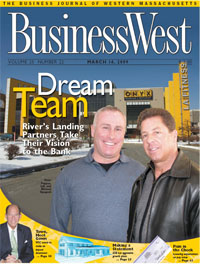
    40 Under 40 Class of 2008
    Age 35: Partner, Hampden County Physician Associates

    A food allergy — to a morsel of rice, a dab of peanut butter — can kill within minutes. And that, says Dr. Jonathan Bayuk, has many parents “totally freaked out.”

    But as an allergist and immunologist, he sees his job as not just telling people what to avoid, but helping them live as normal a life as possible.

    “There are a lot of myths out there, and also a need for teaching in the schools,” he told BusinessWest, adding that he consults, pro bono, with many local schools regarding their food-allergy policies.

    To help dispel those myths, and also assist parents with managing their anxieties over a dangerous but manageable condition, Bayuk is writing a resource book on food allergies, including information on how responsive area restaurants are to allergy sufferers.

    “We’re looking at restaurants and places where families go with kids, and rating them,” he said. “Some places can tell you what’s in everything, and the chef will carefully prepare your meal for you, and at others, there are no accommodations, and no guarantees.”

    With a busy practice to maintain — in addition to training allergy and immunology residents at Baystate Medical Center — writing the book has been slow going, but Bayuk intends to finish it and distribute it free of charge. It’s a commitment to his field that also includes leadership of the Western Mass. Food Allergy Network, a nonprofit organization he founded in part to educate the public.

    “Most schools are great about dealing with this issue, but sometimes — and I’m not sure why — they’re not as interested,” he said. But he suggested that finances often come into play. “The federal government subsidizes peanut butter, and schools are pretty strapped for cash, so they’re stuck — they really need the peanut butter, but parents need a peanut-free school.”

    However, Bayuk said, most school officials are receptive to the issue when he talks with them face to face. “I haven’t had any situations where superintendents are resistant to it. It’s more, ‘let’s go ahead and make a policy if it makes sense for the kids.’

    “I love my job,” he added. “I can’t think of a better one. I always feel good going to work because, most of the time, I can solve problems.”

    And give the family a stress-free dinner out, too.

    Joseph Bednar

    40 Under 40 Class of 2008
    Age 28: Director of Operations, Spoleto Restaurant Group

    When Bill Collins was 13 years old, visiting Northampton for the first time, he ate at Spoleto — and was impressed.

    “At that point, I already wanted to follow in the family business, which was hotels and restaurants,” he said. “I was with my uncle, and I said, ‘you know what? I’m going to work at this restaurant someday.’”

    After high school, Collins was managing an Applebee’s when he responded to a help-wanted ad for a waiter at Spoleto. To get his foot in the door there, he did both jobs for awhile, until Spoleto founder Claudio Guerra, who already operated three restaurants, began talking about launching Spoleto Express, a more casual eatery, in Northampton.

    “I told him, ‘listen, I just want to learn how to open a restaurant from the best in this business,’” said Collins. “So I spearheaded the project when we opened Spoleto Express, and it was hugely successful.” Soon after, Guerra had Collins scouting out locations for other restaurants, and eventually made him director of Operations for a group of dining locations that now totals six.

    In that role, Collins does a bit of everything, from overseeing the day-to-day details of the restaurants to advertising; from marketing to special events. “I’ve helped with the transition from a mom-and-pop style to a more corporate style,” he explained. “We’ve come up with new systems and procedures to manage the business. Claudio is such a visionary, and I have a lot of the corporate background, having managed at Applebee’s, so together we make a great team.”

    The proof, he said, is in the doubling of the group’s revenues since he stepped into his role — and, of course, all the full bellies and smiling faces.

    “For me, the biggest payoff is when I’m in the restaurant and I look around and see all these people eating, drinking, having parties and anniversary dinners, and I think back to when the restaurant was just bare walls,” he said. “And I know this was something Claudio and I created as an escape, where people can come and enjoy themselves.

    “Many people appreciate art or music or different areas of life,” he continued, “but dining is such a special experience. To give them that experience, to make people happy, that’s my favorite part of this job.”

    Joseph Bednar

    40 Under 40 Class of 2008
    Age 32: President, New City Scenic & Display

    Amy Davis grew up in Oregon, but as a third-grader, she wrote a report about Vermont — and New England has never lost its appeal.

    She wound up studying Theater and Sociology at Marlboro College in Vermont — “I knew little about the area, but it sounded nice, so I came out here.” Then, after returning to the West Coast for a string of prop-building, special-effects, and related work in television and cinema, she earned her master’s in Scenic Design at UMass Amherst.

    She could have headed west again, but an opportunity arose that convinced her to remain in Massachusetts. “There was a scene shop in Greenfield, and I had worked for them on and off while in grad school,” she said. “They eventually had to close, but for personal reasons, not any lack of business. I had inherited a little money, so my partner, Andrew Stuart, and I bought their equipment and materials.”

    The two had already developed ties with some of the former owner’s clients, and began to cultivate others after launching New City Scenic & Display in 2005 at the Eastworks complex in Easthampton. Today, they design and build sets and displays not only for film, TV, and theater, but also for museums, restaurants, places of worship, trade shows, and other venues large and small. For example, New City recently designed and built a new bar for the Eastworks-based Apollo Grill.

    “In our shop, we build, paint, do metal fabrication, work with wood, sew — a little bit of everything,” said Davis, who is also the company’s master welder.

    Life was a whirlwind two years ago; in the space of six months, Davis opened the business, defended her thesis, and had her first child, Ava. Since then, entrepreneurship has given her more flexibility to be with her baby than she could have working for others. Although the pace is still hectic, she said, it helps that she loves her work.

    “I like the fact that I never stop learning,” she said. “With every project I work on, I learn something new, whether it’s about design or how materials go together. But I couldn’t do this without Andy and Ava. To have such a great working relationship with my partner, and have such a fantastic daughter, make even the stressful parts of my job worth it.”

    Joseph Bednar

    Sections Supplements
    Indian Orchard Partnership Says Blossoming Gallery 137 Is Just the Beginning

    It’s a welcoming atmosphere at Gallery 137 in Indian Orchard.

    The storefront-style windows let in natural light, hardwood floors speak to the quality materials of days gone by, and displays of handmade crafts and original artwork adorn the walls and shelves.

    But to its directors and the Springfield arts community, this is more than just a gallery; it’s the start of what many hope will be a larger cultural movement in the city.

    Gallery 137 opened at 137 Main St. in September 2006, in what was once Stella’s Restaurant, a popular Indian Orchard eatery for many years. Its focus is on exhibiting contemporary art of all kinds, as well as promoting accompanying educational and community-minded projects.

    However, it’s also a project of the Indian Orchard Main Street Partnership (IOMP), a 501(c)3 nonprofit aimed at expanding cultural opportunities in the neighborhood, including through the development of arts-based businesses. The partnership also works to increase visibility of the artists working in the nearby Indian Orchard Mills, drive traffic to the mills’ existing Dane Gallery, and promote the Main Street Art Walk, which runs along the roadway adjacent to Gallery 137.

    Brian Hale, a board member of the IOMSP, spearheaded the gallery project. The owner of Design Workshop Inc., a boutique graphic design firm based in the Indian Orchard Mills, Hale said he joined the board when he relocated the business to the neighborhood five years ago. He is also actively involved with the X Main Street Partnership, a similar organization that is now concentrating much of its efforts on the renovation and restoration of the Bing Theatre in another Springfield neighborhood, Forest Park.

    “There are many ‘Main Street’ programs around the country, all geared toward revitalizing urban economic areas,” he said. “However, right around the time I joined, the community development block grant funding that had been available was pulled from the city, and the group was suffering.”

    Hale said a number of area legislators, including former state Sen. Brian Lees and Reps. Sean Curran, Tom Petrolati, and (now-Sen.) Gale Candaras stepped in to champion the cause, securing a $100,000 earmark for the partnership.

    “It paid for renovations to the gallery space, the Web site, promotions, and salaries,” Hale noted, adding that the earmark has remained in place for three years and allowed the group to hire artist Heidi Coutu to serve as its executive director a year ago.

    Coutu is a co-founder of Minds Island, one of the first online businesses designed to promote artists’ work. Now, she says she’s focused not as much on hawking individual works, but rather on selling an entire area, through the power of cultural programming.

    “With its proximity to the Indian Orchard Mills, the great ‘bones’ of Main Street, and the devoted supporters of the project, I am confident that a real art scene is emerging in Springfield at last,” she said. “Plus, the residents, businesses, and artists of the city will all be the benefactors.”

    The IOMP has also drafted a specific set of goals aimed at augmenting that scene, the centerpiece of which is Gallery 137.

    “The foundation is set,” said Coutu, “and I’m working to expand each aspect on Main Street.”

    Curb Appeal

    Hale told BusinessWest that putting more arts-related businesses and activities front and center — i.e., right on the Orchard’s main thoroughfare — is one way to make cultural opportunities more visible to both visitors and residents.

    “We’re trying to move the arts scene of Indian Orchard from the mills to Main Street, and to add more creative businesses to the neighborhood,” he said. “In doing that, we’re also tying in educational components, doing some streetscaping, and adding banners that speak to the arts, to get people thinking about it — because that’s half the battle.”

    This larger, behind-the-scenes aspect of Gallery 137 alone makes it unique; however, it’s also an intriguing addition to the Indian Orchard neighborhood for other reasons. Hale explained that the gallery does exhibit local artists, and includes a number of local artist members, who are eligible to participate in its annual juried show.

    “But we’ve shown the work of many regional artists, and some international artists,” he said. “We try to show everything — crafts and contemporary art in many different mediums — that is accessible to many people.”

    The gallery’s current show is titled “A Sense of Place,” and includes a collection of sky, sea, and landscape images by artists Robert Masla, Grant Strange, and Jeff Kern.

    In the recent past, shows have included “Uncommon Threads,” an exhibit of contemporary fiber art; an arts-and-crafts boutique exhibit held near the holidays; a selection of work by married artists Rod and Carole Guthrie; and a multimedia show titled “The Female Mystique,” featuring paintings, photography, sculpture, and other works.

    Gallery 137 also hosts a “First Fridays” series each month, sponsored in part by the Springfield Cultural Council. These events bring music, spoken word, and other performance arts to the space, thus expanding its cultural impact and welcoming more diverse audiences.

    “We have opened 11 exhibitions, which have included local, national, and international artists,” said Coutu, “and we have packed the house with our First Friday live performances.”

    Class in Session

    Meanwhile, the gallery hosts art classes for children taught by artist and gallery volunteer Merilee Hale, a project that has led to other off-site programming around the city.

    “We do outreach in the Springfield schools with art-based programs to help children access art and foster creative thinking,” explained Coutu, noting that other entities, including area businesses, have also taken note of the IOMP’s work and created connections. “We have begun a collaboration with Hampden Bank, which has offered wonderful support to our project, with a rotating exhibition and an art walk that will include their lobby, the gallery, and our new ‘art corner’ in the Indian Orchard Library.”

    All of these inroads are leading to the same place, Hale added — to a neighborhood that is more culturally enriched, and therefore more likely to attract positive attention from various sources.

    “We’re increasing access to cultural events for the people in the community, but that also brings people into the city,” Hale said. “This is a gateway neighborhood, and a wonderful place to jump-start cultural tourism.”

    Changes Afoot

    That, after all, is the primary goal for the IOMP and Gallery 137 — to use cultural development as an economic driver.

    “It’s a good fit for this area,” he said. “We’re not where, say, Easthampton is yet, but that’s where it’s heading.”

    In the future, Hale said he’d love to see a few more galleries, an arts-related business, two or three more restaurants, and perhaps a coffee bar where art aficionados can rest their weary feet.

    In the meantime, Gallery 137 is a nice venue from which to watch the changes.

    Jaclyn Stevenson can be reached at[email protected]
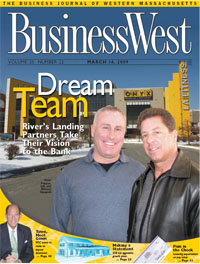
    Sections Supplements
    Private Clubs Have to Work Harder to Sell the Lifestyle
    Chris Tsandilas

    Chris Tsandilas, general manager of Crestview Country Club in Agawam, says people need a reason, or reasons, to join to a private club.

    “Closing the gap.”

    That’s a phrase you hear at most all private country clubs these days — and it gets right to the heart of the matter.

    The gap, in this case, is the differential between what a club wants its membership number to be and what it happens to be. And while the size of the gap varies — from a few members to a few dozen or more — all clubs have one, and this phenomenon is part of a changing dynamic in the private-club realm.

    Indeed, while declines in membership are nothing new — they always accompany downturns in the economy — the current gaps are different because closing them represents a sterner challenge than in the past, and it will be this way for the foreseeable future.

    That’s because times are changing, said Chris Tsandilas, general manager at Crestview Country Club in Agawam. He told BusinessWest that, while country club memberships never really sold themselves, today they are in many ways a harder sell. There are many reasons for this, but primarily, people today, especially members of younger generations, have many alternatives for spending their time — and their money — and a country club membership doesn’t move near the top of the list as easily as it once did.

    “Today, people think long and hard before they join a private club,” said Tsandilas. “You have to create a reason or reasons to join … you have to create an atmosphere.”

    For most clubs, this means working harder on selling themselves, and in some cases, this involves old-fashioned marketing — if the bylaws and tax code permit.

    Crestview, which has a current gap of about 20 members, is one of those clubs doing such marketing, and its messages and their presentation speak to those comments about ‘reasons.’ In one print ad, the phrases “championship golf course,” “no tee times,” “practice facilities,” “family recreation,” and others are in a bigger, bolder typeface because they speak to the benefits that golfers and families can realize from membership.

    Meanwhile, another ad references a “home away from home” atmosphere, which, said Tsandilas, is what many families are looking for in the post-9/11 era — a safe place for children and a relaxing atmosphere for adults that doesn’t require getting on an airplane.

    Jody Cunningham agreed. She’s the first woman president in Springfield Country Club’s 110-year history, which makes it one of the oldest clubs in the country. She presides at a time when the membership capacity is 400 and the current gap is about 50. Some members would prefer that SCC not close that gap (the course would be less crowded), but club officers want at least a smaller number to ensure that an institution on solid financial ground remains that way.

    And to do that, it is putting heavy emphasis on families, said Cunningham, adding that this is a national trend to which SCC and all other clubs must respond.

    While focusing on families, clubs are also trying other strategic initiatives aimed at adding value to the equation. Twin Hills Country Club in Longmeadow, for example, has lowered its fees by roughly 20% (it is even publishing its rates, which is almost unheard of in this industry — but there’s a reason), while adding such amenities as on-site therapeutic massage, new stand-alone junior memberships, and a dining membership.

    The club, which has survived a battle to turn its acreage into a housing development, had what current President Bob Bonsall called a make-or-break year in ’07, and made it. Golf membership, which was at an anemic 160 to start last year, is currently at 215, still well below the 240 Bonsall and others have set as the goal for this year, and it could ultimately go as high as 300. If it does, the club will have gone a long way toward ending what has historically been underutilization of the course and many of its facilities.

    Like others we spoke with, Bonsall said that joining a club is an investment, and clubs have to be diligent and imaginative in finding ways to convince people that these are investments worth making.

    In this issue, BusinessWest looks at the changing landscape for private clubs, and how they’re all working to close those gaps.

    Dues and Don’ts

    Hubert deRenzy says it feels like he’s been membership chair at SCC “forever.” It’s been several years, anyway, and he’s been a member at the club since the early ’80s. He’s seen a number of changes, especially in recent years, regarding demographics — no longer are club memberships dominated by specific ethnic or religious groups; ‘diversified membership’ and ‘melting pot’ are the phrases heard today — and overall image.

    “It’s no longer the cigar-smoking, card-playing, old boy’s network,” he explained. “Those people are getting older … there are still card games, but no cigar smoking, obviously. Today, it’s about women and young families.”

    To attract them, Springfield, like other clubs, is becoming somewhat less formal, although some clothing policies remain, while creating more programs that families can enjoy together. This is what members of Generation X, who are starting to join clubs, are looking for, said Cunningham.

    “They’re forgoing the vacations where they’re going away,” she said of that constituency, citing personal experience and anecdotal evidence. “They want places where they can have structured and non-structured activities, where they can drop the kids off and know they’re safe. We’re noticing that with a lot of our social memberships.”

    The club is responding with initiatives like the so-called Camp for Champions, a summer program that involves both children and their parents.

    “They can do tennis, golf, swimming, arts and crafts, even family bingo out by the pool,” said Cunningham. “There are teen pool parties, where they can float in an innertube and watch a movie; it’s all about the family … what can we provide for their kids, and what can we provide as a family unit.”

    By responding with family-oriented programming, the club is broadening its appeal — and its audience, said Cunningham, noting that this is the challenge facing all clubs in the current environment.

    Tracing recent history at Crestview, Tsandilas said membership had been steady until earlier this decade, when it started trending down, for reasons that are now considered part and parcel to national patterns. Eventually, club officers decided to “get serious,” as he put it, about shoring things up.

    A number of strategic initiatives have been or are still being discussed, he told BusinessWest. These include everything from opening the dining room to the public — a step that was rejected — to establishing a real-estate component that would create what Tsandilas called “instant members” (an option that is still on the table, but considered impractical at this moment) to marketing efforts.

    The club had never marketed itself before, and that step was certainly not commonplace in this region when it was first discussed a few years ago, said Tsandilas. But it was becoming more prevalent in other regions of the country, he continued, and when members brought back magazines and newspapers from other regions that had ads for private clubs, talks escalated, and Crestview eventually decided to “take the leap.”

    Working with Stevens Design Studio in Westfield, the club has put together a marketing campaign that features print and radio ads that center on the benefits to golfers that are not to be found on public courses (no waits for tee times) and that ‘home away from home’ theme.

    “This can be your second home, instead of a trip to the Cape,” he said. “You can vacation here.”

    Efforts to get serious have reduced the gap in recent years, said Tsandilas, noting that there is still work to be done. “Twenty members makes a difference,” he explained, noting that, by his estimates, each member spends roughly $10,000 with the club each year. “That’s money we could definitely use to provide our members with the atmosphere and services they deserve.”

    Food for Thought

    SCC’s tax status doesn’t permit advertising, said deRenzy, adding that the prevailing strategy at that club is to make all members feel as if they are part of the membership committee and share responsibility for gap-closing duties. And they’re given incentives, such as pro shop credits, for doing so, a tactic being repeated at many other clubs.

    While looking for new members, those at Springfield are also debriefing those who are leaving, to track the reasons why and see if there are patterns that the club can address. Meanwhile, SCC is reaching out to some who have left, he continued, with the hope of bringing them back on some level, perhaps as dining members.

    Twin Hills has had good success with a dining membership featuring no food minimums that it introduced last year as one of many steps to stabilize and increase membership, said Bonsall. Other initiatives included a business membership that did not fare as well, and an overall reduction in fees aimed at convincing prospective members that a club traditionally viewed as expensive is in fact within their price range.

    Overall, Bonsall explained, Twin Hills has been underutilized, a condition that resulted from bylaws, since revised, that capped golf membership at 250. The course can handle many more, and so can the dining room, he said, adding that the dining membership is targeted at residents of Longmeadow and nearby Enfield — which boasts many over-55 housing developments — who don’t have a wealth of dining options.

    “Longmeadow doesn’t have many restaurants, and many people are looking for a reliable place with a quiet, relaxed atmosphere,” he said, noting that Twin Hills sold about 90 dining memberships last year, and would like to get that number to 200 or beyond.

    “Historically, we’ve been underutilized, and underutilizing your facilities doesn’t make much economic sense,” said Bonsall. “It doesn’t make any sense to have the dining room just sitting there and the banquet facility just sitting there, and the golf course there with no one using it, so we’re just emphasizing ways to increase utilization.

    “We recognize that, nationally, the demand for the game of golf and for the country-club lifestyle is way off from what it was five to 10 years ago — that’s a phenomenon that affects everyone,” he continued. “So in effect, we’re competing for a smaller pool of potential members; in our view, that means we have to figure out how to appeal to a broader segment of the population, and we’re doing that by repositioning the club.”

    Ludlow Country Club already appeals to a fairly broad audience, said current Vice President Peter Karalekas, noting that membership traditionally hovers around 520, much higher than most other private facilities. It’s currently at 490 or so, and many members like that number because it represents opportunities to get better tee times on weekends.

    But, like Tsandelis, Karalekas said a few dozen memberships adds up, especially at a time when fuel prices and many other expenditures are soaring.

    “I could live with this number [490] if the membership demonstrates a willingness to pay higher rates, but at the moment, I haven’t exactly seen any such willingness,” he said, noting quickly that dues numbers lower than those at many other clubs (and that haven’t increased in three years) have created that larger membership.

    Besides, higher fees probably would not offset additional losses in membership or other losses in revenues, he said, leaving LCC in the same boat as other clubs — closing the gap.

    He’s confident Ludlow can do that, perhaps with a simple push on junior memberships, but he’s concerned about the bigger, longer-term picture. LCC’s membership is aging, and he wonders out loud whether there will be enough members of the younger generations to fill the void.

    “Everyone’s essentially fishing in the same, smaller pond,” he said. “I’m not sure we’re there yet, but soon we’ll be oversupplied when it comes to clubs in this area.”

    Join the Club — Please

    Just before talking with BusinessWest, Tsandilas sold another membership, closing the gap to that 20 figure.

    Like most before it, this sale was several weeks in the making, he said, adding that this is an indication that few, if any, are rushing to join clubs today. Prospective members are being deliberate and weighing all their options, meaning not just other clubs, but also other uses for dues and other expenses.

    In these changing times, he stressed again, people are thinking long and hard before signing on the dotted line, and they need good reasons to do so.

    George O’Brien can be reached at[email protected]

    Sections Supplements
    Life in the Quirky Northampton Real Estate Market

    Each time I pass by the Ten Thousand Villages store on Main Street in Northampton — a retail chain that sells what is described as ‘fair-trade products’ from 100 artisan groups in 30 countries — I am reminded of how I perceive the Northampton office real estate market: 10,000 psychotherapists.

    Northampton is honeycombed with countless small-office users. Some are attorneys, some financial advisors and other professions, but most seem to be related to providing some sort of mental health counseling. The net result is that, in the aggregate, they all occupy a vast amount of space in very small increments — about 200 square feet on average.

    They are all over town. Much of the upper-floor space on both sides of Main Street hasn’t changed much from the days of Sam Spade. Small offices with translucent-glass-paneled doors and creaky wooden floors. All are walk-ups, although some buildings do have elevators. The former Elks Lodge on Gothic Street was sold several years ago and converted into very handsome office space. What was once a tired and fairly wide-open building is now the home of dozens of social service or mental health practices. This is typical all along the Route 9 corridor into Florence and Haydenville as well. And nowhere is this pattern more apparent that at the Potpourri Plaza on King Street.

    This community of small users is generally a favorable one from a landlord’s perspective, in that many tenants in one building have a tendency to spread the risk. But it makes it very difficult for a company in need of 5,000 square feet or more to find space in the city. Many companies looking to expand simply can’t find large blocks of space in the market. Everyone wants to be downtown, and who can blame them?

    The largest single office user in Northampton is Disney Publishing, which occupies 10,000 square feet at the former post office building on Pleasant Street.

    In 2006, Disney relocated from another downtown site, the Roundhouse Building, which contains 15,000 square feet of truly unique space. That building, just off Pulaski Park, proved too large for Disney, which was downsizing at the time. Also, the building was about to go through a protracted environmental remediation by Baystate Gas. That project will be concluded within the next few weeks, and the building will once again be available to accommodate the needs of larger users.

    Another large space, at 109 Main St., was most recently occupied by Fleet Bank, a victim of the merger and acquisition quicksand, and is in the process of being leased. The owners have responded aggressively to unmet requirements in the market, and the results are becoming apparent.

    The top floor of Thorne’s Marketplace is also being converted into much needed larger blocks of downtown office space — fortunately, however, not at the expense of relocating PACE into nearby street-level space on Main Street.

    I expect this available supply of larger blocks of downtown office space to be absorbed in the next 12 to 18 months. Once the inventory is depleted, the only alternative will be new construction elsewhere.

    The project planned for King Street, a commercial-office mix at the former Lea Honda dealership site, was out of step and has stalled. Rents associated with new construction there, coupled with a less-than-desirable ‘strip’ location, have proven to be impassable obstacles for the project. The Hospital Hill commercial development, at the site of the former Northampton State Hospital, will offer a more desirable office venue than King Street, but it’s a far cry from downtown. And, as previously mentioned, everyone wants to be downtown.

    Several office-conversion projects that are not located downtown have succeeded nonetheless. The Cutlery Building complex in the Baystate section of the city is near capacity and offers affordable and somewhat non-traditional office space. The building has plenty of on-site parking and is located in a safe rustic setting along the Mill River. While such office locations can succeed as alternatives to downtown, they often prove to be much more challenging.

    Northampton’s allure is so compelling that, most days, we are willing to endure the inconvenience of circling the block for a parking place only to wait again for a table at one of downtown’s many wonderful restaurants.

    I guess that’s why those 10,000 psychotherapists are there, too — ready to help us work out all such stresses and pressures in our lives.

    John Williamson is president of Springfield-based Williamson Commercial Properties; (413) 736-9400.

    Sections Supplements
    Cities Seek Strategies to Break Through in the Convention Market
    Todd Greenwood

    Todd Greenwood, vice president of convention center sales and marketing, says Springfield has what it takes to be a major player in the conventions market.

    The convention business sector is slowly improving across the nation, returning to pre-9/11 levels of activity, according to those in the industry. This more-robust climate is creating opportunities for cities like Springfield and Hartford that have invested heavily in convention facilities, but competition is immense in this sector, with communities essentially fishing from the same pond. As in other industries, success in this one lies with effectively building a brand, which for Springfield is still a work in progress.

    To publicize Greater Springfield as a destination for conventions, Mary Kay Wydra says that focusing on its small-market character can sometimes help distinguish the region and its convention facility, the MassMutual Center, from other, competing markets.

    “If you bring your convention here, odds are you’ll own the building,” she said. “But we take it step further, and tell people that, for a few days, they can also own the region.”

    To better illustrate that notion, Wydra, director of the Greater Springfield Convention & Visitors Bureau (GSCVB), cited a recent delegation — the Daughters of the Nile, a charitable organization that raises funds for Shriners Hospitals for Children nationwide. More than 2,500 members descended on the City of Homes last June. Dressed in colorful costumes that are one trademark of the group, members were visible, and their presence was noticed — with the group returning an estimated $1.6 million to the region in direct spending.

    “They also had four front-page stories written about them in the time they were here,” said Wydra. “We want to showcase the conventions that choose Springfield — in larger cities, they’re not going to get that kind of press. We offer a small-town environment in a large city, and the front-line people know how to treat visitors well.”

    Despite this ability, Springfield is finding the convention business a challenging one to enter, and the city somewhat of a tough sell nearly three years after the MassMutual Center opened its doors.

    “The booking pace for the long term isn’t where we hoped it would be,” said Wydra, noting, however, that the GSCVB is working closely with the Mass. Convention Center Authority (MCCA) and other partners to boost those numbers. And officials here can take some inspiration from other Northeast cities, including Hartford and Providence, that had similar teething troubles while getting serious about the convention business.

    Those cities learned that it takes time to establish a solid reputation in the industry and effectively build their brands, she said, noting that Springfield is making considerable progress with that assignment.

    Todd Greenwood, the GSCVB’s recently appointed vice president of Convention Center Sales and Marketing, says the city has a lot to offer convention planners, including attractions, plenty of hotel rooms, and especially prices that are affordable, especially when compared to major metropolitan areas.

    “Hotel rates, parking fees, restaurant bills, these are all going to be lower than in Boston or New York City,” he explained, “and that’s especially important on ‘expense report day,’ when planners start breaking down how expensive it is to hold a convention in a given area.”

    In this issue, BusinessWest looks at the highly competitive convention business, and what cities have done, and are doing, to put themselves on the map.

    The States of the Industry

    H. Scott Phelps, president of the Greater Hartford Convention and Visitors Bureau (GHCVB), said he remembers similarly lean times for that city not so long ago.

    He told BusinessWest that Hartford, like Springfield, continues to build momentum after opening a new facility — the Connecticut Convention Center — in 2005. It has done so by paying attention to activity in the hospitality sector to ensure that an adequate number of well-appointed, updated hotel rooms and other convention-related facilities are available to delegates of all kinds.

    “We can’t just book any time,” he said. “We have to make sure we have the rooms, and hotels have been an issue.”

    Phelps explained that before the Connecticut Convention Center, which carried a $270 million price tag, opened, the city was “under-facilitied,” and thus had difficulties drawing meetings and conventions. But now, the opposite problem exists — keeping up with the demand for convention space in four diverse venues.

    “We’re overcoming that,” said Phelps. “We added 409 rooms with a new Marriott; the Goodwin Hotel is completing a multi-million renovation; the Hilton was closed prior to opening the convention center to become a brand-new, upscale, trendy hotel; and the Crowne Plaza is also completing renovations now. In short, the hotels have proved their products.”

    In Rhode Island, Neil Schriever, vice president of Sales and Marketing for the Providence-Warwick Convention and Visitors Bureau (PWCVB), which oversees bookings at the Rhode Island Convention Center and the adjacent Dunkin’ Donuts Center, said the recent addition of new hotel rooms in the capital city has also raised Providence’s convention business profile.

    “We are finding that in Providence, changes to our rooms packages in the last eight months enables us to be considered for groups that would have overlooked us before,” said Schriever, noting that the bulk of major convention business is done in Providence, with smaller meetings often welcomed elsewhere in the state. “We added 500 new hotel rooms in the community, 200 of which are at our anchor hotel, the Westin, connected to the convention center.

    We’ve increased the city’s walkability for convention attendees, and we’re seeing great signs of success for future business.”

    While the Rhode Island Convention Center, which focuses on meetings, and the Dunkin’ Donuts Center, which includes expansive arena space, are not new buildings, both have undergone renovations in the last decade, and just last month, the two buildings were connected by a covered walkway.

    “The Dunkin’ Donuts Center is also in the midst of a three-phase renovation due to be completed next fall,” said Schriever, noting that the project amounts to a complete overhaul of the center’s interior and façade.

    To continue to build on that momentum, Schriever added that the PWCVB is working to identify meetings and events that can utilize both buildings in the coming years.

    “We’ve really put a bigger focus on our convention services division, working to promote the destination and boost attendance,” he offered. “For instance, we may go to a conference the year before it’s scheduled to come to Rhode Island, put up a booth, and work to get attendees excited about the coming year.

    “We have a good brand,” he continued, “but there is still increased competition regionally and nationally, and we must maintain our presence on a national level. Not having enough availability — of convention space or rooms — is another challenge.”

    Conventional Thinking

    The GHCVB has also instituted programs with similar goals, including a hospitality task force that meets every month to discuss new programming options and improvements to the existing model, and a free shuttle service that runs from the Convention Center to downtown Hartford six days a week, every 12 minutes. Phelps said it’s a Connecticut Transit Authority program that directly connects convention delegates with the dining and entertainment options in the area.

    “The restaurants are doing a plethora of new things on their own that we can now better introduce to new audiences,” he said. “The convention center has been a catalyst for other things happening. It’s what we hoped for, and what the center’s supporters anticipated.”

    Wydra said she expects that Springfield will follow that same script, but knows that the road ahead is paved with challenges — and expectations that will be difficult to meet.

    The $71 million renovation/new construction project that created the MassMutual Center set the stage for some specific booking goals; in 2005, MCCA executive director Jim Rooney told BusinessWest he hoped to reach a rate of 65% of the year — 237 out of 365 days. The city is well behind that pace, but making progress, said Wydra.

    She noted that, like Hartford and other cities, Springfield must endure a considerable ramp-up period in the convention sector. Many organizations plan their conventions as many as five years ahead of time, and often rotate between a handful of different venues; as such, the MassMutual Center could easily need another two to four years to reach what Wydra calls “a steady diet” of convention business.

    She explained further that, due to the lengthy construction period for the building, it was essentially removed from most meeting planners’ radar screens for a considerable time, and now, the GSCVB must work to re-enter the picture.

    “The civic center was offline for five years,” she said. “I think the hotels in the area have gotten used to not having a convention center from which to draw business, and now part of our job is to change that mindset and attract more business.”

    Greenwood said the Greater Springfield area has the convention-sector pieces in place to do just that. Hotel capacity in the region, which includes access to more than 50 facilities in Western Mass. and Connecticut, is generally solid, he said, creating a healthy base from which to grow.

    “This area has all of the critical components,” he said. “We have the facility itself and the hotel capacity. This city is affordable, but not cheap.”

    Greenwood, who comes to his new position most recently from the Indianapolis Convention and Visitors Association, returned to that region-wide marketing effort currently being used by the GSCVB to sell Western Mass. along with the MassMutual Center, adding that, while Springfield may not offer the largest market, it does offer a number of positives that are attractive to meeting planners, including those affordable prices.

    Greenwood said the GSCVB is also enlisting the help of the region’s citizens to promote the MassMutual Center and its home base as a viable convention venue through a program called Pioneer Valley Pride, which charges local residents who belong to regional, state, or national associations to provide the bureau with the names of those who run those organizations.

    Raising Reservations

    And if the emerging success stories in Hartford and Providence are any indication, skies could be clearing here over the next few years.

    Schriever said he’s beginning to see some positive trends affecting the Providence market, such as the emergence of a new, short-term demand for mid-sized meetings, which can help to bridge the gap between periods of wooing and waiting and those of bargaining and booking.

    “We’re still getting calls for 1,000-person meetings within a 12-month window,” he said. “Right now, with the state of economy as it is, we might see a slowdown in this area, but we’re not anticipating one.”

    Further, Schriever said, while convention bureaus across New England are often ladling from the same pot of stew, collaboration in this region of the country is more robust than in most, and this helps move everyone forward in the long run.

    “As much as we all compete, we work together to target trade shows on a national level,” he said, noting that this work is often done through the New England Society of Convention and Visitors Bureaus, a membership organization. “We collaborate to sell the whole destination, and it’s important work, because it gets people to New England. If one of us brings in a conference, it’s possible that they will want to return to another venue in New England in the future.”

    Indeed, the Hartford, Providence, and Springfield convention markets are very different in many respects; both Hartford’s operating budget and convention facility footprint, for instance, are much larger, and its venues more diverse, than in the City of Homes.

    However, convention bureaus across the nation share similar strengths and weaknesses, and the industry itself is experiencing an upswing.

    “The industry has seen growth over the past five years; we’ve caught up to pre-9/11 numbers, and there are no signs of a slowdown,” said Greenwood.

    Hartford is also a year or two ahead of the GSCVB in terms of construction of a new facility and the subsequent development programs that follow.

    Phelps said business was good for all of the city’s convention spaces last year — the Connecticut Expo Center, the Hartford Civic Center, the Connecticut Convention Center, and Rentschler Field.

    “We had an outstanding 2007,” he said, noting that, on average, a delegate at a Connecticut convention will stay in the area for an average of 3.6 days and spend about $300. “Part of the reason we had a successful year was because we hosted large conventions, some with up to 10,000 delegates, and also hosted some for up to five days. The economic impact was that much greater, and we utilized a terrific number of hotels. We spread groups out among our hotels, and that created a spread across the city.”

    To capitalize on the growth now being seen in the convention industry, Phelps said the GHCVB is focusing on a few key elements of the convention-planning process in 2008. The first is selling Hartford’s convenient locale, close to major thoroughfares including interstates 91 and 84, as well as its affordability as a smaller city. As in Springfield, Connecticut’s small size as a state can be a draw rather than a hindrance, added Phelps.

    “Connecticut could fit into many metropolitan areas, such as Houston or Atlanta,” he said. “The diversity of experiences that creates within an hour’s drive is attractive to a lot of people, including those who come from those big cities.

    “Here, they can see the bigger region, including the casinos, Mystic Seaport, the college town of New Haven, and the Basketball Hall of Fame in Springfield. These are especially attractive for offsite meetings and spouse programs.”

    One Fish, Two Fish

    Greenwood agreed that when it comes to convention planning, no market, no matter how big or small, can rely on any one strength to pull new audiences in.

    “You can’t hang your hat on one thing, but if we we’re going to boil it down to one major effort, it’s concentrating on how to get attendees excited. The city is very capable of doing this.”

    And, he said, the GSCVB and Greater Springfield as a whole will continue to reach out to all types of delegates, not only because the region needs the traffic, but because it wants to be a gracious host.

    “It’s no secret that many convention bureaus are fishing from the same pond,” he said, “but the hard part is getting people here. Once we do, we think they’re impressed; the ‘big fish’ mentality appeals to them.”

    Jaclyn Stevenson can be reached at[email protected]

    Sales and Marketing Sections
    Getting to the Heart of the Valentine’s Day Impact on Business

    Even when the displays of candy and flowers abound, and red paper hearts adorn every shop window, it seems most shoppers still forget about Valentine’s Day until it is upon us. This means some retailers and restaurants see a late surge in activity, but however brief, it still warms the heart during the cold — and quiet — midwinter blues.

    Kathie Williams, co-owner of Richardson’s Candy Kitchen in Deerfield, has one specific visual she associates with Valentine’s Day every year: a parking lot full of pickup trucks.
    “People — men — do not plan ahead for Valentine’s Day,” she said, noting that her business will ring 75% of its Valentine’s Day sales on Feb. 13 and 14, and there are markedly more male shoppers than female. “It’s a very last-minute holiday. But it’s also one of our top holidays, and provides a great midwinter boost.”

    These are just a few of the hallmarks of Valentine’s Day when it comes to its impact on the marketplace. One is that, unlike any other holiday, it brings the 11th-hour shoppers out in droves. Another is that, for many niche retailers such as Richardson’s — confectioners, florists, jewelers, and the like — it’s a robust day for sales in an otherwise desolate stretch of winter.
    Consumers, too, tend to think of Valentine’s Day shopping as a frenetic time, but while greeting card aisles and restaurants might be packed on Feb. 14, Valentine’s Day is not a major event across the board. The occasion still leans very heavily on a specific set of traditional, romantic items, and the late, day-of rush to the stores also makes marketing new promotions or products a challenge.
    Jillian Gould, senior marketing manager for the Eastfield Mall in Springfield, said it’s a holiday that seems to sneak up on most shoppers, and many tend to rely on time-tested purchases: flowers, candy, and jewelry.
    “We’ve found it difficult to advertise for Valentine’s Day — consumers haven’t really responded, and I think that speaks to the lack of planning,” she said. “The activity is very last-minute, and it’s mostly men. Valentine’s Day in the mall looks very similar to Christmas Eve at 4 p.m.”
    Gould added that while Feb. 14 is historically a busy day at the mall, the average consumer will spend only about $100 on Valentine’s Day purchases, making this a relatively minor shopping day for department stores, clothiers, and other outfits with a broad range of offerings.
    In fact, Valentine’s Day doesn’t even pull in the largest number of sales of some of those traditional items often associated with it. Gould said it’s the fourth-largest holiday for confection sales, behind Halloween, Easter, and Christmas, and the third-largest for greeting card sales, behind Christmas and Father’s Day.
    “Many consumers will spend a lot on this holiday, but they’re not making the typical purchases we see during other times of the year,” she said. “They’re still looking for specific types of things, and because of that, it’s not a huge day for everyone. But for some retailers, it’s a very big deal.”

    Love in Bloom
    One such retailer is Brad Parker, owner of Longmeadow Flowers and Gifts, which has three locations in Longmeadow and Springfield. As a specialty gift, food, and clothing retailer as well as a florist (with delivery capabilities), Parker’s business is well-suited for Valentine’s Day, and takes measures to prepare for what is the company’s single busiest day of the year.
    “There are busier periods — Christmas, certainly, and Mother’s Day to a lesser extent — but barring bad weather, this is the biggest day, and it continues to grow.”
    Parker agreed that most Valentine’s Day shoppers are still looking for traditional gifts, but he added that he’s seeing a move toward more innovative, personalized combinations and arrangements within this vein.
    “People are getting away from the ‘balloon and a teddy bear’-type things,” he said. “They might want something traditional or romantic, but not run-of-the-mill.”
    In his stores, Parker said unique pieces of jewelry sell well, as do gourmet foods and clothing such as pajamas and robes. From a floral point of view, Parker said roses are still by far the holiday’s best seller — he expects to sell upwards of 12,000 this year — but a dozen long-stem red roses are not the only option.
    “Roses are still the big flower, but people are choosing colors other than red,” he said. “People are less afraid to ask for ideas, and many more men are walking into the cooler and choosing their own arrangements.”
    Parker said that this year, he’ll attempt to target last-minute shoppers, in an effort to extend these new shopping patterns over a greater period of time. Until the 10th of February, for instance, the stores will offer anyone who orders their roses ahead of time a lower, locked-in price.
    “After that, the prices can double,” he said, “So we’re really trying to get people to understand the value of ordering things ahead of the rush.”
    Williams said she, too, is careful to put her advertising dollars where they matter — mostly, toward late campaigns (largely radio) run on Valentine’s Day or the day before. Still, for the most part, she said this is a holiday that just doesn’t benefit from aggressive marketing.
    “Valentine’s Day sells itself,” she said.

    Heart and Parcel
    And while it may not return the same sales figures as other traditionally busy times of year including the Christmas season and the back-to-school rush, Valentine’s Day does provide a boost in foot traffic during an otherwise flat time of the year. With the holiday rush behind them, retailers in particular have months to go before the next large-scale consumer-driven occasion — Mother’s Day.
    “It is a great time for a holiday,” Gould said of the retail scene in February. “Christmas is huge, and January is busy with gift-card shopping, but then there’s a lull. Even those stores that don’t expect big sales will try to capitalize on Valentine’s Day, by positioning relevant items and small impulse buys.”
    Martha Salem, one member of the family that owns and operates the Salem Cross Inn in West Brookfield, agreed with Gould, saying that restaurants, too, hope for a brisk Valentine’s Day, but like many retailers, don’t rely heavily on any aggressive marketing to pull new diners in.
    “We advertise in local papers, but we find that, truly, the best form of advertising is word-of-mouth,” she said. “Still, we do hope for a good Valentine’s Day and weekend. It’s an important holiday during what can be a long season.”
    Salem added that it’s not an occasion that demands or requires a lot of bells and whistles. Simple recipes for success, she said, both in the kitchen and otherwise, work best.
    “We don’t feel that the public’s response has changed much; people are still looking for a nice, romantic spot to share quality time with their loved one,” she said. “We do find that people seem to be drawn toward our fireplace cooking — our prime rib roasted in the fireplace, and chowder made from scratch — nothing more than good food in a quaint location.”  

    Just Desserts
    Similarly, Williams said chocolate is a trusted standby that will probably never go out of style.
    “Luckily for us, people love chocolate any day of the year,” she said.
    And yet, there’s only one day of the year that Richardson’s Candy Kitchen sells it by the truckload.

    Opinion

    When it comes to casino gambling in the Bay State these days, the phrase you hear with increasingly regularity is ‘when, not if.’

    To many, the pendulum has swung, from a belief that the state couldn’t afford to approve casinos (from a social standpoint, at least) to the opinion that it can’t afford not to — from a budgetary standpoint. The growing consensus is that gambling is part of our society and that if people are going to go Connecticut, New York, or Rhode Island to do so, they may as well stay within the confines of the Commonwealth and generate much-needed revenue that can go toward schoolbooks and bridges; highways and health clinics.

    We’re not exactly sold on this ‘when, not if’ theory — the arguments supporting casinos are based on common sense, and the Legislature doesn’t usually apply that to its decision-making — but let’s assume for the minute that it’s accurate, but that ‘when’ may still be a few years away. The next consideration for the state and its leaders is the all-important question of where?

    And this gets complicated. There are several areas of the state that want a piece of the action, many politicians with power (real or imagined) who will try to influence matters, and some conflicting definitions of just what constitutes ‘Western’ and ‘Central’ Mass. as talk continues about how to divide up the pie.

    And then, there’s the very powerful argument that casinos will go only where the developers willing to pony up hundreds of millions of dollars to create them want them to go.

    Considering all of these factors, we believe the resort-style facility being proposed for a site just off Turnpike exit 8 in Palmer, perhaps the casino plan with the most momentum at the moment, makes a good deal of sense, and we hope the Legislature and whichever body picks the eventual winning locations agrees.

    There are other proposed sites in what would inarguably be considered Western Mass., including a challenged parcel in Chicopee that Mayor Michael Bissonnette has floated as a consideration. It’s landlocked, has wetlands and multiple owners, and so far no one in the casino development community has expressed any interest in it. But other than that, it’s perfectly viable. Then there’s the Holyoke Mall, which, rumor has it, has caught the eye of Donald Trump. This location actually makes some sense. It’s visible, highly accessible, has ample parking, and could easily be retrofitted into a casino and all its accompanying features, including an entertainment venue, restaurants, and shops (the site already has plenty of those).

    But Holyoke is not in the woods, and the ‘casino in the woods’ seems to be the preferred model at the moment.

    This is the Foxwoods/Mohegan Sun model, the destination area that offers much more than gambling and isn’t in the middle of a major urban area. This means that, by and large, the resort, or destination, casino breathes life into an area instead of sucking life out of it, which is essentially what happened in Atlantic City and what many Bay State leaders fear could happen here.

    The Palmer site apparently works for at least one developer — Mohegan Gaming LLC is interested and last month presented a conceptual plan to a packed room of officials and residents — and we think it makes sense for the state and this region. It gives Western Mass. a piece of the pie, and, with its location well to the east of Springfield, Holyoke, Northampton, and Amherst, presents the opportunity for casino visitors to possibly (that’s possibly) stop in those communities on their way to Palmer from Eastern New York and Berkshire County.

    The Palmer site has its share of challenges, and a casino on that site would certainly impact workforce quantity and quality in Western Mass. — where would 3,000 workers come from, and what impact would an employer of that size have on wages for service sector jobs?

    But from most points of view, the Palmer location does, indeed, make the most sense.

    Should the ‘when, not if’ theory of the casino universe be accurate, we would hope that a facility in Palmer would be in the cards for Western Mass.

    Cover Story
    The Prospects for a Casino in Western Mass.
    February 4, 2008 Cover

    February 4, 2008 Cover

    Many casino proponents say that when it comes to legalized gambling in the Commonwealth, the question isn’t if it will gain the blessing of the Legislature, but when. Some lawmakers may not agree, but there is mounting evidence that the pendulum has swung in support of casinos. While that debate continues, focus turns to the next matter involving this high-stakes issue — where to put them. At the moment, a plan for a hilltop facility in Palmer seems to have considerable momentum.

    ‘Inevitable’ is one of those words that doesn’t need an accompanying adjective or adverb, but Peter Dragone added one — ‘absolutely’ — just for effect.

    He did so when asked about the prospects for legalized gambling in the Bay State, a subject he’s been involved with for roughly three decades, starting with a plan to put a hotel and gaming facility on Mount Greylock in Berkshire County. There have been other initiatives since, ventures that have made Dragone, a Longmeadow resident, real estate appraiser, and consultant on casinos, one of the foremost authorities on that still-controversial subject, and now part of a group trying to place one on a 150-acre parcel it owns just off exit 8 of the Turnpike in Palmer.

    Using a tone brimming with confidence, he said he believes that it’s no longer a question of if the legislature will make casino gambling legal, but when — and he thinks the answer is ‘soon,’ perhaps this year. There are many reasons for this, he said, including growing support among state residents for legalized gambling; similar support from institutions like the Boston Globe, which has historically opposed casinos; critical need for new sources of revenues for the state that do not include tax hikes (the governor has actually taken the bold step of including casino revenues in his FY ’09 budget — more on that later); and, perhaps most importantly, the fact that casino gambling is already a fact of life for many living in the Bay State, as evidenced by how many trips they make to Foxwoods, Mohegan Sun, and other Northeast facilities on an annual basis.

    Summing things up, Dragone, in a recent interview with BusinessWest, said “there are already casinos in Massachusetts — they just happen to be in Connecticut.

    “It’s an industry that’s already here,” he continued. “The problem is, the tax revenue is going elsewhere.”

    Changing that equation and developing casinos within the confines of the Commonwealth is a multi-step process that begins with the Legislature, said Dragone, noting that he and many others, while certainly not looking past this hurdle, despite that aforementioned confidence, are already focused on that next step — the matter of where to locate said casinos.

    And he’s already rolled the dice in this regard, with a pretty substantial bet.

    Indeed, Dragone is lead partner with the Northeast Group, which owns the Palmer property as well as a 35-acre waterfront site in New Bedford also proposed for a casino. The former is considered the casino site with the most momentum at this date and time. It has caught the attention of Mohegan Gambling LLC, operators of Mohegan Sun, who late last month presented preliminary plans for what is being called Mohegan Sun Palmer, a $1 billion entertainment/gaming facility that would feature a 164,000-square-foot casino, a 600-room hotel, 12 restaurants and food venues, and 100,000 square feet of retail space.

    Paul Brody, Mohegan Gambling’s vice president of development, gave a lengthy presentation that touched on everything from traffic to table games; employment opportunities (3,000 of them) to the projected impact on area businesses.

    Using what’s happened in Connecticut as a predictor of what can happen in Palmer — and with other casinos in the Bay State — Brody said the state can expect good-paying jobs, heavy spending on the part of casinos with locally owned businesses, and a manageable amount of problem gamblers.

    All this was outlined in a PowerPoint presentation that noted, among other things, that Connecticut’s two casinos are now among the five largest employers in the state, that last year, the Mohegan tribe provided the state of Connecticut with $223 million in revenue ($4 billion since it opened), and that the planned Palmer casino will create 1,500 construction jobs in addition to the 3,000 permanent jobs, Such numbers will be just part of the equation for making a casino in Palmer a reality. Gov. Deval Patrick’s casino plan calls for three resort-style casinos to be located in a manner that would spread the wealth to all portions of the state, including Western Mass. But, for the purposes of this exercise, the governor is including Worcester County in Western Mass.

    The myriad matters impacting the ‘if,’ ‘when,’ ‘how,’ ‘where,’ and other questions concerning casinos has fueled considerable speculation — as well as plenty of work for lobbyists. Bill Cass, with the Boston-based Suffolk Group, is one of them. He told BusinessWest that his assignment is to promote Northeast’s interests, and this includes work to sell the Palmer location as a logical site with benefits for both Western Mass. and the state as a whole.

    “I’m confident that if legislation passes, this land would be part of a successful development, due in large part to its attractive location,” he said. “I’m on the Hill to make sure the legislation is fair and that it allows the Northeast Group to compete based on the merits of this site.”

    The $64,000 question, however, said Cass, is whether the Legislature will vote on casinos this year or sometime soon and, if so, whether Dragone and others are correct when they use that word ‘inevitable.’

    “And if someone tells you with a great degree of certainty that they know what’s going to happen,” he said, “they probably don’t know what’s going to happen, because no one knows.”

    Doubling Down

    Jeff Ciuffreda has heard the ‘when, not if’ argument with regard to casinos. He puts some stock in it, but certainly isn’t ready to place any odds on whether a casino vote is imminent or how one may wind up.

    As vice president of Government Affairs for the Affiliated Chambers of Commerce of Greater Springfield, he keeps his ear to the ground on the matter. He told BusinessWest that casinos have not been a direct subject of most conversations he’s had with legislators, but they have certainly been a background topic and, in many respects, the elephant in the room.

    He’s also talked with some developers, whom, he said, are of course interested in coming to the Bay State, but have questions about how many casinos may be developed and what impact these numbers may have on revenues and developers’ ability to recover licensing fees that will run in the hundreds of millions of dollars.

    With regard to a vote, he said the outcome will likely be swayed by House and Senate leadership, which still includes proponents and opponents, the latter list including state Rep. Daniel Bosley, a democrat representing the First Berkshire District and current chairman of the Economic Development Committee.

    “I think you see a lot of people (legislators) out here who are not really passionate about it one way or the other, and are likely to follow leadership closely,” said Ciuffreda, noting that some in those posts do support gambling, while others don’t, and many are not pleased that the governor went against their wishes and included casino revenues in the budget.

    Ciuffreda said there is talk of only a few sites in Western Mass. as potential locations for casinos, and as far as some parcels are concerned, it is simply talk.

    Donald Trump is rumored to have some interest in the Holyoke Mall, he said, adding that the facility has been for sale for some time, and that the casino talk is a “stretch” that has probably resulted “from someone putting two and two together,” with regard to location, accessibility, and possible conversion to gaming resort. Meanwhile, Chicopee Mayor Michael Bissonnette is keeping his options open on a 100-acre parcel located between the Turnpike and the end of the runway at Westover Air Reserve Base. That site is landlocked, said Ciuffreda, and has other challenges beyond access, including multiple owners and strong interest from Westover Metropolitan Development Corp.

    “From everything I’ve heard thus far,” he said, “Palmer is considered the Western Mass. site.”

    The ACCGS has taken no official stance on casinos and probably won’t, at least for the foreseeable future, said Ciuffreda, noting quickly that it has taken part in meetings where questions have been asked about the impact such a facility would have on small businesses, wages, workforce quantity and quality, and other matters.

    “There’s still a lot of questions out there, from developers, legislators, and mayors, and a lot of moving parts to this,” he said, adding that when it comes to casinos and their overall impact, “the devil is in the details.”

    Some of those details, at least as Mohegan Gambling LLC sees them, were put on the table in Palmer on Jan. 22, when Brody and other representatives of the corporation gave a lengthy presentation before the Palmer Citizen Casino Impact Study Committee.

    The well-attended session was significant in that it represented, for the first time in anyone’s knowledge, the first time a casino-development group had actually laid out a plan, with specifics on everything from the number of table games and slot machines (150 and 4,000, respectively) to plans for traffic control, including a flyover that would take vehicles off the Turnpike and directly onto the casino property without clogging local roads.

    The package of proposed attractions for the Palmer site — which go well beyond gambling — and the remote location combine to give this plan the look and feel of what is being called the ‘casino in the woods,’ said Dragone, which is emerging as the preferred venue for Massachusetts, especially in the wake of the mostly positive developments in Connecticut and the opposite trend in Atlantic City.

    “What occurred there — and a lot of it had to do with the state not doing what it said it was going to do — shaped some opinions about casinos here,” he explained, noting that monies that were supposed to go toward revitalizing Atlantic City went instead to plug budgetary holes elsewhere. “A lot of people saw what was happening — or not happening — in Atlantic City, and envisioned that happening here.”

    There have been far fewer problems in Connecticut, he continued, and the familiarity that many Bay State residents have with the casinos there has played a huge role in creating what he called a “sea change” in attitudes about legalized gambling.

    “There’s a very positive feeling about the existence of those casinos in the woods,” he explained. “Their impact has been overwhelmingly positive in the state of Connecticut, with regard to everything from jobs to revenue for the state — and this has changed the way many people think about gambling in this state.

    “And that’s one of the big reasons why the Palmer location works in the minds and eyes of many decision makers and the people themselves,” he continued. “It embodies the spirit of the ‘casino in the woods.’”

    Dicey Situation

    There has been interest in the Palmer site as home for a casino for more than a decade now, said Dragone, noting that there have been other plans forwarded that fall into the category of ‘destination’ venue. Bass Pro Shops was interested in the site as a possible location for a large-scale location in the Bay State before it eventually settled on becoming part of a large-scale retail/entertainment complex being created by the Kraft family, owners of the New England Patriots, adjacent to the team’s stadium in Foxboro.

    Dragone first toured the Palmer parcel, located on a hill off Route 32, in the mid-’90s, and came away impressed with its potential as a development site for a casino or other venue. He acquired an option on the land in 1996 and, along with several other investors, acquired the property in 2006. (Northeast recently acquired site control of an additional 80 acres adjacent to the proposed site.)

    Dragone believes Palmer represents the most logical of the Western Mass. sites for a casino, and perhaps the best option for spreading the gaming wealth to the Pioneer Valley. Peter A. Picknelly, third-generation president of Peter Pan Bus Lines in Springfield, agrees.

    A partner in the Northeast Group along with his brother, Paul, he acknowledged that his interest stems in part from the vast potential growth of an already lucrative business taking individuals and groups to and from casinos in the Northeast; he didn’t have a specific number concerning passenger volume to Foxwoods, Mohegan Sun, Turning Stone resort in New York, and other venues, but said it is significant.

    But he noted that scores of other businesses across many different sectors would also benefit, and that he is committed to seeing Western Mass. get its slice of any casino pie.

    Picknelly told BusinessWest that he and others believe that casinos in the Eastern part of the state would, because of their convenience, draw visitors from that part of the Commonwealth, as well as Rhode Island and Southern New Hampshire. The Palmer facility, meanwhile, would draw residents from the four counties of Western Mass., Northern Conn., Eastern New York, and perhaps from Worcester County.

    This traffic pattern holds some theoretical benefits for Springfield and other Pioneer Valley communities, he explained.

    “I think restaurants in Springfield will benefit,” he said. “And attractions like the Basketball Hall of Fame will benefit as well. If even a small percentage of those traveling to the casinos get off the highway and visit venues like that, there will be a very real impact.

    “I have no doubt that the projects in Palmer and New Bedford will spur economic development and other significant private investments in regions that are currently economically distressed,” he continued, adding that he’s seen it happen in Connecticut, where unemployment rates are so low Peter Pan struggles to find drivers and other employees. “If gaming is legalized, I think Western Mass. ought to be a beneficiary, and I’m convinced that Palmer offers the best site for development.”

    Cass, a former legislator with a diverse lobbying portfolio, said he, like Dragone, believes legalized gambling is inevitable in the Bay State, but the ‘when’ part is still a matter of conjecture.

    The governor has certainly upped the ante, he said, borrowing a phrase from the industry, by including casino revenues in his budget for the fiscal year that will start on July 1.

    “This is a significant development that could play out a number of different ways, and I don’t have a crystal ball,” he said, noting that if the House, which gets the appropriations bill first, takes the casino revenue out of the budget, the Senate could put it back in. The matter would then go to a conference committee, where anything could happen.

    Dragone believes the Legislature will legalize gambling, in large part because it can’t afford not to, given the number of players already in business in New York and New England, and the potential for more in the years to come, in the same way that state lotteries have proliferated and enjoyed explosive growth.

    “The lottery started in New Hampshire and then spread through New England and westward — it was like a domino effect,” he explained. “And table games and slot machines are following that same path. Today, New Hampshire is making a push to put an installation in Rockingham Park on our northern border; you have a slot casino in Bangor, Maine and other initiatives that will bring it to the south counties of that state; there are casinos and slots on our western frontier, in Saratoga, N.Y., for example, and you have the equivalent of a casino in Newport, R.I., and the world’s two largest gaming reports in Connecticut.

    “So there are a number of border wars going on already,” he continued, noting that millions of Masachusetts residents are crossing state lines
    o gamble, taking untold revenues with them.

    Of Wages and Wagers

    Dragone acknowledged that he and his partners have taken a fairly substantial gamble on casinos, and specifically the Palmer site, given the Legislature’s track record on legalized gambling.

    But he believes the odds are now heavily stacked in his favor, given not only the growing sentiment in favor of gambling — from the governor to the Globe to state residents — but also the many factors that point toward Palmer as a logical choice for a destination venue.

    Time will tell, but in looking at all the cards currently on the table, Dragone thinks he’s made a fairly safe bet.

    George O’Brien can be reached at[email protected]
    Sections Supplements
    Enterprise and Early Education Intersect Through a Unique Pooling of Efforts
    Helen Shea, Chris Sikes, and Joni Beck Brewer

    Helen Shea, Chris Sikes, and Joni Beck Brewer say the collaborative training program for family child care providers addresses the needs of a robust economic cell in Western Mass.

    Chris Sikes, executive director of the Western Mass. Enterprise Fund (WMEF), says that when it comes to micro-enterprise, focusing on one sector at a time is the best way to provide assistance and measure success.

    “Power is found by going industry to industry,” he said, noting that restaurants, animal care enterprises, and health, wellness, and beauty ventures are among the clusters of activity the WMEF hopes to work with in the future.

    Today, though, the WMEF is focusing in particular on one rather small but significant facet of the region’s economic landscape: child care.

    “There is no micro-entrepreneurial sector in Western Mass. right now that is seeing more activity than child care,” said Sikes, noting that this reality, and the importance of early education to the region’s economic stability, are two reasons why the WMEF has entered into a new, multi-partner agreement to take the softest voices in the child care market and make them heard.

    “I’ve wanted to do this for a long time,” he said.

    The WMEF is a nonprofit entity that provides access to resources such as grants, training opportunities, scholarships, loans, tax credits, and gap financing in concert with area banks to new and small business ventures. In October of 2005, the group entered into a partnership with Square One, formerly Springfield Day Nursery, to assist family child care providers — those that offer child care out of their homes — acquire new business loans and acumen.

    That program has recently received a new infusion of funds thanks to a grant made by the Irene E. and George A. Davis Foundation, a private philanthropic body based in Springfield that typically awards grants to culturally and educationally relevant causes. As such, the program will be expanding to assist a larger number of family child-care providers across Western Mass. this year.

    Square One already offers a variety of services to family child care providers (FCCs) who are licensed by the Commonwealth, but according to Joni Beck Brewer, vice president of Family Services for the network of early education centers, the entrepreneurial nature of this new partnership is a welcome departure.

    “It’s a great partnership for us because we know human services and education, but the WMEF’s business expertise adds a lot,” she said. “It also goes hand in hand with the changes we’re seeing in the family child care world; there’s a strong move toward fostering more educational activities for the children, and to do that, providers need to see themselves as educators and business owners.”

    Sikes said the partnership stemmed from a meeting between his organization, Square One, and the Preschool Enrichment Team (PET), a nonprofit training organization based in Springfield that develops training courses and curricula for day care providers. He added that the WMEF had long hoped to develop and offer new resources for the FCC sector, because while it’s one of the more robust cells of business activity in Western Mass., it’s also one of the most overlooked.

    “We wanted to develop a business program, because these are not babysitters. These are professionals, who are often unaware of that fact themselves.”

    In Its Infancy…

    In order to provide assistance to the greatest amount of FCCs in the Greater Springfield area, Sikes said the WMEF needed to identify an existing network of providers, and did so through Square One.

    The pilot program, launched in 2005, included three components, the first of which was the training provided through PET, for which the WMEF paid for out-of-pocket, Sikes said.

    “These were basic business courses tailored for the issues that face the family day care provider,” he explained. “Marketing, bookkeeping, policies and procedures, and tax issues were all covered, but in a targeted way, in order to ensure these business owners got the support they need.”

    In addition, the WMEF provided one-time business loans to participants ranging from $500 to $2,000, depending on an FCC’s needs. The loans served to, as Sikes said, allow FCCs to “build to a place at which they can become more business-oriented.”

    “The goal wasn’t so much to make business loans as it was to get family care providers thinking of themselves as businesses,” he said, noting, however, that the loans were reported to the major credit bureaus, thus improving each recipient’s personal credit score as they paid the loans back. Throughout the course of the pilot program, Sikes said, only one payment came in late.

    “That’s a huge show of success, especially since some of these participants are high credit risks,” he said.

    The third aspect has become a pivotal piece of the project as it matures; however, Sikes said it was one that, at first, was unexpected.

    “The final, unforeseen benefit of that program was that the providers got a chance to network amongst themselves,” he concluded. “The importance of the peer networking component was evident right away. Family child care providers are often isolated, and never get the chance to compare notes with others. Through meeting each other regularly at training sessions, they were able to discuss common issues, and draw from each others’ strengths.”

    Granting Wishes

    Helen Shea, family child care coordinator at Square One, said the state requires that small business training be made available to FCCs, but due to a lack of funding, Square One’s role in providing this assistance has long been smaller than the early-childhood provider would have liked.

    “We were trying to get by on teaching policies and procedures,” she said. “State funding has truly been inadequate.”

    She added that a lack of support and funding is also a reality for FCCs, who receive approximately $25 per child in reimbursement for providing child care services.

    “That’s barely enough to make ends meet,” said Shea. “It’s very difficult for them — there’s no room for error.”

    Due in part to these pressures, Shea said interest in the pilot training and loan program was high enough to necessitate a lottery draw for participants, and that bodes well for the future of the initiative.

    What’s even better, however, is the $45,000 grant the WMEF has just received to prolong and expand the FCC assistance program. Awarded by the Davis Foundation, the grant will allow the partnership to serve providers in Holyoke as well as Greater Springfield, and to enter into a third collaboration with the Valley Opportunity Council (VOC) based in Holyoke to offer a greater number of training opportunities for eligible FCCs in Holyoke, Chicopee, Springfield, Westfield, Agawam, West Springfield, and South Hadley.

    The next generation of the program will offer training from PET, peer support from Square One, and a similar set of loans from the WMEF, as well as a new set of business and child care courses provided by the VOC. Sikes said the WMEF is also exploring the possibility of identifying, or even inventing, a health care insurance program to collectively serve FCCs that participate in the program.

    “The way these things go is the private money comes in first, and that’s when we get a chance to be innovative and prove that a program works,” he explained. “Then, the public money follows, and that’s about where we are now.”

    But it’s a position that includes a modicum of power, that this partnership is working to leverage.

    “This is something we’d like to see funded permanently,” said Sikes, “and we have some positive, loud voices helping us get there.”

    Jaclyn Stevenson can be reached at[email protected]