Home Posts tagged Restaurants (Page 11)
Chamber Corners Departments

ACCGS
www.myonlinechamber.com
(413) 787-1555

n Oct. 1: Hampden/Wilbraham Golf Classic. Hosted by the Country Club of Wilbraham. To register, contact the chamber at (413) 787-1555 or [email protected]
n Oct. 6: ACCGS October Business@Breakfast, 7:15 to 9 a.m. Hosted by the Cedars, 419 Island Pond Road, Springfield. Cost: members, $20; non-members, $30. To register, contact the chamber at (413) 787-1555 or [email protected]
n Oct. 13: ACCGS October After 5, 5 to 7 p.m. ‘Be Your Best Self’ Table Top Expo, the Mind, Body & Spirit Expo. Hosted by MassMutual Center. Cost: members, $10; non-members, $20. To register, contact the chamber at (413) 787-1555 or [email protected]
n Oct. 23: UMass vs. UNH Bus Trip to Gillette Stadium, 11:00 a.m. bus departure. Cost: ticket to the game, $20; ticket and bus ride, $40; ticket, bus, and food, $50.
n Oct. 29: Super 60 Awards Luncheon, 11:30 a.m. to 1:30 p.m. Hosted by Chez Josef, Agawam. Keynote dpeaker: Steven Little. To register, contact the chamber at (413) 787-1555 or [email protected]

Young Professional Society of Greater Springfield
www.springfieldyps.com
n Oct. 21: Third Thursday, 5 to 8 p.m. Hosted by the Munich Haus Restaurant, 13 Center St., Chicopee.
n Oct. 23: The Down Syndrome Resource Group of Western Massachusetts ‘Buddy Walk.’ This group provides information about family support, resources, parent training, and social opportunities. Its mission is to discover, encourage, and embrace the potential of all individuals with Down syndrome. Registration for the walk to begin at 10 a.m., with coffee and light refreshments available. Two-mile walk to begin at about 11 a.m., followed by a complimentary lunch and entertainment.

Amherst Area Chamber of Commerce
www.amherstarea.com
Please see chamber’s Web site for news of upcoming events.

Chicopee Chamber of Commerce
www.chicopeechamber.org
(413) 594-2101

n Oct. 4: Checkpoint 2010, 7:30 a.m. Hosted by Log Cabin Banquet & Meeting House, 500 Easthampton Road, Holyoke. Keynote Speaker: U.S. Sen. Scott Brown. Presented by the Chicopee and Greater Westfield chambers of commerce. Cost: members, $25; non-members, $30. To reserve tickets, contact the Chicopee Chamber of Commerce at (413) 594-2101 or www.chicopeechamber.org
n Oct. 20: October Salute Breakfast. Hosted by Summit View Banquet & Meeting House, Holyoke. Guest speaker: political consultant Tony Cignoli. To reserve tickets, contact the chamber at (413) 594-2101 or www.chicopeechamber.org
n Oct. 27: After 5 Business Card Swap – Speed Networking, 5 to 6:30 p.m. Hosted by the Delaney House, 3 Country Club Road, Holyoke. Limited to 24 people; registration ends on Oct. 25. Cost: members, $25; non-members, $35. To reserve tickets, contact the chamber at (413) 594-2101 or www.chicopeechamber.org

Franklin County Chamber of Commerce
www.franklincc.org
(413) 773-5463
Please see chamber’s Web site for news of upcoming events.

Greater Easthampton Chamber of Commerce
www.easthamptonchamber.org
(413) 527-9414

n Oct. 1: Casino Night, 7 to 11 p.m., at One Cottage St., Easthampton. Major sponsors: Easthampton Savings Bank and Finck & Perras Insurance Agency. Cost: $25 in advance; $30 at the door. See www.easthamptonchamber.org for more information.
n Oct. 13: Networking by Night Business Card Exchange, 5 to 7 p.m. Co-hosted and co-sponsored by Nashawannuck Gallery and Harry King Rug & Home, 36-40 Cottage St., Easthampton. Hors d’ouevres by Sunshine Bakery, beer and wine, door prizes. Cost: members, $5; non-members, $15.

Greater Holyoke Chamber of Commerce
www.holycham.com
(413) 534-3376

n Oct. 14: Fall Salute Breakfast, 7:30 a.m., at the Log Cabin, Easthampton Road, Holyoke. Sponsored by Holyoke Medical Center and Comcast. Cost: $18; tables reserved for parties of eight.
n Oct: 20: Chamber After Hours, 5 to 7 p.m. Hosted by Holyoke Children’s Museum, 444 Dwight St., Holyoke. Sponsored by All Sales Consulting, LLC. Cost: members, $5; non-members, $10 cash.

Greater Northampton Chamber of Commerce
www.explorenorthampton.com
(413) 584-1900

n Oct. 6: Annual Chamber Open House, 5 to 7 p.m. Hosted by the Greater Northampton Chamber of Commerce, 99 Pleasant St., Northampton. It’s the don’t-miss chamber event of the year. More than 300 people regularly attend. Food and drink donated by member restaurants. Cost: $10 for members.

Northampton Area Young Professional Society
www.thenayp.com
(413) 584-1900

n Oct. 14: NAYP Party with a Purpose, 5 to 8 p.m., at KW Home. Cost: members, free; guests, $5.

Quaboag Hills Chamber of Commerce
www.qvcc.biz
(413) 283-2418
Please see chamber’s Web site for news of upcoming events.

South Hadley/Granby Chamber of Commerce
www.shchamber.com
(413) 532-6451

n Oct. 15: Legislative Breakfast, 7:15 to 9 a.m. Hosted by the Courtyard by Marriott. Sponsored by Western Massachusetts Electric Co.
n Oct. 27: After 5, 5 to 7 p.m. Hosted by Hickory Ridge Country Club. Sponsorships available.

Three Rivers Chamber of Commerce
www.threeriverschamber.org
(413) 283-6425

n Oct. 4: Chamber Meeting, 7 p.m. Hosted by Three Rivers Chamber of Commerce office, Palmer Technology Park, Springfield St., Palmer.
Greater Westfield Chamber of Commerce
www.westfieldbiz.org
(413) 568-1618

n Oct 13: WestNet After 5 Networking Octoberfest, 5 to 7 p.m. Hosted by East Mountain Country Club, 1458 East Mountain Road, Westfield. Cost: members, $10; non-members, 15. Bring plenty of business cards for exchange, and bring a gift to highlight your business. For more information, e-mail [email protected], call (413) 568-1618, or check out www.westfieldbiz.org
n Oct. 16: ‘Bring Back the 80s’ Dance, 7 to 11 p.m. Hosted by Westwood Restaurant and Pub, 94 North Elm St., Westfield. Featuring Orange Crush, the 80s Dance Party Band. Cost: $20. Prizes awarded for most authentic dressers and raffles.

Features
Textbook Example of Business in a College Town

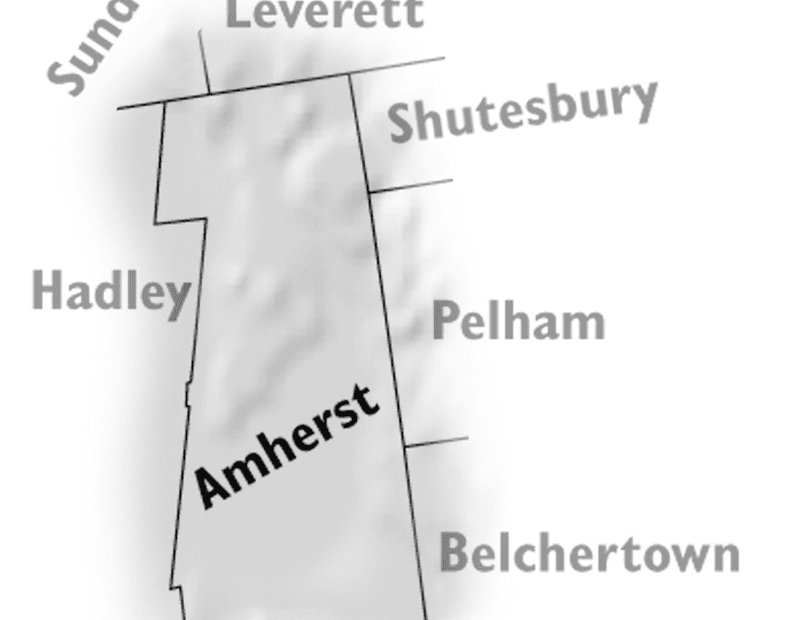
Amherst

Amherst

In October of 2009, Reza Rahmani and Arash Hashemkhani opened a Persian/Mediterranean restaurant in Amherst named Moti. It was a dream come true for Rahmani, who fell in love with the town during his years at UMass Amherst and had always been intrigued by the idea of opening a downtown eatery.
He was living in Phoenix, Ariz. when he finally found a site that suited his needs. “Two summers ago, I made the trip to Amherst four times to look for property,” he said.
So, when the space Moti now occupies became available, he and Hashemkhani rented it, then proceeded to gut it and renovate the entire interior.
Their restaurant has been so successful, they are expanding into space next door which recently became available. They are also gutting a large property on Boltwood Place with plans to turn it into a restaurant/lounge for working professionals.
“The rents here are equivalent to those in the back bay of Boston, but I love the demographics of this town; Amherst has a flavor you don’t find in many small towns, let alone bigger cities. There is a little bit of Europe here, especially uptown where our restaurant is located,” Rahmani said, adding that businesses are so supportive of each other that other restaurant owners have told customers to try Moti. “Within a year, we have built so many relationships, we almost feel we have been here our whole lives.”
Tony Maroulis, executive director of the Amherst Area Chamber of Commerce, says the restauranteurs’ experience is in line with the Chamber’s motto: “The Amherst area is a perfect place.”
“The student population of UMass, Amherst College, and Hampshire College are right in our backyard. We have a vibrant downtown and interesting village centers in several sections of town,” he said. “Thousands of people come here each year because of the colleges and cultural institutions. There are eight museums in town, and we also have a wonderful year-round population that is engaged with the community, which makes for a fertile business environment. These are just some of the reasons why Amherst is a terrific place to live and work.”
Robert Green agrees. Since 1976, he has owned and operated Amherst Typewriter and Computer, which is a few doors away from Moti.
“Amherst is a well-educated community, which is compatible with the services I perform,” he said. “There are many poets, writers, and artists as well as liberal arts students here who use typewriters because their senses are greater than that of the average person and the typewriter becomes an extension of them. To me, there is more than a monetary reward in owning a business here, because I serve several generations.”
For this, the latest installment of its Doing Business In series, BusinessWest takes a comprehensive look at Amherst and at why its chamber’s slogan is on the money.

Schools of Thought
Jeremy Austin moved J. Austin Antiques from Boston to Amherst in 2005. Since then, he has combined his business with J. Austin Jewelers, which his mother owns.
“This is a good, family-oriented community, but also a very intellectual, sophisticated community,” he said. “People who visit here are looking for things to do, which results in a lot of business potential because there is a steady influx of students and their parents as well as people from all over the world who come to Amherst to see the Emily Dickinson Museum.”
Amherst has 50 working farms, and Austin says the combination of a walkable downtown surrounded by land is another bonus. “People tend to pigeonhole this as a college town, but there is also a lot of open land here and good proximity to Boston and New York, as well as high-end restaurants,” he said.
Town Manager Larry Shaffer says town officials have done a remarkably good job of using resources offered by the Preservation of Agricultural Land Program to keep the rural landscape intact. In addition, the town recently adopted a new master plan with a goal of concentrating development in specific village centers.
“We want to preserve agricultural land by not encouraging traditional urban sprawl,” Shaffer said. “The village center concept is new for Amherst and is an attempt to compact development while retaining areas of conservation and open space.”
New development will be concentrated in pockets located throughout the town. They include Atkins Center, Cushman Village, Pomeroy Potwine Village Center, the intersection of College Street and South East Street, and Main Street and North East Street. “New zoning is being crafted and will be brought to the town meeting to be voted on,” Shaffer added.
Maroulis believes the changes will make make the town more sustainable. “It is a really exciting time to be here,” he said.
Shaffer agrees and adds that Amherst is a great place to do business. “It is virtually recession-proof, because the community is based on education. The university is a center of excellence in a number of academic disciplines and has one of the best engineering schools in the country, which offers businesses a splendid opportunity to work with them for complementary activities,” he said. “We are a small town, but absolutely committed to getting projects underway that are consistent with our zoning regulations and are in the best interests of the town.”
The town and its colleges have forged strong relationships, which are evident in many projects they have completed together. Currently, Amherst College is undertaking a $15 million restoration of the Lord Jeffery Inn, which will include a pub and an upscale restaurant.
And in recent weeks UMass signed over a piece of property to the town. The transaction, called the Gateway Project, involves a collaboration between the town and the university to redevelop a 1,500-foot stretch of North Pleasant Street. It will connect the northern end of the town center with the UMass campus and contain its own center that will include private student housing, private commercial development, lodging, parking, and space for UMass functions.
Jeffrey Guidera also sees potential in Amherst. In January 2008, he and contractor Rus Wilson formed Hills House LLC, a real-estate development venture established to restore a cluster of historically significant homes on the property of the Henry Hills mansion, which was the former home of the Boys & Girls Club of Amherst. “There is interest and demand for living space downtown. People like to have services that are concentrated in one area. So, we are saving these old homes and providing new ones for people,” said Guidera.
He believes there is real opportunity for business growth in town. “This is due to the combination of the regulatory environment, zoning changes, and the mood of the population, who realize they need a more diversified tax base,” he said, adding that greater housing density will help promote growth.
Kyle Wilson and David Williams are about to break ground for a new, five-story structure situated directly behind the popular Judie’s restaurant on North Pleasant Street. The new building is slated for mixed use, with a dozen high-end residential apartments on floors two through five and retail/professional space on the first floor along with storage space for the residents.
Wilson said a large number of professionals have already moved to Amherst because of the quality of life there and the culture. “Almost all of the interest in our building is coming from the Boomer generation who want to sell their ranch-style homes and move downtown to a building with an elevator and access to the colleges and movie theater,” he said, adding that they will break ground this fall and expect residents will be able to move in by September 2011.
A Class Act
“We think Amherst has amazing potential,” said Wilson. “UMass is looking to grow by 3,000 students in the next 10 years, and if they and Amherst College hope to attract top researchers, faculty, and students, there needs to be an active and lively downtown,” Wilson said.
Maroulis wants people to understand how attractive Amherst is.
“We are not in the middle of nowhere,” he said. “There is always something happening here. As our slogan says, we are the perfect place to live, work, and play. We have a creative economy, and the economic landscape is quite diverse. It is a wonderful and interesting place to be that is on the rise, and the next five to 10 years will be really exciting.”

Sections Supplements
‘The Carle’ Balances Exhibition, Education, and Celebration of Artwork

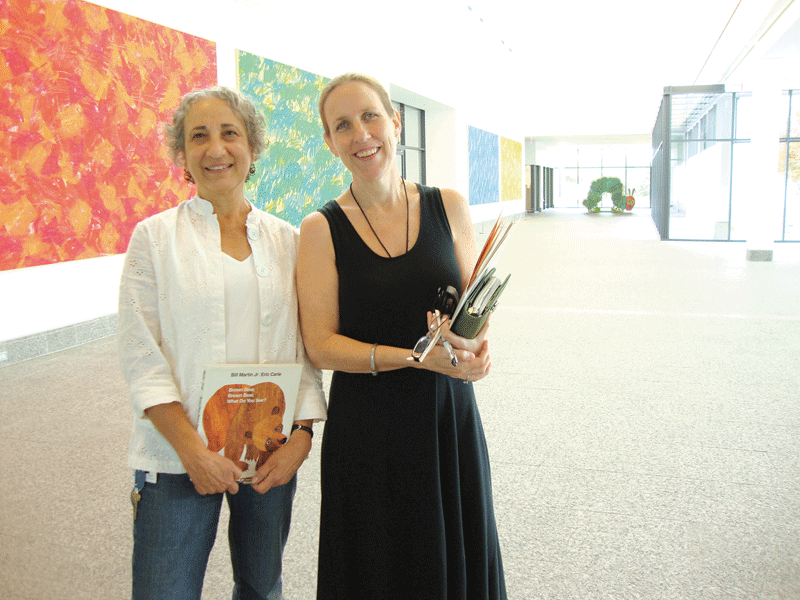
Rosemary Agoglia, left, and Alexandra Kennedy

Rosemary Agoglia, left, and Alexandra Kennedy say the museum is much more than the home of Eric Carle’s works.

Now a decade old, the Eric Carle Museum of Picture Book Art, or ‘the Carle,’ as it’s known to many, is drawing visitors from across the region and around the world. They are treated to much more than collections of picture-book art, say those who manage the facility. Instead, they find an experience that is both educational and inspiring.

Alexandra Kennedy says that the most-commonly heard exclamations from first-time patrons to the Eric Carle, Museum of Picture Book Art are ‘I can’t believe this’ and ‘I had no idea…’
“They didn’t imagine something as vast and with as serious a purpose as what we’re doing here,” she explained with a sweep of the hand at the expansive great hall behind her.
Kennedy is the second director of the Amherst-based attraction, and as children galloped around the surrounding apple orchard or strolled through the soaring spaces with parents in tow, she and her colleagues told BusinessWest that, while the museum sits squarely in the cultural landscape of other exhibition halls of the Pioneer Valley, ‘the Carle,’ as it’s called, has a purpose and a presence far beyond the foothills of the Holyoke Range.
Nick Clark is the curator of the museum collections and exhibitions, and was the initial director of the museum that he helped to create with Eric and Barbara Carle. As he stood in one of the three elegant gallery spaces, he told how the initial idea for the Carle was a storefront-style operation in downtown Northampton, “not much bigger than the space we’re in right now,” he said.
While the foundation of the collection is Carle’s archive, Clark said it has always been the dream to encompass much more than that. “So instead of the Eric Carle Museum, it would become ‘the Carle.’ As the collection grows, people will realize that we are much more than just his works.”
And, indeed, the museum is much more than just a repository of picture-book art.
As director of education at the museum, Rosemary Agoglia explained three key aspects of the Carle: the galleries, a reading library, and an art studio open to all visitors at all times. But, she said, even within that framework, an important concept arises that all facets of the museum support.
“The intent is to raise a generation of museum-goers who are interested in being in a museum because they are interested in engaging their heart and mind,” she said. “In many museums, the typical visitor is engaged intellectually, but are they connected to it? This museum underscores the personal connection at its foundation.”
From educational concepts that Eric Carle was exposed to in Italy, where early-learning goals and techniques are addressed differently from testing and a formulaic, results-oriented approach, the museum that bears his name also maintains a similar philosophy.
But at the Carle’s core is that great, colorful palette of his artwork that is known to children of all ages — the Very Hungry Caterpillar, the Brown Bear, and the Mixed-Up Chameleon. Many of these originals, composed of torn tissue paper, are incredibly fragile, but the museum always has their namesake artist’s work on exhibit. And though you might not recognize some additional friends and characters on display from other artists, chances are that your children will.
And chances are that, after a visit to this museum, you might very well exclaim once again, “I had no idea…”

Table of Contents
Traveling in Europe and Asia, the Carles saw a variety of illustration museums, celebrating the art form in a way that they had not seen stateside. Kennedy explained that the distinction was that these museums, particularly in Japan, were preserving, promoting, and sharing picture-book art specifically.
She said that Carle has long felt himself an incredibly fortunate individual. “His fans and publishers have been great to him, and he has made incredible friends throughout the art community,” she said. “This museum was his idea to help give back.”
That original idea of a small, downtown space was scratched, however, because in a visionary fashion his scope grew as he recognized a need and a demand. In order to treat the artwork with respect, Kennedy said, the building would need to reflect that. He needed a place that was worthy of fine art.
Working with the firm Juster Pope Frazier in Northampton, Carle found architects that met his grand plans for the space. Earl Pope was the principal on that job, and the artist and draftsperson created an edifice that sits within the landscape harmoniously, complementing Carle’s commitment to nature, but also containing first-rate exhibition space.
Norton Juster, another member of that firm, contributed to the design process in more ways than one: architect by day, now retired, he is also an award-winning children’s book author perhaps most famous for The Phantom Tollbooth.
The philosophy of artwork and education was a primary goal for the museum’s design. Kennedy said that a great amount of thought went into the three gallery spaces, but added, “of equal importance is that the art is at the center of what we do, and also is a catalyst for programming. It’s a museum where people can bring children and experience picture-book art in a number of ways.”
To achieve that, an auditorium, handsomely trimmed in pale woods, offers year-round events. From authors’ readings to children’s theater and performances — through a partnership with the Northampton Community Music Center — to programming for adults within the purview of the picture book, the space is big enough to draw in the brightest lights of the industry.
At a recent opening for the Austrian artist Lisbeth Zwerger, whose jewel-like illustrations are currently on display, the museum was packed. Kennedy said that visitors came from as far away as California and London specifically for the event, underscoring the wide appeal of both the medium and the museum itself.
In the reading library, a comfortable nook with books organized by artist, Agoglia said that the function of this space is to bring the art seen out on the walls back to its original intent — “to rejoin the words and images,” she added.
Boston’s Simmons College has a renowned Library Science program, and it has partnered with the Carle, most notably in the utilization of the museum’s library. Graduate students share the space with youngsters, each finding something different in the colorful volumes.
The library is envisioned as the ‘living room’ of the museum, a place where families can gather, with parents reading to children and vice versa. But it is also home to serious scholarship in the nature of the published text.
The ‘whole-book’ concept was pioneered at the Carle library, said Agoglia, explaining how the process looks at the layout, artwork, and story as individual elements. “This technique has opened the eyes of librarians around the globe,” she said. “The book has greater potential than just the sum of its parts. The more you look, the more you see.”

Learn by Doing
From the hushed reverence of the library, the art studio at the opposite end of the Carle offers a sun-filled hubbub of creativity. The well-stocked studio is a child’s — and adult’s — dream of a space to sit down and try out different techniques.
“It’s a very open-ended approach to making things,” said Kennedy. “There isn’t any ‘make-this’ style of interaction. This is instead very much an approach akin to the practices of Reggio Emelia.”
That technique, an educational philosophy that Eric Carle was exposed to in Italy, emphasizes the importance of many different forms of critical engagement for children’s education. At the museum studio, Kennedy said this method never instructs a ‘right way’ to creatively express oneself, instead focusing on the importance of the expression itself.
“Children have an incredibly strong sense of aesthetics,” she continued, “and they learn from using tools and materials. They love to document what they think. They understand things visually. This studio encourages children to use critical thinking in the creation and viewing of art.”
Art is an expressive language, Agoglia said, and this was an important concept Carle wished to employ in the museum.
“The art studio is a place where people can learn the expressive language. It’s more about exploring the possibilities of materials, having been inspired by what they see in the galleries, what they see out the windows,” she said, gesturing to the apple orchard and hillside just outside. “It’s not project-focused space. We present people with materials and say, ‘what can you do with these?’”
Both acknowledged the shortfalls of arts funding for public schools, and how the economic downturn has prompted schools to cut back on the number and frequency of field trips to the museum. Unswayed by such circumstances, Kennedy said that the Carle has been actively venturing out into communities for art-outreach programs, and the studio technique has been a successful export, not only for schools, but for local children’s foundations as well.
The Treehouse Foundation in Easthampton is one of those groups, she said, one that she and her colleagues find inspiring to work with. An organization started by Judy Cockerton in 2002, its mission is to help improve the lives of foster children. Kennedy said that, when the foster kids are given books, with a nameplate that they can inscribe, that’s just one example of the museum becoming an important part of the lives of children in this community.

Picture This
The Carle hopes to broaden that scope of partnerships with local institutions, said Kennedy, adding, “our point of view is that we are an international institution that wants to have very deep roots locally.
“I think that, because we are young, there are people out there who don’t understand how many people we’re bringing here,” she continued. “We have a devoted local audience, but there are so many others out there.”
The Carle draws upwards of 50,000 visitors per year, and many of those guests come from well outside the region.
“During this time of year, we are the kind of place that people will make a stop on their way elsewhere,” Kennedy said, but as a member of the constituent offerings of the region, she added, “we will tell them, ‘while you’re here, why not stop in Northampton? There are great restaurants, as well as a great collection of picture-book art at the Michelson Gallery,’ or ‘here are some hotels in the area.’ We benefit from other regional venues, but I feel that we are a wonderful magnet.”
And of course, before they are wowed by the first moment walking in the door, they have come to see the picture-book art. For the permanent collections that the Carle houses, that first impression helps secure its place as a future repository of the genre.
When artists and families of artists come here, Clark said, they see what the Carles have done for the industry, and they want their material to be housed at the museum.
Zora and Les Charles, she a former first-grade teacher and he the co-creator of the TV show Cheers, have a world-renowned collection of children’s books and original artworks. They loaned the body of work to the Carle for an exhibition, but when they first visited the museum, that all changed, and the arrangement became permanent.
“Les walked in the door here and said, ‘oh my God, I had no idea about this space,’” Clark remembered. “Zora said almost immediately, ‘this is where my collection will come.’”
Another couple, Allan and Kendra Daniels, also loaned their collection to the Carle for an exhibition, but have pledged to donate a collection of early works. Clark said such gifts are an important addition to a museum with a very limited acquisitions allotment.
Several artists have agreed to make the Carle the destination for their own archives. Since the museum’s inception, collections from Zwerger, Petra Mathers, Leo Lionni, Antonio Frasconi, and what Clark called “the big enchilada,” the picture-book art of William Steig, have been added. “In many instances,” he added, “we have some of the great titans of the 20th century.”

Back to the Books
At 10 years young, the Carle has accomplished or moved stridently toward meeting many of the goals set forth by the founding members, artists and administrators alike. But Kennedy said that much more is necessary to look ahead.
“From an abstract perspective,” she said, “literature for children is changing so rapidly. I think it’s going to be important for us to carry on a mission to underscore the importance, emotionally, of reading with your children, and the impact it has on them. As wonderful as it is for children to experience other forms of entertainment, that is by all accounts the most enriching experience a child can have.
“And that’s a message that we want to keep out there,” she added.
The Carle will always be dedicated to books on paper, she explained, but will be open to the possibilities beyond. “Because it’s not the medium,” she continued, “it’s the art and the story that will be what stays with you.
“There’s a paradigm shift in the very concept of the modern museum, and that applies to us,” she continued. “You don’t want to think of yourself as merely a destination — that you’re defined by what people see when they walk in your front door. You really want to be a center for representing your mission, which for us means the promotion, presentation, and celebration of picture-book art.”
But chances are that for many years to come, she will still hear guests exclaim upon seeing the Carle for the first time, “I had no idea!”

Features
His Job Description? Holding Down the Fort

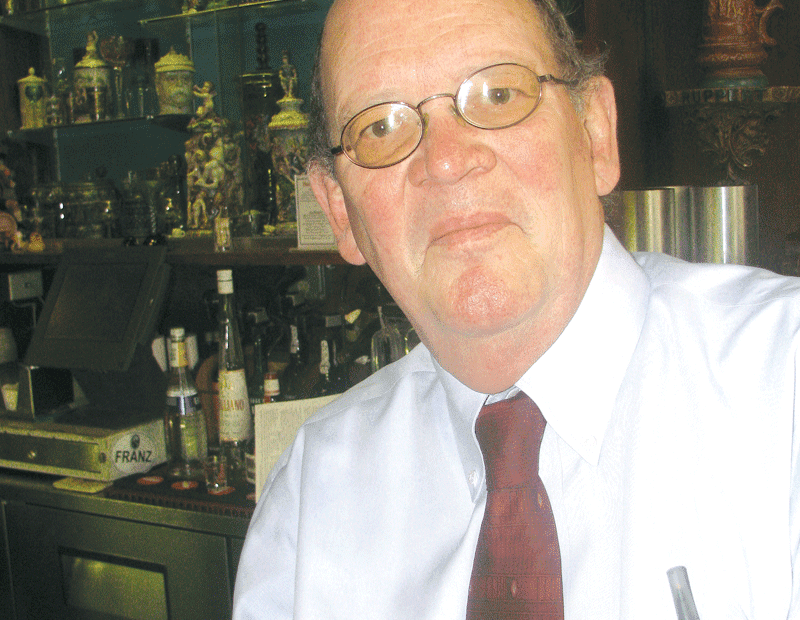
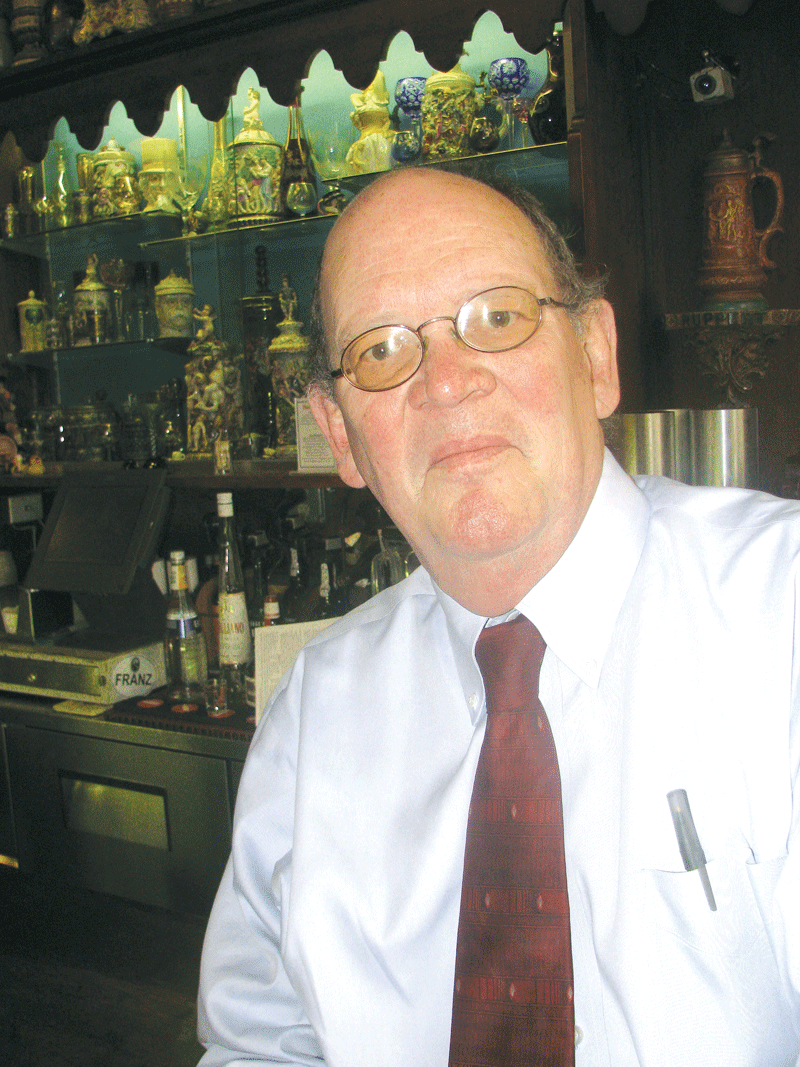
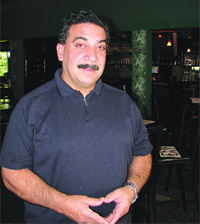
Rudi Scherff, co-owner of the Student Prince restaurant

Rudi Scherff, co-owner of the Student Prince restaurant

Rudi Scherff started washing dishes at the Student Prince restaurant, then co-owned by his father, Rupprecht, when he was 12 years old. This means that, among many other things, he has a half-century’s worth of perspective on downtown Springfield.
He’s seen quite a bit of change in and around the central business district over that time, with much of it, by his estimation, being not exactly good for business.
“Years ago, people had to come downtown to see their lawyer or their dentist,” he said, noting that, while doing so, they would often stop in for lunch. “Now, that’s pretty much disappeared. When I was a teenager, I’d walk to the bank with my dad, and maybe 60% of the men you saw were wearing a sportcoat and tie, even in July; now, collars are a rarity, never mind ties.”
There have been other changes beyond dress and an outmigration of professionals, he added. There are fewer stores and far fewer restaurants downtown, and where once many white-collar workers lived downtown, now, the vast majority of housing is of the subsidized variety.
Through all of this change and societal evolution, the Student Prince, or the Fort, as it’s called colloquially, has been a constant (this year marking its 75th anniversary), when so many other establishments fail to keep the doors open even a tenth that time. When asked to articulate on the landmark’s longevity, the soft-spoken but opinionated Scherff said it comes down to consistency but also flexibility and adjusting to those changing times.
Elaborating, he said that, where once most customers and potential customers were content to simply have a nice meal and perhaps some accompanying liquid refreshment, many people today want “an experience.”
“As a result, we’re a little more in the entertainment business and less in the basic sustenance business,” Scherff explained. “Some people just want to come out and have something to eat, but I think more people are looking for that experience, they’re looking a novelty, for more than just stomach filling.
“So we change our menus a lot more, we’ll do many more seasonal specials, we’ll do a lot of different desserts,” he continued. “We try to give people reasons to come in, be it with soft-shell crabs in July or native corn; we try to have some variation of products. Sometimes things succeed, and sometimes they don’t.”
For this, the latest installment of its Profiles in Business series, BusinessWest turns the spotlight on one of Springfield’s most noted restaurateurs, who may not be quite the institution his father was, but has been equally successful in holding down the Fort.

A Lot on His Plate
Scherff never expected to follow in Rupprecht’s considerable footprints, even though he practically grew up in the restaurant and held just about every job in the place.
The plan was to become a lawyer, and, by and large, things went according to script. Scherff earned his juris doctorate from Boston College and settled into private practice in Springfield in the early ’80s. He focused on criminal work and handled some real estate. “Some of it I enjoyed, but all that paperwork … I didn’t really care for that.”
He had been in practice about a decade, and doing reasonably well, when his father’s failing health forced him to eventually slow down. Rudi, who would work in the restaurant on occasion, especially during peak times of the year, found himself having to pitch in much more and attempt to juggle two vocations.
“I tried to do both for a year,” he said, “but decided that I wasn’t being fair to the law practice, the restaurant, or myself.” So he left the legal profession in the early ’90s, and, with his sister, Barbara, brother, Peter, and nephew, Michael, now the kitchen manager, he continues the Fort tradition, which began in 1935.
When asked for his job description, Scherff said there are many elements to it. “I keep my eyes open, see what’s happening, and see if the customers are enjoying themselves,” he said, offering first the long view of what occupies the 60 or so hours a week he spends at 8 Fort St. “I do the scheduling and the ordering, and supervise menu development — all the little things that don’t fit in the pigeonholes.”
Also on that list is listening to stories about his father, who passed away in 1996, and there is no shortage of them coming from the Fort’s legion of long-time and sometimes very long-time customers.
“Some of these stories are true, some of them are not true,” he said, “but far be it for me to ruin someone’s memories.”
Scherff has many of his own memories from five decades on Fort Street. He’s watched the restaurant, famous for its collection of beer steins, stained-glass windows, and Roquefort dressing, expand and evolve, while also gaining a place in both the local lexicon and the national trade media.
Indeed, when, in 2008, Gourmet magazine printed its list of “legendary restaurants,” establishments that had been in business since before the magazine started publishing in 1941, the Student Prince was on it.
“We didn’t know it was coming,” Scherff said of the listing in Gourmet. “They just said, ‘we’re doing an article … you may or may not be in it.’ They were kind enough to send us a copy of the magazine, and it came the same day as we were having our Hampden Street Octoberfest. It was a very exciting day for us.”
Scherff said the Student Prince has hosted its share of celebrities over the years. John Kennedy frequented the restaurant when he was a senator, and his brother, Ted, did as well. Wilt Chamberlain dined there, as have others from the world of basketball visiting the birthplace of the game. Roy Rogers stopped in a few times, John Ratzenberger paid a visit when he was in town several weeks ago (and ordered a bologna sandwich), and Scherff has fond memories of when John Denver came in for dinner.
“Some of the guys in the kitchen wanted autographs,” he recalled. “When I asked him if he would sign a few, he said, ‘no, I’m not going to do that here,’ and promptly went out to the kitchen, thanked everyone, and signed them back there. He was a real gentleman.”
But while having stars in the dining room is great for any restaurant in terms of creating lasting memories for staff and patrons alike, Scherff said one doesn’t build a business and keep it open for 75 years because a few singers, politicians, and hoop legends stop in on their way to somewhere else. “All that’s wonderful,” he said of the celebrities, “but the guy who comes in once a week and has bratwurst and a beer or two is much more important to me.”
Such customers have been the lifeblood of the Student Prince, and while Scherff says there are still enough of them to keep the business humming, times are changing in the area, and they are making life more challenging for the current generations managing the landmark.
For starters, there are those changing trends and demographics downtown, which combine to create fewer of the kinds of customers the Fort has always thrived on. Also, the Fort, like all establishments downtown, has to contend with the negative perceptions of the area and the lack of free parking. In the meantime, there is considerable competition, both in the suburbs (much more than in decades past) and along Springfield’s riverfront.
On the brighter side, Scherff says he seeing some signs of a comeback in downtown Springfield, although he keeps his optimism guarded. He notes with enthusiasm the retenanting of the old federal building and other efforts to bring more workers to the central business district. Meanwhile, he sees some signs of progress bringing more professionals into the area to live.
“Hopefully we’re starting to see downtown come back a little bit,” he told BusinessWest. There are some things happening that give you reason to think that things are going to get better.”

Check, Please
When asked what he does when he’s not keeping an eye on things at the Student Prince, Scherff says he works, often in frustration, in his garden, and that he’s trying — that’s trying — to take up woodworking.
“I bought a lot of equipment, and I still have all my fingers, so I guess that’s good,” he joked, before admitting that, between his family (and especially twin 16-year-olds) and the family business, there simply isn’t time for much else.
And while he’s thinking about somehow trying to pare some of those hours he spends at and on the restaurant, he knows he can’t pull back too much. “I’d go crazy if I wasn’t here a lot,” he said.
Which means that he’ll log many more years of reflections on downtown Springfield. Times may never be as they were when the sidewalks were crammed with people and all the men wore suits and ties, but Scherff can easily envision much better times for the downtown that’s been his real home for the past 50 years.

George O’Brien can be reached at [email protected]
Features
CEO’s Success Is Measured in Dollars and Scents

It was just after 7 a.m. on a Friday, and Harlan Kent was on the road — again.
His destination this time was New Hampshire and several of the Yankee Candle stores there. Kent, who became CEO of the company last fall, does this often. He talks to the people who run the stores, and he talks to customers. The goal is the same: to find out if the store in question is providing the kind of products, services, and experience that the corporation demands of each outlet.
“I tell them I work for Yankee Candle — I don’t tell them I’m the CEO,” he told BusinessWest when asked about his MO for these store visits. “This is definitely a part of being in retail. I can travel anywhere in the U.S. and be visiting our stores, which is certainly a problem for my wife, because it means every time I’m on vacation, there’s going to be some stores for me to go to. And that doesn’t make her too happy.”
Kent said he considers these visits a big part of his job description, and also the company-wide mission to build, promote, and protect the Yankee Candle brand, which happens to be just one of many famous names he has sold during his career.
Others include Vlasic pickles, Dole pineapple, Winchester ammunition, and Pepperidge Farm products. “I have a passion for brands,” he said, adding that those food-related résumé stops dovetailed nicely with another passion — cooking.
Indeed, Kent spent a year between high school and college at Le Cordon Bleu in Paris, learning the art of food preparation. He later had a number of summer jobs working in various restaurants. Kent still likes the kitchen and says he makes a mean spaghetti avongele (white clam sauce), and satisfies his sweet tooth with many endeavors involving chocolate. But his only interest in the restaurant at the Yankee Candle complex in South Deerfield (Chandler’s) is eating there.
“I get to see what’s going on there, and get my fix that way,” he said. “But I wouldn’t be disrespectful to our chef and venture into the kitchen; I do all my cooking at home.”
At the company’s headquarters in South Deerfield, he is, most definitely, more interested in work involving another of the five senses — smell. Yankee Candle now has roughly 200 scents in its inventory (most stores carry about 75 at any given time), and new ones are being created each year, New additions include ‘vanilla cupcake,’ ‘strawberry buttercream,’ ‘tropical lifestyle,’ and ‘pineapple tilantro.’
“One of the teams I have the utmost respect for here is our fragrance team — they’ve been doing a fabulous job for a lot of years,” said Kent. “They are responsible for rolling out, on average, 20 new fragrances a year, and to get there, they start with more than 2,000 fragrances that they’re evaluating that they’ve culled down to get to those 20 fragrances.
“They’re incredibly creative,” he continued, noting that, contrary to popular belief, there are still countless possibilities still to be considered. “They’re always coming up with new twists on how to combine fragrances or new ways of providing variety in versions of a fragrance.”
Monitoring additions to the portfolio is just a small part of the workload for Kent, who, in his current role and, previously, as COO, has steered the company through the Great Recession with relatively modest revenue declines (4%), and is now focused on establishing sustainable growth and expanding Yankee Candle’s presence around the globe.
For this, the latest installment of its Profiles in Business series, BusinessWest looks at how Kent will go about those assignments, and why visits like the ones he was making in New Hampshire play such a key role in that process.

Waxing Nostalgic
As he was driving to Deerfield in 2001 for his interview for the position of senior vice president of the Wholesale Division of Yankee Candle, he called his father to get his take on that career opportunity.
If he was looking for encouragement, he certainly didn’t get it.
“He told me that sounded like a pretty silly idea,” Kent recalled, “because he’d been to a number of dinner parties recently and no one was burning candles. So he didn’t think it would be a good business to get into. I had to explain to him that it wasn’t those kinds of candles, he wasn’t the customer we had in mind, and that this was actually a very good business.”
Still, this wasn’t a career stop he could have imagined. “I certainly never envisioned myself working in, or aspiring to work in, the candle industry,” he continued. “But it’s been fabulous.”
Kent interviewed with Yankee Candle because, after four years as senior vice president and general manager of the Wholesale Division at Totes Isotoner Corp. in Ohio, he was looking for a new career challenge and a return to the East Coast.
Over the course of a 25-year career in business, Kent has worked with and for a number of famous brands, and in different capacities. He said his work history has three distinct parts — first some time in consulting and strategic planning, then several years in brand management and marketing, and then the last third in general management. After a stint with Bain and Co. as a consultant, he went to work for Dole Food Co., Castle & Cooke Inc. in a marketing and advertising capacity. He went from there to the Campbell Soup Co., where, after a stint as director of strategic planning, he worked in a number of divisions building several name brands.
He served as marketing manager for the frozen dinner brand LeMenu Healthy, and later became senior marketing manager for Vlasic. From there, he took the position of business director for the frozen foods division of Pepperidge Farm, and later became vice president of marketing for that company, handling Milano, Goldfish, and other iconic trademarks.
His next career stop was at the Winchester Division of Olin Corp., where, as vice president of global sales and marketing, he executed a complete business turnaround for the for the $260 million recreational, military, and industrial ammunition maker.
While there was wide diversity with the products he sold and marketed, there were some common denominators with all those stops.
“I always had a passion for the team I was on, and a passion for brands — I always fall in love with the brand I’m working on,” he explained. “I also have a passion for solving business issues. All of the companies I’ve worked for have had that combination of opportunities. I’ve been very lucky.”
Kent has had to rely on all those passions as he’s maneuvered the company through the prolonged economic downturn. The retail sector suffered considerably during the recession, he explained, and Yankee Candle was certainly no exception.
Still, the company has managed to control its revenue declines while also continuing efforts to expand its presence. Yankee Candle is now in 42 states, and has some 3,000 stores in Europe, another 2,000 in Canada, and more than 3,000 in Asia.
“We now export candles from Deerfield, Mass. to Beijing, China,” he said, adding that the company opened two stores in that city last October, and there will undoubtedly be more to follow. “There’s an unbelievable opportunity there; just look at the numbers. There are 13 million people living in Beijing, and another 4 million come into it every day to work. That’s 17 million people, which adds up a lot of opportunities to sell candles.
“And scented candles are catching on there,” he continued. “We see that as a gradual growth opportunity for us. But we’re having great success in Asia; we started in Japan, we’re having a lot of success in Korea, and now we’re starting in China. We’re very excited about the possibilities.”
Kent hasn’t visited the stores in Beijing yet, but he’s made countless stops at facilities in several different countries. In each case, the broad assignment is the same — to gauge the experience being provided, to customers and employees alike.
“I’m really interested in understanding first how our team is taking care of customers in that store,” he explained. “There are three things that we talk about at Yankee Candle in terms of strategies that the company is all about. One of them is creating a sensational product experience, and for that you need have well-thought-out, quality products. The second is providing shoppers with a very rewarding and enjoyable in-store experience, and the third is creating sensational work experiences for our team.
“When I’m in a store, I’m interesting in making sure we’re creating the best shopping experience possible for our guests,” he continued. “I’m focused on what the store looks like, how the product is presented, and how warm and engaging the sales team is. And then I ask a lot of questions about what is the company can be doing to support them.”
More questions are then put to customers, he explained, about everything from the products to the competition.

Tales from Retail
When he’s not working, Kent says he spends considerable time traveling with his wife and three children. The whole family is athletically inclined, and there have been a number of ski trips, including one recent sojourn to the French Alps.
“I had just one regret, and that was that we went before the dollar started getting strong against the euro,” said Kent with a laugh, adding that he’s traveled extensively in this country and overseas.
And at almost every stop there have been visits to Yankee Candle stores to gauge the thoughts of managers, employees, and especially customers. Such stops may put a holiday on hold for an hour or so, but they are, as Kent said, part of being in retail.
And they’re especially part of this company’s success story.

George O’Brien can be reached at [email protected]

Features
Former Manufacturing Center Boasts Diversity
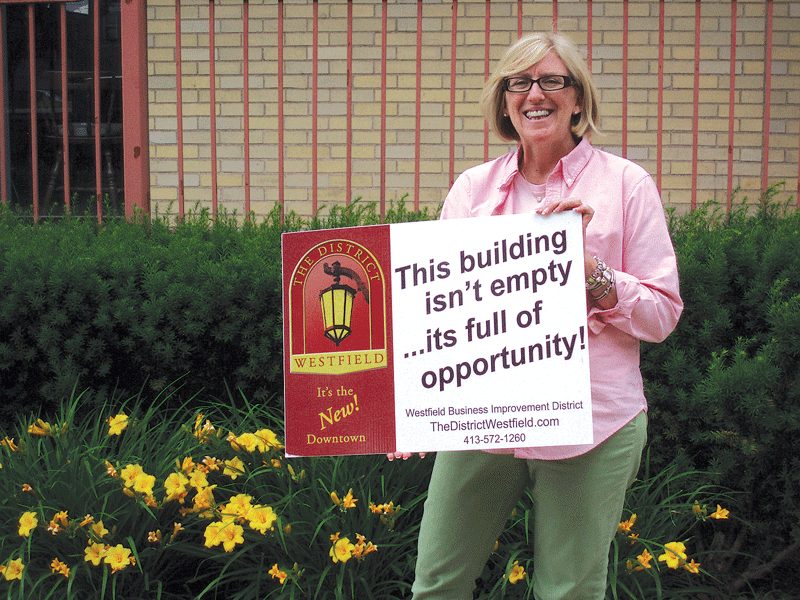
Lisa McMahon

Lisa McMahon says the downtown area is experiencing unprecedented growth.

Lynn Boscher says anyone looking to establish or relocate a business should set their sights on Westfield.
“The city has it all,” said the director of the Greater Westfield Chamber of Commerce. “What makes it ideal is that is has easy access to the Mass Turnpike and Route 91, which draws traffic from the surrounding areas. We have our own short-line railroad and city-owned airport that can handle any type of plane, including 747s, and there is a wide range of commerical space available that ranges from downtown storefronts to land suited for industrial development.
“Westfield State College is here, and Holyoke Community College is just over the hill, so there is a good educational system,” he continued. “Plus, there is a good cross-section of housing in virtually all price ranges.”
The so-called Whip City — buggy whips were once manufactured there — boasts a streamlined permitting process, and in the past five years, the tax rate has become more competitive to attract businesses, Boscher said. “Plus, there are two hotels right off the turnpike. And Westfield is also becoming known for its restaurants, culture, entertainment, and shopping; there has been an influx of people due to the quality of life here.”
Frank Demarinis is president and project engineer for Sage Engineering and Contracting Inc. in Westfield. His recent projects include a building which houses Root’s Gymnastics (operated by his wife, Kari), along with All Star Dance Center, owned by Kim Starsiak, and Westfield Infant and Toddler Service. He has a day-care center next door to that building which is under construction and set to open in September.
Demarinis established his company in Westfield six years ago and was able to get a tax incentive from the state because the area is slated for economic development. He said other communities have a limited amount of land available for building compared to Westfield.
“Because of the amount of land here and the tax incentive, it’s an ideal location to start a business,” he said. “Plus, the town does its best to help and is very open to new industries that bring jobs to the community.”
Kari Demarinis opened her gymnastics business in March 2008 and has already expanded from 12,000 to 19,000 square feet. “Westfield has always been a big sports town, and we felt this was a great central location,” she said. “My husband and I looked at the map before I started my business here. Westfield has a small-community feel, and our kids go to school here through the School Choice program, although we live in Montgomery.
“The city is filled with hardworking people who support small businesses,” she added, noting that the Parks and Recreation Department conducts programs in her gym.
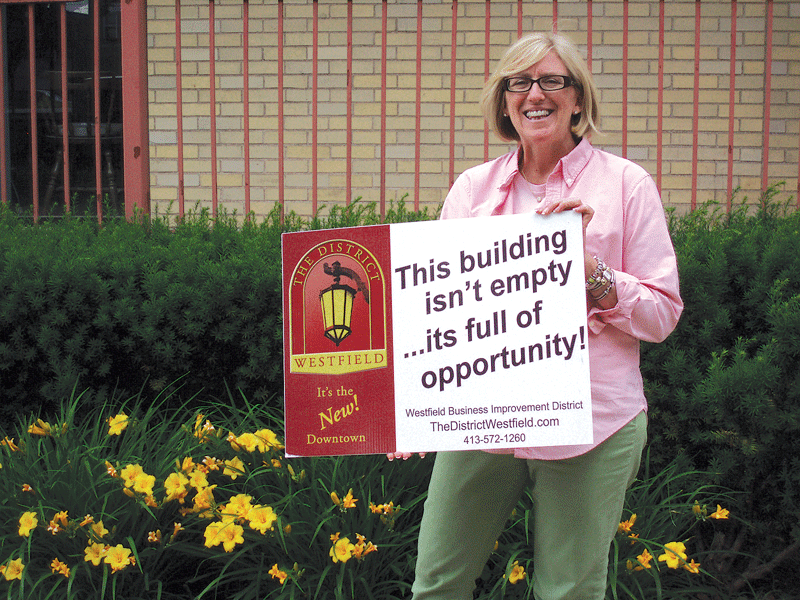
Lisa McMahon agrees. “The most wonderful thing about Westfield is its community spirit,” said the executive director of the Westfield Business Improvement District.
A plethora of events, ranging from concerts on the green to entaintainment offerings sponsored by BID and the nonprofit volunteer organization Westfield on Weekends, highlight businesses as well as the community. “Westfield is a big land mass, but it has such a small-town feel,” McMahon said. “People care about their neighbors here, and you can get an urban feel and suburbia all in the same town.”
Starsiak’s dance studio was in North Plaza for 13 years and doubled in size when she moved into Demarinis’ building. “I’ve lived here all my life, and this is a hometown community,” she said, talking about the blood drive her business is sponsoring. “Doing this goes hand-in-hand with the fact that Westfield is very family-oriented. Every month there are new housing developments going up, and since we are only one and a half miles from the turnpike, we draw business from Southampton, Northampton, Holyoke, and Easthampton. Westfield borders the hilltowns, so we also draw business from Westhampton and Montgomery.”
Starsiak has found city officials and other business owners do all they can to promote each other’s success. “We all have a vision to make it a very healthy and welcoming community,” she said. “One of the big attractions is that everyone wants to support each other. Westfield is a city where business owners are very united and our business is growing, which has a lot to do with businesses working together.”
Westfield’s Business Improvement District includes 190 downtown properties. Two years ago, the agency put signs in empty storefronts which read, “this building isn’t empty. It’s full of opportunity.”
The marketing ploy resulted in many calls, and a number of properties were rented as a result. But right now is even an better time for businesses to move downtown because of the changes occurring there over the next 18 months, McMahon said. “We are undergoing an incredible transformation and are poised for growth.”
Storefronts on Main and Elm streets are undergoing renovations and will soon be ready for rent. But perhaps the main reason to locate a business downtown is because hundreds of students from Westfield State College will soon move into apartments there.
Steady growth in enrollment at the college led to an increased demand for student housing that exceeded the school’s on-campus housing capacity, so the plan is to house students in leased apartment space downtown.
The first group is scheduled to move into a building on Thomas Street in the fall. “By September of 2011, the building will be full. The college is also looking at Washington Street and plans to renovate a building there which will house 90 students,” McMahon said. BID has been meeting with a group of students who say they would like to see retail clothing shops, bistros, and restaurants downtown.
In addition, the $60 million Great River Bridge project is almost finished. The old camel-back truss bridge, which provides a north-south crossing over the river, used to be a bottleneck for traffic. A new bridge was built that runs parallel to the old one, and both will be open soon, along with a small park on both sides and a new train bridge slightly higher up, as trucks used to get stuck under the old one.
“At the same time, private development is taking place on Main Street and at the corner of Broad and Court streets, which will add new downtown office space,” said McMahon. “Infrastructure has also begun on Main Street, and the downtown green is undergoing a makeover. Three historic buildings are also being renovated on Elm Street, which will have commercial space on the first floors and 19 affordable-housing units above that space.”
To add to downtown’s culture, the college opened an art gallery there, and an artists’ cooperative recently set up shop. “There is so much happening, and downtown is really poised to pop within the next 18 to 24 months. So it’s a great time to plan,” she said.
Frank Demarinis says the downtown revitalization will affect all of the businesses in Westifield. “It’s a really good idea,” he said, “a positive thing which will have a trickle-down effect.”

Sections Supplements
Hoteliers Are Doing Better, But Still Have Reservations

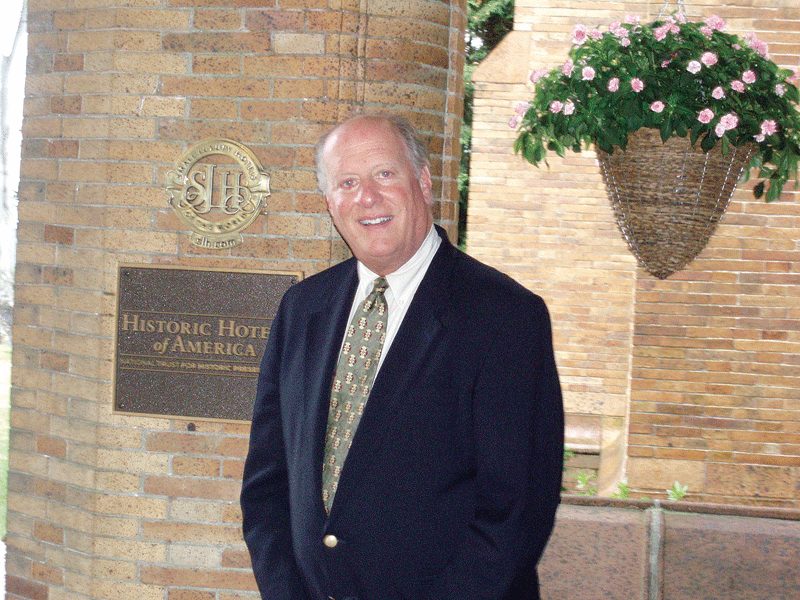
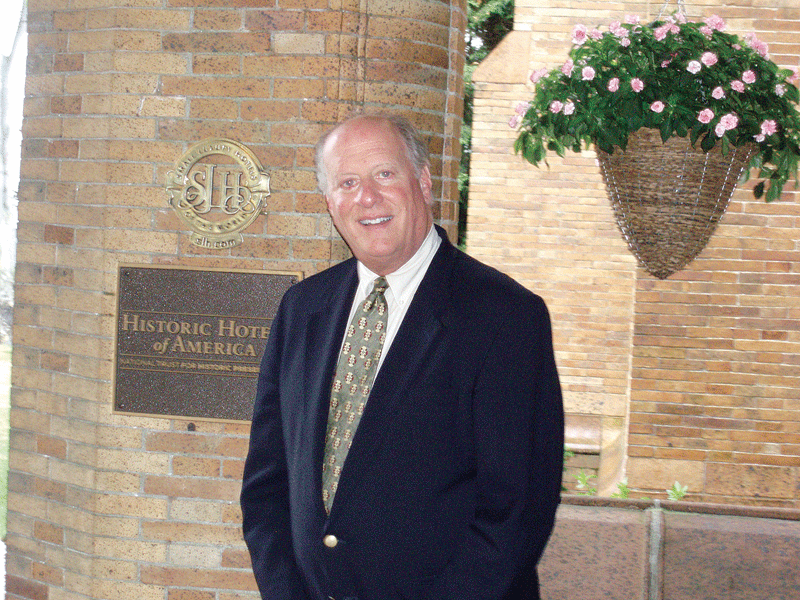
Lewis Kiesler

Lewis Kiesler says today’s short booking window makes it difficult to predict future hotel stays.

It’s been a rough few years for area hoteliers, who have seen the recession and soaring gas prices take big bites out of both corporate and leisure bookings. But 2010 is off to a decent start, and there is optimism that the upward swing will continue as the sector heads into its busiest seasons.

Lewis Kiesler was talking about how the hotel industry has fared since the economy crashed and how it has affected leisure travel.
“People are making arrangements at the last minute. You can enter a month that looks weak, then have people call up on a Wednesday and say they plan to arrive on Friday. It makes it very difficult to manage things when you don’t have advance bookings,” said Kiesler, president and general manager of the Cranwell Resort, Spa and Golf Course in Lenox.

His sentiments reflect those of other hoteliers across Western Mass., who say it is extremely difficult to predict what the rest of the year will hold. They hope things will improve, because 2009 was fraught with uncertainty as companies cut back on business travel and turned to vehicles such as Webinars in lieu of holding conferences in hotels. To make matters worse, the number of group tours fell, and people stopped booking hotel stays weeks in advance.
“We are seeing more business that is short-term than in the past. We don’t like it, but it’s a reality,” said Paul Picknelly, president of the Sheraton Springfield Monarch Place, who also owns the Hilton Garden Inns in Springfield and Worcester and the Country Inn and Suites in Holyoke.
Connie Foster, director of sales for the Pioneer Valley Hotel Group, which includes the Comfort Inn and Suites in Ludlow and the Hampton Inn and Comfort Inn in Hadley, says that, instead of making reservations two weeks to two months in advance, people are now calling two days to two weeks ahead. Even motorcoach tours, which used to book 18 months out, are booking only three to four months ahead.
“That business has gotten better, but there are fewer tours. People are making sure they have money in their hands before they are confirming trips,” said Foster.
Roughly half of the bus tours scheduled to stay at The Crowne Plaza in Pittsfield last fall cancelled, said General Manager Chuck Burnick. That was especially significant since October is normally a strong month due to the popularity of foliage tours in the Berkshires.
“Last year was the worst year I have seen in the past 10 years,” he told BusinessWest. “It got bad after 9/11, but it only lasted for a few months. This year we are up about 4% in occupancy, which is not great, and we are cautiously optimistic. But it’s really hard to predict the future because of the short booking window.”
Many business conferences were cancelled last year, and hoteliers said it was not unusual to see multiple-day conference schedules changed to single-day events. It didn’t help that most of those who did stick to multi-day conferences cut back on extra bonuses.
“It all comes into play,” Picknelly said. “Corporate clients scaled back in terms of conventions, and attendence was down. They continued to come here, but only had about 80% participation. Some groups cancelled breakfast or held one social hour instead of two.”
Foster has seen the tide of corporate travel ebb over the past three years. “Business travel still hasn’t picked up to where it was in 2007,” she said. “But it is increasing slowly, which is very promising.”
In fact, the EASTEC 2010 conference staged late last month in West Springfield was so successful that hotels in the area sold out. “This year, we were at 100% capacity,” Picknelly said. “We are seeing fewer and fewer cancellations and doing better than we did last year. It is still a little slower than we want it to be, but we are doing well.”

Guarded Measures
Still, it has become critical for hoteliers to maintain a vigilant watch over trends in the industry. They are keeping a close eye on competitors and hoping mainstays such as youth sports, the Big E, the Basketball Hall of Fame enshrinement, and other annual scheduled events, coupled with a pent-up desire on the part of the public to travel, will result in numbers that mirror or exceed those seen in 2009.
But they aren’t banking on anything.
“No one knew what would happen this year,” said Bill Hess, general manager of the Springfield Marriott. “We have stablized, and I think the second half of the year will be better. But if I look at the next six weeks, it’s a little soft. We are looking 90 days out to make sure we are priced properly.”
Kiesler believes there is some pent-up demand for travel and people are starting to feel better about spending. “But the whole thing is fragile because of the world picture,” he said, referring to problems in Europe and elsewhere. “I’m cautiously optimistic and hope it’s not just an aberration.”
In order to stay in the game, some hotels have had to cut their rates. Others refuse to do so, and all report working hard to avoid layoffs so they can continue to deliver services that insure guests have pleasant stays.
“We didn’t reduce rates because we felt it was important not to have a fire sale,” Hess said about the Springfield Marriott. “But we made sure all appropriate discount channels were open and value was there for people who were willing to plan ahead.”
Access to Internet specials and Web sites that allow people to compare rates has also fueled competition. “People have become very savvy. We used to say, ‘this is the rate,’ but now people call and tell us they have found a lower rate somewhere else and ask if we can match it,” Foster said, explaining that some hotels are offering people a low introductory rate, then doubling it for return visits.
“It’s scary, and the general feeling is that, when business is down, you need to lower your rates. But if I did so, I would have to reduce services and take things away, and we are trying not to do that,” she said. “I’m a big fan of value integrity.”
Unfortunately, some operations found they had no choice.
“We had to lower our rates last year to be competitive, but now we are trying to get back to where we were,” Kiesler said about Cranwell. Burnick said the Crowne Plaza reduced its rates slightly last summer, during a time period when they normally would have risen.
Bill Brown also reported a rate reduction. He is the director of sales and marketing for the Welcome Group Inc., which includes the Hampton Inn in West Springfield and the Enfield Crowne Plaza, which the Welcome Group purchased last September. It is undergoing a $1 million renovation and conversion to a Holiday Inn, which should be completed by mid-July.
Brown says he feels 100% more optimistic about business growth than he did last year. “I think people are beginning to have a little more faith in the future and think the worst is behind them,” he said.
But he believes 9/11 and the radical downturn in the economy in 2008 resulted in caution in the corporate and leisure travel populations, and he feels that is unlikely to change. “In the past, people made decisions about where to stay based on location, amenities, or luxury without even blinking an eye,” he said. “Now, people who used to spend $139 for a room are spending $99. So the whole hotel community has had to react.”

Forging Ahead
Although 2009 was difficult, Picknelly said, the Sheraton spent more than $3 million last year renovating its facilities. Improvements included refurbishing guest rooms and meeting spaces, as well as adding a free, state-of-the art business center called the Sheraton Link.
“Our commitment to customer service is paramount, and our customers have been very pleased with our investment,” he said, adding that it resulted in an increase in business.
Picknelly chose not to eliminate sales staff, although other hotel chains did so due to a lack of performance results.
He said the Sheraton has a joint marketing program with Six Flags, and business has increased over the past few weeks, which he attributes in part to fuel prices. “When gas approached $4 a gallon, it changed people’s travel plans,” he said. “Fuel has stabilized, which is a positive thing for us, because it’s no longer a concern for the average family. I think stay-cations are behind us now.”
The Basketball Hall of Fame moved its enshrinement ceremonies to August this year, which should help. They are usually staged after Labor Day, and Picknelly and other hotel owners are hopeful that families will be able to enjoy it this summer and extend their stays to visit area attactions. “We are pleased that they changed it to August,” he said. “It’s much more family-friendly and should result in an increase for restaurants and hotels.”
Hess is also hopeful about the second half of 2010. “The social segment of our business has been consistent. People are still getting married and having bar and bat mitzvahs and retirement parties. I think that will help offset the corporate decline and will allow us to finish close to last year,” he said. “Youth sports are still strong as teams have to travel to compete, and there are events coming up in the fall such as the Big E and the Tip Off Classic at Thanksgiving.”
Foster expects her group’s numbers to be up 2% to 3% percent over last year. “If they get up to 4% or 5%, I’ll be ecstatic,” she said.
Although 2009 was difficult, and the first quarter of this year was somewhat stagnant, Brown said his group’s numbers are running parallel to last year when they ranked second in occupancy rate among local competitors. “A lot is due to the economic climate, but the Hampton Inn in West Springfield was one of the market leaders in our competitive set. That means we did a very good job with our market strategies,” he said.
“Our business revenues are still behind 2009, but from April to June we saw some significant rebound, which is a good indication. We also got more inquiries in the second quarter, although the corporate market is still cautious about how they want to spend their dollars.”
He echoed Picknelly, saying a key ingredient to growth will revolve around the type of season that Six Flags, the Basketball Hall of Fame, and the Big E have.
“If these premier attractions generate more activity than in the past, it will be a clear sign that people are traveling — that the leisure traveler is back on the road again,” he said. “Everyone came into the first quarter hesitant, but the winter months are typically slow in Western Mass.”
Hotels in the Berkshires also have their eye on the future. Kiesler says advance bookings for July and August are ahead of last year in both the business and leisure arenas. “We survived 2009, and over the last few months we have seen a significant increase over last year’s bookings,” he said. “Tanglewood is reporting their advance sales are ahead of last year, which is a huge draw for business in the Berkshires.
“Everyone in the U.S. who is in the hospitality business has gone through a rough time, but things are coming back,” he continued. “It’s only June, and we have already exceeded our budget for groups for the year. The lead time is short, but we are cautiously optimistic that, if we see last-minute bookings, we will be in pretty good shape.”

Sections Supplements
Hurley & David Has Its Ducts in a Row
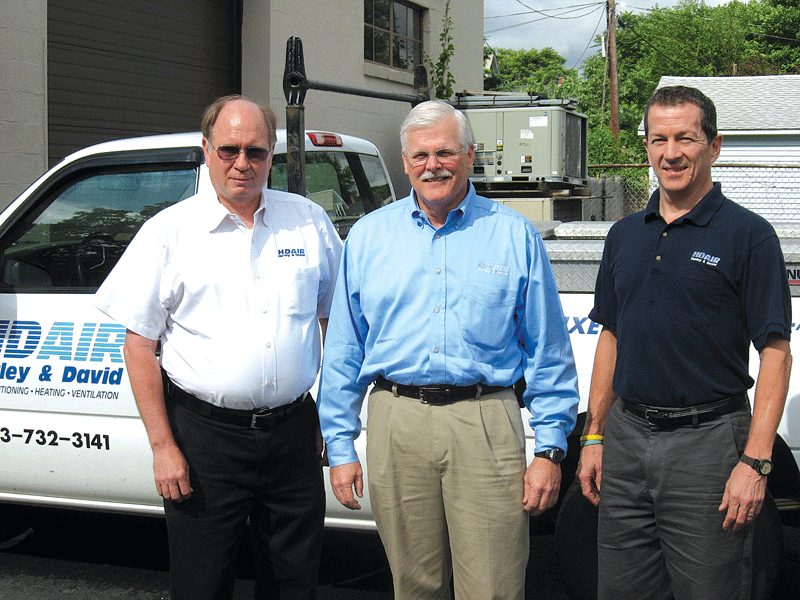
Ward Woodruff (center), with service manager Walter Thayer (left) and Mark Kent

Ward Woodruff (center), with service manager Walter Thayer (left) and Mark Kent, says Hurley & David has changed with the times, but kept its emphasis on quality.

Ward Woodruff enjoyed going to work for his uncle 37 years ago — so much, in fact, that he never left.
That was 1973, the year Woodruff came on board Hurley & David Inc., the Springfield-based HVAC company, as a sheet-metal apprentice, during his summer break from college. His uncle, Donald Tucker, had recently purchased the company from its original owners, Frank Hurley and Peter David.
A year later, Woodruff decided to stay on full-time, deciding that was his best option for a first career.
“I had no other real, driving force to go somewhere else,” he told BusinessWest, “so that seemed like a reasonable choice, a place I felt I could advance in.”
Once Woodruff started working full-time at Hurley & David in 1974, he began taking classes in the evening to become a refrigerator technician, and worked in the field as a service technician starting in 1975. Two years later, he moved inside, working in materials management and some sales, with occasional forays into the field.
That was the beginning of his education in the HVAC industry. Over the years, Woodruff has obtained Massachusetts trade licenses as a refrigeration technician, refrigerator contractor, journeyman gasfitter, master gasfitter, oil-burner technician, construction supervisor, and sheet-metal worker. He holds various licenses in Connecticut as well.
In 2005, having mastered the ropes for more than 30 years, Woodruff bought out his uncle’s remaining interest and is now president of the company, which is celebrating its 50th anniversary this year.
The company repairs and installs heating and air-conditioning systems, air-purification equipment, air cleaners, filtration systems, humidifiers, and ventilation systems for homes and businesses, Woodruff said. In fact, environmental concerns about air quality — and the occasional legislation associated with those concerns — has presented a fast-growing host of opportunities for HVAC contractors.
“People are concerned about mold, bacteria, and viruses in the air system and duct work where they can be breathed. With the products available today, we can mitigate the growth of these things,” Woodruff said, adding that the company focuses on ridding homes and businesses of all three types of air-quality dangers: particles, microbes, and toxic gases and chemicals.
In this issue, BusinessWest sits down with Woodruff to talk about how the HVAC industry has changed over the years — even as many of the key players at Hurley & David have not.
No Revolving Door
In fact, Woodruff credits much of the company’s success to a core group of employees, many of whom have been with Hurley & David for many years, even decades.
For instance, construction manager Gary Lubas started in 1976 in a co-op program while a student in the sheet-metal program at Putnam High School. Joe Sherry, senior sheet metal worker, has been with the company since 1973. And service manager Walter Thayer tracks his experience back to 1968, when he started with the former Westside Air Conditioning Co., of which he later became a partner.
Mark Kent also came to Hurley & David from his own company, MEK Engineering, in 1994. A registered professional engineer in Massachusetts with 30 years of experience in the field, he recently earned a key certification that will benefit one of the company’s critical customer bases — health care.
Specifically, he was designated a health care facility design professional by the American Society of Heating, Refrigeration and Air Conditioning Engineers (ASHRAE).
The ASHRAE certification program identifies individuals who have mastered a body of knowledge covering the successful design and operation of health care facilities, said Kent, who is one of only 15 engineers in Massachusetts — and the only one in Western Mass. — to currently hold the certification.
“Health care facilities need to be accredited by JCAHO,” he said, referring to the Joint Commission on the Accreditation of Healthcare Organizations. That accreditation process includes environmental issues such as air exchange and how it relates to infection prevention — not just in the final product, but in the construction process itself, since it generally occurs not far from a sick, vulnerable population.
“Also, patients can be infectious,” Kent noted. “So you have to protect your employees and the public, too, from patients who might have a contagious condition.”
Because Hurley & David has performed HVAC work for many health care facilities in Western Mass. — the medical industry, indeed, is a key driver of the regional economy — having someone with that designation on board is a plus for organizations looking to hire a contractor to design and install HVAC systems, Woodruff said.
“The certification benefits building owners, employers, and individuals,” added ASHRAE President Gordon Holness in a press statement. “Firms who employ ASHRAE-certified engineers are better able to promote their services, and individuals who are certified approach their design responsibilities with greater confidence.”

Hot and Cold
The years have brought many new developments to the HVAC field, such as the use of ultraviolet light to kill contaminants. Woodruff pointed out how the shady side of a building builds up more mold than the sunny side, where “it gets a sunburn and dies. Ultraviolet light acts like the sun to kill those things.”
Then there’s the ‘Talking Thermostat,’ a user-friendly, programmable thermostat that guides the user through set-up and temperature options — ideal for elderly or visually impaired people.
But these days, the most significant development is one that affects all industries — a recession that has increased competition and whittled profit margins down. “It’s gotten soft. Prices are low,” Woodruff said — so low, in fact, that they often don’t cover the cost of labor, materials, and subcontractors, so Hurley & David actually finds itself passing up work.
But overall, he said, the field is a stable one, and the company that once installed HVAC systems in some 300 Friendly’s restaurants is confident of keeping its employees — including, these days, Woodruff’s son and daughter — busy as the next 50 years begin.
The flow of new talent into the field is strong as well, Woodruff said, noting healthy programs at local schools (like Putnam Vocational Tech High School in Springfield) and institutions like Porter & Chester.
“Right now you can find people,” he said. “But they have to be quality people who are trainable.”
Just like a college kid who took a flyer on a summer job 37 years ago.

Joseph Bednar can be reached
at [email protected]

Opinion

By GERRY FITZGERALD
Now that it’s certain that casinos are coming to Massachusetts, it may be time to start considering seriously where a Western Mass. casino should be sited. In spite of the constant PR drumbeat coming out of Palmer over the past year, the siting of a local casino is an important issue and should not be decided by the noise level generated by developers with an entirely vested interest in the decision.
The Western Mass. location where a casino would bring the greatest benefit to the area as a whole, and to a host community with the greatest needs and the greatest payback, is readily apparent. And it certainly isn’t Palmer. Granted, Palmer is a nice little town with the same problems of many other little towns in Western Mass., but simply having a large tract of open land somewhere near a turnpike exit doesn’t make it the optimum site for a casino.
Springfield is the economic engine that powers Western Mass. A financially healthy Springfield of rising property values, a vibrant school system, rising employment opportunities for its growing minority population, and a revitalized downtown benefits all of Western Mass. These are benefits that a well-conceived, well-managed, visionary casino relationship could bring to Springfield.
With an agreement that the casino gives job preference and training opportunities to Springfield residents first, the people and neighborhoods most in need of an economic hand up — not a handout — will receive it, with dignity and a sense of pride, and just as importantly, they get the opportunity to work in their own community, with the ability to get to work every day by public transportation.
A revitalized, vibrant downtown community can also come with the new casino development. This is the hard part. Locating an $800 million casino in downtown Springfield requires vision and fortitude. But it should be the easiest part, because the key component that satisfies all the requirements of an optimum Western Mass. casino site has been sitting vacant for more than 40 years, waiting for an opportunity big enough to match its economic potential — Union Station.
A huge parcel of prime downtown real estate, Union Station sits unused and undeveloped — but not for lack of trying. Countless commissions have taken a crack at designing a future for Union Station, with a new proposal coming along every few years, complete with the same artist renderings and vague notions of intermodal transportation and retail and commercial office ventures. Mercifully, the latest plan at least spared us the farmers’-market component of previous proposals. But the fact is that nothing will ever go on that site that will generate 2,000 construction jobs, 3,000 permanent jobs, and a multi-million-dollar annual contribution to the city’s treasury, and bring an average of 10,000 visitors per day to downtown Springfield. A casino would.
It is also a unique and exciting opportunity for a casino operator. Come to Springfield and build an $800 million, 40-story, luxury resort hotel and casino, and we’ll give you the site at Union Station, and you’ll also have an Amtrak station in your hotel lobby, with ‘casino trains’ running on the hour from New York City, bringing in gamblers from New York, Bridgeport, New Haven, and Hartford.
A Union Station casino (it even comes with a perfect brand name) wouldn’t be the demise of Foxwoods or Mohegan Sun, but it would most certainly take a very serious gouge out of Fox-Mo’s significant I-91, Southern Conn./ New York business, turn their Albany traffic to a trickle, and keep at home the important Western Mass business. From New York, Bridgeport, New Haven, Hartford, Albany, and points beyond, Springfield is far easier and faster to get to by car, train, or airplane, and has much more to offer gamblers beyond the tables and slots than does a clearing in the woods. A world-class, major resort casino in downtown Springfield is an absolute nightmare for Foxwoods and Mohegan Sun.
A Union Station casino brings people and business to downtown Springfield and the surrounding area. It brings convention business to the Mass Mutual Center (instead of losing it a to Palmer facility), brings visitors to the Basketball Hall of Fame and its restaurants, and attracts people to the museums, Symphony Hall, CityStage, Six Flags, the Big E, and area restaurants, hotels, and stores. And most of all, it puts Springfield’s citizens to work, in their own community, at a location at the heart of the public-transportation system. An opportunity like this will never again be available to Springfield.

Gerry FitzGerald is president of FitzGerald & Mastroianni Advertising Inc. in Springfield.

Departments

The following business incorporations were recorded in Hampden, Hampshire, and Franklin counties and are the latest available. They are listed by community.

AMHERST

Jonathon Goldman Inc., 158 Flatt Hills Road, Amherst, MA 01002. Jonathon Goldman, same.
 
CHICOPEE

I K Transportation Inc., 96 Meadow St., Chicopee, MA 01013. Ilya Khotsin, same. Transportation of foods, commercial goods, vehicles, and other commodities via flatbed, container and heavy hauling trailers.
 
Prevalent Transport Inc., 43 Asinof Ave., Chicopee, MA 01013. Sergy Kucherenko, same. Passenger transportation via passenger vans, limousines and other passenger vehicles.
 
Ludlow Mills Redevelopment Corporation, 255 Padgette St., Chicopee, MA 01022-1308. Kenneth W. Delude, same. All activities related to the redevelopment of the Ludlow Mills property.

CUMMINGTON

Ocean Justice, Ltd., 20 West Main St., Cummington, MA 01026. Seth Pouliot, same. Ocean justice aims to free our oceans of garbage and foster a healthy relationship between people and the environment.
 
EAST LONGMEADOW

Little J. Inc., 20 Rollins Dr., East Longmeadow, MA 01028. Frances Marie Stote, 51 High Meadow Dr., West Springfield, MA 01089. Restaurant.
 
Nail Lounge and Spa Inc., 14 Maple St., East Longmeadow, MA 01028. Hyun Min Je, 1240 Jasmine Walk, Torrence, CA 90502. Nail Salon.
 
EASTHAMPTON

Rocktec Drills Inc., 19 Bayberry Dr., Easthampton, MA 01027. Patrick J. Jolicoeur, same. Selling of machinery.

S & D Vending Inc., One Adams St., Easthampton, MA 01027. William Hatzipetro, 41 Coleman Road, Southampton, MA 01027. Provides music from vending machines.
 
FLORENCE

Novotny Trucking Inc., 18 West Farm Road, Florence, MA 01062. Deborah A. Novotny, same.
 
HATFIELD

Pioneer Valley Young Democrats Inc., 59 Prospect St., Hatfield, MA 01038. Shawn Robinson, same. Regional organization of Democratic party activists.
 
HOLYOKE

Iglesia Pentecostal Subamos Al De Santidad Inc., 326 Appleton St., Holyoke, MA 01040. Carlos Cruz, 170 Hampshire St. #5, Holyoke, MA 01040.
 
The Parrot and Bird Emporium Inc., 18 Count Road, Holyoke, MA 01040. Janet Berube, 18 County Rd., Holyoke, MA 01040. Purchase, sell, market, care for, train, teach, feed, and house birds.
 
INDIAN ORCHARD

IHOP Restaurants LTD., 422 Main St., Indian Orchard, MA 01151. Iris Ferrara, 50 Moore St., Ludlow, MA 01056. Restaurant.
 
LONGMEADOW

Right Standing Ministries, 260 Longmeadow, St., Longmeadow, MA 01106. Rodney Woods Orourke Jr., same. Christian organization charitable and educational purposes.
 
OTIS

Rebecca Hansbrough Consulting Inc., 433 East Otis Road, Otis, MA 01253. Rebecca Hansbrough, same. Consulting services.
 
PITTSFIELD

Martin & Martin Enterprises Inc., 24 Greenings Ave., Pittsfield, MA 01201. Mark Martin, same. Restaurant.
 
SPRINGFIELD

IBEW 2324 Benevolent Fund Inc., 281 Cottage St., Springfield, MA 01114. Martin Feid, 64 Sunnyslope Ave., Agawam, MA 01001. Supporting and aiding individuals and families through fundraising activities.
 
La Base Xpress Incorporated, 1655 Main St., Springfield, MA 01103. Hector Ramirez, 860 Wyckoff, Ave., Brooklyn, NY 11237. Transportation services.
 
Live Wire New England Inc., 22 Rachel St., Springfield, MA 01129. Richard A Britt, same. Distributor of live wire energy chews.
 
WEST SPRINGFIELD

John Brames OSHA 10/30 Provider Incorporated,  203 Circuit Ave., West Springfield, MA 01089. John Brames, same.  OSHA training and consultation.
 
WESTFIELD

OMT Manufacturing Inc., 43 Daniel Ridge, Westfield, MA 01085. Alexander A. Trusiewicz, 16 Loomis Court, Chicopee, MA 01020. Manufacturing.
 
PATP Inc., 31 Franklin St., Westfield, MA 01085. Prathmesh I. Patel, 224 Peoples Way, Hockessin, DE 19707. Retail package store, sales of liquor.
 
RMB Transportation Inc., 49 Berkshire Ave., Westfield, MA 01085. Transportation services.
 
Roots Learning Center Inc., 217 Rood Road, Westfield, MA 01085. Education and learning center.

Features
Slice California Caf? Looks to Rock in a Resurgent Holyoke
Star Quality

Chuck Hebler believes in the revitalization of Holyoke, and hopes Slice can be a part of it.

Chuck Hebler toured with some of the biggest names in rock ‘n’ roll. Today, he wants to be part of something big in Holyoke.

“We were one of the first backstage caterers that toured with bands back in the 1980s. We would go from city to city with a band,” said Hebler, who first prepared meals for musicians on the Rolling Stones’ Steel Wheels tour in 1989 and followed that with the U.S. tours of the Beastie Boys and Nirvana, among many others.

Hebler left the road in 1997 to settle down in his native Berkshires, opening the successful Napa restaurant in Lenox. But he was eventually drawn to downtown Holyoke — specifically, the growing Open Square development in a row of former mill buildings — where he opened Slice California Café last year, serving and delivering breakfast and lunch, with an eye to expanding to dinner service in the future.

“The goal is to take this from an obscure café in an obscure area and develop it into a Napa,” he said. “I want people to appreciate what I’m doing here and expand it as Holyoke expands.

“I feel like I’m in the right place at the right time,” he added. “Open Square will develop over the next 10 years, and we’re going to be part of that development.”

As part of its annual Restaurant Guide, BusinessWest takes a look at Hebler’s former life on the road and his plans for the future in a city he believes in.

That’s Entertainment

Hebler grew up around show business; his family did prop and wardrobe trailer rentals for ABC Studios in Los Angeles, and he spent a lot of time on TV sets.

“I saw the caterers on set, and I got interested in catering, the backstage side of it,” he told BusinessWest. But after graduating from culinary school, he turned to a different side of entertainment, cultivating opportunities to tour with rock bands as their backstage caterer, beginning with the Stones.

He wasn’t working directly for bands, but for production managers who represented a host of acts — and once that relationship was established, the sky was the limit. Hebler collected plenty of memories during those years, and also an appreciation for the professionalism of the artists who sat at his table.

“Mick Jagger liked steamed whitefish, steamed rice, steamed vegetables,” he said. “Red wine and white wine, but nothing in excess. He was super fit and had a personal trainer” — not surprising for someone who has since fronted a rock band well past middle age. Hebler also praised Jagger’s bandmate Keith Richards as “the nicest performer and most sincere person I worked with. He notices everyone, and he’s one of the truly genuine people.”

But he had similar words for a host of other artists — Billy Joel, Elton John, Kurt Cobain, Jerry Garcia, David Bowie, and Carlos Santana among them — and said most veteran stars are far more human, easygoing, and grateful than their public image might suggest. He recalled staying late after a Fleetwood Mac concert for an after-show dinner, and Christine McVie sent his staff a case of shirts and hats as thanks. “It’s 99% fun stories,” he said.

“Everyone in the industry realizes that, to keep your success and longevity, it humbles you. To hold on to what you have, I believe that humbles you. As soon as you start acting like, ‘hey, I’m a rock star,’ then you’re fading, you’re a one-hit wonder.”

On the contrary, the artists he worked with tended to be down-to-earth, Hebler said, remembering how Neil Diamond — sans toupee, cigar in hand, wearing a robe and Gucci slippers — would come around and ask, “Chuckie, what are we having for dinner tonight?”

When he wasn’t touring, he had plenty of opportunities to cater individual shows in the LA area, as well as for companies like Universal Studios and Western Digital.

But when Hebler’s daughter was ready to start kindergarten, he wanted to shift gears and settle down to a more consistent lifestyle. So in 1997 — following a catering gig at the 30th-anniversary Woodstock festival in New York — he bought a building in Lenox and turned it into Napa.

Taste of California

“We wanted to have some stability,” he said, and he found it — along with success, in the form of steady business at Napa for 12 years (with $1 million annually in sales) and an A rating from Zagat.

Napa was a medium-priced restaurant, with entrees selling between $14 and $26, and characterized by the California cuisine he was taught on the left coast. “It’s things like fresh salsas, avocados, seafood items, Cal-Tex food — which is Mexican-style food with a California twist — and regional foods.”

In fact, the emphasis on local foods that characterizes many restaurants in Western Mass. is a trend that began in California in the late ’70s and early ’80s, Hebler said, and it’s an ethos echoed in the Berkshires, as well as the Pioneer Valley.

“This region is amazing for its resources for local meats and local produce,” he said, adding that he’s in the process of choosing a local family farm with which to partner on vegetables for Slice. When his venture expands to a dinner menu, he hopes to get as much pork, beef, and chicken locally as possible, too. “I really want to be that kind of restaurant.”

But he also wanted to be part of something bigger. And when John Aubin, owner of Open Square, pitched him an open space, he was intrigued by the possibilities.

“He explained the area and what’s going on down here, and it was exciting. It seemed like something that was really starting to take off,” Hebler said, citing developments like the coming high-performance computing center and other ongoing efforts to breathe new life to the nation’s first planned industrial city.

“John has a vision, and we’re part of that vision,” Hebler said. “We’re trying to live the Open Square dream, so to speak.”

And he believes that small steps can make a big difference in a city, citing the Colonial Theatre in Pittsfield, whose redevelopment was a catalyst to bring the whole downtown to life. He sees similar potential in the ongoing restoration of Holyoke’s Victory Theatre.

“When that happens,” he said, “you’ll see a nice flow of customers from outside Holyoke, and I think that’s going to be beneficial to this whole area, and more restaurants will start popping up — maybe even restaurants that are tired of paying huge leases in Northampton, and want come be a part of what’s emerging here.”

He doesn’t think Holyoke will ever replace what Northampton brings to the region culturally and culinarily, but he believes its story might mirror what happened in the Paradise City, which was lined with empty storefronts only a generation ago.

“This would be such a complement to Northampton,” he said, “and everything in between is some of the best real estate in Massachusetts, and a great lifestyle.”

And Hebler is feeding those taking part in that rebirth, offering soups, sandwiches, burgers, salads, quesadillas, and daily specials ranging from pot roast to baby-back ribs — all marked by that emphasis on fresh ingredients he learned long ago in California.

Rocker at Heart

Hebler hasn’t sworn off the rock ‘n’ roll lifestyle forever. Since settling in Massachusetts, he’s catered one-off shows for the likes of Tom Petty, Jackson Browne, and Bruce Springsteen — not to mention the Pope during his visit to Giants Stadium — and was offered a gig on the last Red Hot Chili Peppers tour.

He turned that down, choosing instead to continue focusing on cooking locally. But, having maintained connections with tour managers in New York and Boston, he doesn’t rule out future possibilities.

“You never know,” he said. “I could become a delinquent again. My midlife crisis.”

For the time being, “I want to develop this into something nice,” he said of Slice. “We have our great little breakfasts, lunches, and lattes, but that’s just the beginning. We need to keep on our game.”

Sales were adequate to sustain the endeavor over the first year, and as the customer base grows through word of mouth, Hebler is cautiously looking to the future — not just of Slice, but of Open Square and the vitality it could lend to this city.

“We have a seed in the ground, and we’re expecting it to grow,” he said. “No one knows what will happen next, but it’s been a pleasant surprise so far.”

For those invested in Holyoke’s future — both literally and figuratively — that’s a slice of good news indeed.

Joseph Bednar can be reached

at[email protected]

Company Notebook Departments

Here’s the Scoop: Rondeau’s Marks 70 Years

PALMER — Alvin Rondeau’s Dairy Bar, a Quaboag region institution, is this month celebrating its 70th birthday. It was on May 18, 1940 that Alvin “Mike” Rondeau opened his ice-cream shop, which has endured and now has fourth and fifth-generation members of the family carrying on the tradition. Indeed, Dick Rondeau, Alvin’s grandson, now works alongside his son, Dick, and grandson, Michael. The establishment, located on Route 32, specializes in hot dogs, hamburgers, fresh seafood, and, of course, ice cream. As in past years, Rondeau’s will mark its birthday celebration with a special. From May 18 to May 20, ice-cream cones, hot dogs, fries, and soda will all be 70 cents each.

Hampden Bank Turns 158, Is Named Sponsor of Jazz & Art Festival

SPRINGFIELD — Hampden Bank recently celebrated its 158th anniversary, an occasion the institution’s president, Tom Burton, marked by looking forward, not back. “Reaching this milestone on my watch is indeed a privilege. I couldn’t be more proud of our people, who we are, and what we’ve accomplished on behalf of those we serve,” he said. “As we move toward the end of the first decade of the 21st century, we will not rest on our laurels; we will continue to vigorously support our communities, and we will work tirelessly to brighten the days of our customers.” In other news, the bank announced that it is the named sponsor of the fourth annual Hoop City Jazz & Art Festival, partnering with presenting sponsor MassMutual and a host of other businesses and organizations. The event, to be staged July 9-11, is being moved to downtown Springfield at Court Square and the City Hall Esplanade.

Tiger Press Adds New Color Production System

NORTHAMPTON — Tiger Press announced that it has installed a new Ricoh C900 color production system at its manufacturing facility in Northampton. The system can produce more than 5,000 color impressions per hour on a variety of coated and uncoated stocks. Digital files are handled using the newest Fiery controller with built-in color calibration and imposition. “This new digital press enables us to offer color reproduction of short-run orders for a fraction of what our competitors are charging,” said Reza Shafii, president of Tiger Press. The C900 has a unique square-saddle-stitch capability that allows a spine for larger books, a special feature for customers in need of high-quality, short-run booklets with limited budget, he continued. In addition, Tiger Press has developed an advanced proofing technique for projects that will be produced on uncoated stock. Printing on recycled, uncoated paper is becoming more popular as companies strive to become more eco-friendly.

Curran & Berger Adds Location in Springfield

SPRINGFIELD — Curran & Berger, LLP, the Northampton-based immigration-law firm, has opened a satellite office at 1145 Main St. in Springfield. The new location will provide a convenient meeting space for legal staff to meet with its clients, said partners Joseph Curran and Dan Berger.

Friendly’s Restaurants Introduce New Salads

WILBRAHAM — In response to a desire among many adult Americans to eat healthier, Friendly’s has introduced a new selection of freshly made salads. Beginning in late March, more than 500 Friendly’s restaurants began offering seven new salads, including Southwest Chipotle Chicken Salad, Bleu Moon Sirloin Salad, and Apple Harvest Chicken Salad. In addition, Friendly’s has partnered with Healthy Dining, an organization that recommends dietician-approved menu items at restaurants. As part of the partnership, healthydiningfinder.com will highlight several the healthier options that are available at Friendly’s restaurants. These choices will be highlighted in Friendly’s menus. For more information on the new offerings, visit www.friendlys.com.

Mercy Medical’s EEG Lab Achieves Accreditation

SPRINGFIELD —- The Electroencephalographic (EEG) Lab at Mercy Medical Center has been awarded accreditation by the EEG Laboratory Accreditation Board of the American Board of Registration of Electroencephalographic and Evoked Potential Technologists (ABRET), making it one of only two EEG labs in Massachusetts to achieve that distinction. The ABRET lab-accreditation process involves evaluation of technical standards, the quality of the laboratory’s output, and lab-management issues. According to ABRET, successful accreditation indicates that the EEG lab has met strict standards and is recognized for providing quality diagnostics. “The ABRET accreditation is another example of Mercy Medical Center’s success in providing outstanding patient care throughout our facility, and delivered daily by highly trained professionals using quality diagnostic tools,” said Sharon Adams, RN, vice president of Patient Care Services at Mercy Medical Center. “This independent, objective verification of quality management and policies also allows physicians and patients to choose the EEG Lab at Mercy with the confidence of knowing that they will receive quality diagnostics.” The EEG Lab at Mercy Medical Center provides testing for 540 patients each year, and the ABRET lab accreditation is effective through 2015. EEGs are used diagnostically for many neurological problems, including stroke, seizures, migraine headaches, tumors, headaches, and dizziness. With this accreditation, Mercy joins Children’s Hospital of Boston as one of only two facilities in Massachusetts with EEG labs that meet ABRET standards.

Mont Marie Scores Highest in Region in Survey

HOLYOKE — Family members rated the care that their loved ones receive at the Mont Marie Health Care Center as the best in Western Mass., according to a survey just released by the State Department of Public Health. The Mont Marie Health Care Center, a not-for-profit skilled-nursing facility owned and operated by the Sisters of St. Joseph of Springfield, was among 430 nursing homes surveyed by the state last fall. The center scored 4.79 in overall satisfaction, well above both the statewide average of 4.22 and the Western Mass average of 4.20 (on a scale of 1-5). When asked if they would recommend the Mont Marie Health Care Center to a friend or family member, 98% of the respondents said ‘yes.’ Commenting on the high score, center Administrator Sr. Elizabeth Sullivan said, “the numbers indicate the trust level and credibility that family members have in our staff, who respond to the needs of residents on a daily basis with compassion, respect, and diligence.” The survey collected detailed information about nursing-home staff, physical environment, activities, personal-care services, food and meals, and residents’ personal rights. It also asked respondents to rate overall satisfaction and ability to meet residents’ needs. Surveys were mailed to approximately 34,600 family members of nursing home residents across the state.

Features
Officials Say City Is Positioned for a Comeback

Springfield, Mass.

Springfield, Mass.

From his office looking out on the sidewalks of Main Street in Springfield, Russell Denver can see firsthand what is happening in the downtown business district.
As president of the Affiliated Chambers of Commerce of Greater Springfield, Denver knows that a lot of work needs to happen in the city he’s called home for most of his life — and, for all but four years since 1980, where he’s worked as well. But some of the biggest points to address can’t be solved quickly by a shovel in the ground or a ribbon-cutting ceremony.
Like many others who talked with BusinessWest, he said that there’s a perception of Springfield’s safety and vitality that isn’t supported by hard evidence.
“Springfield is a big fish in a little pond,” he explained. “What happens is that the city gets magnified. For instance, do we have crime? Yes. But if those same statistics were reported in Boston, no one would even notice it.”
Addressing the empty storefronts downtown, he said, “I’m going to put a different spin on things. If you go around, you see a fair amount of vacant office and retail space. Well, that’s an opportunity, rather than a challenge. As things start to turn around, we’re going to have the locations ready so that people can move right in.”
Such glass-half-full enthusiasm is expressed by others as well.
Springfield’s chief development officer, John Judge, said that during the current down market, City Hall has been strategically addressing both strengths and weaknesses in order to make strides when the economy rebounds. He said that working toward a “21st-century downtown” is at the top of his priorities, and while the to-do list is not short for that goal, a few achievements have already been checked off as underway or complete.
In this, the latest installment of its Doing Business In series, BusinessWest takes an indepth look at the region’s unofficial capital. While there are problems shared by most every municipality across the nation after a couple of tough years, Springfield has had some of its own dark spots that are now relegated to the history books. The Finance Control Board left just under a year ago, turning the city’s red ledgers back on track, and in the recently-released budget for fiscal year 2011, Mayor Domenic Sarno unveiled plans for increased hiring in the public-safety departments and a priority for “strong and effective fiscal management,” according to the report written by Lee Erdmann, chief financial officer for the city.
Talking with various officials, a picture emerges of a city that has been maligned for what it both is and isn’t. And in the coming months, some of that will be changing, helping to drive home a important message, said Judge. “We’ve got to make sure that everything we do says that Springfield is open for business.”

The Center of It All
Denver identified one historic roadblock for business development in the city: a lack of developable real estate.
“But I think that a lot of people have done some great work, and now there is land for new construction,” he countered. “You have property at Smith & Wesson, Chicopee River Business Park, in Indian Orchard, for light industrial. So now, there’s plenty of land out there for new tenants, or for expansion and new buildings.”
Those commercial properties have been in good shape in the last year, and these pages have reported with due fanfare the addition of several big-ticket incoming businesses like Performance Food Group and the F.W. Webb Co., among others.
While those outlying properties are marketable and in the spotlight, downtown can also share some of that limelight. Denver called the four-acre York Street Jail site along the Connecticut River a “home run,” increasing developable land along what is rapidly becoming a true destination, featuring several popular restaurants bracketing the Basketball Hall of Fame.
He shifted his focus to the central business district, the area loosely defined by State Street and Court Square to the south up Main Street to the property north of the train station. “If there is only one thing that happens in 2010,” he said, “filling the vacant federal building is an absolute winner.”
Nick Fyntrilakis agrees. As the assistant vice president for Community Responsibility for MassMutual, he has been working closely on a variety of projects for the city, his hometown. He called the return of occupants to the federal building at 1550 Main Street “a key to revitalization for that section of the city.”
Plans are underway for the Springfield School Department and Baystate Health to become anchor tenants in the structure, turning the lights back on in the prominently located building that has been vacant for more than a year.
“One of the impacts from 9/11,” he explained, “is that the building was cordoned off from the street with Jersey barriers. Before that, the building was accessible via airwalks to Tower Square, it was accessible to the parking garage behind it, Uno’s was right next to CityStage, and it was a very active night spot. But all of a sudden, you lost those people that weren’t there having dinner, and the building became this real island, an air bubble of inactivity, really.
“Not only will the building in use again mean bodies downtown,” he continued, “but it flips the switch to make it another welcoming section of the city. I think the barriers and the access really had an impact on the psyche of that section of Main Street.”

Accentuate the Positive
Fyntrilakis said MassMutual is heavily invested in seven major revitalization initiatives in the city, four of which are moving “at various speeds and progressions.”
“The Corridor Storefront Improvement project is off the ground,” he continued. “Some grants were awarded last week, and you’re going to see more of that in the future. Basically any storefront along Main or State streets can receive up to $10,000 in grants, with a $2,500 match from the owners, to go toward improving their storefront — awnings, lighting, what have you. You’ll start to see pockets of those pop up.”
In addition, he mentioned projects at the former Indian Motocycle complex, market-rate housing at the building on State Street soon to be vacated by the School Department, infrastructure improvements along the State Street corridor, and the revitalization of Union Station for high-speed commuter rail.
While these are projects that will provide a much-needed boost in the right direction for retail and market-rate housing — two fundamental concepts for urban vitality — Fyntrilakis said that there are still specific, important building blocks that need to be addressed. In his opinion, the historic building at 31 Elm Street, directly across Court Square from City Hall, is a project whose importance can’t be understated.
“That property could potentially impact so much,” he said. “Moving north across Court Square, then to the MassMutual Center side, the lower part of State Street, and the beginning of the South End … getting that project online in some shape or form is absolutely critical.”
From a commercial real-estate perspective, William Low said that progress and revitalization at Elm Street “needs to happen.”
Low, senior vice president at NAI Plotkin on Taylor Street, said that, if that property is redeveloped, it will fundamentally change the landscape in downtown Springfield.
For reference, Low mentioned projects in Pittsfield that could very easily be duplicated for the vacant space, saying that, if it could happen there, Springfield can’t be far behind.
“Pittsfield has done a good job of revitalizing its downtown,” he began. “On the ground floor, you essentially just give away the real estate, just getting those spaces filled. Every time a third-tier city tries that, it works. Go to Pittsfield now and see how well it’s worked.
“Five or ten years ago,” he continued, “people in my business weren’t even considering that city. But now they are.”
Echoing just about everyone with an informed opinion, Low said that market-rate housing is of the utmost importance to foster a vibrant downtown economy. “And give them a reason to live there,” he said, counting off galleries, shops, and entertainment venues, “most of which are already here,” he added.
Citing the Quadrangle museums, Symphony Hall, Center Stage, and the MassMutual Center, he shrugged and said, “if housing has made a difference and has worked in other cities with so much less to offer, then it certainly could happen here.”
Denver said that, by realigning the income demographic for downtown with market-rate housing, the retail that consumers have long expected for the city might be a reality, but not until there are those numbers to support them.
“People complain sometimes about the type of retail that comes into downtown,” he said, “but look at the income demographics. No one should be expecting that Nordstroms will be coming to downtown — the market doesn’t support that. But should we be looking at the Gap or Old Navy types of stores, and start reaching for things like that? Absolutely.”

Eliminate the Negative
An important facet to reining in that desired demographic will be to change some perceptions concerning the downtown area. Low said that, when all one hears on the news are stories of violent crime in Springfield, the downtown becomes the symbolic hub for all of those ills.
“Sure, there’s crime in Springfield,” he said. “But it’s not in the central business district. The reality is that once you’re here, it’s nothing that you are even aware of.
“Having said that,” he added, “I would like to see more of a police presence. Every once in a while, you’ll hear talk about some kind of criminal activity, and for the next few days you’ll see police on the streets, walking around. I wish they would just stay there. That negative perception is a genuine challenge for the retail and restaurant sectors.”
From his desk at the chamber, Denver said that one of the biggest hurdles the city needs to address is the commercial real-estate tax rate, the highest in the state.
“We did a study that we handed to all city councilors last year showing that, consistently, for similarly sized properties in similarly-sized industries, you pay a higher per-foot real-estate tax than in any of the surrounding communities,” he said. “That needs to be addressed first and foremost.
He cited tax increment financing that was made available to a number of large commercial ventures in the city, among them Performance Foods, Titeflex, and Liberty Mutual. “My point to the city is that, if you can give those tax breaks — and I’m very happy you did — what about everyone else?” he asked.
Put into context, however, these hurdles don’t overshadow his feeling that the city is positioned for a comeback.
“I’m of the belief that there is a lot of good already going on downtown,” he said, “There have been nights this past winter where you had Symphony Hall sold out, CityStage sold out, and the Falcons with 5,000 people. Those people do go to restaurants, and there is the possibility that they could support strong retail.
“The product is there,” he added, “and it’s good. We need to make sure it continues to be good, and people will come.”

Features
Transit Company Exec Is Driven to Succeed

Peter Picknelly

Peter Picknelly, president, Peter Pan Bus Lines

Peter A. Picknelly and his wife, Melissa, have a long-standing, built-in Friday date-night routine — only there’s nothing routine about it.
Each week, it’s a different restaurant, all within roughly 45 minutes of their home in Springfield, and Peter’s in charge of picking the venue and, essentially, providing the surprises. They come in the form of usually smaller, lesser-known establishments that he finds via a combination of referrals and exhaustive research.
Through that mix, he has found such gems, as he calls them, as the Mill at 2T in Tariffville, Conn., the Trattoria Rustica in Pittsfield, and Cavey’s in Manchester, Conn., all of which have made his very-much-unofficial list of favorites. “We get a kick out of finding new ones, and try not to go to the same one twice in a year,” he said. “And we hardly ever miss a Friday — only if there’s kid issues.”
Picknelly, third-generation president of Peter Pan Bus Lines, the regional transit business started by his grandfather, Peter C. Picknelly, is quick to point out that, while he’s ventured far out of the Springfield area to find new places for date-night dinners, he’s still quite partial to established eateries in and around the City of Homes. “I’m at the Fort five days a week for lunch,” he said, acknowledging that he’s exaggerating slightly, but that on those days when he’s not at that downtown Springfield landmark, he’s at one of several other nearby restaurants.
And he’s almost always there with a manager from Peter Pan Bus Lines, either a direct report or one of another few dozen department administrators. These are working luncheons for the most part, and, for Picknelly, learning opportunities.
“I bring a list of things to discuss,” he told BusinessWest. “We talk about business and family. I never leave without some tidbit of information that helps me understand the business better.”
All this time in restaurants serves to help Picknelly better focus on the two most important aspects of his life — family and the family business (the community and service to it would place a close third) — and to do what he thinks he might do best: plan.
“I’m definitely a planner,” he said, adding that this goes for his family, Peter Pan, and a host of other business ventures with which he’s involved. “And with the family, it’s vacations that I love planning; I know where we’ll be vacationing a year from now.”
That would be Tuscany in Italy, the first European excursion for the family as a unit, meaning Peter, Melissa, and their four children — Lauren and Alyssa (13-year-old twins), Peter (that’s Peter D.), 10, and Olyvia, 7. Together, they’ve been to several spots on this side of the Atlantic, including the Bahamas, Mexico, and, most recently, Costa Rica.
‘Planning’ is a term that may also be applied to Picknelly’s affinity for high-end sports cars — very high-end. The burgundy Ferrari F4-30 (license plate: PETER) now in the Peter Pan parking lot will soon be replaced by the Italian automaker’s 2010 4-58 Italia model, this one blue, and, reportedly, the first one in New England.
Picknelly, who says he’ll get nearly what he paid for the F4-30 when he turns it in, has owned a variety of fast cars over the years, including a few Lotuses and Jaguars, choices far different from his father (the late Peter L. Picknelly), who was, as most in the region know, partial to Rolls-Royces.
“I can’t see me driving one of those,” said Picknelly, adding that he hasn’t emulated his father in several other ways — he believes he’s a much better delegater and family man, for example — but took a number of life and business lessons from him.
BusinessWest will elaborate on those and other points as it continues its Profiles in Business series with a look at someone who’s a driving force in local business and the community — literally and figuratively.

In the Clutch
As he talked about the many nuances of life in a family business, Picknelly noted that there are advantages and disadvantages, and they often go hand in hand.
He acknowledged that many people look at second-, third-, or fourth-generation managers of family businesses and conclude that things have been handed to them, and that they are perhaps not as worthy of praise for their exploits as someone who started from scratch and built his or her own company.
“And there’s something to that, certainly,” he noted. “I wouldn’t be where I am if it wasn’t for my father and grandfather; I know that I’ve been incredibly fortunate. If you were to go out right now and hire a president for Peter Pan, I’m not sure I’d make the cut.
“That said, I’m quite sure that you couldn’t find anyone who would work harder in this job than me,” he continued, adding that part of what drives him is that recognition of the fact that, to many, it’s simply his last name that is responsible for his title and success.
“It does push me a little harder,” he told BusinessWest. “It’s when people say I can’t do something that I try to prove them wrong.”
While Picknelly says he’s been helped by the Peter Picknellys who preceded him, he’s had to earn his stripes. And that meant starting at the bottom, which, in the bus business, means cleaning, or ‘dumping’ (that’s the technical term), the toilets in the back of the vehicles.
“Yeah, I did that — I’ve done just about every job in the company,” said Picknelly, noting that he started working in the garage on weekends and during the summer when he was just 13. He would later go on to take a number of different positions, from dispatcher to manager of the company’s then-much-smaller Boston operation when he was a student at Boston University. Years ago, he actually drove a bus on occasion when the company was short-handed and needed someone, but hasn’t done that for decades, and couldn’t now because his standard Class 2 license wouldn’t credential him to do so.
He kept moving up the ladder, and eventually assumed the title of president several years ago, when his father became chairman.
Over the past several years, he’s strived to continue growing Peter Pan, even in the face of mounting competition from new carriers, and even improved rail service to many cities the company serves.
“The business has changed considerably over the years … it is more competitive now than perhaps it ever was,” he said. “We just have to put ourselves in a position to succeed.”
As Picknelly mentioned, he took a number of life and business lessons from his father, and far more of the latter than the former. One of the keys from that realm was achieving diversity in one’s business portfolio, as a hedge against the vagaries of the economy and society in general, he said.
The younger Picknelly has accomplished this through both acquisition and new-business development. In the first category are purchases of companies including Camfour, a firearms distributor based in Westfield; Belt Technologies, an Agawam-based maker of metal belts and pulleys for several applications, including aerospace, medical equipment, and food processing; another firearms distributor in Austin, Texas; and a woodworking company based in Connecticut.
As for new business development, Picknelly, in conjunction with Greyhound, started a second transportation-based operation, called BoltBus. Designed as competition for so-called street-corner operators who offer low fares and few, if any, frills, BoltBus, which features more leg room and WiFi, among other amenities, has been an enormous success, said Picknelly. With runs to and from several large Northeast cities and New York, the carrier is boasting 80% capacity for all its runs, about one-third higher than the average for the industry.
Meanwhile, Picknelly has started a real-estate operation, called OPAL, an acronym that takes the first letters of his children’s names, in reverse order from when they were born.
Among other initiatives, OPAL is the main developer of the intermodal transportation facility taking shape in an old downtown fire station in Holyoke. It will feature a bus terminal, a two-story learning center to be operated in conjunction with Holyoke Community College, and a Head Start facility.
The value of such diversity was clearly on display during the recent economic downturn, said Picknelly. “Belt Technologies has been a victim of the economy,” he said, “but Camfour had its best year ever. Now, Belt is starting to pick up a little, and Camfour is slowing somewhat. My father always used to stress the importance of diversity, and I’ve learned that lesson well.”
But while Picknelly has emulated his father in many regards, from most business philosophies to work within the community, he’s written a much different script in what he considers the most important realm — family life.
“My father always used to say that if he had to do it all over again, he would have spent more time with his children,” said Picknelly, adding that his early years did not include trips to the Bahamas, and probably because of that, he devotes what he considers excessive amounts of time and energy to family.
“It’s very important to me; I love being a dad,” he said, adding that, unlike his father, he doesn’t micromanage every aspect of his businesses, and that leaves him time for other, more important things.

In High Gear
A quick look around Picknelly’s office and adjoining conference room provides ample evidence of the forces that shape his life.
There are photos of the generations that preceded him, models and pictures of buses from several different decades, a globe (presumably to help with planning the next family vacation), and several drawings crafted by his youngest child, Olyvia.
Together, they explain what drives him, professionally and personally, to succeed at whatever he’s doing.
Even picking the restaurant for date night.

George O’Brien can be reached at [email protected]
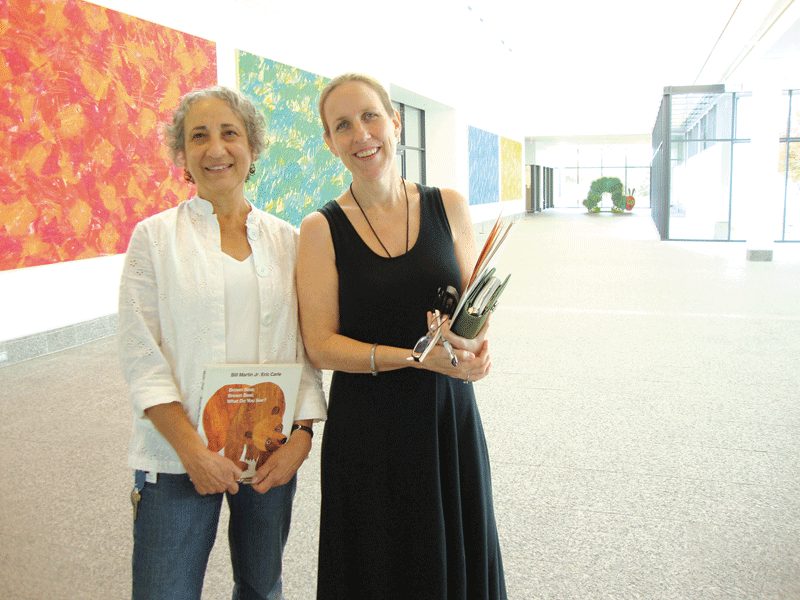
Features
As Key Votes Loom, Palmer Casino Backers Put Their Chips on the Table
Trying to Better Their Odds

Paul Brody says the state needs a casino ‘outpost’ in Western Mass.

For years now, casino backers, including those pushing for a resort operation in Palmer, have said it’s a question of when, not if, such gaming operations are approved. They’re saying it again this year, and with a House vote to support casinos already secured, and confidence that the Senate will follow suit, attention is now focused more than ever on where casinos will be located. Mohegan Sun, which would develop the $1 billion Palmer facility, believes it has a winning hand, because it maintains that the state needs what it calls a “Western Mass. outpost.”

The storefront has been open for just over a year now. In fact, an open house was recently staged to mark the anniversary.

It’s right in the middle of Main Street in Palmer, clearly visible to those approaching downtown from Route 32. The Mohegan Sun sign is large and prominent in the window.

Visitors to the former retail space — now decorated in the motif of the casino in Uncasville, Conn. operated by the Mohegan Tribal Gaming Authority, complete with a few seats from the arena where the WNBA’s Connecticut Sun play — have a few primary objectives, said Paul Brody, vice president of development for that organization.

Some want to pose questions about the potential impact on their homes or businesses from a proposed $1 billion casino complex on land just off the exit 8 interchange of the Turnpike. “They want to know about traffic and how that will be and how it will be mitigated,” he said. But most are inquiring about jobs and, more specifically, what kinds of opportunities will be created. Mohegan Sun isn’t taking job applications, but it is signing people up, with the intent of calling them back if the complex becomes reality.

“And some others … they just want to know what’s going on with this thing,” said Brody, one of four Mohegan employees who staff the storefront. “They want to know if this is going to happen, and when — whether it will be one year, two years, or more.”

And Brody says he tells them basically what he also told BusinessWest when it stopped by the office: that these are certainly critical times for those who support — and oppose — organized gaming in Massachusetts, and especially for those who have invested considerable time (several years), energy, and emotion in Mohegan Sun’s proposed complex, which would be built on a hill high above the pike and Route 32 and include a 164,000-square-foot casino, a 600-room hotel, 12 restaurants, and 100,000 square feet of retail space.

The state House of Representatives has passed a bill calling for two casinos and several slot operations at racetracks (called racinos by some), and the Senate is due to vote on its own version later this month. There is strong sentiment that the Senate will also vote to support some kind of gaming package, but the devil is in the details, and Brody acknowledged that, while he is not conceding anything regarding the broad vote to green-light casinos, he said the conversation is, in many ways, shifting to where they’ll be located, not if.

And thus, Brody also tells visitors, as he told BusinessWest, that, in response to a request for data that might help legislators determine where, Mohegan Sun commissioned a study that shows that a casino in Palmer, or “Greater Palmer,” as she called it, would benefit the state more than one built in another proposed location (Milford), assuming that the second casino is built at the Wonderland complex in Boston.

The study, conducted by Morowicz Gaming Advisors, LLC, concludes that a casino in Palmer, instead of Milford in Central Mass., would result in $43.8 million in additional gaming revenue annually to the state, and nearly $100 million more in out-of-state dollars coming to the Commonwealth, primarily because it would lure more New York State residents than one farther east.

The study — which, to no one’s surprise, is being questioned by the backers of a Milford casino, who have a different take — is one of many ways backers of the Palmer resort are trying to build momentum at a time that many consider critical to the town’s future.

They’re presenting the proposal as more than a casino, but also as a way for an economically beleaguered community to replace manufacturing jobs that have left over the past two decades and provide long-term stability, while also bringing other types of development to nearby vacant or underutilized real estate. Meanwhile, they’re presenting it as the state’s best bet for a secondary resort outside Boston.

“This is not just a singular project on the hill, but potentially other kinds of development that will blend with the flow of traffic,” said Leon Dragone, president of the Northeast Resort Group, which owns the proposed casino property and leases it to Mohegan Sun, and now also occupies the space two doors down from Mohegan on Main Street. “There are several other properties we’re looking at.”

The Hand That’s Been Dealt Them

There’s a cluster of signs greeting motorists getting off the exit 8 interchange, most of them directing them to businesses and attractions in Palmer, to the right down Route 32, or in Ware, a few miles to the left.

But there are three relatively new additions that, along with a smattering of lawn signs along Route 32 supporting the casino effort, tell of the sense of urgency in Palmer these days and the importance of the casino to the town’s fortunes.

There’s the ‘Mohegan Sun — A World at Play’ sign in bright yellow, flanked by two signs of support, one for each of two recently formed groups: Palmer Businesses for a Palmer Casino and Citizens for Jobs & Growth in Palmer.

Robert Young is a member of both groups. He owns a landscaping company and has lived in Palmer most of his life, or at least long enough to see most manufacturing jobs leave and nothing of any substance to fill the employment void. Indeed, as he listed the manufacturers that have departed, including Tambrands, Zero Corp., Pearson Industries, and others, he said efforts to attract different kinds of employers, including those in high tech and the biosciences, have not met with success.

He acknowledged that the former Tambrands complex, seeking new tenants for more than a decade now, has attracted some new businesses, but few if any that are large employers.

“Palmer is a town that’s dying, and it’s been dying for a long time,” he said, noting that the ease with which Mohegan Sun and Northeast found vacant storefronts in the middle of downtown says something about the deterioration of the central business district. “We’ve lost tons of manufacturing jobs and support jobs, and nothing has materialized to replace them.

“We have no more jobs for a lifetime,” he continued, noting that, in his view and in the opinion of those who undertook a study on the subject at UMass, casino jobs are the new factory jobs that can support families for decades.

But jobs are not the only component of the argument being proferred by the support groups and other Palmer-site backers, who say a casino could lead to other kinds of economic development in the community and, in the process, fill a number of vacant parcels in and around Palmer with everything from additional hotels and restaurants to golf courses.

“There are a number of sites that could potentially be developed,” said Dragone, citing a 30-acre parcel once proposed for a Lowe’s and a 95-acre parcel in Ware as just two examples.

He said a North Carolina-based firm is being considered to create a master plan for nearby undeveloped parcels. Speaking broadly, he said a casino in Palmer could do for the town and surrounding region what the resort in Uncasville has done for Mystic, Conn., about a half-hour down the road, known for attractions such as its aquarium and Mystic Seaport.

“It’s quite legendary what’s occurred there, which has been a direct result of the blossoming of the gaming industry in the southeastern part of Connecticut,” he said. “It’s become much more of a year-round tourist attraction, where before, it was mostly seasonal.”

Doubling Down

While the Palmer casino support groups present their arguments about the benefits of resort casinos in general and a Palmer facility in particular, Mohegan Sun is devoting most of its efforts now toward pressing the case for a Western Mass. casino, said Brody, who is now splitting his time between Palmer and Boston, where he and lobbyists hired by the firm are trying to gain the ear of lawmakers.

The Morowicz Gaming Advisors’ numbers already have the attention of many legislators. They show that if there was one casino in Boston and a second in Palmer, the total gross slot and table revenues for the state in 2014 would be $1.168 billion, as opposed to $1.124 million for a Boston/Milford mix. Meanwhile, total out-of-state money coming into the Commonwealth would be $216.4 million with a Boston/Palmer scenario, compared to $119.1 million with a Boston/Milford combination.

The former numbers result from a Central Mass. facility essentially “cannibalizing” (the report’s authors’ word) the Eastern Mass. casino and racinos, while the latter is due largely to Palmer’s proximity to New York, resulting in reduced drive time for New York residents traveling to Palmer, as opposed to Central Mass.

Those in the industry say individuals will generally drive no more than two hours to frequent a casino, said Brody, which puts a Palmer resort in reach for people in Albany, Schenectedy, and Troy, and a Milford facility less so.

While Milford-resort backers have questioned the study’s results, Brody said that, objectively speaking, they are hard to argue with.

“There’s no outpost in the western portion of the state to attract the gaming revenue from this area and the New York, Vermont, and New Hampshire area,” he explained, adding that, in addition to that geographical logic, it’s clear, to him at least, that a Central Mass. casino would be far more vulnerable to cannibalism from existing facilities and ones that could come on the drawing board.

“What happens if New Hampshire launches gaming in the next few years at Rockingham and Seabrook?” he asked rhetorically. “That will have a profound impact on that whole Central Mass./ Eastern Mass. area. There’s a huge concentration of either existing or proposed facilities, all in or near Eastern Mass., and that’s why the math from this study is so compelling.”

Time will tell if the numbers and words coming out of the Mohegan camp will sway the decision makers in Boston, but Brody remains cautiously confident, and conveys this to visitors to the company’s storefront.

He said the volume of traffic increases when “something happens” like the House vote or when a key player endorses casinos. And that means the facility is quite busy these days.

“People sense that this is closer to reality than ever before,” he said. “We see it in the community, and we see it right here. There is still a ways to go, but people are excited; they sense that this is real.”

Roll of the Dice

Brody told BusinessWest that Mohegan Sun opened its storefront on Main Street to provide a resource for those with questions, opinions, and desires to land one of the projected 3,000 jobs to be created at the proposed resort. Meanwhile, the company wanted to provide a highly visible way of showing that, in some ways, it was already part of the Palmer community.

Whether Mohegan eventually assumes an exponentially greater presence and occupies a hilltop rather than a 1,000-square-foot storefront remains to be seen. The Legislature still has to decide if it will give the go-ahead for casinos, and then, if it does take that step, where to put them.

The Palmer site’s backers think they have a good hand, but they’re working hard to improve their odds in any way they can.

And in only a few weeks, they should find out if that hand is a winner.

George O’Brien can be reached at[email protected]

Uncategorized
Transit Company Exec Is Driven to Succeed

Peter A. Picknelly and his wife, Melissa, have a long-standing, built-in Friday date-night routine — only there’s nothing routine about it.

Each week, it’s a different restaurant, all within roughly 45 minutes of their home in Springfield, and Peter’s in charge of picking the venue and, essentially, providing the surprises. They come in the form of usually smaller, lesser-known establishments that he finds via a combination of referrals and exhaustive research.

Through that mix, he has found such gems, as he calls them, as the Mill at 2T in Tariffville, Conn., the Trattoria Rustica in Pittsfield, and Cavey’s in Manchester, Conn., all of which have made his very-much-unofficial list of favorites. “We get a kick out of finding new ones, and try not to go to the same one twice in a year,” he said. “And we hardly ever miss a Friday — only if there’s kid issues.”

Picknelly, third-generation president of Peter Pan Bus Lines, the regional transit business started by his grandfather, Peter C. Picknelly, is quick to point out that, while he’s ventured far out of the Springfield area to find new places for date-night dinners, he’s still quite partial to established eateries in and around the City of Homes. “I’m at the Fort five days a week for lunch,” he said, acknowledging that he’s exaggerating slightly, but that on those days when he’s not at that downtown Springfield landmark, he’s at one of several other nearby restaurants.

And he’s almost always there with a manager from Peter Pan Bus Lines, either a direct report or one of another few dozen department administrators. These are working luncheons for the most part, and, for Picknelly, learning opportunities.

“I bring a list of things to discuss,” he told BusinessWest. “We talk about business and family. I never leave without some tidbit of information that helps me understand the business better.”

All this time in restaurants serves to help Picknelly better focus on the two most important aspects of his life — family and the family business (the community and service to it would place a close third) — and to do what he thinks he might do best: plan.

“I’m definitely a planner,” he said, adding that this goes for his family, Peter Pan, and a host of other business ventures with which he’s involved. “And with the family, it’s vacations that I love planning; I know where we’ll be vacationing a year from now.”

That would be Tuscany in Italy, the first European excursion for the family as a unit, meaning Peter, Melissa, and their four children — Lauren and Alyssa (13-year-old twins), Peter (that’s Peter D.), 10, and Olyvia, 7. Together, they’ve been to several spots on this side of the Atlantic, including the Bahamas, Mexico, and, most recently, Costa Rica.

‘Planning’ is a term that may also be applied to Picknelly’s affinity for high-end sports cars — very high-end. The burgundy Ferrari F4-30 (license plate: PETER) now in the Peter Pan parking lot will soon be replaced by the Italian automaker’s 2010 4-58 Italia model, this one blue, and, reportedly, the first one in New England.

Picknelly, who says he’ll get nearly what he paid for the F4-30 when he turns it in, has owned a variety of fast cars over the years, including a few Lotuses and Jaguars, choices far different from his father (the late Peter L. Picknelly), who was, as most in the region know, partial to Rolls-Royces.

“I can’t see me driving one of those,” said Picknelly, adding that he hasn’t emulated his father in several other ways — he believes he’s a much better delegater and family man, for example — but took a number of life and business lessons from him.

BusinessWest will elaborate on those and other points as it continues its Profiles in Business series with a look at someone who’s a driving force in local business and the community — literally and figuratively.

In the Clutch

As he talked about the many nuances of life in a family business, Picknelly noted that there are advantages and disadvantages, and they often go hand in hand.

He acknowledged that many people look at second-, third-, or fourth-generation managers of family businesses and conclude that things have been handed to them, and that they are perhaps not as worthy of praise for their exploits as someone who started from scratch and built his or her own company.

“And there’s something to that, certainly,” he noted. “I wouldn’t be where I am if it wasn’t for my father and grandfather; I know that I’ve been incredibly fortunate. If you were to go out right now and hire a president for Peter Pan, I’m not sure I’d make the cut.

“That said, I’m quite sure that you couldn’t find anyone who would work harder in this job than me,” he continued, adding that part of what drives him is that recognition of the fact that, to many, it’s simply his last name that is responsible for his title and success.

“It does push me a little harder,” he told BusinessWest. “It’s when people say I can’t do something that I try to prove them wrong.”

While Picknelly says he’s been helped by the Peter Picknellys who preceded him, he’s had to earn his stripes. And that meant starting at the bottom, which, in the bus business, means cleaning, or ‘dumping’ (that’s the technical term), the toilets in the back of the vehicles.

“Yeah, I did that — I’ve done just about every job in the company,” said Picknelly, noting that he started working in the garage on weekends and during the summer when he was just 13. He would later go on to take a number of different positions, from dispatcher to manager of the company’s then-much-smaller Boston operation when he was a student at Boston University. Years ago, he actually drove a bus on occasion when the company was short-handed and needed someone, but hasn’t done that for decades, and couldn’t now because his standard Class 2 license wouldn’t credential him to do so.

He kept moving up the ladder, and eventually assumed the title of president several years ago, when his father became chairman.

Over the past several years, he’s strived to continue growing Peter Pan, even in the face of mounting competition from new carriers, and even improved rail service to many cities the company serves.

“The business has changed considerably over the years … it is more competitive now than perhaps it ever was,” he said. “We just have to put ourselves in a position to succeed.”

As Picknelly mentioned, he took a number of life and business lessons from his father, and far more of the latter than the former. One of the keys from that realm was achieving diversity in one’s business portfolio, as a hedge against the vagaries of the economy and society in general, he said.

The younger Picknelly has accomplished this through both acquisition and new-business development. In the first category are purchases of companies including Camfour, a firearms distributor based in Westfield; Belt Technologies, an Agawam-based maker of metal belts and pulleys for several applications, including aerospace, medical equipment, and food processing; another firearms distributor in Austin, Texas; and a woodworking company based in Connecticut.

As for new business development, Picknelly, in conjunction with Greyhound, started a second transportation-based operation, called BoltBus. Designed as competition for so-called street-corner operators who offer low fares and few, if any, frills, BoltBus, which features more leg room and WiFi, among other amenities, has been an enormous success, said Picknelly. With runs to and from several large Northeast cities and New York, the carrier is boasting 80% capacity for all its runs, about one-third higher than the average for the industry.

Meanwhile, Picknelly has started a real-estate operation, called OPAL, an acronym that takes the first letters of his children’s names, in reverse order from when they were born.

Among other initiatives, OPAL is the main developer of the intermodal transportation facility taking shape in an old downtown fire station in Holyoke. It will feature a bus terminal, a two-story learning center to be operated in conjunction with Holyoke Community College, and a Head Start facility.

The value of such diversity was clearly on display during the recent economic downturn, said Picknelly. “Belt Technologies has been a victim of the economy,” he said, “but Camfour had its best year ever. Now, Belt is starting to pick up a little, and Camfour is slowing somewhat. My father always used to stress the importance of diversity, and I’ve learned that lesson well.”

But while Picknelly has emulated his father in many regards, from most business philosophies to work within the community, he’s written a much different script in what he considers the most important realm — family life.

“My father always used to say that if he had to do it all over again, he would have spent more time with his children,” said Picknelly, adding that his early years did not include trips to the Bahamas, and probably because of that, he devotes what he considers excessive amounts of time and energy to family.

“It’s very important to me; I love being a dad,” he said, adding that, unlike his father, he doesn’t micromanage every aspect of his businesses, and that leaves him time for other, more important things.

In High Gear

A quick look around Picknelly’s office and adjoining conference room provides ample evidence of the forces that shape his life.

There are photos of the generations that preceded him, models and pictures of buses from several different decades, a globe (presumably to help with planning the next family vacation), and several drawings crafted by his youngest child, Olyvia.

Together, they explain what drives him, professionally and personally, to succeed at whatever he’s doing.

Even picking the restaurant for date night.

George O’Brien can be reached at[email protected]

Uncategorized
Officials Say City Is Positioned for a Comeback

From his office looking out on the sidewalks of Main Street in Springfield, Russell Denver can see firsthand what is happening in the downtown business district.

As president of the Affiliated Chambers of Commerce of Greater Springfield, Denver knows that a lot of work needs to happen in the city he’s called home for most of his life — and, for all but four years since 1980, where he’s worked as well. But some of the biggest points to address can’t be solved quickly by a shovel in the ground or a ribbon-cutting ceremony.

Like many others who talked with BusinessWest, he said that there’s a perception of Springfield’s safety and vitality that isn’t supported by hard evidence.

“Springfield is a big fish in a little pond,” he explained. “What happens is that the city gets magnified. For instance, do we have crime? Yes. But if those same statistics were reported in Boston, no one would even notice it.”

Addressing the empty storefronts downtown, he said, “I’m going to put a different spin on things. If you go around, you see a fair amount of vacant office and retail space. Well, that’s an opportunity, rather than a challenge. As things start to turn around, we’re going to have the locations ready so that people can move right in.”

Such glass-half-full enthusiasm is expressed by others as well.

Springfield’s chief development officer, John Judge, said that during the current down market, City Hall has been strategically addressing both strengths and weaknesses in order to make strides when the economy rebounds. He said that working toward a “21st-century downtown” is at the top of his priorities, and while the to-do list is not short for that goal, a few achievements have already been checked off as underway or complete.

In this, the latest installment of its Doing Business In series, BusinessWest takes an indepth look at the region’s unofficial capital. While there are problems shared by most every municipality across the nation after a couple of tough years, Springfield has had some of its own dark spots that are now relegated to the history books. The Finance Control Board left just under a year ago, turning the city’s red ledgers back on track, and in the recently-released budget for fiscal year 2011, Mayor Domenic Sarno unveiled plans for increased hiring in the public-safety departments and a priority for “strong and effective fiscal management,” according to the report written by Lee Erdmann, chief financial officer for the city.

Talking with various officials, a picture emerges of a city that has been maligned for what it both is and isn’t. And in the coming months, some of that will be changing, helping to drive home a important message, said Judge. “We’ve got to make sure that everything we do says that Springfield is open for business.”

The Center of It All

Denver identified one historic roadblock for business development in the city: a lack of developable real estate.

“But I think that a lot of people have done some great work, and now there is land for new construction,” he countered. “You have property at Smith & Wesson, Chicopee River Business Park, in Indian Orchard, for light industrial. So now, there’s plenty of land out there for new tenants, or for expansion and new buildings.”

Those commercial properties have been in good shape in the last year, and these pages have reported with due fanfare the addition of several big-ticket incoming businesses like Performance Food Group and the F.W. Webb Co., among others.

While those outlying properties are marketable and in the spotlight, downtown can also share some of that limelight. Denver called the four-acre York Street Jail site along the Connecticut River a “home run,” increasing developable land along what is rapidly becoming a true destination, featuring several popular restaurants bracketing the Basketball Hall of Fame.

He shifted his focus to the central business district, the area loosely defined by State Street and Court Square to the south up Main Street to the property north of the train station. “If there is only one thing that happens in 2010,” he said, “filling the vacant federal building is an absolute winner.”

Nick Fyntrilakis agrees. As the assistant vice president for Community Responsibility for MassMutual, he has been working closely on a variety of projects for the city, his hometown. He called the return of occupants to the federal building at 1550 Main Street “a key to revitalization for that section of the city.”

Plans are underway for the Springfield School Department and Baystate Health to become anchor tenants in the structure, turning the lights back on in the prominently located building that has been vacant for more than a year.

“One of the impacts from 9/11,” he explained, “is that the building was cordoned off from the street with Jersey barriers. Before that, the building was accessible via airwalks to Tower Square, it was accessible to the parking garage behind it, Uno’s was right next to CityStage, and it was a very active night spot. But all of a sudden, you lost those people that weren’t there having dinner, and the building became this real island, an air bubble of inactivity, really.

“Not only will the building in use again mean bodies downtown,” he continued, “but it flips the switch to make it another welcoming section of the city. I think the barriers and the access really had an impact on the psyche of that section of Main Street.”

Accentuate the Positive

Fyntrilakis said MassMutual is heavily invested in seven major revitalization initiatives in the city, four of which are moving “at various speeds and progressions.”

“The Corridor Storefront Improvement project is off the ground,” he continued. “Some grants were awarded last week, and you’re going to see more of that in the future. Basically any storefront along Main or State streets can receive up to $10,000 in grants, with a $2,500 match from the owners, to go toward improving their storefront — awnings, lighting, what have you. You’ll start to see pockets of those pop up.”

In addition, he mentioned projects at the former Indian Motocycle complex, market-rate housing at the building on State Street soon to be vacated by the School Department, infrastructure improvements along the State Street corridor, and the revitalization of Union Station for high-speed commuter rail.

While these are projects that will provide a much-needed boost in the right direction for retail and market-rate housing — two fundamental concepts for urban vitality — Fyntrilakis said that there are still specific, important building blocks that need to be addressed. In his opinion, the historic building at 31 Elm Street, directly across Court Square from City Hall, is a project whose importance can’t be understated.

“That property could potentially impact so much,” he said. “Moving north across Court Square, then to the MassMutual Center side, the lower part of State Street, and the beginning of the South End … getting that project online in some shape or form is absolutely critical.”

From a commercial real-estate perspective, William Low said that progress and revitalization at Elm Street “needs to happen.”

Low, senior vice president at NAI Plotkin on Taylor Street, said that, if that property is redeveloped, it will fundamentally change the landscape in downtown Springfield.

For reference, Low mentioned projects in Pittsfield that could very easily be duplicated for the vacant space, saying that, if it could happen there, Springfield can’t be far behind.

“Pittsfield has done a good job of revitalizing its downtown,” he began. “On the ground floor, you essentially just give away the real estate, just getting those spaces filled. Every time a third-tier city tries that, it works. Go to Pittsfield now and see how well it’s worked.

“Five or ten years ago,” he continued, “people in my business weren’t even considering that city. But now they are.”

Echoing just about everyone with an informed opinion, Low said that market-rate housing is of the utmost importance to foster a vibrant downtown economy. “And give them a reason to live there,” he said, counting off galleries, shops, and entertainment venues, “most of which are already here,” he added.

Citing the Quadrangle museums, Symphony Hall, Center Stage, and the MassMutual Center, he shrugged and said, “if housing has made a difference and has worked in other cities with so much less to offer, then it certainly could happen here.”

Denver said that, by realigning the income demographic for downtown with market-rate housing, the retail that consumers have long expected for the city might be a reality, but not until there are those numbers to support them.

“People complain sometimes about the type of retail that comes into downtown,” he said, “but look at the income demographics. No one should be expecting that Nordstroms will be coming to downtown — the market doesn’t support that. But should we be looking at the Gap or Old Navy types of stores, and start reaching for things like that? Absolutely.”

Eliminate the Negative

An important facet to reining in that desired demographic will be to change some perceptions concerning the downtown area. Low said that, when all one hears on the news are stories of violent crime in Springfield, the downtown becomes the symbolic hub for all of those ills.

“Sure, there’s crime in Springfield,” he said. “But it’s not in the central business district. The reality is that once you’re here, it’s nothing that you are even aware of.

“Having said that,” he added, “I would like to see more of a police presence. Every once in a while, you’ll hear talk about some kind of criminal activity, and for the next few days you’ll see police on the streets, walking around. I wish they would just stay there. That negative perception is a genuine challenge for the retail and restaurant sectors.”

From his desk at the chamber, Denver said that one of the biggest hurdles the city needs to address is the commercial real-estate tax rate, the highest in the state.

“We did a study that we handed to all city councilors last year showing that, consistently, for similarly sized properties in similarly-sized industries, you pay a higher per-foot real-estate tax than in any of the surrounding communities,” he said. “That needs to be addressed first and foremost.

He cited tax increment financing that was made available to a number of large commercial ventures in the city, among them Performance Foods, Titeflex, and Liberty Mutual. “My point to the city is that, if you can give those tax breaks — and I’m very happy you did — what about everyone else?” he asked.

Put into context, however, these hurdles don’t overshadow his feeling that the city is positioned for a comeback.

“I’m of the belief that there is a lot of good already going on downtown,” he said, “There have been nights this past winter where you had Symphony Hall sold out, CityStage sold out, and the Falcons with 5,000 people. Those people do go to restaurants, and there is the possibility that they could support strong retail.

“The product is there,” he added, “and it’s good. We need to make sure it continues to be good, and people will come.”

Sections Supplements
Women Presidents? Organization Provides a Forum for Growth
Sarah Morin

Sarah Morin says WPO has helped her work on her business, and not in her business.

Some members call it a support group, while others say it’s like having a board of directors. Some use both phrases interchangeably. They’re talking about the Springfield-area chapter of a group called the Women Presidents’ Organization, a three-year-old outfit that provides an effective forum for sharing ideas and helping businessiness — and individuals — grow.

Sarah Morin says she keeps pretty busy trekking between her two Buffalo Wild Wings Grill & Bar franchises — in Hadley and Windsor, Conn. But she has some ambitious plans that will tax her time, and her vehicle, much further.

Indeed, she wants to have several more operations going in Southern New England within a few years, and is aggressively searching for attractive sites for the sports- and family-oriented restaurants. Managing the two she has while also drawing an outline for explosive growth is challenging, and she says she often found herself looking for what she called, alternately, a support group or informal board of directors to bounce things off and gain valuable insight.

She’s found one in the local chapter of the Women Presidents’ Organization, or WPO, which, as the name suggests, brings women business owners together to share ideas, concerns, issues, hopes, dreams, and more. The local group, the Springfield-area chapter, was formed three years ago with the help of some women who were members of the Boston chapter and thought Western Mass. needed its own. The Springfield chapter reached its current number, 13, thanks to a recruiting drive that brought Morin and several others into the ranks, with the goal of getting to 20 and perhaps more.

The group meets once a month for 3 1/2 hours, said Morin, noting that this a serious time commitment for busy business owners, but one she is willing to make given what she takes home with her after each session and what the group is helping her focus on.

Specifically, this comes down to “working on your business, not in your business,” she said, adding that this is a problem common to many in growing companies. Most business owners spend most of their time putting out fires, meeting deadlines, and doing what’s necessary to keep a business going day to day, she continued, adding that she wants to spend much more time in what she called the next ‘quadrant’: doing planning, relationship-building, and staff development. “That’s where I want to live, and this group is helping me get there.”

Using a roundtable format, WPO puts aside time each meeting to dive into one member’s ‘issue,’ said Cathy Crosky, chapter chair and a principal with the Charter Oak Consulting Group in Williamsburg. That’s accomplished not by preaching or telling that individual what to do, she continued, but by sharing experiences and providing insight into matters ranging from succession issues to effective use of social media to finding alternative funding sources.

“We do something called a ‘peerspective,’” she said, referring to the process by the Edward Lowe Foundation. “It takes us through a structured process so that we can understand a situation deeply and help that person think it through in a different way and offer perspective.”

Lauren Wright, president of Ludlow-based CSW Inc., a provider of integrated services for packaging, was the beneficiary of one such ‘peerspective,’ this one involving what she called a desired culture shift, from production-focused to sales-and-service-focused.

“I was having some issues around that, so we brainstormed ways to get employees more involved and raise accountability,” she said. “They had some great suggestions, some of which I’ve already implemented. It has helped quite a bit; I love being able to get input from people with so much knowledge and experience.”

The women-only format, meanwhile, provides an environment featuring individuals with shared challenges and an understanding, and appreciation, of the many nuances (and headaches) of balancing life and work.

“This is a network of women who understand what it’s like every morning to go to your little laptop to see if there’s any money in the bank,” said Nancy Urbschat, owner of Springfield-based TSM Design and one of the first members of the Springfield chapter. “It’s important to have someone to talk to — someone who has that understanding — because owning a business is a lonely position.”

For this issue and its focus on women in business, BusinessWest takes an indepth look at WPO, its mission, and how it carries it out.

Meetings of the Minds

‘Reaching farther. Together.’

That’s the working slogan for WPO, and Crosky says those three words effectively convey what the organization is all about.

At a time when more women are becoming business owners, but also when many such women (especially those over 40) lack role models, WPO essentially provides a room full of them. But it goes much further; by bringing these women together, the group helps them meet career goals, set new ones, and, well, reach farther.

“Women being in leadership roles and owning their own businesses is still relatively new,” said Crosky. “A generation before us … most of us didn’t have mothers who do what we do. The group provides an opportunity to learn from one another and benefit from the wisdom of the other women in the group.

“People can learn best practices and hear about things that people have gone through that they haven’t gone through yet,” she continued. “In that way, it’s like a peer-advisory group or a board of directors. It’s a way to look at your business through many different lenses.”

And while some WPO members were admittedly skeptical about the need for — and value of — a women-only group, they have, though their experiences with the organization, come to the conclusion that there is a clear need for such an organization.

“For most of us, if not all of us, there was some initial apprehension about a group solely for women,” Urbschat said. “But this group provides the kind of opportunity that many men are afforded, to have that kind of peer group to bounce ideas of, to mentor, and to be supportive. This is an alternative for us, and even though many of us were reluctant at first, its value has been proven time and again.”

WPO, which was founded in 1997 and now has 83 chapters worldwide, is open to women who own their own companies or have a partnership stake, as in the case of a law firm or accounting firm. The companies involved must have at least $2 million in annual sales ($1 million for nonprofits), making them what Crosky called “second-stage” businesses, and not startups.

There is significant help available to new businesses, she said, noting such groups as the Mass. Small Business Center Network and other agencies, but not nearly as much for these second-stage outfits, and especially for those owned and managed by women.

“You have to lead differently when you’re a second-stage entrepreneur than you do when you’re a startup,” she explained. “And there’s just not a lot of support out there for the kinds of things business owners face when their businesses start to grow.”

There are 10 stated ‘primary objectives’ for the organization. Specifically, it strives to:

  • Increase the business and financial success of women presidents;

  • Develop innovative solutions to business challenges through discussions held in a confidential environment;
  • Provide continuing education in business and leadership;
  • Increase awareness of women’s issues and opportunities;
  • Provide a forum where women presidents can make strategic contacts and promote business development;
  • Increase the visibility of women presidents on the local, national, and international levels;
  • Provide business resources including monthly newsletters, a Web site, media referrals, an annual membership director, and an annual conference;
  • Advance the influence of women in the business community;
  • Re-energize and revitalize women presidents, leading to a more productive balance in work and life; and
  • Celebrate the success of women in business.
  • Not Winging It

    The current membership of the Springfield chapter conveys diversity (one of its oft-listed assets), with many professionals, including a lawyer, accountant, and business consultants, and many sectors represented, including manufacturing (Al’s Beverage), retail (Buffalo Wild Wings and Fran Johnson’s Golf & Tennis), and advertising and marketing.

    Morin, who noted that she is very much in the minority as a woman in the world of restaurant franchising, said her five-year plan is quite ambitious, calling for perhaps 15 franchises in Southern New England, with the third coming later this year. “A girl’s got to dream,” she told BusinessWest, noting that WPO is helping her do that, and will likely be a real force in making the dream come true.

    When asked how the group has helped her and others, Morin said it comes down to imparting wisdom and support, not through preachy lectures, but through queries aimed at helping an individual contrive their own solution.

    “The feedback, or ‘feed-forward,’ comes in the form of questions, so you don’t have that, ‘in my second year in business, I did this…’” she explained. “It’s less anecdotal. And when the probing comes in the form of a question, not only does the person with the problem or issue benefit, but we all do.

    “We turn it inward and think of how it’s applicable to our business,” she continued. “I find that incredibly helpful and unique to this group, as opposed to other professional organizations.”

    Urbschat said she joined WPO not long after long-time business partner Leslie Lawrence left TSM. It was a difficult time in her career, one when she was questioning what she wanted to do — and how to go about doing it.

    “I needed to think about whether I wanted to continue doing this or do something else,” she said. “I eventually concluded that I did want to keep doing this, but that I actually needed to figure out what would be an appropriate role for me in the business. My roles had to change.

    “I was inspired by the other members and their stories to think about growing the business,” she continued. “I had always been happy with it just being where it was, and it had been there for a a lot of years; we had been just sort of skidding along. Now, I actually have goals. I’ve been alive for 58 years, and this is the first time in a while I’ve actually had goals.”

    One element of WPO that Urbschat finds unique, as well as helpful, is the desire of members to hold others in the group accountable when it comes to issues they’re facing and steps they are taking.

    “If someone walks away with a solution and chooses to ignore it, there may well come a time when someone might say, ‘you know, what have you done about that thing you were concerned about?’” she explained. “That accountability is a really good thing for a small business because we don’t have boards of directors saying, ‘these are our expectations of you.’”

    Meghan Sullivan, a partner with the Springfield-based law firm Sullivan Hayes & Quinn, is another newcomer to the group. Crosky invited her to join after hearing her speak on her specialty, employment law.

    Sullivan said she’s learned a lot about business, and people, since joining, and especially about strategic planning and more-efficient use of time, energy, and resources “in ways that move the business forward and hopefully motivate people to follow you.

    “Other members have helped me become more cognizant of situations where you’re so caught up in the minutiae that you’re missing the mission of the organization,” she continued. “There’s really been some learning opportunities presented in ways that, while I was in some ways aware of the concepts, I hadn’t brought them to the forefront in my business.”

    Generous Share

    When asked for a qualitative perspective on the value provided by WPO, Urbschat found a rather uniue and insightful answer.

    “How many 3 1/2-hour meetings do you look forward to?” she asked, letting that question stand by itself, because it could.

    Others used different words and phrases, but expressed generally the same sentiment: this is time and energy well-spent, because, as Urbschat said, running a business is a lonely job.

    And with WPO, these women leaders never have to go it alone.

    George O’Brien can be reached at[email protected]

    Sections Supplements
    Dynamic Keynoters, Networking Event on Tap for Market Show 2010

    ACCGS President Russell Denver says a down economy is not a reason to stay on the sidelines for a big trade show like the Market event slated for May 5 at the MassMutual Center.

    In fact, these are the times when companies should be front and center, he told BusinessWest, adding that a show like Market gives businesses a chance to differentiate themselves from the competition and put their products and services — not to mention their perseverance in the face of tough conditions — on display.

    “The show will provide an opportunity for companies to show they’re not only surviving, they’re thriving,” he said. “And it can give them an edge that companies not exhibiting won’t have; when others are pulling back, they’ll be standing out and differentiating themselves.

    “Trade shows remain a comparatively low-cost way to effectively market a company,” he continued, adding that participating companies can put their name and services in front of hundreds of other exhibitors and visitors.

    Despite this reasoning, Denver knows that some business owners will need some additional incentives to invest the time, energy, and money needed to participate in the 2010 Business Market Show. So he and others at the Affiliated Chambers are providing them.

    “We’re upping the ante,” said Denver, who used that phrase to characterize everything from the speakers at breakfast and lunch to the Cinco de Mayo Networking After Hours Event.

    Concerning the former, the lineup consists of breakfast keynote speaker Jeff Taylor, founder of Monster.com, while at lunch (which will have a separate fee), Charlie Baker, Republican candidate for governor and former CEO of Harvard Pilgrim Health Care, will take to the podium.

    “We’ve always had dynamic, informative speakers, but we’re very excited about this year’s keynoters,” said Denver. “Jeff Taylor has an incredible story to tell, one that inspires all small-business owners, and with the passage of health care reform legislation, there should be a lot of interest in what Charlie Baker has to say, and many questions as well.”

    As for the networking event, it will be a blend of the long-running Taste of the Market event that has wrapped up the last several market shows and the Affiliated Chambers’ monthly After 5 networking programs, said Diane Swanson, events manager for the ACCGS.

    Area restaurants and caterers are still being lined up for the day-capping event, said Swanson, which will have a festive, Cinco de Mayo flavor to it, and should keep many attendees at the Market show through the afternoon, while spurring some later arrivals as well.

    Overall, sales for the show have been solid, said Swanson, noting that they are down slightly from previous years, an obvious result of the still-sluggish economy, but should approach the 200-booth level, which is the traditional goal for the Market show.

    Attendees will find a number of value-added elements to the show, Swanson continued, adding that, for the fourth consective year, DiGrigoli Salons will be offering free haircuts, and there will be several giveaways. Meanwhile, there are two morning seminars:

    • From 10 to 10:45 a.m. in Room 1 will be a program titled “2010 and the Roth IRA Conversion Opportunity.” Speakers will be David Veale, senior vice president, AXA Equitable; John L. Carty, CRPS, vice president and financial advisor, Morgan Stanley Smith Barney; and Patrick Willcutts, CFP, CIMA, vice president and financial advisor, Morgan Stanley Smith Barney.

    • And from 11 to 11:45 a.m. in Room 2 will be a program titled “Social Networking and the Workplace: a Discussion of the Business and Legal Issues Arising Out of Employees’ Use of Facebook, Linkedln, Twitter, and Other Social Networking Applications.” The speaker will be Kimberly A. Klimczuk, Esq., a partner with Northampton-based Royal & Klimczuk, LLC.

    There is still plenty of time to become part of the trade show, said Swanson. To register, or for more information, call (413) 755-1313 begin_of_the_skype_highlighting              (413) 755-1313      end_of_the_skype_highlighting, or e-mail[email protected].

    40 Under 40 The Class of 2010

    Boris Revsin: 23

    Chief Executive Officer, CampusLIVE Inc.

    Boris Revsin likes changing established ways of doing things. His first venture into the business world was at age 13, when he created a successful electronic-marketing (e-commerce) site for his grandfather’s printing business.
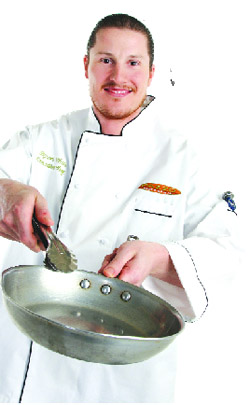
    At age 16, he started a Web-development company and talked local businesses into going online. “I wanted to be able to make money while I slept, and it’s fun creating systems for people that work when you are not there,” he said.

    The 23-year-old is co-founder of CampusLIVE Inc., an Internet business with more than 200 colleges and universities that have their own homepages offering students single-click access to every resource they need on and off campus, including restaurants, businesses, parties, events, academic help, and social networking.

    “I wanted to put the power back into students’ hands and have a one-stop shopping place for them,” Revsin said.

    He received a 2007 Harold Grinspoon Spirit Award for his work, and finished third in the 2008 BusinessWeek Top Entrepreneurs Under 25 competition. Gov. Deval Patrick recognized Revsin with a 2008 Emerging Entrepreneurs Award from the Mass. Office of Business Development, and he was nominated as Entrepreneur of the Year by Enterprise Bank’s Celebration of Excellence.

    He has spoken on dozens of radio programs, been featured in more than 40 college newspapers, and uses his creativity and expertise to promote causes he believes in.

    “I built and developed a Web site for the Russian Jewish Community Foundation,” he said, adding that he has also donated help to the Mass. Soldier’s Legacy Fund and other community-based groups. “I help them establish self-sustaining systems which will generate income.”

    Since establishing CampusLIVE, Revsin has partnered with Paramount Pictures, TV Guide, Weather.com, and other major brands.

    “I am really good at getting people to look at things and gain an audience for products and services. But my favorite part of this is to see that thousands of people have looked at something I created and benefited from it.”—Kathleen Mitchell

    <<Back

    40 Under 40 The Class of 2010

    Byron White: 30

    Owner and Executive Chef, Pazzo Ristorante

    Growing up with 11 siblings, Byron White developed a work ethic early on.
    “We never got anything for nothing,” he said. “My parents were hard workers, and from a young age, if you wanted a dollar, you had to go out and make it.”

    That quality served him well when he stumbled upon the restaurant business, washing dishes at Leone’s in Springfield. “Five minutes in, I knew I wanted to work in restaurants,” he said. “I loved the juice, the pressure. So I worked my way up.”

    That journey — White is a self-taught chef who has worked in notable kitchens across the Pioneer Valley and all over the U.S. — eventually led to part-ownership of Pazzo at the Basketball Hall of Fame, where he continues to stir passion into every recipe.

    “It’s like performing on stage,” he said. “The kitchen is our stage, and the dining room is the audience. It gets my energy pumping when people sit down in the audience and watch the stage; that’s why I like the cooks working in an open kitchen, so they can see the immediate reactions from people.”

    Having returned to “the city that gave me my wings,” White has helped raise funds for groups including Habitat for Humanity, Rebuilding Together Springfield, Springfield Kiwanis Club, the March of Dimes, the Jimmy Fund, Children’s Miracle Network, the Muscular Dystrophy Assoc., and Shriners Hospitals for Children. That’s not surprising, since he sees his entire career as a kind of service.

    “Restaurants are a small branch of the hospitality tree,” he said. “It’s not just about providing great food, but great service and ambiance, hitting all five senses and that sixth sense of culinary euphoria.

    “It’s about providing people with that thing I call the ‘wow’ factor,” he added. “At the end of the night, our team looks back and says, ‘wow, we put out a great product and gave people a great experience. Let’s pack it up and do it again tomorrow.’”—Joseph Bednar

    <<Back

    Company Notebook Departments

    V-One Vodka Receives Top Honors in Competition

    HADLEY — Valley Vodka Inc.’s V-One Vodka was recently honored with the highest award, the Double Gold Medal, at the World Spirits Competition. The San Francisco World Spirits Competition is a weekend of blind taste tests conducted by an expert panel of judges who award medals based solely on taste. The competition was held at the Nikko Hotel on March 13-14, and included more than 1,050 spirits from 56 countries and six continents, making it the largest competition of its kind. For gaining top honors, V-One Vodka will be featured in the May issue of Tasting Panel magazine. Also, Paul Kozub, owner and founder of V-One, will be traveling with the other Double Gold Medal winners in other categories for a 12-city tour for trade and media promotions. Kozub noted that for V-One Vodka to be rated as the top vodka in the world is “mindblowing.” He is one of the youngest founders of a Double Gold medal-winning vodka. V-One is distributed throughout Massachusetts and Connecticut and is available in more than 1,000 bars, restaurants, and liquor stores.

    Pion Family Receives Reprieve from GM

    CHICOPEE — Within the next few weeks, Robert Pion and his son, Donald Pion, hope to increase their inventory of new Buicks and GMCs after they learned they had been reinstated as a Buick and GMC dealer by General Motors Corp. During a recent press conference, the Pion family thanked U.S. Rep. Richard Neal for his efforts on their behalf as he met with GM executives to review the car dealer’s sales statistics. The Pions had kept the business going with the service department and bought used cars at auction to sell. In addition to Pion’s dealership, six others have been reinstated across the state following arbitration with GM.

    Firms Expand into Brownfield Market

    ROBBINSVILLE, N.J. — Sovereign Consulting Inc. has announced a partnership with RE Invest Solutions LLC to offer real-estate developers, corporations, and municipalities creative solutions to finance, remediate, and redevelop distressed and underutilized industrial properties. RE Invest, in partnership with real-estate developers, finances environmental remediation projects in exchange for an equity position in the redevelopment project. RE Invest invests in brownfield properties throughout the U.S., helping corporations and municipalities monetize their surplus fixed assets and transfer environmental liability. Sovereign provides the technical resources and manpower needed to execute the site remediation to regulatory closure.

    Don Muller Gallery Attends Exclusive Jewelry Show

    NORTHAMPTON — Jewelry showcased at the Centurion Show, an invitation-only trade show in Tucson, Ariz. for prominent retailers, will soon be found in the Don Muller Gallery on Main Street. Retailers shopped with Centurion’s 110-plus award-winning designers and purchased collections in various price ranges. Muller noted that shopping at the Centurion allows him to see the “very best jewelry available.” Muller added that he enjoyed shopping the collections of Todd Reed, Alex Sepkus, and Sethi Couture, which are carried in his store.

    Friends of the Homeless Receives Grant

    SPRINGFIELD — The TD Charitable Foundation recently awarded a $10,000 grant to Friends of the Homeless (FOH) that will allow the organization to continue working with adults who are homeless in the Greater Springfield area. Bill Miller, executive director of FOH, thanked the TD Charitable Foundation and noted that the funds will provide services that help people access permanent housing.

    Impoco’s Poultry Market Celebrates 80 Years

    SPRINGFIELD — Impoco’s Poultry Market is celebrating 80 years of providing fresh, all-natural poultry products to the region with a move to a new location on Walnut Street. The new site is operated by Anthony Impoco, the third generation of the Impoco family to continue in the business. He has been involved in the poultry industry for more than 35 years. The company was founded by Joseph Impoco in 1929 at the original Six Corners site of 345 Walnut St., a quarter-mile from the new location. The new retail market offers freshly prepared, all-natural chicken and chicken parts, as well as fresh eggs obtained from local egg farms. In the near future, the company plans to expand the product line to include waterfowl and game birds.

    Normandeau Marks 20th Anniversary

    FLORENCE — Hard work, honesty and a commitment to others have been the driving forces behind Normandeau Communications, which was founded by Raymond Normandeau and is now run by his son, Brett Normandeau, and daughter, Kim Durand. The family-owned and operated business provides quality cabling services and professional installation of business telephone systems. Durand noted that they “stake their name and reputation” on providing all their customers with the right solutions for their communication needs, taking advantage of new technology and providing true value with continued support.

    Features
    Is the Time Finally Right for Springfield?s Union Station?
    Train of Thought

    John Judge says that, given the priority status attached to commuter rail regionally and nationally, Union Station may be able to turn back the clock and thrive.

    The hands on the large clock in the main lobby of Springfield’s Union Station haven’t moved in nearly 40 years. For this landmark built in 1926 by the Boston and Albany Railroad, time has stood still — literally. But time hasn’t run out, insist those now working to advance yet another redevelopment plan for the station, one they say is unlike previous concepts, because it is grounded in market realities.

    John Judge understands that, when he says he’s “hopeful and “optimistic” about the prospects for Union Station, he’s echoing the comments of myriad Springfield officials, Pioneer Valley Transit Authority administrators, and area economic-development leaders, some of whom have watched the landmark sit idle and deteriorate for almost 40 years.

    When he says he believes the timing is right for the station to soon end its long hibernation, he knows that others have been saying words to that effect since Ronald Reagan was in the White House.

    Judge has been Springfield’s chief development officer for only 11 months now, but he knows all about Union Station’s long and recently quite sad history. So he understands why so many are skeptical about something positive ever happening there.

    “I can’t blame them. They have every right to be skeptical; one thing after another has created roadblocks for this property, and the years have turned into decades,” said Judge, who was enthusiastic but also quite realistic as he talked about the latest in a series of plans — some formal, some just idle talk — for reuse of the station on Frank B Murray Street. This one is far more grounded than the ones that have come before it, said Judge, noting that previous incarnations have included everything from a hotel to an IMAX theater that have never come close to seeing the light of day.

    This version, called Union Station II by some and ‘Option One’ by the consulting firm that drafted the plan, is based mostly on transportation-related components, including a 23-bay bus terminal, and comes at a time when the nation and the region are making commuter rail a priority matter, said Judge. He expressed the hope, but also the expectation, that Springfield could become a hub of commuter-rail service running from Southern Vermont to New Haven, Conn. and, ultimately, New York.

    The plan has other components, including plans for a day-care center, what is called ‘transit-related retail’ (kiosks, newsstands, coffee shops, and fast-food operations), and what the consultants call ‘opportunity space’ for other retail.

    It’s a nice picture, and variations of it have been painted before, many times, which explains why so much skepticism remains about Union Station. And those doubts are just one hurdle to be overcome. The economy is another, as is a sluggish commercial real-estate market that has property owners of all kinds, from private developers to Springfield Community College and its assistance corporation, vying for the same small pool of office tenants.

    And then, there’s Worcester’s Union Station, which was renovated a decade ago and has sat mostly empty since then, becoming a poster child for historic train-station redevelopment gone awry — or gone nowhere — thus casting further doubt on Springfield’s efforts.

    Judge is optimistic that 2010 will yield the first real, visible signs of progress at Union Station in many years, which he says could start to erase some doubts. He expects there might be movement to solidify some of the transportation components, especially the PVTA’s eventual move from its headquarters on Main Street to the train station, and also some of the other pieces to this puzzle, such as a day-care center, a senior center, and that transportation-related retail. And he anticipates that work to begin razing the so-called ‘baggage building’ adjacent to the station could begin late this year or early next, providing some tangible evidence that redevelopment is happening.

    The economy is still quite soft now, which is actually good, from a timing perspective, for this project, in that those working to redevelop Union Station can position it for the day — not far off — when times are better and the appetite for commuter rail will be much greater.

    “We’re in a unique time in history in that we have an administration that’s committed to high-speed commuter rail, and we also have a society that’s embracing the idea of regionalism and how important that is,” he explained. “If gas goes to $4 a gallon again, people are going to have few if any options in terms of commuting. What we want to do is reposition Union Station as not simply an intermodal facility for Springfield, but as a hub for the Pioneer Valley.”

    For this issue, BusinessWest takes a look at the latest plans for Union Station and their prospects for becoming reality.

    On the Right Track

    Judge calls it the “Union Station task force.”

    That’s the name he’s given to a small working group that now gathers around the conference table in his office on Tapley Street every Tuesday morning starting at 8:30. The group began meeting a few months ago, he told BusinessWest, and he intends to stay with the weekly schedule for the foreseeable future to keep this latest Union Station project on the front burner, where he says it belongs.

    “We want this to be a priority,” he said, “and when you meet every month or every other month, it’s not a priority.”

    Recent meetings have had a number of agenda items, but especially the steps — legal, financial, and technical — needed to make the Springfield Redevelopment Authority the lead agency on this project (a memorandum of understanding between the SRA and PVTA was signed last summer making them partners in this initiative) and the entity that would be the direct designee for the close to $60 million in state and federal funds that have been awarded for Union Station redevelopment.

    The money is in place, technically speaking, and has been for many years, said Judge, adding that the individual earmarks must be “re-energized.”

    In general, discussion among task force members, who include Judge, Kevin Kennedy, senior aide to U.S. Rep. Richard Neal, a strong advocate for re-development of the station; Maureen Hayes, president of Hayes Development and a consultant to the city on this project; and others, centers around a redevelopment plan crafted in late 2008 by the Nebraska-based consulting firm HDR.

    As they talked about the plan, Judge and Kennedy echoed what HDR said in its executive summary of the latest redevelopment initiative:

    “Past efforts to redevelop this facility were not successful due to a variety of reasons, but the common denominator was that the plans were not based on market realty,” said the report’s authors in reference to such concepts as the hotel, IMAX theater, upscale restaurants, and other components of previous plans. “This redevelopment plan takes a grounded approach based on well-defined objectives, available funding, economic viability, and the realities of the real-estate market.”

    At the heart of HDR’s redevelopment plan is something the consultants call simply ‘Option One,’ or the best of several scenarios for revitalization of the Union Station complex.

    Option One has several components, including:

  • Restoration of the terminal building, with approximately 33,000 square feet for PVTA, Amtrak, commuter rail, and intercity bus operating facilities; 58,000 square feet of transit-related retail and office space, including day care, PVTA administrative offices, and a transportation conference center; and 30,000 square feet of commercial ‘opportunity space’ for future economic development;
  • Removal of the baggage building and construction of a new, 139,000-square-foot bus terminal with 23 bays;
  • Construction of a 400-space, two-level parking garage connected to the terminal building to accommodate transit and public parking above the new bus terminal; and
  • Reopening of a passenger tunnel, providing a safe, walkable connection from the terminal building to the Amtrak station and platforms, and Lyman Street.
  • Funding is essentially in place for these various components, say the report’s authors, adding that $4 million would still be needed to complete the build-out of the opportunity space, which could be financed by a loan or “obtained through some other funding source.”

    The HDR report also lays out budgetary projections:

    “A fully occupied Option One is expected to generate an annual revenue of budget of approximately $1.9 million, of which $1.5 million is associated with the transit-related operations and $400,000 from the opportunity space. The total annual operating cost is estimated at approximately $1.5 million. A net balance of about $400,000 would generate enough cash flow to cover the debt service of the financing needed to build out opportunity space.”

    Getting Everyone On Board

    All this looks good on paper, but there are many questions involving whether the plan can become reality. They concern everything from whether Peter Pan Bus Lines will be a player in this new plan (and if the project can go ahead if it’s not) to whether there will be any interest in that aforementioned opportunity space.

    Judge and Kennedy said those questions will be answered over time, but both expressed optimism that the plan can come together as HDR has outlined it.

    “With a lot of projects of this magnitude, it comes down to timing and circumstance,” said Kennedy, who has a long history with Union Station — he was an aide to then-Mayor Neal when the city took possession of the landmark. “Looking to the future and what will be a greater emphasis on rail, I think Springfield is positioned to be a hub of a commuter rail line and also positioned for an economic-development project in the north of its downtown blocks.

    “To do nothing with Union Station would be a bad idea,” he continued, “and I think we have a much better chance for success now, because this plan is based on market realities.”

    As for specific components for a revitalized Union Station, Judge said some discussions have taken place with administrators at Square One, the Springfield-based day-care provider, and there is some interest in possibly creating a new facility in the station, which would be a natural location if it were to become an intermodal transit center. And such an operation would help create additional vibrancy in the station, something that would be needed to attract other forms of retail.

    A senior center would provide similar benefits, said Judge, adding that he can visualize a facility that seniors could reach via mass transit and stay at during the day.

    “We have to look at what we can do to make this a vibrant, 24/7-like spot for the city,” he explained, “and not a situation where a train pulls in, people walk through, and you’re missing that added vibrancy.

    “Having Square One there would be critical,” he continued, “and another thing I’d like to have, and I think it would be innovative, would be a senior center. There would be some inter-generational opportunities, and a place where seniors can go to do a power walk, grab a bite to eat, use wifi, and maybe volunteer some time with the kids.”

    Another possibility, he said, is creation of facilities, such as conference rooms and other amenities, that could be used by businesses and individuals with virtual offices. “The region doesn’t have anything like that, and it needs one.”

    But to achieve real success with this project, Springfield, and Union Station, would need to become the hub of much more extensive commuter-rail service, said Judge, who firmly believes that day is coming.

    “The scenario works out this way … you live in Sixteen Acres, take a PVTA bus to Union Station, walk through the station, get your coffee and your bagel and your ticket, and then get on a train to New Haven, and from there you can go to New York,” he said, adding that many business executives currently drive to New Haven and take a train to Gotham.

    This scene that Judge lays out is similar to the way things were decades ago, before air travel and the interstate highway system crippled the railroads — and dozens of once-proud facilities like Union Station. A return to those days, and a commuter-rail system approaching what is seen in most European countries, could enable Springfield’s landmark to come full-circle.

    Last Stop

    As he talked about moving plans for Union Station off the drawing board and to reality, Judge said he has an excellent team in place for that assignment (his task force), that the timing is right, with the state and region due to emerge from the recession at about the same time the project heats up, and that the latest plan is realistic and doable.

    As he spoke those words, he realized that many before him, in various governmental capacities, have said essentially the same things.

    Time will tell if things go differently with this plan for the landmark that time forgot, meaning that things will go right. But Judge firmly believes that soon — a relative term if ever there was one — people will talk about Union Station using something other than the past tense.

    George O’Brien can be reached at[email protected]

    Departments

    Rise in Jobless Claims Surprises Analysts

    WASHINGTON — In the week ending Feb. 13, the advance figure for seasonally adjusted initial jobless claims was 473,000, an increase of 31,000 from the previous week’s revised figure of 442,000. The four-week moving average was 467,500, a decrease of 1,500 from the previous week’s revised average of 469,000. The advance seasonally adjusted insured unemployment rate was 3.5% for the week ending Feb. 6, unchanged from the prior week’s unrevised rate. The advance number for seasonally adjusted insured unemployment during the week ending Feb. 6 was 4,563,000, unchanged from the preceding week’s revised level. The four-week moving average was 4,585,750, a decrease of 24,000 from the preceding week’s revised average of 4,609,750. The fiscal year-to-date average for seasonally adjusted insured unemployment for all programs is 5.24 million. The advance number of actual initial claims under state programs, unadjusted, totaled 476,730 in the week ending Feb. 13, a decrease of 30,850 from the previous week. There were 619,951 initial claims in the comparable week in 2009. The advance unadjusted insured unemployment rate was 4.3% during the week ending Feb. 6, a decrease of 0.1% from the prior week. The advance unadjusted number for people claiming unemployment-insurance benefits in state programs totaled 5,539,706, a decrease of 150,689 from the preceding week. A year earlier, the rate was 4.5%, and the volume was 5,972,146. Extended benefits were available in Alabama, Alaska, Arizona, California, Colorado, Connecticut, Delaware, the District of Columbia, Georgia, Idaho, Illinois, Indiana, Kansas, Kentucky, Maine, Massachusetts, Michigan, Minnesota, Nevada, New Hampshire, New Jersey, New Mexico, New York, North Carolina, Ohio, Oregon, Pennsylvania, Puerto Rico, Rhode Island, South Carolina, Tennessee, Texas, Vermont, Virginia, Washington, West Virginia, and Wisconsin during the week ending Jan. 30. States reported 5,797,875 persons claiming EUC (emergency unemployment compensation) benefits for the week ending Jan. 30, an increase of 304,748 from the prior week.

    Bright Nights Has Successful Holiday Season

    SPRINGFIELD — Spirit of Springfield (SOS) officials recently noted that the 15th season of Bright Nights at Forest Park was a success, contributing close to $350,000 in payments to the city for traffic control, labor, and its annual licensing fee. SOS President Judith A. Matt noted during an appreciation breakfast that the holiday lighting display drew 36,240 cars, a 12% increase over the 2008 season, as well as 298 buses. SOS estimates that Bright Nights also infuses more than $7.5 million into the region through its hotels, shops, and restaurants, as well as money paid to city workers, vendors, and staff, during the 35-night run, Matt noted. The lighting display is expected to be dismantled by the first week of March, she added.

    Leadership Holyoke Applicants Still Sought

    HOLYOKE — The 11-week Leadership Holyoke program, co-sponsored by the Greater Holyoke Chamber of Commerce and PeoplesBank, begins March 4. Holyoke Community College faculty members and community leaders participate in each weekly, half-day session of Leadership Holyoke. Topics are related to the elements involved in being an effective volunteer leader. For more information and enrollment applications, call the chamber office at (413) 534-3376.

    United Way Seeks Nominees for Recognition

    SPRINGFIELD — The United Way of Pioneer Valley is seeking nominees for its annual awards program, which honors volunteers and organizations for contributing the most to improve the lives of Pioneer Valley people and to strengthen communities. Nominating someone or a business or organization is as easy as submitting a name and a brief justification explaining why the person nominated should receive a United Way award. This is the first year the United Way has expanded the nomination process to include nominations from any member of the public, according to Dora D. Robinson, president and CEO. Robinson noted that it is important to encourage the public to recognize outstanding volunteer service — individuals, businesses, and nonprofits that have proven their concern and compassion for their neighbors with acts of kindness. The award categories are: Spirit of Caring Award, honoring an individual who has demonstrated uncommon leadership and compassion while improving the community; Champions of Hope Award, honoring a local corporation or business that values and nurtures community relationships and is a catalyst for positive change in the community; and the Kevin Hamel Community Building Award, honoring a nonprofit that serves the community with the highest possible integrity and values honest and transparent practices. People are not limited to one nomination. Citizens can submit as many nominees for as many award categories as they believe are appropriate. Nominations can be sent to Linda Valentini, preferably by e-mail at [email protected], or by faxing to (413) 788-4130. For more information, visit www.uwpv.org.

    Features
    The Pieces Are Finally Falling into Place for Holyoke?s Victory Theatre
    Setting the Stage

    Donald Sanders is convinced that the Victory Theatre will not languish in faded glory, but will be relevant again.

    The Victory Theatre has long been a valued part of Holyoke’s past, hosting everything from celebrated singers to Oscar-winning films to high school graduations. Making it a real part of the city’s future has been a 30-year challenge met only with frustration. But a new group, the Mass. International Festival of the Arts, a Holyoke-based performing-arts organizer, has secured ownership and believes it has the friends — and the funds — to finally turn the lights back on.

    These days, with red plywood covering all window openings, it might not look like much. But at the Victory Theatre at the corner of Suffolk and Chestnut streets in Holyoke, the magic always came from what is within.

    “No expense was spared in materials,” said Donald Sanders. “Staircases are Vermont marble, paneling is rare Brazilian mahogany, windows were made by Tiffany. The exciting thing is that, as we’ve gone through the building, going through the layers accrued over the years, we’ve discovered the original silk wall covering, most likely made by the Skinner family. It is basically intact, stretched on frames over felt and cloth, just the way it was done at Versailles.”

    Sanders is the executive artistic director of the 16-year old Mass. International Festival of the Arts (MIFA), a Holyoke-based performing-arts organizer with a history of bringing world-class acts to the Pioneer Valley. Past features include Mikhail Baryshnikov, the National Ballet of Cuba, and players from Shakespeare’s Globe Theatre in London, among many others.

    Talking with BusinessWest recently, Sanders proudly described the chronology of the Victory Theatre, happy to add the latest chapter in a saga that has spanned close to a century. As of last December, MIFA is the newest owner of the former jewel in the crown of the region’s theaters.

    Other attempts have been made to revitalize the structure since the house lights dimmed for the last time in 1979, from homegrown initiatives to a venture funded by the Armand Hammer exhibition of paintings in the city’s Heritage State Park in 1987. None have succeeded in opening the doors.

    But Sanders said that important work was set in motion by each one of these steps along the way, and that the theater will not languish in faded glory and the forgotten memories of the city. With ownership now secure, and more than half of funding for a bill totaling $27 million underway, the Victory plans to open its doors to a theater-going public 92 years after the first opening night, on Dec. 30, 2012.

    BusinessWest talked recently with Sanders and MIFA’s managing director, Kathy McKean, both basking in the knowledge that, as the banner outside the building proclaims, “Victory is ours!”

    Curtain Call

    To say that Nathan and Samuel Goldstein built theaters is an understatement. The Goldstein Brothers Amusement Co. was the leading theater impresario of its day in the first decades of the 20th century.

    Based in both Springfield and Holyoke, the brothers are responsible for some of the area’s most-cherished venues: the Calvin in Northampton, the Colonial Theater in Pittsfield, and a string of long-gone palaces of performing arts in Springfield, Westfield, Ware, and elsewhere. The Holyoke Transcript Telegram of February 1926 valued their business at close to $3.5 million, a staggering sum for the time.

    When the business and civic leaders of Holyoke, among them the Parson and Skinner families, decided that Holyoke needed a world-class theater, it was the Goldstein brothers who got the call. What they built in the Victory Theatre was nothing short of their finest achievement. Preeminent theater architects Mowll & Rand from Boston designed the structure, and on opening night on Dec. 30, 1920, Eva Tanguay, a singer Sanders describes as the Madonna of her day, performed. In its heyday, everyone who was anyone took the stage at the Victory.

    Sanders said that the legacy of the Goldstein brothers’ building continues to impress. “The quality of the workmanship, down to the bricklaying … all the engineers comment on it,” he said. “It’s also one of the first uses of steel beams to create a fan-shaped auditorium. No obstructions whatsoever, and the beams support the dress circle, what people call the lower balcony. It’s an amazing building.”

    Designed at first to be, in Sanders’ words, a “Broadway-style” theater, the Victory was, over the years, slowly turned into a movie house, to reflect changing tastes in entertainment. But for Sanders, he knew the moment he first saw the inside that this was no ordinary hall.

    “It isn’t a provincial theater house,” he explained. “The volume of the space is magnificent. For those of us in live performance, you know it the moment you walk in. The focus is entirely on the stage. I was totally flabbergasted that it was in there. Going by there, from the outside, you don’t have the sense of what is in that footprint.”

    A 1942 fire damaged the interior of the Victory, which was redecorated to reflect the times. Sadly, very little photographic record exists of the interior prior to the redesign, and both Sanders and McKean said that a current appeal is for anyone with images in their family’s possessions to step forward.

    The Show Must Go On

    The Victory’s history went on to mirror its home city, and declining fortunes led ultimately to the theater’s closing its doors for the last time in 1979. Unlike the numerous other theaters in this once-elegant city, the Victory was spared the wrecking ball, and for many residents the allure of the building continues to be a powerful force that can’t quite be identified.

    Local writers have waxed nostalgic about the Victory, linking it to the city of their childhood memories, halcyon days involving many other ghosts of downtown Holyoke past. McKean said that every time she goes over to the structure, once the door opens, people stop and say, ‘I remember when.’

    “Every single time,” she said.

    Almost immediately upon its closing, local grassroots efforts went into action to keep the Victory from suffering the same inglorious fate of its contemporaries. The Victory Theatre Commission began raising money in 1980, and it received money from the Armand Hammer exhibition, which went into the important first steps of architectural evaluation.

    Those initial funds removed asbestos and shored up the failing roof, but the final price tag, $8 million, was just too much for the group. McKean said that it was important to put that bill into perspective.

    “It was at a time when downtown, and the idea of downtown, was not high on the priority list,” she explained. “There were so many other issues facing the city that a theater, and what to do with it, wasn’t going to get the attention, especially with such a price tag.”

    MIFA’s involvement with the theater is a story of chance occurrences that ultimately bring about the brightest lights in the Victory chronology. Sanders first became acquainted with the theater in the early 1990s, when a small performance was staged in the lobby.

    After hosting the Cuban ballet at the Academy of Music, he realized that a larger venue would be necessary to garner the type of talent MIFA vies for. The Northampton venue seats 800, while the Victory can seat 1,600. He contacted the ‘Save the Victory’ organization, but the word was that it had gone as far as it could.

    At that time, MIFA’s long-term strategic planning called for a permanent home in the Pioneer Valley. Sanders remembers thinking that the Victory, with its awe-inspiring possibilities, was too great to ignore. In 2003, the decision was made to make the landmark that home.

    MIFA partnered with Nessen Associates out of Boston and Architectural Heritage Foundation, two firms with a successful history of historic restoration. Nessen has completed theater renovation projects in Worcester, at the Hanover, and at the Boston Conservatory of Music. Meanwhile, AHF is a pioneer in urban redevelopment, responsible for the landmark Faneuil Hall and Quincy Market revitalization.

    After years of leasing the structure to MIFA, the Holyoke City Council finally agreed this past September to sell the structure to the organization for $1,500. On that day, Sanders wrote on the MIFA blog, “let the fun begin!”

    The fun, as in fund-raising, will be a daunting task, but not insurmountable. Nearly 60% of the $27 million price tag will come from Massachusetts Housing Investment Corp. funds, similar to multi-million-dollar theater projects in Pittsfield and Worcester.

    McKean noted that the project in Worcester is a bellwether for the Victory. “It’s interesting in that the Hanover Theater has become very successful, and business around it has increased. Not only is the theater doing well, but they’re seeing an increase in restaurants, and foot traffic, that they didn’t see.

    “The Massachusetts Housing Investment Corp. did a study, which told them that the number-one stimulant for downtown rejuvenation was theaters and performing-arts centers,” she continued. “This was not an organization naturally drawn to the arts, but it did put an emphasis on their importance.”

    At this stage, just under $11 million needs to be raised to ensure the opening night of Dec. 30, 2012. Sanders and McKean both agree that the Victory is finally in the forward motion of renewal. “We have everything in place, and we know what it’s going to cost,” Sanders said. Fund-raising, and ‘friend-raising,’ is the next stage. He expects that the former will come about like other projects have, with the usual mix of corporate and individual donors. Friend-raising, however, might be unique to the theater so ingrained into Holyoke’s civic identity.

    “If everyone who loves the theater made a contribution from $10 on up, and the community who really wants this becomes involved, it would be great,” he said. “Holyoke doesn’t have a lot of corporations, and the Skinners and Parsons are gone.”

    McKean said that the biggest challenge she faces isn’t fund-raising, but rather making sure that the city understands what the Victory will mean as a city resource. “We’re not going to drop something down into the city and then expect it to be a part of the community,” she explained. “People remember Saturday-afternoon movies, Holyoke High graduations. We want that too.”

    Sanders said that, when he heard about the Nessen brothers’ interest in Holyoke, he knew that the project was finally possible, and that it heralds a success not only for the theater, but also for the city itself. When the doors to the theater opened for the first time to the public in September 2008, Sanders said he expected 10 or 15 people to show up. “It was a rainy and cold morning. I didn’t know what to expect. There were people coming in steadily all day.

    “There’s been so much hope and disappointment in the past,” he continued, pausing to reflect upon the Victory’s future. “People want that theater back. They don’t necessarily know why, but it is a powerful entity. We finally have the expertise to make it happen. For me, personally, that is wonderful.”

    Features
    City Strives to Create Momentum in Its Downtown Core
    Doing Business in: Chicopee

    Economic-development leaders hope the Ames Privilege building is only the beginning of more housing downtown.

    “Chicopee is the crossroads of New England,” Gail Sherman said proudly — even as she acknowledged that other communities might take offense to that descriptor.

    “I know a lot of cities say that,” said Sherman, president of the Chicopee Chamber of Commerce. “But with the Mass Pike and the interstates, this really is a very convenient location.”

    The chamber’s goal, however, is to make Chicopee more than convenient for business owners, but also an affordable and attractive place to do business.

    “Our electric rates are lower than many other cities because we have a municipal electric company,” she noted, also citing property taxes, which were lowered last year so that businesses are paying less than before to the municipality — an attractive draw for companies to locate in town. “That’s a real advantage at a time when people are tightening their belts.”

    Meanwhile, Mayor Michael Bissonnette and other Chicopee officials are busy shepherding projects to draw more retail, services, and housing; expand parking capacity downtown; and generally try to counter an economic climate that has not been kind to any city.

    “Business is still tough,” Sherman said. “Manufacturers are struggling, and everyone’s wondering whether to hire people back or not, wondering what will happen in the new year. Some businesses have laid off a third of their workforce. Retail has done pretty well with the holidays, but now the holidays are over. And restaurants are struggling; people aren’t eating out as much. Everyone seems to be waiting to see what happens in 2010.”

    It’s a year when some long-awaited projects could start to bear fruit, positioning Chicopee to benefit from whatever economic recovery might emerge in the new decade.

    Parking Lost

    Patrick Gottschlicht, co-owner of the Munich Haus restaurant downtown, knows the area has a long way to go before becoming the sort of vibrant destination some envision. But his establishment has been one of downtown’s significant success stories, and when he looks out his front door, he sees opportunity.

    “Every time I talk to the mayor, he’s trying to attract some new businesses. He hasn’t forgotten about the downtown, and one of his priorities is getting businesses down here,” Gottschlicht said.

    “Obviously in it’s hard in this economy to attract new business, but there’s definitely unlimited potential downtown,” he added. “There are a lot of open storefronts, but that can be a good thing too, because once we get some of them filled, it could cause a chain reaction and bring more business down here.”

    Parking capacity has been an issue, and the city continues to examine possible downtown properties to purchase and convert to more parking.

    “There’s been a big push for more parking, and there’s a good chance we’ll see that happen,” Gottschlicht said, noting that, while Munich Haus faces a shortage of parking during lunch hours, it’s easier to find a spot nearby for dinnertime, after many businesses are closed for the day.

    “A lot of downtown storefronts are empty,” Sherman said, “but so much is about parking. Once we make more parking, we’ll start filling up some of those storefronts” — and perhaps start that chain reaction Gottschlicht mentioned.

    Other downtown projects aimed at revitalizing the area are at various stages of progress. The historic mill building now known as Ames Privilege is home to some affordable housing, and New York-based developer Josh Guttman has been targeting the neighboring Cabotville complex for more condos, both affordable and market-rate. Sherman believes housing is a key component to the long-term health and vibrancy of any downtown, and such a project could be an attractive residential option for Elms College professors, Baystate Health employees, and retirees.

    “It’s that whole idea of people living around the businesses,” she said. “When people retire, they want to be closer to downtown services.”

    Then there’s the bike path being developed alongside the Chicopee River, which should be completed this spring, as well as a burgeoning nightlife scene, with the success of the Maximum Capacity nightclub and talk of converting the former Rivoli Theatre into a European-style nightspot.

    City officials take seriously the potential for more entertainment and dining options. They can point to a recent resident survey conducted as part of a long-term neighborhood revitalization plan funded in part by the state Department of Housing and Community Development.

    Nearly 90% of respondents felt that more retail, entertainment, and leisure options were ‘very important’ or ‘essential’ to the downtown’s revitalization. More than 80% also named more food and beverage options and better parking as ‘very important’ or ‘essential.’ When asked where they would spend the city’s money to revitalize downtown Chicopee, the three clear favorites were to raze or fix up blighted properties, increase parking, and increase retail activity.

    Gottschlicht also cited the old library building that borders City Hall and is currently vacant. “The library is still out there for requests for proposals,” he said. “Something could definitely happen with that building; there’s a ton of potential over there.”

    For potential fulfilled in Chicopee, the clearest success story has been the rebirth of the Memorial Drive retail corridor — particularly the stretch adjacent to Mass Pike exit 5. Where the dying Fairfield Mall used to sit is now a complex housing Wal-Mart, Home Depot, Marshalls, and a host of other retail establishments and dining options.

    “Memorial Drive continues to grow,” Sherman said, noting that the stalled Chicopee Crossroads development at exit 5, with a planned mix of retail and restaurants, could eventually be another success story. “The whole area has become a thriving retail center.”

    Deep Roots

    Sherman said Chicopee has one other selling point that’s harder to quantify: a close-knit community feel in its various neighborhoods that, over the long term, breeds loyalty to business establishments.

    “It’s the second-largest city in Western Mass., yet it feels like a town; businesses here have deep roots in the community,” she said.

    Gottschlicht agreed. “For us, the key to our success has always been the people of Chicopee,” he said. “It’s a very, very loyal city, and we knew that coming in; my mother grew up in Chicopee, and my grandfather grew up here and worked here. So that loyalty of the businesses and residents has been a key component; their word-of-mouth promotion is the best advertising we could have.”

    Sherman also praised the financial stweardship of the city, which gives it flexibility in pursuing various projects.

    “Chicopee is in great shape fiscally,” she said. “We have almost $10 million in a rainy-day fund, so, unlike a lot of cities, we’re blessed with having good fiscal management.”

    She concedes, however, that many of the moves Chicopee is making to attract businesses, from downtown improvements to competitive tax rates, may only be laying a foundation for future economic development, because the state of the current economy continues to spook developers and business owners from making moves.

    “Businesses are worried because they don’t know what’s coming, so it could take two or three years for everything to bounce back — if it ever does,” she said. “Some people say that, with this economy, we’ll never go back to what we perceived as normal.”

    Which is why it’s all the more important — particularly in a state known for saddling business owners with costly regulations — for a city to create as much of a business-friendly environment as possible, to compete when the economic tide does turn.

    “This city seems to respect the fact that businesses carry the city,” Sherman said. “When businesses move out, so do residents.”

    So far, however, Chicopee continues to grow, and the projects strewn across the drawing board of the chamber and city officials continue to take shape, albeit slowly.

    “We’re hoping for a kind of renaissance in the years to come,” Sherman said, again contemplating the needs of Chicopee’s downtown. “The mayor feels like it’s going to happen, and I feel it’s going to happen, too.”

    Joseph Bednar can be reached

    at[email protected]

    Departments


    The following business incorporations were recorded in Hampden, Hampshire, and Franklin counties and are the latest available. They are listed by community.

    EAST LONGMEADOW

    International Pest Control Inc., 24 Dell St., East Longmeadow, MA 01028. Vladimir Bovdyr, same. Pest control.

    ROA Molding Inc., 200 North Main St., Suite 4, East Longmeadow, MA 01028. David N. Moore, 257 Mountain Road, Hampden, MA 01036. Plastic molding, manufacturing, and related services.

    HOLYOKE

    Bodega 24 Corporation, 47 Cherry St., Holyoke, MA 01040. Jean C. Concepcion, Same. Grocery retailer.

    GREENFIELD

    Hole Pie Inc., 44 Hope St., Greenfield, MA 01301. James Callaway, same. To own, operate, control and/or manage restaurants.

    LONGMEADOW

    Denise Desellier Real Estate Inc., 5 Dartmouth Road, Longmeadow, MA 01106. Denise M. Desellier, same. Real estate sales, purchase and sale of tax liens.

    NORTHAMPTON

    Developmental Testing Service Inc., 35 South Park Terrace, Northampton, MA 01060. Theo Linda Dawson, same. Educational and scientific purposes.

    Glenn S. Fagen, PHD Inc., 100 King St., Suite 303, Northampton, MA 01060. Glenn Fagen, same. Psychotheraphy practice.


    SPRINGFIELD

    Forest Park Grocery & Fruit Market Corporation, 68 Appleton St., Springfield, MA 01108. Guillermo R. Negron, Same. Grocery and fruit market; soda, beer, wine, and tobacco

    Massachusetts Center for Advanced Precision Manufacturing Technology Inc., 1441 Main St., Springfield, MA 01103. J. William Ward, 14 Oakcrest Dr., Westfield, MA 01085. To facilitate and promote economic development generally and, in particular, to serve as a focal point and catalyst for technical services and growth initiatives that benefit the precision manufacturing industry in the Commonwealth of Massachusetts.

    Patriot Roofing & Remodeling Inc., 88 Arcadia Blvd. Springfield, MA 01118. Mark O. Kelly, same. Home and commercial repair roofing and remodeling.

    WESTFIELD

    K & M Corporation, 1176 Granville Road, Westfield, MA 01085. Michael E. Regensburger, same. Limousine service.

    WILBRAHAM

    Flodesign Wind Turbine Securities Corp., 380 Main St., Wilbraham, MA 01095. Stanley Kowalski III, same. To make investments and manage funds.

    RWD6 — Will Fly Again Inc., 830 Glendale Road, Wilbraham, MA 01056. Grzegorz Trzaska, same. To build a replica of RWD6 aircraft.

    Opinion
    Stern Challenges Await Area’s New Mayors

    This fall’s elections brought changes at the top for many area communities. Indeed, there will be many new mayors settling into office in January, and many will face immediate — and stern — challenges.

    We wish them the best because, while Springfield is the unofficial capital of the Pioneer Valley and the focus of much attention in light of its recent struggles, the continued health and well-being of other large communities is a key factor in the overall success of this region.

    The challenges facing the new mayors vary, but the common denominator is that the communities need strong leadership, and they need it now.

    Let’s start in Agawam, where the survivor (that’s the best word for it) in this fall’s election is Richard Cohen, the former mayor and now mayor-elect. His immediate challenge is to restore a sense of honor and pride in this community. The off-duty exploits of outgoing Mayor Susan Dawson and the recent mayoral election — which included no less than seven candidates, more than half of whom had absolutely no business seeking this seat — has made Agawam the butt of seemingly unending jokes.

    The embarrassing election is over, and it’s now incumbent upon Cohen to make people sit up and take notice of Agawam for other reasons, particularly economic development. There hasn’t been much of this lately, due largely to a lack of a clear vision about what this community wants to be and how it needs to get there.

    Cohen’s first priority is to assemble some land on which businesses can locate, and then drive new development. All eyes have been focused on the so-called FoodMart Plaza, now known as Agawan Town Center, which was vacant for years and is now vacant again after the Steve & Barry’s fiasco, but there are other problems as well. There is no retail, and a crippling lack of commercially zoned property. Cohen can start with the town’s PR crisis, but his bigger assignment is growing the tax base.

    Westfield has done well in that regard in recent years, and it is incumbent upon incoming Mayor Dan Knapik to continue to create opportunities for growth. While Agawam is land-poor, Westfield has plenty, and it has a turnpike exit and a municipal airport as attractive assets.

    The biggest challenge for Knapik and his community is downtown, which has struggled for decades now. Outgoing Mayor Michael Boulanger and Westfield State College President Evan Dobelle have made some significant strides over the past few years in taking an overlooked and underappreciated asset (the college) and making it into a force for economic development.

    Knapik has a lot on his plate, but building on the momentum gained with regard to WSC is priority one. Westfield will never be a true college town, like Amherst or Northampton, but it can be more of a college town, and it must become one.

    While Agawam and Westfield confront challenge and opportunity, perhaps no city in the region is at more of a critical crossroad than Holyoke, and this is the situation facing Mayor-elect Elaine Pluta.

    For starters, the city will soon be hiring a new police chief and a new school superintendent, meaning that there will be key leadership changes across the board, which are always daunting. But the elephant in the room is the planned high-performance computing center being developed by UMass, MIT, Harvard, and a host of other players.

    The center will almost certainly become reality, though the facility itself will not generate tax revenue and will only create a few dozen jobs to start. What isn’t known is what kind of economic development can follow in the wake of such a facility. There is speculation (see story, page 6) that such a center can eventually attract government agencies conducting specific research initiatives, institutions of higher learning, private businesses that want or need to be near such a facility, and support businesses ranging from restaurants to copying centers.

    Holyoke should strive for all of the above, and to do this, it must be bold and imaginative in the creation of incentives that will bring businesses and institutions to the city. This is a once-in-a-lifetime opportunity for this former mill city to reinvent itself as a city defined by innovation.

    Politics has a way of getting in the way of progress in Holyoke. Pluta, a veteran city councilor, can’t let that happen. She must forge the partnerships needed to enable this once-proud city to take full advantage of the opportunity that is presenting itself.

    Opinion
    Pieces Starting to Fall in Place for Downtown

    UMass Amherst officials announced recently that they will be locating one of the university’s programs — an urban design center — in one of the buildings in Springfield’s Court Square early next year.

    That was the good news.

    The even better news is that UMass officials who discussed the venture said, in different ways and with different terms, that the university was really just getting started in its efforts to help stimulate economic development in the region’s largest city, located a good 20 miles from the Amherst campus.

    They hinted strongly that there will be more initiatives in the future, including other potential developments in the long-vacant six-story office complex at 13-31 Elm Street, which has been identified as one of the most important, if not the most important, building blocks to a more-vibrant downtown Springfield.

    The initial UMass move is not large in scope — it involves the small, three-story building at 3-7 Elm St., and will not include large numbers of staff, students, and faculty to start. But it could be the beginning of an initiative that will have huge implications for downtown, which, as we’ve said for some time, is in need of a spark, or several sparks — and this could be one of them.

    And while we’ve said on many occasions that what downtown really needs is private-sector development efforts, sometimes a push from the public sector will get the ball rolling. Let’s hope that’s the case here.

    Taking a step back and looking at the broad picture downtown, it appears that several pieces to what has been a frustrating puzzle are starting to fall into place. Beyond the UMass project, there’s movement at the old federal building in the heart of downtown. When federal court employees and other government offices moved into the new federal courthouse on State Street, the city was faced with the prospect of something it really can’t afford — to have a large, prominent building on Main Street go dark for an extended period of time.

    Instead, a mix of public and private investment will keep the lights on at what is now known colloquially as 1550 Main St. Indeed, the city of Springfield will move its School Department offices into the building, while Baystate Health will move several offices there, and the General Services Administration will occupy some square footage. The sum of these moves will put hundreds of additional workers downtown, providing a potential — that’s potential — boost for current and future retail operations, support businesses, restaurants, and other hospitality-related ventures.

    Meanwhile, a new restaurant, Hot Table, has located in the former Gus & Paul’s location in Tower Square, bringing a much-needed dose of vibrancy to Tower Square and supplying another reason for workers downtown to get out of their offices and venture out to Main Street.

    In another development, an NBA Development League, or ‘D League,’ team, the Springfield Armor (see story, page 6), will start playing games at the MassMutual Center, providing, along with the AHL’s Falcons and other shows at the complex, more reasons to visit Springfield at night and on weekends.

    And now, UMass will establish a small presence — again, to start — in the central business district. The Urban Design Center, which will provide a variety of programs in architecture, landscape architecture, conservation, and regional planning, will being more bodies downtown and is expected to become a resource for the city as it continues to reinvent itself.

    Put all this together, and it adds up to a few big steps forward in the ongoing efforts to revitalize downtown. There is a long way to go — Tower Square remains a shell of the vibrant retail center it once was, and there remains a distinct lack of market-rate housing that everyone knows is needed to lure professionals into the CBD — but there are signs of progress.

    Full recovery won’t come overnight or even in several years, but it will happen if city and economic-development leaders take it one piece at a time, and manage to have some of those pieces fall into place.

    Departments

    The following Business Certificates and Trade Names were issued or renewed during the month of September 2009.

    AGAWAM

    APEX Energy Efficiency Consultants Inc.
    157 Cambridge St.
    Jonathan Wollmerhauser

    Norm’s Courier Business
    238 River Road
    Norman Gaboury

    Specialized Reo Services LLC
    229 Pineview Circle
    Sean Walsh

    The Cookieman
    42 Stony Hill Road
    William Faust

    The Pink Elephant LLC
    981 River Road
    Robert G. Webb

    U.S. Energy
    316 Regency Park Dr.
    Todd Joseph Bard

    AMHERST

    A Personal Touch Painting & Landscaping
    10 Gatehouse Road
    Shawn Rivard

    Citadel Studios
    161 Thatcher Way
    Thomas Quinn

    Persona
    236 North Pleasant St.
    Doreen St. John

    Salon Divine
    189 North Pleasant St.
    Kelli Richardson

    CHICOPEE

    GB Cleaning Service
    36 St. James Ave.
    Geraldo Borges

    Oquendo Driving School
    527 Grattan St.
    Jorge Oquendo

    Source Diamonds
    15 Carriage Road
    Christopher Plewa

    EAST LONGMEADOW

    American Martial Arts Academy
    15 Benton Dr.
    Nathan Nadeau

    Carlson Roofing Company
    176 Porter Road
    Robert Carlson Jr.

    Impressions
    43 Maple St.
    Richard Remillard

    Martin Roofing, LLC
    85 Lee St.
    Robert Martin

    Pioneer Valley Painting
    149 Braeburn Road
    Vincent Settembre

    GREENFIELD

    Albee Hearing Services
    489 Bernardston Road
    Lisa Alber

    Alotta Hoopla
    30 Robbins Road
    Shenandoah Sluter

    C.A.B. Transportation
    76 Vernon St.
    Cynthia Aldrich

    House of Lawrence
    20 Mohawk Trail
    Loreen Flockerzie

    Pizza is a Grillin
    18 Princeton Terrace
    Lori Seymour

    The Monkey Tree
    250 Main St.
    Carrie Timberlake

    HADLEY

    Barnes & Noble
    335 Russell St.
    Leonard Riggio

    Ecuador Andino
    206 Russell St.
    Antolin Garay

    Full of Grace Farm
    105 Stockbridge Road
    JoAnne Huff

    HOLYOKE

    Chamberlain Consulting
    50 Holy Family Road
    Susan Chamberlain

    Hartig Associates
    11 Grant St.
    Carl F. Hartig

    Main Street Subway
    636 Main St.
    Taha Kidwai

    Master Heo’s Tae Kwon Do
    225 South St.
    Hoon Heo

    Perennial Solutions
    145 Brown Ave.
    Eric Toensmier

    Pops Café
    191 High St.
    Elysia Pete

    LONGMEADOW

    Balanced Books
    435 Converse St.
    Virginia McCabe

    Comprehensive Consulting
    144 Cooley Dr.
    Joseph Zimakas

    Computer Tech
    153 Inverness Lane
    Zeev Dragon

    Homestead Realty
    149 Homestead Blvd.
    Tzupin Shih

    Ishops
    145 Kenmore Dr.
    Stephanie Neveu

    NORTHAMPTON

    All Cordless
    43 Murphy Ter.
    Francis St. Germain II

    Banana Watercolor
    87 Water St.
    Christopher Gentes

    Manna Yoga & Creative Arts
    58 Belmont Ave.
    Malia C. Werle

    Mill River Films
    8 Nonotuck St.
    O. Stan Freeman

    Village Antiques
    7 Main St.
    Gordon Murphy

    Zoe Designs
    181 Main St.
    Zoe Pappenheimer

    PALMER

    A+Coach
    3205 Main St.
    Abigail Dudda

    AAAA Snow Removal
    120 River St.
    Mark Newhouse

    ESDA, LLC
    2 Wilbraham St.
    Eric Sanderson

    Oakridge Building & Remodeling
    4 Laurel Road
    Justin Kania

    On 3 Photography
    9 Carriage Dr.
    Mary Ellyn Roche

    Outpost Psychotheraphy
    1622 North Main St.
    Michael Ramone Devine


    SOUTHWICK

    Environment 1st Pest Management
    174 South Loomis St.
    Brian Morrissey

    Jericho Builders
    6 Hidden Place
    Bernard Berard

    Vintage Finds
    691 College Highway
    MaryBeth Sherbo

    SPRINGFIELD

    KDM Accessories
    1535 Wilbraham Road
    Kridtoffer Manalokon

    Kinder Rides Transportation
    65 Morgan St.
    Deona L. Rivera

    Kostin Ruffkess Themistos
    1 Monarch Place
    Richard Y. Kretz

    Latin Mark
    1655 Main St.
    Rene Romero

    Lids
    1655 Boston Road
    Robert Dennis

    M & MB Express
    164 Jeffrey Road
    Edwin Milton McCray

    Malone-Howard Cleaning Service
    67 Suffolk St.
    Erica Frances Howard

    Metindu
    225 Rosewell St.
    Bryan D. St. Amand

    Navarro Enterprises
    1655 Boston Road
    Alberto Navarro

    New Faith Convenience
    115 Chestnut St.
    Umar F. Bhatti

    NLB Appraisal Services
    36 Sunapee St.
    Christopher Bertelli

    No. 1 Chinese Restaurant
    2946 Main St.
    Yong Kang Lui

    Photo Technique
    30 Montgomery St.
    Marek Tracz

    Precious Commodity Transport
    480 Hancock St.
    Dorothy E. Jacobs

    Project 100 Youth at Home
    29 Anawon St.
    Desilynn Gladden

    R & B Auto Service
    380 Bay St.
    Richard L. Ricketts

    Scope Spot 2
    451 State St.
    Francis K. Okyere

    Smoothie Delight
    1535 Wilbraham Road
    Kristoffer Manalokon

    Stan’s and Fran’s Flooring
    5 Paramount St.
    Michael Burelle

    Stevenson Electric
    53 Wilbraham Road
    Charles Stevenson

    Stunin Records
    1655 Main St.
    Virgen Lopez

    Tony’s Place
    739 Liberty St.
    Hector H. Diaz

    Victor Figueroa Communications
    145 Nassau Dr.
    Victor Figueroa

    Walnut Soda and More
    136 Walnut St.
    Maxwell Phan

    Wilson’s Leather
    1655 Boston Road
    Stacy Kruse

    WESTFIELD

    Cadence Creations
    53 Bristol St.
    Evelyn Dean Casey

    European Headlines
    420 Union St.
    Tatiana Lazareva

    David E. Kingsley Electric
    168 Root Road
    David E. Kingsley

    Edge Restoration
    8 Sunrise Ter.
    John J. Cepiel

    European Fashion
    264 Elm St.
    Sergio Paliy

    Heaven Scent Cleaning
    126 City View Road
    Carisa Beauregard

    Here to There Photography
    3 Logan Ave.
    David Owen Burgess

    Pauline’s
    45 Meadow St.
    Pauline Thomas-Wright

    WEST SPRINGFIELD

    Absolute Clean Sweep
    164 Windsor St.
    Leilah Cortis

    Brothers Covers
    239 Western Ave.
    Kenneth LaBelle

    Carrabba’s Italian Grill
    955 Riverdale St.
    Carrabba’s Ltd.

    Distinctive Works
    31 Lowell St.
    Realm Mercier

    Expo Liquors
    1122 Memorial Ave.
    Dadson Inc.

    Grosso Chiropractic P.C.
    615 Westfield St.
    Cynthia R. Grosso

    Hair By Claire
    1027 Westfield St.
    Claire D. Charland

    Mass Veterinary Cardiology Service
    148 River St.
    Nancy Morris

    Panera Bread
    935 Riverdale St.
    PR Restaurants, LLC

    Photo-A-Gogo
    65 Clyde Ave.
    Nicholas Bissette

    RG Management
    425 Union St.
    Robert H. Guarente

    Salamon Flooring Inc.
    103 Myron St.
    Mitchell Salamon

    TBR Auto Reconditioning
    21 Sumner St.
    Anthony P. Cecchetelli

    Twins II Hairstyling Salon
    1421 Westfield St.
    Lois M. Olearcek

    Unique Landscaping
    10 Sheridan Ave.
    Carlos E. Santiago

    Venetian Bakery
    90 Baldwin St.
    Mark Maniscalchi

    Opinion

    History museums have many functions, from educating visitors to holding up a mirror to society. But mostly, they explain to us how things once were.

    The new Museum of Springfield History does just that, but we hope that it can also inspire us with regard to the way things can be — again.

    The new facility, which opened its doors this past weekend, is a real gem. It is a sparkling addition to the collection of museums and attractions at the Quadrangle, and it holds considerable promise as a drawing card for visitors from across the region and perhaps well beyond.

    But the museum, with its collections of Indian Motocycles, two Rolls Royces built right here in Springfield, Gee-Bee airplanes (one real, one a replica), and countless other symbols of the region’s proud industrial past, can potentially do much more than be a mere tourist attraction.

    Indeed, the displays on the walls and in the cases reflect a time when Springfield was thriving, when its streets were teeming with activity, when its factories were employing tens of thousands, and when the community was known across the country as a center of innovation.

    It can be all of that again. At least, that’s what we hope visitors come away thinking.

    There is much to inspire people at the new history museum, starting with the products that were once produced here. The list includes automobiles, motorcycles (or motocycles, as they were then called), trolley cars, guns (starting at the Springfield Armory and then at Smith & Wesson and other shops), wrenches, toys, and the first practical ice skate, among many others.

    With each display of a product there is usually a corresponding photo of the plant at which it was produced. There’s Everett Barney’s ice-skate-making facility in Springfield’s South End, the massive Indian Motocycle plant in what is now Mason Square, and a complex of buildings along the river in the North End where trolley cars were made and shipped to every corner of the country.

    But what might also inspire people are some of the other pictures on the walls. Two, for example, show a similar scene — the corner of Main and Bridge streets in Springfield — a quarter-century apart, 1916 and 1940.

    They show changed styles in clothing and hats, dramatic evolution in both the automobile and the trolley, and brave police officers directing traffic from the middle of a busy intersection. But they show something else: sidewalks clogged with pedestrians, more women than men, making their way to and from a collection of fine department stores, theaters, restaurants, and other destinations.

    If one didn’t know this was Springfield, they might have guessed it was a section of New York City.

    It would easy to say that things can never again be the way they were in these photos, because that is the logical way of looking at the short- and long-term future not only in Springfield but in other former industrial centers.

    The manufacturing sector in this region will likely never thrive as it did 100 or 200 years ago. Competition is now global, and it simply doesn’t make much economic sense to build large plants in the Northeast sector of the U.S. Meanwhile, retail remains sparse in the nation’s urban centers, having moved years or decades ago to suburban malls, located right off the highways, where parking is plentiful. Now, the sidewalks of Springfield are all but empty. Downtown just isn’t the place to be anymore.

    We can’t turn back the clock and make Springfield and other area cities thrive as they did a century or more ago. But we can, and must, gain inspiration from the past and work to make Springfield and this region more like it was then.

    Downtown in the City of Homes will never look like it did in 1916, but it can, once again, be a place for more people to live, work, and play. As for industry, well, the landscape won’t look like it did in those pictures, but this can once again be a center for innovation in everything from renewable energy to medical device making.

    As we said, the new history museum will likely provide a real spark for the region’s tourism business. But it can, and hopefully will, do much more.

    It could inspire progress for the future with a stunning look at the past.

    Cover Story
    Friendly’s Is Focused on Branding, Execution
    Cover

    Cover

    Friendly’s President and CEO Ned Lidvall says the current recession is unlike anything that has hit the restaurant industry in recent memory. It has created casualties — individual restaurants and entire chains have failed — and forced all players to examine what they do and how they do it. Friendly’s is responding with some new concepts, including an ‘Express’ model restaurant and a renewed focus on the fundamentals, or what Lidvall calls “blocking and tackling.”

    Ned Lidvall says that, based on their experiences during the two previous economic downturns — the one in the early ’90s and the other one, which came after 9/11 — most in the restaurant industry entered the current slide thinking their sector was all but recession-proof.

    They’ve learned, the hard way, that they were dead wrong.

    Indeed, across the many categories within this broad industry — including fine dining, casual dining, mid-scale family, as it’s called, and even fast food — the numbers are down, said Lidvall, president and CEO of Wilbraham-based Friendly’s. And the reason is quite simple: people are eating at home more and eating out less.

    “Everything that drove this industry over the past few decades, from the two-wage-earner households to people being compressed for time and needing quick food, to the affluence of Baby Boomers — all of those things have been reversed with the recession,” said Lidvall. “We’ve seen people change lifestyle habits and behaviors that we believed were entrenched.”

    This phenomenon has resulted in more intense competition for fewer restaurant visits, said Lidvall, who arrived at Friendly’s roughly a year ago. That means it has also prompted a good deal of introspection and detailed review of how business should be conducted — not merely for the present with the goal of surviving the Great Recession (many restaurants and some chains have not), but also for the future and life after the downturn is over.

    That’s because Lidvall, for one, is rather confident that when better times return, things will not simply go back to the way they were before. Instead, consumers will likely continue to put a strong emphasis on value, meaning not simply the food on the plate, but the overall experience.

    To compete — and potentially thrive — in this environment, restaurants like Friendly’s, founded nearly 75 years ago by Curtis and S. Prestley Blake, must find ways to differentiate themselves, and then continually drive home to the consuming public what makes them different, said Lidvall, adding that, with Friendly’s, that differentiator is ice cream.

    “The family meal occasion, while declining due to the economic conditions, is still a very relevant occasion in America,” he explained. “And we have the benefit of what I call a glaring point of difference, and that’s one of the things we really search for in our business today.

    “As the industry has continued to segment, the lines and the definitions of brands have blurred somewhat, I believe,” he continued. “The fact that the Blakes built this company, and subsequent owners continued operating, around the notion of ice cream as a hero product is a point of difference. There’s not many companies you can point to that have that.”

    To fully leverage that advantage, Friendly’s is focusing on the guest experience, meaning the basics, or what Lidvall, who played football at the University of Kentucky, calls “blocking and tackling,” gridiron fundamentals and terms that many in business have applied to what they do. Elaborating, Lidvall said it’s incumbent upon his company to simply execute better.

    “This is an execution-based business,” he said of food service. “It’s not so much what you do, but how well you do it, because there are so many touch points when you go through a restaurant experience. It’s a matter of being competitive or slightly better with as many of those as you can, and that’s what we have to do to win.”

    As part of this focus on execution, the company has created a new concept, called Friendly’s Express, its first foray into the relatively new food-service realm known as “fast casual.”

    The first of these smaller restaurants opened two months ago in Mansfield, Mass., southwest of Boston. It offers a more condensed menu, with patrons ordering their meals at a window and then waiting, on average, about six minutes for their orders. Some eat on the premesis, but many take their items out.

    In the first few weeks the first ‘Express’ was open, before school started, the venue saw a good number of visits from families, which was encouraging, said Lidvall, but more promising was the business from workers looking for a fast lunch — and finding it at a new face on the block.

    Moving forward, the company plans to chart activity at the Friendly’s Express, refine the concept, and expand it (there are no immediate plans to place any in the 413 area code), said Lidvall, adding that the broader assignment is simply for more of that aforementioned blocking and tacking, and positioning the company for the day when the economy improves — and whatever it might bring.

    Here’s the Scoop

    Lidvall categorizes himself simply as a “career restaurant guy.”

    He told BusinessWest that he got “the bug” soon after graduating from college as a biology major. Not knowing what to do with himself, he took a job at a Steak and Ale restaurant, and has been in food service ever since.

    “Steak and Ale was one of the seminal breeding grounds for restaurant people back then — it sort of invented casual-theme dining,” he said, noting that it gave a solid education to those, like himself, who entered its management program. “In the realm of casual dining and full-service dining, [founder] Norman Brinker is considered one of the real innovators and one of the real creators, with both Steak and Ale and another chain called Bennigan’s.

    “I was lucky to get started in a culture that was very educational,” Lidvall continued, adding that there have been a number of stops during his 35-year career, the last of which was a 12-year stint running the Colorado-based chain Rock Bottom Restaurants, which has locations in 14 states, including a few in Massachusetts.

    He was in the process of leaving that corporation and beginning the search for a new opportunity in the industry when he interviewed with Sun Capital Partners, which acquired Friendly’s in 2007, for the opportunity to succeed George Condos as president and CEO.

    “I guess the stars kind of aligned,” he explained. “I had spent my entire career in casual dining, and thought it would be fun and interesting to join a complex, vertically integrated family-dining, mid-scale chain.

    Explaining that word ‘complex,’ he said it refers to the number of business units at Friendly’s. There are five: manufacturing and distribution, which are both profit centers, as well as a retail component, a franchise division, and 300 company-owned restaurants.

    This complexity appealed to him, as did the company’s life-cycle status, which he said academics would call a realignment.

    “The company’s financially healthy, but there’s work to do and wood to chop around improving the base business, and I wanted to do that,” he explained, adding that word on the street, meaning industry circles, concerning Friendly’s was that it was a strong brand that had let its value proposition weaken somewhat.

    Since arriving, Lidvall and his team have been developing a strategic plan to regain some of that lost ground.

    Perhaps the most noise is being made with the Friendly’s Express, which has earned solid reviews since it opened, and gives the company another way to compete for what Lidvall called “share of stomach.”

    And it provides entry into an emerging segment in the industry known as ‘fast casual,’ or ‘quick casual,’ a progression that makes sense given the direction in which society is moving.

    “It’s a natural development,” Lidvall explained, noting that it blends speed with more high-quality food than what one might encounter at fast-food establishments. “It’s a blend of limited service with better food, and it’s the one segment in the industry that’s been flat or has actually seen some growth over the past 12 months.”

    The current leaders in the fast-casual segment are Panera Bread and Chipotle, and Lidvall expects to soon have Friendly’s on that short list, based on what he’s seeing in Mansfield.

    There, at a 2,200-square-foot facility (just over half the size of a standard Friendly’s restaurant), the company is offering what Lidvall said is the best of its lunch and dinner menus — burgers, salads, and SuperMelt sandwiches — along with a vibrant selection of ice cream and sweet-treat offerings.

    “What we like about the position of the Friendly’s Express is that we think we can play in the premium convenience or quick-casual food occasion,” he explained, “and we also think we can get the sweet-treat occasions, whether it’s sundaes, ice cream cones, or ice cream beverages that the Cold Stones and the Ben & Jerrys are currently getting.”

    Any Given Sundae

    The plan moving forward is to add four or five new ‘express’ locations in the near term, said Lidvall, adding that the company hasn’t yet opened up the concept to franchisees, although he expects this to be its biggest opportunity because of the lower cost of opening and operating such a facility. “It will be a significant piece of a our future growth.”

    But it will be just a part of the equation, he continued, noting that Friendly’s is still in the traditional full-service food business, and will remain there. And as with the ‘express’ model, the assignment with the larger restaurants is to continue refining, improving, and growing that segment.

    Which brings Lidvall back to the recession and how it has prompted all players in this industry to look hard at what they do and how they do it, with an eye toward not simply surviving — although for some, especially those not in Friendly’s strong financial position, that’s a real challenge — but positioning themselves for what happens next.

    Overall, it’s been a long year for most independents and chains, said Lidvall, noting that ice-cream-focused outfits have been hit not only by the downturn, but Mother Nature as well. “To not have a 90-degree day in June or July was certainly tough for us,” he said.

    Friendly’s has seen its revenues decline, but it is running better than most other players, again because of its diversity, said Lidvall, noting quickly that the current conditions are forcing everyone to ramp up their games.

    “There’s been a marketplace retreat in terms of food eaten away from home since the Great Recession began,” he explained. “People are simply eating out less. But there’s also been a trade-down effect, where people have traded down from full service to quick service. All of that means that you have to become more competitive.

    “As a result, we’re doing a lot of innovation around the menu — that’s going to be a big part of our strategy for next year,” he continued. “There will be significant menu work, largely improving the value proposition. People will also see a lot of work on how we execute, meaning speed of service, the cleanliness of our restaurants. And we’re going to continue to go to market aggressively from an advertising and promotional standpoint; we’re fighting for market share.”

    And the fight will go on, in earnest, even when it is clear to all that the recession is over, he continued, reiterating his comments about how consumers will not simply open their wallets again.

    “The rebound will come, but people are spending a lot of time talking about how the marketplace is going to be different, because the rebound will not, in my opinion, mean that things will go back to the way they were,” he said. “I really think that the consumer, in general, will be a lot more value-conscious, and that, in our industry, doesn’t just mean price, because we essentially market and sell experiences.

    “The product is experiential, and for us that involves not only the tangible product,” he continued, “but the emotional product of service, hospitality, and atmospherics — those things that go into the purchase decision other than what I eat and drink.”

    Just Desserts

    As he talked about competition in his chosen industry, for today and the foreseeable future, Lidvall used the words ‘keen’ and ‘intense.’ And then summoned one more: ‘Darwinian.’

    His intent was clear. While success in any business has always been about survival of the fittest, that phrase applies especially to the food-service industry, where, by some accounts, 4% to 5% of the nation’s nearly 1 million restaurants have closed in the past 18 months, with more failures projected.

    Friendly’s is still among those standing, but the goal is not merely survival; instead it’s about fully leveraging a brand and a differentiator — and gaining a bigger share of the stomach.

    George O’Brien can be reached at[email protected]

    Departments

    Identity-theft Seminars

    Sept. 22, Oct. 13: Representatives of Royal & Klimczuk, LLC, of Northampton and Springfield, in conjunction with Whalley Computer Associates, will present several seminars on revisions to the identity-theft regulations that will impact businesses. The regulations will be effective March 1, 2010, according to the Office of Consumer Affairs and Business Regulation. The most dramatic change to the new regulations is its adoption of a ‘risk-based approach’ to information security. Both seminars will be held at Whalley headquarters, One Whalley Way, Southwick. For more information on registration, call (413) 586-2288 or e-mail at [email protected].

    Exhibition Opening and Reception

    Sept. 14-Oct. 2: The Augusta Savage Gallery at UMass Amherst will host an art exhibition titled “My Journey Through Line: Paintings and Drawings by Carolyn Mae Lassiter,” beginning with an opening reception Sept. 14 from 5 to 7 p.m. Lassiter, a self-taught Santa Fe artist, was inspired by the art she observed in the early 1970s while living in Mexico with a family of indigenous Nahuatl artists. Her current works include recurring themes of soulful and thoughtful female energy, as well as of dreams, spirituality, life in the country, family, and animals. The Augusta Savage Gallery is located at 101 New Africa House, 180 Infirmary Way. For more information, call (413) 545-5177. The event is free and open to the public.

    Dinner Forum

    Sept. 15: For individuals feeling trapped in a family business, a lecture planned by the UMass Family Business Center may be the answer. The lecture will be presented as part of a dinner forum from 5 to 8:30 p.m. at the Clarion Hotel & Conference Center in Northampton. For complete details, visit www.umass.edu/fambiz  or call (413) 545-1537.

    Lecture on Debt as Venture Capital

    Sept. 22: Darian Ibrahim, an assistant professor at the University of Wisconsin Law School, will launch the fall speaker series at the Western New England College Law and Business Center for Advancing Entrepreneurship on Wilbraham Road, Springfield, at noon. Ibrahim specializes in corporate and securities law and its application to entrepreneurial activity. He is interested in the legal and economic issues involved in financing rapid-growth start-up companies, which he examines in recent work on angel investors, venture debt, and the geography of entrepreneurship. Ibrahim teaches courses in business associations, securities regulation, law and entrepreneurship, and corporate governance. The lecture is free and open to the public; lunch will be provided. For more information, call (413) 796-2030 or e-mail [email protected]. For details on upcoming programs, visit www.law.wnec.edu/lawandbusiness.

    Breakthrough Executive Board Luncheon

    Sept. 24: Noah Berger, executive director of the Mass. Budget and Policy Center, will be the speaker at the quarterly business luncheon of the Breakthrough Executive Board. The meeting is planned from 11:45 a.m. to 1 p.m. at Red Rose Restaurant in downtown Springfield. Berger will address issues concerning the state budget, including an overview of the state fiscal crisis, the role of federal stimulus funding in Massachusetts, and state budget transparency. The fee for the luncheon is $20 per person, payable at the door. All members and sponsors can invite guests to attend the luncheon.

    Charity Auction

    Oct. 2: The fifth annual Charity Auction to benefit the Boys and Girls Club of Chicopee is planned at the club’s gymnasium at 580 Meadow St. Festivities get underway at 6 p.m. with both a silent and live auction. Admission is free. New this fall is an online auction feature at www.bgcchicopee.cmarket.com. The event will also showcase a mini Taste of Chicopee with local restaurants highlighting signature dishes. Items available for bid include gift certificates to area restaurants, sporting event tickets, jewelry, golfers’ packages, fitness club memberships, and much more. The Chicopee Savings Charitable Foundation is the auction’s presenting sponsor. Donations are still being accepted, and a variety of sponsorship levels are available. For more details, call (413) 206-4110.

    Realtor Assoc. Trade Show

    Oct. 14: The Realtor Assoc. of Pioneer Valley Inc. will host its 16th annual Education Fair & Trade Show from 7:30 a.m. to 5 p.m. at the Springfield Sheraton. The annual affair combines educational opportunities and a trade show for realtors and affiliates. Highlights include speakers on real estate education, a continental breakfast and luncheon, networking opportunities, and a wine and cheese party. For more information, contact Catherine V. Hannum at (413) 785-1328.

    Oktoberfest

    Oct. 14: An After 5 & Tabletop Expo is planned from 4 to 7 p.m. at the MassMutual Center in Springfield, sponsored by the Affiliated Chambers of Commerce of Greater Springfield. Exhibitors are still sought for the business-to-business event. The general price to exhibit is $175, $100 for Chamber members. Parking is $5 at the MassMutual Center Garage. General admission is $20 and $10 for Chamber members. For complete details, visit www.myonlinechamber.com.

    YPS New Year’s Celebration

    Dec. 31: The Young Professional Society of Greater Springfield has once again chosen downtown Springfield for its New Year’s Eve celebration. Only 300 tickets will be available for the affair at the Marriott Hotel in Tower Square. Businesses and individuals interested in sponsorship of the event should visit www.springfieldyps.com  for more details. For ticket information, call Jill Monson of YPS at (413) 219-9692.

    Sections Supplements
    For Horizons Owner Mark Melikian, the Sky’s the Limit
    Mark Melikian

    Mark Melikian says the key to his longevity is fairly simple — giving customers what they want, and at an attractive price.

    Mark Melikian has seen a lot of changes come to Wilbraham Road (Route 20) since he opened Horizons Restaurant & Bar on that thoroughfare 22 years ago.

    “There was much less here then,” he said, referring to the stretches both east and west of his establishment and gazing skyward as he tried to recall the landscape in 1988. “There was a tennis club back then; now it’s a soccer center of some kind. There was just one auto dealership; now there’s several. And of course Post Office Park (the elaborate business center a mile or so west of Horizons) hadn’t been built.

    “It’s getting pretty developed now … there’s a lot of new businesses, and a lot of new chain restaurants,” he continued, noting that the former has helped his enterprise, while the latter he could definitely do without, although he has stood up well to the groundswell of competition.

    That’s rather obvious if he’s been witness to more than two decades of change and progress on Wilbraham Road when many businesses, not to mention restaurants, have come and gone in that span.

    Melikian says he owes his feats of longevity (something fairly rare in this sector) to some basic business principles and some strategic approaches specific to the restaurant industry and the niche he serves. He tries to keep things simple, for example, and focus on what the customers say they want, not what he believes they might want. He keeps his prices reasonable and puts the accent squarely on value.

    This approach has kept regulars coming back and a steady stream of newcomers coming to the door, he told BusinessWest, adding that over roughly three decades in the business he’s seen a number of business cycles, and the current downturn has been particularly challenging.

    “This has been going on for two years now, really,” he said of what has evolved into what some have dubbed the ‘Great Recession.’ “It’s been challenging; we’re talking about disposable income, and everyone has less of it these days.”

    In this environment, restaurant owners and managers have to control their spending, become even leaner (restaurants always run lean), and look to create new business opportunities, he said, adding that he’s doing all of the above.

    For our annual Restaurant Guide, BusinessWest talked with Melikian about Horizons, the restaurant business, surviving a recession, and, in general, what it takes to achieve longevity in this ultra-challenging business.

    For Appetizers

    Melikian said he took what would have to be considered the road most taken when it comes to restaurant ownership.

    He started (where else?) washing dishes at the old Willow Glenn House in East Longmeadow, a restaurant and banquet facility owned by his father and two uncles. He graduated to other kitchen duties involving food preparation, developed that requisite passion for the business, and went to school to hone his skills.

    “I don’t know what possessed me to do it, but I applied to the Culinary Institute of America and got accepted,” he joked. “I took a sabbatical from college and went off to pursue this; I guess I really knew early on that this is what I wanted to do with my life.”

    After working as a chef in a number of restaurants, including a few in Florida and New York, Melikian, like most others who start down this road, wanted to run his own restaurant. Actually, this was a dream also shared by his brother, Jeff, so they pursued it together.

    With some financial backing from their father, the brothers Melikian acquired the then-closed Top of the Hill Restaurant, a long-time, if at times troubled, fixture on Boston Road in Wilbraham in 1987. They renovated it, renamed it Horizons, and a few years after opening it put on a large expansion (the current bar area).

    Jeff, now with Mohegan Sun in Connecticut, left the business several years ago, leaving Mark, now playing the role of chef/owner — “I supervise everything” — to cope with the changing scene on Route 20 and an ever-more-competitive business landscape.

    He’s fared well by catering to a broad constituency that includes everything from retirees to business professionals living in Wilbraham, East Longmeadow, Longmeadow, Belchertown, Ludlow, and other affluent suburbs east of Springfield.

    The former is the bread and butter, if you will, for the luncheon business, while the latter dominates the dinner clientele. Meanwhile, younger audiences find the bar area an attractive spot for watching a ballgame, listening to live music (now featured regularly), and enjoying a good meal.

    Such well-roundedness helps Horizons at all times, but especially when the economy is soft, said Melikian, adding that he relies on a steady diet of regulars, but also a constant stream of newcomers. He draws both by keeping the menu, which he described as “Creative American,” varied, but also dominated by staples such as prime rib — cooked on the bone — as well as steaks, seafood, and pasta dishes.

    And while discussing what has become a recipe for success he almost apologizes for its simplicity.

    “You just try to do the right thing and treat people right— offer quality products at affordable prices,” he explained. “It sounds mundane, but that’s what you have to do; that’s what it comes down to.”

    Elaborating, he said this means listening to customers and responding with what they want. “We try to cook the food I think people want to eat, and not necessarily what you’d like to do,” he explained. “Everyone would like to be able to serve a $40 steak, but you have to take what the market gives you.”

    As for the recession, Melikian speaks for others in the business (actually, they speak for themselves; see related story, page 23) when he says that the key to surviving and thriving is to simply “keep an eye on things.”

    And by that, he means everything from the prices he pays for food and other items to controlling waste to keeping any and all other expenses in check.

    “It’s like any business; you can’t control what comes in,” he said, referring to the volume of business for a given day, week, or month. “But you can control what you spend.”

    Such steps are necessary, he said, because this recession is more challenging than any he’s seen previously (and he lived though the downturn in the early ’90s), and people simply don’t eat out as much when they have less disposable income or if they are uncertain about the economy — and until recently, that meant just about everyone.

    “People still come in, just not as often,” he said. “If you used to see them once a week, maybe you’ll see them once a month now.”

    To compensate, Horizons is doing more off-site catering, said Melikian, noting that it recently handled a wedding at the Barney Estate in Springfield, one of many such assignments in recent months, and, in general, it is stretching its imagination when it comes to ways to generate additional revenue and reduce expenses.

    “And that’s a challenge, because your fixed expenses have gone up, and you can only charge so much for what you do,” he said. “You can’t say, ‘this steak used to be $15, but now I’m going to charge $25 to cover my expenses.’ Well, you could do that, but no one would eat it.

    “Instead, you have to find ways to cut back, but not sacrifice quality, the things that make people come to your restaurant in the first place,” he continued. “It’s not complicated, really. You just keep an eye on everything.”

    Just Desserts

    Returning to the matter of chain restaurants proliferating on and around Boston Road, Melikian said he’s seen many come — and a good number go.

    There have been other observations, as well. “When one of them opens, you always notice some drop-off in business as people go to check it out,” he said. “Then, things gradually return to normal, and after their good start, some of the chains slow down, and before long you see their people coming to your door looking for work. There’s a pattern there.”

    Melikian has stitched his own pattern, one of success and longevity that has made Horizons a true landmark and enabled its owner to be a witness to 22 years of evolution on Route 20 — and counting.

    George O’Brien can be reached at[email protected]

    Cover Story
    Jeff Daigneau Creates a World of Possibilities at Lattitude
    Cover

    Cover

    Jeff Daigneau says he’s long desired to be a chef/owner, the coveted title that most all those who enter the restaurant business aspire to. After working at several area landmarks, including, most recently, Max’s Tavern, he decided that he didn’t just want to be in the kitchen — he wanted to be in his kitchen. The story of how he created Lattitude in West Springfield speaks to the myriad challenges — and sleepless nights — facing those who choose this road.

    Jeff Daigneau calls it the “itch.”

    And like many of those who start working in a restaurant, usually washing dishes, at a very young age, he got it — big time.

    Elaborating, he told BusinessWest that many of those who get exposed to the challenging but intriguing restaurant business early on get drawn into it and make plans to make it a career. From washing dishes, they move on to peeling potatoes, chopping onions, and assorted other duties. Those not intimidated by the long hours, hard work, and industry lifestyle often go to college to learn how to cook — Daigneau turned down a full scholarship at Johnson & Wales in Providence to attend a two-year program at the Culinary Institute of America (CIA) in Hyde Park, N.Y., instead — and eventually go to work in someone’s kitchen.

    However, if one truly gets the itch, said Daigneau, he or she eventually wants their own kitchen, and if they go down that road, they get everything that comes with those bragging rights, from those long hours to credit card balances with lots of zeros to often-sleepless nights spent wondering how to make ends meet.

    Daigneau got all that and much more — including the enormous challenge of coping with the Big E, located directly across Memorial Avenue from his establishment (more on that later) — when he decided to open Lattitude more than 20 months ago. He has absolutely no regrets, though, and nothing even approaching a second thought about his high-risk entrepreneurial gambit.

    “That’s because it’s … really a lot of fun,” he said, shaking his head for emphasis. “I get to have fun every single day.”

    This fun comes in the form of creativity he can express in myriad ways as he plays out the role of chef/owner, or “true chef/owner,” as he puts it, explaining that some who put this title on their business card are chefs who own merely a small piece of the restaurant in question. Daigneau, former executive chef at Max’s Tavern in Springfield, owns Lattitude lock, stock, and salad forks, and he has those credit-card balances — once soaring above $150,000 but now down to $30,000 or so — to prove it.

    In that role, Daigneau is, in essence, carrying out the mission that prompted him to choose the name Lattitude, while giving the word an extra ‘t’ for some flair and to be a little different. “Latitudinal lines go around the world,” he explained. “I try to give people a little flavor of the world.”

    Elaborating, he says part of that aforementioned mission is to educate his patrons, and he does so by introducing menu items such as “true” San Francisco cioppino, a bouillabaisse-like dish, and keeping some prices on wine “stupidly reasonable” to give people a chance to sample various labels.

    Overall, his strategy is succeeding. Revenues are running well ahead of projections for where he thought the restaurant would be at this juncture, and the sluggish economy has, in his opinion, been a non-factor, a testament to the fact that he’s obviously doing something right.

    As for the Big E, well, it was a big part of a first year that Daigneau described as a real learning experience.

    “That first fair … it nearly put us out of business,” he explained, noting that the doors had been open only a few months before the start of the exposition’s 2008 run, and he simply didn’t know what to expect in terms of the challenge of luring customers to that stretch of Memorial Avenue for those 17 days in late September.

    This year, he says, he’ll be ready, with a game plan — he’ll pay for his customers’ parking, for example — as well as some aggressive marketing to remind people he’s open, and a refined attitude born from last year’s experiences.

    Meanwhile, for the other 49 1/2 weeks of the year — and fair time as well — the Big E represents opportunity, said Daigneau, one that he intends to fully maximize.

    “We do very well with a lot of the weekend shows,” he explained. “The Morgan Horse shows have been really good, but all of them have helped — the dog shows, a motorcycle show, even the gun and knife show; someone from Ohio came in for dinner and asked what kind of heat we pack around here.”

    In this issue, BusinessWest looks at Daigneau’s early success recipe, and how his story is typical, albeit with some different wrinkles, of those involving individuals who get that itch.

    Entrepreneurial Flavor

    Daigneau says he probably wouldn’t have his own kitchen — or at least not the one he currently patrols — were it not for a 57-page business plan he wrote for the restaurant that would become Lattitude.

    “It was a work in progress for about three years,” he said of the document he eventually handed to commercial lending officers at Berkshire Bank in early 2008. “It was rock solid, and full of true facts and figures.”

    Solid enough, apparently, to convince those at Berkshire to write the bank’s largest restaurant loan to date — $400,000 — after a few other institutions wouldn’t even talk to him. That wasn’t enough for Daigneau to get the doors open, actually; he had to start using his credit cards. But it came close, and it exemplified just how different, and compelling, the concept for Lattitude was and is.

    Daigneau probably first starting thinking about it when he was washing dishes at a small breakfast place located on the Congamond Lakes in Southwick. This is where the itch first developed. It progressed while Daigneau, an Agawam native, went to work at the Chez Josef banquet house, where he handled a number of duties over a stint that lasted through most of his high school years.

    “You start out washing dishes — everyone does — and you realize that what you’re doing is kind of cool,” he said of how his passion for the business developed and evolved. “Soon, you’re peeling potatoes and peeling carrots, and you get an itch — and that’s exactly what it is, an itch.

    “You initially look around and see what else is going on, and you see the guy at the grill and the woman doing the fries, and you say, ‘I’d like to be doing that,’” he continued. “And pretty soon, you end up there because someone doesn’t show up for work. Eventually, you’re working on the line. By my junior year in high school I had decided that this is what I wanted to do for the rest of my life.”

    After attending CIA, Daigneau worked in a few restaurants, including Eastside Grill in Northampton and School Street Bistro in Westfield, before eventually landing at Max’s. He started as executive sous chef, was quickly promoted to executive chef, and, in 2007, was tabbed to lead the eatery’s catering division.

    Daigneau said he enjoyed the work, but kept returning to the notion of running his own establishment, a thought that first entered his head maybe five years ago and never actually left.

    “I wanted to be able to do what I wanted to do and how I wanted to do it,” he told BusinessWest. “It’s not that I didn’t believe in everyone else’s way of doing things; owners were always giving me a lot of freedom, but I wanted more. I wanted to be the chef/owner, I wanted that level. I’ve had that goal since I was a kid.”

    He started scouting for suitable sites, and had trouble finding what he was looking for. He said that when he “stumbled” across space, actually three spaces, in a building on Memorial Avenue that comprised the old Caffeine’s restaurant and the former home to Kent Pecoy Construction, he knew he’d found a home.

    “I don’t know why, I just knew,” he explained. “I talked to the landlord and signed a lease immediately. I didn’t have any money, I didn’t have a liquor license, I didn’t have anything; I just said, ‘I’ll figure it all out later.’”

    And he did.

    Salad Days

    As he assessed his first 15 or so months in business, Daigneau said most things have gone according to that detailed plan he worked out for the lenders. But not everything, obviously.

    The restaurant has become popular with most demographic groups and draws patrons from across a wide geographic radius, he explained. But it has become, somewhat to his surprise, extremely popular with women, a fact he attributes to well-lit parking areas and entrances and a feeling of safety not attainable in many settings.

    And then, there’s the Big E.

    Daigneau said he was caught somewhat off guard last year by the fair, which can be a drain on Memorial Avenue businesses, as he soon learned. Most restaurants in the vicinity of the fairgrounds simply shut down for those 17 days (with most using their real estate to park cars), he explained, adding quickly that he didn’t have that option last year and, despite his strong start, doesn’t have it this year, either.

    He’ll be open, but with the understanding that Lattitude will become more of a bar than a restaurant those 17 days, and he’ll be pouring far more draught beer than specialty martinis. But he wants his regulars and potential first-timers to know he’ll be open for lunch and dinner.

    And despite the solid nature of his business plan and no shortage of confidence in his abilities and business instincts, Daigneau says there was plenty of apprehension in the weeks and months after he opened the doors to Lattitude. “I didn’t sleep much those first eight months,” he said.

    Overall, Daigneau says he believes he’s planned — and guessed — right when it came to his menu, basic approach (a heavy emphasis on local, fresh produce) and the general experience he provides.

    As for the cuisine, he calls it ‘Global American’ in another reference to latitude, and says he likes to mix things up, with new offerings regularly on both the lunch and dinner menus, with the former becoming increasingly popular of late with the business crowd. It features everything from a ‘house made mac & cheese’ to a grilled scallop salad to ‘Asian spiced grilled king salmon.’

    “I didn’t want to limit myself on anything,” said Daigneau, referring both to what’s on the menus and how offerings are prepared. “I change the menu almost every day — dishes come off, dishes go on. We change all kinds of things because we want to educate people, not intimidate them.”

    Most all of the items on the menus are prepared or accented with locally grown produce, said Daigneau, adding that he’s at Cecci Farms in Feeding Hills every day. “A case of tomatoes is $25 there, while I can get one from the wholesaler for $10, but I want the local,” he explained. “To have a true farm restaurant is a lot of fun.”

    There’s that word again. Daigneau used it repeatedly in the course of his talk with BusinessWest, and he used it with sincerity, while reiterating, repeatedly, that this business certainly isn’t all fun and games.

    Check, Please

    Daigneau said his father got married a few months ago. It was still another event for which he handled the cooking.

    He took the occasion to look through some old photographs and noticed that in practically every one taken over the past decade, he was in a chef’s outfit. Recalling the event prompted him to recite something he’s probably said hundreds of times in his career: “this isn’t a life,” he said of what it’s like being at the upper levels of the restaurant business. “It’s a lifestyle.”

    It comes to those who get the itch, he continued, adding that few ever regret scratching it, and he certainly doesn’t.

    After all, how many people get to have fun every single day?

    George O’Brien can be reached at[email protected]

    Features
    More Than a College Town
    Town Manager Laurence Shaffer

    Town Manager Laurence Shaffer says Amherst has some insulation against the recession.

    Tourists, Retirees, Even Telecommuters Keep Businesses Hopping

    Laurence Shaffer says no community, like no company of business sector, is truly recession-proof.

    Every city and town is feeling the effects of the current downturn, said Amherst’s town manager, and his is certainly no exception. But this college town that has evolved into so much more over the past few decades has what Shaffer calls more “insulation” than most.

    It comes from the colleges, obviously, especially UMass Amherst with its more than 5,000 employees and 20,000 students, but also from Amherst College and Hampshire College. However, insulation also comes from the community’s status as a tourist destination, with year-round traffic visiting a host of museums, restaurants, and other attractions. And another buffer has emerged from Amherst’s growing reputation as a retirement destination.

    Indeed, publications such as U.S. News and World Report have listed the town as one of the proverbial ‘best places to retire to’ — a achievement that results from many of those aforementioned attributes.

    All this makes Amherst an attractive location for businesses across a number of sectors, said Shaffer, adding that, as the town celebrates its 250th anniversary, it is also celebrating the fact that it has become a local and regional economic engine, one that continues to add horsepower.

    “Many communities have to create excitement and buzz to get people there,” he said. “We already have it.”

    In this issue, BusinessWest examines the buzz that is Amherst, and how this community of 35,000 continues to build on those layers of insulation.

    A Class Act

    As they talked about Amherst and its many attributes, Shaffer and Tony Maroulis, director of the Amherst Area Chamber of Commerce, said they combine to make the town a true destination — for students, professionals, tourists, retirees, and even telecommuters. Indeed, it seems that Amherst has become home to many of those who can utilize technology to live wherever they want, but work for almost anyone, including themselves.

    And it’s the mix that makes the town so attractive, he continued, listing everything from its quintessential New England downtown to its stock of impressive homes to a number of cultural attractions, ranging from the Emily Dickinson Museum to the Jones Library on the campus of Amherst college, which boasts one of the largest collections in the state.

    “Some of the works there should be in the National Archives,” said Shaffer. “The library has the original poetry of Robert Frost and some from Emily Dickinson.”

    There are eight museums that call Amherst home, including the National Yiddish Book Center and the Eric Carle Museum of Picture Book Art, said Maroulis, noting that, collectively, they draw more than 100,000 people to the town, visitors who usually stay and spread the wealth among a number of restaurants and eclectic shops.

    “Amherst is very proud of its literary tradition. We are community poets and people who appreciate the grandeur of their artistry,” said Shaffer. “We have a lot of history here, and we enhance and embellish it.”

    History and the town’s intellectual culture, fueled by the colleges as well as its downtown and surrounding neighborhoods, laced with their own bevy of quaint shops, are responsible for the growing number of retirees choosing to call Amherst home.

    Although no empirical data has been kept on how many seniors have recently moved there, there are qualitative, and some quantitative, measures showing that Amherst has become a mecca for retirees.

    That reputation — and the growing number of older individuals who appreciate the fact that the neighborhood hubs are all accessible by public transportation, biking, or a brisk walk — have caused developers to look to Amherst as a viable place to build communities for people age 50 and older.

    Hampshire College has been working with Boston developers to develop an over-50 community, and 160 units are planned for Veridian Village, which will be linked with and located adjacent to the college. The developer has gone through the planning-board process, but the project is on hold due to the economy.

    Still, “it’s not off the table, and other planned communities are also under discussion,” said Maroulis. “There is continuing conversation with a number of developers about housing for seniors or families without children.”

    Shaffer said space that can be developed near the downtown area is available, and builders are talking about creating luxurious, upscale units with lots of glass, fireplaces, and specialized kitchens.

    “That way, people in fairly remarkable homes can move in and be comfortable,” Shaffer said, adding that Amherst neighborhoods are unique, beautiful, and provide a real sense of community to those who live there.

    “Retirees are increasingly looking to relocate to communities that provide a level of ambience and services that will enhance their lives,” he added. “And Amherst is a Currier and Ives community.”

    The history, intellectual stimulation, and atmosphere that draw retirees and tourists are key to the town’s branding and economic focus.

    “We want to be well-known for tourism and should be able to capitalize on it,” Maroulis said. “The chamber urges people to ‘come to Amherst where you can do a lot in a day.’”

    Prominent town museums are also doing their own marketing. They include the Amherst College Museum of Natural History, the Emily Dickinson Museum, and the National Yiddish Book Center, which have banded together with others in a collaborative effort to promote themselves as a local attraction under the banner of Museums10.

    Shaffer says Amherst provides a great environment for businesses such as restaurants, bakeries, retail shops, and bookstores, as the town already has an established clientele, composed of tens of thousands of students and people who work at the colleges, along with the infrastructure to support them.

    Something to Celebrate

    The sum of Amherst’s various parts makes it both a local and regional economic engine, said Shaffer, noting that, while there are many direct benefits to Amherst itself, the impact can be felt across Western Mass.

    “Amherst has been perceived as an insular community with an internal focus. People forget our regional importance,” he said, pointing to UMass Amherst, which is the second-largest employer in Western Mass. “UMass is an 800-pound gorilla and is a significant part of the community. We wouldn’t have a population of 36,000 without it.”

    The university pays the town $475,000 to operate its fire and ambulance services along with other payments in lieu of taxes. It’s also the summer home for Jehovah’s Witnesses. “They bring in tens of thousands of people for their sessions,” Shaffer said, adding that these visitors frequent the town’s business establishments.

    Amherst College plays a pivotal economic role and has a strategic partnership agreement with the town. “They have gifted us $250,000 over the last two years,” Shaffer said. “Our partnership with them is deep, strong, and positive.”

    Hampshire College is the third educational cornerstone, and one of the town’s primary goals is to maintain positive relationships with these schools, as they are inextricably linked to economic success.

    “What comes out of the college is the basis for our economic activity,” said Maroulis. “Studies that date back to 2006 show that nearly a billion dollars is generated across the region from them.”

    Since UMass is known as a leader in the field of polymers, engineering, and alternative energy, the town hopes to use that as leverage to attract new businesses to a 60-acre plot of land in North Amherst.

    The parcel is composed of farmland owned by the Patterson family, but Shaffer said the town is working to gain control of it and plans to market and develop the site to and for companies who could take advantage of UMass specialty graduates who want to remain in Amherst because of the lifestyle there.

    “This plot is one of our more significant sites. We have been working on it over the past year, and it is an important opportunity,” Shaffer said.

    School of Thought

    No town is recession-proof, but Maroulis and Shaffer say Amherst comes as close as it gets.

    “When the recession hit so deeply and quickly, the rest of the country was impacted very fast,” said Maroulis. “We had stability because classes at the colleges were already in place.”

    He predicts the town will see the effects of the downturn next year as college endowments are reduced and will see a later recovery as well. “We are following a different timeline,” he said.

    Shaffer agrees. “We are not immune to the economic downturn, but we are insulated because of the great stability of our academic institutions,” he said.

    Although the town has had to make cuts, its public school system has always been a draw, and “since we started from a program which was extremely rich, we are not going to cry about the budget,” he added.

    Amherst also benefits from businesses that spin off from the colleges. Many young students have become entrepreneurs, and Maroulis points to the success of Campuslife.com as an example.

    “It’s a growing business that serves over 60 colleges across the U.S. and Canada and was started here by students who didn’t finish college,” he said.

    UMass has been an incubator for other firms, such as Sun Ethanol, whose name was changed to Qteros. Although the firm, dedicated to producing low-carbon fuel energy from plant and tree waste, has moved from the town, “they set a good example of the type of business spawned here and left their mark,” said Maroulis. “We have seen growth in the university incubator and expect to see more in the future.”

    If life is a balancing act, Amherst officials see their town as a high-wire attraction. Zones of economic activity include the neighborhoods of Atkins Corner, North Amherst Center, and Cushman’s Center, where Cushman’s delicatessen serves up music and art as well as food.

    There are also businesses in East Amherst Center and open spots ready to be developed along University Drive. “All of them are easily accessible to the downtown hub,” Maroulis said.

    Many telecommuters have moved to Amherst, he added, noting that “the urban existence in a small town setting appeals to them.” They include Web developers, database developers, and graphic designers who bring their computers to downtown coffee shops and work there.

    Another bright spot is the Cinema Complex on the corner of Amity and South Pleasant streets. It’s a project that had been been talked about for years, beginning in the late ’90s, and was eventually downscaled.

    But the result is unique, and consists of a partnership between the nonprofit cinema, which shows foreign and Sundance Festival films, and the attached restaurant, art gallery, jewelry store, coffee shop, Chamber of Commerce office, and more. “You can’t talk about success without mentioning the importance of this project,” said Maroulis. “It has helped transform downtown.”

    The cinema attracts about 2,000 visitors a week who also frequent the shops and eateries. “Downtown was a lot different before this was built,” he said. “It helped set up an anchor and brought in a more-adult crowd.”

    He explained that, although students have always kept the town vibrant, the new complex is drawing business people and seniors. “The nonprofit and shops work in synergy,” he said.

    Maroulis relocated to Amherst from New York City with his wife and owns a business in town. “I like to say Northampton is Manhattan, and we are Brooklyn with a funky vibe. Amherst is a very livable place with a variety of great things to do and a lot of green space.”

    That’s the color of money, which Shaffer and Maroulis hope will continue to grow in this town with more than 600 businesses and a population rich with citizens of all ages.

    They include a year-round population of tourists who flock to the town to visit its eight historic musuems and countless art galleries, dine in its restaurants, and shop in eclectic storefronts. Tourists are also drawn to the classes, galleries, shows, and other offerings at UMass Amherst, Amherst College, and Hampshire College.

    Jones Library, which is second only to Boston Public Library in size in the state, is another tourist mainstay that beckons intellectuals who seek out its special collections.

    The Emily Dickinson homestead sits about 100 yards from Town Hall, and although it only allows six to eight people to tour it at a time, Tony Maroulis, executive director of the Amherst Area Chamber of Commerce, says it’s one of the town’s biggest draws. Add to that the National Yiddish Book Center and the Eric Carle Museum of Picture Book Art, which sit on land donated by Hampshire College. The two entertained a combined total of 60,000 visitors last year, and visitors to all the museums number more than 100,000 annually.

    And they’re only a small part of the picture in Amherst, a town that is quietly making an art form out of quality of life.

    Sections Supplements
    For Nearly 60 Years, She’s Been a Steady Influence
    Ann Kantianis

    Ann Kantianis says much has changed in banking in 58 years, but not her company’s approach to doing business.

    Ann Kantianis had just graduated from Chicopee High School in June of 1951 when she took a job at Hampden Bank as a secretary.

    The stint was supposed to be brief — “I told them it was just for the summer and then I was going to move on to something else,” she said. But Kantianis never left.

    She’s been reporting to work at 19 Harrison Ave. in downtown Springfield ever since, and has no real plans to retire, although she admits that there are some days — albeit few of them — when the thought does cross her mind.

    “I love what I do,” said the 75-year-old. “That’s why I’m still here and why I want to keep working.”

    Kantianis’s desk has been replaced and moved at least a few times over the past 58 years, but it is probably no more than 40 feet from where she was first stationed to serve as secretary to George Holderness, then assistant treasurer and corporator at Hampden. Only a few months later, the secretary to then-President Robert McGaw passed away, and Kantianis was moved into that position.

    She’s been serving in that capacity ever since, although the title was amended in recent years to administrative assistant. That’s been among the more minor changes to come to banking, Hampden, downtown Springfield, and society in general since.

    Indeed, Kantianis, who started at Hampden when Harry Truman was president and the Korean War was ongoing, has seen the emergence of television, the computer, the office tower in downtown Springfield (Tower Square, then Baystate West, was opened in 1967), the bank branch (most banks had one location until the early ’70s), and eventually the Internet.

    She’s connected to it from the latest PC in a line of computers she’s used since the early ’90s — but wouldn’t say which sites she visits.

    “I remember how we would figure out interest rates by hand in the old days” she said, referring to large calculators. “I had a typewriter forever, and now I can barely remember how to use one.”

    Over 58 years, one collects a lot of memories, and Kantianis has more than her share.

    She remembers, for example, some of the apparently many idiosyncracies of McGaw, who died in 1961 at age 85 — while still serving as Hampden’s president. McGaw, it seems, didn’t drive — or at least he didn’t drive to or from work, Kantianis recalled, noting that she thought he had a chauffeur, but saw several different individuals handle that assignment.

    McGaw, or ‘Mr. McGaw,’ as Kantianis remembers he insisted on staff calling him, also sent his dry cleaning to New York City, she recalled, adding that she was too young and too timid to question what seemed like an unusual practice. If the shirts came back and didn’t meet her boss’ expectations, Kantianis had to hustle down to the post office and mail them back.

    There are also memories of what Kantianis described as a different, better time (in her opinion) for downtown Springfield. “I remember there were so many great stores, restaurants, and movie theaters,” she said, lamenting the loss of such landmarks as Forbes & Wallace, Steiger’s, Johnson’s Bookstore, and many others.

    And then, there are memories of the only robbery to take place at Hampden over the past 58-plus years. It happened in 1994, when Victor Quillard was president and just a few days from retirement after 21 years at the helm.

    Kantianis said she and Quillard were sitting in the lobby talking (his office was being used for a meeting) when they both observed a young man handing a note to a teller, then the teller handing him money — and reacting accordingly.

    “As I remember it, I think I did just about everything wrong in that situation, meaning what they say you’re not supposed to do,” said Kantianis, adding that she distinctly remembers saying to her boss (who was obviously less formal than McGaw), ‘Victor, go get him.’”

    And Quillard did.

    He followed the robber out the door, then onto a PVTA bus, where Quillard told the driver to summon a police officer, and then off the bus after the perpetrator started getting nervous and exited out the back door. Quillard continued following him into Harrison Place, where he was eventually apprehended.

    “It was quite a scene,” said Kantianis, recalling that the rest of her 58 years at the bank have been comparatively quiet, but marked by that seemingly constant change.

    One thing that hasn’t changed, thankfully, she said, is that banking, at least at Hampden’s level, is still a people business.

    “I’ve seen several generations of the same family come in here,” she said of her other home since 1951. “A lot has changed, but we still do business the same way.”

    —George O’Brien

    Sections Supplements
    Holyoke Rebrands Efforts to Bring Tourism Back to the City and Its Museums

    While visiting Washington, D.C., Kate Navarra Thibodeau recalls how confusing it was walking around and simply trying to find a restaurant.

    “You’ve got all this incredible history around you,” she said, “but really what you want to find is a place to eat.” She told of finding street-level signposts with a wealth of information, not only outlining the vibrant historical background of the spot marking where you stand, but also restaurants and other businesses within a four-block radius.

    From that trip came the idea behind a collaboration between Holyoke’s museums, business community, and civic leaders. A self-guided tour of the Paper City is in the works, to be incorporated with an update of the city’s history museums.

    Called “Creating Holyoke,” the project was given a boost in the form of a National Endowment for the Humanities grant for $400,000, and a state Department of Conservation and Recreation grant for $132,000, bringing the total budget close to $700,000.

    Thibodeau is the city’s historian and one of the architects of the project. In a partnership with Wistariahurst Museum, Holyoke Heritage State Park, the Children’s Museum, the Holyoke History Room, and Enchanted Circle Theater, the plan is wide-ranging in details, but with very specific goals: to infuse Holyoke with civic pride, update the exhibited history of the city, and include the business community with a plan to return visitors to the streets downtown.

    City museums have had to grapple with small budgets in recent years, and the existing exhibits reflect that shortcoming. Thibodeau said that exhibits on Holyoke’s immigration are “about 30 years old,” adding “they talk about the workers, and the city’s waterpower, the basic history. But they don’t take into consideration the Puerto Rican immigration.”

    New exhibits for the project involve updating that chapter of the city’s history, but also showing living spaces of past populations from three different time periods, and a display in the newly-renovated carriage house at Wistariahurst documenting the past as seen through Holyoke’s recreational attractions.

    Thibodeau said the signs to be installed downtown are still in the planning stages, but the business community likes the idea. “Local businesses, in my experience, want to be involved. But the problem has been that no one is asking them for their help, or no one is providing an opportunity for them to help,” she said.

    Focusing on the city’s downtown, she continued, “yes, we need to get more restaurants; yes, we need to encourage business to come back. But in the meantime, let’s highlight what we do have here already.”

    Coupled with a brochure highlighting all the spots on this heritage trail, both will function as a self-guided driving or walking tour. “The city has so much to offer,” Thibodeau said. “We envision this to be a tourist destination much like the city of Lowell.”

    Local businesses will sponsor the signs, designed in such a way that Thibodeau calls “accidentally learning about history when you’re trying to get from point A to B.”

    From the historic canal systems to the buildings and green spaces designed by world-renowned architects, to the existing 19th-century architecture of the industrial revolution, Creating Holyoke wants to ensure that not only is the past not dead, but it’s not the past at all — it’s still the present.

    That, and they want to make sure that you know where to get lunch while you’re out walking around.

    Sections Supplements
    Tournament Organizer BasketBull is Generating Net Results
    The team at BasketBull: from left, Patrick Fisher, Molly Dullea, Colin Tabb, and Chris Sparks.

    The team at BasketBull: from left, Patrick Fisher, Molly Dullea, Colin Tabb, and Chris Sparks.

    Using the Naismith Memorial Basketball Hall of Fame as a drawing card, a still-developing business venture called BasketBull is bringing thousands of young players to Springfield and other area communities for tournaments, thus filling hundreds of hotel rooms and providing business for other hospitality-related businesses, including the Hall, in the process. There are ambitious growth plans on the table, according to general manager Colin Tabb, who believes his company has a winning formula.

    Colin Tabb says there are two rather unofficial “missions” for the company called BasketBull, LLC — named in part for his grandfather (more on that later) — which he serves as general manager.

    The first, as it states on the back of Tabb’s business card, is to “organize competitive AAU tournaments, thus providing players of all ages and ability the chance to learn and compete at the highest level and develop to their fullest potential.”

    The second mission — equally important, but in a much different way — is to help “make Springfield ‘Basketball City,’” said Tabb, a former college shooting guard who played professionally overseas for several seasons before shifting gears career-wise. He believes this fledgling company is well on its way to accomplishing that lofty goal, through a partnership with the sport’s Hall of Fame and an ambitious business plan that outlines net results on several levels.

    Started as a part-time venture for Tabb and the principals who created it — his uncles, Mike and Bob Martin — BasketBull, now occupying space on the 15th floor of One Financial Plaza, arranges Amateur Athletic Union tournaments at various sites across Western Mass. and elsewhere, with the championship games often played on Center Court at the Naismith Memorial Basketball Hall of Fame.

    These tournaments have names like ‘HoopHall Invitational,’ ‘New England Elite Showcase,’ ‘End of Summer Blowout,’ ‘New England Best of the Best,’ and ‘Columbus Day Challenge.’ They have brought, or will bring, between 60 and 1,800 players to the host city (usually Springfield, but others have been played in locales ranging from Amherst to Chicago), with that number usually somewhere in the middle of those extremes.

    And by doing so, these events have helped bring thousands of additional visitors to the Hall of Fame, while also filling hotel rooms, seats in restaurants, and rides at Six Flags, thus making BasketBull, the official organization for all basketball-related events associated with the Hall, an economic driver as much as it is an organizer of hoop tournaments.

    From a business perspective, says Tabb, a political science major still learning many of the ins and outs of running a company, BasketBull is hitting or exceeding the numbers laid out in a business plan that has seen several revisions in only a few years.

    The business model is fairly simple: teams are charged entrance fees (averaging $400 or so) to participate in the various tournaments, revenues that currently exceed expenses that range from rental fees paid to area colleges and high schools to use their gyms to hiring game officials to insurance. The immediate goals are to increase the number of events — there appears to be strong growth potential with girls’ tournaments, for example — and maximize revenues from each one, said Tabb, who told BusinessWest that he and his staff members are aggressively exploring expansion strategies, including plans to become more national in scope.

    There are several competitors in what would be considered a relatively new business sector, said Tabb, but none that can really offer what BasketBull can — a chance to play a game on a court where players can look up and see the plaques of Hall of Fame inductees.

    “It’s really a unique opportunity to play at the Hall of Fame,” he said. “It’s something players and coaches will remember long after the games are over.”

    In this issue, BusinessWest looks at how this intriguing company intends to capitalize on this home-court advantage, and thus create new opportunities — for BasketBull, Springfield, the Hall of Fame, and other hospitality-related businesses.

    Court of Opinion

    Tabb said the inspiration for BasketBull came in large part from a venture often referred to as the Field of Dreams — Cooperstown Dreams Park is the actual name of the facility — which stages baseball tournaments at a large complex of diamonds near, but not part of, the Baseball Hall of Fame in that New York hamlet.

    “Our model is very similar to that in the sense that we want to use the Hall of Fame as a drawing card,” Tabb explained, “and try to make Springfield more of a basketball town, a basketball city in America.”

    The success of the Cooperstown initiative prompted Basketball Hall of Fame officials to approach Mike and Bob Martin — the former the athletic director for Springfield schools and the latter a long-time basketball referee and supervisor of officials — in 2004 to see if there was any interest in putting on events that would, among other things, create more foot traffic for the Hall.

    There was.

    What emerged was a small start-up that would take the name BasketBull, LLC, a tribute of sorts to Tabb’s grandfather, William Martin, a former basketball star at Providence College and long-time Springfield police chief, who was nicknamed ‘Bull.’

    “It seemed like a good fit, and it makes a lot more sense when we explain it,” joked Tabb, who joined the company with the assignment of taking it to the next level. He brings to that task a varied background, including knowledge of the local sports market — be was raised in Springfield — and a passion for the game. After playing college ball at Trinity in Hartford, where he earned Division III first-team All American honors, he played professionally in Germany and Ireland before eventually taking a job as assistant coach at Brandeis University in Wellesley. He was in that post when he got the call from his uncles to join them in their entrepreneurial venture.

    As he explained the basic business model behind BasketBull, Tabb said there are thousands of AAU teams, or clubs, around the country comprised of boys and girls of all ages. Locally, there are clubs affiliated with the Dunbar Community Center and South End Community Center, for example, he said.

    These clubs practice during the week and, if they are so inclined, play in tournaments on the weekend, Tabb continued, adding that many are willing to travel (within driving distances, usually, but some will actually get on planes) to compete in events; for the Hall of Fame Junior Nationals (June 26-28 in Springfield), teams from North Carolina and Texas have signed on.

    Event organizers do well when they have some kind of hook, he explained, adding that, for BasketBull, it is the sport’s shrine, which can comfortably sit 150 to 200 people for a title game on its not-quite-regulation-size court.

    “It’s a great draw,” said Tabb, who noted that BasketBull uses E-mail blasts, phone calls to AAU coaches, and other vehicles to bring attention to its events — and people to Springfield.

    Points of Interest

    While BasketBull is still clearly in its developmental stage, it is already compiling some fairly impressive statistics.

    For example, an event staged in Springfield in mid-May called the Spring Classic brought 170 teams (137 of them from outside the state) and 2,136 competitors to the City of Homes, said Patrick Fisher, marketing director for the company, who keeps spreadsheets detailing the company’s impact on the region. Total visitors numbered nearly 5,000, he continued, and nearly 200 admission tickets were purchased for the Hall of Fame.

    Patrick has grand totals projected for the 2009 season, which will include 22 events, 14 of them in Springfield. Together, they will involve 860 teams (218 from Massachusetts and 632 from out of state) and 11,485 participants. The games will bring a projected 16,144 spectators and 30,689 total visitors to the area. They will purchase 1,070 room nights and nearly 2,000 tickets to the Hall of Fame.

    “Sometimes, it’s the players and a coach coming in a van,” said Tabb, noting that teams usually put several players in a hotel room. “But many times, mom, dad, and the grandparents will come to the tournament as well; it varies from team to team. We’re impacting a number of area businesses, and we expect those numbers to continue increasing in the years to come.”

    The impact on restaurants and other tourist attractions is somewhat difficult to quantify, Tabb continued, but there is no doubt that the tournaments are helping a number of chain family eateries as well as attractions like Six Flags.

    Looking down the road, Tabb said the obvious goals are to broaden the schedule and expand geographically, thus building the BasketBull brand and providing long-term viability. “There’s only so much you can do in this region, the New England area,” he explained. “There’s only so many times teams are going to come to Springfield to play in a tournament and visit the Basketball Hall of Fame.”

    The plan is to establish regional sites across the country, he continued, and have, in many instances, the regional winners and runners up come to Springfield and play in what would be called a national final.

    There are currently 14 events on BasketBull’s local slate for 2009 — 10 for boys and four for girls — and the goal is to have 30 to 35 on the schedule within five years, said Tabb, adding that there will be a heightened focus on the girls’ side of the ledger, which has strong growth potential.

    To reach it, the company has brought on Molly Dullea, who takes the title ‘girls director,’ and is focusing specifically on adding events to the calendar. Her counterpart on the boys side, Chris Sparks, has a similar assignment.

    There will be some logistical challenges to accomplishing all this, said Tabb, noting that the company currently uses a number of venues, including AIC, Springfield College, Holyoke Community College, and several high schools, but could use more.

    One potential re-use of the former York Street Jail site is as a home for events such as those staged by BasketBull — an option mentioned often by city economic-development officials. Tabb said such a venue would solve many of his problems, but BasketBull would not be the entity to build such a complex.

    In the meantime, the company’s staff is splitting its attention and energies between work to ensure that this year’s scheduled events go off as well as possible and efforts to expand the slate for 2010.

    “We’ve got one eye on this year’s tournaments and the other on 2010 and beyond,” he said. “Next year is going to be pivotal for us in terms of building our brand.”

    At the Buzzer

    As he took a few shots while taking part in a photo shoot at the Hall of Fame, Tabb swept his arms across Center Court and said, “what a great venue for a championship game.”

    Indeed, the Hall is proving to be the drawing card that those at BasketBull and the shrine thought it would be.

    There is considerable growth potential for this venture, said Tabb, but still considerable work to be done before Springfield can truly be called ‘Basketball City.’ However, he thinks his team is up for the challenge, and can grab the bull by the horns. n

    George O’Brien can be reached at[email protected]