Home Posts tagged uncertainty
Cover Story

Uncertainty, Guarded Optimism Abound as the Calendar Turns


Before talking about 2025 and what might happen this year, Carol Campbell first wanted to talk about 2024 — and 2023.

The latter was a very solid year for her business, Chicopee Industrial Contractors, which specializes in rigging and machinery installation, and also for the manufacturers on its client list. The former? Not so much.

“Almost immediately after the first quarter, we really experienced a lot of peaks and valleys, and I think it was the uncertainty of the election and the uncertainty of the world,” she said. “I talked to people in our industry, and they were all the same — whether union or non-union, it was just … people were afraid to spend money. They were afraid to borrow money, and they were afraid to spend money.”

But after the election — and Campbell doesn’t think it has much to do with who won — things got better, and orders started coming in. “There was no more uncertainty,” she explained, adding quickly that such sentiment applies strictly to the presidential race.

“There’s a lot of uncertainty about what Trump’s really going to do, and any prognostication about the economy is contingent on what Trump does.”

Indeed, there is a great deal of uncertainty about matters impacting Campbell’s sector — everything from a possible dockworkers’ strike, which would keep the machines CIC installs from entering the country, to tariffs, which would impact the cost of those machines and the parts for them — and most other sectors as well.

“There’s a lot of uncertainty about what Trump’s really going to do, and any prognostication about the economy is contingent on what Trump does,” said Bob Nakosteen, semi-retired professor of Economics at UMass Amherst, referring to the president-elect’s return to the White House and unending speculation about what his administration will be doing regarding everything from tariffs to immigration to taxes on tips and Social Security — and what the impact will be on everything from the workforce to interest rates and inflation to the federal deficit.

Carol Campbell

Carol Campbell says the uncertainty of the election has passed, but there is now uncertainty about what comes next.

Beyond the general uncertainty about the economy, inflation, and the Trump administration, there is general optimism regarding the local scene, as captured in thoughts on the coming year from more than two dozen area business leaders starting on page 7.

Rick Sullivan, president and CEO of the Western Massachusetts Economic Development Council, said the state’s economic-development bond bill contains earmarks that represent large, and unprecedented, opportunities for development of new sectors, specifically food science, cybersecurity, and quantum computing in this region.

“When you put these things together, I think it’s the single biggest investment, specifically in the Western Mass. economy, maybe ever, but certainly in the past few decades,” he said. “The governor, the lieutenant governor, and the secretary of Economic Development are committed to making potentially transformative investments in Western Mass. and our economy.”

Meanwhile, Andrew Melendez, founder and director of the Latino Economic Development Corp., said one of the better stories locally has been the continued surge in new businesses launched by women, Blacks, and Hispanics in the region’s gateway cities.

He cited the Shops at 1350 Main in Springfield — a collection of nine Hispanic-owned businesses in former office space in that tower — as an example of this growth, and also of what area communities should try to emulate.

While new businesses are opening in area communities, many entrepreneurs looking to launch or get to the next level are facing the challenge of finding a storefront, Melendez said, with too many landlords holding out for national chains or opting to keep space vacant rather than compromise on rent and give a fledgling enterprise a place to start, at an amount that won’t handicap them.

“Inflation is at 2.7% and trending upwards. If they do more rate cuts, they’re fearful that inflation will creep back in, so I don’t think we’re going to see the rate cuts we thought we were going to get.”

“There’s a new dynamic with new entrepreneurs trying to come into the market, and landlords that are just getting what they believe they can get for their square footage,” he explained. “What we need are people willing to come together and negotiate.”

For BusinessWest’s annual Economic Outlook, we talked with business and economic-development leaders about these issues and the many others that will shape 2025 — and beyond.


Matters of Interest

Adding to the speculation — and anxiety — about what might come in 2025 was the Federal Reserve’s recent decision to package its 25-basis-point cut in interest rates last month with indications that it will only cut rates twice in 2025, down from four in its previous forecast.

Tom Senecal, CEO and chairman at Holyoke-based PeoplesBank, had read about projections for fewer cuts before the strong hints from the Fed, and said they speak loudly to the fact that the fight to lower inflation is far from over.

“Inflation is at 2.7% and trending upwards,” he noted. “If they do more rate cuts, they’re fearful that inflation will creep back in, so I don’t think we’re going to see the rate cuts we thought we were going to get.”

A slower pace of rate cuts, or even rate increases, which some economists project might actually happen if inflation climbs higher and the Fed sees the need to step in, would not be good news for banks, Senecal said, noting, as others in the industry have, that 2024 was a year of reckoning, when higher rates on deposits, coupled with loans locked in at lower rates, squeezed margins to uncomfortable levels.

Compounding matters further is that there is now a deposit crunch, Senecal added, noting that, while deposit rates soared during the pandemic when people were spending less, they’ve been dwindling as customers battle the higher costs of … just about everything. Now, as always, banks need deposits to fuel loans, and there’s a pitched battle for them.

“With no deposit growth, banks are getting squeezed in their ability to lend, which ultimately impacts economic growth,” he said, adding that factors such as these should fuel more M&A activity, such as the announced ‘merger of equals’ between Berkshire Hills Bancorp and Brookline Bancorp (see story on page 28).

“Scale and efficiency are huge these days because of where interest rates are,” he explained. “Margins are extremely tight, costs are extremely high, and banks are starting to realize that, to compete, you have to have scale.”

Andrew Melendez

Andrew Melendez says entrepreneurship is key to filling vacant storefronts — and creating more vibrancy — in the region’s gateway cities.

Despite the many challenges facing banks and the general uncertainty regarding the economy, Senecal said he’s cautiously optimistic, a sentiment shared by Campbell, who said there are caveats to this optimism. The possible dockworkers’ strike would be the most immediate, and tariffs would be the largest.

“I don’t see any good coming from tariffs — it’s simple math,” she said. “If the parts are coming from China and there’s a huge tariff on those parts, I don’t see how that can help manufacturers — or us.”

Overall, Nakosteen said, the Biden administration is handing the Trump administration a relatively sound economy, one with low unemployment, relatively low inflation, and modest but persistent growth. It’s strong enough that the Fed is worried that it might have to slow it down again.

What happens with the economy over the next several quarters depends on those factors listed above, he said, adding that large-scale deportations, as promised by Trump, could hurt several sectors from a workforce perspective, including agriculture, construction, and hospitality.

Meanwhile, Trump vows to continue tax cuts and eliminate taxes on Social Security, tips, and overtime work, will certainly raise the deficit and may trigger higher inflation.

“If all the policies he’s talked about are implemented, the national debt is going to really increase,” Nakosteen said. “At some point, that will really affect bond markets, interest rates may increase, and you might even see inflation go back up just because of that.

“At the moment, if the status quo was maintained … the economy is strong, and there’s no indication it’s going to weaken,” he went on, adding that, given the strong talk leading up to November, the status quo is unlikely.


Growth Engines

As for regional economic development, Sullivan offered many reasons for optimism, with many of them contained in those earmarks within the state’s economic-development bond bill.

“There’s an exciting one for $30 million around food science, leveraging the leadership at UMass Amherst and the great work they’re doing there,” he said. “There’s $40 million identified for Greater Springfield around quantum computing, quantum manufacturing, leveraging the Massachusetts Green High Performance Computing Center in Holyoke, and there’s an additional commitment by the Commonwealth in cybersecurity, which is going to continue to grow.

“These are all important sectors — they’re important today, and they’re going to be more important tomorrow and for the next generation,” he went on, adding that growth of these sectors means new, important, good-paying jobs for the region, some of which will not require a college degree.”

On the minus side, workforce issues continue to nag businesses across virtually all sectors, an ongoing challenge that has many concerned.

“We’re just not getting people walking through the doors, young or old, who want to work defined hours,” Campbell told BusinessWest. “And when we talk with people in our industry, they say the same thing — the biggest concern is workforce, and I don’t see anything out there to indicate that things are going to change any time soon.”

Melendez, meanwhile, said there are new businesses being opened in the downtowns of the region’s many gateway cities, including Springfield, Holyoke, Chicopee, Westfield, and Pittsfield, but there would be more of them, and these communities would certainly benefit if more landlords were willing to negotiate and structure rental agreements to give entrepreneurs time — and terms — to get some roots down.

He cited the example of Las Cangiris, a new Latin restaurant in downtown Springfield, in the location of the short-lived Crazy Crab eatery, which managed to negotiate a favorable lease that will give it a better chance at survival.

“There has to be a balance within area communities — we have to figure out how we can fill these empty storefronts,” he said, adding that doing so benefits not only individual entrepreneurs, but also central business districts across the region.

Unfortunately, he went on, too many landlords are content to “wait for Superman,” as he put it, meaning a national chain willing to pay a high rate, or let a property sit vacant and take the losses to help reduce their tax burden.

Melendez pointed to ongoing discussions among Boston city councilors about a tax on long-vacant property in an effort to stimulate movement and fill empty storefronts. He said this region may not need to go there, necessarily, but it does need a concerted effort to put this real estate to productive use.
“Everyone has to play ball together,” he said. “We’ve been filling storefronts across Western Mass., and people are people successful, but they’re one-offs; what we need to start doing is filling city blocks and city districts to make a true impact.”
Coronavirus Special Coverage

Destination Unknown

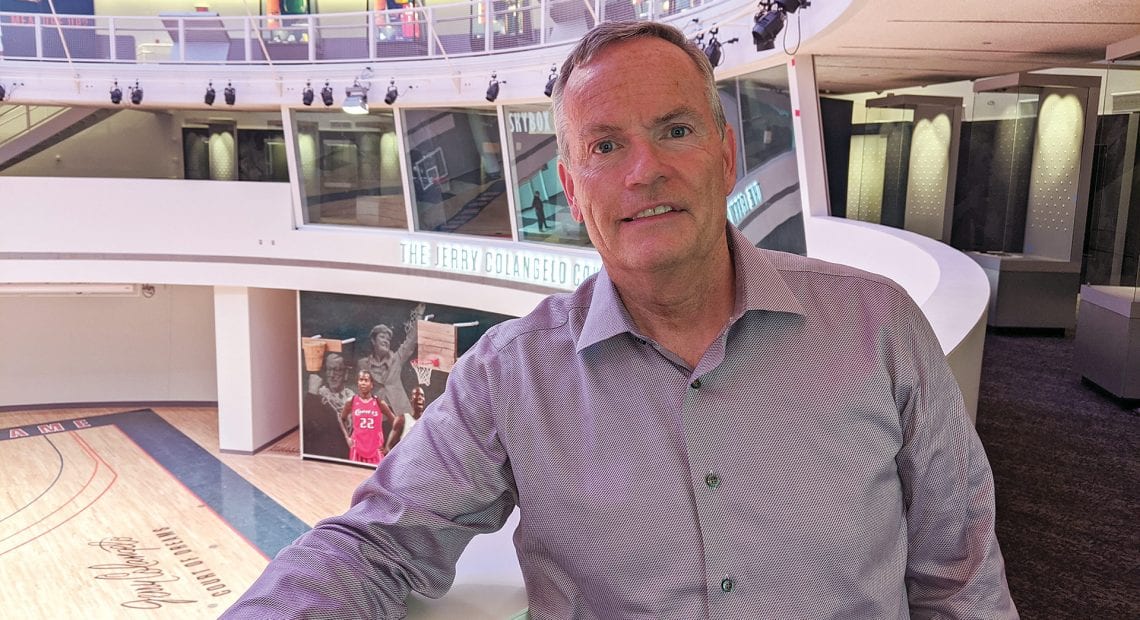
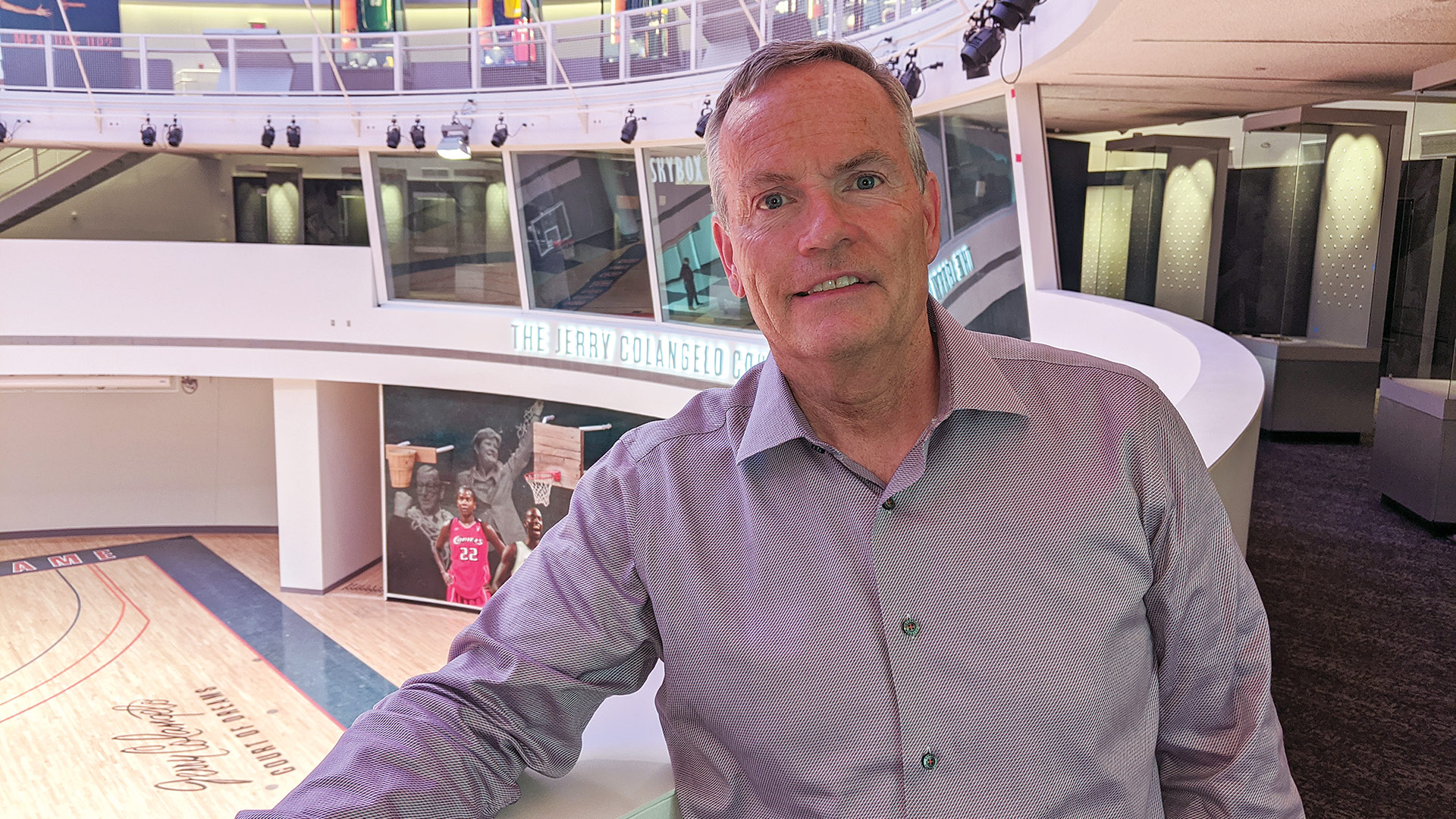
John Doleva

John Doleva says the Basketball Hall of Fame still has a big, important year on tap, even if the schedule has shifted quite a bit.

As he talked with BusinessWest about his industry and his family’s hotel group, Kishore Parmar kept glancing back and forth between the lobby of the Hampton Inn in Hadley and the parking lot outside.

He did so with a look that blended something approaching disbelief — still, after roughly three months of the same view — with resignation.

“This lobby is essentially empty, and this is not how it is,” he explained. “If this were a normal day in June, you’d see families, you’d see business people in and out, there would be staff going up and down the hallways. We would be sold out for tonight, or very close to it.”

Instead, there would be maybe six or eight people staying in this 71-room hotel just off Route 9 that night. The lobby was empty. Just a few vehicles dotted the parking lot, all of which Parmar could identify as belonging to staff.

This view is a metaphor of sorts for what hotels have been experiencing since mid-March, something none of those in it have ever seen before. Business for the Pioneer Valley Hotel Group — which also includes a La Quinta by Wyndham in Springfield, Hampton Inn and Homewood Suites by Hilton in Hadley, Holiday Inn Express in Ludlow, and Hadley Farms Meeting House in Hadley — is off roughly 80% from what it was a year ago. And the numbers would be even worse if some first responders didn’t stay in these hotels in the early days of the pandemic.

Perhaps the most unsettling thing is that Parmar doesn’t know if, when, or for how long things will get appreciably better.

But while the view for all hoteliers in the region is similarly troubling, there are some signs of life in the broad tourism and hospitality sector. Indeed, many area restaurants are now open for outdoor seating, and a good number of them are creating intriguing spaces as they welcome back customers that have been relegated to takeout for more than three months.

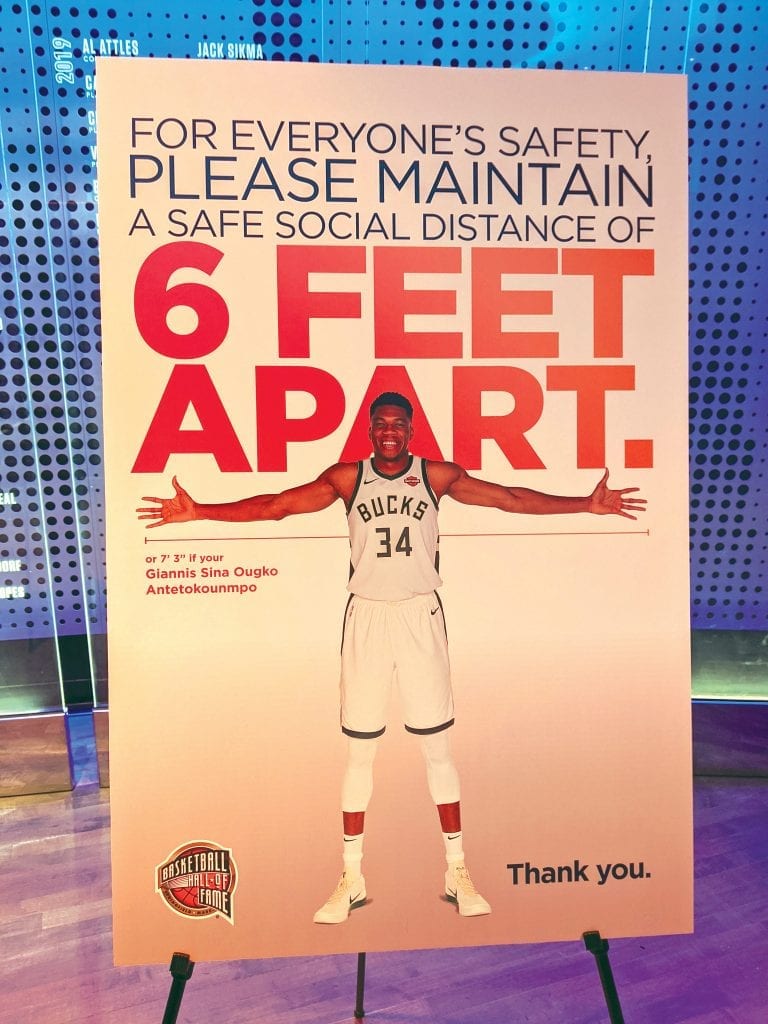
Signs at the Hall of Fame

Signs at the Hall of Fame will use players’ wingspans to send a message about standing six feet apart — or, in Giannis Antetokounmpo’s case, more than seven feet.

Meanwhile, some tourist attractions are moving closer to opening their doors. The state’s casinos are eyeing a late June opening — although MGM Springfield has not committed to a specific date — while the Basketball Hall of Fame, which is in the final stages of a $23 million renovation project, is targeting July 1 as its reopening date.

President and CEO John Doleva isn’t sure what kind of turnout that opening will boast, although he told BusinessWest the Hall will be aggressive in marketing what was supposed to be a high point in a year of many high points.

“In January, I sat down with the senior staff and said, ‘first of all, this is going to be the greatest class ever — Kobe (Bryant), Tim Duncan, Kevin Garnett. That was before Kobe passed away, which was pretty unbelievable,” he recalled. “On top of that, we had a 100% new museum, top to bottom, that was going to open up on May 1” — not to mention a commemorative coin from the U.S. Mint, to be unveiled at the Final Four in early April.

The coin was eventually released, but the Final Four was cancelled, the 2020 induction was moved into 2021, and, who knows what the July 1 grand opening will bring? But Doleva is optimistic.

“The good news is, all these things are going to happen; it’s not like we lost them. They’re just not on the time frame we thought they would be,” he said. “But we do feel that people want to do stuff — but how will they decide?”

That equation has surely changed in the year of COVID-19.

“People always ask, ‘what am I going to see, what does it cost, how far away from my house is it, and what kind of experience is it?’” he noted. “But kind of rising to the top is, ‘what kind of procedures and protocols does an organization have in place to ensure my family’s health and safety?’

“Safety is paramount at any tourism destination at this point,” Doleva added. “You’ve got to communicate not the traditional marketing of ‘we’re fun and we’re affordable; your family’s going to have a great time and talk about it forever.’ It’s also, ‘you can come here and feel safe — and here’s everything that we’re doing.’”

And that presents an opportunity in a region rich in attractions that are often taken for granted by locals. There are indications that, due to real concerns about traveling in anything but a car, area destinations might get a boost from those looking to take a ‘staycation,’ rather than typical vacation, and that includes visiting sites where they feel safe.

“This lobby is essentially empty, and this is not how it is. If this were a normal day in June, you’d see families, you’d see business people in and out, there would be staff going up and down the hallways. We would be sold out for tonight, or very close to it.”

But a host of challenges remain for this sector, and questions remain about everything from how hotels will serve guests breakfast to whether there will be a Big E — which benefits a number of businesses in this sector — and what that fair might look like. But as tourism lurches back to something resembling life, there’s plenty of hope in the air, too.

Animal Attraction

It was opening day at the Zoo in Forest Park & Education Center in Springfield — a full nine weeks later than usual — but Sarah Tsitso liked what she saw.

“People are definitely responding,” said Tsitso, the zoo’s executive director, as guests took advantage of a new timed reservation system that, at least for now, lets only 10 people in every 10 minutes, to promote social distancing. “It’s great seeing families and children so happy being out seeing the animals, and the animals are happy to see their friends come back. We close the first week of November. That’s a long time to be closed to the public.”

The key word is ‘public.’

“The zoo is open 365 days a year for the animals. They live here, and they’re fed and get vet care whether it’s winter or summer. We rely on the visitor season to generate revenue for the months we’re closed.”

Those nine lost weeks cost the center some $200,000 in revenues, losing not just gate receipts but educational programs, a robust schedule of spring field trips, and three major events typically held annually between March and July.

“That’s a pretty huge loss,” she said. “We’re still not sure what’s happening with summer camps, which would start around June 25. We’re not sure what that’s going to look like.”

Whatever shape the summer takes, it will be better than the waiting game to reopen, during which the zoo managed to secure a Paycheck Protection Program loan to keep staff working and developed the protocols now in place, from a mask requirement and sanitizer stations to additional barrier fences and a one-way path around the grounds.

“It was certainly challenging, but manageable,” Tsitso said. “The biggest change was probably the timed ticketing system. But we were quickly able to identify a system that works for us and get it up and functioning. We were just waiting for the green light.”

The light turned decidedly red for Peter Pan Bus Lines back in March, CEO Peter Picknelly told BusinessWest.

“We ran for a few weeks once the pandemic hit, but within two and a half weeks, sales declined over 90%. So we shut down for about eight weeks,” he said. “Shutting down was one of the hardest things we have ever done.”

When the buses did start rolling again earlier this month, making limited runs to major destination cities, Picknelly was pleasantly surprised. “Activity has been pretty good,” he said after the first week, adding that the second week was looking even busier. “There’s a pent-up demand to get out of Dodge, and that’s what we help people do.”

One issue is that destination cities like Boston and New York are still reopening in their own way, and once the big cities fully open, he expects more of a rush. For now, the company is getting its “sea legs back,” he said, and making sure everyone on the bus feels safe.

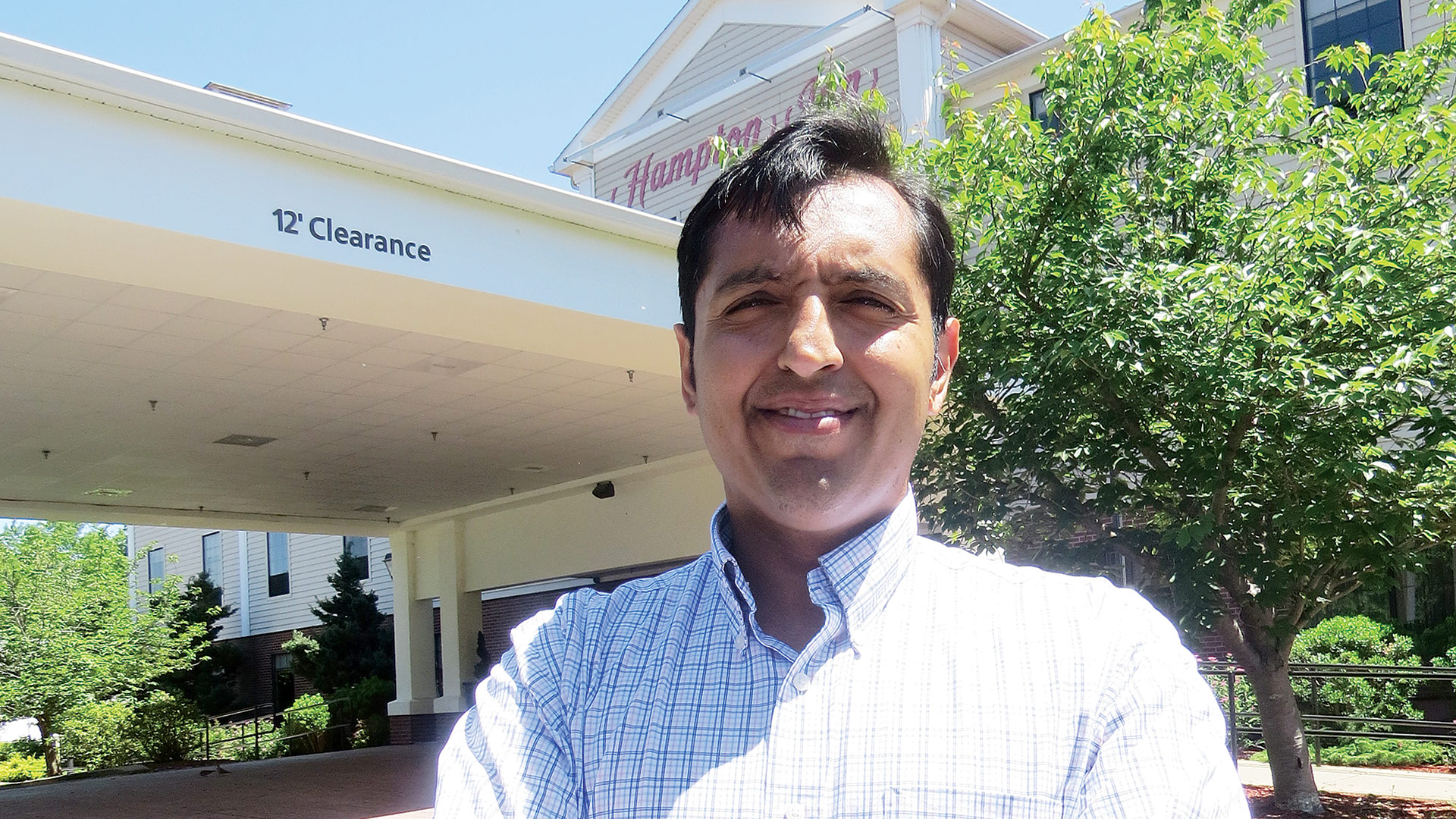
Kishore Parmar

Kishore Parmar says the most unsettling thing about the pandemic, from the hotel industry’s perspective, is not knowing when business might get better.

To that end, Peter Pan has improved its contactless boarding procedures while introducing PermaSafe, a CDC-approved product that purifies passenger cabin air while making interior surfaces anti-microbial and self-sanitizing. The company also uses electrostatic handheld sprayers to sanitize and disinfect the buses every night. In addition, passengers are required to wear a face mask at all times, and employees have been issued personal protective equipment, including face masks and hand sanitizer.

“Here’s my theory — nobody wants to get sick; nobody wants to get someone else sick,” Picknelly said. “But nobody wants to be cooped up any longer, either. A lot of what we do is leisure travel, but people also have to travel for medical appointments, for school, for business. There’s not only a pent-up demand to get out of Dodge, there’s also a need.”

But, they also need to feel safe, he said. “As time goes on, people will be more and more comfortable getting out. I’m confident this is going to end way sooner than people think. And I think any smart business person knows, if you want customers to come in — and come back — you’ve got to make them feel safe and comfortable.”

At the hall of fame, protocols in place for the opening include regular disinfection of all frequently touched surfaces, complimentary stylus pens to use on interactive touchscreens, an electrostatic disinfectant air-mist system, and … well, the list is frankly too long to detail all of it here.

“We’ll have the clean team out in the museum unlike ever before,” Doleva said. “People will see it in action.”

And it’s important they see it, he added.

“People are clamoring to get out. They’re looking for the safe places that are paying attention — but I definitely think there is pent-up demand.”

Some will want to be among the early visitors, he added, while others will take a wait-and-see approach. “It will be a short summer, but we are going to showcase the museum. This is a grand-opening summer, and everyone has the opportunity to come here.”

Room for Improvement

Parmar told BusinessWest that, for his group’s hotels, and most all facilities not in the shadow of ski resorts, winter is a slow, difficult time.

And what he fears is that, unless some things change, 2020 might take on the look of a 12-month-long winter in terms of occupancy rates and overall vibrancy.

“We might go from winter … right into another winter,” he said, adding that July, at this moment, doesn’t look much better than June, and the rest of summer and fall amount to a giant question mark.

The company has essentially seen its busiest season wiped off the calendar, losing college commencements, visits to area colleges and universities, business meetings, weddings, bridal and baby showers, and much more.

This certainly isn’t what the company was expecting in 2020, a year that began with hopes and expansion plans. Indeed, this is the first full year for the Homewood Suites facility, opened just over a year ago and off to a solid start, and there were plans to create a new hotel on the site of the old Howard Johnson’s on the Mohawk Trail in Greenfield and completely renovate the Roadway Inn in Hadley, which is currently closed.

That’s were. “We had a plate full for this coming year, and we were very excited about it, but then we had it all taken away,” Parmar said, adding that those projects have been put on ice, and the company is essentially trying to make the most out of what will be a trying year.

The company applied for and received a PPP loan and used it to bring its employees back to work after many were furloughed earlier in the spring. The problem now is that the money is running out, and business certainly hasn’t come back — as evidenced by the parking lot and the front lobby. Parmar said there is little if any leisure business at this point, and also little if any business travel, as companies continue to rely on Zoom meetings.

“We’re bootstrapped right now — we’re counting every penny, we’re counting every dollar,” he said. “We’re doing our best to reduce every cost there is.”

While hotels might continue to struggle, however, many in the tourism sector feel they will see more ‘staycation’ action than usual — particularly if out-of-state travelers are put off by Massachusetts’ suggested (but not required) 14-day quarantine when entering.

“If someone from Enfield wants to come to the Hall of Fame, they’re not going to take a 15-day trip to see a one-day experience. So that’s got to be clarified,” Doleva said. “I do think it is an impediment to tourism. People see ‘suggested,’ they think ‘required.’ So we’re hoping for some clarification because it affects us, and it affects hotels, restaurants, and other attractions.

Doleva said he never foresaw what 2020 would bring when he began a two-year term as board chair for the Greater Springfield Convention and Visitors Bureau back in November. But he’s been impressed with the planning the GSCVB has done to hit the ground running once tourism ramps up again this summer.

“We have a very aggressive plan to advertise the region like never before, the attractions especially,” he told BusinessWest. “We’ve never brought people together the way we are now. That’s a blessing in disguise — this is bringing the different factions of the tourism business tighter than ever.”

As chair, he also hopes elected leaders develop a greater appreciation of the impact of the tourism and hospitality industry and the numbers of people it employs, as well as the taxes it generates — and make investments in supporting tourism statewide over the long term.

“I think, if we look for the silver lining, this has caused us all to step back and focus on how we’re all interdependent, and when one improves, we all improve,” he added. “We know we have something special out here. It’s a nice place to visit, we’ve got a lot of things to do, and the industry is very focused on safety. Now we need to move forward together.”

Joseph Bednar can be reached at [email protected]