
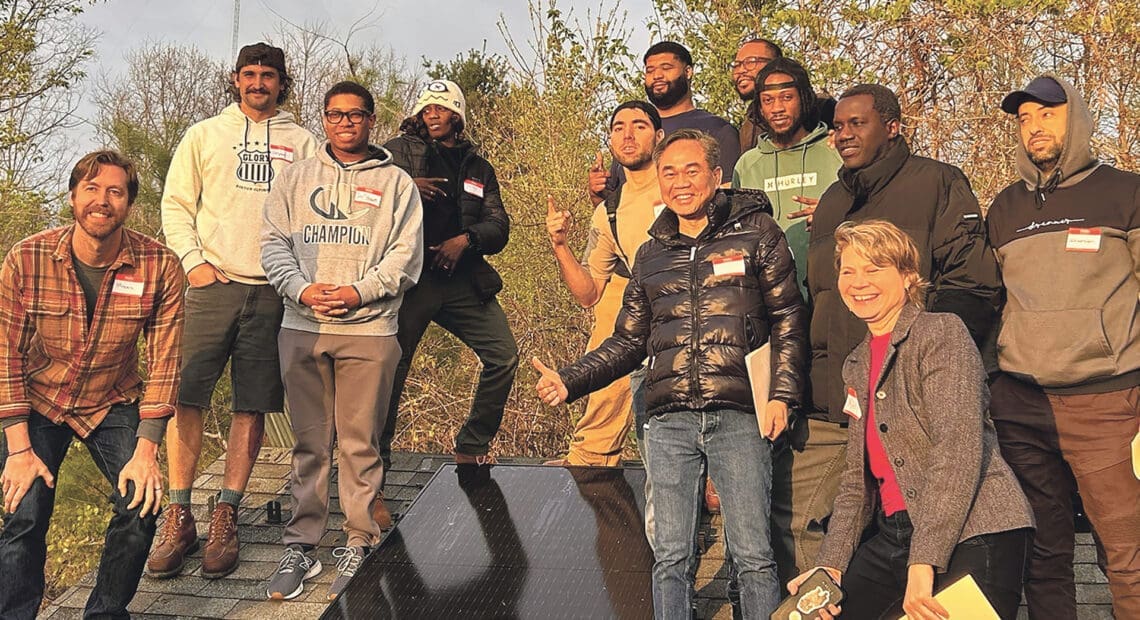
PV Squared Partners with HCC on Hands-on Student Training
Outside the Classroom
What does a career in solar energy actually look like?
That question moved from abstract to tangible when a group of Holyoke Community College students in HCC’s clean energy training program visited PV Squared Solar’s headquarters and warehouse in Greenfield for an evening of hands-on learning and career exploration in the solar industry.
The visit was designed to give students a practical look at what working in solar actually entails, from installation work and electrical systems to team dynamics and long-term career pathways.
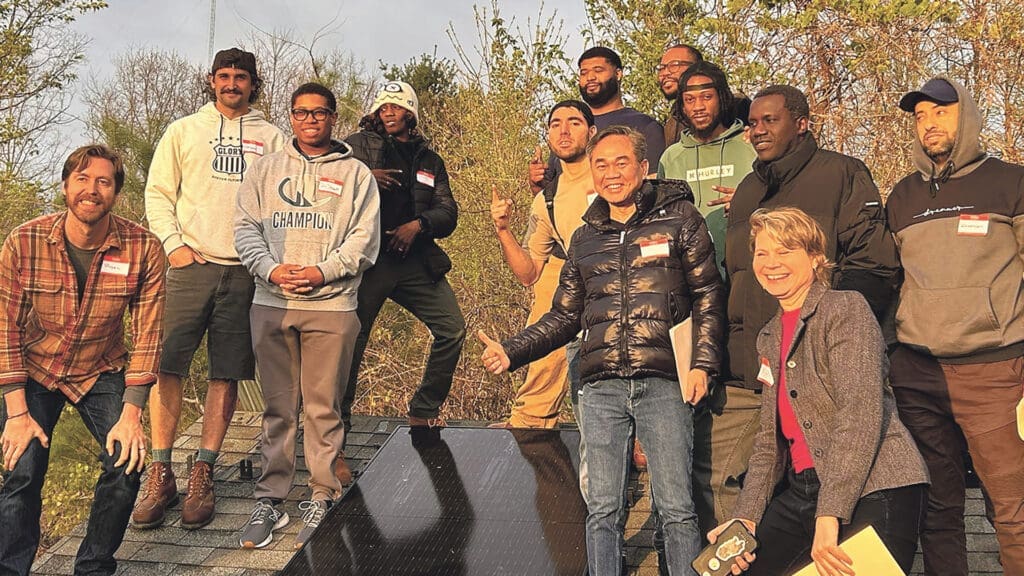
PV Squared offered HCC students exposure to the roof mock-ups used to simulate solar installations.
Students heard from PV Squared team members, including Pablo Revelo, master electrician; Alex Peterkin, president of the board of directors; and Kate Carter, team manager, who shared insights into the skills, training, and mindset needed to build a career in the trades.
“This kind of experience is where everything starts to click,” Carter said. “Students can see the tools, the systems, and the teamwork involved, and begin to picture themselves in those roles.”
The evening’s agenda included a walkthrough of the company’s warehouse and training areas, where students explored electrical training setups and system components, roof mock-ups used to simulate real installations, the tools and equipment used daily by solar crews, and the layout and function of installation trucks and warehouse operations. Demonstrations included safe ladder setup, equipment handling, and a look inside the box trucks that crews rely on in the field.
“This kind of experience is where everything starts to click. Students can see the tools, the systems, and the teamwork involved, and begin to picture themselves in those roles.”
Revelo, who works closely with installation teams, emphasized the importance of connecting technical training with real-world application.
“There’s a lot that goes into a solar installation that people don’t always see,” he said. “It’s physical work, it’s technical work, and it’s collaborative. But it’s also incredibly rewarding to build something that lasts and contributes to clean energy.”
For one evening, the students’ classroom extended into a working environment. Tools, trucks, electrical systems, and team dynamics all became part of the learning experience.
Programs like HCC’s clean energy training initiative are essential to building the future workforce, but classroom learning alone can only go so far, PV Squared’s leaders noted. This visit was designed to bridge that gap.
This visit is part of a growing relationship between PV Squared and Holyoke Community College, focused on creating clear, accessible pathways into the clean energy workforce. As demand for solar continues to grow across Western Mass., workforce development is becoming just as important as project development, Carter said.
“Workforce development doesn’t happen in a classroom alone. It happens when students can step into a real environment, ask questions, and see what the work actually looks like day to day. That’s how confidence is built, and how pathways into the trades become real.”
“It’s physical work, it’s technical work, and it’s collaborative. But it’s also incredibly rewarding to build something that lasts and contributes to clean energy.”
During the visit, students also learned that careers in clean energy extend beyond installation alone. The solar industry includes a wide range of roles, including electrical and installation trades; system design and engineering; project management and operations; and sales, customer experience, and administrative support. This broader view helps students understand not just how to enter the field, but how to grow within it.
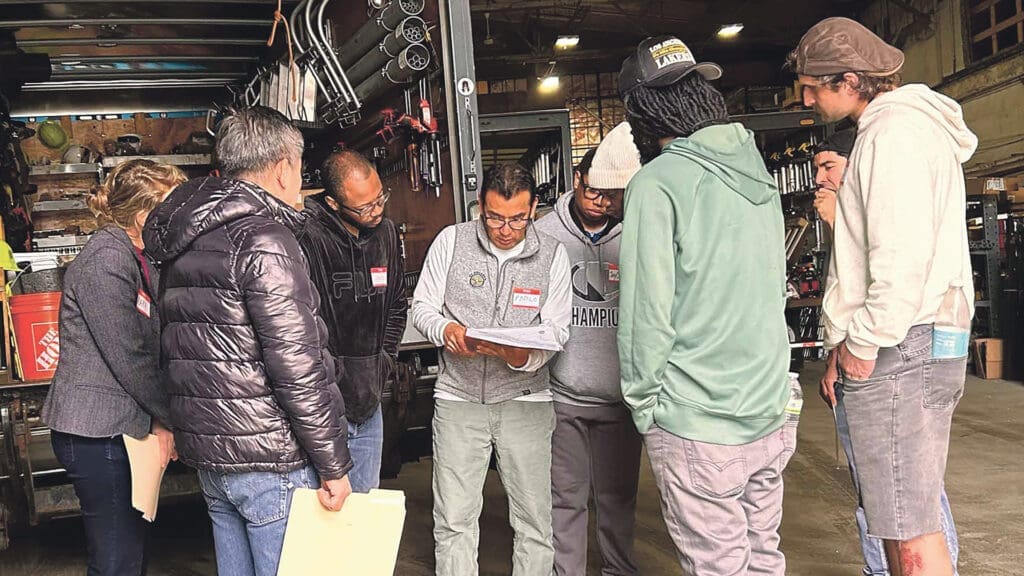
Students explored a wide range of hands-on activities, from equipment to how installation trucks are laid out.
During the visit, students also learned about what PV Squared looks for in employees, including curiosity, reliability, teamwork, and a willingness to learn, as well as the benefits of working within a 100% worker-owned cooperative.
For many students, this was also their first exposure to a structure where ownership is shared among employees, meaning the people designing, installing, and maintaining systems are also invested in the long-term success of the company.
“Worker-owned cooperatives are a powerful force for good in our communities,” Peterkin said. “They create meaningful jobs, build local accountability, and keep the benefits of clean energy rooted right here in the places we live. That’s exactly the kind of foundation we need for the green future we’re working toward.”
He added that, for students considering long-term careers, that structure offers appealing elements, including stability, shared responsibility, and a direct connection between work and impact.
“As the clean energy economy continues to expand, partnerships between educational institutions and local employers are playing an increasingly important role in building a skilled and resilient workforce across Western Massachusetts.”