
Cover Story
High-end Burgers Coming to Greater Springfield
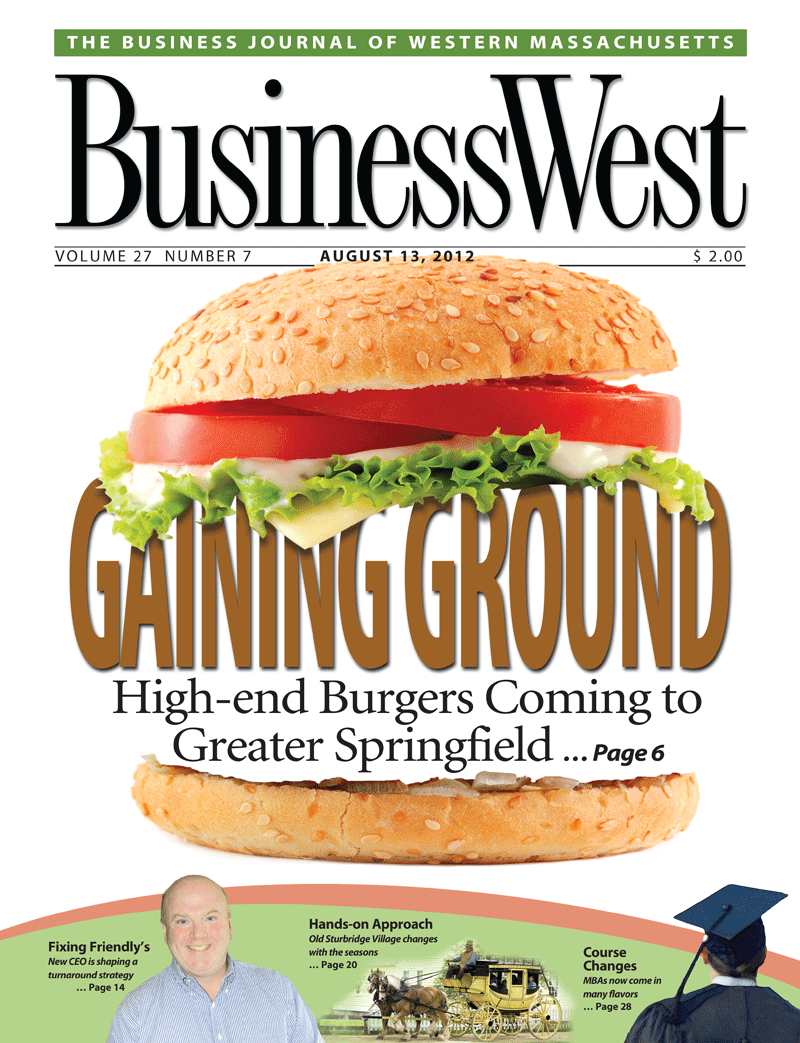
It’s called ‘the Frankenstein.’
This is the creation of a Providence-based restaurant called Luxe Burger, and, as the menu declares, it is truly a “monster sandwich.”
How about four so-called “gold-label” burgers (5 ounces each), two jumbo Nathan’s all-beef hot dogs, four slices of bacon, and American cheese, topped with Hereford black bean chili, cole slaw, and relish, two buttered rolls, and a double order of French fries? Finish it all (and your cardiologist would certainly prefer that you didn’t), and you get a free T-shirt.
The Frankenstein will be among many new menu items, including a host of burger concoctions, that area residents will soon have to sort through, as a new and different type of business competition (no, not casinos) unfolds in Greater Springfield.
Indeed, in a region where, until very recently, there were none of the high-end burger restaurants that have begun to populate other areas of the country, there will soon be at least three, depending on how you define that phrase ‘high end.’ Max Burger, part of the Max Restaurant Group, recently opened in the Longmeadow Shops, while Plan B Burger Bars will open an outlet in the Basketball Hall of Fame complex (the former Pazzo site) in early September, and Luxe Burger hopes to open its second location in the former tourism center, just a block away from the Hall of Fame, in time for the holidays. Recently, Five Guys Burgers and Fries, one of the fastest-growing chains in the country and one that some would put in the high-end category, recently opened locations in Westfield, West Springfield, and Enfield, and an independent operation, Bruburger, has opened in Feeding Hills.
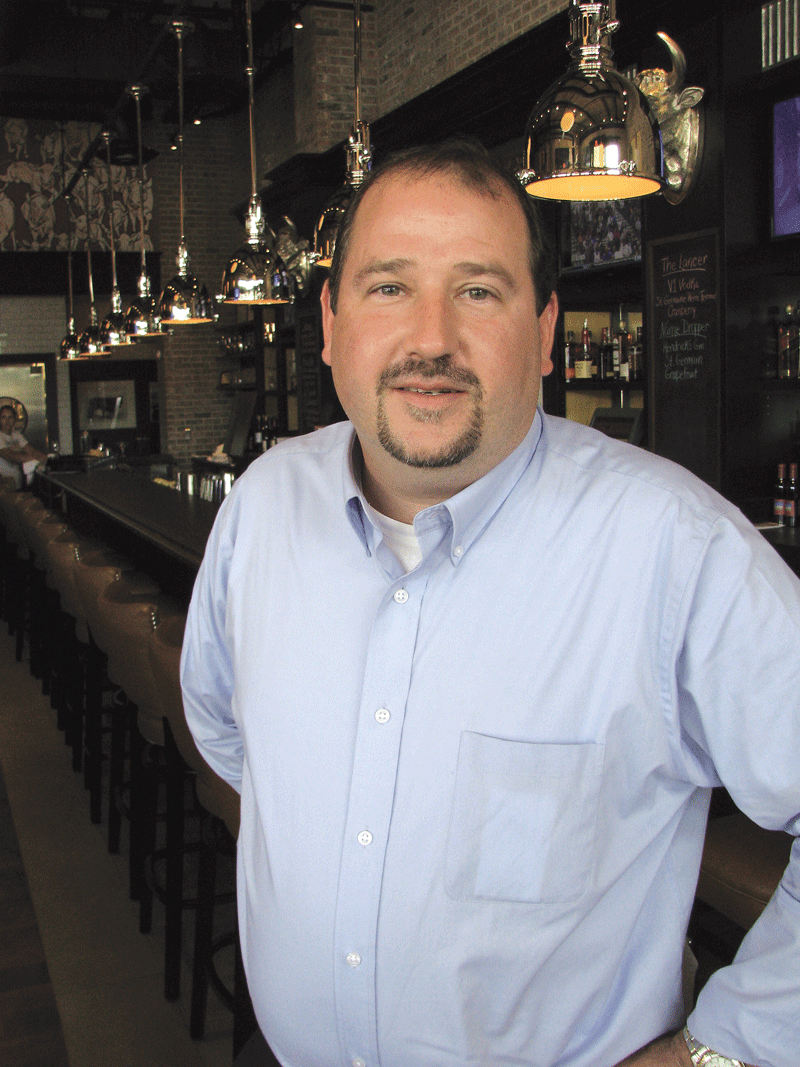
Tim Taillefer

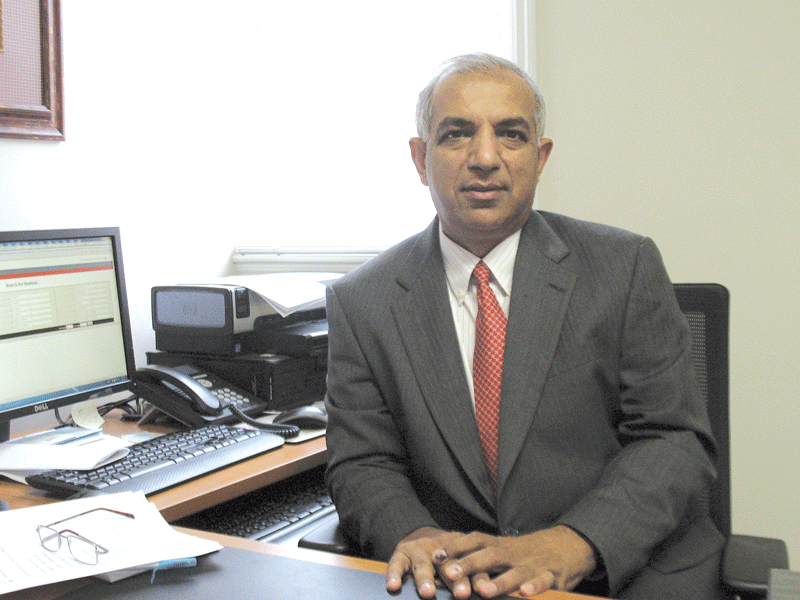
Tim Taillefer says Max Burger is off to a fast start in Longmeadow.

With these developments, there have already been several additions to the local culinary lexicon, with many more to come. Max Burger has a Kobe Classic, for example, as well as a shrimp burger and a portabella burger, among many others, while Luxe Burger also touts something called Death By Burger, the Fatty Melt Burger, served between two grilled-cheese sandwiches (Max Burger has one of those, too), and Tory’s Breakfast Burger. Plan B Burgers can get creative, too, with a Double Double (referring to both the burger and the cheddar cheese), an Atlantic salmon burger, the Squeeler (a half-pork, half-beef burger), and even a ‘pretzel burger.’
Just how much of an appetite — in both a literal and figurative sense — the region has for all this is soon to become known, but all those involved are optimistic about their chances for success, even as the field becomes more crowded.
“It’s going to be interesting, and I’m glad we’re in first,” said Timothy Taillefer, manager of the Max Burger location, noting that, at the moment, he’s focused not on the competition, but on getting his establishment, which opened July 23, off to a solid start. And he says it’s already exceeding expectations that were set very high.
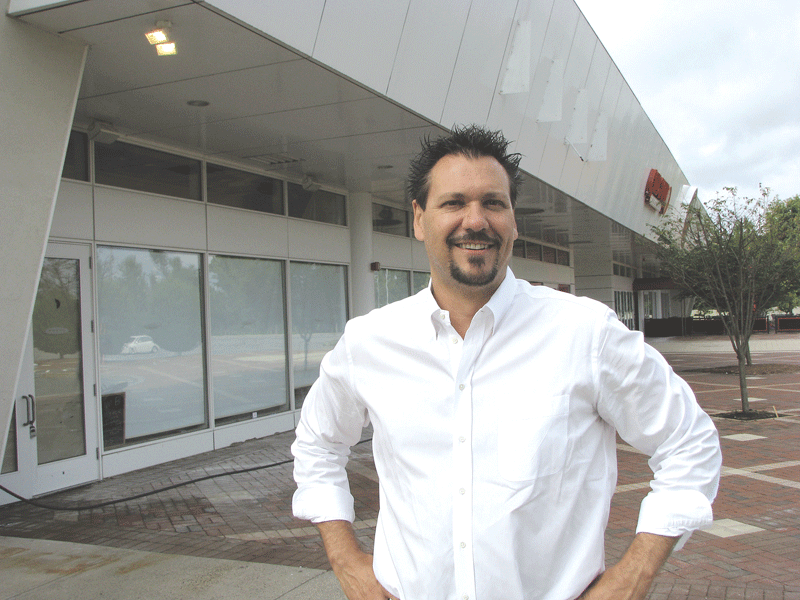
Al Gamble

Al Gamble, seen outside the site of the Plan B Burger to open at the Basketball Hall of Fame in September, says his eatery will complement the many restaurants already at the Hall.

Al Gamble, CEO and co-founder of the Locals 8 Restaurant Group, which counts four existing Plan B Burger Bars (all in Connecticut) among the six restaurants in its family, told BusinessWest that the picture unfolding in Springfield mirrors what eventually happened in Hartford.
“We were the pioneers in Hartford,” he said, noting that the group’s first location opened in 2006. “And then others followed — Max Burger, Gold Burger, Burger Baby, and others — and in Springfield, you’re seeing the same thing. What we’ve found is that the competition creates an exciting synergy — people will want to go and try different things; they’ll try us, try them, and then come back to us.”
John Elkhay, president of Providence-based Chow Fun Food Group, which includes the first Luxe Burger, opened in 2010, agreed. He said that, contrary to popular opinion, competition is generally a good thing in the restaurant industry, because it creates a critical mass that can make a city, or even a specific neighborhood, a dining destination. He’s seen it in Providence’s Federal Hill area.
“There are more Italian restaurants side by side there than there probably are in the North End of Boston,” he explained. “People might think, ‘there’s 15 to 18 restaurants in a quarter-mile block; how can anyone survive? They survive because everyone goes there for Italian food; you wouldn’t dare eat anywhere else.
“As a restaurateur, you want to be on Federal Hill,” he continued. “And I think the same will be true for that part of Springfield. More competition drives more people, and everyone gets a bigger piece of the pie.”
For this issue, BusinessWest gives its readers a taste of what could become a compelling battle of the high-end burgers in Greater Springfield, with a side order of speculation on how all this might turn out.

Meat and Greet
Taillefer told BusinessWest that the 200-seat Longmeadow location is the ninth in the Max Restaurant Group family of eateries, and the second Max Burger.
The first was opened in West Hartford in 2010, he noted, adding that, since its debut, results have far exceeded expectations — so much so that company officials began scouting sites for a second location more than a year ago.
They eventually found one they considered ideal in a former Blockbuster video store in the Longmeadow Shops, a large retail complex located less than a mile from East Longmeadow and Enfield, two other growing, affluent communities.
“Based on the success in West Hartford, we felt Longmeadow would be a great fit,” he explained. “The communities are very similar in many respects, although West Hartford has many more restaurants; Longmeadow doesn’t have many, and nothing like this.”
Taillefer, like the others we spoke with, said that what defines high-end or upscale burgers is essentially the quality of the beef — hormone-free, with no antibiotics or steroids, and always fresh, not frozen. Beyond that, it’s how the beef is prepared and the environment in which it’s served that defines this growing class of restaurant that Max Burger has joined.
Overall, he expects that the restaurant’s diverse menu — in addition to burgers, there are also appetizers, salads, soups, and entrees — as well as the large selection of craft beers and full bar will make Max Burger a true destination.
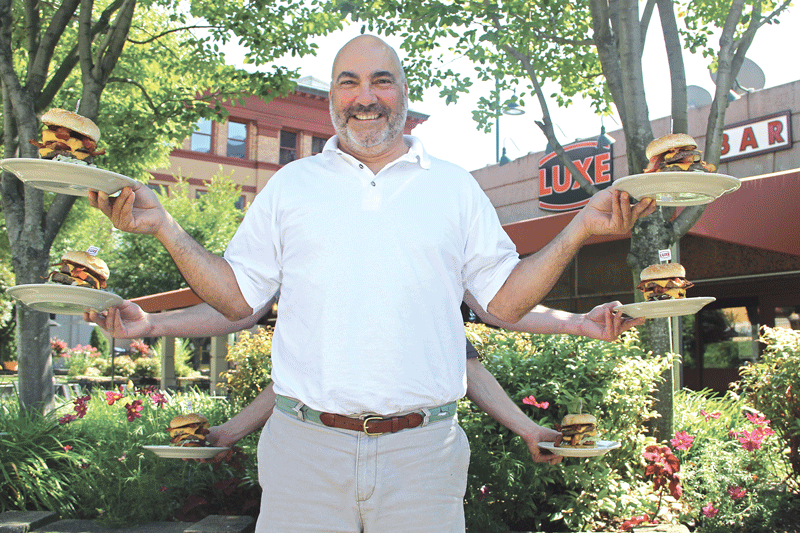
John Elkhay

John Elkhay, seen with some friends and several of the Luxe Burger concoctions, believes competition only helps those in the restaurant business by making the city a destination.

And he believes that term will definitely apply to Sunday afternoons (and maybe Sunday, Monday, and Thursday nights, as well) in the fall. “People have already been telling me this will be a great place to watch a football game,” he said as he started switching on the nine flat-screen televisions, with a 10th likely to be located on the patio.
Taillefer, who spent six years as assistant manager at Max’s Tavern (also within the Hall of Fame complex) before being named general manager of the second Max Burger, spent several months “in training” at the West Hartford location, an experience he believes will prove invaluable.
His previous experience includes stints at the Delaney House in Holyoke, Legal Sea Foods in Boston, and, when he was in high school, the Captain Rivi’s food stand at what was then known at Riverside Park in Agawam (now Six Flags).
“The burgers would come at you on a conveyer belt,” he said of his assignment at the amusement park’s fast-food eatery. “Let’s just say I’ve come — and burgers have come — a long way since then.”

Steer — Clear
Gamble would agree, and he’s had a front-row seat for some of the latest evolutionary twists and turns. He formed Plan B Burgers (the ‘B’ stands for beef, burgers, beer, and bourbon) with partner Shawn Skehan in 2006. The chain is a division, of sorts, of the Locals 8 Restaurant Group — which also owns the Half Door European Beer Bar and Tisane Tea & Coffee Bar, both in Hartford’s West End — so named because, in some parts of Europe, the neighborhood restaurant is known simply as the ‘local.’
“That’s a play on who we are culturally — it defines what we’re about,” he explained. “We want to create a lot of restaurants where locals feel like it’s their restaurant; to do that is a long, complicated process that revolves around connecting to the community you open restaurants in.”
From its roots in West Hartford, the chain expanded into Simsbury, Glastonbury, and Milford, said Gamble, adding that, beyond the next wave (Springfield and Stamford, Conn.), the group — named one of the fastest-growing U.S. companies by Inc. magazine in 2009 and 2010 — plans to take the concept national.
Locals 8 was contacted by the Basketball Hall of Fame to gauge interest in assuming the space vacated by Pazzo, which shut its doors more than a year ago, Gamble continued, adding that the company believes the location offers great opportunity in the form of the local demographic base, the tens of thousands of cars that traverse that stretch of I-91 on a daily basis, and the growing restaurant infrastructure in and near the Hall.
He described that complex as a high-profile site, with a good tenant mix that includes restaurants such as Max’s, Samuel’s, and Mama Iguana’s.
“That was something we scrutinized internally,” he explained. “We asked ourselves, ‘if we came to that site, would we split the demographic of consumers or would we add to it?’ We talked to the restaurateurs who were there and talked to people in the South End, and felt that we would add to the mix and bring more people seeking diverse products to that area. I think we’re a complement to the mix that’s there.”
As he talked with BusinessWest amid construction workers readying the former site for its new use, Gamble said he was eyeing a Sept. 1 opening date — roughly a week ahead of the Basketball Hall of Fame induction ceremonies.
Elkhay said the Chow Fun Food Group has grown steadily over the years, and now includes an eclectic mix of eateries.
There’s Rick’s Roadhouse, which markets itself as “an escape from fine dining”; Ten Prime Steak and Sushi; XO Café, which “celebrates the fusion of fine cuisine, wine, and funky art”; Harry’s Bar & Burger, a small (600 square feet) establishment that serves sliders, hot dogs, shakes, and craft beers; and Luxe Burger, which was created with the logic that spawned many of the high-end (or higher-end) burger restaurants.
“Every restaurant has a hamburger, except really high-end dining, and even they’re in the hamburger business,” said Elkhay. “So I’m thinking that I must be crazy to do an exclusive hamburger place. But when you go into a niche, you get so many loyal customers.
“And when you’re focused on a hamburger, and a hamburger only, you’re able to be better, be more consistent, and do it for value because that’s all you’re doing; you’re not doing all the other things that are distracting, like entrees, fish cutting, and other things. It’s just hamburgers.”
He said the restaurant did extensive research and testing before launching, eventually settling on Hereford beef (“it tastes just like it did when the cowboys ate it 150 years ago — it’s like an American heartland steak”), a unique method of cooking it (the skillet), and a build-your-own format that he believes has created several thousand possible combinations of everything from toppings to buns to side orders.
The Springfield venture represents the first time the group has replicated one of its concepts, said Elkhay, adding that the group sees vast potential in Springfield and, more specifically, the growing restaurant corridor along the riverfront.
“Springfield wants to be a restaurant destination place like Providence,” he noted, “and we’re very proud to be part of the new turning point in Springfield. The more, the merrier — that’s our philosophy.”

The Ground Game
Elkhay said the Frankenstein has become part of the culinary culture in Providence. One of the local television news anchors tried (unsuccessfully) to polish one off recently, he said, adding that there is about a 30% success rate when it comes to finishing the $17.99 burger.
“We have a lot of hockey players who have tried it,” he said, noting that Providence College is not far from the eatery. “Usually, though, it’s not the size of the person that will determine whether they can finish it; sometimes, the skinny guys can finish it more easily than the bigger guys.”
Whether the sandwich becomes a hit in Springfield remains to be seen. But one thing Elkhay is certain about is the climate for high-end burgers in Greater Springfield. He believes the market is ready for some spirited burger competition, and will benefit from having so many options when it comes to what can be placed between two buns — or grilled-cheese sandwiches, as the case may be.
And that’s no bull. Well, actually, it is — lots of bull, and it’s coming to Greater Springfield.

George O’Brien can be reached at [email protected]

Columns Sections
Adopting His Philosophy Would Certainly Be a Successful Habit

Charlotte Cathro

Charlotte Cathro

Stephen R. Covey, a teacher, author, and business consultant, passed away in July at age 79 from complications after a bicycling accident. Known for his bestselling books, his words affected millions of people, and in his passing, many reflect on his teachings.
Covey’s management principles were founded on values and behavioral psychology. Part motivational speaker, part business consultant, his concepts have been embraced by an international following.
Covey graduated from the University of Utah with a bachelor’s degree and Harvard Business School with a master’s, both in Business Administration. Dedicating himself to teaching, he completed a doctorate degree at Brigham Young University. In 1984, he left his life as a university professor and founded the Covey Leadership Center. The center merged with FranklinQuest in 1997 to become Franklin Covey Co., a publicly traded company providing services in 147 countries worldwide. The management-consulting firm specializes in leadership training, improving productivity, and implementing business strategies.
The 7 Habits of Highly Effective People is Covey’s best known work. The book has sold more than 20 million copies and was named the most influential business book of the 20th century. The success of 7 Habits spawned a series of followup editions, Webinars, and management trainings. The seven habits have been adapted for families, associates, and managers. Covey toured the world lecturing and facilitating workshops. Business courses at universities often include the book in their curriculum and show excerpts of his presentations. Fortune 500 companies have even accredited his management principles as the foundation for their business processes.
The habits focus on maximizing individual effectiveness while improving teamwork and communication. For instance, Covey comments on the distractions that have come along with advanced technology and their polarizing effect on interpersonal relationships. e-mail, for example, muddles communications. Active listening is not just hearing a person, but also seeking to understand. The book defines for us the differing realities of the personal and the interpersonal. Our intentions and expectations are not always a shared understanding. Working together as a team, our individual self can get in the way of common goals. We are most successful when we are able to achieve the ‘win-win’ scenario.
Time management is a concept we all struggle with. When people are busy, they become overwhelmed by small tasks and have trouble prioritizing. Covey presents a matrix for determining how to plan and execute assigned responsibilities. As a famous exercise at his workshops, he demonstrates this concept with different sizes of rocks and a glass jar. The large rocks represent the most important considerations in your life — for example, family time. The small rocks are the small daily jobs we all have to do, like laundry. If you pour the small rocks into the jar as you place the large rocks, you can then fit in everything you need to accomplish.
The book is motivational, with step-by-step processes and relatable anecdotes. Included are visual and mental exercises designed to reinforce the material. Concepts in 7 Habits are assigned buzzwords, which have since been adopted into the language of business. These terms include ‘win-win,’ ‘proactive,’ and ‘synergy.’ The secret to the book’s success, however, is the understanding of human nature it demonstrates the behavioral commonalities we all share. The insights span both business and personal relationships, and thus countless individuals have found them applicable to their lives.
Accolades for Covey and his work are too numerous to mention. Covey was named one of Time magazine’s 25 most influential Americans in 1996. He received eight honorary doctorate degrees, an International Man of Peace award, and an International Entrepreneur of the Year award. A dedicated family man with nine children, 52 grandchildren, and two great-grandchildren, he was also awarded with a Fatherhood Award from the National Fatherhood Initiative. He considered this to be the most meaningful award that he ever received.
Covey dedicated his life to helping people achieve their business and personal goals though books, workshops, and lectures. An international management icon, he shaped what business is today and what it strives to be. In The 7 Habits of Highly Effective People, Covey addressed tendencies that hold people back from achieving their best in life. While he admitted that, at times, he himself had trouble applying his concepts to everyday life, he no doubt achieved a great deal of success in his time.

Charlotte Cathro is a tax manager with the Holyoke-based CPA firm Meyers Brothers Kalicka, P.C.; (413) 536-8510; [email protected]

Departments Picture This

Send photos with a caption and contact information to: ‘Picture This’ c/o BusinessWest Magazine, 1441 Main Street, Springfield, MA 01103 or to [email protected]

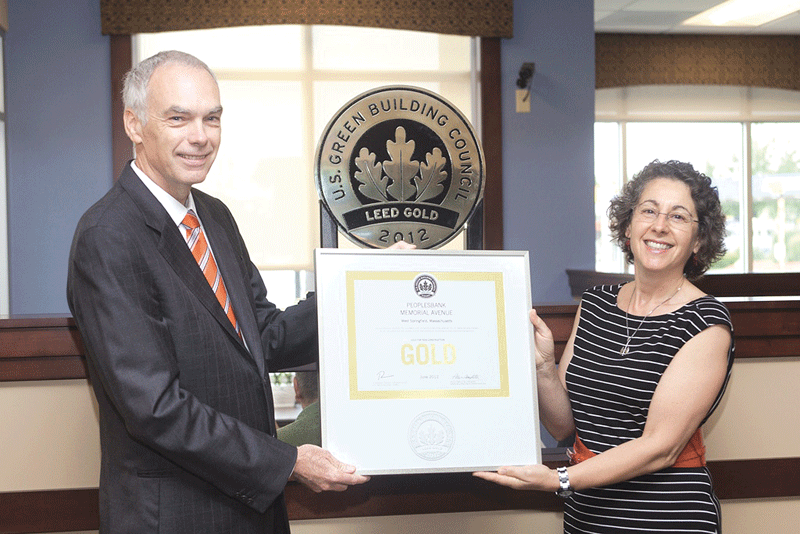
Gold Standard

Douglas Bowen, president and CEO of PeoplesBank, and Ludmilla Pavlova-Gillham, chair of the U.S. Green Building Council, Massachusetts Chapter – West Branch, display the LEED Gold certification for the bank’s year-old branch at 547 Memorial Ave. in West Springfield, which was constructed, and operates, in an environmentally friendly manner. It is the second PeoplesBank branch to receive LEED certification, the first building to be awarded a LEED certification in the town, and one of only two community banks in Massachusetts that has achieved LEED Gold status.


Check, Please

Max Burger, the second upscale burger restaurant and ninth restaurant of the Hartford-based Max Restaurant Group, celebrated a grand opening in late July at its 684 Bliss Road location in Longmeadow. A portion of the evening’s proceeds, totaling $9,025, were presented a week later to the Longmeadow Excellence in Education Foundation (LEEF), a private, volunteer, nonprofit educational foundation that was created to enrich and enhance the quality of education in Longmeadow public schools. Pictured, from left, are Justin Dion, president of LEEF; Tim Taillefer, managing partner of Max Burger; and Todd Ratner, LEEF board member.


Dream Car

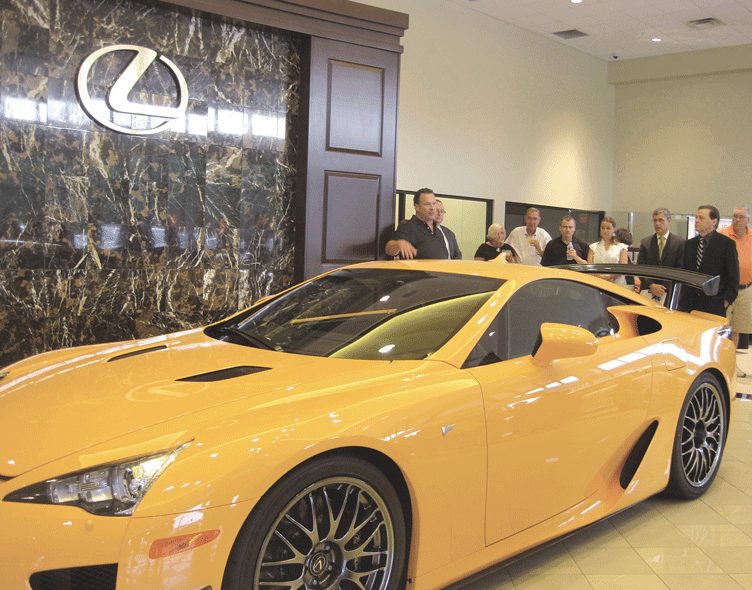
Mike Balise (far left), vice president of Balise Motor Sales, shows off a Lexus LFA (sticker price: $454,000) at an unveiling celebration at the Lexus showroom on July 26. This model is one of only 500 (the 349th, to be exact) in the world, and one of only 50 with the specialty ‘Nürburgring package.’ The car, which has a V-10 engine, was tested at the famous German Nürburgring track and set the 10th-fastest time ever for a production vehicle. The orange racecar will be viewable at Balise Lexus and various promotional events in the New England area.

Court Dockets Departments

The following is a compilation of recent lawsuits involving area businesses and organizations. These are strictly allegations that have yet to be proven in a court of law. Readers are advised to contact the parties listed, or the court, for more information concerning the individual claims.

CHICOPEE DISTRICT COURT
Air Distribution Corporation v. Curry Realty, LLC and Curry Automotive, LLC
Allegation: Plaintiff asserts its mechanics lien rights for materials provided in a construction project owned/leased by the defendants: $20,330
Filed: 7/25/12

Lisa Pereira v. Hampton Inn
Allegation: Negligent maintenance of property causing slip and fall: $3,343.12
Filed: 7/19/12

FRANKLIN SUPERIOR COURT
Donald K. Carew v. Riverside Industries Inc. and Carolyn M. Dineen
Allegation: Motor vehicle negligence and personal injury: $45,906.85
Filed: 6/13/12

LaMountain Brothers Inc. v. Pan Am Southern, LLC
Allegation: Action to enforce a mechanics lien upon the property of the defendant: $91,733.33
Filed: 6/17/12

HAMPDEN SUPERIOR COURT
Carol and John Walsh v. New Tradition Millwork Inc.
Allegation: Breach of construction agreement: $29,692
Filed: 6/21/12

Edward and Joan Haley v. Verizon New England Inc.
Allegation: Placement of utility poles without owner’s consent: $2,800
Filed: 6/28/12

Hampden Bank v. Patient Edu, LLC
Allegation: Non-payment of promissory note: $1,175,000
Filed: 6/25/12

Isabel and Jose Sanchez v. Hani Haddad, M.D. and Valley Women’s Health Group, LLV
Allegation: Medical malpractice: $25,000+
Filed: 6/25/12

Lillian Colon, as administratrix of the estate of Jose Colon v. The Mardi Gras
Allegation: Negligence in security causing wrongful death when the decedent was shot and killed by another patron of the Mardi Gras: $1,000,000+
Filed: 6/26/12

PALMER DISTRICT COURT
Camerota Truck Parts v. L.J.R. Trucking, Inc. and Robert Levesque
Allegation: Failure to pay for goods provided and breach of contract: $10,299.95
Filed: 7/6/12

SPRINGFIELD DISTRICT COURT
A-Tech Commercial Parts & Service Inc. v. Kentucky Fried Chicken
Allegation: Non-payment of goods sold and delivered: $7,483.22
Filed: 6/21/12

Baystate Elevator Company v. Western New England University
Allegation: Non-payment of labor and materials for repair and maintenance of elevators: $8,760.00
Filed: 7/31/12

Bradco Supply v. C.S. Alexander Inc.
Allegation: Non-payment on promissory note: $3,910
Filed: 7/6/12

Perkins Paper Inc. v. Chez Josef Inc.
Allegation: Non-payment of goods sold and delivered: $4,075.64
Filed: 6/25/12

Sesac Inc. v. Skyplex
Allegation: Breach of performance license agreement: $6,160.07
Filed: 7/5/12

Agenda Departments

NEBA Golf Tournament
Aug. 26: New England Business Associates (NEBA) will host a golf tournament on at Tekoa Country Club in Westfield. Proceeds from the tournament will benefit NEBA’s skills-training, supported-employment, academic-achievement, and self-employment programs for individuals with disabilities. The tournament will begin with a shotgun start at 1 p.m., and an awards and dinner ceremony will follow the finish. Sponsorship opportunities are available, and all golfers will have an opportunity to participate in contests and win prizes. To participate in the tournament and/or become an event sponsor, visit neba.eventbrite.com or contact David Parkinson, tournament director, at (413) 821-9200, ext. 145, or [email protected].

Massachusetts Chamber Business Summit
Sept. 9-11: The Massachusetts Chamber board of directors will conduct its annual Business Summit and Awards Ceremony at the Resort and Conference Center at Hyannis. The two-day meeting allows participants to meet with business professionals from across the state, as well as listen to state and local elected officials who will discuss the future of business in Massachusetts. Additionally, representatives from the Mass. Office of Economic Development will discuss loans, grants, and tax incentives available to business owners. Industry experts will also be on hand to discuss topics such as leveraging social media, search-engine optimization, and health care cost containment. The winners of the Business of the Year Award and the Employer of Choice Award will also be announced during the summit. For more information, call (617) 512-9667 or visit www.masscbi.com.

World Affairs Council Annual Meeting
Oct. 10: Hampshire College President Jonathan Lash will speak at the World Affairs Council of Western Mass. Annual Meeting & Dinner in the Mahogany Room of the Springfield Sheraton Hotel in downtown Springfield. More details will be forthcoming. Lash is an internationally recognized expert on practical solutions to global sustainability and development challenges. Before he became president of Hampshire College in 2011, he served as president of World Resources Institute (WRI), an environmental think tank with offices in eight countries and partners in more than 50 countries. WRI is an international leader on issues ranging from low-carbon development to sustainable transportation. From 1993 to 1999, Lash was co-chair of the President’s Council on Sustainable Development, a group of government, business, labor, civil-rights, and environmental leaders appointed by Bill Clinton that developed visionary recommendations for strategies to promote sustainable development. He played a key role in the creation and success of the U.S. Climate Action Partnership, which in 2007 issued the highly influential “Call to Action” on global warming. Prior to WRI, Lash held posts as director of Vermont Law School’s Environmental Law Center, Vermont secretary of Natural Resources, and Vermont commissioner of Environmental Conservation, as well as as a federal prosecutor. For more information on the event, call (413) 733-0110.

Western Mass.
Business Expo
Oct. 11: BusinessWest will again present the Western Mass. Business Expo. The event, which made its debut last fall at the MassMutual Center in downtown Springfield, will feature more than 180 exhibitors, seminars, special presentations, breakfast and lunch programs, and the year’s most extensive networking opportunity. Comcast Business Class will again be the presenting sponsor of the event. Details, including breakfast and lunch agendas, seminar topics, and featured speakers, will be printed in the pages of BusinessWest over the coming months. For more information or to purchase a booth, call (413) 781-8600, e-mail [email protected], or visit www.wmbexpo.com.

40 Under Forty Reunion
Nov. 8: BusinessWest will stage a reunion featuring the first six classes of its 40 Under Forty program. Details on the event will be forthcoming. What is known is that it will be staged at the Log Cabin Banquet & Meeting House in Holyoke, and will be open only to 40 Under Forty winners, sponsors, and their guests, as well as judges of the first six contests. For more information on the event, call (413) 781-8600, or e-mail [email protected].

Chamber Corners Departments

AMHERST AREA CHAMBER OF COMMERCE
www.amherstarea.com
413-253-0700
• Aug. 15: Chamber After 5, 5-7 p.m., at the Amherst Brewing Co, 10 University Dr., Amherst. Joi• us for the debut of Live United 365 brew. Help the United Way of Hampshire County and network with chamber members at the same time. Admission: $5 for members, $10 for non-members.

GREATER HOLYOKE CHAMBER OF COMMERCE
www.holycham.com
(413) 534-3376
• Aug. 15: Chamber After Hours, 5-7 p.m. Hosted and sponsored by Hamel’s Creative Catering at the Summit View Banquet and Meeting House, 555 Northampto• St., Holyoke. Admissio• is $10 for members, $15 cash for non-members.
• Aug. 22: Summer Salute Breakfast, 7:30-9 a.m., at the Yankee Pedlar, 1866 Northampto• St., Holyoke. Cost is $20 i• advance, $25 at the door.

QUABOAG HILLS CHAMBER OF COMMERCE
www.qvcc.biz
(413) 283-2418
 • Aug. 25: Community Celebratio• 2012, 10 a.m.-4 p.m. Joi• Life’s Memories & More and the Collaborative for Community Health for a day of community celebration. Crafters, artisans, and vendors will be o• hand with a bounty of great items to view and purchase. Enjoy musical entertainment. Get a henna tattoo or treat yourself to one of the collaborative services like chair acupuncture, chair massage, or Reiki, and try some delicious food. For more information, contact [email protected] or call (413) 283-4448.

WEST OF THE RIVER CHAMBER OF COMMERCE
www.ourwrc.com  
(413) 426-3880
 • Aug. 20: 9th Annual Golf Tournament at Springfield Country Club. Proceeds will go toward the WRC Educational Fund, which supports the Business Educatio• Grant Program and student scholarships for Agawam and West Springfield Students. To register or for more information, contact the chamber at (413) 426-3880 or at www.ourwrc.com.

Briefcase Departments

$21 Million Approved for Union Station and PVTA
SPRINGFIELD — Congressman Richard Neal recently announced that nearly $21 million in federal funding has been formally approved for the planned renovation of Springfield’s Union Station, a historic landmark, and the Pioneer Valley Transit Authority (PVTA). Of the $21 million, $17 million will help support the renovation of Union Station into a regional transportation center, which is estimated to cost $45 million. The remaining $3.9 million will be directed to the PVTA to help underwrite maintenance of the local public-transportation system. U.S. Secretary of Transportation Raymond LaHood visited Springfield in late July to tour the historic train station and meet with local officials to discuss the redevelopment project. Neal, who has spearheaded this project since the late 1980s, expressed his satisfaction with the recent funding approval and thanked LaHood for his attention and assistance. “I have been determined to turn Union Station into a modern intermodal transportation center for many years,” said Neal. “Restoring this historic structure and turning it into a thriving 21st-century transportation center has been a top priority of mine going back to my days as mayor of Springfield. I remain convinced that the successful renovation of Union Station can literally transform the northern blocks of downtown Springfield. The renewal of this local treasure has been confirmed with this announcement, and a new generation of travelers will soon be passing though its doors.” Neal reported that $72 million in federal funding is being used to renovate the Connecticut River rail line and bring high-speed rail to Western New England, and more than $100 million is being invested in the local infrastructure. The Springfield Redevelopment Authority owns Union Station, built in 1926. Demolition of a portion of the building will commence late this year, with construction for the new renovations expected in the spring of 2013.

Pro Springfield Media Launches Web Publication
SPRINGFIELD — Pro Springfield Media, a nonprofit organization that was established in 2011 with a campaign to encourage area residents to “say something nice about their city,” recently launched an online publication called Speaking of Springfield. The publication will feature good news about the city — upbeat, up-close, and uplifting stories about residents, businesses, and neighborhoods. A section entitled “Sensations” features city sights, sounds, and signs as part of the editorial content. The publication is being managed and produced by TSM Design with support from local writers, photographers, and videographers. Speaking of Springfield is a free public medium and is funded through the support of corporations, foundations, and individuals through grants, underwriting, and donations. Individuals are encouraged to subscribe to the e-zine in order to be notified when articles are posted by logging onto www.speakingofspringfield.org.

Departments Incorporations

The following business incorporations were recorded in Hampden, Hampshire, and Franklin counties and are the latest available. They are listed by community.

AGAWAM

Squires Bistro Inc., 161 Main St., Agawam, MA 01001. Frederick C. Withee, 111 Cottonwood Lane, Agawam, MA 01001. Bistro/restaurant.
 
ATHOL

North Quabbin Trails Association Inc., 100 Main St., Athol, MA 01331. Robert Curley, 329 Bearsden Road, Athol, MA 01331. To sustain and work toward outdoor trail development, maintenance, and improvements, and to create stewardship with other
outdoor organizations, groups, and individuals to further this goal.

CHICOPEE

Out of Wood Inc., 291 Burnette Road, Chicopee, MA 01020. Phil Karwonski Jr.,
55 Yvette St., Chicopee, MA 01020. To engage in the sale and service of bowling equipment and supplies.

Yankee Auto Sales Inc., 162 Chicopee St., Chicopee, MA 01013. Russel R. Foisy, 16 Lathrop St., South Hadley, MA 01075. Used auto sales.

GREENFIELD

Smith Ventures Inc., 73 River St., First Floor, Greenfield, MA 01301. Tyler S. Smith, same. E-commerce.

HOLYOKE

Gilburg Global Enterprises Inc., 88 Westfield Road, Holyoke, MA 01040. Karen L. Gilburg, same. E-commerce.

LEE

Genesis of Lee Inc., 980 Pleasant St., Lee, MA 01238. Khandubhai Patel, same. Hotel.

LUDLOW

HK Collections Inc., 78 Glenwood St., Ludlow, MA 01056. Hanil Kang, same. The operation of a debt-collection agency.

LONGMEADOW

Goldsmith, Katz & Argenio, PC., 1350 Main St., Suite 1505, Springfield, MA 01103. Jonathan R. Goldsmith, 104 Fairhill Dr., Longmeadow, MA 01106. Law practice.
 
 
NORTHAMPTON

Igualidad as Friends of the Paulo Freire Social Justice Charter School Inc., 67 Woodlawn Ave., Northampton, MA 01060. Janet M. Sheppard, same. To provide educational and financial support to the children at the Paulo Freire Social Justice Charter School.

PITTSFIELD

J. Allen’s Clubhouse Grille Inc., 15 Marcella Ave., Pittsfield, MA 01201. David Powell, same. Restaurant.

SOUTHAMPTON

The Greater Easthampton St. Patrick’s Day Committee Inc., 22 Pomeroy Meadow Road, Unit 1, Southampton, MA 01073. Nancy L. Lech, same.

SPRINGFIELD

Accountable Care Clinical Services, P.C., 354 Birnie Ave., Springfield, MA 01107. Phillip F. Gaziano M.D.,16 Peak Road, Wilbraham, MA 01085. Practice medicine.

Campus Neighbors of Springfield MA Inc., 15 Birchalnd Ave., Springfield, MA 01119. Shawn Corbitt, 69 Ashland Ave, Springfield, MA 01119. Nonprofit corporation.

CHC Realty Manager Inc., 1145 Main St, Springfield, MA 01103. Elizabeth Glenn. 664 Roosevelt Ave., Springfield, MA 01109. Domestic profit corporation.

Hampden Investment Corporation II, 19 Harrison Ave., Springfield, MA 0110. Glenn S. Welch, 55 Rosewood Dr., Suffield, CT 06078. Security corporation status under Massachusetts general laws.

Hidden Capitol Group Inc., 1350 Main St., Springfield, MA 01103. Christopher Lessard, same.

Iglesia Pentecostal Jehova-Jireh Inc., 712 Dwight St., Holyoke, MA 01040. Jaqueline Villanueva, 1375 Dwight St., Springfield, MA 01109. Church.

Keep Youth Dreaming and Striving Inc., 1498 Plumtree Road, Springfield, MA 01119. Latoya Bosworth, 43 Pearl St., Chicopee, MA 01013. Charitable organization dedicated to making contributions to tax exempt 501(c)3 organizations.

Naranjan Inc., 55 Briarwood Ave., Springfield, MA 01118. Sukhbrir Kaur, 22 Hopkins Dr., New Haven, CT 06512. Restaurant.

One Source General Contractors Inc., 36 Colonial Ave., Springfield, MA 01109. Dennis Forbes, same. General contractor.

SOUTH HADLEY

IQRA Inc., 24 Michael Dr., South Hadley, MA 01075. Amir Paracha, same.
 
LBLeasing Inc., 27 Hadley St., outh Hadley, MA 01075. Carol D. White, Same. Leasing of vehicles.

TURNERS FALLS

Humphrey Garden Design and Landscape Inc., 8 Burnett St., Turners Falls, MA 01376. Kevin Humphrey, same. Landscaping service.

WEST SPRINGFIELD

1st Stop Café Inc., 369 Walnut St. Ext., Agawam, MA 01001. Jennifer K. Haile, 55 Irving St., West Springfield, MA 01089. Coffee shop and restaurant.

F.T.N. Realty Inc., 1424 Piper Road, West Springfield, MA 01089. Thomas J. Nault, same. Own, rent, lease, and manage real estate.

WESTFIELD

Bahre’s Cure Cancer Concerts, Corp., 40 Pinewood Lane, Westfield, MA 01085. Jason E. Bahre Sr., same. Non-profit organization established to host public concerts to raise money/donations, which will be donated to the American Cancer Society.

Complete Tax Service Inc., 85 Reservior Ave., Westfield, MA 01085. Shelley Hope Lacross, same. Bookkeeping and tax-preparation services.

Mancino Farms Inc., 354 North Road, Westfield, MA 01085. Joeseph A Mancino, Same. Farming with retail sales.

TCIS Inc., 83 Ridgecrest Dr., Westfield, MA 01085. James C Tierney, Same. Private investigation services.

DBA Certificates Departments

The following Business Certificates and Trade Names were issued or renewed during the month of July 2012.

AGAWAM

Advantage Insulation Group
1057 Main St.
Rhiannon Eiffort

Crazy for Charms
409 River Road
Barbara Cross

Handyman Cleaning Services
204 Brookfield Lane
Helen Schuler

Patriot Auto School
301 Springfield St.
Anthony Spear

Smiling Stars Photography
569 Springfield St.
Matthew Hanlon

CHICOPEE

BCN Mechanical
100 Lawndale St.
Benjamin Nyzio

Jan’s Novelty Gift Shop
38 Oriole Dr.
Janice E. O’Connor

KNS Construction
83 Ingham St.
Keith Robitaille

Strong Backs Moving & Hauling
54 Warwick Road
Keith Godek

EAST LONGMEADOW

Dollar Tree
406 North Main St.
Rosalie Beaugard-Lee

Pride Market
13 North Main St.
Robert Bolduc

White Dog Services
191 Maple St.
Robert Nowak

GREENFIELD

Barlow Tree Landscaping & Excavation Inc.
77 Davis St.
Bryan Barlow

Floral Affairs
324 Deerfield St.
Rebecca Guyer

Goly’s Garage
286 Federal St.
James Byrne Jr.

Heart Boats Music Therapy
76 Hastings St.
Michael Williams-Russell

Metals Plus
23 Woodard Road
Lawrence Foster

Pale Circus
24 Franklin St.
Alexander Phillips

Shaw’s Mart
239 Main St.
NaxMart LLC

HOLYOKE

A-1 Nolan Realty LLC
580 Appleton St.
Patrick S. Nolan

Claire’s
50 Holyoke St.
Sonia Tejada

G & P, Inc.
50 Holyoke St.
Rajat Ghosh

Hillside Holdings Inc.
80 Jarvis Ave.
Jeffrey S. Aldrich

Holyoke Towers Associates
582 Pleasant St.
James N. Sullivan

Milkman & Co. Inc.
16 Arden St.
Terril L. Mancuso

Sephora USA Inc.
50 Holyoke St.
Sherman Hoo

LUDLOW

Bridge Premedia
45 Tyburski Road
Ann Lukasik

PALMER

Accu-Siding and Home Improvement
P.O. Box 127
Wayne Quinn

Awsstores.com
1581 North Main St.
Brian Green

Azaya Inc.
1059 North Main St.
Jitendra Changela

Baldyga Inc.
1221 South Main St.
Mark T. Baldyga

Buddy’s Cities Service
1150 Park St.
Arthur D. Tripp, Jr.

Dream Catchers
1440 North Main St.
Charles L. Hood, III

Flamingo Racing
2 Wilbraham St.
Eric W. Sanderson

Floormax Coating
21 Wilbraham St.
John C. Becker, IV

Friendly’s Ice Cream
1519 North Main St.
Shanna Rhoades

SOUTHWICK

Jericho Builders
6 Hidden Place
Bernard Berard

SUP Lake Congamond
49 Mort Vining Road
Diana M. Flynn

SPRINGFIELD

Griffin Consulting Firm
1592 Plumtree Road
Nicole Griffin

Heavenly Air
83 Kathleen St.
Michael R. Rock

Heavenly Essence
588 Carew St.
Hamzah A. Latif

Johnny’s Janitorial Service
51 Nelson Ave.
Johnny M. Kyles

Jupiter Consulting Group
97 Overlook Dr.
Moira Catherine

Kitchen Counsel
270 Maple St.
Michael L. Talmadge

Lamontagne Auto Body Inc.
33 Stafford St.
Glen Robert

Lyndale Garage Inc.
87 Warehouse St.
David E. Vedovelli

Mexico Money Express
2766 Main St.
Ady N. Rosario

N.Y.C. Variety
195 Pine St.
Johnnie Young

Nayab Enterprises LLC
273 Hancock St.
Muhammad Imtiaz

New England Export and Import
764 Main St.
Riswan Raufdeen

OSB and Services
346 Page Blvd.
Carlos E. Martinez

Platinum Image Luxury
57 Haskin St.
Tamika McKenzie

Real Talk Tee’s
34 Clarendon St.
Evelyn Bethea

Robert Valenti Design
25 Hilltop St.
Robert A. Valenti

Roberto’s Bar & Grill Inc.
80 Worthington St.
Paul Ramesh

Saigon Springfield LLC
398 Dickinson St.
Thomas Vuong

Silver Shield Security
185 Belmont St.
Gary L. Berte

TD Bank
1800 Boston Road
Diane Ryan

Vito’s Barber Shop
654 Page Blvd.
Ciro Ricciardi

Wingate at Springfield
215 Bicentennial Highway
Sec Springfield Inc.

Wolfetones Gaelic Football
33 Progress Ave.
John B. O’Reilly

Xtraordinary Recording
2 Chestnut St.
Tony A. Mebane

WESTFIELD

Sandy L. Design
39 Magnolia Terrace
Sandra Fiedler

Timber Ridge Tree Expert
217 Lockhouse Road
Christopher Rafus

WEST SPRINGFIELD

Flowers by Webster LLC
82 Elm St.
Gail Kelly

Friendly’s
1094 Riverdale St.
BDL Restaurant Inc.

K Brothers Construction
1111 Westfield St.
Yuriy Krasnov

Knightly Billing
126 Maple St.
Paul M. Corey

Mind, Body & Skin
117 River St.
Kelly L. Rondeau

Paul H. Boudo & Associates
519 Gooseberry Road
Paul H. Boudo

Power Washing
29 Neptune Ave.
Thomas M. Bienia

Opinion
New Restaurants Will Spice Things Up

Call it the coming burger battle.
That’s one way to describe the upcoming — and in some ways ongoing — change in the restaurant landscape in Greater Springfield.
Indeed, while every restaurant already has a good burger — or two, or three — on the menu, the Springfield area will soon be host to three restaurants specializing in so-called high-end burgers, and there are several other establishments already in the market that might fit that description, depending on how you define it.
It’s safe to say that no one will be asking that question from the early ’80s, ‘where’s the beef?’ It will all around us, and taking interesting names, like the Frankenstein, the Double-Double, Death by Burger, Fatty Melt, and a host of others.
But what does it all mean in the larger scheme of things when it comes to the economic health and well-being of this region? Maybe not much on the surface, but then again, it’s another piece of the puzzle, at a time when the region needs to be filling in those pieces.
As we’ve said on many occasions, the Greater Springfield economy is still in the process of reinventing itself from its days as a manufacturing hub. There are many facets to this reinvention, as the cities that have been through the process with a great deal of success — like Providence, Lowell, New Haven, and others — can attest.
Part of it concerns building vibrancy, creating a buzz, if you will, and making the area in question a destination — a place that people will want to visit, but also work, live, and start a business. High-end burger restaurants can’t do that alone, but they can be part of the broad solution.
As the story on page 6 explains, Max Burger, a category in the Max’s chain that has thrived in Connecticut, has opened in the Longmeadow Shops. Meanwhile, Plan B Burger, which has several locations in Connecticut, is opening in the Basketball Hall of Fame in a few weeks, and Luxe Burger, an operation with one existing restaurant in Providence, is opening in the former visitors center a block from the Hall.
With those latter two, people are already asking ‘where are they going to park all the cars?’ Good. Parking problems are actually a good thing; they connote vibrancy and the fact that people want to come to your city. Northampton has long had a parking problem that other cities and towns in this region would love to have.
The interest shown by these restaurant groups in Greater Springfield — and, more specifically, the city’s riverfront — is encouraging. It shows that this region has the demographics, and the ‘character,’ for lack of a better term, needed to inspire people to take a chance and make a large investment here.
And if these ventures succeed — and we have every reason to expect that they will — then they will likely prompt others to make similar investments. And if that happens, then this region, and Springfield in particular, will have more of that critical mass that will attract more young people, more empty nesters, more businesses, and more jobs. And this will prompt the construction of more market-rate housing that will help create an even more attractive demographic for businesses looking for a place to land or expand.
OK, three high-end hamburger restaurants are not going to do all that. But they can help. They can be part of the process of moving Springfield forward and closer to being the more vibrant city, the destination, that everyone wants it to become.
The burger battles are set to begin. Watch your cholesterol — please — and also watch and see if these new additions can help breathe more life into this area and, well, add some spice to the local economy.
We certainly hope they can.

Features
New CEO John Maguire Is Shaping a Turnaround Strategy
John Maguire

John Maguire acknowledges that ‘going back to basics’ is hardly a new refrain at Friendly’s, but he believes the chain now has the requisite pieces, and attitude, to get it done.


When it comes to turning around troubled companies, John Maguire has been there and done that.
Well, sort of.
In many ways, he compares his current undertaking — which he said others have described succinctly with the two-word phrase “fixing Friendly’s” — to one of his first assignments with the Boston-based fast-casual bakery and café chain known as Au Bon Pain (later to be renamed Panera Bread Co.), close to 15 years ago.
“In 1993, I had the opportunity to run a commissary in Chelsea,” he recalled. “It was a 17,000-square-foot facility located under the Tobin Bridge, and this was a wonderful opportunity for me because I was going to get to run what was a broken business.”
Elaborating, he said this division of the company produced baked goods, sandwiches, salads, and fresh juice for all the Au Bon Pain restaurants in the Greater Boston area; products were shipped twice each day. By the time Maguire arrived, the business was failing, he said, noting that there were many ways to quantify and qualify the decline.
“Customer satisfaction, with regard to the quality of the product and service coming out of the building, was terrible,” he noted. “The employee satisfaction and how they felt about their jobs was terrible. And, oh, by the way, it was losing several million dollars a year.
“My approach to all this was that I wasn’t thrilled as much as I was scared to death,” he went on, adding that he soon found out that few if any of the 100 employees in the facility (except those that delivered products) had ever been to an Au Bon Pain and seen the fruits of their labor. So he took them.
“They had no connection to what we were trying to do and to what success would look like for us,” Maguire told BusinessWest. “One Saturday, I came in at 5 a.m. I had a Ford Explorer, and I picked a few people off the production floor and said ‘come with me.’ We drove to downtown Boston before the traffic hit and went into some of the restaurants. I was able to say to the people, ‘see how good your baked products look on the shelves? See why we want you to spin the lettuce for 30 seconds to remove all the moisture from the container?’ By doing that, we got people connected.
“That shaped my entire philosophy on leadership in business,” he continued. “You have to come up with a plan, and then you get people involved in what that plan is going to be. You focus them in the right direction, and then it’s your people who will make the determination if a business is successful.”
Maguire said he took this same philosophy to a number of career steps at Panera, from president of retail operations to executive vice president, and he intends to continue in that vein at Friendly’s, where he is now CEO — only without the Explorer, at least in a literal sense.
Indeed, he still intends to get people connected and make them part of the brand-resurgency process. And in a lengthy interview with BusinessWest, he explained how he will do that, while also delineating the scope of the challenge and the broad strokes of the strategic initiative to return the chain to prominence.
“In a nutshell, I would say that Friendly’s has lost its focus on what really makes it special,” Maguire explained. “It’s lost its perspective on who its customer is and what is the best way to deliver for that customer, and, most importantly, what gives us credibility with our customers.”
Successfully reversing those trends will not happen quickly or easily, he continued, adding, however, that it can be done, because he’s seen it happen at other chains, such as Boston Market, Steak & Shake, and even McDonald’s, and because he believes the right ingredients are, or soon will be, in place for it to happen here.
“The leadership teams that came in here tried really hard — it wasn’t that they didn’t have good ideas or do things,” he explained, noting the high rate of turnover in the corner office. “There’s some fundamental things that need to take place that didn’t happen. There’s no quick fix to any of this business. It took a long time for Friendly’s to lose its way; it’s going to take some time for us to find our way back.”

Any Given Sundae
Before discussing what he wants to do at Friendly’s — the chain that filed for Chapter 11 bankruptcy last fall, closing dozens of restaurants as it did so, before emerging from bankruptcy this past spring — Maguire, who took over on May 29, first explained why he tackled this assignment.
After nearly two decades at Panera Bread, he said he understood that he would only leave for another opportunity if it represented a chance to lead an organization (he was second in command at Panera) and was also something, or some company, that he was passionate about.
And Friendly’s certainly fit that description.
Maguire grew up in South Weymouth, only a few blocks from one of the chain’s locations, and said he spent considerable time there, creating memories at virtually every stage of his life.
“Some of my most memorable experiences have taken place in a Friendly’s restaurant,” he said, “from when I was a kid, when I would go to Friendly’s on weekends with my grandfather, to when I was a teenager — that was the spot where you hung out with your friends — to more recently with my daughter; Friendly’s was a place where we’d spend ‘Katie-dad time.’”
But there was far more to this than nostalgia.
“This was a brand that I not only grew up with, but also have rooted for,” Maguire told BusinessWest, adding that, in recent years, it was a chain that he watched decline, and from a very intriguing perspective.
“As someone who’s been in the industry, I was keenly aware of some of the challenges they’ve had over the past 10 or 15 years,” he noted. “There were times when I would speculate and say, ‘if I had the opportunity to run Friendly’s, what would I do? How would I approach it?’”
And now that he has that opportunity, he sums up the strategy moving forward quickly and succinctly with the phrase ‘getting back to basics,’ while acknowledging that the three or four men who occupied his office before he arrived said essentially, if not exactly, the same thing.
But there is a difference between saying something and doing it, he continued, adding that previous CEOs have understood Friendly’s main problem as well as he now does — getting away from what brought it success decades ago and instead trying to be all thing to all people. The problem has come in the execution of strategies to change that equation.
And with that, he referenced the several different Friendly’s menus on the conference-room table, while noting that there are still many items on it that are far removed from the company’s core and its success quotient.
“Things like steak tips,” he explained, adding that ‘under-555-calorie’ meals would also fall into this category — things the chain does, but doesn’t do especially well, and constitute items that do not bring many people to a restaurant known for decades as a source of what Maguire called “an indulgent experience.”
But they’re still on the menu, he went on, adding that it’s often hard for restaurant executives to pull them off.
“Everyone gets this — everyone understands there are too many items on the menu, but when push comes to shove, to actually do it, it’s difficult,” he said. “People are going to be nervous — we’re going to hear from a vocal minority of our customers who say, ‘I want this.’ It’s going to take some discipline and sticktoitiveness; we’re going to need the fortitude not to react and to give it a chance to succeed.”

Shaking Things Up
Summing up what has happened to the franchise he grew up with, Maguire said it’s a scenario he’s seen many times in the industry.
“What happened to Friendly’s, and what got Friendly’s off track, is basically the same story that happens to most concepts in the restaurant business,” he explained. “Most concepts in this industry diminish over time; three out of four restaurants are making less money today than they did five years ago.
“What happened to this chain is typical,” he continued. “You’re chugging along, and then, whether it’s the economy or overgrowth or lack of focus on the business, sales start to fall. And when that happens, people panic. They say, ‘uh-oh, sales are falling, we have to do something.’
“So they try things,” he went on. “They try new menu items, they try a different direction, and then sales either come up or they don’t, and usually, they don’t. So then they try some other things because now they’re a little more panicked because sales are really down. And then they try other things, and they don’t work.”
What follows are inevitable leadership changes, Maguire told BusinessWest, adding that this cycle continues to repeat itself as new people assume the CEO’s chair.
“And with all those leadership changes, over time, Friendly’s has become less and less of what Friendly’s was,” he noted. “The focus on operations has diminished, the menu proliferation has continued to the point where we don’t know if we’re family dining or casual dining … and we’ve lost focus on what was iconic to us, and we’re trying to please all people. And when you do that, you wind up not pleasing anyone.”
Thus, beyond sales and market share, what Friendly’s has ultimately lost over the past several years is something ultimately more important — credibility, said Maguire, adding that it’s his unofficial job responsibility to get it back.
To do this, he continued, the chain must remove what he called “complexity” from the equation, meaning everything from that aforementioned menu proliferation to ambiguity about just what Friendly’s is.
“What we do now is take great people who work in our restaurants and make their jobs very difficult based on the complexity of our menu and the complexity of our service system,” he explained, adding that the process of simplifying things is already underway.
To help with all this, the company has hired the research firm RTS (Results Through Strategy) to get a sense from customers about what the chain should be doing moving forward.
“We’re going to be heavily research-based,” he said, adding that this is a departure from the past and a big reason why the menu has proliferated. “Opinion has driven much of what we’ve put on the menu; the franchise community thinks we should have this product, the company thinks we should have that product. And the way I’ve described it to the team is that my opinion doesn’t get to determine what’s on the menu, and your opinion doesn’t get to determine. Our customers are going to be the ones to tell us what should and shouldn’t be on the menu, and they do that through what they believe we have credibility in and what they purchase from us.”
Such research will likely inform the company on how to maintain its current strong following among young families and seniors — two constituencies that have always supported the chain — and also provide insight into how to reach a client group that it has lost to a large degree — teenagers.
The company has developed prototypes for some new developments, such as an old-fashioned ice-cream parlor concept called the Scoop Shop (there’s one located inside a Burger King in New Jersey), as well as something called Friendly’s Express, said Maguire, but before it can think seriously about growing, it must focus on the fundamentals in its existing 400 locations.
And by this, he means speed and quality of service, cleanliness, mood, or atmosphere, and a menu that is tailored to the identified Friendly’s customer.
“We need to focus on how to create the best customer experience day in and day out,” he said, “because, until we do that, we won’t have the credibility, the cash, or the ability to grow.”

Topping It Off
As he talked about the large challenge ahead of him, Maguire said that as important as what he wants to do is how he intends to do it.
And for this, he returned to that Au Bon Pain facility in Chelsea, and that process of connecting people with the company’s products, goals, and aspirations.
Completing that story, he gave tours in his Explorer nearly every Saturday for more than two years; there was even a waiting list of sorts created to determine who would get to go next. But there was more to the turnaround process than getting employees into the field.
Indeed, Maguire said the plant had to be cleaned up and renovated, some workforce decisions had to be made — specifically, weeding out people who were not doing their jobs properly — and training had to be implemented for all those who remained.
“But in six to nine months, our customer perception had improved, our employee satisfaction had improved, the facility had improved, and after about a year, we started making a little money,” he noted. “And it started with getting people involved and getting them focused.”
He’ll be doing this on a much larger scale at Friendly’s, and while he won’t be using a Ford Explorer to get people connected and on the same page, he will be using other methods, all designed to improve the level and quality of communication within the company, which means several constituencies, including employees, franchisees, and vendors.
“One of the things we spend a lot of time on is town meetings,” he explained. “Next week, I’m meeting with all our franchise owners and speaking with them about where we’re heading with the business, what matters, and hearing from them on what we can do to better serve them as franchise partners.
“We’re opening up with every constituency in the business — generating that two-way conversation,” Maguire went on. “We’re even doing it with our vendors; we’re bringing all our vendor partners through so they can understand what we’re trying to accomplish, so they can help us in that mission.”
Overall, Maguire is optimistic about the prospects for a turnaround, despite the inherent high degree of difficulty, because other chains have successfully gone back to what made them successful.
“I’ve seen concepts be in worse position than Friendly’s is and reinvent themselves and come back,” he said, mentioning Steak & Shake, Boston Market, Captain D’s (a seafood restaurant), and McDonald’s, which he considers perhaps the best example.
“If you look back 10 years ago, McDonald’s was really in some trouble; their sales were falling, customer satisfaction was down, and they were losing market share to people like Panera Bread and Starbucks. What McDonald’s did was understand that their biggest point of difference is their 10,000 locations with drive-thru.
“They went after Starbucks and said, ‘we can’t compete with you on a $5 cup of coffee, but with 10,000 drive-thrus, we can improve our coffee to Newman’s Own, do it at a better price point, and you’ll pass six of our locations on your way to work. And they took a big chunk out of Starbucks by doing that.”
The place for all those at Friendly’s to start is with brand strategy, Maguire explained.
“One of the questions I asked myself before I came here, as I was going through the interview process, was ‘why should Friendly’s exist?’” he recalled. “And I think it should exist because of the differentiating things we have. We’re different than other concepts; there’s no brand in the U.S. that has the focus on ice cream, breakfast, burgers, melts, fries, and other pieces. But ice cream is the key differentiator.
“The best way to describe what our strategy is and what we’ve already begun to work on is bringing us back to our roots with relevance,” he explained. “We’re going to create a brand strategy: who is Friendly’s? What do we aspire to be? Who is our customer? What are the products that give us credibility in serving them? And what’s the best way to reach them?”

Chain of Events
Moving ahead, the company will attempt to reposition the brand, focusing more on the ‘story’ than on specific products, he concluded, adding that there will be many components to this turnaround effort.
“Businesses are not mathematical equations — they’re living, breathing organisms with many different parts and pieces and things that make them work,” he said. “For us, it will come down to … do we make a few fundamental bets, and do those bets work?”
Maguire noted that, since arriving nearly three months ago, he’s spent considerable time acquainting himself with the many nuances of Friendly’s history, and has met both Curtis and Prestley Blake, the brothers who started it all in 1935, as well as other top administrators from the company’s past.
But for the most part, this was a story he already knew and understood. The place where he logged significant Katie-dad time and listened to stories from his grandfather was now referenced with the past tense.
To fully fix Friendly’s, he has to make that place the center of the company’s future. It won’t happen overnight, he stressed repeatedly, but the process is already well underway.

George O’Brien can be reached at [email protected]
Features
GECC Looks to Channel Entrepreneurial Energy

Eric Snyder

Eric Snyder says a large supply of entrepreneurial spirit has helped revitalize Easthampton’s downtown and former mills, and given the chamber some new priorities.

Eric Snyder says that, while there are still a few large employers in Easthampton — Berry Tubed Products, National Nonwovens, and Stevens Urethane, for example — the business landscape in this community in the shadow of Mount Tom is now dominated by small (or, in many cases, very small) ventures.
“We have a lot of two- or three-person businesses, as well as a large number of sole proprietorships, and many of them are artists,” said Snyder, executive director of the Greater Easthampton Chamber of Commerce (GECC), noting that, as the face of business in this city has evolved over the past several decades, the chamber has responded accordingly.
Indeed, while the basic mission of the organization — representing the needs of the business community and giving it a voice on pertinent matters — hasn’t changed, many of the ways in which that mission manifests itself have.
In short, the chamber, which turned 50 last year, is doing more than it has historically in the broad categories of networking, education, and building exposure, said Synder, in an effort to help the myriad small businesses now filling storefronts and old mill space get off the ground or get to the next level.
“We’re concentrating more on the marketing of these small businesses and trying to keep them more in the forefront,” said Snyder, adding that the chamber now hosts a wide range of networking events, including its Networking at Night program on the second Thursday of each month, a casino night, and wine- and microbrew-tasting get-togethers. “We’re trying to get people to meet people; it’s as simple as that.”
And then, there’s a new monthly newsletter, sent electronically to the chamber’s approximately 300 members. It includes everything from legislative updates and reminders on upcoming events (Bear Fest 2012 was a lead item in the recent edition — more on that later) to news and notes on members; from a list of new arrivals at the chamber to something called ‘Member Spotlight.’
As the name suggests, this segment profiles a GECC member through words and a short video. One recent issue turned the spotlight on Web-tactics Inc., an eight-year-old company that handles Web-site design and other technology-solutions work. The video featured Janel Jordan, the company’s president.
“We like to educate people — ‘Web speak’ is very confusing and very scary, especially to someone just getting started,” said Jordan as the camera rolled. “We’re very patient … and we hold the client’s hand through the entire process.”
Such videos have now told a number of stories, noted Snyder, adding that the free service was designed to assist young and growing businesses by providing them with another marketing vehicle, one that has already brought results to some who have been profiled.
“It’s helping them get their name out and make those all-important connections,” said Snyder, who would put that last word to repeated use.
For this, the latest installment of its Getting Down to Business series, BusinessWest takes an indepth look at the changing business climate in Easthampton and how the half-century-old chamber is evolving to effectively serve its constituents.

Bear Necessities
A quick look at the rundown of new chamber members in the July newsletter speaks volumes about the still-emerging business landscape in this community.
That list includes Fitness Fusion, Furniture Recyclers, Glory of India restaurant, Mountain View Antiques & Collectibles, and Studio 72, among others.
Most of these ventures fall into that ‘very small business’ category, said Snyder, adding that many are now located in storefronts in a revitalized downtown or in the many renovated and rejuvenated former mill complexes that once gave this community its identity.
These include Eastworks (the former Stanhome headquarters building), the Paragon Arts & Industry Building, and Mill 180, all on Pleasant Street, and many others in and around the central business district.
These facilities are now home to a host of businesses across several sectors, including many that would fall into the category of ‘creative economy,’ said Snyder, adding that, on the whole, they speak to the vast supply of what he called “entrepreneurial energy” in this former manufacturing hub.
“Our downtown areas and shops are filling up again,” he said, noting significant progress on Cottage and Union streets in particular. “And we have a good amount of new businesses, which bodes well for the downtown.
“At the same time, things are picking up in the old mill buildings, especially along the Pleasant Street corridor,” he continued. “And we’re seeing a little bit of everything — light manufacturing, studios, and small businesses. Many of these are arts-related, but we’re also seeing the High & Mighty Brewery on Pleasant Street and another brewery operation progressing on East Street.”
What most of these small businesses need are visibility and those aforementioned connections, said Snyder, adding that many chamber initiatives added in recent years have been designed to provide those commodities, while also building what could be called the Easthampton brand.
The various networking events are a big part of the connection-building process, he noted, adding that attendance has been strong at such recent, and now stable, additions as Casino Night (there have been three) and the wine-tasting event, now in its fifth year.
As for branding and putting the city in the spotlight, the Bear Fest has been the biggest addition to the calendar, said Snyder, adding that the chamber partners with Easthampton City Arts on the initiative, now in its second incarnation (the first was in 2009).
This is a public art project in which life-size fiberglass bears are creatively transformed by locally and nationally known artists, putting Easthampton on the map as West Springfield has with its terriers, Springfield with its giant sneakers, and Chicopee with its replica C-5As.
This year, 92 bears now populate various locations in and around downtown. Sponsored by various businesses and organizations, the bears, to be auctioned off later this year at an event at the Log Cabin Banquet & Meeting House, bring thousands of visitors to the city’s streets and former mills, said Snyder, where they are introduced to many of the community’s new businesses.
Further introductions are being made on the new e-newsletter, he continued, adding that the publication has become another effective form of networking, as businesses can post news items and events, become a profile subject, and otherwise raise their profile among the diverse chamber membership.
The July edition, for example, has an item about Mary Ann’s Dance and More being featured in a recent issue of Retail Minded, a trade magazine devoted to news, education, and support of boutique businesses. There was also an extensive preview of Bear Fest 2012, with a call for sponsorships, an update on the Easthampton Farmers Market, and a look back at the Easthampton Spirit Committee’s family event and fireworks. There’s even a section called ‘Making Moves,’ highlighting such things as the opening of Mahan Bicycles and the expansion of Fur’s-a-Flyin with a new venture called Hairy’s Pet Supply.
“This is all free marketing, and we encourage people to take full advantage of it,” said Snyder. “It’s a way to bring additional value to members and help them make those connections.”

Work of Arts
Jordan mentions such connections during her member-spotlight interview.
“The networking events are priceless,” she said by way of explaining why Web-tactics is a member of the GECC. “You can go to one and meet hundreds of businesses and individuals and get referrals.”
Such get-togethers have always been part of the fabric of the chamber, but today, they’re even more important, as the city’s business community continues its evolution from a handful of mills that employed hundreds or thousands, to seemingly countless ventures that employ just a few.
“It’s a change for us, but then again, it isn’t,” said Snyder. “It’s always been about helping people meet people.”

George O’Brien can be reached at [email protected]
Sections Travel and Tourism
Old Sturbridge Village Changes with the Seasons

Ann Lindblad

Ann Lindblad says families today have less leisure time, so it’s important to make their visit worthwhile — and worth repeating.

Kids don’t want to hear how butter is churned. They want to do it.
And at Old Sturbridge Village, they can do just that — and plenty more. In fact, a renewed focus on hands-on learning and interactivity at this 66-year-old ‘living museum’ has contributed to a turnaround in attendance and finances since both bottomed out five years ago, said Ann Lindblad, OSB’s director of marketing and communications.
The change began, she said, in 2007, when Jim Donahue came on board as the new CEO, replacing Beverly Sheppard, who had resigned the year before. He’d had no previous museum experience — his background was in finance and education, most recently as CEO of the Bradford Dunn Institute in Rhode Island — but since Donahue’s appointment, the museum has reversed the declines and, starting in 2009, balanced the operating budget every year.
“It’s a stunning turnaround, and it’s happened as we’ve focused more on hands-on activities,” Lindblad said. “Today’s visitor doesn’t want to just watch; they want to see and touch and take part. We offer crafts and hands-on activities every day, and we have a whole host of special things visitors can try. For example, they can come in the fall and try plowing behind the oxen and see what that feels like.”
The past decade at OSB has felt more like a roller coaster. In the heyday of Old Sturbridge Village — the late 1970s through the 1980s — it wasn’t uncommon for annual attendance to approach 600,000 visitors. In 2004, that number had declined to 288,000, and in 2007 it plummeted to just over 220,000. It’s a phenomenon that other museums across America, of all types, have had to deal with.
“A lot of this is true of the whole living-history-museum category,” Lindblad said. “The high-water mark for attendance was during the Bicentennial back in the ’70s, and think about how much society has changed since then. Now you can shop 24/7, organized youth sports are popular, you have cell phones, the Internet, computer games … and both parents are working more than was the case in the 1970s, when it was common to pack the kids into the station wagon and head out on a day trip.
“There’s just less leisure time,” she continued, “and that is, I think, a strong incentive for us to make sure people don’t view visiting here as a waste of time, but want to come back and repeat the experience.”
Increasingly, they are doing just that. Despite a weather year in 2011 that threw many businesses for a loop — the June tornado tore a line of tree damage dangerously close to the 40 historic buildings, while the October snowstorm cut power and shut down the facility for a week — the museum finished the year with 263,000 visitors, just off the 273,000 pace of 2010. With weather acting a bit more cooperatively in 2012, the year’s attendance to date is 4% ahead of last year’s pace.
“Since our CEO took over the reins in 2007, we’ve had a 24% increase in attendance, and three consecutive years of balancing the operating budget,” Lindblad said, noting that a stronger focus on seasonal variety and interactive programs have been matched by a stronger marketing plan.
“And I think there’s a lot of grassroots marketing,” she added. “Visitors are coming, having a good experience, and helping us to spread the word. It still comes down to programming. If they come here and don’t have a good time, or they don’t learn anything, or they don’t find it compelling, then there’s no reason to come back.”

Interpreting the Past
For decades, Lindblad said, Old Sturbridge Village — which focuses on New England life from the 1790s to the 1830s — leaned on its ‘interpreters’ as its main draw. These employees — who dress in period garb and demonstrate trades ranging from printing to shoemaking, from pottery to tincraft — remain one of the most significant aspects of the museum.
“We’re famous for our historians in costume; that’s what sets us apart. They’re so knowledgable about that time period, and they’re our teachers,” she said — and the lessons aren’t always rooted in the past. Take agriculture, for example. “Some kids come and don’t know where a carrot comes from; they wonder why there’s dirt on carrots. They have no clue about which plants and vegetables are native. So there’s an amazing amount of teaching going on.”
She was quick to add, however, that these village inhabitants do a “third-person interpretation,” meaning they’re not acting out a character from the early 19th century, but simply performing the tasks of that era while speaking in their own, modern voice. “Visitors would get frustrated if they asked a question and someone couldn’t answer it because they couldn’t break character. It’s all about having fun, but making sure our guests are learning something while they’re having fun.”
Still, in recent years, the museum’s leadership felt interactivity was lacking, so they began to institute a more hands-on approach across the 220-acre grounds, as well as in classes visitors can sign up for on period cooking, blacksmithing, woodworking, textile crafts, and more.
“As an educator, our CEO would say that kids — or anyone, really — remember something longer if they’ve actually taken part in it; it sticks with them,” Lindblad said.
She noted that hearth cooking demonstrations are conducted every day. “There’s a fire in the fireplace, and the women who are cooking will teach things like how they judge the heat by putting their arm inside the hearth and counting. If they can count to 12 or 15 before it gets uncomfortable, then it’s about 350 degrees.”
Another focus at Old Sturbridge Village has been on seasonal and yearly events that provide more variety for those who choose to return, or purchase yearly memberships.
“The program staff has really bumped up the seasonal activities, so visitors can have another reason to visit — see something they hadn’t seen before,” Lindblad said. “And these can appeal to different age groups.”
Those seasonal activities extend even to the winter months — not normally a time when families are thinking about tourism and day trips.
“We’re committed to being open year-round, and we want people to see what the winter was like,” Lindblad said. “So, for example, we added Fire and Ice Days in January, where we demonstrate ice cutting and harvesting. In the days before refrigeration, ice was a huge cash crop in New England, and they had special tools to score and cut the ice and store and haul it, and merchants in Boston would ship it all over the world. People are fascinated by the process, and the enormous saws, and kids and adults can try sawing.”
The following month, visitors flock to an antique sleigh rally, where horse-drawn sleighs compete for prizes. “The winter was the social season,” Lindblad said. “The harvest was over, and people had more free time.”
Other seasonal events — dozens of them — follow throughout the year, from fireworks in July to harvest parties and Apple Days in the fall. And the museum isn’t afraid to occasionally step out of its time period. For example, it hosts an antique car show (all cars must predate 1946, the year the museum was established).
While focusing on 20th-century lifestyles, Lindblad said, the exhibition remains true to OSB’s historic bent. “We see grandparents bringing their grandchildren to that, so they can say, ‘this is what cars looked like.’”
Speaking of children, the museum still relies heavily on visits from school groups — around 65,000 students visit each year — while parents with children under 12 comprise another steady constituency. Older adults and empty-nesters also enjoy visiting, particularly during the leaf-peeping season in the fall. Meanwhile, families with young children often prefer the spring, when most baby animals are born.

Historic Showcase
At the heart of Old Sturbridge Village, however, are its period homes and shops. The most recent addition, the Small House, a 420-square-foot clapboard structure erected several years ago, is the first building added to the village since the mid-1980s, and the first ever to be built from the ground up; all the other buildings are actual historic properties relocated to Sturbridge. Unlike the middle-class houses in the village, the Small House tells the story of how the lower classes of the time lived.
Other stories are being constantly told as well. The recent Redcoats and Rebels event drew some 800 Revolutionary War reenactors to the village — the largest such war simulation in New England. And the facility recently added an authentic Concord stagecoach, “just like the ones plying roads all over New England in the 1830s,” Lindblad said. “You can get in the stagecoach and get a feel for the rigors of transportation. It’s a replica of the one that ran between Hartford and Worcester — it was bumpy and dusty, but that was the Cadillac of its time.” It was also, she added, a 12-hour trip.
Today, that’s like arriving from Detroit or Charlotte by car, and that’s not unheard of. “We attract a lot of out-of-state visitors, and they’re bringing a lot of money into the Massachusetts economy,” Lindblad said, noting that, while most of those hail from Connecticut, the museum attracts healthy numbers from the rest of New England, New York, and the mid-Atlantic states. In fact, all 50 states are represented each year, while international guests comprise 6% of visitors.
“I think, because we are within driving distance of so many millions of people, this is a good option for a day trip,” Lindblad said, noting that each $24 admission ($8 for kids) is good for a second visit within 10 days, so that families can make a multi-day stay of it. “They might not have the budget, during a recession, to fly to Disneyland or Disney World, but they’re still looking for a family experience. They can drive a couple of hours and have a rich experience, and still feel like they had a mini-vacation.”
After all, it’s only natural to crave some time away from it all. That’s as true now as it was 200 years ago.

Joseph Bednar can be reached at [email protected]

Sections Travel and Tourism
MASS MoCA Fills In the Wide Canvas of Contemporary Art

Joe Thompson

Joe Thompson says MASS MoCA’s constantly changing installations and inclusion of performing arts make it more vibrant than a static art museum.

Joe Thompson was talking about how, over its 13-year history, the Massachusetts Museum of Contemporary Art (MASS MoCA) had solidified its reputation as a unique showcase of what is called ‘new art’ — in all of the many forms that takes — and as a facility that is never afraid to take a chance on exhibits, programs, and events that are, in a word, different.
And with that, as if on cue, the sounds of people banging on metal drums, accompanied by a woman singing opera, could be heard from the floor below.
This was the New York City-based, multi-faceted classical-music organization Bang on a Can, which, according to its Web site, is “creating an international community dedicated to innovative music, wherever it is found.” With that mission in mind, the group, led by composers and founders Julia Wolfe, David Lang, and Michael Gordon, sought out MASS MoCA as the home for a summer educational and residency program for fellows and students in all forms of music.
The 18-day festival, which concluded on July 28, is sometimes called ‘Banglewood,’ in reference to the nearby, and much more traditional, Tanglewood Music Festival in Lenox. It is is dedicated, said the group, “entirely to adventurous contemporary music; we will write it, we will perform it, we will think about it, and we will talk about it.”
And for all that, the museum in North Adams, created out of several old mills that were part of the Sprague Electric complex, has become a venue Wolfe called both supportive and inspiring.
“MASS MoCA is a gold mine of support and atmosphere,” Wolfe told BusinessWest, “and this program, with all the surrounding art, allows for students to create and perform as colleagues, side by side with seasoned performers. It gets music into art spaces.”
Creation of this powerful learning environment is one of many ways to qualify and quantify the success MASS MoCA has recorded since opening in the summer of 1999, said Thompson, the museum’s director, adding that others include solid attendance figures (130,000 last year, a new record), a growing endowment (currently $14.5 million), and a large number of return visitors, a statistic that lies at the heart of the facility’s current operating philosophy.
Indeed, instead of a static museum dedicated to contemporary art, MASS MoCA is an ever-changing institution that showcases paintings in canvases, but also film, video, sculpture, and, yes, music.
“The farther away you get from North Adams, the more people think of MASS MoCA as a museum; the closer you get to North Adams, the more people think of MASS MoCA as the place where they see theater or dance events,” said Thompson, adding that this range of descriptions speaks to just how the museum has become different things to different people.
Julia Wolfe and David Lang

Julia Wolfe and David Lang say MASS MoCA helps enable Bang on a Can to “get music into art space.”

For this issue and its focus on the region’s tourism industry, BusinessWest looks at how MASS MoCA continues to grow and evolve while finding new ways to meet its two main goals: to provide a state-of-the-art (and arts) platform for contemporary works of all kinds, and create jobs in a corner of the state that needs some.

Exhibiting Determination
It’s called Solid Sound.
That’s the name that was given to a three-day music festival launched by MASS MoCA administrators in 2010, featuring Wilco, the American alternative-rock band based in Chicago.
Thompson said he and others were confident that Wilco and its opening acts would draw a good turnout, but they actually got a lot more than they bargained for — and more than the town was prepared for. More than 5,000 fans descended on North Adams, filling every available parking space and prompting restaurants to run out of food. Thompson and city officials who helped stage the event feared that litter would be scattered throughout downtown the morning after the event wound down.
“But all throughout downtown, all we saw were full garbage cans and neatly stacked cups and lined-up bottles — by recyclable type — next to each can,” said Thompson with a laugh. “It’s due to the type of engaged and environmentally conscious following that Wilco has.”
And this is, by and large, the same type of audience that is attracted to contemporary, or new, art, he continued, adding that the museum draws more than 120,000 visitors per year — a tribute, he believes, to an operating philosophy that he and others involved with this project agreed upon as they raised and then spent more than $31 million to convert portions of the Sprague complex into one of the largest (area-wise) contemporary-art museums in the world.
Going back to the early and mid-1990s, Thompson said he slowly grew away from his original, and firmly rooted, belief in the concept of a museum with large, fixed installations devoted to pared-down ‘minimal art’ of the ’70s and ’80s. While he admits they look great in the generous, rough-hewn spaces afforded by mill buildings, and don’t require fancy climate control, he came to think that static art offered far too limited a vision — perhaps a dangerously constrained one.
“Many people who shared my love of new art worried out loud whether visitors would make repeat visits to a permanent, fixed installation,” he explained. “That question — ‘would people come twice?’ — that was a tough question, and led me to think that a program of changing, shorter-term exhibitions might be a more engaging way to begin.
“As artists had become increasingly fluid in the way they work, with art-making practices that cross from sculpture to set design to video and film,” he continued, “it became clear that an institution that was to be truly responsive to the needs and trajectories of new art had to incorporate the performing arts as well.”
In a nutshell, the past 13 years of operation have essentially proven Thompson and others right in their thinking. The museum has changed exhibits regularly and hosted a broad mix of media — as evidenced by Solid Sound, Banglewood, and other projects and events — and visitors have come back repeatedly.

Creative Economy
The list of current and upcoming exhibits speaks volumes about the diversity created at MASS MoCA and the ability to present a different museum every time visitors venture to North Adams.
There’s “Oh, Canada” (through next April), the largest survey of contemporary Canadian art produced outside of Canada. It features the work of more than 60 artists who hail from every province and nearly every territory. There also “Invisible Cities,” showing through next February. Titled after Italo Calvino’s book — which imagines Marco Polo’s vivid descriptions of numerous cities of a fading era to Kublai Kahn — it features the work of 10 diverse artists who reimagine urban landscapes both familiar and fantastical.
Meanwhile, “Stanford Biggers: The Cartographer’s Conundrum” is a major multi-disciplinary installation by New York-based artist Stanford Biggers, and was inspired by the work of his cousin, the late artist, scholar, and Afro-futurist John Biggers.
And then there’s “Sol LeWitt; A Wall Drawing Retrospective, which is an ongoing, semi-permanent display that is the one notable exception to Thompson’s basic operating strategy of changing exhibits. It includes 105 large wall drawings — many would use the term murals — created by artist Sol LeWitt, who is considered by many in the art world to be the most influential conceptual artist of our time.
It is due to the sheer size of LeWitt’s large-scale art, some of it measuring more than 30 feet long by eight feet or more in height, that MASS MoCA was considered an ideal home for these works. Thompson told BusinessWest that a call early in 2003 from Yale University Art Gallery Director Jock Reynolds set in motion the process for bringing LeWitt’s art to North Adams, but first he had to be sold on a permanent display.
As Thompson explains it, Reynolds and LeWitt needed the space to construct LeWitt’s legacy (the artist never lived to see the unveiling in 2007) and focused on MASS MoCA because no other museum in the Northeast could dedicate tens of thousands of square feet of space to such large works. Thompson said the collaboration between Yale, the Williams College Museum of Art, and MASS MoCA resulted in a stunning “museum within a museum,” as he called it, on three floors, totaling 30,000 square feet.
“As much as we love our changing program, and you’re only as good as your last show, this was a rule-breaker for us,” Thompson said. “Suddenly, we had this beautiful milestone installation of Sol LeWitt’s, and it’s super-high-quality, it’s colorful, full of detail, and it just leaves you smiling — it just makes you feel good.”
It was a turning point for Thompson. “It made me think that the ideal museum is one that has both a core, permanent collection, but also lots of room for change; you want masterpieces that people return to over and over again, but you also want a vibrant roster of changing exhibitions that trigger the return visit. Sol LeWitt helped us see that.”

Broad Strokes
While MASS MoCA hasn’t yet matched its goal for creating 600 jobs, it has succeeded in contributing to the economic development of North Adams and the Berkshires in general, said Thompson, adding that it has become a day-tripping destination while also filling some hotel rooms as well.
Meanwhile, it has become that proverbial ‘different sort of venue’ that has attracted the likes of Bang on a Can, Wilco, and visitors who want to experience the full range of new art.
Perhaps David Lang summed it up best when he said that, because the museum, perceptions of North Adams have changed.
“Before, it was always a place you could visit,” he said. “Now, it’s a place you have to visit.”

Elizabeth Taras can be reached at [email protected]
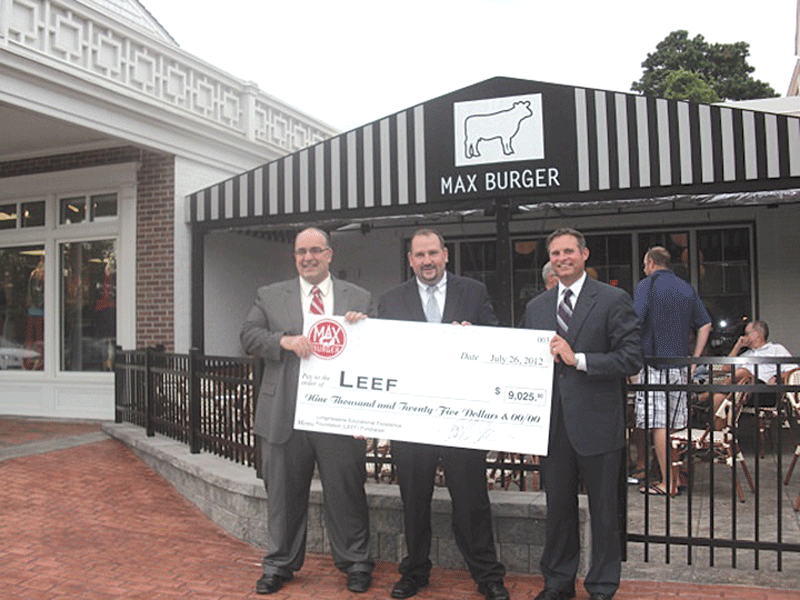
Education Sections
The Many Flavors of the Region’s MBA Programs

In an ever-more-competitive career marketplace, educational degrees don’t always carry the weight they used to.
“At the turn of the 20th century, if a person had a high-school education, that was fantastic,” said Kathryn Carlson Heler, director of the MBA (master of Business Administration) program at Springfield College. “Remember, most people finished eighth grade and were out working at age 14.”
In the years following World War II, she explained, the G.I. Bill and other factors boosted college attendance, and a bachelor’s degree became the ticket to a secure career. But, in many cases, that’s not enough anymore.
“Most professionals now are saying, ‘hey, what’s the next step?’ And I think the master’s has become an important step — and who knows if it’s going to go further?” she said. “Look at nurses, for example; most of them have bachelor’s degrees, and some hospitals prefer to hire people with their master’s. And in the business world, the MBA has become the degree to have.”
Others who spoke with BusinessWest agree. “The MBA does carry an awful lot of weight in the workplace,” said Tom Barron, director of the MBA program at American International College. “It can affect opportunities for promotion, raises, and the like.
“The MBA allows you to really look at other aspects of a business, not just your own area of expertise,” he further explained. “You end up seeing how your area impacts the other areas of a business, so you’re a lot more comfortable developing company-wide solutions. Many people who get MBAs consider changing career fields, exploring areas they wouldn’t have been able to before, because they now have a wider cross-section of knowledge and expertise.”
Mo Sattar, who directs the MBA program at Bay Path College, is another believer in the strength of the degree.
“It helps to create leverage: how can I be a little bit better than the next person or the next business? Knowledge creates power,” he said. “I believe in teaching students how to learn, how to be life learners. That really matters, especially in the MBA world.”
For this issue’s focus on education, BusinessWest sits down with administrators from six area institutions — Western New England University, Elms College, and UMass Amherst are the others — to talk about the elements of a vibrant MBA program, and how the schools are tailoring their offerings to a very diverse group of degree seekers.

Matt Fox

Matt Fox says WNEU’s MBA program, like many regional offerings, allows students to finish in a year or longer, working on campus or online.


Time Trials
Some undergraduates intend to continue on to an MBA program right after finishing their bachelor’s degree, while many MBA students are longtime professionals returning to school to enhance their career prospects — and don’t necessarily have time to tackle a full-time course load or daytime classes. That’s why many colleges offer online courses, evening classes, or a blend of options.
For example, Springfield College’s 4+1 program “is an opportunity for our undergrads to stay a fifth year and earn their MBA,” Carlson Heler said. “What they do is take two classes in the summer after they earn their undergraduate degree and eight classes over the next two semesters.
“We have also attracted professionals from the community. Some of them have done the program in one year, working full-time and also going to school full-time,” she said. “But most of my professionals who join our program do it on a part-time basis, and do about two classes a semester.”
Similarly, the MBA program at UMass Amherst, part of its Isenberg School of Management, also stresses flexibility — to pursue a degree full-time on campus, completely online, or in a blended format at any satellite campus location.
Katherine Piedra, the director of the full-time program, has a unique perspective on that track, having graduated from it in 2004; now, she handles admissions, acceptance procedure, and operations, among other roles.
“The format hasn’t changed much from when I was here eight years ago,” she said, noting that most of the core coursework is completed during the first year, with field work highlighting the second year.
“We get a gamut of people, and we want a diverse class — not just in the traditional diversity sense, culturally, but across the board. We have about 35% international students in our class,” Piedra said.
Having both full-time and online options provides needed flexibility for the differing needs of students, she added. “The full-time program tends to have more people who are career changers. With the online program, it’s people who want their MBA to stay within their company, but want that boost. The online students tend to be older on average, too.”
She noted that, over the years, online degree seekers have multiplied, with a corresponding decline in those pursuing the full-time program. So the playing field has changed, with a lot more entrants into the online market.” Piedra said
Like most regional offerings, AIC’s MBA program can be finished in under two years, although some students, largely working professionals, may spread it out over three to five years, Barron said. “We have an interesting mix, with students coming from undergraduate programs as well as people who have been in the workforce 5, 10, 20-plus years.”
Western New England University also offers a blended online and evening degree program. “Right now, we primarily serve working professionals,” said Matthew Fox, director of Recruiting and Marketing for Graduate Studies and Adult Learning. “But the traditional student coming right out of college with a bachelor’s degree, that’s growing.”
This fall, WNEU will launch a full-time, accelerated day program in addition to its existing track. “We see that as a great opportunity to cater to a growing international student body,” Fox said. “They’re clearly looking for an experience where they can be immersed in their studies and have that continuous, face-to-face interaction with the faculty, as opposed to the existing model that blends online and in-classroom time.”
In any case, he added, “we emphasize to students, whether they’re traditional students or working professionals, they can accelerate their studies and finish the program in as little as a year, or they can take longer. It’s quite flexible.”

What’s Your Niche?
Students are also finding flexibility in the focus of the region’s various MBA programs.
For example, the Elms, which launched its MBA program only last year, offers three areas of study — health care leadership, accounting, and management — in a fast-track, hybrid format that pairs online and on-campus courses, said Kerry Calnan, director of the program.
“We’re the last to the market, and it’s a saturated marketplace,” she noted, adding that the school’s leaders took to heart a study conducted recently at Harvard called “Rethinking the MBA.”
“When we were getting ready to launch, we talked about the old-school model of MBA programs and how we needed to change if we wanted to add value, so that people who go through our program are valuable in the marketplace. We want to make sure we’re fitting what the market needs.”
In doing so, Elms staff interviewed some two dozen senior-level business leaders in the region and asked them what they’d like to see in an MBA program that they’re not getting from current MBA graduates.
“We developed our program by listening to what they had to say,” Calnan said, adding that the program taps area professionals to participate in course instruction, to lend more real-world credibility to the program. In fact, the five core courses in each track are delivered by a team comprised of an academic and a professional.
Springfield College, another recent entry into the MBA market with a program that started in 2010, offers two concentrations: one in for-profit management, and one in nonprofit management. The latter is attractive to people eyeing opportunities in health care, recreation, youth, the arts, sports, and as fund-development officers, to name just a few possible career tracks.
In both its general management and nonprofit concentrations, Springfield College offers a one-year, 30-hour degree program that’s tailored for professionals, Carlson Heler said.
“It’s a very doable degree; our classes are offered in the late afternoon and evening so that students can work during the day and take classes at night,” she noted. “And the size of our classes is very small, so students get to know their professors, and the professors get to know them.”
As with the Elms, it’s important that the SC program involve area professionals in the courses, “so students have an opportunity to tap into their experience.”
And the benefits of those exposures go both ways, Carlson Heler noted. One executive involved in the program told her, “‘I get to know the younger generation, and they will be my future employees — or, in some cases, my future boss. I get to know how they think and how they view the world, and it’s very important for me to have that opportunity.’
“I think it’s important.” she added, “that we reach out to the business and nonprofit community and ask them, ‘what should our students learn? What is important for them to be successful, and for your company or organization to have the best employees it can?’”

Mo Sattar

Mo Sattar says Bay Path’s MBA program helps students “connect the dots” and understand how all aspects of business work together.

AIC offers both a traditional MBA program and a ‘high-performance’ degree, with concentrations available in health care management, operations management, international business, strategic marketing, workforce and leadership development, fraud and financial crimes, green business, and management and sustainability.
“AIC had the first MBA program in Western Mass.,” Barron said. “One thing that’s unique is our strong entrepreneurship program. In our capstone course, the final course, students are actually required to go through and develop a business plan they can use to start their own business.”

Going Global
One theme that surfaced repeatedly in discussing area MBA programs is a focus on international business — reflective of what has become a global marketplace.
“Throughout the history of AIC and its MBA program, we have always had a strong international base in all key studies,” Barron said. “When we’re going through, asking about finance, economics, operations, we’re always going through what’s happening from a global perspective.”
That distinction has become crucial over the past two decades with the emergence of the Internet as a business tool, he added.
“If you look at a business that wants to operate out of a home, 20 years ago, the geographic area was the area around the house. Today, with the Internet, you’re literally doing business and delivering products around the world,” he noted. “So, how do we take this knowledge from all these subjects and not only apply it to local industry, but learn how to deal with it on a global basis?”
UMass provides overseas opportunities for its MBA students by means of exchange programs in Sweden, China, India, Brazil, Denmark, and South Korea.
“We’re working in a global economy,” Piedra said. “Anyone with international work experience in their MBA program has an edge going out into the work world, because of that experience working with people from other cultures and other countries.”
Sattar emphasized the way a strong MBA program “connects the dots” throughout the content, giving students a broad perspective on business.
“Our program starts with a business introduction where students learn about business models and strategy models and start to analyze some case studies and use analytical tools, like Excel,” he explained. Once students are grounded in that foundation, they move on to specifics like marketing, organizational behavior, business law and ethics, and the like, always being pushed to see the overlap between all of these disciplines.
“We learn about the important building blocks in business and how to connect them together, how to synthesize and optimize and maximize them,” Sattar said. “I find that, sometimes, people working in one area don’t understand what’s happening in the next cubicle or the next office.”
The idea, he said, is to produce professionals who understand the big picture within the company they work for — or, in many cases, who are able to launch their own enterprises.
“The value they get is not just that they truly understand marketing, finance, and legal issues,” he stressed. “The value is seeing how they are all connected. It’s more like a symphony than individual pieces of music, and the value comes in connecting everything together.”

Value Proposition
That word ‘value’ was another concept that area administrators kept returning to.
“I’ve been working with the graduate office for approximately five years, and I have found that the number of students seeking their MBA has definitely increased, whether it’s for an entry-level position or to enhance their prospects within their organization, or even to secure their present job,” Fox said.
“I think the value of an MBA has held, and if anything, the interest has increased from students seeking their MBA. We’ve seen our enrollments more than double in the last four years. Yes, we’re dealing with smaller numbers than some other schools, but it’s significant for us. That, to me, is a positive sign.”
Even a recently established program like the one at Springfield College is reporting positive returns in the single most critical area — post-degree employment.
“In our first class, the class of 2011, all of my students found good jobs within six months,” Carlson Heler said. “With the class of 2012, half of them have jobs, and the other half are interviewing, and it looks really good.
“The jobs are out there,” she continued. “People talk about the economy, but my students are finding jobs — maybe not all in the Pioneer Valley, unfortunately, which we would love, but the jobs are definitely out there for the MBA graduates.”

Joseph Bednar can be reached at [email protected]

Health Care Sections
Care @ Home Keeps Clients Independent and Moving to the Beat

Sherill Pineda

Sherill Pineda says she started Care @ Home with some inspiration from her friends and a desire to bring a higher level of service to the region.


Sherill Pineda calls them her “angels.”
These are the close friends who starting coming to her in the summer of 2010 looking for help with the care of aging parents, many of them veterans, in their homes. And they are the individuals Pineda, a veteran of the home health care industry, credits with giving her the motivation, confidence, referrals, and a solid foundation in the form of a growing client base to start a business she calls Care @ Home.
“My friends said, ‘don’t worry about the money — worry about taking care of our parents; that’s the most important thing,” said Pineda. “That same set of values — safety and independence and quality care — is what we have put in place for all our clients.”
And today, it is those friends, not to mention a host of other clients, who are using that word ‘angel’ to describe Pineda and her staff members, who bring a decidedly personalized style of care to their work, one that has enabled the company to achieve steady growth and a reputation for education, innovation, and giving back to the community.
Regarding the latter, Pineda has created what she calls the CARE Foundation, which stages a number of fund-raising events, with some of the proceeds funneled to local charities, veterans groups, and other local help organizations. “We try to do our part, whether it be big or small,” she told BusinessWest.
As for education and innovation, Pineda does a good deal of speaking, especially on the subjects of Alzheimer’s disease and the importance of physical fitness to the quality of life of all seniors. In fact, she’s a certified instructor in what’s known as Zumba Gold, a modified version of the increasingly popular Latin dance workout program designed especially for Baby Boomers.
And she’s brought it to a number of area senior centers and other gathering places, with solid results in terms of participation and reception.
She admits that she never thought that she’d be educating and entertaining seniors to the beats of ’40s ‘boogie woogie’ or ’50s Elvis Presley tunes through the popular Zumba dance-exercise routine, but it has become a big part of her community outreach.
In fact, it’s working so well that her fitness work, and her ties to the veterans community, led the 44-member 215th U.S. Army Band to reach out to Pineda and volunteer its talents for a CARE Foundation fund-raiser that became “A Tribute to Our American Heroes,” staged recently in the Holyoke High School auditorium. The event raised funds for homeless veterans.
Pineda told BusinessWest that other programs, in addition to 24/7 home care, include educational outreach in the workplace (called Care @ Work), at assisted-living centers, or anywhere she can plug in her speakers and iPod and get people dancing. In some way or shape, Pineda says all outreach, volunteer or otherwise, benefits the company, the client, or the community.
With a trained staff of 40, Care @ Home is well on its way to securing a firm foothold in the home-care industry in the Pioneer Valley. And for this issue, BusinessWest takes a look at the company and its ability to give back to the community in unique ways, while also offering skilled nurses and certified nursing assistants (CNS) to care for those who need compassionate, sometimes physical, and usually fun care and attention.

Working Relationships
In Pineda’s East Longmeadow office, there is a wall of yellowed, official Armed Services portraits, as well as recent photos, that showcase some of her first clients.
While veterans are not her only target group, they are the core of her young company’s client base. The company is an authorized agency for the Veterans Administration (VA), she explained, “and based on their eligibility and the VA requirements, if veterans meet the standards, they can receive home-care services through what is known as the Home Base Program; our state really supports our veterans.”
Kathleen Plante, care transition and community liaison for Care @ Home, adds that the Home Base Program’s goals mirror those of the agency, and include safety, independence, and reducing the need for future hospitalizations.
“The program is designed to facilitate keeping them at home as opposed to having to go into an institution or other facility,” she explained. “Our person-centered approach is the mission of the agency, and it secures the best possible outcome for our clients and their families. And, of course, our skilled nurses work with the physician, all to reduce the potential for relapse of a health issue, which could mean going back into an institution and the loss of their independence.”
Potential clients are introduced to the agency through relationships built by Pineda and her team. In fact, it is through current relationships, especially connections in the business community, that she projects strong growth for the new Care @ Work program.
The planned outreach to employers and employees through Care @ Work serves to explain to those still working and caring for a family member of any age, and for pretty much any medical reason, that help is available. The presentation, which is in the development phase, is designed to move through a human-resources department or employee-assistance program.
Whether from a work-related injury or one of the top four health issues Pineda sees — dementia, post-traumatic stress disorder, diabetes-related aliments, and cancer — transitional efforts from hospital to home or assisted living can be traumatic. Pineda and Plante both say that, from the start, effective care planning and medical follow-through both lead to better overall health and a sense of security for the clients and their families, including the need for respite services.
Early transition planning, quality care, and engagement, said Pineda, are qualities that make Care @ Home a different and innovative aging-in-place company.
“We are clinically and socially involved with our clients,” she noted. “We’re creating an individualized care plan and making sure we continue to have activities with them.”

Young at Heart
But when Pineda means ‘activities’, she’s not talking about crossword puzzles and bingo. In fact, she finds that some of her volunteer speaking and Zumba Gold requests stem from the fact that older individuals don’t want to play bingo anymore.
“They say to me, ‘we don’t want to hang out with those ‘seniors’ at senior centers … we want to learn new things; we’re tired of playing bingo,’” said Pineda.
Plante added good naturedly, “they don’t think they’re old; they think the others are old!”
And that dislike of a ‘center for old people,’ explains Pineda, is what is keeping many younger seniors away from physical activity, which is typically offered only in the local senior centers — and she notes that using the words ‘senior,’ ‘golden,’ and ‘elderly’ is already becoming increasingly unpopular among her clients.
This changing view of what old age really means to her clients, coupled with her awareness of the importance of staying active throughout one’s life, explains the emphasis Pineda places on physical and mental fitness in her work.
Last year, she became an Advisory Council member of the Western Mass. Healthy Aging Coalition, and a Matter of Balance coach in partnership with the Mass. Department of Public Health.
“Through the Matter of Balance program, we do a series of eight sessions that are two hours each, educating our aging population about fall prevention,” said Pineda, adding that one bad fall can physically and emotionally shut a person down due to the severity of the incident, resulting in depression and the often-debilitating fear of falling again.
But Pineda says learning and then practicing dance can potentially provide a needed confidence level to those who have fallen and fear a repeat, and this is one of many reasons she has tried to introduce audiences to Zumba Gold and its many potential benefits.
As a certified Zumba Gold instructor, Pineda has incorporated her exercise routine, a combination of Latin and international music with a fun and effective workout program, into weekend programs in which she educates her audience (people in their 60s and 70s), about the importance of staying active, no matter their age.
In that class, she discusses exactly what Alzheimer’s disease is, the early signs, what future help will be needed, and, more importantly, how staying healthy may slow or prevent the onset of the disease and various forms of dementia. Staying as active as possible is the key, said Pineda, who also serves as chairperson of the Alzheimer’s Assoc. Diversity Advisory Council of Massachusetts and New Hampshire.
After some quick discussion with questions and answers, she explained, Zumba begins.
“Then, and only then, do they get to do the dancing; they have to listen first, and then we have fun.”
But she stressed repeadedly that the dancing is far more than just fun; it’s medically important, and will become ever more so as the huge Baby Boom generation continues to age.

All for One, One for All
While Pineda is building her business to care for those in need now and in the future, she and Plante will complete the structure of the CARE Foundation, and will soon have a board of directors to determine the future beneficiaries of fund-raising events for local charities, and a possible endowment for clients that need help with financing their care.
To that end, Pineda says Care @ Home is constantly looking for collaboration and partnership, not just in home health care and fund-raising, but with other skilled professionals who can assist Pineda with bringing more educational outreach to the seniors and family members.
“We’re bringing health care to the next level,” said Pineda. “And that next level means breaking old molds and keeping as many seniors moving, educated, and engaged as possible.”
Plante agreed. “This whole model of reaching into every piece of people’s lives is what health care is going to be; we’re being proactive about it.”
And Pineda, who by all accounts is now fulfilling that role of ‘angel’ to her clients, will be singing and dancing to Elvis, or whatever song of choice her audience wants to step to, just to keep them moving, safe, and independent at home, or wherever home is.
“As long as I have my portable speaker, my iPod, and my flats,” she said, “I’m ready to go.”

Elizabeth Taras can be reached at [email protected]

Bankruptcies Departments

The following bankruptcy petitions were recently filed in U.S. Bankruptcy Court. Readers should confirm all information with the court.

Amoako, Kwame A.
128 Canon Circle
Springfield, MA 01118
Chapter: 7
Filing Date: 06/20/12

Athena’s by Sharane
Austin, Sharane A.
a/k/a Tierney, Sharane
1408 Bay St.
Springfield, MA 01109
Chapter: 7
Filing Date: 06/20/12

Blair, John Reginald
Blair, Kathleen Anne
a/k/a Mason, Kathleen Anne
80 Royalston Road
Phillipston, MA 01331
Chapter: 7
Filing Date: 06/21/12

Bry, Rachel E.
41A Fearing St.
Amherst, MA 01002
Chapter: 7
Filing Date: 06/18/12

Camacho, Edwayra
10 Lombard St.
Springfield, MA 01105
Chapter: 7
Filing Date: 06/24/12

Campbell, Dennis Earl
Campbell, Donna Marie
32 Apache St.
North Adams, MA 01247
Chapter: 13
Filing Date: 06/20/12

Condron, David W.
74 Dodge Ave.
Pittsfield, MA 01201
Chapter: 7
Filing Date: 06/21/12

Daviau, Peter T.
33 Normand Terrace
Feeding Hills, MA 01030-1937
Chapter: 7
Filing Date: 06/21/12

Dickinson, Jason C.
416 Huckle Hill Road
Bernardston, MA 01337
Chapter: 7
Filing Date: 06/21/12

Dolby, Christine
15 Castle Hill Ave.
Great Barrington, MA 01230
Chapter: 7
Filing Date: 06/22/12

Emerson, Daniel J.
235 State St., #311
Springfield, MA 01103
Chapter: 7
Filing Date: 06/18/12

Fisher, Scott A.
181 West St., Apt. K5
Ware, MA 01082
Chapter: 7
Filing Date: 06/22/12

Fitzgerald, Corey J.
Fitzgerald, Angela J.
a/k/a Frey, Angela J.
58 Patrick Ave.
Athol, MA 01331
Chapter: 7
Filing Date: 06/20/12

Gasco, Grace
314 Taylor Hill Road
Hardwick, MA 01037
Chapter: 7
Filing Date: 06/22/12

Harrison, Matthew S.
PO Box 692
Becket, MA 01223
Chapter: 7
Filing Date: 06/21/12

Hebert-Dancik, Elaine
89 Sumner Ave., Apt. 4
Springfield, MA 01108
Chapter: 7
Filing Date: 06/19/12

Hover, Clifford J.
1155 Churchill St.
Pittsfield, MA 01201
Chapter: 7
Filing Date: 06/20/12

Johnson, Christine D.
42 Cherryvale Ave., 1st
Springfield, MA 01108
Chapter: 7
Filing Date: 06/18/12

Johnson, William G.
139 Wyben Road
Westfield, MA 01085
Chapter: 7
Filing Date: 06/18/12

Labonte, Louise May
30 Stockbridge Road
Hadley, MA 01035
Chapter: 7
Filing Date: 06/21/12

LeBlanc, Darlene A.
40 Sunnymeade Ave.
Chicopee, MA 01020
Chapter: 13
Filing Date: 06/20/12

Magiera, Diane
223 Grattan St.
Chicopee, MA 01020
Chapter: 7
Filing Date: 06/24/12

McCarthy, Jeanne Ann
477 Millers Falls Road
Northfield, MA 01360
Chapter: 7
Filing Date: 06/22/12

McElligott, Thomas
McElligott, Helen A.
32 Elizabet St.
Feeding Hills, MA 01030
Chapter: 7
Filing Date: 06/23/12

Medeiros, Michele F.
155 Feltham Road
Springfield, MA 01118
Chapter: 7
Filing Date: 06/18/12

Metivier, Angela D.
42 Lowden St.
Pittsfield, MA 01201
Chapter: 7
Filing Date: 06/21/12

Metivier, Francis E.
a/k/a Metivier, Frank E.
42 Lowden St.
Pittsfield, MA 01201
Chapter: 7
Filing Date: 06/21/12

Mike’s Landscaping and Excavating
MJS Excavating
Snow, Michael J.
15 Clapp Road
Post Office Box 204
Hardwick, MA 01037
Chapter: 13
Filing Date: 06/20/12

Morrison, Vivienne N.
52 Fort Pleasant Ave.
Springfield, MA 01108
Chapter: 7
Filing Date: 06/22/12

Nester, Ronald R.
64 North Maple St.
Hadley, MA 01035
Chapter: 7
Filing Date: 06/19/12

Newton, Forrest Lewis
Newton, Sharon Collins
79 Old State Road
Berkshire, MA 01224
Chapter: 13
Filing Date: 06/19/12

O’Neil, Stephen C.
2 Kenlee Gardens
South Hadley, MA 01075
Chapter: 7
Filing Date: 06/22/12

Otero, Thomas
89 White St.
Westfield, MA 01085
Chapter: 7
Filing Date: 06/19/12

Pearl, Estrelita L.
a/k/a Lee, Estrelita N.
174 Blanchard St.
Chicopee, MA 01020
Chapter: 13
Filing Date: 06/19/12

Pierce, David A.
a/k/a Daudelin, David
Pierce, Dorothy A.
a/k/a Parent, Dorothy
301 Skeele St.
Chicopee, MA 01013
Chapter: 7
Filing Date: 06/24/12

Rideout, Jerry
Rideout, Anne C.
a/k/a Germain, Anne C.
28 Arlington St.
Chicopee, MA 01020
Chapter: 7
Filing Date: 06/21/12

Schoonmaker, Ward A.
Schoonmaker, Karen A.
343 Kelsey Road
Sheffield, MA 01257
Chapter: 7
Filing Date: 06/21/12

Skubiszewski, Jack G.
Skubiszewski, Rebecca L.
53 Conway St.
South Deerfield, MA 01373
Chapter: 7
Filing Date: 06/20/12

Smith, Monroe
239 Merrimac Ave.
Springfield, MA 01104
Chapter: 7
Filing Date: 06/22/12

Squaire, Phyllis
76 Breckwood Circle
Springfield, MA 01119
Chapter: 13
Filing Date: 06/18/12

Swiatek, Michael J.
Swiatek, Holly M.
95 Railroad St.
Belchertown, MA 01007
Chapter: 7
Filing Date: 06/20/12

Velazquez, Juan R.
Irizarry, Nilda L.
320 Elm St.
Holyoke, MA 01040
Chapter: 7
Filing Date: 06/22/12

Welch, Deborah J.
a/k/a Miller, Deborah J.
4 Leslie Lane
Sturbridge, MA 01566
Chapter: 7
Filing Date: 06/19/12

Whitman, Claude
23 McBride Road
Wales, MA 01081
Chapter: 13
Filing Date: 06/20/12

Wiernasz, Matthew P.
146 Elmar Dr.
Feeding Hills, MA 01030
Chapter: 7
Filing Date: 06/20/12