Home 2014 (Page 11)
Daily News

BOSTON — The Executive Office of Labor and Workforce Development reported that preliminary estimates from the Bureau of Labor Statistics (BLS) show Massachusetts added 9,400 jobs in September, for a total preliminary estimate of 3,425,000. The September total unemployment rate was 6.0%, up 0.2% over the August rate.

Since September 2013, Massachusetts has added a net of 64,100 jobs, with 62,000 jobs added in the private sector. The total unemployment rate for the year is down 1.2% from the September 2013 rate of 7.2%. BLS also revised its August job estimates to a 4,900-job loss from the 5,300-loss previously reported for the month.

Daily News

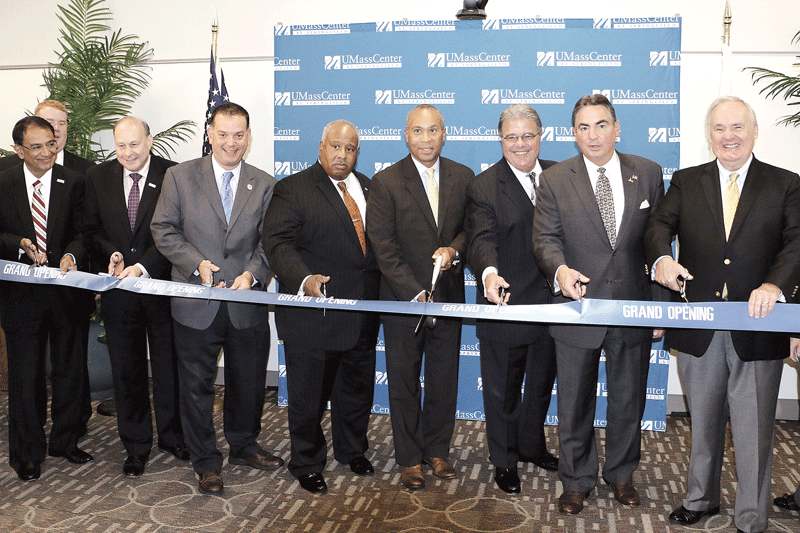
HADLEY — After two years of planning and construction, Paragus IT will cut the ribbon today, Oct. 16, on its new headquarters. The new commercial office building is located at 112 Russell St., just down the road from its previous location. The Paragus grand-opening party will begin at 5 p.m. The event is open to the public, but attendees must RSVP in advance by calling (413) 587-2666.

For the past year, Paragus has been operating out of an office in downtown Springfield while waiting for construction to be completed. “We have enjoyed being in Springfield,” said Paragus CEO Delcie Bean. “We’ve made great connections, and we will maintain a strong presence downtown with Tech Foundry, our technology-education program, and Waterdog Technologies, our IT-distribution company. But Hadley is home for Paragus, and we’re very excited for this new space. There are a lot of awesome features we can’t wait to unveil for everybody.”

These include employee perks such as a pub-style break room/lounge with local draft beer and cider, and a ping-pong table. A giant, custom-made weathervane featuring the Paragus baby logo adorns the top of the building. The new space is 8,000 square feet, nearly four times the size of the company’s previous location.

“We’ve really pulled out all the stops for this party,” said Bean. “From Big Head Ed’s barbecue to draft beer from our amazing keg-bot, a good time will be had by all.”

The headquarters upgrade is the latest in a strong pattern of growth for Paragus. Since Bean founded the company as Valley Computer Works at age 13, Paragus has grown from a one-man operation to a regional leader in business computer service, consulting, and information-technology support. Despite a sluggish economy, Paragus has continued to thrive and expand. In 2012 and 2013, it was named in Inc.’s annual ranking of the 5,000 fastest-growing businesses. In fact, with a 546% growth rate over six years, Paragus is the second-fastest-growing outsourced IT firm in New England.

Daily News

FARMINGTON, Conn. — First Connecticut Bancorp Inc., the publicly owned holding company of Farmington Bank, announced plans to enter Massachusetts with the establishment of a commercial-lending office and two de novo hub branches, subject to regulatory approval, located in West Springfield and East Longmeadow.

“Farmington Bank’s expansion into Massachusetts reinforces our ongoing strategy to grow the franchise organically in contiguous markets,” said John Patrick Jr., chairman, president, and CEO of First Connecticut Bancorp and Farmington Bank. “This move complements Farmington Bank’s commercial loan growth in Connecticut and provides us the opportunity to expand our role as a vital and active participant in New England’s Knowledge Corridor running from Springfield through Hartford to New Haven — an economic region that constitutes the 20th-largest metro market in the country. We look forward to bringing our 163-year history as a community bank to our neighbors in Massachusetts.”

Farmington Bank’s commercial-lending office will initially be staffed with four experienced Western Mass. commercial lenders, led by Michael Moriarty, who will assume the position of senior vice president and regional executive for the market. Moriarty, a West Springfield resident, has an extensive commercial-banking background and was most recently an executive vice president with United Bank. In addition to Moriarty, the commercial-lending team will include three other seasoned lenders: Joseph Kulig, vice president; Joseph Young, vice president; and Candace Pereira, assistant vice president, all formerly with United Bank.

With this expansion, Farmington Bank services will now be available from Hampden County to New Haven, Conn., spanning New England’s Knowledge Corridor, an interstate partnership of regional economic-development, planning, business, tourism, and educational institutions that work together to advance the region’s economic progress.

Farmington Bank is a full-service community bank with 22 branch locations throughout Central Conn., offering commercial and residential lending as well as wealth-management services in Connecticut and Western Mass. Established in 1851, Farmington Bank is a diversified consumer and commercial bank with with assets of more than $2.3 billion.

Daily News

WARE — Area women are invited to attend “The Picture of Health” a women’s-health lecture, to be held on Thursday, Oct. 30, from 6 to 8:30 pm at Baystate Mary Lane Hospital in the Main Conference Room, located on the second floor of the hospital. The special event celebrating women’s health will include guest speaker Kelly Slattery, clinical dietitian from Baystate Mary Lane, followed by an exercise program led by A. Laya Bautista, PT, from Baystate Rehabilitation.

“We hope women of all ages will attend this seminar, which will include a mindful-eating workshop, an exercise demonstration, bone-density screening at no cost, art therapy offered by Paint Craze, and an opportunity for women to book their annual mammogram,” said Tracy Whitley, manager of Loyalty Programs and the Spirit of Women Program.

This free lecture is sponsored by the Spirit of Women, a loyalty program specifically designed for women, offering monthly seminars with direct access to physicians, nurses, and other medical professionals and the latest women’s-health information in a comfortable and lively setting. For more information, to register for this event, or to become a Spirit of Women member, visit baystatehealth.org/spiritofwomen or call Baystate Health Link at (413) 967-2488 or (800) 377-4325.

Daily News

SPRINGFIELD — Nationally recognized economists Dr. Lawrence Yun and Dr. Elliot Eisenberg will present a real-estate and economic forecast on Thursday, Oct. 23 from 9 to 11:30 a.m. at Western New England University, 
Rivers Memorial Hall, 2105 Wilbraham Road, Springfield. Doors open at 8 a.m. for breakfast and registration. The event is sponsored by the Realtor Assoc. of Pioneer Valley and the Home Builders Assoc. of Western Mass.

Topics will include recent developments in the housing market (national, state, and local), the direction of home prices in the next 12 to 24 months, comparisons with past housing cycles, shadow inventory and foreclosure impact, new-home construction, economic backdrop, and a forecast of the economy and housing market. Yun is chief economist and senior vice president of the National Assoc. of Realtors, while Eisenberg is a former senior economist with the National Assoc. of Homebuilders. Tickets cost $20 per person, which includes breakfast.

To register, contact Laura Herring, education coordinator for the Realtor Assoc. of Pioneer Valley, at (413) 785-1328 or [email protected]. Corporate support comes from Abide Inc., PeoplesBank, MLS Property Information Network, the Republican/MassLive, and United Bank.

Daily News

SPRINGFIELD — The Springfield Falcons and Pride Stores have partnered for the second annual “Pump for Pride” on Wednesday, Oct. 22. Falcons players will be at the Pride store on 618 North Main St. in Longmeadow pumping gas for fans from 5 to 6:30 p.m. Players will also be available for autographs and photographs. All tips raised by the players will be donated to the Springfield Falcons Charitable Foundation in support of the Greater Springfield community.

Pride is a locally owned, independent chain of fuel stations and markets that has become known as a destination for coffee, breakfast, and lunch. The latest Pride Stores also include beer and wine, full delis, and café/bakeries.

The Springfield Falcons Charitable Foundation serves as the philanthropic arm of the Springfield Falcons hockey club. The mission of the foundation is to enrich the lives of children and families throughout Greater Springfield by promoting awareness of education, exercise, and health.

The Springfield Falcons visit the Syracuse Crunch Oct. 17 before returning to the MassMutual Center for the home opener against the Hershey Bears on Oct. 18. Ticket packages are on sale now. To reserve seats, call (413) 739-4625 or visit the team office at the MassMutual Center Monday through Friday, 9 a.m. to 5 p.m.

Daily News

BELCHERTOWN — Team Jessica Inc. has been awarded a $5,000 grant from Florence Bank, and will use the funds to support the building of Jessica’s Boundless Playground (JBP), an effort that has been ongoing for the past four years.

Once completed, JBP will be the only 100% all-inclusive playground in New England. It has been carefully designed to be a multi-generational activity structure that engages people of all ages and abilities. Every area of the playground caters to those with mobility concerns, while at the same time being fun and engaging for able-bodied people. JBP will also allow wounded veterans in long-term rehab to experience the healing power and simple joy of playing with their own children.

The playground will cost more than $475,000 to build. Team Jessica has hosted more than 15 fund-raising events over the past four years, and the efforts have raised more than $385,000, including three Community Preservation Act grants totaling $140,000 from the town of Belchertown. This total also includes several independent fund-raisers that local businesses conducted for the project, as well as many large gifts from area organizations. Last month, more than 200 volunteers came together for a weekend build event that culminated in the construction of the majority of the playground structure.

“We’re preparing for the final stages of construction — building the ramps, timing the poured-in-place rubber surface — while at the same time still conducting the last round of fund-raising,” said Patti Thornton, Team Jessica’s grant writer. “This grant comes at a perfect time, and we’re so thankful to the community-minded people at Florence Bank.”

Florence Bank’s history in community commitment is 140 years deep. No stranger to corporate social responsibility, the bank distributed $1 million to local nonprofits in the past three years alone. For the past 12 years, the bank has been allowing its customers a voice in where donations will be allotted through its Customer’s Choice Community Grants Program. This year, Team Jessica is listed on the online ballot under the category ‘Community Support,’ which can be found at www.florencesavings.com/vote. Paper ballots are located at any Florence Bank. Voting concludes Dec. 31, 2014.

“We are excited to be part of this extraordinary effort to bring an all-inclusive playground to Belchertown,” said Florence Bank President and CEO John Heaps Jr. “The enthusiasm and support for this project is overwhelming. We are happy to be part of it.”

Daily News

SPRINGFIELD — The Springfield Falcons announced that Pioneer Valley Credit Union (PVCU) will return as the sponsor for the Goals for Groceries campaign, benefiting the Food Bank of Western Massachusetts. For every goal the Falcons score at home during the 2014-15 season, the credit union will donate $10 to the Food Bank.

“We believe in making a positive impact on the community by supporting local businesses and charities,” said PVCU President and CEO Anabela Pereira Grenier. “Pioneer Valley Credit Union is proud to partner once again with the Springfield Falcons and the Food Bank of Western Massachusetts in the Goals for Groceries campaign. Staying true to the credit union’s philosophy of ‘people helping people’ is and always will be the foundation of our commitment and our dedication to delivering to our members, partners, and the communities we serve.”

The Food Bank of Western Massachusetts is a hunger-relief nonprofit serving 135,000 individuals at risk of or facing hunger in Berkshire, Franklin, Hampden, and Hampshire counties. As the leading provider of emergency food that reaches individuals and families with low incomes in the region, the Food Bank distributes food to more than 300 member agencies, including independent food pantries, meal sites, childcare centers, shelters, and elder-care facilities. For more information, visit foodbankwma.org.

Daily News

AMHERST — The Lord Jeffery Inn in Amherst has received the 2014 Sustainability Champion Award from Historic Hotels of America at the 2014 Awards of Excellence. The 2014 Annual Awards Ceremony and Gala Dinner took place at the Hotel Hershey in Hershey, Pa. on Oct. 2. The Lord Jeffery Inn is one of more than 250 hotels and resorts throughout the country that is recognized by Historic Hotels of America for preserving and maintaining its historic integrity, architecture, and ambience.

“We are delighted to honor the Lord Jeffery Inn in winning the Sustainability Champion Award,” said Larry Horwitz, executive director of Historic Hotels of America and Historic Hotels Worldwide. “This award-winning hotel represents the pinnacle of this distinct group of nominees in a number of categories. We give them congratulations and wish them best success.”

Award recipients were selected from nominees received from across America from historic hotels, historic-preservation supporters, and leadership from Historic Hotels of America. As the official program of the National Trust for Historic Preservation, Historic Hotels of America provides the recognition to travelers, civic leaders, and the global cultural, heritage, and historic travel market that member hotels are among the finest historic hotels across America.

“We are extremely honored to be recognized by Historic Hotels of America for our efforts to implement innovative green initiatives at the Lord Jeff while maintaining historic preservation,” said Robert Reeves, general manager of the Lord Jeffery Inn. “We are proud of the extensive, state-of-the-art green features throughout the facility that have dramatically improved energy efficiency and reduced the inn’s carbon footprint.”

The Lord Jeffery Inn is owned by the Amherst Inn Co., an affiliate of Amherst College. Waterford Hotel Group currently provides hotel management services for inn.

Daily News

SPRINGFIELD — Hyundai Rotem is competing for the Massachusetts Bay Transportation Authority’s procurement to build more than 200 new subway cars. Should it win, the company has committed to locate its manufacturing facility on Progress Avenue in Springfield. Company officials estimate the facility will employ 170 to 200 full-time workers.

On Thursday, Oct. 16, Hyundai Rotem USA will meet with prospective local suppliers to provide an overview of its planned operations in Springfield and to further outline potential opportunities for local goods and services suppliers. The forum will take place in the Business Growth Center in the Springfield Technology Park, starting at 10:30 a.m. Hyundai Rotem will also provide an overview of a regional training collaborative that will provide local citizens with pathways to careers.

The event, held in collaboration with Springfield Technical Community College, Holyoke Community College, and the Affiliated Chambers of Commerce of Greater Springfield, will provide a forum for area businesses to learn about specific potential opportunities. After a presentation by Hyundai Rotem, vendors will be able to have a direct dialogue with Hyundai Rotem officials during a question-and-answer period. Springfield Mayor Domenic Sarno is scheduled to kick off the forum with opening remarks.

Daily News

SPRINGFIELD — Springfield College Assistant Professor of Exercise Science and Sport Studies Jasmin Hutchinson, Ph.D., received a $2,275 grant from the Assoc. for Applied Sport Psychology to continue the second year of a Springfield College Running Psychology Team.

Hutchinson, along with doctor of psychology students Dolores Christensen and Erica Beachy, led a psychology team that aided participants of the Hartford Marathon on Oct. 11. The team was available to half-marathon and marathon runners during pre-race events and also on race day. The group was available at the start and finish lines, as well as throughout the course, to provide support and encouragement for participants.

“This is really a unique collaboration between multiple programs at Springfield College, and we are excited to build on last year’s experience,” said Hutchinson. “It’s a strong commitment by the students to volunteer their time at the race and gain some valuable experience. The establishment of the team has been met with great enthusiasm, and our members are thrilled to be able to apply their skills and knowledge to benefit the community.”

During the 2013 Hartford Marathon, 17 Springfield College athletic counseling students from the Psychology program and 10 sport psychology students from the Exercise Science and Sport Studies program were available to assist runners by reviewing goals, quelling last-minute nerves, and providing cognitive skills that runners can utilize during the race. The Hartford Marathon is one of the largest races in New England. Thousands of runners participated in the 21st anniversary of the competitive race this year.

Daily News

SPRINGFIELD — State officials joined U.S. Labor Secretary Tom Perez and U.S. Education Secretary Arne Duncan this week at Springfield Technical Community College to recognize the Commonwealth’s leadership in developing a robust workforce pipeline to meet the needs of employers across Massachusetts.

Perez and Duncan highlighted two rounds of grants, totaling $40 million, awarded to Massachusetts community colleges by the U.S. Department of Labor to further the efforts of Gov. Deval Patrick’s administration to align educational programs at community colleges with the needs of local employers.

“Working together, we have strengthened the connections between our campuses, our employers, and our workforce so that each and every one of our students has the opportunity to thrive,” Patrick said. “Community colleges are a critical asset in our strategy to develop a middle-skills workforce for jobs in demand. I’m proud Secretary Perez and Secretary Duncan have recognized our successful model.”

The consortium of Massachusetts community colleges awarded in these two grant rounds has drawn national attention for building systems between community colleges, adult-basic-education programs, and workforce-development partners and industry leaders to offer students more training and education programs that better reflect the needs of local industry. To date, 151 degree and certificate programs have been developed or redesigned for accelerated learning, and credentials for 40 programs have been made stackable for more comprehensive certification of skills. Among students who have gone through these programs, 70% attained employment, while 85% completed online credit hours.

The latest round of federal funding received by the Massachusetts consortium will focus on reducing the time it takes students to complete certificate and degree programs that lead to careers in high-growth STEM (science, technology, engineering, and math) sectors, as well as advanced manufacturing and healthcare.

“This type of collaborative effort between our community colleges and our local businesses bridges career and education, allowing the Commonwealth to lead the nation in career development,” said Secretary of Education Matthew Malone. “This vital combination of skills will give our students the competitive edge they will need to succeed in the global workforce.”

Daily News

HOLYOKE — Kathleen Krisak, a nuclear-medicine technologist at Holyoke Medical Center (HMC), was named Outstanding Technologist of the Year by the Society of Nuclear Medicine and Molecular Imaging during a national conference in St. Louis. The award is given annually for “outstanding service and dedication to the field of nuclear-medicine technology.”

Krisak, who has worked at Holyoke Medical Center as a nuclear-medicine technologist for 31 years, also chairs HMC’s radiation safety committee. She has been active in the New England Chapter of the Society of Nuclear Medicine and its executive committee for over 20 years, serving in various leadership capacities, and is a fellow of the Society of Nuclear Medicine and Molecular Imaging. She served as program and education chair for the annual meeting in 2013, and as incoming finance committee chair from 2010 to 2013, and she will begin serving as president of the New England Chapter in 2016.

“Kathy has exhibited a continued commitment to advancing our organizational expertise in nuclear medicine to improve patient health. Kathy is absolutely making a difference in the future of her profession,” said Holyoke Medical Center Vice President of Operations Carl Cameron.

Meanwhile, Manager of Radiology Jim Suprenant credited Krisak with promoting the nuclear medicine profession regionally and nationally. “Kathy has long been an advocate for Holyoke Medical Center. Her work has also provided Holyoke Medical Center with exposure to her professional society locally and nationally.”

A native of Springfield, Krisak graduated from Springfield Technical Community College in 1983, earned her bachelor’s degree from Worcester State College, and chose to work in Holyoke Medical Center’s Nuclear Medicine Department upon graduation. Over the years, she has served as senior technologist and department manager, and she has witnessed numerous technological advances that have improved patient care.

“Holyoke Medical Center has always had a progressive nuclear medicine department. We were one of the first in the area to offer bone densitometry for osteoporosis with our dedicated physician, Dr. Upatham, who always committed to furthering the field,” said Krisak, who most enjoys her interactions with patients, some of whom fondly call her the “warm blanket lady” as she helps them to be comfortable in the temperature-controlled Nuclear Medicine Department. Krisak has also coordinated volunteers for HMC’s annual Golf Fore Health tournament for 25 years and presently serves as chief of staff for parade coordination on the Holyoke St. Patrick’s Parade committee.

Krisak will be honored at a reception at Holyoke Medical Center on Friday, Oct. 31 at 2:30 p.m. in the hospital’s main lobby.

Daily News

HOLYOKE — Catherine Sypek has earned the Professional Plan Consultant designation in the area of retirement-plan consulting. Sypek is a top-performing financial-services representative for Holyoke-based Dowd Financial Services, with offices in Holyoke, Hadley, Southampton, Indian Orchard, and Ludlow.

Recent regulatory changes to the retirement-plan industry has not only sparked an urgency to ensure adequate resources for retirement-plan professionals, it also has beneficiaries of those plans worried about the security of their financial futures. Sypek’s goal is to set her clients at ease, and she has now been recognized with a professional designation for her knowledge and service.

Daily News

EASTHAMPTON — MRW Connected and 79 other companies worldwide were recognized for creating the highest-quality jobs by the nonprofit B Lab with the release of the third annual “B Corp Best for Workers” list. This analysis includes metrics regarding compensation and benefits, health and wellness programs, parent-friendly flex time and leave policies, professional development and internal promotion, corporate culture, profit sharing, and ownership opportunities.

“With Millennials’ increasing demand for work-life integration, B Corps are winning the talent war,” said Jay Coen Gilbert, co-founder of B Lab. “The Best for Workers honorees are leading the way with their commitment to creating high-quality jobs that serve a higher purpose.”

The list honors businesses that earned a worker-impact score in the top 10% of all certified B corporations on the B Impact Assessment, a rigorous and comprehensive assessment of a company’s impact on its workers, community, and the environment.

MRW Connected provides full-service communications services to educators, nonprofits, social entrepreneurs, and just about anyone else working to make the world a better place. The company’s team of creative and technology professionals work closely with clients to develop custom solutions that meet the unique organizational needs of those they serve. Services include branding, logo and graphic design, website design and development, and advertising and media management.

“It’s an honor and a true thrill to be recognized alongside such an impressive list of businesses,” said Tom Willits, president and co-founder of MRW Connected. “B Corp does a tremendous job highlighting the ways that companies can directly contribute to the well-being of their employees, community, and environment. We’ve always been very focused as a company on our impact in these areas, so it’s especially meaningful to be acknowledged for our efforts.”

MRW’s clients include Hartford Public Schools, the Connecticut River Watershed Council, Holyoke Health, Science from Scientists, Hartford’s Camp Courant, and Berkshares.

Daily News

SPRINGFIELD — Baystate Health and Western Massachusetts Electric Co. (WMECo) have further enhanced their partnership in creating a more energy-efficient health system by agreeing to implement several energy-efficiency programs over the next three years.

The purpose of the partnership, originally established in an agreement in 2012, is “to provide a roadmap of sustainability support and realization of established energy-reduction goals for both Baystate Health and WMECo, which will help reduce Baystate Health’s costs and increase overall efficiency.”

WMECo will provide Baystate Health with an incentive payment based on an annual fixed rate inclusive of pilots, studies, publicity, and other costs and expenses associated with all energy-efficiency and conservation projects. The plan includes the latest energy-efficient technology, including lighting upgrades, installing occupancy sensors in hallways and offices, and using high-efficiency condensing boilers and variable speed drives to control pumps and fans.

Daily News

WESTFIELD — Westfield State University will host lawyer Lauren Burke as part of its Guest Lecture Series on Thursday, Oct. 16 at 6:30 p.m. in Wilson Savignano Auditoriums A and B. Burke will present her lecture, “Disrupting the Status Quo: Creating a Youth Empowerment Model for Undocumented Immigrant Youth” as part of Latino Heritage Month.

Burke is the executive director of Atlas: DIY (Developing Immigrant Youth). Since graduating from New York University School of Law in 2009, she has focused her career on developing inclusive legal programs for immigrants and youth in various organizations throughout New York City. During a Skadden Fellowship, Burke developed the Immigrant Youth Peer Educator Program, and in 2010 she and three of her students worked together to create Atlas, an incubator of education, empowerment, and community for undocumented youth and their allies.

Fluent in Mandarin, Burke has an expertise in representing youth trafficked to the U.S. from China, though since founding Atlas she has become passionate about serving immigrants of all origins. Burke and Atlas have been profiled in Forbes, where she was also named among the “30 Under 30” in the law and policy category; one of “20 Millennials on a Mission” in the New York Times; and on NPR’s All Things Considered radio show. In 2013, Burke was named NYU’s Distinguished Young Alumna of the Year.

Katherine Walsh, professor of Social Work at WSU, said she organized the lecture in hopes of the Social Work department connecting with other disciplines on campus involved in discussions and work in the area of immigration and youth, and in promoting models of civic engagement that are bringing about system change.

“The issues related to documentation and immigration are of great concern to many people at Westfield State and surrounding communities, particularly this year,” Walsh said. “We were founded as an institution that is open to all, and understanding issues facing a segment of our population and searching for solutions will benefit both the students and the communities in which they reside.”

Walsh added that community members can learn from Burke as well. “Burke has tackled problem solving in a unique way and has an inspiring perspective on serving both children and families and the public interest. The cooperative empowerment model she has established at Atlas: DIY is an innovative approach to affecting change that all of us can learn from.”

The Guest Lecture Series is supported by funding from the Academic Affairs budget to enhance student learning and service to the larger community. An advisory committee with representation by faculty, librarians, staff, and students reviews proposals and recommends selections for the year. For more information on upcoming speakers, visit www.westfield.ma.edu/speakerseries.

Daily News

LONGMEADOW — Brenna Berman, Chicago Department of Innovation and Technology (DoIT) commissioner and chief information officer, will present on the “Data-Driven City” at Bay Path University’s Innovative Thinking & Entrepreneurship Lecture on Friday, Oct. 17 in the Blake Student Commons. A networking continental breakfast will begin at 7:30 a.m., followed by the lecture at 8:15 a.m.

The lecture is the 11th in a series that addresses the concepts of innovation and creativity, with specific emphasis on leadership and results. In this lecture, titled “The Data-Driven City: How Urban Analytics Is Shaping the Way We Understand Cities Today and Design Cities Tomorrow,” Berman will focus on her leadership in Chicago’s SmartData project, which is putting the city at the forefront of government innovation.

Berman will provide examples from both a global and local perspective of how data provides a precise lens to make cities more responsive to the changing needs of residents, businesses, and visitors. She will also discuss the emerging trends that are driving academics, researchers, and city leaders to focus on solving intractable urban challenges, and the role data analytics plays in defining, and ultimately solving, those problems.

Over the past year at DoIT, Berman has focused on transforming the DoIT team to align with the mayor’s commitment to an open and data-driven government, building Chicago’s open-data program into one of the largest in the country, as well as implementing the WindyGrid spatial analytics platform into every level of government. Berman built a career promoting government innovation during her 10 years at IBM, where she worked closely with government agencies and countries across the world to leverage technology and analytics to improve the services they provide to their residents.

Those interested in attending the lecture can register at www.baypath.edu/ceo. There is no cost to attend, and live streaming will be available. The event is sponsored by the Bay Path University Advisory Council, the MS in Communications and Information Management, and the MBA in Entrepreneurial Thinking and Innovative Practices.

Past speakers of the Innovative Thinking and Entrepreneurship Lecture series have included Tom Stemberg, Founder of Staples Inc.; Robert Kraft, owner of the New England Patriots; and Sue Morelli, CEO and president of Au Bon Pain.

Daily News

WESTFIELD — Lawrence Johnson has been named director of non-discrimination and university compliance at Westfield State University. He officially joins the university on Monday, Oct. 20.

“Using existing funds for a position that we have chosen not to fill, we have created this new position to assure that we are doing everything we must and can do to meet state and federal requirements and provide a safe environment for everyone in our campus community,” said Elizabeth Preston, president of Westfield State University. “Our recent audit by the Mass. Office of the Comptroller suggests that a better coordinated approach to risk management through a dedicated position will build on what is already in place and will ensure we are adhering to the highest ethical standards.”

The position will focus on prevention and will include identifying any risks the university may face from internal policies or changes in local, state, or federal laws, as well as designing and implementing controls to minimize those risks and reporting the effectiveness of the controls. Johnson will also provide education and training, and is responsible for developing, implementing, and evaluating the university’s Equal Opportunity, Diversity, and Affirmative Action Plan and initiatives to promote an inclusive environment for students, faculty, and staff.

A lawyer, Johnson currently holds joint positions as associate dean of students at Rider University in New Jersey, and dean of students for Rider’s Westminster Choir (Music) College. He is responsible for upholding many legal areas, including Title IX, risk management, the Family Educational Rights and Privacy Act, disability services, substance-abuse prevention, and multi-cultural affairs and community service.

Johnson has worked closely with human resources to provide sexual-harassment training to all corners of the university and assisted in the development of Rider’s Title IX policy in compliance with the Office of Civil Rights’ 2010 “Dear Colleague” letter and Violence Against Women Act. In addition to his role as dean, Johnson is an adjunct professor of American Studies, where he has taught the course “Law and Ethics in Higher Education.” He has been honored as an Omicron Delta Kappa inductee and academic advisor, was the recipient of the Angel on My Shoulder award from the Black Student Union, and was on the Law School Honor Code Committee at Franklin Pierce Law Center.

Johnson’s professional affiliations include memberships in the National Assoc. of College Student Personnel Administrators, the Delaware Valley Student Affairs Administration Assoc., the Delaware Valley Student Affairs Administrators Assoc., and the Assoc. of Independent Colleges and Universities of New Jersey. He holds a bachelor’s degree in American studies from Saint Michael’s College, a master’s degree in higher education administration from Michigan State University, and a juris doctor from the University of New Hampshire Law School.

Daily News

AGAWAM — Glenmeadow Retirement will offer a presentation by Smith College Professor Mary Harrington on memory and brain health on Tuesday, Oct. 21 from 10 a.m. to noon at the Agawam Public Library, 750 Cooper St.

Harrington will draw on her expertise as a neuroscientist and share her findings on how to keep the brain healthy and active. Harrington’s discussion, “The Memory Muscle: Understanding the Brain and Keeping It Fit,” will include tips on improving memory through focus, practice, and social interaction. The free program will also feature accessible lessons on neuroscience.

Harrington has worked as an undergraduate professor at Smith College, specializing in the brain regulation of circadian rhythms and sleep, since 1987. Her research is supported by grants from the National Institutes of Health and the National Science Foundation.

Established in 1884, Glenmeadow is a nonprofit, accredited, continuing-care retirement community, providing independent and assisted living at its campus at 24 Tabor Crossing in Longmeadow and expanded Glenmeadow at Home services throughout Greater Springfield. “As a nonprofit, our mission is to serve seniors and their families. One of the ways we do that is by providing free educational offerings in convenient locations throughout the area,” said Tim Cotz, president and CEO.

Seating for the Oct. 21 event is limited, and registration is required. To register, call (413) 567-7800 or e-mail [email protected]. Visit glenmeadow.org/learning for more information.

Daily News

SPRINGFIELD — Peter A. and Melissa Picknelly set a lofty goal for the Springfield Boys & Girls Club recently. If the club could bring in 150 new donors in the month of September, they would donate $15,000 to the cause. Recently, the club announced that it had secured 184 new donors, who contributed a combined total of $9,102. With the Picknellys’ $15,000 donation, the total raised for the month tops $24,000.

The couple decided to offer this challenge grant in honor of Peter’s late father, Peter L. Picknelly, former president of Peter Ban Bus Lines, who credited much of his personal and professional success to the lessons he learned at the Springfield Boys & Girls Club as a child. “The club was a big part of my father’s life, from the years he spent there as a child to his time as an active member of its board of directors,” said Peter A. Picknelly, who has been a member of the club’s board of directors for 10 years. “Melissa and I are so pleased to see how the community rallied around the club and helped us reach this goal. My father would be very proud.”

Added Sarah Tsitso, executive director of the Springfield Boys & Girls Club, “we are so grateful to all 184 donors who joined us on this journey. It was exciting to have the opportunity to expose a whole new set of people to the important work going on inside the club every day. We can’t thank Peter and Melissa enough for their leadership and generosity. It is truly humbling.”

The Springfield Boys & Girls Club has been a mainstay of youth development in the city for more than 123 years. Its afterschool and summer programs focus on the core areas of academic achievement, health and wellness, and good citizenship. The club serves approximately 1,500 at-risk youth, ages 5 to 18, each year.

Daily News

WARE — Monson Savings Bank will present a complimentary workshop titled “Estate Planning for Divorced and Blended Families: It Can Be Done!” featuring attorneys Hyman Darling and Todd Ratner from Bacon Wilson, P.C. The event will be held Tuesday, Oct. 21, from 5 to 6:30 p.m. at Teresa’s Restaurant, 315 Palmer Road, Ware. It is free and open to the public. Refreshments will be served.

The workshop is designed to help divorced, remarried, or partnered people sort through the complexities of designating who will have financial and medical-care authority if they become disabled, and ensuring that inheritance is seamlessly passed along to the intended heirs. Darling and Ratner will provide important information, tools, and guidance to assist people with creating an estate plan that achieves their goals and addresses multiple parties and priorities.

“Understanding and creating estate plans can be complicated and overwhelming — even moreso for divorced individuals or blended families,” said Steve Lowell, president and CEO of Monson Savings Bank. “This workshop will help people to make sound decisions when it comes to inheritance and designating a responsible party for financial and healthcare authority.”

RSVP by contacting Anna Driscoll at (413) 267-1221 or [email protected]. Seating is limited.

Daily News

SPRINGFIELD — Have you ever been asked to present in front of a group of people and replied, “nope! No Way! Never!” Many charismatic speakers started out that way, and Thom Fox is one of them. Almost 20 years ago, Fox was shoved on a stage and told to “figure it out” — so he did. Since then, he has conducted more than 1,200 workshops and keynote addresses nationwide.

In an interactive workshop to be staged on the Show Floor Theater at the Western Mass. Business Expo on Oct. 29, Fox will share how he overcame shyness and gained the confidence to speak in front of more than 43,000 audience members throughout his career. Attendees will learn how to overcome the fear of speaking, develop a compelling story, navigate the three most important parts of a presentation, and incorporate strategies for winning the crowd over.

For more information on the Expo, call (413) 781-8600, or visit www.wmbexpo.com.

Employment Sections
It Appears That These Contracts May Be Here to Stay

By PETER VICKERY, Esq.

Peter Vickery

Peter Vickery

There have been no TV specials, live re-enactments, or commemorative stamps, but the fact is, this year marks the 600th anniversary of Dyer’s Case, the first recorded legal decision about a non-compete agreement.

It did not go well for the employer, John Dyer. He was asking the court to enforce the agreement against his former apprentice, a young man who (in exchange for Dyer forgiving a loan) had promised to refrain from setting up his own shop for six months after the end of the apprenticeship. Not only did the judge rule for the young apprentice, he added that Dyer himself ought to go to prison for trying to stifle competition.

While Massachusetts Gov. Deval Patrick has no plans to jail employers who draft them, he would nevertheless like to make non-competes a thing of the past.

Six centuries after Dyer’s Case, the goal of non-competes remains the same: to help employers protect their businesses by temporarily preventing ex-employees from aiding, or becoming, the local competition. As in 47 other states, these contracts are legal in Massachusetts (with a few exceptions for particular professions, discussed below) so long as they are reasonable in terms of time and territory. Patrick wants to change that, but so far the Legislature has refused to go along. At the end of the last session — after legislators passed his economic-growth bill, minus the section that would have banned non-competes and rewritten the trade-secrets law — the governor said he would try again. What is at stake, and how would victory for the governor affect businesses in Massachusetts? Read on.

What Are Non-compete Agreements?

Non-competes have survived because creating intellectual property is like training an apprentice: it takes time and money. In business, our motive for investing such resources is profit, and most of us would not invest if other people could simply walk off with our profits.

Patent, copyright, and trademark law harness the profit motive by protecting most — but not all — forms of intellectual property. Trade-secrets law helps plug the gaps. Even after revealing a trade secret to an employee, an employer can retain some of the secret’s value via contracts, such as agreements not to disclose and not to compete.

If an employee with access to your trade secrets (e.g. customer data, expansion plans, and marketing strategy) quits and walks straight into a job with your nearest rival, you have reason to worry. Mindful of this possibility, some employers use non-disclosure agreements to prevent their trade secrets from falling into the hands of the competition. By signing non-disclosure agreements, your employees promise not to divulge confidential information to their new employer.

But how can you, the former employer, looking across the street at your ex-employees happily chatting away with your nemesis, be absolutely sure that they are abiding by this commitment and not using your information against you? As a practical matter, you cannot, at least not without resorting to electronic surveillance, which would likely generate many more difficulties — big ones, involving lawyers and judges — than it would solve. This is why non-competes are helpful.

Compliance with a non-compete agreement is easier to verify than compliance with a non-disclosure agreement. Although you may not be able to find out what your ex-employees are saying, you will find it comparatively easy to find out where they are working. So, to borrow a theological term, the purpose of the non-compete is to ensure that your employees avoid the occasion of sin, i.e. circumstances that entice or incite wrongdoing on their part.

Waiting for the harm to occur and then suing for damages would make little sense. After all, the most effective way to protect commercially valuable confidential information is to stop the harm from happening in the first place. Therefore, the typical non-compete allows the employer to ask a judge for an injunction prohibiting ex-employees from going to work for the local competitors or setting up a rival enterprise of their own.

But non-competes cannot go as far as some employers might wish. To imagine an extreme example, if the law allowed permanent, worldwide non-competes, ex-employees would be unable to pursue their livelihoods or start new businesses, commerce would stagnate, and the consumer would suffer. So to balance the employer’s interests against those of both the employee and society as a whole, the Massachusetts courts have gradually narrowed the purpose, geographic reach, and duration of non-competes.

This is how the Supreme Judicial Court has summed up the law: “a covenant not to compete is enforceable only if it is necessary to protect a legitimate business interest, reasonably limited in time and space, and consonant with the public interest.” In addition, the court will not enforce an agreement if, after signing it, the employee’s job undergoes substantial changes.

Each case is different, and the reasonableness of time and territory will depend on the particular facts, as will what sort of job changes are substantial, but one universal principle applies: if the agreement’s purpose is merely to prevent ordinary competition, the court will not enforce it.

There are at least five hurdles an employer has to jump over before a court will enforce a non-compete:

• The agreement must protect a legitimate business interest, e.g. trade secrets and good will;
• It must be reasonable in duration, e.g. up to two years;
• It must be reasonable in geographic scope, which depends on the extent of the employer’s business. The court might uphold a worldwide ban for a genuinely worldwide enterprise, but not for a business whose market extends only 50 miles from its store;
• The competition must be direct, i.e. for the same customers; and
• If the employee’s compensation or responsibilities change, the employee must sign a new agreement.

There is one more hurdle regarding current employees. If an employee is already working for the employer at the time she signs the agreement, the employer will have to provide her with separate consideration, meaning a benefit that is something more than the job itself, such as extra money. Otherwise, the non-compete is unenforceable.

As well as these significant hurdles, Massachusetts law prohibits non-competes for certain professions, namely physicians, nurses, broadcasters, licensed social workers, and attorneys. And the courts are inclined to relax the terms of non-competes that try to restrict the employment of financial advisors and brokers.

Even with all those caveats and provisos, non-competes make obvious sense for established companies. And therein lies the tradeoff dilemma for policymakers. A rule that protects existing businesses is also a barrier to entry, standing in the way of newcomers. If policymakers want to protect current jobs-makers, the environment will be less welcoming to insurgents. Conversely, if they want to create an ideal climate for startups, they will almost certainly hurt existing businesses and the people they employ.

The Case for Banning Non-competes

Patrick would like Massachusetts to follow California, where non-competes are illegal. Much of the lobbying has come from groups that believe the switch would encourage more innovation, making Massachusetts more like Silicon Valley.

Non-competes came into the crosshairs in the 1990s when academics started to blame them for discouraging startups. In 1994, AnnaLee Saxenian, a graduate of Williams College, Harvard, and MIT, credited Silicon Valley’s “culture of mobility” with enabling the rapid transfer of knowledge, and compared it unfavorably with the “buttoned-down” culture of Route 128 in the Boston area. Five years later, Ronald Gilson, a law professor at Stanford Law School, published an article that pointed to non-competes as the explanation for the success of Silicon Valley compared with Route 128. Gilson said that it was the presence of non-competes in Massachusetts and their absence in California that lay at the root of the different cultures.

Several scholars have buttressed this idea, claiming that non-competes impede entrepreneurship and job growth. For example, Matt Marx and Lee Fleming, the authors of Non-compete Agreements: Barriers to Entry… and Exit? (2012), found evidence of a “brain drain,” with talent moving from states that enforce non-competes to states that do not.

Patrick’s proposal is based on this notion. Specifically, he wants the Legislature to repeal Sections 42 and 42A of General Laws Chapter 93 (which allow damages and injunctions for the unlawful taking of trade secrets) and create a new Chapter 93K, a Massachusetts version of the Uniform Trade Secrets Act (UTSA). In a nutshell, the thinking behind the governor’s proposal is that ditching non-competes and adopting UTSA will help make Massachusetts more like California, increasing our allure for new, innovative, hi-tech enterprises.

Who Wants to Keep Non-competes?

Established, larger businesses tend to oppose the governor’s plan. Some report that confidential-information theft is common, not rare, and that abolishing non-competes would make it harder to deter the practice. More fundamentally, these employers sense that the bill threatens existing jobs without guaranteeing new ones. The promised gains are merely possible and general, whereas the losses are highly likely and specific.

Even some people who believe that non-competes impede startups recommend caution. For example, Marx and Fleming agree that non-competes “are responsible for a general exodus of talent [and] are driving away some of the best and brightest.” But they also point out the absence of some important data, and warn that there is still no “definitive answer regarding whether non-compete enforcement is a net positive or negative.” Clearly, when weighing the merits of a far-reaching policy proposal such as banning non-competes and signing up to UTSA, legislators need to bear in mind what we do not know.

But they should also look at what we do know, starting with two simple facts. First, 46 states have adopted UTSA in some form. The exceptions are Massachusetts, New Jersey, New York, and Texas. Second, 47 states enforce non-competes, and those that do not are California, Montana, and North Dakota.

So we know that (1) most states have a version of UTSA on their statute books and (2) most states enforce non-competes. This makes it difficult to determine how big a factor non-competes and UTSA are in encouraging innovative startups. Complicating matters further, in recent years several states have modified their non-compete rules. Idaho and Louisiana made it easier to enforce them, Oregon and New York made it harder, and Georgia moved closer to the Massachusetts approach. But, keeping these analytical challenges in mind, we can learn something valuable by looking at recent economic indicators and league tables of innovation and competitiveness.

One useful indicator is the unemployment rate. Looking at the states where non-competes are illegal, North Dakota’s rate is 2.8%, Montana’s is 4.7%, and California’s is 7.4%. Our unemployment rate in Massachusetts is 5.6%, higher than North Dakota’s and Montana’s but lower than California’s. The most likely explanation for the lower unemployment rates in Montana and North Dakota is not the absence of non-competes but the presence of a booming energy sector. And the fact that the unemployment rate is higher in California than in Massachusetts suggests that banning non-competes would not, in and of itself, boost our overall job growth.

Most of the states with UTSA — which are most of the states in the U.S. — have higher unemployment than Massachusetts. Of course, so do New Jersey and New York (non-UTSA states), which indicates that UTSA is not a determinative factor either way.

League tables of competitiveness and innovation tell a similar story. The Beacon Hill Institute’s 2013 State Competitiveness Index ranked Massachusetts top of the league, with Texas in ninth place and New York 26th.  California came in 29th and New Jersey 41st. As for the two states (other than California) where non-competes are illegal, the index gave second place to North Dakota and 36th place to Montana. Non-competes do not seem to be outcom-determinative, at least according to the way the Beacon Hill Institute measures competitiveness.

The University of Nebraska-Lincoln’s 2013 State Entrepreneurship Index ranks North Dakota first and California second, which would seem to support the contention that states without non-competes are more entrepreneurial than those with them, until you notice that, only two years before, California placed 11th, which was the ranking Massachusetts received in 2012, while New York held third place throughout. Between 2011 and 2013, the legal status of non-competes remained stable in California, Massachusetts, and New York, so any claim that this index proves non-competes stifle entrepreneurship falls flat.

Another index reinforces the lack of a connection, namely the 2014 State New Economy Index from the Information Technology and Innovation Foundation, which factors innovation capacity into its calculation of economic dynamism. On the one hand, California (where non-competes are illegal) ranks third, ahead of New York and New Jersey (where they are allowed). But, as for the two states other than California where non-competes are illegal, the index ranks North Dakota 36th and Montana 39th. The state winning first place? Massachusetts. Again, the presence or absence of non-competes fails to predict a state’s standing in the innovation rankings.

In summary, the UTSA states include many with high unemployment and low innovation, which suggests that UTSA is not a key ingredient to prosperity. Similarly, the states that enforce non-competes include some that lead the nation in terms of innovation, and some that bring up the rear. What we do know is that, so far, no one has been able to offer clear and convincing proof that banning non-competes and enacting a version of UTSA would lead to greater innovation and more jobs.

The Future of Non-competes

If Patrick or his successor should decide to rejoin the battle, legislators would have to consider the costs to present employers as well as the putative benefits to employers yet to come.

They might also consider some innovations of their own, such as expanding the motley list of vocations where non-competes are forbidden — currently physicians, nurses, broadcasters, social workers, and lawyers. Even though those professions cannot be subject to non-competes, they seem to thrive regardless. For example, nobody is complaining about a lack of lawyers in Massachusetts (or anywhere else).

On the other hand, the amorphous nature of the tech sector makes it difficult to draw lines around. The Legislature learned this lesson last year when it imposed, and then repealed, a tax on “computer-system design services.” Trying to define the kinds of high-tech jobs that would qualify for new exemptions from non-competes could become a legislative drafter’s nightmare.

Unless and until proponents can offer persuasive evidence that banning non-competes would create more jobs than it would destroy, this particular species of contract looks set to celebrate its 601st birthday — and maybe many more.

Peter Vickery practices law in Amherst; (413) 549-9933; www.petervickery.com

Employment Sections
Tax Rules Make This Practice More Complicated Than Many Think

By CATHERINE CURRY, CPA

There are many reasons why an employer might buy life insurance for their employees: employee benefits, succession planning, buy/sell agreements, and debt protection, to name a few.

There are just as many ways to arrange the life-insurance contract, regarding the policy owner, beneficiary, and payment of premiums. As an employer, purchasing a life-insurance policy for an employee may seem pretty straightforward at first glance.

However, there are a number of tax rules that should be considered when purchasing these policies, as tax laws vary depending on the specifics of the life-insurance policy.

One of the most common types of employer-purchased life insurance is a group-term life-insurance policy that covers all employees. This is often used as part of the employee benefits package. Generally, the employer pays the entire premium for the group, but the employee gets to specify their own beneficiary on the policy. The life-insurance benefit is usually a multiple of the employee’s salary (i.e. one, two, or three times their annual salary).

The company and the employee need to keep in mind that, based on IRS uniform premium cost tables, the employee must include in gross income the cost of any insurance benefit in excess of $50,000 provided by the employer. This income inclusion is usually achieved by an adjustment to the W-2s at year end or when an employee terminates employment.

Companies might also purchase a life insurance policy on a specific employee or group of employees. These specific policies may have the company as the owner and beneficiary.

There are several reasons why a company would choose to insure the life of an employee. The person may be a key individual within the organization, and the insurance proceeds could be used for recruiting and/or the salary of a replacement, if necessary.

Life-insurance policies may also be used to provide supplemental funding in a buy/sell agreement or business-succession plan. Life-insurance policies are even sometimes used as supplemental funding for outstanding debt guaranteed by an officer/employee.

Over the past several years, there has been a lot of buzz about employer-owned life-insurance policies because there have been some recent tax-law changes. The general tax rule is that premiums for life insurance, where the company is the beneficiary, are not deductible. Premiums on policies where the employee names a family member as beneficiary are a taxable fringe benefit.

This benefit is includable in their W-2 and deducted as an employee benefit on the company’s tax return. Generally, life-insurance proceeds are not considered taxable income if collected upon death. However, if the policy is surrendered early, then the proceeds are taxable to the extent they exceed the premiums paid. Corporations must also consider any AMT preferences regarding life insurance in their ACE calculation.

The IRS has instituted new rules on documentation and reporting of employer-owned life insurance policies issued after Aug. 17, 2006. Here are some of the specifics:


Documentation

• Notice and consent requirements must be completed before the contract is issued.
• The employee must be notified in writing that the employer intends to insure the employee’s life. The notification must state the maximum face amount of the life-insurance contract to be issued.
• The employee must provide written consent to being insured and acknowledge that such coverage may continue if the employee were to terminate employment.
• The employee must be made aware that the employer will be a beneficiary of any proceeds paid under the terms of the contract. Usually this consent is prepared by the insurance agent, but it is important that a company retain a copy in its files.

Reporting

The IRS has issued Form 8925, Report of Employer-owned Life Insurance Contracts, which is now required to be filed with the employer’s business tax return. Information required for Form 8925 (on policies issued after Aug. 17, 2007) includes:

• Total employees;
• The number of employees with employer-owned life insurance contracts (with ‘employees’ including common-law employees, officers, directors, and highly compensated employees);
• The total value of all employer-owned life insurance contracts; and
• The number of contracts that do not have employee consent.

It is imperative that companies make their tax preparer aware of the existence of any of these policies. Proper completion of the documentation and reporting process is required to ensure that any death proceeds of an employer-owned life-insurance contract are received income-tax free.

Failure to comply with the mandated documentation and reporting requirements could result in the proceeds from these contracts, in excess of premiums, being considered taxable income, and the increase in taxes could be severely detrimental to the company, negating the original intent of supplemental funding.

Your tax advisor should be able to help you ensure that you have adhered to all of the necessary requirements, and also assist with any prior filings which may be required if information had been inadvertently omitted from prior-year tax returns.

Companies may also enter into life-insurance contracts called split-dollar life-insurance arrangements. These contracts are usually for specific employees, particularly higher-level employees, where this arrangement becomes part of the overall compensation package. The employee is generally the policy owner, and the company will generally pay the premiums for such policies.

In this instance, the employee chooses their beneficiary. The tax rules around recognizing the expense and benefits of these policies changed for policies issued after Sept. 17, 2003.

There are two different calculations required for taxing split-dollar life-insurance arrangements: an economic-benefit approach and a loan approach. If the employer pays the premiums, the premium payments are treated as a loan, with interest accruing until repaid at death or surrender.

The economic benefit arises from the employee’s interest in the current life-insurance protection. The nuances of these approaches can get complex, but a trusted tax advisor or insurance agent can assist with the details of these arrangements.

If a company is considering the purchase of life insurance for its employees, for any of the varied reasons, they should take the time to consult with their insurance agent and tax preparer to ensure the contracts are structured for maximum tax effectiveness.

Catherine Curry, CPA is a tax manager with the Holyoke based public accounting firm, Meyers Brothers Kalicka; (413) 322-3544; [email protected].

Law Sections
New Law Requires Employers to Provide Domestic-violence Leave

By KARINA L. SCHRENGOHST, Esq.

Massachusetts recently enacted new legislation related to domestic violence.

The new law, which was effective immediately when signed by Gov. Deval Patrick on Aug. 8, impacts some employers in the Commonwealth. Under this law, employers with 50 or more employees must provide up to 15 days of leave during any 12-month period if the employee, or a family member of the employee, is a victim of “abusive behavior.” This includes domestic violence, stalking, sexual assault, and kidnapping, and the employee is using the leave to: (1) seek or obtain medical attention, counseling, victim services, or legal assistance; (2) secure housing; (3) obtain a protective order from a court; (4) appear in court or before a grand jury; (5) meet with a district attorney or other law-enforcement official; (6) attend child-custody proceedings; or (7) address other issues directly related to the abusive behavior.

An “employee” is broadly defined as an individual who “performs services for and under the control and direction of an employer for wages or other remuneration.” This means that the law applies to any employee whether he or she is full-time or part-time and regardless of how many hours he or she works. There is also no requirement that an employee work for a particular period of time before becoming eligible to take leave.

Karina L. Schrengohst

Karina L. Schrengohst

This means that an employee is eligible for domestic-violence leave from the day he or she is hired. An employee’s family member includes a spouse, a partner the employee resides with, an individual the employee has a child with, a parent or stepparent, a child or stepchild, a sibling, a grandparent, or a grandchild. An employee, however, is not entitled to leave if he or she is the perpetrator of the abusive behavior.

As with other leaves of absence, employees must provide advance notice of the leave. However, when there is a threat of imminent danger to the health or safety of the employee or the employee’s family member, advance notice is not necessary, and the employee must notify his or her employer within three workdays that leave is being taken due to abusive behavior. Notably, a request for leave may come from an individual other than the employee, including a family member of the employee or the employee’s counselor, social worker, healthcare worker, member of the clergy, shelter worker, legal advocate, or other professional who has assisted the employee.
Employers may require that employees provide documentation supporting the need for domestic-violence leave. Documentation that will support leave under this law includes:

• A sworn statement by the employee or a counselor, social worker, healthcare worker, member of the clergy, shelter worker, legal advocate, or other professional;
• A court-issued protective order;
• A document on court, provider, or public-agency letterhead showing that the employee or family member sought assistance relating to abusive behavior;
• A police report or statement of a victim or witness provided to police;
• Documentation that the perpetrator has admitted to sufficient facts to support a finding of guilt, was convicted, or has been adjudicated a juvenile delinquent by reason of abusive behavior; or
• Medical documentation of treatment as a result of the abusive behavior. This documentation must be kept confidential and may be maintained only as long as is needed for the employer to determine whether the employee is eligible for leave.

Upon an employee’s return from leave, the employee must be restored to his or her original job or an equivalent position without loss of any employment benefit accrued before taking leave. Employers are prohibited from discharging or discriminating against an employee for exercising his or her rights under this law. Complicating matters, an employer cannot take any adverse action against an employee for an unscheduled absence if the employee provides documentation supporting the need for domestic violence leave within 30 days from the unauthorized absence (or within 30 days from the last unauthorized absence in the instance of consecutive days of unauthorized absences).

The good news for employers is that leave under this new law does not have to be paid. It is entirely an employer’s discretion whether the leave is paid or unpaid. Also, an employee must exhaust all of his or her vacation time, sick time, and personal days before they are eligible for domestic violence leave.

Employers must provide employees with notice of their rights and responsibilities under this new law. One step employers can take toward complying with this law is creating and implementing a domestic violence leave policy. Distributing this new policy will satisfy the requirement of notifying employees of their rights and responsibilities under this law. In addition, employees should review existing leave and attendance policies to ensure they are in compliance with the law and the new policy. Finally, employers should ensure supervisors and managers are trained to understand their obligations under this new law and how to handle requests for domestic violence leave. 

As always, with new legislation comes new challenges. One of the challenges employers will face is the intersection this new law will have with other employment laws. For instance, this measure does not address whether domestic violence leave may run concurrently with other leave such as leave under the Family and Medical Leave Act. In addition, there may be times when an employee who is a victim of domestic violence needs a reasonable accommodation under the Americans with Disabilities Act. Consequently, employers would be wise to consult with employment counsel to ensure compliance with this new law and when confronted with questions related to domestic violence leave.


Karina L. Schrengohst, Esq. is an attorney at Royal LLP, a woman-owned, SOMWBA-certified, boutique, management-side labor and employment law firm; (413) 586-2288; [email protected]

Law Sections
How Individuals Can Avoid Conflicts Over a Parent’s Estate

By MIKE SIMOLO, Esq. and KATHERINE McCARTHY, Esq.

What will happen when my parents pass away?

It is a question most of us who have not yet faced the situation would rather avoid.

Unfortunately, avoiding the topic until the inevitable happens can be costly in many ways.

Mike Simolo

Mike Simolo

Kate McCarthy

Kate McCarthy

The death of a loved one is an incredibly emotional time. Such an event, of course, triggers sadness, but it can also cause frustration and anger to develop among family members. All too often, when the last living parent dies, adult children find themselves in conflict with their siblings and other family members over that parent’s estate.

This article will focus on the trials and tribulations faced by many well-meaning adult children attempting to navigate the often complicated and frustrating world of probate, and what individuals can do during their lifetime to help avoid a conflict over their estate.

The Sibling Divorce

We have found that the death of the last living parent can serve as something of a ‘sibling divorce.’ In a minority of cases, long-held animosities and distrust among siblings, or even simple misunderstandings about a parent’s estate plan, can lead to expensive, and often protracted, litigation. At that point, the divorce analogy becomes apt.

Such litigation can be emotionally charged, difficult for other family members, and chock full of recrimination, resulting in deep, long-lasting family faultlines. Even under the most clear-cut of circumstances, where one sibling has genuinely harmed the others, righting the wrong can be a difficult, expensive, and even traumatizing experience.

Joint Bank Accounts Raise Potential Problems

One of the more common scenarios that we have encountered involves the ‘end-of-life joint account.’ Assume mom’s will provides that all of her property is to be distributed to her three children equally. Six months before mom’s death, however, and perhaps during a time when mom’s mental competency is questionable, child 1 convinces mom to add his or her name to mom’s account as joint owner, or to have mom execute a ‘transfer on death’ designation naming child 1 as the beneficiary of the account.

At mom’s death, mom’s will is meaningless with regard to those assets, because they will pass directly to child 1 as surviving joint owner or as beneficiary. Child 1 claims that mom intended to give him the property, and that it is rightfully his. The remaining children could argue that, at best, mom put child 1’s name on the account for convenience only, without the requisite intent to make a gift, or, at worst, child 1 unduly (or fraudulently) induced mom to sign the document.

But to recover the funds absent child 1’s agreement, the remaining siblings would need to initiate costly litigation, the success of which cannot be guaranteed.

If this scenario is at all foreseeable, one possible solution is to place mom’s assets in a trust, with at least one neutral, independent trustee, who could monitor distributions in and out of the trust. However, even that solution is not foolproof. If that trust is ‘revocable,’ meaning that it can be changed or revoked entirely by mom, child 1 could bring mom to a lawyer, who could change the terms of the trust or assist mom in revoking it if he or she deems mom to be competent to do so.

This would leave the other siblings in the position of having to prove child 1’s undue influence (if, indeed, there was any) over mom.  

Issues with Powers of Attorney

Another issue involves the use — or, sometimes, the misuse — of powers of attorney. Estate-planning attorneys routinely, and rightly, encourage clients to execute a power of attorney, which gives the appointed agent broad (often very broad) power to act for the individual’s financial affairs. In general, executing a power of attorney is far preferable to undertaking a court proceeding to establish a conservatorship.

Agents appointed under a power of attorney have a fiduciary duty to follow the principal’s wishes to the extent known; however, unlike a conservatorship, the attorney-in-fact’s actions will not be subject to court oversight. In short, the document can, and sometimes is, abused by the agent, who is often a child of the principal. These abuses usually do not come to light until after the parent’s death, and rectifying them can involve the same drawn-out court process mentioned above.

We have also seen the opposite occur — that is, instances where an appointed child/agent, with no malicious intent and without benefit to the child, inadvertently exceeds his or her powers in the document. In the hands of a sibling looking to cause trouble, such a technical breach of the child/agent’s duty can give rise to a possible court surcharge against that child.

Again, risks associated with these issues can be lessened at the drafting stage. Choice of agent when considering executing a power of attorney is crucial. Similarly, the document should be carefully tailored to the principal’s needs so as to lessen the tendency for abuse. Finally, what an agent can or cannot do should be explained to the agent at the outset.

Other Potential Issues

Not every sibling divorce is quite as stark or clear on wrongdoing as those mentioned above. Often, there are genuine factual questions at issue. It is a common situation for one child to become the caretaker for his or her parent, with the other siblings being remote, either geographically, emotionally, or both. Sometimes, the parent will make extra provision for the caretaker child in his or her estate plan, or make gifts to the child during the parent’s life.

This can result in accusations and possible challenge from other siblings, particularly if the parent’s planning had previously called for an equal distribution.

Then there’s the very common undocumented-loan situation, where the last living parent provides, or has in the past provided, funds to one child but not to the others. The question can, and often does, arise: was that a loan, with repayment expected, or a gift? Usually, there is no evidence for either, other than one child’s recollection that the parent indicated it was a loan, and another child’s recollection that the parent indicated it was a gift. Both of those recollections may well be true: in order to appease the children, the parent told each child what he or she wanted to hear.

Reality Check

Unfortunately, while telling your children what they want to hear is perfectly understandable behavior from a family-harmony perspective while the last living parent is alive, it can lead to disastrous consequences after death. And that, really, is at the heart of minimizing the risk of a sibling divorce.

While one or both parents are alive and competent, an estate-planning attorney should encourage them to think openly and honestly about their family dynamic, and how that dynamic might change when they are gone. Such a reality check will greatly assist in properly structuring the parents’ estate plans, as well as in the organization of their assets and any additional steps that need to be taken.

No parent would relish the idea of their children publicly feuding in probate court after their death. An honest evaluation of potential issues, together with an estate plan addressing them, is the best defense against such a sibling divorce.


Mike Simolo and Katherine McCarthy are attorneys with Springfield-based Robinson Donovan, P.C. Simolo concentrates his practice in estate planning, probate matters, and business work. McCarthy focuses her practice on family law and probate matters; [email protected]; [email protected]

Law Sections
Law Firms Raise Their Profile Through Blogs, Social Media

Jeff Fialky

Jeff Fialky says consumers of all types of goods and services look for them on the Internet, and savvy law firms are taking advantage of that.

Kevin Maltby says few people buy anything without checking it out online first.

For example, millions check out Yelp reviews before making dinner reservations, or head to Amazon to read product reviews before making a purchase — even if they plan on buying the item elsewhere.

The legal world even has its own review site, Avvo, said Maltby, an associate with Bacon Wilson, P.C. in Springfield. “I would liken that to the comment section on any retail site, where people rate the lawyer and talk about the lawyer. To some degree, in the day and age we live in, no one buys anything without going online and looking at reviews.”

That’s why it’s more important than ever for attorneys to control their own image and messaging, and increasingly, firms are doing so through blogs and social media.

“I think it’s valuable,” said Jeff Fialky, a partner with Bacon Wilson. “First, it has value for marketing purposes. I think most consumers, when they’re looking for a professional service provider — like a law firm or any other good or service — is using the Internet, furthering that global marketplace.

“We get a fair amount of business from outside the area,” he continued, “from people looking for established law firms — from a business in another state, for instance, that needs a local transactional lawyer in this area — who go to the Internet to find an established attorney with relevant experience.”

What they often find is a post on one of Bacon Wilson’s four blogs — which deal with employment law, estate planning, bankruptcy, and family law — that piques their interest. That might lead to a phone call — and a new client for the firm.

Skoler, Abbott & Presser, P.C., an employment-law firm based in Springfield, also hosts a robust blog at its website called “The Law @ Work.” Recent topics include the Employee Retirement Income Security Act, protections for employees who ‘like’ Facebook comments critical of their employer, and Massachusetts’ new law granting domestic-violence leave (see related story, page 27).

“A lot of articles are geared toward providing some sort of information or guidance to employers, whether it’s HR professionals or other people in business,” said Kimberly Klimczuk, a partner with the firm. “Sometimes, we’re reporting on interesting cases.”

But if the blog is a marketing tool, she said, it’s not one intended to generate more phone calls, but rather one that raises the firm’s profile as an expert resource in the ever-changing world of workplace law, which is just as important.

“Although everyone likes to think we reach more clients through the blog, that’s not the primary purpose,” she said. “It’s a publication, primarily. You want to generate content for the blog that is of general interest. Of course, if more HR professionals and employers read it, that’s awesome.”

Peter Vickery understands the value of a regularly updated blog in boosting his professional profile — a particularly important consideration for a sole practitioner in Amherst.

“It does boost your Google ranking,” said Vickery, who focuses his practice — and his blog — in the areas of employment and discrimination, copyright and trademark, voting and elections, and public policy, among others. “That’s not the reason I started blogging, but it’s one reason I kept doing it. Every time I update the blog, Google’s algorithms boost my ranking.”

For instance, the blog can catch the eye of “people who are looking for anything in my practice areas, employers and landlords and people who have an interest in constitutional law. That third group is more amorphous — an audience of people who have an interest in First Amendment issues, separation-of-power issues. If someone is Googling, say, ‘Article 30, separation of powers, Massachusetts,’ one of my blogs should pop up. It’s a hard market to reach otherwise.”

For this issue’s focus on law, BusinessWest talked with some area law firms that are heavily invested in reaching the masses online through blogs and other forms of social media, like Twitter, LinkedIn, and Facebook, and examine why these channels, when managed correctly, help lawyers control their own reputation and generate business.

Information, Please

Various areas of Bacon Wilson’s sprawling practice lend themselves to social media, said Maltby who listed estate planning among others. Hyman Darling,  a partner with the firm, has recently taken to the “Estate Planning Bits” blog with posts on changes in estate- and inheritance-tax law, a change in how inherited IRAs are protected in bankruptcy, and whether religious marriages are valid for estate-planning purposes when no civil marriage license was issued.

“A lot of people read the estate-planning blog or the employment-law blog for their own information, and if they have questions, they might call,” said Maltby, who added that certain practices, like his own work in criminal defense, don’t lend themselves as well to blogs.

Klimczuk said arming clients and others with information from employment-law experts is the foremost reason her firm maintains a blog.

“If people read your blog, hopefully, if an issue comes up, they’ll remember the blog, think, ‘they seem to know what they’re talking about,’ and give you a call,” she told BusinessWest. But even if that never happens, “we think it’s a good way to share information with the public about our area of expertise.”

Fialky said Bacon Wilson’s public profile has certainly been raised through its blogging and other social-media presence, including Facebook pages for many of its lawyers,

“On the other hand, it’s valuable for individuals to educate themselves with respect to legal concepts,” he noted. “While legal concepts vary from jurisdiction to jurisdiction, others remain constant. For instance, issues facing a startup business are fairly universal across the country. Creating blogs provides us with accessibility to markets that word of mouth and geography would otherwise not provide.

“Just the other day,” he added, “one of my colleagues received a query from a company, very distant, from one of the western states, entirely on the basis of an article he had written and posted on one of the blogs. They had a specific need, and they called.”

If clients and the public are learning from reading legal blogs, Vickery said, he benefits in a similar way from writing them.

“I’m motivated partly by fear,” he said, only partly joking. “I have this fear of not knowing what the most up-to-date law is. A lot of attorneys have a recurring nightmare of being in court, and the opposing counsel drops this unfamiliar case on you.

“Keeping my blog up to date is almost self-discipline,” he continued. “If I have to read cases in a certain area of practice in order to maintain my blog, I can sleep easier and not get those nightmares so much.”

Other forms of social media can be effective either on their own or in conjunction with blogs, Klimczuk said. “We use Twitter more casually, sometimes to promote things, like a blog post. We find that, when we post something on the blog, then tweet about it, it directs more traffic to the blog. It’s our way of illuminating areas of the law that would be of interest to people.”

Twitter is also valuable for promoting events the firm is involved in, she said, while LinkedIn is used more for business contacts, “as a way for clients to keep in touch with what we’re doing.”

At Bacon Wilson, “certain lawyers have found success on Facebook,” Maltby said, offering the example of someone reaching out to an estate-planning attorney with his own issue or that of a friend, because of a relevant post they read.

“I’m a commercial transactional lawyer,” Fialky added, “so, for me, it’s unlikely that business owners outside the area, or even in this area, would be looking for a service provider by way of Facebook. But they may connect through a LinkedIn relationship or a blog. I’ve received inquiries over the years on articles I’ve written in blogs.”

Maltby noted that Bacon Wilson’s website, which hosts its blogs, is mobile-friendly, to make it easier for people who access the Internet on the go to find the information they need — and easily find a phone number if they want to call.

Open Book

Fialky understands he’s practicing law in a new world of consumer research, which is as true of law firms as it is of car shoppers and restaurant patrons.

“Very frequently, by the time I talk to a new client, they’ve already read my bio online,” he said. “Clients are good consumers and want to understand with whom they’re doing business.”

That’s why it’s critical to actively build that profile, rather than sit back and let sites like Avvo do it. Any additional business that arises from those efforts is just a bonus.

“It certainly helps me with the pipeline; I’ve gotten some business by way of the blog,” said Vickery, who has posted recently on campaign-finance law, Facebook defamation, and recent decisions by the Mass. Commission Against Discrimination. “I can draw a direct line from a couple of blog pieces to revenue, which is always encouraging. With advertising and marketing, it’s often difficult to see what works and what doesn’t work. Every now and again, things clearly work, and these were instances when it did.”

Most law firms don’t blog, and many have no social-media presence, but that could change, Klimczuk said.

“As more people get into social media, it’s kind of expected that firms are going to participate, which creates a scenario where firms that are not doing it are kind of at a disadvantage,” she said, adding that it’s not enough just to create a blog.

“If you’re doing a blog, you have to make sure it’s updated. If you post every two months, that’s super lame, and it makes you look bad. You have to update on a regular basis with relevant content, things people are interested in. It definitely adds a new dimension to the practice of law.”

Fortunately, Maltby said, it’s not difficult to find new topics to write about.

“Information is always changing, and the law is always evolving, so if you don’t keep your blog up, it gets stale,” he told BusinessWest. “There’s always new information, new cases. In the employment-law world, that could mean a new wage-and-hour case reinterpreting lunch breaks … stuff like that.

“It’s an excellent tool and another way to keep clients informed,” Maltby said of social media in general. “But I think it’s very important to make sure, whatever you’re posting, however you’re using those online tools, that it’s done in a professional manner. If you do, it will resonate with a large cross-section of clients.”


Joseph Bednar can be reached at [email protected]

Cover Story
Family Business Center Marks 20 Years of Dispensing Insight

Director Ira Bryck

Director Ira Bryck

There’s a small sign in front of a parking space near the front door of Notch Mechanical Constructors in Chicopee declaring that it is reserved for Roger Neveu, who founded the company 41 years ago.

He has rarely parked there in recent years, said his son, Steve, one of five siblings now managing the venture, noting that his father stops by once in a while, but considers himself fully retired. The parking space, he said, is a way to recognize the past and the elder Neveu’s vision and drive, and, in a way, it serves as a symbolic bridge between the generations — a way of saying that, while the company’s creator isn’t physically there most of the time, he still has an important place in the enterprise.

Of course, the process of building an actual bridge between the generations managing a business is much more difficult than creating a designated parking space, and this concept of having a ‘place’ is quite complicated as well. And it was these simple realities that helped drive the creation of what is now known as the UMass Amherst Family Business Center, which this month will celebrate 20 years of helping businesses like Notch achieve successful transitions — and also negotiate countless problems that arise when several people with the same last name are running an operation.

The center’s executive director, the colorful Ira Bryck, said the agency was founded through the inspiration of a number of professionals and business advisers, many of whom still serve as strategic partners, and was also part of a movement in the early and mid-’90s to establish university-based education programs for family businesses.

“It became clear to a lot of expert advisers that they needed a sort of safe-harbor environment to be able to talk with business owners about a lot of issues that they normally would not be able to talk with them about if they were just doing their taxes or helping them with some legal issue,” said Bryck, adding that the center has certainly filled this role effectively over the years.

And this is one of many reasons why, two decades or more after many family business centers were established, the UMass facility is one of a relatively few that are, well, still in business.

Other reasons include Bryck’s persistence and imagination when it comes to creating value for members, and his ability to enable the center to evolve over the years and broaden its scope. For example, the center is no longer exclusively for family businesses — it also assists closely held operations — and has extended its main focus to all that it takes for a business to succeed in a changing and challenging climate.

It does so mostly through the many dinner meetings staged annually, during which speakers with a wide range of backgrounds provide insight on the myriad issues facing businesses today, and attendees are given some thoughts — and inspiration — on how to take these lessons back to their plants and offices and implement them.

Roger Neveu, who founded Notch Mechanical Constructors

Roger Neveu, who founded Notch Mechanical Constructors and later was bought out by five of his siblings, sought out the UMass Amherst Family Business Center for help on succession issues.

But it’s also done through a new weekly radio program called The Western Mass. Business Show with Ira Bryck, blogs and other forms of social media, and a host of other media. Summing it all up, Bryck likes to borrow the phrase “marketplace of ideas.”

And it’s a unique marketplace, he went on, because membership crosses virtually all business sectors, from manufacturing to retail to technology, and while these industries have their unique challenges, there are issues and concerns common to all ventures.

“There have been many good conversations where people have gained a broader perspective because they’re talking to people who are not in their industry,” he explained. “Everyone would like to think that they can think outside the box, but what’s really helpful is to talk to someone who’s not in your box.”

Kent Pecoy, founder and owner of West Springfield-based Kent Pecoy Homes, and a long-time member, agreed. He told BusinessWest that he enjoys the diverse nature of the membership and the perspective provided by business owners facing similar issues.

Pecoy said he’s probably years away from dealing with succession issues at the company, but there are still plenty of matters for which he can use that aforementioned safe harbor, many of them involving his son, Jason, who has worked at the company since he was in high school and has been going to work with his father for as long as he can remember.

“Working with my son all the time is a blessing, but it’s not without its challenges,” he said with a laugh.

For this issue, BusinessWest pauses at the center’s 20th anniversary to discuss with Bryck and others how this organization has made an important difference within the local business community.

Public Relations

By now, most in this region know about Bryck’s background, and specifically the many years he spent working beside his parents at the children’s clothing outlet called Barasch’s Kids Store on Long Island.

Kent Pecoy

Kent Pecoy, a long-time member of the Family Business Center, says working with his son, Jason, is a blessing, but is “not without its challenges.”

What was supposed to be one summer at the family business turned out to be closer to 17 years, said Bryck, who has imparted lessons from his experiences at the store and with family businesses in general to center members — and a host of other audiences — in a number of ways.

These include the writing of three plays — A Tough Nut to Crack, based on his time at Barasch’s, as well as The Perils of Pauline’s Family Business and Wait Till Your Father Gets Home — which are still performed on occasion.

But while Bryck became proficient as a playwright, his greater talents have been selling the center to the region’s business community, connecting members with resources, and implementing change within the agency when necessary to maintain relevance.

Retracing the history of the center, Bryck reiterated that it was part of a national trend to create programs focused on family businesses and the issues facing them. MassMutual was at the forefront of that movement, eventually becoming involved with more than 50 centers, and one of its financial advisers, Charlie Epstein, president of Epstein Financial Services, was instrumental in getting the center off the ground.

Epstein’s company remains a strategic partner, along with First Niagara Bank, Giombetti Associates, the law firm Bulkley Richardson, the accounting firm Meyers Brothers Kalicka, and Touchstone Advisors. These partners provide financial and advisory support, as well as input on the center’s mission and the process of carrying it out, said Bryck.

Ross Giombetti, a principal with Hampden-based Giombetti Associates, which provides employee assessment, leadership training, recruitment, and other services, has been a strategic partner from the beginning. He said the center has been successful in fulfilling the safe-harbor role, and in providing a unique forum in which business owners can learn from each other and, in the process, often avoid costly missteps.

“We needed a forum where family business leaders — siblings, husbands, and wives — felt comfortable talking about their issues and the dynamics of operating their business,” he explained, “and also where they could learn from other successful family businesses and professionals, do things better, and perhaps avoid some of the mistakes they made.”

The center hosts six dinner forums each year as well as several workshops and roundtable discussions focused on strategic questions, said Bryck, adding that this year the schedule will include a 20th-anniversary party on Oct. 14 at the Log Cabin Banquet & Meeting House.

There will be much to celebrate at that event, said Bryck, adding that the center remains vibrant, with more than 60 member businesses, including several that have been involved from the beginning, and it continues to evolve and expand its role.

In fact, there was talk a few years ago of changing the name to the UMass Family and Closely Held Business Center, said Bryck, adding that a consensus emerged that the family business was still an effective niche, and the main point of emphasis. However, a new slogan — “a continuing resource for family and closely held businesses” — was adopted to drive home the broader mission, which has come about out of necessity in many ways, he said.

Elaborating, Bryck told BusinessWest that many operations that were family businesses — concerns run by multiple generations or several members of the same generation — are now sole proprietorships or concerns with one owner, with managers who still need the type of support and services the center has provided.

“There were a lot of family businesses that became non-family businesses,” he explained, adding that he’s not sure how national or global this phenomenon is, but does know it’s a pattern regionally. “There are still a lot of multi-generational families in business, but around here, parents retired or passed away, the kids took over … and sometimes the siblings or cousins in business realized that it wasn’t the same and they didn’t get along that well since the parents left. So a lot of family businesses went back to sole owner.

“So we said, ‘are all of these people who are suddenly sole owners or have brought in partners who are not family no longer our concern?’” he went on, adding that all those quickly determined that he answer to that question was ‘no.’ “There were many people who were still interested in what we do, so we started focusing more on the issues of small and medium-sized businesses in Western Mass. and what they needed to succeed.”

Mostly, what they need is insight into coping with the many challenges of doing business today, Bryck noted, adding that members get this through both the speakers he brings to the dinner forums and the other members in the room.

“A business owner or key manager who comes to the meetings gets as much out of the program from discussing issues with other business owners in the room as they might get from the presenter,” he explained, adding that, while speakers will devote most of their time to dissecting an issue, they will leave some for interactive discussion about how attendees can apply what they’ve learned to their operation.

“We’re working more and more on how companies are actually going to implement what they’ve learned, because someone could come in with a grand theory of some kind, and a very practical owner of a small or medium-sized company is going to say, ‘I could use this or that piece of it,’” said Bryck, adding that he’s considering an additional set of roundtable programs or follow-up workshops devoted to the process of implementation.

Not Child’s Play

Notch Mechanical Constructors had been a member for several years, and is now ‘member emeritus,’ a more limited type of membership, said Steve Neveu, who serves as president, adding that the center has played a significant role in what he described as a smooth transition in ownership from his father to the five siblings that take titles ranging from vice president to ‘crew leader.’

“It’s a nice division of labor,” he told BusinessWest, adding that all five worked in their business while their father was running it and they get along, two attributes that certainly help in the challenging environment that is the family business.

“We’re a close family,” he noted. “Like any set of partners, you don’t always see eye to eye on things, but we manage to work things out cleanly and get to the bottom of issues.”

Neveu doesn’t remember the specific circumstances that led to Notch joining the center — whether Bryck reached out to his father or vice versa, or whether a consultant recommended joining — but he can clearly recall a number of occasions when the agency, through its various programs, provided valuable insight to the family, not only about succession, but on a host of other issues as well.

“This was about the time when my father was starting to consider how to pass this on to the next generation and how to do that well,” he recalled. “I had been talking with him about it — I was his president, and he was CEO — and we thought joining the Family Business Center made sense on many levels.

“I have an MBA, but one of things you find is that they don’t talk about these kinds of issues in school,” he went on. “The center offered a unique forum, a way to learn about this whole process. We were a well-functioning family business at the time, but it’s different when you have one owner.”

Neveu said the center, through the speakers at its dinner forums, focused on issues both broad and specific, and in many cases, the subject matter involved something not covered in a textbook or in business school — such as the issue of whether to make siblings not involved in the family business shareholders.

“A lot of companies do that, but I remember a speaker at one of the dinner meetings saying that such a scenario is fraught with difficulty,” he recalled. “When a parent has two children in the business and two outside the business and gives them all equal shares, you can create a division there because there will be different perspectives, and you open up an area for complications when you do that.

“I remember meeting with my father and taking about it, and we decided it made sense to keep the business with those in the business,” he went on. “It was an understanding of what’s healthy, and example of how you really need to think things through when you make important decisions like that.”

Another matter the center has been helpful with is something Neveu called the “hat concept.” Elaborating, he said the owners of a family business like Notch will wear many hats representing their various roles — as employees, board members, and shareholders — and it’s important to remember to keep them straight.

“People need to know which hat they’re wearing and understand the authority and responsibility that goes with each hat,” he explained.

Neveu said speakers at the center’s meetings rarely provide direct advice, but they will explain the parameters of a specific issue and, thereby, help members make smart decisions.

Pecoy agreed, and told BusinessWest that, unlike most other business groups he belongs to or serves as a board member, such as a homebuilders association, the Family Business Center has members across a host of industries, all facing similar issues and challenges in an ever-more-competitive global economy. This mix, and the interactive dialogue it creates, has helped nurture a unique learning environment, one that provides attendees with both perspective and insight.

“This is more widespread and diverse,” he said of the center, “and you get to see how similar all businesses are. It doesn’t make any difference whether you’re in manufacturing or construction — it’s amazing how similar the issues are, and this has been a great takeaway from our involvement.

“And our employees get an entirely different take on things,” he continued, adding that several will attend the center’s dinner meetings over the course of a year. “They begin to see how difficult it is for a business owner and the many challenges he or she faces. It’s a great forum for them to listen to other business owners, which is important, because they see it on some level within my organization, but when you hear other business people in different organizations talk about the same thing, it solidifies it or brings more credibility.”

The Bottom Line

While Pecoy, 56, jokes that it might be 20 years or more before he gets around to transitioning his business to the next generation, he admits that he thinks about succession all the time, primarily because it is one of the main focal points for many of the center’s speakers over the years.

“One of the best lines I’ve heard goes something like, ‘when the owner of the business walks out, no one even hears the door close,’” he told BusinessWest, adding that this colorful wording refers to a completely seamless transition.

These rarely happen in business, but because of the Family Business Center and its informative programming, that complicated matter — and countless others — have become easier for dozens of businesses to negotiate.

George O’Brien can be reached at [email protected]

Law Sections
Check Your Homestead Protection Now to Prevent Problems Later

By DAVID K. WEBBER, Esq.

David Webber

David Webber

If you own a small business, you should carefully choose a business entity and buy good insurance. But a properly prepared homestead declaration can be the single most important tool in protecting your personal assets against the claims of creditors.

The rules have changed, so if you haven’t checked yours lately, now is a good time. The Massachusetts homestead statute, M.G.L. c. 188, became much more complex in 2011.  In fact, a bankruptcy judge recently called it a “statute of teeth-cracking complexity.”  This complexity means new opportunities for asset protection. But it also sets many traps for the unwary. Now, more than ever, the document must perfectly describe your home, its ownership, and its occupants.


What Is It?

A homestead declaration is simply a sworn, written statement that an equitable owner resides, or intends to reside, in a particular home. The document must be signed by the legal owner, notarized, and recorded in the registry of deeds where the property is located. Once recorded, it serves as legal notice to potential creditors that the equity in your home is off limits.

Why Do I Need It?

If, for example, you file for personal bankruptcy, default on a debt, or a court judgment enters against you, a properly recorded homestead declaration will protect your home equity against subsequent claims by unsecured creditors. The law limits this protection depending on who occupies the property. The general rule is that the exemption is limited to the first $500,000 in equity.

However, the individual exemptions for disabled individuals and owners age 62 or older can ‘stack’ to provide a $1 million exemption for a married couple, or $750,000 for joint owners where only one owner is over 62 or disabled. If you do not record a homestead declaration, an ‘automatic’ homestead protects only the first $125,000 of your equity, regardless of the number, age, or ability of the occupants.

Note that a homestead declaration will not protect against foreclosure under a mortgage or home-equity line of credit. In that case, the lender has priority over the homestead exemption. And if you recorded a homestead declaration years ago, consult a real-estate attorney before you decide to record a new one, just to be sure.

Many old homestead declarations are still effective, and recording a new declaration can unwittingly expose you to claims filed in the interim. A title search can usually detect any such problems.

What Property Is Eligible?

You can protect almost any kind of home, but at least one residential unit of the home must be your primary residence. It can be a single-family or multi-family home (up to four units), manufactured home, condominium, or cooperative housing unit. A vacation home can be protected as long either you or your spouse can establish it as your primary residence, but unless one or both spouses are over 62 or disabled, you will divide the exemption ($250,000 for each home). Note that an accurate property description and deed reference are critical, especially if your residence includes more than one building or one lot.

Under most circumstances, a homestead declaration also protects proceeds from the sale of, or damage to, your home. In the event that your home is sold or taken, the proceeds will be protected for up to one year or until you buy new home, whichever comes first. And if your home is damaged or destroyed by fire or other casualty, the insurance proceeds will be protected for up to two years, until it is repaired, or until you buy a new home, whichever comes first.


Which Owners Are Eligible?

No matter how you own your primary residence, you are likely to qualify for homestead protection. Section 1 of the statute defines an owner as being “a natural person who is a sole owner, joint tenant, tenant-by-the-entirety, tenant-in-common, life-estate holder, or holder of a beneficial interest in a trust.” In most cases, your deed will state which type of ownership applies to you.

The new definition of owner allows many homes held in trust to qualify for homestead protection. This opens up new estate-planning opportunities, both for devising the family home to your children without giving up control during your lifetime, and for avoiding probate. However, we are finding that many homes conveyed into trust before 2011 are not yet protected by a homestead declaration.

The rules are very specific. Section 5 of the statute requires the trustee of the trust to sign the declaration. The resident beneficiaries must each be named in the document, and will share the exemption in proportion to their shares of the trust.  Note that the exemption applies only to the primary, lifetime trust beneficiaries, not to remainder or contingent beneficiaries.

Unfortunately, homestead protection is not available when the residence is owned by a corporate entity, like a limited-liability company. If a corporate entity is the owner, and the home’s equity is at risk, it may make sense to retitle the property and record a homestead declaration. Leased property is also generally ineligible, unless you have an equity interest associated with it, such as a cooperative housing share linked to a particular residential unit and long-term lease.

How Do I Do It?

With so many ownership variations, there is no one-size-fits-all homestead declaration form. While the Mass. Real Estate Bar Assoc. and some registries of deeds provide sample homestead forms, they will not work in every situation. The attorney preparing the homestead declaration should begin with a careful inspection of your deed. The names on the homestead declaration must match the deed exactly, including any ‘also-known-as’ names. It should cross-reference the book and page of the deed or other ownership document. If only one spouse owns the home, the declaration should identify the other spouse as a benefitted party.

If the home is held in trust, be sure to record a declaration of trust, trustee’s certificate, or nominee trust, and include a registry cross-reference. If one owner is under 62 and the other is over 62, you each need a separate homestead declaration. Again, the purpose is to give legal notice to creditors that you are claiming the homestead exemption on your property.


Conclusion

When things go wrong, a homestead declaration can suddenly become very important. It is wise to confirm that ours is valid now, so that it is already in place in the unlikely event you need it. Because courts are reluctant to allow seizure of the family home, the law is construed liberally in favor of the homeowner. However, even the Supreme Judicial Courts will not “stretch that principle in a manner that fundamentally ignores the words of the statute,” according to Weiss v. Boyle, 461 Mass. 519 (2012).

Following the letter of the law gives the best chance of protecting the family home. Given the complexity of the law, this article is intended to be informative but should not be relied upon as legal advice. Consult your attorney if you have any doubts. n


David K. Webber is an attorney at Shatz, Schwartz and Fentin P.C. in Springfield, Massachusetts. He practices in the areas of real estate, business transactions, business planning, estate planning, probate, and bankruptcy; (413) 737-1131; [email protected]

Business of Aging Sections
Cardiac Rehabilitation Helps Patients Get Their Lives Back

Patrick Schilling

Patrick Schilling, right, says Cooley Dickinson’s cardiac rehab program has helped Dennis Vandal recover from heart surgery.

After Cindy Mahoney suffered a heart attack early in 2013 — an event attributed to a rare condition called spontaneous coronary artery dissection — she was treated at Cooley Dickinson Hospital and, several weeks later, was taking the right medications and otherwise felt fine.

But she’s a runner at heart (no pun indended), and had run about 30 minutes a day for the past 35 years, and worried about how much exertion she could handle — and whether another heart attack would occur if she pushed herself too hard or soon.

However, after entering a cardiac rehabilitation program at CDH and exercising, twice a week for two months, under the supervision of cardiac exercise physiologist Patrick Schilling and two cardiac nurses, Mahoney set aside her anxiety, convinced she could get back to what she loved doing.

“The entire rehab experience was hugely reassuring to me and my family,” said Mahoney, who finished two 5K races in the months after completing the program. “The cardiac-rehab program helped me realize I could do what I love again — safely.”

That confidence boost, Schilling said, is one of the major benefits of cardiac rehabilitation, a customized program of exercise, education, and support designed to help individuals recover from a heart attack, cardiac disease, or heart surgery.

“There’s a lot of anxiety. They’re wondering, is this going to happen again? It’s so fresh in their minds, how they felt when they were getting treatment a few weeks ago,” he said. “We can help rebuild their confidence, not only about how well they’re going to do, but their ability to take control of their lifestyle.”

According to the Mayo Clinic, cardiac rehabilitation is typically recommended for patients who have experienced a heart attack, coronary artery disease, heart failure, peripheral arterial disease, angina, cardiomyopathy, certain congenital heart diseases, coronary artery bypass surgery, angioplasty and stents, heart transplants, and heart valve replacements.

“The benefits of a cardiac-rehab program have been nationally proven,” not just in its initial benefits, but in patients’ long-term compliance with taking recommended medications, changing an unhealthy diet, and controlling issues like diabetes and high cholesterol, said Elaine McCaffrey, a nurse clinician in Baystate Medical Center’s Cardiac Rehabilitation and Wellness Program.

That’s not surprising, she added, considering how much of a wake-up call a heart attack or heart surgery can be.

“There’s so much folklore around the heart, a lot of religion centers on the heart — people have a lot of different feelings when it comes to the heart,” she noted. “So a major surgery or major event like this does lead to some anxiety — ‘how can I get back to what I really want to do in life?’ That’s where cardiac rehab comes in.”

Four-pronged Approach

Cardiac rehabilitation — which is covered by virtually all health insurance when a patient is referred by a primary-care doctor or cardiologist — is comprised of four main components:

Medical evaluation. The rehab team — which might include a cardiologist, nurse educator, dietitian, exercise rehabilitation specialist, physical or occupational therapist, and psychologist — will assess a patient’s physical abilities, medical limitations, and risk factors for heart disease, stroke, high blood pressure, and other conditions. They will also continue to track the patient’s progress over time, along the way tailoring a safe, individualized rehabilitation program.

Elaine McCaffrey

Elaine McCaffrey says the exercise, education, and support components of cardiac rehab are all important in helping patients reclaim their lives.

“The program is designed in such a way that it helps the patient reduce fatigue and improve energy levels,” Schilling said.

Physical activity. Cardiac rehabilitation improves a patient’s cardiovascular fitness through walking, cycling, rowing, jogging, strength training, and other activities.

“Many activities we do in the gym are cardiovascular in nature, but it also includes strength training. We use treadmills, walking bicycles, a rowing machine, upper-body exercises,” Schilling said, noting that this component of cardiac rehab is a relatively recent development. “Heart recovery is fairly slow, and 30 years ago, patients were put on bed rest.”

The Mayo Clinic recommends supervised exercise three to five times a week, adding that it’s important to teach proper techniques, including warming up, stretching, and cooling down.

Lifestyle education. This may include guidance on everything from managing pain and fatigue to making healthier food choices aimed at reducing fat, sodium, and cholesterol; from understanding medications to getting back to sexual activity.

“There’s definitely an educational component to it,” McCaffrey said. “They don’t leave cardiac rehab without knowing what they need to do to stay heart-healthy. When we talk about the risk factors for diabetes, high blood pressure, hypertension, these are things that can be controlled. We talk about a healthy diet, monitoring blood glucose to keep diabetes under control, exercise, and getting to a heart-healthy weight.”

Of course, the number-one risk factor for coronary disease is smoking, so when a patient is a smoker, programs educate them about the dangers and develop strategies for quitting. “They need to make that big social change — for themselves and the rest of their family,” she said.

Support. Depression and anxiety are natural reactions to a major heart event, which is why cardiac-rehab programs stress the emotional and social components of recovery as well as the physical and educational aspects. These might include anything from counseling to occupational therapy to help patients return to work.

“We get you to understand what you need to do to take control of your life, and make it a very beneficial, productive life,” McCaffrey said. “And the whole time, you have companionship; you’re meeting people who are going through it with you.”

Schilling agreed. “Rehabilitation rebuilds confidence, so they realize it’s not a sentence, but something they can live with,” he said. “You really see their improvement, and see their confidence go up.”

Full Speed Ahead

Schilling was quick to add that recovery from a cardiac event — particularly in the case of a heart attack or stroke — begins with the emergency response as it’s happening.

“The gold standard from onset of symptoms to the cardiac catheterization lab is 60 minutes,” he noted. “Time is definitely the enemy in this case; the quicker a person gets treatment, the more heart function gets preserved.”

But once the initial crisis has passed, a team springs into action to help patients fully recover for the long term. McCaffrey and Schilling both came back repeatedly to the phrase ‘activities of daily living,’ emphasizing that the goal isn’t for patients to return to a life that’s a shell of what it was before their sickness or surgery, but, rather, resume the same lifestyle they enjoyed before.

“We have patients ranging in age from 24 to 90,” McCaffrey said. “So we need to know, what are your activities of daily living? Is it returning to a job? Is it being a mother to your young children? Or, if you’re a little bit older, is it just living as healthy as you can?”

Of course, some patients want to return to a high-stress career, and others want to get back to playing sports or, like Mahoney, running every day. No matter what the goal, McCaffrey said, it’s the rehab staff’s responsibility to tailor the program to the goals and needs of each individual patient.

“Cardiac rehab is for anybody and everybody,” she said. “It really does help with recovery, and that’s the key; that’s the whole purpose — that feeling of confidence that they can get on with their life.”

Schilling agreed. “It’s gratifying to work in cardiac rehab. We definitely do it with the onus of wanting to help people. It’s a real passion for me and my co-workers,” he said, adding that he’s amazed at how different patients look at the start and end of rehab — not just the condition of the bodies, but the level of confidence on their faces.

He’s grateful, in short, to be doing life-changing work. “I’ve been here eight years, and I’ve never had a boring day.”


Joseph Bednar can be reached at [email protected]

Business of Aging Sections
Why You Need to Plan for the End

By ERIC REINES, M.D. and BETH WARNER, D.O.

Physicians undergo years of education and training to promote wellness, cure and heal, and protect life. Yet, we also know that death is inevitable, and we are increasingly recognizing the importance of advance care planning. We urge patients to do the same.

Advance care planning is the term for the planning we do as our healthcare becomes complicated and we need to make challenging decisions about our care, often toward the end of life. Planning becomes an integral part of most people’s lives at an early age, and most of us are always planning ahead. We plan for education and careers; we create wills, buy life insurance, and establish retirement accounts.

Advance care planning can be thought of in the same way, as a medical part of the future, because one day, despite how intense our will to live may be, the end will arrive. Planning makes your wishes known ahead of time and ensures that they are fulfilled.

The planning begins with the simple act of talking with your healthcare provider and family members to let them know what your wishes are about end-of-life issues. Once those decisions are reached — and it can be appropriate over time to revisit the discussion to change or refine previous decisions — patients then complete certain forms to specify their wishes.

Two of the most important forms are the healthcare proxy and a MOLST form. A healthcare proxy indicates which person you choose to make healthcare decisions on your behalf should you become unable to do so. The MOLST form — an acronym for medical orders for life-sustaining treatment — outlines your preferences for such areas as whether or not you wish to be resuscitated in certain situations. Copies of completed forms should be distributed to family members and all your healthcare providers.

Advance care planning isn’t recommended just for elderly patients or those with terminal illnesses. Physicians recommend that the conversation and planning for everyone start earlier rather than later because of the uncertainty of when that final moment might arrive.

End-of-life care may also include palliative care and hospice care, and patients are urged to learn about these areas of medical care as well. Palliative care refers to the type of care that is delivered when someone is diagnosed with a life-limiting illness. Hospice care is care for those entering the last few months of life, usually with a prognosis of six months or fewer to live.

Getting the conversation started is the first step, and getting it started early is important. Not only will that make your wishes known, but it has benefits for family members as well. Letting your family know what you want in these serious circumstances can prevent your loved ones from carrying the burden of deciding your course of care. It may also avoid family turmoil, as each family member knows exactly what your wishes are and how they are to be carried out.

Healthcare can get more complicated as we age. We may accumulate more illnesses, get frailer, and become more susceptible to injury. Advance care planning makes us think about what we want, what’s most important, and then communicate that with family members and the healthcare team.

Physicians certainly recognize the persistent hope patients can have, even in the most dire of circumstances. But in addition to being a healthcare advocate throughout life, physicians are now able to play an important role in end-of-life care as well.

Many patients who face terminal illness tell us that they are praying for a miracle. We believe in miracles, too: the miracles of dignity, comfort, love, and peace. If patients work together with their healthcare team, physicians can help to make those miracles happen.

If you or a family member wants to talk, and your healthcare provider doesn’t open the conversation, we urge you to take the first step and ask. The topic is too important to ignore.

More information, including a free brochure, Planning Ahead: What Are Your Choices? which lists a number of resources, is available free from the Mass. Medical Society at www.massmed.org/advancecareplanning. For a video discussion, visit www.physicianfocus.org/advancecareplanning.


Dr. Eric Reines is a geriatrician with Element Care in Lynn, and Dr. Beth Warner is a geriatrician with Cooley Dickinson Health Care in Northampton. Reines is chair, and Warner is a member, of the Mass. Medical Society’s Committee on Geriatric Medicine. This article is a service of the Mass. Medical Society.

Business of Aging Sections
Things to Know When Your Child Is Also Your Caregiver

By GINA M. BARRY, Esq.

It is very common for a child to provide care to an aging parent in order to allow the parent to continue to live at home. A child is most commonly the caregiver because the parent will not agree to hire professionals to assist with the activities of daily life. Typically, the parent has concerns regarding privacy, and their child is the only caregiver they will trust.

Gina Barry

By Gina M. Barry, Esq.

When a child provides care to a parent, it is best to establish a care agreement. A care agreement is a contract that outlines the care to be provided, as well as any payment to be made for that care. The care is typically provided until the parent passes away or is in need of care that cannot be provided at home. Tasks performed by the child usually include personal-care assistance, grocery shopping, meal preparation, accounting services, transportation to and from appointments, housecleaning, and laundry services. It is recommended that the care be paid for on an ongoing basis as the care is actually provided.

The care agreement should set forth the exact services that the child will provide, as well as the location where the services will be provided. The parent’s ‘space,’ as well as any ‘common areas,’ should be detailed. Additionally, the agreement should set forth whether the parent or the child is responsible for paying monthly utility charges, as well as yearly expenses, such as property taxes and homeowner’s insurance. The agreement should also address responsibility for property maintenance, such as needed repairs, mowing the lawn, additional landscaping, and snow removal.

It is crucial to value the services to be provided in the care agreement. Services may be valued as a package or individually. The package rate is useful when the care provided is substantially similar to that of a facility, such as an assisted-living facility or nursing home.

When using the individual pricing method, the child must keep a record of the services performed and receive payment based on the actual amount of service provided. All payments to the child are taxable income to the child and should be reported on the child’s personal income-tax return. In this regard, it is also important to realize that most caregiving children will find their availability to work outside the home greatly reduced or eliminated.

The parent and child should also set forth the circumstances under which the child is willing to provide care for the parent and the terms upon which the agreement may be cancelled. In order to avoid the appearance of an illusory promise on the child’s behalf, the agreement should provide that cancellation will occur only upon the occurrence of specified conditions — for example, if it becomes unsafe to continue to provide care in the home. The agreement should also allow for written amendments, so that the agreement can be changed if the situation changes.

The impact of a care agreement with respect to the parent’s options for financing nursing-home care is substantial. Currently, nursing-home care costs approximately $13,000 per month and is most commonly paid for by accessing long-term-care insurance, privately paying, or obtaining MassHealth benefits.

When applying for MassHealth benefits, MassHealth will ask whether the applicant has made any gifts in the last five years. If gifts are found, MassHealth will assess a penalty that prevents the applicant from obtaining benefits for a certain time period based on the amount of the gift. When assets are transferred to a child as payment for care provided, it may be possible to avoid this penalty, as the money was transferred to pay for the services provided and was not a gift.

It should be noted that caregiver agreements are subject to intense scrutiny by MassHealth. If a MassHealth application is anticipated in the future, the care agreement must be carefully drafted and must take into account MassHealth’s current position as to these agreements.

Although there are many issues to address when establishing a care agreement, outlining the responsibilities of both the child and the parent will prevent most disagreements, as the agreement will lay the framework for success. A successful care agreement will allow the parent to remain at home much longer. In addition, a properly drafted care agreement can be financially beneficial to both the parent and the child. As such, the benefit of having such an agreement in place far outweighs the effort involved in establishing the agreement.

Gina M. Barry is a partner with the law firm Bacon Wilson, P.C. She is a member of the National Assoc. of Elder Law Attorneys, the Estate Planning Council, and the Western Mass. Elder Care Professionals Assoc. She concentrates her practice in estate and asset-protection planning, probate administration and litigation, guardianships, conservatorships, and residential real estate; (413) 781-0560; [email protected]

Departments Picture This

Send photos with a caption and contact information to: ‘Picture This’ c/o BusinessWest Magazine, 1441 Main Street, Springfield, MA 01103 or to [email protected]

Humanics in Action

Group1WOmanHammerApproximately 2,000 Springfield College students, faculty, staff, and alumni took part in the 17th annual Humanics in Action Day on Sept. 23, a day of community service throughout the city of Springfield. More than 100 projects were fulfilled by college work groups, who performed services for schools, churches, senior-citizen facilities, child-care centers, community organizations, city agencies, and neighborhoods. There were educational projects for school children, including students reading to youngsters at the Brookings School. The majority of the volunteers participated in many indoor and outdoor painting projects, clean-up/fix-up projects, landscaping, and a host of other indoor and outdoor services. The day started with Springfield College student trustee Moriah Billups leading the opening ceremonies at Blake Track, which included welcome addresses from both Springfield College President Mary-Beth Cooper and Springfield Mayor Domenic Sarno. Old Hill Neighborhood Council President Barbara Gresham and Upper Hill Neighborhood Council Vice President Bobby Hartsfield also greeted students.
Humanics in Action Day highlights the commitment by Springfield College to year-round community-based service programs. Springfield College students contribute more than 150,000 hours of service annually to schools, neighborhood organizations, and city programs.

Cutting the Ribbon

RibbonCuttingDuvalMore than 200 area business leaders, UMass administrators, and elected officials gathered at the recently opened UMass Center at Springfield for the facility’s official ribbon cutting. Top, dignitaries led by Gov. Deval Patrick (center) UMass President Robert Caret (third from right), and Springfield Mayor Domenic Sarno (second from right) handle the honors. At bottom, Patrick with William Davila, director of operations for the center.

Court Dockets Departments

The following is a compilation of recent lawsuits involving area businesses and organizations. These are strictly allegations that have yet to be proven in a court of law. Readers are advised to contact the parties listed, or the court, for more information concerning the individual claims.


CHICOPEE DISTRICT COURT

DeMarys Nieves and Megan Seymour, through her father and next friend, Robert Seymour v. Lane Construction

Allegation: Negligence in repair of a manhole, so that its cover came off, striking the plaintiff’s car and causing personal injury: $5,647.12

Filed: 8/8/14


HAMPDEN SUPERIOR COURT

Andrew R. Shadduck v. GMAC Mortgage, LLC and GMAC Bank

Allegation: Wrongful foreclosure: $100,000

Filed: 9/3/14


Chicopee Concrete Services Inc. v. W.J. Mountford Co. and Western Surety Co.

Allegation: Breach of contract for concrete services provides: $83,693.75

Filed: 9/8/14


Garreb Cox v. Massachusetts Property Insurance Underwriting Associates

Allegation: Refusal to pay homeowners insurance claim: $200,000

Filed: 9/2/14


Ted Ondrick Co., LLC v. Sentry Services Inc. and Rehab. Institute of Western Mass., LLC

Allegation: Non-payment for labor and materials: $169,610.19

Filed: 8/26/14


HAMPSHIRE SUPERIOR COURT

Anthony Rodriques v. Mark Medaugh, DDS

Allegation: Dental malpractice: $1,200

Filed: 9/15/14


John Regish and CBR Realty Corp. v. Paul Savage, Esq. and Bacon Wilson, P.C.

Allegation: Legal malpractice and breach of contract: $437,636

Filed: 8/4/14


Marion Excavating Co. Inc. v. Mountainbrook, LLC

Allegation: Non-payment of services rendered: $89,755.36

Filed: 8/6/14


NORTHAMPTON DISTRICT COURT

Laurel Neathawk v. Southampton Housing for the Elderly Inc.

Allegation: Failure to maintain plumbing in safe and adequate manner causing second-degree burns: $5,067

Filed: 8/29/14


The Robert Baker Co. v. Angelo’s Golden Harvest Inc.

Allegation: Non-payment of goods sold and delivered: $7,169.01

Filed: 8/26/14


U.S. Foods Inc. v. Spoleto Inc. d/b/a Pizzeria Paradiso and Claudio Guerra

Allegation: Non-payment of goods sold and delivered: $25,000

Filed: 9/14/14


SPRINGFIELD DISTRICT COURT


Castella Imports Inc. v. Lansal Inc. d/b/a Hot Mama’s Foods

Allegation: Non-payment of goods sold and delivered: $10,985.26

Filed: 8/22/14


Nancy Rossi v. Northeast Specialty Corp. d/b/a Nescor

Allegation: Breach of contract and failure to perform work or refund deposit: $11,936

Filed: 8/28/14


New England Fire and Security Inc. v. Hub Electric Inc.

Allegation: Non-payment of services rendered: $4,908.31

Filed: 8/29/14


Perkins Paper, LLC v. Crust Pizza and Deli, LLC and Eleni and Nicholas Eliopoulos

Allegation: Non-payment of goods sold and delivered: $5,441.65

Filed: 9/15/14

Bankruptcies Departments

The following bankruptcy petitions were recently filed in U.S. Bankruptcy Court. Readers should confirm all information with the court.

Arel, Donald A.
PO Box 108
Huntington, MA 01050
Chapter: 7
Filing Date: 09/07/14

Auclair, Steven M.
Auclair, Carrie L.
44 Stephens St.
Chicopee, MA 01022
Chapter: 7
Filing Date: 09/05/14

Avonti, Michael C.
18 Revere Road
Southwick, MA 01077
Chapter: 7
Filing Date: 09/05/14

Barkyoumb, Rene
17 Clayton Road
Holyoke, MA 01040
Chapter: 7
Filing Date: 09/08/14

Benoit, Christopher J.
141 Brombach St.
Pittsfield, MA 01201
Chapter: 7
Filing Date: 09/08/14

Burbank, Jeannine Linda
456 Flat Hills Road
Amherst, MA 01002
Chapter: 7
Filing Date: 09/05/14

Catchepaugh, Mark D.
316 North St.
Feeding Hills, MA 01030
Chapter: 7
Filing Date: 09/02/14

Cormier, William A.
682 Tyler St.
Pittsfield, MA 01201
Chapter: 7
Filing Date: 09/03/14

Cote, James E.
Cote, Kimberly A.
53 Timberidge Dr.
Russell, MA 01071
Chapter: 13
Filing Date: 09/03/14

Decensi, Michael J.
10 Depot St.
Adams, MA 01220
Chapter: 7
Filing Date: 09/08/14

Eagle Peak Fitness
Atwood, Daniel O.
15 Canon Lane
Orange, MA 01364
Chapter: 7
Filing Date: 09/05/14

Frechette, Steven L.
18 East Acres Road
Pittsfield, MA 01201
Chapter: 7
Filing Date: 09/03/14

Gamache, Michael R.
PO Box 534
Westfield, MA 01086
Chapter: 7
Filing Date: 09/07/14

Gibeau, Judy L.
23 Francis Ave. #2
Pittsfield, MA 01201
Chapter: 7
Filing Date: 09/09/14

Gilburg, Karen L.
88 Westfield Road
Holyoke, MA 01040
Chapter: 7
Filing Date: 09/04/14

Hildack, Randolph K.
21 Morningside Dr.
Westfield, MA 01085
Chapter: 7
Filing Date: 09/02/14

Howe, Tiffani M.
33 Kimberly Ave.
Springfield, MA 01108
Chapter: 7
Filing Date: 08/30/14

Maloney, Shawn M.
26 South Onota St.
Pittsfield, MA 01201
Chapter: 7
Filing Date: 09/09/14

Noble, Robert
11 South Park Terrace
Northampton, MA 01060
Chapter: 7
Filing Date: 08/31/14

O’Fallon, Kevin S.
163 Summit St.
Belchertown, MA 01007
Chapter: 7
Filing Date: 08/30/14

Ruggiero, James R.
Ruggiero, Lisa M.
a/k/a Rehbein, Lisa M.
63 Bryan Ave.
Easthampton, MA 01027
Chapter: 7
Filing Date: 09/08/14

Sanchez, Isidoro R.
Sanchez, Francisca A.
53 White St.
Springfield, MA 01108
Chapter: 13
Filing Date: 09/08/14

Scott, David T.
Scott, Jo-Ann M.
10 Pinebrook Dr.
Belchertown, MA 01007
Chapter: 13
Filing Date: 08/30/14

Smith, Paul E.
Smith, Susan A.
50 Meadowbrook Lane
Palmer, MA 01069
Chapter: 7
Filing Date: 09/02/14

That Tech Girl
Clattenburg, Annmarie
46 Evergreen Road #207
Leeds, MA 01053
Chapter: 7
Filing Date: 09/05/14

Thibault, Joseph L.
140 Federal St.
Florence, MA 01062
Chapter: 7
Filing Date: 09/08/14

Wanat, Barbara P.
55 Pomeroy Ave.
Pittsfield, MA 01201
Chapter: 7
Filing Date: 09/04/14

Wanat, William
55 Pomeroy Ave.
Pittsfield, MA 01201
Chapter: 7
Filing Date: 09/04/14

Departments Real Estate

The following real estate transactions (latest available) were compiled by Banker & Tradesman and are published as they were received. Only transactions exceeding $115,000 are listed. Buyer and seller fields contain only the first name listed on the deed.

FRANKLIN COUNTY

BERNARDSTON

21 Bald Mountain Road
Bernardston, MA 01337
Amount: $185,000
Buyer: Ronald G. McConnell
Seller: Michael P. Amand
Date: 08/29/14

51 Chapin Road
Bernardston, MA 01337
Amount: $414,000
Buyer: Harry Vanbaaren
Seller: Michael R. Duprey
Date: 09/05/14

179 West Road
Bernardston, MA 01337
Amount: $520,000
Buyer: Mark J. Laprade
Seller: Scott M. Digeorge
Date: 09/04/14

BUCKLAND

35 Avery Road
Buckland, MA 01339
Amount: $290,000
Buyer: Marc H. Dodson
Seller: Ann E. Frost
Date: 08/28/14

CONWAY

120 Parsons Hill Dr.
Conway, MA 01341
Amount: $437,000
Buyer: Nicholas Lacasse
Seller: John B. Willett
Date: 08/26/14

585 South Shirkshire Road
Conway, MA 01341
Amount: $410,000
Buyer: Anna G. Meyer
Seller: Carol Grossmann
Date: 09/05/14

DEERFIELD

52 Graves St.
Deerfield, MA 01373
Amount: $268,500
Buyer: Meredith Southergrill
Seller: David Markland
Date: 08/29/14

81 North Main St.
Deerfield, MA 01373
Amount: $225,400
Buyer: Jason A. Clark
Seller: Donald A. Cerow
Date: 09/02/14

168 Whately Road
Deerfield, MA 01373
Amount: $239,900
Buyer: Susan L. Hacker
Seller: David J. Decker
Date: 08/29/14

4 Yellow Farm Road
Deerfield, MA 01373
Amount: $225,000
Buyer: Richard C. Fadus
Seller: Erik E. Lagoy
Date: 08/27/14

ERVING

15 West High St.
Erving, MA 01344
Amount: $174,900
Buyer: Phillip A. Malone
Seller: Jarod J. Boissonneault
Date: 08/29/14

GILL

113 Center Road
Gill, MA 01354
Amount: $187,000
Buyer: Glenn H. Cutting
Seller: Peggy A. Croteau
Date: 08/29/14

252 French King Hwy.
Gill, MA 01354
Amount: $166,000
Buyer: Alma M. Gynan
Seller: Pamela J. Hubert
Date: 08/29/14

503 Main Road
Gill, MA 01354
Amount: $281,000
Buyer: Brian M. Peila
Seller: Mark Laprade
Date: 09/04/14

GREENFIELD

707 Country Club Road
Greenfield, MA 01301
Amount: $239,005
Buyer: Carl W. Kingsley
Seller: Timothy E. Herzig
Date: 08/28/14

50 Crescent St.
Greenfield, MA 01301
Amount: $380,000
Buyer: Edward Lee
Seller: F. R. Thomas
Date: 08/28/14

100 Elm St.
Greenfield, MA 01301
Amount: $165,000
Buyer: Alexander Pirozhkov
Seller: Patti J. McConnell
Date: 08/29/14

248 Green River Road
Greenfield, MA 01301
Amount: $299,900
Buyer: Isaac J. Mass
Seller: Green River RT
Date: 08/29/14

12 Monroe Ave.
Greenfield, MA 01301
Amount: $215,000
Buyer: Brandon Lively
Seller: Helen Ellis
Date: 08/27/14

38 Orchard St.
Greenfield, MA 01301
Amount: $280,000
Buyer: Franklin R. Thomas
Seller: Judith A. Kelton
Date: 08/29/14

39 Park Ave.
Greenfield, MA 01301
Amount: $167,000
Buyer: Mark R. Cadran
Seller: Marjorie D. Sobil
Date: 09/04/14

10 Park St.
Greenfield, MA 01301
Amount: $360,000
Buyer: Key Program Inc.
Seller: Mark A. Sirum
Date: 09/04/14

8 Stone Ridge Lane
Greenfield, MA 01301
Amount: $240,000
Buyer: Judith A. Kelton
Seller: Cynthia M. McNeilly
Date: 08/29/14

15 Valley View Dr.
Greenfield, MA 01301
Amount: $282,000
Buyer: Ariel S. Gallantbernstein
Seller: John D. Baldwin
Date: 08/28/14

3 Valley View Dr.
Greenfield, MA 01301
Amount: $230,000
Buyer: Keith R. Laudieri
Seller: Donald A. Lashier
Date: 08/29/14

29 Woodleigh Ave.
Greenfield, MA 01301
Amount: $174,000
Buyer: Newell Pledger-Shinn
Date: 09/05/14

HEATH

93 Colrain Stage Road
Heath, MA 01346
Amount: $235,000
Buyer: Barbara R. Travers
Seller: Helen Ross
Date: 09/03/14

LEVERETT

45 Depot Road
Leverett, MA 01054
Amount: $325,000
Buyer: Meghan T. Gerson
Seller: Eva Rosenn
Date: 08/28/14

MONTAGUE

61 4th St.
Montague, MA 01376
Amount: $120,000
Buyer: Denise A. Elwell
Seller: Bayview Loan Servicing LP
Date: 08/27/14

ORANGE

23 Battle St.
Orange, MA 01364
Amount: $143,336
Buyer: FNMA
Seller: Carl A. Hansen
Date: 08/27/14

72 East Road
Orange, MA 01364
Amount: $245,000
Buyer: Robin A. Moberg
Seller: Jason U. Mully
Date: 08/27/14

30 Enfield Dr.
Orange, MA 01364
Amount: $245,000
Buyer: Robin A. Moberg
Seller: Jason U. Mully
Date: 08/27/14

11 Mattawa Circle
Orange, MA 01364
Amount: $150,500
Buyer: Skyler Aldrich
Seller: Benjamin J. Welcome
Date: 08/27/14

130 Royalston Road
Orange, MA 01364
Amount: $125,000
Buyer: Diane L. Grasso
Seller: Angelina L. Nelson
Date: 08/27/14

Warwick Road
Orange, MA 01364
Amount: $238,700
Buyer: Fred L. Heyes
Seller: Lila M. Foye
Date: 09/03/14

SHUTESBURY

5 Carver Road
Shutesbury, MA 01072
Amount: $192,000
Buyer: Christopher M. Ferrante
Seller: Moira A. Gentry
Date: 08/28/14

387 Montague Road
Shutesbury, MA 01072
Amount: $190,000
Buyer: David R. Devine
Seller: Gary A. Czupkiewicz
Date: 09/04/14

WHATELY

185 River Road
Whately, MA 01093
Amount: $268,000
Buyer: Kristin L. Mayer
Seller: Jason A. Clark
Date: 09/02/14

100 State Road
Whately, MA 01093
Amount: $675,000
Buyer: ALDT Realty LLC
Seller: Northwood Power Equipment
Date: 09/05/14

HAMPDEN COUNTY

AGAWAM

28 Candlewood Dr.
Agawam, MA 01001
Amount: $420,000
Buyer: Mark D. Anderson
Seller: Timothy M. McCluskey
Date: 09/05/14

77 Glendale Road
Agawam, MA 01001
Amount: $350,000
Buyer: Bahtiyar Agayev
Seller: Marie L. Jacobs
Date: 08/27/14

215 Leonard St.
Agawam, MA 01001
Amount: $164,000
Buyer: James M. Messier
Seller: Lauren A. Capobianco
Date: 09/05/14

36 Maynard St.
Agawam, MA 01030
Amount: $235,000
Buyer: Kimberly M. Backus
Seller: Robert P. Doyle
Date: 08/29/14

89 Parkview Dr.
Agawam, MA 01030
Amount: $235,000
Buyer: Brendan G. Blake
Seller: Stephen R. Slater
Date: 08/27/14

403 River Road
Agawam, MA 01001
Amount: $190,100
Buyer: Amber J. Waters
Seller: Zoe C. Hawes
Date: 08/29/14

18 Royal Lane
Agawam, MA 01001
Amount: $198,500
Buyer: Joseph F. Leone
Seller: Brendan Blake
Date: 08/27/14

74 South Park Terrace
Agawam, MA 01001
Buyer: Wayne M. Aldinger
Seller: Daniel A. O’Sullivan
Date: 09/04/14

127 Suffield St.
Agawam, MA 01001
Amount: $228,000
Buyer: Rame Selimi
Seller: Adnan Isufi

15 Vadnais St.
Agawam, MA 01001
Amount: $154,000
Buyer: Tricia A. Marshall
Seller: Gregory E. Miller
Date: 09/05/14

Virginia St.
Agawam, MA 01001
Amount: $228,000
Buyer: Rame Selimi
Seller: Adnan Isufi
Date: 08/29/14

BLANDFORD

28 Gore Road
Blandford, MA 01008
Amount: $178,000
Buyer: Joseph D. Jachym
Seller: Lynn A. Boyce
Date: 08/29/14

BRIMFIELD

51 7th St.
Brimfield, MA 01010
Amount: $271,500
Buyer: Paul Hartley
Seller: Michael N. Gartman
Date: 09/03/14

34 Lyman Barnes Road
Brimfield, MA 01010
Amount: $217,500
Buyer: Jason Bedard
Seller: Robert L. Campbell
Date: 08/25/14

118 Washington Road
Brimfield, MA 01010
Amount: $175,000
Buyer: James R. Brown
Seller: Cheryl Santucci
Date: 08/25/14

CHESTER

349 Middlefield Road
Chester, MA 01011
Amount: $125,000
Buyer: Melissa Asher
Seller: Sandra Dunn
Date: 08/29/14

30 William St.
Chester, MA 01011
Amount: $132,500
Buyer: Kyle T. Mangini
Seller: Jeffrey A. Bean
Date: 09/04/14

CHICOPEE

48 Bardon St.
Chicopee, MA 01020
Amount: $182,500
Buyer: David A. Santos
Seller: Frances G. Girard
Date: 08/26/14

129 Basil Road
Chicopee, MA 01020
Amount: $275,000
Buyer: Gene M. Desko
Seller: Claude Dumont
Date: 08/28/14

276 Beauchamp Terrace
Chicopee, MA 01020
Amount: $150,000
Buyer: Sheila Biermann
Seller: Wolf RT
Date: 09/04/14

18 Beech St.
Chicopee, MA 01020
Amount: $130,000
Buyer: Vladimir F. Banar
Seller: John J. Costello
Date: 08/25/14

17 Bemis St.
Chicopee, MA 01013
Amount: $125,000
Buyer: Zachary Grzelak
Seller: Daniel J. Ringuette
Date: 08/28/14

19 Bemis St.
Chicopee, MA 01013
Amount: $125,000
Buyer: Zachary Grzelak
Seller: Daniel J. Ringuette
Date: 08/28/14

3 Boileau Terrace
Chicopee, MA 01020
Amount: $129,500
Buyer: Gerald H. Lane
Seller: Kamila J. Chmiel
Date: 09/03/14

69 Chateaugay St.
Chicopee, MA 01020
Amount: $179,000
Buyer: Erin L. Santa
Seller: Douglas P. Helie
Date: 08/26/14

16 Dobek Ave.
Chicopee, MA 01020
Amount: $228,500
Buyer: Timothy P. Sullivan
Seller: Ryan S. Kumiega
Date: 09/02/14

19 Emerson St.
Chicopee, MA 01013
Amount: $325,000
Buyer: MJT Properties LLC
Seller: Mariani Cote LLC
Date: 08/29/14

36 Gill St.
Chicopee, MA 01013
Amount: $144,900
Buyer: Jeremy A. Cote
Seller: Paul Orszulak
Date: 08/29/14

54 Hudson Ave.
Chicopee, MA 01020
Amount: $145,000
Buyer: Agapi Salloum
Seller: Mary A. Vecchiarelli
Date: 08/29/14

634 McKinstry Ave.
Chicopee, MA 01020
Amount: $189,000
Buyer: Joseph A. Huerta
Seller: Rae, Charles C. 3rd, (Estate)
Date: 08/27/14

789 McKinstry Ave.
Chicopee, MA 01020
Amount: $132,500
Buyer: Karen L. Morassi
Seller: David Labrie
Date: 09/05/14

599 Meadow St.
Chicopee, MA 01013
Amount: $115,000
Buyer: Jeffrey J. Campbell Inc.
Seller: Raylene P. Mulford
Date: 08/28/14

227 Pendleton Ave.
Chicopee, MA 01020
Amount: $174,000
Buyer: Alexandr Lapin
Seller: Craig Lebeau
Date: 09/05/14

53 Saint James Ave.
Chicopee, MA 01020
Amount: $152,000
Buyer: Jenna L. Smith
Seller: Stephen A. Topor
Date: 08/29/14

73 Waite Ave.
Chicopee, MA 01020
Amount: $134,000
Buyer: Meagan L. Galipeau
Seller: FNMA
Date: 09/05/14

27 Woodcrest Court
Chicopee, MA 01020
Amount: $200,000
Buyer: Craig A. Lebeau
Seller: Jocelyn L. Harrelson
Date: 09/05/14

EAST LONGMEADOW

36 Dawes St.
East Longmeadow, MA 01028
Amount: $378,000
Buyer: Franco Russo
Seller: Joseph S. Tavella
Date: 08/29/14

4 Laurence Lane
East Longmeadow, MA 01028
Amount: $162,500
Buyer: Mark Goldman
Seller: Jeffrey A. Morse
Date: 09/05/14

23 Lester St.
East Longmeadow, MA 01028
Amount: $152,000
Buyer: Rebecca M. Roberts
Seller: Aldo L. Villani
Date: 09/02/14

11 Marshall St.
East Longmeadow, MA 01028
Amount: $234,500
Buyer: Luke T. Hayes
Seller: Kenneth E. McGrady
Date: 08/28/14

144 Old Farm Road
East Longmeadow, MA 01028
Amount: $375,000
Buyer: United Bank Residential Properties
Seller: Dorothy M. Fleishman
Date: 08/26/14

7 Park Place
East Longmeadow, MA 01028
Amount: $185,000
Buyer: Jose A. Rivera
Seller: Cynthia A. Waite
Date: 08/28/14

33 Speight Arden
East Longmeadow, MA 01028
Amount: $190,000
Buyer: James E. Moriarty
Seller: Richard E. Moriarty
Date: 09/04/14

9 Waterman Ave
East Longmeadow, MA 01028
Amount: $121,250
Buyer: Crystal L. Carter
Seller: Shari-Ann Binney
Date: 08/28/14

87 Windham Dr.
East Longmeadow, MA 01028
Amount: $479,500
Buyer: Michael P. Cohen
Seller: David L. Rainey
Date: 08/29/14

96 Windham Dr.
East Longmeadow, MA 01028
Amount: $465,000
Buyer: Mohamed Mohamed
Seller: Kathleen M. Cordier
Date: 08/27/14

HAMPDEN

87 Somers Road
Hampden, MA 01036
Amount: $199,500
Buyer: Julie M. Lynch
Seller: John A. Johnson
Date: 08/28/14

HOLLAND

112 Wales Road
Holland, MA 01521
Amount: $157,000
Buyer: Casey A. Ledger
Seller: FNMA
Date: 08/29/14

HOLYOKE

68 County Road
Holyoke, MA 01040
Amount: $224,500
Buyer: James E. Masters
Seller: Armando Garcia
Date: 08/27/14

11 Erie Ave.
Holyoke, MA 01040
Amount: $142,500
Buyer: Thomas Diemand
Seller: Karwoski, Jeanne M., (Estate)
Date: 08/27/14

891 Hampshire St.
Holyoke, MA 01040
Amount: $198,500
Buyer: Sherry L. Taylor
Seller: 891 Hampshire Street LLC
Date: 08/29/14

Jarvis Avenue
Holyoke, MA 01040
Amount: $165,000
Buyer: Hattie Galazka
Seller: Elizabeth A. Mish
Date: 08/25/14

70 Lindor Heights
Holyoke, MA 01040
Amount: $520,000
Buyer: Martin A. Barraza
Seller: Barbara C. Carton
Date: 08/28/14

933 Main St.
Holyoke, MA 01040
Amount: $600,000
Buyer: 933 Main Street LLC
Seller: Carlex Realty LP
Date: 09/03/14

33 Montgomery Ave.
Holyoke, MA 01040
Amount: $279,000
Buyer: Kevin R. Kraus
Seller: Jonathan M. Banz
Date: 08/29/14

110-112 Nonotuck St.
Holyoke, MA 01040
Amount: $120,000
Buyer: Gerald Glasser
Seller: Brenda E. Palla
Date: 08/29/14

24 Parker St.
Holyoke, MA 01040
Amount: $155,000
Buyer: Eric A. Frary
Seller: Meagan Barrett
Date: 08/27/14

101 Sycamore St.
Holyoke, MA 01040
Amount: $120,000
Buyer: Katelyn R. Mathers
Seller: Rosalia A. Deady
Date: 08/29/14

102 Vermont St.
Holyoke, MA 01040
Amount: $195,000
Buyer: Johnathan J. Danek
Seller: Antonio Dafonte
Date: 08/29/14

307 West Franklin St.
Holyoke, MA 01040
Amount: $170,000
Buyer: Wanda V. Shepard
Seller: Gallagher Properties LLC
Date: 08/29/14

LONGMEADOW

123 Academy Dr.
Longmeadow, MA 01106
Amount: $398,900
Buyer: Michael Glass
Seller: Susan E. Mayock
Date: 09/02/14

294 Anthony Way
Longmeadow, MA 01106
Amount: $534,699
Buyer: Tuyet Nguyen
Seller: Joseph O. Chabot
Date: 09/05/14

71 Belleclaire Ave.
Longmeadow, MA 01106
Amount: $165,000
Buyer: Michael A. Siciliano
Seller: Frederick K. Wayland
Date: 08/29/14

9 Captain Road
Longmeadow, MA 01106
Amount: $394,550
Buyer: Lingling Sun
Seller: David R. Williams
Date: 08/28/14

141 Cedar Road
Longmeadow, MA 01106
Amount: $248,500
Buyer: Frank A. Amato
Seller: Oren Brody
Date: 08/26/14

80 Eunice Dr.
Longmeadow, MA 01106
Amount: $384,000
Buyer: Jing Qian
Seller: Leah Gottlieb
Date: 08/29/14

173 Hopkins Place
Longmeadow, MA 01106
Amount: $210,000
Buyer: Samuel Fortsch
Seller: Robert A. Gobron
Date: 08/28/14

212 Laurel St.
Longmeadow, MA 01106
Amount: $220,000
Buyer: Berkshire Land Co. LLC
Seller: Lieou, Yves, (Estate)
Date: 09/04/14

144 Lawnwood Ave.
Longmeadow, MA 01106
Amount: $181,000
Buyer: Jeffrey A. Guerra
Seller: Richard J. Graveline
Date: 08/25/14

82 Merriweather Dr.
Longmeadow, MA 01106
Amount: $323,779
Buyer: FNMA
Seller: Debra E. Chernock
Date: 09/02/14

441 Pinewood Dr.
Longmeadow, MA 01106
Amount: $350,000
Buyer: Geetu Shokeen
Seller: John A. Robertson
Date: 08/29/14

105 Riverview Ave.
Longmeadow, MA 01106
Amount: $213,000
Buyer: Eric Lederman
Seller: Gail A. Federico
Date: 08/29/14

225 Tanglewood Dr.
Longmeadow, MA 01106
Amount: $500,000
Buyer: John M. Zeroogian
Seller: Marie M. Stebbins
Date: 08/29/14

137 Wheel Meadow Dr.
Longmeadow, MA 01106
Amount: $298,000
Buyer: Nicholas Fazio
Seller: Aashish Samat
Date: 08/29/14

LUDLOW

687 East St.
Ludlow, MA 01056
Amount: $185,000
Buyer: George V. Barroso
Seller: Nancy Sojka
Date: 08/29/14

262 Munsing St.
Ludlow, MA 01056
Amount: $245,000
Buyer: Victor M. Rodrigues
Seller: Roger R. Bazinet
Date: 08/29/14

MONSON

3 Main St.
Monson, MA 01057
Amount: $149,000
Buyer: Kyle Politis
Seller: Phillip H. Nothe
Date: 08/27/14

N/A
Monson, MA 01057
Amount: $302,000
Buyer: Glenn B. Zanetti
Seller: Jacquelyn S. Haley
Date: 08/28/14

149 Palmer Road
Monson, MA 01057
Amount: $146,500
Buyer: Timothy J. Hennessy
Seller: Jason M. Bedard
Date: 08/25/14

52 Silver St.
Monson, MA 01057
Amount: $274,500
Buyer: Caitlin F. Szymanski
Seller: Willard B. Ladue
Date: 09/02/14

125 Thayer Road
Monson, MA 01057
Amount: $226,000
Buyer: Ross C. Larson
Seller: John F. Lewis
Date: 08/28/14

56 Waid Road
Monson, MA 01057
Amount: $400,000
Buyer: Elizabeth Fontaine
Seller: Kevin D. Ragion
Date: 09/05/14

MONTGOMERY

477 Main Road
Montgomery, MA 01050
Amount: $308,000
Buyer: Stephen M. Adams
Seller: Timothy J. Reardon
Date: 08/28/14

PALMER

25 Birch St.
Palmer, MA 01080
Amount: $140,000
Buyer: Daniel W. Labrie
Seller: Mark E. Benoit
Date: 08/28/14

6 Danielle Dr.
Palmer, MA 01069
Amount: $280,000
Buyer: Christopher W. Breyare
Seller: Robert Strout
Date: 09/03/14

48 Flynt St.
Palmer, MA 01069
Amount: $144,500
Buyer: Matthew McGowan
Seller: Mary L. Young
Date: 09/05/14

22 Harvey St.
Palmer, MA 01069
Amount: $155,000
Buyer: Mark D. Bachand
Seller: Christopher W. Breyare
Date: 09/03/14

6 Homestead St.
Palmer, MA 01069
Amount: $284,000
Buyer: Jeffrey A. Nadeau
Seller: Robert A. Schattgen
Date: 09/05/14

150 Mason St.
Palmer, MA 01069
Amount: $205,000
Buyer: Jessica King
Seller: Frederick C. Byrne
Date: 08/26/14

2014 Overlook Dr.
Palmer, MA 01080
Amount: $144,500
Buyer: Heather L. Hibbard
Seller: Robert G. Faulkner
Date: 08/29/14

9 Peterson Road
Palmer, MA 01069
Amount: $275,000
Buyer: Erin J. Braden
Seller: Palmer Holdings LLC
Date: 08/29/14

RUSSELL

255 Woodland Way
Russell, MA 01071
Amount: $405,000
Buyer: Matthew Werner
Seller: Jamie A. Lessard
Date: 08/26/14

SPRINGFIELD

193 Abbott St.
Springfield, MA 01118
Amount: $171,500
Buyer: Dieula Cherival
Seller: Scott J. Arel
Date: 08/29/14

150 Acrebrook Road
Springfield, MA 01129
Amount: $162,500
Buyer: Robin G. Lopez
Seller: Jackewich, Judith A., (Estate)
Date: 08/26/14

34 Arliss St.
Springfield, MA 01109
Amount: $132,000
Buyer: Dimas Cotto
Seller: James M. Messier
Date: 09/05/14

67 Aspen Road
Springfield, MA 01128
Amount: $149,900
Buyer: Sarah E. Brunelle
Seller: Gregory J. Matthews
Date: 08/28/14

885-887 Belmont Ave.
Springfield, MA 01108
Amount: $206,000
Buyer: Leslie Rivers
Seller: Sanchez, Victor M., (Estate)
Date: 08/28/14

42-44 Biltmore St.
Springfield, MA 01108
Amount: $172,000
Buyer: Juan L. Henriquez
Seller: 42-44 Biltmore Street RT
Date: 08/29/14

800 Boston Road
Springfield, MA 01119
Amount: $9,820,000
Buyer: ARCPT MT Springfield LLC
Seller: RPAI Springfield Boston
Date: 08/26/14

709 Carew St.
Springfield, MA 01104
Amount: $138,000
Buyer: Anthony J. Batista
Seller: Luis A. Cruz
Date: 08/28/14

26 Chalmers St.
Springfield, MA 01118
Amount: $122,000
Buyer: Hung D. Vu
Seller: Kissel, Anne M., (Estate)
Date: 09/05/14

58 Chilson St.
Springfield, MA 01118
Amount: $130,000
Buyer: Jeremy Slater
Seller: Lawrence E. Bechard
Date: 09/02/14

66 Clantoy St.
Springfield, MA 01104
Amount: $183,003
Buyer: FNMA
Seller: Suzanne M. Aranjo
Date: 08/28/14

157 Cloran St.
Springfield, MA 01109
Amount: $162,000
Buyer: Leroy E. Farrior
Seller: Clovette J. Johnson
Date: 08/29/14

246 Connecticut Ave.
Springfield, MA 01104
Amount: $156,500
Buyer: Sean M. Bradshaw
Seller: Anges Visnaw
Date: 08/29/14

50 Copeland St.
Springfield, MA 01108
Amount: $137,000
Buyer: Madjiguene Poyser
Seller: Thomas R. Howell
Date: 09/03/14

40 Crystal Brook Dr.
Springfield, MA 01118
Amount: $164,000
Buyer: Michael J. Quinlivan
Seller: Beverly J. St.Pierre
Date: 08/27/14

117 Enfield St.
Springfield, MA 01151
Amount: $175,000
Buyer: Carlos J. Santiago
Seller: Ryan R. Henrichon
Date: 08/29/14

32 Greenleaf St.
Springfield, MA 01108
Amount: $143,000
Buyer: Nelson H. Wells
Seller: Richard Garcia
Date: 09/04/14

66 Hermitage Dr.
Springfield, MA 01129
Amount: $200,000
Buyer: Jordan N. Nascimento
Seller: Polly E. Lavallee
Date: 08/28/14

49 Hillmont St.
Springfield, MA 01109
Amount: $120,000
Buyer: Waldestrudis Ramos
Seller: Richard S. Harty
Date: 09/05/14

99-101 Hood St.
Springfield, MA 01109
Amount: $160,000
Buyer: Andreas Craig
Seller: James W. Fiore
Date: 08/29/14

53 Howard St.
Springfield, MA 01105
Amount: $1,625,000
Buyer: Blue Tarp Redevelopment
Seller: Del Union Realty LLC
Date: 08/29/14

60 Jeanne Marie St.
Springfield, MA 01129
Amount: $130,000
Buyer: US Bank
Seller: Edward C. Carter
Date: 08/27/14

86 Judson St.
Springfield, MA 01104
Amount: $127,200
Buyer: Yesenia E. Vale
Seller: Nicole Migliozzi
Date: 08/29/14

92 Louis Road
Springfield, MA 01118
Amount: $144,900
Buyer: Victoria E. Ellis
Seller: Daniel J. Garrity
Date: 09/05/14

206 Mazarin St.
Springfield, MA 01151
Amount: $142,000
Buyer: Ramon J. Alvarez
Seller: Grahams Construction Inc.
Date: 08/25/14

133 Melha Ave.
Springfield, MA 01104
Amount: $131,000
Buyer: Israel Lopez
Seller: Carol M. Tourangeau
Date: 08/29/14

117-119 Michon St.
Springfield, MA 01151
Amount: $166,000
Buyer: Francisco J. Dejesus
Seller: Carmelo Toledo
Date: 09/05/14

144-146 Middle St.
Springfield, MA 01104
Amount: $175,500
Buyer: Madeline Rodriguez
Seller: M. D. Leon Fils RE LLC
Date: 08/29/14

25-27 Montcalm St.
Springfield, MA 01151
Amount: $150,000
Buyer: Jonathan Cabrera
Seller: Raymond L. Cliche
Date: 08/29/14

28 O’Connell St.
Springfield, MA 01104
Amount: $128,000
Buyer: Katisha D. Woods-Johnson
Seller: NSP Residential LLC
Date: 09/02/14

872 Parker St.
Springfield, MA 01129
Amount: $159,000
Buyer: Richard Garcia
Seller: Taylor, Philip E., (Estate)
Date: 09/04/14

41 Plumtree Circle
Springfield, MA 01118
Amount: $140,000
Buyer: Jeffrey P. Leone
Seller: Charles Morrison
Date: 08/29/14

168 Quaker Road
Springfield, MA 01118
Amount: $137,000
Buyer: Samantha M. Krupczak
Seller: James Goodwin
Date: 08/25/14

28 Rencelau St.
Springfield, MA 01118
Amount: $193,000
Buyer: Jennifer K. Rossmiller
Seller: Kevin J. Claffey
Date: 08/27/14

51 Rosemary Dr.
Springfield, MA 01119
Amount: $132,000
Buyer: Carlos Figueroa
Seller: Ronald B. Willoughby
Date: 09/03/14

150 Senator St.
Springfield, MA 01129
Amount: $209,650
Buyer: Michael A. Bosworth
Seller: Edward W. McDonald
Date: 09/05/14

3 Sorrento St.
Springfield, MA 01108
Amount: $147,000
Buyer: Zeicha N. Colon
Seller: Hoa V. Le
Date: 09/05/14

393 Stapleton Road
Springfield, MA 01109
Amount: $128,000
Buyer: Vianni K. Gomez
Seller: Wayne D. Morphew
Date: 08/28/14

68-70 Union St.
Springfield, MA 01105
Amount: $1,625,000
Buyer: Blue Tarp Redevelopment
Seller: Del Union Realty LLC
Date: 08/29/14

52 Warner St.
Springfield, MA 01108
Amount: $134,200
Buyer: John P. Chaplin
Seller: Lynne F. Wiley
Date: 08/29/14

310 West Allen Ridge Road
Springfield, MA 01118
Amount: $165,700
Buyer: Beth E. Green
Seller: Kathleen P. Mulligan
Date: 09/03/14

SOUTHWICK

44 Bugbee Road
Southwick, MA 01077
Amount: $324,900
Buyer: Robert G. Boyd
Seller: Scott W. Wundt
Date: 08/29/14

10 Chapman St.
Southwick, MA 01077
Amount: $175,000
Buyer: Heidi Allen
Seller: John M. Sinico
Date: 08/27/14

Depot St. (off)
Southwick, MA 01077
Amount: $265,000
Buyer: Jody Emanuel
Seller: 20 Depot Square LLC
Date: 08/27/14

5 Dewitt Circle
Southwick, MA 01077
Amount: $550,000
Buyer: Dhruval A. Amin
Seller: Hillside Development Corp.
Date: 09/02/14

70 Granville Road
Southwick, MA 01077
Amount: $234,000
Buyer: Elizabeth T. Kuenzel
Seller: Meredith Powers
Date: 08/28/14

TOLLAND

90 Brook Lane
Tolland, MA 01034
Amount: $390,000
Buyer: Charles D. Koteen
Seller: Joan M. Ellison
Date: 08/29/14

Brook Lane
Tolland, MA 01034
Amount: $390,000
Buyer: Charles D. Koteen
Seller: Joan M. Ellison
Date: 08/29/14

WESTFIELD

40 Briarwood Place
Westfield, MA 01085
Amount: $149,000
Buyer: Carol L. Griggs
Seller: Robert E. Wenzel
Date: 09/04/14

21 Chestnut St.
Westfield, MA 01085
Amount: $188,000
Buyer: Robin A. Glover
Seller: Susan C. Leggett
Date: 08/27/14

121 Colony Dr.
Westfield, MA 01085
Amount: $169,000
Buyer: Andrea K. Castanera
Seller: Mathew J. Carrington
Date: 09/05/14

78 Court St.
Westfield, MA 01085
Amount: $204,000
Buyer: Larry A. Williams
Seller: H&H County RE LLC

990 Granville Road
Westfield, MA 01085
Amount: $285,000
Buyer: James J. Crean
Seller: Shawn L. Boutet
Date: 08/29/14

183 Highland Ave.
Westfield, MA 01085
Amount: $220,000
Buyer: Keith A. Swords
Seller: Swords, Barbara L., (Estate)
Date: 08/26/14

14 Hillside Road
Westfield, MA 01085
Amount: $197,800
Buyer: Gregory S. Reed
Seller: Christopher A. Smith
Date: 08/26/14

187 Holyoke Road
Westfield, MA 01085
Amount: $155,000
Buyer: Angela M. Costigan
Seller: Dominguez, Theresa P., (Estate)
Date: 09/04/14

29 Joseph Ave.
Westfield, MA 01085
Amount: $168,000
Buyer: Robert F. Browning
Seller: Kristen E. Browning
Date: 09/04/14

15 Kenwood St.
Westfield, MA 01085
Amount: $187,000
Buyer: Chong H. Collette
Seller: Patricia A. Wallinovich
Date: 08/29/14

47 Laflin St.
Westfield, MA 01085
Amount: $158,000
Buyer: Ronald A. Hall
Seller: John F. Burke
Date: 08/25/14

46 McKinley Terrace
Westfield, MA 01085
Amount: $181,000
Buyer: Raymond P. Manos
Seller: Anthony R. Braden
Date: 08/27/14

Northwest Road
Westfield, MA 01085
Amount: $360,000
Buyer: City Of Westfield
Seller: John P. Pitoniak
Date: 09/03/14

15 Old Park Lane
Westfield, MA 01085
Amount: $353,700
Buyer: Robert E. Hartmann
Seller: David W. Cherry
Date: 08/29/14

88 Pequot Point Road
Westfield, MA 01085
Amount: $160,000
Buyer: Jacob F. Dutko
Seller: Saris Resources LLC
Date: 08/28/14

19 Pheasant Dr.
Westfield, MA 01085
Amount: $295,000
Buyer: Anthony J. Georger
Seller: Jeffrey S. Piubeni
Date: 08/29/14

20 Pheasant Dr.
Westfield, MA 01085
Amount: $399,900
Buyer: Tyler G. Moore
Seller: John E. Schirmer
Date: 08/29/14

19 Putnam Dr.
Westfield, MA 01085
Amount: $154,000
Buyer: Brandon M. Sullivan
Seller: Jennifer Nesbitt
Date: 08/25/14

190 Root Road
Westfield, MA 01085
Amount: $282,500
Buyer: Scott Sanderson
Seller: Benjamin Puzankov
Date: 08/29/14

1120 Southampton Road
Westfield, MA 01085
Amount: $243,444
Buyer: Home Loan Investment Bank
Seller: Frank R. Ezold
Date: 08/28/14

13 State St.
Westfield, MA 01085
Amount: $146,000
Buyer: Cherie R. Tabasco
Seller: FHLM
Date: 08/29/14

WILBRAHAM

3 Carla Lane
Wilbraham, MA 01095
Amount: $369,530
Buyer: Barry A. Haber
Seller: AC Homebuilding LLC
Date: 08/29/14

4 Carla Lane
Wilbraham, MA 01095
Amount: $390,000
Buyer: Michael D. Devine
Seller: Custom Homes Development Group
Date: 08/25/14

53 Manchonis Road
Wilbraham, MA 01095
Amount: $170,000
Buyer: Charles B. Proctor
Seller: Gerald Johnson
Date: 09/05/14

2 Overlook Dr.
Wilbraham, MA 01095
Amount: $202,500
Buyer: Nicholas M. Pelletier
Seller: Jeanne Maren
Date: 08/28/14

WEST SPRINGFIELD

18 Alderbrook Lane
West Springfield, MA 01089
Amount: $180,000
Buyer: John C. Nekitopoulos
Seller: Helen J. Brooks
Date: 08/28/14

633 Amostown Road
West Springfield, MA 01089
Amount: $141,500
Buyer: Christopher M. Mulcahy
Seller: Mozden, Irene B., (Estate)

6 Austin Lane
West Springfield, MA 01089
Amount: $460,000
Buyer: John D. Eaton
Seller: West Meadow Homes Inc.
Date: 08/26/14

45 Bosworth St.
West Springfield, MA 01089
Amount: $125,000
Buyer: Nargiza Afrailova
Seller: Facchini, Robert, (Estate)
Date: 08/29/14

90 Churchill Road
West Springfield, MA 01089
Amount: $312,500
Buyer: Lizanne Campanini
Seller: Richard Lheureux
Date: 08/29/14

55 Greenleaf Ave.
West Springfield, MA 01089
Amount: $166,500
Buyer: Kurtis J. Archambault
Seller: Kusek, Stanley M., (Estate)
Date: 08/29/14

203 Hillcrest Ave.
West Springfield, MA 01089
Amount: $179,000
Buyer: Brian Santinello
Seller: Holly Malloy
Date: 08/29/14

133 Maple St.
West Springfield, MA 01089
Amount: $146,000
Buyer: William L. Matte
Seller: Robert S. Nowlan
Date: 08/26/14

13 River St.
West Springfield, MA 01089
Amount: $690,000
Buyer: River St. TR
Seller: Seawind Inc.
Date: 08/29/14

44 Sherwood Ave.
West Springfield, MA 01089
Amount: $170,900
Buyer: Vitaly Klimoshenko
Seller: Paul J. Eggleston
Date: 08/29/14

96 Valley View Circle
West Springfield, MA 01089
Amount: $287,800
Buyer: Janet R. Lacasse
Seller: John J. Ryan
Date: 09/05/14

33 Warren St.
West Springfield, MA 01089
Amount: $147,000
Buyer: Wells Fargo Bank
Seller: Kimberly Spaeth-Barta
Date: 08/27/14

117 Wilder Terrace
West Springfield, MA 01089
Amount: $159,700
Buyer: Kelly Desorcy
Seller: Julia V. Paolucci
Date: 08/29/14

260 Wolcott Ave.
West Springfield, MA 01089
Amount: $176,000
Buyer: Jonathan E. Ruel
Seller: Cheryl Lee
Date: 09/05/14

HAMPSHIRE COUNTY

AMHERST

17 Cranberry Lane
Amherst, MA 01002
Amount: $247,000
Buyer: Victoria Longino
Seller: Janice C. Denton
Date: 08/28/14

9 Flintlock Lane
Amherst, MA 01002
Amount: $218,100
Buyer: Stanton L. Eads
Seller: Effie Bell
Date: 09/05/14

28 Frost Lane
Amherst, MA 01002
Amount: $262,450
Buyer: Christina D. Sackett
Seller: Diane Chajes
Date: 08/26/14

Hawthorn Road
Amherst, MA 01002
Amount: $225,000
Buyer: D. Kahn
Seller: Tofino Associates LLC
Date: 09/05/14

15 Hickory Lane
Amherst, MA 01002
Amount: $271,000
Buyer: Patrick H. Chin-Hong
Seller: Jean M. Jackson
Date: 08/29/14

258 Potwine Lane
Amherst, MA 01002
Amount: $395,000
Buyer: Adam Sitze
Seller: Nancy Antik
Date: 08/25/14

South East St.
Amherst, MA 01002
Amount: $162,000
Buyer: CIL Realty of Mass. Inc.
Seller: RGC LLC
Date: 08/29/14

50 Tracy Circle
Amherst, MA 01002
Amount: $162,000
Buyer: Charles L. Burke
Seller: Kenneth A. Johnson
Date: 09/02/14

BELCHERTOWN

190 Bardwell St.
Belchertown, MA 01007
Amount: $285,000
Buyer: Raymond Cliche
Seller: Timothy J. Cunningham
Date: 08/29/14

10 Hickory Hill
Belchertown, MA 01007
Amount: $362,500
Buyer: Doreen Rios
Seller: JN Duquette & Son Construction
Date: 08/28/14

11 Laurel Ridge Dr.
Amount: $325,000
Buyer: Thomas R. Hresko
Seller: Brian W. Sherman
Date: 08/29/14

11 Ledgewood Circle
Belchertown, MA 01007
Amount: $228,000
Buyer: Benjamen Delozier
Seller: Karl Richardson
Date: 08/29/14

471 State St.
Belchertown, MA 01007
Amount: $200,000
Buyer: Mitchell E. Davis
Seller: Kenneth F. Kitchell
Date: 08/28/14

CHESTERFIELD

63 Stage Road
Chesterfield, MA 01026
Amount: $249,000
Buyer: Robert S. Berniche
Seller: Thomas B. Fern
Date: 09/04/14

CUMMINGTON

190 Trouble St.
Cummington, MA 01026
Amount: $289,500
Buyer: Michael S. Kellogg
Seller: Ralph Jagelavicius
Date: 08/29/14

EASTHAMPTON

10 1st Ave.
Easthampton, MA 01027
Amount: $220,000
Buyer: Eileen G. Meyers
Seller: Alison Matthews
Date: 08/29/14

20-22 Arthur St.
Easthampton, MA 01027
Amount: $276,500
Buyer: Thomas R. Hathaway
Seller: Robert A. Labrie RT
Date: 08/29/14

30 Chapin St.
Easthampton, MA 01027
Amount: $165,000
Buyer: Ronald L. Childs
Seller: Stephen A. Parent
Date: 08/27/14

27 Garfield Ave.
Easthampton, MA 01027
Amount: $259,000
Buyer: Angela M. Zammarelli
Seller: Andrew Keller
Date: 08/29/14

58 Garfield Ave.
Easthampton, MA 01027
Amount: $225,000
Buyer: Michaela A. Litzner
Seller: Patricia A. Laurin

16 John St.
Easthampton, MA 01027
Amount: $191,000
Buyer: Marin Goldstein
Seller: Gloria D. Lebeau
Date: 09/02/14

9 Lang Ave.
Easthampton, MA 01027
Amount: $287,500
Buyer: Eve Endicott
Seller: John K. Watling
Date: 08/25/14

15 Lawson Dr.
Easthampton, MA 01027
Amount: $170,000
Buyer: US Bank
Seller: Martin L. Tessier
Date: 08/27/14

29 Meadowbrook Dr.
Easthampton, MA 01027
Amount: $292,000
Buyer: Erica L. Banz
Seller: Wayne F. Corriveau
Date: 08/29/14

108 Park St.
Easthampton, MA 01027
Amount: $240,000
Buyer: KM Properties LLC
Seller: Mark A. Kessler
Date: 08/29/14

7 Pinebrook Dr.
Easthampton, MA 01027
Amount: $246,000
Buyer: Allen S. Hall
Seller: Wayne R. & J. M. Spaulding TR
Date: 08/27/14

18 Sandra Road
Easthampton, MA 01027
Amount: $291,500
Buyer: Catherine J. Potak
Seller: Chester A. Ogulewicz
Date: 08/27/14

6 Searle Ave.
Easthampton, MA 01027
Amount: $475,000
Buyer: Colby E. Quinn
Seller: Robert C. Fedor
Date: 09/04/14

20 Strong St.
Easthampton, MA 01027
Amount: $247,000
Buyer: Raul Escobar
Seller: Jeffrey B. Winston
Date: 08/29/14

13 Water St.
Easthampton, MA 01027
Amount: $200,000
Buyer: Jessica Spaulding
Seller: Diane C. Sjodahl
Date: 09/05/14

15 Winter St.
Easthampton, MA 01027
Amount: $295,000
Buyer: Elizabeth J. Couchon
Seller: Wayne S. Nelson
Date: 08/29/14

GOSHEN

24 West Shore Dr.
Goshen, MA 01032
Amount: $118,000
Buyer: Paul B. Voss
Seller: James J. Ripa
Date: 08/26/14

GRANBY

11 Leo Dr.
Granby, MA 01033
Amount: $143,279
Buyer: Wells Fargo Bank
Seller: Kristen Grabowski
Date: 09/02/14

HADLEY

12 Lawrence Plain Road
Hadley, MA 01035
Amount: $121,500
Buyer: CIL Realty of Mass. Inc.
Seller: Jason M. Kicza
Date: 08/29/14

57 Roosevelt St.
Hadley, MA 01035
Amount: $205,000
Buyer: Brandon M. Daniel
Seller: Andrew Sek
Date: 08/29/14

43 Shattuck Road
Hadley, MA 01035
Amount: $380,000
Buyer: Scott P. Ring
Seller: Gwen A. Quinlan
Date: 08/29/14

HATFIELD

104 Main St.
Hatfield, MA 01038
Amount: $175,000
Buyer: Red Barn Realty LLC
Seller: Partenheimer, B. L., (Estate)
Date: 08/29/14

46 North St.
Hatfield, MA 01038
Amount: $252,000
Buyer: Jason D. Charpentier
Seller: Jessie J. Frodyma
Date: 08/29/14

HUNTINGTON

46 Littleville Road
Huntington, MA 01050
Amount: $157,000
Buyer: Keith A. Boylan
Seller: Gaylon R. Donovan
Date: 09/02/14

69 Worthington Road
Huntington, MA 01050
Amount: $180,000
Buyer: Karen S. Lucas
Seller: Morgan P. Whitaker
Date: 09/04/14

NORTHAMPTON

24 Audubon Road
Northampton, MA 01053
Amount: $267,500
Buyer: Alix L. Olson
Seller: Bernard F. Shea
Date: 08/29/14

71 Bradford St.
Northampton, MA 01060
Amount: $270,000
Buyer: Norseman Realty LLC
Seller: Comcast of Mass. 2 Inc.
Date: 09/04/14

176 Brookside Circle
Northampton, MA 01062
Amount: $189,000
Buyer: Alice M. Crocker
Seller: Mary A. Riordon
Date: 08/26/14

368 Chesterfield Road
Northampton, MA 01053
Amount: $310,000
Buyer: Henry E. Rivera
Seller: Mary J. Price
Date: 08/29/14

46 Chestnut Ave.
Northampton, MA 01053
Amount: $370,000
Buyer: Molly H. Senn-McNally
Seller: Patrick J. Melnik
Date: 08/29/14

120 Emerson Way
Northampton, MA 01062
Amount: $115,000
Buyer: Hampshire Property Management
Seller: Emerson Way LLC
Date: 08/29/14

83 Emerson Way
Northampton, MA 01062
Amount: $120,000
Buyer: Hampshire Property Management
Seller: Emerson Way LLC
Date: 08/29/14

91 Emerson Way
Northampton, MA 01062
Amount: $519,900
Buyer: Kimberly B. Dawson LT
Seller: Hampshire Property Management
Date: 08/29/14

9 Laurel St.
Northampton, MA 01060
Amount: $392,923
Buyer: Anthony I. Paik
Seller: Transformations Inc.
Date: 09/04/14

97 Marian St.
Northampton, MA 01060
Amount: $385,000
Buyer: Sheryl Hall
Seller: Lorna Fitch
Date: 08/25/14

61 Nonotuck St.
Northampton, MA 01062
Amount: $327,009
Buyer: Elizabeth Pryor
Seller: Sheryl J. Hall
Date: 08/25/14

115 Ryan Road
Northampton, MA 01062
Amount: $198,888
Buyer: Kathleen R. Drummond
Seller: FHLM
Date: 08/26/14

892 Ryan Road
Northampton, MA 01062
Amount: $219,900
Buyer: Arthur Charland
Seller: Maureen F. Senn-McNally
Date: 08/29/14

56 Stilson Ave.
Northampton, MA 01062
Amount: $135,000
Buyer: Richard G. Egan
Seller: Richard G. Egan
Date: 08/26/14

20 Walnut St.
Northampton, MA 01060
Amount: $373,000
Buyer: Sarah A. Carr
Seller: John S. Gay
Date: 09/02/14

1023 Westhampton Road
Northampton, MA 01062
Amount: $273,000
Buyer: Jon Fruge
Seller: Sarah O. Horan
Date: 08/29/14

1045 Westhampton Road
Northampton, MA 01062
Amount: $150,000
Buyer: Timothy J. Seney
Seller: Mount Tom Properties LLC
Date: 08/28/14

105 Willow St.
Northampton, MA 01062
Amount: $320,000
Buyer: Adin Thayer
Seller: Walter E. Lempart
Date: 08/26/14

PELHAM

27 Gulf Road
Pelham, MA 01002
Amount: $292,500
Buyer: Jeffers L. Engelhardt
Seller: Jennifer J. Tanguay
Date: 09/05/14

17 Harkness Road
Pelham, MA 01002
Amount: $380,000
Buyer: Kathryn K. Maude
Seller: Shawn C. Charest
Date: 08/29/14

SOUTH HADLEY

67 Amherst Road
South Hadley, MA 01075
Amount: $400,000
Buyer: Wang Z. Hua
Seller: Kelly A. Martins
Date: 09/05/14

88 Bardwell St.
South Hadley, MA 01075
Amount: $219,000
Buyer: Keith S. Leary
Seller: George W. Schnugger
Date: 08/29/14

6 Birch Hill Road
South Hadley, MA 01075
Amount: $270,000
Buyer: Linda E. Brennan
Seller: Ellen V. Murphy
Date: 09/05/14

4 Birchwood Place
South Hadley, MA 01075
Amount: $200,000
Buyer: Andrew D. Harto
Seller: Andrew J. Fox
Date: 09/03/14

24 Canal St.
South Hadley, MA 01075
Amount: $217,000
Buyer: Christopher L. Deady
Seller: Shirley J. Turner
Date: 09/05/14

12 Central Ave.
South Hadley, MA 01075
Amount: $157,000
Buyer: Jason E. Arena
Seller: Kendall, Helen I., (Estate)
Date: 08/26/14

7 Crystal Lane
South Hadley, MA 01075
Amount: $480,000
Buyer: Jonathan H. Aseltine
Seller: Ralph S. Fiore
Date: 08/29/14

45 Fairview St.
South Hadley, MA 01075
Amount: $144,827
Buyer: Molly J. Bertles
Seller: Patrick J. Spring
Date: 08/27/14

Jacobs Way #2
South Hadley, MA 01075
Amount: $299,900
Buyer: William B. McDonough
Seller: Home Improvement Assocs.
Date: 09/03/14

548 New Ludlow Road
South Hadley, MA 01075
Amount: $500,000
Buyer: Moynihan Realty Group LLC
Seller: Jacques Construction Inc.
Date: 09/05/14

1 Pheasant Run
South Hadley, MA 01075
Amount: $400,000
Buyer: Gregory R. Sheehan
Seller: Mark A. Pijar
Date: 09/05/14

40 Pynchon Road
South Hadley, MA 01075
Amount: $201,500
Buyer: Kevin R. Lumb
Seller: US Bank
Date: 09/05/14

508 River Road
South Hadley, MA 01075
Buyer: Lisa A. Bihler
Seller: Edward L. Orwat
Date: 08/29/14

8 Upper River Road
South Hadley, MA 01075
Amount: $348,000
Buyer: Kristen J. Steele
Seller: David A. Terrell
Date: 08/29/14

SOUTHAMPTON

37 Bissonnette Circle
Southampton, MA 01073
Amount: $392,500
Buyer: Nathan C. Layman
Seller: F&G Development Corp.
Date: 09/04/14

120 Brickyard Road
Southampton, MA 01073
Amount: $240,000
Buyer: Miguel A. Gonzalez
Seller: William S. French
Date: 08/25/14

2 Nicholas Lane
Southampton, MA 01085
Amount: $136,850
Buyer: Kevin J. Wedemeyer
Seller: Chester J. Kellogg
Date: 08/27/14

3 Nicholas Lane
Southampton, MA 01085
Amount: $127,500
Buyer: G&F Custom Built Homes
Seller: Chester J. Kellogg
Date: 08/27/14

7 Nicholas Lane
Southampton, MA 01085
Amount: $127,500
Buyer: Czelusniak Custom Homes
Seller: Chester J. Kellogg
Date: 09/03/14

10 Nicholas Lane
Southampton, MA 01085
Amount: $150,000
Buyer: W. Marek Inc.
Seller: Chester J. Kellogg
Date: 08/28/14

3 Old Harvest Road
Southampton, MA 01073
Amount: $129,900
Buyer: Matthew Riel
Seller: Triple 7 LLC
Date: 09/04/14

153 Pomeroy Meadow Road
Southampton, MA 01073
Amount: $397,000
Buyer: Ahmet Ibic
Seller: James Boyle
Date: 08/28/14

60 Valley Road
Southampton, MA 01073
Amount: $292,500
Buyer: Tiffany A. Ross
Seller: Anjanette Kelso
Date: 09/03/14

WARE

27 Gould Road
Ware, MA 01082
Amount: $119,000
Buyer: Raymond J. Andrews
Seller: Shannon M. Pennington
Date: 08/29/14

15 Greenwich Plains Road
Ware, MA 01082
Amount: $149,900
Buyer: Charles R. Burns
Seller: Kevin D. Roux
Date: 08/29/14

339 Monson Turnpike Road
Ware, MA 01082
Amount: $238,000
Buyer: Kevin Roux
Seller: Steven C. Piubeni
Date: 08/29/14

9 Oakridge Circle
Ware, MA 01082
Amount: $215,000
Buyer: Christopher Robidoux
Seller: Kyle M. Genereux
Date: 08/28/14

7 Sunnyhill Dr.
Ware, MA 01082
Amount: $165,000
Buyer: Olive M. Moulton
Seller: Bridget L. Rohan
Date: 08/28/14

WESTHAMPTON

65 Kings Hwy.
Westhampton, MA 01027
Amount: $133,000
Buyer: Lynn A. Fournier
Seller: David J. Blakesley
Date: 08/28/14

101 Southampton Road
Westhampton, MA 01027
Amount: $245,000
Buyer: Christopher A. Lafond
Seller: Stanley Greenberg IRT

WILLIAMSBURG

123 Petticoat Hill Road
Williamsburg, MA 01096
Amount: $500,000
Buyer: Corey A. Fox
Seller: Paul D. Cronin
Date: 09/03/14


Building Permits Departments

The following building permits were issued during the month of September 2014.

AMHERST

Yosrex, L.P.
266 East Hadley Road
$26,800 — New roof

CHICOPEE

Hampden Charter School of Science
20 Johnson Road
$10,500 — Interior renovations

Orange Brick Management, LLC
37 Spring St.
$26,000 — Interior renovations

St. Anne Church
30 College St.
$35,000 — Replace 16 windows

LUDLOW

Randall’s Farm
631 Center St.
$7,000 — Alterations

NORTHAMPTON

Aaron Demaio
264 Elm St.
$6,000 — Renovate second-floor office

Cooligde Northampton, LLC
243 King St.
$105,000 — Expand to adjacent office space

Douglas Thomas
196 Pleasant St.
$7,000 — Install fourth-floor toilet

Gretna Green Development Corporation
118 Conz St.
$180,000 — Renovations for dispensary

Northampton Park Garage
Armory St.
$150,000 — Replace parking access and revenue equipment

Pulaski Park Academy of Music
274 Main St.
$304,000 — Interior renovations

Smith College
186 Elm St.
$6,000 — Construct non-bearing walls and doorway

SOUTH HADLEY

McCray’s Farm
59 Alvord St.
$26,000 — Roof work

McCray’s Farm
59 Alvord St.
$20,500 — Renovations

Mount Holyoke College
50 College St.
$35,000 — Repairs

Wingate
573 Granby Road
$6,000 — Install doors

SPRINGFIELD

Springfield College
263 Alden St.
$80,000 — Construct 12 new offices in existing space

WESTFIELD

Noble Hospital
115 West Silver St.
$51,000 — New stairs and sidewalk

Westfield Housing Authority
306 Elm St.
$30,000 — New window and doors

WEST SPRINGFIELD

30 Magaziner Realty, LLC
333 Park St.
$258,000 — Strip and re-roof

Century Investments Company
171 Park Ave.
$150,000 — Renovate 2,129 square feet for dental office

West Springfield Boys and Girls Club Inc.
593-657 Main St.
$17,500 — Renovate existing activity room