Daily News

SPRINGFIELD — The Springfield Symphony Orchestra (SSO) Board announced two spring concerts will be hosted at Springfield Symphony Hall on Friday, April 22 and Friday, May 13 with former SSO Music Director Mark Russell Smith serving as guest conductor.

Smith is music director and conductor of the Quad City Symphony Orchestra. He previously served as music director for the SSO from 1995 through 2000. He has worked as director of New Music Projects for the St. Paul Chamber Orchestra and artistic director of Orchestral Studies at the University of Minnesota, and has also served as music director for the Richmond Symphony Orchestra and Cheyenne Symphony Orchestra.

According to Paul Friedmann of the SSO management committee, “Mark Russell Smith is distinguished by his creative programming and dynamic personality. It is with great joy that we announce he will guest conduct concerts in April and May as we bring life back to the stage at Springfield Symphony Hall.”

Details about the concerts, program, and availability of tickets will be forthcoming and available at springfieldsymphony.org.

Daily News

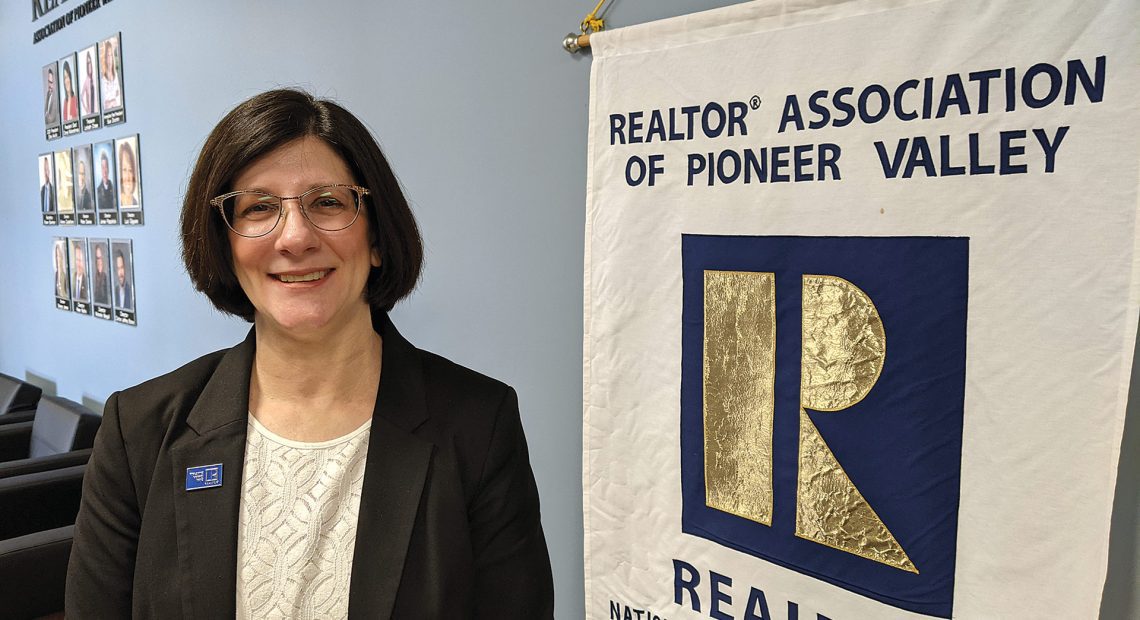
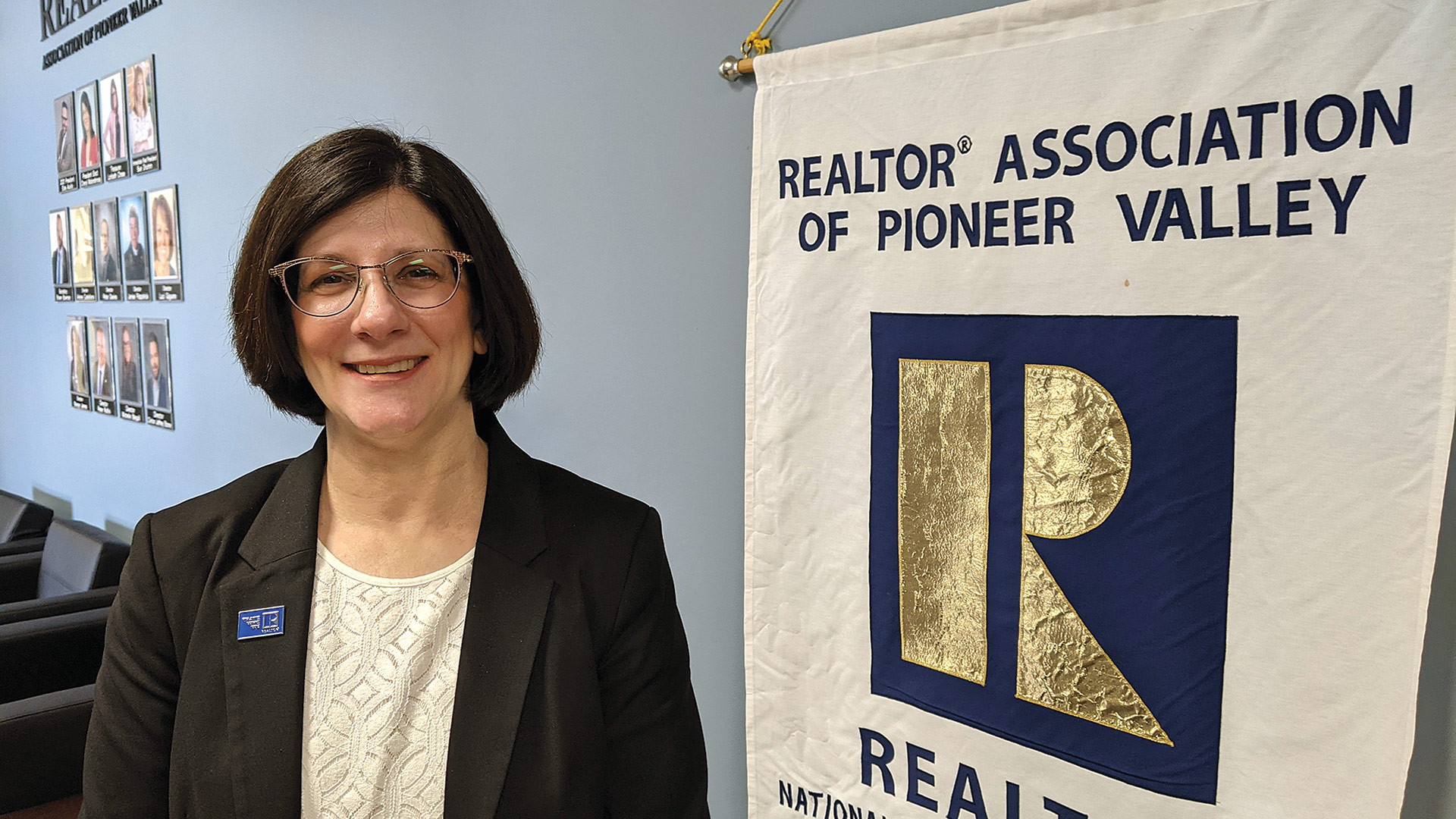
SPRINGFIELD — Cheryl Malandrinos was installed as the 2022 president of the Realtor Assoc. of Pioneer Valley (RAPV), a nonprofit trade association with more than 1,800 members. The installation of officers and directors was held on Jan. 14 at the RAPV headquarters and was also livestreamed on Facebook.

Malandrinos started her professional real-estate career in 2014 and quickly became involved in RAPV. She has served on the board of directors for three consecutive years and has been involved in several committees. The RAPV named her Realtor of the Year in 2019.

In addition to her association involvement, she devotes her time to other community-outreach programs such as Rick’s Place in Wilbraham, Christina’s House in Springfield, and as treasurer for WriteAngles Inc.

The following individuals were installed as 2022 officers: Lori Beth Chase of LAER Realty Partners as president-elect, Arlene Castellano of Maria Acuna Real Estate as treasurer, Peter Ruffini RE/MAX Connections as secretary, and Elias Acuna of Maria Acuna Real Estate as immediate past president. Directors include Shawn Bowman of Trademark Real Estate, Brenda Cuoco of Brenda Cuoco & Associates, Peter Davies of Borawski Real Estate, Janise Fitzpatrick of Jones Group Realtors, Luci Giguere of Landmark Realtors, Sharyn Jones of Executive Real Estate, Michelle Stegall of Property One, and Clinton Stone of Property One.

Daily News

HOLYOKE — Holyoke Community College (HCC) will begin its spring 2022 Women’s Leadership Series on Wednesday, Jan. 26 with Dawn DiStefano, president and CEO of Square One in Springfield, who will give a presentation titled “What’s the Worst That Can Happen?”

All sessions run from noon to 1 p.m. on the last Wednesday of the month over Zoom. During each session, participants will join prominent women leaders for discussions on relevant topics and ideas to help their leadership development. They will also have the opportunity to form a supportive network to help navigate their own careers.

“The sessions are interactive and perfect for professional women who want to connect,” said Michele Cabral, HCC’s executive director of Business, Corporate and Professional Development.

On Feb. 23, Christina Royal, president of Holyoke Community College, will present “Growth Mindset.” That will be followed on March 30 by “Finding Your Mentors” with Willie Maddox, executive vice president and chief risk officer at ACBB. On April 27, Easthampton Mayor Nicole LaChapelle will present “My Ankle is Made of Steel,” and on May 25, the series will wrap up with “Self Love,” with Shawntsi Baret, leadership coach and owner of SBSWF Consulting.

The cost of each session is $25. The full, five-session series can be purchased for $100. Cost, however, will not be a barrier to participation. If pricing is an issue, e-mail Cabral at [email protected].

Space is limited, and advance registration is required. To register, visit hcc.edu/womens-leadership.

Daily News

HADLEY — After the year nonprofit organizations have had, who couldn’t use more happiness? Happier Valley Comedy offers the Free Happiness Program, through which nonprofits serving underrepresented, marginalized communities can apply for a free Happier Valley Comedy event, such as an improv show, a personal- or professional-development training session, a keynote, or a workplace-wellness event to be held either online or in person at a venue selected by the organization or Happier Valley Comedy’s theater and lounge in Hadley.

“Our mission is to share laughter, joy, and ease with the world through the tenets of improv,” Happier Valley Comedy founder and President Pam Victor said. “The Free Happiness Program is the next step in our commitment to fulfilling that mission specifically with communities that have been unfairly underserved.”

The Free Happiness Program is one part of the comedy theater and training program’s ‘green-lining’ efforts, which aim to provide some balance for the historic, grossly unjust ‘red-lining’ of BIPOC (black, indigenous, and people of color) communities in the greater worlds of comedy, personal and professional development, wellness, and beyond.

“We’ve intentionally made the application process as simple and easeful as possible. We know nonprofits are stressed on many levels, so we want to make this program extremely accessible to those who need it,” Victor said.

Preference is given to local organizations serving underrepresented, marginalized, and/or BIPOC individuals and communities. Organizations must be a 501(c)(3) nonprofit to qualify.

The next round of applications are being awarded by Happier Valley Comedy’s board of directors in late February. Applications are accepted on a rolling basis at www.happiervalley.com/free-happiness.html.

Cover Story Top Entrepreneur

Towering Achievements

Dinesh Patel and Vid Mitta Are Reimagining a Springfield Landmark

In 1996, BusinessWest introduced a new recognition program, one that pays homage to the entrepreneurial spirit that has long defined this region. Since then, the Top Entrepreneur honor has gone to small-business owners, college and hospital presidents, and even Holyoke’s municipal utility. This year’s recipients are Dinesh Patel and Vid Mitta, true serial entrepreneurs who rolled the dice and purchased Tower Square, the iconic but troubled Springfield landmark, in 2018. Their efforts to change the landscape and reimagine the property have been slowed by COVID, and there are many chapters in this story still left to write. But there are signs of progress, and the partners’ patience, persistence, and entrepreneurial mettle are big reasons why.

Demetrios Panteleakis recalls his company being one of many commercial real-estate brokerage firms that were interviewed to represent the new ownership group at Tower Square as leasing agent.

He also recalls being rather surprised when the Macmillan Group won the contract. That’s because … well, he was rather candid in his assessment of what needed to be done with the downtown Springfield landmark.

Probably too candid, in his mind.

“I think I was pretty brutal when it comes to what needed to change and what types of investments needed to be made in the building,” he said, looking back more than three years. “I sent it to them kind of thinking, ‘they’re going to look at this and probably say, ‘forget this guy — there’s no way we’re doing all this.’

“But to my surprise, and to my surprise ever since, it’s been the complete opposite,” he went on. “They wanted to meet with me again, and they wanted me to go into detail on a marketing plan, they wanted me to go into detail on the improvements … the concept of doing away with traditional retail and doing more of a community-based approach for the tenants of the building and focusing on just the constant improvement of the building.”

Panteleakis said that this response to his “brutal assessment,” and the actions taken since, go a long way toward explaining why partners Vid Mitta and Dinesh Patel have been named BusinessWest’s Top Entrepreneurs for 2022, the latest winners of an award first handed out in 1996.

Actually, this is the second time they’ve won the award — sort of. Indeed, they were, and still are, part of the ownership and management team of the Springfield Thunderbirds that took home the Top Entrepreneur award for 2017 for their efforts to not only bring hockey back to the city but make it a force in efforts to reinvigorate the downtown.

The two were already serial entrepreneurs at the time MassMutual was looking to sell the Tower Square complex in 2017, owning everything from hotels to fast-food restaurants; from an information-technology-solutions company to early-education facilities. But this was their first real joint venture and certainly their first class-A office tower, and Panteleakis said they entered this exercise with what he called a “thirst for learning.”
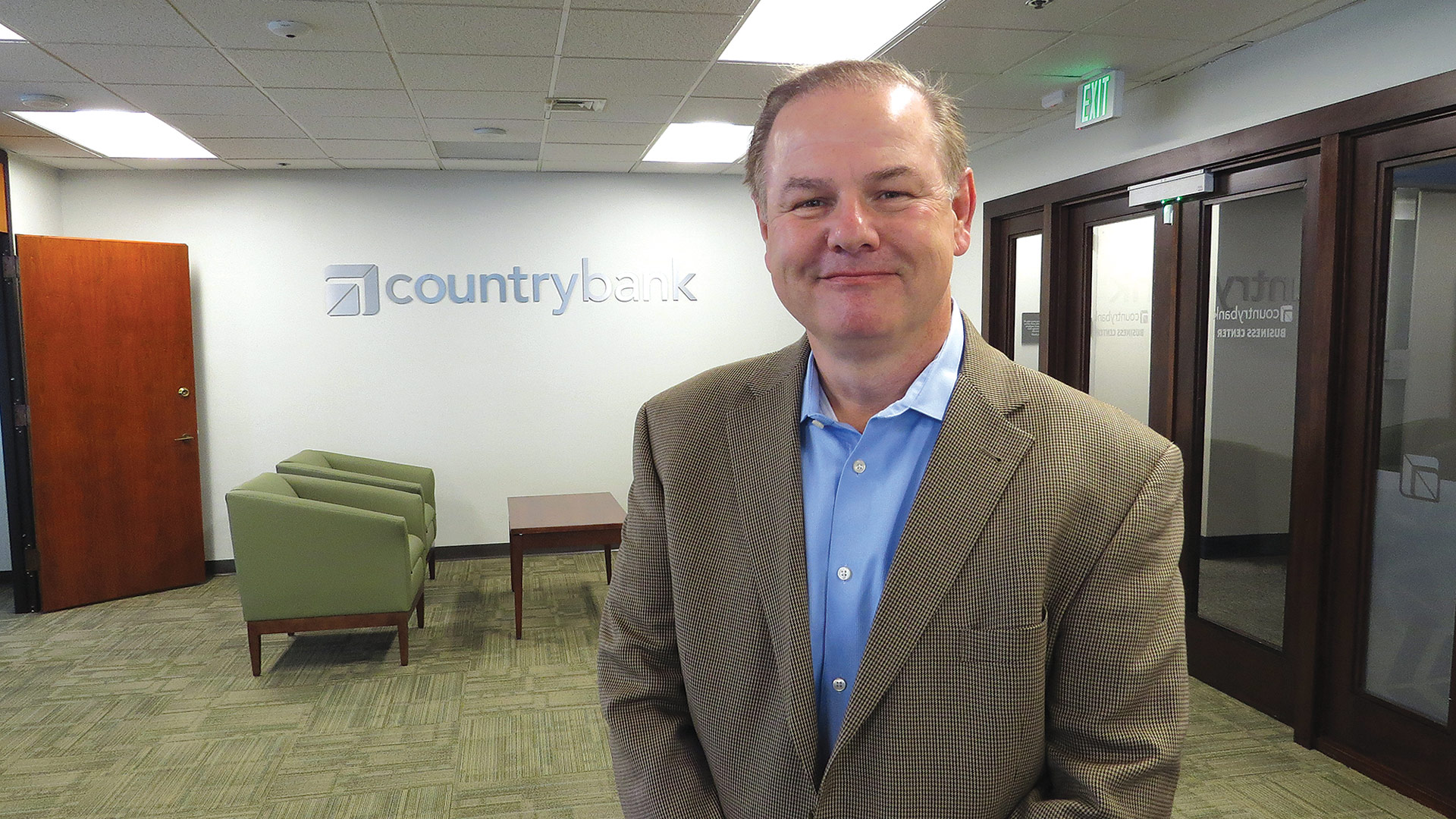
Demetrios Panteleakis stands in the space in Tower Square now occupied by Country Bank

Demetrios Panteleakis stands in the space in Tower Square now occupied by Country Bank, one of many new tenants to arrive since Vid Mitta and Dinesh Patel acquired the downtown Springfield landmark.

“And that’s unusual,” he went on. “Most people who own buildings always think they know more than the broker; it’s rare for them to listen. I was shocked when they started instituting the plan, and they really stuck to it.”

While listening has been a major ingredient in their success at Tower Square — and in business in general — there are many others, the partners told BusinessWest, including patience, especially amid COVID-19, which has certainly slowed the pace of progress. But also watching and learning what has worked elsewhere (we’ll see some examples of that) and applying it to their venture.

Persistence and adherence to the plan are also keys, they said.

“We just keep moving and keep achieving one target at a time,” said Mitta in describing the overall strategy for the property. “Right now, we’re at 70% occupancy, compared to roughly 40% when we took over the building. So we still have another 30% to go, so we’re not there yet, and we work on a day-to-day basis based on the leads that we get. We’ve come this far, and we hope to go all the way to the finish line, to 100%.”

Patel concurred, noting that, while nothing has really been easy with this venture — undertaken mostly during the two years of COVID and made much expensive and complicated because of it (more on that later) — there are encouraging signs. Overall, the project has been a learning experience and has emboldened the partners in many ways.

“I think I was pretty brutal when it comes to what needed to change and what types of investments needed to be made in the building. I sent it to them kind of thinking, ‘they’re going to look at this and probably say, ‘forget this guy — there’s no way we’re doing all this.”

“This project has given us a lot of confidence,” he said. “If there’s a space, and the structure is good, like we have here, we know we can create something in our mind and move forward.”

Tim Sheehan, Springfield’s chief Development officer, lauded the work at Tower Square, saying that, in many respects, the partners’ efforts mirror the original mission of the property and take it a new and higher level at a different point in the city’s history.

“This is a critically important project for Springfield,” he said. “The whole impetus behind the building itself was to enliven the commercial business district of the downtown, and to enliven it by bringing businesses to the heart of the city, workers to the heart of the city, visitors, and supportive retail, and clearly the building has done that.

“When you look back at how this was conceived in the 1960s as part of a large urban-renewal effort, the contemplation of this building really started with a small group of civic and downtown business leaders, and ultimately it was advanced by MassMutual,” Sheehan continued. “So I guess you could say Tower Square continues to attract entrepreneurial investors to the property. And while the vision that those initial investors had was clearly bold, Dinesh and Vid’s vision to reposition the property is as bold, if not bolder.”


Background — Check

A quick look at the partners’ résumés and portfolios of business interests reveals why the phrase ‘serial entrepreneur’ applies to both.

A pharmacist by trade, Patel has become a prolific business owner and developer. His portfolio now includes several 99 Restaurant & Pub locations, including one in Greenfield; a Walgreens in Worcester; a CVS in Bridgewater, Conn.; three McDonald’s franchises, including one in Holyoke; several Hampden Inn & Suites locations across New England; a few adult day-care facilities; and even a self-storage operation.

As for Mitta, he started as a software programmer and has, over the past three decades or so, put together a broad and diverse portfolio of business interests known collectively as Mitta’s Group. Like Patel, he has properties in the hospitality realm, including several hotels within the Marriott, Hyatt, Choice, and Wyndham franchises, but also owns several early-education facilities operating under the name the Learning Experience, as well as Synergic Solutions, which provides information-technology solutions to businesses around the globe.
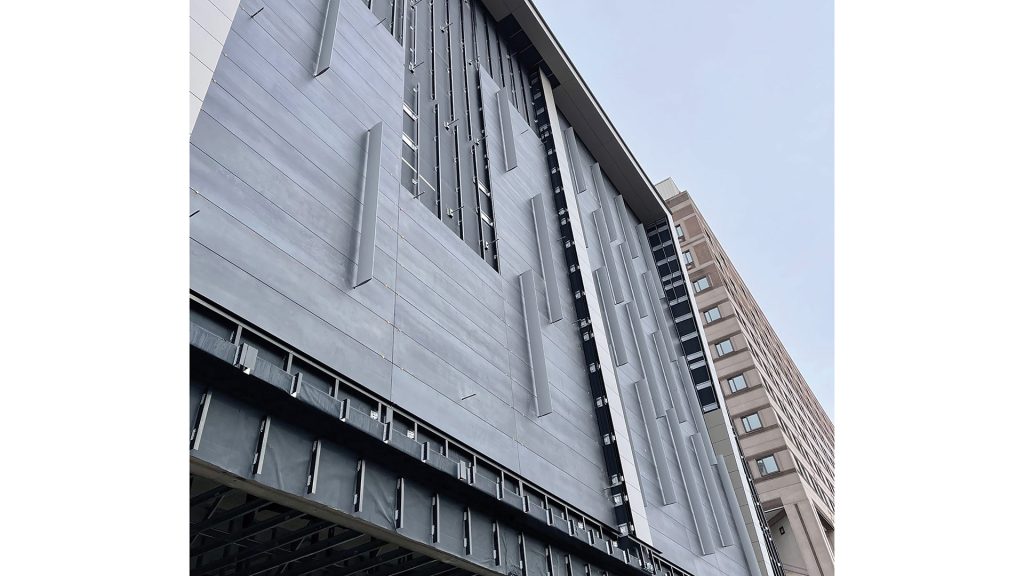
The new façade on the hotel at Tower Square

The new façade on the hotel at Tower Square is symbolic of the changes that have taken place at the property.

And they continue to invest in new ventures, including development of a 14-acre parcel in Windsor, Conn. into a mixed-use complex that will include a hotel, apartments, a gas station, a car wash, and other components. Work on the project, to be called Windsor Crossing, is set to commence next spring.

The top line on each résumé now, though, is Tower Square, and how these two came together to purchase the 50-year-old landmark is an intriguing story, which they summed up as a calculated risk well worth taking.

The two certainly knew each other well — as noted, they both had ownership stakes in the Thunderbirds, and Patel had sold some properties to Mitta — but they had never launched a joint venture together … until Tower Square came on the market in late 2017.

“Most people who own buildings always think they know more than the broker; it’s rare for them to listen.”

“When I came across this particular listing from MassMutual, I approached Dinesh and asked him what his thoughts were,” Mitta said. “He said that if I was interested, he was willing to partner, and that got the ball rolling.”

Patel recalls them having a lengthy discussion concerning the property — which came in two parts, the hotel and the retail/office complex adjoining it — on opening night of the Thunderbirds’ 2017-18 season, which came only a day before the deadline for submitting bids for the Tower Square property.
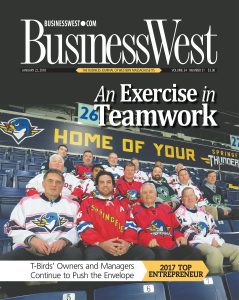
cover of BusinessWest’s Top Entrepreneur issue

This is actually the second time Vid Mitta and Dinesh Patel have been on the cover of BusinessWest’s Top Entrepreneur issue. They’re part of the ownership and management group of the Springfield Thunderbirds that took home the honor in 2017.

“Between 4 and 5 o’clock, I was in Northampton on a bike ride, and I thought to myself, ‘I want to pull the trigger on this,’” he went on, adding that a bid was submitted mere minutes before the 5 p.m. deadline.

Bidding on Tower Square was certainly not a slam-dunk proposition at the time; in fact, it was far from it. While the building, which changed the downtown Springfield skyline in dramatic fashion when it opened in the late ’60s, had some core tenants in its retail space — UMass Amherst, Cambridge College, and a CVS, among others — and several more in its office tower, the complex had certainly seen better days.

MassMutual was soon to be vacating several floors in the office tower, many spaces in the retail portion of the building were vacant or underutilized, and the hotel on the property had lost the Marriott flag that had flown over it for decades and was now known as the Tower Square Hotel.

But while others were looking at a glass half-empty — or far worse — the two partners saw potential, and something else as well: an important property in a city that they had invested in and become part of.

“My wife and I were having lunch together and started talking about Tower Square,” Patel recalled. “She described it as an ‘iconic building’ in Springfield and a ‘once-in-a-lifetime opportunity.’ She said, ‘we need to figure out how to get this building.’”

Mitta recalls having similar thoughts, and noted that, while their initial interest was focused on the hotel, which they successfully bid on first, they eventually pursued the rest of the property as well, paying $17.5 million for both halves of the operation.

And they did so understanding that there would be much larger investments to come.

“We knew what we were getting into,” said Mitta, acknowledging that this comment covers considerable ground, meaning acknowledgement that large amounts of work needed to be done not only to get the Marriott flag back on the hotel, but to renovate the parking garage; repair and upgrade aging equipment, including the elevators; and undertake other improvements to bring new tenants, and new vibrancy, to the property.


Building Momentum

Elaborating, the two partners said they entered this joint venture with a plan of sorts, one that would take shape over the coming months and years.

That plan called for focusing less on traditional retail and more on creating something approaching a community, with pieces that would complement one another, said Patel, adding that, even before he and Mitta had finalized their commitment to bid on the property, he was talking with Dexter Johnson, president and CEO of the YMCA of Greater Springfield, about moving parts of that operation, specifically the fitness center and childcare facilities, to Tower Square.

“This project has given us a lot of confidence. If there’s a space, and the structure is good, like we have here, we know we can create something in our mind and move forward.”

Those operations would eventually become part of a larger plan that called for attracting businesses that would bring convenience, as well as needed products and services, to those working in the tower, but also the students attending classes there and those living in and around downtown, said the partners, adding that other components have come to include White Lion Brewing Co., a spa (SkinCatering), and even the wine exchange that recently opened in the space next to the Hot Table restaurant.

“We never thought that this would come back as a retail building,” Mitta said. “But when we purchased the property, we knew that MassMutual had already put UMass and Cambridge College into the retail mall, and that gave us a good start toward bringing more semi-retail businesses into the mall, so it would be a win-win situation for all of us.”

Previous Top Entrepreneurs

2020: Golden Years Homecare Services
2019: Cinda Jones, president of W.D. Cowls Inc.
2018: Antonacci Family, owners of USA Hauling, GreatHorse, and Sonny’s Place
2017: Owners and managers of the Springfield Thunderbirds
2016: Paul Kozub, founder and president of V-One Vodka
2015: The D’Amour Family, founders of Big Y
2014: Delcie Bean, president of Paragus Strategic IT
2013: Tim Van Epps, president and CEO of Sandri LLC
2012: Rick Crews and Jim Brennan, franchisees of Doctors Express
2011: Heriberto Flores, director of the New England Farm Workers’ Council and Partners for Community
2010: Bob Bolduc, founder and CEO of Pride
2009: Holyoke Gas & Electric
2008: Arlene Kelly and Kim Sanborn, founders of Human Resource Solutions and Convergent Solutions Inc.
2007: John Maybury, president of Maybury Material Handling
2006: Rocco, Jim, and Jayson Falcone, principals of Rocky’s Hardware Stores and Falcone Retail Properties
2005: James (Jeb) Balise, president of Balise Motor Sales
2004: Craig Melin, then-president and CEO of Cooley Dickinson Hospital
2003: Tony Dolphin, president of Springboard Technologies
2002: Timm Tobin, then-president of Tobin Systems Inc.
2001: Dan Kelley, then-president of Equal Access Partners
2000: Jim Ross, Doug Brown, and Richard DiGeronimo, then-principals of Concourse Communications
1999: Andrew Scibelli, then-president of Springfield Technical Community College
1998: Eric Suher, president of E.S. Sports
1997: Peter Rosskothen and Larry Perreault, then-co-owners of the Log Cabin Banquet and Meeting House
1996: David Epstein, president and co-founder of JavaNet and the JavaNet Café

Patel concurred, noting how he and Mitta have seen the ‘education hub’ concept work in Worcester, and they believe it can work in Springfield as well.

In the office tower, said Panteleakis, the goal has been to take advantage of the attractive class-A space, including the floors vacated by MassMutual, as well as other amenities, such as on-site parking, those aforementioned service businesses, and a safer, more vibrant downtown to bring some of the businesses that had left Springfield back to its central business district while also bringing some new names to that area.

And that has happened with the addition of Wellfleet, which now has its name and logo on the building, as well as Farm Credit Financial Partners, the Hampden County District Attorney’s Office, Country Bank, several state offices, and many other new tenants.

“We’ve replaced 150,000 square feet vacated by MassMutual with 140,000 square feet of new tenants,” Panteleakis said, adding that there is one more full floor to fill and several “smaller pockets” that remain vacant.

The partners said that, while there is certainly a plan in place, the simple objective moving forward is to continue adding complementary pieces and creating a destination — something Tower Square was decades ago but hasn’t been for some time.

“If you look at the building today, it efficiently serves the needs of modern office tenants, and that’s been though significant upgrades to that space,” Sheehan said. “The investment of more than $20 million in completely refurbishing the hotel and restoring the Marriott flag will attract new and more visitors to downtown and enhance the city’s attractiveness as a meeting and convention destination. Additionally, they’ve created a sense of excitement — I don’t think you can use any other word — about what the building’s public space could actually be.”

While progress has been made on many different levels at the Tower Square property, the pandemic has certainly slowed its pace, due to everything from the soaring cost of materials to labor shortages, said the partners, adding that it has also made improvements and enhancements more expensive — and far more expensive, in many cases.

That’s especially true with the ongoing work at the hotel, where supply-chain issues have made it difficult to obtain needed materials in a timely fashion. Overall, the project, with a price tag that has risen past $30 million, is well behind the original schedule, which had the hotel reopening last year, but the partners are confident that the facility will be welcoming guests by the end of the second quarter of this year.

“COVID has hurt us because the cost of construction has shot up, and the cost of raw materials has shot up as well,” Mitta said. “Every time we import things from China or some other country, the container fees alone are almost four to five times what they used to be two or three years back. We don’t want to stop, so we had to pay these higher prices and keep going.”

As just one example, Patel noted that steel prices have risen 48% this year, an increase that could not have been foreseen when they bought the property.

“Increases of 10% or so, you anticipate that; you can factor that in,” he noted. “But 48% to 50%, you can’t plan for that. It’s all about supply and demand.”

Despite the skyrocketing cost of the project, the partners remain optimistic about the hotel and its prospects for the future. They said COVID will eventually relent, and when it does, people — if not businesses — will be ready and willing to travel again.

“People are coming back,” Mitta said. “They’re traveling, they’re using hotels, and the travel industry is coming back — especially when it’s not related to business travel.”

COVID has also brought a halt to any plans to develop the parcel across Main Street from Tower Square, known to many as the ‘Steiger’s lot’ because that’s where the department store once stood.
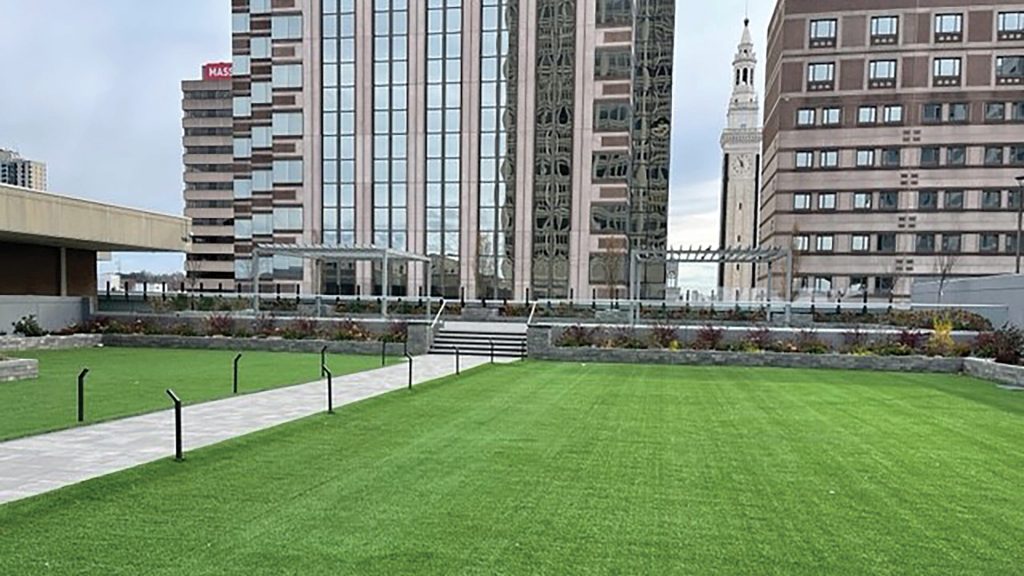
The rooftop area at Tower Square

The rooftop area at Tower Square is one of many that have a new look.

Original plans called for building a Hyatt on that property, but the pandemic and its deep impact on travel of all kinds put that initiative on ice, said Patel, adding that their plans will be revisited once the Marriott opens.

Meanwhile, they’re advancing plans for Windsor Crossing and continually looking for new entrepreneurial opportunities. That thirst for new opportunities brought them to Tower Square in the first place, and it has seen them through this challenging but ultimately fulfilling time.

“It’s been exciting,” Mitta said. “Every day is a new adventure.”


Landmark Decision

Flashing back to when the partners acquired the Tower Square property, Mitta noted that they had both a plan as well as a backup plan, one that called for converting the office tower into residential space if the office market didn’t develop as anticipated.

That backup plan wasn’t needed, obviously, although there have been some struggles, and COVID certainly has brought many unanticipated challenges.

Instead, the partners are moving forward, as Mitta noted, achieving one target at a time. The larger goal is not to turn back the clock and make Tower Square exactly what it was decades ago, but turn it back to the extent that the landmark is a destination and center of vibrancy.

There is still work to do, but if Mitta and Patel have proven anything, it’s that they are persistent and determined to make the plan they put on the drawing board more than four years ago a reality.

They’ve also shown that they’re quite worthy of BusinessWest’s Top Entrepreneur honor.


George O’Brien can be reached at [email protected]

Features Special Coverage

Feeding Frenzy

Cheryl Malandrinos says the pandemic changed

Cheryl Malandrinos says the pandemic changed how people look at how they work and where they live, sparking greater demand for homes in Western Mass.

“A $180,000 house going for $275,000 … it can’t continue this way, or else the average homeowner won’t be able to afford a mortgage, and then the market will have to stabilize.” That’s a quote from a Realtor who spoke with BusinessWest last January about the low supply and high prices of homes in Western Mass. A year later, the situation has, simply put, not stabilized, with the region remaining an in-demand destination for remote workers and new housing stock still lagging. For potential buyers, it’s a situation that demands patience — and, again, hope for a correction down the road.

In her 25 years as a Realtor, Nancy Hamel has never seen anything like it.

Looking back at 174 houses sold in Amherst last year, 63 sold for more than $500,000, said Hamel, who is a top-producing agent with Jones Group Realtors. “That’s crazy. For years, we just had a handful sell for over $500,000.”

She rattled off some actual examples: a home with an asking price of $410,000 going for $511,000. A $595,000 listing selling for $675,000. A $649,000 listing topping out at $740,000. “It could just be underpriced, or it could be it rang all the right bells.”

Mostly, though, it’s supply — and that’s an issue in residential real estate that has pushed home prices into the stratosphere.

“Supply has just been very strange,” said Amy Hamel, Nancy’s daughter and partner on her team at Jones — and someone who, unlike Nancy, focuses primarily on the buyers’ side. It can be hugely frustrating.

“Lack of inventory has played a role in people panicking to find suitable housing,” Amy continued. “More people are able to work remotely now because a lot of companies decided to do that long-term because it’s worked so well. They’re saying, ‘why have communal space when we’re doing the same amount of revenue, or more, having employees work from home?’”

As a result, buyers have flocked to Western Mass. — and other attractive regions of the U.S. when it comes to quality of life — and the existing housing stock is not sufficient to meet demand.

“We see a lot of people moving here from all over — from New York, or from out west, Arizona, New Mexico. People are picking a place on a map, and Amherst is definitely a top place for people to come to,” she explained. “So prices are going up more than I could have ever imagined. Money is coming in from all over the place.”

“When it comes from high-home-value regions like California, where a half-million doesn’t seem as expensive for a home, that drives up prices for locals, for whom that is an intimidating chunk of change,” Amy said. “What they’re paying beyond the asking price is unlike anything I’ve seen in my 15 years.

“A lot of people are saying it’s been the best year for Realtors,” she went on. “Not really, unless you’re a top listing agent. Working on the buying-agent side has been very frustrating. I’ve had a lot of buyers put in many, many different offers before they found something, and still I have a lot of buyers laboring because they’re being outbid. And it’s not like they haven’t put in strong offers.”

Nancy noted that her daughter lost out on $14 million in offers last year. “She just got outbid — by people with cash, people offering $50,000 over asking price and still not getting it.”

“A lot of people are saying it’s been the best year for Realtors. Not really, unless you’re a top listing agent. Working on the buying-agent side has been very frustrating.”

She took one buyer from California on a virtual tour over FaceTime, who made an offer immediately, and well over asking price.

That’s great for sellers and listing agents, she admits, “but I’m having concerns. What are working people going to do? If you haven’t made money in real estate, it’s very hard to buy in now.”

Locally, in her Amherst-area market, “it could affect people who apply to UMass because professors don’t want to live far away and teach; they want to live in a 20-mile radius,” she noted. “But South Hadley’s expensive, Belchertown’s exploding, Hadley … forget it, and Northampton’s out of sight.”

The pricing has forced some creativity, to say the least, Nancy said. “People are waiving inspections; that’s scary to me. And I’m seeing an awful lot of parents step up to the plate and help. They say, ‘I’d rather help my kids when my eyes are open, rather than having them get it when I’m gone, and I don’t get to see the joy.’

Amy (left) and Nancy Hamel say they’ve never seen home prices where they are now

Amy (left) and Nancy Hamel say they’ve never seen home prices where they are now, sometimes selling close to $100,000 over the asking price.

“I’m grateful — we’re lucky to be a listing agency,” she went on. “But a lot of my colleagues are disappointed they’re in this feeding frenzy. If they’re new and working with buyers, it’s a lot of work to place an offer — a lot of paperwork, disclosures, everyone has to sign, get pre-approval … to do all that work just to be disappointed. The feeding frenzy is just cuckoo.”


Shifting Sands

Cheryl Malandrinos, president of the Realtor Assoc. of Pioneer Valley (RAPV), said the pandemic caused people to look differently at how they work and, in turn, where they live.

“They decided they didn’t really need to live as close to their offices if they were going to be able to stay remote for the time being. So we’ve definitely seen a shift here,” she told BusinessWest. “We did see buyers from the outside area, from other states, come into the Valley as well. So we continue to struggle with low inventory and rising prices throughout. The reality is, we haven’t been able to produce housing for quite some time. That has not helped us any.”

At the end of 2021, inventory in the region was 30% down when compared to December 2020, and prices rose about 15.4%, on average, over that same time period — which is remarkable, considering that articles like this one — discussing the same issues of a supply crunch and high selling prices — were being written a year ago, too.

One issue is that Millennials are increasingly entering the market, and they’re looking for affordable homes. “The reality is 41% of total buyers are first-time homebuyers, so entry-level homes are high demand,” Malandrinos said, and those homes aren’t being built at the rate buyers demand — especially during a lumber shortage. “It’s hard to build that first-time-homebuyer, entry-level home and make it affordable.”

“A lot of my colleagues are disappointed they’re in this feeding frenzy.”

For that reason and others, she said, Realtors and economists expect demand to continue to soar in 2022, especially with the prospect of the Fed raising interest rates. “Buyers will keep us busy in the winter season, looking for homes and hoping to secure them while the rates are still historically low, which gives them more purchasing power.”

Last year, the median price of an existing single-family home nationally jumped to an all-time high of $357,900, up 23% from 2020, according to the National Assoc. of Realtors (NAR).

“Supply-chain disruptions for building new homes and labor shortages have hindered bringing more inventory to the market,” said Lawrence Yun, NAR’s chief economist. “Therefore, housing prices continue to march higher due to the near record-low supply levels.”

Yun noted that inflation and the pace of price appreciation is expected to subside next year. At NAR’s recent Real Estate Forecast Summit, economists and housing experts agreed that inflation would likely ease in 2022 at a 4% rate, while home prices are expected to rise at a moderate pace of 5.7%.

So what does that mean for buyers? “You have to be prepared because you’re going to face a fair amount of competition in the marketplace,” Malandrinos said. “Gone are the days when you could find something and, a few days later, think about talking to a lender.

“You need to be prepared right away — engaging a Realtor as soon as possible, getting pre-approved, so you’re all set once you find what you want, because you’re not going to have time to second-guess it,” she continued. “You have to move forward with a strong offer. We’re still most likely going to see things selling over asking price, with multiple offers on properties that are well-priced.”

At the end of 2021, listings lingered on the market 22 days on average, but that number is skewed by a few outliers. “In reality, many properties are leaving the market before that.”

What she doesn’t recommend is acting out of panic — for instance, by waiving inspections. “I’m not one, in good conscience, to recommend that. Maybe you’re saying, ‘I want to hold off my inspection and reserve the right to withdraw, but don’t expect you to do any repairs.’ That’s also a way to get around that.”


Street-level View

Nancy Hamil has seen downtown Amherst values rise to 20% higher than similar properties in other neighborhoods, and one factor might be that migration into Western Mass. from people in urban centers who still want to live near amenities.

Lawrence Yun

“Supply-chain disruptions for building new homes and labor shortages have hindered bringing more inventory to the market. Therefore, housing prices continue to march higher due to the near record-low supply levels.”

“People covet living in downtown Amherst; they love to be able to walk places. Northampton is the same,” she said, noting that apartment rents are also on the rise, again impacted by supply and demand, and people priced out of the home-buying market needing a place to live.

“I do think affordable housing needs to stabilize to some extent because prices have gone a little beyond where I thought they would be in our area,” Amy Hamel added. “I do wonder what this year is going to be like. There are many factors that play into the market, and especially with COVID still running rampant, it’s going to be interesting to see how this year plays out.”

The pandemic did change the way homes are shown, Malandrinos said, with 2020 givijg rise to virtual tours using 360-degree videography.”

“That stayed with us and likely will continue, as it makes everyone feel safer,” she said, while noting that in-person tours are still common, though some sellers are leaning more toward open houses instead of many individual showings.

“Some people are still concerned about safety, so you have to work with your Realtor and make a plan that makes sense for you,” she noted. “Often, properties come on the market, and Realtors defer showings and have many people come in at once instead of private showings.”

It’s not unusual, she added, for those tours to have a set layout, with interested buyers entering by one door, following a path, and leaving by a different door. “As we go back to in-person showings, we’re trying to keep it as normal as possible, but as safe as possible, too.”

She pointed to the state’s Housing Choice Initiative, created a few years ago to incentivize communities to build more housing stock, as one way to increase supply.

“I really hope for a market correction so more people can afford to come into the market,” Nancy Hamel said. “I remember, when I was young, we didn’t require these huge down payments, and a house cost $50,000. Home ownership shouldn’t be only for the wealthy.”

Malandrinos agreed. “Buyers are tired,” she said. “It’s not unusual to hear, ‘my buyer lost out on their third property.’ Everyone benefits when there’s more equity in the market. I hope we get there, but we’re not there yet.”

There’s only so much comfort those words bring to people who feel they’re priced out of the kind of home they want in Western Mass.

“It’s easy for people to get frustrated, but stick with it. There is a property for you,” she added. “You need to be confident and come in with a strong offer you’re comfortable with — and hang tight.”


Joseph Bednar can be reached at [email protected]

Hampshire County Special Coverage

Food for Thought

Fred Gohr says the lingering pandemic may extend industry trends

Fred Gohr says the lingering pandemic may extend industry trends both positive (more outdoor dining) and negative (staffing issues).

There’s no doubt that 2021 was a better year for restaurants than 2020, which was marked by weeks of closure in the spring and strict capacity restrictions after that. Many restaurants stayed afloat with expanded takeout and outdoor seating, while looking forward to what they hoped would be a stronger 2021. But while restrictions were lifted and patrons returned last year, other issues — from a workforce shortage and supply issues to new COVID variants — kept the industry from reaching full strength. What’s on the menu in 2022 for this industry so critical to the economic health of Hampshire County? Stay tuned.


By Joseph Bednar and Mark Morris


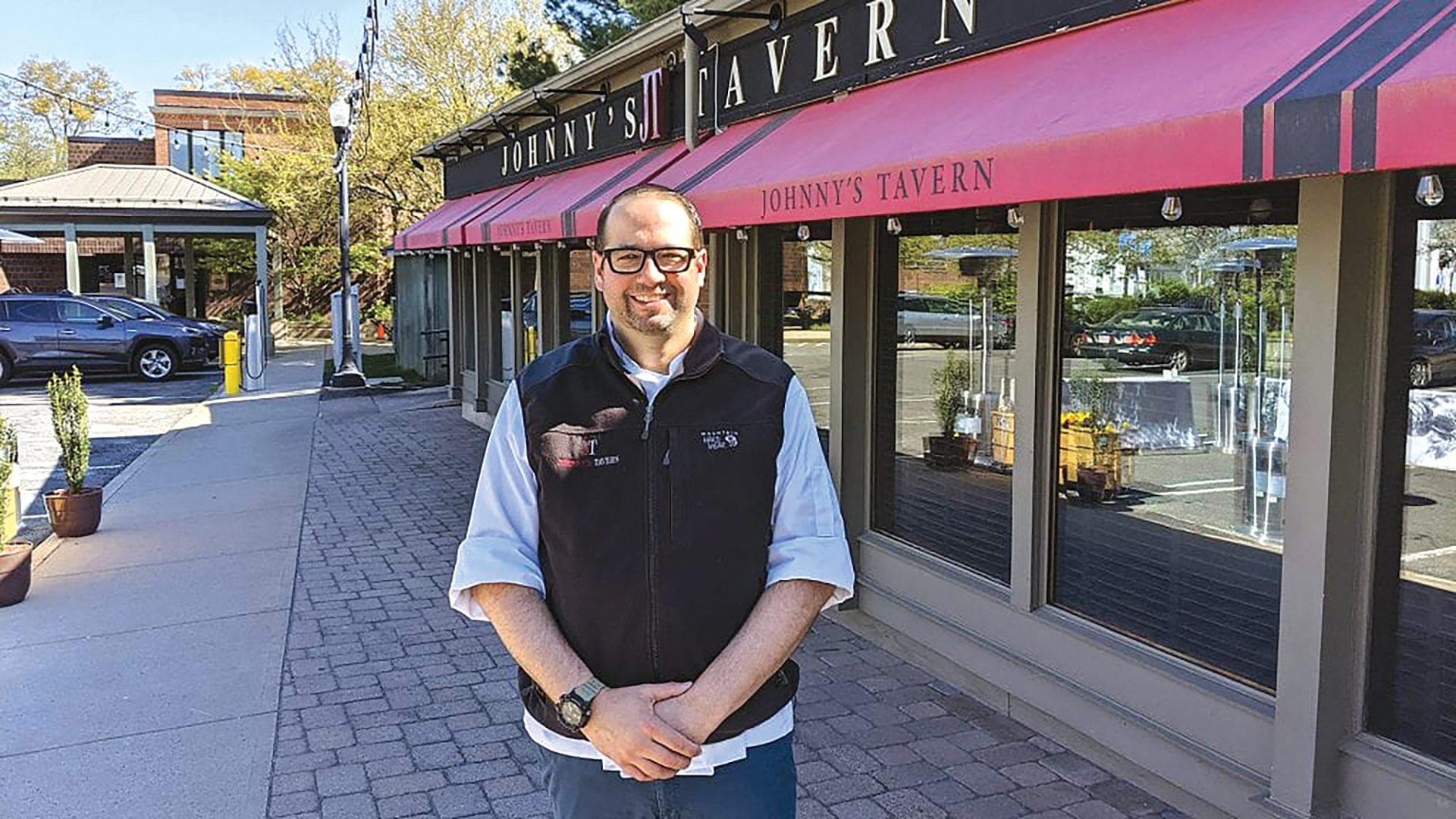
Fred Gohr recalls thinking, a year ago, that there would be a lot of pent-up demand for eating out in 2021, and he was right.

Which is why it’s a little strange to be thinking the same thoughts again, after a persistent series of COVID-19 surges — the Omicron variant is only the latest — that kept slowing down restaurants’ progress last year.

Still, “we’ve actually done pretty well,” said Gohr, owner of Fitzwilly’s in downtown Northampton. “Fortunately, Fitzwilly’s is pretty large and kind of spread out. We put up plexiglass between all the booths, which a lot of places did; it makes guests certainly feel more comfortable.

“But all in all, 2021 was not a bad year,” he added. “It certainly had ups and downs, peaks and valleys — a few patches that were really rough — but overall, from a business level, we looked back at the end of the year and felt we did better than we thought we would at the beginning of 2021. So that was a pleasant surprise — or relief, whatever you want to call it.”

Restaurants, one of the main economic and tourism drivers in Hampshire County, certainly saw that pent-up demand manifest in 2021, especially after Memorial Day, when the state lifted the final restrictions on gatherings. Most restaurants reported strong summer business. The problem, however — and it’s a big one — came when they realized hospitality workers were leaving the field in droves, and not coming back any time soon.

“I guess the biggest challenge in 2021 was staffing. It was very, very difficult,” Gohr said. “We’re fortunate we have a core of staff who have been here a long time. Most of those folks hung in through the highs and lows and are still here.”

“Probably in late December we noticed a little slowdown because of the resurfacing of Omicron and the changing variants. But overall, it was a very good year.”

Bryan Graham, regional manager for the Bean Restaurant Group, which boasts a family of 11 eateries throughout the region, many in Hampshire County, agreed that staffing has been a challenge even for the most popular restaurants.

“All restaurants across the region are struggling to find hourly cooks, along with a few entry-level positions,” he said. “We definitely had to reshift our labor pool and are taking care of employees with more aggressive wage increases to retain them.”

Edison Yee, president of the Bean Group, agreed with that assessment of the workforce shortage. “It’s still a big part of the picture. We’re definitely focused on the future and retaining our employees, but the general application pool is way down.

“We have guys, hourly employees, with longevity, who love this group, but when someone is offering a $4 hourly increase to them, they have to jump ship a lot of times, unfortunately,” Yee added. “We’ve been giving more increases to employees in the past six months than in prior years.”

The problem has been exacerbated by Omicron, which has kept many employees out of work at establishments around the region, forcing some restaurants to reduce hours or even close for certain days.

All of this affects the bottom line, but so does another global economic issue currently impacting not only restaurants, but industries of all types: supply shortages and costs. For restaurants, that largely means food products, but affects paper products and other supplies as well, Graham said, and it sometimes forces eateries to switch menu items or ingredient brands to keep up with price fluctuations and availability.

Bryan Graham says there’s often “no rhyme or reason”

Bryan Graham says there’s often “no rhyme or reason” to what products will be harder or more expensive to obtain.

“Products have definitely increased in price. As far as supply goes, it’s hit or miss. We’re still seeing shortages on some of your higher-end meats — prime meats are definitely a little scarce to come by and very expensive — but some other products have come back down in price. There’s no rhyme or reason to it — just the trucking-industry delivery windows of these vendors getting their products in.”

Still, overall in 2021, “we did see a good recovery, with most of our restaurants operating at 2019 levels or a little bit below,” Yee said. “I think we saw a good amount of pent-up demand in 2021, especially in the latter part of the year; through the summer and into fall, we were really busy, traffic-wise. Probably in late December we noticed a little slowdown because of the resurfacing of Omicron and the changing variants. But overall, it was a very good year for our restaurant group in Hampshire County.”


Takeout Takes Off

Amit Kanoujia, general manager of the India House in Northampton, said the pandemic has taught everyone to be nimble and to roll with the punches. His recent renovation of the India House came as the result of winning a liquor-license lottery; when the Sierra Grille closed, that license became available. Kanoujia entered the lottery and, to his great surprise, won, calling it a blessing in many forms.

“Before the vaccines were widely available, we were only doing takeout, so that’s when we considered remodeling,” he said. “When we won the liquor license, we now had to install a bar, so we did a once-in-a-lifetime renovation of the restaurant.”

Kanoujia, like other restaurants, is also facing a shortage of help, noting that his ‘help wanted’ sign has been up since April. And because he has had to rely so much on takeout business, he said the costs for supplies used for takeout meals has skyrocketed. “The same containers I used to buy for $35 a case now cost $100, and that’s if I pick them up myself.”

Another problem is finding the right supplies. Kanoujia pointed out not all containers are equal, just like not all cuisines are equal.

“Our food is curry-based, so I need to use containers that will hold the heat and not scald the person handling it,” he said, adding that he’s grateful Northampton has backed off a proposed ban on plastic takeout supplies for now, because supply-chain issues often make plastic the only available choice.

He’s far from the only restaurateur who made a hard pivot into takeout over the past two years. At Fitzwilly’s, takeout service, never a major factor in the business, morphed into a significant part of the model, accounting for about 25% of sales at its peak, when indoor capacity was restricted. While those restrictions were still in play, other restaurants relied even more heavily on pick-up service — 75% or more, in some cases — because they don’t have the interior space or outdoor-dining opportunities that Fitzwilly’s has.

To move outdoors, as many Hampshire County establishments did, Gohr rented a large parking lot next door in 2020 and used it for tented outdoor dining, seating up to 70 patrons under the tent. The option proved so successful, he returned to it in 2021 — and wants to keep doing so, if possible.

“For the last two summers, state’s ABCC [Alcoholic Beverage Control Commission] made it much easier to get an extension of the premises necessary to make that happen, so I’m talking to the [city] License Commission and ABCC now to make sure we can do that,” he explained. “I’ve already talked to the fellow that owns the parking and have his blessing. Now it’s in the hands of the License Commission and ABCC.”

Gohr noted that restaurants that remained closed the longest during the peak of the pandemic may be finding it more difficult to secure and retain staff now. “We got up and running fairly quickly with takeout back in the spring 2020, and when it was outdoor dining only, we kept the tables under the tent pretty full and kept our staff busy. Folks who weren’t able to do that are probably having a little more difficult time now with staff.”

Across Main Street from Fitzwilly’s, a handful of restaurants teamed up last year, with the city’s blessing, on an initiative called Summer on Strong, closing off a section of Strong Avenue to traffic and setting up tables on the street. It was a huge success, packing the road each night.

Inside restaurants, patrons in Northampton, Amherst, South Hadley, and other communities have had to continue wearing masks under mandates that have never really loosened over the past two years, Graham said. But he noted that the college students who make up much of the region’s restaurant business are already used to wearing masks to live and study on campus, and other patrons have been gracious about understanding the need for them.

“We do provide masks for those who don’t have one; we’ll hand them out,” he said. “But we haven’t run into too many problems in that area.”

Yee agreed. “Customers have been really working with us and understanding for the most part. We haven’t had too many disgruntled customers over the mask situation — very few of them.”


Welcome Mat

During the holiday season, the Greater Northampton Chamber of Commerce and the Amherst Area Chamber of Commerce promoted their local restaurants — and retailers and service businesses as well — with gift-card programs (and, in Amherst’s case, a gift-card-matching promotion).

After all, anything that helps the county’s restaurants bounce back from an Omicron-infused winter will be welcome.

“The last few weeks with the new variant certainly slowed us down considerably,” Gohr said. “But January and February, after the holidays, are always a quieter time for us, and for Northampton in general.”

After that? Well, he’s hoping to see another winter of pent-up demand manifest at his tables.

“We had a good ’21, I think. The Omicron variant is at the forefront of people’s minds, but once we get through that, barring another variant, the spring and into summer should be good.”


Joseph Bednar can be reached at [email protected]
Insurance Special Coverage

Come Together

Timm Marini

Timm Marini says HUB has become more “laser-focused” in the way it grows.

If you think you’ve seen more headlines than usual lately about insurance agencies being bought and sold, you’re not mistaken. In fact, 2021 was the fifth straight record-setting year for M&A activity in the insurance world. The reasons range from federal fiscal trends to a desire to broaden an agency’s expertise; from pandemic fatigue to the aging of the Baby Boomers who built and grew many of these firms. The idea, area leaders say, is to grow strategically, with customer service and company culture at front of mind.

HUB International is no stranger to mergers and acquisitions in the insurance world; they have long been a key element of the company’s growth, nationally and globally.

“For us and some of the bigger acquirers, we’re getting more laser-focused in what we do,” said Timm Marini, president of HUB International New England. “It used to be you acquired to grow — and grow profitably. And then it became geographic expansion, where you wanted to find some agencies in places where you weren’t.

“In the last 18 to 24 months, it’s gotten more laser-like,” he went on. “When I say that, I mean looking for specialists or looking for specialty shops that may bring in different disciplines, like medical malpractice, life sciences, startup companies, or financial services. In the last two years, we’ve acquired 50 investment firms across the country, four or five of them in New England alone.”

Still, even at a firm with that kind of record, the sheer pace of M&A activity in recent years has been striking, Marini said. Last year, a record 798 insurance agencies were sold in the U.S. — breaking the previous records of 711 in 2020, 653 in 2019, 580 in 2018, and 557 in 2017.

“Part of that was the pending increase in taxes — people were nervous the tax rate was going to go up significantly, and that may have given some of them the impetus to sell,” he noted.

Phil Trem, president of Financial Advisory for Marsh Berry, a leading M&A advisory firm for the insurance industry, noted the same dynamic.

“The heightened activity can be traced back to a number of different factors. Firms who sold believed that they might be negatively impacted by a potential federal capital-gains tax increase and a shift in expectations by the insured community,” he wrote on the firm’s blog. “While tax legislation was not enacted in 2021, there are still looming concerns that it could happen at some point in 2022. Will it be retroactive? Anything is possible, but at this point concern about a significant tax increase has waned.”

But other factors have been in play as well, Marini said. “I also think there’s some COVID fatigue in the marketplace, folks dealing with all the extra issues we’ve all had to deal with. Plus, honestly, the multiples folks are paying for these companies are significant.”

John Dowd, president and CEO of the Dowd Agencies, agreed, calling the current landscape a “feeding frenzy” marked by “irrational exuberance” on the part of buyers. “We look at what’s a good fit, what’s a fair price. We’re not going to chase.”

Dowd, whose own firm has made some key additions recently (more on that later), sees a demographic shift in play as well.

“Baby Boomers, who built this modern-day economy and have been a powerful force in every industry across the country, have been retiring to the tune of 2 or 3 million a year. That obviously includes every segment of the economy, including insurance agencies,” he noted. “A lot of agency owners have reached the point of retirement, and if they don’t have an internal succession or perpetuation plan in place, they might look to sell to somebody. That’s what’s going on out there.”

John Dowd

John Dowd

“A lot of agency owners have reached the point of retirement, and if they don’t have an internal succession or perpetuation plan in place, they might look to sell to somebody.”

As for that feeding frenzy, Dowd and Marini both noted that agencies are being sold for multiples of the EBITDA (earnings before interest, tax, depreciation, and amortization) valuation formula that would have been uncommon just a decade ago.

“Our business models haven’t changed, so why have these multiples suddenly gone so much higher?” Dowd wondered. “It’s causing people to maybe sell sooner than they had planned, thinking the multiples will go away sometime, and they don’t want to miss out on an opportunity to monetize their asset.”


Pathways to Growth

There are two ways of growing an insurance company, Dowd told BusinessWest. One is organic.

“That’s what we do every day, trying to attract more customers and certainly hold onto and retain those we already have,” he said. “Then there’s growth through acquisition. Our philosophy and strategy is to do both. Any business plan is going to focus on growth, profitability, and retention. When you put together your growth plan and have a healthy balance of organic growth and growth through acquisition at a pace you can accommodate and not stress your staff and your balance sheet, that’s what we consider a good, strong, healthy philosophy for growth.”

Marini said HUB has made targeted investments in niche-specific talent as a way to better serve customers, but has also not shied away from acquiring good-sized firms in the region — like the Insurance Center of New England in 2019, a move he called a strong “cultural mesh” at the time, similar to the one HUB found when it acquired his former firm, Field Eddy, five years earlier.

Over the past year or so, the Dowd Agencies acquired two local agencies, J. Raymond Lussier Insurance and Wilcox Insurance Agency, citing a similar cultural fit.

“When I talk about a good fit, it’s book of business, carrier representation, geographic location, and, most important, cultural fit,” Dowd said. “By that, I mean, are the current owners sharing the same philosophy that we have in terms of how they treat clients and how they treat staff? When there’s a good match in those two areas from a cultural standpoint, we can begin to move forward with analyzing the proposal that’s on the table.

“Not every prospective agency is a good fit for acquisition,” he went on. “We know the metrics we look for, and we have to check the boxes before we start to move forward. We can’t grow for the sake of growing; we have to do it incrementally and selectively. That’s our philosophy. We see people out there acquiring agencies all over the place; they’ve got their own philosophy, and we have ours.”

Elaborating, he called Lussier and Wilcox good examples of strong cultural fits. “We’ve known these owners for years. We know how important a priority their customers were. It was very important to these owners that their clients, who they worked very hard to build over the years, are going to be well cared for by the new owners, treated similarly and respected and serviced at the level they had become accustomed to.

Phil Trem

Phil Trem

“The build-versus-join decision is bringing a lot of firms to the deal table. This dynamic is not going away, and the market will likely continue to be very robust.”

“The proof is in the pudding,” Dowd added. “Lussier came on a year ago, and Wilcox was six months ago, and they have blended beautifully with our staff. We’ve had some get-togethers as a team where everyone gets to meet and know one another.

“That careful vetting is really important so there’s not any disruption to service to clients, that it’s seamless and smooth, and everyone is comfortable,” he went on, “because people get anxious when there’s change. It’s natural. To the extent we can, we want to address and dispel those concerns before, during, and after the transition. And it’s worked well.”

A larger agency with a broader range of specific expertise is important to customers these days, Marini said.

“Customers are demanding more service for the same dollar amount,” he noted. “And then, industry experts who know the nuances of different coverages can negotiate better premium deals with their carriers.”

It’s a win-win, in other words.

“One major driver of sellers coming to the table is evolving expectations of brokers’ clients, the buyers of insurance,” Trem wrote. “Since the beginning of the pandemic, insureds have created an expectation that their broker act as a consultant, not just someone who helps purchase insurance coverages. The end client is looking for someone who can help provide strategic guidance, risk management, and/or mitigation services.

“This creates a conundrum for insurance brokers who must keep investing in tools, resources, and talent in order to effectively compete,” he went on. “Independent brokers have to decide whether they want to use their cash flow to make these investments or partner with a firm that has already done it. The build-versus-join decision is bringing a lot of firms to the deal table. This dynamic is not going away, and the market will likely continue to be very robust.”


Bigger and Better

Building broader and deeper expertise in an insurance agency is one way to counter the bottom-line-focused direct writers, Marini said, especially on the personal-lines side, where they continue to grow market share in New England. And not just expertise, but relationships.

“We don’t want to be big just to be big; that thinking was 10 or 15 years ago. Now it’s getting big to be good, or just being good … and part of that model is having independent expertise, services, and claim advocacy like never before.”

He noted that HUB has won some national awards for its COVID-related communication about how the industry should react and deal with all the different challenges the pandemic has wrought. “We’ve had some competing brokers, large companies, bigger than us, grabbing those materials for their customers. We didn’t protect it; we shared it.”

Dowd agreed that M&A activity often focuses on what it brings to customers, from a broader carrier mix to specific expertise. While the mergers with Lussier and Wilcox focused more on the shared culture, he added, any benefit to customers is a factor when considering an acquisition.

Nationally, those mergers and acquisitions will continue to be a major story in the insurance world. After five straight years of setting new records for M&A activity, Trem doesn’t see a major slowdown in 2022.

“Buyers and investors are continuing to push their way into the marketplace,” he wrote. “If anything, the pandemic reminded the financial community what a great investment the insurance distribution space is and that demand is greater than ever before. It is a very favorable seller’s market because there is still more demand than there is quality supply.”


Joseph Bednar can be reached at [email protected]
Commercial Real Estate Special Coverage

Activity Report


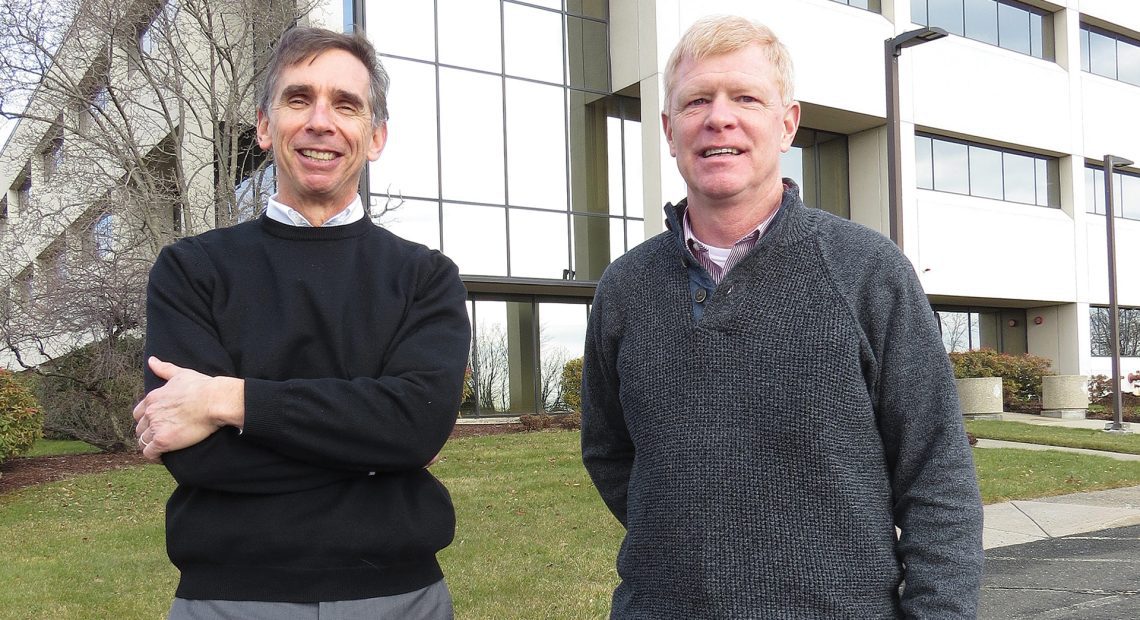
Mitch Bolotin, left, and partner Kevin Morin

Mitch Bolotin, left, and partner Kevin Morin stand near the entrance to 11 Interstate Dr. in West Springfield, which recently welcomed a new tenant, Millipore Sigma, which absorbed 27,000 square feet in the office building.

Looking back, area commercial real-estate brokers, managers, and developers said 2021 was a busy year with activity across all sectors and especially the retail side and the white-hot industrial segment of the market. On the office side, there was less movement and more question marks due to COVID-19 and uncertainty about when and under what circumstances workers will return to the office. The expectation for 2022 is for more of all of the above.

Area commercial real-estate brokers, developers, and property managers spoke with one voice when they told BusinessWest that there can be activity in their sector — and sometimes lots of activity — even when the economy is not hitting on all cylinders.

And this fact of life certainly helps explain why most brokers said 2021, year two of the pandemic, was one of the busiest years they’ve seen recently.

Indeed, there were some business closures and companies moving on from their leases, said those we spoke with, and other businesses downsizing for one of many reasons — all of which created movement in the market.

But there were many other forces contributing to this movement, and most of them were positive, said Mitch Bolotin, a principal and vice president of Springfield-based Colebrook Realty Services.

Listing them, he noted everything from low interest rates to the continued growth of the state’s cannabis industry, which has been absorbing industrial and retail space in communities across the region; from the improved health of the manufacturing sector, which has also contributed to the white-hot market for industrial spaces (more on that later), to the continued growth of delivery and warehousing operations, which has created ever more demand for those spaces. There’s has also been a noticeable increase in the amount of entrepreneurial activity in the region, inspired in part by COVID-19, which has created interest in retail space and some of the restaurants that have fallen victim to the pandemic.

“There is going to be some creative reuse of office space, and retail space, in this region.”

“This past year was one of our busiest years, and there was a lot of activity on all ends of the marketplace,” Bolotin said. “We’ve had deals in the retail world, the industrial market has been very active, the office market has been active, and there have been some development deals. We’ve seen it all across the board.”

Evan Plotkin, president of Springfield-based NAI Plotkin, agreed, noting that some of the movement on the retail side and office side has been as a result of COVID and its ill effects, but there has been positive movement as well, especially on the industrial and multi-family residential sides of the ledger, where the laws of supply and demand have forced prices higher as competition for available properties escalates.

There has even been some movement in the office market, said those we spoke with, but overall, this is the category still clouded by question marks. Large question marks.

Indeed, while all those we spoke with expressed the opinion (and we’ll paraphrase) that many workers now toiling remotely will eventually return to the office because employers realize there is more and better collaboration and more productivity when a team is in one place, there was also something approaching general consensus that things won’t be like they were before the pandemic.

And this means that some office space — just how much comprises one of those question marks — must be repurposed.

“There is going to be some creative reuse of office space, and retail space, in this region,” said Ken Vincunas, president of Agawam-based Development Associates. “I don’t know want it’s going to be or who is going to do it, but the malls and some office buildings are going to turn into something that no one foresaw, something they weren’t designed for.”

Paul Stelzer, president of Holyoke-based Appleton Corp., which currently manages more than 2 million square feet of property in the region, agreed.

Citing a movement to convert large amounts of office space to lab facilities in Boston, Cambridge, and Worcester to feed a biotech sector ravenously hungry for space, he said this might be one possible course for Western Mass. … if it can attract workers for that sector.

“We need to look at how we can maybe take two floors of a building that might never be leased again and convert to some type of bio, some type of medical, some type of related spaces,” he said, “because when you talk about quality of life, we have an incredible quality of life here in Western Mass., and I think there’s some desire for people not to be going up and down a 30-story elevator every day or taking the subway to work.”

For this issue, BusnessWest talked at length with area brokers and property managers about the current scene and what they project for the future, both short- and long-term.


Moving Story

As he talked about the commercial real-estate market and the year that was, Bolotin said there was considerable movement across the region — and in all sectors.

And he pointed to properties Colebrook handled in 2021 — and is still handling in many cases — as evidence. The portfolio includes:

• The leasing of 27,000 square feet at 11 Interstate Dr. in West Springfield to Millipore Sigma. The company, a life-sciences R&D firm and subsidiary of Merck, was in a small office in Wilbraham and expanded into the space;

• The sale of the industrial property at 2024 Westover Road in Chicopee, one of many such properties that saw considerable interest, went fast, and sold for a good price;

• The successful leasing of the property at 95 Elm St. in West Springfield, formerly home to United Bank. The large office complex is home to a broad mix of tenants, including Tandem Bagel;

• The sale of 100 Water St. in Holyoke, a large former mill complex, to GFI, one of the many cannabis companies that now call Holyoke home;

• The sale of 5 South Maple St. in Hadley, once a PeoplesBank branch, a sign of continued movement in the retail market;

• The sale of the former Troy Industries property on Capital Drive in West Springfield; and

• The sale of the 68,368-square-foot, fully leased warehouse space at 87-147 Avocado St. in Springfield to Woodrow Studios LLC, a deal that closed roughly a month ago. “That’s an example of an industrial investment property that had a strong amount of activity,” Bolotin said.

Collectively, these transactions speak to those many forces mentioned earlier — everything from the cannabis sector to tremendous growth of warehousing, distribution, and delivery businesses to growth within the manufacturing sector — that made 2021 one of the busiest years the company has seen recently.

“And 2022 is shaping up to be more of the same,” he told BusinessWest. “There’s a lot of demand, a lot of positive activity; we see the market being resilient, and, overall, there is a good deal of optimism.”

Plotkin agreed, citing his company’s portfolio of activity in 2021 as more evidence of what has been happening, even with some sectors struggling to fully recover from the pandemic and its many side effects.

Paul Stelzer

Paul Stelzer

“We need to look at how we can maybe take two floors of a building that might never be leased again and convert to some type of bio, some type of medical, some type of related spaces, because when you talk about quality of life, we have an incredible quality of life here in Western Mass., and I think there’s some desire for people not to be going up and down a 30-story elevator every day or taking the subway to work.”

On the industrial side, the company handled the sale of a large property in South Deerfield being leased by Yankee Candle, and Plotkin said it continues to receive calls from companies actively seeking warehouse or light manufacturing space with highway access in Springfield and surrounding towns.

On the retail side, it handled a number of transactions, from the former Hafey Funeral Home in Springfield to the former Manchester Hardware store in Easthampton to the Golf Acres recreational facility in Westfield. It is also negotiating the sale of a large shopping center in Pittsfield. There has been less activity on the office side, but the company did handle the sale of 480 Hampden St. in Holyoke to Girls Inc., among other deals, and has handled several leases and a few sales for companies reorganizing or downsizing space.

Overall, the two sectors seeing perhaps the most activity are retail and industrial, said those we spoke with, with cannabis impacting both in a positive way, although there are other factors as well.

Pat Goggins, president of Goggins Realty in Northampton, said the cannabis sector has certainly helped that city’s downtown, one that has seen several stores close due to the retirement of long-time owners, but also complications from COVID. But there have been other types of entrepreneurial activity, including some new restaurants and clothing stores.

Overall, he said it was certainly a much more “nervous time” in Northampton a year or so ago as vacancies started piling up in and around the downtown in a way that hadn’t been seen in decades, and there was uncertainty concerning when and under what circumstances those vacancies would be filled. Now, with many of those storefronts leased or under contract, including the Silverscape Designs property, there is far more stability.

“We’re making some nice progress in the level of activity that we’re seeing downtown, and it’s something that more closely mimics what we had been accustomed to,” he said, adding that, while there are still some vacant storefronts to be addressed, the overall tone is much more positive than it was a year or 18 months ago.

Plotkin agreed, noting that, overall, while retailers are seeing increasingly higher volumes of online sales, most of them still need a bricks-and-mortar presence, and this is contributing to ongoing movement in that segment of the market.

Ken Vincunas says the market for industrial properties is white hot

Ken Vincunas says the market for industrial properties is white hot, with immense competition for available properties pushing prices higher.

“They may shop for something online, but they want to go to the store to try it on,” he explained. “And that’s why I believe retail will remain strong.”

But it is the industrial market that is seeing the most activity, said Bolotin and others — and it would see considerably more if there was inventory.

At present, there isn’t much, said Vincunas, noting that what exists generally goes quickly and at high prices, which makes this category much like the residential real-estate market (see story on page 6).

“The industrial market has very little inventory, and for the few things that come up, there are a lot of takers, and the pricing has increased significantly, because people have products that people want, they’re making money, and they need that new building,” he said. “There’s been a lot of demand, things don’t stay on the market for long, and prices are way up.”

“There’s a lot of demand, a lot of positive activity; we see the market being resilient, and, overall, there is a good deal of optimism.”

As just one example, he cited the former home of Work Opportunity Center in Agawam, an 18,000-square-foot industrial space, which was under contract just a few weeks after it went on the market. Many other properties have moved in similarly quick fashion, and at prices — and here’s another parallel to the residential housing market — that have prompted buyers to also become sellers.

“We’re actually selling properties, which we hardly ever do, because the pricing is so high that you have to take some chips off the table and reposition the properties you want versus the ones that are in your past,” Vincunas said, noting that the company is in the process of selling a multi-tenant property in Chicopee.

“The price seemed right, and we thought it maybe it was time to change that in for something else,” he explained, adding that many property owners are thinking along similar lines to take advantage of the white-hot market.


Space Exploration

As noted earlier, it’s the region’s office market that has perhaps struggled the most, and it’s the one confronting an uncertain future.

Vincunas, whose company manages several office facilities, including the Greenfield Corporate Center, said the past 23 months have been a struggle on many levels, especially as companies find new ways to do business, with many employees working remotely.

Like others we spoke with, he believes employers will eventually bring workers back the office, for reasons involving productivity, communication, efficiency, and other factors, and when that day comes, the market will see a surge in activity.

Pat Goggins

Pat Goggins

“We’re making some nice progress in the level of activity that we’re seeing downtown, and it’s something that more closely mimics what we had been accustomed to.”

In the meantime, this will remain a tenants’ market, with many of the companies looking to downsize or just reduce their monthly rent expenditure finding landlords willing to make attractive deals, another trend that is expected to continue into 2022 and perhaps beyond.

As for the longer term, those we spoke with said that some (again, how much remains to be seen) of the traditional office space in the region will need to be repurposed, and it is incumbent upon those who own and manage it to start looking at viable options.

Stelzer noted that biomed is simply one of many possible alternatives.

“We have to do a really good job moving forward of cataloging what we have available, what we can pivot, what’s available for us, what the economic-development agencies can push,” he said, “because the days of the 200-person call center or 300-person call center are probably gone.

“So we have to turn around and figure out where people have to congregate, and lab space is one of them,” he went on. “There’s also an incredible demand for social services and mental-health space, which is partly driven by COVID and partly driven by the large amount of funding available for it; you may see some of these nonprofits that would typically be in a class B space or in space that doesn’t work as nicely for them taking the plunge and coming downtown or coming to a class A building; they can afford to do it, and demand for their workers is high.”

Stelzer said he’s already seeing such movement at one of the properties managed by Appleton, the Technology Park at Springfield Technical Community College. One of its major tenants, Liberty Mutual, has moved out of most of its space in the park (47,000 square feet) — part of a larger movement to have employees work remotely — and new tenants that have moved in include Mental Health Associates and Clinical & Support Options.

Since almost the very beginning of the pandemic, Plotkin has noted that, in this region, where the office market has traditionally had a comparatively high vacancy rate, the additional stress from COVID will force some property owners to think outside the box and find new uses for their square footage.

For the building he co-owns, 1350 Main St. in Springfield, and others, he has proposed housing or perhaps a hybrid concept, what he calls a “remote-work hub,” a facility in which people would live and work.

“There would be a living space, something like a dormitory, but done in an upscale way, with a lot of amenities,” he explained. “And then you have a work hub. The idea is to have a living space and then a floor where you can lease an office, so you’re not working at your kitchen table.”

Whether the remote-work hub is the answer remains to be seen, he went on, adding that, from his view, it’s clear that something — and something imaginative — needs to happen within the office market, especially in downtown Springfield.

“We have to look at the half-million square feet of vacant office space that we have and examine how we repurpose and reposition that,” he went on. “We also need to look at what kind of help we need from MassDevelopment and the state to incentivize business owners — people like me — to take a building like 1350 Main St. and convert half of it to co-living space.”


Bottom Line

Looking ahead to the rest of 2022, those we spoke with said that COVID makes it difficult to project exactly what will happen. Stelzer equated the landscape in the sector to “shifting sands,” and said that, until the ground stabilizes, more uncertainty will prevail.

Overall, the experts are predicting more of the same for the foreseeable future, meaning this will continue to be a tenants’ market in the office realm, and the laws of supply demand will create more movement in the industrial and retail segments of the market.

And it means more hard thinking — and some action — when it comes to deciding what can and will happen within the office market.

In other words, it’s shaping up to be another busy year.


George O’Brien can be reached at [email protected]