Daily News

HOLYOKE — Meyers Brothers Kalicka, P.C. (MBK) announced the promotions of Christopher Soderberg, Ian Coddington, and Briana Doyle to senior associate; Daniel Eger and Brenden Cawley to tax supervisor; and Corey Jenkins, Chelsea Russell, Eric Pinsoneault, Kara Graves and Matthew Nash to senior manager.

Soderberg has been a member of the Audit department at MBK since 2018. He primarily focuses on not-for-profit, commercial, taxation, and HUD engagements. In his new role as a senior associate, he will take on a larger leadership position at the firm. He holds a bachelor’s degree in accounts and management, as well as an MBA with a concentration in financial planning, from Elms College. He is a member of the Massachusetts Society of Certified Public Accountants and the American Institute of Certified Public Accountants.

Coddington is a licensed certified public accountant in Massachusetts who has been working in the firm’s audit department since 2018. His work is predominantly focused on review and compilation, commercial, not-for-profit, employee benefit plans, and business valuation. He holds a bachelor’s degree in business administration from Westfield State University and an MBA from Fitchburg State University. He is a member of the Massachusetts Society of Certified Public Accountants and the American Institute of Certified Public Accountants.

Doyle started working at MBK in 2018. As a member of the firm’s Audit department, she works on employee benefit plans, not-for-profits, HUD, and commercial engagements. She holds a bachelor’s degree in business administration and a master’s degree in accounting from Nichols College. She is a member of the Massachusetts Society of Certified Public Accountants and the American Institute of Certified Public Accountants.

Eger has been with MBK since 2005, working primarily with large companies and corporations as well as high-net-worth individuals. He has more than 20 years of accounting experience, handling many of the most complicated tax-preparations in these areas, including multi-state tax preparation. He leads the tax intern program at MBK, which has resulted in numerous hires in the firm. He holds a bachelor’s degree in accounting from American International College and is member of the Massachusetts Society of Certified Public Accountants and the American Institute of Certified Public Accountants.

Cawley joined MBK in 2020 after spending eight years as a tax professional at PricewaterhouseCoopers LLP in Boston. He provided tax and consulting services for large investment companies with a focus in private equity and credit funds. He received a bachelor’s degree in finance and accounting from Boston College and is an enrolled agent with the Internal Revenue Service, as well as a member of the Massachusetts Society of Certified Public Accountants and the American Institute of Certified Public Accountants.

Jenkins joined MBK in 2019 after spending five years as a public accountant in New York. She is a leader within the firm’s NFP division, working primarily on audits of not-for-profit organizations and multi-family housing entities. She received her master’s degree in accounting from the University at Albany and her bachelor’s degree from the College of Saint Rose in Albany. She is a member of the American Institute of Certified Public Accountants as well as the Massachusetts Society of Certified Public Accountants and is a certified public accountant in Massachusetts and New York. She is also a member of the Massachusetts Society of Certified Public Accountants and the American Institute of Certified Public Accountants.

Russell began her career with MBK as an intern in 2015 and has been working full-time in the Accounting and Audit department since June 2016. In her role as manager, she is a key player in the Accounting and Auditing department and primarily focuses on not-for-profit, commercial, and employee benefit-plan engagements. She received a bachelor’s degree in accounting from Westfield State University and her master’s degree in accounting from Bay Path University. She is licensed as a certified public accountant in Massachusetts and is a member of the Massachusetts Society of Certified Public Accountants and the American Institute of Certified Public Accountants. She also co-leads the firm’s community-outreach program.

Pinsoneault joined MBK in 2018. Before that, he worked in public accounting in the Greater Boston area for BDO USA, LLP. He has experience providing audit and attest services for a variety of industries, including technology, manufacturing, transportation, and energy. He currently works closely with many privately held businesses in Western Mass. He received an MBA and a master’s degree in accounting from UMass Boston. He is a certified public accountant in Massachusetts and is a member of the American Institute of Certified Public Accountants and the Massachusetts Society of Certified Public Accountants.

Graves is a licensed certified public accountant in Massachusetts and has been with MBK since 2011. She holds a bachelor of accountancy degree from Roger Williams University and a master of accountancy degree from Western New England University. She is a member of the Massachusetts Society of Certified Public Accountants and CPAmerica and serves on the audit committee for the United Way of Hampshire County.

Nash has been with MBK since 2011 and focuses on audit, review, and compilation engagements. He is a key leader on the commercial, not-for-profit audit, and pension engagement teams. He is presently a senior manager leading engagement teams on a day-to-day basis. He holds a bachelor’s degree in business administration from Nichols College and an MBA from Elms College. He is a member of the American Institute of Certified Public Accountants and the Massachusetts Society of Certified Public Accountants and has been a certified public accountant in Massachusetts for the past three years. He is also a board member and treasurer for Springfield School Volunteers, where he also serves on the investment and finance committee, as well as a Ronald McDonald House Golf Tournament committee member.
Daily News

SPRINGFIELD — MassDevelopment has issued a $106,675,000 tax-exempt bond on behalf of Springfield College, which will use proceeds to fund several capital projects.

The college will use $45,095,000 to build and equip a new environmentally friendly and sustainable, 76,000-square-foot health sciences building; this portion of the financing received the Green Bond designation by Kestrel Verifiers, which are approved verifiers accredited by the Climate Bonds Initiative.

The college will use the remaining proceeds to build an academic quad and campus pavilion; renovate classrooms, residence halls, administrative buildings, and the existing health sciences building; improve a steam-plant facility; upgrade walking and running paths and outdoor seating; and refinance previously issued debt. The bond was sold through a public offering underwritten by Hilltop Securities Inc.

“Institutions of higher education are important drivers of our state and local economies as they bring jobs, opportunities, and additional activity to communities across the Commonwealth,” said Housing and Economic Development Secretary Mike Kennealy, who serves as chair of MassDevelopment’s board of directors. “MassDevelopment is a valuable partner to those colleges and universities looking to modernize infrastructure and remain competitive hubs of innovation and intellectual exploration.”

MassDevelopment President and CEO Dan Rivera added that “this major investment represents Springfield College’s commitment to its students, staff, and the entire Greater Springfield community. MassDevelopment is proud to lend a helping hand to support construction of a new health sciences building and significant upgrades to the college’s campus and academic facilities.”

Springfield Mayor Domenic Sarno offered “a big thank you to MassDevelopment President and CEO Dan Rivera, who — once a mayor, always a mayor — understands that these types of investments into our community are essential to maintain and move forward on capital projects while not hindering an institution’s bottom line. I am very appreciative of MassDevelopment’s continued support, belief, and investment in our Springfield, especially to Springfield College over these past years. This public-private partnership continues to greatly enhance the campus of Springfield College, which in turn has increased overall quality of life to the surrounding neighborhood. In addition, and just as important, these improvements and various upgrades of the amenities and facilities the college has to offer benefits our residents, especially our students and their families.”

Daily News

SPRINGFIELD — Western New England University (WNE) School of Law will host attorney Justin Hurst on Monday, Feb. 7 as part of the school’s Color of Law Roundtable Discussion Series. Hurst will discuss his career path at noon. Registration for this virtual event is at bit.ly/3fgN3ipColorofLaw. The event is free and open to the public.

Hurst was born and raised in the city of Springfield. He is the son of attorneys Frederick Hurst and Marjorie Hurst, who are the founders and publishers of An African American Point of View newspaper. Attorney Hurst is a graduate of Springfield public schools and received his bachelor’s degree in English from the University of Virginia.

Hurst began his service in the Springfield public school district as a secondary English teacher, and assumed the role of coordinator of Implementation for the Striving Readers Adolescent Literacy Initiative. Later, he was appointed director of Implementation for the Striving Readers Adolescent Literacy Initiative.

He received his juris doctor degree from Western New England College School of Law and was admitted to the Massachusetts Bar Assoc. in 2004. He currently serves as manager for London Realty, LLC. In 2013, he was elected as a Springfield city councilor. In 2019 and 2020, he was unanimously voted by his colleagues to serve as president of that body.

The Color of Law series is designed to expose Western New England University law students to attorneys, professionals, and judges of color. The series provides students a chance to network with people of color from the legal community and learn about various career paths.

Daily News

WINDSOR LOCKS, Conn. — In recognition of its continued health and safety response to the COVID-19 pandemic, Bradley International Airport has achieved reaccreditation from the Airports Council International (ACI) World Health Accreditation program.

“Since the onset of the COVID-19 pandemic, we have increasingly emphasized the implementation of safety protocols at Bradley International Airport to prioritize the well-being of our passengers and employees,” said Kevin Dillon, executive director of the Connecticut Airport Authority. “We are pleased to have our comprehensive response once again recognized through the rigorous ACI health accreditation process. This is a tremendous recognition of our airport-wide commitment to offer the safest facilities possible for all airport users.”

During the extensive accreditation process, ACI assesses the airport’s response and safety measures throughout the entire passenger journey in line with industry best practices. This includes evaluation of the airport’s cleaning and disinfection, physical distancing (where feasible and practical), staff protection, physical-layout modifications, passenger communications, and passenger-facility enhancements.

The Connecticut Airport Authority voluntary initiated the reassessment after receiving its initial health accreditation from ACI in December 2020.

In addition to surpassing these high industry safety standards, Bradley International Airport offers contactless access to the parking garage and surfaces lots through the airport’s free parking-rewards program; an opportunity to apply for TSA PreCheck at the airport’s enrollment site, which speeds up the screening process and also helps reduce touchpoints; and contactless meal ordering, allowing passengers to easily purchase food online for pickup on their journey through the airport.

Additionally, the airport is continuing to offer voluntary COVID testing for passengers and airport employees in the main terminal’s baggage claim. Free COVID vaccinations and boosters are also available on certain days in the same location. A federal face-covering mandate is also in place for everyone, regardless of their vaccination status.

Community Spotlight

Community Spotlight

By Mark Morris

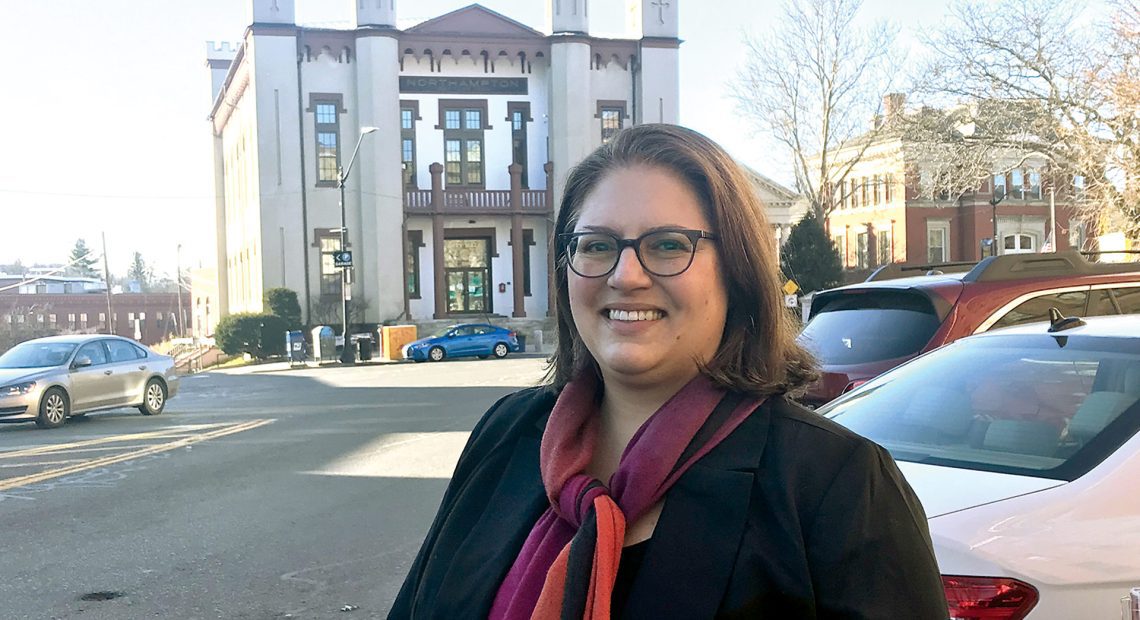
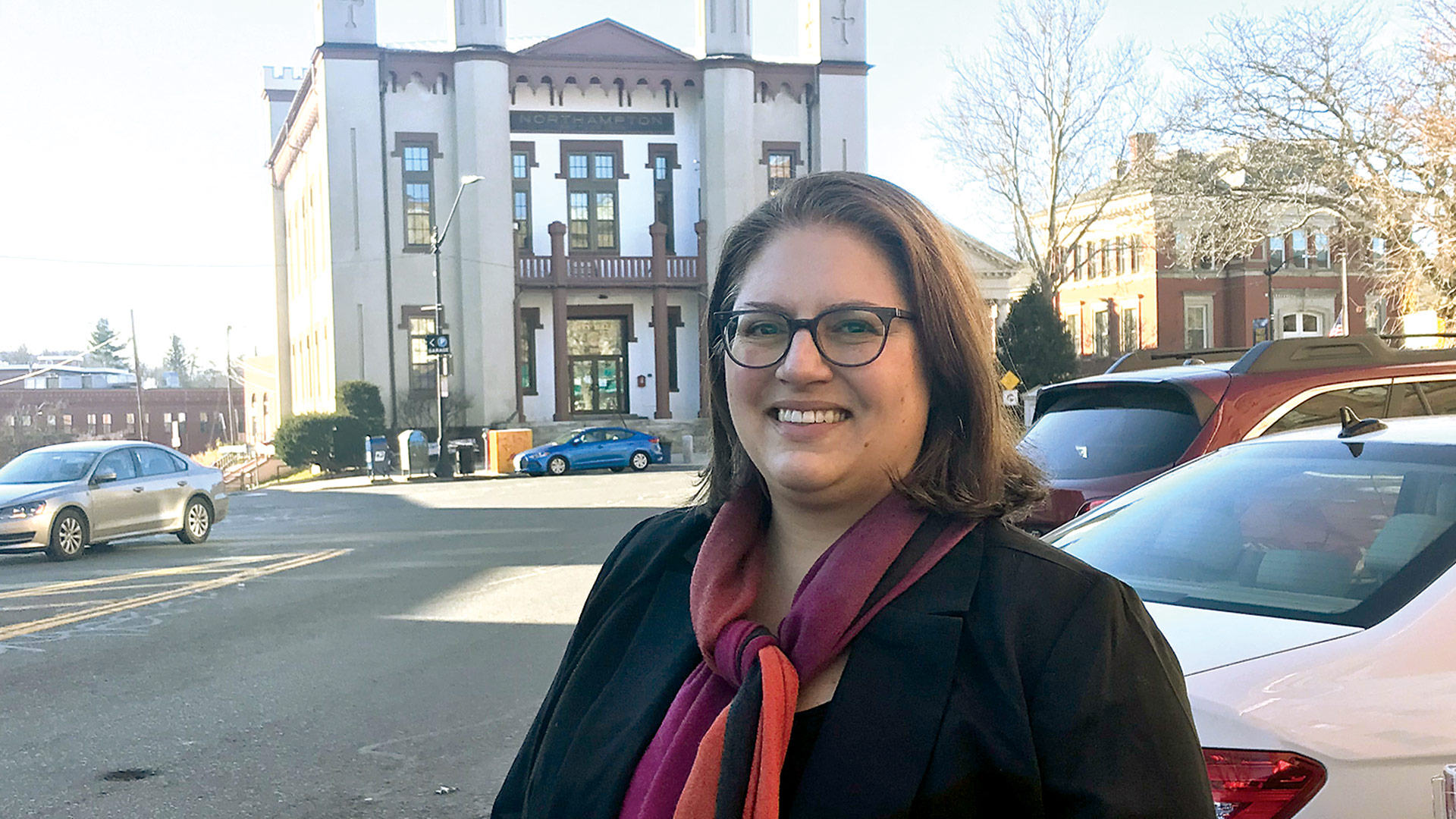
New Northampton Mayor Gina-Louise Sciarra

New Northampton Mayor Gina-Louise Sciarra says a redesign of Main Street is one of the city’s key issues moving forward.


As 2022 begins, Gina-Louise Sciarra starts the new year as Northampton’s new mayor. As she settles into the job, the city faces big opportunities and challenges, especially the constant challenge of managing COVID-19 and its variants. Even as the pandemic adapts, Sciarra said she’s confident the workers and businesses in Northampton will also adapt and keep moving forward.

“We have to help our businesses through this really difficult time and figure out what the next stage of our economy is going to look like,” Sciarra said. “We have a special downtown that we want to stay vibrant and keep it the popular destination it’s always been.”

One of the largest projects on the mayor’s agenda involves a redesign of Main Street. Northampton has a uniquely wide main artery, which Sciarra said is lovely in some ways, but it also presents safety issues.

“We’re going to make it safer for pedestrians and bicyclists, as well as create more green space,” she said. “The redesign will help us meet the next era of retail and commerce while keeping it a place people want to come and experience.”

Not surprisingly, the Main Street redesign has been a huge topic of conversation among downtown businesses, according to Amy Cahillane, executive director of the Downtown Northampton Assoc. (DNA). Cahillane said some of her members favor keeping the wide Main Street and making crosswalks safer, while others would like to see the street narrowed, allowing for wider sidewalks.

“I don’t think there will be a design that makes everyone happy,” Cahillane said. “At the same time, it’s important for all to understand the magnitude of impact that construction will have on downtown businesses.”

She added that she’s eager to find out if the city will support businesses during the redesign because, after two years of reduced income due to COVID, they will soon face a construction process that also hurts the bottom line.

“We’re going to make it safer for pedestrians and bicyclists, as well as create more green space. The redesign will help us meet the next era of retail and commerce while keeping it a place people want to come and experience.”

“I don’t think it can be publicized enough what the construction will look like and how to navigate downtown while businesses are open,” Cahillane said. “I would also like to see financial support for businesses after all they’ve had to endure.”

After years of community input on the project, Sciarra said Northampton is in line to receive nearly 25% from the state for the Main Street redesign project, and that’s enough to keep it moving toward a construction start in 2025.

“Because of the size of this project, we will also modernize the underground infrastructure during the construction period,” she said.


Rescue and Recovery

A more immediate task for the new mayor involves $22 million earmarked for Northampton under the American Rescue Plan Act (ARPA). Sciarra said one of her first actions will be appointing an advisory committee to determine how to best allocate the ARPA funds. She appreciates that not everyone starts a term in office with these resources.

Vince Jackson

Vince Jackson says businesses have been opening and closing in Northampton at about the same rate during the pandemic.

“It’s spectacular to have these funds, but it’s also a huge responsibility,” she said. “This money comes out of a tragic time, so I want to make sure we steward it well and get the most out of it to benefit Northampton.”

This year will also see a new municipal office with the introduction of the Department of Community Care. This new area of public safety resulted from the efforts of the Northampton Police and Review Committee appointed by previous Northampton Mayor David Narkewicz and Sciarra while she was City Council president. The review committee was charged with looking at what changes should be made to improve public safety.

“Their top recommendation was to create a city department to provide an unarmed response to non-criminal calls,” Sciarra explained.

After hiring Sean Donavan as implementation director for the department in November, the next step is to set up meetings with fire and police dispatchers to figure out how calls from the public will be allocated. Sciarra noted that, because the police have been the default 24/7 responders, they have handled many calls out of their realm.

“Weary because we’re just tired of COVID and the sense that we start to make progress only to see another setback. And wary because of all the uncertainty when you try to plan ahead in this environment.”

“My goal is to bring everyone together so we can figure out how to transfer some of these calls to our new service. We have a lot to do, but it’s exciting to set up a new department,” she said, noting that the goal is to have Community Care up and running by July 1, the start of the new fiscal year.

From late summer through the fall, many Northampton businesses reported robust sales, some approaching 2019 numbers. In December, the rapid ascension of the Omicron variant of COVID caused the mood to change. Vince Jackson, executive director of the Northampton Chamber of Commerce, explained it as people feeling “weary and wary.”

“Weary because we’re just tired of COVID and the sense that we start to make progress only to see another setback,” Jackson said. “And wary because of all the uncertainty when you try to plan ahead in this environment.”

For Jeffrey Hoess-Brooks, September and October felt like old times. Hoess-Brooks, regional managing director for the Hotel Northampton and Fairfield Suites, noted that, even when business was up, staffing levels were down — which remains an issue. On some days, the housekeeping crew could not finish their work until evening hours because they were so short-staffed.

“Everyone was pitching in to help,” Hoess-Brooks said. “I cleaned more guest rooms this summer than I have in my entire 32 years in the industry.” Still, while January and February are traditionally slow months, he remains optimistic that business and staffing will improve by spring.

Northampton at a glance

Year Incorporated: 1883
Population: 29.571
Area: 35.8 square miles
County: Hampshire
Residential tax rate: $17.89
Commercial tax rate: $17.89
Median Household Income: $56,999
Median Family Income: $80,179
Type of government: Mayor, City Council
Largest Employers: Cooley Dickinson Hospital; ServiceNet Inc.; Smith College; L-3 KEO
* Latest information available

To find ways to keep going, Cahillane said many business owners are upgrading their online shopping and ordering capabilities, while others are renovating their locations.

Despite all the challenges, Jackson remains hopeful about the coming year. He pointed out that, since the beginning of the pandemic, Northampton has seen 20 businesses close, but 20 new businesses opened during the same time. “It speaks to the resilience of the community and the example that it sets for the entrepreneurial spirit in Northampton.”


Raising All Boats

Meanwhile, Cahillane is busy planning her first community event for 2022, the Northampton Ice Arts Festival, scheduled for Feb. 11, featuring various ice sculptures throughout downtown.

“We’ve got our fingers crossed that we will be able to have the event, especially because it’s outside,” she said, acknowledging the uncertainty while continuing to move forward.

Outdoor dining, which Cahillane has called a lifesaver for many restaurants, remains very popular. Amit Kanoujia, general manager of India House (see story on page 25), is looking to start his outdoor seating earlier and expand it later this year because so many people have asked him to consider it. “In the early spring, our guests bring jackets, and by the fall, they are willing to wear parkas to soak in as much of the outdoor experience as they can.”

Kanoujia remarked on the spirit of cooperation he’s seen among businesses and city leaders to keep moving forward. Jackson echoed that sentiment and added that collaboration is more important now than ever before.

“At the chamber, we try to remind everyone that we are all investors in our community and in our economy,” he said. “When one succeeds, we all succeed.”

Hampshire County

Neighborhood Connections

By Elizabeth Sears

Elizabeth and Lennie Appelquist

Elizabeth and Lennie Appelquist say local small businesses — like their clients — are the economic drivers of communities.

There is a marquee sign on Northampton Street in Easthampton that has become quite the local sensation. This old-fashioned sign has caught the attention of many in the Hampshire County community with its constantly revolving inspirational quotes. It belongs to Cider House Media, a marketing company owned by Lennie and Elizabeth Appelquist, who launched their firm after moving to Easthampton from Los Angeles.

“In 2013, my wife and I ended up moving back here, she grew up here in Easthampton,” Lennie said. His original background was in the film industry, but his hobby in website design ended up developing into its own company. “We still had a lot of clients we were carrying with us, so that’s what we did. We started Cider House here officially.”

Cider House Media provides a wide gamut of marketing services, ranging from branding, website building, and search-engine optimization all the way down to smaller jobs like fixing a website’s e-mail form. No matter how large or small the task, he said, the company focuses on delivering outcomes for whatever needs clients might have.

“At our core, what we really like to do is work with small businesses that matter to their communities, that may not have the resources to do all of the marketing, or the technical expertise to do the website and handle the marketing … but also can’t necessarily afford a really large, big-city firm to take care of all those,” Appelquist said.

The majority of Cider House Media’s clients are local businesses in the Western Mass. region. Its focus has been websites for small businesses that touch their local markets, Appelquist said.

“Our founding belief, our belief that drives us, is that local businesses and small businesses in our towns, not just here in Western Mass. but everywhere, really are the economic drivers of our communities,” he explained. “They’re also a kind of life’s blood. They are what make our communities really awesome, the small businesses, and we just really like to work with them.”

“At our core, what we really like to do is work with small businesses that matter to their communities, that may not have the resources to do all of the marketing, or the technical expertise to do the website and handle the marketing … but also can’t necessarily afford a really large, big-city firm to take care of all those.”

A strong online presence has become a growing need for small businesses as they acclimate to the demands of internet-based consumers. Shortened attention spans paired with the massive shift to remote work brought on by the pandemic has amplified the need for businesses to have fast and efficient websites, Appelquist said.

“We were just having a debate this morning about website loading times,” he told BusinessWest. “The pandemic shed a light on a lot of things, and people really expect a lot out of what they get delivered online, so what they’re looking for trend-wise is a website that loads really quickly. They also want a website that delivers clear information right up front without them having to think too much or dig too deep.”

He explained how savvy consumers not only crave deliverability, but also require accurate information. Cider House Media helps clients take control of their online presence, which involves ensuring the consistency of all representative information found across the web.

“When someone is looking for a service, a product, a restaurant’s hours, the site should load fast, and then there should be a very clear path to the information they’re looking for,” Appelquist said. “A trend we’re seeing with a lot of small businesses is making sure they take control of all of the places where people can interact … their data becomes their brand, and so every touch point on the web, on other third-party websites, on their website, when someone answers the phone at the office, it all becomes representative of what their brand is. If it’s inconsistent, that just says inconsistency to the consumer.”


Changing Times

Cider House Media felt the severe impact the pandemic had on small businesses, experiencing client cancellations and a decline in activity at the beginning of 2020. It had just launched its largest-ever online advertising campaign, and an uncertain marketplace led the Appelquists to question if they were going to survive. However, after a few months, they started to see an interesting shift in their business.

“All of a sudden, every business that was out there trying to figure out a way to reach their clients realized they needed to be online, and they needed to understand what they were doing. They needed to understand how online marketing worked, how their social-media worked, and how ads worked,” Lennie Appelquist said.

This resulted in a transition from their initial decline to a sudden flood of business. It has been almost two years since the Cider House Media staff have been able to get together in the office, but business has essentially stabilized.

“All of a sudden, every business that was out there trying to figure out a way to reach their clients realized they needed to be online, and they needed to understand what they were doing. They needed to understand how online marketing worked, how their social-media worked, and how ads worked.”

Even so, the pandemic has caused them to rework their philosophy and really think about how to help their clients leverage the internet and people’s habits to bring in business while simultaneously facing the obstacle of not being able to utilize a physical retail space. “The marketplace changed along with the world, so we had to be agile and change some of our approach as well.”

Cider House Media’s increase in activity during the pandemic did not stop with the growth of its clientele. “One thing that happened over the pandemic is an interesting market we got into — the community-access TV market,” Appelquist said. Since the beginning of the pandemic, Cider House Media has started five and launched four additional websites for public-access television.

“That’s been a real big education, and since one of the things we really love is to work with businesses, nonprofits, local organizations, arts organizations, touchpoints in our community that make a difference … it was our first experience building something that was a real journalistic news resource. Things like that have been great.”

Cider House Media has been involved in several community-oriented projects, perhaps the most noteworthy and high-profile one being One Ferry Project, a mill-building revitalization project in Easthampton.

“Locally, we launched this year a new brand and website for the One Ferry Project,” Appelquist said. “We did the brand, the logo, the marketing tools, all the signage for the building, the website. The process for potential renters or buyers of space, condos, rental units, office space, we created a mechanism for them to inquire on the website and reach whomever they need to reach.”

Cider House Media has been engaging in its community ever since the couple moved into their office in Easthampton. Lennie and Elizabeth are both members of the Cottage Street Cultural District Committee, and Elizabeth is on the board of the River Valley Co-op, as well as president of the Emily Williston Memorial Library in Easthampton. Additionally, they have been regular participants in the Art Walk put on by Easthampton City Arts, which is a program that features art exhibits and creative performances open to the public.

“When we got our office in Easthampton, we wanted to kind of be part of the community and meet people, so we actually asked the director of Easthampton City Arts if we could be part of the Art Walk and have an artist display their work and have people over, and they were like, ‘absolutely, yes,’” Lennie said. “Almost from the time we opened our office in Easthampton, we were a destination on the Art Walk as well as working with them.”

Lennie and Elizabeth opened an art gallery on Cottage Street in Easthampton as a second business in 2018, helping to celebrate the work of local artists by hosting local art events, spoken word, and poetry. The gallery closed as a result of the pandemic, but Cider House Media still remains committed to supporting the arts in Hampshire County.

“One of the things in Easthampton, but also Pioneer Valley and Western Massachusetts, that I just find so, so amazing is how integral the arts are,” Lennie said. “Art, like commerce, is really important, and I think the art and the culture, and the ability to interact with art and meet the artist, and interact and find those people that you intersect with at those types of events … it’s all your community.”


Word on the Street

Lennie Appelquist spoke of the charm possessed by the walkable towns of Hampshire County, and how small details like connecting over the marquee sign or the local art exhibits creates a positively unique environment. He noted the ample opportunities for networking, partnerships, and synergies, describing a local butcher participating with a night with food at the local brewery. Above all, he emphasized the community-oriented nature of the area, and how gratifying it is to work with businesses in the county.

“All those opportunities that you have to be part of a community, to create community, to interact with community, are really, really important,” he said. “So I think that’s the part we like the most — helping a lot of our clients give voice to what excites them and drives them to do their business, and why they go do it every day.”

Insurance

What’s Covered?

By Mark Morris

Michael Long

Michael Long says inflation in the cost of construction materials is complicating the equation of replacement protection.


When preparing a homeowners policy, insurance companies want to know all the details. They’re not being nosy — they just want to accurately cover any potential loss, even the unexpected ones.

Indeed, insurance agents who spoke with BusinessWest said every homeowners policy begins with a worksheet that captures anything and everything about the home. Inquiries range from the obvious — like the age of the house, square footage, and condition of the roof — to details about the kitchen counters (formica or granite?), whether rooms feature hardwood floors or carpeting, as well as many other questions.

“We ask for lots of details so we can get a true estimate of the home to properly gauge the replacement value,” said Trish Vassallo, director of Operations for Encharter Insurance in Amherst, noting that policies are based on what it would cost to replace the home and its contents if there was an event that resulted in the total loss of the home, such as a devastating fire or tornado.

Insurance companies also try to factor in cost increases in building supplies and labor, so some offer homeowners policies with extended replacement protection that will cover 25% or 50% above the insured amount of the home.

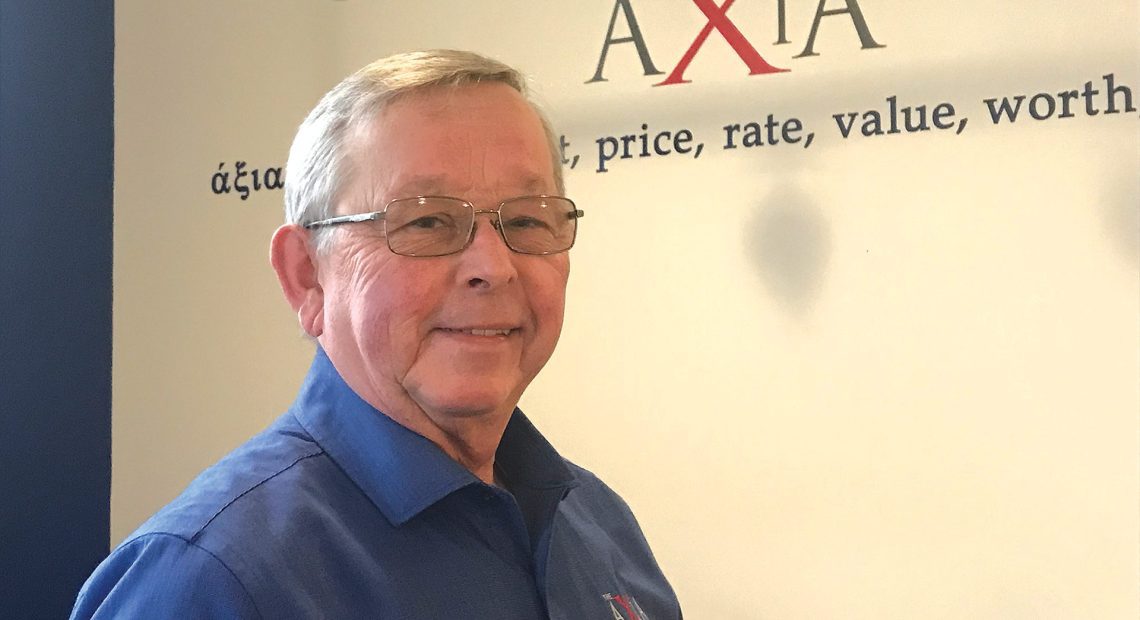
Michael Long, CEO of the Axia Group in Springfield, explained that, with recent hyperinflation in building materials and labor, extended coverage may not be enough. Lumber has experienced a massive increase in price since the beginning of the pandemic, driven by supply-chain issues and an increase in demand. One measure for estimating building costs is the price for a board foot of lumber.

“Customers ask us why their policies increase each year, and the answer is the inflation guard, which keeps the policy in line with current construction costs.”

“Not long ago, a thousand board feet of lumber cost $345,” Long said. “It’s now up to $1,600 per thousand board feet.” That’s why one of the first conversations Long has with his clients is to make them aware of policies that offer guaranteed replacement costs that will cover rebuilding a home no matter what happens to the price of materials and labor.

While guaranteed replacement might be worthwhile for high-value homes, it can be expensive coverage. A more affordable way to keep pace with rebuilding costs comes in the form of policies with inflation-guard endorsements. Trish Woodbury, Personal Lines manager for McClure Insurance Agency in West Springfield, explained that policies with inflation-guard coverage are designed to increase the limits of what the insurance company will pay based on the costs of materials.

“Customers ask us why their policies increase each year, and the answer is the inflation guard, which keeps the policy in line with current construction costs,” she said.

Customers also ask Woodbury why the estimated replacement cost on a homeowners policy is so different than the market value of the home. The main reason is that market value is driven by the ups and downs of the real-estate market and is calculated using the house as well as the lot it sits on.

“The estimated replacement cost is based on all the specs of your house and the amount the insurance company will pay to bring you back to where you were before the incident that caused your loss,” Woodbury said. “We often have to explain the difference because it’s a far different number than the market value.”

That’s why including everything in the house from top to bottom is essential to having it insured. For example, if people fail to report they have a finished basement out of concern they may have to pay higher taxes, they won’t have coverage for a loss.

“We are not trying to uncover a tax increase for the towns; our concerns are, if you have a devastating loss, we want to make you whole again,” Vassallo said. “If you have a finished basement, we want to know how finished — is there a TV room, workout equipment, is there a bathroom down there? These are all important factors so we can come up with the appropriate replacement value and include it.”


Water, Water Everywhere

The most common claim for a homeowners policy is water damage from a leaking roof, burst pipe, or faulty toilet. Long pointed out that, if a burst pipe happens when no one is home, damage can be substantial, and the claim can be huge, even approaching six figures.

Because water-damage claims are so common and expensive, Woodbury said homeowners can now install devices to prevent a severe incident.

“One of the devices is an automatic water shutoff when a leak is detected,” Woodbury said. “Insurance companies have begun offering discounts to homeowners who install these.”

Damage from flooding is not covered under a traditional homeowners policy. Insurance companies define flooding as water from the surface and below, usually entering through the foundation of a house. If a homeowner has a mortgage and their house is in a high-risk zone for flooding, they are required to have flood insurance. Long pointed out that changing weather patterns may require a new way to think about flooding.

“Most people figure, if they are not near a river or other body of water, they’re OK,” he said. “If we received 42 inches of rain and your house is on a hill, it could still receive flood damage that would not be covered by a traditional insurance policy.”

“Without umbrella coverage, if you tried to sell your house while there was a personal-liability judgment against you, the creditors could go after the proceeds from the sale.”

Woodbury added that anyone can buy flood insurance, and if a house is not in a high-risk zone, the homeowner will receive a preferred rating and a lower price for the coverage. “It’s available to everyone, and we’ve been encouraging people to consider it.”

In addition to covering the dwelling unit, homeowners policies will also cover personal property — up to a point. If there are special items such as expensive jewelry or fine art, the best approach is to add a coverage rider for those items. As an example of why riders make sense, Vassallo gave an example of someone who owns a $75,000 baby grand piano.

“If you had a total loss, such as a fire, and your content limits are $200,000, replacing the piano would take a huge chunk of that $200,000, leaving you a much smaller balance to cover everything else,” she said. Thus, purchasing an inexpensive insurance rider for the piano gives it full coverage with no deductible, and it no longer affects the personal-property limit. “So, it becomes a separate item that we want to keep separate.”

Another type of policy associated with homeowners insurance is umbrella coverage. These are personal liability policies that provide coverage when the limits of a homeowners and auto insurance policy aren’t enough to pay a claim.

Umbrella coverage was once thought to be necessary for homeowners who have a dog, a swimming pool, or a young driver. Vassallo said. But with payments for personal-injury claims going higher all the time, everyone should consider the added protection of such a policy. “We even suggest it for renters because you never know who’s going to sue you.”

Some people feel they don’t need an umbrella policy because the Homestead Act protects them, Long said. But while it prevents creditors from taking a person’s home, the act’s protection stops there.

“Without umbrella coverage, if you tried to sell your house while there was a personal-liability judgment against you, the creditors could go after the proceeds from the sale,” he noted.

Water damage may top the list of common claims, but Long said dog-bite claims are growing in number. A typical homeowners policy can provide some coverage, but he strongly recommends dog owners have an umbrella policy, as the average claim for a dog bite is $40,000 — and people with a dog-bite claim often pay much more for homeowners policies in the future.

For many years, companies have maintained lists of dogs they will not insure under a homeowners policy. Woodbury pointed out that the list is driven by the number of claims they see for certain breeds.

“The lists change, too,” she said. “Because companies have seen fewer claims on German shepherds and huskies, they have come off some lists.”

Before purchasing a dog, Long recommends homeowners call their insurance agent, especially if they are not set on a particular breed. “Your agent can give you the current list of dogs the companies will not cover with insurance.”


Remote Control

While many people work from home these days, that work can take many forms. A person working full-time for a company is different than someone who operates a home-based business. Vassallo said homeowners policies are not intended to protect business exposure, so a person who runs a business out of their home needs to see their agent for a rider to their home policy.

Liability can become an issue if customers come to the home. It’s not unusual for tax accountants, music teachers, and others to have people at their home for business reasons. In insurance terms, that’s a liability exposure that can be addressed with a separate commercial rider for protection.

“Otherwise, using the example of the music teacher, if a student or parent slipped and fell, the teacher would have no protection,” Vassallo said.

Home ownership brings with it plenty of physical hazards. Insurance companies have begun offering protection for virtual hazards such as identity theft and cyberattacks.

Long said cyberattacks are growing at a rate of 200% every year. One of the top schemes is phishing — when a fraudster sends an e-mail that appears to be from a reputable company and encourages the receiver to click on links that compromise their security. But cyberattacks have moved away from laptops and phones and can now impact other areas of the house.

“Hackers are known to access data through WiFi-enabled thermostats,” Long said, adding that those who own WiFi-enabled refrigerators have also experienced attacks by hackers who use the appliance to mint cryptocurrency, such as bitcoin. “Many policies offer identity theft, and we are now strongly recommending our clients to add cyber protection.”

Before a homeowners policy comes up for renewal, agents will contact their customers to make sure their coverage stays up to date. It’s important for insurers to know about improvements such as a kitchen renovation.

“If you’ve upgraded to granite counters, it will now cost more to rebuild your home if you had a claim,” Woodbury said. “We want to make sure the limits on the policy keep up with the cost of rebuilding your house.”

Obviously, homeowners are not looking to pay more for coverage, and there are options for those who are interested only in price. Vassallo tries to help her customers understand why having sufficient coverage is so important.

“This is probably the largest asset they will ever own,” she said, “so let’s make sure we properly protect it.”

Commercial Real Estate

Fighting the Fight

Evan Plotkin

Evan Plotkin says a mural planned for this wall near Stearns Square will pay homage to that area’s important role in Springfield’s history.

Evan Plokin was joking — well, sort of — about just how well his team seemed to manage while he was home battling mesothelioma and rehabbing from complicated surgery to help rid his body of cancer.

“I learned that this place could function just fine without me,” he said, tongue in cheek, noting that his company, NAI Plotkin, completed several deals during those weeks while he was out, putting a cap on a busy year, despite damage done to the economy by the pandemic. “The four months I was pretty much out of action I was thinking the worst, but when I came back, all the deals that were in the pipeline that I thought were never going to close … things suddenly started to happen.”

Overall, this lengthy, ongoing ordeal — he was officially diagnosed with mesothelioma in March 2021 — has been a learning experience on many levels, starting with the disease itself.

Plotkin confessed to knowing little about it when he was diagnosed, other than the only way to be stricken with it is through prolonged exposure to asbestos — or, as he has learned since, through heavy use of talc. And a “review of his life’s story,” as he called it, revealed that he falls into that category.

“I had rashes when I was a youngster, throughout my elementary schools, and I can always remember my grandmother putting the powder on me,” he recalled. “As I got into sports, when I would sweat a lot, I would break out, and the baby powder helped. And I remember when I was playing football in high school, I would douse my shoulder pads with it before every practice and before every game.”

This review of his life and has led to a different kind of learning experience, this one concerning ongoing legal action against Johnson & Johnson — maker of the baby powder he put on those shoulder pads — which he is now a big part of.

“I’m on the creditor’s committee — we just had a meeting recently; five of us are representing 40,000 claimants in this litigation,” he said, noting that these claimants are pushing back hard on J&J’s efforts to form a separate company to capture all asbestos claims related to its baby powder and then, presumably, file bankruptcy. “Every one of us who has this disease wants our day in court, and not have this piled into a bankruptcy settlement.”

While waging battles on these various fronts, Plotkin, who firmly believes he’s on the road to recovery and is now back in his office several days a week, is continuing another fight — his decades-long struggle to return downtown Springfield to the vibrancy he knew when he was young.

Long a staunch advocate for the city and firm believer in the power of the arts as an economic-development strategy — he’s one of the organizers of the annual summer jazz festival in the city — Plotkin said considerable progress has been made in recent years to make Springfield a more attractive place to live and work, but there is still much to be done.

He talked about the need to become creative with the hundreds of thousands of square feet of vacant office space in the city (again, see the story on page 38), to renew and escalate efforts to revitalize the properties on Main Street across from MGM Springfield, and to continue work to use the city’s open spaces, especially its parks, to draw new residents — and businesses as well.

With that, he turned his attention to his latest project, a giant mural that will occupy a wall facing Stearns Square on Worthington Street.

Working in tandem with John Simpson, an art professor at UMass Amherst whose murals grace Elm Street and the I-91 viaduct, as well as the Springfield Improvement District, Plotkin, through a nonprofit he created called City Mosaic, won a grant to transform that wall — currently featuring faded images of cameras and related products sold at a store there in the 1940s — into a history book of sorts.

“It’s going to be a composition — we’re going to give a nod to many of the historic and important people from Springfield, right up to the present,” he said. “It’s going to be the largest mural in the city.”

For this issue, BusinessWest talked with Plotkin about the many battles he’s waging, and the progress he’s making with what could be considered the big picture — figuratively, but also quite literally.


Joining the Battle

Plotkin, who has long prided himself on taking good care of his body, exercising, and eating the right foods, said his cancer diagnosis nearly a year ago caught him off guard and left him searching for answers.

“To suddenly be told that you have this terrible disease … that was very traumatic,” he said, adding that, while he became consumed with understanding how he contracted mesothelioma, the more immediate concern was confronting the disease.

He underwent what is known as a HIPEC (hyperthermic chemotherapy) procedure in August. After removing visible tumors through standard surgical procedures, a surgeon will administer HIPEC treatment, during which a heated sterile solution — containing a chemotherapeutic agent — is continuously circulated throughout the peritoneal cavity for up to two hours.

The 10-hour procedure was followed by three months of rehabilitation, said Plotkin, noting that he lost more than 50 pounds through the ordeal, suffered a few setbacks while recovering, and endured a few trips to the emergency room.

But he believes the worst is over and that he is on the road to recovery.

“I’m feeling really good right now, so I’m very optimistic about my future,” he said. “I feel almost as good as I did before the surgery; I just have to watch it … but I’m back to normal, and everything is good for me.”

While knocking on the nearest available wood, Plotkin noted there isn’t much available data on HIPEC. “And the doctors and the oncologists — they don’t have any predictions for you,” he went on. “They just say they want to take film every six months and go from there.”

Meanwhile, he said many others in his situation have not been as fortunate in their fight.

“You hear some of the stories from some of the people you meet, and their stories are not as good. I just learned about a 28-year-old boy who had the surgery who died from complications — kidney problems after the surgery.”

Such stories put more emphasis on the ongoing lawsuits against Johnson & Johnson, which, by many accounts, involve more than 38,000 claimants and nearly $4 billion in damages being sought.

At present, that fight is on a pause of sorts after a bankruptcy judge in North Carolina halted the lawsuits against J&J after that company formed a subsidiary in Texas, known as LTL, to absorb the parent company’s asbestos liabilities. LTL promptly filed for bankruptcy in North Carolina.

The move, known as a ‘divisive merger’ as well as a ‘Texas two-step’ (because that’s where LTL was formed) has been slammed by lawmakers, including U.S. Sen. Elizabeth Warren, and Plotkin said claimants in the various suits are girding for a protracted battle.

“Everyone is lawyering up, and they’re ready to have hearings,” he said. “All this is going to be hopefully resolved, one way or another, in February.”

While the court fight against J&J is now capturing some of Plotkin’s time, he also has his work — a broad phrase, to be sure — keeping him busy.

He said he worked remotely for some time but is now back in his office at 1350 Main St., the one with the view facing south toward MGM Springfield. And he referenced what he can see out his window when talking about the major challenges still facing Springfield.

He said that, when MGM was originally proposed, the thinking — if not the promise — was that the casino, with its front door on Main Street, would bring more vibrancy, not to mention additional commercial development, to both sides of the street and that broad area.

That hasn’t happened yet, in part because most all casino visitors have been entering and exiting through the parking garage (especially during the pandemic), leaving little foot traffic on Main Street and, therefore, a minimal trickle-down effect.

“People go right back in the garage, and they’re out of here,” he said. “And that needs to be fixed; we need to get those people into the downtown.”

Turning his attention back to Stearns Square, he said that area has seen progress on several fronts in recent years, including the park itself, which underwent major restoration efforts a few years ago. Around it are new businesses, including Dewey’s, a jazz club; the promise of new restaurants; and prospects for that area once again being the centerpiece of a walkable city.

The new mural will be part of all this, he said, adding that it will turn back the clock in many respects.

“In one part of the mural, there’s going to be an image of what Stearns Square looked like more than 100 years ago,” he explained, noting that this look back will show how the ‘Puritan’ statue now at the corner of Chestnut and State streets near the Quadrangle was originally in Stearns Square, with the Puritan facing a globe at the turtle fountain in the south end of the park.

“The narrative behind that is the fountain has a giant globe on it with fish and turtles around it, and there’s water,” he explained. “It was the Puritan looking at the new world, and he knew he had to cross over the water to get there.”


Body of Evidence

As he related the history of the park and spoke about his mural project, Plotkin said he’s always believed the Puritan statue should return to its original setting.

He admits he’s probably not alone with that view, but he acknowledges that such a move would certainly be a longshot at this point and an uphill battle.

Speaking of uphill battles … he’s been involved with many of them lately, from his fight against mesothelioma to the drawn-out court skirmishes with Johnson & Johnson, to his campaign to revitalize downtown Springfield.

All of them are ongoing to one extent or another, and Plotkin is waging them the only way he knows how: with passion and determination.


George O’Brien can be reached at [email protected]

Features

Unwelcome Surprises

By Jodi K. Miller, Esq. and Ryan J. Barry, Esq.


Jodi K. Miller

Jodi K. Miller

Ryan J. Barry

Ryan J. Barry

A woman injures her ankle while jogging and goes to the local emergency department for treatment. Despite her injury, she makes sure to go to a hospital in her health plan’s network. Some weeks later, she receives a significant — and unexpected — bill from an emergency department physician. While the hospital was in her health plan’s network, it turns out the treating physician was not. Her health plan paid a portion of the physician’s charges, but she is responsible for the remainder.

This type of ‘balance’ or ‘surprise’ bill has been an ongoing issue when patients receive care from out-of-network providers, some of whom then bill patients the difference between their charges and the health plan’s benefit payment for out-of-network services. These bills are often a surprise because the patient either was not able to choose an in-network provider or was unaware that the provider was out of network until after the services were rendered.

“This type of ‘balance’ or ‘surprise’ bill has been an ongoing issue when patients receive care from out-of-network providers, some of whom then bill patients the difference between their charges and the health plan’s benefit payment for out-of-network services.”

Recently enacted legislation at the federal level and in Massachusetts attempt to address this issue.

A new federal law, the No Surprises Act, went into effect on Jan. 1. The No Surprises Act imposes requirements on healthcare facilities and providers, as well as on health plans, in three key areas: emergency services, non-emergency services provided by out-of-network providers at in-network facilities, and air ambulance services. When those services are rendered, health plans must make a payment to the out-of-network providers, and patients are responsible only for the cost-sharing obligations they would have incurred had the care been provided in network (e.g., co-payments and deductibles).

If the provider does not accept the health plan’s payment, the plan and the provider must attempt to negotiate a reimbursement rate. If negotiations fail, the plan or the provider can initiate a dispute-resolution process to resolve the issue. In these cases, providers may not bill the patient more than the cost-sharing amount, and they are potentially subject to civil monetary penalties of up to $10,000 per violation if they do so.

The No Surprises Act also provides that out-of-network providers of certain scheduled services may not balance-bill patients unless the provider has given advance notice and obtained written consent from the patient. The act sets out specific requirements for the content of the notice, including a good-faith estimate of the costs incurred and a list of in-network options for the patient. This notice and consent process, however, is not available for out-of-network providers of emergency services and other ancillary services (such as anesthesiology, pathology, radiology, and other diagnostic services), or in circumstances where there no in-network provider is available.

Other provisions of the No Surprises Act, including disclosure requirements for both providers and health plans, also aim to increase transparency and consumer protections. Providers are required to publicly disclose and provide to patients a one-page notice about the balance-billing requirements and prohibitions of the No Surprises Act, as well as state law. As discussed below, Massachusetts, too, has recently imposed new disclosure requirements for providers.

Notably, the protections of the No Surprises Act do not apply to emergency services by ground ambulance providers. In those circumstances, out-of-network ground ambulance providers may still bill patients for significant balances, which are invariably a surprise to patients who had no ability to choose an in-plan ambulance provider in an emergency.

Regulations implementing the No Surprises Act have not been without controversy. Medical associations have criticized the regulations implementing the dispute-resolution process as unfairly favoring health plans. Health plans, on the other hand, have lauded the regulations, maintaining that the process will make healthcare more affordable and avoid unnecessary increases in health-insurance premiums.

On Jan. 1, 2021, Massachusetts passed its own law to address balance billing for non-emergency services. That law, which also took effect on Jan. 1, requires healthcare providers to disclose to patients certain information regarding their participation in patients’ insurance plans and patients’ financial obligations for scheduled procedures and services.

Generally, providers are required to tell patients whether they participate in the patient’s insurance plan. If the provider does not participate in the patient’s plan, the provider must disclose the charges and any facility fees for the procedure or service. The provider must also inform the patient they will be responsible for the charges and any facility fees not covered through the patient’s health plan and that they may be able to obtain the procedure or service at a lower cost from an in-network provider.

The law also imposes new requirements on in-network providers to disclose information to patients regarding charges for procedures or services. Providers must also inform patients if their participation in the patient’s health plan changes during a continued course of treatment and make various disclosures when referring a patient to another provider.

There are two consequences if a provider violates the Massachusetts law. First, if an out-of-network provider fails to provide the required notifications and information, the provider cannot bill the patient at all, except for any co-payment, co-insurance, or deductible that would be payable had the patient received the service from an in-network provider. Second, the commissioner of the Department of Public Health is authorized to fine non-compliant providers up to $2,500 per violation.

The recently enacted federal and state laws seek to provide protections to consumers to avoid inadvertent balance bills from out-of-network providers. As these laws go into effect at the start of the new year, providers and health plans should be ready to implement the requirements, and consumers should see fewer surprises in their mailboxes.


Jodi Miller and Ryan Barry are partners in Bulkley Richardson’s healthcare practice.

Hampshire County

Positive Change

By Mark Morris

Ed Wingenbach

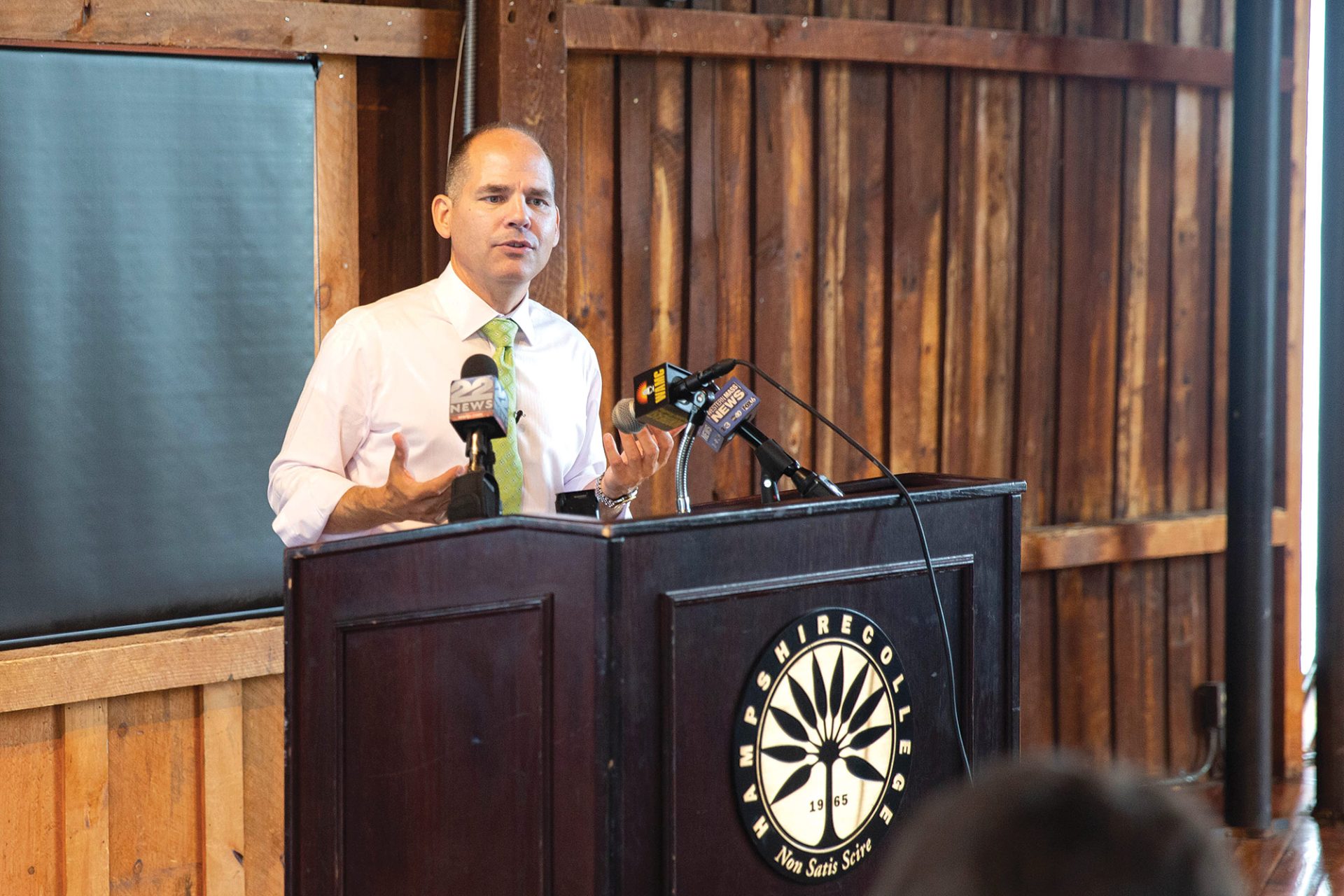
Ed Wingenbach says Hampshire College is identifying the urgent challenges of the 21st century and making them the emphasis of the curriculum.

If you were designing a college education today, what would it look like?

That’s the question Edward Wingenbach, president of Hampshire College, discussed with faculty, staff, and students in 2019. Back then, the college was facing financial struggles and even explored the possibility of merging with another institution.

At that time, the college unveiled Change in the Making, a fundraising effort launched with help from documentary filmmaker and Hampshire College alum Ken Burns. While the goal of the five-year campaign is to raise $60 million to directly fund the operations of the college, it also presented an opportunity to reinvent the definition of a liberal-arts education.

Wingenbach said the approach starts with identifying the urgent challenges of the 21st century and making them the emphasis of the curriculum.

“We have adopted four specific challenges that our faculty will incorporate into many of the courses they teach,” he said. For academic year 2022-23, the questions are: how should we act on our responsibilities in the face of a changing climate? How do we disrupt and dismantle white supremacy? How do we decide what constitutes truth in a ‘post-truth’ era? And how can art and creative practices heal trauma?

Jennifer Chrisler, chief Advancement officer for Hampshire College, said the questions were compiled with input from faculty, students, and staff. “It is a way of organizing the college around the kinds of questions the world is facing and that young people really want to tackle,” she explained.

The questions will be reviewed every year to see if new ones need to be added or dropped, Chrisler went on. “It’s a chance for students, faculty, and staff to weigh in on the way the curriculum is shaped on a regular basis. That usually doesn’t happen in higher education.”

Jennifer Chrisler

Jennifer Chrisler

“It’s a chance for students, faculty, and staff to weigh in on the way the curriculum is shaped on a regular basis. That usually doesn’t happen in higher education.”

Recently, the campaign received $5 million from an anonymous doner to establish the Ken Burns Initiative to Transform Higher Education, an effort Wingenbach described as a subset of the overall Change in the Making campaign. The donor had no previous affiliation with Hampshire and didn’t know much about the college until Wingenbach and his staff began talks with them.

“The donor was excited about the work we are doing and wanted to help us accelerate it while, at the same time, honoring Ken Burns, who is someone the donor knows very well,” Wingenbach said.


Unique Model

Hampshire College has always sought to transform higher education. Wingenbach said the point of the Change in the Making campaign is to pursue that vision with renewed vigor.

“Most colleges will have students pick an academic track they will study for four years with the hope these courses will prepare them for careers and opportunities that probably didn’t exist when they started college,” he noted.

“By contrast, we’re saying no one knows what the challenges and opportunities are going to be five years from now, but they will require creative, entrepreneurial thinkers who can work across all kinds of fields of knowledge. Students from Hampshire College will have been practicing this approach in increasingly sophisticated ways.”

To illustrate how this works in a real-world setting, Wingenbach gave the example of the COVID-19 vaccine rollout. While the vaccine was an amazing accomplishment, it was also important to think about how to communicate with people to persuade them to change their behavior and get the shot. By putting so much emphasis on just the vaccine’s development, he contends that only half the problem was solved.

“The point is that problems get solved when the technical and social sciences work together,” he noted.

While this approach is new to incoming classes, Wingenbach reported that students are enthusiastic about it. Chrisler said donors feel the same.

“Donors are excited because our approach represents an incredibly needed change in higher education today,” she said.

Chrisler added that donors also support the college because, when students leave as alums, they often go on to do extraordinary things. While Burns is the most famous alum, Chrisler cited others, such as Manual Castro who was recently appointed to the Mayor’s Office of Immigrant Affairs by New York City mayor Eric Adams, the first time this position has been held by an undocumented person, or ‘Dreamer.’ Chrisler also cited Stephen Gardner, named in December as the next CEO of Amtrak.

“When he came to Hampshire, Stephen was interested in the infrastructure of railroads and music,” she said. “Now he will be able to shape what rail transportation looks like in our country.”

Burns has often credited his success to his experience at Hampshire. In a news release on the anonymous donation, he expressed humility for the gift made in his honor and supported the college’s current efforts.

“I know Hampshire is transformative because I experienced it firsthand,” the filmmaker said. “Fifty years later, our nation needs fresh thinking in higher education, and Hampshire is poised to deliver on that opportunity.”

The anonymous donation is the second substantial contribution since James and Paula Crown invested $5 million in the campaign in late 2020. Early indications show this innovative approach is helping build back enrollments.

“This year’s entering class was nearly 100% over last year,” Wingenbach said. “In addition, we have doubled the number of applications we had at this time last year.”

While admitting there is still much to be done, Wingenbach said enrollments are now comparable to 2016 and 2017, when the college had much larger classes.


Looking Ahead

Chrisler recalled the tough days of 2019 as a pivotal time that helped everyone realize the importance of Hampshire College as an institution both for what it has done and what it can do.

“The tough times crystalized for many people the need for Hampshire to remain an independent and thriving college for its students, for the Pioneer Valley, and for higher education overall,” Chrisler said.

These days, as the college continues to innovate and write its next chapter, she said these are exciting times. “Most of us here are deeply grateful to be a part of that story.”

Commercial Real Estate

COVID and Property Value

By Laura Bellotti Cardillo


Laura Bellotti Cardillo

Laura Bellotti Cardillo

When property-tax assessments in Massachusetts came out at the end of 2020, many business owners were surprised to find their values had stayed the same or increased. Those assessments were premised on income and expense data from calendar year 2019, and therefore did not factor in the beginnings of the economic impact of the pandemic.

Now that property-tax assessments for fiscal year 2022 are being determined, commercial property owners whose real-estate assets were negatively impacted by the pandemic should take another look. Assessors must rely on calendar year 2020 income and expense data to determine current values and assessments, and after almost two years of living with COVID-19, the question remains whether the pandemic is a temporary anomaly or the economic impact will be of longer duration.

If your commercial real estate has been hit hard by the pandemic, here are some best practices that could help you achieve a reduction in your property assessment and lower your real-estate taxes.


Provide Extra Data and Projections

If the pandemic has continued to hamper your property’s performance through 2021, provide data through the third quarter of this year. While the assessment is based on numbers through year-end 2020, proof that things have not improved undercuts the argument that the pandemic is merely a blip.

Projections for 2022, 2023, and 2024 can be helpful in this regard as well. Many industries anticipate that a full recovery will take years. Demonstrating that you are not anticipating a swift bounce-back can support your argument that a reduction now is warranted.

“If the pandemic has continued to hamper your property’s performance through 2021, provide data through the third quarter of this year. While the assessment is based on numbers through year-end 2020, proof that things have not improved undercuts the argument that the pandemic is merely a blip.”


Document Use of PPP and Other Relief Funds

In some cases, assessors have asked if businesses received funds from the Paycheck Protection Program (PPP) or other relief initiatives. It is highly unlikely that these funds would have been used in a way that would increase the value of your real estate, so they should not factor into the fiscal year 2022 assessment.

Because PPP was designed specifically to cover payroll, utilities, and operating expenses, demonstrating in detail how these funds were spent (using materials you likely already have from your loan-forgiveness application) should help assessors put the receipt of these funds in proper context.


Values and Assessments Can Change Annually

Municipalities in Massachusetts have the ability to adjust assessments annually. Because values can be recalibrated year to year, now is the time for assessors to lower the values for the commercial property types hit hard by the pandemic.

Assuming certain commercial real-estate markets have begun to tick back up already or will begin to do so in 2022, assessors can make the necessary adjustments if and when the various sectors of the commercial property market roar back to life.


Laura Bellotti Cardillo is vice chair of the property-tax and valuation practice at Pullman & Comley. She heads the law firm’s Springfield office.

Opinion

Editorial


BusinessWest launched its Top Entrepreneur program back in 1996 to recognize individuals, groups, and institutions that were honoring a tradition that went back centuries and made Greater Springfield a hub for innovation and industry.

For much of that decade, and into the next one, the list of honorees was top-heavy with those from the IT sector, as might be expected. Indeed, that realm was booming, and a legion of young entrepreneurs were starting businesses focused on hardware, software, and developing solutions for clients.

But over the years, this award has also gone to a college president, a hospital president, a municipal utility (Holyoke Gas & Electric), and a hockey team — actually, the owners and operators of that team, the Springfield Thunderbirds. And there have been more traditional entrepreneurs as well, in fields ranging from auto sales to hardware stores; trash hauling to home care.

The common denominator — and there’s certainly more than one — is calculated risk taking and a desire to meet identified, and often unmet, needs. In most all cases, they’ve done so by overcoming several challenges, and, in the case of decades-old businesses (Rocky’s Ace Hardware and Balise Auto Sales come to mind), adapt to changing times.

This pattern is certainly continuing with this year’s honorees, Vid Mitta and Dinesh Patel, the serial entrepreneurs who have made Springfield’s Tower Square their latest and most ambitious undertaking to date (see story on page 16).

Tower Square, originally known as Baystate West, was conceived and built in the ’60s. It was designed to change the landscape in the city, and it did just that, its office tower rising far above everything around it for another two decades. It was created to be a destination, a place where people would work, shop, and dine, and for a while, it worked.

But when shopping patterns changed and malls were erected in the suburbs, it didn’t.

By the time MassMutual, which built the complex, decided to sell it in 2017, it was, in many respects, tired. There were many intriguing tenants, including UMass Amherst and Cambridge College, but still many vacancies on both the retail and office sides. Meanwhile, the hotel on the property had lost its Marriott flag, was operating as the Tower Square Hotel, and had lost most of its original luster.

While most potential investors saw a troubled property and had visions of a fire sale, Patel and Mitta saw a gem — albeit one that needed some polishing. They rolled the dice, knowing their $17.5 million investment was only the first of many that would have to be made.

Since acquiring the property, they have used imagination — attracting White Lion Brewing Co. and the YMCA’s fitness and daycare operations, for example — and persistence (something that’s certainly needed during a pandemic now entering its third year) to bring new life and energy to the property.

The new façade that has gone up on the hotel is somewhat symbolic of this entire project — it is shiny, it is new, and it is turning a lot of heads.

The partners still have a long way to go with this endeavor, to be sure. There are still many vacancies to fill, and the property is still not entirely worthy of the term ‘destination.’

But three years and more than $30 million in investments later, their gamble is showing signs that it will pay off — for them, the city, and the region.

We don’t know how this story will end, but for now, there are many intriguing plotlines. One of them concerns entrepreneurs taking a chance, planning, and working diligently to make a dream become reality.

That’s the same general pattern followed by all the winners of the Top Entrepreneur award since 1996, and it explains why Mitta and Patel are worthy additions to a distinguished list of honorees.

Opinion

Opinion

By Michelle Desaulniers


Most everyone has been a passenger on an airplane and heard the safety talk. Very often, the ‘put your own mask on first before helping others’ analogy is used to remind people, in myriad situations, that it is OK — in fact, it is preferable — to practice self-care.

Most of us push self-care and everything that goes along with that notion to the bottom of our to-do list — and we just keep on flying. But what if, at the beginning of 2022, you decided to put yourself and your career first? Start this new year on a different note by taking a personal learning inventory.

At the Employers Assoc. of the NorthEast (EANE), we are challenging our members to bring their personal development to the number-one position on their to-do list for 2022 by asking themselves these questions:

• How will you make next year count?

• What will you do to take your career to a new level?

• How will you challenge yourself in 2022?

What will it take to get you into a personal growth mindset? Start by thinking about the last time you took a class, attended a training session, or went to a conference. Remember that feeling of accomplishment, the renewed sense of purpose and engagement that you felt afterwards? It was great connecting with peers outside of your organization and sharing ideas, wasn’t it? Wouldn’t you like to feel that again and really get into that forward-thinking growth mindset?

EANE offers a variety of formal opportunities and options to refresh your attitude and to add substance to your learning inventory. The coming year should be punctuated with your own personal learning events that will enable you to return to your daily challenges feeling refreshed, re-energized, and ready to tackle those challenges with a new outlook and armed with freshly minted skills. Not only do you owe it to yourself, but you owe it to your co-workers. They will see your example, and they will follow it.

No doubt everyone is feeling the weight of the world lately, and no one wants to poke their head up for fear of flying objects. But allowing your professional growth to stagnate for yet another year is like putting someone else’s mask on before your own. On an airplane — and in your career — that could lead to disaster.


Michelle Desaulniers is a member of the Learning & Development team at EANE.