Environment and Engineering

Elevating an Industry
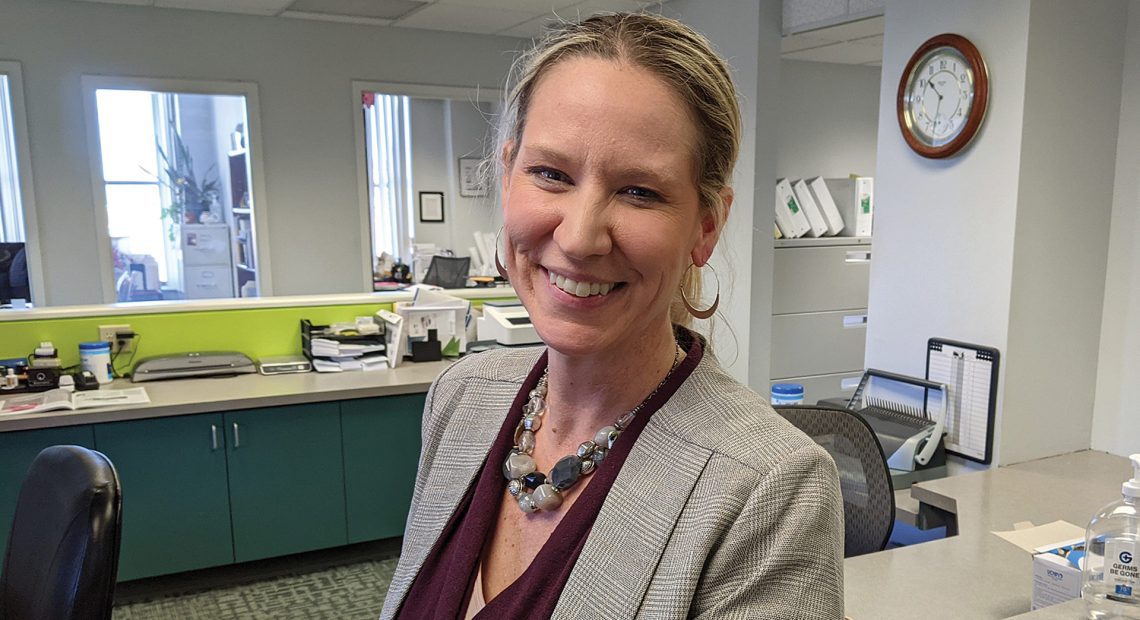
Ashley Sullivan

Ashley Sullivan says OTO’s workload is higher today than it was pre-pandemic.

When she was named president of O’Reilly, Talbot & Okun at the start of 2020 after two decades at the engineering firm, Ashley Sullivan knew she was in for a time of transition.

What she didn’t know was … so was every other business, thanks to a pandemic that shut down much of the economy for a time, and continues to reverberate today.

“You had to adapt; everyone did,” Sullivan told BusinessWest. “So I do think it was something that helped us work through so many things and put another name to the transition. There was an external reason for us to look at everything: what are we doing? Are we shutting down the office or not? What’s our COVID policy? How are we going to work remotely? And our services for some projects were deemed essential. That’s good, but how do we keep our people safe?

“In a way, I think that gave us time and a reason to move through our own transition and the change of leadership,” she went on. “We looked through our business practices, looked at our services, reconnected with clients … we had time to think of our culture and our brand and do some marketing, which we knew was going to be important. And how were we going to get to the other side of this? It was quite the ride.”

At the same time, “it was almost easier, in a way, to ask for help during that time because nobody knew what they were doing,” Sullivan added. And what she was hearing was, “‘hey, you need to keep marketing, you need to reach out to your clients … don’t stop those things right now because, when you get to the other side, you’re going to have to make sure all those investments into your company were happening, investments in your people.’”

Investing in people, and growing the team, is something Sullivan wanted to emphasize from the beginning, aiming to create a company where people would want to work, she said, listing her core values as respect, togetherness — “we found that people did want to work together; they do like to collaborate, network, and be on design teams” — and transparency. “We want to keep communication open and make people feel like they’re part of something bigger than any one individual.”

“It’s not about competition with the person next door, it is about elevating the whole industry. We believe in the services we provide. We believe in what we do.”

All that, she said, is in the service of elevating the industry, as the mission statement posted in the conference room attests: “We will elevate our industry to create and deliver the best solutions for natural and built environments.”

As she explained, “it’s not about competition with the person next door, it is about elevating the whole industry. We believe in the services we provide. We believe in what we do. I really enjoy working with other consultants. We’ve been able to do some master service agreements with other consultants where, if they don’t have capacity to do a job, we will help them, or vice versa. That came out of the pandemic, people helping each other. We saw a lot of helping.”

And to elevate an industry, Sullivan believes she must first elevate her people. “I’m so proud of this team and what they’ve done; they put some trust in me, and so many people have stepped up, and they did a lot of professional development. Now I’m seeing people I mentored who are mentoring the new people coming in.”

Ashley Sullivan performs a phase-1 dam inspection.

Ashley Sullivan performs a phase-1 dam inspection.

That workforce-development philosophy carries over to her role instructing the civil engineering capstone design course at Western New England University. There, she guides graduating students through a mock building project, and many of her peers join her in presenting practical technical knowledge, writing skills, and soft-skills training.

“I love that,” she said. “I feel like our industry should do a better job with mentoring, with creating the next generation of people to work. Again, it goes back to elevating the industry: are we doing all we can to show that we’re good at what we do?”


From the Ground Up

Before O’Reilly, Talbot & Okun’s three founders launched the firm in 1994, they were working together at an environmental-services firm in Connecticut. The Bay State had just developed the Massachusetts Contingency Plan, a law that tells people how to go about cleaning up spills of hazardous materials. As that program rolled out, the three saw an emerging need for people with their skills. So they started a company.

Over the years, OTO’s services have included testing commercial properties for hazardous materials and overseeing cleanup, asbestos management in schools and offices, brownfield redevelopment, indoor air-quality assessments, and geotechnical engineering, which may involve helping developers assess how much force and weight the ground under a proposed structure can stand, or determining the strength of an existing building’s foundation and surrounding topography.

“I feel like our industry should do a better job with mentoring, with creating the next generation of people to work.”

OTO’s early-pandemic experience — also Sullivan’s trial by fire in the president’s chair — mirrored that of many in the construction and engineering world.

“There was a time initially where we all went remote and some projects definitely stopped. Construction already in place before the pandemic typically kept going, so we had that work. Any new projects tended to slow down and stop.

“Also, in-person meetings, site meetings, that all stopped,” she went on. “So we really had to adapt and ask, ‘OK, how are we going to collaborate, how are we going to communicate?’ Our work definitely did slow down for a little bit, as we figured out how all this was going to work. Then some public jobs started coming back, and it was a real push to keep public work going.”

Most of the firm’s services continued at some level, though anything associated with property transfers stopped for a while. “Now property transfers have started up again; a lot of work has started up again. It went from the slowdown to this crazy pickup of a lot of work.”

As a result, the project load is busier now than it was pre-COVID, Sullivan said, adding that “anything on hold has moved forward.”

OTO’s certification as a Women Business Enterprise has also helped create new relationships and new opportunities. “We’ve been able to meet new clients, new architects, and get on more design teams and be brought into a lot of interesting projects. So we are very busy. There is a lot of work, and we’re actually trying to grow staff-wise, which is very hard to do right now.”

That’s true across the entire industry and, indeed, all sectors. That’s why companies that want to hire need to stand out, and one of the ways they can do that is through culture.

“One of my roles is to create a place where people want to work,” she said, noting that OTO has made three technical hires over the past two years. “I’m always on the lookout. It’s not easy, particularly with being a small company and competing with some of the bigger firms.

“We have found — and this is exciting for me — a lot of the people that we have hired have been referred to us: ‘go check out OTO; go speak with Ashley. That might be a good fit.’ And I try to do that for other people. When I come across somebody who does a technical service that OTO doesn’t provide, I’ll put them in contact with somebody I work with. But I think what you give off is what you get. You have to have your eyes open to opportunity and be a place where people want to work.”


Engineering Change

During the past couple years, OTO has renewed some sectors, such as industrial compliance, where some staff had retired but not been replaced. “But during this time, we looked at some professional development and said, ‘hey, maybe there’s not work in one service sector; what else can we renew?’ And we’ve been able to renew those services.”

Among the firm’s recent notable projects is the geotechnical and hazardous-materials assessment on the project that will replace the dilapidated Civic Center Parking Garage next to the MassMutual Center in Springfield.

“How can I not be enthusiastic for a project I can see out my window?” Sullivan said. “And their vision for it is just amazing for downtown. So that’s super exciting.”

Other local projects include a number of schools in Springfield, West Springfield, Gardner, and other communities, as well as work with Westmass Area Development Corp. on the ongoing Ludlow Mills redevelopment. “We’re a small piece of a lot of projects. Any one of us here probably has 30 projects at any one time.”

Because Massachusetts has done a good job cleaning up its largest contaminated sites, OTO focuses more on site redevelopment, as it’s tougher these days to find untouched land to develop in Massachusetts, Sullivan noted.

“We have to look at environmental implications for jobs. When we get involved early on, we can guide the design team in how to approach these projects and provide value early on.

“What we’ve been able to do more is actually couple our services,” she added. “On a redevelopment project, we’ve been able to offer our hazardous-materials compliance, our Massachusetts regulations compliance, and geotechnical engineering all in one, and we’ve been working a lot more internally cross-sector-wise. That’s sometimes harder to communicate internally than externally, but we’ve really worked on a lot of those skills and working together in teams, and we’re able to provide clients with cross-sector services.”

In short, O’Reilly, Talbot & Okun has emerged from two pandemic-dominated years in strong shape, but it took plenty of persistence and flexibility to get there.

“It’s been hard,” Sullivan said. “But as soon as things get overwhelming or challenging, I look around and see how everybody here has progressed and developed and stepped up and taken ownership. They’re why I’m here — and our clients. We work with so many wonderful and talented people.”

Looking back to those initial months of COVID — again, also her initial months in charge at OTO — she was surprised by the support she received from other local engineering players.

“I had so many people reach out to me from other firms, checking in: ‘how are you doing? Do you need advice?’

“There were so many people willing to help and come together, different leaders from other firms and other organizations,” she went on. “There were times I was blown away by how people really do want to help other people. I made some great relationships with other CEOs that, two years ago, I might never have called.”

In short, Sullivan isn’t the only one trying to elevate an industry, and that’s a good thing.

“A lot of people want other people to succeed,” she said. “That’s something I believe in, and that was really neat to see. It keeps me going.”


Joseph Bednar can be reached at [email protected]
Community Spotlight

Community Spotlight

Diana Szynal

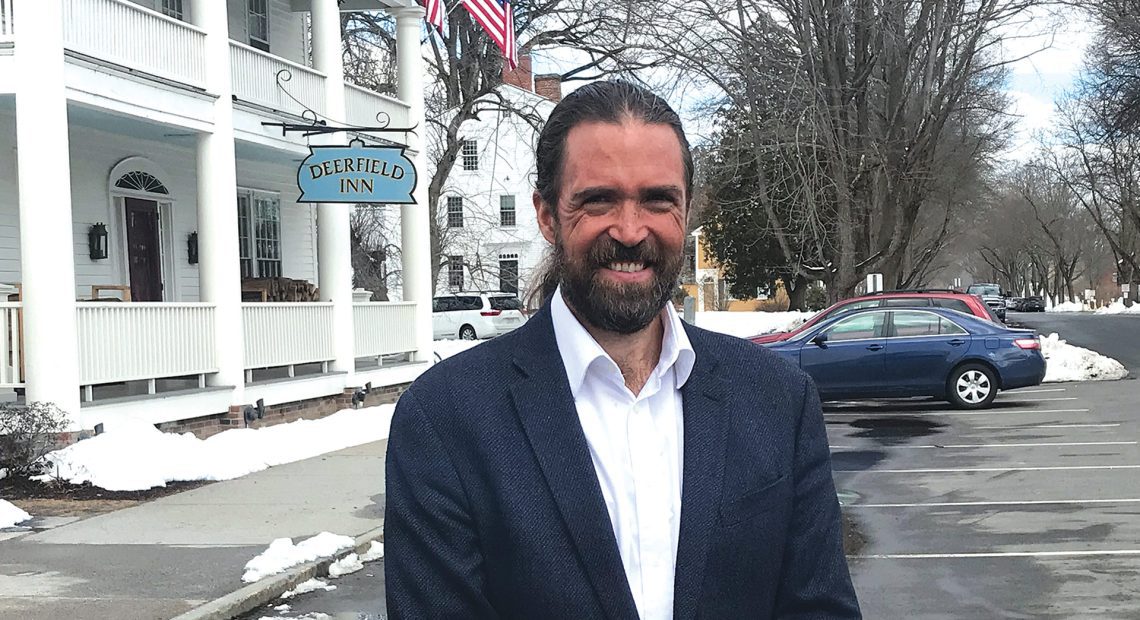
Diana Szynal says the Franklin County Chamber of Commerce’s move to Deerfield will include a visitor center.


By Mark Morris


Deerfield is one busy town these days.

Residents there are engaged in 22 different boards and committees planning several ambitious projects to better the town. Still, while all that activity is admirable, it also invites confusion if anyone feels out of the loop.

A group of 15 residents who serve on several boards and committees in Deerfield were aware of the potential pitfalls and formed the Connecting Community Initiative (CCI) to improve communication among the various committees and with municipal officials. Denise Mason, chair of the CCI, said the initiative came about after increasing frustration among members of several boards and committees.

“Because we are all volunteers, people often don’t have the time to stay on top of activities that fall outside of their committee work,” Mason said. “We created the CCI to eliminate the silos in town so we can keep all our projects moving forward.”

The initiative started in November, with the group meeting eight times since then. Mason said they’ve been successful so far with keeping people informed and projects on track.

One big project involves renovating and repurposing the former Deerfield Grammar School to house the municipal offices. Part of the plan also calls for building an addition on the back of the building, where the town’s senior center would be located.

“These projects are part of a bigger objective, which is to create a walkable town campus in Deerfield,” Mason said, explaining that 45% of residents are over age 45.

Kayce Warren, Deerfield town administrator, strongly supports these plans and intends to use American Rescue Plan Act (ARPA) funds to develop a municipal parking lot centrally located in town.

“This is an opportunity for us to make Deerfield a more walkable community. With an aging population, a community’s walkability is a big part of helping people age better.”

“If there’s parking, people will come,” she said. “We’re looking to create a campus that provides walking access to the municipal offices, the senior center, and other resources, such as a small market and a bank.”

The walkable community idea doesn’t stop at the center of town. Work has begun on a municipal park on North Main Street, located past Frontier Regional School. Warren would like to see sidewalks extend from the center of town to the park, nearly two miles up the road.

“This is an opportunity for us to make Deerfield a more walkable community,” she said. “With an aging population, a community’s walkability is a big part of helping people age better.”


Location, Location, Location

Deerfield’s location along the Interstate 91 corridor makes it easily accessible from all directions. Many in town are hopeful the new Treehouse Brewery that opened in the former Channing Bete building will be a catalyst for drawing people to town. In her meetings with the brewery, Mason said Treehouse is cautiously developing its Deerfield location in three phases.

“Right now, they are working on the second phase, which calls for construction of a pavilion to stage outdoor concerts,” Mason said. “Once that’s up and running, hopefully this year, there is a big potential for other businesses to benefit as well.”

Among those businesses, Yankee Candle will likely benefit, as it has always been a big tourism draw for Deerfield. As Yankee and Treehouse are located close to each other on Route 10, Warren is hopeful they will create a working relationship to bring even more people to Deerfield.

It would surprise no one if the two entities were brought together by Diana Szynal. The executive director of the Franklin County Chamber of Commerce recently moved the organization from downtown Greenfield to Historic Deerfield. She said the move makes perfect sense because, prior to COVID-19, Historic Deerfield traditionally drew nearly 20,000 visitors a year.

“The rivers and mountains have always been here, but suddenly there has been a renewed interest in these resources.”

“We will be opening a visitor center, which will allow us to promote all the attractions in Deerfield and surrounding towns,” Szynal said. The chamber’s former visitor center was located in a corner of the Registry of Motor Vehicles in Greenfield, a location she said was never worthy of Franklin County. “With the visitor center in Historic Deerfield, thousands more people will be able to learn about all the fun things to do in Franklin County.”

While Szynal and her staff are still settling in from the move, which occurred in mid-January, their focus is on having the visitor center ready to go when Historic Deerfield begins its season on April 16.

Jesse Vanek, vice president of Development and Communications for Historic Deerfield, said 2022 is a tremendous opportunity to welcome back large crowds to the outdoor museum that depicts life in 18th-century New England. “Historic Deerfield is such a special place, and we’re hoping to see our in-person visits get back to pre-COVID levels.”

Deerfield at a Glance

Year Incorporated: 1677
Population: 5,090
Area: 33.4 square miles
County: Franklin
Residential Tax Rate: $15.17
Commercial Tax Rate: $15.17
Median Household Income: $74,853
Median Family Income: $83,859
Type of Government: Open Town Meeting
Largest Employers: Yankee Candle Co., Pelican Products Inc.
* Latest information available

Every year, the museum runs a full schedule of programs for visitors. Beginning in the spring, programs will range from Sheep on the Street, which explores heritage breed sheep and the role of wool processing in New England’s history, to a Summer Evening Stroll held on July 3 and themed on Deerfield during the American Revolution.


COVID and the winter season inspired Historic Deerfield to expand its program offerings online through virtual sessions. As a result, the museum now reaches audiences around the world. The winter lecture series included relevant topics such as understanding climate change from a historical perspective.

“We are fascinated with the response to our virtual programming,” Vanek said. “I believe it helps entice people to come visit us, which is good for our organization, the town, and the region.”


Out in the Open

Szynal has learned that people will travel long distances to take part many of the outdoor activities in Deerfield and Franklin County.

“We were shocked to learn how robust fly fishing is here,” she said. Indeed, whether casting a line into the Deerfield River or rafting in Charlemont, outdoor activities are a true resource for the area and bring in people who often stay for several days.

“The rivers and mountains have always been here, but suddenly there has been a renewed interest in these resources,” she said.

Warren is thrilled that Szynal and the chamber are now part of Deerfield.

“Diana has great ideas, and I think she can help us keep Historic Deerfield connected to the rest of the community,” Warren said, adding that, in a perfect world, Deerfield would provide more incentives for tourism, but ongoing infrastructure projects have stretched budgets to their limits.

Located between the Connecticut and Deerfield rivers, the town faces constant challenges with stormwater runoff and flooding issues. Bloody Brook, which also runs through town, maintains a higher-than-normal water table.

“We have a group of passionate volunteers who want to work together help the tow. They are engaged and willing to put in the time to keep these projects moving forward, and that’s so important.”

Deerfield was one of the first communities to qualify for the state’s Municipal Vulnerability Preparedness (MVP) program. MVP grants are awarded to cities and towns that build climate-change resilience into all their infrastructure plans. Warren explained that type of thinking applies to every project in town, from simple tree boxes designed for better stormwater management to larger projects like the school repurposing and sidewalk additions.

“We are linking everything together in terms of managing water issues, and we’ve set our sights on staying on top of this for the next 50 to 100 years,” Mason said.

As Deerfield’s many projects move forward with Mason and the CCI keeping them on track, Warren took a minute to appreciate the situation.

“We have a group of passionate volunteers who want to work together help the town,” she said. “They are engaged and willing to put in the time to keep these projects moving forward, and that’s so important.”

Home Improvement

Building Connections


By Elizabeth Sears


The home-improvement industry has gone through a dramatic increase in demand over the past few years, which has been challenging to fulfill at times due to product and labor shortages. Businesses and consumers alike have felt the resulting stress. The Western Mass Home & Garden Show on March 24-27, produced by the Home Builders & Remodelers Assoc. of Western Massachusetts, offers a solution — a diverse array of reputable vendors and a crowd of eager customers, all in the same building.

“As the Home Builders Association in Western Mass., we have had many conversations with homeowners that have expressed their frustrations and offered them support to navigate through the process,” said Andrew Crane, Home Show director and executive director of the association. “As we don’t see a decrease in demand in 2022, we know how essential the Home Show will be for these individuals to increase their opportunity to get in the queue for the upcoming building season.”

Andrew Crane

Andrew Crane

“As we don’t see a decrease in demand in 2022, we know how essential the Home Show will be for these individuals to increase their opportunity to get in the queue for the upcoming building season.”

A wide range of vendors are exhibiting at the show this year, running the gamut from builders, painters, landscapers, remodelers, cleaning services, HVAC services, and more. Oftentimes, people undertaking a home project need not just one service, but several different ones — and the Home Show is able to connect clients to all the services they may need, all at the same time.

“What I’ve found is that a lot of the people who come to the Home Show have more than one thing that they’re looking for,” said Christopher Grenier, owner and head painter of Christopher J. Grenier Painting & Finishing, LLC. “They’re not just looking for a painter; it’s part of a larger project, and of course, with all the different contractors that are there, they can find just about anything that they’re looking for.”

Grenier’s Chicopee-based business offers services like painting, wood finishing, wall repair, and ceiling repair, for both private clients and local contractors. This year will mark his fourth time exhibiting at the Home Show, and he expressed how much business vendors receive by exhibiting at the show, as well as how much they felt it when the 2020 show was canceled and the 2021 edition scaled down and moved to late summer, both due to the pandemic.

“Last year was an anomaly because of COVID, because of the rescheduling of the show. I still came out with 20 or more requests for follow-up,” he told BusinessWest. “The year before that was much higher because we weren’t in COVID. I think I came out year one with almost 90 requests for follow-up.”

There is certainly something to be said for the value of marketing to an audience of thousands at this show, as well as the cross-promotion and networking that occurs between the exhibiting companies. The ability to bring everyone together in person has shown itself to be an invaluable resource for both vendors and attendees throughout the years.

“Everybody just Googles everything now and buys on the internet,” Grenier said. “When you get people to the Home Show, they get to stand there and interact with the professional, touch the product, get feedback, get the right advice from whomever it is … actually being there in the physical space and not the metaverse has clear advantages. Anybody who attends the Home Show has an advantage to make their project more successful.”

Crane echoed this sentiment, emphasizing just how beneficial and convenient the Home Show is for attendees.

Christopher Grenier

Christopher Grenier

“Everybody just Googles everything now and buys on the internet. When you get people to the Home Show, they get to stand there and interact with the professional, touch the product, get feedback, get the right advice from whomever it is … actually being there in the physical space and not the metaverse has clear advantages.”

“This is such a time saver compared to traditional methods of calling and setting up individual appointments,” he said. “Many people feel more comfortable meeting with a few vendors before deciding, and doing this at the Home Show can save weeks and weeks of time.”

The annual show sees all types of attendees who visit for a variety of different reasons. Attendees typically fall into one of several categories:

• People planning to buy or build a new home, who may visit with builders, real-estate agents, financial institutions, and sellers of component products, such as hardwood flooring, tile, and appliances;

• People planning to remodel or renovate, who may want to check in with all of the above, plus vendors of replacement components such as windows and doors, as well as appliances, wall treatments, and home furnishings;

• Yard and garden enthusiasts, who tend to be interested in lawn and landscaping services; wall, walk, and edging components and materials; and trees, shrubs, flowers, and seeds;

• Lifestyle-conscious individuals, who like to check out trendy, high-tech, or time-saving products, as well as home furnishings and products focused on self-improvement, fitness, and health;

• Committed renters, who have no plans to own a house, but may be interested in space-conservation and space-utilization products, as well as home furnishings;

• Impulse buyers, who flock to vendors of home décor, arts and crafts, cooking and baking products, jewelry, and personal goods; and

• Those who attend the show purely for fun, who may arrive without an agenda but often develop ideas for future purchases and home products. “More than any other group,” the association notes, “these people are the ones who have come to rely upon our show on an annual basis and who perhaps have the greatest impact upon our vendors.”

No matter the reason someone has for attending, the Home Show prides itself on helping both attendees and vendors with an abundance of opportunities.

“Our objective is to provide a venue with multiple vendors and a robust representation of products under one roof,” Crane said. “This show will help homeowners minimize the time it can take to decide on the best products and remove frustrations that can come with trying to meet and decide on a home-improvement company.”

The 67th presentation of the Western Mass Home & Garden Show will take place in the Better Living Center building at the Eastern States Exposition. This year’s show hours are Thursday and Friday, March 24-25, 1 to 9 p.m.; Saturday, March 26, 10 a.m. to 9 p.m.; and Sunday, March 27, 10 a.m. to 5 p.m. General show admission is $10 for adults, and children under 12 are admitted free. A coupon reducing admission to $7 can be found on the show’s website. Parking on the Eastern States Exposition grounds is $5 per vehicle.

Home Improvement

Doors of Opportunity

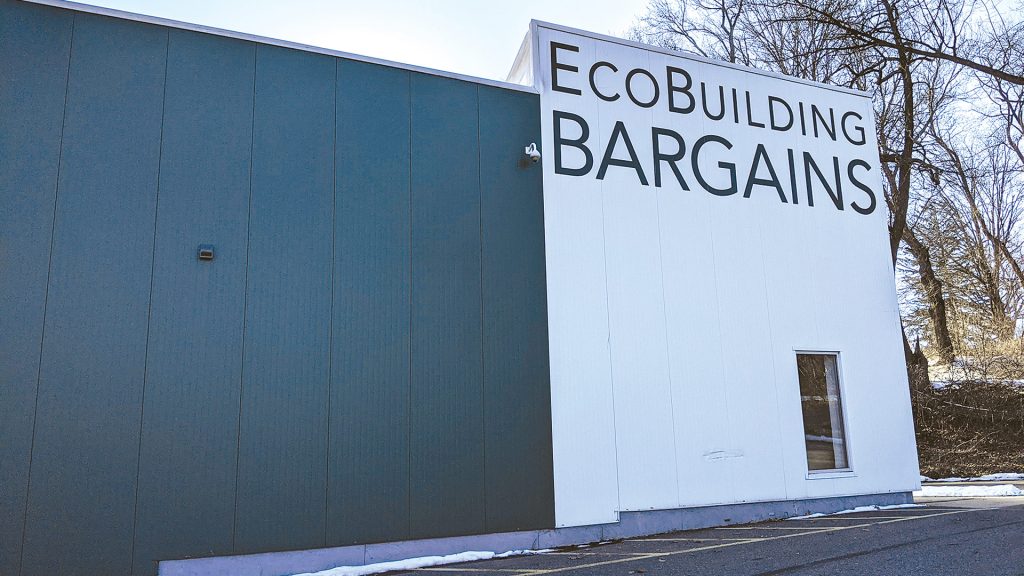
Both at the Springfield store and online, EcoBuilding Bargains promotes itself as a way to save money and keep items out of landfills.

When Darcy Ratti was living in Southern Connecticut, she heard about EcoBuilding Bargains — shortly after she completely refinished her basement.

“I was so angry,” she recalled. “I would have saved so much money, and it would have looked so much cooler.”

These days, as store manager at the Springfield-based seller of reclaimed building materials, Ratti is sharing that enthusiasm with customers both near and, increasingly, far away.

“We get a lot of higher-quality materials now than we did four or five years ago as word has spread,” Ratti said, explaining how the store procures its ever-shifting stock of used building materials and also new items taken off contractors’ and wholesalers’ hands. “We’ve got brand-new Samson doors that have never been installed — an overstock. I’ve got a lot of brand-new windows that were a misorder.

“In general, people want to save some dollars here and there, and they want to buy something that will help out the environment a little bit,” she went on. “You can get better quality here for the price than you would at a big-box store. Instead of getting a pressboard cabinet set IKEA or Home Depot, for the same price, you can come here and get a full plywood set with all the bells and whistles.”

“People want to save some dollars here and there, and they want to buy something that will help out the environment a little bit.”

The Center for EcoTechnology (CET) launched EcoBuilding Bargains more than a decade ago as a way to repurpose materials that otherwise might be headed for landfills, but the past few years have seen the store expand beyond in-person sales and into an online presence, first on eBay in 2019 and then, last spring, onto its own e-commerce website (ecobuildingbargains.org), making it one of the few sellers of reclaimed materials with a national (and global) online platform.

“We started our e-commerce on eBay two and a half years ago, selling doorknobs, hinges, more of the antique, rare items that folks look for specifically,” Ratti explained. “Then we branched out with a broader range of items.”

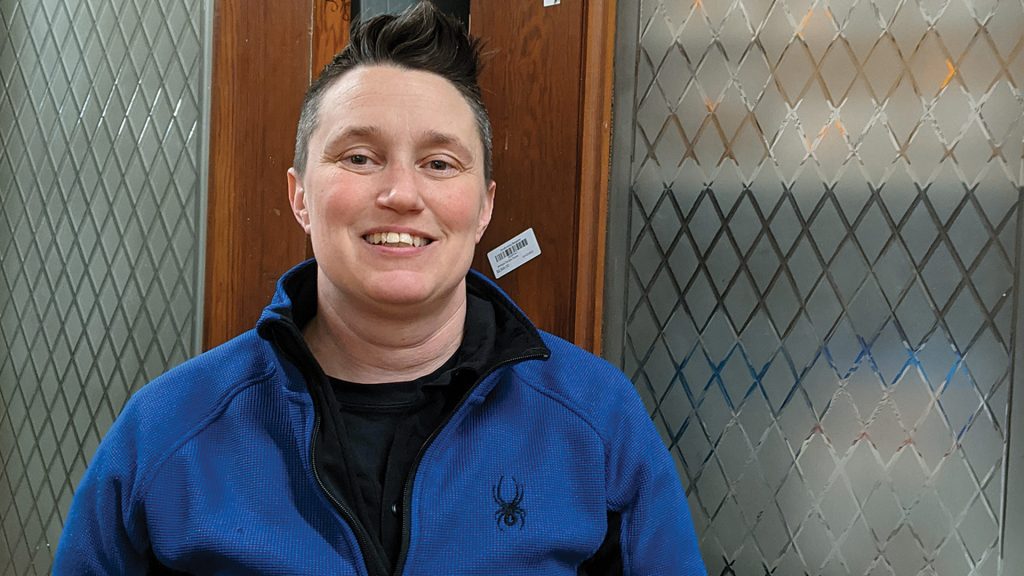
Darcy Ratti

Darcy Ratti says she’s surprised at what people want to toss out — but her customers are the ones who benefit.

From there, the store launched its own web store last May. “Basically, anything that gets posted to our eBay store also gets posted to our web store, and vice versa,” she noted. “But we’ve expanded the types of stuff that people can buy online. You can buy cabinets online now. You can buy a door online and ship it. We’ve got an extremely large chandelier we’re selling to someone from Texas, waiting to be shipped. We’ve sold and shipped to every state, as well as places like Italy, Australia, and Japan.”

That’s a boon for people searching for very specific, hard-to-find items, and now don’t have to travel to Massachusetts for them. “Maybe it’s faucets you can’t find or brass hardware or an Anderson window sash that’s very specific to a certain model or a Velux skylight kit or a mid-century-modern Legomatic chair. We get into reclaimed items that are very specific. A customer who knows the exact model number can go online and type it in, and if we have it, we’re going to come up.”

An online store made even more sense during the pandemic, said Emily Gaylord, CET’s director of Communications and Engagement. “One, we wanted a safe way for customers to shop. Two, there was all this renewed interest in home spaces, and a lot of people had to make a home office out of nothing. Subsequently, we saw a lot of supply-chain issues. Honestly, I think, with the direction retail is going, online stores are inevitable.”

EcoBuilding Bargains also launched virtual shopping appointments for far-flung shoppers.

“Yes, you’re reducing your carbon footprint and helping us with our mission, but you’ll also find something you won’t be able to find anywhere else.”

“That was a really cool, important piece,” Gaylord said. “If you’re searching for a cabinet set, you can book a virtual appointment, send the measurements ahead of time, and we can walk you through them in a video call. Looking for a new front door? Here are six doors with the finish and size you want. Virtual shopping experiences are a huge time saver.”


Two Ways to Save Green

The clientele at EcoBuilding Bargains, both in person and online, has been broad, Gaylord told BusinessWest.

“We definitely get people who say, ‘I just need a window, something affordable; what do you have?’ And there are some people making sustainable choices, people who really care about their environmental impact and carbon footprint; they’re shopping with us as well. Then, over the last few years, the DIY space exploded, and we have trendy and unique materials for your space. We serve all those people.”

She noted that buying secondhand items has a sort of double environmental impact, keeping materials out of landfills while reducing the impact of what would have been made and purchased new instead.

Emily Gaylord

Emily Gaylord says the store has stocked newer and higher-quality materials in recent years.

“We’re dealing with some serious issues. We’re at a moment right now where people are understanding climate and environmental issues in a way they haven’t ever before,” Gaylord went on. “But making sustainable choices has so many benefits. Yes, you’re reducing your carbon footprint and helping us with our mission, but you’ll also find something you won’t be able to find anywhere else. Or you can have a much higher-quality item than you could otherwise afford. When you start thinking in a sustainable way, it’s not just for the earth, but for you as a business owner or homeowner.”

Items arrive in the store from a variety of sources, Ratti explained.

“We’re looking for the person who has that overstock or a contractor that has done a bunch of remodels, and they’re finding good, reusable materials and taking them to their shop or their garage and just hanging onto them because they know they’re good. We’re helping them defray the costs on their end so they don’t have to dispose of it, and they get a tax donation receipt.”

Homeowners are bringing in materials as well — after replacing an old vanity or lighting fixtures, for instance.

“What we saw during the pandemic was people coming up with unique ways to put together home offices, and they’d come in here for different pieces,” Ratti said.

She’s often surprised by the quality of items that wind up at EcoBuilding Bargains, like a striking, solid chestnut front door, nine feet tall and three inches thick.

“When you’re shopping more sustainably, you’re going to find better alternatives, not just your run-of-the-mill thing. You’re buying a door like that, and you’re spending less than you would somewhere else. We’ve got a marble mantel from 1867; it came out of a brownstone on Newbury Street in Boston. You’re not going to find that someplace else.”

Gaylord agreed. “It’s not a salvage yard; it’s high-quality materials. That’s really important for us and our mission; we don’t want to push stuff back into the world that’s not going to meet that mission. We want to make sure we’re selling good-quality doors, low-flow toilets, fixtures that don’t have any lead in them. We’re always thinking of the quality of the materials, not just the quantity.”

“We want to make sure we’re selling good-quality doors, low-flow toilets, fixtures that don’t have any lead in them. We’re always thinking of the quality of the materials, not just the quantity.”

Even the packing materials used to ship items are recycled, Ratti noted. “Here, you’re saving some money but also helping with the environment. By being a little more frugal, there’s less production happening in the world.”


City of Home Improvement

Gaylord feels like EcoBuilding Bargains, through its national presence online, is just one more way Springfield is being put on the map.

“To see our store in Springfield start to have a national reach, and people be exposed to us from all over the country, is amazing,” she said. “Springfield is really special, and our store is really special. Seeing people fall in love with it is great to see.”

And the reasons they are seeking out sustainable options aren’t going away.

“How we work and how we use buildings is in flux right now,” she told BusinessWest. “The world looks a lot different than it did two years ago. It’s really exciting to see our business in Springfield not slow down, but, in fact, innovate and grow. People are getting more exposed to the Western Mass. region through this. It’s more than just selling a reclaimed door.”


Joseph Bednar can be reached at [email protected]
Law

The EO on PLAs

By Alexander Cerbo, Esq.


Keeping his promise of being “the most union-friendly president in American history,” President Biden and his administration issued Executive Order (EO) 14063, which mandates project labor agreements (PLAs) on “large-scale construction projects.”

Alexander Cerbo

A project labor agreement is a collective bargaining agreement between a contractor and the building trade union. A large-scale construction project is one within the U.S. that has an estimated total cost of $35 million or more, and usually refers to construction, rehabilitation, alteration, conversion, extension, repair, or improvement of a ‘vertical public works’ project. Famous examples of large-scale construction projects that were governed by PLAs include Disney World, the Kennedy Space Center, and Yankee Stadium. The EO is estimated to impact more than 200,000 workers and $262 billion in federal funding. For those in the industry, you should become familiar with the PLA.

PLAs are negotiated before any workers are hired, and they establish the terms of employment on a project, including wages, hours, working conditions, and dispute-resolution methods, among other things. If a business is unionized, the PLA must coexist with the business’ existing collective bargaining agreement. Biden’s EO contains several additional requirements of PLAs going forward. For example, all contractors and subcontractors related to the project must be allowed to compete for work, unionized or not. In addition, these PLAs must contain mutually binding dispute-resolution provisions as well as provide alternative mechanisms for cooperation between labor and management.

But what does this mean for small businesses that are not unionized going forward? Maybe, not a whole lot of good. But that depends on your business model.

What is considered ‘small’ typically depends on what industry you are in, and could range from fewer than 500 employees or up to 2,500 employees, or even more. Essentially, you are a small business if you are a privately owned corporation, partnership, or sole proprietorship that has fewer employees and less annual revenue than a public corporation or regular-sized business. According to the Small Business Administration, the construction industry has one of the highest concentrations of small business participation, well over 80%. Some argue that PLAs put small non-union construction businesses at a disadvantage because they increase the cost of doing business. Considering the fact that most small businesses in the construction industry are non-union, PLAs put them at a great disadvantage.

“Some argue that PLAs put small non-union construction businesses at a disadvantage because they increase the cost of doing business. Considering the fact that most small businesses in the construction industry are non-union, PLAs put them at a great disadvantage.”

While PLAs are often applauded by many labor analysts for creating long-term project stability, opportunities to include minority contractors and small ‘mom-and-pop’ contractors, and better training for workers, PLAs also increase the cost of construction by requiring payment of union wages to non-union workers, something greatly detrimental to the financial interests of small businesses that wish to partake in these construction jobs.

In addition, PLAs generally require non-union contractors to pay employee benefits twice — once to their employees and once to the unions that oversee the project, often making it too costly for non-union businesses to compete for these jobs in the first place. Non-union contractors often must pay into underfunded and mismanaged union pension plans, of which their employees wouldn’t see the benefits unless they joined the union. A small business must look at these costs associated provisions, among other things, to assess the risks and costs of entering into this type of arrangement. All businesses at all levels should make sure to do the short-term and long-term math before deciding whether to get into one of these arrangements.

It is important to note that the Biden EO does not require construction companies to unionize and does not apply to construction projects controlled by local or state governments, even if they receive federal funding. Nevertheless, the PLA mandate could be catastrophic for many small businesses, often touted by many politicians as the backbone of the American economy.


Alexander Cerbo, Esq. is an attorney who specializes in labor and employment-law matters at the Royal Law Firm LLP, a woman-owned, women-managed corporate law firm that is certified as a women’s business enterprise with the Massachusetts Supplier Diversity Office, the National Assoc. of Minority and Women Owned Law Firms, and the Women’s Business Enterprise National Council; (413) 586-2288; [email protected]

Law

Risky Business

By Michael Roundy and Scott Foster


Michael Roundy

Scott Foster

Scott Foster

Running a business in the legalized cannabis space is something in which hundreds of owners around the Commonwealth are now engaged. On most days, the fact that cannabis remains illegal federally is not on the top of the minds of these owners. However, a recent decision by the First Circuit Court of Appeals reminds us that the cannabis industry is not entirely free of the risks of federal prosecution and provides useful guidance on how best to avoid those risks.

Maine legalized medical marijuana in 2009, subject to stringent conditions and governed by detailed regulations. While state law permitted the medical use of marijuana, the federal Controlled Substances Act does not. However, each year since 2015, Congress has attached a rider to its annual appropriations bill that prohibits the Department of Justice from using appropriated federal funds to prevent any of the states “from implementing their own laws that authorize the use, distribution, possession, or cultivation of medical marijuana.”

In United States v. Bilodeau and two related cases, the two individual defendants and the companies they owned operated sites in Auburn, Maine, where they grew marijuana purportedly for use as medical marijuana. The operations were carried out under the color of facially valid paperwork as a Maine Medical Marijuana operation, and state inspectors found the site to be in compliance with Maine’s law.

Following an investigation by federal law enforcement, the defendants were indicted for knowing and intentional violation of the Controlled Substances Act. The government asserts that the illegal marijuana-distribution operation merely used the Maine Medical Marijuana program as a cover for its illegal, black-market marijuana operations, which included distribution of marijuana to individuals in several other states who were not qualifying medical-marijuana patients under Maine’s law.

“On most days, the fact that cannabis remains illegal federally is not on the top of the minds of these owners. However, a recent decision by the First Circuit Court of Appeals reminds us that the cannabis industry is not entirely free of the risks of federal prosecution and provides useful guidance on how best to avoid those risks.”

The defendants challenged the prosecution on the grounds that the government was prohibited from using federal funds to prosecute them, because of Congress’s appropriations rider, and sought an injunction from the District Court. The court denied the request because the Maine medical-marijuana law did not authorize the sort of conduct alleged. The defendants appealed.

The Court of Appeals considered the arguments raised by both parties. The government advocated for a view of the appropriations rider that would permit any prosecutions unless the defendants were in full, strict compliance with the state’s medical-marijuana laws. Any minor non-compliance would bring the case outside the rider and permit the Department of Justice to prosecute.

The court rejected this approach, finding that federal prosecution would hang as a sword of Damocles over participants in Maine’s medical-marijuana market, ready to drop at the occurrence of any minor, “even tiny” non-compliance or unintentional violations, and would likely deter market participation, which might also lead the state to water down its regulatory scheme and otherwise serve to thwart the state’s implementation of its laws relating to medical marijuana.

The defendants argued that the rider should prevent prosecutions of those who have valid state licenses to participate in the state’s medical-marijuana industry. The court rejected this other extreme as well, concluding that Congress did not intend the rider to create a safe harbor for blatantly illegitimate activity outside the scope of the state’s own medical-marijuana laws, merely because the defendants possess facially valid documents.

The court thus rejected the approach advocated by both the government and the defendants. The court adopted a middle-ground approach and declined to define its precise boundaries. It found that the conduct in the case at hand was clearly aimed at supplying marijuana to persons “whom no defendant ever thought were qualifying patients under Maine law” and that the medical-marijuana licenses were façades for such unauthorized sales.

The court also noted that Maine’s own medical-marijuana law expressly criminalized distribution to those not authorized to possess marijuana (medical patients) under the law. As such, federal prosecution for such conduct was considered unlikely to have any unwelcome effect on Maine’s implementation of its medical-marijuana laws. The Appeals Court therefore affirmed the District Court’s denial of an injunction, and the prosecution is permitted to proceed.

What this decision does not do is provide sufficient clarity for Massachusetts operators or regulators, especially around the question of what degree of non-compliance with the Massachusetts regulatory scheme may expose Massachusetts operators to federal prosecution.

While it seems unlikely that mere technical violations would lead to federal prosecution, could an operator faced with a summary suspension order (which occurs when there is “an immediate threat to public health, safety, and welfare”) find that not only is their license suspended, but they now face federal prosecution as well? Hopefully the Cannabis Control Commission will take this potentially serious threat into consideration as they weigh future enforcement actions in Massachusetts.


Michael Roundy and Scott Foster are both partners at Bulkley Richardson and members of the firm’s cannabis practice.

Women in Businesss

Beyond the Numbers


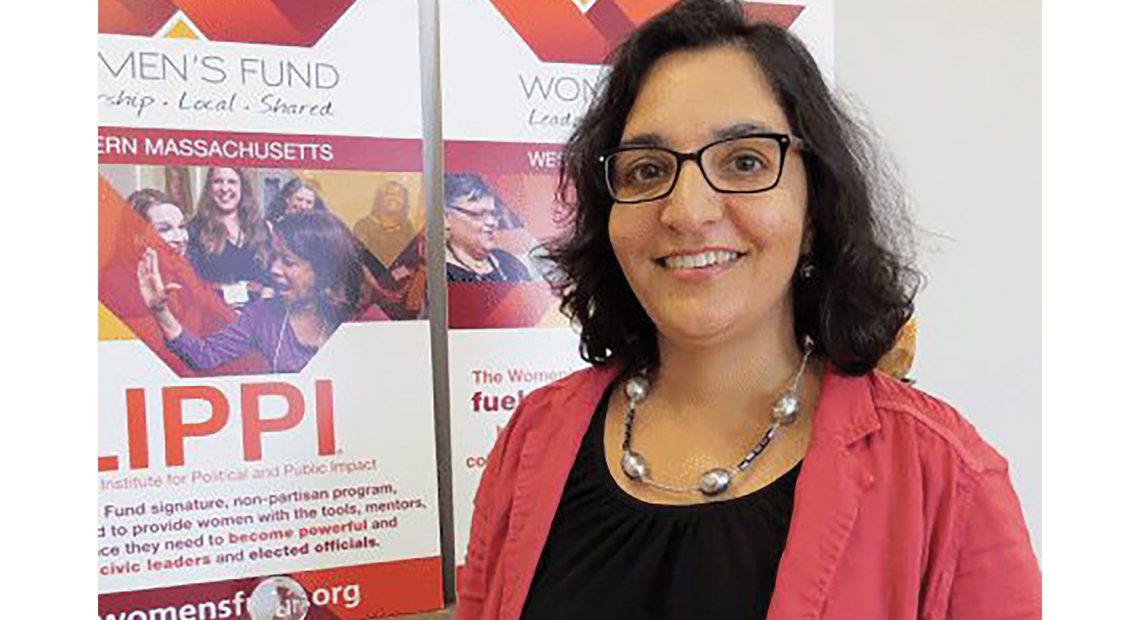
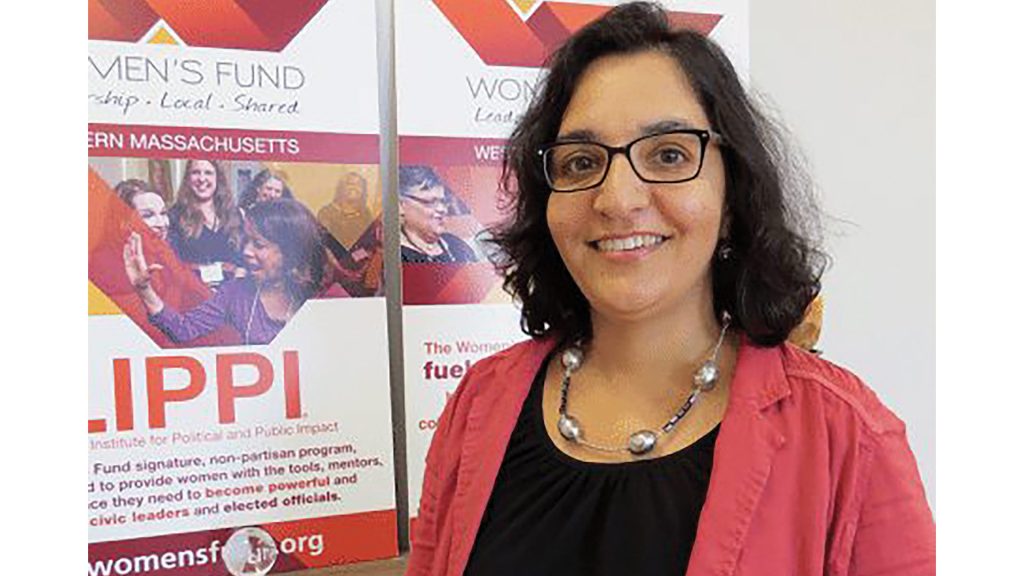
Donna Haghighat

Donna Haghighat says the factors holding women back in the workforce must be fully understood in order to shift the tide.

The numbers speak for themselves. But more importantly, they demand a response.

According to a global study published in the Lancet, between March 2020 and September 2021, women were more likely to report employment loss than men during the pandemic (26.0% to 20.4%), as well as more likely to drop out of school or forgo work to care for others.

“The most significant gender gaps identified in our study show intensified levels of pre-existing, widespread inequalities between women and men during the COVID-19 pandemic,” the report reads. “Political and social leaders should prioritize policies that enable and encourage women to participate in the labor force and continue their education, thereby equipping and enabling them with greater ability to overcome the barriers they face.”

That’s exactly what the Women’s Fund of Western Massachusetts — and a broad network of like-minded partners — have in mind through an effort they’re calling the Greater Springfield Women’s Economic Security Hub.

“We felt as though the many ways society was looking at women’s economic security was too narrow of a lens,” said Donna Haghighat, CEO of the Women’s Fund. “So we created our own framework, where we considered the factors that affect some women’s economic security as more expansive than what other people might think.”

That includes a lack of unpaid caregiving. During the pandemic, that issue was the dominant factor in women dropping out of the workforce at an uprecendeted rate. The numbers have recovered somewhat, but not all the way, and the factors causing the workforce exodus remain problematic.

“We felt as though the many ways society was looking at women’s economic security was too narrow of a lens. So we created our own framework.”

“Women weren’t dropping out of the workforce because they wanted to stay at home and eat bon-bons, but because schools were closed or childcare centers were closed, and someone needs to be home with the children,” Haghighat said. “Oftentimes, because of pay differentials and so forth, it made more sense for women to drop out of the workforce.”

Then there are issues around transportation and internet access. “Prior to the pandemic, people didn’t realize how critical that was,” she went on, whether the problem was lack of online access altogether or having difficulty sharing devices or WiFi with other family members.

To create the research and action project it called the Women’s Economic Security Hub, the Women’s Fund began collaborating with key area partners, including Arise for Social Justice, Dress for Success Western Massachusetts, Springfield WORKS, and the Western New England University School of Law Social Justice Center.

This work will focus on women, mostly of color and living at or below the poverty line, to understand the myriad factors that make or break an individual woman’s ‘economic engine,’ thereby affecting family prosperity.

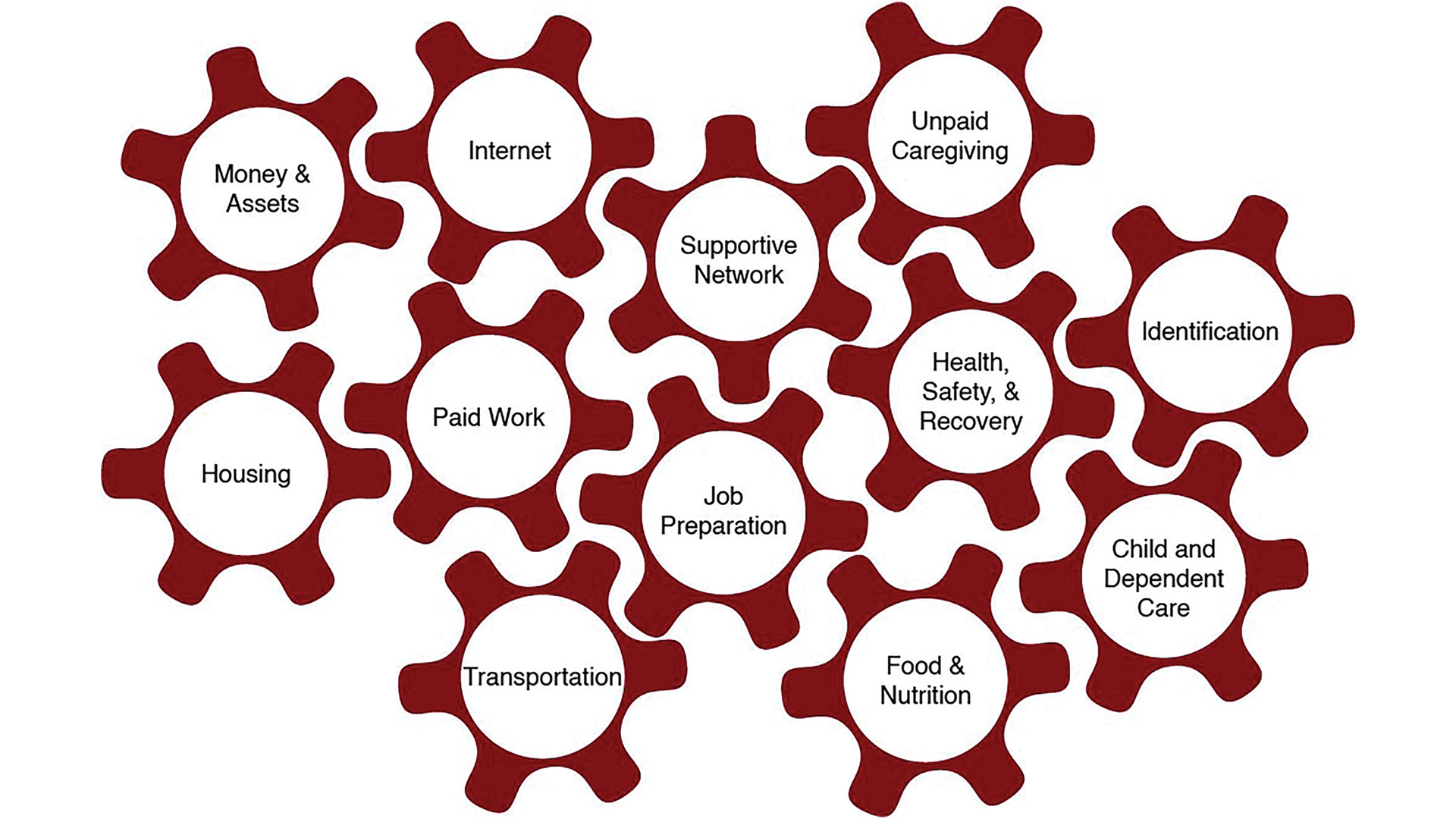
The UMass Donahue Institute developed a survey instrument that will be refined, implemented, and analyzed by the UMass Amherst Center for Research on Families, and the survey will delve into 12 interconnected determinants, to form a framework which will be used to survey women in communities that have historically faced disproportionate challenges to economic growth.

“We’ve portrayed a women’s economic engine as a bunch of interlocking gears,” Haghighat said. “Each of these things can have an effect on the other things.”


Obstacles to Success

Luisa Sorio Flor, a postdoctoral fellow at the University of Washington and lead author of the Lancet study, noted that “the pandemic has exacerbated gender disparities across several indicators related to health and other areas of well-being. Women were, for example, more likely than men to report loss of employment, an increase in uncompensated care work, and an increase in perceived gender-based violence during the pandemic, even in high-income countries.”

By partnering with the UMass Donahue Institute and surveying 200 area women, Haghighat hopes to localize those global trends to determine where the economic engine is jamming.

“Is it child and dependent care or job preparation or lack of a supportive network?” she asked. “We added ‘supportive network’ as one of the determinants we use, understanding that, when something goes wrong in a woman’s life, she might have a supportive network she can reach out to when things are going wrong, like a grandmother who can watch a child. But we realize that, oftentimes, women will lack that supportive network, which will obviously deter them from achieving economic security.”

“We’ve portrayed a women’s economic engine as a bunch of interlocking gears. Each of these things can have an effect on the other things.”

Another determinant is identification, which can be a serious barrier not only for undocumented women, but women emerging from incarceration.

“When you come out of incarceration, you don’t just get handed your ID. You have to re-establish your identification, which is mindblowing to me,” Haghighat said. “So many things these days require identification, so that’s a huge barrier to getting housing, getting paid to work, all those things.”

A report from UMass Amherst School of Public Policy (SPP), released last month, revealed some of the impacts that the first year of the COVID-19 pandemic had on Massachusetts households. Led by UMass Amherst economist Marta Vicarelli, the team from SPP’s Sustainable Policy Lab surveyed more than 2,600 Massachusetts residents from October 2020 to February 2021 to gather information about the challenges households faced due to the public-health crisis and its socioeconomic fallout, and the strategies adopted to address these challenges.

The survey covered a wide range of topics, including employment and financial strains, childcare and education, physical and mental health, substance use, and food security. Vicarelli said the team’s analysis devoted particular attention to women, children, and minority populations.

“Our results shed light on the socioeconomic and health impacts of the COVID-19 pandemic in Massachusetts households across different socioeconomic groups,” she wrote. “Many of these impacts have been persisting throughout the pandemic. Special focus is devoted to delays in children’s academic and emotional development, negative mental-health outcomes, and negative effects on women’s employment. If not addressed quickly, these socioeconomic impacts will have lasting, and possibly irreversible, implications for the United States. We hope that our results will inform the design of policies that address these impacts and support vulnerable groups.”

Notably, the survey found that 31% of respondents saw a decrease in overall income and savings, and women were more likely than men to report having become financially dependent on their partner due to pandemic disruptions. Echoing the global Lancet study, female respondents were also more likely to indicate substantial changes in their professional life to support the needs of their households, such as keeping their jobs but working fewer hours, taking unpaid leave, leaving their job, or changing jobs.

“There’s a real concern about lost stability for retirement purposes,” Haghighat told BusinessWest. “And who knows what’s going on with the Great Resignation? Hopefully, women who have more flexibility are taking advantage of a better labor market to make up ground in terms of their jobs and so forth. Over time, we’ll see how that plays out.”


An Ongoing Conversation

A 2019 Women’s Fund report called “Key Findings on the Status of Women and Girls in Western Massachusetts” highlighted the fact that women in Hampden County were underemployed and experiencing high rates of poverty. Since then, COVID-19 has complicated the issue, and the impact on women in Greater Springfield has disproportionately affected black and Hispanic women — often women concentrated in low-wage employment who were shut down for extended periods or were laid off entirely.

The 2019 report also emphasized barriers for formerly incarcerated women, positing that resources like affordable housing, debt relief, financial assistance, access to sober housing — especially for women — quick reunification with children and other family members, and continuity of therapy and recovery are greatly needed.

The next report will be a tale of how COVID impacted everything. That and the Women’s Economic Security Hub survey are necessary next steps in closing troubling gaps for women when it comes to economic security, Haghighat said.

“Who knows what’s going on with the Great Resignation? Hopefully, women who have more flexibility are taking advantage of a better labor market to make up ground in terms of their jobs and so forth.”

“And not just for us, but for area policy makers,” she added. “It’s important for them to take this lens to things — people quitting or not taking positions, not just because of pay, but because of hours, transportation, getting there. We want this framework for thinking about all the things affecting women. Then, employers can be more visionary about making sure the workplace or compensation package they’re creating really responds to the realities women are facing.”

She noted that federal lawmakers can get behind supporting physical infrastructure, like roads and bridges, but often balk at other forms of support, like a national early-childcare program that has come up for discussion in Congress before, but never went anywhere.

“I look at that as a huge missed opportunity,” Haghighat said — one of many that may one day be remedied as decision makers get a grip on the hard data that’s forcing too many women into hard decisions they shouldn’t have to make.


Joseph Bednar can be reached at [email protected]
Women in Businesss

Putting the Focus on Leadership


It’s called the CliftonStrengths Assessment.

And that name pretty much says what it is. Created by Gallup, it’s a 177-question assessment designed to identify an individual’s strengths when it comes to leadership.

There are 34 such strengths, as identified after years of research by Don Clifton, and they include everything from communication and consistency to focus and positivity, said Colleen DelVecchio, founder of Colleen DelVecchio Consulting.

But identifying strengths is merely the first important step in the process toward becoming a better, more effective leader, said DelVecchio, who will lead an experiential workshop called “Activating Your Leadership Strengths” at the upcoming sheLEADS women’s conference being staged by the Chamber of Greater Easthampton.

Indeed, one’s strengths need to be … well, activated, she said, adding that her program, which she delivers several times a week on average to a wide range of audiences, is designed to help individuals put strengths identified by the assessment to full and effective use.

“Our focus is on providing attendees tools and connections that they didn’t have when they walked in.”

“We’ll look at these strengths and talk about how to aim them at your job; how do you aim your strengths at the things you need to do to become a leader?” she said, adding that attendees should leave the room with a clearer understanding of their five greatest strengths when it comes to leadership and, more importantly, how to apply them.

DelVecchio’s program is one of several components scheduled for sheLEADS, the rebranded professional-development conference launched by the Easthampton Chamber and then sidelined, as so many similar initiatives have been, by the COVID-19 pandemic.

The half-day conference, with the theme “Bold, Brave, and Beyond,” will also include a panel discussion, titled “The Language of Leadership,” featuring Pia Kumar, chief strategy officer for Universal Plastics in Holyoke; Lynnette Watkins, president and CEO of Cooley Dickinson Hospital in Northampton; and Waleska Lugo-DeJesus, CEO of Inclusive Strategies.

It will also include a keynote address, called “Be Great Where Your Feet Are,” from Robyn Glaser, senior vice president of Business Affairs for the Kraft Group (owner of the New England Patriots), made possible by the event’s speaker sponsor, bankESB.

The sheLEADS conference is slated for Friday, May 20 from noon to 5 p.m. at the Bolyston Room in the Keystone Building, 122 Pleasant St., Easthampton. For tickets and details, visit www.easthamptonchamber.org/events.

Moe Belliveau, executive director of the Easthampton Chamber, said the women’s professional-development conference has become an important annual event, attended by women in virtually every sector of the economy. Over the past few years, it has been a virtual event, but the chamber decided that, with COVID subsiding and the number of cases declining, it was time to return to an in-person format.

The chamber is, in many ways, easing its way back in with the conference, opting for a half-day format, rather than full day, followed by networking at Abandoned Building Brewery. Roughly 100 attendees are expected, and they are being spaced out in a nod toward safety during the pandemic. There is also a virtual component to the conference, featuring the keynote address and panel discussion.

Like DelVecchio, Belliveau said the conference is designed for women looking to find their voice when it comes to leadership and learn from others how to be a more effective leader — in the workplace, but also in the community.

“This is a high-energy day filled with professional development, relationship- and leadership-building opportunities,” Belliveau said. “Our focus is on providing attendees tools and connections that they didn’t have when they walked in.”

Technology

A New Framework


The Internet of Things (IoT) is completely enmeshed in our daily lives, a network of connected laptops, phones, cars, fitness trackers — even smart toasters and refrigerators — that are increasingly able to make decisions on their own. But how to ensure these devices benefit us, rather than exploit us or put us at risk?

New work, led by Francine Berman at UMass Amherst, proposes a novel framework, the “impact universe,” that can help policymakers keep the public interest in focus amid the rush to adopt ever-new digital technology.

“How can we ensure that technology works for us, rather than the other way around?” asks Berman, Stuart Rice honorary chair and research professor in UMass Amherst’s Manning College of Information and Computer Sciences. Berman, the lead author of a new paper recently published in the journal Patterns, and her co-authors sketch out what they call the impact universe — a way for policymakers and others to think “holistically about the potential impacts of societal controls for systems and devices in the IoT.”

“How can we ensure that technology works for us, rather than the other way around?”

One of the wonders of modern digital technology is that it increasingly makes decisions for us on its own. But, as Berman puts it, “technology needs adult supervision.”

The impact universe is a way of holistically sketching out all the competing implications of a given technology, taking into consideration environmental, social, economic, and other impacts to develop effective policy, law, and other societal controls. Instead of focusing on a single desirable outcome — sustainability, say, or profit — the impact universe allows people to see that some outcomes will come at the cost of others.

“The model reflects the messiness of real life and how we make decisions,” says Berman, but it brings clarity to that messiness so that decision makers can see and debate the tradeoffs and benefits of different social controls to regulate technology. The framework allows decision makers to be more deliberate in their policymaking and to better focus on the common good.

Berman is at the forefront of an emerging field called public interest technology (PIT), and she is building an initiative at UMass Amherst that unites campus students and scholars whose work is empowered by technology and focused on social responsibility. The ultimate goal of PIT is to develop the knowledge and critical thinking needed to create a society capable of effectively managing the digital ecosystem that powers our daily lives.

Berman’s co-authors, Emilia Cabrera, Ali Jebari, and Wassim Marrakchi, were Harvard undergraduates and worked with Berman on the paper during her Radcliffe fellowship at Harvard. The fellowship gave Berman a chance to work broadly with a multi-disciplinary group of scholars and thinkers, and to appreciate the importance of designing, developing, and framing societal controls so that technology promotes the public benefit.

“The real world is complex, and there are always competing priorities,” Berman says. “Tackling this complexity head on by taking the universe of potential technology impacts into account is critical if we want digital technologies to serve society rather than overwhelm it.”

Daily News

SPRINGFIELD — Springfield Museums announced the receipt of a $750,000 federal earmark in support of upgrading the Springfield Science Museum.

“The funded project is called Equitable Access to the Night Sky,” said Jenny Powers, director of the Science Museum. “And it is going to be a game changer for the Museums, our community, and our region.”

The public announcement of this federal earmark underscored the united effort to secure these funds by U.S. Sens. Edward Markey and Elizabeth Warren, U.S. Rep. Richard Neal, and the Massachusetts congressional delegation. Museums staff learned about the federal earmark from Markey’s office.

“The federal funds will help us leap into the 21st century,” Powers said.

The Science Museum is already evolving at a fast pace. In 2019, the Museums added the Smithsonian Spark!Lab, a hands-on innovation space facilitated by a science educator, the only Spark!Lab in the Northeast. In 2021, the staff renovated the Seymour Planetarium, upgrading seating and refurbishing the historic star ball. Projected to open in June 2022, the International Space Station gallery will spotlight STEM (science, technology, engineering, math) learning with a series of interactive stations that mimic those in the space station orbiting our planet. All these changes are helping the Science Museum take huge strides toward the vision of being an essential, informal STEM-learning hub for this region.

As part of a three-year strategic plan, the Museums are prioritizing relevance, diversity, inclusion, equity, and access. “The Science Museum must respond to community interest. We must provide relevant opportunities that draw everyone into the new, tech-savvy, multi-dimensional world,” Powers said. “This money will help us bridge equity and access gaps. We are already a beloved institution; we will have an even greater impact as a public asset with the upgrades this money will provide.”

Plans for improvement include a full-dome, digital projection system with state-of-the-art software for the planetarium to augment the historical star ball and add multi-cultural perspectives to the night sky; digitization of the observatory to allow full access to the stars for anyone, anywhere via online projection; and tactile, multi-sensory astronomy exhibits for visitors who are blind or have low vision.

“Regional educators, students, community partners, and user experts have helped us identify flexible, essential, inclusive educational technology,” said Larissa Murray, director of Education for the Springfield Museums. “The recent upgrades to our science workshop include accommodations for students with special needs and systems for remote access. These changes are increasing our ability to impact a wider audience than ever before.”

For more than 160 years, the Science Museum has nurtured curiosity, fueled discovery, and transformed lives, said Kay Simpson, president and CEO of the Springfield Museums. “The Museums provide opportunities — joyful, exciting, and relevant opportunities. These funds will support new pathways to wonder for visitors of all ages and provide inclusive, impactful museum experiences with 21st-century technologies. Plus, our newly upgraded museum will be a dynamic driver of visitation to Western Massachusetts.”

Markey noted that “this federal funding for Massachusetts means we can initiate, strengthen, and expand community-based projects that serve our families, businesses, and cities and towns every day. These projects will spur our economy, strengthen our resiliency, expand access to important healthcare, promote clean energy and climate solutions, and help feed and house our most vulnerable in every region of our Commonwealth. I am proud that my delegation partners and I were able to secure this critical funding, and I will continue to fight for the resources Massachusetts communities need to thrive and grow.”

Daily News

GREENFIELD — McGovern Auto Group, which operates 19 dealerships across Massachusetts, New Hampshire, and New York, announced the opening of McGovern Chevrolet of Greenfield. The new dealership, which replaces Dillon Chevrolet, employs 25 people across its sales, leasing, and maintenance teams, with plans to increase headcount to at least 40 by the end of 2022.

The opening was enabled by McGovern Auto Group’s acquisition of Dillon Chevrolet, located at 54 Main St., from longtime owners Tom and Jay Dillon. Under the McGovern brand, the new dealership will feature a lot with more than 125 new and used cars, plus a completely reimagined customer experience including comfortable, clean, and modern waiting areas with free coffee and high-speed WiFi. To mark the transition to new ownership after 60 years in the Greenfield area, McGovern Chevrolet is also offering all Greenfield area residents an express detail — a $100 value — with any service.

Founded in 2016, McGovern Auto Group is a full-service dealer group with four collision centers in addition to a commercial and municipal division. Known for luxury vehicles such as Ferrari and Porsche, the company also brings deep expertise working with brands including Chevrolet, GMC, Ford, Hyundai, Honda, and Toyota.

“We have enormous respect for Tom and Jay’s commitment to Greenfield and the business they’ve built together over the last 60 years. We’re honoring that legacy with a modern, tech-forward dealership featuring the largest inventory of pre-owned vehicles in the Greenfield area,” said Matt McGovern, owner of McGovern Auto Group. “Every single Dillon employee will become part of the McGovern family, and we’ll create plenty more jobs in the coming months as we expand operations and keep working to serve the local community.”

Ben Muenzberg, general manager at McGovern Chevrolet of Greenfield, added that “I’m a longtime Central Massachusetts resident, and I know the Greenfield community is eager to work with a team that delivers great prices, honest and straightforward customer service, and amazing after-market support. As a 19-year industry veteran, I’m looking forward to leveraging McGovern’s infrastructure, technology, and expertise to give all our customers the best possible service.”

Daily News

FLORENCE — Friends of Children Inc. will present Northwestern District Attorney David Sullivan with the 2022 Changemaker Award at a dinner on Friday, March 25 at 5:30 p.m. at the Garden House in Look Park.

Sullivan is being presented with the Changemaker Award to celebrate his accomplishments, advocacy, and impact. He has been a steadfast advocate for vulnerable people in the Pioneer Valley, including children and young people served by Friends of Children, since 2003.

Sullivan has led initiatives to address child abuse and domestic violence. He co-founded the Children’s Advocacy Center of Franklin County and North Quabbin Region and serves as an advisor to its board, as well as to the Children’s Advocacy Center of Hampshire County. Sullivan was part of the core team that helped establish the Franklin County Family Drug Court. He co-founded and co-chairs Hampshire HOPE and the Opioid Task Force of Franklin County and North Quabbin Region to address the opioid epidemic and its devastating impact on children and families. He is a board member of the Massachusetts Children’s Trust, an organization dedicated to ending child abuse. He also testified twice to the Joint Committee on Children, Families and Persons with Disabilities in support of bills that would establish external oversight of the state’s child welfare system.

Friends of Children is dedicated to improving the lives of children and young adults impacted by foster care or juvenile-justice involvement. It addresses the needs of high-risk children who are not readily supported by systems designed to protect them and encourage their full participation in society.

For more information and tickets to the March 25 event, visit www.friendsofchildreninc.org.

Daily News

SPRINGFIELD — American International College (AIC) will host a graduate open house on Tuesday, March 22 beginning at 6 p.m. in the Sprague Cultural Arts Center on the AIC campus located at 1000 State St. in Springfield.

The open house is for the working professional looking to attend graduate school and is designed to give prospective students access to all the information they need in one convenient location while providing an opportunity to meet faculty, staff, and other students in order to gain insight to AIC’s programs, admission processes, college financing, and housing.

According to Vice President for Admissions Kerry Cole, “AIC offers an array of master and doctoral degree programs in business, psychology, education, and the health sciences, including nursing, occupational therapy, and physical therapy, with blended and online programs, to help advance career opportunities. We know that time is extremely valuable between demanding work schedules and family life. Our goal is to offer an open house that welcomes working professionals and makes it easy for them to gather helpful information as they consider next steps in their career aspirations.”

To register for this event, visit go.aic.edu/portal/grevents. More information regarding graduate-degree programs at AIC is available online at www.aic.edu or by calling the Admissions Office at (413) 205-3700.