Daily News

GREENFIELD — Anthony Worden, president & CEO of Greenfield Cooperative Bank and its parent company, Greenfield Bancorp, MHC announced today the operating results of the bank’s latest fiscal year as announced at the 117th annual meeting of the bank on June 21. Worden reported that FY 2022, which ended March 31, was very successful and the assets of the bank grew by $41.4 million (5%) over the prior year.

Other results include:

  • In FY 2022, GCB originated more than $166 million in loans of all types, including $61.3 million in residential mortgages, $92.0 million in commercial loans,

$45.6 million in municipal lending, $9.2 million in home equity loans and lines, and

$1.2 million in MassSave® ‘’zero-interest” energy loans.

  • GCB had an increase of $50.5 million in deposits (7.4%) over the past year;
  • The pre-tax operating income for Greenfield Cooperative Bank was $4.416 million for the year ended March 31, 2022 and the net income after taxes was $3.454 million;
  • GCB’s Tier 1 Capital to average assets is 10.5%. The bank is considered “well capitalized” by all regulatory definitions.
  • As a result of these solid earnings, the bank and its employees were able to contribute more than $180,000 to 200 community groups and charities throughout both Hampshire and Franklin County during the past fiscal year.
Daily News

HOLYOKE — Today, American International College (AIC) will sign an articulation agreement with Holyoke  Community College (HCC), establishing an academic relationship between the community college and the four-year institution.

The agreement between AIC and HCC allows academic programs that enhance the transition of HCC graduates, and promotes a smooth transfer to AIC, offering time and cost savings for students by recognizing the coursework pursued at the community college and demonstrates the ongoing commitment by ensuring that educational pathways are created for all those who wish to consider a degree in higher education.

At AIC, the program is referred to as Direct Connect. Direct Connect students can earn up to $18,000 in financial gift aid, not loans, before being evaluated for additional need-based aid and allows students to study and major in their area of interest while attending their community college.

Daily News

SPRINGFIELD — The law firm of Pellegrini, Seeley, Ryan and Blakesley made a financial contribution and donated staff man hours to help with the construction of a new home in Holyoke by the Greater Springfield Habitat for Humanity.

“As a firm, we are committed each day to help make the lives for residents of our state better,” said Charlie Casartello, the firm’s managing partner.  “To be able to literally construct a building to help a family in need is something very special indeed.”

Michael Cardaropoli, PSRB attorney and vice president of the Habitat for Humanity board of directors, agreed. “This is the second build project the firm has been involved with for Habitat for Humanity. We are always happy to roll up our sleeves and dig into another project for this amazing organization,” “Making a financial contribution is critical, but having the firm help with sweat equity is a labor of love for our whole team.

Daily News

HOLYOKE — Pare Corporation, a multi-disciplinary engineering firm, recently staged a well-attended grand opening for its facility in Holyoke, its third office in the Northeast.

“The Pioneer Valley is very community-focused and I appreciate the warm welcome the leaders of the Holyoke community have given us,” said Pare Vice President David Loring. “Because Holyoke is a hub point to the region, it is a perfect location for our new office. We look forward to meeting additional members of the community now that the office is open.”

As part of the ceremony, a proclamation was presented by the office of Senator John Velis, who grew up in Holyoke and maintains strong ties to the region.

Established in 1970, Pare Corporation has more than 130 staff serving the eastern United States. In addition to Holyoke, Pare has offices in Rhode Island and Foxboro, Mass. Pare has experience designing public and private facilities and the infrastructure that supports them. Clients and markets include state transportation departments, water and wastewater authorities, K-12 and higher education facilities, biotechnology and life science companies, and dams and marine facilities ranging to a wide variety of municipal, industrial, institutional, and commercial developments.


Construction Cover Story

History in the Remaking
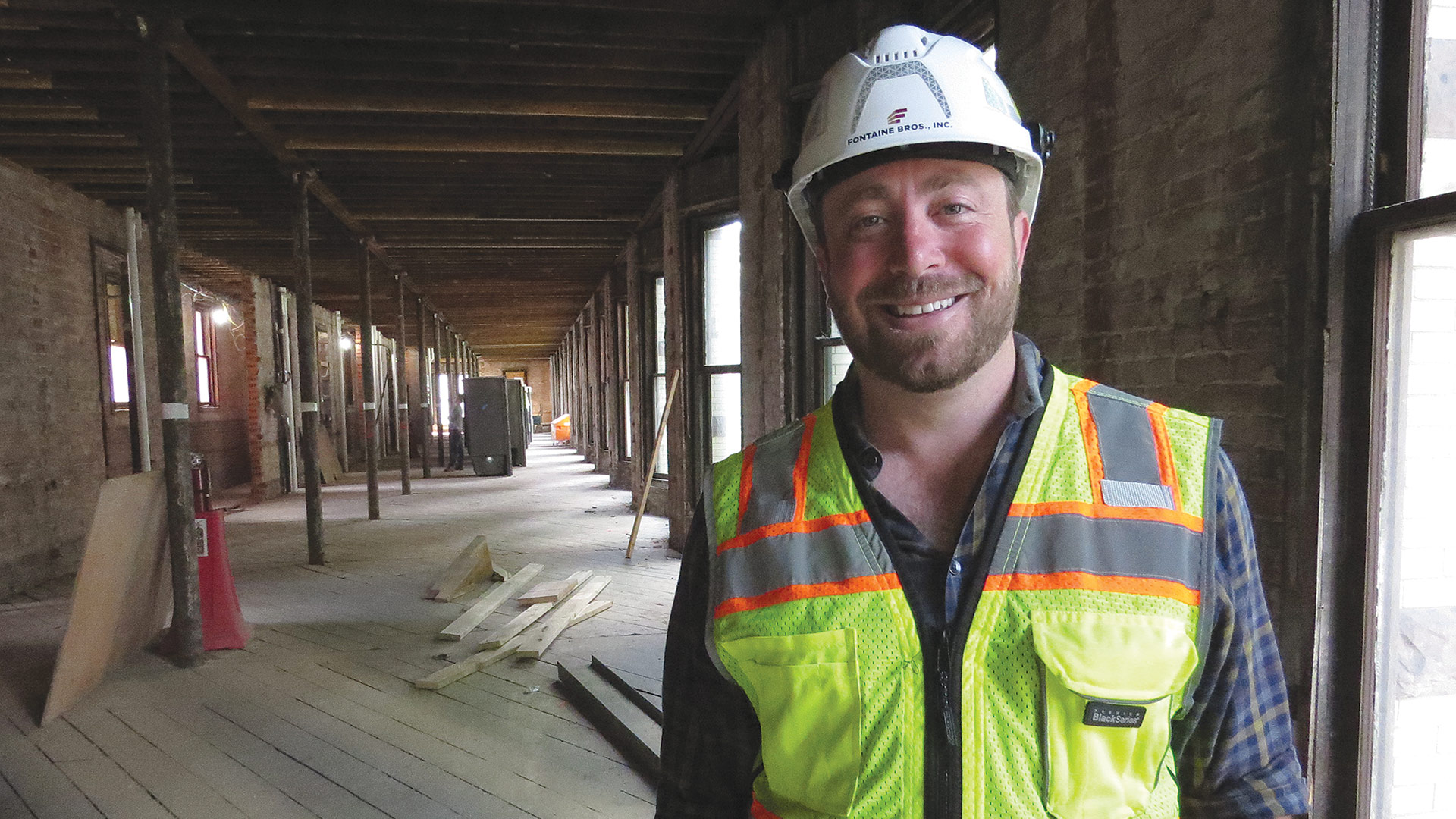
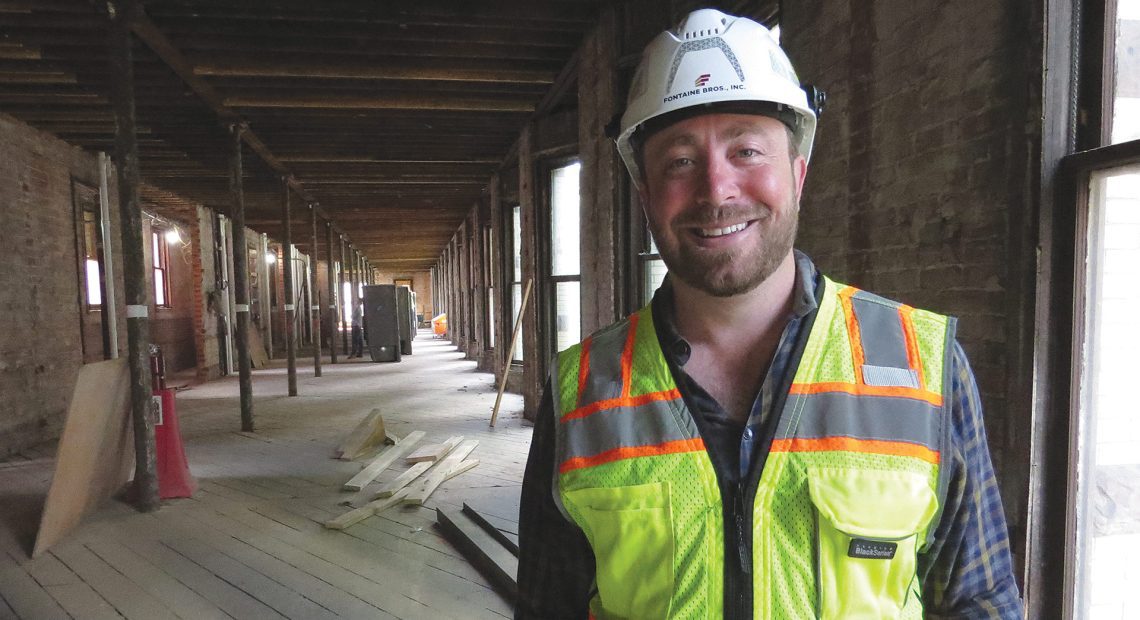
Dave Fontaine Jr.

Dave Fontaine Jr.

Crews working on the $64 million initiative to transform the former Court Square Hotel in downtown Springfield into market-rate housing say the project takes them back in time. Actually, it takes them to several different periods of time — from the property’s days as prominent hotel to more recent days, when it hosted a popular tavern and several other businesses. While doing this time-traveling, these same crews are living in the present and confronting a number of challenges as they usher in the next chapter in this property’s intriguing history.

Dave Fontaine Jr. calls it a “cool memento.” Actually, it’s turned out to be more than that.

He was referring to a bid package submitted by his firm, Fontaine Bros. Inc., for redevelopment of the former Court Square Hotel in the heart of downtown Springfield. The date on the three-ring binder, crammed with interior and exterior photographs and other materials, is 2000.

And that wasn’t the first — or only — time the company had submitted a bid on a project to transform the property, now vacant for more than 25 years, for a different use — endeavors that never saw the light of day for one reason for another.

There have been so many in fact, that Fontaine, vice president of the company started by his great-grandfather and his brother, had some humorous material for use when he was asked to say a few words at one of the many ceremonies to mark milestones for the project that actually made it off the drawing board — a $64 million initiative to convert the property into 71 units of market-rate housing.

“I joked that I believe I’m the third generation of Fontaines to bid on the project,” he told BusinessWest, adding that both his father, Dave Sr., and grandfather, Lester, were involved with similar proposals. “We’ve been pricing it over decades, with at least a dozen iterations and many different planned uses.”

More than a quarter century after the first such bid, Fontaine is finally at work in Court Square, with one of its banners hanging on the front of the property. It’s an intriguing project, said Fontaine, one of many the company has handled that falls in the broad category of historical restoration. Others include the transformation of Classical High School into condominiums, Berkshire Hall at the Berkshire School in Sheffield, the public libraries in Holyoke and Shrewsbury, and even the conversion of 95 State St., visible out the windows of the Court Square property, into the home of MGM’s headquarters in Springfield.

Work at Court Square began early this year, he said, noting that the first phase involved weatherizing the property and making it structurally sound, significant steps for a building that was, in his words, in “terrible shape” when crews arrived and set up shop.
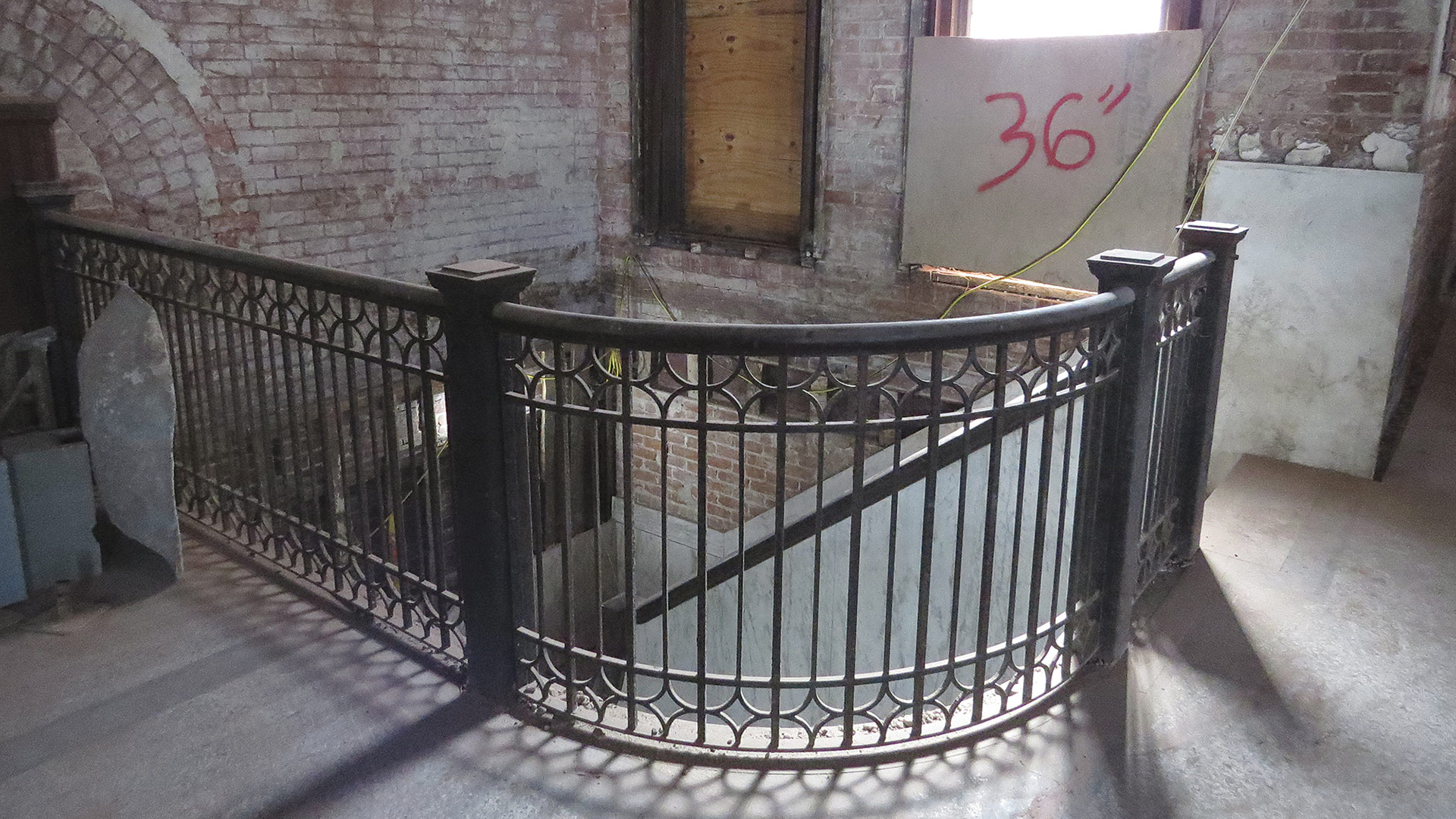
One of the original staircases at the Court Square Hotel.

One of the original staircases at the Court Square Hotel.

Actually it was in terrible shape in 2000, as photos in that bid package reveal, he said, adding that conditions only worsened over the past two decades as the elements took their toll on the structure.

“It had been vacant for 20 or 30 years,” he explained. “When we got there, the envelope needed work — and there are still areas where water gets into the building when the weather is poor — and historically there has been no heat in the building in the winter. The building was really on its last legs.”

Repairing and renovating what Mother Nature has damaged is just one of many challenges on this project, said Fontaine, noting that, like all construction projects undertaken at this time, this one has had to contend with everything from supply-chain issues to often dramatic increases in the prices of materials and labor.

“I joked that I believe I’m the third generation of Fontaines to bid on the project. We’ve been pricing it over decades, with at least a dozen iterations and many different planned uses.”

So much so that the Springfield City Council approved an 11th-hour request for $6.5 million in emergency funding to handle cost overruns for the project which came to fruition through a public-private partnership that includes a number of players, from the state, to Wynn Development and Opal Development, to MGM Springfield.

Another challenge is implied in that phrase ‘historical renovation.’ Indeed, the property, which dates to the 1890s, is on several lists of historic properties, said Karl Beaumier, on-site superintendent for the project, adding that, in many respects, crews from Fontaine are dismantling what was in place in the old hotel rooms and other spaces, storing those pieces, and putting them back after mechanicals, equipment, and appliances are installed and finishing work is completed. Everything that goes into the renovated structure, including new windows (600 of them) must be reviewed by the National Park Service.

“We salvaged a tremendous amount of the wainscoting on the corridors — some of it was left here, some of it came off and it’s going back on,” said Beaumier. “All of the doors were salvaged, the door frames, the door cases, the window cases on all the exterior windows, the baseboard, the chair rail, the crown molding — all of that stuff got saved; there are 10 40-foot conex boxes (shipping containers) completely full of salvaged woodwork that has to go back in the building.

“It’s been carefully removed, catalogued, and stored,” he went on. “It will all go back as part of the historical renovation.”

For this issue and its focus on construction, BusinessWest took a hard-hat tour of the property, and talked with Fontaine and Beaumier about the massive undertaking and the steps still to come.


Past Due

As they started their tour on the ground floor of the property, most recently home to several storefronts and eventually to be the site of a restaurant, Beaumier and Fontaine said that for the on-site crews, going to work each day also means going back in time.

Or to several different times, to be more precise.
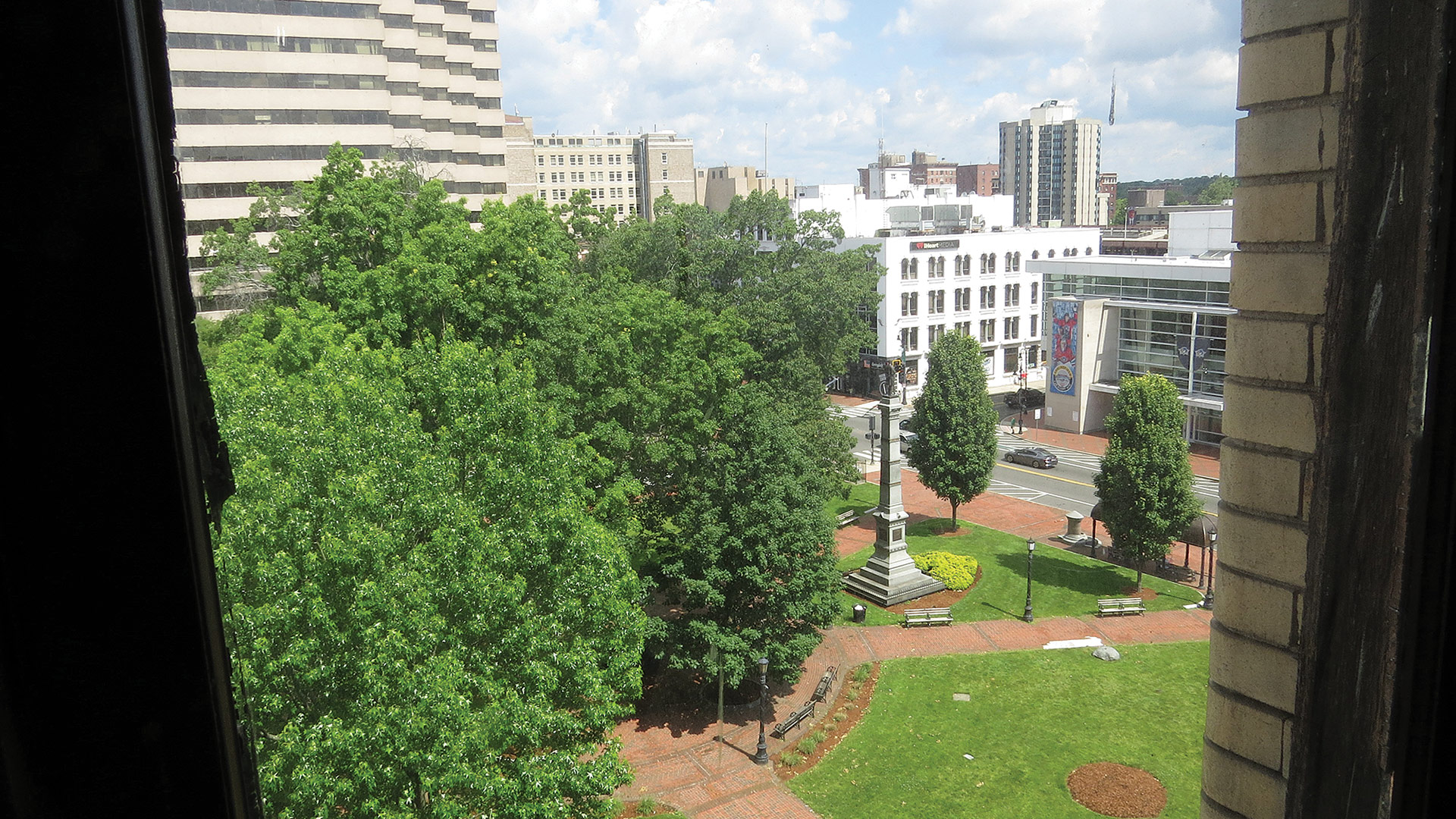
view out one of the windows on the sixth floor

This view out one of the windows on the sixth floor explains why there has always been interest in converting the property for residential use.

Indeed, on the ground floor, the areas housing the storefronts bear evidence of their former uses, especially the space that was home to the tavern known as the Bar Association, a name chosen to reference the many clients from the legal community, many with offices within a block or so from the courthouse just south of the Court Square property.

“It was like things were stuck in time from the late ’80s,” said Fontaine, noting such items as the stained-glass window in the Bar Association and a door that still had the ‘R’ from owner Tony Ravossa’s name. “It’s cool seeing the old storefronts.”

From the ground floor, Beaumier took BusinessWest to the basement, where collected water provided evidence of still-ongoing work to shore up the property, and then to the second floor, where the next use of the property is starting to come into focus.

There, and on the remaining floors, long rows of what used to be hotel rooms —most all of them with doors to the rooms on either side — have been essentially gutted, with the masonry walls that divided them (see photo, page 30) taken down and the groundwork laid for what will become one- and two-bedroom apartments. In one hallway, rows of shower units were waiting for eventual installation.

While the property will have a completely different use than it did a century ago, it will look, in almost all respects, as it did back then, Beaumier explained.

“When we’re done, and we look down this corridor, it’s supposed to look just like it did in 1900,” he told BusinessWest as he gestured down the narrow hallway of the wing of the property that runs north-south toward State Street. “All these doors that went into the individual hotel rooms … we’ve opened up the spaces, so there will probably be two dummy doors for each unit; the doors that we took off have to get pinned back in the wall so that when you look down this corridor, it looks the same as it did historically; every third door will actually open into a unit, the rest will be dummy doors.”

Elaborating, he said that the actual walls to the units were pushed back a foot from where they stood originally, because the original corridor is too narrow for a wheel chair to turn in, an example of how some adjustments have to be made to enable a century-old building to comply with modern building codes and state and federal regulations.

The tour then provided more glimpses into the past as it went to and then down one of the original staircases to what was the lobby area of the former hotel, complete with the remains of a revolving door, marble-covered walls, and a ceiling, now in an advanced state of decay, that will be restored.

“Right now, we’re getting the building structurally back to where it needs to be so we can do the mechanicals and other systems,” said Fontaine adding that the initial phases of this project have involved demolition, structural work, and salvaging a number of features. When these have been completed, crews will move onto installation of those mechanical systems, replacing hundreds of windows, building out the individual apartments, and putting the salvaged items back in.

When the tour reached the sixth floor, Beaumier pointed out one of the north-facing windows to dramatic views of Court Square (see photo, page 26), looks that help explain why there has always been interest in redeveloping the property for housing, and why there has been a high level of interest in this project.

As they walked and pointed out specific areas of note in the sprawling property, Fontaine and Beaumier talked about everything from the significance of the project to Springfield and its central business district to the many challenges involved with undertaking a project like this at this time of soaring prices, supply-chain issues, and a workforce crisis that has affected all sectors of the economy including construction.
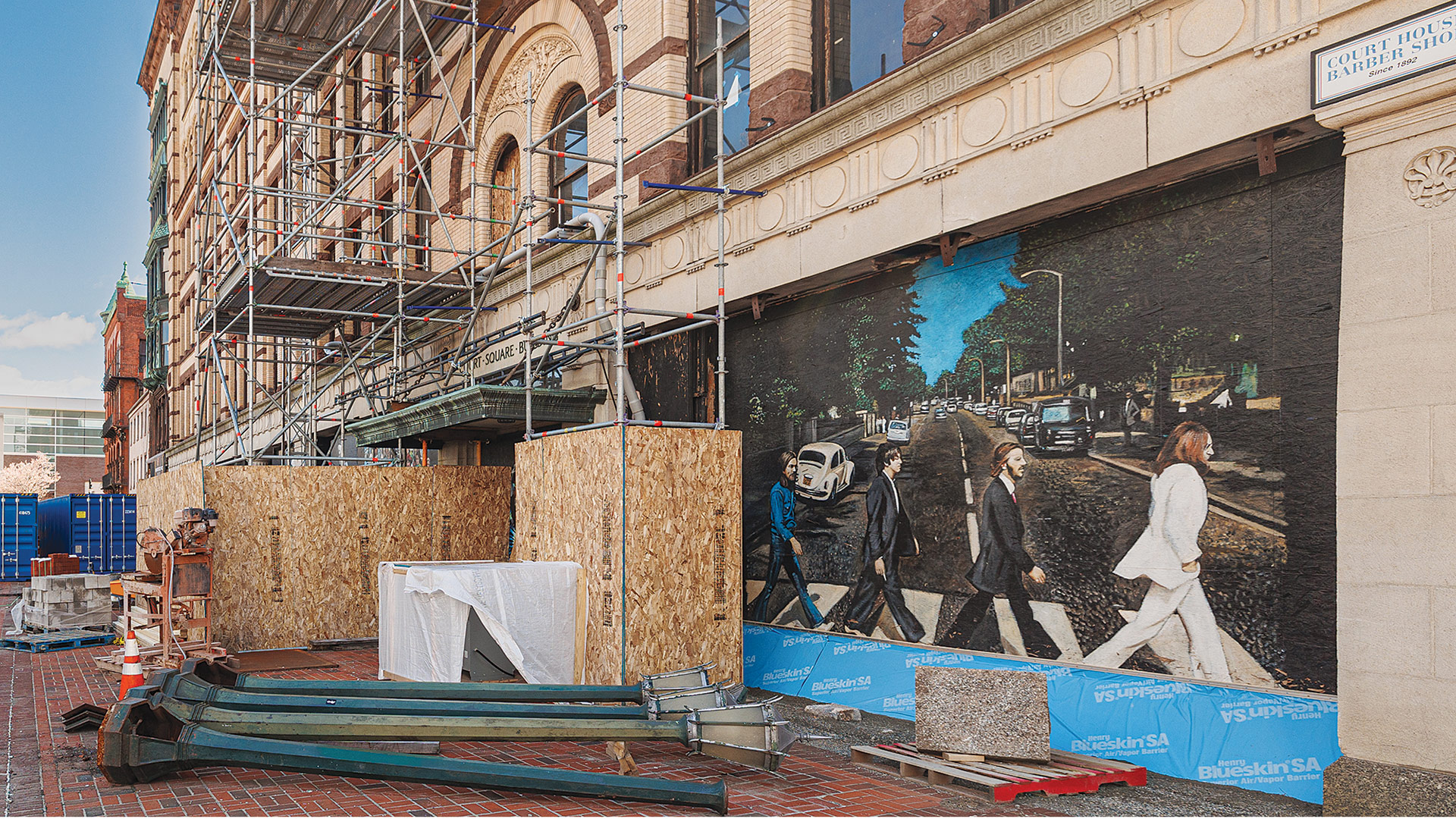
Photo by Joe Santa Maria, Kill the Ball Media

Work to convert the property into a mix of residential and retail spaces is expected to be completed in the early fall of 2023. Photo by Joe Santa Maria, Kill the Ball Media

Fontaine, whose family has developed or redeveloped many properties downtown, from the aforementioned State Street project to the expansion of what is now known as the MassMutual Center, to the creation of MarketPlace, said the Court Square is an important next step in the revitalization of that area.

“That downtown area means a lot to us, we’ve handled a lot of projects in that area,” he said. “I grew up in this area, we’ll stay in this area; I want my daughters to be able to stay around here and work and live here if they choose to, and I this is a big step toward making downtown attractive to working professionals and people who want to be downown.”

As for the many challenges that come with building at this time, Fontaine said there have been some adjustments to make.

That includes the emergency funding from the City Council, he said, adding that the amount allocated should cover the escalating cost of the project. But it also includes longer lead times for items and, in some cases, having to use different products or materials because the lead times are too long.

“As with every construction project going on right now, there have been a lot of items with long lead times — significantly longer than normal,” he explained. “We’ve been working through that with the designers to use some products that do what we need them to do, but also get here within the lead times. With the mechanical systems, one of the manufacturers that was specified for the unit heaters had a 52-week lead time; we found something we could get in the time frame in which we needed them.”


Finishing Work

The elaborate project is expected to be completed in the early fall of 2023, said Fontaine.

There will certainly be an elaborate ribbon-cutting ceremony at that time, one that will close the book on the long, often-frustrating efforts to create a new life for the historic property, and usher in the next chapter.

Fontaine can also close the book — figuratively but also quite literally — on more than 25 years of bidding on projects to transform the property.

That binder from 2000 is, as Fontaine said, a cool memento, but it’s also a symbol of this property and how long its fate has been a critical issue in Springfield.


George O’Brien can be reached at [email protected]

Features Special Coverage

Uplifting Spirits

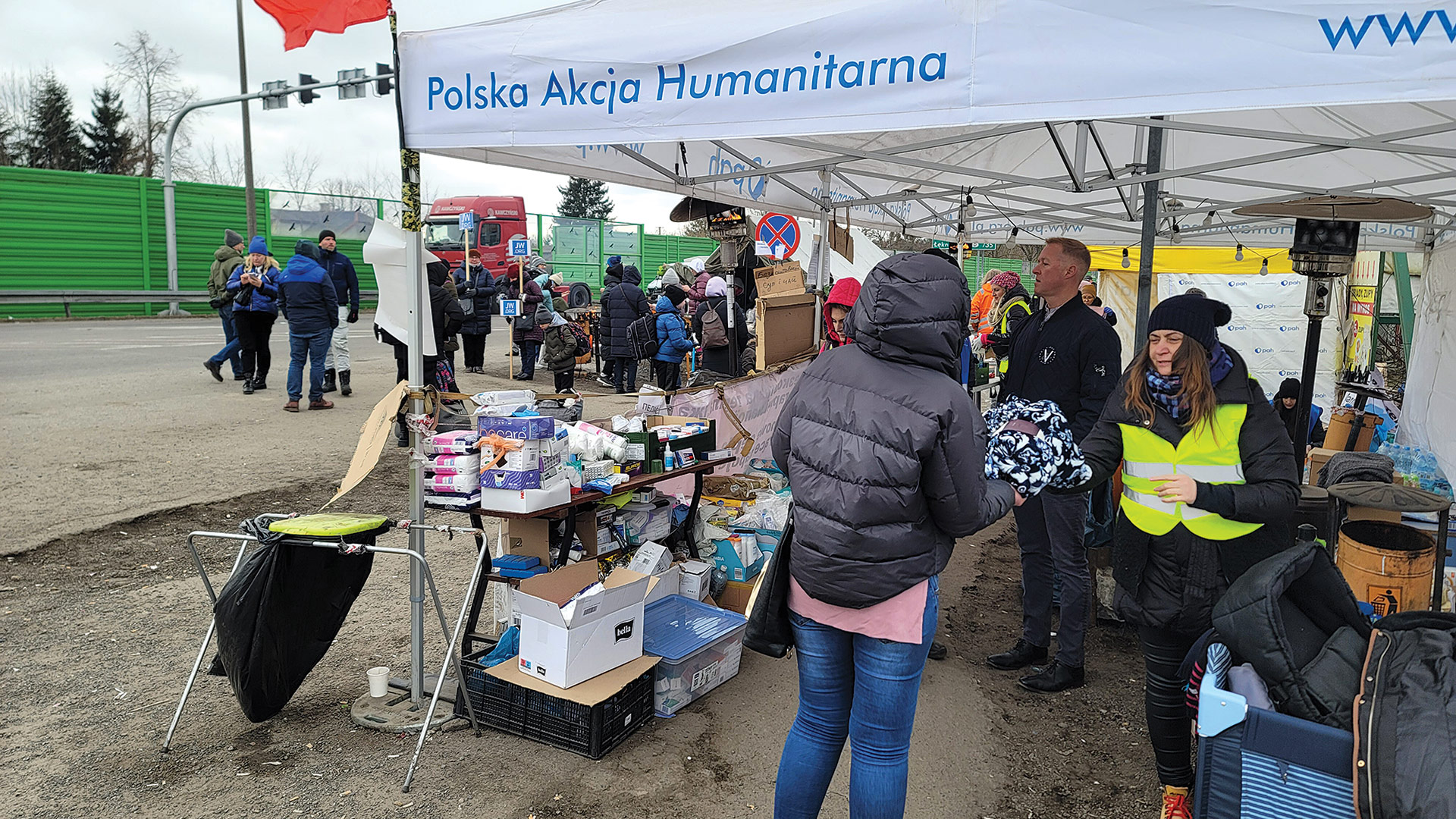
For most in this region, the war in Ukraine is something to read about or see on the nightly news. For Paul Kozub, founder and president of V-One Vodka, who operates a distillery in Poland just a few hours from the border with Ukraine, the war hits much closer to home — figuratively, if not literally. He made a trip to Poland and then the border in March, and he’ll be going back in July, bringing cash for refugees and other types of support.

Paul Kozub says he’d like to forget some of the things he saw and heard while on his trip to Poland and its border with Ukraine in March, just days after the fighting began there. After all, he was seeing people in extreme distress — women and children, mostly, who were leaving their home country, sometimes with just on their clothes on their back, not knowing if they would ever be returning.

But these words and images, and there are many of them, are burned into his memory, he said, and they make him even more committed to doing what he can to help refugees who have made their way to Poland, where Kozub, founder and owner of V-One Vodka, owns a distillery.

“What I saw and what I experienced was mind-blowing, especially in 2022,” he recalled, adding that he wound up making three trips to the border in March, with each visit lasting seven or eight hours. “We saw the buses on the highway filled with women and children — martial law was declared in Ukraine, so no men under the age of 60 were allowed to leave the country. So you just saw women and children leaving, fleeing in buses on the highway — bus after bus after bus full of people.

“On the border, there were tents set up for food and a kind of transition spot,” he went on. “But you’d see women 70-or 80-years-old crossing with bags, and young women with strollers and children just walking over the border.”

Kozub told BusinessWest that he felt compelled to travel to Poland in March. He wanted to visit the distillery, located in the town of Lublin, something he’s done every few months over the past several years, although far less frequently since 2020 due to COVID, but also to support refugees if he could.

He left with several thousand dollars in cash, most of it in $100 bills, that he distributed to several different individuals and families knowing that the way exchange rates were moving, U.S. currency would buy much more than the Polish dollar. He made a few trips to the border, which is about a 90-minute drive from the distillery, and in doing helped bring the war to this country through a few interviews with a Boston television station that picked up his story and talked with him from his hotel room and at the border.

“I never thought I’d be a war correspondent, but there I was talking about what I saw and what I experienced,” he said. “To me there’s no more clear example of good versus evil, a country that’s invaded for no clear reason.”

Today, Kozub is planning a return visit to Poland and his distillery with his family — his wife and four children. He’s not sure if he will make it to the border, but does plan to visit some refugee centers and try to reconnect with several of the people he met three months ago.

He plans to visit the Help the Ukranian Children Foundation in Zyrzyn, Poland, which he is supporting through a special label for his vodka, one with the blue and yellow of the Ukranian flag; $2 from the sale of each bottle going to support refugees.

Paul Kozub displays one of the new-edition bottles bearing the color of the Ukranian flag

Paul Kozub displays one of the new-edition bottles bearing the color of the Ukranian flag. He is donating $2 from each bottle to help refugees.

For this issue, BusinessWest talked with Kozub about how the war in Ukraine — and the plight of those who have fled that country for Poland — have become personal for him, and how he continues to find ways to not only support those individuals and families, but also shed needed light on their situation.


Proof Positive

As noted earlier, Kozub has many indelible memories from his March visit, one that brought the war in Ukraine and its profound impact on its people, home in ways that can’t be appreciated by simply tuning into CNN.

He used the word ‘surreal’ more than a few times to describe what he saw, especially during those visits to the border.
“Poland was normal for the most part — there were a lot of Ukrainain flags,” he recalled, “But as we were driving toward the border, and as we got to within 10 miles of the border, there was nobody … no cars going in our direction; instead, we saw all the buses going in the other direction.

“What I saw and what I experienced was mind-blowing, especially in 2022.”

“That was the first time we got a little anxious,” he went on. “Once we got to the border, we befriended a few Polish police men and women who started telling us the stories they were hearing.”

One memory stands out for him. It involves giving a ride to a young girl and her parents to the city in Poland where he was staying.

“We didn’t notice until they got out that they had nothing,” he recalled. “No bags, no nothing, just the clothes on their backs. The way the man was dressed — he had a nice watch, nice clothes on, nice shoes — you could see that they just left so quickly they didn’t have time to pack a bag. Seeing stuff that like really hit home.

Kozub said he left for Poland with the expectation that he would bring a few thousand dollars to the border, maybe visit once and try to help people as they were coming into Poland during the first days of the war. But those expectations were altered by what he encountered, and also by contributions sent to him in advance of his trip, including $4,000 from his commercial lender, PeoplesBank — the most that can be sent via VENMO.

Paul Kozub, seen here with police officers at the border

Paul Kozub, seen here with police officers at the border, will be returning to Poland next month.

“That contribution really helped — while I was there, I was able to buy so much more,” he recalled, noting that he was able to buy a washer and dryer for an apartment building now housing 80 women and children, and also bring more needed food and water to the border.

He recalled one instance where he tried to help a woman with four young children.

“All these people didn’t want to accept money from me at first,” he recalled. “But I said ‘you have to — that’s why I traveled all this way.’

“That was back when there were tens of thousands of people coming over every day — that’s when most of the need was going on,” he recalled, adding that the sights from those days remain with him even though the scene has changed, as have the needs of the refugees that have made their way to Poland.

While what he saw was disturbing on many levels, so too was what he heard from some of those he encountered, he said, noting that he has come to understand the Polish language, which is very similar to what is spoken in Ukraine.

“As we were driving toward the border, and as we got to within 10 miles of the border, there was nobody … no cars going in our direction; instead, we saw all the buses going in the other direction.”

“We could understand most of what they were saying,” he noted. “We would see the cars of people driving into Poland, and they would have pieces of paper in the window with ‘ditya,’ which is ‘child’ in Russian written on them. We were hearing stories that the Russians were shooting at them; they were bombing these lines of cars as they were leaving.

“The stories of atrocities that we’re now hearing every day … I was hearing them in the beginning,” he went on. “It is so unbelievable that this is going on today; it’s very heartbreaking, and you just don’t want to believe that it’s true.”

While there are still some people leaving Ukraine for Poland, much of the activity is now moving in the other direction, with many returning to the country they fled. Still there are millions still in Poland forging a new life for themselves there, a challenge made simpler by the Polish government’s decision to change its law and allow people from the Ukraine (which is not part of the European Union) to come into that country and work and start businesses.

“In some of the major cities, like Warsaw and Krakow, they’ve seen a 30% to 40% increase in population,” said Kozub, adding that refugees are finding housing in the homes of Polish residents, in churches, camps, and other sites.

Paul Kozub says his trip to the border in March was surreal

Paul Kozub says his trip to the border in March was surreal in many respects and included work as a “war correspondent.”

As for his planned July trip back to Poland, Kozub said he plans to reconnect with some of the individuals and families he met at the start of this conflict, including a young man who renovated a 20-unit apartment building in Zyrzyn that is now home to 80 women and children.

“We’re continuing to raise money for them, so I’ll bring some money for that charity,” he said, adding that he also plans to visit — and bring some money to — an orphanage located near the distillery, one that he has been supporting for several years now, which is now housing orphans from Ukraine.

To further assist refugees, and, specifically, Ukranian Children Foundation, Kozub has created a special label for his original V-One vodka, a project that was fast-tracked, with the label being finalized in just a few months, rather than the full year that it normally takes.

It was undertaken as Kozub was introducing another new flavor — Double Espresso — to his growing portfolio, one that is ever-changing and expanding to keep pace in the ultra-competitive vodka market.

The March trip to the distillery was undertaken to finalize the recipe for that new flavor, he said, adding that the overall process has been slowed by supply-chain issues and huge increases in shipping costs and other expenses — challenges that are making it much more difficult to do business in this industry.

Despite these challenges, Kozub wanted to introduce his new label, a project that was conceived just before his March visit, with the expectation that there would be long-term needs among the refugees.

“It takes about a year to get things done, between the approvals and the printing time, and other issues, but we were able to get it done in three weeks,” he said, adding that the son of one of his employees at the distillery drove 10 hours each way to pick up the labels, which were affixed to 3,000 bottles overnight, in time to get on a container ship.

The special edition bottles should arrive by mid-summer, he said, and he expects them to be sold out by August.


His Best Shot

Like most everyone taking in what’s happening in Ukraine — from a few feet from the border or 4,500 miles away — Kozub has no idea when this conflict will end or how it will end.

What he does know is that there are many people still in need. They are an ocean and then a continent away from V-One’s headquarters in Hadley, but only 100 miles or so from where his vodka is made.

Since setting up shop in Poland, he has been active in that ‘community’ and a source of support for orphans and others in need. The landscape there has changed dramatically over the past three months, and Kozub has responded accordingly. As he said, it’s personal for him.


George O’Brien can be reached at [email protected]

Accounting and Tax Planning Special Coverage

Strategic Decisions Now Can Benefit You in the Long Run

It’s late June — time for, among things, thinking about your taxes. Actually, it’s time to do more than think about them. What’s needed is a hard look at matters ranging from business classification to expiring provisions to charitable donations, and then formulating strategies that will benefit you and your business for the long term.

By Kristina Drzal Houghton, CPA

Accountants spend a lot of time talking to clients during tax season about the importance of tax planning. Now is that crucial time. As we approach the halfway point of 2022, tax planning discussions should be underway for many businesses and individual taxpayers

Starting early is important but plans should consider that tax rules might change at the end of the year and businesses and individuals simply can’t afford to not prepare for those changes. Additionally, some COVID-19 relief programs are set to expire this year, therefore businesses should be ready to document appropriately and/or take advantage of potential savings. With so much probable change, it’s important to carefully consider your options and make strategic decisions that could benefit you in the long run.

As a small business owner, tax planning should be a key part of your overall financial strategy. By taking advantage of tax breaks and deductions, you can minimize your tax liability and keep more money in your pocket. Here are nine strategies you should consider:


Review your tax liability for the current year

EventTake a look at your tax situation for the current year and estimate how much tax you will owe. This will help you determine if you need to make any changes to your withholdings or estimated tax payments.Event

Consider a tax status changeEventYour entity type not only impacts how you are protected under the law but it also affects how you are taxed. If you’ve outgrown your current business structure, or if you previously set up a structure that wasn’t the best fit for your business, you can elect to change your structure. Each entity type has its own benefits and drawbacks, so it is important to make sure you have a full picture before committing to your decision.


Amortization of research and experimental (R&E) expenditures

Due to law changes, companies are no longer allowed to fully deduct their R&E expenses. Instead, these expenses are amortized over a period, based on where their services are provided. Classification of expenses as R&E should be renewed.Event


Review expired provisions

Some of the tax relief provisions in 2021 the American Rescue Plan Act (ARPA) were carried over into 2022 by the Build Back Better Act. Principal among them are ARPA’s increases and expansion of the child tax credit, including its monthly advance payments, which have now ended as of the December 2021 payment. The Build Back Better Act was signed into law this past March 11 and included a renewal of that provision for 2022. Beyond those expiring provisions, a number of pre-ARPA “extender” items lapsed at the end of 2021, such as the treatment of premiums for certain qualified mortgage insurance as qualified residence interest and multiple energy and fuel credits.Event


Review the new limit on state and local tax deductions

For individual taxpayers, one of the biggest potential changes being lobbied is the possible restoration of the deduction for state and local taxes (SALT). If this proposal becomes law, it could have a major impact on your tax bill. As such, it’s important to think about how you would adjust your tax planning if the SALT deduction is restored or remains limited. Additionally, there are a number of other proposed changes to the tax code that could impact individuals, so it’s important to stay up-to-date on the latest developments and plan accordingly.Event


Consider the Qualified Business Income (QBI) Deduction

The qualified business income (QBI) deduction, which provides pass-through business owners a deduction worth up to 20% of their share of the business’s qualified income. However, this deduction is subject to a number of rules and limitations. For example, owners of specified service trades or businesses (SSTBs) are not eligible for the deduction if their income is too high. SSTBs generally include any service-based business, such as a law firm or medical practice, where the business depends on its employees’ or owners’ reputation or skill. If a business is eligible for a QBI deduction, owners should carefully weigh salary vs. flow through income.Event


Budget for larger charitable donations

Finally, if you’re thinking of making a charitable donation, recently you may not have benefited as much from the deduction for your donation as you have in the past. Since the TCJA nearly doubled the standard deduction started effective 2018 and capped the SALT deduction, fewer people itemize their deductions on their tax return.

As a result, the tax benefits of charitable donations have been limited to those who itemize their deductions. If the SALT cap is increased or eliminated, the deduction for charitable contributions could be more beneficial. If you are considering more significant contributions, gifting appreciated stuck to qualified charities offers great benefits. You will get a tax deduction for the fair market value and not be taxed on the unrealized gain. Event


Remember, meals and entertainment are still 100% deductible.

For 2021 and 2022 only, businesses can generally deduct the full cost of business-related food and beverages purchased from a restaurant. (The limit is usually 50% of the cost.)


Review your accounting methods and records

It’s a great time to look at the books, and make a plan to adjust anything that should be changed while also planning for the future. Many times, unexpected changes come up that can impact your business and individual taxes that you may not have even considered. For example, will you have any major life changes, such as getting married or having a baby? Buying a house? Leasing a business vehicle? Hiring more employees? Relocating your business? Spending more than usual on talent acquisition? Investing or accepting cryptocurrency? These changes can have a significant impact on your tax liability.


No matter what changes are ultimately enacted into law, the key to successful tax planning is staying informed and being proactive. By taking the time to understand the potential implications of proposed changes and making strategic decisions now, you can help ensure a smooth tax season for yourself and your business in 2022.


Kris Drzal Houghton is a partner at the Holyoke based accounting firm, Meyers Brothers Kalicka, P.C