Daily News

AMHERST — UMass Amherst has been designated as a Bike Friendly University (BFU) by the League of American Bicyclists, a grassroots advocacy organization encouraging better bicycling and protecting the rights of people who bike. UMass Amherst is one of only eight universities in Massachusetts to receive the commendation for providing safe, accessible biking on campus.

“We first applied for the designation in 2012 and didn’t quite make the list, receiving an honorable mention at the time,” said Ezra Small, campus sustainability manager. “This bronze award shows that UMass Amherst is committed to promoting bicycling as a healthy, environmentally friendly way of getting around campus and that we have improved our bike access significantly over the past decade.”

Bill Nesper, executive director of the League of American Bicyclists, noted that “I am pleased to celebrate 37 new and renewing Bicycle Friendly Universities joining the movement to build a bicycle-friendly America for everyone. Bicycle Friendly Universities, like UMass Amherst, offer a far more holistic experience of campus life for students, faculty, and staff by implementing policies, programs, and infrastructure improvements that make for safer and easier car-free commutes, healthier lives through increased physical activity, and a campus community more connected to its surroundings.”

Providing bike-friendly accommodations is a vital part of the university’s Sustainable UMass initiative. In recent years, four-foot-wide bicycle lanes have been constructed on the primary campus roadways of Massachusetts Avenue, North Pleasant Street, and Commonwealth Avenue to promote safe bike travel. In 2016, the university expanded its bike access for students, faculty, and staff by becoming a founding member of ValleyBike Share, and six bike-share stations are now spread across campus to allow students, faculty, and staff to easily rent and return bikes.

The UMass Bicycle Commuter Program coordinates the Campus Bicycle Advisory Committee to help the university prioritize bike-related goals on campus, and the UMass Amherst Bike Library rental program, operated by the Student Government Assoc. and the Physical Plant, lets students, faculty, and staff borrow bikes for free, for as long as an entire academic year.

Landscape architecture and regional planning major Ryan Griffis was instrumental in completing the university’s application, Small said.

UMass joins Harvard, MIT, UMass Lowell, Bentley University, Tufts University, and Boston University’s Charles River and medical-school campuses as Bike Friendly Universities. Since the program launched in 2011, such designations have been certified at 222 U.S. colleges and universities in 47 states.

Daily News

HOLYOKE — Meyers Brothers Kalicka, P.C. (MBK) recently welcomed Colleen Berndt, CPA as senior manager, as well as Mia McDonald; Karen Korpinen, MSA; and Eric Bone as associates in the Audit and Accounting department.

Berndt has practiced public accounting since 1989 and holds valuable experience in both public accounting and corporate firms. She holds a bachelor’s degree from American International College and sits on the board of directors of the Colburn Keenan Foundation.

McDonald has worked in public accounting since 2020 when she began as an intern with MBK. She holds bachelor’s degrees in economics and business management with a mathematics minor, accounting concentration, and anticipates completing her master of science in accounting (MSA) degree in May.

Korpinen brings experience in the nonprofit field to her work in public accounting with MBK. She holds an MSA from Merrimack College and an MBA from Clark University. She serves as treasurer on the board of directors of the Northampton Parents Center.

Bone brings a fresh perspective to his engagements as a recent college graduate; he holds a bachelor’s degree in accountancy with a minor in finance from Providence College and is currently pursuing his MSA with a focus in data analytics at UMass Amherst.

Daily News

SPRINGFIELD — Today, Nov. 10, at 11 a.m., DUC-PAC, a specialty producer of aluminum, copper, and other metal ductwork, will hold a ribbon-cutting ceremony and celebration event of its new manufacturing and warehouse space in Springfield.

After being located in East Longmeadow for decades, DUC-PAC chose Springfield as its new home. The company has been a family-owned producer of high-quality metal fabrication in Hampden County since 1949.

Working with the city of Springfield, DUC-PAC has refurbished 1125 Page Blvd., a large, landmark brick building in the city’s East Springfield neighborhood that once housed four separate businesses. One business had vacated the premises, and another was moving out when DUC-PAC first became interested in the site at the suggestion of Springfield economic-development officials and Mayor Domenic Sarno’s administration.

The change at the property is significant. The interior contains a massive floor-to-ceiling warehouse for the company’s various specialty products, and the production floorspace is designed for precision manufacturing, skilled tradespeople working with machines to build to the specifications of a nationwide customer base. Exterior work, still in progress, includes new landscaping and cleanout of the previous businesses located there.

DUC-PAC President Greg Merchant, made the addition of a very large privacy fence along the entire frontage a priority. The goal was to make the refurbished complex more compatible and presentable with the neighborhood’s unique mix of residential homes and industrial and small businesses.

Sarno and city economic-development officials will take part in today’s event. The entire employee team will shut down production to join in the celebration as well. DUC-PAC brought 58 existing employees to the city and have added eight more.

“DUC-PAC is made up of team members that are family, quite literally so,” Merchant said. “In addition to my wife Heidi and me, we are fathers, daughters, and sons, many families working together as part of the DUC-PAC family.”

The workforce includes new employees as well as some who have been with DUC-PAC for decades. Many Vietnamese and Latino workers, both long-time citizens and more recent immigrants to the U.S., comprise a cohesive workforce that helps DUC-PAC compete against global manufacturers.

A tour of the facility will take place after remarks and the ribbon cutting. All are invited to stay for lunch with the entire DUC-PAC team.

Daily News

NORTH ADAMS — MCLA announced that Jean Clarke-Mitchell, assistant professor of Social Work at Lesley University, has been nominated to the MCLA board of trustees. A 2000 alumna of MCLA, she is also in her second term on the college’s foundation board.

Clarke-Mitchell is a licensed clinical social worker who served as the clinical director of the Elizabeth Freeman Center, and an outpatient clinician at the Brien Center for Mental Health and Substance Abuse Services. With more than 20 years of experience in the clinical field and more than 10 years in academia, she looks forward to participating on the board.

“I am very excited and feel very privileged and honored to be chosen to not only represent my alma mater but also to represent future students. To be on the board is monumental to me,” she said. “I’m feeling there is a lot to be done, and I’m hoping I can make an impact in so many ways. There are so many intersections to me and my experiences, and I want that to be something that I can bring to the table that will make a difference.”

Clarke-Mitchell has an extensive resume in social justice activism and working with community organizations, including the Rights of Passage and Empowerment program as a senior mentor. She serves as a board member on Rockfort Moving Forward, Leadership Councils of Western Massachusetts, the Albany Assoc. for Psychoanalytic Psychotherapy, and the Massachusetts Women of Color Network.

“Having Dr. Jean Clarke-Mitchell on the board of trustees is a tremendous delight,” MCLA President James Birge said. “I’m confident that her experiences and education will expand the dynamics and work of the board.”

Clarke-Mitchell has invested many years in helping, advocating for, and educating others, including trauma and sexual-assault survivors, survivors of intimate-partner violence, and adults struggling with substance use and mental-health disorders.

“Just being a woman of color, I can bring a perspective that is not often considered. When I think of that, I think about how we can retain professors of color and welcome students of color,” she said. “How do we honor those people in our society? How do we manage the funds of the college and what we’re invested in? The perspectives which I bring are not always present.”

Prior to teaching at Lesley, Clarke-Mitchell taught social work and psychology at Westfield State University, Smith College, Cambridge College, and Elms College. She has worked with groups in South Africa, taught students in Ghana, and conducted presentations on healthy relationships and self-care in Jamaica. She continues to affect positive change by teaching social work full-time and continuing to develop effective social-work practitioners.

“When we consider different decisions that have to be made, I can have a voice at the table,” she said. “I have a lot of appreciation and respect for people who felt they should nominate me.”

Cover Story

The Next Stage

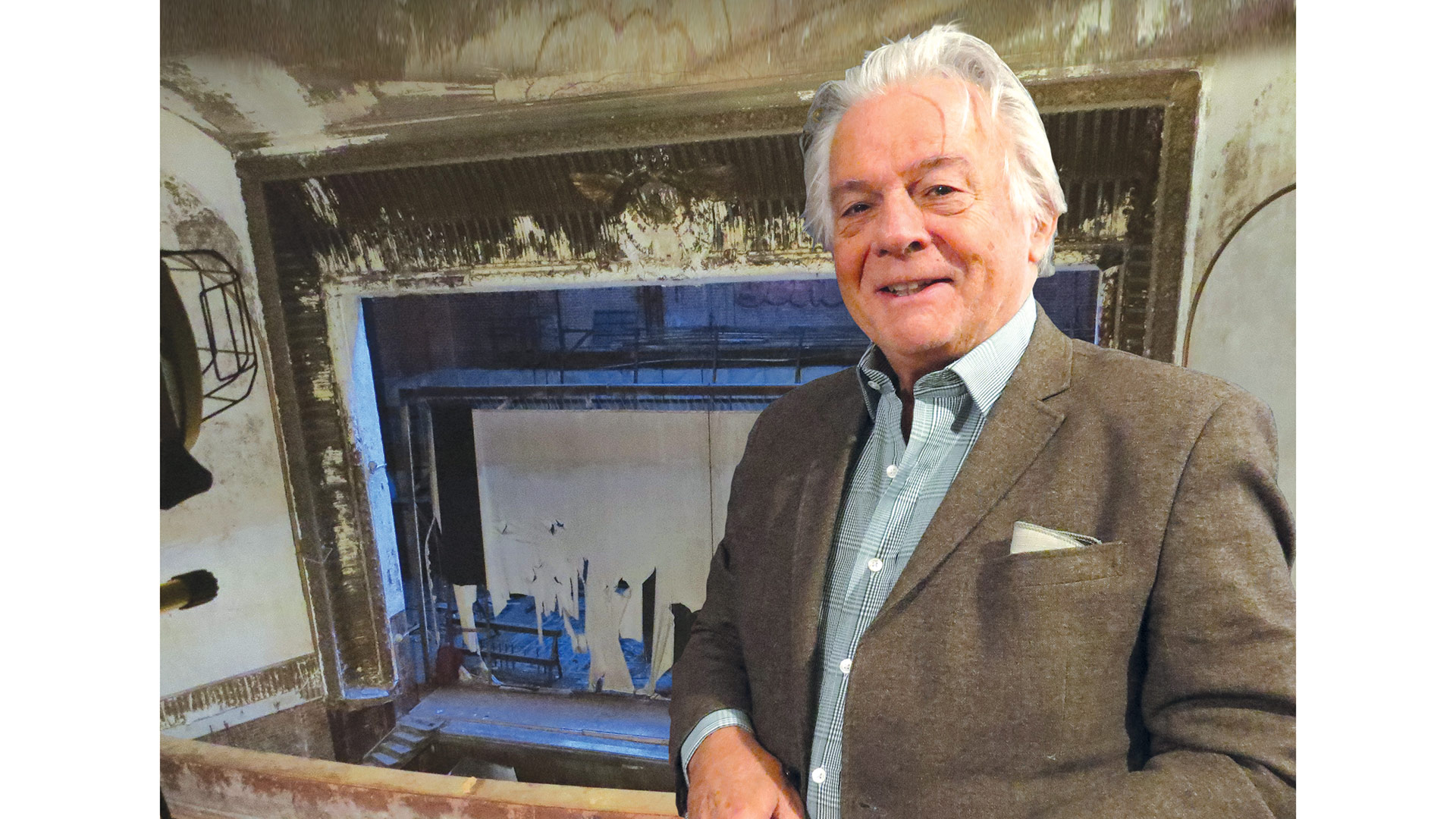
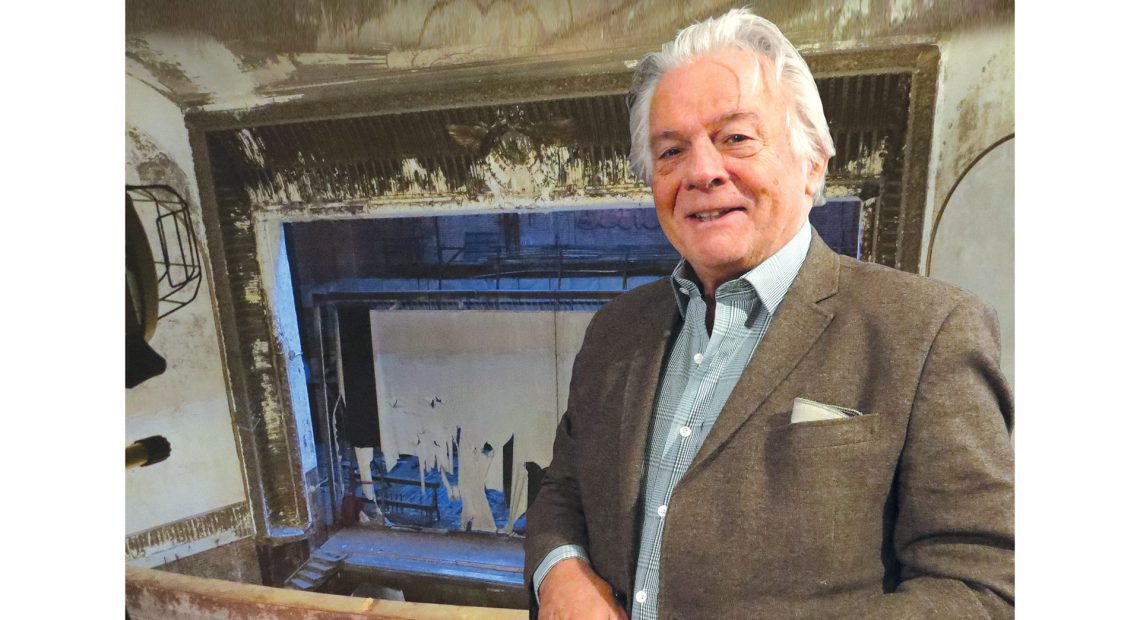
Donald Sanders, executive artistic director of MIFA Victory Theatre

Donald Sanders, executive artistic director of MIFA Victory Theatre

When asked how many tours he’s given of the Victory Theatre in Holyoke, the landmark that went dark in 1979, Donald Sanders gave a hearty laugh — something he does often — and just shook his head. That was his way of saying ‘more than I could count.’

Those tours have been given to elected officials, economic-development leaders, city department heads, arts groups, members of the media … you name it. They’ve all been in for a look at this piece of history that a city, and a region, have been desperate to renovate and make a part of the future, not merely the past.

And while the tours given today are essentially the same as those given years or even decades ago — they go everywhere from the front lobby to the mezzanine to the stage area — there is a new sense of urgency, optimism, and, yes, momentum — with these visits, said Sanders, executive artistic director of MIFA Victory Theatre, which has been at the forefront of efforts to restore the theater for the past 20 years.

Indeed, over the past several months, there has been a new tone to the discussions about restoring the 1,600-seat facility back to a Broadway-style theater. Specifically, there is a growing sense, after more than 40 years of talk, that this project is real.

“It’s more than just arts and culture; it’s really about impact to community and the secondary impact it offers.”

“I’ve always been optimistic that this could happen, but now, there is greater reason for optimism,” said Sanders, noting that MIFA (the Massachusetts International Festival of the Arts) acquired the Victory Theatre from the city in 2009 and has been committed to its revival since because it region’s best option for bringing large Broadway shows back to the Pioneer Valley. “There is a greater sense of momentum now than perhaps ever before.”

Several factors have contributed to this momentum — everything from a visit to the theater by gubernatorial candidate Maura Healey back in late June to a recent bus trip to Schenectady, N.Y. to take in the restoration of the Proctors arts complex, a project that is similar in many ways to the Victory initiative, to progress with the closing of a persistent funding gap thanks to federal ARPA money.
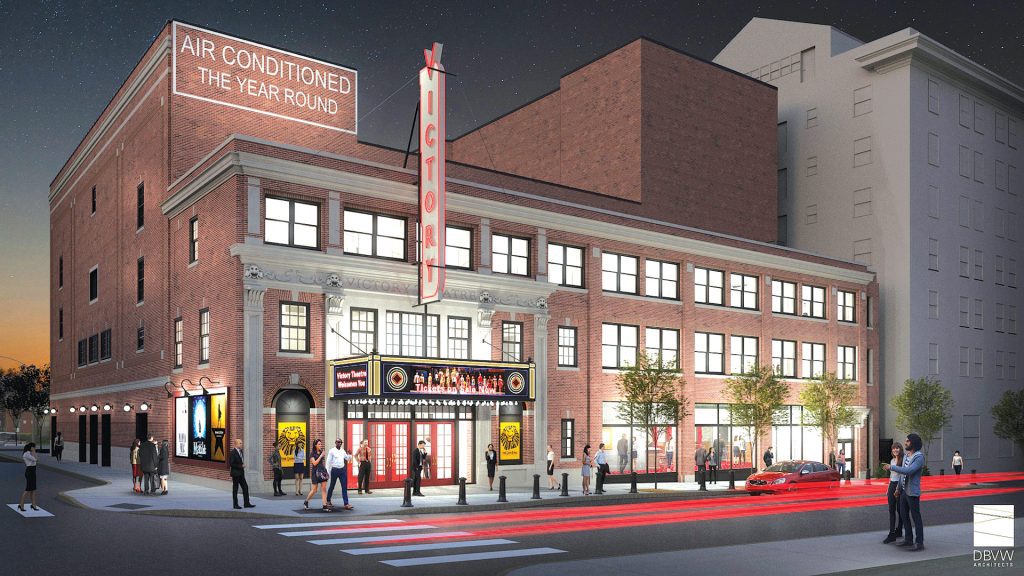
renovated Victory Theatre.

An architect’s rendering of a renovated Victory Theatre.

Some of that money has been aside for “transformative projects” in communities, said Sanders, adding that he and others have long been making the case that a restored Victory Theatre hosting Broadway shows and other large events can and will have a transformative effect on the local economy.

But there are other factors as well, said Susan Palmer, a principal with the Palmer Westport Group, which focuses on strengthening and developing fundraising and leadership capacity of theaters across the country.

She has consulted on a number of projects aimed at bringing formerly dark theaters back to useful life, and she credits the leadership in Holyoke, and especially Joshua Garcia, the city’s first Puerto Rican mayor, with injecting some needed energy and confidence in the Victory Theatre project.

“He has been fearless; he has been relentless,” said Palmer, who was a theater producer at Barrington Stage in Pittsfield and also worked at Jacob’s Pillow, the Colonial Theater, and the Berkshire Theatre Festival before launching her consulting firm in 2005. “He has a three-legged stool of priorities for the city; he wants to increase and improve the housing stock, he wants to improve educational outcomes, and he wants Holyoke to be the center of economic revitalization in that area, and he feels putting the Victory Theatre back in service is a key to that.”

Garcia, who has put together a strike force (led by his wife, Stephanie) to keep the focus on the project and raise funds within the community for the efforts, said the theater project is, indeed, a key element in efforts to revitalize the city and its downtown and bring new businesses and vibrancy to the community.

The theater has been closed since before he was born, but its importance to the city, from a cultural, economic-development, and pride standpoint, is certainly not lost on him, and he believes the remaining hurdles to restoration of the Victory can be cleared.

“This project is in the ninth inning, as I like to say, and we have a short window to close the funding gap,” Garcia said. “The gap is $15 million to $20 million, but a very clear and doable path has been identified.”

He said the trip to Schenectady, during which participants got to take in a performance of Aladdin, showed not only what can be done to restore a landmark, but what doing so means for the community.
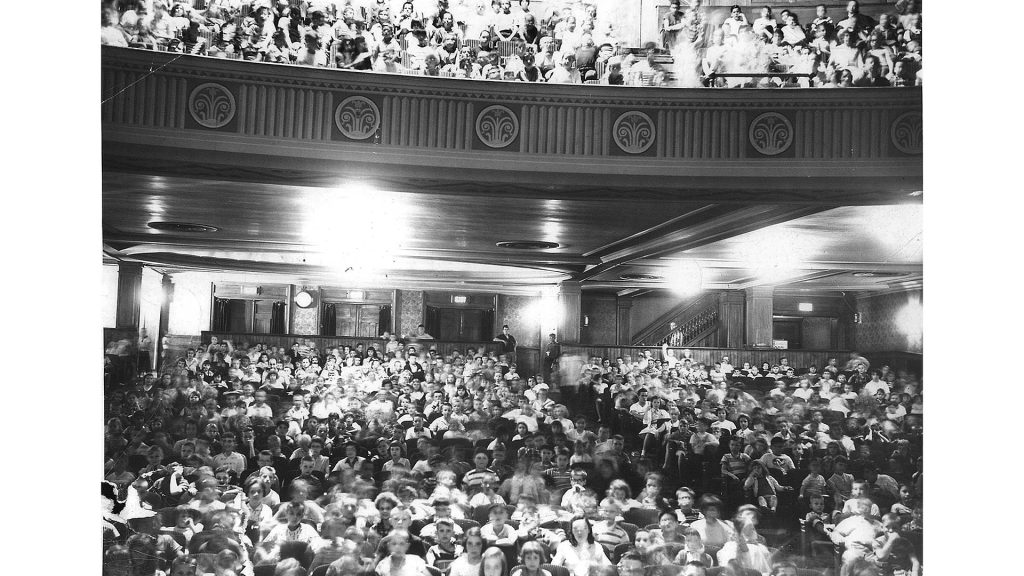
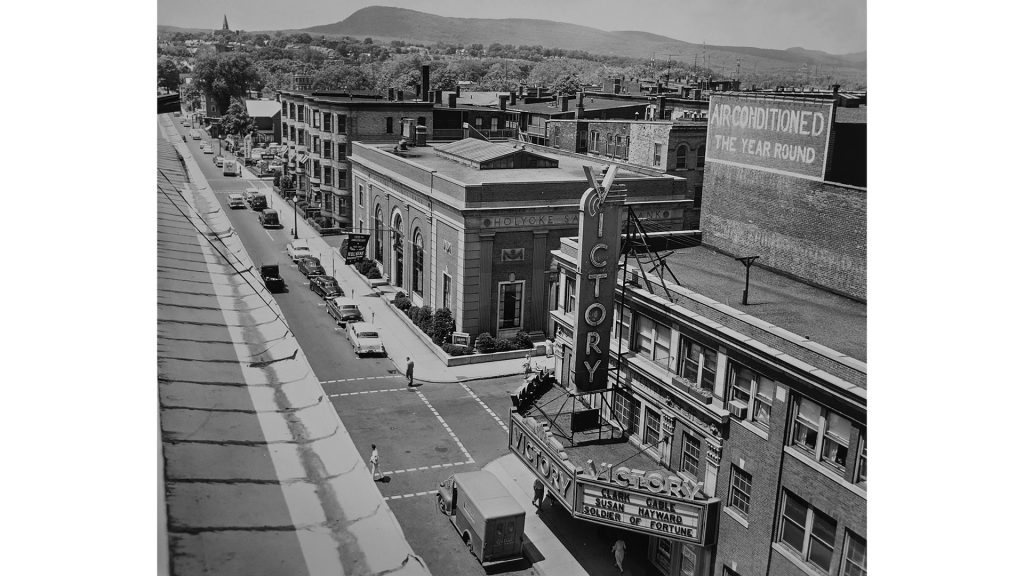
children watch a movie at the Victory Theatre in the ’70s

At top, children watch a movie at the Victory Theatre in the ’70s. Above, a view of Suffolk Street and the theater from 1955.

“It was such an eye-opening experience to know what Schenectady has been able to accomplish with their community,” he said. “It’s more than just arts and culture; it’s really about impact to community and the secondary impact it offers; their story felt very similar to ours.”

For this issue, BusinessWest takes an in-depth look at the Victory Theatre project and at how those involved believe that now, more than 40 years after the last movie was shown there, there is sufficient funding, and momentum, to get this initiative over the goal line.


Marquee Moments

Palmer told BusinessWest that she has been involved with several theater-restoration projects, including the Colonial Theatre in Pittsfield, a project credited with helping to revitalize a city that had been devastated by the loss of its largest employer, General Electric.

While all of these initiatives differed in some ways, there was a common denominator: time.

Indeed, almost all of these projects took several decades to complete, she said, adding this is an element that is often overlooked in some communities undertaking such initiatives, including Holyoke.

“They all take a long time,” she said. “But the people who are working in these individual communities are only working on their project; they don’t realize that they’re in a pool of companions who have experienced the same thing.

“I worked on one in Ohio, the Woodward Opera House, that took 33 years. So there are two generations of people who have been involved with that. I was brought in in the last three years, and I would talk to people who would say, ‘my parents were working on this back when I was in grade school.’”

“I worked on one in Ohio, the Woodward Opera House, that took 33 years,” she went on. “So there are two generations of people who have been involved with that. I was brought in in the last three years, and I would talk to people who would say, ‘my parents were working on this back when I was in grade school.’”

There are at least two generations of Holyoke residents who have been hearing about, and been part of, efforts to restore the Victory Theatre.

Time has mostly stood still for the landmark since its last showing of the Clint Eastwood comedy Every Way Which Way but Loose in 1979. As one enters the theater, there are some remnants from that final showing, including a few old popcorn tubs, still to be seen.

Movie showings were the last chapter for the Victory, which was commissioned by leading industrialists in the city, including silk-factory owner William Skinner, in 1918, said Sanders, adding that it was intended to be the largest, grandest theater in a thriving city that already boasted many of them.

Turning back the clock a century or so, Sanders said Holyoke had several theaters in its downtown area, as well as a 3,000-seat opera house that stood where a parking garage now exists across from City Hall. The theaters included the Strand, the Majestic, the Suffolk, and the Bijou.

The site selected for the Victory Theatre, a name chosen to commemorate the Allies’ victory in World War I, was adjacent to the Holyoke House, then the finest hotel in the city, said Sanders, adding that this was a pattern followed by many cities at that time.
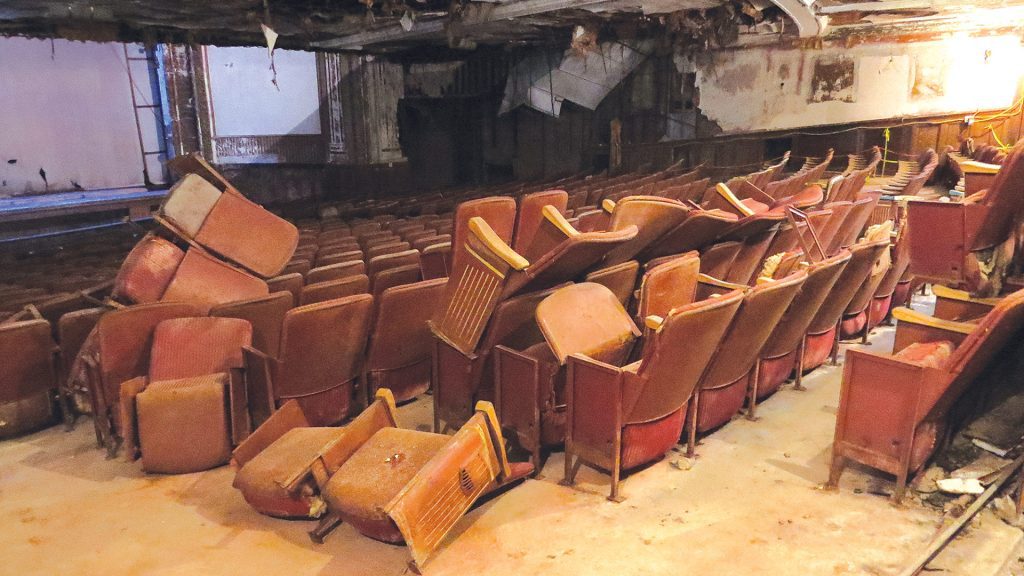
The Victory Theatre closed in 1979

The Victory Theatre closed in 1979 and hasn’t seen much light since then.

The Victory was what’s known as a ‘legitimate house,’ said Sanders, meaning that it had the finest of accommodations and was the therefore the preferred theater of choice for many performers of that era.

“That terminology means it hosted the highest level of shows and was a theater that was the best-equipped, had the best dressing rooms, etc., etc.,” he said, adding that Holyoke didn’t have a ‘legit house,’ and its leaders were determined to build one.

Fast-forwarding through the history of the Victory, Sanders said its fortunes mirrored those of the city. As the paper and textile mills that enabled Holyoke to boast one of the highest per-capita income rates in the country a century ago began to move south and then eventually offshore, the theater and the area around it started to decline, and the Victory eventually became a movie house.

As the trend in movie theaters shifted to smaller facilities in large complexes with multiple screens, its fortunes faded further until it ultimately closed. After it was taken for non-payment of taxes in the early ’80s, there were various efforts to restore the landmark, said Sanders, adding that, in all cases, the money needed — $9 million maybe 30 years ago and then progressively higher figures as the scope of the work increased — could not be raised.

In 2005, an item came before the Holyoke City Council to raze the Victory Theatre, he said, adding that he lobbied that group to stay the execution, arguing that such a vital landmark — and potential economic-development engine — should not be lost to the past.

The council listened, he said, and the Victory lived to fight another day.

To the casual observer, meaning those who haven’t been in for a tour, the facility seems frozen in time and unchanged. But that’s not the case, said Sanders, noting that a number if improvements have been undertaken over the years to ready the theater for restoration.

Steps have included asbestos removal, installing a new roof, converting the gas utility to electric (a project still underway), restoration of historic murals located near the stage, replacing non-compliant window coverings with new polycarbonate clear coverings, and other initiatives that together total nearly $5 million.

Overall, the structure is very sound, noted Sanders, adding that no expense was spared in building it.


Victory Is in Sight

To bring a project like the Victory Theatre to a successful result, a number of elements have to come together, Palmer said. These include leadership, a commitment from the community, funding, of course, and sometimes a little luck.

In the case of the Victory, the luck, if one chooses to call it that, comes in the form of ARPA money in the wake of the pandemic, funds that are expected to close most, but not all, of a $5 million to $6 million gap between the $58 million needed for the project and what has been raised through various means, including historic tax credits and new market tax credits; private, individual, corporate, and foundation donations; and public grants.

“ARPA money is what helped this project turn the corner,” Palmer explained, adding that the federal government has released $350 billion in funds to individual cities and states, and those working on the Victory Theatre project are currently working with several lobbyists to position this initiative for a $12 million ARPA allocation.

“It hasn’t happened yet … it’s coming in dribs and drabs, pieces here, pieces there,” she said, adding that the ARPA funds will constitute roughly half of what still needs to be raised for the project.

The rest will be raised locally, she said, adding that $7.5 million has been pledged, and there are plans for a community effort with a goal of raising $2 million.

Local fundraising will include mostly smaller donations, Palmer said, but that grassroots effort, which will involve phone calls, knocking on doors, letter-writing campaigns, and fundraisers and friendraisers of all kinds, will bring area residents and businesses into the fight to restore the theater, and it will send a strong message to elected leaders about the importance of the initiative — to the city and region as a whole.

Mayor Garcia agreed, and noted again the importance of the project, not just from the standpoint of the arts, as significant as that is, but to the proverbial big picture in Holyoke and the region.

“The Victory Theatre checks off a lot of boxes,” he said. “When we think of what we’re trying to do in our city, in our downtown, in terms of tourism and economic development, this is just another piece of the greater economic system puzzle that we’re trying to solve here.”

Elaborating, he said the theater cannot exist in a vacuum, and there must be an infrastructure of supporting businesses — restaurants, bars, and other hospitality-related ventures — to make a revitalized Victory Theatre succeed.

Palmer concurred, and to explain, she did some math.

“When the theater opens, it’s going to be substantial — there are 1,600 seats in there,” she said. “The average occupancy, or utilization, rate of any nonprofit regional theater on any given night is 65%, so there will be 1,100 people bopping around that neighborhood several times a week. Right now, there aren’t many things to do, and certainly not enough to accommodate 1,100 people.

“So, there’s a parallel effort we’re working on to make sure, when the theater opens its doors, that the ancillary economic benefit will be ready to go,” she went on, adding that city officials and the strike force are working to help make sure that there is an infrastructure in place to support the theater.

Meanwhile, work continues to build on the current momentum and convince the public that there is a path to getting this done, said Aaron Vega, Holyoke’s Planning director, adding that more than 40 years of waiting for action on the property has created some stubborn skepticism that still must be overcome.

“It does take a long time for these projects to happen, and there has been work done,” he said. “Unfortunately, it’s not visible from the outside; people drive by and say, ‘it looks the same as it did 10 years ago or 20 years ago.’ Overall, we need to reinstill some energy and some trust that this project is real.”

The bus trip to Schenectady and the Proctors arts complex was part of this larger effort, said Vega, noting that Schenectady and Holyoke are very similar in that they were both devastated by the loss of large employers (in the former’s case, it was General Electric). And their respective restoration projects are similar as well in that they involved long periods of time and a deep commitment from the community.

“One of the reasons we took that trip is to have people be able to come back and tell the story of what a theater like this could do for Holyoke, obviously, but also the entire region,” he said, adding that these discussions are now being had, generating what he and others expect will be more momentum.

And momentum not just for theater, he said, but what can come because of such a facility.

“I’m hoping that people can see the spinoff,” he explained. “The new restaurants, the buildings that were unoccupied being reoccupied — that’s the thing we want to see, the spinoff and the ripple effect; that’s what is going to affect everyone, not just those who will go to the theater.”


Bottom Line

Returning to the subject of those tours he has given — and will continue to give — Sanders said they do more then enlighten. They also educate and inspire those who take them.

In most all ways, they are better than a marketing brochure, better than talking to someone about the history and importance of this landmark.

“It’s our biggest selling point; it’s much better than me saying, ‘we have the last Broadway house in the region,’” he noted. “People walk through the door, they see 800 seats and the stage … and they realize what a treasure this is.”

It’s been 43 years since this treasure was anything more than a piece of history, but if all goes well — and things are tending in that direction — it will soon be an important piece of the future.


George O’Brien can be reached at [email protected]

Shop Local Special Coverage

Local Call

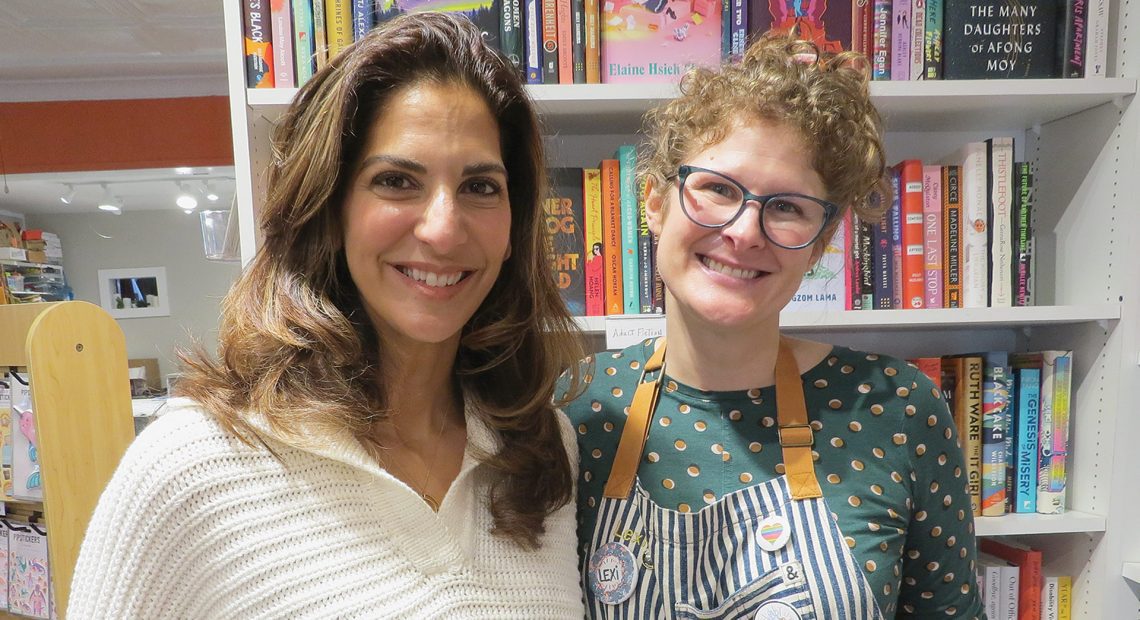
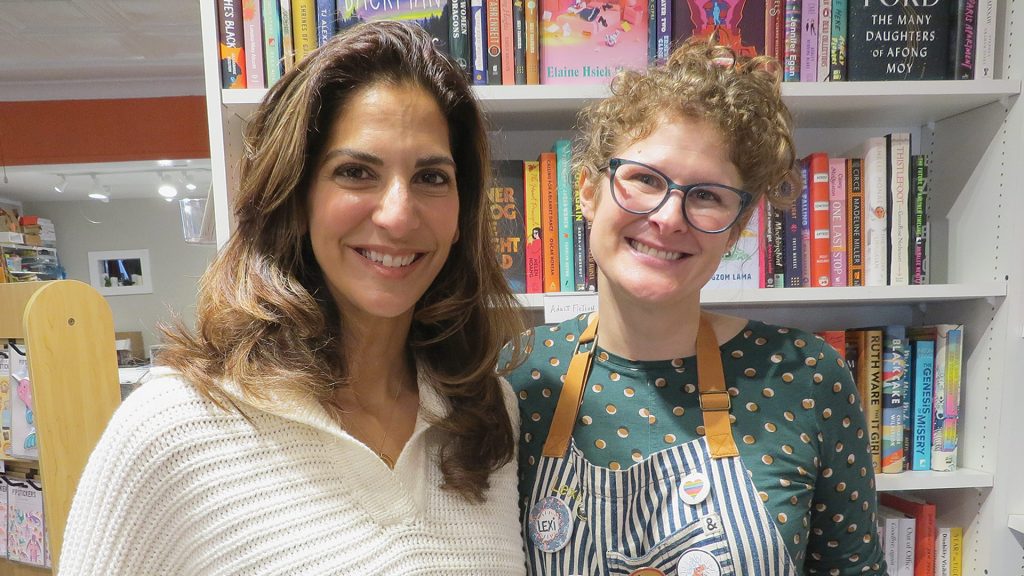
Michelle Wirth, left, with Lexi Walters Wright

Michelle Wirth, left, with Lexi Walters Wright, owner of High Five Books, one of the many area companies now showcased on the Feel Good Shop Local platform.

If anyone needed any proof concerning the importance of buying local to the regional economy, Michelle Wirth said, it came during the pandemic.

As consumers were forced to shop from their computers, except for what they could find at the supermarket or the big-box stores allowed to stay open, they resorted to Amazon and, for the most part, the national brands with which they were familiar.

As a result, a good number of smaller retailers were just not able to carry on and had to close their doors, putting some people out of work as they did so. Many of those storefronts are still vacant, impacting vibrancy on Main Street — and many other streets as well. Meanwhile, the jobs created by those stores, and the local spending generated by them — on everything from marketing to signs; electricity to office supplies — have been lost.

“During COVID, all of us were relying on online shopping more than ever before — we were relying on Instacart or some of the big names, Amazon, Nordstrom’s, L.L. Bean, Walmart … and when we could finally raise our heads and we were comfortable leaving our houses and driving around the neighborhood, I noticed that a lot of the stores that I had frequented prior to COVID were closed or closing,” said Wirth, who said this harsh reality was one of many factors that led her to launch Feel Good Shop Local, or FGSL, as it’s called, an online e-commerce platform that makes it easier for area residents and businesses to find local retailers, and much easier to do business with them.

In a word, the site — feelgoodshoplocal.com — ‘connects’ consumers with local retailers, said Wirth, adding that these connections benefit consumers, retailers, and communities alike.

“The vitality of our local communities is important. How do you ensure the vitality of our local communities? By supporting our local neighbors, the local stores, things that are happening in our backyard.”

There are now more than 20 businesses on the site, including Lenny Underwood’s Upscale Socks; High Five Books in Florence; Hallie’s Comet Fine Jewelry; Feather & Bloom, a florist, plant, and gift shop in Suffield, Conn.; Relax.Rinse.Repeat, a Westfield-based provider of organic health and beauty products; and many others. Upon visiting a participating shop, one can learn about it, see products, read reviews, and — this is the ultimate goal — place orders (more on all this later).

The Feel Good Shop Local site is one of the listings in our annual Buy Local Holiday Gift Guide, which includes a lengthy list of gift suggestions and places to find them starting on page XX. Wirth and others we spoke with said that the holidays are a good time — although any time is a good time — to remind people of the importance of shopping locally for all those reasons mentioned above.

In many ways, that message is resonating, said Hannah Rechtschaffen, director of Placemaking at the Mill District in North Amherst, a mixed-use community that now features more than 130 housing units and an eclectic array of small shops. She noted that shopping with local retailers has become a priority for some, and even a political statement for others.

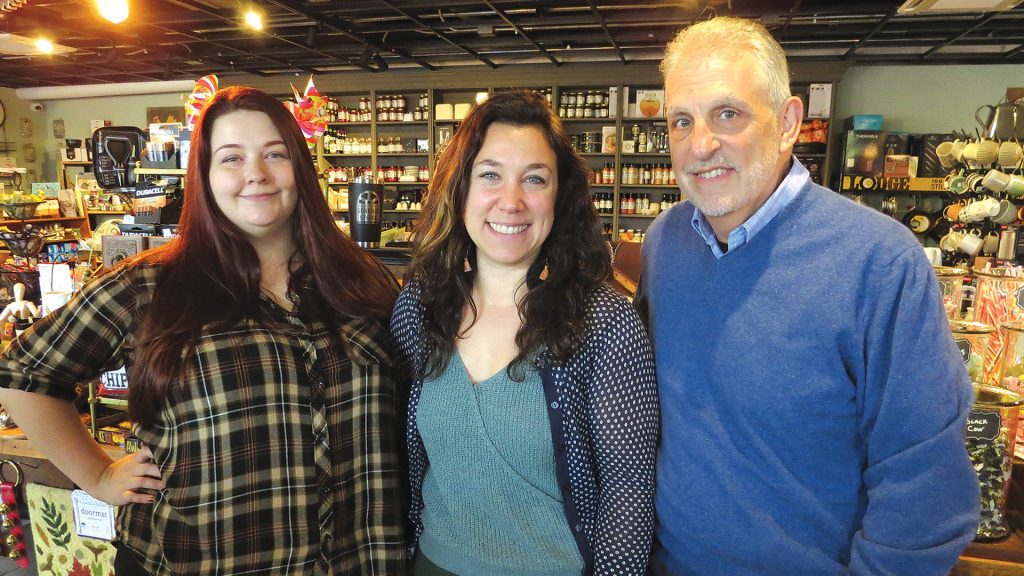
show off some of the many items at the store.

From left, Shauna Wallace, interim manager of the Mill District General Store; Hannah Rechtschaffen, director of Placemaking for the Mill District; and Tim O’Brien, senior Communications director for WD Cowls Inc., show off some of the many items at the store.

“People really find that, for them, shopping locally is meaningful beyond just the fact that it’s nice to go in and touch something and connect with someone,” she said. “They also feel a point of pride shopping locally, giving a gift that has a story they heard right from the artist that made it.

“It becomes this sense that people are part of the recovery,” Rechtschaffen went on. “And I think that this is both real and important. At places like this, people are able to come out and shop and meet the store owner, meet the people working there, meet people making things … it’s just a nicer experience and gives everyone a sense of recovery and reclaiming things.”

Melissa Peavay, marketing manager for Grove Real Estate, owner of the Longmeadow Shops, agreed. She said shopping local has, indeed, become a priority for many consumers, especially after the lessons — and the casualties — of the pandemic.

But she noted that ‘shopping local’ is a broad term. It means buying from local vendors, obviously, she said, but it also means buying from a local outlet of a national chain, one that is providing jobs and contributing to the vibrancy of a downtown, a mall, a shopping plaza (like the Longmeadow Shops), or a community.

“Shopping with people who own their own business and live locally is wildly important,” she said. “But it’s very important to come out and shop local, even if it’s a national chain; it’s local people who work at these stores.”


The Going Rate

There are two bathrooms in the General Store at the Mill District. One, very popular with children, features a jungle motif. The other one? Well, it features one-way glass on the entire wall facing the parking lot. Those using it can see out, but no one can see in.

“People really find that, for them, shopping locally is meaningful beyond just the fact that it’s nice to go in and touch something and connect with someone. They also feel a point of pride shopping locally, giving a gift that has a story they heard right from the artist that made it. It becomes this sense that people are part of the recovery.”

“Still, it can a little disconcerting or unnerving at first, but overall, it’s different, and it’s fun,” said Shauna Wallace, interim manager of the store, adding that the bathroom, said to be one of just a handful in the country with such one-way glass (the others are in tourist spots), has become a talking point. There’s even a sign on the property directing visitors to it that says “you have to go!”

While people might use this bathroom while visiting the store, and others at the Mill District, it is not the reason they go there, said Rechtschaffen, adding that their primary motivation is to find a unique mix of stores and shop locally. And the General Store provides maybe the best example of this.

It features thousands of different items, almost all of them from local vendors and artists: hand-made quilts from Night Sky Quilts in Amherst, maple syrup from Boyden Bothers Maple Syrup in Conway, dog treats from Berkshire Dog in Lanesboro, reclaimed cutting boards from Firefly Hollow in Leverett, local sauces and grocery items from the Kitchen Garden Farm in Sunderland … the list goes on.

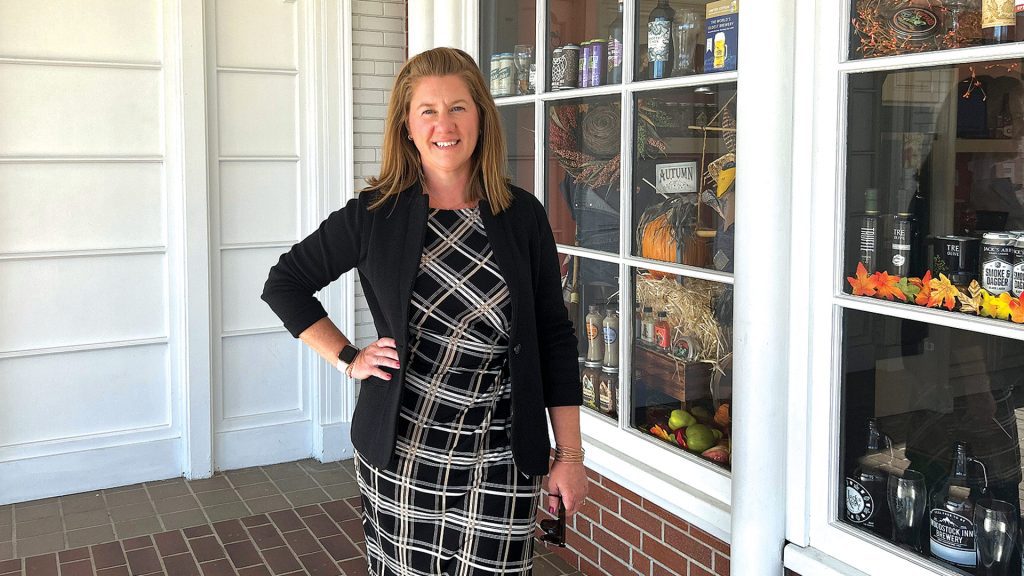
Melissa Peavay

Melissa Peavay says the pandemic helped motivate many consumers to shop local.

As noted earlier, the General Store is just one of many small, locally owned shops in the Mill District. Others include the Closet, which offers vintage and ‘new to you’ clothing; Graze Craze, which offers customizable charcuterie boards and catering; the Lift Salon; Provisions, the Mill District Local Art Gallery; and many others. Collectively, they provide opportunities for people to find what they’re looking for, locate some unique gifts, and shop local in one spot.

It was this same objective that motivated Wirth to create the Feel Good Shop Local platform, which was sparked by the reality that local artists and retailers are simply not as visible as they would like to be.

“One of the reasons some people don’t shop local is because it’s hard — it’s time-consuming, especially if you’re a newcomer to the area, to find these places,” she said. “If you Google items, they don’t show up; if you Google ‘black sweater near me,’ you get the big-box stores, not the local stores. It’s a connection issue.”

Feel Good Shop Local was created to forge connections and enable people to shop at those stores when it’s convenient for them.

“As a mother of four, I’m shopping early in the morning and late at night, and, unfortunately, our local stores are not open at those hours,” Wirth said, adding that many people are similarly constrained by time.

But convenience is only part of the equation. The platform, which was launched during the Big E and is focused largely on gift giving, enables people to shop by recipient (everything from family members to pets; from teachers to co-workers), price, occasion, interest (from travel to wellness to pets — again), and values, everything from women-owned to BIPOC to ‘sustainable practices.’

Wirth considers the platform a classic win-win, or win-win-win, because it benefits consumers, local shops and artists, and communities across the region.

“The vitality of our local communities is important,” she said. “How do you ensure the vitality of our local communities? By supporting our local neighbors, the local stores, things that are happening in our backyard.”

As noted, 25 stores now participate on the platform, with another 25 or 30 in the pipeline, and as the holidays approach, Wirth expects interest in the site to rise. Participating businesses pay a 15% commission on each sale to FGSH, a lower rate than most other sites of this type.

The Mill District General Store is one of those businesses. Click on that site, and one can find a few dozen different items with the store’s own label, including spicy pickles, cracked peppercorn dressing, jams, salsa, and ‘Moonshine Barbecue Sauce.’

Wirth said the platform is essentially just getting started and is still “learning and growing.” She expects that as word of mouth spreads about its ability to make connections and generate sales, it will draw more local shops and artisans.

“The intention behind this is to create community — a community of sellers and a community of like-minded shoppers that are supporting these sellers in a way that is convenient for everyone.”

Meanwhile, with the holidays just a few weeks away, anticipation is building for the season, which is increasingly clouded by questions about the economy, recession, inflation, and the impact of all that on spending.

Amid these concerns, there is, as noted earlier, growing encouragement of efforts to shop local and support businesses looking to make a full recovery from the pandemic.

Peavay said 2020 and 2021 were very difficult times for most all retailers, and some, as Wirth noted, were not able to successfully pivot and navigate their way through the whitewater.

The Longmeadow Shops saw a few casualties, she said, adding quickly that these vacancies have been filled, and the outdoor shopping plaza is now fully leased.

It features several locally owned stores, including Caren & Company, a clothing store; In Chic Shoenique, a merger of two stores, In Chic and Shoenique; Batch Ice Cream; Delaney’s Market; Max Burger; Posto; and the Shot Shop, a salon and spa.

In addition, it features a number of national chains, from J.Crew to Ann Taylor to the Gap, that provide jobs and contribute to the overall vibrancy of the complex and the town itself.

“If people don’t come out and stroll our sidewalks and shop in our stores, those national chains will leave,” Peavay said. “And then, people are disappointed; you always hear after someone closes, ‘I loved that store … why did it close?’ It’s super important to shop locally owned stores and to shop local, at the Longmeadow Shops or any shopping center, if you find that shopping center convenient.”


Bottom Line

There’s a ticker of sorts on the Feel Good Shop Local Site. It keeps a running track of the money spent at participating businesses through the site, under the header ‘Money Invested in the Local Economy.’

At present, that number is still in the five digits as the site continues to build visibility and a presence across the region. In time, it will go much higher, said Wirth, adding that, beyond this number, the site is creating those all-important connections that make it much easier for consumers to shop local first.

When they do, it is truly a win-win-win scenario.


George O’Brien can be reached at [email protected]

Architecture Special Coverage

Food for Thought

Dennis Group project

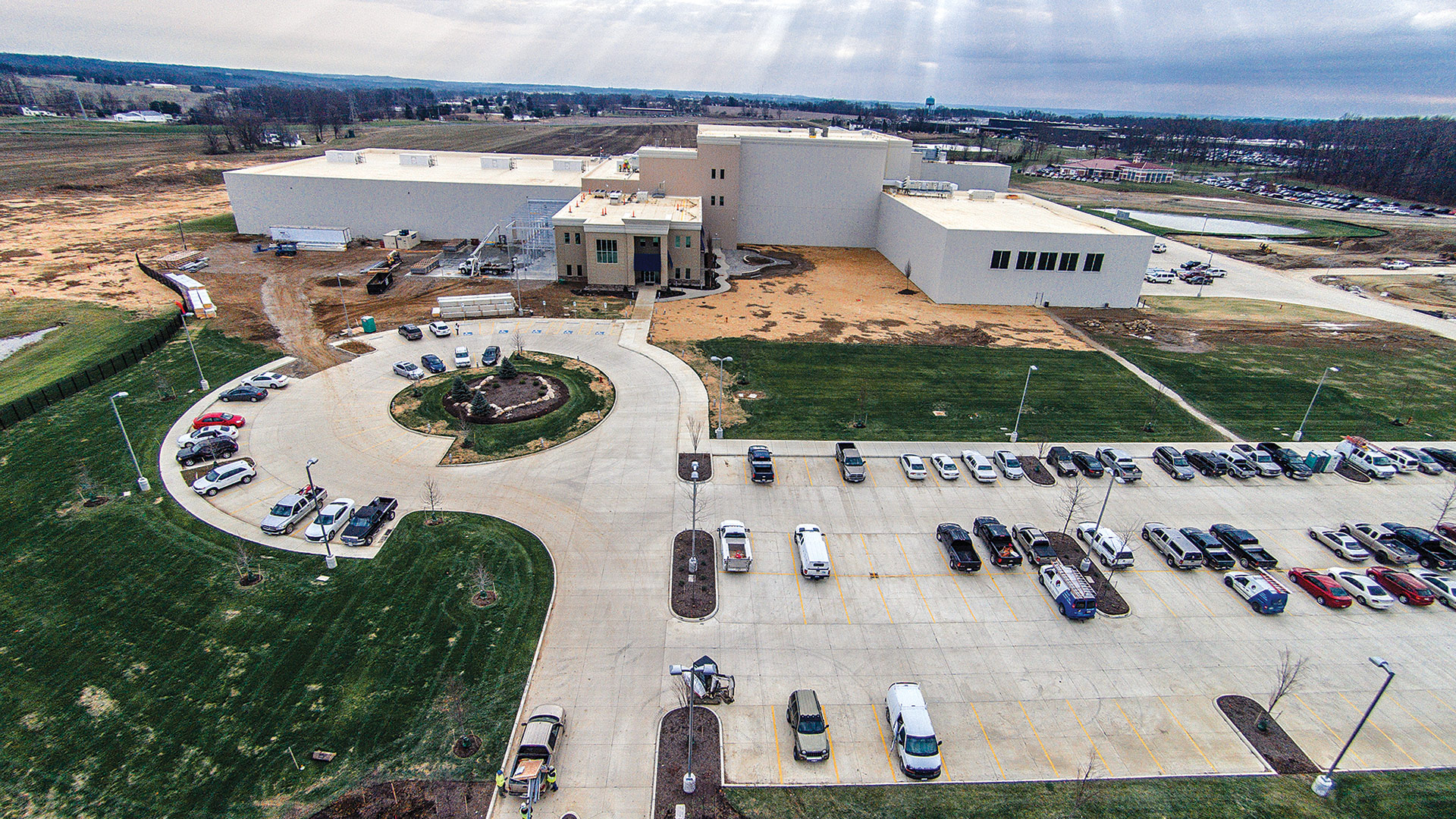
This aerial photo is of a large Dennis Group project under construction in Ohio.


At any given time, the Dennis Group is working on 400 to 500 projects around the world. But you wouldn’t know it by looking around New England.

Sure, it’s worked with Agri-Mark in West Springfield, Pepperidge Farm in Bloomfield, Conn., and a host of other companies locally over the years, but food-production plants — and that’s exclusively what this design-build engineering firm works on — tend to be bunched in certain pockets of the country, and for good reason, said Mike Damiano, head of the company’s process engineering group.

For example, “Pennsylvania supplies the Northeast. That’s a big distribution corridor. All the major players like to be within a stone’s throw of each other,” he noted, adding that other clusters are located in Ohio (serving the Midwest), Georgia (the Southeast), Texas (the South), and California (the West Coast). “We have a lot of work local to our Utah office, which seems abnormal, but it’s a growing area. A lot of it is about logistics, and where they can get to as many places in the U.S. as economically as possible.”

In addition, food-production companies find labor, taxes, and utilities less expensive outside New England, said Chris Siart, head of the firm’s civil, structural, and architectural group.

“We basically design and build food and beverage facilities. We started off doing food and beverage, and we’re still doing food and beverage, for a wide range of products and clients,” he told BusinessWest. “We work with small startup companies all the way up to top-100 companies — Nestlé, Kraft, Pillsbury, and all those other big guys.”

Damiano said the Dennis Group performs full-service engineering for the facility side of the production systems. That involves detailed design work, procurement of equipment and workforce, and management of the construction of the plant. “We don’t self-perform any construction activities, so we’re design-build in the sense that we do construction management.”


Up from the Attic

The Dennis Group has witnessed explosive growth since it was launched by founder — and still president — Tom Dennis in his attic in 1987. It now boasts about 200 employees in its headquarters in the Fuller Block building in downtown Springfield, and another 400 in seven satellite offices: in California, Georgia, Michigan, Utah, Brazil, and two in Canada.

Some of this success can be traced to timing — specifically, an explosion in the popularity of convenience-based foods and the recession-proof (and, as it turns out, pandemic-proof) nature of the food industry.

“A lot of it is about logistics, and where they can get to as many places in the U.S. as economically as possible.”

Each project begins with a concept, Siart said — a new product a company wants to develop or an existing product for which it wants to ramp up production. After a definition study, which is a report defining project scope, scale, cost, and schedule, the study is handed off to the food manufacturer for approval, with projects ranging anywhere from $1 million to $1 billion in cost.

“Then we set the engineering — we have all disciplines in house. We have civil engineers, architects, structural engineers … we have everything to do with the building, but also all the internal engineers as well — mechanical engineers, chemical engineers, control engineers, electrical engineers, basically designing all the equipment inside.”

One reason for the Dennis Group’s sustained success — it has topped Engineering News Record’s annual rankings of the top food and beverage engineering firms by revenue in numerous years — is due to its ability to tackle new industry trends, which constantly drive the design and construction of new plants.

For example, Damiano said, “we’ve been doing a lot of vertical farming, which is kind of new — it’s like a warehouse with an indoor greenhouse.”

That has helped stores keep ever-popular bagged salads on shelves longer because they’re arriving in stores sooner, particularly in the Northeast, said Nathan Marcucci, a process engineer and head of the firm’s project management group.

Mike Damiano and Chris Siart

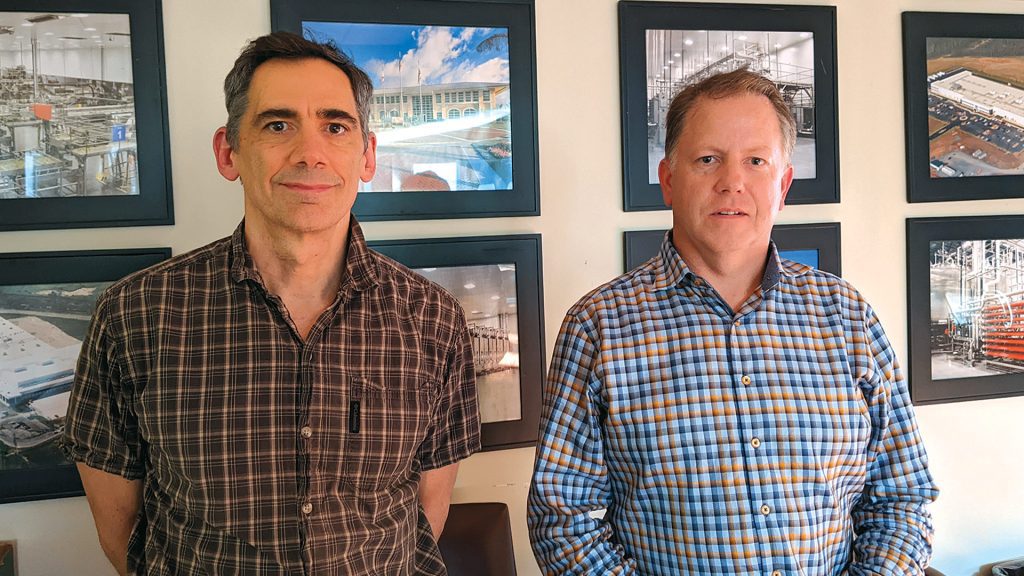
Mike Damiano and Chris Siart say continual innovation in food trends drives robust production of manufacturing facilities.

“Bagged salads were always field harvested, and you had only a few days to get that salad from the field to somebody’s house,” he explained. “Now, with an indoor vertical grow facility in the Northeast in the wintertime, you can get that bagged salad to the consumer in the Northeast quicker, so it lasts longer. So it’s a combination of new technologies that invigorate some of these older products.”

The Dennis Group has also worked with the Impossible brand on alternative meats, ridden a wave of Greek yogurt and alternative milk production when those products became popular, and worked with Ocean Spray on Craisins.

“That used to be a byproduct; they used to pay to have it hauled away,” Damiano said. “Then they turned it into a product that was more profitable than the juice. The juice became a byproduct on the Craisins line. They basically flipped the table.”

Much of the product innovation in supermarkets begins with smaller companies and gets picked up by larger ones when products become popular. Larger companies are often hesitant to step out of their comfort zone, like J.M. Smucker, a repeat client that has long focused on peanut butter and jelly — and premade Uncrustables sandwiches — as well as a line of pet food. The Dennis Group is currently working on its third Smucker factory; a recently opened facility in Colorado was named Food Engineering’s Plant of the Year for 2020.

Sometimes innovation in the way food is packaged drives plant production as well, Marcucci noted, such as a move toward squeezable containers some years back for everything from peanut butter to yogurt.


No Slowdown

When the pandemic hit in 2020, Marcucci said, some jobs got put on hold, but the Dennis Group experienced no real downturn. In fact, demand soared for certain food products, like those aforementioned Uncrustables when kids were largely stuck at home.

“When the economy gets tough, people have less money to buy food at restaurants, so they want pre-made grocery food,” Siart said. “That’s when our clients’ orders go through the roof; they can’t keep up with the orders.”

And that’s when they call on the Dennis Group, which has developed a worldwide reputation in its engineering niche.

“There’s nobody with the title ‘salesperson’ in the company,” he added. “The way we look at it here is that everybody’s a salesperson. You’ve got to do good work to bring in repeat customers, and 80% to 90% of our work is repeat customers; basically, large food manufacturers come back to us and do multiple projects.

“A smaller percentage is new clients that are finding us through different ways — people moving from one company to another,” he went on. “Someone might have been working for Nestlé and is now working for another food company, and work comes to us through word of mouth from former clients. Some of it’s cold calling. Some of it’s someone doing a Google search and finding Dennis Group that way. That’s how our sales work: repeat business and word of mouth.”

It’s business the company’s leaders don’t expect to slow any time soon, if the way people shop — and the convenient products they desire — is any indication.

“Food is essential,” Damiano said. “If you go to the grocery store, you have that one section of fresh produce; everything else is processed. The minute people stop buying processed food, we’re in trouble.”


Joseph Bednar can be reached at [email protected]
Entrepreneurship Special Coverage

Match Makers

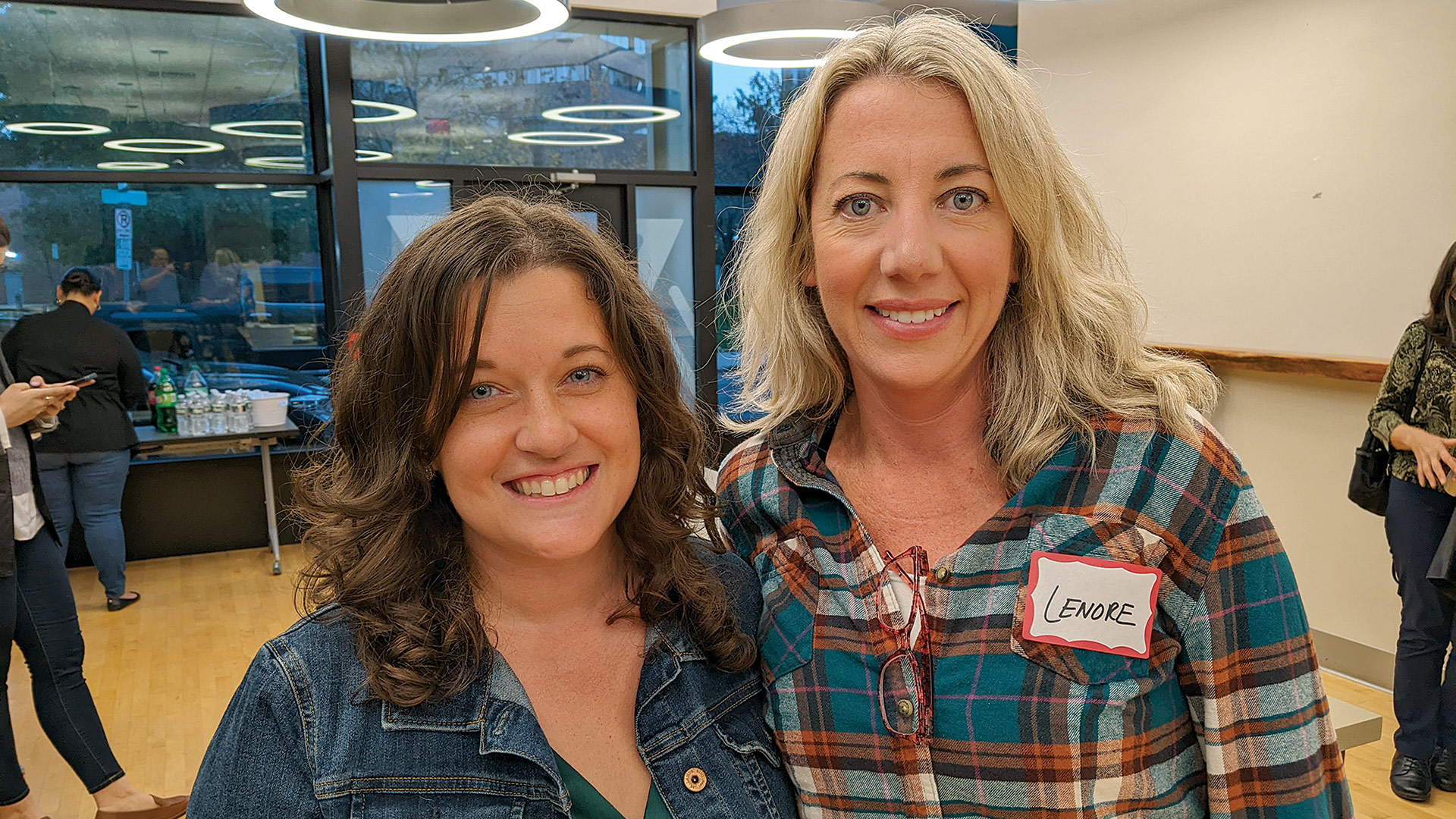
Hope Ross Gibaldi, executive director of Valley Venture Mentors (left), and her mentee, entrepreneur Lenore Abare

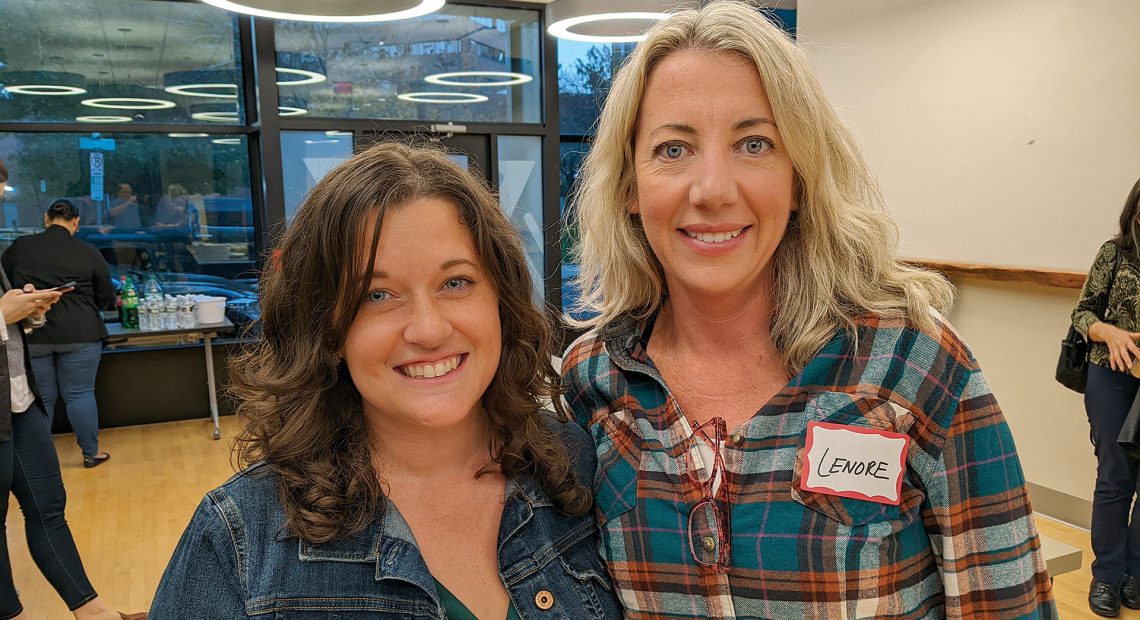
Hope Ross Gibaldi, executive director of Valley Venture Mentors (left), and her mentee, entrepreneur Lenore Abare.

Lenore Abare was familiar with Valley Venture Mentors (VVM) and even attended one of its events when she was dabbling with the idea of becoming an entrepreneur a few years ago.

“It all stayed in the back of my mind,” she said. “Now that I’m full-blown running my own consulting business, I knew it would be really important to align with other like-minded women who are hopefully beyond me, and learn from other people’s experiences.”

So she reached out to Women Innovators & Trailblazers, a VVM-affiliated program that matches professional women in mentor-mentee relationships. She was accepted into the program and found out last week that she was matched with Hope Ross Gibaldi, VVM’s executive director.

Seven years ago, WIT was the brainchild of Liz Roberts, then-CEO of VVM; Ann Burke, vice president of the Western Massachusetts Economic Development Council, and a number of other women, Gibaldi told BusinessWest.

“It arose out of the need for female-based mentorships and knowing there’s such great human capital here in the Valley. There are so many women who are seeking mentorship. And it’s not that we feel women can’t benefit from male mentorship, but there’s a unique connection and bond when women are mentoring women — women understand the struggles, the unique challenges, and the system under which all of us are operating. There’s something unique about that relationship.”

The initial cohort in 2019 included 12 mentor-mentee matches, which has increased to 25 pairings in the just-announced fifth iteration, with specific matches based on shared interest, mentor experience, and mentee need. In Abare’s case, Gibaldi can help her with various entrepreneurship challenges as Abare builds Vircilitation Impact (the name is a play on ‘virtual facilitation’), a consulting business that works with training providers in the business world.

“I was really excited to be matched to her,” Abare said, minutes after meeting Gibaldi for the first time at a WIT mentor-match kickoff event on Nov. 2, adding that she’s excited about Gibaldi’s work with VVM on starting organizations, business acceleration, and more. “I’m definitely going to tap into that experience.”

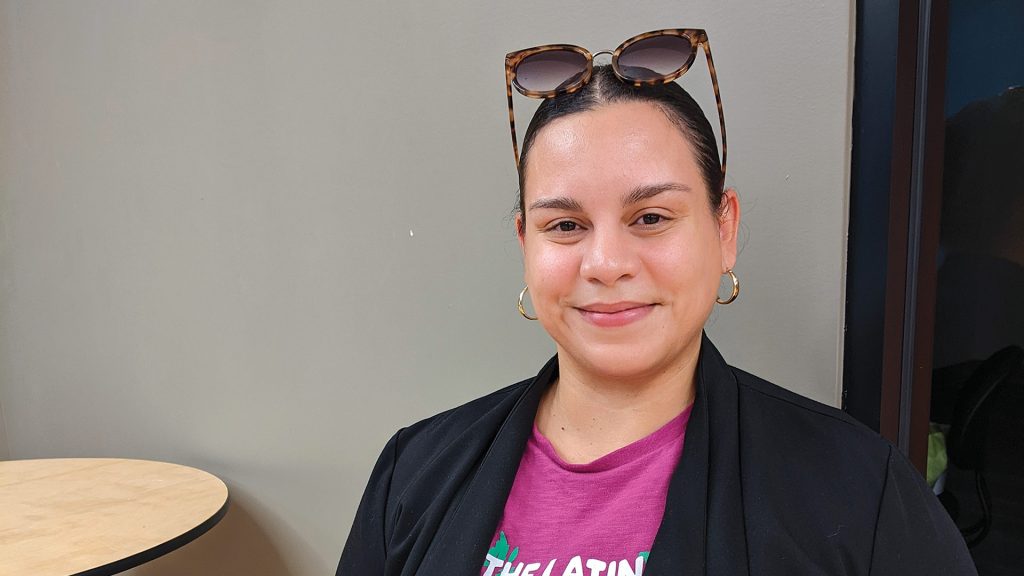
Paulette Piñero, a leadership coach and CEO of Unstoppable Latina, was another mentor on hand at the kickoff to meet her new mentee and network with the group. Her main focus is building a strategic plan for a business, “and then building a brand to attract the right clients, the right opportunities, and the right partners, with a strong brand voice,” as she explained to BusinessWest.

“It’s very refreshing to be able to be vulnerable and talk to other women and realize that you’re not alone, and that we’re all trying to figure it out.”

“I’ve been part of other Valley Venture Mentors programs, and I’m very involved with the work they do — and I do mentoring for entrepreneurs for other programs, like EforAll and the Center for Women & Enterprise,” she said. “So when I had the opportunity to mentor with women and be part of an ecosystem of local entrepreneurs, of course I had to say yes.”


Lighting a Spark

The tagline of WIT is “igniting a women-led economy,” and the program is essentially a community of female innovators and trailblazers with the common goal of supporting other women in their professional and entrepreneurial aspirations. Members include entrepreneurs, professionals, students, educators, and business leaders at all stages of their careers. From the initial meetings of 30 women in 2015, WIT has grown to encompass more than 350 women.

The mentor-match program aims to provide mentoring that helps women navigate their business or career, develop key competencies, and/or grow their professional network. New cohorts begin each fall and run through the spring — typically seven to eight months.

Paulette Piñero

Paulette Piñero says women feel more at ease being vulnerable around other women.

“The program grew over time, and we’ve had a series of other offerings, like networking brunches and educational offerings and workshops,” Gibaldi said. “But over time, we’ve really focused on the mentor-match part of the program.”

WIT leaders spend a month recruiting mentors and mentees. First, the mentors rank several categories — including entrepreneurship, career development, networking, finance, executive presence, and work-life balance — based on their interest and experience.

“I would like to mentor somebody in my biggest background, entrepreneurship,” Gibaldi said a few days before her pairing with Abare was finalized. “I’m also great at networking, so I put that as my second category. The mentees then fill out a form that is basically a mirrored version of that, but they focus on the interests they have and where their biggest mentorship need is. Then we pair them.”

Once the matches are created, WIT gives little specific guidance to the pairs, beyond asking them to meet at least once a month, for at least an hour, in person or virtually — though the interactions can occur as often as they like.

“Once we’ve created the pair, it’s hands-off. There’s not a specific curriculum we follow; it’s based on the needs of the mentee,” Gibaldi said. “We do encourage the pair in the first meeting to create a set of goals and outline what they plan to work on over the next couple of months.”

Abare said the program’s women-mentoring-women model is a valuable one.

“I think, in general, there are unique challenges that are presented to women in our culture, in our society, and when we can understand that context with each other, I think it helps us provide more valuable insight so we can empower each other — because we know, even when it’s not said, some of the struggles and inhibitors, the things that might prevent us from taking a chance or taking a risk or asserting ourselves.”

That latter point is a key one, Abare noted, because women sometimes are not as assertive as men when it comes to stating their value proposition — charging a high-enough fee for their work, for example.

“Research shows that men see themselves as qualified even if they check two boxes,” she added. “Women think they’ve got to have everything checked before they take the initiative.”

Working through that process requires being vulnerable, Piñero added, and women often feel more at ease among their female peers.

“It’s very important to be able to have conversations where we’re vulnerable with other women, so that they can understand what we’re going through, what are some of the obstacles that we face, what are some of the barriers that we face, and hear stories about how we were able to overcome those obstacles so they don’t feel so alone,” she said.

“In my experience, you’re in so many spaces where you feel like you have to be perfect, and there’s this perception that, when you go into entrepreneurship, you should have it all figured out,” she went on. “And it’s very refreshing to be able to be vulnerable and talk to other women and realize that you’re not alone, and that we’re all trying to figure it out.”

Abare agreed. “I think that’s the unique thing about bringing women together in a space. We understand these things from an experiential perspective, so we can empower each other.”


From Mentee to Mentor

Gibaldi said WIT has evolved over time, and even though it’s under the umbrella of VVM, it boasts its own community and serves its own unique need.

“It’s always been received really well, and we have increased the mentor and mentee participation in the program; we have people with a lot of experience with social and intellectual capital participating,” she added. “It goes to show mentors want to give back, and mentees want to get tapped into this network.”

One gratifying element is the number of pairs from previous cohorts who continue to work together, Gibaldi noted. “I think that’s a good reflection on how that curated mentor-match process really works. We take good care pairing people up, and it shows when we have people continue to work together outside the cohort.”

In addition, “another great indicator of success is the number of people who participate as mentees and then return as mentors. We encourage people to go on that journey as well,” she added. “To be able to grow people and transition them from mentees to mentors is very powerful.”


Joseph Bednar can be reached at [email protected]