Daily News

SPRINGFIELD — The Naismith Basketball Hall of Fame and the Rotary Club of Springfield have announced the honorees for the Westfield Bank 2024 Basketball Hall of Fame Rotary Service Above Self Luncheon, taking place Thursday, Dec. 12 at noon on Center Court of the Naismith Basketball Hall of Fame.

Tickets to the event are available to purchase at $90 each, and sponsorship opportunities for the luncheon are still available. For more information on sponsorships or to purchase tickets to the luncheon, contact Chelsea Johnson at (413) 231-5513 or [email protected].

This year’s honorees are well-known local residents John Sjoberg and Brenda Garton Sjoberg. John is president and CEO of NEBM, a regional provider and servicer of office business machines, and Brenda is a Communications professor at Western New England University and former TV news personality. The national honoree is Allan Houston, former New York Knick and founder of the Allan Houston Legacy Foundation.

John and Brenda’s community involvement is vast, and includes co-chairing the Jingle Bell Run to support the Special Olympics and the Gift of Light Ceremony at Mercy Medical Center, of which John was past board chairman. They have also been directly involved with the Ronald McDonald House, Sisters of Providence, Link to Libraries, Spirit of Springfield (of which John is currently chairman of the board), and many other organizations.

Houston and his foundation promote youth mentoring and responsible fatherhood, with a focus on entrepreneurship and career development. He has also developed the Allan Houston Mentoring Initiative and Father Knows Best basketball retreats through his foundation.

“Many notable individuals from the Western Mass. community and the sports world have been recognized at the Basketball Hall of Fame Service Above Self Luncheons throughout the years,” said Frank Colaccino, CEO of the Colvest Group and chairperson of the Basketball Hall of Fame/Rotary Service Above Self Award Luncheon committee. “Our honorees have generously served our communities with heartfelt passion without expectation of personal recognition.”

Oscar Mena De Leon, president of the Springfield Rotary Club, added that “the Rotary International Club of Springfield is pleased to celebrate and honor the tireless dedication of John Sjoberg, Brenda Garton, and Allan Houston. Rotary believes that ‘we are better together.’ The Rotary Club of Springfield’s motto has been Service Above Self for the last 110 years. The remarkable leadership that these honorees continually exhibit makes a significant impact on the communities they serve with absolute passion. This recognition also underscores the saying: ‘if not us, then who?’ Please join us in honoring them for their service.”

Daily News

SPRINGFIELD — Theodores’ Blues, Booze, and BBQ announced that longtime Head Chef Emily Meunier has joined the ownership team. This transition underscores the restaurant’s dedication to culinary excellence and its commitment to nurturing talent from within.

Meunier has been a driving force in the kitchen since 2009. As co-owner, she will continue to spearhead the culinary team while introducing innovative menu offerings that reflect her deep love for barbecue and bold flavors.

“I’m honored to step into this new role at Theodores’,” Meunier said. “This restaurant has been like home to me for years, and I’m excited to help shape its future while staying true to the traditions and flavors our guests know and love.”

Since opening its doors in 1979, Theodores’ has been a cornerstone of the downtown Springfield dining and music scene, celebrated for its barbecue and live blues performances.

Daily News

SPRINGFIELD — For the 31st consecutive year, Rock 102 is hosting its annual Mayflower Marathon food drive to benefit Springfield’s Open Pantry. This year, the tradition returns to MGM Springfield over the three days leading up to Thanksgiving. Bax & Nagle will broadcast for 52 hours while collecting non-perishable food donations for Open Pantry Community Services of Springfield.

As Open Pantry continues to see growing demand for its services, with one in four families in the Springfield area suffering from food insecurity, the need for donations of non-perishable food items is constant. The outpouring of support from area residents and businesses (including the Springfield Thunderbirds, Capitol Relocation and Logistics, Xfinity, Camping World of West Hatfield, Arment Trucking, and many more) has historically been significant, and organizers hope that support continues in 2024.

Scheduled interview guests for this year’s Mayflower Marathon include West Springfield native Mike Scully, former executive producer of The Simpsons; comedians Fitzy, Tom Cotter, and Bob Marley; and more. The Mayflower Marathon begins at 6 a.m. on Monday, Nov. 25 and runs until 10 a.m. on Wednesday, Nov. 27. It takes place by the South End Market at MGM Springfield.

Daily News

SPRINGFIELD — Martin Luther King Jr. Family Services (MLKFS), in partnership with the Massachusetts Department of Youth Services (DYS), the Center for Human Development’s (CHD) division of Adolescent Re-entry Services, and Saint George Greek Orthodox Cathedral, are hosting a Holiday Tree Jubilee for the communities it serves. The event will take place on Friday, Nov. 22 from 5 to 8 p.m. at the Greek Cultural Center, 22 St. George Road, Springfield.

“We are incredibly proud to continue our partnership with DYS this year as we come together to kick off the holiday season for families in our community,” said Shannon Rudder, president and CEO of MLKFS. “This collaboration is more than just an event — it’s a heartfelt commitment to bringing joy, hope, and support to those who need it most during the holidays. As we unite to spread warmth and kindness, we are reminded of the power of community and the importance of lifting each other up. We are grateful for the opportunity to make this season a little brighter for the families we serve, and we look forward to the lasting impact of this partnership in the months ahead.”

Thanks to a generous donation by King Gray Coach Lines, there will be two free bus rides leaving the MLK Jr. Family Services Community Center at 5 p.m. and 6 p.m. on Nov. 22 for families who want a ride to the Greek Cultural Center. Return rides will also be included and will transport your fully decorated Christmas tree. Return rides will depart from the Greek Cultural Center at 7 p.m. and 8 p.m.

With the support of community sponsors, the event is entirely free, providing barrier-free enjoyment for the entire family. The event brings the holiday spirit to life with photos with Santa, carolers, a hot-chocolate station, dance performances, face painting, cookie decorating, karaoke, letters to Santa, and, of course, a decorated holiday tree raffle free to everyone, which includes 117 fully decorated trees. All trees are donated and decorated in a family-friendly theme to go home with the families in attendance.

Cover Story Special Coverage

Attorneys at Work

From left: John Gannon, Meaghan Murphy, Timothy Murphy, Tracy Belanger, Deanna Sears, Marylou Fabbo, Melissa Theriaque, and Amelia Holstrom.

From left: John Gannon, Meaghan Murphy, Timothy Murphy, Tracy Belanger, Deanna Sears, Marylou Fabbo, Melissa Theriaque, and Amelia Holstrom.


The website for Skoler, Abbott & Presser lists 23 distinct practice areas in the realm of employment and the workforce — everything from discrimination and harassment to handbooks and personnel policies; from employment litigation to labor relations; from immigration to workplace safety.

“It may look like it’s a very broad practice area, but it’s really not,” said John Gannon, one of the firm’s five partners. “I think it’s actually somewhat narrow, in that all we do is represent employers and businesses, and we represent them when they have issues related to their employees.”

Those issues fall into two buckets, he explained.

“There’s the labor side of things, if an employer has a union or is governed by a collective bargaining agreement; we have some folks in our office who specialize in that area. And for those employers that are non-union or not covered by a collective bargaining agreement, that’s general employment law, which is the other side of the house.”

John Gannon

John Gannon

“It may look like it’s a very broad practice area, but it’s really not. I think it’s actually somewhat narrow, in that all we do is represent employers and businesses, and we represent them when they have issues related to their employees.”

Elaborating, he noted that Skoler Abbott represents employers who are being sued by an employee or an administrative agency, like the Massachusetts Commission Against Discrimination.

“But we also provide a lot of day-to-day counseling on different issues. Like, ‘this employee requests an accommodation because they have a medical condition. What do we need to do? Do we need to give them time off? Do we need to give them a different type of computer software?’ Things like that. It’s broad in the sense that we represent everything in the employment context, but it’s really just employment law.”

That said, the legal landscape for workplaces has changed significantly over the past six decades, and as Skoler Abbott celebrates its 60th anniversary this year, four of its attorneys sat down with BusinessWest to talk about some of those changes.

“When I started out here, there was no such thing as a wage-hour claim. Now, that’s really a booming area for us, with the treble damages that Massachusetts affords to those claims,” said Marylou Fabbo, a partner who is coming up on 30 years with the firm. “There was also very little sexual harassment. There were no claims of disability discrimination. So it’s really evolved, and things have become more employee-friendly. There are more laws, and while many laws were on the books then, they weren’t really enforced.

“So, over the years that I’ve been here, employees have become much more knowledgeable about their rights, and employees’ attorneys are making sure that the employees’ rights are upheld,” she went on. “And we’re finding that a lot of our practice is now focused on preventive measures such as trainings to supervisors and management, more handbook reviews, things like that, whereas before, when I first started here, we were just defending cases, like breach of contract, very basic things. The issues we face have definitely gotten a lot more complex.”

Marylou Fabbo

Marylou Fabbo

“A lot of our practice is now focused on preventive measures such as trainings to supervisors and management, more handbook reviews, things like that, whereas before, when I first started here, we were just defending cases, like breach of contract, very basic things. The issues we face have definitely gotten a lot more complex.”

That has made the work more challenging, said Amelia Holstrom, another partner — and the ground is ever-shifting.

“I’ve been here since 2012, and when I first got here, there were very few leave laws. I mean, there was the federal Family and Medical Leave Act and a handful of others,” she noted. “But since 2015, we’ve added earned sick time and domestic-violence leave, and our parental leave act changed, and we have paid family and medical leave now.

“The majority of what I deal with, for phone calls from clients, is just walking them through: ‘I have an employee out, and I don’t know what to do next,’ or ‘is this job-protected time?’ and advising them on next steps and those statutes where it’s all job-protected leave. That’s been a challenge for employers, so I deal with that a lot.”


Brief Overview

Gannon and his fellow partners noted that aggrieved employees have more tools today, and more understanding of them. One, Gannon said, is a surge of fee-shifting provisions, through which a prevailing attorney can recover fees from the other side.

“That’s a big driver in some of these cases, particularly in wage-and-hour cases,” he noted. “The amount of unpaid wages may not be that much; it might be five or six thousand dollars. But the employee’s attorney knows, if they take the case all the way to trial, and they succeed, the attorney’s fees could be three, four, or five times that, maybe even more.”

Amelia Holstrom

Amelia Holstrom

“It has been personally gratifying building long-term relationships with clients over the years. I help them with their issues when they call, but I’ve also I’ve gotten to know them.”

The work environment has changed as well, Fabbo said.

“Back in the ’80s, when I was in high school, it was hard to even find a job. You’d go to the mall and walk around forever. So I think a lot of employees were afraid to assert their rights in fear of getting terminated or retaliated against because it wasn’t as easy as it is now to go find a new job.

“But I think, over the years, the work environment has changed,” she added. “There are a lot more opportunities for employees. And as John said, with the fee shifting, there are a lot of attorneys out there willing to represent them.”

Attorney Meaghan Murphy, who joined the firm in 2020, added that another evolution has occurred in the varying expectations different generations have in the workplace, particularly regarding what’s acceptable conduct and what employees are expected to deal with.

“Employees are more willing to assert their rights because there are no-retaliation provisions under most of the employment laws we deal with,” she explained. “So an employee who makes a complaint of sexual harassment, for example, cannot be retaliated against. There’s an added protection.

“But I also think, in the last 10 or 20 years, employees are coming of age expecting better behavior, more fairness, more equity in the workplace than generations before them, and that may be part of the reason why there’s an increase in claims against employers.”

Holstrom said the fact that everyone now has the internet in their pocket makes a difference as well, with employees able to quickly look up what the laws are.

Meaghan Murphy

Meaghan Murphy

“I don’t take personal offense that they have to call me and they’re not looking forward to that conversation. Sometimes they’re like, ‘no offense, but I hope I don’t have to call you again.’ I’m like, ‘none taken; that’s fine.’ I get it.”

“It isn’t always correct, depending on what they’re looking at, but it makes employees more likely to say, ‘oh, something happened.’ They’re a lot more knowledgeable than they were previously when they couldn’t look those things up outside of a book.”

Beyond that, Gannon added, “they’re not only going to look up on their phone what the law says, they’ll also probably be able to find something that says, ‘hey, this person got 10 million dollars as a result of this judgment.’ So the more information that’s out there, at a worker’s fingertips, the more they’re going to exercise their rights.”

Because of this new paradigm, Skoler Abbott’s work to be proactive with clients is more important than ever.

“We help employees craft their handbooks in a way that makes sure they’re fair to the employees, as well as including all the legal things they need to include in the handbook,” Fabbo noted. “We do a lot of training of supervisors and management, keeping them apprised of laws and best practices. We speak to a lot of employment groups, giving them updates on the law. We’ll speak to their members, and we’ll attend their breakfast briefings on a regular basis to hear what their issues are, too, which is good for us, so we know what issues employers are facing.”

Armed with that knowledge, she went on, “we’ll help employers draft policies, help them draft effective disciplinary action forms, let them know what they need to post, basically anything they need. And if they call us with a question — ‘someone’s intoxicated at work; what do we do?’ — we help them with that.”

While changing laws and a more empowered workforce certainly make things challenging, they have also created more awareness among employers of the need to do the right thing. And if litigation does develop, Gannon said, Skoler Abbott will work with clients to get cases resolved early, through mediation or just having conversations with the opposing side.

“They know that, when we go into court, we’ve done our homework. We’re not just showing up and making arguments just to make arguments.”

“The reality is, very few cases do end up going to trial, but some do. One of the things we tell our clients is, ‘you’re going to have disgruntled employees who are going to file claims. It just happens.’ A lot of businesses have to deal with these claims, and there are strategies that we work on with our clients, not only for avoiding litigation, but, if it does develop, how can we nip this in the bud early and reach a resolution that everybody’s happy with?”


Appealing Work

Over its 60 years of practice, Skoler Abbott has certainly had many notable wins in court, from a seminal case in the mid-’90s dealing with same-sex sexual harassment to the 2012 case that determined that indefinite leave of absence is not a reasonable accommodation for a disability.

The partners understand that many of their successful court cases aren’t exactly headline grabbers because they wind up with no big, million-dollar payout that catches the public’s attention. “A verdict for the defense means no money,” Murphy said. “So people don’t see them, but it’s a pretty big deal to us, and obviously to our clients.”

That’s gratifying, said Gannon, who has been with Skoler Abbott since 2011, but so is the day-to-day interactions with people. “Everybody has a job, and everybody has issues that come up at work. And I honestly do enjoy talking to clients about the everyday issues that come up.”

Meanwhile, he added, “we have a very collegial environment where I can go into Marylou’s office, or I can go into Amelia or Meaghan’s office, and say, ‘hey, have you ever had a case like this? Have you ever had an issue like this?’ And we talk about it and share our experiences and our opinions on things. I love working here, and I love what I do.”

Holstrom appreciates the personal interactions as well.

“It has been personally gratifying building long-term relationships with clients over the years. I help them with their issues when they call, but I’ve also I’ve gotten to know them. I know that they have kids, and I’ve heard about them growing up and going to college, and they also know about my kids. And I like working with them long-term and continuing to develop that relationship.”

Added Gannon, “there’s nothing more gratifying than when a client calls you up and says ‘thank you.’ Whether it’s because you defended them at trial successfully or because you helped them through a challenging situation with a particular problematic employee, we get it.”

Murphy said many dealings between employers and attorneys come at a stressful time, and they understand that.

“I don’t take personal offense that they have to call me and they’re not looking forward to that conversation,” she said. “Sometimes they’re like, ‘no offense, but I hope I don’t have to call you again.’ I’m like, ‘none taken; that’s fine.’ I get it.”

One thing the entire team prides itself on, Gannon said, is having a very good understanding of the law and then applying it to the benefit of clients.

“We’re not just telling them what the law is. We’re also giving them practical advice on what they need to do as a result of this law.”

The #MeToo movement of the late 2010s was one example of a shift in employer behavior. While the number of sexual-harassment claims didn’t spike in Massachusetts, the increased awareness of the issue in the public eye had employers acting proactively.

“Surprisingly, in Massachusetts, there’s no obligation to provide sexual-harassment training to your supervisors like there are in some other states,” Holstrom said. “But I did see a lot of clients, even through COVID, doing trainings for their supervisors on sexual harassment and what their obligations are to report it and take prompt steps to investigate and stop the conduct.”

Murphy agreed. “There’s more general awareness and less of an acceptance of certain workplace conduct than there used to be. And I think individual people are inclined to speak up in the moment more than they were before, maybe because there’s a sense that they’ll get more support than they used to.”

At the end of the day, Skoler Abbott represents employers, not workers, but understands that staying on the right side of the law is good for everyone — and certainly makes for less stressful, and more successful, workplaces.

“Agencies like the Massachusetts Commission Against Discrimination and judges in the area respect us,” Gannon said. “They know that, when we go into court, we’ve done our homework. We’re not just showing up and making arguments just to make arguments. They know that we counsel our clients well, and we do good work.”

Faces of Business Features Special Coverage Special Publications

Financial services is a broad and robust sector in Western Mass., running the gamut from banking and lending to insurance and accounting to wealth management.

On the following pages, meet leaders from two local institutions — Matt Lauro, senior vice president and Western Massachusetts Commercial Lending team leader at MountainOne, and Deb Esposito, senior vice president and Business Banking officer at Greenfield Cooperative Bank.

We asked these financial leaders to share why they were first drawn to their work, how their journeys brought them to their current leadership roles, how the rewards and challenges of banking and finance have evolved, and why this sector presents attractive options for young people seeking a meaningful career.

Faces of Finance is part of BusinessWest’s Faces of Business series, which was launched with Faces of Construction earlier this year. So read on as these hardworking and thoughtful professionals tell you what they love about their work, what they do for fun, and why they’re deservedly proud of the success they’ve built.


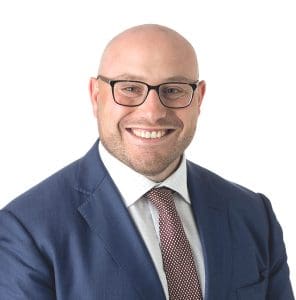
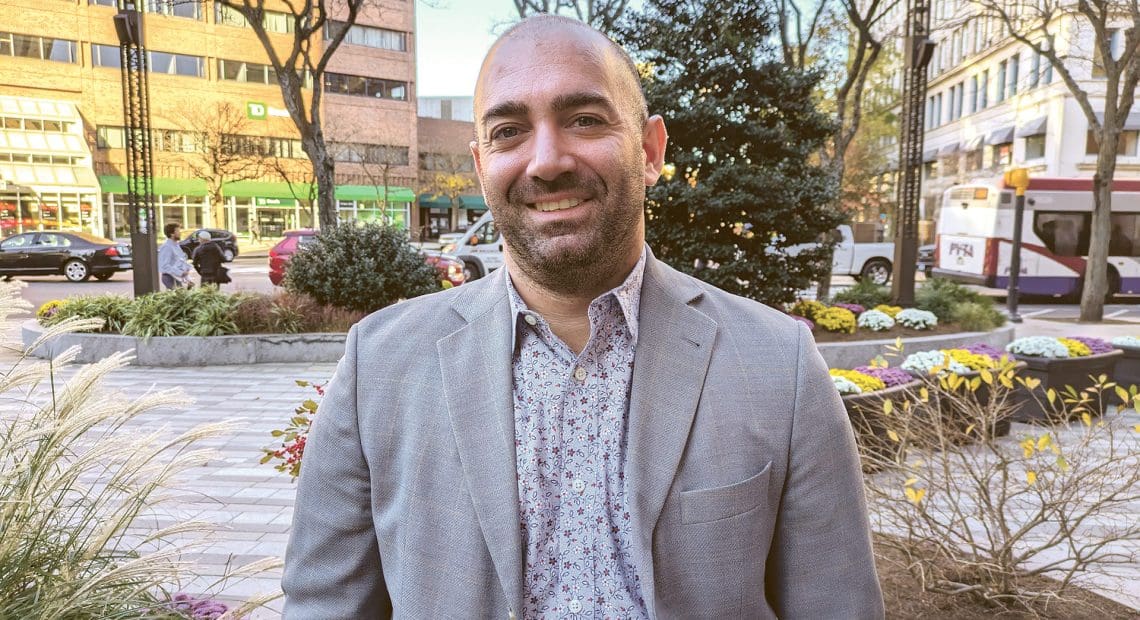
Matt Lauro

Senior Vice President, Western Massachusetts Commercial Team Leader, MountainOne

Matt Lauro, Senior Vice President, Western Massachusetts Commercial Lending Team Leader, MountainOne

Matt Lauro, Senior Vice President, Western Massachusetts Commercial Lending Team Leader, MountainOne

Matt Lauro says he’s the product of “outstanding mentorship.”

That started the summer before his junior year of college, when he interned at Fidelity Management and Research Co., which encouraged networking and collaboration, setting an example of the kind of leader he would eventually be.

“I fell in love with analyzing different industries and businesses and listening to executive management speak about all the changes that would exist in my career lifetime,” Lauro recalls. “I loved the hybrid challenge of communicating with people and utilizing analytic abilities.”

In 2021, his career brought him back to Western Massachusetts. Through his network, he was introduced to Robert Fraser, president and CEO of MountainOne. “Bob was looking to add depth to our commercial lending team. I met with Bob and Richard (Dick) Kelly, our senior commercial risk officer, and the rest is history.”

These days, as MountainOne’s commercial leader for Western Massachusetts, Lauro is responsible for motivating, managing, and expanding a team of commercial bankers, as well as growing the region’s commercial portfolio. In addition, he oversees a diverse portfolio of clients across the Commonwealth.

“I am lucky,” he says. “I have an incredibly talented team in place with many years of experience, and we have built an outstanding portfolio of high-quality companies and individuals.”

He has achieved this during a time of significant challenge and opportunity in the financial-services sector. “The economic environment and the industry are evolving rapidly. The key opportunity is for banks and bankers to lead these changes,” he explains. “For instance, a banker who stays updated on economic trends can engage in more informed conversations with clients, fostering stronger, long-lasting relationships. It’s not just about making loans; it’s about managing relationships over the long term and helping clients navigate through periods of uncertainty.

“Additionally,” Lauro adds, “investing in new technology, introducing innovative products, and enhancing the customer experience are crucial for offsetting the long-term trend of rising costs.”

In all, it’s been a gratifying career, one he says young people would be wise to consider. While there’s no straight-line path to success, he offered some advice to anyone pursuing this field.

“Maintain intellectual curiosity and a desire to learn from the right people. Create a network of individuals that you can rely on for advice and lean on for their own expertise. Create mentorship opportunities for yourself, and identify people that you look up to and aspire to have careers similar to. Work tirelessly to master the skills most important in your path.”

Lauro’s life is much more than his work at MountainOne, of course.

“My family is my biggest motivation, and spending time together is my favorite hobby, whether that be on long drives, walks, or dinners,” he tells BusinessWest. “Between my wife Susanna, my daughter Annie, and our dog Nipsey, we have created an incredible support system for one another, and we’re very grateful for our lives together.”

He added that his parents instilled a sense of civic involvement while growing up, and he saw how committed they were to causes they were most passionate about — an example he has followed with his own family. He and his wife serve on several nonprofit boards and donate countless hours to charitable foundations; Lauro currently sits on the boards of Grit & Gratitude Wrestling Academy, Pittsfield Affordable Housing Trust, and Berkshire County Education and Correction.

“Overall, we are interested in continuing our involvement with youth and animal-welfare causes across the Commonwealth,” Lauro adds. “We take tremendous pride as a family with our charitable giving, nonprofit involvement, and community involvement.”

While his long-term professional goal is to be president of a financial institution, Lauro says he’s focused on helping to make MountainOne the best commercial banking organization it can be, and takes pride in that work.

“Personally, I am most proud of the flexibility I have in my career. I have been a peak performer at every level and have been flexible and curious enough to be a part of multiple different banking teams with different goals and accomplishments,” he notes. “Professionally, I am most proud of our portfolio of clients that our team has built. We have developed an outstanding commercial portfolio comprised of accomplished business owners, investors, and developers. I have spent countless hours with many of these individuals and have learned a great deal from them myself.”

In short, “our team plays to win,” Lauro says. “We win when our customers excel, when we forge new relationships, and when we collaborate creatively to develop effective solutions. The most gratifying part of the job is working with our customers to find ways to add value. As a team, we take great pride in being able to create tailored solutions for each client.”


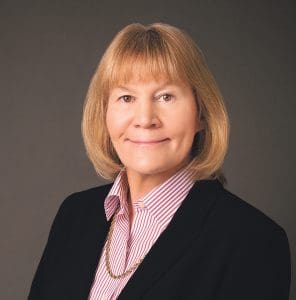
Deb Esposito

Senior Vice President – Business Banking Officer, Greenfield Cooperative Bank

Deb Esposito, Senior Vice President – Business Banking Officer, Greenfield Cooperative Bank

Deb Esposito, Senior Vice President – Business Banking Officer,
Greenfield Cooperative Bank

Young people have plenty of options when it comes to choosing a career. For Deb Esposito, the factors were simple.

“I had an interest in business and finance, and a passion for everyone to enjoy a better financial future,” she says of her entry into the world of financial services — a path that has led to her latest role as senior vice president and Business Banking officer at Greenfield Cooperative Bank (GCB).

“As a senior in high school in the Midwest, I was recruited out of a business program, hired into a local bank, and worked there until I graduated from college,” she recalls. “After my college graduation and my foundation in banking, it was a natural career path for me to continue in.”

In her current role — a newly created one at GCB — Esposito leads the growth and development of new and existing business relationships in partnership with the Commercial Lending, Government Banking, and Retail departments. She also takes an active role implementing marketing strategies to strengthen the bank’s brand awareness across Franklin, Hampshire, and Hampden counties.

The bank offers some explanation why that new role is important. “As a community bank, Greenfield Cooperative Bank strives to provide a full compliment of products and services to our customers. Debbie is a terrific addition to GCB’s team and will ensure we continue to provide excellent service to the businesses throughout Western Mass.”

That service, Esposito notes, includes “the ability to host consultative conversations with clients, companies, and organizations and walk away with a business plan of action for them. I’m able to guide them on banking solutions they need for efficiency, their cash flow and lending needs, challenges they may be facing, the growth or sale of their company, and so much more.”

To do that, she says, she needs to stay current in terms of financial matters such as the economy, the Federal Reserve and potential rate adjustments, stock-market activity, and banking regulation changes. “As a subject-matter expert, clients seek our guidance on managing their financial affairs, both on a personal level and business level.”

Esposito holds a bachelor’s degree in communications, public relations, and marketing from the University of Wisconsin – Whitewater and a nonprofit certification with a financial focus from the University of St. Thomas in Minnesota. With more than two decades of experience in the financial industry, she brings a wealth of expertise in business, commercial, and cash-management solutions. Prior to joining GCB, she served as vice president of Cash Management Sales for PeoplesBank and vice president, senior Treasury Management relationship manager for Citizens Bank.

She is also committed to community involvement, actively volunteering for various organizations across Western Mass.

“A recent favorite was our team build day for children play homes with Habitat for Humanity,” she notes. “An annual favorite includes my husband and I volunteering at the Boston Marathon finish line, scoring all runners and interacting with the press and media from various countries.”

It makes sense that she seeks roles that get her outside. “I am a outdoor enthusiast, originally from the Midwest, who loves the Northeast and the four seasons,” she tells BusinessWest. “Family time includes biking, hiking, traveling to Maine to enjoy the coastal beaches, Vermont and New Hampshire for the mountains, and so much more.”

In addition, “I’m an avid fan of all Boston sports as we are nicely spoiled by the success of our New England teams.”

That sense of gratitude extends deeply into Esposito’s work at GCB.

“I am pleased to have worked with a variety of excellent mentors who shaped my financial career to where I am today,” she says. “In my new role as senior vice president with Greenfield Cooperative Bank, I’m proud to be a part of a local community bank that mirrors my vision of helping people achieve their financial goals.”

It’s a challenging but satisfying career she says would be suitable for any young person with a desire to learn — and help people.

Her advice for them? “Be patient — very patient — in your career, and the rewards will follow. Enlist a good mentor and be a sponge to absorb knowledge in each of your roles. Enjoy being a professional networker and stay active in your community.”

Esposito’s recognition that each client is unique, and their banking services should never be one-size-fits-all, as well as her ability to listen to her customers and develop tailored financial solutions, is clearly the right fit for this important new position.

“We are thrilled to welcome Debbie to the Greenfield Cooperative Bank team,” says Tony Worden, president and CEO of GCB. “Her extensive experience and deep understanding of the local business landscape will be a tremendous asset as we continue to provide our customers with innovative financial solutions.”

Banking and Financial Services Special Coverage

Turning the Corner

Jeff Sullivan says the ‘drill’ is now part of doing business — an important part, and an expensive part.

He was referring to a recent exercise at Springfield-based New Valley Bank, in which a cyber attack was carried out and the staff’s response was chronicled, scored, and evaluated.

“You come in the morning and your screen is black — what do you do now?” said Sullivan, president and CEO of the institution. “Then someone gets an email, and it’s says, ‘pay X amount of ransom by the end of the day.’ What do you do? They test your preparedness for things that can happen.”

This simulated cyber attack is one of many aspects of disaster planning at the bank — there’s another drill where there’s a tripledemic and no employees can come to work — and at all banks, large and small. It represents aspects of a “brave new world,” as Sullivan called it, and one of many ongoing challenges and expenses for financial-services institutions.

And there are many others. They include:

• Continually growing competition, both from non-bank financial institutions (NBFIs) and players within the industry, including regional and national powers such as JPMorganChase, which has opened 75 branches in Massachusetts, including several in the 413 in an aggressive bid for market share;
Jeff Sullivan

Jeff Sullivan

“You come in the morning and your screen is black — what do you do now? Then someone gets an email, and it’s says, ‘pay X amount of ransom by the end of the day.’ What do you do? They test your preparedness for things that can happen.”

• The many aspects of technology, including the need to keep up with the larger players with deeper pockets while also correctly gauging what customers want and not investing for the sake of investing;

• Artificial intelligence, specifically the need to understand this emerging technology and then deploy it in ways that improve the customer experience and overall efficiency while maximizing the time of human talent;

• Margin compression, a function of rapidly rising interest rates and corresponding huge increases in the cost of deposits in 2023 and early 2024. Interest rates are coming down, and the situation is easing, but there will be a lag;

• A still-sluggish housing market marked by fewer sales because people don’t want to trade a lower-rate mortgage for a much higher one, and a virtually nonexistent refi market; and

• The ongoing need to grow, and the question of how to accomplish this given all of the above.

These issues and others were addressed by several area banking leaders as BusinessWest asked them to put 2024 in perspective and speculate on what they expect to happen over the next several quarters.

“The rate increases by the Fed really hammered bank margins and, therefore, bank profitability; it was a tough grind in 2024,” said Matt Sosik, president and CEO of bankESB, who described this year as one in which the price was paid for 500 basis points worth of interest-rate increases that started early in 2023. “Most banks are just now starting to turn the corner.”

Most area banks were fortunate to have their balance sheets structured in a way that allowed them to be resilient and absorb the blows, and even record decent, if less-profitable, years in 2024, but the rate hikes still took a toll, Sosik went on, adding that, as rates come down (the Fed approved another drop earlier this month), margins will start to improve. But there will be a lag, just as there was when rates started climbing.

Matt Sosik

Matt Sosik

“The rate increases by the Fed really hammered bank margins and, therefore, bank profitability; it was a tough grind in 2024. Most banks are just now starting to turn the corner.”

As for technology, it remains the quintessential combination of challenge and opportunity for banks. The opportunity comes in the form of improved service to customers and thus the ability to retain and perhaps grow market share. The challenge comes with keeping up, the cost of keeping up, not paying for something customers don’t want, and keeping customer information safe.

“You don’t want to be chasing shiny objects or next greatest thing,” said Matt Garrity, president and CEO of Florence Bank. “You really want to be rooted in understanding what it is your client wants from you and that you’re delivering the best possible product, the best possible service, to address what they’re after.”


By All Accounts

As he told BusinessWest that “banks have hit bottom,” Sosik acknowledged this might not be the best way to describe the current state of the industry.

But it works.

“We’ve seen the bottom, and we’re on the upswing,” he said, adding that, as interest rates come down and pressure on margins eases, banks should see some improvement on the bottom line. “There will be positive earnings impacts in the fourth quarter and into 2025, and slow movement back toward more normal margins.”
Matt Garrity

Matt Garrity

“You don’t want to be chasing shiny objects or next greatest thing. You really want to be rooted in understanding what it is your client wants from you and that you’re delivering the best possible product, the best possible service, to address what they’re after.”

Overall, while 2024 was, indeed, a grind, most area institutions fared comparatively well because they took a conservative approach, although performance, meaning profitability, was off from previous years due to the margin squeeze resulting from a slow, persistent, 550-basis-point increase in interest rates over roughly a year, which was largely unprecedented, by most accounts.

As a result, most institutions in this region were simply less profitable than usual, said Sosik, noting that 2025 should see the pendulum continue its swing back to where bottom lines were a few years ago.

Sullivan agreed, and projected improvement on everything from margins to the yield curve, although it may come at a slower pace than the industry would want.

“The bond market has sensed inflation being persistent, and it shows by the long-term rates running back up over the past two months,” he noted. “That is actually normalizing the yield curve; an investor should get paid more for locking her money up for a longer time period.

“The inverted yield curve that we’ve had the past two years [short-term rates higher than long-term] is really bad for community banks, so this change back to a normal yield curve is welcomed,” he added. “We’ll see about whether the Fed cuts interest rates a lot next year; there is now talk that the short-term rate reductions will be slower, but Trump will want them to be faster to juice the economy.”

But there are several caveats that make it difficult to project how pronounced a bounceback will be seen over the next few quarters. Indeed, while there is general agreement on perhaps another 100 basis points worth of rate cuts in the year to come, there is less consensus on the prospects for a recession or what will happen with inflation.

Dave Glidden

Dave Glidden

“As rates decline and the pressure relieves a little on margins, banks, if they’re smart, will stay laser-focused on the cost of funding and their deposit mix.”

Indeed, Glenn Welch, president and CEO of Freedom Credit Union, said the kinds of tariffs on foreign products trumpeted by President-elect Trump could cause inflation to spike — and have other repercussions.

“If those tariffs are put in place, we’re going to see higher inflation, and then the Fed won’t be able to drop interest rates as quickly as many are projecting,” he noted.

Meanwhile, although interest rates are expected to continue their downward trend, there will be a lag when it comes to the overall impact on deposit rates, especially with banks hard-focused on protecting their deposit bases.

“The competition for deposits will continue through the balance of this year and into 2025,” said Dave Glidden, president and CEO of Middletown, Conn.-based Liberty Bank, which has expanded its footprint into Western Mass. “Each bank will have to make their own decisions based on their deposit composition and cost of funding overall, but I expect that the rates on deposits won’t come down as fast as the Fed drops interest rates because deposits are the lifeblood of banks. As rates decline and the pressure relieves a little on margins, banks, if they’re smart, will stay laser-focused on the cost of funding and their deposit mix.”


Points of Interest

Glidden didn’t really want to speculate too much on Chase Bank’s strategy of adding new branches; like others, he preferred to talk about his own institution.

But he said the Jamie Dimon-led institution’s aggressive push is yet another indication that competition continues to increase — and come from seemingly everywhere.

That includes NBFIs, also known as NBFCs (non-bank financial companies), such as investment banks, hedge funds, private equity funds, private mortgage lenders, and other players. And it includes area banks and credit unions that are continually expanding their footprints — in this region, this state, and into neighboring Connecticut. It even includes the federal government. “People can get better rates on T-bills than they can get in the banks,” Sullivan said.
Dan Moriarty

Dan Moriarty

“Organic growth is becoming tougher and tougher. But as the bigger banks get bigger, we feel we can provide services and faster response times for small to mid-size companies. That’s our niche, and that’s what we’ll continue to focus on, but it’s getting tougher.”

As for Chase’s move, Glidden said there is lot of science and analytics behind it, and the bank, which he called the “900-pound gorilla,” is already making a dent when it comes to market share. “Branches are very expensive, and they’re always going to be a critical part of a bank’s distribution network, but you don’t build branches today haphazardly. Jamie Dimon hasn’t called me to let me know what he’s doing, but he puts a lot of science behind it.”

And this heightened competition from Chase and elsewhere comes as banks face the many challenges detailed above — at a time when they need to continuing growing in the wake of the many rising costs they’re facing and the need for economies of scale.

In this environment, the community banks that dominate this region need to focus on blocking and tackling, said those we spoke with, meaning an emphasis on what they do right, specifically a generally higher brand of personalized service.

“Organic growth is becoming tougher and tougher,” said Dan Moriarty, president and CEO of Monson Savings Bank. “But as the bigger banks get bigger, we feel we can provide services and faster response times for small to mid-size companies. That’s our niche, and that’s what we’ll continue to focus on, but it’s getting tougher.

“We’re trying to go against the super bigs and sell our services and our reputation,” he went on, adding that Monson Savings picked up some market share when a Citizens Bank branch closed.

Garrity concurred. He noted that, while mergers and acquisitions will continue — and perhaps pick up as the skies clear — the cleaner path is organic growth, and that comes through customer service, new branches when and where they are appropriate, and keeping pace with the larger institutions on technology.

Sullivan agreed, noting the sizable investments New Valley is making both in cybersecurity and new online banking products.

“We have to stay relevant with the big players, we’ve got to have the same sort of offerings that they have, and, in some cases, we have to be even better,” he said, adding that keeping up is a big part of doing business in this environment.


Technically Speaking

As he talked about technology, Sosik spoke for all those we interviewed when he said customer expectations are high — as in sky-high.

“When customers use technology, they want it to work. When you turned on your laptop this morning and the wheels spun a little bit or it took longer to load your email, you said, ‘what’s going on here?’” he told BusinessWest. “So the expectations are really high, and the margin for error is really thin; you have to have near-perfect execution.”

Couple high expectations with the equally high cost of technology, security, and compliance, and banks and credit unions are under enormous pressure to get it right.

“Twenty years ago, it was basically bad loans that could kill a bank,” Glidden said. They would kill a bank over time, and you could kind of see it coming. Today, with technology, a privacy breach, a cyberattack, ransomware … those things can change the fate or status of a bank in seconds.

“That’s why I call that side of technology ‘table stakes,’” he went on. “You have to invest, and invest heavily.”

By that he meant investments in new technology aimed at improving customer service, in training and drills like simulated cyberattacks, and in AI, which amounts to a new frontier for financial-services institutions, and another area where they need to get it right.

Welch said Freedom has recently deployed AI in its call center, a strategy with many goals.

“We’re rolling it out slowly, and we rolled out the first part over the past few weeks; it’s answering the phone and transferring people to where they want to go,” he explained. “Shortly, customers will be able to get balances and do transactions like transferring money between accounts.

“The whole idea is to free up the call-center people to deal with more complicated financial issues that customers have when they call in, rather than ‘what’s my balance?’ and ‘transfer $1,000 to this account,’” he went on, adding that maybe 25% to 40% of the calls to the center can be handled by AI.

Other area institutions are in similar early-stage rollout phases, but most are still doing research and deciding how to best implement the emerging technology.

Moriarty, like others we spoke with, said his bank is looking at AI not to replace face-to-face interactions and decision making, but instead to help make decisions faster.

And like other institutions we spoke with, Monson will measure twice and cut once when it comes to all aspects of AI, especially when it comes to security.

“Confidentiality is a critical component of a bank’s reputation,” he told BusinessWest. “If banks start using this too quickly, they could run into a situation where information might be out in the open or in the cloud somewhere. So we’re going to be very prudent about when and how we use AI to give information.”

Garrity agreed. “We want to integrate AI in our business, but it’s going to be a longer process overall to make sure that we understand what the risk components are,” he said. “We want to look at how we can use those tools to make our team members more efficient in serving our customer. It’s a tool to use, and a not a replacement of that team member.”

And it’s just one more challenge — and opportunity — banks face as they turn the corner from a tough 2024 into an uncertain 2025.


Business Innovation Special Coverage

Delivering a Message

Alfonso Santaniello says a marketing strategy begins with figuring out who the customers are and then taking the message to where they are.

Alfonso Santaniello says a marketing strategy begins with figuring out who the customers are and then taking the message to where they are.

When Alfonso Santaniello launched the Creative Strategy Agency 15 years ago — into the teeth of the Great Recession, no less — digital marketing was a simpler world, though not always a more effective one.

By that, he means it was easier to navigate the fewer available online channels back then, but the myriad options for getting a message out today pose more opportunities to finely target a message.

“When I started consulting, I wanted to focus on digital, and at the time, it was really websites and emails, and Facebook had just become public to everyday users,” he said. “And Facebook didn’t have business pages at the time. There was no advertising. Their algorithm was pretty great because you would see the feed in chronological order, before the algorithm came in, before advertising came in.”

When the recession began to fade and company advertising budgets grew, the digital marketing landscape changed as well, Santaniello said, with Instagram, LinkedIn, and Twitter growing in scope alongside other options.

“People were starting to realize it wasn’t going anywhere, and it wasn’t just Facebook — more were popping up,” he said. At the same time, “that’s when Facebook started pivoting to business pages, creating advertising platforms for businesses to target. But then other things changed, where a post would reach only 10% of your audience.”

“Companies think they’re doing good. And it’s important that their consumers know what they’re doing. That can be product-oriented to some extent, and it can be community-oriented to some extent. But whatever it is, it’s got to be interesting to their audience.”

John Garvey, president of Garvey Communication Associates Inc. (GCAi), said the digital world has opened up countless opportunities for marketers.

“What we’re about, I think, is success and education. Companies think they’re doing good. And it’s important that their consumers know what they’re doing. That can be product-oriented to some extent, and it can be community-oriented to some extent. But whatever it is, it’s got to be interesting to their audience.”

A better word, he added, might be ‘relevant.’ “If it’s not important to me, I’ll move on,” he said. So, from a marketing perspective, the question becomes, “what’s important to the audience, and where is this audience? How am I going to reach this audience on various platforms? You have to chase audience to some degree.”

Dylan Pilon, who started Cloud 9 Marketing Group a decade ago, said Facebook and Instagram remain key channels for content creation and targeted advertising, but a number of clients also leverage LinkedIn, Google Business Profile, and YouTube channels, as well as email marketing and other tools.

“People would probably say that 2010 to 2012 was the heyday for Facebook; organic reach was really good back then. A message could go a lot farther without the need to put paid, targeted advertising behind it,” he explained.

“Since then, Facebook has sort of throttled down the organic reach because they realized that they were giving the milk away for free. Nobody was buying the advertising cow, right? So since then, it’s been more difficult to break through because there’s also a lot more content being created. There’s a lot of noise.

“So the goal is to create a piece of content that will stop somebody from scrolling and capture their attention with a nice hook and then keep their attention engaged so you can deliver your message,” Pilon added. “Now, the focus is more on finding a way to craft creative that can stop someone’s thumb from moving.

While the tools may evolve, John Garvey says marketing always comes back to what’s important to the audience.

While the tools may evolve, John Garvey says marketing always comes back to what’s important to the audience.

“It’s not a cookie-cutter approach,” he went on. “We don’t have packages; we don’t have tiers. Our entire service is a la carte. You come in, and we present you a menu: ‘here are the things that you could do. What are you interested in?’ We’ll give you feedback on what we think would be the most beneficial and the most impactful. And then we build you a customized plan tailored just for you.”

Again, there are more opportunities in digital marketing today, but also, as Pilon noted, more noise — meaning more challenges.

“I feel like it was easier then, where now it’s highlighting the brand in a way that will reach the right people, but in a way that they will engage, or they will consume,” Santaniello said. “And every demographic consumes different content in different ways. Some people like to read, some people want videos.

“So now, it’s multiple targets. You’re not just targeting Western Mass.; now, we’re targeting this specific age group in Western Mass., with this interest, and we can do all that now within Facebook or Instagram or any platform,” he explained. “So the targeting and the way we want to reach people now is much more accessible, where before, we were just throwing things out there and hoping that we reach our audience.”


Medium and Message

All three company owners BusinessWest spoke with said they work with clients in traditional media as well — print, radio, TV, etc. — but digital marketing offers a new way to take a message directly to the public. And sometimes, one campaign can encompass both traditional and new media.

For example, Garvey’s firm specializes in a unique style of video storytelling in its campaigns.

“The goal is to create a piece of content that will stop somebody from scrolling and capture their attention with a nice hook and then keep their attention engaged so you can deliver your message.”

“It starts with shooting a video,” he said. “We then take narrative from the video. In this case, that narrative has to be approved. So there’s a third party that has to say, ‘yeah, that all works.’ And we can take the narrative from the video and turn part of it into a printout. Or we can take that narrative from the video and turn it into audio and create a promoted radio campaign with that. And that video can be a digital campaign on LinkedIn or various platforms. We have a multiple array of channels that we can go through to get this information out.”

Pilon said Cloud 9 has strong in-house capability for graphic design and copywriting, while working with strategic partners on photography and videography. “So we are able to act in the capacity of a full-service agency, but you don’t have to pay full-service agency pricing.”

When working with clients — its main industry focuses are real estate, building trades, and food and beverage — Cloud 9 offers a robust digital toolbox but also works in traditional media.

“Sometimes we have clients that are interested in print or radio, direct mail, those types of things. We don’t discriminate. Everything might not work for everyone,” Pilon said. “So depending on who the client is and who they’re trying to get their message out to, traditional methods could very well be a fit for sure.”

Dylan Pilon says it’s critical to make sure the messaging being created is providing value to the audience.

Dylan Pilon says it’s critical to make sure the messaging being created is providing value to the audience.

Santaniello added that “I usually spend a lot of time building out a strategy — first, really figuring out who the customers are, and then going to where they are. We’re not in a day where you build it and they will come. It’s kind of build it, find out where are they are, and then get it in front of them.”

In other words, “you don’t need to be on Facebook if that’s not where your audience is,” he said. “It’s really focusing on who the audience is and going where they are. That’s where you engage. You can’t wait for people to come to you. You have to go to them.”

For many clients, he added, “we do a lot of content and story. So it ties into the website, then we connect it to social. It’s a more multi-channel approach, compared to, ‘let’s just create a post and throw it on social.’ For me, it’s more, ‘OK, with that post, what is the call to action? What do we want them to do? Do we want them just to engage with the post? Do we want them to click a link to go somewhere, and if so, where are they going? What’s on that page? What do we want them to do?’ It’s a much more thought-out, strategic process than just throwing this out on social media and seeing what happens.”

Santaniello said traditional media is important to some clients, especially in pockets of this region that don’t have high-speed internet, and while he thinks in terms of digital first, the goal is always the same: “how do you connect with people offline and bring them online? And when they’re online, how do you bring them to your storefront offline? It’s full-circle. It’s not just that you’re doing only traditional, or only digital — you should be doing both.”


Checking the Numbers

Whatever the medium, it’s critical to assess the analytics to determine who is engaging with a campaign, and in what ways.

“If you’re not evaluating at least on an annual basis — if not biannually or even quarterly — what you’re doing and where you’re doing it and how you’re doing it, you’re at a disadvantage,” Pilon said. “So it’s not only having a strategy, having a plan, having a budget, but being able to say, ‘here is the measurable impact; here’s what we’ve been able to accomplish in three months, six months, a year, what have you.’”

Garvey said he offers detailed tools to measure not only impressions, but engagement actions, and for good reason: “video views and link clicks are two different results.”

Elaborating, he added, “I like to talk about what’s important to that audience, what’s helpful to them, what’s relevant. And the outcome that’s going to measure whether or not it’s relevant is engagement. The tools and measurement aspects are all available to the client, so we can say, ‘here’s what’s working.’”

Pilon agreed. “One thing that’s very important is making sure that the messaging that you’re creating is going to provide value with the audience. A lot of people talk at their customers on the internet instead of talking to their customers on the internet. And digital marketing and social media has such a customer-service aspect to it.”

Santaniello agreed that businesses need to examine the data.

“For marketing be more successful than the way it used to be done, they have to look at the numbers — they have to know why people are coming to the website, where are they coming from, what posts are doing well. Going in and regularly looking at the data will tell you what you’re doing right and what you’re doing wrong.”

As for the next big thing in digital marketing? Santaniello had an easy answer.

“If you want to know what the next platform is, ask a high-school student. They’re going to know,” he said. “Then give it five years, and they’ll find a way to add advertising revenue to it and introduce it to businesses.”

Commercial Real Estate Special Coverage

Developing a Strategy

Community Development & Planning Coordinator Sean O’Donnell (left) and President and CEO Jeff Daley.

Community Development & Planning Coordinator Sean O’Donnell (left) and President and CEO Jeff Daley.


Since its inception in 1960, the role of Westmass Area Development Corp. has remained remarkably consistent in many ways.

Created by the Commonwealth of Massachusetts as a not-for-profit economic and real-estate development firm, its mission has long been to develop and manage properties and enhance and strengthen communities through investments that create jobs, housing, and sustainability. But the way Westmass is accomplishing those goals is evolving.

“Traditionally, we would build infrastructure, sell off individual lots, have the town adopt those as public ways, and then we would go on and do the next projects. We are the economic-development agency for Western Mass. to really advance job creation and increase the economic tax base for communities in the region,” said Sean O’Donnell, Community Development & Planning coordinator, noting that the firm’s work has helped facilitate more than 10,000 jobs in the region.

While Westmass has done some consulting work in the past, it has mostly focused on its own real-estate projects, he noted, from its business parks to Ludlow Mills, which has been its flagship project since 2012.

“But over time,” O’Donnell went on, “and with my background and with the team we have here, we increasingly see opportunity in Western Mass. where we can play a facilitator role and a consulting role.”

Specifically, he explained, Westmass can take on this role for brownfield developers and municipalities that are trying to come up with creative ways to publicly finance their infrastructure. “We can put together different financing tools to make some of these more challenging real-estate projects in Western Mass. pencil out, and build these public-private partnerships.”

“We see a lot of opportunity in underserved areas in Western Mass. that could be thinking about economic development — not necessarily in the traditional sense, but how that embeds within a community that might want to stay rural.”

One example is the Ferry Street Mills project in Easthampton, where Westmass is assisting on the pre-development side and seeking cleanup funding to facilitate some of the planned housing work there. Others include a current business-park feasibility study for the town of Northfield and work with the town of East Longmeadow on the former Carlin Combustion Technology site at 70 Maple St., coordinating with the Massachusetts Department of Environmental Protection and looking into funding resources.

“My interest and background is in planning, particularly rural economic development, and we see a lot of opportunity in underserved areas in Western Mass. that could be thinking about economic development — not necessarily in the traditional sense, but how that embeds within a community that might want to stay rural,” O’Donnell said. “In the case of Northfield, that’s a business park that aligns with a recreation-based economy, rural tourism, agritourism, that type of thing. We’re trying to find all these different niches in Western Massachusetts.

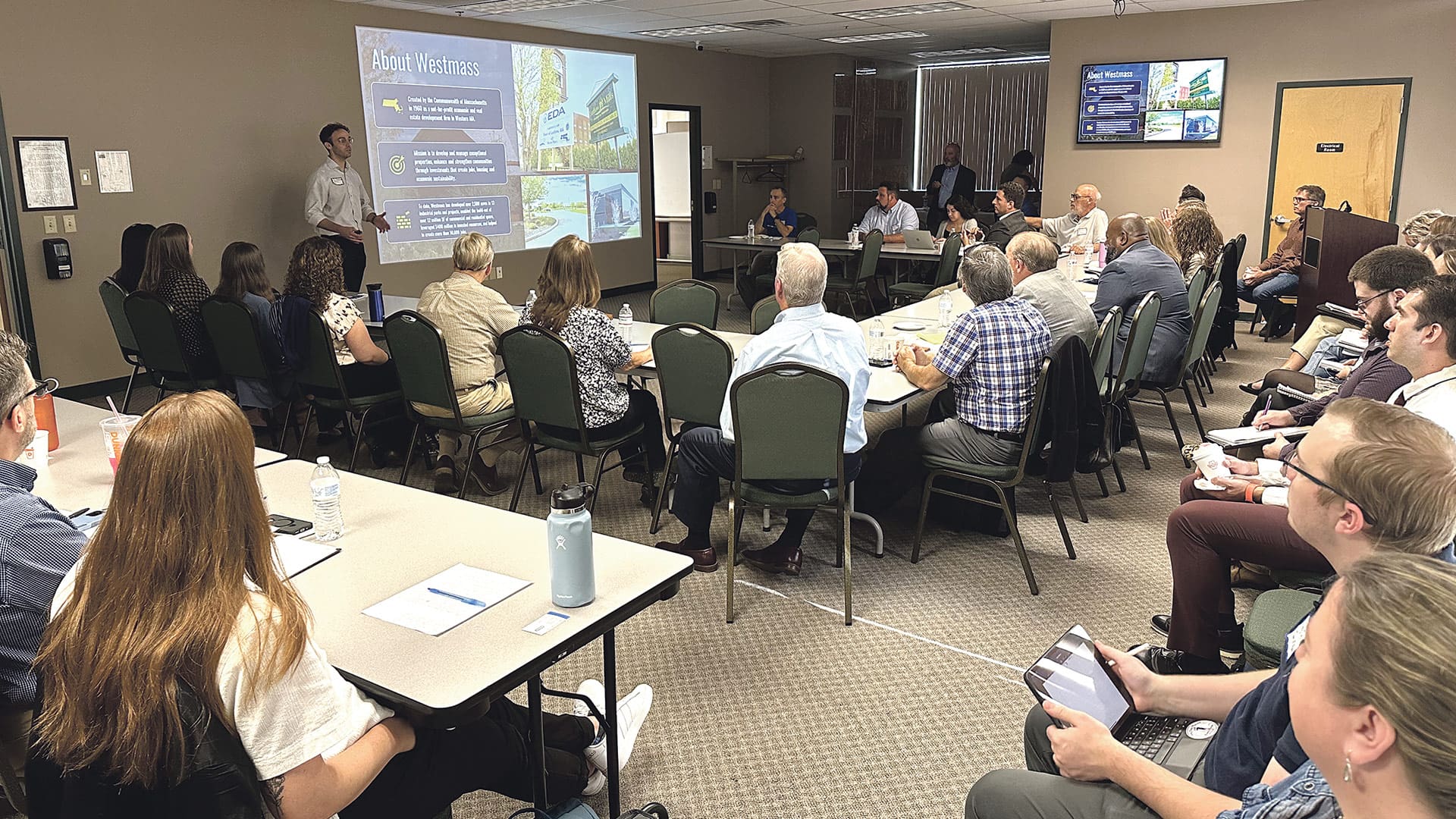
Sean O’Donnell presents at the Western Massachusetts Brownfields Roundtable hosted by the Pioneer Valley Planning Commission on Sept. 17.

Sean O’Donnell presents at the Western Massachusetts Brownfields Roundtable hosted by the Pioneer Valley Planning Commission on Sept. 17.

“We have a lot of experience as a nonprofit developer and are very much a community-based developer,” he went on, “but I think we can play, and we have been playing, a really strong intermediary role and facilitating role with private projects and communities, while also looking out to Boston to see what new programs and financing and funding sources might be available to pull into Western Mass.”

Jeff Daley, president and CEO of Westmass, told BusinessWest that another growth area for the company is helping with or taking on projects that most developers can’t handle on their own.

“A lot of projects don’t pencil out anyways, and if you throw in the mix of outdated, dilapidated buildings that have potential contamination, brownfields, whatever, they can’t pencil financially for any developer,” Daley said. “So not only do we take on projects ourselves, but we also partner with projects to get through.”

One example is the most recent housing units to open up at Ludlow Mills, in Mill 8, a joint venture with Winn Development that allowed Westmass to retain 48,000 square feet on the first floor for commercial use.

“We invested our own money, we invested our own time, and we invested other monies that we received through grants and/or other mechanisms of financing to offset some of the cost explosion during COVID. We’re technically a joint-venture partner with Winn in that project,” Daley explained.

“By partnering with others, we certainly can bring added value to the team to make sure these things actually do pencil out at the end of the day.”

“So we can do projects like that to help make projects pencil, because it’s very, very hard today. In the economy we’re in, plus the cost of doing business, it’s really hard to make a lot of projects work. So by partnering with others, we certainly can bring added value to the team to make sure these things actually do pencil out at the end of the day.”


Opportunity Knocks

O’Donnell said Westmass’s expanding work in development services can benefit all types of projects, from housing to recreation to downtown revitalization.

“We’re increasingly looking on the housing side, keeping a close eye on the housing bond bill that passed in Boston a couple months back, seeing what new programs might be coming down the pipeline, and maybe finding a project that was thinking more commercial — maybe there’s an opportunity for mixed use, to have a residential component, because that can tie in new funding sources that can make the overall project more feasible.”

O’Donnell sees the client roster continuing to include both municipalities and private developers.

“It’s sometimes municipalities that maybe have a private development that’s proposed in town, but they know they need to get public infrastructure to the site. So they’re thinking about things like district improvement financing or grant writing to make that more plausible or more affordable for the community,” he explained. “But on the developer side, with us as a nonprofit partner, we might be able to help tap into some grant-funding resources that a private, for-profit developer might not otherwise be able to.”

Westmass also took over leadership of Develop Springfield late last year; one current project on that front is McCaffery Interests’ work on the Clocktower Building in Springfield’s South End, which will include market-rate housing. “We’re working with them as consultants, helping them with their capital stack, figuring out where financing can come from,” Daley said.

The Ferry Street Mills project in Easthampton is an example of the brownfield and mill properties Westmass works on.

The Ferry Street Mills project in Easthampton is an example of the brownfield and mill properties Westmass works on.

And housing — specifically the need for more of it in most area cities and towns right now — poses significant opportunities for Westmass, O’Donnell added.

“Communities are trying to be proactive, but many communities might not have a full-time planner on staff or have the capacity to re-examine where they might want to expand public infrastructure to make a certain site or area of town viable for housing. They’re also looking at maybe recalibrating their zoning so they can allow for more mixed-use or multi-family in certain areas of the town. I think that’s where we can help, in partnership with other planning firms and the planning commissions as well.”

He noted that Westmass is uniquely situated to be a resource to municipalities and developers, especially in the case of brownfields sites, of which there are hundreds in Western Mass.

For example, in the case of the Ferry Street Mills project in Easthampton, “as a nonprofit, we’re doing a land lease of the property to have site control in order to go after cleanup dollars from the federal Environmental Protection Agency. Even though the development following the cleanup will be led by the for-profit developer and the partners there, as a nonprofit, if we have site control during the EPA grant, we can receive those grant funds, clean up the site, and get it ready for projects.

“That’s a huge role that I think is increasingly needed in Western Mass.,” he added. “There’s more funding right now at the federal level, particularly for cleanup and brownfield mill redevelopment work. And I think that we can play a really great, active role with those types of projects around here.”


Community Support

O’Donnell took his current role at Westmass in 2020, the year after Daley took the reins at the company.

“I was Facilities manager over at Ludlow Mills, so I cut my teeth over there. And I was Leasing manager over there for a while,” said O’Donnell, who earned a master’s degree in regional planning from UMass Amherst and has worked at planning commissions at the municipal level. “But my interest is really in economic development and mill redevelopment.”

As for Ludlow Mills, progress continues apace at that complex, where the residential units at Mill 8 were recently completed and Westmass is finishing about $3 million worth of roads and sewer and water service to all the buildings on campus.

“All the electrical’s going in; instead of overhead wires, we put conduit underground, and every single building there will have their own meter, and it will all be underground,” Daley said, adding that Westmass is also partnering with the town through a MassWorks grant to have a $3.5 million road built. “Once that’s built and the town accepts it, then we’ll probably have about 40 acres to develop. So it’s moving; there’s a lot of stuff going on.”

Pre-development work continues on Mill 11, the largest building with about 400,000 square feet, which is awaiting some cooperative work with the National Park Service to remove a historical building on site. “But once we do that, we think it will probably generate about 220 apartments and probably 15 or 20 condominiums, and 60,000 to 100,000 square feet of commercial space,” Daley said. “That’s the big gorilla that we need to get done over there. It’s projected to be a quarter-billion-dollar project.”

Ludlow Mills is a project that clearly impacts an entire neighborhood and town, and O’Donnell sees further opportunities to make similar impacts around Western Mass. in the future.

“Ludlow is a unique case, but I don’t think it would be possible without the community support that started before even we bought it. Westmass started those conversations early, started to lay out what a plan might look like for the entire campus, and the town has been such an incredible partner all the way through,” he told BusinessWest. “And we’re seeing the same thing at Easthampton with the mill projects over there. You need that community buy-in and to have those conversations early to make these large-scale redevelopment projects successful. We want everybody paddling in the same direction, for sure.”

Among its other recent projects, Westmass has worked in a number of ways on the proposed data center in Westfield — from helping the developer through tax-financing programs to securing energy costs with Westfield Gas & Electric to working on state legislation for a personal property-tax exemption — and played a construction-management role for Baystate Health on its Mary Lane Hospital decommissioning, to name just a couple. Westmass was also recently selected also as a house doctor for MassDevelopment projects.

And it’s just getting started.

“We just want to continue expanding our impact,” O’Donnell said. “I think we’ve played a really strong role in these discrete projects, but I think we have an incredible team and the bandwidth to start thinking about potentially larger partnerships and projects throughout Western Mass.

“It’s going to be an evolutionary process on our part, and hopefully we keep bringing in enough work that we can hire some more staff and a team to keep growing this thing,” he added. “It’s incremental at this point, but we’re really trying to build those relationships and get those projects moving.”