Daily News

SPRINGFIELD — Springfield Museums will present its annual Dr. Seuss Birthday Celebration on Saturday, March 1 from 10 a.m. to 5 p.m., rain, shine, or snow. All are invited to an all-day salute to beloved children’s author and Springfield native Theodor Seuss Geisel on his 121st birthday. Click here for a full schedule of activities, which are free with museum admission.

“We are overjoyed to celebrate with Dr. Seuss fans young and old on this very special day,” said Abby Garner, Family Engagement coordinator for Springfield Museums. “This is a day to explore, be inventive, and discover your own sense of Seussian innovation.”

Visitors will have the opportunity to meet Dr. Seuss’s most iconic character, the Cat in the Hat. “There is so much joy when children meet the Cat,” said Larissa Murray, director of Education. “Having a favorite book character come to life — and give you a high five — is just magical.”

As with all family programing at Springfield Museums, family-fun days like the annual Dr. Seuss Birthday Celebration mix fun with learning.

Visitors can also celebrate in the Amazing World of Dr. Seuss Museum, the first and only museum devoted to Geisel. The fully bilingual (Spanish and English) first floor features family-friendly, interactive exhibits exploring Dr. Seuss’s Springfield roots and providing opportunities to experiment with new sounds and vocabulary, play rhyming games, and invent stories, all in line with Geisel’s revolutionary role in changing how we learn to read — by making it fun.

On the lower level, visitors can stop into the Cat’s Corner to engage in facilitated, hands-on literacy activities. And on the second floor, which was curated by Geisel’s two stepdaughters and great-nephew, visitors can see Geisel’s art studio and living room (with the furniture and art materials he used). The galleries also feature never-publicly displayed art, family photographs and letters, and the original Geisel Grove sign that used to hang in Forest Park. Guests can even find Theophrastus, the toy stuffed dog Geisel’s mother gave to him when he was a boy in Springfield.

Daily News

Ariana Williams

SPRINGFIELD — Martin Luther King Jr. Family Services Inc. (MLKFS) announced the appointment of Ariana Williams as the organization’s first-ever chief of Public Health Strategy and Innovation.

Williams’s journey with MLK Family Services began in 2018 as a part-time community health worker after earning her bachelor’s degree in public health from American International College as a member of the program’s second graduating class. Within nine months, she was promoted to become the organization’s first director of Public Health, where she spent three years leading initiatives that strengthened community health, public-health programming, and youth development. After a brief period away, she returned in February 2023 as a grants consultant, helping to expand and sustain critical programs.

In her new position, Williams steps into a historic leadership role as the organization’s first-ever chief of Public Health Strategy & Innovation, where she will integrate public-health strategies into the organization’s core mission, develop new community-driven initiatives, and strengthen strategic partnerships that advance health equity.

“We are absolutely thrilled to welcome Ariana back home to MLK Family Services to fill this inaugural role of chief of Public Health Strategy and Innovation,” MLKFS President and CEO Shannon Rudder said. “This role marks a bold step forward in our commitment to advancing community health and well-being, inspired by our strategic planning process. Ariana’s passion for public health and her deep connection to our community make her an exceptional leader to integrate innovative strategies that will help us meet the evolving needs of those we serve. Together, we will continue to work toward Dr. King’s vision of creating a healthier, more equitable future for all.”

A Springfield native, Williams is also the CEO and founder of Catalyst for Equity Consulting, where she helps nonprofits strengthen their position in the public-health ecosystem by aligning with public-health funding, developing evidence-based programs, and driving systemic change. She has led community-based initiatives in problem-gambling prevention, gun-violence prevention, food insecurity and nutrition, and mental-health advocacy.

In 2019, she led a cohort of junior community health workers, whose advocacy efforts played an instrumental role in raising the tobacco-purchase age from 18 to 21 in Springfield. Their work later contributed to the movement to eliminate flavored tobacco products, a tactic used by the tobacco industry to target youth. In 2020, she co-led Springfield’s first-ever youth mental-health advisory board, Beat the Odds, creating a safe space and platform for young people to support one another, share lived experiences, and influence mental-health policies and resources.

Williams earned her master of public administration degree from Westfield State University in 2024. She is also an adjunct professor at American International College, teaching in the same public health program she graduated from. Additionally, she serves on the board of the Rise LEAP & Achieve Foundation Inc. and the board of Anti-Racism Community Organizers. She is committed to ensuring MLK Family Services continues to be a trusted leader in community health, advocacy, and empowerment.

“Stepping into this role is not just a career milestone — it is a continuation of my purpose,” she said. “MLK Family Services has played a pivotal role in my growth, both professionally and personally, and I am honored to now help shape its future. Public health is about community, and I look forward to deepening our impact, expanding critical services, and ensuring that our work remains a trusted resource for those who need it most.”

Daily News

GREENFIELD — Greenfield Cooperative Bank (GCB) announced its continued partnership with Community Action of Pioneer Valley to support the Volunteer Income Tax Assistance (VITA) program. Several bank employees attended the VITA kickoff event at Greenfield Community College on Jan. 31, highlighting the bank’s commitment to financial empowerment and community support.

The VITA program provides free tax-preparation services to individuals and families with low to moderate incomes. IRS-certified volunteers help eligible taxpayers claim valuable tax credits, such as the Earned Income Tax Credit and ensure they receive the full refund they deserve.

The VITA kickoff was organized by MASSCAP, the statewide association of the Commonwealth’s 23 Community Action agencies. The event was well-attended by a group of enthusiastic local community members. The positive energy was amplified by video messages of support from state representatives who recognized the program’s vital role.

Perhaps the most impactful moments of the event were the shared stories of how VITA has positively touched the lives of community neighbors. Attendees heard accounts of how the program helped individuals receive refunds that were crucial for covering essential expenses like rent and groceries. Even more heartwarming were stories of families using their refunds for meaningful extras, such as sending their children to theater camp — experiences that would have otherwise been out of reach. These personal narratives underscored the tangible difference VITA makes in the lives of local residents.

“We recognize the invaluable work that Community Action does in our community. By partnering with them on the VITA program, we can leverage our resources and expertise to amplify their impact,” said Jackie Charron, senior vice president – Strategy & Implementation at GCB. “This collaboration is a win-win for everyone involved, and we’re excited to be a part of such a vital initiative.”

The partnership between Greenfield Cooperative Bank and Community Action will help ensure that more people in the community have access to free and reliable tax-preparation services. By supporting VITA, the bank is investing in the financial well-being of its customers and the community as a whole.

Daily News

SPRINGFIELD — The Community Foundation of Western Massachusetts recently offered a complimentary breakfast and conversation called “Financial and Estate Planning for Those Without Children: Creating a Meaningful, Non-traditional Legacy.” It was held at the Willits-Hallowell Conference Center at Mount Holyoke College in South Hadley.

During the event, attorney Michele Feinstein, a shareholder at Shatz, Schwartz and Fentin, P.C., and Amy Jamrog, CEO of the Jamrog Group, offered guidance around the essence of financial and estate planning, particularly for people without children who are considering creating a lasting legacy.

“People can create impactful legacies in several ways beyond leaving assets to descendants,” Feinstein said. “There are options to provide for the people, interests and organizations that are your chosen family and community.”

Among the tips offered at the event:

• Choose a trusted executor. This could be a family member, friend, or even a professional like an attorney. It is a job, so make sure they are willing and capable of handling the responsibilities.

• Determine beneficiaries. These could be relatives, friends, institutions of interest, or charitable organizations.

• Consider a trust. This can help ensure that one’s wishes are carried out, provide protection to beneficiaries, and may simplify estate administration and minimize estate taxes.

Feinstein concentrates her practice in the areas of estate planning and administration, elder law, probate litigation, health law, and corporate and business planning. Jamrog is a certified financial planner, bestselling author, speaker, coach, and the founding partner of the Jamrog Group. The event was part of the Community Foundation’s EVOLVE philanthropy series, offering opportunities to learn, engage, and network.

Daily News

SPRINGFIELD — Junior Achievement of Western Massachusetts (JAWM) is hoping its annual Celebrity Bartending Fundraiser will give its budget a beneficial boost. This is the eighth year JAWM has held the event, which is scheduled for today, Feb. 27 from 5 to 9 p.m. at Nathan Bill’s Bar and Restaurant, 110 Island Pond Road, Springfield. All celebrity bartender tips from the evening will benefit JAWM.

“We have such a great group of bartenders this year from a diverse range of industries,” said Amie Miarecki, JAWM president. “It’s always gratifying to meet with those who support our work at Junior Achievement in this fun and relaxed setting.”

The event will include a full cash bar, menu options, raffle tickets, and live music from Maxxtone. Celebrity bartenders include Cassie Sarno of the Hampden County Sheriff’s Office; Nate Costa of Springfield Thunderbirds; Amy and Nicki Jamrog of Jamrog Group; Jeremy Casey of SR Commercial Realty; Kristin Carlson of Peerless Precision; Jeff Goulet of Loophole Brewing; Joe Williams of bankESB; Nicole Polite of MH Group; Dawn Creighton of Liberty Bank; Danielle Langevin of Lock & Key Realty; Ashley Batlles of Beauty Batlles Lounge; Brian Canina of PeoplesBank; Daniel Moriarty of Monson Savings Bank; Mychal Connolly of Stand Out Truck; Dom Santaniello and Luke Giusto of Naples Real Estate; Jorge Morgado of Allied Flooring and Budget Cabinet Sales; Carla Cosenzi of TommyCar Auto Group; Tim Suffish of St. Germain Investment Management; and Lenny Underwood of Upscale Socks.

“In the past, funds raised from this event have helped us provide support for school-aged students with valuable lessons in financial literacy, work readiness, and entrepreneurship,” Miarecki said. “We’re hoping for a great turnout for this fun celebration.”

Daily News

PALMER — River East School to Career will present WTrades, Your Present is Your Future, a skilled trades career-exploration day, on Wednesday, April 9 from 9 a.m. to 1 p.m. at the Basketball Hall of Fame in Springfield. Students in grades 9-12 from school districts in the Greater Springfield and Greater Palmer areas are invited to attend.

This program aims to showcase strategic, exploratory resources and hands-on opportunities to about 200 student attendees to enrich their knowledge about prospects for future employment and how to achieve a skilled trades career.

River East is seeking skilled trade exhibitors, including those with heavy machinery, to participate in the WTrades career fair. Exhibitors will have the opportunity to speak directly with students, sharing insights about their careers and the skills required to succeed in their industries.

By attending WTrades, exhibitors will connect directly with students to inform them about job opportunities and training programs that can lead to fulfilling careers.

The skilled trades industry offers a broad range of career opportunities, from construction, mechanical, and industrial to healthcare, technical, and advanced manufacturing trades. However, many students are unaware of these possibilities or the training and/or educational paths available, such as apprenticeships, community colleges, technical institutes, vocational programs, and online training.

For more information on the event, visit rivereaststc.org/wtrades or call Amy Scribner, partnership director, at (413) 283-5051 or [email protected].

Daily News

WESTFIELD — James Hagan, president and CEO of Westfield Bank, announced the promotions of Tom Donnelly, Colin Dunn, and Craig Lacey to assistant vice president, commercial loan officer. They will continue to be responsible for managing middle-market commercial loan portfolios and driving new business-development opportunities in Western Mass. and Northern Conn.

Donnelly joined Westfield Bank in 2020 as a commercial loan administrator with 10 years of experience with business development and account management. He graduated from St. Bonaventure University in 2008 with a bachelor’s degree, followed by completing his master’s degree in management at Springfield College in 2013. He serves as a member of the Economic Development Council and St. Joseph Society. Outside of work, he volunteers by coaching youth sports.

Dunn joined Westfield Bank in 2019 as a commercial loan administrator and quickly worked his way up to commercial loan officer. He graduated from Westfield State University in 2019 with a bachelor’s degree in finance. He also completed a credit analyst apprenticeship with the Massachusetts Bankers Assoc. in 2022. Outside of work, he serves as a member of the Young Professional Society of Greater Springfield and the Western Massachusetts Chapter of the National Tooling and Machining Assoc.

Lacey joined Westfield Bank in 2019 as a commercial loan administrator and was then promoted to commercial loan officer. He graduated from Bryant University in 2019 with a bachelor’s degree in finance. Outside of work, he serves as an ambassador for the Office of Manufacturing for Connecticut along with being a member of the Middlesex Chamber of Commerce.

Daily News

SPRINGFIELD — Rocky’s Ace Hardware, one of the country’s largest family-owned Ace Hardware dealers with 50 locations in nine states, raised a grand total of $91,687.19 with its Round Up for Kids fundraiser.

During two periods in 2024, one in the spring and another in November and December, customers rounded up their purchase totals to the next dollar. The difference was donated to the Children’s Miracle Network (CMN) hospital nearest to each store. Baystate Children’s Hospital received $18,130.83 through the campaigns in 2024.

“We’re proud to be able to support such an important cause year after year,” Rocky’s Ace Hardware President Rocco Falcone said. “Children’s Miracle Network is transforming children’s health and giving hope to families facing unthinkable challenges.”

Local participating Rocky’s locations include the eight stores in Western Mass, with 100% of the money raised in those locations benefiting Baystate Children’s Hospital.

“It’s humbling to see how generous our customers are,” Falcone said. “This money helps fund critical life-saving treatments and innovative research. We hope it also gives patients and families the assurance that their community cares.”

Since 1983, CMN hospitals have helped fill funding gaps by raising more than $9 billion. Its various fundraising partners and programs support the nonprofit’s mission to save and improve the lives of as many children as possible.

Cover Story

Five Years After COVID

Though COVID-19 had been in the news since late 2019, this week marks the fifth anniversary of what most consider the real start of the pandemic: when Massachusetts leaders shut down most businesses for what many hoped would be only a few weeks.

Everyone remembers what happened next: weeks stretched into months, the economic impacts reverberated for years, businesses adapted and pivoted, and some did not survive. But most did, and many came out stronger (or at least wiser) on the other end.

We asked the leaders of some of those businesses for their recollections about the difficult days of 2020, how they navigated the challenges, and what has changed because of the pandemic — in some cases, for good.


Jeff Fialky, Shareholder, Bacon Wilson

Jeff Fialky

Jeff Fialky

During the early winter of 2019, the management of Bacon Wilson had been following the news regarding what was then loosely described as a virus that was spreading around Asia and later into Western Europe. By early to mid-February 2020, it was becoming increasingly clear that we were all engaged in a global health crisis, and by March, the daily updates had reached the critical mass, resulting in en masse event cancellations and business closures.

Bacon Wilson, like many local businesses, held a number of internal meetings on how to approach the impending business closures. Ultimately, our office shut down in-person activities in mid-March 2020 and provided services remotely to the extent possible.

I recall that, at the time of the shutdown, I was running a large case load of business, real-estate, and financing transactions, nearly all of which were immediately put on hold or terminated by the party participants. I vividly recall the fears that I had those first few weeks, with stories running in the media harkening back to the 1918 Spanish flu, and the resultant financial and economic implications. I think many of us were testing out internal fears of a worst-case scenario during those initial days while we were experiencing a business climate that was unprecedented during our lifetime.

Following the first month or so, business continued remotely to the extent possible, and conference calls started to become calls on the then mostly unknown service called Zoom, which ultimately became a defining technology for the COVID era, which continues to the present. The practice of law is not known, perhaps, for technological innovation or being a leading indicator of change, but permitting face-to-face communication with clients via remote technology was a game changer for many industries, which the legal community adopted immediately.

Over the first six months or so of the COVID era, and with the introduction of masks, hand sanitizers, and other protective health measures, slowly the Bacon Wilson offices restaffed with in-person work (subject to public health orders). There are many now-humorous anecdotes of closings in our parking lot with papers exchanged through partially opened car windows, of papers slid through small holes in plexiglass separators in conference rooms, and all sorts of unique and creative ways of protecting (to the best knowledge at the time, which evolved daily) and providing comfort to understandably concerned clients.

Despite the continuing health concerns that may have been experienced, the business community and climate flourished. Of the transactions in my workload that had fallen apart during the March shutdown, nearly all had come back, and that time would signal the start to a flurry of business activity that would persist through COVID and following. The pandemic years were some of the highest-volume years our firm had ever experienced.

Initially, one can point to lower interest rates, which continued to prompt commercial and residential real-estate transactions, as well as the continued and increased interest by private-equity firms in business mergers and acquisitions. Then, following the CARES Act, and with the influx of federal funds pouring into the market by virtue of the Paycheck Protection Program, the momentum increased precipitously and continued well into 2023.

Notwithstanding the vigor of the economic climate, Bacon Wilson nonetheless experienced the same challenges as other employers with increased employment and operating expenses during the height of the COVID era. Staffing shortages were magnified by increased and accelerated retirements and transitions.

Many of those COVID-era challenges have stabilized in the past couple of years. The attrition in staffing that we had experienced during the height of the pandemic has waned substantially, and operating expenses have also steadied. The changes and leveraging of technology have remained, highlighted by in-person meetings and consultations now taking place via Zoom or Teams, technologies widely adopted and appreciated by our clients for their convenience.

While higher interest rates have had a cooling effect on the market, we are thrilled that the firm has continued to see clients continue to experience economic growth and ride the tailwinds inspired by the success of the economy during the COVID era. We have never been busier, success that we attribute to the loyalty of our clients and the dedication of our staff and attorneys.


Sally Rider, Founding Partner and Managing Director, Rider Productions, LLC

Sally Rider

Sally Rider

In the early days of COVID, we at Rider Productions were extremely positive and hopeful that business would be back to normal in a relatively short time. But after much research and discussions with industry experts and legal minds, we realized our company would be canceling all our 2020 (and going into 2021) conferences, events, music festivals, and a nice book of travel business around the world.

The first step was to maintain the health and safety of our employees and have ongoing, open dialogue of the days at present and the days ahead. It was then time to delve into the programs and funding support available to small to medium-sized businesses in the entertainment and travel industry. That process was inundating, ultimately manageable, and somewhat financially rewarding. Still, the entertainment industry was hit hard.

So, how to adapt in a new world? We immediately got on the outdoor pods scenario and invested in short-range FM radio transmitters. The public at large was reluctant to embrace this new initiative, but soon became so anxious to be out, be seen, and see others that it became a ‘thing’ for a while. We focused on outdoor festivals in hopes for approvals from the state and the will of the people to deliver when the time was right. Our company ended up being one of the first producers in the area to hold a large-scale event — a four-day camping and music festival. We were diligent, attendees were diligent, and all was well.

The corporate arena was much more stringent in holding in-person events. Companies saw that Zoom worked well for their employees, so, ‘hmmm, maybe we can hold events remotely as well?’ Again, this was certainly a ‘thing’ for a while, but we ultimately want to be together to celebrate our goals and successes and be part of the community that we love to live in. Now, corporate events are back to pre-pandemic numbers, and we’re seeing them increasing as well.

The travel side of our company completely stopped during COVID. We had grown a nice book of business that we worked hard to obtain, and it just stopped. We canceled all our clients’ trips. It hurt. We now know that travel is back and booming, and folks are traveling personally and certainly corporately. We now see ourselves checking and adhering to new travel guidelines, which are continually changing and must be watched.

Changing, growing, and adapting to the environment around us has always been in play with Rider Productions. COVID certainly affirmed that you must do your very best, surround yourself with the best people you can find, and take the risks.

We truly are heartfelt for the pain, suffering, and losses that were experienced by us all during COVID; it was a difficult time. I don’t believe we’ll forget it anytime soon, and people are clearly appreciative to be out and about in the world.

Kay Simpson, President and CEO, Springfield Museums

Kay Simpson

Kay Simpson

On March 13, 2020, we announced that the Springfield Museums would be closed from March 14 to April 3 to slow and stem the spread of COVID. What started out as a two-week closure stretched into months as the pandemic intensified into a global public-health emergency. It wasn’t until July 13 when the Museums cautiously opened back up to the public in alignment with then-Gov. Charlie Baker’s Phase 3 of the reopening of Massachusetts.

Prior to the reopening, staff installed plexiglass barriers in our Welcome Center, established sanitation areas in all public areas, and created directional pathways through the Museums to limit visitors being in physical contact with one another. From the onset of our closing, management and trustees were united in their commitment to keep staff employed through remote work that fostered the development of virtual programs, classes, and tours that were available on the Museums’ website.

As soon as we were able, staff came back to work in our buildings so we would be ready for visitors to return safely. Our commitment to keep staff employed during the shutdown enabled us to reopen as soon as possible, a decision that has had a profound impact on our recovery from the pandemic. Visitor studies show that institutions that laid off employees and were closed for longer periods of time have experienced a slower rebound in visitation.

The pandemic has changed the Museums in undeniable ways. Many staff now have hybrid work schedules, sanitation stations are in place throughout the facilities, and a variety of our programs can be accessed through our website. The shutdown compelled us to rethink the way we do business, experiment with new online approaches, and navigate our way into a post-pandemic world. Above all, we learned the importance of innovative thinking, deepening our relationships with our communities, and embracing change as the key to our future sustainability.


Jim White, President and Partner, Go Graphix

Jim White

Jim White

For 20 years, we’ve kept our heads down, grinding forward — learning, growing, and focusing only on excellence and worrying about what we can control. Then came the pandemic … and all bets were off. The fear was real, both personally and professionally. Around St. Patty’s Day of 2020, business came to a grinding halt.

The Go Graphix team? Rock stars. But keeping it together wasn’t easy. Between legitimate absences, borderline excuses, and some opportunistic sick days (or weeks!), stress levels were through the roof. All we knew was that we had to keep our team intact and safe — without a playbook. So we masked, distanced, sanitized, and even misted chlorine cleansers nightly after everyone had gone home. It was insane.

Just to keep our printers running (and our sanity intact), we churned out free “Frontline Hero” lawn signs. The hum of the machines was oddly soothing. Then, out of nowhere, Baystate Health called, asking, “can you make temporary plexi protective barriers?” Hell yeah, we could! Next came orders for social-distancing decals. That’s when we realized we were essential, and no one was shutting Go Graphix down without a fight.

We jumped on early orders for acrylic panels before the rush (good call, as our costs nearly quadrupled in no time). Supply-chain chaos made getting hardware a nightmare, but we powered through, outfitting Baystate, countless restaurants and businesses, and more than 80 colleges and universities.

The pandemic tested us, stressed us, and nearly drove us crazy. But Go Graphix has emerged stronger, savvier, and more resilient than ever.


Ben Sullivan, Chief Operating Officer, Balise Auto Group

Ben Sullivan

Ben Sullivan

When COVID changed everything, we remained focused on three things:

• Doing the right thing for our customers. We never charged our MSRP for vehicles (which was unfortunately rampant across the country due to inventory shortages), and we reworked our operations to meet our customers where they felt most comfortable — offering home delivery and service pickup and drop off — and doing whatever it took to take care of our customers.

• Doing the right thing for the community by supporting first responders. We couldn’t give them a hug, but we could wash their car for free and offer 50% off all service work so healthcare providers could get safely to their critical jobs. It total, Balise gave away more than $1 million in services to first responders.

• Doing the right thing for our associates. We wanted to take as much uncertainty out of their lives as we could. Coming to work was voluntary, and we guaranteed their pay, covered 100% of their health insurance, and offered flexible work schedules.

Doing the right thing has always been core to how we do business. COVID just reinforced that delivering on that promise is what matters most.


Ray Berry, Owner, White Lion Brewing Co.

Ray Berry

Ray Berry

Two months into construction, like a light switch, everything shuttered, construction came to a halt, and uncertainty set in. To compound the situation, we knew our construction budget and operational projections were no longer reliable. We lost a full year of revenue and a lot of momentum, but our team grinded it out, and 13 months after our projected opening date, we finally opened our doors.

Our trade has changed dramatically since then. In the last two years alone, 17 Massachusetts breweries closed, several have merged, and many more are entertaining exit strategies. There is a lot of data to suggest why, but in my opinion, much of the shift accelerated with the arrival of COVID, and some breweries could not rebound.

To sustain, White Lion had to pivot from a destination brewery to a much more robust attraction incorporating more entertaining options to create a deeper experience. The days of being a conventional brewery where customers grab a pint and move on to visit the next brewery are no longer the norm — it is an exception.

Some of our changes include incorporating lunch six days a week, onboarding food-delivery services, offering live entertainment several times a month, and hosting community and business events all year long. These are important pieces for sustainability, and our team takes pride in adding these extra layers for our consumer base.


Lynn Gray, General Manager, Holyoke Mall

Lynn Gray

Lynn Gray

During the COVID pandemic, Holyoke Mall, like many businesses, faced unprecedented challenges. With temporary closures, health and safety restrictions, and phased reopenings, we quickly had to adapt.

Many of our tenants pivoted toward and expanded their BOPIS (buy online, pay in store) and curbside pickup options. This shifted from a nice-to-have feature to an essential option that customers still expect businesses to offer today. Restaurant takeout and delivery options became a necessity to survive, and five years later, many of our food-court tenants and restaurants that had never previously offered delivery services are still using DoorDash and GrubHub platforms today.

The increased use and shift toward online shopping during the pandemic forced retailers to offer new and exciting ways to enhance the customer experience. They are introducing more experiential components within their brick-and-mortar locations and enhanced their omnichannel presence to make products more interesting and accessible. This shift is still prevalent five years later.

As retailers consolidated storefronts, our leadership focused efforts on more experiential offerings, which we had started prior to 2020, bringing in more entertainment and lifestyle venues (Planet Fitness, Round1, Altitude Trampoline Park, etc.). Customers longed for reuniting with friends and families outside their homes after having been restricted for so long and needed outlets to reconnect and socialize.

Holyoke Mall has experienced a renewed energy as we are seeing pre-pandemic-level foot traffic. This is a major indicator we are giving the customers what they are looking for in terms of offering a diverse mix of tenants including not only core retail, but also unique dining, entertainment, and lifestyle options.


Nathan Yee, Director of Hospitality, Bean Restaurant Group

Nathan Yee

Nathan Yee

The early days of COVID were filled with uncertainty. They were long and exhausting, but they ultimately pushed us to learn how to do more with fewer people and resources. We re-engineered our systems and processes to mitigate the effects of rising food and labor costs.

The restaurant business has always required adaptability — this was true before COVID and remains true today. Failure wasn’t an option; we embraced every challenge as an opportunity to stay true to our values in an unprecedented time.

One lasting impact of COVID is that we now operate with smaller menus. We’ve honed in on what we do best, eliminating the extras. In hindsight, while COVID presented immense challenges, it ultimately made us better restaurant operators — both today and for the future.


Greg Desrosiers, Vice President and Co-owner, Hadley Printing

Greg Desrosiers

Greg Desrosiers

Looking back on COVID seems like it was yesterday. It is hard to believe it has been five years since the start of the pandemic. I guess it feels like yesterday because the hangover of COVID is quite present in our society.

With the onset of COVID, there were more orders being canceled than placed. Everything ground to a halt within days. It was a concerning period to navigate in business, and no one knew the duration or outcome. The positive part of COVID was the strong resurgence of business in 2022, as the economy returned to normal and demand was high across the board, which eventually led to supply-chain issues and inflation.

It was the year and a half period in between that became the largest challenge we have ever encountered during our time in business. Like most businesses, we were able to participate in the Paycheck Protection Program and used it exactly how it was intended, to keep our staff employed and paid. We were operating on 50% of our normal work volume and supplementing the rest with equipment and building maintenance.

One of the most obvious after-effects of COVID that directly affects our daily operations today is inflation. We have seen a tremendous increase in our raw materials, a loss of suppliers that have either closed or have been acquired due to industry consolidation, and an increase in wages of our employees who are in need of more money to live on. Inflation is something I see at best slowing down but most certainly not reversing itself. We had no choice to pass along some of these costs in our prices, but we cannot pass along all of it, so we had to be innovative and find creative ways to do more with less.

To combat the rise in operating costs, we have diligently crossed-trained almost every employee to be able to assist in multiple ways, so if we are slow in one department, we can move that employee to another department that is busier.

In addition to cross-training our workforce, we have also made investments in more technologically advanced equipment. We recently invested in a second digital printing press that allows us to produce short-run orders more efficiently. This new upgrade also allows us to print envelopes digitally, where in the past, we printed envelopes via traditional offset printing. This new investment can also run a larger sheet size, allowing a wider array of economical service offerings to our clients.

Our new digital press is more automated than a traditional offset press, so it can be run with fewer touches by our employees. That allows us to produce products more efficiently and more economically through automation.

While the future continues to remain unsteady, we are readily prepared for it.

Rudy D’Agostino, Partner, Meyers Brothers Kalicka, P.C.

Rudy D’Agostino

Rudy D’Agostino

It is incredible to look back five years ago and see the shift COVID-19 caused worldwide. Almost overnight, drastic changes occurred as businesses were forced into shutdown, only emergency personnel were allowed to travel the roads, and supply resources were depleted. COVID’s challenges caused businesses to pivot, making adaptations to the ‘new norm’ almost overnight.

Businesses were affected drastically in 2020, and many organizations continue to function with several changes that they were forced to incorporate five years ago during the pandemic. For example, remote work became the norm for many companies, and today it continues, although it has been changing to a hybrid model. This remote working environment required a significant investment in computer technology and related internet security.

Meyers Brothers Kalicka, P.C. (MBK) was deemed an essential business during the pandemic and, thus, didn’t have to shut down, but we shifted employees to a remote hybrid schedule to limit the number of staff in office. In 2025, MBK still offers the opportunity for our team to work a hybrid schedule. The use of software such as Teams or Zoom is used for communication and assists in creating the balance of flexibility and promoting a healthier work-life dynamic.

In 2020, we had virtual monthly staff meetings and even hosted a creative facemask contest, which highlighted how the firm can maintain morale and camaraderie, even when part of the team was physically apart. Putting a positive spin on the pandemic helped individuals power through a time of uncertainty.


Michele Anstett, President, Director, and Owner, Visiting Angels West Springfield

Michele Anstett

Michele Anstett

There are certain historical events that are so momentous, a person will always recall where they were when the event happened. The unwelcome arrival of COVID in Western Mass. was one of those events for me. I will never forget the day when Gov. Baker issued a stay-at-home advisory and ordered all non-essential businesses to close. We were working on packing up the office, getting ready for our move to a new location. After hearing the order, I decided to close the office.

Visiting Angels is a senior home-care business, and we are an essential business. However, the admin staff could work from home. The focus of the business abruptly changed from advancement to survival. Every day, the focus was on protecting clients and caregivers. I felt that I had become a commander leading the troops to fight a battle while also protecting civilians. Many clients canceled our services because their loved ones could take on the caregiving role. We went from 70 clients to 19 clients in two weeks. I thought to myself, “I don’t know if we can survive this.” But we did.

We tackled the early challenges such as staying informed, learning how to slow the spread, obtaining essential safety supplies, setting up protocols, the daily health check-in of caregivers, assigning a risk-factors watch list, and so many more. There were endless webinars and Zoom meetings that we needed to attend. The information about COVID kept mutating just like the virus itself. The information online was a great tool for so many aspects of our business, especially for hiring and interviewing. We still use many of these methods even after five years.

The biggest challenge was obtaining personal protective equipment. We asked for donations of handmade masks. I supplied a family in Westfield with six yards of fabric. This military family of five utilized the mandated home time to serve the needs of healthcare workers. My aunt, a seamstress in Chicopee, also created masks from donated sterile surgical fabric. A fabulous woman from the Majestic Theater would sew and donate about 10 masks at a time. We also received face shields from a family in the Berkshires.

We kept our morale up by participating in local community events. People had helped us to stay safe; now it was our turn to curb elder isolation and support other essential workers. We did drive-by-parade birthday celebrations, provided nostalgic snacks at senior center drive-thru events, participated in safety awareness campaigns, and (my favorite) provided sponsorship of chair yoga in East Longmeadow with instructor Sheila Magalhaes of Heartsong Yoga, a program we continue to sponsor even now.

It’s amazing to think that it has been five years since the arrival of COVID in Western Mass. I believe the events increased resilience today when a problem arises for people and businesses. Now, I always ask myself, “how can I make this happen?” and try to think outside the box.


Elizabeth Barnes, Chief Operating Officer, NAI Plotkin

Elizabeth Barnes

Elizabeth Barnes

I have experienced firsthand how the COVID-19 pandemic has fundamentally transformed property management. In March 2020, building operations and maintenance procedures were forced into a rapid evolution. While the immediate crisis has passed, many changes have become permanent fixtures in the industry.

The pandemic accelerated digital transformation in property management. While many firms such as ours were already rolling out online portals to our homeowners and tenants, many property managers were not as prepared. Online portals now handle everything from maintenance requests to amenity scheduling and document management. These technological solutions have proven to increase efficiency and reduce operational costs, making their continued use a business imperative.

Enhanced cleaning protocols and improved HVAC systems have become standard features rather than luxury additions. Many buildings now maintain hospital-grade air-quality standards and implement sophisticated air-quality monitoring equipment.

The economic impact changed how property managers approach financial planning. Many properties now maintain enhanced emergency funds and reserves to ensure operational continuity during unexpected challenges. Insurance has become more complex due to rising construction and repair costs, prompting our property managers to seek comprehensive coverage while implementing risk-mitigation strategies.

Property managers have developed more sophisticated communication systems and stronger relationships with occupants. Digital platforms have become central to operations, enabling real-time updates on building operations and immediate response to maintenance requests. These platforms integrate announcements, document sharing, and community forums, creating stronger connections between our property managers and residents.

The industry continues to evolve, with increasing integration of artificial intelligence and automation in building management. Properties now compete to offer comprehensive health-focused amenities, while buildings are designed and operated with a focus on resilience against future crises. Space usage has become more flexible and adaptable, responding to changing occupant needs and market conditions.

The COVID pandemic has created new standards and expectations in property management. Success requires managers to remain adaptable, technologically savvy, and focused on occupant well-being while maintaining operational efficiency. Those who embrace these changes and continue to innovate will be better-positioned to meet evolving needs while maintaining their competitive advantage in a transformed market.

Banking and Financial Services Special Coverage

Setting Its Sites

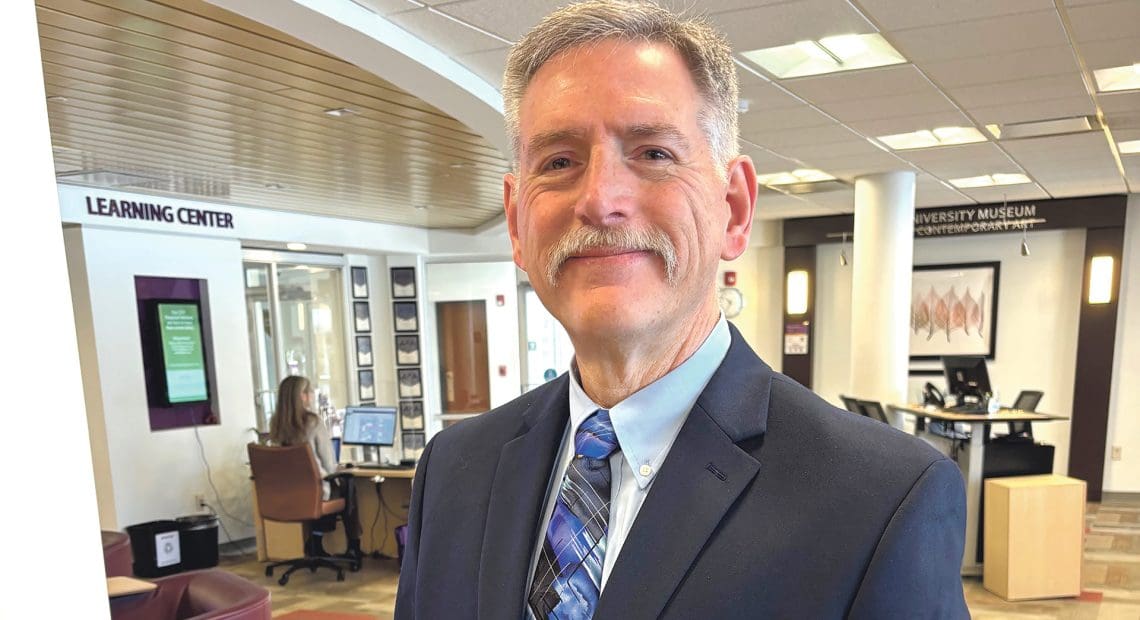
Rich Kump says UMassFive College Federal Credit Union is persevering

Rich Kump says UMassFive College Federal Credit Union is persevering through challenging times for this sector.

Rich Kump says UMassFive College Federal Credit Union is in a mood to “make up for some lost time.”

Elaborating, he flashed back more than two years, to when the institution was starting to move ahead with plans to move its flagship location in Hadley to a new location just down Route 9, while also advancing efforts to make a push into Hampden County with a location in or near Springfield and a smaller satellite office within Springfield that would serve one of the city’s many banking deserts.

Returning to today, he said the credit union — which he serves as president and CEO — has made very little, if any, progress on those fronts, due to issues with all three sites that we’ll get into later.

He summed it all up with some understatement, and a needed sense of humor, saying, “what I have surmised from all this is that we’re not very good at picking branch sites.”

Now, the institution is looking at 2026 for the Hampden County locations, and a longer timeline for the new Hadley location, which he admits is less of a priority now than it was back in late 2022, due primarily to remote-work options that have alleviated space concerns that were a prime motivator for relocating the flagship branch.

“Moving the Hadley branch does not generate a whole bunch of new loans and deposits and members.It provides some great visibility, but not many growth opportunities.”

These are all still priorities, but they have been supplanted by larger concerns and dramatically changing times — for all banks and credit unions, one in which the rising interest rates of 2023 and early 2024 tightened already-thin margins, reduced profits, and pushed many credit unions to the point where they needed to merge with another institution or close.

“It’s been a troubling time, with many credit unions posting losses,” Kump said, noting that there were 41 credit-union mergers nationwide in the fourth quarter of 2024 alone, some of them generated by a need for small credit unions to expand services, but many others prompted by poor financial condition.

UMassFive has been looking to move its flagship branch in Hadley

UMassFive has been looking to move its flagship branch in Hadley (pictured) to a new location down Route 9, but other priorities are currently more important.

UMass Five, which has six branches across Western and Central Mass., including one at its namesake, UMass Amherst, is not so imperiled, but it has seen deposits tumble and overall performance slide due to these colliding factors.

“We had to increase our rates to keep the deposits we had, and, of course, that increased our cost of funds quite a bit. And while the cost of funds increased, we still have a loan portfolio, much of which was at much lower than market rates,” he said, explaining, in simple terms, the main challenge facing all institutions.

UMass Five, with roughly $570 million in deposits and around $700 million in total assets, didn’t load up its balance sheet with large numbers of low-interest borrowings, he went on, but it certainly felt the pinch.

“Our net interest margin did shrink a little — not as much as others, but overall, we saw our net income decline,” Kump said, adding that the bank grew at just 0.24% in 2024, what would normally be considered an off year, but, under these circumstances, acceptable.

Moving forward, the credit union, like many other financial institutions, must balance life in these more difficult times with the need to grow, attain more deposits, and create economies of scale, and thus become better able to handle the ongoing headwinds.

UMassFive is not in a position to be acquired, and it is not exactly looking for opportunities to acquire others, although it will certainly consider them as they emerge, said Kump, adding that, for now, the preferred method of growth is organic.

Which brings us back to those branches that have been in the planning stages. They are important parts of the credit union’s overall growth strategy, and while the institution will move forward, it is not going to rush anything.

Indeed, while he regrets losing time with these initiatives, as he said at the top, the process of selecting new branch locations — an art and science that involves everything from visibility to the volume of other traffic-generating businesses, to the number of competing banks and credit unions in the general vicinity — is necessarily slow and involved, and UMassFive will take its time and get it right.

“We’re back to square one,” he said of the Hampden County locations. “But it’s more important to do this well then do it quickly.”

For this issue and its focus on banking and financial services, we talked with Kump at length about what’s in the business plan for UMassFive, and just how the institution will make up for that lost time.


Points of Interest

Recapping what’s happened with those three planned branches, Kump said not much has gone right, and each story is different.

In Hadley, the property where the credit union intends to go is occupied by an auto-repair shop and a small single-family home being rented from the property owner. Long story short (we’ll do a lot of that), that tenant has not gone quietly — the matter has wound up in Housing Court in a protracted battle — and won’t be out for another six months or so.

“We’re still interested in that site … we’re putting together a new purchase agreement because we hadn’t anticipated such a lengthy delay,” Kump said. “But it’s still in our future, and we do want to move our flagship location to that more visible site on Route 9.”

Meanwhile, in Hampden County, at a location in East Longmeadow near the Springfield line, a site chosen after extensive research, a new branch has been scrapped due to issues with the sewer system. And that satellite location? After more than a year of deliberations, the owner of that property ultimately decided not to sell or lease it.

So UMassFive is now essentially where it was two and half years ago on all three projects — waiting to get started in Hadley and trying to find the right sites in Springfield, Kump noted, adding that, over that time, the landscape for credit unions and banks has changed when it comes to liquidity, profitability, and, in this specific case, priorities and growth strategies.

“As many other financial institutions are doing, we’re managing our growth,” he explained. “Your income fuels growth, and when your income is down, you can’t grow as much.”

Elaborating, he said the Hadley initiative is certainly still important, just less so in the larger scheme of things, adding that the relocation of that flagship branch is now targeted for completion in 2028 at the earliest, for a few reasons, starting with logistics.

A few years ago, the plan was to close an operations center in Hadley and move the employers there into space created by moving the headquarters branch to that aforementioned location at the Amherst/Hadley line. But with heavy use of telecommuting and hybrid schedules, the credit union has moved the last department from the operations center into the flagship site, with the branch still operating.

Meanwhile, with a focus on gaining new members and growing deposits, the credit union’s top priority now is expanding into Hampden County.

“Moving the Hadley branch does not generate a whole bunch of new loans and deposits and members,” Kump explained. “It provides some great visibility, but not many growth opportunities.”

He expects these to come in Hampden County, where the credit union has a small presence — a branch in Mercy Medical Center — with intentions to become a larger player in that region, through further use of what he called a “hub-and-spoke” operating philosophy.

Elaborating, he said this model calls for a main facility, such as the one in Hadley, with smaller, satellite facilities around it, including those at UMass Amherst, downtown Northampton, and the Veterans Administration facility in Leeds.

There were plans to create something similar in Hampden County, starting with the property at the East Longmeadow/Springfield line, as the hub. But, as we’ve seen, that site didn’t work out, a huge disappointment for the institution.

“We were very excited … we did an extensive branch study, used lots of data, socio-economic factors, traveling routes, destination points at this one location, and it came up roses for us,” he explained, adding that the roses soon wilted amid sewer-backup issues that could not be resolved, forcing the credit union to walk away from the deal four months ago.

Now, as he said, UMassFive is back to square one, and it will take its time putting a new plan together. With that, he gave some insight into the complicated nature of finding sites for branches, an undertaking many institutions are familiar with as they seek out growth opportunities in a no-growth area with many communities that could only be described as ‘overbanked.’

“There is a lot that goes into this … for bank branches, you have to be visible, you have to be in high-traffic areas, and there have to be destination points around you,” he said, adding that, to find such sites, institutions must invest time, money, and resources — and then hope things go right with the sites they choose.

But as difficult as finding good branch sites can be, securing them is critical, said Kump, adding that, in this environment, pursuing growth and achieving size are critical for all financial-services institutions.

“Eventually, you have to grow again, and we feel that will happen,” he said, adding, again, that, while the organic route is preferred, the credit union will certainly look at merger opportunities as they emerge.

“We’re not aggressively seeking mergers, but if there is a credit union that has interest in merging into us, we would definitely consider that, and that’s really who we’ve been throughout our existence,” he said, adding that the institution’s locations at Mercy and the VA facility came about through mergers.


Location, Location, Location

Looking ahead to the balance of 2025 and beyond, Kump said it’s difficult to project what will happen — with both the economy and financial-services institutions.

Indeed, only a few months ago, the Fed was projecting several interest rate cuts in 2025; by December, it was anticipating few, if any.

“All bets are off,” he said. “We see employment numbers coming down, inflation numbers seem to be going up, and if inflationary pressures continue to push, it wouldn’t surprise me if, in 2025, we saw some rate increases again.”

In this climate, UMassFive will continue to work to manage its growth and align its priorities to that end.

It will also endeavor to make up for some lost time and find some better luck and good fortune when it comes to picking branch sites and taking full advantage of those new locations.

It is certainly overdue.

Home Improvement Special Coverage

All Under One Roof (Actually, Two)

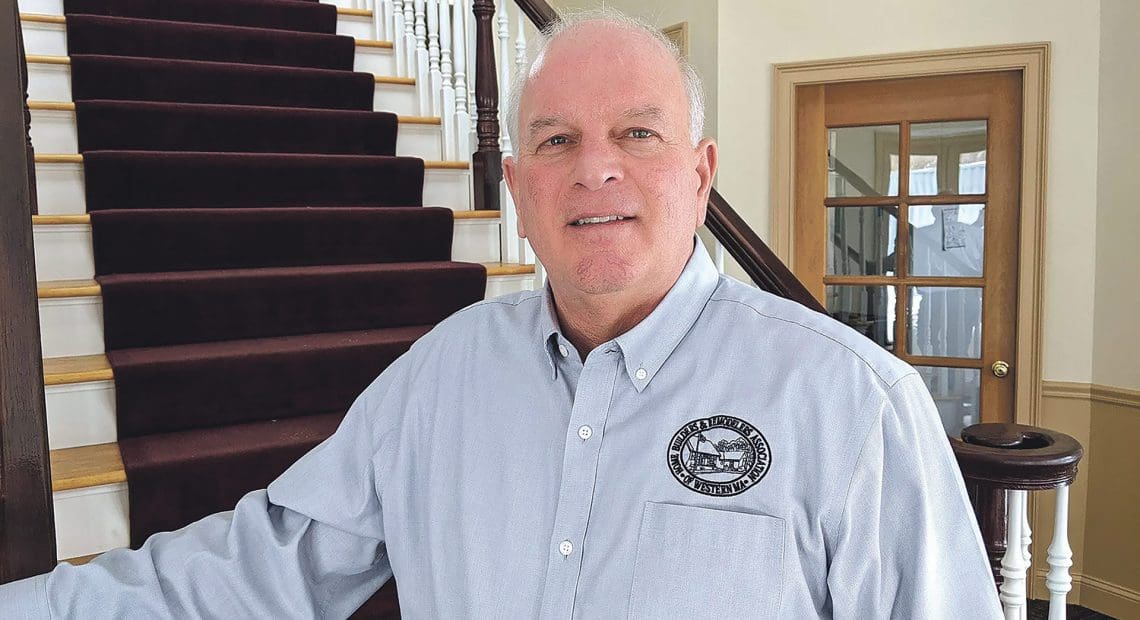
Andy Crane says the home show thrives

Andy Crane says the home show thrives, even in the internet age, because home-improvement business owners need to stay visible and put work into the pipeline.

Andy Crane acknowledged that many contractors and home-improvement companies are busy these days, thanks to a combination of factors, from people staying in their homes — due to higher interest rates and a shortage of inventory — to finding enough help to get jobs done.

They’re so busy that some — but certainly not all — are booking jobs several months out and even into next year, in some cases.

But even in this climate, where some contractors can’t touch new business for a few more quarters, it’s important to stay in front of consumers and continue to put business into the pipeline, said Crane, president of the Home Builders and Remodelers Assoc. of Western Massachusetts (HBRAWM).

And that’s why he’s not only expecting a sellout of booth space when it comes to this year’s Original Western Mass Home & Garden Show, taking place March 27-30 at the Eastern States Exposition — the 70th edition of this spring tradition — but also why the show is expanding into a second building this year, one dedicated almost exclusively to the ‘garden’ aspect of the event.

And with that move, the show is turning back the clock in some respects.

“Back in the day, we had two buildings, and a few years, we had three buildings,” Crane told BusinessWest. “This year, we’re going to have at least two and an outdoor area.”

The second building, known as the A Barn, will be geared toward yard equipment and accessories, plantings, and landscapes, with some details still to be finalized, he said, adding that this has been an element missing since COVID.

But getting back to his thoughts about contractors and why they want to be at this show, Crane said many aren’t coming to the Big E grounds looking for work — they already have enough. Instead, they want to make connections and enable consumers to at least get the process started.

“It gets the juices flowing — you might get some ideas and talk to some people,” he said. “Let’s say they can’t do it for a while … if you don’t get that process moving along, you’ll never get it done.”

Adam Quenneville, president of Adam Quenneville Roofing & Siding, agreed. His company has been part of the home show for roughly 25 years, and he comes back each year to help make sure the phones keep ringing.

“I would think that people still enjoy touching and feeling products and getting a sense for what they think that person is like. You can’t get that off a laptop; you just can’t.”

This is a quieter time of the year — although roof crews can work pretty much year-round — and a good time to make connections and add projects for the rest of the year, he said.

“It’s great to get out and see potential customers, and it’s an opportunity to get leads, give estimates, and secure business. A lot of people are going there because they have a home improvement in mind, and it’s nice to be able to let them see us in person, talk to us, get information, and go from there.”

With that, Quenneville spoke for every vendor at the show, including the ones who sell beer nuts and pickles, most of whom are focused not on making sales that day, but on the ‘go from there’ part of the equation.

It’s why the show has thrived for 70 years, and why the 2025 edition is shaping up as another opportunity to build back from the tumultuous COVID years and continue to grow.


Through the Roof

Crane said the home show, which annually attracts between 12,000 and 15,000 visitors and, recently, about 300 to 400 vendors, will be marking 70 years in some subtle ways, with additional giveaways and other promotions.

But mostly, this show will be like the 69 that have come before it, in that it presents an opportunity for the public to gather, see what’s new (or not so new, but still important), talk with experts, maybe finalize some plans for what they want to do, and put a face and business card with a person and company they’ve seen on the internet or heard about from neighbors, friends, or relatives.

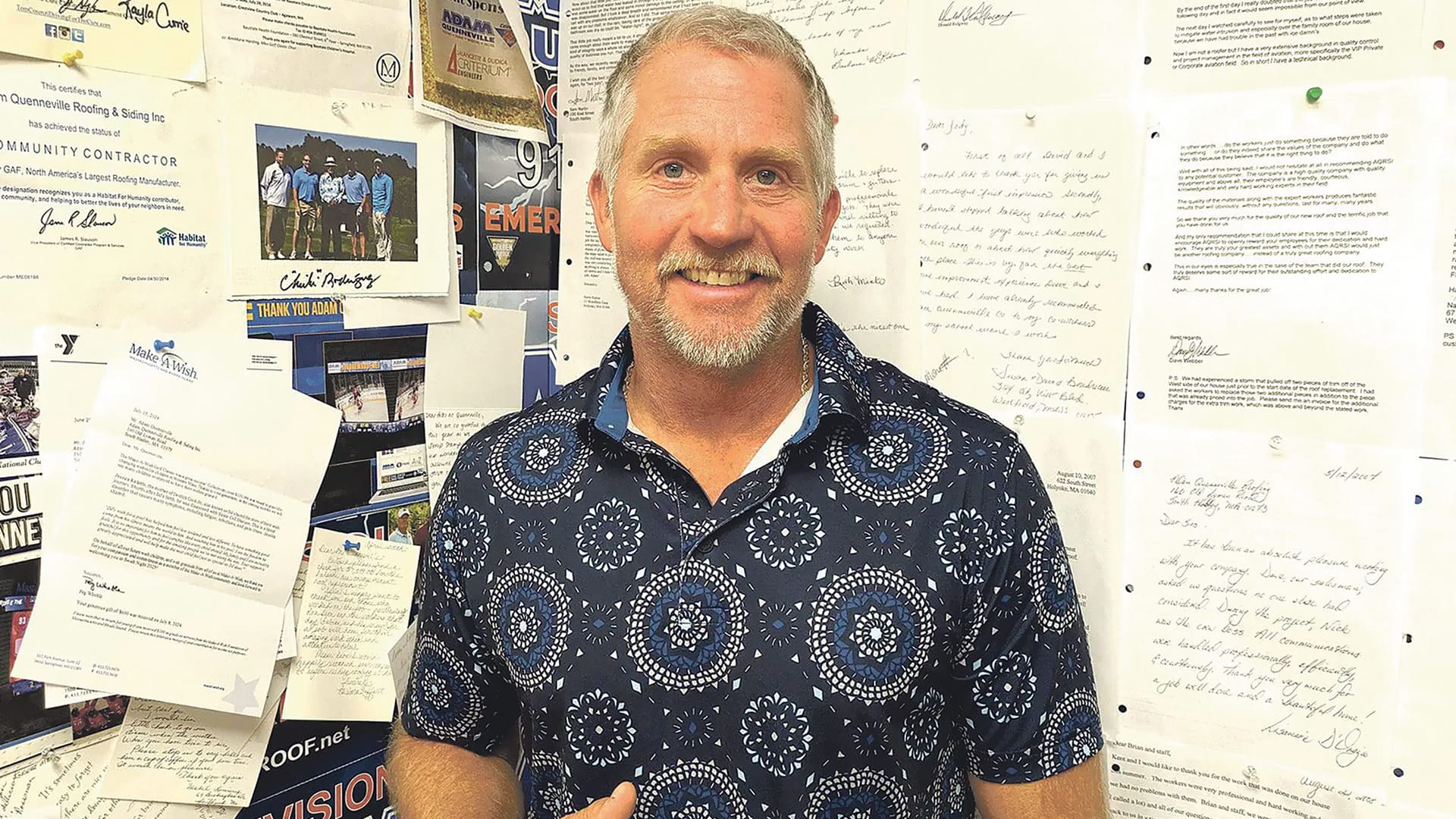
Adam Quenneville says he’s been coming back to the home show for 25 years

Adam Quenneville says he’s been coming back to the home show for 25 years because it provides valuable exposure and leads for new projects.
Staff Photo

It’s been this way since the mid-’50s — except that part about the internet, said Crane, adding that, before social media and before consumers could click on websites, contractors had to get out in front of people. The home show was created to give members of the HBRAWM an opportunity to show what they do, how they do it, and, yes, how much it will cost.

And while consumers can learn much about a product or contractor by visiting a website, and still more by following up with friends and neighbors who placed a specific contractor’s sign on their lawn, there is still much to be gained from seeing these professionals in person, Crane said.

“I would think that people still enjoy touching and feeling products and getting a sense for what they think that person is like. You can’t get that off a laptop; you just can’t. “If it’s a zero-turn mower, would you rather sit on one than look at a picture?” he asked rhetorically. “How about picnic tables and high-top tables … you might as well get the exact one you want and the exact color. As for sheds, isn’t it better to stand in the shed rather than look at a picture of one? You can visualize where your mower is going to go and where your pool equipment is going to go or the pellets for your wood stove. That’s what the show brings that computers don’t bring.”

It still does that, but it has become much more, he went on, adding that the event has become a rite of spring for many, and a social gathering for some, with friends and neighbors often gathering at the show and then going elsewhere for dinner.

“The show is still a great place to talk, shop, and get ideas about your home, your property, some of the things that people like to do in their homes,” he said, adding that, while some things have changed since Dwight Eisenhower was patrolling the White House, the best things about the home show are what hasn’t changed.

For 2025, there will be more of the same, said Crane, with the emphasis on more, especially when it comes to space for visitors to roam and take in the many exhibitors, who cross every spectrum of home and garden improvement, from who can do the work to how to pay for it.

Indeed, there will be several banking and finance institutions on hand, he noted, adding that the categories for vendors runs the alphabetical gamut, from air filtration to women’s clothing, with more than eight dozen in between, everything from awnings and canopies to foundation repair; kitchens and baths (huge items of interest) to mosquito protection; sheds and gazebos to wells and pumps.

It will all be under … well, two large roofs in 2025, said Crane, adding, again, that a second building is something the public has asked for, and something that’s needed to properly showcase vendors and products.

Fast Facts:

What: The 70th edition of the Original Western Mass Home & Garden Show
Where: Eastern States Exposition
When: March 27-30
Show Producer: Home Builders & Remodelers Assoc. of Western Massachusetts
Admission: General admission: $10; with coupon: $7; children under 12: free
For More Information: Call (413) 733-3126

As noted, the A Barn will focus on lawn and garden equipment, furniture, and accessories, everything from mowers and snow throwers to chairs, tables, firepits, and fountains — items that couldn’t be displayed as effectively in years past due to a lack of space.


Starting the Conversation

While the additional space provides room for more vendors and a chance to spread out, it also further activates the outdoor spaces at the Big E, said Crane, adding that there will now be traffic between the buildings — and opportunities to capture the attention of that traffic.

Over the years, those staffing the Adam Quenneville booth have succeeded in gaining the attention of visitors, said the company’s owner, adding that it has generated a steady flow of leads — and eventually customers.

“If I have to guess, I’d say we get about 100 opportunities,” he said, meaning actual estimates for potential customers. “We’ll probably give 90 people prices and secure about 50% of that — 45 to 50 jobs.”

That more than justifies the cost of the booth, he said, adding that the show has been one of the more successful methods of getting right in front of the public, telling the company’s story, and keeping the pipeline of work flowing.

Nick Riley, president of Chicopee-based N. Riley Construction, agreed. His firm specializes in home remodeling and new construction, and he’s been a regular participant at the show for the past 20 years because of the opportunities it provides to be visible, talk to people directly, and hand out business cards.

“We do really well at the home show, and that’s why we keep coming back,” he said, adding that he doesn’t take leads directly at the show, but instead instructs visitors to call and make appointments — and many of them do. “It’s about more than the eventual leads … it’s about getting in front of people, seeing them in person, and saying hello.”

Hundreds of other home and garden professionals can say the same thing, and they have — some of them for a half-century or more.

They keep coming back because the Western Mass Home & Garden Show has long been a spring tradition, a social event for some, a chance to gather ideas for most, and an opportunity, for those on the vendor list, to get down to business.

Healthcare News Special Coverage

More Than a Name Change

Executive Director Roseann Martoccia

Executive Director Roseann Martoccia

As WestMass ElderCare celebrated its 50th anniversary last year, its leaders decided a new name was in order for the next 50.

“We really wanted to look at where are we today as opposed to where we started, why are we doing what we’re doing, and what the community understands about us,” Executive Director Roseann Martoccia said of the effort that led to a new brand and strategy, under the name Access Care Partners.

“It was a process of talking internally and then talking with community partners, as well as having some focus groups, so we could better understand not only how people know about us, but what’s important to them, particularly caregivers,” she explained. “What are they looking for when they’re up at night, searching on the internet or thinking about, ‘how am I going to help mom when I have to go to work and I have to do all these other things?’ What’s important to them?”

Partnering with Davis Advertising of Worcester, WestMass ElderCare conducted one-on-one interviews, online surveys, and focus groups involving around 200 community members, as well as internal staff, to gather input on how the organization is perceived and how it can continue to meet the needs of the community.

“The agency had rebranded in the early ’90s, and ‘ElderCare’ is the term that they came to, which at the time made a lot of sense,” Martoccia said. “But if someone is 68 or 75 or … well, pick an age, do they want to be called a senior? Do they want to be called an elderly person? ‘Older adult’ seems to be what people want to be called. Also, the people in the community that we serve include children, adults, and older adults.”

The name Access Care Partners better reflects the organization’s mission of providing care and support to people of all ages and abilities, ensuring they have access to the services they need to live independently, noted Sarah Aasheim, the organization’s director of Community Programs, who broke each word down for BusinessWest.

“It’s not one-size-fits-all. Some people have chronic health conditions, other people have memory loss, other people have behavioral-health issues, or a combination of these things. So every situation is a little bit different, and we start by meeting people where they are, and then go from there.”

“We landed on Partners because one consistent bit of feedback we got from everyone we talked to was that the older adults that we serve, the people with disabilities that we serve, don’t want someone doing things for them; they’d like a partner to do something alongside. They want to have agency and choice in the decisions that impact them,” she noted.

“Access was also a common denominator because, no matter who you’re serving, whether it’s an older adult, a caregiver, or someone who’s younger, we’re trying to make things simpler for them,” she went on. “And Care is just integral to who we are. That was one carryover from our previous name.”

With about 200 full-time staff, in addition to around 40 part-time Meals on Wheels drivers, the rebranding process was an exercise in helping the entire team reflect and refocus on their roles and how they fit into the whole, Aasheim added.

Some of the individuals served by Access Care Partners

Some of the individuals served by Access Care Partners enjoy lunch at a Community Table site in Ludlow.
(Photo courtesy of Access Care Partners)

“You come into work, and you’re focused on ‘what do I have to do today? What is my role?’ But sometimes it’s good for all of us to lift up our heads and think, ‘oh, this is something else that’s happening,’ or ‘maybe this is within our scope as well, and we should have this integration and collaborative approach.’

In addition, Martoccia noted, when talking about clients, “it’s not one-size-fits-all. Some people have chronic health conditions, other people have memory loss, other people have behavioral-health issues, or a combination of these things. So every situation is a little bit different, and we start by meeting people where they are, and then go from there.”


Foundational Values

The services to meet those needs at Access Care Partners run the gamut from home care, adult family care, and personal care management to nutrition services, care coordination, benefits counseling, money management, behavioral health, housing services, and many more.

“Some of the things that we were founded on and started with are still with us today — services like Meals on Wheels, for example,” Martoccia said. “Our foundational values are still with us, which are to help people be independent in the community, with both the services we provide and supports that they get elsewhere — because we can’t do everything for everybody.

“And that speaks to how we interface with families and caregivers as well, because they can’t do everything, right?” she went on. “Yes, you live with someone, you do a lot for them, but you have to go out, you have to go work, you have to take care of your other business. Oftentimes, we can be a gap-filling support or peace of mind.”

The initial mission 50 years ago, which obviously continues today, is to work with older adults and caregivers, Martoccia explained, but over the years, that has expanded to working with younger people with disabilities. “It’s really the same — supporting people who want to be independent, supporting people who have some needs, and complementing the support and care they already have in their own lives.”

“Even before this recent change in the administration at the federal level and the potential impacts of that, we’ve recognized that we have to diversify our revenue sources and think about how to get a footprint in the private fundraising space.”

When clients are referred to Access Care Partners — from a hospital stay, by a rehabilitation facility, by family members, or through other means — the process to access services begins with a conversation around what they need, be it in-home care, helping with personal care, helping with household tasks and errands, or any number of other things, she noted.

“Money management is a great example of one of our programs that contributes to the mission of allowing people to stay at home,” Aasheim added. “We have a money-management director who provides supervision and support to a team of volunteers who support consumers in a couple of different ways.”

For example, “we have bill-payer clients, folks who might just need someone to visit them once or twice a month to make sure that their bills are getting paid, make sure their checks are coming in — providing the kind of support that a family member would provide,” she further explained. “That’s a game changer for a lot of people who otherwise might need a higher level of care and couldn’t stay in their own home. But with that level of support, it allows them to.”

There’s also a higher level of care called a representative payee program.

“These are folks who get a letter from their doctor basically saying that they have difficulty with capacity to manage their finances, so that authorizes the Social Security Administration to send their Social Security checks to us. We are the representative payees for those consumers, and we pay their bills directly,” Aasheim said. “When these individuals don’t have the sort of community or family support to help them with those things, it can really impair their ability to stay independent in their own home.”

Sarah Aasheim

Sarah Aasheim says each word in the organization’s new name, Access Care Partners, was chosen thoughtfully and deliberately.

The nutrition program is another example of a safety-net service that allows people to live independently.

“Sometimes it’s the only meal that our consumers who get home-delivered meals eat each day,” she noted. “So it ensures a certain level of nutrition, but at the same time, the delivery driver might be the only person that someone will see every day, too. For a caregiver, it’s immense peace of mind to know that someone’s going to lay eyes on mom or dad and make sure that they’re OK, they’re upright, they’re operating in their environment normally.

“Drivers get to know their consumers, and they notice subtle changes in their behaviors,” she added. “So that service offers, again, not just nutrition delivery, but really a safety check for those individuals to make sure that they’re OK. And if they’re not OK, that prompts a phone call back to our team here, followed by our case management.”

Sometimes, Martoccia said, the most important part of the process is the initial call from a caregiver who is overwhelmed and trying to understand their options.

“We’re not the answer for everyone, but we do connect people with other resources in the community. Maybe they have the resources to move to a different housing setting or pay for some services on their own, but they’re not sure where to start and how to get that ball rolling.

“Generally, when people come to us, they do have some chronic, ongoing conditions, but that’s not true in all cases. Sometimes it’s short-term,” she added. “But more often than not, it’s a longer term. There are many people receiving our services who would otherwise be in a nursing home.”


Time of Uncertainty

While clients and caregivers contribute to the cost of services, Access Care Partners also works with the Executive Office of Aging & Independence on state appropriations and MassHealth coverage, and works with third-party insurers as well.

But the new regime in Washington, D.C. — which so far has taken an aggressive approach to cost cutting and scaling back services in many areas of public life — has the organization’s leaders cautiously watching how that activity may eventually affect state funding, even though direct federal money accounts for just 10% of its revenue stream.

“Even before this recent change in the administration at the federal level and the potential impacts of that, we’ve recognized that we have to diversify our revenue sources and think about how to get a footprint in the private fundraising space. So we’ve invested here in the last couple of years in more capacity to do marketing and fundraising,” Aasheim said.

“We’re really just beginning that journey, but part of the education that we need to do in rolling out our new brand is to develop a partnership with the private philanthropic community to say, ‘we need support from the community to be able to continue to do what we’re doing.’ We don’t want to be in a situation where we’re having to take wait lists to deliver Meals on Wheels. But with the public funding crises that we may face, it may come to that.

“For people who are on a fixed income, the last few years have not been easy, and they’re not getting any easier,” Aasheim continued. “We help with health-related social needs in many ways and bring services into the home and into the community, but we’re not paying people’s food bills, their utility bills, their basics, their gasoline. This is something that, as a community, we’re all feeling, but it’s really playing out with people who are not in the workforce any longer and are living on a fixed income.”

Which is why the support services offered by Access Care Partners are so important, Martoccia said.

“Massachusetts has quite robust public and community-based systems, not only for our clientele, but across the board,” she told BusinessWest. “But as everyone is watching the federal landscape, we don’t know how that’s going to impact state appropriations in the future, and the rules. There’s a lot of integration between our state — any state — and the federal government. So as one thing shifts, we don’t know how things are going to play out. I think we’re just being cautious and watching every day to see what happens.”

Community Spotlight Special Coverage

Community Spotlight

Wendy Healey

Wendy Healey

When it comes to the subject of ghosts at Ventfort Hall, Wendy Healey is … well, decidedly “neutral.”

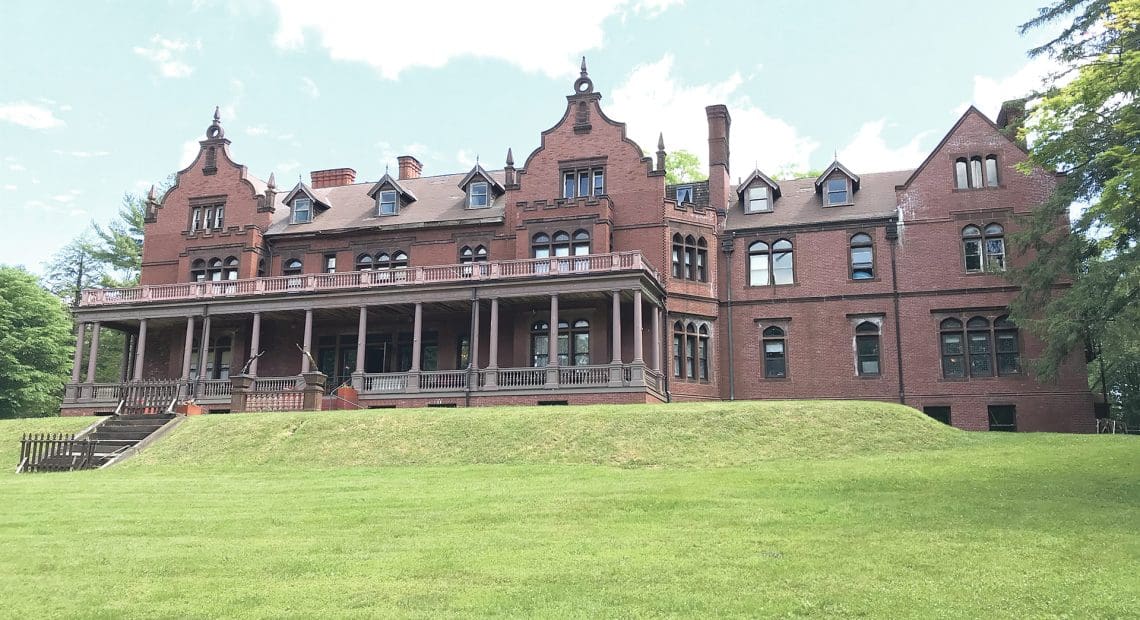
Roughly translated, that means that she’s never seen or otherwise encountered one. But she acknowledges that other people have experienced “something,” and she further acknowledges that ghosts are just one of the many intriguing storylines involving the cottage built by Sarah Spencer Morgan, J.P. Morgan’s sister, and her husband (and seventh cousin), George Hale Morgan, in 1893, and now home to the Gilded Age museum.

“We have what I would call friendly spirits in this house,” said Healey, the facility’s executive director, as she talked with BusinessWest in the billiard room, to which male guests would retire for cigars and brandy after one of the lavish dinners hosted by the Morgans.

The far bigger story, and the one she’d certainly prefer to talk about, is the comprehensive restoration of the landmark, now the site of a wide array of events, from weddings and teas to concerts and ghost tours. It has been ongoing for decades now, and at least another 20 years of work lies ahead, according to the most recent master plan.

“We are a restoration in progress — we are far from done,” said Healey, who assumed her role at the landmark two years ago. “We have millions and millions of dollars of work ahead of us.”

Ventfort Hall is a “restoration in progress.”

Ventfort Hall is a “restoration in progress.”

Ventfort Hall, its restorations and its ghosts, comprise one of the many storylines in Lenox, which has become a tourist destination and center of arts, culture, and healthcare, with many of the destinations located on the grounds of other Gilded Age cottages.

That list includes Tanglewood, summer home to the Boston Pops; Shakespeare & Company; the Mount, Edith Wharton’s home; and the resort spas Canyon Ranch and Miraval.

It is winter, which means most of these facilities are planning for the busier seasons to come, but some are busy year-round.

At Shakespeare & Company, an intriguing slate of shows is taking shape, said Jaclyn Stevenson, director of Marketing and Communications, noting that performances of Macbeth (with an all-female cast and a comedic touch) start in March, with most other shows taking place in the summer.

They will include a “Shakespeare Cabaret,” performances of Romeo and Juliet and The Taming of the Shrew, as well as August Wilson’s The Piano Lesson, with a few other performances still to be finalized.

“We have what I would call friendly spirits in this house.”

Equally busy these days is Gilbert Santana, general manager at the Miraval resort spa, which features the mansion known as Wyndhurst as its centerpiece. He the facility, which has been under the Miraval name since the fall of 2020, the height of COVID, has been improving overall visitation each year since, with that trend expected to continue in 2025.

Continually growing confidence among the guest population, which now includes virtually all age groups, is a big reason, he said, noting that there are now frequent bookings six months or more out, unusual in the spa universe. Meanwhile, new initiatives, such as so-called Family Connect weeks, where children can join their parents at the spa, have also helped.

The most recent Family Connect week came during the recent February school vacation week, said Santana, adding that it piggybacked a strong Valentine’s weekend to get this year off to a strong start.

“We wanted young people to start their well-being journey early, and it’s made an incredible impact; we’ve doubled the amount of guests this go-around than we had last year,” he said of the program, adding that Miraval is a true four-season resort spa that boasts more than 180 different kinds of programs — from meditation to a ropes course to yoga — and at all levels, beginner to expert.

A scene from The Comedy of Errors, performed in 2024 at Shakespeare & Company. (Photo courtesy of Katie McKellick)

A scene from The Comedy of Errors, performed in 2024 at Shakespeare & Company.
(Photo courtesy of Katie McKellick)

For this latest installment of its Community Spotlight series, we focus on Lenox and all that it has to offer.


In the Right Spirit

“This house was built for big parties.”

With that, Healey summed up the design philosophy behind the Elizabethan-style Ventfort Hall, as well as one of the enduring characteristics of the Gilded Age — large, lengthy gatherings.

Indeed, when guests came to a party at this home on Walker Street, they didn’t stay for a few hours and reach for their coats. Instead, they stayed for several days in one of the 14 guest rooms, said Healey, noting that, sadly, Sarah Morgan didn’t get to host many of these soirees: she died in 1896, only three years after Ventfort Hall was completed.

Slicing through the next 129 years in a concise yet effective manor, Healey said there was a succession of owners — and uses.

After being a private residence for a few decades, it later served as everything from a dormitory for Tanglewood students to a summer hotel known as Festival House; from a ballet camp to the home of Bible Speaks, a religious community that used the mansion for housing.

During this last chapter, the home fell into a serious state of disrepair, and was eventually slated for demolition for the construction of a nursing home.

“It was in such bad condition … no one wanted it, no one wanted to do anything with it, and it was, in the opinion of this developer, worth more flattened and to build a nursing home than to try to save it,” said Healey. “In the dining room, you could see daylight — you could see down to the basement, and you could see up through the roof.”

But in 1997, it was purchased by the Ventfort Hall Assoc., formed by Lenox residents dedicated to its restoration, which began soon thereafter.

Indeed, the building took a star turn in the movie The Cider House Rules, filmed in 1998, serving as the orphanage known as St. Cloud’s — its exterior, anyway (the interior shots were filmed at Northampton State Hospital), with its weathered condition being just what the film’s producers were looking for.

Gilbert Santana says Miraval celebrates its ability to promote wellness during all four seasons, and in many different ways.

Gilbert Santana says Miraval celebrates its ability to promote wellness during all four seasons, and in many different ways.

The movie — and there would be others to follow — provided both capital and momentum, said Healey, adding that restoration has a been a slow, very expensive undertaking over the past 28 years, with perhaps that many more still to come as the association works to ensure that the home will remain part of the fabric of Lenox for decades to come.

Phase 1A of a master plan launched in 2016 has been completed, said Healey, noting that it addressed critical building envelope and life-safety issues. Phase 1B is now underway, focusing on restoring the exterior masonry and roofing to ensure the long-term stability of the mansion.

One focal point of recent efforts has been shoring up of the east-end wall as well as the rebuilding and restoration of the mansion’s four chimneys, said Healey, noting that three have been painstakingly restored, and the fourth will be addressed this spring.

And in the years to come, many of the rooms on the upper floors, the massive basement, the carriage house, and other areas will be restored. That work, projected to cost more than $20 million, is to be funded through a combination of revenue from events, admission to the museum, and other programs, as well as donations and grants from organizations including the Massachusetts Cultural Council Facilities Fund, the Town of Lenox Community Preservation Committee, and others.

Lenox at a Glance

Year Incorporated: 1767
Population: 5,095
Area: 21.7 square miles
County: Berkshire
Residential Tax Rate: $9.05
Commercial Tax Rate: $13.18
Median Household Income: $85,581
Median Family Income: $111,413
Type of Government: Select Board, Open Town Meeting
Largest Employers: Canyon Ranch, Miraval, Boston Symphony Orchestra, Kimball Farms
* Latest information available

While the restoration work continues, the mansion hosts a growing number of events each year, welcoming guests who wouldn’t have been on the invite lists for the Gilded Age parties, said Healey, adding that there are several weddings each year, as well as concerts, tea-and-talks, a spring fashion fundraiser called Berkshique, and more.

There are also very popular ghost tours, at least once a month, led by Robert Oakes, author of Ghosts of the Berkshires. He provides a full tour of the house, by flashlight, while also relating both its history and the tales of those who say they’ve encountered a spirit on the property. And he’s heard many, from staff members and guests alike, Healey said.


Frame of Mind

It’s called ‘mindful golf.’

It’s … well, let’s call it golf with the edge taken off.

“We have a golf pro who walks you through the process of how you think when you swing and your intentions behind playing golf, which many times are jaded around winning and doing better,” Santana explained. “This helps you understand the purpose of playing your sport; it’s very well-defined and built around the person playing.”

Actually, the team at Miraval could put that word ‘mindful’ in front of almost everything they do, and that’s a long list, from activities such as kayaking and cross-country skiing to the weddings it hosts to the overall spa experience, which guests enjoy on visits lasting a day or several weeks.

Summing it all up, Santana said it’s about meeting people where they are.

Miraval, which also has resorts in Arizona and Texas, is coming up on five years in the Berkshires, although Santana said it’s more like three, with the first two greatly disrupted by COVID.

He said Miraval is continually looking at ways to bring wellness to more people across a wider age group. A good example is the two annual Family Connect weeks, which the facility test-drove last year to solid reviews that translated into bigger numbers this winter.

“We’re the only Miraval that does a Family Connection week where we allow kids to join their parents and other family members and experience it at a very young age,” he told BusinessWest. “One thing we do is make sure that everything we do has an educational purpose. Everything is defined here on growing your mindset — not necessarily redefining you, but giving an understanding of something that’s more than recreational.”

Education is a huge part of the mission at Shakespeare and Company as well, said Stevenson, adding that, in addition to the performances slated each year, the institution also schedules several actor-training programs as well as initiatives for young people and professional-development workshops.

These include Shakespeare in the Courts, a program staged in conjunction with the Berkshire Juvenile Court system, whereby adolescent offenders work with Shakespeare and Company artists and participate in classes, rehearsals, and performances of scenes from the Bard’s plays. During the six-week project, participants explore Shakespeare’s text and prepare their own performance pieces as part of their term of probation.

There’s also “Riotous Youth,” one-, two-, and three-week summer theater programs that introduce students (ages 7 to 17) to Shakespeare’s language, stories, characters, and themes using imaginative and playful methods.

As for actor-training programs, they take place in the spring and summer and are geared for those with different experience levels, from the novice to mid-career professionals, said Stevenson, adding that there are also several in-person workshops and online classes and workshops focused on everything from wit to movement and dance to public speaking.

Stevenson said Shakespeare and Company enjoyed a solid 2024, actually exceeding overall projections, continuing, as other venues in this community have, to build back from the COVID years, which took a serious toll on Lenox.

“We’re still working our way back a little bit, but we’ve come a long way,” she said of the COVID recovery. “It feels more in the rear-view mirror than ever before.”

Opinion

Editorial


Most of those asked by BusinessWest to recall the early days of COVID — and what’s happened since — either can’t believe how quickly time has flown, or that it’s only been five years.

Mostly, it’s the latter.

Indeed, COVID now seems like a long, long time ago, probably because those first few years were so difficult and change-filled, many compared them to dog years.

We asked business owners and managers to look back because … well, five years is a milestone, and there is so much that has changed over that half-decade (see story on page 4).

Changes have come to small business and how it is conducted, in healthcare and the mental health of people of all ages, in education (especially higher education), and, of course, in how work is done — and where it’s done.

As business owners looked back on the seismic events of mid-March 2020, what happened in the days, weeks, and months to follow, and what’s changed (and perhaps changed forever) since then, some themes emerge.

Perhaps the most intriguing, if not the most discernable, in many cases, is a sense of pride in accomplishment, if we can call it that.

Indeed, COVID was something unprecedented. Business owners and managers had seen economic ups and downs before. They had seen times when employment was tight, and times when it wasn’t. Some had even weathered a natural disaster, like the 2011 tornado.

But this was something completely different. The state was essentially shut down. Workers went home with their computers not knowing when they’d come back (some still haven’t come back). People couldn’t go restaurants, movie theaters, museums, banquet halls, bars, breweries, malls, car dealerships, airports, sports arenas, their dentist’s office … for weeks, they couldn’t go anywhere.

In many instances, business just stopped. But then, it picked up again — only, it was different. And this is where that pride in achievement come in: the innovation, the imagination, the perseverance, the needed humor, the bonding together, even if people were in different places.

Businesses found new modes of doing things, new revenue streams, intriguing ways to pivot, and ways to keep the doors open, even if customers couldn’t come through them.

Well, most businesses, anyway. There were many casualties across several sectors, especially hospitality. The others? As we said, they found a way.

Sure, they had some help. Most small businesses received a PPP loan or some other form of assistance. But they didn’t survive on that. They survived on guts and creativity and a will to beat back a challenge unlike any other.

That’s what we’re celebrating — again, if that’s the right term — five years later.