Daily News

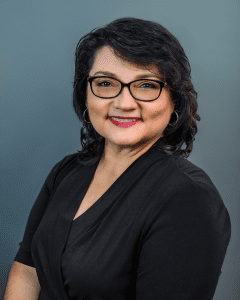
Judy Nevarez

SPRINGFIELD — Judy Nevarez was officially installed as the 2026 president of the Realtor Assoc. of Pioneer Valley (RAPV), a nonprofit trade association representing more than 1,800 real estate professionals throughout Western Mass.

The installation took place during RAPV’s annual Holiday celebration, which featured the association’s 110th installation of officers and directors. The event was held on Dec. 11 at the Log Cabin in Holyoke.

Nevarez has more than 22 years of experience as a Realtor and is licensed in both Massachusetts and Connecticut. She is highly active in the community, serving on the board of directors for Western Massachusetts CYO and as a co-founder and advisory board member of Save Our Youth Inc.

In 2025, Nevarez was recognized by the National Assoc. of Hispanic Real Estate Professionals (NAHREP) as one of the Top 250 Latino Agents nationwide and ranked among the Top 100 Latino Agents in the Northeast. Within RAPV, she has served on the board of directors since 2023 and has been an active member of several committees, including scholarship, professional development, and finance.

The following individuals were installed as 2026 RAPV officers: Nikki Serafino, Keller Williams Realty, president-elect; Don Thompson, NextHome Elite Realty, treasurer; and Sue Drumm, Coldwell Banker Realty, immediate past president.

The 2026 Board of Directors includes Carrie Blair (Keller Williams Realty), Quincy Clayton (NextHome Elite Realty), Kelly Page (Trademark Real Estate), Greg Dibrindisi (Berkshire Hathaway HomeServices Realty Professionals), Brian Fitzgerald (Coldwell Banker Realty), Art Ferrara (Landmark Realtors), Kathleen Norton (William Raveis Real Estate), Chad Lynch (NextHome Elite Realty), and Vinny Walsh (Coldwell Banker Realty – Western MA).

Daily News

BOSTON — For the seventh consecutive year, Eversource Energy has been recognized by Newsweek and Statista Inc. among America’s Most Responsible Companies for 2026 — one of the top-performing utilities on the annual list. This national award celebrates U.S. companies that demonstrate an exemplary commitment to corporate social responsibility and reflects Eversource’s continued achievements in advancing sustainability throughout its business operations.

“We’re honored to receive this recognition once again from Newsweek and Statista Inc., which is a resounding testament to how sustainability is at the heart of our vision to lead our industry in ethical and responsible business practices,” Eversource Chairman, President, and CEO Joe Nolan said.

“As New England’s energy landscape continues to rapidly evolve, our more than 10,000 dedicated employees are driving meaningful progress toward enabling an environmentally responsible energy future while maintaining first-class reliability and focusing on affordability for our customers,” he added. “We recognize the profound responsibility we have as the region’s largest energy provider to deliver collaborative solutions that serve the energy needs of our customers, and I’m deeply proud of how we’ve made sustainability a cornerstone of our mission as we work every day to advance a cost-effective, resilient energy transition across our region.”

The America’s Most Responsible Companies 2026 ranking focuses on a holistic view of corporate responsibility, evaluating the top 2,000 public companies headquartered in the U.S. across 30 key performance indicators, as well as an independent survey of 18,000 U.S. residents. The ranking represents the 600 companies with the highest overall corporate social responsibility scores across 14 industries. Since the annual ranking was introduced in 2019, Eversource has appeared in every edition of the list.

Daily News

LUDLOW — The ERC5 Senior Alliance Team will host an informative presentation on fall prevention on Wednesday, Jan. 14 at noon at the Ludlow Senior Center. This event will provide valuable insights into keeping seniors safe at home, understanding insurance coverage related to falls, and the resources available for rehabilitation and exercise.

The panel of experts will cover safety measures to prevent falls at home, what to do after a fall and how to navigate insurance coverage, rehabilitation programs available, and home assessments and the effects of medications on stability. This workshop is designed to empower seniors and their families with the knowledge and resources needed to enhance safety and well-being.

Panelists include attorney David Carlson of David G. Carlson, Esq.; Dr. Kara James of Louis & Clark Pharmacy; Katie Krupka of Assisted Living Locators – Western Massachusetts; Kimberly O’Connor of Brookhaven Hospice; Mary-Anne Schelb of Legacy Lifecare; Liz Davila of Kind Hands Care at Home; and Maura Lessard of Nurse Advocates LLC.

Daily News

HOLYOKE — For the 24th year, Holyoke Community College (HCC) students, staff, and faculty collected hundreds of holiday gifts for consumers at local agencies through its annual Giving Tree campaign.

On Dec. 17, representatives from the five groups — Homework House, the Massachusetts Veterans Home at Holyoke (formerly the Holyoke Soldiers’ Home), Access Care Partners (formerly WestMass ElderCare), the Massachusetts Society for the Prevention of Cruelty to Children (MSPCC), and the Itsy Bitsy Child Watch Center at HCC — attended a closing celebration where 320 gifts were distributed.

“This is a community of caring and giving folks, and that’s not just words, but deeds and actions,” HCC President George Timmons said. “This community shows up for one another, and it really does make a difference.”

Each year during the annual campaign, Giving Trees are set up in designated areas around campus. Participants choose tags from one of the nonprofit agencies based on the age of the recipient and their wish for a gift. The wrapped gifts are then piled on tables for the closing celebration, when HCC faculty, staff, and students join with representatives from the agencies to share food and stories.

“Home has always been part of our title,” said Colleen Strunk-Ackerly, volunteer coordinator for the Veterans’ Home. “With community partners like you, we’re able to provide that home-like environment for our veterans with nice things like a comfortable pair of pajamas or a nice, warm blanket. There’s nothing better, especially during the holidays.”

Even though the holidays can be a joyful time, the season can put added pressure on parents who can’t afford to buy gifts, but still want their children to experience a “sense of magic and normalcy,” said Nancy Ritz, regional director of Prevention Programs at MSPCC. “Your gifts send a powerful message to parents: you are not alone. And to children: you matter. Someone thought of you.”

This year, the Giving Tree committee added the college’s Itsy Bitsy Child Watch program to the list of beneficiaries. The center, a free program for HCC student parents, includes a clothing donation closet, where students can drop in and select used items for their children.

“These personal, individual gifts that the college community has provided are going to be even more meaningful,” said Kimm Quinlan, director of Early Childhood Initiatives at HCC. “It’s hard being a student. It’s hard work being a parent, and when you put the two of them together, it’s even harder, so I know how much our families are going to appreciate these gifts.”

Michelle Vigneault agreed. “I am so honored to be chairperson of this committee that really shows how much the HCC community cares. This is it in a big way,” she said, before relating a personal story through tears. “As a child, I was the recipient of a similar campaign, Toys for Tots, and it was the best gift I ever got in my whole childhood. And it matters. It matters to children. It matters to families, and it matters to our elderly and our veterans and the whole community.”

Daily News

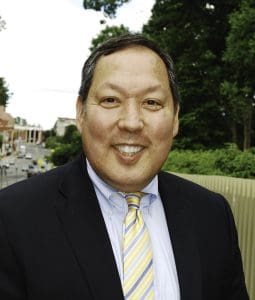
Eric Nakajima

HOLYOKE — Holyoke Mayor Joshua Garcia appointed Eric Nakajima to head the city’s Office of Planning and Economic Development. Nakajima succeeds Aaron Vega, who has been appointed president and CEO of the Western Massachusetts Economic Development Council.

Nakajima, 59, is an economic development consultant. He has held policy and innovation positions with the state’s Executive Office of Housing and Economic Development and is the former director of the Massachusetts Broadband Institute. From 2020 to 2024, he was director of Government Relations for the Massachusetts Teachers Assoc.

Nakajima earned a bachelor’s degree, cum laude, in political science from UMass Amherst and a master’s degree in city planning from the University of California, Berkeley. He held a year-long fellowship for working professionals at the Massachusetts Institute of Technology in Cambridge.

The mission of Holyoke’s Office of Planning and Economic Development is business recruitment and retention, short- and long-range planning, and providing staff support to the Planning Board, Redevelopment Authority, Economic Development Industrial Corp., Licensing Board, and Tourism Advisory Committee, among other boards and commissions.

“Holyoke is a city on the rise,” Nakajima said, “and I am excited to join such an outstanding team to support the economic growth, vitality, and livability of the city.”

Garcia said Nakajima’s credentials and experience put him at the top of the list for the director’s post.

“We’re fortunate to have attracted a professional whose skills and knowledge are so relevant to Holyoke’s prosperity path,” the mayor said. “The growth that Aaron Vega and his team brought about will continue and expand under Eric’s leadership.”

Daily News

MONSON — Monson Savings Bank announced a donation of $7,500 to the Ludlow Boys & Girls Club as part of the Club’s 75th anniversary celebration, reinforcing its commitment to supporting local youth and community programs. The bank served as a project sponsor for this fundraiser.

Monson Savings Bank President and CEO Dan Moriarty presented the donation to Josue Irizarry, president and CEO of the Ludlow Boys & Girls Club, and Cristina Jardine, the club’s director of Development.

“At Monson Savings Bank, we believe in investing in the future of our communities,” Moriarty said. “The Ludlow Boys & Girls Club has been a pillar of support for local youth for 75 years, and we are honored to help celebrate this incredible milestone as a project sponsor.”

Irizarry expressed gratitude for the contribution, adding, “this generous donation from Monson Savings Bank helps us continue to provide a safe and supportive environment for children and teens. Their sponsorship of our 75th anniversary celebration demonstrates their deep commitment to the community and the young people we serve.”

The Ludlow Boys & Girls Club offers programs that promote academic success, healthy lifestyles, and character development for youth in the community. Monson Savings Bank’s donation will help fund these initiatives and ensure continued access to essential services.

Daily News

BURLINGTON — ’Tis the season for financial strain in the Commonwealth, according to a new survey. A Mass Opportunity Alliance (MOA) poll found nearly half (45%) of all Massachusetts residents are planning to spend less on holiday gifts this season, up sharply from the 36% who said the same thing in 2024.

This not-so-festive financial strain is especially pronounced among lower- and middle-class households: 48% of residents earning between $50,000 and $100,000 say they plan to spend less on gifts this year, along with 56% of those making under $50,000.

Christmas stockings could also be lighter for kids in the Commonwealth, with 41% of parents with children under 18 planning to cut back. And looking ahead, spirits aren’t cheerful or bright: 46% of residents say they feel pessimistic about the economy going into 2026.

The survey of 505 Massachusetts residents, conducted Dec. 9-12 by research firm Big Village, was performed at a 95% confidence level. The findings are the latest in MOA’s monthly polling to track public opinion on key issues related to competitiveness in the Commonwealth. Click here for the full analysis.

Cover Story

Getting a Leg Up

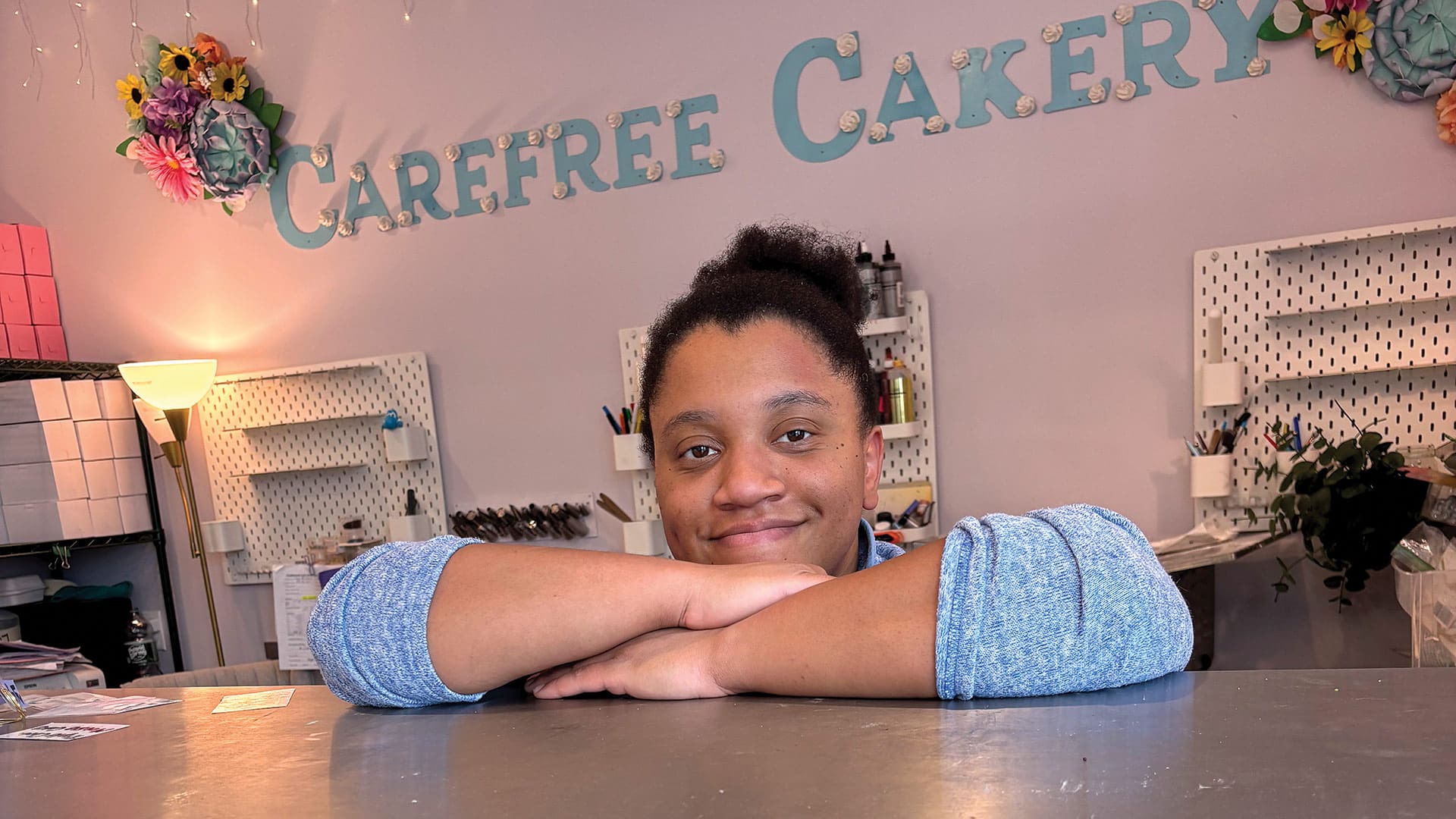
Alysia Bryant, founder of Carefree Cakery

Alysia Bryant, founder of Carefree Cakery


It was the height of the pandemic, and Alysia Bryant had reached an inflection point.

She was managing a Sherwin Williams store, and increasingly asking herself …. ‘why?’

“I was considered an essential worker, but it didn’t feel like the work I was doing actually mattered at all; I was selling paint,” she told BusinessWest. “I thought, ‘if I’m going to be giving this much of myself to anything, it may as well be something that matters to me at my core,’ and that’s what pushed me all the way out of working my comfortable corporate job and doing something for myself.”

That ‘something else’ was baking, something she started doing back in high school when she would bake box mix brownies and sell them out of her backpack. She put this passion aside, thinking she should be “doing something really important with my life,” and started thinking about becoming a doctor.

But that wasn’t the right fit for her, so she looked at perhaps baking with a purpose, as she called it, and opening a free-trade bakery to make sure the farmers providing her with chocolate, vanilla, coffee, and other goods were paid a living wage for their work, a concept that would grow in scope — while she was selling paint — to include being allergy-friendly.

It was a noble concept, but one she quickly understood would only become reality if she got a little help — on the financing side and otherwise.

“I thought, ‘if I’m going to be giving this much of myself to anything, it may as well be something that matters to me at my core,’ and that’s what pushed me all the way out of working my comfortable corporate job and doing something for myself.”

That help came from Common Capital, the Springfield-based agency that offers small business loans of any size up to $300,000 to individuals in the four counties of Western Mass. — capital that can be used for everything from a business startup to working capital, inventory, supplies, and equipment.

Bryant, who said she didn’t even consider traditional bank financing because she had nothing for collateral and wouldn’t be a good candidate, used a loan of just over $100,000 from Common Capital to launch Carefree Cakery in the Mill District in North Amherst, selling cakes and a wide range of other products that have drawn a strong following. But she was quick to note that, beyond the money, the agency has provided support in areas ranging from accounting to marketing that she considers critical to her ongoing success.

Such multi-faceted assistance from Common Capital, founded in 1990, has helped launch and accelerate some of the region’s better-known success stories in recent decades — including the Hot Table chain of panini restaurants, which started in Springfield and now stretches across the state and into Connecticut; Youth on the Move, the Indian Orchard-based transportation company specializing in shuttling young people, which has grown exponentially over the past decade; White Lion Brewing Co., which now has two locations and has expanded its reach across the state; and Rozki Rides, another youth-focused transportation company based in Agawam.

More recently, the client list has grown to include a widely diverse mix of new ventures, from a growing list of behavioral health-related ventures to Elliott Fire, a Holyoke-based company that repairs, inspects, and maintains fire sprinkler systems, to Higher Expectations, a sports training facility on Cadwell Drive in Springfield.

These stories and countless others are all different, but there is generally a shared sentiment that, if it weren’t for Common Capital, the venture likely would not have moved off the ground — and certainly not as quickly.

“White Lion was not a bankable entity. We were a startup; it was a concept,” founder Ray Berry recalled, noting that he became involved with the agency 12 years ago. “I like to say that, if Common Capital wasn’t around, and if it didn’t have the capacity to seed White Lion, I’m not sure where this brand would be right now.”

And while assisting countless entrepreneurs with realizing and then rewriting their business plans, Common Capital is updating its own.

It calls for continually growing a portfolio of loans that has essentially doubled over the past seven years, from $5 million to $9 million, with plans to reach $15 million, said Raymond Lanza-Well, the agency’s president, adding that this threshold will move the organization closer to self-sustainability.

Overall, the agency has been in a strong growth pattern of its own, he went on, building on the foundation laid by Common Capital founder Chris Sikes and aggressively expanding the portfolio through a philosophy of assuming more risk, especially through more smaller loans of less than $50,000, adding new programming, and strengthening partnerships with several constituencies.

Raymond Lanza-Well says Common Capital is in a growth mode

Raymond Lanza-Well says Common Capital is in a growth mode, having doubled the size of its loan portfolio from $5 million to more than $9 million over the past seven years.

These include agencies within the region’s and state’s entrepreneurship ecosystem — from EforAll to the Massachusetts Small Business Development Center; from the Sphere Northampton to the LGBTQ Chamber in Easthampton — as well as the region’s banks and credit unions, which will often refer business loan applicants they have to turn down to the agency.

For this issue, we take an in-depth look at Common Capital, several of the businesses in the growing client portfolio, and what’s ahead for all of them.


Getting Down to Business

Chris Elliott had been working for sprinkler installation and service companies for more than 30 years when he reached the point most entrepreneurs reach — the one where they decide that it’s time to work for themselves rather than someone else.

“I like to say that, if Common Capital wasn’t around, and if it didn’t have the capacity to seed White Lion, I’m not sure where this brand would be right now.”

And while he had the drive to strike out on his own, again, like many entrepreneurs, he lacked the capital — and the ability to attain it from traditional sources.

“We simply weren’t bankable,” said Elliott, referring to himself and his wife and business partner, Cristie, adding that the dream was more or less put on ice until, like hundreds of other aspiring entrepreneurs, he was referred to Common Capital.

The Elliotts used their $150,000 loan to set up shop in a building on Main Street in Holyoke. But beyond that, taking advantage of services that go well beyond capital, such as training initiatives in accounting, booking, and website development, they’ve been able to grow the business from humble beginnings — Cristie’s Rav 4 was detailed with the company logo, and it served as the primary operating vehicle for several years — adding several government contracts and large clients such as Tower Square in Springfield and General Dynamics.

The Elliotts’ story — and Bryant’s, and Berry’s — are fairly typical of those who ‘find’ Common Capital, said Roberto Nieves, who left the banking industry to become the agency’s director of Outreach and Communications. He told BusinessWest that this region has always had a deep well of entrepreneurial energy, but the pandemic inspired more people, like Bryant, to pursue dreams and go into business for themselves.
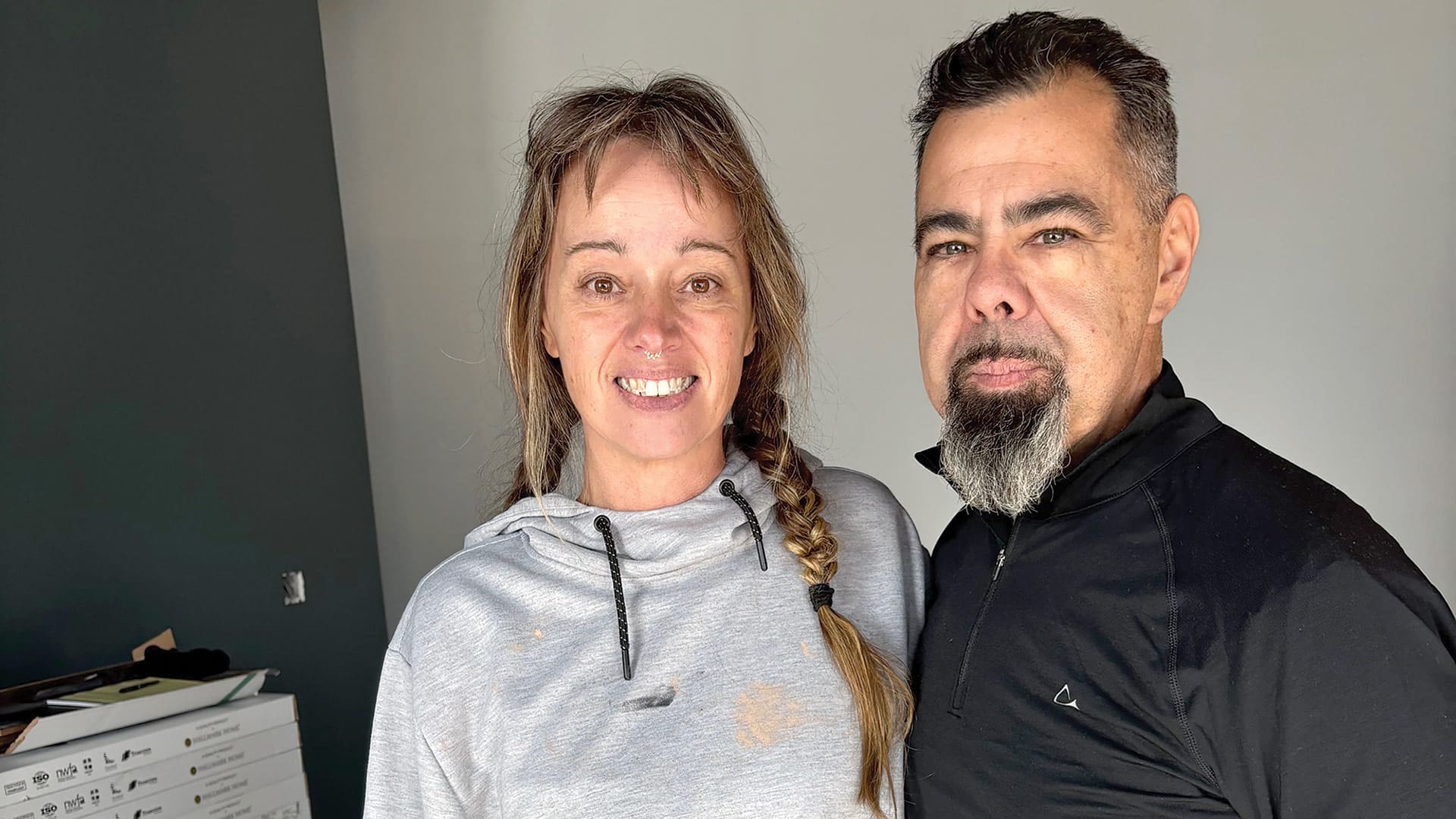
Cristie and Chris Elliott, owners of Elliott Fire

Cristie and Chris Elliott, owners of Elliott Fire, another success story accelerated by Common Capital.

“Many of the essential workers were working longer hours, working double shifts, doing all of these things that were necessary for us to move forward during the pandemic,” he recalled. “And they got to a point, post-COVID, where they said, ‘if I’m going to work this hard, I’m going to do it for me and not for you.’”

This phenomenon was reflected in many ways, from registered nurses starting home health agencies to a surge in new behavioral health agencies to new businesses of all kinds, Nieves said, adding that many of these ventures are being launched by women and people of color, many of whom are living in low- to moderate-income neighborhoods.

All this is reflected in Common Capital’s portfolio of clients, he noted, adding that 80% of borrowers are now women, a rise from 42% in 2020, and many of these are women of color, inspired — and helped along — by the growing number of accelerator programs in the area.

Lanza-Well agreed. He succeeded Sikes as the agency’s president in 2018 after working first in banking and then for a succession of community loan funds, including, most recently, the Vermont Community Loan Fund.

That agency is roughly the same age as Common Capital, but about twice the size when it comes to the loan portfolio, even though it serves a smaller population.

“That told me, without doing anything particularly scientific or complicated, that there was a lot of untapped opportunity for Common Capital to grow,” he told BusinessWest, adding that he and his team of eight have been focused on seizing that opportunity.

Specifically, the agency has been thinking differently about its lending, said Lanza-Well, adding that he has tapped his vast experience in community development lending to expand the portfolio.

“The lending business is a business of risk management,” he explained. “We all take risks as lenders, and I think I helped us look a little bit differently at the risks.”

Elaborating, he said that, for loans up to $50,000 — a fast-growing segment of the portfolio — collateral is not a material consideration.

“We pull credit reports, we look at credit behavior, we spend a lot of time talking to our applicants about their credit behavior, but we don’t use the score itself because the score is based on an algorithm, and the algorithm has all sorts of biases built into it, and we’re dealing with folks who live outside algorithms.”

“We absolutely require every applicant, every borrower, to pledge whatever collateral is available to support their loan,” he explained. “But for most of our loans that are less than $50,000, there’s hardly enough collateral to cover the loan. That would scare the heck out of a bank, but it’s what we do every day.”

Banks are generally not interested in loans of less than $50,000 in most circumstances, he went on, adding that the Small Business Administration’s microloan program, which provides capital for loans up to $50,000, has been a critical factor in the agency’s strong growth pattern. In fact, Common Capital is the largest SBA microlender in the state, as well as the largest non-bank guaranteed lender with the SBA in the state, despite serving a region that has only 17% of the population.

Other goals include broadening its network of relationships with both banks and agencies within the entrepreneurship ecosystem to put more potential borrowers in the pipeline, Lanza-Well said, adding that the average loan amount is currently about $65,000, a number that helps spread risk throughout the portfolio.

Meanwhile, still another growth factor is a philosophy of “lending to people, not paper,” he noted.
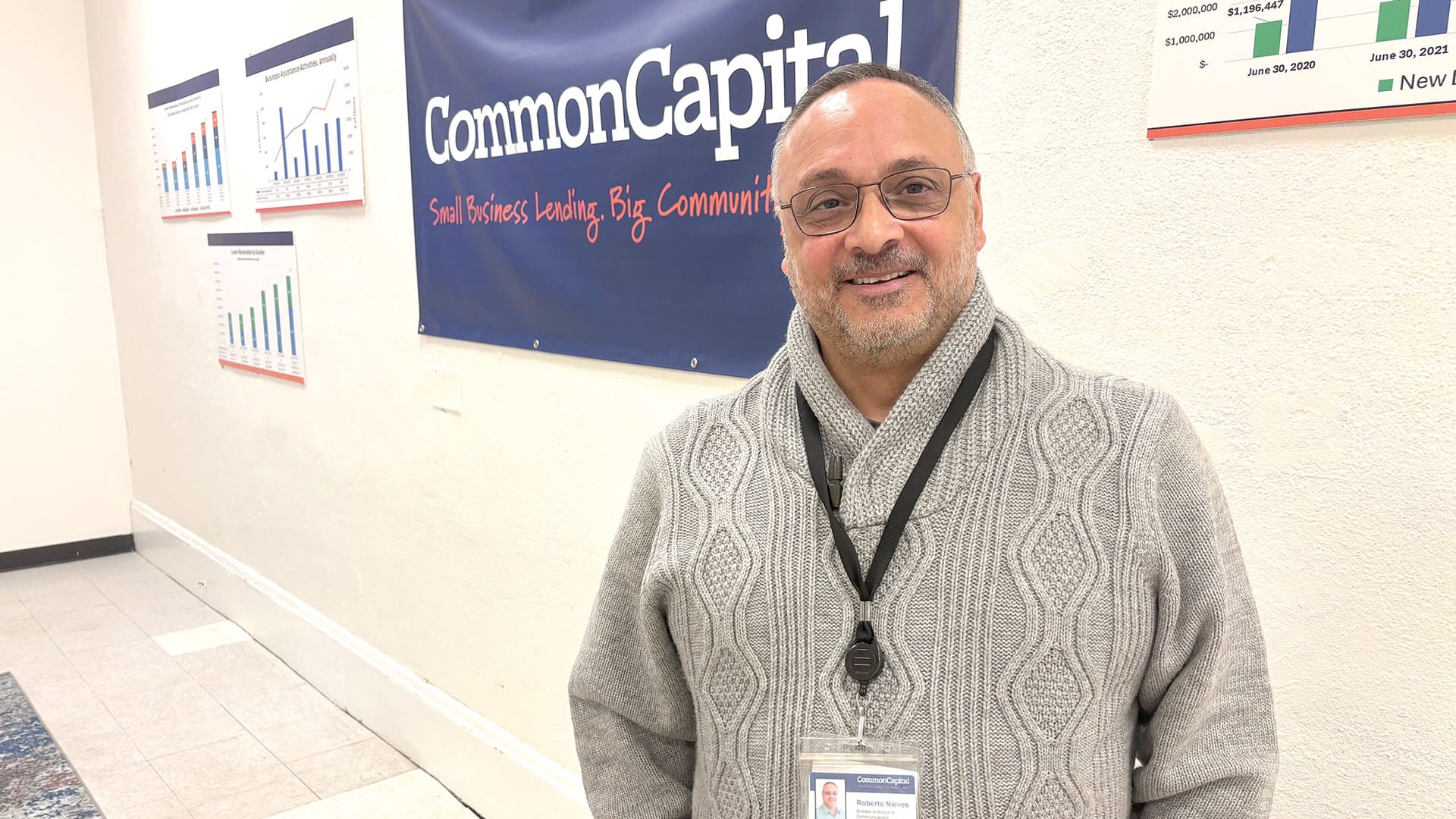
Roberto Nieves says a pandemic-fueled surge in entrepreneurship has been led by women and people of color

Roberto Nieves says a pandemic-fueled surge in entrepreneurship has been led by women and people of color, and this is reflected in Common Capital’s loan portfolio.

“Unlike a bank, unlike a credit card company, unlike most conventional lenders, we don’t use credit scores. We pull credit reports, we look at credit behavior, we spend a lot of time talking to our applicants about their credit behavior, but we don’t use the score itself because the score is based on an algorithm, and the algorithm has all sorts of biases built into it, and we’re dealing with folks who live outside algorithms.”


It’s Not a Piece of Cake

Bryant said she started off being conservative with her staffing and spending, knowing that many new businesses fail in the first few years due to poor cash flow.

“But I completely underestimated how much the community would be excited about this,” she noted. “We sold out within our first two hours the first day we were open, and that continued for the first two weeks.

“We were exhausted — it was me and one other person,” she went on, adding that she would eventually bring on more help and now has a staff of six. “We’re growing and doing well.”

But despite this success, there are stern challenges to sustainability, she went on.

“I went for a business model that really increases my base prices for many items; our ingredients are just more expensive because they pay the people who make them,” Bryant explained, adding that chocolate prices have doubled since last year. “If this can just work, that will be enough for me. I want this shop to thrive; I want it to be a cornerstone of the community.”

Like others we spoke with, Bryant said the support from Common Capital has gone well beyond the loan — and is ongoing.

“It’s not just, ‘here’s the money,’ and you’re gone,” she explained. “There’s ongoing coaching; I have access to people who have experience running a business, so I can just talk to them, but they can also pair you up with people who can help you with other elements, such as marketing and bookkeeping.”

Indeed, Common Capital’s Business Resource Center provides a wide range of services, from one-on-one business navigation to credit counseling to a series of training webinars.

These offerings include recent programs, undertaken in partnership with the Center for Women & Enterprise, with titles such as “Navigating Change: Embracing Uncertainty” and “Finding Calm in the Holiday Chaos.”

“Even with a business degree and some experience, the ongoing help from Common Capital has been invaluable,” said Bryant, adding that she never feels alone as she continues on the journey of entrepreneurship.

Spreading the word about such impact and growing Common Capital’s own brand is one ongoing mission and yet another factor in the agency’s growth pattern, said Nieves, who noted that relationships, and being visible, are keys to success in these efforts.

“I’m a member of 10 chambers of commerce, and, between Raymond and I, we’re represented on every single economic development committee of significance through all four Western Mass. counties,” he explained, adding that, most recently, there’s been a strong push in the Berkshires, an area that had been perhaps underrepresented in the agency’s portfolio, with better numbers over the past several years.

Such outreach has enabled more people to gain access to capital, programs that help their ventures remain sustainable, and opportunities to ride the roller coaster that is entrepreneurship.

“It’s been a heck of a ride — I don’t get days off at all,” Bryant said. “But it’s the most fulfilling thing I’ve ever done, by far.”

And a dream, like so many others, made possible by Common Capital.

Business Talk Podcast Special Coverage

With new episodes airing every other Monday, BusinessTalk features in-depth interviews and discussions with local industry leaders who offer thoughtful perspectives on the Western Massachusetts economy and the many business ventures that keep it running. BusinessTalk is sponsored and presented by Greenfield Cooperative Bank.

Go HERE to view all episodes

Episode 249: December 22, 2025

Joe Bednar talks with Meg Talbert, Executive Director, Dakin Humane Society

Meg Talbert says she and her dedicated staff and volunteers at Dakin Humane Society bring a lot of love and joy to their work, even though they’re dealing with animals — and families — facing difficult issues. And while Dakin’s services — from adoption and fostering to medical care and pet loss support groups, and many more — help thousands of people and animals each year, the need has never been greater. On the next episode of BusinessTalk, Meg, Dakin’s executive director, sits down with BusinessWest Editor Joe Bednar for a wide-ranging discussion about how Dakin is meeting those evolving needs, how people in the community can support this work, and what’s around the corner as the nonprofit puts together a strategic plan for the future. It’s must listening, so tune into BusinessTalk, a podcast presented by BusinessWest over both audio and video platforms, and sponsored by Greenfield Cooperative Bank.

Sponsored by:

Also Available On

Law Special Coverage

Out in the Open

By Michael Lewis, Esq.

On Oct. 29, Massachusetts’ pay transparency law took effect. Employers must post a good-faith pay range for each specific position and provide that range to applicants and employees on request. Larger employers must also submit workforce equal employment opportunity (EEO) data to the state.

Actions to take now: Set credible pay ranges, update posting templates, train managers and recruiters, and calendar your EEO data submission.

Posting and disclosure duties apply if you averaged 25 or more Massachusetts employees last year. Count all employees whose primary place of work is Massachusetts, including full-time, part-time, seasonal, and temporary workers. Include remote employees tied to a Massachusetts worksite and out-of-state employees who report to or are assigned to a Massachusetts base. Determine coverage once a year by averaging headcount across all pay periods. The separate EEO data reporting duty applies to employers with 100 or more Massachusetts employees that already file EEO reports with the Equal Employment Opportunity Commission (EEOC).

Your postings must show a real pay range for Massachusetts roles. Every advertisement or job posting for a particular and specific position with a Massachusetts primary place of work must list a range you reasonably expect to pay at the time of posting. Third-party and agency postings count. If pay is by commission or piece rate, include the expected commission or piece rate range. The law does not require listing benefits or bonuses.

You also must disclose ranges to applicants and current employees. Upon request, give any applicant the range for the posted position. Give current employees the range when you offer a promotion or transfer, and upon request for their own position, even if no vacancy exists. Make sure managers know who answers these requests and how.

“Every advertisement or job posting for a particular and specific position with a Massachusetts primary place of work must list a range you reasonably expect to pay at the time of posting.”

‘Primary place of work’ reaches remote and hybrid setups. If a role reports to or is assigned to a Massachusetts worksite, treat it as covered, even when the individual works outside the state. If the role can be performed in Massachusetts, assume the posting rule applies.

Enforcement sits with the attorney general; there is no private lawsuit. Expect a warning for a first violation, then escalating civil penalties. Through Oct. 29, 2027, you get two business days to cure after a notice. Retaliation against applicants or employees who seek ranges or complain about violations is prohibited.

Large employers must submit EEO workforce data to the Commonwealth. If you file EEO-1 (or EEO-3/4/5, as applicable) with the EEOC, you must transmit the same reports to the Secretary of the Commonwealth on the state schedule. The state will publish aggregate industry reports; individual employer submissions are not public records.


Seven Practical Steps to Get Compliant Quickly

• Decide coverage. Run the 25-employee average using last year’s payroll periods. Flag multi-state and remote roles tied to Massachusetts.

• Map positions. List all ‘particular and specific’ jobs in Massachusetts, including internal ladders and common transfer paths.

• Set ranges now. Build good-faith minimums and maximums for each position using market data, internal equity, geography, and level. Avoid inflated bands that you would not actually pay.

• Standardize postings. Add a salary-range line to every template and require recruiters and agencies to include it. For social posts, link to the full posting with the range.

• Train managers and recruiters. Give a script for handling range requests. Remind teams not to ask for salary history until after an offer. Reinforce anti-retaliation.

• Document and monitor. Keep a living list of ranges, the date set, the factors considered, and the owner. Review at set intervals and after material changes.

• Calendar the data filings. If you file EEO reports federally, calendar the Massachusetts submission dates and designate the filer.


Templates You Can Use Today

Required range line for postings: “Pay range for this role: $__ to $__ per year [or $__ to $__ per hour]. Actual pay will reflect skills, experience, and job-related factors. This role [includes commission with an expected range of $__ to $__ ] is paid by piece rate with an expected range of $__ to $__].”

Applicant range request response: “Thank you for your interest. The pay range for the [position] is $__ to $__ [plus commission/piece rate as posted].”

Employee request for current position: “The current pay range for your position, [position/title/level/location], is $__ to $__. We review ranges on [cadence] based on market data, skills, and responsibilities.”


Common Questions from Employers

Do we need to update a posting if the range changes during the search? Post the range you reasonably expect to pay when you publish the posting. If your range materially changes during the search, update the posting and your internal file.

Do we need to include bonuses or benefits? No. List the base salary or hourly range. Include commission or piece-rate ranges if those pay forms apply.

Do internal promotions without a posting trigger disclosure? Yes. Provide the range when offering a promotion or transfer.

Do we have to share ranges for every job on demand? Applicants get the posted position’s range on request. Employees get their own position’s range on request, even when no opening exists.

How should we handle multi-state postings? If the role could be filled by someone whose primary place of work is Massachusetts — or the role reports to a Massachusetts worksite — include a Massachusetts-compliant range.


Key Dates and Thresholds at a Glance

• Oct. 29, 2025: Salary-range posting and disclosure duties began for employers with 25 or more Massachusetts employees.

• Feb. 1, 2026 (EEO reporting): EEO-1 due annually; EEO-3 and EEO-5 due in odd-numbered years; EEO-4 due in even-numbered years — only for employers that file these reports with the EEOC.

• Through Oct. 29, 2027: Two-business-day cure period after a notice from the attorney general.


Why Act Now?

Pay ranges will surface internally and externally. Employees will compare. Posting ranges that you cannot defend invites morale issues and legal risk. You control the narrative by setting credible bands, training your teams, and responding cleanly to requests.


Michael Lewis is an attorney with the Commercial Litigation Group at Halloran Sage, handling complex business and employment disputes for a wide range of clients in industries including healthcare, manufacturing, retail, and technology.

Environment and Engineering Special Coverage

Something to Build On

Two Western New England University students work on a jet engine they built

Two Western New England University students work on a jet engine they built. (Photo courtesy of Western New England University)


Among the courses Mike Rust teaches at Western New England University (WNE) is “Introduction to Engineering,” a very hands-on class that teaches the engineering design process to freshmen through a robotics development project.

At first, “they’re looking at me like, ‘I don’t know how to do these things.’ And then we train them in all the technical things that they need to do,” said Rust, professor of Biomedical Engineering and director of Experiential and Entrepreneurial Learning at WNE. “Over time, they’re weaning off, and at the end of the course, the faculty’s checking in, but the students are doing it themselves. They almost don’t notice, but by the end, they’re acting like an engineer; they’re thinking like an engineer — because they’ve lived and breathed it their first year on campus.

“When I was a student a couple decades ago, we didn’t get a project like that to work on until junior year,” Rust said, adding that giving students hands-on experience from day one helps them thrive throughout college — which can translate into success in internship experiences and their early career. “The context sticks a little better when they have the muscle memory because they’ve experienced it, not just thought about it.”

It’s not just in class that WNE engineering students are preparing for the real world. At the Delbridge Career Center, the university’s career services hub, a professional adviser is assigned to each student, and available resources include résumé development, mock interviews, internship connections, and an alumni network.

“Engineering is a professionally oriented field, and students, when they’re coming through our programs, are already thinking in these terms when they start: where are they going to go with this degree? What are they going to do long term?” Rust said, explaining how those career services tie into the hands-on classroom model.

“The context sticks a little better when they have the muscle memory because they’ve experienced it, not just thought about it.”

“We teach theory, but we’re always putting that theory into practice with projects; students are actually doing it. So when they go to the interview, they can say, ‘I have done these things; this is the value I can provide your company.’ And when they get their first job after graduation, they can hit the ground running.

“Everyone needs to be trained when they join a company,” he added, “but what we hear from companies is that the learning curve is a little flatter because they’ve got a lot of that hands-on exposure.”

That’s appreciated by firms like Westfield-based Tighe & Bond, a very large, multi-state engineering firm that hires close to 100 new employees each year.

Bob Belitz says Tighe & Bond’s robust internship program aims to give aspiring engineers as much real-world, hands-on experience as possible.

Bob Belitz says Tighe & Bond’s robust internship program aims to give aspiring engineers as much real-world, hands-on experience as possible.

“In such a competitive marketplace, we’re trying to build relationships and connections as early as possible, so we get connected to students and universities whenever we can,” said Bob Belitz, the firm’s president and CEO. “We’re participating in educational programs, going into elementary schools, middle schools, and high schools to judge fairs or just explain to these students what a career in STEM could look like.”

Those efforts are complemented at the college level with scholarships and an internship program that brings in about 30 students per year to work on real-world projects.

“What we’re trying to do through these programs is give these students a real-life, hands-on experience, to get them on as many projects site as possible. The more practical exposure they get to the work we do, the better, so our mission is to do as much of that as we can,” Belitz said, adding that interns also get professional development opportunities like help writing résumés, enhancing speaking and interview skills, and even a career fair where they present a poster board on the projects they worked on during the summer.

“In such a competitive marketplace, we’re trying to build relationships and connections as early as possible, so we get connected to students and universities whenever we can.”

“A large majority of them either come back for another internship, or we offer them full-time employment. They’re exposed to the culture of the company; we assign them buddies and team leaders throughout the course of the summer when they’re here. Hopefully they appreciate that direct investment,” he went on.

And if they choose to pursue work somewhere else, well, “it helps enhance the profession either way.”


Values and Purpose

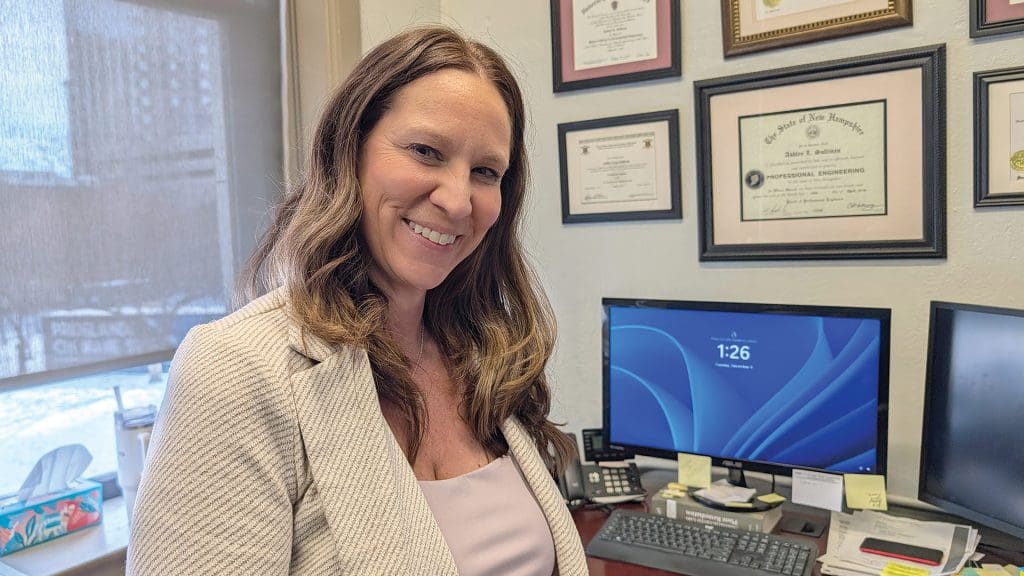
All these efforts at recruitment and career development are important for an industry that needs new blood, said Ashley Sullivan, president and CEO of O’Reilly, Talbot & Okun Associates (OTO) in Springfield.

“For the past few years, it has been very challenging to recruit and find people. We have a shortage of people, it seems,” she noted. “We have a big exodus with retirements — through the whole COVID pandemic, there were people rethinking engineering. So there’s a lot of work, and there seems to be not a lot of people.”

Ashley Sullivan says today’s young recruits are looking for a company that aligns not only with their work interest, but with their purpose, goals, and values.

Ashley Sullivan says today’s young recruits are looking for a company that aligns not only with their work interest, but with their purpose, goals, and values.

One way to attract talent is through a workplace culture that resonates with young people, she explained, and OTO started to put more emphasis on that when she transitioned into company leadership in 2020, better defining its brand; emphasizing workplace values like transparency, respect, and togetherness; and operating according to the mission statement, “we will elevate our industry to create and deliver the best solutions for natural and built environments.”

“We asked, ‘who are we? Who do we want to be?’” Sullivan said. “And we need to live by that so we can communicate it and say, with full transparency, ‘this is what we are. If you want to work at a place like this, this is what you’re going to get.’”

Meanwhile, the recruitment process involves not only interviews with top leadership, but eventually meetings with field staff and project managers. “We invest a lot in the interview process — by that time, we know this is a great candidate, so how do we show them how they would fit into our business model and fit in with our people?”

Belitz also emphasized the value of workplace culture in attracting what he characterizes as a more purpose-driven generation of young job applicants than he’s seen before.

“The narrative has changed a little bit. This generation is interested in the stability of the company. I don’t know if it’s the uncertain economy driving it, but to be able to say to these prospective interns that the company has been around over 100 years, we’re very financially stable, we do purpose-driven work, we’re 100% owned by employees — that’s a nice difference,” he explained.

“The big picture is that we’re trying to train engineers who are value creators — technically strong, skilled at math and science, but they also have that vision of how the world can be a better place.”

“We’ve also put in some really good benefits for students, like loan repayment. Benefits are a hot-button issue, so we’re really trying to promote this overall climate of stability and of the company investing in the people we bring into the firm,” Belitz added. “And giving back to the community is another key part of the puzzle — and a big selling point for young people.”

Sullivan agreed with that emphasis on culture and purpose.

“I think this newest generation wants a company that knows who they are and has a purpose — one that aligns with their purpose or what their goals are,” she told BusinessWest. “It could be that they want to see their projects have an impact on the community — they’re really community- and impact-driven, much more than the rest of us that were just looking to get a job, which is really neat. I think culture and the big picture is important to them.”

In short, she said, “they want to matter. They want to know their value, and they want to be valuable. And they want that from the beginning.”

Meanwhile, retention is as important as recruitment, which is why Tighe & Bond invests thought, time, and energy into cultivating career tracks for employees, Belitz said.

The firm’s onboarding and training program consists of not only leadership training, but anything people need to do their jobs: project management, quality management, safety and health principles, and more — efforts branded internally as Tighe & Bond University.

Mike Rust says higher education has seen a shift toward giving engineering students more hands-on, project-based experience right from the start of their college careers.

Mike Rust says higher education has seen a shift toward giving engineering students more hands-on, project-based experience right from the start of their college careers.

“We’ve also started investing more in training around technology, making sure folks have a good understanding of how to appropriate and use things like artificial intelligence and other investments we’ve made in digital toolsm” he added. “There’s a lot of energy around that, especially with the younger generation.”

Sullivan said many recruits want to see a clear career ladder at work.

“I think it’s important for them to be able to see where they could be in a few years, so they feel like they’re moving along. I think they want to see opportunity; they don’t want to get stuck in a rut or doing one task.

“And for me, leading a small business, I want people that want to do that because I love that people will develop and can do a little bit more of a project. If that means they’re more valuable, then the pay comes with that,” she added. “At OTO, those two things are aligned. It’s always in our benefit to develop people, so we’re looking for people that really want to do more.”


Surveying the Landscape

While Tighe & Bond is a civil and environmental engineering firm and OTO specializes in geotechnical, environmental, and industrial hygiene consulting services, Western New England, like many universities with strong engineering programs, is sending graduates out into myriad engineering disciplines — mechanical, electrical, civil and environmental, biomedical, industrial, and more. And placement rates are high, with 97% of engineering graduates placed in jobs within six months.

“Engineering tends to be pretty steady regardless of what’s going on in the economy,” Rust said. “The big picture is that we’re trying to train engineers who are value creators — technically strong, skilled at math and science, but they also have that vision of how the world can be a better place.”

Elaborating, he added, “they’re encouraged to think in those terms — to take an existing product and improve it, or talk to the customer about what the pain points are and how to address them. They’re thinking not only about what a company does, but what it could do. And companies come back to us and say, ‘can you get me five more of that student you got us last year? They were what we want.’ Because they’re not satisfied with the status quo.”

Sullivan, who has taught classes at WNE, still participates in engineering advisory boards there, connecting area industry leaders with educators.

“We talk about what we looking for for graduates and who are we looking to hire. But they also talk to us about the exciting research they’re doing, the programs they have, the outreach they have, where they have challenges, where they may need support,” she explained. “And I really feel like, whenever you have two or more groups together working to solve a problem, the ideas that come out of there are amazing.”

Like Rust, Sullivan appreciates when young people emerge with a problem-solving mindset, but also an appreciation for how they can change the landscape, both literally and figuratively.

“We get to work with a lot of people, and we get to see new development and help with projects that impact our own lives or the people we care about,” she said, naming the recently opened Square One expansion in Springfield and DC Station, the new electric vehicle charging hub in Northampton, as two examples.

“I can bring my daughters to an urgent care and know that I worked on it,” she added. “That’s one of the reasons why we try to encourage people to come to OTO, or to be in civil engineering: you impact people. The work is hard, but it’s so rewarding, and you’re constantly reminded why you do it.”

Insurance Special Coverage

Rate of Change


Insurance isn’t any home or business owner’s favorite topic — well, except for insurance agents, maybe — and the many pressures on rates over the past several years, from inflation and supply chain issues to adverse weather events and jury verdicts, has made it an even more difficult conversation.

The good news, said Sam Hanmer, president and CEO of Chicopee-based Rush Insurance Group, is that, while the rate environment has continued to move north, he’s seeing a slowdown on the property side.

“Property took the biggest hit after COVID. When supply was so hard to come by, it shot pricing up. Everyone’s experienced that. As an industry, we were relatively slow to figure that out,” he explained, noting that insurance carriers eventually increased rates to reflect that reality, some numerous times. “So the industry has caught up in terms of costs of construction.”

Still, rate changes vary with the age of a property, said Mark Rosa, senior account executive with Borawski Insurance in Northampton. “With newer homes, rates are fairly stable. Someone with an older house could see some rate increases because there are some insurance credits on new homes that someone with a house built in 1978 is not going to qualify for,” he noted. “But I don’t expect what we saw the last few years, 10%, 15%, 20% rate increases. That’s gone away slowly, and I expect to see some kind of stability.”

“I don’t expect what we saw the last few years, 10%, 15%, 20% rate increases. That’s gone away slowly, and I expect to see some kind of stability.”

That said, climate change and natural disasters have continued to impact the rate environment in unpredictable ways.

“I think that we as insurers would like to have that buttoned down, but with weather patterns, I think we’ll have to wait a little while longer; I think that’s going to continue to plague the insurance industry,” he said, as opposed to, say, construction costs, which have settled a bit: “I think we’ve handled that with the rate increases in the past.”

Automotive insurance has seen rate increases as well, but for different reasons, one of which is simply today’s technological sophistication, Hanmer said. “A fender bender used to cost $500, now it’s six grand, with all the cameras in these cars now.”

Another issue causing auto rates to rise is what Rosa, and others in the insurance industry, characterize as “legal system abuse,” or a trend toward massive payouts in lawsuits that wind up being borne by insurance payers and, eventually, passed on to customers. It’s a concern across all types of insurance, but particularly product liability and auto accidents; in those areas, verdict payouts rose 7.1% annually, on average, between 2016 and 2022, according to the U.S. Chamber of Commerce.

A 2025 Perryman Group study, “The Economic Impact of Excessive Tort Costs on U.S. Households,” says consumer prices in the U.S. are estimated to be 1.32% higher than they would be without excessive litigation.

Sam Hanmer

Sam Hanmer

“People believe they can buy insurance online, which a lot of people do, and they never have problems — until they have one. So where do they turn? They need an advocate in the form of an agent.”

Meanwhile, the median size of so-called ‘nuclear verdicts’ — defined as jury awards of $10 million or greater — has more than doubled since 2020, according to Marathon Strategies’ “Corporate Verdicts Go Thermonuclear: 2024 Edition.” And it’s not just the severity of the verdicts that’s trending upward, but the frequency of litigation as well.

All these statistics were compiled in a recent Legal System Abuse Toolkit prepared by Trusted Choice and the Big I for use by independent insurance agents.

“Legal system abuse is a problem for policyholders, consumers, and the economy as a whole,” the toolkit argues. “It drives up prices, drives out insurers and investors, and clogs the court system with frivolous cases that could be handled fairly without litigation. Moreover, the beneficiaries are opportunists in the legal field and their financial backers.”

There are other trends at play as well. Hanmer said umbrella insurance is seeing higher rates these days, and Rosa noted that some types of contractors, such as snow plowers, have found it harder to secure affordable policies. “But most classes of businesses are seeing some stability, and even some rate softening,” Rosa added.


Knowledge Is Power

Like many indepenent agencies have expressed to BusinessWest over the years, both Hanmer and Rosa took the opportunity to underline the importance of working with an agent to navigate these complexities.

“We have to understand their business before we put a program together,” Hanmer said. “We need to understand the business they’re in, their risks, the exposures they face, and how best to mitigate them. There’s more to that than buying insurance, but insurance is still primarily how you protect yourself from unknowns and risks. So with in-depth knowledge, we can put a program together and best fit what those exposures are.”

That creates relationships that go well beyond just buying a policy, he added.

“People believe they can buy insurance online, which a lot of people do, and they never have problems — until they have one. So where do they turn? They need an advocate in the form of an agent. It’s so important to educate people that there is a need for an agent. When you buy insurance, you hope you never use it, but when you need it, you’re glad you have it — and you’re glad you have an advocate.”

Mark Rosa

Mark Rosa

“We’re seeing cyber claims for classes of businesses I never thought possible. And there are legal fees that come with cyber strikes.”

Rosa agreed. “Obviously, you need to ask the right questions. Without an intimate knowledge of a business, you’re not able to do the job in the right way,” he said. “There’s so much in every one of these policies; they aren’t just one size fits all. There’s a lot of time involved in order to do the job correctly.

“So it’s a lot of learning what the business does, spending time with the owner, asking lots of questions. Otherwise, we don’t know how to fill certain gaps,” he went on. “I think what differentiates one agent from the next is what the experience is like and how unique it is. Everyone’s business is unique. While you might qualify for a certain policy type, it doesn’t mean you don’t need to go above and beyond that.”

Rosa added that insurance isn’t something business owners always want to talk about, but the conversations are necessary, if only to regularly check in on changes to the business and evolving risks and exposures.

One of those is cyber liability, which over the past decade has become an essential part of commercial insurance — for businesses of all sizes and sectors.

“More and more, the hackers are incredibly adept and professional in how they do things — it’s amazing how good these guys are. So cyber insurance is something that everybody needs now,” Hanmer said. “It used to be, people thought only big companies were targeted, but that’s not true anymore. Everyone is getting targeted. Cyber insurance is a must buy in this market.”

Rosa agreed. “We’re seeing cyber claims for classes of businesses I never thought possible. And there are legal fees that come with cyber strikes,” he noted. “Some business owners say, ‘the data was backed up from the day before, so I don’t care.’ Well, that’s understandable, but what happens when the state or the federal government comes and slaps you with a fine, and now you’re paying for credit monitoring? We’ve seen a small business pay $63,000 between the fines and the legal paperwork. And that business could have had a cyber policy anywhere from $1,200 to $1,500 over the year.”


Career Opportunities

Beyond the financial numbers, Hanmer said, the biggest challenge the industry faces — not just regionally but nationwide — is a shallow talent pool of young people clamoring to enter the field.

“They’re not migrating into the insurance world like they had in the past. So staffing and talent is our biggest challenge right now. Ask any agent, and they’ll say the same thing — we can’t find anybody,” he explained, before offering a few thoughts on why that might be.

“It’s not flashy enough, I think, for kids. All the technology and the tech startups, that’s where they’re migrating — the more tech-oriented world. Insurance is not tech-heavy, although it’s evolving. So I don’t think insurance is exciting enough for them, and it’s too bad because it’s a great business. When I find a young person and I can bend their ear for a minute, I encourage opportunities to be in the insurance world.”

Rosa noted that technology is creeping into the insurance world in some intriguing ways. For one, underwriters are using it to adjust what they currently have on the books, using drone or satellite footage.

“When they see your house was built in 1978, now they’re subscribing to third-party technology to show an image of your roof. And hey, this roof looks like it might be 20 to 30 years old. So are the rates increasing? They might be,” he said — if the company wants to keep insuring that property at all.

If not, he went on, “now you’re going from a carrier with a favorable rate to your options being more limited, and it’s gone from $1,200 to $1,600. It’s about insurability and certain risks and what insurance companies are willing to insure.”

At the same time, insurance companies are increasingly determining how they can incorporate artificial intelligence into those processes, and that will affect rates as well, Rosa noted.

“For homeowners and our business clients, AI will shake things up. Carriers have access to so much data, and they might say, ‘hey, we can’t insure this type of business any longer.’ And that will force rates higher. It might even be a good opportunity for carriers that don’t use the technology.

“It’s too hard to say what will happens,” he added, “but I do think insurance is an industry that’s been kind of slow on technology for many decades, but that will accelerate in the next two to five years — and insurance is going to be different from what it is today.”

Community Spotlight Special Coverage

Community Spotlight

Sean Fitzgerald says SHELD’s fiber business, Fiberspring, continues to expand beyond its South Hadley roots.

Sean Fitzgerald says SHELD’s fiber business, Fiberspring, continues to expand beyond its South Hadley roots.


Lisa Wong says she was following a trend of sorts. But this was also a no-brainer.

She was referring to her move to follow up four terms as mayor of Fitchburg, in Central Mass., with a new assignment as town manager of South Hadley.

Her immediate predecessor in that role, Mike Sullivan, did essentially the same thing, moving from the corner office in Holyoke, so there’s precedent for taking that career path. As for Wong, who has also been town manager in Winchester, she has many deep connections to South Hadley, including family — and her marriage certificate.

So when Sullivan, whom she knew from when they were both mayors, talked up the job, she threw her hat in the ring and was eventually chosen, coming aboard nearly four years ago.

When asked to compare and contrast the mayor and town manager roles, Wong said that, other than dealing with the press less frequently, the jobs are very similar, and involve managing for today and planning for tomorrow, in equal parts.

In South Hadley, that means everything from ongoing work to reimagine a section of Main Street to early-stage work to build a new elementary school; from a new housing project, called the Clover, to a town meeting vote to approve six additional liquor licenses (there are 19 at present), a nod to a growing restaurant and hospitality sector.

Now under construction near the Rocky’s plaza on Route 116, the Clover project, being undertaken by Way Finders, will include 60 units of mixed-income housing, said Wong, adding that this will help close the gap in the town’s housing needs, but more work is needed.

“We’re looking at places like the Falls and the Route 202 and 33 corridor as additional places for our businesses to grow, but also to bring in new businesses, especially small businesses, to create more vibrancy.”

“We have a bigger dent to make,” she said, adding that the town recently created an affordable housing trust, tasked with creating more housing options.

These are some of the many intriguing storylines in South Hadley. Others include continued growth of the South Hadley Electric Light Department’s (SHELD) fiber internet business, called Fiberspring, which has now expanded beyond the town, as well as plans for a new, $25 million headquarters building for the utility.

SHELD is now an internet provider in the towns of Leverett and Shutesbury, both in nearby Franklin County, and recently won a contract to provide fiber for customers in Longmeadow.

“We won a unanimous vote from the Select Board in Longmeadow, and we’ve done their engineering and design, so that’s pretty exciting,” SHELD General Manager Sean Fitzgerald told BusinessWest. “We’ve delivered to them a full, town-wide design engineering package, and in the spring, we’ll believe they’ll take a vote to finance either a partial launch or an entire town launch of fiber; they have a huge appetite for this.”

As for the new headquarters facility, SHELD has chosen a site across from the Big Y on Willimansett Street for a construction of a facility will replace a more than 100-year-old structure and provide the utility with room to grow, especially on the fiber side, and an opportunity to move out of a flood zone.

There’s also the community’s large and diverse business community, which includes those that have been around for decades — like Carey’s Flowers and Chap de Laine’s Interiors, and relative newcomers such as a Delaney’s Market.

Located in a small church salvaged by one of the towns flooded to create the Quabbin Reservoir, the South Hadley Delaney’s Market also includes the kitchen that makes the grab-and-go offerings now available at five locations across the region — South Hadley, Longmeadow, Westfield, Wilbraham, and the latest addition in West Springfield, with plans to expand in Holyoke.

Founder Peter Rosskothen, a serial entrepreneur who revitalized the Log Cabin banquet facility in Holyoke, said the Delaney’s Market concept, launched a decade ago with the Longmeadow store, is catching on, with the chain amassing a growing roster of steady, repeat customers.

“We’re feeling the economy a little bit this year, but it’s a very steady concept, with loyal, regular customers,” he said. “So I feel good about the concept.”

As for Chap de Laine’s, the landmark business, opened in 1957, is preparing to mark 50 years in business, said second-generation owner Lisanne Chapdelaine, who took the helm in 1997. It has celebrated more milestones since, she noted, by being faithful to the mission set in place by her father, while also becoming a one-stop shop, handling everything from residential and commercial furnishings to flooring coverings to window treatments.

Peter Rosskothen says his chain of Delaney’s Markets continues to grow, evolve, and draw repeat customers.

Peter Rosskothen says his chain of Delaney’s Markets continues to grow, evolve, and draw repeat customers.

“We’re still in all the categories we have been historically,” she said. “And our design services go beyond our product offerings, providing the end users with paint and wallpaper. It’s all part of being a one-stop shop.”


Current Events

Wong said she considers South Hadley to be a destination community, complete with restaurants and shops (at Village Commons, for example), parks, the arts, recreation facilities, and Mount Holyoke College.

Among her many goals is to promote these various assets and draw more visitors, while also providing quality services to those who call the community home.

“I’m led by my love of the town,” she said, adding that there are several developing stories, including some infrastructure projects, topped by a major reconstruction of what’s known as the Falls Quarter, the historic South Hadley Falls neighborhood, which sits along the Connecticut River.

“There will be a major reconstruction of Main Street from the Chicopee line to the library,” said Wong, adding that plans call for creation of multi-purpose trails, beautification efforts, and other initiatives. “It will really revitalize that area.”

As she explained, “we’re looking at places like the Falls and the Route 202 and 33 corridor as additional places for our businesses to grow, but also to bring in new businesses, especially small businesses, to create more vibrancy. We have a lot of rezoning of quarters to create a more walkable neighborhood feel that can also accommodate quality commercial spaces.

South Hadley at a Glance

Year Incorporated: 1775
Population: 18,150
Area: 18.4 square miles
County: Hampshire
Residential and commercial tax rate: $15.41 (Fire District 1); $15.74 (Fire District 2)
Median Household Income: $46,678
Median Family Income: $58,693
Type of government: Town Meeting
Largest Employers: Mount Holyoke College; Loomis Communities; Big Y
* Latest information available

“We’re opening ourselves up for business,” she went on. “We want people to thrive here, but we also want to create new opportunities to be part of our vibrancy.”

Meanwhile, the town is looking to replace Mosier School, currently grades 2-4, and expand it to grades 1-5.

“This would be a major undertaking and a major asset for the community,” Wong said, adding that the town is looking at design options and anticipates building by 2030 or 2031.

While South Hadley is progressing on many fronts, so too is SHELD. Indeed, Fitzgerald told BusinessWest that the fiber project in town has mostly exceeded expectations, with the utility now boasting a 53% market share.

“And it’s still growing — we’re approaching 3,000 customers in South Hadley alone,” he noted. “People are jumping on the fiber every day. We’re adding nine to 12 customers every week — it’s the best case that we could have hoped for.”

Looking ahead to the Longmeadow project, Fitzgerald said it will be handled in much the same way that South Hadley (which is similar in size) was, meaning it will be phased in through creation of fiber service areas (FSAs), or fiberhoods, as SHELD likes to call them.

“Each fiberhood has 250 to 300 customers, so if we start out with three or four of those, you’re looking at close to 1,000 customers,” he said, adding that Longmeadow will eventually have about 6,000 customers. “You build the town out in sections.”

And the expectations are similar in South Hadley, he went on, adding that projections call for at least a 50% market share and likely much higher, as the need for reliable internet service continues to grow.

“Co-ax cable doesn’t have the capability of the fiber, and also, the industry has changed; people watch their television differently now,” he explained. “Those factors will drive us probably over 60% to 70% over the next three years.”

Meanwhile, SHELD continues to explore further expansion opportunities, such as in Southampton, where the town has made a proposal, and Hadley, one of several communities “kicking the tires,” said Fitzgerald, adding that further expansion, which could include going into neighboring states, will be challenged by the number of private equity companies getting into the fiber business, such as Gateway Fiber and GoNetSpeed.

“They’re coming in and slapping fiber up,” he added. “And if you have too many competitors on the pole, it waters down your ability to be successful.”

As for the new headquarters building, SHELD hopes to be in construction of that facility by the second quarter of 2026, Fitzgerald noted, adding that, to pay for it, the utility will likely impose a 2.5-cent rate increase on the electric side (roughly $200 per year for the average customer), a cost that will likely be reduced as revenues grow on the fiber side.


Food for Thought

Rosskothen told BusinessWest that, beyond convenience, the main thrust at Delaney’s Market is on ‘fresh.’

Made in South Hadley with local ingredients, the meals are brought to the four other locations daily to ensure freshness, he explained, adding that the concept has caught on with many different constituencies.

“Most of those who use it are young people, busy people, seniors … it’s a wide variety of customers that come regularly,” he said, adding that these groups are attracted by a combination of convenience, quality, and variety. “Hopefully, they come once a week, and many of our customers come at least two and half times a month.”

They have a wide variety of options to consider, from chicken francaise to shepherd’s pie; blackened salmon to stuffed peppers; chicken pot pie to lobster pie (Tuesday only).

“At this time of year, the comfort foods seem to do really well — the pot pies, the chicken parm, the shepherd’s pie,” he noted, adding that the stores to very well around the holidays, both for those entertaining and those too busy to cook.

In the new year, the company will add calorie-smart offerings that will coincide with those New Year’s resolutions to eat smarter and healthier, said Rosskothen, adding that, while the concept was launched a decade ago, it has been continually tweaked to generate new customers — and more repeat customers.

In many ways, that has been the same blueprint at Chap de Laine’s.

Indeed, the landmark store, first located in South Hadley Falls and then moved to its current location on College Street in 1970, has been welcoming different generations of the same family, said Chapdelaine, adding that the store has adapted to changing times while remaining true to its roots.

For example, people can do research on the internet, she explained — which, if used properly, can be a useful tool and a vehicle for bringing people to the store.

Most of the products sold in the store are made in the U.S., which reduces the broad impact from tariffs imposed by the Trump administration, she noted, adding quickly that even products made in the country will likely have components made overseas that are subject to tariffs.

“We have one or two small brands that are subject to tariffs,” she explained. “We have two big lines for which we’re paying 20% more, overnight, and that’s a biggie.”

But Chap de Laine’s has successfully navigated plenty of change as it approaches 50 years, in a town where change — and, hopefully, business momentum — promise to be constant as well.