Daily News

EASTHAMPTON — Hometown Mortgage, a division of bankESB, has been recognized as the eighth-largest lender on the MassHousing Top Ten Lenders list, underscoring the company’s continued commitment to expanding access to homeownership across the Commonwealth.

In 2025, Hometown Mortgage delivered strong lending performance while helping individuals and families achieve their homeownership goals. Over the course of the year, the company originated more than $401 million in new mortgage loans, issued more than $110 million in new home equity loans and lines of credit, and provided $3.5 million in grant and down payment assistance to qualified borrowers.

“This recognition from MassHousing is a reflection of our team’s dedication to serving our communities and helping borrowers navigate one of the most important financial decisions of their lives,” said Ryan Kirwin, executive vice president of Residential Lending at Hometown Mortgage. “We’re proud not only of the volume we achieved in 2025, but of the meaningful impact behind those numbers — supporting first-time homebuyers, strengthening neighborhoods, and expanding access to affordable financing options.”

The MassHousing Top Ten Lenders list highlights institutions that play a leading role in advancing affordable housing opportunities throughout Massachusetts. Hometown Mortgage’s ranking reflects its focus on responsible lending, strong community partnerships, and innovative programs designed to meet the evolving needs of homebuyers and homeowners.

In addition to the organization’s recognition, Hometown Mortgage’s regional director, Maria Luker, received individual distinction from MassHousing, ranking among the top two loan originators across Massachusetts and first in originations in Middlesex, Essex, and Norfolk counties. She also ranks among the top three lenders in Suffolk, Berkshire, and Plymouth counties.

“Maria’s dedication to excellence, deep knowledge of the local markets, and unwavering commitment to customers and community have played a significant role in driving the organization’s growth and reputation throughout Massachusetts,” Kirwin said.

Banker & Tradesman also ranked Hometown Mortgage among the top 10 lenders in Massachusetts across several key categories, including third in non-purchase lending, including home equity loans, home equity lines of credit, and refinances; sixth in number of condominium loans granted; eighth in condominium loans by dollar volume; and 10th in number of single-family home loans granted.

“As Hometown Mortgage looks ahead, the company remains committed to building on this momentum,” Kirwin said. “By investing in people, programs, and partnerships, we’ll continue to help unlock the door to homeownership for more residents across the state.”

Daily News

GREENFIELD — Greenfield Community College (GCC) will host Standing on the Shoulders, an event celebrating International Women’s Day, on Saturday, March 7 from 1 to 3 p.m. in the GCC Core Lobby. The event is free and open to the public. All ages are welcome.

Through story, song and conversation, the program will honor the women who came before and continue to inspire courage across generations. Organizers say the gathering is designed to kindle a shared flame of hope rooted in community connection and a celebration of diversity.

Participants are invited to reflect on a woman, past or present — from history or their own family — who inspires them. Attendees are encouraged to bring a small item or object that represents that person for a small-group activity during the program.

The event, sponsored by GCC Community Engagement, is intended for adults, teens, and children age 7 and older. The program will be led by an ensemble including Rev. Sarah Pirtle, Carol Sartz, and Swansea Benham Bleicher. Click here for more information.

Daily News

SPRINGFIELD — On Thursday, March 5 beginning at 4 p.m., the Eastern States Exposition (ESE) will roll out the red carpet at the Naismith Basketball Hall of Fame for the most recent class of champions from Hooplandia, the Northeast’s Ultimate 3×3 Tourney + Festival. The names of the tournament’s 2025 championship teams will be engraved into the sport’s history when a shiny new plaque is unveiled at the museum in Springfield.

“I think every kid has NBA dreams,” said Jack Appleby of Hooplandia’s first-ever winning Pro-am team, How to Hoop Forever. “But in what world do any of us even fathom getting our names in the Basketball Hall of Fame? It’s a truly insane honor that I still can’t really believe, and I can’t thank Hooplandia enough for putting on a tournament like this. We all need places to play — adults and kids alike. Our team can’t wait to come back this year, enjoy a weekend of basketball, and, of course, defend our championship title.”

The display represents all that Hooplandia stands for: history, competition, and pride in the game. A plaque mounted on the center of the wall lists the team names of the most recent reigning champions. The plaque is changed year after year as top-ranking teams win their way to the top.

“Hooplandia represents many aspects of Dr. Naismith’s vision — physical fitness, inclusivity, teamwork, and the thrill of competition,” Hooplandia General Manager Drew Dawson said. “It also embodies both the interest and explosive growth of 3×3 basketball globally. This is a great opportunity to be included alongside the game’s greats, and we’re beyond excited to see the next generation of hoopers inspired and honored in such a way.”

Visit hooplandia.com to register a team for this year’s tournament, slated for June 19-21.

Daily News

Patricia Samra

HOLYOKE — Patricia Samra, a recently retired healthcare executive, has been appointed to the Holyoke Community College (HCC) board of trustees by Gov. Maura Healey. She attended her first meeting on Feb. 24, and her term runs through March 1, 2029.

Until 2025, Samra, a master’s-level registered nurse, was vice president of HR Operations and Total Rewards at Baystate Health in a career that began with the Springfield-based healthcare organization in 1986. Over 40 years, she served two 14-year stints at Baystate, starting as a registered nurse before moving into human resources.

Before returning to Baystate for her second stint in 2006, she worked for nine years as an independent healthcare consultant for the Dix Consulting Group in Portland, Maine. She holds a bachelor’s degree in nursing and a master’s degree in nursing administration from UMass Amherst.

“I believe community colleges are powerful engines for equity and transformation,” Samra said. “Serving on the HCC board of trustees will allow me to bring my experience, values-driven leadership, and commitment to expanding pathways that help every student succeed.”

Daily News

SPRINGFIELD — Freedom Credit Union is inviting members and the community to support Shriners Children’s New England in Springfield through its Month of Giving campaign in March. Donations will be accepted at all Freedom Credit Union branches throughout Western Mass.

“Supporting children and families in our region is central to our mission,” said Glenn Welch, president of Freedom Credit Union. “Shriners Children’s New England provides extraordinary care and compassion, and we are proud to rally our members and neighbors to support their work.”

Each month, Freedom Credit Union selects a local nonprofit to benefit from its Month of Giving campaign, which helps strengthen the communities it serves. Funds collected during March will support Shriners Children’s New England as it continues providing highly specialized pediatric orthopedic, urology, rheumatology, and cleft lip and palate care using advanced diagnostic and treatment technologies. All care is provided regardless of a family’s ability to pay.

Located in Springfield, Shriners is designed exclusively for children and offers a full range of services in one location for added convenience and comfort.

Freedom Credit Union encourages community members to visit any of its branches during March to make a donation and help support life-changing care for local children and families.

Daily News

SPRINGFIELD — Dakin Humane Society was honored with the Harmony & Compassion Asian American Pacific Islander (AAPI) Community Impact Award as part of the festivities during the Chinese American Cultural & Heritage Society’s 2026 Lunar New Year event at the Naismith Memorial Basketball Hall of Fame on March 1. The award was given on behalf of the Asian American Pacific Islander community that has benefited from Dakin’s outreach and work.

“On behalf of the AAPI community, I want to share how much we truly appreciate the meaningful work Dakin is doing in Western Massachusetts,” said Emma Chen-Banas, who serves as a commissioner with the Asian American and Pacific Islanders Commission of the Commonwealth of Massachusetts. “Many members of the Asian community have personally expressed how they have benefited from Dakin’s services and outreach. Its impact is both visible and deeply valued. We were also especially touched to learn that Dakin’s founder, Janet Frances Wilder, was born in China — a meaningful historical connection that resonates with our community.”

The 2026 Lunar New Year event marked the Year of the Horse and is one of the most significant cultural celebrations in Chinese and East Asian communities. It is a time for families and communities to come together to honor traditions, embrace renewal, and share hopes for prosperity and happiness in the year ahead. The gala’s theme celebrated the spirit of togetherness and the richness of cultural heritage, and featured world-class Chinese performing artists and internationally recognized groups, traditional music, dance, martial arts, acrobatics, and more, in addition to the awards presentation.

Dakin Executive Director Meg Talbert who accepted the award on behalf of Dakin, thanked the AAPI community for the honor.

“As we welcome the Year of the Horse, we reflect on its spirit of strength, resilience, and forward momentum,” she said. “At Dakin, compassion is more than a value — it’s the daily work of caring for animals, supporting families, and building lasting harmony in our community. True progress happens when we come together to protect the vulnerable, guided by purpose and sustained by compassion — something we strive to live every day.”

She also added that, as part of its new three-year strategic plan, Dakin is about to launch a new Community Outreach Program that expands its role as a social service organization for animals and the people who love them. This program takes Dakin’s mission beyond the shelter walls, meeting people where they are and ensuring they have the veterinary care, spay/neuter services, and resources they need before challenges become crises.

Daily News

BOSTON — On April 15, the Massachusetts Department of Environmental Protection (MassDEP) will begin accepting applications for its 2026 Reduce, Reuse, Repair Micro-Grant Program. The application will be available on MassDEP’s website and must be submitted by 5 p.m. on May 15.

This grant program supports innovative waste prevention solutions as alternatives to the disposal or new purchase of products across Massachusetts. Funded projects will help advance the state’s goal of reducing statewide waste disposal by 30% by 2030 by stopping waste at the source.

Micro-grants will range from $3,000 to $10,000 and reimburse eligible costs associated with developing and implementing proposed projects. To qualify, projects must focus on reducing waste in Massachusetts through donation, sharing, rescue, reuse, and/or repair, and must be completed within one year. Eligible applicants include businesses, nonprofits, schools, and local governments.

MassDEP is committed to advancing equity, diversity, and environmental justice through its grant programs. MassDEP will prioritize projects that benefit disadvantaged communities.

Examples of eligible projects include starting or expanding programs that repair used furniture, appliances, electronics, and other durable goods for resale or distribution; promoting building material salvage and reuse by hosting deconstruction trainings or piloting a deconstruction project; switching from single-use to reusable food service ware at restaurants and/or institutional cafeterias; creating or expanding food donation collection, storage, and distribution programs; and more.

MassDEP will host a virtual information session on Wednesday, April 1 from 10 to 11 a.m. Online registration is required (click here) to attend the information session. Click here for a program overview and guidelines, eligible uses of funds, evaluation criteria, and details on previous micro-grant recipients.

After the application opens on April 15, questions must be submitted in writing to Leah Kelleher at [email protected]. All questions are due by 5 p.m. on April 29. Answers will be posted to the micro-grant webpage on May 4.

Daily News

WEST SPRINGFIELD — Nominations are now open for the 2026 Agricultural Adventurers Award, one of Eastern States Exposition’s (ESE) most prestigious accolades. As ESE continues to advance as a national leader and authority in agriculture through initiatives including the Agriculture Is Our Culture campaign, it is the organization’s goal to bring attention to this effort to honor farmers in New England.

The Agricultural Adventurers Award honors those who have influenced how food is grown and produced, as well as how agriculture is understood, sustained, and passed forward into the future. These are the innovators, stewards, educators, and champions whose impact deserves to be recognized on the national stage.

The ESE trustees that compose the Agricultural Adventurers Award committee review nominations in search of candidates that embody excellence and vision. They prioritize those that have made a lasting contribution to agriculture. Intentional nominations ensure that this honor reflects the depth, diversity, and future of the industry ESE represents.

Last year’s award presentation demonstrated the growing reach and impact of this honor. The 2025 recipient, the Bloom family of Copps Island Oysters, was featured through local media coverage as well as an Agriculture Is Our Culture storytelling video that brought their multi-generational legacy to life.

During an interview with ESE, Norm Bloom Jr., owner of Copps Island Oysters, said, “this award I received means a whole lot. It means a real lot that people are watching. When they picked us and offered us this award, it was one of our better moments, I’d say.”

Agriculturists often play a thankless role in local communities, and the Blooms — like so many 21st-century farmers — rarely receive their deserved recognition. The oystermen and women at Copps Island in Norwalk, Conn. are aquaculturists, so their plots for harvesting are in salty waters along the Connecticut coastline, invisible because they are submerged. Passers-by drive over the sound and walk by the farm, unaware that the people at Copps are working hard year-round beside them to put fresh catch on tables statewide and beyond.

Cast your vote by submitting an Agricultural Adventurers Award nomination form by Tuesday, March 3. Visit easternstatesexposition.com for more details.

Daily News

Ben Downing

BOSTON — The board of the Massachusetts Clean Energy Center (MassCEC) voted to appoint Ben Downing as its next CEO. Downing is currently chief growth officer at the Engine, a nonprofit incubator and accelerator built by MIT to support climate tech, biotech, and advanced infrastructure startups. He also previously served as a state senator representing the Berkshires and as Senate chair of the Joint Telecommunications, Utilities, and Energy Committee.

“Massachusetts is home to some of the world’s leading climate tech companies, and many of their successes can be attributed to Ben Downing’s visionary leadership in the Legislature and the support he has spearheaded for startups at the Engine,” Gov. Maura Healey said. “Our administration is deeply committed to growing our innovation economy. With strong support authorized under the Mass Leads Act, Ben will steer our climate tech industry and over 162,000 climate tech workers to its next chapter.”

Downing thanked Healey, Lt. Gov. Kim Driscoll, and Energy and Environmental Affairs Secretary Rebecca Tepper for the opportunity.

“My experience has taught me that Massachusetts can be the place where the solutions to climate change are invented, built, and deployed,” he added. “Doing so affordably requires activating all of the state’s resources. I’m excited to help MassCEC do just that with our partners in the Healey administration, the Legislature, the clean energy and climate tech sectors, and more. Let’s get to work.”

As chief growth officer at the Engine, Downing working hands-on with climate tech and biotech startups. In that capacity, he has supported, advised, and worked with some of the most promising and impactful teams from Commonwealth Fusion Systems, Form Energy, VEIR, Sublime Systems, Lydian Labs, Atlantic Quantum, Vaxess, Foundation Alloy, Cellino Bio, Robigo, and many more. He helped them secure hundreds of millions in federal awards, build significant connections, and make significant investments across Massachusetts.

Prior to this role, he was vice president of New Market Development for Nexamp, a clean energy company focused on community solar and lowering customer utility bills. He led strategic expansion working nationally with a specific focus in the Midwest and Mid-Atlantic.

As Senate chair of the Joint Telecommunications, Utilities, and Energy Committee, Downing helped shape Massachusetts’ clean energy and climate tech policy, including authorizing the first offshore wind procurement, investments in the New Bedford Marine Commerce Terminal, support for workforce development, and energy affordability initiatives to rein in costs.

“Ben brings a rare combination of policy experience, hands-on startup leadership, and deep relationships across the climate tech ecosystem,” Economic Development Secretary Eric Paley said. “At a time of growing global competition in climate tech, Ben is the right leader to help MassCEC strengthen our innovation pipeline, support companies as they scale, and ensure this industry continues to deliver economic growth across Massachusetts.”

Downing’s tenure will begin in April. He will take over for Jennifer Le Blond, who has served as interim CEO since November. Le Blond will return to her role leading the Emerging Climatetech team at MassCEC.

Daily News

PITTSFIELD — On Thursday, March 5 at 7 p.m., professional genealogist Kathryn Lake Hogan will present “How to Trace Ancestors Through Letters and Postcards,” a Zoom program by the Jewish Federation of the Berkshires examining correspondence as a key resource for family history research.

Letters and postcards can open a uniquely intimate window onto family history, and this virtual program will explore how these often-overlooked materials can help genealogists uncover powerful personal and historical insights. Hogan will explain how letters and postcards allow researchers to hear ancestors’ voices, document family relationships, and capture the details of everyday life. Participants will also learn strategies for locating correspondence within families, archives, and public collections, and how postal routes and geography can illuminate patterns of migration. The program will conclude with guidance on correlating correspondence with census data, directories, and vital records.

Click here for more information and to register.

Daily News

BOSTON — State Sen. Adam Gómez announced the nomination of Gillian Hinkson for the Massachusetts Black and Latino Legislative Caucus’ Black Excellence on the Hill celebration at the Massachusetts State House. The annual event recognizes Black leaders, advocates, and changemakers whose work strengthens communities across the Commonwealth.

“I am proud to recognize Gillian Hinkson as this year’s Black Excellence honoree,” Gómez said. “Her leadership across civic life, community advocacy, and political engagement has made an unmistakable impact in the Hampden District and throughout Massachusetts. Gillian’s commitment to public service, justice, and community well-being exemplifies the purpose of this celebration.”

Hinkson is a civic leader, survivor advocate, and community steward who serves in the Hampden County District Attorney’s Office. She is president of the corporation and board chair of Make-It Springfield, a member of the Massachusetts Democratic State Committee, and has served as chair of the Affirmative Action Outreach Subcommittee within the Massachusetts Democratic Party. Her work has included coordinated voter outreach, cross-state collaboration during national election cycles, and sustained local party building. She has served on her ward committee; supported candidate campaigns at the municipal level and as campaign manager for Tracye Whitfield, overseeing strategy, field coordination, messaging discipline, and day-to-day campaign operations; and contributed to civic education through the League of Women Voters.

Gillian is the founder of Just Aging Different, a well-being and leadership platform for people in their prime years, with a particular focus on women of color carrying significant professional and emotional responsibility.

Shaped by her experience as a Caribbean-American woman and years of service across justice, politics, and community life, Hinkson approaches leadership as a human practice.

Business Talk Podcast Special Coverage

With new episodes airing every other Monday, BusinessTalk features in-depth interviews and discussions with local industry leaders who offer thoughtful perspectives on the Western Massachusetts economy and the many business ventures that keep it running. BusinessTalk is sponsored and presented by Greenfield Cooperative Bank.

Go HERE to view all episodes

Episode 253: March 2, 2026

Joe Bednar talks with Mike Tautznik, Board Treasurer, CitySpace

In some ways, progress on CitySpace — a project to transform Easthampton’s Old Town Hall into a vibrant arts and performance space — has ebbed and flowed over the past several years, but it has never stopped. And now, with an infusion of $3.5 million in federal funds, the final phase has real momentum. For the next episode of BusinessTalk, BusinessWest Editor Joe Bednar sat down with Mike Tautznik, treasurer of the CitySpace board, about what’s happening there now, and why it’s important to the identity and economic vibrancy of a city that has become known for its arts and culture scene. Mike also talks about his 17 years as Easthampton’s mayor, and why he’s been passionate about this city and its institutions for his entire life. It’s must listening, so tune into BusinessTalk, a podcast presented by BusinessWest over both audio and video platforms, and sponsored by Greenfield Cooperative Bank.

Sponsored by:

Also Available On

Cover Story

All That Glitters

James Murning

James Murning

James Murning designs a lot of jewelry — some of it for pretty notable names. You might have seen — and heard — one of them at the recent Super Bowl halftime.

“I design a lot of pieces for musicians,” said Murning, owner of Aurora Jewelry in Easthampton. “I just sent out a piece for Bad Bunny, called the heritage necklace, which essentially is paying homage to Puerto Rico.”

Elaborating, he noted that “the centerpiece is a diamond-encrusted star for the flag of Puerto Rico, and two bezel-set aquamarines represent Bad Bunny’s birth month. And then there are three-dimensional flor de maga flowers, which are the national flower of Puerto Rico, and there is actually a dog tag hanging off the back of the chain with the city coordinates of the city block he was born in.”

For such big-name commissions, “we work with a variety of different people in rock, country, and EDM,” Murning added, but he takes as much pleasure in creating meaningful pieces for everyone — jewelry that’s not only aesthetically pleasing, but offers plenty of meaning in the design itself.

“We also do a ton of repurposing,” he said. “So if somebody comes in and says, ‘I’ve got some stuff from my grandmother or grandfather, these are heirloom pieces, I want to melt them down and get paid cash,’ 90% of the time, if it’s something really cool, I will tell them, ‘you should not melt this. Let us repurpose it and give it a new life.’ We can take the stones out and put them in a new ring; that way, they have a story to tell 20 years from now.”

“If somebody comes in and says, ‘I’ve got some stuff from my grandmother or grandfather, these are heirloom pieces, I want to melt them down and get paid cash,’ 90% of the time, if it’s something really cool, I will tell them, ‘you should not melt this. Let us repurpose it and give it a new life.’”

Just to mention one example, “I had a lady come in one night. She had this incredible, 22-karat solid gold Peruvian cross, handmade in Peru. I mean, the design work and the soldering that went into this it was incredible. And she said, ‘I want you to polish this cross for me; I want to put it in a shadowbox.’”

Instead, he convinced her to repurpose it into three new pieces, one of which was a ring she gave to her daughter. “That was a very rewarding thing — and they’ve come back. They’re really great people. But that was one of those moments where I was repurposing people’s pieces and giving them a new life and a new story. That’s so important. Because once it’s melted, it’s gone. And the cash will be gone, too.

Aurora Jewelers has a wall of engagement photos featuring rings purchased there.

Aurora Jewelers has a wall of engagement photos featuring rings purchased there.

“I love the stories of jewelry. Not only is it art, but you get to hear about people,” Murning went on. “It’s one way you keep people alive. Like, ‘my grandfather bought this for my grandmother in 1915 on 46th Street in New York City.’ You know what I mean? And you can imagine what that scene looked like. So the romance behind it is really nice too.”

One of the most significant aspects of Murning’s business is engagement rings and wedding bands. In fact, he has a wall of photographs on his wall taken by happy couples right after proposals using his rings — another way he sees his job as celebrating history in the making, not just selling jewelry.

“I had a fun couple come in; they said, ‘we’re obsessed with the galaxy.’ And I was like, ‘OK, why don’t I make you a ring that looks like the galaxy?’ And they’re like, ‘you can do that?’ I was like, ‘of course I can.’ It was three rows of diamonds that were circling like a hurricane. And then, in the center, was a mystic topaz which shimmers different colors. So the whole ring looked like the galaxy. And they were blown away by it.”

Murning can wax nostagic when he talks about the value of what he does, and the way his pieces reflect history as much as they reflects light.

“I mean, growing up around my great-grandparents and seeing my great-grandfather get into his light blue Cadillac and open the door for my great-grandmother was … well, you don’t see that kind of culture anymore. It’s just gone. So if I can keep some of that still living, I’ll totally try to do that.”

But Aurora Jewelers has been a success in the bottom line as well.

“Our first full calendar year was 2024, and it was great — way better than I ever expected. In 2025, we did 39% higher. So it just keeps growing,” he said. “There are many factors that come into play when you have a brick-and-mortar jewelry store, not an online business. You just hope that people want to come in and have a conversation. That’s really important. I think COVID really hurt that whole atmosphere of people just wanting to talk to people.”

On a recent afternoon in the Easthampton store, Murning was happy to talk to BusinessWest about the early success of his business, the ways he gives back to the community, and why he’s gratified by all of it.


Shades of a Career

Murning’s path into the jewelry business started at a Sunglass Hut in West Hartford, which he managed when he was around 20 years old. He struck up a friendship with members of the Hannoush family who operated one of their stores there, and was eventually offered a job.

“Joe Hannoush [one of the company’s eight founding brothers] essentially took me in, and his kids are the ones who molded me to the person I am today. Without them, there would be no Aurora Jewelers. Joe was a staple in my career.”

He credits several other mentors with influencing him along the way, including Marc and John Green of Lux Bond & Green, a family jewelry business with a 127-year history.

“Everybody deserves some type of luxury. It doesn’t matter if you’re a farmer or if you’re a construction worker, it doesn’t matter. People like to feel good.”

“I managed one of their locations in Glastonbury, Connecticut — a Rolex store,” Murning said. “And I was very honored to be able to go to Rolex trainings, which not many people get to do. To put myself in that position, where I was able to be inside the room with all these Rolex executives, was a really big thing.”

He also took some courses with the American Gem Society and eventually got to the point where he felt comfortable opening up his own jewelry store, and Aurora Jewelers opened its doors in Easthampton two years ago.

Aurora now sits in an expanded space on Union Street in Easthampton; Murning originally operated out of a smaller spot next door.

“When I walked in there, it was studs, no floor, no ceilings, completely exposed, it was gutted. And I immediately saw exactly what I wanted the store to look like,” he said, from the layout to the color palette, dominated by a blue shade called Salty Dog. “I wanted something that would aesthetically showcase the midnight sky, because that’s the only time the aurora borealis comes out. So there’s significance to everything — the coloring of the store, the greens, the purples, the blues; those are the colors of the aurora.

“Every jewelry store I’ve ever been in, aesthetically, has always been kind of white walls, light gray, and aesthetically, I’m not that kind of person. I’ve always been volume turned up, big color palette. And people have received it really well.”

James Murning has ambitions to expand his brand, including in Boston.

James Murning has ambitions to expand his brand, including in Boston.

But running a business is much more than picking out wall colors.

“I was nervous in the beginning because I didn’t know I didn’t know if Western Mass. could handle a luxury store, and I got told by a few people that this would be better in Boston,” he recalled. “But I said, ‘you know, everybody deserves some type of luxury. It doesn’t matter if you’re a farmer or if you’re a construction worker, it doesn’t matter. People like to feel good.”

The ‘luxury’ description, he said, comes from the fact that he sells more exclusive and higher-quality items — many of which he designs himself — than other stores.

At the same time, giving back to the community is a priority for Murning, and he accomplishes this in a variety of ways, from being a major sponsor of Girls on the Run Western Massachusetts to sponsoring Easthampton athletic programs.

“The people who run Girls on the Run are amazing people, just incredible human beings,” he said of the organization, which blends a life skills curriculum with healthy activity for girls, culminating with a celebratory 5K run each spring and fall. “It’s a great cause. I went and volunteered this past fall. They do a Sneaker Soiree fundraiser, and I told them I’ll raffle off a diamond, and I’ll do some other stuff to help raise as much money as I possibly can.”

Then there’s a group of Easthampton High School students Murning has dubbed the Easthampton Sandlot; he even has a movie poster of The Sandlot that they’ve all signed.

“They’re convinced I’m in the mafia. They think I’m making millions of dollars and drive a Ferrari,” he joked. “But I have always encouraged them. And I tell them, ‘if you get a B-plus or better in school, I will rent a Rolls-Royce and drive you to New York City on graduation weekend, and I will take you to dinner wherever you want in New York City.’ This is important to me because I see a lot of myself in the youth. And I’ve been doing this since I opened the doors.”

“Boston is so consistent because there are so many young people out there, and they’re going to talk to one another: “where’d you get your ring? Where’d you get your ring?’”

He also just started the Aurora Foundation, to which he’ll dedicate a certain percentage of the year’s revenues to help deserving but needy local students attend college — with the goal of expanding it to much more good work. And he created the Aurora Achievement Award, which acknowledges an Easthampton High School basketball player who shows the most leadership or morale-building qualities — another program he’d like to expand.


What’s Next

Murning has a few business plans in the works, including the Foundry on Union, a luxury gift store that will open this summer in his first, smaller space next door, specializing in corporate gifts. He also recently released the first engagement ring created for a new private label called Daybreak. And he’s been making plans to open a location in Boston, where he said he already has a following.

“Out here, the population is a little less, so we’re hitting somewhat of a ceiling with certain things — it will be heightened again, then it’ll drop back down, then heighten again and drop back down. Boston is so consistent because there are so many young people out there, and they’re going to talk to one another: “where’d you get your ring? Where’d you get your ring?’”

What they’ll hear is that their friend got it at Aurora Jewelers, a small business whose owner has some big plans to create more jewelry — and more memories.

Banking and Financial Services Special Coverage

Time of Transition

Peter Albero, left, takes the reins from Tom Meshako on April 1.

Peter Albero, left, takes the reins from Tom Meshako on April 1.


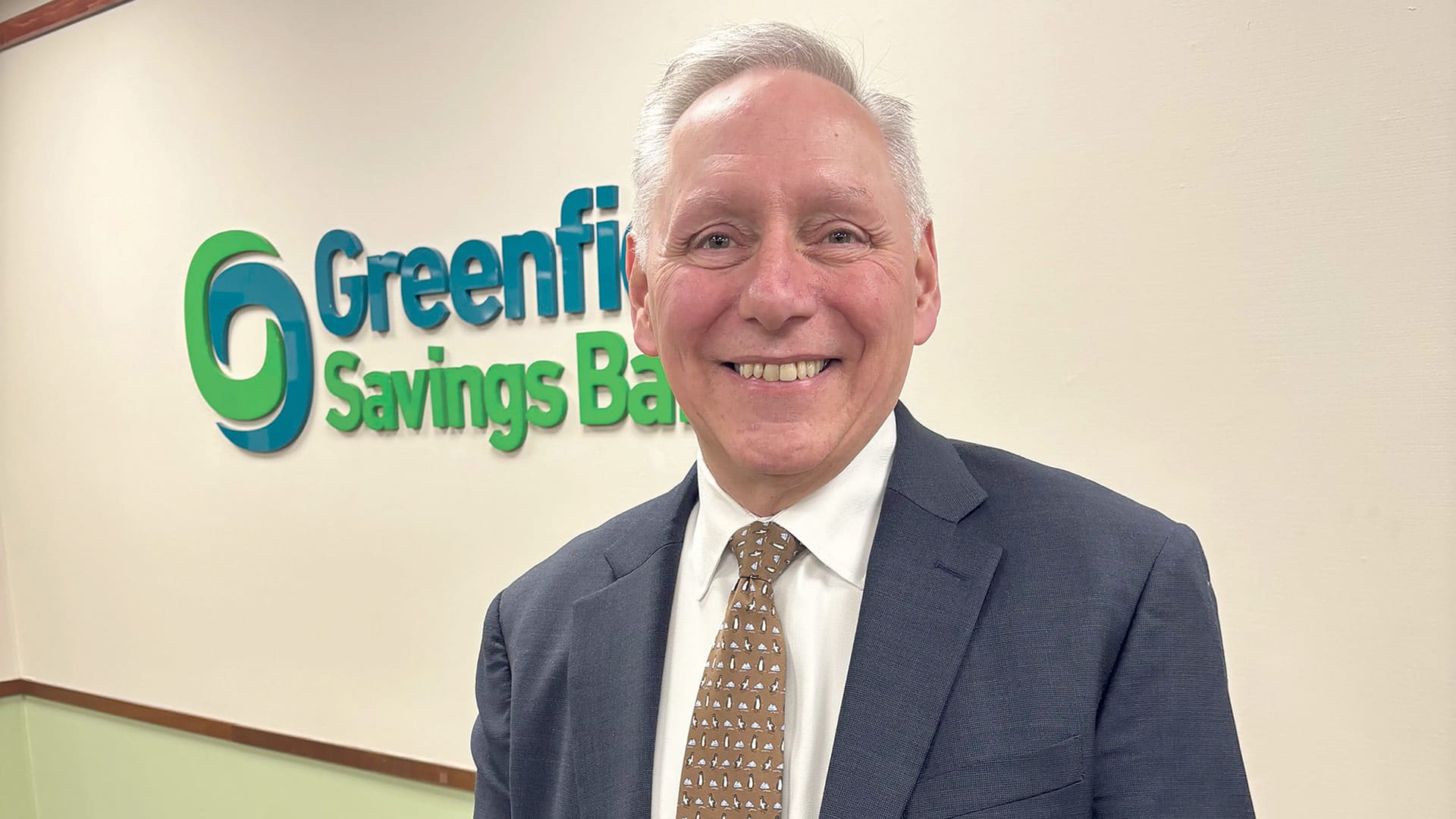
As Tom Meshako remembers it, by the time he was done interviewing Peter Albero, he was convinced the latter was not only his best candidate to become CFO and treasurer at Greenfield Savings Bank, but also a possible successor when he moved into retirement in a few years.

“I thought we had a lot of similarities — we felt the same way coming from a public institution; we came here for the same reason, the right reason,” said Meshako, noting that, like Albero, he came to GSB to be in a mutual bank setting and in a position to give back to the community it was serving.

Albero, who came to GSB from Salisbury Bank in Connecticut after it was acquired by NBT Bank, added that, “as a community bank, we didn’t do a lot for the community, because we had to pay dividends to shareholders. “I wanted to work at an institution where we could give back to the community instead of giving to shareholders.”

Meshako’s initial thoughts back in the summer of 2023 turned out to be prescient, as Albero prevailed in nationwide search last year for a successor to Meshako, who will retire to Florida in the spring.

Albero, who will take the helm on April 1, does so at an intriguing time in the bank’s history — although he says the banking industry is “always interesting.”

Indeed, the institution is expected to reach $1.5 billion in assets in the first quarter of 2026, an important milestone and another threshold as GSB continues its quest for an all-important commodity in the banking industry — size.

“I wanted to work at an institution where we could give back to the community instead of giving to shareholders.”

“Scale matters, and our goal is to continue to grow our loan book without increasing our head count and become more efficient,” said Albero, noting that much of the bank’s growth has come on the commercial lending side.

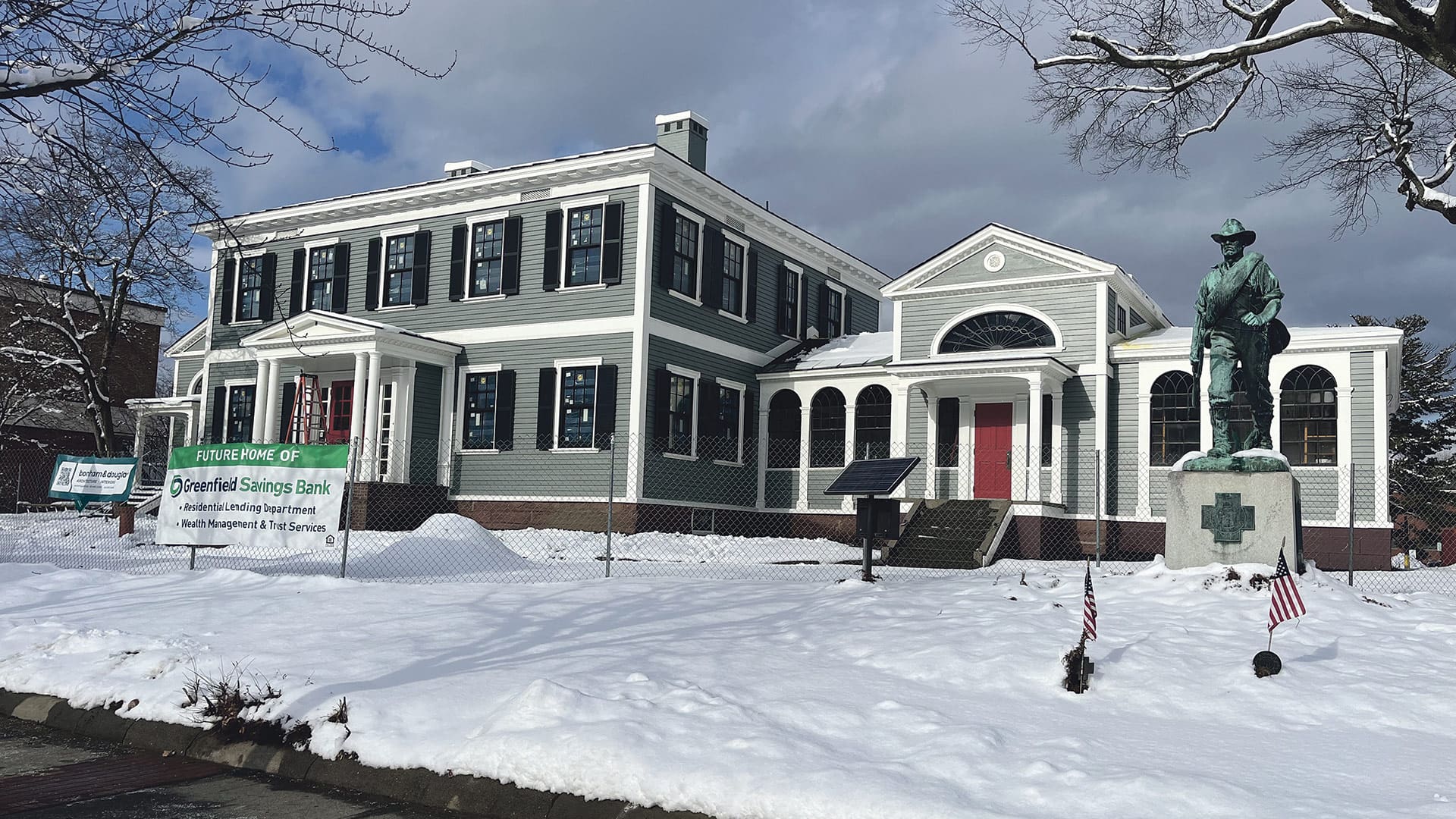
Meanwhile, the bank will cut two significant ribbons in the coming weeks. One will be at the renovated Leavitt-Hovey House next door to the bank’s headquarters on Main Street in Greenfield, and the other will be at its latest branch, a key piece in a massive redevelopment project at the site of the former Tasty Top in Easthampton.

The former is a nearly $7 million initiative that will transform the landmark, built in 1797 and home of the city’s public library between 1909 and 2023, into a home for the bank’s trust and wealth management, residential lending, and cash management teams.

GSB’s ‘southern headquarters’ in Easthampton is slated to open within the next several weeks.

GSB’s ‘southern headquarters’ in Easthampton is slated to open within the next several weeks.

The latter is a $7 million investment that marks the bank’s latest and boldest effort to “move south and east,” as Albero put it, meaning into Hampden and Worcester counties, and beyond the bank’s historic base in Franklin and Hampshire counties.

And as the bank continues this expansion east and south, the ‘community’ it serves has become much larger, noted both Albero and Meshako, adding that GSB has responded accordingly, increasing its charitable giving from $300,000 when Meshako started at the bank a decade ago to $1.2 million last year, with that number expected to move higher as the bank continues to grow.

“Tom and I both agree that, if the bank does better, the communities can do better,” Albero said. “When you move into a community, you have to support that community and its nonprofits.”

For this issue and its focus on banking and financial services, BusinessWest talked with Albero and Meshako about the transition in leadership at GSB and what’s in the broad business plan for this 157-year-old institution.


Purposeful Journey

Albero spent the bulk of his career in a setting far removed from rural Greenfield — New York City.

He spent 26 years in senior roles in the financial controller group at Morgan Stanley and also worked as a risk advisory consultant at PricewaterhouseCoopers. Desiring a change from the Big Apple, he joined Salisbury Bank & Trust in Connecticut as CFO.

He did that for six years before Salisbury was acquired by NBT Bank in 2023, prompting him to seek another significant career change, this time in the mutual bank setting.

“Tom and I both agree that, if the bank does better, the communities can do better.”

“Salisbury Bank was a community bank, but it was public,” he noted. “We found that it was very hard to grow as a public bank, trying to compete with much larger institutions, when you’re focused on growth and earnings quarter over quarter.”

While Albero was chosen as GSB’s new CFO in early in 2023, he stayed with Salisbury until the merger with NBT had been finalized before coming to Greenfield, a wait Meshako was willing to endure.

“I waited nine months for Peter to finish that transaction because I knew he was the person I wanted,” he recalled. “We seemed to be on the same page, and I kind of knew he was the person that would be taking my position when I retired; I knew he’d make a great candidate.”

As he takes the helm, Albero will be focused on keeping the bank on a strong growth trajectory, a pattern that has emerged “organically and safely,” and continued in 2025, with roughly 6% growth.

“Sometimes, when you try to grow your portfolio, you’ll do a little higher risk rating, but we didn’t — we stayed with high-quality customers while also moving more south,” Meshako said, adding that the move to open a branch in Easthampton is the latest and boldest manifestation of this strategy.

The renovated Leavitt-Hovey House will become home to the bank’s trust and wealth management business, residential lending, and cash management teams.

The renovated Leavitt-Hovey House will become home to the bank’s trust and wealth management business, residential lending, and cash management teams.

Actually, this will not be just a branch, Albero said, referring to it instead as the bank’s “southern headquarters.”

Indeed, the facility, due to open its doors later this month or early in April, will include a commercial lender, a wealth management and trust services representative, and a residential lender, as well as the branch, he noted, adding that it will serve as a staging point, if you will, for continued growth in Hampden County, in all facets of banking, but especially commercial lending.

Indeed, where once the bank’s commercial portfolio had 50% to 60% or more of its originations in Franklin County, that number is now less than 25%, a nod to both slow growth in the Greenfield area and the bank’s pursuit of business east and south of its traditional base.

“We have a lot of borrowers in the Springfield market, and they refer other borrowers to the bank because of our ability to get the deals closed,” Albero said. “And we have some other borrowers more toward Worcester, and they refer more borrowers to our commercial team for the same reason.”

Meanwhile, with assets now approaching $1.5 billion, GSB has expanded its sweet spot when it comes to commercial loans, its niche now being the $3 million to $7 million range, where it was once $1 million to $3 million.

“That’s another way that you can grow, not just doing more loans, but larger loans as well,” Meshako said, adding that this higher ceiling creates many more opportunities to do business across the region.


Points of Interest

When asked about plans for further expansion beyond Easthampton and when and where that might take place, Albero said there was nothing on the drawing board yet.

Indeed, the bank is focused on its two large investments — the Easthampton facility and the renovated Leavitt-Hovey House — and assimilating those into the corporate portfolio.

“We have a lot of borrowers in the Springfield market, and they refer other borrowers to the bank because of our ability to get the deals closed.”

“Our plan is to make sure that Easthampton becomes profitable very quickly,” he noted. “We’ll continue to evaluate the markets, but we’re not going to jump in immediately. We have a lot to digest from a cost perspective.”

Renovation of the Leavitt-Hovey House represents a different kind of investment in the community — not a check to a nonprofit, but the restoration and reuse of a city treasure, Meshako said.

“If we didn’t buy it, I think it would have sat in the state that it was in and continue to deteriorate,” he said. “This is something we did to help the city of Greenfield and create some tax revenue. We needed additional space, and we were looking for some place to build or possibly buy, and we thought that renovating the Leavitt-Hovey House would help this whole corner of downtown.

“We’re bringing it back to its original luster,” he went on, referring to the color scheme from the 1950s, when the home was placed on the National Register of Historic Places, adding that the facility is slated to open late this month or early in April.

Peter Albero says GSB’s overall growth strategy involves moving “south and east.”

Peter Albero says GSB’s overall growth strategy involves moving “south and east.”

As for Easthampton, the leaders at GSB saw that community as the logical spot for its southern expansion. That city is similar to Greenfield in many ways — a former manufacturing hub that is reinventing itself as a center for the arts and hospitality, especially in renovated mills — but it also neighbors thriving Northampton, a city where the bank already has a presence.

“There’s been quite a resurgence in Easthampton,” Meshako said. “That whole mill district just took off, and it has helped the whole downtown. The city continues to prosper, and we decided that this is where we wanted, and needed, to be.”

As for the former Tasty Top site itself, plans call for a Starbucks, a steak restaurant, housing, and other developments that should bring foot traffic — and additional business — to the bank.

Continued growth is important to GSB, as it is to all banks, said Albero, as the cost of doing business continues to rise on many fronts, and institutions seek economies of scale.

“Technology costs continue to rise, and it’s difficult, also, to attract employees, particularly where we are in Western Massachusetts, so you ending up paying higher salaries to attract individuals,” he explained. “We find that’s it’s challenging. Every time you continue to grow, you can’t just continue to add head count; you must become more efficient, but the technology costs to do that are very expensive.”

And while the bank plans to continue to grow organically and safely, as Meshako mentioned, it will explore options for acquisitions as well.

“We will consider M&A transactions, but we will be the acquirer,” he told BusinessWest. “But our focus over the next three years is on efficiency, increasing our earnings, and boosting our capital so we have a long runway for organic growth. And while we’re doing that, we’ll keep an eye on the M&A market; if the opportunity is there, we’ll take advantage of it.

“We’ll keep our options open,” he went on, adding that this might be considered the overall game plan moving forward for an institution that it is in a time of transition — in many different ways.

Home Improvement Special Coverage

Getting Down to Business

The leadership team at Ace Chimney Sweeps, Kelly Kapinos and her sons, from left, Kelly, Matty, and Joey.

The leadership team at Ace Chimney Sweeps, Kelly Kapinos and her sons, from left, Kelly, Matty, and Joey.


Kelly Kapinos says it started with one of those cereal box records that were prevalent in the ’60s and ’70s.

Her husband, Jay, was looking at a trade magazine in a doctor’s office after an on-the-job injury, she explained, when he came across an item for chimney sweeping.

“It talked about how you could be your own boss, help people stay safe, meet a lot of people, and not have to work in a cubicle,” she recalled, adding that he sent away for the record, which started with “Chim Chim Cher-ee” from Mary Poppins.

“It talked about the advantages of being a chimney sweep, like being outside in the nice weather. It didn’t talk about how cold it gets, or how hot it can be on roofs, or how dangerous it can be,” Kapinos recalled with a laugh, adding that, after some deeper due diligence on this business, they bought in and hung out their shingle. Sort of.

They kept their full-time jobs and started cleaning chimneys on weekends before it became a full-time pursuit called Ace Chimney Sweeps. And 40 years later, Kelly and her three sons, Matt, Jamie, and Joe, are still at it (Jay went on to get his class A license and now moves heavy construction equipment), as one of the very few locally owned chimney sweep companies still doing business in the 413 and just beyond.

And this is one of the points they stress to visitors to their booth at the Original Western Mass Home & Garden Show, which will stage its 71st edition at the Big E on March 26-29.

The company has become a regular at the show over the past several years, said Kapinos, adding that it uses those four days to help fill an already-crammed schedule for the coming seasons, but also just to get the word out and build some brand recognition.

“For the first time in a long time, people want to sign up to get work scheduled. In past years, they’ve been so busy … they came to the show because they didn’t want to lose their spot and they wanted to keep their name out there, but they really weren’t trying to sell work. This year, there’s a different mindset.”

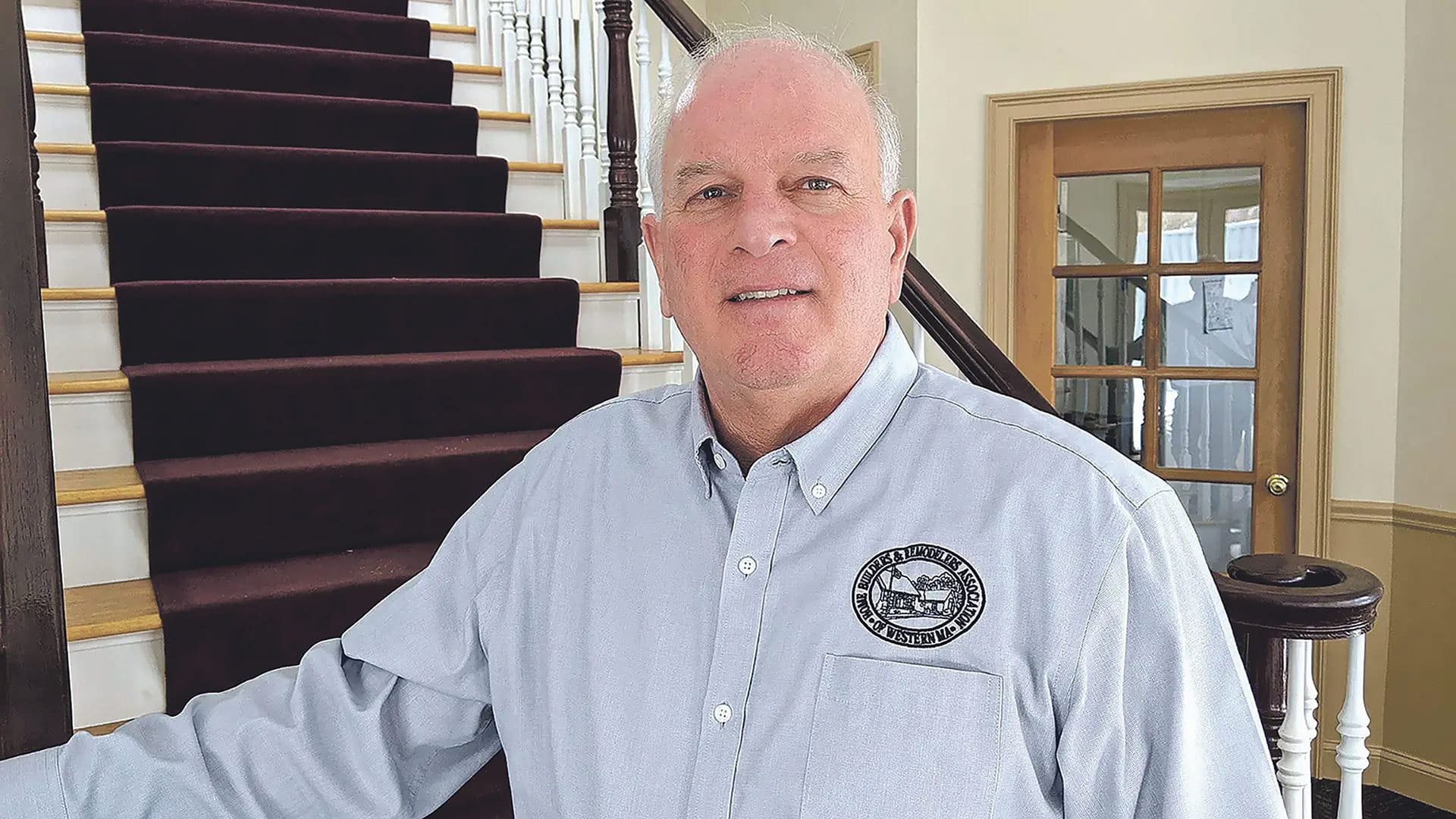
These are the main motivations for vendors at the show, many of which have been appearing for decades, said Andy Crane, president of the Home Builders & Remodelers Assoc. of Western Mass., which produces the show.

The showcase provides a great opportunity for businesses to do some brand building and, quite often, put some business on the books, said Crane, adding that, with the economy slowing in some respects, many vendors are more focused on looking for work than they have been in recent years, when they were booked solid heading into the show.

“A lot of businesses are really busy, but there are many businesses that would like to see more booked jobs to feel good,” he explained.

Meanwhile, for visitors, the show presents an opportunity to get a break from winter (especially this year), see what’s new, and perhaps find someone to handle the next project on their to-do list.

For BusinessWest, its annual show preview provides a chance to tell the stories behind some of the vendors — like Dimauro Carpet & Tile. The East Longmeadow-based company, now celebrating 30 years in business, will be making its first appearance at the show, and Jeff Beturne, project manager for the company, is expecting … well, he’s not really sure what to expect.

“I’m excited about what it might bring — we’re really not sure,” he said, adding that members of the company’s leadership team are putting together a game plan for the show, including deals to be offered to customers.

Overall, they will be looking to introduce themselves to the region and “get our personality out there,” he went on, adding that the company will stress its longevity and the fact that it is locally and family-owned.

Andy Crane

Andy Crane says the Home & Garden Show provides vendors with an opportunity to be visible — and also put some business on the books.

For Earthlight Technologies, an energy solutions company based in Ellington, Conn., and with offices locally in Northampton, the goals are similar, said Andrew Bessette, content manager.

“The trade show is a good way for us to get more visibility and get direct lines to our customers,” he noted, adding that, while the company gains several jobs directly from the show, it also builds name recognition and tries to separate itself from competition that is not as focused on quality and customer service (more on this later).

For this issue and its focus on home improvement, BusinessWest previews the Home & Garden Show and talks with several area businesses about why these four days at the Big E are time very well-spent.


Home Work

This is the slow season for chimney sweeps.

It starts in January and goes until about the end of winter, said Kapinos, adding that this general quiet allows the company to make the significant investment in time required of home show vendors.

“We start revving up for spring cleanings, and then we’re out straight again until next January,” she explained, adding that the show, while time-consuming, is a solid investment for Ace when it comes to getting its name out and making acquaintances.

“The show keeps us in front of people that have been coming to us for years,” she said. “They stop by the booth to say ‘hi’ and put my face with my voice on the phone, and also meet the guys because they’re at the show with me.”

This business of putting faces with voices and ‘meeting the guys’ might be the unofficial mission of the home show, said Crane, who said organizers are on track for another sellout when it comes to vendor space.

Crane noted that, in the wake of COVID, a time when people spent more time at home — and also when many had more disposable income — most contractors and home improvement companies had all the work they can handle. Some didn’t want to come to the home show and tell those visiting their booth that they couldn’t put them on the schedule for several months at least.

Most contractors are still busy, he said, but there is now more need to get in front of people and, hopefully, fill the calendar with work.

“For the first time in a long time, people want to sign up to get work scheduled,” he said. “In past years, they’ve been so busy … they came to the show because they didn’t want to lose their spot and they wanted to keep their name out there, but they really weren’t trying to sell work. This year, there’s a different mindset.”

Like many home improvement companies, Dimauro received a significant boost from COVID, said Beturne, noting that the company’s portfolio leans heavily (about 80%) toward commercial and municipal work, and there was a lot to be found in 2020 and 2021.

“Municipalities had an influx of money, and it was just sitting there,” he explained, adding that the company gained a significant amount of work taking out carpeting and putting in hard surfaces.

“This past year was the first quiet year after all of that,” he went on, adding that there was less work to be had on the municipal side and more competition for what did emerge, and it was also slower on the residential side amid inflation, tariffs, and general uncertainty. The company is looking at home show participation as one strategy for putting more work on the books for 2026 and beyond.

“We want to be aggressive; we want to put our best foot forward in terms of getting people to knock out the room they’ve been holding out on,” he explained. “If they’re renovating a room, a home office, bedroom, you name it, then we want to be able to provide products at excellent prices.

“It’s about making sales, but it’s also about getting our name out there,” Beturne added. “It will be good to remind people that we’re here and that we’re willing to travel to handle a project.”

For Earthlight Technologies, there are several motivating factors when it comes to trade show participation, and the company takes part in several, Bessette noted.

It does so to educate the public on its many products and services, he said, listing EV charging stations, energy efficiency, and other energy solutions. But it’s best known for commercial and residential solar, which remains a popular option, despite the end of the 30% federal solar tax credit on Dec. 31 with the signing of the One Big Beautiful Bill Act.

“The value proposition doesn’t really go away because there’s no tax credit,” he explained. “The sky is not falling; solar is still going to be a very viable option for a long-term return on investment.”

There is a good amount of work on the books for 2026, he noted, adding that the show will hopefully generate more, while also helping the company tell its story and differentiate itself from what is still a crowded field of competitors.

“The trade show is a really good way for us to stand out, specifically when customers can talk to our sales reps,” Bessette said. “Unfortunately, our industry doesn’t have the best reputation. In any industry, there are bad actors or people that might promise more than they can actually deliver. You have that in any industry, but it’s fairly prominent in the solar industry. When you talk to our sales reps and the people at our company, that’s a differentiating factor — we take really good care of our customers.”


Bottom Line

Each company has its own message to get across, said Crane, adding that the Home & Garden Show has been connecting contractors with the public — and existing and potential customers — for seven decades now.

This tradition will continue later this month, with a four-day show at which vendors and visitors can get down to business, in every sense of that phrase.

Healthcare News Special Coverage

Creating a Movement

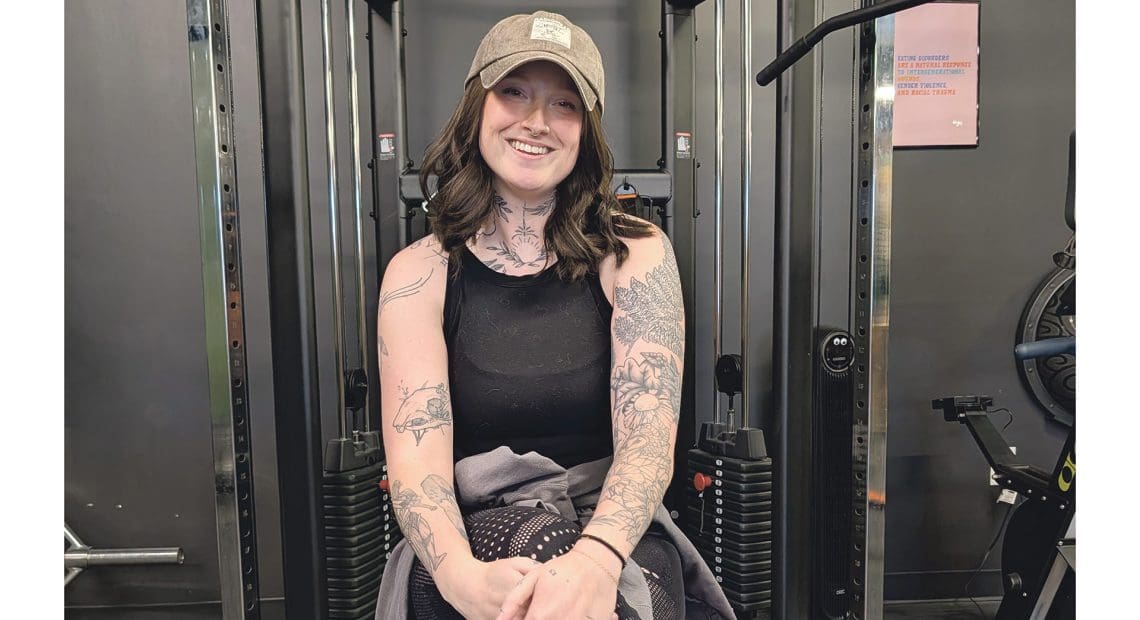
Britt McGrath opened the Hadley studio of My Health Matters Fitness in late 2023.

Britt McGrath opened the Hadley studio of My Health Matters Fitness in late 2023.


In her bio on the website of My Health Matters Fitness, Britt McGrath makes it clear what she thinks of ‘diet culture.’

“I have been on a decades-long journey of learning to look at my body for everything it is, rather than everything it is not. And through years of certifications, training, and actual hands-on work, I’ve found my purpose. I’ve found my worth again,” she wrote. “And that is to help other people who have had similar histories as mine give diet culture and all of its toxic friends a huge middle finger — to finally start living our lives in ways that do not revolve around how our bodies look, but rather everything else life has to offer.”

Now in her sixth year of helping a growing roster of clients make fitness and wellness work for them, she believes in that philosophy even more.

In short, too many people have been let down by a fitness and diet industry that puts too much emphasis on weight numbers and body shape, and have grown up in a society that overly focuses on the way they look, and places all the value on that, McGrath told BusinessWest during a broad conversation at her Hadley fitness studio.

“For as long as I can remember, I always fixated on my body. I was an athlete for many years, and I felt strong, but once I stopped playing, that’s when my eating disorders started happening because I didn’t know how to control my body anymore,” she said. “And over the years, as I started healing my own body image, I started making more connections with other people speaking out and letting me know they’ve also experienced that.”

“Over the years, as I started healing my own body image, I started making more connections with other people speaking out and letting me know they’ve also experienced that.”

My Health Matters contains many trappings of a traditional gym — weights, circuit training, boxing, group classes, personal training, and much more — but with a few key differences, from a lack of mirrors to a deliberate de-emphasis on number of pounds lost. Instead, fitness plans are individualized to each member’s needs, goals, and body type, with an emphasis on improving quality of life rather than chasing specific numbers.

“We’ve created a community of people who have been wanting something like this, to be able to escape a lot of what they’re exposed to in other places or by their own families and friends — whoever is telling them, ‘you have to look a certain way, or else you’re unhealthy,’” McGrath explained.

My Health Matters features a host of different exercise modalities, plus group classes and personal training.

My Health Matters features a host of different exercise modalities, plus group classes and personal training.

“A lot of folks are coming in and saying, ‘thank God there’s a place where I can just be me. I can say no to a movement that I don’t want to do. I can flip off the trainer if I want to. I can leave halfway through class if I feel like that’s what I needed.’ And I think the bodily autonomy of it, being able to make those choices without shame or guilt, is really important for us here.”

It’s an idea she’s become passionate about, and which drove her to create a safe space that’s welcoming to all body types — and women and men of all ages and backgrounds who want to express themselves and find their own path to wellness.

“I think it’s important to go against the grain a little bit,” McGrath said. “How many centers are talking about, ‘lose the weight,’ ‘burn this off,’ ‘eat this.’ There’s constantly another diet, another thing that’s coming up. But if all these diets were supposed to work, then why haven’t they worked? It’s because they’re not supposed to work, and they’re damaging to our bodies, and they’re damaging to our mental health. And they make us feel like failures if nothing happens.

“And also, why do we have to lose the weight? Why do feel like we have to hate our bodies if they don’t fit into a little box that society has deemed as appropriate this year? And that changes every year. I just felt like this needed to change,” she went on. “We have many amazing companies in our area, and a lot of personal trainers that I started getting to know as I was developing this space, who are practicing these things, but only in bits and pieces.”


Body Talk

McGrath didn’t always intend to work in this field; she has a background in environmental studies. But in many ways, fitness was always at the back of her mind.

“I was an athlete growing up; soccer was my baby. I ended up playing lacrosse for a few years, but soccer was always at the forefront.”

She picked up soccer at age 9 because a close friend was playing, and she wound up competing in a municipal league in Belchertown, then Belchertown High School, and was scouted by colleges — but a knee surgery early in her college career shut everything down. She did wind up coaching soccer at the high school level, which she enjoyed.

“Playing sports always felt really at home for me and made me feel connected to my body — but then, also disconnected, because I didn’t know how to feed it and how to take care of it when I wasn’t being an athlete.”

Britt McGrath says she wants to be the kind of positive fitness example to people that she wishes she had growing up.

Britt McGrath says she wants to be the kind of positive fitness example to people that she wishes she had growing up.

Seeking to get back in touch with what she enjoyed about movement, McGrath started working as a spin instructor at Energia Fitness in Hadley, now known as 50/50 Fitness/Nutrition. Later, she became a high school physical education teacher and a personal trainer, before launching her own business in 2020 that started with remote classes and home visits, before she hung out a shingle on Route 9 in October 2023.

“What I love is teaching folks, helping people see that there’s always potential, there’s always a possibility of finding a way that feels good in your body rather than feeling like you’re stuck. You should never feel stuck,” she said. “There should always be another option that someone can provide you so you’re like, ‘wow, look how cool my body is doing these things.’ That’s what I want to teach people — I want people to experience how good it can feel to be like, ‘my body is cool,’ rather than, ‘what’s wrong with me all the time?’

“We don’t need that, especially with everything going on these days,” she went on. “The last thing we need is feeling bad about ourselves continuously. So fitness is an opportunity to be able to connect with our bodies and with other like-minded folks and be like, ‘yeah, let’s do this.’”

Having struggled with body image and eating disorders in her past, McGrath is convinced that, had she encountered a role model with a body-positive take on fitness, her experiences might have been very different — and she wants to be that kind of positive influence for her club members today.

“I wanted this to be inclusive — different bodies, different identities, different lived experiences. We wanted to have a lot of variety for folks to be able to choose what works best for their bodies,” she explained. “So we have a mix of some higher-engaging classes like spin classes and boxing and strength classes. And then we wanted classes that have a sweet balance of making sure that you’re not just like beating your body into submission to feel like your value based on that — so we have mat pilates, yoga, we’ve even had meditation in the past. Bar classes are also nice because they work the smaller muscle groups and help keep your joints supported in those ways that you might not in the larger muscle groups.”

“I hear so many stories from our clients about the crap they’ve dealt with. Then they connect with other community members and are like, ‘my God, that happened to you too.’ And then they become closer.”

Aubrey Endress gets to the heart of choosing the right activities in a recent post about ‘joyful movement’ on the My Health Matters Fitness blog.

“Whether you’re walking with a friend, dancing solo to your favorite song in the kitchen, or finding your center in a yoga class, finding joyful movement establishes a level of trust within ourselves. You are taking the time to really listen to your body and respect it by choosing movement that supports what you need in the moment. No guilt, no shame, no punishment — just connection with what your body truly will benefit from.”

McGrath loves seeing members, many of whom have been scared off by other gyms and who have struggled with body image, find their connection — and a new passion for movement.

“I hear so many stories from our clients about the crap they’ve dealt with. Then they connect with other community members and are like, ‘my God, that happened to you too.’ And then they become closer,” she told BusinessWest. “I think it’s so needed. To be able to make those connections with like-minded folks is really important for a lot of us. And it’s really beautiful to see.”


Down to Business

McGrath reiterated more than once that opening a physical location and bringing on employees — she has 14 of them now — has been challenging and scary, but also deeply gratifying.

“I was terrified to do it — still am, sometimes. At the beginning, I really was trying to figure out what was best for my mental health and how to mix the balance of work and my personal life. With the pandemic, my mental health got pretty bad, and that gave me some perspective of what I was looking to do.

“Then a lot of my clients were starting to express that they wanted to lift heavier weights and be able to go somewhere and do that. That was at a time where a lot of us were saying, ‘OK, maybe we can start going out in public more.’”

She has partnered with other like-minded businesses, like Happy Valley Nutrition, a group of dietitians who, led by founder Amanda Mittman, also promote an anti-diet, weight-inclusive view of fitness and wellness.

“I love connecting with people and making people feel strong and validated in their experiences and their bodies,” McGrath said. “A lot of times, we go through the world thinking that everyone either hates our bodies or sees things about our bodies that aren’t there, and we develop bad body image or eating disorders.

“A lot of people have specifically sought us out because they’re like, ‘you’re different. This is cool.’ This is something they’ve actually been wanting to do, but might not have had the means yet. Or they’re looking for something that can heal their own trauma with movement. I say all the time that I needed this growing up so I could have healed my relationship with my body and my mind. And a lot of people working for us have specifically come here to help people with that.”

Clearly, McGrath has figured out that relationship for herself, and is passionate about helping others get there as well.

“I think this is the first job I’ve had where my cup is filled after I leave, rather than being completely depleted,” she said. “I feel very grateful. I mean, owning a business is no joke. That can be draining. The people are not.”

Community Spotlight Special Coverage

Community Spotlight

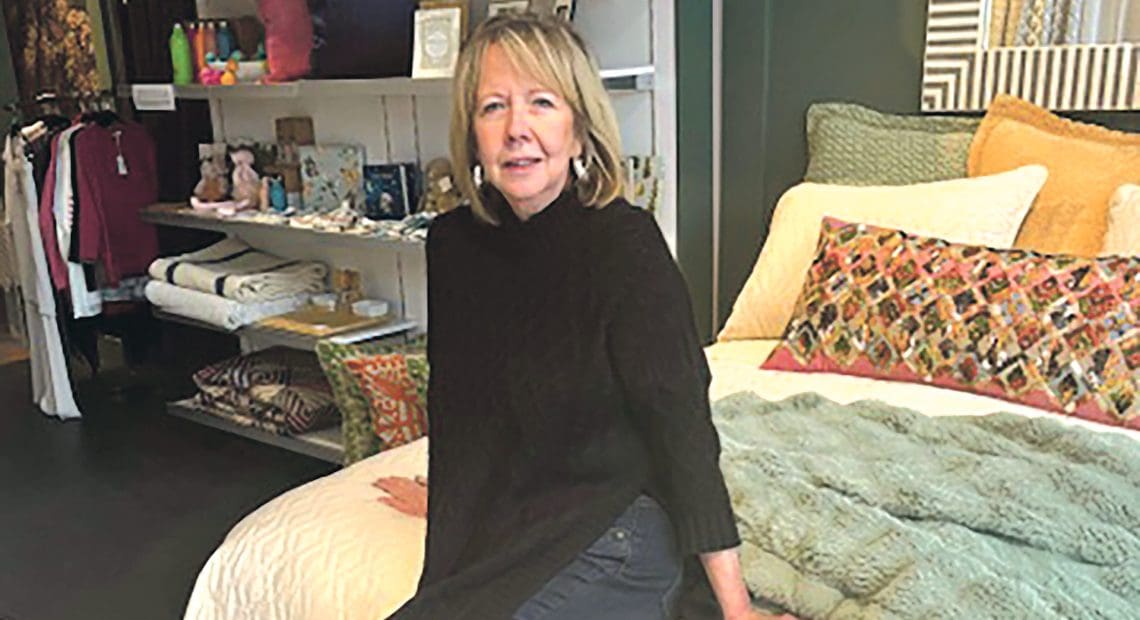
Marion Hayden says she’s always had a “love for color, design, and merchandising,” and all three come together in her new venture, Home on Main.

Marion Hayden says she’s always had a “love for color, design, and merchandising,” and all three come together in her new venture, Home on Main.


When it comes to the arts, hospitality, history, and architecture, Sara Goodberlet says, Lenox has an extremely strong brand.

It’s been built over time and is fortified by institutional landmarks such as Tanglewood, Shakespeare & Company, the Mount (Edith Wharton’s home), Ventfort Hall (home to the Gilded Age Museum), spas, inns, restaurants, retail shops, nature trails, and much more.

And as the relatively new director of the Lenox Chamber of Commerce, she said one of her primary directives is to protect, nurture, and enhance that brand.

“I want to keep building Lenox as a brand, as a destination,” she said. “It’s a strong brand, but I want to freshen it up a little bit. We’re in a unique position … we have some older, mature, historical roots, but then we also have this fresher, modern vitality that’s also in the mix.”

Elaborating, Goodberlet said one of her goals is to educate and inform the public about not only the pillars of Lenox’s strong arts and hospitality sector — like Tanglewood, which has two Paul Simon concerts featured in a packed 2026 schedule, or Shakespeare & Company, which also a full slate of shows starting in June — but the many small businesses and nonprofits that help make this brand as strong as it is, and the people behind them.

People like Molly Lyon-Joseph, who owns two restaurants in town — Frankie’s, an Italian-American eatery, and Pizzeria Boema — and is set to open a third, Bea’s House, in a historic property, the former Café Lucia on Church Street.

“I want to keep building Lenox as a brand, as a destination. It’s a strong brand, but I want to freshen it up a little bit. We’re in a unique position … we have some older, mature, historical roots, but then we also have this fresher, modern vitality that’s also in the mix.”

Or Scott Shortt, a former financial services veteran turned serial entrepreneur whose latest venture is a unique event space, called the Belvedere, carved out of a former retail space in downtown Lenox.

Or Marion Hayden, a long-time employee at the former Annie Selke store in downtown Lenox, who, after the store closed, decided to keep that destination alive with a venture she calls Home on Main.

Individually and collectively, these businesses (much more on them later) contribute to the vibrancy that defines Lenox for at least three seasons each year — winter is considerably slower and a challenge for many businesses — and also to a highly supportive environment.

“I wouldn’t choose to do business anywhere else — I love the Lenox community. I feel like everyone supports each other; there’s collaboration on many levels,” said Lyon-Johnson, adding that the many hospitality businesses benefit from Tanglewood, especially, but all the major draws, and they support those institutions in kind.

Added Goodberlet, “I’ve never been in a business climate where there’s so much being created. It’s such a treat to help support them, bring people together, and market our area and continue to give it the personality it has.”

For this latest installment of its Community Spotlight series, BusinessWest takes an in-depth look at Lenox and how its brand is stronger than ever.


The Play’s the Thing

Jaclyn Stevenson, director of Marketing & Communications for Shakespeare & Company, described 2026 as an important year for the live theater venue, for many reasons.

For starters, it will be a time to remember Tina Packer, the company’s co-founder and founding artistic director, who passed away on Jan. 9. There will be a celebration of life on May 31 at the Shakespeare & Company campus, said Stevenson, adding that Packer remains an inspiration to all those at the company, and in her honor, the Tina Packer Legacy Fund has been established to support the future of the institution and the work she founded.

Meanwhile, 2026 will mark a financial milestone — this will be the first time since its founding in 1978 that the nonprofit theater is completely debt-free, having paid off the remaining $1.7 million of the $4 million mortgage on its campus, thanks to contributions from its board of trustees and a combination of successful property transactions, community support, and a strong box office season, Beverly Hyman, chair of the board of trustees, described this financial development as a turning point for the institution.

The Arthur S. Waldstein Amphitheatre, seen here during last season’s production of Romeo and Juliet, is one of three outdoor theaters at Shakespeare & Company.

The Arthur S. Waldstein Amphitheatre, seen here during last season’s production of Romeo and Juliet, is one of three outdoor theaters at Shakespeare & Company.

“We have some long-term board members who have been around the block a few times in terms of financial ups and downs, and even they see this as a turn into all new territory,” she said. “We now have the opportunity to expand education programs — including our nationally recognized Shakespeare in the Courts program — and to focus on our Center for Actor Training, which requires highly skilled faculty.”

There are other developments as well, said Stevenson, noting that Shakespeare & Company, named by Newsweek as one of the top outdoor theater companies in the country, is now the new home to six sculptures created by noted philanthropist Harold Grinspoon. Each more than 30 feet high, the sculptures create a new attraction on the property that visitors can enjoy year-round.

Then there’s the 2026 schedule, which includes a limited run of Midsummer Dreamers, a two-person interpretation of Shakespeare’s A Midsummer Night’s Dream; Matthew Barber’s Fireflies; and a production of Twelfth Night.

Goodberlet said that, while large institutions such as Tanglewood, Shakespeare & Company, and the Mount are in many ways the foundation of Lenox’s arts and hospitality base, this sector has many moving parts, with the emphasis on moving.

“You always put together a plan, you make assumptions, and you work through the details and consider a lot of scenarios and how things will work. But it’s all theory until you actually start putting it into practice.”

Indeed, while there are some constants, there is always change and new additions to the landscape, all of which contribute to the overall Lenox vibe.

These pieces include Lyon-Joseph’s restaurants, which, in addition to fine dining, provide jobs to people of all ages, but especially young people. She said she’s diligent about providing not just a paycheck, but learning experiences on many levels.

Indeed, she recently took her leadership team to the Gramercy Tavern in New York City’s Flatiron District to get a first-hand look at how that landmark establishment provides customer service, and to learn from what patrons experience.

“The Gramercy Tavern is known for their hospitality,” she said, “and I wanted my team to see what it’s like on the other side of that, so they can take it home and have that amazing experience.”

As for Lyon-Joseph’s latest endeavor, it involves renovating an 1853 landmark, as well as opening another restaurant, in this case one focused on contemporary new American cuisine.

“I love old antiques, and I’ve spent the past year and a half collecting things that are going to be placed in the restaurant,” she explained, listing, among other things, a telephone from the early 20th century that will carry a sign that says ‘Call Mom.’

“We’re a very serious restaurant in terms of our menu and our wine list, but our approach is very whimsical; we don’t take ourselves too seriously,” she told BusinessWest, adding that she’s expecting to open later this month.


Designs on Growth

Hayden brings a diverse background to her new role as shop owner and entrepreneur.

Indeed, she worked in publishing for many years, and later as an assistant to Doug Trumbull, Academy Award-winning film director and visual effects producer, before studying interior design at the New York School of Interior Design and then working for local designers.

She became the on-site manager of the Anne Selke store on Main Street in Lenox, named after the interior designer who created, and later sold, the Pine Cone Hill and Dash & Albert brands of home décor.

When the store that was created to showcase those brands closed in October 2024, Hayden sensed the disappointment among customers and those in the community and decided to take an entrepreneurial plunge and open a similar outlet at that location, taking her career in a different and rewarding direction.

Lenox at a Glance

Year Incorporated: 1767
Population: 5,095
Area: 21.7 square miles
County: Berkshire
Residential Tax Rate: $9.85
Commercial Tax Rate: $14.37
Median Household Income: $85,581
Median Family Income: $111,413
Type of Government: Select Board, Open Town Meeting
Largest Employers: Canyon Ranch, Boston Symphony Orchestra, Kimball Farms
* Latest information available

“I have always had a love for color, design, and merchandising,” she told BusinessWest. “Opening Home on Main gave me the opportunity to stretch those creative inspirations and knowledge. I can merge this creative side with my administrative skills — because a retail business heavily relies on both when you are the sole owner.”

Home on Main opened in January 2025 and recorded a solid first year thanks to a a wide range of brands, including Pine Cone Hill and Dash & Albert, and products ranging from rugs — there’s a ‘rug library’ that affords individuals the opportunity to take out samples and see how they look in their homes — to candles, diffusers, and pillows.

Hayden said she attracts a broad base of customers that include local residents, those with second homes in and around Lenox, and those vising the community and taking in all it has to offer.

“Once Tanglewood opens, the population swells — it’s a big draw,” she explained, adding that, like other businesses in town, she struggles during ‘shoulder season,’ but understands the year-long pattern of business and plans accordingly.

Shortt, as noted earlier, worked in finance for many years before moving to Lenox in 2010, when he purchased an inn and spent seven years renovating it and then operating it before selling it in 2022.

He then put his focus on renovating the former retail space at 21 Housatonic St. into something he said was lacking in Lenox, a versatile event space that could host everything from weddings to company retreats to nonprofit events.

Opened just over a year ago after an extensive, two-year renovation that included construction of a commercial kitchen, the Belvedere has become a popular alternative for all types of gatherings.

“We’ve done birthday parties, weddings, rehearsal parties, corporate meetings, product launches, baby showers, bridal showers, a little bit of everything,” Shortt said, adding that the facility’s first year was solid, and the business now has a firm foundation on which to build.

“We got our legs under us, and we had a large number of various events,” he noted. “The thing that was great was … you always put together a plan, you make assumptions, and you work through the details and consider a lot of scenarios and how things will work. But it’s all theory until you actually start putting it into practice and have all those different types of events to make sure it comes together.

“And it did — we’ve proven it out in various scenarios and ways, and we’re very pleased,” he went on, adding that, for year two, the goal is to continue adding events, especially meetings and other corporate uses.

“Those typically happen outside the summer season and usually happen in the middle of the week,” Shortt explained. “So those events are additive — they don’t take away from weekend social events.”

The Belvedere is just one of dozens of businesses contributing to the Lenox ‘brand,’ one that has stood the test of time and continues to grow, evolve, and make this community a truly unique destination.