Home Articles posted by George O'Brien (Page 9)
Professional Development

Professional Development

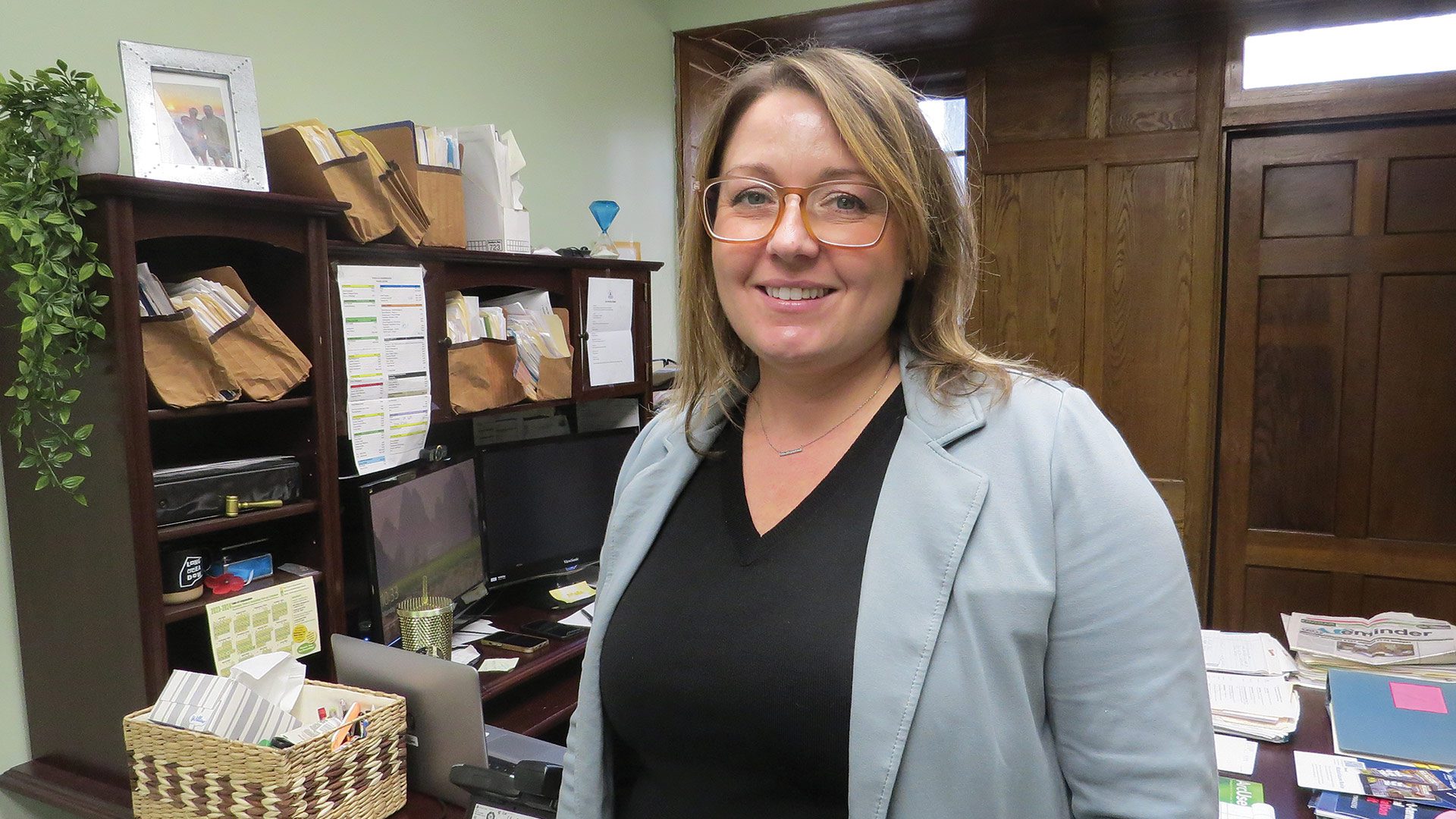
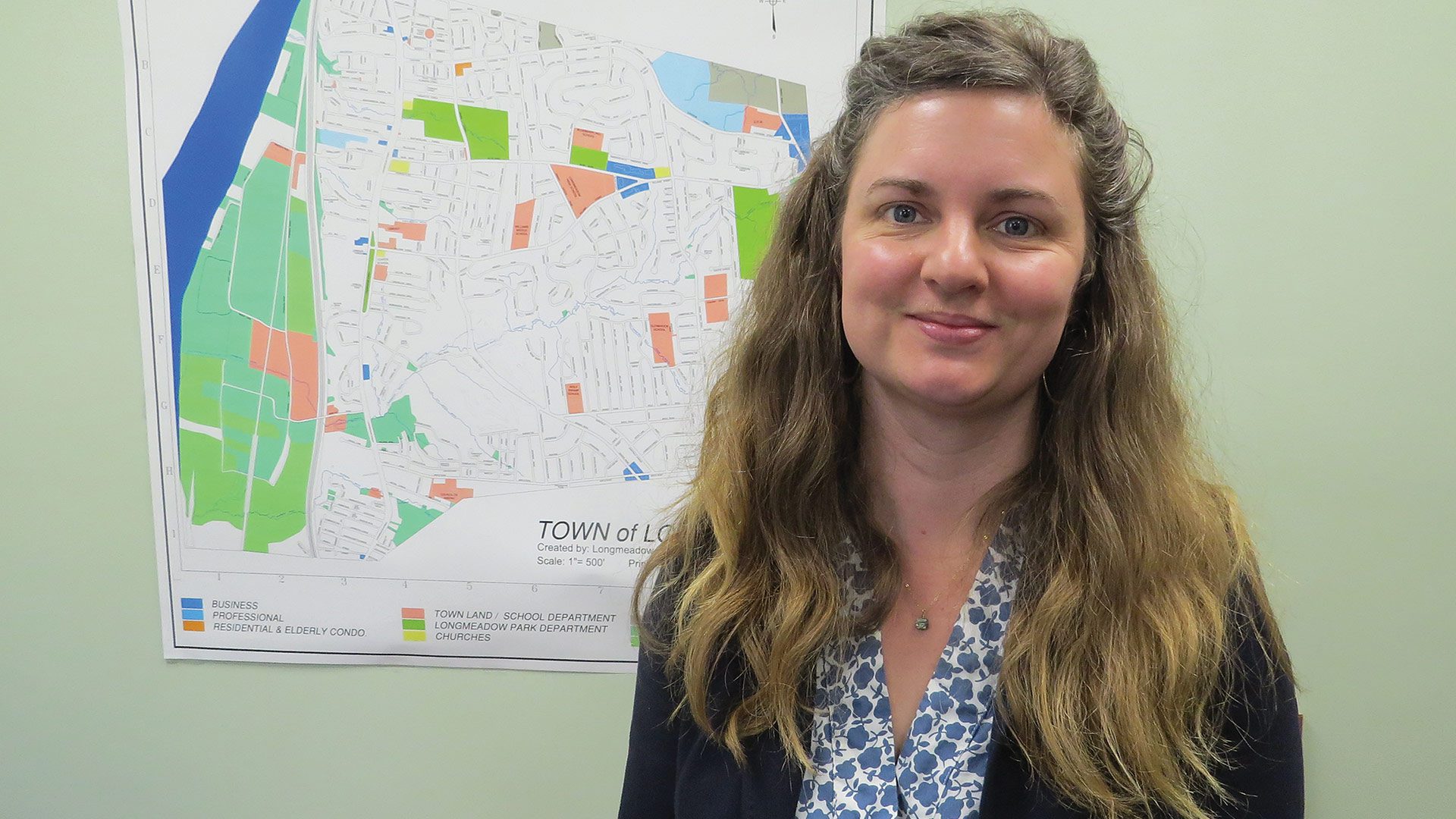
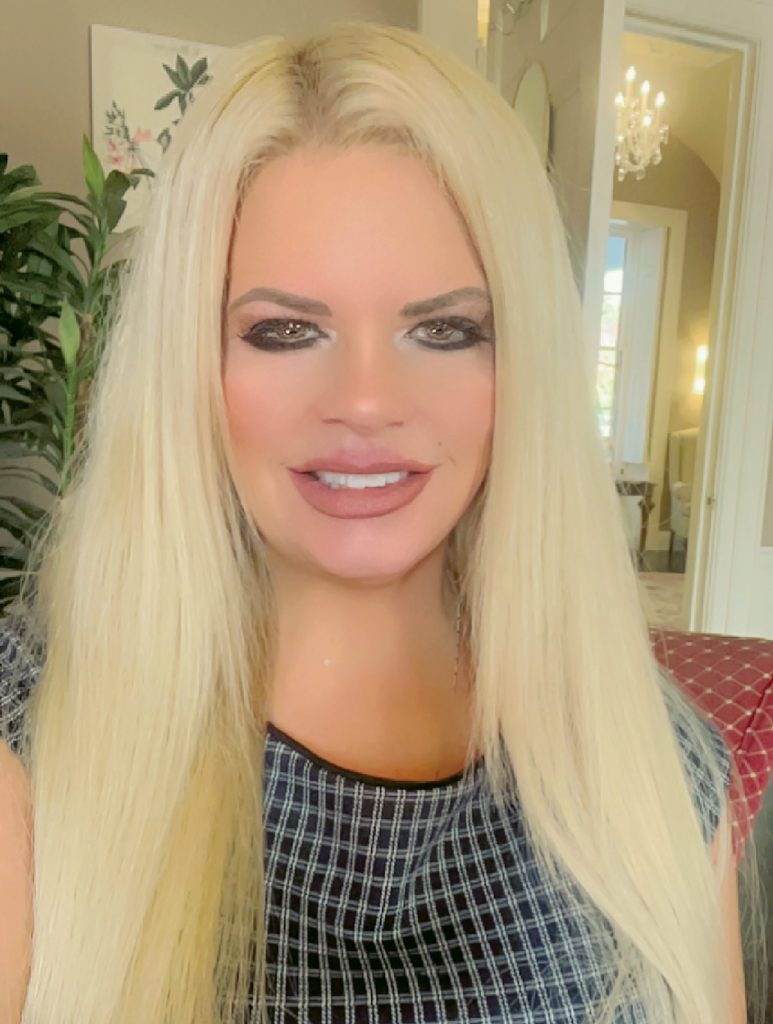
Kimberly Quinonez

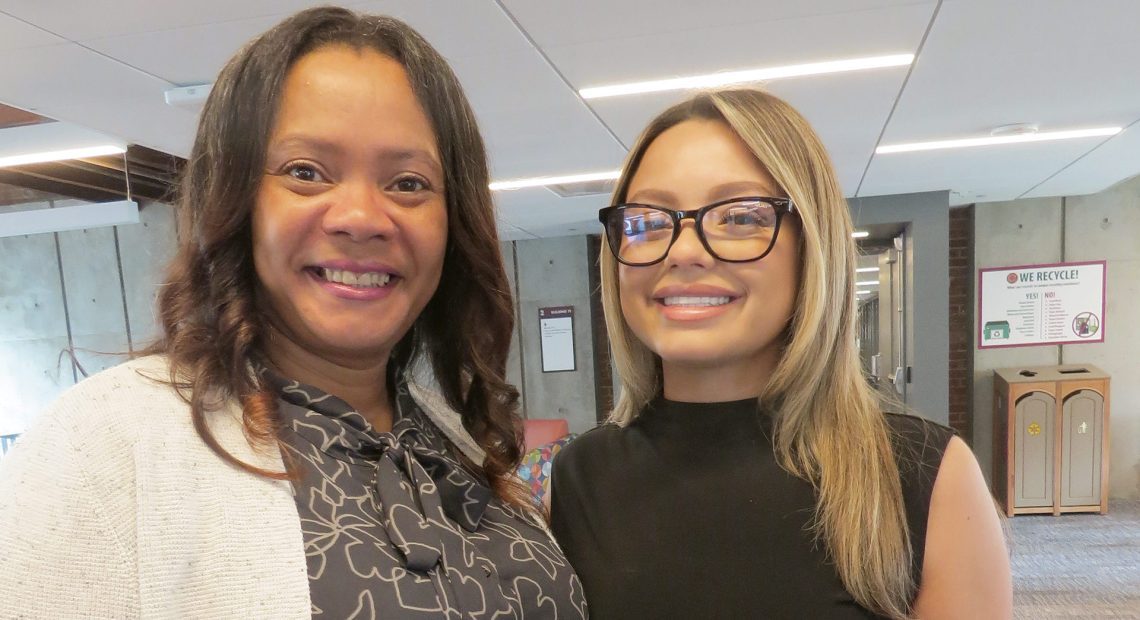
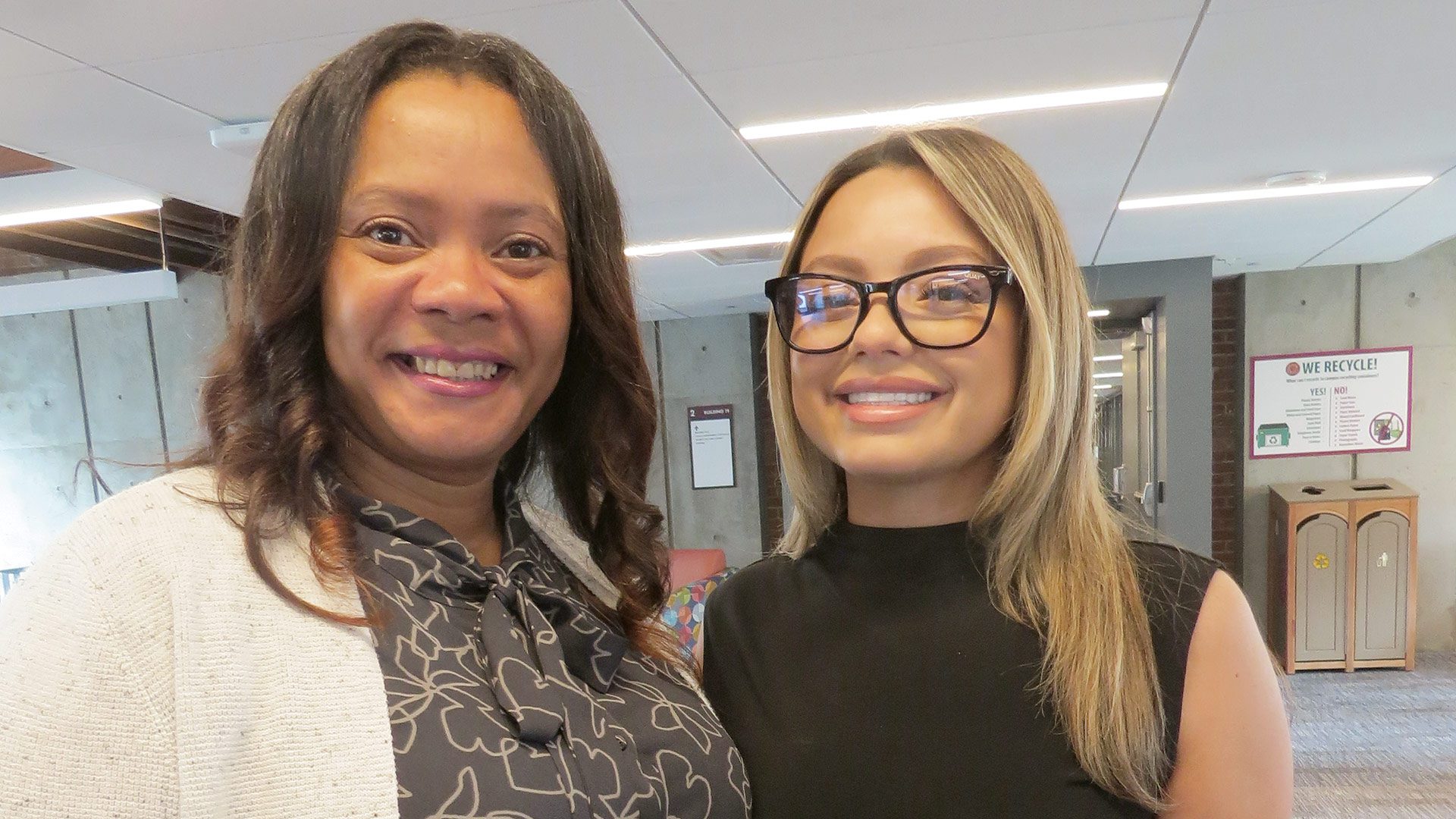
After getting some help rising out of poverty, Kimberly Quinonez is now in the business of helping others.

Kimberly Quinonez says she’s always had a passion for helping people, and a desire to make doing so a career.

But for most of her life, she was the one needing help.

A native of South Carolina, she grew up in a life of poverty, addiction, homelessness, and a sixth-grade education, and was desperate for a way out — and up — from all that.

After getting clean and moving to Western Mass., she completed her high-school equivalency at Springfield Technical Community College (STCC) at age 43 and enrolled in the school’s two-year associate-degree program in social work. And while still earning that high-school equivalency, she told BusinessWest, she met Wally Soufane, social work specialist at Elms College, who became a mentor and essentially put her on a path to the bachelor’s degree-completion program offered at the school.

Completing that program, and the associate degree before that, were stern challenges, she said, noting that there were several times when she wanted to quit because the combination of life and school seemed like too much. But she persevered, with help (there’s that word again) from Soufane and others who helped provide her with the will to carry on.

“I kept on and kept on; I had some discouraging moments, but I just couldn’t give up because this was something that I really wanted for myself,” she said. “And I really like helping people.”

This past May, she completed that program and was among the speakers at Elms’ commencement ceremonies, her story riveting those in attendance. Today, she’s employed at the Hampden County Sheriff’s Department as a care coordinator and counselor, while also working toward a master’s degree in social work at Springfield College.

“If we accept a student, our job is to support them. If they’re going to do the work, we need to support them as best we can and help them be successful, and we do that; our retention rates, over 80%, are very good, and our graduation rates, in the mid-60s, are very good.”

Her story touches on many elements of the bachelor’s degree-completion programs at Elms, said Walter Breau, executive dean of the college’s Kirley School of Continuing Education — everything from its ability to help non-traditional students set and achieve goals to the way its administrators and instructors work with students to help them overcome challenges and complete their degrees.

“If we accept a student, our job is to support them,” he went on. “If they’re going to do the work, we need to support them as best we can and help them be successful, and we do that; our retention rates, over 80%, are very good, and our graduation rates, in the mid-60s, are very good.”

Social work is one of the more popular programs at the Kirley School, said Breau, adding that others, many of them offered online, include computer information technology and security (CITS), computer science, healthcare management, speech-language pathology assistant, management and marketing, psychology, and RN-BSN.

Overall, there are now roughly 200 individuals enrolled in continuing-education (CE) programs at Elms, roughly 20% of the undergraduate population, said Breau, a veteran administrator at the college who recently took the helm at the Kirley School, noting that the goal is to grow enrollment to 300 and beyond.

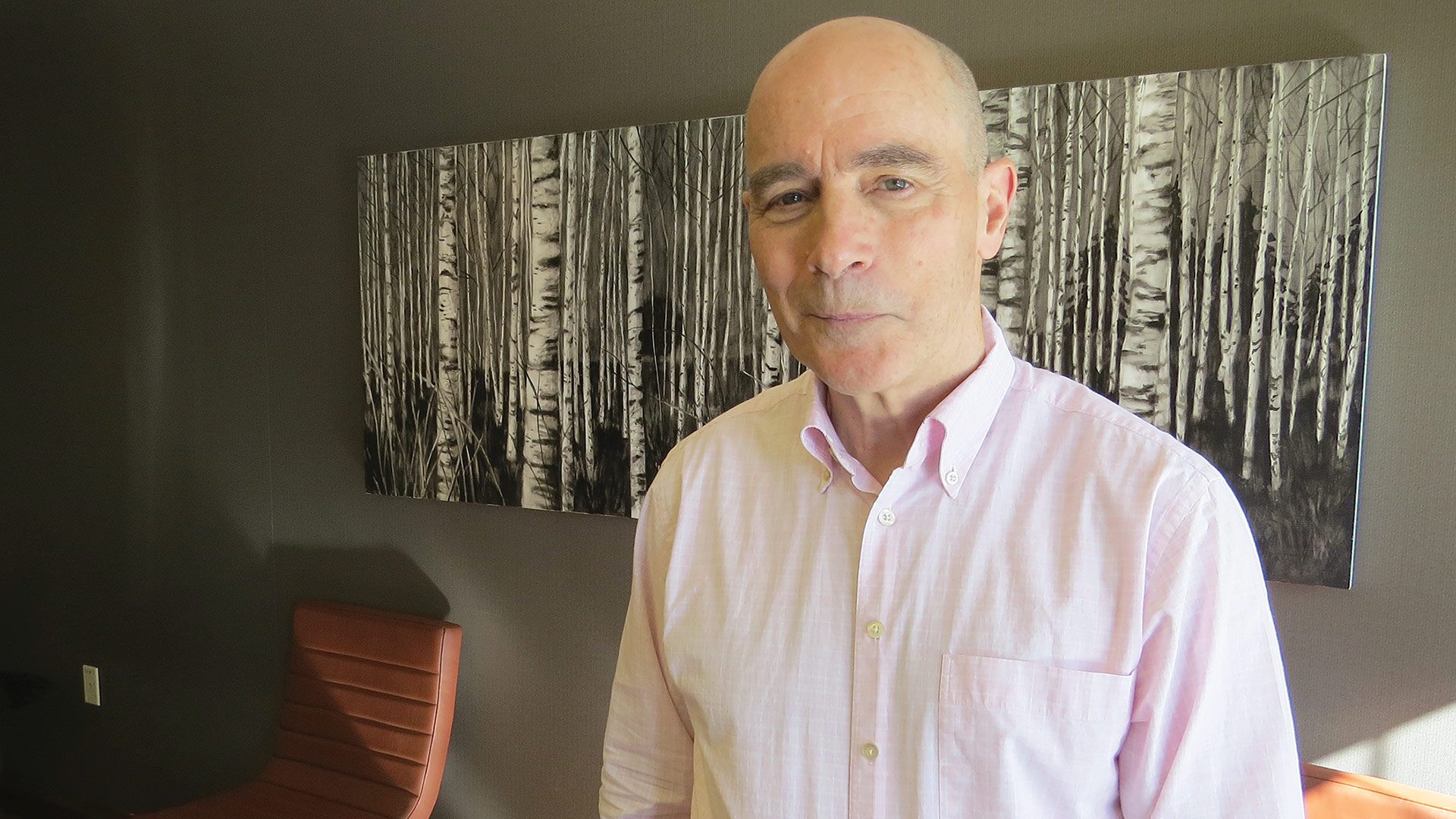
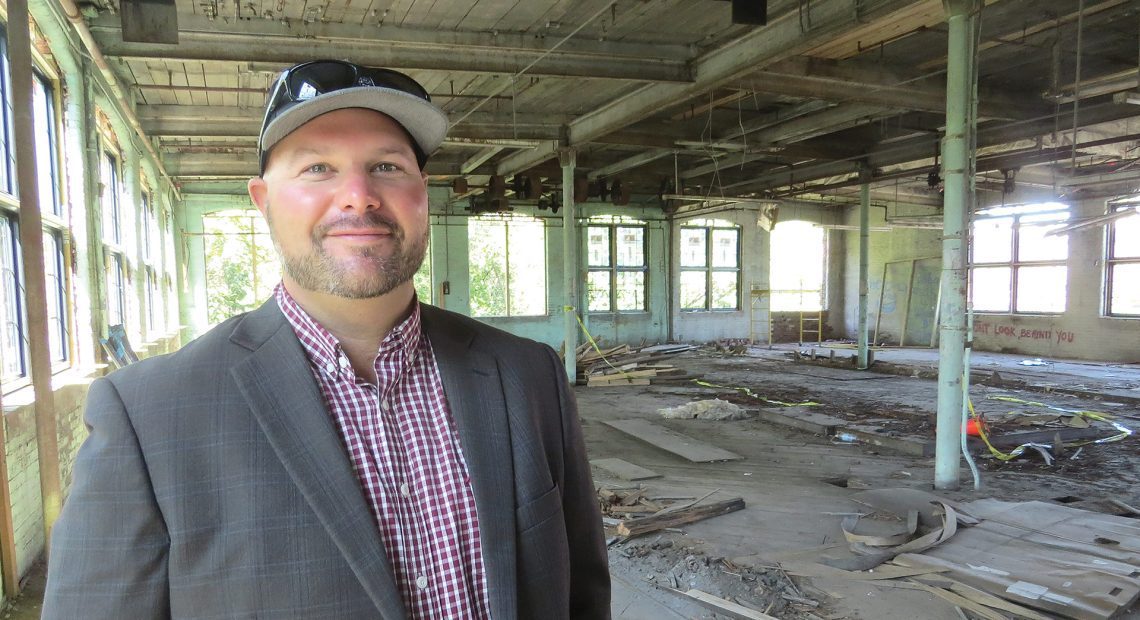
Walter Breau says the Kirley School is focused

Walter Breau says the Kirley School is focused on not only enrolling people in degree programs, but seeing them through to the finish line.
Staff Photo

And there is certainly some momentum with regard to enrollment, as the region’s community colleges, bolstered by the MassReconnect Program, which provides free tuition to those over age 25, are seeing their first real rise in enrollment since well before the pandemic.

For this issue, BusinessWest continues its series spotlighting professional-development programs across the region with a visit to the Kirley School and an examination of how it can change lives, like Quinonez’s, in a profound way.


Grade Expectations

This past May, Elms’ School of Continuing Education was officially renamed the Sister Kathleen Kirley ’66 School of Continuing Education, following a donation to the school in her honor.

And the new name is quite fitting, said Breau, noting that Sr. Kathleen, a member of the Sisters of St. Joseph, now retired from the school, was director of Continuing Education at Elms from 1977 to 1990 and served as the dean of Continuing Education and Graduate Studies from 1990 to 1998.

“If you look at the mission of the Sisters of St. Joseph, their goal is to serve the community,” he noted. “And at some point, instead of just having the traditional programs where you come to campus Monday through Friday, they understood that there was a population of individuals we could serve in a different way.”

That was the genesis of continuing education at Elms, he said, adding that, for more than a half-century now, the school has continued to serve non-traditional students with a variety of programs aimed at helping individuals not only earn degrees, but forge careers in growing fields.

These include collaborations with the region’s community colleges, whereby students can earn bachelor’s degrees on the community-college campuses. Indeed, there are social work programs at Asnuntuck Community College, Berkshire Community College, Greenfield Community College, and Springfield Technical Community College, said Breau, noting that many who earn their bachelor’s degrees at those locations, and on the Elms campus as well, go on to earn a master’s degree and become a licensed clinical social worker in the Bay State.

“If you’re a computer science major at STCC and you’re looking to earn your bachelor’s, we make sure there’s no loss of credits. You finish at STCC in May, and you start with us in August in the computer science bachelor’s program. It’s just another sign to students that we’ve deliberately thought about how to make you successful.”

“We have many of our students at STCC, Asnuntuck, and here on campus go forward and get their MSW,” he said, adding that there is “more than enough demand” for individuals who have those credentials.

Other popular programs include RN-BSN and speech-language pathology assistant, he said, adding that there is growing demand in both fields, and especially nursing.

Elms has articulation agreements, more than 50 in all, with the area community colleges, Breau explained, noting that these partnerships help create what he called “seamless pathways” as individuals take the credits they earned while completing an associate degree and apply them toward a bachelor’s degree at Elms.

“If you’re a computer science major at STCC and you’re looking to earn your bachelor’s, we make sure there’s no loss of credits,” he noted. “You finish at STCC in May, and you start with us in August in the computer science bachelor’s program. It’s just another sign to students that we’ve deliberately thought about how to make you successful.”

There are many such signs, he went on, adding that one point of emphasis at the Kirley School is to not simply merely get people enrolled in the various degree programs, but to see them through to completion.

And completion can be challenging, Breau said, noting that more than 75% of those enrolled in CE programs at Elms are 25 and older, which means they’re likely dealing with a number of life matters, such as work and family.

“They’re an older population who have decided, for one reason or another, that they want to fit in coursework with work, family, and other obligations,” he explained. “Our goal is first to show that it’s possible, it’s accessible, it’s affordable. People can see the end point even before they start.”

After showing it’s possible, the school then helps make it possible, with everything from flexible start dates to initiatives to help them step back in if they happen to hit pause for whatever reason, to many forms of student support, such as a 24-hour tutoring program.

Quinonez has seen these efforts to provide support up close and personal.

She said those at Elms were constantly supporting and “checking up on me” while she was in school. And they still do, months after she graduated.

“They still reach out to me today and say, ‘Kimberly, how’s it going?’” she told BusinessWest. “Elms changed me; I grew up and matured a lot — Elms College became my parents.”


Bottom Line

Today, Quinonez is working toward another degree at Springfield College and expects to complete that work in May. She said her time at Elms didn’t just help her find a career — instead of a job — but it instilled in her the desire to continue to reach higher and position herself to help people in more ways.

That’s what Sr. Kathleen Kirley had in mind when she laid the groundwork for today’s highly successful CE department at Elms.

The program has provided pathways to success and opened doors for people like Quinonez, who just needed a little help. And now they can help others.

Building Trades Special Coverage

It Runs Hot and Cold

Fifth-generation president Ted Noonan

Fifth-generation president Ted Noonan says the company continues to grow and diversify its products and services.


Going back nearly 135 years, Ted Noonan says, the company now known as Noonan Energy has been defined by ambition, innovation, entrepreneurship, diversification, and, perhaps most importantly, the willingness — and ability — to adapt to changing times.

And these qualities continue to describe Noonan today, he said, noting that the company started by his great-great-grandfather in 1890 as an ice-delivery venture continues to evolve and create new business opportunities.

Indeed, Noonan, which moved on from ice after the advent of refrigeration and morphed over more than a half-century into a leading provider of oil and HVAC services, has added two new divisions in recent years, electrical and plumbing services, that give it the ability to provide more services to existing and potential customers — and intriguing growth opportunities.

“We added these new divisions because there was so much synergy with our other services,” he explained. “We were constantly needing an outside plumber or an outside electrician to pull permits and do work, so we said, ‘since we’re hiring one all the time, why don’t we just bring one on and create a new division?’”

The plumbing division was added in 2011 with the hiring of master plumber Mark Gadourey, and the electrical unit was introduced in 2018 with the addition of master electrician Daniel Rollend, said Noonan, adding that both continue to grow, as do other aspects of the broad operation.

“We were constantly needing an outside plumber or an outside electrician to pull permits and do work, so we said, ‘since we’re hiring one all the time, why don’t we just bring one on and create a new division?’”

“We’ve had some nice growth in both of those divisions over the past five to 10 years, and on the service and installation side as well,” he told BusinessWest, noting that the company installs everything from oil tanks and oil burners to air-conditioning systems, heat pumps, and mini-splits, while also undertaking home-energy audits and creating comfort plans. “We have a whole host of … everything.”

As fifth-generation owner, Ted Noonan continues many traditions, if they can be called that, of the owners who came before him. Being entrepreneurial is one of them. Growing up in the business and learning all aspects of it first-hand is another — Noonan recalled riding with the delivery men in his youth and unwinding hose. And filling in, especially in a pinch, is yet another.

“I still drive today when we get really busy in the winter,” he said. “I enjoy it … I always say that it’s therapy for me; I get out of the office, I shut my phone off — or try to — and make deliveries. I’ve pretty much done every territory we handle, so if we get a couple of call-outs in the winter, I’ll step in.”

Mostly, though, he is involved in short-term and long-term planning, creating additional opportunities, and exploring new avenues for growth and expansion. He noted that a trend toward consolidation within the industry, one that has fueled the dramatic growth of this company over the past 50 years, continues, especially as the Baby Boomer owners of smaller oil-delivery and HVAC service companies move into retirement.

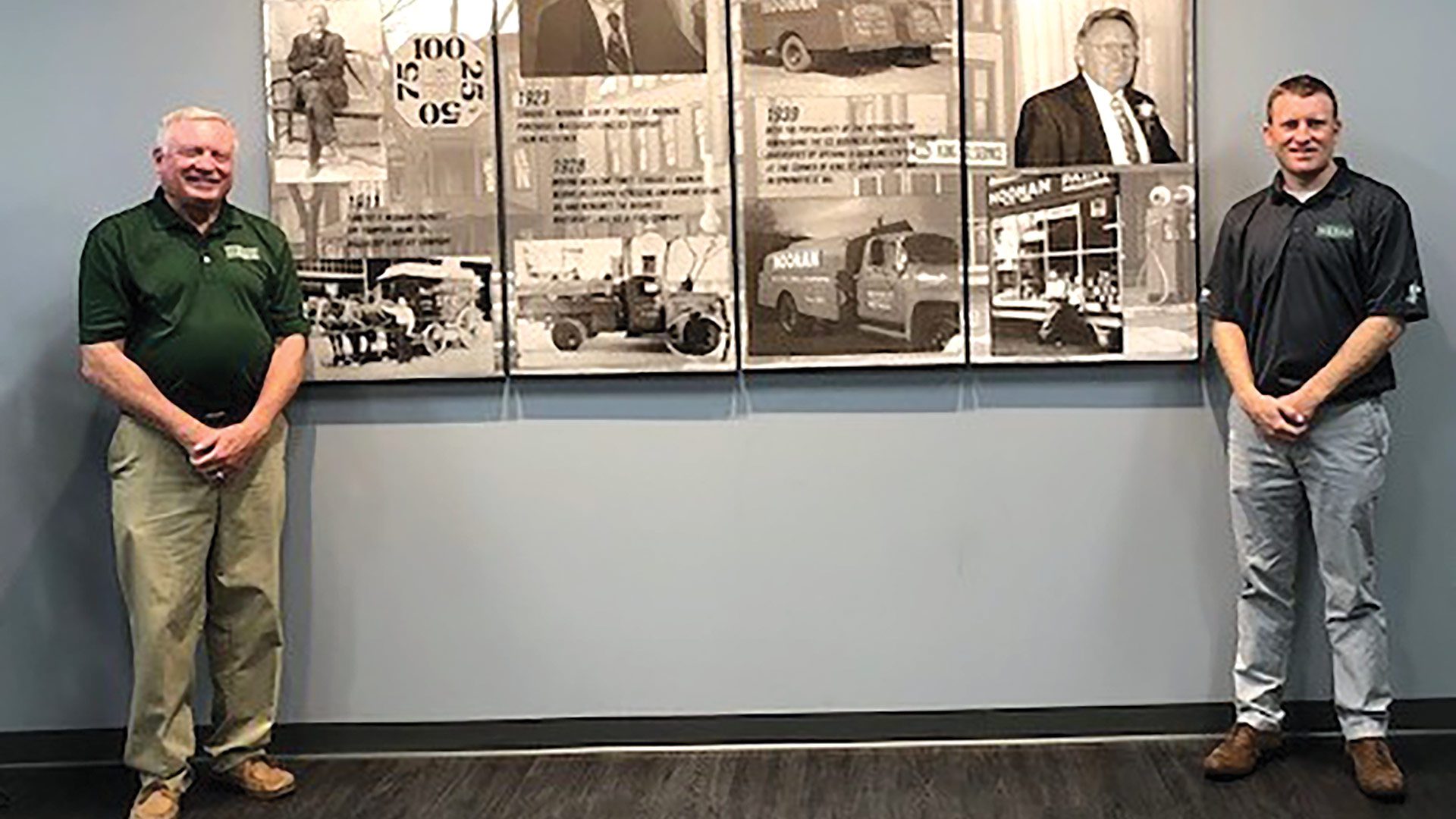
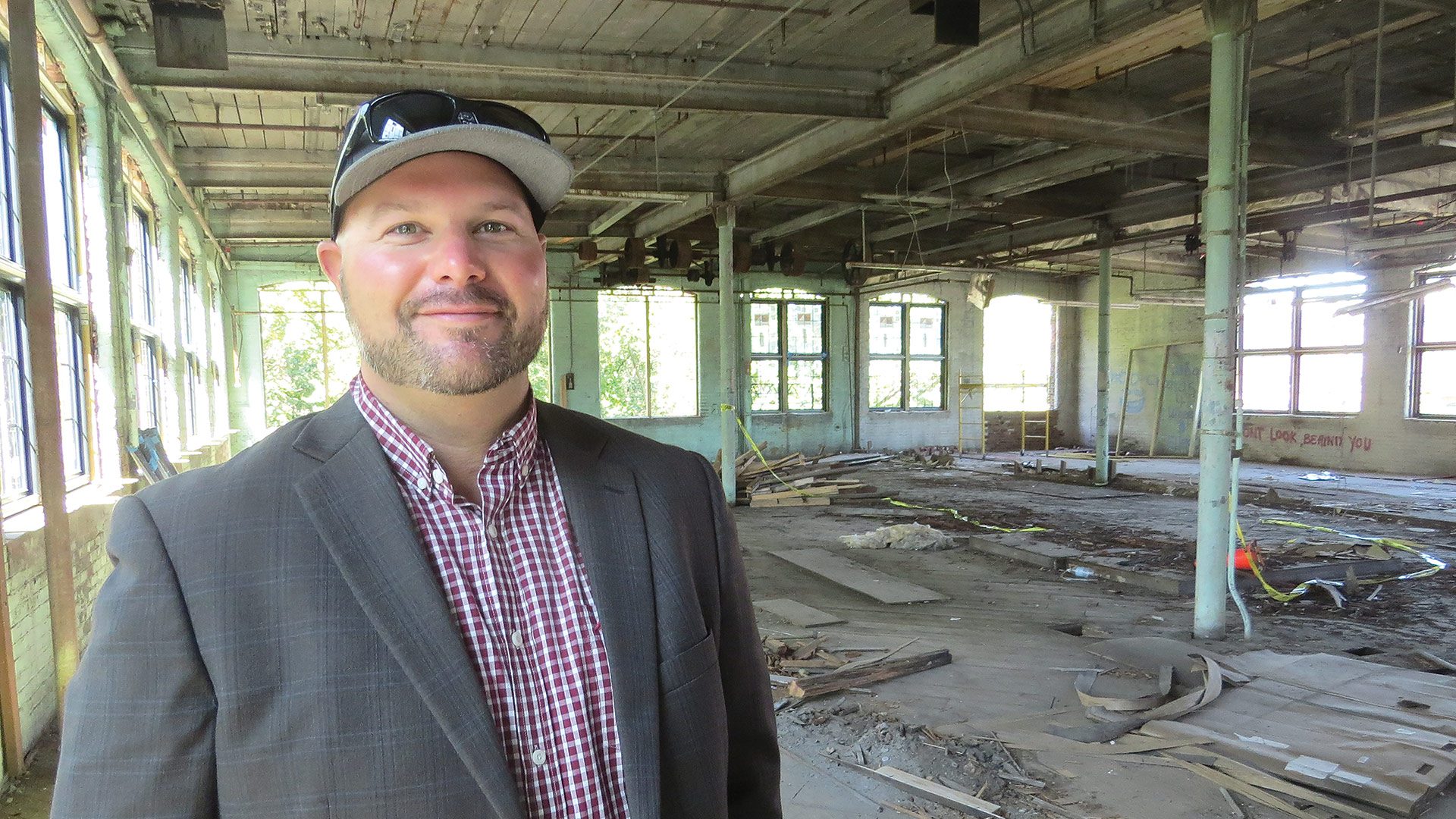
Ted Noonan (right) and his father, Ed

Ted Noonan (right) and his father, Ed, have continued traditions of innovation laid down by T.F. Noonan back in 1890.

“We’re still looking at acquisition opportunities and expansion opportunities, while also keeping an eye on what might create great synergy from a diversification standpoint,” he noted, adding that, at present, the company is focused on “shoring up” those new divisions and growing those aspects of the business.

For this issue and its focus on the building trades, BusinessWest takes an in-depth look at Noonan Energy, exploring its rich history, the continuing of a tradition of entrepreneurship, and the question of what might come next.


Freeze Frame

Flashing back more than a century to company lore that he is well-versed in and relates often, Noonan marveled at how the venture known as T.F. Ice Dealer (named for his great-great-grandfather, Timothy F. Noonan) cut huge blocks of ice from Lake Massasoit (Watershops Pond) in Springfield and, using sawdust as an insulator, kept it relatively cold all through the year for delivery to customers in the Greater Springfield area.

And he continues to be awed by the insulating properties of sawdust.

“We’re still looking at acquisition opportunities and expansion opportunities, while also keeping an eye on what might create great synergy from a diversification standpoint.”

“We have a small barn at our house, and we have sawdust for the horses,” he noted. “You’ll go two months after cold weather, and if we’re digging in the sawdust, we find snowballs. And that always brings me back to how this company started.”

While some things haven’t changed — like sawdust’s ability to keep ice cold — the Noonan company certainly has. Its history is told through a huge photo display in the lobby of the company’s offices on Robbins Road, in the shadow of a 2-million-gallon oil tank. That lobby is also home to an oil-delivery truck circa the 1930s — it was rescued several years ago, refurbished, and painted with the Noonan colors (green and white) to resemble trucks the company had on the road 80 or so years ago.

Providing a quick history lesson, Noonan said the company, while it has remained in the same family, has changed names a few times and added new products and services on a consistent basis.

The first name change came in 1911, when T.F. decided to put ‘Massosoit Lake Ice Company’ over the door and on the side of the horse-drawn wagons. He would sell the company to his son, Edward J. Noonan, in 1923. The entrepreneurial second-generation owner would add kerosene and home heating oil to the products delivered by the company, additions that would prompt a name change to Massasoit Lake Ice and Fuel Co.

Second-generation owner Edward J. Noonan inaugurated the company name Massasoit Lake Ice and Fuel Co.

Second-generation owner Edward J. Noonan inaugurated the company name Massasoit Lake Ice and Fuel Co.

By 1939, with refrigeration chipping away at the ice business, Ed Noonan diversified by opening a gasoline station at the corner of King Street and Eastern Avenue in Springfield, one that also sold paint and wallpaper, which many of those facilities did at that time.

In 1958, Ed Noonan sold the business to two of his sons, Timothy and William, who ran a company that would take the name Noonan Oil Co. Inc., a venture that would slug its way through the oil embargo in 1973 and manage to expand sales and develop new markets. Timothy would become sole owner in 1981.

“We see a bright future … it’s going to be different, certainly, than it was five, 10, or 50 years ago, but everyone is always going to need warming and cooling, and we’ll be there to provide it.”

His son, Ed, would launch his own career in the business by acquiring Palmer Coal and Oil in 1973, while his father continued to grow Noonan Oil. (The two companies were in friendly competition for several years.) Ed Noonan doubled the size of his company with the acquisition of Leonard Oil Co. of Monson in 1978 and continued to grow with other acquisitions, including Dulude Oil Inc., Palmer Oil Co., City Oil in Springfield, Marquis-Rivers in Holyoke, and Tinco Fuel in Ludlow.

He would eventually put all those brands under one name, Noonan Energy, in 1985, and in 1985, Noonan Oil Co., still owned by Ed’s father, Tim, would become part of Noonan Energy as well. In the ensuing years, many other smaller oil-delivery and service ventures would be acquired, including Better Heat Inc., Bolduc Fuel, Royal Heating, National Heating, Canary Oil, Hampshire Oil, Hillside Oil, Davis Fuel Co., Hadley Fuel Co. … the list goes on.

Ted Noonan, Ed’s son, joined the company in 1998, became its president in 2009, and was named a member of BusinessWest’s Forty Under 40 class of 2017.


Hot Takes

During his tenure, one during which Tim has remained active with the business, Ted Noonan has continued his father’s tradition of aggressive acquisition of smaller fuel-oil and service businesses.

In 2011, the company acquired the assets of Whiteley Fuel Oil Co. in Chatham; in 2011, it purchased Ray Kelley & Son of Palmer; in 2013, it acquired East Springfield Oil Co; and, most recently, it added Borsari Oil of West Springfield, Chudy Oil in Three Rivers, and Westfield Fuel to the fold.

All these acquisitions give the company something very much needed in this day and age — size, said Noonan, adding that they also give it a presence in several different markets across the region.

Indeed, the Noonan footprint, or service and delivery area, now stretches to the edge of the Berkshires to the west, several of the border communities of Connecticut to the south (penetrating further into the state is difficult, Ted said), into Franklin County to the north, and into Worcester County to the east. With that acquisition of Whiteley Fuel Oil, it also serves a dozen communities on Cape Cod. Locations in the 413 are in Springfield, Westfield, Amherst, and Palmer.

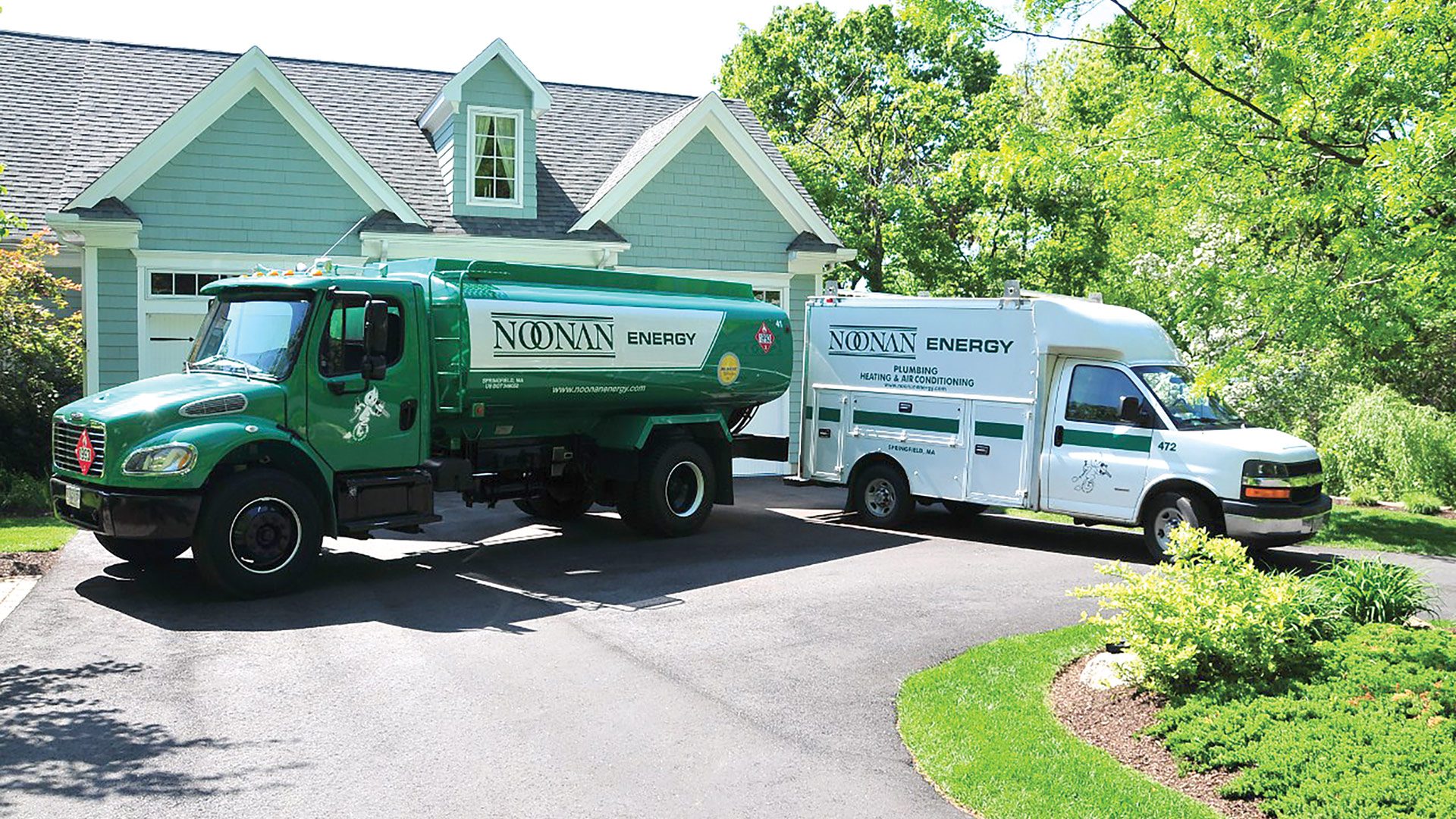
Noonan Energy is known for heating and HVAC services

Noonan Energy is known for heating and HVAC services, but has become a player in electrical and plumbing work as well.

Beyond these acquisitions and the accompanying territorial expansion, the company has achieved additional growth though expansion of its product and service portfolio, said Noonan, adding that, in addition to the new plumbing and electrical divisions, the company also added a home-energy audit division under the leadership of his sister, Kara Noonan, in 2012.

He said these new divisions, and especially the plumbing and electrical units, were natural additions that came about as need became evident, especially as plumbers and electricians retire in large numbers, and as customers looking for those services continued to ask people from Noonan — who were delivering oil, servicing a boiler, or installing central air conditioning — if they knew a good plumber or electrician.

After years of offering referrals if it could, the company made the entrepreneurial decision to change its answer to those questions to ‘yes … that’s us; we can handle that.’

“It’s similar work to what we do, and it’s a niche we can fill,” Ted Noonan said, adding that the ability to give that answer puts the company in a position to offer a portfolio of services that few, if any, of its many competitors can match. Noonan said many still just deliver oil, while others will also handle installation and service of HVAC systems. Meanwhile, some handle plumbing and HVAC, but not electrical or oil delivery. But very few cover all those bases.

The new divisions enable the company to further diversify and better position it for a future where there will certainly be less dependency on fossil fuels, said Noonan, adding that the company is already making strides in that direction through steps such as the blending of biodiesel and traditional heating oil to create bioheat, continually increasing the blend so it is less carbon-intense.

“We see a bright future … it’s going to be different, certainly, than it was five, 10, or 50 years ago, but everyone is always going to need warming and cooling, and we’ll be there to provide it,” he said, adding that the ability to change with the times — and sometimes see around the corner and anticipate what’s coming next — has kept Noonan viable since Benjamin Harrison was patrolling the White House.

And these qualities will continue to serve it well into the future.


Community Spotlight

Community Spotlight

The Let It Shine! Public Art Partnership

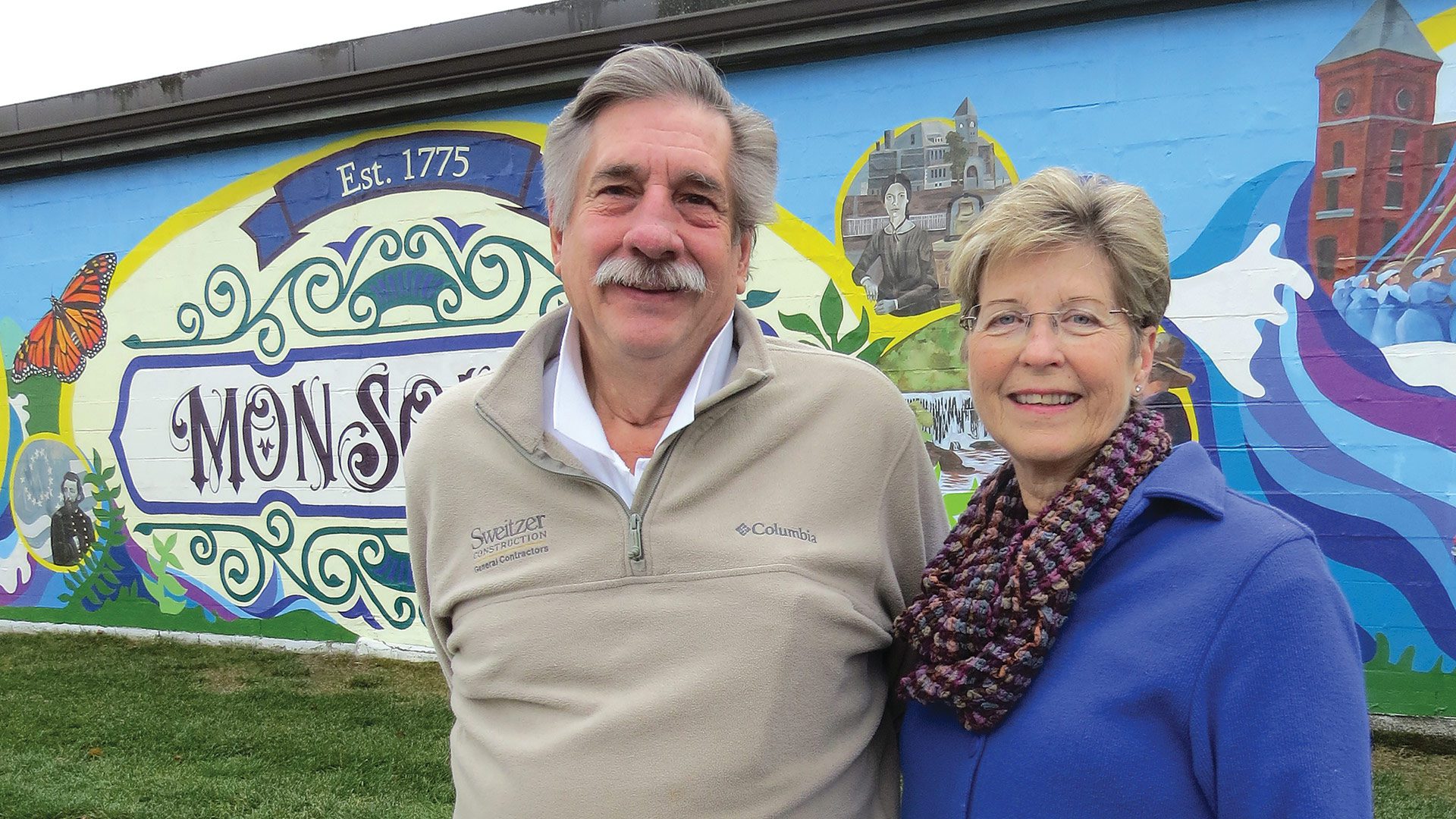
The Let It Shine! Public Art Partnership, a collaborative effort involving several partners, has helped bring new murals, color, and more vibrancy to downtown Pittsfield.

Rebecca Brien grew up in Berkshire County and has lived in Pittsfield for more than 30 years now. She’s old enough to remember what it was like downtown on Thursday nights after employees at the sprawling General Electric transformer-manufacturing complex picked up their paychecks.

“All of the shops would stay open late,” she recalled. “And all of the employees would get their paychecks and come down to the banks directly to cash them and have dinner and do some shopping. It was definitely a bustling town.”

Brien, who now serves as managing director of Downtown Pittsfield Inc., or DPI — a membership organization consisting of property owners, businesses, residents, and nonprofit agencies — understands that it probably won’t ever be that like again on North Street, the city’s main thoroughfare, and adjacent streets.

But there is a renewed sense of vibrancy — coupled with some stern challenges — in the central business district, she said, noting there are several new and thriving businesses, many of them in the broad realms of arts, tourism, and hospitality, and new initiatives to improve the area and specific storefronts and encourage people of all ages to visit the district and stay for a while.

These include the Let it Shine! Public Art Partnership, a group of Pittsfield-based community members who have come together to organize public art and revitalization on North Street, including several new murals that have brought color to the area and changed the landscape, literally and figuratively, and the Pittsfield Glow Up! Business-improvement grant program, made possible by ARPA funding. The initiative provides grants of up to $10,000 to eligible businesses impacted by COVID to be used for physical improvements that will enhance foot traffic and create visual vibrancy in the district (more on both programs later).

“There’s definitely a concern when it comes to foot traffic, so DPI has been working very hard to make sure that there are activities going on.”

“I do see that our downtown is poised to reach a new potential,” Brien said. “We’re working with MassDevelopment and its Transformative Development Initiative, a program to accelerate economic growth in focused areas, which means we have access to funding and programs that are really making a difference in our downtown.”

Jonathan Butler, president and CEO of the Pittsfield-based economic-development agency 1Berkshire, agreed.

He said Pittsfield and especially its downtown, which has been reshaping and reimagining itself since GE departed nearly 40 years ago, remains a work in progress.

Today, its economy is far more diverse than it was decades ago, when manufacturing was the anchor, he said, adding quickly that manufacturing remains a force, with General Dynamics employing nearly 2,000 people in facilities that were once part of the GE complex.

But the creative economy has also become a huge force in the community, with attractions and institutions such as Berkshire Theatre Group, Barrington Stage Company, and the Colonial Theatre, and this diversity stretches to technology, healthcare, service businesses, and other types of entrepreneurial ventures.

Al Enchill, seen here with his son, Auric

Al Enchill, seen here with his son, Auric, says he’s seen a considerable amount of change and progress in downtown Pittsfield since he first opened his busness.

That list includes Elegant Stitches, an embroidery and screen-printing shop run by Al Enchill and his son, Auric. It specializes in branded custom apparel — from T-shirts to tote bags to umbrellas — and counts a number of area banks and other businesses, colleges, government agencies (including the FBI), and even the U.S. Army in its client portfolio.

Al Enchill first opened his business on First Street in 1997, and has seen a good deal of change and progress downtown since then.

“Pittsfield is changing for the better, and it’s attracting more people,” he said. “I think this will help the businesses here.”

But as much as Pittsfield and its downtown are experiencing growth and progress, there are still considerable challenges, some of them COVID-related.

Indeed, the shift to remote work and hybrid arrangements has left fewer people working downtown, said Butler and Brien, noting that this has certainly impacted many of the hospitality-related businesses in that area. Meanwhile, that same trend has also impacted commercial real estate downtown, Butler added, noting that some businesses are now leasing less space, and others will certainly be tempted to do so.

At the same time, there is a housing crisis — the same one impacting communities across Western Mass., Butler noted, adding that there is potential to convert some of the vacant or underutilized space in the downtown area to housing, something that would address two problems at once and bring people, and vibrancy, to the city center.

For this, the latest installment of its Community Spotlight series, BusinessWest takes an in-depth look at Pittsfield and its downtown, and efforts not to recreate the past, but to create a vibrant, sustainable future.


Progress Report

Brien said DPI, established in 1983, acts much like a chamber of commerce would. The agency serves as a connector and liaison for businesses and property owners, residents, and city officials.

It is currently working on a number of initiatives to bring new businesses and vibrancy to the downtown area, she said. These include a collaborative effort between DPI and the Berkshire Black Economic Council on a VIBE grant that will provide funding for four new businesses to launch in the downtown, a program designed to help fill some of the empty storefronts in the district.

Meanwhile, DPI continues its work with the city and the Pittsfield Economic Revitalization Corp. to administer the Glow Up! grants. A first round of grants totaling $100,000 and involving 12 businesses was awarded in the spring, and applications for a second round of $100,000 opened earlier this month.

“Pittsfield is a commercial center, lots of people physically work in Pittsfield; they all left downtown Pittsfield during the pandemic to work at home, and now, three years later, some of them have returned, but many haven’t. So, like many other downtowns, there’s a large gap in commercial real-estate space, a lot of unfilled space.”

“The money can go toward anything from painting to new windows to new signage and additional lighting,” Brien said, adding that the program’s name explains what business owners are trying to do — glow up their operations.

Overall, there is progress downtown, but several challenges as well, especially when it comes to foot traffic — a concern for most all cities in the post-COVID area. Thus, DPI has intensified its efforts to create programming and undertake initiatives to not only bring people to the area, but extend their stay.

“There definitely have been more challenges, especially for our lunch business in the downtown, especially with the banks, insurance agencies, and organizations like that still working hybrid models,” Brien said. “There’s definitely a concern when it comes to foot traffic, so DPI has been working very hard to make sure that there are activities going on.”

These include an Artswalk on the first Friday of each month between May and December to bring visitors downtown, she noted, adding that the program has been expanded recently to include placing works by local artists in shops and restaurants, as well as music, dance, a marketplace, and activities for children in an effort to extend visitors’ stay in the central business district to include dinner and perhaps a show at one of the venues.

Along these same lines, the Let it Shine! community art project was launched. It includes eight new murals in the downtown and West Side districts.

“These are world-renowned artists — individuals from across the U.S., and local artists as well, who have installed pieces,” Brien said, adding that a digital tour guides individuals to these works and other murals installed in recent years.

“Any night of the week in our downtown, you can find activities, you can find music, shows at the local theaters — we have a great movie theater in our downtown, we have a new brewery that has programming every night of the week,” she went on. “We have great restaurants … there’s a lot to do, and we’re doing what we can to bring people out and take it all in.”

Enchill has witnessed all this out the front window of his business, and he is encouraged by what he now sees. He said that, while COVID took its toll, there are many people on the streets, some of whom will stop into his store to buy a sweatshirt because it’s colder outside than they thought it might be.

“Things are changing here — things are happening,” he said. “Downtown is making its way back.”


‘Fighting Its Way Back’

Butler concurred, and noted that there is a sense of momentum in Pittsfield, visible on many fronts.

These include population growth, something all Berkshires communities have been seeking, especially in the form of professionals fleeing larger municipal centers in the wake of COVID for more rural zip codes that offer quality of life and opportunities to work remotely.

Pittsfield fits that description, Butler said, adding quickly, though, that whatever surge there may have been has crested. Meanwhile, he wondered out loud how many of these new arrivals were simply living in the Berkshires and not working there — and, thus, not providing any relief for a workforce crunch that is still impacting businesses across most all sectors, but especially the tourism and hospitality industry.

“It’s absolutely a tough time workforce-wise; I don’t know if we’re off trend with the rest of Massachusetts or New England, but we’ve definitely felt pressure in the hiring market going all the way back to 2017 and 2018, pre-pandemic, and then it accelerated with the pandemic, and we’re still feeling that,” he said, using ‘we’ to mean the Berkshires in general but especially the region’s largest community, where roughly 40% of those employed in the county work.

“And it’s really every sector, from hospitality to healthcare, manufacturing, and tech; we just have a variety of sectors where they’re hiring everywhere, and it doesn’t appear that the workforce needed for our current employers is seeking employment at the volume needed in the Berkshires.”

The problem is especially acute in the tourism and hospitality sector, Butler said, where some businesses, including hotels and restaurants, have been forced to alter operations, and often hours or days of operation, because of an inability to find enough help.

As for the downtown, he said it is “fighting its way back,” a phrase he used not necessarily in reference to the loss of GE, although that’s part of it, but rather to COVID and its after-effects, with regard to both visitation and a changing workplace that has left at least Mondays, Tuesdays, and Wednesdays quieter than they were before the pandemic.

“Downtown Pittsfield was probably the heaviest pressure point in terms of pandemic-induced economic impact, and that was probably the case with most gateway cities and larger cities,” he said. “And in the case of downtown Pittsfield, I think it was a combination of things — Pittsfield is a commercial center, lots of people physically work in Pittsfield; they all left downtown Pittsfield during the pandemic to work at home, and now, three years later, some of them have returned, but many haven’t. So, like many other downtowns, there’s a large gap in commercial real-estate space, a lot of unfilled space.”

Elaborating, he said some businesses are carrying on in the same space as before the pandemic, but others have changed their footprint to accommodate a smaller on-site workforce, leaving space to be leased.

Space that might be used to help combat the ongoing housing crisis, he said.

“There’s an opportunity to convert a lot of this underutilized space that we found post-pandemic into housing,” Butler explained, adding there are a probably a dozen buildings in and around downtown Pittsfield that could be retrofitted for such use, and a $4.8 billion housing bond bill proposed late last month might help fund such transformations.


Seeing the Light

Brien has obviously seen a great deal of change in downtown Pittsfield from those days when GE dominated the economy and even the culture of the community.

And the pace of change continues, most recently in a positive way, with new businesses and new initiatives that make the city and its downtown a destination.

“I really feel that there’s a glimmer,” she told BusinessWest. “It’s not going to happen overnight, but every day, we do a little bit more to bring Pittsfield and our downtown back to life.”

A life that respects the past, but is more a reflection of the future.

Cover Story

The Power of Food

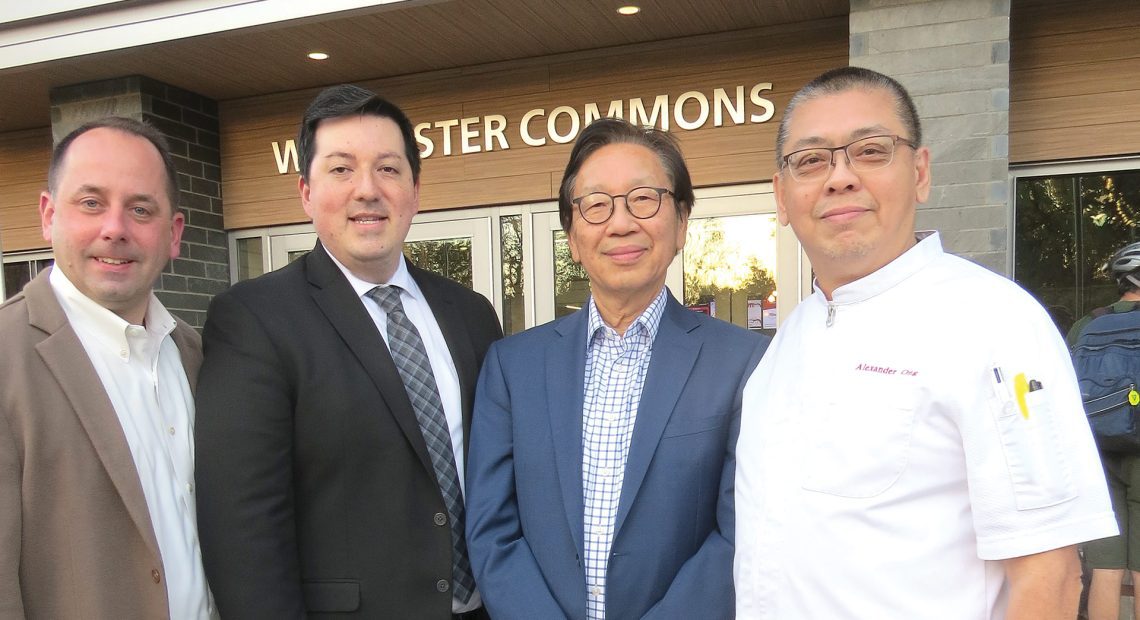
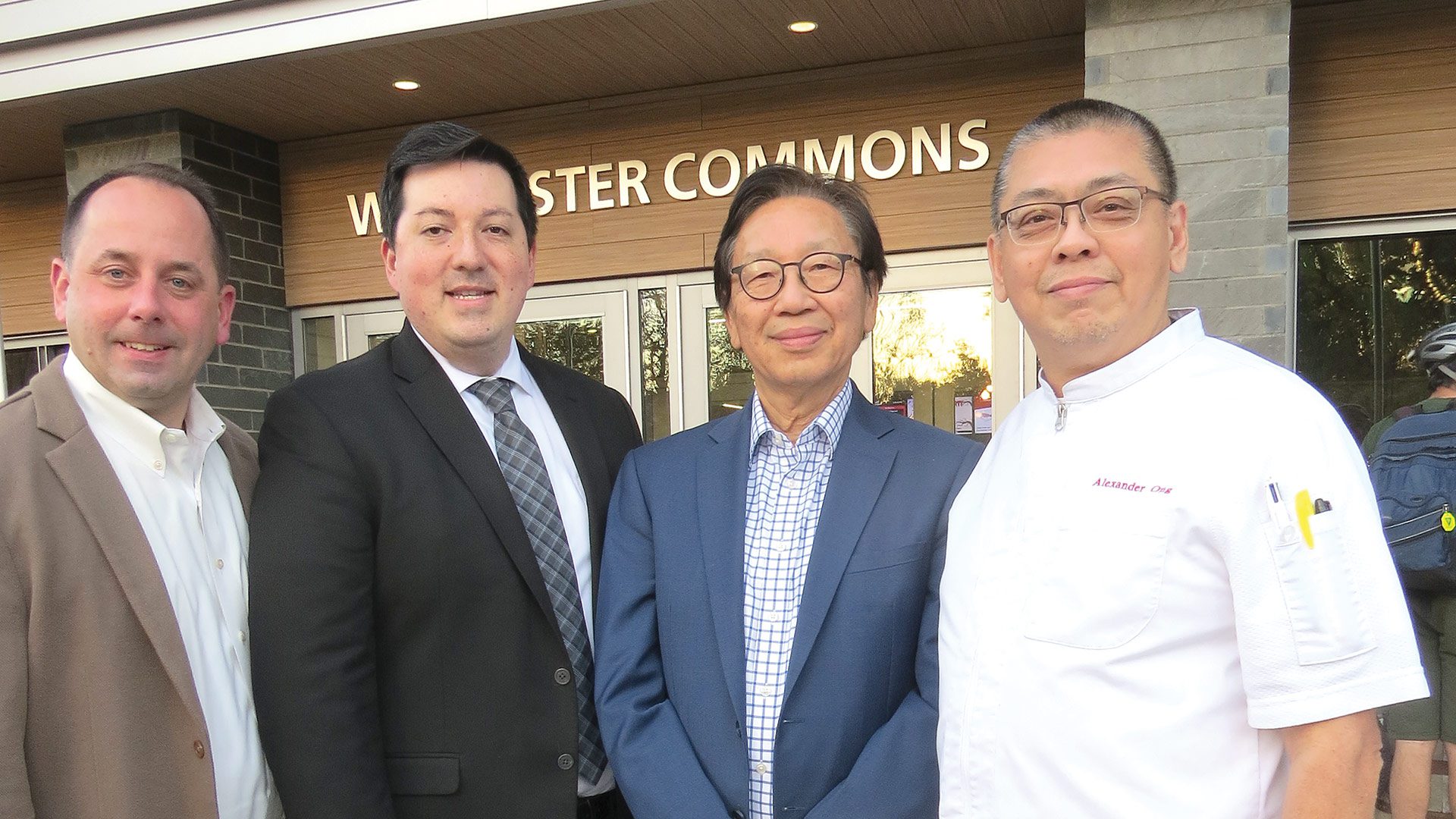
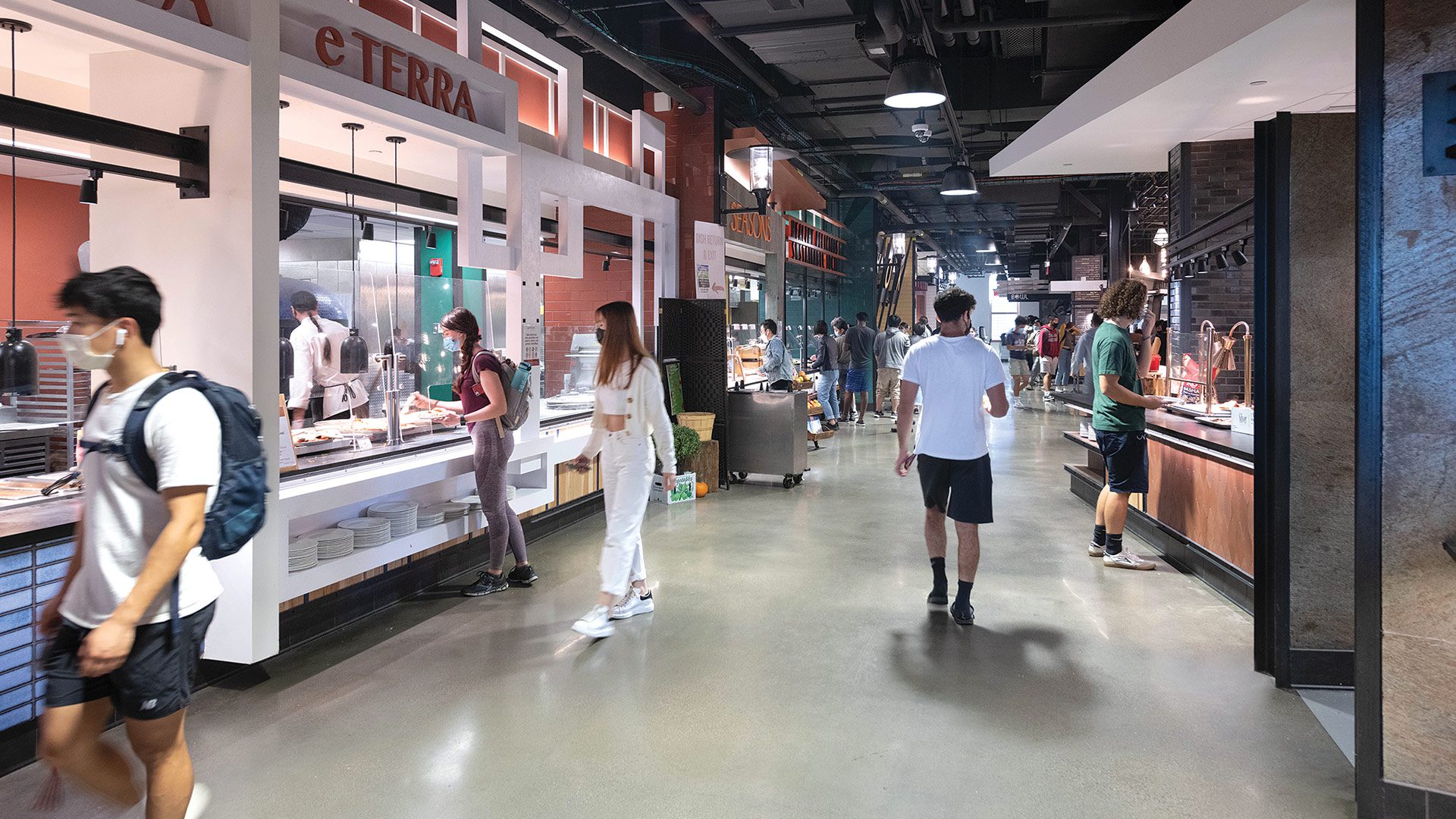
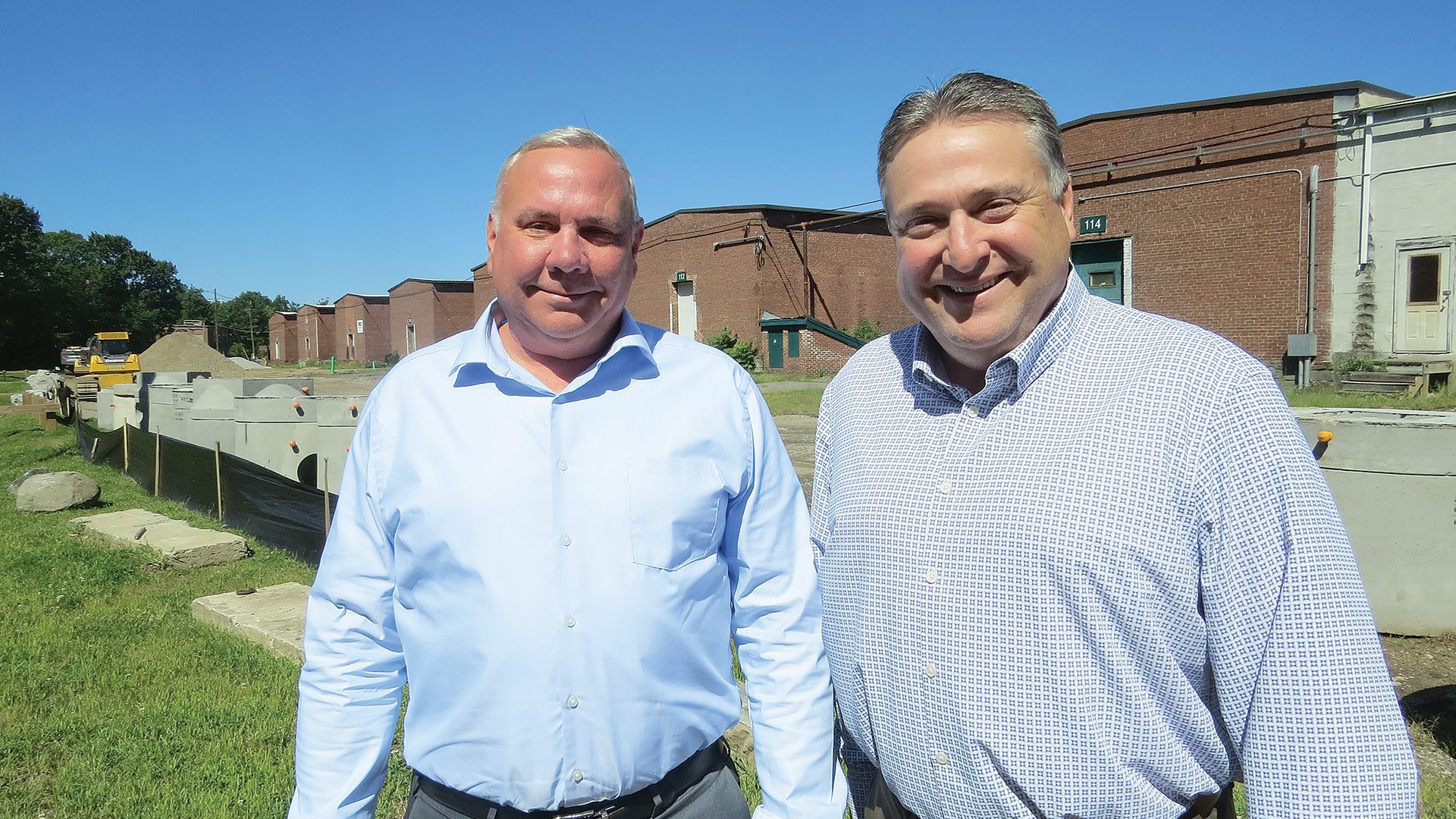
Leaders of the team at UMass Dining, from left, Garett DiStefano, Chris Howland, Ken Toong, and Alex Ong.

Leaders of the team at UMass Dining, from left, Garett DiStefano, Chris Howland, Ken Toong, and Alex Ong.


Chris Howland says the discussions with the vendor started several weeks ago. And they continued on an almost daily basis right up until the end of last month, covering a variety of issues, from price to delivery strategy.

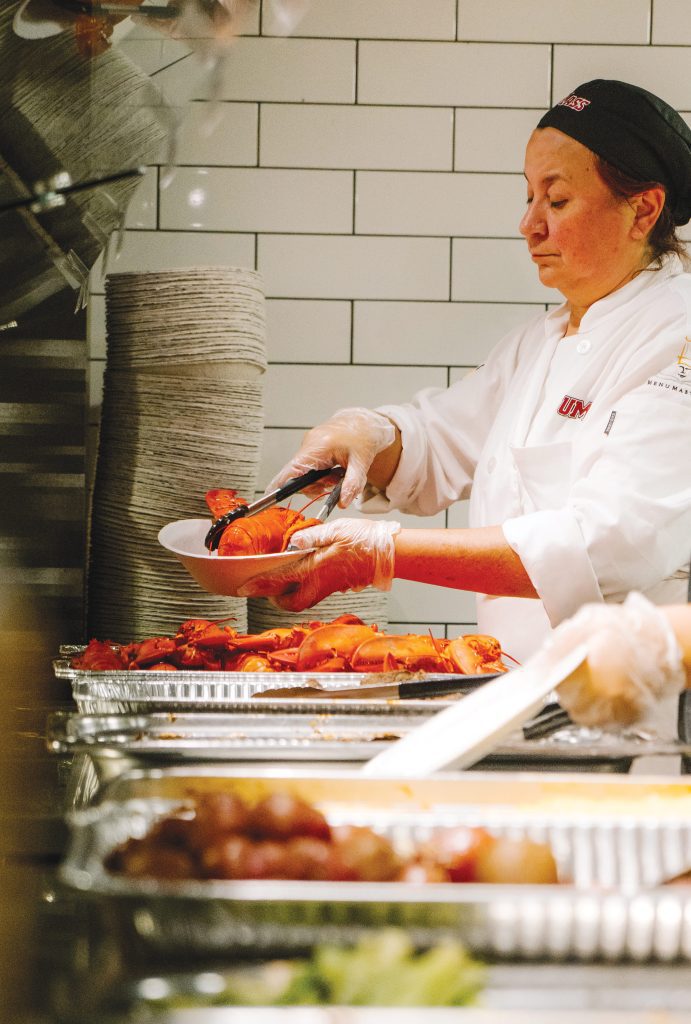
That’s what it takes to ensure that 15,000 or so lobsters are delivered on time, and are fresh and still kicking, said Howland, director of Procurement, Logistics and Special Projects for Auxiliary Enterprises at UMass Amherst, the parent department for what is now, and has long been, the university’s industry-leading Dining Services.

“It’s quite the process, but we have it down to a science,” he told BusinessWest. “We partner with a vendor in Boston that we source a lot of our seafood from. We’re really comfortable with them and confident that they can supply us with these lobsters in time; they get their final order at 4 a.m., they drive it up here in two tractor trailers, and deliver to all four dining commons by 10. So these are going to be some of the freshest lobsters you’re ever going to see — it’s from the sea to the table, essentially.”

The lobsters are now the centerpiece, but certainly not the only piece, of ‘All Treats, No Tricks’ steak and lobster night, a coveted Halloween tradition at UMass Amherst for nearly 25 years now. It is easily the most anticipated day on campus, food-wise, one that draws not only the students but a few hundred parents, who smartly choose that day for a visit.

There are also, as the name suggests, steaks, Halloween costumes, pumpkin-carving contests, roving magicians, and other entertainment that make this a special night indeed. In fact, when COVID got in the way of things in the fall of 2021, when there only 1,500 students on campus, special arrangements were made for the senior class to enjoy steak and lobster in the spring, so they wouldn’t miss out.

“The days of saying ‘we’re going to serve a banh mi, a Vietnamese sandwich, and put a baguette out there, some mayo, put some ham in there, and call it a banh mi’ … those days are gone; you’ll never get away with it.”

Fittingly, steak and lobster night was the door by which Howland and other leaders at UMass Dining began to answer the question posed by BusinessWest — ‘just how important is food on a college campus, and especially this campus?’

Using two words, because that’s all he needed, Garett DiStefano, director of Dining Services, said simply, “it’s huge.”

Elaborating, he said that, beyond the obvious — sustenance and nutrition — food is a connector; it connects students to family, tradition, holidays, their home countries, and more. Meanwhile, food contributes to performance — not just athletic performance, but mental acuity, he noted, as well as mental health, comfort, and a sense of belonging on a campus with 25,000 students.

Overall, food can greatly impact the student experience — at a time when enrollment is an issue for many schools — thus making it easier to attract and retain students, he went on.

Ken Toong, executive director of Auxiliary Enterprises, agreed.

“Food on a college campus is more important than ever before,” he said, noting that a survey revealed that 70% of the students who chose UMass said food was a factor in their decision, and 83% said food contributed positively to their overall experience at the school.

But — and this is a big but — food can only do all that if it tastes good and it’s authentic (that’s a word you’ll read many times in this article), said Toong, adding that these are just two of the ingredients, and there are many, that go into whether a school’s dining services are considered successful, let alone the top-rated program in the country according to the Princeton Review, which UMass Amherst has been for seven years running now — eight if you count 2021, when the competition was altered somewhat because of COVID.

Other factors include everything from sourcing and buying local to technology, such as an app that not only tells students what’s on the menu, but the ingredients being used (vital information at a time when so many have food allergies); from sustainability and impressively low amounts of food waste\ to globally inspired cuisine — 36% of the students at UMass are international.

But maybe the biggest ingredient, said DiStefano, is the ability to listen to what the students, who deliver feedback in a candid fashion, are saying, and respond in ways that perpetuate and build upon what he called a “culture of excellence” driven by the large and diverse team at UMass Dining.

For this issue, BusinessWest talked at length with several members of that team, not so much about all the awards they’ve won, although that’s part of it, but what goes into those awards, and how all those ingredients are embedded into the culture of what can only be called an institution on the campus.


On a Roll

When asked for his definition of ‘authentic,’ Alex Ong, director of Culinary Excellence at UMass Dining, broke into a smile, indicating that he enjoys answering that question.

He started by saying the university boasts students from across the country and around the world. When an operation like UMass Dining puts dishes from different regions and different countries on the menu, students from those places know what’s real and what isn’t, Ong explained, adding, with some conviction in his voice, that the team he leads can’t, and won’t, even try to present anything approaching a reasonable facsimile.

“The days of saying ‘we’re going to serve a banh mi, a Vietnamese sandwich, and put a baguette out there, some mayo, put some ham in there, and call it a banh mi’ … those days are gone; you’ll never get away with it,” he said. “If you say it’s a banh mi, it better be a banh mi, starting with the bread — it has to be a Vietnamese-style roll, and it has to be toasted, so when you’re done, all you have on your shirt are tiny little crumbs.”

DiStefano agreed. “We have students from all around the world who know what a real banh mi is or what a particular dish from Northern China should look like and taste like,” he said. “And they’re going to hold us accountable. Chef Alex and his team are very critical and make sure that what you see is what you get and it’s 100% true to form.”

This dedication to authenticity is critically important at a time when more than a third of the students are international and that number continues to edge higher, said DiStefano, noting that the school is seeing more students from Southeast Asia and some of the Latin countries, among other spots on the globe. And they are among the 32 ‘student ambassadors’ that meet with the team at UMass Dining every three weeks to provide feedback and help shape the menus for the weeks and months to come.

These ambassadors, and students in general, can be (and usually are) brutally honest, said Ong, adding that this candid feedback helps drive continuous improvement.

“Sometimes, we walk out of the ambassadors meeting and say, ‘we just got rolled,’” he told BusinessWest. “But we know that we have to pick up the pieces and start rebuilding and stay true to our mission.”

Dedication to authenticity, as well as the ability to listen and respond to the ambassadors and the rest of the student body through a number of feedback channels has enabled UMass Dining to do something difficult — soar to the top of the Princeton Review’s ‘Best Campus Food’ List — and then do something even more difficult: establish seemingly permanent residency there.

In doing so, the school has bested an intriguing mix of public and mostly private schools. Indeed, the top 10 in the 2023 rankings includes an Ivy League school, Cornell; some prestigious private institutions such as Bowdoin and Vanderbilt; and a few other public schools, including Virginia Tech and Kansas State.

There are many other schools that have cracked the top 25 in recent years, said DiStefano, and many of them — as well as institutions that would like to earn such a ranking — have sent delegations, some of them quite large, to UMass Amherst to watch and learn from the team that has set the standard. For example, a large contingency from Williams College recently came for a comprehensive, day-long training exercise.

“The trips are informative, but it’s also about building connections and building relationships, and it’s very important for us to do that. And in many cases, it can humble you — they’re doing a phenomenal job, too, so you want to learn and see how you can do better.”

Meanwhile, the UMass Dining team visits other schools on a fairly regular basis, understanding that to achieve and sustain excellence requires continuous learning and adopting best practices.

“We’ve been to UCLA, Berkeley, Yale, the Ohio State, and many others,” he said. “The trips are informative, but it’s also about building connections and building relationships, and it’s very important for us to do that. And in many cases, it can humble you — they’re doing a phenomenal job, too, so you want to learn and see how you can do better.”


Food for Thought

As he and the others talked about what makes the UMass program successful, and able to stay at the top of the rankings, DiStefano said the biggest ingredients are teamwork and commitment to excellence and the many constituencies fed by UMass Dining, and especially the students.

“You have to serve quality food, authentic food, every day, consistently — it’s as simple as that,” he explained. “The power of the chef is more important than anything, and Chef Alex and the culinary team here are what makes the engine go every single day.

“You have a consistent group of staff here who truly care about the students and the student population,” he went on. “You have a reflexive staff who are some of the diverse group of people we have — we have 23 different languages that are spoken in our dining commons, and 60% of our staff are first-generation residents, so they bring a wonderful flair of authenticity and passion for the university as well as the food they serve, and that reflects our culture.”

Ong agreed. “We empower our staff to tell a story through food because they represent the United Nations of different ethnicities that we serve; they bring a lot of authentic flavors and share them with our students.”

But, as noted earlier, there are many factors that play into a successful program beyond delicious, authentic food, said Toong, listing everything from efforts to reduce waste to initiatives to buy local whenever possible, to efforts to utilize technology and research to further enhance the student experience — and even academic performance.

He said the program uses cell-phone communication and dining apps to not only tell the UMass Dining story, but also gather information from students. There are also ordering kiosks to help shorten the lines in the dining commons, as well as collaborative efforts with the School of Nutrition on studies to determine how diet and academic performance might be related.

Students find plenty of healthy, authentic choices at the Worcester Commons

Students find plenty of healthy, authentic choices at the Worcester Commons, one of four dining commons on the UMass Amherst campus.
(Photo by Chuck Choi Photography)

“We’re looking at things like what foods might help someone perform better before a test or feel less anxious,” said DiStefano, adding that the department doesn’t simply measure such things — it also incorporates what is found into the dietary plan.

“And that’s where the power of the chef comes into play,” he said. “I can say, ‘eating more beans is going to be great for you,’ but it must taste good for the student to actually want to do it. That’s where the magic happens, and that’s where we start to really see change in diet behavior.”

With that, he referenced the vegetarian/vegan area in the Worcester Dining Commons. “I eat there pretty much every day, not because I’m a vegetarian or a vegan, but because the flavors are really good; there’s something about spinach cooked perfectly.”

Meanwhile, UMass Dining supports a number of local farms and orchards, including the UMass Student Farm, a 20-acre, certified, organic vegetable farm in nearby Sunderland that grows a variety of crops, including tomatoes, cucumbers, kale, broccoli, lettuce, and more.

“It’s a great program, they’re doing very well, and we certainly like to support them because it’s a quality product,” DiStefano said. “And it will help sustain the program for the future years.”

As for food waste, UMass Dining has a 6% rate of waste, while the average restaurant might have a 16% rate and a grocery store 35%.

Beyond the food, the technology, and the research, though, UMass Dining has put the accent on tradition, said those we spoke with. And steak and lobster night is just one of many.

Indeed, UMass Dining has put together programs for Vietnamese students, a special meal during Ramadan at 3 a.m. that drew more than 300 students, a traditional seder during Passover, and a program for Lunar New Year.

“For Lunar New Year, you may not be able to be with your family, but you can still celebrate it,” DiStefano said. “The same with Diwali [the Hindu festival of lights]; students here can get dressed up in traditional garb and celebrate Diwali with their friends here at UMass. These are just more examples of the incredible importance of food; we’re creating these experiences and building a community.”


Tall Tails

Getting back to steak and lobster night, Howland said that seafood vendor in Boston was probably getting tired of hearing from him as Halloween neared.

But there was far too much at stake (and steak) to leave any detail to chance for this all-important tradition.

Indeed, as he monitored social media in the days leading up to the big night, he grasped the importance of the event to not only students, but many of their parents as well.

“Our parents of students have their own Facebook group, and every parent was talking about the steak and lobster dinner,” he recalled, noting that he didn’t really need any reminders.

Such is the power of food on this college campus — and the growing legend of UMass Dining.

Law Special Coverage

Getting Their Message Across

Seth Stratton wasn’t belittling what he does. He was just stating what most would consider the obvious — “business law isn’t what you would call sexy.”

Usually.

Indeed, when the state Supreme Judicial Court overturns a $3.5 million settlement awarded to a couple living next to a golf course after 651 stray golf balls hit their property, frightening their young child and forcing them to confine themselves indoors for fear of injury — which it did almost a year ago — that’s business law that tumbles into the ‘sexy’ category. (The case became front-page news in the Boston Globe and other large daily publications.)

Understanding this, and also understanding that his firm, East Longmeadow-based Fitzgerald Law, P.C., has a few golf courses in its portfolio of business clients and would like to add more, Stratton posted this item on LinkedIn:

“Interesting SJC decision worth noting in the context of golf course neighboring residential developments. In essence, the SJC overturned a $3.5 million verdict in favor of the neighboring homeowners on the basis that the jury needed to consider the reasonableness standard in connection with an easement for the ‘reasonable and efficient’ operation of a golf course. Always a good sign when courts emphasize reasonableness in trial decisions.”

He then attached a link to a Mass Lawyers Weekly article on the case.

While the post falls into the category of education, it can also be considered marketing and building brand awareness, said Stratton, adding that the item speaks to how the marketing and advertising of legal services, something first permitted 46 years ago, has certainly changed over that time, even over the past 10 years or so, and certainly since the days when the yellow pages, and especially the back page of the phone book, were at the top of the list of options for many firms and sole practitioners.

“We’re not trained for this; they didn’t teach it when I was in law school. In fact, it was the opposite — they were teaching you how to be thoughtful about what you do, while marketing is sort of shouting from the rooftops, ‘we’re greater than sliced bread.’ And they still don’t teach it now.”

“That post took me five minutes to prepare and share,” he told BusinessWest. “Twenty years ago, firms would spend hours on a client alert, color, printing, and mass mailing.”

With that, he explained how a LinkedIn post can reach a large audience quickly, efficiently, and at minimum expense, and how social media has become a larger force in an equation that has many components — and questions to be answered.

Indeed, there are many aspects to be considered with marketing, said Tim Mulhern, a partner with the Springfield-based firm Shatz, Schwartz & Fentin, noting, as others we spoke with did, that marketing isn’t something law students typically study.

Amy Royal

Amy Royal says the importance of law marketing continues to grow, as does the number of options for law firms to consider.

“We’re not trained for this; they didn’t teach it when I was in law school. In fact, it was the opposite — they were teaching you how to be thoughtful about what you do, while marketing is sort of shouting from the rooftops, ‘we’re greater than sliced bread,’” he said. “And they still don’t teach it now.”

So lawyers and firms have had to learn as they go, he said, adding that there is much to learn as the methods for getting a message across have evolved. Meanwhile, firms have to decide if they want to do it themselves — many have marketing committees comprised of lawyers — or hire a marketing director or an outside PR firm, an expensive step (one that didn’t have to be taken years ago), which many of them have taken.

And the job descriptions for these marketing directors have certainly changed as the times have.

“When I began my career in legal marketing in 1995, law firms were just starting to introduce websites as a tool to differentiate themselves from the competition,” said Jennifer Jacque, head of Marketing and Business Development for Springfield-based Bulkley Richardson. “Responsibilities of marketing professionals in law firms were limited to tasks such as writing bios and planning events. Since then, law firms have expanded their core portfolio of marketing services to include branding, public relations, advertising, social media, digital marketing, market research, communications, accolades and awards submissions, and more.”

Meanwhile, the importance of marketing and building brand awareness has grown steadily, said Raipher Pellegrino, managing partner of Springfield-based Raipher, P.C., which specializes in personal injury, medical malpractice, and related fields. He cited several reasons why.

Competition is one of them, he said, noting that firms in this market now compete against regional and national giants that open small offices in markets like this one — and they have for some time now. More recently, there is increased competition from firms from Boston and other large markets who can take advantage of shifts brought on from COVID — especially Zoom calls with clients and Zoom court hearings instead of the in-person variety of both — to take cases in this market that previously would have been prohibitive.

These same shifts bring down the cost of client representation, Pellegrino went on, making it possible for a potential client to hire a firm in a larger market that might previously have been out of their price range (more on this later).

All of this points to the importance of marketing and business development and the need for firms to stay on the cutting edge, said those we spoke with — whatever that might be.


Case in Point

As he talked about marketing and the many changes that have come to the profession and the legal landscape, if you will, in Western Mass., Mulhern noted that, among other things, the names of many of the firms are shorter — in some cases, much shorter.

“Years ago, if you added a new partner, you added their name to the firm,” he said, noting that some firms had six, eight, or even more names on the letterhead and sign over the door.

Shorter names are, for the most part, a function of marketing and branding, he said, adding that there are myriad other parts of this equation, from a strong web presence to involvement in the community, such as with his firm’s charitable foundation.

Indeed, as Jacque noted, marketing and business development covers areas ranging from PR to submitting nominations for the many ‘best of’ awards that lawyers can put on their résumés, the press releases for which start flooding the inboxes of media outlets each fall, when the announcements are made.

The world of law marketing changed dramatically in June 1977, when the U.S. Supreme Court handed down its decision in Bates v. State Bar of Arizona, essentially striking down prohibitions against advertising by attorneys.

Tim Mulhern

Tim Mulhern says that, while law marketing has certainly evolved, word-of-mouth referrals are still effective.

Until then, marketing was a function of signage on a building or office door, networking — everything from joining the Rotary Club to being active with the local chamber of commerce — and word-of-mouth referrals, all of which, and especially the last two, are still very important pieces of the puzzle and perhaps the most important, said those we spoke with.

Indeed, Stratton said he and other lawyers at Fitzgerald are very visible, attending a number of business functions (the recent Developers Conference in Springfield is a good example) and fundraisers for area nonprofits. Meanwhile, word of mouth has long been perhaps the most effective way to build a book of business.

“Word of mouth has always been important,” said Mulhern, who specializes in business organizations, estate planning, and real estate. “My favorite way to get a new client is to have another lawyer say, ‘Tim knows how to do this stuff.’”

But while advertising was frowned upon by many in the business for years after the 1977 ruling, the many aspects of marketing and brand building have become more accepted and increasingly important over the years, for those reasons mentioned earlier. The questions have always concerned how to market.

And the answer usually depends on what type of law one specializes in and what audiences they are trying to reach.

“Marketing of law firms comes down to messaging — and then targeting who you want to be receiving this message,” said Jacque, noting that the work of targeting takes many forms and involves different mediums.

Amy Royal, founding partner of the Springfield-based Royal Law Firm, agreed, noting that her firm, which represents and counsels businesses on all aspects of labor and employment law, focuses on that specific audience.

That’s why she never took out ads in the yellow pages — she was solicited annually but always said no — and instead focused on business publications like this one.

“We’ve also expanded over the years into the digital space — and while we don’t do advertising, we do brand awareness on social media,” she said, adding that some firms have gone to platforms ranging from Facebook to Instagram and even TikTok to get their message out with videos, articles, links to reports on recent rulings, and more. Doing so enables them to reach large audiences inexpensively.

“Now, in order to be competitive, you have to advertise in some form. But you have to figure out what works for you.”

Meanwhile, the firm’s web page has become a valuable asset, especially since the start of the pandemic, for introducing people to the firm and its lawyers, and also disseminating information through a blog, articles, and links to articles, such as the ones Royal’s attorneys write regularly for BusinessWest.


Weighing the Facts

Overall, Royal said law firms often need to use several vehicles, including traditional forms of media, depending, again, on the audience they want to reach and the messages they want to send.

Pellegrino, who uses billboards, television, print, and other mediums, agreed, but added that, for many lawyers, especially those who specialize in different areas, targeting specific audiences can be more challenging.

“Now, in order to be competitive, you have to advertise in some form,” he told BusinessWest. “But you have to figure out what works for you; it’s a very difficult business to advertise in. If you were selling engagement rings, you’d target the 19- to 30-year-old audience. But who gets in accidents? What type of clientele are you targeting? Personal injury is a very difficult business to advertise.”

Meanwhile, measuring return on investment from whatever forms of marketing are used is more difficult with legal services than other products or services, Pellegrino went on.

“There’s no guarantee of what you’re going to get in return,” he said, adding that, while it’s like this for all industries, it’s especially true with the law and especially personal-injury law, where the goal is to get the higher-end cases with bigger returns.

Despite these challenges, he said marketing is ever-more important because the level of competition continues to increase, with regional and national firms specializing in personal injury moving into this market — and making their presence known.

And the advent of virtual hearings and client meetings enables firms in other markets to woo clients in the 413.

“Before, the Boston lawyers didn’t want to take cases in Western Mass.,” he said. “But now they do because they can do a lot of the hearings by Zoom, so they don’t have to drive out here; it’s more cost-effective, and it’s really good for the consumer. And it means that it’s more important to advertise.”

Stratton agreed, noting that, overall, success in this industry is about forging relationships and continually strengthening those relationships. This is accomplished by staying visible and front of mind — in every way imaginable, be it by attending functions, being active in the community, writing articles to be published in BusinessWest, or, yes, sending links to articles on developments and cases like the one involving that couple living just off the golf course.

Doing so helps show that, while business law isn’t sexy — usually — it’s important, especially to those in business.

Legal advertising usually isn’t sexy, either, but it’s equally important, and while the landscape has changed dramatically since June 1977, and even over the past five years, the basic mission remains the same — to build a brand and put one’s best foot forward.

Banking and Financial Services Special Coverage

Signs of Progress

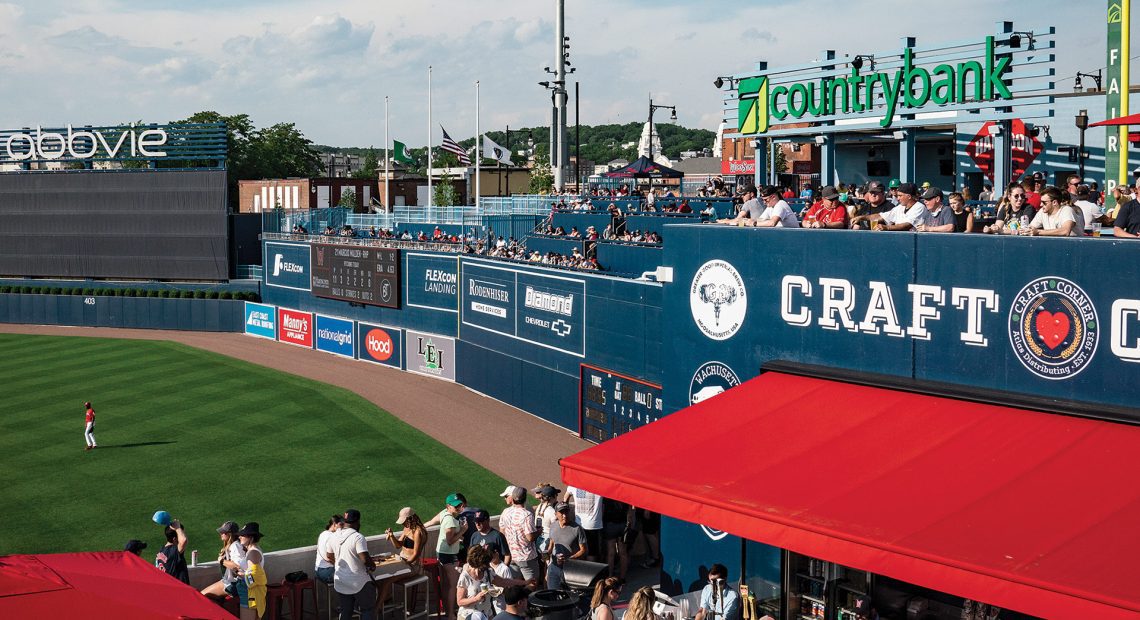
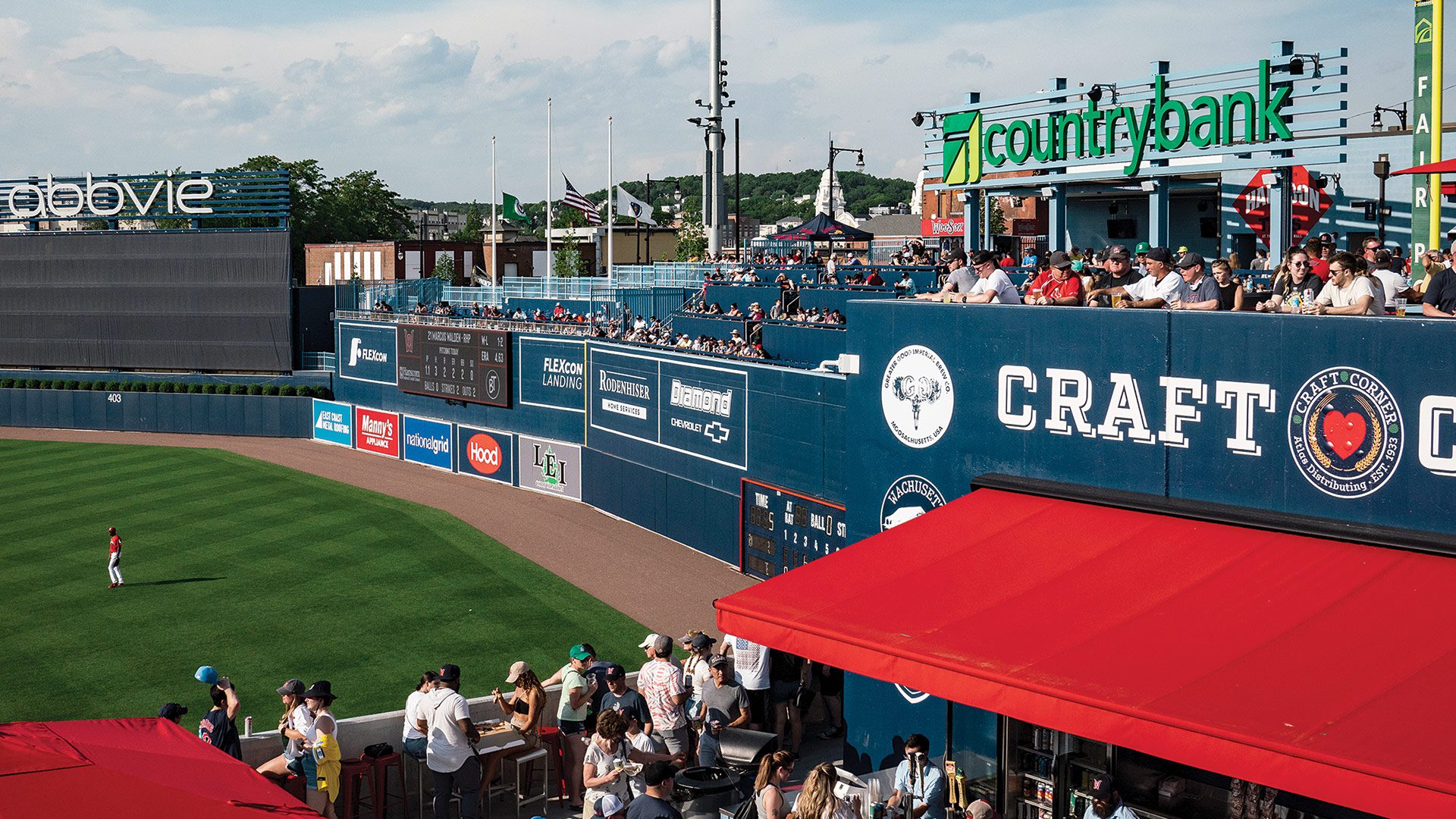
Country Bank’s display at Polar Park in Worcester has given many businesses what Paul Scully calls “sign envy.”

Paul Scully didn’t want to say how much Country Bank has invested in that 60-foot-long sign that sits atop what is known as the Worcester Wall at Polar Park (that facility’s version of Fenway’s Green Monster), easily the most visible manifestation of the bank’s partnership with the WooSox.

Instead, he offered a gracious “you can ask…”

But he certainly did want to say that he considers the overall investment in this sponsorship, and especially that sign, well worth it.

Indeed, it is certainly an attention getter, at all times but especially at night — it’s one of the few illuminated signs at the home of the WooSox and the second-largest after the one for the beverage company that bought naming rights.

Scully told BusinessWest that he has talked with a number of business owners in Worcester, Springfield, and in between who are suffering from what he called “sign envy.” Meanwhile, upon introducing himself at various occasions, he said he’s been greeted with the response “that’s the bank with the big sign at Polar Park.”

So the display is doing what is was designed to do, although fully leveraging it and other aspects of the partnership with the WooSox is an ongoing learning experience in a different kind of branding exercise (more on that later). And it’s merely one of many signs of progress, growth, and expansion — figuratively but also quite literally — at the Ware-based institution.

Another would be the bank’s business center on the 17th floor of Tower Square in downtown Springfield, opened in 2022. There’s only a small sign at the office, but the facility gives the bank a much larger presence at this end of Hampden County. Meanwhile, Country is adding some new products, including a WooSox debit card, and it recently completed a comprehensive digital upgrade on both its consumer and business banking platforms.

Still another sign, this one not of the visible variety, is the bank’s resiliency during what has been a challenging year for all financial institutions amid skyrocketing interest rates and a sagging housing market, due in large part to those soaring interest rates, but other factors as well.

Overall, Scully said Country Bank remains in a growth mode and, like other institutions, understands the value of size to continued success. The bank is looking at where to bring its brand next, he said, adding that there are many opportunities within its current footprint between Springfield and Worcester and perhaps beyond.

And there are, obviously, many factors to consider when it comes to where to go, when, and in what fashion.

Indeed, the 3,000-square-foot branch with a few drive-up lanes is largely a thing of the past, he said, adding quickly that while customers, and especially the younger generations, have fewer reasons than ever to visit a branch, they still serve a purpose. Actually, several of them.

“What we continue to look at are smaller footprints that will provide several things; getting your name on a building or a storefront is a form of marketing and the ability to get our name and our brand out there,” he said, adding that the bank’s broad strategy will be to maximize both brick-and-mortar facilities and digital banking platforms — often at the same address.

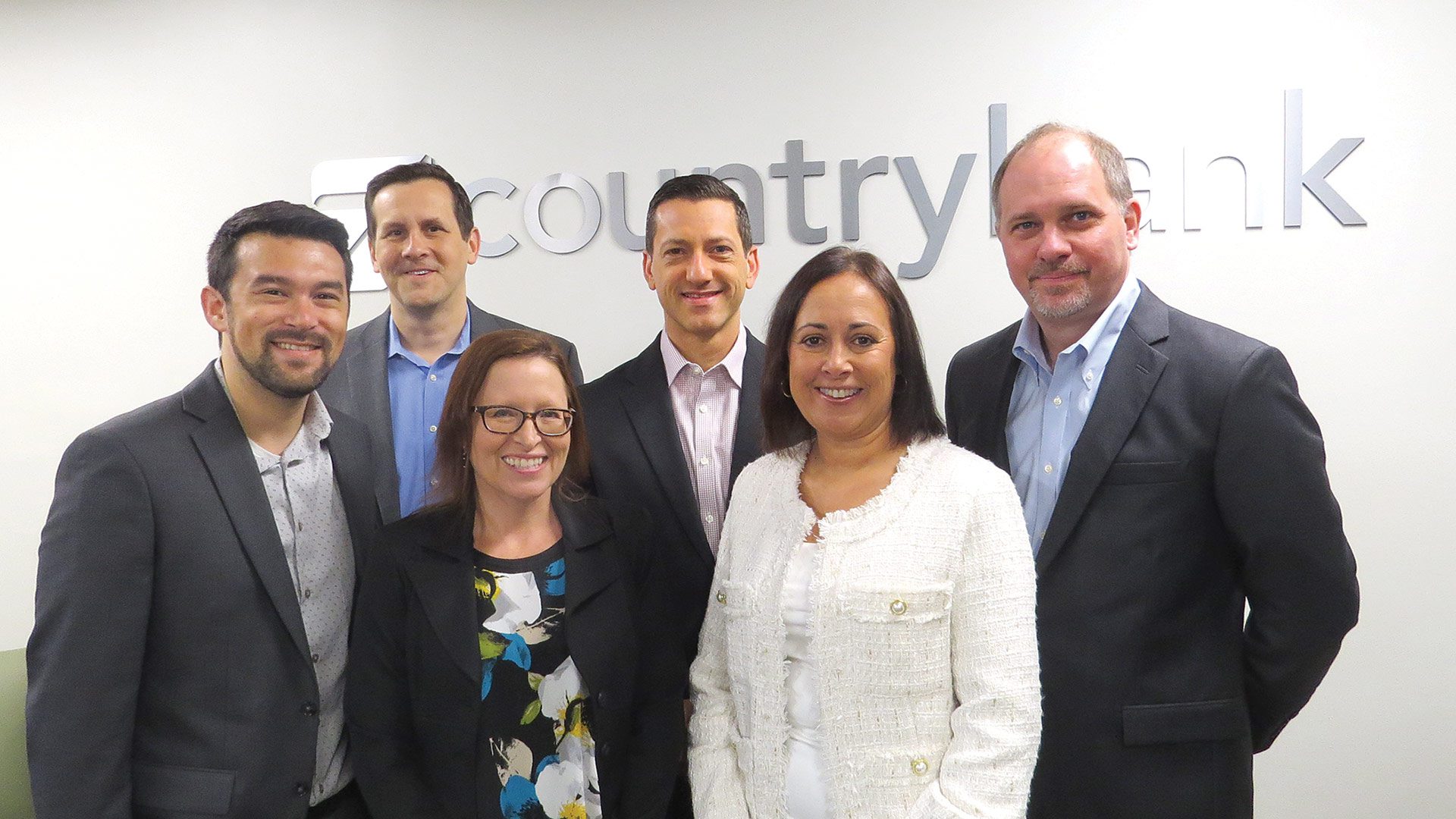
The team at Country Bank’s business office

The team at Country Bank’s business office at Tower Square in Springfield, another sign of the bank’s continued growth and expansion.

As to what additional addresses might become reality in the future, he said that’s one of many questions to be answered in the years to come.

For this issue and its focus on banking and financial services, BusinessWest engaged in a wide-ranging discussion with Scully, who addressed everything from broad strokes in the bank’s business plan to the outlook for the year ahead when it comes to the economy, interest rates, and other factors; from the bank’s adjustments to a changing workforce to that big green sign in downtown Worcester.


Home Field Advantage

Like the famous Citgo sign outside Fenway, the Country Bank sign at Polar Park is always on, Scully said, adding that he can see it outside the apartment he has in the city.

“They do great things at the park and with the city to keep it going year-round,” he explained, noting that the bank’s visibility certainly doesn’t end when the games stop in September. “Whether it’s a Holy Cross football game or the charity walks that are constantly going on … every time the park is being used, or whether you’re in the DCU Club, a beautiful function venue at the park, that Country Bank sign is right in your face.”

And having his bank’s name in lights — big lights — is just one component of the bank’s partnership with the Red Sox’ Triple-A affiliate, Scully said, noting that it will soon be introducing a WooSox debit card — ‘the official debit card of the Worcester Red Sox.’ Meanwhile, the organizations collaborate on a ‘teacher of the month’ program, a ‘community heroes’ initiative, and other endeavors, he noted, adding that the investment in the team and its ballpark continues to pay dividends.

And the key to a successful partnership in such cases is effective leveraging of the signage and other elements of the collaboration, he said, adding that, in many respects, this remains a learning experience for the bank. And he used the DCU Center, the indoor arena in Worcester, to get his point across.

“I was with someone a few years ago, and I said something about DCU, noting that this was Digital Credit Union,” he recalled. “And she looked at me and said, ‘that’s what that stands for?’ So you need to make sure that, if you’re going to do something like this, you have to figure out what it’s going to get you.

“And you have to really work at leveraging it,” he went on. “Whenever you take a new approach to how you market your brand, you have to do the research, and you have to know when to shift gears. Clearly, it’s not just about turning on a sign; it’s about how you leverage that to be an expansion and an awareness of your brand.”

He said the bank’s marketing team spends a lot of time with the marketing personnel at the WooSox to develop strategies for how to fully leverage the partnership between the organizations.

Elaborating, he said the bank does this in various ways — through visibility from the sign, obviously, but also with the debit card, ticket giveaways, work with the WooSox Foundation, and being on the field for promotional events, such as the police-fire charity baseball game staged at the park in September.

“We were there, and we were a big sponsor of that event,” he went on, “and that allows you to reach out into various mediums of people and get your brand out there, so they get to understand what the brand is and what it stands for.”


Covering His Bases

Overall, the brand stands for many things, Scully said, noting that Country is a community bank that is large enough to provide the services required by its commercial clients and consumers, but small enough to deliver a personalized brand of service, qualities that have served the bank well during what has been a year of challenge for most all financial-services institutions.

Indeed, Country has enjoyed what Scully called a “decent year,” not on par with those that immediately preceded the pandemic, but solid from an earnings perspective and in most areas, including the mortgage side of the ledger and home-equity loans.

“We’re one of the most highly capitalized banks in the Commonwealth — our capital ratio is over 15%, and we’re quite profitable,” he said, adding that such stability bodes well at a time when not all banks can make such claims.

As for the mortgage business, Scully said it was definitely more vibrant than he would have expected over the past year, adding quickly that there are challenges within certain sectors of the market, especially the first-time homebuyers.

“They got the double whammy — the pricing of housing went up, and now interest rates have gone up,” he said. “There’s that segment of the population that’s looking to buy a home, but they can’t find it within their price range because their price range has been altered by the increase in interest rates.

“But we’re seeing people who have sold a home and are buying another one and trading up who don’t seem fazed by interest rates,” he went on. “Part of it is because a large percentage of the mortgages we are doing are adjustable-rate; they’re at a lower rate than a fixed rate, and I think the thought process is, ‘I’ll get an adjustable, and then, when rates come down, whether that’s in 12, 24, or 36 months, I’ll just refinance.’”

Overall, consumers continue to spend, despite the higher interest rates and historically high inflation.

“We see a younger segment seemingly unfazed by interest rates,” he told BusinessWest. “If the debit card works … they have a good time for themselves; that’s what’s happening.”

Things are slower, overall, on the commercial side of the ledger, Scully noted, adding that many business owners are fazed by higher interest rates. Meanwhile, with commercial real estate, many potential investors are waiting and seeing what’s happening with the office market, he said, adding that that the shift to remote work and hybrid schedules, seemingly permanent in the eyes of many, have brought a hesitancy to many investors.

Country Bank is one of those companies that has embraced a hybrid approach — and Scully is one of those who works remotely at least a few days a week on average.

He said these strategies have better enabled the bank to recruit and retain talent and, overall, become what he called “an employer of choice.”

“It’s really understanding evolution — an evolution of the workplace and an evolution of the economy,” he said, “and being able to adapt to it.”


Knowing the Score

Scully was quick to note that his office is not equipped with a crystal ball, but he said there are many signs, especially on the employment side, that the economy is still chugging along. Companies are hiring, he noted, and this trend generally yields sufficient levels of optimism among consumers.

And with interest rates, he projects they will stay pretty much where they are — a level that is considerably higher than what has been seen over the past decade, but, from a historical perspective, acceptable in most respects.

“We need some stabilization to get a sense of what real is these days,” he said. “The rates were so low for so long, but were those rates real? That’s the big question. If we step back 10 or 15 years ago, if you were getting a mortgage at 6%, that was pretty darn good.”

The other lingering question about 2024 concerns what will happen on the business and commercial real-estate sides of the ledger, he said, noting that there is a great deal of uncertainly when it comes to the future of retail — and the office.

“We’re hybrid, and we have a lot of office space,” he said. “We don’t have plans to condense it, but I’m sure there are companies that are looking at that. What will that do to the prices of things? That’s what we’ll start to see in 2024.”

As he talked about possible opportunities for expansion and bringing the Country Bank name (and green sign) to different communities, Scully acknowledged that the bank already has a rather large footprint, one that includes the state’s second- and third-largest cities and the territory between them.

There is the banking center in downtown Springfield and full-service branches in Belchertown, Brimfield, Charlton, Leicester, Ludlow, Palmer, Paxton, Ware, West Brookfield, Wilbraham, and two in Worcester, including a recently opened facility in Tatnuck Square. That footprint covers three counties — Hampden, Hampshire, and Worcester — and communities large and small.

The bank has been steadily growing its presence in Worcester, he went on, adding that it has always had a strong commercial-lending book of business, and has gradually increased its visibility and its overall presence with branch locations.

“We’re looking for opportunities throughout the Central Mass. and Western Mass. area,” he said, acknowledging that this certainly covers a considerable amount of real estate.

With the exception of that business office in Tower Square, the bank does not have a physical location west of Ludlow, he noted, adding that Country is certainly looking at opportunities to change that equation.

But the opportunity has to be right, he added quickly, noting that the bank isn’t interested in expansion for expansion’s sake.

“We continue to look at both markets, Worcester and Springfield, and say, ‘what opportunities are there in towns that are not already overbanked?’” he said. “We don’t want to be the 10th bank in the town.”

Getting back to those businesses he mentioned with ‘sign envy,’ Scully said they’re going to have to live with that condition for the foreseeable future.

“That’s their problem because we’re going to be there for a long time,” he said, using that phrase to refer to the sign, but also the bank’s presence across an ever-wider stretch of the state. This is an institution that is hitting it out of the park — in all kinds of ways.

Holiday Party Planner Special Coverage

It’s Become a Venue of Choice

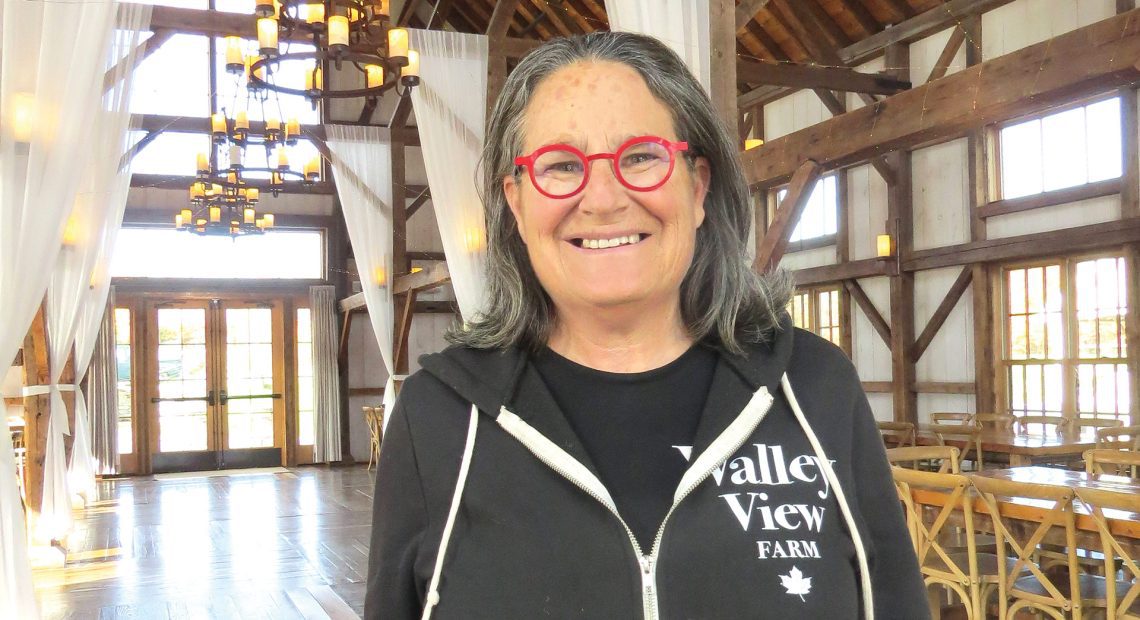
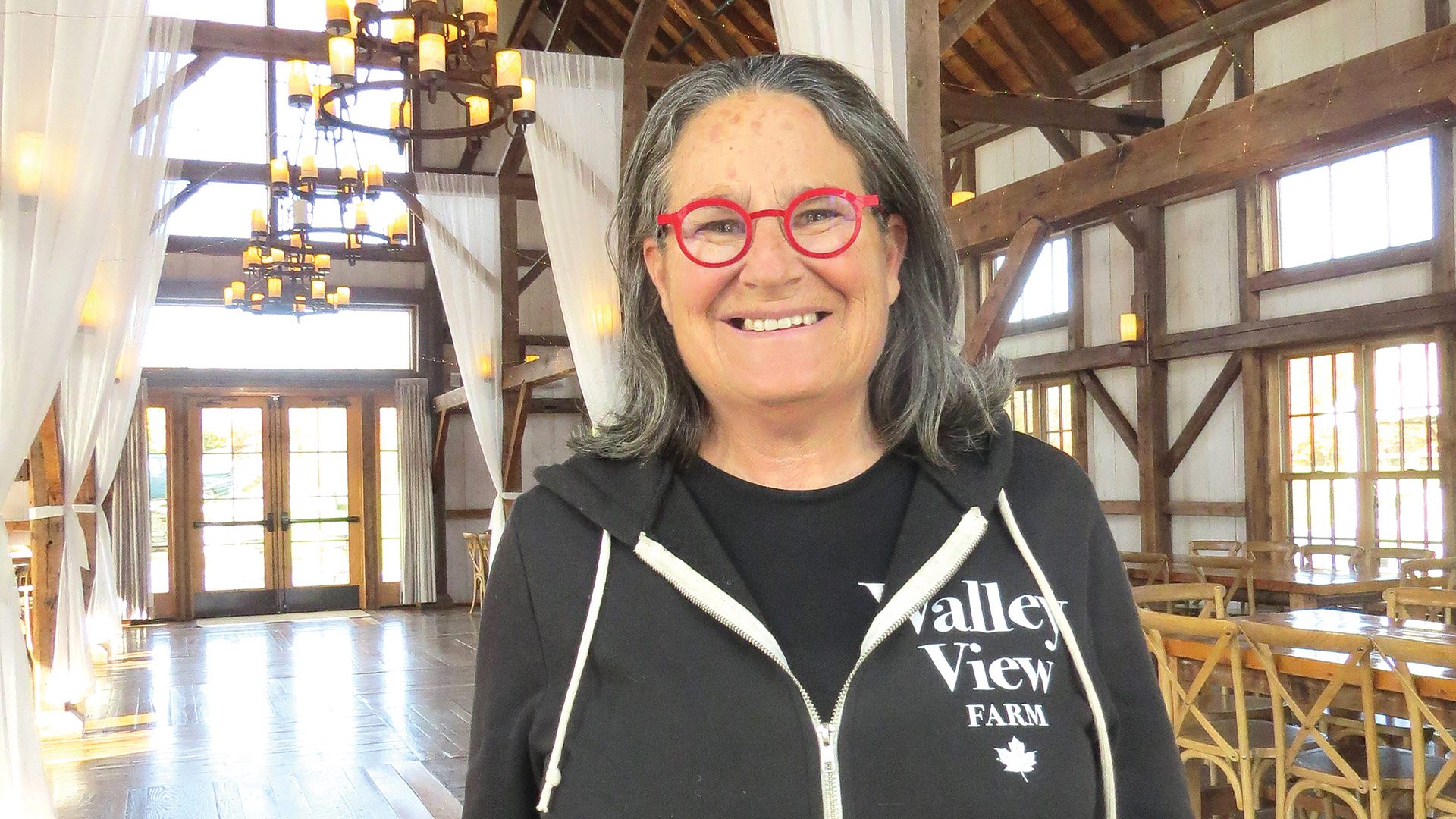
Suzy Fortgang

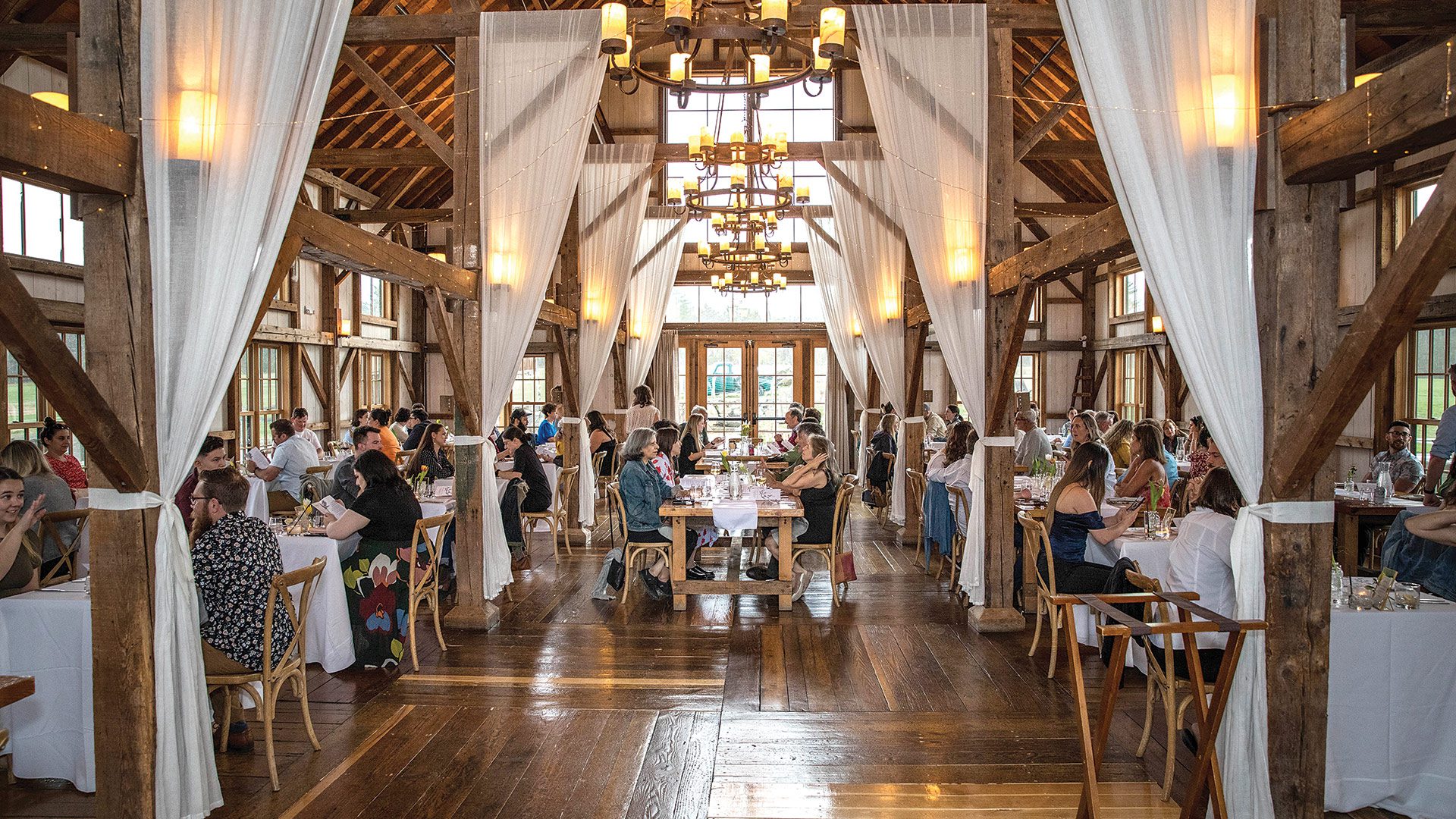
Suzy Fortgang in the Yellow Barn at Valley View Farm.


Suzy Fortgang says it took four full years to acquire the horse barn on the grounds of the Berkshire Hills Music Academy in South Hadley, disassemble it, and put it back together at what is now known as Valley View Farm in Haydenville.

“We were looking for a barn, we found it, and we took it down piece by piece,” she recalled. “It was a laborious process; every piece, some of them 40 feet long, was tagged, taken apart like a LEGO, and moved … luckily, we had drawn a good diagram so we could put it back together.”

And when asked about the price tag for doing all that, she said simply, “I don’t want to think about it; I never wanted to add it up.”

But she thinks often about how that cost, and all that hard work, were certainly well worth it.

Indeed, what’s known as the ‘Yellow Barn,’ built by the son of silk magnate William Skinner for his daughter, has become the centerpiece, — figuratively, but also quite literally — of a multi-faceted operation at the farm, shaped over the past several years by Fortgang and her husband, David Nehring, and especially its thriving weddings and events business.

“It was a laborious process; every piece, some of them 40 feet long, was tagged, taken apart like a LEGO, and moved … luckily, we had drawn a good diagram so we could put it back together.”

Fortgang, a psychotherapist by trade, said the venue hosts roughly 80 weddings a year, in addition to a variety of other events, from fundraisers for nonprofits to retirement and birthday parties to a few holiday gatherings, with the obvious goal of doing more of all of the above.

The site has become an increasingly popular venue for weddings, drawing couples from an ever-wider geographic circle, but especially from across New England, New York State, and, increasingly, New York City.

Indeed, as she talked with BusinessWest, Fortgang recapped a wedding the previous weekend involving a couple from Brooklyn, with most family and friends coming from in or around Gotham.

“They don’t get to experience this much — being outdoors and being in nature and eating local food,” she said, referring to the broad experience that Valley View provides. “It’s a gift that you can give to your guests.”

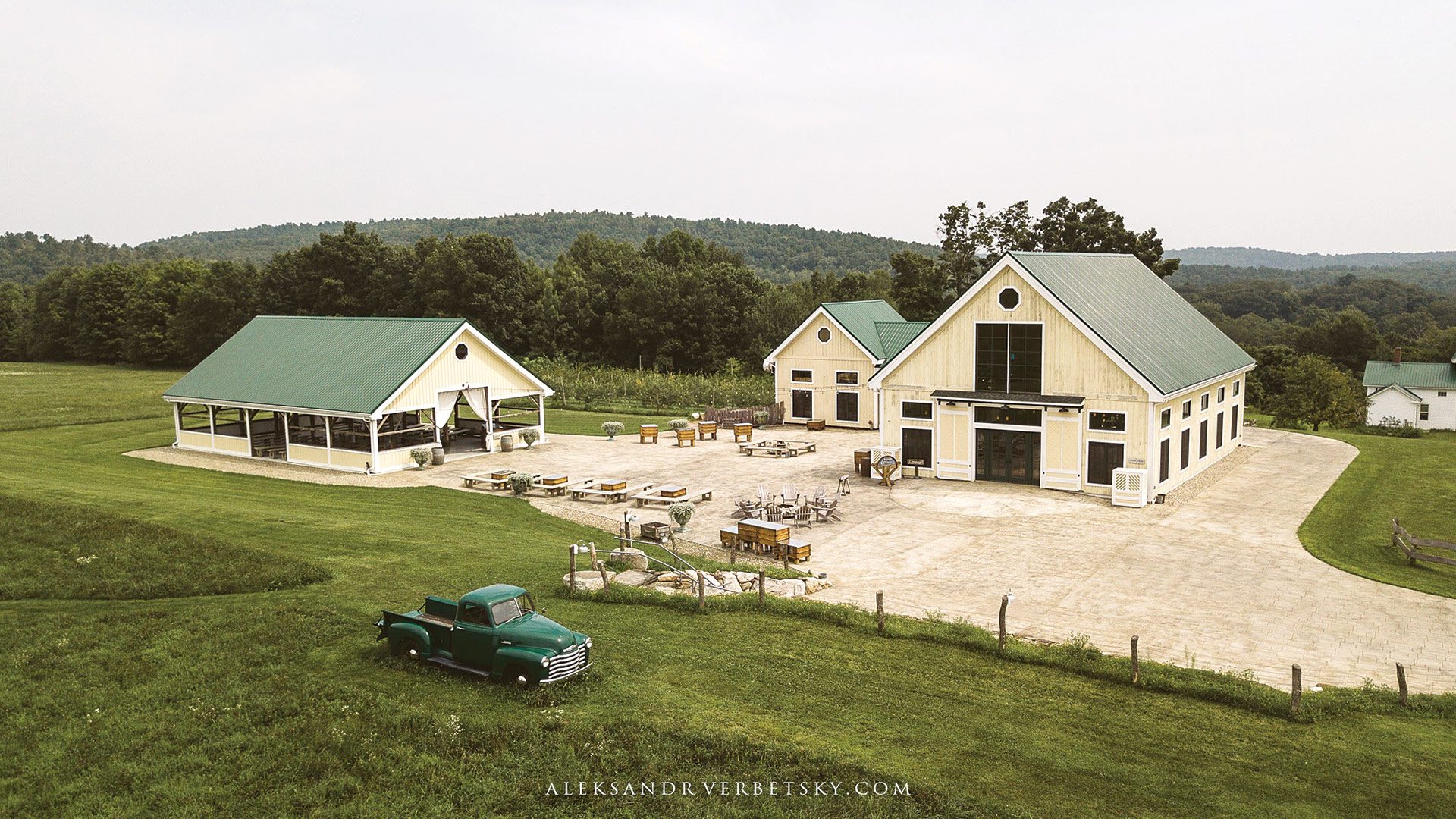
Valley View

Valley View is a working farm, but also a true destination and venue for many different kinds of events.
Photo by Aleksandr Verbetsky

Indeed, those hosting these events — and those who attend them — are treated to a site that blends scenic beauty with some history, especially in the form of that barn (more on that later), hard cider (another important piece of the business plan), and some spectacular views.

“We now make a living hosting weddings and other events,” said Fortgang, adding that this component of the business started coming together just seven years ago. “And I think we’ve risen to become one of the most popular venues in New England.”

As noted earlier, this is, indeed, a multi-faceted operation. Fortgang and Nehring grow a number of crops, from apples and peaches to blueberries and a variety of vegetables. They also produce maple syrup, raise chickens and sell eggs. And several years ago, they started making hard cider and eventually opened the Muse Cider Bar, a destination unto itself that is open to the public on nights when there are no events.

“We now make a living hosting weddings and other events. And I think we’ve risen to become one of the most popular venues in New England.”

For this issue and its focus on holiday party planning, BusinessWest visited Valley View Farm and gained a full appreciation for how it has become a true destination, and in many different respects.


Story Material

Getting back to that barn…

It’s not just the painstakingly laborious process of taking it down and reassembling it that makes its new home and purpose so significant, although that’s a remarkable story in its own right. It’s also where it’s located.

Indeed, the farm now sits just a few hundred yards from where the original Skinner silk mill was located in Haydenville, then known as as the Unquomonk Silk Company. That mill, which was uninsured, was destroyed by the Mill River Flood of 1874, with Skinner eventually rebuilding in Holyoke in what became one of the best business comeback stories ever recorded.

“It just felt right to bring it back to Haydenville,” said Fortgang, adding that the barn had been condemned and was due to be demolished by Berkshire Hills when she and Nehring, who previously owned a small engine-repair shop in Northampton, stepped in to rescue it.

That was a few years after they had acquired the property in 2013, outbidding, by a dollar, a developer who planned to build condominiums on the site.

“We bought it with the intention of farming,” she recalled. “We wanted land … we both loved the outdoors. He wanted to farm — he grew up on a farm.”

Originally a dairy farm but also an orchard, the property had not been farmed for many years, she went on, adding that they gradually added facilities, crops, and revenue streams. The farm is now home to more than 250 fruit trees, including vintage apple trees with heirloom varieties. Maple sugaring and cider production were soon added, and while doing all that, Fortgang and Nehring conceptualized and advanced a secondary plan to convert the property into an events venue and destination.

The Yellow Barn at Valley View Farm

The Yellow Barn at Valley View Farm, carefully deconstructed and put together at the scenic property in Haydenville, has become a popular wedding venue.

“When we bought the land, it was in my mind to do all of this,” she said, gesturing with her hand to indicate everything from the main event space to a smaller barn converted into a pavilion, to the cider bar. “Because I interviewed all the farmers, I knew about how to make a living farming, and I couldn’t quite figure out how to do that without the history and the infrastructure.”

And the Yellow Barn become the focal point of that plan.

Featuring high ceilings, huge windows to let in sunlight and moonlight, and tables and chairs fashioned from boards from a secondary floor, it is open for events year-round — it’s heated and air-conditioned — and blends history and culture with today’s conveniences.

“It has all the amenities of a modern venue, but it also has the history and charm of being an old horse barn,” said Fortgang, adding that it also features some unique spaces, such as the ‘Love Nest.’ Located on the second floor of the barn, it’s a private suite, decorated with antique furniture collected by Fortgang’s parents, that is used for photos, hair and makeup, and as a “romantic getaway.”

This blend of old, new, and historical, coupled with everything else on the property, from the views to the horses grazing in the nearby pasture to the hard cider, has quickly made Valley View a destination of choice for couples looking a different kind of wedding venue.

Fortgang said that perhaps 30% of the weddings involve people from this area. The rest are from across New England and New York and well beyond, making tiny Haydenville what could be considered a destination-wedding spot.

“We’re happy to get to know more people and share this beautiful place with them. This has become a place to come and celebrate … and we know how to throw a good party.”

Indeed, wedding parties and guests will often stay a night or two in hotels in neighboring Northampton and other communities, making Valley View an economic engine of sorts.

“They all stay in Northampton, they take a bus up here, and they spend the day here,” she explained. “Sometimes it’s kids who grew up here, but now they live in other parts of the country. We have New Yorkers, we have a lot of Brooklyn couples.

“Couples these days … when they’re looking for this aesthetic, they get on the internet, and they’re considering Vermont and Maine and Rhode Island, and all of New England, really,” she went on, adding that their search now often ends in Haydenville because of word-of-mouth referrals and the venue’s strong track record for excellence.

Indeed, 2024 is essentially sold out as far as weddings are concerned, she said, while bookings for 2025 and beyond are quite solid. The venue generally does three each weekend, with the pace of business slowing in the winter months, obviously.

Beyond weddings, Valley View also hosts different kinds of private functions in its various spaces — the Yellow Barn for larger gatherings, as it can accommodate up to 200 people, and a pavilion and patio (moved from the historic Hemenway Hill Farm a few miles away) and Muse Cider Bar for smaller functions.

It has hosted wedding anniversaries, bridal and baby showers, nonprofit fundraising events, retirement parties, family reunions, and some holiday parties as well, said Fortgang, adding that the business plan calls for building this side of the operation by creating more of those word-of-mouth referrals.

“We’re happy to get to know more people and share this beautiful place with them,” she went on. “This has become a place to come and celebrate … and we know how to throw a good party.”


Bottom Line

During COVID, when the wedding business screeched to a halt, Fortgang and Nehring still managed to put their facilities to use, creating a cocktail bar, called the Farm Bar, in the Yellow Barn, and actually handing out drinks through the windows to visitors from across the region — many of them desperate for something to do — before eventually moving the operation outdoors.

“It became a thing,” she said, adding that the farm became such a popular gathering spot for the public, it was decided to open the Muse Cider Bar on nights when there are no events.

“We’ll have a food truck down there and serve cocktails and cider,” she told BusinessWest, adding that this is just one of the ways in which Valley View has gone from being a celebrated part of Haydenville’s past to being a huge part of the community’s present and future.

And a destination — in every sense of that term.

Features

Degrees of Progress


John Wells, left, and Joe Bartolomeo

John Wells, left, and Joe Bartolomeo say UWW continues to expand and evolve while remaining true to a mission forged more than a half-century ago.

The University Without Walls program at UMass Amherst, or simply UWW, as it’s known to so many, last year marked its 50th anniversary of changing lives at a ceremony at the Old Chapel on the UMass campus.

And there was certainly much to celebrate.

Indeed, while the world of higher education, the world of work, and UWW, for that matter, have changed in profound ways since the early ’70s, the program’s basic mission, and reason for being, have not. It exists to help non-traditional students (and they come in many categories and with diverse needs) earn degrees, certificates, or even a few credits that can help them advance professionally and perhaps take their careers in a different direction.

As it has carried out that broad mission, UWW has been defined by two words that speak volumes about what it’s all about: accessibility and flexibility. And both are keys to those non-traditional students getting to where they want to go, said John Wells, senior vice provost for Lifeline Learning at UMass Amherst.

The accessibility comes in many forms, from the ease of entry into programs to the availability of courses online — in this case, decades before COVID made it standard operating procedure. The flexibility, meanwhile, also comes in different forms, but especially the ability to shape degrees to fit specific needs.

While the mission and some of the basic programs haven’t changed much since Richard Nixon was patrolling the White House, UWW has certainly evolved and expanded to meet the needs of non-traditional students, fill gaps, and go well beyond the degree-completion programs for which it is most known.

“Not only is it a non-traditional home, it’s also an innovative home for looking for new ways to educate. And that’s one thing that UWW is — it’s an incubator for change and innovation.”

“Instead of just adult degree-completion programs, UWW offers pre-college and professional programs,” said Wells. “We felt like we could provide a legitimate academic home for students who weren’t coming down that traditional pathway.

“And not only is it a non-traditional home, it’s also an innovative home for looking for new ways to educate,” he went on. “And that’s one thing that UWW is — it’s an incubator for change and innovation.”

Joe Bartolomeo, associate provost for Interdisciplinary Studies at UMass Amherst and also a professor of English, agreed.

He said UWW’s degree-completion offering, the Department of Interdisciplinary Studies, remains its flagship program. But it now also offers what’s known as a BDIC, or bachelor’s degree with individual concentration, which is for residential undergrads, he noted, “but residential undergrads who don’t want to follow a traditional major path — they want to create their own degree to best reflect their own interests and goals.”

There is also an IT program, a minor program that now boasts more than 500 students, as well as other IT-related initiatives, such as a computer-competency course and a public-interest technology certificate; an ‘interdisciplinary exploratory track’ for incoming UMass students who haven’t decided on a major or think they might want to pursue an interdisciplinary track; pre-college; professional development; summer programs; and more.

For this entry in BusinessWest’s ongoing series exploring professional-development programs at area colleges and universities, we take an in-depth look at UWW, its long history of excellence, and its ongoing tradition of expansion and evolution to meet the changing needs of students — and the region.


Grade Expectations

A snapshot of those in attendance at the 50th-anniversary celebration, delayed a year because of the pandemic, helps convey how this aptly named program has provided students at all stages of life with flexible learning opportunities and a chance to turn their work experience into credits toward a degree. Current and former mayors of area communities who attended UWW were on hand, as was Kate Hogan, speaker pro tempore of the Massachusetts House of Representatives, another alum, and business owners and managers from across the broad spectrum of the regional economy.

Tracing the history of UWW, Bartolomeo said it was created to help adults who had started college but not finished their degrees. At the heart of the program is the ability of students to take their work experience and convert it into college credits to be put toward a degree — in some cases, dozens of credits, thus expediting their degree-completion work.

At present, there are roughly 200 students in the BDIC program and another 500 in Interdisciplinary Studies, said Bartolomeo, adding that they are pursuing degrees, and minors, in many different areas.

“A lot of them work in education, many of them work in social work, a lot are in business and economics,” he noted. “But they can also create their own, and many of them come to us with considerable experience — they just didn’t finish their degrees.”

Wells agreed, noting that, while some have a specific major, or set of skills, in mind, others don’t, which is fine, because work is changing rapidly, and so are the job market and the skill sets needed to succeed in specific jobs and fields.

In UWW, he said, students are more free from the pressures of declaring a major and, in most respects, have more ability to fine-tune a degree to match their needs.

“In traditional education, there’s always that pressure, or emphasis, on declaring a major and figuring out what you’re studying,” he told BusinessWest. “We like to think of UWW as being a place where it’s OK to say, ‘I’m exploring a little bit more,’ or ‘I have a variety of interests.’

“Today, the world is moving fast enough where it’s hard to define education down to the letter,” he went on. “A lot of times, people are getting a degree, and by the time they’re done, the skills they’re acquired are out of date. We like to think of UWW as an incubator because we need to change our thinking about education, and this has always been a safe space to try things.”

While degree-completion offerings remain the heart of UWW, there are many different programs being offered, everything from summer offerings to graduate-degree programs to professional development.

In that last category, there are a number of non-credit and for-credit professional and continuing-education programs for those looking to gain new skills and knowledge in areas ranging from leadership to music; from writing to turf management.

“A lot of times, people are getting a degree, and by the time they’re done, the skills they’re acquired are out of date. We like to think of UWW as an incubator because we need to change our thinking about education, and this has always been a safe space to try things.”

Indeed, the UMass Winter School for Turf Managers, which was established in 1927 and was the first program of its kind, continues today, and is a top source for turf-industry professionals.

Meanwhile, as noted earlier, UWW has expanded into other realms beyond degree completion, including pre-college and summer programs, said Bartolomeo, adding that these are designed to help improve students’ chances of succeeding when they get to college.

There are several pre-college initiatives, including summer programs; ‘research intensives’ — six-week, immersive lab experiences alongside UMass Amherst research faculty; college-prep workshops, and even a week-long College Application Bootcamp.

Another related initiative is called Jump In, a summer program for newly admitted UMass students who want to get a jump on their college education, Wells noted, adding that they take a course online — a general-education course, an introductory major course, and/or a ‘student success’ course.

“It’s an opportunity for them to get a head start and see what a college course is like,” he explained, adding that more than 100 signed up for classes this past summer.

At the same time, and in keeping with that notion of UWW being an incubator, the university is using it to test-drive concepts and even proposed degree programs.

As an example, he cited a certificate program called Innovate, which, as that name suggests, is focused on innovation and entrepreneurship.

“Most of the professional schools are contributing courses to that, and it was originated by faculty in Engineering,” he explained. “But they didn’t want it to reside in one of the traditional STEM colleges because they wanted it to be open to students around campus. The provost’s office referred them our way, and we’re going to provide it with an academic home.”

Another example is called Commonwealth Collegiate Academy, a systemwide initiative for dual enrollment for high-school students, he said, explaining that this is different from pre-college and focuses specifically on public high schools that tend to be underresourced and have larger underrepresented, minority populations.

“It’s an opportunity for them to take courses live, online, during their school day,” Wells explained. “And we’re working now with various high schools on plans to start it next year; this is a priority of the president’s office, and even the governor’s office.”


Bottom Line

And it’s yet another example of how UWW continues to evolve and broaden the mission that it took on more than 50 years ago.

Those letters have become part of the academic landscape in Western Mass. — and well beyond. And, more importantly, they connote pathways (in the plural, because one size definitely does not fit all) to success in the workplace and in life.

Creative Economy

This Is a Laughing Matter

Bill Posley makes storytelling a big part of his repertoire.

Bill Posley makes storytelling a big part of his repertoire.


Bill Posley acknowledged that one doesn’t exactly set out to make stand-up comedy a career.

Instead, it just … happens, he said, adding quickly that, for many, it doesn’t happen, because this is a tough business, one that’s difficult to break into, then stay in.

Usually, one starts down this road because someone tells them they’re funny, or at least funnier than most, and they should do something with that talent, said Posley, a Springfield native now living in Los Angeles who is still shaping his career as a stand-up comic, writer, and director. He added (with some regret) that, in his case, that someone wasn’t his father.

“My dad did not think I was funny at all; I’m still not sure if I’ve ever been able to make him laugh,” he told BusinessWest on a Zoom call from LA, while laughing at himself and adding that the one who provided him with the needed inspiration, and confidence, was a sergeant with whom he served in the Army in Iraq.

With that, Posley, who makes storytelling a big part of his repertoire, told one of his favorites.

“While I was over there, I would make people laugh — I would make my sergeants laugh, the troops laugh … I’d impersonate people,” he recalled. “We had a comic come and entertain the troops, and it didn’t go great; afterward, Sgt. Romero came up to me and said, ‘I think you’re funnier than that guy; I don’t know what you’re going to do when you get out of the Army, but I think you should do that.’”

And he has. In fact, Posley has been doing standup for 15 years now, while also adding the requisite hyphens that one needs to be a real success in the entertainment business these days: he’s a comedian-writer-director.

He has gone on to write for Emmy-nominated shows like Cobra Kai, Shrinking, and Kenan, and is currently writing a spinoff of Ferris Bueller’s Day Off (more on that assignment later). He competed on season 24 of Survivor, and viewers have also been able to catch him on Fox’s 9-1-1, Netflix’s GLOW, and MacGyver on CBS.

Meanwhile, his last standup show won the Off-Broadway Alliance Award for best solo show, and he’s played in clubs and theaters across the country.

“We had a comic come and entertain the troops, and it didn’t go great; afterward, Sgt. Romero came up to me and said, ‘I think you’re funnier than that guy; I don’t know what you’re going to do when you get out of the Army, but I think you should do that.’”

One place he hasn’t played is Springfield, and that’s another story — the first chapters of which Posley related to BusinessWest; the chapters to come will be the subject of a documentary.

The story starts at Minnechaug High School in the late ’90s, when, four years in a row, Posley failed to muster the confidence and whatever else one needs to tell jokes at the school’s annual talent show.

“I wanted to do stand-up at the talent show so bad,” he said. “But I was just so scared.”

He still regrets that he never took the stage at Minnechaug, and he will make up for lost time, sort of, at what he’s calling a ‘second chance talent show,’ to take place in the Armory at MGM Springfield on Friday and Saturday, Dec. 1-2. Officially titled “Bill Does the Talent Show,” the performance will feature some stand-up comedy from Posley, but also the talents of several local residents who will sing, perform magic, provide comedy sketches, and more.

“These are people who don’t necessarily do this full-time, but love to do it, have a passion for it, and are really, really good at it,” he went on. “And I want to make sure they have an opportunity to be seen.

“With me coming home and inviting all these people — people from my high school, my past, my family who have never seen me perform — and then inviting these people from Western Mass. to do it too … it just felt like too good and too big of a story not to be documented,” he went on. “So we’re going to capture something that I think is going to be fantastic and phenomenal.”

For this issue and its focus on the creative economy, BusinessWest talked with Posley about his upcoming project, his career, stand-up comedy, and how one finds the confidence needed to stand up in front of a room full of people and tell jokes.


Nothing Routine About This

As we do all that, we start with another story.

This one involves a show at the old Paramount Theatre on Main Street in Springfield. Posley, who grew up in Indian Orchard, said his grandmother was one of many involved with efforts to restore the landmark and bring it back to its former glory.

“They’d have Jesus Christ Superstar, and they’d have comics show up … all that stuff,” he recalled, adding that he was recruited by his grandmother to work with her in the concession stand for a show, circa 1994, featuring Cedric the Entertainer.

Bill Posley regrets not taking the stage for his high-school talent show

Bill Posley regrets not taking the stage for his high-school talent show; he’ll get a second chance in December.

“He starts doing this stand-up, and there’s cursing, there’s scandalous material — my grandmother is a church woman, so this is getting awkward — but my brother and I could not get enough of it,” he went on. “We kept sneaking into the theater to hear him perform, and I would keep trying to watch and hear him tell jokes.”

He tells that story for two reasons — first, to explain his lifelong love of comedy, and second, to show how small the entertainment world can often be. Indeed, in 2017, he was recruited to write for the CBS Show The Neighborhood, starring … Cedric the Entertainer.

“I went up to him once and said, ‘do you know that, when I was 10 years old, I saw you perform in Springfield, Massachusetts, and you’re one of the reasons why I wanted to be a stand-up comedian?’” he said. “I thought that was really, really cool.”

While he enjoyed watching stand-up while growing up — he liked, and was influenced by, comedians ranging from Sinbad to Chris Rock to George Carlin — he also liked making people laugh himself. Well, everyone but his father, apparently.

“In middle school, I was the class clown,” he said, adding that, unlike now, he was quite heavy as a teenager and found material in his weight.

“At one point, I was maybe 230, 250 pounds, so I learned how to make fun of myself before I’d let someone else made fun of me,” he recalled. “And I think that’s where my fondness for making people laugh started.”

And while he was getting very good at doing just that, when it came to the high-school talent show, he got cold, as in cold, feet.

He managed to shed that fear with encouragement from others, and especially that Army sergeant. He started off writing jokes and was then persuaded to try telling them in comedy clubs. He vividly remember his first real foray into stand-up, at the Ha Ha Comedy Club in Burbank, Calif., in 2007.

“I invite a whole lot of my friends out … and I am so nervous, I drink like three martinis because I’m so scared,” he recalled. “I go dressed in a full Spider-Man costume except for the head, because I figure if everyone is laughing at what I’m wearing, they might also laugh at what I’m saying.”

And with roughly half the jokes — a good percentage, especially for a first-timer — they did.

“I wanted to do stand-up at the talent show so bad. But I was just so scared.”

“And I was hooked,” he said, adding that, while he had packed the hall with friends, he left the club with the requisite confidence to take the next steps. Now, he actually prefers performing in front of strangers. “I hate it when I know people in the audience — it’s harder.”

He will undoubtedly know some of those who will gather at the Armory in MGM in early December, because this will be a homecoming, and a second chance for Posley to be in a local talent show.

Indeed, he will also be bringing to the stage several young performers, including another stand-up comedian who will essentially be getting a first shot.

“The reason I wanted to do this is because I felt like I never took my shot while I was in high school,” he explained. “This is my chance to come back and have redemption. But I just didn’t want to come back for me; I wanted to provide other people with their shot to perform in a space that they normally wouldn’t get a chance to perform at.”


Waiting for the Punchline

As for that Ferris Bueller spinoff mentioned earlier, Posley invoked the cone of silence when it came to real details about the project and whether any of the original cast members of the popular 1986 movie would be making appearances. He just shook his head and said “can’t.”

He did tease (and this is rather old news) that the story, to be called Sam and Victor’s Day Off, centers around those two parking-garage valets who take the 1961 Ferrari GT (actually, a replica) that Cameron handed them for a little spin — and what happens during the six hours they have the car.

“Relax … you fellas have nothing to worry about; I’m a professional,” said one of the valets as he took the car in the movie.

Posley can essentially say the same to those who will join him for the talent show and documentary in Springfield later this fall. He’s a professional entertainer, writer, and director who has come a long way from the streets of Indian Orchard and the balcony at the Paramount, where he strained to hear the jokes of Cedric the Entertainer.

As he brings his act to Springfield — literally and figuratively — he will also bring the confidence he didn’t have 25 years ago to those who will join him for those shows.

And he’ll create more stories to tell — for everyone.


Commercial Real Estate Special Coverage

It’s Business, Not Nostalgia


Jeb Balise, left, and Jack Dill

Jeb Balise, left, and Jack Dill


Jack Dill likes to say he’s been involved with the building at 1441 Main St. in Springfield since “before it was a hole in the ground.”

Indeed, Dill, now a principal with Colebrook Realty Services, was an employee at Colebrook back in the late 70s, when it was the real-estate arm of Springfield Institution for Savings (SIS), and was assigned to take the plans for building the bank a new headquarters at that address — plans that had been on the drawing board for some time but unable to move forward — and make something happen.

Dill looks back at that assignment, given to him by the bank’s then-President and CEO John Collins, with fondness, pride, and a large amount of self-deprecating humor.

“I don’t know how they ever let me do this,” he recalled. “John said, ‘look, we’ve spent a lot of money on this; we don’t think it’s going to work. We’re not paying you very much; take six months … before we throw the plans away, see what you can do.”

Long story short, he made it all work.

Dill recalls that the city of Springfield wanted some retail at that location (that sector was still a huge force in the downtown at the time, although not for much longer, as we’ll see), and the bank, as noted, wanted a headquarters building. He conceived something that served both masters.

And with the help of a $4 million Urban Development Action Grant from the Carter administration, the $20 million project did move off the drawing board. When finished, the complex boasted several stores and a few restaurants. Meanwhile, SIS had a large presence, and there were dozens of other business tenants in the office ‘tower.’

“I don’t know how they ever let me do this. John said, ‘look, we’ve spent a lot of money on this; we don’t think it’s going to work. We’re not paying you very much; take six months … before we throw the plans away, see what you can do.’”

Dill, as a principal at Colebrook, which became a private company in 1999, would go on to manage and lease the property for decades, steering it through changes in the business and commercial real-estate landscapes. And today, he does largely the same, but through a different lens and with a much-different title: co-owner.

Dill, his partners at Colebrook (Mitch Bolotin and Kevin Morin), and Jeb Balise, president of Balise Motor Sales (soon to be based in Springfield, on the third floor at 1441 Main St.) partnered to acquire the 12-story office building in early 2022.

The ‘birdcage,’ erected in 1986 to camouflage closed retail at 1441 Main St.

The ‘birdcage,’ erected in 1986 to camouflage closed retail at 1441 Main St., will soon be coming down, one of many changes coming to the downtown office complex.

They came together, they said, to bring the property under local ownership and make some changes to bring more vibrancy. The fact that Balise’s company has a new home for much of its operation (and roughly 55 employees) was always on the table, he said, but not a deciding factor in his participation in this venture.

“I went in with an open mind, and it was enticing, but I really had to do my homework, and one of the things I did was move my own office here and do a test drive,” he said, borrowing a term from his industry. “And what we found is that the location is incredibly convenient to all the places we go, between banks, attorneys, accountants, architects, and engineers that we deal with locally.”

That convenience extends all the way to Riverdale Street in West Springfield, where Balise has a handful of dealerships, he went on, noting that, because Riverdale is a divided street, employees can get to many of those dealerships from 1441 Main St. as quickly as they could from the current headquarters at Doty Circle, just off Riverdale.

Since taking ownership, the partners have undertaken several initiatives, including improvements to the elevators and recruitment of a new restaurant — Mykonos, one of the displaced tenants in the Eastfield Mall — with more in the planning stages, including replacement of an escalator (a remnant of sorts from the building’s retail roots) and extensive renovations to the mezzanine level, specifically the removal of its wooden façade and what Dill not-so-affectionately refers to as the ‘birdcage’ (more on that later).

For this issue and its focus on commercial real estate, BusinessWest talked with Dill and Balise about their acquisition of this downtown stalwart and what will likely come next for the property.


Building Momentum

Dill recalls with some fondness, and more of that humor, the first time he met Jeb Balise.

It was in 1976. Dill was 24 and looking for a new car, specifically a Camaro, a four-speed with a V8 engine. Balise was 17 and in his second year working as a salesman at the family’s Chevy dealership on East Columbus Avenue.

Dill liked the car, and the car liked him, but the sticker price was beyond his means at the time. So he stayed in his Volkswagen, the one with 112,000 miles on it and no heater.

Four and a half decades later, he did buy a car from Balise — a Volkswagen GTI, one of the few cars still on the market with a manual transmission, he noted. (Jeb stayed on the sidelines for that transaction.)

Over the years, Balise Motor Sales has been a client of the Colebrook company, and the parties have worked together on several projects. Meanwhile, at 1441 Main St., a succession of banks that had come into ownership had looked into selling the building, but ultimately decided not to, said Dill, because of the relatively low cost of owner occupancy; in short, being in that building was cheaper per employee than leasing space elsewhere.

But ultimately, TD Bank decided to sell what was the last building it owned, said Dill, adding that it went on the market in the spring of 2021. Soon thereafter, a unique and decidedly local buying group came together.

“Jack and his team approached me and said, ‘TD is probably going to put the building on the market, and we think it’s a great opportunity,’” Balise recalled. “I remember them being specific: Jack’s vision was, ‘we’d like to see it be Springfield-owned, and we’d like you to be a part of it.’”

It was at that point, he went on, that he first learned the story of how Dill had been involved in the building of SIS’s new home as a young employee of the bank.

“It was a great history lesson for me, and a fun history lesson, because I was reliving where I was at that time, and where Springfield was,” he went on. “So the way I would sum it up is … Jack, as the consummate sales pro, romantically lured me into wanting to be Colebrook’s partner.

“Jack and his team approached me and said, ‘TD is probably going to put the building on the market, and we think it’s a great opportunity. I remember them being specific: Jack’s vision was, ‘we’d like to see it be Springfield-owned, and we’d like you to be a part of it.’”

“I think it’s a timeless, beautiful building,” Balise added, “and I loved the notion of keeping it locally owned and jointly doing our part to help Springfield grow and prosper.”

Dill agreed, and stressed repeatedly that, despite his long history with the building, nostalgia was not a factor in this decision. Ultimately, this was a business deal.

“Obviously I’ve been involved with the building for a very long time, but we tried not to have an emotional decision,” he recalled. “We thought that having a good and reliable partner was a real plus; we’ve been in business a long time, and we’re friends; he’s a great partner.”

Elaborating, he said those at Colebrook and Balise were of one mind with regard to the property — that this would not be a buy-to-flip scenario, and that they were in it for the long haul, with Jeb Balise providing an invaluable “new set of eyes,” as Dill put it.


Signs of the Times

As he looked back on those 45 years of involvement with the property at 1441 Main, Dill jokes that there have been many times when he wished that he was in the sign business.

Indeed, the name over the front entrance and high on the façade has changed many times, usually taking on the name of the bank that owned the property. And that’s a long list, courtesy of a continuing wave of mergers and acquisitions in the financial-services industry that started in the early ’90s.

“I’m pretty sure we’ve had at least five or six signs on this building,” he said, listing Family Bank, First Massachusetts Bank, Banknorth, TD Banknorth, and then TD Bank. He admitted that it was hard to keep track, even for someone who managed the property.

But the letters on the building are not the only thing to have changed over the years.

Indeed, the retail component of the building collapsed, as it did across the street at Tower Square, a byproduct of the malls, especially the one at Ingleside in Holyoke, said Dill. The property’s owners adjusted, converting a mezzanine that was retail into back-office space for the bank and erecting, in 1986, the ‘birdcage’ — a wooden façade that looks like … well, a birdcage — as “camouflage, so it wouldn’t look like closed retail,” he explained.

A framed portrait of John Collins

A framed portrait of John Collins, the man who gave Jack Dill the assignment of making 1441 Main St. a reality, is now displayed in the lobby of the building.

The Colebrook team answered an RFP, and the property eventually became the home of the Western Massachusetts Economic Development Council (EDC) soon after it was created in 1996. Meanwhile, space formerly devoted to retail — a Falcetti Music store and a CVS, among others — was soon occupied by several agencies, ranging from the Springfield Regional Chamber to the Greater Springfield Convention & Visitors Bureau to the entity now known as MassHire Hampden County Workforce Board.

Over the years, it also became home to several prominent nonprofits, including the United Way of Pioneer Valley and the Springfield Symphony Orchestra.

The office tower, meanwhile, has become home to several federal and state agencies, including the Federal Bureau of Investigation, the Drug Enforcement Agency, the Occupational Safety and Health Administration, the Office of the Attorney General, and others.

When the Colebrook/Balise partnership acquired the property, the occupancy rate was roughly 85%, said Dill, adding that it is now closer to 90%, with additions including a temporary office for Daniel O’Connell’s Sons, the general contractor for construction of the parking garage taking shape across Harrison Avenue.

That number won’t change when Balise moves its headquarters to the property early next year, but the number of people working in the building will, Dill said, noting that the 55 or so employees from Balise will bring more vibrancy to the property and more foot traffic to downtown service businesses, bars, and restaurants.

That includes Mykonos, which will occupy space on the first floor, Dill noted, adding that additional restaurants are certainly possible.

Meanwhile, on the second floor, to attract more office tenants, the new owners are opening up the back of the space, which faces the park where the Steiger’s department store once stood, by putting in a bank of large windows. There are also plans to remove the ‘birdcage’ and take out the escalator and replace it with a new staircase.

“With these new windows and the removal of the birdcage, we’ll have a lot more natural light on the second floor and first floor,” he said. “And we have some other ideas on new design and a new visual identity for those two floors.”

Looking long-term, both Balise and Dill believe they can retain current office tenants and add new ones, even at a time when work is in flux and the future of office buildings is more clouded than at any time in recent memory.

“Work is a social activity, and we’re seeing a lot of companies bringing people back,” said Dill. “Maybe not five days a week, 40 hours, but they’re coming back to the office, because work is a social activity.”


Bottom Line

Not long after the acquisition of 1441 Main St., Dill placed two portraits on easels in the building’s lobby, one of Richard Booth, another former president and CEO of SIS, and the other of John Collins; he considers both mentors and major influences in his life and career.

It was Collins who handed Dill the assignment to build a new headquarters building all those years ago. It led to what amounts to a lifetime of work stewarding the building through decades of change and positioning it for the decades to come.

Now, this work takes on new meaning and new urgency, because he has ownership of the matter — both literally and figuratively.


Features Special Coverage

In Good Company

Jeff St. Jean, left, and John DeVoie, co-founders of Easy Company Brewing

Jeff St. Jean, left, and John DeVoie, co-founders of Easy Company Brewing

It will be called ‘Brécourt.’

And like the beers that came before it — and the ones that will likely come after it — this one celebrates a chapter in the powerful story of Company E, 2nd Battalion, 506th Parachute Infantry Regiment of the 101st Airborne Division, known simply as Easy Company. This was the ‘band of brothers’ whose exploits during World War II are famously chronicled in the Stephen Ambrose book and HBO miniseries that both took that name.

Brécourt Manor is a town about three miles southwest of Utah Beach in Normandy, France. It was the location of a German artillery battery that was disrupting landing forces of the U.S. 4th Infantry Division on D-Day. Easy Company’s assault on the Brécourt Manor, led by First Lt. Richard Winters, is one of the unit’s more noted accomplishments, and there were many.

“They charged that gun nest and took all four guns out, saving countless lives,” said John DeVoie, co-founder of the growing Hot Table chain of panini restaurants, who has long been entranced by the story of Easy Company. So much that, when he and his longtime best friend and fellow veteran Jeff St. Jean — they both served with the 104th Tactical Fighter Group at Barnes Airport, and St. Jean still does — decided to create a beer label and donate all the profits from the sale of those products to agencies that assist fellow veterans, the name came easily — although not much else has, as we’ll see.

Easy Company Brewing, branded simply as ‘E,’ plans to introduce Brécourt, what’s known as a keeping ale, in the coming months. It will join two labels already available in many liquor stores, bars, and restaurants: Currahee American Lager, named in honor of the hill the men of Easy Company had to run up daily while in training in Toccoa, Ga., and Ald-Borne, a new English IPA, named after Aldbourne, the tiny village in the south of England where the unit would begin the preparations for D-Day.

“We thought, ‘why don’t we just give it all back?’ We’d model it after Newman’s Own and give 100% of the profits to charities that support veterans.”

DeVoie and St. Jean, both beer lovers themselves, could hardly contain their excitement as they pondered what might come next for beers as their venture continues to follow the story of Easy Company as the war progressed. Indeed, the unit took part in the ill-fated Operation Market Garden in the Netherlands, famous for its beer, and also in the Battle of the Bulge in Belgium, equally famous for its beer, then were in several operations in Germany, including occupation duty at Berchtesgaden, home to Hitler’s famous Eagle’s Nest, at the German-Austrian border.

the brewery’s offerings follow the story of Easy Company

Starting with American and English ales, the brewery’s offerings follow the story of Easy Company through World War II, with beers from France, Holland, Belgium, and Germany to come next.

“The next stop is Holland … and these guys captured Eagle’s Nest, so we may use that name when we get to making a German beer — or not; there are plenty of options from Germany,” DeVoie said, noting that, in honor of Dick Winters, famously a teetotaler, they may make a non-alcoholic beer.

But the two are even more excited about where this venture could go in terms of what it can do for veterans.

Launched just before Memorial Day in 2022, Easy Company Brewing did not turn a profit its first year due to the high operational costs involved with getting the venture off the ground, but the two partners wrote checks anyway to several well-vetted nonprofits that assist veterans, including Operation Second Chance, the Special Operations Warriors Foundation, and the Tunnel to Towers Foundation.

The brewery is expected to turn a small profit this year, and there is considerable optimism about where all this might be down the road.

In a word, the story of Easy Company Brewing and its mission “resonates,” said St. Jean, adding that most all those who hear the story, or just see the name, want to know more and support the effort in some way.

That goes for everyone from the thousands who sampled the Easy Company’s offerings at the Big E to Donnie Wahlberg, who played First Lt. Clifford Carwood Lipton in the HBO miniseries Band of Brothers — and who, upon becoming acquainted with the venture and its mission when St. Jean and DeVoie met him briefly at Foxwoods at the opening of a new Wahlburgers restaurant, posted on Instagram a picture of himself with a large class of their brew and the words “my new favorite beer!”

Donnie Wahlberg, who played one of the men of Easy Company

Donnie Wahlberg, who played one of the men of Easy Company in the Band of Brothers miniseries, shows his support for the venture in an Instagram post.

For this issue, and with Veterans Day approaching, BusinessWest talked with DeVoie and St. Jean about their venture, the veterans (and especially the members of Easy Company) who inspired it, and how they intend to make what is now a local story into a national phenomenon.


Lager Than Life

As they talked with BusinessWest earlier this month, St. Jean and DeVoie were making plans to head to Newport, R.I. the following weekend for a reunion involving descendents of the men of Easy Company.

There are no living members of that unit, but the reunions, which started in 1946, the year after the war ended, have continued, said DeVoie, adding that he met the granddaughter of William ‘Wild Bill’ Guarnere, a staff sergeant in Easy Company, recently, and she invited the partners to this year’s gathering.

“We’re going there almost with reverence — we’re going to share our beer with them and tell our story,” he went on, adding that, given their mission and the way it honors those in Easy Company, they were to be “guests of honor” at the event in some ways.

In most all other ways, the two consider themselves merely stewards of the Easy Company name, and they have made it their mission to use it to both honor those men and to help those who have served their country — as they have themselves.

Indeed, they served together as mechanics in the 104th’s engine shop, servicing the A-10 Thunderbolts that flew over Barnes — and served in tip-of-the-spear operations in many parts of the world, including both Gulf wars. Nicknamed the Warthog, the plane was not pretty to look at, but, then again, beauty is in the eye of the beholder.

St. Jean, still serving in an administrative role with the 104th, likes the A-10 much more than the F-15s currently flown by that unit, and DeVoie said simply, “everybody thought it was ugly; I thought it was beautiful.”

DeVoie left the 104th after 11 years, but he and St. Jean have remained good friends, getting together often. One of their favorite spots is the Student Prince in downtown Springfield, and it was there that the story of Easy Company Brewing began.

Indeed, while enjoying a few Spatens at the bar there in 2018, and thinking about all the beer-making countries where the men of Easy Company had been, that they started discussing the notion of creating a beer label that would pay homage to that unit.

They quickly decided that, while this was a good concept, they could not, in good conscience, profit off the names of the men of Easy Company, many of whom died in combat.

So they shelved the concept, only to revisit it later and ultimately decided to honor those from Easy Company and … not profit. To be more specific, they would profit, but then turn those profits over to select organizations assisting veterans.

“We decided that we were going to try to do it on our own; I just read anything and everything I could about brewing, I bought books, read articles, watched a ton of videos, and just started experimenting.”

“We thought, ‘why don’t we just give it all back?’” said DeVoie. “We’d model it after Newman’s Own and give 100% of the profits to charities that support veterans.”

Elaborating, St. Jean said that, as good stewards of the Easy Company name, the brewery and the foundation created to distribute its profits are very selective when it comes to the nonprofits they support.

“We reached out to several charities, but we decided we would only reach out to those charities that gave more than 85 cents on the dollar back to veterans,” he said, adding that they have found several that met this standard.

a location at the recent Big E.

Easy Company Brewing has maintained a consistent presence in the region, including a location at the recent Big E.

While the partners knew they had a good idea, and also knew a lot about business — Hot Table will soon be opening its 12th, 13th, and 14th locations — as well as the story of Easy Company, they didn’t know a lot about brewing or the growing, immensely competitive brewing industry.

So they, and especially St. Jean, set about learning.

“We tried to think of ways we could work with an established brewer to develop recipes, but there are a lot of barriers to entry there,” he said. “So we decided that we were going to try to do it on our own; I just read anything and everything I could about brewing, I bought books, read articles, watched a ton of videos, and just started experimenting.

“I brewed a ton of recipes in my basement, and we enlisted the help of some friends in the area and in the industry to help us taste the beer, develop the flavor profiles, and give us feedback, essentially, until we settled on what we thought we wanted to brew,” he went on, adding that the partners brought the recipes to a contract brewer, Brewmasters Brewing Services of Williamsburg, which scaled them up commercially.

The partners started where Easy Company started, with an American Lager named Currahee, and officially launched, with ceremonies at the Fort, in May 2022. Since then, the learning curve — involving everything from brewing to distribution to marketing — has continued, and they’ve been climbing their own steep hill to profitability.


Mission Focused

The Tunnel to Towers Foundation was launched to honor the life and work of New York firefighter Stephen Siller. He had just finished his shift on the morning of Sept. 11, 2001, and was on his way to play golf with his brothers when he got word over his scanner of a plane hitting the North Tower of the World Trade Center. He abandoned his golf plans and returned to Brooklyn’s Squad 1 to get his gear.

He drove his truck to the entrance of the Brooklyn Battery Tunnel and, upon finding it closed to vehicular traffic for security reasons, ran the full length of the tunnel with 60 pounds of equipment on his back. He reached the Twin Towers, where he died while trying to save others.

Today, the foundation carries on a number of programs, including the Smart Home initiative, which builds mortgage-free smart homes for catastrophically injured veterans and first responders, and the Gold Star Family Home Program, which honors the legacy of fallen veterans by providing mortgage-free homes to surviving spouses with young children.

That mission certainly resounded with St. Jean and DeVoie, who have made the foundation one of five charities to which the Easy Company foundation will distribute profits from the brewing operation.

The profits are expected to grow as the venture continues to scale up and expand, geographically and otherwise. There are still some considerable hurdles to clear — it’s costly and difficult to expand into new markets in this state, let alone into other states and other regions — and there is immense competition.

“We can throw a rock and hit Connecticut from here, but we haven’t been picked up by a distributor yet,” said DeVoie. “Each state is different, all the laws are different … it’s very complicated.”

But the partners have two big things working for them — the name Easy Company and the mission they have taken on. As noted earlier, both resonate with constituencies ranging from beer drinkers to veterans groups to the business community.

This was made clear to the partners — not that they really needed more affirmation — at the Big E, where they had a presence at the Local Brewers Showcase and other locations where their beer was sold. And it’s been made clear in the feedback and offers of support they’ve received, not just locally, but nationally and even internationally.

“Quite often, people from across the country and even around the world, particularly Europe, will inquire about us and our beer. People will say, ‘hey, can we get your beer in the UK?’ And we hear that in Ohio and California and all over.”

“We don’t see this is as just another local brewery — there are so many great breweries in every city and town now,” said DeVoie. “We see this as really a national brand.

“When we tell people this story, they get excited about it,” he went on, adding quickly that the story has spread rapidly with the help of social media. “Quite often, people from across the country and even around the world, particularly Europe, will inquire about us and our beer. People will say, ‘hey, can we get your beer in the UK?’ And we hear that in Ohio and California and all over.”

Right now, they can’t get the beer, but they can buy swag, in the form of Easy Company Brewing T-shirts, hoodies, hats, koozies, and other items, which are selling well and raising some revenue, said St. Jean, adding quickly that the beer is the heart of this operation, and the obvious long-term goal is to sell it in more places and to more people.

Already, Easy Company’s beers are in many liquor stores and several taverns and restaurants, including the Student Prince and those at MGM Springfield, and its reach has extended across this region and into Central Mass. thanks to a partnership with distributor Quality Beverage. The goal is to continually add more distribution points and eventually expand well beyond the current markets.

DeVoie summed it up poignantly by saying their mission now is to “sell a lot of beer and give away a lot of money.”


Easy Going

Getting back to Brécourt, the new label that will be coming out soon, St. Jean and DeVoie acknowledged that, while the French are known mostly for the production of fine wine, champagne, and cognac, they said they also make some very good beers.

And so do the Dutch, the Belgians, the Germans, and the Austrians.

Which is why the partners are looking ahead with such enthusiasm to how they will continue to tell the story of Easy Company through beers that reflect the countries where the band of brothers made history together.

But more than that, they’re looking forward to making that mission much broader and more impactful.

Community Spotlight Special Coverage

Community Spotlight

Robin Grimm says Sturbridge appealed to her for many reasons

Robin Grimm says Sturbridge appealed to her for many reasons, from its beauty to its sense of history to its enthusiastic celebration of that history.

Officials in many different communities like to say they’re ‘at the crossroads’ — of their region or even New England.

In Sturbridge … they mean it.

Indeed, this community of just under 10,000 people sits at the intersection of the Mass. Pike and I-84, which begins in the town and winds its way southwest through Hartford and into New York and Pennsylvania. Meanwhile, Route 20, a state highway, and the main east-west corridor before the Pike was built, runs through the town and forms its main commercial artery.

Most area cities and towns also like to say that they have ‘something for everyone.’

In Sturbridge … they mean it.

There are hotels, restaurants, and taverns, as well as campgrounds, hiking trails, and kayaking on the Quaboag River. There’s shopping and antiques (Brimfield is right next door, and there are many shops in Sturbridge itself). There are a few brewpubs, a distillery, and even axe throwing. There’s foliage (many tours of New England’s fall colors end here) and the famous shrine at St. Anne and St. Patrick Parish.

“If you were the Mass. association of anything, Sturbridge is ideal, because we’re dead center — it’s equidistant from the Berkshires to Hyannis. And it’s less expensive than Marlboro or going even closer to Boston.”

Between the accessibility and the all the things to do — and the two qualities are obviously very much related — there are always considerably more than 10,000 people in Sturbridge at any given time.

Some visitors get off those aforementioned roads on their way to somewhere else and often shop, eat, or both. But, more importantly for the town, the region, and the businesses within, many stay for a night or two … or three.

They come for business meetings and conventions; to look at foliage; to camp or park RVs at the two RV parks; to take in the three Brimfield Flea Markets in May, June, and September; for the annual Harvest Festival, staged earlier this month; and to converge for the Pan-Mass Challenge, the bike ride to raise money for the Dana-Farber Cancer Institute, which features a route that starts in Sturbridge and winds 109 miles southeast to Bourne.

Terry Masterson says Sturbridge’s trails, campgrounds

Terry Masterson says Sturbridge’s trails, campgrounds, and RV parks are an often-overlooked but important element in the town’s status as a true destination.

And they come for weddings.

Neither Town Administrator Robin Grimm nor Terry Masterson, the town’s Economic Development and Tourism coordinator, know exactly how many, but they know it’s a big number.

“Weddings are a cottage industry here,” said Grimm, noting that a combination of venues (such as the Publick House Historic Inn and Country Lodge and the Sturbridge Host Hotel & Conference Center), beauty, and position in the middle of the state (and the middle of New England, for that matter) make Sturbridge a popular wedding location.

Alexandra McNitt, director of the Chamber of Central Mass South for the past 17 years, agreed. She told BusinessWest that the community’s location, in the very middle of the state and on major highways, makes it a logical choice for meetings and conventions involving state associations, business groups, and families planning reunions and other types of get-togethers.

“If you were the Mass. association of anything, Sturbridge is ideal, because we’re dead center — it’s equidistant from the Berkshires to Hyannis,” she said. “And it’s less expensive than Marlboro or going even closer to Boston.

“And with families and friends getting together … I can’t tell you how many times we get people who call us and say, ‘I live in Maine, I have some friends coming up from New York or Pennsylvania, and they’re coming to Sturbridge because it’s halfway for both of them,’” she went on. “It happens all the time. So we benefit from this location on the personal level, with small-meeting groups and any kind of state clubs or associations.”

Overall, between the hotels, RV parks, Old Sturbridge Village, the Brimfield antique shows, and the weddings, events, and meetings, Sturbridge draws more than a half-million visitors a year.

And those who find the town will now be able to more easily find out about all there is to do there, and in the surrounding region, with the opening of a new home for the chamber, one that includes a visitors center on River Road, just off exit 5 of I-84 (more on that later).

Meanwhile, there is another potential new draw for this already-popular destination with the planned opening of a combination truck stop and what’s being called an ‘electric-vehicle discovery center,’ said Masterson, where motorists can learn about EV ownership and potentially test-drive vehicles from various manufacturers.

For this installment of its ongoing Community Spotlight series, BusinessWest takes an in-depth look at Sturbridge and how it takes full advantage of its accessibility, beauty, and increasingly diverse business community.


Staying Power

Grimm, formerly a town administrator in Stoughton, just south of Boston, and administrator or assistant administrator in several communities in Rhode Island, where she grew up, told BusinessWest that she wasn’t exactly looking for a job when Sturbridge posted for a town administrator early in 2022. But there were many things about the position that appealed to her, from its beauty to its sense of history to its enthusiastic celebration of that history.

“Sturbridge has always been a favorite community for me — there isn’t a kid in Rhode Island who doesn’t take a visit to Old Sturbridge Village,” she said. “I love rural communities, and when an opportunity to work in this part of Massachusetts came up, my ears perked up.

“Sturbridge is particularly unique,” she went on, “because it’s an unusual combination of the beautiful, rural, foothill feel that you get as you start moving west in Massachusetts, and what happens when you have the reality of the intersection of two major highways.”

Masterson, who came to Sturbridge in 2020, has a somewhat similar story. Formerly an Economic Development administrator in Northampton, he said he came to Sturbridge and a similar post there because of that same blend of history and business development. “I enjoy history, so the job posting piqued my interest, and I came and interviewed.”

Masterson said the importance of tourism, hospitality, meetings, and conventions to Sturbridge, and the manner in which all this dominates the local economy, becomes clear as he breaks down the tourism business base, which includes nearly 100 businesses of all sizes.

Visitors to Sturbridge

Visitors to Sturbridge will find information on the community’s many attractions and tourism-related businesses at the new visitors center.

Indeed, there are 11 hotels located in the community, which together boast roughly 1,000 rooms, he said. There are 24 ‘eating establishments,’ three coffee and tea houses, six dessert or ice-cream shops, six brew pubs, five wineries, three orchards, three wedding venues, 17 specialty shops, four RV parks and campsites, five nature trails covering 35 miles, and two golf courses.

All this explains why Sturbridge, which boasts a rich history — Grimm says the Revolutionary War is still a big part of the town’s “culture” — has become such a destination.

Masterson noted that its popularity as a stop, for a few hours or a few days, is made clear in statistics regarding spending on meals; the town has been averaging $63 million annually since 2017, with a high of $72 million in 2022. By comparison, Northampton, a community well known for its stable of fine restaurants, averages $93 million annually.

The hotels have high occupancy rates in spring, summer, and fall, said McNitt, adding that they, and the restaurants, get a huge boost from the Brimfield antiques shows, the first of which, in May, is the unofficial start to the busy season. “That first May show is a huge shot in the arm for the hotels and restaurants; that kicks off the season, and then we’ll be flying until Thanksgiving.”

These numbers, and those regarding overall visitorship, obviously make Sturbridge a popular landing spot for tourism- and hospitality-related businesses, said Masterson, adding that there has been a steady stream of new arrivals in recent years, including several this year.

“Sturbridge is particularly unique, because it’s an unusual combination of the beautiful, rural, foothill feel that you get as you start moving west in Massachusetts, and what happens when you have the reality of the intersection of two major highways.”

They include everything from Wicked Licks, an ice-cream shop that opened on Route 20 near the entrance to Old Sturbridge Village; Tutt Quanti, an Italian restaurant; Heal and Local Roots, two cannabis dispensaries along Route 20; D’Errico’s, an upper-end meat purveyor taking space in the Local Roots facility; and Teddy G’s Pub & Grille, which is occupying the former Friendly’s location on Route 20.


Meeting Expectations

In addition to its meeting, convention, and wedding business, Sturbridge and the surrounding area boasts a number of historical and cultural attractions, parks, orchards, trails, golf courses, and other forms of recreation.

Topping that impressive list, of course, is Old Sturbridge Village, one of the nation’s oldest and largest living-history museums, with 40 restored antique buildings, a working farm, two covered bridges, and much more. OSV draws 250,000 visitors a year and hosts hundreds of school field trips, as it has for decades.

There’s also Sturbridge Common, the picturesque town founded in the 1730s, which was, during the Revolutionary War, the site of militia drills and the collection of military supplies, as well as St. Anne Shrine, which has been welcoming pilgrims praying for physical and spiritual healing since 1888.

Sturbridge at a glance

Year Incorporated: 1738
Population: 9,867
Area: 39.0 square miles
County: Worcester
Residential Tax Rate: $18.07
Commercial Tax Rate: $18.07
Median Household Income: $56,519
Family Household Income: $64,455
Type of government: Town Administrator, Open Town Meeting
Largest Employers: OFS Optics, Old Sturbridge Village, Arland Tool & Manufacturing Inc., Sturbridge Host Hotel & Conference Center
* Latest information available

Perhaps less well-known, but increasingly popular — and important to the business community — are the trails, campgrounds, RV parks, and open spaces in Sturbridge.

“We have more than 450 RV pads, which I conservatively estimate will draw more than 100,000 people a year between April and October,” said Masterson, adding that the RV parks, as well as the trails and campgrounds, enabled Sturbridge to continue to draw large numbers of visitors during COVID.

The new chamber office and visitors’ center will help provide more information to those who come to Sturbridge for all those reasons listed above, said McNitt, adding that the town had such a facility years ago, saw it close, but recognized the need to resurrect it.

And many of the businesses and venues that it spotlights helped make this move possible, including the donation of a building for the facility.

“The community has really come together to support this initiative,” McNitt noted, adding that a painting-business owner has volunteered time and talent to paint the facility, while the Publick House donated landscaping, and other businesses have chipped in as well. “It’s definitely been a community effort; they wanted this to come back.”

As for the planned service center and EV discovery center now nearing the finish line, it is one of several such facilities being developed by partners Michael Frisbie and Abdul Tammo, co-owners of Hartford-based Noble Gas Inc. The two partners are building what they tout as a new generation of larger service centers, complete with high-speed electric-vehicle charging stations and a host of other amenities, including an ice-cream shop and outdoor picnic areas.

“If you have an electric vehicle, it’s not like filling your gas tank,” said McNitt, explaining the concept as she understands it. “It doesn’t happen in three minutes; even with a high-speed charger, it takes 20 to 30 minutes, so they’re trying to create an environment that’s friendly toward that.”

It’s just one more way Sturbridge is creating an environment friendly to all kinds of recreation seekers who arrive here at the crossroads.

Features Special Coverage

Analysis of a Crisis

 

Keith Fairey says the housing crisis gripping the region, the state, and many parts of the country didn’t happen overnight.

“We got here over decades of underinvesting in housing production nationally, and not tuning that production to the needs and demographic changes of communities,” Fairey, president and CEO of Springfield-based Way Finders, noted as he summed up the problem succinctly yet effectively, before noting that a resolution to the matter won’t come overnight, either.

But, in many respects, the state — and this region — don’t have a lot of time, said Fairey and all those we spoke with on this matter, because that word ‘crisis’ is not hyperbole.

It’s real, and it’s a crisis — often called ‘the affordable housing crisis’ — that has a broad impact: everything from increases in homelessness to a decline in the overall health and well-being of the region (housing is a key social determinant of health); from a stifling of growth in cities and towns (many of which stand to benefit from a COVID-induced desire among some to leave larger metropolitan areas for a more rural place to work remotely) to a competitive disadvantage for the region and the state when it comes to business and economic development.

Indeed, employers across all sectors are trying to attract and retain talent, and their assignment is made that much more difficult if qualified applicants can’t find affordable housing. Or any housing.

“One of the things we have to do is make sure Massachusetts remains a competitive state for years to come, and one of the main indicators of whether you are competitive is ‘can people afford to live in this state?’” said state Sen. John Velis, a member of the Senate’s Housing Committee who represents the 4th Hampden District, which includes the gateway cities of Westfield and Holyoke and parts of Chicopee, as well as West Springfield, Agawam, Easthampton, and several other communities. “And the real demographic that scares me is the 20- to 35-year-olds, those who are just getting started; to that extent, that we’re having a lot of outmigration.”

Elaborating, Velis, among others, said the housing crisis involves every level of housing and many different constituencies, from renters facing steep hikes in what they have to pay every month — with many now totally priced out — to homeowners and would-be homeowners facing both shortages in every price range and prices that have skyrocketed, due mostly to those shortages of inventory.

And the situation has only been exacerbated by mortgage rates — now approaching 8% — that are prompting homeowners to stay where they are and pay 2% or 3%, rather than trade up or scale down (in the case of retiring Baby Boomers), leaving fewer starter homes and houses in the middle price range.

“We got here over decades of underinvesting in housing production nationally, and not tuning that production to the needs and demographic changes of communities.”

The full extent of the housing crisis in this region is spelled out in the Greater Springfield Housing Study, undertaken in conjunction with the UMass Amherst Donahue Institute, said Fairey, noting that it showed a housing-supply gap of 11,000 units in the Pioneer Valley projected for 2022, expected to grow to 19,000 units by 2025 “if we don’t do something.”

In most respects, the crisis comes down to the simple laws of supply and demand, said those we spoke with. There is more demand than supply, and there has been for some time.

Keith Fairey

Keith Fairey says the housing crisis has been years in the making and results from several factors, including a lack of investment in new housing.

Creating more supply is challenging on many levels. Developers must be incentivized to build housing across all categories — not just at the very high and lower ends, said Velis, adding that municipalities must adjust their zoning laws to accept more housing, and these cities and towns, and those who live within them, must do more than support more housing anywhere but in their communities (more on that later).

All those we spoke with point to a pending housing bond bill as a huge factor in efforts to stem the crisis and start the pendulum swinging back when it comes to those laws of supply and demand.

The last such bill, passed in 2018, totaled $1.8 billion for what Fairey called a “market basket of programs,” including initiatives to create more workforce housing, supportive housing, public housing, and other types of inventory. This bill needs to be even bigger, he said, adding, “this is a critical moment for the state.”

“We have to make sure that this housing bond bill that we do is large enough, robust enough, expansive enough to really, really start to push back, to really build units, and to deal with all components of the housing crisis.”

Velis agreed. “We have to make sure that this housing bond bill that we do is large enough, robust enough, expansive enough to really, really start to push back, to really build units, and to deal with all components of the housing crisis,” he said, adding that there is not likely to be another housing bond bill for some time. “It has to be all inclusive to all of the challenges.”

For this issue, BusinessWest takes an in-depth look at the housing crisis, how we got here, and what needs to happen now.


The Pressure Is Building

As he talked with BusinessWest, Velis, was preparing for deployment as a National Guardsman in ongoing efforts to assist at shelters and hotels in various communities as the state struggles mightily with an influx of migrants.

Gov. Maura Healey declared a state of emergency during the summer because of the strain on the shelter system, and on Aug. 31, she activated up to 250 members of the National Guard, with Velis, a veteran of the U.S. Army Reserves and the only Guardsman currently serving in the state Legislature, being one of them.
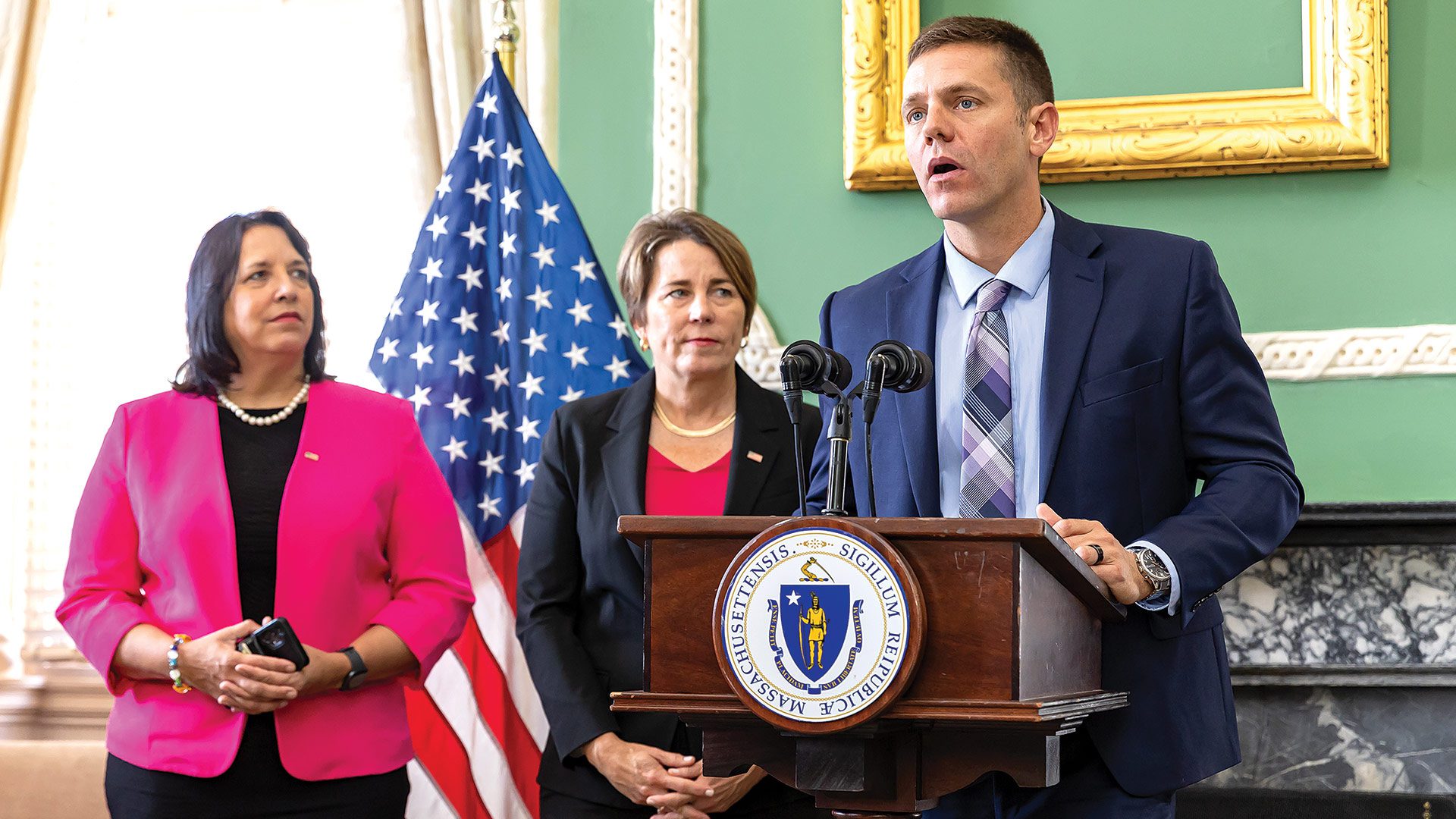
John Velis

John Velis, seen here with Lt. Gov. Kim Driscoll and Gov. Maura Healey, says communities must think outside the box and be more accepting of new housing.

He wasn’t exactly sure where his assignment would take him, but he was sure the influx of migrants represents just another facet of the housing crisis and another grim reminder that solutions are needed — and soon.

“These folks [migrants] are going to hotels, they’re going to colleges and universities,” he said, with discernable exasperation in his voice. “At some point in time, someone is going to ask the question — and it’s going to be me, because I’ve already asked it — ‘when they’re done with their temporary hotels and done with their temporary shelters, where are they going? We don’t have the housing stock. Where are they going to live?’”

The question ‘where are they going to live?’ applies to more than migrants, of course. It applies to a number of constituencies and almost every community in the region, from the larger cities to the smaller towns.

Indeed, as BusinessWest continued its Community Spotlight series this year, talking with business leaders and elected and appointed officials in dozens of municipalities, housing was cited repeatedly as an area of concern — and urgency.

Holyoke Mayor Joshua Garcia was one of those elected leaders, and he reiterated what he told BusinessWest back in March — that the housing situation in his city, as in many others, is, in a word, dire.

And as he talked about it, he said the crisis extends across the full spectrum of housing. While much of the recent developments have involved affordable housing, there is still a need for more. Meanwhile, there is an urgent need for market-rate housing, such as that which exits at one of the city’s redevelopment success stories, the Cubit building, where there is a lengthy waiting list for the loft apartments, and also transitional housing for an unfortunately growing homeless population.

“It’s underinvestment, poor planning, and, truth be told, a fair amount of resistance to change and development from different towns and communities that are all about preserving character, and not thinking about what future needs will be and how to keep cities and towns vibrant.”

“Right now, Holyoke is number three, per capita, in the whole state when it comes to children enrolled in our school district that are homeless,” Garcia told BusinessWest. “It’s more than Springfield, more than Worcester, more than Boston. We have families that are in shelters looking for transitional housing; we need more of it.”

It also needs much more market-rate housing, he went on, while relating a conversation he and other city officials had with leaders at a relatively new in business in town, Clean Crop Technologies on Dwight Street, while getting a tour of the facilities.

“We asked them what they needed from us,” he recalled. “We’re thinking they’re going to say they want the roads or sidewalks better, or improved lighting, but to our surprise, they said, ‘we need housing options down here.’”

Elaborating, Garcia said that, while many people commute to Holyoke to work, many would like to live and work there, and at present, many are finding that a challenge.

Vince Jackson, executive director of the Greater Northampton Chamber of Commerce, agreed. He noted that there are many who would like to live and work in Northampton, but for far too many, only the first part of that equation is attainable.

“There’s housing available in Northampton for sale, but are they affordable for the working class and for younger people?” he asked, answering his own question by saying that, in most cases, the answer is ‘no.’

Meanwhile, there have been efforts to build more affordable housing, but many people don’t qualify to live in such units because they earn too much or too little.
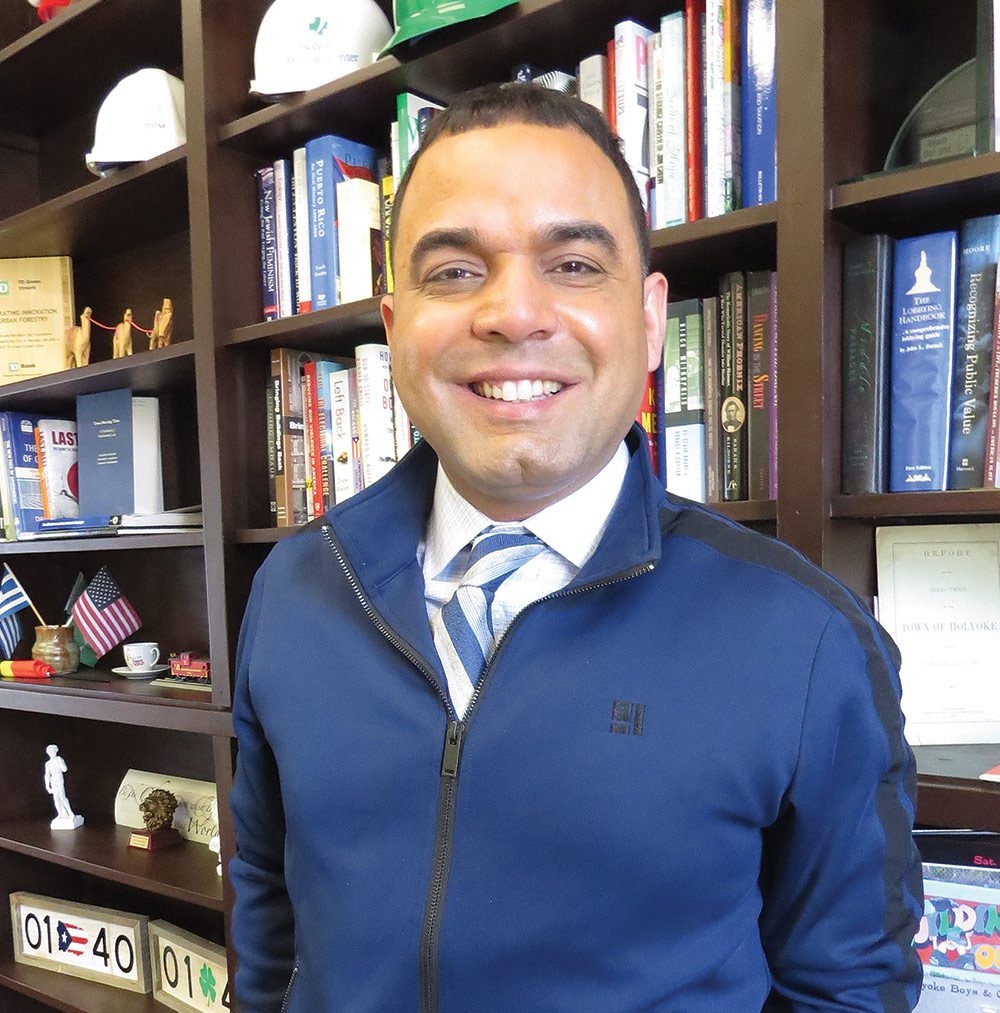
Holyoke Mayor Joshua Garcia

Summing up the crisis succinctly, Holyoke Mayor Joshua Garcia says that “what we need is rapid housing construction.”

“They’re never in that sweet spot,” Jackson noted. “And it takes developers months to sell these units because they go through hundreds of applications, and finding people who qualify on all fronts is a real challenge. So those properties can sit vacant.”


Addressing the Problem

Getting back to how we got here, Fairey said the state, and the nation, were essentially caught flatfooted as the Baby Boom generation continued to age, live longer, and age in place — and not build enough housing, especially affordable housing, for the Millennials and other generations to follow.

“Housing for workforce and for middle-income people hasn’t been produced, and at the same time, the cost of that production has increased very dramatically,” he explained. “So if folks look at it from an economic standpoint, they’re only going to build high-end houses because, in order to recoup your money, you need to sell at a high price. But that puts a gap in our marketplace for starter homes.

“It’s underinvestment, poor planning, and, truth be told, a fair amount of resistance to change and development from different towns and communities that are all about preserving character, and not thinking about what future needs will be and how to keep cities and towns vibrant,” he went on, adding that there are some area communities where some progress is being made — although very little of it has come quickly or easily.

He mentioned Amherst, where Way Finders has completed — after 10 years of resistance — Butternut Farm, an affordable-housing community featuring 27 apartments in farmhouse-style buildings set on four acres. It’s described as “a quiet, rural setting with plenty of open space and easy access to surrounding communities.”

Amherst has also put out an RFP for housing in a surplus school, and it has acquired land for more affordable housing, he said, adding that the community has also created an affordable-housing trust to put more units in the pipeline long-term.

Northampton has taken similar steps, earmarking a surplus school for affordable housing, and several other communities, such as South Hadley, have created what are known as 40R zones, which promote compact residential and mixed-use developments in areas near transit stations, commercial centers, or other suitable locations, while leaving the surrounding land untouched.

“There are towns that are beginning to realize need and create opportunities for investment,” said Fairey, adding that considerably more work will be needed if housing supplies are going to approach demand.

In the meantime, if individuals and families cannot find housing they can afford, or any housing at all, in a given state or region, they will simply go somewhere else. And the outmigration statistics regarding the Bay State bear this out.

The Pioneer Institute reported recently on IRS data showing that net outmigration from Massachusetts is accelerating rapidly. Between 2019 and 2021, the state rose from ninth to fourth among all states in net outmigration of wealth, behind only California, New York, and Illinois. And while the so-called ‘millionaire’s tax’ — and high taxes in general — are cited as perhaps the biggest reason for this outmigration, soaring housing prices are also considered a key factor, especially among younger generations.

“The main demographic that’s leaving Massachusetts, that we know of empirically, is the 20- to 35-year-olds,” Velis said. “I know this is an antiquated notion, but living in that house with the picket fence, being a homeowner, is becoming more and more elusive in Massachusetts. So what we’re seeing is states like Tennessee and North Carolina really eating our lunch in this regard; we have data that they’re going there.”

Fairey agreed, noting that, while the state has many strong selling points when it comes to attracting businesses — and people — housing stock certainly isn’t one of them.

“We can talk about all the great potential we have here in Western Massachusetts — we have wonderful higher-education institutions, we don’t have the traffic and other things that you have in Eastern Mass., we have great access north-south, and we have space for both residential development and commercial development of all types. But what you can’t say to someone you’re trying to bring here is that we have enough housing for them.”

Garcia joined that chorus, saying Holyoke is in a growth mode and wants to add more businesses and more jobs, but is being hindered in that assignment by a lack of housing across the spectrum.

“We’re trying to grow our population and bring in new businesses, but we can’t achieve our economic-development objectives and move to the extent that we know we can if we don’t have more housing for all spectrums,” he explained. “Right now, we’re stuck. What we need is rapid housing construction.”


Homing In on Solutions

To stem this tide, make the state more competitive, and address the many side effects of the housing crisis, including a rise in homelessness, the simple answer is to build more housing. Only, it’s not that simple.

“We need to do everything in our power to encourage more building,” said Velis, adding that, while the state has done an adequate job of incentivizing the building of low-income housing, it has to be better at encouraging creation of more inventory in the other categories.

“The reality is that, if you’re a developer, part of your equation is to make money,” he went on. “If you’re doing a cost-benefit analysis, unfortunately, there just isn’t the money to be made in low-income housing in the same way that there is in market-rate housing and other categories.”

Velis noted that initiatives like HDIP (the Housing Development Incentive Program) — passed as part of a recent tax-reform package to generate more development of market-rate housing in gateway cities — will hopefully encourage more building in that category. Still, more must be done to encourage efforts that will bring about more inventory.

“Developers want to make money, and guess what? They’re not evil for wanting to make money; that’s their job,” he went on. “Because the pressure valve is so intense now, if you can help market-rate housing, you’ll also help low-income housing, and if you help low-income housing, you’re also going to help market-rate housing.”

Overall, HDIP is expected the lift the current cap on market-rate housing incentives from $10 million to $57 million, which Velis believes will clear the backlog of projects currently on the drawing board statewide and generate $4 billion in private investment that will create 12,500 new homes in gateway cities.

This will help, but more must be done on the state level to encourage building, he said. “I would argue that communities, in many respects, have not been given the tools they need to combat this crisis. We haven’t done a good enough job of incentivizing developers to do this kind of work.”

“We’re trying to grow our population and bring in new businesses, but we can’t achieve our economic-development objectives and move to the extent that we know we can if we don’t have more housing for all spectrums. Right now, we’re stuck.”

That said, Velis noted that more communities need to support additional housing within their borders, not anywhere but, which remains a lingering sentiment.

“Many people don’t want to acknowledge this, but NIMBY is a real-world thing,” he said. “And if everyone continues to say, ‘we need to build … just not here,’ then we have a real problem. And I would argue that we’re getting dangerously close, perilously close, to being there. If every community cites reasons why they can’t be the place for us to build new housing units, then we’re going to implode.”

He said Massachusetts needs to start thinking outside the box and perhaps adopting a new approach — or, at least, a new slant on an old one.

Indeed, for some time, the state has employed a carrot-and-stick approach when it comes to incentivizing municipalities to facilitate the building of new housing units, said Velis, adding that, if more do not agree to become part of the solution, then maybe the state needs to focus on the stick more than the carrot.

“The paradigm has changed, and if communities won’t, of their own volition, say, ‘we’re going to build this,’ even with the incentives that we’re offering, at some point in time, you can get to a point where you have two options,” he said. “One is to do nothing, and Massachusetts will become the most difficult place, the most untenable place, to live in the country from a housing standpoint. Or we can say, ‘we’ve tried every carrot imaginable to encourage building, and now, we’re going to switch it up a bit and go down the path of sticks. If you don’t want to build, that’s your prerogative, but we just want you to know that, if you’re not following the law and you’re not building, then these are the state funds that you could find yourself no longer eligible for.’”

Fairey echoed Velis’ thoughts on the pending bond bill, and how it provides real hope for reversing the trends regarding supply and demand — if it’s big enough and bold enough.

“It’s unclear what the number will be — it will be bigger than $1.8 billion,” he said. “But the needs are quite significant.”

Community Spotlight Special Coverage

Community Spotlight

MCLA President James Birge

MCLA President James Birge cuts the ribbon at the official launch of the school’s new nursing program.


Jennifer Macksey grew up North Adams, and she’s seen some profound changes in her 50 years — and from many perspectives.

As a young girl, she remembers Thursday nights downtown, which would be bustling as the thousands of employees at nearby Sprague Electric would be out spending their paychecks in the stores, like the one owned by her parents, and restaurants along Main Street and connecting corridors. She also remembers how the landscape changed dramatically, and the vibrancy downtown all but disappeared overnight, after Sprague closed its doors in 1985.

Later, while serving in several positions in City Hall, including chief financial officer and treasurer and collector, and also at the nearby Massachusetts College of Liberal Arts (MCLA) and Southern Vermont College, and then as assistant superintendent of the Northern Berkshire Regional School District, she saw the city’s economy struggle as it also evolved, from one dominated by manufacturing to one centered on tourism and the arts, a shift exemplified, in dramatic fashion, by the transformation of the former Sprague Electric complex into MASS MoCA, the nation’s largest museum of contemporary art, which opened its doors in 1999.

Today, Macksey is mayor of the city, a post she has long coveted (more on that later), and is thus in a position to not only observe, but also shape the ongoing evolution of this city of nearly 13,000.

She reports progress on several fronts, from new stores downtown to signs of development at the long-vacant former TD Bank building on Main Street; from a cannabis-cultivation facility in the Hardman Industrial Park to a small but quite significant rise in population — part of a countywide phenomenon involving residents of large metro centers leaving for the Berkshires, where many of them are working remotely.

Jennifer Macksey

Jennifer Macksey

“We’ve brought a lot of new people into the community, but we’re also focused on getting businesses in here.”

“I’m amazed at the people who are buying property here in North Adams,” Macksey said. “We’re seeing a lot of people who are leaving larger cities and coming here to work remotely, and we’re seeing out-of-town investors buying up property, whether it be for long-term or short-term rental. So our population is starting to go up a bit.”

James Birge, long-time president of MCLA and another native of Berkshire County (he grew up in Lee), has also seen a number of signs of progress, both across the county and in North Adams. In addition to meeting its mission of providing a quality liberal-arts education and enabling students from low-income families to live “an elevated life,” as he calls it, MCLA is helping to fuel a changing Berkshires economy by providing qualified workers and also adding new programs to meet recognized need, such as its new nursing-degree program.

“While 40% of our students come from Berkshire County, 50% of our students who graduate stay in Berkshire County,” he said. “So we’re contributing to the brain gain of Berkshire County.”

The nursing program, initiated this fall, was launched in response to a request from Berkshire Health Systems to help meet an urgent need to put more nurses into the pipeline.

“We thought, ‘here is an opportunity where we can develop an academic program that would be in demand and be responsive to the needs of our community,” Birge said, adding that the program started with 20 students this fall and is expected to ultimately grow to 110-120 students. “This is the fundamental, historic purpose of public higher education — to respond to the needs of the community.”

For this, the latest installment of its Community Spotlight series, BusinessWest takes an in-depth look at North Adams and the many developing stories there.


Taking the Lead

While growing up in North Adams, Macksey said, her parents always stressed the importance of both giving back and getting involved, qualities she has embraced her whole life.

This passion, coupled with a desire to lead change in a community she said was still struggling in many ways, prompted her to run for mayor in 2021 — and to seek re-election this fall.

“I always wanted to be mayor,” she told BusinessWest. “When I left City Hall, I knew that I would come back someday, but I always said I would come back to the corner office, and that’s what I did. I’m very interested in keeping North Adams moving forward.”

Her focus is broad and covers many issues, from education to public safety, but especially economic development, she said, adding that, like all communities in the Berkshires and beyond, the most pressing need is jobs.

“We’ve brought a lot of new people into the community, but we’re also focused on getting businesses in here, and that is really the charge of my next two years in office, to build out some economic-development plans and to sell North Adams more than it has been.

“North Adams is sold on its beauty and its natural resources, but there are a lot of other things to offer,” she went on. “I’m very focused on the buildings that we do have that are empty and our industrial park and exploring opportunities to bring in some light industry.”

The Hardman Industrial Park recently became home to the Temescal Wellness cannabis growing facility, in a facility that formerly housed Crane Stationery. The facility employs between 75 to 100 people and is thus an important source of new jobs and one of many investments that have taken place in North Adams.

Others include ongoing investment in the Porches Inn at MASS MoCA on River Street and also in the Hotel Downstreet on Main Street — facilities that are catering to the steady volumes of visitors to North Adams, which has increasingly become a destination in recent years — as well as redevelopment of the former Johnson School into much-needed housing.

North Adams at a Glance

Year Incorporated: 1878
Population: 12,961
Area: 20.6 square miles
County: Berkshire
Residential Tax Rate: $17.67
Commercial Tax Rate: $37.60
Median Household Income: $35,020
Family Household Income: $57,522
Type of government: Mayor; City Council
Largest Employers: BFAIR Inc.; Massachusetts College of Liberal Arts
* Latest information available

In the downtown, most of the storefronts are now occupied, Macksey said, and the former TD Bank facility has been acquired, and redevelopment plans are being blueprinted.

“Our downtown is pretty much full,” she noted. “There were many years when it was empty, and I really applaud the owners of those buildings for hanging in there.”

But there is considerable work to be done, she added. “We’ve got a lot of things going on, but we really need to provide more jobs for our workforce here. And we hope to develop some economic-development plans that will bring some people into the city.”

Creating jobs is a process, she noted, one that involves collaboration and partnerships with business, the education sector, and workforce-development agencies, as well as that notion of more aggressively selling the city and its many types of assets and generating new investments in the community.

“We need to create some jobs that provide some on-the-job training,” she said, citing Temescal Wellness as one example of such an employer. “We also need to be collaborating with places like MassHire and other groups to create opportunities where people can learn a trade as they work.

“And we also need to be aggressive in cultivating a community, even in our high school, of students who want to work here in North Adams, be it in a trade or in an administrative position,” Macksey went on. “But most importantly, we’re looking to work with businesses that are sensitive to hiring people here in North Adams.”


Class Act

Birge told BusinessWest that he thought MCLA might fall a little in the annual U.S. News & World Report ranking on the nation’s public liberal-arts colleges, a category that includes the service academies. But it didn’t.

Instead, it held its place at number 7 — this was the third year in a row it finished in that spot and the ninth year in a row it has cracked the top 10, out of roughly 500 institutions — a measure, he said, of not only the school’s commitment to excellence, but its ability to consistently deliver on its commitment to providing a quality liberal-arts education.

As proud as Birge might be of this ranking — and he is quite proud — he is even more satisfied with the school’s rankings on U.S. News & World Report’s listing of top performers when it comes to social mobility, a category the publication initiated in 2019. This is a measure of how well institutions graduate students who receive federal Pell grants, typically awarded to students whose families earn less than $50,000, though most Pell Grant money goes to families with income below $20,000.

In this category, MCLA ranked first in the state and second in the country.

“I like this ranking a little bit more, because we’re meeting our mission — we have a mission of access,” he explained. “We want students who may not be able to afford to go to other institutions to come here and get an outstanding education and then go off and have a life that they wouldn’t have if they didn’t come to us.

“I think that’s a more important measure; we’re the highest-ranked public institution in Massachusetts and the second-highest in the nation, and we’re really proud of that,” he went on, adding that one-third of the school’s students come from families earning less than $30,000 per year, and roughly 40% of them are first-generation college students.

“The average starting salary for an MCLA alum is $46,000,” he went on. “Hundreds of students are graduating and making an average salary of $46,000, and they’re coming from families that made less than $30,000. We’re breaking the cycle of poverty for hundreds of kids in four years — we think that’s a pretty noble mission for a public higher-education institution.”

Overall, MCLA is seeing a surge in enrollment due to a roughly 15% increase among first-year students (total enrollment is largely flat), and Birge attributes this to the value the school presents at a time when value has become an ever-more-important factor among students and their parents. Indeed, one can graduate from MCLA with a fraction of the debt they may assume if they were to attend a private liberal-arts college, he said.

While on the subject of value, Birge said a liberal-arts education still holds plenty of value in this job market and in general, despite growing rhetoric questioning the relative worth of a liberal-arts degree, and some colleges and universities — Simmons and Lasell are among the latest to do so — cutting liberal-arts majors, including history, modern languages, philosophy, and literature because of low enrollment.

“I think those institutions that are cutting liberal-arts programs are not being very visionary, and I think they’re cutting off their nose to spite their face,” he added “In our world today, even more than ever, we need people educated in the liberal-arts tradition. We need people who can understand different perspectives and look at things through different lenses.”

Especially in a changing Berkshire County, he noted.

“The economy has changed; it used to be an industrial economy, and now it’s more of a creative economy, across the county,” Birge said. “And I think that has breathed life back into a lot of our communities, including North Adams. It’s a vibrant moment in the history of Berkshire County, and we try to be as participatory in that as we can.”

Women of Impact 2023

President, Aero Design Aircraft Services and Fly Lugu Flight Training

She Inspires Her Students and Others Around Her to Soar Higher


“It’s like being in a time machine.”

That’s how Fredrika (Rika) Ballard described flying, a passion she has enjoyed pretty much her whole life and one she now inspires others to pursue.

While you can’t really go back or forward in time with an airplane, you can get somewhere fast — somewhere like Martha’s Vineyard or Nantucket, she said, offering up just two examples.

She can get to the Vineyard in 30 minutes in her twin-engined Beechcraft Baron, while others, using standard means of transportation — a car and then the ferry — would probably need five, maybe six hours, depending on the traffic and which ferry they took.

“For me, flying means freedom — I’m as comfortable in the air as I am on the ground,” said Ballard, president and lead flight instructor at Aero Design Aircraft Services and Fly Lugu Flight Training in Westfield, who has flown everything from tiny ‘beginner’ planes to a corporate jet.

Lugu, by the way, is an industry term. Well, sort of. It’s what Ballard’s father used to say about the yoke, or control column, of the airplane.

“She is not an instructor who just teaches. She is a coach, a friend, a trusting companion that inspires and helps you flourish.”

“The plane goes where you look,” she said. “If you’re looking down or you’re looking at the ground, you’re subconsciously putting the yoke forward, and the plane starts going down. But when you look up, you subconsciously pull the yoke toward you, and the plane goes up. Look up, go up — that’s what Lugu means; you’re only going up from here.”

Those letters are part of a design for the company she was thinking and dreaming about, starting quite literally with a drawing on a napkin in early 2019 (more on that later), while not really believing that the dream was going to come true.

It has, and the reality has gone well beyond a flight school. Indeed, Ballard now owns a maintenance shop at Barnes Municipal Airport, where she employs four mechanics, and is involved with initiatives to build new hangars at the airport.

As for the flight school, it continues a strong pattern of growth and now boasts nine planes (with more on the way), 10 instructors, 130 students on average, and roughly 24 flights per day — if the weather is cooperating.

As a flier, flight instructor, and serial entrepreneur, Ballard has become much more to those around her. She’s an inspiration as well as a facilitator of sorts, helping others find the freedom of flying, especially women, who are still firmly in the minority when it comes to this pastime, but are, well, gaining ground.

Saba Shahid, one of Ballard’s students, explained things nicely as she nominated her to be a Woman of Impact.

“She is not an instructor who just teaches,” Shahid wrote. “She is a coach, a friend, a trusting companion that inspires and helps you flourish. Rika is someone I consider to be a role model that is standing up for women every day and inspiring us to know that the sky is not our limit.

“Being a female pilot is about shattering stereotypes and showing the world what women are all about,” she went on. “Rika does this each day for the women and men that go to her school.”

Such sentiments explain why Ballard is among the Women of Impact for 2023.


Plane Speaking

The walls of Ballard’s office at the terminal building at Barnes are ringed with photographs of her students beside or in the aircraft in which they stretched their wings — literally and figuratively. Each one tells a story, but collectively they tell a broader story about flying and those who are pursuing that sense of freedom she spoke of.

It’s mostly men in the pictures, but there are many women as well. Some are young, others a little older. A few are retired and looking for a new adventure. And then, there’s the 91-year-old man intent on earning his license.

“It was a bucket-list thing for him, and he’s taken six or seven lessons,” she said, adding that there is, overall, greater interest in pursuing a license these days. A shortage of airline pilots has something to do with it, but there are other reasons as well, including pursuit of that freedom and the ability to get to places like the Vineyard in 30 minutes, as well as pandemic-inspired efforts to draw lines on individuals’ to-do lists, including the dream of learning to fly.

The photos also help tell Ballard’s story, at least the chapter that started with the napkin she drew Lugu on. We’ll get back to that, but first we need to go back much further.

Ballard said she was introduced to flying by her father, a general aviation pilot and engineer by trade.

“I’ve been flying as long as I can remember,” she said, adding that she cut her teeth on an Aerona Champion, known as the ‘Champ,’ and then a Beechcraft Bonanza, both small, single-engine planes.

She soloed on her 16th birthday, at Barnes, and got her license at the earliest age she could — 17. Since then, flying has been a lifelong pursuit: a passion, and then a business. But always a passion.

She and her husband are avid hikers, and they will regularly fly to Mount Washington for an afternoon. She flies to Martha’s Vineyard once a week, on average, to visit family or friends. Sometimes, it will just be for lunch or dinner.

“I like to fly for food,” she said with a laugh, adding that most general-aviation airports like Barnes will have ‘courtesy cars’ to borrow and take into town for a meal or shopping. “It’s always fun to meet new people and see different parts of the country; flying gives you the freedom to do all that.”

It wasn’t until she retired in 2018 from her role as administrator at Facial Cosmetic & Maxillofacial Surgery and then earned her advanced licenses that she started to think about shaping her time machine into a business. With those credentials, she could become an instructor, and a friend offered her an opportunity, and a plane, to do so.

But the plane was poorly maintained, and the opportunity just wasn’t right.

“I just wasn’t feeling it,” she said, adding that, soon thereafter, she was at a bar with a friend, took the napkin in front of her, and doodled out a script ‘Fly Lugu,’ with planes (actually arrows on the first take) on some of the letters for effect.

“I had enough money to buy a starter plane, and my friend, a business person in the area, said, ‘why don’t you just buy a plane and start a school?’” she recalled. “And I said, ‘I don’t know, I’ve never thought about it.’”


The Wild Blu

So she started thinking about it, and with no flying school at Barnes at the time and, on her end, the requisite time, capital, enthusiasm, and drive, she decided to take the plunge — or, in this case, the climb, another industry term.

She started in August 2019 with a few students and one plane, a Cessna 172 named Blu — all her planes have names. She didn’t sign the lease for space in the terminal building until February 2020 — yes, a few weeks before the pandemic largely shut down Western Mass.

She persevered, as other businesses did, by getting creative and finding ways to carry on — with Zoom calls, remote lessons, meeting students who could solo on the runway ramp before their flights, and, later, resuming training flights with masks and other PPE.

And when the skies cleared (pandemic-wise), many of those who were home and thinking about items on their bucket list — and things they may have started but never finished — turned their attention to flying.

“When we could start to fly again, I was flying sunrise to sunset every day,” she recalled. “I had another instructor come on because I couldn’t handle it all alone; there was a lot of demand.

And while things have cooled off somewhat, business has remained brisk, with Ballard adding planes and instructors regularly over the past three years.

“When we could start to fly again, I was flying sunrise to sunset every day.”

Aas noted earlier, she has become a serial entrepreneur, acquiring the maintenance shop at Barnes, called AeroDesign, based in a hangar that dates in 1926 and the early days of the airport; becoming a partner in the construction of new hangars at the airport; and also partnering with the New England Air Museum to be its official flight school.

Beyond all these accomplishments and ambitious future plans, Ballard has made it a mission to encourage, and inspire, more women to take to the skies. And she is succeeding in that mission with Shahid and many others, including a former student who is now an instructor at Lugu.

“Rika has been an extraordinary leader empowering women to enter the field of aviation and be confident in their abilities,” Shahid wrote in her nomination. “She is breaking barriers and stereotypes each day to make it easier for women to succeed in this field.”

Blu and the other aircraft in what can now be called a fleet have become the vehicles with which others are experiencing the freedom of flying. For most, this will be at least a yearlong journey — longer if the weather is like it has been this year.


Soar Subject

As a flyer, flight instructor, and owner of a flight school, Ballard is certainly plugged into the weather. She has several weather apps on her phone and is always watching the sky for clues about what’s on the horizon.

“You almost become like an amateur meteorologist, because you’re always looking at the sky, and you get to know the patterns of the weather and what works and what doesn’t,” she said, adding that those who want a reliable forecast will turn to her.

At the moment, the forecast for her business is clear with a strong chance of continued growth. She’s an optimist who prefers to put her faith in what her father said about pulling the yoke — “you’re only going up from here.”

Her ability to breed confidence in others and set their sights higher, whether they’re flying in Blu and coping with the many other challenges of life, explains why Ballard is a Woman of Impact.

Women of Impact 2023

President, TommyCar Auto Group

She’s a Driving Force in Business and Efforts to Promote Gender Equity

Carla Cosenzi


By now, Carla Cosenzi says, the automobile-sales industry should be … well, more welcoming to women, more accepting of women, more … inviting to women.

But, in most respects, and she would certainly know about this, it isn’t.

Overall, this is still a man’s world, said Cosenzi, who notes that, when attending regional or national conferences or dealer meetings, she is the among the few women in the room, and the expectation is for her not to be the owner. Indeed, many of those who don’t know her believe she is the spokesperson for TommyCar Auto Group, or that she works for her father or her husband.

“I get that all the time … people think my husband is involved,” she told BusinessWest, adding that he isn’t, and never has been. (Her husband, Nick Zayac, owns a construction company.)

“It’s still really a difficult industry for a female, especially in this type of position or role,” she went on, adding that this extends to her own company — although certainly not for long after someone joins the team. “Many still don’t fully understand how involved I am in the business and how much I know and how much I have worked through all the different departments here, and how hands-on I am. And there’s always a different dynamic between a male and female in business, versus a male and a male.”

Cosenzi not only perseveres in this man’s world, she works hard to bring women into the business, mentor them, and inspire and empower them to advance. TommyCar Auto boasts many women in roles traditionally held by men — everything from mechanic to parts manager. Overall, roughly one-third of the company’s 150 employees are women, far exceeding what Cosenzi believes is the industry average.

“It’s still really a difficult industry for a female, especially in this type of position or role.”

“I’m obviously proud to have so many women working under the TommyCar umbrella,” she said, “but what I’m most proud of is that so many of those women are working in non-traditional roles, such as service advisor, service manager, technician, body-shop technician, or general sales manager; we have at least one woman in a manager or leadership role at every one of our dealerships.”

This strong desire to inspire, mentor, and empower women to succeed, in their lives and careers — a recurring theme among this year’s Women of Impact honorees — is just one of the reasons why Cosenzi is a member of the class of 2023.

Carla Cosenzi and her bother, Tom, present a check for more than $150,000

Carla Cosenzi and her bother, Tom, present a check for more than $150,000 — proceeds from the 2022 Tom Cosenzi Driving for the Cure Golf Tournament — to Dr. Patrick Wen of the Dana-Farber Cancer Institute.

Her success in business is another. She has greatly expanded the family enterprise started by her grandfather to now include Nissan, Volkswagen, Hyundai, Genesis, Volvo, a collision center, and a towing business. And she is constantly looking for opportunities to expand the portfolio.

She is also credited with creating and nurturing a culture of giving back, a continuation of a strong family tradition. Indeed, with Cosenzi taking the lead, the company is now involved with organizations and philanthropic programs ranging from Cooley Dickinson Hospital and Junior Achievement to Christina’s House and Safe Passage’s annual Hot Chocolate Run.

Then there’s the Tom Cosenzi Drive for the Cure Charity Golf Tournament. Named for Cosenzi’s father, and mentor, who lost his battle to brain cancer in 2009, the tournament has raised more than $1.4 million for the Dana-Farber Cancer Institute.

This impressive résumé of business success, community involvement, philanthropy, and efforts to promote gender equity in the workplace — in the auto industry and well beyond — has earned Cosenzi many awards and accolades over the years, including a handful from BusinessWest. Judges have chosen her to be a 40 Under Forty honoree, an Alumni Achievement Award winner (given to the 40 Under Forty winner who has most impressively built upon their record of accomplishment), and a Difference Maker.

And now, she needs to make room for one more plaque — one that reads ‘Woman of Impact.’


To a Higher Gear

As she talked with BusinessWest at the Nissan store on Route 9 in Hadley, Cosenzi referenced upcoming renovations to the dealership, a project that has been several years in the making, with considerable back-and-forth between the company, the town, and the manufacturer, with firm plans now in place.

They call for redoing the façade, the service lounge, the showroom setup, and more, she said, adding that “we’re way overdue — for our employees, our customers, and the brand.”

Orchestrating this renovation project, as well as the building of a new home for Volvo Cars Pioneer Valley in Northampton, an endeavor still in the planning stage, are among the myriad matters Cosenzi is contending with at any given time.

At this particular moment, she was also attending to specific details of the 2023 edition of the golf tournament, HR matters, hiring (she said she’s “constantly interviewing” for high-level positions), the still-challenging used-car market … and making it home in time for dinner with the family.

“I’m obviously proud to have so many women working under the TommyCar umbrella, but what I’m most proud of is that so many of those women are working in non-traditional roles.”

Most of this was not in Cosenzi’s long-term plans when she was focusing on clinical psychology while earning degrees at Northeastern University and Columbia; while she took odd jobs at her father’s dealership growing up, she had no intention of making it her life’s work.

But her career path took what would have to be called some unexpected turns. Indeed, Cosenzi, as most know by now, started working at the family business after college, not thinking this would be anything but temporary. But she fell in love with the business and everything about it. She attended Dealer Academy (where, again, she was one of the few women enrolled), and immersed herself in every aspect of the business.

Christina’s House is one of many area nonprofits supported by Carla Cosenzi

Christina’s House is one of many area nonprofits
supported by Carla Cosenzi and the growing team at TommyCar Auto Group.

With her father’s illness and subsequent passing, in 2009, leadership of the company transitioned to Cosenzi and her brother, Tom.

In her role as president of the dealer group, Cosenzi is involved with all aspects of the business, as well its philanthropic initiatives and work within the community. And with each, the approach is decidedly hands-on, with a hard focus on “one-on-ones,” as she called them, and giving managers and employees at all levels the tools they need to succeed.

Meanwhile, she’s also focused on long-term strategic planning. The immediate goals are to complete plans to renovate the Nissan store and build a new Volvo dealership — and by that time, the Hyundai store will need renovating, and a separate home will be needed for Genesis — and then focus on adding to the portfolio.

“We’re not desperate to acquire more brands,” she said. “But if the right opportunity came up, we would take it; we’re not just looking to buy to grow our portfolio.”


A Road Less-traveled

Cosenzi joked that, unlike many dealership owners, general managers, and even salespeople, she doesn’t take many of the newer models for weeks or months at a time, as much as she would like to — especially some of the new Genesis offerings.

“I’d love to switch cars, but the problem is … I spend a lot of time in my car, between the dealerships and picking up my kids,” she explained, noting that she’s been driving a Volvo XC90 hybrid SUV for some time now. “If I get in a car that’s a new model, and someone wants to buy it, they have to track me down, get me out of it, and get it ready for the customer. So I try to make sure that if I’m taking a new model, I take it for the short term and don’t move into it.”

What she has moved into are leadership roles — in her own business, within the community, and in the broad fight for gender equality in the workplace. Focusing mostly on her own sector, Cosenzi, as noted earlier, has made it her mission to be a role model and mentor, and also bring more women into the auto sales and service industry and capitalize on opportunities they may have thought were restricted to men.

“If you’re good in business, if you’re a good leader, you’re always trying to better yourself, and you’re always trying to learn, and I’m always trying to learn from other people,” she explained. “So I try to be that same sort of resource that I look for, especially to the women who come into this business.

“I want to be a good mentor to anyone who comes into our company, but especially to women who want to be successful in our industry and just need someone to guide them and give them a path on how to do that,” she went on. “That’s really important to me.”

Equally important is that many of the women now employed at TommyCar are focused on careers in this industry, not jobs, she said, adding that her dealer group is ahead of the curve, if you will, in this realm.

“If you’re good in business, if you’re a good leader, you’re always trying to better yourself, and you’re always trying to learn, and I’m always trying to learn from other people.”

“I believe that, overall, you’re seeing more women getting into the industry, but not to the extent that you see here,” she continued. “We work really hard to attract women here and to support women’s success here; we make it a great place for women to work, and we’re a great support system for all the women working together.”

When asked what makes this or any other business a great place for women to work, Cosenzi said it comes to supporting them, mentoring them, providing opportunities to learn and grow (such as group attendance at Bay Path University’s Women’s Leadership Conference and similar programs), and, perhaps most importantly, recognizing them and their accomplishments.

“We do a lot to support women and to make them feel empowered here,” she said in conclusion. “And I think it’s immediately empowering when you work for a company that has a woman leader; I think it makes a huge difference because immediately, the perception of the company is different.”


The Ride Stuff

Getting back to her thoughts on the auto-sales business and how and why it’s still a man’s world, despite her best efforts, Cosenzi said there has been some progress — just not as much as she would have expected to see in 2023.

“It takes time, it takes conditioning, and it takes more women being involved,” she told BusinessWest. “The more women that we put in powerful roles in an industry, the more conditioned people get to seeing women in those roles.”

Suffice it to say she doing all she can — as an employer, as a role model, as a mentor, and as a leader within the community.

And that’s just one of the reasons why she’s added Woman of Impact to her list of awards and achievements. It’s a designation that drives home all she has done and continues to do — literally and figuratively.

Women of Impact 2023

President, Bay Path University

She Helps Empower Women for the ‘Long and Winding Road’

Sandra Doran

Sandra Doran

As she talked about the transition in her professional life — from being a lawyer to serving as an administrator in higher education — Sandra Doran summed it up simply and quite effectively by saying, “careers are not a straight line.”

“You don’t enter a profession or a job now and just do it for 50 years; it’s a long and winding road,” she went on, using her own story as just one example, before quickly noting that, for today’s college graduates, the road will be even more winding, and probably longer as well.

“I think that’s what our students are experiencing now — and our alums, frankly,” she went on. “Many of the people who are graduating from college today will have seven careers. So how are we, as educators, preparing them for this, giving them the skill sets, giving them the growth mindset that says, ‘I can do this, I can learn this, I’m prepared for this — I have the skill set to learn?’”

Preparing and empowering individuals, and especially women, to navigate this winding road and have the confidence and competence to take on, and succeed in, seven or more careers might be an effective job description for Doran, the sixth president of Bay Path University.

Or at least part of that job description. There are many elements to that document, obviously, and she has embodied all of them with a lengthy list of accomplishments during her career, and especially since coming to Bay Path.

At the Longmeadow campus, where she arrived just a few months after the pandemic did, she has brought about change and progress on several fronts, from health education, where she spearheaded a transformation of the school’s master’s in public health program, to cybersecurity — the school’s program is now ranked third nationally by Forbes magazine; from the creation of new programs, such as a master of science in nursing degree, to investments in infrastructure, including new science laboratories; from the establishment of a food pantry to combat food insecurity to a firm commitment to diversity, equity, and inclusion.

Meanwhile, she has been a strong supporter of, and advocate for, mentorship, forging a collaborative at Bay Path with the Mentor Collective, a platform that structures mentorships and connects students — those in traditional, on-campus programs as well as online students enrolled in the American Women’s College — with a vast network of alums who can serve as mentors.

She has also, over those three years, become heavily involved in the community, serving on the board of the Springfield Symphony Orchestra, as chair of the Western Massachusetts Economic Development Council’s education subcommittee, and as a corporate ambassador at Glenmeadow, where she engages with and supports a life-plan community designed for older adults.

“Dr. Doran’s journey to the helm of Bay Path University is marked by a profound dedication to women’s education,” wrote Crystal Neuhauser, vice president of Institutional Advancement at Bay Path, as she nominated Doran for the Woman of Impact honor. “She is a tireless advocate for empowering women to emerge as catalysts for change.”

This advocacy, and this work to empower women, are among the many reasons why Doran can add another accomplishment to her long track record of success — being named a Woman of Impact for 2023.

Course of Action

When BusinessWest first talked with Doran, it was at a small table with a few chairs arranged around it (six feet apart) on the lawn behind Deepwood Hall, the main administration building on the Bay Path campus.

“Many of the people who are graduating from college today will have seven careers. So how are we, as educators, preparing them for this, giving them the skill sets, giving them the growth mindset that says, ‘I can do this, I can learn this, I’m prepared for this — I have the skill set to learn?’”

This was the only way to do an in-person interview in June 2020, the very height of COVID, and the scene was symbolic of the extreme challenge and duress that marked the start of her tenure at the university. It was symbolic of something else as well — her strong leadership during that time of turmoil.

Indeed, Doran was one of very few people on campus those days, with Zoom being the preferred method to meet and collaborate. And she made sure those she met with online saw her in her office, specifically in front of a painting on loan from the Springfield Museums, created by Rosa Ibarra, chosen to reflect her commitment to diversity.

Sandy Doran, center, seen here with Bay Path students

Sandy Doran, center, seen here with Bay Path students, faculty, and staff, has become a mentor to many young women.

“It was important for me to be in my office so people could see me,” she recalled, adding that she started staging, via Zoom, what she called “Conversations with the President,” so people — in the college community and beyond — would get the opportunity to know her and she could get to know them.

These are conversations she continues to this day, she went on, because they provide invaluable information and input on what those in the community are thinking about, what opportunities exist for the university and all those it serves, and much more — feedback that has directly shaped some of the leadership initiatives undertaken at the school.

It was, indeed, a long and winding road that Doran took to Bay Path, that interview at the table under the tree outside Deepwood Hall, and those online community conversations. It began, as noted earlier, in roles where Doran put to work the juris doctorate she earned at Syracuse University College of Law.

Going back further, she said she was perhaps destined for a career in both the law and education — what she called the “intersection of things I love.” Her great-grandfather founded a one-room schoolhouse in Colorado, her grandfather was the superintendent of a school system, and her mother was a music teacher.

She can find many common threads among the two professions.

“It was a very natural transition from being a lawyer to being an educator because being a lawyer, if you’re a good one, is a lot about educating clients.”

“Being a lawyer is a lot like being an educator,” she told BusinessWest. “Law is about helping clients understand what their options are and educating them about the law. So for me, it was a very natural transition from being a lawyer to being an educator because being a lawyer, if you’re a good one, is a lot about educating clients.”

After serving as vice president, general counsel, and secretary at Shaw’s Supermarkets Inc. and then as senior counsel at Holland & Knight LLP in Boston, then the fifth-largest law firm in the country, Doran’s transition to higher education began at Lesley University in Cambridge, where she served as chief of staff, vice president, and general counsel from 2004 to 2011.

It continued at the American College of Education in Indianapolis and then Stevens Institute of Technology in Hoboken, N.J. and, most recently, Salem Academy and College in Winston-Salem, N.C., where she served as president before arriving at Bay Path to step into the rather large shoes of longtime president — and now fellow Woman of Impact — Carol Leary.

Leading by Example

Getting back to her thoughts on how a career is most definitely not a straight line, Doran said the primary focus of higher education, and one of the “foundational aspects” at Bay Path, is preparing students to learn — in every way possible.

“Whether it’s online, on the ground, from each other, from faculty and staff, from mentors, from alums — that is one of our core aspirations here,” she said, adding that this has been the primary thrust of her leadership efforts at the school.

Sandy Doran, left, with student speaker Diane Almonte Arias

Sandy Doran, left, with student speaker Diane Almonte Arias at Bay Path’s 2023 commencement ceremonies.

Put another way, she said the school works to “build confidence through competence,” and that both are attained in the classroom, as well as outside it, in all the ways students can learn.

And this brings her back to the broad subject of mentorship, which is a key component of a program at Bay Path called WELL (We Empower Learners and Leaders), as well as the school’s curriculum as a whole, and the heart of Doran’s philosophy about how people (and especially women) learn, lead, and prepare for that long, winding road.

“I have benefited from a tremendous number of mentors — not just family members, who are great mentors, but in every position and every role I’ve been in,” she went on. “I’ve had the benefit of working with great mentors, not just on how to be successful in terms of the work, but in how you build relationships and how you think about that network that’s going to be so important to being successful, because, as we all know, it’s not just what you do, it’s how you do it.

“And the data bears this out,” she continued. “Students who have mentors are more likely to be successful in the workplace, so students who have mentors in college are more likely to be successful in the workforce, particularly first-generation students who might not have that social capital and understand, the way more experienced people do, the real value of that network.”

Elaborating, she said mentorships have become a huge part of the landscape and the operating philosophy at Bay Path, with students enjoying mentoring relationships with alums, employers, faculty, and staff.

Many of these mentoring relationships, not to mention potential career opportunities, take root during internships, Doran noted, adding that these have become another huge point of emphasis at Bay Path.

“A great internship also includes a great mentoring experience,” she said. “And one of the things we know about internships is that, if a student has at least one internship during their undergraduate experience, they are more likely to secure a position, and a higher-paying position, than if they had not had that internship experience. So for us, it’s really fundamental to the education that we offer here.”

And while she still relies on others to mentor her — “there’s always someone who sees things through a different lens or different perspective” — she also mentors many of those around her, whether they are students, staff members, or other members of the community.

And when asked what her best piece of advice is to those who seek her counsel, she said simply, “to ask for advice.”

“That’s because we cannot know all the answers ourselves,” she told BusinessWest. “So getting multiple perpectives, whether it’s on life goals or even weekly goals … that’s important.”
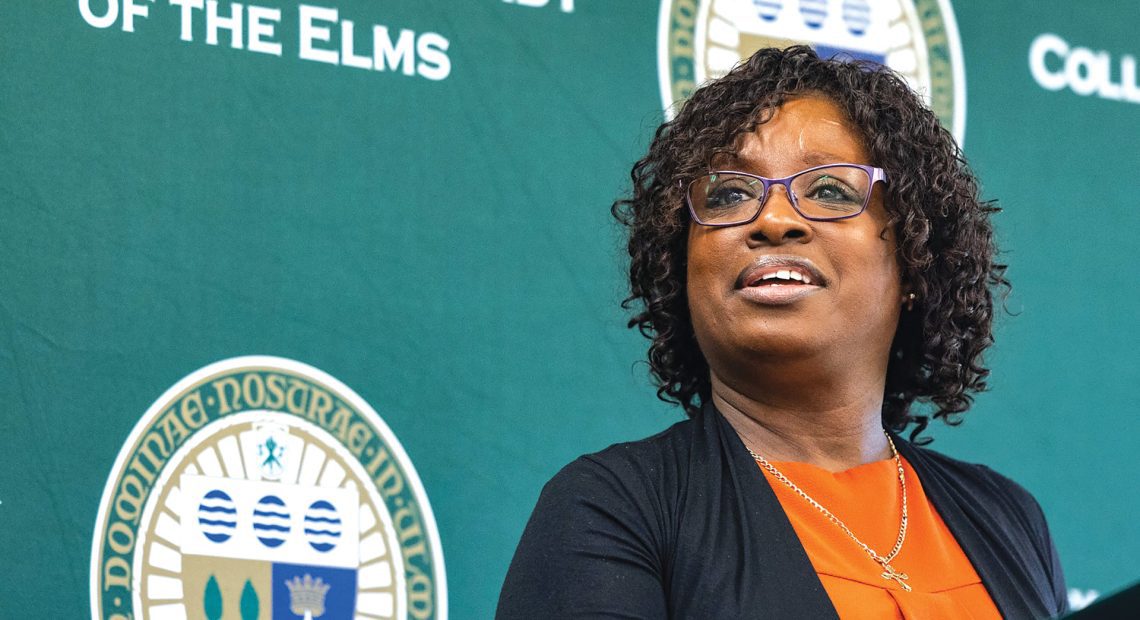
 

Bottom Line

It’s also important to remember, as her own story makes clear, that careers are not a straight line. There are curves, and many of them.

Handling these curves requires not simply college degrees, although they’re essential in most cases, but the ability to learn, not just in the classroom, but from experiences and from fellow travelers along the journey.

This couldn’t be clearer to both Doran the lawyer and Doran the college president. Helping others understand, and then empowering them to make it happen, is what makes her a Woman of Impact.

Women of Impact 2023

President and CEO, Square One

Inspired by Others, She Displays the Awesome Power of One Woman

Dawn Forbes DiStefano

Dawn Forbes DiStefano never had to be told about how a single woman could be a life-changing force for someone and an influential role model.

She could see for herself starting at a very young age, with her maternal grandmother, Phyllis Arnold Pilbin, who saw her role change in profound ways when her daughter, Forbes DiStefano’s mother, was killed by a drunk driver when she was just 26 years old and Dawn, her first child, was only 3.

“My grandmother somehow had the resiliency and spirit to lend a hand to a very grieving father; she left her day job to care for my sister and me so that my father could work during the day — while she was still raising four other children,” said Forbes DiStefano, adding that she started working nights selling Stanley Home Products. “She changed her life to care for the two of us. As a woman growing up with a woman who persevered through losing her daughter and had the strength to then change her career so she could raise her two young granddaughters to get through this — that had a profound impact on me.”

But there have been plenty of other examples of the power and influence of a single woman, she said, citing the remarkable individual her father would marry several years after that tragedy, Patty, who would adopt Forbes DiStefano and her sister Heather, who is also on this list of life changers, as well as two sisters who would come later, Kelly and Megan. And her aunts as well.

There would be impactful women at the YWCA, where she first went to work as a receptionist and would stay for nearly three decades.

“I’ve always been sort of an impatient, unsettled learner — I’m always looking for something else to learn, something else to do, a problem to solve. And I’ve always had women who responded with ‘go ahead and try it … we’ve got your back; we’ll pick you up if you fall.’”

Then there’s Joan Kagan-Levine, her predecessor as president and CEO of the Springfield-based early-education provider Square One. Like others, Kagan-Levine encouraged her to reach higher, take on risks, and maybe try to do something she might not have thought she could do.

“I’ve been surrounded by women who encouraged me to try things,” Forbes DiStefano said. “I’ve always been sort of an impatient, unsettled learner — I’m always looking for something else to learn, something else to do, a problem to solve. And I’ve always had women who responded with ‘go ahead and try it … we’ve got your back; we’ll pick you up if you fall.’”

With all those powerful leads to follow, she has, in essence, devoted her life to having the backs of others, especially women — being there to pick them up if they fall and being that single woman who becomes a force in someone’s life.

That’s been the case whether it’s the many women in her own family; the 130 or so women, by her count, now working for Square One; or others in the community.

Indeed, she keeps with her what she calls a “secret notebook,” one in which she jots down notes, mostly on women she’s helping through issues and problems in their lives, be it with buying a house or how to move forward in their career.

Dawn Forbes DiStefano says her grandmother, Phyllis Arnold Pilbin

Dawn Forbes DiStefano says her grandmother, Phyllis Arnold Pilbin, is one of many who have shown her the “power of a single woman.”

But being a mentor and influence in the lives of others only partially explains why she is part of this Women of Impact class of 2023. She is also a dynamic leader, guiding Square One through an important and challenging time in its history — and, yes, there have been many of those.

Today, she is leading a project to build the agency a new headquarters in Springfield’s South End, its home since 1883, while playing a key role in efforts to secure adequate funding for the agency and erase the discrepancy between what the state pays to childcare facilities in the 617 (and other area codes in and around Boston) and what it pays to those in the 413.

As a manager, Forbes DiStefano said she tries to lead by example and do whatever needs to be done, a philosophy captured in comments by Kris Allard, Square One’s vice president of Development & Communication, who first met Forbes DiStefano while they were serving on the Dress for Success board of directors and nominated her to be a Woman of Impact.

“Dawn does not lead from behind her desk,” Allard wrote. “She can often be found sitting on the floor reading stories with a group of preschoolers, chatting with a young mother enrolling in a family-service program, delivering diapers and groceries to families in need of assistance, and even preparing lunch for hundreds of children when the kitchen staff needs an extra pair of hands.”

All that, and much more, explains why she is certainly a Woman of Impact.


It’s All Relative

Forbes DiStefano said her mother, Patty, who is only 13 years older than she is, has often been able to inspire and motivate her words and actions.

She has many examples, but one that stands out is from the days not long after she graduated from UMass Amherst with a teaching degree and landed in a terrible job market for teachers. She was spending a lot of time at the family’s pool and enjoying her summer until Patty pulled her aside one day on the deck.

“She said, ‘Dawn, you’re the oldest of four girls, you’re a college graduate, and I need your sisters to see a college graduate working — let’s go work,’” she recalled, adding that the YWCA was hiring for an office it was opening in Northampton; she knew people at the agency, so she went to work there as a receptionist.

So began an intriguing, and very much ongoing, story of involvement with nonprofit agencies, service to the community, and being a woman and a leader who would certainly make all the women who have ever had her back quite proud.

As a receptionist at the YWCA, she was soon inspired by one of those women to start writing grants, become the agency’s grants manager, and make this work more than a job.

“I immediately fell head over heels in love with the notion that I could make a career out of helping people, and most especially helping women,” she said.

In 2007, she became the YWCA’s director of Resource Development, and would stay in that role until 2015, when she decided it was time for a change. She had lunch with Kagan-Levine, who convinced her to become Square One’s chief Finance and Grants officer. Forbes DiStefano would become executive vice president in 2019, and would prevail in the nationwide search for a successor to the retiring Kagan-Levine in January 2021.

As she talked about her current work and the challenges facing her and the agency, she was quick to note they are far less in scope than those Square One faced in the preceding decade — the tornado that destroyed its old headquarters building on Main Street, the natural-gas explosion that rendered one of its facilities unusable, and the tortuous first nine months of the pandemic, which … well, no explanation needed.

Dawn Forbes DiStefano

Dawn Forbes DiStefano is leading Square One through a time of challenge and opportunity, including the building of a new headquarters in Springfield’s South End.

Still, there is plenty on her plate, including the work to build a new facility downtown, a $12 million project now moving through the design and fundraising stages, and ongoing efforts to close the discrepancy between what the state is paying for childcare to facilities on either end of the state.

Indeed, she was a definitive voice in a Boston Globe article earlier this year that drew attention not only to the discrepancy between the reimbursement rates, but the need at agencies like Square One to raise money to cover the difference between what is received for a subsidy and the cost of providing care.


The Compounding Effect

At Square One, more than 90% of employees are women, and Forbes DiStefano has committed herself to having their backs and providing the encouragement and inspiration that others have provided to her — all while also being a mother; a strong supporter of agencies that support adult women, such as Dress for Success; and the CEO of a nonprofit.

While doing so, she drives home not just the power of a single woman, but the even more powerful force that emerges when women work together toward common goals and solving problems.

“Someone smarter than me — I think it was in a Forbes article — talked about the power of women and the compounding effect,” she told BusinessWest. “Women, on an individual basis, have power, but the collective impact that women have when they make the conscious effort to support each other in the most inclusive way — it is an exponential change to the world around us.

“When you invest in an individual woman, because the tentacles from the single woman are so vast, whether she’s serving as a sister, a mother, a grandmother, an aunt … if you support her, the exponential improvement and the compounding value of that investment can’t be compared to anything else,” she went on, adding that she is committed to making such investments, whether it’s with her daughters or with her employees. “Invest in a woman; it’s one of the best investments you can make.”

That’s because, she continued, when women struggle and they can’t access what they need, that same compounding effect occurs, but in a negative way. “Her children suffer, and the people around her suffer.”

Which brings us back to that aforementioned secret notebook.

“It’s filled with all the women in my life, so that I can remember who’s buying a home, who’s struggling to care for their aging parents … I can’t remember it all by heart, so I have to write it all down,” she said. “I try to touch one a day; that is always my goal. I either do a handwritten note or a text or a phone call to another woman to let her know I’m thinking about her. I try to connect with women once a day, and in a personal way.”

Getting back to her grandmother, Forbes DiStefano said simply, “she taught me the power of one woman.”

There have been many others who have provided similarly impactful lessons along the way. Together, these individuals inspired her to make providing similar support and inspiration what she calls the “cornerstone of her life.”

So today, as a mother, daughter, employer, mentor, fellow board member, and nonprofit leader, she is the one displaying the awesome power of one woman.

Not just a woman, but a Woman of Impact.

Women of Impact 2023

CEO, The Jamrog Group

She Impacts Her Community, Her Industry, and the Lives of Her Clients

Amy Jamrog

Amy Jamrog likes to say that she wasn’t raised in Holyoke — she was raised by Holyoke.

By that, she meant the community’s people, businesses, business owners, institutions, traditions, and more certainly influenced her and shaped who she is today — much like a family would.

As an example, she noted her first job, which she took at age 14, at a business called the Party Store, a part of the former Quirk Paper Co., located in the city’s Flats section and owned by Jon and Helene Florio. This was a learning experience on more levels than she could count.

“I worked there all through high school,” Jamrog said. “And I met so many Holyoke residents who wanted to shop locally and support local businesses, and I really came to understand the DNA of Holyoke. I also learned customer service, what it meant to be a part of a community, and the importance of giving back, which they [the Florios] did so much of.

“So many of the things I learned growing up were about community, giving back, volunteering … and all of it happened here,” she went on. “It stayed with me.”

Suffice it to say that Jamrog — who has long had a Holyoke address for the Jamrog Group, the financial-advisory firm she founded and now serves as CEO — has spent a lifetime applying the lessons she learned while at the Party Store, as a candystriper at Providence Hospital, later while working at the Holyoke Mall, and while compiling a record that would earn her the rank of valedictorian at Holyoke Catholic High School.

“So many of the things I learned growing up were about community, giving back, volunteering … and all of it happened here. It stayed with me.”

Indeed, when she started as a financial advisor, she was focused on making a difference for her clients and their families. And while that focus remains, she has broadened and deepened her impact, committing herself to making a difference within her community, meaning the 413, and within her industry, especially with women in the profession or thinking about getting in.

She does this in many ways — through service as a board member to organizations like the Girl Scouts and the Community Foundation of Western Massachusetts; as a mentor to countless young people in the industry, especially women, who face the same challenges as men and others that are unique to them; as an author, through two bestselling books, Life Savings Conversations and Confetti Moments: 52 Moments to Spark Conversation, Connect Deeply & Celebrate the Ordinary; and, most recently, though her election in June to the board of Finseca (Financial Security for All), a nonprofit organization advocating for the financial-security profession.

Amy Jamrog, seen here with her team at the Jamrog Group

Amy Jamrog, seen here with her team at the Jamrog Group, has helped many women enter the field and persevere through the difficult early years.

In 2020, she created a resource for financial advisors called Four Wings Consulting, with a dragonfly as its symbol. Four Wings was formed to help advisors cope with the many challenges they have been facing in recent years, from the pandemic and its many side effects to the wild swings in the stock market; from soaring interest rates to general uncertainty about the economy and what will happen next.

It’s just one of the ways in which Jamrog has become a true Woman of Impact.


Dollars and Sense

As she was cleaning out her office recently while preparing to relocate the Jamrog Group from its former home on Northampton Street in Holyoke, not far from where she grew up, to a small suite in the office tower at 330 Whitney Ave. in that same city, Jamrog came across a note she wrote to herself years ago, when the firm was in Northampton.

It took the form of a 10-year vision statement, something she updates every year, which included the goal to buy a building in Holyoke.

“I wanted to build an office that felt like an extension of home for people,” she recalled. “And I wrote in my 10-year vision that I wanted to own a building on Northampton Street, come back to my roots, be a taxpayer in the community that raised me, and build something permanent — which was the building I ultimately bought. And 10 years later, that actually happened.”

That note, and everything that has happened after she wrote it, speaks volumes about Jamrog and why she is a Woman of Impact — everything from her commitment to long-term planning and her ability to make plans reality to that strong attachment to the Holyoke community, to her understanding that ‘permanent’ is a relative term.

“For people who come into this business specifically wanting to make money, it can be very disappointing because it takes a long time, and you need grit and perseverance and a great work ethic to make it through the first five years. Most people don’t.”

Indeed, 10 years after she moved into the property on Northampton Street, the landscape had changed profoundly. Her team works remotely most days of the week now (everyone is in on Mondays), and clients see their advisors far more on Zoom than they do in the office. These are changes that negate the need for an office that feels like an extension of home.

The moral of this story, if it can be called that, is that planning is important, but revising the plan to meet a changing world is more important.

This is the basic advice Jamrog gives to her clients as a financial advisor, a profession she assumed after taking a somewhat winding career route.

After she graduated from Middlebury College in Vermont, she entered the healthcare field, working first for Baystate Health and then for Hospice of Pioneer Valley, as a community liaison between hospice and the physicians in our community.

“My job was to meet with physicians and explain to them what hospice was really about so they could refer their patients earlier in their terminal diagnoses so families could take full advantage of hospice services,” she explained. “It was interesting work; I was 22, 23 years old … I was young, but I learned how to communicate effectively with physicians. Then I was recruited to being a financial advisor; it was a very natural transition.”

As for that recruitment effort, it was undertaken by Andy Skroback, then 62, who became her first mentor in this difficult business. And it was during her first few years under Skroback’s tutelage that she realized the profound impact she could have, as a female advisor, on families.

But over the course of her career, she has broadened her scope when it comes to impact, a pattern that continues today.

Amy Jamrog’s book, Confetti Moments

Amy Jamrog’s book, Confetti Moments, has made its way onto several bestseller lists.

“That word ‘impact’ has always been important to me,” Jamrog said. “I began my financial-services career really wanting to impact families and my clients, many of whom were physicians. Today, our clients are corporate executives, small-business owners, and nonprofit endowments, where we manage their portfolios. That’s where the shift to having a bigger impact on my community really started to matter. The work we did with nonprofits helping nonprofits manage their endowments really got us grounded in how important philanthropy and our nonprofits really are.”


Risk and Reward

After successfully building her business — there are now nine team members — and becoming actively involved in the community on a number of levels, especially with nonprofits devoted to “women and children as leaders,” such as Girls Inc., Girls on the Run, and the Women’s Fund of Western Massachusetts — Jamrog added an additional point of emphasis: impacting her profession.

She does this in many ways and through many vehicles, including Four Wings Consulting. Her specific focus is women in the industry, she said, adding that she coaches more than 100 of them across the country.

“Making an impact on women in our business is very important to me,” she said. “The business itself is difficult, but to be female is really challenging. So if I can help shorten their trajectory and become successful sooner, and realize just how much impact and satisfaction this career can have — that’s some of my favorite work.”

Elaborating, she started by saying that financial-security work is much harder than it might look to those receiving such services. The hours are long, the work difficult, and the failure rate is quite high: close to 90%.

“For people who come into this business specifically wanting to make money, it can be very disappointing because it takes a long time, and you need grit and perseverance and a great work ethic to make it through the first five years. Most people don’t,” Jamrog said, adding that, while it’s certainly challenging for everyone, the attrition rate for women is even higher, for reasons she explained in detail.

“Without stereotyping too much, most of my male counterparts — their one job is to be a financial advisor,” she explained. “Most of my female counterparts … one of their jobs is to be a financial advisor; they also have spouse, mom, the prepper of the meals, the taker of kids to school, and all the other things that women tend to have on their plates.

“So I try to really help women figure out the integration of all of the responsibilities and goals that they have and how we manage all of them and be successful in each of them; that’s the ultimate challenge,” she went on. “I often hear women say, ‘if I’m successful as a financial advisor, I’m not being successful as a mom, and if I’m focused on being successful as a mom, I’m less successful as a financial advisor,’ and that, to me, is such a sad statement because it doesn’t have to be the case.”

Jamrog knows because she’s lived that life for 27 years. She says it’s a constant challenge to be successful in the multiple roles women accept, but it is “absolutely doable.” She has shown that one can successfully balance work at home, in the office, and in the community, and succeed in each realm.

And in another realm as well: as an author. Her second book, Confetti Moments: 52 Moments to Spark Conversation, Connect Deeply & Celebrate the Ordinary, a collection of Jamrog’s uplifting blog posts from the deepest months of the pandemic, sits on a number of bestseller lists, including the Wall Street Journal, Amazon, and USA Today. It has become popular with CEOs, team managers, and even families as a way to motivate, accent the positive, and even build teamwork.


The Next Chapter

Jamrog is essentially done with her third book, which she described as her college thesis. “The paper copy has been sitting on a shelf for 30 years, and I’m in the process of editing it.”

This is a coming-of-age novel about 12-year-old girls, she told BusinessWest, adding that readers from this area will find that it sounds quite familiar; it’s about growing up in a small town in Western Mass., as she did.

Then again, she didn’t just grow up in Holyoke, she was raised by that remarkable city, and everything she learned growing up there has helped shape her into a Woman of Impact.

Community Spotlight

Community Spotlight

renovated chapel

An architect’s rendering of the renovated chapel at Wilbraham & Monson Academy, what students are calling the ‘Harry Potter dining hall.’

The students have started calling it the “Harry Potter dining hall,” and with good reason.

That’s the look that will be created by an ambitious initiative to transform the ornate but very much underused chapel at Wilbraham & Monson Academy (WMA) into a next-generation dining commons.

The undertaking, the second phase of a much larger strategic initiative that comes with an $18 million price tag, will enable the school to make far better use of not only the chapel, but the current dining hall, which will be converted into an auditorium and event space.

“This is going to be stunning,” Head of School Brian Easler said. “Because the music department is under the current dining hall, it will be a much more efficient use of space. Right now, we use the chapel once a week for 20 minutes for school meeting; other than that, it stays vacant, which is a shame because it’s the most beautiful building on the campus. So we’ll use the most beautiful building as the heart of the school.”

Perhaps the best part about all this, Easler said, is that the idea for converting the chapel into a dining hall came from a student, who was looking at a 3D scale model of the campus created by the architectural firm handing the project and put forth a powerful ‘what if?’ (more on that later).

Transformation of the chapel, the timing of which is dependent on fundraising — which is off to a solid start, according to Easler — is not the only landscape-altering development taking shape on or just off Main Street in Wilbraham.

Indeed, there’s also new construction just down the road from WMA, where, on the site of three demolished buildings, a mixed-use facility is taking shape, one that will house a brewery, an Italian restaurant, additional commercial businesses, and seven apartments.

This development, called the Center Village project — on top of other emerging and established success stories across town — is expected to spur new development in what is considered the town, or village, center, although it still doesn’t look much like a center, said Mike Mazzuca, chair of Wilbraham’s resurrected Economic Development Committee.

“We want to look at how we can create a true downtown for Wilbraham,” he said, noting that there is real potential for business to thrive beyond the Boston Road corridor.

Jeff Smith, another member of the committee and co-owner, with his wife, Amy, of one of those Wilbraham-based businesses, New England Promotional Marketing (NEPM), agreed.

“Back in the ’80s, there was a lot more going on in the town center, and it was used more,” he explained, noting, for example, that the post office was there before it was relocated to Boston Road. “Things changed, a couple of the buildings became vacant, and there was less and less activity there. Now that there will be more activity, we believe that will spur more development.”
Mazzuca added that, while one of the committee’s primary goals is to bring new commerce, vibrancy, businesses, and especially people to the town center, its larger mission is to send a message, loud and clear, that Wilbraham is ‘open for business.’

It always has been, he said, but it has also always been a mostly residential community and among the region’s unofficial ‘best places to live.’ It can still be that, he went on, while also building on a somewhat impressive portfolio of businesses — most of them small, most of them retail or service in nature, and most of them on Boston Road.

As it goes about its work, the Economic Development Committee will promote all that Wilbraham has to offer, said both Mazzuca and Smith, adding that there are many amenities on that list, starting with a single tax rate and continuing with available tax-increment financing; a vibrant business corridor (Boston Road) that boasts traffic counts of 12,000 cars a day; proximity to Springfield, Ludlow, Hampden, Palmer, and Monson; a diverse existing business base; high-speed internet; and more.

“We want to help out and be a liaison between the municipality, the permitting authorities, and the actual businesses, with the ultimate goal of getting that message across that we are open for business.”

Smith said the committee is working to parlay these assets and the current momentum in the town on Main Street, Boston Road, and beyond into new business opportunities.

For this, the latest installment of its Community Spotlight series, BusinessWest takes an in-depth look at Wilbraham and all that goes into that phrase ‘open for business.’


Food for Thought

As he recounted that now-famous session where students and the architects were discussing what should come next — and where — on WMA’s campus, Easler could hardly contain his sense of pride in the fact that one of his students had masterminded what will be the signature component of the largest building initiative at this private school in anyone’s memory.

“The architect was leading them through a brainstorming exercise, focusing on three primary questions: what do we need? Where should it go? And what should happen first?” he recalled. “We were at that part where he was asking them where things should go, and the specific question was ‘is the dining hall in the right place?’

“The kids were chatting and moving blocks around, when one of the boys said, ‘what if we made the chapel into a dining hall?’” Easler continued. “There was a nervous chuckle around the table for about five seconds, and then there was a 10-second pause where you could see the wheels turning in everyone’s head. And then there was just this ‘a-ha’ moment where everyone went, ‘that is an awesome idea.’”

And an idea that will become reality … soon, when enough money is raised to commence construction, said Easler, noting that fundraising, which involves almost exclusively alumni of the school, is progressing well, but there is a good amount still to be raised.

mixed-use facility taking shape on Main Street in Wilbraham

The mixed-use facility taking shape on Main Street in Wilbraham is expected to spur new development in the town center.

As noted earlier, renovation of the chapel is just part of a much larger undertaking designed to enable WMA to make better, more effective use of existing facilities, said Easler, noting that the chapel itself has served the school as a meeting place, and there simply haven’t been many meetings there.

The project also calls for the existing dining commons, on the other side of Main Street from the chapel and most classroom facilities, to be converted into an auditorium with stadium seating, with the existing kitchen to be used for back-of-house functions for that facility.

“This will have a really remarkable impact on the campus, and the town, actually — it will reduce pedestrian traffic on Main Street by about 70%,” Easler told BusinessWest, noting that dining facilities will now be on the same side of the street as classes, dramatically reducing the number of times students will have to cross the street each day.

Beyond that, it will give the arts program a functioning theater (the current dining hall), a dramatic improvement over existing ‘black box’ facilities, and the students will have the ‘Harry Potter dining hall.’

Wilbraham at a glance

Year Incorporated: 1763
Population: 14,613
Area: 22.4 square miles
County: Hampden
Residential Tax Rate: $18.70
Commercial Tax Rate: $18.70
Median Household Income: $65,014
Median Family Income: $73,825
Type of government: Board of Selectmen, Open Town Meeting
Largest Employers: Baystate Wing Wilbraham Medical Center; Friendly Ice Cream Corp.; Big Y; Home Depot; Wilbraham & Monson Academy
*Latest information available

And the school, which is currently at full enrollment, will be in an even better position to recruit young people to the campus, he said.

“Boarding school, and private school in general, is about the experience,” Easler said. “We have top-notch education, rigorous and supportive programs, lots of things people can do outside of academics … but a big reason people choose to invest in us is because it’s an experience they can’t get in a public school or a day school. And a big part of experience is having facilities like these to support it — like that dining room.”


Progress Report

There has been considerable momentum at WMA generated by several projects in recent years, including the building of a new athenaeum and conversion of the basement of the science building into a 5,000-square-foot innovation lab, and these advances constitute just some of the positive developments on Main Street and beyond in this community of around 14,600.

Michelle Buck, Wilbraham’s Planning and Community Development director, cited several signs of growth and progress across town.

That list includes several new developments on Boston Road, including a new Starbucks now under construction in front of Home Depot, once the site of a bank branch that was demolished; parking-lot expansion of the Lia Toyota dealership; a new Golden Nozzle car wash; a new fitness center called Cycle & Praise; and an outdoor dining facility for Route 20 Bar & Grille, as well as a large solar farm soon to be under construction on Three Rivers Road.

But the most visible — and most impactful — development, she said, is the emerging home for Scantic River Brewery, the ‘new’ Parfumi’s Pizza (the current version is right next door), seven apartments, and, hopefully, other small businesses. Center Village is an important development for the community, said all those we spoke with, not only because of what is planned for the site, but because of how it might make the town’s center more of a destination and spur additional development.

“It’s an exciting project that could bring more people to Main Street,” Buck said, adding that, while town leaders want to cluster most commercial activity on Boston Road, there is certainly opportunity for development in other areas of town.

Mazzuca agreed, and said bringing new businesses to Wilbraham is overarching mission of what would be called the ‘new’ Economic Development Committee, which has been working on a number of fronts simultaneously.

One has been bringing some of the businesses displaced by the closing and demolition of the nearby Eastfield Mall to the town. The committee helped secure Boston Road addresses for two of them — Mall Barbers and School of Fish — through the use of ARPA funds to help with relocation expenses.

The other major front has been ongoing work to bring more businesses and vibrancy to the downtown area, which, as Smith noted, was more of a destination 30 or 40 years ago, and can be again through developments like the Center Village project and others that might come to the drawing board because of it.

The broad goal, he said, is to create a walkable downtown and an attractive mix of businesses that will effectively serve those living in Wilbraham and surrounding communities.

“Looking north and south on Main Street, we have a farmers’ market now at the church once a week, and some activity at WMA,” he said. “So we want to look at the whole picture of the way vehicles and pedestrians interface, and revamp that. The first concern would be safety, and the second would be convenience — and it’s convenience that attracts people. There’s a snowball effect.”
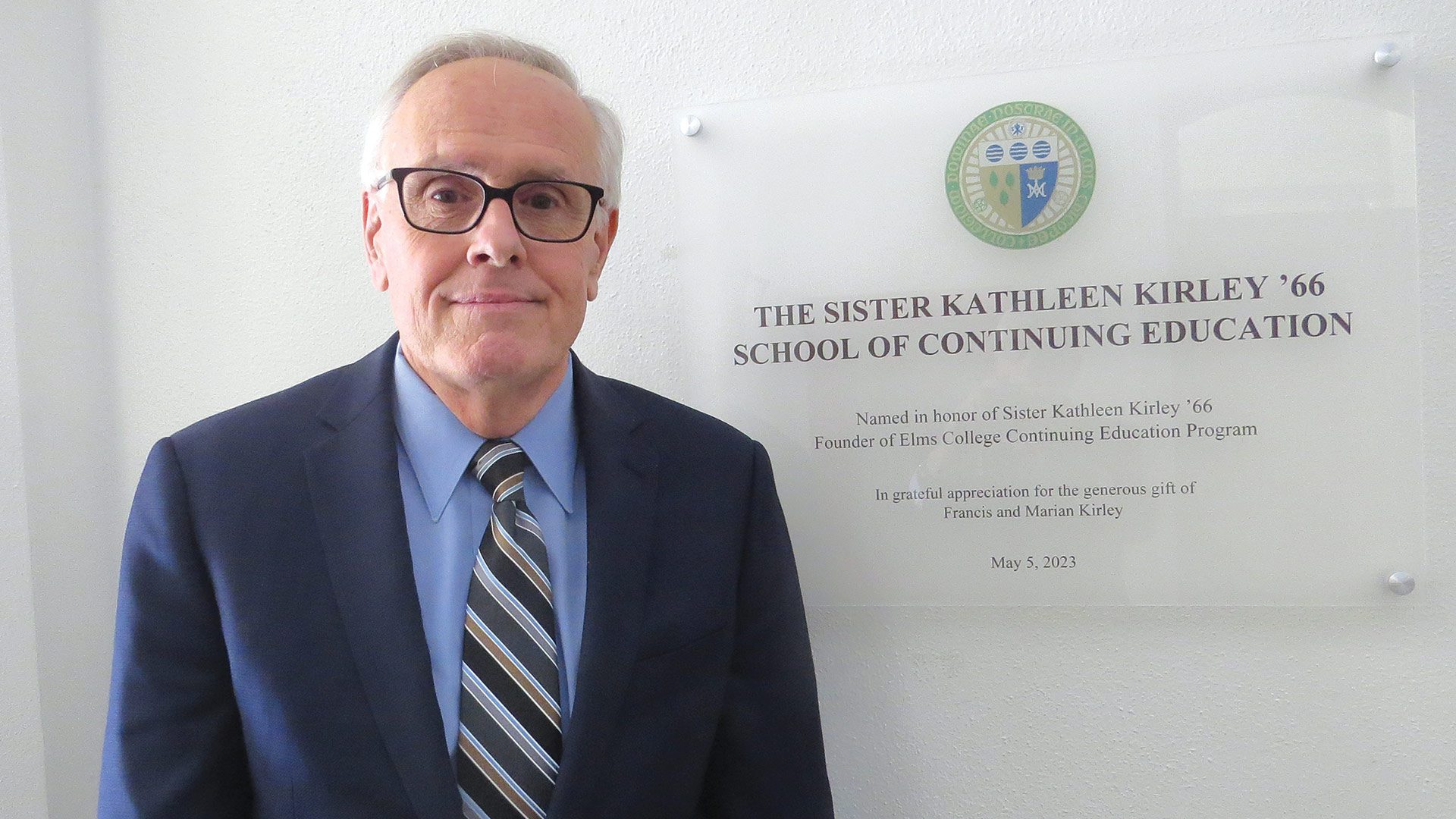
He said similar efforts to revitalize town centers and downtowns are taking place in communities across the country, and those on the committee are looking at what communities of similar size and demographics are undertaking to do some benchmarking and adopt best practices.

“The ultimate goal of the Economic Development Committee is to be a liaison for businesses locating in Wilbraham,” Smith explained. “We want to help out and be a liaison between the municipality, the permitting authorities, and the actual businesses, with the ultimate goal of getting that message across that we are open for business.”
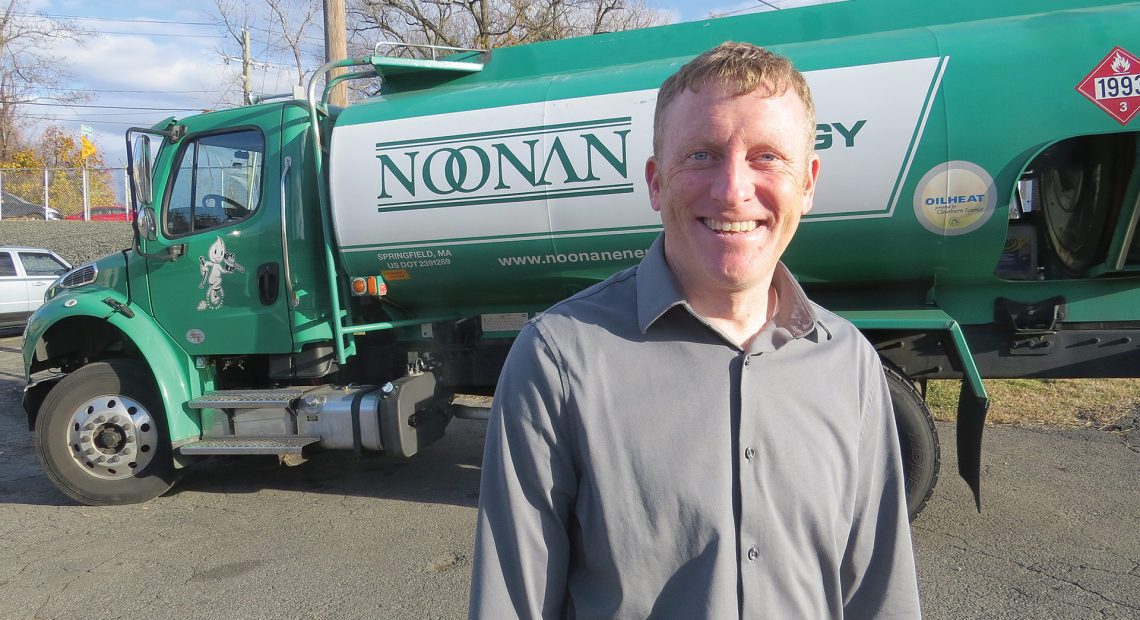
 

Cybersecurity

Strengthening the Lines of Defense

Peter Sherlock says the numbers certainly help tell the story.

There are roughly 26,000 employed in Massachusetts today in what would be called the cybersecurity sector. And there were, at the precise moment we talked with him, exactly 18,263 openings in that realm, a number that goes up seemingly every day.

That means this sector has about two-thirds the number of qualified individuals it needs, said Sherlock, adding that the dire need to close that gap was one of the motivations behind the creation of CyberTrust Massachusetts, which he now serves as CEO.

Another motivation was to make the state’s businesses, institutions, and municipalities more cyber-secure at a time when the number of victims of cyber and ransomware attacks — like the number of job openings in this sector — keeps going up.

Peter Sherlock

Peter Sherlock

“As we put these students into these SOCs, they’re going to be working under the supervision of cyber professionals. We’re going to put them to work making cities and towns more cybersecure.”
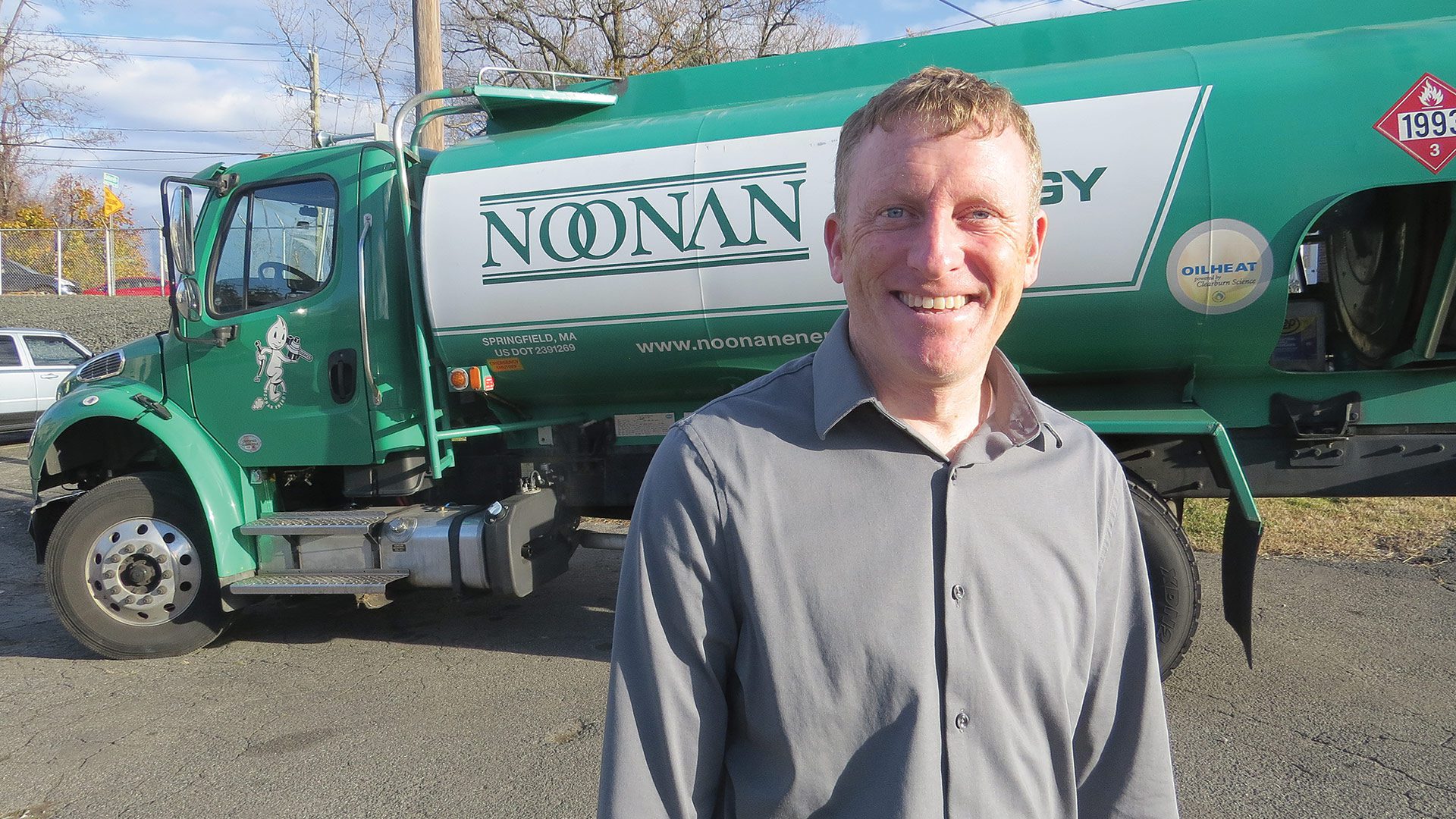
How CyberTrust is going about these assignments, which overlap in many different ways, as we’ll see, will be among the focal points of Sherlock’s presentation at the 11th annual Cybersecurity Summit at Bay Path University, set for Friday, Oct. 13 at the Mills Theatre in Carr Hall on the school’s Longmeadow campus.

Registration for the event, which has been drawing steadily larger audiences because of the importance of the subject matter, is required. Individuals can register at baypath.edu/summit, and attend either in-person or remotely.

The working title for the program is “Who’s Next? How a Stronger Cyber Ecosystem is the First Line of Defense.” And Sherlock told BusinessWest that there are many elements that comprise this ecosystem, including the business sector, government, and education (the state’s colleges and universities, and even its high schools and middle schools). Together, they work on those twin assignments of building the workforce and making entities more cyber-secure.

At the forefront of these efforts is CyberTrust Massachusetts, a nonprofit committed to building both opportunity and security through a consortium of statewide businesses and colleges.

“CyberTrust arose out of a long-running dialogue among business and academic leaders, with some folks in government; these were discussions centered around workforce,” he said, adding that he understands first-hand the challenges of hiring — and retaining — within this sector.

Indeed, he previously served as chief operating officer of MITRE, as well as senior vice president responsible for MITRE’s defense and intelligence business.

“In my roles there, I had to worry about our annual hiring programs; trying to hire 1,000 STEM professionals every year was quite a challenge, as was retaining them,” he explained. “I would talk a lot with other executives in the Massachusetts area about the challenges of growing the pipelines in some of these technologies to keep up with the demand.

“And as the pandemic disrupted the workforce a bit more, those problems have become even more urgent,” he went on, adding that this urgency helped bring business and education together in the CyberTrust Massachusetts consortium to “move the needle,” as Sherlock put it, on not only these workforce issues, but the growing threat — in the form of cyber and ransomware attacks — to businesses of all sizes, nonprofits, institutions, and municipalities.

In his presentation at the Cybersecurity Summit, which will followed by what is expected to be a robust question-and-answer period, Sherlock said he will address a number of issues and initiatives, including the workforce challenges, efforts to activate new pathways for the talent pipeline in order to both grow and diversify and workforce, and cybersecurity approaches for municipalities across the Commonwealth.

While doing so, he will discuss how these problems intersect, and also about efforts to address them jointly, such as the security operation center, or SOC (pronounced ‘sock’ by those within this sector) that is taking shape at Springfield’s Union Station. This SOC, to be established by Springfield Technical Community College, will provide threat monitoring and other cybersecurity services for the state’s municipalities, small businesses, and nonprofits, while also creating learning opportunities for those in or seeking to join this sector at a ‘cyber range,’ a new testing lab that will mirror real-world IT environments to provide hands-on training opportunities to local companies, universities, and other cyber-focused organizations.

“We need to introduce new people to the cyber career field, whether it’s recruiting them from high school or getting adult career changers, and making non-cyber majors credentialed in cyber.”

“While focusing on workforce, we decided we could be serving another purpose at the same time,” he explained. “As we’re training our cyber learners with hands-on experiences, we could actually put them to work securing cities and towns, nonprofits, and small businesses. We put together this rather ambitious plan to set up security operations centers at a number of universities across the Commonwealth and to infuse new cyber-range technology into these colleges and universities and enlist cyber employers from across the state into this activity.

“As we put these students into these SOCs, they’re going to be working under the supervision of cyber professionals,” he went on. “We’re going to put them to work making cities and towns more cybersecure.”

Overall, Sherlock said the workforce issue requires creative, outside-the-box thinking and efforts to encourage individuals to consider this field while they are still in high school or even middle school.

“We need to introduce new people to the cyber career field, whether it’s recruiting them from high school or getting adult career changers, and making non-cyber majors credentialed in cyber,” he said. “There are a lot of different ways to get people into the field that we weren’t working at too much.”

Sherlock said he would go into much more detail at the summit, which grew out of the growing importance of cybersecurity in today’s society, the emergence of that sector, and the need to keep businesses and the community at large informed when it comes to new trends, new initiatives — and new threats, said Tom Loper, associate provost and dean in the School of Management and Technology at Bay Path.

Loper said he hopes, and expects, this year’s summit to be well-attended because of its focus on businesses and municipalities, the efforts to keep them safe from cyberattacks, and the role that they play within the emerging cyber ecosystem.


Cover Story Education

Change of Course

STCC students Sarai Andrades, left, and Destiny Santos

Sarai Andrades is a second-year student at Springfield Technical Community College (STCC). She’s enrolled in the health sciences program, with the goal of starting work toward a nursing degree in 2024. Her ultimate ambition is to become a travel nurse.

To pay for her first year at STCC, she had to take on $5,000 in loans because she and her husband were earning too much to qualify for financial aid. But this year, she’s going for free, essentially, because of the MassReconnect program, which enables individuals 25 and over (she’s 49) to attend one of the state’s 15 community colleges without the burden of having to pay tuition — or even for books.

For Andrades, relief from the burden of debt is, in a word, “huge.”

Indeed, she eventually decided to resign from her job so she could attend school full-time, and the debt she took on for that first year was certainly burdensome.

“Not to take out a loan, not to be in debt when there’s only one income in my family, is a big relief for us,” she said. “Before, there was worry — this is a two-year program, and to become a full-time college student with only my husband working was going to be tough. I’m ecstatic that they’re doing this for us.”

With that, she spoke for hundreds of others in similar situations — and for administrators at the area’s community colleges, who have seen dramatic, and much-needed, increases in enrollment and vibrancy on their campuses this fall, and can attribute those increases, at least in part, to the MassReconnect program.

Jim Cook

John Cook

“When you reduce this cost barrier all the way, people can now find the time and space in their lives to actually imagine themselves back here.”

“When you reduce this cost barrier all the way, people can now find the time and space in their lives to actually imagine themselves back here,” said John Cook, president of STCC, noting that the school has seen its first increase in year-over-year enrollment in more than a decade. “People really do want to make a difference for themselves and their families, and this is that thing that has really grabbed their attention and carved that space back out in their lives.”

Tim Sweeney is back on the campus at Greenfield Community College roughly 20 years after he left school to start working.

Tim Sweeney is back on the campus at Greenfield Community College roughly 20 years after he left school to start working.

MassReconnect is a program created through legislation passed earlier this year, modeled on similar, and thus far successful, initiatives in other states, including Michigan and Tennessee.

For many individuals, the burden of tuition expenses and debt has kept them from attending school or forced them to the sidelines before they could complete a degree or certificate program, said Mark Hudgik, interim dean of Recruitment, Admissions, and Financial Aid at Holyoke Community College.

“We’re definitely seeing an increase in adult students applying and enrolling who had no college before, and we think that’s a direct impact of MassReconnect,” he said. “We also see a fair number who are coming back after a break.”

Linda Desjardins, director of Student Financial Services at Greenfield Community College, agreed.

“For some, coming up with a few thousand dollars for tuition and fees, plus another couple hundred for books, was making it difficult just to get here and get through the door,” she said. “This has just really opened up a new world for these students and new opportunities, which is great for the college and great for our student body because now we all have these diverse and enriching experiences coming into the classroom and on campus.

“And to see the amount of stress that just melts away from a student who was really worried about the cost — they’re thinking, ‘I know I want to come, I’m driven to do this, I want to change my life, but I’m going to have to give up groceries to pay for my books’ — it’s really encouraging,” she went on. “Now they don’t have to do that; they can concentrate on the work at hand in the classroom.”

For this issue and its focus on education, BusinessWest takes an early look at MassReconnect and the many ways it is changing the paradigm at area community colleges. Spoiler alert: you’ll read ‘it’s huge’ more than a few times.


Class Act

Tim Sweeney is back at Greenfield Community College, roughly two decades after he spent parts of five years there going to school — sometimes full-time but mostly part-time — in pursuit of an associate degree in liberal arts.

“I almost finished up, but was at a point in my life where I needed to support myself financially and concentrate less on school,” the 44-year-old told BusinessWest. “I never had the inspiration or motivation to go back.”

Mark Hudgik

Mark Hudgik

“We’re definitely seeing an increase in adult students applying and enrolling who had no college before, and we think that’s a direct impact of MassReconnect. We also see a fair number who are coming back after a break.”

But through MassReconnect, he found that motivation, and he’s back on campus, taking the three courses he needs to complete that degree: “Gothic Literature,” “Interpersonal Communications,” and “American History, 1985 to the Present.”

His plan is … well, to graduate and then transfer to UMass Amherst to pursue a four-year degree. Beyond that, he doesn’t know … yet.

“I don’t have a particular direction yet,” he said, adding simply, “just forward — finally.”

Moving lives and careers forward is the basic motivation behind MassReconnect, which is designed to help people like Sweeney who had to put college aside, or who never got started in the first place, for any of several reasons, but often the cost of tuition — or even the cost of a semester or year’s worth of books.

For others, it is the apprehension of taking on debt, especially at a time in their lives when they have many other responsibilities — housing, children, and more — that keep them from taking an important step that might help them trade a job for a career.

But MassReconnect is about more than helping individuals and families cope with the cost of a community-college education, Cook said. It’s also about putting more individuals in a position where they can relieve some of the stern challenges facing employers in every sector of the economy when it comes to finding qualified talent.

And for community colleges, the program comes at a time when they are facing stern enrollment challenges that began before COVID and were exacerbated by the pandemic, to the point where, as Cook said, the schools had essentially reached bottom and “there was no place to go but up.”

It’s only been a few weeks since the start of the fall semester and the introduction of MassReconnect, but already there are signs that it is making an impact, though it will certainly take longer, at least a few years, before its influence on the workforce crisis is known.

For individuals of various ages and in various life situations, MassReconnect represents a chance to continue in school, or go back to the classroom, but without the financial burden. As DeJardins noted, the reduced stress is palpable, and is enabling individuals to focus all — or at least more — of their energy on what’s happening in the classroom.

That’s certainly the case for Destiny Santos, another student at STCC, now in her third semester, who has designs on being a nurse.

Solymar Fraticelli, left, and her mother, Nicole Rodriguez

Solymar Fraticelli, left, and her mother, Nicole Rodriguez, are both attending HCC, while Fraticelli’s daughter is attending daycare there.

“What MassReconnect has done for me is allow me to go into this semester without the financial burden,” she explained. “And now that I’m 26, I have more things to care of; this program has allowed me to go to school knowing that everything will be OK, and I’ll be able to succeed without the burden of paying a school bill.”

Similar tones were struck by Nicole Rodriguez, 43, a second-year student at HCC who wants to advance within the human-services field, and her daughter, Solymar Fraticelli, 27, who returned to the school this fall after a lengthy hiatus.

Without MassReconnect, Rodriguez said, she would be facing a bill of more than $7,000 for tuition, fees, books, and more. And the thought of taking on debt to cover that bill is intimidating.

“That’s a lot for me, and it would likely limit me as I look to further my education,” she told BusinessWest, adding that MassReconnect has enabled her to continue without the burden of debt and, in so doing, helped inspire her daughter and other adults — her sister-in-law and best friend among them — to return to school or get started.

It’s been nearly eight years since Fraticelli first took classes at HCC — she attended for roughly a semester and a half before having to put her education aside — and she now has a daughter as well. The time gap and her parental responsibilities were just two of the factors to weigh as she considered the risks and rewards of attending community college and pursue a career in the healthcare field.

MassReconnect made it that much easier to meet those challenges head-on.

“I thought it was a great opportunity to go back to school,” she said, adding that her daughter attends daycare around the corner from the campus. “It’s free, or almost free, and that makes it that much easier to go back.”

For Sweeney, who has been unemployed for more than a year now, going back to school seemed like a more fruitful course than trying to test the current job market.

“I wanted to advance myself educationally in order to advance myself in my career,” he said, adding that being able to do so without having to pay for those three courses listed above certainly factored into his decision.


Degrees of Change

Meanwhile, the college administrators we spoke with said MassReconnect is at least partially responsible for a surge in enrollment they’re seeing this fall.

Cook said current enrollment at STCC has risen to 4,500, up from 4,000 a year ago. That number is still a long way from the 5,000 recorded in the fall of 2019, the last September before COVID, and a long, long way from the high-water mark of 7,000 notched in 2012, just a few years after the Great Recession.

But it is an important step in the right direction.

“For the first time in a decade, we’ve had a meaningful increase in enrollment,” he told BusinessWest. “We’re up 13% to 14%, and there are a number of factors involved with that, including MassReconnect.”

Desjardins agreed. She said the overall student headcount is up by 8.6% over last fall, a significant boost for GCC, one of the smallest community colleges in the state.

At HCC, enrollment had declined close to 30% during COVID, Hudgik said, adding that this fall, the school has seen its first increase year-over-year since 2010, with a 5.5% increase in total students and a 14% climb in new students, numbers that can be attributed at least in part to MassReconnect.

Beyond these soaring enrollment numbers, though, college administrators are buoyed by the stories behind the numbers — individuals who are returning to community colleges, or finding them for the first time years, and in some cases decades, after they graduated from high school.

And they’re attending school without having to borrow money, which removes a financial burden that weighs on individuals while they’re working toward a degree or certificate program.

Desjardins noted that the amount of grant aid Massachusetts residents is receiving has increased by 32% at GCC over last year, which represents more than $243,000. Meanwhile, the amount borrowed has dropped by 35%, or $123,000.

“Applications for federal financial aid have gone up by 16%,” she noted. “It could be for various reasons, but with all the attention that MassReconnect is getting — and the word is spreading — it’s safe to assume that MassReconnect is a good generator of that increase in financial-aid application.”

Like others, she is encouraged by the manner in which the program has enabled many who were not eligible for financial aid because they exceeded wage limitations to now attend community college without the burden of paying for it directly or taking out loans to be paid back over several years.

“The thing that’s most remarkable to me, in my position, is how low- to middle-income wage earners who have been left out of receiving free dollars for college, like grants and scholarship dollars, are now eligible to get this money to attend college,” Desjardins said. “If you were someone who was 25, single, with no children, and you made a little over $30,000 … before MassReconnect, you may have been eligible for just a few hundred dollars for the entire school year; now, you’re eligible for enough free money to pay for your tuition and fees, plus give you something toward the cost of books and course materials. That’s huge. Someone who is a low- to middle-wage earner is struggling already to pay their rent, their mortgage, childcare, groceries, gas, and more.”

Hudgik agreed. “Loans are scary,” he said. “MassReconnect allows them to not have to worry about the income threshold; they know the Commonwealth will support them and minimize the amount of loan they have to take out, and bring it to zero if they want.”
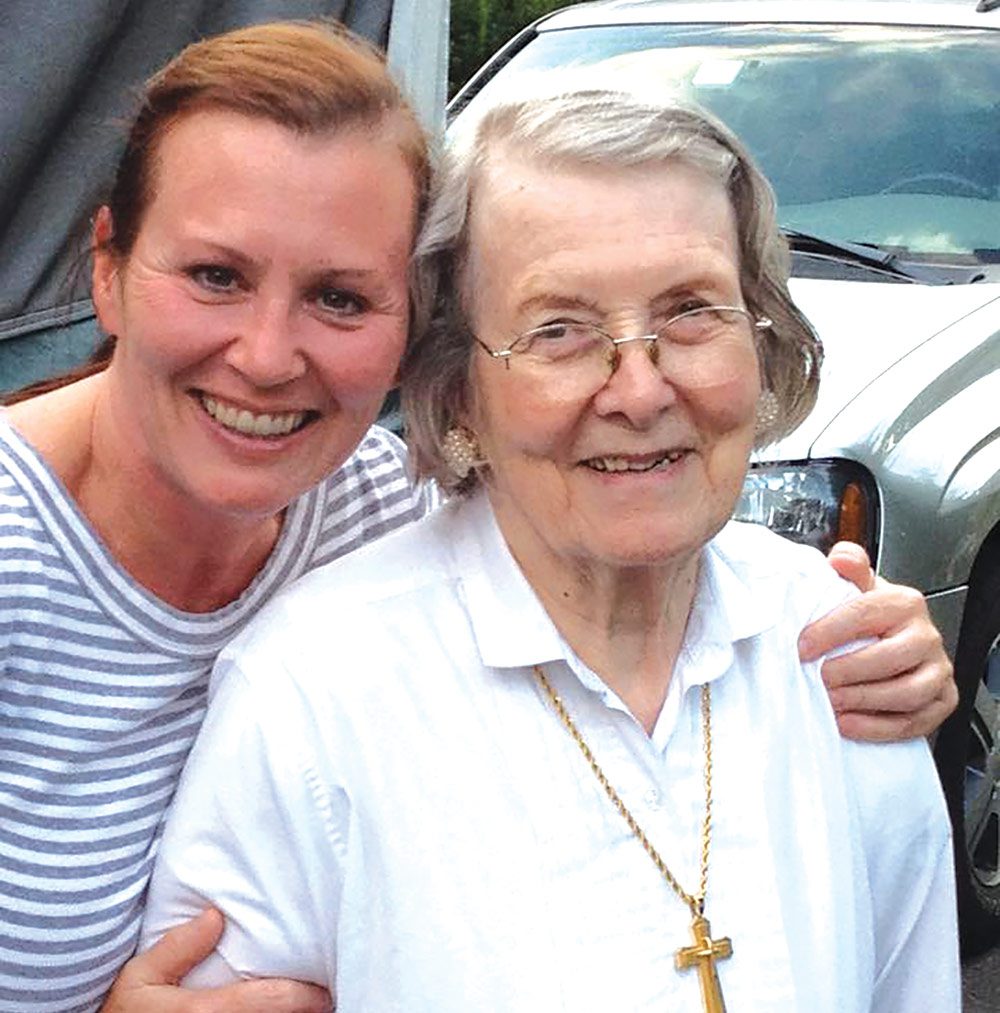
And while community college is essentially free for these individuals, the administrators we spoke with said this hasn’t diminished the value of the education their schools provide or lessened the degree of grit and determination behind the decisions to go back to school or attend for the first time.

“What we know to be true about our adult students is that, when they make the decision to come, it is usually with a lot of thought behind it,” Hudgik said. “It’s a fairly big risk for someone who has been out of school for a while to try to restart their school-going mentality. If they’ve decided to come, they’ve usually been pretty serious about it.”


Bottom Line

When asked what it was like to be back on the GCC campus 20 years after he last attended a class there, Sweeney said it was strange on some levels, and there was a period of adjustment, but, overall, he’s comfortable — with both his decision and with being back at school.

“I feel like I’m a different person than I was,” he said, adding that he realizes the importance of a college degree to advancing himself professionally, and just needed some motivation to take this big step.

This is what MassReconnect is all about, and while it will take some time to effectively quantify its impact on many different levels, at the moment, to those surveying the scene, it is a qualified success.

Features Special Coverage

Fried and True

Peter Picknelly, left, and Edison Yee

Peter Picknelly, left, and Edison Yee, two of the many partners involved with the White Hut location in Holyoke.

When asked about where they might take the White Hut brand — and when, both Edison Yee and Peter Picknelly took long pauses and then looked at each other as if to say, ‘you first.’

They did so to indicate a few things — first, that they’ve obviously been thinking long and hard about that question, and second … they don’t really know the answer yet.

What they do know is that they will bring the concept beyond Memorial Avenue in West Springfield, the location that was rescued in 2020 by Picknelly, chairman of Peter Pan Bus Lines; Andy Yee, Edison’s brother; and others within the Bean Restaurant Group after founding owners the Barkett family announced it would close. And also beyond 825 Hampden St. in Holyoke, the location — a renovated former PeoplesBank branch — that opened last month.

“Our goal is to build a microbrand from this White Hut concept,” he said, using that term to describe brands with up to 10 locations, adding that locations are being scouted in Westfield and other communities, and if all goes well in Holyoke, there could easily be another location within a year.

Picknelly concurred. “We believe the White Hut is a brand that’s scalable; we’ve had overwhelming success in West Springfield — our customer count continues to grow there — and we think Holyoke is a great location,” he said. “This a solid brand, and we want to expand it out strategically.”

But both said that, at the moment, they and several co-owners in the Paper City venture, including Holyoke natives Jack Ferriter and Mark Cutting, are hard-focused on that location, the success of which might go a long way toward determining where and when this iconic (yes, that word fits here) brand and its red-and-white color scheme might next be seen.

Nathan Yee, director of Hospitality for the Bean Restaurant Group and part of the proverbial next generation of leadership at the company, believes it will do quite well.

“Our goal is to build a microbrand from this White Hut concept.”

Those involved spent considerable time scouting locations, he said, and eventually zeroed in on the Hampden Street location, which lies on a well-traveled road just a few hundred yards from an I-91 exit.

Beyond location, this site offers … well, everything that has made the White Hut brand iconic — its famous hamburgers, hot dogs, fried onions, shakes, and more — as well as new additions, including a salute to Holyoke: a breakfast sandwich called the Paper City Special, containing a scrambled egg with sausage, hash brown, American cheese, and fried onions on a Venetian water roll.

There are other new wrinkles as well, including a self-ordering kiosk for those who prefer that option, as well as a pickup option by which employees bring the customer’s order directly to their car.

Nick Yee cuts a ceremonial ribbon

Nick Yee cuts a ceremonial ribbon of hot dogs at the grand opening of the Holyoke White Hut last month.

In short, the ownership group is taking a brand that has a storied past and a rich history and bringing it into the future — changing what should be changed, and not changing anything that shouldn’t be changed, like those fried onions.

For this issue, BusinessWest takes an in-depth look at the institution that is the White Hut, the long-planned move into Holyoke, and those still-evolving plans to bring the brand elsewhere within the 413 — and likely beyond.


Relishing the Possibilities

As he talked with BusinessWest in mid-September, Edison Yee had a lot on his plate — and yes, that’s an industry term, sort of.

The Big E was going to start in a few days, and Yee and many others at the Bean Restaurant Group had considerable prep work to do get ready; the group has several locations at the fair, including the White Hut, the Wurst House, and a new addition to the portfolio, a ‘Harpoon Beer hut.’

“We sell a lot of food and lot of beer,” he said, adding that the company probably has 100 or more seasonal employees working at the fair, which has been an ever-increasing part of the business plan for the group since it first started taking part eight years ago.

Meanwhile, Oktoberfest, a huge, nearly month-long celebration at the Student Prince, is coming up fast (Oct. 8 is the official start date), and Yee was deep into the planning stages for that annual happening. And then, there’s ongoing planning and the start of work at the restaurant that will become a linchpin of the redevelopment of the Court Square Hotel on Elm Street in Springfield, another collaboration between Picknelly and the Bean Group.

But on this day, and the days before, the main focus was on the Holyoke White Hut location and making sure everything was in order for the grand opening coming up the next morning. This was an event that was maybe two years in the making, said Yee and Picknelly, noting that, not long after the West Springfield location had been saved and was successfully navigating its way through COVID, talk began to turn to where this iconic brand might go next.

And it wasn’t long at all before the focus turned to the Paper City.

But before we explore this move to Holyoke, we need some background, and some perspective on both the brand and the location in West Springfield, which, to many, has achieved landmark status, figuratively if not literally.

Our story begins in 1939, when Edward Barkett opened a small restaurant on Memorial Avenue and decided to call it the White Hut because that was the principal color.

Suceeding generations of the Barkett family owned and operated the restaurant and eventually took the brand beyond West Springfield — to Amherst, in a venture that met with only limited success, in part, Picknelly believes, because the location was not highly visible.

And while the brand is famous for the loyalty exhibited by its regulars, location and visibility are keys to the success of any restaurant, he went on.

Fast-forwarding a little, E.J. Barkett (Edward’s grandson) announced rather abruptly in 2020 that White Hut would close its doors. Picknelly and Andy Yee, both to be counted as Hut regulars, as well as serial entrepreneurs and part of the group that rescued the Student Prince restaurant in 2015 when its closure seemed imminent, stepped into the breach and saved the White Hut.

And they did so under extreme circumstances. Indeed, that rescue came at the height of COVID, when that restaurant, like all others, had to find ways to do business while also keeping people safe. It already had effective takeout service, said Picknelly, adding that this quality was one of many that enabled it to persevere during those trying times.

Another quality, obviously, was the food itself, he said, adding that another ingredient in the recipe for success was simply not to change much of anything that had made the Hut such a fan favorite.

Such diligence has been rewarded with rankings on a number of ‘best burger’ lists. In 2021, for example, White Hut’s cheeseburger with grilled onions was named the best burger in Massachusetts by Thrillist, and it has been ranked among the best burgers in the country. The Hut was profiled in USA Today in 2019, which said everything about the brand is “frozen in time,” and it’s been included by the Wall Street Journal in its “Essential Guide to America’s Best Burgers.”

That success begs the obvious question — where can this brand go? That query refers to everything from geography to the size of what would have to be called an emerging chain.


A Side of Entrepreneurship

The answer to that question begins in the Paper City and the opening of the Hampden Street location, which provides evidence that everything is no longer entirely frozen in time, as we’ll see.

“Holyoke has been on the radar for our group for a long time now,” Edison Yee said, adding that several potential sites were considered before the Hampden Street location, one strongly favored by his brother, Nick Yee, the group’s principal managing partner, became the focus of attention.

the latest White Hut location in Holyoke

From left, Bryan Graham (culinary director and partner), Nick Yee, Peter Picknelly, Edison Yee, and Nate Yee stand in front of the latest White Hut location in Holyoke.

“The traffic counts are great,” he said. “And, growing up in South Hadley, we knew that this was the main street to get onto I-91; you have all the traffic that comes from South Hadley, Granby, parts of Chicopee, and, of course, Holyoke, that are filtering through this road.”

Picknelly agreed, and noted that the traffic count is actually higher on Hampden Street than it is on Memorial Avenue in West Springfield.

Beyond steady traffic, the location provides more convenience to those who travel down I-91, Route 5, or other roads to get to the West Springfield location (and there are many in that category) while also introducing the brand to new audiences.

“We think Holyoke is a great location,” Picknelly said. “Our brand is still strong here, yet it’s far enough away that we won’t be competing against ourselves, and our customers from Holyoke, Northampton, and Granby won’t have to travel as far — that’s the essence of it.”

And while the location is expected to draw people from several area communities and, its owners presume, travelers on I-91, it is a neighborhood restaurant, one that will in some respects replace another iconic eatery, Mel’s Restaurant, which closed recently, just a few hundred feet away.

The location will offer the same menu as the one in West Springfield — and essentially the same food the Hut has offered since 1939 — but with some of those new amenities, such as the self-ordering kiosk, said Nathan Yee, which will bring another layer of convenience to customers.

“With each unit, we’ve identified some of the operational areas that we can improve on, and that’s what we’ve done with this location,” he said. “We’ve added a few new features to make it more customer-friendly.”

Renovation of the former bank branch took more than a year, he noted, and an investment, beyond the purchase of the property, of more than $1 million.

And this may the first of several initiatives to bring the White Hut brand to different cities, towns, and markets, said Picknelly and Edison Yee, noting, again, that Holyoke will be a barometer of sorts for how well the brand may ultimately travel.

“Our ultimate goal is to expand the brand,” Yee said. “This is a great test for us, being in Holyoke, and we feel strongly that, if we can get this unit to operate similarly to West Springfield in terms of metrics, we’re eager to look for another spot.”

Picknelly agreed, noting that expansion, either through owner-operated locations, such as those in Holyoke and West Springfield, or perhaps franchising, is likely if not inevitable.

“There are restaurant groups in Connecticut that have contacted us and want to franchise,” he said. “We want to expand this on our own first; we think it’s really scalable — this is our first venture to do that. Once this gets up and running, I think you’ll see the White Hut brand all over the Northeast.”

“Our ultimate goal is to expand the brand. This is a great test for us, being in Holyoke, and we feel strongly that, if we can get this unit to operate similarly to West Springfield in terms of metrics, we’re eager to look for another spot.”

Elaborating, he said could envision scenarios where there are both owner-operated locations and franchises, and there are plenty of successful models of such operations, including national brands such as KFC, Burger King, and others.


Food for Thought

Summing up the current state of this brand, Picknelly said it’s “one that the Barkett family built and the Yee family made better.”

Where can it go beyond West Springfield and Holyoke? Only time will tell, but it’s safe to assume that expansion will continue across Western Mass. and perhaps beyond. A brand that’s been called ‘simple,’ ‘tried and true,’ and, yes, ‘frozen in time’ will continue to be all those things.

But time certainly won’t stand still for the White Hut and its owners.

Community Spotlight

Community Spotlight

A.J. Crane

A.J. Crane acquired the ‘carpentry’ building at Ludlow Mills with the goal of having it redeveloped, with a restaurant being the preferred use.
Staff Photo


As he led BusinessWest on a tour of what’s known as the ‘carpentry building’ at the Ludlow Mills complex, A.J. Crane walked up a deteriorated but still solid set of stairs to the second floor, and then to the row of new windows looking out on the Chicopee River, maybe 150 feet away, the riverwalk in front of it, and a stretch of land before the walk on which a patio could be built.

“Imagine the possibilities,” he said, adding that he certainly has, and that’s why he acquired the property from Westmass Area Development Corp., which purchased the mill in 2011, with the intention of renovating it and then leasing it out, perhaps to a restaurateur — the master plan for the mill complex calls for one at this location — although he doesn’t really know what the market will bear at this point.

What Crane, president of Chicopee-based A. Crane Construction Co. (and a Westmass board member) does know is that nothing can be built that close to the river today. Well, almost nothing; this property is grandfathered, so it can be developed. And that’s a big reason why he took on this risk — the property has been vacant for decades and needs a considerable amount of work for any reuse — and has invested heavily in its renovation.

But there’s another reason as well.

“I just wanted to be a part of this,” he said, waving his hand in a sweeping motion to encompass the sprawling mill in front of him.

‘This’ is the transformation of the mill complex, once home to a jute-manufacturing facility that employed thousands and played a huge role in the town’s development, into, well, a community within a community, one that is already home to residents and businesses of various kinds, and, perhaps someday, in the former carpentry shop, a restaurant.

This transformation is an ongoing process, one that was projected to take 20 years when Westmass acquired the property 12 years ago, and may take another 20 still, said Jeff Daley, president and CEO of Westmass, noting, as Crane did, that the pieces to the puzzle are coming together.

And as Daley and Jeff LeSiege, vice president of Facilities and Construction at Westmass, conducted a walking tour, they pointed to several of these pieces — from the ongoing renovation of the landmark ‘clocktower building’ (Building 8) into 95 apartments to the construction of two new parking lots; from extensive water, sewer, and electrical work to new businesses such as Movement Terrain, which boasts an obstacle course and an Astroturf arena (more on all this later).

Jeff LeSiege, left, and Jeff Daley

Jeff LeSiege, left, and Jeff Daley stop by one of two large parking lots being created at Ludlow Mills.

Then there’s the clocktower itself, which is slated for renovation, said Daley, adding that he’s not sure when the last time the clock — which is on the town seal and the masthead of the local newspaper — worked, but “it’s been a very long time.”

Transformation of the mill, which has been well-chronicled by BusinessWest over the past dozen years, is the story in Ludlow. But not the only story.

Another is a possible charter change making the community a city and changing its form of government from the present Board of Selectmen to one of several options, including a town manager/Town Council format, a mayor/City Council alignment, or perhaps a mayor/manager/council arrangement.

“I do know there is a great shortage of available land and available buildings at this time, and I think we’re going to have some good interest in the property.”

The town has hired the Edward J. Collins Center for Public Management to guide it through this process, said Town Administrator Marc Strange, adding that a charter-review committee will gather in the coming weeks and meet consistently for roughly a year, with a charter to be presented to town-meeting voters in October 2024, with a new form of government possible by the middle of 2025.

Meanwhile, there are some infrastructure projects moving forward, especially an ambitious streetscape-improvement plan for the East Street corridor, which leads into Ludlow Mills.

For this, the latest installment of its Community Spotlight series, BusinessWest takes an in-depth look at Ludlow and its many developing stories.


No Run-of-the-mill Project

Hanging on a wall on the ground floor of Ludlow’s Town Hall is a large aerial photograph of the section of town beside the Chicopee River, circa the 1920s.

Glancing at the image, the enormity of the mill complex — then even larger than it is today — comes clearly into focus, literally and figuratively.

The mills were, the many respects, the heartbeat of the community and an economic force, a supplier of jobs and vibrancy. And over the past several years, they have become that again, with new developments seemingly every year.

The latest, and most visible, of the latest developments is the ongoing renovation of the L-shaped clocktower building, including replacement of the hundreds of large windows that provided needed light for the mill workers.

Town Administrator Marc Strange

Town Administrator Marc Strange says a change of government is needed in Ludlow.

The upper floors will be converted into nearly 100 apartments on the upper floors, with 48,000 square feet of space on the ground floor set aside for commercial development, Daley said, noting that this commercial space, to be built out to suit the needs of tenants, would be appropriate for a number of uses, including as home to support businesses for the growing number of people living in the mill as well as the surrounding area.

The apartments will be available for lease next July, he added, noting that there should be considerable demand for the units given both a regionwide housing crunch and a six-year waiting list for units in nearby Building 10, the first of the mill buildings to be redeveloped into housing.

Other developments at the mills include $2.1 million to replace water and sewer piping to connect to the two dozen old stockhouses on the property, all of which are sporting new roofs, he said, as well as construction of two new, and sorely needed, parking lots.

One of these lots, with 150 spaces, is nearing completion, with landscaping and other finishing touches to be completed, while the other, located across Riverside Drive from the carpentry building and expected to feature another 75 spaces, is in the early stages of construction.

Ludlow at a glance

Year Incorporated: 1774
Population: 21,002
Area: 28.2 square miles
County: Hampden
Residential Tax Rate: $19.51
Commercial Tax Rate: $19.51
Median Household Income: $53,244
Median Family Income: $67,797
Type of Government: Town Council, Representative Town Meeting
Largest Employers: Hampden County Jail and House of Correction; Encompass Rehabilitation Hospital; Massachusetts Air National Guard; Kleeberg Sheet Metal Inc.
*Latest information available

“These parking facilities are for tenants and visitors alike,” Daley said, adding that parking is a critical need as more of the spaces within the complex are developed.

Meanwhile, work continues on the carpentry building, a 13,200-square-foot brick structure between Riverside Drive and the Chicopee River. Crane told BusinessWest it had probably been on the market for 20 years, and really came onto his radar screen four years ago.

He described it as a solid investment opportunity — albeit one requiring a large investment on his part — but also a chance, as he said, to be part of the larger story of the mill’s transformation into a community, and a destination.

“I couldn’t afford any of the larger buildings, so I bought a smaller building that I thought could be an important part of what we’re doing here,” he said. “It’s exciting to be part of this.”

Every day, he said, dozens of walkers, joggers, and runners on the riverwalk will stop and ask him about the building’s next life. He tells them he’s not sure, but he’s anxious to find out.

Crane said he has replaced the roof and is currently putting new windows in. When that work is completed, he will begin entertaining options to lease the property, with a restaurant certainly among those options.

“I’m open to … whatever,” he told BusinessWest. “I bought the building knowing you could never build that building again so close to the water.”

There are many spaces still to be developed, Daley said, including the massive (500,000 square feet) Mill 11, the largest building on the property, as well as the greenspace at the eastern end of the property given the informal name ‘the back 40’ (acres) and the formal name Millside Commercial Park. A MassWorks grant has been received to build a road and cul-de-sac through that property, and the project recently went to bid.

“That will open that back acreage for development, and we’re excited that this is moving forward as well,” he said, adding that he expects the road to be ready by June of next year.

Officially, there will be roughly 38 acres of land available to sell or lease, he went on, adding that there should be considerable demand.

“I think that, once it gets out on the street to bid, we’re going to get a lot of inquiries,” he said, noting that there will six different lots of varying sizes, including one large lot that can accommodate a 250,000-square-foot building. “I do know there is a great shortage of available land and available buildings at this time, and I think we’re going to have some good interest in the property.”

As for the preferred uses, Daley said manufacturing is at the top of that list due to the job-creation potential, but the market will ultimately determine what happens with that acreage.

“We’re focused on maximizing our downtown area, through development, through infrastructure improvements, through aesthetic improvements — however we can do it.”

“We’re certainly going to work to make sure it’s a good fit, not only to the mills, but to Ludlow,” he told BusinessWest. “We’re not just going to take anyone willing to buy it; it’s got to be a business development that fits the makeup of what we’re trying to accomplish at the mills.”


Progress Report

Strange came to Ludlow as town administrator in the spring of 2022, marking a course change for the former director of Planning and Development for Agawam and selectman in Longmeadow.

He told BusinessWest that he saw the position in Ludlow as an opportunity to take a leadership position in a community and use his various skill sets to effect change in this community of roughly 21,000 people.

“I love municipal government,” he said. “I know it sounds cliché, but it gives you a chance to impact people’s lives every day in a way that you can’t at the state level or the federal level. I just fell in love with that.

“I started thinking about opportunities to become a town manager or town administrator,” he went on, adding that he was a finalist for the same position in East Longmeadow when he was chosen as a finalist in Ludlow, and ultimately chose the latter.

“Ludow is a great fit for my personality and a great opportunity for growth, both for me and the town,” he went on, acknowledging that these are certainly intriguing times for the community, especially when it comes to a potential, and likely, change in the charter, something he believes is necessary, as well as the Ludlow Mills project and the many developments there.

“A change in government is much needed,” he said. “We’re no longer a town; we’re a 21,000-person city.”

And a growing one, he noted, adding that the mill project will continue to bring more new businesses and residents to the city, and vibrancy to that section in particular.

With that in mind, the town is blueprinting extensive infrastructure improvements to the East Street corridor, from the mills to Ludlow Country Club, Strange noted, and expanding its District Improvement Financing area, which is currently just the footprint of the mills, to East Street.

Conceptual plans are being prepared for the East Street area, he said, noting that one calls for a “modern, loud-colored concept,” one has a “more urban feel,” while another has more green infrastructure, with planters and a “more earthy feel.”

The various options will be presented to the Board of Selectmen, who will make the final decision, he said.

Overall, Ludlow is largely built out, with the notable exception of the mill complex, Strange said, adding that, moving forward, considerable energy is focused on improving what would be considered the downtown area — that section just over the Route 21 bridge connecting Ludlow with Indian Orchard — so it may better serve the growing number of residents in that area, and also perhaps serve as a destination.

“We’re focused on maximizing our downtown area, through development, through infrastructure improvements, through aesthetic improvements — however we can do it,” he said. “We do have a budding, or increasing, population of residents down at the mills; they have their condos and the riverwalk, but what kind of other amenities can we provide for them? That’s our focus and our goal right now.”


Bottom Line

As Daley noted, the clock in the famed tower hasn’t worked in a very long time.

Getting those hands to move again is one of many intriguing developments in this community, one, in many respects, whose time has come.

Features

Courses of Action


This is the third article in a monthly series examining how area colleges and universities are partnering with local businesses, workforce-development bodies, and other organizations to address professional-development needs in the region. One college will be featured each month.

Jeff Hayden

Jeff Hayden says professional-development initiatives have become an important part of the mission at HCC.

Communication. Teamwork. Networking. Listening.

Jeff Hayden acknowledged that, to many, these sound like buzzwords in discussions about the workplace and how to succeed within it — or about how companies can become more productive and achieve continuous improvement.

But in reality, these are just some the skills that individuals must possess if they want to thrive in their chosen career and move up the ladder within it. And they are the qualities that businesses large and small must stress if they want to prosper in an increasingly global, intensely competitive business climate — and if they want to successfully compete for talent and retain it.

And these are just some of the skill sets — some broad, some very specific — that help define a full roster of professional-development programs at Holyoke Community College (HCC), which Hayden serves as vice president of Business and Community Services.

“Those words, like teamwork and communication, feel like buzzwords, but in reality, those are the places where employee satisfaction and productivity find their nexus,” he said. “It’s really a unique spot where one can see the gain for the company, but also the gain for themselves.”

These touchpoints run through the portfolio of programs at HCC, the Commonwealth’s oldest community college, which include everything from a non-credit “Introduction to Bookkeeping” course to a women’s leadership lunch series; from certificate programs in residential interior design and medical interpreting to two new HR workshops on “Leveraging Assessments with the New World of Work” (more on these later).

In each case, the motivation is the same, Hayden said — to help individuals advance and enable companies to be efficient and productive, and also recruit and retain employees when businesses in all sectors are still struggling to do so.

“We put an emphasis on trying to find those occupational skills that managers, business owners, and professionals need to successfully grow their company, grow their employees, increase productivity, or increase employee satisfaction.”

“We take a broad approach to professional development at HCC,” he explained. “We do certificate and training programs in management, leadership, and IT, and then we have a number of programs aimed specifically at careers, like our introduction to bookkeeping or, in the IT field, an introduction to networks.

“We have a certificate in business communication, which is online, and also one in innovation and critical thinking,” he went on. “There are a number of areas, and depending on the needs and interests of the individual, we can accommodate many other things they may be looking for.”


Getting Down to Business

Hayden, who came to the college after many years working for the city of Holyoke in economic-development roles, said HCC — like all the region’s community colleges — plays a critical role in workforce development in the region. And that role extends well beyond providing the traditional two-year degree programs which, in the case of HCC, often lead to transfer to four-year programs.

Indeed, it extends to continuing education, non-credit programs, and initiatives that, as he said earlier, involve professional development for the individual and initiatives aimed at helping businesses of all sizes become more competitive and productive.

“Oftentimes, when we think of workforce training, especially at community colleges, we tend to focus on occupational skills,” he explained. “And although those are necessary, they’re often related to specific tasks. So we put an emphasis on trying to find those occupational skills that managers, business owners, and professionals need to successfully grow their company, grow their employees, increase productivity, or increase employee satisfaction.

“And in some sense, increasing productivity and increasing employee satisfaction are companions in that same effort,” he went on. “Sometimes we think of them as separate; when we think about how to make sure our employees are happy and satisfied, we go to the issue of compensation, instead of focusing on the issue of job satisfaction, having pride in one’s work, and ownership of the project or service they provide. So we try look at professional development as a way to broaden the scope or mindset of the employee and have them look at the picture in terms of just not making something or doing a service, but having that be part of their own career goals and pathway.”

With these goals in mind, the college has offered a women’s leadership lunch series featuring area women business leaders talking about their success formulas, Hayden said, adding that this series, staged over six lunches, will likely return in the spring of 2024.

Overall, the college is continuously monitoring the business community and the workplace, he explained, with an eye toward creating programs to address emerging needs and challenges.

Such is the case with the new HR workshops on assessments, which will be led by Lynn Turner, president of CORE XP Business Solutions Inc.

“These are designed to help organizations understand how to leverage assessments within the future of work — how to assess and evaluate employees in a way that increases productivity and increases teamwork, communication, and employee satisfaction,” Hayden said, noting that there will be two workshops, with participants having the option of signing up for one or both. They are designed for entrepreneurs, HR personnel, and managers at small companies that don’t have their own HR departments,

The first will focus on the changing dynamics of the future of work, understanding the value of assessments within a talent strategy, and gaining exposure to different assessment tools. The second will focus on best practices for assessment implementation, leveraging assessments for talent acquisition and development, driving engagement and retention through assessments, and creating a customized roadmap for leveraging assessments.

Overall, the professional-development programs at HCC are blueprinted to assist individuals as they look to enter or advance within the workforce, but also meet identified needs within the business community for specific skills, Hayden said, noting that these twin ambitions are the motivation behind such programs as a 12-hour educational cannabis core program that provides an overview of the cannabis industry in Massachusetts and is designed for individuals looking for general knowledge as they consider a career in that sector, and the non-credit “Introduction to Bookkeeping” course, the need for which has become increasingly apparent given recent trends.

“There is growing need for bookkeepers in the region, especially at smaller companies; many nonprofits, for example, are looking for people who can help on that end,” he said, adding that the program is geared toward individuals looking to enter that field, but also incumbent workers looking to acquire more skills in that realm.

There are many such programs being offered the school, he said, noting that HCC offers a number of online certificate programs, most of them focused on business management and administration, such as an offering in nonprofit management featuring a simulation component, another in business communication, and others in innovation and critical thinking, data analytics, and project management.


Work in Progress

Summing it all up, Hayden said professional development at HCC is a huge part of the school’s mission and its evolving role when it comes to both workforce development and economic development.

The portfolio of programs and initiatives is, like the business community and the workforce itself, ever-changing. But the goal remains the same: it’s about helping area employees, job seekers, business leaders, and companies get where they want to go.

Features Special Coverage

We’re All Ears

Dave Wisseman

Dave Wisseman says this year’s maze is designed to get people thinking about AI and all its implications.

“Where art and agriculture come together.”

That’s how Dave Wisseman, the soon-to-be 10th-generation owner of Warner Farm in Sunderland, described the famous corn maze that has put this operation on the map.

And he’s right. The designs that are cut by a Bobcat into the 10 acres of feed corn growing on one field at this gorgeous piece of land in the shadow of Mt. Sugarloaf certainly constitute art — whether the resulting image is of Babe Ruth, the Mona Lisa, an homage to the country’s national parks, or this year’s creation: a nod, if one can call it that, to artificial intelligence.

Or at least the discussion about AI.

But there is more coming together with agriculture than art at what has become an institution in Western Mass. and a destination that draws people from the 413 and well beyond. Indeed, there are also large doses of tourism, entertainment, innovation, inspiration, culture, and education.

And a whole lot of entrepreneurship.

They all collide at the maze, which started its annual run on Sept. 8, but has been in the planning stages for several months now, said Wisseman, who acknowledged that farms are not big on titles, but if he had one, it would be ‘business manager.’

In that role, he noted that the maze has become more than a revenue stream, although it is certainly that. It has become a huge part of the business plan at the 150-acre farm, which grows a variety of fruits and vegetables and operates CSA (community-supported agriculture) programs in Sunderland with five pick-up areas in the Greater Boston area — so much so that many other traditional fall initiatives, and the feed-corn crop itself, now take a back seat to the maze.

“For us, the corn maze is such a huge part of our business that it made sense to slow down the other things in the fall and focus on making sure the maze is the best it can be.”

“For us, the corn maze is such a huge part of our business that it made sense to slow down the other things in the fall and focus on making sure the maze is the best it can be,” he said, noting that the attraction draws more than 20,000 visitors each year, most from Hampden and Hampshire counties, but neighboring states as well. Many leaf peepers have made it part of their annual visit.

As for the images chosen each year, they are part of the evolving story of the maze, said Wisseman, noting that his father, Mike Wisseman, and local artist Will Sillin originally decided to combine talents and create what they called ‘corn art.’ The inaugural image was of the ‘Amazing Minuteman,’ as seen on the 2000 Massachusetts quarter, with subsequent designs featuring the Mona Lisa, Babe Ruth, King Tut, George Bush and John Kerry (who squared off in the presidential election of 2004), Charles Darwin, Andy Warhol’s Campbell’s soup can, and Julia Child — images seen by the world through photos taken by passing airplanes.

In 2015, Sillin essentially retired from corn art to focus on his personal artwork, and the creative development torch at what became known as Mike’s Maze was picked up by Dave Wisseman and his wife, Jess Marsh Wisseman, also an artist.

Her creations have included ‘Alice in Sunderland,’ a tribute to Alice in Wonderland; ‘Greetings from Earth,’ a celebration of the Voyager missions to explore the outer reaches of our solar system; and ‘Cornstock,’ a celebration of Woodstock a half-century after the generation-defining music event — images captured by drone and then sent to the world.

Greetings from Earth

‘Greetings from Earth’ is one the many works of art etched into cornfields at Warner Farm over the past two decades.
Photo courtesy of Mikes Maze

Getting back to this year’s theme of artificial intelligence, it exemplifies the farm’s efforts to be topical and relevant, but also go well beyond creating art in the rows of now-10-foot-high corn stalks. The larger mission is to get people to think, while also being entertained, Dave said.

Etched around the outside of the maze is the question ‘In the Age of Artificial Intelligence, What Makes Us Human?’ In the middle is the word ‘Thinking.’ The letters take on a high-tech look.

“We’re posing that question out in the maze and inviting people to answer it,” he said. “There’s a trivia game all about the different elements of artificial intelligence and robotics, and we’ll have a kids’ game, where they’ll use binary language to decode a secret message. And there will be a few stations out there where we pose some more of the deeper ethical questions about AI and ask people to consider them.

“‘Can computers think?’ That’s one of the questions we ask,” he went on, adding that the maze is designed to prompt visitors to think about technology and its place in the world.

For this issue, BusinessWest visited Warner Farm and this year’s maze to learn about how this has become much more than a place where art and agriculture come together.


Kernels of Wisdom

Tracing the history of the farm, Wisseman said it dates back to the early 1700s, when Eleaser Warner — a descendent of the family who arrived not long after the Mayflower and eventually settled in what was then called Swampfield, now Sunderland — started tilling land near what is now the center of town. (Indeed, the farm’s mailing address is South Main Street).

This is his mother’s family and and one of the founding families of Sunderland, he said, adding that, in the beginning, it was subsistence farming, and it remained that way for several generations. Over time, the farm started growing and selling potatoes, onions, and, later, strawberries.

“In the ’60s, my grandfather was introduced to the concept of pick-your-own strawberries, and we were one of the first people to do pick-your-own strawberries in the Valley, and it really took off,” Wisseman noted. “That was the first venture into the agri-tourism world and inviting people down to the farm to have that farm experience.”

Today, the farm’s main crops are strawberries and sweet corn, but it also grows tomatoes, melons, peas, green beans, peaches, and “a few apples,” he said. It sells wholesale to local stores, other farms, and other CSAs, while operating its own CSAs, including the Millstown Farm Market.

Wisseman said he grew up on the farm until he was 10, when he and his mother relocated to the Cincinnati area, and he would return to the area to work on the farm while in high school and college. He graduated from the College of Worcester in Ohio with no real intention of making the farm his career, but … his commencement coincided with the start of the Great Recession in 2008.

“In the ’60s, my grandfather was introduced to the concept of pick-your-own strawberries, and we were one of the first people to do pick-your-own strawberries in the Valley, and it really took off. That was the first venture into the agri-tourism world and inviting people down to the farm to have that farm experience.”

With few other opportunities available, he came back to the farm to work beside his father in 2010, and together they have continued and refined the many aspects of the operation, including the corn maze, which represents a dramatic (in every sense of that word) and evolving leap forward in agri-tourism.

The concept was born at a Christmas party, he said, when his father and his friend, Sillin, decided to combine their talents. The rest is history in the making.

As noted earlier, the maze has evolved over the years and in a number of ways, from the addition of elements within the maze designed to make people laugh and learn to the diversification several years ago into a separate ‘haunted’ cornfield, featuring a number of attractions, such as an ‘executioner’s chamber,’ designed to entertain and frighten those who enter.

The corn maze at Warner Farm

The corn maze at Warner Farm has become a fall institution, where visitors can see art and agriculture come together in a powerful way.
Photo courtesy of Mikes Maze

The haunted maze and an accompanying Zombie Night Patrol, while both solid additions, were also heavy with overhead, said Wisseman, adding that they were eventually discontinued, with efforts focused on the corn maze and creating an experience for those who visit it.

That experience includes a large playground featuring a drain-tube slide, a tractor-tire jungle gym, and more, as well as horse-drawn wagons, potato cannons, picking out a Halloween pumpkin, and other activities.

Meanwhile, the farm has created what it calls ‘beer mazes’ in a separate cornfield; six brewers — different ones each week — will set up stations in the maze, Wisseman explained. “It’s a brewfest in a cornfield.”


Art and Soul

The corn maze and related activities have become so popular, and such a large part of the business plan, that the farm essentially puts its full focus on that operation in the fall, Wisseman said, adding quickly that planning and execution begin months earlier.

It starts with the concept, he said, and much discussion about what the theme will be. Current events often play a role, as do round-number anniversaries, as was the case with the Woodstock theme. While other options were considered, the overwhelming amount of attention focused on AI eventually made it the logical choice for this year’s theme.

With the theme finalized, the next step is the design — in this case, the words, the font, and more — which was created by Jess Marsh Wisseman.

An Adobe file is then sent to Rob Stouffer, owner of Precision Mazes, a Missouri-based outfit that specializes in creating corn mazes. It has been handling the cutting at Warner Farm for several years now, and has a large image of the ‘Greetings from Earth’ design prominent on its website under ‘featured projects.’

Blending accurate GPS technology with advanced cornfield-cutting techniques, the company will transform a field into a message in just a few days, Wisseman said, adding that the work on this year’s maze was completed several weeks ago.

Walking through the maze, one will encounter some vast, wide-open spaces, especially where the word ‘Thinking’ has been etched, but the maze is a far more valuable revenue stream than the corn that was growing there, he said, adding that this acreage is set aside for feed corn, which is sold to other farms and also a few restaurants for the making of corn tortillas.

“We put a lot of thought into this. You want to dive into a topic, you want to make it fun and interesting, but we also like to challenge our visitors and prompt them to think about it a little bit.”

While not quite a year-round undertaking, the maze has become a huge part of this 300-year-old operation, Wisseman noted, adding that months are spent not only on the concept and design, but also the creation of learning opportunities within the maze — for children, but also people of all ages.

“We put a lot of thought into this,” he told BusinessWest. “You want to dive into a topic, you want to make it fun and interesting, but we also like to challenge our visitors and prompt them to think about it a little bit.”

Getting back to this year’s maze and the broad and now-controversial topic of AI, he said the farm isn’t making any kind of statement or forcing any opinions on visitors. Instead, it is inspiring them to think and create their own opinions.

“We’re saying, ‘hey, this is an issue that requires a little bit of thought,’” he said. “It’s easy to be like, ‘the robots are coming for us,’ but we want people to think about what computers can actually do for us; what is their greatest hope for the invention of AI and this technology? And what is their greatest fear?”

These sentiments explain what the maze has evolved into over the years. It is certainly art — the designs as seen from above are exquisite and captivating — but is so much more than that. It is now a destination and a tradition, as well as a huge part of a business that has survived for multiple generations through perseverance and entrepreneurship.

“It’s a big part of what we do,” Wisseman said in conclusion. “And it’s also just a lot of fun — it works a different part of the brain than the farming.”

The creative side.

Banking and Financial Services Special Coverage

Peaking Their Interest

Bob Fraser (left) and Matt Lauro

Bob Fraser (left) and Matt Lauro


Bob Fraser acknowledged there’s a good deal of real estate between the Berkshires and the Bay State’s South Shore. He knows because he traverses that distance regularly.

But for the somewhat unique financial-services institution known as MountainOne, which can trace its roots back to 1848, having bank branches and other facilities on opposite ends of the state, with nothing in between, really … works.

“It has worked out well for us,” said Fraser, MountainOne’s president and CEO. “In the Berkshires, we have tended to be more of a traditional retail, community-based bank, and on the South Shore, we are much more commercially oriented. We do a lot of construction lending in and around the Greater Boston markets, and we also do commercial lending; we have a pretty strong group of commercial lenders.

“In the Berkshires, we see ourselves being able to fill a void, with a high level of expertise in commercial lending within Berkshire County and surrounding areas,” he went on, adding that this void has been created through large regionals either moving their headquarters from the Berkshires (as Berkshire Bank did) or expanding in other areas — leaving what Fraser considers opportunity for his bank in their wake.

Actually, there are many things that work for MountainOne, besides these differing focal points on either end of the state, including that aforementioned strong focus on commercial lending; the diversity of the business (there is an insurance division and an investment arm); its size — large enough to handle the needs of most businesses but small enough to provide a brand of personalized service — a strong focus on technology and how to use it to better serve customers, including a new digital platform for commercial customers to go live this month; and even the name, which doesn’t tie it to one community or one region and now has strong brand recognition in the Western Mass. region, with a mascot — actually, a ‘spokesgoat’ — named Mo.

“Being headquartered in the Berkshires, we want to be seen as the go-to bank for commercial accounts and borrowers throughout Berkshire County and the surrounding areas in Western Mass.”

MountainOne, now with roughly $1 billion in assets, will continue to maximize these various strengths and qualities and work to attain greater market share in both regions it serves, especially in the Berkshires, said Matt Lauro, senior vice president of Commercial Lending, noting that, like the rest of Western Mass. — and the state, for that matter — the region is overbanked.

But it is also, in his view, underserved to some degree.

“There aren’t enough banks that are servicing large commercial clients, or commercial clients as a whole, that are really focused in Western Massachusetts,” he said. “You do have players that are primarily focused here, but there is a void resulting from the larger regionals that have tended to pull back on lending capabilities in Western Mass., and it has left C&I clients, and larger commercial-development clients, with less service than they’ve had historically.”

Added Fraser, “being headquartered in the Berkshires, we want to be seen as the go-to bank for commercial accounts and borrowers throughout Berkshire County and the surrounding areas in Western Mass.”

Both Fraser and Lauro noted that the bank’s strong roots, diversity of services, and strong track record in the Berkshires will serve it well during what can only be described as a time of challenge and uncertainty — when it comes to the economy, banks, and the foreseeable future.

Bob Fraser

Bob Fraser says MountainOne can grow as effectively through online banking as it can through geographic expansion.

“This environment we’re in … I’ve never experienced so much uncertainty as to where we’re headed,” Fraser said. “And an environment of uncertainty makes decision making so difficult, whether it’s running a bank or running your company; it’s incredibly challenging to feel confident about what the next few years are going to look like.”

For this issue and its focus on banking and financial services, BusinessWest talked with Fraser and Lauro about MountainOne and what can and should come next for this bank as its marks an important milestone.


Scaling the Heights

Team members at this institution are known as colloquially as ‘mountaineers.’

And on Sept. 19, all of the MountainOne offices will close at 1 p.m. so that the mountaineers can attend a celebration for all employees marking the bank’s 175th anniversary.

There will be much to celebrate, said Fraser, listing a rich past, and a potential-laden future, for the reasons cited earlier.

The institution can trace its roots to 1848 in North Adams, when it was known as Hoosac Bank. Fast-forwarding considerably, Fraser noted that, in 2000, Hoosac Bank and Williamstown Savings Bank came together to create the holding company to be called MountainOne Financial, which became the mutual holding company for those two banks.

“If you’re a sophisticated business owner, you understand that you don’t need a branch at the end of your street; you need a relationship manager, a loan officer who is going to be at your business when you need him, to speak with him, to work with him.”

And in 2007, South Coastal Bank, headquartered on the South Shore, merged its holding company into MountainOne’s holding company, creating what Fraser, formerly president and CEO of South Coastal, believes is the first three-bank mutual holding company.

“We’ve seen a lot more of that now, but MountainOne was the first to actually do it,” he said, adding that, over time, the three banks have been merged into one entity under the Hoosac charter and rebranded as MountainOne. Additionally, Hoosac Bank had owned two insurance agencies, which were merged under the name MountainOne Insurance Agency, while the investment division was rebranded MountainOne Investments in 2013.

Today, MountainOne has some combination of bank branches, ATMs, insurance offices, and investment offices in six communities, three on each end of the state: Quincy, Rockland, and Scituate on or near the South Shore, and North Adams, Pittsfield, and Williamstown in the Berkshires.

When asked if there was future expansion under consideration in the Berkshires region — and, if so, where — Fraser said it’s possible, but what is more likely is continued commitment to advancing internet banking capabilities that allow banks to serve customers more efficiently, with less reliance on brick-and-mortar facilities.

“The world is changing,” he explained. “You don’t need as much of a physical presence in a specific geography as you did before to manage and serve a business customer’s banking needs.”

Lauro agreed.

“If the client is in the surrounding area, we are wherever the client is,” he explained. “Wherever the client is, we are happy to be there, to work with them; that has been our opportunity, and it’s a big thing for us. If you’re a sophisticated business owner, you understand that you don’t need a branch at the end of your street; you need a relationship manager, a loan officer who is going to be at your business when you need him, to speak with him, to work with him.”

Matt Lauro

Matt Lauro says the considers the Berkshires to be overbanked but its commercial customers underserved, leaving opportunity for MountainOne.
Staff Photo

And this is what MountainOne brings to the table, Fraser said, noting that, despite the ability to serve clients through the use of technology, commercial banking is a “personal relationship-oriented service,” said Fraser, noting that MountainOne boasts lending professionals like Lauro and Richard Kelly, also a senior vice president of Commercial Lending based in Pittsfield, who are focused on the region and its economic health and well-being.

“Our vision, at the end of the day, is to help ensure the economic vibrancy of the community,” he said. “And by doing that — by supporting local businesses and entrepreneurs — we’re helping to fulfill that mission.”


Economies of Scale

As he talked physical expansion — new branches — in other communities within the Berkshires, Fraser told BusinessWest that it would be “challenging to invest in a branch location in a market that has a declining population base and is already overbanked,” and that the bank’s strategy is, as he said, geared more toward technology.

But he noted quickly that the Berkshires has seen an uptick in population in the wake of the pandemic, with some choosing more rural areas over larger cities, as well as some demographic shifts, with more young people moving to the area, and a surge in entrepreneurship, in part because of COVID and how it prompted many to pursue long-held dreams of working for themselves.

And all of these trends are certainly positive signs for the Berkshire County market and its business community.

Indeed, as they talked about the next chapters in MountainOne’s history, Fraser and Lauro noted that, independent of what is happening with the economy, interest rates, and other factors, there are many reasons for optimism when it comes to broadening the book of business and gaining additional market share.

Some of this has to do with COVID-related population surges, demographic shifts, and that aforementioned surge in entrepreneurship, the size and scope of which are still to be determined. But much of it comes down to what the bank can bring to the table beyond what all banks can provide — money.

“Hospitality is the number-one industry, and we’ve been involved in a number of projects involving hospitality-related businesses, but we also have a number of commercial accounts that involve meaningful employers and well-known companies in the Berkshires,” Fraser said. “And I think there’s a greater opportunity for us over time to continue to expand in that market as we see younger entrepreneurs establishing roots in the Berkshires. Businesses may be looking for an entity that is based in the Berkshires, is local, and obviously has a commitment to the region; we’ve been here since 1848.

“Being a mutual organization, we can look a little bit longer-term strategically than if we were a stock-owned company,” he went on. “It’s just a different business; we can be patient and look beyond the next quarter or two quarters — we have that luxury.”

Elaborating, he said MountainOne has experienced lenders who understand business and what it takes to succeed and can step into the role of adviser as well as banker.

“We’re not just a vendor that is providing you a product, which is the loan,” he told BusinessWest. “We’re also a resource. It’s a relationship, and it’s probably the most unique relationship a business will have. Anyone can sell you something — we’re the only relationship where we have to get what we sold you back.

“Another aspect of it is that we really enjoy this part of the business — it’s in our DNA,” he went on. “We love being with our customers, and we love understanding their businesses. We love talking about what we know, what we’re thinking about, and sharing those ideas.”


Mo-mentum

As for Mo the mountain goat, he’s the perfect spokesperson for the bank, as detailed in a bio on its website. “Goats are tough,” it reads. “They turn challenges into opportunities every day, and even in the most demanding, unforgiving environments, goats know how to adapt and thrive.”

MountainOne has done a lot of that over the past 175 years, and that collective work has put it in a position where it can turn challenge into opportunity and scale new heights — in all kinds of ways.

Commercial Real Estate Special Coverage

Finding Their Place

From left, Walter Kroll, Mark Healy, and Demetrios Panteleakis

From left, Walter Kroll, Mark Healy, and Demetrios Panteleakis stand in front of the recently opened Big Y store at Tower Square.

Demetrios Panteleakis has talked often about the interview he and his partners at the Macmillan Group had with the new owners of Tower Square when they were searching for a leasing agent.

He remembers it vividly, and he refers to it often because … five years later, he’s still shocked they ultimately won the contract.

That’s because they, and especially Panteleakis, were candid — as in candid — when it came to their assessment of the state of the building, its future, and what the new owners (and future BusinessWest Top Entrepreneurs) Vid Mitta and Dinesh Patel could and should do with it. Or not do with it, as the case may be.

Indeed, the brokers who came to the interview table were telling the owners they couldn’t lease the office and retail spaces that were vacant or soon to be vacant, Panteleakis recalled, adding that Mitta and Patel were looking seriously at turning the property into multi-family housing.

“I thought I was brutally honest with them, and I had a list of 10 things they must do if they wanted to make this viable again in downtown Springfield,” he said. “It encompassed the totality of the space, how they looked at it, and how they approached it. It was one of those calls where you get off the call and say, ‘this is never going to happen — we just went in there and punched these guys in the mouth; there’s no way they’re calling us back.’”

But they did, and Panteleakis believes that’s because he and his partners, Walter Kroll and Mark Healy, didn’t tell Mitta and Patel what they wanted to hear — even if they didn’t seem too happy to hear it at first.

“With most of the responses, they didn’t like it — they didn’t like what Demetrios was telling them,” said Kroll, managing director of the firm. “They were not appreciative of the plan, but they listened.”

That strategy, if it can be called a strategy, is how the firm operates, said Panteleakis, adding that this mindset applies to clients of all sizes and questions of all kinds, especially those heard most often in commercial real estate, including ‘can you buy/lease my building?’ and ‘how much can I sell my building for?’

Too many people asking those questions are drawn to people and firms who will tell them what they what to hear, Panteleakis said, adding quickly that what they should be looking for is a firm willing to partner with them on the matter on hand, be it selling a property or leasing out the vast spaces within Tower Square.

“I have lost opportunities because I am rigid on giving the correct number to someone, more than I am giving the number that the client wants to hear and has been given to them by another broker,” he told BusinessWest.

The Macmillan Group is the latest incarnation, if you will, of the brokerage and property management firm known as Macmillan & Son. When the third-generation president of that firm, Doug Macmillan, ultimately lost his battle with cancer in 2016, the firm was in limbo, Panteleakis said, adding that he was told by Macmillan’s mother, Pat, who passed away in 2002, that Doug’s wishes were for Panteleakis to take the helm and ultimately write new chapters to the Macmillan story.

At first, he was somewhat reluctant to take that course — he already had a job working for MassMutual in its real-estate arm, and was fond of it.

He was more fond, though, of the opportunity to essentially run his own firm. And his eventual partners — Kroll and Healy — were of that same mindset.

“I have lost opportunities because I am rigid on giving the correct number to someone, more than I am giving the number that the client wants to hear and has been given to them by another broker.”

“I knew right away that I couldn’t do it myself,” Panteleakis said. “So I approached Mark and Walter, two of my closest friends, and we came together on this; we pretty much run a co-op here.”

Today, this co-op boasts a growing portfolio of clients and properties — topped by Patel and Mitta, Tower Square and the neighboring 1550 Main St., also acquired by those two serial entrepreneurs — in Western Mass., but also well beyond, as we’ll see.

Looking toward the future and what’s in the business plan for the Macmillan Group, the partners said the simple and direct goal is to continue growing the firm and the portfolio by convincing more property owners (and potential property owners) to become partners with the firm, in the same vein as those who own Tower Square.

For this issue and its focus on commercial real estate, we talked with the partners about their firm, the real-estate market in the region, and what is likely to come next for both.


Space Exploration

As they walked with BusinessWest from their offices on the mezzanine level at Tower Square to the ground floor and the ‘Dunk’ (Dunkin’ Donuts) for a coffee, the three partners pointed out many of the changes that have come to this important piece of real estate over the past five years.

These include the return of the Marriott flag to the hotel after it was lost for several years amid profound deterioration of the structure and the service provided in it, and the facility became known as Tower Square Hotel; the arrival of Big Y’s scaled-down supermarket next to the ‘Dunk’; White Lion Brewery; the Greater Springfield YMCA’s fitness center and daycare operation; and new tenants in the office tower, including Farm Credit Financial Partners, Wellfleet, and others.

Overall, Tower Square boasts a wide array of different types of tenants, which makes it ideal for the Macmillan Group and its partners, who bring different areas of expertise to the table. Panteleakis offers a diverse background, including work in succession planning, development, and construction management, but especially a strong focus on the office market through his work with MassMutual. Kroll, meanwhile, brings expertise in the retail market, while Healy has focused on the office market as well as industrial and medical.

And all three brought an understanding of this market and relationships with the brokerage community to the ‘new’ firm, as well as that mentality of partnering with clients rather than simply trying to sell or lease out their building.

This was especially true with Patel and Mitta, who were taking on a huge risk with Tower Square. Indeed, in addition to losing the Marriott flag from the hotel, MassMutual — the original owner of the building, and the primary tenant — was preparing to move out of several floors of the office tower. Panteleakis recalls that most of the talk, and speculation, was about converting the hotel, and perhaps parts of the complex, into multi-family housing.

It was with this backdrop that those two partners commenced their search for a brokerage firm.

“They interviewed every brokerage firm in Western Mass., and then it was our turn; we were the last ones,” Panteleakis recalled, adding that Kroll and Healy were face-to-face with the entrepreneurs, while he joined on a conference call. And they, and especially Panteleakis, were brutally honest.

“They didn’t like what they were hearing, but they listened,” Healy said. “And that’s why I give these guys a ton of credit.”

Kroll agreed. “With a lot of people, you talk to them and say, ‘you have to do this,’ or ‘what about this?’ and they’re insulted by it. These guys, they listened, and I think it’s because we were the first people not to tell them what they wanted to hear.”

Among other things, Panteleakis advised them to be creative when it came to leasing out the retail and office spaces, and also to be patient, and not chase tenants with attractive offers on rates, even with MassMutual set to vacate large amounts of space.

“I thought it was the most valuable building in Springfield, and I still think that,” he said. “Where others came in and told them to lower their prices, I did the opposite; I told them they needed to appropriately value the building against the competition and not chase tenants with rental rate. I advised them to establish their rate and strengthen it.”

This mindset of being honest and getting clients to listen has helped the firm grow its portfolio of clients and properties with Macmillan signs. These include Hadley Park Plaza, Palmer Plaza, the office complex at 877 South St. in Pittsfield, the Laurin Publishing Building at 100 West St. in Pittsfield, 20 Maple St. in Springfield, industrial land in Agawam, and many others.

It’s a diverse portfolio, Panteleakis said, adding that the obvious goal moving forward is to broaden and deepen it by being honest with clients and potential clients, and partnering with them to achieve whatever goals they’ve set.

Which brings Panteleakis back to those comments about numbers and projections that he and his partners give to clients, and not telling them what they think they want to hear.

“Some brokers will take the attitude, ‘don’t worry about what it actually sells for — just get the listing first, and then Mother Nature will take care of itself,” he said. “Here, we have a philosophy that this is not the kind of business we want to do. We rate success on how close we came with our assessment and analysis. Did we give that client the right information?”


Looking Ahead

As they survey the commercial real-estate landscape, and especially the local office market, the three partners at the Macmillan Group take what would be considered the optimistic view about the present and foreseeable future.

“We are past this concept of working from home — it’s losing traction,” Panteleakis said with a strong dose of conviction in his voice. “People are understanding that the productivity of their workforce is just not the same; whether it’s J.P. Morgan, Google, Apple … the trend now is ‘you have to be in the office,’ which is certainly a positive for the office market.”

Elaborating, he said corporations large and small are veering toward bringing their workers back the office, if they haven’t already, on the premise that teams of workers don’t work as effectively when some or all their players are working from home.

Persistently lower occupancy rates for office space in cities ranging from Boston to San Francisco notwithstanding, Panteleakis and his partners believe the office market locally, and especially in downtown Springfield, will withstand this post-pandemic environment and the trend toward remote work.

“What I see right now is the 3,000- to 5,000-square-foot users just starting to emerge,” Healy said. “This year has been incredibly slow, but I’m beginning to see people look to next year, for what space is available. And I think it’s going to be that way for the next 24 months.”

Meanwhile, Panteleakis noted that Regus, a leading provider of office space, co-working environments, shared space, and other products will be creating such opportunities on one floor in Tower Square, roughly 16,000 square feet, bringing more options to business owners in the wake of the pandemic and other shifts within the workplace.

Still, COVID and other factors have brought some changes to the landscape, Panteleakis said, citing law firms, a huge force within the local office market, especially in downtown Springfield, as one example. He noted there are fewer large firms, and the larger firms are getting smaller as Baby Boomers retire. Meanwhile, fewer clients are actually coming to the firms’ offices to meet with lawyers, some of whom are, in fact, working remotely. All this adds up to this segment absorbing less office space in the years to come.

Meanwhile, an even bigger challenge moving forward might be the growing number of businesses, across all sectors, that are not surviving the current generation of ownership.

Indeed, Panteleakis notes with concern that the pandemic convinced a number of Baby Boomer business owners to call it quits. Meanwhile, an alarming number of those still slugging it out have no real succession plan in place.

“They’ve put 40 years into a business, and COVID taught them that life’s too short and they really can find something else to do with their free time,” he said. “Their children don’t want their business, or they’re doing their own thing. And if they go to put the business up for sale, first you have to have entrepreneurs who are willing to take the risk and have access to capital … and when you add that kind of formula to what has happened with bank lending and interest rates, we’re seeing a lack of continuity with businesses.

“Initially, you say, ‘great, there’s so much for us to sell,” he went on. “The question is … who’s going to buy it?”

Healthcare Heroes

Patient Safety Associates, Holyoke Medical Center

Their Lifesaving Actions Shine a Light on a New Position at HMC

Gabriel Mokwuah

Gabriel Mokwuah

Joel Brito

Joel Brito

When Gabe Mokwuah came to this country from Nigeria when he was 12 and heard people talking about ‘football,’ he thought about the sport played with a round ball that athletes try to kick into a net.

The other football, the one that is much more popular in this country? He didn’t know anything about it, and didn’t really want to know anything about it.

But that didn’t stop the football coach at his New York City high school from trying to convince the large, fast, and very athletic Mokwuah to try out for the team. Eventually, and we’re simplifying things here, he succeeded in those efforts. But even then, Mokwuah wasn’t really interested in the sport.

It wasn’t until he started hearing the word ‘scholarship’ and came to understand that football could be a means to an end — a college education and a ticket out of a high-crime area on Staten Island — that he began to really take it seriously.

Fast-forwarding through the next several years, Mokwuah did attend and graduate from American International College, while also playing defensive end and linebacker — so well, in fact, that he was drafted by the Green Bay Packers in the 11th round in 1992 (they only have seven rounds today).

He played in two exhibition games, was cut, tried to catch on with a few other teams, didn’t, and wound up working as a court officer at the Hampden County Jail and House of Correction, a job from which he retired several years ago.

All that adds up to just one of the intriguing backstories that can be told by those now working as patient safety associates (PSAs), or, in his case, patient safety coordinator, at Holyoke Medical Center (HMC).

Joel Brito has one of his own.

He was working for Hulmes Transportation, taking individuals to medical appointments and daily programs while also volunteering his time to help those with substance-abuse issues when he saw an ad posted on Indeed — Holyoke Medical Center was looking for patient safety associates.

“As soon as I saw it, I jumped on it, and here I am. This has always been my dream — I always wanted to be in the healthcare field,” he said, adding that his ambition is to become a certified nursing assistant.

Others now working as PSAs at HMC have backstories as well. Some are retired or semi-retired CNAs who succeeded in finding work that is rewarding on many levels. Others are getting started down the road to careers in healthcare and have taken this entry-level position to explore options and find out if healthcare is for them. Some are in pharmacy programs. One is studying for her MBA.

The PSA position is relatively new to HMC, and healthcare in general, and it represents an imaginative and innovative step forward from the ‘sitter’ or ‘patient observer’ role seen in most hospitals, said Margaret-Ann Azzaro, vice president of Patient Care Services and chief Nursing officer at HMC.

“As soon as I saw it, I jumped on it, and here I am. This has always been my dream — I always wanted to be in the healthcare field.”

Elaborating, she said the role involves not merely sitting with an at-risk patient, but engaging with them as a well, a position that brings more value to the patients and the hospital, but also those who assume that role.

“We thought, ‘let’s come up with a safety role to empower people to not only keep these patients safe, but engage with them as well,” she said. “We don’t have sitters here; we don’t have observers here — we have patient safety associates, and the idea is to give them some education and tools to enrich the experience while they’re sitting with a patient.”
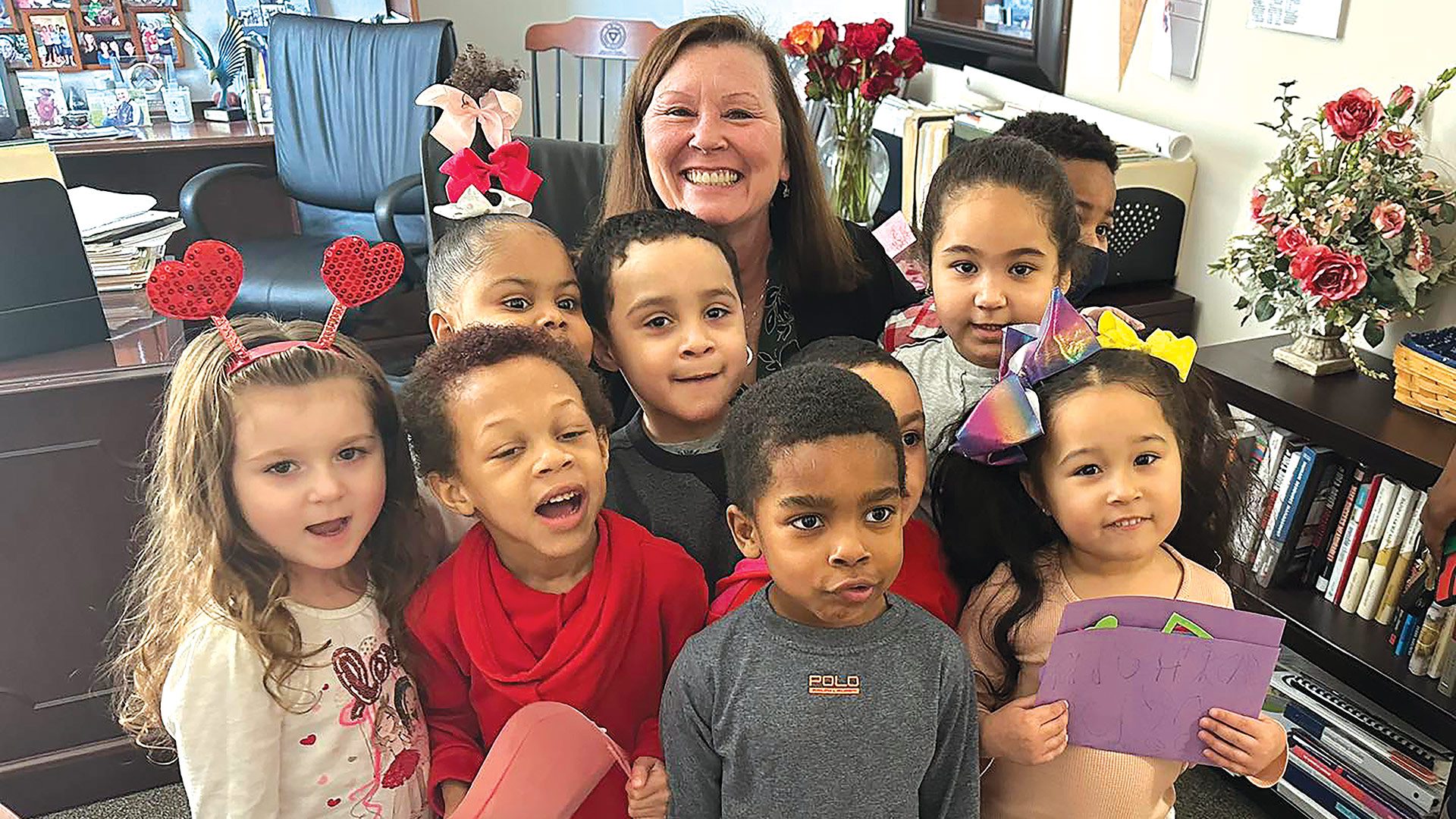
Mokwuah and Brito embody the motivations behind the PSA position and also just how vital these individuals are — to a hospital, to the patients they serve, to initiatives to reduce falls and improve overall patient safety, and, sometimes, much more.

Indeed, both have been credited with saving lives in recent months — Mokwuah in April, by seeing something while in the virtual monitoring room and immediately calling for a team member to check on the patient, and Brito in July for performing the Heimlich maneuver on a patient he heard making sounds of distress while he was sitting with another patient. (More on both episodes later).

Both men were named employee of the month for their respective actions. That’s certainly an honor, and in October, they’ll be receiving another one: Healthcare Hero.


Not on Their Watch

There are actually three distinct roles within the PSA position, and individuals with that title handle all three on a rotating basis, noted Brian Toia, Nursing director of the ICU, RN float pool, and patient safety associates, adding that teamwork is what makes this innovative program so effective.

The first role involves one-on-one direct care — staying within arm’s length of a patient with a high safety risk, including those susceptible to falls, patients with dementia, and those who might be suicide risks. The second involves virtual monitoring. Utilizing a camera system placed in rooms of patients with potential safety risks, PSAs working in the virtual monitoring room can keep tabs on up to 12 patients at once.

From left, Margaret-Ann Azaro, Joel Brito, Gabe Mokwuah, and Brian Toia.

From left, Margaret-Ann Azzaro, Joel Brito, Gabe Mokwuah, and Brian Toia.

The third role is what those at HMC call a ‘rounder,’ one person dedicated to a unit who will frequently check on patients, respond to virtual monitoring calls, and also answer patient calls for assistance.

When asked which role he liked the most, Brito didn’t hesitate. “I like being a rounder. I love that it’s a non-stop job.”

But all these roles are vital to the overall mission of keeping at-risk patients safe, said Mokwuah, who coordinates the department and makes the daily assignments.

Before he talked about the PSAs and what they do, he put matters in their proper perspective. “The real heroes are the nurses, the doctors, and the administrators. And they have given us support for this program to take off. Our job is to keep people safe, and our program saves lives — we’ve proven that over and over again.”

“We thought, ‘let’s come up with a safety role to empower people to not only keep these patients safe, but engage with them as well.’”

Azzaro agreed, emphasizing, again, that PSAs are far more than the ‘sitters’ of years ago. These are individuals who can, and do, watch over patients. But they also engage them and help “enrich the experience,” as she put it, while offering some examples.

“We gave them dementia and Alzheimer’s education,” she explained, noting that this, like other aspects of the program, is fairly unique within the industry. “There are certain ways in which we can engage with patients that have dementia, that have Alzheimer’s. One thing that doesn’t help them is to not be stimulated. So the PSAs can read to them, they can play games with them, they can have conversations with them, they can read a book to them, they can put something on the TV or iPad and have the patient watch it with them.”

And while engaging with these patients, or watching them on the monitor, or coming to their assistance as a rounder, the PSAs are ultimately keeping them safe, said Azzaro, noting that there has been a measurable decrease in the number of falls recorded at HMC since the start of the program.


Changing Lives, Saving Lives

As he talked with BusinessWest outside the monitoring room, Mokwuah said the facility boasts a split screen showing more than a half-dozen patients in their beds. At this moment in time, all was quiet and normal.

That was not the case one afternoon back in April, when, while watching that same monitor, he noticed a patient that did not appear well, was acting differently, and had a noticeable status change.

He called for a rounder to immediately check on the patient, who, as it turned out, was experiencing a significant medical event, was unresponsive, and had no pulse. Staff quickly began performing basic life support, followed by advanced cardiovascular life support. After two rounds of CPR and cardiac medications, the patient’s own breathing and heartbeat returned.

Joel Brito (left) and Gabe Mokwuah

Joel Brito (left) and Gabe Mokwuah have both been credited with saving patients’ lives in recent months.
Staff Photo

Joel Rivas, director of Nursing Medical-Telemetry, who nominated Mokwuah for employee of the month, said at the time, “it is my professional opinion that, had the patient’s change in condition not been identified as early as it was, by Gabriel, we would not have had the positive outcome that we had.”

Similar things were said after another incident in early July, when Brito again showed the importance of HMC’s innovative PSA program.

He was serving as a rounder and sitting with a patient when another team member came in to provide patient care. During that time, Brito overheard a patient from another room making sounds of distress. Confirming that his one-on-one patient was safe and in the care of another team member, he stepped into the next room to check on what he’d heard.

“In the beginning, I didn’t pay too much attention to it, but something told me to get up and check that room, and when I did, I was really surprised because the lady was essentially purple,” he said, adding that he quickly positioned himself to perform the Heimlich maneuver and helped to dislodge the obstruction in the patient’s airway.

“This is a job where you have to be humble, you need to have some empathy, and you have to love people. That’s something my mom and my family instilled in me growing up, so I try to live my life that way and help people. This job gives me the opportunity to do that.”
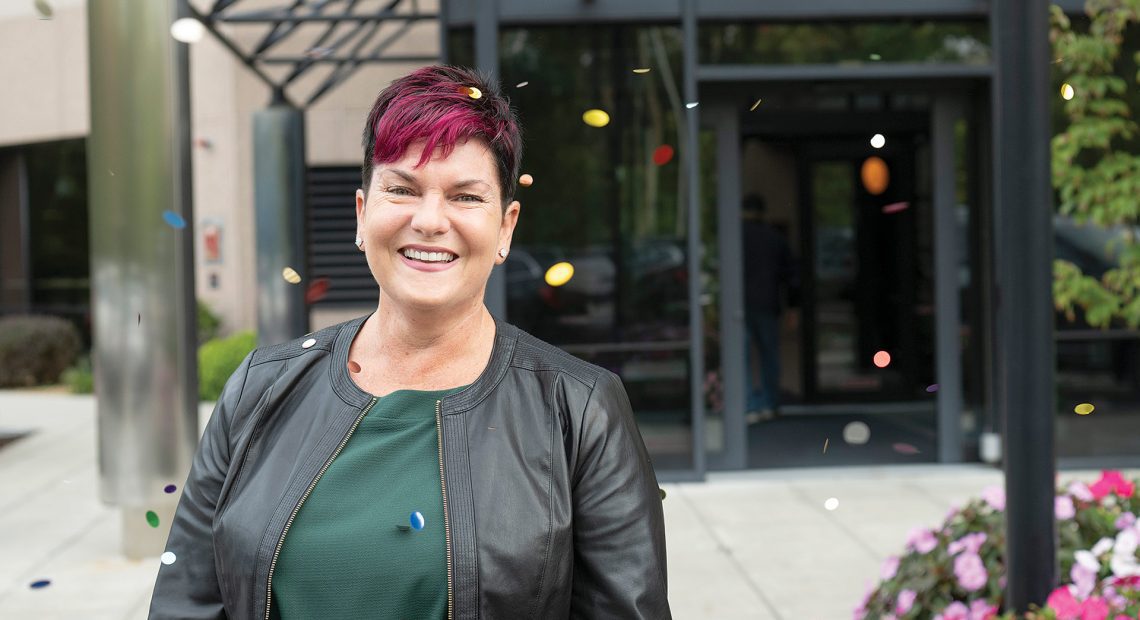
Like Mokwuah, Brito was credited with saving a patient’s life, said Toia, adding that, had it not been for establishment of the rounder’s role within the PSA program, it’s unlikely that someone would have been able to respond as quickly to the situation as he did.

Looking back, Brito said he relied on his instincts and his training, and was thankful to be in a position where he could help people and make a difference in their lives — the most gratifying aspects of the PSA position.

Mokwuah said essentially the same thing.

“This is a job where you have to be humble, you need to have some empathy, and you have to love people,” he said. “That’s something my mom and my family instilled in me growing up, so I try to live my life that way and help people. This job gives me the opportunity to do that.”
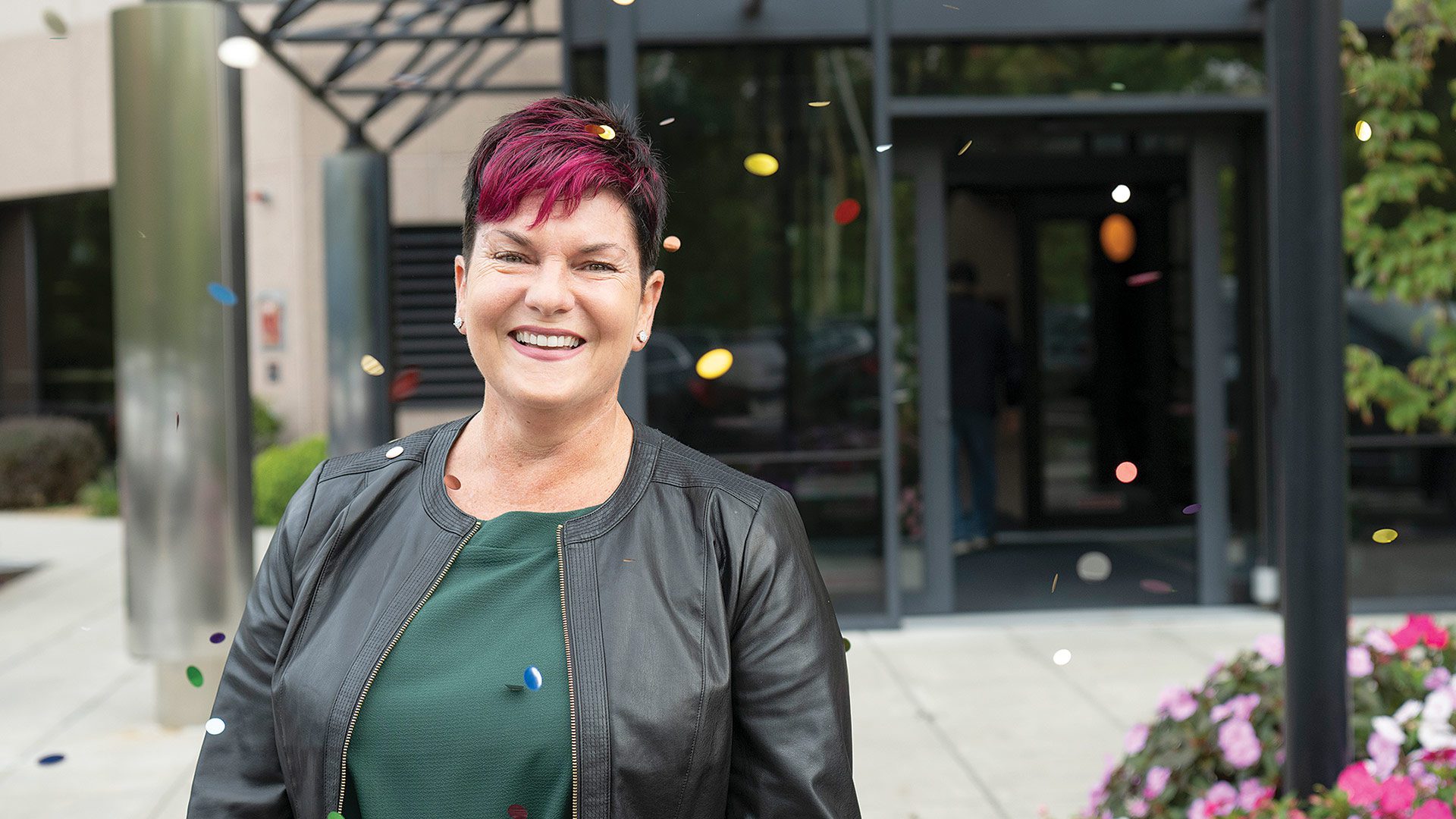
 

Big-game Players

Gabe Mokwuah didn’t get to be a hero on the gridiron, at least at the pro level. But his life and career, especially this latest chapter, show that our heroes come from all walks of life. And they take all kinds of titles.

Patient safety associate is a relatively new one at Holyoke Medical Center, an innovative initiative that is helping to prevent falls, improve overall safety, and, as these cases show, save lives.

Mokwuah was right when he said that doctors, nurses, and administrators are heroes. But so are those with badges that read ‘patient safety associate,’ especially these two lifesavers and Healthcare Heroes.

Healthcare Heroes

Chief of Emergency Medicine, Mercy Medical Center

He Considers Listening His Strongest, Most Important Talent

Dr. Mark Kenton


As a general rule, physicians working in the emergency room don’t get to know their patients as well as those in primary care or other specialties, who see their patients regularly and over the course of years and, sometimes, decades.

But Dr. Mark Kenton makes it a point to get to know those who come to his ER, the one at Mercy Medical Center. Indeed, he said he always looks to make a connection by listening to each patient and learning about what they are interested in and passionate about.

In addition to making these connections, he tries to get involved and make a difference, in ways that go beyond providing medical care.

“Sometimes, the best medicine you give someone is not actually medication,” he told BusinessWest. “It’s just listening. Everyone has a story.”
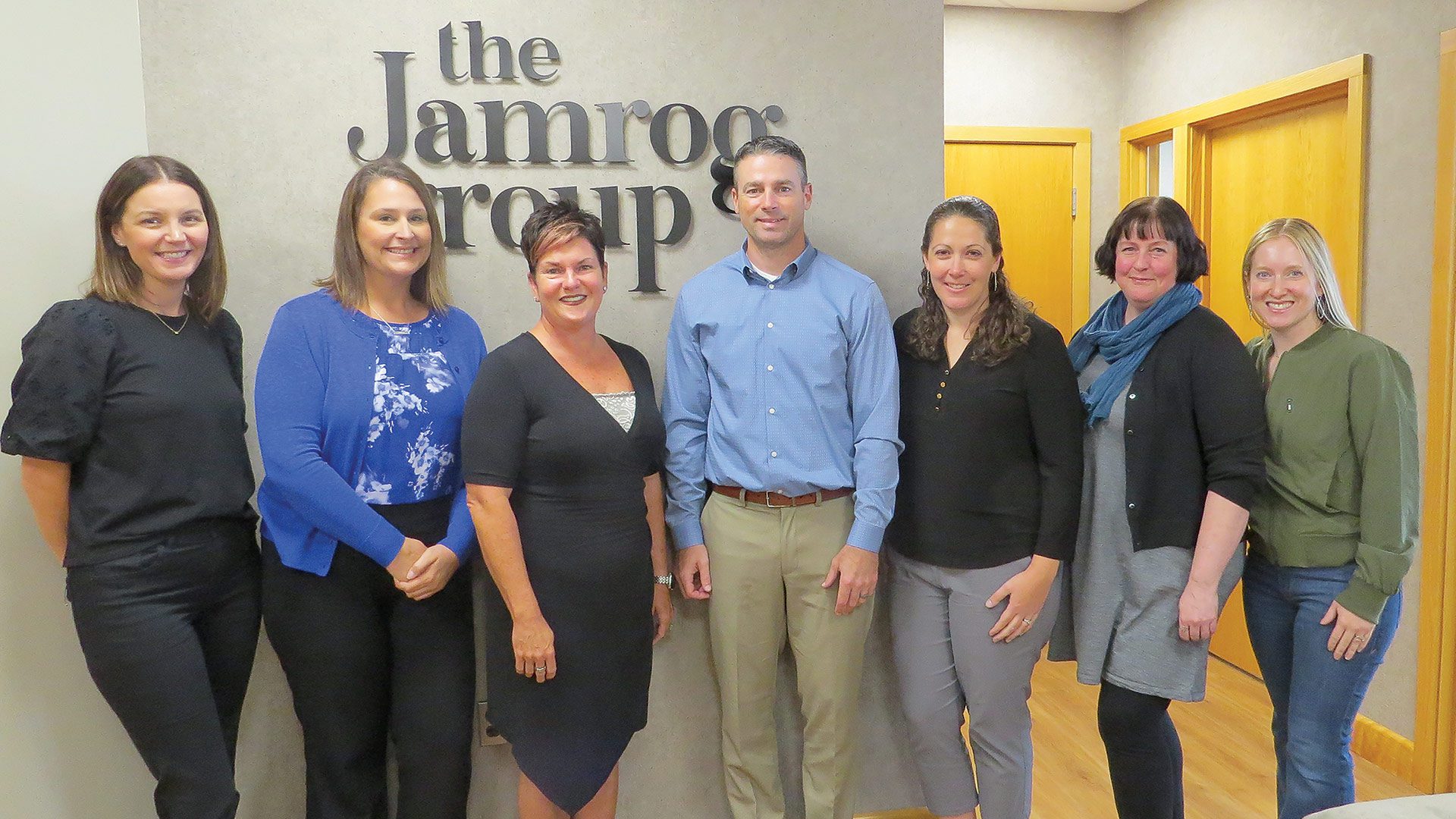
He was listening as one patient, a veteran named Homer who was going into hospice care, expressed regrets about never making it to the World War II Memorial in Washington, D.C. So Kenton researched the Honor Flights program and worked with the patient’s family to help make arrangements for him to visit the stirring memorial. Later, he received a letter from that family.

“They said he died two weeks before he was scheduled to go, but he died knowing that he was going, and it meant a lot to him,” Kenton recalled. “That stuck with me.”

He was also listening to another patient who was near the end of his battle with cancer and came to understand that the two shared a love of baseball and the Red Sox. Kenton arranged a phone call to the patient from former catcher Rich Gedman, whom Kenton had come to know well from his participation in Red Sox fantasy camps.

“Sometimes, the best medicine you give someone is not actually medication. It’s just listening. Everyone has a story.”

“He said, ‘I can’t believe Rich Gedman actually called me,’” Kenton recalled, adding that the conversation had a lasting impact.

This ability to listen, and act on what he hears, is one of many traits that has made Kenton a Healthcare Hero for 2023 in the Healthcare Administration category — annually one of the most competitive categories within the program.

He stood out amid a number of others nominated for the award for his ability to act upon what’s heard — in a variety of different settings — and generate needed dialogue, which has sometimes led to real change.

This includes the ER at Mercy, where he has worked with others to improve flow, shorten wait times, and reduce the number of patients who leave the ER without being seen, battles that have become even more difficult amid critical shortages of trained professionals, especially nurses.

One of Dr. Mark Kenton’s passions is baseball

One of Dr. Mark Kenton’s passions is baseball and Red Sox fantasy camps, something that has become a family affair, as in this scene at Jet Blue Park in Florida with his sons (from left) Mark, Davin, and Jacob.

But it also includes the national medical stage, as we’ll see. Indeed, a letter posted on Facebook from Kenton to the CEO of Mylan juxtaposed the CEO’s salary against the sky-high cost of EpiPens and thrust the debate about the rising cost of pharmaceuticals into the national spotlight.

In Massachusetts, Kenton played a strong role in the passage of a bill that would allow EpiPens to be purchased in the same manner as Narcan for municipalities, whereby the state would purchase them at something approaching cost.

Kenton has also advocated for increased protection from workplace violence in hospitals, testifying at the State House after a colleague at Harrington Hospital suffered a near-fatal stabbing. Those efforts have been less successful in generating change — a result he blames on the high cost of measures such as metal detectors — but he continues to push for legislation that might prevent such incidents.

For his ability to listen and effect change — in his ER and many other settings as well — Kenton is certainly worthy to be called a Healthcare Hero.


A Great Run

The art hanging on the walls of Kenton’s office certainly helps tell his story.

Most of the pictures are baseball-themed — he played in college, has attended the Hall of Fame induction ceremonies in Cooperstown since 1981, and has more than 7,000 baseball autographs, by his estimate — including photos from the fantasy camps he’s attended, with his children prominent in many of them.

“I’ve been going for 13 years now, and it’s been a pretty amazing experience,” he said, noting that he’s been on the same field as many Red Sox legends. “Now, it’s more about going back and playing with friends than seeing the Red Sox — but they’ve become friends, too.”

But there’s also a framed photo of the cast members of The Office, a gift from his children. He is a huge fan of the show, and notes with a large dose of pride that he’s met several of the cast members and possesses a suit jacket that Steve Carell wore on the show.

While Kenton spends a good amount of time in this space, his true office, if you will, has always been the ER, and especially the one at Mercy. He arrived there in 2003 and became chief of Emergency Medicine in late 2019, three months before COVID hit and turned the healthcare system, and especially the ER, on its ear.

The trajectory for this career course was set over time, and Kenton believes his passion for helping others began when he watched medical dramas on television with his mother and became captivated with what he saw.

“My mother had cancer as a child; she spent a lot of time in hospitals and always had a fascination with healthcare,” he recalled. “She was always reading medical books, and we watched every show you can think of — Quincy; Trapper John, M.D.; St. Elsewhere; you name it.”

Because of his love for baseball, Kenton initially considered a career as an athletic trainer, since he could combine both his passions, baseball and healthcare, and he attended Springfield College with that goal in mind.

He quickly realized that the life of an athletic trainer did not have a lot of stability. And after working as an EMT, a rewarding but also harrowing experience — “I remember going to shootings and the shooter was still on the loose” — he decided the emergency room was where he wanted to spend his career. He earned his medical degree at Lake Erie College of Osteopathic Medicine, with the goal of completing his residency in Baystate Medical Center’s ER, a path that became reality.

“I hand out my business card to patients, talk to them, and ask, ‘why are you here today?’ I do that as one more check to make we’re not missing something.”

As he talked about working in the ER, Kenton related what he told his students when he served as medical director of the Physician Assistant Program at Springfield College. “I would always say, ‘be a little scared every day when you walk in — never lose that. Have a little fear when you walk in, because you don’t know everything, nor should you know everything. You need to know what your resources are and how to utilize those resources. You also need to know that you’re going to be tested — every day.’”


Safe at Home

These days, most of Kenton’s work is administrative in nature — he does one clinical shift per week — and, summing it up, he said it’s about making this ER as safe, welcoming, efficient, and effective as he can.

It needs to be all of the above because the ER is the “front door to the hospital,” as he put it, and a safety net for many within the community.

“There are so many patients that don’t have primary-care doctors now or don’t have insurance,” he said. “The ER is what they turn to.”

As he works with his team to improve flow, reduce wait times, and improve the ‘leave without being seen’ numbers, Kenton relies on what might be the strongest of his many skills — listening. In fact, he’s in the waiting room every ‘admin’ day talking with not only patients, but their families as well.

“I hand out my business card to patients, talk to them, and ask, ‘why are you here today?’” he said. “I do that as one more check to make we’re not missing something. I tell them that we’re working hard to get people through the system, and we’ll work on getting you through as soon as we can. And then, I listen.”

This brings him back to his comments about how everyone has a story, and it’s important to know and understand that story.

Dr. Mark Kenton holds up a card with the name ‘Homer’ on it at the World War II memorial

Dr. Mark Kenton holds up a card with the name ‘Homer’ on it at the World War II memorial in Washington, fulfilling, in a way, a dying patient’s desire to visit the memorial.

“You can look at the medical problem, but if you look at them as just a patient, you kind of forget that behind that patient is a person who’s scared, a family that’s scared,” he said. “Some people have lived incredible lives and been very fortunate, and some people have not had very good luck, or they’ve made bad choices, or they haven’t had the opportunities that others have had.

“I’ve taken care of Tuskegee Airmen; I took care of a gentleman who told me he flew on the Enola Gay,” he went on, referencing the famed African-American fighter and bomber pilots who fought in World War II and the B-29 that dropped the atomic bomb on Hiroshima. “You learn from those stories.”

While listening, learning, taking care of patients and their families, and improving efficiency in the ER, Kenton has also become an advocate for needed change in healthcare. His open letter to the CEO of Mylan on Facebook was spurred by incidents in his personal and professional life.

Indeed, while on vacation with his family, his son had an allergic reaction to peanuts. He soon learned that a prescription for two EpiPens, the best treatment for anaphylaxis, would cost $600. Fortunately, that prescription was transferred to a pharmacy that would accept his insurance, bringing the cost down to $15.

But he understood that such good fortune would elude others. While working a shift in Mercy’s ED a few months later, he saw two patients suffering from anaphylactic reactions and gave them both EpiPens, knowing they wouldn’t be able to fill the prescriptions going forward because they didn’t have insurance.

His frustration with this matter prompted his letter, which garnered press across the country and a live interview on Fox Business. More importantly, it generated real change, especially in the Bay State. Kenton testified before the state Senate on a bill introduced by former Sen. Eric Lesser to make EpiPens available for purchase by the state, just like Narcan.


Stepping Outside the Box

Two years after Kenton received that letter from the family of that veteran who died before he could get to the World War II memorial, his wife was running in a marathon in D.C., and he made the trip with her.

He wrote Homer’s name on a piece of paper, took pictures of it in various spots at the memorial, and sent them to his family.

“I said, ‘your dad finally made it,’” he told BusinessWest. “From what he told me during that relationship we established in a really short period of time, that brought closure to me, that he made it there.

“There are things you can do beyond providing medication to someone — sometimes you just have to step outside the box a little bit,” he went on, using a baseball term to get his point across.

This ability to forge those relationships, listen to each patient’s and each family’s story, and go well beyond simply providing medication helps explain why Kenton stands out — in his field, in his ER, and in his community. And why he is being recognized as a Healthcare Hero. n

Healthcare Heroes

Practice Manager of Thoracic Surgery, Nursing Director of the Lung Screening Program, Mercy Medical Center

She Has a Proven Ability to Take the Bull by the Horns

Ashley LeBlanc


It’s been seven years now, but Ashley LeBlanc clearly remembers the day Dr. Laki Rousou and Dr. Neal Chuang asked her to consider becoming the nurse navigator for their thoracic surgery practice at Mercy Medical Center.

She also clearly remembers her initial response to their invite: “absolutely not.”

She was working days in critical care at the hospital at the time, and liked both the work and the schedule: three days on, four days off, she told BusinessWest, adding that it takes a while for a new position like this to get approved and posted, for interviews to take place, and more — and the doctors used the following weeks to make additional entreaties, with reminders that she wouldn’t have to work any weekends or holidays.

But the answer was still ‘no’ until roughly six months after that initial invite, when she had one particularly challenging day on the floor with a very sick patient. Challenging enough that, when Rousou tried one more time that afternoon, ‘no’ became “I’ll update my résumé and hear you out.”

“He got me at a weak moment, and it was the best decision I ever made, because they have been amazing mentors, and they’ve opened my mind up to this whole other world,” she said, adding that her career underwent a profound and meaningful course change, one that led her to being named a Healthcare Hero for 2023 in the Emerging Leader category.

Indeed, during those seven years, LeBlanc has emerged as a true leader, both in that thoracic surgery practice, which she now manages, and in efforts to promote awareness and screening for lung cancer — one of the deadliest cancers, and one she can certainly relate to personally. Indeed, she has lost several family members to the disease, many of whom would have qualified for screening had it been available at the time of their diagnosis.

“He got me at a weak moment, and it was the best decision I ever made, because they have been amazing mentors, and they’ve opened my mind up to this whole other world.”

In many respects, and in many ways, she has become a fierce advocate for patients related to lung cancer screening, treatment, and research, and concentrates her efforts on ways to decrease the mortality rate of lung cancer and break down the stigma of that disease by educating the community, connecting them to resources, and, in many respects, guiding them on their journey as they fight lung cancer.

When the screening program was launched, those involved didn’t really know what to expect, LeBlanc said, adding that, in the beginning, maybe a handful of people were being screened each month. Now, that number exceeds 250 a month, and while only a small percentage of those who are screened have lung cancer, she said, each detected case is important because, while this cancer is deadly, early detection often leads to a better outcome.

This is turning out to be a big year for LeBlanc, at least when it comes to awards from BusinessWest. In the spring, she suitably impressed a panel of judges and became part of the 40 Under Forty Class of 2023. And in late October, she’ll accept the Healthcare Heroes award for Emerging Leader.

The plaques on her desk — or soon to be on it — speak to many qualities, but especially an ability to work with others to set, achieve, and, in many cases, exceed goals, not only with lung cancer screening, but other initiatives as well.

Dr. Laki Rousou never stopped trying to recruit Ashely LeBlanc

Dr. Laki Rousou never stopped trying to recruit Ashely LeBlanc to manage the thoracic-surgery practice at Mercy Medical Center, and he — and many others — are glad he didn’t.
Staff Photo

Rousou put LeBlanc’s many talents in their proper perspective.

“Before we even had the formal program, I would say something sort of off the cuff, like, ‘I wish we could do this’ … and the next week, I would have the answer, or it would be done,” he said. “Then it turned into ‘OK, let’s try and do this,’ and in the next week or two weeks, it would be done. And then it turned into a situation where she would have an idea and we would talk periodically, but she would take the bull by the horns and just do things that were best for thoracic surgery, but also the screening program.”

This ability to take the bull by the horns, and many other endearing and enduring qualities, explains why LeBlanc is a true Healthcare Hero.


The Big Screen

There’s a small whiteboard to the right of LeBlanc’s desk. Written at the top are the words ‘World Conquering Plans.’

This is an ambitious to-do list, or work-in-progress board, with lines referencing everything from a cancer screening program for firefighters to something called a Center for Healthy Lungs, which would be … well, just what it sounds like. “That’s a bit of a pipe dream,” she said. “We’re going to need our own building.”

While it might seem like a pipe dream, if it’s on LeBlanc’s list of things to get done … it will probably get done. That has been her MO since joining the thoracic surgery practice, and long before that, going back, for example, to the days when she worked the overnight shift as a unit extender at Mercy until 7, then drive to Springfield Technical Community College for nursing classes that began at 8.

“Sometimes, I would snooze in the car for 15 or 20 minutes,” she recalled, adding that she wasn’t getting much sleep at that time in her life. “You just do what you have to do to make it happen.”

Initially, she thought what she wanted to make happen was a career in law enforcement — her father was a police officer in Northampton — but her first stint as a unit extender at Mercy, while she was attending Holyoke Community College, convinced her she was more suited to healthcare.

But plans to enter that field were put on ice (sort of, and pun intended) when her fiancé, a Coast Guardsman, was stationed in Sitka, Alaska.

She spent three years there, taking in winters not as bad as most people would think, and summers not as warm as they are here, but still quite nice. And also working for the Department of Homeland Security as a federal security agent for National Transportation Safety Board at Sitka’s tiny airport.

“The evidence is staggering concerning the number of people who have a scan done, and they have an incidental finding, and there is no follow-up for that incidental finding.”

LeBlanc and her husband eventually returned to Western Mass. after a stint on the Cape, and she essentially picked up where she left off, working as a unit extender at Mercy.

“It was five years later, and it felt like I never left,” she said, adding that she soon enrolled in the Nursing program at STCC and, upon graduation, took a job on the Intermediate Care floor, which brings us back to the point where she kept saying ‘no’ and eventually said ‘yes’ to Rousou and Chuang (who is no longer with the practice).

Rousou told BusinessWest they recruited her heavily because they knew she would be perfect for the role they had carved out — and they were right.

Over the past seven years, LeBlanc has put a number of line items on the ‘World Conquering Plans’ list, and made most of them reality, especially a lung cancer screening program, which wasn’t even on her radar screen when she finally agreed to interview for the job.

Indeed, she was prepared to talk about patient education and how to improve it and make it more comprehensive when Rousou and Chuang changed things up and focused on a screening program.


Thinking Big

Once she got the job, she focused on both, with some dramatic and far-reaching results.

As for the screening program, she said such initiatives were new at the time because the Centers for Medicare Services had only recently approved insurance coverage for such screenings. At Mercy, with Rousou, Chuang, and, increasingly, LeBlanc charting a course, extensive research was undertaken with the goal of incorporating best practices from existing programs into Mercy’s initiative.

“We had no idea what our expectations should be or how it would be received in the community — it was a very new thing,” she recalled. “That first month in 2017, we did seven scans; then we did 29, and by the end of the year, it was over 50 scans a month. A year after we started, it was over 100.”

Now, that number is more than 250, she said, adding that such screenings are important because, while lung cancer is the deadliest of cancers, there are usually no visible signs of it — such as unexplained weight loss, coughing up blood, or pneumonia — until its later stages.

“When patients are diagnosed with stage 4 lung cancer, the treatment is, by and large, palliative, not curative,” she explained, “which makes it extra important to try to diagnose these people with lung cancer at an earlier stage.”

In addition to her work coordinating the screening program, LeBlanc also handles work implied by her initial title — nurse navigator.

This is work to help the patient understand and prepare for the procedure they are facing, such as removal of a portion of their lung, and answer any questions they may have.

“When the surgeon leaves the room … that’s when a patient will take that deep breath and say, ‘I have so many questions,’” she told BusinessWest. “It can be overwhelming, and this gives me an opportunity to answer those questions, which can involve anything from the seriousness of the procedure to where to park or what to bring to the hospital with them.”

Meanwhile, she has taken a lead role in efforts to build a strong culture within the thoracic surgery and cancer screening programs, where 14 people now work, and make it an enjoyable workplace, where birthdays and National Popcorn Day are celebrated, and teamwork is fostered.

“I think it’s important to enjoy where you work, and when we’re happy, I think that carries over to patients, and they feel that,” she said. “At Easter, we have an Easter egg hunt, with grown, professional adults running around the office looking for Easter eggs. It seems silly, but it’s wonderful at the same time.”

Then, there’s that ‘World Conquering Plans’ board next to her desk. LeBlanc said she and the team at the practice have made considerable progress with many of the items on that list, including plans to expand the office into vacated space next door with an interventional pulmonary department and an ‘incidental nodule’ program.

The interventional pulmonary program is a relatively new specialty that focuses on diagnosis of lung disease, she said, adding that an interventional pulmonologist has been hired, facilities have been created, and patients have been scheduled starting early this month.

Progress is also being made on the incidental nodule program, which, as that name implies, is a safety-net initiative focused on following up on the small, incidental nodules on the lungs that show up on scans other than lung cancer screenings and are often overlooked.

“The evidence is staggering concerning the number of people who have a scan done, and they have an incidental finding, and there is no follow-up for that incidental finding,” she explained, adding that such findings often get buried or lost in reports. “When patients come to Dr. Rousou, they’ll often say, ‘I’ve had a scan every year for the last so many years; how come no one saw this until now?’”


Breathing Easier

As for the Center for Healthy Lungs … that is a very ambitious plan, she said, one that exists mainly in dreams right now.

But, as noted earlier, LeBlanc has become proficient in making dreams reality and in drawing lines through items on her whiteboard.

That’s what Rousou and Chuang saw when they recruited LeBlanc — and kept on recruiting her after she kept saying ‘no.’

They could see that she was an emerging leader — and a Healthcare Hero. n

Healthcare Heroes

Nurse, Urology Group of Western New England

During Her Long Career, She Has Made a World of Difference

Jody O’Brien

Now 87, almost 88, Joanne (Jody) O’Brien is two decades and change past what the Social Security Administration considers ‘full retirement age.’

But she is still working — two days a week as a triage nurse for the Urology Group of Western New England (UGWNE), in its Northampton office. She’s doing plenty of other things to keep busy, which we’ll get to, but for now, let’s focus on her day job — and the fact that she still has one.

When asked why, her face curves into a huge smile — it seems to be almost permanently like that — and she offers a simple and direct explanation.

“I love nursing,” she told BusinessWest with a voice that would imply this would be obvious if she’s been doing it for more than 67 years. But she wanted to elaborate, and did.

“I lucked out picking nursing as a profession coming out of high school because it’s just been the most rewarding career I could possibly imagine,” she said. “I’ve enjoyed it so much that I don’t want it to end. As long as someone keeps me employed, I’ll keep coming to work.

“I absolutely love what I do — I can’t say enough about how great nursing has been for me,” she went on. “It’s a wonderful career to have. I’ve tried so many different aspects of it, and I’ve loved them all. So I figured there’s no sense packing it in if you love what you’re doing.”

Her career has placed her in many settings — from a hospital ship that was part of Project Hope in the early ’60s to Western New England College, where she was director of Health Services; from an eye-surgery office in Hawaii to the Hampden County Jail and House of Correction, where she was a per-diem nurse and, later, director of nurses, with many other stops as well.

“I lucked out picking nursing as a profession coming out of high school because it’s just been the most rewarding career I could possibly imagine. I’ve enjoyed it so much that I don’t want it to end. As long as someone keeps me employed, I’ll keep coming to work.”

But longevity and this variety of professional settings only begins to explain why O’Brien has been chosen as a Healthcare Hero for 2023 in the Lifetime Achievement category. Beyond her various day (and night) jobs, she has undertaken a number of service and volunteer assignments — from reading at Valley Eye Radio to taking care of orphans in Romania; from teaching English to nursing students in China to tagging sharks in Belize; from restoring and protecting turtle habitats in Costa Rica to working at Whispering Horse Therapeutic Riding, supporting riders with disabilities.

All this suggests she could easily have been nominated in several, if not all, the categories of Healthcare Heroes. Because of the length, variety, and broad impact of her work, she is being honored in the Lifetime Achievement category, one that has traditionally been dominated by administrators. In this case, though, it is going to a provider. A provider of care. A provider of hope. A provider of inspiration.

Jody O’Brien with staff members

Jody O’Brien with staff members at the Urology Group of Western New England’s Springfield office.
Staff Photo

Through her 87 years, 67 of them as a nurse, she has seen just about everything, including a global pandemic. Summing it all up, she said her passion for helping others hasn’t dimmed — and has probably only grown stronger — nearly 70 years after she entered nursing school.

This enthusiasm and energy was conveyed by Dr. Donald Sonn, a physician with UGWNE, who was among those who hired her 18 years ago.

“When we first interviewed her, we were struck by how positive and effervescent she was, and how energetic she was,” he recalled. “I’m constantly amazed by her energy and her positive attitude.”

Calling her an “ombudsman” for the practice’s patients, Sonn said O’Brien consistently draws praise for her calm, steady hand (and voice on the phone) and her desire to assist others.

All of this — and much more — explains why she is a true Healthcare Hero.


Riding the Wave

‘Cuba si, Yanquis no.’ That translates to ‘Cuba yes, Yankees no,’ and it’s a phrase, and a song, that O’Brien heard repeatedly as she served aboard the USS Hope, the former Navy hospital ship that was chartered to the People to People Health Foundation in 1960, when it was docked in Trujillo, Peru two years later.

“The people who met us at the dock were Communists, and they did not want us there,” she recalled, adding that the exploits of the USS Hope in Peru later became the subject of the book Yanqui Come Back!

O’Brien spent a year on the Hope, earning a $25 monthly stipend. But as those credit card commercials used to say, it was a learning experience that was priceless.

She worked beside a constantly changing team of doctors that performed surgery on the ship and in hospitals on the mainland, with procedures ranging from plastic surgery for burns to work to address cleft palate and hairlip, to removal of tumors, some of which had grown to enormous sizes because the patients hadn’t seen a healthcare provider in years, if not decades.

Urologist Dr. Donald Sonn

Urologist Dr. Donald Sonn calls Healthcare Hero Jody O’Brien an “ombudsman” for the practice’s patients.
Staff Photo

“People would walk for miles to get to the ship to be treated, and we treated everyone who needed it,” she recalled. “It was such a learning experience for me working with all these doctors.
“I was still young and adventurous,” she went on as she talked about how she paused her career, sort of, to serve on the ship, adding that she has remained young at heart and has always, in her recollection, been adventurous.

Indeed, the book on her life and career has many intriguing chapters, some of which are still being written. In literary circles, they would call this a ‘page turner.’

Our story starts in Iowa, where O’Brien was born and raised, and where she decided she wanted to be a nurse. She attended nursing school in Davenport — a three-year diploma program that cost $500.

Upon graduation, she took a job in Davenport, but soon thereafter, she went to Hawaii to stay with a friend who had recently had a baby and wanted her company while her husband was deployed.

It was in Hawaii that O’Brien became acquainted with Project Hope. She visited the ship when it was docked and became intrigued with its mission. After returning to Iowa, she filled out an application to serve in Project Hope as an operating room nurse, and in 1962, she was approved for service.

During her year on the USS Hope, she met a volunteer named Ed O’Brien, from Holyoke. Upon returning to Iowa, she would drive to the Paper City to renew acquaintances. They would marry in 1963 and eventually settle in East Longmeadow.

Thus would commence a series of assignments in the 413, but also well beyond it.


Care Package

These included a lengthy stint at what was then Wesson Women’s Hospital, working in labor and delivery, and another as a nurse practitioner in an ob/gyn office.

From 1983 to 1988, she served as director of Health Services at Western New England College, handling the needs of 6,000 students, and also as a per diem nurse at the Hampden County Jail and House of Correction.

She then accepted a travel nurse assignment at Castle Hospital in Kailua, Hawaii. She stayed in Hawaii for a dozen years, also serving as nurse manager of an eye-surgery center and as branch director of Nursefinders of Hawaii. And while in the Aloha State, she earned a master’s degree from Central Michigan University.

“She would go on a trip every three or four months, and it was always something really fascinating — volunteering in some third-world country or teaching children or reading to the blind. She has a tremendous record of service.”

She returned to Western Mass. in 2000 and took a job as area director of Nursefinders of Eastern Massachusetts, and soon thereafter became a flex team manager at Baystate Medical Center, managing 60 RNs, 25 technical assistants, 45 constant companions, and the ‘lift team.’

At the Urology Group of New England, which she joined 18 years ago, she works two days a week — Monday and Wednesday. The former is generally the busiest and perhaps the most difficult of the days of the week, but that’s when the group needs the help, so that’s when she works.

O’Brien’s whole career has been like that, in many respects — showing up when and where the help is most needed.

That’s true professionally, but also in her work as a volunteer, with work that is wide-ranging, to say the least.

Indeed, during the three days she’s not working at the Urology Group — and all through her life, for that matter — she has found no shortage of ways to give back and be there, for both people and animals.

Among them is her work with Valley Eye Radio, where she reads the local newspaper for the benefit of those who can’t read it themselves.

“It makes you feel good to know that, for people who cannot read or have difficulty reading, we can share what’s going on today in Springfield or the United States or the world,” she said. “We can share that information with them.”

Meanwhile, she also volunteers with Greater Springfield Senior Services, helping individuals who can no longer handle their own finances with bill paying and other responsibilities, and with Whispering Horse Therapeutic Riding, a nonprofit that, among other things, brings horses to nursing homes, where residents can feed and pet the animals.

“The way they light up when they see these horses … it’s so gratifying,” she told BusinessWest, adding that she and a colleague will visit facilities regularly — sometimes weekly, other times monthly.

Animals have always been a big part of her life — and her strong track record of giving back. In addition to tagging sharks and restoring turtle habitats, she has also volunteered at animal sanctuaries in Australia to care for koalas, often taking her grandchildren with her on such service trips, introducing them to the many rewards that come with such work.

“At this age, you know you don’t have many more days to fill, so you fill each one of them,” she said, but concedes that she’s always wanted to stay busy.

“She’s done so much in her life … I’ve always looked forward to listening to her talk about trips, her escapades,” said Sonn, choosing that word carefully. “She would go on a trip every three or four months, and it was always something really fascinating — volunteering in some third-world country or teaching children or reading to the blind. She has a tremendous record of service.”

In both aspects of her life — as a nurse and as a volunteer — the common thread has been a desire to help those in need, and this explains why she has been chosen as a Healthcare Hero for 2023.

“I loved working at Western New England; the college kids were a joy to work with,” she said, adding that each stop in her career has been different — and enjoyable. “There’s something about taking care of people and helping them deal with mental and physical problems and seeing what you can do to help them in their lives.”


Still Making a Difference

There are many people who have worked well into their 80s in healthcare. And there are many people who have put dozens of lines on a résumé detailing a lengthy list of career stops.

But there are few who have the passion, dedication, and resolve to use their talents and their love for helping others to make a world of difference, in every aspect of that phrase.

Jody O’Brien is such an individual. That commitment has helped her stand out in this field for seven decades. It makes her a Healthcare Hero. n

Tourism & Hospitality

Vine Tuned

Ian Modestow and Michelle Kersberger

Ian Modestow and Michelle Kersberger have orchestrated steady growth at Black Birch Vineyard since launching the Hatfield operation in 2017.


There are not many companies that can say that the pandemic was “probably the best thing that could have happened to us.”

But that’s the phrase Michelle Kersberger summoned as she talked about those unprecedented times. And this was not hyperbole.

Indeed, while the start of the pandemic was a difficult, scary time, to say the least — Kersberger would load up her car and make deliveries to wine-club members just to bring in some much-needed revenue — by late in that summer of 2020, COVID-19 had played a major role in putting the hidden gem that was Black Birch Vineyard on the proverbial map.

“By the time August came around, we had to stop people from coming in,” she said, adding that the winery moved all its operations outdoors, and area residents starved for things to do found several at Black Birch.

“The pandemic was pandemonium. It was crazy here … people were coming from everywhere,” said Ian Modestow, Kersberger’s husband and business partner in this venture, recalling that there were COVID-related restrictions on how many people could be seated outdoors at the winery at any given time, and on more than a few occasions, he had to park his tractor at the top of the long driveway off Straits Road in Hatfield to keep more vehicles from venturing down that gravel path.

“We worked our butts off, our staff worked their butts off … we had too many people coming in, and we had to turn some away.”

Looking back on those days, Ian and Michelle said they were essentially rolling with the punches and making the very best of the opportunities that presented themselves, an MO that has defined Black Birch since they settled into this former onion farm in 2017 after selling off their share of a similar venture in Southampton.

Those opportunities range from the staging of concerts during the summer months — a tradition born from COVID, in many respects — to hosting a wide variety of events in the tasting room, to selling wool and meat generated from the 40 or so sheep that now populate this beautiful real estate.

Things have settled down a little from those crazy days of the pandemic, but business remains steady at Black Birch, and, increasingly, it is now year-round, as we’ll see.

The main businesses are growing grapes and making wine, and Black Birch now produces several different labels, from its Epic White, made from Vidal Blanc grapes, to Eloquent Red, a blend of Cabernet Franc, Blaufrankisch, and Marquette. They come in two distinct labels, white for the ‘heritage’ wines made with grapes purchased from outside growers, and black for the estate wines made with grapes grown on site in Hatfield.

This theme of rolling with the punches continues in 2023, a difficult year due to different types of extreme weather — first a killing frost that destroyed 80% of the grapes planted in May, and then incessant summer rains that will certainly impact the 20% that survived, said Modestow, noting that grapes like it dry and hot, and there simply hasn’t been a lot of that lately.

Fortunately, 2021 and 2022 were boom years for this venture, Kersberger said, adding that they have provided a cushion of sorts from the problems of this spring and summer, although the damage done by Mother Nature will certainly take a toll.

Black Birch now offers a wide array of wines

Black Birch now offers a wide array of wines featuring both its ‘heritage’ and ‘estate’ labels.

Overall, the business plan calls for moving toward producing all wines with grapes produced on site, said Modestow, adding that they’re roughly halfway to that goal, while also growing each of the various operations within this venture, from the events to the sheep’s wool.

For this issue and its focus on wineries and breweries, BusinessWest paid a visit to Black Birch to learn about how a hobby turned into a business … and a passion.


Grape Expectations

As they talked about their venture, Modestow and Kersberger were joined first by sibling cats Chardonnay, or ‘Chard’ for short, and Pinot, and later by Burmese mountain dogs Yogi and Simka, who have become part of the team, if you will, at Black Birch, a vision that first started coming into focus when the two business owners met while attending UMass Amherst in the mid-’90s.

Later, during their college journey, they traveled to the Netherlands to visit some of Kersberger’s family and took a side trip to the Loire Valley in France, famous for its wine production.

“We have a lot of repeat customers, and those customers bring new customers, and it grows from there; there’s a lot of word-of-mouth advertising.”

“Being poor college students, we had to camp, and we would camp at farms, and many of them were vineyards — mom-and-pop operations,” she explained. “It sparked our interest, and any time we traveled after that, we always made sure we visited any vineyards or wineries in the region, and our love of the culture grew from there. Everything about wine and winemaking and the community and the social aspect of it … it was always a draw for us.”

Modestow concurred. “When we traveled, we went to wine-growing areas — Burgundy, Champagne, California, Washington, Spain, even Canada and Texas.”

This interest, and burgeoning passion for wine and making wine, stayed with them as they lived in Amsterdam for a year while Ian attended school there for archaeology, and later, as they started their professional careers, with Modestow launching a dental practice in Northampton and Kersberger essentially managing that practice.

In 2011, this interest in wine started morphing into a business, with Modestow and Kersberger partnering with Mary and Ed Hamel in a venture that would become Black Birch Vineyard in Southampton. In the spring of 2017, they would take that name and their experience, equipment, and burgeoning entrepreneurial spirit to a former onion farm in Hatfield and put down some roots — figuratively, but also quite literally.

Indeed, they would move twice in two months, first to a storage facility and then to the farm in Hatfield, and eventually plant more than 12 acres with roughly 19,000 vines of several different cool-climate varietals, from Chardonnay to Riesling; Pinot Noir to Trominette. They also opened a tasting room (a transformed former onion barn) and launched a wine club.

Black Birch Vineyard

Black Birch Vineyard

Over time, Modestow would ease out of his dental practice — he is now all but officially retired from that profession — and he and Kersberger would make wine and winemaking a full-time pursuit.

They were gradually gaining some traction, and a following, for their wines, when the pandemic put them on a faster, more vibrant track. As noted earlier, it didn’t happen overnight; the first few months of the pandemic were quite scary indeed as both Black Birch and the dental practice shut down, leaving no revenue coming in.

But as area residents starting looking for things they could do, the Black Birch team saw opportunities as they moved many functions outside and kicked off their summer music series with artists who were looking for, and desperate for, places to play their music.

“We were able to open up, pivot what we were doing, and make everything work,” Kersberger recalled. “We worked our butts off, our staff worked their butts off … we had too many people coming in, and we had to turn some away.”

Those who did manage to get down that long driveway apparently enjoyed their experience, she went on, noting that there have been large numbers of repeat customers coming to Black Birch, enough to make 2021 and 2022 “banner years” for the operation.

“People have been coming back,” she said. “Maybe not as often, but they’re coming back; we really got our name out there.”

Indeed, Black Birch has settled into a groove, if you will, with its recently concluded summer concert series routinely drawing more than 200 visitors; the tasting room seeing business year-round; the facility hosting a wide array of events, from birthday parties to wedding-rehearsal parties; and the sheep generating various forms of business while also grazing the spaces between the rows of vines and providing fertilizer for the vineyard.

And what used to a two- or three-season business is now a year-round venture.

“Things have changed over the past two or three years,” Modestow said. “We’ve gone from winters being dead to winters actually being quite steady.”

Kersberger agreed, noting that the vineyard and winery now draw visitors from up and down the I-91 corridor and beyond, including Connecticut, Vermont, New York, and all across Western Mass., while also welcoming students from UMass and the other Five Colleges institutions — who are more into wine those of a generation or two ago — as well as their parents and friends.

“A huge portion of our customers are from this area,” Kersberger said. “We have a lot of repeat customers, and those customers bring new customers, and it grows from there; there’s a lot of word-of-mouth advertising.”


Bottom Line

Getting back to the business plan and the broad goal of producing only wines with those black ‘estate’ labels, Modestow said the extreme weather of 2023 has certainly set those plans back.

On one fateful night in May, the temperature dropped to 25 degrees, killing 80% of the crop at Black Birch.

The full impact of this setback won’t be known for some time, he said, but given the growing demand for Black Birch wines, the damages will certainly increase both dependence on grapes grown elsewhere and reliance on what remains in inventory from previous years.

Meanwhile, after those banner years of 2021 and 2022, when growth was “off the charts,” Kersberger said, projections are for steady, if not as spectacular, growth moving forward.

In short, those at Black Birch will do more rolling with the punches — and the weather.

That has been standard operating procedure since the first vines were planted back in May 2017, and this mindset has enabled a business — and a passion — to take root and bear fruit, both literally and figuratively.

Cover Story

Coming to a Head


Brewer and owner Matt Tarlechi

Brewer and owner Matt Tarlechi

Matt Tarlechi says many people assume that he found a home for his fledgling brewery and then attached a name that spoke to that location.

Truth is, he and friends had long before settled on the name Abandoned Building for this venture — he’s from Philadelphia, and, apparently, there were a lot of abandoned buildings there at the time — and then went about securing a home that, well … fit that description.

He found one, sort of, in the complex of mills on Pleasant Street in Easthampton. The spot chosen, in the sprawling Brickyard Mill, wasn’t exactly abandoned, but it was vacant, having last been occupied by a manufacturer of plastic bags and similar products.

A decade or so after settling in, Tarlechi and a growing staff now numbering 14 have found more than a home. They’ve found a place — among the growing number of breweries in Western Mass., in the community of Easthampton and the surrounding area, and, increasingly, on the list of intriguing destinations on Friday night.

Indeed, in addition to producing a wide variety of brews with names like Dirty Girl IPA, Galactic Insanity (another IPA), and Cool Beans, a cold-brew coffee stout, ABB, as it’s called, has become well-known for its Food Truck Friday, which is just what it sounds like — the gathering of a few food trucks, some live music, and cold brews in the mill’s parking lot.

“We had a good amount of time to establish ourselves as a craft brewery that puts out consistent beers throughout the year. And we’ve had a lot of customers who have been here since early on that we still have today.”

“We set up tables and chairs, and we invite three to five different food trucks to come out,” he explained. “We also have live music and provide beer in the beer garden. We do it 16 times a year, and it’s become a staple in Easthampton for families, friends, and visitors.”

On a good night — and weather is usually the biggest factor — these events will draw more than 700 people to the mill, he said, adding that they have become part of the fabric of the community and succeeded in helping to make Easthampton, a former mill town that has evolved into a center for hospitality and the arts, into a true destination.

Ten years on, Tarlechi told BusinessWest, his brewery has really found its place, and the business plan essentially calls for more of everything that has gone into the success formula. And there are many ingredients — from the beers to the food trucks to the growing appeal of the created event space, which will soon host a wedding, but is better-known for wedding-rehearsal parties, showers, birthday gatherings, and the like.

Overall, the craft-beer landscape has changed considerably since ABB first opened its doors, with a huge increase in competition across the 413. But that competition has only helped in some ways, as we’ll see, and this venture has a name and track record for excellence that are well-grounded.

“One of the great things that has been an advantage to us is that we did get in here early on — we’re coming up on 10 years early next year,” he explained. “So we had a good amount of time to establish ourselves as a craft brewery that puts out consistent beers throughout the year. And we’ve had a lot of customers who have been here since early on that we still have today.”

Abandoned Building Brewery

Abandoned Building Brewery has steadily added to its portfolio of Belgian-style beers over the past decade.

For this issue and its focus on breweries and wineries — a growing and ever-more-intriguing component of the region’s business community — BusinessWest opens the tap on Abandoned Building Brewery, which arrived with a brand, but has increasingly made a name for itself within the 413.


Perfecting His Craft

Tarlechi is an engineer by trade. But like many who start breweries, he was bitten by the home-brewing bug, and what started as a hobby while he was in college — California Polytechnic State University in San Luis Obispo — eventually became his career.

“The science-y part of me was into the chemistry behind brewing, and the tinkerer in me was into all the fun setups of the home-brewing process,” he explained. “And throughout the end of college, and then grad school, and into my professional career, I was always doing home brewing on the side, entering competitions, earning a couple of medals.”

“The science-y part of me was into the chemistry behind brewing, and the tinkerer in me was into all the fun setups of the home-brewing process.”

After college, he returned to the Philadelphia area, where he grew up, and started work as a civil engineer in Valley Forge while home brewing on weekends.

His life, and career, took a dramatic turn after several visits to high-school friends who were attending Hampshire College. He would bring his home brews with him for these gatherings, and, after a while, his friends began to encourage him to take his brewing beyond his home — and into their backyard, figuratively speaking.

“They were saying, ‘there’s not a lot of breweries up here; you should start one in Western Mass.,’” he recalled, noting that the landscape was much different than it is now when it comes to players in the craft-brewing industry within the 413.

Food Truck Fridays

Food Truck Fridays at Abandoned Building Brewery have become part of the landscape in Easthampton, drawing people from across the region and beyond.

Indeed, there were a few established players in the region, but not many, and there was certainly room for more.

“I started doing some research, looking at the different towns,” he recalled. “At the time, I was only visiting a few days at a time, so I didn’t know the area really well. I started visiting more, looking at more of the area, and trying to figure out what breweries were up here. Back in 2013, there weren’t many — Berkshire Brewing, Lefty’s, Opa Opa was around, Northampton Brewery … those were the mainstays. The craft-beer explosion hadn’t really taken off here yet.”

Fast-forwarding a little, he said he drafted a business plan and started looking for a location — one that would go with the name Abandoned Building Brewery.

“Luckily, there were a lot of old mill buildings here in the Valley,” he said, adding that his search brought him to Holyoke, Chicopee, and other communities before settling on space in the Brickyard Mill on Pleasant Street in Easthampton, a former felt factory that had become home to a large recording studio, an electrician, a plumbing business, and a host of other tenants.

The space in question had been vacated by Yankee Plastics several years earlier, he went on, adding that it was well-suited to a brewery operation, needing only some cosmetic work, which he undertook almost entirely himself — paint, refinishing the floors, and adjustments for equipment.

“Having a really awesome space for people to visit has been at the core of moving us forward through the years.”

With the space secured, he commenced brewing in early 2014, focusing on Belgian-style brews, which makes this venture unique in many respects.

“These beers are not extremely popular in the broader craft-beer sense, like IPAs, brown ales, and stouts,” he explained. “But they’re popular enough, and they’re fun beers to make, like our Belgian Saison, which translates to ‘summer.’ It’s a lighter beer; it’s very unique in that the yeast, which is the showcase of the beer, gives it a lot of unique flavors — a lot of pepperiness, a lot of spice. We don’t add any of these things to the beer — it’s all about how you treat the yeast during fermentation.”

Meanwhile, Tarlechi and his growing team have expanded and further renovated the space, building out a larger tasting room several years ago and adding an outdoor beer garden, while also taking full advantage of a municipal project to pave the back parking lot. These steps have made the brewery more visible and more accessible.

Mike Cook (left) and Will Meyer

Mike Cook (left) and Will Meyer opened their Vegan Pizza Land trailer at Abandoned Building Brewery in May.

“Before, it really lived up to its name of being an abandoned building — people were wondering what was going on back here when we first moved in,” he recalled. “But the city and the building owners got this grant money, and they were able to improve utilities — electrical, water — and add the parking lot you see now.”


Draught Choice

Over the years, ABB has added a number of new labels to the portfolio while continuing to produce many of what could be called its legacy brews, including Dirty Girl, a Western-style IPA; Galactic Insanity, a New England-style IPA; and Curbside Pils, a Bohemian-style Czech pilsner that has become a staple of the brewery.

Additions over the years include Lola’s Saison, a pale-golden-colored, Belgian-style farmhouse Saison; Oktoberfest, ABB’s interpretation of a classic Marzen-style brew; Odin Quadrupel, the most complex Belgian-style ale in the portfolio — and the beer that started Tarlechi down the path to opening ABB — and Zappa Zappa Zappa, another New England IPA featuring a new and esoteric hop called Zappa.

These beers and others are available in the tap room, and also in cans in package stores across the region, said Tarlechi, adding that, like most breweries in this region, cans became the distribution model of choice, rather than ‘growlers,’ the large, half-gallon glass jugs that were popular several years ago, or the smaller bottles.

“It turns out that the aluminum can is actually a much better vessel for containing beer,” he explained, noting that a mobile canning operation comes to the brewery three or four times a month. “It doesn’t let any light in, the seal on it is much more durable than a bottlecap, and it’s easier to ship and easier to store.

“Once the cans came onto the market, it really changed everything — it allowed us to get into more locations,” he went on. “It’s a lot easier to sell to retail package stores with cans — they’re a little more attractive.”

But, as noted earlier, this venture has become about much than the beer, although that is still, and always will be, the main attraction.

Which brings us back to the space, to events like Food Truck Fridays, and also to a food truck that has become a permanent part of the landscape in Easthampton, one selling vegan pizza. They all factor large in the business plan moving forward.

“Having a really awesome space for people to visit has been at the core of moving us forward through the years,” Tarlechi said, adding that the space has certainly evolved over the years and has become a destination of sorts, especially with the two other breweries in town — New City Brewery and Fort Hill Brewery — creating a sort of Easthampton craft-beer trail. “Having dedicated spaces where people can go and hang out and bring their friends … you almost need to have that these days.”

Indeed, while ABB draws most of its visitors from the 413, others are coming from Connecticut, New York, and the Boston area as well.

They come for the beer, he said, but also the food trucks and the live music on Friday nights, which have become somewhat of a tradition in the region. They start in May and end in October (sometimes with space heaters), and, as noted earlier, they draw several hundred people to the mill on Pleasant Street.

“I’ve tried to keep the same equation since we started,” he told BusinessWest. “We provide the tables, the chairs, the food trucks, and the music, and that’s it. People come, bring their friends, and … community just kind of happens at these events.”


When It Rains, They Pour

The weather has not been kind to Food Truck Fridays — or many other business endeavors — this summer, said Tarlechi, noting that this is a rain-or-shine event, and on at least occasions, it’s been the former.

Still, the show has gone on, albeit with smaller crowds and a maybe one or two fewer food trucks.

But the tradition — where, again, community just kind of happens — will continue, he said. In fact, it has become part of the vision and the business plan at this brewery, a venture that, 10 years later, has found not only a home that conveys its name, but a distinctive place within the 413.

Community Spotlight Special Coverage

Community Spotlight


Mayor Will Reichelt

Mayor Will Reichelt says planning is underway for West Springfield’s 250th birthday, with anniversary-themed events slated for each month of the year.

Once the 17 days of the Big E Fair begin, Gene Cassidy settles into a routine he’s followed for years now.

His day starts early, with a few minutes in his office in the Brooks Building, before he gets into a golf cart and proceeds to his ‘other office’ in the Hampden County building. Along the way, he stops in with employees in the parking area, the ticket booths, and other areas to get a sense of how things went the day before and what would be expected in the hours to come. And to stress, again, the importance of these 17 days to the overall health and vitality of this West Side institution.

“I remind people that they can make the difference between someone who’s a patron having a good day or a bad day,” he said. “Or I’ll thank them if the day before was pouring rain … I’m very conscientious about making sure that people understand that we make 87% of our revenue in 17 days. The people who work here, they have to know how important their role is to delivering to the fairgoing public an experience that’s at the highest level it can possibly be.”

Before any of that, though, Cassidy checks the attendance numbers for the corresponding day of the fair the year before. That number becomes a target and a tone setter, he explained, adding that, if that day from the year before was a washout due to rain, there probably won’t be any trouble matching or exceeding results and moving toward the ultimate goal of improvement over last year. If it was a really good day the year prior, it’s the opposite.

Which means that, this Big E season, there will be some big nuts to crack.

“I remind people that they can make the difference between someone who’s a patron having a good day or a bad day.”

Indeed, the fair set five single-day attendance records in 2022, starting on opening day, and continuing to the second Friday, the second Saturday (when the single-day record was broken and more than 177,789 came through the gates), the second Monday, and the final day. Overall, the 2022 fair came in just shy of the 17-day record of 1,543,470 set in 2018.

“People really responded to the fair last year, and, overall, the weather was pretty good,” Cassidy said, touching on a subject we’ll get back to in some depth later. “People really came out.”

Those new standards set last year, and maybe some others as well, might fall this year, based on what Cassidy has seen in Wisconsin, which just wrapped up its annual fair, as well as Indiana and elsewhere.

Indeed, while inflation remains high, and Americans have plowed through most of the money they saved during the pandemic and are now taking on more debt, attendance at fairs like the Big E is up, said Cassidy, who believes such institutions provide what people are looking for these days.

“We represent the very best of the American way of life,” he said. “The fair is a place for family and friends and camaraderie. The Wisconsin fair recently ended, and they had amazing attendance, and Indiana is going on now, and they had a few record-setting days. People gravitate toward that which satisfies the need for human interaction. Even in years when we have high inflation, people may sacrifice a trip to Disney or a trip to Boston for a Red Sox game to get together with family at the fair.”

West Springfield at a glance

Year Incorporated: 1774
Population: 28,835
Area: 17.5 square miles
County: Hampden
Residential Tax Rate: $15.54
Commercial Tax Rate: $30.58
Median Household Income: $40,266
Median Family Income: $50,282
Type of Government: Mayor, City Council
Largest Employers: Eversource Energy, Harris Corp., Home Depot, Interim Health Care, Mercy Home Care
* Latest information available

The ramp-up to the Big E is always big news in West Springfield, and this year is no exception. But there are other developing stories, as they say, starting with the community’s 250th birthday in 2024; a major, as in major, upgrade of Memorial Avenue, the mailing address for the Big E and many other businesses; and the opening of the town’s first cannabis enterprises.

Mayor Will Reichelt said planning for the 250th is well underway, with a full slate of events set, starting early in 2024 and continuing throughout the year.

That slate includes a 250th Leap Year celebration on Feb. 29, with specifics to be determined; a 250th Ball, slated for May 18; a parade and block party in June; a golf tournament and 5K in July; a parade in August … you get the idea.

As for the massive, $26 million upgrade to Memorial Avenue, work is already underway, said Reichelt, noting tree-removal work and other initiatives, and it will ramp up considerably over the next few years, bringing improvement to a major thoroughfare, but undoubtedly some headaches as well.

For this, the latest installment of its Community Spotlight series, BusinessWest takes an in-depth look at West Springfield and the many things happening in this community, starting with the annual fair.


On a Good Run

Reichelt was among the competitors at the recent Ironman competition that wove its way through several area communities, including West Springfield — and a stretch of the Connecticut River for the swimming part of the competition.

He finished in just under seven and half hours — the top finishers came in at just over four hours — a time that he will look to improve upon next year (yes, he’s already committing to doing it again).

“Even in years when we have high inflation, people may sacrifice a trip to Disney or a trip to Boston for a Red Sox game to get together with family at the fair.”

“I bought an Ironman training guide and wrote my time for this year and my projected time for next year,” he said, adding that the target for the 2024 event is to get under six hours. “If I start training now, I think I can get there.”

The Ironman is one of many events already on the 2024 calendar — or soon to announce official dates — that will take on the flavor of the 250th anniversary, everything from St. Patrick’s Day activities to the block party, which will embody elements of a Taste of West Springfield event that was a staple in the community for many years.

Overall, planning for the 250th is ongoing and will ramp up over the coming months, said Reichelt, noting that, while the actual 250th birthday is Feb. 25, this will be a year-long celebration.

Gene Cassidy

Gene Cassidy says the Big E came close to setting a new 17-day attendance record in 2022, and if the weather cooperates, it might accomplish that feat this year.

By the time it’s over, some major thoroughfares will look considerably different, he said, starting with Memorial Avenue. By this time next year, a project that has been nearly a decade in the making will be well underway, he noted, adding that highlights of the ambitious undertaking, designed to improve traffic flow, will include a reduction of lanes from four to three along a stretch by the Big E, with reconstruction of traffic islands to allow for better turning in and out of businesses along the street. The stretch from Union Street to the Memorial Bridge will also feature a bike lane.

In addition, water and sewer mains are being replaced, and drainage systems will be improved, he said, adding that the project will take several years to complete.

Meanwhile, the city will soon commence work on another major infrastructure project in its downtown area.

It includes construction of a roundabout at the intersection of Westfield and Elm Streets, an area that has seen renewed vibrancy with the opening in recent years of new restaurants and the redevelopment of the former United Bank building into a mixed-use facility called Town Commons. Also planned are improvements to the town common, with new sidewalks, tree plantings, and more.

Beyond infrastructure, there are some new developments within the business community as well, said the mayor, noting that the town’s first cannabis dispensaries — the community was a late entry in this sweepstakes — will be opening in the coming weeks, with one on Memorial Avenue near the bridge, and the other on Riverdale Street.

Meanwhile, the town continues to work with Amherst Brewing on redevelopment of the former Hofbrahaus restaurant just off Memorial Avenue — a project that has been paused with hopes that it can be restarted — and plans are being forwarded, by the same group that redeveloped the former United Bank building, to redevelop a long-closed nursing home off Westfield Street, with housing being the preferred option.


Fair Game

As he talked with BusinessWest about the upcoming Big E, the weather, and the overall goal of matching or exceeding last year’s numbers, Cassidy got up from his desk and retrieved his notes from previous fairs.

In deep detail, he has recorded not just the attendance for a given day, but the weather and other factors that might provide deeper insight into those numbers.

Especially the weather.

Indeed, Cassidy goes much deeper than ‘rain,’ ‘sun,’ or even ‘partly cloudy’ to describe a day. Much, much deeper.

“We missed the 17-day record last year by just a little bit, and the reason we missed it is because we had five days of rain,” he explained. “I often laugh, because people will say ‘oh, the weather was great year.’ Well, it was great on the day they came.”

Running back over his notes, Cassidy revealed the level of detail given to cataloguing, if that’s the right term, each day of the fair, so that the numbers can be fully understood and put in their proper context.

“That first Sunday was a threatening mix all day; Monday and Tuesday were heavy rain; Monday, there was sun at 5 p.m.; Tuesday, there was sun at 2 p.m., and it was very hot,” he said, reading from his notes. “The first Thursday, there was heavy rain with lightning all day. And the second Monday was pleasant, but there was serious rain at 5:30, and the people ran out — although we had a very big day that day. We had a big day on the final Sunday, but it was cold and overcast.”

All this serves to show the importance of weather to the success of the fair, Cassidy said, adding that this isn’t lost on anyone at the fair, with everyone involved hoping that the seemingly constant rains that have swollen area rivers and damaged crops of all kinds will take a break in mid- to late September.

Beyond weather, Cassidy also likes to talk about what’s new at the fair, starting with entertainment, but also food.

Regarding the former, the 2023 fair will feature an eclectic mix of musical acts, including John Fogerty, Bachman-Turner Overdrive, Parker McCollum, Jimmy Eat World, Quinn XCII, Chris Young, and many more. As for the food, Cassidy teased that there is an intriguing new addition for the 2023 fair, but he couldn’t announce what it was at the moment.

What he did say is that food has come a long way — a long, long way — over the past few decades, with offerings that go well beyond traditional fair food and also beyond the ‘everything that can possibly be fried’ category as well.

“The food is so different today than it was 20 years ago, when it was more fair food,” he told BusinessWest. “There is a lot of high-quality food here, and it has nothing to do with being fried. The food today is so much more creatively put together. You can get steak tips with real mashed potatoes and fresh vegetables; no one thought you could buy that on a fairgrounds 20 years ago.

“When I first started in the fair industry, there were hamburgers and hot dogs and cotton candy and candied apples; there was a guy who made sausages,” he went on. “Today, the quality of food, the abundance of it, and the diversity of it are significantly different.”

Some of these eclectic offerings are available at a new area that made its debut in 2022 and will return this year. It’s called the Front Porch, and it promotes small businesses, many of them taking their first opportunity to showcase their brand, Cassidy said.

Last year, there were nine or 10 businesses participating, and this year, there will be seven or eight, to provide the ventures with more room to operate, he said, adding that some will be back from last year, while others will not, primarily because they’ve moved on to brick-and-mortar operations.

“It’s a fun way for people to get their feet on the ground,” he said, adding that the Front Porch has become an intriguing and popular addition to the landscape at the Big E — and one more reason for folks to show up in West Springfield … and maybe break a few more records.

Features Special Coverage

Celebrating a Legend

Sr. Mary Caritas

Sr. Mary Caritas

Sr. Mary Caritas, SP turned 100 on Aug. 22. It was a day to be celebrated in almost every respect, with one sad note, if it can be called that.

She decided that would be the day she turned in her driver’s license (it expired then, actually), saying goodbye to at least the driver’s seat of the Toyota RAV4 that she had come to know and love, and a small SUV that gave her something she’s never really had throughout her long and remarkable life — a break from being vertically challenged.

“All my life I’ve been looking up at … everything,” said the diminutive (in physical size only) Sr. Caritas, called ‘Little Sister’ by some in the Sisters of Providence over the years. “In that RAV4, I’ve been sitting on top of the world, looking down at everything; it’s been such a blessing.”

When asked why she gave up her license, she said simply, “I’m going to be sad about it, but it’s the time to do it,” and then elaborated a little.

“My balance isn’t as good as it used to be, my gait isn’t what it used to be, and my reaction time isn’t what it used to be; at 100, what do you expect?” she said in summing up her decision.

Maybe her balance is slipping, but her sense of humor, one of many enduring qualities, is as sharp as ever. Indeed, when she talked about her longevity and juxtaposed it against the knee replacement she underwent at age 97, she said matter-of-factly, “I need to live long enough to get my money’s worth.”

No one doubts that she will.

While she has given up her driver’s license and no longer sits on any external boards — “they all want younger boards these days, and I skew the age higher … much higher” — the dynamic Sr. Caritas, born Mary Geary, remains active on many levels.

She’s active with the Sisters of Providence, with matters for the diocese, such as deciding the fate of some of the buildings on the former Brightside complex still to be repurposed; on the golf course — although she’s not playing as much as she once did because others are having health issues — and as a mentor to many.

“The word that comes to me is indefatigable — no matter what the problem is, the task, or the role, she engages herself and gathers others around her.”

And if you watch Jeopardy! or the nightly news, you might catch her in a TV ad reciting the track record of Springfield Mayor Domenic Sarno, who is one of several candidates jockeying for votes in the primary coming up later this month. “I’m not out there holding signs for anyone,” she said, adding that she can’t even vote in Springfield. “But if someone asks me my option of Mayor Sarno, I’ll give it to them.”

And if you keep watching, you might see her in one of several different testimonial ads for car-dealership owner Gary Rome. “Someone put a camera in my face, asked me what I thought of Gary, and they made it into a commercial.”

She’s in these ads, presumably, because she’s extremely well-known and possesses a name, and a voice, that people trust. And when she talks, people listen. She’s earned that trust, and that willingness to listen to what she says, through roughly eight decades of service and involvement in this region, often at the highest levels.

Indeed, over the years, Sr. Caritas has been asked to do lots of things — from managing Mercy Hospital to solving the odor problems at Bondi’s Island. She’s rarely said no — when given assignments by the ministry, she really couldn’t say no — and has almost always succeeded with the task she’s been given.

In many respects, she’s risen to legend status, one of few in the 413.

“Sr. Caritas has been called a legend in her time, and that’s rare,” said Sr. Kathleen Popko, SP, president of the Sisters of Providence, who has served beside her colleague in many capacities for decades now. “From my perspective, she’s coached, inspired, and facilitated the growth of so many people and organizations. Her résumé is astounding, and the number of awards she’s received is amazing. She’s amazing.

“The word that comes to me is indefatigable — no matter what the problem is, the task, or the role, she engages herself and gathers others around her,” Sr. Popko went on, using the present tense, as we will throughout this piece. “Just think of her nickname, ‘Sr. Sludge,’ and how she dealt with the Bondi’s Island odor problem.”

For this issue, BusinessWest sat down with Sr. Caritas on the occasion of her 100th birthday to talk about her life and career — and where she found all the energy that drove her, and continues to drive her today.

Century Unlimited

On the door to Sr. Caritas’s apartment at Providence Place in Holyoke, there’s a cloth sign hanging on a hook that reads “Golf suits me to a tee.” Below that, there’s another sign featuring the ‘golfer’s prayer’ — “May I live long enough to shoot my age.”

She certainly has lived long enough, but, by her reckoning, she’s never accomplished that rare feat. Indeed, golf has always been a hobby, and sometimes a time and place to get work done. But, by her own admission, she’s never been very good, although, as most everyone knows, she has a hole in one to her credit, at the 10th hole at East Mountain Country Club in Westfield.

While golf has been a constant in her life and something that helps capture who she is, to understand her life and what she has meant to the region, one needs to take in another piece of art hanging in her apartment.

It’s a framed print of an editorial cartoon published decades ago in the Republican. It features a much younger Sr. Caritas (she was 66 at the time), then president of Mercy Hospital, sporting boxing gloves and a sweatshirt that reads, “I love a good fight! Knock out Dukakis.” Explaining the image, she said then-Massachusetts Gov. Michael Dukakis was not supporting the state’s hospitals to the degree that she and others thought he should, and the difference of opinion had turned into a real battle.

‘I love a good fight’ is not a phrase one would likely attach to a member of the Sisters of Providence, but in this case, it fits. Sr. Caritas has never backed down from a fight she thought was important, whether that involved the governor, Congress, making sure hospitals in this region were adequately reimbursed for Medicare, or her lengthy battle to win approval from the Massachusetts Department of Public Health for a cobalt unit for cancer treatment at Mercy Hospital.

These fights have earned her a number of honors and accolades over the years — too many to mention in this space — including several from BusinessWest. Indeed, she and the other Sisters of Providence were honored with a Difference Makers award in 2013, while Sr. Caritas was the first to earn a Healthcare Heroes award in the Lifetime Achievement category in 2017. And last year, she was honored by the magazine as a Woman of Impact.

The awards offer testimony to not only her fighting spirit, but other traits as well, from perseverance to entrepreneurship to innovation, all of which were on display in many settings and in many posts, most of which, as she’s fond of saying, were not of her choosing.

One that was of her choosing was nursing school, specifically the one at Mercy Hospital, this after her parents had convinced her that the best path was to become a secretary — she went to school for the vocation, but failed at it (one of the few times she’s really failed at anything) and went into nursing instead.

She started in that field in 1945 at Mercy — she was going to become a nurse in the Navy, but World War II ended before she could enlist — earning $48 a month. After joining the Sisters of Providence, she was sent to St. Vincent’s Hospital in Worcester as a nurse. But upon making her final vows after her fifth year, in 1949, she was sent back to Mercy Hospital, a move she was thrilled with until she learned that, instead of nursing, she would focus on dietary services.

After receiving a master’s degree in nutrition education at Tufts University and undertaking a dietetic internship at the Francis Stern Food Clinic at the New England Medical Center in Boston, she was assigned to be administrative dietitian at Providence Hospital in Holyoke.  After seven years in that role, she was told she would become CEO of St. Luke’s Hospital in Pittsfield, where she would eventually oversee a merger with Pittsfield General to create Berkshire Medical Center. And just as she settled into that role, she was elected to be president of the Sisters of Providence, a role she served for eight years before taking the helm at Mercy Hospital.

“Every role I’ve had in the community is the best role I’ve ever had,” she told BusinessWest. “It always came about as a surprise, and not a happy one. But it always turned out to be the best time I had.”

Sr. Popko agreed.

“She oftentimes says that we understand God’s providence only in the rearview mirror,” she said of her colleague. “She had her plans, and life, meaning God’s providence intervened. She took on those roles, she educated herself and learned how to do them, and then moved on with her own personality, courage, daring, energy, and enthusiasm, and made a success of herself — and them.” 

Still a Driving Force

Sr. Caritas told BusinessWest she had no real plans for her 100th birthday — beyond retiring her driver’s license.

There was a large party for her, hosted by members of the Tremble family (owners of Valley Communications) early this month, and hers was one of the August birthdays celebrated at Providence Place on Aug. 16. Another party will take place at Mercy Hospital in September. It will take the form of a benefit for establishing a nurse’s scholarship in her name.

“How could I say no to that?” she asked rhetorically, noting that she didn’t want a party. “Nursing was my first love.”

And it still is, some 70 years or so since she left that role to become a dietitian. There have been many positions and many settings since, but as she turns 100, Sr. Caritas displays only a few signs of slowing down. Her driver’s license is one, but that won’t keep her from being active, especially with the Sisters of Providence and its many initiatives; she currently serves as vice president of the congregation and is actively involved with the redevelopment of the former Brightside property, already home to Hillside of Providence, a low-income elderly-housing facility, where residents are part of the PACE (Program of All-inclusive Care for the Elderly) initiative.

There are several ‘cottages’ left to be redeveloped, she said, adding that their condition is deteriorating and, thus, their fate is uncertain.

“We’re in the process of selecting an architect, and hopefully we’ll be redeveloping those buildings because the walls and the roofs are fine; hopefully, we can salvage them and recondition them.”

While looking ahead, Sr. Caritas (that name translates to ‘charity’) looked back on her career and her contributions. And while noting that most everything has changed within the broad spectrum of healthcare, the most basic things haven’t. She referred to her first love, nursing, to get this point across.

“When I was at Mercy, I always used to remind people that they’re more important for who they are than what they do,” she said. “Nursing comes from the word ‘nurture,’ and you have to remember that. Even though all kinds of things have changed, the basic belief, and basic sense of being, is all about that — a nurse is not someone who does something to you; a nurse becomes part of you and becomes part of your recovery process and assists you in things you can’t possibly do for yourself.”

And while she talked specifically about nursing, she said this mindset applies to everyone who works in healthcare, a message she has tried to impart to others throughout her career.

Looking back on that career, she noted that, while she has given much, she has received much in return, especially the opportunity to work with others to change lives and improve quality of life. She said she’s grateful for being given the opportunity to use her time and talents in ways that benefit others — even now, at 100 years old.

“God has been good to me in terms of intellectual energy, and my memory is still pretty good,” she told BusinessWest. “There’s some things I forget, but … I’m blessed.”

People in this region — and well beyond, for that matter — can say the same, for her tireless use of that intellectual energy, and all her other gifts, in many consequential ways.

Make a Wish

When asked how she would get around now that’s no longer licensed to drive, Sr. Caritas said she’ll probably rely on Uber.

She joked that area business leader, philanthropist, and good friend Harold Grinspoon — a bit of a legend himself — sent her a check for $500 so she could start her own account, a check she quickly tried to divert Providence Ministries. (He told her to keep the one he sent and wrote another one of the same amount to the ministry). “All I have to do now is learn how to Uber.”

If she ever does need a ride, there are probably … oh, only a few thousand people in that broad ‘friend’ category she could call and ask for a lift. And they would all be willing to help.

That’s the kind of respect — and, yes, love — she’s earned over a century of caring.

Indeed, while Sr. Caritas celebrates a milestone birthday, the region is celebrating her — and what has truly been a wonderful life.

She’ll have to sit in the passenger’s seat now, but she will always be a driving force for progress in this region.

Features

Getting a Refresh

Diana Szynal

Diana Szynal says the Springfield Regional Chamber is refreshing many of its events, including Super 60 and its Rise & Shine breakfasts.

349.

That’s how many ‘engagements’ Diana Szynal estimates she had during her first year as president and CEO of the Springfield Regional Chamber of Commerce (SRC).

By this, she means in-person meetings, Zoom sessions, phone calls, emails, talks at networking events, and more. These engagements were with a number of different constituencies — chamber members, elected officials, economic-development leaders, directors of others chambers, and more.

And while she believes that’s an accurate number, it’s really just an estimate.

Whatever the total might be, it adds up to a lot of talking — and especially a lot of listening. Through all that listening, Szynal has determined a least a few things. The first is that there is a good deal of momentum concerning the chamber and many of its programs and events, as evidenced by the addition of 45 new members over the past fiscal year. The second is that there is room for change and, in some cases, improvement to better serve members as well as the region and its business community.

So, as Szynal begins her second year at the helm, changes are coming to everything from the chamber’s logo to its nearly 40-year-old Super 60 program; from its slate of breakfasts to its website.

Let’s start with Super 60, since it’s almost that time of year. Actually, it is that time of year, with nominations being sought for a revamped program that will honor businesses and institutions across five categories, not merely the traditional ‘Revenue Growth’ and ‘Total Revenue.’

The new categories are ‘Nonprofits,’ ‘Startups,’ and ‘Givebacks,’ a measure of how much a business gives back to the community. These additions, said Szynal, should provide new layers of intrigue and excitement for a program that hasn’t seem much change over its existence, while also bringing some new businesses to the podium for the awards ceremony.

“What we want to accomplish with these new categories is recognition that there are different measures of success,” she explained. “And it’s a way to award more members across various sectors for their success.”

Beyond Super 60, the chamber will be changing its look with a new logo and tagline, retiring ‘Connect2Commerce,’ she said, adding that this initiative is a work in progress, as is work on the website to make it more user-friendly. Meanwhile, the slate of events for the 2023-24 calendar year has been finalized, and there will be something of note each month, including themed Rise & Shine breakfasts to highlight different sectors of the business community, including sports-related ventures, hospitals, nonprofits, and manufacturers.

“Housing is really a challenge here in the Commonwealth, and particularly in Western Mass. When you think about the barriers to success, oftentimes, the roads lead back to a lack of housing.”

On the legislative side, the chamber will continue its strong track record of advocacy with its legislative steering committee, she said, adding that a housing subcommittee has been added to address an issue identified as a priority by the governor, state legislators, and all of the region’s mayors.

“Housing is really a challenge here in the Commonwealth, and particularly in Western Mass.,” she said. “When you think about the barriers to success, oftentimes, the roads lead back to a lack of housing.”

Overall, Szynal said, the chamber is focused on working to better serve, promote, and connect members, while also forging new and stronger partnerships with other area chambers and economic-development agencies, especially the Western Massachusetts Economic Development Council (EDC).

For this issue and its focus on Springfield, we take an in-depth look at the many ways the SRC is getting a refresh, and what these changes mean for the agency and the region’s business community.


Progress Report

When she talked with BusinessWest just after taking the helm at the chamber last summer, Szynal said her first year in that position would be a time to listen and learn.

And is has been exactly that.

The listening, as noted earlier, has been a constant, involving voices with many different constituencies. The learning, meanwhile, has been about Greater Springfield — Szynal, while from this region, has lived and worked mostly in Franklin and Hampshire counties — but also about chambers, this chamber in particular, and what it should be doing to better serve both its members and the region.

What has emerged from this listening and learning is a strategic plan of sorts, one with many components, starting with a focus on collaboration and building partnerships, especially with other chambers in this region, but also other agencies focused on business and economic development.

Szynal said the leaders of the Hampden County chambers now meet every other month. Collectively, they’re piecing together plans for a multi-chamber event — details to come — to take place next March.

“We’re forming really good relationships and seeing how we can work together to each provide better value to our members,” she said, adding that SRC is also working more closely with the EDC on several fronts, especially legislation and advocacy, with Szynal now chairing the EDC’s legislative committee.

“The chamber really hangs its hat on its legislative advocacy and the structure we’ve built around that,” she noted. “But then, forming a bond with the EDC and working together with them on some things will be really great for both of our memberships.”

Meanwhile, the SRC and the EDC are both involved with the recently launched Massachusetts Chambers of Commerce Policy Network, comprised of 10 members from across the state, with plans to expand to include other chambers in 2024.

“The chamber really hangs its hat on its legislative advocacy and the structure we’ve built around that. But then, forming a bond with the EDC and working together with them on some things will be really great for both of our memberships.”

The network is designed to leverage the existing impact and on-the-ground knowledge of these local chambers to provide solutions to policy challenges that hinder the success of the state’s residents, employees, and businesses, Szynal said, adding that one recent issue it addressed was the need to rebuild trust in the state’s unemployment-insurance system after an audit found that $2.5 billion in federal money had been wrongly used by the Department of Unemployment Assistance.

Changes will also be coming to the SRC’s calendar of events, aimed at freshening some traditional programs and gatherings while also boosting participation. And the full slate has been finalized at a relatively early date, giving businesses more opportunity to plan.

The Rise & Shine breakfasts, which have seen a surge in attendance over the past year, have been expanded from four to five and, as noted, will now spotlight different sectors of the economy, starting with the one in September, which will put the focus on what Szynal called the ‘business of sports,’ which is becoming a steadily growing force in the reginal economy.

“We have a quite a few sports-related members, so we’re going to really paint a picture of the impact that sports have on a city,” she said, adding that other breakfasts will turn the spotlight on Springfield-area hospitals and their wide-ranging economic impact (October), nonprofits (January), business focused on the aging of the population (February), and Hampden County manufacturers, with a focus on how things are made (April).

Overall, there will be something every month, Szynal said, listing traditional events such as Super 60 (November), the annual Government Reception (December), the Outlook lunch (March), and a bulked-up Mayors Forum, with nine individuals taking part (May), as well as the annual Fire and Ice cocktail event in May and the annual meeting in June.

Getting back to Super 60, a program with a great deal of history and tradition (it started as the Fabulous 50 and was later expanded), Szynal said that, after more than three decades, it was certainly time for a refresh.

This year’s program will still feature 60 honorees, but, as noted, they will be in five categories, not the traditional two, with the additions designed to identify different ways to recognize excellence and “performance,” she said.

The Startups category will recognize newer, growing businesses, she noted, adding that revenue growth will be the yardstick. The Nonprofits category will be based on the percentage of an agency’s budget spent on programs.

The third addition, Givebacks, will be the most subjective of the five categories, she told BusinessWest, adding that a committee of three will weigh several factors — from the estimated value of what was donated (products, services, and more) to employee engagement — and assign a score.

There will be 12 winners in each category, she said, adding that the changes, which include a streamlined nomination process that allows the work to be done electronically, should breathe some new life into the program and bring new companies and nonprofits into the spotlight.

“We’re excited about these changes and think the business community will be excited as well,” she said, adding that nominations are due Sept. 8, and the annual recognition lunch will take place on Nov. 9 at the MassMutual Center.


Bottom Line

Returning to the matter of those estimated 349 engagements from her first year at the helm of the SRC, Szynal said the number is surely higher than that.

Whatever the total is, it represents a great deal of talking and listening, conversations that have translated into a number of action steps designed to make the chamber even more visible, impactful, and responsive to the needs of its members and the community, she said, adding these initiatives are a work in progress, in every sense of that phrase.


Community Spotlight

Community Spotlight


Natasha Dymnicki, assistant manager of Big Y’s Tower Square location, shows off the new facility, which is off to a solid start, according to company officials.

As he reflected on 16 years in office and his intention to serve another four, Springfield Mayor Domenic Sarno said that, while much has been accomplished during his tenure in the corner office — the longest in the city’s history — “there is still considerable work to be done.”

And that assessment covers many different fronts — from public safety to revitalization of the city’s downtown; from working with the state to design and build a replacement for the troubled Roderick Ireland Courthouse to continuing efforts to improve neighborhoods; from schools to hospitality and tourism.

But it’s especially true when it comes to the broad issue of housing, which has been identified as a both a pressing need and a key ingredient in a formula to revitalize neighborhoods, including the downtown, and spur economic development.

Indeed, housing is at the heart of a number of projects at various stages of development in the city, from the long-awaited restoration of the former Court Square Hotel to the reimagining of the former Knox manufacturing building in the Mason Square neighborhood to the redevelopment of the former Gemini site in the South End.

“It will probably take a full year to really get settled in and fully understand all the nuances of this. It’s a different model, and we’ve been working through a lot of things like staffing and logistics.”

And housing will be at least part of the equation with several other initiatives, from the redevelopment of the Eastfield Mall on Wilbraham Road, which closed its doors last month, 55 years after it opened, to Sarno’s preferred resolution of the question of how best to replace the courthouse (more on that later).

“When you listen to Governor Healey and Lieutenant Governor Driscoll, every other word out of their mouth is housing,” the mayor said. “So, a lot of projects we’re pitching, including Eastfield Mall, have a housing component.”

Beyond housing, though, there are a number of intriguing and mostly positive developments in the city, said Sarno and Chief Development Officer Tim Sheehan, offering a list that includes:

• New restaurants in the Worthington Street/Bridge Street corridor;

• The new Big Y market in Tower Square, a unique addition to the landscape made possible by ARPA money;

• New additions to the outdoor marketing menu, also made possible by ARPA money;

• Some real momentum at MGM Springfield almost five years to the day since it opened; the past three quarters have been the best recorded by the facility when it comes to gross gaming revenue;

• An ambitious infrastructure project involving the ‘X’ in the Forest Park neighborhood, one that is designed to improve traffic flow in that area but also spur business development;

• A project to replace the Civic Center parking garage, a state-funded project that will not only provide needed parking, but also activate neighboring space and create an area outside the MassMutual Center similar to Lansdowne Street outside Fenway Park;

• Considerable response from the development community to a request for proposals to redevelop the vacant or underutilized properties across Main Street from MGM Springfield; and

• Vibrancy downtown, highlighted by a weekend in June when the IRONMAN competition coupled with performances by Bruno Mars and Tina Fey and Amy Poehler brought 50,000 people to MGM Springfield facilities.

“Downtown was alive, it was electric … you had to wait to get a seat at restaurants; this is the kind of vibrancy we want downtown,” Sarno said, adding that there have been many weekends like this over the past several years, and more to come.

The former Knox automobile manufacturing plant in Mason Square

The former Knox automobile manufacturing plant in Mason Square is one of many properties in the city being converted to housing, or to feature a housing component.

As for MGM, the mayor said the casino, the city’s largest taxpayer, has become a partner on many levels — with the city and state on projects like Court Square, and with area nonprofits on several different initiatives — and a key contributor to the vibrancy downtown. “They’ve been critically important to the nightlife of the city, and they’ve been a good corporate citizen.”

For this, the latest installment of its Community Spotlight, BusinessWest takes an in-depth look at the latest developments in the City of Homes, which is focused on many initiatives, but especially creating … well, more homes.


What’s in Store?

Reflecting on the few first months the Big Y Market has been open in Tower Square, Clair D’Amour-Daley, the company’s vice president of Corporate Affairs, said it’s going to take more than a few months for this picture to come fully into focus and this unique model to fully develop.

By that, she meant this concept is something totally new, not just for Big Y, but in the broad grocery-store realm itself — at least as far as she and others at the company can determine.

“We have nothing like it, and I’m not sure we’ve been able to model anything quite like it,” she said, adding that this is, in many respects, a scaled-down version of a Big Y supermarket, maybe one-fifth the size of a traditional store, offering many but certainly not all of the items available in one of the larger markets. It was conceptualized to address the food desert that exists downtown, and also meet the identified needs of downtown office workers, as well as people coming into the city for various events and gatherings.

“There are three basic constituents for customers,” she said. “There’s the downtown workers, and there is obviously some ebb and flow there, but we’re coming to understand that market. The second part is the tourism piece, and it has its own cadence. And then, we’re still really learning to tap into the residential community downtown, and that’s significant; we have a lot of customers tell us that they no longer have to walk or otherwise get to our store on Memorial Avenue in West Springfield.

“We want to continue to create market-rate housing, but we’ve also been successful in doing workforce-development housing.”

“We’re learning all those things and learning what types of products to put in, although we’re trying not to make radical changes just yet,” D’Amour-Daley went on. “It will probably take a full year to really get settled in and fully understand all the nuances of this. It’s a different model, and we’ve been working through a lot of things like staffing and logistics.”

Thus far, the store is off to a solid start, she said, adding quickly that, because the model is so different, Big Y is still trying to figure out how to accurately gauge results.

“There are so many variables, and we didn’t want to jump to conclusions right away,” she said. “But it’s been steady; we’re happy with where we are, and we’re just in a wait-and-see mode, waiting for things to settle.”

The Big Y project is one of many ARPA-funded initiatives aimed at helping businesses and, in this case, spurring economic development and improvements within specific neighborhoods, Sarno said, adding that, while most cities have dedicated the bulk of their ARPA funds to infrastructure work (and Springfield has done some of that), certainly, most of the more than $123 million has gone to help small businesses and individuals.

“More than 80% of the ARPA funds we’ve put out have gone to minority- and women-owned businesses,” he said. “We moved very quickly to help prime the pump and help businesses that wanted to stay open at the start of the pandemic and, in many cases, reinvent themselves.”


At Home with the Idea

As noted earlier, perhaps the biggest priority for the city moving forward, from the standpoint of both neighborhood improvements and economic development, is housing, the mayor said.

Tim Sheehan, the city’s chief Development officer, agreed, noting that housing is either being planned for, or at least contemplated, at a wide range of sites. That list includes the former School Department building on State Street as well as another project at 310 State St.; the Mardi Gras property on Worthington Street, recently sold by its owner, James Santaniello, for $2.3 million, and other properties on Worthington; the Eastfield Mall site; the properties across Main Street from MGM Springfield, including the Clocktower Building and the Fuller Block; the former Gemini Corp. factory site on Central Street in the South End; a former warehouse building on Lyman Street; and others.

This is in addition to the 90 units being built at the former Knox Automobile factory at 53 Wilbraham Road, a project being undertaken by First Resource Development Corp., which has developed a number of properties in the city, including the former Indian Motocycle manufacturing facility across Wilbraham Road from the Knox property, as well as the Court Square development (75 units), a project at 169 Maple St., and the completed redevelopment of the former Willys-Overland building on Chestnut Street as the Overland Lofts.

This housing comes in many different forms, from ownership housing at the Eastfield Mall site to various types of apartments, including affordable units and another category that is called “workforce-development housing,” Sarno explained.

“We want to continue to create market-rate housing, but we’ve also been successful in doing workforce-development housing,” he noted, referencing housing that, in the case of the Court Square project, is limited to tenants making 80% of the region’s median income. “That’s an important component of what we’re doing, and we need to do this because there’s a housing crisis in the Commonwealth and across the country.”

The mayor went on to say that these housing projects and other types of developments, including new restaurants in the downtown area, convey confidence in the city, its leadership, and its future.

“When I first came into office, people weren’t interested in Springfield — we were second, maybe third on their list,” he recalled. “People would say, ‘what can you expect from Springfield?’ Now, people say, ‘why not Springfield?’”

Sheehan concurred, noting that housing is the preferred reuse for those vacant or underutilized properties across Main Street from the casino.

The city recently issued a request for proposals for redevelopment of those properties and received what he categorized as a very solid response from the development community.

“There were five companies responding — two locals and three nationals,” he said, adding that the city expects to name a preferred developer by the end of this month.

The even better news, he said, is that the nationals were “looking for more” — as in more properties around that area to develop. And there are plenty of them.

“There is a significant amount of underutilization of property in that area,” Sheehan told BusinessWest. “There are portfolios of properties that haven’t been fully utilized for quite some time. The owners have put out pieces of their portfolios to their market, but there is much more to be developed.”


A Developing Story

Beyond housing, one of the more pressing issues confronting the city is the fate of the Roderick Ireland Courthouse, the 47-year-old structure that has taken on the name the ‘sick courthouse,’ by employees and others, because of intense breakouts of mold and other issues.

The state has vowed to address these issues, and in June, Gov. Maura Healey announced that the state will commit an initial $106 million toward replacement of the courthouse, a project that will carry a price tag of $400 million to $500 million and could take several years to resolve.

At present, there is no clear path forward, Sheehan said, noting that, also in June, the state Division of Capital Asset Management and Management issued a report identifying 13 properties (11 of them in Springfield and most of them in the downtown area) as potential sites where a new courthouse may land.

The sites were ranked according to factors like proximity to downtown Springfield, access to public transportation, and the physical capacity to accommodate the operations of several courts, and the address topping the list is 50 State St., where the courthouse currently stands. That ranking would appear to favor a plan to move the court to a temporary facility, spend whatever is necessary to renovate the existing structure (or, more likely, build a new one its place), and then move the court back to that address.

Sarno told BusinessWest that considerable time, expense, and aggravation could be saved if the state would embrace a site owned by developer — and Peter Pan Bus Chairman — Peter Picknelly, who has forwarded a proposal for a multi-use development along the riverfront that would include the courthouse, office space, housing, and a marina. The site, which combines property on East Columbus and West Columbus avenues and Clinton and Avocado streets, is on the state’s list of ranked properties, but quite far down: ninth, in fact.

“That’s a game changer,” Sarno said of the Picknelly proposal, which he believes will not only simplify the process of creating a new courthouse, but also spur new development in the city’s North Blocks area. “When I talk to the people at the court, they want to move once, not two or three times. We think we have a very viable proposal in the Picknelly site, and we’re going to continue to pursue it.”

Sheehan said the Picknelly site — or any other site other 50 State St. — would afford the city the opportunity to also redevelop the current courthouse property, which sits across State Street from MGM Springfield and is just a few hundred feet from I-91.

“You would want to have development on that site that is directly related to the anchors around it,” Sheehan said, referring to not only MGM Springfield and the MassMutual Center, but also the housing being built at Court Square and other locations, as well as the Old First Church at 50 Elm St. Built in 1810, the historic structure was sold to the city in 2008 and is currently rented out for weddings and other events.

As Springfield waits for the state to make up its mind on the courthouse, other intriguing projects are moving forward, including the redevelopment of the Eastfield Mall.

The last tenants in the facility moved out in early July, and demolition of the complex is set to begin as early as later this month, Sheehan said, adding that a mix of retail, housing, and support businesses are planned for the site.


X Marks the Spot

Meanwhile, in Forest Park, plans have emerged for major infrastructure work at the ‘X,’ the intersection of Belmont Avenue, Sumner Avenue, and Dickinson Street. This is another historic area, and a dangerous intersection, said Sheehan, noting that it has been the site of numerous accidents over the years.

The planned improvements will include modification of traffic patterns, updates to signal equipment, updates to signal coordination, the addition of five-foot bicycle lanes, reconstruction and reconfiguration of sidewalks and pedestrian facilities, accessibility upgrades, the conversion of the Belmont Avenue and Commonwealth Avenue intersection into a roundabout, and more.

“Ultimately, we’re creating a better pedestrian environment, while also looking at how those infrastructure improvements can spur more commercial activity in the area,” Sheehan said, adding that, while there are already a significant number of retail, service, and hospitality-related businesses in that area, there are obvious opportunities for more in each category.

As there are throughout the City of Homes, which stands at its own crossroads of challenge and promise.

Cover Story

President Says It’s Been a ‘Journey,’ but Casino Is in a Good Place

President and COO Chris KelleyPhoto courtesy of MGM Springfield

President and COO Chris Kelley
Photo courtesy of MGM Springfield

In most respects, Chris Kelley says, five years isn’t a long time when it comes to the life of a casino.

But as he quickly draws an analogy to an automobile, or an individual, for that matter, he notes that it’s not the years that count, necessarily … it’s the miles.

“And we’ve run a lot of mileage through the odometer,” Kelley, president and COO of MGM Springfield, told BusinessWest.

By that, he meant that the nearly $1 billion facility in the city’s South End has seen and experienced a lot since it opened to considerable fanfare in late August 2018, enough to make it seem as though it has been in operation much longer than five years.

At the top of that list, of course, is the global pandemic that closed the facility’s doors for four agonizing months and also forced a number of operating changes, some of which have actually paid dividends in some respects.

“We had significant changes on our gaming floor in ways that I never would have predicted could have been possible before COVID,” he said. “We have close to 1,000 fewer slot machines than we did when this property opened, yet we’re making significantly more; we have fewer table games, but we’re making significantly more; we have fewer poker tables, but we’re making significantly more.

“So what we have found is that, through COVID, guests really developed a preference for spacing and the way we arrange and offer our amenities,” he went on. “And the end result is a floor that is much less populated than it was before, but it is much more attractive to our guests. We see that with visitation, and obviously we see it on the gaming end as well.”

But there has been evolution beyond the pandemic, he noted, listing everything from huge changes to the competitive landscape, starting with the opening of Encore Boston Harbor and continuing with other additions in neighboring states, to the introduction of sports gambling in the Bay State, to a lingering workforce crisis that currently leaves the casino with 200 open positions, some of which place limitations on which facilities, especially restaurants, can operate, and when.

“We have close to 1,000 fewer slot machines than we did when this property opened, yet we’re making significantly more; we have fewer table games, but we’re making significantly more; we have fewer poker tables, but we’re making significantly more.”

Through all of this — and, again, it adds up to a lot of miles — MGM has emerged after five years in what Kelley described as a fairly good place, while there is still certainly room for improvement.

He notes that the past three quarters have been the best, from a gross gaming revenue (GGR) respect, since the casino opened. Meanwhile, sports betting has brought additional revenue and an intriguing new element to the operation, as well as a good deal of anticipation as a new NFL season begins in less than a month.

On the entertainment side of the equation, the casino continues to build on a solid track record of success, he said, with recent shows featuring Bruno Mars, Carlos Santana, Tina Fey and Amy Poehler, and a recently announced show presenting Jon Stewart, John Mulaney, and Pete Davidson, set for Sept. 8.

“The MGM Springfield comeback story is alive and well,” Kelley said, noting that this comeback, from the pandemic and everything else, is ongoing. “We have had a pretty extraordinary journey, starting with the parade down Main Street in August 2018; the introduction of a new competitor in Encore Boston Harbor; the closure from the pandemic, something that no one could have anticipated; the impacts from COVID following the closure; the introduction of sports betting; and where we sit now, with record results. At the same time, we’re seeing unprecedented levels of entertainment that we’re bringing into the city, levels that we haven’t seen in decades.

COVID have made MGM more responsive to the wants and needs of members and guests.

Chris Kelley says some of the lessons learned, and changes made, because of COVID have made MGM more responsive to the wants and needs of members and guests.

“We look back with a lot of gratitude and look forward with a lot of optimism,” he went on, adding that, while the current picture is fairly bright, there is ample reason to believe there will be continuous improvement, in part because of the many lessons learned over the past few years. “It has been a journey, and I’m very optimistic as we look ahead.”


Doubling Down

Kelley has nearly three decades of experience in the casino industry. Reflecting on those years, he said he’d never been home on New Year’s Eve before — a huge day in this business — and certainly never expected to be in 2021.

But after casinos were allowed to reopen in July 2020 after a COVID-forced shutdown, there were several restrictions placed on those facilities, most of them without precedent. And one of them of them is that they had to close at 9:30 p.m., even as the world was ushering in a new year.

“In a 24-hour business, I had never experienced a New Year’s Eve at home when the clock struck midnight, but that’s exactly what happened,” he told BusinessWest. “We had to reinvent ourselves.”

Reflections on New Year’s Eve at home, and not on the casino floor, is one of countless elements that contribute to Kelley’s comments about miles on the odometer when it comes to this facility’s first five years of operation. Looking back over those five years, and especially his three and half years at the helm, he said they have been a challenging time, but also a learning experience, with some lessons coming unexpectedly during the pandemic, which was, overall, an experience without precedent in the industry.

“The time period that was most impactful was what we went through during COVID,” he said. “We had our challenges even prior to the closure in March of 2020, but we had no expectation of a long closure when it happened. I don’t think anyone did; we thought this would be a short-term impact, and we wound up being closed for four months.”

During that time, the company decided it would, despite not seeing any revenue whatsoever, continue to make the payments to the city outlined in the host-community agreement inked prior to opening.

“That was the first really challenging decision that we had, and it was very difficult to make,” he recalled. “I’m proud of the fact that we made the right decision, which was to continue those payments without question.”

“We have learned, and we have grown, and we have improved, and we’ve done that to the enhancement of the guest experience.”

When the casino reopened in July, he went on, those at the casino knew it would not be business as usual, and as it made mandated adjustments, especially with regard to social distancing, some key lessons were learned.

Kelley refrained from using the phrase ‘silver linings,’ but said there were certainly some good things that came out of the pandemic and that reinvention process he mentioned earlier.

“Ultimately, that has been a great teacher for us; it has been a great benefit for us as operators,” he explained. “We have learned, and we have grown, and we have improved, and we’ve done that to the enhancement of the guest experience.

“One of the reasons why I think we’re seeing record results now is because we’re focused, first and foremost, on the experience of our guests from the minute that they walk through the door,” he went on. “And we’re using that that as a differentiator against a much larger competitive set; we’re competing against two of the largest properties on the planet in Foxwoods and Mohegan Sun and also against Encore Boston Harbor, with a metro population of 5 million versus the 150,000 we have in Springfield.”

Elaborating, and returning to his thoughts on the benefits of a less-crowded gaming floor, Kelley said the team at MGM Springfield is focused less on the volume of offerings and more on having the “right” products, such as the hugely popular Dragon Link and Lightning Link slots.

“We have a very dynamic floor — we’re bringing in new product all the time,” he said. “And we’ve adjusted the spacing on the banks, so when you sit down at a game now, you have a lot more room, you have a lot more visibility — lines of sight to other games — and people really enjoy that.

“Prior to COVID, a lot of the thought process had been, ‘let’s get as many games, as many tables, as you possibly can in any area of the floor,’” he went on. “What we’ve found is that this is not the most effective use of the space.”

These sentiments, he said, are reflected in GGR figures from the Massachusetts Gaming Commission, which show total slot and table GGR of $22.2 million in June, $23.35 million for May, $23.7 million for April, $24.1 million for March, and $23.3 million for the short month of February, continuing a solid run for the casino.

Q1 of 2023 was the best quarter the facility has had since it opened, Kelley said, adding quickly that Q4 in 2022 was the second-best quarter, and Q2 of this year was the best second quarter the casino has recorded. “We’re on a run of the three best quarters in our history,” he said, adding that COVID restrictions were in place through Q1 of 2022, meaning that, once those restrictions were lifted, the numbers started to dramatically improve and outperform even those months before Encore Boston Harbor opened.


Odds Are

Moving forward, Kelley believes this run can continue as the casino continues to apply the lessons learned during the pandemic, keep its floor dynamic, market itself aggressively, and create draws to bring guests to the South End facility.

“We do things here that we don’t do anywhere else in the company,” he explained. “Probably the best example is that there is not a Saturday night when we’re not giving a car away; you often see that done on a monthly basis or a quarterly basis — we do it on a weekly basis. So our marketing efforts have become very aggressive and very focused.”

Another element in the recent success formula that will continue is a hard focus on the overall guest experience, personalizing it as much as possible.

MGM’s music and comedy shows

MGM’s music and comedy shows have been a key contributor to vibrancy in Springfield’s downtown, and the casino’s promotions have generated buzz as well.
Staff Photo

“We recognize that we compete against properties that have more hotel rooms, more slot machines, and more restaurants, so the only way we win is by providing a better experience for our guests, a personalized experience that begins when they walk through the door. We have focused our training and our attention on guest service, getting to know our guests, and personalizing their experience when they’re here, and the combination of those three things has been very effective.”

Overall, Kelley said, it takes three to five years for a casino property to “come to life,” as he put it, and reach a certain level of stability. He believes MGM Springfield is at that point, although he quickly noted that the ramping-up process is not done yet.

“I think we’re through a lot of the initial learnings — we packed a lot of life into a short amount of time; we learned a lot, and we’ve changed a lot,” he noted. “That said, particularly in the post-COVID environment, I don’t think you ever stop ramping, and by that I mean that we’ve learned the impact and the importance of a dynamic operating model and bringing continuous improvement into the daily operation in a meaningful way.

“When I think of ramping, I think of making positive change tomorrow that positively impacts the guest experience,” he went on. “From that sense, I don’t think we’re done with by a long shot. This is a property that has not seen its best day, and it’s up to us to continue to change in positive ways to realize that.”

Perhaps the biggest challenge moving forward when it comes to continuous improvement is on the labor front, Kelley said, noting that those 200 openings he mentioned earlier are about three or four times what the number would be in what would be considered a normal labor market.

“And this does impact what we can offer and when we can offer it,” he told BusinessWest, noting that this is especially true with food and beverage operations, which are particularly vulnerable when positions go unfilled or when existing employees call in sick, leaving teams short-handed.

“Our restaurants are all open, but not every restaurant is open every day of the week,” he said, adding that this is not uncommon within the industry and a situation certainly exacerbated by the ongoing workforce issues.

As for sports gambling, he said there is not enough hard data to gauge its overall impact on operations and revenues, but anecdotally, he said it is certainly having an impact, especially when it comes to bringing new life to what had been a quiet corner of the casino floor, where a multi-million-dollar sports lounge has been created.

Kelley noted that, while the majority of sports wagers are made on mobile apps, the lounge has become a destination for Super Bowl Sunday, March Madness, the Kentucky Derby, and other prominent sporting events.

“That place just blows up when you have a big game,” he said, adding that he is looking forward to the first full NFL season since sports gaming was introduced, noting that pro football is hugely popular, not only from a fan perspective, but a gaming perspective as well.

Time will tell how that NFL season impacts the sports lounge … and whether the casino can continue what those who gamble would call a hot streak.

But Kelley is certainly optimistic. As he said, it’s been a journey, one in which many miles were put on the odometer. But the road ahead would seem to be clear, and with fewer hills to climb.


Architecture Environment and Engineering Special Coverage

What Goes Around…


Frank Antonacci, left, and Jonathan Murray

Frank Antonacci, left, and Jonathan Murray have been leading many different constituencies on tours of the MRF in Berlin, Conn.

Frank Antonacci says he’s lost track of how many tours he’s led of the All American Material Recovery Facility (MRF) in Berlin, Conn., which handles material from across the Nutmeg State and Western Mass.

“Suffice it to say, it’s a big number,” said Antonacci, a principal with Murphy Road Recycling, an operator of several recycling facilities, which, in partnership with Van Dyk Recycling Solutions, suppliers of the system’s equipment, opened the state-of-the-art facility in early 2022.

Since then, in addition to overseeing this intriguing operation, which processes more than 50 tons of recyclable material an hour, Antonacci and Jonathan Murray, director of Operations for Murphy Road Recycling, have been leading individuals and groups through the massive facility to show them what goes on there and why this operation is among the most advanced of its kind in the country — and the world, for that matter.

And there have been many different constituencies donning the bright orange vests, hardhats, and audio systems needed to hear and be heard over the din of countless conveyer belts and sorting machinery. These include elected officials, business leaders, public-works crews, press members (including BusinessWest), and, perhaps most importantly, representatives of the companies that buy the recyclables — and many of them have made the trip to Berlin.

What they take in is a facility that was built with three primary goals in mind: to increase the quantity, quality, and purity of recyclables; to provide an innovative and safe working environment; and to have the flexibility to adapt to ever-evolving consumer habits (more on that later) and recycling market conditions.

And more than a year after it opened to considerable fanfare, this MRF is accomplishing all three, especially with regard to the purity of recyclables, said both Antonacci and Murray, noting that this is something that communities, states, and those buying the recovered products are demanding.

“Today’s curbside material isn’t what it was 10 or 15 years ago. Then, it was heavy on newspaper and relatively clean. Today, everyone reads news online and orders everything from the internet. Today’s stream is full of small cardboard boxes and shipping envelopes and requires that we, as recyclers, innovate and change our thinking around the sorting of recyclables.”

The fully integrated system, replete with artificial intelligence and high-tech scanners, is dedicated to the maximum recovery of all recyclable material, with several second-chance mechanisms in place to make sure valuable material doesn’t slip through the cracks, said Murray, adding that the design includes state-of-the-art equipment to target paper, cardboard, boxboard, glass, and five types of plastic.

Elaborating, he said the system first separates paper from aluminum and other metals and plastic and then digs deeper to identify and sort different types of plastic, such as the PET (polyethylene terephthalate) used to make water and soda bottles, and HDPE (high-density polyethylene) used to make food and beverage containers, shampoo bottles, cleaning-product bottles, and similar products.

“The optical scanners are trained; they’re learning all the time to know what the makeup of a PET bottle is,” Murray explained. “If a scanner’s job is to pick PET bottles, it knows it by reading the makeup of the bottle. Everything else travels on to the next optical scanner, which may be looking for HDPE or milk jugs or laundry detergent bottles; it scans for those and shoots those out.

Murray Road Recycling’s MRF

Frank Antonacci says Murray Road Recycling’s MRF has “moved the industry forward a generation” with its design.
Staff Photo

“The scanners are actually looking for the makeup of what’s in that material,” he went on. “It shoots a blast of air to kick it out or leave it in, and they’re trained at the factory and adjusted, so if we’re seeing a higher level of PET in the mix than HDPE, we can make adjustments so it will recognize that quicker and make sure we’re getting it all out.”

For this issue, BusinessWest toured the massive facility in Berlin and talked with Antonacci and Murphy about this operation, the evolving recycling market, and how the Berlin MRF redefines what would be considered state-of-the-art in this industry.


Leaving Little to Waste

Murray calls it the “Amazon effect.”

That’s a term he and others in this industry use to describe the influence of that giant corporation on life in general — and especially the world, and business, of recycling.

“Today’s curbside material isn’t what it was 10 or 15 years ago,” he noted. “Then, it was heavy on newspaper and relatively clean. Today, everyone reads news online and orders everything from the internet. Today’s stream is full of small cardboard boxes and shipping envelopes and requires that we, as recyclers, innovate and change our thinking around the sorting of recyclables.”

And these sentiments effectively and concisely explain what the All American Material Recovery Facility is all about — innovation and changing how people think about recycling and waste-disposal diversion.

“We took a significant amount of risk and leveraged our expertise, as well as a very strong team, to develop what we have here.”

The facility, and the roughly $40 million invested in it, represent another entrepreneurial venture, and gambit, undertaken by the Antonacci family, which was recognized by BusinessWest as its Top Entrepreneurs in 2018 for their creation of an eclectic and highly successful stable of businesses, with ‘stable’ being one of the operative words.

Indeed, this large and impressive portfolio includes a horse farm, Lindy Farm in Somers, which has bred and trained a string of champion trotters; Sonny’s Place in Somers (named after the patriarch of the family, Frank’s grandfather, Guy ‘Sonny’ Antonacci), a huge and continually growing family-entertainment venue; GreatHorse, the high-end, horseracing-themed private golf club created on the site of the former Hampden Country Club; and Murphy Road Recycling.

All of these ventures represented considerable investments and risks, Antonacci said, adding that the MRF in Berlin is no different.

“You’ll see many of the same themes throughout this facility as you would at our other operations,” he explained. “We took a significant amount of risk and leveraged our expertise, as well as a very strong team, to develop what we have here.”

The company looked at a number of recycling facilities starting in 2018 and made the decision to buy the Berlin facility in 2020, at the height of COVID.

“It was a considerable risk and investment at that point,” he went on. “But we knew that there would be life after COVID, and we believed that the region really needed a reliable, scalable solution to handling the growing amount of single-stream material.”

the primary goals for the new MRF

One of the primary goals for the new MRF is to increase the quantity, quality, and purity of recyclables for sale to companies that will use them to make new products.

By single-stream, he noted that recyclables from businesses and consumers come with various materials mixed together, often with materials that shouldn’t be placed in recycling bins but are anyway — from batteries to electronic devices.

This venture represents the expansion and modernization of an existing recycling facility, Antonacci said, adding that everything about the facility is state-of-the-art, a phrase he used early and often in this conversation, because it’s certainly warranted.

“We integrated tried-and-true mechanical separation though screens with optical technology,” he noted as he talked about what is really the heart of this operation. “We have machines that are optically looking at the material to polish any contamination or any mixture of different grades of recycling, and that’s done through highly advanced camera systems with artificial intelligence.”


Reading Material

The facility handles recyclables from roughly 100 communities in Connecticut and Western Mass., Antonacci explained, noting that materials from many communities in the 413 are aggregated and then brought to Berlin for processing. Overall, it handles upwards of 1,000 tons of material per day, a huge jump from the 350 tons a day handled by the largest facilities in the area prior to the opening of the MRF in Berlin.

Beyond size and scope, this facility stands out for many other reasons.

Indeed, the operation employs a dozen optical scanners that can identify and separate materials based on their chemical composition, and utilizes robotics and AI to perform additional quality control.

“The quality of the material that we’re able to glean from the blue-bin mix is really remarkable,” Antonacci said. “Leveraging our expertise and that of Van Dyk Recycling Solutions, we’ve moved the industry forward a generation with the design of this plant, based not only on the scale, but on the quality of the materials coming out of here.”

As they were developing the Berlin facility, those at Murphy Road toured a number of recycling operations in this region and other parts of the country, Murray said, with an eye toward adopting best practices and technologies. But there are some things being done here that would be considered unique and groundbreaking, he went on.

This includes a dual-feed system set in parallel lines, Antonacci said, adding that this is a different approach to preparing materials for final processing. Other innovations include the picking stations, where employees handle quality control, which are enclosed in dust-controlled, climate-controlled boxes which place a premium on worker comfort and safety.

“We went through a painstaking effort of keeping people away from places that could harm them,” he told BusinessWest. “We invested heavily in automation to further increase the safety and productivity of the facility.”

Beyond these safety features, the facility was designed to effectively handle ongoing evolution in consumer habits and thus the recycling stream. As he talked about this and pointed to the streams of paper moving along conveyer belts, Murray noted that, despite declines in readership, a large amount of newsprint still winds up in recycling bins.

“We took a significant amount of risk and leveraged our expertise, as well as a very strong team, to develop what we have here.”

But these same bins are being increasingly dominated by both cardboard packaging — that aforementioned ‘Amazon effect’ — as well as myriad kinds of plastic, aluminum, and tin cans.

Overall, the bins are cleaner than they were years ago, he went on, adding that the overall quality of the end product — what is ultimately sold to companies to make new products — is a function of how effectively the different materials, especially the many types of plastics, are separated.

And this is where the All American MRF stands out from other facilities.

Elaborating, Antonacci said this facility’s sorting capabilities extend to polypropylene, used to make everything from yogurt containers to margarine tubs; from Dunkin’ Donuts coffee cups to the packaging for to-go food products.

“This is something that has historically been hard to separate,” he explained. “But we have both the optical technology to look for polypropylene number 5, which those containers are made out of, and there’s also a laser on our optical machine that enables us to see those black plastics — the to-go containers — which most facilities can’t.”


Bottom Line

There are ever-larger amounts of polypropylene #5 winding up recycling bins, and the ability to separate it from everything else is becoming increasingly important, said Antonacci, adding that this is just one of the reasons why he and Murray are giving so many tours these days.

People want to see what separates this facility from most others — with the emphasis on separates. It not only represents state-of-the-art in this industry, it defines it.