Home Articles posted by Joseph Bednar (Page 8)
Work/Life Balance

‘A Significant Step Forward’


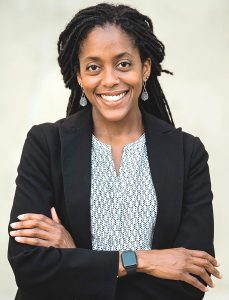
Brianna Wales-Thaxton doesn’t see diversity, equity, and inclusion (DEI) efforts in a vacuum. In fact, she likes to take a long view.

“We’re able to be a part of this work because of centuries of advocacy and justice seeking,” specifically from the BIPOC (Black, Indigenous, and people of color) community, she told BusinessWest. “All of us who are trying to work toward racial equity are building off of that work.

“We’re also at different places in that work, every single one of us, and until we’ve dismantled racism, everyone has a need to advance racial equity in their workplaces. It’s not just the right thing to do, but it’s what people are asking for in their workplaces in this generation.”

That’s why Wales-Thaxton, vice president for people and culture at the Community Foundation of Western Massachusetts, is excited about Equity in the 413, an inaugural summit that aims to advance equity in workplaces across Western Mass.

The day-long event, to take place on Tuesday, Oct. 24 at the Sheraton Springfield, is being presented by an impressive alliance of regional organizations. In addition to the Community Foundation, they include Behavioral Health Network, Health New England, Hilltown Community Health Center, the Human Service Forum, the Public Health Institute of Western Massachusetts, the Springfield DHHS Office of Health and Racial Equity, the Western Massachusetts Economic Development Council, and the Women of Color Health Equity Collective.

“This event marks a significant step forward in the ongoing journey toward an equitable future,” said Megan Burke, president and CEO of the Community Foundation. “We are thrilled to be part of this transformative summit. It not only underscores our commitment to fostering actionable change, but also represents a pivotal moment in Western Mass.’s collective journey toward a more equitable region in which we can all thrive.”

Organizers will bring together dozens of industry leaders and hundreds of professionals across multiple sectors. Attendees can expect to gain insight as presenters from an array of businesses and organizations delve into lessons learned from their own implementations of racial-equity policies and practices. Sessions will offer opportunities for dialogue, relationship building, self-care exercises, and providing tools and resources to assist business leaders in implementing racial-equity practices in their workplaces.

Gaining specific tools and strategies is key to “demystifying” equity work, Wales-Thaxton said, adding that, while many argue that there’s a bottom-line benefit for companies that prioritize DEI, that shouldn’t be the main rationale. “There’s also a societal need for every single one of us, as individuals and as part of institutions and organizations, to advance racial equity because there’s a real crisis in our social conscience.”

The event’s organizers agree.

“Diversity, equity, and inclusion are an integral part of BHN’s mission and philosophy, and we have learned so much in our efforts to operationalize social-justice values in our workplace,” said Steve Winn, president and CEO of Behavioral Health Network. “We look forward to coming together with other organizations to share learnings and take meaningful, collective action advancing racial equity across Western Massachusetts.”

Jessica Collins, executive director of the Public Health Institute of Western Massachusetts, added that the nonprofit looks forward to the opportunity for mutual learning and is “eager to share insights from our own journey to advance racial equity within our organization and the region, including learnings from our collaboration with the Women of Color Health Equity Collective and other regional organizations to center racial equity to reduce tobacco use.”

An expanding list of session presenters includes Willful Change LLC, the National Conference for Community and Justice, Caring Health Center, the Pioneer Valley Planning Commission, Massachusetts College of Liberal Arts, Arise for Social Justice, CORE XP Business Solutions, HUB International, Franklin County Community Development Corp., and Estoy Aqui LLC, to name a few.

Wales-Thaxton told BusinessWest the event connects back to the Community Foundation’s own strategic priorities.

“One is to advance diversity, equity, and inclusion at institutions and organizations, starting with our own. We’ve been doing a lot of that work in a really important way internally. This is an opportunity for us to share what we’ve learned with other employees and create a space for employers to begin to explore — or explore further — how to advance equity in their organizations.”

At the same time, “what else can we learn to advance this work internally through grants and making philanthropic efforts?” she added. “It ties up a lot of our strategic priorities and creates a space for us to have an intentional effort around racial equity.”

Tickets to Equity in the 413 — as well as the day’s agenda and a full rundown of presenters — are available at bit.ly/equity413.


—Joseph Bednar

Construction Special Coverage

Setting Their Sites

Marois Construction

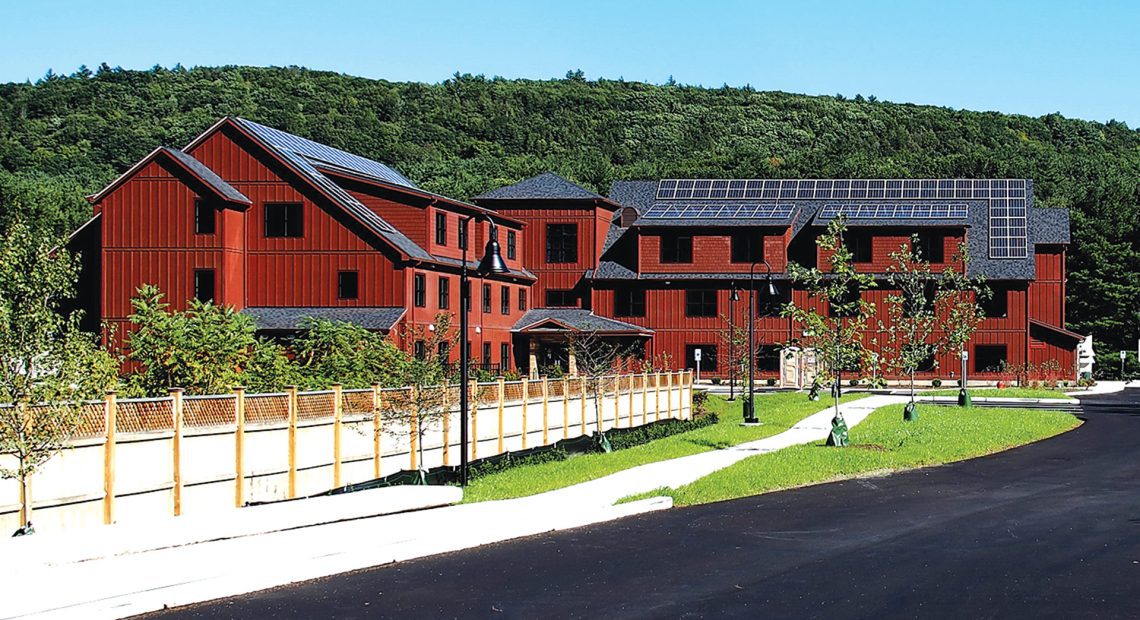
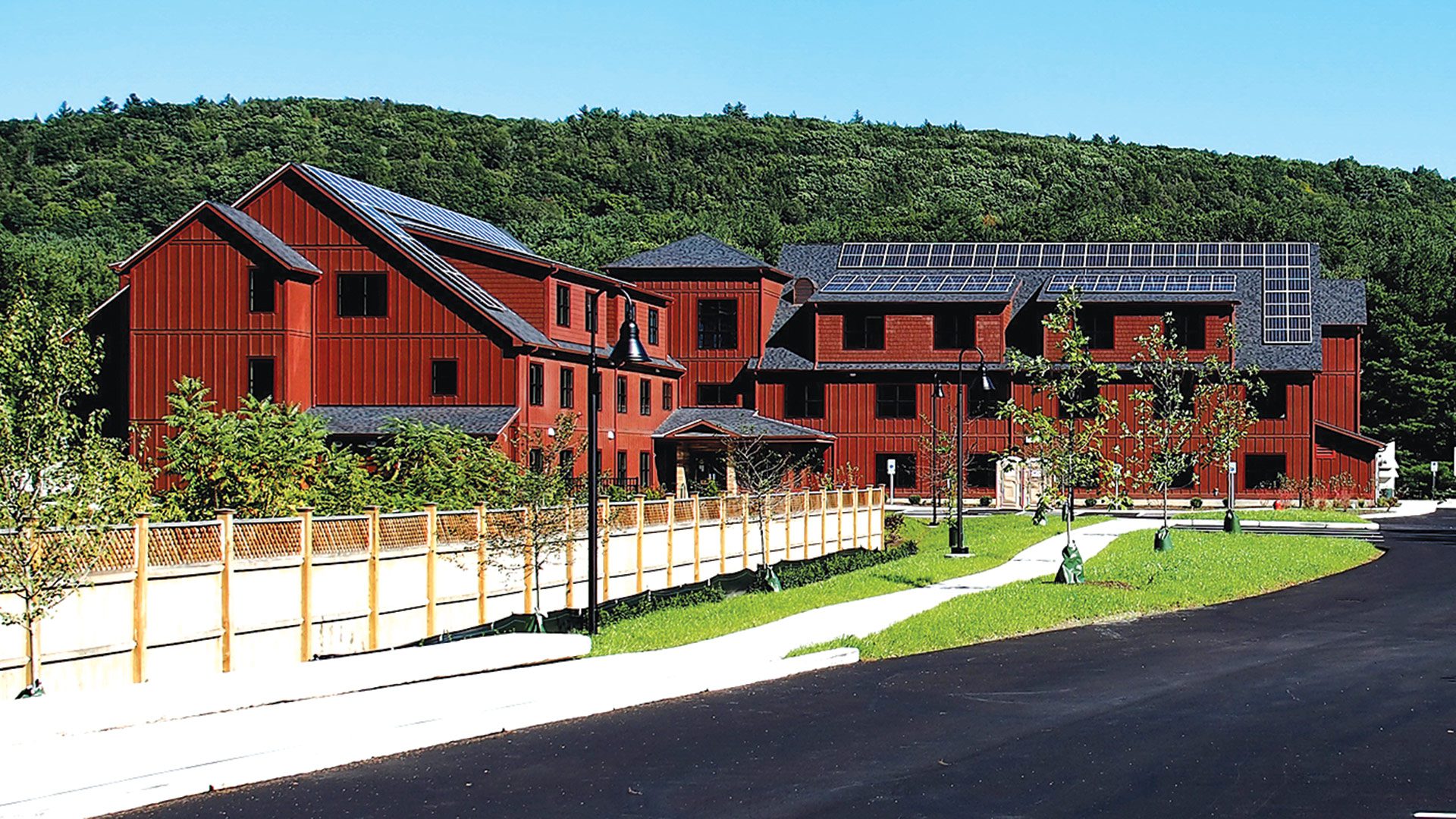
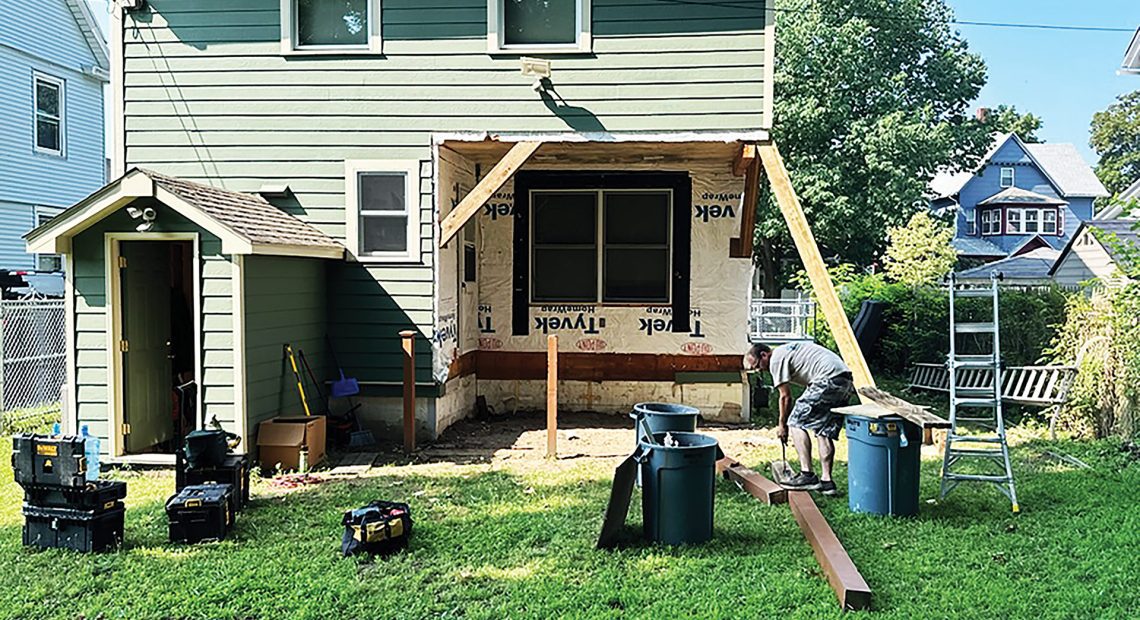
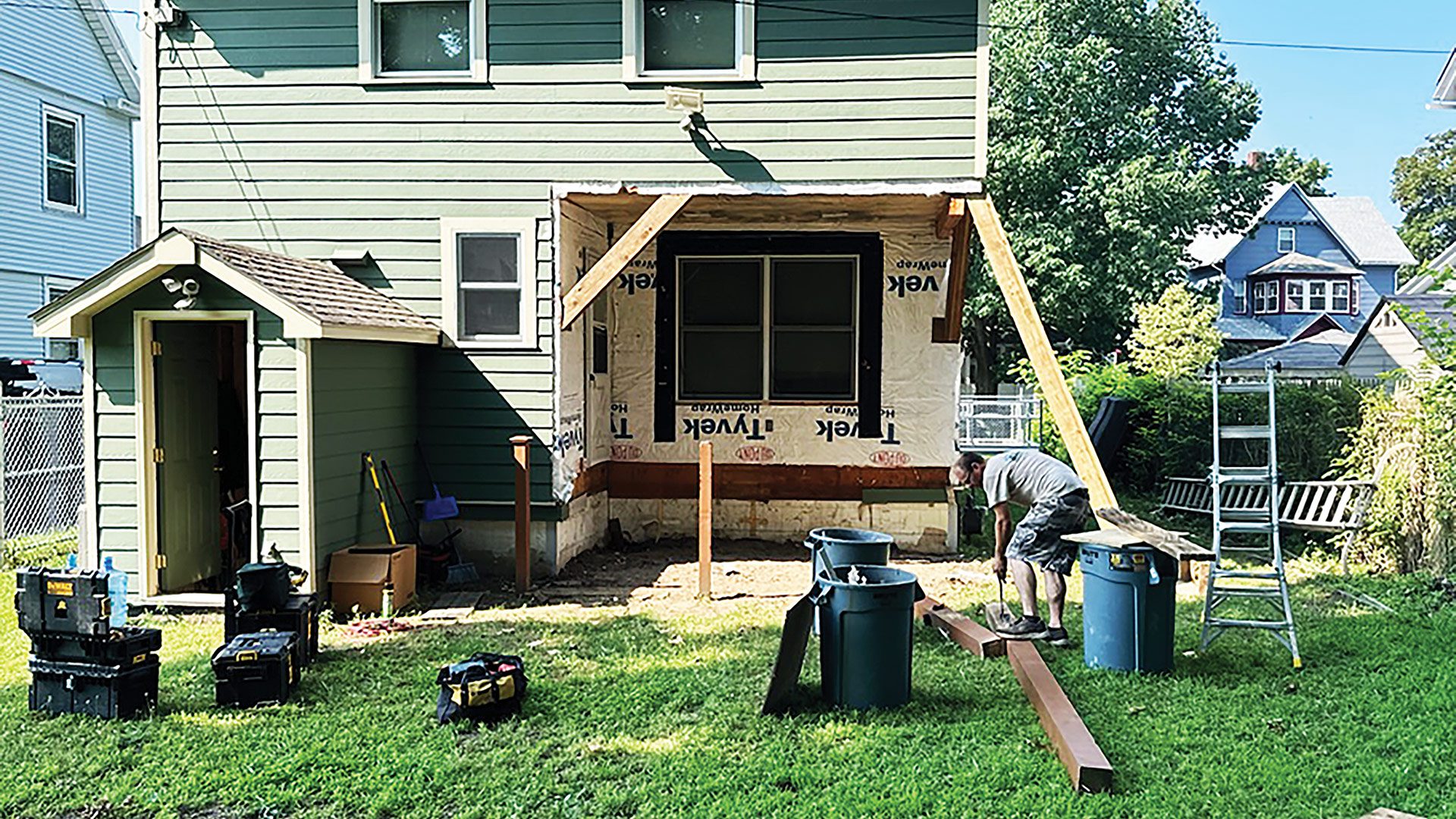
Marois Construction recently converted this single-family farmhouse built around 1860 into a three-story, 30-unit housing complex (top).


Construction is a lot like the mail. Projects have to be delivered on time, regardless of the weather.

And to say it’s been a rainy year is an undertstatement.

“Weather is a common occurrence in the construction industry. And, depending on what we have going on at any particular time, we typically have to continue operations, as long as it’s not a total washout,” said Carl Mercieri, vice president of Marois Construction in South Hadley.

On one day of downpours in mid-September, he recalled, “our crews were in the field. They were tying rebar for footings for a project they were doing for the Chicopee Water Department. They braved the weather and set up some collapsible canopies.

“Our project schedules don’t take weather into consideration. So we’ve got to complete them,” Mercieri added. “And not only that, but the crews doing that job need to move on to another job. So we do the best we can with what we got to work with. And, you know, I’ve been doing this for over 40 years, and the weather is not changing here in New England.”

But plenty else has changed in construction over the past 50 years, and Marois Construction — founded by company President Joe Marois in 1972 — celebrated that half-century milestone last year. Those changes run the gamut from new technology to cutting-edge materials to modern priorities in the building world, especially around green, energy-efficient building.

Through all of it, Marois has steadily built a solid reputation, and its current workload reflects that.

“Backing up a year, 2022 was a stellar year, and in 2023, we got off to the same start,” Mercieri said “Every year is a little bit different, though. This year has been a bit quirky. We’ve had a lot on our books, but for one reason or another, we’ve had some projects that got delayed.

“And then, of course, summer is our busy season, with all the college and school work. So we were working six days a week. Typically, when September rolls around, we start to slow down, and things get back to normal,” he went on. “But when those projects that actually got started got delayed, they all came to life in September. So we’re not seeing any slowdown here, looking at the third quarter and toward the end of the year. So it looks like it’s going to be another really good year for us.”


Broad Range of Expertise

Marois performs both public and private work, both new construction and renovations, across a range of sectors, including commercial, industrial, and educational projects, Mercieri said.

“Right now we’re doing a branch bank … we’ve got a couple of schools that we’re doing, kitchen renovations in schools. We’re also building a police department for one of the local municipalities.”

Carl Mercieri

Carl Mercieri

“I’d say probably 70% of the guys in the workforce are closer to retirement age than not. So it’s extremely important that we get some of the younger people in.”

This diversity can be a positive in an uncertain economy.

“With all the ARPA money out there, there’s a lot of school work going in the public sector,” he added. “And we’re seeing a trend toward the private schools and charter schools. We’ve got one that we’re working on right now out in Stockbridge.”

In the post-pandemic world, contractors have been faced with a number of challenges all at once, from the impact of inflation to supply shortages. Mercieri said those trends are starting to subside, but not as quickly as most would like.

“We continue to see issues. There seems to be longer lead times on products,” he noted, citing doors and windows as examples. “A few years ago, before COVID, we could call in an order in the morning for hollow metal door frames and have them by in the afternoon. Now, we’re seeing a lead time of several weeks, which really impacts the schedule.

“For a while there, lumber was scarce, but lumber seems to have rebounded,” he added. “Prices have come down somewhat, but they really didn’t get back to where they were.”

And when supplies and equipment are difficult to procure or beset by delays, “it keeps the project going. You can’t close it out, even though it’s substantially complete. So one of the things that we deal with is that, going into a project, you can anticipate these delays, but you really can’t put a finger on how long the delays are going to be; it really depends on the manufacturer’s production line and what they’re doing.”

In one case this year, involving a generator, he was given a delivery date of April, and a week or two before it was supposed to ship, the date was pushed to June, then it was pushed again to August.

“We ended up getting it the first or second week of September,” he went on. “So you have no control over that, and it’s an unfortunate situation. And we don’t know where the problem lies; we don’t know if it’s a matter of materials on the manufacturer’s end or labor or a combination of both. But it has a pretty big impact on the construction industry, for sure.”

So has a persistent workforce shortage, one that has affected many industries lately. “It’s tough, but that’s been a trending issue over the years; I don’t think that’s anything new in this industry,” Mercieri said.

“Ninety percent of it is showing up every day; 10% is paying attention and learning.”

“So … we’ve adapted,” he went on. “We run our crews a bit leaner, meaning when we set up a job, rather than having a large crew over there, we’ll set up a smaller core crew at each job. And then, as a task comes up, we’ll move people around to the job and build up the crew, get them in, get them out, and then move them on to another job.”

The leadership team at Marois is certainly not alone in noting the need for more young talent in the pipeline.

“I go to these job sites, and I see our own crew, or I see our subcontractors, and … some of these guys I’ve known for 35 years,” he told BusinessWest. “I’d say probably 70% of the guys in the workforce are closer to retirement age than not. So it’s extremely important that we get some of the younger people in.”

He said the industry has been hurt over the past couple decades by a prevalent message that young people need to go to college to be successful. In fact, Massachusetts ranks among the top states in sending high-school graduates to college. At the same time, industrial-arts programs have been cut from public-school curricula, due to liability, budget cuts, or other factors, Mercieri noted.

But there is a pitch to be made, at a time when families are growing more concerned with crushing debt coming out of college, that careers in construction are attainable, with a clear path to growth, without much, if any, debt.

“Ninety percent of it is showing up every day; 10% is paying attention and learning,” he said, citing the example of someone who wants to specialize in carpentry but might not have the skills for a specific niche right off the bat. “There are multiple facets in carpentry. And you may be better at one or the other. Maybe you’re good at rough carpentry, and maybe you’re not as good at finished carpentry. But over time, you’re going to be very experienced — and you’ll probably be good at both.”


From the Ground Up

Mercieri knows what he’s talking about; he fell into construction at a young age, doing work for a friend’s father who owned a construction business.

“Basically, I was the young kid, and I got to carry all the tools for the tradespeople. I learned the electrical trade, plumbing, carpentry. I got my hands and feet wet being a helper. Then, over the years, it kind of grew on me, and the rest is history.”

He’s been in the field long enough to experience the transition from bid requests via phone calls and snail mail to digital platforms.

“And you think about the field now. Back then, there were no cell phones; there were no iPads. If something came up, a guy would run to a phone booth, or we’d set up landlines with a trailer, and they’d be calling the office. Now our guys in the field have iPads; as soon as we receive something here in the office, it goes right upstream, and they receive it out in the field.”

It’s just one of many changes Mercieri has seen over his decades in construction. And with one more year almost in the books, he’s feeling optimistic about 2024.

“We’ve got a fair amount on the books,” he told BusinessWest. “Some of the jobs that we’re doing now will run into 2024. The bidding market seems very strong. So we think we’re going to do pretty well.”

Special Coverage Work/Life Balance

More Than a Seminar


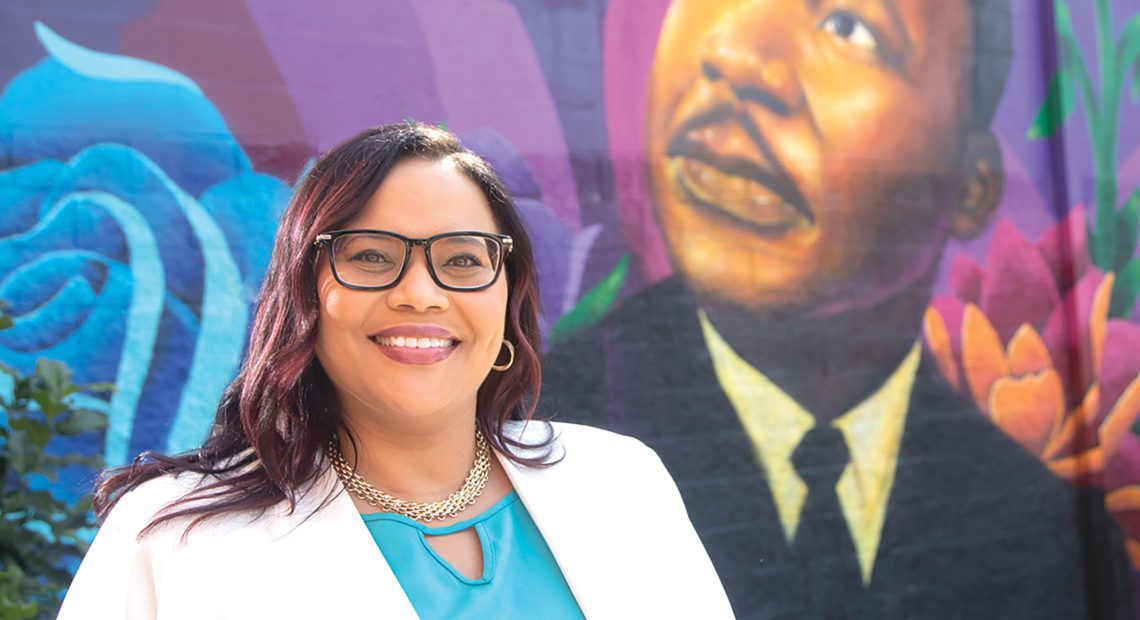
Shannon Rudder

Shannon Rudder says achieving real DEI in a company begins with creating a culture of authenticity and trust.


Shannon Rudder remembers her “bad boss.” And she never wanted to be one.

“What that bad boss did, what stuck out for me, was that everybody had to cater to how he led,” she said, adding that he believed that was how to maintain a bias-free workplace. Unfortunately, that philosophy can be incompatible with an equitable workplace.

“If I’m a single mom, maybe I can meet the deadlines, but I can’t do it in the same exact way as someone who doesn’t have kids, or has kids that are grown, right?” said Rudder, president and CEO of Martin Luther King Jr. Family Services in Springfield. “So in the most rudimentary sense, when you take the -isms and race and all that stuff out of it, that’s equity.”

And it’s a concept many businesses neglect when they talk about diversity, equity, and inclusion (DEI) programs, Rudder explained. They’re focused on a diverse workplace, but neglect to create the sort of culture where everyone is seen for their unique makeup and treated not equally, but equitably.

Colleen Holmes

Colleen Holmes

“We take a whole lot of pride and pleasure in working with folks as the individuals they are. That means that we look at the whole person and not one single aspect of their identity, and that’s what DEI is about.”

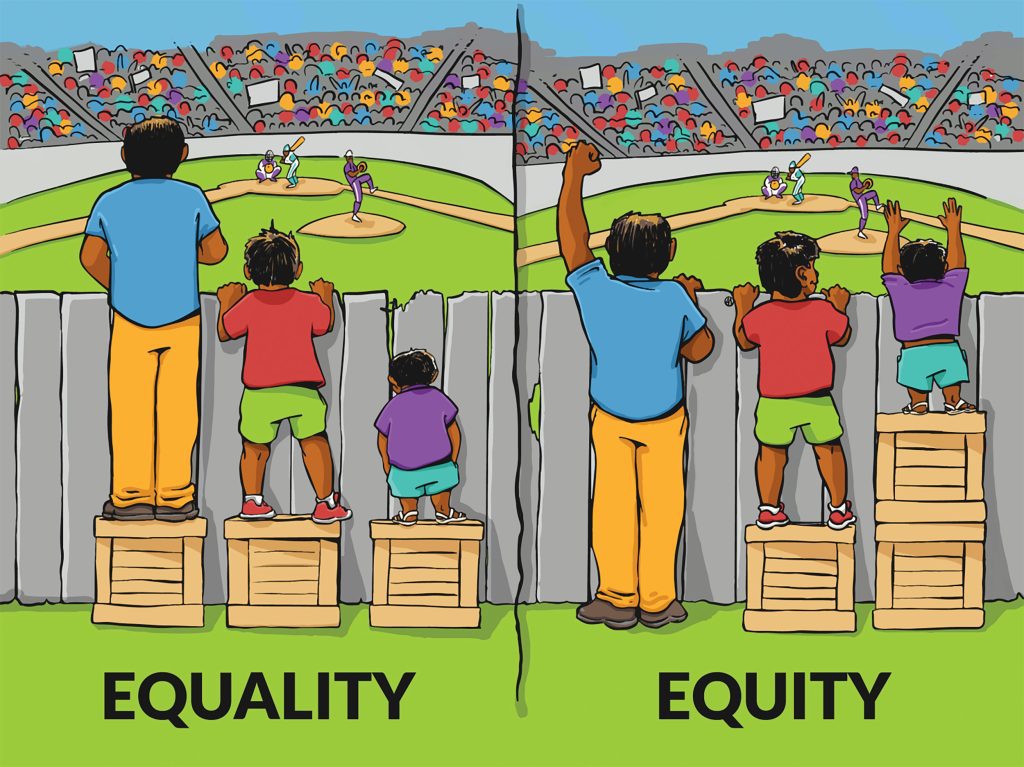
She cited a cartoon often used to express the point (see below). It pictures three boys trying to watch a ballgame from behind a fence. The first panel has each standing on a single box; though they’re being treated equally, the shortest boy still can’t see the game. The second panel, by moving those boxes around, demonstrates equity — now everyone can clearly see over the fence.

The barriers are different for each member of an organization, Rudder said, and so are the proverbial ‘boxes’ they might need to stand on to do their jobs effectively. (To take it a step further, the cartoon sometimes includes a third panel, labeled ‘liberation,’ with the fence removed completely.)

“The CEO of a nonprofit is not the same as a president or CEO of a Fortune 500 company, but conceptually, we can’t sit in our positions of power and think we know what everyone’s barriers are,” she added. “I’ve got to like actually talk to people to figure out what the barriers are. So it’s about the relationships.”

Interaction Institute for Social Change / Artist: Angus Maguire

It’s also about honest discussions about privilege and internalized biases and weaving equity into every corner of the organization — and that’s not something that can be achieved with a one-off professional-development seminar on DEI.

“You’ve got to get to the heart of why there are biases, why folks aren’t being productive working together,” Rudder said. “We’re all socialized very differently. So we need to create environments where folks feel comfortable and they trust each other. You don’t want somebody to feel tokenized; you want to be able to create that authenticity, that trust, so then you can begin to understand what the real barriers are.”

Colleen Holmes understands this concept. As president and CEO of Viability Inc. in Springfield, which provides vocational training, job placement, and other supports for individuals with disabilities, she’s worked with employer partners to help them understand how a workplace can benefit from workers from all backgrounds and all abilities.

“All the services we offer are around folks having the opportunity and support to be able to build their skills and attain things that are important and meaningful to them in their lives,” she told BusinessWest. “Everything we do is very specifically geared toward helping individuals find their pathway to thriving beyond whatever their limits are. And for individuals with disabilities, those limits are considerable.”

Trevor Brice

Trevor Brice

“Is this person better-qualified? Just give justification for the decision in case you’re challenged down the road.”

But they can be overcome — if an employer is committed to equity.

“We take a whole lot of pride and pleasure in working with folks as the individuals they are. That means that we look at the whole person and not one single aspect of their identity, and that’s what DEI is about,” Holmes explained. “The aspects of our identity are layered and complex, and that’s what makes us interesting people.”

The said the word ‘accommodation’ carries some baggage because people think it’s a one-way street — that the employer has to accommodate the employee, but isn’t going to benefit from that employee beyond checking a DEI box.

“In fact, when employers learn how to think differently in their approaches to getting business objectives met, they have more humanity in their company,” she said, adding that employers who understand this — who are willing to cultivate not only a diverse workforce, but an equitable, inclusive one — have a leg up.


Questions Around Diversity

The ‘diversity’ piece of DEI has been the source of much discussion lately, as employers have grappled with whether efforts to build a racially (and in other ways) diverse workplace will run afoul of federal law, especially after the U.S. Supreme Court struck down affirmative action in college admissions this past June.

“They didn’t directly speak to private employers; it only applies to colleges and universities,” said Trevor Brice, an attorney with the Royal Law Firm in Springfield, adding, however, that there could be ripple effects. “I think the implications of the Harvard and North Carolina ruling go more to reverse-discrimination suits, people in majority groups suing over being given unfavorable treatment in relation to minority groups because of affirmative-action or DEI programs.”

To be clear, he added, hiring and firing employees based on their status in protective classes has never been allowed. “What’s almost inevitable is there are going to be challenges to employers based on these cases now.”

Dan Moriarty

Dan Moriarty

“We have a long way to go with it, but we’re trying to build something. We want to make meaningful progress — not just check a box, but make a difference.”

Mary Jo Kennedy, partner and chair of the Employment Law practice at Bulkley Richardson in Springfield, agreed that the SCOTUS ruling has no immediate impact on the legal standards that govern private employers’ DEI or affirmative-action programs, noting, like Brice, the existing prohibition against making employment decisions solely based on a person’s protected characteristics, like race or gender.

“But there is the potential that we may see more reverse-discrimination cases,” she added, before listing several steps employers can take to promote diversity within the bounds of the law:

• Avoid considering race as a basis for employment decisions or practices in a way that could be seen as granting race-based preferences;

• Review any DEI policies or programs for compliance with federal and state laws;

• Understand that it’s OK to prioritize diversity and inclusion but not OK to use race- or gender-based quotas;

• Broaden the use of the term ‘diversity,’ understanding that it’s more than just race and gender; and

• Review the company website and other public-facing documents and internal DEI materials for compliance with federal and state laws prohibiting discrimination.

Employers can also protect themselves against reverse-discrimination cases by carefully documenting the reasons behind every hiring and promotion decision. In other words, it makes sense to cast a wide net to promote a diverse applicant base, but make sure there’s a business case for each decision, and “document, document, document,” Brice said.

“Why are you making this decision? Is it solely due to race or other protected characteristics? Then it’s probably not going to stand up to a legal challenge. But high GPA, work history, things like that are fine. So, is this person better-qualified? Just give justification for the decision in case you’re challenged down the road.”

Employment-law firms already see plenty of wrongful-termination cases, he added, and there’s a feeling that the June SCOTUS decision will embolden more of them, even though that ruling applies only to higher education. “More needs to be seen. There hasn’t been a legal challenge yet, so there’s no guidance yet.”


Making Meaningful Progress

Monson Savings Bank President Dan Moriarty has been actively been involved in DEI strategy over the past year or so, not only at his own institution, but through his co-leadership of an executive council established by the Massachusetts Bankers Assoc. to promote DEI efforts across member institutions.

“Every individual and every organization is on a different path along the way to being more diverse, equitable, and inclusive in their organization,” he said. “We have a DEI committee here at the bank, and we’re trying to adopt best practices from the Mass Bankers Association for advancing our DEI program.”

That process toward a level playing field begins with understanding the dynamics of DEI and the barriers and biases that hinder it, he noted, adding that he and two other MSB leaders recently attended a seminar at the Healing Racism Institute of Pioneer Valley. “That was phenomenal. Just the awareness and deep understanding was very impactful for me personally and professionally. We all have to do more.”

“Our corporate counterparts — and I get why they do it — focus on diversity because that’s a tangible way to demonstrate, ‘we’ve got X percentage of women, we’ve got X percentage that identify as able-bodied or people of color,’ all those identities. I get why diversity comes first. But for me, it’s really centered on equity.”

Adopting some best practices recommended by Mass Bankers, Monson Savings has created a DEI commitment statement, developed and implemented a DEI program that continues to evolve, provided DEI training to board members and employees, identified and monitored key performance metrics, and conducted periodic self-assessments of the program.

In addition, he said, the bank has reviewed numerous documents, including its strategic plan, along with communications, processes, and facilities, to ensure that potential barriers are identified and removed and that DEI expectations are reflected, while also conducting outreach and expanding the bank’s relationships with key community members and organizations.

“We have a long way to go with it, but we’re trying to build something. We want to make meaningful progress — not just check a box, but make a difference,” Moriarty said. “People want to do the right thing, but they have to educate themselves and really make a concerted effort to be able to make the change. It’s not just acknowledging we need more diversity, equity, and inclusion, but we also have to take actual steps to get us to a better place.”

Viability has seen its employer partners — more than 800 of them nationwide — find that better place.

“Some employers are looking to live a philosophy of the organization around diversity, equity, and inclusion because it’s the right thing to do,” Holmes said. “And there is data out there that shows that, if companies have accessible and welcoming environments for individuals with disabilities, consumers are more likely to shop there. And this is something businesses and employers have taken notice of.

“DEI is really a no-brainer,” she added. “But it does require a cultural change within an organization.”


The Rest of the Story

“Injustice anywhere is a threat to justice everywhere.”

That’s one of Martin Luther King Jr.’s most popular quotes; just about everyone has heard it. But far fewer, Rudder said, know the rest of the quote, the words King said directly after:

“We are caught in an inescapable network of mutuality, tied in a single garment of destiny. Whatever affects one directly, affects all indirectly.”

“That’s the nutshell of how I approach the work,” she added. “Our corporate counterparts — and I get why they do it — focus on diversity because that’s a tangible way to demonstrate, ‘we’ve got X percentage of women, we’ve got X percentage that identify as able-bodied or people of color,’ all those identities. I get why diversity comes first. But for me, it’s really centered on equity.”

Rudder said she practices ‘culture humility,’ which is a commitment to constant self-evaluation by which people not only learn to understand other cultures, but also critically examine their own — and understand the privileges they enjoy.

“If we’re going to aim to be centered in equity, we have to first understand where our privilege is,” she said. “And that goes back to Dr. King’s quote; we are all mutually interconnected. It’s a journey — it’s not just, ‘let’s do this program, and let’s check the boxes.’ We’ve got to weave this into the very fabric of who we are as an organization, as a corporation.”

Women of Impact 2023

CEO, Moms in Power

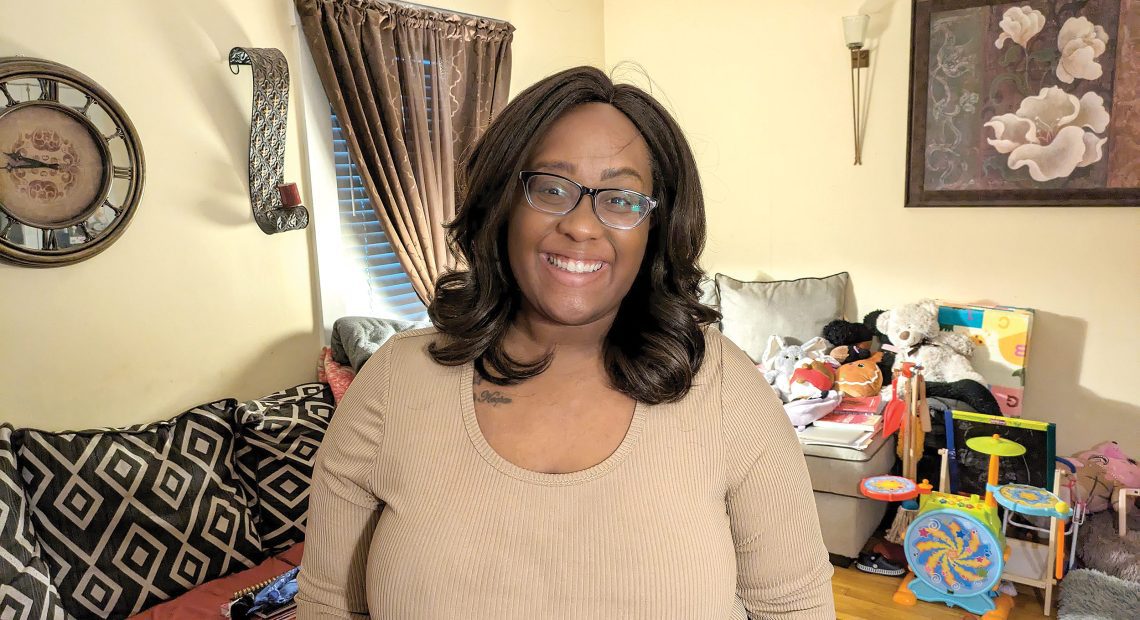
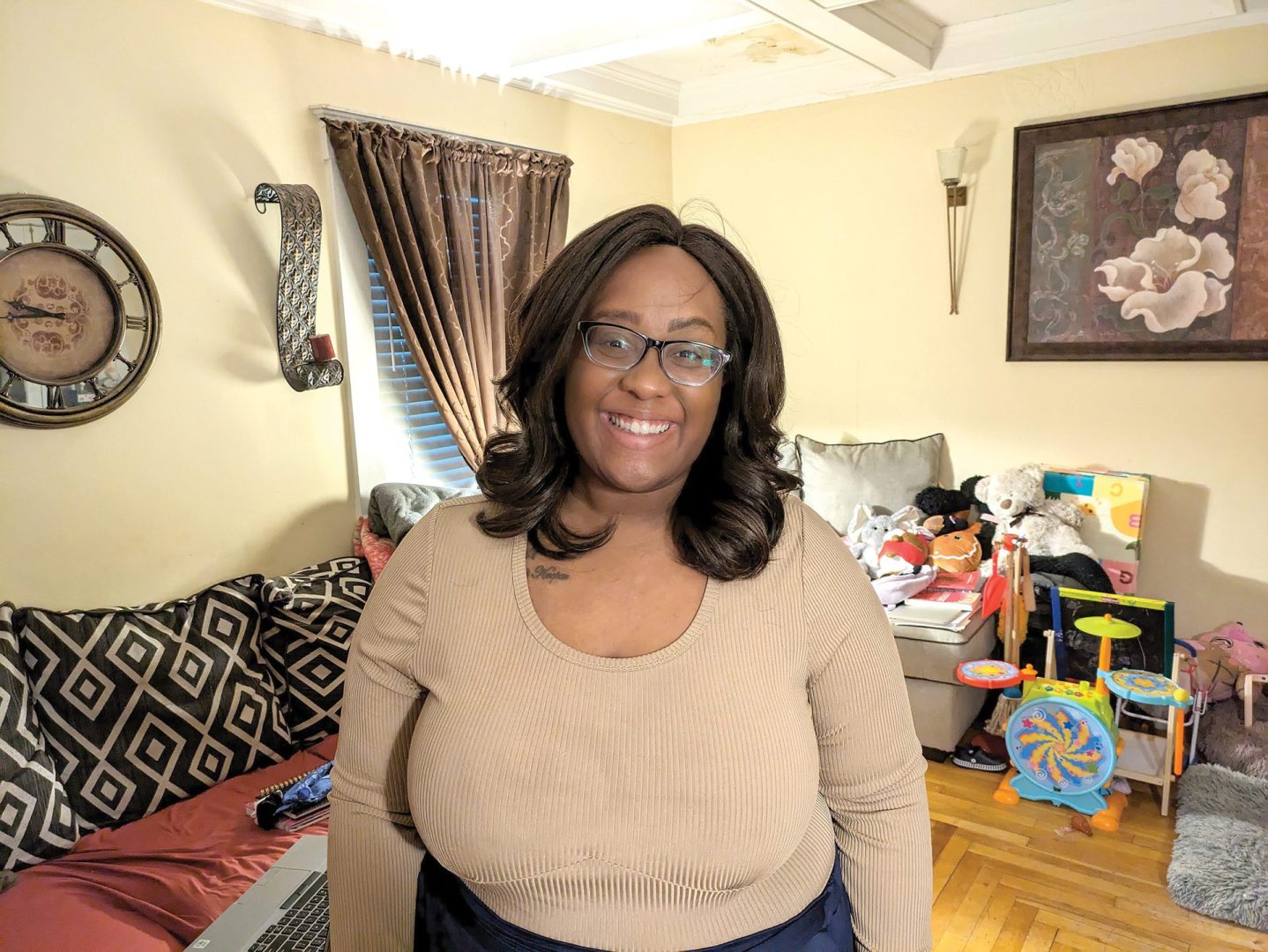
She Helps Women Break the Stigma of Postpartum Depression and Find Peace

Arlyana Dalce-Bowie

Arlyana Dalce-Bowie

Like many new moms, Arlyana Dalce-Bowie’s struggle with postpartum depression was twofold.

First, she fought to get to a place where she could be a caring, loving, and present mother. Then she had to rediscover herself.

The latter was, frankly, a lengthy process, but also a powerful one. And by not only working through the dark times, but sharing that experience with the world through an online community called Moms in Power, she’s making a real impact for women who might otherwise suffer in silence, or think something is wrong with them.

“This is something a lot of women go through, which is why I created Moms in Power,” she told BusinessWest. “Although we’re moms, people need to understand that we’re still women too. Not that motherhood is easy, but it was easier to nurture my baby and to love her and to make sure she’s protected — I just couldn’t do all that for myself. And Moms in Power literally speaks to the woman you’re becoming in motherhood.”

She was able to take six months away from her job at the Department of Children and Families, which allowed her to focus on her mental health — and navigate parenthood — while waiting a frustratingly long time during the pandemic to access therapy for her own healing (more on that later).

“That’s really where Moms in Power was birthed. It was me trying to do the work until I was able to get counseling. And then, of course, with the counselor, finding different ways that I can still navigate my postpartum.”

A licensed social worker and nutritional coach who now works for Springfield Public Schools as a City Connects coordinator, she’s in a much better place — largely because she’s grown through her own difficult experience while helping other women manage theirs.

“It is because of her resiliency, drive, and unselfish commitment to community that I strongly believe that Arlyana Dalce-Bowie is a Woman of Impact,” wrote Arlela Bethel, owner of the Movement LAB, who nominated her for the award. “When a woman is able to share her story with others in a meaningful way to begin to impart change, that is recognizable and commendable.”

Bethel added that “Arlyana’s passion for supporting the healing and recovery process of mothers who have or are dealing with postpartum depression diagnosis is a true testament to her ability to show vulnerability within her own personal struggle and, out of that struggle, create resourceful ways to help others. Moms In Power was born out of hardship and pain, but this amazing resource was designed to give other women the opportunity to feel empowered, to heal, restore, and to find purpose and strength within themselves not only as mothers, but as women.”

Rough Year

Dalce-Bowie’s pregnancy began at a difficult time for everyone, near the start of COVID-19; she gave birth in February 2021, when the pandemic was still raging.

“That was hard to navigate in and of itself. We didn’t know what was going on. And because I was a single parent, I couldn’t have my support system go to my prenatal appointments and things like that. Life was still very uncertain,” she recalled. “So I was kind of separated from my support system, and I was coming to terms with the fact that I was a single parent. And, of course, that just took a toll on my mental and emotional health.”

Even during her pregnancy, Dalce-Bowie was experiencing some depression and anxiety, so it was no surprise when she was diagnosed with postpartum depression six weeks after her daughter was born.

“When a woman is able to share her story with others in a meaningful way to begin to impart change, that is recognizable and commendable.”

“I didn’t see a therapist until she was almost 1; that’s how long the waitlist was. It took a really, really long time to get into counseling, to get the support that I actually needed.”

So, during that year, she started journaling because she felt she needed an outlet to process her emotions and experience some kind of release “so I wasn’t just in my head,” she explained, adding that “journaling has been something I’ve been doing since I was a kid, so I kind of reverted back to it.”

The prompts she has used in her own journaling and then with others, through Moms in Power, include “dismantling me,” which deals with the words women place on ourselves.

“When you have PPD or any other diagnosis, you kind of label yourself that way, saying that ‘I have this diagnosis, and that defines me,’” she said. “‘Dismantling me’ is an activity where we literally dismantle things that we feel about ourselves or that society has put on us or that our support systems have put on us.”

Another writing prompt is “a letter to myself,” she added. “I want you to write a letter, knowing what you know now, to your past self, encouraging yourself for the journey ahead. That’s probably my favorite one.

“Those two are probably our biggest prompts,” Dalce-Bowie noted. “They provoke a lot of tears. But it opens us up and gives us a place to come out of ourselves. I think a lot of us have our own guilt and our own shame, and we don’t like to talk about it openly.”

The writing prompts and the words and emotions that flow from them are intended to bring women to a place of understanding themselves — and realizing that what they’re going through isn’t shameful at all.

Arlyana Dalce-Bowie says the Mommy Moment workshops bring healing

Arlyana Dalce-Bowie says the Mommy Moment workshops bring healing because women are connecting over a shared struggle they may not have talked about.

“So many people have this idea that, when you have a mental-health diagnosis, it kind of disqualifies you from some things, or you’re not as great of a parent,” Dalce-Bowie said. “And I know, being a Black and Brown woman, we don’t seek therapy and counseling enough. It’s still kind of taboo in our culture.”

Before she started reaching out to others online, she found herself having to explain her needs to her family and others in her support system — in itself a necessary step in breaking the stigma of mental health.

“I said, ‘this is how I need support. I have a serious diagnosis.’ Because postpartum depression looks very different for many women, and for me, it was very severe. So I had to kind of coach them: ‘this is what I need, and how I need it, in order to get me into a better mental space.’”

The journal was a major part of getting to that better place, and so was aromatherapy, which she came upon while looking for other mental-health resources. “There are so many healing properties with candles; it creates a safe space, a calming space, and it just helps me cope in different ways.”

From there, Dalce-Bowie started sharing her story on her personal website — and found a like-minded community.

“There were so many women who were like, ‘we’re going through the same thing’ — especially those of us with pandemic babies, who didn’t have direct access to services right away,” she noted. “A lot of people were on the waitlist, so we just started reaching out to each other and having these group text messages and Facebook groups.”

On her social-media pages, she shared elements of her journey — “the good, the bad, the ugly, and everything in between” — and developed a business page for Moms in Power, on which she shares journaling prompts, sells aromatherapy products, and directs women to other resources.

“Journaling has been something I’ve been doing since I was a kid, so I kind of reverted back to it.”

Like the virtual Mommy Moment workshops, which came about because Dalce-Bowie and the moms she was connecting with needed a deeper, more personal outlet.

“We literally come together and have moments as moms. We talk about our postpartum depression; we talk about other diagnoses — because there are a few women that have been here with other diagnoses. We talk about married life and parenting, for those who are married. We talk about the single life and parenting and what that looks like for us.

“And there’s so much healing that comes from it because you’re relating to other women that may not have talked about it out loud, but we’re still going through the same struggle,” she continued. “The outreach part literally came from me sharing my personal journey and women saying, ‘we need more of this.’”

Strong Bonds

Dalce-Bowie said the moms she connects with tend to keep in touch even beyond the workshops, to check in with each other and see how they’re doing; she’ll often help members access therapists when needed.

The connections — and impact — she’s made have been heartening, she said.

“I can’t even put it into words. At the end of every workshop, we’re all so emotionally charged. I know my specific journey, but hearing other women reminds us all we’re not in this alone. So many times in this journey, you feel like you’re alone. So knowing that I’m helping to motivate them — in a way that I felt like I needed to be pushed and motivated at a certain point — is extremely gratifying.

“The fact that we get to come together and we don’t ever have to feel so isolated again is the best part for me,” she went on. “The stories that I hear literally bring me to tears because sometimes the journey feels extremely hopeless, so when you’re in a place where you realize, ‘I helped another woman realize their worth, and I helped another woman understand there is purpose after pain, and I see other women regaining their confidence and finding themselves again and starting their dreams again’ … there really are no words to describe that.”

Tears are not uncommon, she added. “We cry a lot because we’re reaching milestones together. It’s more than fulfilling. It’s really a blessing. It’s awesome to see.”

In a society that seems to demand that women must be great at everything, all the time — at being a mother, but a great woman too — Moms in Power helps redefine who they are as women in motherhood, Dalce-Bowie explained.

“I had to get over my trauma. I had to heal from a lot of things. I had to be present for my daughter. But once I was like, ‘OK, I’ve got the mom thing under control,’ it became, ‘let me start working on myself. Let me start working on my self-esteem again. Let me start working on my own dreams and goals.’ Because they were kind of pushed to the side to take care of my baby girl. So it was important to get back to a place where I’m confident in who I am as a woman.”

For not only succeeding in that journey, but helping other mothers achieve confidence and self-worth during what can be a crushingly lonely time, Dalce-Bowie is truly a Woman of Impact.

Women of Impact 2023

Founder, Faces of Medicine and Intentional Health, LLC

She’s Determined to Boost Diversity in Healthcare — and Improve Outcomes

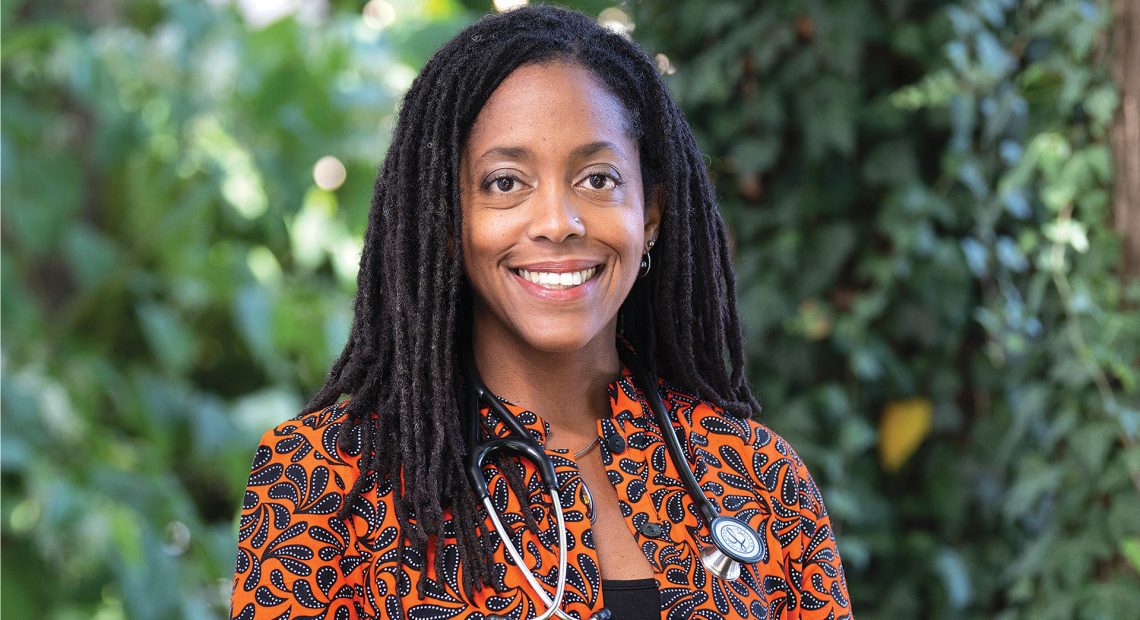
Dr. Khama Ennis

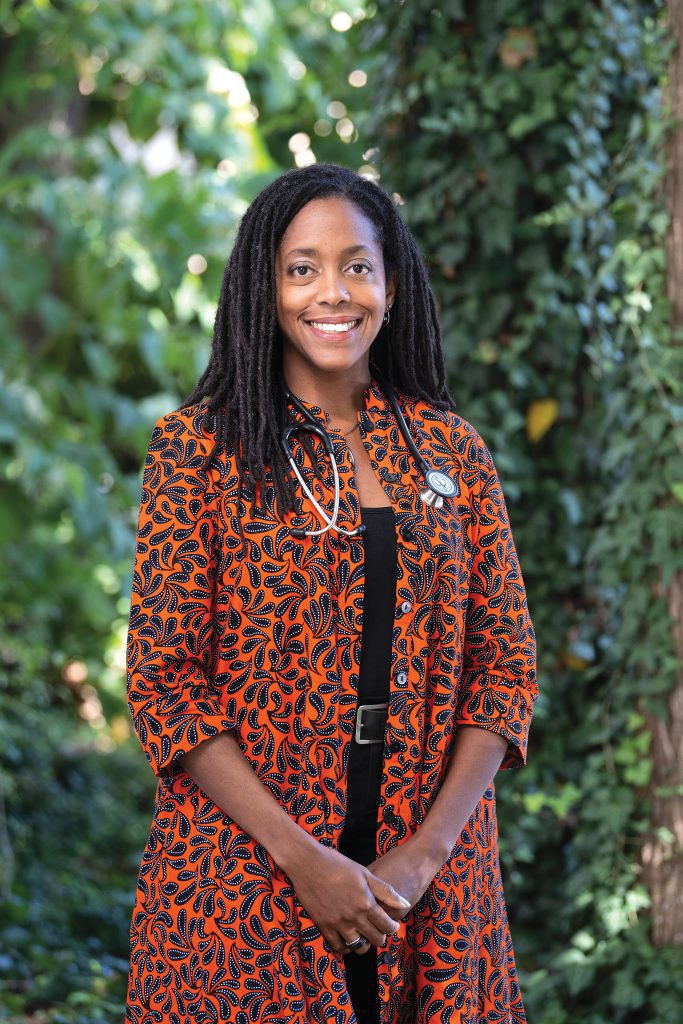
Dr. Khama Ennis loves the ER. She should, having been chief of Emergency Medicine at Cooley Dickinson Hospital for several years.

“I love the puzzle of it, and I love the immediacy of it,” she said. “The typical thing that comes to mind when people think about emergency medicine is adrenaline and chaos, but it’s never been that for me.”

Instead, “what I loved was the immediate connection, creating a safe space for somebody. You have to forge this immediate bond and ask really invasive, personal questions on what’s probably the worst day of their year, if not their life, and get them to share the things that are relevant so you get the information you need to get them the care they need. I really like that.”

But for most of her time there, Ennis was one of only two Black doctors in the hospital.

“There’s plenty of data that reflects the negative impact of inadequate diversity in teams,” she told BusinessWest. And in the latest chapter of her intriguing career, Ennis is doing something about that.

These days, she practices integrative medicine at a private office in Amherst called Intentional Health. But she also co-founded a nonprofit organization called Diversify Medicine in order to provide support for people from underrepresented backgrounds to gain access to careers in medicine.

She also founded Faces of Medicine, a narrative health-equity project centered on the journeys of Black female physicians — centered around a documentary series and a collection of mini-memoirs — with the goal of inspiring more women of color to enter the field of medicine and diversify the healthcare industry, with the idea that diversity in healthcare teams leads to a measurable and meaningful improvement in outcomes.

“Right now, black women are 2.8% of the physicians in the U.S., which is a little more than a third of what we represent in the population as a whole, so it’s clearly inadequate,” she said, noting that Black men, Latinx people, and Indigenous Americans face similar disparities. “Some groups are just underrepresented in these spaces, and outcomes suffer as a result.”

For her ongoing efforts, Ennis was honored this year by the Massachusetts Medical Society (MMS) with its Woman Physician Leadership Award, recognizing outstanding leadership and contributions to patients and the medical profession by a woman physician.

Ennis, the society noted, is viewed by her colleagues and the community as a leader in addressing structural racism in healthcare and social determinants of health. In addition to her work with Faces of Medicine, she penned several opinion pieces addressing race in medicine for the Washington Post and created a presentation for the Hampshire and Franklin County districts of the MMS that was selected by the Board of Registration in Medicine as one of three that meets the new licensure requirement for implicit bias education.

“I have continued to be impressed not just by how compassionate and professional a physician she is, but she’s also a tremendous role model for women physicians and for women of color,” said Dr. Kate Atkinson, a primary-care physician in Northampton and Amherst, when the award was presented. “Dr. Khama Ennis has been speaking out constructively and gently to educate and empower us all to do better.”

For that work, Ennis is not only a Woman of Impact, but someone whose impact on healthcare promises to bear fruit for decades to come.


Shifting Gears

Ennis was born in Jamaica; her family immigrated to the U.S. when she was a toddler, and she grew up in Southeastern Pennsylvania.

She graduated from Brown University with a focus in medical anthropology and earned her medical degree at NYU School of Medicine and her master of public health degree at Harvard T.H. Chan School of Public Health. She practiced at Cooley Dickinson Hospital for a decade and a half, starting in 2006, and eventually rose to chief of Emergency Medicine from 2015 to 2020 and medical staff president from 2022 to 2022.

But as early as 2018, she was looking for a change, for a number of reasons.

“Right now, black women are 2.8% of the physicians in the U.S., which is a little more than a third of what we represent in the population as a whole, so it’s clearly inadequate.”

“What I had come to do was done: the department was stabilized, the wait times were down, and we’d had some real achievements,” she recalled. She had also gotten divorced and found the 24/7 on-call nature of an ER schedule to be incompatible with effective co-parenting.

So Ennis switched gears and went into integrative medicine, opening Intentional Health in downtown Amherst earlier in 2023.

“My training is more allopathic, traditional, conventional Western medicine. But I provide and have received acupuncture, therapeutic massage is incredibly important, physical therapy is important, chiropractic is important. There are different ways to bring all of these different players in to optimize people’s health.”

Even elements like nutrition education is critical to her work. “I like being able to suggest … ‘if you eat that instead of that, you’ll still be full, but your blood sugar will come down.’ If people have a bit more understanding, they can have more control over their own health,” she explained.

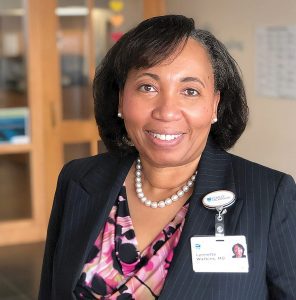
Dr. Lynnette Watkins

Dr. Lynnette Watkins, president and CEO of Cooley Dickinson Health Care, is one of the four physicians profiled in the first episode of the Faces of Medicine documentary series.

“I’m not a primary-care doctor, and I think what’s terrible about our overall healthcare system is that it doesn’t allow primary-care doctors to get to a lot of this,” she added. “It’s structural; they’re given 15 minutes to see a person, and it’s really hard to get into depth in 15 minutes with anybody.”

So, in addition to her acupuncture certification, “I have studied lifestyle medicine, which looks at nutrition and activity, sleep, restorative practices, community, all those things that play huge roles in individual and community health.”

At the same time, Ennis has been hard at work over the past two years on Faces of Medicine, a memoir and documentary project that will have its first public screening on Monday, Oct. 16 at Amherst Cinema, with the first episode telling the stories of four Black women who are making an impact on healthcare locally: Dr. Lynnette Watkins, president and CEO of Cooley Dickinson Health Care; Dr. Thea James, associate Chief Medical Officer and executive director of the Health Equity Accelerator at Boston Medical Center; Dr. Valerie Stone, director of Health Equity Initiatives in the Department of Medicine at Brigham and Women’s Hospital; and Dr. Rose Cesar, a gastroenterologist at Baystate Franklin Medical Center.

“We’re also going to be telling the story of Rebecca Lee Crumpler, the first Black woman to ever earn an MD in the U.S.; that happened in 1864,” Ennis noted.

She plans on interviewing at least 30 physicians for the series, and has conducted 16 interviews so far.

“I reached out to different Black female physicians across the country. Some of them I knew; a lot of them were a friend of a friend or some other connection,” she explained. “But the first episode is all Massachusetts stories. They will be telling their own stories, pulled together from the interviews they’ve done over the last year and a half.”

Faces of Medicine will also arrange virtual screenings for two days after the Oct. 16 event for anyone who can’t make the premiere.

Crafting a documentary, for someone whose training is in a much different realm, was a challenge, she said, but a gratifying one. Her team includes Seth Lepore, who handles day-to-day operations; and Executive Producer Jenahye Johnson of Brooklyn-based Homebase Studios, a production studio and crew-sourcing agency that touts “storytelling through community.”

“I needed a company, so I incorporated a company. And then you need fiscal sponsorships, so I got fiscal sponsorships,” Ennis said. “And then I started fundraising at the very end of 2021. Thus far, we’ve raised about $250,000, which is what’s funded all of the work so far.

Dr. Khama Ennis

Dr. Khama Ennis was also honored this year with the Massachusetts Medical Society’s Woman Physician Leadership Award.

“Ideally, this can go in a couple different directions from here. I either continue grassroots fundraising to get the rest of the episodes funded and completed, or an executive producer with means says, ‘I love this project, and I want to help steward it across the finish line.’ That would be amazing. Or PBS or a streaming service says, ‘this is something that we’d really love to engage with.’”

The initial plan is to complete four episodes that span the breadth of the country, numerous specialties in medicine, and myriad stories and paths. The series could be a template for other underrepresented groups, too, from Latinx and Indigenous Americans to LGBTQ individuals, she said. “The whole goal is to have young people see themselves reflected in these stories and see possibilities they can grab onto.”


Worth the Effort

Faces of Medicine dovetails nicely with Ennis’s work on Diversify Medicine.

“The goal that I have there is to create a short-term database. There are lots of organizations doing great work to try to bring people into this space, but if you don’t know exactly what to search for, you’re not going to find a program that could support you.”

The database is intended to help underrepresented populations find resources to help them access medical careers, and she also plans to create a virtual mentorship network to amplify the voices of professionals of color already working in the space.

“We have concrete data that support the importance of diversity on teams for improving health outcomes,” Ennis noted. For example, one study came out that looked at the infant mortality rate in Florida, which was two to three times higher for black infants than for white infants — and that disparity was cut in half when the pediatrician was black.

“The data that I’ve found most specifically speaks to physicians, but I think it’s true of every player in the healthcare team. Doctors are useless without nurses, and nurses are useless without techs. We all need each other in order to do this work, so I truly believe that every level needs to reflect the population we’re serving.”

Meanwhile, Faces of Medicine holds the promise of inspiring young women of color to pursue the dream of a medical career from an early age.

“There are experiences in elementary, middle, and high school where people can either be encouraged or discouraged,” she said. “Somebody can express an interest in medicine, and somebody else can say, ‘oh, that’s really hard, are you sure?’ Or somebody can say, ‘that’s great; let’s figure out what the next step would be.’”

The women being profiled in Faces of Medicine all figured out that next step, and are able to clearly communicate how and why.

“Say you’re a smart kid, but you just don’t think it’s possible because you’ve experienced homelessness. We can show them somebody who had some real struggles in their family growing up, but they got here,” Ennis said. “I’m not Pollyanna; I don’t want to tell anybody that it’s easy. But I do want people to get that it’s worth it.”

Women of Impact 2023

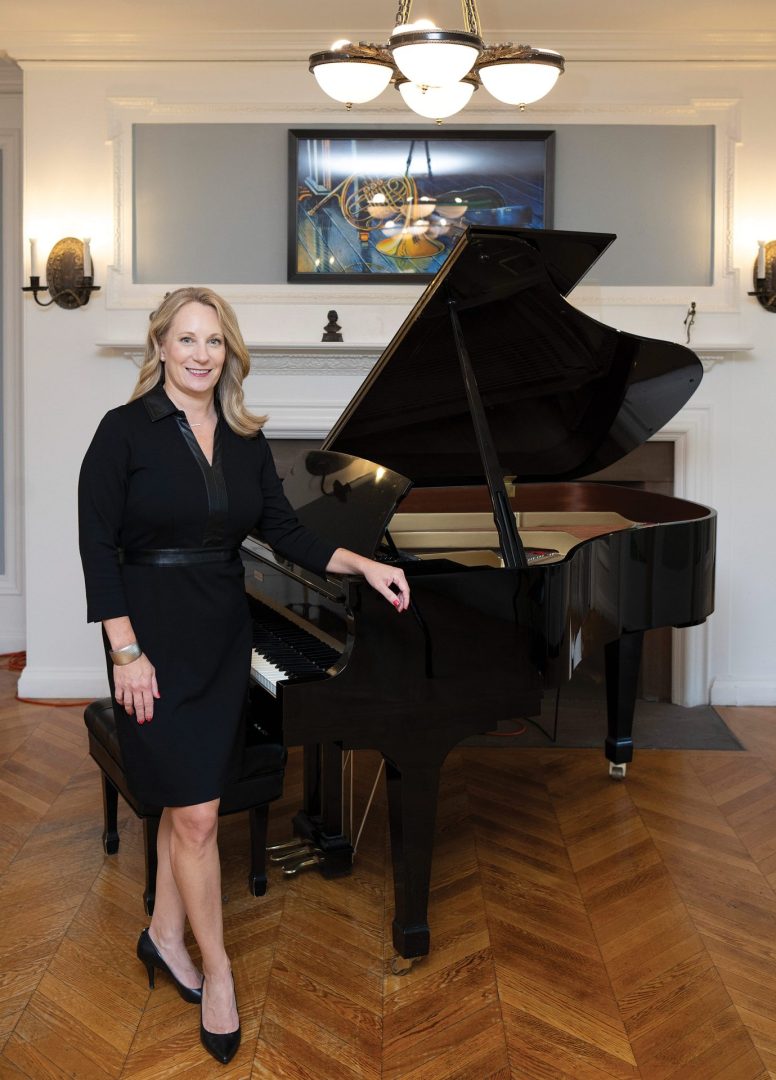
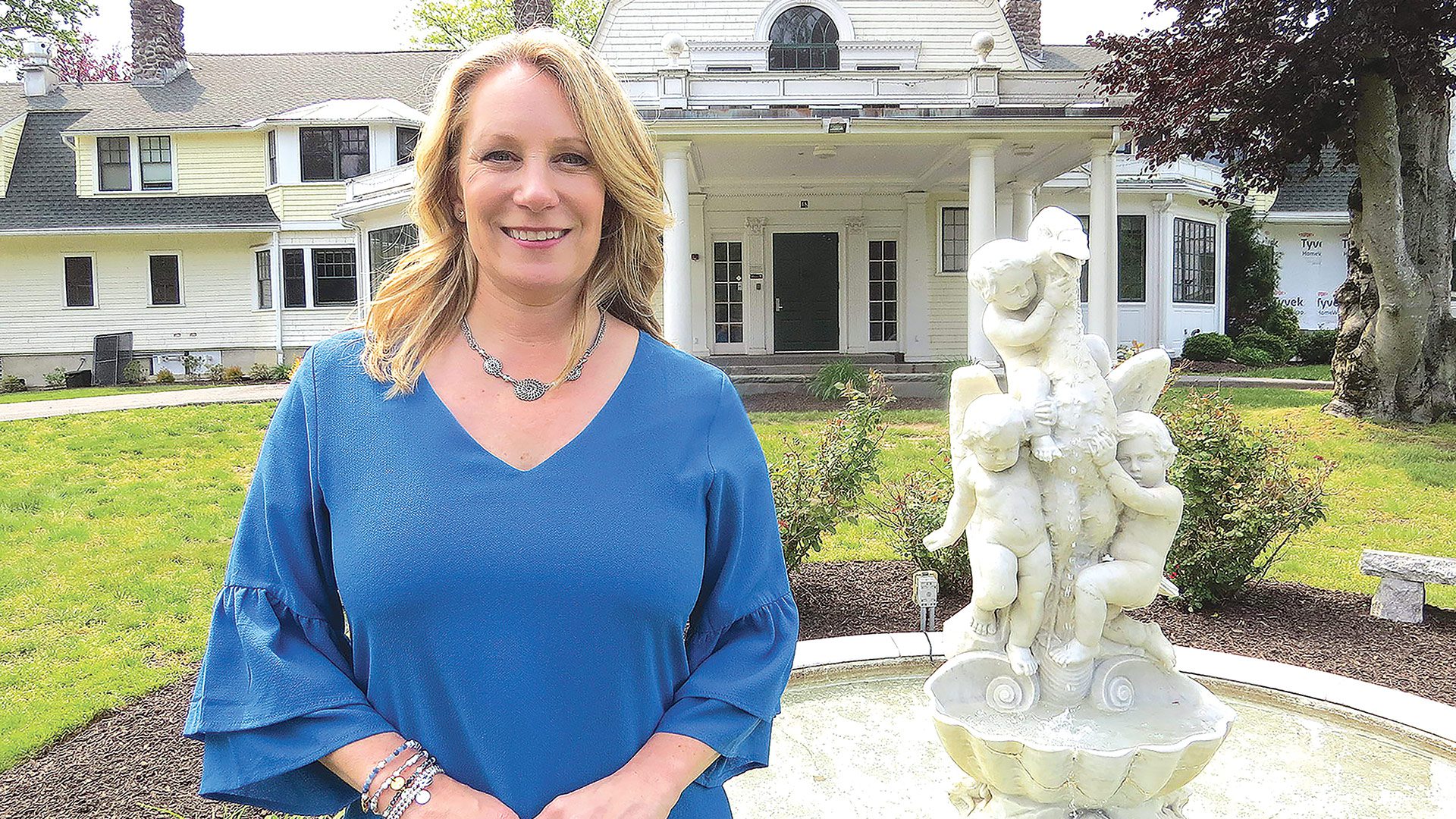
CEO, Berkshire Hills Music Academy

She Helps Young Adults with Disabilities Build a Lifetime of Ability

Michelle Theroux

Growing up in South Hadley, Michelle Theroux would ride by the old Skinner family residence on Route 116, just north of Mount Holyoke College, and have no clue what it was.

Or what it would become.

“Wistariahurst in Holyoke was the family’s winter home, and this was their summer home,” she told BusinessWest. “And when the last living Skinner passed away, this property went to Mount Holyoke. But it never had an identity within the campus, so around 1998, they were looking to divest several of their properties.”

Among the interested buyers were the founders of Berkshire Hills Music Academy, which will celebrate a quarter-century next year as a unique, college-like program for young adults with intellectual and developmental disabilities who are looking to expand their social, vocational, and music skills in a decidedly music-infused environment.

Theroux came on board in 2013, providing some needed stability. As in much-needed.

“I was the eighth executive director in our 13-year history when I was hired,” she said. “When I spoke with the recruiter, I said, ‘you have to give me the backstory. Am I walking onto the Titanic? What’s going on here?’”

The answer, she decided, was ‘founder syndrome’; the institution had some strong founding families who had competing visions, so there wasn’t one consistent direction, which burned out each director quickly. In fact, when Theroux reached just 20 months on the job, she became the school’s longest-tenured leader ever.

“I was able to get some traction with staff and make changes, as well as with the board. I said, ‘if we’re going to do what we need to do, here’s how we’re going to do it. And you’ve got to let me do my job. I can’t be second-guessed at every turn. We’re going to have to change.’”


It helped that her music background — she began studying tap, jazz, and ballet dance at age 5; added dance instruction when she was just 16; and later toured nationally in a jazz-based children’s show — gave her some “street cred” with the staff.

“I knew what it’s like to be on a gig; things like that allowed me to be a bit more successful than some of the predecessors.”

That success, a decade into Theroux’s tenure, is measurable. The student body was 32 when she arrived, and is past 75 now. “That’s capacity,” she said. “So for us to grow, we would be taking on a new building, most likely off-site and in the community somewhere.”

Which may happen at some point, because the school’s success extends far beyond numbers. It’s all about the total impact on these young adults’ lives.

Berkshire Hills boasts a day program and a residential program. “If they’re residential, they’re most likely living for the first two years in our dorm, and then they can live in the community after that,” she explained. “Our two-year program really focuses on shoring up their life skills — everything from cooking to money management, which includes going to the bank and then going shopping and making sure you have a list of what you need versus what you want.”

The entire program, in fact, is built around preparing students to live independently and successfully in the community.

“We have a whole course on social skills with friends, social skills in the workplace. We teach what language to use and what’s an appropriate hand gesture when you meet somebody: you shake their hand; you don’t give them a hug. Because a lot of times, it’s the soft skills that individuals who have intellectual and developmental disabilities may struggle with and could lead to potential conflict, say, in the workplace.”

“When I spoke with the recruiter, I said, ‘you have to give me the backstory. Am I walking onto the Titanic? What’s going on here?’”

Speaking of which, students also explore vocational skills and strengths. “We do a lot of volunteer opportunities in the community: at the local food pantries, the Dakin animal shelter, and a few other places, like Share Coffee, to see what their skill sets are, what their interests are. And then, as they go through our program, they match those skills with potential employment later on.”

But what really sets Berkshire Hills Music Academy aside is right there in the name.

“We are known for individuals who have an intellectual or developmental disability, who are highly musical,” Theroux explained. “We’re one of the very few places in the country where they can get lessons and programming, but we also act as their agent, their manager, their accompaniment, their arranger.”

Michelle Theroux

Michelle Theroux says Berkshire Hills Music Academy is at capacity and may need to grow into another building in the community.

In fact, students are provided with opportunities to perform locally, both individually and in a number of different ensembles in different musical genres, and in settings ranging from local schools to Fenway Park, where students have sung the national anthem.

In short, these young adults are living full lives, enjoying and perfecting their music skills, and preparing to live independently after their enrollment at Berkshire Hills. And Theroux’s steady leadership has plenty to do with their success.


The Power of Music

Some gigs can be especially impactful for audiences.

“We have about 15 nursing homes or assisted-living facilities in a rotation that our bands will cycle through each year, and those facilities love having them,” Theroux said. “One reason is our students are super warm and embracing and fun. They’re also very talented.

“And there’s a connection between the aging brain and music,” she added. “For example, somebody with dementia or Alzheimer’s will have lapses in their memory, but they’ll hear a song, and it will bring them right back, and they’ll remember all the words to it. If it’s their wedding song or their prom song, whatever it is, they have a memory that gets triggered by the music. So we are a fan favorite in the local nursing homes.”

The school even has a dance ensemble that’s starting to pick up gigs as well, sometimes accompanied by a Berkshire Hills musician or ensemble, sometimes on their own.

Speaking of gigs, the young musicians earn money for appearances, with just a small percentage deducted to cover the school’s staffing costs, Theroux said. “They know there’s value to their work. Like you and I value our paychecks, so do they. So, yes, these are paid gigs.”

“We’ve really looked at the individual, and instead of just focusing on areas where they need support, because there’s a deficit there, we’ve looked at where their strengths are, where their passions are, where their gifts are, and really build on that.”

And when audiences hear them play, sing, and dance, they understand the value, too.

“When they hear our music, people are like, ‘wait, what? They have a disability?’ Because when you hear the music, you hear good music. You don’t hear a disability.”

That’s why these students have performed at other schools, too, funded by anti-bullying grants, to drive home the message of ability, not disability, Theroux said. “The message is, ‘if I have autism and can sing like this, you might have autism, so guess what? You, too, have skills; you, too, have talent; you, too, have strength.’ Our bands go into some schools, and they’re like rock stars.”

Berkshire Hills students don’t have to be highly musical to enroll, she added. “But if you are, there is a music track for folks where that can be their vocation. We have a secondary tier; we have several bands that gig in the community at a high level.”

These successes — in music and in life — are reflected in words of gratitude from families over the years, Theroux said.

“It’s everything from a parent telling us, ‘I never thought my child would shave his own face’ to becoming highly musical and standing up and performing in front of 200 people, to getting their own apartment,” she noted. “Our goal is to figure out how to make somebody as autonomous and independent as possible. Whatever level of staff support is needed, we will provide, but the goal is really to push the areas where they don’t need support.”

Michelle Theroux says the school’s culture of inclusivity

Michelle Theroux says the school’s culture of inclusivity extends to the way the staff treats students, families, and each other.

And when the result is someone who can live on their own, do their own laundry, cook their own meals, hold down a job, handle their banking … and also have outlets to express their musical talent, well, that’s the heart of the Berkshire Hills mission.

“We’ve really looked at the individual, and instead of just focusing on areas where they need support, because there’s a deficit there, we’ve looked at where their strengths are, where their passions are, where their gifts are, and really build on that,” she added. After all, “we all have deficits; we all have things we’re working on and trying to improve.”


Sign Her Up

Away from her day job, Theroux is an example of the mantra that, if you need something done, ask a busy person.

Among the boards she’s sat on and organizations she’s served are Mercy Medical Center and Trinity Health Of New England, the South Hadley/Granby Chamber of Commerce, the town of South Hadley, the Women’s Fund of Western Massachusetts, the Human Service Forum, and MicroTek, a Chicopee-based manufacturer that employs people with disabilities.

And she brought a wealth of nonprofit-management experience to Berkshire Hills when she came on board as executive director in 2013 (she took on the CEO role in 2021); those roles include executive director of Child & Family Service of Pioneer Valley, director of Special Projects at Clinical and Support Options, vice president of Clinical Services at the Center for Human Development, and director of Family Networks at the Key Program.

Even right out of graduate school, she found herself working in human services at the Gándara Center, running a behavioral-treatment residence for adolescent boys who had sexual reactive behaviors or fire-setting behaviors. “That’s an interesting population to cut your teeth on,” she said.

All this prepared her to lead Berkshire Hills, and lead she has; soon after arriving, she stabilized all facets of operations, created an operational budget surplus, doubled the operating budget over a two-year period, expanded contracts with the Department of Developmental Services, and exceeded the $3.3 million goal on a capital campaign. She also oversaw the construction of a new music building fully funded by that campaign.

“I’ve worked in several other human-service organizations, and this place has a very different flavor and feel when I walk in — not only the physical campus that we have, but the culture we try to promote around inclusivity, that’s strength-based and person-centered,” she said. “That extends to how we treat our colleagues and how we treat each other as staff. It’s one thing to be client-forward, but how do we make sure that’s all-encompassing in terms of who we are and what we do?”

For answering that question every day, and changing young lives for the better, Theroux is certainly a Woman of Impact.

Women of Impact 2023

Author, Speaker, and Child and Mental-health Advocate

By Sharing Her Story, She’s Turned Her Tragic Youth into an Impactful Life


Photo by Leah Martin Photography

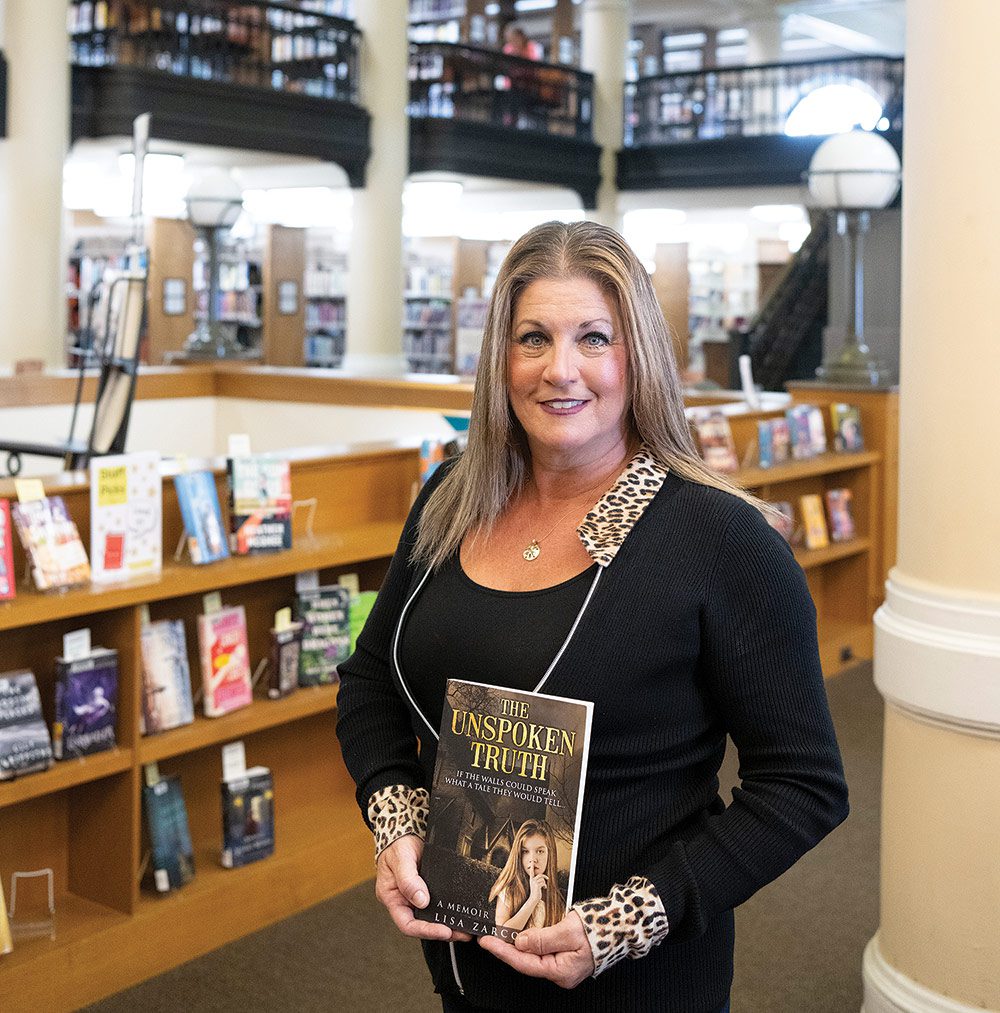
Lisa Zarcone brought a book to her interview with BusinessWest, called The Unspoken Truth. It’s a memoir she wrote several years ago.

More importantly — and tragically — she also lived it. And it’s a rough read.

“The Unspoken Truth is my story, of the abuse I went through,” she said. “I was silent for years about it and never spoke of it, and it was so damaging to me. But as an adult, I was finally able to break free and share my story.”

“I tell anybody who reads my book, ‘be prepared.’ It’s a very raw, real look at what abuse is like through the eyes of a child,” she added. “When you read stories of other abuse survivors, they take the point of view of the adult looking back. But I took the child’s perspective, right in the moment. I wanted people to understand what the child really goes through.”

But Zarcone’s story since that childhood — in which she was physically, emotionally, and sexually abused for the better part of a decade — has been truly inspiring. It’s a story of coming to terms with a horrific past, of learning to trust others with that story, of surprising depths of empathy.

It’s a story of bravery and vulnerability. It’s the story of a Woman of Impact.

And it starts with her mother. In fact, Zarcone’s current advocacy work around mental health is rooted in her complicated relationship with her mother, who has struggled with mental illness her entire life.

“My mom never got the proper help and support that she needed,” said Zarcone. “And because of that, we both fell through the cracks. Again, the abuse was horrific. And it went on for years. It wasn’t like it just happened in a short period of time, and we were able to move forward from it. This went on for years.”

“I buried my past. I took it all and said, ‘I’m not going to speak of it, I’m not going to think of it.’ And I fought every single day of my life not to bring it up, not to focus on that pain. I was driven by that.”

When Zarcone was 6, her brother died of leukemia, and that’s when her mother’s world — and her own life — fell apart. “My mom never recovered. My dad said the day my brother died was the day she died, and on many levels, that’s the truth, because she couldn’t recover from it. And back then, in the ’70s, mental health was not talked about; it was frowned upon.”

As her mother deteriorated, “the stigma was horrendous. People treated my mother very poorly because she was sick. And nobody wanted to deal with her,” Zarcone recalled. “And because of that, I was left home alone with my mom. My dad buried himself in work and activities, and he was barely around.”

Her father eventually left, and her mother’s abuse, which started verbally, eventually became physical. Meanwhile, she started bringing unsafe people into their home.

“She loved to pick people up off the street, homeless people, hitchhikers — she’d bring them home and wanted it to be like a party at all times; she rode that roller coaster of the highs and lows and the mania.”

When she was only 12, a troubled older boy from the neighborhood claimed Zarcone as his girlfriend, and her mother encouraged the coercive, sexually abusive ‘relationship,’ which lasted a year and a half.

Lisa Zarcone

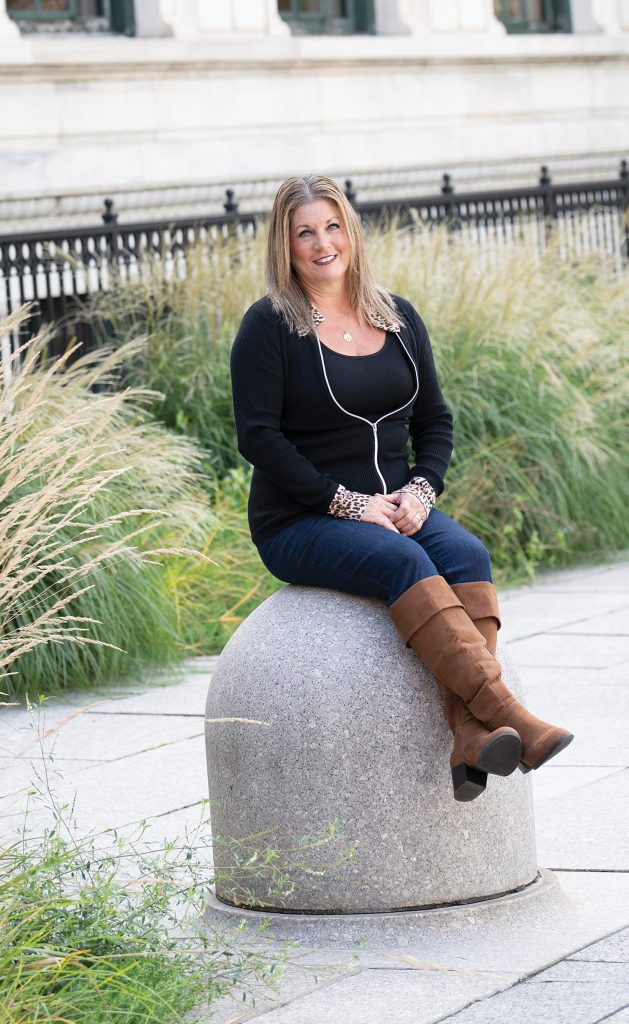
Lisa Zarcone says her book is raw, real, difficult … and a story she needed to tell. Photo by Leah Martin Photography

“Neighbors saw, family saw, the school saw, and nobody stepped in,” she said. “My mother did not hide her mental illness. We never knew what was going to happen next.”

At age 14 — after eight years of this hell — she was able to free herself from the abuse when her grandparents took her in. But there was alcoholism and general chaos in that home, and her mother remained a part of her life. Finally, she rebelled, in a purposeful, even positive sort of way.

“At age 15 or 16, I started thinking a little differently, and I wanted to figure out how to get out. So I engrossed myself in school, and I went from an F student to an A student because I decided I needed to do something to help myself. I worked three jobs while I was in high school. I did anything I could not to be home. And I did whatever I could to get out.”

Eventually, she did. “And I buried my past. I took it all and said, ‘I’m not going to speak of it, I’m not going to think of it.’ And I fought every single day of my life not to bring it up, not to focus on that pain. I was driven by that. I was driven to succeed. And I did.”

Since then, Zarcone has lived a life of purpose. She’s worked with disabled children and adults teaching life skills and writing, and served as a mentor to young women in a locked-down facility teaching journaling, poetry, and art therapy.

She has also done plenty of work advocating for suicide prevention and PTSD awareness, and she’s currently Massachusetts’ national ambassador for the National Assoc. of Adult Survivors of Child Abuse, traveling all over to raise awareness and promote change in a system where too many children still fall through the cracks.


Moment of Truth

But she wouldn’t find full healing from her past, and the ability to help others overcome their own trauma, until she began talking about it — to the surprise of her loving, and completely blindsided, husband.

“Lisa has worked hard to overcome her past abuse and turned her pain into purpose,” John Zarcone said in nominating Lisa as a Woman of Impact. “I admire her immensely for stepping up and saving herself, our marriage, and family. We have raised three children together, and she is an incredible mother. It comes naturally for her, caring for others and making sure everyone is safe, loved, and thriving.”

That’s a remarkable quality, considering her youthful trauma — which she kept hidden away from John for more than a decade of marriage.

“After I had my third child, things changed,” she said. “I started having flashbacks and nightmares, and they were horrific. I was living in two worlds at once every single day, and I couldn’t do it anymore. So I went to therapy, and I finally shared what happened to me. At that point, I didn’t share absolutely everything. I couldn’t. But I was able to break the silence by saying I was sexually abused, and I started to work through those things.”

Then came the harder part — when she finally told her husband, too.

“He knew my mom had mental illness. He knew I went through a lot of things, but he didn’t know the depth of what happened to me, especially the sexual-abuse piece. And I blew his mind,” she said.

“I was able to find healing and forgiveness because I put myself in their shoes to understand the best I could.”

“He always knew that I was scarred. And he knew my mom was severely mentally ill; even as an adult, my mother was very damaging toward me. But when I shared my truth with him, he was blown away. Basically, he looked at me and said, ‘I don’t know who you are.’ That was so hurtful to me … but I got it. I knew why he was saying that.”

But they overcame it — Lisa’s unearthed trauma and John’s shock — and eventually grew stronger as a family.

“John is my biggest fan, and he’s been my biggest supporter through this whole process and writing this book,” she said, noting that it took six years to write, and no publisher wanted to touch a memoir by a first-time author telling this extremely raw story in an unusual way. So Zarcone self-published and learned how to market it on her own.

The transition from writer to speaker came naturally, she said, after an author talk in her hometown of West Haven, Conn. after the book was released. About 60 people showed up, and she was nervous, but afterward, it felt … right.

Lisa Zarcone has “turned her pain into purpose.”

Through much hard work, her husband says, Lisa Zarcone has “turned her pain into purpose.”
Photo by Leah Martin Photography

“My husband and my daughter were like, ‘well, I guess a public speaker is born.’ And from that point forward, that’s what I decided,” she said. “I really wanted to get the word out there, to talk about these subjects that nobody wants to talk about.”

As part of her work in the mental-health realm, she became an advocate for her mother, who passed away in 2014. This month, she is releasing her second book, which tells her mother’s life story.

“I started looking through my parents’ eyes, looking at their journey, why they acted the way they did, why things happened the way they did,” she said. “I was able to find healing and forgiveness because I put myself in their shoes to understand the best I could.”

Zarcone understands this level of empathy surprises people.

“It took a long time to get there. For years, I hated my mother. And I feel bad when I say that now, because I didn’t truly hate her, but in that timeframe, I hated what she did to me, allowing these bad people to come into my world and hurt me the way they did.

“But as I grew older, I learned what mental illness really was, and I did a lot of studying and talking to people and understanding what mental illness does to somebody. Every time she would get locked up or every time something else would happen, it was painful to watch, because I did have love and empathy for my mother.”

And as she healed, she was able to separate her abuser from the once-loving mother crushed by mental illness.

“I always feel like a sense of loss because I lost my mother to mental illness,” she went on. “And she lost out, too. She lost out on being a wonderful mother, a wonderful wife, a wonderful grandmother. Those are the things she aspired to be. Family was everything to her. But when she was sick, you wouldn’t even know who she was. It was just mind-blowing to watch.”


The Story Continues

“Embrace the journey.”

That’s one of Zarcone’s personal mantras, and it’s a moving one, considering where that journey has taken her.

But across 37 years of marriage, and especially since she finally opened up to her husband — and the world — about her past, she has found healing by finding her voice: as a writer, a speaker, a blogger, a talk-radio host, and a national spokesperson for survivors of child abuse. In 2021, she received an award from the Mass. Commission on the Status of Women, and The Unspoken Truth won the Hope Pyx Global International Book Award in the category of child abuse.

The road has been long, and healing didn’t come all at once. But it began by telling a very difficult story.

“The healing process comes in stages,” Zarcone said. “People will say, ‘once you share your story, it’s better.’ No, no … that’s when the work really begins. You have to take it piece by piece, and when it gets too heavy, you put it down.

“And then you pick it back up.”

Education

After the Fire

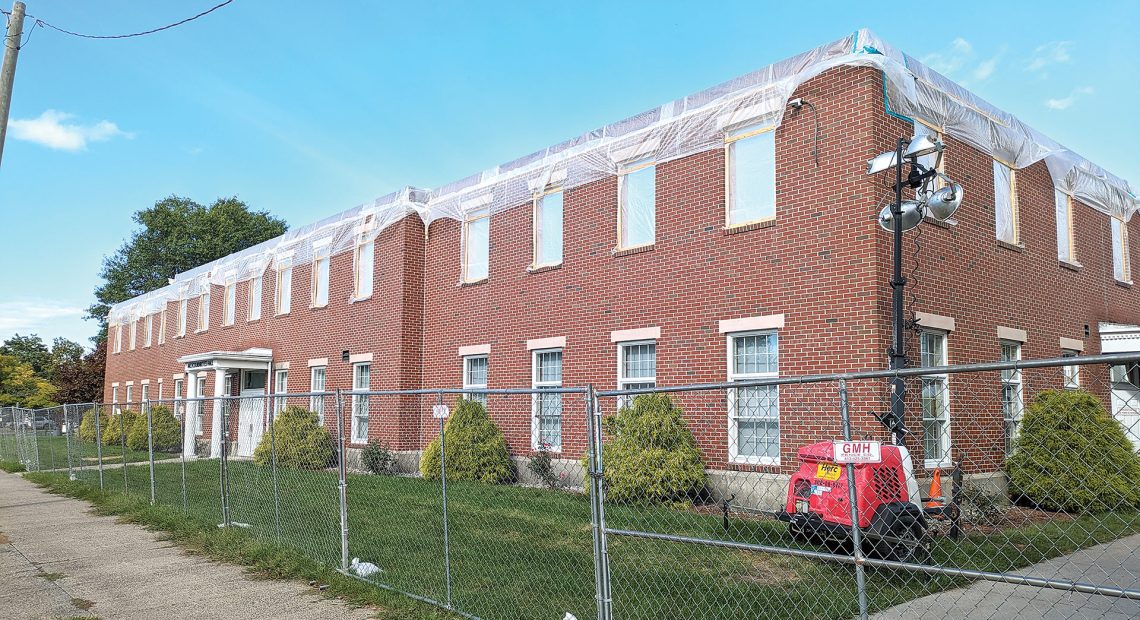
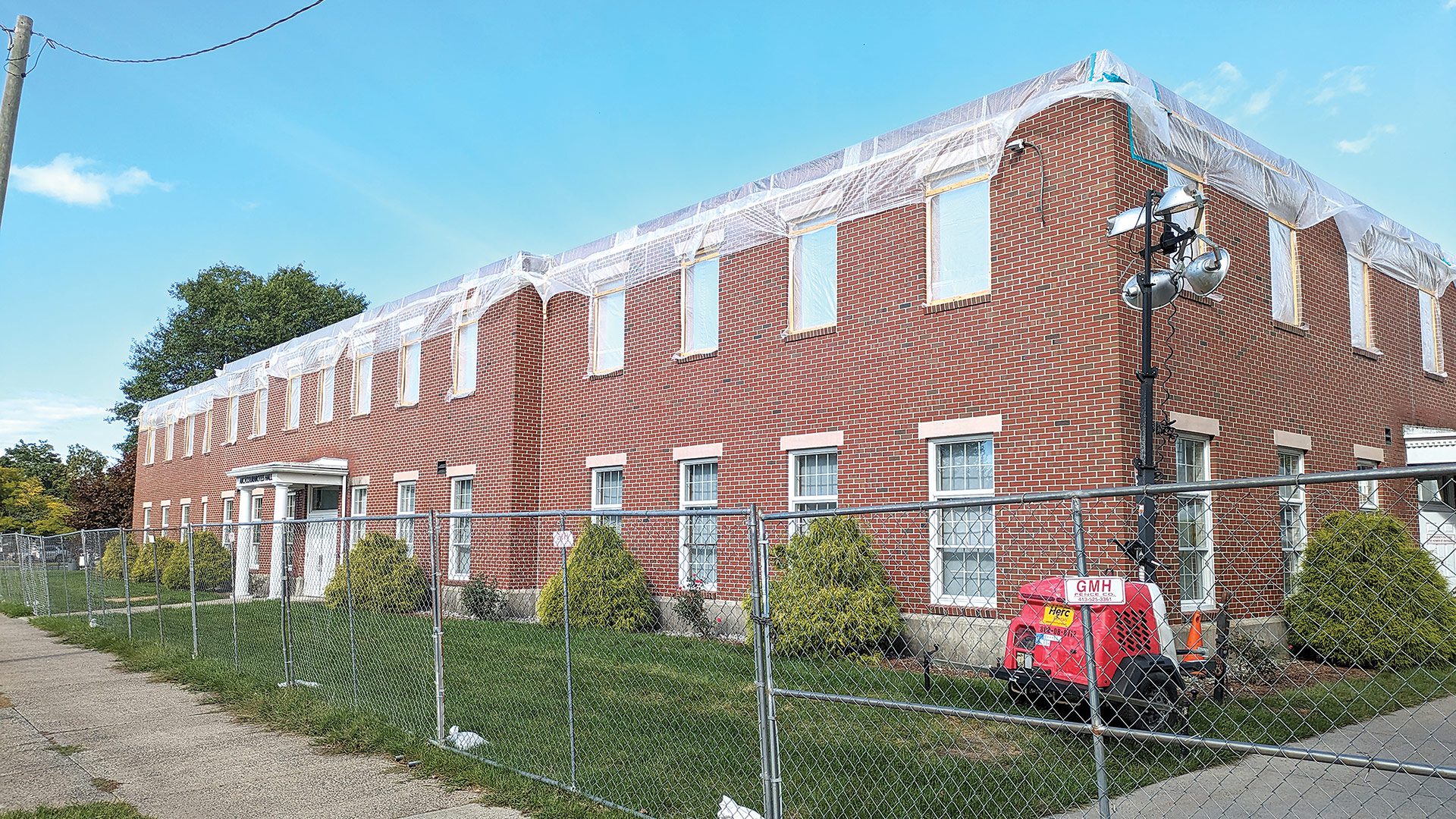
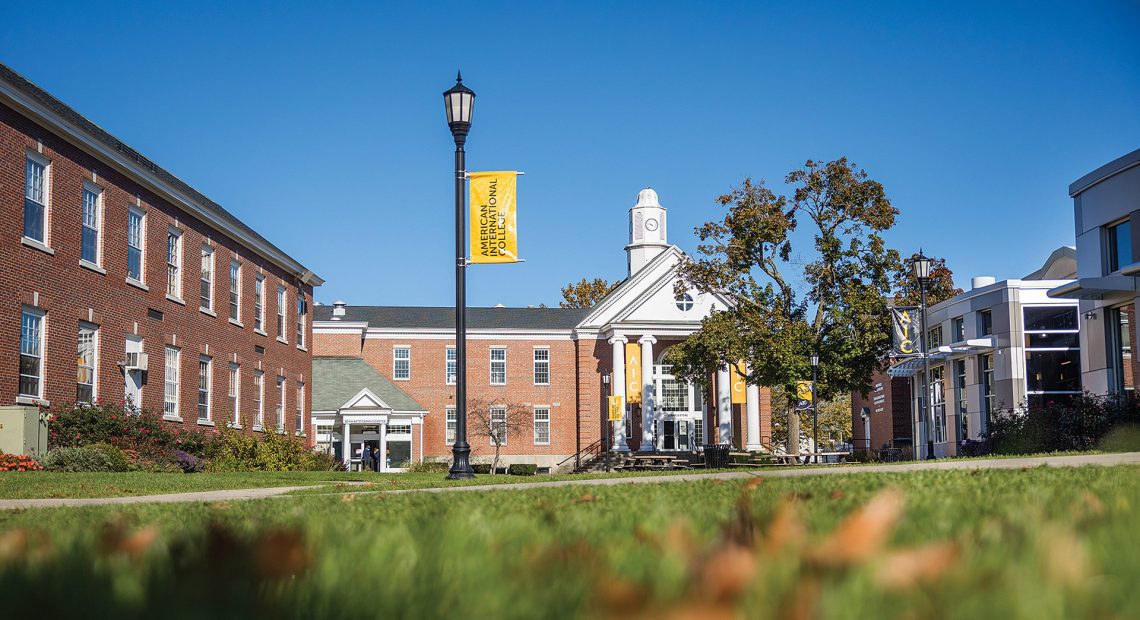
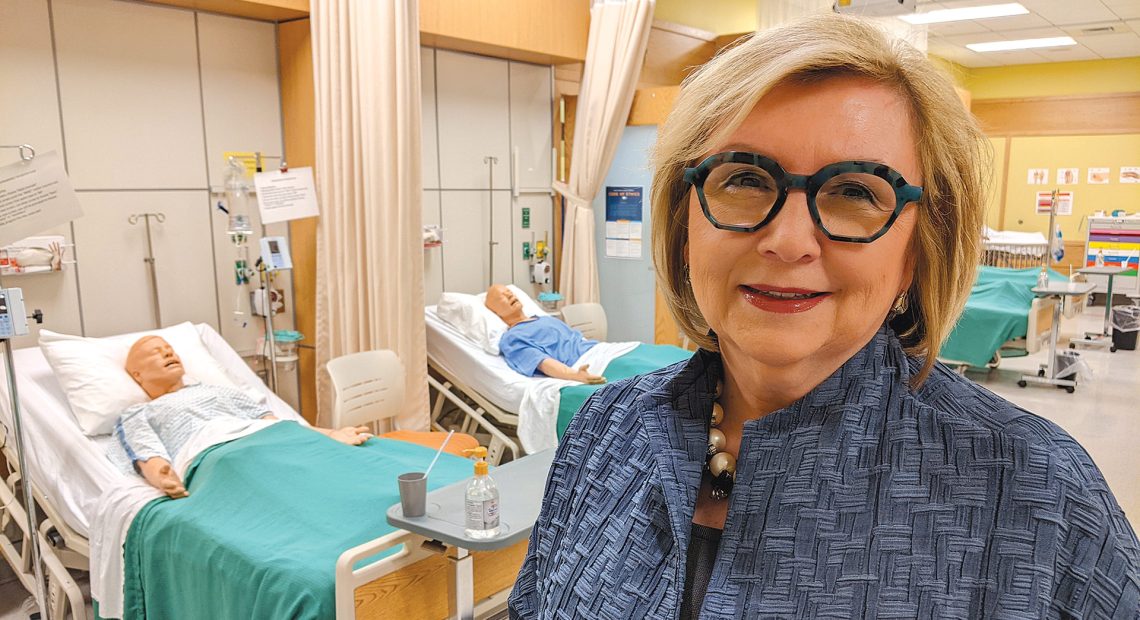
The top of Courniotes Hall is covered with plastic

The top of Courniotes Hall is covered with plastic now while AIC leaders discuss both short-term winter preparations and a long-term strategy for the building.

When a lightning strike set fire to Courniotes Hall at American International College (AIC) on July 27, the safety of everyone in the building was the paramount concern; fortunately, no one was hurt.

The longer-term concern is for the future of the heavily damaged building, and that process has only begun.

In between was one key question: what to do with all the health programs based at Courniotes and all the students and faculty who typically work and learn there — and do it before the fall semester, which was only a few weeks away.

That process has not been easy, and it’s far from over, said Karen Rousseau, dean of the School of Health Sciences at AIC. But with no programs or classes curtailed (though many have been relocated), the experience has been a valuable lesson in pivoting — and may pose opportunities to “reimagine” the design of the building once it’s repaired and renovated.

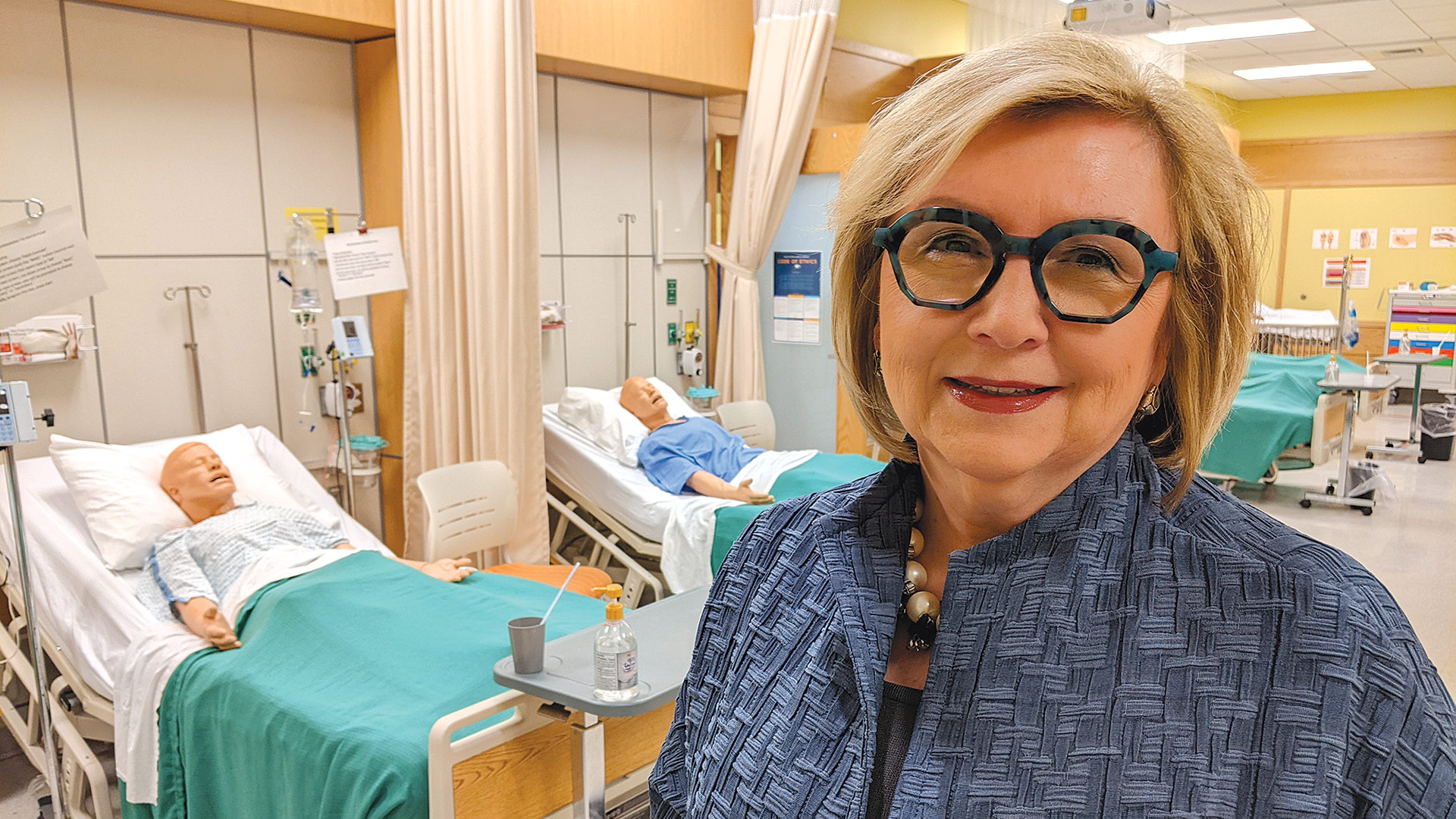
“The night of the fire was pretty devastating, but immediately the next morning, we got to work trying to figure out where to put classes that were housed in that building and how we would function,” Rousseau told BusinessWest, listing challenges from replacing the nursing program’s simulation-lab equipment to relocating cadavers and identifying new space for physical and occupational therapy labs and a large number of classrooms.

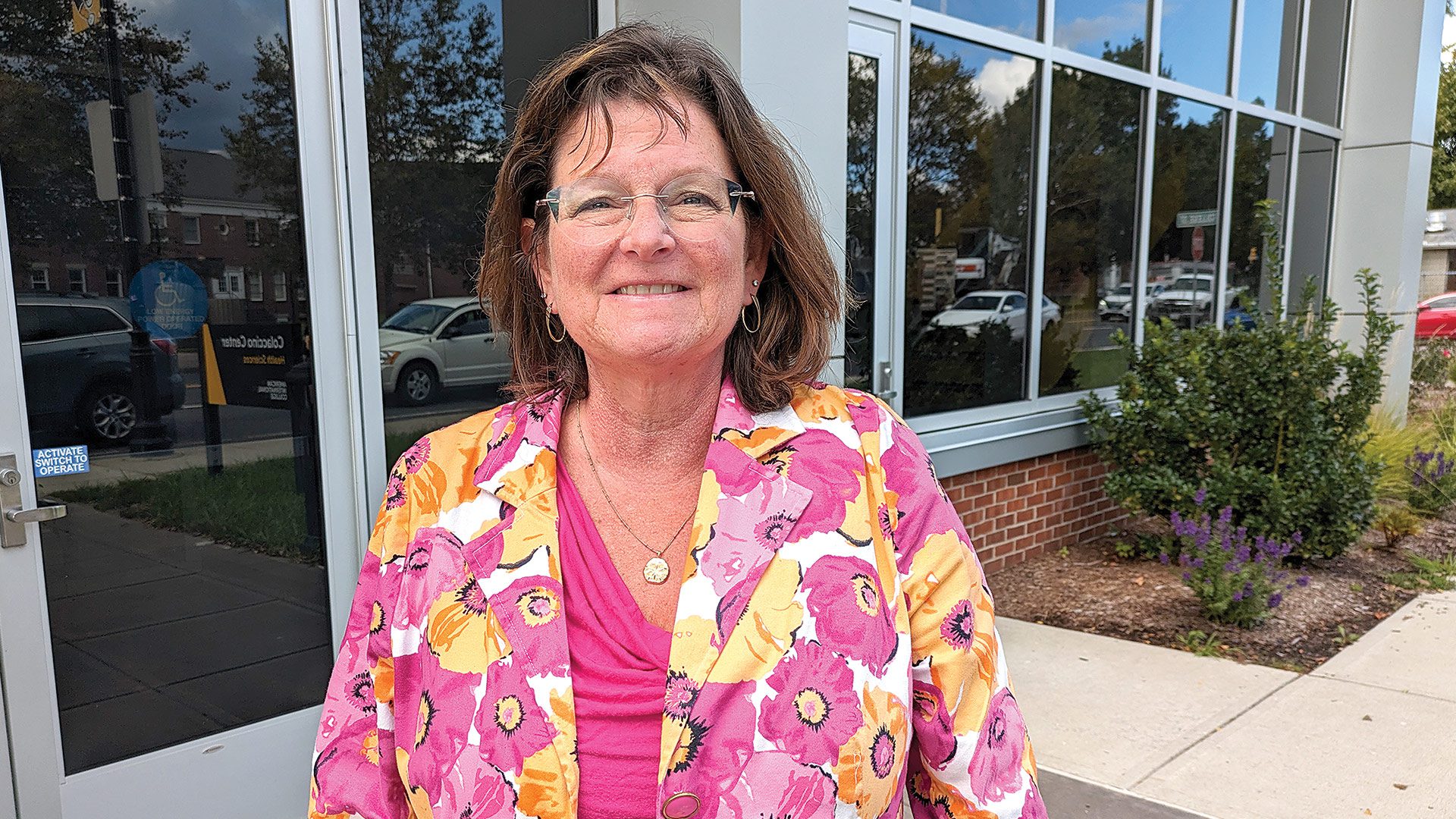
Part of the solution was finding temporary space in the Colaccino Center for Health Sciences, across State Street from Courniotes Hall, as well as other buildings on campus. Meanwhile, most of the nearby colleges and universities (and some from across Massachusetts) reached out offering space.

AIC took up one offer: from UMass Medical School – Baystate, located in Tower Square in downtown Springfield, which offered not only classroom and faculty space, but also storage for equipment and free parking for students.

“The night of the fire, we had students come to watch it, and they were concerned and sad. But we said, ‘we’re going to make sure it’s business as usual. We don’t know what it is right now, but we will make sure it’s OK for you.”

“UMass fortunately had this space that they weren’t using a tremendous amount; they use it for their accelerated baccalaureate program, but they’re mostly out on clinical placement in the fall,” Rousseau said. “So it was serendipitous that we were able to work around their schedule; primarily, it’s our junior nursing class that needed labs in the fall.”

AIC also quickly rehabbed the basement of its Amaron Hall to use as classrooms and storage for occupational therapy and physical therapy, and it will begin renovating the Lissa Building, which is attached to Courniotes Hall and also sustained damage in the fire, with the goal of opening it to students this spring; meanwhile, a building next to Lissa will be renovated to become an occupational therapy lab and training room where OT students learn how to work with patients on activities of daily living.

In short, the entire health sciences curriculum felt the weight of the fire and its aftermath, but AIC’s leaders made sure all students were able to continue their education this fall.

“I don’t want to make it sound like it was easy,” Rousseau said. “And it’s not all perfect, but it’s good. I mean, the students are receiving their education, and the faculty are happy they all have their own offices. To be able to say that, when we lost all those offices, is a miracle. And a lot of equipment from the labs had to be replaced.”

Karen Rousseau

Karen Rousseau says it hasn’t been easy, but students have been able to continue their studies following the July 27 fire.

They got creative, Rousseau added, because … well, because they had to.

“All of our [health sciences] students flowed through there. The majority nof the faculty for physical therapy was over there, and occupational therapy, and all of the nursing faculty. So all the nursing, PT, and OT students walked through there all the time. A lot of people were affected.”


No Interruptions

The reason AIC had to act quickly, and the reason so many other institutions reached out, was a shared feeling that interrupting the students’ education was unthinkable.

“This was devastating to the students,” Rousseau said. “The night of the fire, we had students come to watch it, and they were concerned and sad. But we said, ‘we’re going to make sure it’s business as usual. We don’t know what it is right now, but we will make sure it’s OK for you.’ That’s what we keep telling students: ‘it’s been OK, and it’ll continue to be OK. It will get better and better as we have more time to roll out our plans.’ But they were really nervous.”

In the longer term, AIC has engaged the services of an experienced project manager to navigate the logistics of assessment and reconstruction of Courniotes Hall.

“We haven’t had a final ruling from insurance, but it’s sounding like we will renovate and restore, maybe not in the same exact configuration, but within that same footprint — but, again, that’s not official,” Rousseau said, noting that the top of Courniotes is now covered in plastic, but some kind of temporary roof will likely need to be erected before winter sets in.

AIC’s much-discussed strategic plan for 2022-27 is called “AIC Reimagined,” and AIC President Hubert Benitez has taken to calling the future of the fire-damaged structure “Courniotes Reimagined,” sensing an opportunity to determine if the building’s current design and layout best serve students and faculty, and making changes as needed.

“He wants to pull faculty together and plan what would be appropriate for the future for that building and whether that means more space, whether we’d look to expand, and address any needs we might have,” Rousseau said. “This was OK when it was built in the ’90s, but if we had to rebuild it, we wouldn’t build it the same way. So, what would it look like? Do we want to replace it exactly the same, or do we need to make some changes? This is an opportunity. You can always use more space than what you had.”

AIC leaders are seeking engagement from students and faculty about what the building should look like for the future, she said, but stressed that the long-term planning process has only begun.

“Our focus right now is on the interim piece for the nursing lab and the occupational therapy lab; that has to come first because we want to get our students back on campus as soon as we can — hopefully for spring. We need more space for OT than what we have right now. We’re making do right now, but we need more.

“And then, with nursing, we don’t want them to have to go downtown to do their simulation and their nursing-practice skills,” she added. “And that is a bigger need in the spring for students. There are a lot more students that have to go through the lab in the spring. It’s important to us that they’re back home.”

This unusual year in AIC’s health sciences programs comes at a time when the medical world is still experiencing staffing shortages in many fields, particularly nursing, Rousseau said, but colleges nationwide have weathered a dip in enrollments in those programs.

“But enrollment across colleges in general is down for all professions, so I think it’s a symptom of the times,” she added. “A lot of people are worried about college debt, and you can go to work right away and still make an OK living wage because unemployment has been so low. There’s also the fact that we’re at that cliff where the birth rate has dropped off, so we’ve just got less people coming out of high school.”

And while nursing opportunities are still soaring — the profession has seen many older entrants who are changing careers to take advantage — there’s also lingering burnout from the pandemic, she added.

“You heard a lot of negativity around anything in healthcare. So I think that’s impacted healthcare. But it’s starting to rebound again — because then people heard about how much travel nurses make.”


Grit and Gratitude

Benitez recently expressed gratitude for the outpouring of support from the community following the fire. “I want to acknowledge the remarkable resilience and unity displayed by our faculty, staff, and students. It is this collective effort from our community that gives me confidence that we will overcome this adversity together.”

Rousseau agreed. “We wanted to reassure our students that we’re still open for business. We’re going to figure it out. And we’re trying to listen to them when there are issues.

“There are some things we can’t control, you know,” she added. “They don’t really want to be in class in a different building and not having their usual space. And the nursing faculty are farther across campus. The biggest struggle is that we’ve lost a large parking lot, so we’ve got some growing pains around figuring that out, making sure it’s OK before we start having snowbanks to deal with, too.”

But all those issues pale in comparion to the main one: ensuring that life continues at AIC, and so do the college careers of its nursing, PT, and OT students.

“We’ve tried to be thoughtful, to make sure this had the least amount of impact on students,” Rousseau said. “We’ve tried to reassure students that AIC is still here, and that we’re an equal partner in their success.”

Healthcare News

Critical Catch

Dr. A. Daniyal Siddiqui

Dr. A. Daniyal Siddiqui says screening is the most important factor in preventing deaths from colorectal cancer.

According to the American Cancer Society, the incidence of young-onset colorectal cancer is rising globally, with about 10% of patients with a new colon-cancer diagnosis, and 25% of patients with a new rectal-cancer diagnosis, being diagnosed under age 50.

Experts are still debating what that means, but there’s broad agreement that people need to start thinking about colonoscopies earlier than ever.

“One should not get to where cancer is diagnosed by symptoms. At that point, it’s a much more advanced stage; you want to get it when the cancer is not causing any symptoms,” said Dr. A. Daniyal Siddiqui, medical director of the Mass General Cancer Center at Cooley Dickinson Hospital and associate professor of Medicine at UMass Chan Medical School.

The statistics bear him out. While treatment of cancer has improved markedly over the decades, so has awareness of the importance of catching it at the earliest stages. In 1975, Siddiqui said, the five-year survival rate for colorectal cancer, across all stages, was 40% to 45%; today, it’s close to 70%.

And the increased incidence in younger people has caused the oncology community to further rethink screening recommendations, pushing them even younger.

The good news, Siddiqui noted, is that colorectal cancer (around 70% of which is colon cancer, 30% rectal) has been declining since the 1980s and declining even faster — between 1% and 1.8% a year — since 2009.

But at the same time, there has been an increase in incidence for younger people. In 1995, 11% of all colorectal cancer diagnoses were in patients 54 or younger; in 2019, it was 20%. For that reason, doctors now recommend starting screening at age 45, instead of the long-recognized guideline of age 50.

Siddiqui says wider adherence to screening recommendations has been impactful over the decades. “If cancers are picked up in the earliest stages, they’re more curable. So the death rate has been going down regardless of age because of better screenings. But the important thing is that incidence is increasing 1% to 1.5% per year in people under age 50. That’s why we should start screening at age 45.”

“One should not get to where cancer is diagnosed by symptoms. At that point, it’s a much more advanced stage; you want to get it when the cancer is not causing any symptoms.”

Why is a colonoscopy so critical? The answer begins with how the disease develops.

Colorectal cancer involves malignant cells that grow in the colon or the rectum, explained Dr. Aparna Parikh, medical director for the Center for Young Adult Colorectal Cancer at the Mass General Cancer Center. Often, colorectal cancers start as polyps, which are non-cancerous, but can turn into cancer over time.

According to the American Cancer Society, when a polyp — a non-cancerous growth in the lining of the colon or rectum — progresses to cancer, it usually grows into the wall of the colon or rectum, where it may invade blood or lymph vessels.

The extent to which cancer has spread at the time of diagnosis is described as its stage. The stages are described as localized (grown into the wall of the colon or rectum but not into nearby tissues), regional (spread through the wall of the colon or rectum and invading nearby tissues or lymph nodes), and distant (spread to other parts of the body, such as the liver or lung).

“Early on, when a polyp is benign, before it becomes cancer, at that point you’re talking a 100% cure,” Siddiqui said. “When you’re in stage 1, localized to the colon or rectum, you’re talking a 90% cure. The rate changes to 70% when the cancer has moved to local lymph nodes.”

And by later stages, the outlook is even worse. In fact, while it’s the fourth-most-common cancer after breast, prostate, and lung cancers, he noted, colorectal cancer is the second-leading cause of cancer-related deaths in the U.S. So it can be critical to undergo regular colonoscopies after 45 — typically once every 10 years.

“There are other screening options, including stool-based tests, but it is important to talk to your primary-care doctor about the advantages and disadvantages of different types of screenings,” Parikh said.

That said, “it’s important to note that these other screening methods are only for patients without symptoms. If you are having any symptoms, it’s important to get a colonoscopy.”


Determining the Risk

Siddiqui stressed that the new age recommendations apply only to average-risk individuals. The higher-risk group includes those with a personal history of colorectal cancer or polyp removal, family history of the disease, a history of seed radiation to the abdomen, or personal or family history of endocrine syndromes or inflammatory bowel diseases like colitis or Crohn’s.

Dr. Aparna Parikh

Dr. Aparna Parikh

“To help reduce your risk of getting colorectal cancer, eat healthy foods, including plenty of vegetables, fruits, and whole grains. Exercise regularly, limit or avoid alcohol, and maintain a healthy weight. Finally, quit smoking, or better yet, don’t even start.”

“For those individuals, there’s no black-and-white answer,” he said, explaining that recommendations of when to start screening and how often to go back are determined on a case-by-case basis: what kind of polyp was found, which hereditary factors are present, and so on.

But in general, for the average person, the guidelines start at age 45 and continue until 75, at which time it becomes a more individualized decision between a doctor and patient based on a number of lifestyle factors.

“Screening is the most important thing,” Siddiqui emphasized. “We know now, from prostate cancer and colon cancer and lung cancer, that screening works. That’s the main driving force behind death rates going down.”

The second key factor is improvement in the treatments available after colorectal cancer (CRC) is detected. Options include colorectal surgery, radiation therapy, chemotherapy, targeted therapy, immunotherapy, and access to clinical trials, Parikh noted, adding that “colorectal cancer is largely preventable and, in most cases, curable, especially if it’s detected early.”

As far as prevention strategies are concerned, some risk factors are more easily altered than others. The American Cancer Society reports that 55% of all CRCs are attributable to lifestyle factors, such as an unhealthy diet, insufficient physical activity, high alcohol consumption, and smoking.

“People have been more aware of risk factors of various cancers, and if they’re proactive in terms of reducing them through lifestyle changes, that’s the important thing,” Siddiqui said. “Age is an important risk factor, and so is family history. You can’t change those, but you can change your diet. If you’re obese, you can modify that. If you’re a smoker, you can quit smoking.”

Physical activity is an important factor as well, he added. “We know that from multiple studies with thousands of patients. I’m not saying you should start running a marathon, but simply a 25- to 30-minute walk, three to five times a week, significantly reduces the risk of colon cancer, or any kind of cancer.”

However, the strongest risk factor is a family history of the disease; people with a first-degree relative (parent, sibling, or child) who has been diagnosed with CRC have two to four times the risk of developing the disease compared to people without this family history, with a higher risk when diagnosis is before age 50 and when multiple relatives are affected, the American Cancer Society reports.

Meanwhile, up to 30% of people diagnosed with colorectal cancer have a family history of the disease, which is why these individuals should begin screening early, the organization notes. Young people with a family history should have a conversation with their healthcare provider about when to start screening.

“Everyone should know their family history, and not just colon cancer, but any cancer, especially at a young age,” Siddiqui said. “And that should be brought to a doctor’s attention because that may change the screening guidelines about when to start and how frequently.”


Changes for the Better

Dr. Xavier Lor, medical director of the Colorectal Cancer Prevention Program at Yale Cancer Center and Smilow Cancer Hospital, said recently that certain lifestyle habits associated with colorectal cancer (CRC) aren’t by themselves causing the worrisome trend of higher incidence in younger people.

“Some factors have been identified, and these increase risk, especially at older ages. Obesity, sedentary lifestyle, the western diet, and high sugar intake would only explain a fraction of these cases,” he noted.

“Genetic syndromes are also more commonly the cause for younger CRC patients than older ones, but these remain quite stable over the years and can’t explain a sudden raise in cases as we have seen in the last two decades,” he added. “It will likely boil down to environmental and dietary factors that we have not quite identified yet to explain many of these cases.”

Even absent the cancer risk, there’s nothing wrong with some healthy habits, however.

“To help reduce your risk of getting colorectal cancer, eat healthy foods, including plenty of vegetables, fruits, and whole grains,” Parikh said. “Exercise regularly, limit or avoid alcohol, and maintain a healthy weight. Finally, quit smoking, or better yet, don’t even start.”

When a CRC does develop, the symptoms can vary, she noted.

“Different people may have different symptoms of colorectal cancer, and some people may not have any signs or symptoms at all,” she said, adding that symptoms may include abdominal discomfort or cramping; bleeding from the rectum or finding blood in one’s stool; changes in how the stool looks or frequency of bowel movement; diarrhea, constipation, or increased gas; or unexplained weight loss.

“It is important to remember that these symptoms can be attributed to things that are not related to colorectal cancer,” she added, so it’s important to consult a primary-care doctor with any concerns.

But, as Siddiqui noted up top, the key is catching problems before symptoms arise at all.

“Colonoscopies can detect cancer before you have symptoms or have advanced disease. Early detection is critical,” Parikh said. “But it’s important to advocate for your own health and well-being if you have any concerning symptoms.”

Cybersecurity Special Coverage

Easy Targets


While the technology used to prevent cybercrime has certainly become more sophisticated over the years, Paul Savas has two simple words when it comes to the human side of cybersecurity.

“Be smart.”

Unfortunately, too many people simply choose not to.

“If it looks like something’s suspect, don’t open it. Don’t click on the links. So many times, these attacks happen to people who are letting their guard down,” said Savas, vice president of Comcast Business’ Western New England Region.

“How many of us get that Amazon text — ‘there’s a question about the order in your account.’ It’s a bogus text, and you should delete it right away,” he continued. “But so many people don’t. They’re curious. ‘There’s a link … I’ll click it.’ But you have to be smarter than that.”

Then there’s the problem of password laziness.

“They keep creating their own passwords. They’ll even keep a file on their desktop that says ‘passwords,’ kind of a spreadsheet. If I’m a hacker, I love that.”

“The biggest problem is common passwords,” said Sean Hogan, president of Hogan Technology in Easthampton. “So many people reuse passwords; they have a password that they’ve used forever, and they’ll do variations of that password. The problem is, once all the bots out there have that password or something close, they will figure out all your passwords within seconds.”

And he’s run into stubbornness when it comes to changing password habits.

“When I go out to see clients, it’s a constant struggle. One of our hardest adaptations is getting them to start going with password management or password vaulting. They keep creating their own passwords. They’ll even keep a file on their desktop that says ‘passwords,’ kind of a spreadsheet. If I’m a hacker, I love that.”

Allen Reed, assistant vice president and Information Security officer at Freedom Credit Union, has run into similar frustrations.

Allen Reed

Allen Reed says ‘trust, but verify first’ is a good rule of thumb for clicking email links.

“At the credit union, I’m always hammering employees: ‘don’t click that link, don’t open that attachment, don’t ever click until you have verified. Trust, but verify first.’ Yes, it’s inconvenient to make a phone call to someone: ‘did I receive an email from you?’ But that’s the world we live in.”

When he talks about cybersecurity with Freedom employees, Reed says he tries to “put a little fear in them” with examples of mistakes other businesses have made, and the financial consequences. “It gets them to think a little more clearly.”

But the topic isn’t just an occasional one at the credit union. “We institute cybersecurity-awareness training on day one of their employment. In fact, we’re audited from the federal financial sector every year to make sure every employee has had security-awareness training — at least annually, but most importantly, on day one.”

Even then, Reed regularly uses his metaphorical hammer.

“We all receive email all day, every day. And the staff has to be trained over and over,” he said. “It’s like when we were young children at the stove, and we were told, ‘don’t touch the stove.’ We had to be told a thousand times before it sunk in.”

And hopefully, the message took root before a serious burn. That’s what companies of all sizes and from all sectors are dealing with today: the possibility of being badly burned by a breach.

For this issue’s emphasis on cybersecurity, BusinessWest examines why even the best-equipped networks can be compromised because of simple human error — and what employers are doing to drive that message home.


Growing Threats

One problem, Reed said, is that cyberthreats have changed over the years.

“In 2005, you were worried about your average teenager sitting in the bedroom after school thinking about how hack into the CIA mainframe; they did it more for the joy of it, to be proud of it.

“Today, we’re talking about nation-states attacking. We’re talking about a government providing monetary resources, building out multi-story buildings, hiring their own citizens and providing them with pay, to attack other nations. That’s what we’re dealing with today. They attack 24/7/365.”

And their efforts have become savvier, Savas said.

“Don’t underestimate the bad actors, because they are so far ahead when it comes to social engineering and how to employ technology. They do research on social media, and they know things about you, like your dog’s name. That’s a pretty easy password to figure out. So don’t make it easy to guess.”

Sean Hogan

Sean Hogan

“You know the environment that the client has is pretty darn secure, but when you’re having people from the outside log in from their own equipment that is not secure, you’re really running the risk of a breach.”

Some companies have unknowingly voided their cybersecurity insurance policies because they lacked a certain level of protection — not just hardware and software, but training and compliance. “Every level of protection has a cost,” Savas added, “and some companies are gambling and not being fully protected.”

Indeed, Hogan said many advances in cybersecurity are being driven by insurance companies, which are not happy about paying out for preventable mistakes.

“They don’t want the exposure,” he went on. “And they’re going make it harder to pay off cybersecurity insurance — because that is paying out constantly. They are losing money on that; they’re realizing they sold a lot of policies where people are not doing what they should be doing. And the hackers have caught up.”

Reed noted that, going forward, most businesses will not be able to get cyber insurance coverage until they move to minimum 15-character passwords. “We moved to that four years ago because I knew it was coming.”

And not just longer passwords — or, preferably, pass phrases that are easy for the user to remember but impossible to guess — but two-factor authentication, like a code sent via text or email to the user’s phone. “You have to do that,” Hogan added. “When we install a new environment for a client, they have to do multi-factor no matter what.”

In addition, “there are paid software programs that manage passwords for you and give you different passwords you can copy and paste into the program you’re trying to log into,” Reed said.

For those who choose their own passwords, replacing letters with symbols in a recognizable word — $ for S, ! for I, etc. — makes the password exponentially safer, Savas said, adding that length is still a better safeguard than complexity.

Hogan encourages password vaulting in password generation. “I never generate my own passwords. The client shouldn’t either. So when I go to create that password, I’m going to generate a password that’s going to be random; it’s going to be extremely complex. It’s not the name of my dog. It’s not the name of my car. It’s got nothing to do with me. And it’s going to be a password just for that one website, for that one portal. And then it gets saved to a secure vault.”


Common Sense

While all these procedures are smart, Hogan went on, they only work as long as a company’s employees follow them.

“Can I ensure that everybody’s doing this? No. Can it be a procedure that you mandate? Yes, you can mandate it. But tracking it is a little different. So we add a couple more things on top of all this. Besides password management, vaulting, and multi-factor authentication, then we do the dark-web monitoring and security-awareness training.”

But a lot of cyber protection still comes down to common sense. That includes what people choose to share online, Reed said.

“If you have your entire dossier of who you are on Facebook, Twitter, Snapchat, whatever, once that dossier is out there, that’s what criminals leverage,” he told BusinessWest. “That’s what’s going to convince your grandmother that you need help, because it really sounds like you.”

Or, convince you that your CEO wants you to click a dangerous email link.

“The hackers look at people that can approve wire transfers, ACH batches, you name it,” Hogan said. “They’re looking at owners, they’re looking at CFOs, they’re looking at controllers. We call that ‘whaling’ or ‘spear phishing,’ where they actually target a certain individual. And they’re very sophisticated. They come up with real information.”

Reed agreed. “If they’re going to impersonate the president or the CEO, the only way they’re able to leverage that person, with that crafty email, is if they spend months on social media learning about that person, gathering information to formulate the email. That’s what gets employees to click — because we all want to do what the CEO wants us to do.”

Much of this behavior, from smart password creation to avoiding phishing attacks, comes down to training, Hogan noted. And sometimes, even that’s not enough.

“We can talk until we’re blue in the face, but that doesn’t mean that somebody working at that company is going to follow those procedures properly,” he said, recalling a recent incident when a remote worker for a client used his own laptop to log into the company portal from a remote site, got a suspicious pop-up, and clicked on it, allowing a cyber attacker to navigate the company’s system.

“That’s a big issue. You know the environment that the client has is pretty darn secure, but when you’re having people from the outside log in from their own equipment that is not secure, you’re really running the risk of a breach.”

And many times, Savas said, companies don’t even know they’ve been breached. “The bad actors go in, look around, see if there’s anything worthwhile, then map out a strategy. And that, to me, is scary.”

On the plus side, he believes the message is getting across, and companies are buttoning up with proper training.

“More education is happening within organizations. Attempts are being made, but it all comes down to that individual user being educated, heeding those warnings, and being smart about the things they can control,” Savas explained.

“Confidentiality of the password, not opening attachments, not clicking those links. Those are the three elements that open up an intrusion,” he added. “A lot of it is preventable. The majority is preventable.”

Healthcare News Special Coverage

A Holistic Approach

The infusion spaces at the cancer center were designed to be calming and comfortable.

The infusion spaces at the cancer center were designed to be calming and comfortable.

ribbon-cutting ceremony

Helen Blake, whose daughter the center was named after, speaks at the ribbon-cutting ceremony alongside Deborah Bitsoli, president of Trinity Health Of New England Medical Group, and Dr. Robert Roose.

Sometimes, opportunity is born from a flood of difficulty. Or, simply, a flood.

That was the starting point, anyway, of what has become a $6 million construction and renovation project to renovate and add 5,500 square feet to the Karen Davis Krzynowek Cancer Center at Johnson Memorial Hospital in Enfield, Conn.

“About 16 months ago, as a result of a flood that had occurred in the old cancer center, we took it upon ourselves to set out a vision for what we could do to enhance and expand oncology services for the patients in Enfield and the surrounding towns,” said Dr. Robert Roose, administrative officer for two Trinity Health of New England hospitals: Johnson and Mercy Medical Center in Springfield.

“From there, it became an opportunity for us to create a state-of-the-art facility with infusion bays with natural light, and to bring medical-office infusion, medical oncology, and radiation oncology under one roof in a newly expanded and beautiful space to better meet the needs of the patients receiving cancer care in and around this community.”

Indeed, the project brings all of Johnson’s outpatient cancer services together under one roof, allowing patients to receive multiple facets of their treatment in one location. In addition to improving accessibility for physician appointments, the project also includes new medical oncology infusion bays that feature privacy screening, personal televisions, and space to accommodate a supporting family member or friend.

“Having all those services there, and especially having our partners in radiation next door in that same building, ensures that patients don’t have to go to multiple locations to get different aspects of their care,” said Tory Murtha, director of Ambulatory Oncology.

“I think that is key for this population,” she went on. “They’re already not feeling well, they’re already stressed, and they have a lot of other things going on in their lives. If you’re telling them, ‘well, first you have to go here and here and here and here,’ I think that’s really hard. So if they can just come and see their physician, see their nurse, get their infusion, have some blood drawn, have holistic support staff with the financial navigators and the nurses and the social-work team, that helps them feel like, ‘oh, they’re looking at me from every angle, every aspect of my holistic well-being.’”

This enhanced, multi-disciplinary care will extend even to surgical services, Murtha noted.

“We’re going to be able to bring breast surgeons over to our space within this cancer center to see patients for those diseases, and have the medical oncologist there with them. That makes a huge difference when you’re a new patient and you’re able to have both physicians there from both modalities of care. And the surgical center is going to be next door. That’s huge.”

Tory Murtha

Tory Murtha

“Having all those services there, and especially having our partners in radiation next door in that same building, ensures that patients don’t have to go to multiple locations to get different aspects of their care.”

Indeed, the new Karen Davis Krzynowek Cancer Center is part of a broader, $40 million expansion and renovation project designed to create a comprehensive hub for outpatient services on the hospital’s Enfield campus. Once complete, the S. Prestley and Helen Blake Ambulatory Care Center will include an upgraded surgery center with four state-of-the-art operating rooms, recovery areas, and additional medical office space.

“You’ll notice some of the design elements between the two centers are going to match,” Roose said, “so that there’s some harmony in the appearance, very much elevating the physical space to match the care that’s provided, so that it is top-notch and really delivers on the promises we have made to meet the needs in the community.”


Under One Roof

Small changes make a difference in cancer care, medical oncologist Dr. Karishma Mehra said, noting, for example, that patients require a physical examination before they can be cleared to receive chemotherapy.

“It’s important to make receiving care as easy as possible for cancer patients. Now, with physician offices just steps away from the infusion area, patients can begin their treatment more quickly. They also have peace of mind knowing their physician is nearby.”

Other changes in the reopened center are aesthetic, aiming to boost calmness, stress reduction, and peace of mind, Murtha said.

“Having natural light coming in, even if it’s on a cloudy day, is important,” she explained, noting that multiple studies have bolstered the connection between sunlight and a positive mindset. She added that the color scheme and artwork on the walls are intended to be calming, as are amenities like heated seats and blankets in the infusion spaces. And designing large-enough rooms to sit with a family member was also important.

Helen Blake cuts the ribbon for the reopening of the Karen Davis Krzynowek Cancer Center

Helen Blake cuts the ribbon for the reopening of the Karen Davis Krzynowek Cancer Center, which is named in honor of Blake’s late daughter, who passed away after a six-year battle with cancer.

“Before, we really didn’t have that, and many times, especially going through COVID, there was not an opportunity for patients to have a family member with them,” she said. “Even if situations arise where we have to be judicious with how many people we allow in, there’s still enough space to allow caregivers and family members to be with them in their space.”

In addition, Murtha said, “it was important to ensure that, in the nursing station for the infusion area, there’s line of sight to every patient. It’s a big space, but you can still see everything, and that’s from a safety perspective, because we give a lot of medications that can have lots of reactions. So ensuring that the nurses have a line of sight to everybody was really important.”

Also, “one thing I love about the Trinity standards is making sure that everything you need is in the exam room,” she added. “So I can do your vital signs, I can take your weight, I can take your height, all in the exam room. You don’t have go to three different rooms to do different things.”

Murtha added that the employees at the cancer center, many of whom have worked there for 15 or 20 years, were gratified to return. “The people who work there, they stay because it is a family, and they do feel very dedicated to this location and to each other and to their patients.”

Enfield has been an important location for Trinity Health Of New England, Roose noted, sitting between its hospitals in Springfield (Mercy) and Hartford, Conn. (St. Francis Hospital and Medical Center).

“We recognize the needs of this community,” he told BusinessWest, “and we have prided ourself on providing great care in this community and very excited about some of the strategic expansions of services that are happening there, which include the renovation and the expansion of the Karen Davis Krzynowek Cancer Center.”

The idea, he added, was “ensuring that each individual has an environment that is comfortable, state-of-the-art, and beautiful, so that we can fully meet the biological, medical, psychological, spiritual, and social needs of each individual patient in this new space. Our mission is to be a transforming, healing presence in the community.”

Murtha added that Enfield is the health system’s fastest-growing market in the region.

“This is not a generalist model, like some smaller cancer centers. We have doctors that are dedicated to specific diseases to ensure that patients get that same level of high-level service that they would get at a large, academic cancer center.”

“Unfortunately, as people get older, we are seeing more and more cancers, and we’re also seeing a lot more cancers earlier on,” she said, partly due to more ambitious early screening recommendations.

“Even with our GI and our lung-cancer patients, we are seeing some of those a lot earlier now than we have historically. So I think it’s really important that ensure that we provide some specialized care. This is not a generalist model, like some smaller cancer centers. We have doctors that are dedicated to specific diseases to ensure that patients get that same level of high-level service that they would get at a large, academic cancer center. That’s another thing that we’ve really worked on to ensure that our patients get everything that they need in this location.”


Bottom Line

At the end of the day, Murtha said, while the building might be impressive, it’s really about the people.

“We want to make sure we’re holistically managing every patient that walks through the door, and their family members, because there’s a lot of burden on the caregivers, too. So we really do take a holistic approach when we meet each of them and ensure that we’re supporting them at every step of the way.”

Roose agreed, noting that “we are confident that these improvements will ease the cancer journey for many individuals in the greater Enfield community.”

Home Improvement Special Coverage

Serving Those Who Have Served

Habitat for Humanity’s Veterans Build

Habitat for Humanity’s Veterans Build initiative has helped many veterans stay in their homes through repair and renovation projects.

Greater Springfield Habitat for Humanity (GSHFH) homeowner and local veteran Max needed help. The colonial home he purchased in the McKnight neighborhood in 2002 had become a hindrance.

Max suffers from chronic obstructive pulmonary disease (COPD) and rheumatoid arthritis, which makes climbing stairs to the second-floor bedrooms challenging. He expressed his concerns to Habitat, and together, they discovered a solution. Habitat, through its Veterans Build Home Preservation program, is building a downstairs bedroom and bathroom for the veteran and his wife, Gloria.

Veterans Build is a national Habitat for Humanity initiative that provides housing solutions and volunteer and employment opportunities for U.S. veterans, military service members, and their families. The program serves limited-income homeowners who are affected by age, disability, or family circumstances and struggle to maintain the condition and utility of their homes.

The home-preservation program provides affordable micro-loans to qualifying homeowners who need help with accessibility modifications, home weatherization, general home repairs, yard cleanup, and landscaping. GSHFH works alongside volunteers and homeowners to make repairs.

“Massachusetts has some of the oldest housing stock in the country, and many aging homeowners are unable to make needed repairs on their own,” said Aimee Giroux, GSHFH’s executive director. “We are happy to be able to help them through the repair process so they can continue to stay in their homes.”

Max, a former Marines corporal, qualified for the Veterans Build Home Preservation program and the U.S. Department of Housing and Urban Development’s Veterans Housing Rehabilitation and Modification Pilot Program. The pilot project gives competitive grants to nonprofits that serve veterans or low-income individuals. The grants can be used to rehabilitate eligible veterans’ primary residences. Purple Heart Homes is donating $15,000 while raising additional funds toward the project. Purple Heart Homes, a nonprofit charity, provides housing solutions for former military members who are disabled and/or have decided to age in place.

“Massachusetts has some of the oldest housing stock in the country, and many aging homeowners are unable to make needed repairs on their own. We are happy to be able to help them through the repair process so they can continue to stay in their homes.”

“Every act of generosity toward our veterans echoes a resounding commitment to honor their service and sacrifice. With deep gratitude, Purple Heart Homes is proud to contribute $15,000 to the Greater Springfield Habitat Humanity home-preservation project, ensuring veteran Maxwell finds solace and security in a place he can call home,” said John Gallina, CEO and co-founder of PHH. “Our mission extends beyond this gift, as we embark on a dedicated fundraising campaign to reach a goal of an additional $10,000. We believe we’re better together. In collaboration with Habitat for Humanity, we hope to build a legacy of compassion and support for those who have bravely defended our freedom.”

GSHFH is dedicated to strengthening communities by empowering low-income families to change their lives and the lives of future generations through home ownership and home-preservation opportunities. Since 1987, Greater Springfield Habitat has built or repaired 120 homes in 23 towns. This project represents the first home to utilize ICFs, which will further reduce long-term costs for the future homeowners.


Helping Other Veterans

Last month, Greater Springfield Habitat for Humanity, in association with Window World Military Initiative, Home Depot Repair Corps, and the U.S. Department of Housing and Urban Development’s Veterans Housing Rehabilitation and Modification Pilot Program, performed exterior work for former Army Specialist fourth grade Roland and his wife Jo-Ann.

The pilot project gives competitive grants to nonprofits that serve veterans or low-income individuals. Grants can be used to rehabilitate eligible veterans’ primary residences. 

The one-story Monson house, which the couple purchased in 1992, had fallen into disrepair, and Roland said his insurance company didn’t want to insure it because of the state of the siding. He knew of Habitat for Humanity from reading articles about well-known volunteer and former President Jimmy Carter and thought there might be an affiliate in Springfield. When he reached out, Giroux visited his home to help the couple complete the application process.

Window World Military Initiative donated the siding, replacement windows, a new sliding door, and gutters, while also providing volunteer support to help with installation.

“Our family is blessed and honored to live in a country that provides the freedoms that we all enjoy, and as a small family business, we are the example of the American dream,” said Grace Drost, owner of Window World of Western Massachusetts. “With that, we can’t forget that those freedoms and the American dream aren’t free, and we feel this is an opportunity to thank our veterans for the sacrifices they make so our dreams can come true. One of the core values of our company is rooted in changing lives, and this is a chance for our whole team to give back to those who make the ultimate sacrifice for our freedoms.”

Habitat also replaced the deck and repaired the shed roof and cleaned up the yard.

“Habitat is excellent,” Roland said. “I’m very pleased.”

Healthcare Heroes

Nurse Manager, VA Central Western Massachusetts Healthcare System

Her Work Caring for Veterans Is Grounded in a Sense of Mission


Julie Lefer Quick

After a decade and a half in the nursing profession, Julie Lefer Quick was looking for a change, and found one at the Veterans Administration’s (VA) outpatient clinic in Springfield.

She also found a level of passion and mission-driven commitment she hadn’t experienced before.

“I can honestly say that I’ve never seen nurses more dedicated to their population; I feel the dedication,” she said. And so do the patients. “Last week, a nurse forwarded me an email that she received from one of her veterans’ caregivers about what great care she took of that veteran, just going above and beyond. And she said, ‘I love my job.’

“Every one of the nurses who works with the VA goes above and beyond every single day,” Lefer Quick added. “And it’s really wonderful to be a part of that, serving such a deserving population.”

She started at the VA in July 2018 as a primary-care nurse. Before that, she worked for a pediatrician in solo practice, including as practice manager, for two and a half years, followed by more than 11 years in the Springfield Public Schools.

“When my son went off to college, I thought, ‘now is a great time to try something new, get back into primary care.’ So that’s when I got the job at the VA.”

When they hear mention of the VA Central Western Massachusetts Healthcare System, most people think of the hospital in Leeds, which houses services ranging from inpatient psychiatric mental-health and substance-misuse treatment to primary care; from rehabilitation to specialties like orthopedics, radiology, cardiology, and many others.

“Every one of the nurses who works with the VA goes above and beyond every single day. And it’s really wonderful to be a part of that, serving such a deserving population.”

“And we also have five community-based outpatient clinics, where we primarily do primary care and then, depending on the clinic, some specialties to support the veterans,” she explained, noting that these are located in Springfield, Fitchburg, Greenfield, Pittsfield, and Worcester. “In Springfield, we have a very large mental-health department, and we also have a small lab, physical therapy, a registered dietitian, a clinical pharmacy, and what’s called home-based primary care.”

As it happens, Lefer Quick loves primary care, and missed that during her years working in the schools. “I had missed the ongoing, deep relationships with patients and their families.”

So, with her son graduating from the school system, she craved a return to care in a medical-office setting, and happened to meet some VA nurses at a Learn to Row event through the Pioneer Valley Riverfront Club in Springfield, where her husband, Ben Quick, is executive director.

“They were like, ‘oh you should come work at the VA,’” she recalled. So she did — and, not surprisingly, she loved the work. Which is why she was hesitant to take the position of nurse manager when it became available last October.

“I wasn’t really sure I wanted to be a nurse manager. I love taking care of my patients. I love working with my team in the VA,” she said. “Nationwide, we practice a primary-care delivery system called the PACT model, which stands for patient-aligned care team. So there’s one provider, one RN, one LPN, and one admin; it’s sort of like a mini-practice within a group practice.

“We always see the same patients, and I had a great team that I worked with,” she went on. “It’s a good model for the patients; they really love it. So I didn’t want to leave my team or my patients.”

But a mentor encouraged her to try something new, and she accepted the detail.

“As a PACT RN, I was providing direct patient care and education, working with my team to meet population health-management goals, such as certain levels of control for diabetes or hypertension. And now I work for the other PACT nurses, supporting them in their practice.”

The busy community-based outpatient clinic in Springfield

The busy community-based outpatient clinic in Springfield is one of five operated by the VA in Western and Central Mass.

As nurse manager for two clinics — Springfield and Greenfield — she currently supervises 23 LPNs and RNs, with about three more to be hired soon. And she quickly found she could apply her passion for care in this overseeing role.

“In the VA, we have a unique understanding of the military culture that other providers in the community don’t necessarily have,” she said. “It’s a very sad truth that a lot of our veterans have emotional issues when they come back, but we are on the cutting edge of all types of mental-health treatment modalities and therapeutic options, and we also have the support of Congress — it’s a single-payer system, and we don’t have to be bogged down by some of the stuff that community providers have to deal with. So we, as nurses and providers, can really focus on our veterans and come up with innovative ways to care for them.”


A Passion for Patients

A quick look at the typically full parking lot at the VA’s Springfield CBOC, which stands for community-based outpatient clinic, testifies to the need for the services it provides, from laboratory and pharmacy to primary care and behavioral health.

“From what I have learned as the spouse of a VA nurse manager, it seems that, while most of these workers could get paid more elsewhere, they stay with the VA because they are passionate about caring for our veterans, and they are energetic about supporting each other in this difficult, important work,” Ben Quick wrote in nominating his wife for the Healthcare Hero recognition.

Yet, nursing wasn’t her first career. After graduating from college, she worked briefly in human resources, found she didn’t like that career, and went back to school for a nursing degree.

“Coming out of nursing school a little bit older than the typical students, I kind of took the first job that I could get,” she recalled. “I had a small child, so I didn’t want to work hospital hours, even though I loved the idea of being in the hospital, so I went to work for a pediatrician.”

Which surprised her, considering that her nursing-school rotations caring for youngsters tended to make her cry because she didn’t want to see them hurt or sick.

“I think there’s more of an awareness of mental-health needs in general in healthcare right now. And certainly, veterans who have seen combat are going to need support afterward. So that’s part of our mission.”

But as a pediatric nurse, “I loved seeing the kids grow over the years, seeing new babies born into families, working with parents on all kinds of different diagnoses to help their kids,” she recalled, and her next move was born of wanting to keep caring for children. “Working in the public schools was a way to be available for my son while also reaching a big population of kids. And I loved it.”

So Lefer Quick felt torn about leaving pediatric care for the VA.

“I remember leaving the public-school job for this, and I was very, very excited, but I had this moment of, ‘oh my gosh, am I doing the right thing?’ I said to one of my friends, ‘but I love my kids so much here.’ And she said, ‘you’ll find new patients in a while.’ And I did.”

In doing so, she’s taken to heart Abraham Lincoln’s famous quote that the VA — established 65 years after he uttered it — has adopted as a sort of mission: “to care for him who shall have borne the battle and for his widow, and his orphan.”

“One of the things that almost kept me from accepting the detail to nurse manager was all my patients,” she said, but she understands that all her roles have been supportive in some way: “supporting kids and their families, supporting students at school to be optimally healthy and ready to learn, supporting our veterans, and now supporting the nurses who provide that care to veterans.”

Some of that care is behavioral and substance-related. “We recognize the need for that integrated care for our veterans. I think there’s more of an awareness of mental-health needs in general in healthcare right now,” she noted. “And certainly, veterans who have seen combat are going to need support afterward. So that’s part of our mission.”

She said the VA has felt the strain of a nationwide nursing shortage as much as any other facility, but added that the nurses who take jobs there value the mission President Lincoln put forward — and many are veterans themselves, or come from a strong military family, or are drawn for some other reason to caring for a veteran population.

“That was how I talked myself into the manager position. I thought, ‘well, if I can be a manager with my background, already doing this job, I can support these nurses, which ultimately provides better care for the veterans.’ So I’m not just doing it for my team; I’m helping every single team.”

The COVID pandemic posed challenges across the spectrum of healthcare, but Lefer Quick said the VA was uncommonly prepared for it, as it had already implemented a remote monitoring platform called VA Video Connect, so VA facilities were able to pivot to virtual appointments more quickly than other organizations.

For instance, before the pandemic, “I had a patient who needed monthly monitoring for medication he was on, and he liked to travel. So we would do video visits, and we would have a set appointment to do the follow-up for his medication, wherever he was. So we already all knew how to use this,” she recalled.

And when COVID struck, “we very quickly pivoted to using video for several months, almost exclusively. A lot of our patients did not want to come to the clinic. Nobody wanted to go anywhere. And we already had this in place.”

Their concerns were warranted, as the pandemic hit the elderly population hard in the earliest days of the pandemic. “As you can imagine, a large percentage of the VA population is elderly. I had a father-son set of patients — and the son was 74. So a lot of them, being elderly and therefore immunocompromised, were scared, but the VA already had this amazing video platform, and we had already trained everybody how to use it.”

Meanwhile, “the nurses that I worked with were coming up with great ways to rotate the staff through the clinic so that we could spread out more to allow for that social distancing and masking in a more comfortable way,” Lefer Quick explained. “And we took on new providers and new nurses, even during the pandemic. We didn’t slow down much.”


Cutting-edge Care

In his nomination, Ben Quick boiled his pitch down to three thoughts: the VA’s quality of care is second to none, downtown Springfield has a busy medical practice devoted to healing America’s heroes, and the workers there are humble, passionate, professional patriots. “That’s a Healthcare Hero story that everyone needs to hear,” he wrote.

And now they will.

“The VA is the best employer I’ve ever had in my entire life,” Lefer Quick said. “They value creativity and innovation, and they support us to explore that.

“We really are on the cutting edge,” she added. “The people I work with are doing amazing things and love to be there. No matter where they are, in Springfield or any other part of this country, if someone is eligible for VA care, they really ought to look into it.” n

Healthcare Heroes

Clinical Psychologist; Assistant Professor of Graduate Psychology, Bay Path University

She Impacts Lives — and the Next Generation of Mental-health Professionals — for the Better

Kristina Hallett

It’s not easy to cover everything Kristina Hallett has done in her wide-ranging career in one story. At least, not cover it in a way that fully conveys her impact.

Her past titles convey some of it. Director of Brightside Counseling Associates and then director of Children’s Services at Providence Behavioral Health Hospital, both in Holyoke. Supervising psychologist at Osborn Correctional Institute in Somers, Conn. Director of Psychology Internship Training at River Valley Services in Middletown, Conn. And currently, associate professor in Graduate Psycholology and director of Clinical Training at Bay Path University.

Oh, and she’s maintained a private psychotherapy practice in Suffield, Conn. for the past quarter-century.

There are some common threads.

“Dr. Hallett’s career spans over 25 years, during which she provided invaluable psychotherapy, consultation, and supervision to medical and mental-health professionals, addressing myriad relationship and major life issues. Her expertise in complex trauma and dissociative disorders is instrumental in supporting and empowering those facing significant psychological challenges,” wrote Crystal Neuhauser, vice president of Institutional Advancement at Bay Path, one of three people who nominated Hallett as a Healthcare Hero.

Just as importantly, “she is a guiding influence in shaping the next generation of mental-health practitioners. Her commitment to education and mentorship showcases her passion for instilling excellence, compassion, and cultural competence in students. She is especially passionate about guiding under-represented caregivers into the profession to help underserved communities see themselves in their mental-health professionals.”

That’s a mouthful, but it’s important to understand the generational impact of Hallett’s work — not only helping people move through often-severe challenges and trauma toward a happier, healthier, more fulfilling life (which she accomplishes as a teacher, therapist, executive coach, author, speaker, podcaster, and more), but she’s helping to raise up the next wave of mental-health professionals to do the same, at a time when the needs are great.

“When we’re talking about mental health, it’s about connection, and there are different ways to make a connection. And having a role model who look like you and who understands you is really important.”

“I’m just ecstatic about our program,” she said of her role at Bay Path, where she started teaching in 2015. “When I came, we had maybe 50 students. Right now, in our program, we have 280-plus students. This summer, they did a 100-hour practicum with us before their 600-hour internship out in the community. We had 62 students in practicum this summer, which is a logistical challenge, but we’re really able to help shape them, educate them, and give tools and resources to the next generation.”

Kristina Hallett’s books

Kristina Hallett’s books have delved into topics ranging from relationships to banishing burnout.
Staff Photo

Meanwhile, Hallett’s bestselling books, Own Best Friend: Eight Steps to a Life of Purpose, Passion, and Ease and Be Awesome! Banish Burnout: Create Motivation from the Inside Out, inspire personal growth and empowerment, while a co-authored workbook titled Trauma Treatment Toolbox for Teens is a resource for young people facing trauma-related challenges, and her contribution as a co-author to Millennials’ Guide to Relationships: Happy and Healthy Relationships are Not a Myth! reflects her commitment to enhancing the lives of diverse populations.

As an executive coach, she helps participants find lasting change in the areas of burnout, stress, motivation, and self-confidence. And her podcast, “Be Awesome: Celebrating Mental Health and Wellness,” provides hope and guidance to listeners, fostering an environment where seeking help and prioritizing mental health is normalized.

As noted, it’s a lot to take in, but Hallett is energized by the opportunity to impact so many lives in so many different ways. The opportunity, in fact, to be a Healthcare Hero.


Connected to Kids

Hallett’s private practice offers individual and family treatment, with some intriguing specialty areas, including psychotherapy for medical and mental-health professionals, military personnel, and first responders; substance abuse; mood disorders; LGBTQ clients; trauma recovery; and treatment of complex trauma and dissociative disorders.

It’s a far cry from her earliest goal in life, which was to be a pediatrician.

At Wellesley College, where she was a biology major in a pre-med program, she took a psychology course “for fun” — and found the topic interesting, so she added a double major in psychology. “My professors were like, ‘oh, you should go into psychology.’ And I said, ‘no, no, no, I’m going to be a pediatrician … right?’”

During her senior year, as she took her medical college admissions tests, Hallett found herself in an interview, being asked, ‘why do you want to go to medical school?’ And something clicked.

“I had this experience where my mouth kept talking, but a part of my brain said, ‘yeah, why do you want to go to medical school?’”

Her answer was to enroll at UMass Amherst — in a graduate psychology program.

That’s not to say she wouldn’t work with children, adolescents, and families, though. At her earliest career stops, she had plenty of opportunities for that, from her stint as regional program supervisor for the Key Program in Springfield from 1991 to 1995 to her roles with Brightside Counseling Associates from 1996 to 1998 and Providence Behavioral Health Hospital from 1998 to 2003.

“I loved the idea of working with adolescents because, while I was young, still in my 20s, I felt like they’re ripe for change; you can be honest with them … it’s a very real interaction, while adults are just stuck in their ways,” she said, adding quickly, “I don’t think that way anymore.”

That’s because she’s had plenty of experience working with clients of all ages. In fact, her next stops — at Osborn Correctional Institution from 2003 to 2005 and River Valley Services from 2005 to 2015 — broadened her experience dramatically.

Kristina Hallett’s office

Kristina Hallett’s office in Suffield, Conn. is filled with photos, artwork, and mementos from her interactions with patients.
Staff Photo

“So the first half of my career was children and adolescents, but really centered on adolescents,” she said. “And it’s unusual for someone to be running an outpatient mental-health clinic and running inpatient children’s services, and then working in a prison.” At the time, she added, Osborn housed 2,000 male inmates and also arranged schedules for mental-health workers for some other local prisons.

Years later, while working at River Valley, Hallett had a yen to get into teaching, so she joined Bay Path as an adjunct professor in 2015, which quickly led to part-time work and then a full-time opportunity. It sure beat the commute from Suffield to Middletown, but there were other, more important reasons to make the jump.

“Bay Path had just started its clinical mental-health counseling program, and they were going to expand. And I thought, ‘yeah, I’m ready to do this full-time.’”

Her first title was coordinator of clinical training, which became director of clinical training. And this past spring, when the program director left, she took over that role.

“I’ve been responsible for bringing in a lot of faculty over the last few years, and this summer alone, I brought in four faculty who are former graduates of our program, all coming from different perspectives,” she told BusinessWest. “I like to bring back our graduates because they know the program, and we want to support them in their career. I’m trying to create a pathway for our students, post-graduation, to continue their own growth and learning.”

A couple years ago, Hallett’s department procured a behavioral-health workforce and education training grant through the Health Resources and Services Administration, to support and build up the young mental-health workforce, but also to better integrate these professionals into medical settings.

“So, you have a medical office with physicians, and then you have an embedded clinician,” she explained. “You come in for your annual physical, maybe you’ve been feeling a little down, and your physician says, ‘oh, you know what, I’ve got Stacy here who can maybe talk to you about that.’ And Stacy talks to you and sees if there are resources available to help you — therapy or whatever. So that’s a newer model that’s beginning to happen, which is great.

“It’s always about increasing access, because there’s a huge mental-health crisis, a huge need, a huge waiting list,” Hallett went on. “So anything to increase the workforce is great.”

In 2023, the third year of the four-year grant, Bay Path was able to fund 36 students to the tune of $10,000 each. “So 36 students are working full-time, many have families, and they’re still trying to get a master’s degree and go into the field. As you can imagine, it’s really hard to do all that and then work 600 hours as a clinician. So the $10,000 is phenomenal.”

She recently applied for another grant, with a bigger stipend, for students going through their internships and want to work in community-based clinics, either with services from the Department of Mental Health or a majority MassHealth clientele. “So the people who need the services are going to get good services,” she said, while, again, cultivating the next generation of professionals. “I am so excited about it.”


Heart of a Teacher

It was Hallett’s love for educating people, in fact, that led her to finding other ways to communicate.

“I love what I do one-to-one, and I love teaching. So what other ways do I have to make an impact with things that people really need to know?” she said. “The podcast and the books and the speaking are just ways to share messages and really say, ‘there are things that we can do to help ourselves, to feel a sense of agency, even when the world is sort of going crazy around us, and when there are really difficult challenges that we don’t necessarily have any control over.”

So much of her work, she said, has been with community-based organizations because she cares about access to mental health, especially for the underprivileged and underserviced. “I want to support and encourage an increase in a truly diverse workforce because that’s who we are. People need to see people like themselves. It’s not that they can never talk to people with differences; of course they can. But when we’re talking about mental health, it’s about connection, and there are different ways to make a connection. And having a role model who look like you and who understands you is really important.”

As for her decades of work with stress and trauma, in particular her work with clients from the military and first-responder communities, it started early on, working with adolescents in difficult situations.

“There are horrific things that humans do to each other that are certainly hard to live through,” she said. “They’re hard to hear about, and they’re hard to know. So I try to counteract that darkness with some kind of support. People who have gone through really horrible things deserve someone to stand in the witness of that.”

For a while, in the pre-COVID years, Hallett said, she was primarily working with medical and mental-health professionals in her practice. “These are small communities; it’s hard to find providers who work with providers. So that just sort of evolved. I had already started working with veterans and first responders, and then COVID hit, and that was a time when there was so much need.”

She no longer works with teens, and the goal for her adult clients is to get them back out living their lives and doing the work that’s meaningful to them. “But if something comes up at another point in time where something new has happened, you can come back. We create a relationship that allows you to come and go. I’m always working to create these longer-term relationships.”

And, not surprisingly, she has applied that passion to her other career at Bay Path, helping to create an advanced trauma certificate in her department.

“As practitioners in the field, we’re always asking, ‘what’s the latest? What’s backed by science? What do people need to know? What do we wish we knew when we were in school? And how do we continuously support the growth of the next generation?’” she said. “Because we need them.” n

Healthcare Heroes

Pediatric Emergency Nurse, Baystate Medical Center

Her Passion for Behavioral Health Has Enhanced Care Across an Entire ER

Ellen Ingraham-Shaw


Ellen Ingraham-Shaw just couldn’t get away from children — even when she thought she wanted to.

And thanks to her leadership and innovative thinking, a lot of kids are better for it today.

“I actually started my career as a kindergarten teacher,” she said, before jumping back in time a little to when her interest in working with children really began.

“Growing up, I was a horseback rider, and I got into teaching younger kids how to horseback ride; that’s how I started working with children and adolescents, including working summer camps when I was in college,” she recalled.

Then she studied early childhood education and psychology at Mount Holyoke College before spending the first five years of her career as a kindergarten teacher.

There, Ingraham-Shaw saw needs that can’t always be addressed in the classroom.

“I worked in Chicopee, and in my classroom, I had a lot of homeless students,” she said. “So I started getting really interested in the socioeconomic status of kids and all the barriers that can really get in the way of how kids learn.

“I was happy, but I didn’t see myself doing it forever,” she continued, “so I went back to school for a second bachelor’s in nursing at UMass Amherst. After that program, I started working at Baystate Medical Center on one of the adult floors. And I just thought I didn’t want to work with kids anymore after feeling kind of burnt out.”

“Especially during the pandemic, the behavioral-health population just kind exploded in our ER. And I just got really passionate about it.”

So when friends asked her whether she wanted to enter pediatrics, she said no — but that feeling eventually thawed, and she applied for a position in Baystate’s pediatric ER. And she fell in love with it, calling it a well-run unit that, she realized early on, had an openness to new ideas and a focus on behavioral health that she would eventually expand in a number of ways.

“Especially during the pandemic, the behavioral-health population just kind exploded in our ER. And I just got really passionate about it,” she said. “And I’m lucky that my managers and my educators on my unit really support us working toward the things we’re interested in. If you want to seek out opportunities to do your own education, they give you opportunity to research.”

Thus began a fruitful career in pediatric emergency care with a focus creating more education and resources around behavioral health.

“I’ve been able to do education on de-escalating patients, just helping with the safety of the staff and the patients. And I think our physical restraint numbers have decreased; we have seen a decrease in having to resort to a restrictive environment with the kids.”

Ingraham-Shaw also worked closely with Pediatric ER Manager Jenn Do Carmo on Narcan take-home kits for the Pediatric Emergency Department. They were talking one day about how Baystate’s adult ED provides take-home kits to their substance-misuse population, but the Pediatric ED had no such process. So they decided to change that. Ingraham-Shaw created an education flier for nurses and doctors, made sure the kits were stocked, and educated every nurse on how to educate patients and families in their use.

“I did some education with our staff on how to identify patients that might be at higher risk,” she explained. “These are patients who come in with an overdose or, unfortunately, we’re seeing a lot of adolescents these days with suicide attempts and self-harm; sometimes they could be opioid-related, sometimes not. But if someone has a past overdose attempt, they’re at a higher risk of potentially overdosing on opioids in the future.

Ellen Ingraham-Shaw

Ellen Ingraham-Shaw says pediatric emergency nurses bring not only care, but large doses of compassion and education to parents.

“So we’re making sure we have Narcan out in the community,” she added. “The nursing job is to help identify the patients that could be at risk, then working with the providers to make sure Narcan gets prescribed.”

Do Carmo, who nominated Ingraham-Shaw, said this program has the potential to save the lives of pediatric patients who overdose on opioids in the community. “Ellen is also going into the community and teaching local schools about the process of administering Narcan,” she wrote. “Ellen is a strong advocate for her patients and is a Healthcare Hero.”


Knowledge Is Power

As another example of thinking — and leading — outside the box, Do Carmo noted that Ingraham-Shaw noticed a gap in education on the care of LGBTQ and transgender patients, and took it upon herself to create educational materials and a PowerPoint presentation on how to care for and support these individuals.

“The entire Emergency Department now provides her representation on transgender education in nursing orientation,” Do Carmo wrote. “This presentation provides a clear understanding of a population in dire need of support and words and ways that help support the care of this population.”

Ingraham-Shaw told BusinessWest that she developed that education on LGBTQ and transgender health for a staff meeting, and the educators in the ED now utilize it as a required part of onboarding training for all emergency-medicine staff at Baystate, not just in the Pediatric ED. “So all of our staff has some level of training in how to be respectful and understanding of patients in our community.”

That aspect of education can be lacking in the training and college programs medical professionals experience entering their careers, she added. “So I think our people are definitely able to support those patients a lot better.”

Providing care that’s not sensitive to that population typically isn’t a problem of malice, but ignorance, she was quick to add. “It’s just people not knowing. And now my unit especially has at least a little baseline of how to be more respectful and understanding of patients.”

Of course, sensitivity to what patients are experiencing comes naturally in a pediatric ER, where the days can be challenging and the situations dire.

“I did some education with our staff on how to identify patients that might be at higher risk. These are patients who come in with an overdose or, unfortunately, we’re seeing a lot of adolescents these days with suicide attempts and self-harm; sometimes they could be opioid-related, sometimes not.”

“One thing I do like about it is that every day is completely different. I think it’s gotten a little bit harder now that I just had my own baby; I’m still adjusting to that,” she said of the toughest cases. “But the majority of what we see is more urgent care, or things likely to be seen in a primary-care setting. Those usually have a happy ending — you help educate the family, you make sure the child is safe, is eating, drinking, breathing, and then they usually get discharged home.”

At the same time, “unfortunately, we do see some really devastating new cancer diagnoses, we see some car accidents, so it’s definitely emotional. I think my co-workers do a really good job of supporting each other through those difficult times. Healthcare can be sad, and I think it’s especially sad when you know something bad happens to a child. And we do a lot of compassion with the families as well; we take care of the whole family, not just the child.”

Again, she comes back to the education aspect of her work, even for things families don’t specifically bring in their kids for, like properly installing car seats.

“When we’re at the triage desk, we first bring the kid in, we make sure they’re safe, and then that’s another point where we can just educate them and do that community health and make sure everyone’s safe by teaching families simple things like car seats.”

Going beyond the basics is how Ingraham-Shaw has really made a difference, though, implementing new ideas in an organization she says is very interested in hearing them.

“My management team is just really open. We have a lot of freedom to do things,” she said, before giving another example in the behavioral-health realm.

“One of my co-workers and I, a few years ago, started a behavioral-health committee. We try to meet monthly, just to talk about what’s going on with the unit, trying to work on different projects,” she explained. “One thing we did was make an informational pamphlet for the families and the patients that come in for behavioral-health issues because the way we treat them is much different than other patients. And sometimes they’re there for a really long time. So we want to do what we can just to support the families a little bit more.”

Do Carmo praised Ingraham-Shaw for identifying barriers in communication and creating a tool that has improved communication between nurses and patients. “Ellen works very closely with the behavioral-health team to ensure the behavioral-health population receives the needed care plans and treatments.”


Long-time Passion

Ingraham-Shaw’s interest in mental health was clear when she first studied psychology in college, but at the time, she couldn’t have predicted how it would become an important aspect of her career.

“When I was looking for jobs, if I didn’t find a teaching job, I was looking for other psychology-related jobs,” she said, adding that she’s in graduate school now, working on her doctor of nursing practice degree (DNP) to be a psychiatric nurse practitioner.

“I always thought that was a possibility, but I didn’t think this was the route I’d take,” she said. “For nurse practitioners, at least, the education track is different. So you’re a nurse first, so you get that compassionate care and bedside manner down first. And then you start learning the more advanced things.”

Once she has her DNP, she said she’d like to stay in the pediatric arena, although she’s hoping to gain a wide range of experience through her clinical rotations.

“Baystate in general is very supportive of education,” she added, noting the system’s tuition-reimbursement and loan-forgiveness programs, in addition to its affiliation with UMass Medical School’s Springfield campus, which is where she’s taking her graduate track.

“One of the reasons why I chose that school is because they have a focus on diversity and behavioral health,” she noted. “So I’ve been working hard, but I have also been lucky to find myself in places, and around people, that are supportive and inspirational, and I’ve been given a lot of opportunities to focus on the things that I want to do.”

As part of her graduate education, Ingraham-Shaw is hoping to focus on opioid and overdose education in her scholarly project. “It’s something I’m passionate about, and I’ve done a lot of my own learning. So I’m hoping to do some more research and actually implement some projects with that.”

For her work creating and cultivating a handful of truly impactful projects at Baystate already, but especially for the promise of what she and her colleagues have yet to come up with, Ingraham-Shaw is certainly an emerging leader in her field, and a Healthcare Hero. n

Healthcare Heroes

Personal Trainer and Owner, Movement for All

She Inspires Others to Improve Their Mobility — and Quality of Life

Cindy Senk

One of Cindy Senk’s first experiences with yoga wasn’t a positive one.

Her back was very painful on the right side. “The yoga teacher came up in my face and said, ‘you can do better, you can do better’” — but not in an encouraging way, she recalled.

“It was almost hostile — this in-my-face attitude,” she went on. “I was really taken aback by that. I felt like, you don’t know me; you don’t know my health history; you don’t know what I’m feeling. I wanted to say, ‘get out of my face,’ but I didn’t — I just stepped back, and I never went back to that yoga studio.”

The experience drove her when she launched her own fitness and training practice, Movement for All, 20 years ago.

“I decided I would never be that teacher. I would never put someone in that particular place,” Senk told BusinessWest. “My philosophy as a teacher is to educate and empower my students, my clients, to make the choices that feel right because they feel it in their body. They know how they feel.”

That philosophy has led her not only to success with Movement for All, but 40 years of successes with specific populations, like people with arthritis, older individuals, and clients with cognitive challenges — because she understands that everyone, no matter their challenges, can thrive when they’re not treated in a cookie-cutter way.

Kelly Gilmore understands this. One of three clients who nominated Senk as a Healthcare Hero, Gilmore, a department chair at West Springfield High School, was hospitalized with a condition that diminished her mobility, stamina, and overall physical and mental state so severely that she couldn’t return to her teaching position.

“None of the numerous medical specialists that I continued to see regularly could offer a path toward improvement, beyond pain relief,” she wrote. “I set out to find a healthcare/fitness professional that was committed to helping me restore my health, strength, and mobility. Cindy offered exactly that. She met me where I was and created a personalized plan to move me to where I needed to be. She empowered me to take charge of my healing, unlocking the power inside of me, one step at a time.”

Starting a yoga regimen sitting in a chair, rather than on a mat on the floor, Gilmore began, within the next few months, to move freely, climb stairs, and go on walks. “Most importantly, I was in charge of my classroom again, offering my students the energy and vitality they deserve from their teacher.”

That’s real impact on clients with real problems. Multiplied over four decades, it’s a collective impact on the community, especially populations not always served well, and it certainly makes Senk deserving of being called a Healthcare Hero.


Brotherly Inspiration

Senk traces her passion for helping people to her childhood — in particular, her experiences with her younger brother, Bobby, who was born with cerebral palsy in 1955, long before the Americans with Disabilities Act codified many accessibility measures.

But Bobby had his family.

“My mother was a real advocate for him,” Senk recalled. “And we grew up in this environment in Forest Park where Bobby was one of the gang. We would accommodate him if he had trouble keeping up because of his crutches; we would just get him in a wagon and drag him around the neighborhood. He was always just part of the group. There was no, ‘well, Bobby can’t do that, so we can’t do it.’ It was never like that. It was always, ‘how can we creatively include him?’ And I think that’s really where this passion of mine comes from.”

Senk has had her own share of physical challenges as well; she was diagnosed with spinal issues at age 18 — issues that led to a lifetime of arthritis and have given her unique insight into people with similar problems, and led her into decades of advocacy in the broader arthritis community.

She’s never been free from arthritis; in fact, the day she spoke with BusinessWest at her home, Senk said she woke up with a lot of pain.

“My philosophy as a teacher is to educate and empower my students, my clients, to make the choices that feel right because they feel it in their body. They know how they feel.”

“It was just one of those days, you know?” she said. “So I started my gentle yoga I do every morning, I got in the shower, I was moving around my house, I had a class online that I teach, and then I had a client. And now I feel 1,000% better from when I woke up at 5:30 because I’ve been moving for six hours.

“It comes down to wanting to help people be functional, be fit, and have tools they can use to help themselves with whatever challenges they’re facing. And I think my passion for that came from a young age. Everything kind of flowed from all that: discovering how movement helps me and sharing that with others. Because I know how much movement helps me.”

Senk started her career with group exercise like step aerobics and regular low-impact aerobics, and later started practicing yoga to help her back — her main arthritic trouble spot. That was 35 years ago, and yoga has been an important part of her practice ever since.

the heart of my in-person classes on Tuesday nights

Cindy Senk calls these women “the heart of my in-person classes on Tuesday nights.”

“I have my basic certification, but then I have specialties in yoga for arthritis, accessible yoga, subtle yoga, and I use all of those to put together whatever program I need for this particular client in this particular class. I feel lucky to have a lot of tools in my toolbox.”

It’s been gratifying, she said, to help clients discover those tools, especially those who didn’t think they could achieve pain relief and mobility.

“A lot of times, in the beginning, people that are in chronic pain are very tentative about movement because they think they’re going to hurt worse,” she said, adding that she draws on her experience as a volunteer and teacher trainer with the Arthritis Foundation — and her own experience with arthritis, of course — to help them understand the potential of yoga and other forms of exercise.

“It’s the idea of the pain cycle, where we think, ‘oh I can’t; it hurts,’ so we move less, and then we hurt more,” she explained. “The idea of movement breaks that pain cycle. You’re giving the power to the client through movement. It’s a journey that I’m on with them.”

It’s a good idea, Senk said, for people in pain to first see their primary-care doctor or a specialist to find out exactly what’s wrong and what their options are, whether that’s yoga, an aquatic program, a walking program, or another activity that can keep them mobile.

“She met me where I was and created a personalized plan to move me to where I needed to be. She empowered me to take charge of my healing, unlocking the power inside of me, one step at a time.”

“There are more than 60 million of us in this country who have arthritis — and that’s doctor-diagnosed, so a lot of people probably have arthritis and are not doctor-diagnosed. And it’s not just older people; it’s kids as well. It’s very pervasive, unfortunately. So you need to get the knowledge first, and then, if you want to move and exercise or whatever it may be, you need to find a professional who knows what they’re doing.”


Living Her Passion

Senk’s four-decade career as a fitness professional has brought her to commercial fitness settings, hospitals, senior-living communities, corporate environments, and the studio she runs out of her own home. She has also taught as an adjunct professor at Holyoke Community College, Springfield College, and Manchester Community College, in addition to 25 years of volunteerism with the Arthritis Foundation and her role chairing of the Western Massachusetts Walk to Cure Arthritis for the past three years.

That’s a lot of passion poured into what essentially boils down to helping people enjoy life again.

“The bottom line for me is to just encourage people to find things that are helping them stay functional, whether it’s a gym they love to go to or a more private type of setting like I offer here,” she said, noting that her home studio also includes outdoor activities and virtual classes.

“I think it’s important for people to find where they fit, where they’re comfortable. And if they go to a gym or they go to a yoga studio and it’s not their fit, just keep looking. Find your people. Find the people that really speak to you and that will support you and not judge you and not put you down because maybe you can’t bend as much.”

She said she loves hearing clients say they were able to take a vacation and hike without falling down, ride a paddleboard, even reach up into the cabinets at their cabin.

Cindy Senk

Cindy Senk demonstrates some of the simple tools of her trade.

“I live for stuff like that. As somebody who has arthritis and chronic pain, I know it can be very easy to get in the bubble of your own head and say, ‘I can’t move today … right?’ But when I’m having my class here and I’m focusing on them, that takes a whole other attitude. It takes me out of my own pain space, if you will, and helping other people uplifts me. It just brings me joy and helps me feel better. It really does.”

It certainly has helped Lisa Borlen, a teacher at Valley View School in North Brookfield, one of Senk’s nominators, who shared how working with her has given both her and her mother a new outlook on life. Looking back to her recovery from surgery in 2021, she emphasized how Senk makes everyone feel welcome.

“I was still in a sling when I returned to yoga, and Cindy offered suggestions for poses from seated in a chair to standing against a wall,” she recalled. “My safety was her utmost concern. As I grew stronger, she made adjustments to the practice. I could continue to practice yoga with my class and I always felt supported. My physical therapist and surgeon were pleased with my progress and thought that the yoga classes were instrumental in my recovery.”

Susan Restivo, a retired Springfield teacher who also nominated Senk, joined Gilmore and Borlen in stressing that Senk is not only a teacher, but a lifelong learner, and that informs her work in the community.

“She is doing what she wants — what she started doing as a big sister, never knowing that helping her brother would be the start of her journey of serving others,” Restivo wrote. “Way back then, there was no equipment or an understanding of services for those that needed a Cindy Senk.”

That equipment and understanding are available now, though. So is Senk, and a lot of people are living more active, more pain-free, and happier lives because of the way she lives her passion.

“People say, ‘oh, you’re 70, you should retire, you should slow down,’” she said. “But I still feel like I have things to offer. I really do. I feel like I have people to help, ways to be of service, and I still have a lot of energy to do it. So that’s what I do.”

Modern Office Special Coverage

Critical Conversations


It’s easy to tell when someone is struggling with asthma, Krista Mazzuca said.

“If I come to work with bad asthma, you see me breathing hard. My supervisor says, ‘hey, Krista, take a minute,’” said Mazzuca, first vice president of Human Resources at PeoplesBank.

But mental distress, she noted, can be tougher to spot.

“It’s important for managers in an organization to understand how mental health impacts their employees. If I’m stressed out, you have to know how to recognize that, too, and say, ‘hey, you look stressed. Maybe take a walk. Maybe take tomorrow off.’”

Shana Hendrikse agrees. As senior advisor at Giombetti Associates, a Wilbraham-based consulting firm that specializes in building high-performance companies, she said employees’ mental wellness is a key factor in that effort, and one more companies are becoming aware of.

Shana Hendrikse

Shana Hendrikse

“While it’s gotten better, I don’t think we’re there yet. There’s more conversation and more awareness from businesses. But there’s work to do.”

“Burnout is a real thing, especially after COVID, and there’s been a definite increase in mental-health issues in the workplace,” she told BusinessWest. “We definitely touch on that a lot in our team-building conversations, our one-on-ones with managers and supervisors, making sure they create a safe space and an environment where you feel comfortable sharing what you’re feeling, which ultimately reduces the stigma around mental-health issues.”

At a time when employers across the country, and across all sectors, are still grappling with a workforce crunch that has made talent recruitment and retention more challenging than ever, many businesses say keeping their workers happy is key. And happiness is, very often, tied to mental wellness and stress reduction — hence, a greater willingness by employers to directly talk about it.

“While it’s gotten better, I don’t think we’re there yet,” Hendrikse said. “There’s more conversation and more awareness from businesses. But there’s work to do.”

One key to that work is what Pam Thornton, director of Strategic HR Services at the Employers Assoc. of the NorthEast, calls “empathetic leadership.”

“We’re in this extreme talent crunch, with not enough people to do the work, and people are stressed; they’re leaving the workforce in droves, retiring early, or leaving a full-time job and taking two part-time jobs. There’s so much pressure, and employees have so many choices.”

In such an environment, she went on, “empathetic leadership is the driving force behind retention. It’s about individualized conversations, understanding where people are. ‘Is there too much work?’ ‘Are you happy here?’ ‘Do you have balance?’ Maybe they can’t focus on work because of what happens at home. We might not have all the answers, but we may be able to make all kinds of accommodations. We need to try. At the end of the day, if we don’t make space for the things they’re asking for, we won’t be able to get our work done.”

Pam Thornton

Pam Thornton

“We might not have all the answers, but we may be able to make all kinds of accommodations. We need to try.”

And that’s the heart of the issue — employee wellness isn’t just good for the employee; it benefits the business, too, and it’s worth investing in for both reasons.

“The stress of the workplace has definitely been exacerbated over the past few years, and that stress is something employers have recognized,” said Joel Doolin, executive vice president of MiraVista Behavioral Health Center in Holyoke and its sister facility in Devens, TaraVista. He added that a positive employee experience is directly tied to a positive business outcome, so employers would do well to be open about mental and emotional wellness at work.

“It starts with the culture of an organization and buy-in from the leadership,” he explained. “Mental health is like any other employee factor. If someone has the flu, you make sure they have days off. Well, if they’re overwhelmed, they should have a mental-health day — a sick day like any other sick day. Ten years ago, talking about that was taboo; you just called in sick and did what you had to do. Now people are more open about it. Employees should still have rules and regulations, but days off for mental health are important.”


Help Is on the Way

Mazzuca cited statistics suggesting one in five people struggle with mental illness, but only about a third of them seek help. And that can be a problem at work.

“It’s a real thing, and I think it’s more present now than it’s ever been,” she said. “If you have anxiety or depression, it’s an invisible disability. But people don’t want to miss work.”

That leads to the phenomenon called ‘presenteeism,’ she noted, which connotes people who come to work but aren’t fully invested because of what else they’re dealing with, affecting both their wellness and the company’s productivity. Mental health can also affect physical health, she added, which makes the situation even worse.

There are resources companies can offer, however. At PeoplesBank, she cited a well-attended class on burnout and resilience, robust mental-health coverage in employee health plans, and free subsciptions to online resources like Calm.com, a meditation and mindfulness app, and Care.com, a resource for finding dependent care.

Joel Doolin

Joel Doolin

“If someone has the flu, you make sure they have days off. Well, if they’re overwhelmed, they should have a mental-health day — a sick day like any other sick day.”

“The important thing is, we’re trying to promote well-being,” she said, also noting that the bank has invested in its employee-assistance program (EAP). “We’ve done a lot to get people to use our EAP and give them access to mental-health professionals. The EAP is open to not only them, but their family. It’s also important that people know it’s confidential and free of charge.”

Thornton agreed that EAPs are a valuable tool to help employees with issues that company leadership might not be suited to deal with. “It’s confidential, and it provides a resource for them to connect with someone who can help them.”

Doolin noted that, while EAPs have been around for some time, he sees them getting more attention now. In some sectors, they’ve long been a key resource for employees, Hendrikse added.

“I was in banking for 25 years, and the EAP was always a thing in banking. It was part of the onboarding process,” she said, adding that companies should emphasize such resources up front, during onboarding and even recruitment, because they hold value for plenty of people.

“I don’t think a lot of companies stress that enough in terms of onboarding people. It’s important to have these conversations with people: ‘hey, we have these resources for you. If you’re feeling burned out, if something’s going on at home, here are the resources we have for you.’ It sets the tone, knowing that you’re taking a job where you can be vulnerable about what you’re going through. It reduces stigma.”

After all, Hendrikse added, while employees certainly want good pay, a solid benefits package, and paid time off, they also value a culture that recognizes the damaging effects of stress and the need for work-life balance. “It would make me feel like this company cares about me and my well-being. And I think you might get a lot more engagement from employees when they feel valued and safe. I mean, we’re all human.”

That positive engagement means having conversations with employees and building trust between the leadership and workforce, Thornton said. That might involve surveying employees on what they need and — even more critically — following up. That might mean more scheduling flexibility or mental-health days off, or recognizing when there’s just too much on an employee’s plate.

“Hearing nothing, it’s easy to keep going along and assume we’re doing everything right. You have to get feedback,” she said. “When there’s turnover, sometimes you don’t replace a person, and now there’s more on someone else’s plate. That’s a real thing.

“Without good leaders — not just at the top of the business, but good, empathetic leaders throughout the company — you won’t be successful,” she added. “You have to invest in your leaders.”


Support System

Getting back to her initial asthma analogy, Mazzuca said employees need to feel supported at work when they’re grappling with mental-health issues and stress, whether that means being allowed to take a leave of absence without penalty or being encouraged to access other resources without fear of stigma.

“People are more vulnerable to the negative impacts of stress outside the workplace if they don’t have positive relationships at work,” she said, noting that conversations around these issues — followed, again, by real action — benefit everyone. “It increases retention, and it increases productivity. It’s worth investing in helping them be their best self.”

As long as they’re not abusing the privilege and taking time off every week, Doolin said employees should be able to use paid sick time for legitimate mental-health struggles, and be open about it. And employers need to recognize that it’s tougher than ever to escape the stresses of life — at home or at work.

“Today, we have cellphones and laptops. Twenty-five years ago, you went to work and dealt with work, and then you went home and dealt with home. Now, everything follows you wherever you go. I think it’s important to recognize that and talk about how we can mitigate some of that. Maybe put in a no-email-on-vacation policy to make sure people get the rest they need. I’m a fan of technology, but it can also be a hindrance.

“Being a leader in an organization that works with people that have mental-health situations, it’s important for us to recognize the need for flexibility,” he added. “Even as a hospital, we still have situations where people can work from home — not direct-care staff, but we’ve adapted to that flexibility. We recognize that employees and employers are in it together. In order to be successful, to have great employees, we need to be able to pivot and give them what they need.”

Hendrikse said there’s often a gap between what employers think they’re providing and what employees feel like they’re getting when it comes to resources and benefits, and closing that gap often comes down to simply starting conversations.

“It’s about creating a culture where it’s OK to talk about these things,” she said. “You can have trainings and workshops, provide resources like EAPs, bring in experts. But the supervisor can also have these conversations directly with the team. Make it relatable: ‘hey, this is what I struggle with myself.’ When supervisors are more transparent with their own struggles, when they’re being vulnerable, employees will feel safer sharing.”

There has been an uptick in this vulnerability and openness in organizations since COVID, Hendrikse added, but much more common, even now, is a persistent unwillingness to share certain things with the boss.

“It’s seen as a weakness,” she said. “A lot of places are doing better with that, but I think we still have a ways to go.”

Business of Aging Special Coverage

Before the Fall

Early in Kate Clayton-Jones’s nursing career, she was struck by the cost — both financial and personal — of neglecting preventive care.

Specifically, of the feet.

“I kept seeing a whole bunch of people getting their feet amputated or having surgeries for having fallen,” she said, “and I thought, ‘my God, this is just so preventable.’”

That thought eventually (after plenty of planning, training, and persistence) became FootCare by Nurses, a model for preventive foot care that meets clients — mostly older people — where they are, especially in their homes.

“This isn’t nursing care like, ‘let me come in every day and feed you, clothe you, whatever else,’ but nursing care that could come episodically, once a month, or once every other month, and do this much-needed work, which is taking care of the feet of older adults.”

She explained that her nurses sit on the floor and look for circulation problems, sores, and calluses, and release tension in the toes that can limit flexibility and lead to falls. They also check the fit and lacing of shoes and make recommendations about socks. “All our work is designed to improve quality of life. This is an alternative pathway for foot care from typical podiatry or nail salons that most people know.”

For those who would prefer a clinic to a home visit, FootCare by Nurses also has offices in Greenfield, Lenox, and Fitchburg.

“It can be as simple as showing someone how to lace their shoes. We have an opportunity to spend time with people to help them understand simple changes like the way their shoes and socks fit, and skin care. We do a lot with balance and trip hazards,” Clayton-Jones explained.

“Elders are getting touched, and they’re having meaningful conversations. The work we do restores dignity and quality of life. Because we come in as nurses, we can talk about other things as well, and we see them on a regular basis, not just when they have an acute incident.”

While podiatrists are medical doctors whose responsibility is to diagnose and fix problems — recommending treatments and performing procedures — she and her team are licensed nurses with extensive training in foot care, whose responsibility is to prevent problems from happening in the first place. And there is some overlap.

“We have many podiatrists who support this work, though podiatry is a medical intervention, and a lot of this is not medical; it’s basic activities of daily living, and nursing is ideally suited to take care of people in that way,” she said. “There was this gap, and a huge opportunity to do something that is so meaningful, and it’s just a delight.”

The work is important, Clayton-Jones said, because people can become embarrassed by neglected feet and neglect them further — often with dangerous and even tragic results. She was thanked recently by a man whose edema was diagnosed by FootCare by Nurses, and he got the treatment he needed before the situation grew dire.

But even beyond such critical interventions, she said, people are happy when they can simply find pain relief and be able to leave their house or walk with their loved ones.

“We support quality of life in so many ways,” she said. “We not only make a difference when we walk in, but we give them peace of mind. It’s the only type of nursing I’ve done where I’ve heard someone say, ‘I can’t wait for that nurse to come back.’ It’s just such a nice intervention.”


Finding Her Footing

Clayton-Jones didn’t start off as a nurse; in fact, she earned a business degree and was working in aviation before shifting her flight plan to nursing school.

About a decade ago, while working on various floors of Berkshire Medical Center, she encountered patients with inflamed, infected feet, or — even worse — who had broken a hip in a fall, where poor foot care had been a factor. So she asked herself, “why can’t we, as nurses, take care of feet? I can learn to do it.”

So she sought further education through the Wound, Ostomy, and Continence Nurses Society. During that time, she recalls watching a toe amputation of a Korean War veteran who had developed an infection due to ill-fitting shoes a doctor had recommended.

Kate Clayton-Jones

Kate Clayton-Jones at the American Foot Care Nurses Assoc. 2023 National Conference.

“The surgeon did a beautiful job. He was very nice and kind and connected to this man. But the man was very angry because he was losing a part of his body.”

It occurred to her that no one had checked on him and his new shoes — a simple intervention perfect for a nurse’s assessment skills. And she wondered how many other serious infections, debilitating falls, and amputations could be avoided altogether with simple, home-based foot care … by nurses.

After becoming a certified foot-care nurse, Clayton-Jones started treating people’s feet in various setttings. When met with skepticism by people who suggested clients just visit a nail salon, she had a ready answer.

“I said, ‘you don’t understand this population. They’re not able to go out. You’ll never see these people; they’ll never be on your radar, but they are costing the healthcare system an inordinate amount of money when they fall.’”

More importantly, “it gave me great joy to bring dignity and function to these humans who have put so much back into the community,” she added. “These are really incredible people. It doesn’t matter how wealthy or poor you are or where you live — your feet still need to be taken care of.”

By 2016, she had become very busy and realized she couldn’t provide all the care on her own.

“I knew, if I’m going to take on the responsibility of taking care of all these people, this needs to be a real business, with people who want to do this work,” she told BusinessWest. “I will train these nurses, but it needs to be a business that solidly sits on its own foundation.”

In doing so — the business has expanded from three employees in 2016 to 42 today — Clayton-Jones said she’s not only taking care of the community, but providing good jobs for nurses on schedules that work for them, which is especially important if they have families.

“They can start a quarter after nine, after they drop off the kids, see six or seven people, and pick the kid up by three o’clock,” she said, adding that “foot care is not an emergency — it’s prevention.” So if a snowstorm strikes, appointments can be easily moved to a different day. In short, she’s providing nursing jobs with predictable, and not burdensome, schedules.

nurse at FootCare

At right, a nurse at FootCare by Nurses teaches three new nurses how to touch and treat feet.

“I wanted to give them autonomy and responsibility and quality of life while also a joyful, meaningful job that’s not just about trimming toenails, but restoring the best function to an older foot.

“It turns out feet are really, really important,” she added, noting that 40% of cardiac flow is related to foot and leg movement, and toes are part of the body’s ‘seeing’ system for positioning itself in space, so the healthier the feet and toes are, the less likely an older person will fall.

“It’s just preventable with good foot care, good foot function, knowledge about how shoes fit. I started pulling the pieces together — what was behind everything we were doing. And we keep evolving the science.”

And as age demographics in the U.S. keep trending older, it’s a growing problem, especially among the Baby Boom generation.

“They need help — not just care at a podiatry office or a nail salon; they’re going to need this help at home because many can’t drive, or they’re cognitively impaired, or frail. They need to stay home and have care come to them,” she explained. “So the business model was not working with one visiting nurse association or one long-term-care facility — we would work with many, and I would work regionally.”


Next Steps

And the practice is still growing. Clayton-Jones — who regularly speaks on foot-care issues nationally and around the world — recently announced that three new contracts will allow FootCare by Nurses to expand its services in Central Mass., the city of Springfield, and some towns in Connecticut.

A contract with the Program of All-Inclusive Care (PACE) in Springfield will allow Serenity Care case workers to refer clients to FootCare by Nurses. The PACE program is centered on the core belief that, given a choice, most elders, the disabled, and their families would choose to receive care in their homes and communities rather than in a nursing home — so it meshes well with Clayton-Jones’s own mission.

Meanwhile, a contract with Tri Valley Elder Services will expand FootCare by Nurses’ services into the area south of Worcester. Additionally, FootCare by Nurses will take on former clients of Connecticut-based Pedi-care.

“This expansion and continued growth means adding close to 1,000 new clients and $300,000 in new revenue, which will trickle in slowly as referrals for foot care come in,” she said, adding that she plans to add two administrative positions and 10 nursing positions — and is actively hiring for them.

“At the end of the day, if you want a meaningful nursing career, this is just an excellent place. If you’re community-minded, if you like one-on-one conversations where you can make a huge difference, this is really a good career,” she said. “My nurses speak of it as the most joyous job they’ve ever had. They thank me for the autonomy and responsibility, and they get to use all their nursing skills. And they feel connected to the community that they live in, supporting other people.”

As the company grows, its mission — to redefine elder care by making evidence-based foot care central to general health — will not change, she added.

“Our mission is prevention, and our passion is caring. Feet are literally the foundation for our body; they allow us to be mobile, they pump blood back to our hearts, and they connect us to the world. Any fault in feet affects the whole body, just like faults in a foundation affect the entire structure. Yet, feet are too often ignored or neglected, while their care and well-being are essential.”

In short, Clayton-Jones stressed, FootCare by Nurses is not an aesthetic service that simply makes feet and toes more presentable.

“These people need nursing care; it’s a nationwide problem. I can’t tell you how many times I’ve seen nail polish glossing over toenail fungus or a callus or corn, and it continues to perpetuate because no one’s done preventive education,” she said.

“Nurses are educators. We teach people how to take their medications, what the side effects are … a lot of people recognize we’re the healthcare teachers out there. Our mission is prevention. Yes, we’re great at taking care of toenails, but we’re also there to prevent falls or wounds from happening — and we save lives.”

Features

Beyond a Living Wage

This is the second article in a monthly series examining how area colleges and universities are partnering with local businesses, workforce-development bodies, and other organizations to address professional-development needs in the region. One college will be featured each month.

In explaining why Greenfield Community College is an ideal fit for the Community College Workforce Transformation & Implementation cohort, Kristin Cole, vice president of Workforce Development at GCC, pointed to a series of criteria that New America — the national public-policy think tank that launched the program — considers in judging an effective workforce program.

“Number one is labor-market outcome. Programs should link to high-quality jobs that provide at least a living wage,” she told BusinessWest. “And that’s what we ask, too. Is this preparing someone for a job that builds into a career with a sustaining wage? If the answer is no, that’s not the kind of program we want to build here. We’re creating programs to be a bridge to financial stability.”

GCC is one of just 15 community colleges in the U.S. — and the only institution in New England — chosen to participate in the cohort by New America. The selection gives GCC’s Workforce Development office unique access to best practices, tools, research, and experts to implement innovations in workforce equity.

Kristin Cole

Kristin Cole

“Is this preparing someone for a job that builds into a career with a sustaining wage? If the answer is no, that’s not the kind of program we want to build here.”

“We’re honored to have been selected to join this impressive cohort. Our inclusion means a lot to our own equity efforts at GCC but means even more to the region, as GCC can become a leader in building a more equitable workforce throughout Franklin and Hampshire counties,” Cole explained. “Working closely with regional employers and community partners like the MassHire Franklin Hampshire Workforce Board, GCC is laser-focused on accelerating the development of high-quality and affordable workforce-training programs with credentials that will lead to quality jobs and careers for all members of our community.”

The work, which will take place over the next 18 months, will assist GCC in implementing policies to better align workforce and economic development, modernize college-wide data infrastructure, and diversify the financing of workforce programs to better serve the residents and employers of Franklin and Hampshire counties, Cole noted — goals that line up with New America’s own intentions for the program.


Capacity, Data, and Funding

According to the think tank, the cohort’s first focus area is about building the capacity of colleges to meet the current economic demand in their communities while also contributing to economic development and emerging jobs in their regions. At many colleges, it notes, workforce programs are distributed across the college, and not all colleges have a senior leader with oversight over all those programs who can develop a strategic vision for economic development and align workforce programs with the needs of the community.

Some colleges, therefore, need to build out staffing models and structures, including workforce advisory boards, for broader engagement with community partners. Many colleges cite a need to grow partnerships with employers, local and federal government agencies, community-based organizations, and other entities that can provide work-based learning opportunities and job placements for students and/or funding to develop and expand in-demand programs.

Many colleges, New America notes, are focused on how their programs can better serve the economic needs of their students and communities. Some want to create new-short term credentials, and others want to expand apprenticeships and pre-apprenticeships. Others want to create more seamlessness across programs, especially allowing students to ‘stack’ programs so students who complete non-credit programs can continue in for-credit programs without starting from square one.

“We really engage our employer partners up here,” Cole said, also praising the connecting work of the MassHire Franklin Hampshire Workforce Board. “We want our learners to know that the first credential is a launching pad; it’s not the final destination. We’ll continue to help them add licensures to their résumé so their income levels will rise. New America has been focused on this work for a long time. How do we plan and deliver high-quality workforce-development programs at community colleges across the nation?”

New America’s second focus area is data — specifically, what data colleges need to understand the labor market and program outcomes, how colleges can collect this data, and how they can use it to launch programs and evaluate existing ones.

Some colleges still need to update their data systems and employ more sophisticated tools to better store and analyze their data, the organization notes. Most colleges need to gather more labor-market information, like what training is needed by employers, and they have questions about what data sources are accurate and up-to-date. They also need to better track program completion rates and information about graduates’ job placements and salaries.

The last focus area is financing: how to pay for the startup and operation of high-quality workforce programs.

“The colleges in our cohort are very interested in finding new funding streams, including state and federal funds, to diversify the financing of their workforce programs,” New America notes. “Many colleges across the country knit together many funding sources, from grant funding to state operational funding to student fees, to make these programs work, and they are very interested in finding new sources of revenue to improve their capacity and support services for students.”

It notes that the 15 cohort colleges would also like additional help to explain the value and return on investment of these programs to external audiences so they are more likely to invest in workforce programs. “Communicating how these programs have a substantial impact on the lives of graduates and the communities where they live is a vital part of creating sustainable funding models. Our colleges are particularly interested in communicating to state and federal policymakers and foundations or individuals who might donate to the college. We will also cover how to communicate the ROI to employers to leverage both in-kind and financial donations to the programs they benefit from.”

Cole said GCC has been committed to helping students succeed in ways that will lead to sustainable wages and promising careers, not just a degree or certificate, and part of that has been recognizing barriers to success.

Fifteen months ago, the college received a $735,000 state grant allowing it to offer free workforce-training programs, but also provide critical wraparound supports to learners dealing with barriers like transportation, clothing, and other basic needs.

“Our resource navigators meet with students to identify barriers that threaten their ability to persist and proceed and learn. Now we’re able to provide resources directly to students — gift cards, groceries, gas, laptops from the lending library, hotspots for homework, work clothing, like scrubs, when appropriate. We have a really strong relationship with our community partners for additional support needs.

“This direct support has been a game changer for building trust and confidence with learners,” she went on. “They know GCC is here to support them through finding sustainable employment and beyond.”


Regional Benefits

In introducing the Community College Workforce Transformation & Implementation program, New America points out that artificial intelligence is poised to disrupt work as we know it, with many jobs expected to be automated over the coming years. At the same time, the American labor market is slowing, particularly for Black Americans, with rising interest rates meant to rein in inflation.

“American workers face an uncertain future,” it notes. “To address these challenges, we need a system that supports people retraining for the jobs that are available and can sustain a family. That’s where community-college workforce programs come in.”

The 15 colleges in the initial cohort represent 12 states and a mix of rural, suburban, and urban communities. They collectively educate over 181,000 students, with the smallest (like GCC) serving around 2,000 students and the largest more than 34,000. Four of the colleges are Hispanic-serving institutions.

“The innovations that these colleges want to implement provide a window into how community colleges across the country are looking to strengthen workforce programs,” New America notes.

GCC President Michelle Schutt added that “being selected into the Community College Workforce Transformation & Implementation cohort with New America is a momentous accomplishment for Greenfield Community College. Intentional focus on workforce equitability will benefit the entire Pioneer Valley.”

Cannabis

Testing, Testing

Megan Dobro

Megan Dobro turned a passion for cannabis testing, and a clear market opportunity, into a successful lab.

When Megan Dobro earned a degree in molecular biology from Caltech, she wasn’t thinking about a career in cannabis, which wasn’t even legal in Massachusetts back then.

But life has a way of posing challenges — and opportunities. Often in quick succession.

“I was on the faculty at Hampshire College. And then, shortly after getting tenure, they announced major financial trouble, and everyone scrambled and tried to figure out what to do,” Dobro recalled. “By then, the cannabis market was legal in Massachusetts, but there were only two labs, and that was the real bottleneck of the industry. So I started consulting for labs and then got really passionate about cannabis testing.”

So much that she took what she calls “a big leap of faith” to start her own company, SafeTiva Labs, in Westfield. She founded the enterprise in 2020 and opened last fall — an indication that the licensing process for cannabis testing moves as slowly as it does for dispensaries and cultivators.

“I just had a vision. There were no labs in Western Mass.,” she said. “But there were tons of big grow facilities because building square footage out here is cheaper than in Boston. Everyone was growing cannabis here and then having to drive it across the state to get it tested every week. So Western Mass. needed something. All of that, combined with my eagerness for a new career adventure, led to this.”

Dobro raised funds, purchased a former manufacturing facility, and converted it into a laboratory with not only cutting-edge equipment, but the safety and security measures required by the Cannabis Control Commission.

That was the challenge; the opportunity was the fact that labs weren’t proliferating around the state like dispensaries were, and she believed she could stand out in a limited field — and do the job more efficiently than existing labs, especially considering the proliferation of cannabis sales.

“The labs were really jammed, and it was taking eight weeks for licensed cultivators to get their results back. And in that eight weeks, they can’t do anything with their products. They don’t know the process. They can’t start packaging it. So it was really halting the industry,” she explained. “So I built this with turnaround time in mind. Everything was built for efficiency, for automation and advanced technology.”

By the time Dobro opened SafeTiva, there were more labs in the region, but she still aims for quick response, whether her client is a large grower, a manufacturer, or even a home grower, consumer, or concerned parent looking to test a small sample.

“Everyone was growing cannabis here and then having to drive it across the state to get it tested every week. So Western Mass. needed something.”

“Turnaround times across the state have come down, but they’re still longer than they need to be,” she said. “So that’s our big badge of honor and our point of differentiation: our turnaround time is under two days. And we’re pretty consistent about that.”


Great Chemistry

Testing is a necessary facet of the cannabis trade, Dobro said. “Every 15 pounds of flower or every batch of manufactured product has to go through a third-party, licensed testing lab,” she said. “We test for pesticides, solvents, the potency of the products, that it’s labeled accurately, and for contamination, heavy metals, and other safety requirements. It’s a required step in the process.”

To show how this is done, she gave BusinessWest a tour of the SafeTiva facility, starting with a traditional chemistry lab where team members extract the specific components being tested for. “There’s a pesticide method; there’s a solvent method. We test terpenes, which affect the flavor and smells of the cannabis. So everything has its own prescribed method that our lab team will conduct here in the sample lab.”

Across the hall is a small room where samples are tested for heavy metals, like lead, mercury, cadmium, and arsenic. “Metals will survive almost anything. They’re really hard to break down,” she said. “So the goal is to get everything else out of the sample so all that’s left are the metals. We digest it at really high heat.”

Up front, samples come in through the window and have to be logged with the state’s tracking system to make sure product isn’t being diverted anywhere. “Security is very tight with this,” she said.

After the tour, Dobro sat down to talk about other challenges in the cannabis-testing realm.

“There isn’t standardization across the labs because the regulations are really vague, so every lab is doing it differently. So results are different,” she explained. “And that leads to lab shopping, where growers can send their products to the lab they choose based on the results they like. That leads to lots of complaints about things not being labeled accurately, things passing that shouldn’t have passed.

“So, for us, we always emphasize honesty and ethics in what we do, and we make sure we’re telling all of our clients, ‘these are all the ways we do our quality checks and this is how our staff are trained,’ and we’re checking all the time to make sure things are accurate,” she went on. “But the state isn’t checking on that. So there’s a range of accuracy among the labs.”

Amid those inconsistencies across the industry, Dobro wants to be known as not only an accurate and ethical lab, but a valued partner to other businesses.

“We pride ourselves on delivering a really great service and giving our clients valuable data that informs their practices,” she explained. “So we hope that our clients don’t view us just as a necessary hurdle they have to jump through to get their product to market, but that we’re a valuable part of the process that provides data for them.”

“We hope that our clients don’t view us just as a necessary hurdle they have to jump through to get their product to market, but that we’re a valuable part of the process that provides data for them.”

Steven Lynch, director of Sales and Marketing at SafeTiva, agreed. “One of our goals is to take a transactional element out of the testing process,” he said. “In the time I’ve been with the lab, I don’t want to say we’re looked at in an adversarial fashion, but I think we’re looked at as a positive resource, so they can learn how to do things better on their end from a cultivation standpoint.”

Meanwhile, testing labs feel the ongoing financial squeeze across the industry that has some dispensaries closing and others wondering if they’ll stay afloat as profits tumble (see story on page 18).

“We’re a required service, so what we do is very expensive. Between our equipment, our staff, and reagents, it’s really expensive to run a lab,” Dobro told BusinessWest. “But it’s very difficult for producers to pay for services like this when their margins are already so tight. But then, it’s necessary for consumer safety. And we don’t want to cut any corners on this end, because that’s when bad things happen.”

That said, while cannabis testing labs aren’t technically recognized as legal federally, they’re also not subject to the burdensome tax requirements of growers, manufacturers, and retailers.

“While we are plant touching, we’re not buying or selling cannabis,” she noted. “We’re in a gray area because we’re here for consumer safety. We’re a necessary part of the legal market. Without us, it’s the free for all that the black market was. So I think they want us to stay put; they don’t want to give us too much trouble.”


Confidence Boost

Dobro’s life is busy these days; she is also the owner of an event-rental and design company, the Borrowed Teacup, and is still an associate professor of Biology at Hampshire College.

But SafeTiva has occupied more of her time this past year, which has been an interesting one, to say the least, in a sector that is still rapidly evolving and, in some cases, may be starting to contract.

“I think this year is going to be very interesting. I’m hopeful that we’re going in the right direction, where the shakeout is going to benefit those who are really passionate about what they do, the local growers who make really great product and don’t cut corners. If that happens, then I think the products consumers see in dispensaries will be that much better. Those who had no business being in this industry in the first place will leave and not be here anymore.”

Despite the competition, she also senses a certain camaraderie and shared experience among Massachusetts’ cannabis pioneers. “All the time, we tour facilities and hear the passion these growers have for their product. That’s the excitement that I’m hoping sticks around for Massachusetts.”

The day of BusinessWest’s tour, Dobro was getting ready for a visit by members of the Cannabis Control Commission; she invited them for a tour because she believes in the importance of open dialogue between the commission and businesses of all kinds, including labs.

“We should all be on the same side,” she said. “We’re testing for public safety. So I’m hoping they’re listening to the labs, trying to standardize the labs, so consumers can ultimately have confidence in what’s on the label.”

Women in Businesss

A Leap Well-taken

Meghan Rothschild

Meghan Rothschild says she wanted her firm to inspire and empower women business owners to find their voice.


As her boutique marketing firm celebrates 10 years in business this year, Meghan Rothschild can’t help but recall the doubts that crept in before she made the leap as an entrepreneur.

“I remember as if it were yesterday, the night I had decided to go full-time with the company, lying in bed next to my husband, just in sheer panic,” she recalled. “‘What if it fails? What if I fail?’ I just kept asking him over and over again. And he was like, ‘if you fail, we’ll figure it out, but you have to leap for the net to appear.’”

Even after creating Chikmedia, Rothschild wasn’t sure whether it would remain a side gig alongside her other pursuits. “I never wanted to be a business owner. I remember people asking me, ‘will you ever go full-time with that company you started?’ And I’d be like, ‘no way. I want nothing to do with being responsible for other people’s income, for being responsible for my own revenue. I don’t want the stress of that.’ So … I am amazed.”

To mark the occasion, on Aug. 9, Rothschild and her team celebrated the 10-year anniversary at a party at TAP Sports Bar at MGM Springfield alongside clients, friends, and supporters — a milestone for which she’s grateful.

“I’ve always been a very driven person. I started working when I was 14 years old. I got my own bank account. I paid for my own stuff throughout high school, not because my parents made me, but because I just wanted to be responsible for myself,” she explained. “I put myself through undergrad and graduate school and got my master’s so that I could become a professor because I’m passionate about teaching. So I know I have the drive — but the fact that I’ve been able to successfully run a business for 10 years is still something I’m a little bit in awe of.”

Rothschild had been in marketing for eight years — with stints as Marketing and Promotions manager at Six Flags, Development and Marketing manager at the Food Bank of Western Massachusetts, and director of Marketing and Communications at Wilbraham and Monson Academy — when she teamed up in 2013 with Emily Gaylord, who brought a strong design skillset to the partnership they called Chikmedia.

“ I know I have the drive — but the fact that I’ve been able to successfully run a business for 10 years is still something I’m a little bit in awe of.”

Gaylord eventually left the company to pour more of her time and passion into the Center for EcoTechnology, where she works as director of Communications and Relationship Development. Meanwhile, Rothschild was balancing ownership of Chikmedia with a full-time gig at IMPACT Melanoma. A skin-cancer survivor who had built a national platform for skin-safety advocacy (more on that later), she was working for IMPACT as Marketing and Public Relations manager when she realized she had to make a choice. Today, she knows she made the right one.

At its inception, Chikmedia focused mostly on social media, graphic design, and public relations, but has expanded since. “We’re a full-service, boutique firm. So we do everything,” she said. “We do graphic design, social-media management, PR, expert positioning, media pitching, grand openings, press events. We also do influencer marketing, which is what makes us really unique.”

The firm is sponsored by certain brands in the Western Mass. area and helps produce content to endorse their product lines, she added. “So we’re pretty comprehensive, but we are a small firm.”

In doing so, Chikmedia has won awards from the Telly Awards, the Advertising Club of Western Massachusetts, and Cosmopolitan. Its mission has always been to help small, women-led businesses thrive through “badass marketing” (Rothschild’s term), public relations, branding, and more.

From left, Chikmedia’s Jax Nash, Liza Kelly, Meghan Rothschild, and Jill Monson

From left, Chikmedia’s Jax Nash, Liza Kelly, Meghan Rothschild, and Jill Monson at the firm’s anniversary party on Aug. 9 at MGM Springfield.

The firm has also helped hundreds of women-owned businesses across the country; provided an annual scholarship called Chiks of the Future for women of color pursuing marketing, PR, and communication degrees; and hosted dozens of networking events over the years to connect female entrepreneurs with one another.

And, clearly, Rothschild isn’t done.


Women Helping Women

While not all Chikmedia clients are female-run companies, the company’s focus on women was important to Rothschild from the outset.

“I wanted to help inspire and empower women business owners to find their voice, learn how to market themselves, learn how to be in front of the camera, and really advance their own business. So that has been a core mission of Chikmedia since its inception.”

As a boutique firm, she explained, clients don’t get one dedicated account manager. “You’re going to get the full team, and you’re going to get customized work. You’re not going to get cookie-cutter templates. Everything we do is very strategic and customized based on who the client is.”

“You might be really good at what you do, but if you’re not good at leading, managing, communicating, setting strategy, and finding vision for your company, the other stuff is going to fall apart.”

In an era when many young entrepreneurs feel they can do their own marketing, Rothschild says it’s more complicated than they may realize.

“Why do you think you can do your own marketing? Because you have an Instagram page? That doesn’t mean anything,” she said. “You need to understand marketing strategy, you need to understand how to craft messages that are going to resonate with your intended audience, you need to understand how to analyze your Google Analytics and your website hits.

“And all of this plays together,” she went on. “You have to really assess your audience, where they are, how to find them, how to communicate effectively to them. So I always say to people, ‘you can try, but I’ll see you in a year.’ And that’s inevitably what ends up happening.”

Part of the challenge is keeping up with the evolution of modern marketing, especially in the realm of social media. A professor of social-media marketing at Springfield College, she said she has to reinvent her syllabus on a regular basis.

“My course content changes every year because some of what I was teaching five years ago is not relevant,” she noted. “I would say social media and digital marketing are probably the biggest ways in which the field has changed.”

But Rothschild brings more than expertise; she brings an attitude that’s unapologetically edgy and even “sassy,” she said, but also one that’s protective of work-life balance.

“We’re really good about setting boundaries and making sure our clients know you can’t text me at 9 o’clock at night and start talking about business,” she explained. “And you can’t make me wait three weeks for content and then expect me to turn something around the next day if I’ve been asking you for stuff. I’ve had a lot of clients say to me, ‘I really appreciate the boundaries that you’ve set and the clear communication that you’ve set.’ And they really like our sassy, creative energy that we bring to the table.”

She said her fight with melanoma age 20 was a factor in her philosophy about balancing work and life, and it’s something she instills in her employees as well.

“When I graduated from college, I immediately didn’t want to work crazy, crazy hours and miss family activities and miss out on milestones of my nieces and nephews. So I really had to find that work-life balance kind of immediately,” she said.

“So that’s another thing that I brought to the table when I started Chikmedia: we’re going to try really hard to be done by noon on Fridays so that people can unplug for the weekend and get ample time to recover. Because, in my opinion, a two-day weekend just doesn’t cut it.”

That policy extends to week-long company shutdowns around July 4 and between Christmas and New Year’s Day.

“We’re not allowed to email one another. We’re not allowed to email clients. And clients have learned, we’re unavailable that week — because you have to unplug; you have to give yourself space to recover.”


More Than Skin Deep

Rothschild’s own recovery from skin cancer changed her life going forward in many ways. She spent more than a decade as a melanoma-awareness advocate and became a national spokesperson for the American Academy of Dermatology and the Skin Cancer Foundation before working for IMPACT Melanoma.

“That really shaped a lot of my work and my ability to do PR effectively and be on camera,” she told BusinessWest. “I used to do tons of media interviews with Cosmopolitan and Marie Claire and Inside Edition — these huge, national outlets. So I had to learn really quickly how to be concise, how to get to the point, how to give good sound clips, which are now skills that I get to help my clients hone.”

She still works in skin awareness, including a partnership with TIZO, a national skincare brand with an SPF line. “We do something every year around Melanoma Awareness Month, which is in May. They actually just brought me to a beauty show in Dallas, Texas to give a lecture on my story and how to protect your skin.”

Rothschild is also working with the Melanoma Research Foundation, and one of Chikmedia’s clients is BrightGuard, a sunscreen-dispenser company that provides access to free sunscreen across the country. “So it’s been wonderful to be able to take that work that was so important to me and transition it into the work I do at Chikmedia.”

For aspiring entrepreneurs she meets at colleges, looking for advice in making the jump, Rothschild has some blunt advice.

“It’s not that I discourage them, but I look at them and say, ‘you need to understand that a lot of what is involved in running a business is stuff that you’re not going learn here. You need a few years of real-world work experience in order to be able to do it.’

“That’s the biggest thing that I try to express to my students: ‘I fully support your goals of wanting to be an entrepreneur, but you’re going to do it faster and better if you spend your first two or three years out of college in a full-time job setting, learning what it’s like to work with people, to manage people, to be a leader, learning what’s a P&L, what’s a budget, what’s a fiscal year?’

“You might be really good at what you do, but if you’re not good at leading, managing, communicating, setting strategy, and finding vision for your company, the other stuff is going to fall apart,” she went on. “I can’t tell you how many entrepreneurs I see who are so skilled at the craft and the service they provide. And then they decided to start their own company, and their team’s a mess, they have high turnover, and everybody is disgruntled because they don’t know how to effectively lead.”

Rothschild values her own education in that realm, which includes a master’s degree in corporate communication with a focus on leadership. But even that didn’t prepare her for the emotional weight of running a company and not only generating revenue for herself, but keeping women she cares about employed as well.

“I say to people all the time that you need to be ready to be strapped into a roller coaster full-time. Entrepreneurship is no joke; it is not for the faint of heart. There are extreme highs, and there are some low lows.”

“I say to people all the time that you need to be ready to be strapped into a roller coaster full-time. Entrepreneurship is no joke; it is not for the faint of heart. There are extreme highs, and there are some low lows.”

But the highs keep her going.

“I genuinely love marketing and PR. I don’t know what it is. I mean, there are days where I don’t, and I think to myself, ‘man, I should have gone with marine biology,’” Rothschild said with a laugh. “But I love content creation. I love my team. I love being out in the field … I really do enjoy it, and my team has made it so much fun.”

Cannabis Special Coverage The Cannabis Industry

What’s Next for Cannabis?

Payton Shubrick

Payton Shubrick says she understood she was entering an increasingly challenging market for cannabis sales when she opened her doors last year.

By the time Payton Shubrick opened the doors to 6 Brick’s Cannabis Dispensary in Springfield last fall, she was well aware of how challenging the business was becoming.

“The market is getting tougher across the board in Massachusetts,” she told BusinessWest. “Gone are the days when you could open a dispensary and just have people lined up. Gone are the days when cultivators could guarantee sales. We’re seeing that you must earn customers’ loyalty and have a competitively priced product and have decent quality to do well in the Massachusetts market.

“I’ve been able to see growth with my company, despite coming online in September of 2022, when prices had just fallen by over 30%,” she added. “So we essentially started with less-than-ideal conditions, but it’s not all doom and gloom.”

Because Springfield set out a long, rigorous process to open a dispensary, Shubruck had time to witness a total evolution of the Massachusetts cannabis market; when she first applied for a permit, the few dispensaries that were open saw an early ‘green rush’ of customers; though the industry’s onerous tax and regulatory burdens and tight profit margins never made it easy money, exactly, the early shops took advantage of a clearly favorable supply-and-demand picture.

“We essentially started with less-than-ideal conditions, but it’s not all doom and gloom.”

By the time Six Brick’s opened, the landscape was considerably more cluttered; prices, as Shubrick noted, were falling; and some shops were struggling.

Those struggles have turned into actual contraction. The first Western Mass. dispensary to close, back in December, was the Source, on Strong Avenue in Northampton, a city with nearly a dozen retail cannabis shops. But it was Trulieve’s departure from the market that will resonate more broadly; the national company closed its three retail locations in the Bay State at the end of June, and is also closing its 126,000-square-foot growing, processing, and testing facility on Canal Street in Holyoke — another city that invested heavily in the new cannabis trade.

“These difficult but necessary measures are part of ongoing efforts to bolster business resilience and our commitment to cash preservation,” said Trulieve CEO Kim Rivers said. “We remain fully confident in our strategic position and the long-term prospects for the industry.”

At the same time, several proposed cannabis facilities in Western Mass., including one planned for the former Chez Josef banquet house in Agawam, have been scrapped due to an inability to secure financing amid dramatically changing market conditions.

“The market is correcting itself,” Shubrick said, reflecting a throughline seen in all states that legalize cannabis. “A lot of folks raked it in during the green rush. But only 24% of cannabis companies in the U.S. are profitable. So you actually have to view this as a business. You can try to increase volume and think that’s going to fix the problems, but the market has matured in a real way. And now, other states are coming online.”


High Stakes

Erik Williams, chief operating officer at Canna Provisions (see sidebar on page 20), explained that a typical dispensary needs to take in about $6 million in top-line revenue annually in order to break even. “A whole bunch of companies are not there. They’re sitting on big tax bills without the cash flow, and they’re going to close under the weight of taxes; we’re seeing that right now across the state.”

He also noted the 24% profitability figure, and said anyone coming into the market should be aware of it.

Steven Lynch

Steven Lynch says cannabis businesses doing things the right way and for the right reasons will survive any contraction in the sector.

“There’s a survivability factor we’ve written about from day one. We were the second adult-use-only store in Massachusetts to open [in Lee], and there’s definitely a sort of glory time which happens with every new market, where the demand outstrips the supply, and businesses are just opening their doors and slinging weed,” he said. “They saw pie in the sky, and they have not operated their business with real-time controls over every dollar they’re spending. It’s a tough thing.”

Simply put, too many cannabis businesses in Massachusetts based their business plans on supply-and-demand figures that no longer exist, he added. “There’s a lot more competition. The pie is always growing, but competition is far outstripping the growth of the pie, so you’re seeing price compression.”

Williams agreed with Shubrick that a dispensary must be run like a business from day one, with hard decisions around every dollar spent — or the enterprise will fail.

“If you’re at the point where you have to readjust everything, it’s almost too late,” he said. “Really tough business decisions need to be made across the board. We’re seeing how other companies are failing, and one of the first analyses is what it takes to be profitable as a standalone dispensary. A bunch of different people have run a bunch of different numbers, and when it comes down to it, the consensus is $6 million.”

So, how does one succeed in this environment? Shubrick has some ideas.

“At Six Bricks, we have a clear focus on who the customer is, and we’re focused on our competitive advantages, which are the cannabis experience over transaction, having knowledgeable staff, and being an option for conscious consumers who want their dollars spent close to home,” she explained, noting that the pandemic years taught people the value of spending their money with local businesses, and those lessons could carry over to cannabis. “There’s still a lot of work to be done with social equity for businesses, but consumers can support more a more equitable industry by what brands they support and where they spend their money.”

Erik Willaims

Erik Willaims

“There’s a lot more competition. The pie is always growing, but competition is far outstripping the growth of the pie, so you’re seeing price compression.”

Steven Lynch, director of Sales and Marketing at SaveTiva Labs, agreed about the appeal of strong, local brands.

“I see a lot of parity with when the big-box stores, the Home Depots and Lowe’s, first came to the market. It was great because they had these big stores you could go in, but ultimately, you’re not going to get the service that you’re going to get from your local hardware store,” he told BusinessWest. “So you saw a lot of stores go away initially, but then you saw a whole wave of small mom-and-pops come back into the market because they did things completely from a quality, service, and educational standpoint.

“I think that’s what’s going to happen in cannabis,” he went on. “The people who had no business doing this, or got into it for the wrong reasons, will fall by the wayside, and the people that that are doing it for the right reasons, the right way, are going to continue to flourish.”


Blazing a Trail

For Shubrick, ‘the right way’ is reflected in the 6 Brick’s tagline, “people, plant, and purpose.”

“People — how can we help show that cannabis can be a part of an individual’s wellness routine? Plant — how can we make this more of a cannabis experience than a transaction?” she explained. “And lastly, purpose — we want to be a viable option for those in the community that want diversity of price point and diversity of products. I can’t overemphasize the community aspect of it. You can try marketing to pull customers out of Connecticut, but it’s the local community that’s going to show up every day, whether they’re buying a pre-roll or a present for a friend.”

Though Springfield’s licensing process was slow and rigorous, she noted, it’s a plus for operators that there’s not a shop on every corner, as opposed to cities like Holyoke and Northampton that allowed many more licensees.

“We’re the third-largest city and have only four dispensaries; that does prevent what we’ve seen in Worcester and Northampton, which is a race to the bottom in terms of providing a product. Many customers are saying they want it as cheap as possible. The reality is, that hurts the entire supply chain and drives prices so low, it compromises quality.”

That ‘race to the bottom’ has occurred in other states where cannabis was legalized, but the assumption is that the market will eventually level out — and not everyone will survive.

“A lot of folks made the assumption that cannabis companies just open the doors, and people show up,” Shubrick said — and at the earliest-opening shops, like NETA in Northampton, they certainly did. “I never anticipated 100 people show up on day one. I knew it would be a slow climb. The first 15 companies to open their doors, some of them now have to make a comeback because the product wasn’t great or they didn’t have the right people.”

It’s not an unusual track in other business sectors, she added. “Car dealerships and restaurants rise and fall, and the same is happening in cannabis. A lot of naive operators thought they were untouchable because there was this pent-up demand and a thriving black market. But that’s not the case. Couple that with the realities of 280E, and this is not for the faint of heart.”

She was referring to Section 280E of the Internal Revenue Code, which forbids businesses from deducting otherwise ordinary business expenses from gross income associated with the ‘trafficking’ of Schedule I or II substances, as defined by the Controlled Substances Act; cannabis is a Schedule I substance.

According to the National Cannabis Industry Assoc., “federal income taxes are based on a fairly simple formula: start with gross income, subtract business expenses to calculate taxable income, and then pay taxes on this amount. Owners of regular businesses often derive profits from these business deductions. Cannabis businesses, however, pay taxes on gross income. These businesses often pay tax rates that are 70% or higher.”

“Most companies spend a dollar to get $1.10, and you’re ten cents up,” Williams said. “Here in the cannabis business, because of the 280E tax situation, you need to make $3.50 for every dollar you’re spending just to break even. That changes the math in a really big way.”

It also changes the way cannabis companies do business, he added, returning to those earlier thoughts about closely tracking all spending. “Being tight with advertising dollars and watching ROI on every dollar you’re spending is super important.”

Canna’s model, as a vertically integrated company that cultivates product as well as selling it, helps stem those tides, he noted. “Doing cost analysis is a little different, but you also are putting things through your stores at much higher margins. If you’re controlling your supply, you have more control over your business. We’re seeing it happen right now.”


Rolling with the Changes

Shubrick said it was worth navigating a thorough licensing process to open a cannabis shop, alongside her family members, in her hometown. “If I wasn’t selected in Springfield, I wouldn’t have picked up and gone to another city or town.”

It’s an example of the thoughtfulness that must accompany entering a very challenging cannabis marketplace in Massachusetts, especially now.

“Companies come in, and they’re not profitable, and they can’t pay back the tax bills. So they have to close,” Williams said, echoing not only the stories of the Source and Trulieve, but other casualties to come. “But their consumers don’t go away; they go elsewhere. So the lesson from the contraction of the market has always been that the survivors are going to do better long-term.”


Weathering the Storm: a Resilient Path Forward

By Meg Sanders


We are at the precipice of a significant contraction in the cannabis market, not confined to Massachusetts alone, but reverberating across the U.S. and even globally. As business owners navigating this turbulent landscape, it is essential to recognize the imminent challenges — in particular the ones staring down cannabis across the Commonwealth — prepare to face them, and, more importantly, cultivate a hopeful vision for the future.

Let’s begin with third-party vendors, the cogs in the machine that keep your cannabis enterprise running smoothly. We must ask ourselves: how do these vendors weather the storm if they lose 30% of their business suddenly? If a small vendor employing just six people experiences a 20% revenue loss from a key account, what could that mean for the business?

These are not mere speculations. These scenarios are unfolding right now, causing ripples across the industry. It’s a risk-management issue that warrants our immediate attention.

Meg Sanders

Meg Sanders

“It’s critical to identify how exposed our vendors are to the same downturn we’re grappling with, especially if their clientele consists primarily of cannabis companies.”

As we sail through these choppy waters, we mustn’t lose sight of the bigger picture. We need to question the depth and financial security of our vendor base, especially since many struggling businesses might not be able to pay their bills. The aftershocks of such downturns typically hit marketing, advertising, and street teams the hardest. But what does that mean for us, the business owners who rely on these very vendors?

Imagine your vendor pool as a ship’s crew, each playing a vital role in keeping your business afloat. What happens if your vendor’s ship starts sinking? The ripple effect could capsize your own vessel, and that’s a scenario we must guard against.

Indeed, there’s a sense of camaraderie in this industry. We are all in the same boat. When one sinks, we all feel the tremor. It’s critical to identify how exposed our vendors are to the same downturn we’re grappling with, especially if their clientele consists primarily of cannabis companies. The domino effect could span from your point of sale to merchant services, banking, all the way down to your graphic designer.

We have to play the long game, keeping our eyes on the horizon and the changing tides. Let’s envision a situation where you’re sourcing packaging from a company whose revenue is all cannabis-related. What happens when it loses 20% of its business overnight? What does that mean for your buying abilities, purchasing decisions, their supply chain, and your overall purchasing power and profit and loss (P&L) statements?

To chart a path through this storm, we must adopt a three-dimensional approach to risk management, particularly for those selling cannabis products wholesale to local companies. The strain on accounts-receivable departments is a testament to the rising pressures within the industry. Payments aren’t arriving on time, and some aren’t arriving at all, affecting everyone from packaging and label companies to small cannabinoid providers and cultivators.

But amidst this storm, there’s hope. And here’s the silver lining: we can mitigate these risks with strategic planning and robust backup systems. By identifying alternative vendors, knowing their offerings and lead times, we can prepare for any disruptions in our sensitive systems. We need to ensure that we’re not left without a resource simply because we didn’t think far enough down the track.

This contraction isn’t just a challenge; it’s an invitation to innovate. To think differently. To challenge the status quo. Industries shift, technologies evolve, and we must keep pace. We need to think about all the ways a contraction impacts everyone: vendors, landlords, municipalities. The effects when a cannabis company exits a market or closes its doors are far-reaching.

Even as we’re witnessing companies in Massachusetts entering receivership, it’s not a time for despair. It’s a time for planning, for taking stock of where we stand and where we aim to go. Think about your ‘what-ifs,’ and devise your backup plans. Be ready to replace a critical item on your menu if it goes away. Be prepared to find an alternative source if your main provider hits financial turbulence.

This is not a doom-and-gloom narrative. It’s a story of resilience, of weathering the storm, and emerging stronger. It’s about recognizing opportunities amidst adversity, shoring up your P&L, and seizing the chance to negotiate better pricing with your vendors. Many might be willing to partner with you to push through these challenging times in that way, and the worst thing that happens is they say no. That’s just good business practice, no matter the state of the industry. Always make sure you’re checking where every dollar is going, from your expenses to getting quotes on best prices.

So, in these uncertain times, let’s remember one thing: hope is not lost. Even in the face of contraction and economic downturn, there’s an opportunity for those vigilant and ready to adapt. And as we navigate this storm together, we can create a more resilient, more robust industry ready for a brighter future.

We are, after all, in this together.


Meg Sanders is CEO of Canna Provisions in Holyoke and Lee.

Special Coverage Women in Businesss

Applying Lessons

Founder and CEO Nicole Polite

Founder and CEO Nicole Polite

As the staffing and recruiting company she launched in 2013, the MH Group, celebrates 10 years in business, Nicole Polite explained that her path wasn’t always in the employment world. But she quickly found a passion for it.

After serving as an MP in the Army National Guard, she thought her natural progression would be into law enforcement, as a police officer or a correctional officer.

“My dad was working at Ludlow at the time, so I went to my dad and said, ‘can you give me a job?’ — like all kids do with their parents. And he did just that,” she recalled. “But after I received the job offer, I was having second thoughts. It was third shift; I didn’t want to do that. I was a new mom as well. And it just wasn’t the career path I thought I wanted to take.”

So she shifted gears and landed a job at MassMutual, which was a valuable experience — starting right at the interview process, when the woman who perused her résumé said something that has stuck with Polite to this day.

“She said, ‘you know what? You’re not qualified for the position we have open in my department. But I’ll tell you what I’ll do — I’ll get you the job interview.’ At 23, that was the first time someone told me I wasn’t qualified, but that was good to hear because she was correct. And it really stayed with me.”

It also spurred her to study and prepare rigorously for that interview, and she got the job. “And that led to a 10- or 11-year career. It completely changed my entire life.

“My takeaway from that was that someone sat at a table I was not privy to and put my name forward and granted me the opportunity to have a career that lasted all those years. So that was fuel to my fire, my passion in life. I want to go back and be able to do the same thing for other people.”

“That was fuel to my fire, my passion in life. I want to go back and be able to do the same thing for other people.”

While volunteering at a MassMutual Community Responsibility event at Western New England University, helping high-school students through a Junior Achievement employment-awareness program, Polite (then known as Nicole Griffin) was assigned the task of mentoring a young man and teaching him how to interview for jobs. After two days of career and interview prep work, she invited him back for a mock interview. And he showed up wearing jeans and a baseball cap.

“After the interview, I said, ‘you did a very good job, but you’re not really dressed appropriately for an interview, especially with a baseball cap on.’ And I’ll never forget his response. He said, ‘look, my parents never worked. I don’t even know what that looks like.’ And that was like a dagger to my heart because that was his reality. And I said, right then, ‘I’m going to help people in those situations and see how I can make an impact.’ And it grew, like a burning desire.”

While working at MassMutual as a financial underwriter — providing analysis, sales, and marketing for the company’s products — she became a certified interviewer and started a small nonprofit on the side, called the ABCs of Interviewing. There, she consulted with other nonprofits, companies, and individuals, helping them with interviewing skills.

From there, she made the leap into entrepreneurship, leaving MassMutual in 2013 to open Griffin Staffing Network.

The company would change names twice: the first to ManeHire about five years later. As she told BusinessWest at the time, she wanted a new name that evoked lion imagery. “I like the lion — it represents strength and courage and resilience, and those are some of the key components you need when you’re looking for employment.”

Nicole Polite (top) with Kassaundra Woodall, senior recruiting manager at the MH Group.

Nicole Polite (top) with Kassaundra Woodall, senior recruiting manager at the MH Group.

Today, she still likes the name, but explained why a change to the MH Group was in order. “It was fierce — empowering women. That was the goal of the name with me and my marketing partner when we came up with it. But it lost some of its brand and became a little confusing. People were confusing the name as ‘man hire,’ like a job-ready type of employment firm, and we are the complete opposite; about 70% of our jobs are direct-hire. So we dropped that and just go by the initials, which is the MH Group.”


Getting to the Next Level

The MH Group’s recruiting and staffing work focuses on the nonprofit sector, as well as healthcare, insurance, and manufacturing.

But it does so in a way that ensures that matches stick, and that goes back to Polite’s experience landing that job at MassMutual. For instance, the firm conducts workshops to teach people how to interview for a job.

In addition, “I teach my staff and train them that, when you have someone in front of you, you mentor on the spot. And that’s from entry-level to C-level positions. If you have the opportunity to tell someone about something that could be answered in a better way, or just give them some pointers on their résumé, things to highlight and things not to highlight, just mentor it on the spot.

“And then, in terms of employers, we do a lot of vetting up front. So you’re getting an applicant from the MH Group that has been highly vetted and has had some training as well.”

That’s especially important at a time when employers in most sectors are struggling to attract and retain sufficient talent — which gives job seekers more leverage than normal.

“I have clients that have really met the needs of the applicants and employees. They’ve changed their benefit structures, their PTO time, their flexibility, their hybrid schedules. I would say employers are really trying their best to meet the needs of the workforce.”

“It’s a very competitive market — and the workforce knows that it’s competitive. So they’re asking for things they’ve never asked for before. They’re pushing back in ways they’ve never pushed back before; they’re really going through benefits, medical benefits, with a fine comb to make sure it’s something that is valuable to them and their family structure.

“But I will say my clients are meeting their needs,” she added. “I have clients that have really met the needs of the applicants and employees. They’ve changed their benefit structures, their PTO time, their flexibility, their hybrid schedules. I would say employers are really trying their best to meet the needs of the workforce.”

As part of its 10-year anniversary, Polite is also launching the MH Cares Foundation, which uses the power of mentorship to help underserved populations achieve fulfilling careers.

“Most people in HR and CEOs can understand this: you post a job position, and you have hundreds of applications — and, out of those applications, maybe a few that qualify. And you wonder, ‘why is that? Why do so many people apply for positions that they may not be qualified for?’”

Playing off the saying ‘no child left behind,’ Polite sought to create a program where no job seeker is left behind. So the foundation matches job seekers with mentors, using a curriculum to help that job seeker get to the next level.

“It’s more than just applying for a job. We’re going to put you with a mentor who can actually mentor you through that process, whether it be helping you with your résumé or coaching you on interviewing,” she explained. “And then, the second component is giving you volunteer work within that industry or that field and having you work there so that you can gain some experience. The goal is to make sure that we are meeting job seekers where they’re at and bringing them to the next level.”

The foundation will host a kickoff event this fall, and in the meantime, volunteers who want to be mentors to job seekers can visit www.mhcaresfoundation.org and register to be a volunteer.


Deepening Roots

Polite notes that “a core philosophy for the MH Group is the need for both roots and wings.”

For her, those roots run deep in Springfield, as her great-great-granduncle was Primus Parsons Mason, a Black entrepreneur and real-estate investor who is most well-known as the namesake of the city’s Mason Square neighborhood.

Active in the community, she has served the Greater Springfield region on multiple nonprofit boards, such as the YWCA of Western Massachusetts, the MassHire Hampden County Workforce Board, the United Way of Pioneer Valley’s Dora D. Robinson Women’s Leadership Council, and the Pioneer Valley Planning Commission council. She has also served as a business advisor at the Entrepreneurial & Women’s Business Center at the University of Hartford.

MH Group

Nicole Polite says the MH Group name more clearly conveys the firm’s purpose than its former name, ManeHire.

Because of her success to that point, she was selected to BusinessWest’s 40 Under Forty class of 2014 and then won the magazine’s Continued Excellence Award (now known as the Alumni Achievement Award) in 2017. And she was only getting started.

“This has been extremely gratifying — for one, to take such a huge risk of leaving a very good company with great benefits, great structure, great financial standing, and to launch out into my own business … and then just to still be here for 10 years, is very gratifying,” she said.

The MH Group provides staffing for companies from Massachusetts to Washington, D.C., and Polite believes it has the potential for a national reach. But locally, she wants to continue outreach to the community, including partnering with local schools to teach job-readiness training.

“We can reach them at a younger age. Then, one day, I hope this will be a part of the curriculum … because job readiness and career readiness is something that’s taught, but not taught the level it should be.”

Polite told BusinessWest she attended its annual 40 Under Forty event this past June and felt emotional seeing many people her company had helped to find employment.

“That’s very gratifying to see them all really excel within their fields. We have people we placed in entry-level positions that are now in management, vice presidents, heads of corporate compliance. It’s amazing to look back and to see people’s growth.”

She’s also encouraged by the many employer clients who have remained partners since the day she opened her doors.

“That makes my heart extremely happy. They’ve grown into family,” she said. “It’s like a dream sometimes — like, pinch me, I’m dreaming. I didn’t think this dream of mine could grow to where it’s at today.”

Education Special Coverage

Embracing Differences

Harry Dumay

Harry Dumay says some race-conscious policies have benefited both colleges and students over the years, even if Elms College doesn’t employ them.

Harry Dumay said he was disappointed, though perhaps not surprised, when the U.S. Supreme Court struck down the use of race-based criteria in college admissions on June 29.

At the same time, he said the ruling wouldn’t change anything at Elms College, where he serves as president.

“We do not use race-conscious policies in admissions,” he explained. “The way we go about having a diverse student body — and we are very satisfied that our student body has been increasingly diverse — is by projecting the idea that we are a campus where everyone is accepted, everyone is embraced, and everyone belongs.”

Elms recruits heavily from Greater Springfield and the broader Western Mass. region, as well as Connecticut, areas that are already demographically diverse, he noted. “We attract those students by creating an atmosphere on campus where every student feels this is the place where they’re valued and where they belong, so all students can benefit from the additional educational advantages of being in a diverse campus environment.”

“We sought legal counsel on whether we should be changing our practices, and also whether this would hamper us in achieving our mission of having a diverse student population, and it doesn’t.”

When the SCOTUS ruling came down, Dumay added, “we sought legal counsel on whether we should be changing our practices, and also whether this would hamper us in achieving our mission of having a diverse student population, and it doesn’t. We will continue to have a campus where all people, faculty, students, and staff feel that they belong, and feel the diversity that they bring is embraced.”

His sentiments were reflected across the region by college and university leaders who felt the court’s ruling was creating barriers to opportunity — affirmative action began in the 1960s as a tool to prevent discrimination at selective institutions, and has been used as an admissions tool ever since — but stressed that their own policies would continue to promote a diverse student body in lawful ways.

“While we have been anticipating and preparing for this outcome for some time, the court’s decision dismantling affirmative action in college admissions marks a historic and challenging moment for all of higher education, including institutions such as ours that are deeply invested in inclusive education,” said Kumble Subbaswamy, outgoing chancellor at UMass Amherst. However, “while the court may require us to change our methods, it cannot change our mission.”

Kumble Subbaswamy

Kumble Subbaswamy

“While the court may require us to change our methods, it cannot change our mission.”

Noting that university leaders will work closely with the UMass Office of General Counsel to ensure the admission process continues to reflect those values while operating within the boundaries of the law, he also cited the campus mission statement, which reads, “we draw from and support diverse experiences and perspectives as an essential strength of this learning community and accept for ourselves and instill in our students an ongoing commitment to create a better, more just world.”

To achieve this end, Subbaswamy explained, the admissions process has, for the past decade, employed a holistic approach that considers the entirety of an applicant’s life experiences. “Holistic admissions, which does not use race as a determinative factor, has served us well. Since 2011, the percentage of students of color in the incoming class has grown from 21% to 37%.”

Dumay, like most college presidents in Western Mass., was among more than 100 leaders from higher education, advocacy organizations, and the Massachusetts Legislature who signed a letter on June 29, the day of the SCOTUS decision, criticizing it.

“Massachusetts will always be welcoming and inclusive of students of color and students historically underrepresented in higher education. Today’s Supreme Court decision overturns decades of settled law. In the Commonwealth, our values and our commitment to progress and continued representation in education remain unshakable,” it reads. “We will continue to break down barriers to higher education so that all students see themselves represented in both our public and private campus communities. Massachusetts, the home of the first public school and first university, will lead the way in championing access, equity, and inclusion in education.”

Kerry Cole

Kerry Cole

“This doesn’t actually change our fundamental admission structure. But there are changes I think the industry can make to stop putting up additional barriers for certain populations of students.”

Even if the ruling doesn’t change practices at Elms, Dumay told BusinessWest, he is concerned about the broader higher-education sector.

“Studies have demonstrated the value of diversity,” he noted. “Studies have demonstrated that, without some race-conscious policies, elite institutions are not succeeding at recruiting a diverse student body. In the broader higher-education sector in general, one has to be concerned about the Supreme Court decision, but at Elms, we’ll continue to fulfill our mission to make sure that we have a very diverse and inclusive campus.”

American International College President Hubert Benitez released a statement following the ruling that struck a similar balance between concern over the ruling and a conviction that AIC doesn’t need affirmative action to be diverse.

“The Supreme Court’s decision will have minimal impact on AIC, as the college has always operated based on core values that prioritize access, opportunity, and diversity,” he noted. “Given our student demographic, diversity naturally thrives at AIC, and we must continue to serve this diverse population.”


Evolving Legacy

Kerry Cole, AIC’s director of Admissions, reiterated to BusinessWest that the college’s process will not change. “We have a holistic admissions process. We naturally have diversity within the student body, and we’re very fortunate, and we embrace that. So this doesn’t actually change our fundamental admission structure. But there are changes I think the industry can make to stop putting up additional barriers for certain populations of students.”

One of those, she said, is for colleges to start moving away from legacy admissions, which historically have not benefited minorities. Another is to recruit in all geographic areas, including low-income areas, because successful students can be found in all types of communities. “We heavily recruit in Hampden County, followed by Hartford County, and those are areas that are extremely diverse.”

Hubert Benitez

Hubert Benitez

“Given our student demographic, diversity naturally thrives at AIC, and we must continue to serve this diverse population.”

Over the past decade, Subbaswamy noted, UMass Amherst has significantly broadened its recruitment efforts across every demographic. “Since 2012, our Admissions team has recruited and received applications from underrepresented students from 66 additional high schools in Massachusetts alone. We have also partnered with more community-based organizations to help us recruit and enroll a more diverse class, including lower-income and first-generation students. We will also continue to work with our partners in the state and federal government to develop funding for pipeline programs and advocate for financial-aid investments.”

UMass and other institutions are doing this because of a shared belief that a diverse campus creates a sense of inclusion and belonging, which in turn promotes a healthy environment for everyone.

“We will continue to implement data-driven initiatives and procedures to ensure students of all backgrounds experience a strong sense of belonging and inclusion in our community,” Subbaswamy said. “We want every prospective student, no matter their background, to see their values reflected across the institution and recognize UMass as a place where they will thrive.”

Even absent the SCOTUS ruling, he added, “our commitment to upholding our values of diversity, equity, and inclusion would drive us to deepen our investments in recruiting and welcoming students from diverse backgrounds.”

Dumay agreed, arguing that a diverse student body reaches into the community, creating a more robust Western Mass., and the Supreme Court’s ruling only strengthens Elms’s resolve to enhance representation of all kinds.

He conceded that the ruling mainly impacts colleges that admit only a small percentage of their applicants. At Elms, which admits all students who have demonstrated they can do the work and succeed there, diversity efforts are a matter of attracting more applicants, as opposed to making tough decisions to admit or reject equally qualified students. “If you can do the coursework, regardless of race, you are admitted. We do not use any race-conscious policies in our admissions.”

However, he emphasized that the court’s ruling narrowly focused on the use of race in admissions at Harvard University and the University of North Carolina; it did not reject the importance of campus diversity itself, only certain means to achieve it.

“That is a great comfort to us because diversity is part of the Elms College mission statement,” Dumay went on. “The statement says that Elms serves a diverse student body in a nurturing educational environment. That is part and parcel of our mission: to foster an atmosphere that is diverse.”

Benitez added that AIC’s mission is to educate next generation of a diverse regional workforce, making a diverse campus an issue of economic development.

“What do we want in a student body? What do we want our classes to look like?” Cole added, noting that AIC recently launched a guaranteed-admissions initiative to qualified students, designed to ensure a fair and transparent admissions process for students who meet eligibility requirements.

As opposed to race-based admissions practices, AIC assures that all prospective freshmen applying to AIC will be admitted, provided they fulfill certain academic requirements. “We bring more transparency to the process,” she noted. “We at AIC don’t have the same challenges as some institutions, but it’s really important for us to show transparency.”


New Ways Forward

Late last month, the U.S. Department of Education drew more than 100 academics, government officials, and administrators to a National Summit on Equal Opportunity in Higher Education, where discussions touched not only on the post-affirmative-action landscape, but whether there should be change in the practices of legacy admissions and preferences for family members of donors.

According to the New York Times, attendees discussed the importance of developing and expanding tools to achieve diversity beyond race-based admissions, including recruiting through academic-enrichment programs for talented low-income students; improving financial aid; initiating direct admissions, or automatically admitting students who have met certain threshold requirements, as AIC has done; bringing disadvantaged students to campus to generate interest; and making it easier for community-college students to transfer to four-year colleges.

“We’re very committed to access, opportunity, and diversity as the foundation of the institution — it’s who we are,” Cole said. “We’re always making strategic decisions as an institution to make sure we’re able to maintain that, and to support all students moving forward.”

After all, people learn more amid different perspectives than in a homogenized environment, she said, and that goes for more than just students.

“I’ve been at AIC since January 2014. I learn things from the student body every year, even every day. It’s really important for folks to learn from each other and have a diverse campus like AIC,” she told BusinessWest. “We’re constantly learning, using different lenses when we looking at problems and issues. There’s a huge benefit to diversity on campus.”

Special Coverage Technology

Creating Collisions

While the pandemic was a time of upheaval in higher education, not all the changes that occurred were negative.

Indeed, Gina Puc said colleges and universities have seen higher education transformed in some ways, with a new sensitivity to innovative models of learning.

“We took a close look at how we were serving students in this new environment,” said Puc, chief of staff at Massachusetts College of Liberal Arts in North Adams. And one good example is MCLA’s new partnership with the Berkshire Innovation Center (BIC) in Pittsfield on an MBA program to enhance and expand experiences and career connections to prepare graduates for innovation-driven careers in the Berkshires and beyond. 

This fall and spring, BIC will host students from MCLA for 10 Saturdays as part of their MBA program, which will be taught online and on-site at BIC in a hybrid format. Applications for the fall 2023 program are due by Aug. 18.  

Puc said the partnership is reaching students who may not have thought about getting their MBAs pre-pandemic, but are drawn by this innovative, experiential model. “We’re meeting students at this moment in time through the collaborative nature of this MBA program.”

The BIC has been an intriguing story in its own right. With the approval of more than 80 regional stakeholders in the private sector, government, and academia, the Massachusetts Life Sciences Center awarded the city of Pittsfield a $9.7 million capital grant in May 2014, with the goal of developing a 20,000-square-foot innovation center in Pittsfield’s William Stanley Business Park, the former site of General Electric.

These days, the BIC, which officially opened in 2020, provides regional manufacturers and STEM businesses with advanced research and development equipment, state-of-the-art lab and training facilities, and collaboration opportunities with BIC’s research partners, as well as internship and apprenticeship programs for local students.

A relationship with Berkshire County’s only four-year public college just made sense, said Dennis Rebelo, BIC’s chief learning officer.

“BIC’s three pillars are community, technology, and learning, and innovation is most likely to be robust and have a likelihood of succeeding at the interaction of those [pillars],” he explained, noting that such interactions can range from hyper-localizing the supply chain of building a new product to technology workshops that teach companies — from hundred-year-old firms like Crane Currency to much newer entities like Boyd Biomedical — how technology can be a tranformative agent in ways they might not have considered.

Gina Puc

Coming out of the pandemic, Gina Puc says, higher education was being transformed, and colleges were taking a hard look at serving students in more innovative ways.

“There are different ways technology can be a catalyst in economic growth and development,” he said. “When we saw what was happening with MCLA, we started exploring how they could be more embedded in our world and how we could serve them. It made sense to host their MBA program as partners; we’re now referring to it as an innovation-based MBA.

“An MBA student does a capstone — maybe it’s building a new product, like an advanced car seat, maybe a therapeutic device, or maybe something like SolaBlock,” he went on, referring to the Easthampton-based developer of solar masonry units. “They can have coffee with an industry leader and talk about clean tech. They have access to all these organizations.”

MCLA President James Birge, a BIC board member, added that “it’s incredible to see two major Berkshire County institutions come together to leverage the growth of MCLA’s programming with the BIC advancement opportunities. I’m looking forward to the networking and educational opportunities this will provide for our MBA students and the collaborations with industry leaders at the BIC.”


Innovative Model

Through this partnership, MCLA aims to contribute to the BIC’s efforts to foster growth within the life sciences, advanced manufacturing, and all regional technology and innovation-based sectors. 

“To explain an MBA influenced by innovation … you could substitute the word innovation for creativity. What we’re able to do by having the classes at the BIC is that we’re allowing students to be adjacent to the creative process,” Rebelo said. “To be able to spark additional thinking that conjures up new ideas that can also be socially responsible is a big win. You may think about technology as anti-human, but we think about it as really serving humanity … we think about things more from a humanitarian standpoint.”

Dennis Rebelo

Dennis Rebelo

“When we saw what was happening with MCLA, we started exploring how they could be more embedded in our world and how we could serve them.”

Josh Mendel, associate dean of Graduate and Continuing Education at MCLA, agreed. “The possibilities are really limitless for our students to embrace and be a part of the future of advanced technologies,” he said, adding that this partnership allows the college to fulfill the critical needs of the advanced-manufacturing industry in Berkshire County to grow and enhance the future of the county’s workforce, and that partnering with BIC in this way was a logical next step in the MBA program.

“We needed to be at this hub of innovation, advancement, and opportunities for students to grow and support a critical sector in the Berkshires,” he explained.

Mendel said he expects applicants to the program to be a blend of recent MCLA graduates with a passion and desire to stay in the Berkshires and want to be part of the energy happening at BIC, and also working professionals who have an interest in getting their MBA to get to the next pay grade or promotional opportunity.

“Some are about to become entrepreneurs; we’ve had several students in the past couple of years start their own business organization,” he said. “So this made so much logical sense — our mission is to support critical growth sectors in the Berkshires, and what better partner than BIC?”

The Feigenbaum Center for Science and Innovation

The Feigenbaum Center for Science and Innovation at MCLA, which prepares students to enter the research pipeline and STEM careers.

The Berkshire Innovation Center’s programming includes the BIC Manufacturing Academy, an industry-led training collaborative designed to address persistent challenges facing the manufacturing economy in the Berkshire region by closing the gap between local supply-chain capabilities and the needs of larger manufacturers through ongoing education, training, and technology assistance. Another program is the BIC Stage 2 Accelerator, a 30-week, hands-on, results-oriented program designed to serve early-stage tech startups that are building a physical product and moving toward the manufacturing phase.

Josh Mendel

Josh Mendel

“We needed to be at this hub of innovation, advancement, and opportunities for students to grow and support a critical sector in the Berkshires.”

There’s also a robust slate of ‘learning series’ — for students, BIC members, community members, and executives — some of which MCLA’s students will be able to access. But beyond the specific programming, Rebelo said, the BIC is also a space that will excite students about learning, not only through classes and panel discussions, but through day-to-day conversations with people doing innovative work.

“They’ll have access to resources and ‘collisions’ — and the collisions they make in the café could lead to some of the most valuable outcomes of these innovative relationships,” he noted.


Staying Connected

Drawing on the ‘systems thinking’ philosophy of Peter Senge, a pioneer in organizational development, Rebelo noted that, “if we’re going to be a learning organization that thrives in the 21st century, MCLA and BIC have to be in constant conversations about the systems we’re creating together and strive for mastery of the educational experience of the adult learner.”

In addition, Mendel told BusinessWest that MCLA draws many students from outside the Berkshires, and connecting them to a hub like BIC could be a factor in keeping young talent within the region.

“It’s very important to us to connect these students back to these companies and organizations and job opportunities and internships, so they stay and grow and raise families and have full-time careers here in the Berkshires.”

Puc agreed. “We’re in a rural community, and I can’t think of another hub like BIC that serves a rural community they way they are. That speaks to the efficacy of our educational programs and the innovation of BIC, in the way we serve learners in a rural community.”

Features

Local Connections


Editor’s note: This article is the first installment of a new, monthly series on professional-development efforts at area colleges and universities. It’s as broad a topic as it sounds, and the higher-education community has certainly developed myriad strategies to help businesses find talent while helping area professionals access career ladders to advancement — and will share, during this series, the many ways they’re doing just that. Our first visit is to American International College in Springfield.

Hubert Benitez

Hubert Benitez says it’s critical that colleges understand what businesses need in terms of worker skills and competencies.

At a time when employers in most sectors are struggling to attract and retain a workforce, leveraging the impact of the region’s colleges and universities is more important than ever.

That’s part of what Hubert Benitez, president of American International College (AIC), conveyed during an address to a recent Rise and Shine Business Breakfast sponsored by the Springfield Regional Chamber.

He highlighted that AIC graduates, coming from diverse backgrounds and primarily from the local area, make significant contributions to the economic development of the region — and that retaining talent within the community is key to enriching the social fabric of Greater Springfield and the surrounding region.

“Let’s explore how we can come together and join forces to serve the best interests of Springfield and Western Mass.,” he said. “That is the focus of our work at AIC.”

The intriguing part is how the college intends to boost workforce development and the regional economy — and it involves robust connections and communication with area businesses, in a number of sectors, to determine what they need, and what higher-education leaders can do to meet those needs.

“It’s critically important,” Benitez told BusinessWest shortly after that event. “Workforce development is one of the major focus areas of our education.”

Take, for instance, healthcare, one of this region’s key economic drivers — and, in particular, the persistent need for talented nurses.

“What we need is the employers to truly look at the academic institutions as their partners in this, because we need to be sitting at the table to hear what their needs are specifically.”

“There is no state that is not hurting for a nursing workforce,” Benitez said. “So our approach has been, let’s work together with the major industries in the region; how can we help provide that workforce? And it has to be a joint effort.”

That’s because students who study at area colleges must have a reason to stay here after they graduate. When they leave, he noted, AIC has done its job providing them with an education, but it has not fulfilled its mission to meet the workforce needs of Western Mass. or the Commonwealth at large.

“So we have to create an environment where the student understands that, if they pursue their nursing degree at AIC, they have a clear transition plan to the workforce at one of the major hospitals or hospital systems in the region.”

To that end, AIC has worked closely with Baystate Medical Center and the Trinity Health system to create models to fulfill their specific workforce needs. Benitez and his chief of staff have participated in strategic-planning sessions for workforce development at Baystate, and have also spoken with the leadership of Mercy Medical Center about creating a model to draw more advanced-practice providers to the hospital and the Trinity system.

“We heard firsthand, ‘we need more of this, more of this, and more of this,’” he said. “We have to be working together. If I don’t know — if the academic institution does not know — what they need, and what are the skillsets they’re looking for, there is no way the academic institution is going to be able to fulfill those needs.”

Not only does a college need to understand the needs of industries into which its graduates will enter, he explained, but it must to be nimble and willing to move in the direction of creating or reformatting initiatives that will fulfill these specific needs.

AIC

AIC is taking steps to better integrate career preparation into its programs.

“How education has been delivered in the past may not be what employers are looking for,” Benitez told BusinessWest. “That may take form of certificates, certifications, short courses of instruction, staff development. Some may say, ‘well, we really don’t need more of these at the baccalaureate level, but what about a certification with this specific skillset?’ We are looking to fulfill that.

“What we need is the employers to truly look at the academic institutions as their partners in this, because we need to be sitting at the table to hear what their needs are specifically. It’s that close working relationship that I would say is critically important,” he went on, adding that keeping young professionals local is a two-way street, an effort in which businesses must be engaged as well.

“Why should a graduate stay here in Western Mass.? That’s more on the employer side of things. How do they engage the graduate, entice the graduate to stay local and not go elsewhere? That goes beyond pay; that goes beyond benefits. It’s more, how do we make them feel that they have a good career trajectory here at Western Mass.? That’s part of what the employer has to look at as well.”


Partnering for Progress

Benitez stressed that four-year colleges like AIC aren’t the only important players in cultivating a local economy with plenty of young talent.

“As you look around and you read in the press, ‘we need more nurses, we need more physical therapists, we need more of this, we need more of that,’ well, some of those professions and careers are created at the community-college level. I am a full supporter of the community-college enterprise.”

Indeed, he explained, AIC has partnered with Springfield Technical Community College and Holyoke Community College on housing agreements, whereby students who attend community college can live at AIC and use its services. “That’s how much we value the relationship between AIC and the community colleges.”

Workforce-development efforts begin even earlier than that, however — with efforts at the high-school and even middle-school level to instill in young people an interest in careers where opportunities abound.

One example is working with middle- and high-school students to entice them to explore careers in STEM (science, technology, engineering, and mathematics) fields, Benitez noted. “It’s a two-pronged, even three-pronged approach: we’re working with vocational schools, technical schools, community colleges, and the public school systems because we know that’s where the appreciation for the skillset begins. We’ve got to grab the kids really, really early. And we’re working toward that goal.”

One new partnership between AIC and two community groups — the Coalition of Experienced Black Educators and the Springfield Empowerment Zone Partnership — promotes access to higher education by empowering parents to support their children’s academic success, which, in turn, will benefit the region’s economy if those young people earn degrees and stay local.

“How do they engage the graduate, entice the graduate to stay local and not go elsewhere? That goes beyond pay; that goes beyond benefits. It’s more, how do we make them feel that they have a good career trajectory here at Western Mass.?”

Another new new initiative aims to strengthen AIC’s commitment to equipping students with the necessary skills and knowledge for successful careers. The college is among 10 member institutions to benefit from a three-year, $2.5 million grant awarded to the Yes We Must Coalition (YWMC) by Ascendium Education Group to integrate career preparation into four-year degree programs.

This grant — titled “Addressing Inequity in College Retention of Low-income Students: Collaboratively Creating Pathways to Careers in Four-year Degree Programs” — will provide AIC with resources to implement new strategies to promote career readiness. The award will support a partnership among AIC, Jobs for the Future, and Sova Solutions to ensure that students from all backgrounds have equal opportunities to succeed in their chosen fields.

More effectively integrating career preparation into AIC’s four-year degree programs is a step that recognizes the evolving demands of the employment market, Benitez noted. By aligning academic coursework with real-world skills, students will be better equipped to navigate their future careers upon graduation. The degree programs slated for redesign include psychology, biology, business, sociology, theater, and criminal justice.


A New Mindset

To Benitez’s original point however, for any college to adequately meet the needs of the regional economy — and adequately prepare its graduates to succeed within it — it must first know what those needs are.

“I’m telling my industry colleagues and the business colleagues, ‘what do you need as it relates to the workforce? Maybe we can deliver that for you.’ I’m not going to my colleagues and saying, ‘look, AIC is asking for this, this, and this.’ No, on the contrary, I’m saying, ‘what do you need? Let me know because I think I can deliver that for you.’”

In his remarks at the chamber breakfast, he emphasized the importance of collaboration and working toward a greater good in the realm of higher education. “This area is blessed with having so many institutions of higher learning. But it’s not about competition; it’s about working together for the common good.”

To that end, he noted that, in his first year since becoming president, AIC has actively engaged with scores of individuals and community leaders, seeking opportunities for collaboration. “We want to be invitational to the community, not asking for anything, but to ask them, ‘how can we work together?’”

This focus outside the campus, on how AIC can be a catalyst for a stronger regional economy, is part of what Benitez means when he says he wants to reimagine a college education.

“We continue doing that every single day — reimagining how we deliver education, the cost of education, reimagining the sense of belonging in an educational enterprise, but also how we teach students,” he told BusinessWest. “Students today come to academic institutions with a completely different mindset. They think differently about the world. They think differently about the profession. Some of them even question the value of an education.

“That is our reality,” he went on. “So how we deliver education, how we communicate with them, has drastically changed. We think about reimagination every single day.”


Building Trades

Super Bowls

Michael Preli works on the lathe

Michael Preli works on the lathe in his basement in Suffield.


Michael Preli’s career has been one of constant advancement — not necessarily in title or income, but in job satisfaction. And he’s a long way from where he started, in the auto-body field.

“My father is a frame technician for auto body. And I always thought that’s what I wanted to do,” Preli told BusinessWest. “So I started working in a body shop when I left school. I did that for a couple of years.”

What he didn’t expect was that he’d come to like wood more than metal.

Auto-body work “didn’t bring me the satisfaction I thought it would,” he recalled. “Metal is cold and dirty and dusty — like, the dust sticks to you.”

Meanwhile, his rented house, on the same property he worked at, needed some improvements, including a new door. He did the job himself, even though he had never done any woodworking.

“I got a lot of satisfaction from it. My boss came over and looked at it and said, ‘wow, you did a really nice job on this.’ I said, ‘oh, thanks.’ And that stuck with me for a while. So, when an opportunity came up to do framing for houses, I took it, and I left the world of auto body. Thank God.”

These days, Preli owns his own home-based business in Suffield, Conn., Cellar Dweller WoodTurning, creating and selling a host of artful pieces, including plates, bowls, urns, and decorative pieces. But it took a couple more steps to get there, as we’ll see.

Starting with framing, which he characterized as work with “a lot of brute force, not a lot of finesse. I always gravitated toward the jobs that took more patience, and my overseers saw that and placed me there.”

“It got my wife motivated, too, because she could see that, with a young child, I had an opportunity to do something from home instead of going back to work.”

Indeed, Preli started focusing on finish work, such as crown molding, fireplace mantles, door frames, doors, and windows. “I did that for many years, along with remodeling and renovating. And then I got into doing furniture, which took more patience and required more solitary-type work.”

Even through the decade he spent making furniture out of a rented shop, he never saw himself in woodturning, a craft that uses a wood lathe and hand-held tools to create symmetrically shaped pieces. “I thought I loved making furniture. But now that I’ve stepped away from it, did I really like doing furniture? I mean, I felt like I did.”

He switched gears, however, after his landlord passed away, and he lost his shop and moved all his tools back home, returning to commercial finish work while he and his wife, Kathryn, decided to start a family; their son was born in 2019.

“I was still working very hard, but my wife’s a doctor. She makes way more than I’ll ever be able to make. So she was going to continue working, and I planned to stay home until the kid was old enough to talk, and then go back to work.”

Then a pandemic struck, and that changed everything.


Crafting a Career

Specifically, it forced Preli to be home even more than he had planned to, and introduced a hobby into his life.

In some ways, he said the isolation many people faced during COVID was a blessing to his own household. “We even got COVID — we got colds and got over it — but it gave me a chance to put my tools down for the first time ever. This was the first time ever I hadn’t been working. I mean, I dropped out of high school young to work. Now I was home with my boy the whole time. It was wonderful. That’s when I picked up woodturning, just as a hobby.”

Showing off the lathe in his basement, Preli noted that “it’s a specific type of woodworking. The only thing I can do on that machine is round work, and that’s what I got into.”

Soon, the hobby started filling the Prelis’ kitchen with bowls and other items.

“I always undervalue my work, but my wife was like, ‘man, this stuff is coming out great.’ I’d been giving out a lot of stuff, giving gifts to my family. And of course, they said, ‘yeah, thanks, Mike, it looks great.’ But they’re my family. I could have given them anything, and they would say that.”

items Michael Preli sold

These are some of the items Michael Preli sold at the recent Suffield Summer Fair.

What convinced Preli that they weren’t just being polite was a craft-selling event at a local Tractor Supply Co., where his wife decided to set up shop.

“I said, ‘don’t do it, Kathryn. You’re going to spend the whole day there. It’s hot out. Don’t bother,’” he recalled. “She said, ‘I’m going to do it.’ She set herself to it, and she made a killing. We sold so much stuff. I didn’t think anyone would buy anything, but we sold a lot. It gave me some inspiration, and it got my wife motivated, too, because she could see that, with a young child, I had an opportunity to do something from home instead of going back to work.”

After all, he said, commercial finish work can be a six-days-a-week gig, and they both preferred Michael to be mainly home during that time.

“It’s nice to know that something I made with my hands is going to be the object of beauty beauty in someone’s home for a long time.”

“So it just worked out great,” Preli said. “And slowly, we started doing these craft fairs, and the revenue was good. We made it happen. My wife takes care of all the logistics for these shows and fairs.”

Those events take place most weekends and are the main sales source; online sales haven’t been so robust, and Preli believes that might be partly because he sells tactile items that people want to touch — and are far more likely to buy once they do.

“Plus, online, there are so many options,” he said. “I’m not the only guy selling wood bowls there; there are thousands and thousands. And shopping online, you want to save money, so you gravitate toward something less expensive, maybe not the best quality … but to each his own. We do very well in person.”

Michael Preli

Michael Preli says he was surprised when his creations first met an eager reception with buyers.

He enjoys talking to customers, especially when he hears what they plan to do with the items they buy. “I don’t know what anyone would ever do with some of these things I make, but they buy them. And it gives me some ideas, too. It’s nice to know that something I made with my hands is going to be the object of beauty beauty in someone’s home for a long time.”

When he started out, Preli worked with a number of different finishes, but most people gravitated to his half-epoxy, half-wood hybrid pieces that boast a smooth, shiny finish, so that’s the work he focuses on. “People love this stuff. They sell almost instantly.”


Joy in the Journey

While Preli didn’t think of woodturning during his framing or furniture-making days, he said the trajectory seems natural now; essentially, as his work became finer in scope, he loved it more.

“I get a lot of joy from it. My wife is proud of me. My family is proud of me. I have time for my son. I’m very happy with it.”

He said many people come home from work and spend time with their hobby, but he feels like the Cellar Dweller business is a hobby-like experience: something he does for fun that also generates income.

“That thing you’re compelled to do, I get to do that every day,” he said. “And it requires such a high level of concentration and patience. Everything melts away; it’s very much tunnel vision. I get to do that, and I’m so lucky.

“I keep it small, and I would say it’s a good life,” he continued. “The stress from doing commercial work, competing, bidding, dealing with different people — you know, some people aren’t as pleasant as others — and just being stuck in traffic and shopping for stuff at Home Depot … that’s all gone. It’s a relief.”


Creative Economy Special Coverage

Art and Soul

Double Edge Theatre isn’t the easiest organization to describe.

Or, perhaps more accurately, it’s not an entity that lends itself to one obvious description. And that’s a positive thing, said Adam Bright, the company’s producing executive director.

“If you ask a different Double Edge ensemble member or anyone who works here, they’ll have a slightly different answer, I would imagine,” Bright said. “But for me, it’s simply that we’re trying to live together with an understanding, with certain agreements, about how we want to leave the world after we’ve stepped through it.”

That said, “we’re definitely an arts organization first, and everybody here is extremely creatively minded,” he noted. “We all come from different educational backgrounds, different parts of the world, we all grew up in different places, but we’ve all been magnetized to this strange little place.

“Everything you’ll see here comes from that seed of creative thinking,” Bright went on. “The way we’ve renovated the buildings that could no longer be used for dairy farming and were repurposed. The way we create theater and art, and how we integrate that with our work with conservationists, the Native peoples of this area, and how they approach the land. It’s a holistic way of thinking and being.”

Double Edge was born in Boston in 1982 but moved to Ashfield, a bucolic Franklin County community, in 1997, repurposing, as Bright noted, a former dairy farm into a theater company that stages performances, including ‘spectacles’ the audience follows across the grounds (more on those later), but also hosts training programs, workshops, and much more.

It does so while centered on values that are painted in large letters on one of the property’s buildings.

“We’re trying to live together with an understanding, with certain agreements, about how we want to leave the world after we’ve stepped through it.”

“Our vision is to prioritize imagination in times of creative, emotional, spiritual, and political uncertainty,” the message reads. “Our mission is to pursue authenticity, interaction, and identity with whomever is seeking creative, emotional, spiritual, and political clarity. Our art is grounded in a rigorous ensemble aesthetic unfolded in dream, imagery, metaphor, mystery, and symbolism. Our work is created and sustained within an open, honest, meaningful, relevant shared experience. We call this ‘living culture.’”

And then: “Our dedication is to face isolation and erasure, to face despair and pain that can translate into personal incapacity and political paralysis. To uplift. We call this ‘art justice.’”

It’s a mouthful, and Bright knows it. But at its core is a reflection of life that many people in this modern world — especially post-pandemic — have gotten away from.

“I think we’ve isolated ourselves more and more. Even in neighborhoods that seem great, everyone goes to their little boxes, and then they’re isolated,” he explained. “I think what we’re creating here — or recreating, let’s say — is something closer to a village, and that feels healthy. On any given day, there will be 70 people working here, ages 18 to 70-something, from all over the world: different languages, different cultures, different music, all of these things in this little place.”

Adam Bright

Adam Bright says Double Edge is an arts organization first, but one that is always considering how it interacts with and impacts its community and its world.

As part of that philosophy, Double Edge has taken a keen interest over the years in the Indigenous history of Ashfield and its environs, specifically the Nipmuc Tribal Nation, which traces its lineage in the region back 12,000 years. The theater company has partnered with the Ohketeau Cultural Center in efforts to bring awareness to this heritage and support Native priorities today.

“Our interactions introduced us to the Indigenous peoples who still inhabit this land after millennia, even though their presence has been rendered invisible on the land we now occupy,” Double Edge notes in its literature. “Ashfield may never be ‘diverse’ within the currently circumscribed and restrictive use of the term. However, the mission, values, vision, and work of Double Edge will always reflect the larger population of our region, our state, and our country.”


Making a Spectacle of Themselves

Amid its cultural passions, this is, as Bright noted, primarily an arts organization, and its performances — both on site and touring — have become widely noted for their unique, eclectic, and interactive nature.

“The art is predominantly theater, although we touch all the mediums of art,” Bright said, noting that company members — some live on the grounds for extended stretches, while others commute — not only write and perform works, but build and paint sets; create costumes; handle lighting, sound, rigging, and other production aspects; and more,

The summer performances are called ‘spectacles,’ and it’s an apt term. “They move around this farm, so the whole farm turns into a theatrical stage, essentially,” Bright said. “We really interact with the outside world; there are giant puppets and fire.”

“Even in neighborhoods that seem great, everyone goes to their little boxes, and then they’re isolated. I think what we’re creating here — or recreating, let’s say — is something closer to a village, and that feels healthy.”

The audience — which is capped at 80 to 90 per night — follows the performance across the grounds, both inside and outside its buildings, and are often timed to begin in sunlight and end with dark skies, beside a small lagoon lit by fire and stage lights, lined with platforms in the trees, a trapeze, a trampoline, and more. It’s … well, a spectacle.

“We essentially guide everything, from parking the car through the final hurrah,” Bright explained. “There’s a whole journey that the audience follows, and whether you’re at the front or the back, you’ll experience the whole thing. You won’t miss out on anything, although each audience member experiences it differently.”

Double Edge creates ‘spectacles’

Double Edge creates ‘spectacles’ that move around the farm, so the whole property turns into a theatrical stage.
Photo by David Weiland

The spectacles have been a staple of Double Edge’s offerings for a couple decades. “Lots of people are involved; it could be painting giant murals or doing puppets, making costumes,” he said. “We also work with a bunch of contractors that come in to help us with some heavy lifting, certain set pieces. So, really, lots of people are involved before we even open the performance.”

The current spectacle, directed by Double Edge founder and Artistic Director Stacy Klein, is called The Hidden Territories of the Bacchae, and is “our response to Euripides’ Bacchae, in which women’s rites are no longer in hidden territories and women are freely able to express their deeply held desires,” according to the company’s description. It runs from July 19 through Aug. 6, and tickets are available at doubleedgetheatre.org.

“Then, other times of the year, we make other works that can go into regular-type theatres, and we tour,” Bright said. “We just got back from Europe for a couple of tours there. It’s still large-scale, but it becomes a little bit more intimate, and you can control more in the theatrical setting than outdoors. There are different limitations, I would say. But it’s still visually stunning, very physical, poetic … it’s definitely not your average Shakespeare recital.”

Meanwhile, Double Edge offers residencies and other cooperative oppportunities to like-minded companies across the U.S., he noted. “We come together once or twice a year, and we train together, and sometimes we present each other’s work. So it’s really a cool thing.”

Hannah Rechtschaffen, director of Greenfield Business Assoc., who recently came on board Double Edge as its team and relationships manager, called the organization one of the most well-organized and communicative companies she’s ever worked for.

The concepts of ‘living culture’ and ‘art justice’

The concepts of ‘living culture’ and ‘art justice’ are integral to the training and performance work going on at Double Edge.

“You don’t find that in a lot of arts organizations. Sometimes the art is taking over so much that the business side lacks a little, and I think one of the real strengths of Double Edge, and one of the reasons that we rise as a real leader and attract people from many sectors, not just the art sector, is because, though our message is really complex, it’s also very clear because it’s being rolled out in a way that a lot of different people can relate to.”


Living History

Klein founded Double Edge in 1982 as a feminist ensemble collective alongside co-founder and emerita ensemble member Carroll Durand and several other women, performing in six-week rentals of various Boston theaters.

In 1985, the ensemble located a parish hall in Allston, a long-unused building at the Episcopal Church of Saints Luke and Margaret. Following renovations, this was its home for the next 12 years. In 1994, the company located a new home in Ashfield, precipitated by the economic impossibility of paying exorbitant rent in the Boston area, and by the desire to house overseas guest artists for long periods.

After driving back and forth for a couple years, the Double Edge team opened their first performance space in Ashfield — in a converted barn — in 1997.

In addition to its spectacles, which launched in 2002, Klein and her team have created seven performance cycles, or series of plays, that have toured around the world, including:

• The Garden of Intimacy and Desire (2002-08), a cycle exploring distinctive visions of magic realism in Jewish and Hispanic culture;

• The Chagall Cycle (2010-15), which was imagined entirely from the visual art of Marc Chagall;

• The Latin American Cycle (2015-18), which began as an effort to come to artistic terms with Co-Artistic Director Carlos Uriona’s sociocultural and personal background; and

• The Surrealist Cycle (2017-present) three performances, loosely woven together, relating to the Latin American Cycle and research into surrealism.

In addition, the Ashfield Town Spectacle & Culture Fair (May 2017) and We the People (summer 2017 and 2018) were a duet and ode to the history of Ashfield and the surrounding hilltowns of Western Mass. Eighty local artists and groups participated in each two-day event, which took place throughout the entire town of Ashfield, ending in a 700-person parade and an aerial flight over the Ashfield Lake.

“There’s a whole journey that the audience follows, and whether you’re at the front or the back, you’ll experience the whole thing. You won’t miss out on anything, although each audience member experiences it differently.”

Clearly, a sense of place and culture is a constant theme here, and Double Edge itself is a model for a living community. About 10 years ago, the ensemble started thinking about ‘greening’ and the necessity of moving off the grid, “not only as giveback for what we receive from nature, but also as a model for theaters around the country and other organizations who are themselves modeling unsustainable building and operating practices,” the organization notes.

With that in mind, single-use plastic was banned from the farm for our students, audiences, and daily living, and the property has also started using solar energy and wants to replace all its heating systems, with the dream of building a solar farm and multi-acre apiary and wildflower sanctuary.

So, yes — this is a theater company with a lot on its mind, one that takes a holistic approach to art and life, striving to find the critical connections that often get lost in today’s world.

“I’m always in the intersection of economic development and the creative arts, and how those things come together,” Rechtschaffen said. “It’s a constant process of figuring out how to communicate that in a way that every sector can understand. I think that’s something that we do incredibly well and have an opportunity to do even more — to figure out how to grow that impact.”


Building Trades Special Coverage

Current Events

President Jeff Goodless

President Jeff Goodless

Early on, Jeff Goodless knew life wasn’t easy in the world of electrical contracting.

But he also knew his family had built a strong reputation in the field since 1945, so it was always on his mind to one day enter the family business.

“I went to Northeastern University for five years,” he said, studying electrical engineering and business management there in the 1970s and taking advantage of NU’s well-known co-op work programs. “Everybody said, ‘why did you go to the co-op school?’ But I wanted to go through the experience of actually working and doing real interviews, knowing I was coming here, just to have that experience.

“I came back here and thought I was going to take a month off, and my father said, ‘you can have a day off,’” he went on. “So I came right to work, right out of college.”

He knew that was a good decision and knows it even more now, almost a half-century later, with Goodless Electric marking 78 years in business, still serving clients in the residential, commercial, and industrial sectors, just like his father, Leon Goodless, and uncle, Irving Goodless, did from the start.

Irving launched the business behind his parents’ home in Springfield, and his brother Leon joined in 1957, when the firm took the name Goodless Brothers Electric Co.

They did quite a bit of moving in the first few decades, Jeff said, to Riverdale Road in West Springfield, Worthington Street and then Winter Street in Springfield, then to the current location at 100 Memorial Ave. in West Springfield, alongside the Route 5 rotary at the Memorial Bridge. Irving retired in 1977, Irving retired in 1977, around the time his nephew came on board part-time. Jeff moved into a full-time role around 1982 and eventually took over the firm’s leadership.

“Everybody went into computer technology. That’s really what happened; they all went into IT, computer technology, and they weren’t going through the electrical programs. But now, I think the classrooms are filling up again.”

“Believe it or not, the type of work has stayed the same, although maybe on a larger scale later,” Jeff told BusinessWest. “But even way back when, they always did residential, industrial, and commercial work. They ran maybe three, four, six guys.”

At its heyday, Goodless said, the company was running about 90 workers, where now, it boasts about 20, keeping them busy with projects ranging from parking-lot maintenance and upgrades, generator services, and fire-alarm systems to lighting retrofits, swimming pools and hot tubs, and residential and commercial service upgrades, just to name a few.

“There’s a lot of jobs with UMass Amherst, a lot of state work, some city work, fire stations, DPW facilities, a little bit of everything. A lot of work for the housing authorities throughout the years, too,” he said. “We don’t do new homes, but I do additions and a lot of repair work. Out of our service department, we run about four vans, and we roll basically 24 hours a day.”

Goodless Electric celebrated its 75th anniversary in 2020

Goodless Electric celebrated its 75th anniversary in 2020, a major milestone for any company.

As the firm celebrated 75 years in business in 2020, an emerging pandemic posed serious challenges, especially since it was performing work at the Holyoke Soldiers’ Home, where COVID killed 84 residents.

“I couldn’t get my people to go up there, and I couldn’t really blame them,” Goodless recalled. “People didn’t want to work; people were scared. I had an outbreak in my office. It was challenging.”

What made a difference, he said, was the federal Paycheck Protection Program, which poured funds into businesses to keep their teams employed. “We took advantage of that; it was so helpful. We used it right. We used it responsibly. We kept guys going. In fact, we didn’t have to let anybody go through the pandemic at all.”

“I tell them, ‘if you work hard, if you work diligently, you can have anything you want. The sky’s the limit if you want to work.”

The economic ripple effects from the pandemic — particularly higher costs and supply-chain issues — still resonate, however. Goodless was able to stock up on things like 100-amp and 200-amp panels to keep housing projects moving, but said customers are still shocked to hear it might take nine to 10 months to get switchgear in.

“We say it over and over again: we’re not the chef; we’re the waiter. We don’t make the stuff,” he said. “It’s still a very difficult message to get through, though.”


The Next Generation

Goodless said the company’s reputation for fast response and competitive bids has helped it earn multiple awards for customer service.

At the same time, though, growth is challenging at a time when building trades of all kinds are beset with a talent drain.

“The workforce situation is awful,” he said. “You can get people, but it’s very hard to get good people in. But I’ve been pretty fortunate; I’ve been able to pick up a few people along the way during the past couple of years, and I’m working on a third one right now.”

Part of the issue has been the pipeline of new, young talent not keeping up with the pace of retirements, but Goodless said that might be changing.

Jeff Goodless’ first projects

This wall represents some of Jeff Goodless’ first projects for clients in the late ‘70s.

“Over the years, we noticed a huge decline in the electrical trade,” he said, referring to the programs young people were choosing to study. “Everybody went into computer technology. That’s really what happened; they all went into IT, computer technology, and they weren’t going through the electrical programs. But now, I think the classrooms are filling up again.”

He’s gleaned as much through conversations with teachers at the trade schools in Springfield, Westfield, Holyoke, and others, who say students are more serious than before about entering the electrical field and other trades. Part of the reason may be the talk of graduates of four-year colleges entering the workforce with six-figure debt and a cloudy career path.

“A kid in a trade, they’ll pay their dues and go through the program, and at the end, you can make well over 100 grand a year. And you’re going to do your side jobs like everyone does and make another 25 grand,” he said. “I tell them, ‘if you work hard, if you work diligently, you can have anything you want. The sky’s the limit if you want to work.’”

And work hard Goodless has over the past four-plus decades, outlasting many former clients whose companies are no longer in business. And it’s work he relishes.

“Everybody will have something different to say,” he noted when asked what he enjoys about running this 78-year-old business. “I love going after a bid, going over the numbers, and winning the bid. That gives me a thrill. My second-biggest thrill is going out and doing the buys.”

He’s also got his eye on making sure Goodless Electric continues to be a force for many years to come, even after it moves past family ownership.

“I always think about what I’m going to do with this business as I’m getting older. My ultimate goal is to turn it over to the employees, or half to the employees and maybe sell the other half, something of that nature,” he said. “I just want to keep the business going, keep the name going.”

Healthcare News

‘It’s the Right Thing to Do’

State Sen. John Velis and Ramona Rivera-Reno

State Sen. John Velis and Ramona Rivera-Reno say being a Recovery Ready Workplace is good for employees — and the bottom line.


State Sen. John Velis knows something about addiction and recovery, having experienced both in his life. And as chair of the state Legislature’s Joint Committee on Mental Health, Substance Use, and Recovery who also serves on a national mental-health task force, he’s keenly aware of the intertwined challenges of recovery and employment.

That’s why he firmly believes the Recovery Ready Workplace initiative offers businesses a roadmap to not only help employees with the biggest challenges of their lives, but to help their business succeed at the same time.

“If you don’t have a healthy workforce, if you don’t have a workforce that is there, in the here and now, to do their job, you’re going to see that in your productivity — more specifically, loss of productivity,” he said.

So helping employees struggling with mental-health issues, addiction, and other challenges is certainly a bottom-line issue, he went on. But, more importantly, it’s a human issue. “It’s important to do it for many reasons, but most importantly, it’s the right thing to do.”

Velis shared these thoughts at a recent employer-appreciation breakfast presented by MassHire Holyoke’s Pillars of the Community Workforce (PCW) initiative, during which several local businesses were honored for their pledge to become a Recovery Ready Workplace — a national program he believes is more crucial than ever.

“What I know with absolute certainty is that the pain that’s being felt out there right now, the number of people dying, the number of people struggling with their mental health, is unprecedented,” he said, adding that this issue “absolutely transcends age, socioeconomic status, race, ethnicity, everything. There is pain out there.”

A Recovery Ready Workplace supports its community by recognizing recovery from substance-use disorder as a strength, according to MassHire. Companies that take the pledge actively work to maintain and support the employment of people in recovery and their loved ones, and creates a healthy and safe environment where employers and employees can work together to eliminate barriers for those impacted by addiction, reduce stigma and judgment of people in recovery, and start to shift attitudes and perceptions around these issues.

“What’s our mission? To create a culture of support for employers and employees that have been impacted by substance use and addiction,” said Ramona Rivera-Reno, executive director of MassHire Holyoke’s Re-entry & Recovery program. “And when I say create a culture, I’m talking about breaking down the stigma that goes with substance-use disorder.”

“What I know with absolute certainty is that the pain that’s being felt out there right now, the number of people dying, the number of people struggling with their mental health, is unprecedented.”

Reducing or eliminating that stigma is a critical step, she emphasized.

“We’re all in recovery from something, whether it’s recovering from surgery, recovering from the pandemic, recovering economically. There’s a lot of pressure on all of us. And we need to have the coping skills and the communication skills to overcome that as a community together. And that’s what the Recovery Ready Workplace is all about — educating employers, helping them educate their staff, adding it as a wellness benefit to their benefits. The more people you educate, the more communication you get out there, the more we’ll break down that barrier.”

MassHire Holyoke recently recognized

MassHire Holyoke recently recognized about a dozen local businesses for taking the Recovery Ready Workplace pledge.

MassHire notes that being a Recovery Ready Workplace does not mean accepting or enabling intoxication, substance use, or any unsafe conditions in the workplace. What it does mean is that the business:

• Acknowledges that addiction is an issue for many people by openly addressing the topic of drug and alcohol misuse, communicating about these issues in a non-judgmental and honest way to reduce stigma, and encouraging employees to discuss substance-use concerns and recovery successes in a non-punitive setting;

• Educates employees and customers about the disease of addiction and treatment resources and options;

• Offers policies and accommodations that support employees while rethinking hiring standards around gaps in employment, addiction-related justice history, and other considerations;

• Prioritizes safety by preventing employee exposure to unsafe conditions that could cause injury or illness that contribute to the development or recurrence of substance-use disorders, ensuring the workplace is an emotionally and socially safe and healthy environment for staff, and improving access to recovery supports; and

• Improves access to recovery supports by lowering barriers to seeking and receiving care for addiction, and maintaining recovery.


Making a Difference

Holyoke Mayor Joshua Garcia said the city itself is taking a pledge to be a Recovery Ready Workplace. He recognized why some companies would be hesitant to sign on, but agreed with Velis that it’s the right thing to do.

“Obviously, as a company, you have to make sure you have your systems in place to help navigate potential liability and harm to your company because that’s the bottom line,” Garcia noted. “But these are the folks that are helping you build that. So, whatever little bit you can do to help build people up, you’re going to see a return from those individuals that really appreciate the level of interest you’ve taken on them, and the risk you’ve taken on them.”

Rivera-Reno said companies and organizations that take the pledge agree to acknowledge and openly address the employees’ experience with drug and alcohol misuse in the process of recovery.

“A lot of people suffer from different things, whether it’s substance-use disorder, alcoholism, mental-health issues, and they don’t ask for help because the stigma attached to it. It’s a sign of weakness for a lot of people.”

“You’re free to educate your employees about the disease of addiction and treatment options in recovery support, and offer support. And there’s so many ways you can offer support.”

It can be as simple as offering a dollop of schedule flexibility. She cited one client who used to go to lunchtime recovery meetings, but could no longer do that at a new job. “So we had someone talk to the employer, and the employer decided, ‘well, you can come in early, and you can have a longer lunch and just stay later.’

“That makes a big difference to someone,” she went on. “Something simple like a flex schedule made all the difference. And that person’s still working today, and he wouldn’t have had the courage, I think, to do this if we didn’t have a recovery coach talking with him along the way, and if the employer wasn’t aware of our services and aware of what a recovery-friendly place is.”

Rivera-Reno called stigma a more deadly killer than cigarettes, heroin, or whatever substance because it keeps people in the shadows and keeps them from asking for help. Companies that pledge to help break that stigma, she said, are changing lives.

“A lot of people suffer from different things, whether it’s substance-use disorder, alcoholism, mental-health issues, and they don’t ask for help because the stigma attached to it. It’s a sign of weakness for a lot of people. It’s a sign of, like, maybe you’re not ready to work here. So by getting us into the different employers’ offices, talking about recovery as a community, we really make a difference in their lives.”

Garcia emphasized that, with the cost of turnover and difficulty retaining talent these days, it makes business sense for employers to support their employees who are struggling with some of these issues, rather than letting them fall through the cracks.

“Sometimes it’s not even the individual that’s suffering from personal addiction; it’s a son or a daughter or a significant other that impacts them and their performance in the workplace,” the mayor said. “So we’re taking a much more proactive approach when dealing with our employees to help them navigate these problems so that we keep our employees and don’t lose them.”

Indeed, MassHire emphasizes the bottom-line benefits of cultivating a Recovery Ready Workplace, including increased retention and fewer absences, a healthier and safer work environment, greater productivity and loyalty among staff, lower healthcare costs, and an enhanced reputation as a supportive, yet accountable organization.

And with 22 million Americans identifying themselves as people in recovery, it’s not something businesses can afford to ignore.

“You already have countless employees who are struggling with something, whether it be a substance-use disorder or something else,” Velis told those attending the breakfast. “You have that without knowing it.”


Breaking the Cycle

Velis ended his address on a personal note, and an encouragement to practice self-care. He said he was late to the event because he was bringing his son to daycare.

“Probably two or three years ago, I would have said to my better half, ‘I gotta go. I gotta be at work. I’m speaking at this event.’ And I don’t do that now because being a dad is the most important thing in my life, but also because I firmly believe when I go to bed at night that self-care is the most important thing every human being does — whether it’s going for a run, doing yoga, meditating, going to a 12-step meeting, or hanging out with my son.”

And that’s what Recovery Ready Workplaces do, proponents say, noting that recovery isn’t just stopping substance use, but taking a journey of growth, improvement, and perseverance. And that’s exactly the kind of employee companies taking the pledge value.

“If you were to look out at your employees and say, ‘raise your hand if you’ve ever struggled with a mental-health issue or a substance-use issue,’ you wouldn’t do that, but trust me when I tell you, many people in that room are struggling with it right now,” Velis said. “And when you welcome that, when you talk about it, when you let it be known that it’s OK, you’re doing a really beautiful thing.”

That’s because the stigma still exists, he added. “The three hardest words for any human being to say are also the most courageous words: ‘I need help.’ Behavioral health today is about meeting people where they are.”

Autos

Power Play

charging stations

Gary Rome plans to more than double the charging stations at his Hyundai dealership from the current six.


Gary Rome understands the appeal of electric vehicles.

Start with the long-term fuel savings. At a time when gas still costs around $3.50 per gallon, he said an electric charge might cost around $1.25 for the same number of miles.

“It’s a good deal for someone who drives a lot,” said Rome, owner of Gary Rome Auto Group, which has a Hyundai dealership in Holyoke and a Kia dealership in Enfield, Conn. “As gas prices continue to be as huge as they are, the interest in electric vehicles is not going to wane.”

In addition, “the technology on the car is advanced. The performance is spectacular, and the response, the acceleration, is far superior on some of these electric vehicles as compared to ICE [internal combustion engine] vehicles.”

So, what — besides an initial sticker price higher than the average gas-powered vehicle — might make consumers hesitant to go electric? In many cases, it’s uncertainty about where they’ll power up.

“The infrastructure is still very immature; it needs to be developed,” Rome said. “There’s a lot of money out there from the federal government to support this, but it’s not happening at a rate we would like.”

The issue, for most electric-vehicle (EV) owners, isn’t charging at home; even level-1 chargers running overnight in the garage, at about four miles of range per hour, will give most drivers what they need to get around the next day, and Rome said local utilities are offering financial incentives to install level-2 chargers, which offer more than 30 miles of range per charge hour.

No, the big question, for many, is where to charge when away from home. And that landscape is improving, if not quite at the pace Rome and others would like.

“The infrastructure is still very immature; it needs to be developed. There’s a lot of money out there from the federal government to support this, but it’s not happening at a rate we would like.”

On the federal level, the bipartisan infrastructure bill passed last year invests $7.5 billion in electric-vehicle charging, $10 billion in clean transportation, and more than $7 billion in EV battery components, critical minerals, and materials.

Meanwhile, the Biden administration has committed to building out a national network of 500,000 EV chargers by 2030.  In support of this goal, the Department of Transportation announced the National Electric Vehicle Infrastructure program, a $5 billion initiative to create a coast-to-coast network of EV chargers focused on major highways that support the majority of long-distance trips.

The idea behind this national network is to give drivers confidence they can always find a place to charge, as well as jump-starting private investment in charging infrastructure and electric vehicles and supporting the administration’s goal of having at least 50% of vehicle sales to be electric by 2030.


Confidence Game

The confidence factor is important; a AAA survey last year revealed that 25% of Americans say they are likely to buy an electric vehicle for their next auto purchase, with Millennials leading the way at 30%. Of those, 77% cite savings on fuel costs as the top reason.

However, consumer hesitation surrounding range and accessibility to charging points continues to hold many people back. The top objections to buying electric in the AAA survey included the high initial purchase price (cited by 60%), but also concern there are not enough places to charge (60%), concern about running out of charge when driving (58%), worries about the vehicle being unsuitable for long-distance travel (55%), high cost of battery repair or replacement (55%), and inability to install a charging station where they live (31%).

Clearly, some version of worry about not being able to charge the vehicle is a top concern.

Even as the range of EVs improve, “the deeper issue with range anxiety is that it’s going to take more than just improving how far an electric vehicle can go to convince people to make the switch,” said Greg Brannon, AAA’s director of Automotive Engineering and Industry Relations.

And even at home, not everyone can charge. While most electric vehicles come with a 120-volt, level-1 AC charger that plugs into a standard household electrical outlet, people living in dense cities or multi-family housing often find that public charging stations are the only option. So building the charging infrastructure not only along highways, but within cities is key to boosting consumer interest in electric vehicles.

Locally, auto dealers are answering the call. JM Electrical, which has installed thousands of EV charging stations across New England, announced it will install two level-3 charging stations, spare capacity for an additional one in the near future, and three level-2 charging stations at Marcotte Ford in Holyoke. In total, the charging bank, expected to be completed this fall, will have the ability to power up to 10 cars.

Level-3 chargers can bring a battery to 80% charge in under a half-hour. Marcotte is one of the first Ford dealerships in Western Mass. to officially roll out these new EV chargers in efforts to continually scale EV volumes in the region.

Mike Filomeno, Marcotte’s general manager, said Ford is committed to an electric future and understands the need for charging access. “There is demand, but we need the infrastructure to support it. You can’t sell vehicles that don’t have that. And what makes people comfortable is knowing they can get their vehicles charged everywhere.”


Station by Station

On a national level, the Biden administration says investments are paying off, with EV sales tripling and the number of publicly available charging ports growing by at least 40% since the start of 2021. There are now more than 3 million EVs on the road and more than 130,000 public chargers across the country.

Further accelerating the buildout of a reliable charging network, companies including Tesla, General Motors, EVgo, Pilot, Hertz, and BP, among others, are announcing commitments to expand their networks by thousands of public charging ports in the next two years, using private funds to complement federal dollars and putting the nation’s EV charging goals even closer within reach.

Rome’s Holyoke dealership now boasts six charging stations, of both the level-2 and level-3 variety, and he wants to install about eight more. He noted that Hyundai is fully committed to the EV movement, breaking ground six months ago in Georgia on a $5.8 billion production facility for electric cars and batteries.

“They see this as a very important part of our sales,” he said, “and they’re putting their money where their mouth is.”

Healthcare News Special Coverage

Specialized Approach


The new hospital

The new hospital, seen here in the late stages of construction, will open in August.


As Dr. Barry Sarvet surveys Valley Springs Behavioral Health Hospital a couple months before its opening, he’s excited about what he sees.

“We are extremely excited to be providing a brand new, state-of-the-art psychiatric hospital facility for our communities in the Pioneer Valley,” said Sarvet, chair of the Department of Psychiatry at Baystate Health. “Hospital care for behavioral-health patients requires a specialized environment of care to ensure safety, comfort, and privacy for patients and a setting for a full range of therapeutic services to support their recovery.”

The Holyoke-based hospital does just that, he noted. “Our new facility is spacious and will have an abundance of natural light. It includes ample spaces for psychotherapy, rooms for art and occupational therapy, a gymnasium for physical activity and recreation, and access to outdoor spaces for fresh air. Psychiatric patients deserve to be treated in an environment of care that supports their dignity, and we’re so pleased to be able to offer this.”

But he’s just as excited, if not moreso, about what the hospital, a joint venture between Baystate Health and Lifepoint Behavioral Health, means for access to behavioral healthcare in the region, which still faces a shortage of inpatient psychiatric services and increasing mental-health needs.

“We care deeply about people who need psychiatric services and are committed to the success of this new project,” he said, adding that the partnership with Lifepoint is smart considering that organization’s expertise in the development of new specialty hospitals and its commitment to quality care. “In developing this new hospital with our Lifepoint partners, we are continuing and enhancing our commitment to fulfilling the mental-health needs of people in our region.”

Dr. Barry Sarvet

Dr. Barry Sarvet

“Hospital care for behavioral-health patients requires a specialized environment of care to ensure safety, comfort, and privacy for patients and a setting for a full range of therapeutic services to support their recovery.”

Baystate actually announced a partnership on this project with Kindred Healthcare LLC during the summer of 2000, before Kindred was purchased by Lifepoint Health about a year and a half ago. Lifepoint boasts more than 100 specialty hospitals across the U.S. focused on four divisions: skilled nursing, rehabilitation, acute care, and behavioral health, said Roy Sasenaraine, CEO of Valley Springs.

“There’s a significant need in Western Mass. for this specialized hospital. The behavioral-health needs in the population are so great, and the differentiation between this service line and every other service line is so different, you need something like this; just like having a specialty hospital for children, you need a special team to come together to care for behavioral-health patients.”

The new facility, set to open in mid-August, will increase capacity for inpatient behavioral healthcare for adults, children, and adolescents in the area by 50%. Built with the unique needs of behavioral-health patients in mind, the $72 million hospital is designed so patients receive their care and treatment in an environment that supports their recovery, Sasenaraine said.

The 150-bed hospital at 45 Lower Westfield Road in Holyoke, including 30 beds dedicated to longer-term care through the Massachusetts Department of Mental Health, has been planned with patient safety in mind, he added.

“A benefit of new construction is that patient safety and privacy has been factored into every aspect of the building, from patient rooms to the gymnasium. We have fine-tuned every detail and thought of everything in terms of safety: toilets, window blinds, even door jambs. The new building allows us to make use of modern technology to elevate patient safety in a way retrofitting an existing unit could not.”


Access Points

A new service offered by Valley Springs Behavioral Health Hospital will be on-site evaluations following a provider referral, allowing some patients to be admitted without an Emergency Department visit at a different hospital.

Currently, around one-third of the behavioral-health patients evaluated in Baystate Health’s four emergency departments are transferred to facilities outside of Western Mass. due to a shortage of psychiatric beds in the region. With the opening of Valley Springs, more patients will have the opportunity to receive treatment close to home, Sasenaraine explained. The hospital’s location is intended to provide accessibility, being close to Routes 90 and 91, while also providing a facility focused solely on specialized care for mental health.

Roy Sasenaraine

Roy Sasenaraine

“The new building allows us to make use of modern technology to elevate patient safety in a way retrofitting an existing unit could not.”

He explained that patients will be admitted in three ways: people in crisis can be taken directly to the hospital by ambulance, other care providers will refer patients in need of behavioral-health treatment, and people can also walk in off the street.

“They might say, ‘I think I need help. I’m suicidal.’ That’s what my intake-assessment team is here for, to assess them for clinical issues, suicidal ideations, whatever it may be.”

Sasenaraine also noted that the new facility will provide employment opportunities with the opportunity to positively impact the lives of patients and families in the community. Employees currently working in Baystate facilities whose services will be transferred to Valley Springs Behavioral Health Hospital will have the opportunity to apply for positions there, in addition to opportunities for new employees to be a part of the joint venture.

“We’ll employ a lot of people, even some departments that didn’t exist before,” he said, such as a 24/7 intake department that will provide 18 full-time equivalent jobs. “For many people, this will be a once-in-a-lifetime opportunity to be a part of building a new organization from the ground up.”

Behavioral-health services from Baystate Wing Hospital and Baystate Noble Hospital, as well as pediatric behavioral-health services from Baystate Medical Center, will begin to transition to the Valley Springs site in August. Spaces in those facilities will then be converted to primary and specialty care or will be used to accommodate the increasing demand for inpatient medical services.

Baystate Health is working closely with the Department of Public Health (DPH) during this transition. The affected inpatient facilities are expected to be fully transitioned by the end of the year, with most completing the move in the fall, and partial hospitalization programs transitioning by January 2024.

As Baystate Health works with DPH to facilitate the transition, a series of formal notices will be made, public hearings will be held, and DPH will work with Baystate Health to assure patient-access needs are met. This process has already begun, about four months before the intended full transition for each affected unit, starting in late May for Baystate Wing, mid-June for Baystate Medical Center, and late June for Baystate Noble Hospital; it will continue in July for the partial-hospitalization program at Baystate Franklin Medical Center.

Valley Springs Behavioral Health Hospital will be affiliated with the psychiatric services operated directly by Baystate Health, including a 28-bed Adult Psychiatric Treatment Unit at Baystate Medical Center, which serves as a primary site of training for medical students and psychiatric residents within UMass Chan Medical School – Baystate educational programs. This unit has a unique role in the care of patients with co-occurring and complex medical issues, requiring the resources of a general hospital.

Baystate’s Department of Psychiatry will also continue to operate its array of ambulatory behavioral-health services, psychiatric consultation services, emergency psychiatric services, and programs supporting mental-health treatment in the primary-care setting.

In addition, Baystate Health will continue to operate its 22-bed Mental Health Unit at Baystate Franklin Medical Center, which provides inpatient behavioral healthcare for patients in Greenfield and the surrounding communities. According to Ronald Bryant, president of Baystate Regional Hospitals, the decision to keep this unit open was made based on geography and Baystate Franklin’s history of integration of behavioral-health services, such as the 24/7 presence of recovery coaches in the Emergency Department.

“Baystate Franklin has spent many years building strength in behavioral-health practices that really connects with a lot of the other types of care provided,” Bryant said. “We didn’t want to lose the continuity of that integration.”


Fulfilling a Mission

Before coming to Valley Springs, Sasenaraine served as vice president of Operations for the central region of Spire Orthopedic Partners, where he led new construction, patient-access initiatives, and acquisition and integration work for Spire’s nine locations in Connecticut.

Prior to that, he served as vice president of Operations for Hartford Healthcare System’s East Region behavioral-health network, where he oversaw 18 locations, including six school-based programs, two emergency departments, one inpatient psychiatric hospital, eight ambulatory locations, and one inpatient juvenile program. His leadership led to the implementation of a new care model for adolescent, pediatric, and adult patients in inpatient care, along with the implementation of a new electronic medical record across all sites of care.

“Roy’s breadth of operational experience and his deep understanding of the behavioral-health setting make him the right leader for this new, state-of-the art facility that we are excited to open in the coming months,” Dr. Andrew Artenstein, Baystate Health’s chief physician executive and chief academic officer, said when the appointment was announced in the spring.

For his part, Sasenaraine said he embraces the opportunity to oversee a new specialty hospital that will increase employment in the region and generate $1.6 million in taxes annually — but, most importantly, provide more access to behavioral healthcare at a time when it’s needed.

“I know that we have an exciting road ahead of us,” he said. “I look forward to serving patients in Western Massachusetts with safe, high-quality behavioral-healthcare services.”

Special Coverage Women in Businesss

No Place Like Home


Founder and CEO Sheryl Blancato.

Founder and CEO Sheryl Blancato.


It’s called Homebound to the Rescue.

The idea behind this initiative, one of many launched over the years by Second Chance Animal Services, is that many senior citizens can’t afford to provide basic medical care for their pets or don’t have transportation to bring them to a vet.

What Second Chance does is bring care to the pet owner’s doorstep by visiting low-income senior-housing areas to offer low-cost vaccinations, testing, and other care, so the animals stay healthy and, just as important, don’t have to be surrendered because they can’t be properly cared for.

Then there’s Project Keep Me, which provides temporary housing for the pets of domestic-violence survivors, enabling their owners to seek safe housing arrangements while ensuring the well-being of their animal companions, and later returning them to a more stable environment. Without such a program, people in crisis often have to choose between staying in a dangerous situation and losing their beloved pets.

“Our main focus is what we call surrender prevention. If they have a loving home, we want to keep them there, if at all possible.”

“Maybe your sister can temporarily house you, but she’s got dogs, and you have cats, and the dogs don’t like cats, so you have to find a place for your cats,” said Sheryl Blancato, founder and CEO of Second Chance. “So we’ll take the cats, up to 90 days. It’s a wonderful experience to be able to get those people out. We hope that shelters take the animals as well, but not all shelters do. They just need that transition time, and we need to get them out of that dangerous situation.”

“Keeping families and pets together” is a slogan found on many of Second Chance’s brochures, and for good reason: it’s at the heart of what Blancato and her team do.

Simply put, she founded the organization in 1999 primarily to find homes for homeless animals, but later began providing low-cost medical care and vaccinations, realizing that healthy animals are less likely to be surrendered. And many of the programs that have followed have been with the same goal in mind: not only to help animals find homes, but keep as many as possible from being surrendered at all.

“Our main focus is what we call surrender prevention. If they have a loving home, we want to keep them there, if at all possible,” Blancato said in describing why programs like Homebound are so important. “For those that are on Social Security, retired, on a fixed income, those pets are often their sole daily companion. They’re vital to the health of the senior as well. They provide companionship, they keep your blood pressure down, they stave off loneliness, and with dogs, they walk them, so they get outside and meet people.”

This focus on not only making sure animals have good homes, but also improving quality of life for their owners has seen Second Chance expand its reach dramatically over the past 24 years. From its beginning with $400 in cash and donated land, it now encompasses four hospitals (in North Brookfield, Springfield, Worcester, and Southbridge) and serves about 44,000 animals a year.

Second Chance’s Springfield location

Second Chance’s Springfield location is one of its four community veterinary hospitals.

“There are times I’m like, ‘wow, this is amazing,’” Blancato said. “I’ll sometimes go in a hospital to meet with a manager or something, and I just watch what goes on in the lobby, and I listen. And I think, if I had helped 44,000 animals in my whole career, that would have been great. But to have that be a yearly thing is wonderful.”

For this issue’s focus on women in business, we visited one of those hospitals to sit down with Blancato to talk about the broad work of this nonprofit, why it’s so important, and why more people — and donors — need to know about it.


Bringing Home Buster

At least some of the credit for her long career in animal welfare goes to an escape artist named Buster.

That’s the puppy Blancato — then a single mother of three — adopted during her 20s, following a tough stretch in which her husband left and she battled cancer. And Buster was “ridiculous” at getting out of the yard. So Blancato got to know East Brookfield’s animal-control officer, and they became friends — and he eventually offered her a job as an animal-control assistant. He retired not long after, and she took over his role.

“ I think, if I had helped 44,000 animals in my whole career, that would have been great. But to have that be a yearly thing is wonderful.”

“Once I became an animal-control officer, I picked up a lot of strays that were never claimed. And the struggle I had was getting them homes, getting them medical care, all that stuff,” she recalled. “I worked with no-kill shelters, which were many in Massachusetts, and I would have to hold on to the dog for a few weeks. And I thought, ‘we need a resource here in this community.’”

As it turned out, a neighbor had a plot of land he wasn’t using, and when Blancato approached him, saying she’d like to start a shelter, and asking if he would donate the land, he agreed. By that time, she had adopted another dog, Dusty, who had been abused.

Lindsay Doray says Second Chance not only rescues animals

Lindsay Doray says Second Chance not only rescues animals, many from other parts of the country, but also provides services that allow owners to keep their pets and not have to surrender them in the first place.

“He was the reason this became really important to me, because if I didn’t take him in, what would have happened to this dog? So that was the real kickoff for Second Chance.”

So, while raising three children — and, by that time, two stepchildren — she took that $400, raised whatever else she could, and built the adoption center that still sits on the property today.

“The original intention, when I founded the organization, was that it was for helping homeless pets, but we quickly realized that a lot of animals were being surrendered simply because the people did not have the means to afford veterinary care — something catastrophic happened in their life or to the pet.”

The shelter was offering spay/neuter services and vaccines in the early years, but Blancato realized she could do more to keep pets and families together through expanded veterinary care. The first hospital was built in neighboring North Brookfield in 2010 and expanded to full-service care in 2013, and the other three hospitals followed, giving Second Chance a broad footprint across Central and Western Mass.

“We had to strategically place hospitals because not everybody could get to North Brookfield,” she explained. “We do about 1,500 to 1,700 adoptions a year, but the rest is veterinary — spay/neuter, vaccine clinics, all of our other programs and services.”

Those services also include:

• The Helping Hands outreach, which assisted 76 rescue sites, shelters, and municipal facilities in 2022, providing low-cost spay/neuter and vet care, while accepting homeless pets from other facilities;

• Project Good Dog, which matches behaviorally needy dogs with inmates in pre-release programs at local correctional institutions, providing 24/7 care and training for the dogs while teaching handlers patience, compassion, and responsibility;

• A pet-food pantry that served more than 7,600 pets in 2022, distributing dog and cat food to 25 local human food pantries — again, helping financially struggling families keep their pets;

• Mobile adoption, education, and vet-care events; and much more.

The low-cost veterinary care provided at the hospitals makes a huge difference, longtime Development Manager Lindsay Doray said.

Rescue program brings mobile vet services

Second Chance’s Homebound to the Rescue program brings mobile vet services to seniors where they live.

“Prior to the services that we offer, people weren’t taking their pets to the vets yearly because they couldn’t afford to,” she noted. “Maybe they did the bare minimum and got the rabies vaccine, and that’s it. But when the animal became sick, either they would end up having to surrender the animal, or the animal would go without care.”

Blancato agreed that preventive care is critical.

“If you don’t get regular maintenance on your car, at some point, it breaks down, and then it’s very expensive. The same thing happens with animals,” she said. “A lot of people never go to the vet because of fear of the cost and everything involved. And once we get people in and they see that, ‘oh, this isn’t so bad,’ they understand that bringing them in yearly makes it a lot easier, and they can maintain the health of their pet for a lot less money.”

Second Chance’s services cost more than what clients can pay, so the nonprofit relies heavily on grants, donations, corporate sponsorships, and a few fundraising events each year to make up the difference and keep growing.

Even for adoptions, Doray said, “what we receive in adoption fees only covers about 50% of what we’ve put into the animal medically.”

At the same time, Second Chance is not short-changing its medical team, Blancato said.

“We have the highest quality of staff, and we pay at or above market standards because we want to attract veterinarians to us,” she said, noting that the U.S. is currently dealing with a shortage of between 7,000 and 10,000 veterinarians. Second Chance currently employs nine vets, but needs at least four more to keep up with demand.

“There’s a misnomer out there that, if you work for a nonprofit, we pay far less. And that hasn’t been true for many, many years,” she added. “We have to attract the same talent as any veterinary hospital; I’m competing for the same talent they are. I want the top talent here because I want the best of the care for the animals.”


Lending a Paw

Doray has worked with these animals — and families — long enough to understand the importance of what Second Chance does.

“I’ve had people say to me, ‘if people can’t afford an animal, they shouldn’t have one.’ And I say, ‘well, what about your 80-year-old grandmother who loses her husband, and she’s obviously not in the workforce anymore. You think she should have to give up her 15-year-old cat because now that she doesn’t have a spouse, there’s less money in the household?’ They say, ‘well, no, you can help those people.’

“Then I’m like, ‘OK, what about the woman who lost her husband at 45, and they’ve got three kids? Should they also have to give up the family dog because the husband’s gone and the mom now has to go back to work and she’s got three kids to support?’ ‘Well, no, you can help them.’

“‘So, what about a wheelchair-bound person whose dog or cat is their sole daily companion, and they’re not able to get anywhere? Should they have to give one up because they can’t physically work because of whatever injury or disability they have?’ And then they’re like, ‘oh, now I get it.’

“These are real-world situations that happen to people,” Doray continued. “Nobody expects to lose your spouse, but it happens, and you shouldn’t have to lose something else that you care about. Sometimes it’s a very temporary situation where you lose your job, and a year later, you’re back on your feet, and you’re able to pay the full veterinary cost.”

And many Second Chance clients do, indeed, pay full cost.

“Even for them, our rates are still very competitive,” Doray said. “But they also love our vets, and they support our mission, and they know that, by coming to us, they’re helping to subsidize the cost for somebody else, for the 80-year-old woman who just lost her husband and doesn’t want to lose her cat.”

Second Chance operates mobile vaccine clinics across the region.

Second Chance operates mobile vaccine clinics across the region.

Second Chance pushed through the pandemic like all nonprofits did, but those years set back the cause of animal homelessness nationwide by bringing adoption and spay/neuter programs to a temporary standstill.

“In 2019, we were so excited because euthanasia in this country had dropped to a point that I figured, within two years, we would be at zero. Then COVID hit, and it basically flatlined everything for two years,” Blancato said. “Now, we’ve got two to five years to get to zero, when we were so close.

“It’s heartbreaking for all of us in animal welfare, and I know it’s been devastating in the South, because they got used to not having to euthanize for space, and now they’ve had to go back to it. That’s why we want to get as many animals up here as we can and get them homes, and be able to take more.”

Blancato doesn’t envision working more than 10 more years, and said the organization has been structured — with a strong, dedicated team in place — to continue thriving long after that.

And it should — “because the need isn’t going to ever go away,” she said. “There’s always going to be a need to take care of animals, there are always going to be animals that find themselves homeless, there are always going to be people who need veterinary care. So this is very gratifying. But I didn’t do it alone.”

Cover Story Franklin County

Northern Exposure

Brolin Winning, general manager of the Shelburne Springs

Brolin Winning, general manager of the Shelburne Springs luxury hotel, sees many signs of new life along the Mohawk Trail.

Brolin Winning and his wife used to run a barbecue stand on the Mohawk Trail, and he’d occasionally look up at the abandoned building next door, a mansion built in 1914 that later operated for decades as the Anchorage Nursing Home before closing in 2011.

“We’d look up the hill at this place — which had been abandoned for a decade — and just think, ‘man, that’s a sweet spot.’ But it was just melting into the ground.”

But then a friend came into some money and was looking for an investment project. “I said, ‘you should buy the nursing home,’” Winning recalled. So they did — and begin fixing it up.

That was early 2020, when COVID hit, but the ensuing shutdown of the hospitality economy gave the team — owner Hilltown Lodge LLC, Thomas Douglas Architects of Northampton, and Tristan Evans Construction of Greenfield — time to redesign the space, gut the building down to its studs, and restore it with seven spacious suites; a kitchen, bar, and upscale but cozy lounge areas; and outdoor relaxation and recreation space across 38 acres. Among the next plans is a big stage up the hill for weddings and other events.

“I couldn’t wait to come back, just to be in the woods again and on the river again. It’s just, like, the best place to live.”

But while Winning is gratified that the hotel, called Shelburne Springs, has had a successful first few months, he doesn’t view the property in a vacuum, but as part of a renaissance along the Mohawk Trail that includes renovations and reopenings at the Sweetheart Restaurant in Shelburne Falls, the Duck Pond antique shop in Shelburne, the Blue Vista Motor Lodge just over the Berkshire County line in Florida, and more.

“There’s a lot of stuff going on, whereas I feel like it was … I wouldn’t say run-down, but quiet for a while,” Winning said. “COVID obviously affected everybody in this area, but a lot of people were coming out here even more because we’re like in the country and away from the crowd, and there’s a lot of outdoorsy stuff.
Jeff Sauser (left) and Jeremy Goldsher

Jeff Sauser (left) and Jeremy Goldsher have expanded Greenspace CoWork to a second location on Main Street in Greenfield.

“I’ve lived all over the country; I’ve lived a long time in California, Boston, Chicago, and different cities,” he went on. “But I’ve always loved it here. I grew up in Amherst and Northampton, but I used to come up here to fish when I was a kid. That’s how I got into the Mohawk Trail. To me, there’s nowhere like it. I was in San Francisco for a long time, and I would come back here twice a year. And I couldn’t wait to come back, just to be in the woods again and on the river again. It’s just, like, the best place to live.”

He’s not the only one who feels that way about this county of 71,000 residents — fewer than half the total of Springfield — spread across 26 communities.

“It’s stunningly beautiful. That can’t be overlooked,” said Hannah Rechtschaffen, recently appointed coordinator of the Greenfield Business Assoc. (GBA). “And I think there is a wonderful, long history up here of people being very engaged in their communities. When you travel from town to town, you find a lot of residents and business owners who feel very passionate about that, about the town that they’re in.”

“I feel like if you wanted to kill as many birds as possible with one stone, a robust housing strategy would be the way to do it.”

Rechtschaffen cited draws like the county’s outdoor recreation experiences and attractions like Bridge of Flowers in Shelburne Falls and Poet’s Seat Tower in Greenfield, but said tourists find much more.

“People come for these beautiful experiences, and they’re also finding other cool stuff, from whitewater rafting to restaurants. So the challenge is to reach out to people up and down the Valley and let them know there are really lovely experiences close to them,” she said. “All these towns have something special to offer, but together, we can offer something really beautiful.”

For residents and business owners, she added, “because it’s a small county, it has a bit of history of people needing to go to neighboring communities for different things. When you have that history of people stepping to the community next door to find something, you have this nice connectivity, which has gotten more robust over time. You have an opportunity for towns in Franklin County to work together in a unique way.”
Hannah Rechtschaffen, Franklin County CDC Executive Director John Waite, and Lisa Davol

Some of the players invested in a more robust Franklin County are (from left) Greenfield Business Assoc. Coordinator Hannah Rechtschaffen, Franklin County CDC Executive Director John Waite, and Lisa Davol, marketing manager of the Franklin County Chamber of Commerce.

Jessye Deane, executive director of the Franklin County Chamber of Commerce and Regional Tourism Council, agreed.

“I think one of the major strengths of Franklin County is that we have a comprehensive set of supportive services around business development,” she said, citing robust connections between the chamber, local businesses, workforce-development and entrepreneurship-focused agencies, and legislators.

“Collaboration is really the only way forward for us. I think Franklin County has always used partnership and collaboration as a special sauce, and I think that served us well during the pandemic. And part of the chamber’s job is to continue to fuel those collaborations and help make those connections.”

Clearly, it takes a village — well, 26 of them — to create a culture in the northernmost county of Western Mass., one that faces challenges, but also has more to offer than many outsiders realize.


Challenge and Opportunity

Deane said many of Franklin County’s challenges are no different than those seen across Western Mass.

“Of course, housing is a challenge. And transportation is particularly troublesome in more rural communities because that’s a barrier to a lot of our entry-level employment. And childcare is huge; there is a lack of high-quality childcare in this area.”

“One of the things I appreciate about Franklin County is that we can keep our identity — we have the nature, the beauty, the rural luster of it — but there’s increasing opportunity.”

Hiring also continues to be a challenge across industries, she added — another issue being felt across the state.

“I think we have a unique twist on that because we are a rural community, so it’s a little more exacerbated on this side of the state. One of the challenges I’m particularly concerned about is the population-decline projections. So we’re working overtime in collaboration with our legislators to make sure the Commonwealth is more equitably funding projects and initiatives across the state and, as a chamber, making sure that we’re doing our best to shine a light on why Franklin County is such a great area to live and work, and hopefully attracting new families to the area.”

She said the Regional Tourism Council’s task is to attract more tourism to a county that already brings more than $79 million in tourism dollars every year to destinations ranging from Berkshire East in Charlemont to Northfield Mountain and Sugarloaf Mountain; from Yankee Candle and Tree House Brewing Co. — and its slate of summer concerts — in Deerfield to Hawks & Reed Performing Arts Center in Greenfield and Double Edge Theatre in Ashfield.
Ashley Evans

Ashley Evans says reopening the Farm Table in Bernardston was an opportunity she couldn’t pass up.

“Tourism is really about OPM: other people’s money. And we want to make sure that we are helping them spend that here. And there is so much to do,” said Deane, who calls Franklin “the fun county,” and wants more people to know about that.

“There are endless opportunities for fun in Franklin County. And in terms of our work in the Regional Tourism Council, we’ve made some significant strides. In the past year, we branded our tourism side. We worked with a local company to give Franklin County a really great visual presence, with the tagline ‘more to Franklin County,’ because one of the things that we found when we did that investigative work is that folks said there’s always more to do: ‘I didn’t expect there to be so much. We’ve got to come back.’”

The council is also in the process of launching a standalone tourism website, Deane added.

“We want to make it easy as possible for people to plan their trip, and we’re working with our hospitality vendors to do itinerary planning based on any given interest. So if you’re really into craft beverages, this is what you can do for a weekend. If you’re really into outdoor recreation, this is what we recommend you can do for a weekend.”

A member of the Greenfield Business Assoc. who is about to join the Franklin County Chamber of Commerce, and whose family owns Hawks & Reed, Jeremy Goldsher also co-owns Greenspace CoWork with Jeff Sauser, so he has a broad perspective on business life in Greenfield and its environs.

“We’ve seen already that Hawks & Reed started a bit of a new music and cultural renaissance in downtown, to the point that now you can’t walk around in any given weekend without seeing kids running up and down the streets of different local venues,” Goldsher noted.

As the owners of Greenspace CoWork, which now has two facilities on opposite sides of Main Street in downtown Greenfield, Goldsher and Sauser have cultivated key business connections through programs like the monthly Business Breakdown networking events.

“It’s developed quite a bit, from ‘I need some emotional support from my business peers’ to a really fun, informal gathering of a lot of our favorite business leaders, business owners, and a group of young, entrepreneurship-minded folks that we’ve never met,” Goldsher said. “We always get new folks at each meeting. We’re now in our 14th or 15th run of it, and I think the Business Breakdown has been a gateway for us to really get onto the map of Franklin County in a bigger way than our co-work business was permitting us.”

With programs like Business Breakdown and a six-month accelerator program, Goldsher is starting to see a “domino effect” of key connections. “We’re starting to see the Franklin County CDC, which has been a great partner of ours, become a lot more visible in their entrepreneurial work and various programs starting to revolve around specific topics, which is great.”


Planting Roots

Emerging from the pandemic, those connections are more crucial than ever, Sauser said.

“We’ve had our ups and downs with the economy. We got through COVID. I think we’ve been an important part of the downtown revitalization, especially with the move to remote work and more flexibility. That’s important to the economic-development story of Franklin County in general, along with getting broadband access out there and just making this a place people can do a job that’s based anywhere, so they can live where they want to live.”

After all, while tourism is critical to the economy, Sauser said, tourism can’t be all Franklin County offers; it has to be a place people want to live and work, and where they find it affordable and rich enough in amenities to do both.

As an urban planner who has done a lot of policy and analysis work in housing, he said housing is the biggest issue.

“I feel like if you wanted to kill as many birds as possible with one stone, a robust housing strategy would be the way to do it. People are moving here in part because they can’t find the housing they’re looking for; nationwide, there’s a huge shortage.”

So there are real opportunities for growth, he said, adding that municipalities need to be smart with not only strategies for housing development — the residential units coming online in the former Wilson’s Department Store building in downtown Greenfield is a “game changer” for the city, he said — but with property taxes as well. The other big draw for families is school systems, and Sauser said many communities still have room for improvement there.

“That can hold places back. There are other options out there, private schools and charter schools, but the core of the public school system isn’t as successful as it could be.”

For every challenge, though, there are business success stories, Deane said.

“One that comes to mind is Sweet Lucy’s Bakeshop in Bernardston,” she said. “Lucy moved back into the area from Seattle. She crowdfunded to start her business. She’s now expanding. And that’s in partnership with support from the chamber, from the great folks at CISA, from the CDC. She’s really taken this bake shop and made it famous across the county. And she’s now expanding to include a community center so that she can help teach cooking courses or baking classes.”

A stone’s throw from Lucy’s is the Farm Table, the iconic Bernardston eatery on the Kringle Candle property that closed in 2020 but is reopening this month under the management of serial restaurateur Ashley Evans, who grew up in Turners Falls and was intrigued by the possibility of reopening the Farm Table while on a visit from her home in the state of Florida.

“When I came to this property, how could I pass it up? It’s just absolutely breathtaking, everything about it,” Evans said, adding that the goal is to offer an elevated culinary experience, with many ingredients locally sourced, but at a less elevated price than before.

“We plan on having a similar menu, but redone and more adapted to the market in this community. Instead of a fine-dining establishment, we want to make it an everyday establishment. You can stop by and get something, and the bill’s not $300.”

Evans also plans to host events, from outdoor movies to Hawaiian nights; from outdoor clambakes to a haunted house in the event center.

“We have a lot of ideas to bring the community together,” she said, adding that, despite the workforce pains plaguing the hospitality industry, she was able to staff up quickly, which says something about the establishment’s reputation.

“That speaks to what this property is. It almost speaks for itself,” she noted. “I didn’t have to do a ton of marketing; we said we’re hiring, and people were anxious to work here, which is a beautiful thing.

“I’m so pumped. I’m excited,” Evans added. “I just walk in and feel grateful every day.”


Grit and Gratitude

So does Rechtschaffen, who spent almost two decades away from Western Mass. before returning in 2018 and immediately immersing herself in Franklin County life, chairing the Sustainable Greenfield Implementation Committee, which supports the use and implementation of the city’s master plan, and serving on the Downtown Greenfield Alliance and the Local Cultural Council.

She was director of Placemaking for W.D. Cowls in North Amherst before taking on her current leadership position with the GBA, where she’s focused on how businesses in this largely rural county can thrive in the post-pandemic years.

“We’re looking at how people are locating themselves, especially with remote work, with proximity to Boston. We are seeing people come into this area with a different sense of how they’d like their lives to be,” Rechtschaffen said. “We welcome people in who are looking to move out of city-centered life without sacrificing the feeling of community and connectedness and available amenities.”

Deane said the past few years have taught resilience to residents and businesses here, but also new ways forward.

“Economic development is really a long game. So we’re having these conversations now that hopefully will impact the next 15 or 20 years,” she explained. “And we’re doing that with a fresh understanding that, at any point, those plans can go completely rogue and be blown up by whatever comes next. So we’re being cautiously optimistic as we plan and prioritize on a regional level.”

To Sauser, the county’s value is evident in its people, its businesses, its quality of life, and the places that bring those people — and visitors — together.

“I feel like it’s a place to watch,” he said. “I’ve been told, when I moved here, that Greenfield is the kind of place that always feels like it’s about to turn the corner, but it never actually does. I’m getting a lot of signals now that it’s looking pretty good.”

Rechtschaffen agreed.

“One of the things I appreciate about Franklin County is that we can keep our identity — we have the nature, the beauty, the rural luster of it — but there’s increasing opportunity,” she said. “It’s becoming easier to say, ‘this is what Greenfield is all about, this is what Franklin County is all about, and you’re welcome to be here.”

Construction Special Coverage

Past Meets Future

Stephen Greenwald

Stephen Greenwald has built a strong reputation in a variety of construction niches over the past 47 years.


For Stephen Greenwald, growing his construction company was tied closely to how he saw his role in it.

“I started as a one-person company — just me, doing whatever I could do,” he said of the origin of Renaissance Builders in 1976. “The very small remodeling jobs … those were the only kinds of jobs I could get back then.”

A little over a decade later, he had nine employees, but he felt he was spending too much time building and renovating, and not enough time managing and planning.

“I still put on a tool belt and went to work most days, pounding nails,” he recalled. “And if you’re out there working, pounding nails every day in the field, the biggest issue is time commitment. You just don’t have enough time to run a company. You’re not answering the phone, doing estimates, meeting with clients, working on designs, and bidding other projects.”

As a result, “there’s a certain limit to your income,” he added. “So in the very late ’80s or very early ’90s, I came to the conclusion that, if I ever wanted this company to be more than a company where I worked in the field every day, we needed to grow in size and systems and management. So I made a conscious decision that we’re going to start looking at bigger jobs.”

“I came to the conclusion that, if I ever wanted this company to be more than a company where I worked in the field every day, we needed to grow in size and systems and management.”

Today, Renaissance, based in Gill, boasts 27 employees and a broad range of work, from residential to commercial to historical preservation, up and down the Pioneer Valley, from Springfield to Brattleboro.

By the early ’90s, “we were doing almost entirely residential work,” Greenwald recalled. “And two events happened that sort of pushed us in different directions.”

The first was an opportunity to build a water-treatment plant in Greenfield for groundwater pollution remediation, which exposed Renaissance to a new line of work. Then, in the late ’90s, Greenwald had an opportunity to tackle the interior fit-out of a food-processing facility in Turners Falls. “Now we have multiple clients in the food industry,” he said.

wrestling arena at Northfield Mount Hermon School

This award-winning wrestling arena at Northfield Mount Hermon School was designed by Jones Whitsett Architects and built by Renaissance Builders.

The bulk of the firm’s work is negotiated, though it also bids on public jobs. Since it started growing in earnest, Renaissance has dramatically broadened its scope, from restaurants and commercial kitchens — its area projects have included complete renovations for Blue Heron and Goten in Sunderland, and Hope & Olive in Greenfield — to retail establishments and service industries, including a new Greenfield Savings Bank branch in Turners Falls, which was built with energy-saving goals in mind (more on that aspect of the business later).

One intriguing renovation project was Ode Boutique in Northampton. A suspended ceiling hid the original plaster medallions on the ceiling of the downtown location, and the retail space was split in half by a wall. A new steel beam allowed the dividing wall to be removed, and the entire interior and storefront were redone in a fresh, rustic style.

Meanwhile, a three-building renovation project along Bank Row in the center of Greenfield included a complete interior and partial exterior renovation of the Allen and Pond buildings, with ground-floor and exterior renovations to the Siano building. The roof was raised to create a full third floor in the Pond building, and the basement was excavated to create usable retail space in the Allen Block. The project also included significant energy upgrades and facade renovations to historic specifications.

“During the pandemic, a lot of people were sort of investing in their homes, and they had some expensive projects to do.”

On the education front, Renaissance has done multiple public-school projects, and is starting work on Athol High School this summer. “That work ebbs and flows,” Greenwald said. “It’s driven by the purse strings of local governments and the state.”


Comforts of Home

Most of the company’s work is located in the Valley, but Renaissance has taken projects as far south as East Hartford. The balance between residential and commercial work tends to shift with the economy, but most residential projects have been high-end renovation work.

“There’s not a whole lot of new housing because new housing is particularly expensive these days, especially in Massachusetts,” Greenwald said. “And during the pandemic, a lot of people were sort of investing in their homes, and they had some expensive projects to do.”

Kitchens and bathrooms have been the biggest request, he added. “We have two crews that have done nothing but kitchens and baths for two years — just one right after the other.”

Renaissance Builders

Renaissance Builders has long had a strong presence in residential work, including this home in Northampton.

While design styles have understandably changed over the decades, one striking change in recent years has been why people are renovating.

“Fifteen years ago, it was, ‘I’m in this house until I can afford to move to the next house — a bigger house or a better spot.’ I’m not sure what’s driving it, but now, they’re much more focused on making big improvements even beyond what the value of their house is,” he explained. “So, clearly, they want to live there. They want to be comfortable, and they realize that, by putting $150,000 into their home, they probably couldn’t turn around and sell it tomorrow for that. But they want what they want.”

One factor, of course, may be that buying a new home is historically expensive right now, due mainly to supply-and-demand issues in the Western Mass. market, as well as still-high costs of building materials. Renaissance has navigated the inflation issue in its own business along with all other area builders.

“Some basic materials have come back down — the cost of plywood is an example. And the cost of two-by-fours has returned to where it was,” Greenwald noted. “But what hasn’t come back down is, for example, the cost of a window. I can’t speak for what a manufacturer is going to do, but my guess is that manufacturers are now getting this price, so they see no reason to not keep charging it. It’s similar to what happened the first time fuel surcharges showed up on our deliveries. Well, fuel went back down, but the fuel surcharges never went away.”

Supply-chain issues continue to nag at the industry as well, he said. “It’s gotten better, but it hasn’t gone away. There are still issues every week with items not showing up, or items showing up damaged. The supply chain is still a big issue.”

That said, “we’re very busy,” Greenwald said, noting that Renaissance has a strong reputation with clients, especially when it comes to what he called “some unique problem-solving skills, which have earned us the loyalty of customers.”

For example, “we had a client that said, ‘we have this 11-foot-diameter, 40-foot-tall cylinder which we have to put inside our building. It’s in our parking lot. And you have to come up with a plan to cut a hole in the roof, and you can only have the roof open for 12 hours.’ So that was kind of a neat challenge.

“With those jobs, the clients aren’t too interested in the cost; they’re interested that you meet their 12-hour deadline,” he went on. “We have a reputation among a lot of these manufacturers, that we’re excellent at solving these problems.”

Renaissance has a reputation for historical-renovation work as well, including elements of that Bank Row project in Greenfield, which earned the owner, Icarus, Wheaten & Finch, statewide preservation awards, and other projects, like a window restoration of Forbes Library in Northampton.

Historic-preservation work is a clear area of opportunity, Greenwald said. “It’s one of those areas where there’s not a lot of competition. And on municipally funded jobs, a lot of times, you have to be DCAM-certified in historical renovation. There are very few contractors in this part of the state that have that designation; we’re one of them.”


Green Thoughts

Renaissance is also well-known for green building projects. Contractors have to be these days, of course, but Greenwald got involved in energy-efficient building in the late ’80s, when such work was far from the norm.

“Western Mass. Electric, which morphed into Eversource, had a program called Energy Crafted Homes back in the early ’90s, and we built the first model for it,” he said. “For those days, it was airtight and super-insulated. It was very progressive. So, in the ’90s, we started doing that.

“The whole industry has progressed, of course,” he went on. “Building science has grown exponentially in the last 30 years, and has really made some huge leaps forward. But that’s still important to us. Even the additions we do, there’s a component that falls into green building. It’s kind of expected, almost — I mean, the building code is demanding.”

Early on in the green movement, the industry recognized the value of insulation and air sealing, he explained. “Building science has discovered over the years that, if you control the amount of air that leaks into your house, not only can you improve the health and comfort of the occupants, but you can also reliably predict how much it’s going to cost to heat the house or cool the house and design accordingly. So that’s a big element.”

Building materials comprise another element. “And there’s a lot of discussion, with all sorts of points of view, about what constitutes green building. You will get lots of varying opinions, like, should you use foam for insulation because it’s made with petroleum products? But it has a long lifespan, and, from a insulation point of view, it’s doing its job, and may be the most effective of all the insulations available, versus using Rockwool or cellulose, which are both made with some form of recycled products.”

Whatever the specific debate, it’s clear that the bar is always rising on what constitutes quality green design.

“I built my house in 1995, and it was state-of-the-art in 1995,” Greenwald said. “It’s an antique by today’s building standards, but it’s still a very efficient house.”

At the end of the day, what he appreciates most about his job is the problem-solving aspect, and how gratifying it is when a client’s plan matches reality, whether it’s historical preservation or the cutting edge of green design — or both.

“I love being able to help people achieve their goals, and coming up with unique, out-of-the-box solutions to problems,” he said. “That’s what keeps me interested in this.”

Insurance Special Coverage

Beyond the Paycheck

Vinnie Daboul (right, with Bob Borawski)

Vinnie Daboul (right, with Bob Borawski) says employee leverage has made things “really, really different” when crafting a benefits package.

Allison Ebner called it “a little bit of a wavy ocean at the moment.”

She was referring to the shifting calculus within companies of what benefits to offer employees and how to structure them, but the description is equally apt for the workforce challenges that are making those discussions just a little more important these days.

“We have employees that were coming out of the pandemic last year looking to add benefits in the wellness space, with financial wellness, health and wellness, and then non-traditional things like tuition reimbursement and pet insurance, which have been in play for a number of years. Those were really amped up and on the table,” said Ebner, president of the Employers Assoc. of the NorthEast (EANE).

With employers starting to worry about a recession, however, “some of that has been pulled back a little bit,” she continued. “Certain core benefits — health care, dental, vision … the practical pillars of benefits — no one’s touching those, even though some employers are seeing double-digit increases in health. But a lot of employers are saying, ‘hey, wait a minute, we want to do X, Y, and Z, but maybe let’s hold off on that a little bit.’”

The problem, of course, is that — even at a time when employers worry about economic tides — workers still have leverage due to a staffing crunch that has enveloped most sectors. And in many cases, benefits are a huge part of job seekers’ decision-making process.

Vinnie Daboul, benefits consultant with Borawski Insurance in Northampton, told BusinessWest he recently spoke with someone who had just turned down a job offer.

“They’re with a company right now with unlimited PTO and 16 weeks of maternity paid at 100%. They have a job offer from another company with unlimited PTO, but six weeks of maternity. And they’re like, ‘nah, it’s a game changer. I can’t do it. I’m not taking that job.’ Today, things are really, really different.

“Some people really want pet insurance. Some people say, ‘I need help repaying my student loans.’ You’ve got to offer personalization of benefits to employees. That’s the most effective way to attract new staff.”

“Think about this,” he went on, gesturing at Bob Borawski, the agency’s president. “Five years ago, if Bob walked in here and said to all of us, ‘hey, I just want you in the office on Tuesday, Wednesday, and Thursday, and you can stay home on Monday and Friday,’ he’d be a hero. Today, post-COVID, you say to your employees, ‘hey, we want you in the office on Tuesday, Wednesday, and Thursday, and you can stay home Monday and Friday,’ they’re like, ‘no way — we have to do what?’ It has drastically changed.”

Ebner said employers can no longer neglect the overall employee experience and employee value proposition, or, as she put it, “what are you going to give employees in exchange for what they do?

“That has become much more personalized,” she noted. “Some people really want pet insurance. Some people say, ‘I need help repaying my student loans.’ You’ve got to offer personalization of benefits to employees. That’s the most effective way to attract new staff.”

Allison Ebner

Allison Ebner says employers can no longer neglect the employee value proposition.

That said, Ebner went on, employers must consider several factors: the state of their industry, what fiscal shape they’re in, and how aggressive they want to be competing for talent. Those are reasonable, bottom-line considerations. But they become more complicated at a time when employees increasingly understand their value — and want to be compensated for it, in ways that go beyond the paycheck.


Wants and Needs

Daboul said it’s not a one-size-fits-all equation when it comes to crafting a benefits package that works for a company’s bottom line but still satisfies — and, just as important, attracts — employees.

“A lot depends on the client size,” he said. “If we’re engaging with a 10-employee client, it’s quicker. I don’t want to say it’s more transactional for them, but if I have 10 employees, I just need to get something in place. I want medical, dental, vision, and a life policy. I don’t want to say it’s easy, but it’s a different engagement.

“A lot of our clients are larger clients,” he went on, and with those employers, it’s important to sit down and build a comprehensive benefits strategy — and not just talk about it once or twice a year, but regularly discuss changing situations.

“We look at the population and do risk analysis on that population, based on the changing demographics, aging, so many different things. And we take the financial condition of the company into consideration too. How are they doing? Times have been tough for some companies; they’re laying off. Is the benefit package OK? Is it secure? We look at funding.

“Employers are looking at every avenue to accomplish three key things: make sure their expenses stay down, make sure they create a benefit package that helps them recruit and retain, and make sure the benefits are incredibly competitive.”

“So, with anything to do with the benefit program,” he went on, “it’s not just the product, but, strategically, where do you want to be this year? Where do you want to be five years from now? Those are the conversations we try to have with our clients.”

That said, Daboul agreed with Ebner that clients’ strategies around “core benefits,” as he called them — medical, dental, group life, and disability — haven’t changed much, though fewer companies are pushing to add life and disability these days. As for health insurance, the big change for employers is rising costs, particularly in this region, where a few large insurers dominate, and the lack of competition drives prices up.

As a result, employers have to decide how much to pay into a health plan and how much their employees will pay, in addition to options like higher deductibles, health savings accounts, and self-insurance.

“There are things we wouldn’t have seen five, 10, 20 years ago,” he said. “I mean, they were in the market, but when I started at MassMutual as an underwriter in 1987, I would have been fired if I self-insured a client under 500 bucks. You just wouldn’t do that.”

At the end of the day, he explained, “employers are looking at every avenue to accomplish three key things: make sure their expenses stay down, make sure they create a benefit package that helps them recruit and retain, and make sure the benefits are incredibly competitive.”

It can be a tough balance, but creativity and flexibility can help. Remote and hybrid work options, as well as generous paid time off, can appeal to a sense of work-life balance. Meanwhile, Ebner said, many employers have turned to spending accounts targeted to specific benefits — say, $1,000 per year for wellness expenses such as gym memberships and fitness equipment, or $1,000 for learning and development, such as classes or training events that the organizaion pays for.

“Lifestyle accounts have gained in popularity because they allow employees to choose what they want to spend it on, and that delivers a personalization of benefits,” she noted. “Again, we’re seeing employers re-evaluate and continuously revamp based on the value proposition and the fiscal state of the organization, which is affected heavily by things going on in the market. If they’re taking a conservative approach to the recession conversation, they’re going to maximize the benefits they do have.”

Kim Adams, a Vermont-based senior account manager at OneDigital, a national insurance, financial services, and HR platform, wrote recently that personalization and malleability have become more important in the world of benefits.

“The American workforce is currently home to five distinct generations working shoulder-to-shoulder,” she noted, and a generous 401(k) match may not be as valuable to recent college graduates bogged down with student loans, while a Gen-X employee may choose to decline healthcare coverage because their spouse has a richer plan, resulting in the company spending much less on their benefits than for most other employees.

“To combat this uneven distribution of benefits resources (and perhaps unintentionally ageist outcomes), employers may find it helpful to reconceptualize benefits as a malleable pool of resources that individual employees may allocate according to their specific needs,” Adams continued, noting options ranging from pet insurance to paying to attend a conference. “This personalized approach to benefits can effectively foster more equitable outcomes, boost employee morale, and broadcast a positive corporate culture.”

Daboul also noted the shift toward non-traditional benefits like pet insurance, tuition reimbursement, and identity-theft protection, and added that traditional products like 401(k) accounts and long-term-care insurance may be on the rise due to projections about the life expectancy of younger generations.

“I was listening to a podcast the other day,” he said, “and they’re projecting that kids being born today will have a life expectancy of 105.”


Give and Take

Even pre-COVID, Daboul said, the benefits calculus was changing at many companies. Now, the conversation can’t be avoided.

“As an employer today, thinking about my benefit strategy, what’s going to be my platform? How am I going to deliver the benefits to everybody? Who do I include? Because now I have contractors, I have part-time employees, I have seasonal employees. It’s drastically different, and the demographic you’re now delivering it to is a very different demographic. It’s a younger demographic, and they’re not as connected or committed to the employer.”

Ebner said the impact of the Great Resignation has eased up a little — EANE members are saying it’s not a crisis to the degree it was last year, toward the end of the pandemic, when businesses were trying to fully ramp up — but that trend could be temporary.

“And it could continue to be a problem for us, particularly in the Northeast, where we’re seeing the demographic numbers drop on a consistent basis. We don’t have as many workers available; the younger workers are leaving for greener pastures west and south. Employers are feeling that the relief is a temporary situation. So they have to focus on workplace planning — they have to have a plan in place for where to find help.”

The key, Ebner said — at least on the benefits side — is flexibility, as well as communication.

“Know your organization, and, if in doubt, ask the employers what they’re looking for in benefits. Make sure you’re working with a benefits broker that you trust, that’s bringing ideas to you and asking your employees about benefits. Take a survey; maybe they’re looking for things that you don’t anticipate. It’s always good to ask and consider any ideas they want to contribute.”

After all, a happy employee is a retained employee. These days, that’s a valuable commodity well worth the investment in the right package of benefits.

Healthcare News

‘I Need to Be a Nurse’

Meghan Kalbaugh

Meghan Kalbaugh plans to progress toward her master’s degree while working full-time as a nurse.


Meghan Kalbaugh’s mother was a nurse who worked in emergency rooms and on patient floors at local medical centers, including Baystate, Mercy, and Holyoke. Her example was a quiet one.

“Surprisingly, we never really talked about it growing up,” said Kalbaugh, who graduated from American International College (AIC) this spring with a bachelor of science in nursing degree. “It was always just my mom; she was a nurse, and she would come home, and I didn’t really have it in my mind to be a nurse.”
But in high school, Kalbaugh participated in a healthcare-careers program, thinking she wanted to be a veterinarian. She eventually realized that wasn’t for her, but she stayed in the program because her parents convinced her to follow through and finish it.

“So, my last year, I became a CNA because the final year of the program is doing a CNA course that’s completely paid for because it was dual enrollment with Holyoke Community College,” she recalled. “Throughout the course, I fell in love with taking care of people and forming a really special bond with my patients. I came home one day, and out of the blue, I was like, ‘I need to be a nurse. I love this, and I want to further my education.’”
Kalbaugh’s original goal when she enrolled at AIC was pediatrics, and she still loves that work, but a labor and delivery rotation changed her mind, and that has become her preferred setting down the road. “But I’m actually starting my nurse residency at Baystate on July 24, and I’ll be in the heart and vascular unit, because labor and delivery wasn’t hiring new graduates. I figured going to a different unit will still provide me with valuable skills and experience. So I’m really excited; I’ll get some heart and vascular experience and then hopefully, within a year, move over to labor and delivery.”

The past four years weren’t easy for Kalbaugh and her classmates, she said, due to the disruptions caused by the pandemic.

“What draws me in is how rewarding it is, knowing I’m helping people and making an impact in their life and changing lives every day; I absolutely love that.”

“It was really, really hard doing it all online from home, especially not seeing the professors in person and not having lectures in person, and just being alone. The coursework was challenging, and that was a time when we all really needed each other, and we couldn’t be with each other. So it was hard, honestly, managing like the isolation from everyone. I’m a very social person, and I just wanted to be around my peers so we could help each other and talk about concepts and be able to like connect with our professors.”

That said, “I’m happy we got through it as a class and were able to come back in person. I was so relieved. I remember the day that they told us we could come back, and I was so excited. I thought, no more of this awful being alone.”

After all, Kalbaugh is, as she noted, a people person, and she values the connections she can make as a nurse.

“What draws me in is how rewarding it is, knowing I’m helping people and making an impact in their life and changing lives every day; I absolutely love that.”

That’s not the only draw for nurses these days. As hospitals and organizations struggle to fully staff and retain their nursing teams, career opportunities abound.

“Everyone is hiring, and they’re offering great incentives, sign-on bonuses, and there are lots of new positions opening,” Kalbaugh said. “There’s a lot of room for growth in healthcare, too, whether that’s climbing up to manager or supervisor or advancing your practice, like becoming a nurse practitioner. There’s a lot of room for growth.”

That’s why she’ll be back at AIC in the fall to start pursuing her master’s degree: to open up new avenues for career growth.

With a degree beyond the BSN, she noted, “you get to be an advanced-practice provider … and, obviously, there’s a better paycheck, and you have more autonomy. So I’m definitely going to keep going because I can see myself doing that, and I believe I have the capability.”

The three-year master’s program is fully online, except for clinical experiences, she explained, an ideal model for people who are actively working full-time or have children and families and other responsibilities.

“I like how it’s broken into one class at a time to make it more easily manageable for people who are working full-time like me,” she said. “So I’ll be working full-time at Baystate and doing this. My unit manager is pretty awesome; I told her I was going to keep going, and she seems like she’ll be very flexible with my schedule and hours, which is good.

“It’s a great way to keep people moving up and progressing as they learn because so much help is needed,” she added. “I mean, you need nurses working, but you can actually continue your education as well. That’s a cool model. And after my first year at Baystate, they’ll give me some tuition reimbursement as well, which is amazing.”

In short, Kalbaugh is a woman with a plan.

“I’m very excited, and also very nervous because it’s going to be a lot. But challenge hasn’t stopped me before, so I’m excited.”


—Joseph Bednar

Healthcare News

‘I Love the Profession’

Ashley Girouard

Ashley Girouard is gaining experience through Baystate’s SNAP program for new nurses.


To Ashley Girouard, seeing patients isn’t just treating them and sending them on their way. There’s a connection to be made in each encounter.

“I love making connections with my patients,” she said of her current work in an orthopedic unit at Baystate Medical Center. “A lot of these patients come in for routine hip and knee surgeries, and they’re healthy. And I love being able to talk to them. We’ll talk about sports, we’ll talk about their lives, their family, and I think it’s great. I love making those connections by talking to them.”

At Elms College, where she recently earned her bachelor of science in nursing degree and will soon add the title of registered nurse, Girouard followed in the footsteps of her mother, who made nursing her profession as well.

“I’ve always looked up to her. I see what she does day in and day out,” she said. “I know that I love caring for everybody around me, so I just decided to go into this profession … and I love it.”

Girouard currently works in the Student Nurse Associate Program (SNAP) at Baystate. SNAP nurses function in a supportive role to a registered nurse and work collaboratively with the healthcare team in the management of patient care. This position allows the student to gain experience in providing care to a diverse patient population and to develop strong communication and organizational skills.

Meanwhile, they perform direct patient care, obtain and record vital signs, collect laboratory specimens, document intake and output, communicate with patients and staff, promote patient safety, and function as a team member within the health system. Girouard appreciates the experience she’s getting through the program, not only in the specifics of orthopedics, but how to relate to patients. And she intends to keep learning, in a variety of settings.

“I want to get some med-surg experience, and I’ve always been interested in intensive care. And then I definitely want to go back to school,” she said, looking to move on to a master’s program. “My goal is to be a nurse practitioner.”

When asked why she strives for an ICU role, she said the “go, go, go” of the setting appeals to her. “These patients are very critical, and I’d like to be able to help them in any way possible, and just get them even a little better than they were in the morning.”

Taking classes and gaining learning experiences through the COVID-19 years was difficult, she admitted. “I’m a very hands-on visual learner, and having to learn from home in my room on a desk was not ideal at all.

“But we had amazing professors at Elms,” she added. “And they helped so much, all the time. They would have hourly extra time when you could go on Zoom with them, and if you needed help, they were always willing to help. I think the professors really made a difference. After all, they had to adjust to this big change as well.”

Even a period of mask wearing in class was a reminder that the pandemic wasn’t quite over, so being able to attend classes without masks this past year — and, more recently, work clinical rotations without them — have been pleasant reminders that life has returned to normal.

For health systems, of course, it’s still a very challenging time because of nurse shortages, as all the recent graduates we spoke with told us. And that means greater career opportunities for those entering the field, who are able to write their own tickets — with the right degrees of course.

“Even if there weren’t so many jobs out there, I still would be interested in nursing. I love the profession,” Girouard said. “But I think a lot of people want to go into nursing because they know they can go into deeper specialties like ICU or PICU, things like that.”

The work certainly requires certain traits, she said. “Definitely caring, for sure. And patience. If you don’t have patience, I don’t think this would be a good career choice for you; a lot of patients can be very difficult. And you need to be careful, too. A lot of errors can happen, and we learn in nursing school how important it is to prevent errors. It’s so easy to make a mistake.”

So, as Girouard ponders what might be next for her, both in the work setting and eyeing the next steps in her education, she’s walking into a world of opportunities as an RN with a healthy sense of caution and care, but not anxiety.

“I’m just so excited,” she said. “The last four years were so difficult, especially with COVID and working in the hospital during COVID. And now I get to go to work and not wear a mask. And I’m going to be a nurse, and actually take care of patients and be a difference maker.”


—Joseph Bednar

Healthcare News

‘I Always Wanted to Help People’

Jane Marozzi

Even after many fulfilling years in nursing, Jane Marozzi’s dream was to earn a BSN, so she did.


When Jane Marozzi says she’s been looking forward to earning a bachelor of science in nursing degree for a long time, she means it.

Because in her case, the BSN isn’t just the culmination of four years of college, but a highlight of a career that has spanned almost four decades.

Still, like other, more traditional graduates of area programs, her interest in a nursing career started early.

“I have a picture of me with a stethoscope at Christmas time when I was little,” Marozzi recalled. “I felt a natural draw to the field.”

So, after high school, she enrolled in a three-year diploma program at St. Francis Hospital School of Nursing in Hartford, Conn. and started her nursing career at its affiliate hospital, now operated by Trinity Health Of New England, in 1985.

Thirty-eight years later, she is celebrating earning her BSN at Bay Path University.

“I always wanted to help people,” she said of her long career, spent exclusively at St. Francis, first on the cardiac floor and then in maternity.

“Throughout that time, I got married and had children,” she said, but throughout her career, “I always wanted to get my BSN. After my parents had passed in 2018, I said, ‘I’m going to do it.’ Bay Path gave me such great flexibility, to be able to do it online five days a week. It was a lot, but it was doable.”

While nothing could replace a lifetime of caring for patients, “the nursing program taught me so much about wellness, diversity, nursing research, and community health, which was huge because I did not get that in my diploma program. I became a better writer. My leadership skills grew.”

Marozzi graduated in December 2022, and on Jan. 1, BSN in hand, she was offered the nurse manager position in the maternity unit at St. Francis.

With a few months in that role under her belt, and just a few months short of her 60th birthday, she’s glad she made the effort to earn that degree.

“I said to my husband, ‘why am I doing this? I’m 59.’ And he said, ‘you wanted this. Keep going.’ So there were professional reasons, but a lot of personal ones too.”

“I felt like the BSN nurse was looked at a little differently. It became my personal goal to strive for this, and as I got close to the end, I saw I had an opportunity to become a nurse manager,” she said. “I said to my husband, ‘why am I doing this? I’m 59.’ And he said, ‘you wanted this. Keep going.’ So there were professional reasons, but a lot of personal ones too.”

In both the cardiac unit early in her career and the maternity unit later on, she had opportunities to learn and grow into leadership roles; her last position before becoming nurse manager was senior clinical advisor, which was a mix of bedside and office duties.

As for that bedside role, she said it has changed a great deal over the years.

“The amount of computer charting, I think, has removed the nurse from the bedside. When I was first a bedside nurse, we gave backrubs — there was so much care we did. Now that kind of care is either missing or is in a nursing assistant role. There’s so much documentation now.”

She is intrigued by a ‘virtual nurse’ technology being introduced by Trinity Health at St. Francis later this summer, through which patients can be observed via a TV screen by a remote nurse, who can respond to needs right away and summon the right personnel into the room.

“I still jump out there if the staff needs me, to keep up on my bedside skills. I don’t want to forget what it’s like to be at the bedside.”

“I find that fascinating,” Marozzi said, but responding to patients’ needs has always been the heart of the nursing life for her. “I still jump out there if the staff needs me, to keep up on my bedside skills. I don’t want to forget what it’s like to be at the bedside.”

And her hospital, like so many others, needs nurses at the bedside.

“We’re getting graduate nurses, and we have a great training program here,” she added. “We try to bring them in early in their careers — student nurses, interns … we get them in, get them some skills, and maybe they will be interested in becoming a nurse.”

With nurse shortages a national concern, Marozzi is intrigued by the fact that hospitals are even bringing in LPNs for roles that previously required an RN.

“They don’t have the amount of nursing candidates that they need; it’s quite a different world right now. They’re looking for nurses,” she said. “Hospitals, we were told 10 years ago, didn’t take anyone unless they had the BSN. My whole capstone project was on how LPNs and team nursing are coming back. You need a team to get it done. And the LPNs have been just fabulous, giving medications, doing treatments, taking the pressure off registered nurses.”

Clearly, career possibilities abound in nursing — no matter one’s age.

“It’s definitely a great time to be a nurse,” Marozzi said. “There are so many opportunities for growth, and hospitals need so many nurses.”


—Joseph Bednar

Healthcare News Special Coverage

Easing the Strain

Teresa Kuta Reske

Teresa Kuta Reske, in the nursing simulation lab at Elms College, said many nurses were influenced in their career choice by care they or a loved one received.

Teresa Kuta Reske loves nursing.

She said that on more than one occasion when speaking with BusinessWest recently for this special HCN section celebrating nurses, and especially recent nursing graduates beginning to enter the workforce.

As interim dean of the Elms College School of Nursing and director of the college’s Doctor of Nursing Practice program, she also loves seeing that passion develop in students.

“We prepare nurses with the skills and knowledge it requires to be in the nursing workforce, but when partnered up in the hospital setting, with students having clinical experience and being mentored by these organizations, they’re learning about what nurses contribute to patient care, watching nurses in action, and seeing systems come together,” Reske said, adding that there’s only so much students can learn in a simulation lab; they learn to form their own professional identity when training inside the healthcare system.

She noted that many students gravitate to the profession because of positive experiences with nurses, either for themselves or a loved one. In other cases  they were influenced by a parent’s career in the field. But that passion also quickly gets tempered by the realities of an increasingly challenging job.

“When we build a strong nursing workforce, it begins with education. And educators are tasked with teaching the new demands of the healthcare system,” Reske said, with factors ranging from population-health concerns to a more interdisciplinary focus in patient care. “Learning to become a nurse means understanding the realities of the nursing workforce today.”

Those realities come at a time when staffing shortages have increased stress on nurses. At a time when the annual Gallup Honesty and Ethics poll, released in January, ranks nursing as the most trusted profession for the 21st year in a row, nurses are feeling strain.

In fact, the American Hospital Assoc. (AHA) reports that about 100,000 registered nurses left the workforce during the past two years due to stress, burnout, and retirements, and another 610,388 intend to leave by 2027, according to a recent study by the National Council of State Boards of Nursing (NCSBN).

“The pandemic has stressed nurses to leave the workforce and has expedited an intent to leave in the near future, which will become a greater crisis and threaten patient populations if solutions are not enacted immediately,” said Maryann Alexander, NCSBN’s chief officer of Nursing Regulation. “There is an urgent opportunity today for healthcare systems, policymakers, regulators, and academic leaders to coalesce and enact solutions that will spur positive systemic evolution to address these challenges and maximize patient protection in care into the future.”
Among other recommendations to strengthen the healthcare workforce, AHA has urged federal lawmakers to invest in nursing schools, nurse faculty salaries, and hospital training time; enact federal protections for healthcare workers against violence and intimidation; support apprenticeship programs for nursing assistants; increase funding for the National Health Service Corps and the National Nurse Corps; and support expedition of visas for foreign-trained nurses.

For its part, Baystate Health said the Gallup poll is worth celebrating.

“The honor comes as nurses throughout the country, including here at Baystate Health, continue to deal with the effects of a nationwide nursing shortage and the emotional impact that the COVID pandemic has had on nurses,” said Joanne Miller, chief Nursing executive for Baystate Health and chief Nursing officer at Baystate Medical Center. “I am proud to say that, since the beginning of the pandemic, every nurse at Baystate Health has fulfilled our promise of advancing care and enhancing lives.”
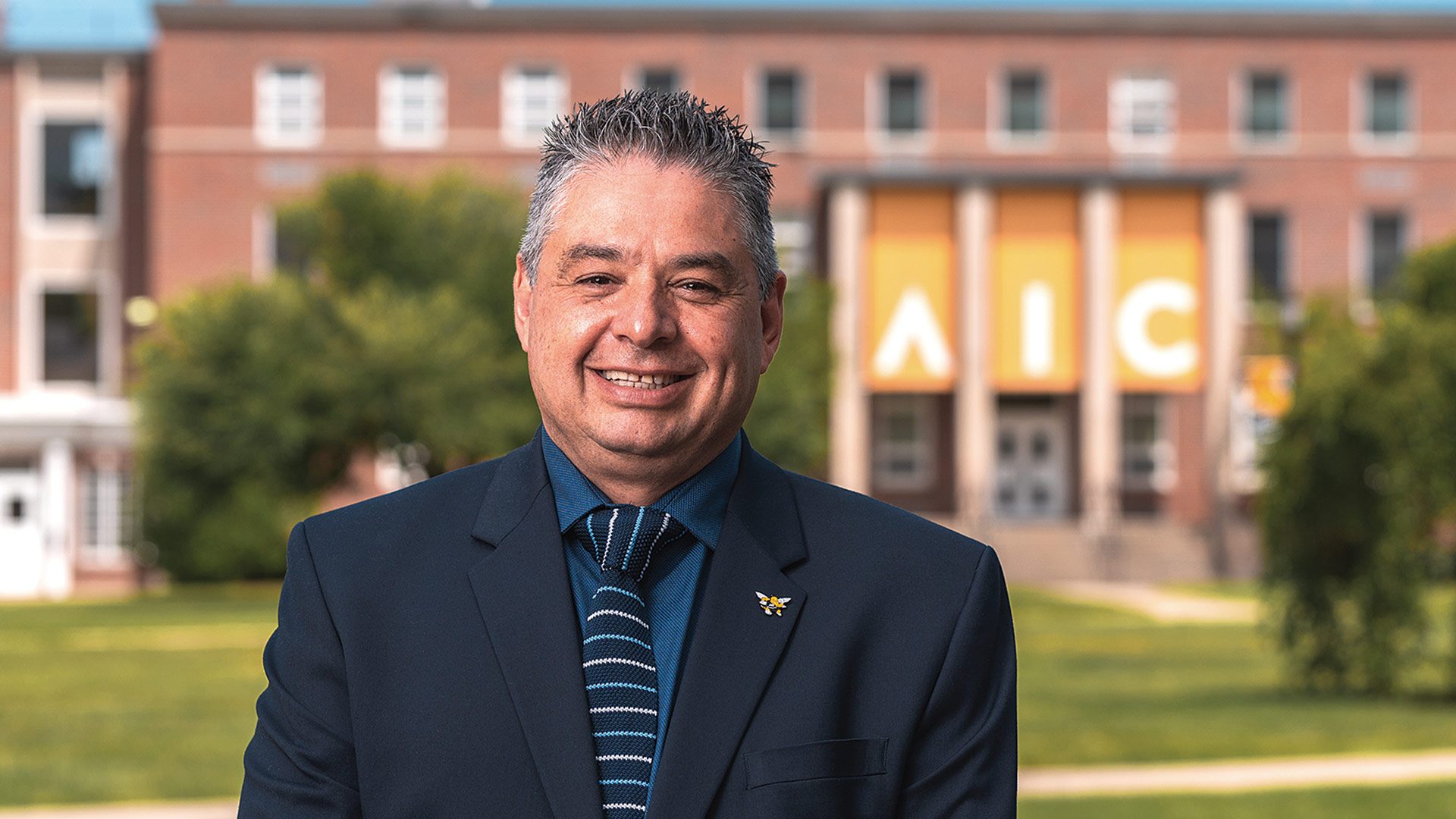
Today’s nearly 4.4 million registered nurses in the U.S. constitute the nation’s largest healthcare profession, and the field offers a wide range of opportunities to those considering a career, including practicing as clinicians, administrators, researchers, educators, and policymakers.

In 2022, Baystate Health welcomed more than 900 nursing students into clinical placements from nursing programs at American International College, Bay Path University, Elms College, Holyoke Community College, Greenfield Community College, Springfield Technical Community College, UMass Amherst, and Westfield State University.

Linda Thompson, left, and Holyoke Community College President Christina Royal

Westfield State University President Linda Thompson, left, and Holyoke Community College President Christina Royal shake hands after signing a dual-enrollment nursing program agreement.

Newly graduated registered nurses (with less than 12 months of clinical nursing experience) can apply to its 10-month paid nurse residency program. During that time, they work directly with a unit preceptor and nurse educator for clinical instruction combined with classroom-style seminars and skills/simulation sessions. The collaborative learning approach is designed to provide the knowledge base and skillset needed to successfully transition into the role of a professional nurse.

Reske said professional experiences like these demonstrate the need for collaborative practice. “They’re not alone but working with other teams, providing patient care where everyone is thinking about how to improve the patient’s health and experience, looking at that patient’s values and experiences.

“We’re preparing students to understand the complex realities of healthcare today,” she went on. “Nurses can really make a unique difference by looking at patients through the nursing lens with a more holistic view.”
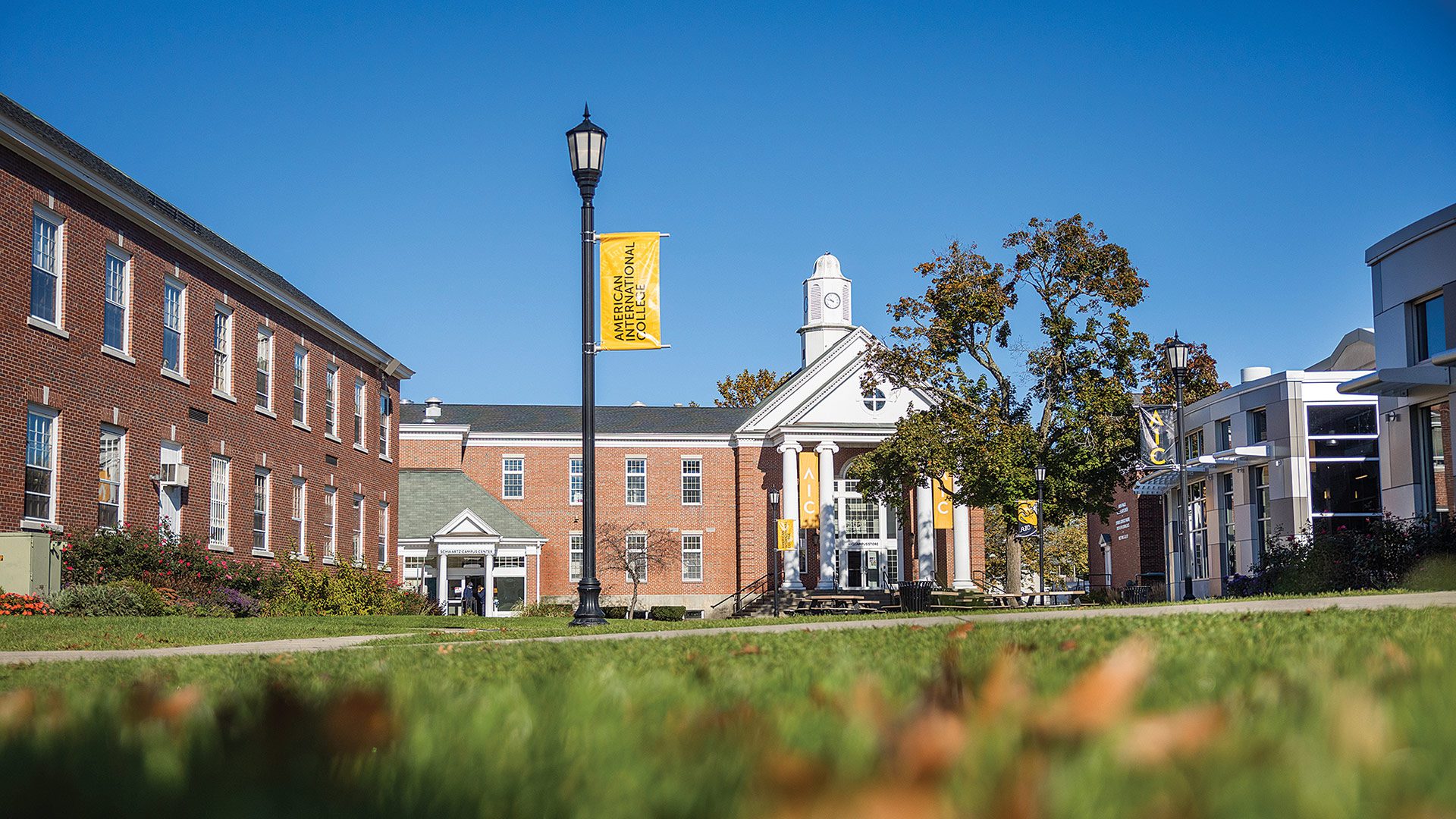
 

Satisfaction Suffers

While all this is meaningful work, many nurses feel there’s a long way to go to reach ideal job satisfaction. According to the annual “State of Nursing in Massachusetts” survey conducted by the Massachusetts Nurses Assoc. (MNA), bedside nurses feel undermined in their ability to provide quality care by understaffing and assigning unsafe numbers of patients, which fuels the flight of nurses away from the profession and leads to hospitals relying on expensive travel nurses to fill the void. Among the survey data:

• 85% of nurses say hospital care quality has deteriorated over the past two years;

• 53% say hospitals that rely on travel nurses have worse care;

• 71% of nurses say their biggest obstacle to delivering quality care is understaffing and/or having too many patients at one time; and

• 88% of nurses support legislation limiting the number of patients assigned to a nurse at one time.
That last statistic rises to 98% when only new nurses are surveyed, demonstrating that nurses are entering the field with eyes wide open to to the impact of staffing challenges.

Rather than causing the staffing crisis, said Katie Murphy, a practicing ICU nurse and president of the MNA, “the COVID-19 pandemic has simply laid bare a system already broken by hospital executives. The industry claims it cannot find nurses, but the data shows there are more nurses than ever. There is not a shortage of nurses, but rather a shortage of nurses willing to work in these unsafe conditions.”

“Nurses throughout the country, including here at Baystate Health, continue to deal with the effects of a nationwide nursing shortage and the emotional impact that the COVID pandemic has had on nurses.”

This year’s survey featured an all-time high number of nurses saying hospital care quality has gotten worse over the past two years. The survey has tracked this number since 2014, when it was 38%. In 2023, 85% of nurses saw care quality decline, up two points from last year, 30 points from 2021, and 46 points from 2019. This troubling trend tracks with survey results showing increased numbers of nurses who do not have enough time to give their patients the care and attention they need and who are forced to care for too many patients at one time. In 2023, 72% of nurses saw both of those issues as “major challenges,” up 11 and 13 points from 2021.

Newer nurses are disproportionately feeling the impact. Sixty-three percent of nurses with five or fewer years of experience say understaffing is their biggest obstacle to providing quality care, compared to 56% of all nurses. Of those nurses planning to leave the field within two years, 67% of newer nurses say they will find work outside of healthcare, compared to 31% of all nurses.

Colleges are doing what they can to draw new nurses into the pipeline. For example, Holyoke Community College (HCC) and Westfield State University (WSU) recently announced a new pathway for individuals to earn both an associate degree and bachelor’s degree in nursing simultaneously or in a streamlined manner by combining the curricula of both programs. The concurrent program is the first in the Commonwealth.

“The concurrent ADN-to-BSN pathway is an innovative approach to nursing education,” WSU Executive Director of Nursing Jessica Holden said. “It enables students to earn their ADN while simultaneously completing coursework that counts toward their BSN. This integration of education allows for a more efficient and streamlined approach to nursing education that is advantageous to some students.”

The concurrent nursing program will help address the nursing shortage by increasing the number of students who can get into a bachelor of nursing program and allow them to earn their degree faster.

According to a Massachusetts Health Policy Commission report, “registered-nurse vacancy rates in acute-care hospitals doubled from 6.4% in 2019 to 13.6% in 2022, with especially high vacancy rates in community hospitals. Employment in nursing and residential care facilities has not recovered since 2020 and remained below 2018 levels.”

HCC Director of Nursing Teresa Beaudry explained that “we had to meet with the Massachusetts Board of Registration in Nursing, who had to approve it, and they’re equally as excited as we are to create another pathway for nurses to advance in their education and a different way for those students who might not be able to get into a bachelor’s of nursing program.”


A Question of Balance

In fact, moving up in the profession is a significant draw to many aspiring nurses. Most area colleges and universities with nursing programs have master’s and doctoral programs structured in such a way that nurses can work full-time while earning advanced degrees that will open up more doors and set them on track to be nursing managers, educators, administrators, or work in other roles.

“Usually, nurses return for an advanced degree,” Reske said. “They begin to look at, ‘what can I contribute in practice? What attracts me? Is it working in an ambulatory-care setting or rehabilitation, or as a nurse leader or a nurse educator? Maybe I want to be a nurse practitioner.’ The opportunities for nurses are amazing.”

And the education they’re getting — both in the classroom and in the field — must prepare them for the new complexities of medical care today, she added.

“Nurses definitely have to deal with more complex issues — speak the language of finance, speak the language of marketing, speak the language of population health. All those require additional learning beyond the classroom. You’re connecting practice to knowledge and knowledge to practice, and learning how to apply that.”

In short, it’s a challenging time to be a nurse, and also a time of great opportunity. Whether their love of nursing outweighs the stresses is a question for every professional in the field — and those questions are not going away any time soon.