Doctors in Residence
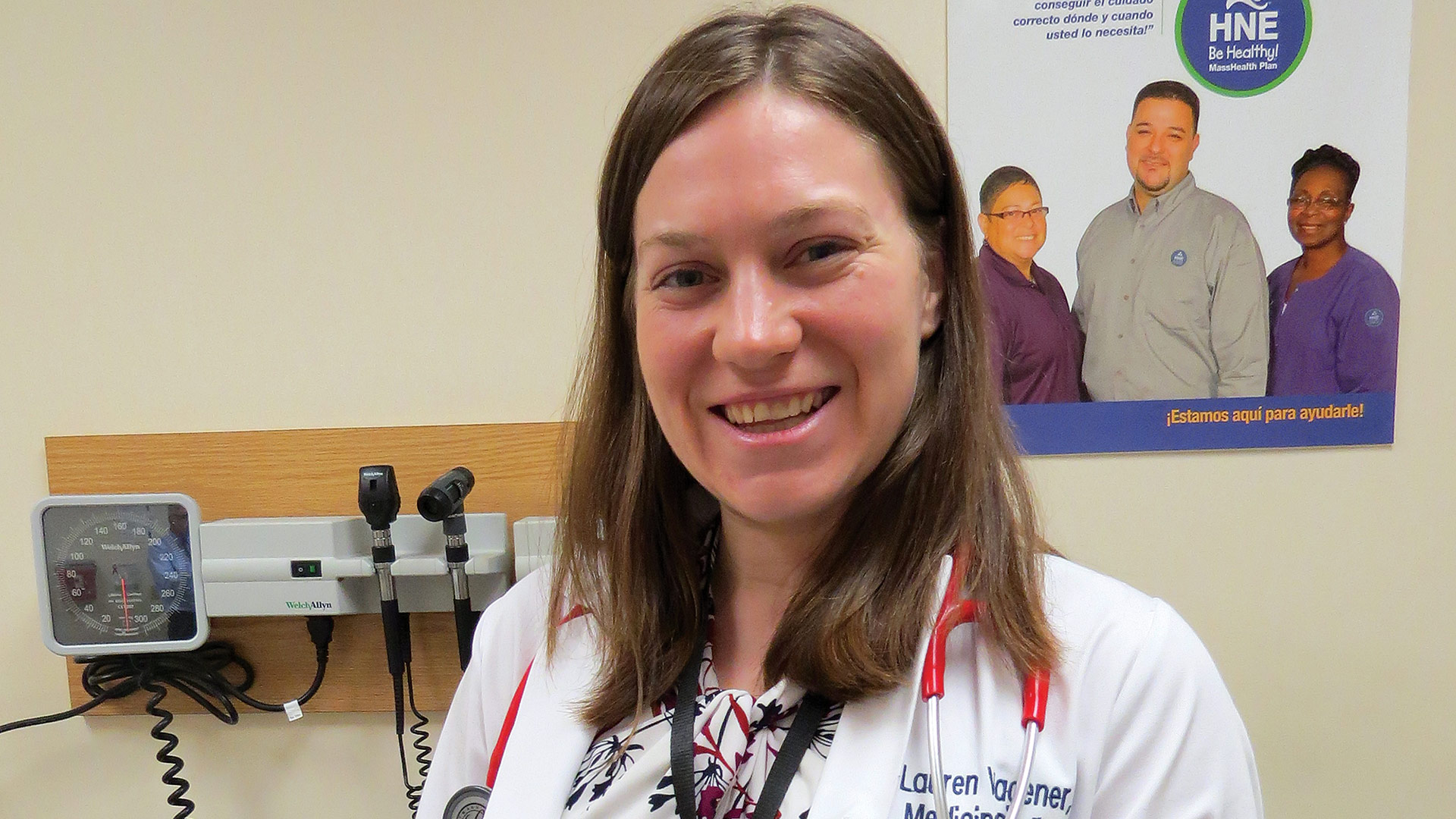
Dr. Lauren Wagener
Dr. Lauren Wagener says she discovered roller derby before she enrolled in medical school, and continued to play while earning that degree.
She told BusinessWest she started playing in a league, taking shifts as both a ‘jammer’ and a ‘blocker,’ terms most Baby Boomers might remember — that’s might — from when they watched the sport on TV back in the ’70s.
Things are different now, said Wagener, noting that today’s game features less violence and fewer of the pro-wrestling-like antics that Boomers might remember.
“Roller derby has revamped into more of a fully realized team sport with rules and regulations and safety — we’re not allowed to trip, no punching, no hitting,” said Wagener, who did some extensive research on the scene well before she moved here and identified two leagues she might play in locally.
But she has a few problems.
The first is a completely torn anterior cruciate ligament in her knee, an injury suffered while playing the sport; she is scheduled to have surgery soon. The second is that she just started her residency at Baystate Medical Center.
“No one likes working on the computer, on the notes; it’s the patient care everyone enjoys. This is what internal medicine offers, and I wanted to be a part of that.”
And while residents don’t have the crazy schedules they did until a decade or so ago, they still put in 80 hours a week over six days, the equivalent of two full-time jobs. That won’t leave much time for roller derby, although Wagener is determined to make some — after the knee is healed, of course.
In the meantime, she plans to take some of the lessons she’s learned from roller derby about teamwork into her daily duties at Baystate’s Mason Square Neighborhood Health Center and myriad other settings she finds herself in. And there are many such lessons, as she will explain later.
Wagener is one of 90 new residents and fellows to arrive at Baystate this summer to begin the next chapter in their healthcare education. Each one has a different and compelling story.
Dr. Zoha Kahn is from Pakistan. But she was already quite familiar with Baystate and Western Mass. before starting her residency a few weeks ago because her sister is a cardiology fellow at the hospital, and her brother-in-law is a pulmonary and critical-care fellow.
Kahn is an internal-medicine resident who hasn’t quite figured out what she wants to a specialize in, and plans to spent at least the next year narrowing her focus.
“Internal medicine is very broad — you deal with everything,” she explained. “This gives you the opportunity to look at the full spectrum of diseases before choosing what you want to do; I get to find out what I truly like.”
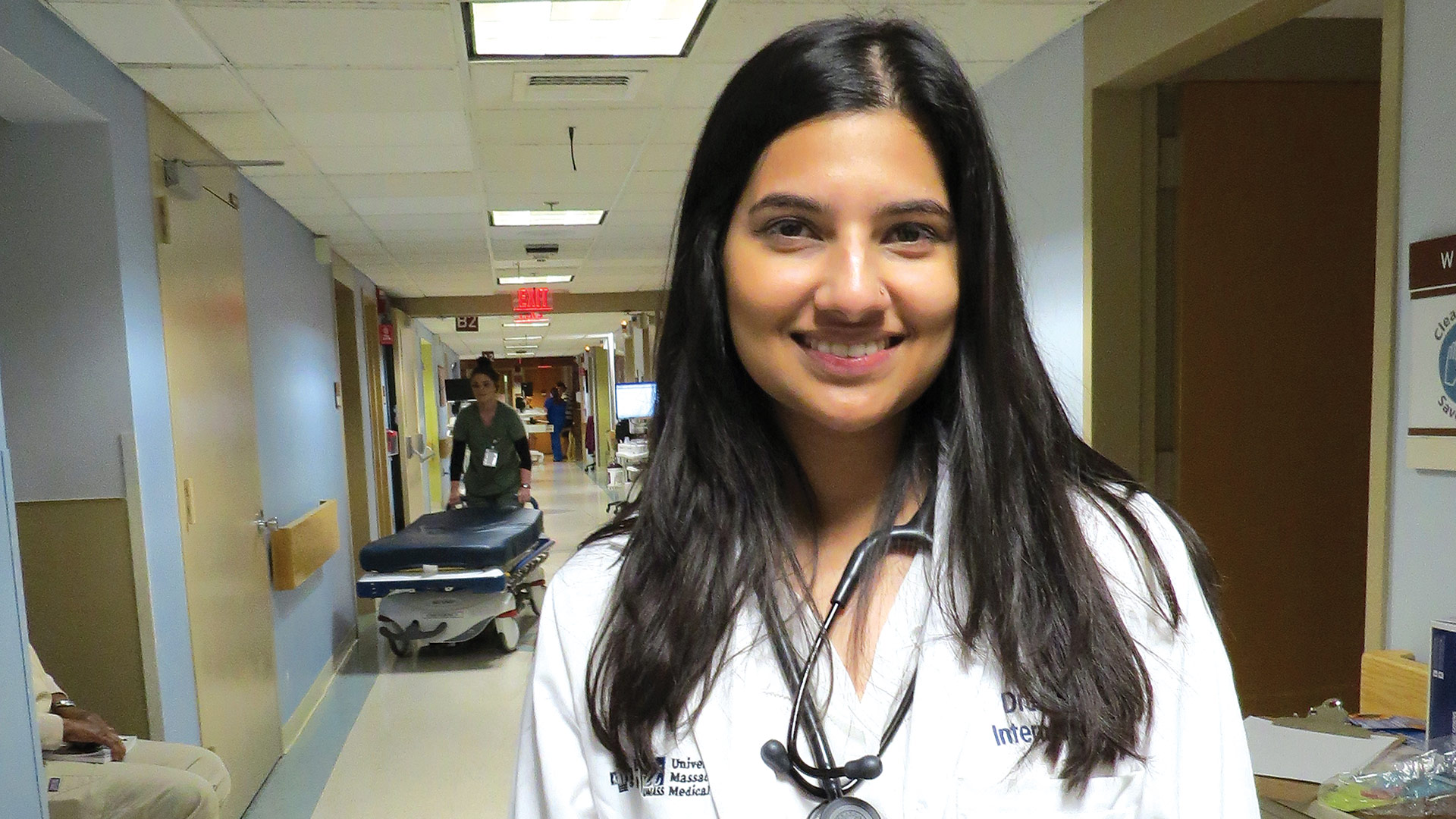
Dr. Zoha Kahn
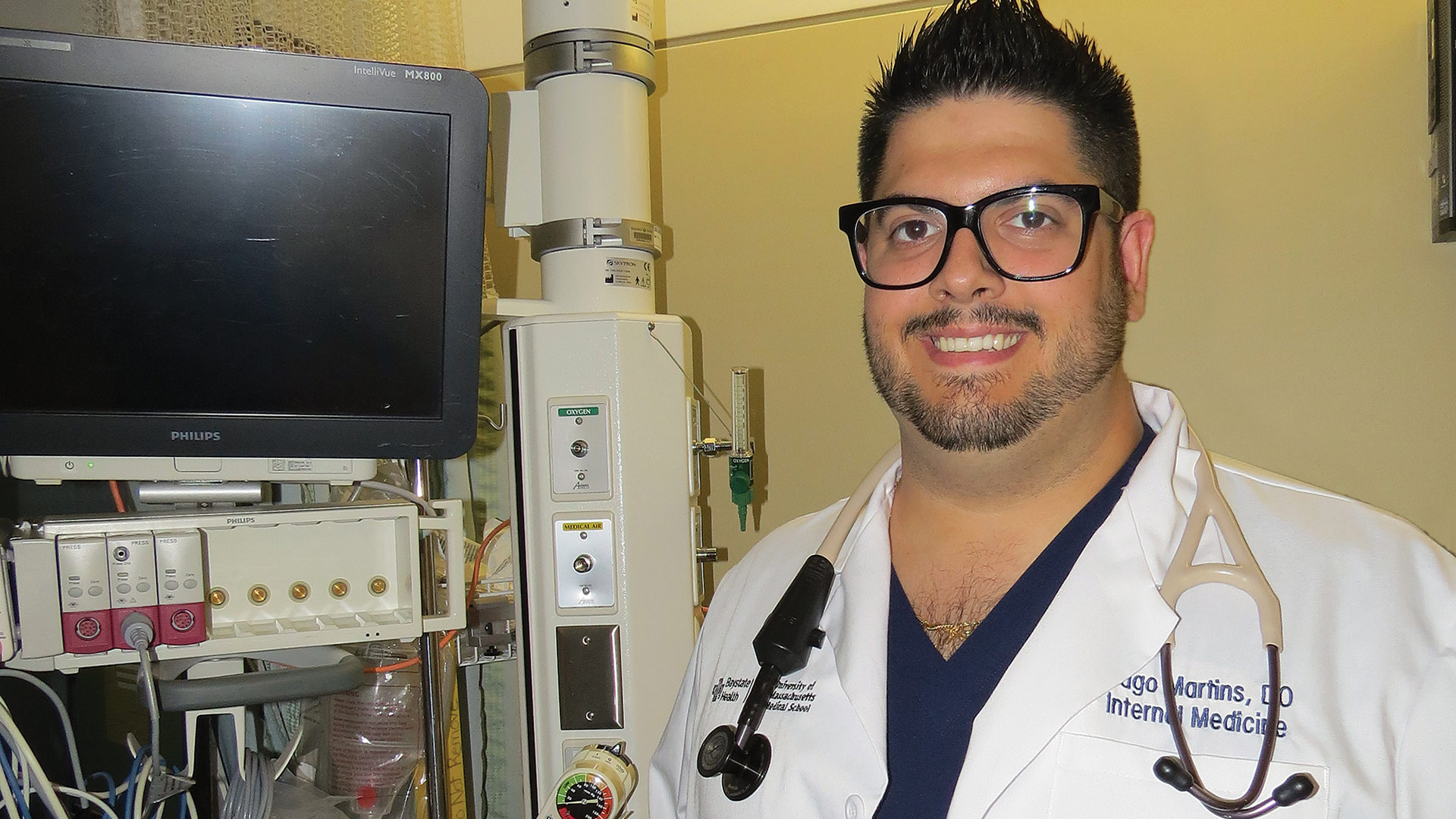
Dr. Tiago Martins, meanwhile, is from Ludlow. While attending Ludlow High School, he took part in a job-shadowing program that brought him to Baystate Medical Center, an experience that inspired him to choose healthcare as a career. Later, he did rotations at Baystate while attending the University of New England College of Osteopathic Medicine in Maine and was actually on a trauma-surgery rotation at the hospital when he learned he had matched there.
Today, he’s essentially starting his professional career there with the stated goal of becoming a hospitalist, a specialist who, as that name implies, cares for individuals while they are hospitalized.
“It provides a different type of challenge,” he said of the hospitalist role. “You see patients not on a long scale, like a primary-care physician does, but you deal with more healthcare needs, and you also get to work with them more on a social level; I really enjoy it.”
For this issue and its focus on education, BusinessWest talked with these residents and some of their supervisors about these intense experiences and how they help these newly minted doctors prepare for the careers in front of them.
Learning Curves
Kahn told BusinessWest there is certainly no shortage of poverty in Pakistan. She cared for that population while attending medical school in that country, and she said she’s generally aware of the myriad challenges that those living in poverty — there and here — face as they struggle to survive day to day.
But none of this prepared her for what’s known as ‘poverty simulation,’ an experience that seemingly every participant describes with the same adjective — eye-opening.
Kahn is no exception. She played the role of a young, single mother in this exercise, and over the course of the fast-moving, four-hour simulation, she learned first-hand all that life can throw at you — and take from you — when you’re living at a certain income level.
Dr. Tiago Martins
“When you’re in that place, it is so difficult,” she recalled. “I was a single mother with two kids, and I was going to school. The first week, I couldn’t pay my rent, my kid was taken away … it was really crazy. You don’t know how to handle all your expenses along with taking care of kids; it’s really eye-opening and gives you a better perspective on how to deal with the kind of patients you’re going to see.”
The poverty simulation is part of the orientation process for all new residents at Baystate, she explained, and, as she said, it’s designed to help ease residents into the community they’re going to serve and give them perspective into one of the larger populations they will serve.
Kahn said she knew more than a little about Springfield from visits to see her sister and brother-in-law, both of whom also did their residencies at Baystate. This familiarity, not to mention a host of positive reviews, put the hospital at or near the top of her wish list when it came to the matching process for her internal-medicine residency.
“When I came for the interview, it felt right,” she said, adding that feel is all-important when one is considering where to spend their next three years on their career journey.
In addition to the array of options it presents, she said she chose internal medicine for the high level of patient interaction.
“You get these long-term relationships — you’re following that one patient for a while, and you build a relationship with that patient, which is very important to me,” she said. “No one likes working on the computer, on the notes; it’s the patient care everyone enjoys. This is what internal medicine offers, and I wanted to be a part of that.”
“Some rotations are harder than others, so we try to pick the schedules carefully so the rotations are balanced in terms of the intensity of the number of hours they do.”
Since starting her residency, Kahn has been working mostly on the ‘floors,’ or wards within the hospital. The cardiac ward is coming up soon on the schedule, and she expects to be working with her sister. She described life so far as “crazy,” in part because she’s learning a new system.
“The way medicine is practiced in Pakistan is different from the way it’s practiced here,” she explained. “It’s a steep learning curve, even with something like the electronic system of documentation.”
Kahn said she’s managing to navigate all this change thanks to a solid support system, a sentiment echoed by all the residents we spoke with.
“Everyone is super helpful,” she explained, adding that it certainly helps to have family in the area — and at the same hospital. “I feel more confident in my ability to deal with patients, and things have gotten better with time, but in the first few days it was really tough; what’s helped has been all the support.”
Support System
Dr. Reham Shaaban is a big part of that support system that Kahn mentioned.
She’s program director of Internal Medicine Residency at Baystate and an academic hospitalist there. She also did her own residency at Baystate.
Each year, she told BusinessWest, a class of 18 new residents arrives at the Baystate system. The doctors come from across the region and around the world, she noted, adding that the class of 2019 is quite typical.
“They all have different backgrounds, different experiences, and different expectations,” she explained. “And knowing that, we start with a blank slate and put together a six-week orientation period for them to get them familiar with all of our resources, all of the help, to get to know them a little better, and ease them into understanding our system and what’s expected of them.
“And introduce them to our community,” she went on, adding that there is quite a bit that goes into that part of the equation.
Part of it involves work at Baystate’s various neighborhood clinics, like the one in Mason Square, she said, adding that the six-week orientation also involves rotations in various wards at the hospital. There are also shadowing programs with nurses and other healthcare professionals, and so-called boot camps, simulation-lab cases conducted with supervisors and chief residents to focus on some of what Shaaban called the “bread-and-butter medicine aspects we see in internal medicine to help them hit the ground running.”
The poverty-simulation program is another big part.
“This is the third year we’ve been doing it, and it’s a very powerful experience for our residents to understand our community and have a different perspective going into medicine,” she explained. “And we do it purposefully before they start seeing their first patients.”
When they do start seeing patients, they do so with large amounts of supervision and support from senior residents, who are two years ahead of them in training, she went on, adding that guidance is provided in everything from patient diagnosis and treatment to use of the computer system.
And the schedule is carefully choregraphed, she went on.
“Some rotations are harder than others, so we try to pick the schedules carefully so the rotations are balanced in terms of the intensity of the number of hours they do,” she explained. “We try to put easier rotations between harder rotations to give them some breathing room.”
Describing the sum of all this, both Shaaban and Marie Housey, administrator of the internal-medicine program, said it extremely rewarding work — and it’s a lot like parenting.
“It’s the best job I ever had,” said Shaaban, who devotes much of June and July to the new residents before shifting back to the second-and third-year doctors. “It’s like being a parent and seeing your kids go through and learn new things and grow each day until you let them out to real life.”
Housey agreed. She said she starts corresponding with residents soon after match day and continues to do so on a weekly basis, dealing with subjects ranging from the location of housing to how and when they get paid.
“It’s like having a lot of children and nurturing them and watching and helping them grow,” she said. “It’s a lot of work, but it’s very, very rewarding.”
At Home with the Idea
Flashing back to the job-shadowing experience nearly a decade ago, Martins said he was able to shadow a wide variety of professionals, including Emergency Department staffers, radiologists, physician assistants, nurses, and a variety of doctors.
The experience, as noted earlier, put his career path into focus.
“From that point, I knew that I wanted to go into medicine,” he told BusinessWest. “And, ideally, I knew that I wanted to work at Baystate.”
And today he is, with a badge that declares that he is a doctor of Osteopathic Medicine.
Martins said he has a number of connections to Baystate, and collectively they make the hospital feel like home.
Listing more of them, he said his mother works there as a housekeeper; he now rides to work with her most days. Also, he became familiar with the hospitalist and that unique role while visiting — and translating for — grandparents and parents when they were in the hospital.
“Coming from a first-generation family, I always had to interpret for my parents and grandparents,” he explained. “And I found myself always connecting very well with the hospitalist team that took care of them, one of them being my current advisor; she took care of my grandfather when he was here with cancer four years ago.”
This explains the wide range of emotions when he received the e-mail on match day informing him that he would be doing his residency at Baystate.
“It’s hard to describe,” he said. “It was a happy, emotional type of experience, but at the same time it was kind of surreal; I was very excited.”
When he spoke to BusinessWest, Martins was on rotation at the Cardiac Intensive Care Unit (CICU) at the hospital, but, like Wagener, he’s also doing work in the clinics as well, specifically the one on High Street, another facility that serves a generally low-income population.
“We see a wide variety of conditions, and we also deal with some complex social backgrounds that are not unique to Springfield but are very common here,” he explained. “In a sense, we’re helping them with the social determinants of healthcare; many of these patients can’t afford some of their medications and have to make decisions about what they can afford and can’t afford.”
The clinic setting contrasts sharply with the CICU, he said, adding that those working in the latter setting are far less focused on social concerns than the immediate medical necessities; going from one world to the other is part of the residency experience.
“There are high points of stress and low points of stress,” he said, referring initially to the CICU, but also the clinic setting as well.
Like Kahn, he said the poverty simulation brought home the challenges facing many of his patients in a very powerful way.
“Even though we all knew it was a game,” he recalled, adding that he played the father and head of a household in his simulation, “it became very real.”
Rolling with the Punches
Wagener told BusinessWest she had heart surgery as an infant and has vivid memories of some of the follow-up visits to the hospital.
She recalls having a temper tantrum upon being informed that she couldn’t keep an X-ray taken of her.
Overall, she said science and medicine are in her blood, and that’s why she took the healthcare fork along the career path. “I took an anatomy class in junior or senior year of high school, and that got me full into it,” she said, adding that further inspiration was provided by listening to the stories of some classmates diagnosed with cancer.

Dr. Lauren Wagener, seen here in her other uniform, will struggle to fit roller derby into her life — even after knee surgery.
Photo by Phantom Photographics
A native of the Pittsburgh area, she preferred to stay somewhat close to home for her residency, but she also read — and actually called up the quote on her phone to verify — that Baystate “has the happiest residents in the country.”
On match day, she got a text informing her that she would be one of them.
As noted, her residency is in what’s known as ‘med-peds,’ a combination of internal medicine and pediatrics, which means she has many career options to consider as her residency plays out over the next three years, both general and very specialized.
Early into her residency, she has spent considerable time at the clinic in Mason Square, where she’s taking care of patients and getting a first-hand look at the challenges facing a population that is, for the most part, living at or below the poverty line.
“At Mason Square, we have a very underserved population of patients,” she explained. “These are people not only with complicated medical issues, but also people who might struggle to get the resources that would help with their treatment. In the clinic, it’s not only learning the medicine, it’s also learning how to navigate the resources that we have for patients and helping them get what they need, not only medicine-wise, but with things in the home as well.”
Overall, it’s work that is in many ways different from medical school.
“It feels different when the decisions are yours and you’re not just recording for someone else,” she said, adding that she is new to such duties as ordering tests and prescribing medications. “There is a lot of responsibility that comes with that, and you want to do well by your patients.”
As for roller derby, she said it’s like medicine in a lot of ways, especially when it comes to teamwork.
“You have to have a good team and a strong sense of teamwork and collaboration,” she said, referring to both the roller-derby rink and a hospital or clinic. “Communication is the name of the game.
“You’ve got to put yourself out there,” she continued while expanding the analogy to her current work in residency. “In roller derby, one of the first things they teach us is falling and how to fall safely; they teach you how to fall so hopefully you can fall less in the future. If you make a mistake by falling, you know to get back up again and jump back into it — it’s in the same in this setting. And there’s a lot of encouragement as well; we pick each other up.”
Study in Determination
Wagener told BusinessWest she’s going to be very careful and patient when it comes to roller derby, and she wasn’t just talking about her knee.
“It’s a sport that can easily take over your life,” she said, while quickly noting that she’s already had her life taken over by something else — her med-peds residency.
It’s a three-year journey and a critical step in one’s career in healthcare. It’s a learning experience, but also a life-changing experience, as these residents, only a few weeks into the process, already know.
George O’Brien can be reached at [email protected]