Home Posts tagged Employment (Page 30)
40 Under 40 The Class of 2010
Age 28: Leadership and Development Specialist, Big Y Foods

Lindsay Porter says the new title on her business card reveals quite a bit more about what she does than her old one.

‘Leadership and development specialist’ has replaced ‘employment specialist,’ she said, in a move that is part of a restructuring at Big Y Foods, but also an attempt to better explain Porter’s role — both within the company and also with some of its programs in the community.

Porter handles recruiting and hiring duties for Big Y, as well as other employment responsibilities, but she also coordinates leadership and development programs for store managers.

Meanwhile, Porter is heavily involved with the Springfield Work Scholarship Connection program as one of the company’s management representatives. The initiative helps 40 selected students at Sci-Tech High School in Springfield stay in school and graduate by having youth advocates work with them at school, home, and work. Participants are then eligible for hire by Big Y upon graduation if certain criteria are met.

“We work with the students to help build self-esteem and develop the skills and values needed to get and keep a job; it’s in everyone’s best interest that we do something to help students graduate,” she said, adding that it is Big Y’s desire to expand the program to other schools and communities.

In addition to her duties with Springfield Work Scholarship Connection, Porter gives back to the community in a number of other ways. She’s on the board of the Human Resource Management Assoc. of Western New England, and also on the senior HR roundtable with the Economic Development Council of Western Mass., the youth council of the Regional Employment Board of Hampden County, the Business Advisory Council of Community Enterprises, and the Mass.

Rehabilitation Commission Business Advisory Council, among others. She’s also on the membership and arts committees of the Young Professional Society of Western Mass. and the Women’s Leadership Network of Western Mass., which has, as its mission, the advancement of women of all ages and ability.

Considering all this, Porter’s new title fits her perfectly.

—George O’Brien

40 Under 40 The Class of 2010
Age 39: Executive Director and Organizer, Pioneer Valley Local First

Daniel Finn never forgot a language lesson from high school.

“I remember learning that the words ecology and economy share the same root word, ‘eco,’ meaning ‘home’” — a fact that helped him see the connection between taking care of both the economy and the planet.

Finn eventually found a way to meld those concepts, launching Pioneer Valley Local First in 2001. The group promotes buying local by emphasizing both the economic benefits of keeping dollars in the region and the lessened environmental impact of doing so.

“We want people to think local first,” he said — and that means looking beyond the price tag at the overall prosperity and self-sufficiency of the region. “Shopping locally makes a lot of sense. We want people to see that it’s in their enlightened self-interest to support businesses here in Western Mass.”

One major accomplishment was the creation of the Pioneer Valley Local Business Guide, a detailed, categorized listing of area businesses that have aligned themselves with the organization’s mission.

Meanwhile, Finn has worked for 13 years as an employment specialist with Riverside Industries, helping people with disabilities develop life skills and procure jobs. He and a client with Down syndrome recently cleaned up a bike path from Amherst through Hadley, Northampton, and Florence, removing more than 1,000 pounds of trash from the path and the surrounding woods.

“If we take care of our home, it’ll take care of us,” he said. “If we don’t take care of our home, watch out.”

Again, it’s that concept of home that helps him bridge a perception gap between the environment and economic growth.

“When I explain this to my environmental friends,” Finn said, “they appreciate business more, and when I say it to business-minded people, it helps them to understand the importance of taking care of our air and water, and having a stable climate.

“We can have great businesses and a beautiful environment,” he continued. “You don’t have to give up one to have the other.”

—Joseph Bednar

40 Under 40 The Class of 2010

Kimberly Klimczuk: 32

Attorney and Partner, Royal & Klimczuk, LLC

Helping people is the motivation behind Kimberly Klimczuk’s professional and personal accomplishments.

She co-owns, with attorney Amy Royal, a Northampton law firm that specializes in labor and employment law. And although Klimczuk represents businesses, such as Troy Industries, which manufactures small-arms components, “there are people behind all of these companies who are trying to follow employment laws and want to do the right thing,” she said. “We develop ongoing relationships with our clients, and there is more of a human connection than people might think.”

As a child, Klimczuk loved the TV shows LA Law and Law & Order. She grew up in a blue-collar family, was the first in that family to graduate from a four-year college, and discovered she wanted to pursue labor and employment law after a stint with a law firm.

Today, Klimczuk uses her expertise on the job and for a number of organizations that benefit people. She has been has been a judge for the Mass. Bar Assoc. mock-trial competition for high-school students, and volunteers for the Dial a Lawyer program.

“I like to share the knowledge I have gained. It is of use to a lot of people,” she said. “Having legal knowledge opens a lot of doors, and I like to help people when I can.”

She has volunteered for the Internal Revenue Service’s Volunteer Income Tax Assistance program since she was in law school, and is secretary of the board for the Gandara Center, a board member of the Hartford Penn Club, and a mentor for the Pioneer Valley Girl Scouts Lawyers of Tomorrow program.

Klimczuk serves on the board of the Hampden County Bar Assoc., helps organize the annual luncheon it sponsors for Open Pantry’s Loaves and Fishes Kitchen, and recently joined the board of Aditus Inc., which provides employment and residential support to people with developmental disabilities.

She is also proud to be part of a female-owned law firm. “Labor and employment law is something that affects everyone, and I really enjoy it.”—Kathleen Mitchell

<<Back

10 Points Departments

By DENNIS G. EGAN Jr., Esq.

1. File annual reports. In Massachusetts, annual reports must be filed on or before the anniversary of formation and are required to attain good standing to secure financing, enter into purchase-and-sale transactions, and transact other business.

2. Keep business insurance current and complete. Unemployment insurance, Social Security, and workers’ compensation are all required by law. Make sure your insurance is up to date and your business is adequately covered.
3. Create a succession plan. Then memorialize it through a cross-purchase or redemption agreement. These may be funded through whole, term-life, and/or disability insurance.
4. Update your estate plan. As businesses succeed and property and assets are bought and/or sold, the composition of your estate may change. Make sure that your estate plan keeps pace.

5. File and pay taxes in a timely fashion. One thing is certain: not filing and paying taxes in a timely fashion will lead to penalties and interest that far exceed the underlying tax obligation.

6. Make sure your business is qualified to do business in every state in which you conduct business. Non-compliance can lead to significant penalties and interest on top of the filing fees.
7. Review your employment contracts. Recent case law has changed what constitutes an employee versus an independent contractor, and failure to properly categorize workers can lead to significant legal costs, administrative expense, and tax obligations.
8. Review or create a comprehensive employee handbook. This notifies employees of your business’ policies and procedures. It helps to prevent confusion, protects your business from possible litigation, and creates a better work environment.
9. Revisit your business health-insurance coverage. This will help you to balance the health needs of your employees with containing costs.

10. Service your company’s debt. Are you receiving the most favorable terms available? You may be able to refinance your company’s debt, resulting in a lower interest rate and more-favorable repayment terms.

Dennis G. Egan Jr. is an associate with the regional law firm Bacon Wilson, P.C, who specializes in business and corporate law; (413) 781-0560; degan@ baconwilson.com

Uncategorized

The recession is over — in Massachusetts, anyway.

That was the word from Pennsylvania-based Moody’s Economy.com, which has analyzed employment, production, and housing data, and concluded that the Bay State began a recovery in January, thus becoming one of the 22 states with growing economies.

“The data has been strong enough to move Massachusetts out of a moderating recession and into a recovery,” Gus Faucher, director of macroeconomics at Moody’s Economy.com, told the Boston Globe. “Massachusetts will be seeing job gains pretty consistently from here on out.”

Let’s hope so, because despite what the numbers might say to those crunching them at Moody’s, this recession won’t be over, officially or unofficially, until businesses start hiring again. And there is some very real concern that companies won’t hire again — or at least to the extent that they were before the Great Recession began — thus raising the specter of a true jobless recovery.

And that wouldn’t be a real recovery at all.

There have been many recessions over the past several decades, but nothing quite like this one. What separates it from the others is the number of jobs lost and the quality of those jobs. When so many people are unemployed and thus quite uncertain about their futures, spending drops precipitously. And when that happens, more people become unemployed and spending is curtailed further, and this leads to more layoffs … well, everyone knows how this cycle works and why it contributed to the long length of the Great Depression.

Locally, hesitancy on the part of individuals and businesses to spend has impacted every industry, from construction to auto sales; from the media to retailers at all levels, including stalwarts such as Fran Johnson’s Golf & Tennis, now fighting to stay afloat.

Unemployment in the Bay State was at 9.5% in February, the highest level in three decades, and the job losses over the past 18 months or so have come in every sector, including two pillars of the local economy, health care and education.

There are some signs of brightening skies, however. The latest Manpower Employment Outlook Survey reveals that more companies in the Greater Springfield area plan to hire in the second quarter than plan to reduce staff. Specifically, 19% fall in the first category, and 10% in the second (the rest plan to maintain current levels or don’t know what they’re going to do), and that 9% net employment outlook, as it’s called, is the best spread this region has seen in some time.

Still, the number that matters in that survey is 71%. That’s the percentage of companies that aren’t planning on hiring or aren’t sure if they will. It shows that a lot of business owners clearly need more evidence that things are better before they add staff. Meanwhile, many experts contend that companies weren’t downsizing over the past 18 months as much as they were rightsizing, a prudent strategy for employers but not a trend that bodes well for the region.

The news that the recession is officially over, at least according to Moody’s Economy.com, is welcome. Headlines like that can actually help inspire confidence in business owners at a time when it is truly needed.

But as every business owner knows, the recession isn’t over when some economic analysts say it is. Instead, it’s over when they can see it out their window or in their quarterly sales numbers. It’s over when companies large and small gain the confidence they need to expand, introduce new products, and hire people in large numbers.

When we see those things happen, then we can actually let the celebration begin.

Departments

Business Group Formed to Advance Springfield School Reform

SPRINGFIELD — Representatives of the business community have come together to launch Springfield Business Leaders for Education (SBLE) to advocate for public policy and school reforms that aims to raise student achievement in Springfield. In the fall of 2009, Nick Fyntrilakis of Massachusetts Mutual Life Insurance Co. (MassMutual) and John Davis, trustee of the Irene E. and George A. Davis Foundation, convened the first of several meetings among a broad cross-section of business people to discuss a possible role for the Springfield business community in advancing meaningful educational policy reform in Springfield. The Mass. Business Alliance for Education, a business organization leading similar efforts statewide, provided technical and policy expertise to the group. These meetings have led to the recent formation of Springfield Business Leaders for Education. According to a joint statement by Fyntrilakis and Davis, “the business community should play a crucial role in supporting the education of Springfield’s children. Springfield Business Leaders for Education can help engage the business community in addressing education issues and challenges in Springfield. This diverse group of business leaders understands the critical role education plays in workforce development and the economic vitality of our region. The goal of our advocacy is to support local, state, and federal education policy and reform that leads to academic and life success for Springfield’s children.” As part of the group’s effort to improve educational outcomes, member organizations of SBLE are underwriting a leadership program developed specifically for members of the Springfield School Committee by the nationally known Center for Reform of School Systems (CRSS). School Committee members have been invited to participate in the two-year leadership program designed and facilitated by CRSS and highlighted by a kickoff retreat to be held in Lee on March 19-21. Mayor Domenic Sarno, School Committee chairman, has agreed to participate in the leadership training and retreat, and SBLE is urging all members of the School Committee to attend the initial March weekend session and follow-up program. CRSS will continue to host leadership-development sessions with members of the Springfield School Committee over a two-year period. As part of the CRSS school-leadership program, Springfield School Committee members will also have an opportunity over the course of the two-year program to meet and work with representatives of other high-performing districts from around the country. SBLE is open to all within the business community committed to engaging on critical education policy initiatives and reforms that will improve education in Springfield, making the city a model urban school system.

Business Confidence Declines for First Time in Seven Months

BOSTON — The Associated Industries of Massachusetts (AIM) Business Confidence Index lost 1.7 points in February to 44.1, breaking a string of seven consecutive monthly increases. The drop reinforces the point that the state has to expect a protracted and halting recovery process, according to Raymond G. Torto, global chief economist at CB Richard Ellis Group Inc. and chair of AIM’s Board of Economic Advisors. The general trend is upward, but progress has been slow over the past five months, and recent news of unemployment claims increasing indicates the state is still some distance from robust growth, added Torto. The February AIM Index was up 10.8 points from February 2009, its all-time low (33.3), but off 6.1 points over two years and 15.1 over three years. The highest reading in its 18-year history was 68.5, attained on two occasions in 1997-98. The Current Index, assessing overall conditions at the time of the survey, was off 1.6 points in February to 40.0, while the Future Index of prospects for six months ahead shed 1.5 points to 48.4 — its first setback since June. The Massachusetts Index of conditions within the state lost three points in February to 37.7, as the U.S. Index of national conditions fell 3.8 points to 36.7. Confidence was off sharply in February among manufacturers (down 4.9 to 43.8) but rose among other employers (up 2.5 to 44.4), leaving the two groups at rough parity. Confidence levels remained slightly higher in Greater Boston (45.0, -2.3) than in the rest of the state (42.8, -1.0); small employers were less positive than larger firms about their own situations and prospects. The monthly Business Confidence Index is based on a survey of AIM member-companies across Massachusetts, asking questions about current and prospective business conditions in the state and nation, as well as for respondents’ own operations. On the Index’s 100-point scale, a reading above 50 indicates that the state’s employer community is predominantly optimistic, while a reading below 50 points to a negative assessment of business conditions.

Wilson to End UMass Presidency in 2011

BOSTON — UMass President Jack M. Wilson will conclude his presidency when his current term expires on June 30, 2011. Under his contract, Wilson was asked to make a declaration about his future plans by June 30, 2010. Given that his term runs through June 30, 2011, the University is now positioned to assemble a search and have a successor selected as Wilson’s term expires. Wilson, 64, has led the five-campus UMass system since September 2003. During that time, he has emphasized access and affordability for students, focused on research and innovation, and championed a capital program aimed at providing new facilities and much-needed renovations on all five campuses. Wilson noted he was “particularly proud” that UMass has been able to build enrollment and increase its own spending on financial aid by more than $100 million to ensure that qualified students who want to attend the university will be able to do so. Over the course of the next year, Wilson will consider future opportunities inside and outside of the university. He added that he is looking forward to working with students and working on the technology, innovation, and economic-development issues that have interested him throughout his career as a physicist and educator. “At my core, I am an educator, and I look forward to being able to focus on teaching and to advancing research,” he said.

Manufacturing Seeing Steady Growth

TEMPE, Ariz. — Economic activity in the manufacturing sector expanded in February for the seventh consecutive month, and the overall economy grew for the 10th consecutive month, according to the latest “Manufacturing ISM Report on Business” from the Institute for Supply Management. The 11 manufacturing industries reporting growth in February were machinery; paper products; apparel, leather, and allied products; computer and electronic products; miscellaneous manufacturing; transportation equipment; textile mills; plastics and rubber products; electrical equipment, appliances, and components; fabricated metal products; and food, beverage, and tobacco products. The five industries reporting contraction in February were wood products, furniture and related products, primary metals, printing and related support activities, and chemical products. Manufacturing continued to grow in February, but the rate of growth decelerated as the Purchasing Managers Index (PMI) registered 56.5%, a decrease of 1.9 percentage points when compared to January’s seasonally adjusted reading of 58.4%. A reading above 50% indicates that the manufacturing economy is generally expanding; below 50% indicates that it is generally contracting. A PMI in excess of 42% over a period of time generally indicates an expansion of the overall economy. Therefore, the PMI indicates growth for the 10th consecutive month in the overall economy, as well as expansion in the manufacturing sector for the seventh consecutive month. The 10 industries reporting growth in new orders in February were plastics and rubber products; machinery; paper products; computer and electronic products; miscellaneous manufacturing; printing and related support activities; transportation equipment; fabricated metal products; electrical equipment, appliances, and components; and food, beverage, and tobacco products. The three industries reporting decreases in new orders in February were wood products, furniture and related products, and chemical products. In related news, the latest “Non-Manufacturing ISM Report on Business” reports that economic activity in the non-manufacturing sector grew in February for the second consecutive month. The nine industries reporting growth in February based on the NMI composite index were information; arts, entertainment, and recreation; transportation and warehousing; public administration; professional, scientific, and technical services; other services; retail trade; whole trade; and finance and insurance. Also, employment activity in the non-manufacturing sector contracted in February for the 26th consecutive month.

Non-residential and Public Construction Declines

WASHINGTON, D.C. — Construction spending in January fell by $5.5 billion to $884 billion, its lowest level since June 2003, according to an analysis of new federal figures by the Associated General Contractors of America. Declining investments in private-sector non-residential construction and public construction at all levels of government drove the 0.6% decline, according to the association’s chief economist Ken Simonson. Simonson noted that private non-residential construction spending declined by 2.1% between December and January, and by 20% over the past year. Power construction was the only private non-residential construction category to increase over the past year, by 16%, while most other categories declined by double digits, according to Simonson. Simonson noted that two major categories of federally driven transportation spending — public highway street construction and other transportation construction — increased by 6% and 18%, respectively. In addition, direct federal construction spending increased 1.9% in January and 13% over the past 12 months to a record $31 billion. Federal funding has been giving contractors “the lifeline they need to stay in business,” he added. Many construction jobs are now at risk, noted Simonson, since the federal transportation program expired Feb. 28. Association officials urged Congress to act quickly to renew the program so that construction layoffs and closures do not accelerate.

Retirement in Limbo for Many

NEW YORK — More people say they just don’t have the money to retire these days. According to a recent survey by Careerbuilder.com, a career-resources Web site, 72% of workers over the age of 60 who are putting off retirement are doing so because they can’t afford it. The results from the survey indicate more pessimism than in 2008, when about 60% of retirement-aged workers blamed the economy for delaying retirement, according to Michael Erwin, a senior career advisor at Careerbuilder.com. Fear of retirement is highest among women, added Erwin. According to the survey, some 76% of women said they were not financially secure enough to stop working, compared to 68% of men. Women have good reason to worry because they outlive men, according to Tom Warschauer, a finance professor and director of financial-planning programs at San Diego State University. Women live four to five years longer than men on average, so if men and women save the same amount, women would be less prepared, noted Warschauer. Health care was another major reason for staying employed. About half of those surveyed said they need health insurance and other benefits, especially as the health care debate rages in Washington. Still, a majority of workers said they were “just plain happy” with their jobs. The survey found that 71% of workers said they were postponing retirement because they enjoyed working and didn’t want to leave.

ADP Reports Jobs Recovery on Horizon

NEW YORK — Businesses across the country shed another 18,000 jobs in February, bringing the tally of jobs lost from America’s small businesses to nearly 3 million since February 2008, according to a recently released report by payroll processor ADP. According to ADP, small businesses — those with fewer than 50 workers — were hit hardest last month. Medium-sized businesses, with 50 to 500 employees, added 8,000 net new positions to their ranks. Joel Prakken, chairman of ADP researcher Macroeconomic Advisers, sees a turnaround on the horizon. If the recent trend continues, and given first-quarter GDP growth of 5.9%, private employment could rise next month for the first time in two years, he noted. In related news, a separate employment survey recently released concluded that the nation’s tiniest businesses are already adding workers. Intuit’s first installment of its new, monthly Small Business Employment Index reported that firms with less than 20 employees added nearly 40,000 net new jobs in February — a sharp contrast to the continued job losses ADP reported. Intuit provides payroll services to small businesses, and based its estimate on online data from 50,000 small-business employers. Tiny companies tend to be the first to cut staff when the economy weakens and the first to hire again when it improves.

Jobs Proposal Launched for Construction Industry

WASHINGTON, D.C. — Associated Builders and Contractors (ABC) recently unveiled its 2010 Job Creation Proposal, a wide-ranging package of recommendations that will help to stimulate the construction industry and put Americans back to work. In order to kick-start the lagging economy and put the construction industry back to work, ABC recommends eliminating uncertainty in the business environment by calling on Congress and the administration to focus on free-enterprise initiatives and open competition instead of anti-business legislative and regulatory proposals. Additionally, ABC recommends increasing access to capital for new construction projects and viable, low-risk projects and contracts that need funding in order for work to commence, and promotes enacting a national, comprehensive energy plan that includes new construction and upgrades to the nation’s infrastructure. For more details on the proposal, visit www.abc.org.

State Foreclosure Petitions Drop in January

BOSTON — The number of foreclosures started by lenders in Massachusetts during January dropped to the lowest level in more than a year, according to a new report by the Warren Group. Lenders filed 1,874 petitions to foreclose — which mark the first step in the foreclosure process in Massachusetts — in January, a 9% decrease from 2,060 in December and 4.4% drop from a year earlier. Foreclosure petitions exceeded 2,000 for most months in 2009, falling below that number only in January and November. In January, 1,061 foreclosure deeds were recorded, up from 978 in January 2009 and 857 in December. This was the highest number of foreclosures for January since the Warren Group started tracking statewide foreclosure activity in 2006. The number of auction announcements tracked by the Warren Group also surged in January. Auction announcements shot up 81.5% to 2,385 from 1,314 in January 2009 and were also 23% higher than the 1,931 auction announcements tracked in December.

Statewide Dropout Rate Falls Below 3%

MALDEN — Fewer than 3% of the state’s high-school students dropped out of school during the 2008-09 school year, marking the first time the statewide dropout rate has dipped below 3% in the past decade. According to a new state report, the dropout rate for Hispanic students statewide showed the biggest improvement among the five largest racial/ethnic groups since last year, improving from 8.3% in 2007-08 to 7.5% in 2008-09. In all, 8,585 students (2.9%) out of 292,372 high school students in grades 9-12 statewide dropped out of school during the 2008-09 school year, a 0.5% improvement from the 2007-08 school year, and a 0.9% improvement from the 2006-07 school year. Several urban school districts made gains by reducing the number of dropouts between 2007-08 and 2008-09, in
luding Holyoke. The Holyoke school system had 39 fewer students drop out (1.8% improvement, from 11.6% to 9.8%). Annual dropout rates improved for African-American, Asian, Hispanic, and white students since last year. During the 2008-09 school year, 5.6% of African-American high-school students dropped out of high school (down from 5.8% in 2007-08), as did 1.7% of Asian students (down from 2%), 7.5% of Hispanic students (down from 8.3%), and 1.8% of white students (down from 2.2%). Similar improvements were made by students with disabilities (dropout rate of 5% in 2008-09, down from 5.5% in 2007-08), limited-English-proficiency students (8.5%, down from 8.8%), and low-income students (5%, down from 5.5%).

MassMutual Survey: Surprising Trends in 401(k) Participant Attitudes

SPRINGFIELD — A recent survey of defined-contribution-plan participants conducted by MassMutual’s Retirement Services Division reveals some surprising findings about participant attitudes and approaches toward investing — and some striking differences based on gender. MassMutual conducted the online survey of more than 1,000 of its retirement-plan participants between Nov. 15, 2009 and Jan. 15, 2010. Surprisingly, overall, 75.8% of participants surveyed were optimistic about the stock market, believing that performance will improve in the next 12 months, compared to only 7.6% who think it will decline. However, while women were just as optimistic as men relative to the market outlook, women were significantly less confident in making their own investment decisions (32.5%) compared to men (47.8%). Likewise, more men enjoy managing their investments (61.5%) than do women (48.1%). More women also prefer to spend as little time as possible on investment decisions (39.3%) compared to men (28%). While overall 70.9% of participants enjoy learning about investments compared to 8.2% who don’t, a higher percentage of men (75.4%) enjoy learning vs. women (63.1%). In terms of approach to retirement planning in the current economy, overall 40.3% reported becoming more conservative, 32.9% became more aggressive, and 26.8% have not changed their approach.

Average account balances of female participants showed far less volatility than those of men, reflecting their more conservative investment selections and indicating their actual behavior lined up with their survey responses. Also, only 10.2% of surveyed participants currently work with a personal financial adviser. MassMutual’s Retirement Services Division serves approximately 1 million participants across more than 6,000 plans.

Departments

Helping Hand

Employees of the Springfield office of the Department of Workforce Development were moved by the needs of the people of Haiti following the Jan. 12 earthquake. Over a period of one week, staff volunteered their time to host a ‘goodie sale’ in the workplace, raising $730 for the Haiti Relief and Development Efforts with the American Red Cross. Here, Department of Workforce Development employees Marion Smreck (left) and Linda Luckey (right) present the donation to Paige Thayer, deputy director of Chapter Support for the American Red Cross Pioneer Valley Chapter.


Safety First

Jewish Geriatric Services (JGS) was recently recognized with the 2009 Leadership in Safety Award by CNA HealthPro, a leading health care insurer. It was presented by Bruce Dmytrow, vice president of CNA Global Specialty Lines, to JGS leadership and senior staff. Representatives of FieldEddy Insurance, partners in this effort, also attended. Pictured are, from left, FieldEddy representatives Kevin Munsell, Teresa Petit de Mange, and Executive Vice President Timothy Marini; Alan Rosenfeld, JGS president and CEO; Linda Donoghue, JGS COO and CNO; Dmytrow; Martha Finkel-Ceppetelli, vice chairman of the JGS board of directors; Mary Ryan, CNA risk introduction consultant; and Michael Hurwitz, chairman of the JGS board of directors.


The Big Picture

Members of the Geitz family gather around the portrait of Dr. Robert C. Geitz, second president of Springfield Technical Community College. The portrait, unveiled at a reception on Feb. 21, will be hung in Garvey Hall alongside the portraits of other presidents and school founders.


Healthcare Workforce Partnership

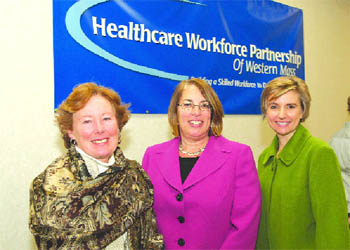
The Healthcare Workforce Partnership of Western Mass., a collaborative of area employers, workforce-development leaders, and education providers, staged a legislative gathering on March 5 to provide a progress report on the partnership’s efforts to address projected workforce shortages in many health care fields. The highlight of the gathering was an address by Robert Calaf (above, center), who overcame long odds to become a patient care technician at Baystate Health. He’s seen with representatives of many of the groups that helped him transition into a career in health care. From left are Rexene Picard of FutureWorks; Ann Peterson of the Mass. Career Development Institute (MCDI); Amy Rist of Baystate Health; Chanel Azito, Calaf’s girlfriend and also a participant in the patient care technician program; Calaf; Ivette Cruz of the Puerto Rican Cultural Council; Jean Jackson of Baystate Health; and Tim Sneed of MCDI. Below, left, are three of the featured speakers at the event: from left, Mary Walachy, executive director of the Irene E. & George A. Davis Foundation; Jean Jackson, vice president of Workforce Planning at Baystate Health; and Kelly Aiken, director at Health Care Initiatives for the Regional Employment Board of Hampden County. Below, right, audience members listen to Aiken’s update on job opportunities in health care.

Features
At 25, United Personnel Focuses on Its Next Milestones
Hire Purpose

Mary Ellen Scott says the employment-services field is relatively easy to get into, but hard to master.

Necessity is the mother of invention.

That’s how Mary Ellen Scott described her beginnings in the temporary-employment industry. “It’s been the story of my life, really,” she told BusinessWest before explaining at length just what that means.

Scott is the owner of United Personnel in Springfield, which is celebrating 25 years in business. With the industry changing dramatically in that quarter-century, that adage has been in use for much of the time, seeing Scott and company becoming one of the area’s leading placement firms. Looking back on her time in business, she explained how it has come together over the years.

When Scott and her family moved to Springfield in the early 1980s, a chance encounter with a friend of her then-husband, John Canavan Jr., led to a new career.

“It was a clothing manufacturer, the old William Carter Co.,” she said, “and it was the only unionized plant in the William Carter conglomerate. They wanted to get rid of it, so they sold it to a man who went to prep school with my husband.” That was Joel Gordon, who bought the factory and renamed it the Gemini Corp., and who contacted Scott at home one day.

“Here I was unpacking boxes,” she said, “and this man called me up and said, ‘do you want a job?’ Well, I had been a stay-at-home mom for 10 years, so I said, ‘doing what?’ and he said ‘well, what can you do?’”

Despite her modest assessment of that interaction, Scott became the human resources director for the plant of 400 employees. But the two-income household was soon to be cut back to one. In 1984, her husband lost his job. “He was 51 years old,” she said. “That was and is definitely an issue in the job-hunting market.”

After looking for work for more than eight months, Gordon suggested to him to strike out on his own. With a brother in the temporary-help business in Boston, Canavan decided to give that field a shot. Scott explained why.

“From an entrepreneur’s perspective, in concept, it’s not a very complicated business to get into,” she said. Smiling, she added, “but it is hard to do it well. In the grand scheme, though, you don’t need to know how to operate a lot of machines, and it doesn’t take a great deal of capital up front.”

Starting the company in Hartford, Canavan drew upon the vast needs of that city’s many insurance firms to specialize in clerical temps. Scott laughed when she remembered her husband’s attempts for her to work with him.

“It was critical to hire the right person for him to work with,” she said, “but would anyone be willing to jump at a job at a start-up operation, getting paid very little money, when they would have to work very hard, and quit a job that they enjoyed? That’s the question I was asking myself.”

For two months, Canavan sought someone to oversee front-of-the-house operations —interviews, hiring, placements — while he handled marketing, sales, and the administrative details. As before, fate intervened in Scott’s decisions.

“My job at this time was changing,” she explained. “Our friend had brought in this new manager, a graduate of MIT and West Point. He had a very different idea about how to treat people than I had.

“One particularly bad Friday afternoon,” she continued, “I had to be in on a session with him and one of the employees, and I came home and I said to my husband, ‘I think God is trying to tell me something. If we’re going to do this staffing business, we’re going to do it together.’”

After three months of commuting in separate cars to Hartford — “in case one of us needed to go back to the kids,” Scott said — the first order came in. But it didn’t take long for the pair to hit their stride, and within two years, they opened a branch office in Springfield, at the location still in use today, 1331 Main St.

Along the way, the business shifted gears from a focus on clerical temps to a division that served the light-industrial sector. “That was a fortuitous decision,” Scott said. “The economy was changing at the end of the ’80s into the early ’90s. Insurance companies in Hartford were struggling with their real-estate deals gone bad. And the first thing a company does when times are hard is to cut back on new temps. So our business in Hartford went downhill.”

But the Springfield office prospered, becoming one of Inc. magazine’s top 500 fastest-growing companies in 1993 and 1995. “The diverse client list we had here really pulled us through,” Scott said. Not only did they handle clerical and industrial clients, but MassMutual and BayBank were early customers as well. When Canavan passed away in 1999, Scott became the sole owner of the business.

Does Not Compute

“During the early years,” Scott said, “we had no computers at all. We had two electric typewriters, and everything was done on paper.”

Personal computers, however, changed that — and changed the nature of her business. “Companies changed how many secretaries they used,” she said, “and some people don’t use secretaries at all anymore.

“The clerical sector, which at one point was 100% of our business, became a much lower percentage,” she continued. “These days, we are primarily a light-industrial staffing company, about 70% in manufacturing.”

Pointing to a stack of boxes waiting to be moved out of the office’s hallways, Scott said that the old-fashioned pen to paper is still necessary for many forms — I9s and W4s, and applications still filled out by hand — but digital communication has become the new tool of choice for United and nearly every other business in this sector. “While e-mailing certainly makes us more available for our clients,” she said, adding that someone in her office is on call around the clock every day, she motioned with a smile at that pile of boxes and said, “I don’t think computers have made less paperwork.”

Still, Scott said her job is still done, in many ways, just like in the first days of the business. Describing the challenges of staffing in different sectors, she said that clerical candidates still need to be interviewed; “It’s a little more of a conversation to get those jobs filled.”

Manufacturing often involves her clients requesting multiple orders. “We get calls for upwards of 40 orders,” she said of the number of employee needs. “It can be challenging to find that many people right for the job.”

While pundits search for hope in the murky economic forecast, Scott said that business at United, and the sector as a whole, is definitely picking up, which is a good sign.

“When the economy is on the way down, we’re the first to know it, and on the way back up we’re the first to know it also,” she explained.

“Manufacturing clients are getting orders, and they need workers,” she continued. “We have all different kinds of businesses, and they all seem to be picking up, calling for temps.”

Hiring Line

Looking at the next milestone of her successful career, Scott said that the she is thinking about branching out into health-care staffing, acknowledging that it is one of the region’s growth industries.

“Personally,” she laughed, “I don’t know anything about the licensing and laws involved in that sector. So I will have to hire some expertise in that field.”

In other words, she’ll take the approach she has from the beginning: that necessity may be the mother of invention, but hard work and imagination are the secrets to success.

And neither Scott nor her company have ever been lacking in those qualities.

Uncategorized
New Economy, Old Economy, and Business Costs

Policymakers in Boston and Washington love to paint new-economy jobs as an economic panacea, immune to high taxes, staggering electricity costs, and bureaucratic regulation. They tout — and often subsidize — ‘industries of the future,’ while raising costs for the industries of the present that employ the majority of Massachusetts residents. But the new-economy myth exploded in 2009 as companies that have been poster children for innovation-based economic development in Massachusetts announced major expansion projects in Michigan, the Carolinas, and China.

A recent UMass study found that 70% of technology executives believe Massachusetts must address the cost of doing business, corporate taxes, unemployment insurance, and workers’ compensation. Business costs matter just as much in the new economy as they did in the old.

High-technology, biotechnology, and clean-technology jobs respond to the same economic influences that determine whether any job will provide economic opportunity to citizens of Massachusetts — or to citizens of Michigan or citizens of China. Innovation remains critical to economic growth, but government must also commit to supporting commercialization and the employment opportunities it will create.

Our economic future depends upon the ability of the Commonwealth to create a favorable business environment across all industries. The alternative is an ‘invented here, made elsewhere’ economy that provides opportunity for doctoral-level researchers, but leaves other citizens out in the cold.

That understanding is the foundation of the public-policy agenda of Associated Industries of Massachusetts, which continues to advocate on behalf of employers as Massachusetts enters a new decade struggling to emerge from a protracted economic downturn.

The document calls for an economic policy that balances key public investments with a competitive cost structure that keeps jobs in Massachusetts; a predictable, responsible, and long-term state fiscal policy; uniformly favorable environment for business development across all industries; leadership from business executives to help government resolve important issues; well-conceived and collaborative regulation policies that create measurable benefits; an environment that values contributions made by employers to operate successful businesses that employ state residents; a nimble, world-class education system that provides opportunity for all Massachusetts citizens and the knowledge base for economic growth; and the need for business and government to more fully collaborate in order to ensure mutual success.

Massachusetts employers, even ‘new-economy’ companies, have cause to worry as 2010 begins. They face an immediate 28% increase in unemployment insurance taxes and $44 million in new assessments for the Medical Security Trust Fund, as well as the Legislature’s failure to address flaws in last year’s $192 million Combined Reporting corporate tax increase that has put Massachusetts at the bottom of CFO magazine’s list of places to do business.

A better business climate — not higher business costs — is the key to rebuilding our economy and solving the budget crisis that threatens the ability of state and local government to deliver the services that citizens expect.

Richard C. Lord is president and CEO of Associated Industries of Massachusetts.

Departments

UMass Gets OK for Law School

BRIDGEWATER — The Mass. Board of Higher Education voted unanimously on Feb. 2 to approve the application by UMass Dartmouth to award the Juris Doctor, the first professional degree in the study of law. The approval comes one week after discussion of the application at the Board’s Assessment and Accountability Committee meeting in Worcester, including public testimony from approximately 30 individuals, most of whom spoke in favor of the application, and after a positive recommendation from staff at the Department of Higher Education. Gov. Deval L. Patrick praised the board’s decision, noting in a release, “this is another historic moment in education for the Commonwealth. Yesterday’s unanimous vote to approve the law program at the University of Massachusetts is a victory for our students and their families. I’m thankful to the Board of Higher Education, the University of Massachusetts system, and the Southern New England School of Law for all of their thoughtful work and effort to make an affordable public opportunity to aspiring young people in the Commonwealth.” Following last week’s committee meeting, the Department completed its analysis of the university’s proposal and recommended approval of the application. Staff found that the proposed UMass Dartmouth Juris Doctor met review criteria, and that the university will be able to start and operate a law school that will achieve American Bar Assoc. accreditation in a reasonable time frame, presuming it will attain its enrollment goals and prudently utilize associated financial resources. The university’s proposal was made possible in part by an offer from the neighboring Southern New England School of Law to donate its buildings and assets to facilitate UMass Dartmouth being able to offer a Juris Doctor. The Southern New England School of Law will file for institutional closure with the Department of Higher Education within 90 days following the spring 2010 student graduation. UMass Dartmouth intends to invite current SNESL students, faculty, and staff to study and work at the new UMass Dartmouth law program. With this program approval, the university is authorized to enroll its first class in the fall 2010 semester. In spring 2013, upon graduating the first class of first-year students in the Juris Doctor program, the university will submit to the Board a status report addressing its success in reaching program goals and in the areas of enrollment, curriculum, faculty resources, program effectiveness, and accreditation status.

Brightside Closing Some Programs

WEST SPRINGFIELD — The residential and school programs of Brightside for Families and Children will cease operations by April 2. Since its founding in 1881, Brightside has repeatedly evolved to meet the changing needs of the community, and for the past few years, supported the residential treatment and school program at a census level that was significantly less than half of its capacity. Despite extensive efforts by the Brightside management team to increase referrals, there was no expectation that census levels could improve to viable levels. Additionally, company officials note that funding sources are not available to place children in residential programs like Brightside. More than 130 positions will be eliminated due to the closure of these programs, and affected employees can apply for any open position within the Sisters of Providence Health System for which they may qualify. Brightside’s Family Stabilization Team (FST) will continue to provide outpatient services as they work to integrate Providence Behavioral Health Hospital’s Child and Adolescent inpatient (CHAD) and Acute Residential Treatment (ART) programs with the FST program.

Girls Inc. Joins National Investment Challenge

HOLYOKE — Girls Incorporated of Holyoke is one of two Girls Inc. organizations to join the ING-Girls Inc. Investment Challenge, an innovative nationwide program launched last year that gives girls practical, hands-on investing experience while allowing them to keep their gains in the form of college scholarships. With the help and guidance of trained Girls Inc. staff and ING employee volunteers, teams of girls build and manage diversified, real-time portfolios as part of an integrative investment and economic-literacy curriculum. All portfolios are managed and tracked using a state-of-the-art online-trading platform that allows the ING-Girls Inc. Investment Challenge participants to track their performance, absolutely and relative to the other challenge teams. After three years, two-thirds of any gains in the portfolio will be paid by the ING Foundation to the girls in the form of Girls Inc. scholarships for post-secondary education; one-third of the gains will be given to the local Girls Inc. affiliate to support local programming. The original $50,000 principal will then be reassigned to the incoming team. Girls in the ninth grade in the Greater Holyoke area are welcome to participate in the program. For more information, contact Sarah Dunton, director of youth development programs at Girls Inc. of Holyoke, at (413) 539-4505.

Slight Growth Seen in Services Sector

TEMPE, Az. — Economic activity in the non-manufacturing sector grew in January, according to the nation’s purchasing and supply executives in the latest Non-Manufacturing ISM Report on Business. The NMI (Non-Manufacturing Index) registered 50.5% in January, 0.7 percentage point higher than the seasonally adjusted 49.8% registered in December, indicating growth in the non-manufacturing sector. The Non-Manufacturing Business Activity Index decreased 1 percentage point to 52.2%, reflecting growth for the second consecutive month. The New Orders Index increased 2.7 percentage points to 54.7%, and the Employment Index increased 1 percentage point to 44.6%. The Prices Index increased 1.6 percentage points to 61.2% in January, indicating an increase in prices paid from December. According to the NMI, four non-manufacturing industries reported growth in January. The four industries reporting growth are other services, utilities, information, and wholesale trade. The 11 industries reporting contraction in January — listed in order — are arts, entertainment, and recreation; mining; retail trade; transportation and warehousing; management of companies and support services; professional, scientific, and technical services; health care and social assistance; finance and insurance; educational services; public administration and accommodation; and food services. The report is based on data compiled from purchasing and supply executives nationwide.

Documentary Explores Holyoke’s Roots

HOLYOKE — Interviews with local leaders, business owners, entrepreneurs, artists, and young people bring the past and the present of the City of Holyoke to life in a new documentary, Creating Holyoke: Voices of a Community. The documentary will premiere on March 22 on WGBY, and copies are available at the Wistariahurst Museum Gift Shop for $17.95. Written by Priscilla Kane Hellweg and Rachel Kuhn of Enchanted Circle Theater and Kate Navarra Thibodeau, former city historian for Holyoke, the documentary tells the story of Holyoke’s rich history. The documentary was funded by the National Endowment for the Humanities, the Nan and Matilda Heydt Fund, and WGBY, and was produced by Navarra Thibodeau. For more information, visit www.creatingholyoke.org.

UMass Endowment Ranks in Top Quartile of Investment Returns

BOSTON — Despite a challenging environment, UMass turned in an endowment performance in fiscal year 2009 that ranked in the top quartile of American colleges and universities reporting performance for one-, three-, and five-year returns, according to the National Assoc. of College and University Business Officers (NACUBO). The data came from in-depth surveys of 842 U.S. institutions of higher learning, including public and private colleges and universities, their supporting foundations, and community colleges that participated in the 2009 NACUBO-Commonfund Study of Endowments. Based on change in market value, UMass placed seventh among universities with endowments of $100 to $500 million and 53rd overall, losing only 4.6% of its overall market value. The UMass endowment, which stood at $367 million at the close of FY09, turned in investment performance of -15% last year against an average of
-18.7%, and returned three- and five-year returns of 3% and 4.7%, placing it in the top quartile for performance for those periods.

Study: Struggles Remain For Those Seeking Emergency Food Aid

HATFIELD — A landmark study recently released by the Food Bank of Western Mass. and Feeding America, the nation’s largest domestic hunger-relief organization, reports that more than 91,000 people, including 32,000 children, receive emergency food each year through the Food Bank and its network of food pantries, meal sites, and shelters. In Western Mass., this represents a 22% increase in the number of residents seeking emergency food assistance since 2006, the last time the study was conducted. Hunger in America 2010 is the first research study to capture the significant connection between the recent economic downturn and an increased need for emergency food assistance on a local and national level. In this region, more than 65,000 residents are experiencing food insecurity, not knowing where they will find their next meal, according to Andrew Morehouse, executive director of The Food Bank of Western Massachusetts. An estimated 15,000 people receive emergency food assistance each week from a food pantry, meal site, or shelter served by the Food Bank of Western Mass. Morehouse noted that the Food Bank is seeing more people struggling to make choices between food and other basic necessities like rent, utilities, or health care. “We know that nearly three-quarters of all those who seek emergency food assistance are living in poverty and simply cannot make ends meet, so they turn to their local food pantry or meal site for help,” he said in a release. Morehouse added that donors and volunteers have stepped up to help the Food Bank respond to the growing food crisis in Western Mass., including boosting distribution capacity of local partner agencies around the region. The report was based on independent research conducted on behalf of Feeding America by Mathematica Policy Research, a non-partisan social-policy research firm based in Princeton, N.J. A summary of the Western Mass. findings is available at www.foodbankwma.org. The full national report is available at www.feedingamerica.org/hungerstudy.

Unemployment Filings Still Rising

NEW YORK — In the week ending Jan. 30, the advance figure for seasonally adjusted initial claims was 480,000, an increase of 8,000 from the previous week’s revised figure of 472,000. The four-week moving average was 468,750, an increase of 11,750 from the previous week’s revised average of 457,000. The advance seasonally adjusted insured unemployment rate was 3.5% for the week ending Jan. 23, unchanged from the prior week’s unrevised rate of 3.5%. The advance number for seasonally adjusted insured unemployment during the week ending Jan. 23 was 4,602,000, an increase of 2,000 from the preceding week’s revised level of 4,600,000. The four-week moving average was 4,617,500, a decrease of 51,250 from the preceding week’s revised average of 4,668,750. The fiscal year-to-date average for seasonally adjusted insured unemployment for all programs is 5.362 million. The advance number of actual initial claims under state programs, unadjusted, totaled 530,405 in the week ending Jan. 30, an increase of 28,234 from the previous week. There were 682,176 initial claims in the comparable week in 2009. The advance unadjusted insured unemployment rate was 4.4% during the week ending Jan. 23, an increase of 0.1 percentage point from the prior week. The advance unadjusted number for persons claiming UI benefits in state programs totaled 5,665,141, an increase of 62,784 from the preceding week. A year earlier, the rate was 4.3% and the volume was 5,806,901. Extended benefits were available in Alabama, Alaska, Arizona, California, Colorado, Connecticut, Delaware, the District of Columbia, Georgia, Idaho, Illinois, Indiana, Kansas, Kentucky, Maine, Massachusetts, Michigan, Minnesota, Nevada, New Hampshire, New Jersey, New Mexico, New York, North Carolina, Ohio, Oregon, Pennsylvania, Puerto Rico, Rhode Island, South Carolina, Tennessee, Texas, Vermont, Virginia, Washington, West Virginia, and Wisconsin during the week ending Jan. 16. Initial claims for UI benefits by former Federal civilian employees totaled 1,451 in the week ending Jan. 23, a decrease of 499 from the prior week. There were 1,858 initial claims by newly discharged veterans, a decrease of 554 from the preceding week. There were 26,167 former Federal civilian employees claiming UI benefits for the week ending Jan. 16, a decrease of 59 from the previous week. Newly discharged veterans claiming benefits totaled 35,777, a decrease of 2,059 from the prior week. States reported 5,632,219 persons claiming EUC (Emergency Unemployment Compensation) benefits for the week ending Jan. 16, an increase of 281,442 from the prior week. There were 1,839,758 claimants in the comparable week in 2009. EUC weekly claims include first, second, third, and fourth tier activity. The highest insured unemployment rates in the week ending Jan. 16 were in Alaska (7.3%), Oregon (6.6), Pennsylvania (6.5), Idaho (6.4), Wisconsin (6.3), Montana (6.2), Michigan (6.0), Nevada (5.7), Connecticut (5.3), North Carolina (5.3), and Washington (5.3). The largest increases in initial claims for the week ending Jan. 23 were in Oregon (+4,336), Puerto Rico (+2,439), and Hawaii (+18), while the largest decreases were in California (-22,674), Michigan (-11,757), North Carolina (-9,546), Georgia (-7,588), and Missouri (-7,577).

Departments

The following business incorporations were recorded in Hampden, Hampshire, and Franklin counties and are the latest available. They are listed by community.

AMHERST

All College Inc., 161 North Pleasant St., Amherst MA 01002. Parker Holcomb, same. Student-owned and operated laundry service in the Pioneer Valley.

The Common Foundation Inc, 52 Hitchcock Road, Amherst, MA 01002
Jennifer Acker, same. Provides charitable, educational and scientific print subsidized and online content in the area of literature and the visual and performing arts to the public.

HPPR Inc., 55 University Dr., Amherst, MA 01002. Harold Tramazzo, same. Restaurant business.

BELCHERTOWN

Danalevi Corp., 732 Daniel Shays Highway, Belchertown, MA 01007. Ross Hartman, same. Manufacturing service.

CHICOPEE

Auto Damage Appraisers of Chicopee Inc., 257 Hampden St., Chicopee, MA 01013. Ricci A. Tomassetti, same. Auto-damage appraisers.

FEEDING HILLS

Dave Anthony Photography Inc., 8 Marlene Dr., Feeding Hills, MA 01030. David A. Niedziela, same. Photography.

LONGMEADOW

Bently Management Group Inc., 696 Bliss Road, Longmeadow, MA 01106 David Steinberg, 31 Brookwood Dr., Longmeadow, MA 01106. Business Management.

NORTHAMPTON

Evolvegan Inc., 27 Highland Ave., Northampton, MA 01060. Derek Goodwin, 2 Linden St. #2 Northampton, MA 01060. A nonprofit organization formed to create art, performance and media to educate and increase public awareness about the connections between dietary choice, personal health, cultural ethics, and global sustainable ecology.


SPRINGFIELD

DIF Inc., One Federal St., Springfield, MA 01105. Dennis Driscoll Jr., 150 Pine St., #114 Manchester, CT 06040. Digital imaging and graphic design

In My Father’s House Inc., 15 Olive St., Springfield, MA 01109. Elizabeth Garrett-Leak, same. Non-profit organization created to provide the following programs a free clothing, adult literacy, youth self-expressions, employment search, prayer sessions, and a resource lending library.

WEST SPRINGFIELD

Anova Hearing Lab Inc., 425 Union St., West Springfield, MA 01089. James F. Caldarola, same. Hearing testing and distribution of hearing aids.

Led Trucking Inc., 96 Kings Highway, West Springfield, MA 01089. Elena Dipon, same. Transportation services.

WESTFIELD

Diamond Custom Coating, 3 Progressive Ave, Westfield, MA 01085. John Balicki, 15 Rosalie, Lane, Southampton, MA 01073. Custom painting and coatings.

Ily Corporation, 41 Caitlin Way, Westfield, MA 01085. Abdallah Faozi Ghalayini, same.

WILBRAHAM

CAGD, Inc., 29 Stonegate Circle, Wilbraham, MA 01095. Giuseppe Deguglielmo, same. Food service provider.

Class of 2010 Difference Makers

UMass Amherst and Chancellor
Robert Holub

Robert Holub says that, as what’s known as a land-grant institution — one of several dozen colleges and universities created on federally owned land — UMass Amherst has certain responsibilities to meet with regard to this region and its residents.

Originally, they centered on the teaching of agriculture, science, and engineering, Holub, who became chancellor of the university in the summer of 2008, explained, adding that, over the past century and a half or so, these duties have evolved and now extend beyond the realm of pure academia and into the broad area of economic development.

In recent years, and particularly since he arrived, the university has been increasingly focused on going beyond what’s been legislated, he continued, and more toward what might be expected (and more) from a school that has 25,000 students and is one of the leading research institutions in the state.

“We consider ourselves a citizen of Western Mass., and with that, we have special obligations to this region, and we’ve been trying to act on those responsibilities,” he continued, adding that such efforts involve the entire region, but especially the city of Springfield, the unofficial capital of Western Mass. and a municipality that, like many former manufacturing centers, is trying to reinvent itself.

Efforts to assist Springfield and the region come in a number of forms, and together — coupled with the hope and expectation for more in the future — they have placed the university in the Difference Makers Class of 2010. These initiatives include:

* The Pioneer Valley Life Sciences Institute, or PVLSI, a collaborative effort with Baystate Health to fuel growth in a fledgling biosciences sector;
* A recently announced project to move the university’s Design Center into one of the buildings in Springfield’s Court Square, a relocation expected to help create more vibrancy in the city’s central business district, help existing service businesses, and spur new ones;
* A planned high-performance computing center in Holyoke, a much-heralded undertaking involving a partnership that includes several other colleges and universities, including MIT and Boston University, as well as private industry. The UMass system as a whole is a lead partner in the project, said Holub, but many of those laying the groundwork for the center are based on the Amherst campus;
* The Precision Manufacturing Regional Alliance Project being undertaken with the Regional Employment Board of Hampden County and the local chapter of the National Tooling and Machining Assoc. to transfer technology from two departments at the university (Polymer Science and Mechanical and Industrial Engineering) to area precision manufacturers; and
* Work with the Springfield school system to attract talented students to UMass Amherst with the hope that they will stay in the region and contribute to its growth and prosperity.

“Instead of giving them fish, we want to give them the fishing pole,” Holub said of the initiative involving Springfield schools, one based on a pilot program now being developed with the city of Chelsea. “We would like to be able to attract the best and brightest students from Springfield to come to UMass Amherst, get an education here, and then go back to their community and assist with development.

“We are, primarily, an educational institution; that’s what we do best,” he continued. “And we think that establishing a greater pipeline with the city of Springfield will enable us to help that community more than any one single program.”

Since his arrival, a few months after Domenic Sarno was elected mayor in Springfield, there has been more communication between the university and the city, or what Holub called a true dialogue. And from those discussions came the agreement to create a presence in downtown and, specifically, Court Square.

“The mayor has engaged us in conversations since I arrived here about the revitalization of Court Square, and we see that as something that’s necessary for the city,” he said. “And we’ve tried to fit in any way we can given the budget constraints we’re facing.”

The school is already looking at ways to expand and enhance its presence within the city, he added, noting that administrators are looking to possibly move some backroom operations from Amherst and Hadley — where office lease rates are comparatively higher than in most area communities — to Springfield in moves that would help the city while also saving the university some money.

The importance of efforts to assist Springfield has been underscored by Holub’s move to appoint to John Mullin, dean of UMass Amherst’s graduate school and a regional planner, as ‘point person’ for the broad initiative. His role will be to keep the lines of communication open, make needed connections within the city, and continue the current dialogue.

“He knows what needs to be done in terms of urban development,” said Holub, adding that Mullin now dedicates a certain amount of time to the Springfield partnership, and his work has helped to move specific projects, ones that provide win-win scenarios, from the drawing board to reality.

“We’re not a granting agency — we don’t have $2 million that we can just give to Springfield,” he explained. “We have to look for areas in which there’s mutual benefit, and we’ve been able to find quite a few of those.”

And while Holub is encouraged, and excited, about current efforts taking place in the realm of economic development, region-wide and especially in Springfield, he fully expects the university to expand and diversify such initiatives when the economy improves sufficiently for it to do so.

“If we didn’t have this severe economic downturn, I certainly believe that we could be doing more than we are,” he explained. “But we are doing things, and they reflect those responsibilities we feel we have to this region.

“The proof of the pudding is in the eating, as they say,” he continued, “and we’ve tried to do things that are going to bring palpable results for the western part of the state and make some modest investments where we can to back up the talk.

“And those investments are often less in terms of actual dollars — although, with something like PVLSI, it does take an actual cut out of our budget,” he continued, “and more in terms of people and ideas, and with our own ability to lobby industries and individual companies to come here, and assist with those efforts.”

Those are the things that might be expected from such a prominent citizen of Western Massachusetts.

—George O’Brien

Departments

MassMutual Helps Beautify Neighborhood

SPRINGFIELD — A new Springfield Housing Authority (SHA) program is off to a fast start with a donation from its first ‘friend’ — the MassMutual Financial Group. The Friends of SHA aims to encourage public and private partnerships to improve the quality of life, education, and job opportunities for city residents, according to SHA Executive Director William Abrashkin. MassMutual was awarded a certificate of appreciation at the fall board of directors meeting for its $15,000 donation toward the Robinson Gardens Improvement Project. The donation allowed the SHA to purchase signage, hire a landscape architect, and landscape the grounds that face the intersection of Bay Street and Berkshire Avenue. The Pioneer Valley Transit Authority has also agreed to install a new bus shelter adjacent to the landscaped property. Abrashkin hopes to identify similar needs around the city and develop public/private partnerships to address them.

Big Y Announces Store Changes

SPRINGFIELD — Big Y Foods Inc. recently acquired the New Milford Pharmacy in New Milford, Conn., and also announced plans to close the Boston Road supermarket. The results of a recent customer business review led to the decision to close the Boston Road store, according to Big Y President Charles L. D’Amour. The business review included an evaluation of competitive markets within the area, continued lack of population growth within the trade area coupled with a challenging economic climate, as well as the imminent termination of the store’s lease. Many of the 130 employees at the 800 Boston Road market will be offered employment within other Big Y stores. These openings resulted from recent voluntary layoff packages offered before the end of 2009. D’Amour added that the store closing, along with the pharmacy acquisition, will help Big Y move forward with expansion plans for the coming year with intentions to develop two new locations and efforts to remodel five existing ones. In addition, the New Milford Pharmacy will represent Big Y’s 34th pharmacy, and most of the store’s pharmacists and employees will be offered positions at the new Big Y Pharmacy.

Academy Hill School Donor Issues Challenge

SPRINGFIELD — The newly created Crandall Family Scholarships will offer opportunities for inner-city students to attend the Academy Hill School on Liberty Street. The program, with scholarships totaling $35,000, is being funded through a gift from Roger and Gabrielle Crandall of Somers, Conn. Academy Hill is a private, independent day school that serves gifted and talented students in grades K through 8. The Crandall Family Scholarships are available to high-performing, minority students who are residents of Springfield and would otherwise be unable to afford tuition to Academy Hill. The Crandalls are also issuing a challenge for other potential donors to contribute to the scholarship fund. The Crandalls pledge to match those additional contributions up to $10,000. For more information about the scholarships or about Academy Hill itself, visit www.academyhill.org, or contact Marjorie Weeks, director of school advancement, at (413) 788-0300.

Cinemas Bought by Rave Motion Pictures

SPRINGFIELD — Rave Cinemas, LLC, a newly formed company, recently announced a definitive agreement with National Amusements Inc. (NAI) to purchase the business operations and selected real-estate assets of up to 35 NAI theaters, and that it closed on the acquisition of an initial group of 29 of those theaters. In Western Mass., Rave purchased Showcase Cinemas on Riverdale Street in West Springfield and in Springfield’s Eastfield Mall. Following the close of the acquisitions, Rave, which will operate under the Rave Motion Pictures brand name, anticipates it will own or manage 65 theaters and approximately 1,000 screens located in 20 states, and will have a presence in seven of the top 10 designated market areas in the country. Rave is expected to become the fifth-largest domestic circuit by box-office gross and number of screens.

Springfield Museums Receive Grants

SPRINGFIELD — The Springfield Museums recently received a $15,000 grant from the Bank of America Charitable Foundation to support Family Science Adventures and Art Discovery Center programs. The programs are part of the Family Learning and Springfield Access Card Initiative, a combination of family activities and a free admission program that encourages city families to visit the museums and participate in hands-on art, history, and science activities. The free programs are offered on weekends, school vacation weeks, and during the summer. In other news, the museums have been awarded a $28,300 organizational support grant for FY 2010 from the Mass. Cultural Council, a state agency. The support program provides funding to state cultural organizations of all sizes and disciplines that meet high standards of excellence in program quality, community participation, and organizational capacity. The museums’ award was in the multidisciplinary category, reflecting the diversity of the exhibits and programs offered by the art, history, and science museums at the Quadrangle. The Springfield Museums include the Springfield Science Museum, the George Walter Vincent Smith Art Museum, the Connecticut Valley Historical Museum, the Michele and Donald D’Amour Museum of Fine Arts, the Museum of Springfield History, and the Dr. Seuss National Memorial Sculpture Garden.

SBID Selects Vendor for Guides Program

SPRINGFIELD — The Springfield Business Improvement District (SBID) has hired Securitas Security Services USA Inc. as the new vendor for the Downtown Guides program. Guides are seen as ‘ambassadors,’ and are the eyes and ears for downtown Springfield, according to SBID Director of Operations Chris Castellano. He added that the hiring of Securitas professionalizes the Guides program and will help ensure that visitors, employees, and residents of the downtown area have a safe and enjoyable experience. The rebranding of the program with easy-to-see orange uniforms will allow the guides to stand out and be easily recognizable. For more information, visit www.springfielddowntown.com.

Features
Contractors Must Tighten Belts, Stay Flexible to Survive the Recession
Concrete Strategies

Joe Marois (right, with Vice President Carl Mercieri) says his company is facing unprecedented bid competition, including some from out-of-state builders.

To Joseph Marois, the most difficult part of running a business during a deep recession is minimizing the pain — for everyone.

“Our goal is to maintain our workforce,” said the president of Marois Construction in South Hadley. “We feel that we owe it to our people to try to make sure they’re not laid off. They have families, and they’ve been good to us.”

But that’s not easy at a time when a shrinking job pool, combined with a surge in competition from increasingly desperate bidders, many from outside the region, have combined to push profit margins way down.

“The bids right now are marginal in terms of profits,” Marois said. “It’s very competitive. We’re getting quotes with upwards of eight to 18 bidders from all throughout Massachusetts, Connecticut, New York, and Vermont. We don’t usually see all that; normally there’s three or four bidders on a job. It’s kind of depressing.”

It’s an account being told and retold throughout the Pioneer Valley as contractors try to stay afloat amid continued economic turmoil, a time when private companies and public agencies alike are pulling back on new capital projects and reducing opportunities for builders in all niches.

So instead of asking them to repeat this litany of hardship — it’s certainly not a new story — BusinessWest asked area builders a different question: how do contractors slog through such tough times? After all, they’ve survived recessions before. In most cases, the answer is as simple as watching every penny until the dollars start rolling in again.

Budget Blues

Carol Campbell, president of Chicopee Industrial Contractors, said she’s not doing anything that most others in the industry aren’t also doing to minimize the current fiscal pain.

“We’re tightening our belts in every possible way,” she said. “There’s not a line on our income statement that we haven’t assessed, which continues to cause a ripple effect. We have cut costs, we have eliminated any non-essential purchases or programs, and our main focus, when spending money, is on the training and support that allows us to provide a better product and service to our customer. Otherwise, if a purchase is not job-related or a required improvement in the services we are providing, the purchase is being delayed.”

Marois mentioned similar cutbacks. “We’ve taken some vehicles off the road,” he said, “and initiated other ideas to dramatically minimize our costs and overhead.”

Meanwhile, Associated Builders in South Hadley has also been taking a close look at containing costs. It’s been a difficult but necessary process, said Peter Wood, the company’s director of sales and marketing. For starters, the firm has closely examined the number of hours its trucks and other equipment are in service, making sure resources are properly utilized and not used for “busywork.” And the cutbacks don’t stop there.

“Normally, like everyone else, we implement as many cost savings as we can in the company,” Wood said, “whether that’s reducing the number of employees due to the amount of work or looking at energy consumption — making sure that we have all the proper efficiencies, not leaving lights on, anything that has to do with energy use.”

Energy efficiency is a common way to save costs, although it sometimes requires some investment up front in new materials or equipment. But with ‘green’ business becoming an important consideration for companies across all industries, Campbell said, it’s something builders should be looking at anyway.

“Our driving force, now as before, is energy efficiency and green initiatives,” she said. “Certainly the cost savings on our electric bill make the investment something I can justify.”

In addition to cutting costs and seeking such efficiencies, many contractors say maintaining diversity in the types of projects pursued can be an effective hedge against a downturn.

“We do both public and private work,” Marois said. “We don’t have one niche right now; we bid anything.”

At the same time, Wood said that contractors need to understand their strengths and not panic and chase jobs that might not fit their business model.

“We try to stick directly to our core values, which is how we’ve tried to do business for the past 35 or 40 years,” he told BusinessWest. “That means looking at projects that fit our business profile — strictly design-build, using our in-house engineering and architectural services.

“We’re broadening our area; we may be looking at going a little farther geographically from our base, looking at projects we might not have looked at in busier times,” he continued, “but we always keep in mind that we have a successful business plan and a reputation for not trying to do things we’ve proven not to be as competitive at, or are out of our realm of expertise — for instance, public work, schools, bridges, etc.”

According to Wood, companies that go far outside of what they’re good at for the sake of chasing down a few dollars are the ones least likely to survive a recession.

“We’re fortunate — even in down times, when all contractors are struggling to maintain a level of profitability — that we have a solid business plan and a consistent approach to how we do business,” he said. “Staying on the path of our business plan, though difficult, is allowing us to survive. It has allowed us to maintain a certain level of business that may not be seen across the board.”

No End in Sight?

According to the U.S. Bureau of Labor Statistics, construction-industry employment has declined by 1.6 million nationally since the start of the current recession, with 53,000 of those job losses coming in December 2009 alone. What worries some builders is the idea that this period of belt-tightening and minimal profits might not end anytime soon.

“I think this recession has some unique qualities that limit our ability to make a determination as to what’s going to happen; it’s difficult to predict whether or not we’ll continue to spiral downward,” Marois told BusinessWest.

“We’re dealing with failures of large institutions, federal bailouts of an unprecedented nature, which is increasing our debt ceiling nationally, and that’s causing confusion for business leaders and their ability to make sense of the whole thing,” he added. “Normally industry corrects itself, but unknown forces seem to be complicating that process.”

Even if the economy does begin to rebound, he posited, builders won’t reap the benefits until after businesses regain the confidence to tackle capital projects again — and then proceed through architectural planning and the bid process.

“From the time they decide there’s some confidence in the industry, it could be three or four months before we got the job, and then two or three months before we started realizing an infusion of capital,” Marois said. “So the relief is not going to be immediate.”

Until that relief does arrive, builders will keep grappling with those razor-thin profit margins, double-checking every budget item — relieved that they’re not yet a casualty of an economic downturn that continues to be as unpredictable as it is destructive.

Joseph Bednar can be reached at[email protected]

Departments

Ten Points About : Extension of the COBRA Subsidy for Involuntarily Terminated Employees

By KIMBERLY A. KLIMCZUK, Esq.

1. The Consolidated Omnibus Budget Reconciliation Act of 1985 (COBRA) allows employees who lose their health insurance benefits to continue their coverage for up to 18 months under certain circumstances. Traditionally, employees who elected COBRA benefits were responsible for paying the cost of their COBRA health insurance premiums.

2.The American Recovery and Reinvestment Act of 2009 (ARRA) amended portions of COBRA to provide a government subsidy for COBRA premiums to employees who left their jobs involuntarily between Sept. 1, 2008 and Dec. 31, 2009.
3. Under the ARRA, the government subsidized 65% of the COBRA premiums for eligible employees for up to nine months. Employers were required to pay the subsidy up front as part of the employees’ premium payments and received reimbursement from the federal government through reduced federal payroll tax payments.
4. The subsidy applies to periods of health coverage beginning on or after Feb. 17, 2009, and, under the ARRA, was to last for up to 9 months.

5. On Dec. 19, 2009, President Obama signed the 2010 Defense Appropriations Act (DAA), which extends the eligibility period for the COBRA subsidy to include employees who involuntarily separate from employment on or before Feb. 28, 2010.

6. The DAA also lengthens the COBRA subsidy period from nine months to 15 months.
7. In addition, former employees who had already reached the end of their subsidy period prior to passage of the DAA may continue their reduced-premium COBRA coverage for the additional six months as long as they pay their 35% share of the COBRA premium by Feb. 17, 2010, or within 30 days of receiving notice from their plan administrator, whichever is later.
8. If any such employees already paid 100% of their premium in December 2009, they are entitled to either a reimbursement of the 65% that is subsidized under the DAA’s extension provisions or a credit toward future premiums equal to 65% of the monthly premium.
9. The DAA requires employers to modify their COBRA election notice to provide information about the extended COBRA subsidy to all individuals who experience a COBRA-qualifying event between Sept. 1, 2008 and Feb. 28, 2010.

10. Information on new notice requirements, updated guidance, fact sheets, and frequently asked questions will be available on the DOL’s Web site, www.dol.gov/cobra.

Kimberly A. Klimczuk, Esq. is a partner in the law firm Royal & Klimczuk, LLC. She specializes in management-side labor and employment law; (413) 586-2288; [email protected]

Features
PMRAP Builds a Bridge Between Research at UMass and Area Manufacturers
Innovative Force

Marla Michel says the Precision Manu-facturing Regional Alliance Project has the potential to help existing companies grow market share and add jobs.

It’s called the Precision Manufacturing Regional Alliance Project, or PMRAP. That’s the long title of an initiative that one participant, a professor in UMass Amherst’s Machining and Industrial Engineering department, called a “two-way communication street” between the university and area manufacturers. That communication is expected to drive innovation that will eventually lead to growth in a vital sector of the economy — and job creation.

There were dozens of area dignitaries gathered at the new Museum of Springfield History for the Dec. 17 press conference to announce an initiative called the Precision Manufacturing Regional Alliance Project, or PMRAP for short.

Many of the speakers, from Springfield Mayor Domenic Sarno to Greg Bialecki, secretary of the state Executive Office of Housing and Economic Development, said the kinds of things one might expect as they discussed the project, funded by a $600,000 National Science Foundation grant.

They used words like ‘historic’ and ‘breakthrough’ and ‘potential’ as they discussed what amounts to a unique partnership between the region’s precision-manufacturing sector, departments at UMass Amherst, and other players, designed to foster innovation and create jobs.

But when the owners of these precision manufacturers and officials at UMass spoke, there was a different, very confident tone that wasn’t speculative in nature, noted Dave Cruise, project manager for the Regional Employment Board of Hampden County, who was one of those in attendance.

“And there was good reason for that,” said Cruise, one of the lead coordinators of the PMRAP project. “It’s because they know that this is not just talk. They can tell that it’s going to work. They’ve seen it.”

Indeed, while those representing the various parties involved in the project waited until the circumstances were right and all the major players could be assembled to stage the elaborate announcement ceremony and signing of a memorandum of agreement, the work toward forging partnerships was already well underway.

It started in late summer with the first of four so-called “technology-innovation forums,” said Cruise, referring to sessions at which area precision-manufacturing shop owners meet with faculty members at UMass to discuss ways in which they can help each other. These forums had titles ranging from ‘Non-metallic Metals — Machining and Processing Technologies’ to ‘Manufacturing Process Optimization’; from ‘Metals and Composite Interfaces’ to ‘Cryogenic Machining.’

The common denominator in each case, said Cruise, was open dialogue designed to develop ways in which research at UMass could help area manufacturers create new products; develop new, more efficient processes; or use lighter and stronger materials to better serve customers and drive innovation.

Marla Michel, director of Research Liaison & Development at UMass, put things another way. She said the innovation forums — and the PMRAP as a whole — were blueprinted to create what she called “an invisible new climate” in which technology can be transferred from the labs at the university to plants across the Valley.

Elaborating, she said that UMass faculty members and students are involved in many different types of research projects, and are conducting such work mostly unaware of how it might be applied by small and mid-sized precision manufacturers. Meanwhile, these same manufacturers are facing both challenges and opportunities with regard to existing markets and possible new ones, and without much of an understanding about how ongoing research at UMass might help them accomplish stated goals.

The PMRAP was conceived to essentially open up the lines of communication, keep them open, and build a bridge between a still-strong sector of the economy and one of the state’s leading research institutions, said Sundar Krishnamurty, a professor in the university’s Mechanical and Industrial Engineering (MIE) department, one of two that are closely involved with the project.

“I think this is a very unique opportunity for us to collaborate with small and medium-sized manufacturing facilities,” he said. “Our valley is known for its manufacturing expertise, but nevertheless, industry on the whole, and especially in Western Mass., is being challenged by increased competition globally, aging facilities and technologies, and insufficient labor.”

Krishnamurty said the PMRAP is unique in that it is focusing on smaller precision manufacturers, and also on innovation that will take place in a few years, not 10 or 20, as is the case with most such initiatives. Therefore, it has strong potential to become a model for other regions and universities, he said, noting that there are already some presentations being planned for a year from now, at which PMRAP participants will discuss how their work can be emulated.

More importantly, though, he said, the project could foster job growth, help area companies maintain market share, and increase market share.

Material Evidence

The essence of the PMRAP can be derived from language in the memorandum of agreement between the three major players — the Western Mass. Chapter of the National Tooling and Machining Assoc., UMass Amherst, and the REB — and specifically from some of the passages pertaining to what UMass effectively agrees to do:

  • Collaborate in the design and implementation of the Technology Innovation Forums that will result in identifying solution approaches to short- and long-term technology-development issues;

  • Facilitate and enable the piloting of a technology-transfer project that will demonstrate the feasibility of transferring research discovery or new-product invention from UMass to a small precision-manufacturing company;
  • Agree to support small precision-manufacturing companies in their applications for new funds to further the technology transfer between them and UMass; and

  • Liaison between the REB technology-innovation and applications engineer to ‘mine’ technologies and practices that can be shared with the precision-manufacturing companies to help the regional industry develop flexible, creative solutions, and to deliver new and better products and services in the present or new markets.
  • Breaking down these assignments and those given to the other parties involved, Cruise said it all comes back to one word: partnerships. And in that respect, the PMRAP is a perfect followup to other work being funded by a John Adams Innovation Institute Grant to make the region’s precision-manufacturing sector more visible, a better alternative for job seekers, and, ultimately, more competitive.

    Ed Leyden, president of Ben Franklin Design & Manufacturing in Agawam and current president of the Western Mass. Chapter of the National Tooling and Machining Assoc. (NTMA), said that one of the main goals of the Innovation Institute-funded initiative is to drive transfer of technology from UMass to area precision-manufacturing shops; the PMRAP will essentially piggyback that effort and ensure that such transfers take place.

    And by doing so, it will keep technology that has historically gone elsewhere inside the Commonwealth and, specifically, the 413 area code.

    “What excites me about this is that there’s so much money being spent on research and development in this state, including that $1 billion set aside for life sciences,” he said, “and my big question is, why aren’t we bringing those things to market, why aren’t we creating jobs in this state? We’re doing the research and development here, and then it’s leaving.

    “How difficult is it for us to get together,” he continued, “and keep it here, and create good quality jobs in the process?”

    The PMRAP project will help change that equation, said Cruise, adding that the initiative has a number of partners. In addition to the REB and UMass, the Economic Development Council of Western Mass., Springfield Technical Community College, Holyoke Community College, and six area vocational technical high schools are all involved.

    There are several goals and deliverables, he continued, including the far-reaching ambition of establishing something that would be called the Massachusetts Center for Advanced Precision Manufacturing Technology, which would take all of the PMRAP’s stated goals — and strategies for reaching them — to a higher plane.

    The initiative falls under the broad category of economic development, said Michel, and, more specifically, an emerging focus on the state level to help existing companies to not only stay in business but also identify ways to trigger growth and penetrate new markets.

    “In previous years, there’s been a lot of attention put on attracting new businesses here,” she explained. “But there’s been this revival, or ‘aha moment,’ that we have to make sure that the companies that are already here stay here, and grow. There’s actually been some data that shows that most of the business growth comes from companies that are already here anyway. So why not put some resources there?”

    If the project takes the course organizers believe it will, then there will be several winners emerging from the work done, Michel continued, noting that precision manufacturers win because they gain new business; researchers at UMass win because they get new and interesting problems to solve, “and that’s their lifeblood”; and the region wins because it gains jobs (in all likelihood), and an important sector becomes more vibrant.

    Parts of the Whole

    What the PMRAP does is allow small- to medium-sized manufacturers to step beyond the daily grind of survival and look at new-product discovery and development and new and better ways of doing things, Michel told BusinessWest.

    “What we know is that most of these businesses are looking day to day, how to meet the next order, how to find the next customer,” she explained, “and not necessarily looking at how to find the next process or how to find the next new material so we can find a different customer and grow our customer base.

    “That’s one of the really neat things that this project is doing,” she continued, using the present tense as she did so. “It’s allowing companies to learn about new technologies before they have customers with them, and so they can find customers with them. But it’s also allowing the faculty, the researchers, to see how the technology is used in an environment like this, as opposed to with a larger company or in a research environment.”

    Krishnamurty agreed, and said the main goal of the PMRAP is to create what he called a “two-way communications street” whereby those in the precision manufacturing industry and faculty and students at UMass can get together and discuss new and innovative ideas.

    “And not in a generic sense, but in targeted, tailored research projects,” he said, ones that will likely have an immediate impact. “A lot of the work that goes on at universities is futuristic — looking 10 or 20 years down the road and assessing how we can change things. But with this particular project, our focus is on more immediate transfer of applications.

    This, in essence, is what the technology-innovation forums are all about.

    Michel says she hasn’t been to any of the innovation forums, but she’s received enough feedback from those who have to gain a real sense of what’s happening at these events and why the exchanges bode well for the future.

    She described the sessions as “elaborate mating dances” of sorts, during which the two main parties (the MIE and Polymer Science Engineering departments at UMass and representatives of area precision manufacturers), as well as other partners, gauge compatibility and the ability to understand each other’s language. Most have gone well, but one that got off to a rather slow start showed — and perhaps better than the others — how these are going to work.

    “The fourth session [Cryogenic Machining, or the use of liquid nitrogen to cool tools] looked like it was going to be a total dud,” Michel explained. “People were getting ready to wrap up and say, ‘this is not working — we don’t have anything here,’ but then, someone said something, and things just started flowing.”

    Krishnamurty, who was one of several from the MEI Department in attendance for that session, said it was slow to yield some true results, but eventually, the give-and-take led to discussions that might eventually lead to process improvements that could improve efficiency for many area shops.

    “Cryogenic manufacturing eliminates the need for many other kinds of cooling processes, and reduces the general wear and tear on the tools,” he explained. “The challenge is how to bring the liquid nitrogen into the plant — in what shape and form does the process take, and how does it affect the machining operation?

    “Our hope and hypothesis is that it will lead to significant improvement in efficiency and cost-effectiveness for our partners,” he continued, adding that discussions on this subject will definitely continue.

    Similar developments should be expected from the other forums, both those already held and two additional ones slated for early this year, said Krishnamurty, noting that the sessions have yielded what he called “very good exchanges.”

    “These have been very conversational discussions on what our priorities should be moving forward,” he explained. “What projects are of interest to them, and what are the projects with which UMass can make the maximum contribution? We heard from the companies about their needs, and we heard from the faculty about their expertise.”

    In so doing, he concluded, the sessions helped break down what one area shop owner called a “wall” between the university and the manufacturing sector.

    Finished Product

    Several of those who spoke at the Dec. 17 press conference talked about how the history museum was the perfect setting to announce the PMRAP. Most all of the exhibits in the facility, which opened only a few months ago, are prime examples of how innovation changed everyday life — and fueled the region’s economy.

    Those in attendance were given a tour that included exhibits of Rolls Royces made in Springfield, Indian Motocycles that were invented in the City of Homes, Smith & Wesson guns, and some products made by current precision manufacturers spawned by what many consider the age of innovation in the the Pioneer Valley.

    No one can say with any degree of certainty when or if the PMRAP project will add to the exhibits in the museum. But what all those involved do know is that this initiative has enormous potential for making the precision-manufacturing sector more vibrant and a bigger force in economic development.

    They know, because they’ve already seen it.

    George O’Brien can be reached at[email protected]

    Uncategorized

    It’s an acronym not likely to become part of the local lexicon anytime soon, if ever, except maybe among some economic-development leaders and professors at UMass Amherst.

    But PMRAP — that’s the Precision Manufacturing Regional Alliance Project — is worthy of gaining a place in the region’s vocabulary, because it’s already a good story and has the potential to become a great one.

    Why? Because it embodies many positive elements identified as critical to making this region more vibrant and able to compete in an increasingly global marketplace. First, it involves partnerships between area economic-development agencies, businesses, and colleges. Second, it takes the involvement of the UMass Amherst campus to an increasingly higher plane in terms of economic vibrancy and long-term prosperity. And third, it involves the region’s manufacturing sector, and specifically the precision-machining industry, which has enjoyed a long history of innovation and can still play a key role in the Pioneer Valley economy going forward.

    PMRAP, as the full name suggests, is all about an alliance — between area precision-manufacturing operations; the university; other schools, including STCC, Holyoke Community College, and several vocational technical high schools; and organizations like the Economic Development Council of Western Mass. and the Regional Employment Board of Hampden County. All these players have a common goal: to help bring research at UMass to the boardrooms and shop floors of area manufacturers, with the goal of driving innovation and, in the process, creating jobs.

    There are many elements to this equation, with one of the keys being something called technology-innovation forums, which, in a nutshell, will open the lines of communication between researchers and shop owners, lines that have mostly been closed, and to the detriment of all the players involved.

    There have already been four of these forums, with more scheduled for the months to come. Thus far, those involved say they’re doing exactly what they were designed to do: stimulate a dialogue between two groups that can definitely help one another.

    Area shop owners can provide researchers with problems to solve — which is what researchers live for. Meanwhile, researchers can solve the problems and, in the process, give shop owners new and better processes, new materials, and new ways to approach business.

    And with all that, these manufacturers can retain market share, grow market share, tap into new markets, expand, and add new, well-paying jobs in a region that remains desperate for some.

    Meanwhile, there’s something else: A region that once made its reputation for generating innovative products and processes can turn back the clock in that regard.

    No one can say with any degree of certainty how many jobs the PMRAP may create or retain. It’s much too early in the process for that, and there are, by most all accounts, no models of this kind of alliance to study anywhere in the country.

    But what is known is that this program certainly looks good on paper. Actually, it looks good in conference rooms at the university and in some area precision-manufacturing facilities — places where these technology-innovation forums have been staged since last fall.

    In those three sessions, participants could see that PMRAP isn’t just words, and it isn’t just an acronym. It’s a blueprint for progress.

    Uncategorized
    Public Colleges and Universities See Enrollments Soar, Funding Decline

    State colleges and universities are facing serious challenges as two forces collide: an increase in enrollment prompted in large part by the economy and a sharp decline in state aid.

    Stimulus money helped many stay on track this year, but that safety net is unlikely to be there for 2011. Since the mission of state schools is to provide accessible and affordable education, officials are combing their budgets in an attempt to ensure they can provide quality education without having to lay off staff or cut classes, which would shortchange students.

    The gravity of the situation was revealed in a letter sent by UMass Amherst Chancellor Robert Holub to the university community. In it, he relayed a warning from the Obama administration that state and local agencies will face a “funding cliff” in 2010.

    “Here at UMass Amherst we are no different,” Holub wrote. “We estimate that our state allocation will be reduced by $50 million or more in the coming fiscal year — an enormous and potentially devastating cut.”

    As the new year begins, BusinessWest takes a look at how four area public colleges are managing the challenge, why they remain optimistic as they face deficits of up to $50 million, and how those losses will affect students.

    UMass Amherst

    UMass Amherst Executive Director of News and Media Relations Ed Blaguszewski said many adults are currently seeking additional education to enhance their net value or put themselves in line for a promotion. This has translated into a real surge this year in the university’s Division of Continuing and Professional Education, which saw a 5% to 8% increase in enrollment.

    Many students who had never completed their four-year degree enrolled in the University Without Walls program, he said, which handled the increase by adding courses to its online program, which has grown steadily over the past five years.

    Their university’s master’s programs in Business Administration and Public Health have grown, and an increasing number of nurses with associate’s degrees are pursuing an advanced nursing degree online. “It’s significant, compared to the national trend,” said Michael Grabscheid, director of Outreach Marketing and Technology. “Other colleges are seeing these type of enrollments hold steady, or they are dropping off. This growth is not pervasive across the country.”

    He attributes it to local job losses and people’s need to make themselves valuable to the workplace. “It’s an incremental cost to add these programs as they don’t need physical space,” he said. “They contribute to the college’s economy as a whole and are a net gain.”

    So far, the school has not had many layoffs. “We are in better shape than many other colleges,” Blaguszewski said. “Even private colleges have had major declines in their endowments.”

    But that doesn’t mean anticipated budgets won’t affect students or staff.

    Holub recently outlined the budget strategy via his online statement. “In this current fiscal year, the infusion of federal stimulus funds has enabled us to avoid the kinds of drastic cuts that would have resulted from the enormous reduction in our state allocation. We have, however, reduced our base budget by more than $10 million, much of it from administrative areas,” he said. “But because of stimulus funding we have not yet felt the pain of the major reduction in state support.”

    The FY 2010 budget for the Amherst campus is $824 million, and Holub said the loss of state funding is being handled by the Budget Planning Task Force, which has created a number of new initiatives. “The ideas range from new and innovative master’s degree programs, student-recruitment strategies, and summer initiatives to budget-reduction priorities and fee increases,” he said. “We will continue to work closely with all constituencies on ideas to generate revenues in new and inventive ways, cognizant of the fact that every new dollar we raise is one less dollar we must cut.”

    Administrators are also working to secure government funding. “We have worked to engage our students, alumni, and other supporters in an institutional-advocacy network to make the case in both Washington and Boston that support for UMass Amherst is a critical investment,” Holub said.

    Westfield State College

    Westfield State has seen a steady rise in applications for its day school for about three years. Two years ago, it received approximately 1,500 applications, while that number soared to 2,100 this year, and applications from high-school students are still arriving. However, the continuing-education enrollment, split between evening school and graduate school, has remained flat for three years.

    The state college had 4,300 full-time students in 2008, 4,500 in 2009, and expects to serve 4,700 undergraduates in the coming year.

    “We attribute our increase to the fact that we have the reputation of being a quality school with the feel of a private school at a public cost,” said Janet Garcia, director of Marketing.

    Vice President of Administration and Finance Gerald Hayes said Westfield State expects to see its population continue to grow. “Affordability is an issue for Massachusetts families, which has accelerated student interest in our school,” he said. “Westfield State is an attractively priced alternative to private higher education.”

    WSC’s annual operating budget is $72 million, and the state appropriation for 2009 was initially $23 million. But that amount declined to $19.4 million and is only expected to be $18 million in FY 2011, which begins July 1, 2010.

    This year’s budget decline was mitigated by federal stimulus dollars and employees have been asked to be more conservative about spending, Garcia said, adding that the board of directors is searching for methods to enhance revenues.

    Still, officials are also hoping more stimulus money will become available. “Last week, the Department of Education in Washington unleashed $50 billion for state and local governments to distribute to maintain employment levels,” Hayes said. “But that still has to go through the legislative process.”

    In the meantime, officials are focusing on ways to grow revenue while tightening their belts. “Continuing education and online education are good examples of where we might be able to grow,” Hayes said. “We may also look at a reduction in travel and the use of consultants.”

    Student fees have risen in the past few years, but Hayes said further increases would be a last resort. “Accessibility and affordability are two key issues,” he said. “But it’s too early to tell if we will have to raise fees in the next fiscal year. These are challenging times.”

    Adjunct faculty has been hired, but Hayes, like others we spoke with, said this is not a long-term solution. “At some point, something is going to have to give.”

    Springfield Technical Community College

    Springfield Technical Community College has seen an increase in enrollment of 12% in two years. “It is a trend that seems to be continuing and is very significant for us,” Rubenzahl said. “This area hasn’t had a population increase, so these numbers are substantial. It’s hard to absorb that and not be able to hire any new faculty and staff. It makes it really challenging.”

    The school has filled the gap with a large number of part-time faculty members, but it’s less than an ideal solution. “Our students deserve a full-time faculty. Every other educational facility from kindergarten to grade 12 has full-time staff members,” Rubenzahl said. “Community colleges are a forgotten segment. More than 50% of the students in public higher education attend community colleges, but we get 25% of state dollars. We were dramatically underfunded before we went into this recession. It has exacerbated a difficult situation.”

    STCC has adjusted by renegotiating contracts with vendors, using electronic communication to save money on postage, and downsizing by not replacing people lost through attrition.

    These strategies, along with a 6% increase in student fees this year, has allowed the college to maintain its ground. “Our fees are much greater than our tuition,” Rubenzahl said. “At one point, Massachusetts was one of the least expensive places to obtain higher education in the nation. Now we are in the top 10 or 15. But the value we provide to our students and to the community is very high, especially in this economy.”

    Many adults have returned to school to get advanced degrees or a degree in a field in which they can establish a new career. STCC’s Nursing program has increased enrollment by 25%, and its Computer Science program is in high demand.

    This summer, STCC had to close applications to its Mechanical Engineering Technology program for the first time due to high demand for seats. “It’s a bellwether that’s indicative of what is going on,” Rubenzahl said. “A few years ago, this program didn’t have a strong enrollment.”

    The school’s operating budget is $42 million. It lost about $5.6 million last year, but replaced it with federal stimulus money. However, that amount didn’t reflect the increase incurred due to state cuts in employee benefits, which brought the loss to about $7 million.

    “We have been able to deal with that, but the bigger problem is next year’s cuts,” Rubenzahl said. “The Board of Education is recommending a 22.5% cut to all colleges.”

    They are using that number to plan for the future. “But there’s only so much we can do. We have gotten some grants and are trying to reduce expenses, but all colleges are looking at a very significant increase in student fees,” Rubenzahl said. “We are all in the same situation, and we are very concerned about fiscal year 2011.”

    Holyoke Community College

    Holyoke Community College also suffered a dramatic decrease in state appropriations last year. But it was able to compensate as its enrollment increased by 14% and it raised fees. Students had paid $6 million in fees at the start of 2009, and today, that amount has risen to $19 million.

    “Students are now paying for 47% of our budget,” said HCC President William Messner. “We are operating more and more like a private institution that relies on student revenue and less and less like a state institution. The state is no longer picking up the lion’s share of the cost.”

    It is impossible for the college to continue with a growth rate of 14%, he explained. “We don’t have the room, so the growth is not sustainable. And if our students continue to be the major shareholders, we will have to continue with hefty fee increases, which is at odds with our mission. We are supposed to be affordable, and there is a high percentage of people who can’t afford the ever-increasing fee rates.”

    Still, HCC is one of the three least expensive community colleges in the state, and it has accommodated its increased population by adding four new faculty positions. “We hope to add four more next fall, and we have also done some very limited hiring in critical areas,” Messner said. “The Financial Aid office has been overwhelmed, so we have added a finanicial-aid officer.”

    Part-time faculty have also been hired to teach in the evening and online programs, he continued, “ but we do not want to continue that pattern.”

    Class offerings have also expanded, but, again, students have picked up the cost. The school received $3 million in stimulus funds, but Messner said the majority was used for strategic investments in infrastructure. “We installed more-efficient lighting and heating and tried not to backfill, because that money comes to an end this year,” he said. “If all we did was replace state dollars with stimulus dollars, there would be a bigger hole in our budget next year. Our student-support areas — admissions, advisors, and financial aid — are under real stress.”

    The enrollment spike is made up of students entering directly from high school. “It’s a pattern we have been seeing for the last three or four years as high-school students increasingly look to community colleges nationwide for their higher-education involvement,” Messner said.

    Their numbers have been supplemented by adults seeking more education or additional training. “The two have merged and blown the top off of enrollment,” Messner said, adding that he expects the increase to taper as the economy improves. “What will continue to drive our enrollment is younger students. Private colleges in this area cost $40,000 to $50,000 a year, while HCC costs $4,000,” Messner said.

    Although budget cuts have been sharp, HCC has no plans to lay off faculty or personnel in core areas. “We have done some small pruning around periphery operations,” he said.

    That includes cutting the World Institute for Economic Research program, which the college subsidized for six years. It sells information to businesses and organizations and has operated within the Kittredge Center for Business and Industry.

    It has also relocated staff to better serve students. “Given the circumstances, we have fared pretty well,” Messner said. “There have absolutely been stresses, and our staff has worked long and hard due to the increase in our growth. We have converted our tennis courts into parking lots and invested in parking-lot attendents at a cost of $50,000 to $100,000 a year to keep traffic flowing.’

    Although the times demand “extraordinary measures,” Messner believes the future is bright. “We will get through this and may even come out stronger,” he said, if state officials do their duty. “The state needs to take a long, hard look at how it supports higher education. The only real resource Massachusetts has is its people, as we are not rich in natural resources. But we are people-rich, and we need to mine that resource and develop it.”

    Departments

    Dean McKenzie, M.D., MHSA, has joined Providence Behavioral Health Hospital in Holyoke as Chief Medical Officer. In this role, McKenzie acts as a liaison between administration and members of the medical staff to support patient care services, while focusing on quality of care, patient satisfaction, risk management, and patient safety. A graduate of Hope College and the University of Michigan Medical School, McKenzie served his residency in the Department of Psychiatry at the University of Arizona. He is board-certified in psychiatry and neurology. He most recently served as Utilization Management Medical Director for Magellan of Arizona, a state-contracted, regional behavioral-health authority that provides a wide range of services, including crisis assistance, children’s services, and substance-abuse treatment.

    •••••

    Jennifer L. Snyder, Esq. has opened the Hadley Law Center at 216 Russell St., Hadley. Areas of practice include elder law, special needs, estate planning, and family law.

    •••••

    Christina J. Quinby has been promoted to Community Development Planner at the Pioneer Valley Planning Commission in Springfield. She joined the organization in 2008 as a Planning Assistant following an internship in the Community Development section. She holds a master’s degree in Social Work from Boston College.

    •••••

    Attorney L. Alexandra Hogan of Shatz, Schwartz and Fentin, P.C. in Springfield recently lectured on “Massachusetts Data Security Law, Compliance, and Confusion” with Marco Liquori, President of Net Logix Inc., of Westfield, at the 48th annual Tax Institute seminar at Western New England College in Springfield. Their presentation focused on the new law and compliance requirements state businesses must have in place to protect their clients’ and customers’ personal information.

    •••••

    Susan Leschine, co-founder of Qteros, has been named one of the Top 25 Women in Tech by media trendsetter AlwaysOn. Those named to the first-annual list were chosen for overall innovation, ability to identify new market opportunities, and creation of stakeholder value, among other criteria. In her lab at UMass Amherst, Leschine continues to work diligently on the Q microbe for ethanol production.

    •••••

    Dr. Keisha A. Jones has joined Baystate Urogynecology where she will assist Dr. Oz Harmanli, Chief of the Urogynecology and Pelvic Reconstructive Surgery division at Baystate Medical Center in Springfield. Jones completed a fellowship in female pelvic medicine and reconstructive surgery at Magee-Women’s Hospital in Pittsburgh. She earned her medical degree from Virginia Commonwealth University, completed her internship and residency at Yale New Haven Hospital in Connecticut, and earned a master’s degree in clinical research from the University of Pittsburgh. She will serve as Resident Rotation Coordinator in Urogynecology at Baystate.

    •••••

    Ben Scranton, Executive Vice President of the Realtor Assoc. of Pioneer Valley, was recently honored by the National Assoc. of Realtors with its certified executive designation, which recognizes exceptional efforts made by association executives. Scranton is one of more than 360 executives who have achieved this mark of excellence.

    •••••

    Marysue Mooney has been promoted to Classified Advertising Manager at The Republican in Springfield.

    •••••

    Dr. Tashanna K.N. Myers has joined the Baystate Regional Cancer Program’s Gynecologic Oncology Division at Baystate Medical Center in Springfield. Myers completed her fellowship in gynecologic oncology at the University of Oklahoma. She completed her doctor of medicine in obstetrics and her residency at Temple University School of Medicine in Philadelphia. She also holds a bachelor’s degree in English from Yale University.

    •••••

    Paul Papaluca of the Sydney Hirsch Team at RE/MAX Prestige in East Longmeadow, has earned the Certified Distressed Property Expert designation, having completed extensive training in foreclosure avoidance and short sales.

    •••••

    Vikki D. Lenhart has joined the Hart & Patterson financial planning team in Northampton. She holds Series 7 and Series 66 licenses and is licensed in life, accident, and health insurance.

    •••••

    Howard Stanton III recently joined Rockville Bank as Controller. He will be responsible for planning, organizing and directing the accounting and financial control activities of the bank, its holding company, and all subsidiaries.

    •••••

    Dr. Neal C. Hadro has joined the medical staff of the heart and vascular program at Baystate Medical Center in Springfield. He comes to Baystate from the Cleveland Clinic and Marymount Hospital in Garfield Heights, Ohio, where he served as faculty and as a staff vascular and endovascular surgeon. He earned his medical degree at Tufts University School of Medicine in Boston and completed his residency in general surgery, as well as a peripheral vascular surgery fellowship, at Walter Reed Army Medical Center in Washington. Hadro also completed an endovascular fellowship at New York Presbyterian Hospital. He is board certified in surgery with added qualifications in vascular surgery.

    •••••

    Corey M. Dennis has joined the law firm Skoler, Abbott & Presser in Springfield as an Associate representing management in labor and employment-law litigation.  

    Opinion

    Let’s face it, 2009 certainly wasn’t anything for the business community to write home about.

    For many, this was a year to simply hang in and hang on, a time when “flat” translated into “pretty darned good.” For businesses large and small, this was a time best forgotten — and soon.

    But there were some rays of sunlight that somehow managed to break through the clouds, some stories that offer hope of better times for those who live, work, and own businesses in the Pioneer Valley. Here are five, listed in reverse order of importance, in our view, of course.

    5. A Focus on Literacy

    OK, we can toot out own horn a little. Actually, it’s not our horn. Yes, BusinessWest created a new recognition program called Difference Makers, so-named to honor those who are making a difference in our community, and its first class was honored last spring. That was a good story; the better story came about a few months later when one of this year’s Difference Makers, Bill Ward, director of the Regional Employment Board of Hampden County, and that group’s project manager, Maura Geary, approached us with the idea of putting all of our winners to work.

    That suggestion led to an ambitious project called ‘Creating a Culture of Literacy One Book at a Time.’ This past summer, the five Difference Makers helped collect hundreds of books donated to Hasbro Summer Learning Program, and agreed that all future winners of this award would continue to focus time, energy, and imagination on a matter of vital importance to the health and well-being of this region.

    4. Qteros Lands in Chicopee

    A little over a year ago, the news was that this region was going to lose Qteros, a company trying to revolutionize ethanol production by using not corn, by common switch grass, to the eastern part of the state. However, through the efforts of the company’s principals and some economic-development leaders in this region, the company has made good a commitment to maintain a noticeable presence in this area.

    It will do so in a research and production facility that will be located in a new office facility at Westover in Chicopee. Having Qteros in this region will provide some jobs and some additional vibrancy in the Westover area, but perhaps more importantly, it will provide inspiration to fledgling ‘green’ businesses, while sending a message that they can do business in this area code.

    3. UMass Comes to Downtown Springfield

    It was announced recently that UMass Amherst will be locating one of the university’s programs “an urban design center ” in one of the buildings in Springfield’s Court Square early next year. The move indicates a firm commitment on the part of the university to play a substantial role in economic-development efforts in the region’s largest city.

    And the better news is that all those involved with this endeavor say it is merely the beginning of efforts designed to make UMass more of a force in the City of Homes.

    2. More Signs of Progress Downtown

    Springfield’s central business district still has a long way to go in terms of returning to the vibrancy evident decades ago. But there were a few big steps in the right direction taken in 2009. They include the arrival of the Springfield Armor basketball team, a Developmental League franchise that should bring more people downtown; the opening of a new restaurant, Hot Table, in Tower Square; and, especially, successful efforts to re-tenant the former federal building with Springfield School Department offices, some employees of Baystate Health, and other agencies.

    Together, these developments represent real progress in the work to bring more downtown ‘ to live, work, and play.

    1. The High-performance Computing Center

    Six months ago, hardly anyone in this region knew what a high-performance computing center was. In truth, many still don’t know today, but the picture is starting to come into focus. A center, which brings unprecedented amounts of computing power together in one place, is going to be built in Holyoke, thanks to an impressive partnership effort involving UMass, MIT, Boston University, Cisco, and a host of other players. Holyoke was chosen because of the vast amounts of inexpensive, ‘green” energy produced by that city’s hydroelectric facilities.

    The center will create only a few dozen jobs to start, but there is enormous potential for this facility to attract government agencies, businesses from several different sectors, and support services.

    This was easily the biggest and best story in a year when there was little competition.

    Features

    Those thinking about nominating a group or individual for BusinessWest’s Difference Makers Class of 2010 need to think — and move — quickly.

    The deadline for nominations is Thursday, Dec. 31.

    BusinessWest Editor George O’Brien said a number of nominations have been received to date, involving a number of individuals and organizations who are, in myriad ways, making a difference in the community.

    “We already have many excellent candidates to consider,” said O’Brien. “But there are many more people doing some incredible things who haven’t been nominated, and should be.”

    O’Brien said the nomination form on page 15 is self-explanatory and simple to use, and he encourages readers to use their imagination to identify and then nominate people worthy of the Difference Makers award.

    The inaugural class of Difference Makers included four individuals — Doug Bowen, president and CEO of PeoplesBank; Kate Kane, managing director of the Springfield office of the Northwestern Mutual Financial Group; Susan Jaye-Kaplan, founder of GoFIT and co-founder of Link to Libraries; and Bill Ward, executive director of the Regional Employment Board of Hampden County — and one group, the Young Professionals Society of Greater Springfield.

    Together, these honorees represent an excellent cross-section of the types of groups and individuals the program was created to celebrate, said BusinessWest Associate Publisher Kate Campiti, who also urged readers to play an active role in shaping the Class of 2010.

    While nominations continue to come in, details are falling into place for the awards ceremony honoring the next class, she said. The event will be staged at the Log Cabin Banquet and Meeting House in Holyoke on March 25, beginning at 5 p.m. The celebration will feature live entertainment, heavy hors d’ouevres, and introductions of this year’s winners.

    It will also include an update on an ambitious program called “Creating a Culture of Literacy — One Book at a Time.” It was created last summer at the urging of Ward and others at the Regional Employment Board to focus additional attention on the issue of literacy and its importance to the overall health and well-being of the region.

    The initiative helped collect hundreds of books for the Hasbro Summer Learning Initiative, and will be an ongoing concern for future classes of Difference Makers.

    Additional details on the March 25 celebration will be published in upcoming issues of BusinessWest as they become available.

    Sections Supplements
    Springfield’s ICT Center Forges Connections in a High-tech Global Marketplace
    Gordon Snyder

    Gordon Snyder says teaching the teachers is key to keeping young Americans competitive in the high-tech world.

    Gordon Snyder has done a lot of blogging about some fairly complex technologies, but nowadays, he likes to communicate through Twitter at least as much.

    “I find it’s much more effective if I have to condense something online to 140 characters or less,” he laughed.

    Whatever the vehicle, social media like Twitter are among the latest in a series of communications advances connecting people around the world like never before. And Snyder, executive director of the Information and Communications Technologies (ICT) Center in Springfield, is all about making connections.

    Specifically, the ICT Center — a division of Springfield Technical Community College located in the STCC technology park — forges partnerships with other schools, mainly community colleges, to encourage the teaching of the most up-to-date information in tech-related courses, in order to help maintain American competitiveness in the global marketplace.

    That is essentially what the center was created to do when it was launched in 1997, and the way communications, Internet use, and other technology has dramatically changed in the past 12 years in many ways reinforces the need for such a resource.

    After all, hardly anyone was blogging in the late 1990s, and tweeting was the domain of birds.

    Using far more than 140 characters, Snyder recently spoke with BusinessWest about how the ICT Center has succeeded in helping teachers, students, and others stay atop the fast-moving world of computer and communications technology.

    Foundation for Success

    At its core, ICT helps to develop programs and curriculum, Snyder said. “We do a lot of faculty training, a lot of work with new and emerging technology, we offer workshops and conferences, and we provide subject-matter expertise.”

    And in that latter regard, the center has certainly grown. In the early days, it was focused on three subjects: fiber optics, wireless communications, and networking. But today, ICT calls upon some 60 experts in a much broader range of subjects to speak at conferences and work with colleges and employers.

    “We have faculty doing presentations on their work, giving presentations on things that people can take back to their own classrooms,” he explained.

    The mission of the ICT Center is based on an assertion that the information and communications technology industry — driven by a demand for instantly accessible information — is profoundly changing the world, as partly evidenced by the modes of communications that have existed for only a short time.

    Preparing a workforce to compete in this global communications marketplace is today’s major challenge for the ICT industry, and with even more rapid breakthroughs anticipated, education is the key.

    In response to that rapidly growing need, STCC established the Northeast Center for Telecommunications Technologies in 1997. Aided by outside funding from the National Science Foundation and a number of businesses, the center was conceived as a resource for educators to help them stay abreast of the most current trends and technologies in their telecommunications programs, in turn preparing the experts of tomorrow.

    “We’re a division of the college. We’re making sure the programs are up to date,” Snyder said. “Another large part of our effort is recruiting and retaining underrepresented populations” into the ICT fields.

    To that end, the center works closely with organizations such as the Institute for Women in Technology and Trades (IWITT). “Their focus is to attract women into some of these underrepresented programs, like computer science programs,” he explained. “Very few women are graduating from these programs across the U.S., so how do we get women interested in these programs and then keep them from dropping out or changing their major?”

    It wasn’t too long before the NCTT got its first name change, however.

    “We wanted to expand our footprint beyond the Northeast,” Snyder said, “so we took the name of the National Center for Telecommunications Technologies.

    “The center was working with community colleges, and some four-year schools, in the Northeast,” he continued. In changing its name to announce a broader focus, “we began to reach out to the rest of the country, creating more partnerships and relationships with community colleges. It has been pretty successful.”

    So much, in fact, that two regional versions of the NCCT have been established in Fort Worth, Texas and San Francisco.

    The center underwent another transition in the early 2000s that led to another name change just last year.

    “Back then, the Internet bubble was bursting, and the infrastructure was in some ways built out in the U.S, as much as it would be for awhile. We started to see a change in industry needs, and we started to add IT stuff to our physical layer content,” Snyder said. “It was a natural migration over the years, so a year and a half ago, we became the Information and Communications Technologies Center, a better description of the work we’re doing here.”

    Connecting the Dots

    The ICT Center receives much less outside funding than it used to, but Snyder said it has developed a self-sustaining model that accomplishes a wider range of goals.

    “A lot of what we’re doing is making connections,” he said. “We were funded more in the beginning than we’re getting now, but I think we’re doing more now with a lot less money because we’re finding these people and making connections.”

    For instance, the center works on programs with the Economic Development Council of Western Mass. and the Regional Employment Board, hosting area business people at STCC for technology and communications conferences, which in turn raises the profile of the college.

    “That gives exposure to the campus, and it builds credibility for our students and our graduates,” Snyder said. “If they’re impressed with the place, they’re going to look more closely at our students when it comes time to hire somebody.”

    And community colleges, he said, are playing a key role in preparing students for high-tech careers, no matter what kind of credentials they have when they arrive.

    “You may not come in prepared; you might not come in at the right math level to take some of these courses,” he said. “If you took a good track that included math and science, you’ll place, and will be able to jump into the programs right away. Computer skills are important. But a lot of students have some catching up to do — but that’s one of the great things about community colleges.”

    Students who choose to study in the ICT fields might wind up working within that industry, but they can also apply those skills to an ever-widening number of other careers, said Nina Laurie, associate director of the ICT Center.

    “Technology is a big part of other disciplines, like finance and biotech,” she said. “So if someone wants to focus on one area and apply it to another area, that’s really great, too.”

    But it all starts with training the trainers, and the center continues to grow its offerings in order to keep educators up to date, whether or not they can attend educator conferences like one being held in San Francisco on Jan. 7 and 8.

    “Sometimes it’s hard to get people caught up,” Snyder said. “With the reduced funding, we’re looking at other ways to help people. We have a YouTube channel, and we’re looking at streaming some conferences for people who can’t attend them live. Budgets are tight right now, and we’re looking at other ways to disseminate the work we’re doing.”

    The ICT Center’s Online Impact conferences — which focus on social-media applications like Facebook, Twitter, and LinkedIn, are another good example of training people in the use of a business tool that didn’t exist a decade ago. The second annual Online Impact event is scheduled for Jan. 14 at STCC (see related story, page 13).

    Such conferences are just another way of making those connections Snyder talked about.

    “It’s not always the same people who participate, but there are always new people coming into the mix, and that always changes things,” he said.

    An important thought — and, at just under 140 characters, one he can instantly share with the world.

    Joseph Bednar can be reached at

    [email protected]

    Opinion

    What a difference a year makes.

    Twelve months ago, people in business — and the media — were talking about how bad things were, and how much worse they could get. Today, as we get set to turn the calendar again, people are talking about how things are better (for the most part) and how much better they can get in 2010.

    Unfortunately, the consensus among most economists and bankers is that, while we should expect a recovery, it will be of the slow and steady variety. Making matters worse is that the expectation that this looks to be a ‘jobless recovery,’ where perhaps some, but probably not many, of the jobs lost over the past 12 to 18 months are regained through expansion.

    It is our hope, of course, that the experts are wrong. But, realistically, we believe that employers who have learned to make do with fewer people will be cautious and slow to bring people back on the payroll.

    So, while waiting and hoping for things to improve, we would encourage area economic-development leaders and elected officials to pursue strategies and policies that will help create new avenues for jobs in our region beyond our existing base. Here are three key areas of focus.

    • Continue to pursue green pastures. We’re starting to see the emergence of a ‘green sector’ in the Pioneer Valley. It’s small in comparison to what’s happening in other areas of the country and in comparison to other other industries in this region. But it’s something to build on.

    With the arrival of Qteros, a firm striving to revolutionize ethanol production through the use of something called the Q microbe, near Westover in Chicopee; continued research into other green-energy breakthroughs at UMass; and the beginnings of a green-energy cluster in Greenfield, this region has the potential to become a base for a host of industries that will meet what is becoming a national desire to ‘go green.’

    The planned high-performance computing center in Holyoke, heading there largely because of the city’s green and inexpensive hydro power, could also draw attention — and perhaps more jobs — to this region.

    • Keep young people here — somehow. If this region is ever to develop new sources of jobs, it must have a workforce that is large and attractive enough to entice businesses and emerging sectors to come here. And a big part of this equation is young people.

    Many in this constituency will be tempted to leave if there are few job opportunities, equally few chances to move up the ladder, and the perception that there will be no jobs down the road. Thus, companies have to work to engage their existing young employees in the community and make them part of the fabric of this region. They should also support the various young professionals’ groups in Western Mass. that are thus far having great success with helping individuals grow roots in the region.

    In the meantime, they should endeavor to create internship and co-op opportunities that will expose young people to the many fine businesses in this area and, in the process, perhaps find their workers of tomorrow. Such internships come with a price tag for the employer in terms of both money and time, but they should be seen as investments, not expenses.

    • Continue to grow the ‘eds and meds’ sectors. While this region must continue to look imaginatively toward new and different sources of jobs, it must also strive to support and grow those that already exist, especially health care and education.

    These are strong, somewhat healthy sources of employment that must become healthier. Many health-care providers continue to be strapped by insufficient reimbursement. Meanwhile, public colleges and universities, which are becoming more popular as the economy continues to struggle and people seek out the skills to re-enter the workforce, are facing crippling state budget cuts. At a time when many could and should be adding to their faculty and staffs to serve more people, they are instead laying off or implementing hiring freezes.

    Elected officials and economic-development leaders alike must understand that the health and well-being of our region is tied largely to the health of these sectors, and respond accordingly.

    Departments

    Six Hospitals File Lawsuit Against Massachusetts

    BOSTON — Holyoke Medical Center (HMC), Berkshire Medical Center in Pittsfield, and four other community hospitals are suing the Commonwealth for millions of dollars in unreimbursed payment for health care services delivered to residents. The hospitals are known as ‘disproportionate share hospitals’ (DSH) because at least 63% of their patients are covered by public insurance. While health care reform has brought the state closer to universal coverage, the unintended consequence of that success is that many DSH hospitals are experiencing significant shortfalls in payments as they treat additional patients whose public insurance doesn’t cover the full cost of care. The other four plaintiffs in the lawsuit are Signature Healthcare Brockton Hospital in Brockton, Cape Cod Hospital in Hyannis, Merrimack Valley Hospital in Haverhill, and Quincy Medical Center. The lawsuit was filed on Dec. 1. The hospitals claim that the state has violated a law requiring financial reimbursement equal to the costs of providing care to Medicaid recipients. They say that the state has set Medicare, Medicaid,and other reimbursement rates so low that many of them are facing severe financial distress as they fulfill their state mandate to care for more and more individuals covered by public insurance. Talk of a lawsuit heated up earlier this year when Boston Medical Center, the Commonwealth’s largest disproportionate-share hospital, sued the state, accusing it of reneging on promised Medicaid reimbursement rates. However, other hospitals argue that BMC already soaks up too much available funding and, by angling for more through the legal system, could harm other hospitals. As HMC President and CEO Hank Porten recently told BusinessWest, “the concern we had is that, if this proceeded through the litigation or settlement process, Boston Medical Center could end up with a large amount of what’s available for disproportionate-share hospitals.” The community DSH hospitals that are party to the lawsuit handle nearly four times as many patients covered by government insurance, as measured in patient days, than Boston Medical Center and Cambridge Health Alliance combined. The hospitals provide care for more than 1.5 million patients and handle more than 300,000 emergency care visits annually. Some of them are the only hospital within 25 miles in their communities. “We might not be smart enough to know what amount is fair,” Porten said, “but we’re smart enough to know that there are at least two definitions of fair now, and we want the legal system to define for us what is fair. We should be paid at Boston Medical Center’s rate, or, if we’re all being paid at our rate, then Boston Medical Center shouldn’t get additional money. We don’t begrudge Boston Medical what they’ve received; we all need the funding. But there has to be some parity. There shouldn’t be any difference between the poor of Holyoke and the poor of Boston.” The six hospitals in the lawsuit maintain that unfunded mandates have resulted in significant financial losses as well as prevented or delayed investment in capital projects, equipment, and other updated health care resources for their communities.

    Survey: Black Friday Retail Results Mixed

    WASHINGTON, D.C. — A National Retail Federation (NRF) survey conducted over the weekend of Black Friday confirms experts expected: more people shopped, but spent less, than a year ago. According to NRF’s Black Friday shopping survey, conducted by BIGresearch, 195 million shoppers visited stores and Web sites over Black Friday weekend, up from 172 million last year. However, the average spending over the weekend dropped to $343.31 per person from $372.57 a year ago. Total spending reached an estimated $41.2 billion. “Shoppers proved that they were willing to open their wallets for a bargain, heading out to take advantage of great deals on less-expensive items like toys, small appliances, and winter clothes,” said Tracy Mullin, NRF president and CEO. “While retailers are encouraged by the number of Americans who shopped over Black Friday weekend, they know they have their work cut out for them to keep people coming back through Christmas. Shoppers can continue to expect retailers to focus on low prices and bargains through the end of December.” Shoppers’ destination of choice over the weekend following Thanksgiving seemed to be department stores, with nearly half (49.4%) of holiday shoppers visiting at least one, a 12.9% increase from last year. Discount retailers took an uncharacteristic back seat, with 43.2% of holiday shoppers heading to discount stores over the weekend and another 7.8% heading to outlet stores. Shoppers also visited electronics stores (29%), clothing stores (22.9%), and grocery stores (19.6%). More than one-fourth of Americans shopping over the weekend (28.5%) were shopping online. “In an economy like this one, every retailer wants to be a discounter,” Mullin said. “Department stores have done an admirable job touting both low prices and good quality, which are important requirements for holiday shoppers on a budget.” According to the survey, nearly one-third (32.2%) of shoppers purchased toys, an increase of 12.9% from last year. Additionally, more people purchased sporting goods (12.6% vs. 11.4% last year), personal care or beauty items (22.4% vs. 19%), and gift cards (21.2% vs. 18.7%). The most popular purchases were of clothing (40.9%) and books (40.3%), which remained nearly unchanged over last year.

    Unemployment Claims Down Nationally, Locally

    The Massachusetts unemployment rate dropped in October for the first time in two years, and job losses slowed, signs the state’s struggling job market may be stabilizing. The jobless rate in Massachusetts fell to 8.9% in October, down from 9.3% in September, the state Executive Office of Labor and Workforce Development reported. Unemployment in Massachusetts had not fallen since June 2007. The October employment report, with 900 job losses statewide, represents a sharp improvement from September, when employers slashed 9,300 jobs. Still, many sectors continue to struggle. Manufacturing shed another 2,300 jobs in October, bringing job losses over the past year to nearly 18,000, or 6% of employment. Real-estate employment, down 15% over the year, fell by another 800 jobs last month. Retailers shed 700 jobs, and state and local governments cut 800. On the plus side, three key sectors in the Bay State — education, health services, and professional, scientific, and technical services — each added about 1,500 jobs last month. Massachusetts has lost 125,000 jobs, or just under 4% of employment, during this recession, slightly better than the nation as a whole, which has lost more than 5% of employment. Nationally, the number of first-time filers for unemployment insurance fell to 466,000 in the week ended Nov. 14, the lowest level in 14 months, according to a government report. However, “it seems to be a statistical pop,” Tim Quinlan, an economist at Wells Fargo, told CNN. “As much as I’d like it to continue, I don’t see claims continuing to fall at this pace.” Still, Quinlan said he expects a gradual decline in initial claims throughout the coming months.

    Cover Story
    Experts Predict a Slow, Steady
    Cover

    Cover

    While there are concerns about a double dip and a largely jobless recovery, the general consensus among economy watchers is that the worst is over and better times are ahead. But ‘better’ is certainly a relative term, they say, and in this case it refers to what will likely be slow, steady growth, with the accent on slow, with the eventual pace to be impacted by the level of job recovery and, perhaps more importantly, by overall confidence among consumers and business owners alike.

    Bob Nakosteen feels like most of those people watching the economy for signs of what’s to come. He says he’s pretty much convinced that the worst is behind us … but he’s not at all sure how much better things are going getting to get, or when.

    After discussing all the major talking points — from the housing market to consumer and business confidence; from the employment scene to the latest, and improved, gross domestic product numbers and whether he believes them (he doesn’t) — Nakosteen, an Economics professor at UMass Amherst, finally drew an analogy between the current economy and an oil tanker.

    “You can turn it around, but it’s not going to happen quickly or easily,” he said, projecting that recovery will indeed come in 2010, probably by the second or third quarter by his estimates, making this what he termed a “slow-motion process” in the Bay State.

    Continuing his search for words, phrases, and images to describe his sentiments, he said this region and the state as a whole are due to experience what he called a “U-shaped” recovery, meaning a pronounced slide (already behind us, by most estimates), followed by a long, relatively flat stretch, which we’re in now, by most accounts, followed by a sharp tick upward.

    Quick Quote

    But when that ascension will begin is anyone’s guess, and other economy watchers found words similar to Nakosteen’s to describe what they see coming in the months and quarters ahead.

    “I don’t see much happening that’s going to be terribly vibrant; I don’t see a robust recovery coming,” was how Richard Collins, president of West Springfield-based United Bank summed up his thoughts. “We have money to lend here, but we don’t see people knocking on our door demanding it because they’ve got more pressing things to do.”

    Such passive activity is a clear sign that consumer and business confidence, while improving, according to some yardsticks, is still not where it needs to be for a quick, strong recovery, said Collins, who is certainly not alone in his use of the word ‘slow’ to describe his thoughts on the pace of this much-anticipated recovery.

    Andre Meyer used it early and often as well. He’s the senior vice president for Communications and Research at the Associated Industries of Mass. (AIM) He said that while only a few quarters ago, all economic signs were pointing down, some, but not all, are now pointing up. He’s seeing it in AIM’s Business Confidence Index, which, at 44.9 for the November reading, is still below the 50 mark (indicating general positiveness about the economy), but it has gained a point or two seven of the past eight months and is now well above the low point of 33.3 recorded this past February.

    He’s also seeing it with regards to employment, despite widespread projections for a jobless recovery (see related story, page 22). There hasn’t been a marked uptick in hiring, but there are some indications that matters have improved, said Meyer, citing a slight surge in hiring among in an area he called ‘professional business and scientific services.’

    “That tends to be a real bellwether,” he explained, “because that’s money that companies are spending on outside vendors, and it’s often the kind of thing they’ll put off if they don’t absolutely need it; you don’t need an architect if you’re not going to build a building.”

    Meyer says he’s also seeing hints of progress in such things as improving sales figures for some categories of retail, a slight bounce for the housing market, and rising export levels, and that together, the signs validate the heavy use of the words ‘slow’ and ‘steady’ with regard to a turnaround

    “Barring some unforeseen setback, we’re looking at a year of recovery, but slow growth overall,” he told BusinessWest. “But things will accelerate as we get into the year.”

    Just how much they’ll accelerate is the question on everyone’s minds as they prepare to turn the calendar. The consensus seems to be that there are too many related question marks — concerning everything from jobs to confidence to the housing market — to effectively answer that question.

    The Hoard Way

    Before looking ahead to 2010, Meyer chose to start with a glance back, to about a year ago, when the dark clouds had gathered and the conjecture focused on just how bad things were going to get.

    “The last quarter of 2008 and the first quarter of 2009 were just terrible,” said Meyer, stating the obvious. “Everyone was hunkered down, and companies weren’t even filling critical jobs if they became vacant; they just didn’t want to make any kind of commitment because there was a sense that almost anything could happen.

    “In retrospect, 2009 hasn’t been the complete meltdown and disaster that a lot of people thought it would be,” he continued, adding that, regionally, what has occurred over the past 12 to 15 months is not in most ways unprecedented, and, in fact, not as bad as the last great recession, the one in the early ’90s, in terms of duration and the impact on the financial-services sector.

    All that said, the region was hard-hit, especially with regard to employment — which came close to but didn’t actually hit double figures in Massachusetts — as well as construction, residential, and commercial real estate, and companies’ bottom lines, Meyer continued. But things were much worse in many other parts of the country.

    And while there is come concern about what’s known as a double dip — a recession followed by a slight uptick and then another downturn — most experts believe that the worst is in the rear-view mirror and that the nation and the region are in recovery mode.

    But how pronounced will the recovery be, and when will business owners see real improvement?

    Nakosteen is not particularly optimistic because he doesn’t see the requisite fuel he says is needed for a pronounced recovery.

    “This has been a recession that’s killed off a lot more small businesses than most other recessions have,” he explained. “Couple that with the stagflation we’re seeing, and I just don’t see anything that’s going to pull us out of this.”

    There is still a great deal of stimulus money remaining to be spent, Nakosteen continued, noting that maybe 75% of the nearly $1 trillion package has yet to be allocated. But he has doubts about whether that money will have any real impact on the pace and overall level of recovery.

    “The only sector that’s really spending is the government,” he said, “but all that’s really done is put a bottom on the recession.”

    Real recovery is only going to come when individuals and business owners possess enough confidence to start spending again, Nakosteen explained, adding quickly that he hasn’t seen any solid evidence indicating that day is here, or even close.

    “For the most part, people are keeping are keeping their wallets in their pocket and their credit cards in their wallet,” he explained, noting that both consumers and business owners are hording cash and paying down debt — trends that are generally positive, but not when businesses need sales and the national recovery needs that aforementioned fuel.

    Interest-bearing

    Collins has witnessed this cash-hoarding first-hand. Like most all bank presidents, he’s seen growth in deposits far surpass growth in the loan portfolio.

    Part of the reason for this has been a tightening of credit, which has been industry-wide, he continued, but the far bigger factors have been confidence, or a lack thereof, and the fact that many people — and businesses — don’t have the wherewithal, even if they do have the confidence.

    Indeed, looking across the board, Collins said his bank has near-historically low rates on mortgages (around 5%), attractive products for new and used cars, and solid commercial packages. But demand for such offerings simply isn’t there.

    “There are people who are really just hanging on, and they’re going to continue to have to hang on for a while,” he explained. “It gets tough; if you’ve been laid off, you can continue to pay your mortgage for a while, but if you’re out of your job for a long time, it gets more difficult.”

    Overall, those at the bank are cautiously optimistic about the year ahead, he continued, but all expectations have to be grounded in realism, and the reality, as he sees it, is limited growth potential with regard to the loan portfolio.

    Allan Blair, president of the Economic Development Council of Western Mass., sounded similar notes about realistic expectations. He described 2009 as a quiet year in terms of both new-business attraction and growth of existing businesses, and a big year for hunkering down for businesses large and small.

    “Most all of them have cut their costs; they’re hoarding cash and paying down their debt,” he explained. “Some have laid off as part of their cost-cutting, but most of the smaller ones have tried to hold onto their people because they’re expecting an uptick and their workers have unique skill sets that they’re trying to preserve. In general, this has been a year of people weathering the storm, and most have done that well.”

    When asked when business owners will come out of the proverbial storm cellar, Blair said much depends upon the sector in question and the level of confidence reached by decision makers. In health care, he explained, there is widespread concern about the debate on national reform of that sector and the impact it will have (see related story, page 25). Meanwhile, in public higher education, there has been a collision between rising enrollment and budget-cutting on the state level (trends seen in most recessions), which might hamper growth of that important sector.

    Springfield Technical Community College President Ira Rubenzahl said his school, like all other public institutions, was helped considerably by stimulus funding, which nearly offset state cutbacks. His concern is that the same level of federal help won’t be there for fiscal year 2011, for which STCC is facing what could be a 14% budget cut.

    The school has responded to the budget adversity with some fee increases, a hiring freeze, and a number of steps to control costs, said Rubenzahl, adding that recessionary times, and especially this recession, present challenging times for public schools. On one hand, their services are in greater demand, among both those seeking to upgrade their skills and high-school graduates (and their parents) recognizing the value of starting at a community college, but on the other hand, it becomes more difficult to deliver those services.

    “What we’re seeing is people recognizing that they need a college education to get a high-paying job these days,” he explained. “Our mission is more important today than before the recession. But we need adequate funding to deliver a quality product.”

    Looking at other sectors, and the larger issue of business recruitment, Blair said the EDC has not abandoned those efforts, although 2009 has been a tough year in that regard. And he is seeing signs of what could be light at the tunnel.

    “We’ve seen more interest among European companies in having a U.S. presence than ever before,” he explained. “Much of this has to do with the favorable exchange rate with the Euro, but a big part of it is a need to get into the big U.S. marketplace. These companies are looking for partnerships and manufacturers’ representatives.

    “We’ve been busy responding to the interest expressed by European companies,” he continued. “We haven’t seen any making any final decisions yet, but there is a lot of interest and a lot of talking.”

    Meanwhile, Blair said, over the last part of the third quarter, his agency has seen an uptick in searches by national site selectors, an indication that perhaps some of the nation’s larger companies are looking at expansion opportunities or relocation of distribution facilities.

    “That’s been a fairly encouraging trend,” said Blair, adding that the EDC is watching the distribution sector closely because it is usually a good barometer when it comes to developments in their respective sectors, and also because there is a trend toward decentralization in that industry that may bode well for this region given its strong infrastructure.

    Still Laboring

    Overall, both Meyer and Nakosteen say the Bay State is trailing the nation by at least one-quarter when it comes to recovery.

    In fact, a report in the latest issue of MassBenchmarks, the quarterly publication produced by the UMass Donahue Institute in cooperation with the Federal Reserve Bank of Boston, indicated that the state’s economy is estimated to have declined at a 1.1% annualized rate in the third quarter, a time when the national economy was, by many accounts, beginning to grow.

    “The state entered the recession later than the U.S., and so appeared to be performing better than the U.S. through the spring of this year,” wrote Alan Clayton-Matthews, MassBenchmarks senior contributing editor and associate professor of Economics and Public Policy at Northeastern University. “However, recently released income and tax data suggest that the state’s economy continued to decline through the third quarter, and that recent economic performance may be weaker than that of the nation as a whole.”

    When and to what degree the state catches up and experiences real recovery depends mostly on two factors — jobs and confidence, said Meyer.

    Regarding the former, he said he expects to see some turnaround in 2010, at least in several sectors of the economy, and that, long-term, he expects the state will recover all or most of the jobs it lost to the recession, something that didn’t happen with the last downturn in 2001.

    “There’s been some disagreement among economists about how quickly employment comes back,” he said. “Some people feel that employers actually let too many people go and will need to hire some back.

    “In many industries, the jobs will come back, but they’ll come back slowly,” he continued. “It’s hard to hire the people you want, and it’s expensive to hire the people you want, and employers are going to be somewhat reluctant to hire people.”

    Meyer sounded a cautionary note about falling too far behind the rest of the country.

    “It’s very damaging to us here in this state when we lag seriously in the recoveries, as we have in the last two recessions,” he explained. “A big thing that happens is that people, particularly young, well-educated people, leave. If they think they can get a job somewhere else and not get one here, they’ll go to where the jobs are. But so far, the signs look pretty good on that.”

    But many, including Blair, are somewhat less optimistic when it comes to jobs.

    “Employers continue to be extremely cautious,” he said, “and from a broad economic-development point of view, the forecast of a jobless recovery in 2010 continues to be the predominant view. A lot of companies have invested in technology that reduces their reliance on labor, and so they’ll be productive as the economy’s demand increases without having to add workers.

    “So it may be a a year from now before we see an uptick in job growth,” he continued, “which is obviously very important to our region.”

    Sea Change

    Returning to h
    s comparison between the economy and an oil tanker, Nakosteen said that, for the most part, the change in course has begun.

    But it will take some time to turn this ship around, he continued, adding that the so-called Great Recession touched every sector and nearly every business, and the specter of a jobless recession looms large.

    It won’t be full-speed ahead any time soon, Nakosteen concluded, but the slow-motion process he described is at least underway.

    George O’Brien can be reached

    at[email protected]

    Departments

    Ten Points About : Expansion of family and Medical Leave Act Coverage

    By AMY B. ROYAL, Esq.

    1. On Oct. 28, President Obama signed the National Defense Authorization Act which included provisions that further expanded the Family and Medical Leave Act (FMLA) for military families.

    2. FMLA leave to military families was first extended in January 2008 in another defense authorization bill that President Bush signed into law.
    3. That law amended the FMLA by creating two entirely new categories of FMLA leave specifically for military families.
    4. The first category of military family leave created by the January 2008 amendment allowed employees to take up to 12 weeks of FMLA leave in a 12-month period if they experienced a ‘qualifying exigency’ when their covered family member was on, or called up to, active duty in the Reserves or National Guard.

    5. With the recent expansion, employees who have a covered family member on active duty in the armed forces are now entitled to up to 12 weeks of leave for a qualifying exigency.

    6. Qualifying exigencies are defined in the regulations issued by the Department of Labor earlier this year as follows: short-notice deployment, military events and related activities, child care and school activities, financial and legal arrangements, counseling sessions, rest and recuperation, and post-deployment activities.
    7. The second category of military family leave created by the January 2008 amendment allowed employees to take up to 26 weeks of FMLA leave to care for a service member who has a serious illness or injury incurred in the line of duty for which the service member is undergoing medical treatment, recuperation, or therapy.
    8. With the recent expansion, employees are now entitled to take 26 weeks of FMLA leave to care for a veteran of the armed forces, including the National Guard or Reserves, who is undergoing medical treatment or therapy for or recuperating from a serious injury or illness at any time during the five-year period preceding the date of treatment, therapy, or recuperation. Previously, this type of leave did not allow family members to care for a service member whose injury or illness manifested itself sometime after the service member became a veteran.
    9. The FMLA expansions are effective immediately.

    10 Employers should amend their FMLA policies to reflect these expansions.

    Amy B. Royal, Esq. is a partner in the law firm of Royal & Klimczuk, LLC. She specializes in management-side labor and employment law;
    (413) 586-2288; [email protected]
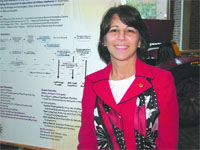
    Departments

    The following is a compilation of recent lawsuits involving area businesses and organizations. These are strictly allegations that have yet to be proven in a court of law. Readers are advised to contact the parties listed, or the court, for more information concerning the individual claims.

    GREENFIELD DISTRICT COURT

    Adams Direct Mail Services v. International Profit Associates
    Allegation: Fraudulent practices on small business: $4,640
    Filed: 10/22/09

    Leader Home Center Inc. v. A.D. George Construction Co.
    Allegation: Non-payment of goods and services rendered: $28,417.66
    Filed: 10/21/09

    HAMPDEN SUPERIOR COURT

    Holyoke Mall, LP v. Sadie’s, LLC
    Allegation: Default under a written lease: $1,472,485.67
    Filed: 10/2/09

    Michelle Boutin v. Hess Corporation
    Allegation: Employee discrimination: $25,000+
    Filed: 9/17/09

    Roman Radkovets v. Balise Motor Sales Co.
    Allegation: Breach of employment contract and non-payment of commissions: $39,626.10
    Filed: 10/6/09

    Susan Cole v. Geriatric Authority of Holyoke
    Allegation: Employee discrimination: $25,000+
    Filed: 9/17/09

    HAMPSHIRE SUPERIOR COURT

    Commerce Insurance Co., as subrogee of Paul M. Struthers v. Cernak Fuel Corp. and Richards Fuel Inc.
    Allegation: Negligence causing damage: $392,011.34
    Filed: 10/2/09

    Leaklena Som v. Millitech Inc.
    Allegation: Employment discrimination: $25,000+
    Filed: 9/15/09

    PMC Contracting v. CAP Development Inc. & Trak Petroleum, LLC
    Allegation: Failure to pay under the terms of a construction agreement: $8,603.48
    Filed: 9/29/09

    HOLYOKE DISTRICT COURT

    City of Holyoke v. Western Mass Blitzin Bears Inc.
    Allegation: Failure to pay for use of Roberts Sports Complex: $2,190
    Filed: 9/28/09

    NORTHAMPTON DISTRICT COURT

    One Communications Corp. v. Atalasoft Inc.
    Allegation: Non-payment of services rendered: $7,843.23
    Filed: 10/15/09

    PALMER DISTRICT COURT

    Elizabeth Matthieson & Robert Vandernoot v. Sequoia Properties, LLC
    Allegation: Violation of purchase-and-sale agreement and refusal to return deposit: $24,450
    Filed: 9/29/09

    Yellowbook Sales & Distribution Company Inc. v. BSF Construction
    Allegation: Non-payment of advertising services rendered: $11,353
    Filed: 8/21/09

    SPRINGFIELD DISTRICT COURT

    Bank of America v. JGC Specials
    Allegation: Non-payment of monies loaned: $25,886.93
    Filed: 10/7/09

    Francis Teta v. Bell-Carter Olive Co.
    Allegation: Defective product, causing injury: $22,438
    Filed: 10/8/09

    Liberty Mutual Insurance Co. v. JCE Inc.
    Allegation: Non-payment of workers’ compensation policies: $16,793.19
    Filed: 10/8/09

    Regina Haines v. Northern Educational Services Inc.
    Allegation: Negligent maintenance of property, causing injury: $19,383.47
    Filed: 10/8/09

    Rosanna Langlois v. Educlean
    Allegation: Negligence in cleaning services, causing a slip and fall: $7,350
    Filed: 10/2/09

    Departments

    United Personnel employee Jim Kervick was awarded the Massachusetts Staffing Assoc. Employee of the Year Award for 2009 at the MSA’s annual awards dinner at the Harvard Club in Boston. The prestigious honor, awarded to one staffing employee in Massachusetts, is given to an employee who exemplifies the five main reasons to consider temporary staffing as an employment option — jobs, flexibility, bridge, choice, and training. In his role as an On-Site Manager at two of United’s larger-volume clients, Kervick is responsible for the day-to-day communication with the on-site temporary staff and for assuring that performance standards, policies, and procedures are met. United Personnel is headquartered in Springfield, with a satellite office in Easthampton.

    •••••

    James M. Buker has joined the Insurance Center of New England as a Senior Account Executive in the Group Employee Benefits Department.

    •••••

    Springfield resident David Ewen recently released his third edition of Let’s Make It Simple, which simplifies the complexities of book publishing and marketing into easily understood steps for new and experienced authors. Ewen is an author, speaker, and college instructor. The book is available at amazon.com.

    •••••

    Attorneys Ann I. Weber and Michele J. Feinstein, Shareholders of Shatz, Schwartz and Fentin, P.C., recently spoke on “Planning for Long-Term Care: New Laws and Regulations” at the Visiting Nurse Assoc. The intensive workshop focused on a multitude of issues individuals face when planning for long-term care. Their law firm has offices in Springfield, Northampton, and Albany, N.Y.

    •••••

    Liz Washer has joined UMass Amherst as Director of External Relations, College of Humanities and Fine Arts. In this role, Washer will provide leadership for promoting the college’s ideas, events, and initiatives to advance its strategic goals, and will support and coordinate similar efforts within the academic departments and programs that report to the Dean.

    •••••

    Rob Scoble has been named the top Operational Officer for Hyde Tools Inc. of Southbridge. As Executive Vice President and Chief Operating Officer, he will oversee Hyde’s professional products and industrial blade divisions.

    •••••

    Brittney Kelleher has been promoted to Commercial Loan Officer at Westfield Bank.

    •••••

    Samuel A. Smith has joined TD Bank as Manager of its location at 178 Main St., Sturbridge. He is responsible for managing day-to-day operations at the branch, and developing and overseeing small business loans, deposit accounts, consumer lending, investments, and insurance services.

    •••••

    Bacon Wilson, P.C. of Springfield has announced that Partner Hyman G. Darling has been selected to serve as a volunteer member of the American Cancer Society’s new Nationwide Gift Planning Advisory Council. The council will be an active source of expert planned-giving and estate-planning consultation, will assist in the development of promotional strategies, and will serve as a resource for the society’s marketplace introduction to potential donors. Darling will serve a two-year advisory council term, providing guidance in estate planning law, tax, investment and wealth management, real estate, insurance, personal financial planning, and marketing. Darling is Chairman of the Estate Planning and Elder Law departments at Bacon Wilson, P.C.

    •••••

    Michael J. Schrader has joined the engineering firm of Hoyle, Tanner & Associates of Manchester, N.H. Schrader’s expertise in wastewater, water, stormwater and site-civil projects will play a key role in expanding the firm’s presence in southern New England.

    •••••

    The Mass. Society for Medical Research has recognized the following individuals for their contributions to biomedical research and education in the state and region. They are:
    • State Sen. Stephen J. Buoniconti, D-West Springfield;
    • Angela Avery, recently retired Superintendent-Director of the Norfolk County Agricultural High School;
    • Terry McGuire, Co-Founder and General Partner of Polaris Ventures; and
    • Robert Langer of the Massachusetts Institute of Technology.
    The society is a nonprofit educational and research support organization whose members are biotechnology firms, colleges and universities, hospitals and institutes, pharmaceutical companies, and others that support research.

    •••••

    Jeffrey Folkins has been promoted to Vice President of Sales at Classic Coil Co. in Bristol, Conn. He was previously the national sales manager.

    •••••

    Jill Senecal was recently named Graduate Admissions Counselor for the Office of Graduate Admissions at American International College in Springfield. Senecal will be responsible in helping the office recruit prospective students and increase enrollment.

    •••••

    Daniel J. Barrieau, Director of Respiratory Care at Cooley Dickinson Hospital in Northampton, was among 45 health care professionals from across Massachusetts who recently received the Rx for Excellence Award in a Boston ceremony.

    •••••

    Qteros announced the following:
    • Kevin F. McLaughlin has been named to the Leadership Team. McLaughlin brings 30 years of financial and operating management experience from the high-tech, biotech, and education industries; and
    • Ralph M. Lerner has been named to the Leadership Team. Lerner has industry experience in general management, business development, and strategy development and implementation in the global petrochemical and energy industry, with companies including Amoco and BP.

    •••••

    Diane France of the Karen King Group at RE/MAX Prestige in Wilbraham has earned the Certified Distressed Property Expert designation, having completed training in foreclosure avoidance and short sales.

    Uncategorized

    BusinessWest Associate Publisher Kate Campiti says that when the publication launched its Difference Makers initiative roughly a year ago, there were high expectations that the new recognition program would capture the business community’s imagination and inspire more landscape-changing thought and action.

    “To say that those expectations were exceeded would be a real understatement,” said Campiti, adding that the first year of the program was successful on a number of levels.

    First, the inaugural class of four individuals — Doug Bowen, president and CEO of PeoplesBank; Kate Kane, managing director of the Springfield office of the Northwestern Mutual Financial Group; Susan Jaye-Kaplan, founder of GoFIT and co-founder of Link to Libraries; and Bill Ward, executive director of the Regional Employment Board of Hampden County — and one group, the Young Professionals Society of Greater Springfield, set a very positive tone for the program, said Campiti. Collectively, the Class of 2009 provided a number of poignant examples about how individuals and groups can, indeed, make a difference within the Western Mass. community.

    Their stories were highlighted at the Difference Makers gala, which drew nearly 500 people to the Log Cabin Banquet & Meeting House and generated still more excitement for the program and its future.

    But then, things got even better, said Campiti, noting that, with inspiration and motivation from Ward and others at the REB, the first class of Difference Makers was put to work addressing one of the most critical issues facing the community: Literacy. The group launched a book-collection project called “Creating a Culture of Literacy — One Book at a Time,” with the specific beneficiary being the Hasbro Summer Learning Initiative. What’s more, the group agreed that literacy wouldn’t be a one-year push, but rather an ongoing concern for future classes of Difference Makers.

    All of this will make the inaugural year of this initiative a hard act to follow, said Campiti, adding quickly that she is confident that the program will only grow in popularity and relevance as more individuals and groups are recognized for their efforts and their stories are told.

    Which brings us the Class of 2010 and the nomination form on the opposite page. This is where it all begins, and readers are strongly encouraged to let their ‘voices’ be heard.

    It’s rather simple, really. If you know an individual or group that is truly making a difference in this region — making it a better place in which to live, work, play, and learn — then nominate them for this honor.

    For examples of who can be a Difference Maker, look no further than last year’s class. Bowen and Kane were nominated for their success in leading their respective institiutions, but also for their tireless work within the community on a host of causes and nonprofit boards — and encouraging employees and associates to do the same. Kaplan, meanwhile, was nominated for her work to both introduce young people to the concept of fitness (GoFIT) and put books in their hands (Link to Libraries).

    Ward was nominated for his three decades of work with the REB to generate employment opportunities and help individuals overcome barriers to earning a paycheck. Finally, YPS was nominated as a group for its efforts to help young professionals plant roots in the Pioneer Valley, contribute to quality of life here, and hopefully stay in this region rather than look elsewhere for personal and professional satisfaction.

    Those are just examples of how people can make a difference. There are countless others. The work can be done in education, government, health care, the nonprofit community, business, or any combination of the above.

    Overall, Difference Makers has two real goals, said Campiti: to recognize people whose efforts often go unnoticed or uncelebrated, and to inspire others to want to do the same.

    “Our inaugural year was simply an unqualified success,” she noted. “And among the many other things we accomplished, we built some real momentum for 2010 and beyond.”

    As stated on the nomination form, entries are due by Dec. 31. Winners will be chosen by the staff at BusinessWest by mid-January, and the Class of 2010 will be announced in February, with the second Difference Makers gala scheduled for March.

    —George O’Brien

    Sections Supplements
    Effective Planning Can Help You Pass This Critical test

    The thought of saving for college crosses almost every parent’s mind, sometimes even before their child is born. Yet, for various reasons, a college savings fund often does not become a reality until many years later, if ever.

    Whether or not you start saving for your child’s education early on, the cost of that college education will continue to increase and, most likely, more than double from the time a child takes her first step to the day she starts her freshman year.

    Few would dispute the value of a college education. Aside from the personal and intellectual growth, the financial reward is undeniable. In the U.S., four-year college degree graduates earn, on average, 62% more than those with only a high-school diploma. Those with a master’s degree earn almost twice as much, and those with professional degrees, over three times as much as high-school graduates. Over a lifetime, the gap in earnings between those with a high school diploma and those with an undergraduate degree or higher exceeds $1 million.

    Still, the price of a degree could jolt almost anyone’s budget. During the five-year period ending in 2007, the nation’s average public and private college costs rose by 31% and 41%, respectively.

    When on-campus housing, books, supplies, transportation, and other personal costs are factored in, the average cost to attend a public four-year university or college for one year is $17,336, and $35,374 at a private institution.

    If that isn’t enough to make you want to start saving today, consider this: students are taking an average of more than six years in public four-year colleges and more than five years in private four-year colleges to earn a bachelor’s degree. If these trends continue, most parents who plan to help fund their children’s education can’t afford to put off saving for it.

    Reducing Sticker Shock

    To help you determine how much money you will need to pay for an education once your child reaches college age, there are a number of online calculators, such as those found at www.finaid.org, www.collegeboard.com, or www.nmfn.com. Unless your children are elementary school age or younger, involve them in the process to determine if they:

    • Plan to attend a private or public college or university, community college, or technical institute;
    • Want to live at home or on campus while attending school; or
    • May take more than four years to finish school.
    • It is never too early to begin saving for college. A great place to start includes any of the most popular plans used today, such as Section 529 plans, Coverdell Education Savings Accounts (ESAs), custodial accounts, and life insurance. In addition to the possible benefits of compounding, these plans may also provide great tax advantages.

      Better Late Than Never

      Now matter how late in the education savings game you get started, if, after factoring in the amount you already have saved, you still fall short, various options may be available, including:

      • Grants and Scholarships: Your child need not be a budding Einstein in order to qualify for some of the existing scholarships. Grants based on such factors as your income, place of employment, or even a relative’s military service are available to qualifying individuals.
      • Student Loans: The Federal Student Aid Information Center provides a variety of free publications that are available by calling (800) 433-3243. The center’s Web site, www.federalstudentaid.gov, allows you to complete the free application for federal student aid online. It also provides tips on reducing college costs, finding non-federal scholarships, and other helpful topics.
      • Home Equity Loans: In some instances, the best option to help pay for college education can be leveraging the equity in your home. Banks offer a variety of programs, from flat loans at a fixed interest rate to lines of credit that can be accessed on an as-needed basis.
      • Life Insurance: The cash value of a life insurance policy is one of the few assets not considered in determining eligibility for financial aid. If you have permanent life insurance, you may have an additional source of cash. Your insurance representative can help you determine how much cash is available in any policies you own as well as any potential implications that may arise.
      • Above all, don’t be afraid to ask for advice when planning your child’s education, regardless of how late you might be starting this process. Financially, emotionally, and psychologically, it is probably one of the biggest investments you will ever make.

        And the impact on your child’s future will last a lifetime.

        John Joyce is a financial representative with Northwestern Mutual Financial Network, the networking name for the sales and distribution arm of the Northwestern Mutual Life Insurance Co.; (413) 748-6000.

        Sections Supplements
        Wire and Harness Maker MicroTek Has Found a Niche in the Nonprofit Industry

        MicroTek’s innovative employment model came first, its product second.

        MicroTek’s innovative employment model came first, its product second.

        MicroTek CEO Anne Paradis is holding up a plywood board. It’s got markings on it every few inches and simple diagrams that show one where to tie and cut wires and add connectors. The straightforward visual system makes it easy for almost anyone to assemble a wire harness — even someone who is learning-disabled.

        Fifteen of MicroTek’s 110 employees have disabilities, and the board is one of the many techniques the company uses to train and integrate those employees into its work environment.

        Based in Chicopee, MicroTek, which makes custom cable and harnesses, is part of the changing manufacturing sector in the Pioneer Valley. The company was founded 26 years ago with the sole purpose of providing a meaningful workplace for people with disabilities.

        “I wish I could tell you it was a story about market research, but it wasn’t,” said Paradis about how the company got its start in the cable business.

        Indeed, it was really by chance that MicroTek ended up making wires instead of, say, protein bars or women’s clothing.

        It all started in 1983 when about a dozen human services advocates got together. They were working in conjunction with the University of Oregon, which was researching models for employing people who were difficult to employ.

        One model was to start a company where one controls the environment, provides the training, and brings in the work. It seemed like a good idea. The group just needed something to produce.

        “Someone at the University of Oregon happened to have a connection to Hewlett-Packard,” said Paradis. “That person approached the company and said, ‘we want to start up this company. Can you help us?’”

        Hewlett-Packard agreed and, to get things rolling, gave the young company its first commercial contracts for wire harnesses. With the business elements in place, the founders went to the Department of Developmental Services to secure additional funding.

        Once out of the gates, MicroTek ran into rough seas. While the company originally hoped to hire more disabled people, it quickly realized that if it wanted commercial success, it needed a broader skill set — people who could solder, read blueprints, and so on — and additional customers.

        For this issue, BusinessWest looks at how it all came together.

        Current Events

        ‘Make this company viable.’

        That was the assignment given to Paradis when she was first brought on board in 1987.

        She started off working for MicroTek as a marketing consultant for a year, but when it was discovered that the company’s problems were worse than anybody realized, the board of directors took her on as general manager.

        “I had a background in human services and a master’s in business administration,” Paradis explained. “I didn’t know anything about cabling.”

        She was about to learn.

        “When you are the general manager of a small business, you are doing everything,” she said. “I was doing the sales, the quoting. I was covering for other managers when they weren’t there. I worked long hours.”

        Getting new business wasn’t easy. Paradis had to prove to potential customers that MicroTek wasn’t simply a sheltered workshop and that it was capable of producing advanced assemblies to a consistent level of quality. A helping hand came again from its number-one customer.

        “Hewlett-Packard lent out engineering support to get us to the next level,” Paradis said. “Literally, engineers would come and spend the day with us troubleshooting problems, or we would go to their facility, and they would provide training. It was a real investment in our success.”

        In the 22 years that Paradis has been with MicroTek, she has helped grow the company from 30 to 110 employees and from $1 million in sales to $6 million. In 2001, after outgrowing the space it occupied in an old mill building in Chicopee Falls, MicroTek moved to its current location: a $1 million, 22,000-square-foot factory at 36 Justin Dr. in Chicopee.

        MicroTek makes wire harnessing, cables, and, more recently, control panels for mainly security and medical companies. It’s sweet spot is low- to medium-volume assemblies, meaning anywhere from five to 25,000 of a particular item.

        “Our costs are competitive,” said Paradis. “Some people would say our nonprofit status gives us an edge, but we actually have to work harder to stay competitive, because a learning-disabled person is only 40% to 60% as productive as someone who is not.”

        Working with people with disabilities has additional challenges as well, such as training. One has to be able to teach skills that a disabled person can generalize over a broad range of products.

        “It’s easy to teach someone a specific job they can do over and over again, but it’s harder to teach them how to use one termination machine and then do that same operation on different types of terminals,” said Paradis, referring to the machines that add connectors to the end of the wires once they’ve been clipped. “Another terminal might look or even feel different.”

        The other challenge is integrating disabled people with the rest of a company. Managers want them to work as productive members of teams and remove the stigma of being disabled, explained Paradis.

        That’s where the layout boards come in. A disabled worker can lay the cables out on the board and follow visual cues to know where to cut without having to continually pull out a ruler to take measurements.

        “We made the layout boards for people with disabilities, but then started using them for everyone,” said Paradis. “Because whether you have a disability or not, the board lets you work with greater efficiency and fewer errors.”

        Slump and Rebound

        Earlier this year, MicroTek began to feel the effects of the sluggish economy, albeit a little later than most manufacturers. It cut capacity and saw sales fall by 20%, and took a temporary workforce reduction in which staff was cut back to four days a week for two months and collected unemployment for the fifth day. Ten workers also volunteered to be laid off.

        But all that has changed, with the company rebounding “like gangbusters,” Paradis said.

        “We experienced a sharp decline in spring, but sales picked right back up in July and August, and we rolled back all of the cost reductions,” she noted. “Now we’re ahead of budget projections for this year” — a turnaround that has her feeling more confident about the health of manufacturing in general.

        Meanwhile, Paradis has taken on a new mission. “Our focus has shifted outward,” she said. Last year, the company launched an employment-demonstration project. It’s now working with several local companies to help them train people with disabilities in-house using all-natural supports.

        Paradis believes that bringing in outside trainers sets up artificial barriers between the disabled person and other people in the company, which keep them from forming relationships and integrating successfully.

        If there is one lesson that MicroTek has to teach, it’s that diversity in the workforce is what makes companies stronger.

        Sections Supplements
        Know the Difference Between a Residence and a Domicile

        There are many reasons to consider a move to Florida, particularly later in life, the most obvious being the significant difference in winter weather between Boca Raton and the Pioneer Valley. A less obvious reason that could rival the weather in importance is tax planning — in particular, income- and estate-tax planning. Indeed, if done properly, tax planning could provide that last extra bit of incentive an individual or couple needs to start spending winters in the sun.

        What are the tax benefits of a move to Florida, and how are those benefits realized? Must a taxpayer sever all ties with Massachusetts, or can a taxpayer maintain homes in both Massachusetts and Florida while still reaping the tax benefits Florida offers? This article will discuss these and surrounding issues.

        Why should taxes enter into the equation of whether to live in Florida for part or all of the year? The basic tax incentive is that Florida does not have an income tax or an estate tax. Also, the Florida Homestead limits the amount of real-estate tax on a primary residence in Florida and provides for much greater protection from creditors than the Massachusetts homestead exemption.

        A taxpayer who is ‘domiciled’ in Massachusetts (that is, whose legal residence is in Massachusetts) will pay Massachusetts income tax on his or her ‘worldwide income.’ Taxation of this worldwide income may be partially or wholly avoided by a change in domicile to Florida, since Florida does not have an income tax. It must be noted, however, that even those properly domiciled in Florida will pay Massachusetts income tax on Massachusetts source income — essentially, any income tied to a business or employment carried on in Massachusetts, or derived from Massachusetts real-estate rents and capital gains.

        With regard to estate taxes, Massachusetts remains an expensive place to die even for the moderately wealthy. The Massachusetts estate tax filing requirement is $1 million. Estates of less than $1 million are not required to file a return or pay a tax; however, estates over $1 million will pay a tax on the entire estate, not just the amount exceeding $1 million. (For comparison purposes, the federal estate-tax shelter for 2009 is $3.5 million, and Connecticut’s shelter is slated to rise to $3.5 million in 2010). Florida has no state estate tax. For example, a $1.2 million Massachusetts estate will incur an estate tax of $45,200, while the same estate in Florida will incur no estate tax. Taxpayers properly domiciled in Florida, however, will pay Massachusetts estate tax on real estate and tangible personal property located in Massachusetts. Careful planning for those domiciled out of state is necessary to avoid a backdoor Massachusetts estate tax on those assets. Thus, a change in domicile from Massachusetts to Florida (or a similarly tax advantaged state) could result in significant tax savings.

        The Massachusetts Department of Revenue (DOR) will look at each particular case to determine if the taxpayer at issue is domiciled within or outside of Massachusetts for tax purposes. The analysis is fact-based and undertaken without regard to federal law or the law of any other state.

        Before proceeding, however, some basic definitions are in order. At issue in the DOR’s analysis is the legal status of a taxpayer’s domicile, as distinguished from his residence. A taxpayer may have many residences — homes in Massachusetts and Florida, for example — but has only one domicile. A taxpayer’s domicile is the residence the taxpayer regards as his or her true home or principal residence. As reiterated in numerous cases decided by the Massachusetts courts, domicile is “the place of actual residence with the intention to remain permanently or for an indefinite time and without any certain purpose to return to a former place of abode.”

        So how does a taxpayer convince an auditor, the DOR, and, if necessary, the Appellate Tax Board that the taxpayer has relocated his or her domicile outside of Massachusetts? There are some hard and fast rules that provide a starting point for the analysis. The first and most important rule is to have an actual home — either rented or (preferably) owned — in the state where the taxpayer is attempting to prove domicile (in this case, Florida). Domicile requires, at minimum, an actual residence, and Massachusetts courts have stated that a person can have a home in a place where he is not domiciled, but he cannot be domiciled in a place where he has no home. While this seems obvious, a taxpayer recently lost a case before the Appellate Tax Board partly on the basis of a Florida lease that lapsed while the taxpayer paid an extended visit to Massachusetts.

        The fact of having a home in the place of domicile must concur with the intent to make that home the taxpayer’s domicile as opposed to a mere residence. This is where the DOR’s inquiry will become highly fact-intensive, and where careful planning becomes essential. As the DOR has stated, “the most persuasive indicators of domicile are the physical, business, social and civic activities of the taxpayer.” Taxpayers must demonstrate that the center of these activities occurs at their new domicile. The level of steps that must be taken varies based on whether or not the taxpayer will maintain a home in Massachusetts. How is this accomplished?

        Regardless of whether the taxpayer will continue to maintain a home, business, or social contacts in Massachusetts, the following steps should be taken to demonstrate intent to change domicile to a different state:

        • registering to vote and actively voting in the new state, and simultaneously terminating Massachusetts voting registration;
        • changing vehicle registrations to the new state;
        • obtaining a driver’s license in the new state and terminating the Massachusetts license;
        • keeping all primary bank accounts in the new state and maintaining as few ties to Massachusetts banks as possible;
        • changing addresses for bills, including credit-card bills;
        • changing addresses for magazines;
        • changing the address on one’s passport; and
        • joining clubs and undertaking other social activities in the new domicile and resigning or changing Massachusetts memberships to non-resident status.
        • The taxpayer should also file a declaration of domicile and citizenship, in duplicate, with the clerk of the circuit court in the county of residence of the new domicile.

          Finally, the taxpayer should release any homestead exemption applicable to his or her real property in Massachusetts and file for homestead protection in Florida. Note, however, that the taxpayer must own Florida real estate on Jan. 1 of the year in question and make that property his or her principal residence in order to qualify for the Florida homestead protection.

          There are several additional considerations if the taxpayer is maintaining a residence in Massachusetts. Massachusetts considers that a taxpayer’s legal residence for tax purposes will be Massachusetts, even if the taxpayer is domiciled in another state, if the taxpayer maintains a permanent place of abode in Massachusetts and spends more than 183 days (including partial days) in the aggregate in Massachusetts during the year. If both of these criteria apply, the taxpayer’s efforts in establishing domicile outside of Massachusetts will be for naught.

          The surest way of avoiding the application of these rules is to spend 183 days or less in the aggregate in Massachusetts during each tax year in question. The Department of Revenue, however, will not simply take the taxpayer’s word on whether he or she spent more or less than 183 days in Massachusetts. The taxpayer should maintain detailed records to prove the amount of time spent within or outside of Massachusetts.

          In an audit, the Department of Revenue will demand copies of all monthly credit-card statements, phone bills, and bank-account statements for the year(s) in question as evidence of location during the tax year(s). Consequently, the taxpayer should use a credit card regularly while outside Massachusetts and keep copies of all credit-card bills and bank-account statements.

          The taxpayer should keep receipts indicating where items were purchased for non-credit-card transactions. If the taxpayer spends considerable time outside of Florida, the taxpayer can use evidence of credit-card charges or similar means to explain the taxpayer’s location and rebut the Department of Revenue’s assumption that the taxpayer was in Massachusetts. The taxpayer should keep all airline tickets, indicating dates of stay within and outside Massachusetts, and should keep a journal of all dates spent in Massachusetts.

          If the taxpayer is unable to limit his or her time to 183 days in Massachusetts, then the taxpayer will need to establish that he or she maintains no ‘permanent place of abode’ in Massachusetts. A permanent place of abode is a dwelling continually maintained by a person, whether or not owned by the person, and includes a dwelling owned or leased by the person’s spouse. This definition will encompass most homes maintained in Massachusetts by those domiciled elsewhere.

          The Department of Revenue does maintain a list of very narrow specifically delineated exceptions to the definition of a permanent place of abode. Under these exceptions it is very difficult for the owner of a home in Massachusetts to avoid that home being treated as a permanent place of abode. Having children or grandchildren move into the home will not suffice; nor will renting out the property for less than a term of one year. The only rental exception that the Department of Revenue recognizes with regard to the ‘permanent place of abode’ definition is a full rental of the property at issue to a non-related individual, for a period of at least one year, where the taxpayer has no right to occupy any portion of the premises during the lease period.

          As a practical matter, therefore, taxpayers who wish to maintain a home in Massachusetts yet receive the tax benefits of having a domicile outside of Massachusetts will need to prove that they have spent more than 183 days outside of Massachusetts and that they have established a domicile outside the Bay State.

          For taxpayers who maintain homes in Massachusetts, there are often continuing ties to Massachusetts beyond the maintenance of real estate. These may include, for example, visits to children and grandchildren living in Massachusetts and continuing social, legal, financial, and business relationships with friends and advisors in Massachusetts, as well as receiving specialized medical treatments in Massachusetts. The Appellate Tax Board has recognized that such ties may exist, and that they do not defeat a change in domicile. As the Board has stated, “continuing ties to [Massachusetts] do not foreclose a finding of change of domicile: such change does not require that a taxpayer divest himself of all remaining links to the former place of abode, or stay away from that place entirely.”

          The taxpayer should apply common sense in such situations. Items near and dear to the heart of the taxpayer should, to the extent possible, be located at the new domicile. Department of Revenue auditors will look to determine where the taxpayer centers his or her life in determining the taxpayer’s intent.

          In a recent case, the Appellate Tax Board overruled the Department of Revenue and held for a taxpayer who had maintained social ties to Massachusetts. The Board noted the taxpayer couple’s joining a church in Florida, becoming members and eventually directors of their neighborhood housing association, their development of a large circle of friends in Florida, and their attendance at local Elks and Moose lodges in Florida in rebutting the DOR’s argument that the taxpayer’s social ties to Massachusetts prevented a change in domicile. When combining these facts with the necessary changes in the taxpayers’ drivers’ licenses, voter registrations, and similar items, the Appellate Tax Board concluded the taxpayers had indeed changed their domicile to Florida.

          This article is not meant to provide a full guide to a successful, tax-advantaged change of domicile outside of Massachusetts. As discussed above, even those who successfully change their domicile will still face tax issues in Massachusetts, many of which can be minimized or perhaps eliminated with proper planning. It is therefore essential for any taxpayer seeking to realize tax benefits in conjunction with a change of domicile to consult with his or her advisors to determine the feasibility of such a move, its chance of success, and the methods of maximizing the potential benefits to the taxpayer.

          Michael Simolo is an associate with the law firm of Robinson Donovan, P.C., specializing in estate planning, estate and trust administration, fiduciary litigation, and business law; (413) 732-2301.

          Departments

          Ten Points About : Cobra Insurance

          By KRISTINA DRZAL HOUGHTON, CPA, MST

          1. Effective March 1, 2009, the American Recovery and Reinvestment Act of 2009 changed the COBRA provisions.


          2. Employees who lose coverage due to involuntary loss of employment from 9/01/08 to 12/31/09 are eligible for a 65% subsidy of their COBRA premiums under the act. This percentage applies whether or not the employer pays for a lesser portion of the costs for active employees.
          3. The subsidy for COBRA continuation premiums applies for up to nine months for workers who have involuntarily terminated, and for their families. This period terminates sooner should the former employee become eligible for other group coverage.
          4. The employer recovers the cost of the subsidy on their quarterly Form 941 filings.

          5. The subsidy applies to group health plans that are subject to the federal COBRA continuation rules.

          6. Typically, the amount of the subsidy is excluded from the recipient’s gross income. However, for individuals with modified adjusted gross income in excess of $125,000 or $250,000 for married filed jointly, amounts will be includable in income based upon a phase-in calculation. Regardless, the individual is still eligible for the subsidy.
          7. COBRA subsidy applies to continuation coverage of any group health plan except a flexible spending arrangement. This includes vision-only or dental-only plans and ‘mini-med plans,’ whether or not the employer pays for a portion of the costs for active employees.
          8. Individuals who became eligible for COBRA between 2/17/09 and 12/31/09 must be notified of the new subsidy in the normal course of their COBRA notification. Special provisions applied to individuals who became eligible between 9/01/08 and 2/16/09.
          9. Notice must be given to each qualified terminated employee, not just covered employees, who experience a qualifying event during the covered period.

          10 The IRS published Notice 2009-27 covers many examples of specific situations. This notice is available at www.irs.gov . The full version of Model Notices are available at www.dol.gov/ ebsa/cobramodelnotice.html.

          Kristina Drzal Houghton, CPA, MST is the partner in charge of Taxation at Meyers Brothers Kalicka in Holyoke; (413) 536-8510.

          Departments

          Concert at Bay Path

          Oct. 22: Pianist Wendy Chen and cellist Andrés Díaz will present an evening of music to commemorate the 10th anniversary of Bay Path College’s One-Day-A-Week Saturday program and celebrate the women who have transformed their lives through education in Mills Theatre, Carr Hall, 588 Longmeadow St., Longmeadow. The event, slated to begin at 8 p.m., is part of the fall Kaleidoscope Series. Attendance to the concert is free, however, attendees will be welcome to make a donation to the Scholarship Fund for Bay Path’s One-Day-A-Week Saturday students. For more information, call (413) 565-1066 or visit www.baypath.edu.

          Ghost Hunter Lecture

          Oct. 23: Ghost hunter John Zaffis will present a lecture on his more than 30 years of experience studying and investigating the paranormal at 8 p.m. at Bay Path College, 588 Longmeadow St., Longmeadow. The free event is part of the fall Kaleidoscope Series. At press time, the lecture location was undetermined. For more information, call (413) 565-1066 or visit www.baypath.edu

          ‘Restoring Prosperity’ Talk

          Oct. 26: HAPHousing in Springfield will sponsor a half-day conference titled “Restoring Prosperity: Housing’s Role in a Western Massachusetts Economic Recovery” from 8:30 a.m. to 1:30 p.m. at The Log Cabin, 500 Easthampton St., Holyoke. Congressman John Olver will present the opening remarks, and the keynote speaker will be Bruce Katz of the Brookings Institution. Given the critical role housing played in the current recession, this informative conference will examine the housing market’s vital importance in the economic recovery and revitalization of the Pioneer Valley. For more information, call (413) 233-1727 or visit www.haphousing.org.

          Valuing Your Employees Lecture

          Oct. 28: Learn how to find, hire, and retain workers during a lecture titled “Maximizing Your Most Valuable Business Asset: Employees” from 9 to 11 a.m. at the Scibelli Enterprise Center, 1 Federal St., Springfield. The Massachusetts Small Business Development Center Network is sponsoring the training program, which will be led by Angela Lussier of 365 Degrees Consulting, and Steve Cosenke, canvass manager, Yellowbook, and founder, Border Busters. The fee is $40. For more information, call (413) 737-6712, or visit www.msbdc.org.

          Nazi Propaganda Discussion

          Oct. 28: Ann Millin, Ph.D., special assistant to the director of leadership programs and historian in the U.S. Holocaust Memorial Museum’s National Institute for Holocaust Education, will present a free lecture titled “State of Deception: The Power of Nazi Propaganda” at 7 p.m. in Breck Suite, Wright Hall, Bay Path College, 588 Longmeadow St., Longmeadow. The museum’s new exhibition, State of Deception: The Power of Nazi Propaganda, reveals how over two decades Nazi leaders showed the world new ways of using this weapon. Millin’s presentation will examine how the Nazis employed propaganda to acquire power and create a climate of hatred, suspicion, and indifference. The event is part of the fall Kaleidoscope Series. For more information, call (413) 565-1066 or visit www.baypath.edu.

          ‘Women and American Politics’ Discussion

          Oct. 29: Robin Leeds, senior political strategist, organizer, and advocate with more than 30 years of work in the government, labor, business, and nonprofit sectors, will lead a discussion titled “Where Are We Now? Women and American Politics” at 5 p.m. at the Five College Women’s Research Center, 83 College St., South Hadley. As the Obama Administration pushes for women’s rights internationally under Secretary of State Hillary Clinton, Leeds will assess the situation for women in the U.S. and present her assessment of the current administration’s actions. The event is free and open to the public. For more information, call (413) 538-2275 or visit www.fivecolleges.edu/sites/fcwsrc.

          Dance and Brunch

          Nov. 1: The Over the Top Ballroom Dance Project, hosted by Bay Path College in Longmeadow, will host a South American Dance and Brunch beginning at 11 a.m. in the Blake Dining Commons, 588 Longmeadow St., Longmeadow. The event is part of the fall Kaleidoscope Series. Brunch begins at 11, with the dance performance and lessons starting at noon. Tickets for the brunch cost $6.50 each for adults and children. The performance and lessons are free and open to the public. Brunch reservations are required before Oct. 27. For more information, call (413) 565-1066 or visit www.baypath.edu.

          A New Economics of Peace
          Nov. 2: Mary Ellen Cohane, Five College Women’s Studies Research Associate from the Massachusetts College of the Liberal Arts, will give a talk titled “Jane Addams, Eleanor Roosevelt, and the Economics of Peace” at 3:30 p.m. at the Five College Women’s Studies Research Center, 83 College St., South Hadley. The event is free and open to the public. For more information, call (413) 538-2275 or visit www.fivecolleges.edu/sites/fcwsrc .

          Marketing Strategies Workshop

          Nov. 4: Ravi Kulkarni and Lynn Whitney Turner of Clear Vision Alliance LLC will present a workshop titled “Marketing Strategies for Sustainability & Growth in the World of Constant Disruptions” from 9 to 11 a.m. at the Scibelli Enterprise Center, 1 Federal St., Springfield. The interactive workshop will focus on factors that are changing one’s business, how to see what is not yet visible, and how to develop marketing strategies for growth and sustainability into the future. The Massachusetts Small Business Development Center Network is sponsoring the event. The cost is $40. For more information, call (413) 737-6712 or visit www.msbdc.org.

          WMEF Annual Meeting

          Nov. 5: “A Catalyst for Economic Development” will be the theme of the 2009 Annual Meeting of the Western Massachusetts Enterprise Fund Inc., of Holyoke, from 8:15 to 10:30 a.m. at the Log Cabin, 500 Easthampton St., Holyoke. Several awards will also be given during the event, including: Micro Enterprise of the Year Award, Small Business of the Year Award, Community Partner of the Year Award, and Local Business Product and Service Displays. For more information on the event, contact Laurie Arruda at (413) 420-0183, ext. 100. RSVP must be made by Oct. 23.

          Employment Law and HR Practices Conference

          Nov. 5: Managing employees and doing business in today’s world is becoming increasingly complex, as employers face economic hard times, legislative and administrative changes to employment law, layoffs, and more. To assist employers and managers, the Employers Assoc. of the NorthEast (EANE) will stage its annual Employment Law and HY Practices Conference, during which it will present practical solutions and valuable information. The event will be conducted at the Holiday Inn in Holyoke from 9 a.m. to 4 p.m. For more information or to register, call the EANE at (877) 662-6444.

          Phantom of the Country Opera

          Nov. 6, 7, 8, 13, 14, 15: The Bay Path College Performing Arts Department will present Phantom of the Country Opera in Mills Theatre, Carr Hall, as part of the fall Kaleidoscope Series. The production promises irreverent wit, painful punning, sly contemporary references, and more than a touch of the absurd. Bay Path College is located at 588 Longmeadow St., Longmeadow. For more information on show times and tickets, call (413) 565-1307 or visit www.baypath.edu.

          ‘Cash Flow Lecture

          Nov. 12: Robb Morton of Boisselle, Morton & Associates, LLP will present a program titled “Cash Flow” from 9 to 11 a.m. at the Scibelli Enterprise Center, 1 Federal St., Springfield. Morton will cover the basics of cash flow, the timing of cash inflows and outflows, how to determine your company’s cash flow, how to improve cash flow, and how cash flow is different from profit. The Mass. Small Business Development Center Network is sponsoring the event. The cost is $40. For more information, call (413) 737-6712 or visit www.msbdc.org .

          Book, Print Signing

          Dec. 3: For the past 32 years, Easthampton resident Ruth Sanderson has illustrated 75 books for children of all ages and retold and illustrated many fairytales, including her latest project, Mother Goose and Friends. Sanderson will present a free lecture titled “The Story of a Book” at 7 p.m. in Breck Suite, Wright Hall, at Bay Path College, 588 Longmeadow St., Longmeadow, as part of the fall Kaleidoscope Series. Slides and examples of her detailed sketches and paintings from her award-winning books will be shown. For more information, call (413) 565-1066 or visit www.baypath.edu .

          YPS New Year’s Celebration

          Dec. 31: The Young Professional Society of Greater Springfield has again chosen downtown Springfield for its New Year’s Eve celebration. Only 300 tickets will be available for the affair at the Marriott Hotel in Tower Square. Businesses and individuals interested in sponsorship of the event should visit www.springfieldyps.com for more details. For ticket information, call Jill Monson of YPS at (413) 219-9692.

          Women’s Professional Development Conference

          April 30, 2010: Bay Path College will host its 15th annual Women’s Professional Development Conference at the MassMutual Center in downtown Springfield from 7:30 a.m. to 4:30 p.m.  For more information, call (413) 565-1000 or visit www.baypath.edu.  

          Departments

          Juliet Locke of Vanasse Hangen Brustlin Inc. has earned her professional Traffic Operations Engineer Certification. Locke is a Transportation Engineer in the firm’s Springfield office. The certification demonstrates knowledge, skill, and ability in the specialized application of traffic operations engineering.

          •••••

          Westfield State College recently welcomed three new members of its Board of Trustees. They are:
          • Judge Terry M. Craven of Milford. An associate justice for the Suffolk County Juvenile Court, she is a 1973 graduate from Westfield State with a bachelor’s degree in psychology. She also received an honorary doctor of laws degree from the college in 2008 for her service in juvenile justice. She received her juris doctor degree from New England School of Law in 1987. She is known as an expert in juvenile and family law. Besides being founding director and co-clerk of the Juvenile Bar Assoc., she has served on its board of directors for more than a decade. She designed and implemented the first diversion program for female offenders at Boston Juvenile Court. Other honors she has received include citations from both the Massachusetts House of Representatives and Senate for her work with delinquent children and their families, and she was the 2006 recipient of the Juvenile Bar Association’s Judge Leo Lydon Award.
          • Christel Ford Berry of Hartford, who has been the head of Ford Berry Associates in Hartford for more than 25 years as part of her successful career as an attorney and financial planner. She previously was an associate attorney with the Hartford law firms Hebb & Gitlin and Shipman & Goodwin. She has also been active in professional and civic organizations. She is a board member of the Hartford Courant Foundation, treasurer and board member of Connecticut Landmarks, and a member of the Hartford Assoc. for Women Attorneys. She is also on the Board of Trustees of Friends of Elizabeth Park, a senior fellow of the American Leadership Forum, and an incorporator of the Hartford Seminary in Hartford and the American School for the Deaf in West Hartford. She has a bachelor’s degree from Barnard College and a juris doctor degree from the University of Pennsylvania.
          • Berry Meersman, a sophomore at Westfield State majoring in History and Secondary Education. A 2008 graduate of Shepherd Hill Regional High School, he became active in college life as a freshman, being selected as all-college representative for the Student Government Assoc. He was elected by the student body last spring to represent them on the Board of Trustees. “I hope I will be a good voice on the board for the students and hope to bring the student voice to any decision that has to be made for the school,” he said. Meersman praised his high-school history teachers for inspiring him to study history in college, and said he is happy with his decision to come to Westfield State.

          •••••

          Dr. Gargi Kundu has joined Hampden County Physician Associates’ new Springfield office at 300 Stafford St. on the Mercy Medical Center campus. She will establish her primary care practice in internal medicine. Kundu earned her medical degree from Kasturba Medical College in Manipal, India, and completed her internship in internal medicine at St. Luke’s Hospital in Bethlehem, Pa. She completed her residency in internal medicine at Robert Packer Hospital, Sayre, Pa., and her fellowship in hematology and oncology at the Medical College of Wisconsin in Milwaukee.

          •••••

          Bulkley, Richardson and Gelinas in Springfield announced the following:
          • Mary Jo Kennedy will serve as a Regional Delegate in the Massachusetts Bar Assoc. House of Delegates for the next year, representing Hampden County; and
          • Attorney David R. Roulston will serve as a Regional Delegate in the Massachusetts Bar Assoc. House of Delegates for the next year, representing Franklin, Hampshire, and Berkshire counties.

          •••••

          The National Priorities Project of Northampton has hired Christopher Hellman as its Director of Research.

          •••••

          Richard S. Keating has been named Vice President for Strategic Initiatives at the Centers for Internationalization and Academic Initiatives at Western New England College in Springfield. In his new position, Keating will improve the ability of WNEC to anticipate and respond quickly to emerging opportunities, particularly in the areas of developing undergraduate and graduate degree programs as well as non-credit and certificate programs, and the international recruitment of students.

          •••••

          Dr. Lanceford M. Chong has joined the staff at Cooley Dickinson Hospital in Northampton. Chong received his medical degree at the University of California, San Francisco Board of Medicine. He joins the cancer care-radiation oncology program as a Radiation Oncologist.

          •••••

          Michael J. Akey has joined Berkshire Bank as a Mortgage Loan Originator in the Pioneer Valley. He will concentrate his efforts on home loans in Franklin and Hampshire counties from his office at MassOne Insurance Agency, a Berkshire Bank affiliate, 117 Main St., Greenfield.

          •••••

          Samuel Johansson has joined the firm of Aaron Smith, P.C., public accountants, in East Longmeadow. He is a recent graduate of Western New England College in Springfield with a bachelor’s degree in business administration. He worked as an intern with Aaron Smith in the spring.

          •••••

          Jim Kervick, an employee of United Personnel, was recently awarded the Massachusetts Staffing Assoc. Employee of the Year Award for 2009. The prestigious honor, awarded to one staffing employee in the state of Massachusetts, is given to an employee who exemplifies the five main reasons to consider temporary staffing as an employment option: jobs, flexibility, bridge, choice, and training. Kervick was selected as the winner over 14 other finalists from across the state. In his role as an on-site manager at two of United’s larger-volume clients, Kervick is responsible for the day-to-day communication with the on-site temporary staff and for assuring that United’s (and the client’s) performance standards, policies, and procedures are being met. United Personnel has offices in Springfield and Easthampton.

          •••••

          Emma R. Dias has been hired at Cooley Dickinson Hospital in Northampton as an Interpreter to provide on-site services for non-English-speaking patients.

          •••••

          Attorney Lori Rittman Clark has been named to the SS&C SummerWind Performing Arts Center Board of Directors. The arts facility is a 5,000-seat outdoor performing center in Windsor, Conn. Clark is a Partner in the Hartford office of Hinckley, Allen & Snyder, where her practice is in the area of employment law.

          •••••

          Ellen Hatzakis has been named Chief Operating Officer for HAP Housing in Springfield. She has been with HAP Housing for 30 years, most recently as Associate Executive Director for Finance and Administration. She started her career as a Housing Counselor.

          •••••

          Shatz, Schwartz and Fentin, P.C., of Springfield announced that the following attorneys had been named to the 2010 edition of Best Lawyers:
          • Stephen A. Shatz, specializing in banking law, corporate law, and real estate law;
          • Timothy P. Mulhern, specializing in corporate law and tax law;
          • Steven Weiss, specializing in bankruptcy and creditor-debtor rights law;
          • Ann I. Weber, specializing in elder law; and
          • Carol Cioe Klyman, specializing in elder law.

          •••••

          Gordon G. Dinsmore Jr. has been appointed President of Berkshire Life Insurance Co. in Pittsfield. He will be responsible for managing the risk and product portfolio for the two product lines Berkshire issues on behalf of the Guardian Life Insurance Co. of America — disability insurance and long-term care insurance. Berkshire Life Insurance Co. is a wholly owned stock subsidiary of the Guardian Life Insurance Co. of New York.

          •••••

          Attorney Franklin L. Baxley has joined the Springfield law firm Robinson Donovan. Baxley specializes in employment law counseling and litigation.

          •••••

          Drs. Richard Moser, Frederik Pennings, and Julie Pilitsis have joined the medical staff at Wing Memorial Hospital and Medical Center in Palmer. The three board-certified Neurosurgeons are from the UMass Memorial Medical Center in Worcester. The physicians conduct neurosurgical evaluations for pediatric and adult patients with spinal disorders, cerebrovascular disease, movement disorders, brain tumors, and other disorders of the spine and brain. Moser earned his medical degree from Loyola University’s Stritch School of Medicine and completed his surgical residency at the University of Minnesota. Pennings is a graduate of the University of Leyden Medical School in the Netherlands, and completed his surgical residency at the Academic Medical Center of the University of Amsterdam. Pilitsis earned her medical degree from Albany Medical School and completed her surgical residency from Wayne State University in Michigan.

          Departments

          Speed Sales

          On Oct. 1, the Holyoke and Chicopee chambers of commerce staged their second annual Speed Sales event, which this year was sponsored by BusinessWest. Twenty-five companies sent both a salesperson and a decision-maker for five-minute one-to-one sessions designed to generate leads, build awareness of area businesses, and, hopefully grow sales. Clockwise from above, Brenda Olesuk, decision-maker for Graduate Pest Solutions, a Hampden-based company owned by her husband, Glenn, talks with Iraida Delgado, business account representative for Holyoke Community College, who served as that institution’s salesperson for Speed Sales; BusinessWest Editor George O’Brien, the company’s decision-maker for the afternoon, chats with Jenny McNulty, independent executive senior sales director for Mary Kay Cosmetics; Bruce Westcott, left, the decision-maker for Peter Pan Bus Lines, greets Jeffrey Sullivan, executive vice president and chief lending officer for United Bank and the company’s salesperson for the event; Paul DiGrigoli, left, owner of DiGrigoli Salons, who delivered a motivational talk before the event kicked off, talks with Steve Cosenke, district sales manager with YellowBook USA, and that company’s decision-maker for the day.


          Literacy Summit

          On Oct. 4, the Regional Employment Board of Hampden County, in conjunction with several other organizations, including the Springfield Public School System and the Irene E. and George A. Davis Foundation, staged a Literacy Summit at the Basketball Hall of Fame to draw attention to the broad issues of literacy and education. The keynote speaker was Chris Matthews (top left), host of MSNBC’s Hardball, but there were many who shared the stage and the spotlight. Among them were Congressman Richard Neal (center) and several young students (above) who offered their “hopes and dreams” for the future. Among them was Destiny Baker, at left. The event drew more than 400 people, many of whom addressed questions and comments to Matthews and Springfield School Superintendent Alan Ingram, and implored those in the audience to get involved with a host of area literacy programs.

          Departments

          Ten Points About : The Newly Amended Identity Theft Regulations

          By AMY B. ROYAL, Esq.

          1. On August 17, the state Office of Consumer Affairs and Business Regulations announced a new round of revisions to the identity theft regulations that are intended to be less onerous on smaller businesses and more consistent with federal law.

          2. The regulation’s new effective date is March 1, 2010. This is the third time that these regulations have been extended.
          3. The most dramatic change to the newest proposed set of regulations is the adoption of a “risk-based” approach to information security.
          4. With the new risk-based approach, size matters. Under this new approach, businesses are permitted to take into account their particular size, scope, amount of resources, nature and quantity of data collected or stored and the need for security when creating and implementing their information-security program.

          5. The changes in the regulations are especially important to small businesses that do not handle and store large amounts of personal information.

          6. The regulations soften the requirements for businesses that only store personal employee information as opposed to those businesses that also store personal customer information.
          7. The regulations clarify that they apply to “those engaged in commerce,” meaning those who collect and retain personal information in connection with the provision of goods and services or for the purpose of employment.
          8. The computer security requirements of the new regulations apply to a business if they are technically feasible. This means that if there is a reasonable means through technology to accomplish the required result, then those reasonable means must be used.
          9. Whether your business is small or large, your information security program must be in writing.

          10. The regulations require encryption of portable devices where it is reasonable and technically feasible. The definition of encryption has been amended to make it technology neutral.

          Although the regulations have again been delayed, it is still important to begin planning for compliance now, especially since the information security program must be developed, written and implemented, which includes training employees in the program, by March 1, 2010.

          Amy B. Royal, Esq. is a partner in the law firm of Royal & Klimczuk, LLC. She specializes in management-side labor and employment law; (413) 586-2288 or [email protected].

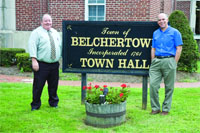
          Departments

          Health Insurers Expect to Raise Rates by 10%

          WASHINGTON, D.C. — Premiums for employer-sponsored health insurance rose to $13,375 annually for family coverage this year — with employees on average paying $3,515 and employers paying $9,860, according to the benchmark 2009 Employer Health Benefits Survey recently released by the Kaiser Family Foundation and the Health Research & Educational Trust (HRET). Family premiums rose about 5% this year, which is much more than general inflation (which fell 0.7% during the same period, mostly due to falling energy prices). Workers’ wages went up 3.1% during the same period.  Since 1999, premiums have gone up a total of 131%, far more rapidly than workers’ wages (up 38% since 1999) or inflation (up 28% since 1999). For the past few years, the annual rise in premiums has been more moderate than the double-digit growth experienced earlier this decade. As Congress considers health reforms building on the existing employment-based system, the annual Kaiser/HRET survey provides a detailed picture of private health insurance coverage and costs. The survey found that 60% of firms offer health benefits to any of their workers this year. As in the past, the smaller the firm, the less likely it is to offer health benefits — with fewer than half (46%) of the smallest employers (three to nine workers) offering health benefits. Among those firms offering benefits, 21% report they reduced the scope of health benefits or increased cost sharing due to the economic downturn, and 15% report they increased the worker share of the premium. The survey also reveals that a growing number of workers who are covered by their employer are facing high deductibles in their plans in addition to contributing to the premiums for their coverage. In 2009, 22% of covered workers must pay at least $1,000 out of pocket annually for single coverage before their plan generally will start to pay a share of their health care bills, up from 18% last year and 10% in 2006.

          Retail Sales Top Expectations

          WASHINGTON — The Commerce Department’s U.S. Census Bureau recently reported that retail sales rose 2.7% in August, well above the increase of 2.0% private analysts had expected. Motor vehicle sales jumped 10.6%, while sales excluding motor vehicles increased 1.1%, and sales excluding motor vehicles and gasoline rose 0.6%. Also, the Census Bureau announced that advance estimates of U.S. retail and food services sales for August, adjusted for seasonal variation and holiday and trading-day differences, but not for price changes, were $351.4 billion, an increase of 2.7% from the previous month, but 5.3% below August 2008. Total sales for the June-through-August 2009 period were down 7.6% from the same period a year ago.

          Initial Unemployment Claims Decrease

          NEW YORK — In the week ending Sept. 12, the advance figure for seasonally adjusted initial unemployment claims was 545,000, a decrease of 12,000 from the previous week’s revised figure of 557,000. The four-week moving average was 563,000, a decrease of 8,750 from the previous week’s revised average of 571,750. The advance seasonally adjusted insured unemployment rate was 4.7% for the week ending Sept. 5, an increase of 0.1 percentage point from the prior week’s unrevised rate of 4.6%. The advance number for seasonally adjusted insured unemployment during the week ending Sept. 5 was 6,230,000, an increase of 129,000 from the preceding week’s revised level of 6,101,000. The four-week moving average was 6,180,250, a decrease of 5,500 from the preceding week’s revised average of 6,185,750. The fiscal year-to-date average for seasonally adjusted insured unemployment for all programs is 5.636 million. Extended benefits were available in several states, including Massachusetts. The highest insured unemployment rates in the week ending Aug. 29 were in Puerto Rico (6.8%), Oregon (5.7%), Pennsylvania (5.7%), Nevada (5.5%), Michigan (5.2%), Connecticut (5.1%), New Jersey (5.1%), California (5.0%), Wisconsin (5.0%), North Carolina (4.8%), and Rhode Island (4.8%). The largest increases in initial claims for the week ending Sept. 5 were in Washington (+2,620), Pennsylvania (+2,573), Massachusetts (+1,565), North Carolina (+1,332), and Illinois (+1,218), while the largest decreases were in California (-2,751), New York (-2,479), Wisconsin (-1,149), Texas (-809), and New Jersey (-700).

          Holyoke Establishes Energy Committee

          HOLYOKE — As the city pursues its goal of reduced reliance on fossil fuels, a new Holyoke Energy Committee will work together with Mayor Michael J. Sullivan to further the efforts being done to capitalize on Holyoke’s green assets. A primary goal will be to reduce the energy consumption of the municipality as well as improve the overall level of sustainability of Holyoke through programs to encourage residents and businesses to be more green on a day-to-day basis. Committee members serving on the new board are William Fuqua, superintendent of public works; James Lavelle, director, Holyoke Gas & Electric; Kathleen Anderson, Office of Planning & Development; Fire Chief David Lafond; Melinda Lane, Police Department; and Whitney Anderson, maintenance administrator, Holyoke School Department. The first task of the committee will be to satisfy the requirements of the state’s Green Communities Act to be considered a Green Community. The city was recently awarded a Green Communities Technical Assistance Grant from the Mass. Department of Energy Resources, Green Communities Division, to assist in the completion of these requirements. Once considered a Green Community, Holyoke will qualify for portions of a $10 million grant and have higher priority in some grant rounds in the state.

          Output Figures Give Economists Bright Outlook

          WASHINGTON — Industrial output rose 0.8% in August, following an upwardly revised increase of 1.0% in July. Production in manufacturing expanded 0.6% in August, and the index excluding motor vehicles and parts increased 0.4%. The gain in July for manufacturing was revised up 0.4 percentage point, to 1.4%; in addition, factory output for April through June is now somewhat less weak than reported previously. Production at mines moved up 0.5% in August. The output of utilities gained 1.9%, as temperatures swung from an unseasonably mild July to a slightly warmer-than-usual August. At 97.4% of its 2002 average, total industrial production was 10.7% below its level of a year earlier. In August, the capacity utilization rate for total industry advanced to 69.6%, a level 11.3 percentage points below its average for the period 1972 through 2008.

          Bernanke Sees Difficult Challenges Ahead

          WASHINGTON — A year ago, the expression “systemic risk” became the new clarion call for policy-makers and regulators as they took unprecedented steps to avoid a collapse of the global financial system. On Sept. 15, one year after the Lehman Brothers collapse, the Brookings Institution hosted a forum to explore the tumultuous events of last September, where financial markets stand today and the status of regulatory reforms to prevent the next financial crisis. Federal Reserve Chairman Ben Bernanke gave the keynote address, noting that during the past year the world has “been through the most severe financial crisis since the Great Depression.” Bernanke added that the crisis in turn sparked a deep global recession from which we are now only beginning to emerge. He noted that although the country has avoided the worst, “difficult challenges” still lie ahead. Bernanke said we must work together to build on the gains already made to secure a sustained economic recovery, as well as to build a new financial regulatory framework that will reflect the lessons of the crisis and prevent an occurrence of the events in the past two years. He concluded that he “hopes and expects” after reviewing developments a year from now, the country will be able to claim substantial progress toward both objectives.

          Sections Supplements

          If you are one of the many millions of Americans who are responsible for your own personal financial needs, as well as supporting and caring for your own children, in addition to your elderly family members, you are part of the Sandwich Generation (SandGen).

          Approximately 44% of Americans between ages 45 and 55 are stuck right there in the middle of two generations who are both financially and emotionally dependent for their well-being. According to a recent AARP report, there are nearly 20 million Baby Boomers in this situation. This SandGen must look at planning from many different angles in order to ensure that they can secure their own financial future as well as provide for those they care about.

          Common expenses and responsibilities that you may face if you’re a part of the SandGen are college tuition, wedding expenses, helping with housing for your children, caretaker responsibilities, health care costs and cost-of-living expenses for your adult parents, all the while still trying to save for your own retirement. Despite the fact that advanced planning is usually best, attacking the issues at any time will bring more success than a do-nothing approach.

          The SandGen parents in this situation must first have an open conversation about the importance of financial planning and solid money-management skills with their children — the younger the better, as this conversation can jump-start planning for future education expenses as well as other major lifetime expenses. Although many parents crack into their retirement nest egg in order to finance college education, children should be encouraged to look into other financial resources that may be available. They may be able to access education savings plans, scholarships, grants, money earned from part-time employment, and student loans in order to offset the financial strain on their parents.

          A low-interest loan for a college education seems a better choice than the invasion of principal and the associated taxes and penalties that may result from using retirement savings. If the SandGen continues to deplete assets on college as well as the other caring responsibilities, they will likely extend their working years on average an additional 10 years.

          There are also luxury expenses — for example, helping with weddings or assisting with the purchase of homes for their children. Here, the SandGen needs to take into consideration that these financial outlays are going to dramatically affect their retirement and lifestyle. Children need to understand the implications that these requests may have on their parents as well, so the SandGen must find a way to discuss with their children what is necessary and what is luxurious. Those who give in and offset major purchases and expenses for their children may need to adjust their estate plans to account for disproportionate distributions during their lifetime between their children.

          An aging parent, grandparent, or other elderly relative who is dependent upon this generation comes with major potential financial needs. Assisted-living facilities that help a relative with the activities of daily living such as bathing, eating, and personal care can cost on an average $48,000 yearly. Nursing-home care costs over $100,000 annually.

          The average household is not in a position to absorb these types of extraordinary expenses, and the average household is not equipped to take in an elderly family member or provide at-home care in the family member’s home. The decision to bring an elder family member into one’s home often results in a major home renovation. This can be funded by the elder’s money, but although it is often much less expensive than what an elder would spend on nursing-home or assisted-living care, it still may become cost-prohibitive if the elder requires a level of care greater than family members can provide, as in-home care costs can be daunting. Also, down the road, the elder may require a level of skilled care that cannot accomplished at home.

          One way to prevent these types of expenses is through the ownership of a long-term care insurance policy that begins to pay when a policy holder suffers from a chronic condition and needs constant care. The policy can pay for in-home assistance, assisted-living facilities, as well as nursing-home care, depending upon the level of need. The most affordable premiums are quoted to people in their early 50s who are in good health. Although the premiums are often expensive, especially for older applicants, it still is less expensive than the annual costs of privately paying for the care.

          Families should discuss sharing these premiums if an elderly person can’t afford the expense alone. Siblings sharing in the cost can dramatically reduce the financial burden to a single household.

          In the event that a parent cannot qualify for long-term care insurance, Medicaid, a state’s health care system for individuals who meet a predetermined poverty level, can be accessed. Bear in mind however, that in order to qualify, the applicant must be devoid of nearly all assets and the family will be spending assets on the private-pay costs of care.

          Families should consult with an elder law attorney who can advise on the development of an asset-preservation plan that may reduce the cost to the family or benefit them by determining what can be protected from Medicaid recovery and prevented from being spent on care.

          A reverse mortgage is another option for individuals who desire to remain in their own home. For many elderly people, this is of paramount concern; however, they may not have the day-to-day resources to afford to remain there. In the absence of assistance from their children to pay the monthly carrying costs of real-estate taxes, hazard insurance, water, sewer, utilities, maintenance, and any debt service, there would be no feasible way for the parent to remain in the home. A reverse mortgage allows the elder to access the equity in their home for expenses for as long as they continue to live in their home. This loan is then paid back upon the death of the elder, or the sale or refinance of the property. A reverse mortgage may deplete the potential inheritance to be received from a elderly family member; however, balanced against the financial security of not having to invade one’s retirement and savings, as well as giving the elder the peace of mind of remaining at home, it seems a win-win option.

          During this time of determining housing options, it is a good idea to speak with the elder about the need for a proper estate plan, creating one if no plan exists or updating an outdated existing plan. What may often be a touchy subject among children and parents or elderly relatives may be broached more easily when working together to reach health care, housing, and lifestyle decisions. In any event, a SandGener who is taking on the financial obligations and/or personal care responsibilities of an elderly relative must ensure that the relative has at least a health care proxy, durable power of attorney, and last will and testament in place in order to stave off problems in future decision-making.

          All in all, the SandGen is one that still needs to save for themselves in addition to saving for their children’s education and paying to support the expenses of their elder family members. They can’t ignore their own needs while succumbing to the pressure of meeting everyone else’s needs. Proper planning for this generation includes not only their own individual retirement and financial and estate planning, but that for their children and elder relatives as well. This can include, but not be limited to, the use of traditional savings vehicles, life insurance, long-term care insurance, qualified retirement funds, 529(c) plans and other available college savings plans, as well as a good old-fashioned budget and proper estate planning to ensure that everyone’s needs are met. With proper planning, there should be plenty of eggs left in the nest to go around. n

          Julie A. Dialessi-Lafley, Esq. is a partner with the law firm Bacon Wilson, P.C. She focuses her practice in business, real estate, estate planning and administration, elder law, and family law; (413) 781-0560;bwlaw.blogs.com/familylawbits;[email protected]

          Features
          The Town’s Torrid Residential Expansion Slows, Providing Time to Think and Plan
          G Brougham and D Albertson

          G Brougham and D Albertson say that, with the slowdown in Belchertown residential development, attention can focus again on their towns next steps.

          Doug Albertson says he can finally take a breath.

          After close to two decades of rapid residential growth in Belchertown, the nation’s sagging economy slowed the pace of further expansion for one of the fastest-growing municipalities in the Commonwealth. And a break, while it brings hardship to several sectors — from homebuilders to home sellers — was probably needed.

          “I think that the building lull has given us a chance to catch up and regroup a little bit,” said Albertson, the town’s chief planner. “It’s always good to have a rest, especially after being frantically hurried over the last decade. It’s given us a chance to do some real planning.”

          A town with a rich history, Belchertown was first settled in 1731, and retains much the same boundaries where Jonathan Belcher first took deed in the early part of that century. The October town fair is one of the oldest of its kind continuously operated in the nation, and the creation of the Quabbin Reservoir, mostly within those borders, is one of the Bay State’s most documented municipal projects of the 20th century.

          These days, Belchertown is most noted for that once-enviable pace of robust residential development, what Town Administrator Gary Brougham calls the town’s “single largest industry.” But the community has been in the headlines for the past few years over the fate of the former Belchertown State School.

          While the town has been active in seeking ideas for the property, there have been some setbacks. It has contended with both a developer whose ideas were bigger than his checkbook, and a site with millions of dollars in overdue cleanup costs presenting more than a minor challenge for any potential development.

          But town leaders remain confident. The Belchertown Economic Development & Industrial Corp. is managing oversight of the state school property, and it is getting ready to propose some new findings to the Board of Selectmen this month. “That’s when the rubber really hits the road, ” said EDIC chair Bill Terry.

          In the latest in its ongoing series of community profiles, BusinessWest takes an indepth look at Belchertown — past, present, and (potential) future.

          Leaps and Bounds

          According to town records, Belchertown’s population grew, on average, 2% annually for its first 200 years. In 1970, the population was just under 6,000, and by 2000, there were close to 13,000 people in town. The U.S. Census estimates Belchertown’s population to be close to 16,000 people now, and projections range to 25,000 in the next 20 years. Between 1990 and 2000, the rate of growth was 22%, more than four times the regional average of 5%.

          Despite such an influx of new residents, Albertson said that what the community lacks is density.

          “We are 50 square miles — that’s one of the largest geographical towns in the state,” he said. “If you look at the core of the town, out of the town’s 15,000 people, Belchertown’s center has maybe half that. Everybody else is closer to Amherst, Ware, Palmer, and Ludlow.”

          What that translates to is a bit of a challenge for a homegrown business district. Belchertown’s center is an historic village green, but it lacks the presence of a commercial destination. Instead, business districts are pocketed in areas on Routes 9 and 202.

          “In terms of new growth, we’re always trying to attract new business,” said Albertson. “But one of the challenges we have here is zoning. We don’t have a lot of land that is zoned for business, and changing that can be difficult. Once a residential neighborhood is established, people don’t like the idea that business can show up in their neighborhood. Everybody wants new business in town, but they want it ‘over there.’ And there really isn’t any ‘there’ here.”

          Jim Phaneuf agrees. He’s the owner of Bell & Hudson Insurance, a business that can trace its roots back to the Civil War. For 23 years he has been located close to the downtown area, but doesn’t find the widely spread population to be a drawback.

          “It’s a rural economy, sure,” he said. “For the people who live here, though, my sense is that people want to do their business locally. They tend to make a strong effort.

          “One reason I think is that the business community does a great job of supporting local causes,” he continued. “If you look in our weekly paper, you see thank-you notes to the local businesses for supporting things at the high school, or local fund drives to donate money to cancer research. I don’t think that a week goes by where you don’t see a letter of some kind like that.”

          Brougham said the town’s business population might not be highly visible for the outside visitor, but it is there, and strong.

          “There’s a pretty equal mix of small mom-and-pop shops and larger businesses,” he said. “Two lumber companies, Northeast Treaters and Universal Forest Products, are both significant employers in town, and the construction sector, the way it is, hit them hard. But they are still in good shape.” Another manufacturer of construction materials, National Fiber, is also holding its ground.

          With the residential boom in Belchertown, that construction sector has been an important facet to the town’s economy. And when turmoil hit Wall Street, it also hit Belchertown’s Main Street.

          “The builders, tradesmen, landscapers, Realtors, bankers, lawyers, everyone has a stake in construction here,” said Brougham. But that pace has slowed significantly.

          “From more than 100 or more housing starts per year we were down to 13 last year and 12 as of Aug. 1 this year,” he said, adding that, with such a slowdown in activity, the time is perfect for people wanting to make a move.

          “There is still activity out there,” he said. “A new subdivision was recently approved, and there’s a multiple-year backlog of available property. Lots that had been selling for $160,000 could be had for much less today.”

          For Albertson, the focus on town development in the residential market isn’t a drawback at all. “We’ve been growing at a manageable pace, really, and financially we’re sound. That might be one of the advantages of having a primarily residential tax base. People complain about it all the time, but when businesses suffer, we aren’t stuck with a lot of empty properties.”

          Back to School

          The 70-plus acres of the former Belchertown State School have been a concern since Beacon Hill decommissioned the facility in 1992.

          Currently zoned for light industrial use, the property had a brief flicker of hope when a developer sought to bring a large-scale resort spa and wellness-related businesses to the site. The concept, though supported in principle, never got off the ground. Albertson credits the EDIC with solid vision, and said it has been great at “focusing on what can be done there.”

          “We got a grant under Mass State Law 43D,” he continued, “which states that a town can designate an area a priority development, and we received $100,000. Looking at the site, we’ve hired the engineering firm Fuss & O’Neill to do site and conceptual planning. There’s been a marketing firm, RKG Associates, to do a feasibility analysis to find out where the market is, and to get a realistic and sober view of what we have there.

          “So, instead of casting a line out and seeing where it blows,” he continued, “it’s a much better way of looking at our site objectively, and looking at what our assets and disadvantages are.”

          Cleanup at the site has proven to be a big, lingering disadvantage. Old buildings (some in terminal deterioration), asbestos, and old steam tunnels all have conspired to keep most developers at bay. While the town has succeeded in gaining approval for a $10 million bond specifically to address those conditions, the bond market hasn’t hasn’t been very inviting of late, and cleanup continues to wait. “But the law is there,” Albertson said, “so once the money has been raised we should get up to that amount.”

          Terry is one of those people who remains confident that, when it comes to effective reuse of the site, it’s a matter of when, not if, it will happen. Since 2000 he has been actively seeking answers for the property. While there is the main campus of just over 70 acres, other neighboring school parcels have been successfully developed. The new Hampshire County Courthouse and Sheriff’s Office, Easthampton Savings Bank, and TSC Tractor Supply Warehouse, all at the intersection of Routes 202 and 21, sit on one of those parcels.

          “Sure, we’ve only delivered some $78,000 dollars to the town in taxes, and we’ve only developed slightly under $20 million in private investment,” he said. “And we’ve only delivered around 150 full-time jobs. This doesn’t sound like much, but when you consider that there was nothing … it’s not too bad.”

          At the selectmen’s meeting scheduled in September, Terry said that there are two feasibility plans that will presented. While nothing could be made official at press time, he did say that “they are two solid approaches.”

          “One of them is, as we have done since 2002, one property at a time,” he explained. “The second concept that I know is to consider a mixed-use type of development. However, that would require some retail/commercial-type space, and you would have to identify who would take advantage of that. Where are those customers going to come from?”

          Terry has some thoughts for what he believes would be successful at the property. “We’ve been dancing around a bit with an assisted-living developer,” he said. “A project with 90 units … I absolutely believe that would be a slam dunk, because all those younger people moving into town have mom and dad to think of in the near future. Sooner or later, they’ll need assisted-living types of housing. There’s no reason, in my opinion, why that couldn’t be successful.”

          Albertson also looks ahead, rather than dwelling on the past pitfalls. “I think there’s a lot of potential, but I think it has to be done in a way that will grow with the community. Rather than something imposed on the town, something that just shows up and buries us … do it in a way that improves the community and adds to our employment base. I think it can be done right. It’s not going to happen in a year, but it’s already been 15, so we do want to do this right.

          “The New England Small Farm Institute is on the other side of the property,” he continued, “and we keep thinking about UMass, because an institutional connection seems to me like a perfect thing. We’ve got the UMass farms and orchards already in town, and it would not be much of a stretch at all if the university had a further presence here. It’s all about using the site, providing employment and activity in town without adding a lot of extra traffic.”

          Speaking personally, Phaneuf said that he’d just like to see more jobs created in the town. “We employ 14 people here (at Town Hall), and while that’s small, that’s a similar size for many businesses in town.

          “What I would like to see is a place to create jobs within the community so that people wouldn’t have to leave,” he continued, noting that 75% of the population currently travels out of town for work.

          Plan Be

          Devising ways to lower that number appreciably is just one of the things that town officials can do with that breathing room that comes with the lull in residential expansion.

          That lull won’t last forever, or even another year or two, as the economy begins to improve and developers again eye ways to develop more of this community’s wide, open spaces. Challenges like the fate of the Belchertown State School property remain, but, overall, the forecast remains bright for a community with the room — and the imagination — to keep on growing.