
Home Posts tagged Events (Page 45)
Features
Local Chamber Leader Creates a New Agency for the Commonwealth

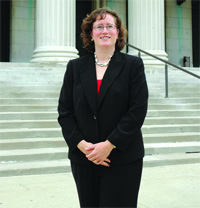
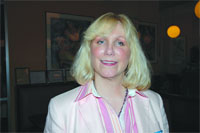
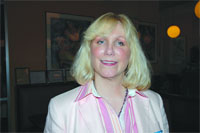
Deb Boronski

Deb Boronski perceived need for a ‘state’ chamber in the Commonwealth, and created the Mass. Chamber of Business & Industry.

Deb Boronski says she started thinking about the concept a few years ago.

Through her involvement with the U.S. Chamber of Commerce Northeast Board of Regents, she met and talked often with those directing statewide chambers, something Massachusetts has never had, and that Boronski started to think it could possibly use.

Over time, any doubts about such need, at least in her mind, were erased. And thus, after several months of planning, Boronski, long-time senior vice president of the Affiliated Chambers of Commerce of Greater Springfield (ACCGS), has launched something called the Mass. Chamber of Business & Industry Inc.

That’s the MassCBI, for short, a mostly Web-based organization that will be run out of an office Boronski is now leasing in East Longmeadow. But it will, she says, represent businesses across the state and, in essence, provide a louder, stronger voice than chambers representing individual cities (like Chicopee’s and Holyoke’s) and regions (like the ACCGS, which has seven chambers representing nearly 2,000 members).

“Our primary focus will be on state issues, those that affect every business in the Commonwealth — we’re going to inform, educate, and then advocate on behalf of businesses so we can affect positive change,” said Boronski, who described her start-up venture as a logical next step for the state — and for her from a professional-development standpoint.

“I’ve been in this position for 10 years now,” she said of her work with the ACCGS. “I’m ready for a new and bigger challenge.”

Jeffrey Albright believes that a state chamber can succeed in Massachusetts, primarily because he’s seen such an organization work effectively in another Northeast industrial state. He’s member executive of the Pennsylvania Chamber of Business & Industry, an entity that has been in place since 1916, and currently represents members in all 67 of the state’s counties.

Albright told BusinessWest that while local and federal legislation certainly affects business owners, the most impactful proposals usually emerge on the state level. And the PA Chamber, as his agency is called, provides what he described as a “unified voice” on the ‘Hill.’

“The reason all organizations form is to take advantage of the collective power, strength, and unity of the group,” he said. “Numbers speak; this is clout, this is influence. When we go to the Hill we can tell legislators just how many people we have in each of those legislative districts that they represent — and we can tell them what these people are thinking about the issues they’re voting on.

“You might have some local chambers that have very close relationships with their legislators,” he continued, referring to his state. “But quite frankly, when you take that number to the Hill and try to get something passed, let’s see how well you do. Without the support of other legislators, you’re not going to get anything accomplished.”

Boronski, who will leave the ACCGS in early February, said she expects the MassCBI will provide a similar, unified voice. Explaining how such a statewide chamber operates, and how it works to complement smaller chambers, not compete with them, is part of a broad education process that she has already embarked on. This assignment will continue for some time, she told BusinessWest, and eventually take her from Williamstown to Nantucket.

“You eat an elephant one bite at a time,” she said of her plans to take the MassCBI to every corner of the state. “I’m going to take this one bite — one city or town or region — at a time.”

Chamber Music

As he talked about the PA Chamber, what it does, and how it works, Albright made frequent use of that word ‘clout.’

He said that this is what his group provides to roughly 24,000 members (those who pay dues) and customers (those who don’t but participate in chamber-sponsored programs and events). And this clout comes from a combination of that number and the word ‘chamber,’ which carries a good amount of weight, especially with elected officials.

With its size and clout, the PA Chamber is able to help level the playing field in a state where the Southwest (Pittsburgh area) and Southeast (Philadelphia and its suburbs) quadrants are well-represented, but most other areas feel neglected, he said.

“What we try to do as a state chamber is enlarge the pie, from an economic development standpoint, and see that everyone gets a slice,” he explained. “First and foremost, what we do is advocacy — we’re the voice of the business community.”

Enlarging the pie is one way to describe what Boronski wants to accomplish with the MassCBI, and she said her experience with the ACCGS provided some inspiration for her venture in the form of ample evidence that there is indeed strength in numbers.

She said that through affiliation with the ACCGS, smaller chambers have access to information, expertise, lobbyists, and programs. But even the affiliated chambers are limited in what they can do because of their size and specific geographic focus, so she wants to take that model to a much wider stage — the entire state.

“The ACCGS does a great job — but that’s just Greater Springfield,” she said. “The Worcester chamber does a good job in that city, and the Boston chamber does, too. But there needs to be a united voice; when the Massachusetts Chamber of Business & Industry goes to Boston, it speaks for the Berkshires, Boston, and everyone in between.”

The business plan for the statewide chamber is still a work in progress, said Boronski, and it is being shaped by trends and issues involving chambers across the country, and the need for what she described as a “support system” for these municipal and regional chambers.

The MassCBI will fill this role through a variety of products and services, said Boronski, whose preliminary marketing materials list several of them, including:

• Membership programs, including discount programs involving health, life, and dental insurance, as well as car rentals, shipping, and even Monster.com;

• Monthly updates through a MassCBI E-news service, offered free to members, that will provide monthly reviews of legislative and political news (the Web site — www.masscbi.com — goes live Jan. 2);

• Vote for Massachusetts.com, another online service that enables members to access the voting records of their state and national legislators, and also voice their opinions on issues;

• Employee training seminars on subjects including human resources, employment law, workplace safety, and health care;

• Regulatory compliance publications — reference guides covering employers’ rights and responsibilities under state and federal employment, safety and health, tax, and environmental laws;

• Events including a “congressional dinner,” an annual meeting, a legislative reception, and regular breakfast roundtables she calls “Eggs and Issues.”

While the times and places for these events have not been finalized, Boronski expects many of them to be staged in the Worcester area, middle ground for members at either end of the state.

Getting Down to Business

While finalizing the roster of services, Boronski says she must also go about the task of selling the MassCBI, and convincing business owners that there is real value in what she’s calling the “membership investment” — which ranges from $299 to $2,000 depending on the size of the company’s workforce.

For this, she’ll call on previous experience with chambers — she was also long-time president of the Chicopee chamber — and also in marketing (which she’s taught at the college level), development, and even as a business author.

In 1994, for example, she wrote You Don’t Need a Crystal Ball! Visualize Your Future Success Through Market-oriented Strategic Planning. This is a manual of sorts for those starting a business, trying to take one to the next level, or just trying to figure out what the next step might be. There are chapters on identifying one’s customers, doing market research, analyzing competition, performing self-analysis, assessing the business climate, and, finally, formulating a strategy.

Boronski has followed her own manual as she’s gone about creating the MassCBI, and will continue to do so as works to build a membership base, crystalize her mission, and develop a suite of products and services.

She told BusinessWest that she did some extensive research before she embarked on her venture, and it revealed a clear need for a state chamber, even at a time when chamber membership is declining in many regions of the country, and when the Commonwealth boasts a statewide business group — the Associated Industries of Mass. (AIM) — that already provides many of the services planned for the MassCBI.

“We have AIM, we have the Employers Assoc. of the Northeast, and other groups, but there is room for everyone, and not every one program or organization fits every need,” she said. “While AIM is a magnificent resource for the state of Massachusetts, it can’t possibly meet every need for every business.

“AIM is also not a chamber of commerce by name,” she continued. “It’s an association, and that is different; there are associations for everything. A chamber of commerce is a significantly different creature that has a more united voice.”

When asked how she intends to build membership, Boronski said she’s having a number of databases prepared, and has a number of target audiences she’s trying to reach. Current chamber members are a logical starting point, she explained, because they obviously have some level of support for the concept.

“If they see value in a local chamber, they’re likely to also see value in a state chamber,” she said, noting that she plans to speak before area chambers, Rotary clubs, and other business-related groups to outline her venture.

But a state chamber may provide a solid alternative for those who are not part of a local chamber because they don’t have the time to take part in programs and events because they’re too busy trying to grow their businesses.

“The state chamber is mostly Internet-based — it’s information, education, and advocacy, so members don’t have to be involved,” she said. “Many people are busy and don’t feel they have the time to commit once they make an investment in an organization. And if you’re going to be active in a local chamber and get value from your membership, you have to make an investment in time and network.”

But she reiterated that she wants the MassCBI to complement existing chambers, not compete with them.

“Every business should support their local chamber, first and foremost,” she said. “But they can also support a state chamber and even the national chamber — and they should, because each one plays a different but important role in advocating for the business community.”

Network News

Albright said he was one of several members of the Northeast Board of Regents who advised Boronski to meet what he considers an unmet need in the Bay State.

“It looked to me that (Massachusetts) had a lot of strength in its local chambers, but didn’t have an overall umbrella, or an organization that can pull them all together when needed,” he explained. “It sounds like they’re doing a lot of things individually very well, but collectively, the strength of the group [a state chamber] can do even bigger and broader things.”

Time will tell if he’s right with that assessment.

George O’Brien can be reached at[email protected]
Sections Supplements
Colleges Pair Technology and Human Connection to Attract Students
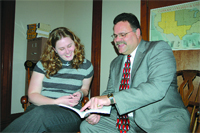
Joe Wagner

Joe Wagner, director of Admissions at Elms College, counsels student Lauren LeBlanc.

For years, college admissions was a fast-paced field that always held a few constants — standardized test scores were commonplace; applications were arduous tasks; and the bulk of the action happened once high school students reached the midpoint of their junior year. All of that has been flipped on its axis, however, as the process becomes more dynamic, and continues to change the world in which admissions professionals work.

Mary DeAngelo, director of undergraduate admissions at Springfield College, defines hers as an ever-changing field.

Joe Wagner, director of admissions at Elms College in Chicopee, says that in the past few years, he’s found himself working in a whole new arena. And Julie Richardson, dean of enrollment management for traditional programs at Bay Path College in Longmeadow, simply calls it a zeitgeist.

“High school students today — the Millennials — are so involved, it’s unprecedented,” she said, noting that a number of factors have converged in recent years to effectively change the face of college admissions.

For years, the process was defined by a sudden frenzy among college-bound students in their junior year; SAT prep frazzled nerves, piles of glossy viewbooks choked mailboxes, and applications were meticulously completed in ballpoint pen, sealed in a manila envelope along with a personal check and a personal essay, and sent off, marking the start of weeks of waiting and nail-biting.

Today, though, those archetypal images have been cast aside in favor of online applications and Web-based research. Students are asking more questions, and asking them earlier.

As for the SATs, they still exist — measuring math and verbal skills in high school cafeterias across the nation. But truth be told, admissions professionals say even standard aptitude isn’t as big a deal as it used to be.

Instead, colleges and universities, especially smaller, private institutions like Springfield, Elms, and Bay Path, are working toward streamlining their operations to cater to an increasingly engaged audience. They’re reaching a greater number of students at various points in their high school careers, and delivering the most relevant information to them at that time. They’re noticing a trend toward more-involved parents, and working toward striking a balance that keeps moms and dads informed, while still underscoring the importance of follow-through by the child.

In the face of dwindling numbers of high school students, especially in New England, schools are performing their due diligence to ensure that every applicant understands the missions of their institutions, to boost not only admission, but also retention.

And admissions departments everywhere are tying this all together with one constant — the power of technology.

Beyond Bricks and Mortar

More than any other starting point, said DeAngelo, an institution’s Web site has become the most important aspect of the college-search process. Many students now use the Web as a virtually exclusive search tool, and that alone is causing a shift in how admissions counselors reach them.

“Certainly, the use of technology has increased dramatically over the past few years, and it’s growing every year,” said DeAngelo. “There has been an increase in visitation of college Web sites, and we find that when students are initiating a search, they’re starting with the Web, so we don’t rely on traditional guidebooks anymore. We’re very conscious that what’s on the site is easy to access and interesting.”

Wagner agreed, adding that about 50% of Elms’ applicants now apply online.

“We still reach students in traditional ways, through high school visits and college fairs, but E-mails, instant messaging, and information on our Web site take the place of mass mailings,” he said. “Students use the Web site more than ever, and it’s easier than ever to stay in touch with them.”

Technology does, however, present a few new challenges for colleges and universities as it matures. Wagner said he’ll soon be taking a look at Elms’ online application process, for instance, which currently requires that the processing fee be mailed separately. That can lead to what are known as ‘ghost applications,’ or students who apply online as a way to test the waters.

“That means it’s actually too easy to fill out an application online, so we have to be cautious about letting that process become more of a glorified inquiry,” he said.

More than a mode of communication, however, Richardson said that incorporating technology-based initiatives into college-admissions practices is a necessary step in streamlining the experience for high school students, who today expect to receive different levels of support from colleges and universities as they move through the process.

“Schools have to incorporate the tech piece to keep up with the students themselves, because they are so tech-savvy,” she said. “But it can’t be all technology. The ideal point is where art meets science, offering better, more sophisticated tools, but holding on to a personal touch.”

One such tool used often by admissions offices is predictive modeling, the often-database-driven process of using information to create a statistical model for future behavior. In the case of college admissions, it’s used to hone in on where students are coming from — their home states, cities, and schools, for instance — and also what channels they’ve used to connect with a college — via the Web, a phone call, or an in-person visit, to name a few avenues.

“There’s so much information about measurement and surveying, and looking at trends,” Richardson said. “But we’re not just relying on anecdotal bits. We’re using our gut instinct, and testing that with measurement tools to make sure we’re headed in the right direction.”

Diving in at the Shallow End

That’s more important than ever, she noted, given the diminishing numbers of high school-aged college applicants.

“National demographics show the high school population beginning to decline, especially in the Northeast,” said Richardson. “We’ve hit the peak, and there’s been a lot of panic about passing it, but the key is to be responsive.”

She said part of that means offering options to students, be they courses, living arrangements, or scheduling choices, and understanding that the term ‘traditional student’ is becoming more archaic every year.

“The challenge is to cater to lifelong learners,” she said. “Students today learn online, at night, through Saturday school, and through traditional options, and those schools that are responsive to what students need and want will be most successful.”

DeAngelo said that to prepare for the eventuality of fewer students applying to college in New England, Springfield College will be spending more time on initiatives to recruit students from outside of the college’s traditional recruiting area.

“We’ll be doing some national college fairs, beginning in the South and in the Southwest,” she said, “and we’ll be looking at ways to engage students to come and visit the campus students from a distance. We have to bring the campus to them early in the process, because typically students at a distance don’t have the opportunity to visit until much later.”

To help make that early connection, DeAngelo said the college has also reached out to its alumni to work more closely with the Admissions Department.

“Springfield College has some great alums all over country, and we’re fortunate to have them working for us. They’re often more able than anyone to identify students who are a good fit for the college.”

Sophomoric Behavior

DeAngelo told BusinessWest that college admissions departments are seeing other changes, including a trend toward serving a pool of potential applicants that is beginning the college search earlier than ever before.

“The process has really accelerated,” she said. “I think this Millennial group of students is one with parents who are college-educated, so it’s been talked about at home early and often.”

As recently as five years ago, most colleges were not dealing with high school sophomores, but now, that’s the norm, she explained.

“Students enter their junior year having been heavily engaged for several months. Clearly, they’re starting earlier, and we need to plan programs as a result to respond to that need.

“It’s really become a year-round process,” she continued, “serving different groups of students at the different times.”

Richardson said she, too, has noticed a diverse set of students in the admissions pipeline at the same time, and added that because the needs of a sophomore are different than a senior or a junior, the onus is on admissions counselors to provide the most appropriate information.

“We start reaching out when they’re sophomores,” she said, “but it’s not a hard sell at that point. It’s more about getting them in the know about judging what will be a good fit for them, the ins and outs of the application process, and financing options.

“That way, they go into the process a little more informed; starting earlier, and with smaller pieces.”

To further assist in that support process, Richardson said informational events are taking on a larger role at Bay Path. Once, open houses on college campuses were relegated to specific weekends or times of year, but no more, she said.

“More than ever, admissions officers are getting to know their students,” she said. “I feel as though we have an event happening every month, and there’s more catering to these students going on. Open houses aren’t just held on Columbus Day weekend anymore, and that, on the whole, makes students feel more comfortable.”

It also makes parents more comfortable, and that’s a more important consideration when dealing with Millennials than it has been in the past.

“Parents are involved more, and I think that’s a big part of what’s going on,” she said. In general, they’re very involved in the lives of this generation. As such, students are making more joint decisions with their parents.”

Wagner said that in some ways that’s a good thing, but not always.

“This is a new, generational thing,” he said. “Parents are very much involved now, and they help us ensure that we’re providing the level of attention to safety and assistance they expect. But at the same time, it’s important that students handle as much of the admissions process themselves as possible. It’s an important step in striking out on their own for the first time.”

To Test or Not to Test

As for decisions on which students are admitted, that process is changing too.

Wagner said that generally, strong school records still carry the most weight, as do patterns of community service and co-curricular involvement — two variables that are indicative, he said, of the ideal student for Elms.

“We have a message and a branding that is important to us as a small, private, Catholic college,” he said. “Often, that message is important to the students who find Elms is their best fit, so we spend a great deal of time matching the strengths of the college with the strengths of our applicants.”

Concerning the SATs, many institutions across the country have gone ‘SAT-optional.’ Cambridge-based FairTest, a non-profit organization that advocates for improvements to student, faculty, and school evaluations, maintains a list of colleges and universities that have chosen to make SAT scores an optional inclusion with an application.

Massachusetts is home to 18 SAT-optional colleges, including Mount Holyoke College, Hampshire College, and Simons Rock College of Bard in Western Mass. Worcester Polytechnic Institute, Stonehill College, Wheaton College, Newbury College, and College of the Holy Cross are also on that list.

They’re still used at Elms, though there’s no set minimum score that applicants must reach, said Wagner, adding that more than anything, they’re used as a supplemental deciding factor for scholarships or within particularly competitive programs, such as nursing.

“Elms still requires the SAT, but only uses the score in evaluation after it’s been determined how strong a school record is,” he said.

Springfield College takes a similar approach to SAT scores, said DeAngelo. “A pattern of achievement is weighed more heavily than the SATs,” she explained. “We use the SATs, but they’re not as significant as in the past. We use several other factors that are more personal in nature.”

Beyond that, said Wagner, there’s no guidebook as to how admissions departments should proceed. Despite the advent of new technology, colleges are largely taking an organic approach to admitting students — reaching them through Web-based channels and supporting them with the latest tools, but also choosing the student population that best reflects the vision of the institution they’ll one day represent.

“There’s no magic to it,” he said. “Providing as much information as possible to the types of students we’re looking for is the only key.”

Jaclyn Stevenson can be reached at[email protected]

Departments

Bright Nights

Through Jan. 1: Bright Nights at Forest Park in Springfield opened Nov. 21 and runs Wednesdays through Sundays until Dec. 9. Bright Nights will then be open nightly from Dec. 12 through Jan. 1. Buses run nightly from 5 to 6 p.m., and cars from 6 to 9 p.m. Sunday through Thursday, and from 6 to 11 p.m. on Fridays, Saturdays, and holidays. For more information on admission, call (413) 733-3800 or visit www.brightnights.org.

UMass Dinner Forum

Dec. 11: The UMass Family Business Dinner Forum will host two topics, “The Starbucks Experience: Lessons in Leadership to Spark You and Your Business to Unimaginable Success,” and “Should We Grow Our Business by Acquisition?” Registration is required. For more information and to register, contact Ira Bryck at (413) 545-1537 or via e-mail at [email protected].

The After 5

Dec. 12: The Affiliated Chambers of Commerce of Greater Springfield Inc. will host its next After 5 networking social from 5 to 7 p.m. at the Sheraton Springfield, One Monarch Place. Persons attending the event are asked to bring a nonperishable food item to donate to local charities. The After 5 is an opportunity for business professionals to network with more than 250 other professionals in a casual setting. The cost is $10 for members and $15 for non-members, and all reservations must be in writing. To sign up, visit www.myonlinechamber.com or call (413) 733-1313 for more information.

Boston Wine Festival

Jan. 11-April 4: Hosted by the Boston Harbor Hotel on Rowes Wharf, Boston, the 19th annual Boston Wine Festival will conduct its grand opening events on Jan. 11. This year’s events will include a variety of evening receptions, wine seminars, dinners, and themed brunches. For a complete schedule, visit www.bostonwinefestival.net.

Departments

United Financial Completes Second-step Conversion

WEST SPRINGFIELD — United Financial Bancorp Inc., the proposed Maryland holding company for United Bank and the successor company for United Financial Bancorp Inc., recently completed the syndicated offering portion of its second-step conversion. Orders for a total of 6,464,968 shares at a purchase price of $10 per share have been accepted in the syndicated offering, for which Keefe, Bruyette & Woods Inc. acted as lead manager. The company also received orders for 3,097,532 shares in the subscription offering and the community offering portion of its second-step conversion, including 753,834 shares to be issued to the employee stock ownership plan. As a result, the company anticipates that 9,562,500 shares will be sold in the subscription offering, community offering, and syndicated offering combined. In addition, upon the completion of the conversion and stock offering, each public stockholder of United Financial-Federal will receive 1.04056 shares of the company’s common stock in exchange for each of his or her shares of United Financial-Federal common stock. The company has also received the regulatory, stockholder, and depositor approvals necessary to complete the second-step conversion. The transaction is scheduled to close Dec. 3, at which time United Mutual Holding Company will cease to exist.

Hasbro Launches Annual Children’s Giving Tree Program

EAST LONGMEADOW — Hasbro Inc. recently launched its 23rd annual Hasbro Children’s Giving Tree, providing toys and games, as well as food over the holidays, to underprivileged children in the Springfield area. The initiative runs through Dec. 14 and is located at the Eastfield Mall in Springfield. As part of the program, Hasbro will donate toys and games through the United Way of Pioneer Valley and the Salvation Army of the Greater Springfield area. Hasbro officials encourage community members to donate nonperishable food items at the Eastfield Mall, which will be distributed to Rachel’s Table in Springfield. Food donations can be dropped off Mondays through Saturdays from 10 a.m. to 7 p.m. and on Sundays from noon to 6 p.m. In addition, area residents are welcome to display ‘Acts of Kindness’ messages, which will be displayed on the Giving Tree through the duration of the program. ‘Acts of Kindness’ forms are available at www.hasbro.org under ‘special programs,’ and on site at the Giving Tree.

Falcons Charities Tops $400,000 Mark in Giving

SPRINGFIELD — The Springfield Falcons Hockey Club and its related charitable organization, Springfield Falcons Charities, recently announced it has donated $400,000 over 12 years throughout the Pioneer Valley and also Northern Conn. Organizations that have benefited from the charitable program over the years include Shriners Hospital for Children in Springfield, the Springfield Sliders Sled Hockey Program, the Springfield School Volunteers – Time Out for Reading Program, the New England Junior Falcons Hockey Program, the YMCA, Greater Springfield Habitat for Humanity, and the Baystate Health Foundation. For more information on Springfield Falcons Charities, contact Carole Appleton, vice president of Falcons Charities, at (413) 739-3344, ext. 112.

Warfield House Inn Undergoing Renovations

CHARLEMONT — John Warfield Glaze, owner of the Warfield House Inn at Valley View Farm, has several changes in store for his restaurant business. In October, he closed the Warfield House Restaurant and will reopen it in the spring as a full-service banquet facility, catering to group tours, weddings, and special events. The restaurant originally opened in 1997 with one service bar and two small dining rooms, and over the years a pub was added for additional seating. The banquet facility will seat 130 guests and will boast a bridal suite. In addition, the pavilion, which seats 200 guests, also features a bridal suite. Glaze also noted that the 12-room bed and breakfast will remain open throughout the year and will feature a fresh new look for the spring. For more information, visit www.warfieldhouseinn.com.

HRU Honors Businesses, Supporters

SPRINGFIELD — Human Resources Unlimited (HRU) recently recognized three area businesses and one outstanding volunteer during its third annual Stakeholders Meeting. HRU awarded its prestigious Sheldon B. Brooks Award to Papa Gino’s on Boston Road in Springfield. The award, named after a longtime HRU board member, is given to a company that has a track record of employing individuals with disabilities for at least 10 years. The Rookie of the Year Award was presented to the Springfield Public Library. This award is given to a business partner that has worked with HRU for less than a year and a half and that demonstrates a commitment to hiring individuals with disabilities. Also, the Employer of the Year Award was presented to the Newman Center Cafeteria at UMass Amherst. The award is given to a company that has worked with a HRU program for more than one year and that shows a strong commitment to employing individuals with disabilities. Lastly, HRU presented the Armand Tourangeau Volunteer of the Year Award to Betty Lou Shepard for her volunteer services in support of HRU’s Forum House in Westfield. She was nominated due to her advocacy on behalf of those with mental illness.

Peebles Opens in Southampton

SOUTHAMPTON — Stage Stores Inc. recently brought its brand-name apparel, accessories, cosmetics, and footwear for the entire family to town. The company operates under the Peebles name throughout New England, as well as the Mid-Atlantic, Southeastern, and Midwestern regions, and under the Bealls, Palais Royal, and Stage names throughout the South Central states. The company touts its unique retailing concept and niche by offering a broad range of nationally recognized brand-name merchandise with a high level of customer service. The local store employs approximately 18 people and is located at 10 College Highway. The company opened 47 stores this year, and expects to open 70 in 2008.

UMass To Host National Fuel Cell Research Center

AMHERST — The UMass Amherst will create a new research center focused on the cutting edge of hydrogen fuel cell science, the National Science Foundation (NSF) recently announced, awarding a three-year, $1.5 million grant to the Fueling the Future Chemical Bonding Center. The center is one of only three in the nation funded through the NSF’s chemistry program that focuses on renewable energy, providing UMass Amherst a prominent role in the effort to reduce the country’s dependence on fossil fuels. The award also positions the campus to garner $30 million in additional funding, according to the NSF. The initial $1.5 million award is for a three-year period; centers that demonstrate “high potential” then will be eligible for $15 million in additional funding over five years, and another $15 million after that. The center will also have extensive education and outreach at all levels, playing a key role in addressing the human resources needed for the rapidly growing area of renewable energy technology. The center will also have a Web-based interactive network that acts as a public portal where educators, students, and the public can get accurate information on chemical energy topics.

FDIC Relocating Regional Office

SPRINGFIELD — The Federal Deposit Insurance Corporation (FDIC) will move its regional field office to 1350 Main St. on Dec. 15, citing the need to meet federal government code requirements. For 15 years, the FDIC’s offices have been located at 489 Whitney Ave., Holyoke, but the current building does not meet the federal government’s seismic requirements. The new office space, for 32 staffers, will feature 6,000 square feet in the Sovereign Bank building.

Physician Opens Venture Focused on Memory Disorders

SPRINGFIELD — Emily Grandey, MD recently opened a venture, called Memory Wellness, that is a specialized psychiatry practice for patients with memory disorders. Grandey will offer consultation and follow-up for patients who have memory problems ranging from mild impairments in daily functioning to all stages of Alzheimer’s Disease and other dementias. She will offer complete differential diagnostic evaluations of such patients, along with the most current interventions available to slow down or stop the progression of these illnesses.

Sections Supplements
Business Best-sellers and Local Favorites That Are Bound to Please

It’s been a robust year for business titles, examining everything from daily work habits to global economic change. What follows is a list of popular titles available this holiday season, currently featured on amazon.com and the New York Times Best-seller lists:

• The Little Platinum Book of Cha-Ching!: Written by business guru Jeffrey Gitomer, author of the series Jeffrey Gitomer’s Little Books, ‘Cha-Ching’ offers a series of suggestions geared toward improving sales.

• The Age of Turbulence: Adventures in a New World: Currently the top-selling business title at Amazon.com, this retrospective from author Alan Greenspan takes a look at the increasingly global economy through the lens of his own life, including his childhood, his 18-year tenure as chairman of the Federal Reserve Board, and the events on and following Sept. 11, 2001.

• The 4-Hour Workweek: Escape 9-5, Live Anywhere, and Join the New Rich: A popular title this year for obvious reasons, Timothy Ferriss’s ‘4-hour Workweek’ theory was derived from more than five years of research, following successful people who have abandoned the ‘deferred-life’ plan for gaining wealth.

• Ready To Wear: An Expert’s Guide to Choosing and Using Your Wardrobe: A featured speaker at Baypath College’s Annual Women’s Conference this year, author Mary Lou Andre offers tips for matching wardrobe with lifestyle, organizing a closet, and developing an efficient shopping strategy on a budget.

• Giving: How Each of Us Can Change the World: A departure from the usual presidential memoir, this new title by Bill Clinton focuses on philanthropy and the practices corporations, small businesses, and individuals are adding to their daily lives to foster change on both local and global levels.

• Living Longer Working Stronger: Simple Steps for Business Professionals to Capitalize on Better Health: Kevin Fosnocht examines the link between healthy bodies and healthy careers, offering suggestions for more-balanced diets, better sleep habits, and maintaining good health while traveling.

• Made to Stick: Why Some Ideas Survive and Others Die: Written by Chip and Dan Heath and inspired by Malcolm Gladwell’s blockbuster The Tipping Point, ‘Made to Stick’ explains why six tenets — simplicity, unexpectedness, concreteness, credibility, emotions, and stories — make some ideas unforgettable.

…in addition to business titles, we’ve compiled a selection of books, fiction and non-fiction, penned by a few of the region’s many authors:

• Look Me in the Eye: My Life with Asperger’s: A memoir penned by local businessman John Elder Robison, owner of Robison Service in Springfield, ‘Look Me in the Eye’ examines life growing up ‘different,’ overcoming obstacles, finding success, and finally reevaluating strengths and weaknesses after being diagnosed with Asperger’s Syndrome.

• Golfing In New England: The Essential Guide for the New England Golfer: Published by Amherst guidebook publisher New England Cartographics, this guide was written by John Da Silva and edited by Valerie Vaughan, describing more than 600 public, semi-private, and resort courses in the six New England states. Course statistics, greens fees, directions, and other information is provided, as well as detailed listings of other golfing resources in each state such as golf retailers, driving ranges, golf schools, touring clubs, private golf courses, and golf associations. The guide is one of several outdoor activity guides published by New England Cartographics, all of which are available at necartographics.com

• An Execution in the Family: One Son’s Journey: Written by Western New England College professor Robert Meeropol, this memoir recounts his life and experiences following the execution of his birth parents, Julius and Ethel Rosenberg.

• Songs from a Lead-Lined Room: Notes — High and Low — from My Journey through Breast Cancer and Radiation: This memoir from Palmer resident Suzanne Strempek Shea, who usually writes fiction, recounts her experiences with breast cancer and radiation therapy.

• 1940: Now available for pre-order at Amazon.com, this novel by Northampton author Jay Neugeboren begins on the eve of World War II and follows a woman whose father has mysteriously disappeared. The book will be available in April 2008.

Compiled by Jaclyn Stevenson

Sections Supplements
At 60, the ‘Pedlar’ Blends Fine Fare with a Large Dose of History
Yankee Pedlar Inn

Yankee Pedlar Inn

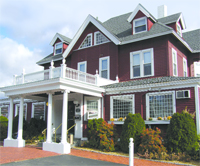
The horse and buggy out by the curb have stood the test of time, although not without incident (‘Dobbin,’ as he’s called, has been ‘kidnapped’ and returned several times). He is a fixture in Holyoke, as is the landmark he’s associated with, the Yankee Pedlar Inn. Now marking its 60th year in business, the ‘Pedlar,’ as it’s called, blends history with fine food; tradition with a setting often described as unique.

The Yankee Pedlar Inn turned 60 a few months ago.

Six decades of uninterrupted business is quite a feat in the restaurant/banquet sector, but there haven’t been any real celebrations to mark the occasion, said Kim Clayton-McGrath. She’s sales manager at the ‘Pedlar,’ as it’s called, and daughter of current owners Martin and Rosemary Clayton, who purchased the Holyoke landmark in 1995.

“We’ve just been plugging along day to day, working hard … it’s been that way for the past 60 years,” she said of the definite lack of fanfare with regards to the recent milestone, noting that this industry, which is always challenging, is even more so these days with the economy sagging and soaring gas prices keeping people home. “We’re focused on today and tomorrow.”

And besides, she told BusinessWest, the Pedlar celebrates its history and traditions every day, not on those round-number anniversaries, and it does so in a number of ways.

There are the pictures on the walls of the Holyoke Room — one of several smaller banquet rooms — showing the landmark in its many stages of its development. And one of the other rooms is named Simone’s in honor of a recently deceased employee, Simone Patenaude, who worked there “forever,” said Clayton-McGrath.

There’s also the picture of the Pedlar’s first owners, Eugene and Catherine Tamburi, hanging in one of the hallways. Meanwhile, there’s a mural in the Tavern Bar & Grill, the main restaurant, that offers a time-altered view of life at the Pedlar; it includes personalities from the past (the Tamburis, Patenaude, and Johnny Marion, who played the piano there back in the ’50s and ’60s) sharing the room with some from the present, including the Claytons and waitresses, or “fixtures,” Sandy Mumblow and Carole Mazzu.

And then, there’s Dobbin, the stuffed horse attached to an antique carriage that has stood outside the Pedlar since 1953. Dobbin wasn’t in The Wizard of Oz, but he’s been a horse of many different colors. Now white, he’s been black and also spotted. He was painted green, gold, and white (by parties unknown) for one recent St. Patrick’s Day week (the route for the city’s famous parade winds past the landmark), and has also been hot pink for one recent holiday season.

“Who knows how many different colors you’d see if you scraped all that paint off,” said Clayton-McGrath, adding that the equine’s tail was recently stolen and replaced, for the umpteenth time. “He’s been kidnapped I don’t know how many times, but always returned to us; that horse is a legend around here.”

And like Dobbin, the Pedlar is a survivor, withstanding changes to Holyoke’s downtown and overall character; mounting competition, especially in Holyoke, where there are several banquet and meeting facilities; those higher gasoline prices; and several cycles of the economy. The facility owes its resilience to the fact that it is a landmark, said Clayton-McGrath, one to which individuals, families, businesses, and organizations have remained loyal for decades.

But it also has some features that make it stand out in a crowded marketplace. They include those smaller, and also unique, banquet rooms, something missing at most halls, she said, and also the Pedlar’s Opera House. Added by the Tamburis in 1973, the two-level room has been the site of theatrical performances, charity events, hundreds of weddings, and, until recently, a regular Sunday brunch.

That tradition was halted on the basis of pure economics, said Clayton-McGrath, noting that for some time the weekly brunch was taking in less money than it cost to put it on.

The demise of the brunch — there is some talk of reviving it — is a reminder that businesses, even those as old and storied as the Pedlar, have to balance tradition with good business sense. The ability to do this has given the landmark both a rich past and strong prospects for the future.

Talking Turkey

Clayton-McGrath sat down with BusinessWest just a few days before Thanksgiving.

This is always a busy time at the Pedlar. More than 1,000 people traditionally come through the doors for the holiday buffet, she explained, and there are always a number of gatherings of all sizes, including several high school reunions, scheduled through the long weekend.

Having all those activities go off as planned requires large doses of preparation and attention to detail, she said, noting that the staff at the Pedlar have had plenty of practice. Many of the employees have been with the establishment for years, if not decades. They’ve seen times change, but not the Pedlar’s blend of atmosphere and tradition.

It all started on June 7, 1947, roughly a year after the Tamburis purchased what had long been the home of Judge John Hildredth, who left England in 1871 to settle in Holyoke. The home, situated at the junction of roads known now as Routes 5 and 202, was built in 1875, and its size and location made it ideal for an inn.

Over the years, however, the restaurant, which seated only 25 when the Pedlar first opened, became increasingly popular, requiring the Tamburis and subsequent owners to devote ever-larger amounts of square footage to dining and banquet facilities. Today, only a few of the original guest rooms remain, and they are used as bridal suites.

Those rooms are put to great use, because the Pedlar has long been a very popular site for weddings, said Clayton-McGrath, and the Opera House has much to do with this phenomenon. “A bride feels like a princess in this room,” she said while decending from the Opera House’s balcony. “You can get some incredible pictures in here.”

Capable of seating more than 200, the room features a chandelier from the former New York Metropolitan Opera House, which was torn down in 1963, and a large wooden bar rescued from Kenilworth Castle. This was Holyoke’s version of the famed English castle, a brick-and-stone mansion that was home to E.C. Taft, one of the city’s many prominent mill owners, and torn down in 1959. Many artifacts from the castle, as well as pictures of it, dominate another of the smaller dining areas known as the Kenilworth Room.

In 1977, the Yankee Pedlar was purchased by the Banks, Frank and Claire, who put their own stamp on the facility through nearly two decades of ownership. They added the Garden Room, another popular site for weddings, those of the smaller variety; the Herb Terrace; and Simone’s, a small, French bistro-style restaurant inspired by a trip to Europe.

The Clayton family, which had been in Holyoke for three generations and owned the Martin J. Clayton Insurance Agency, located just down the street from the Pedlar, purchased the landmark in 1995. A year later, they remodeled the former sandwich and pub area known as the Oyster Bar and renamed it the Tavern Bar & Grill.

Food for Thought

How Clayton-McGrath, a former paralegal, came to be sales manager for her parents’ business venture is largely a matter of circumstance. She and her husband, Neil McGrath, a football coach by trade, were living in Maine (he was coaching at the state university), when the Pedlar was acquired. When Neil took a job at UMass in the mid-’90s, the couple relocated to Holyoke, and Clayton-McGrath accepted an invitation to help manage the city landmark.
She started with mother’s hours, but eventually made this a full-time exploit, something she believes her father had in mind from the beginning.

These days, Clayton-McGrath and other members of a management team that includes “Master” Chef Ed Klinger, Banquet Manager Nancy Wheeler, HR Director Abby Leroux, and Martin Clayton (now semi-retired and living in Florida) are leading the Pedlar through a time of change and challenge.

While the restaurant side of the business remains fairly steady, there are simply fewer people going to dinner, lunch, and, yes, brunch, these days, said Clayton-McGrath. There are several reasons for this, including time constraints on business people, a smaller business community in Holyoke, the general economy, and even gas prices.

“When gas hits $3 a gallon, a lot of people just don’t want to move out of their driveways,” she said, noting that she’s seen a drop in business since the most recent climb to that price threshold. “Just about everything affects this business; when people have less money to spend, they just don’t go out to eat as much.”

All this has contributed to a greater emphasis on the banquet and special-event side of the ledger, which, while it’s not recession or gas price-proof, continues to thrive at the Pedlar, despite mounting competition.

This success is due to a blend of flexibility, tradition, a diverse and reasonably priced menu, and strong customer service, she explained, noting that the Pedlar has eight banquet rooms of various sizes, many of which can accommodate groups of 20 or fewer, which helps the landmark stand out.

“The smaller parties add up,” she explained. “And people are very grateful when they can find a small room; we hear so many people say, ‘we can’t get anything anywhere for a party of 20; no one will take us.’”

As she offered a tour of the Pedlar, Clayton-McGrath started in one of those smaller facilities, the Kenilworth Room. She pointed to a stained-glass window that is just one of many artifacts from the mansion.

From the Tavern and its famous mural, Clayton-McGrath proceeded to the Holyoke Room, complete with photos of the Pedlar taken over several decades, as well as pictures of other landmarks, including Mountain Park, its famous carousel, and City Hall.

Other venues include the Pedlar Club, used typically for cocktail and hors d’oeuvres receptions; the Loft, so named because it’s on the second floor; and the Oakdale.

This volume and variety of smaller rooms gives the Pedlar the flexibility to handle functions ranging from small bridal showers to anniversary parties; from bus tours (many originating in Connecticut or New Hampshire stop at the landmark on their way to or from Yankee Candle, the Holyoke Mall, and other tourist stops) to a host of holiday parties.

“We’re booking more Christmas parties than ever before,” said Clayton-McGrath, noting that the Pedlar can handle virtually any-sized get-together. “And we’re doing more in January every year — that’s because everybody’s really busy in December, and we’re all looking for something to do in January.”

And then, there’s the parade.

Planning for the colossal undertaking is essentially a year-round undertaking, she said, noting that the Pedlar plays host to many meetings and events. Parade week is an especially busy time, and for Clayton-McGrath and most others, work on the day of the parade starts well before the sun comes up and ends long after it’s gone down.

“It’s just crazy, crazy here,” she said of parade day, noting that people start setting up chairs outside the Pedlar at 7 a.m. “It’s fun morning, noon, and night — we have the workers’ breakfast at 6 and the after-parade dinner.”

Mane Event

Glancing out her office window in the direction of Dobbin and the ancient buggy, Clayton-McGrath said the latter is overdue for an overhaul.

“It’s very, very old wagon, and we’re constantly putting tape around it and telling people to stay off,” she said, adding that many try to sit in for the parade, and the Pedlar doesn’t want to see anyone hurt. “It needs some work.”

Though it’s weathered, the buggy has stood the test of time — as has the Pedlar. It’s done so through a blend of tradition and atmosphere and more than a little … well, let’s call it horse sense.

George O’Brien can be reached at[email protected]
Features
Chamber Seeks a New Model of Governance for Springfield
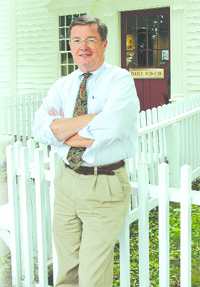
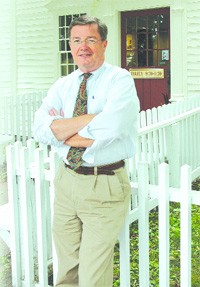
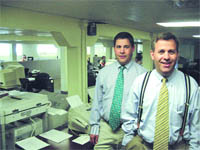
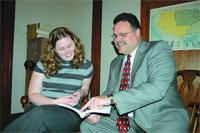
Victor Woolridge and Russell Denver

Victor Woolridge, left, and Russell Denver say Springfield needs both a strong mayor and a chief administrative officer.

Victor Woolridge equates it to a project manager.

That’s the simplest and, in his mind, most effective way to describe a new position that Springfield Chamber of Commerce leaders would like to see added to the city’s management structure.

“Chief administrative officer would be the technical term,” said Woolridge, president of the Springfield Chamber and managing director of the real estate finance group at Babson Capital Management. “But this individual, this CAO, would essentially be a project manager, handling a specific assignment, and reporting back to those in charge.”

Among those in charge would be Springfield’s mayor, who, according to the informal proposal being shaped by chamber leaders, would have pre-control-board levels of power, but be serving a four-year term (twice the current length) and earning close to $150,000 per year (more than half again the current rate of compensation). And the CAO’s assignment would be to see that Springfield, which Woolridge described as a “complex, half-billion-dollar entity,” is being managed effectively, and that there is no backsliding from the fiscal and administrative progress achieved by the Finance Control Board that has been essentially running the city for more than three years.

“We’ve been focused on repositioning the top level of local government in such a way that there would be a smooth transition from the control board to local control,” he explained, adding that the CAO his group envisions would act much as the executive director of the control board, Stephen Lisauskas, currently does.

The multi-pronged initiative to change the shape of the of the city’s management structure results from a mix of recent events and new research into the governmental models being used in municipalities across the country, said Russell Denver, president of the Affiliated Chambers of Commerce of Greater Springfield.

He told BusinessWest that the chamber has been supportive of many suggestions spelled out in the Urban Land Institute (ULI) study of the City of Homes undertaken in 2006, including one to examine the city’s management structure and change it if necessary. Chamber leaders generally agree that change is needed, said Denver, and, after some research and calls to cities with various models, they have zeroed in on one that keeps Springfield’s strong mayor, but adds a layer of professional management needed to keep a city with a $515 million budget running smoothly.

“The job of mayor is so complex,” said Denver, “that we need someone in there day to day pushing all the new initiatives that the control board has put forward and making sure that the ball keeps moving.”

The chamber’s pursuit of this model, which is relatively new to Massachusetts, was at least partly inspired by a 1999 report penned by the private, non-profit group the Worcester Regional Research Bureau. Prompted by renewed calls to change that city’s structure from a council-city manager format to a strong mayor (the shift was not approved), the report analyzed trends and concluded that, among other things, there has been a blurring of the traditional lines in municipal governance.

There is movement toward adapting modified city manager and strong mayor formats, said Roberta Schaafer, executive director of the research bureau, adding that these models contain elements of both. She said a number of cities, including Philadelphia, Oakland, St. Petersburg, Fla., San Jose, Calif., and Kansas City, Mo., have embraced formats that include a strong mayor and an administrator carrying titles ranging from city manager to managing director to city administrator.

“The two forms seem to be merging — there doesn’t seem to be the sharp distinction there was before,” she said, noting that council-manager governments have become more political over the years, thus defeating the purpose for which most were established.

However, at the same time, municipal management has become increasingly complex, thus requiring the services of professional administrators to assist strong mayors.

The challenge ahead for those pushing for change in Springfield is to build support for the new model — they have been doing so at informal coffee hours with business owners and managers, while also meeting with city councilors and the city’s legislative delegation — then implement the change through one of several methods available (more on that later), and get all this done so the changes are in place for the 2009 election.

“There needs to be a strategy developed and then an implementation phase to ensure that, from a timing perspective, all this happens as the control board is wrapping up its work,” said Woolridge, noting that the board is slated to depart in roughly 18 months.

In this issue, BusinessWest looks at the changes proposed for management of the city, why they are being considered, and how they might become reality.

Form and Function

Denver told BusinessWest that chamber leaders have been looking at Springfield’s governmental structure, and if and how it should be changed, for roughly a year.

A working group, led by Woolridge, has met more than a dozen times to discuss the matter. Focusing strictly on the mayor’s position and questions about whether to add a professional administrator, this panel has come to some conclusions:

• First, that the strong-mayor form of government should be maintained in Springfield.

“I think the residents of Springfield want to see their mayor back in control,” said Denver, noting that the control board has been running the ship the past three years.

• Second, that the term for that office should be four years, not two, to give the office holder time and opportunity to achieve progress without facing an election every other year.

“With elections every two years, the mayor of Springfield spends one year managing and one year running for re-election, and that’s not an efficient way to run a city,” said Denver. “Boston’s mayor has a four-year term, and we think that’s appropriate.”

• Third, that the salary for the mayor’s job be increased from the current $95,000 to $150,000 to attract a wider pool of candidates.

“Most of our mayors and mayoral candidates have been coming from the City Council,” said Woolridge. “This isn’t necessarily bad, but if the salary was higher, we could attract some people from the business community who could run, but haven’t run historically because they’re making more than what the mayor’s job pays.”

• Fourth, that the strong mayor format be modified to include a new position — chief administrative officer — and that this individual serve a five-year term to provide a measure of continuity needed when there is a change in mayoral administrations.

Pursuit of a CAO has been inspired by the success of the control board in restoring fiscal order in Springfield, said Denver, and a desire among many in the business community to maintain this level of professionalism and accountability in city operations.

“This individual, this CAO, would be the day-to-day manager of the city, which would allow the strong mayor to focus on bigger-picture matters,” he explained. “The mayor would be more of an advocate on both the state and federal levels for additional funding, and would be the one creating relationships with federal, state, and local officials.

“Do you need a mayor sitting in on contract negotiations? No, a city administrator could handle that,” he continued. “The CAO can take all the recommendations included in various reports and make sure that those things get done. These are the day-to-day things you need to keep the city moving in the right direction, and you can’t have the mayor involved in all of them — there aren’t enough hours in the day.”

Detail Work

This CAO would work for the city and report to the mayor and city council, said Woolridge, returning to his analogy of a project manager.

“If we’re building a large office building, and we’re the partners, then we’re in control,” he explained. “But we hire a professional project manager to make sure all of the disciplines are coordinated and our strategy is effectively implemented.

“That person reports back to the people in charge,” he continued, “and the people in charge continue to direct that individual on which way to go. But that project-manager type of person is responsible for coordinating all the efforts.”

Schaafer had a somewhat different analogy — that of a college president and a provost. The former represents the school and works primarily to set a vision, while also building an endowment, she explained, while a provost acts as a chief of operations.

Divisions of labor vary from city to city, said Schaafer, referring to specific duties for both mayors and professional managers in the new, “modified” formats, but, in general, the mayor is responsible for developing a vision, while the administrator carries it out, essentially making sure that the trains run on time.

While Schaafer sees some benefits to the strong mayor/CAO model and understands why Springfield would pursue it in light of its recent fiscal problems and scandals, she questions plans for a five-year contract for the manager. In most models she’s seen, the CAO is chosen by the mayor, appointed by the council, and can be terminated only for cause. Having a five-year term for the CAO but a four-year term for the mayor makes little sense, she said.

And while chamber leaders hope and expect that the changes in governmental structure will lead to improvement in how the city is run, some research suggests that governmental structure does not play a deciding role in municipal performance.

A 2004 study undertaken by the research bureau suggests that a change in government is not likely to have a dramatic effect (positive or negative) on performance areas ranging from economic development to crime; from test scores in schools to muncipal fiscal health.

“There are many other factors that influence municipal health, such as national economic trends, availability of land to develop, quality of workforce, state tax structure, local policies, and individual leadership qualities,” stated the report’s authors. “The form of municipal government has little effect on these factors except that the form and particular provisions within a charter may encourage or discourage strong leadership. Both mayor and manager forms of government are capable of producing strong leaders.”

There are several ways for Springfield to implement a change, including a special act of the Legislature, a charter commission, or even a decision of the control board, said Denver, noting that voters would need to approve a lengthening of the mayoral term from two to four years.

The key is to move the process forward, said Woolridge, noting that those backing this initiative do not have time of their side.

“We’re talking about a broad strategy,” he explained. “The details of how it might get implemented and determining what the right course is … those haven’t been fully vetted yet. The timeline needs to be looked at, and there are a lot of issues lying under the water that have to be looked at. But you develop the vision and strategy first before you work out the details, and we’ve done that.”

Taking a Strong Position

Just how those details will be worked out remains to be seen, but Springfield chamber leaders believe the strong mayor/CAO model they’re pursuing represents a real chance to maintain the momentum achieved on several fronts by the control board, while also making the mayor’s position more attractive, from a fiscal standpoint, and more effective.

“It’s the best of both worlds,” said Denver, noting that, with this model, city residents can elect someone to set a tone and develop a vision for their city, while a professional manager can handle the myriad details involved with carrying out that vision.

If all goes as planned, the very top of city management will look much different in January 2010. That’s when the ‘project manager’ will report for duty.

George O’Brien can be reached at[email protected]
Sections Supplements
Bell & Hudson Builds a Legacy on History, Philanthropy, and Forward Thinking
Jim Phaneuf

Jim Phaneuf, owner and president of Bell and Hudson insurance, says streamlined management and philanthropy are two key aspects of the agency’s business model.

The sign on the front of the building says Bell and Hudson Insurance was founded in Belchertown in 1890. But the agency’s president and owner, Jim Phaneuf, estimates that it was a bit earlier.

A history buff and active member of Belchertown’s Historic Society, Phaneuf found a yellowed copy of the Belchertown Sentinel, the town’s local paper, not long after taking ownership of the agency.

In the issue, dated Sept. 1, 1950, George F. Bell spoke with reporters on the occasion of his retirement, and said that in actuality, the agency was formed during the Civil War by Frederick Taylor, a Granby businessman who owned a textile mill and created an insurance arm to protect his own holdings.

The business stayed part of the Taylor family until 1913, when Bell purchased it, taking Byron Hudson on as a partner in the 1930s.

Bell & Hudson, in its current permutation, was officially incorporated in 1940, serving Belchertown and its surrounding communities ever since.

The business was sold in 1950 to the Fuller family, which maintained ownership until 1992, when Phaneuf took the helm after five years of employment with the agency.

He said that as the business continues to grow and change with the times, honoring both history and community remain high on its list of priorities.

“I’ve been the steward of this business for some time now, and I’ve watched the town grow — and along with it, the business,” said Phaneuf. “It’s a great community.”

Blizzards and Benchmarks

Bell & Hudson has a strong philanthropic presence in Belchertown, said Phaneuf, adding that the agency is ‘there’ for the community in myriad ways, from fund-raisers for cancer to disaster preparedness.

“We’re ready to serve our customers in a blizzard,” he said, “because it’s during those times that people need their insurance companies. We’ve made great strides to be ready, with electric generators and other things, and we started that before it was on more people’s minds after Katrina.”

The agency has received high marks for its efforts to streamline various insurance processes and to make them more accessible, including claims-handling and customer service. It has twice received the Mass. Assoc. of Insurance Agents’ Five-star Award of Distinction, given to agencies across the state that, through an extensive, on-site examination performed by the MAIA every three years, prove exemplary performance in a number of key areas, such as customer focus and human resources practices.

Bell & Hudson is currently one of 32 agencies in the state to receive the five-star rating, but Phaneuf said even without the prize, the process of identifying best practices is a valuable one, which the agency uses to continuously improve.

“Agencies must go through a three-day audit. Auditors meet with employees, and look at performance in critical areas,” he said. “They look to see if an agency has a clear mission, and that staff members are well aware of that mission. They look at decision-making, corporate values, technical issues … even if we don’t get the five-star rating, at the end we have a great white paper that shows us what things we need to work on.”

Making the Upgrade

But there’s also a record of what the agency is doing right. Bell & Hudson, which specializes in various types of insurance for both families and businesses — most of its corporate clients are medium- to large-sized outfits with up to 125 employees — excels in technology-based systems that automate standard inquiries, claims, and other communication between the agency and the insurance companies with which it works. Phaneuf said keeping up to date with these systems has allowed the business to grow without necessitating more staff; there are currently 12 employees, a number that has not changed much in the past decade.

“Because we started earlier than most with our computer system upgrades, our number of employees has stayed level,” he said. “The upgrades never end; they are an expense, but it’s something we have to do to maintain a competitive edge and stay ahead of the curve.”

At this point, Phaneuf added, Bell & Hudson’s offices are also close to being paperless, and the systems also help navigate the many different filing practices of the 10 companies with which the agency works.

“Sometimes it’s difficult to support many different companies, but as an independent agency, it’s good for us in the long run because we’re satisfying the needs of our customers, whatever those needs may be,” he said. “Essentially, we sell promises, and a core part of our business is making sure those promises have been fulfilled. Working with insurance carriers can be sticky, and that’s exactly why there’s a need for independent agents. We speak their language.”

To ensure that nothing gets lost in the translation, employees are required to complete mandatory continuing-education courses each year to stay equally current with new trends and practices.

“I keep the staff on a course of continuous improvement,” said Phaneuf, noting that this has also helped him retain qualified personnel over the years. “It’s a challenge finding good people, and our staff members are mostly local people who take pride in their work. We have very low turnover; the average tenure is 10 years.”

This course includes certification and licensing programs that lead to a number of professional designations within the insurance industry, such as C.P.C.U. (Chartered Property & Casualty Underwriter), C.I.C. (Certified Insurance Counselor), and C.I.S.R. (Certified Insurance Service Representative).

A Putt Above

Beyond their career obligations, though, Bell & Hudson employees are also actively involved with the community, often planning large-scale events on their own time.

The agency’s largest philanthropic endeavor is its annual Putt-a-thon, or mini-golf tournament, which raises thousands of dollars each year for the Jimmy Fund and the Dana Farber Cancer Institute. Fighting cancer is a cause that’s dear to many at Bell & Hudson; several employees have been closely affected by the disease.

Dana Farber currently benefits from 150 individual golf tournaments, and Phaneuf said early on, he and his staff wanted to break from tradition and try something different. They devised a mini-golf tournament that the institute at first regarded with some skepticism. But those doubts were quickly erased when residents in the greater Belchertown area flocked to Evergreen Golf three years ago to putt 100 holes, and gather pledge donations for each hole. Local businesses also serve as sponsors. That first year, Bell & Hudson presented a check for $17,000 to Dana Farber, and this year, it raised close to $40,000.

The event, combined with other community assistance initiatives the agency has launched, as well as its strong track record in implementing current technology and processes to augment service, prompted the Quaboag Valley Chamber of Commerce to name Bell & Hudson its business of the year.

“It’s an amazing thing,” said Phaneuf of the putt-a-thon. “The event is still evolving — we’re still working out a kink here and there, and it has rained all three years we’ve had it. But if there’s a need, the people of this community come together. We have welcomed children from age 6 to an 86-year-old woman who came out to support us — and finished all 100 holes.”

Company Policy

What’s more, the event has spurred other communities to begin holding similar putt-a-thons, and Phaneuf said Dana Farber credits Bell & Hudson with devising the model.

“It’s not just about golf,” he said. “Actually, it’s not about golf at all. It’s about people — we might have put it together, but the customers make it happen.”

The agency’s philanthropic work also helps Bell & Hudson foster a level of comfort among clients and in the community that began in the 1800s, when Frederick Taylor sought his own peace of mind by forming what would become one of Belchertown’s longest-held and most successful small businesses.

“People like doing business locally,” Phaneuf said, “and honoring that is what helps us succeed more than anything.”

Jaclyn Stevenson can be reached at[email protected]
Departments

Internet Marketing 102 Workshop

Nov. 13: Level the playing field by learning best practices in advertising and how to better target your customers with keyword-triggered advertising on the big search engines. Additionally, participants will learn the Pay-Per-Click advertising that works on Google and Yahoo. The 1 to 4 p.m. workshop is planned at the Andrew M. Scibelli Enterprise Center, 1 Federal St., Springfield. The cost is $40. For more information, call (413) 737-6712 or visit www.msbdc.org/wmass.

WNEC Workshop

Nov. 13: Dr. Fran Harris, inspirational speaker and former professional basketball player, will present a workshop titled “Student Entrepreneurship” as part of a series sponsored by the Law and Business Center for Advancing Entrepreneurship at Western New England College in Springfield. For more information, visit www.law.wnec.edu/lawandbusiness.

Doing Business in China

Nov. 14: Western New England College will host an International Business Breakfast on “Doing Business in China” at 7:30 a.m. in Rivers Memorial Hall. The event is open to the public. During the breakfast, a panel of business leaders and educators will discuss their experiences and offer insight into cultural aspects of doing business in China. The nation represents one-fifth of the world’s population, an enormous market full of opportunities and pitfalls for American businesses. Tickets are available for $15 each by calling the college’s School of Business at (413) 782-1231.

Books to Blogs and Back

Nov. 15-18: Museums 10 will sponsor “Books to Blogs and Back” with special events planned Nov. 15-18. Highlights include: “The Research Library in the New Age of Information” keynote lecture by Robert Darnton, Nov. 15, 7 p.m., in Gamble Auditorium at Mount Holyoke College Art Museum, South Hadley. On Nov. 16, a Books to Blogs Expo is planned from 9 to 11 a.m. in the Miles-Smith Wing, Information Commons, at Mount Holyoke College. Interactive activities and exhibits relating to the history of book creation and publication are planned. Also on Nov. 16, Jason Epstein will lecture on “Farewell to Gutenberg” in Dwight 101 at Mount Holyoke College’s LITS; a panel discussion on “The Past and Future of the Book” starts at 1:30 p.m. in Gamble Auditorium at the Mount Holyoke College Art Museum; and an opening and reception titled “Children Should Be Seen: The Image of the Child in American Picture Book Art” begins at 7 p.m. at the Eric Carle Museum of Picture Book Art in Amherst. On Nov. 17, Historic Deerfield hosts “The Printer’s Apprentice” from 10 a.m. to 4 p.m. in the Wilson Printshop. The program is free with museum admission. Lastly, on Nov. 18, the Amherst Cinema Arts Center will present Jacob the Liar (Jakob der Luegner) at 2 p.m. The movie is based on the novel written by Jurek Becker. His widow, Christine Becker, will be at Amherst Cinema to talk about Jurek Becker’s life and written work. The cost is $7.50 for adults, $6.50 for seniors and students, and $5.50 for members. For more information on the weekend programs, visit www.museums10.org.

SCORE Workshop

Nov. 16: Dave Wentworth, a SCORE counselor and businessman, will present “What Is the Future of Your Non-Profit?” from 9 a.m. to noon at the Scibelli Enterprise Center, One Federal St., Springfield. Wentworth notes that much of the workshop content was developed by the national SCORE organization under a Kellogg Foundation grant. A fee of $25 covers the cost of materials. For additional attendees from the same organization, the fee is $5. For more information and to register, call (413) 785-0314.

Bright Nights at Forest Park

Nov. 21-Jan. 1: Bright Nights at Forest Park in Springfield opens Nov. 21 and runs Wednesdays through Sundays until Dec. 9. Bright Nights will then be open nightly from Dec. 12 through Jan. 1. Buses run nightly from 5 to 6 p.m., and cars from 6 to 9 p.m. Sunday through Thursday, and from 6 to 9 p.m. on Fridays, Saturdays, and holidays. For more information on admission, call (413) 733-3800 or visit www.brightnights.org.

Family Business Dinner

Dec. 11: The UMass Family Business Dinner Forum will host two topics: “The Starbucks Experience: Lessons in Leadership to Spark You and Your Business to Unimaginable Success,” and “Should We Grow Our Business By Acquisition?” Registration is required. For more information and to register, contact Ira Bryck at (413) 545-1537 or via E-mail at [email protected].

Departments

UMass Amherst Connections to Springfield on the Table

AMHERST — Daniel O’Connell, state secretary of the Executive Office of Housing and Economic Development, recently visited UMass Amherst to discuss the campus’s connections to Springfield, research and development in the life sciences, and the latest advances in clean energy development and technology. O’Connell met with university administrators and top faculty, toured campus laboratories, and met over lunch with regional mayors and legislative and business leaders. Among the research areas discussed were the wind energy laboratory run by James Manwell; the nanotechnology work conducted by James Watkins and his team; life sciences research underway in the laboratory of Lila Gierasch; and work on biomediation and microbial fuel cells being done by microbiologist Derek Lovley.

HNE Earns Top-10 Spot in National Ranking

SPRINGFIELD — Health New England (HNE) recently announced it placed among the top 10 health plans in the nation. HNE was ranked ninth among the 250 plans reviewed in the just-released U.S. News & World Report/NCQA America’s Best Health Plans 2007 ranking. Each year, U.S. News & World Report works with the National Committee for Quality Assurance (NCQA) to determine the rankings. Health plans are rated on a variety of measures including access to care and service, overall member satisfaction, preventative care, and overall quality. HNE is a managed-care organization serving more than 100,000 members and 5,000 employers in Western Mass.

Hampden Bank Set to Open Indian Orchard Branch; Launches On-site Teller

SPRINGFIELD — Hampden Bank recently announced plans to open its eighth full-service branch at 187 Main St., in the Indian Orchard section of the city, later this month. The 3,300-square-foot facility is currently undergoing renovations and upgrades that are designed to make both transactional and consultative services convenient for customers. Services will include drive-thru banking, a drive-up ATM, and a walk-up cash dispenser. Also, on-site parking for more than 20 vehicles will be available. In other news, Hampden Bank has launched “On-site Teller,” a banking deposit technology system that will allow business customers to make deposits from the convenience of their own office. In simple terms, the product lets customers make daily deposits of checks from their place of business. By electronically scanning each item, the paper transactions are converted to digital images for high-speed electronic processing, and then are immediately transmitted to Hampden Bank, thereby eliminating trips to the bank. For more information, visit www.hampdenbank.com.

STCC Foundation Major Gifts Campaign Halfway to Goal

SPRINGFIELD — The Springfield Technical Community College (STCC) Foundation recently announced that its first Major Gifts Campaign, The Best Return on Your Investment, has so far secured $2,394,906 in donations, 53.2% of its goal. Most recently, contributions to the campaign were made by TD Banknorth, pledging $50,000, and Hampden Bank, pledging $25,000. Additionally, the Springfield Medical Assoc. has pledged $10,000. The campaign is set to conclude on Dec. 31, according to Bill Kwolek, executive director, STCC Foundation.

Webster Bank Opens in Longmeadow

LONGMEADOW — Webster Bank recently opened its fourth de novo branch at 398 Longmeadow St. This is the 27th opening of a Webster de novo branch since 2002. During a ribbon-cutting ceremony on Oct. 19, Webster Bank officials presented a $1,500 corporate donation to Louis Abbate, executive director of the Willie Ross School for the Deaf Inc.

Berkshire Hills Assets Climb to $2.5B Following Acquisition

PITTSFIELD — Berkshire Hills Bancorp, parent of Berkshire Bank, recently reported 2007 third-quarter core income of $4.4 million. Core income increased by $0.01 per share before one-time items and Berkshire’s investment in new branches. Third-quarter core 2006 income was $4.7 million. Last year’s results included a $0.03-per-share one-time catch-up dividend received from the Federal Home Loan Bank of Boston. Berkshire’s investment in de novo branches increased expenses by $0.03 per share to $0.07 per share in this year’s third quarter, compared to $0.04 per share in 2006. Third-quarter highlights also included the completed acquisition of Factory Point Bancorp in Manchester Center, Vt., on Sept. 21, adding seven branches, and bringing the total offices to 48 locations in three states.

NewAlliance Reports Third-quarter Earnings of $7.4M

NEW HAVEN, Conn. — Net income at NewAlliance Bancshares Inc., for the third quarter was $7.4 million, lowered by two unusual items — the loss on a restructuring of its securities portfolio and a tax-reserve adjustment relating back to the prior establishment of the NewAlliance Foundation in 2004. Without the two events and merger and acquisition charges, core earnings were $13.8 million, up 24% from the prior quarter’s comparable earnings of $11.1 million, and down just $187,000 from the same quarter a year ago. NewAlliance also announced that its board of directors approved a quarterly dividend of 6.5 cents per share for the quarter ended Sept. 30, 2007, level with the dividend paid following the second quarter.

Performance Food Group Opens Plant

SPRINGFIELD — With an investment of $30 million, the Performance Food Group (PFG) recently unveiled its new plant in the Smith & Wesson Industrial Park. The 236,000-square-foot distribution facility, the first tenant of the industrial park off Roosevelt Avenue, is considered a milestone in the rebuilding of the city’s infrastructure. In addition to carrying nationally known labels, PFG has developed its own proprietary brand food and food-related products created to meet its customers’ specific needs.

Frigo’s Plans Fall Opening

EAST LONGMEADOW — Frigo’s Gourmet Foods will be bringing its selection of foods to its newest location at 159 Shaker Road in the coming weeks. The new store will carry the same array of prepared gourmet foods and imported groceries that customers have been able to purchase at the 90 William St., Springfield location for many years. The new location will also offer a fine selection of cheeses, specialty foods, as well as catering services and gift baskets.

Easthampton Savings Assets at $742M

EASTHAMPTON — Easthampton Savings Bank recently announced its total assets reached a record $742 million by the end of the third quarter. Assets rose by $47 million over the 12 months ending Sept. 30, a 7% increase. The bank also reported net income of $3.2 million in the third quarter, and its loan portfolio grew by $42 million. Additionally, deposits grew by $23 million, or 4%, to end the quarter at $550 million.

Steve & Barry’s Set to Open

AGAWAM — Steve & Barry’s, known for its high-quality products at affordable prices, will soon open a new store in the former Food Mart in the Agawam Towne Square. The 42,000-square-foot space boasts several exclusive lines, including the Starbury Collection, BITTEN, bubbagolf, and dear. In addition, Steve & Barry’s showcases the Big Ben Wallace Collection, an affordably priced line of sneakers and athletic apparel created by four-time NBA All-Star and four-time NBA Defensive Player of the Year Ben Wallace. The company boasts 200 super-stores in 33 states and plans to open approximately 70 stores before the end of the year.

W.F. Young Inc. Marks 115 Years

EAST LONGMEADOW — W.F. Young Inc., best known for its Absorbine product line for both human and horse health markets, celebrated 115 years in business this fall. The family-owned and -operated organization is now led by Tyler Young, president and CEO, the fourth generation of the Young family to lead the company. Though the company is one of the largest marketers of horse care products in the world, its philosophy remains the same as in 1892 — creating a partnership with consumers with innovative new offerings to add to its equine products portfolio. In addition to its equine brands, Absorbine Jr. is one of the best-selling liquid external analgesic products in the United States and is marketed worldwide.

ElectroTerm/ Hollingsworth Moving Operations

SPRINGFIELD — ElectroTerm/ Hollingsworth, a solderless terminal manufacturer and distributor, will move its operations from 90 Memorial Dr., across from Smith & Wesson, to the Cabotville Industrial Center on Front Street in Chicopee. The firm, which employs 56, will continue to maintain a manufacturing operation in Rhode Island.

Departments

Microtest Labs Wins State Award

AGAWAM — Microtest Laboratories has been honored with a Massachusetts Economic Impact Award for its strong record of job creation and business expansion. The company was named the Silver Level Award recipient in the Western Mass. region by the Mass. Alliance for Economic Development (MAED). Microtest specializes in testing services and contract manufacturing for the medical device, pharmaceutical, and biotechnology industries. MAED is a private, nonprofit partnership of business, industry leaders, and government dedicated to the economic growth of Massachusetts. MAED will recognize its 2007 Team Massachusetts Economic Impact Award winners during a luncheon on Nov. 20. For more information, visit www.massecon.com.

United Financial Bancorp Starts Second-step Conversion

WEST SPRINGFIELD — United Financial Bancorp, Inc. recently announced it and United Mutual Holding Company, its mutual holding company, have received conditional approval from the Office of Thrift Supervision to commence its second-step conversion and offering. The company also announced that the registration statement relating to the sale of common stock by United Financial Bancorp Inc., its new Maryland corporation, was declared effective by the Securities and Exchange Commission. The subscription and community offering was expected to begin on or about Oct. 22, when offering and proxy materials were mailed to eligible depositors of United Bank, the savings bank subsidiary of the company. Proxy materials will be mailed to stockholders of the company eligible to vote on or about Oct. 22. A syndicated offering of unsubscribed shares to the general public is expected to begin at a later date. The Stock Information Center, which opened on Oct. 24, may be reached at (413) 788-3333.

Easthampton Savings Opens Westfield Office

WESTFIELD — Easthampton Savings Bank recently staged grand-opening ceremonies for its new branch on Broad Street in Westfield. Katrina Dziedzic, who has more than 20 years of banking experience, serves as branch manager. The new full-service branch includes a drive-up window, safe deposit boxes, a night depository, and a drive-up automated teller machine. Founded in 1869, Easthampton Savings also has branch locations in Easthampton, Southampton, Northampton, Hadley, South Hadley, and Belchertown.

Bauzá & Associates Expands Client Portfolio

HOLYOKE — Bauza & Associates recently announced it has greatly expanded its client portfolio during the second and third quarters of 2007. The new additions to its portfolio include Comcast, Northeast Utilities, Health New England, Eastern Connecticut State University, Stamford Hospital, Hartford Foundation for Public Giving, Well Done Productions, Eastern States Exposition, and the Mashantucket Pequot Tribal Nation. “We are proud to work with such incredible organizations who understand the value of the Hispanic market and are taking the right approach to building brand awareness and driving sales with Hispanic consumers,” said Hector Bauza, president. The firm also has offices in Boston and New Haven, Conn.

Dave’s Gets OK to Expand Store

AGAWAM — Dave’s Soda and Pet City has received permission from the Planning Board to eliminate 1,500 square feet of the former Ames department store on Springfield Street to make way for adequate parking requirements. David A. Ratner, owner of Dave’s, said he hopes to move his current operation from Ramah Circle to the new site by spring, which will also include a dog obedience facility and a grooming center. Ratner noted that the new site will feature 25,000 square feet of retail space and 10,000 square feet of warehouse space. With the additional space, Ratner plans to expand the Agway line.

Breast Cancer Awareness Program Expected to Raise Donation to Local Groups

SPRINGFIELD — Massachusetts Mutual Life Insurance Co. (MassMutual) recently kicked off an innovative breast cancer awareness program that will raise an estimated six-figure contribution for local cancer organizations across the country while also educating women about financial preparedness, especially when it comes to breast cancer and other unexpected life events. The program, part of a year-long effort by MassMutual to support breast cancer awareness efforts, will make charitable contributions of up to $3,000 to local cancer organizations in the name of each MassMutual agency that conducts a Pearls of Wisdom® financial education seminar in its local community in October. Additionally, as it does every year, MassMutual will undertake a variety of activities at its Springfield and Enfield, Conn., headquarters to involve and educate its own employees on the topic of breast cancer prevention. For more information, visit www.massmutual.com/women.

Mercy Medical Center, Cancer Society Team Up To Help Cancer Patients

SPRINGFIELD — Mercy Medical Center recently signed a collaboration agreement with the American Cancer Society which partners the two organizations in an effort to save lives and improve the quality of life for cancer patients and survivors in the Greater Springfield area. Each year, Mercy Medical Center serves more than 1,200 newly diagnosed cancer patients in Greater Springfield, offering a range of patient care services, including prevention, early detection, treatment, counseling and support, and patient education. The hospital collaboration agreement will ensure that all newly diagnosed cancer patients are informed of all resources, programs, and services provided by the American Cancer Society. Mercy also offers its cancer patients the only American Cancer Society cancer resource center in the area, staffed by well-trained volunteers, where patients can seek out additional cancer-related resources in the community.

UMass Professors, Town Officials Launch Wireless Network

AMHERST — In a distinctive town-gown electronic partnership, researchers from the University of Massachusetts Amherst and town officials have unveiled the first phase of a community wireless mesh network in the downtown area. This network allows the public and town workers access to a broad range of services from WiFi-equipped mobile devices including laptop computers, hand-held devices and smartphones. The new wireless network is the result of collaboration between Kristopher J. Pacunas, information technology director for the Town of Amherst, and Mark Corner and Brian Levine, professors in the UMass Amherst computer science department. The network has been in the testing phase for the last several months. UMass researchers are using the network to run a number of projects in mobile computing, networking for disaster management, and municipal sensor networks. The system will be managed and maintained by the town’s information technology department. Equipment and installation were funded through several grants to UMass Amherst from the National Science Foundation and the Defense Advanced Research Projects Agency. In addition to providing Internet access to the public, town officials have begun experimenting with operating some town services over the network, suggesting the potential to reduce costs for phone lines that the town leases for data from sewage and water sensors. In addition, town officials hope the network could greatly increase the monitoring of the town’s infrastructure, including traffic signals and pollution. For more information about the project, visit www.amherstma.gov/communitywireless.

Enterprise Fund Provides Business Loans to Two Local Companies

HOLYOKE — The Western Mass. Enterprise Fund announced it has provided small business loans recently to Cubit Wire & Cable Co. Inc. of Holyoke and Australis Aquaculture, a fish farm and processing company in Turners Falls. The small business loan to Cubit Wire in Holyoke will be used as working capital and will enable the company to capitalize on new opportunities and increase sales volume resulting in new job creation. Cubit focuses on manufacturing a special type of wiring for equipment such as ambulance track lights, railroad track lights, industrial air conditioning, aircraft instruments and pool vacuums. Cubit is a certified minority owned business and began operations after acquiring the former American Electric Cable Company in 2004. Australis will use the loan to purchase filleting and processing equipment needed to process its primary product Barramundi in house. The company has turned a previously unknown fish in the United States into a significant seafood trend. Australis has relationships with several of the country’s leading supermarket and restaurant chains. Australis grows its fish in an ecologically friendly indoor facility located in Turners Falls. According to Christopher Sikes, executive director of WMEF, “These loans highlight the diversity of our portfolio and the small businesses that operate in Western Mass. sometimes unnoticed. One company provides a unique and growing food product available throughout the country and another is a minority owned company with great potential for growth.”

ECS Announces Stock Ownership Plan

AGAWAM — Environmental Compliance Services, Inc. (ECS) announce the establishment of an Employee Stock Ownership Plan (ESOP). “The timing is right to continue our growth trajectory and to maintain the strong commitment of our dedicated and passionate employees,” said Mark Hellstein, Founder and President. “The employees have made this company what it is and they deserve the opportunity to control their destinies.” Currently celebrating its 25th year in business, ECS is a pioneering environmental consulting firm with more than 200 professionals. ECS’ full line of services includes site assessment, remediation and engineering, fuel system management, multi-media services, and cost-recovery services.

Opinion
STCC Technology Park Is an Asset for the Region

Lost in the controversy earlier this year about the possible location of a new state information technology center either at the STCC Technology Park or in the former Tech High School on Elliot Street is the vital role the tech park has played, and will need to play, for Western Mass. to be considered an inviting address for new, emerging, or native tech-savvy companies.

When former STCC President Andrew Scibelli had the vision to create a technology business park adjacent to the college campus, he, and those of us who were part of the founders’ team, were responding to changes evident in a global marketplace early in the high-tech revolution. It was bold, risky, and the first of its kind.

It was just that kind of ahead-of-the-curve thinking that led STCC’s first president and visionary, Edmond Garvey, to establish STCC, known then as the Springfield Technical Institute, in 1967, turning a suddenly defunct federal armory into a center for technological learning.

Just 10 years ago, around the time the technology park was launched, E-mail and use of the Internet in daily commerce was still in its infancy. That the technology park has grown, changed, and broadened its scope is a testimony to just how fluid and dynamic this new age of technology is. Just as Edmond Garvey saw a niche to fill, so too did all of us who were involved in the startup of the park.

As I exit at the end of October from my service as chairman of the STCC Assistance Corporation Board, I leave satisfied that the park has upheld its original mission but also acutely aware that it will need vision and renewed commitment from all involved in order to respond to a rapidly changing and expanding business environment.

So much has changed, yet the focus, and need for the technology park, have never been greater. Events in the global marketplace and the acceleration of technology at all levels of business and commerce make the case that not only was development of the park the right thing to do, but that it is a critical piece of the puzzle in attracting new business development.

Flying somewhat under the radar to date, the park now has a broad range of business concerns that represent an asset to Springfield, the region, and STCC. These include organizations such as One Communications, the largest privately held competitive telecommunications provider in the U.S.; C2C, the E-mail archiving and management firm; and national and regional companies such as Verizon and Western Massachusetts Electric Company.

On the other end of the spectrum is a company like Mind Wing, a small startup technology firm born in the Curtis Blake Day School at American International College that recently graduated from the STCC Incubator. The park also hosts the National Center for Telecommunications Technology, the advanced technology center that develops and pilots telecommunications courses in high schools and colleges. It is a testimony to the original vision that organizations large and small have the confidence to be stakeholders in the park.

The park has also attracted a breadth and scope of business concerns that are utilizing the park’s unique assets of security and redundant digital capacity. These are important elements needed by growing technology-based companies and can be duplicated nowhere else in the Valley.

And it isn’t just those of us who had a founding role who feel this way. The park has won some national acclaim over the years: in 2001 the Economic Development Administration recognized it for ‘Excellence in Urban Development,’ and the International Economic Development Council bestowed its Excellence in Economic Development Award on the park in 2002.

At the end of the day, it isn’t about awards or recognition, or about my own view of the Technology Park’s success and prospects.

What’s at stake here is how we do business as a larger community — putting on display all of the region’s assets as we go about the task of advancing economic development in the region.

And, as Edmond Garvey proved to all of us, we shouldn’t limit our own thinking about what is possible.

Brian Corridan is the outgoing chairman of the Springfield Technical Community College Assistance Corp.

Features

SPRINGFIELD – Three distinguished individuals have been selected to receive the William Pynchon Medal and induction into the Order of William Pynchon. The honor is bestowed annually by the Advertising Club of Western Mass. to individuals from the region who have demonstrated exceptional community service with compassion, humility and grace.

The 2007 honorees are Carol A. Leary, president of Bay Path College, Allen G. Zippin, of the Springfield School Department, and Dan Roulier, president of Dan Roulier & Associates.

The William Pynchon Award was established in 1915. It honors individuals from all walks of life who go beyond the call of duty to make life better for the Western Mass. community. The awards dinner and ceremony for the 93rd annual William Pynchon Awards will be held on Nov. 29, from 6 to 9:30 p.m. at Chez Joseph in Agawam. Tickets and more information are available at www.adclubwm.org, or by calling the Club Administrator at 736-2582.

•••••

President of Bay Path since 1994, Leary has been a staunch advocate of young women throughout Western Mass. She is described by friends and colleagues as “tireless, optimistic and humble.” Leary helped organize the first health and fitness expo for women at the Naismith Memorial Basketball Hall of Fame, in conjunction with the Pioneer Valley Women’s Running Club and Baystate Health.

She has also mentored young women from the Go FIT Inc. clinics and actively participates in the running and physical activity programs. As one of the directors noted “she thinks nothing of showing up at a Go FIT clinic in her business attire, putting on her running shoes and heading out for a run with students in the program.”

Leary was an early supporter of the Women’s Fund of Western MA, helping raise millions of dollars for the organization. She has served as president of the board of trustees at local public television station WGBY, and has served on the board of the Western Mass. Economic Development Council.

She was awarded the Pioneer Valley Woman of Distinction Award from the YWCA, the Woman of the Year Award from the Women’s Partnership of the Affiliated Chambers of Commerce of Greater Springfield, the 2005 Heart of Gold Award from the American Heart Assoc. of Greater Pioneer Valley, and the 2006 Women’s History Award from the U.S. Postal Service.

•••••

Zippin is well known in Western Mass. for his considerable contributions to education. An advocate for children and children’s education for more than 45 years, Zippin had a long career as director of Education at the Children’s Study Home. Today, he holds a position in the Pupil Services Department with the Springfield School Department, where he works to ensure that children of the city receive the proper educational services they need.

At the same time that he started his career, Zippin became involved with the Shriners Organization, and at the age of 21, he became a Shriner in Springfield. His legacy to the entire organization and the Shriners Hospital for Children are celebrated. In 1983 he served as potentate with the Shriners.

He currently serves on the board of governors at the Shriners Hospital for Children in Springfield, and was responsible for overseeing the construction of the Shriners Hospital facility that exists today. Zippin holds the title of a 33rd degree mason, one of the highest Freemason honors that can be attained, and he currently serves as the Circus Chairman with the Shriners Organization, a position that he has held for more than 20 years.

Additionally, Zippin serves as the director of public relations and special events for the Eastfield Mall, another community effort where he is distinguished by his talent in communications and his humor. He is a former member and secretary of the board of directors of the Greater Springfield Convention and Visitors Bureau, a former member of the doard of directors of the Youth Development Program under the auspices of the Juvenile Court system, and served on the Education Committee at Temple Beth El.

•••••

Roulier, a local builder, has been a quiet force in helping those less fortunate in our community. His involvement touches more than 20 local organizations. Since 2003, Roulier has brought summer camp to children at the Dunbar Community Center and Chestnut Street School in Springfield by donating the use of his property, Worthington Farms, in Somers, Conn. This provides the children a chance to experience nature, animal life and the benefits of being in a country environment that would not otherwise be afforded to them.

At the Massachusetts Career Development Institute (MCDI), Roulier helped to create an urban garden out of a 2.5-acre abandoned, illegal dumping ground. He single handedly recruited volunteers — friends, business associates, anyone who could handle a shovel — to get the project going and completed. His selfless work transformed the space into a haven for honeybees, hummingbirds and other wildlife.

Roulier’s good works include building a much needed storage facility for the YWCA Battered Women’s Shelter, raising cattle on his own farm for the sole purpose of giving the beef to soup kitchens, and funding programs for Jewish groups to come to the Holocaust museum. He is an inspiring presence at MCDI, working with children to plant gardens. And when the opportunity came to acquire bikes for the summer camp, Roulier enlisted a tractor-trailer from the New England Tractor Training School to the transport the bikes and the services of prisoners from the Ludlow jail to clean them up.

Sections Supplements
It Takes Planning Well in Advance to Make a Good Impression

Impressions can be seen everywhere at a trade show — from booth design and layout to logos and literature; from promotional giveaways to staff etiquette. All of these elements working together can create an overall impression of your company and/or product — good, bad, or indifferent. It takes planning well in advance of the show to ensure that these elements are in place and, when used effectively, will increase the potential for sales.

Many exhibitors do well in planning for some of the elements, but not others. For example, they may have a great product, but exhibit staff are not properly trained. Or the graphics do not tell the company or product story at a glance, causing confusion for the attendees. Over the past 30 years, I’ve had the opportunity to work with many exhibiting organizations on their trade show marketing to effectively tie in all of the elements. It’s usually just a slight adjustment, not major change, that makes the difference.

Done right, the results always add up in sales.

Here are some guidelines, which I believe are critical for successful trade show marketing:

Establish Show Objectives

Your objectives need to be clearly stated for each trade show. Not every exhibitor has the same objectives. Do you expect to be generating leads, maximizing exposure, creating awareness, selling? Maybe your type of product or service allows for multiple objectives.

Will the decision makers or key influencers of your target audience be at the show? How will success be measured after the show? What is the budget?

Pre-show Communication

Plan how to announce your company’s presence. The announcement gives people a reason to stop by. Use your Web site to post your trade show schedule. Develop a creative E-mail campaign to prospects and existing customers or simply make some phone calls.

Design Booth Layout

Select your location, if given the choice. Look at traffic flow, aisles, entrances, show activities, etc. Design your booth graphics so attendees will know what your company is selling at a glance. Create a finished appearance. Order or bring carpet and/or fixtures. Don’t create barriers. Decide what products and information will be displayed.

When using models, entertainment, or games to attract a crowd, you must plan in advance where they will be positioned in your exhibit. Your booth is the lobby or gateway to your company. It must be immediately welcoming and the representative of your organization.

In the Booth

Train your staff ahead of time on both product knowledge and etiquette. Make sure everyone knows the schedule to avoid overcrowding. How your staff behaves can make a lasting impression on your audience.

Decide what to wear, whether it will be business, casual attire, or booth uniform. Allow no eating, drinking, chewing gum, smoking, excessive chatting with other booth workers, cell phones, etc. Your staff should remain standing, ready to receive people at all times.

Stop Traffic

Be cheerful, smile, make eye contact, and be sincere. Ask open-ended, pertinent questions to pre-qualify prospects. Don’t wait for them to stop. Engage them as they pass by or pause to glance at what you are offering.

Document Inquiries and Leads

Choose a mechanism that collects the prospect’s name, company, address, phone number, E-mail, and the type of follow-up required. Make sure the inquiries are handled quickly after the show.

Promotional Literature

Literature should be available, professional, and easy to read and understand. Train your staff on how to use the literature in advance. However, remember, at a trade show literature doesn’t make a sale — it’s all about personal contact.

Use ‘Smart’ Giveaways

Who are the recipients? Will they keep it? Print your logo, phone number, and Web site on the items. Tie the giveaways to your advertising pre-show message.

Raffle Drawings

Raffles are used to collect names and information to add to your company database. Drawings also draw traffic to your booth, and can be part of your pre-show mailing.

Post-show

How you handle the post-show is important to the planning process from the beginning. How will you measure your return on investment of the show? Will it be the number of qualified leads, the number of sales generated, or the number of impressions? Communicate to your audience after the show. Use this as reason to touch your prospects again. Follow up with a letter, postcard, phone call, or E-mail. Give attendees a reason to visit your Web site; for example, post raffle winners on the site, etc.

Remember, there is no other marketing tool as personal as an exhibit. It is the only sales opportunity where hundreds of your prospects will visit you in a given day. No cold calling, trying to get past voice mail, reception, or protective secretaries. Attendees have business needs to be filled, and they are shopping in your booth.

Be prepared, be specific, and be ready to make a lasting impression.

Jack Desroches is the executive producer of Milestone Events in Chicopee;[email protected]

Sections Supplements
‘Historic Hotels’ Status Offers Marketing Oomph to its Western Mass. Landmarks
Norma Probst

Norma Probst, director of sales and marketing at Cranwell Resort, Spa and Golf Club, said HHA helps brand historic hotels as a group.

From vintage furnishings to modern-day amenities, the region’s historic hotels have much to offer travelers from around the world. However, one thing that’s long been lacking for these mostly privately-owned, single-location establishments has been the marketing machines that power the Hiltons, Westins, and Marriotts of the nation — and by telling their members’ stories, Historic Hotels of America is looking to change that.

The Porches Inn at MassMoCA in North Adams was recently named one of the world’s “coolest hotels” by Condé Nast Traveller, among other honors. It earned the distinction for its wide range of amenities and whimsical style, which includes complimentary breakfast delivered in a vintage lunch pail.

Down the road in Lenox, the Cranwell Resort, Spa and Golf Club recently garnered AAA’s Four Diamond rating for the sixth consecutive year and continues to hone its reputation as one of the best golf resorts in the country.

The Red Lion Inn in Stockbridge has welcomed travelers for more than two centuries, and is now making a new name for itself as a champion of sustainable agriculture in the Berkshires.

And Hotel Northampton in Hampshire County, with its newly renovated rooms and grand ballroom, is positioning itself as the area’s premier spot for luxury accommodations.

Each establishment has its own claims to fame that make it a unique destination in Western Mass. At first glance, the hotels have little in common. But they share one common theme: all are members of the Historic Hotels of America, a national organization that serves historic hotels and the travelers who love them, and, as such, affords a unique set of benefits that calls attention to the properties’ individuality, while at the same time binding them together as part of a whole.

Mary Billingsley, director of public relations for Historic Hotels of America, or HHA, explained that the group is a program of the National Trust of Historic Hotels for Preservation, which was formed in 1989 as a means of reaching out to the traveling public.

“We had certain people in mind,” she said. “Those who may not consider themselves preservationists, but appreciate history, and the experience of staying in a hotel that has a past, a tradition, and a sense of place in its community.”

The organization started with 32 charter members, and today, that number has risen to 213, spread across the contiguous United States, Puerto Rico, and the U.S. Virgin Islands. Porches, the Red Lion, Hotel Northampton, and Cranwell are the region’s only HHA hotels, and four of 15 in the Commonwealth. Others include the Boston Park Plaza and Towers, Chatham Bars Inn on Cape Cod, and the Hawthorne Hotel in Salem.

Billingsley said that to be considered for inclusion, a hotel must be included on the National Register of Historic Places and housed in a building that is at least 50 years old, though many establishments in the network are new uses of older properties, including former apartment buildings, mills, and private homes.

“There is a wide range of properties that have been converted into hotels, from cotton warehouses to bottling plants,” she said, adding that HHA is not a luxury organization; while each property has its own unique draws, HHA hotels fall within a number of price points and welcome all types of travelers. “We’re defined by history, and that’s something we let consumers know,” she said.

The Best of the West

Billingsley noted that the four hotels within Western Mass. are a good representation of HHA’s overall mission and identity as a travel organization.

“Western Mass. as a destination is so desirable,” she said, “and these four hotels showcase the diversity of our group. The Red Lion Inn is so picturesque; Cranwell is an internationally-known resort; Porches is an adapted-use of a property dating back to the 1890s; and Hotel Northampton has a more modern flair.”

Still, Billingsley explained that while the strengths HHA hotels possess — a strong sense of history, a rich collection of stories, and often a unique set of amenities that blend the intrigue of the past with the creature comforts of today — can also be a weakness for such destinations. While these features set them apart from modern-day hotels, she said, they can also isolate them. Most historic hotels are privately owned, and as such don’t have the same marketing strength as larger, corporate-owned outfits.

Addressing this has become the primary goal of HHA; it’s a member-driven marketing association, collecting dues from participating hotels and, in turn, promoting them as part of a group with increasing prestige.

The representatives from the HHA hotels of Western Mass. who spoke with BusinessWest returned frequently to the topic of branding, and how HHA has provided a much-needed shot in the arm in terms of creating a collective identity for a varied set of properties.

Michael Kolesar, director of sales and marketing for Hotel Northampton, took his post at the local landmark just this year, after a long career working within corporate-owned hotels. He said HHA does the work that smaller outfits often cannot, forging an identity for privately owned destinations.

“It’s a wonderful marketing tool, utilizing history, that markets individual properties through a lot of great programs that create brand association,” he said. “They allow us to work with what we have at our own pace, and we gain exposure outside of the local market — something that, as a privately owned establishment, is not easy for us to do.”

Carol Bosco Baumann, director of Communications and Marketing for the Red Lion Inn and the Porches Inn, said the Red Lion, first opened in 1773 to serve as a stagecoach stop, is one of HHA’s charter members, and Porches is still viewed as a relatively new member, having joined in the past decade. From both points of view, Baumann said she’s seen firsthand the growth within the organization.

“The HHA helps establish us as a brand by allowing us to be a part of an umbrella organization,” she said. “It’s an interesting position to be in, having two properties that scream individuality be part of the same brand.

“But it’s all about preservation and historic standards that alone are a benefit,” Baumann continued, “and the HHA publicity efforts only help us more. People understand that when they plan a trip to an HHA hotel, they’re going to feel a genuine sense of place. More than anything else, history provides that.”

Norma Probst, director of Sales and Marketing for the Cranwell Resort and a member of HHA’s national sales committee, said that she anticipates that the organization will only continue to flourish, aiding its member properties all the more.

“Cultural travel is one of the largest-growing segments of the industry,” she said, “and the HHA is doing very well as an organization because of the efforts it has undertaken with regard to public relations. Those have fostered a very willing, active membership base that understands the importance of promoting HHA as well as themselves; I see it becoming more well-known as a group in the future.”

At Any Rate

The various programs sponsored by HHA are developed to be pliable, so member hotels can develop promotions that make sense for them, while at the same time taking advantage of HHA’s international publicity. Members can choose whether or not to participate in a given program, and if they choose to sign on, can do so at virtually any level.

Currently, for instance, the Western Mass. HHA properties are gearing up for the ‘Fall Back in Time’ program, which will offer special rates and packages coinciding with the new, later time change on Nov. 4 (clocks are turned back one hour a week later this year, due to the federal Energy Policy Act of 2005). Sponsored by American Express, the program offers an extra draw for AmEx users, awarding a complimentary one-year membership to the National Trust for Historic Preservation when a trip is booked.

More than 75 packages have been developed by participating hotels across the country, ranging from special rates that reflect the year an establishment was built, to more elaborate promotions.

Kolesar said he’s currently developing a program for Hotel Northampton that will likely include a discounted rate or added-value component, and Cranwell is offering a second-night rate of $18.94 when one night is booked, celebrating the year the Sloane family, the resort’s second owners, built the Gilded-Age Wyndhurst Mansion on the property. Probst said quite a few rooms have already been reserved through that promotion.

Similarly, Baumann has developed ‘Fall Back’ promotions for both the Red Lion and Porches; the former will offer an overnight package including a country breakfast in bed and a commemorative gift for $177.30, while the latter will afford guests with a one-night stay with breakfast for two and a $20 gift certificate to the inn’s eclectic gift shop, all for $189, signifying the 1890s, when the Porches property was first built. Baumann said she tries to participate in HHA programs whenever possible, as they help to boost occupancy during slower times.

“The perception is that the Berkshires are a place for summer travel,” she said, “when in fact there is beauty and things to do year-round.”

Essentially, the affiliation with HHA, and its regularly released press materials and seasonal promotions, allows inns like the Red Lion and Porches to tout their amenities and special events continuously, and Baumann said this also helps translate the reality that not all historic hotels are Spartan in their accommodations. Rather, many have a large cadre of modern draws that, without regular, brisk marketing, can fall under the radar.

In addition to its lunch-pail breakfast service and claw-foot tubs, Porches, for instance, offers an outdoor heated pool, a hot tub, a bonfire pit surrounded by 10,000 different varieties of native plants, rain water shower heads, and outdoor adventure packages such as geocaching trips.

Probst said the HHA’s marketing assistance has been particularly beneficial in promoting the Cranwell’s 35,000-square-foot, $7.5 million spa, which blends well with its historic mansions.

“Promoting the spa through packages allows us to maintain an identity,” she said, “while still translating that we have the modern amenities travelers today are seeking.

“There are a lot of economies of scale one doesn’t have when connected to a large hotel,” she added, “but we’ve been marketing our spa packages rigorously through HHA, and since we began, we have yet to drop below 50% occupancy in the winter.”

Tell Me a Tale

Other benefits of HHA include reservation services, which allow both individuals and groups to book stays though the organization and its Web site, and a comprehensive, annually updated directory. All of the HHA hotels are also listed on the group’s Web site, historichotels.org, which is geared toward consumers with pages detailing various types of trips, from golf outings to spa retreats to business meetings.

The backbone of nearly all of HHA’s marketing programs, however, is story-telling, as it speaks to the personality that distinguishes historic hotels from their modern-day counterparts.

These can be small anecdotes regarding a visit from a celebrity, or a recipe that originated in an establishment’s kitchen, and also grand yarns, detailing how one guest house weathered prohibition, or how another played a part during WWII. The Hotel del Coronado in Coronado, Calif., another HHA member, often touts its distinction as the backdrop for the Marilyn Monroe film Some Like It Hot.

“We try to think about different topics in different areas and have our hotels share their stories,” said Billingsley. “We’ll cover everything from presidents’ visits to ghost stories to recipes and housekeeping tips. We’ve found looking to the past has been very helpful.”

Of all topics, ghost stories tend to draw particular interest. “We promote those on a yearly basis, and we’re on our 14th year,” said Billingsley. “People really like them, and hotels definitely have stories to tell.”

Kolesar noted that, while Hotel Northampton has yet to identify any spectral visitors, it benefits by promoting the stories of Wiggins Tavern, built in 1796 in New Hampshire and moved to the hotel in 1936 as part of a surge in Colonial-revival architecture and design, and by touting its long list of celebrity guests, from Eleanor Roosevelt to Hillary Clinton.

“A lot of people have skeletons in the closet, so to speak, but we really don’t,” he said, looking momentarily crestfallen. “That’s just one example of promoting history on a lighter note, though. We cater more to ‘star-gazers’ who care about who’s been here among the living.”

Travel tips have been another big win for HHA. Periodically, the organization will zero in on a particular topic — how to travel healthier, for instance, or a selection of team-building exercises for corporate travelers — and ask member hotels to contribute an idea.

“There’s great interest, and it allows us to put together fresh stories more frequently,” said Billingsley, adding that the topic doesn’t have to be complicated to generate interest. “Our housekeeping tips release was successful because I think people know how hard housekeepers work, and that the tips they’d have to offer would be real — things people could do themselves that weren’t difficult challenges. One woman, we heard, hung our press release up in her broom closet.”

Check Us Out

It’s a comprehensive marketing model that continues to gain momentum, assisting the historic hotels of the country as they, in turn, bolster the organization.

As for those establishments in the region taking their historical significance to a new level, Probst, standing halfway between Cranwell’s opulent mansion-cum-lobby and its contemporary spa and fitness center, perhaps said it best.

“We’re fortunate to be in Western Mass.,” she said. “It’s a fantastic destination that many people love. But to be placed on a national stage makes a world of difference.”

Jaclyn Stevenson can be reached at[email protected]

Sections Supplements
Commerce Show Organizers Want Some Net Results at the Hall
Gail Sherman and Doris Ransford

Commerce ’07 organizers Gail Sherman, right, president of the Chicopee Chamber of Commerce, and Doris Ransford, president of the Greater Holyoke Chamber.

In 2006, organizers of the Commerce trade show took their game up a notch by relocating the annual fall event to the Basketball Hall of Fame. The change of venue, coupled with some different programs, generated some new excitement for the show. Seizing on that momentum, planners have brought the show back to the Hall, but with some new wrinkles to the game plan designed to bring more value to exhibitors and visitors alike.

‘Elevate Your Game.’

That’s the theme for Commerce 2007, the 17th edition of the annual fall trade show staged by the Chicopee and Greater Holyoke Chambers of Commerce, slated for Nov. 1. It was chosen to draw a strong connection between the event and its new home, the Basketball Hall of Fame, to which the show was first taken last year; the event’s brochure is replete with double entendres covering both sports and business. But it also speaks to business owners about the opportunities that show organizers believe the event offers for companies to take their marketing efforts to a higher plane.

Indeed, there are several new wrinkles to the traditional trade show format designed to give participants more exposure. These include a ‘star exhibitor status’ package, which gives vendors more visibility, both on the show floor and in marketing materials for the event. Meanwhile, companies can also sign on as ‘playmakers,’ an upgraded ‘star status’ product tailored toward companies that plan to offer demonstrations or mini-seminars at their booths.

But ‘elevating the game’ also refers to what show organizers, especially Chicopee Chamber President Gail Sherman and her counterpart in Holyoke, Doris Ransford, have been trying to do with their trade show. The move to the Hall of Fame energized some long-time participants and sparked enough curiosity to attract several newcomers last fall, said Sherman, noting that the chambers want to seize on that momentum and make the show an even more attractive marketing option for business owners.

To that end, they have created the new initiatives aimed at exposure, while also tweaking the show layout and some of the programs — all in an effort to add value. Last year, booths were spread out over several levels of the Hall and many different rooms, which many attendees found inconvenient; this year, all the booths are on one floor, but over a broader area. Last year, breakfast was in the Hall’s auditorium, with people essentially eating out of their laps; this year, a buffet-style restaurant will be staged in Pazzo’s restaurant in the Hall complex.

Meanwhile, show attendees will also be given free entrance to the Hall of Fame’s exhibits, as they were last year, and visitors and exhibitors alike can mix their time at the show with a visit to one of three restaurants located within the complex.

“We think it’s a very attractive package of programs and opportunities for networking,” said Ransford, adding that show organizers are expecting to at least match last year’s turnout, a considerable feat considering an ongoing trend of declining participation in trade shows, coupled with an economic outlook now featuring many question marks.

In this issue, BusinessWest previews Commerce ’07, a show that promises exhibitors some real scoring opportunities.

Hook Shots

Flashing back to 1991, Ransford said the Commerce Show was launched to provide area companies, many of them smaller businesses with limited marketing budgets, a chance to gain some important exposure at a time when they needed it — the start of a prolonged recession — and when most couldn’t afford to market themselves extensively, or thought they couldn’t.

The Western Mass. landscape has changed considerably since then, and the economy is obviously much improved, although there are some concerns about the future and more frequent references to the dreaded ‘R’ word, said Ransford. But the basic mission of this trade show hasn’t changed — it remains an opportunity for companies to gain some cost-effective exposure and gain some potentially valuable leads.

“These days, it seems that there’s far less human interaction when it comes to sales and marketing, and technology has a lot to do with that,” said Ransford. “Today, people use E-mail and voice mail to communicate. But there’s no substitute for face-to-face contact, and the show gives people a chance to reconnect.”

Since the beginning, the challenge has been to keep the show fresh and make it well worth it for business owners and managers to devote a day, some expense, and considerable energy to the event.

“Business owners make a big investment in the show in terms of their time, their employees’ time, and the cost of exhibiting,” said Sherman. “We want to make this a prudent investment for everyone, and we do that by providing a lot of bang for the buck in terms of exposure to decision-makers.”

The Commerce Show has been well-traveled throughout its history. It started out at what is now the Plantation Inn in Chicopee, and later spent a number of years operating out of one of the large hangars at Westover Air Reserve Base. The events of 9/11 made those facilities unavailable, so organizers took the show to the Big E, where it remained until the MassMutual Center opened in the fall of 2005.

That year’s Commerce Show was one of the first events staged at the downtown Springfield facility, and it went well, said Sherman, but there were some glitches. Parking was a problem, either real or perceived, she explained, and there were some other logistical and practical concerns; organizers tried a shuttle bus from downtown parking lots, but it didn’t prove popular.

Weighing the pros and cons of that location, Commerce organizers considered other venues, and gave the Hall of Fame a hard look. The uniqueness of the facility, the potential to collaborate and co-market with the Hall, and acres of free parking made the site an attractive alternative.

What the Hall provided was a clean break from the look and feel provided by the traditional, large exhibition hall, said Sherman, noting that in year one at the Hall of Fame, organizers had booths and tables spread out on each of the shrine’s many levels. Such an arrangement looked good on paper, but didn’t work out as well as hoped, she told BusinessWest, adding that for year 2, the show will be on one level, utilizing the Hall’s Center Court area, the hallway outside it, the food court, and a now vacant Adidas storefront. In the promotional brochure for the event, these areas are called the ‘Front Court,’ ‘Back Court,’ etc., in keeping with the general theme.

Beyond the changes in layout for the show — designed to add convenience while still providing a non-traditional trade show experience — there are some new wrinkles designed to provide more value for exhibitors, said Ransford.
The ‘Star Exhibitor’ designation provides added exposure in several forms, including everything from links on the show’s Web site to mentions in all press releases to passes to the Star Exhibitor luncheon at Pazzo’s. Meanwhile, the so-called Playmakers, get those benefits plus announcements on the loudspeaker system prior to their demonstrations, postings of those demonstration and seminars on the Web site, and even discounts on booth prices.

“Thus far, the new packages are proving to be popular,” said Ransford. “They’re something new, and what we expect will be effective ways for companies to get more exposure and more people to their booths.”

Transition Game

Beyond the many imaginative plays on words now available to those marketing the Commerce Show, its current home provides something else — that different look and feel that organizers have long desired to make their show stand out.

Capitalizing on the venue, but also adding more value whenever and wherever possible is the simple game plan for the ’07 show. Early forecasts project that for this event, exhibitors should expect nothing but net.

George O’Brien can be reached at[email protected]

Sections Supplements
Banquet Halls Keep Options Open for Holiday Events
Ralph Santaniello, Michael present and Jonathan Reeser

Ralph Santaniello, (left), with executive chef Michael present and sous-chef Jonathan Reeser, says party planners at the Federal enjoy putting an out-of-the-ordinary twist on company holiday events.

Festive feelings are afoot among area banquet halls as they anticipate a stronger-than-usual season for company holiday parties. Part of the appeal for businesses booking events is the sheer variety — in food, amenities, and price — to be found across the Pioneer Valley. After all, in a decidedly competitive marketplace, the same old thing often doesn’t cut it.

Old habits may die hard, but apparently — at least when it comes to celebrating the holidays with co-workers — so do recently acquired ones.

That’s what Linda Skole, president of Chez Josef in Agawam, has observed over the past six years. In 2001, the holiday party business took a major hit nationwide when, in the immediate aftermath of 9/11, no one felt much like partying.

That was understandable. The problem was, many of them continued to stay away in succeeding years, whether for economic reasons or plain old apathy about restarting the holiday party tradition. Fortunately, those days seem to be fading, and companies are increasingly rewarding their hard-working employees with a little food and festivity toward year’s end.

“We’re expecting a very busy holiday season,” Skole told BusinessWest. “A few years back, after 9/11, some groups were holding back and doing fewer parties, but this year they’re coming back, and we have more private parties scheduled this year than we’ve seen in a while. I think people realize the positive influence these events have on company morale, that employees really do appreciate it.”

According to Battalia Winston International, an executive search firm that tracks business trends, 94% of U.S. companies celebrated the season with parties in 2006, up from 87% in 2005. Although it’s too early to get accurate national numbers for this year, some area banquet facilities are reporting that this holiday season will be at least as busy as 2006.

“We get a lot of the same businesses every year, people we know are going to book,” said Melissa Kratovil, event coordinator at Hofbrauhaus in West Springfield. “But we’re getting new people interested in Christmas parties, so we’re up a little more than last year.”

In this issue, BusinessWest explores some of the options available to companies that want to take a break from the grind as the holidays approach.

One Size Doesn’t Fit All

Kratovil has spotted some party trends that correspond to a company’s size. “Cocktail parties are a popular thing for larger companies,” she said. “They tend to go for open bars, passed appetizers, things like that. It’s quick and easy. For smaller companies, with under 50 guests, they like sit-down dinners with a prix fixe type of menu.

“We like to let people know we can customize it according to someone’s budget,” she added. “Of course, it can get up there if you have that type of money, but even if you don’t, we want you here as well.”

“Most people want to do stations, or passed hors d’oeuvres, or cocktail parties — something less formal,” said Ralph Santaniello, co-owner of the Federal in Agawam. “Not as many people want to sit down for dinner anymore. Probably about 50% of our parties are still sit-downs, but it’s really starting to change as more people look for less formal events.”

The reasons are varied. “People don’t have to show up at the same time or leave at the same time. They can roll in and roll out, do their own thing,” he said. Such a setup also allows for some flexibility in the food offerings, particularly for a restaurant known for its aperitifs; one of the Federal’s trademarks is hors d’oeuvres on spoons and forks on Thursdays and Fridays in the bar.

“We do that twice a week, and we do it for almost every party, so we have it down pat,” Santaniello said. “We’ve got a huge selection, and we can change up the way we present them — not just spoons and forks. The chefs like coming up with cool ideas, and it’s something we really do well.”

Specifically, he appreciates the opportunity to shift people’s expectations.

“When I talk to people, the first thing out of their mouths is, ‘I don’t want to do the same old Christmas party. I got put in charge of it this year, and I want to do something different,’” Santaniello said. “So they’re looking for new ideas, and we like to help them, whether it’s wine tastings or a murder mystery party. Someone asked to do a Tuscany night, where we paired Italian foods with Italian wines. Someone else wanted to do a Hawaiian-themed island party with a pig roast.

“We’ve seen it all,” he continued, “and we like it when people challenge us to come up with something different. It keeps it fresh for us. We don’t want to be the average restaurant.”

But small companies don’t always equal small parties. About 20 years ago, Chez Josef in Agawam pioneered a concept that’s still a popular option today: allowing several small businesses to share one bash, with all the food and entertainment trappings of a full-scale affair. This year, it has scheduled nine of those dates for between 100 and 200 people each, and is expecting sellout crowds.

“For companies that don’t have enough people to reserve a room, we put many groups together in the ballroom, and we orchestrate the whole event,” Skole said. “That way, these small groups can have a big party with a festive band, dancing, and a full-course dinner with hot hors d’oeuvres. They can have a great time at a lower cost than putting on their own private party, and all they have to do is call us with the number of people, and they don’t have to worry about anything else.”

It’s a particularly valuable option considering that 77% of all company holiday celebrations are held off-site, and 74% are evening events — scenarios in which people often want to dress up and feel like they’re not at work. “The holiday party remains an important tradition at America’s businesses,” said Dale Winston, CEO of Battalia Winston, which produced those statistics.

One Eye on the Wallet

Winston was quick to add, however, that the prevalence of holiday parties and, especially, what employers are willing to spend on them have much to do with the economy and how that company is doing financially. Some local party planners reported similar concerns even with businesses that want to have a holiday event.

“Today, the main thing is price,” said Thomas Sophinos, president of the Oaks in Agawam. “Everyone calls looking for price; they want to know what’s the best deal and what they can get for a certain price. With the economy as it is, that’s the bottom line.

“I think parties have been cut back a little bit, because people just don’t have the money they used to,” he continued. “Some of them, instead of giving company parties, are giving their employees gift certificates or a turkey, something along that line. It’s not like it was years ago — certainly, there are companies that still do it up big, but I believe that’s the exception today.”

Sophinos said banquet facilities that offer plenty of flexibility in food options are best suited to meet wildly varying budgetary demands, and the Oaks is helped there by the fact that 90% of its fare is made from scratch, with a bake shop on the premises.

“This way, we can tailor everything to what people want. If it’s not on the menu, we can make it for them, and we’ll dicker on the price. A few companies spend pretty well every year, but even if you don’t, it doesn’t matter, because we can make up a menu for you.”

Santaniello said the Federal makes everything from scratch as well, so it can cater to any company’s specific needs. “We can work with anybody, taking their ideas and adding our own,” he said. “It doesn’t have to be a cookie-cutter event. We can be flexible.”

Speaking of flexibility, January parties are becoming an increasingly attractive option for companies who have a tough time booking a December date, or whose year-end season is the simply busiest time on the calendar, with no one thinking about after-work festivities.

“We offer a discount if they book anything after the holidays,” said Santaniello, who noted that the first two Fridays and the first two Saturdays in December are typically the most attractive pre-Christmas slots for company parties.

In January, the party business takes a nosedive, so this allows us to book a few things after the season, and a lot of people have other functions during the holidays, or no one has time with work and all the other things that are going on. So it works out for everyone.”

“Christmas in January is a trend we’ve capitalized on,” Kratovil added. “A lot of people don’t have time for a party in December, so we keep the décor up past the holidays in our downstairs room, so people can come and celebrate in January.”

Catching the Spirit

Of course, whether it’s before Santa arrives or after the ball drops on 2008, most facilities have space to fill, particularly this early in the season.

“We’re trying a few different things, like sending out direct-mail marketing pieces, but we haven’t seen the fruits of that yet,” Santaniello said. “All the popular dates are always booked up first, but how the others fill up in the next few weeks, that’s really going to show us how we’ll do this year.”

Early signs, however, have most area party planners feeling decidedly merry.

Joseph Bednar can be reached at[email protected]

Departments

Holyoke Chamber Breakfast

Sept. 18: A regional business audience will hear about the latest economic research for cities across the state from 7:45 to 10:30 a.m. at the Kittredge Center of Holyoke Community College (HCC), hosted by the Greater Holyoke Chamber of Commerce. The breakfast event, titled ‘Modeling Change for Urban Communities,’ will feature guest speakers James Stergios, executive director of the Pioneer Institute, and Barry Bluestone, dean of the School of Social Science, Urban Affairs, and Public Policy, and director of the Center for Urban and Regional Policy at Northeastern University. The event is the first in a series of economic forecasting programs, and will feature two leaders in economic research and public policy. Tickets are $20 each, and reservations must be made in advance by calling the Holyoke Chamber at (413) 534-3376.

Casino Debate

Sept. 18: Will Massachusetts roll the dice on casino gambling? What are the implications if it does or doesn’t? A provocative discussion on the topic with proponents, opponents, and experts is planned from 8:15 to 10 a.m. at the Omni Parker House Hotel, Press Room, in Boston, hosted by members of the Mass. Institute for a New Commonwealth (MassINC). Panel members will include state Rep. Dan Bosley (D-North Adams) and Richard McGowan of Boston College, author of Government and the Transformation of the Gaming Industry and The Gambling Debate, due out in November. For more information, call (617) 742-6800, ext. 120.

Chamber Courses

Sept. 25/Oct. 2: The Greater Westfield Chamber of Commerce will sponsor two courses this fall to help businesses plan for both startup and growth. The first course, Strategic Planning, will be conducted Sept. 25, while the second, Business Plan Instruction, is planned Oct. 2, both from 7:30 to 9 a.m. Both courses will be held at the STCU office at 453 East Main St., Westfield (Westfield Shops Plaza), sponsors of the program. Norman Halls from the Holbrook Company will lead the courses. When individuals complete the course, free counseling will be available from the University of Mass. Small Business Development Center. The cost for both programs is $35 per person for any chamber member or $50 for nonmembers. For reservations and more information, contact Lynn Boscher at (413) 568-1618 or via E-mail at [email protected].

AIM Executive Forum

Sept. 28: The Associated Industries of Mass. Executive Forum will host Massachusetts House Speaker Salvatore DiMasi for a discussion of critical business issues facing the Legislature during the fourth quarter of 2007 at its breakfast and networking meeting. Registration, breakfast and networking begins at 8 a.m. at the Westin Hotel, 70 Third Ave., Waltham. Speaker DiMasi’s presentation starts at 8:30. For registration information, call Julie Fazio at (617) 262-1180 or Chris Geehern at (617) 834-4414, or visit www.aimnet.org.

Entrepreneurial Hall of Fame Dinner

Oct. 4: The Western Mass. Entrepreneurial Hall of Fame will honor its Class of 2007 at its Eighth Annual Induction and Banquet at the Log Cabin Banquet and Meeting House. The event, one of the region’s largest networking events, will start with a reception at 5:30 and dinner at 7. This year’s inductees are: the Bassett family (Bassett Boat Company); the Falcone family (Rocky’s Ace Hardware); Theodore Geisel (Dr. Seuss); the Gordenstein family (Broadway Office Interiors); Charles & Merriam Webster (Merriam-Webster Inc.); and the Roberts family (F.L. Roberts). Tickets are $150 per person; tables of 10, $1,500. For more information or to order tockets, call (413) 730-6157.

SCORE Workshop

Oct. 5: A workshop, Tips on Commercializing Your Innovation, sponsored by the Western Massachusetts chapter of SCORE, will be conducted from 9 a.m. to noon at the Scibelli Enterprise Center, One Federal St., Springfield. The workshop is specifically directed to the business innovator/inventor. Dave Wentworth, a SCORE counselor and businessman, will be the facilitator. The cost is $25 and pre-registration is required. For more information, call (413) 785-0314 to leave your name and phone number.

Fall Shopping Fair

Oct. 11: A ‘Fall Shopping Fair’ will be staged at Ludlow Country Club to benefit the Rays of Hope Foundation. The event, which kicks off at 5 p.m., will feature a number of local vendors displaying apparel, floral items, jewelry, culinary products, skin care items, and more. There is no entrance fee, but donations to benefit Rays of Hope will be accepted. For more information, call (413) 583-3434, ext. 2.

Education and Trade Fair Show

Oct. 17: The Realtor Association of Pioneer Valley, Inc. will sponsor its 14th annual Education and Trade Fair Show from 7:30 a.m. to 5 p.m. at the Springfield Sheraton. The event combines educational opportunities and a trade show for realtors and affiliates. Highlights will include keynote speaker Darryl Davis, a real estate trainer and motivational speaker; a continental breakfast and lunch for attendees, and a wine and cheese party at the culmination of the day’s festivities.

Money Smart Program

Oct. 30-Nov. 27: The Holyoke Credit Union will once again offer its free award-winning financial education program titled Money Smart this fall which covers a multitude of personal banking and finance subjects. The course will be conducted on Tuesdays from 6 to 8 p.m. for five consecutive weeks at the Holyoke Credit Union’s main branch at 490 Westfield Road, Holyoke. The program is free to the public, however, pre-registration is required. Registration may be made at any branch location or by calling (413) 532-7007.

Chefs for Healthy Babies

Nov. 5: Signature chefs from across Western Mass. will present a culinary extravaganza during the annual March of Dimes “Chefs for Healthy Babies” fundraiser that begins at 5:30 p.m. at The Log Cabin in Holyoke. Highlights of the evening affair also include a wine tasting and silent and live auctions. For additional information and online registration, visit www.marchofdimes.com/ma or call the Chapter office at (508) 329-2800.

Six Flags CEO To Address A.I.M.

Nov. 9: Marc Shapiro, president and CEO of Six Flags Inc., will outline his managing style for overseeing the world’s largest regional theme park company during the Associated Industries of Massachusetts Executive Forum meeting at the Westin Hotel, 70 Third Ave., Waltham. Registration begins at 7:45 a.m., followed by the program from 8 to 9:15 a.m. For registration information, call Julie Fazio at (617) 262-1180 or Chris Geehern at (617) 834-4414, or visit www.aimnet.org.

‘Selling Products Globally’

Nov. 15: Holland & Bonzagni, P.C., registered patent attorneys based in Longmeadow, will present an informative workshop from noon to 4:30 p.m. on how to sell products in today’s global market. The event is planned at the Crowne Plaza Hotel, 100 Berlin Road, Cromwell, Conn. Speakers include Carl R. Jacobsen and Sharon Bongiovanni, both of the Middletown U.S. Export Assistance Center; Stephen Sarro of A.N. Deringer, Inc.; Joseph H. Bartozzi, Esq., of O. F. Mossberg & Sons, Inc., and Donald S. Holland, Esq., of Holland & Bonzagni, P.C. The cost is $50, which includes a buffet luncheon. For more information, call (413) 567-2076 or register online at www.hblaw.org.

Bright Nights Ball

Nov. 17: East Longmeadow-based Hasbro Games will be the sponsor of the 2007 City of Bright Nights Ball, which will take on a Monopoly® theme. The event, the major fundraiser for the Spririt of Springfield, which puts on the annual holiday display in Forest Park known as Bright Nights, will take place in the ballroom of the Sheraton Springfield at Monarch Place. The black-tie event features a gourmet dinner, dancing and the opportunity to win and purchase some fabulous items. Guests will be able to purchase Monopoly deeds, everything from Baltic Avenue to Boardwalk, and redeem them for prizes. Bidding on five showcase items will begin on-line in early November and be completed the evening of the gala. Other premium items will be sold in an on-line auction. Auction items will be announced at a later date. In addition to Hasbro Games, the City of Bright Nights Ball is being supported by Bay State Health, Health New England, MassMutual Financial Group, and Sheraton Springfield. Tickets to the 12th annual City of Bright Nights Ball are $500 per couple. Tables of 10 are available for $2,500. For more information, contact the Spirit of Springfield at (413) 733-3800.

Features
Max’s Golf Tournament Shows the Power of Philanthropy
Ann Marie Harding; Ron Sadowski; Jennifer Baril; Edward Reiter

Gathered on the play deck at BCH are, from left, A.M.Harding, Evnts. Dir. for Max’s Tavern; R.Sadowski, V.P of Williams Distributing; J.Baril, major gifts officer for the Baystate Health Foundation; & E.Reiter, Chm.of the Dept. of Pediatrics.

They call it a “shotgun start.”

That’s the name given to the process used to get as many as 120 people around a golf course in a timely fashion for a charity tournament or even a regular Saturday morning’s play at the local municipal course. The idea is to send everyone off at the same time, using all or most of the 18 holes, enabling them to finish at the same time.

The name is derived from the fact that in the old days, the individual starting the tournament would sometimes actually fire off a shotgun to signal the start of play. Those crackles have long since been replaced by horns.

But for the start of the first Max Classic tournament in 2004, organizers, looking to evoke some nostalgia or to just get the ambitious event off with a bang — literally — fired a Revolutionary War-era cannon to get things going. The blast cracked a mirror in the lobby at Crestview Country Club in Agawam.

Seven years of bad luck? Hardly.

It’s been four years of incredibly good fortune for Baystate Children’s Hospital — which has been the beneficiary of the tournament since the start — with the promise of many more to come. Indeed, the event, so-named because Max’s Tavern is the lead presenting sponsor, is fast becoming one of the most popular tournaments on the region’s crammed slate, and the benefiting organization is one that touches, in one way or another, virtually everyone who puts a tee in the ground or places their name on a tee sign. So the future looks bright.

The past and present aren’t bad, either. In four short years, the Classic has raised more than $500,000 for the Children’s Hospital. Those who organize or play in charity tournaments might think that’s a misprint; it’s not. But perhaps more important than the number behind the dollar sign is the direction in which the money goes — toward specific equipment purchases identified as priorities by hospital administrators.

In the first year, proceeds went toward purchase of omnibeds, or high-tech incubators, for the hospital’s Neonatal Intensive Care Unit — with the accent on the plural. Organizers thought they’d raise enough for one, but obviously did much better than expected. In years two and three, a total of more than $250,000 was channeled toward asthma programs at the hospital, and this year’s event raised more than $160,000 for a digital pediatric echocardiogram.

That’s roughly half the actual sticker price, said Dr. Edward Reiter, chairman of Pediatrics at Baystate Children’s Hospital, who told BusinessWest that the donation probably expedited the process of moving the echocardiogram up the list of capital purchases within the Baystate Health system. Overall, he said the golf tournament and other special events staged on behalf of the hospital have helped the facility stay on bthe cutting edge of technology and programs at a time of still-inadequate reimbursements for care and fierce competition for capital dollars.

“The challenge of the capital budget process for any children’s hospital is a dramatic one,” said Reiter. “That’s because the amount of revenue that comes in from insurance payers for clinical care doesn’t enable you to purchase all the things you need for a modern setting.

“That’s why the gifts from generous individuals and the proceeds from events like the golf tournament are so important,” he said. “New technology is very expensive, but it’s also very necessary if we’re going to provide the best care.”

In this issue, BusinessWest looks at what has become a perfect match between a company, Max’s, with a deep commitment to philanthropy, and a beneficiary that has important items on its wish list.

Round Numbers

It took some doing, but organizers of the 2007 Max Classic managed to get one of the manufacturers of the desired digital echocardiogram to bring one of the machines to the Ranch Golf Club in Southwick, one of two venues used for the tournament, so participants could see where their largesse was going.

The sales representative brought his son along to act as a ‘patient’ for demonstrations, said Jennifer Baril, major gifts officer for the Baystate Health Foundation. “We wanted to make a strong connection between the golf and the beneficiary,” she explained, adding that this has been accomplished in several ways, right down to ‘Children’s Hospital’ logos placed on the golf balls and bottles of water given to each of the players before the start of the tournament. “By making that connection, people can better relate to the hospital and see why their help is needed.”

As she talked about fund-raising efforts for the Baystate system and specifically the Children’s Hospital, Baril said there are several special events during the year involving the Children’s Miracle Network, the fund-raising platform for pediatric care — including an annual radiothon and telethon — that raise money for programs across the system. This includes two other hospitals — Baystate Mary Lane in Ware and Baystate Franklin Medical Center in Greenfield. The system also solicits major gifts from area residents and business owners that are often put toward specific purposes and programs.

The Max Classic is a type of hybrid, she explained, adding that it is a special, annual event, but one with a specific beneficiary — the Children’s Hospital in Springfield — and often very specific equipment purchases. It is quite unique, because it’s organized by a private entity, Max’s, and not the benefiting institution or non-profit group.

It all started with the philanthropic tendencies of Rich Rosenthal, founder and owner of a series of Max’s restaurants: the Tavern, within the Basketball Hall of Fame complex in Springfield, and five others in the Greater Hartford area.
When he started doing business in Connecticut, Rosenthal soon sought out a major beneficiary for fund-raising activities involving his restaurants, said AnnMarie Harding, events coordinator for Max’s Tavern, and found one in the Arthritis Foundation. His restaurant group has also staged events to benefit the Connecticut Children’s Medical Center and myriad other groups, she said.

Rosenthal’s arrival in Springfield coincided with efforts among supporters of the Children’s Hospital to find new funding sources, she continued, adding that the hospital seemed like a perfect fit for Rosenthal’s efforts to find high-impact ways to benefit the Greater Springfield community.

Fund-raising efforts for that facility started with grand-opening festivities for the restaurant in the summer of 2003 — continuing a tradition involving each of the Connecticut eateries — and have been followed up with several special events, including two galas staged at the restaurant and the golf tournament, which has quickly become one of the largest and most popular in the region.

Ron Sadowski, vice president of Williams Distributing in Chicopee, a family-owned business started by his father, Bill, said that despite a saturated schedule of charity golf tournaments, he and others recruited to organize the Max Classic knew there was room for one more, especially if it was unique and had a beneficiary with which area individuals and especially business owners could relate. He’s been proven right.

The Sadowsky family, which has been very philanthropic in its own right over the past several decades, has a strong connection to the Baystate System and especially the Children’s Hospital, said Ron Sadowsky, noting that his wife, Brenna, has been involved in several fund-raising initiatives for the facility and the group Friends of Children’s Hospital.

Couple that interest with Ron Sadowsky’s major contributions over the years — in both time and money — to golf tournaments for the American Heart Assoc. and the Jimmy Fund, and it’s easy to see why the Max’s tournament has become a Sadowsky family affair, with Ron’s brother Jim and his wife Barbara also becoming major sponsors.

And to honor Bill Sadowsky and the philanthropic traditions he established for his family, the 2007 Max’s Classic was played in his memory.

Fair Way to Succeed

The first Max Classic raised just over $100,000 for the Children’s Hospital, said Harding, and has grown in size — in terms of golfers and the number printed on the check given to the hospital — each year since, to the point where the amount raised is approaching that garnered from a similar event staged in the Hartford area for the Arthritis Foundation.

This has been accomplished by gaining the support of numerous corporate sponsors, who contribute on a number of levels. For the 2007 tournament, Max’s was joined as a lead, or presenting, sponsor by Cadillac and Winer/Levsky Group. There are several other sponsorship levels, said Sadowsky, adding that the event has added new supporters each year, again because of the uniqueness of the event and the beneficiary.

“The tournament has really captured the attention of the business community,” he said. “People come back every year, and more people want to be a part of it — it’s really amazing.”

The 2007 event was played seven weeks ago, but already planning is underway for next year’s edition. This means work on the part of the tournament committee to continue to find new and intriguing ways to bring value for sponsors and individual golfers, and among those involved with the Children’s Hospital to identify specific needs that could be met by the event.

A new fiscal year will be starting soon, said Reiter, adding that he and others will soon be reviewing lists for capital requests and programming needs to determine how the 2008 Classic can best help the hospital advance its mission.

He said that it is usually easier to capture the attention of hospital administrators — or golf tournament organizers — with requests for the latest high-tech equipment that can be seen, touched, and heard. It’s harder, but no less important, to gain funding for programs that will have long-term benefits for the region.

“What are the things that your children’s hospital should be doing for the community?” he asked, noting that this question should be the basis of the discussion. “We already have a comprehensive obesity program that needs to be increased in size, and a diabetes program, which is exploding in part because of the obesity problem, that needs more staff.

“And for some reason, this region is a hotbed for asthma,” he continued, adding that he expects the golf tournament and other special events to play a key role in expanding and improving programs to combat these problems for years to come.

Rub of the Green

For the second Max Classic, organizers dispensed with the cannon and started things off with strains from a bagpiper.

It was a safer approach — no cracked mirrors — but one no less poignant.

That’s because since the start, this has been a tournament, and a unique partnership, certainly worthy of note.

George O’Brien can be reached at[email protected]

Sections Supplements
From Teen Bashes to Retirement Parties, Jx2 Has a Playlist for Everyone
Andrew Jensen

Andrew Jensen, owner of JX2 Productions, in front of his Westfield offices.

Andrew Jensen serves a diverse and demanding clientele ranging from CEOs to 16-year-olds, and he knows he’d better listen well when it comes to both — they’re equally his most promising demographics.

Owner of Jx2, a production company based in Westfield offering disc jockey, sound, and lighting services for a variety of events, Jensen is one of the region’s most inspiring youg entrepreneurs. He has learned that the only constant in his industry is the ever-growing scale of the events he helps create, spurred largely by more accessible technology and the lofty desires of party planners of all types and ages.

Recently, he’s found that the teen scene is where the action is, but that a solid reputation in the corporate arena can create a strong base for growth in an often unpredictable vocation.

The Jx2 Web site, jx2productions.com, speaks to that range. The welcome page features two boxes; click on one, and it leads to a professional, content-rich site with a professional feel.

Click on the other, and a MySpace profile page for the company appears. It’s not a shortcut, but rather the best way to reach the prom committees, student councils, and teens planning birthday bashes and bar mitzvah celebrations that regularly seek his services.

And as Jensen can attest, the means of finding these audiences may differ, but from there, the lines start to blur — corporate events aren’t just sit-down dinners anymore, and birthday parties have come a long way from pin the tail on the donkey.

It’s a Family Affair

Jensen said he first started noticing that trend in his own family, when he and his brother Eric threw a 25th anniversary party for their parents. They bought much of the equipment they’d need to provide entertainment for the event, in order to stage it themselves, and following the party, guests started asking for repeat performances.

That was in 2001, and since then Jx2, named for the Jensen brothers and now owned by Andrew (Eric still DJs occasionally), has grown to provide a wide array of event entertainment services. His father, Paul, is also now an employee.

The business is primarily a disc jockey service, but in today’s multimedia-driven age, that amounts to much more than spinning records. Jx2 offers event management and organizing, lighting and staging, and audio-visual system setup and operation. The company can provide a master of ceremonies if necessary, as well as ‘audience motivators,’ including dancers, and can provide services and equipment for events ranging from karaoke parties to trade shows.

Jensen said the core of his business is still private formal and semi-formal events, such as weddings, school dances, and jack-and-jill parties, but he added that a number of other offerings that are new to his repertoire are helping Jx2 stand out in a saturated market.

“There’s a lot of heavy competition in the area,” said Jensen. “Some are big, well-known companies, and others are small, one-person operations, but everybody takes a piece of the pie.”

In fact, Jensen once counted 26 DJs doing business in Agawam alone, not far from his offices at Shaker Farms Country Club in Westfield.

One Is a Lonely Number

To thrive in that climate, Jensen has worked to diversify his business model in a number of areas. For one, he has branched out with a new endeavor, partnering with fellow event-services provider Mark Ashe of Marx Entertainment in Enfield, Conn., to form JenMark, which focuses on the management and staging of corporate events. Combining the expertise and equipment of both businesses, JenMark puts the two DJ and entertainment companies squarely in the middle of the event-planning arena, offering a suite of services that includes database procurement to help spread the word about a corporate event, such as a conference or trade show; payment processing for events that require a fee; custom Web site development for the event; facility procurement; food procurement; audio-visual services; and on-site management.

JenMark’s first major event, a trade show catering to the sweet 16, 15, and bar and bat mitzvah crowds, will be staged on Oct. 5, and will serve to promote Ashe and Jensen’s own industry, as well as those of many of their partnering vendors.

It’s a market both entrepreneurs have been actively working to cultivate; a strong presence among the teenage crowd, the corporate crowd, and party-planning families creates a sort of perfect storm, leading to what is currently the juggernaut of the event services world — the Super Sweet 16.

It’s Gonna Be a Party, Party

Sixteenth birthday parties for both boys and girls, as well as bar and bat mitzvahs, have received a rocket-fueled boost in recent years, thanks to the success of MTV’s My Super Sweet Sixteen, a reality show geared toward teenagers and pre-teens.

The show created a national trend by following various would-be 16-year-olds in towns and cities across the country as they plan what they hope will be the party of the year for their classmates.

Gone are the days of birthday cake and potato chips, replaced by elaborate themes (a luau, complete with fire jugglers, for instance, or a jungle with live tigers and pumas), nationally touring musical acts, and, usually, a brand new luxury car to top off the evening. Teens who aren’t featured on the show can still flaunt their own parties by joining an online community sponsored by the show, and uploading bulletins, photos, and videos.

Jensen said the events he’s seen in Western Mass. aren’t usually quite so involved as those featured on television — yet, anyway — but they mirror MTV’s over-the-top celebrations in that everyone wants something unique, and seemingly high-end.

“The kids want it to look like a dance club,” he explained, “with music, lighting, and fun extras. The parents want it to be an upscale event. These parties are moving further and further away from anything that resembles a home or family function; now, people want to turn it into a whole production.”

Jensen is also branching out into area high schools, sending out mailings and meeting with prom committees across the region to provide music, lighting, and other variables for high school formals. Those are some of his most demanding clients, he said; every class wants something different, but each one also wants something big and bombastic, no matter how many bake sales it takes.

Even with such a boom underway, however, Jensen is also expanding his services in other areas, targeting other demographic groups in addition to companies and kids.

All Parties, Great and Small

He continues to zero in on the wedding crowd, offering an extensive suite of services to clients to make their events as seamless as possible, and hopefully to spur referrals. For instance, Jx2 will assist in booking other wedding services via a network of Western Mass. professionals, rather than just point a couple in the right direction.

“It helps with pricing, because I can negotiate with vendors to get more bang for the buck,” said Jensen, “but it also allows me to say ‘yes’ more often when a client asks for something. ‘Yes, I can get a movie screen.’ ‘Yes, I can get a popcorn machine.’ I have the connections, and that helps us expand into other areas.”

But Jensen was quick to note that his business has not been built by tacking on extras, but rather by tailoring his services to the needs of his clients. A blanket approach no longer works in his industry, said Jensen — a huge variety of entertainment choices have created a larger set of demands — and new technology allows for a little bit of spectacle at even the smallest functions.

Jx2 has recently started leasing out equipment, for instance, offering tutorials so clients can save money on a DJ by plugging in an iPod filled with favorite music, or setting up an outdoor movie screen and sound system that only requires the customer pop in a DVD.

That means families and businesses alike can plan memorable events at a much lower cost — movie-night packages start at $299. And if a client would prefer that Jx2 handle everything from soup to nuts, Jensen said he and his staff of three are ready to deliver.

The End of the Night

“We do more than come and play music,” he said, noting, for instance, that he’s drafted a 60-page guide for brides, which covers everything from common wedding-reception traditions to frequently asked questions — not just of him, but of photographers, event planners, and caterers, as well. “We try to go the extra step to help. I’m not doing it to be an event planner, but there’s so much that goes into these events that people appreciate the extra guidance.”

That help might also be increasingly necessary, judging by Jensen’s own notes for a coming event. Too many for a notebook or a software program, Jensen had instead resorted to a classroom-sized whiteboard to record his clients’ wishes and the necessary equipment. “I like to have it all in front of me,” he said.

And with both juniors in high school and senior executives to impress, he might soon need a new, even bigger whiteboard to keep things straight.

Jaclyn Stevenson can be reached at[email protected]
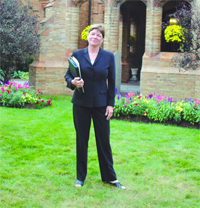
Sections Supplements
The Springfield Public Forum Enters Its 72nd Year with a Call to Action
Patricia Canavan

Patricia Canavan, executive director of the Springfield Public Forum, says attendance and awareness are the organization’s most pressing issues.

Patricia Canavan, executive director of the Springfield Public Forum, said one of the primary objectives of the long-running lecture series is to underscore the power of words.

“Words make a difference,” she said, “when people are there to listen.”

Opening ears, and minds, has become a top priority for Canavan and the public forum’s executive committee and directors, largely volunteer, and supporters. Despite a list of past speakers that includes then-former President Richard M. Nixon, Ralph Nader, Maya Angelou, Ken Burns, and many others, the non-profit organization and the presentations it offers the region at no cost, have for many years now remained a well-kept secret.

But the tide is turning, albeit slowly. Canavan, who assumed the executive director’s position at the public forum just over a year ago, said the task now is not merely to continuously improve the roster of speakers, but to also fill seats with audiences that reflect the diversity of this region and create a dialogue on the global issues impacting everyone.

One Man’s Voice

One man seems to be leading that charge, though he may not know it.

This year’s lineup includes Paul Rusesabagina, former manager of the Hotel Rwanda and now an author, humanitarian, and recipient of the Presidential Medal of Freedom. He’ll be at Symphony Hall Oct. 18 to discuss the effects of genocide on his home country of Rwanda, and the lessons, as he says, that are “yet to be learned” from those events.

It seems that Rusesabagina’s appearance, perhaps made more notable by the Academy award-winning film based on his experiences, Hotel Rwanda starring Don Cheadle, has generated excitement in Western Mass. Canavan said phones are already ringing, and that’s momentum the forum will work tirelessly to maintain throughout the coming months.

“We’re seeing a groundswell of anticipation for Paul Rusesabagina’s talk, and that’s something we really haven’t seen for a long time,” she said.

The Springfield Public Forum has presented internationally known personalities ranging from authors to politicians to activists and beyond for nearly three-quarters of a century.

It’s one of the oldest lecture programs in the country, and also one of only a few remaining that still present offerings to the public for free. Speakers are paid through the forum’s operating budget, infused by membership drives, corporate sponsorships, and foundation support, as well as some advertising dollars generated by its seasonal program booklets.

Jonathan Goldsmith, President of the Springfield Public Forum, and an attorney, said the primary challenge the forum faces today is gleaning that support; a number of corporate sponsors and active individual members have remained loyal to the organization through the years, but attracting new blood has been difficult.

“The challenges that the forum has encountered over the last several years are probably no different than other nonprofits,” he said, “and we’ve been very fortunate to have the sponsors who help us, but the pool of potential sponsors has definitely decreased. We have to work that much harder to pull in sponsors, and grants.”

Goldsmith added that while the forum does rely on corporate sponsorships to bring in high-quality speakers, membership is still an intrinsic aspect of its business model.

“Individual support is the bedrock of our organization, and we rely heavily on our members,” he said, noting that to attract new members, the forum must first attract new audiences.

“We’re very much focusing on expanding our audience, and we’ve made inroads this year in particular. We want to fill Symphony Hall, and we can — when Maya Angelou came, there were people on standing on the steps, and we put speakers outside. We’ve had others like that over the years, and now we’re looking to do it again.”

Canavan said that in addition to presenting internationally renowned speakers, preserving free access to the lectures for the public is another important focus for the group.

“To present speakers of our caliber for free is unusual,” said Canavan. “In addition to being free, I think the other greatest asset of the public forum is that, in an age of electronic communication and media, it offers residents of our region the opportunity to discuss important issues of our day, live and in person, with fellow citizens and notable experts.”  

Still, attendance and awareness are ongoing challenges, she said.

“In many ways, the public forum is underappreciated. One challenge we have is readying new audiences; we have a dedicated core, but we need to increase awareness that we do in fact offer something for everyone.”

This year, four speakers will visit the City of Homes, and each reflects the level of quality the forum has become known for.

The season will begin on Sept. 26 with Michael Beschloss, a presidential historian, Emmy Award-winner, and author of eight books, including Presidential Courage: Brave Leaders and How They Changed America, 1789-1989.

Following Beschloss, on Oct. 3, is Robert Shrum, political strategist and author of No Excuses: Confessions of a Serial Campaigner, released this year. Shrum was also senior adviser for the Kerry-Edwards 2004 presidential campaign and the Gore-Leiberman campaign in 2000.

On Oct. 18, Rusesabagina will appear, and finally, on Oct. 24, Robert Satloff, executive director of the Washington Institute for Near East Studies and author of Among the Righteous: Lost Stories of the Holocaust’s Long Reach into Arab Lands, will speak to the Holocaust’s influence on Arab countries.

Canavan said speakers are often chosen to reflect current events around the globe, and this year is no exception. Beschloss and Shrum offer insight into the already-hotly contested 2008 presidential election, while Satloff examines the complexities of the war-torn Middle East.

This is a trend that has grown with the forum since its inception. It was initially created to address a general ‘need to know’ in the midst of the Great Depression, Canavan explained.

It provided an opportunity for area residents to better understand the political, social, and economic issues confronting the nation and the world, while at the same time promoting free speech and open debate — question-and-answer periods close each lecture, and have since the forum’s inception.

“Our mission, initially, was to provide adult education,” said Canavan. “What’s great about that now is the mission has endured, but become so broad. It allows me to do creative things.”

To Think, Perchance to Dream

That creativity helps to keep the forum fresh and relevant in today’s world, but it also helps bolster audience numbers and cultivate new fans.

Rusesabagina and the interest already expressed in his lecture became the kernel of an idea based on this premise, that crowds could be drawn to the forum through a set of new, innovative programs and collaborations.

One of the largest of these is a new initiative titled The City Thinks, a 10-day, citywide program the forum has instituted along with the Springfield Public Library, with grant assistance from the Irene E. and George A. Davis Foundation.

The City Thinks will focus on the issue of genocide in Africa this year, with Rusesabagina’s appearance and his book, An Ordinary Man, as a centerpiece.

Rusesabagina’s experiences mirror the mass murders now occurring in Darfur in many ways, and Canavan said comparisons will be drawn between the two countries as part of the event.

A kick-off reception will be held at the Museum of Fine Arts, for example, featuring Darfur activist and Smith College professor Eric Reeves, on Oct. 7.

In addition, screenings of Hotel Rwanda will be held at the central library and at the Renaissance School on Carew Street, and the documentary Ghosts of Rwanda will be shown at Elms College.

Medical volunteer Sam Grodofsky will lead a discussion at the central library regarding Rwanda’s current situation, as it slowly rebuilds, and book discussions of An Ordinary Man will also be held across the Greater Springfield area.

In keeping with the goal of recruiting lifelong audiences to the forum, children’s programming is also a part of The City Thinks; peace-oriented art projects will be staged, and an essay contest, charging students ages 12 to 21 to pen their thoughts on the patterns of genocide, is now welcoming entries.

Falling on Young Ears

“Symphony Hall should be filled with students,” said Canavan, noting that in the future, the forum’s directors are mulling the addition of more family-appropriate speakers and topics, in order to attract parents and their children.

“Many of the topics we cover are quite serious,” she said. “We want to pick speakers who appeal to different audiences, and it would be great to have at least one lecture a year that is appropriate for younger audiences as well as grown-ups.”

The forum is also targeting college students and young professionals as part of this endeavor to attract new age groups, and that’s an area where Canavan is already seeing promise.

“We’ve started a lot of outreach to area colleges and high schools, and as we strengthen our partnerships with colleges and schools, we’d love to further integrate ourselves into their curriculum.”

She added that ongoing book discussion groups centering on other works of public forum speakers have begun to crop up on area campuses, including Elms College, Western New England College, and American International College, a good sign for future collaborations. The forum is also reaching out to churches, synagogues, and specific ethnic populations in hopes of creating similar partnerships.

“We continue to research what topics will resonate within this population, and we do solicit recommendations,” she said. “It’s important to know who is out there and who is relevant.”

Closing Remarks

The stage is set and ready for those speakers, ready to engage in the “Great Discourse” that the Springfield Public Forum promises each year. It’s a formidable task to bring weighty issues to Symphony Hall, and to fill its seats with people ready to listen.

But Canavan said that, increasingly, the call to action is being answered, and she’ll keep one ear close to the ground until the power of words has created an army.

Jaclyn Stevenson can be reached at[email protected]
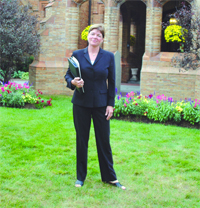
Sections Supplements
A False Sense of Security on Flood Insurance Can Be a Costly Mistake

Despite the attention brought to the subject by hurricanes Katrina and Rita two years ago, and some local episodes that fall and since, many individuals and businesses continue to ignore the real possibility of suffering severe property damage resulting from a flood.

There are several reasons why people have a false sense of security: many believe that since they live and work in an area well away from the coastline, the danger of having a flood is relatively low; others believe their homeowners or business property insurance policies will provide coverage in the event of a flood. Still others believe that in the event of a flood, the federal government will provide assistance for flood damage. All or most of this thinking is off the mark.

Floods affect thousands of Americans every year. According to the Federal Emergency Management Agency (FEMA), more than 27,000 policyholders filed flood insurance claims in 2006, with thousands more being uninsured for flood damage. To many of us in Western Mass., it seems that these devastating events always occur in some other part of the country, and that here in the Bay State we have little to worry about when it comes to flooding. Recent experience tells us a different story.

In 2006 the National Flood Insurance Program paid more than $39.5 million dollars in claims to insureds in our state. This was more than the combined total payments made in all of the states bordering the Mississippi River for that same year. While some experts consider 2006 to have been an unusual year for Massachusetts, the National Flood Insurance Program (NFIP) has paid Bay State policyholders more than $2 million dollars in both 2004 and 2005.

Massachusetts areas away from the coast are at risk of suffering from floods. In fact, it is typical for the NFIP to pay between 20% and 25% of their claims in low- to moderate-risk zones. The good news about being in such a zone is that you may be eligible for a preferred risk policy, which provides very inexpensive flood insurance protection.

Many people believe that their homeowners and business property insurance will respond in the event of a flood. However, these policies in their standard format (which most insurance carriers follow) specifically exclude flood as a covered cause of loss. It is interesting to note that it was this exclusion that provided the basis for many insurance carriers to deny coverage to many homeowners in New Orleans and the southern states following Hurricane Katrina.

Insurance policies provided by the NFIP afford a rather generous definition of ‘flood.’ In order for the policy to respond, the flood must affect at least two properties in the area, or two or more acres. The flood can result from of an overflow of inland or tidal waters, what most people typically think of as a flood.

In addition, the flood could be a result of water from any source that causes an “unusual or rapid accumulation or runoff of surface water.” This source of water could be heavy rainfall, a water tower, or a broken water main. Certainly, most everyone lives and works in an area where heavy rain or a broken water main could occur and cause a flood as the NFIP policy defines one. It is important to take these sources of water into consideration when assessing your need for a flood policy.

When you purchase a flood policy from the NFIP, you have several things to consider: the coverage limit on the building, the coverage limit for the contents of the building, the per-claim deductible, and the waiting period before overage goes into effect. A maximum of $250,000 of building coverage is available for residential protection. Commercial structures can be insured to a limit of $500,000 for the building and $500,000 for the contents.

The maximum insurance limit may not exceed the insurable value of the property. For limits in excess of the maximums offered by the NFIP, private flood insurance is readily available.

Another important element to note in the NFIP’s definition of a flood is some very important wording that is not within its definition. What is missing is the requirement for the president to declare a federal disaster.

For those individuals and business owners who don’t carry flood insurance as part of their disaster recovery plan, they need to be aware that in order to receive funds through the Federal Disaster Assistance program, there are a few serious issues to consider.

First of all, as was just outlined, in order for FEMA’s Disaster Assistance Program to become involved, the U.S. president must declare that area a federal disaster.

With this declaration, FEMA can distribute funds in the form of a loan that must be repaid. In the case of a business loss, FEMA may require the business owner to first seek a loan through the Small Business Administration before they request FEMA support. Under the NFIP flood insurance policy, there is no need for a federal disaster to be declared. There is no need to pay back any claim payments. The policy will respond if the definition of a flood is met.

It is important to seriously consider the large potential physical and financial loss that a flood can cause.

While many people believe there are several ways to obtain assistance in the event of a flood, without a doubt incorporating a NFIP insurance policy into your personal or business disaster recovery plan provides a critical point of relief, at a reasonable and affordable cost. An independent insurance agent can discuss your necessary limits, coverages, and deductible options with you.

There are other elements of the policy that should also be discussed, such as valuations on claim payments, contents coverage, and basement coverage. To answer some questions on your own, you can visitwww.floodsmart.gov.

Corey Murphy is a certified insurance counselor and vice president of First American Insurance Agency in Chicopee;[email protected]

Sections Supplements
Historic Deerfield Readies Its Legacy for the Future
Phil Zea

Phil Zea, president of Historic Deerfield, says the museum is seeing an upswing in visitorship.

Even in the world of living museums, Historic Deerfield stands apart. It co-exists with working farms, a church with an active congregation, and the local post office, offering a glimpse of the past as well as a snapshot of what has evolved from it. A greater number of people are noting Historic Deerfield’s unique draw and stopping by for a visit, and the onus is now on the attraction to keep them coming — and coming back.

There are not many museums at which a stray duck will suddenly cross your path, quacking a ‘hello’ as it waddles past.

But at Historic Deerfield, which is known as a ‘gateless museum,’ it’s a relatively common occurrence.

The property, which spans 104 acres and encompasses 53 buildings, includes 12 historically furnished homes that serve as museum attractions, interspersed among private homes and businesses.

The mix of old and new creates an intriguing effect; the Channing Blake Meadow Walk offers brief history lessons along the path, as well as bucolic views of Franklin County’s farmland and a smattering of working farms (some of Historic Deerfield’s land has also been leased to area farmers), complete with ducks, sheep, and dairy cows.

The Deerfield Inn, which has 23 rooms, a tavern, a café, and a restaurant, is also owned by Historic Deerfield, and sits adjacent to its free-standing museum store. Not far from there is the Flynt Center of Early New England Life, a modern, 27,000-square-foot building that offers rotating art and history exhibits, as well as visible storage on its second floor — rows upon rows of glass cases filled with early American artifacts ranging from tea pots to powder horns.

There are other businesses intermixed, including the Deerfield Post Office, the First Church of Deerfield, and buildings owned and occupied by Deerfield Academy and the Berment School, both private day and boarding schools.
Philip Zea, Historic Deerfield’s president, said the contrast helps create a multi-faceted history lesson.

“It’s not just an institution, it’s a working community,” he said. “The townscape is really our largest artifact. The point is to offer a sense of what life was like in the Pioneer Valley, and to offer people a chance to look at Deerfield as sort of a case study.”

Up and Down Town

But this is a lesson that includes a very dark chapter — the infamous pre-dawn French and Indian raid on Deerfield on Feb. 29, 1704, an attack that would leave 56 colonists dead and the community, then the most-western outpost of the British territory, in ruins. The 109 survivors of the raid were taken captive and forced on a months-long, 300-mile trek to Quebec in the dead of winter; 22 of them died along the way.

Visitors to Historic Deerfield can certainly learn about the massacre, but the mile-long stretch of Old Main Street is more of a celebration of what took place after the raid. This is a world unto itself, straddling a line between preservation of the past and modern life.

It’s long been a popular destination for history buffs and fans of antiques and the decorative arts, as well as for families visiting the region or taking weekend and day trips.

Still, historical tourism has had some lean years in the last few decades — Zea estimates the dip began after the Bicentennial — and is only now seeing a spark of new interest. It’s up to attractions like Historic Deerfield to rekindle the flame, and to keep the momentum going.

“The world of history museums has been in down times until relatively lately,” said Zea, noting, however, that while foliage season is Historic Deerfield’s busiest period, this summer has been a good one. “From a business point of view, the numbers are good, and we’re ahead of our budget.”

Last year, the museum recorded a 4% improvement over the previous year’s revenue, and while there are still challenges to be met — among them the high gas prices that can keep travelers away — there seems to be a sort of general upswing in interest in attractions like Historic Deerfield.

“I think an appreciation of the past happens on a generational schedule,” Zea mused. “Children visit these places with their parents, and then they lose interest until they have children; then they say, ‘we have to go back!’”

The Fabric of a Community

To boost visitation and maintain that resurgence of interest, Zea said that planning frequent special events, exhibits, and programs is key.

“We focus more and more on special events because that’s what brings people back,” he said. “People who love the place still won’t come back solely to see their favorite house. There needs to be another draw to pull them in.”

Workshops and special programs often showcase the museum’s large collection of art and antiques, which originate from several locales and time periods in addition to the colonial period.

Zea said the collection is currently made up of about 26,000 pieces, placing it among the 12 largest such collections of American artifacts, and programming surrounding the collection includes seminars, exhibitions, and hands-on teaching activities, such as archeological digs, weaving lessons, and gardening tutorials in the Teaching Garden. Open-hearth cooking is another popular draw, particularly in the cooler months.

Currently, the Helen Geier-Flynt Textile Gallery is on display, named for one of Historic Deerfield’s founders (along with Geier’s husband, Henry Flynt) and detailing the embroidery and textile trends of early American life. A second major exhibition slated to open in May, titled ‘Into the Woods,’ will focus on furniture and the creation thereof.

“The exhibition will look at some really sensational furniture,” said Zea, adding that there will also be an educational component, designed to empower museum visitors to better appreciate the antiques they’re viewing. “It will teach people how to look at a piece, and how to better understand how it was made. It’s very didactic.”

Also geared toward creating a buzz at the museum is a series of slightly less academic recurring annual events, such as the Chocolate Festival held in February, and Supernatural Sundays, held in October.

“The key challenge, and goal, is to continue to enhance our visibility as a destination,” he said, “for both families and groups. We want to be seen as a place to stop on the way to a Vermont ski trip, but also as a gateway to tourism in Franklin County.”

We’ve Arrived

As part of that goal, there are improvement plans on the drawing board for Historic Deerfield, though none are of a large enough scale to disrupt the traditional, authentic feel of the old New England neighborhood.

“We’re working on creating a better sense of arrival,” Zea offered as an example, noting that the gateless museum model, coupled with the fact that it exists within a working community, can confuse new visitors. “There will be some improved signage, and upgrades to visitors services.”

Zea said a new visitors center is also being mulled, but the project is only in the early stages of development.

“We still need to raise a lot of money, though we are working with an architect,” he said.

The annual fundraising goal for the museum is about $480,000 in unrestricted gifts, and about the same for restricted contributions, though Zea admitted that unrestricted donations are more helpful in these tight economic times.

“Special projects that people feel a passion for are important, but keeping the light bill paid is also important. Utilities in general are a problem.”

If Historic Deerfield does experience a downturn later in the year, Zea said he’s likely to attribute it to gas prices, though he and his staff are also mindful to translate the museum’s close proximity to other attractions in Western Mass. and Vermont despite its far-away feel.

“We’re only 90 minutes from Boston,” he said, “and more people are developing an affection for us. We will continue to work to build those relationships, and to spread the word that this is a great place.”

It’s also quite ducky.

Jaclyn Stevenson can be reached at[email protected]
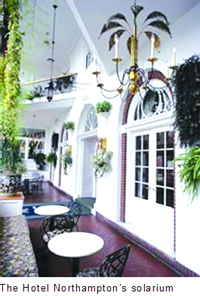
Departments

Grant-writing Workshop

Sept. 6: The Employers Assoc. of the NorthEast will present a free workshop titled ‘Writing a Successful Workforce Training Grant’ from 8:30 to 11:30 a.m. The program is designed for individuals who have never written a grant. To register or for more information, contact Sue Miller, Director of Training & Development, at (877) 662-6444, ext. 313, or visit www.eane.org. The Employers Association of the NorthEast is located at 67 Hunt St., Agawam.

Money Smart Program

Sept. 11-Oct. 9, Oct. 30-Nov. 27: The Holyoke Credit Union will once again offer its free award-winning financial education program titled Money Smart this fall. The course, which which covers a multitude of personal banking and finance subjects, will be conducted on Tuesdays from 6 to 8 p.m. for five consecutive weeks at the Holyoke Credit Union’s main branch at 490 Westfield Road, Holyoke. The program is free to the public, however, pre-registration is required. Registration may be made at any branch location or by calling (413) 532-7007.

Hispanic Marketing Workshop

Sept. 12: Hector Bauza, president of Bauza & Associates Hispanic Marketing will lead a workshop titled ‘How to Effectively Market to Hispanics’ from 8 to 9:30 a.m. at the Hotel Northampton in Northampton. Bauza will discuss how to avoid pitfalls in marketing to Hispanics and what companies need to know to effectively market to this growing population. The program is part of the UMass Fine Arts Center Sponsor Summit which provides thought-provoking presentations on current trends and one-on-one networking. The summits are conducted bi-annually as an exclusive benefit for sponsors, business partners, and board members. For more information, call (413-545-3671) by Sept. 7.

Artist’s Reception

Sept. 14: Pioneer Valley artist Nancy Hill will exhibit her latest work titled “Sweet Things” at the R. Michelson Galleries, 132 Main St., Northampton, from Sept. 14-30. A reception for Hill is planned Sept. 14 from 6 to 8 p.m. in conjunction with the Northampton Art Walk. Hill says her new paintings are closer to traditional still life with subjects of nature’s bounty and various sweet edibles of the culinary arts. For more information on the show, call (413) 586-3964.

Casino Debate

Sept. 18: Will Massachusetts roll the dice on casino gambling? What are the implications if it does or doesn’t? A provocative discussion on the topic with proponents, opponents, and experts is planned from 8:15 to 10 a.m. at the Omni Parker House Hotel, Press Room, in Boston, hosted by members of the Mass. Institute for a New Commonwealth (MassINC). Panel members will include state Rep. Dan Bosley (D-North Adams) and Richard McGowan of Boston College, author of Government and the Transformation of the Gaming Industry and The Gambling Debate, due out in November. For more information and to register, call (617) 742-6800, ext. 120.

Family Business Program

Sept. 20: Greg McCann, author of When Your Parents Sign Your Paycheck, will be the guest speaker at a dinner forum hosted by the UMass Family Business Center, from 5 to 8:30 p.m. at the Clarion Hotel & Conference Center. McCann works with family businesses in the areas of succession, communication, conflict resolution, gender issues, and development of the next generation. He will speak on what family business owners should be saying to the next generation about the company and their possible future with it — and when and how they should be saying it. To register, or for more information, contact Ira Bryck at (413) 545-1537; fax: (413) 545-3351.

Chamber Courses

Sept. 25/Oct. 2: The Greater Westfield Chamber of Commerce will sponsor two courses this fall to help businesses plan for both startup and growth. The first course, ‘Strategic Planning,’ will be conducted Sept. 25, while the second, ‘Business Plan Instruction,’ is planned Oct. 2, both from 7:30 to 9 a.m. Both courses will be held at the STCU office at 453 East Main St., Westfield (Westfield Shops Plaza), sponsors of the program. Norman Halls from the Holbrook Company will lead the courses. When individuals complete the course, free counseling will be available from the UMass Small Business Development Center. The cost for both programs is $35 per person for any Chamber of Commerce member or $50 for nonmembers. For reservations and more information, contact Lynn Boscher at (413) 568-1618 or via E-mail at [email protected].

AIM Executive Forum

Sept. 28: The Associated Industries of Mass. Executive Forum will host Massachusetts House Speaker Salvatore F. DiMasi for a lively discussion of critical business issues facing the Legislature during the fourth quarter of 2007 at its breakfast and networking meeting. Registration, breakfast and networking begins at 8 a.m. at the Westin Hotel, 70 Third Ave., Waltham. Speaker DiMasi’s presentation starts at 8:30. For registration information, call Julie Fazio at (617) 262-1180 or Chris Geehern at (617) 834-4414, or visit www.aimnet.org.

Entrepreneurial Hall of Fame Dinner

Oct. 4: The Western Mass. Entrepreneurial Hall of Fame will honor its Class of 2007 at its Eighth Annual Induction and Banquet at the Log Cabin Banquet and Meeting House. The event, one of the region’s largest networking events, will start with a reception at 5:30 and dinner at 7. This year’s inductees are: the Bassett family (Bassett Boat Company); the Falcone family (Rocky’s Ace Hardware); Theodore Geisel (Dr. Seuss); the Gordenstein family (Broadway Office Interiors); Charles and Merriam Webster (Merriam-Webster Inc.); and the Roberts family (F.L. Roberts). Tickets are $150 per person; tables of 10, $1,500. For more information or to order tockets, call (413) 730-6157.

Bright Nights Ball

Nov. 17: East Longmeadow-based Hasbro Games will be the sponsor of the 2007 City of Bright Nights Ball, which will take on a Monopoly® theme. The event, the major fundraiser for the Spririt of Springfield, which puts on the annual holiday display in Forest Park known as Bright Nights, will take place in the ballroom of the Sheraton Springfield at Monarch Place. The black-tie event features a gourmet dinner, dancing, and the opportunity to win and purchase some fabulous items. Guests will be able to purchase Monopoly deeds, everything from Baltic Avenue to Boardwalk, and redeem them for prizes. Bidding on five showcase items will begin on-line in early November and be completed the evening of the gala. Other premium items will be sold in an on-line auction. Auction items will be announced at a later date. In addition to Hasbro Games, the City of Bright Nights Ball is being supported by Bay State Health, Health New England, MassMutual Financial Group, and Sheraton Springfield. Tickets to the 12th annual City of Bright Nights Ball are $500 per couple. Tables of 10 are available for $2,500. For more information, contact the Spirit of Springfield at (413) 733-3800.

Features
CityStage Celebrates 10 Years of Theater in Downtown Springfield
Tina D’Agostino and Cindy Anzalotti

Tina D’Agostino, left, and Cindy Anzalotti of CityStage are celebrating 10 years of presenting shows at the theater, and gearing up for new challenges ahead.

It’s been 10 years since CityStage entered the Western Mass. landscape, and the theater’s management has coined a new, informal catch phrase: “let them eat cake.”

At every performance this season, that is, as well as at a kickoff celebration this month and an end-of-season gala, all part of a seven-month-long anniversary celebration.

CityStage, a private, non-profit theater company based in downtown Springfield, presents a wide variety of performances ranging from full-blown musical productions to stand-up comedians to community events. It stages those performances at either Springfield’s Symphony Hall, which CityStage manages, or at one of its two theaters on Columbus Street, the 487-seat Blake Theatre and the 70-seat Winifred Arms Theatre.

CityStage was conceived in 1997 during Mayor Michael Albano’s administration; a request for proposals was issued to identify an entertainment venue that could fill both the space and the void left by the departure of StageWest, the company that once housed the theater space at Columbus Center in downtown Springfield, where CityStage now operates.

Submitted under the name Springfield Performing Arts Development Corp. by the Springfield Business Development Corp., the CityStage model was accepted, and a board of directors made up of 18 local business and community leaders was formed to serve as a volunteer overseeing body, which still remains today.

Unlike StageWest, CityStage does not produce any of the shows it presents, but instead books touring shows and performers from across the country. Dozens of national acts have poured into Springfield as a result of its creation in 1997, including Jackson Browne, Bill Cosby, David Copperfield, and George Carlin, to name a few.

That is one reason, in addition to the many hurdles this entertainment group has cleared in the last 10 years, why CityStage management is feeling festive. There are still challenges to be met, but this year’s schedule of performances marks not only a milestone, but a new plateau, from which greater success can be achieved.

The Dark (and Damp) Years

Cynthia Anzalotti, CityStage’s president since 2003, has been with the theater since its inception. She began as its director of Development and box office manager, and later became general manager, leading a trend among CityStage staff, she says, of wearing many hats.

Anzalotti said the early years were filled with promise and possibility, but those qualities were not always evident from the outside — and sometimes, not so evident on the inside, either.

“I came on in October, we opened in December, and it was a nightmare,” she said succinctly before reciting a laundry list of problems that awaited the small arts organization from the start. Among them were rotting food left in refrigerators, and gas and electric bills that had gone unpaid, leaving bad debt.

“We needed to get loans and pay huge cash deposits to get the utilities turned back on,” she said, “and that meant asking for help when people had no idea who we were.”

Not long after that, a sewage pipe broke, filling areas of the theater with more than a foot of waste, and later, a winter freeze caused a water main to burst, flooding the lobby.

Changing demographics in the city and a lack of understanding of what, exactly, CityStage was also posed problems. Anzalotti said many people believed, and still do, that CityStage was a permutation of StageWest, which it isn’t. Conversely, she said the majority of StageWest supporters didn’t return to bolster the new endeavor.

Early on, an outside firm was hired to book shows at the new venue, but the choices weren’t pulling in crowds. The cards noticeably stacked against the theater, Anzalotti made the decision to take matters into her own hands, choosing shows internally.

That first year was a struggle, and by year two, CityStage had a cumulative debt of $531,500. The new line-up of shows was creating a buzz, however, and in its third year, the organization turned its first small profit. It has remained debt-free since its sixth year in business.

Mixing and Matching

This year, the 10th anniversary season includes a wide range of offerings for audiences of all age groups. Beginning in October, CityStage and Symphony Hall will present nine musicals, three comedians, a team of illusionists, a tribute band (Rusty Evans and Ring of Fire, a homage to Johnny Cash) and a holiday performance — Sister’s Christmas Catechism, a spin-off of Sister’s Late Night Catechism, which has appeared to rave reviews in the past.

Other productions are making return trips to Springfield, such as Capitol Steps, a political satire, and some are brand-new, including Shout!, a coming-of-age tale set in the 1960s. The mix is intentional, said Anzalotti.

“We try to do a little bit of everything,” she said, noting that diversity is one of the best ways to combat a wide array of challenges that routinely face theaters, especially those with sizes and markets similar to CityStage.

Anzalotti said a keen understanding of the market she serves is integral to presenting successful shows. She and her staff of seven strive to present acts that reflect the cultural diversity of the region, and that are affordable. The $35 ticket price hasn’t budged in recent years, and is not expected to any time soon.

But understanding which shows, and price points, best serve the community at large also helps the theater overcome another barrier, created by a near-fortress of performance venues in Massachusetts and Connecticut that surround CityStage.

“Boston, the Bushnell (in Hartford), and the casinos all block us out,” she said. “Every show we consider, we have to first see if it’s even coming this way, and if so, where else it might be showing. We don’t want to show the same shows as nearby theaters, and a promoter isn’t going to book a performance here just because it will be in the area, either. It takes time to build a reputation.”

She and members of her staff view performances of nearly every show they book, to judge if the subject matter will attract Pioneer Valley crowds, but also to discern whether it is viable for CityStage’s or Symphony Hall’s infrastructure.

“People say, why don’t you show Wicked? Why not Miss Saigon? And we have to explain that we’re just not built for Broadway shows. A show has to fit the market, but it also has to be feasible for our spaces.”

This has led to some trial and error; Anzalotti was sure The Will Rogers Follies would be a hit, but it didn’t fare as well as she’d hoped. Lord of the Dance with Irish step dancer Michael Flatley, however, was expected to have steady but unremarkable returns, and it was a smash.

A lot comes down to a gut feeling, but one that is strengthened by a few constants Anzalotti has noticed in the marketplace.

“Women are the decision makers,” she offered as an example, “and as such, women’s plays like Shout! are a huge hit.”

But so are others, including classics that are seeing a resurgence thanks to Hollywood adaptations (Chicago and Hairspray are both on this year’s roster) and surprises like the Pink Floyd Experience, which just two years ago sold out and welcomed a crowd ranging in age from 12 to 65.

“We never really know what’s going to be a big success, or what might be a surprise bomb,” she said, noting that the biggest caution she heeds is to avoid choosing shows based on her own record collection.

“It can be hard not to want to pick only the things we like,” she said, “but we have to remain mindful that different people enjoy different things. I’m not an Evita person myself, but audiences generally love the show and we think it will do well here.

“That’s not to say I wouldn’t love to have John Fogerty, though.”

The Supporting Cast

Tina D’Agostino, CityStage’s director of marketing, agreed that adding some bigger names to the company’s playbills would help in moving it further as the next 10 years unfold.

More important, however, is continuously branding CityStage in an effort to keep it in the minds of residents across the region as a viable, invigorating entertainment option.

“We try to get out there to be ‘top of mind,’” said D’Agostino. “Our base is women, but we don’t try to cater to one specific demographic through marketing. We do a lot of outreach with many different groups — we try to be at just about every event we’re invited to.”

That outreach includes connecting with the area’s colleges to promote the theater’s reasonable student ticket prices — $15 per ticket — and community collaborations surrounding specific shows. During a showing of The Vagina Monologues, for instance, performers talked with battered women at the Springfield YWCA, and, similarly, Mark Lundholm, star of the original play Addicted, visited inmates at the Ludlow Correctional Facility during his stay.

And when Fosse, a tribute to the late choreography great was presented, dancers taught a master class at the Artist Dance Studio in East Longmeadow.

“We’re lucky to have these unique collaborations,” said D’Agostino. “There’s always something different happening, and it allows us to offer some very deep experiences that are tied directly to theater.”

A Slice of the Life

That strength, both on and off stage, is increasing CityStage’s visibility as the group continues to make behind-the-scenes improvements to its theater space, rented from the Springfield Parking Authority.

To date, CityStage has completed about $300,000 in repairs to the property, ranging from coats of paint to the creation of a new lounge for community and corporate events, and VIP receptions for subscribers. It funds such renovations from its operating budget, about $2 million; from its annual campaign, which is expected to receive a facelift this year; and from corporate sponsorships, individual donations, and season subscriptions, which are up from last year.

“It’s hard to get grant funding for capital improvements in a rented building,” said Anzalotti. “We’d like to build a stronger donor fund and annual plan, so we can continue making improvements, and those improvements are made with our constituents in mind.”

The fundraising efforts she’d like to see more of in coming years are also planned with CityStage patrons in mind. Many are event-based, such as shopping and casino nights held at the theater, to maintain a celebration of the theater year in and year out, not just on this, its 10-year anniversary.

“We tend to spend money on things we think will generate more revenue in the future,” said Anzalotti, “and events bring more people to the theater. Not to mention we believe in fun as part of our plan.”

That’s Entertainment

For a theater company that began in the dark and suffered flood and famine, stepping out as well as stepping up seems appropriate, but moreover, it’s a philosophy that may be lending some added strength to the repertoire; Anzalotti said CityStage shows are selling out more than ever before.

“We’ve gone from selling 50 seats to 100, to 200, 300, and now we’re at a point of saturation,” she said. “People shouldn’t assume there will always be tickets available for our shows anymore, and there is no better feeling than announcing that a show is sold out.”

The rest, she says, is icing on the cake.

Jaclyn Stevenson can be reached at[email protected]

Sections Supplements
That’s What Springfield Wire Waged Before Finally Conceding Defeat
Bill Bradford

Bill Bradford says Springfield Wire waged an unwinnable fight longer than most companies would have — and probably longer than it should have.

Bill Bradford says impossible is a strong word — at least when it’s placed in the phrase ‘impossible to compete,’ and used to describe reality for an operation that’s been an integral part of the 85-year-old family business he’s managed for the past decade.

“But it’s an absolutely accurate word,” said Bradford, who announced three months ago that he was shutting down Springfield Wire’s plant on Cottage Street in Springfield (probably by the end of 2008) and moving the manufacturing once done there to Mexico and China, where the company opened plants over the past few decades.

This was a difficult decision for Brandford, whose great-grandfather was one of a small group of entrepreneurs who started the company in 1921 and eventually became sole owner, but a decision made fractionally easier by the knowledge that he had fought an unwinnable fight longer than most in his position would — and longer than he should have, by his estimation.

“We would say to some customers, ‘no, we’re not going to make that part in Mexico,’” he told BusinessWest, adding that such requests (and sometimes they weren’t really requests) came with increasing frequency in recent years.

And they would say, ‘fine, we’ll find someone who will.’ And they did.

“This isn’t the most efficient manufacturing operation in the world,” he continued, referring to the 110,000-square-foot Springfield plant. “But even if it was the most efficient manufacturing operation in the world, that wouldn’t be enough.”

Such is the disparity in the cost of manufacturing products such as heating elements and assemblies in Springfield and making them in China, Mexico, or other “low-cost countries,” said Bradford, who did some quick math and concluded that his company can hire perhaps as many as six people in China for the same cost ($10,000 to $12,000) that the company and an employee in Springfield would split to cover health insurance for a family.

And that number would be closer to eight employees were it not for recent salary inflation in China prompted by industrialization that has made jobs plentiful and given workers more options.

This is not a recent phenomenon, but rather an old story, said Bradford, who recently talked with BusinessWest about how he came to his decision and what lies ahead for the company. And it’s a recurring story, as businesses in his sector and many others are shutting down plants in this country because of an inability compete.

Springfield Wire will continue to have a presence in Springfield and the Pioneer Valley — 20 to 25 employees handling duties ranging from sales to process engineering will continue to work here. But it isn’t the presence Bradford wants, and it pales in comparison to the company’s high-water mark for employment (about 500 people) in the early ’80s.

But it is reality, and in this issue BusinessWest recounts the Springfield Wire saga to illustrate the extreme challenges — sometimes, as in this case, insurmountable — that face manufacturers in the Northeast today.

Taking the Heat

As he led BusinessWest on a tour of the Springfield plant at the start of a day’s second shift, Bradford pointed to several areas with little or no activity that would have been bustling years ago.

The relative quiet spoke loudly to the trends in manufacturing today, and about how the decision Bradford reached a few months ago could — and probably should — have been made many years ago.

“Over the past six months, I came to the conclusion that failing to do this [shut down the plant and move the operations elsewhere] really was failing to do my job,” he said, “and that I would put the entire business in jeopardy if I continued to be adamant about fighting global competition from a cost position that couldn’t be won.

“We don’t have a viable competitor based in the United States anymore,” he continued, “and a publicly held company would have shut down operations here a long time ago.”

The competitive landscape was much different in 1921, when Edward Bradford and several other partners started the venture. Bill Bradford said documented history of the company’s early days is scarce, and he isn’t exactly sure when his great-grandfather assumed ownership, nor is he really sure just what the company produced back then.

He does know that it eventually became one of the leading manufacturers of heating elements and assemblies for the appliance, process heating, commercial refrigeration, food service, automotive, and air conditioning industries. Management of the venture passed to his grandfather, who died in 1957, thus commencing 28 years during which the company was owned by the Bradford family but not managed by it.

That all changed in 1985, when family members sitting on the Board of Directors, including Bradford’s father, concluded that it was time for someone with that last name to get involved with day-to-day operations. That someone turned out to the Bill Bradford, who was teaching history in Delaware at the time, and admitted to be a somewhat reluctant recruit. “I got sucked in.”

He said he spent his first few years, during which he took several different titles, getting up to speed on the company — and business in general. He earned an MBA, an experience he credited with enabling him to “think like a business person, not a teacher.”

He became president in 1997, by which time he and others with the company and on its board could start to see the handwriting on the wall for the Springfield plant. It would be a few more years before it would become clear and, perhaps more importantly, undeniable.

“We had to move our highest-volume product out of here,” he said, referring to a series of events that started in the mid-’90s. “We did it incrementally … we didn’t have to do it lock, stock, and barrel because the global pressures were not that great.”

And the company could fairly easily backfill the product lines that were moved to Mexico, he said, adding, however, that before too long those global pressures, fueled by customers looking to take cost of their products, would increase, and it would become much more difficult to backfill.

“The cycle just continued to accelerate,” he continued, meaning that more product lines were being moved out of Springfield and there were fewer replacements, which added up to less profitability and, eventually, the point at which the Springfield division was losing money for the business.

And the cycle continued to accelerate.

But despite the mounting evidence that the company may not be able to meet customer demands through ongoing production in Springfield, Bradford continued to fight the good fight.

“I really believed that if we would become lean in terms of the Toyota production system, we could become world-class and take on anyone with the right product line, a limited product line,” he said. “But then, I realized that all anyone in a low-cost country would have to do is become lean themselves.

“We would not have done this as the first in our industry,” he said of the decision to halt the fight. “Our competitors got to China long before we did, and we had new competitors coming out of China that we didn’t even know existed five years ago that are knocking on the doors of our customers.”

It was over the course of several trips to China over the past few years that Bradford came to realize that the fate of the Springfield plant was essentially sealed, and that he was asking his employees here to do the impossible. “It had become a fight they didn’t have a chance to win.”

Down to the Wire

While Bradford was willing to recount the events of the past several years and especially the past few months for BusinessWest, his focus is clearly on the present and the future. There are perhaps eight to 10 major projects ongoing at the moment, he said, adding that much is involved with moving operations to China or Mexico, training individuals in those countries, finalizing the operations that will remain in Springfield, and disposing of the Cottage Street plant.

When asked about what will likely happen to that facility and where the 20-25 employees who will continue to work in this area will be based, Bradford said there are several possible scenarios, but one he believes is likely.

“In a perfect world, we would sell this building and lease back space for our operations,” he said, adding quickly, “but we all know the world isn’t perfect.”

Certainly not. In a perfect world, operations like Springfield Wire would never find it impossible to compete.v

George O’Brien can be reached at[email protected]

Sections Supplements
The Many Issues in Negotiating Commercial Real Estate Leases

Commercial leases are not simply contracts; they are often roadmaps to both a landlord’s and a tenant’s future business plan for a particular premises.

Thus, both parties should exercise due diligence and take ample time to contemplate, discuss, and include within the lease all such matters that could arise during tenancy. If one distills the complexities of commercial real estate leasing to the most basic notion, the most important thing to remember is that nearly everything is negotiable for both sides.

Unlike residential real estate leases that are strictly governed by statutes and case law, the world of commercial real estate leasing is generally left to the landlord and tenant to decide. As a result, the commercial lease agreement is the bible when it comes to the landlord’s and tenant’s respective rights and responsibilities for the lease term.

How much of a ‘template’ lease is negotiable by each respective party? That often depends upon the leverage of the market and of the property being leased. For example, if the market has a significant amount of space for lease, the tenant will likely have more ability to dictate lease terms. Conversely, in a market where one particular piece of property is unique, or where the market has high occupancy rates and thus a smaller inventory of available space, a prospective tenant may find itself with less bargaining power.

Here are some considerations relative to issues that tend to emerge during lease negotiations.

Use of the Property

Regardless of market conditions, it is essential that the landlord and tenant contemplate each aspect of the tenant’s business, what the tenant’s needs will be during the lease term, and how the tenant’s use will comply with the rights, requirements, and remedies of the landlord.

For instance, if the prospective tenant intends to operate a retail store or anticipates significant customer visits, the lease should contain a specific provision governing parking spaces reserved for the tenant’s customers’ use.

In addition, if a tenant is operating, for example, a coffeehouse and bookstore, then perhaps the landlord and tenant should re-evaluate leasing the adjoining space for use as a home theater/electronics demonstration business. Since the use of the leased premises is often restricted by the terms of the lease, the tenant should ensure that the intended use is specified and permitted.

Term

The term (length) of a commercial lease is determined by its starting date (commencement date) and its date of expiration. While a lease may have a specific commencement date, it is not uncommon for a tenant’s obligation to pay rent to be delayed for a month or two, which may be referred to as the “rent-commencement date.” The lease term may consist of an initial term with optional renewal terms of an equal or shorter duration than the initial term. To avoid any misunderstandings, is often helpful to set forth actual calendar dates, including day, month, and year.

Operating Expenses, Taxes, and Utilities

Each lease should specify the party responsible for the operating expenses, e.g. maintenance of the leased premises, taxes (or tax escalator), and utilities. These costs, both individually and collectively, can be significant, and should be discussed by the landlord and tenant at the beginning of negotiations to ensure that all parties are in agreement from a budgetary standpoint.

What are the landlord’s maintenance obligations? Are they restricted to structural issues? How about the HVAC system, snow removal, and landscaping? These are just some of the issues that should be specified in the lease, including a clear understanding of which party is responsible, and at what cost, if any, to the tenant.

Very often, a tenant will pay a proportionate share of common operating costs in a building with multiple tenants. In this case, the lease should include the proportionate share as a numerical percentage (e.g. tenant’s proportionate share shall be 43%) of the total leaseable space in the premises, to avoid ambiguity.

Building Systems

As an offshoot to operating expenses, the lease should also clarify the party responsible for providing and maintaining building systems. In New England, where both summer and winter represent extreme temperatures, a tenant should ensure that the HVAC system in the leased premises is sufficient to support its needs.

Also, if the tenant will have an ongoing obligation to maintain the system, he may consider having an inspection performed prior to the execution of the lease to evaluate efficacy.

Tenant Improvements

It is common for a tenant to perform some customization prior to opening the leased premises for business. This could be minor, like painting, or significant, such as installing a kitchen or other trade fixtures. The tenant should bear in mind that, during this period, he could conceivably be paying rent, even when the business is not open for business and there is no incoming revenue. With this in mind, the tenant should consider negotiating postponement of the rent commencement date during his renovation/improvement period.

Lease Rates

A major consideration for each party to be mindful of relative to rent is the consideration of the rent that will be paid over multiple “terms.”

For instance, if a lease is five years in duration with rent fixed at $1,000 per month, and the lease allows for two renewal periods of 10 years, the rent may be fixed for the entire 25-year period. Such a lease could ultimately end up being impractical to a landlord who may have the space leased for less than market rate. Accordingly, a lease should contemplate the potential need for a rent escalator after a certain period of time so that the landlord is assured that the rent obligations of the tenant remain consistent with the appreciating value of the leased premises.

Assignment/Subletting

While at the time the lease is negotiated, a tenant expects to occupy the leased premises for the full period of the lease, it is often the case that unforeseen events in the tenant’s business modify reality. For instance, a tenant may merge with or sell its business to another party, or it may have a need for less space in year five than it had in year one.

A tenant should realistically contemplate its business needs on a going-forward basis, and negotiate the lease terms accordingly. If there is a likelihood that the tenant’s space needs may be less at some point, the ability of the tenant to sublease a portion of the leased premises to another subtenant is ideal. Also, if a tenant merges with or sells its assets to a third party, the tenant will want the ability to assign its rights in the lease to that third party.

Parting Thoughts

This summation is certainly not exhaustive, but it serves to illustrate that commercial leases are not merely contracts, but truly roadmaps, which must be read and understood so that both parties can get where they want to go, and without getting lost.

Jeffrey Fialky is an associate with the regional law firm Bacon & Wilson, P.C., who specializes in business, corporate, municipal, and real estate law; (413) 781-0560;[email protected]

Departments

Grant Writing Workshop

Sept. 6: The Employers Assoc. of the NorthEast will present a free workshop titled Writing a Successful Workforce Training Grant from 8:30 to 11:30 a.m. The workshop is designed for individuals who have never written a grant. To register or for more information, contact Sue Miller, director of Training and Development, at (877) 662-6444, ext. 313, or visit www.eane.org. The Employers Association of the NorthEast is located at 67 Hunt St., Agawam.

Family Business Program

Sept. 20: Greg McCann, author of When Your Parents Sign Your Paycheck, will be the guest speaker at a dinner forum hosted by the UMass Family Business Center, from 5 to 8:30 p.m. at the Clarion Hotel & Conference Center in Northampton. McCann works with family businesses in the areas of succession, communication, conflict resolution, gender issues, and development of the next generation. He will speak on what family business owners should be saying to the next generation about the company and their possible future with it — and when and how they should be saying it. To register, or for more information, contact Ira Bryck at the center; (413) 545-1537.

AIM Executive Forum

Sept. 28: The Associated Industries of Mass. Executive Forum will host Massachusetts House Speaker Salvatore F. DiMasi for a lively discussion of critical business issues facing the Legislature during the fourth quarter of 2007 at its breakfast and networking meeting. Registration, breakfast, and networking begins at 8 a.m. at the Westin Hotel, 70 Third Ave., Waltham. Speaker DiMasi’s presentation starts at 8:30. For registration information, call Julie Fazio at (617) 262-1180 or Chris Geehern at (617) 834-4414, or visit www.aimnet.org

Entrepreneurial Hall of Fame Dinner

Oct. 4: The Western Mass. Entrepreneurial Hall of Fame will honor its Class of 2007 at its Eighth Annual Induction and Banquet at the Log Cabin Banquet and Meeting House. The event, one of the region’s largest networking events, will start with a reception at 5:30 p.m. and dinner at 7. This year’s inductees are: the Bassett family (Bassett Boat Company), the Falcone family (Rocky’s Ace Hardware), Theodore Geisel (Dr. Seuss), the Gordenstein family (Broadway Office Interiors), Charles and Merriam Webster, and Noah Webster (Merriam-Webster Inc.), and the Roberts family (F.L. Roberts). Tickets are $150 per person; tables of 10 are $1,500. For more information or to order tickets, call (413) 730-6157.

Six Flags CEO to Address AIM

Nov. 9: Marc Shapiro, president and CEO of Six Flags Inc., will outline his managing style for overseeing the world’s largest regional theme park company during the Associated Industries of Mass. Executive Forum meeting at the Westin Hotel, 70 Third Ave., Waltham. Registration begins at 7:45 a.m., followed by the program from 8 to 9:15. For registration information, call Julie Fazio at (617) 262-1180 or Chris Geehern at (617) 834-4414, or visit www.aimnet.org

Bright Nights Ball

Nov. 17: East Longmeadow-based Hasbro Games will be the sponsor of the 2007 City of Bright Nights Ball, which will take on a Monopoly theme. The event, the major fundraiser for the Spririt of Springfield, which puts on the annual holiday display in Forest Park known as Bright Nights, will take place in the ballroom of the Sheraton Springfield at Monarch Place. The black-tie event features a gourmet dinner, dancing, and the opportunity to win and purchase some fabulous items. Guests will be able to purchase Monopoly deeds, everything from Baltic Avenue to Boardwalk, and redeem them for prizes. Bidding on five showcase items will begin online in early November and be completed the evening of the gala. Other premium items will be sold in an online auction. Auction items will be announced at a later date. In addition to Hasbro Games, the City of Bright Nights Ball is being supported by Baystate Health, Health New England, MassMutual Financial Group, and Sheraton Springfield. Tickets to the 12th annual City of Bright Nights Ball are $500 per couple. Tables of 10 are available for $2,500. For more information, contact the Spirit of Springfield at (413) 733-3800.

Opinion
Culture and History — a Platform for Growth

Springfield’s rich history, combined with the national surge in cultural tourism, can be a key element in the city’s economic renewal. Other Massachusetts cities using historical resources have successfully become tourist destinations: Salem explores its witchcraft trials; Lowell tells the human tale of its extensive mills.

Based on the recognition that historical assets are valuable for the economic future of communities, a new concept has emerged — cultural heritage tourism. The National Trust for Historic Preservation defines cultural heritage tourism as “traveling to experience the places, artifacts, and activities that authentically represent the stories and people of the past and present,” and notes that “cultural heritage travelers stay longer and spend more money than other kinds of travelers. Good cultural heritage tourism improves the quality of life for residents, as well as serving visitors.”

Springfield has many assets to support this kind of tourism — an abundance of architecturally and historically significant buildings, a wealth of famous individuals associated with the city, a rich storehouse of records and artifacts in museums and libraries. Moreover, many events from Springfield’s past illustrate major themes in American history:

  • Springfield, founded by puritans in 1636, was greatly damaged by the Wampanoag Confederation in 1675 during King Philip’s War;
  • Daniel Shays’ rebellion in 1787 demonstrated the need for a strong federal constitution, and propelled the convening of the Constitutional Convention;
  • The technological innovations developed at Springfield Armory spread in a precision manufacturing corridor from Vermont to Connecticut, and made possible the mass production of goods;
  • The courageous involvement of Springfield’s citizens in the anti-slavery movement made the city a significant stop for the Underground Railroad;
  • Automobiles, motorcycles, and airplanes were partially invented or popularized here;
  • Weapons developed at Springfield Armory contributed to the outcomes of the Civil War, World War I, and World War II.
  • Springfield has already made a solid start in burnishing and presenting its past, through discovery tours, the growing Museum of Springfield History and the Connecticut Valley Historical Museum, and other venues. However, more can and should be done to build Springfield into a major cultural destination.

To develop heritage tourism, the National Trust recommends that communities follow these principles:

  • Collaborate: Much more can be accomplished by working together than by working alone. Successful programs bring together partners who may not have worked together in the past;
  • Find the fit: Balancing the needs of residents and visitors is important to ensure that cultural heritage tourism benefits everyone. It is important to understand the kind and amount of tourism that a community can handle;
  • Make sites and programs come alive: Competition for time is fierce. To attract visitors, a community or region must be sure that the destination is worth the drive;
  • Focus on quality and authenticity: Quality is an essential ingredient for all cultural heritage tourism, and authenticity is critical whenever heritage or history is involved; and
  • Preserve and protect: A community’s cultural, historic, and natural resources are valuable and often irreplaceable.
    So, what are the next steps for Springfield?
  • Call together stakeholders to discuss the future of cultural heritage tourism in Springfield. Participants should include major institutional representatives and city officials, as well as other interested parties;
  • Take an inventory of the cultural and historical assets of the city — an important step necessary for further action. This inventory should be sent to the individuals and organizations of step one;
  • Examine successful cultural heritage efforts in small cities similar to Springfield. Much can be learned from their experiences; and
  • Develop a plan for collaboration and further activity. A critical issue will be leadership: who will provide that important ingredient that will lead to further progress?

Ira H. Rubenzahl is the president of Springfield Technical Community College;[email protected]; (413) 755-4424.

Sections Supplements
Noted Photojournalist Diana Mara Henry’s B&B Offers a Snapshot of Springfield
Diana Mara Henry

Diana Mara Henry stands at the entrance to her bed and breakfast in the Forest Park section of Springfield.

A bloodhound named Holly recently stole Diana Mara Henry’s heart.

The dog arrived at Henry’s bed and breakfast, Lathrop House in the Forest Park section of Springfield, on a clear summer day with her trainer and a British film crew, which was following Holly on her trek from West Virginia to Massachusetts, where she would make an attempt at becoming a K-9 with the State Police.

“It was our first celebrity canine,” said Henry, an acclaimed photojournalist by trade, whose photos are housed in both the Library of Congress and the Smithsonian.

As a photographer, Henry said her eye is trained to find beauty in unexpected places, just as she did in Holly’s droopy, forlorn face.

She also found it in a large home on Sumner Avenue with peeling paint, and within the beleaguered city in which it stands.

Henry said her daughter was readying to attend Miss Hall’s boarding school in Pittsfield, and she wanted to be close enough to see her on weekends and holidays. She was also drawn to Springfield’s vibrant Jewish community and the close proximity to Boston and New York, which would simplify business trips for her ongoing photography business.

“Springfield is a nicer, more cosmopolitan, open-minded city than any other in which I’ve lived, and I speak with some knowledge of other places,” said Henry.

Indeed, she has traveled to countless locales and has called California, Texas, and New York City home during different times in her life.

“When I first came to the area, I thought I might like to live here, and I asked where the bed and breakfasts were in Forest Park,” she added. “I was astounded to find out that there weren’t any. There are so many beautiful houses, and the idea that others might want to visit the area, as I did, spurred the renovations and the move to open a B&B.”

She said the business augments her photography practice, but more importantly allows her to thrive in Springfield, the city of her choosing.

New Beginnings

Henry easily recalls the date she moved into the Lathrop House: Sept. 10, 2001. She said she spent the bulk of that first year making gradual improvements, fixing an antiquated heating system, stripping windows, and refurbishing radiators, one task at a time.

In 2002, Henry moved on to the exterior of the landmark, replacing its roof and repainting in the original ‘painted lady’ shades of rose and cream. In the garden, new plantings were added and a seating area constructed where an above-ground pool once stood.

Work inside continued, including a full sanding and refinishing of the original hardwood floors, re-hanging of stained glass panels, and retiling of the fireplace, among many other tasks.

In December 2003, Henry welcomed her first guest to the newly established B&B, a father traveling from Virginia to Boston with his son, touring colleges. It was only when he was preparing to leave that he revealed he was actually U.S. Rep. Robert Goodlatte of Virginia, by quietly handing Henry his card. She has preserved it on page 1 of her now nearly filled guest book.

“I’m not one who’s prone to fainting,” she joked, “but when I realized who he was, I came close. What a great way to start.”

Since then, business has grown steadily at the Lathrop House. Henry said she’s seen about a 30% increase in bookings each year since she opened, and welcomes guests ranging from business travelers to visiting families to foreign tourists.

“I have a few antique dealers who stay during the Brimfield antique show,” she said, “and a few people who come for the Big E. I think many of our guests are indicative of aspects of Springfield’s economy — parents visiting college students, professors, people changing careers and looking for a fresh start. Some people rent the whole house for a group, attending reunions or graduations.”

Her guests are people (and sometimes pooches) looking for an alternative to more traditional hotel experiences.

“We have a more relaxed atmosphere,” Henry said. “People can come to breakfast in their PJs or stretch out on the couch with a movie and some popcorn … all things you wouldn’t do in a hotel. That’s especially nice for those people who travel a lot —hotels are hard on them. They can make life feel artificial.”

There are modern amenities available at Lathrop House, including wireless Internet access, fax and copy services, in-room refrigerators stocked with soft drinks and snacks, and cable television, but it’s the homespun touches that make it unique.

The Little Things …

Breakfast is served family-style at a rectangular table in the salon. Fresh fruit, yogurt, cereal, juice, tea, and coffee dominate the menu. Guests are welcome to invite friends, family, or business associates to the B&B to enjoy breakfast with them at no cost, and also to take advantage of the garden and backyard for small gatherings.

Two short-haired cats, Bobbie and Toesey, serve as concierges, leading guests to their rooms (if they are so inclined). Robes are given as gifts to visitors, and children and pets are welcome (the latter with a few restrictions). The B&B is also kosher.

Each of the rooms is decorated differently, featuring antiques and eclectic pieces, including a number of one-of-a-kind pieces of art from Henry’s collection.

Several of her own photographs — Bella Abzug on the wall, Andy Warhol on the bookcase — grace the common rooms and bedrooms, and French impressionistic originals hang along with flea market finds, gifts from friends and colleagues, and family heirlooms — including a portrait of Henry’s mother that hangs stoically over a twin bed.

“Many bed and breakfasts are taking the posh route, becoming more like boutique hotels,” she said. “This is truly a homestyle B&B with interesting art and Victorian surroundings, but not pretentious. Guests can feel free to order a pizza.”

The house itself also has an intriguing history. Built in 1899, its original owner was real estate developer F.W. Lathrop, who oversaw its construction. The design resembles Southern Colonial most closely, including a double veranda and four two-story-high columns that frame the home’s oak vestibule.

The vestibule opens into the house’s main room, revealing twin staircases that lead to the second and third floors.

Throughout the 20th century, the Lathrop House served as the first home of Temple Sinai, now located on Dickinson Street in Longmeadow, and later as the Lubbavitch Yeshiva Academy.

An art school operated from the house for a time as well, and that artistic feel was maintained when Patrick and Frances Griffin, its immediate past owners, bought the house and lent their own talents to the décor of the home.

Patrick painted murals on the ceiling of a front room called the morning room — big, bulbous clouds on a pale blue sky — and a water and forest scene in the downstairs washroom, and Frances stenciled the kitchen, hallway, and an upstairs billiard room. Those decorations remain today, often serving as conversation pieces among overnight guests.

As the establishment becomes more well-known, Henry said she’d like to increase ‘day use,’ welcoming corporate meetings or retreats and cultural events, such as poetry readings. She’ll continue to blend some modern touches into the house, setting her sights next on installing some flat-screen televisions, but said she will remain true to the home’s unique look, in part by cultivating the spreading garden and sitting area outside.

It’s a good blending of tradition with technology; Henry is able to market her B&B as a slice of history, while still taking advantage of the hospitality industry’s many Web-based tools for exposure. Her Web site,www.dianamarahenry.com/lathrop, includes a directory of things to do in Western Mass. sponsored by the Mass. Office of Travel and Tourism, and many restaurants and attractions have placed reciprocal links on their sites.

In addition, guests can now book directly through travel sitesexpedia.comandhotels.com.

“Relaxation is a part of the draw, but when they’re booking, people still want it done quickly,” Henry said of the developments.

The Big Picture

Guests like Holly, the big, lumbering bloodhound, who trotted quickly to Lathrop House’s front door and settled in easily once she’d checked into her room.

She, too, turned her visit to Springfield into a new life, passing the State Police exam and joining its ranks. There are others in Henry’s guestbook who have done the same, finding new careers and choosing to stay in the area.

Once, the B&B was a sprawling estate with an overgrown backyard. But today, it’s a home away from home.

And for Henry, it’s just home.

Jaclyn Stevenson can be reached at[email protected]

Cover Story
Hotel Northampton’s New Owners Bring Global Appeal to a National Landmark
June 25, 2007

June 25, 2007

When they arrived at the Hotel Northampton as members of the management team assembled by new owners in 1992, Mansour Ghalibaf and Tony Murkett quickly found that the King Street landmark was not as hospitable as they would have hoped. Now the hotel’s owners themselves, the partners, who helped write an inspiring and still-ongoing turnaround story at the 80-year-old facility, have plans to give this local icon some worldwide appeal.

When Tony Murkett, one of the owners of Hotel Northampton, arrived in the U.S. via Great Britain earlier this month, co-owner Mansour Ghalibaf had some news for him.

“He said, ‘I’m sorry, but we’re completely booked — we’ll have to find somewhere else for you to stay,’” said Murkett, who picked up his bags and drove down Route 9 to Hadley, where he checked into the recently opened Courtyard Marriott.

“But that’s good news,” Murkett added quickly. “I think any hotel owner would be just as overjoyed as I was to be booked out of his own place.”

Murkett and Ghalibaf, who collectively bring more than 60 years of experience to their new venture, purchased the 80-year-old landmark for $11.8 million on Oct. 23, 2006. Earlier this month, they held a gala to celebrate the purchase, and to thank their many colleagues, employees, and friends.

But they were also commemorating an already-long history with the hotel, having served as its senior management team for 15 years prior to taking ownership. During that time, the two men played integral roles in rescuing the hotel from Chapter 11 bankruptcy, restoring its historic beauty, and revamping its suite of services to attract the most discerning guests.

As its owners, they are not wont to rest on their laurels, however. There are plenty of plans brewing for the building, which is listed on the Historic Hotels of America roster, and as such, has some considerable cache both locally and nationally.

One of the most pressing orders of business, the partners say, will be to preserve that reputation, and make it even stronger worldwide.

Up Ahead in the Distance

Work to that end began for Ghalibaf and Murkett in the early 1990s. The hotel was purchased from David, Neil, and Steven Rostoff, by Norwegian hospitality mogul Egil Braathen, now in his nineties, who at one time owned a vast array of properties in locations around the globe. At the time, the hotel was in dire financial straits — Steven and David Rostoff were later sentenced to jail after being found guilty of fraud.

Murkett, a hotelier with more than 35 years of experience who was once one of the U.K.’s youngest hotel managers, at the posh Grovener House in London at age 33, said Braathen, a mentor, asked him to look after the property for him.

“He had a huge empire around the world,” said Murkett, “and is a great friend. I felt confident about the opportunity.”

Braathen actually bought Hotel Northampton sight unseen, and oversaw its operation from afar, entrusting Murkett, who served as a liaison between Europe and the States, and Ghalibaf, who first signed on as general manager in 1990 under the Rostoffs’ management, with the details.

Ghalibaf has been a hospitality professional for 28 years, the bulk of that time spent in Boston, in a number of positions within Sheraton and Hilton hotels.

“I started in the front office, and have worked in almost every position since then — food service, housekeeping, accounting, and management,” he said. “Because I gained knowledge in so many departments, I eventually became a sort of trouble-shooter, or internal auditor.”

When he first arrived at Hotel Northampton as its comptroller Ghalibaf had to validate that reputation rather quickly. He said the historic establishment was in Chapter 11, but also had a number of organizational and infrastructure problems. When he took on the position, one of his first tasks was to actually turn on a cobwebbed computer that would track the hotel’s progress — and its budget.

“The place was in disrepair,” he said. “I was hired to essentially create a better management system; in many ways, it was still being run as a sort of mom-and-pop shop. We did everything we could to get it out of bankruptcy — we put things in place to create projections and goals, track finances, and improve the service and care of our clients. We also began renovations at that time.”

Murkett and Ghalibaf, who was soon promoted to general manager, remained Braathen’s trusted advisors, pulling the Hotel Northampton out of the red and also making gradual, yet constant, improvements and repairs to nearly every aspect of the property. Since 1992, the renovations have totaled more than $7 million.

Improvements have included the addition of six new luxury suites on the Gothic Street side of the property dubbed Gothic Gardens, a renovation and redesign of the hotel’s ballroom, and upgrades to both rooms and facilities, including the exterior of the building, its food service area, and Wiggins Tavern, its onsite restaurant.

Curbside appeal was improved, and fencing around the perimeter of the building — for security as well as a better definition of the property — was also added.
“Together, we changed the rules a bit regarding the way the hotel was run,” said Murkett, “and in the process, we developed a rather nice friendship. We’ve been two chaps in it together from day one.”

A Shimmering Light

When Braathen decided to sell the property, he gave Murkett and Ghalibaf right of first refusal, and the two chose to finish what that had started — the preservation of an historic site — but also begin their own small empire.

“My personal plan for this property is to keep the quality consistent and to improve as much as we can,” said Ghalibaf, who noted the deal was financed by Florence Savings Bank. “Taking over its ownership was a very comfortable arrangement; we have a good relationship with the previous owner, and that relationship was very important to the well-being of the hotel. I’m happy to say we’ve done better every year than the last since 1992.”

Ghalibaf continues to oversee day-to-day operations, keeping a close eye on everything from guest relations to ongoing renovations. When he spoke with BusinessWest, he had just finished helping the maintenance staff hang a framed photo of the Dalai Lama, a recent guest, who joins the ranks of famous visitors to the hotel including John F. Kennedy, Bob Dylan, and king of Saudi Arabia.

Attention to detail has led to some prosperous business niches for the hotel, including the banquet sector. Today, the hotel hosts about 100 weddings a year, as well as a large number of corporate events.

“One of the reasons we are very popular for weddings is simply because when the bride leaves the ballroom for the lobby, she doesn’t come face-to-face with another bride,” said Ghalibaf. “And nearly every prestigious company in the Valley has used us for their hospitality needs — the ambiance and the quality we strive to maintain has no match, especially because of its historic nature.”

But that’s not to say there isn’t room for further improvements or changes to the current business model.

“We’d like to add an additional 50 or 60 rooms,” Ghalibaf said, “and if the opportunity to do so presents itself in the future, that will definitely happen.”

Murkett concurred. “At the top of our minds is expansion,” he said, noting that in years past, there have been negotiations to acquire the gas station adjacent to the property with the goal of constructing either additional rooms, a parking garage, or perhaps both.

Those talks fell through, but Murkett said the plans are not dead on the vine.

“We are still minded to do that — we have 108 rooms at the moment and one ballroom, and we’d like to put ourselves in the convention market fairly and squarely,” he said. “To do so, we need more guest rooms and larger ballroom space.”

In addition, renovations both large and small are an everyday reality at the property, and both partners said they see no signs of slowing in that regard.

“We have a constant refurbishment program that never seems to stop, but that has kept us well ahead of the game,” said Murkett. “We’re currently thinking of a new bedroom and bathroom project, and we’re also concentrating our efforts around food and presentation. Our chef (Robert Tessier) is very entrepreneurial, and we let him be so, because that’s how that department flourishes.”

Ghalibaf added that Wiggins Tavern is also slated to receive a slightly new identity.

“There are some plans to reorganize and make the tavern even more of a presence,” he said, “and that’s an example of expanding on good business — it’s doing very well.”

Murkett, who maintains a post at the Sloan Club in London’s upscale section of Chelsea, visits Hotel Northampton six to eight times a year, and, as he’s found out, doesn’t always have a bed waiting for him. That’s a trend he’d like to see continue.

“We’ve seen it rise from a hotel on its knees in the early 1990s,” he said, “so in our minds, anything is possible, and there’s no reason why it shouldn’t go even higher.

“We have an incredible following locally,” he added. “I’m always amazed by how the hotel touches lives. Because of that, we do well as a leisure hotel, and the local community serves as our cornerstones —supporting us, but also lending the flavor that makes us special.”

While optimism abounds, the partners face a number of challenges as they work to expand and continually improve the hotel. Across the hospitality sector, staffing is a pervasive issue, and as the landmark continues to raise its profile, its employees must reflect that same standard of excellence.

“Recruitment is a challenge, as is finding and keeping good people,” said Murkett. “There is a huge demand for service people in this part of America, and there’s a great demand for good people everywhere. It’s one aspect of this business we need to remain mindful of, because it ensures that we’re always competitive — it’s easy to become complacent when business has been good to us over the years.”

Awareness of what other establishments are offering is another part of maintaining that competitive edge, he said, and remaining aware of the wants and needs of various consumer sectors — leisure travelers, but also business and family-stay guests — is a key element of a successful hospitality venture. It ensures that rooms are well-appointed for a variety of clients, and, in turn, that they are easily booked.

Ghalibaf said the partners’ acceptance that their work to improve and promote the hotel will never truly be done is one reason why they have succeeded.

“It all comes down to working continuously within a business plan,” he said, “one that results in clients who are loyal.”

What a Lovely Place

And Murkett, who found no room at his own inn this month, agrees that it’s a wonderful life.

“I love it,” he said. “I’ve been blessed with the opportunity to manage some beautiful properties, and this hotel is one.”

He continues to believe so even from the outside, walking away from Hotel Northampton with his suitcase in hand — happy to let others enjoy the comfort and character that took 15 years to create, and is still in the making.

Jaclyn Stevenson can be reached at[email protected]

Opinion
Hunger Does Not Discriminate

Recently, the nation observed National Hunger Awareness Day. The Food Bank of Western Mass. — the region’s hub of public emergency and privately donated foods — and local partners hosted public education events. This year’s theme was The Face of Hunger May Surprise You, and it was quite appropriate.

That’s because it regularly surprises me. Last month, a corporate volunteer at our 30,000-square-foot warehouse in Hatfield shared with me that when she was a child, her mom struggled to put food on the table. Or, I’ll never forget the time a successful businessman approached me after a presentation at a local civic club to confess that his wife secretly collected food stamps after he was laid off from work early in their marriage.

More and more Americans are vulnerable to income and, in turn, food insecurity due to job insecurity, stagnant wages relative to the rising cost of living, high levels of debt, divorce, or a sudden accident. One out of three households that receive food from the Food Bank has at least one working adult. Hunger does not discriminate.

The term “hunger” — the recurrent and involuntary access to food due to lack of resources — conjures up images of starving children in the Third World. Yet, 10 million people in the United States experienced “very low food security” in 2005 according to a report released by the U.S. Department of Agriculture last fall. Hunger, simply put, has become a permanent feature in United States, despite our being one of the richest and most productive countries on the planet. Worse still, another 17 million people are food-insecure — at risk of hunger due to difficulties putting adequate food on the table on any given day.

The good news is that 3 million fewer people were food-insecure nationally in 2005. The bad news is that food insecurity has increased in many high-cost states like Massachusetts. This seemingly intractable feature of our societal landscape is both an urban and rural phenomenon.

Chronic food insecurity is on the rise as evidenced by a growing demand for emergency food from the Food Bank. Last year, almost 6 million pounds of food — or approximately 4.5 million meals — went to 400 frontline nonprofit programs: food pantries, meal sites, shelters, day care centers, after-school programs, and councils on aging. Half of this food travels to Hampden County.

Our economic system may not ensure that everyone is guaranteed adequate food. Our society should. It’s the right thing to do on moral and economic grounds. We know that food insecurity is a leading cause of poor health and educational achievement among children. Healthier, well-fed families are more productive on the job and at home.

The Food Bank is committed to making food available to those who need it now. We are equally committed to reducing the need for emergency food tomorrow. To do this, the public must embrace public policy that can achieve this end. Right now, Congress is considering the Feeding America’s Families Act (H.R. 2129), the nutrition title in the U.S. farm bill. Co-sponsored by Mass. Rep. Jim McGovern, this act, if approved, will improve access to food stamps and raise the minimum monthly household benefit level from $10 to $32, among other things. The unrealistic $10 benefit level was set decades ago, and today, the average benefit equals one dollar per person, per meal.

Just as food stamps assist families with accessing food by supplementing earned income, so, too, public policy can improve the quality of food available and the choices that families make about the food that they consume. Improved public health will reduce public costs elsewhere. On Beacon Hill, the Legislature is considering Protect our Children’s Health: An Act to Promote Proper School Nutrition (H.B. 2168). Soda and junk food are feeding an epidemic of obesity and diabetes among our children. This bill will require public schools to provide nutritious food options to help children learn good eating habits and reduce the risk of health problems. Supporting these two public policies are crucial steps to ensuring a hunger-free Western Mass.

Andrew Morehouse is executive director of the Food Bank of Western Mass Inc.; (413) 247-0312.

Sections Supplements
Marx Entertainment Stays a Step Ahead of the Public’s Vibe
Mark Ashe

Mark Ashe, owner of Marx Entertainment, says his industry has changed considerably, but he’s made both small steps and big leaps to stay current.

When Mark Ashe started his career in the DJ entertainment and event services industry, he’d walk into a job with two milk crates full of albums to spin.

Today, his digital music library includes more than 500,000 songs, with plenty of room for more. He suspects the computer-based system will continue to expand, not unlike his repertoire of services overall, which has grown from a one-man operation that began in the early 1980s to an all-inclusive event-production business, Marx Entertainment, based in Enfield, Conn.

The company now provides DJ services, live entertainment, video production, party rentals such as tents, tables, and chairs, and a number of ‘fun extras,’ including virtual reality and carnival games. New products and services are being added continuously, due to the ever-changing requests of the public and, subsequently, the changing face of the traveling entertainment sector.

Ashe said his business — once called Mark’s Rolling Dance Revue and since updated to have a more contemporary feel and better reflect its diverse services — has grown as it has adapted to the gradual changes this industry has seen.

“The learning curve never ends,” he said. “There are constant changes and new ideas, and what I do is look at all of the ideas out there, and decide what I think can work.”

Put the Needle on the Record

Ashe, an East Longmeadow native, first got the bug for disc jockeying and event production in 1979, when he was working as a self-described “gopher” for the Springfield radio station WAQY. He said at the time, DJs were few and far between, and usually relegated to dance clubs and bars.

“I was driving around the area, doing promotions, and I just got the itch,” Ashe recalled. “At the time, DJs were hard to find; it wasn’t like it is now.”

With no real path to follow, Ashe began blazing his own trail, by studying the club DJs of the late 1970s and early 1980s across the Northeast, sometimes with a pad and pen in hand as others partied around him. He then entered the dance clubs in Western Mass. on his own, and in early 1981, he’d acquired enough equipment and expertise to begin bringing nightclub-inspired entertainment to outside events.

Most of those early gigs were birthdays, anniversary parties, or school dances. Weddings, he said, had yet to become a major player in the DJ entertainment sector. Soon, that trend began to take shape, and Ashe was poised to capitalize on the new market.

The volume of couples seeking DJ services for their wedding day began to increase in the early 1990s, and has risen steadily ever since. Demand for such services has since escalated in other arenas, including the corporate and family markets, which have opened new doors for Marx Entertainment.

“I always knew I didn’t want to be a one-man show forever,” said Ashe. “I wanted to stay involved and working, which I do, but I also wanted to be known as a company that could provide basic DJ services as well as big, dynamic productions.”

Ashe said a number of business moves in the past have helped shape Marx Entertainment into the company it is today, and that focus on growth continues.

“We’ve gradually changed along with the industry,” he said, “but we’ve also taken some big leaps along the way.”

On the Road Again

One of the first was the formation of the Commonwealth’s first DJ training school, which Ashe opened in Agawam and operated for four years in the early 1990s. The endeavor eventually proved to be too much of a draw on his core business, but Ashe noted that several of his students later came to work for him, boosting his staff as well as the breadth of services he could offer.

“It was a great way to identify and train talent,” he said, “and in the end it benefited Marx. We started to develop a reputation in Massachusetts, and from that our Connecticut business began to grow.”

To capitalize on his reputation in Western Mass. and a new set of clients in Connecticut, Ashe chose to move his business from Agawam to Enfield in 2004. He now serves clients in both states as well as New York, New Jersey, Florida, and beyond (services for ‘destination events’ are also part of the Marx business model).

He also continues to study the industry and its trends across the country and the globe, both on his own time and at national industry conferences, and constantly adds new offerings to the Marx repertoire.

These include theme decoration and event-planning services, a wide variety of specialty event production such as simulated drive-in movies, and full video production for all types of events. Ashe is now in the process of incorporating ‘green-screen’ technology into his business as well, to offer simulated movies and music videos featuring event guests.

Some of these event-production developments have been major hits for Marx, like interactive games such as Dance Revolution, virtual golf simulators, and a ‘micro-reality’ racetrack that puts party-goers in the driver’s seat — sort of.

Others have been middle of the road in terms of client interest, such as casino tables. But Ashe keeps the service listed in order to serve those customers who are interested, and to remain prepared for a sudden boom in casino party planning — a possibility that isn’t farfetched.

Some ideas, he admits, have flopped. He’ll be doing away with foam pits for kids or college students, for instance, because interest wasn’t as high as he’d hoped, and maintenance of the apparatus can be time-consuming.

But the process of building a multi-faceted event-production company from a solo disc jockey service is one that has been characterized by trial and error, as Ashe carves a niche in an industry he has also helped to define.

While still learning new tricks of the trade, Ashe has shared his own insights with fellow event producers and DJ services. He’s served as a contributing editor for well-known trade publications such as Mobile Beat and the DJ Times, and also serves as a speaker at industry events such as the two largest national DJ conferences in Atlantic City and Las Vegas.

That national presence might have offered some of the inspiration Ashe needed to make another of those big moves he spoke of often with BusinessWest.

Extreme Entertainment

He said that about five years ago, he noticed an emerging trend toward more family-centric events in particular — a desire to create larger, more memorable affairs with unique entertainment, including elaborate themes, live dancers, and sophisticated games.

The problem, which Ashe saw as an opportunity, was that Western New England had few, if any, such event-production companies handling get-togethers of that magnitude.

“There were no resources for high-end parties like that,” he said. “People were going to New York to find talent in that area.”

So, Ashe said he followed suit.

“New York City is teeming with out-of-work actors, dancers, or just people who were born to do one or both,” he said. “There are plenty of people looking for work down there, so I went to find the talent, and brought them here to come work for me.”

His staff of 28 is now comprised in part by professional emcees and ‘dance motivators,’ who perform at events but also work to keep guests active and engaged. Since this aspect of the company took shape, Ashe said his bar- and bat mitzvah business has skyrocketed. Now, so-called ‘extreme 16’ parties, popularized by reality shows such as MTV’s My Super Sweet Sixteen, are taking both 15th and 16th birthday parties (usually among teen-aged girls) to a new level, and further boosting Marx’s client list.

“We’re offering New York-style productions that aren’t over the top,” he said, noting that this still-new aspect of Marx Entertainment has also spurred some cross-over into the corporate market. “Apparently, the big kids want to play, too.”

Not content to rely on this emerging trend, though, Ashe has recently made another move, this time teaming with a partner, Andrew Jensen, to form a sister company to Marx called JenMark, which will focus on producing corporate conferences and trade shows.

His first foray into this market will promote his own industry. Ashe is preparing to roll out a vendor show at the Connecticut Expo Center on Oct. 7. The show will resemble a wedding expo, but will center on the super-sized events for kids and teens that Marx has already seen growing in popularity.

Ashe said he is sending invitations this month to potential vendors, ranging from caterers to novelty providers to fellow DJs, and hopes to secure 150 booths for an anticipated 2,000 visitors. He’s already working on hiring an MTV VJ for the event, and the Jewish Ledger has signed on as a media sponsor. Other sponsorships are in the works, too.

Fast Forward

The venture is a daunting one, but one that Ashe said has a market, and fills a need — or at least, a strong want.

“One thing I’ve noticed over the years is that entertainment always seems to survive,” he said. “Through depression or recession, people still find a way to throw great parties. I think it’s something that keeps us connected.”

And while Ashe’s record albums have taken on a new function, serving as art on his office walls instead of entertaining a crowd, they provide a link to the past and vivid reminders that, in this business, one can’t get ahead by standing still.

Jaclyn Stevenson can be reached at[email protected]

Features
Dr. Seuss, Merriam Brothers Among Entrepreneurship Hall Inductees
Seth Roberts, Steve Roberts and Frank Roberts

Members of the Roberts family, one of the inductees in the Class of ’07: from left, third-generation members Seth and Steve, and fourth-generation member Frank.

Tom Goodrow talked of “putting more entrepreneurs in the pipeline.”

That’s how he described the broad goal for the many entrepreneurship programs at Springfield Technical Community College, which he serves as vice president of Economic and Business Development.

Like nurses, radiologists, and precision machinists, entrepreneurs are in somewhat short supply — and also crucial to the future of the Pioneer Valley economy, Goodrow told BusinessWest, adding that, as with those professions, increasing the number of entrepreneurs is a challenge. The process starts, he continued, with introducing people to the notion that entrepreneurship is viable career pathway, and continues with efforts to caress ideas into successful ventures.

The Western Mass. Entrepreneurship Hall of Fame, located at the Andrew M. Scibelli Enterprise Center (SEC) in the Springfield Technical Community College Technology Park, has helped with this mission in several ways, said Goodrow. For starters, the annual inductees — including the recently announced Class of ’07 — provide ample doses of inspiration, he noted, adding that the banquet staged each fall to recognize those inductees raises more than $50,000 each year for a host of entrepreneuship programs.

These include the YES (Young Entrepreneurial Scholars) program, which serves more than 1,000 young men and women in two dozen area high schools, as well as the Community Foundation of Western Mass. student business incubator in the SEC. That facility hosts up to nine fledgling businesses, with current tenants ranging from a gift basket venture to a company that stages events.

Those businesses will be on display at the Oct. 4 induction ceremony for the Class of ’07, which has a literary pattern to it — sort of. Among the honorees are the late Theodor Seuss Geisel, a.k.a. Dr. Seuss, who reinvented the genre of children’s books, and George and Charles Merriam, brothers and Springfield print shop owners who would merge their name with that of the father of the American dictionary, Noah Webster, to create the publishing icon Merriam Webster.

The other inductees, all families that started successful ventures that are still thriving in the Pioneer Valley, are: the Falcone family, founders and owners of the Rocky’s Hardware chain; the Roberts family, founders and owners of the F.L. Roberts chain of gas stations, car washes, and quick lubes; the Bassett Family, which started Bassett Boat Company; and the Gordenstein family, which started Broadway Office Supply, now known as Broadway Office Interiors.

“The Class of ’07 includes some of the most famous names from Springfield’s business and cultural history,” said Goodrow, one of the lead organizers of the induction ceremonies. “These businesses and individuals reflect the region’s strong entrepreneurial heritage, a tradition that we’re working to continue through YES, the student business incubator, and other programs.”

Here’s a look at the Class of ’07.

Theodor Seuss Geisel
(Dr. Seuss)

He created some of the most unforgettable characters in children’s literature — the Lorax, Yertle the Turtle, Horton the Elephant, the Grinch, and of course, the Cat in the Hat.

But Theodor Seuss Geisel, or Dr. Seuss, as the world would come to know him, did much more that. He redefined a genre, children’s literature, by insisting that books need not merely educate: they could also entertain. And he also showed that the word entrepreneur needn’t be saved exclusively for captains of industry; it could also be applied to writers and artisans.

While Geisel, a Springfield native, made his mark with strange creatures from far-away places, he actually started with a different kind of monster; one of his first jobs was with the Standard Oil Company, for which he drew grotesque, enormous insects to help that company sell a pesticide called Flit. During World War II, Geisel drew editorial cartoons that attacked American isolationism and later made documentary films about Hitler and the Japanese war effort.

But he is of course best known for his children’s books, which started with And to Think That I Saw It on Mulberry Street. Seuss continued writing children’s books, such as the The 500 Hats of Bartholomew Cubbins, Horton Hatches the Egg, and others, before his breakthrough in 1957 called The Cat in the Hat. Using only 223 different words, he crafted a rhyming masterpiece still regarded by many critics as the best, and most important, children’s book ever written.

Geisel would go on to write more than 50 children’s books, published in 20 languages, selling more than 200 million copies. Many of them have been turned into television shows and, more recently, movies. Geisel, who died in 1991, lives on through the characters he created — many of them immortalized, along with the artist himself, in a statue garden in the Quadrangle that brings thousands of people to Springfield every year.

The Cat in the Hat, the character, turned 50 this year, a milestone that was celebrated in March in ceremonies at the Springfield City Library.

The Falcone Family

The name Rocky’s has been part of the Pioneer Valley lexicon for 81 years now.

It has become synonymous with good customer service and a friendly retail environment. But there are some other words for which that corporate name would be a synonym — perseverance, imagination, and entrepreneurship.

Indeed, while many small, family-owned hardware chains went out of business when the giant big-box retailers invaded the region in the early ’90s, Rocky’s is still here.

Better than that, it is growing — expanding its reach geographically with stores across Massachusetts and now beyond, and diversifying into commercial real estate with projects like the East Longmeadow Center Plaza, a mix of retail, office, hospitality, and municipal facilities.

It all started in 1926, when Rocco (Rocky) J. Falcone opened a small hardware store at the corner of Main and Union Streets in downtown Springfield. A few years later, he took a second entrepreneurial risk; knowing that people needed to use power tools but couldn’t afford them, he started a rental business that thrived for decades. He later opened a second hardware store in Springfield.

Rocky’s is a family business, and each generation has taken the company to a higher level. In 1966, Jim Falcone took over after his father passed away, and eventually took the Rocky’s name beyond Springfield and into many surrounding communities while forging a national affiliation with the ACE Co-op.

It was the third generation of the family, especially Rocco II, that created a survival plan for the company when Home Depot and Lowe’s arrived on the scene. Instead of surrendering, as other chains did, Rocky’s dug in, redecorating its stores, making them cleaner, brighter, and even more customer-friendly. The strategy was simple: concede some of the decorating, home improvement, and major appliance aspects of the business to the huge chains, and step up in the areas in which it could compete. And Rocky’s has thrived with that model.

In recent years, the company has added many stores — it is now up to more than two dozen — and it has diversified into commercial estate, a division led by Jayson Falcone, with the East Longmeadow complex and many other projects on the drawing board.

The Falcone family was recently recognized collectively by BusinessWest magazine as its ‘Top Entrepreneur for 2006.’

George and Charles Merriam

It’s one of the most repeated phrases in education, journalism, and politics.

“According to Webster…” it starts, and people have filled in the blank with hundreds, if not thousands, of different words.

The people now managing one of Springfield’s most famous, but also quiet, companies would prefer that speech-givers amend that phrase slightly and say, “According to Merriam-Webster.” That’s because there are many dictionaries that borrow the name Noah Webster, known as the creator of America’s first dictionary, A Compendius Dictionary of the English Language, but Merriam-Webster is the only one that has direct ties to that pioneer in lexicography.

Charles and George Merriam, who grew up in their father’s printing office in West Brookfield, Mass., opened a printing and bookselling shop in Springfield in 1831 called G. & C. Merriam Co. They inherited the Webster legacy when they purchased the unsold copies of the 1841 edition of An American Dictionary of the English Language, Corrected and Enlarged from Webster’s heirs after the great man’s death in 1843. At the same time, they secured the rights to create revised editions of that work.

The two, who are credited with popularizing, or democratizing, the dictionary, thus began a publishing tradition that has given the world some of the most famous dictionaries ever made, including the groundbreaking Webster’s Third New International Dictionary, Unabridged, or simply Webster’s Third, in 1961, and the popular Collegiate, now in its 11th edition, which was introduced in 1898.

Today, while researchers and editors continue the ongoing process of adding to the dictionary and refining definitions, they are also delivering the dictionary in ways Noah Webster may not have imagined — then again, he was a visionary. Today, people can check spellings, definitions, and usage via Web sites, CD-ROMs, portable hand-held devices, and even their cell phones.

While research and development continues on new ways to bring the dictionary to users, editors also continue to add new words. Among the latest additions to the Collegiate: ringtone, phishing, bird flu, cybersecurity, text messaging, and google.

The Gordenstein Family

It all started when six brothers decided to go into business together.

The year was 1910, the brothers were from the Gordenstein family, and the venture was called Broadway Office Supply. The company made deliveries on Indian Motorcycles, and supplied businesses with everything from paper to safes to slide rules.

The traditional business office and the technology used in it have changed considerably since World War I, and Broadway has changed right along with it. The company now handles office furniture and interior design work, which led to a name change to Broadway Office Interiors. The mix of services has also changed; in addition to selling office furniture and accessories, the company also assists businesses with making workspaces ergonomically correct, while also conducive to effective communication between people and departments.

Today, Broadway is led by Ron Gordenstein, the third-generation president of the company, who continues to expand and diversify the business, mixing extensive lines of office furniture with a growing office design component that uses state-of-the-art software to help businesses design their spaces and then see what they’ll look like before any furniture is moved.

Talking about the past, Gordenstein has said that the name Broadway was chosen in 1910 because at the time, Broadway was king, and the six brothers wanted to stress that their company had star power. And for a time, the company was actually located on Springfield’s Broadway.

Today, the street address, the company’s name, and its overall mission have changed. But the focus on the customer hasn’t, and that’s why this company is still going strong in this, its 90th year.

The Bassett Family

Today, Bassett Boat is one of the Northeast’s leading dealers of Sea Ray boats, and is also one of the largest women-led businesses in Massachusetts.
But to say it had humble beginnings would be an understatement.

It was in 1943, when World War II was at its height, that Louis Bassett Sr. started a business selling bait — shiners he netted in the Connecticut River. Bassett and his wife, Norma, would later diversify into small rowboats made for fishermen and, eventually, a broad range of customers including many state parks. How that business would become one of the region’s leading dealers of recreational boats is an inspiring story that involves two generations of the Bassett family.

It was Louis and Norma Bassett who grew the business, made it into one of the region’s first dealers of Sea Ray boats, and established dealerships in Springfield, Westbrook, Conn., and Warwick, R.I., as well as a large service center in Ludlow. It was their daughter, Diane Bassett Zable, who came back to Springfield from the family’s Connecticut location in 1992, after her father died, to take the helm of the Springfield dealership, located near the North End Bridge.

Bassett Zable has led the company to designation as a master Sea Ray dealership, with sales of more than 300 boats a year, or nearly $30 million in annual sales. She has also found what seems like a permanent home on the list of the largest women-run businesses in Massachusetts, as compiled by Center for Women’s Leadership at Babson College and the Commonwealth Institute.

Bassett Zable and her husband, Paul Zable, have charted an aggressive course for the company, and they’ve encountered some rough seas — including a few recessions and a luxury tax, repealed years ago, that put some dents in leisure boat sales.

They’ve survived all that, and guided the company to steady growth since.

The Roberts Family

They call him “Grandpa Frank.”

That’s how members of the third generation to run another family business in the Class of ’07 refer to F.L. Roberts, the man who started it all and whose initials now grace dozens of convenience stores, car washes, and Jiffy Lubes in Massachusetts and Connecticut.

F.L. Roberts & Company was started in 1920 as an automotive and tire store at the corner of Main and Adams streets in Springfield. Texaco motor oils and gasoline pumps were added soon after opening the first store, and by the mid-’30s, there were 15 more stations in Springfield and surrounding communities.

Along with geographic expansion came diversity, a process helped along by the next generation in the family, Frank Roberts’ son, Abbott. In the 1940s and ’50s, he expanded both the fuel and motor oil components of the business, and made F.L. Roberts part of the local business landscape.

By the 1970s, that name was being seen in more places, and over the doors of many types of businesses. By then, third-generation members Steve and Seth Roberts had opened new businesses that would complement gas stations and convenience stores. These included a chain of car washes, a chain of quick-lube facilities, two diners, and even a small hotel and a discount tobacco shop. In the late ’80s, the company’s principals embarked on several commercial real estate developments, including a complex in Springfield’s North End, and the Riverdale Shops in West Springfield.

Today, F.L. Roberts and Co. is still a family-owned business. It has expanded to more than 500 employees and more than 70 sites. The locations look much different than the one Grandpa Frank started with, 87 years ago, but the mission remains the same — to serve the motoring public. The fact that F.L. Roberts is now a household name speaks to how well they’ve accomplished that mission.

Today, there are several members of the fourth generation of the Roberts family now working for the company, which continues to extend its reach in Massachusetts and Connecticut.

More than 450 civic and business leaders are expected to attend the Oct. 4 banquet at the Log Cabin Banquet and Meeting House in Holyoke; for information or to order tickets, call (413) 755-4500.

Sections Supplements
East Longmeadow/Longmeadow Chamber Builds Momentum, Membership
Dawn Starks

Dawn Starks, president of the East Longmeadow/Longmeadow Chamber of Commerce, said increased visibility is a primary goal to boost membership.

Earlier this month, torrential rains across the region made driving conditions sticky and motorists increasingly nervous, as tornado warnings crackled from car radios.

Members of the East Longmeadow/ Longmeadow Chamber of Commerce were also biting their fingernails that day, having planned a large ‘open house’ at Spoleto’s Restaurant in East Longmeadow to recruit new businesses and beef up membership on the group’s various committees.

At the end of the night, however, those committees had been filled, and a standing-room only crowd applauded the efforts of the small, two-town chamber for surviving the storm.

Dawn Starks, president of the chamber and business manager for Acres Power Equipment in East Longmeadow, said the event was just one way the organization is calling greater attention to itself and the communities it serves, as part of a larger marketing and outreach campaign.

“We’re stepping up our efforts as far as our visibility goes,” said Starks, noting that the effort is aimed at highlighting the chamber’s work, but is also an attempt at boosting its numbers.

Raising the Ranks

Starks said that, like many membership organizations across the region and the country, the East Longmeadow/ Longmeadow Chamber of Commerce, part of the Affiliated Chambers of Commerce of Greater Springfield, has experienced a drop in its ranks in recent years. She said it began following the economic downturn spurred by 9/11, and has yet to reverse itself.

“Trends in the workplace, including attrition, have a big impact on business-oriented organizations,” she said. “Employers are using more of their employees’ time, and using it in different ways. In our case we saw an initial membership drop in 2001, and never quite got back to the numbers we’d had previously.”

There are other challenges for this group, such as the contrast between the two towns and their business communities; East Longmeadow has a fairly large industrial sector with many large employers, while Longmeadow’s profile is largely retail and dominated by much smaller employers. Roughly 150 Longmeadow and East Longmeadow businesses are now active members of the chamber, though in the past that number has been closer to 200.

However, Starks said she’s optimistic about building those membership numbers back up in the current business climate.

“Business is booming in East Longmeadow in particular,” she said. “Our goal is to recruit at least 25 new member businesses, and we think that’s very doable.”

To do so, Starks said the Chamber has begun by ramping up its media relations efforts, designating a public relations contact, Lavada Munoz, an advertising representative with the Republican, among its ranks.

“We’ve made a concerted effort to get news out on all of our events,” said Starks. “We realized that if no one knows what we’re doing, it doesn’t matter what we’re doing.”

One such event the chamber devised was the open house held during the May 16 rainstorm at Spoleto’s, in East Longmeadow Center Village. Starks said the event was styled after the Affiliated Chambers’ After Five series to a degree, but differed in that its primary focus was recruiting, not networking.

“We’re looking for new members, but we’re also trying to get our existing members more engaged, and to sign up for our various committees.”

Starks said she and her fellow board members — 17 of them — employed a grassroots approach to marketing the event and its goals, making personal visits to area businesses and calling attention to the importance of chamber involvement, not only on a regional level, but on a local level as well.

“Being part of the ACCGS is a huge benefit,” she said. “But we also think involvement on the town level is important in terms of pushing the entire region forward and making valuable connections.”

A New Attitude

The chamber’s clerk and chair of its membership committee, Edward Zemba, co-owner of Robert Charles Photography in East Longmeadow, said the chamber has recorded some successes in recent years that he hopes the group can build upon.

“Our communities are growing, and it is in large part due to organizations like the Chamber of Commerce,” he said. “Currently, we’re resetting the meter as to what the chamber can do for the businesses of our community, to keep fostering that growth.

“We want to increase the number of chamber members who are serving on committees,” he added, “and we intend to begin an effort of educating both existing and prospective members as to the true value of being a chamber member.”

Following its first-ever open house recruitment event, the group seems to be on its way to achieving those goals. Five new businesses signed on as members, and all of the open committee posts were filled; a waiting list for inclusion on the committees was also drafted.

However, Zemba went on to note that translating the mission of the chamber is key to attracting new membership, and that’s one area in which he sees a need for attention.

“Costs are always on the minds of business owners,” he said. “That’s why the chamber needs to do a better job of educating its membership on the benefits. I’m on the board, and even I don’t know half of the benefits. This is a challenge for many organizations, and we’re taking steps to correct it.”

In addition, the East Longmeadow/ Longmeadow Chamber is also ramping up its efforts in other areas, such as support of education, in part to further increase its visibility.

The group typically disseminates about $10,000 in scholarships a year, and also serves as a resource for students seeking internships and externships and job-shadowing opportunities. It also had a hand in developing East Longmeadow High School’s career center, and refurbishing the Longmeadow High School auditorium.

The organization is also becoming a lobbying force, advocating for several pieces of business-oriented legislation. It is a proponent for maintaining a single tax rate in East Longmeadow for residents and businesses, for example, and also a strong voice regarding the issue of traffic mitigation, a pressing concern particularly on Route 83 and surrounding East Longmeadow’s famous (or infamous) rotary, as the town’s population and business community continue to grow.

“In growing communities like East Longmeadow and Longmeadow, it is crucial that the growth be managed,” said Zemba. “The chamber is here to help balance this growth that is taking place.”

Building a Legacy

Starks added that the two communities are indeed growing more prosperous in their own right, which adds to the strength of the chamber, but also to its responsibility as an advocacy body.

“We have a diverse set of businesses — major corporations as well as mom-and-pop shops,” she said. “We advocate for fair zoning and regulations, but we work closely with the town on those issues. The residents have very valid concerns, but it is our job to ensure that the businesses are heard as well.”

Starks said the chamber also partnered actively with the town to advocate for the creation and support of Center Village, the town’s newest development, devised and managed by Falcone Retail Properties LLP. It includes a wide array of businesses, including Rocky’s Hardware, HealthTrax health club, a Starbucks, and Spoleto’s restaurant, owned by Claudio Guerra, who operates five other eateries in Northampton and a regional catering service.

“We really see Center Village as a legacy project for the town, and it’s beautiful,” said Starks. “I think it raises the bar for other businesses in town, or other businesses looking to come into East Longmeadow.”

That’s one reason, said Zemba, why Spoleto’s was chosen as the venue for the chamber’s open house event, which was also sponsored by a number of chamber businesses, including Acres Power Equipment, Business Partner, CMD Technology Group, Graziano Gardens, Marx Event and Entertainment Solutions, PIP Printing, Reminder Publications, Robert Charles Photography, and W.B. Mason.

“The event itself was very reflective of what our chamber is able to accomplish when it sets its mind to doing something,” he said. “In spite of severe weather warnings, we managed to put together one of the most successful events in years.

“The fact is, an event like this can’t take place without the involvement of many.”

And with rain boots and umbrellas in hand, the East Longmeadow/Longmeadow Chamber is setting its sights on sunnier skies.

Jaclyn Stevenson can be reached at[email protected]

Sections Supplements
That’s the Idea Behind This Nuvo Concept,/h6>
Jim Gardner and Jeff Sattler

Jim Gardner, left, and Jeff Sattler believe there is plenty of room for another bank in the region, and that the need will be even greater in the future with more anticipated mergers and acquisitions.

While conventional wisdom holds that the Pioneer Valley is already overbanked, with intense competition driving the yield curve to razor-thin margins, two area financial services veterans believe there is plenty of room for another player in the market. If all goes according to plan, Nuvo Bank & Trust Co. will open its doors in Tower Square this fall. The principals are sketchy with details, but they promise a bank that is customer-focused, progressive, and fun.

Jim Gardner believes he’s in the right place at the right time with the right concept.

But he also understands that some people in the banking industry would substitute the word wrong in each case. And he thinks they’re wrong.

“We heard it all while we were kicking the tires on this … how this region is already overbanked, and there’s so much competition, very little growth, and how the area simply doesn’t need another bank right now,” he told BusinessWest. “Well, this isn’t just another bank; it’s something new.”

That’s what the name of this venture, Nuvo Bank & Trust Co., would certainly indicate. It was conceptualized by Gardner, a former bank president and, most recently, president of the Polish National Credit Union in Chicopee; and Jeff Sattler, former senior vice president at TD Banknorth, who believe there is plenty of room for another bank in the Pioneer Valley. Especially one with the model they’re shaping — which puts the customer first.

“We’ve designed this bank to be inspired by the soul of the customer, which makes it different right out of the gate,” said Gardner, now serving as Nuvo’s chairman and chief executive officer. “We’re essentially re-inventing the bank.”

How?

Well, for now, the two entrepreneurs will say only that their bank — to be physically located in the long-vacant bank branch within Tower Square — will be different, with its rough outline to be essentially colored in by customers, both commercial and retail. The institution won’t try to be all things to all people, but it will attempt to serve all generations and mindsets — from those who still enjoy going to the bank every week to those who haven’t stood in a teller’s line for years.

“Technology is driving the consumers’ options, and it’s allowing them to do their banking when they want to do it,” said Sattler, president and COO of the venture, who left a senior management position at a bank he greatly respects to take Nuvo to the marketplace. “We’re going to allow our customers to take full advantage of that technology.”

This facility, which now exists largely on paper in the partners’ collective imagination, is scheduled to open this fall. Much has to happen between now and then for the doors to open as planned, especially the raising of $15 million to $20 million needed to get the venture off the ground; a prospectus is due to be issued within a few weeks.

But Gardner and Sattler are confident not only that they will raise the money, but that their venture will be a colorful and successful addition to the region’s banking landscape — today, and especially years down the road.

That’s because they anticipate that more of the region’s community banks that have gone public or are in the process of doing so — that list includes United Bank, Chicopee Savings, and Hampden Bank, among others — will be acquired by or merged into out-of-town or out-of-state institutions.

This phenomenon will take the total of area branches controlled by non-local entities, currently 75% by the partners’ estimates, still higher, and, theoretically, spur a need for a decidedly local bank. Sattler and Gardner say they’ll be well-positioned to meet that demand.

“We’ve spent a considerable amount of time and a lot of effort to really focus on what customers think about their banks,” said Gardner. “We wanted to know their emotional thinking, their rational thinking about their banks; from their conclusions, we’ve designed a bank that will address those concerns.

“So whatever you don’t like about your present bank,” he continued, “you’ll love about Nuvo.”

In this issue, BusinessWest takes an indepth look at Nuvo Bank & Trust Co. and the people working to making that name part of the local business lexicon. Gardner and Sattler know there are doubters who say there’s no room for another bank, but they intend to make room.

Banking on It

The fax arrived April 27.

It was several pages in length, but Gardner and Sattler started celebrating (quietly) with the first sheet. It was from the state Board of Bank Incorporation, and was a simple acknowledgement, a certificate of “public convenience and advantage,” or a ruling that the proposed Nuvo Bank would serve a purpose in the community.

The two partners had worked for exactly a year to earn that piece of that paper, which was essentially an OK to move forward with the next, and more daunting, set of challenges. But its arrival also provided a moment to reflect on what the two were doing.

“Very few people in the world get a chance to do something like this,” said Gardner, noting that’s been 20 years since Tim Crimmins, Frank Fitzgerald, and a team of partners formed Bank of Western Mass., the last new bank to be opened in the region. “It’s incredibly exciting to take a concept like this and make it real.”

This story starts with the Chicopee Rotary Club and, more specifically, with events it staged within the community. They gave Gardner, a member of the club and then leader of the credit union, a chance to meet and get to know Sattler, a long-time commercial lender who was the banker for many Chicopee-based businesses.

It was Sattler whom Gardner approached when he started tossing around the idea of creating a new bank in Western Mass. The thought process was actually triggered by a recruiter from California-based De Novo Formations, which has developed a blueprint for new community bank creation and serves as a consultant to those who decide to embark on that complex process, defined by strict state and federal regulations and voluminous paperwork.

The recruiter came armed with a proposition to lead the formation of a new bank in Connecticut, but Gardner decided that if he was going to undertake such a venture, he would do so a market he knew well. And he asked Sattler, who knew it even better and had a huge number of contacts in the Pioneer Valley, to join him.

Before embarking on their venture, the two first decided to do some research — lots of it — to ensure that the concept was viable and worthy of what will likely be the balance of their careers in the banking industry. The two assembled what they would later call a focus group to examine the market, the partners’ proposition, and the extent to which there was a fit.

“I didn’t go into this blindly … I wasn’t about to drag anyone down this path without doing my homework — there was simply too much risk a year ago,” said Gardner. “I needed to know I was on the right track; I thought I was, but I needed other voices to confirm what I thought I knew.”

The partners heard from those already within the sector that, while the De Novo blueprint was being employed successfully in many regions of the country, Massachusetts — and specifically the Pioneer Valley — wouldn’t be a likely addition to that list. That’s because of the immense competition, the slow rate of growth, and the arrival of several powerful newcomers to the market, including Connecticut-based institutions New-Alliance and Webster.

All that competition has compressed the so-called yield curve — the difference between what banks can charge for interest on loans and what they’re compelled to pay in interest on savings — to razor-thin margins.

“We heard all that,” said Gardner. “We heard that this wasn’t the right time to be opening a new bank and it wasn’t the right place. But the more we talked to people, meaning customers of area banks, the better we felt about what we were doing. People were telling us there was a real need for this.”

Such need was confirmed, at least in the partners’ eyes, but the willingness of many area residents and business leaders, some of whom served on the focus group, to become partners, or organizers (that’s the industry term), in the venture.

The list of 27 people who invested, on average, $100,000 in the venture includes Donald D’Amour, chairman of Big Y Foods Inc.; Joseph Peters, president of Universal Plastics in Chicopee; Charles Epstein, president of Epstein Financial Services; Raymond Catuogno, president of Catuogno Court Reporting & StenTel Transcription Services in Springfield; Dawn Carrignan Thomas, president of Instrument Technologies Inc. in Westfield; and Michael Hanson, a principal of Hanson Associates and former commissioner of the Mass. Division of Banks.

“These are very successful, very talented people who obviously believe in what we’re doing,” said Gardner. “That support speaks volumes about our concept and whether it’s needed here.”

Taking Stock

Sattler opened the box carefully, and then started unraveling a thick covering of bubble-wrap.

Finally, he reached a small statue of sorts that is serving as a model for the company’s marketing logo. It features two glass stick figures with their arms stretched to form a semi-circle. The two half-circles nearly come together to form an ‘O,’ in this case the ‘O’ in Nuvo Bank.

But the artwork also conveys how the new institution intends to operate, said Sattler, noting that the two figures represent the bank and the customer, and how they can and will work in unison at the new venture.

The statue and marketing materials are still works in progress, as is the model for the new bank itself. While raising the capital to move their venture forward — the organization is offering to the public a maximum of 2,500,000 shares of its common stock at $10 per share (minimum purchase 1,000 shares) — the partners will simultaneously refine their business plan, develop a marketing strategy, and finalize an operating philosophy.

And the bank’s eventual customers will play lead roles in all that, said Sattler, who was short on real specifics, but said the bank will be non-traditional in as many ways as the partners can make it. He used other words not often employed to describe banking operations — like progressive and fun.

How they intend to do that remains to be seen, although the two partners returned repeatedly to the name Nuvo and what they believe it means: the very latest thing in banking.

“We’ve gone to great extremes to differentiate this bank,” said Gardner. “We’ve been from one end of this country to the other, looking for and challenging ourselves to find new and different things to do.

“And this will be a continual, perpetual effort to re-invent this bank,” he continued. “We won’t ever rest; we’ll never say, ‘we’ve got all these things, these bells and whistles, and now we’re done.”

Both Gardner and Sattler expect that this non-traditional approach will be welcome in the Pioneer Valley if, as expected, there is additional consolidation and acquisition of local institutions by larger, out-of-town entities. But they believe the need exists now.

“Banking is changing, and the players just keep getting bigger,” said Sattler, noting that Bank of America and TD Banknorth now hold more than 40% of the deposits in the region and are focused mostly on the larger commercial loans. “This leaves plenty of room for a community-oriented bank with local decision-making.”

Elaborating, he said the Nuvo Bank & Trust concept appealed to him because he and Gardner share what he called a “fundamental community philosophy,” and can apply it to two different disciplines — Gardner on the retail side of the ledger and Sattler on the commercial side.

“I thought that if we could put those disciplines together, with a relationship-focused approach, we would have a winning concept,” said Sattler, noting that the bank will make full use of advancing information technology to serve both retail and commercial customers.

And on the commercial side of the equation, Sattler believes the bank’s small size and community approach will serve it well. “The banks keep getting bigger, and they’re credit-scoring deals under a half-million,” he said. “Where’s the relationship? How are these banks going to help companies that are starting out and trying to get bigger?”

Extensive renovations are currently ongoing at the cavernous former bank branch in Tower Square, which has served several other roles in recent years, including home to the Pioneer Valley Photo Center. The space will be made considerably warmer and inviting, said Gardner, adding that, while the facility will be an enjoyable place to visit, he’s not sure how many future customers will actually go there.

Indeed, while many individuals still prefer going to the bank, a growing number are opting for online services — everything from bill-paying to loan applications. This trend will enable the bank to service all of the Pioneer Valley from one branch, said Sattler, adding that there are no real discussions about future additions of bricks and mortar.

“How many people in the Y generation are going into a bank anymore?” he asked. “We’re not an Internet bank by any means, but we are going to be capable of providing personalized, empowered service from our employees to customers, whether they want to come into the bank or not.”

Making a Statement

For now, the partners are focused on the Springfield site and quickly proving that the risks they are assuming were well worth taking.

Time will tell if the partners can actually re-invent the bank, as they claim, but Gardner and Sattler do not lack in confidence.

“We think this is absolutely the right time and the right place for this,” said Gardner. “That’s because we’re looking at banking differently than the people who are doing it now.”

George O’Brien can be reached at[email protected]

Features
Turley Publications Makes an Award-winning Recovery from the Flood of ’05
Doug and Keith Turley

Doug (left) and Keith Turley, stand in the renovated lower-level production room at Turley’s Palmer headquarters. The windows seen at the left were covered by water by mid-morning on that fateful Saturday.

By mid-morning on that fateful Saturday in October 2005 when the Quaboag River spilled over its banks, Pat Turley had called his wife to tell her he thought they’d lost everything. But then, the water that had invaded the publishing company Turley and his brother started 43 years earlier — and now threatened millions of dollars worth of printing equipment — stopped rising, and it receded almost as quickly as it had risen. The problems facing Turley Publications had really only started, but what would become an award-winning process of disaster recovery was already well underway.

Pat Turley remembers retiring to his office for a private moment, but not before locking the door.

He feared that he might get emotional, and didn’t want any of his employees, including his two sons, walking in. It wasn’t that he didn’t want anyone to see him crying — he just didn’t want anyone to think things were “really bad.”

Which … they were.

It was Saturday, Oct. 15, 2005, mid-morning by Turley’s recollection. The flood waters that hours earlier had just started to approach the headquarters building of Turley Publications Inc. in Palmer, the business he started with his brother, Tom, some 43 years earlier, had by that time crashed through air conditioners in windows on the lower level, nearly reaching the ceiling tiles in the seven-foot-high newsroom/production department.

The water was still rising, Turley recalled, and no one knew how high it would go. “If it flooded the upper level, where our printing presses were, we were dead,” he told BusinessWest, admitting that those thoughts, facilitated by the knowledge that he lacked flood insurance, were already crossing his mind. But by the time Pat’s son, Keith, knocked on his father’s door to tell him that things would be OK, the water had started to recede.

“I thought I was seeing my life’s work floating away before my eyes,” the elder Turley recalled. “This was my baby, and it was disheartening to see what was happening to it.”

By nightfall, the waters of the Quaboag River had retreated across Water Street, and the Turley company had already shifted gears — from disaster-watching (and praying) to disaster recovery. That Sunday was spent cleaning and mopping up the press room, said Keith Turley, the company’s executive vice president, noting that print deadlines for the Monday editions of the UMass-Amherst and Boston University daily newspapers were met.

“The presses never actually stopped,” he told BusinessWest, adding that it was only through a heroic effort involving everyone from reporters, editors, and truck drivers to the Palmer Fire Department, that the company was able to make that statement. And there were many other times when that phrase would be put to use, both on that first weekend and months after the waters had receded.

Indeed, the contributions of many individuals, municipal departments, and local, state, and federal agencies would combine to create an inspiring business-recovery story. So good, in fact, that it recently earned the company the 2007 Phoenix Award for Small Business Disaster Recovery from the Small Business Administration (SBA).

The award, presented last month in Washington, D.C., was granted in part because the company’s presses, which print 15 weekly and three monthly publications for the Turley chain and a host of other newspapers and magazines, including BusinessWest, kept running. But the bigger story was that Turley achieved its recovery without laying off any of its 230 or so full-time employees, although times would become tough for the business, which was facing $1 million in damages and would wait six months for a disaster-recovery loan from the SBA.

“We had graphics people working at six-foot-long tables — they were working elbow to elbow and doing it for six months; they were tremendous,” said Pat Turley. “How are you going to lay off anyone like that?”

Beyond the award, the flood has given those at Turley some practical lessons in disaster preparedness. The business is now the proud owner of flood insurance — it was purchased within days after the water receded — and central air conditioning. It also has a series of contingency plans in place if disaster strikes again.

Some of the bullet points in that plan were being contemplated just a few weeks ago, when the Quaboag River again spilled over its bank.

“We didn’t need to implement any of those contingencies,” said Keith Turley. “But we had them if we needed them. We were ready.”

He couldn’t say that when the subject turned again to that fateful Saturday morning.

Current Events

The younger Turley recalls thinking that he suddenly knew what it must be like to live in a fishbowl.

He was looking out the wide but shallow windows of the newsroom/production area, where 40 people worked, soon after being summoned to Palmer at 6 a.m. … and seeing nothing but muddy water. It had risen well beyond the tops of the those windows, Turley remembered, adding that while there wasn’t much water inside yet, perhaps a few inches, he understood that it was only a question of time — and probably not much of it — before that would no longer be the case. So he, his brother, Doug, several employees, and some firefighters scrambled to get whatever they could to higher ground.

They grabbed computers, servers, production equipment, some paper records, and whatever else that was easily transportable, and made several dozen trips each up the short flight of stairs to the upper floor of a building Turley compared to a split-level ranch. Only some phones, a few laptop computers, and one desktop model were lost as the water eventually broke through those windows.

That was just one of the impossible-to-forget scenes that played themselves out over a 48-hour span that began just past 5 a.m. on Oct. 15, the day when a week’s worth of heavy rains that pummeled the Pioneer Valley finally came to a merciful halt — a least a few hours too late.

“Most of it is a blur,” Turley said of that first weekend. “But there are many things I won’t forget, especially how people came together to help.”

Turley told BusinessWest that, ironically, among the things lost in the flood of ’05 were the company’s archives on the famous flood of 1955, which devastated many communities in the Pioneer Valley.

That was the last time the Quaboag River, just a few hundred yards from the company’s front door, had gone over its banks, he recalled, adding that the building on the aptly named Water Street became Turley’s home in 1962, and until the disaster of two years ago there wasn’t anything approaching a flood at that address.

“That’s why we didn’t have flood insurance — it never entered our minds,” he said, adding that, on a few occasions, there had been flooding of the athletic fields across the street from the plant. So when those fields were again covered with water in the early morning of Oct. 15, there was no immediate cause for alarm.

But all that changed when the water reached the street, and then started lapping at the building itself. “It was a very fast-moving event,” said Turley, noting that the flood waters rose three feet in one hour that morning and, overall, about 12 feet over three or four hours, and then receded just as quickly.

Pat Turley also remembers the fast pace of events, and recalled thinking just how quickly all that he had built appeared to be lost.

“It took me 40 years to build the business, and I thought it was going to be gone in a minute,” he said. “We kept watching the stairs … the water kept climbing up them.”

Eventutally, though, it would start to retreat, leading to a huge sigh of relief, but also realization that the problems had only begun.

The Beat Goes On

Jen Hoboth, editor of the Journal Register, the weekly paper devoted to coverage of Palmer, didn’t witness the flooding of her offices first-hand.

Like many employees of the company, she had difficulty getting to the plant because the streets surrounding it were flooded and closed off to traffic. And besides, she had work to do; Palmer’s most severe flooding in nearly a half-century would certainly dominate the front page of an edition that would hit the streets a few days later.

But while gathering news around town, Hoboth also received some from the Turleys, with whom she kept in touch via cell phone. When told that the space in which she worked was now underwater, Hoboth created a mental picture of what she thought that would look like; it turned out to be quite inaccurate.

“I thought everything would be just where it was before, but under water,” she said, adding that when she was finally able to see the damage, the reality was much different. “This was river water, and there was a lot of mud; the water pushed everything around, and desks were on top of one another. It was a mess.”

There wasn’t much time to contemplate the scene — again, because there was a newspaper to put out. Working from their homes, where they could write and also download photographs, reporters, editors, and photographers managed to get the Journal Register and the company’s other publications out on schedule.

While doing so, Hoboth said she and others could easily relate to the situations that faced journalists in Florida during Hurricane Andrew, in New Orleans during Katrina (only a few months earlier), and other disasters where writers and editors weren’t just reporting news, they were part of it.

“This was a little different because our homes weren’t destroyed and our personal lives weren’t turned upside down,” she said. “Still, our offices were flooded, and we couldn’t work in them. It was surreal.”

Like Hoboth, Keith Turley told BusinessWest that, for much of that first week after the flooding, he and others were preoccupied with various tasks that were right in front of them. “There just wasn’t much time to think,” he said, adding quickly that when there was time, there was plenty to think about.

For starters, the news/production area, while now dry, was completely unusable, and it was clear to all concerned that it would be so for several months. The first priority was to find more permanent places for people to work.

Some were relocated to other offices — Hoboth, for example, was given desk space in the company’s Ware facility, and others went to one in West Springfield — while others were squeezed into every usable space in the building’s upper floor.

The conference room was soon home to five production personnel, while every bit of floor and wall space was put to use. “We had people working shoulder-to-shoulder and back-to-back,” said Hoboth. “You had to be pretty skinny to get between the chairs.”

While shuffling personnel into new workspaces, the Turley company started replacing lost equipment and rebuilding damaged space. The process was costly, and money was tight, said Keith Turley, adding that the company was helped through it all by vendors, customers, employees, the Federal Emergency Management Agency (FEMA), MEMA (its Baystate counterpart), and the SBA.

“This wasn’t long after Katrina, and FEMA was still getting heavily criticized for how it handled that disaster,” he said. “But they were great with us; they helped us get back on our feet.”

As part of that effort, the agency connected the company with the SBA, which eventually granted it a $977,000, 30-year, low-interest loan that has greatly facilitated the recovery process.

Both Keith and Pat Turley said the company would have survived without the loan, but it made the process of recovery easier, and without any staff reductions.

To say that the loan probably saved 25 to 30 jobs wouldn’t be a stretch,” said Keith.

Bank Statement

The Turley company now has a wood-and-glass award for its front lobby as a testament to its inspiring recovery story. Pat Turley went to Washington to pick up the hardware and say a few words.

Not a polished public speaker, by his own account, Turley said his task was made harder by the fact that he had to follow Commerce Secretary Carlos Gutierrez to the podium. He said he told the audience the same thing he was now telling BusinessWest:

“People are good … their basic instinct is to do good; when they see someone down, they want to help,” he said. “We had employees who were scaling fences — they could have been hurt — to get inside the property and help us. Townspeople helped, and employees from all across the company came in; we had people in the newsroom hauling muck out of the press area.

“That phrase ‘family business’ is overused somewhat,” he continued. “But that’s how we’ve always run this business; yeah, you’re looking out for the Turleys, but you’re also looking out for 250 families.”

His son, Keith, agreed. “When adversity strikes, you learn a lot about yourself, and also about who your friends are,” he said. “It’s the same for a company. My father runs this company to high ethical and moral standards, and on the 15th and 16th of October in 2005, that paid us back.”

Beyond the gleaming award, Turley has taken home many other things from its experiences during and following the flood of ’05. First and foremost, there is respect and gratitude for everyone who helped. There is also a deep appreciation for the need for businesses to think about disaster prevention and recovery — and to ultimately do more than think about it.

The Turleys shared some of these thoughts in a trade industry magazine piece on that subject. But they told BusinessWest that these lessons, pertaining to everything from back-up generators to the need for regular insurance audits, apply to businesses across every sector.

The Palmer plant now has thicker windows that will better withstand flood waters that reach them, said Keith Turley, also noting the aforementioned central air conditioning and other steps designed to prevent future calamity. For example, important documents are now stored well above floor level, and the company’s vans and trucks are now moved to a higher, safer location at the first hint of flooding.

“We’ve changed things around a lot since the flood,” said the elder Turley. “We’re not all set, but we’d do better another time with the same amount of water.”

While the company has contingencies in place, its larger plan is to move to higher ground — literally, said Pat Turley, noting that he is searching for a site in Palmer that has both the requisite space and desired distance from the Quaboag River.

Press Run

What happened at Turley Publications during the flood of ’05 was downplayed somewhat in the Oct. 20, 2005 edition of the Journal Register. It was, as they say in the business, below-the-fold news.

The bigger, better story, the one about the company’s recovery, will likely see even less press coverage, which is regrettable, because it is inspiring and provides valuable lessons for all businesses.

As Pat and Keith Turley said, the waters from the flash flood went as quickly as they came. But the lessons — and memories of unselfish acts — will always be there.

George O’Brien can be reached at[email protected]

Sections Supplements
STCC’s Student Business Incubator — Where Ideas and Passion Come Together
Nancy Kotowitz

Incubator tenant Nancy Kotowitz has created a business out of helping people become better step-parents.

Since its formation in 2000, the Student Business Incubator in the Andrew M. Scibelli Enterprise Center in STCC’s Technology Park has helped many young, and not so young, entrepreneurs turn ideas and dreams into successful ventures. Technically a room with nine cubicles and a mailing address, the incubator is, in reality, a community of determined business owners trying to learn by doing.

Nancy Kotowitz says it’s hard enough raising one’s own children, let alone someone else’s.

She should know. She has two stepchildren in addition to the five children she had with her first husband and another with her second spouse. She told BusinessWest that, not long after her second marriage, she went on a mission to become, in her words, the “perfect step-parent,” and later went about creating a support group for those facing the same challenges she was.

Her many experiences in this realm led to her conclude that there was a huge need for support services within the large step-parent population, and she went about trying to meet it.

Her vehicle is called step-parenting.com, a Web-based business and one of the many intriguing ventures in various stages of development within the Student Business Incubator in the Andrew M. Scibelli Enterprise Center (SEC) in the Technology Park at Springfield Technical Community College.

Technically speaking, the incubator is a large room on the building’s ground floor that contains nine small cubicles (eight are currently occupied) in which each tenant entrepreneur may conduct some business duties. But in reality, said the facility’s coordinator, Karen Knight, the incubator is actually a community — one without any real walls.

The student entrepreneurs, who have ranged in age from 14 to around 70 since the incubator opened in 2000, share their experiences, frustrations, and hopes for the future. They also take valuable lessons in business and how to grow a venture from agencies within the SEC and individuals across the region who have been there and done that. And ultimately, they work to take their often-unique product or service to the marketplace.

“There is a lot of cross-fertilization of ideas here; it’s an extraordinary place,” said Knight. “People share resources, but they also share their dreams.”

The current mix of businesses is representative of the diversity that has defined the facility since it opened its doors. In addition to Kotowitz’s venture, there is Jx2 Productions, an event-management company that provides DJ, lighting, sound, staging, and other services; thingreen computing, a remotely hosted desktop services venture; Multicultural Multimedia, producers of promotional advertising video clips for local Latino and Hispanic-owned businesses; Kristoriya, a company that designs and distributes customized decorative gift baskets; Tip Off Sales Force, a provider of in-store merchandising and promotions for specialty product manufacturers; Beyond Brackets, creators and producers of an innovative shelf and bracket system; and the latest addition, Irie Designz, which designs and prints high-end T-shirts.

The entrepreneurs are as diverse as their ventures. Andrew Jensen, 20, a graduate of Agawam High School, started Jx2 with his twin brother when he was 14, and has grown it steadily since. Viktoriya Romanchenko, who has partnered with Kristen Thornton to operate Kristoriya, immigrated to the U.S. from Russia earlier this decade. Paul Wilson, 45, owner of Irie Designz, is a native of Jamaica who came to the U.S. in 1995 and spent several years in the Army, among other diversions, before getting into the screen-printing business.

Knight and Diane Sabato, director of STCC’s Entrepreneurial Institute at the SEC, told BusinessWest that there is a lengthy process for getting one’s name and business on one of the cubicles in the incubator.

There are interviews, tours of the facility, an eventual request for a business plan, and some more interviews, said Sabato, adding that, in addition to good answers, officials at the facility are looking for something else — passion, for both a concept and the rugged process of making it into a viable business venture.

And when asked how one recognizes passion, Sabato said it’s not very hard.

“They exude it,” she said of those who possess that quality, adding that this makes it fairly easy to spot those who don’t.

In this issue BusinessWest goes inside the incubator, or hatchery, as officials there call it, to see how it helps tenants get their ventures off the ground — while creating a self-supporting entrepreneurial community in the process.

Not an Eggs-act Science

The business card/bookmark that Kotowitz hands out for her business describes her Web site as “First aid for your stepfamily.” It includes some bullet points that hint at the challenges her clients and potential clients face, and some of the many things that can be accomplished by seeking help, such as:

  • ‘Get your step-child to like you before your marriage self-destructs’;
  • ‘Pacify your lover and your stepchild without losing your sanity’;
  • ‘How to outmaneuver the most devious ex’; and
  • ‘How to win and influence your stepchildren’s lives.’

“People from all over the world have come to this Web site; there is a huge need for this service,” said Kotowitz, adding quickly that she knows her business is viable because others are trying to emulate what she’s doing.

Learning about step-parenting came largely by doing — and listening to others who had experience in the subject and wisdom to impart, said Kotowitz, adding that this is basically the same approach she and others take as tenants of the incubator, where they are, as the name implies, students of business and entrepreneurship.

Kotowitz said that she and other tenants are obviously skilled in whatever it is they do or make. But this skill is never enough to make a business successful, she continued, adding that the incubator and its various programs have provided help with everything from marketing to reading the economic tea leaves.

In her case, advice from officials with the Small Business Development Center, SCORE, other agencies headquartered at the SEC, and staff with the Entrepreneurail Institute helped convince her to convert what she intended to be a nonprofit venture into a for-profit business — the operating model for which is still a work in progress.

And at present, step-parenting.com isn’t as profitable as she’d like, in part because she finds herself essentially giving away her products and services to those desperately in need of them. Finding a balance between providing help and turning a profit is one of the things she’s trying to master.

“Experiential learning” was the phrase Knight used to describe how the incubator, one of two at the SEC (the other is for established businesses), builds a bridge between the classroom and the real (business) world.

It does so by providing both physical space and a forum in which ideas can become successful business ventures, said Knight, adding that students learn from each other, administrators at the incubator (who are known as ‘facilitators,’ not teachers), experts in subjects ranging from marketing to sales, and business owners in the larger incubator within the SEC.

“These students have ideas, and they have enthusiasm,” said Sabato. “What’s missing is experience in business, and that’s what we try to provide; this is a learning environment designed to prepare people for what they’ll find when they leave here.”

This environment has enabled many to successfully cross the bridge Knight described. Blondell McNair is one of them.

She is the owner of Blondell’s Fashion Gallery and the Designer Fashion School of Technology, a multi-faceted business she operates out of a 1,000-square-foot studio in the Indian Orchard Mills. Before moving there nearly a year ago, she spent three years in the incubator, honing her design skills, but mostly learning about what it takes to stay in business.

“My time at the incubator helped me develop a lot of skills, like knowing how to market my business and utilize my time better,” she said, adding that when she talks of being a procrastinator, she uses the past tense.

Beyond time management, however, McNair said the incubator helped her broaden her focus — from her designs, for people of all ages, to the many nuances of running a business.

“That was the biggest help to me,” she told BusinessWest. “Before, I was doing my business, but not doing the things that would help my business grow. Today, I’m more keenly aware of what business is all about.

“I’ve been doing this now for four or five years, and there have been a lot of ups and downs,” she continued. “Having people to talk to during those down times was a huge help; without that encouragement, I might have given up.”

Overall, the incubator has played a key role in the establishment of more than a half-dozen businesses now operating across the Pioneer Valley, said Sabato. The products range from Blondell’s fashions to a brand of gourmet ice cream, she noted, adding that while most of the entrepreneurs who started the ventures remain sole proprietors, there is real hope that they will someday create jobs for the region.

Birth of a Notion

Knight, who assumed her role in 2006, told BusinessWest that one of the things she enjoys about the student incubator is its fluid nature. Indeed, while most tenants stay for more than a year, and some much longer, there is a steady dose of movement to the tenant mix.

This serves to enhance the ongoing learning experience by bringing a steady supply of enthusiasm, energy, and new voices to the discussions about how to succeed in business.

The latest arrival is Wilson, who started developing an interest in design while working at a small garment factory in Kingston after graduating from high school. There, he heeded the advice of his uncle who told him to “try to find out how everything works.” He did, learning how to make silk screens and actually print the designs on the garments.

It’s taken a while to bring his design skills and entrepreneurial drive together, but he has high hopes for Irie Designz. He already has contracts to produce T-shirts for some salons in this area and New York City, but he expects his contacts in the Caribbean to generate larger deals involving sports teams, musicians, carnivals, and other entities.

“I’ve always been a very technical guy; I’m fascinated with how things work,” he said. “But some of the intricacies of business are missing, and I hope my time in the incubator will help me become a better business person.”

Wilson, like Kotowitz and John Reynolds, co-owner of Beyond Brackets, is an example of an older, non-traditional student who has become a tenant. Others, like Jensen, have earned a coveted cubicle while still in high school.

While only 20, Jensen, considered one of the rising stars in the incubator, has already put a number of accomplishments on his resume. He was named a Small Business Administration Young Entrepre-neur of the Year for Massachusetts in 2006, for example. That was a busy year for Jensen; he was also named a Young Entrepreneurial Scholar as part of the YES program administered by STCC, and one of the Top 25 Young CEOs of the U.S., as identified by the Initiative for a Competitive Inner City. Meanwhile, he also won a Harold Grinspoon Charitable Foundation Entrepreneurial Spirit Award .

All this, and much more, for an enterprise he started with his brother, Erik (hence the name Jx2). The name hasn’t changed, but Andrew is the only Jensen still involved, and he has big plans for his venture, to which he has added a sister business called JenMark Events, which handles a broad range of corporate functions.
These include a recent conference for Texas Instruments’ T3 Educational Division and the New England Bar/Bat Mitzvah & Party Showcase, slated for Oct. 7 at the CT Expo Center. Jx2, meanwhile, provides a wide range of music services for proms, birthdays, and other events. In fact, Jensen didn’t just go to his high school prom at Chez Josef in 2006 — he managed the event.

Jensen’s inventory of equipment is rather extensive — from Madison 18” subwoofers to Gemini DJ mixers — and he hopes to complement it with practical lessons in business management at the incubator and the SEC as a whole.

“There’s a lot of knowledge and experience in this building; there’s so much going on and so many people you can learn from,” he said. “I love bouncing ideas off people and picking their brains.”

Getting a business off the ground isn’t easy, and neither is earning a cubicle in the Student Business Incubator.

There is one slot currently open, said Sabato, and competition for it has been keen, with the winner, from among two or three finalists, to be chosen within a few weeks.

Interested applicants, who need only be attending an area high school or college to be eligible, start with an interview and a tour. There is then a written introduction, in which students explain everything from their product to their market to their competition. Applicants are then asked to submit a business plan and references; the former can be preliminary in nature but should address short- and long-term goals, market research, start-up and operating costs, financing, break-even analysis, and much more. All this goes to a screening committee — comprised of members of the Entrepreneurial Institute, STCC faculty, business owners, and student incubator tenants — which conducts a thorough interview.

It’s designed to discern the requisite level of passion, said Knight, but also determine not only what the incubator can do for the applicant, but what the applicant can do for the incubator.

Indeed, this is a community, a team in some respects, she said, noting that when Jensen managed a large event recently, a number of other tenants were on hand to help and show support.

This camaraderie is appealing to Kotowitz, who said that enthusiasm is palpable inside the incubator, and it helps tenants stay upbeat and survive the downs that inevitably come with the ups.

“I’ve had a lot of people say, ‘why are you doing something so negative?’ or ‘why are you doing this?’” she said of her unusual venture. “Being here is like a breath of fresh air; everyone is up, they’re happy, they’re on your team. They say, ‘you can do this,’ and you need to hear that to keep going.”

It’s Not Kid Stuff

“How to outmaneuver the most devious ex.”

Sounds like a lesson plan born from experience. It also sounds like a skill that can be acquired only by doing — and listening to others who have gone before you.
As Kotowitz said, step-parenting isn’t easy. Neither is taking an idea and turning it into a successful venture. The incubator, or the hatchery, was created to make it a little easier. There, students can learn about crafting a business plan, developing some marketing materials, and even some basic accounting. They cannot, however, be taught passion.

They have to bring that with them.

George O’Brien can be reached at[email protected]

Cover Story
Age 26. Senior Marketing Manager, Eastfield Mall

While the rest of New England was slogging through a long, cold winter, Jillian Gould was building a beach.

Sure, the 400-square-foot sandbox was inside Eastfield Mall in Springfield, and there weren’t any splashing waves, but that didn’t matter to the children on winter break who got a chance to escape the chill, if only for an afternoon. And if it got their parents into the mall, then Gould — the facility’s senior marketing manager — was pleased about that, too.

“It’s gratifying when we do things for families,” she said. “We really gear many of the events for children, but we involve the whole family, and we love to see the joy the kids have when they come here.” The sandbox, beach toys, dancing, and ice cream-eating contests of February’s nine-day beach blowout fell into that category.

Gould, at 26 one of the youngest members of BusinessWest’s inaugural Forty Under 40 club, has come a long way with Eastfield Mall since interning there in 2001. She was hired as marketing manager in 2004 — “I was looking for a new job, and we had kept in touch” — and promoted to senior marketing manager in 2006, overseeing marketing efforts for both the Boston Road complex and the Eastern Hills Mall in Buffalo, N.Y. And that means keeping track of mall traffic and helping to develop events and campaigns to keep it flowing.

“I like how often this job changes,” Gould said. “Every week, we’re doing something different, so it never gets monotonous. And I like to work with the creative people who put together our print ads and television commercials.”

In fact, working with other business people has become a particular interest for Gould, who co-chairs the Boston Road Business Assoc., in addition to a slate of other activities with the Affiliated Chambers of Commerce of Greater Springfield, the Ad Club, and other networking groups. Starting in March, she headed up the Eastfield Mall team for the ACCGS’ Total Resource Campaign, an annual effort to increase awareness of and membership in the chamber.

Staying that active is no walk in the park. But it’s sometimes a walk on the beach.

“The beach week isn’t something you see every day,” she said. “Kids stayed for hours, while the moms got to talk to other moms” — and spend money in the stores, of course. It’s not all fun and games, after all.

Cover Story
Age 32. President and Owner, Zasco Productions

Michael Zaskey’s career began at age 11, when his father brought home a camcorder, and Zaskey immediately dove into the box.


After learning his way around the camera, he devoted much of his time to amateur filming, until one of his dad’s co-workers gave Zaskey his first break that same year. He taped her wedding, and later, one of the bridesmaids asked him to tape hers, as well. A business was born.

“By the time I got to high school, I was videotaping about 40 weddings a year,” he said, adding that he and his father officially established Zasco Productions when he was 15.

Many years later, Zaskey hasn’t changed his habits much — he still loves new technology and still takes the time to learn how to use every new piece of equipment he procures. But what has changed are the trappings. Zaskey, who began his enterprise in his parents’ basement, has recently moved from a small office into a new, larger space on McKinstry Avenue in Chicopee.

The business has also shifted, from video production to live events, for which Zasco provides audio-visual, multi-media, and lighting services. The current client list includes Springfield Technical Community College, Baystate Health, Big Y, LEGO, the Sisters of Providence Health System, and dozens of others.

“I love my job even at the most stressful times,” Zaskey said. “It continues to be a hobby for me — if I don’t have anything I have to be doing on a Saturday, there’s still a good chance I’m in the office, playing with equipment.”

That passion has led to some unique business practices, such as weekly training sessions with his employees, and it has earned Zaskey some accolades, including being named the Chicopee Chamber of Commerce’s Business of the Year for 2007.

Moving forward, Zaskey said he’s focused on controlled growth for his company, aiming to progress without losing the ability to take an active role at clients’ events. He also credits his team, some who’ve been with him since the basement days, and his parents, and hopes to give back to friends, family, and community.

He also never wants to lose the joy his job brings. As a child, he said he was more amazed by the lighting displays at Disney World than the characters. Today, he’s an avid concert-goer, but still often looks away from the band — to check out the production pit.