Home Posts tagged Events (Page 46)
Features
United Way Looks to Young Leaders to Help Spread Its Mission
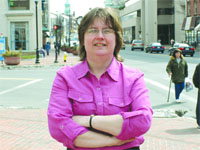
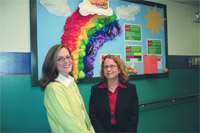
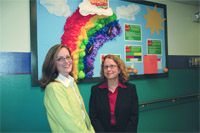
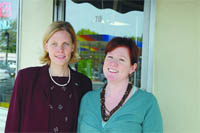
Sarah Tanner and Tracy Trial

Sarah Tanner (left) and Tracy Trial say the Young Leaders program was formed to recruit new philanthropists into the United Way’s fold.

There’s a flurry of new ideas flying about on Mill Street in Springfield, as some of the area’s young professionals kick off their first year as philanthropists for the United Way of Pioneer Valley.

The initiative is called the Young Leaders’ Program, and its mission is to cultivate a new cadre of community and volunteerism ambassadors, through community involvement, learning opportunities, and social and networking events. It targets the under-40 set, and was introduced to the region this year as part of the United Way’s outreach and recruitment work.

Sarah Tanner, vice president of Resource Development with the United Way of Pioneer Valley, said the idea of a young leaders program is not new; however, it’s a broad concept within the United Way that can be tailored to various agencies across the country.

“It’s an example of a best practice within the United Way, which can be used to expand the organization and introduce it to a new audience,” she said. “In this region, we’re hoping to use it as an agent of change that appeals to the under-40 crowd.”

One for the Ages

In some respects, Young Leaders is centered on community service, while in others it’s a social program, which pulls a number of young professionals together through a series of networking events. Tanner, who helped institute such a program in New York City, said the initiative typically reflects the region it serves.

“New York is a very active, corporate environment, and the program there was a perfect fit,” she said. “But in the Valley, the chambers of commerce and other organizations really take care of that social component.”

After careful consideration, the United Way of Pioneer Valley chose to use a mix of three components to introduce Young Leaders to the area, said Tracy Trial, the agency’s director of Individual and Planned Giving.

“The first piece is community involvement,” she said. “We are working to identify some volunteer opportunities that appeal and are accessible to this age group. The second piece is learning opportunities, which will provide educational programs that are relevant to professional and personal development within the under-40 set, such as meetings with civic and community leaders or financial-planning seminars.

“The third piece will be that social aspect,” she added. “We’re going to try to stay away from loose cocktail hours, and hold some meaningful events, perhaps tied in with larger events taking place in the region or within the United Way.”

To create these events, a steering committee made up of young professionals in the area has been formed, and work is now underway to formalize Young Leaders and add to its ranks.

“The group will also raise funds and determine where those funds will go within the community,” said Trial, “which is something we know is important to this age set. They like to see the impact their dollars are making.”

Follow the Leaders

Gainer O’Brien, a steering committee member and creative director with Darby O’Brien Advertising in South Hadley, said the three-pronged approach to marketing Young Leaders and recruiting new people appealed to him because of its creativity, and its understanding of the generation it is targeting.

“The Young Leaders program hopefully will allow me to do some good in the community, forge friendships with other young business people, and do so without having to make a huge financial investment,” he said. “Most young people, like myself, have more currency in time and effort than in monetary donations. I look forward to approaching the program with a creative eye and working with others to make it relevant and unique.”

Similarly, fellow committee member Jayson Falcone, managing partner of Falcone Retail Properties of Springfield, said he liked the United Way’s broad approach to community service and philanthropy.

“I’m a new member, and I saw this as an opportunity to get involved with a great organization,” said Falcone. “I heard fantastic things, like the high-level view they take toward a locality, which is something I think our region needs.

“The United Way chapters are also not dedicated to any one niche, and they evolve their mission over time,” he added. “That’s appealing to me, and Young Leaders seemed like the appropriate way for me to get involved. It’s a group of entrepreneurial minds who are already doing things, and now we’re mobilized.”

Among the issues Falcone said he’d like to tackle in his new post are homelessness in the region and the lack of quality job opportunities.

“This area in general is ripe for a next generation,” he said, “for people to step forward on all levels of philanthropy. I look forward to sharing my time and my ideas.”

O’Brien and Falcone’s first impressions are not far off from the message the United Way is trying to convey across the country — that a new generation is poised to take on its mission, and therefore the face of the organization is changing, as well.

“This is not your father’s United Way,” said Tanner. “Nationally, there is a shift toward more proactive programming, and a focus on finding solutions to long-term issues. We’re moving away a bit from the annual campaigns, and measuring our impact in specific areas.”

The Young Leaders are playing a major part in that evolution within the United Way — by identifying the causes they hope to support, various Young Leader groups across the nation are combating some very real issues on a local level and positively affecting various communities’ quality of life.

In Burlington, Vt., for instance, Tanner said the Young Leaders chose to battle truancy, and since beginning their work have spurred a double-digit drop in truancy rates.

“Every group has autonomy to pursue the issues they feel are pressing in their community,” she said, “but at the same time, we’re creating a national grid of sorts, and a ripple effect that spans the country.”

Building a Legacy

As the program moves forward, said Tanner, the Pioneer Valley Young Leaders have expressed interest in working with children and families and increasing financial stability on both individual and community levels. As work in those areas begins, she added that continued attention will be paid to the group’s unique identity, to ensure that Young Leaders doesn’t get lost in the shuffle.

“There are many under-40 programs popping up,” she said, “and our first task will be to differentiate ourselves from those. We all need to rise up and find our own value points, while at the same time not tear each other down. That’s huge.”

Tanner added that a second challenge will be keeping the program going strong during this important launch phase.

“We know there’s a high demand for programs for the under-40 set, and also for people to volunteer,” she said. “We need to keep our own program moving, and not let it be an incubator for too long, so people won’t lose momentum or faith.”

Tanner said the United Way of Pioneer Valley is again turning to its Young Leader steering committee to keep that energy flowing.

“These are people who are already very involved in the area, and in their own right are fabulous,” she said. “Now, we have them sitting around the same table, so I feel strongly that something great is going to come out of this.”

Jaclyn Stevenson can be reached at[email protected]

Sections Supplements
Tradition and Innovation Make Tony and Penny’s a Hidden Gem
Tony & Penny's Sign

The sign isn’t visible from the center of town, but most residents can point the way to Tony & Penny’s.

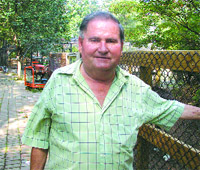
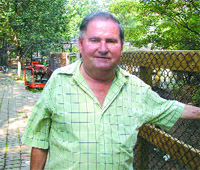
Tony and Penny’s restaurant and banquet hall is tucked away on a quiet side street in Ludlow, not far from Turnpike Exit 7, but in many ways miles removed from the bustle on Center Street.

Still, the locals know the way, and they often point visitors in the right direction.

That could be one reason why the venture is going strong after nearly 30 years in business. Its owner, Portuguese emigré Antonio Sebastiao, said the restaurant side of the business is steady, while requests for banquet and catering services are brisk, to say the least. Both off-site and on-site, Tony and Penny’s caters anniversaries, birthdays, funerals, corporate dinners and meetings, and other events, including weddings, which in the Portuguese tradition, said Sebastiao, can be very large affairs — sometimes with 200 to 500 guests.

“Right now, we can only handle about 20% of the calls we get,” Sebastiao said. “We try to bring quality food to the table, especially seafood, and make sure that our customers are getting their money’s worth — I think that’s part of the reason for our success.”

Sebastiao’s own story is one that illustrates the American Dream. He came to the U.S. at 21, taking a job in a factory earning just a few dollars a week.

“I couldn’t support my family on that,” he said, “and I’d always wanted to have a restaurant.”

He started mulling ideas for an eatery, using the Americanized versions of his name and that of his wife, Piedade.

History in the Making

Tony and Penny’s opened its doors on East Street in Ludlow in 1980, at the time a small pizza shop. Five years later, Sebastiao moved the business to its current location on Canterbury Street, formerly the town’s Italian Club, built in 1936.

He purchased the building in 1983 and spent two years remodeling, creating a small dining area with a hometown feel, a take-out window, and a larger banquet area for private functions, which can accommodate about 220 people.

Sebastiao also revamped the menu to offer finer dining and a number of Portuguese selections to honor his heritage and that of a large faction of Ludlow’s population. Today, the menu has been expanded to include American and Italian offerings as well, reflecting Sebastiao’s new home and the history of his restaurant.

The combination has proven successful. What began as a small mom-and-pop shop has grown to become one of the busiest banquet facilities in the region.
“Ludlow is not a town with a big, busy center,” he said. “We don’t have big retailers drawing people in from other places. What we do have are people — residents who are our fans and keep us going.”

Many of those residents are frequent visitors to Tony and Penny’s, either as banquet guests or Friday night diners. Recently, Sebastiao said the regulars have found themselves waiting for a table more frequently, and though they hate to wait, it’s a clear sign of the restaurant’s growing popularity.

“When I first opened, I thought this place was too big,” Sebastiao remembers. “Now, sometimes I think it needs to be five times bigger.”

Fine Kettle of Fish

Regulars often patronize Tony and Penny’s for the authentic Portuguese cuisine, including traditional dishes such as Mariscada (half a lobster, clams, scallops, and shrimp in a traditional Portuguese spicy red sauce, served in a iron pot) and Bacalhau (salted cod topped with roasted peppers and extra virgin olive oil).

However, those specialties have also attracted customers from across the Northeast, many looking not only for Portuguese dishes, but also for fresh, innovative seafood.

Sebastiao explained that seafood is a staple of the Portuguese palate, and therefore Tony and Penny’s regularly offers a wider array of fish and shellfish than most eateries.

He listed among them lobster (usually found in the front of the restaurant, giving children a thrill from their oversized tank), scallops, cherrystone and littleneck clams, cod, schrod, and mussels, often with a unique mix of spices and grains such as saffron, chorizo, and red pepper.

“Seafood is a very expensive part of our business,” said Sebastiao, “but we do a lot of catering because of it — we’ve been doing more in the eastern part of the state, especially in the Boston area, and within other Portuguese communities.”

Moving ahead, Sebastiao said he’s still considering an expansion or a second location, perhaps bringing Portuguese culture to another community.

There are no firm plans on the drawing board — Sebastiao nearly opened a second location in Wilbraham two years ago, but lacked the necessary management and the time — “it’s just too busy here,” he said.

He has three daughters, who have chosen careers outside of the restaurant business. Sebastiao said he still holds on to the wish that some day he can pass his restaurant on to one of them, but concedes that he understands their choices, too.

“They went to college and took jobs in their field of study, and that’s what you’re supposed to do,” he said. “I also think they recognize what a harsh job owning a restaurant can be. I can work 9 a.m. to midnight and still have things to do. You never know how business will be from one day to the next, and it’s hard to get started.

“When we first opened, it was hard to make ends meet,” he continued. “It’s different now … but the work has not changed.”

Down the Street, Take a Left

Still, Tony and Penny’s continues to attract new diners and a steady stream of catering clients.

“I have no complaints,” said Sebastiao. “Especially being in a small town, located on a side street.”

Indeed, plenty of people know the way to Antonio and Piedade’s place, and look forward to pointing toward Canterbury Street for many years to come.

Jaclyn Stevenson can be reached at[email protected]

Features
Turley Publications Makes an Award-winning Recovery from the Flood of ’05
Doug and Keith Turley

Doug (left) and Keith Turley, stand in the renovated lower-level production room at Turley’s Palmer headquarters. The windows seen at the left were covered by water by mid-morning on that fateful Saturday.

By mid-morning on that fateful Saturday in October 2005 when the Quaboag River spilled over its banks, Pat Turley had called his wife to tell her he thought they’d lost everything. But then, the water that had invaded the publishing company Turley and his brother started 43 years earlier — and now threatened millions of dollars worth of printing equipment — stopped rising, and it receded almost as quickly as it had risen. The problems facing Turley Publications had really only started, but what would become an award-winning process of disaster recovery was already well underway.

Pat Turley remembers retiring to his office for a private moment, but not before locking the door.

He feared that he might get emotional, and didn’t want any of his employees, including his two sons, walking in. It wasn’t that he didn’t want anyone to see him crying — he just didn’t want anyone to think things were “really bad.”

Which … they were.

It was Saturday, Oct. 15, 2005, mid-morning by Turley’s recollection. The flood waters that hours earlier had just started to approach the headquarters building of Turley Publications Inc. in Palmer, the business he started with his brother, Tom, some 43 years earlier, had by that time crashed through air conditioners in windows on the lower level, nearly reaching the ceiling tiles in the seven-foot-high newsroom/production department.

The water was still rising, Turley recalled, and no one knew how high it would go. “If it flooded the upper level, where our printing presses were, we were dead,” he told BusinessWest, admitting that those thoughts, facilitated by the knowledge that he lacked flood insurance, were already crossing his mind. But by the time Pat’s son, Keith, knocked on his father’s door to tell him that things would be OK, the water had started to recede.

“I thought I was seeing my life’s work floating away before my eyes,” the elder Turley recalled. “This was my baby, and it was disheartening to see what was happening to it.”

By nightfall, the waters of the Quaboag River had retreated across Water Street, and the Turley company had already shifted gears — from disaster-watching (and praying) to disaster recovery. That Sunday was spent cleaning and mopping up the press room, said Keith Turley, the company’s executive vice president, noting that print deadlines for the Monday editions of the UMass-Amherst and Boston University daily newspapers were met.

“The presses never actually stopped,” he told BusinessWest, adding that it was only through a heroic effort involving everyone from reporters, editors, and truck drivers to the Palmer Fire Department, that the company was able to make that statement. And there were many other times when that phrase would be put to use, both on that first weekend and months after the waters had receded.

Indeed, the contributions of many individuals, municipal departments, and local, state, and federal agencies would combine to create an inspiring business-recovery story. So good, in fact, that it recently earned the company the 2007 Phoenix Award for Small Business Disaster Recovery from the Small Business Administration (SBA).

The award, presented last month in Washington, D.C., was granted in part because the company’s presses, which print 15 weekly and three monthly publications for the Turley chain and a host of other newspapers and magazines, including BusinessWest, kept running. But the bigger story was that Turley achieved its recovery without laying off any of its 230 or so full-time employees, although times would become tough for the business, which was facing $1 million in damages and would wait six months for a disaster-recovery loan from the SBA.

“We had graphics people working at six-foot-long tables — they were working elbow to elbow and doing it for six months; they were tremendous,” said Pat Turley. “How are you going to lay off anyone like that?”

Beyond the award, the flood has given those at Turley some practical lessons in disaster preparedness. The business is now the proud owner of flood insurance — it was purchased within days after the water receded — and central air conditioning. It also has a series of contingency plans in place if disaster strikes again.

Some of the bullet points in that plan were being contemplated just a few weeks ago, when the Quaboag River again spilled over its bank.

“We didn’t need to implement any of those contingencies,” said Keith Turley. “But we had them if we needed them. We were ready.”

He couldn’t say that when the subject turned again to that fateful Saturday morning.

Current Events

The younger Turley recalls thinking that he suddenly knew what it must be like to live in a fishbowl.

He was looking out the wide but shallow windows of the newsroom/production area, where 40 people worked, soon after being summoned to Palmer at 6 a.m. … and seeing nothing but muddy water. It had risen well beyond the tops of the those windows, Turley remembered, adding that while there wasn’t much water inside yet, perhaps a few inches, he understood that it was only a question of time — and probably not much of it — before that would no longer be the case. So he, his brother, Doug, several employees, and some firefighters scrambled to get whatever they could to higher ground.

They grabbed computers, servers, production equipment, some paper records, and whatever else that was easily transportable, and made several dozen trips each up the short flight of stairs to the upper floor of a building Turley compared to a split-level ranch. Only some phones, a few laptop computers, and one desktop model were lost as the water eventually broke through those windows.

That was just one of the impossible-to-forget scenes that played themselves out over a 48-hour span that began just past 5 a.m. on Oct. 15, the day when a week’s worth of heavy rains that pummeled the Pioneer Valley finally came to a merciful halt — a least a few hours too late.

“Most of it is a blur,” Turley said of that first weekend. “But there are many things I won’t forget, especially how people came together to help.”

Turley told BusinessWest that, ironically, among the things lost in the flood of ’05 were the company’s archives on the famous flood of 1955, which devastated many communities in the Pioneer Valley.

That was the last time the Quaboag River, just a few hundred yards from the company’s front door, had gone over its banks, he recalled, adding that the building on the aptly named Water Street became Turley’s home in 1962, and until the disaster of two years ago there wasn’t anything approaching a flood at that address.

“That’s why we didn’t have flood insurance — it never entered our minds,” he said, adding that, on a few occasions, there had been flooding of the athletic fields across the street from the plant. So when those fields were again covered with water in the early morning of Oct. 15, there was no immediate cause for alarm.

But all that changed when the water reached the street, and then started lapping at the building itself. “It was a very fast-moving event,” said Turley, noting that the flood waters rose three feet in one hour that morning and, overall, about 12 feet over three or four hours, and then receded just as quickly.

Pat Turley also remembers the fast pace of events, and recalled thinking just how quickly all that he had built appeared to be lost.

“It took me 40 years to build the business, and I thought it was going to be gone in a minute,” he said. “We kept watching the stairs … the water kept climbing up them.”

Eventutally, though, it would start to retreat, leading to a huge sigh of relief, but also realization that the problems had only begun.

The Beat Goes On

Jen Hoboth, editor of the Journal Register, the weekly paper devoted to coverage of Palmer, didn’t witness the flooding of her offices first-hand.

Like many employees of the company, she had difficulty getting to the plant because the streets surrounding it were flooded and closed off to traffic. And besides, she had work to do; Palmer’s most severe flooding in nearly a half-century would certainly dominate the front page of an edition that would hit the streets a few days later.

But while gathering news around town, Hoboth also received some from the Turleys, with whom she kept in touch via cell phone. When told that the space in which she worked was now underwater, Hoboth created a mental picture of what she thought that would look like; it turned out to be quite inaccurate.

“I thought everything would be just where it was before, but under water,” she said, adding that when she was finally able to see the damage, the reality was much different. “This was river water, and there was a lot of mud; the water pushed everything around, and desks were on top of one another. It was a mess.”

There wasn’t much time to contemplate the scene — again, because there was a newspaper to put out. Working from their homes, where they could write and also download photographs, reporters, editors, and photographers managed to get the Journal Register and the company’s other publications out on schedule.

While doing so, Hoboth said she and others could easily relate to the situations that faced journalists in Florida during Hurricane Andrew, in New Orleans during Katrina (only a few months earlier), and other disasters where writers and editors weren’t just reporting news, they were part of it.

“This was a little different because our homes weren’t destroyed and our personal lives weren’t turned upside down,” she said. “Still, our offices were flooded, and we couldn’t work in them. It was surreal.”

Like Hoboth, Keith Turley told BusinessWest that, for much of that first week after the flooding, he and others were preoccupied with various tasks that were right in front of them. “There just wasn’t much time to think,” he said, adding quickly that when there was time, there was plenty to think about.

For starters, the news/production area, while now dry, was completely unusable, and it was clear to all concerned that it would be so for several months. The first priority was to find more permanent places for people to work.

Some were relocated to other offices — Hoboth, for example, was given desk space in the company’s Ware facility, and others went to one in West Springfield — while others were squeezed into every usable space in the building’s upper floor.

The conference room was soon home to five production personnel, while every bit of floor and wall space was put to use. “We had people working shoulder-to-shoulder and back-to-back,” said Hoboth. “You had to be pretty skinny to get between the chairs.”

While shuffling personnel into new workspaces, the Turley company started replacing lost equipment and rebuilding damaged space. The process was costly, and money was tight, said Keith Turley, adding that the company was helped through it all by vendors, customers, employees, the Federal Emergency Management Agency (FEMA), MEMA (its Baystate counterpart), and the SBA.

“This wasn’t long after Katrina, and FEMA was still getting heavily criticized for how it handled that disaster,” he said. “But they were great with us; they helped us get back on our feet.”

As part of that effort, the agency connected the company with the SBA, which eventually granted it a $977,000, 30-year, low-interest loan that has greatly facilitated the recovery process.

Both Keith and Pat Turley said the company would have survived without the loan, but it made the process of recovery easier, and without any staff reductions.

To say that the loan probably saved 25 to 30 jobs wouldn’t be a stretch,” said Keith.

Bank Statement

The Turley company now has a wood-and-glass award for its front lobby as a testament to its inspiring recovery story. Pat Turley went to Washington to pick up the hardware and say a few words.

Not a polished public speaker, by his own account, Turley said his task was made harder by the fact that he had to follow Commerce Secretary Carlos Gutierrez to the podium. He said he told the audience the same thing he was now telling BusinessWest:

“People are good … their basic instinct is to do good; when they see someone down, they want to help,” he said. “We had employees who were scaling fences — they could have been hurt — to get inside the property and help us. Townspeople helped, and employees from all across the company came in; we had people in the newsroom hauling muck out of the press area.

“That phrase ‘family business’ is overused somewhat,” he continued. “But that’s how we’ve always run this business; yeah, you’re looking out for the Turleys, but you’re also looking out for 250 families.”

His son, Keith, agreed. “When adversity strikes, you learn a lot about yourself, and also about who your friends are,” he said. “It’s the same for a company. My father runs this company to high ethical and moral standards, and on the 15th and 16th of October in 2005, that paid us back.”

Beyond the gleaming award, Turley has taken home many other things from its experiences during and following the flood of ’05. First and foremost, there is respect and gratitude for everyone who helped. There is also a deep appreciation for the need for businesses to think about disaster prevention and recovery — and to ultimately do more than think about it.

The Turleys shared some of these thoughts in a trade industry magazine piece on that subject. But they told BusinessWest that these lessons, pertaining to everything from back-up generators to the need for regular insurance audits, apply to businesses across every sector.

The Palmer plant now has thicker windows that will better withstand flood waters that reach them, said Keith Turley, also noting the aforementioned central air conditioning and other steps designed to prevent future calamity. For example, important documents are now stored well above floor level, and the company’s vans and trucks are now moved to a higher, safer location at the first hint of flooding.

“We’ve changed things around a lot since the flood,” said the elder Turley. “We’re not all set, but we’d do better another time with the same amount of water.”

While the company has contingencies in place, its larger plan is to move to higher ground — literally, said Pat Turley, noting that he is searching for a site in Palmer that has both the requisite space and desired distance from the Quaboag River.

Press Run

What happened at Turley Publications during the flood of ’05 was downplayed somewhat in the Oct. 20, 2005 edition of the Journal Register. It was, as they say in the business, below-the-fold news.

The bigger, better story, the one about the company’s recovery, will likely see even less press coverage, which is regrettable, because it is inspiring and provides valuable lessons for all businesses.

As Pat and Keith Turley said, the waters from the flash flood went as quickly as they came. But the lessons — and memories of unselfish acts — will always be there.

George O’Brien can be reached at[email protected]

Sections Supplements
STCC’s Student Business Incubator — Where Ideas and Passion Come Together
Nancy Kotowitz

Incubator tenant Nancy Kotowitz has created a business out of helping people become better step-parents.

Since its formation in 2000, the Student Business Incubator in the Andrew M. Scibelli Enterprise Center in STCC’s Technology Park has helped many young, and not so young, entrepreneurs turn ideas and dreams into successful ventures. Technically a room with nine cubicles and a mailing address, the incubator is, in reality, a community of determined business owners trying to learn by doing.

Nancy Kotowitz says it’s hard enough raising one’s own children, let alone someone else’s.

She should know. She has two stepchildren in addition to the five children she had with her first husband and another with her second spouse. She told BusinessWest that, not long after her second marriage, she went on a mission to become, in her words, the “perfect step-parent,” and later went about creating a support group for those facing the same challenges she was.

Her many experiences in this realm led to her conclude that there was a huge need for support services within the large step-parent population, and she went about trying to meet it.

Her vehicle is called step-parenting.com, a Web-based business and one of the many intriguing ventures in various stages of development within the Student Business Incubator in the Andrew M. Scibelli Enterprise Center (SEC) in the Technology Park at Springfield Technical Community College.

Technically speaking, the incubator is a large room on the building’s ground floor that contains nine small cubicles (eight are currently occupied) in which each tenant entrepreneur may conduct some business duties. But in reality, said the facility’s coordinator, Karen Knight, the incubator is actually a community — one without any real walls.

The student entrepreneurs, who have ranged in age from 14 to around 70 since the incubator opened in 2000, share their experiences, frustrations, and hopes for the future. They also take valuable lessons in business and how to grow a venture from agencies within the SEC and individuals across the region who have been there and done that. And ultimately, they work to take their often-unique product or service to the marketplace.

“There is a lot of cross-fertilization of ideas here; it’s an extraordinary place,” said Knight. “People share resources, but they also share their dreams.”

The current mix of businesses is representative of the diversity that has defined the facility since it opened its doors. In addition to Kotowitz’s venture, there is Jx2 Productions, an event-management company that provides DJ, lighting, sound, staging, and other services; thingreen computing, a remotely hosted desktop services venture; Multicultural Multimedia, producers of promotional advertising video clips for local Latino and Hispanic-owned businesses; Kristoriya, a company that designs and distributes customized decorative gift baskets; Tip Off Sales Force, a provider of in-store merchandising and promotions for specialty product manufacturers; Beyond Brackets, creators and producers of an innovative shelf and bracket system; and the latest addition, Irie Designz, which designs and prints high-end T-shirts.

The entrepreneurs are as diverse as their ventures. Andrew Jensen, 20, a graduate of Agawam High School, started Jx2 with his twin brother when he was 14, and has grown it steadily since. Viktoriya Romanchenko, who has partnered with Kristen Thornton to operate Kristoriya, immigrated to the U.S. from Russia earlier this decade. Paul Wilson, 45, owner of Irie Designz, is a native of Jamaica who came to the U.S. in 1995 and spent several years in the Army, among other diversions, before getting into the screen-printing business.

Knight and Diane Sabato, director of STCC’s Entrepreneurial Institute at the SEC, told BusinessWest that there is a lengthy process for getting one’s name and business on one of the cubicles in the incubator.

There are interviews, tours of the facility, an eventual request for a business plan, and some more interviews, said Sabato, adding that, in addition to good answers, officials at the facility are looking for something else — passion, for both a concept and the rugged process of making it into a viable business venture.

And when asked how one recognizes passion, Sabato said it’s not very hard.

“They exude it,” she said of those who possess that quality, adding that this makes it fairly easy to spot those who don’t.

In this issue BusinessWest goes inside the incubator, or hatchery, as officials there call it, to see how it helps tenants get their ventures off the ground — while creating a self-supporting entrepreneurial community in the process.

Not an Eggs-act Science

The business card/bookmark that Kotowitz hands out for her business describes her Web site as “First aid for your stepfamily.” It includes some bullet points that hint at the challenges her clients and potential clients face, and some of the many things that can be accomplished by seeking help, such as:

  • ‘Get your step-child to like you before your marriage self-destructs’;
  • ‘Pacify your lover and your stepchild without losing your sanity’;
  • ‘How to outmaneuver the most devious ex’; and
  • ‘How to win and influence your stepchildren’s lives.’

“People from all over the world have come to this Web site; there is a huge need for this service,” said Kotowitz, adding quickly that she knows her business is viable because others are trying to emulate what she’s doing.

Learning about step-parenting came largely by doing — and listening to others who had experience in the subject and wisdom to impart, said Kotowitz, adding that this is basically the same approach she and others take as tenants of the incubator, where they are, as the name implies, students of business and entrepreneurship.

Kotowitz said that she and other tenants are obviously skilled in whatever it is they do or make. But this skill is never enough to make a business successful, she continued, adding that the incubator and its various programs have provided help with everything from marketing to reading the economic tea leaves.

In her case, advice from officials with the Small Business Development Center, SCORE, other agencies headquartered at the SEC, and staff with the Entrepreneurail Institute helped convince her to convert what she intended to be a nonprofit venture into a for-profit business — the operating model for which is still a work in progress.

And at present, step-parenting.com isn’t as profitable as she’d like, in part because she finds herself essentially giving away her products and services to those desperately in need of them. Finding a balance between providing help and turning a profit is one of the things she’s trying to master.

“Experiential learning” was the phrase Knight used to describe how the incubator, one of two at the SEC (the other is for established businesses), builds a bridge between the classroom and the real (business) world.

It does so by providing both physical space and a forum in which ideas can become successful business ventures, said Knight, adding that students learn from each other, administrators at the incubator (who are known as ‘facilitators,’ not teachers), experts in subjects ranging from marketing to sales, and business owners in the larger incubator within the SEC.

“These students have ideas, and they have enthusiasm,” said Sabato. “What’s missing is experience in business, and that’s what we try to provide; this is a learning environment designed to prepare people for what they’ll find when they leave here.”

This environment has enabled many to successfully cross the bridge Knight described. Blondell McNair is one of them.

She is the owner of Blondell’s Fashion Gallery and the Designer Fashion School of Technology, a multi-faceted business she operates out of a 1,000-square-foot studio in the Indian Orchard Mills. Before moving there nearly a year ago, she spent three years in the incubator, honing her design skills, but mostly learning about what it takes to stay in business.

“My time at the incubator helped me develop a lot of skills, like knowing how to market my business and utilize my time better,” she said, adding that when she talks of being a procrastinator, she uses the past tense.

Beyond time management, however, McNair said the incubator helped her broaden her focus — from her designs, for people of all ages, to the many nuances of running a business.

“That was the biggest help to me,” she told BusinessWest. “Before, I was doing my business, but not doing the things that would help my business grow. Today, I’m more keenly aware of what business is all about.

“I’ve been doing this now for four or five years, and there have been a lot of ups and downs,” she continued. “Having people to talk to during those down times was a huge help; without that encouragement, I might have given up.”

Overall, the incubator has played a key role in the establishment of more than a half-dozen businesses now operating across the Pioneer Valley, said Sabato. The products range from Blondell’s fashions to a brand of gourmet ice cream, she noted, adding that while most of the entrepreneurs who started the ventures remain sole proprietors, there is real hope that they will someday create jobs for the region.

Birth of a Notion

Knight, who assumed her role in 2006, told BusinessWest that one of the things she enjoys about the student incubator is its fluid nature. Indeed, while most tenants stay for more than a year, and some much longer, there is a steady dose of movement to the tenant mix.

This serves to enhance the ongoing learning experience by bringing a steady supply of enthusiasm, energy, and new voices to the discussions about how to succeed in business.

The latest arrival is Wilson, who started developing an interest in design while working at a small garment factory in Kingston after graduating from high school. There, he heeded the advice of his uncle who told him to “try to find out how everything works.” He did, learning how to make silk screens and actually print the designs on the garments.

It’s taken a while to bring his design skills and entrepreneurial drive together, but he has high hopes for Irie Designz. He already has contracts to produce T-shirts for some salons in this area and New York City, but he expects his contacts in the Caribbean to generate larger deals involving sports teams, musicians, carnivals, and other entities.

“I’ve always been a very technical guy; I’m fascinated with how things work,” he said. “But some of the intricacies of business are missing, and I hope my time in the incubator will help me become a better business person.”

Wilson, like Kotowitz and John Reynolds, co-owner of Beyond Brackets, is an example of an older, non-traditional student who has become a tenant. Others, like Jensen, have earned a coveted cubicle while still in high school.

While only 20, Jensen, considered one of the rising stars in the incubator, has already put a number of accomplishments on his resume. He was named a Small Business Administration Young Entrepre-neur of the Year for Massachusetts in 2006, for example. That was a busy year for Jensen; he was also named a Young Entrepreneurial Scholar as part of the YES program administered by STCC, and one of the Top 25 Young CEOs of the U.S., as identified by the Initiative for a Competitive Inner City. Meanwhile, he also won a Harold Grinspoon Charitable Foundation Entrepreneurial Spirit Award .

All this, and much more, for an enterprise he started with his brother, Erik (hence the name Jx2). The name hasn’t changed, but Andrew is the only Jensen still involved, and he has big plans for his venture, to which he has added a sister business called JenMark Events, which handles a broad range of corporate functions.
These include a recent conference for Texas Instruments’ T3 Educational Division and the New England Bar/Bat Mitzvah & Party Showcase, slated for Oct. 7 at the CT Expo Center. Jx2, meanwhile, provides a wide range of music services for proms, birthdays, and other events. In fact, Jensen didn’t just go to his high school prom at Chez Josef in 2006 — he managed the event.

Jensen’s inventory of equipment is rather extensive — from Madison 18” subwoofers to Gemini DJ mixers — and he hopes to complement it with practical lessons in business management at the incubator and the SEC as a whole.

“There’s a lot of knowledge and experience in this building; there’s so much going on and so many people you can learn from,” he said. “I love bouncing ideas off people and picking their brains.”

Getting a business off the ground isn’t easy, and neither is earning a cubicle in the Student Business Incubator.

There is one slot currently open, said Sabato, and competition for it has been keen, with the winner, from among two or three finalists, to be chosen within a few weeks.

Interested applicants, who need only be attending an area high school or college to be eligible, start with an interview and a tour. There is then a written introduction, in which students explain everything from their product to their market to their competition. Applicants are then asked to submit a business plan and references; the former can be preliminary in nature but should address short- and long-term goals, market research, start-up and operating costs, financing, break-even analysis, and much more. All this goes to a screening committee — comprised of members of the Entrepreneurial Institute, STCC faculty, business owners, and student incubator tenants — which conducts a thorough interview.

It’s designed to discern the requisite level of passion, said Knight, but also determine not only what the incubator can do for the applicant, but what the applicant can do for the incubator.

Indeed, this is a community, a team in some respects, she said, noting that when Jensen managed a large event recently, a number of other tenants were on hand to help and show support.

This camaraderie is appealing to Kotowitz, who said that enthusiasm is palpable inside the incubator, and it helps tenants stay upbeat and survive the downs that inevitably come with the ups.

“I’ve had a lot of people say, ‘why are you doing something so negative?’ or ‘why are you doing this?’” she said of her unusual venture. “Being here is like a breath of fresh air; everyone is up, they’re happy, they’re on your team. They say, ‘you can do this,’ and you need to hear that to keep going.”

It’s Not Kid Stuff

“How to outmaneuver the most devious ex.”

Sounds like a lesson plan born from experience. It also sounds like a skill that can be acquired only by doing — and listening to others who have gone before you.
As Kotowitz said, step-parenting isn’t easy. Neither is taking an idea and turning it into a successful venture. The incubator, or the hatchery, was created to make it a little easier. There, students can learn about crafting a business plan, developing some marketing materials, and even some basic accounting. They cannot, however, be taught passion.

They have to bring that with them.

George O’Brien can be reached at[email protected]

Features
Museums10 Prepares a Celebration of the Art of the Book
Artwork created with or inspired by books of all types, which will be on display as part of BookMarks.

Artwork created with or inspired by books of all types, which will be on display as part of BookMarks.

Last year, residents and visitors to the Pioneer Valley alike were asked to take a virtual tour of another destination through Museum10’s inaugural, cross-promotional arts and culture endeavor, GoDutch!.

This year, however, Museums10 has closed the book on Dutch culture, and opened a new volume on the written word, and how it has been historically celebrated right here at home. Museums10, a partnership of 10 museums in the upper Pioneer Valley, has announced its second cross-cultural initiative, titled BookMarks: A Celebration of the Art of the Book.

The program follows the success of GoDutch!, which explored the art and literature of the Dutch culture past and present. BookMarks will be the largest Museums10 event of the year, geared toward its mission of using the region’s museums and cultural attractions as magnets for cultural tourism and, ultimately, economic vitality in Western Mass.

According to Tony Maroulis, project coordinator for Museums10, the goal for GoDutch! was to increase attendance at the participating museums by 5%. Instead, the event boosted visitation by 15% across the board, and in some venues by as much as 40%.

This year, the group will be building on that success, and also taking BookMarks in a few different directions, aimed at further increasing visitation to its participating museums and marketing the various attractions within the Valley.

“GoDutch! was a success on many levels, we really did well,” said Maroulis. “The drawback was that the season was really long – it ran from January to the end of August, and that’s a really long time to sustain momentum.”

With that in mind, BookMarks has been planned to run for a shorter period —from September 2007 to January 2008 – a stretch that coincides with the Pioneer Valley’s busiest season for tourism.

In addition, targeted weekends have been created this year, to keep interest and public knowledge of BookMarks programs from waning: Art of the Book Weekend will kick off the initiative, from Sept. 20 to 23, and will be followed by Books Out Loud, from Oct. 12 to 14.

Two weekend programs are still in the planning stages, he said, adding that one will explore the effect technology has had on books and literature, while the other will be a science fiction weekend, planned to coincide with Halloween.

“The weekends looking at different topics differ from our schedule last year,” said Maroulis. “BookMarks already includes quite a few programs — it’s packed, and the weekends help to point out the various options to people.”

Ties the Bind

And similar to last year’s endeavor, several free-standing programs have also been scheduled throughout the fall and winter months at the museums and at area businesses, which speaks to the cross-collaborative goals of Museums10 and of BookMarks.

“This is where we start to meet our mandates in promoting the region,” said Maroulis. “By involving the business community in cross-promotional events, we’re getting people into the museums, but also the stores, restaurants, and hotels.”

According to some data collected during last year’s GoDutch!, Museums10 has had some success in this arena, as well.

Maroulis said the organization recorded about 105,000 visitors to GoDutch! exhibits and programs. Of the visitors surveyed, 60% reported that they were also patronizing stores and restaurants during their visits, and a whopping 40% said they stayed overnight in the Valley – a percentage that was higher than expected, and certainly welcomed.

“There was real economic impact, and that’s exactly what we wanted to hear,” he said, adding that, while applying for a grant for BookMarks from the Massachusetts Cultural Council (the group received $75,000 toward the program), Museums10 estimated a $10 million boost to the local economy during GoDutch!.

“We’ve done a lot more this year, talking with businesses and giving them ideas, not just saying ‘come up with something,’” he said, noting that readings by authors and poets has been one area in which businesses have shown early interest.

To date, businesses such as the Odyssey Bookshop in South Hadley, Thornes Marketplace in Northampton, and Amherst Cinema, which is mulling a mini-film festival inspired by literature, have expressed interest in partnering with Museums10 to create events.

In addition, the organization is actively seeking corporate sponsors, and has already begun preliminary talks with Veridian Village in Amherst, a community geared toward Baby Boomers, and media sponsors WGBY in Springfield, Preview magazine of Easthampton, and WFCR in Amherst.

Maroulis said he hopes to see even more interest as BookMarks’ launch date nears, in part due to the theme Museums10 chose for its second foray into a multi-organization, cross-promotional, regional event.

“It is really unique for us to cross-promote,” he said. “this is something where people can piggyback on our initiative to add value to their events, and if they’re putting our name and our logo in their own materials, it’s just as valuable to us. Everyone wins, and there are very few scenarios like that.”

Literary Prowess

Maroulis added that BookMarks evolved from a desire to offer a program that leaned more heavily on the Valley’s exisiting merits.

He explained that curators who work within the museums initially introduced the idea of celebrating the art of the book, as well as the role books and literature have played in history and how that role has changed in recent years. They were looking for a truer, more organic, museum-centric theme, and added that unlike GoDutch!, which brought the art and culture of a completely different region to Western Mass., BookMarks is a perfect fit for the Valley, drawing on its long, literary history.

“This is a theme that makes sense for the Valley,” said Maroulis. “We have such a rich tradition of literature and art — that’s what the Valley is about.”

BookMarks will present programs or exhibits at all of Museums10’s venues, which include seven college museums, all located on the ‘Five College’ campuses in Amherst, Northampton, and South Hadley: The University Gallery at UMass, Amherst; the Mead Art Museum; the Emily Dickinson Museum and Homestead; the Museum of Natural History at Amherst College; the Hampshire College Art Gallery; the Smith College Museum of Art, and the Mount Holyoke College Art Museum. Two independent Amherst museums – the Eric Carle Museum of Picture Book Art and the National Yiddish Book Center – and Historic Deerfield complete the group. Maroulis said seven museum exhibitions will serve as the anchors for BookMarks:

  • Spiderwick from Page to Screen at the Eric Carle Museum, which will display materials from the books Arthur Spiderwick’s Field Guide and The Spiderwick Chronicles, which is currently being made into a feature film by Paramount Pictures;
  • The Write Stuff: The Material Culture of Literacy, presented at Historic Deerfield, displaying various objects related to reading and writing in colonial New England;
  • Two by Two: Lines, Rhymes, and Riddles, on display at the Mount Holyoke Museum of Art, including original artwork and poetry by Brad and Mark Leithauser, two brothers who collaborated on four volumes of art and verse;
  • Off the Shelf: Books from the Amherst Library Collection at the Mead Art Museum, displaying unique and limited edition volumes;
  • The People’s Book and Alpha Botanica at the National Yiddish Book Center, concentrating on the Five Books of Moses and a book of engraved alphabets by Sarah Horowitz;
  • Poetic Science: Bookworks by Daniel E. Kelm at the Smith College Museum of Art, featuring the work of the artist and book-binder, and
  • Bethan Huws at the University Gallery, UMass Amherst, featuring the artists’ work in text and language as a conceptual art movement.

To promote those wide-ranging events cohesively, Maroulis said Museums10 called on Barry Moser, who has lent his illustrative talents to more than 250 books, to create a logo for the event.

“We had a logo for GoDutch! last year that was cute, and people really liked it,” he said, “but I think they had a hard time making the connection between GoDutch! and Museums10.”

This year, the group has taken that into account, he said, noting that effective branding is key to the success of all cross-promotional events sponsored by Museums10, because of the wide range of activities and venues.

Stepping up to the Plate

“This year, we made sure to have Museums10 in the logo, to tell people who and what we are,” he said. “Another goal of ours is to really create a true sense of brand awareness.”

“Along with that, we’d of course love some brand loyalty – in other words, repeat visitorship.”

In keeping with that goal, Museums10 has already begun mulling 2009’s cross-promotional offering, hoping to take yet another tack and focus on gastronomy – and all things edible.

With a European country and a major mode of communication under their belts, Maroulis expects that this upcoming chapter in Museums10’s legacy will be a piece of cake — or at least include one.

Jaclyn Stevenson can be reached at[email protected]

Sections Supplements
OMG Expands Its Base While Spreading Its Unique Culture
Hugh McGovern and many members of the family at OMG.

Hugh McGovern (he’s way over on the left, behind the ‘189’ box) and many members of the family at OMG.

Tom Wagner says he certainly knows his way around the Itasca, Ill. Best Western.

By his count, he’s spent 25 to 30 nights at the hotel, just a few minutes away from Chicago’s O’Hare airport, while helping to orchestrate the assimilation of Illinois Tool Works (ITW) Buildex’s roofing business segment into OMG, the Agawam-based manufacturer of fasteners and building products that he serves as senior vice president.

And he’s certainly not the only one.

Indeed, many company officials, including President Hugh McGovern and Human Resources Director Sarah Corrigan, have logged significant air miles over the past six months to successfully complete the acquisition and subsequent creation of what is now known as OMG Midwest.

The $26 million acquisition provides OMG with added measures of diversity, expertise, and geographic reach, said McGovern, noting that the Illinois plant manufactures a number of products that will be new to the OMG catalog. These include such items as the AccuTrac automated insulation and seam attachment system, the polymer batten strip for membrane attachment, the eyehook seam plate, and reel-fast collated seam plates.

Those names mean little to those not in the commercial roofing business, but they’re well-known to anyone who is, said McGovern, adding that the acquisition makes OMG more of a one-stop shop for those in that multi-billion-dollar industry, and a more convenient stop as well.

“This acquisition will give us a Midwest presence, which will enable us to better serve customers in that region,” he explained. “When customers place orders, they expect to get those products tomorrow — they may even have a roof open and exposed to the elements. Now, we can serve those customers.”

When asked about the process of folding the Itasca, Ill. plant into the OMG operation, Wagner joked, “it’s like flipping a light switch,” meaning that it was anything but, and involved quite a bit more than replacing the ITW Buildex sign with the bright red OMG name and logo. There’s also the matter of imparting the OMG culture on the acquired facility.

And this is a company that does things … well, differently.

Take, for example, OMG Idol. That’s the name given to a talent contest, based on the wildly popular television show American Idol, that was just one of many events and programs the Agawam facility staged last year to build camaraderie and a sense of family at the seemingly ever-expanding plant. (For the record, the big winner of the singing contest was Alfredo Navarro, who works in the plant’s E-Coat Department, and won $300 for his efforts.

Other OMG culture-related initiatives include everything from traditional summer picnics to hot-dog-eating contests. Participants have applied some techniques learned from watching professional events on ESPN, from fork truck rodeos to races in Santa Claus suits on the OMG grounds — in August!

“A lot of companies will say they promote a family-like atmosphere,” said Corrigan. “We don’t just say it, we do it, and all those things we do, from the rodeos to the Frisbee-throwing competitions, have helped us attract and retain employees, and that has played a big role in our growth.”

In this issue, BusinessWest looks at OMG’s acquisition of the Illinois plant, and how it represents only the latest in a series of efforts to create growth opportunities for a company that has certainly built on its original foundation.

Fasten Your Seatbelts

“Tougher than nails.”

That’s a phrase you hear often these days, but usually in the context of middle linebackers and undersized shortstops. But it can also be applied to many OMG-distributed products — in a very literal sense.

Actually, the phrase Wagner used was “faster, easier, and stronger” than nails, and he applied it to several components of the company’s FastenMaster brand of products, launched in 2001. That line includes products like the LedgerLok ledger board fastener, which represents a significant improvement from the nail, he said.

“The typical way you attach a ledger board to a residence is to pre-drill and then crank in a lag bolt,” he explained. “It’s very labor-intensive for the contractor; this new product is saving that contractor time and money, and that’s just one example of how these products work. In an application where someone might have to put in six nails, they can now use two screws.”

Growth of the FastenMaster line, which now accounts for roughly 25% of OMG’s total sales (that number was slightly higher before the ITW acquisition) is just one of many developments that have shaped dramatic growth at OMG over the past several years, said McGovern, noting that acquisition of the Illinois facility was simply the latest of these steps.

Others include the ongoing introduction of lean manufacturing processes in both the Agawam and Itasca plants; investments in new equipment, including a $3 million coating facility; a sharp focus on safety that has led to the current run of nearly 600 days (1 million or so hours when one considers all the company’s facilities) without a work-stoppage accident; and the continued introduction of new products in both the roofing and FastenMaster lines, including something called the IQ Hidden Deck Fastener System.

Launched just a few weeks ago, the IQ system allows deck builders to quickly and easily install boards of various materials, thicknesses, and widths from above the deck, ensuring that no fasteners will be visible on the completed surface. The IQ system helps builders create finished decks that showcase the natural beauty of the wood, without interrupting the surface with visible fasteners, said Wagner, adding that continued new product development, in both business divisions, has been at the heart of the company’s growth in sales — from $60 million in 1999 to the projected $140 million for 2007.

“The key to our whole program is that we spend a lot of time talking to the end users of our products,” he explained. “I think that’s what sets us apart from other fastener suppliers.”

Taking the many recent developments and putting them together, McGovern spoke with authority when he said of OMG, “this is not just a screw company anymore.”

That is how things started, though, in 1981. That’s when the company, created by Art Jacobson and known then as Olympic Manufacturing (the International Olympic Committee forced a name change; it’s the only entity that can legally use that word, and it enforced its will a few years ago), distributed screws made for roof installation.

The company eventually started manufacturing such parts at a factory/warehouse built on the site of the old Bowles Airport in Agawam, and in both its roofing FastenMaster lines has moved well beyond manufacturing and distribution of what might be considered commodities (common screws).

“We’re trying to bring products to market that are innovative and driven by end-user needs,” said McGovern. “We’re constantly looking for ways to improve the application of our products.”

The original plant has been expanded several times over the past quarter-century, including a 128,000-square-foot addition completed in 2005, physical growth that effectively mirrors OMG’s drive to diversify the company.

But growth is visible well beyond Agawam.

Not the Usual Drill

McGovern said OMG has long understood the need for a Midwest presence, and has for some time considered the possible acquisition of ITW Buildex’s roofing division — a competitor across many product lines. The talk turned to action last year, when ITW made clear its intention to exit the commercial roofing business and put the company on the market.

OMG stepped forward to acquire the plant, thus providing a solid future for a workforce that wasn’t sure it had one, said Corrigan, adding that there were fears among workers that the plant might be closed. Instead, there is simply a new sign on the door and new culture being imparted — hence all those trips to Itasca.

“This was a great move for us, and it adds a lot to our business,” she explained. “But for the people in Illinois … because ITW was moving out of that area, it wasn’t investing a lot of time and energy in that business unit. Now, those people are pumped, because we’ve come in, and we’re not just continuing operations — we’re talking about growing that facility.”

The acquisition helps OMG on a number of levels, said McGovern, starting with market share (now roughly 65% of a roughly $200 million market, up from 45%), as well as new product lines, expertise, and that valued Midwest presence, which opens up new markets for the company.

The assimilation process is carried out on a number of levels, he explained, including integration of manufacturing processes, creation of a new, OMG-operated warehouse (the company has been using a third-party facility), a mountain of office functions, computer systems, even employee badges and building signage.
And then, there’s the cultural change.

“We did a lot of hand-holding that these employees simply weren’t used to,” said Corrigan. “ITW had a much more traditional corporate structure and operating philosophy. We have a distinct culture, and I’m not quite sure the people there know what to make of it yet, but they’re certainly having fun.”

When asked what’s next for OMG, now that the assimilation process is, by his estimate, more than 80% complete, Wagner laughed and said “a deep breath.”
But the company isn’t showing any signs of taking one. Instead, it is moving forward aggressively with its lean manufacturing efforts, which are already showing some very tangible results.

Roughly translated, lean means process improvements that lead to savings of time and money, said McGovern, adding that such efforts are being undertaken in all components of the business, not just the factory and warehouse floors. But that’s where most of the effort is being concentrated.

The company recently conducted a Kaizen event (the Japanese process of continued improvement) for its cellular manufacturing processes, he explained, and has another planned for late May in the packing and finishing departments.

“There will be 12 to 14 Kaizens over the course of the year, touching all sorts of different areas of the company,” he said. “And they’ll be just a part of a continuous improvement drive.”

And as the weather turns warmer, there will be more of those camaraderie-building activities that are creating a stronger essence of team, while maybe drawing some strange looks from other tenants of the Agawam Industrial Park.

“We’re not sure what some of our neighbors think,” said Corrigan, noting that some of the events are unusual, while others come at strange hours — the plants runs three shifts, and events accommodate all of them. “But we’re having fun.”

Many of the extra-curricular activities are scheduled to coincide with the most stressful sales periods of the year, and the corresponding mandatory overtime often required to meet demand generated by those sales, she said, adding that the various events give employees a chance to release some stress, and the company more and different ways to say ‘thank you.’

Humming Along

There is no word yet on whether an ‘OMG Midwest Idol’ event will be staged anytime soon. But one is likely.

That’s because this is a company that does things differently — and can cite many kinds of accomplishments of note.

George O’Brien can be reached at[email protected]

Sections Supplements
Meet J. Sheldon Snodgrass — He Can Help with Your Delivery

J. Sheldon Snodgrass worked in sales and marketing for many years and was, by all accounts, quite good at it. He took that expertise, and some long-undeveloped entrepreneurial drive, and created the Steady Sales Group, a venture that helps clients of all types and sizes effectively market and sell what they do well. There are many aspects to this all-important business function, he says, but it all boils down to finding a good fit between what one is selling and what the potential client needs.

It was early fall 2001. J. Sheldon Snodgrass was an account executive for the local satellite office of a technology consulting company — and stressing about his quarterly numbers. Again.

So much so that, this time, a friend got in his face and prompted a reality check that would change the course of his career track in a seismic way.

“He asked me, ‘do you own this company?’” Snodgrass recalled. “I said, ‘no.’” He then asked if I was going to own the company soon, or if there was any chance that I would ever own it. And I kept saying ‘no.’

“Then he said, ‘Sheldon, why are you carrying so much anxiety when you have so little stake in the company?’” he continued, adding that his friend made it clear that if one is to get so worked up about sales numbers, they might as well do so for a company they own.

And that, to make a long story somewhat short, is how the Steady Sales Group was started. It’s a venture Snodgrass launched out of his Williamsburg home that focuses on how people and companies can improve their sales. Actually, there are several facets to this entrepreneurial gambit; Snodgrass is a sales coach, guerilla marketing expert, and sales consultant.

He has appeared at a number of seminars and networking events locally, telling people how to improve their bottom line, while making impressions that will hopefully boost his own.

His client list has been growing slowly but surely, and now includes everything from a financial services company to a sporting goods distributor to the local nonprofit Human Resources Unlimited. In most, but not all, cases, including that of HRU, which places clients with physical and mental disabilities in employment situations, the product or service being sold is somewhat non-traditional and often quite challenging, said Snodgrass.

“That’s a hard sell,” he said of HRU’s service, but added quickly that, to some, all sales are difficult. His work, in a nutshell, is to simplify the process and help people get a message across.

His own message? That selling isn’t an art and it isn’t a science. It’s a skill that, like all other skills, must be learned and continually honed. This thought process is reflected in a quote from Aristotle that Snodgrass includes in all of his own marketing materials: “We are what we repeatedly do. Excellence is not an act, but a habit.”

Beyond habits, there are nuances in sales, many of them small but all of them important, he said before offering a small sampling of what he imparts.

“When I teach phone-scripting, I say that some the first words out of your mouth should be, ‘if I’ve caught you at an opportune time, can we take a moment now or perhaps schedule a phone appointment to explore a fit between what I do and what you need,” he explained. “But most salespeople will ask, ‘have I caught you at a good time?’ What’s the inevitable answer to that? ‘No.’

“So now, you’re either forced to hang up or essentially ignore what you’ve just heard and proceed anyway,” he continued, “which isn’t a good way to start toward a successful conclusion.”

In a wide-ranging interview, Snodgrass talks about nuances, sales and how to improve them, and why he believes he’s found a unique, potentially lucrative business niche.

A Quick Hook

When asked about his own sales goals and whether he was meeting them, Snodgrass was direct, honest, and said, simply, “no.”

He then clarified and expanded upon that statement, noting that there can in fact be good reasons for being slightly behind (three months or so, in his case) on one’s projections. And he thinks he has one — specifically devotion of time and energy to other aspects of the business, including those that should eventually drive better sales numbers.

That’s how Snodgrass described his efforts to ramp up his Web site, www.steadysales.com, a time-consuming initiative that is starting to yield some real results. Those who visit that site will find a breakdown of his products and services, a quick rundown of his credentials, and some testimonials for obviously satisfied clients. And these success stories are arguably his best sales pitch, because they get right to the heart of the matter — the bottom line.

“I don’t want or need people saying, ‘Sheldon Snodgrass was a pleasure to work with,’” he explained. “I want them to say I got results.”

Helping clients identify their best method of approach is at the heart of the Steady Sales Group, a venture that has evolved since Snodgrass’s friend held up a mirror and compelled the entrepreneur-in-waiting to take a good look at himself.

The path to that moment was certainly a circuitous one, said Snodgrass, noting that before taking a succession of jobs in sales, sales training, or both, he spent three years in the Army Transportation Corps, worked for several non-profit groups, and did a stint at a resort in Mexico.

His introduction to the world of sales came after he answered a small want ad for a commission-only sales job at a Boston-area-based corporate travel company called Uniglobe.

“It was a job knocking on doors or, as they say, dialing for dollars, and I was so naïve about what it took,” he recalled. “The ad said, ‘love travel? … $100,000 commission potential … come to this seminar.’

“So I went and listened to this spiel to recruit people to sell for the agencies that are part of this regional franchise,” he continued. “And I raised my hand and said, ‘does this involve cold-calling?’ She just chuckled and said, ‘yes.’”

Despite that awkward start, he did well with the company, and was eventually promoted to sales trainer. After relocating to Western Mass., he took a job as marketing coordinator for Northeast Utilities’ Corporate Challenge Program, where he developed and spearheaded a sales and marketing strategy to provide leadership development and team-training programs to corporate clients, among other assignments. Later, he was a marketing and sales associate with REMI (Regional Economic Models Inc.) in Amherst, and then an account executive with Convansys, where, after two years of selling, he got his wake-up call.

Since launching the Steady Sales Group only two months after 9/11, Snodgrass has assembled a lengthy and somewhat eclectic client list. It includes Epstein Financial Services and Camfour, the Westfield-based distributor of sporting arms and other products, but also a molecular biologist who approached him recently about helping her sell one of her services — three-dimensional renderings of molecules.

The list also includes several non-profits, a neurosurgeon who wants to gain work as a consultant to health care providers, and several technology companies created by and staffed with individuals who may know how to design software but probably don’t know how to sell or market it.

Getting the Calls

Each case, and each assignment, is different, said Snodgrass, noting that for some clients he works to develop sales techniques and specific pitches for banks of telemarketers, while for others, including the many sole proprietors he’s helped, the mission is simply to get them on whatever radar screen they want to get on.

There are some common denominators with each project, he said, adding that these include identification of clearly defined markets, crafting a message and devising strategies to deliver it, and, in broad terms, finding ways to “flush the game,” as he called it, borrowing a hunting metaphor, and then, more importantly, plucking that game.

Helping clients do so is a fairly unique niche, said Snodgrass, adding that, while there are a number of ventures focused on helping clients market themselves effectively, there are few that specialize in sales. This adds up to what could be a lucrative market, because every company, regardless of what it makes or does, has to sell those products and services.

And there is another constant in the business world: no matter how good sales are, business owners want them to be better.

This simple fact has brought many people to Snodgrass’ door, his Web site, or the seminars he delivers. The messages differ, but there are some basic thoughts that he imparts.

First and foremost, he says sales are all about creating a good fit. If there isn’t one, he continued, there can’t be, or shouldn’t be, a sale.

“I have a very clear methodology for teaching sales, but it’s about finding a fit with someone and then finding good, concise, precise questions to ask in order to explore that fit,” he explained. “And when you ask for that fit, you ask for a close, and here’s a big mistake people make.

“When you close, you’re not always closing for the check, or the transaction,” he continued. “You’re agreeing to some next step in the process.”

Other, more specific forms of instruction include everything from tips on crafting an effective voice mail message to leave with prospective customers to steps to take when that person doesn’t call back — which is most of the time.

“It starts with the message; that’s marketing 101,” he explained. “It tells people why you’re different, what makes you special, and why people should give you money.

“But after you’ve left that perfect message, whose job is it call back?” he continued. “The client’s? No, it’s your job.”

Returning, again, to his own business and its sales volume, Snodgrass said many people are calling him back, or not waiting for him to call, because of the obvious importance of sales.

“It’s almost easier to write an ad campaign or come up with some clever marketing scheme than it is to think about how to have a sales conversation and follow up, follow up, follow up until it comes to some conclusion,” he said. “And that conclusion may be only an agreement to a phone appointment or permission to continue the conversation.”

Closing the Deal

When asked how he was enjoying life as an entrepreneur, Snodgrass said, in not so many words, that he wonders why he waited so long.

“I only experienced anxiety when I was trying to meet quotas for other people,” he explained, adding quickly that he is still driven to succeed, but doesn’t lose sleep at night worrying about numbers.

That’s because, generally speaking, he practices what he preaches — about identifying a specific audience, shaping a message to deliver to that constituency, and then delivering for those clients. In short, making a good fit. When anyone, or any business, can do that, he told BusinessWest, the numbers should take care of themselves.

But they can always be better, so Snodgrass should see his own sales numbers continue to climb.

George O’Brien can be reached at[email protected]
Departments

Marketing Research Workshop

April 17: The Western New England College Law and Business Center for Advancing Entrepreneurship has rescheduled a free workshop on marketing research for noon at the Scibelli Enterprise Center, One Federal St., Springfield. Originally scheduled for Feb. 14, the session was postponed due to snow. Workshop discussion will include how to make better business decisions by learning how to plan a market study, collect data, and interpret the results. For more information about the workshop, call (413) 736-8462 or visit www.law.wnec.edu/lawandbusiness.

Creating Healthy Conversations

April 18: Guillermo Cuellar, Ed.D., MBA faculty member, and MBA students discuss why it is so difficult to create and sustain genuine, collaborative, healthy conversations, even among people who have similar goals, as part of the Kaleidoscope series at Bay Path College in Longmeadow. The lecture is planned for 7 p.m. in Blake Student Commons and is free. The audience and facilitators will discuss opportunities to create a culture of collaboration, beginning with how mental models or strategies for behavior determine the process of our conversations. For more information, call (413) 565-1293 or visit www.baypath.edu.

Selecting a Legal Entity

April 18: The Mass. Small Business Development Center Network will host a workshop, “Selecting the Right Legal Entity,” which will offer an overview of legal entities available when one is forming a new business. Discussion will focus on the benefits and drawbacks that must be considered when deciding to operate your business as a sole proprietorship, corporation, or limited liability company. The workshop will be conducted at the Florence Savings Bank Community Room, on Russell Street in Hadley, from 9 to 11 a.m. For more information, call (413) 737-6712.

Beacon Hill Summit

April 25: The Affiliated Chambers of Commerce of Greater Springfield Inc., the Chicopee Chamber of Commerce, and the Greater Holyoke Chamber of Commerce have planned a full day of learning and experiencing government firsthand at the State House for local business executives. Gov. Deval Patrick, Lt. Gov. Timothy Murray, Speaker of the House Salvatore DiMasi, and Senate President Robert Travaglini have all been invited to participate in the day’s events. A luncheon and reception with area legislators is also included in the package. The cost is $165 per person, and advance registration is required. For more information, contact Diane Swanson at [email protected].

Marketing to Multiple Generations

April 25: The Ad Club will present a half-day seminar titled “The Generational Imperative: Because It’s No Longer an Option” at the Log Cabin in Holyoke. Chuck Underwood, founder and president of the Cincinnati-based consulting firm the Generational Imperative, will be the guest speaker. Underwood has been studying America’s generations for 20 years and will share his knowledge of how to market to multiple generations that can benefit small and large corporations. He provides consulting, research, and seminars to some of America’s largest corporations and organizations, including Procter & Gamble, Time Warner, Sony, Disney, and Coca-Cola. Registration begins at 8 a.m. with a continental breakfast. The program starts at 8:30 and wraps up with a luncheon at noon. The cost is $85 for Ad Club members and $100 for nonmembers. For more information or to register for the event, visit www.adclubwm.org.

2007 Business Market Show

May 2: The Affiliated Chambers of Commerce of Greater Springfield Inc. (ACCGS) will host its 2007 Business Market Show from 7:15 a.m. to 5 p.m. at the MassMutual Center in downtown Springfield. The show will feature more than 225 booths offering products and services to help, enhance, and grow one’s business. Admission is free with a business card, and no registration is required. Special events include the ACCGS Breakfast Club meeting featuring guest speaker Wes Moss from The Apprentice, the Better Business Bureau luncheon, and 12 business seminars. In addition, a “Taste the Market” event is planned from 3 to 5 p.m. with local restaurants offering free samples from their menus, and a microbrew tasting rounds out the day’s highlights. For more information, visit www.businessmarketshow.com.

Go FIT Breakfast

May 3: Go FIT of Springfield will present Dr. Charles Steinberg, executive vice president of public affairs for the Boston Red Sox, as its keynote speaker at a 7:30 a.m. breakfast at Bay Path College in Longmeadow. Steinberg will focus his talk on how loyalty, creativity, and the love of the game are major themes that have driven him throughout his career. He will also explain how the organization engenders good will — and how that translates into good business — even through the smallest gestures. Go FIT will also present the Go FIT Champion Award to William A. Burke III, global president of Lenox/American Saw. Since the organization’s inception, Burke has been both a supporter and a resource who has made a tremendous impact for Go FIT. The breakfast is planned from 7:30 to 8:45 at the Blake Student Commons. Tickets can be ordered by calling Go FIT at (413) 796-9007. Pre-registration is required. Tickets are $25 per person. Go FIT is a non-profit organization that provides health and fitness opportunities to economically underprivileged and underserved youth and women in inner-city and rural settings.

The After 5

May 9: The Affiliated Chambers of Commerce of Greater Springfield, Inc. will host its “After 5” from 5 to 7 p.m. at Balise Toyota Scion, 1399 Riverdale St., West Springfield. The After 5 is an opportunity to meet business professionals in a casual setting. Participants are encouraged to bring business cards. Reservations can be made by signing up online at www.myonlinechamber.com. Tickets are $10 for Chamber members and $15 for non-members. For more information, call (413) 755-1313.

‘Not Just Business as Usual’

May 10: As part of ongoing celebrations marking its 40th anniversary, Springfield Technical Community College, in collaboration with Berkshire Bank, will host “Not Just Business as Usual,” a program highlighted by a presentation from business leader Larry Bossidy, at the Naismith Memorial Basketball Hall of Fame from 5:30 to 9 p.m. The program will include a networking cocktail hour followed by a dinner catered by Max’s Tavern. Highlights of STCC’s first 40 years will be followed by the address from Bossidy, who will bring a wide range of experience to his presentation. Named CEO of the Year in 1994 by Financial World, and Chief Executive of the Year in 1998 by CEO magazine, Bossidy is a retired chairman and CEO of Honeywell International Inc., former chairman of Allied Signal, and is on the board of directors of Merck & Co., as well as an incorporated member of the Business Council and Business Roundtable. He is also a best-selling author whose book, Execution: The Discipline of Getting Things Done, details how business leaders can turn strategy into results. Sponsorships for the evening will benefit the STCC Foundation. For more information, call (413) 755-4477.

‘In the Driver’s Seat’

May 10: Study after study recognizes that women-led businesses outpace state and national averages in growth rate, and are becoming key drivers of the state’s revenue and employment. This is not coincidental. There are very specific strategies and management styles adopted by women business owners and executives that promote exceptional business growth. At this workshop, organized by the Mass. Small Business Development Center Network, attendees can hear women business owners and leaders share their knowledge, experiences, and keys to success. The program, slated for 9 a.m. to noon (with an optional lunch), will be staged at the Country Club of Pittsfield, 639 South St. Speakers will include Allison Berglund of the Mass. Office of Small Business & Entrepreneurship, and Kathy Selvia, president of New England Promotional Marketing. For more information, call (413) 737-6712.

The Voice of Fenway Park

April 19: The Valley Press Club will host a luncheon featuring Carl Beane, the so-called “voice of the Red Sox,” in Western New England College’s River Memorial Hall at noon. Beane, an Agawam native, has been uttering those famous words “Ladies and gentleman, boys and girls, welcome to Fenway Park’ since 2003, when he became the club;s public address announcer. Tickets are $20 in advance, $25 at the door. For more information, call (413) 335-8551

Sections Supplements
Westfield on Weekends Brings Some Energy to the City’s Streets
The eye-catching logo used by Westfield on Weekends helps to draw in new supporters and volunteers.

The eye-catching logo used by Westfield on Weekends helps to draw in new supporters and volunteers.

Creating traditions.

That’s what Bob Plasse, president of Westfield on Weekends, says is the group’s most important mission.

“We’re making connections between people, businesses, and neighborhoods,” he said. “The overriding goal is to market the city as a great place to live, work, and play, and we’re employing some new, innovative concepts to do so.”

Westfield on Weekends, or W.O.W. for short, is a non-profit organization dedicated to spearheading and promoting the arts, entertainment, and culture in its home city and creating a more cohesive community feel among its many neighborhoods.

To do so, W.O.W. hosts and promotes arts and culture-based events in Westfield, both independently and in conjunction with other organizations in need of assistance.

It’s an entirely volunteer-staffed non-profit organization, currently gleaning the bulk of its funding from miscellaneous grants and contributions. But despite small beginnings, some notable developments are sprouting in Westfield with the ‘W.O.W.’ name attached, adding further weight to the notion of the arts as an effective economic driver.

The W.O.W. board of directors is a diverse, lively bunch made up of area professionals, business owners, and leaders in arts, culture, and community planning. Each member says they got involved with W.O.W. at various times and for different reasons, but agree that the organization’s primary role is to improve the arts, culture, and entertainment profile of Westfield, which had been waning in recent years, by creating unique, branded events that involve all sectors of the community.

Plasse said he was planning a series of holiday events with the Western Hampden Historical Society when he crossed paths with Chris Dunphy, senior planning manager with the Pioneer Valley Planning Commission and now treasurer for W.O.W.’s board of directors, who was trying to initiate a performing arts series in town.

The duo joined forces, and soon after, additional members began to add themselves to the fold – many already active members of the community, including Lisa Blouin, a psychology professor at Mount Holyoke College, Jeff Bradford, a sales manager, Kathi Palmer, a school teacher, Kate Pighetti, a Noble Hospital employee, Carl Quist, executive director of Stanley Park, and Chris Lindquist, director of the Westfield Atheneum.

“The opportunity came at the perfect time,” said Lindquist. “There were a few things going on in town that came together, and everyone seems to bring a different set of interests to the table that click together, and work.”

The Buzz Patrol

The group formalized themselves in 2003 with the help of the Westfield Community Development Corp., serving as a committee within the CDC before incorporating and securing its own non-profit status last year.

“That relationship opened us up to funding sources we wouldn’t have found on our own,” said Plasse, noting that W.O.W. continues to collaborate with the CDC.
The boost W.O.W. got from the affiliation also led to greater interest and membership, and created a backbone – and a board of directors – to strike out as an independent entity.

Gary Midura, for instance, was already involved with event planning with the Westfield High School football team, and saw an opportunity to extend his volunteerism, and that of Westfield’s students, into the greater community.

Pamela White, owner of the With Heart and Hand vintage, gift, and home décor shop on Court Street, said she was “strongly urged” by Plasse to join, and Karen Eaton, an attorney, said she’d been living in Westfield for only two months when she began volunteering, now serving as the board’s assistant clerk.

“We were looking to create broad themes, which in turn could serve as vehicles for all kinds of groups to market their events,” said Plasse. “Out of that evolved the greater mission of marketing Westfield, and out of that grew our board.”

W.O.W. secured its non-profit status and incorporated last year, and has since embarked on an extensive branding campaign.

The board enlisted the help of TSM Design in Springfield to create a cohesive identity, including a logo. To separate the new entity from the Pioneer Valley’s logo, which also used the word ‘wow,’ the group designed on a graphic treatment of just the letter ‘W’, followed by some multi-colored rectangles.

“It’s exactly what we were hoping to convey,” said Dunphy. “A spirit of movement, of a jumping, lively place.”

Brand Westfield

That logo is now the icing on the cake that is W.O.W.’s Web site, www.westfieldonweekends.org, which includes a calendar of events, a description of the many events W.O.W. has either created or participated in collaboratively, a growing list of area businesses that support W.O.W., maps and driving directions around Westfield, and a listing of places to eat, stay, and shop.

Plasse said the site is attracting a steady stream of visitors and is beginning to spread the arts and culture news of the city across the region.

“We’re really seeing the Web site take off,” he said. “When we hear of people coming in from other cities and towns to check out our events, that’s the greatest reward. That’s when we feel as though we’ve arrived.”

Dunphy said it’s also proof that the work W.O.W. has done to market Westfield as a leisure destination among its residents as well as potential visitors is beginning to take hold.

“The idea is to provide a sort of one-stop shop for non-profits, businesses, and individuals to promote their events, or to receive some assistance in planning one,” he said. “Through that process, some ideas will grow, some will change, and some might be shelved. But we welcome anyone to come to the table with an idea that, in turn, we can help to develop.

“It’s all geared toward generating interest in Westfield,” he continued, “and promoting the community as another alternative for entertainment, dining, or the arts.”

But there are a number of ancillary benefits emerging from W.O.W.’s work that also have an impact on Westfield’s overall community and cultural development.
For one, the events held throughout the year are helping to create a more lively downtown, which Eaton said is beginning to have an effect on the area’s housing market.

“Property values are rising, people are fixing their houses up, and overall it’s becoming a vibrant downtown community,” she said. “We still need to work on bringing Elm Street back to life, but already these new developments are exciting and energizing, and they add intangibles to the area that we didn’t have before.”

Dinner, Dancing, and Dickens

As Westfield on Weekends continues to mature, it’s serving as an increasingly effective umbrella for businesses, non-profit groups, community organizations, and individuals interested in planning or participating in community-wide events throughout the year.

The organization was recently written into the newly-formed Westfield Business Improvement District’s plan for the city, and will serve as a contractor with the BID to plan and host events.

In addition, W.O.W has received a handful of grants, including one from the Mass. Turnpike Authority for $50,000, shared with the city, which funded programming, Web site development, and advertising, among other operations. Sponsorships, membership fees (at different levels, similar to a public television or radio station), and private donations also fund programs, and costs are further defrayed somewhat by ticket sales.

Since its inception, W.O.W has spearheaded a number of arts and culture-inspired events, including:

  • Dickens Days, a holiday celebration with a literary feel, and the first month-long event produced by Westfield on Weekends;
  • Colonial Harvest Day, which celebrates the colonial history of Westfield as well as the autumn harvest;
  • Arts on the Green, a visual and performing arts festival held on Labor Day, now entering its fourth year;
  • Westfield in Motion, a series of events that celebrate the city’s contributions to transportation;
  • Westfield CommUnityfest, held for the first time last year, which celebrated diversity and local heritage through art, music, and cuisine, and
  • Wintergreen Fest, a month-long celebration held in March to mark the end of winter and the beginning of spring.

There are several other events encapsulated within those larger themes, and others that are on the drawing board now, in order to offer at least one themed event per season.

A ‘Great American Picnic’ is now being planned to coincide with Independence Day, for instance, and W.O.W. will also collaborate with the Westfield Wheelmen to host the World Series of Vintage Baseball this July and August.

Already, about two-dozen organizations and businesses collaborate with Westfield on Weekends, as volunteers, sponsors, or event planners. Those groups include churches, historical societies, booster clubs, and a few large employers, such as Noble Hospital, Westfield State College, and the Westfield School Department.

Westfield restaurants and clubs regularly participate in W.O.W. events, often providing live entertainment or menu choices to coincide with an event’s theme. Eaton said those establishments get an advertising boost from the city-wide events, and in turn W.O.W. enlists the help of area businesses to sponsor the events.

“There are also opportunities for the smaller businesses in town, which I think is important,” she said. “There’s a greater sense of inclusion and value when a smaller business can sponsor one event or one part of an event in a low-cost way.”

And in addition to business involvement, Midura, who joined W.O.W. initially to expand his own volunteerism, said the group’s year-round event-planning initiatives have also opened new doors for community service in Westfield, allowing many groups and individuals to contribute on a number of levels, and creating a cross-generation appeal.

“There are so many events in a year that volunteers can give their time during certain months – a little or a lot,” he said. “Any bit of help people can offer, we can use them.”

Midura said that model has also allowed W.O.W. to recruit Westfield students to volunteer, yet another byproduct of the organization that is bolstering its membership and its overall presence in town.

“If kids grow up not forced to volunteer, but rather shown the opportunities that abound, they start to recognize the various community resources that are open to them more quickly,” he said.

White agreed, noting that she plans on entering the schools in the fall in hopes of adding a few more volunteers to the fold, perhaps as part of a W.O.W. off-shoot for kids.

“I know that personally, I’m not just in this for the betterment of Westfield’s businesses or for the adult programming,” said White. “There is also a pride issue that’s important. We’re generating excitement about our community, and that needs to extend to our kids, because they’re the ones who will be running this city very soon.”

The Business of Traditions

Moving ahead, Plasse said W.O.W. will continue to brainstorm new events and to welcome new, partnering organizations and individuals to the fold. He said using technology as a tool is a prime focus – the Web site is updated constantly to remain up-to-date, and the group recently made itself known on the ubiquitous social networking site, MySpace.

Adding to the coffers through grants and donation is another concern, as is eventually adding paid staff to W.O.W. to streamline its many operations.

“Staff, sponsorship, and support are what we need,” said Plasse. “We are all creative, energetic people, but we need new blood to keep things running smoothly.”

Still, that’s not to say that he’s not pleased with the work W.O.W. has done in its short four-year existence. Indeed, it’s the opinions the group has changed over that time of which Plasse is most proud.

“Changing perceptions is a difficult thing,” he said. “Initially, there were some nay-sayers who said we’d never get everyone – or anyone – working together, but now we have a number of businesses working with us, faith-based organizations the boys and girls club, the YMCA, city departments, city government … the city in general has been very supportive.

“And that’s the real success.”

Jaclyn Stevenson can be reached at[email protected]
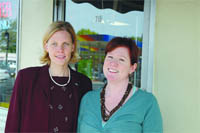
Sections Supplements
Learning Our Lessons from the Rich and Famously Departed

However unpleasant it may be to contemplate and prepare for our inevitable departure, we must. That’s because none of us want to leave a mess for our heirs after we are gone.

Nevertheless, despite many good intentions, we hear news about repetitive estate planning fiascos involving celebrities and common folk alike.

Anyone who has opened a newspaper or has watched television recently has observed the posthumous misfortunes of the likes of James Brown, Ted Williams, Jimi Hendrix, and, most recently, Anna Nicole Smith.

In 2001, Smith executed a will leaving all of her estate to her son, Daniel, to be held in trust with her friend, Howard K. Stern, as trustee. Tragically, Daniel died in 2006 at the age of 20. Just a few days prior to Daniel’s death, Smith gave birth to a daughter, Dannielynn. Shortly thereafter, Smith and Howard K. Stern had a commitment ceremony in the waters off Nassau, Bahamas.

Despite the significant changes to Smith’s circumstances, she did not revise her estate plan to leave any portion of her estate to Dannielynn or to her new domestic partner, Stern. Actually, Smith included provisions in her will preempting state laws that would have presumed that she wanted to include children born subsequent to the execution of the will. In addition, Smith did not revise her will to provide for a guardian of Dannielynn.

Similarly, James Brown did not appropriately update his estate plan prior to his death. His will names six children and calls for many of his personal possessions to be divided among them. However, 10 months after the execution of his will, Brown became a father again. He also remarried approximately one year later, and of course, the will made mention of neither the new spouse nor the new child.

Both Anna Nicole Smith and James Brown died with wills that were several years old and outdated. The probate court will now have to decide which guardian is in the best interest of Smith’s child, which may significantly differ from her intent.

A loved one dying without an updated will often results in an extended, expensive, and time-consuming trip to the appropriate state’s probate court. Although the Commonwealth of Massachusetts does have laws that provide guidelines for matters such as omitted spouses and children in a will, the testator may have intended a very different distribution of assets.

Do not make the same mistake. Review your estate planning documents periodically and upon any significant change in your life. Allow your estate plan to be flexible enough to anticipate things that may occur before you can change it. For example, in Massachusetts, if you anticipate the possibility of having another child, language can be inserted within your will allowing for the distribution of assets and a named guardian for any child born after your will’s execution.

If you anticipate problems, you may consider using a ‘no contest’ clause in your estate plan. In Massachusetts, such a clause disinherits anyone who challenges your estate. In order to make such a clause effective, you may consider leaving something to those at risk of being disinherited so that they have something to lose by challenging your stated wishes.

Jimi Hendrix’s case also illustrates the complexities of dying prior to executing a will. His untimely death at the age of 27 commenced a three-decade-long legal battle over the rights to his songs. According to a Hendrix biographer, due to the fact that Hendrix died without a formal estate plan, those who had been closest to him during his life, particularly relatives on his mother’s side, did not receive any financial benefit from his music.

There is no doubt that a minimal amount of estate planning would have avoided much of the controversy relative to his estate.

Communication about your affairs prior to your death is vital and can prevent disputes down the road when you can no longer arbitrate disputes and explain your reasoning. This is even more problematic when the events involved are highly unusual.

Consider the unpleasant dispute among Ted Williams’ children regarding his remains.

The family feud over Williams’ body commenced when his will showed that he wanted to be cremated, but the executor of his estate said that the former Boston Red Sox star later decided to be cryogenically frozen. The will read in part that he wanted his ashes “sprinkled at sea off the coast of Florida where the water is very deep.” However, the executor filed a petition asking the judge that Williams’ body remain in a cryonics lab in Arizona per Williams’ wishes. The only publicly known documentation that suggests Williams wanted to be cryogenically preserved is a piece of scrap paper stained with motor oil, executed while Williams was hospitalized.

The fact is, although Williams’ will states that he wished to be cremated, nobody really knows what he wanted. Williams did have a will, but, as is often the case, it was written more than fives years prior to his death. Many cryonics services were not even available then. The lesson learned is that it pays to review your will and funeral wishes on a regular basis.

Your estate plan should be reviewed at regular intervals and whenever there is a significant change in your personal or family situation, including the birth or death of a family member, marriage or divorce, and significant increase or decrease in your assets. Make sure that your plan does what you want and is taking advantage of recent law changes.

The celebrities cited above are not the only ones who experience long, expensive court battles over their estates; local probate courts are filled with cases of similar matters. Do not make the same mistake.

Todd C. Ratner is an estate planning, business, and real estate attorney with the law firm of Bacon & Wilson, P.C., who specializes in asset protection; (413) 781-0560;[email protected]

Departments

Friendly’s May Be Put Up for Sale

WILBRAHAM — Amid cries from some stockholders for a shakeup, executives with Friendly Ice Cream Corp. said recently that they are considering putting the company up for sale. Meanwhile, the company’s new chief executive, George Condos, formerly with Dunkin Donuts, also laid out plans to help revive the beleaguered brand, including possible changes to the menu to include more contemporary sandwiches, cold beverages, and healthy options. Plans may also include modernizing the restaurants and putting a premium on quick service. “We need to reposition and energize the brand,” said Condos. Friendly’s directors said in a statement that they have hired investment bank Goldman Sachs & Co., to assist the board in “exploring strategic alternatives to enhance shareholder value, including a possible sale.” The announcement brought an immediate 17% jump in the company’s stock price. The Friendly’s board has not set a timetable for when it intends to decide on the company’s future. Condos said he is focusing on turning around the brand.

Bullish Job Market Expected for Springfield

SPRINGFIELD — Springfield area employers expect to hire at a vigorous pace during the second quarter of 2007, according to the latest Manpower Employment Outlook Survey. From April to June, 45% of companies interviewed plan to hire more employees, while 3% expect to reduce their payrolls, according to Manpower spokesperson Kevin Paulson. Another 52% expect to maintain their current staff levels. “Springfield area employers expect significantly more favorable hiring conditions than in the first quarter, when 30% of the companies interviewed intended to add staff, and 15% planned to reduce headcount,” said Paulson. “By comparison, employer hiring intentions are also much more positive than they were a year ago, when 27% of companies surveyed thought job gains were likely, and 10% intended to cut back.” For the coming quarter, job prospects appear best in construction, durable and non-durable goods manufacturing, finance, insurance, real estate, education, services, and public administration. Hiring in transportation/public utilities is expected to remain unchanged, while employers in wholesale/retail trade voice mixed intentions. At the national level, U.S. employers anticipate that job prospects will ease slightly during the second quarter of 2007, according to the seasonally adjusted survey results. Looking back at the last four quarters of data, a clear softening trend emerges, indicating that employers are growing somewhat hesitant about adding staff. Of the 14,000 U.S. employers surveyed, 28% expect to increase payrolls during the second quarter of 2007, while 7% expect to trim staff levels. Nearly 60% expect no change in the hiring pace, and 6% are undecided about their hiring plans.

AIM’s Confidence Index Jumps

BOSTON — The Associated Industries of Mass. (AIM) reported that its statewide index of business confidence rose 2.6 points in February to 59.2. That number is also 1.7 points above where the index level stood in February of last year. The index is based on a survey of AIM member companies. Readings above 50 indicate optimism, while those below that number reflect a negative assessment of business conditions. The index has been fluctuating in recent months; in December, it was 59.2, while in January, it was 56.6. Its highest mark over the past 12 months was last October’s 59.9. The sub-index with the most significant gain was the Massachusetts index of business conditions, which rose 5.3 points to 56.5, which is its best reading since February 2005. “Massachusetts employers, especially manufacturers, were more positive about business conditions within the Commonwealth, including both future conditions and employment trends,” said Ratmond Torto, co-chairman of the association’s board of economic advisors and a principal with CBRE Torto Wheaton.

Ad Club’s first ADDY Awards Slated for March 29

The entries have been judged, and soon the Ad Club of Western Mass. will unveil the winners of the region’s first ADDY Awards Competition. Three judges, part of the network of the American Advertising Federation (AAF) that sponsors the ADDYs, judged the area’s entries earlier this month. Bob Clancy, Senior Creative Consultant and Copywriter for Brulant in Cleveland, Ohio, Woody Hinkle, Creative Director and Partner with Nasuti & Hinkle Creative Thinking in Silver Spring, Md., and Vincent Vernet, Associate Creative Director of Mullen Advertising in Pittsburgh, Pa., chose 49 winners from nearly 200 entries. The AAF is the country’s leading trade association for the advertising industry headquartered in Washington, D.C. The Ad Club joined late last year, and the ADDY Awards competition has replaced the Ad Club’s former annual competition, the Creative Merit Awards. Gary Czelusniak, a member of the Ad Club’s board of directors and director of Marketing and Business Development for the Insurance Center of New England, said a strong pool of entries were received from area companies and advertising firms, and were judged using a stringent process. “This year, 197 entries were judged in 76 categories, yielding 49 awards: 11 Gold, 20 Silver and 187 Bronze,” said Czelusniak, noting that the ADDY judges called the pool of entries “refreshing and strong work from very talented people.” ADDY Awards recognize creative excellence in advertising on a three-tier basis; the first competition is conducted at the local level, and at the second-tier winners of the local competition compete against other winners in one of 14 district competitions. District winners are then forwarded to the third tier, the national ADDY Awards competition, where they compete for gold and silver awards. The AAF, in cooperation with National Ad 2, also sponsors Student ADDY Awards, a three-tier competition that awards creative excellence by students. Awards will be presented during a ceremony and reception at CityStage in downtown Springfield on March 29. The national ADDYs will be awarded in June.

Area’s Jobless Rate Climbs to 6.7%

SPRINGFIELD — Unemployment in the Pioneer Valley climbed to 6.7% in January, an increase of nearly a percentage point over January 2006. The region’s jobless rate — up from 5.2% in December — was well above the state’s average of 6.0%, and considerably higher than the national average of 4.6%. However, the rising jobless rate is juxtaposed against figures from the state Division of Unemployment Assistance showing continued growth in jobs in Greater Springfield, with 3,800 more jobs in January (for a total of 294,300) than in the same month a year ago. Sectors adding jobs over the year ending in January included government, which grew by 1,100 jobs to 49,800; educational and health services, up 900 jobs to 54,300; and leisure and hospitality, up 800 jobs to 24,900. Sectors losing jobs were manufacturing, down 800 jobs to 34,400, and information services, including publishing, broadcasting, Internet service providers, and telecommunications, down 100 jobs to 4,400.

World Affairs Council Wins Award for Education

SPRINGFIELD — The World Affairs Council of Western Mass. was singled out out for an award recently at the national conference of the World Affairs Councils of America in Washington, D.C. Of 86 councils that make up the national coalition, the Western Mass. council was chosen to receive the 2006 Carol Marquis Award for School Excellence. The award was given for outstanding growth and development of the council’s education system over the past year. Board President Ken Furst and administrator Cynthia Melcher accepted the award on the council’s behalf. Established in 1926, the Western Mass. council offers two programs of note to students and educators. ‘Classroom Conversations’ provides students with speakers in school and at council events. More than 500 local students met with diplomats, military personnel, and academics over the past semester to discuss current affairs in Iran, Europe, Latin America, and other parts of the world. The council also hosts ‘Academic WorldQuest,’ an annual competitive quiz open to Springfield public high school students.

Departments

Dialed In

Listeners pledged a record-breaking $200,500 during the sixth annual WMAS Children’s Miracle Network Radiothon last month, surpassing last year’s total of $192,000. The money will support Baystate Children’s Hospital in Springfield. Event sponsors Health New England and Patriot Home Improvement matched $15,000 and $13,000 in donations, respectively. Other sponsors included Teddy Bear Pools & Spas and the Baystate Medical Center Auxiliary.

Tim Laporte of Carrabba’s Italian Grill in West Springfield flips pork chops outside on the grill; the restaurant provided food throughout the radiothon.

Hospital patient Adam Wiatrowski takes in the radiothon events with his parents, Amy and Rick Wiatrowski.

WMAS DJs Rob Anthony, far left, and Paul Cannon, far right, interview hospital patient Tatyana Berrios; her mother, Virgen Berrios; and Baystate’s Dr. Harold Hoar.

Features
World Affairs Council Brings Global Issues to Light with a Local Focus
Cyd Melcher

Cyd Melcher, administrator for the Springfield-based World Affairs Council, said discussion of timely international subjects often leads to greater understanding and tolerance of various opinions.

Following 9/11, World Affairs Council Administrator Cyd Melcher said she was struck by how many people knew very little about the world, and how various parts of it perceive the United States.

“So many people were saying, ‘why do they hate us?’” she said of the terrorists who attacked the country. “I saw a major disconnect between what people saw and understood of the world, and what was really there.”

That realization led the World Affairs Council of Western Mass. (WAC), part of the largest international affairs non-profit in the country, to look more closely at its educational programming and how the organization could positively affect awareness of global issues among the local population.

In some ways, that’s a tall order, but it’s not a mission that is entirely foreign to the council. The WAC is one of 85 such councils across the country, and in fact was one of the first councils to form, in 1926.

Since that time, the council has provided educational opportunities for adults and students in various forms, geared toward a better understanding of the world at large.

But today, with international issues playing a role in everything from homeland security to gas prices, the WAC is redoubling its efforts in order to attract a wider, more diverse audience. Melcher said those efforts are more necessary than ever in today’s tenuous world.

“People are starved for well-informed conversation,” she said, “as well as for civil, interesting conversation. They read the headlines, and they have both the want and the need to talk about them.”

But beyond that, Melcher said conversations regarding the global economy, politics, religion, and other areas can become highly charged, and the WAC is also an outlet for conversation that includes and values differing opinions and perceptions.

“Sometimes people disagree, and disagree passionately, on an issue,” she said. “But what makes us different is that at one of our events, people are allowed to speak long enough that others hear how they feel, and begin to understand why.”

The Power to Speak

Ken Furst, president of the WAC board of directors and a principal of the Momentum Group in East Longmeadow, said there are a few programs in place within the WAC that achieve that goal, including an international visitors program, through which the council sponsors foreigners visiting the area, and facilitates meetings with various business and government officials, as well as residents of the region.

“These are State Department-sponsored guests who are here to get a better understanding of what America is all about,” said Furst, noting that while the WAC works with government-sponsored visitors and ambassadors regularly, the organization is not federally operated. “Some of these visitors want to see how local governments run, and some have more specific requests, like visiting rural schools.”

The largest programming aspect for the Western Mass. council, however, is bringing dynamic speakers and experts in various fields to the area, to offer insight into a wide array of global issues.

“We bring in speakers that are experts in international and world affairs, political and cultural issues, and topics that are timely and ongoing, such as what’s happening in Iraq and Iran, or Latin America,” said Furst. “It is an organization that promotes people-to-people diplomacy.”

In the past, speakers have included Q. Ketumile Masire, former president of Botswana, who led a program on developing sustainable leadership in Africa; Ambassador Phyllis Oakley, former assistant secretary of State, who addressed the topic of anti-Americanism; Ambassador Mark Hambley, former U.S. ambassador to Lebanon and Qatar, who spoke to the U.S. presence in Iraq; and Hugo Restall, editor of the Far Eastern Economic Review, who offered insight on the possibility of India overtaking China as the next superpower of the global economy.

Furst added that, as a non-partisan group, the WAC strives to book speakers who can report on many different aspects of major global issues, including foreign affairs, the environment, war, and education.

“We help promote understanding of what’s going on,” he said, echoing Melcher. “We’re not, for example, necessarily for or against the war in Iraq. The speakers may have a point of view, but we try to achieve a balance; we aren’t there to judge as much as inform.”

Speakers are put in front of the public through regular luncheons called Brown Bags, which began about two years ago and offer frequent low-cost, easily accessible seminars during the lunch hour in downtown Springfield; the WAC also hosts occasional dinners. A program called Classroom Conversations, which places speakers, including diplomats, military personnel, academics, and others in area schools, is one aspect of the WAC’s expert-led seminars that is gaining speed, Furst said.

“The students speakers address are usually high school students in the Springfield area, and our speakers have already talked to about 500 students this season,” he said, leading into another council objective that has been ramped up in recent years.

To capitalize on the growing interest among student populations in the WAC’s work, the council has expanded its academic programming to include a national offering, called Academic WorldQuest.

WorldQuest is an annual competitive quiz open to public high school students on both regional and national levels, which charges them with answering questions on current events, geography, and world leaders.

The WAC formed a school partnerships committee, chaired by member Daphne Hall, and opened the competition to Springfield high schools in 2004. This year, the winning team, from the High School of Science and Technology, has advanced to national-level competition, to be held in Washington, D.C. this month.

The council’s academic efforts haven’t gone unnoticed. Last month, the agency was presented with the 2006 Carol Marquis Award for School Excellence at the national conference of the World Affairs Councils of America in Washington, D.C. The award was given for outstanding growth and development of the Council’s educational system over the past year, and Furst said the honor added some significant weight to the council’s efforts.

“Because of our increased activity educating students, we were recognized for our educational programming, and recognized for the growth in the program,” he said. “It proved that we don’t have to be the biggest group to be noticed. We’re smaller than most councils, but we have a good group of people.”
Melcher added that the educational aspect of the WAC’s work has been the area of which she is most proud.

“It benefits both adults and students,” she said. “Students who are involved become more aware of the world on a deeper level, and I’m also impressed by how many adults change their opinions of high school students.”

The Opportunity to Listen

Moving forward, continued education — not only of students, but of the adult population — will remain a key objective for the council. To that end, the WAC will be zeroing on some key issues over the course of the year, such as the importance of global issues to common business practices, the ever-changing workplace, and the global economy.

That, Furst said, will also allow the council to take a closer look at the region’s business community, and how the council can better integrate itself therein.

“There’s a lot of information given out through the council regarding trade between us and foreign countries, and knowing and better understanding the countries they’re working with helps local businesses,” he said. “We’ve had meetings on the outsourcing of goods in the U.S., for instance, at which we looked at the pros and cons.

“People may not like to hear about the topic of outsourcing,” he continued, “and they might not like the fact that so many goods are being made in China. But that’s not going to help us. Understanding why, however, will. That allows us an opportunity to make that knowledge work to our advantage.”

Furst said the council would also like to better promote its unique networking opportunities, which include international contacts and resources both locally and abroad, available for members’ use.

“We have access to diplomats, non-governmental organizations, libraries, and other sources,” said Furst, “and we can also refer to our database, which includes academics, world travelers, exporters, former Peace Corps volunteers, language experts, and native-born citizens of a number of countries.”

To create stronger relationships with local businesses, Furst said the council hopes to promote membership at an employee level among various companies in the area, and also boost the WAC’s number of event sponsors.

Currently, about 35 businesses and organizations are involved with the council on various sponsorship levels, ranging from benefactors to patrons to basic members. Those outfits include colleges, banks, advocacy groups, foundations, and both public and private companies of varying sizes and industries.

The Need to be Heard

Even with such a wide gamut of services and members, however, Furst said the council still struggles with recognition in the area, of both its name and mission.

With a board that is entirely volunteer-based except for Melcher, the WAC’s sole paid employee, translating its mission can be a challenge, and outside of some specific circles, Furst said, there are still many businesses and individuals in the area still unaware of the World Affairs Council or why it might be relevant to their businesses or daily lives.

“We use all means we can to get better-known, but sometimes we think we are the most well-kept secret in the area,” he said. “What’s important is that we always have our mission in the forefront of our minds — to keep the population better informed on what’s going on in world affairs, so they get a better understanding of the world as it gets flatter and smaller.”

Melcher said that flattening of the world is the result of all politics indeed becoming local, along with business trends, environmental concerns, and societal issues.
But flattened as it may be, the world is still a very big place. Melcher said the act of conversation, as simple as it sounds, opens many doors that lead to more awareness and intuitiveness of complex issues that are relevant worldwide — and through knowledge comes understanding.

“If we’re asked what the best result of the World Affairs Council is, I’d have to say it’s people taking a greater interest in the world around them,” she said. “If someone gets into the habit of reading the New York Times a few days a week to stay current … I’m happy with that.”

Jaclyn Stevenson can be reached at[email protected]
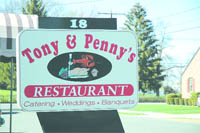
Features
Academy of Music, WGBY Collaborate to Improve the Big Picture
Rus Peotter and Andrew Crystal

Rus Peotter, left, general manager of WGBY, and Andrew Crystal, president of the Academy of Music’s board of directors, say the new partnership between the two entities will improve fundraising, marketing, and community outreach efforts.

Rus Peotter says that, from a technical standpoint, it’s a “short-term investment.”

But the $50,000 loan from WGBY, the Springfield-based public television station he manages, to the financially challenged Academy of Music in Northampton is something he believes will bring long-term benefits to those cultural institutions — and the communities they serve.

The loan, made possible by an extension of the so-called ‘digital deadline’ — the date by which all analog stations must make the transition to digital broadcasting — from 2006 to 2009, thus freeing up some cash for WGBY, is the linchpin of an intriguing collaborative effort between the two non-profit entities.

In a nutshell, the academy gains some financial stability in the form of cash to pay down some debt at a time when the 800-seat theater has cut back on its schedule of movie showings and is struggling to meet fundraising goals. The station, meanwhile, gains some rent-free office space at the academy, some event space there for up to 10 uses per year, also rent-free, and, in the process, a bigger presence in a community that sits at the center of its coverage area and represents the station’s most supportive region per capita.

“Many people think of us as a Springfield station instead of a regional station,” said Peotter, “and this is an opportunity to get in front of a larger number of people.”

Beyond the visibility, however, the collaborative effort gives WGBY a chance to improve the long-term health of two cultural entities, he said, adding that he and others and at the station view this as an investment well worth whatever risk may be involved.

“Collaboration is really important for non-profits today, and it’s one of the primary reasons for this alliance,” he said. “It’s a move that we hope will allow two cultural organizations to enhance their core missions by bringing on more resources and by adding some horsepower.”

Andrew Crystal, vice president of O’Connell Development in Holyoke and chairman of the academy’s board, agrees.

“Our board thought very carefully on this decision, and it was approved to move forward with the goal of becoming a more community-based arts venue,” he said, adding that the partnership, unique among non-profit agencies, represents an imaginative effort to advance common goals.

This issue, BusinessWest looks at how it came together, and what it means in terms of the big picture.

Staging a Comeback

The agreement comes a month after the academy, opened in 1891, announced it would end regular showings of films, timing that prompted many to wonder if the landmark would be closing its doors to the public altogether due to financial constraints.

But Crystal said the move was made to help create a firmer financial future for the theater as what he called a “cultural hub,” and in turn to better brand the academy as such.

Programming is still relatively robust at the theater; in the coming weeks, for instance, the theater will host the Pioneer Valley Ballet’s rendition of Cinderella and the Pioneer Valley School for Performing Arts’ spring musical, Little Shop of Horrors.

Films with a foreign, art, or independent thrust will also continue, but on a less frequent basis, said Crystal, including showings of the acclaimed British documentary Young at Heart this month. The Jewish Film Festival has also been scheduled at the Academy this month, as well as the Northampton Independent Film Festival in November.

Still, Crystal added that financial pressures are in fact a reality as the academy moves forward. Fundraising has long been a struggle for the theater, which is governed largely by an 11-person board of directors who volunteer their time.

“It’s partly a manpower issue, and partly perception,” he said. “Our board includes the mayor of Northampton and the president of Smith College — these are obviously people who have many other things to think about. Plus, people still think of us as a movie theater, and it’s hard to translate why we need to raise money.”

Because of those issues, Crystal said the academy failed to reach its most recent fundraising goal, set forth in 2005, to generate about $200,000 in unearned income, or a third of its operating budget.

“We raised about half of that last year,” he said. “The norm for a non-profit arts venue is to have about 30% to 40% of its budget represented by unearned income, and we have never come close to that.”

He said neither he nor his fellow board members saw the academy’s fundraising woes as prohibitive to moving forward with new plans, but understood that it was a problem that required some outside assistance.

The contractually specific agreement that came about with WGBY is not common to the non-profit sector, and Peotter said it’s a model he hopes will be examined by similar outfits across the country, and possibly emulated.

“When a community’s arts and culture organizations have so much common ground, as do those in this region, they’re less inclined to collaborate,” he explained. “People go after the same pieces of pie because they don’t believe that pie can be grown — but it can.”

Next-stage Development

An 11-page description of the agreement details its many aspects, including the alliance’s mission to allow both entities to “provide each other with increased opportunities to carry out their respective goals and objectives … thereby enhancing the ability of WGBY and the academy to carry out their respective charitable activities.” The agreement will remain in effect for five years.

With fundraising such a large part of that philanthropic picture, Crystal said talks with WGBY began revolving around that topic, but soon expanded to include many other concerns.

“Increased, effective fundraising was the need that initially jumped out at us,” he said, noting that the academy would like to reach that elusive $200,000 mark and also increase its annual operating budget by as much. “But as we spoke, we began to see many other opportunities.”

To foster those developments, a number of cooperative measures were put into place through the partnership’s formal agreement, the biggest being that $50,000 loan.

It was this bullet point on which Peotter said he received the most questions from his 36-person board of directors. However, he explained that the funds were available due to the postponement of the digital deadline, which requires that all analog televisions and, subsequently, analog programming be phased out of use. The three-year extension left the station with an unexpected amount of previously earmarked funds held in short-term securities.

“That’s where most of the questions centered,” he said, “and the other question I heard often was, ‘why Northampton?’”

The answer can be found by looking at a map detailing the station’s coverage area, and in those demographic stats on donations to the station per capita, he explained, noting that agreement between the entities allows the station to host a greater number of live screenings or fundraising events of its own.

“As a public television station, we have access to a number of independent films that we often like to premiere prior to broadcast,” he said. “But beyond that, this is an opportunity for a greater number of face-to-face events in more places than we already do.”

The accord also stipulates that WGBY provide fundraising assistance to the academy, including help with the establishment of annual fundraising plans, to be drafted in conjunction with the academy’s newly formed fundraising committee.

The partners’ first foray into this area has already begun — a grant application from the Academy to the Massachusetts Cultural Council, which WGBY staff will assist in completing.

“That help will make for a more professionally prepared application,” Crystal said, “and in general I think it will strengthen our grant-writing capabilities.”
WGBY and the academy will also work to develop ‘co-branding’ opportunities, for the joint promotion of events and initiatives the two parties deem “consistent with their charitable purposes,” according to the formal agreement.

“The individual brands of both institutions are quite strong,” Crystal told BusinessWest.

“We each have a level of respect in the community,” he explained. “But through co-branding, fundraising, and promotion together, we can increase our visibility and the sense of goodwill we already generate separately.”

Waiting in the Wings?

As the partnership between the Academy of Music and WGBY moves forward, Peotter said he hopes to bring other cultural organizations on board — perhaps not to the same contractual degree, but in a way that creates a greater sense of community among like-minded groups and venues.

“That way, opportunities will continue to present themselves,” he said. “It’s always helpful to have non-profits look at challenges together, instead of as competitors.”

Jaclyn Stevenson can be reached at[email protected]
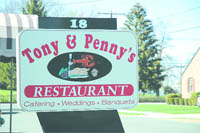
Departments

WNEC Launches Institute for Media and Non-Profit Communication

SPRINGFIELD — Western New England College has unveiled a new initiative to assist local nonprofit agencies, the Institute for Media and Non-Profit Communication, which will be led by director Brenda Garton. The institute is an outgrowth of the work of the college’s Department of Communication. Since 2003, students have been producing promotional videos for nonprofit organizations through a specialized course. The initiative offers professional-quality video production to social service agencies at a minimal charge. While this service is critical for the agencies, the curriculum provides students with professional experience writing, producing, shooting, and editing a promotional video. The creation of the institute will allow WNEC to expand this service, assisting more nonprofits. To date, WNEC students have produced videos for 16 groups which have been used in presentations to members of the public, prospective donors and on various Web sites.

Paradise City Tops National Show Ranking

NORTHAMPTON — Paradise City Arts Festivals recently received recognition on both the national and regional fronts for its accomplishments. For the third year running, Paradise City has been voted among the top five art and craft fairs in America by the readers of AmericanStyle Magazine. For the second year in a row, Paradise City was ranked #2 nationwide. In other news, the Greater Springfield Convention and Visitors Bureau announced that Geoffrey and Linda Post, founding directors of Paradise City, are the recipients of its 2007 Spotlight Award. The award recognizes Paradise City’s significant impact on tourism and the economy, and the directors’ enormous promotional efforts over the past 13 years to draw visitors and bring recognition to the Pioneer Valley.

Big E Named ABA Top 100 Event

WEST SPRINGFIELD — The American Bus Association has once again recognized The Big E as one of its Top 100 Events for 2007. The selection committee, consisting of U.S. and Canadian travel professionals, evaluated hundreds of events and selected The Big E as one of the best events to experience via motorcoach this year. The Big E is featured with the other 99 events in the ABA’s annual publication as well as on its Web site, www.buses.org.

Bank Contributes $25,000 to Save Echodale Farm

EASTHAMPTON — Easthampton Savings Bank recently donated $25,000 to the Pascommuck Conservation Trust and The Trust For Public Land to save Echodale Farm. The 165-acre farm, located on Park Hill Road in Easthampton, is the largest working farm in the city. The Pascommuck Conservation Trust and The Trust For Public Land have been fundraising since last May to raise $300,000. Easthampton Savings Bank’s contribution at the leadership level is the largest community investment in Echodale Farm to date.

Spalding Introduces Electronic Sports Whistle

SPRINGFIELD — Spalding is now offering two electronic hand-operated sports whistles that feature a fast-action button to eliminate the need for human air and can be used in all climates and environments. Spalding is launching two variations, an orange whistle with a single tone and a grey whistle that offers three distinct tones to help players differentiate between coaches and/or officials during multi-field play. Wal-Mart and Academy will be the first retailers with the electronic whistles in distribution. Wal-Mart will carry both items in select stores, while Academy will carry the single tone.

YWCA, Springfield Day Nursery Open Joanna’s Room

SPRINGFIELD — The YWCA of Western Mass. recently opened the doors to Joanna’s Room, the area’s first on-site early education and care program inside a shelter for battered women and children. The YWCA worked in partnership with the Springfield Day Nursery, the Department of Early Education and Care, and the New England Farm Workers Council to bring the day care center to fruition. Joanna’s Room is named to honor the many efforts of her father, state Sen. Stephen Buoniconi, on behalf of the region’s children and families. Joanna is Buoniconi’s seven-year-old daughter. Through developmentally appropriate curriculum and lesson plans, Springfield Day Nursery’s program will work to counter the specific educational and emotional needs of 20 infants, toddlers, and preschoolers who have experienced or witnessed domestic violence. Additionally, Springfield Day Nursery will provide information, education and modeling of appropriate parenting skills, as well as the importance of oral hygiene and nutrition. Other mental health and medical services will be accessed through Springfield Day Nursery’s existing contracts and partnerships with community-based programs including the Behavioral Health Network and Baystate Health System. Joanna’s Room will operate from 8:30 a.m. to 3 p.m. on weekdays.

Restaurant Opens New Location After Fire

THREE RIVERS — Pinocchio’s Ristorante, formally La Cucina di Pinocchio’s in Amherst, recently opened at 2054 Bridge St. In July of 2005, a fire caused the closing of the original Pinocchio’s which forced the restaurant to close. With the owners of the former property unable to obtain the necessary permits to rebuild the site, the scouting for a new location began, according to owner Chris Brunelle. He said he chose the location in Three Rivers for its close proximity to Wilbraham, Ludlow, and Belchertown. Pinocchio’s specializes in fine Italian cuisine set in a warm Tuscan setting. The new location will also feature a Pinocchio’s on the Go which specializes in casual Italian fare for take out or delivery. Currently, there is a Pinocchio’s on the Go in Amherst and Ludlow.

MassMutual Makes Major Gift to WNEC

SPRINGFIELD — The MassMutual Financial Group has made a $300,000 gift to Western New England College Law and Business Center for Advancing Entrepreneurship, a gift that will have an impact on both the educational experience at the college and the local economy. A joint venture of the WNEC School of Law and School of Business, the center coordinates teams of faculty members, graduate students and undergraduates to provide legal and business expertise to as many as 30 budding entrepreneurs each year. The gift also furthers the goals of WNEC’s current $20 million comprehensive fundraising effort, “Transformations: The Campaign for Western New England College.”

NewAlliance Completes Westbank Acquisition

WEST SPRINGFIELD — NewAlliance Bancshares Inc. recently completed its acquisition of Westbank Corporation, providing its initial entry into Massachusetts. Shareholders of Westbank approved the acquisition and the banks received the required regulatory approvals in December. The cash-and-stock transaction was valued at approximately $116 million when announced. The acquisition supports NewAlliance’s growth strategy, providing it with additional assets of $827 million and deposits of $606 million as of Sept. 30, 2006. It also gives the bank a strong immediate presence in Western Massachusetts, mainly along the I-91 corridor, as well as in towns contiguous to NewAlliance branches in northeastern Connecticut. After the recent unveiling of the name on the old Westbank headquarters, the NewAlliance Foundation announced three grants of $5,000 each to HAP Inc., the Food Bank of Western Mass., and the Holyoke Health Center.

Construction Underway For Senior Living Community

LUDLOW — Ground was broken recently for Keystone Commons by Keystone Senior, LLC, a 90-unit, $15 million independent and assisted living community at 460 West St. The project will provide a needed full-service rental housing option for area seniors, help fuel the local economy, and bring permanent jobs to the area, according to Victor J. Field, partner in the Keystone Commons project. The state-of-the-art community, due for completion in early 2008, will include three distinctive neighborhoods: one for independent living residents, a second for assisted living residents, and a third for individuals who require memory care.

Bank Branch To Open in Wal-Mart

WARE — Country Bank for Savings is slated to open its second branch in Leicester in the coming weeks in a new Wal-Mart Supercenter. Country Bank will have four branches in Worcester County when the Supercenter branch opens on March 14, and 15 branches in total. The new 700-square-foot branch, at 1626 Main St., will be open seven days a week for the convenience of its customers. The new branch will feature four customer service representatives and a branch manager.

ITT Power Solutions Makes Donation

WEST SPRINGFIELD — ITT Power Solutions recently presented a check for $6,000 to the West Springfield High School Robotics Team. In making the check presentation, ITT Power Solutions President and General Manager James P. Faughnan noted that their business relies on local schools to develop students who are well-rounded, skilled in math and science, and who have had opportunities to compete and to lead. The company also offers an annual $500 engineering scholarship to promote engineering in the community.

Sections Supplements
Convention and Visitors Bureau Gives Its Web Site a Facelift
The Convention and Visitors Bureau’s Web site

The Convention and Visitors Bureau’s Web site has been overhauled to make it more user-friendly.

When administrators with the Greater Springfield Convention and Visitors Bureau launched a strategic planning initiative last spring, it engaged the services of a consultant versed in both tourism and the intricacies of agencies charged with promoting it.

When the discussions turned to the subject of marketing, the consultant, Bill Geist of Madison, Wis., gave the GSCVB consistently high marks for its various programs, with one significant exception — the Web site.

“He said it needed complete revamping,” said GSCVB Director Mary Kay Wydra, adding quickly that the remarks didn’t constitute a news flash. “We weren’t surprised … we knew we had some work to do.”

Since the site had been created in 1996, making Springfield’s one of the first of the state’s tourism bureaus to have a Web presence, it had been consistently updated, said Wydra, adding that, over the years, it had become an effective marketing vehicle for the GSCVB’s diverse membership, comprised of tourist attractions, restaurants, hotels, and meeting facilities. But it was less effective in meeting the needs of a bigger, more important constituency — potential visitors.
So the bureau’s staff went about rectifying that situation.

The end product, unveiled late last month at a presentation at the Basketball Hall of Fame, is a higher-octane www.valleyvisitor.com, one that is more informative and user-friendly, said Wydra. It features an improved search engine, better navigation, a streaming video highlighting the Pioneer Valley’s many attractions, a calendar of events in the region, and a large image of the region’s tourism brand: a logo and the words, ‘Massachusetts’ Pioneer Valley — Arrive Curious, Leave Inspired.’

The net result is a site that makes it easier to discover the Valley and plan a trip to the region, said Wydra, or, to put it another way, “put heads in beds,” which is the stated mission of the bureau.

“The Web is a very important marketing tool when promoting a region,” she explained. “It will never replace a guide, because people want something in their hands. But it’s an entry point, and we need to make it friendly and informative.”

Site for Sore Eyes

As she demonstrated the new and improved Web site at last month’s kickoff, Wydra went to the search function on the home page and typed in Basketball.
More than two dozen listings came up, ranging from the Hall of Fame to the NCAA Elite Eight Men’s Division II Basketball Championship (coming up in March) to an item called ‘Pioneer Valley Fun Facts, Firsts, & Claims to Fame.’

“If you had put in Basketball 10 years ago, when we first created our site, there would have been two listings,” Wydra told BusinessWest, “the Hall of Fame and the old Tavern restaurant on the riverfront, which, smartly, used that word to help market itself.”

This bit of comparing and contrasting was designed to show how the Web site has been retooled to better serve the three recognized target groups for the PVCVB — leisure travelers, group tours, and meeting planners. In the case of basketball, all three constituencies can now use the Web site to do much more than learn about the Hall of Fame, its exhibits, and its hours of operation, although they can still do all that. Visitors can now plan a trip around that theme, or more easily discover what else there is to do in the region.

This is the broad goal of the bureau, said Wydra, noting that while the region certainly wants to encourage day-trippers, its real mission is to make the Valley a destination, one with enough attractions to keep a family, tour group, or professional organization having its annual meeting busy and entertained for several days.

Extended stays have been the thrust of recent marketing efforts, Wydra continued, and it was clear to Geist and GSCVB officials that the Web site needed an overhaul to play a key role in that strategy.

The bureau issued a request for proposals, and ultimately hired the New Hampshire-based firm The Glen Group to revamp the site, with the goal of making it a more effective tool for the region.

Key changes and additions include the two-minute video, which spotlights attractions, shopping centers, restaurants, hotels, and meeting facilities. There are also news items, such as Six Flags’ newest addition, Wiggles World, an area devoted to families with young children; the latest exhibits at the Springfield Museums, including the Dinosaurs and Ice Age Mammals program at the Science Museum this spring; and the upcoming men’s and women’s (Division III) collegiate basketball championships.

Another enhanced feature, funded by a grant from the Massachusetts Cultural Council, will highlight GSCVB member cultural and heritage attractions through text and photos, and enable the Web site visitor to send an electronic postcard from one of many area attractions.

Overall, the site was retooled to make it easier for visitors to learn about the region, become intrigued with its many offerings, and then plan a trip or meeting, said Wydra, adding that the site provides benefits for both members — who can post calendar items and news — and visitors.

“We lost sight of our customer with our old site,” she explained. “It was a great site if you were a member of the GSCVB, but that’s not really the audience we want to reach; we want to reach our three target groups. We were failing in that area, so we knew we needed to make changes.”

To ultimately succeed, however, the GSCVB knows it’s not enough to merely improve the site, she continued. It must also take steps to bring people to that page.
“We’re not taking an ‘if we build it, they will come’ attitude with this site,” she explained. “We’re allocating dollars to this project and stressing search engine optimization. We want to move up on those search engines; that’s how people are going to find this region.”

The work to update and improve the Web site will be ongoing, said Wydra, adding that sometime soon she would like to include floor plans for area meeting facilities and other bits of information designed to help people make informed decisions about the Valley and its facilities.

“I’m really big on making it easy for people,” she explained. “That was our real goal — to make this more user-friendly.”

The Valley’s Greatest Hits

The Web site revamping efforts represented a significant investment for the bureau, said Wydra, noting that the agency, an affiliate of the Economic Development Council of Western Mass., spent more than $70,000 on the initiative.

But it will ultimately prove to be money well-spent, she continued, adding that the Web site plays many roles, from revenue generation through ads and calendar listings to branding — generating greater awareness of the region’s logo and tag line.

Still, its most important function is attracting visitors to the Valley, and Wydra believes the new features and improved navigation will give the region’s tourism sector what it really needs: staying power.

George O’Brien can be reached at[email protected]
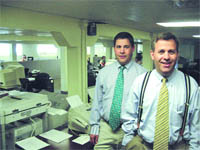
Uncategorized

At the Super Bowl, the Boston Culinary Group provided hot dogs as well as honey-baked ham. Here in Springfield, the MassMutual Center touts the availability of ‘everything from burgers to Beef Wellington.’ Whatever the menu items, the message is clear: this is a company that has built a reputation for being able to handle any culinary task. And even as national notoriety grows, local facilities that work with the catering and concessions giant say it’s a big company that hasn’t forgotten the little guys.

The day before boarding a plane to the Super Bowl, which was catered from soup to nuts by the Boston Culinary Group, members of the company’s management team were at the Big E.

Testing recipes for cream puffs to be served in the Dolphin Stadium luxury boxes, they were not; the stop at the Eastern States Exposition was all business, as BCG staff checked in on their operations at the Better Living Center, for which they assumed food service duties just over a year ago.

Sue Lavoie, vice president of the Big E, said she was impressed with the visit, and the timing thereof. She said it was proof of a hands-on management style within BCG, which she appreciated, and also of the wide array of services this national company can handle without alienating smaller clients.

“We enjoy working with them, and they come and check their operations constantly,” she said. “It’s kind of this hidden secret. A lot of people don’t know about BCG, but they are huge, and we’ve been very impressed with what they can do.”

Indeed, the acronym ‘BCG’ was new to many as they scanned Super Bowl headlines earlier this month, several of which mentioned the catering company’s menu choices at the big game, including mozzarella salad topped with ciliegene, braised beef short ribs, Florida stone crab claws … and hot dogs. Lots and lots of hot dogs.

BCG, which changed its middle name from ‘Concessions’ to ‘Culinary’ in 2004, has been a growing presence in the national food and beverage scene ever since, though the change was more to affect outside perceptions than internal operations, according to staff at all levels. It has always handled hot dogs, but although few realized it until recently, it’s been handling lobster tails and Bananas Foster for nearly as long.

“I think it was a wonderful choice,” said Lavoie of the name change. “When you’re on my side of the business, ‘concessions’ means hamburgers and hot dogs, but they do a lot more than that and still maintain the concession end, which is exactly what we needed.”

And with jobs like the Super Bowl and the 2003 World Series between the Yankees and Marlins (who also play at BCG client Dolphin Stadium), the company seems to have succeeded in its plan to better translate its diverse model to a larger audience. But as Lavoie attested, this ‘well-kept secret’ in the culinary world has actually been a major player in Western Mass. for several years, with no signs of leaving for longer than the length of a football game.

‘Culinary’ is Their Middle Name

BCG was founded in 1961 in Cambridge by Everett, Mass. native Joe O’Donnell, who remains the company’s chairman. His objective was to serve the food and beverage needs of the recreation and leisure industry, including at convention centers, stadiums, museums, theaters, and ski resorts, among other venues, and today, that business model largely persists, though it has expanded considerably.

In 2004, said Dave Oberlander, regional vice president, the name change was happening concurrently with a greater marketing push to tout the various services and accomplishments of BCG, as well as a level of quality and high-end service he said had existed for many years.

“As much as everyone knew that the old name was well-respected, they knew that it was not reflective of what we do,” he said in a formal statement. “Has anything changed besides the name? Yes, I think we’ve set the bar even higher for the type of quality and service we expect from our employees, and they have risen to the challenge.

“It’s not like our managers showed up at their facilities the day after the name change went into effect and said, ‘all right, everyone start doing culinary stuff,’” added Oberlander. “The culinary knowledge was there long before it appeared on our shirts and business cards.”

BCG is the full-service provider of food and beverage services for more than 100 diverse properties throughout the country, including LaGuardia Airport, Bristol Motor Speedway in Tennessee, Boston’s Wang and Schubert theaters, and Miami Arena.

It works with a dozen college athletic facilities, including those at Yale, Harvard, Wake Forest, and Kansas State University, and 13 ski resorts, including Smuggler’s Notch in Vermont and Sugarloaf in Maine.

BCG also provides catering and food services for a number of seasonal events, among them King Richard’s Faire in Carver, Mass., and the Florida State Fair in Tampa, Fla., and, in addition, owns and operates 23 movie theatres across the nation, from art houses to multiplexes.

Finally, four fine-dining restaurants round out the list of responsibilities: the John Harvard’s Brewery chain, with locations in five states, all purchased by BCG in 2004; Porcini’s Mediterranean cuisine in Watertown, Mass., Tia’s Waterfront in Boston; and Figs, at La Guardia Airport.

But even with this growing national reach, BCG has maintained a strong presence locally, which augments the business of some of the region’s primary economic drivers.

The company provides both arena concessions and high-end banquet and catering services for the MassMutual Center in Springfield, for instance, as well as for the Eastern States Exposition and the Mullins Center at UMass. BCG has also handled food operations at Hancock’s Jiminy Peak Mountain Resort since 1970, and opened a John Harvard’s location there in 2005.

Hockey Pucks and Haute Cuisine

Diane Smolenski, general manager for BCG at the MassMutual Center, said the company has handled concessions at the site, formerly the Springfield Civic Center, since 2000. When a request for proposals was issued for catering and banquet service providers as the new MassMutual Center reached completion, she said BCG was able to secure the contract, thanks in large part to its ability to provide both high-end dining options and casual fare.

An executive chef was hired, as well as the necessary culinary team to serve the largest banquet facility in the area, when the change to operations was made, but Smolenski, who has worked with BCG in various locations for nine years, said many corporate practices and services have remained unchanged.

She said the expansion of services that contract necessitated is probably the best example of why the name change was a small shift that nevertheless speaks volumes about BCG’s capability.

“The word ‘concessions’ has a certain connotation,” she said, “and ‘culinary’ suggests a sort of cultural upscaling. People are so savvy these days in terms of food and food service, that the name change does make a big difference in terms of how we’re perceived.”

Although prior to the MassMutual Center’s opening the civic center had worked primarily with arena food — hot dogs, nachos, and the like — the transition to a wider array has been relatively seamless.

“Now, we handle everything from burgers to Beef Wellington,” she said. “That’s one of the great things about working with a company of this size — we have a fantastic network of good people if there is a change to a facility’s needs, or if we need help. ”

Smolenski added that the company’s size also allows for the same amount of attention to be paid to consumer trends at concessions and catering levels. There was a small coup for the center recently, for instance, when it became the first venue in the area to offer the popular frozen treat ‘Dippin’ Dots,’ and wrap sandwiches have been added to the arena’s list of snacks in response to customer demands for healthier food choices.

Conversely, banquet business has been brisk for the 200-person BCG staff at the center; it has catered events recently such as the Bright Nights Ball, a welcome-home celebration for troops returning from active duty, Rock 102’s 10th anniversary roast of morning show hosts Bax and O’Brien, and a 70th anniversary dinner for Big Y foods, which Smolenski said was one of her staff’s more formidable tasks: a seven-course, plated dinner for 1,500 people.

“Being able to offer a wide array of services allows us to be very community-oriented,” she said, noting that despite its size — BCG employs about 11,000 people nationwide — she rarely feels like part of a vast, corporate organization. “I’m part of a big company, but I don’t see that on a daily basis. What I see are the people we serve as a downtown facility, and the people we employ — 200 local people.”

From the Mountains, to the Prairies, to the Oceans

Still, with gigs like the Super Bowl, there’s no denying the growing size and scope of BCG.

“I hope it affects us in a positive way,” said Smolenski, who noted that on a local level, business has been good, and showing promise. “Of course, last year was great, because we were new. But this year is right on track, and clients are rebooking, which I think is the key.”

Jim Bronson, director of Food and Beverage at Jiminy Peak Mountain Resort (through BCG), agreed that as BCG becomes a more recognized name nationally, it brings a little of that notoriety home to Western Mass. and the facilities that use BCG’s services.

Bronson has been with the company since 1982, when he began working at the now-defunct Mt. Tom ski area in Holyoke. Since then, he’s worked in several BCG locales across the country, and has seen firsthand the changes the company has made. But he said he doesn’t foresee the company becoming too big to serve its local clients.

“I’ve seen the company grow into something new and exciting,” he said, noting, however, that while BCG may have changed its name, its internal identity has remained intact.

“We changed our name because we offer so many different levels of service. We catered the Super Bowl, but everything else that leads up to that point, too.

“We’ve always had that capability,” he added. “Saying the name change was a sort of culture change suggests that we weren’t doing something right before, when really the performance is largely the same. The word ‘concessions’ was limiting, but the service was not.”

Indeed, Jiminy Peak itself is a sort of mini-representation of the breadth of services offered through BCG. Bronson oversees the food-service operation of three ski lodges, John Harvard’s Brewery, a gourmet coffee shop, a tavern, and several ongoing events, such as the resort’s children’s program and all corporate and social events held at the mountain.

“BCG is an entrepreneurial company that is big and getting bigger all the time, but with a small-company feel,” he said. “The owner’s name is Joe, and everyone knows that. What’s more, if I see Joe, I just say, ‘hi, Joe.’ None of our management members are untouchable; in fact, I think they’re inspiring.”

Just Desserts

As an outside vendor who utilizes BCG’s services, Lavoie said she too has noticed the company’s accessibility. She explained that prior to BCG taking over food operations at the Better Living Center, a family operation had handled concessions and catering for more than 40 years. As family dynamics changed, the company chose to opt out of the assignment — very quickly.

“They left in December, and we had a show booked for Jan. 1,” said Lavoie. “I was familiar with BCG because of all of the places they operate, and contacted them immediately. They were ready to take over within 24 hours, and since then, they’ve made a lot of upgrades.”

And when all is said and done, that attention to service is more impressive to Lavoie than the splash made by the Super Bowl menu. The Big E has plenty of cream puffs; what’s more important is a team that will get to the meat of the matter.

Jaclyn Stevenson can be reached at[email protected]
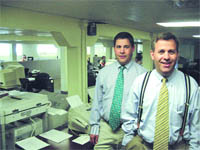
Sections Supplements
WNEC President Caprio Writes the Book on Strategic Planning
Dr. Anthony Caprio

Dr. Anthony Caprio said careful planning has long been part of the WNEC business model.

When Anthony Caprio took the reins at Western New England College, he found a school that some would say had peaked in terms of programs, facilities, and national reputation. But he thought otherwise. And through a series of strategic planning initiatives, he has helped take the school and its acronym to new heights in terms of recognition and respect.

Anthony Caprio, president of Springfield’s Western New England College, said he remembers many times when, in academic, professional, or even social circles, mention of the college he has now led for a decade was greeted with quizzical looks.

“At conferences or other events across the country, I’ve heard ‘WNEC’ with a question mark after it plenty of times,” he said of the school’s once-only locally known acronym. “But today there is much less confusion about us. I don’t hear the question mark as much; I hear, ‘oh, yes, WNEC.’ It’s very refreshing.”

This surge in recognition and respect isn’t a coincidence, he said. Rather, it’s one result of a series of strategic planning initiatives that has involved WNEC administrators, faculty members, students, and alumni. The work, which constitutes what amounts to two five-year plans, with a third due to start in 2008, has manifested itself in everything from new facilities and programs to a stronger focus on development.

It all started with a white paper Caprio drafted soon after arriving on the Wilbraham Road campus. It detailed his many positive first impressions of the school, but focused much more on where the school could go, than where it was or had been.

“I wanted to capture what I thought I saw those first few months,” he said, noting that he saw an enthusiastic staff, a solid physical campus, and a strong curriculum. “One had the impression that we’d reached our height. The college was financially stable; we had happy alums and a good reputation. It struck me that an institution with such a solid base had so much potential.”

To realize that potential, he convinced the WNEC community to embrace the concept of strategic planning, and, working with several constituencies, went about setting some ambitious goals involving everything from enrollment to the endowment — and crafting methodologies for meeting them.

The result has been a distinct cultural change at the 88-year-old school, one grounded in the notion of continuous improvement.

“We essentially redefined our mission,” said Caprio. “We focused on the unique things of the school, like the integration of professional and liberal arts learning.”

The college includes four schools, three of which offer undergraduate degrees in the areas of arts and sciences, engineering, and business. Graduate degrees in engineering and business administration are also offered, and WNEC’s law school offers a juris doctor as well as an LL.M program in estate planning and elder law.

In order to create a better overall college experience, Caprio said he and his team continue to create opportunities for students to cross over from the school of their major into other areas, through co-curricular programs and integrated education initiatives. In addition, WNEC’s strategic planning process also includes physical growth and change, as well as improvements to many of its outreach efforts, including development.

It’s all geared, says Caprio, toward educating “the total human being.”

School of Thought

As part of that first strategic planning initiative, for instance, Caprio focused on the college’s fundraising efforts. While WNEC was and remains financially stable, he said, years of fiscal prudence are more the reason than robust development. Its endowment, for example, is modest at about $43 million.

“We’ve always operated in a fiscally prudent way, with hard work and careful budgeting,” he said, “but we hadn’t cultivated that stability.”

To spur growth, an annual giving program was instituted, drawing on the strength of the college’s alumni base, which at the time numbered about 28,000. Today, that number is about 37,000.

And on campus, operations at many of the college’s buildings, such as the campus health and wellness center, were re-examined, so the student body at large could better utilize them. Caprio said a team of exercise and athletics professionals from across the country volunteered their time to consult on the wellness center improvement project, making recommendations to improve the facility’s accessibility and the college’s overall athletic presence.

Physically, many expansion projects began, including construction of a new welcome center new dormitories, the Golden Bear multi-use stadium, and other projects. The college also purchased 23 acres of land from the Springfield Diocese on Plumtree Road which has yet to be developed, but brought the campus’ physical presence up to 215 acres.

There are plans on the drawing board for continued expansion, said Caprio, including moving the Western New England College Law and Business Center for Advancing Entrepreneurship, now located in STCC’s Technology Park, on campus in conjunction with construction of an addition to the law school.

The entrepreneurship center, created in 2005, provides graduate business and law students with an opportunity to provide practical consultation to entrepreneurs starting new ventures or taking businesses to the next level, and is an example of how the college is using outreach to help the community (in this case, the business community) while creating real-life learning experiences for students.

“There are a lot of plans in development,” said Caprio, “which we’ll move forward with in the same way as we have in the past. We moved forward with a five-year plan, and gradually checked everything off the list.”

WNEC is now in the midst of a second round of strategic initiatives, launched in 2003 and slated for completion in 2008. One goal within that plan — increasing enrollment to 2,500 — already has been met.

“In turn, faculty continues to grow, and physical improvements will be made in keeping with the needs of the growing enrollment,” said Caprio. “We suspect that in the next year, we’ll bring that number up again, and focus on a new enrollment goal.”

To make that growth possible, a comprehensive capital campaign, dubbed ‘Transformations,’ was launched the same year the plan was unveiled. The campaign went public in 2006, and will conclude this year; its objective is to raise $20 million for a wide array of improvements, including:

  • a boost to the financial aid endowment (a $5 million goal);
  • academic quality initiatives, including an additions to the S. Prestley Blake Law Center and the D’Amour Library, and new classrooms facilities;
  • student enrichment, including renovations to the St. Germain Campus Center; and
  • the Fund for Western New England College ($2.5 million), a flexible account for improvements in such areas as educational technology, faculty enhancement, and community outreach.

Degrees of Change

Meanwhile, work continues on the overall strategic plan, including projects to further integrate liberal and professional learning, by putting into place, for instance, a ‘learning beyond the classroom’ general education requirement for all students, which includes internship programs.

“It’s a program that is meant to create reflective experiences and opportunities to apply theory,” said Caprio, “and an ongoing goal is to break down the silos between the college’s schools.

“We started to do that in areas like law and business,” he continued, “where courses were developed as well as the center for advancing entrepreneurship.”

Initiatives to further involve alumni, improve campus technology, and increase the college’s national presence are also ongoing.

“We really went full steam with technology innovations,” Caprio added, noting that it’s another area where existing strengths are being augmented. WNEC was the developing campus for the Manhattan online learning system, for instance, now in use on many college campuses and in high schools across the region and the country.

Caprio said that as the second five-year strategic plan winds down, there are still some questions as to specific objectives and game plans to be included in the third. But he said the college’s direction remains clearly defined, as well as the areas where continued improvement will be directed.

“We’ll start again by looking at existing challenges and implementing goals,” he said, “such as providing more international education opportunities for our students in this increasingly global climate.”

WNEC will also introduce its first doctoral program this year, a highly specific degree in applied behavioral analysis, often used in work with the autistic.

“It’s a natural expansion of our already strong psychology program, and it is a highly focused program, but we’ll be one of only five in the country.

“We are looking very seriously at other curricular developments like the applied behavioral analysis degree,” he added. “We’re always looking at ways to be more innovative, and we have some very interesting ideas, some of which I expect will come to fruition soon.”

Asked, and Answered

Caprio said development programs aimed at increasing enrollment and broadening and enhancing students’ overall learning experience will bring long-term benefits for the college. There will be a larger group of alumni, for example, and, therefore, more potential contributors to the college’s mission.

“Many of our graduates will move on to do great things, and as our school becomes more well-known because of that, in turn our graduates’ diplomas will be of more value,” he said, adding that a positive side effect of that will be fewer people raising their eyebrows when WNEC is mentioned.

“I think, more and more often, people know exactly what kind of school this is.”

Jaclyn Stevenson can be reached at[email protected]
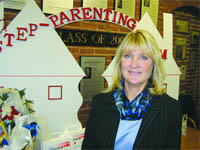
Sections Supplements
Despite a Few Speed Bumps, Valley Transporter’s Progress Is On Schedule
Gary and Valerie Bosselait

Gary and Valerie Bosselait saw an unmet need in the Pioneer Valley, and rectified the situation with Valley Transporter.

Gary Bosselait remembers the early days.

“When I say we did it all, we did it all,” he said, referring to the fledgling business known as Valley Transporter, which took individuals to and from Bradley International and other airports, and the partnership he created with his sister, Valerie, in 1986. “We drove the van, maintained the van, took the appointments, everything.”

Gary, who relocated from Worcester and left a position with one of his father’s businesses, a travel agency, to launch the venture, moved into an apartment shared by Valerie and her now-ex-husband. It served as residence and office for the business. Gary kept the answering machine close to his bed so he would hear it; the calls would come at all hours of the day and night, but it was, as it is to all small business owners, a pleasant sound.

“We loved to hear the phone ring,” he said. “We still do.”

It rings much more often today, and there is a growing staff of people to answer it. They take reservations and plot schedules to keep a fleet of 14 vans busy and running cost-effectively, an often-challenging assignment given the large geographic area covered by the company.

This includes Hampshire County and parts of Hampden and Franklin counties as well. The five colleges in close proximity to the company’s headquarters on Route 116 in Amherst provide a solid base for business, said Valerie, adding that the venture’s success rests on its ability to create repeat customers.

This is accomplished by providing value — the no-frills vans provide a lower-cost alternative to limousines and taxis — and quality service; in short, getting people to the airport on time and with no hassles.

The company has handled those assignments well enough to recently record its 20th anniversary, and it has preliminary plans for expansion, possibly into the Connecticut area, on the drawing board.

In this issue, BusinessWest looks at how this business has been able to take off and handle the turbulence that faces all small businesses, but especially those in this small but challenging field.

Flights of Fancy

The Bosselaits say they’ve booked shuttle trips for a number of celebrities over the years. Astronomer Carl Sagan used the company when he was in town for a speech at UMass. Former Defense Secretary Robert McNamara has also utilized Valley, as have a number of bands and solo artists who have come to the area for performances at area clubs like the Iron Horse in Northampton.

But the partners know that it’s not the star power of a customer base that matters in this unique sector of the economy, but its overall size — in other words, the basic business tenet known as supply and demand.

Both Bosselaits were mulling career options in the mid-’80s when they began gauging the Western Mass. market and whether it had the requisite critical mass for an airport shuttle business. The two cut their teeth in travel work at their father’s travel agency (Gary would later manage that facility), and, in the late ’70s, Valerie went to work for a small shuttle business operating in Denver.

She returned to the Pioneer Valley in 1980 and went to work for Carroll Travel in Amherst. Years later, she was trying to decide whether to go back to school or start a business, and she was helped with that decision by commentary from customers of the travel agency.

“We had people coming in all the time wondering how to get to the airport,” she explained. “There really was nothing at the time — maybe a Peter Pan bus, and not much in the way of taxi service.”

These comments became part of the discussion between the siblings during a family vacation in Maine in the summer of 1985. “We started talking about how we would love to start our own business, be it a travel agency, a tour business, or something,” Gary explained. “Val had recognized the need for a shuttle service out this way, so of all the things we bandied about, we decided on the airport shuttle.”

In hindsight, they made a smart decision, but success didn’t come quickly or simply. Nor was it expected to.

Despite outward appearances to the contrary, the airport shuttle business isn’t easy, said Gary, and profitability is elusive and often takes years to achieve, unlike with most limo services. The keys to success are a large, reliable customer base, effective scheduling that minimizes the number of unprofitable runs — those with one or a few customers in the van — without sacrificing convenience for the customer in the form of a lengthy trip in a van while picking up other riders, and word-of-mouth referrals that create new business. All this takes time.

The pace of progress was, indeed, slow, said Gary, adding that it was a full three years after the venture was launched before the two could hire their first employee — a reservations taker.

The many colleges in the region, and especially the five schools in the Amherst area, provide a rock-solid base of support, said Valerie, noting that administrators, faculty, students, their parents, and visitors all make use of Bradley International and many of those constituencies need affordable shuttle service.

And, increasingly, business stemming from the schools is year-round in nature, she explained, noting that years ago many schools shut down for the summer months, but today they rent out facilities to a wide range of groups.

Beyond the colleges, the company serves the region’s business travelers and area residents who, for one reason or another, need a lift to and from the airport. Many are looking for an affordable lift, and, with rates averaging roughly $45 for a round-trip shuttle, Valley charges about half what a limo ride would cost.

The company has encountered a number of challenges over the years, including spikes in fuel prices, which it has largely been able to absorb without resorting to surcharges, through patience and proactive steps such as purchasing smaller, more fuel-efficient vans (Honda Odysseys) for longer runs to Boston and New York.
Other challenges include the struggle to find drivers, the high cost of insuring passenger vehicles, and even fluctuations in plane ticket prices, which have impacted the bottom line.

But the biggest hurdle has been 9/11, which impacted every business in some way, but threatened many of those in travel-related ventures with their very existence. Indeed, the terrorist attacks brought all airline travel to a halt for two days, put most businesses and colleges in a state of suspended animation, canceled or postponed virtually all events and vacations that month, and prompted many to refrain from flying for extended periods of time.

“The only time the phone rang then was for cancellations,” said Gary, adding that he was exaggerating, but only slightly. “Everything came to a screeching halt. For 30 days we just sat idle, wondering what the heck was going on; virtually no one was flying.”

The Bosselaits noted with no small amount of relief that by Thanksgiving break, 2001, there was a return to something at least approaching normalcy. But it would take a year to fully recover, a feat achieved with some help from Florence Savings Bank, which eased some loan-repayment schedules.

In recent years, the company has achieved steady growth and reinvested profits in some of those smaller, more economical vans, as well as in new technology in the form of an automated reservation system, steps the partners/siblings say will position Valley for continued expansion.

Moving forward, the company hopes to translate its strong track record for customer service into larger market share, while, like any small business, looking at any and all ways to control expenses and add revenue.

The partners are looking into creating a second location in the Hartford area, which, they say, does not have a shuttle operation to Bradley. Meanwhile, they’re also exploring the possibility of turning their vans into moving billboards, in much the same way that transit buses are used for marketing area businesses and non-profits — but with obvious limitations.

“It’s something we’re looking at,” said Valerie. “We have a lot of vans, and they’re very visible. There’s some potential there.”

Final Approach

If ads are placed on the vans, they will be small and placed (probably across the back) so as not to detract from the name Valley Transporter, said Valerie.
That’s a name that has survived more than two decades, when many others in this sector have crashed and burned.

This longevity and continued growth are a tribute to resiliency and a large dose of old-fashioned hard work — plane and simple.

George O’Brien can be reached at[email protected]
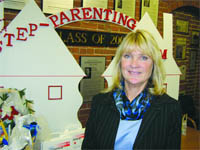
Sections Supplements
The Changing Face of the Nonprofit Business

Management of nonprofit organizations has always been challenging, but recent legislative, societal, and technological changes have made it even more so. In response, new college degree programs have been created to address a recognized leadership vacuum — resulting from the retirement of many current managers — and make tomorrow’s nonprofit managers better prepared for the hurdles they will face.

Melissa Morris-Olson, founder of the Axelson Center for Nonprofit Management in Chicago and newly appointed director of the Nonprofit Management and Philanthropy program at Bay Path College, puts it succinctly as she describes life for nonprofit organizations today.

“It’s not enough to do good,” she says. “You must do good well.”

That’s a reality being felt across the board by nonprofits — a large group in and of itself that includes businesses focused on health care, human services, education, advocacy, the arts, community development, and many other areas. They’re facing a wide array of challenges, including what Morris-Olson described as a “leadership vacuum” resulting from the retirement of many long-time directors, staff recruitment and retention, and the intricacies of fundraising.

At the same time, however, nonprofits are also seeing a new set of advantages, including the enormous power of the Internet to market themselves, raise funds, and recruit managers and volunteers, which is causing a marked shift in how they do business.

These trends point to the need for better training of nonprofit managers, and colleges such as Bay Path are responding with new degree programs aimed at putting more leaders in the pipeline, and giving them the skills they’ll need to succeed in a more challenging environment.

“There was a time when nonprofits saw themselves on a different level than for-profits, in part because of the good work they do,” said Morris-Olson. “It’s true that they have played an incredibly important role in our history, serving almost as a safety valve during troubled times. Without them, I can’t imagine how some major historic events — from natural disasters to the fight for civil rights — would have played out.

“But leaders need to know how to explain and defend their organizations and their missions,” she continued. “They need to know how to report on their work, spend money responsibly, and overall, to manage well.”

Virtual Channels

Nonprofit leaders cite a number of factors when asked about how their business has changed. Some are similar to shifts in business practices that all sectors are seeing, such as technological upgrades and the need to be increasingly competitive to recruit and retain staff. But others are more difficult to pinpoint, including a growing interest in working with nonprofits among various age groups, either as staff or as at the volunteer level.

Michelle Theroux, executive director of Child and Family Services of the Pioneer Valley, said staff recruitment and retention are two areas in which nonprofits have historically struggled, and they remain a constant concern.

“It’s a huge economic challenge to be a player,” she said. “We do good work, so there is an attachment to mission-driven practices, but that doesn’t mean we don’t have to make ourselves marketable to keep staff here. We want to offer competitive benefits to our staff, but there is a delicate balance between what we want to offer and what we can afford.”

Similarly, Herb Heller, Food Processing Center Manager of the Franklin County Community Development Corp. (FCCDC), said he sees firsthand the challenges that nonprofit companies face, in contrast with for-profit businesses. The FCCDC is a unique nonprofit organization that works in part to assist fledgling for-profit businesses, including those in the food and beverage industry through the processing center. He said nonprofits in general have different cultures and structures than for-profits due to the work they do, which can make management more difficult.

“Some challenges never change for nonprofits — sometimes, the biggest challenge is still keeping the lights on,” said Heller, who added, however, that along with constant hurdles, nonprofits also possess a number of positives that are now being recognized as intrinsic to the overall economy and climate of commerce.

“Nonprofits are very good at getting to the heart of the matter,” he said. “Because of that, we are able to garner support effectively, and with community support and good management, nonprofits are a type of business that can survive the tough times, and even help the for-profits through those times.”

And increasingly, Heller said, that realization is leading to some new, innovative practices within the nonprofit sector, and a renewed interest in the work they do among job seekers, potential volunteers, and would-be contributors.

“We’re seeing a widening of interest in nonprofits,” he said. “People understand that they can find new business opportunities through their involvement, and that is creating a pipeline to our doors.”

The reasons for this phenomenon vary, but all of them track back to a new sense of interest in the nonprofit sector. Bruce Marshall, senior vice president for development with the American Cancer Society’s Northeast affiliate, said one contributing factor could be the ease with which information can be attained in today’s highly connected world.

“The short answer as to why is the Internet,” said Marshall. “It has changed the way nonprofits and for-profits do business in similar ways, but on our end it’s exciting to see the variety of improvements.”

For instance, Marshall said last year the ACS raised more than $6 million through virtual channels — contributions made through Web sites and online solicitations. And in 2006, one of its more mature programs, Making Strides Against Breast Cancer, saw a 20% increase in revenue over the previous year; historically, older programs tend to bring in smaller numbers.

“Six years ago, we wouldn’t have been anywhere near that number,” he said. “And you can see the evolution … once, people reached for their checkbook and stamps. Now, they reach for their credit cards and look for a Web site address.”

Internet marketing and the ability to make online contributions has also helped many nonprofits expand their donor base, especially among younger generations, he said.

“Older people still give more, but we’re complementing existing numbers more and more with younger donors,” said Marshall. “I think part of the reason why is because through the Web, we are able to communicate more efficiently how every dollar is used. Younger people also like to get involved on a level at which they’re comfortable, and the Internet is probably the most effective way to engage them.”

The Gift of Time

There are other, societal trends that are also shaping the future of nonprofits and their fundraising efforts; as the population ages, for instance, Marshall said giving trends are starting to change.

“In terms of involvement with nonprofit and charitable groups, younger people already show a propensity toward being more hands-on,” Marshall added. “They like to get involved and take on specific projects. The older generations have historically been more likely to give unrestricted gifts, but as the number of younger people getting involved rises, so does interest in restricted projects.”

That trend is also leading to greater numbers of volunteers within nonprofits partly in lieu of solely financial contributors, but Marshall said he doesn’t see that as harmful to the bottom line. He said the more connected to a group an individual feels, the more likely it is that he or she will continue to support that organization for a long period of time, through both financial and in-kind contributions.

“Engaging donors as advocates increases retention rates,” he said, “and I’m a firm believer that, in general, involvement yields investment.”

Theroux agreed. She said Child and Family Services relies greatly on third-party reimbursements and contracts with state and federal agencies such as the Department of Social Services, but its fund-development program is still robust, and is made up largely of contributors who feel a sort of kinship with the organization.

“It could be a grateful client or a supporter of our cause, and it spans all age groups,” she said, noting that Child and Family Services will soon embark on a new series of fundraising appeals and events designed around that trend. “The main theme will be a connection back to the agency,” she said.

Marshall added that campaigns planned around such national trends are proof that the very face of these organizations is starting to change. They still need to become savvier in terms of marketing, fundraising, and translating missions and goals to a larger audience, he said, to make them a more attractive option to job seekers than in the past.

But Marshall, who started his career with the ACS 20 years ago, said one of the biggest changes to the nonprofit landscape is the availability of educational programs to teach those very skills.

“When I started, interest in working with nonprofits was relegated to a small group of people, and in turn it was rare to see any courses at the college level devoted to nonprofit management,” he said. “People who work with a nonprofit organization need some specific skills, such as knowledge of nonprofit sales, communication, marketing, and the ability to focus on net dollars. And today, I do see colleges addressing those areas.”

A Collegiate Contribution

Schools are doing so not only with random courses and informational programs, but with new degree offerings in Nonprofit Management and Philanthropy. They are designed to help fill the need for qualified personnel within such organizations, a problem that is becoming acute as many long-term administrators retire.

According to a study completed by Seton Hall University in the late 1990s and updated in 2002, there are about 255 colleges and universities in the U.S. offering some kind of nonprofit management curricula. Of those, 114 offer a graduate degree with at least a concentration in that field.

Locally, two colleges have recently entered the nonprofit management arena with graduate-degree programs; a master of science in Nonprofit Management at American International College in Springfield and a master of science in Nonprofit Management and Philanthropy at Bay Path College in Longmeadow.

Roland Holstead, vice president for Educational Enterprise and dean of Graduate and Continuing Education at American International College, said the private, four-year institution’s foray into nonprofit management was a response to recognized needs at a number of such organizations in the region.

“Many people expressed the belief that there was a need to develop particular skills to augment the work being done in the nonprofit sector, particularly at the mid-career level,” he said.

AIC announced its master’s degree program in Nonprofit Management last November. Holstead explained that it’s an interdisciplinary program that draws from many different courses and majors at the college, such as Public Administration, Organization Development, Business Studies, and Psychology, in response to the specific skill sets required by most nonprofit businesses, among them grant-writing, fundraising, human resources management, and a knowledge of nonprofit law.

“We believe that to help nonprofits become more efficient and effective, new skills are essential in addition to the compassion that many employees of nonprofits already possess,” he said, noting that changes in the economic climate and on the legislative level consistently create a fragile environment within the nonprofit sector, and many of AIC’s courses will focus on that reality.

“In terms of nonprofit law, for instance, there are new restrictions emerging now that nonprofits need to be very aware of,” he said. “And in terms of recruiting and retaining personnel, there are several things that people need to know. Nonprofits have to look differently at full-time, part-time, flex-time, and per-diem employees than for-profit businesses to meet the needs of their clients, and of their employees. Hours might be very different, and schedules more unconventional.”

Currently, the AIC master’s program, which will be marketed more aggressively for the fall 2007 semester, has 10 students and a capacity of about 60. All of the master’s candidates are already employed by nonprofit organizations, which Holstead said run a wide gamut, including hospitals, human service, and relief organizations like the American Red Cross.

Similarly, Morris-Olson said Bay Path recognized a need for nonprofit management preparation at the ground level, and created its program in response to both national and regional trends.

The program’s first class is enrolled now, and as part of their coursework, the students will be paired with local nonprofit organizations — about 35 of them — to help solve specific problems within those businesses. Morris-Olson said the fact that not one organization she has approached to partner with her students has turned her down speaks to the need for qualified answers to complex issues.

“We see firsthand the need for management training and education for the nonprofit sector,” she said. “One reason why is the leadership vacuum we’re seeing across the country. So many nonprofit leaders are retiring, and in addition, there is an issue of high turnover within nonprofits, among people who joined an organization only to find that they were not adequately prepared.”

In addition, Morris-Olson said that, due to legislative changes and other pressures, nonprofit organizations are also experiencing change at a very fast rate, which in turn underscores the need for formal preparation at the management level.

“Many nonprofit leaders worked their way up without any type of management degree,” she said. “But it’s almost imperative now … the pace of change has really accelerated for nonprofits of late. And this is not old knowledge. In most cases, this is new, cutting-edge knowledge that current nonprofit leaders need, and often worry about.”

Mission vs. Management

Morris-Olson said some of the core themes that are hot topics within nonprofit management include financial management, fundraising, and governance of boards or trustees. She added that successful preparatory programs generally approach these themes with a strong emphasis on the nonprofit perspective and how it differs from governmental and for-profit bodies. Issues surrounding accountability, prompted in part by scandal or disorganization brought to light following major disasters such as 9/11 or Hurricane Katrina, also top the list.

“During those times, some high-profile nonprofit leaders were just skewered in the press,” she said, adding that the philanthropic mission of today’s nonprofits must be coupled with solid business acumen.

Theroux agrees. From her central office in Springfield, she wades through a seemingly never-ending pool of challenges — changes to contracts, complicated funding streams, and health care benefit concerns in light of the Commonwealth’s new system among them. But she said the increased emphasis on education and technology across the nonprofit sector has indeed created a renewed sense of optimism in her field, one that sees the future as promising, not as a series of unknowns.

“We’re still in a period of transition,” she cautioned. “Things are certainly tight, but there are gains to be made, and I think many nonprofit organizations are hopeful about that.

“We’ve been here for 130 years, so we’re not going anywhere,” she said. “But in the future, we will look very different.”

Jaclyn Stevenson can be reached at[email protected]
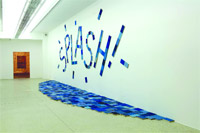
Departments

Law Firm Opens Northampton Office

NORTHAMPTON — Representatives of the Springfield-based firm Doherty, Wallace, Pillsbury and Murphy, P.C. recently celebrated the opening of a Hampshire County office at 60 State St. in Northampton. Thomas M. Growhoski, Esq. has joined the practice. The firm offers a wide range of legal services including litigation, corporate, probate, real estate, taxation, estate planning, and intellectual property law.

Museum Launches New Web Site

AMHERST — The Eric Carle Museum of Picture Book Art has launched a new Web site that features a new design, a greatly expanded online shop with more than 1,000 items, and improved educational resources for teachers and parents. The Web site, www.picturebookart.org, is now in its first phase of a three-phase program aimed at reaching out to new audiences and offering online visitors a more informative and dynamic Web experience. The site provides general museum information, an event calendar, a schedule of exhibitions, and information on fundraising initiatives, including membership. The museum determined as part of an extensive and ongoing strategic planning exercise, funded in part by a grant from the Institute for Museum and Library Services, that investing in the development of the museum’s Web presence would allow the museum to transcend geographical boundaries and provide enhanced access to its unique resources. Second and third phases of the project include the addition of special password-protected pages for members and other key constituents, as well as greater interactivity for children and families.

STCC Offers GIS Program

SPRINGFIELD — City planners, construction engineers, and real estate agents are among the many professionals who now use Geographic Information Systems (GIS) to create new information related to specific geographic locations, according to Dr. Ted Sussmann, chair of the Civil Engineering Technology Department at Springfield Technical Community College (STCC). In the spring, the college will launch a certificate program in GIS that will be offered through the School of Business and Information Technologies. The one-year program will prepare students for entry-level positions from technicians to data analysts and project managers. Sussmann and Nina Laurie, an associate for the National Center for Telecommunications Technologies at STCC as well as an adjunct faculty member, successfully applied for a $15,000 Mentor Links grant from the American Association of Community Colleges in 2005 to develop the GIS program. The grant program linked STCC with faculty mentors from Lake Land College in Illinois and the Kentucky Community and Technical College System, which have recently instituted GIS programs, to pass on their experience in curriculum development.

Red Cross Honors Easthampton Savings

EASTHAMPTON — The Hampshire County chapter of the American Red Cross recently presented Easthampton Savings Bank with its 2006 Philos Award. The award recognizes an individual or business that best exemplifies the spirit of charitable giving. The Red Cross cited several examples of the bank’s generosity, ranging from its donations over the years to many projects to sponsoring ads to enhance public responses to Red Cross events and fundraisers. In addition, the bank was cited for featuring Red Cross first aid information and products for sale in their lobbies in December.

Mercy’s ED Leads Survey in Patient Satisfaction

SPRINGFIELD — The Emergency Department (ED) at Mercy Medical Center has undergone several dramatic changes in recent months, and the hard work is paying off, with its selection as the best emergency room in a recent patient survey. Patient satisfaction is a top priority for Mercy’s ED, and the most recent survey ranks the ED first in patient satisfaction among the 33 acute-care Catholic Health East member hospitals. This recognition follows a recent renovation project in the ED that placed an emphasis on delivering the best medical care possible, as quickly as possible, using the latest available technology. Specifically, these changes included the adoption of a new triage system, improvements to the “Fast Track” system for minor injuries, and greater assistance from patient advocates. “Mercy’s ED often serves as a ‘front door’ to our facility, and we are grateful for the staff’s commitment and dedication to delivering treatment quickly and compassionately,” said James E. Fanale, M.D., chief operating officer of Mercy Medical Center.

Departments

The following business incorporations were recorded in Hampden and Hampshire counties and are the latest available. They are listed by community.

AMHERST

Firehaus Studio Inc., 34 Main St., Suite 11, Amherst 01002. Liza Cunningham, same. Design services for online publishing and marketing.

CHESTER

Bolduc Mechanical Services Inc., 20 Sylvester Hamilton Road, Chester 01011. Florence Bolduc, same. Automobile repair, installation and maintenance.

CHICOPEE

Christopher Keroack, M.D., P.C., 268 Szetela Dr., Chicopee 01013. Christopher Keroack, M.D., same. To provide medical services in the field of weight management.

James Lowe CPA Inc., 377 Montgomery St., Chicopee 01020. James W. Lowe Jr., same. Accounting services.

Kilgarden Communications Inc., 611 Memorial Dr., Chicopee 01013. John J. Sullivan, 270 Morgan St., South Hadley 01075. Retail store for sale of telephones, telephone services, etc.

HAMPDEN

Hampden Wilbraham Special Education Parent Advisory Council Inc., 85 Wilbraham Road, Hampden 01036. Maribel Kane, 7 Blacksmith Road, Wilbraham 01095. (Nonprofit) To work towards the understanding of support and education for all children with special needs.

Lisa Fallon, CPA, P.C., 45 Somers Road, Hampden 01036. Lisa M. Fallon, 501 Springfield St., Wilbraham 01095. Certified public accounting services in businesses and individuals.

HOLYOKE

New England Regional Health Care Cooperative Inc., 575 Beech St., c/o Holyoke Medical Center Inc., Holyoke 01040. Michael A. Zwirko, 58 Shady Side Dr., Longmeadow 01106. (Nonprofit) Centralized data processing, billing, food, laboratory, communications, record center and personnel services, etc.

The Order of the White Oak Inc., 101 St. Kolbe Dr., Holyoke 01040. Daibhaid O’Broder, 13 Van Tassel Dr., SE, Lindale, GA 30147. Jeffrey Lilly, 101 St. Kolbe Dr., Holyoke 01040, treasurer. (Nonprofit) To discuss with our peers the lessons of ancient and recent history, to study the Brehan laws of Ireland, etc.

HUNTINGTON

Bob’s Discount Network Inc., 19 Goss Hill Road, Huntington 01050. Robert Deshay, same. Internet sales and marketing.


INDIAN ORCHARD

Parker Liquors Inc., 42 Parker St., Indian Orchard 01151. Jose M. Goncalves, 185 Elizabeth Dr., Ludlow 01056. To own and operate one or more package stores or departments.

LONGMEADOW

Canine Health Events Inc., 167 Dwight Road, Suite 207, c/o Mancinone, Longmeadow 01106. Gayle L. Watkins, 40 Walmer Lane, Cold Spring, NY 10516. Paul L. Mancinone, CPA, Esq., 167 Dwight Road, Suite 207, Longmeadow 01106, resident agent. (Nonprofit) To run events to raise the public’s education and awareness of canine health concerns and disease prevention, etc.

NORTHAMPTON

Massachusetts Academy of Sciences Corp., 371 Prospect St., Northampton 01060. Margaret A. Riley, same. (Nonprofit) To promote the development of interest in scientific matters and science education in Massachusetts.

Route 9 Design and Build Inc., 104 North Elm St., Northampton 01033. John K. Landry, same. Residential and commercial property design.

SOUTH HADLEY

Help From Above Services Inc., 62 High St., c/o Wilmore Webley, Ph.D., South Hadley 01075. Samuel Asare, 62 Capitol View Ave., North Providence, RI 02908. Ellen Webley, 62 High St., South Hadley 01075, treasurer. (Nonprofit) To provide a variety of social, economic, cultural, and spiritual programs to improve people’s lives including persons with mental disabilities, etc.

SPRINGFIELD

Al Ledger Home Improvements Inc., 165 Saw Mill Road, Springfield 01118. Albert M. Ledger, same. Home improvements.

Chico’s North End Oil Service Inc., 2543 Main St., Springfield 01107. Cecilio V. Rivera, same. Fuel oil delivery, automotive transportation and repair.

Heeb Management Inc., 83-85 Magazine St., Springfield 01109. Christopher M. Evans, same. To deal in real estate and ancillary services

Reese Management Inc., 173-175 Spring St., Springfield 01105. Christopher M. Evans, same. To deal in real estate.

WEST SPRINGFIELD

Modern Construction Inc., 100 New Bridge St., West Springfield 01089. Vadimir Lapik, same. Construction, landscaping, real estate.

Uncategorized

The how and the why are often hard to peg, but Mass MoCA has spurred a rebirth in North Adams that is undeniable, if not always quantifiable. The fact of the matter is that, after years of economic strife and waning confidence, the old mill town in the Berkshires is entering a new age through the power of new art.

Mayor John Barrett III has led North Adams, the Commonwealth’s smallest city, for 23 years, and he knows the drill: when any community begins to show signs of new life, people want to see the proof of how and why in black and white.

And when it comes to arts and culture as an economic driver, the trend nationwide is to essentially prove a cultural venture’s worth through exhaustive studies, charting new dollars that a given entity brings into a community.

Those dollars are measured and classified in myriad ways, placed into columns with titles like ‘direct,’ ‘indirect, and ‘induced.’ Taxes are scrutinized, new business catalogued, housing trends tracked, and numbers of visitors tallied, all in the name of bringing some weight to the notion of art as a tool for struggling communities.
Barrett says he’s seen it all, and he doesn’t need those stacks of reports that typically cover his desk.

“The attention is wonderful, but I don’t need studies to tell me what’s happening here is working,” he said. “You can see it in the people. They’re … happy.”

What’s happening in North Adams is a ongoing rebirth, brought on primarily by the creation and building success of its cultural juggernaut, the Massachusetts Museum of Contemporary Art, most often referred to as Mass MoCA.

The museum, dedicated to contemporary art in all its forms – visual, music, dance, and film among them – opened its doors to the public in 1999, a decade after the state Legislature announced its support for the project. The economic health of the Commonwealth, or lack thereof, during that decade threatened Mass MoCA’s creation more than once, and community-based and private-sector contributions totaling more than $15 million for construction and programming were integral to the ambitious development plan that amounted to $31.4 million (state grants took care of the rest).

Today, Mass MoCA is the largest center for contemporary visual and performance art in the country, including about 600,000-square-feet of developable space and providing office and loft space for a number of diverse businesses on its campus as well. Its executive director, Joseph Thompson, has been at his post since 1987, before he even had a museum to lead, and today oversees the creation of intriguing exhibits and events that herald the changes afoot. Sometimes, it’s a Latin dance party in the facility’s courtyard that pulsates into the evening. Other times, it’s a piece of art like Dave Cole’s ‘knitting machine,’ which enlisted the help of cranes to create a massive American flag, weaving patriotism and history with the undeniable proof that there’s a new mill in town.

“There are enough interesting things happening here to keep people engaged,” said Thompson. “I’d say every few months, something strange is going to happen.”

That alone has attracted attention to the complex and its goings-on, but with a significant turnaround being seen and felt in its host city, the economic effects of Mass MoCA are also being studied closely.

As Barrett points out, many of the improvements in the city are hard to quantify, but all can be documented, and at the top of the list is that sense of well-being within North Adams.

“It’s an exciting time,” said Barrett, “and it’s all about creating an atmosphere, which in and of itself is hard to trace. But there was a time when businesses didn’t even want to attach the name of the city to their company, because they were ashamed.

“Now,” he said simply, “they’re not.”

Art, History

The site where Mass MoCA now stands has been an economic force in Western Mass. for more than 200 years, though prior to the museum’s development it threatened to become a massive black hole in the northern Berkshires. The 13-acre, 26-building complex occupies nearly a third of the city’s downtown business district, and has a rich history that dates back to the Revolutionary War. However, it also has a history of prosperous rises and dramatic falls, and when plans for the new venture began, it was that mercurial uncertainty that Barrett and others hoped to avoid.

Throughout the past four centuries, the site has served as home to a shoe manufacturer, a saw mill, a sleigh maker, a brick yard, a marble works, and an iron works that forged armor plates for the Civil War ship Monitor, among many other businesses.

Its history is highlighted in particular by three industrial periods: from 1860 to 1942, when Arnold Print Works dominated the complex and employed upwards of 3,200 people at its peak; from 1942 to 1985, when the Sprague Electric Company operated a booming electronics plant, and from 1986 to today, the developmental and early operational years of Mass MoCA.

Thompson said natural downturns in the economy were usually the culprit as the mill buildings’ many residents came and went, and said as preliminary ideas for a contemporary arts center were discussed, the downtown landmark was presented early on as a potential site.

“The building was really the genesis of the idea,” Thompson said. “It was space that could hold some really great art that was looking for a home – new art, and also complicated installations that require space.

“Plus, the complete lack of activity in the downtown business district cast a shadow across all of Berkshire County,” he continued. “There was a great need for the town to redevelop itself, and there was more than enough space here.”

Several cities and towns in the region are well-acquainted with economic rise and fall, as major manufacturing mills brought boom years in their heydays, and later brought dark times as they downsized and closed.

As North Adams settles into its new identity as a small city in the midst of a rebirth, many similar communities are turning their attention to the reasons why, and hoping to spur a similar outcome for themselves.

“Any New England town that tied its fate to one company was, or is, in trouble, and looking for a magic bullet,” Thompson said, cautioning quickly that Mass MoCA is not such a quick fix, but rather succeeds through diversity, which in turn guards against history repeating itself. Over time, he said, the museum will prove to be a symbol and a starting point for North Adams, rather than a crutch.

“This is not a magic bullet – the museum itself only employs 58 people,” he said, going on to note that as a relatively young non-profit, Mass MoCA isn’t without its challenges. The museum’s budget hasn’t changed significantly since its first year in business, hovering around $5 million. As utility and insurance costs have risen, Thompson said, the complex has reduced programming to help close the gap, and is only now in the very early stages of planning an endowment-building campaign to augment the capital raised from the leasing of the property’s commercial space.

“But, ours is a story of diversification,” he said. “We’re a museum and a performing arts venue. We’re home to many mid-sized and small businesses, we’ve developed new commercial real estate and a new destination within North Adams, and we’ve also tried to be careful not to promise too much. Museums are fragile by nature; we’re getting stronger, but we still have a long way to go.”

A Study in Pen and Ink

Still, conversations regarding Mass MoCA’s successes to date continue. Locally, the Center for Creative Community Development (C3D), a joint project of Mass MoCA and Williams College made possible by a grant from the Ford Foundation, has completed several lengthy studies of art centers and museums and their effects on the economy, including Dia:Beacon in Beacon, N.Y., Swamp Gravy in Colquitt, Ga., and Real Art Ways in Hartford, Conn.

C3D’s study of its home base at Mass MoCA found that among other positives, the museum attracts about 95,000 additional visitors to North Adams each year and spurred an estimated $9.4 million boost to the local economy in 2002, according to the most recent U.S. Census data. The report also states that tourism-dependent industries including restaurants, hotels, and retail have seen increases in business, as have service-based ventures that receive steady business from the museum, such as commercial printers and computer repair and networking providers.

In short, C3D concluded that Mass MoCA had made the city of North Adams a more desirable place to live, work, and visit through a number of channels, and even the data-heavy report concedes that the reasons why are not always easily identifiable.

“Even in cases where the community and the cultural arts organization work in collaboration, and where the project is a success, there has been an absence of tools for collecting and analyzing data and articulating its meaning,” the report states.

For Barrett, the belief that Mass MoCA is the origin of much of North Adams’ success is unwavering.

“Mass MoCA has become the poster child for the creative economy and the impact the arts can have on a community,” Barrett said. “It’s been a catalyst for growth for seven years, and it hasn’t even come close to reaching its full potential.”

Still, that belief can be bolstered by what numbers are gleaned from studies like that of the C3D.

Specifically, some of the most promising growth has been in areas the city has been struggling to improve for many years, such as the entertainment sector. The museum has led to new growth in this realm in the form of eight new cinemas and a planned renovation of the historic Mohawk Theatre downtown, which Barrett believes will lead to a ripple effect in the hospitality and retail climate downtown.

The city’s housing market on both sales and rental levels is also gaining speed, and the C3D report backs that claim, noting that housing values have improved city-wide and properties nearest to Mass MoCA have increased in value the most, by about $11,000 on average.

“We’re seeing condos being created out of apartment space and greater housing developments in the downtown area, including a use of previously vacant space,” Barrett said. “That’s something we’ve been trying to do for years.”

Further, the study estimates that Mass MoCA has increased the community’s assets by about $14 million and by about the same in new business activity, though Thompson argued that figure could be even higher.

“I argue that’s about $6 million short,” said Thompson. “It’s short because it doesn’t take into account the businesses that are located here, 14 of them, which employ about 320 people.”

Those businesses include a film special-effects producer, two major law firms, two restaurants, a publisher, a photography studio, and the corporate offices of the Steeple Cats minor league baseball team, and speak to the diversity that Thompson believes is the crux of Mass MoCA’s multi-faceted success.

Abstract Interpretations

“The most interesting effects are still those that are hard to identify,” said Thompson, returning to the common theme. “Downtown was at 25% capacity before we opened, and now it’s at 75%. That’s undeniable, but if you take the analysis one step further to look at how those businesses have changed downtown, it’s harder to articulate, yet it suggests that North Adams still has a developing economy, which is something the hard numbers don’t show.”

Thompson noted other positive signs in the city, among them a decrease in unemployment rates and a softening of the once-defined lines between North Adams and other Berkshire communities.

“North Adams was once on the top of many a ‘worst’ list,” said Thompson, “but we’re not on the top of those anymore. There also used to be some major lines of demarcation between North Adams and other towns, like Williamstown, but those and that ‘town and gown’ separation between commerce and academia are also modulating. Overall, there’s a much healthier flow of ideas and capital. All of that is hard to pin down, but those improvements are also the goal at the end of the day.”

He mused that North Adams’ return to health is also having a positive impact on the region as a whole, equalizing tourism business across the northern communities as well as the historically robust southern Berkshire towns, such as Lenox.

“For years the power of the Berkshires was highly concentrated in the south,” said Thompson, “and now, Berkshire County is in a position to market itself like Napa Valley, the Hamptons, or Santa Fe, with respect to its mix of natural and cultural attractions. Mass MoCA has definitely helped position the Northern Berkshires in that constellation.”

In closing, Thompson said Mass MoCA’s effect on North Adams has added significant weight to the cultural economy model, and as the museum grows and commercial and developable space continues to garner interest, the location will only increase in value.

“In creating an invigorating, interesting atmosphere, a dose of creativity is valuable,” he said, “and also an important part of the financial picture.”

Framework for Success

Barrett echoed those sentiments, but when referring to the city he’s led for nearly a quarter of a century, the mayor is wont to add a little chutzpah to the equation.
“Overall, the climate and attitude in North Adams continue to improve,” he said.

“This city has been beaten up for years and years. But now, we’re fighting back.”

Jaclyn Stevenson can be reached at[email protected]
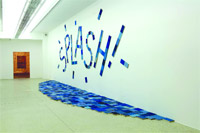
Departments


Karen Volpe

PeoplesBank has announced the promotion of Karen Volpe to Assistant Vice President of the Fairview office located at 1936 Memorial Drive in Chicopee.

•••••

The Springfield Business Improvement District (BID) has announced the promotion of Jeffrey K. Keck to Executive Director. BID is an affiliate of the Economic Development Council of Western Massachusetts. Prior to his promotion, Keck served as operations manager at the BID for more than seven years. In his new position, Keck will continue to work closely with BID property owners, businesses, government, and the general public. He will also be responsible for coordinating special events and programs that will enhance the downtown business district with a focus on real estate.

•••••

Carlson GMAC Real Estate announced the following:
• Barbara Robinson has joined the firm as a Sales Agent in the Wilbraham office;
• Deborah Lenz has joined the firm as a Sales Agent in the Wilbraham office;
• Gisele Meunier has joined the firm as a Sales Agent in the Wilbraham office;
• Christine L. Swanson has joined the firm as a Sales Agent in the Longmeadow office;
• Sheila Clapprood has joined the firm as a Sales Agent in the Longmeadow office;
• Judith S. Cohen has joined the firm as a Sales Agent in the Longmeadow office;
• Suzanne W. Carter has joined the firm as a Sales Agent in the Holyoke office;
• Amy Meo has joined the firm as a Sales Agent in the Holyoke office;
• Jennifer Fleury has joined the firm as a Sales Agent in the Agawam office, and
• Chris J. Hall has joined the firm as a Sales Agent in the Palmer office.

•••••

Lamson & Goodnow of Greenfield has hired Coreen Foote, CPA, as Chief Financial Officer.

•••••

Ryan W. Crosby has joined the Palmer office of Carlson GMAC Real Estate.

•••••

Eric A. Marsh has joined Greenfield Co-operative Bank as Treasurer and Chief Financial Officer.

•••••

Gina C. Birchall has been named Vice President of Underwriting at Berkshire Life Insurance Co. of America, headquartered in Pittsfield. Birchall will be responsible for evaluating the effectiveness of current underwriting processes and engaging with Berkshire Life’s reinsurers on a strategic basis related to risk retention.

•••••

United Personnel Services Inc. announced the following:
• Lauren Mendoza has been named a Staffing Consultant in the Springfield office, and
• Rebecca Freeman has joined the Hartford office as a Staffing Consultant.

•••••

William P. Chase II, President and Owner of Hi-Tech Window and Siding Installations Inc. of Haverhill, has been appointed to the Westfield State College Board of Trustees by Gov. W. Mitt Romney. Chase is a 1991 alumnus of the college.

•••••


Sheryl J. Sadler-Twyon

Sheryl J. Sadler-Twyon has been named Vice President for the Information Technology Department of Florence Savings Bank.

•••••

The Cancer House of Hope, with locations in Westfield and Springfield, announced the following:
• Parker Hodgman has been named a member of the Board of Trustees for the 2007 fiscal year;
• Jenn Cohen has been named a member of the Board of Trustees for the 2007 fiscal year, and
• Jennifer DeMoe has been named a member of the Board of Trustees for the 2007 fiscal year.

•••••

Century 21 Pioneer Valley Associates announced the following:
• Arthur Haskins III, a Sales Associate, has successfully completed the CREATE 21® New Agent Training Program;
• Terry Bartus, a Sales Associate, has successfully completed the CREATE 21® New Agent Training Program, and
• Erica Burns, a Sales Associate, has successfully completed the CREATE 21® New Agent Training Program.

•••••

Dave Boisselle has been promoted to Vice President of Operations at J. Polep Distributions Services in Chicopee. Prior to his promotion, Boisselle served as director of operations for 18 years.

•••••


The Greater Springfield Convention and Visitors Bureau (GSCVB) has appointed Alicia M. Szenda to Group Tour Coordinator. Her responsibilities will include working closely with the GSCVB’s Group Tour Committee to develop initiatives to increase motor coach visitation to the Pioneer Valley. She will also represent the region at industry-related trade shows and conventions.

•••••


Lyn Yarmesky

Lynn Yarmesky has been named Vice President of Lending at the STCU Credit Union, with offices in Springfield and Westfield.

•••••


Tighe & Bond, Inc., based in Westfield, announced the following:
• Alfred Mascia Jr., P.E. has joined the firm. Mascia is a civil engineering manager and licensed professional engineer with more than 28 years of experience in the design, planning, management, and construction administration for a diverse mix of site-development projects;
• Christopher O. Granatini, P.E., has joined the firm. A registered professional engineer, he brings more than 10 years of experience in various aspects of transportation and traffic engineering;
• Daniel P. Rukokoski, PWS, RSS, has joined the firm. He is a senior environmental scientist with more than 11 years of experience in wetland delineation; municipal, state, and federal permitting; remedial investigations; Phase I, II, and III environmental site assessments; and environmental health and safety, and
• Craig S. French, P.E. has joined the firm. A registered professional engineer in Massachusetts and New Hampshire, French adds a decade of structural engineering experience to the firm. As manager of the structural department, he will be responsible for structural engineering and architectural design, with involvement from the conceptual phase and planning through final design and construction.

•••••

OMG Inc. in Agawam announced the following:
• Brian Wroblesky is now the Midwest Regional Manager for Roofing Products Sales;
• Stephen Trites has been named Southeast Regional Manager;
• Sean Kelly is now in charge of the Northeast region;
• Joe DiSanto has been named Customer Service Manager for Roofing Products;
• Andy Cleveland is transitioning within Roofing Products from National Accounts to Product Management. He will be responsible for the sales and marketing of the OlyBond program;
• Brent Kreutzer has been named National Accounts Manager, and
• Corey Rohland has been promoted to Western Regional Manager.

•••••


Adam Lesko

Adam Lesko, a board certified Microbial Consultant, has formed Green Environmental Consulting in Northampton. His firm specializes in industrial hygiene, indoor environmental quality, and mold consulting services. In addition, his company develops and maintains custom database solutions for managing asbestos and other environmental data.


•••••


Michael T. Moriarty

Michael T. Moriarty has joined the staff at United Bank as a Senior Vice President in the Commercial Banking Department. He will be based out of the main office on Elm Street in West Springfield, and will work with commercial clients throughout the bank’s market area.

•••••


Madeline Claudio

Madeline Claudio has been promoted to Business Development & Sales Manager in the TD Banknorth branch at 958 State St., Springfield. In her new role, she will focus on growing and developing business in the branch serving customers throughout the region.

•••••


Denise Eldred

Denise Eldred has joined the Office of Development and Alumni Relations as Coordinator of the Annual Fund at American International College (AIC) in Springfield. In her new position, Eldred will serve as Phonathon Director. She will also work with AIC donors, and will be involved in planning alumni events.

Opinion

By most accounts, Springfield is starting to rebound.

The Finance Control Board has stabilized the city’s finances and brought about relative peace and harmony to the labor front. The Urban Land Institute study of the city has established some priority areas for the community, and there is already movement on some of these fronts. We’ve seen momentum in the business community and the commercial real estate market, and the promise of more activity and jobs.

As the new year dawns, many in the community would like to add to this list by putting the scandals that have rocked Springfield in the rear-view mirror. Some have suggested that the FBI, which has successfully ferreted out wrongdoing on the part of many city officials, including most members of the Asselin family, should consider its work here done.

Not yet.

The FBI shouldn’t close the book on Springfield until its work is finished, and that won’t be accomplished until former Mayor Michael Albano, who was ringmaster for the circus that his administration became, is made to account for his many misdeeds.

While several members of his administration have been indicted, tried, found guilty, and incarcerated, Albano has thus far escaped the same fate. Maybe there’s nothing the Feds can pin on him, but we suspect that there may be other reasons for the FBI’s reluctance to act on the former mayor.

Albano has suggested to many that the FBI’s crackdown, similar in some ways to the well-documented Operation Plunderdome that took down Providence Mayor Buddy Cianci, is part and parcel to “being an Italian American” who assumes a leadership position in this country. This is nonsense.

Albano’s assertions are offensive to all Americans, especially to those of Italian descent, and are being compounded by Albano’s opining that the FBI’s interest in Springfield and his administration is motivated by actions he took 24 years ago.

Albano, a former member of the state Parole Board, recently testified in a U.S. Civil Court trial that the FBI never provided him with information that three men convicted of murder were innocent. The testimony came in a trial in which two men and the families of two deceased men are suing the government for than $100 million for wrongly putting them in prison.

The two living individuals, who were freed after 25 years in prison, were exonerated after documents were released indicating that the FBI knew the men were innocent but set them up to protect an informant who committed the murder of a mob member.

Outside the courtroom, Albano told reporters that when the Parole Board was considering whether to commute the sentence of one of those convicted, he was told by two FBI agents that voting for the commutation — which he eventually did — would not be a good career move for him.

It appears that Albano is trying to use these events, and his ancestry, to suggest that the FBI has no good reason for being in Springfield and turning City Hall, the Housing Authority, the Mass. Career Development Institute, and other once-corrupt agencies upside down looking for wrongdoing.

The truth is that the FBI has every reason to be here, as evidenced by the convictions already won, and it should stay here until its job is finished. More importantly, it should not be intimidated by Albano’s posturing about being bullied by the bureau two decades ago.

Former members of the Albano administration have hinted privately that the best defense against the FBI is a good offense. The former mayor has been saying for years that the bureau has an ax to grind and that this explains why the Feds have set up camp in Springfield.

The truth is that the mayor presided over a City Hall that was corrupt, out of control, and an embarrassment to the community. And that’s why we believe the FBI’s work, as damaging as it has been the city’s reputation, must continue until all the questions are answered. Then, it will be appropriate to move on.

Cover Story
What’s Next for the Pioneer Valley Economy
Cover

Cover

As the calendar turns to 2007, economists see some growth for the Commonwealth, but mostly a continuation of the pattern of unspectacular progress that has defined the past few years. In other words, look for a continuation of the jobless, or nearly jobless, recovery. As for the Pioneer Valley, “it just keeps plugging away,” said one observer, noting that its relative stagnancy is better than some regions have experienced.

It’s been 16 years since a Democrat has been governor of the Bay State, and anyone in business who can clearly remember 1990 and the years that followed … would rather not.

Which is why some apprehension on the part of the business community at the dawn of the Deval Patrick era would be understandable. But there has been little of that to date, according to most observers, who say that, for now at least, Patrick is being given the benefit of the doubt when it comes to business, keeping the costs of conducting it in this state under control, and a host of issues that impact the Commonwealth’s ability to attract and retain jobs.

There are several reasons for this, said Andre Mayer, senior vice president of Communications and Research for the Associated Industries of Mass. (AIM), starting with the fact that the outgoing governor, Republican Mitt Romney, would receive only a mixed report card from many in the business community about containing business costs. There is also the rhetoric Patrick issued during the campaign, especially about education and creating a better-trained workforce — and the promise that it will translate into positive action in the months and years ahead.

“Thus far, I haven’t seen any real alarm about Patrick or a one-party government,” he said, referring to the Democrats’ stranglehold on Beacon Hill. “In fact, the business confidence index rose while Patrick was pulling away in October.

“I think part of the reason he was elected is the feeling that the emphasis will shift from taxes to other issues,” he continued, “and so far, Patrick has been saying all the right things; he doesn’t act like a tax-and-spend Democrat.”

But while Patrick is apparently not a cause of real concern as the calendar turns to 2007 (things may change later), there are some other matters that do warrant apprehension. At the top of the list is the condition of the housing market, especially in the Eastern part of the state. Prices have declined between 10% and 15% over the past year or so, and some analysts say they could fall another 10% before bottom is officially hit.

The falling prices are making the state marginally more affordable for workers, which is good news, said Bob Nakosteen, faculty member of the Isenberg School of Management at UMass and executive editor of Benchmarks, the university’s quarterly report on the state’s economy. But that downturn has certainly impacted consumer spending, while also hurting both the construction sector and the legion of Realtors operating across the Commonwealth.

The broad result is an overall decline in confidence, which is another of the matters to watch closely as the new year unfolds, said Nakosteen, adding that the slow start to the holiday shopping season, a few rough days for the stock market after that first shopping weekend, and talk nationally of inflation and possible interest rate increases to ward it off won’t help boost confidence.

There are other factors to consider, including energy prices — lower for the time being, but always volatile — that have most analysts projecting modest (2.5% to 3%) growth for the year ahead, said Nakosteen.

That would represent a modest decline from recent events, he said, noting that the Massachusetts economy performed better over the past six months (3.6% growth in gross state product) than at any time since the current expansion began in 2003. This growth was prompted by a resurgence in technology markets, especially demand for microchips, he explained, noting quickly that there are signs that things are already slowing down again.

For the longer term, analysts are wondering, as they have for the past several years, where the next surge in jobs for the Bay State and the Pioneer Valley will come from. In a recent article written for Benchmarks (see page 37), Nakosteen chronicled 20 years of relative stagnancy for Western Mass., with questions about if, when, and how it might end.

“The region just keeps plugging along,” he said, noting that, while ‘stagnant’ is generally not a positive economic term, in this case it’s better than some areas of the state, which have witnessed dramatic surges, but equally dramatic declines.

Through the Looking Glass

When asked about what to expect from the Deval Patrick administration, Jeff Ciuffreda, vice president of Government Affairs for the Affiliated Chambers of Commerce of Greater Springfield, said he’s not hearing a lot of negative talk.

Like Mayer, he said Patrick’s campaign and its theme, Together We Can, created generally positive vibes, and the business community is, by and large, withholding judgment until the picture is colored in.

“He seems to at least speak the language of business,” said Ciuffreda, noting that Patrick has served on several corporate boards and would seem to appreciate the needs and concerns of business owners. “How that will translate … we don’t know yet.”

To date, Patrick has been short on specifics with many issues ranging from the the fate of the Finance Control Board — the ACCGS would like it to remain in business — to his first budget. He has been outspoken on public higher education, and recently told an audience at UMass that he would push to increase spending on state schools by $400 million over five to seven years.

As for Western Mass., Patrick, like previous candidates and governors, has pledged support for the region. However, some are already alarmed by how few members of his transition team (7%) are from the Pioneer Valley.

“We may need to keep his feet to the fire on Western Mass.,” said Ciuffreda. “We’ll know a lot more in a year or so.”

That statement applies to many issues and concerns, he said, noting that while waiting to see what Patrick and his team members do in their first year, economy watchers will also be monitoring the housing market, energy prices, the war in Iraq, and the strength of the dollar — or lack thereof.

The softening of the housing market is still largely an Eastern Mass. phenomenon, although sales volume has fallen in the Pioneer Valley and prices has remained steady, said Nakosteen. But the impact is felt statewide because of the broad ripple effect. Consumer spending will continue to decline if the trend does not reverse itself, due to a phenomenon known as the ‘wealth factor.’

As Nakosteen explained, many individuals now view their homes as their principle vehicle for investing (savings rates remain low), and when homeowners see the value of their property diminish, they feel less wealthy and are thus less apt to spend.

“That’s why the housing market is the biggest concern for the year ahead,” he said, adding that economic projections for the next several quarters are muddled because of general uncertainty about housing prices and sales. Debate continues on whether bottom has been hit and, if it hasn’t, when that might occur — the consensus is the second or third quarter of next year.

The Big Picture

The sum of the many factors influencing the economy will determine how much of a surge will be seen — in the overall economy and in jobs.

While current conditions wouldn’t be described as a truly ‘jobless economy,’ the phrase that became popular in ’03 and ’04, there haven’t been significant gains in employment statewide or regionally.

“We set a record for merchandise exports this year,” said Mayer. “We’re making the stuff the world wants, but we’re just not employing a lot of people to make it.

“Hiring is still regarded almost as a last resort for some employers,” he continued, “and the availability of good people is one big reason why. Some companies just can’t find people.”

Overall, the state has seen roughly 1% growth in the number of payroll jobs over the past year, said Nakosteen, noting that the state was registering 2% to 2.5% increases during the early years of the decade. Most recent gains have come in professional and business services (7,100 jobs), education and health services (6,800), and financial services (4,200). In addition, 3,900 jobs were added in construction.

This relative stagnancy on the jobs market has contributed to an ongoing out-migration of state residents, the extent of which is still being debated, said Mayer, noting that the exodus, however large it may be, has some economists worried.

And the trend will continue, he said, until the state creates large numbers of new jobs. When and how that will happen are both $64,000 questions.

There are many theories about where the next large wave of jobs will emerge — from renewable energy to biotechnology to medical instruments manufacturing — but no clear indicators, said Mayer, who doubts that any of those sectors will blossom into large-scale jobs centers.

“I’ve heard that renewable energy could be the next big growth area, but I don’t see it,” he told BusinessWest. “How many people does it take to run a windmill?”

Nakosteen agreed, saying that the next big source of jobs probably hasn’t identified itself yet.

“Massachusetts has a long history of reinventing its economy, and it will do so again,” he explained. “But if there’s a new engine out there that’s going to drive us, it’s not at this point identifiable. And one of the reasons we’re going to see very, very minimal, almost stagnant employment growth over the next few years is because we don’t have this new engine out there.”

That same statement can be applied to Western Mass., which has seen some job growth in biotechnology and medical instruments, but, overall, hasn’t found anything to replace the manufacturing jobs that have given the region its identity. This fact, coupled with the region’s minimal but consistent growth, adds up to remarkable resiliency, he said.

“Over the past century, the Pioneer Valley has lost most of its important employers, especially in manufacturing,” he explained. “If you look at other areas of the country, when they lose their major employers and enter a recession, they go into a death spiral; we just keep plugging away.”

Nakosteen attributes this phenomenon to the region’s employment anchors — UMass, MassMutual, Baystate Health, and others, who have maintained their core strength over the years — and also to new small-business development. “This region is much better off than other areas that have lost their manufacturing bases,” he said, “and I think it’s because of those core businesses.”

Identity Crisis

Can the region break free of the stagnancy that has defined it for the past few decades? Possibly, said Nokosteen, but it probably won’t come from companies leaving Boston for the Valley and its lower cost of doing business.

“The prevailing theory is that if business owners are going to leave the Boston area, they’ll go all the way to the Research Triangle,” he explained. “They won’t stop along the way in Springfield.”

Thus, growth will likely be organic, and Nakosteen isn’t sure where it will come from.

“We don’t have an economic identity, and we don’t have an engine of growth; I don’t see anything coming to the fore,” he told BusinessWest. “But it’s not obvious that anything has to come to the fore; we could be like this forever more.”

George O’Brien can be reached at[email protected]
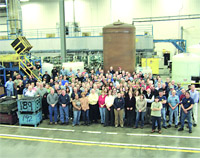
Departments

The following business incorporations were recorded in Hampden and Hampshire counties and are the latest available. They are listed by community.

AGAWAM

Esperanza Inc., 27 Grant St., Agawam 01001. Dmitriy A. Bazukin, same. Transporting vehicles across the state with a truck.

BRIMFIELD

Premier Singles Inc., 73 Dunhamtown Palmer Road, Brimfield 01010. Maria N. Thomson, same. (Foreign corp; DE) Social networking.

EAST LONGMEADOW

KCL Corp., 422 North Main St., East Longmeadow 01028. Kam Chow Lau, same. Provide prepared ethnic food and drink.

New England Time Solutions Inc., 41 Lee St., East Longmeadow 01028. Karl Cook Bailey, Jr., same. Selling time recording and payroll systems equipment and providing related services.

Reflections by Claudia Inc., 23 North Main St., East Longmeadow 01028. Claudia H. Walsh, 374 Pinehurst Dr., East Longmeadow 01028. Retail sale of home furnishings and gifts.

FLORENCE

Northampton Boys Soccer Boosters Inc., 103 Pioneer Knolls, Ext., Florence 01062. Amanda Cronin, same. To support boys’ soccer teams by fostering positive team spirit, etc.

HAMPDEN

Excel Home Care Services Inc., 83 North Monson Road, Hampden 01036. Rebecca L. Paquette, same. Nursing services.

LEEDS

The American Singers’ Theater Corp., 231 Main St., Leeds 01053. Alan W. Schneider, same. Producing events and providing services in the performing arts.

LONGMEADOW

Memory Lane Lamps Inc., 28 Rugby Road, Longmeadow 01106. Steven D. Couchon, same. Wholesale and retail sale of lamps and other goods.

LUDLOW

DJZ Inc., 53 Blanchard Ave., Ludlow 02056. Denise J. Zrakas, same. Child care business.

Westfield Gas & Electric Cooperative, Moody St., Ludlow 01056. Daniel Golubek, 82 Wood Road, Westfield 01085. To deal in energy or energy-related services.

MONSON

Docco Mountain Supply Inc., 45 Bethany Road, Monson 01057. Daniel W. O’Connor, 24 Circle Dr., Monson 01057. To manufacture and sell ski lift parts.

NORTHAMPTON

Hampshire County Partnership to Improve End of Life Care Inc., 168 Industrial Dr., Northampton 01060. Tracy Carroll, 2 Warner Row, Leeds 01053. (Nonprofit) To educate the public regarding all aspects of life care, etc.


Student Educational Exchange Inc., 29 Adare Place, Northampton 01060. Megan Connelly, 375 Mulberry Road, Mansfield Center 06250. (Nonprofit) To engage in education.

SOUTH HADLEY

Definitive Protection Solutions Inc., 78 Bardwell St., South Hadley 01075. Carlos Ramirez, same. Security services.

Home First Remodeling Inc., 5 Wright Place, South Hadley 01075. Michael Troy Reiter, same. Residential remodeling.

SOUTHWICK

J.L. Towing Inc., 40 Sam West Road, Southwick 01077. John A. Litwak, Jr., same. The retail sale of auto parts and towing services.

SPRINGFIELD

Affordable Enterprises Inc., 69 Maple St., Springfield 01105. Dwayne Harris, 5225 Longridge Ave., Las Vegas, NV 89146. Earl G. Wilson, 69 Maple St., Springfield 01105, treasurer. Residential and commercial construction, home remodeling, etc.

Community Contracting Inc., 211 Wilbraham Road, Springfield 01109. Jose L. Fernandez, 70 East Haverhill St., Lawrence 01841. Home improvements, installation of security systems, real estate development, etc.

Iglesia Camino Al Cielo Pentecostal Inc., 758 Carew St., 3rd. Floor, Springfield 02204. Joel Caballero, same. (Nonprofit) To preach the gospel in the Christian way of life.

Israel Inc., 29 Berkeley St., Springfield 01109. Grace Morris, same. Cyberservice working on the Internet doing consultation.

WTKD Inc., 691 Boston Road, Springfield 01119. Won Young Ju, 30 Sunnyside Terrace, Wilbraham 01095. To operate a martial arts institute, etc.

WESTFIELD

Alliance Home Improvement Inc., 148 Berkshire Dr., Westfield 01085. Sergiy Suprunchuk, same. Home improvement.

Howard Barber CPA Corp., 1 Court St., Westfield 01085. Howard Glenn Barber, 25 Willow Brook Lane, Westfield 01085. Accounting and business services.

Prometheus Labor Communications Inc., 10 Kane Brothers Circle, Westfield 01085. Stephen Dondley, same. Computer consulting and design services.

WILBRAHAM

Coffee Guys Corp., 8 West Colonial Road, Wilbraham 01095. Thomas F. Sweeney, same. Retail coffee sales.

Wilbraham Middle School PTO Inc., 78 Oakland St., Wilbraham 01095. Georgina Trebbe, same. (Nonprofit) To encourage cooperation among parents, school staff and community, etc.

Sections Supplements
More People Are Choosing Hospice Care in Their Final Days
Joanne Schlunk

Joanne Schlunk says a multi-disciplinary team makes sure not only a hospice patient is comforted and supported, but the patient’s family, too.

Joanne Schlunk recalled a man who was told he had two weeks to live. His volunteer hospice aide asked him if he had any regrets, and he said he wished he had written his memoirs.

The aide offered to write down his thoughts for him. The dying man was skeptical, but convinced himself that two weeks’ worth of memories might have some value to someone.

A year later, the memoirs were finished. The author? Far from it.

The story demonstrates the unpredictability of the final days of life, said Schlunk, director of the recently launched Mercy Hospice in Holyoke. Hospice services are available to people whose illnesses are no longer responding to treatment — who are, in their doctors’ estimation, dying.

And there’s no reason not to accept the comfort, companionship, and relief that hospice care can offer, Schlunk said — because predicting the end of life is a tricky business, and that two weeks, or six months, might not really be the end.

“The focus of hospice care is comfort and quality of life, symptom management and support,” Schlunk said — all with the recognition that the patient has finally begun to succumb to his or her illness, and the end of life would no longer be a surprise.

Robert Engell, vice president of Allegiance Hospice in Springfield, said hospice care marks a significant distinction from traditional health care in terms of its goals.

“For most of us, when we go to the hospital, the focus is on curing us, fixing us. It’s acute intervention,” he said. “For people going into hospice, the recognition has been made — or is in the process of being made — that there is no cure for this life-limiting illness. So hospice is not a place; it’s a philosophy of care.”

It’s also one that increasing numbers of Americans are tapping into, as it enables them to receive care where they’re most comfortable, usually at home. This issue, BusinessWest examines the philosophy behind hospice and how it’s benefiting not only the dying, but those grieving for them as well.

New Concept

Engell said the hospice concept emerged during the 1960s and 1970s, as pioneering studies of the dying process by Elisabeth Kubler-Ross and others were getting serious attention.

“There was a lot of work being done around that time on the needs of the dying person,” Engell said. The first hospice program in America was launched in New Haven, Conn. during the mid-1970s.

“That was the start of it,” he continued. “In the 1980s, Medicare recognized the value of it and lent it credence as one of its benefit programs. As people became more aware of a hospice benefit, they started taking advantage of it as an alternative to more aggressive treatments.”

Schlunk has witnessed the same trend, having spent 23 years in the field of hospice care. She helped launch one of the Bay State’s first such programs at Franklin Medical Center in 1985, and was excited to do the same for the Sisters of Providence Health System.

“This system stands for providing care at all phases of life and serving the needs of the entire community,” she said. “They stand behind that mission, so this was a logical development for us.”

Other area hospitals and health systems have similar affiliations, and Schlunk said it makes sense, allowing people to stay within the health system that might have served them for decades. One difference between 1985 and 2006, of course, is that many more people know what hospice is, and how they can access it.

“There’s much more awareness today of what hospice can provide and the value it has,” she told BusinessWest, recognizing at the same time that moving to hospice care is a significant emotional hurdle for families, since doing so explicitly recognizes that the end of life may not be far away.

“It’s a big step, a huge psychological step,” Schlunk said. “The timing has to be right for each family. Sometimes that’s a few days before the end, and sometimes it’s years before.”

Engell said there are some 3,000 hospice programs nationwide, and about 50 in Massachusetts. Typically, programs feature an interdisciplinary team of physicians, nurses, home health aides, social workers, chaplains, therapists, counselors, and volunteers, all working together to make sure the patient is as comfortable — and at peace — as possible.

Changing Perceptions

Engell tells of hospice patients who wish they had started sooner, if only to have a chance to rest peacefully at home, where most hospice care is delivered.

“It’s really all about the relationships that are established between these professionals and the patient and family,” he said. “As with all good relationships, they take time to develop, so there’s a better benefit to those who access it early.”

However, compared to other models of elder care, such as nursing homes, hospice care is still relatively new. As a result, many people still need to be educated about what hospice is and isn’t, Engell said.

“Back in the ’80s and early ’90s, the majority of people who went into hospice care — about three-quarters — had some form of cancer diagnosis,” he explained. “Many people still have the impression that it’s just a benefit for people who have cancer, but that’s not true.” Still, he said, perceptions are changing; cancer patients now comprise just under half of all those in hospice.

The other major public-awareness hurdle involves communicating how much of a benefit hospice care is not just to the dying person, but his or her loved ones. The philosophy of hospice is closely tied to giving emotional and other support to the entire family — and those benefits, which are paid for by both Medicare and Medicaid, continue for a full 13 months after the main care beneficiary has died.

Why more than a year after? “Think about it,” Engell said. “All of us have a life cycle of events that run throughout the course of a year. Think about the first Thanksgiving that your mother’s not at the end of the table, or the first time your child celebrates a birthday and his favorite uncle isn’t there.”

Providing services throughout a full year, he explained, allows a family to access support as they encounter each holiday, special day, or other key event that might prove to be a surprisingly emotional challenge.

“We’ll receive a call out of the blue from someone we haven’t heard from in awhile,” Engell said. “They’ll say, ‘I thought I was OK, but I just need someone to talk to.’ That’s what’s really wonderful about hospice — it’s there to give relief, whether physical, spiritual, emotional, or psychological. It allows patients and their families to have comfort and dignity.”

Into the Sunset

Engell mused that, as awareness of hospice increases, more people will demand the service. “It’s a holistic form of care that allows for people to reconnect with their families in very significant and meaningful ways.”

Recalling the man who lived long enough to dictate his memoirs, Schlunk reflected on the futility of running out a clock that’s never accurate. Instead, the hospice team helps the patient focus on the goals of care — and of living.

“They’ve documented that the person is declining, or is expected to decline, but they don’t have to discuss that at length with the patient,” she said. “We don’t want to take away hope — and hope can take on many forms. It can be hoping that a miracle happens — and they do — but it may just be hoping to see a son graduate, or see a grandchild born. That’s OK. We want to hope right along with people.”

Even if there’s nothing left to hope for but a peaceful — and regret-free — end.

Joseph Bednar can be reached at[email protected]
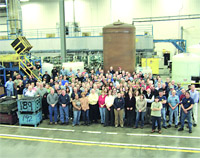
Sections Supplements
New Owners at Hampden Country Club are Putting a Hidden Gem in the Public Eye
Bill Tragakis, left, and Nick Cardinale.

Bill Tragakis, left, and Nick Cardinale, owners of Hampden Country Club, have plenty of plans teed up for 2007.

Bill Tragakis, co-owner of the Hampden Country Club, calls the last year of his life a Cinderella story.

True, there are no pumpkin coaches or glass slippers — those have been replaced with golf carts and spikes. But Tragakis, who purchased the golf course and club along with Nick Cardinale and Michelle Siniscalchi (as Hampden Realty Partners LLC) just under a year ago, said there are some similarities between the classic tale and his own; he worked for several years behind the scenes before achieving a life-long dream, and now he too has his own ballroom.

Metaphors aside, though, the Hampden Country Club is indeed experiencing a rebirth of late, with its trio of new owners at the helm. Tragakis, who worked with its previous owner, Friel Golf Management, for 20 years (five of those at Hampden) joined forces with Cardinale, a club member with a background in environmental consultancy, and Siniscalchi, a neighbor with an interest in the property, after Friel management announced it was ready to sell.

In January of this year, that sale was finalized at $3.4 million, marking the start of a new venture for its current owners, all three locally based. And for Tragakis, the club’s former head golf pro, it offered a chance to live what he says is every golf pro’s dream — to own and operate a course of his own.

Now approaching the close of its first year in business under new ownership and management, the club that opened in 1973 as a 9-hole course is entering 2007 on terra firma, said Tragakis. He credits a solid first year — one that saw membership numbers more than double and an overall increase in revenue from 2005 — with the public taking notice of varied improvement projects that are ongoing inside and out.

“I think people have seen us putting a lot of money and time into the operation,” he said. “They’ve seen us bring it to a new level, and from there we can continue to grow and reach out to new members and the public.”

Going for the Green

All of those renovations and improvements to the semi-private club and its 295 acres of land are geared, he noted, toward steadily increasing membership, translating the club’s amenities to the public, and creating a competitive golf course in two senses of the word — one that challenges golfers and also attracts new faces to its grounds, on a local, regional, and even national scale.

And in some cases, that meant facing some challenges head on almost immediately after closing the deal, including the club’s reputation as a ‘hidden gem.’

“A lot of people still think we’re a private club and I don’t know why that is. Maybe it’s the long, winding entrance, or maybe it’s because a long time ago, the club was private,” said Tragakis, tracing the history of the club, which opened 18-holes to members two years after opening, and was owned locally until Friel Management took over. “We may be private again, but we want the public to know that we’re here, and right now we’re very much open to them.”

There were other challenges too, such as a championship course that was in need of some repair and a clubhouse with a somewhat dated look. There was also the diverse business model of a country club to take into account — in addition to improving and managing a 150-acre course and its ancillary dining and retail operations, the partners were also charged with maintaining and promoting the club’s 300-person capacity banquet facility.

But Tragakis added that no time has been lost in addressing those hurdles, and moreover capitalizing on the club’s existing strengths, which include an enviable view of the Pioneer Valley, striking architecture, and a challenging course that attracts golfers at all levels.

“We’re suited for both large and small outings and also for large and small events inside the facility,” he said, noting that to increase both types of business, he and his fellow owners have been marketing the club as a premier location for business meetings of all sizes. “We’re perfect for that two-hour meeting, be it a breakfast meeting or a dinner, and a business meeting that breaks in the middle for nine holes of golf is an even better sell. We’re very interested in capitalizing on that.”

In addition, the partners are working to raise the profile of food operations at the club overall, making plans to hold fine wine dinners, themed events, and offer live entertainment in the pub area, as well as expand the dining area to the outside patio during the spring, summer, and fall months. And one of the first changes the new owners made was upstairs in the banquet area, where catering services have been outsourced to Hampden House Banquet catering.

“We’re not experts in the food and beverage business,” said Tragakis, “And we felt it was the better choice to work with people who were. The Hampden House also has a strong reputation in this area.”

But perhaps more visible than those changes to regular operations have been the physical improvements in the club and on its course. To date, the ground floor, which includes the 19th Hole bar and casual dining area, locker rooms, and the pro shop, has been redesigned, and upstairs, the banquet facility has also seen some improvements, including the addition of a bridal suite.

Outside on the 18-hole golf course, maintenance has been stepped up to include more labor and better equipment, as well as more aesthetic landscaping features such as a rose garden with a small terrace that Cardinale is designing himself.

Plans are also being mulled for an upgrade to the course’s irrigation system, creation of an outdoor seating area and outdoor event space, and improvements to the driving range and tee boxes. All of the plans will make for a better course and a better value, said Cardinale, for members who can golf at Hampden for $39 on weekdays and $50 on weekends.

“We have multiple things going on at the same time, and many developments planned for the coming year,” said Cardinale. “The property had been neglected somewhat, and it definitely needs some work. We want to look at all of those things that need improvement and set goals to enhance and upgrade the quality of the entire course, and we also want to add the bells and whistles that a top-notch course requires.”

In terms of long-range plans, some possible developments to the untouched land that surrounds the course are also being discussed, he added.

“There’s a lot of land that, down the road, has great potential for development. We’re taking it one year at a time, though, and focusing on the overall beautification of the course,” Cardinale said. “We’re hoping that people will see us continuously putting a lot of time and work into this property.”

The bottom line, Tragakis added, is to retain those who are currently frequent visitors to the club and to recruit new members, as well as members of the business community.

“It’s a fine balance,” he explained. “We don’t want to book too many outings, or tournaments, because if we’re too full, our members can’t play. We’d like to have enough that we know we have a steady stream lined up, but that our members won’t notice.”

Even with that close attention to balance though, already those outings have quadrupled at the club, with about 70% of them large events.

“We haven’t lost a group,” said Tragakis, “and if we can pick up three or four more each year, that’s great. That’s the steady growth we want.”

Fair Way to Assess Progress

And while he likens the strong showing the club has demonstrated in its first year to a fairy tale, Tragakis said the work toward improvement and the reasons why are very much rooted in reality.

“There’s a lot of competition out there,” he said in summary. “We have to make sure we hit the mark, and that we hit it on our first try.”

Jaclyn Stevenson can be reached at[email protected]
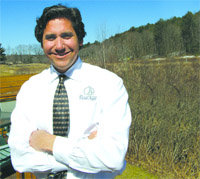
Sections Supplements
Music-booking Business Creates Some Performances of Note
Amy Bateman and Charlie Apicella of CArlo Music Management

Amy Bateman and Charlie Apicella of CArlo Music Management

The strains of a new party-planning trend are being heard locally, as one area musician pairs creativity with commerce to offer a unique, intimate addition to any gathering.

Charlie Apicella, owner of CArlo Music Management based in Amherst, a live-music booking service that specializes in providing unique jazz and classical ensembles, has been a musician since childhood, as well as a performer. After completing his degree in Arts and Administration at UMass Amherst, Apicella put his musical skills to work in a number of music- and culture-based jobs, among them assisting with the management of the UMass ‘Jazz in July’ workshop and the Litchfield Jazz Festival in Connecticut.

But two years ago, he moved on to start his own venture, and said creating a business to serve as an outlet for his talents and those of several other area musicians has helped him cultivate a creative career and fill a niche in the entertainment scene, particularly during the holidays. But on a grander scale, Apicella, a jazz guitarist, said he also feels he’s resurrecting an important piece of American culture and introducing it to new audiences.

“I love jazz,” he said. “We need to go back to the time when there was more of a community for musicians, and we sadly are lacking that today. The environment I would like to help create is a partnership between the venue and the musicians.”

To that end, Apicella has begun to develop relationships with a number of local restaurants and businesses, providing music for events such as holiday celebrations and themed dinners, and tailoring programs to fit those themes.

Apicella performed recently at Yankee Candle in South Deerfield, for instance, as part of a trio put together solely for the event, a Veteran’s Day observance.

“We performed Dixieland, swing, and patriotic melodies for the people while they were shopping,” he said, noting that the performance was well-received, and is indicative of the personal touch music can lend to any event.

“It was really nice to see some older gentlemen in their military uniforms,” he said. “People were filled with pride, were very responsive to the Duke Ellington and Louis Armstrong selections we played, and were noticeably touched when our trumpet player did his solo rendition of ‘America.’”

Apicella was also called upon to provide entertainment for Thanksgiving at the Delaney House, and said he worked to provide something both intimate and original for diners.

“I put myself with a violinist and trumpet player,” he said. “We performed in duo and solo formats and moved around among the tables to interact with the guests, and gave them something special to remember for the holiday.”

Apicella said bookings are moving briskly as he continues to develop entertainment packages for venues such as Del Raye in Northampton and Night Kitchen in Montague, and to book holiday parties throughout November, December, and January. That’s due in part to the way Apicella said he manages his musicians and his business — with a strong focus on professionalism and customer service.

He explained further that the music he provides adds a new layer to events, by complementing the ambience a restaurant strives to achieve.

“Wine dinners are meant to highlight the food and wine of a certain country or region,” he offered as an example. “I also do a lot of private parties for people, often at their homes. The versatility of music I can offer for such events is what I feel sets CArlo Music apart.”

Those styles include Latin jazz, tangos, bossa nova, Italian folk songs, light classical (particularly of France and Eastern Europe), and Dixieland jazz (especially of New Orleans and Kansas City). Apicella also manages three specific groups: Cidade, which provides tango and Latin jazz music; the Rhythm Kings, which performs ragtime and early jazz; and Iron City, a jazz groove ensemble. He also books performances in other styles in tandem with partnering musicians, such as string quartets and classical groups.

And while Apicella said his business can provide entertainment to venues across the Northeast, he plans to maintain a strong presence locally.

“The Pioneer Valley has been very good to me, and business is steady,” he said. “I feel very good when I am asked to do special events, and to put together something nice for a large audience.

“My philosophy is that I can help hosts exceed the expectations of their guests,” he concluded. “This is the obvious outcome when you offer music you are passionate about, in a way that is entertaining and engaging for the audience.”

Contact Charlie Apicella at CArlo Music Management at (413) 824-9267;[email protected]. Music samples can also be heard at www.cidadetango.com andwww.ironcityjazz.com

Sections Supplements
Changes to the Safe Driver Insurance Plan Aren’t a Ticket to Savings

You may not have noticed it when you received your new auto insurance policy this year, but significant changes have occurred to the Safe Driver Insurance Plan.

Effective Jan. 1, 2006, Massachusetts switched from a step system to a points system. Under the new plan, accidents and convictions of traffic violations will be used by insurance companies to calculate a surcharge or discount factor to be applied to the policy premium when a new policy is initially written and at each policy renewal. In this new world of insurance points, it is important to consult with insurance and legal professionals when considering whether to contest that next ticket.

Under the new plan, there is a range of surcharges applicable to a points rating of 0 to 45 points. A major moving violation such as an operating under the influence charge will garner you five points. A major accident claim, which is defined as a claim with a payment of more than $2,000 exclusive of any deductible under collision, property damage, or bodily injury, will net you four points. A minor accident, which is defined as claims with a payment of more than $500 and up to $2,000 exclusive of any deductible, is assessed at three points. A minor moving violation such as speeding, failure to yield, or a stop sign violation carries with it a two-point penalty.

If the first incident on a driver’s record is a minor moving violation, no points will be assessed for that violation. Points are calculated based on one’s driving record and are then used to determine surcharges. Experienced drivers, defined as those with six or more years of driving experience, are charged 15% per point for accidents or moving violations. Inexperienced drivers will be charged 7.5% per point for accidents and moving violations. The percentage difference reflects the fact that inexperienced drivers are already paying a higher premium to start.

In addition to the punishment aspect of awarding points, experienced operators are eligible for discounts based on the absence of surchargeable events. The “Excellent Driver Discount Plus” provides for a 17% discount off of bodily injury liability, personal injury protection, damage to property of others, and collision premiums if the driver has no accidents or violations for the past six years. If a driver has no accidents or violations in the five years preceding the effective date of the policy, that driver will earn an ‘excellent driver discount,’ which provides a 7% reduction from published rates for the above-listed coverages. Additionally, the ‘excellent driver discount’ is available to a driver with one surchargeable incident in the past five years provided it was a non-criminal traffic violation and is more than three years old. The ‘excellent driver discount’ is also available to inexperienced drivers who otherwise meet the criteria.

The bad news with regard to the new Safe Driver Plan is that it replaces a step system that most people were somewhat familiar with and understood. The good news is that local insurance agents report that a large number of their clients have, in fact, experienced a reduction in the amount of premium owed. This precarious balance, however, can be easily upset. A speeding violation carries a penalty of two points; a minor accident gives you three points. Coupling a minor accident with a speeding violation will give rise to a total of a five-point assessment. An experienced operator with five points pays premiums at a surcharge factor of 1.75 times the base rate for insurance, or 75% more. Depending on the level and extent of coverages, this increase could represent hundreds of dollars per year for up to six years.

Traffic tickets are no longer simply a matter of paying a fine to the court. As a result, prior to accepting responsibility for any moving violations or accidents, it is wise to consult with an attorney experienced in motor vehicle law to determine any defenses available to you and with your local agent to determine how the points are going to affect you in the future. A swing of almost 100% increase in premiums can result from the loss of the ‘excellent driver plus’ discount (17%), plus a five-point surcharge (75% increase) based on one minor accident coupled with one moving violation.

Another important change in the premium paradigm is the concept of ‘aging’ versus the old ‘clean slate rule.’ Under the step system, you would be placed at a lower step after three years of incident-free driving, the so-called clean slate. Under the new points system, if you have no more than three surchargeable incidents over the last five years, the point value of each of these incidents is reduced by 1 point after three years of incident-free driving. Points are totally eliminated only after six years of incident-free driving (no moving violations and no surchargeable accident claims).

However, being found responsible in just one incident within that three-year period, the ‘old’ incidents will be returned to their original value. Therefore, if for example you had three surchargeable incidents in 2003, by 2007 you could enjoy a three- point reduction in points, however, one speeding ticket would add two points for the new incident and three ‘old’ points being restored to your points tally. This five-point turnaround based on one speeding ticket will be hard for any motorist to swallow. In addition, claims for bodily injury are now surchargeable even if there is no property damage or collision claims filed. This change increases the motorist’s exposure to surcharges.

The confusing maze of consequences that results from motor vehicle citations means that now, more than ever, a prudent driver must rely on the advice of insurance and legal professionals when deciding what route to take when that ticket gets handed through the window.

Robert S. Murphy, Jr., is a shareholder at Bacon & Wilson, P.C. He is the former Chief Prosecutor for Hampden County District Courts with experience in serious criminal and civil motor vehicle infractions; (413) 781-0560.

Sections Supplements
Dinn Bros. Marks 50 Years of Awards — and Rewards
The brothers Dinn: Bill, Paul, and Michael.

The brothers Dinn: Bill, Paul, and Michael.

Dinn Bros. Trophies was founded in 1956, and 50 years later it continues to evolve and change with the times. Change is constant in a business that may seem simple, but features immense competition and never-ending deadlines, and requires investments in new technology and strong relationship-building capabilities. By meeting all these challenges, Dinn Bros. has etched its name in Pioneer Valley business lore.

Bill Dinn remembers how it all started.

It was the summer of 1956, and one of Springfield’s amateur baseball leagues was in trouble and looking for help. The company it had hired to create trophies for that season’s top finishers failed to deliver, and at the 11th hour the league turned to Dinn’s brother Paul, an engraver, to fill the order. Bill stepped in to help, and a company was born.

A half-century later, many things have changed. The technology used to create plaques, trophies, and recognition items has improved exponentially; where once the company created three pieces a day using a hand engraver, it now completes three a minute with state-of-the-art computer systems and laser engravers. Meanwhile, orders are now taken via the Internet and a Web site that is enabling the company to expand its reach across the country and into Canada.

But many things haven’t changed.

Most orders still come in at the 11th hour, if not later, and the company’s specific promise to its many types of clients remains the same: “We won’t embarrass you,” said Bill Dinn, who is now retired but remains a visible force at the company, after years of serving as its head salesman.

“We had a particularly good showing in a pickle,” Dinn said of the company’s first order, adding that while that idea of avoiding embarrassment may seem strange, it has always been the crux of good business at a firm that manufactures and sells awards of all types.

“Imagine you’re at a banquet, everyone is there, you’re giving a speech, and you have to give an award to an important person … and the plaque isn’t there,” he explained. “That’s a big deal.”

He went on to note that, in many cases, the award — the actual hardware used to recognize the accomplishments of another — is the last thing people think of when planning a ceremony of any size.

“We’re always working against time,” he said, adding that it’s not uncommon for a large order due for a weekend event to come in on Thursday evening.

But tapping his forefinger definitively on the table before him, Dinn said no job is too big or too small. “It doesn’t matter if it’s one trophy for $6.95 or an order for 900 plaques that will cost thousands … it will be there.”

The Gold Standard

That guarantee is echoed by Dinn Bros. current senior management, Dinn’s three sons — Bill Jr., Paul, and Michael — who say that as a niche business, the company meets with a number of unique challenges, as well as many that all companies, especially those with both retail and manufacturing components, face.

Dinn Bros. offers plaques, trophies, medals, ribbons, pins, and other awards for various sporting organizations and events, as well as a wide array of corporate awards and other tokens of appreciation, such as desk sets and engraveable bowls and trays. All products are assembled and engraved on site at the company’s West Springfield headquarters, and sold via the Internet and through three showrooms in West Springfield, New Haven, Conn., and Stoneham, Mass.

Sports awards have remained the largest single product line offered by Dinn Bros., representing about 70% of sales, though corporate business is growing, in part due to a concerted effort on the part of the company.

And with the sports market comes a number of challenges that few not in this business could appreciate, according to Paul Dinn, president.

“Retention of contracts is a big challenge,” he said. “It’s not like we’re a paper company dealing with a business. In that case, if we were doing a good job and our prices were competitive, the company we were serving would probably stick with us.”

But sports programs and teams, especially those for children, often have a new person handling awards ceremonies each year, said Dinn, and tournaments, road races, and other charity events are hard to track; many are not established enough to have a Web site, or even a formal mailing address, let alone a contact person.

“There are a lot of volunteers and a lot of turnover,” he explained. “The Internet helps us with research, and every business has to build relationships. But we have to build them over and over again.”

In addition to the matter of maintaining repeat business under those conditions, educating the public about its products is another challenge, said Bill Dinn Jr., who oversees production at the company.

“Showing people just how to use the products is a bigger concern than many might think,” he said. “That’s because it’s not an everyday type of thing, ordering and giving an award. You don’t think about it until you have to do it. It’s up to us to educate the consumer on everything from appropriate wording to how to work awards into tight budgets.”

Its also a business with both peaks and valleys in terms of volume, and those busy periods don’t fall during what might be considered traditional peak periods. The holidays, for instance, are deadly quiet, while the spring months usually necessitate adding seasonal employees to the firm’s core of 100 employees.

Certificate of Participation

But to address those challenges, Dinn Bros. has moved ahead aggressively with a wide set of recent initiatives, all aimed at streamlining the manufacturing process, expanding the company’s reach both nationally and internationally, and upgrading technology in order to stay competitive against similar outfits, Internet-based companies, and sporting goods stores that create trophy subsidiaries.

Many of those changes have been instituted or highlighted this year, as the company celebrates its 50th year in business. Its Web site was redesigned, new catalogs were created to boost corporate business, and several new laser engravers were purchased and installed to expedite and streamline the assembly and personalization processes.

“We’re adapting to the modern age in order to drive business,” said Michael Dinn, vice president of sales and marketing. “Electronically, we’re better than ever, and that helps streamline the process and allows us to prep as much as we can for orders that have yet to come in.”

He noted that the company’s Web site, which pulls in roughly a third of all business and is still growing, once lagged behind the firm’s phone center, which employs customer service representatives to take orders from across the country. But over the past year in particular, Web-based sales have eclipsed phone transactions and have pulled in business from new areas, including the mid-Atlantic states, Alaska, and, most recently, Canada, where the company is making its first earnest foray into the international market.

“Our site allows for convenience in ordering, but it also assures people that we’re not a fly by night operation, or a little rinky-dink trophy shop,” said Dinn, who added that Internet sales have also been augmented by offering live assistance online for customers, a service that was put in place two years ago. Customers can send instant messages to a Dinn Bros. representative during specified times to ask questions, and are also notified when a product order is received and shipped, along with a tracking number. “That way, we’re never out of reach.”

Web sales have also helped in promoting corporate-recognition products, as has a new catalog devoted solely to those lines, in response to a growing business-to-business market.

“Many people think this is a business that stays the same year after year, but the industry does change,” said Paul Dinn, “and one change of late has been our role in the increase of corporate recognition programs. People are holding more organized events and seeing recognition as an important tool for morale and retention.”

Many of the services offered through some new technological upgrades are geared toward that burgeoning market, allowing for the etching or four-color printing of company logos and for products that best serve the corporate sector, such as desk sets and retirement gifts.

An Amazing Race

But Dinn added that while Internet sales allow for quicker processing and a smaller margin of error on all orders — all copy to be engraved can now be downloaded directly to a central computer system — awards of all types still intrinsically have ‘last-minute’ components at the assembly level.

Engraving recipients’ names is the most obvious, but figureheads for trophies — everything from the traditional runner, golfer, or bowler to a gold-plated foot, used as a gag during staged productions of the Monty Python-inspired Broadway play Spamalot — are attached to the base as orders are received, and customers sometimes have special requests for logo engraving or printing that differ from order to order.

“No matter how efficiently we take the order, we must still identify the deadline and work backwards,” he said. “To that end, we’ve invested in the equipment we need to keep us on the cutting edge, and the technology makes our work much easier than it ever has been before. Every year, we keep investing in better technology — our equipment parallels the personal computer market, in that it becomes obsolete easily.”

Those investments include state-of-the-art computer systems and laser engravers, such as the six Xenetech machines that now do the work that a large, bulky hand engraver did years ago.

Still, even with all of the changes at Dinn Bros., some things remain the same as they did 50 years ago. That heavy hand engraver sits in the main production area, right next to one of the new laser stations, serving as a reminder of how much the times have changed.

That amateur baseball league that reached out to Paul Dinn 50 years ago is no more, but it’s likely that some of the Dinn trophies awarded to players still exist, somewhere.

Like the company that produced them, they’ve managed to stand the test of time.

Jaclyn Stevenson can be reached at[email protected]

Sections Supplements
The Many Benefits of Business Interruption Insurance

You don’t have to go far to hear disturbing news of a disaster crippling a local business – a fire, an explosion, etc. All systems are down, and day-to-day business operations come to a standstill.

Then the resilient business owner announces, to the delight of everyone, that the company will continue to pay its bills and salaries until it gets back on its feet – leaving many on the sidelines questioning, ‘How are they doing that?’ The answer: A well-advised business manager included business-interruption insurance in the company’s risk management program.

A properly designed insurance program will financially protect the business owner from events it would otherwise not be able to afford to recover from. These events could include a lawsuit stemming from the actions of one of its employees. It would most certainly include a fire that destroys the building, machines, and tools used every day to conduct business.

Most business people feel they are acting wisely in purchasing just such an insurance program, one that will financially protect the business from these crippling types of events. Unfortunately, this is a critical element of the insurance coverage that is often overlooked.

Your property policy will cover just that, the property of your business. It truly is a great relief to have the financial security to rebuild your building or replace the equipment that is vital to the functioning of your business. That is what comes most often to mind when people consider these types of events.

However, new construction of a building can take months. While equipment can be replaced relatively quickly, it will still take some time before a suitable replacement location can be found, if one can be found at all. In the meantime, the bills continue to come in, your employees can’t afford to be out of work, so they find new jobs, and your customers turn to your competitors to take care of their needs.

How does a business recover from that scenario?

An insurance program that includes a business-interruption policy could provide the resources for a business to survive such a scenario. In its simplest description, a business-interruption policy is designed to pay for the net income that would have been generated if the business were not shut down. It will also provide the funds to pay for expenses – including payroll – that will continue while the business is not operating. It could be tailored to compensate the business for additional expenses that result from efforts to keep operations going or reduce the length of the interruption. The policy could also be structured to extend beyond reopening of the business to allow the clientele to be re-established.

The key coverages of a business-interruption policy are business income and extra expense. These can be purchased as one policy or each separately. Business-income coverage is the portion of the policy that will respond to provide the policyholder the funds to pay for ongoing expenses and will provide replacement of net income. The interesting point here is that it is not necessary for the business to be making an actual profit. In this instance, the policy will provide for the portion of the ongoing expenses that the operation of the business was contributing. The extra-expense portion of the policy will provide reimbursement of above-normal expenses for the business to continue operations. It will also reimburse necessary expenses to get the business to normal operations as soon as possible.

By their nature, some businesses won’t actually have a suspension of operations. However, they would have significant additional costs to remain running. These types of businesses could purchase the extra-expense policy without including the business income section.

When reviewing a business-interruption policy there are several things to consider. First are the causes of loss that are covered on your property policy. The business interruption policy will respond if the loss occurs as a result of a covered cause of loss on the property policy. So business owners need to make sure they review these policies together.

A second important element is the deductible. Unlike most insurance policies that have a monetary deductible, the business income section of the policy has a time deductible; typically, the wait period is 72 hours. A third critical element of the policy is in selecting the limit of insurance. It is important to consider your past financial performance, the co-insurance clause on the policy, and your actual potential loss. If the limit of insurance that is purchased does not equal the co-insurance percentage of the actual potential exposure, a reduction in the settlement could result. Fortunately, there are optional coverages that could be included that will negate the co-insurance clause.

This policy can be customized in many different ways. There are several additional and optional coverages that can be incorporated into this policy. It is important that you and your independent insurance agent spend the time necessary to conduct the proper analysis to develop the right limits and structure of a policy that will financially protect your business from a crippling disaster.

Corey Murphy is a certified insurance counselor and vice president of First American Insurance Agency in Chicopee; (413) 592-8118;[email protected]

Sections Supplements
Delaney House Has Continued Growth on the Menu
Peter Rosskothen

Peter Rosskothen says the introduction of Kobe Beef has provided another reason for people to discover a ‘modernized’ Delaney House.

Peter Rosskothen wouldn’t dare use the word ‘easy’ to describe life for himself and other restaurant/banquet facility owners during holiday season. He knows better.

“It’s never easy for anyone in this business,” said Rosskothen, co-owner of both the Delaney House and Log Cabin Banquet and Meeting House in Holyoke, with a soft shake of the head. “It’s just too competitive in this market.”

But easier is a term that would probably work, he said, noting that families and businesses have a good reason to go out and treat themselves during the holidays. The basic questions remaining are essentially when? and where?

For the other 46 or so weeks of the year, facilities must often provide the reason, he continued, adding that there are many elements that go into successfully meeting that assignment. Service is one of them, while consistency, an important ingredient in any business but especially with food and events, is certainly another.

But sometimes, people need a little more reason. Which explains why the Delaney House opened the Mick, an Irish pub of sorts named after Delaney House co-owner and chef Michael Corduff, which offers a more relaxed atmosphere. It also explains why the restaurant stages cruiser nights featuring vintage cars on Tuesdays during the summer; packages manicures, massages, and martinis in one Monday night promotion; and recently introduced to the Valley something called Kobe beef.

Considered the finest in the world, it’s from Japanese Wagyu cattle. The cows are given daily massages and regular sake rubdowns, and they’re treated to beer, which stimulates their appetite. For these reasons and more, the meat is tender, flavorful — and expensive; a filet is usually well over $100 in New York, but the Delaney House, the only eatery in the area with Kobe on the menu, will serve one for $59.

That’s still steep for this market, and the Delaney House is almost daring people to try the beef with an ad campaign that focuses on the price and intimates that consumers can’t afford it. ‘You can pay the mortgage next month,’ states one print ad, while another beckons the curious with ‘your daughter’s teeth aren’t that crooked.’

Thus far, the reverse psychology, if one can call it that, is working.

“We added it in August, and we thought we’d get maybe one or two orders a week if we were lucky,” Rosskothen explained. “One week recently we had about 40; one regular customer has come in three times over the past month, and he’s had it every time; it’s really surprised the heck out of me.”

Beyond the cars, shoulder massages, and the beer-fed cows, however, Rosskothen said he has another reason why people should travel down old Route 5 to the Delaney House; they don’t really know it, and should.

“They remember what it used to be like,” he said of the days when it was under the ownership of George Page, and, later, a succession of banks before it eventually closed in late 2003 for a short period. “They think they know us, but they don’t.”

Rare Opportunity

Rosskothen said the introduction of Kobe beef to the menu is a move that runs counter, in some ways, to the broad branding strategy for the Delaney House since Rosskothen, Corduff, and Larry Pereault acquired it in late 2003.

Indeed, the eatery has long been fighting the perception in the marketplace that it’s expensive, or too expensive, he explained. Many marketing initiatives have focused on the conveying the message that the restaurant’s prices are comparable to others in the marketplace, and that it is not as stuffy, or formal, as many believe.

Still, Rosskothen believed the menu lacked what he called a signature, and he thinks he now has one in a Kobe-led lineup of steaks that punctuates a menu with items ranging from Teriyaki Halibut to Cape Cod Chicken.

But what’s on the menu is only part of the equation, said Rosskothen, who described the first 2 and a half years of his Delaney House ownership as a period of ongoing transition, one where he and his partners have gone about trying to change some misperceptions about the restaurant while also making several needed changes in areas where perception was reality.

In short, it’s been a process of modernizing the restaurant, for lack of a better term, with regard to look, feel, and overall experience.

“I think that what we’ve done is taken a restaurant that was very successful but needed to be updated to be up to par with what our customers expect today,” he said, referring to everything from a more-relaxed atmosphere, menu choices, and how food is prepared. “We took a very traditional restaurant and made it made more modern; it was successful then, but the same concepts that worked years ago, wouldn’t work now.”

But ‘modern’ does not mean ‘trendy,’ he continued, noting that the restaurant has been built for the long haul, and to serve a broad range of constituencies and tastes.

Backing up a little, to the fall of 2003, Rosskothen said he and his partners saw in the Delaney House an effective complement to the Log Cabin, one that wouldn’t compete with the highly successful banquet house that made its debut in 1996.

The theory was that the Delaney House, with a dozen meeting/dining rooms of various sizes and a hotel (Country Inn & Suites) next door, would be an attractive venue for many of the smaller events, including weddings, anniversaries, and business functions, that the Log Cabin couldn’t book because there wasn’t room in the hall or on the calendar.

That theory has been proven valid, said Rosskothen, but nothing has been easy (there’s that word again) since the new ownership took over.

First, many of the rooms required extensive and expensive makeovers, he said, adding that the partners’ investment in renovations was much more than anticipated when the property was acquired. Then, there was the matter of changing perceptions about the Delaney House or, in some cases, just conveying the message that the landmark was still open for business.

Flanking Manuever

After a slow first year (actually, the last nine months of 2004), the restaurant recorded a strong 2005, with roughly 15% growth, which is good for the restaurant business, said Rosskothen, adding that the venue is on pace for an even better year in’06.

That would be a significant accomplishment, he continued, noting an overall decline in the industry, especially at the local level, a trend that is reflective of the highly competitive nature of the market, a growing consensus that the region is oversaturated with restaurants, and an overall softening of the hospitality and entertainment market.

“This is a marketplace that’s not growing, and yet the number of choices continues to grow,” he said, adding that, with few exceptions, most restaurants have seen business fall off by 20% to 30% over the past few years.

To thrive in this environment, he said, all eateries, but especially those considered destination venues — the Delaney House, situated between the Northampton and Springfield markets, would definitely fit that description — must reflect current trends in dining while providing more of those reasons for people to leave the house, and not just on weekends.

The two assignments have some overlap, said Rosskothen, noting that the Mick was created out of the old bar/waiting area of the restaurant to provide a more casual (and lower-priced) dining experience — menu items range from Pilgrim Turkey Dinner to fish and chips to Guinness Beef Stew — but also some entertainment options.

Irish bands perform regularly at the Mick, said Rosskothen, who said the performances extend or complement the actual dining experience, providing more reasons to drive to Holyoke.

This was the reasoning behind the cruiser nights, he continued, adding that the events drew several dozen vintage cars — and probably some diners who might otherwise have stayed home on Tuesday night — to the restaurant’s parking lot.

Several other new programs have been introduced, as well, he said, listing a Monday night promotion conducted in conjunction with the Northampton-based day spa Brooks & Butterfield. For $20, patrons can get a manicure, massage, and a martini or glass of wine. The Mick has several promotions on a weekly basis, including a prime rib special that prompted an hour-long wait for seats one recent Wednesday night.

As for that broad modernization process, Rosskothen said a relaxed dress code is just part of a bigger picture. The broad goal is making dining a more personalized, more enjoyable experience.

“It’s about casual dress — not suits and ties, unless that’s what you want,” he said. “But it’s also the idea that you can pick the salad that you want, and that you can order and have foods the way you want them, rather than being told how you want them. It’s about Irish bands, not classical musicians.

“We want to make dining an experience,” he continued, “not a boring event.”

End Cut

Rosskothen, who is in the Delaney House nearly every day, said it’s a rare night when someone doesn’t approach him to relay that he or she hasn’t been in the restaurant for some time — and regrets that it’s been a while.

“I see it all the time, and it’s very gratifying to hear those things,” he said, noting that getting them back in is just the first step. “You want them to keep coming back, and do that you have to make that good first impression; you have to give them a good reason to drive a few extra minutes and come here.”

And that’s why this business isn’t easy, he continued, no matter the time of year.

George O’Brien can be reached at[email protected]

Features
Yankee Candle’s Programs, Philosophy Earn It the Work/Life Balance Award
Lori Kerwood and Laura McCormick

Lori Kerwood, left, and Laura McCormick, say Yankee Candle’s many programs and perks help in the process of attracting and retaining employees.

When Yankee Candle Co. stages job fairs, it conducts those well-attended events in its Employee Health and Fitness Center.

The facilty’s size, 10,000 square feet, makes it appropriate, said Laura McCormick, head of Corporate Communications and Employee Services for the South Deerfield-based company. But there is another motivating factor.

“We want to demonstrate our commitment to employees, even as they are applying for jobs,” she explained, adding that the wellness center, which opened in the late ’80s and is stocked with a wide array of cardiovascular and weight-training equipment, is one of myriad facilities, programs, and operating philosophies that define the company’s dedication to helping employees balance life and work.

The list of services and benefits is long, and includes everything from a day-care-service locator to a comprehensive disease-management program; a dry-cleaning service to discounts at area retailers; an employee assistance program to breast-feeding accommodations. This collection of perks and programs helps create an attractive work environment, said Lori Kerwood, benefits manager for the company, one that enables the candle manufacturer and retailer to attract and retain quality workers.

But beyond the impressive retention statistics (70% is the most recent number, meaning that more than two-thirds of the workforce has been there five years or more) the company’s various programs help employees live healthier, more balanced lives, said Kerwood. And this ultimately makes them better employees.
Said McCormick, “Yankee Candle’s work/life philosophy has always been to provide practices, policies, and programs that actively support efforts to make our employees successful at home and at work. That’s what we strive for.”

Yankee Candle’s many initiatives in this realm have earned it the Work/Life Balance Award, co-sponsored by BusinessWest and Springfield Day Nursery. Now in its fifth year, the award was created to recognize companies’ efforts to help employees balance work and life outside it — and also promote awareness of the subject and how proactive employers are addressing it.

“Yankee Candle is one of many companies that understood long ago that employers must do more than issue paychecks each week,” said BusinessWest publisher John Gormally. “They have to recognize that their workers are their best assets and that they have lives outside their office, cubicle, or work station.

“Helping their employees manage their health, their time, even their finances isn’t merely something that’s good to do,” he continued. “It’s smart business, and it helps strengthen our communities.”

Kerwood agreed, and said one of the challenges for Yankee Candle, or any company focused on work/life balance issues, is to remain on the cutting edge of programs and services for employees.

“That’s something which is on many people’s job descriptions,” she explained. “Part of being able to offer a great benefits package is to stay on top of trends and new products and offer our employees the very best.”

This issue, BusinessWest takes a detailed look at how Yankee Candle goes about that important, ongoing assignment.

Shedding Light on the Subject

McCormick told BusinessWest that, when advertising job openings at the company, Yankee Candle gets quite descriptive when it lists employee benefits and programs. The goal is to secure a large, qualified pool of applicants for the position in question, and the full menu of perks certainly helps with that mission.

But the benefits do much more than guarantee a large number of resumes, she continued. They help make the 1,500 or so employees at the South Deerfield complex and 5,000 around the world feel happy — and appreciated. And these sentiments no doubt play a role in the company’s explosive growth rate and continued expansion across the country.

Employee benefits, like scented candles themselves come in several flavors at this company, but there is a premium placed on overall health and fitness, said Kerwood. There are many programs that would be described as typical — health and dental plans, disability insurance, reimbursement for fitness club membership for satellite workers, and even discounts on flu shots — but several that go well beyond that word.

They are part of a broad effort on the company’s part to make all of its employees what she called “better health care consumers.”

Elaborating, Kerwood said Yankee Candle goes to great lengths to make sure that employees don’t merely have health coverage, but that they fully understand their plan and can use it wisely and cost-effectively.

“We know that a healthy employee is sometimes just not enough,” she explained. “A smart health care consumer can help control some of the health care costs at Yankee Candle.”

Steps to improve health care IQ include online education programs, on-site programs with area providers, and training initiatives on the part of insurer Blue Cross Blue Shield on how to make smart decisions on health care consumerism.

“Health care is expensive, for all of us,” said Kerwood. “If you have a child who has a health emergency in the middle of the night, the first impulse for most people is to go to the emergency room. But if people can instead use a nurse line available 24/7, they can save themselves the $100 emergency room co-pay.”

Communication plays a vital role in this process, Kerwood continued, adding that the company uses newsletters and other vehicles to get the word out. “We can offer all the services we want, but if we don’t communicate them to people, they won’t be taken advantage of.”

Another part of the broad focus on health and fitness is a commitment to employee safety and injury prevention in the workplace, said McCormick, adding that programs include stretch breaks to reduce repetitive motion problems and an injury-management initiative designed to identify and respond to injuries before they lead to lost work time.

As for the employee fitness center, it would rival any gym in the area and is open 24/7, thus serving all shifts, said McCormick, adding that the company sees its responsibility as going well beyond staffing and equipping the center. Indeed, the primary mission/challenge is to incentivise employees to use it. Meanwhile, for those who aren’t comfortable in a gym, the company wants to encourage exercise at home.

This is accomplished through a number of programs, she explained, noting that while the company certainly supports and encourages those who work out every day, they are equally, if not more, focused on those who might do so once or twice a week or month. And the first priority is to get them to increase that frequency.

“We tailor our programs to allow employees to create their own goals,” she explained. “Maybe for someone to walk once a week in their neighborhood with their grandchild is a big step for them; we want them to set their goals, and if they reach them, we’ll reward them through prize drawings.”

The broad mission is simply to encourage people to exercise more than they have in the past, said Kerwood, adding that those who increase the number of regular visits to the fitness center are recognized on a board at that facility. “We don’t just want to recognize people who find the time to work out every day; we want to encourage those who are taking the first step.”

Dollars and Scents

Beyond health and fitness initiatives, the company has a number of other programs designed to provide convenience and cost savings, said McCormick. In the former category are such things as a dry cleaning drop-off and pick-up service — a very popular perk — and a new item rolled out this year called the “total pay card.”

Issued in place of a paper check, the concept takes direct deposit a step further, she explained, noting that money is deposited onto what amounts to a debit card that employees can use in virtually any location that takes credit or debit cards.

As for cost savings, the company uses its large workforce numbers to create discount programs on everything from auto and home insurance to meals at area restaurants.

“Financially, we help our employees in a number of ways; we work with area and national retailers to secure discounts for our employees,” said McCormick, noting that many such programs are reciprocal in nature, with the company offering retailers discounts on its products.

National chains include BJ’s Costco, Dick’s Sporting Goods, and others, she said, adding that the company has worked with Staples in the past. Meanwhile, a local discount booklet offers deals at a number of Western Mass.-based shops and eateries.

Still another group of benefits falls under the category of personal and professional development, said Kerwood, noting that the company has a number of programs — designed to help employees (especially women) advance their careers and take more active roles in the community.

The company recently created the Yankee Candle Women’s Network, she continued, adding that the program, still in its embryonic stage, is a multi-faceted endeavor involving community outreach, mentoring, and a peer group that will meet quarterly.

The community outreach component involves support of such programs as Dress for Success, which provides clothes for women in need trying to enter or re-enter the job market, said McCormick. “We want to look for ways in which Yankee Candle women can affect and better the community.”

Meanwhile, the mentoring program is designed for women looking to take the next step in their careers, she said, while the peer group will be focused more on social development. “The group will get together, bounce around some ideas, and just have fun,” she told BusinessWest.

When asked to quantify the overall benefit Yankee Candle yields from its largesse with benefits and employee programs, Kerwood said numbers, be they from lowered health insurance rates to savings that result from low turnover, are hard to come by. But it is much easier to qualify the results.

Indeed, repeated surveys have revealed that employees are generally happy with their benefits packages and that Yankee Candle would be considered an employer of choice.

Illuminating Discussion

On top of all the other benefits offered at Yankee Candle, there is an attractive (50%) employee discount on the scented candles and myriad other items the company produces, one that is often extended to friends and family members, said McCormick.

This perk is particularly popular during the holidays, she said, adding that, in the larger scheme of things, the discount is not as important to employee retention or contentment as the health insurance package or the fitness center.

But it is part of the package, and the sum of the various parts is a factor in the company’s success — and its standing as a glowing example of an effective work/life balancing act.

George O’Brien can be reached at[email protected]

Sections Supplements
And All of Them Can Be Easily Corrected

To err is human, and to correct is divine. If you have an existing estate plan and haven’t revisited it for several years, or you never thought you needed one, there is no time like the present to fill that gap. You can address past oversights and begin creating an effective plan that protects your interests and those of your heirs.
Since no one has a crystal ball to tell what the future holds, here is a list of 10 common estate planning mistakes that can be easily be corrected.

1. Failure to accurately determine your taxable estate. It is important to understand what assets are taken into consideration in determining your taxable estate. Assets such as real estate, stocks, bank accounts, IRAs, and life insurance are all included in your taxable estate. By not properly valuing it you could be subject to a significant amount of estate tax, thereby reducing the amounts that could be left to your family and friends. It is crucial that you make yourself aware of the available estate planning options that could reduce or even eliminate potential estate taxes.

2. Failure to recognize recent changes to the Massachusetts estate tax law. Massachusetts recently ‘decoupled’ its estate tax from the federal estate tax, which means that your estate could be subject to Massachusetts estate tax even if no federal estate tax is due. Since the federal estate tax exemption is currently $2 million and the Commonwealth’s threshold is $1 million, without proper planning, this variance could result in an unpleasant surprise for your heirs upon your death. It’s a good idea to review your current financial situation to determine the potential exposure to Massachusetts estate tax and how to minimize it.

3. Failure to plan for a physical or mental disability. A power of attorney guarantees that your finances will be handled properly by someone you trust. A health care proxy will provide you with the comfort that your health care decisions will be made according to your wishes, thereby reducing that emotional burden on family or friends. If you do not have an updated health care proxy and power of attorney, costly and time-consuming court proceedings may be required in order to appoint a guardian or conservator to act on your behalf if you become physically or mentally disabled. These two documents are quite effective and relatively easy to implement.

4. Failure to review and update your estate plan. It is essential that you periodically review your estate plan to make sure it reflects your current wishes. Failing to address changes in the law or in your personal financial and family circumstances can result in additional taxes, family conflicts, and unintended people receiving a significant part of your estate. If any of the following events occur, you should make certain to review your estate plan:

• Relocation to another state;
• Changes in the estate tax laws;
• Birth of a child or grandchild;
• Receipt of an inheritance;
• Marriage;
• Death of an intended beneficiary; and
• Acquisition of real estate.

In order to keep your plan current, you should review it every three to five years.

5. Leaving your estate outright to minor children. In the unfortunate event that you die while your children are still young and maybe not responsible enough to handle a large sum of money, it might not be in their best interest to leave them their share outright. Without proper planning you could end up leaving thousands of dollars that young children may spend as they see fit.

Think back to when you were 20 years old. If you came into a significant amount of wealth to spend at your disposal, the money may possibly have been spent before your 21st birthday. To adequately address this scenario, your estate planning documents may provide that if any of your estate passes to someone who is under 30 or 35, it should be held in trust for them and paid out at predetermined ages. For example, one-third may be paid at age 25, one-half at age 30 and the balance at 35.

If you want to teach your children financial responsibility but also want to make sure they are properly cared for, you could have language in your documents stating that during the term of the trust, income and principal should be paid to your children for their health, education, support and other legitimate purposes.

6. Failure to plan for the possibility of a child getting divorced or having creditor issues. If your child is going through a divorce or has substantial creditor issues, you need to create an estate plan that will not bring unintended results. For instance, would you want your ex-son or daughter-in-law to be awarded an interest in your estate by a court? Alternatively, if your child has significant creditor issues, would you want their inheritance to be subject to a legal judgment against him or her? Such problems can be minimized through proper use of trusts or a business entity, such as a family limited partnership or limited liability corporation.

7. Failure to review beneficiary designations and asset ownership. Certain types of assets, such as life insurance policies and IRAs, pass directly to the recipients you specify on your beneficiary designations. Other assets pass by right of survivorship, such as bank accounts or real property held as joint tenants with right of survivorship. Assets such as these pass according to the beneficiary designation or the surviving joint tenant, regardless of the provisions of your will.
For example, if you intend to leave a joint bank account to all of your children but you only designated one child as a joint owner of the account, that child is only under a moral responsibility, not a legal one, to give his or her siblings an equal share of the account upon your death. Therefore, when planning your estate, it is important to review these types of assets to assure that the individuals designated as beneficiaries are those you intend to receive these assets. 

8. Failure to address life insurance ownership. Life insurance is often a significant part of an individual’s estate plan. A common misconception that people have about life insurance is that the policy is tax-free. It is important to understand that life insurance death benefits are not subject to income tax. However, they are subject to estate taxes if the policies are owned by the insured at their death. This can reduce up to 60% of your policies’ values. By transferring the ownership of your existing policies or purchasing a new policy through an irrevocable life insurance trust, you can avoid paying unnecessary estate taxes.

9. Failure to create a business succession plan. If you currently own a business that you want to pass down to your children or grandchildren, you need to address business succession as part of your estate plan. Family-owned businesses have only a 40% chance of surviving when passed from the first to the second generation, and that survival rate drops drastically as it passes to future generations. In order to plan for succession of your business to future generations, both tax and non-tax considerations should be considered as part of your planning. A properly drafted plan will assure that your business continues for future generations.

10. Leaving money to people with disabilities. If you have a disabled child who is receiving government benefits, such as Medicaid, and your current plan leaves him or her money outright, or in a trust without the required language protecting the benefits, you may disqualify him or her, either temporarily or permanently, from receiving future benefits. To avoid the loss of benefits, your child’s potential inheritance should be placed in a Supplemental Need Trust (SNT). An SNT will guarantee that your child will still receive government benefits, while providing for his or her additional needs through distributions from the SNT.

This list covers only the 10 most common mistakes, but an effective estate planning review addresses many other issues. It is important to understand the potential issues and conflicts that may arise from an improperly planned estate. Knowing your estate planning options provides you with the ability to create a plan that maximizes your wealth and minimize your taxes.v

Brett A. Kaufman is an Estate Planning and Elder Law associate with the regional law firm of Bacon & Wilson, P.C. His practice includes sophisticated estate planning issues, guardianship, conservatorship, and planning for long-term care; (413) 781-0560;[email protected].

Features
Lupazoo Educates — and Inspires
Henry Lupa

Henry Lupa made his vision for a zoo become a reality.

In its literature, Ludlow’s Lupazoo is described as “a conservation and education institution demonstrating the value, beauty, and interdependence of all living things.” In simpler terms, the game farm opened four years ago is a promise kept by Henry Lupa, a Polish émigré who told his young children nearly 30 years ago that when he had the resources he would build a park with animals to enrich and educate the community. It took considerable patience, hard work, and research to make the dream reality, but Lupa was true to his word.

Henry Lupa has a soft spot for the white-tailed deer.

There are many reasons why, but primarily because it is with one of these docile animals that the remarkable story of the zoo that bears his name really began.

Lupa, a Polish émigré who had long desired to create a zoo (more on that later), began dabbling in the early ’70s with a small, backyard collection of animals that started with a deer called Betsy. One incident involving her has stayed with him for more than three decades and hits squarely at what exactly it is that motivates him.

“I had a little enclosure for the deer, and one day I was coming home from work to feed the deer, and I saw a car near the pen. I saw a woman and a young boy, who was screaming and crying,” Lupa recalled, using heavily accented English. “The woman told me that the boy was abused by her husband, that he was 4 years old. He was shaking and did not speak. She told me she did not have money to take him to a doctor to cure him.

“Someone had told her that animals would help kids,” he continued, “and she asked if the boy could come to the pen and maybe pet the deer. I said yes, and when the boy came over, Betsy ran all the way across and started licking his face. He stopped crying and started smiling.”

The boy returned on several occasions to the Lupa property off Nash Hill Road in Ludlow, getting better over time. His progress helped steel Lupa’s resolve to build a zoo, a promise he made to his own children not long after arriving in Western Mass. from his native Krakow in 1965. It took more than 30 years to make the dream reality — with hurdles including everything from the financial commitment to the laborious process of obtaining a license from the U.S. Dept. of Agriculture (USDA) in 2002.

Looking back, Lupa said that at times he became frustrated with the slow pace of progress and the sheer volume of oversight, but it has all been worth it.

Indeed, the level of pride is palpable as he conducts a tour of the facility, which is literally in his backyard — his residence abuts the 56-acre parcel he purchased for his park. Lupa knows each animal by name (both common and proper) and reputation. He also talks at length about the living quarters, diet, and any special needs, habits, or behavioral traits of the resident in question.

Pointing to a row of wooden poles inside the large home for the North American elk, Lupa said the male in the group will aggressively butt them during mating season, which started a few weeks ago. “He destroys everything,” said Lupa with a laugh. “He loves to show off.”

So too does the Guenon monkey, which is somewhat of a ladies man, said Lupa, who doesn’t worry about being politically correct. “He likes the young, pretty women; you can see it in the way he acts.”

Lupa has plenty of time to observe the monkey and the hundreds of other zoo residents. He is essentially retired from the construction company he started a few years after arriving in this country and devotes most of his time to the zoo. This is a family business, he explained, noting that his son Stanley and daughter-in-law Carla manage the venture known as Lupa Game Farm Inc. — one of the few nonprofit, privately owned zoos in New England.

It receives some support in the form of donations from individuals and businesses, but most of the funding comes from the Lupa family, which keeps admission costs low ($5 for adults) and admits children under 12 and all those with handicaps free of charge. This is just part of the zoo’s broad mission to educate, said Lupa, noting that to do this it must continue to expand its offerings — and its population.

Only 15 of the 56 acres Lupa acquired years ago are now being utilized, meaning there is ample room to grow. For the immediate future, Lupa said he would like to add some exotic cats, perhaps some ocelots or bobcats, and is seeking corporate help to make that happen.

“We ask people what they want to see, and a lot of them say they want cats,” he explained. “So we’ll try; we’ll do our best.”

This issue, BusinessWest looks at how, by trying — and doing — his best, Lupa has created a truly unique center for learning.

The Buck Stops Here

Pausing at an area set aside for large, flightless birds, Lupa offered a quick dissertation on the ostrich, and a slightly painful one at that.

“He could kill a lion,” Lupa said of the six-foot-tall bird now pecking at his hand through a wire fence nearly as tall as the animal. “Not with his mouth, but with his leg; he can kick, and he’s very powerful.

“He doesn’t really bite,” Lupa continued, although he emerged from this encounter with a small cut on his hand from the incessant nibbling. “At least, not like other things around here can bite.”

That list would include a few young alligators, some of the other birds on the premesis, and something called the ‘African jungle cat,’ a close cousin of the domestic feline but one that has spent many more hours in the gym.

Lupa has acquired these and the hundreds of other animals from a variety of sources; some come from other zoos that are closing, downsizing, or selling some newborns. Others come from auctions of exotic animals — Lupa attends two such events in Ohio each year and brought home an albino skunk from his most recent visit. Harvard University donated 10 monkeys of the common marmoset variety, and one of the alligators came from a local college after it confiscated the reptile from a student.

But while the question of how the zoo’s population – which now includes Himalayan bears, yaks, kangaroos, 20 species of monkeys, and more than 300 varities of birds – has been assembled is intriguing, the why is what makes this story so fascinating.

A television reporter recently asked Lupa that very question — why a zoo, and why in Ludlow? Paraphrasing his answer, Lupa said he replied, essentially, with ‘why not?’

“We deserve a zoo here, too,” he told BusinessWest. “They have them in New York and other big cities; we’re not second-class citizens. We should have a zoo.”

Lupa’s specific motivation was to create a facility that would give young people, especially those with handicaps or from poorer families, a place to go. He vowed to his wife and three sons that when he had the financial wherewithal to do so, he would create a zoo.

The educational and healing qualities of a zoo were demonstrated in that chance encounter between Betsy and the young boy.

“That really touched my heart,” said Lupa. “The boy came back many times, and each time he became more confident. His mother told me that after coming back a few times, he started calling out ‘Betsy, Betsy.’”

Lupa eventually acquired the needed resources through the growth of his entrepreneurial venture, N. L. Construction, which specializes in commercial projects, including schools, fire stations, and other municipal buildings. That background in construction has helped Lupa as he’s gone about the task of creating living quarters for the zoo’s population — work he describes as a labor of love — and he has used left-over building materials and some donated labor from his employees, many of whom are from Europe, to build those customized homes.

“Without that help that was volunteered, we could never have built this,” he said. “It would have been too expensive for us.”

Bear Necessities

When asked about the assorted logistics of creating a zoo and the business aspects of this venture, Lupa said it takes much more than mere love of animals to make such a facility work. It takes research, patience, hard work — and some capital.

As an example, he cited the current going rates for giraffes: $40,000 for a male and maybe double that amount for a female. “That’s why we have two males,” he said of what are perhaps the zoo’s most popular residents. “We can’t really afford a female.”

Obtaining a zoo license is a long, complex process, Lupa explained, noting that it took him 15 years to get his. The USDA is very strict when it comes to facilities for the animals, diet, and medical care, he said. “They’re watchdogs; they make sure everything is done properly.”

Lupa said he started with a small petting zoo, with Betsy and a few other animals. He was advised to move on to goats and other farm animals to show that he could effectively care for a small, diverse collection. Upon passing that test, he graduated to exotic birds and different species of animals, building a portfolio, as well as the trust of the USDA, in the process.

“There were many times when I got upset,” he said of the heavy oversight and the slow pace of progress before achieving his license in 2002. “But now, I realize why they are so strict. They have to know, definitely, positively, that if you have animals you know what you’re doing; they need to know that the animals aren’t abused, and they’re not bored, that there’s enrichment.”

When designing and building facilities for the zoo’s residents, Lupa works to create enrichment for those on both sides of the fence, or glass. For example, the giraffes’ home includes a set of stairs and a landing, enabling visitors to attain the same height as the animals, and to actually reach out, feed them, and touch them.
“You won’t see anything like this at any other zoo, maybe in the whole country,” he said after luring the animals over to him with a bag of treats. “You can’t get this close anywhere else.”

Visitors can get even closer to a pot-bellied pig named Daisy, who can be found, usually sound asleep, on the floor in a building that houses monkeys, reptiles, and other assorted residents. “She’ll probably live forever,” joked Lupa, as he tried, unsuccessfully, to rouse the animal from slumber, “because her heart probably beats twice a day.

“But she’s everybody’s favorite,” he continued. “Everyone wants to meet Daisy.”

And such introductions are a vital part of the zoo’s two-part mission — to entertain and, especially, to educate, said Lupa. He noted that the facility has a theater for educational programs, a highly interactive Web site, and several initiatives to promote awareness on conservation, the environment, and even alternative fuels; the zoo runs on bio-diesel.

“We want to help people learn,” Lupa explained. “And the best way to do that is to make learning fun. That’s what we’re trying to do here.”

Fun learning would also describe Lupa’s long journey from conceptualizing a zoo to making his a reality. He told BusinessWest that he has visited dozens of zoos and has brought home concepts and inspiration from each of them.

“Wherever I visit, the first place I want to go is the zoo,” he said. “From them, I get ideas, and I make those ideas my own.”

Poignant Paws

As he offered the giraffes another bag of treats, Lupa recalled the story of an elderly woman from a local nursing home.

“All her life she wanted to go to Africa and see a giraffe,” he recalled, “but she never got there. On her 100th birthday, some people from the nursing home brought her here. We took her over, and she got a chance to feed them. She said that since her dream had come true, she could die in peace.”

Many similar, if less emotional stories have been scripted thanks to this visionary’s generosity and determination to create a center for learning and, in many cases, healing.

To make a long and truly wonderful story short … Henry Lupa kept his promise.

George O’Brien can be reached at[email protected]

Sections Supplements
Magic Wings Butterfly Conservatory Stays Grounded
George Miller

George Miller, owner of Magic Wings Butterfly Conservatory

After six years in business, Magic Wings in South Deerfield is still growing. The business model is complicated and diverse, but the conservatory is also unique enough to attract thousands of visitors every year. And while the green walkways of Magic Wings are a far cry from owner George Miller’s native streets of Brooklyn, he says he feels right at home among the bugs and bushes.

George Miller has to keep a close eye on his inventory. If he doesn’t, it might fly – or creep, or hop, or slither – away.

Miller is the owner of Magic Wings Butterfly Conservatory in South Deerfield, home to hundreds of species of butterflies and moths, as well as a wide variety of other creatures such as finches, frogs, hissing cockroaches, and prickly devils. And in six short years, Magic Wings has become one of the busiest tourist attractions in Western Mass., welcoming visitors from near and far to walk through an impressive mix of flora and fauna.

He’s not a biologist – Miller has a background in construction, and grew up in Brooklyn, where butterflies are scarce. But he knew a good business venture when he saw it, and today is grateful he didn’t let it fly on by.

Miller explained that there are about 50 butterfly conservatories like Magic Wings around the world, and only a dozen of those are independent and privately owned. That rarity alone makes butterfly farms an attraction, but Miller added that there is a “build-it-and-they-will-come” nature to the business, as well. That was the first quality of the notion of a butterfly farm that intrigued him, as a builder; in fact, his former partner, Alan Rulewich, originally approached Miller merely to build the conservatory, but the relationship soon grew into something larger.

“He saw a similar business outside of Boulder, Colo., and knew immediately that it would be a great draw,” said Miller, noting that Rulewich left the business two years ago. “I felt it was best to strike while the iron was hot, but I knew to succeed it needed a great location.”

Miller and Rulewich found that location on Routes 5 and 10 in South Deerfield, a stretch that is quickly becoming a hub of tourist attractions. Six years ago, the plot of land was home to an established mom and pop restaurant, the Candlelight, which closed in 1999, at the same time the duo was searching for a location to build. The timing was perfect, and building began almost immediately.

The attraction has enjoyed steady growth, but Miller says running a company at which thousands of living things are the main product is one that is more complex and varied than even he could have ever imagined. Magic Wings opened on Veterans Day in 2000, after more than a year of planning, building, and securing a wide array of permits from various state, local, and federal agencies.

“The hardest part was figuring out who we needed to go to for approval for certain things,” he said. “But pretty soon, we realized we needed clearance from everyone, from the USDA to U.S. customs, zoning boards, the board of health … every agency you can think of. The only one that didn’t come knocking was the Department of Defense.”

New Heights

The paperwork hasn’t ceased, either. Six years ago, the conservatory consisted of one butterfly room and a waiting area that also carried gifts and garden supplies, but today, additions and improvements have vastly broadened the venture’s services as well as its size, and with every new development comes a corresponding onslaught of rules and regulations for this unique business.

Magic Wings now includes a full-service restaurant, Monarchs; a gift shop, which will soon be renovated; the indoor conservatory, which doubled in size two years ago; an ancillary educational exhibit room adjacent to the conservatory; an outdoor butterfly garden; and a casual food court and seating area, where plants and flowers that can be found in the conservatory are routinely sold.

The conservatory also accommodates weddings and special events, providing use of the conservatory and catering, photography, and a justice of the peace when necessary. To keep every task in line, Magic Wings employs up to 50 staff members, full-time, part-time, and seasonal. Those employees have titles that range from head lepidopterist, curator, and master gardener to chef, store clerk, and hostess.

All of these features draw about 200,000 visitors through Magic Wings’ doors each year, with about 20% of that represented by school groups. Bus tours are another major player; Miller said he has attended the last three annual meetings of the American Bus Assoc., and has tried to tailor his expansion decisions to what the association says its members and customers are looking for – package deals that include a meal, and something new to see each trip.

“Every year, we try to add some new attraction,” said Miller. “Sometimes, it’s huge; the conservatory expansion was particularly big, and we’ve added new support greenhouses. This year, our focus has been on the restaurant, because that was a hole that needed to be filled.”

Warming Trends

Those expansions alone keeps Magic Wings humming throughout the year, but any business with so many facets also faces its share of challenges, and Miller said Magic Wings is no exception. Some hurdles are similar to those many businesses are facing, such as fuel costs.

“Gas prices have kept our attendance numbers down some this year,” he explained. “People are conscious now of how much of their money is going into the gas tank, and they’re traveling less. If they do come, they’re spending less once they get here.”

Others, however, won’t be seen anywhere else but in a butterfly conservatory. Utility costs are sky-high across the board at Magic Wings, due to the careful temperature control that is necessary in the main room, as well as the full-service kitchen on-site, and the need to keep the entire building comfortable year-round for visitors.

“We’re going through 25,000 to 30,000 gallons of heating oil a month,” he said, noting that the buildings are heated by both gas and oil.
In addition, the butterflies need to be expertly and carefully bred and handled. Caterpillars of varying species must be fed a variety of food, which necessitates storing and growing several types of plants onsite.

“Nectar sources for butterflies are pretty universal,” said Miller. “They don’t need much more than sugar and water. But caterpillars are a different story … every one of them eats something specific, like passion vine. Some butterflies are imported for cost effectiveness, but many are bred right here, and that can get expensive and complicated.”

Various species of butterflies and moths can only be bred during the months they would normally flourish in the wild, Miller explained. If the life cycle is manipulated, the insects can easily contract and spread viruses. Any contagions that spread to the rest of the population could, in a worst-case scenario, wipe out the conservatory’s entire inventory.

All told, Miller said the cost of building and expanding the conservatory is in the millions, and the process has been constant since the venture’s inception, and therefore the pricetag is hard to pinpoint.

In addition, daily operating costs are a major concern that he hopes to address by employing some time-tested practices, like good-old elbow grease, and some uncommon measures, such as converting to corn-based fuel.

“All of our plants in the conservatory are hand-watered, because it’s more effective and far less expensive than installing irrigation and sprinkler systems,” he said. “And we’re sitting on a corn field. Putting in a corn burner could cut our fuel costs by 40% immediately. The trouble is, I don’t know who to turn to to get that approved; again, I’m investigating which government agency I need to speak with.”

Of those 50 butterfly farms scattered around the globe, Miller said he’s visited seven, and will continue to do so in search of better business practices and new ideas. But it’s still the smaller metamorphoses that impress him most, as construction continues and Monarchs Restaurant begins to attract a new set of regulars.

Winging It

Just recently, for instance, some new residents moved into the conservatory – Sugar and Spice, two horned lizards, have taken a small enclosed space in the rear of the farm, while Akbar, a Senegal parrot, stands guard as a family of Chinese button quails scuttle from one small garden to the next.

As he rounds the corner, Akbar whistles a hello to Miller, signaling that even with his Brooklyn roots, he’s part of the jungle now.

Jaclyn Stevenson can be reached at[email protected]

Features
ACCGS’s Boronski Earns Rare Chamber Designation
Deb Boronski

Deb Boronski, CCE, says chambers of commerce are now about much more than maps, and must provide large doses of value to their members.

Deb Boronski says it gets in your blood.

She was referring to the work undertaken by chamber of commerce administrators — duties that range from making coffee for a quick breakfast meeting to lobbying legislative leaders on minimum wage proposals and other matters that impact members and their bottom lines.

“The work is different every day,” Boronski, senior vice president for the Affiliated Chambers of Commerce of Greater Springfield, told BusinessWest. “You never know what business person will call you with what problem. It’s fun work and it’s challenging, and that’s why once it’s in your blood it doesn’t go away.” This explains why many chamber leaders stay in the profession, or sometimes one specific job, for many years, she said. “You become part of the community.”

Boronski speaks from experience; she’s been involved with chambers for more than two decades and has held leadership posts for the past 17 years, including a stint as president of the Chicopee Chamber and the past nine years in her post with the ACCGS. She wants to continue in this profession and build upon the skill set she has acquired, and for those reasons and others she sought and attained designation as a certified chamber executive.

Thus, she is now Debra A. Boronski, CCE.

Few of the officials working for the 4,500 or so chambers in the U.S. that have paid staff (perhaps 10%) achieve such status, she said, adding that doing so should help her advance her career in chamber work. But the designation also sends a message to the 1,500-odd ACCGS members that its leadership is serious about effectively serving its members and providing value for their investment in the chamber.

This is important, she said, because chamber members and would-be members are becoming ever-more-discerning customers, and ongoing education, including CCE designation, is necessary to effectively serve them.

BusinessWest talked with Boronski recently about that challenge, and also about a profession that few people really understand — or would even consider a profession.

Initial Reaction

Maps.
That what local chambers of commerce were perhaps most noted for years ago, said Boronski, adding that their lobbies were, and to some extent still are, dominated by maps of the community in question and brochures for area events, organizations, and hotels.

But the roadmaps that chambers are most concerned with now are more figurative in nature, she explained, adding that they detail how business owners and managers can run their ventures more effectively and more profitably.

This is part of an ongoing nationwide trend that sees chambers providing increasing value to their members, she said, adding that value is both needed and demanded.

“Businesses no longer join out of loyalty or feel-good reasons,” she explained. “Now, it’s all about WIFM — ‘what’s in it for me?’”

The need to effectively and continuously answer that question is one of many changes Boronski has witnessed during a long span of chamber involvement that began when she was the director of marketing and development for a Chicopee-based nonprofit organization known then as FOR Inc. and now as Sunshine Village, a group that provides employment opportunities for developmentally disabled individuals.

She became involved with the chamber’s women’s volunteer division known as the Super Cs. “The men had their own division called the Fireballs,” she said, rolling her eyes slightly. “That’s how long ago that was.”

Boronski became increasingly involved with the Chicopee chamber, and when its then-director, John Frickenberg, left his post and the profession, she applied for the job.

“I liked working for the business community,” she said of her decision to change careers, “and I felt like a natural in committee meetings and facilitating things; I really liked the work.”

It was the variety of that work and involvement in the community that most appealed to her, and these ingredients took on exponentially greater meaning when she became senior vice president of the ACCGS in 1997. That group, which has grown substantially over the past decade, now includes seven chambers — Springfield, Westfield, West Springfield, East Longmeadow/Longmeadow, Agawam, Ludlow, and Hampden/Wilbraham, and Boronski is very involved with each one.

“And that’s what makes each day different,” she explained. “One day you’re at a meeting on East Street Corridor work in Ludlow, the next it might be the Lowe’s project in East Longmeadow, or working with the redevelopment authority in West Springfield on the Merrick section initiative, or talking about Bowles Road in Agawam.”

Much of the work with and for those chambers would never be described as glamorous, she said, noting that there are countless breakfasts, golf tournaments, and after-hours gatherings for which her presence is required. But planning such events, and then being at them, networking with members, and listening to their concerns is part of the process of providing value to that membership.

Elaborating, she said that, while the chamber still provides maps and stages fundraising events like Chicopee’s famed Kielbasa Festival, which she orchestrated for many years, its primary function is economic development. “We’re here to help make businesses more profitable and to bring more businesses to cities and towns.”

This is achieved, she said, through a variety of chamber-led cost-cutting initiatives involving everything from health insurance to credit card transactions to a recently announced collaboration with W.B. Mason that will save members money on office supplies. Meanwhile, advocacy is another important element, she continued, adding that it is part of any chamber’s responsibility to see that the voice of the business community is heard.

Still another part of that equation is ongoing education, or “staying sharp,” as she called it.

“That’s how you effectively serve your members,” she said, “through education and learning from other chambers about what has worked in their communities and what could work in yours. We’re all happy to share ideas.”

As part of that ongoing education and process of getting better at what she does, Boronski first graduated from the U.S. Chamber of Commerce Institute for Organizational Management — a recognized standard for professional development and fundamental training in the chamber industry — and then sought CCE designation, which isn’t easy to earn.

“It’s quite a process,” she said, noting that first, applicants must qualify for the honor through several years of work in the industry, a demonstrably active role in the community, and service to the Association of Chambers of Commerce. Actual CCE designation is awarded through the accumulation of points — earned in several ways, including graduation from the institute, serving on and presiding over chamber association committees, and getting work published — and then several other steps designed to prove worthiness.

These include writing an essay on some aspect of one’s work — Boronski chose her involvement with the creation of the chamber’s new Division of Business Excellence — and also a lengthy interview with five CCEs, who grill applicants on subjects ranging from economic development to management style and grade their responses, and then a four-hour exam featuring essay and multiple-choice questions.

When the process is over, CCE designees are tired, but proud, said Boronski, noting that this is the only national certification for chamber professionals, and only a few people in the Commonwealth have such a plaque on their wall.

Chamber Music

Boronski told BusinessWest that while most people in the local business community understand and respect what she does, some confusion and/or ignorance remains.

“Some people will ask, ‘what’s your real job?’” she explained, “or they think I work in city hall.”

Having a few initials after her name is not likely to change that scenario any time soon, but it will give her a greater sense of pride and accomplishment that goes with venturing where few in her profession dare to tread.

And it will help her stay sharp.

George O’Brien can be reached at[email protected]

Opinion
Make Investments in Your Community

I have been in my position as president and chief executive officer for the Pioneer Valley United Way for 15 months. During this time, I feel that I have learned as much from my experience as I have contributed to it. Among the many things I have learned is that the success of the work that our United Way does would not be achieved if not for the partnership that we have with our more than 50 member, affiliated, and partner agencies, nor without the scope of services that are provided by their 130 programs and services.

In 2005, the United Way annual campaign raised more money than it did the prior year, and it still was not enough to meet all the challenging needs that our community faces. I have also learned that if we are to be successful and raise the resources that would be necessary to create healthy and strong communities, we will need to do so with the understanding that we are more than just a fundraising entity, but also are an organization that must operate and direct our actions and programs with a set of core values, and with a mission that extends way beyond the work we do through our annual campaign.

Our mission is driven by the need to be able to develop and support effective programs that directly improve the lives of the people in Hampden County, South Hadley and Granby, and that we will do so by providing a commitment to this mission that is grounded in the core values of leadership, integrity, collaboration, and innovation. We provide leadership by serving as a convener, enabler, and a facilitator in addressing community problems, and by educating and bringing together diverse communities around our tables that will help us to promote the work of the United Way, our agencies, and the programs that they provide.

Our second core value suggests that all of this needs to be done with integrity and by serving the communities in which we live and work honestly and with transparent practices. We do so by communicating directly and accurately and by encouraging effective community partnerships to help us carry out our important work. This will be accomplished, as our third core value suggests, by initiating collaborations, strategic partnerships, and community-wide relationships, which have the main goal of providing a catalyst for positive change in our neighborhoods and workplaces.

Finally, we expect that all of our work will be viewed through our final core value of innovation. We want to create value in investments in our work by using the most current technology systems and tools that are available to us that keep our United Way and the work that our agencies do relevant in our community.
At the end of the day, we want to provide an environment that is empowering, that is flexible and that helps us celebrate success.

The United Way campaign will kick off during the month of September at a variety of community-wide events. The goal this year is very simple: To raise more money than we did in 2005.

We also know that whatever it is that we are able to raise will not meet all the needs that our community has. This, together with our move toward impact funding based on the results of our recently completed needs assessment, will help us direct our resources in a way that will provide for strong, healthy and secure communities, and position the Pioneer ValleyUnited Way in partnership with you, our community, to respond quickly and efficiently to the concerns and needs of the larger community.

Your individual or corporate gift to the United Way campaign is the single best investment you can make in helping us reach these lofty goals. We will continue to provide you the accountability and assessment of how your investment is working. Most importantly, this campaign can and will help us create a unified address to the many worthy causes that we face, but with the overriding objective of providing for the well-being of our community and our children’s community.

Joel Weiss is President & CEO of the United Way of Pioneer Valley