Home Posts tagged Features (Page 17)
Sections Supplements
Businesses are Using A New Medium to Reach Audiences Any Time, Anywhere
Karen McMahon and Denise Szczebak

Karen McMahon and Denise Szczebak in MassMutual’s producing room, creating one of the company’s weekly podcasts.

“The white ear-bud generation.”

That’s what Jorge Luis Gonzalez, Webmaster for WFCR in Amherst, calls the young, college-age people who sometimes visit his public radio station, located on the UMass campus, often with their mp3 player headphones still around their necks.

“We had a group in recently, and we asked them what their thoughts were on radio,” he said. “One young man piped up immediately and said, ‘radio sucks.’”

It was not exactly a resounding endorsement for the medium, but Gonzalez said the response wasn’t a shock, either.

“All young people use their mp3 players to create audio programs of their own now, and fewer listen to the radio than ever before,” he said.

It’s a reality that all radio stations across the country are facing, and many, including WFCR, have incorporated the creation of podcasts into their daily routines, in an effort to regain some of those ear-bud-wearing deserters.

“It’s something that every public radio station on the progressive edge is doing,” said Gonzalez, who explained that some of the station’s regular features have been made available online for download for about a year now. “It doesn’t make us any money, though as we move forward we might look at fundraising ideas using podcasting. Right now, it’s doing more to get our name out there, and make our programming accessible to more people.”

This accessibility factor is making the podcast an increasingly popular method of communication for a host of businesses and organizations. Locally, MassMutual is using them to educate and disseminate information to employees.

“As a training organization, we’re constantly looking at the best ways to educate our employees and our agents,” said Denise Szczebak, director for the national center for professional development, which develops training programs at MassMutual. “We offer self-study options online and classroom environments, but as we look closely at various learning styles, we are seeing an increased use of podcasts and other virtual tools among the people we’re recruiting. Offering podcasts was the next logical step, then, in terms of delivering information.”

What’s in a Name?

Creating these new delivery methods is actually relatively simple, too. ‘Podcast’ is the buzzword that has been given to what are essentially downloadable audio or video files that can be listened to on virtually any personal media player. The term was coined in the early years of this decade, following the success of Apple’s iPod line of mp3 players, but has since taken on a life of its own. Podcasts can now be listened to or viewed from the majority of desktop and laptop computers, mp3 players, and an increasing number of PDAs and cell phones, and in 2005, the editors of the New Oxford American Dictionary declared ‘podcast’ the word of the year.

Audio files are usually recorded and saved in .wav format, another type of audio file, and then converted using one of many software programs into mp3 files. Then, the files can be posted on any Web site, usually identified by an icon such as a microphone, where listeners can download them in a matter of minutes.

Radio stations aren’t the only entity adopting podcasting to help bolster business, however – companies of all sizes in a variety of sectors are using the technology to market services, educate employees, and disseminate corporate information, among other uses, and the practice is quickly becoming essential to today’s technology-driven business climate.

The practice is beginning to take off for a number of reasons. In addition to the relatively simple process involved in creating a podcast, companies can also track how many times a podcast is downloaded, allowing for a better measure of who they’re reaching.

The format is also very pliable, allowing for a wide variety of programs. While some companies are using podcasts to make specific industry information available to clients or shareholders, others provide general information that is of interest to a large audience.

For instance, Gordon Snyder, professor of Electronic Systems Engineering Technology at Springfield Technical Community College (STCC), began to record podcasts weekly with his colleague, Michael Qaissaunee, an engineering and technology professor at Brookdale Community College in New Jersey. Thousands of international listeners have downloaded the programs to date, which cover trends in information and communications technology.

“Our goal is to present technical topics at an introductory level, and grow our listener base,” said Snyder.

The podcasts, which have titles such as ‘Cash Mice: how E-commerce is Going Micro’ and ‘Desktop Search Engines: Indispensable or Intrusive?’ address national concerns in the telecommunications field, but also put Snyder, Qaissaunee, and the colleges for which they work in front of several people daily.

Companies may also choose to start slowly, with just a handful of podcasts made available, and grow incrementally; others have instituted weekly or daily broadcasts right from the start, with the help of multi-media or production firms. Gonzalez said WFCR began offering two popular programs online, Field Notes and Arts Interview, but will eventually offer all of the station’s locally produced news and features.

Getting the Word Out

David Caputo, president of Positronic Design in Holyoke, has assisted clients with podcasting, and said he sees it as an exceedingly effective, and economical, marketing tool.

“Businesses can make effective use of podcasts by essentially making them into radio commercials that describe the goods and services they offer, or related subjects, and build up goodwill among customers and leads who enjoy the presentation,” he said. “Because of the lower price of making good audio recordings nowadays, this tool is within reach of even the smallest business, if they have the wherewithal to compose and effectively narrate the podcasts.”

MassMutual’s Szczebak explained that the method also allows a company to deliver information to people in easily digestible pieces – podcast audiences can not only listen to a broadcast anytime, anywhere, but can also listen to a program multiple times or one short segment at a time.

MassMutual began routinely offering podcasts just this year, and Szczebak said it’s not only convenient, but caters to a wide variety of people and learning styles. New podcasts are created each week, providing about 15 minutes of information that can be downloaded to a personal mp3 player such as an iPod, or listened to on a desktop or laptop computer.

“Generally, that information is what is important for our customers and clients to know,” she explained. “It could be company developments, updates, or field testimonials regarding specific topics. The segments are about three minutes long each, so they’re very easy, digestible pieces of news that people can listen to pretty much anywhere.”

The podcast program was piloted in January and officially launched about two months later, said Szczebak. Since then, the company has made keynote speeches made by MassMutual’s CEO, Stu Reeves, available in their entirety online for the first time, and are now looking toward offering video podcasts.

“We’ve gotten some really good feedback,” she said, noting that from March to July, MassMutual recorded 4,000 downloads of the podcasts, which are not mandatory, and 800 people subscribed to a service that allows them to receive the broadcasts automatically each week.

Tuning In

Caputo added that the subscription aspect of podcasts makes the information they contain even more accessible to large audiences. Instead of directing listeners to a link on a Web site, software programs such as iTunes allow for automatic delivery of various programs – everything from New Yorker Magazine in its entirety to a report of the latest quarterly figures of a local bank.

“Podcasting takes mp3 files one step further by allowing people to subscribe to the periodic file uploads and get them delivered to their computer, or iPod, or whatever,” he said, “without them having to go search for them. It becomes like a regularly scheduled radio program.”

And that’s a similarity Gonzalez is glad to acknowledge. When he passes a UMass student wearing those ubiquitous ear buds, he’s gradually less inclined to cringe, and instead is hopeful.

“Everyone has the luxury now of listening to just about whatever we want,” he said. “Hopefully, sometimes that’s us.”

Jaclyn Stevenson can be reached at[email protected]

Departments

Stone Soul Festival

Sept. 1-3: Hampden Bank will continue its title sponsorship for the 18th annual Hampden Bank Stone Soul Festival at Blunt Park in Springfield. One of the largest multicultural events in the Northeast, the festival features fun and educational activities for all ages, as well as prize drawings, great food and live music. Festival hours are Sept. 1, 6 to 10 p.m., Sept. 2, 10 a.m. to 10 p.m., and Sept. 3, 10 a.m. to 6 p.m. Free admission.

The Big E

Sept. 15-Oct. 1: The 2006 edition of The Big E will present more than $1.7 million in free entertainment, a ticketed Brad Paisley concert, the Miss Latina U.S.™ Pageant, the return of Marriage on the Midway, and BiggiE’s Character Breakfast as well as the Mardi Gras Parade, rides, crafts, good food, animals, and the best of the old and new that fairgoers have come to expect and enjoy. The Big E is located on Memorial Avenue in West Springfield. Advance discount tickets and 17-day value passes are available online at www.thebige.com and the Big E Box Office by calling 1-800-334-2443, now through Sept. 9. Tickets are also sold at Big Y World Class Markets now through Sept. 13.

“Generations …”

Sept. 20: At its September professional development meeting, the Women’s Partnership will present “Generations…Working and Living Side by Side.” A representative from Big Y Foods Employee Services department will be presenting material about preparing employees to face the everyday life of managing and working with people of all generations. The meeting will be held at the Best Western Sovereign Hotel and Conference Center in West Springfield. Networking begins at 11:30 a.m., the program and lunch will be begin at noon and end at 1:15 p.m. Tickets are $20 in advance for chamber members, $25 for non-chamber members or payment at the door. To register and purchase a ticket to the meeting, book online at www.myonlinechamber.com or contact Diane Swanson at (413) 755-1313.

‘Team Creativity Disney Style’ Workshop

Sept. 26: The Center for Business and Professional Development at Holyoke Community College will sponsor an all-day workshop titled Team Creativity Disney Style from 8 a.m. to 4:30 p.m. at the Kittredge Center for Business and Workforce Development on the HCC campus. The Disney Institute will share with participants the motivational tools that can unleash the creative power of one’s entire organization. The cost is $349 per person which includes continental breakfast, lunch and materials. For more information, contact Maria at (413) 552-2122 or via E-mail at [email protected].

HCC Business Summit

Sept. 27: The Holyoke Community College Center for Business and Professional Development is sponsoring a free workshop for business owners and managers who are looking for more effective ways to train their employees. Titled Training for the 21st Century, the workshop is planned from 8:30 a.m. to 12:30 p.m. at HCC’s Kittredge Center for Business and Workforce Development. The workshop will introduce employers to a new training approach that uses real-life scenarios, follow-up sessions, ongoing contact with instructors, and actual homework for participants. The deadline to register is Sept. 13. For more information, call (413) 538-5817 or (413) 538-5815.

Western Mass. Entrepreneurship Hall of Fame

Oct. 5: The seventh annual induction ceremony for the Western Massachusetts Entrepreneurship Hall of Fall is planned Oct. 5 at the Log Cabin Banquet and Meeting House in Holyoke. The event is sponsored by Springfield Technical Community College. Event hosts include The Fontaine Family (Fontaine Bros. Inc.); Jesse and Barbara Lanier (Springfield Food Systems); Horace Smith and Daniel Baird Wesson (Smith & Wesson); The Balise Family (Balise Motor Sales), and The Grenier Family (Grynn & Barrett).

Super 60

Oct. 27: The Affiliated Chambers of Commerce of Greater Springfield, Inc. will present its annual ‘Super 60’ program at Chez Josef in Agawam. The event is a salute to the entrepreneurial spirit of the region’s privately owned businesses.

Features
Springfield Club Owners Take to the Sky with New Entertainment District Venture
Steven Stein and Mike Barrasso

Steven Stein and Mike Barrasso, at SkyBar overlooking Springfield, adopted the concept of a rooftop bar from several successful venues worldwide.

From their newest venture in Springfield’s entertainment district, club owners and developers Steven Stein and Mike Barrasso have an enviable view: one that includes the city’s skyline and comes complete with comfortable seating and a chilled martini.

Located at Stearns Square in the heart of Springfield’s club quarter, Skyplex is Springfield’s newest nightspot, replacing Stein and Barrasso’s former business, Rain Entertainment Complexes, with the goal of catering to an older, more sophisticated crowd.

The facility will include three separate clubs, each the product of months of research and redesign on the part of the business partners; the ground floor has been converted into a country western bar dubbed Buck Wild, while the second floor has become Vivid, an interactive, video-driven dance club.

But it’s the complex’s third component that is creating the loudest buzz. Modeled after similar ventures in other parts of the country, SkyBar is an open-air rooftop lounge complete with private VIP seating, cabana bars, and a view of the Springfield skyline.

Rooftop lounges are becoming popular venues in several major cities across the globe, including Las Vegas, New York City, and London. Stein and Barrasso, known locally for large-scale projects including the purchase and renovation of the Hippodrome, formerly the Paramount Theatre, in 1999, said they’ve tried to bring some of that big city flair to Springfield in an effort to improve the city’s economic picture as well as its overall image.

“We try to stay ahead of the trends, not follow them,” said Barrasso, “and rooftop ultra bars are huge right now. What we’re trying to do is attract more people from the disposable income crowd – it’s all in keeping with ongoing economic development.”

Leaping Tall Buildings

The partners said they embarked on a country-wide fact-finding mission last year in search of fresh, new ideas in the entertainment sector, and they happened frequently upon rooftop bars teeming with patrons. Such facilities capitalize on little more than some savvy design schemes and fresh, night air. Country-western themed bars, they said, have also proven to be lucrative in other parts of the country, and tend to attract an older, more sophisticated crowd. Similarly, they noted that dance clubs such as Vivid remain a constant draw for a diverse customer base, especially in urban areas.

But applying big-city formulas in a smaller locale, one that has seen its share of financial woes of late, isn’t the only risk the duo has taken in changing the property they manage. In completely overhauling the complex, Stein and Barrasso made some substantial financial committments.

In addition to the creation of SkyBar, Buck Wild, the complex’s country western offering, for instance, includes a mechanical bull that was installed at a cost of $15,000. It also features the first of what Stein and Barrasso hope will be many cross-promotional items with area businesses – a Harley Davidson from Tibby’s in Springfield.

Similarly, Vivid includes a full lighting system, private dance floors, couches for seating, and a 360-degree video-screen that is fully-synchronized with the sound system – allowing for dj-mixing and video presentations that reflect the beat of the music.

Technological upgrades such as these have been paired with more-pressing renovations, such as a new sprinkler system and handicapped-accessible elevator. All of these improvements have added up to a price tag that exceeds $250,000.

“The cost actually ended up being about double what we originally anticipated,” said Barrasso. “But we’ve done our best to use local contractors and local materials, and we expect that the amount of business we’ll attract will more than take care of it.”

Climbing to the Top

That’s not to say the partners are blindly optimistic about their new venture, Barrasso added; they are aware of the leap of faith involved with overhauling an existing club in a struggling city.

“We know this is a risk, changing the format completely at Stearns Square,” he said. “But the Hippodrome and Rain were also risks with which we believed we could serve a new entertainment market niche in Springfield.”

Indeed, both venues turned profits. The Hippodrome remains a popular nightspot that draws national acts to its stage regularly, and Rain, formerly the Hot Club, also maintained steady traffic prior to the format change and renovation project. However, Barrasso explained that over the past two years, its clientele began to shift toward a younger, rowdier set.

“There were a lot of factors that led to that,” he said, noting that among them were crime statistics that kept many older, more discriminating club-goers away.

We weren’t happy with the direction the complex was moving in, so we decided to shut it down and start over.”

Stein added that since the new venue has been modeled directly after similar venues in Vegas and California, he expects new audiences to visit if for no other reason at first than the curiosity factor.

“It’s something that is totally unique to Springfield,” he said, adding that a twist on the rooftop concept in Springfield will be the expansion of service not only at night, but during after-work hours and for private and corporate functions.

Stein said he hopes to see the Springfield business community leading the way toward utilizing the space for after-hours socializing or as a venue for events ranging from networking opportunities to office parties.

“We’re getting feedback already from the city’s professionals who work in the high rises,” he said, “because they can literally look out and see our progress in transforming the roof into an open-air gathering place. I think this beats any other function space you can find, and with the demographic we’re trying to hit, cooperation with the business community is a perfect fit.”

To further promote that idea, Stein and Barrasso have begun an extensive marketing campaign announcing the creation of Skyplex, targeting adult contemporary radio stations, local television networks, and private households through a direct mail campaign.

“We’re also very Internet savvy,” said Barrasso, “and that has helped us get the word out to our key demographic. We’re looking for a nice mix of professional, 25- to 45-year-olds, and using E-mail and certain Web sites like MySpace are a great way to reach them.”

SkyPlex’s page on MySpace.com – the well-known networking site that is increasingly prevalent in the marketing repertoire of many entertainment-based businesses – has already attracted more than 300 ‘friends,’ or MySpace users who receive regular bulletins and event listings from the club.

Watching the World

Stein conceded that even he is amazed at how much his industry has changed, both in terms of trends and the role that virtual marketing plays.

“It’s a new world out there,” he said with a laugh. “It’s our job to keep up with it.”

He and Barrasso have a vantage point, however, that allows them to see many things coming early – be it a rain cloud on the horizon, or a new venture – or adventure.

Jaclyn Stevenson can be reached at[email protected]

Departments

Chicopee Savings Begins Life as Publicly Traded Company

CHICOPEE — Chicopee Savings Bank made its debut on the Nasdaq Global Market on July 19, and got off to a solid start as a publicly traded company — 1.4 million shares were traded. The stock opened at $14.25 and hit a high of $15.29 during the day. The bank sold 6.8 million shares in its subscription offering, and proceeds from that offering came in at $68.9 million, with net proceeds of $67.1 million. Bank President William Wagner said the institution, with nearly $400 million in assets, will proceed with its plan to build one new branch a year for the next four years. The bank currently has seven branches in Chicopee, West Springfield, and Ludlow.

United Financial Reports Solid Second-quarter Results

WEST SPRINGFIELD — United Financial Bancorp Inc., the holding company for United Bank, reported net income of $1.3 million for the second quarter of 2006, or $0.08 per diluted share, compared to $1.6 million for the same period in 2005. The company earned $2.6 million, or $0.16 per diluted share, for the six months ended June 30, compared to $3 million for the 2005 period. The 2006 results were largely affected by growth in average earning assets, net interest-margin contraction, and an incrtease in on-interest expenses. The company also announced a quarterly cash dividend of $0.05 per share payable on August 22 to shareholders of record as of August 6. Total assets increased $55.3 million, or 6.1%, to $961.8 million on June 30, up from $906.5 million at Dec. 31, 2005. Total loans grew $59.4 million, or 9.3%, to $695.2 million. Loan growth was solid in all categories, including residential (4%), commercial mortgages (8.8%), construction (41.8%), commercial (8.2%), and home equity (16.3%).

Whalley Computer Ranks 276th on VARBusiness Top 500

SOUTHWICK — Whalley Computer Associates (WCA) was recently ranked by VARBusiness Magazine as the 276th largest computer reseller in North America. The ranking places WCA in the top one-third of 1% of the more than 120,000 VARs throughout North America, according to Paul Whalley, vice president, WCA. Whalley added that the company reported $73,400,000 in revenues in 2005, which represents an increase of 9.25% from the previous year. In other company news, WCA has received the IBM Chairman’s Award for Customer Service, which recognizes the company’s outstanding customer service during the past five years.

New England Financial Moves to East Longmeadow

EAST LONGMEADOW — In a strategic move by managing partners James Marlor and Christopher Gent, New England Financial (NEF) recently moved to 200 North Main St., Suite 17. Serving local individuals and small business owners, NEF has offices across Western Mass., as well as in Connecticut and Rhode Island. NEF, a Metlife company, made the move to allow easier access for clients to walk in after the rollout of their new investment and mortgage services through MetBank.

Winstanley Associates Teams Up with Spalding to Design New NBA Game Ball

LENOX — The National Basketball Assoc. and Spalding have announced the adoption of a new official NBA game ball. The new ball, a result of years of research and development, was designed by Winstanley Associates in Lenox, in cooperation with Spalding’s R&D group. Featuring Cross Traxxion™ technology, the ball delivers enhanced grip, feel and consistency, and features an interlocking two-panel design with a patented Cross Traxxion™ microfiber composite material that provides moisture management throughout the course of a game. Beginning with the 2006-07 season, the game ball will be the only basketball used during all NBA games, practices and events. The ball will also be available for sale on Oct. 31 at major sporting goods outlets as well as the NBA Store and NBAStore.com.

Smith & Wesson Move to Nasdaq

SPRINGFIELD — Seeking a larger exchange to do business, the Smith & Wesson Holding Corp. recently moved to the Nasdaq’s new Global Select Market from the American Stock Exchange. The company’s stock ticker changed from SWB to SWHC. Company officials hope the move to the Nasdaq will provide more visibility to the financial world, as well as greater recognition to the company and increased liquidity to shareholders.

ReStore Announces Home Improvement Workshops

SPRINGFIELD — ReStore Home Improvement Center has announced a new workshop series beginning this month, which will run throughout the year. “We are offering educational, economical, and eco-friendly workshops to teach do-it-yourself home repairs with an emphasis on used and surplus materials,” said John Grossman, ReStore Manager. August Workshops Include Tile Installation on Saturday, August 5, 2006, 11 a.m. to 12:30 p.m., and Community Economy in The City, a presentation by Kristin Brennan and Daniel Staub, as heard on NPR, on Saturday, August 19, 2006, 11 a.m. to 12:30 p.m. All ReStore workshops are free and open to the public. Please call Mary Wiseman, Marketing & Outreach Coordinator at 413-788-6900 to reserve a seat.

Ianello Legal Associates Expands

SPRINGFIELD — Richard Ianello, principal of Ianello Legal Associates, recently announced the opening of a second satellite office at 48 Elm St., Suite 5, in Westfield. Ianello operates the main office out of 55 State St., Suite 201 in Springfield, with a satellite office at 10 Center St., Suite 200, in Chicopee. The firm represents clients in the areas of personal injury and criminal defense. Attorney Ianello’s associate is Attorney Mark Brittain, who has extensive experience from his previous work with the Clerk Magistrate’s office in the Springfield District Court.

STCC Offers Pharmacy Tech Program

SPRINGFIELD — The Center for Business and Technology at Springfield Technical Community College will offer a Professional Pharmacy Technician Program beginning this fall. The 75-hour program is designed to teach students the fundamentals of being a pharmacy technician, as well as how to effectively assist in pharmaceutical preparations and complete daily required tasks in any pharmacy environment. For more information, call (413) 755-4502 or (413) 755-4225.

Princeton Rejoins MMWEC Membership

LUDLOW — The Princeton Municipal Light Department is returning to membership in the Mass. Municipal Wholesale Electric Company (MMWEC), bringing to 26 the number of state municipal utilities that are members of the MMWEC organization. Princeton, which serves approximately 1,800 customers with a peak load of about 4.5 megawatts in Central Mass. voted to rejoin the MMWEC membership in May. MMWEC is a nonprofit, public corporation and political subdivision of the Commonwealth of Massachusetts that provides a wide range of power supply, financial and other services to the state’s consumer-owned, municipal electric utilities.

Berkshire Hills Bancorp Declares Dividend

PITTSFIELD — Berkshire Hills Bancorp Inc. has declared a quarterly cash dividend of $0.14 per share, payable on Aug. 24, to the stockholders of record at the close of business on Aug. 10. Berkshire Hills Bancorp is the holding company for Berkshire Bank.

Springfield College, STCC Sign Admission Agreement

SPRINGFIELD — Springfield Technical Community College (STCC) students may be admitted jointly into bachelor’s degree programs at Springfield College (SC), thanks to a recent admission agreement between the institutions. The plan encourages transfer between the two colleges in certain programs for students who meet the qualifications. The agreement includes significant financial incentives, as high as $10,000 per year, for STCC students accepted into certain SC programs, who maintain a specified grade point average and who have exhibited special leadership skills.

MassMutual Web Site Focuses on Women’s Financial Needs

SPRINGFIELD — MassMutual Financial Group recently unveiled a new addition to its Web site that focuses on the financial needs of women, enabling them to educate and empower themselves to help build a more secure financial future. The new section, available at www.massmutual.com/women, contains a wide range of financial content of interest to women, including articles that outline the important elements of a sound financial strategy, financial calculators, and a calendar of events that are of interest to professional women.

Sections Supplements
Business Center’s Director Forges a Game Plan for Workforce Development
Jeffrey Hayden

Jeffrey Hayden, director of the Kittredge Business Center

Holyoke Community College’s Kittredge Center for Business opened its doors in June. The $18 million facility will have a broad mission, said its director, former Holyoke planning director Jeff Hayden, but it boils down to expanding and enhancing the role that workforce development plays in economic development.

When he was planning and economic development director for the city of Holyoke, Jeffrey Hayden was one of many civic and business leaders in that community asked for input on plans to create a business center at Holyoke Community College.

Hayden doesn’t recall exactly what he offered as advice on how to shape the center and its focus, but he does remember thinking that it could become a key player in expanding the important role workforce development plays in economic development efforts in Holyoke and across the Pioneer Valley.

And now, he has a front-row seat for that performance.

Actually, as director of the recently opened facility, a post he assumed a month ago, Hayden will be more behind-the-scenes in his work, which he describes as a blend of administration and outreach, planning, and collaboration.

He joked that his first assignment is to shorten his title — ‘vice president for Business and Community Services and executive director of the Kittredge Business Center’ will barely fit on his business card — but the first real items on his to-do list are to create a business plan for the facility and to generate greater awareness of its role and how it will be carried out.

In other words, he wants area business owners and civic officials to know and understand that the center, named after Yankee Candle founder Michael Kittredge is much more than a mailing address for agencies such as the Mass. Export Center of Western Mass. and the World Institute for Strategic Economic Research (WISER). Instead, it is a resource that can, by working with other economic development agencies in the region as well as with UMass and the area’s other public and private colleges, address what he called a “disconnect” between the skills required by area employers and those possessed by many in the region’s workforce.

“We want to address that disconnect and eliminate it through effective outreach and collaboration with a number of agencies,” he said. “Our basic mission here is workforce development.”

Overall, Hayden said the role to be played by the Kittredge Center will be fluid in nature, not static. As the wants and needs of area employers and those in the workforce — and those who want to join it — change, the center will adjust accordingly.

“We want to continually look around the corner for what’s next so we can provide that for businesses, students, and residents,” he said, adding that the Kittredge Center represents the latest step in a broad workforce-development initiative in Holyoke and the college that has been building since the mid-’80s. “What’s the future model going to be? We’ll have to wait and see.”

This issue, BusinessWest talks with Hayden about the broad mission for the Kittredge Center — and also about his own career opportunity.

The Job at Hand

As he talked about that mission, Hayden drew on his own work experience, especially his 12 years in Holyoke City Hall, as an example of just one way in which he hopes the center may boost economic development efforts in the region.

“I’m a great example of what I call cooperative education,” he explained, noting that after a stint selling radio advertising and other jobs in the region, he went back to school (UMass) to pursue work in municipal planning. He first had an unpaid internship in the Holyoke Planning Office, then a paid internship in the Economic Development Office. Upon graduation, he took a full-time job in economic development, and eventually became assistant director and then director — adding the duties of city planner a few years ago.

Thus, he is a poster child of sorts for ongoing efforts on the part of regional economic development leaders to keep area graduates in this region by familiarizing them with job opportunities here and giving them reasons to stay.

“When it comes to this market, if we can get people to try it on, to take it for a test drive, to get a taste for it, then we can get more graduates to stay here,” he told BusinessWest, adding that the test drive analogy works not only for employment opportunities, but for college enrollment as well.

“How is a school like HCC going to continually grow its enrollment unless it develops a number of feeder systems that will bring new students?” he asked, adding that the Kittredge Center will work with a number of agencies to help provide literacy training, adult basic education, and other programs designed to motivate individuals to take the next step — a college education.

Providing these test-drive opportunities, in the form of GED preparation, internships, co-ops, and training programs, was one of the motivations for HCC leaders when they blueprinted the concept of a business center close to a decade ago. The broad vision was for a one-stop facility that would place several agencies under one roof — a green, environmentally friendly roof — thus linking employers, students, and area residents with a host of resources.

“One of the practical considerations of the facility is that it takes a number of programs that were somewhat disconnected because of space and brings them together,” he explained. “Hopefully, that synergy will allow us to do more and build upon what’s been accomplished to date.”

The 55,000-square-foot, five-story Kittredge Center is now home to the school’s Business Division, as well as HCC’s Community Services Department, which offers personal enrichment courses, adult basic education programs, educator professional development credit programs, GED preparation and testing, and youth summer programs.

The center also hosts a number of economic development and workforce development-related agencies, including:

  • HCC’s Center for Business and Professional Development, which offers a wide range of workforce development services designed to assess employee skills, identify knowledge gaps, and conduct training to remediate deficiencies;
  • WISER, home to the country’s leading database for international trade statistics, which relocated to HCC from UMass in 2005; and
  • The Western Mass. office of the Mass. Export Center, will offers market research, export training, and international business development resources.

The center also features 4,000 square feet of conference/meeting spaces — available for reservation by area businesses and organizations — equipped with high-speed and wireless Internet, videoconferencing, and state-of-the-art lighting and projection.

The sum of these various parts could best be described as a “regional asset,” said Hayden, adding that it his job to continually refine that asset and to ensure that the region and its business community are taking full advantage of it.

When asked what motivated him to take on that assignment, Hayden said that he was ready for a new career challenge, and considered the Kittredge Center’s evolving mission to be a new and different type of work in economic development.

“This was a great opportunity for me to stay in Holyoke and continue to work to make this a better, more vibrant community,” he said, noting that his assignments in City Hall were focused on bringing jobs and progress to the city. “Our basic mission is workforce development.”

By that, he meant collaborative efforts to address both the quality and quantity of the region’s workforce, which will need a wide array of skills to succeed in the modern workplace. To make area residents workforce-ready, and to assist business owners in their efforts to make their ventures more competitive, the center will partner with a number of local and regional entities, said Hayden.

These include the college; the city of Holyoke and its planning and economic development leaders; the Holyoke Chamber of Commerce, which has a number of training and job-matching programs; UMass, and other area colleges.

“We’re looking for every opportunity to make a better workforce development system,” he said. “And that can only happen through effective partnerships.”

One important early assignment for Hayden is to create broad awareness of the center, its various components, and the opportunities they provide for area residents and business owners.

This awareness will be generated through targeted marketing, said Hayden, noting that he intends to be quite visible in the community, driving home the point that the center is much more than its four walls. Indeed, it is what he called a bridge — between the college and the community, and between business owners and future employees.

Having built the bridge, said Hayden, the college wants to motivate people to use it.

Course of Action

When asked for a basic job description for his new post, Hayden told BusinessWest that it comes down to “keeping the college — and the region — on the cutting edge of workforce development.”

The school has a great track record in that realm, he continued, and it is now his challenge to not only continue that tradition but enhance it through effective partnerships and more of that ‘looking around the corner,’ as he called it.

By doing so, he believes the center can be a driving force in the biggest overall challenge facing regional economic development leaders — making the Pioneer Valley and its businesses competitive.

While doing all that, Hayden might still find some time to shorten the title on his business card.

George O’Brien can be reached at[email protected]

Departments

Firm Earns National Award

GREENFIELD — Crocker Communications Inc. has been honored with the 2006 ATSI Award of Excellence, presented annually by the Association of TeleServices International (ATSI), a trade association for providers of telecommunications and call center services. If a company scored 80% or better in all categories of call-handling skills such as courtesy, response time, accuracy and overall service to their clients, they were presented with the Award of Excellence. Crocker has received the Award of Excellence seven times in the past 10 years. In addition, this is the second time the company received the Bronze Award for two consecutive years of excellent service.

Berkshire Bank Opens Mortgage Center

PITTSFIELD — Berkshire Bank recently established a mortgage center for the Springfield/Pioneer Valley region at 41 Court St., Westfield. The office will conduct all mortgage origination services in the market area. The center’s staff includes three mortgage originators, David M. Clark, Jodi A. Colter and Matthew T. Manganelli. In other banking news, Berkshire Hills Bancorp Inc. has opened a full-service branch at 20 Mall in Guilderland, N.Y.

Bank Opens Northampton Branch

WEST SPRINGFIELD — United Financial Bancorp Inc. recently opened a branch in Northampton at 180 Main St. Patricia Covalli serves as personal banking officer, and is assisted by a team of experienced banking professionals. Residential mortgage and commercial lending personnel are also available at the branch. In addition, the bank will serve the financial service needs of its clients through its Financial Services Group which also has an office in Northampton, located at 14 Main St. United Financial Bancorp is the parent corporation of United Bank.

STCU Credit Union Opens Westfield Branch

SPRINGFIELD — STCU Credit Union has expanded to Westfield with a branch location at 453 East Main St. in the Westfield Shops. The office features five teller positions including one for handicapped individuals, a night depository, ATM facilities, a conference room, loan service office, and member reception area. Hours are Monday through Thursday, 9 a.m. to 5 p.m., Friday, 9 a.m. to 6 p.m., and Saturday, 9 a.m. to 1 p.m. STCU Credit Union first opened its doors in Springfield in 1929 and is based at 145 Industry Ave., Springfield.

Business Teams Up With ‘Habitat’ to Benefit Families

SPRINGFIELD — W.F. Young Inc. employees recently teamed up with Greater Springfield Habitat for Humanity® and donated a full day’s work helping restore a house on Cambridge Street. The company shut down operations on May 25 to allow all company employees to participate in the voluntary endeavor. In addition to the team donation of labor, the company is also a corporate donor to the local Habitat for Humanity organization.

CDH Receives Kresge Foundation Opportunity, Challenge Grant

NORTHAMPTON — The Kresge Foundation of Troy, Mich., recently announced it awarded Cooley Dickinson Hospital with a Capital Challenge Grant of $900,000. The grant will support the hospital’s Caring for the Future campaign for the new patient building and Kittredge Surgery Center, and the grant will be awarded in September 2007 if CDH succeeds in raising $4 million. The grant has been made on a challenge basis, according to Diane Dukette, CDH’s executive director of development. She explained that the Kresge Foundation has challenged the hospital to meet its campaign goal of $10.8 million by Sept. 30, 2007. Dukette added that CDH is being challenged to raise an additional $4 million to secure the $900,000 challenge grant. The Kresge announcement represents an opportunity for community members to show their support of the CDH campaign, according to Dukette. “Every gift, regardless of the amount, will help bring us closer to the $900,000 grant,” she said. To date, $7.1 million has been raised in support of the CDH campaign.

Students Benefit from STCC, City Partnerships

SPRINGFIELD — A new collaboration between the Community Music School of Springfield and Springfield Technical Community College (STCC) will bring new options in music courses this fall. “Hip-Hop Culture” and “History of Jazz” are the first course offerings, and discussion of private music lessons for college credit is also in the works. A second partnership, with teachers from the Springfield Public Schools, will allow STCC to add Chinese language courses to its offerings starting this fall.

Chamber Has New Web Site

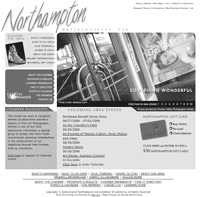
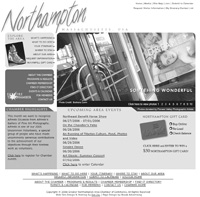
NORTHAMPTON — The Northamp-ton Chamber of Commerce launched its new Web site with a new address, www.explorenorthampton.com, in June. The updated site features a section for Chamber members, as well as sections for visitors and the community. In addition, the Web site now offers a calendar that will generate a ‘Coming Soon in the Northampton Area’ listing that will be automatically updated daily.

Holyoke Mall Lands The Sports Authority

HOLYOKE — The Sports Authority will open a 46,000-square-foot store in early 2007 in the space that was once occupied by Kahunaville. A.C. Moore is also expected to move into the former Kids ‘R Us space on the lower level of the mall to accommodate the space needed by The Sports Authority. Approximately 30 to 40 people will be employed at the new store. In other mall news, two recently opened stores are Bakers Fashion Footwear Boutique and Sadie’s, a photography studio.

Two Law Practices Merge

SPRINGFIELD — Raipher Pellegrino PC, based in Springfield, recently announced a merger with Denner Associates, a Boston-based firm that specializes in murder defendants in Boston and out of state. The firm is now Denner Pellegrino LLP and will serve the Hartford and Berkshire areas. Denner Associates has offices in Boston, Providence and New York. Raipher Pellegrino, a former Springfield city councilor, said the merger will help cut costs and also put together a powerful group of lawyers.

Westfield Financial Looks Toward 100% Public Ownership

WESTFIELD — Westfield Bank’s board of directors recently voted to complete a second step conversion to 100% public ownership of its stock by the end of the year. The stock price and when it will be sold will be determined at a later date. When the bank went public in 2001, the company sold 4.9 million shares at a $100-a-share subscription price, which raised approximately $48.1 million after costs. At press time, company officials said there are no specific plans for using the money that will be garnered during the stock offering.

Lia Group to Build New Toyota Dealership in Northampton

NORTHAMPTON — The Lia Auto Group has announced it will break ground soon for a new Toyota dealership on King Street, just down the road from its Honda dealership that opened in 2005. To make room for the Toyota store expansion, Lia recently closed its Chrysler Jeep dealership. In addition, the Albany-based group closed its Lincoln Mercury franchise in May. Company officials expect the new Toyota facility to cost approximately $4 million.

Elms College, Diocese Creating Academic Programs

CHICOPEE — A series of academic programs for lay leaders and ministers in the Springfield Diocese will soon be offered through a collaborative effort with Elms College. Areas of study will be designed for Catechetical leaders, adult and youth ministers, pastoral and music ministers, and parish administrators. Certificate courses will cost $120 per course and a diocesan subsidy will be available to participants. Certificate and master’s programs will be offered.

Choice One, CTC Finalize Merger, Complete Acquisition of Conversent

Choice One Communications, CTC Communications, and Conversent Communications recently announced the completion of their previously announced combination. The merged organization will be called “One Communications” as of July 24 and will serve businesses in 16 states within the Northeast, Mid-Atlantic, and upper Midwest regions. With revenues of more than $800 million, One Communications is the largest privately-held competitive local exchange carrier in the United States. “This transaction transforms three telecommunications companies that were strong in their own right into a single broadband IP-based telecommunications powerhouse,” said Thomas J. Casey, CEO of One Communications. “We will offer a unique combination of advanced telecommunications solutions and exceptional customer service. Businesses throughout our target markets will benefit from a new competitor that is large enough to make substantial investments in enhanced services while being nimble and focused enough to serve every customer with exceptional support provided by accessible and friendly experts.” The One Communications network spans from Maine to West Virginia and the eastern seaboard to Wisconsin. The company will maintain substantial operations centers in Rochester, N.Y., Waltham, Mass., Marlborough, Mass., and Charleston, WV. In addition, One Communications will maintain dozens of regional offices in local business communities to serve small and medium sized business customers. Financing for the transaction includes a $75 million additional equity investment by both Columbia Ventures Corporation (the sole shareholder of CTC Communications), and Choice One shareholders (backstopped by Camulos Capital LP and Värde Investment Partners LP), and a $590 million credit facility arranged by Goldman Sachs Credit Partners LP. The credit facility includes $30 million in revolving credit, a $435 million first lien term loan, and a $125 million second lien term loan. Proceeds from the debt and equity offerings enabled the company to refinance existing debt, purchase 100% of the outstanding shares of Conversent and fund transaction and merger integration costs and provide additional working capital.

Sections Supplements
Northampton Chamber Launches New Web Site

The Greater Northampton Chamber of Commerce has a new home, virtually speaking.

Earlier this month, the chamber launched its new Web site, explorenorthampton.com. Suzanne Beck, executive director of the Northampton chamber, said the new site has been in the planning stages for some time, and brings several benefits to the chamber, its members, and the community.

“We’ve been talking about redeveloping the site for two or three years,” said Beck, “because we have been aware for some time how important a tool the Internet is in terms of travel and tourism.”

But because the site is self-funded by the Chamber, Beck said it took some time to raise the necessary capital.

“Last year was when we started getting specific with our plans,” Beck added. “We knew from the beginning that we wanted a major emphasis to be placed on promoting our members and their services, but we needed to start thinking about how we were going to highlight those businesses.”

Some of the features incorporated into the site to do just that include an itinerary function, which, similar to the ‘shopping cart’ aspect many retail sites use to assist shoppers with making purchases, will allow visitors to add exhibits, restaurants, shops, or other points of interest to a list, then view or print out the list in preparation for a trip.

In addition, a revamped online directory has been created, which allows businesses and organizations to update their listing online as needed, ensuring the most current information is viewed by visitors.

Beck explained that the Chamber’s online directory was already averaging about 7,500 hits a month, and the new format will make the service even more relevant for those seeking information about Northampton. Chamber members (membership stands at about 750 members) can also take advantage of on-line registration for events, display company press releases, and utilize exclusive ad space on the site – two ad spaces on every page of the site reserved for use by Chamber members only

“Thousands of referrals stem from the Web,” she said, “and the primary purpose of the site will be to maximize that for our businesses.”

The site will also include a calendar that any community organization can contribute to, by filling out a simple form and posting upcoming events and fundraisers.

Beck said the calendar will also be updated daily.

“This feature is as valuable to people who live here as it is for tourists,” she said. “Plus, any area business can publicize its events on this calendar for free, by submitting the information from any page on the site by clicking on ‘Submit to Calendar.’

As that gets used more, it will have more value,” said Beck, “and the overall site will have more value. It will make events and exhibits more available to people, both visitors and those living in the area.”

Beck explained that the site was developed through the efforts of several local firms and individuals. Three chamber committees spearheaded the process — the membership and tourism committees and an ad hoc Web site committee — and Dot Inc. Solutions of Hadley served as the site developer, while Novak Advertising of Northampton created the site’s page design.

Several area photographers were also tapped to provide art for the site, including members of the Pioneer Valley Photographers Assoc.

“The photographers were very generous with their work,” said Beck, noting that the site features original photographs taken by local photographers on nearly every page, rather than stock photos.

The site has been added to the chamber’s repertoire of services aimed at chamber membership development, tourism in Northampton, and economic development of the region. Some primary objectives of the overall chamber campaigns include promotion of the area as a destination; the development of new travel and tourism markets, and of new infrastructures to support tourism; expansion of the commercial base in Northampton; and the development of the town’s economic development priorities in terms of regional initiatives.

Sections Supplements
Stop Thinking About Technology and Start Thinking About Your Target

Some people will read the title of this article and presume that ‘getting’ means ‘understanding.’ Others will assume it means ‘acquiring.’ And the answer is yes — though you need the former before you can achieve the latter. And you can pull the word ‘interactive’ out of the title because it doesn’t add anything to the discussion since understanding and acquiring interactive technology are really just understanding and executing basic marketing practices using some tool sets and features that are enabled by interactive technology.

However, before we get into a discussion of the ‘what to whom,’ (my definition of marketing) I think it bears mentioning that as a person who has worked on both the client and agency sides of the business, I believe best practices in this realm are seldom defined as purely an interactive technology solution alone but rest upon the idea that interactive elements helped achieve the overall marketing goals of the client.

Good interactive marketing starts with good strategic marketing planning. You can’t maximize the effectiveness of technology if you haven’t integrated it into an overall communications plan. Time and time again, the biggest mistake companies make is not thinking about interactive as an integral part of the marketing plan. Instead they treat it as stand-alone effort.

And the second mistake? Ownership. How can a company be effective in getting its message out and connecting with and developing customers if one person or group is handling traditional advertising and marketing programs and somebody else is responsible for so-called interactive technology? Just because the word technology is in the mix often there is a turf war between marketing and IT. These are the ugly barriers to successful implementation.

Once you’ve established the ground rules the next step is relatively simple. Stop thinking about technology and start thinking about your target. An 18-year-old consumes media in a much different way than their grandparents. It’s not an earth-shattering insight. But you’d be amazed how many projects I’ve seen where the objective seemed to be technology deployment rather than improving communication with a target consumer.

If you think of media as a continuum ranging from print through radio and television to interactive, and your tool sets as display advertising, direct mail, broadcast advertising, etc., you can begin to define a set of options around new media. But these options, like everything you do in marketing, have to be directed toward business objectives. Creating a feedback loop with customers, creating a new product launch channel, a cross-selling channel, speed to market, online sales to augment traditional sales – even just a simple way to stay connected – are all valid goals toward which your efforts can be directed.

Bear in mind, interactive can offer some clear advantages. For one, if you include the Web site, your ability to present reams of information and allow potential customers a feast of self-selected details makes the concept of a printed brochure pale by comparison. More important, is the truly interactive nature of the collective technology in that it allows you to open a dialogue in the guise of a self-directed exchange.

Building a connection is usually a function of privileged E-mail. I say privileged, because treated any other way it has the potential to burn you. If you want to communicate directly, you have to ask permission. And if you get the opportunity, you have to meet or exceed your customer’s expectation of your brand. Over-communicating with blatant sales pitches, filler nonsense, or poorly defined content are all ways to tarnish your image. The last time I bought a car they actually asked me if I would find it convenient for them to contact me about service calls by E-mail. So far they’ve kept it to that, and I find it convenient, unobtrusive, and worthwhile.

For a more dynamic example, think of the problem an educational institution has in trying to attract good candidates to its campus. On the first level is the problem of ‘really interested’ versus tire kickers. ‘Really interested’ (RI) will register and give you their E-mail. Now let’s begin marketing by more precisely segmenting the customer base so we can really zero in on their needs. Let’s give RIs several choices as to areas of interest (a,b,c). Once they’ve self-selected further we can connect on the basis of interest with differentiated content being offered to RI-a, RI-b and RI-c. If the potential students continue to engage you can be pretty sure interest is high and knowledge is good.

This kind of segmentation with a potential customer group showcases the granularity of interactive marketing, and though it takes some thinking to programmatically plan, it is both effective and cost-effective.

A well-managed E-mail marketing effort has another clear advantage over traditional media – it is easily measurable. From that standpoint, it’s a bean counter’s dream. Open-rates, click-throughs, conversion rates, unique visits. Yum. Mind you, you have to understand the metrics, watch them, and use them to dial in your effectiveness. The ability to conceive, test, and refine is an inherent part of the value proposition and you should be prepared to take advantage of it. In contrast to traditional marketing programs this flexibility can either be looked at as a burden (someone has to assess and refine) or an opportunity (we’re getting increasingly close to customers).

This leads into another aspect of interactive marketing that some clients find frustrating: it keeps changing. It’s what I like to refer to as the wet edge. That describes the phenomena of constant change and enhancement. Some change is good; other change can easily be a double-edged sword. New technology functionality doesn’t guarantee value creation. Just think of the times you went to a Web site that wouldn’t load because of bandwidth or you couldn’t view it because you didn’t have the latest plug-in. The problem is that purveyors of technology will dazzle you with what it can do and limit the discussion of access.

That’s why any discussion of technology deployment has to be balanced but your target demographics’ use and access patterns.

Sounds like a lot to keep track of, but it isn’t. You just have to be careful about chasing technology or being a beta test. The ultimate objective is not to use the latest and coolest technology; it’s to increasingly cement your relationship with your customers. It’s a gentle balance, and like everything interactive, it changes over time.

On the other hand you have to stay abreast. Certainly the things like keyword purchases in search (paid placement), changing search-engine optimization protocols, the move toward more localized search, RSS (really simple syndication) feeds, and video ad distribution are all trends that will alter the landscape and create opportunity to best your competition. Just be judicious in your thinking — using something totally cool on your Web site isn’t effective if it limits access of or becomes a point of frustration for your target audience. Seems pretty simple, but everyone’s been frustrated by enough Web sites to know how many companies make this mistake.

I realize I have generalized to the most common denominator and perhaps not offered insights specific enough to act on. So here’s some top-line thinking based on my experience with clients about getting interactive. If you’re still questioning whether you really need to investigate this new media option, with all due respect, you’re a hopeless Luddite. On the other hand you have to be very careful to create the balance that matches your market dynamics.

You have to study interactive marketing and assess technology in terms of its ability to meet business objectives within the bounds of your customer’s comfort zone. You should seek best practices, demand metrics and measure value based upon goals in marketing plan.

Above all, remember that technology is not a message in and of itself, though some allow it to become that. At its best it’s simply another, often better way to deliver your message. For no matter how much technological dazzle you create, it is ultimately the message that counts and delivers the customer – and understanding that much is how you start ‘getting’ interactive marketing.

Nathan Winstanley is president of Winstanley Associates and Lenox Softworks, a full-service advertising, marketing e-communications and public relations firm in Lenox, Massachusetts; (413) 637-9887;[email protected].

Sections Supplements
UMass Central Heating Plant Will Fuel the Campus — and the Imagination
John Mathews

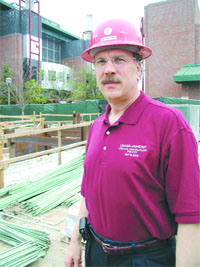
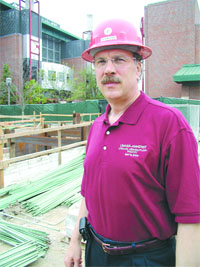
John Mathews says the new CHP at UMass will bring what he calls “net gains” for the environment.

Ground was broken last month for a new, $118 million central heating plant at UMass Amherst. The facility will replace a 1950s-vintage coal-burning plant that has been obsolete for decades, and will be environmentally friendly in every way — from its unique exterior design to equipment that will significantly reduce emissions of greenhouse gases.

John Mathews now keeps a pair of binoculars near the window in his cubicle on the third floor of the Physical Plant Building at UMass Amherst.

He’ll use them to help chart the progress of the $118 million central heating plant, or CHP as it’s called, now taking shape roughly 500 yards to the west.

athews, assistant director of Campus Projects, Facilities & Campus Planning, has a decent view of the construction site, which lies just beyond the Mullins Center, and the early-stage work being done (ground was broken May 12).

But he’ll be doing most of his monitoring efforts up close and personal.

Indeed, Mathews has been working on the effort to build a replacement for the university’s World War II-era, coal-burning heating plant for about a decade now, and, as this initiative’s project manager, he is responsible for making sure the facility is built according to specifications.

Those would be the specs laid out in the foot-thick stack of books and hundreds of diagrams that also occupy Mathew’s work space and represent nearly seven years of work to finalize designs for the plant, scheduled to go on line in the spring of 2008.

As he talked about those designs and specific features of the 14-megawatt plant, Mathews used the terms unique and state of the art early and often. And he applied them to describe everything from the facility’s look — more like a field house than a co-generation plant — to its operations room, complete with something called a “circular cockpit.”

But the most significant features of the plant will be its efficiency and environmentally friendly nature, said Mathews, who is coordinating the planning, design, and construction of a number of projects on campus. He noted that the facility will generate more energy per pound of fuel burned than the current plant, despite the fact that the fuels to be used — oil and natural gas — are much more expensive than coal.

Meanwhile, the plant will use advanced combustion turbine burners and other equipment that will significantly reduce emissions of greenhouse gases, and will recycle municipal wastewater plant effluent for boiler make-up water, reducing the demand on the public drinking water system in Amherst by nearly 200,000 gallons daily.

“There will be net gains for the environment,” said Mathews, noting that some of the steam-turbine technology and pollution-control equipment included in the plant’s design have rarely, if ever, been used in combination before. “We’ll be using less fuel to create more energy and we’re recycling wastewater for the plant’s primary source of water.

“Massachusetts DEP (Department of Environmental Protection) has one of most stringent air-quality standards in the country, next to Southern California,” he continued. “We’ve been told by our consultants, who permit these facilities across the nation, that, for this-size facility, we’ll have one of the cleanest-burning plants in the United States.”

BusinessWest looks this issue at how this important project came together, and why the new plant is fueling the imagination — in more ways than one.

Letting off Steam

Mathews told BusinessWest that the plant currently heating the university’s 200 buildings and roughly 10 million square feet of space has been essentially obsolete since the late ’70s.

The oldest remaining components of the plant date back to the early 20th century, he explained, adding that while there have been some additions and upgrades over the years as the campus has witnessed exponential growth, most equipment has been in place since the Truman administration.

“The control board should go to the Smithsonian when it’s retired,” he joked. “That’s how old and outdated it is; it goes back to the 1930s. This plant was good in its day … but technology has changed significantly over the past 50 years.”

Economics and logistics have been the primary hurdles to building a replacement and fully utilizing advanced technology, Mathews noted, adding that both have been cleared over the past few years, with progress essentially mandated by a state order to cease all coal-burning operations by 2008.

The UMass Building Authority is bonding for the CHP project — and others now in various stages of completion around campus, said Mathews, adding that the $118 million price tag covers design, construction, project management, permitting, new steam lines, and demolition of the existing plant. Meanwhile, after a lengthy search, a site was found in the northwest corner of the university, on land that actually sits in the town of Hadley, only a few hundred yards from Amherst’s wastewater treatment facility.

The diversion of 180,000 gallons of that wastewater (roughly 11% of the daily volume) to the new plant, where it will be treated to drinking-level quality, is merely one of the facility’s many environmentally friendly characteristics, said Mathews, noting that there are many.

Others include selective catalytic reduction, or SCR, technology to control the emissions of nitrous oxide (the precursor to ozone), and oxidation catalysts to control carbon monoxide emissions. The plant will also employ what are known as low-NOx burners in its 10-megawatt gas turbine to further reduce nitrous oxide emissions.

The pollution-control technology is but one aspect of the plant that could be characterized as state-of-the-art, said Mathews, who told BusinessWest that some of the equipment included in the plant’s design is being put to use for the first time in this country.

“We permitted technology back in 2002 that did not exist, that was not commercially available,” he said. “When this plant goes on line with its gas turbine with its advanced burner design, it will be one of the first times it’s ever been used.”

Work on the design and specifications of the new CHP began in 1999, said Mathews, adding that project leaders hired Boston-based R.G. Vanderweil Engineers, a leading designer of heating plant facilities, to help blueprint the new facility.

The assembled team looked at a number of existing plants around the country and also studied emerging technology, he explained, with the goal of designing the most efficient system possible for the generation of steam and electricity with the same pound of fuel.

The new plant, roughly one-tenth the size of the Mount Tom Power Plant in Holyoke, a 150-megawatt facility, will feature a combustion gas turbine, similar to a jet engine, capable of producing 10 million watts of electricity, said Mathews. Steam generated by a heat recovery boiler that captures the hot (900º) exhaust from the gas turbine is then sent to a steam turbine generator, which creates another four megawatts of electricity.

The 14-megawatt total covers roughly 80% of the campus-wide electrical need, with the rest purchased from other suppliers. It would not be cost-effective to build a plant to meet 100% of the electricity needs, Mathews explained, adding that the peak usage occurs in only a few weeks of the year.

The steam generator and three auxiliary ‘package boilers,’ as they’re called, will produce 450,000 pounds of steam per hour for on-campus consumption, meeting 100% of demand. Two 20-inch main steam-transmission lines will connect the plant to the existing campus steam-distribution system and its 30 miles of pipes, while new lines are being constructed to take steam to a new dormitory complex in the northeast corner of the campus.

All facets of construction are being led by lead construction manager, O & G Industries, said Mathews, adding that the Torrington-Conn.-based company has recently built new central heating plants for the University of Connecticut and the University of New Hampshire.

Sound Advice

While project leaders set out to build a plant that was ultra modern, efficient, and environmentally friendly, they also wanted to create a facility that would effectively co-exist with the university and the surrounding neighborhoods.

And this meant paying close attention to everything from aesthetics (exterior design) to noise control, said Mathews.

For the former, project leaders turned to Cambridge Seven Associates, the architectural firm that designed the Mullins Center and drew inspiration from that arena for the CHP. The company eventually came up with a field-house-like design that features a large sloping roof covering both the 45,000-square-foot plant and the adjacent fuel farm.

Meanwhile, the front of the plant will feature a glass wall, permitting passersby to see the equipment and operations taking place inside.

“It’s designed to fit into a campus setting,” said Mathews. “It’s a beautiful structure.”

As for noise, Mathews said it was a subject of much discussion among project managers, neighbors, and campus officials. The new plant will sit roughly 1,400 feet from the nearest residence, and will be near the Mullins Center, the school’s baseball stadium, and a number of playing fields used for intramural sports. Project leaders didn’t want any of those constituencies bothered by noise.

“This was a very big issue for us; we didn’t want to impact neighborhoods or the playing fields,” he said. “We’ve gone to great lengths to control noise both inside the plant and what might be emitted from the plant.”

These include everything from silencers in duct work and on louvers that penetrate the building wall, to the design and thickness of windows, he said, adding that several noise models were created to help ensure that increases in noise would be barely perceptible, if at all.

Considerable time and effort were also spent on the design of the control room on the plant’s second floor, what Mathews called the “heart and soul” of the facility. He said operators can see 360 degrees around the plant and, through the use of video technology, “layer down,” as he put it, to see specific operations and the equipment used for them.

“We designed it ergometrically so that an operator, with computer screens in a circle around him, can see the entire plant at once,” he explained, applying the term ‘circular cockpit’ to describe the work space. “He can see the plant through the floor-to-ceiling windows, and with the computer screens he can drill down to four levels of controls.

“There’s a lot of engineering and technology at his or her fingertips,” he continued. “And that will enable the operator to make sure the plant is running at peak efficiency at all times.”

The carefully choreographed timetable for plant construction and start-up calls for the installation of process equipment, including the control room, starting in the spring of 2007, with the first firing of the boilers to come that fall. To follow will be roughly six months of commissioning and acceptance testing.

If all goes as planned, the new plant will be fully operational, and demolition will commence on the current facility, in the spring of 2008.

Taking the Heat

By then, Mathews can put away the binoculars. They’ve seen limited use thus far — work since ground breaking has been confined to foundation-pouring and other preliminary work.

He’ll no doubt use them more when steel is erected — it’s due to arrive later this month — and for other steps in the construction process.

And with them, he’ll not only get a look at a construction site, but a view to the future of heating plant technology.

George O’Brien can be reached at[email protected]

Departments

Florence Savings Bank Continues Strong Growth

FLORENCE — Florence Savings Bank’s first-quarter financial results indicate a continuation of its strong growth trend, according to John F. Heaps, Jr., president. Total assets at the end of the first quarter stood at $883.8 million, an increase of $51.6 million or 6.2% from the corresponding period last year. Growth in the bank’s loan portfolio was the primary source of the asset growth. Total loans ended the quarter at $531.8 million, up $71.7 million or 15.6% from the prior year. The loan growth was fueled by increases in both residential real estate loans and equity loans. Residential real estate loans were up $49.7 million or 15.8%, ending the quarter at $364.8 million, and equity loans increased 39.8% or $19.2 million, ending the quarter at $67.5 million. Total deposits were $633.9 million at the end of March, up $31.2 million or 5.2% from March 2005 levels.

MassMutual Offers Weekly Podcast To Field Sales Force

SPRINGFIELD — While many people use their computers or MP3 players to download music, TV shows, and movies, MassMutual is taking podcasting to new levels by providing its field sales force with company news, product information, and marketing tips on a weekly basis. MassMutual’s National Center for Professional Development (NCPD), a unit providing training content and opportunities for its field force, writes, produces and distributes a weekly 15-minute audio podcast – a digital audio file delivered via the Internet – to field representatives. Currently, more than 700 of MassMutual’s field force subscribe to the free weekly program, and that number continues to grow. Subscribers provide regular feedback to the NCPD on content they would like to hear, which results in timely and informative programs that speak directly to the interests of listeners.

Easthampton Savings Bank Surpasses $675M in Assets

EASTHAMPTON — Easthampton Savings Bank’s assets were at $675.9 million at the end of the first quarter, according to William S. Hogan, Jr., president. The bank’s total assets were up $32.2 million from a year ago, an increase of 5%, and total assets were up $8 million for the quarter. Also, loans total more than $502 million, with the total loan portfolio increased $31 million, while deposit growth was $17 million or 3% from this time last year, an increase of $11 million or 9% for the quarter. Total deposits are now at $525 million.

UMass Breaks Ground for Environmentally Friendly Heating Plant

AMHERST — Groundbreaking ceremonies were recently staged for a $118.7 million central heating plant at UMass Amherst. The facility will replace an obsolete, coal-burning facility built in the 1940s. Fueled by natural gas and oil, the new plant will significantly reduce greenhouse gas emissions upon its scheduled completion in March 2008. The plant is designed to meet the campus demand for steam and will satisfy nearly all of the demand for electricity, and will comply with some of the most rigorous air quality requirements in the U. S. The facility will be located adjacent to the Amherst wastewater treatment plant on the western edge of the campus, overlooking playing fields. Housed in a 45,000-square-foot building with a 95,000-square-foot big roof that covers both the energy facility and associated storage tanks, the plant will have the look of a field house.

Bank Featured in American Banker; Opens NY Branch

PITTSFIELD — Berkshire Hills Bancorp Inc., and its subsidiary, Berkshire Bank, were recently featured in American Banker, the daily trade publication for the U. S. banking industry. The article discusses how the bank has grown since late 2002, under the direction of President and CEO Michael P. Daly. In other news, the bank recently opened a full-service branch at Delaware Plaza in Delmar, N.Y.

Smith & Wesson Lands $8M Contract

SPRINGFIELD — The California Highway Patrol recently ordered 9,700 stainless steel tactical pistols from Smith & Wesson, valued at approximately $8 million. The model 4006TSW pistols will be shipped over an 18-month period beginning in June. The pistols are priced at about $850 each and will replace earlier versions of the model 4006, which the California officers have used since 1990.

Businesses Receive CMA Awards

SPRINGFIELD — lshd Advertising Inc. recently won 17 Creative Merit Awards (CMA) at the Ad Club of Western Massachusetts’ annual awards show. lshd received top awards for Blackstone Medical Inc.’s “NASS Trade Show Promotional Campaign,” MassMutual’s “8-Ball” direct mail and landing page and “Prepared USA” ad and Tip in Brochure, as well as First Pioneer’s Annual Report and “USCRA Vintage Grand Prix” 4+ color poster. As part of the annual awards, the Ad Club also recognizes results. For the fifth consecutive year, lshd won the coveted Dynamic Impact Award for its results-driven campaign for MassMutual. Additionally, the firm won four Silvers, one of which was Holyoke Medical Center’s ‘A Star Is Born’ radio campaign, and seven Bronze Awards. Clients included MassMutual, Blackstone Medical Inc., Nufern, Deerfield Urethane, Heat-fab, Ensign-Bickford Aerospace & Defense and Farm Credit. Lenox Softworks also received a Gold Merit Award for its Lexington Group’s Web site entry in the Electronic/Interactive Media-web site category. The Lexington Group web site features a series of animated scenes of modern office space. For a complete list of Ad Club winners, visit www.adclubwm.org.

Titan Roofing Recognized By Firestone Building Products

CHICOPEE — Titan Roofing Inc. is a recipient of the 2006 Firestone Master Contractor Award from the Firestone Building Products Company. The yearly award recognizes a company’s dedication to installing quality roofing systems. This recognition marks the 19th time Titan Roofing has achieved Master Contractor status. Firestone-licensed contractors earn the Master Contractor Award each year based on total square footage and quality points accumulated for achieving exceptional inspection ratings on Firestone Red Shield warranted RubberGard™ EPDM, UltraPly™ TPO and asphalt based roofing system installations.

Uncategorized

Jeb Balise remembers many bird-hunting trips from his youth with his grandfather, Paul Balise.

The two would talk partridge, pheasant, or whatever the target was on the given day, but also about life and business — specifically, the car business.

“He told me to always be honest and treat people well,” Balise said of his grandfather, who started the business Jeb now serves as president in 1919. “He was a very smart man and a really good listener; he wasn’t a man of many words, but when he spoke, you listened; I learned a lot from him.”

Likewise with the second generation of the family to put his mark on Balise Motor Sales, his father James E. Balise. “Shrewd and patient — those are the words I’d use to describe him,” said Jeb Balise. “He had wonderful business sense as well as a great sense of timing and vision — he had one of the first Honda dealerships in the country – and hopefully he’s passed some of that on to me.”

The ability to learn from previous generations is one of many factors that has led Balise to its standing as one of the largest auto groups in the Northeast. And the three generations that built the company will be among the inductees in the Class of 2006 for the Western Mass. Entrepreneurship Hall of Fame, located at the Andrew M. Scibelli Enterprise Center in the Technology Park on the campus of Springfield Technical Community College.

Family businesses are well-represented in this year’s class. Also on this list is the Fontaine family and the three generations that have managed the Fontaine Bros.

construction company, and the Grenier family, which features two generations that have owned and managed a photography studio now known as Grynn & Barrett.
Meanwhile, another pair of inductees — Horace Smith and Daniel Wesson, founders of gunmaker Smith & Wesson — had some second-generation involvement in their famous venture (two of Wesson’s sons eventually became partners with him after Smith retired) and the remaning members of the class, Jesse Lanier and Barbara Moss Lanier, owners of seven Kentucky Fried Chicken (now known simply as KFC) franchises, are seeing the next generation of their family become involved in the business.

“This region has a tremendous heritage of entrepreneurship, said William Kwolek, director of Development for STCC and one of the organizers of the Oct. 5 banquet at which inductees will be honored. “Many of the ventures eventually became family businesses, with some of them spanning three or more generations.”

Kwolek told BusinessWest that proceeds from the induction banquet, as they have since the event was first staged in 2000, go to support entrepreneurship programs in Western Mass., including the YES (Young Entrepreneurial Scholars) program, which serves more than 1,000 young men and women in two dozen area high schools, as well as the Community Foundation of Western Mass. student business incubator.

Roughly $50,000 was raised last year, he noted, adding that organizers are looking to top that figure with a projected sell-out of the banquet.

Here’s a look at the Class of 2006.

Food for Thought

Jesse Lanier remembers his reaction when a colleague at Southern New England Telephone told him he was leaving a good job with solid pay and benefits to manage his own convenience store.

“I recall thinking, ‘why would he do a dumb thing like that?’” Lanier told BusinessWest. “At the time, it didn’t make any sense to me.”

But several months later, it made perfect sense, because Lanier did pretty much the same thing.

He left a job as manager of Purchasing at SNET to become a KFC franchisee. He formed Springfield Food Systems, a franchise chain, one that currently includes seven restaurants, which he operates with his wife Barbara.

“I knew I wasn’t going to be president of the company and I wasn’t really happy with my position,” he said, referring to SNET. “So I started looking at other options that would allow me to work for myself.”

One of those options was an auto dealership — he gained certification in GM’s Buick Division — but the economy was soft at the time (the early ’80s) and the auto industry was hurting. So at the advice of a friend already managing some KFCs, he gave the chain a hard look.

Over the past 23 years, Springfield Food Systems has grown to seven locations; five KFCs, a KFC/A&W All American Food Restaurant, and a KFC/Long John Silver’s multi-brand restaurant.

Jesse Lanier told BusinessWest that learning the business was hard — “I didn’t even know how to cook; I couldn’t fry an egg without burning it” — but learning how to manage a transient workforce has been the biggest challenge.

“If we get a year out of non-management people, that’s pretty good,” he explained. “Managers will often give us two or three years, but there is a lot of turnover, and that’s part of being in this industry.”

Jeb Balise started learning his business before he was in kindergarten.

He told BusinessWest, which recently named him the magazine’s ‘Top Entrepreneur’ for 2005, that he had his first job (opening and closing a garage doors) at the family’s Chevrolet dealership at age 5. Today, he presides over an auto group that includes 16 new-vehicle franchises, including Chevrolet, Dodge, Ford (3), Honda, Lexus, Mazda, Fuso, Nissan (2), Pontiac, Saturn (2), Scion, and Toyota; five Ready Credit used car dealerships; and three collision repair centers.

The process of building that empire began a few months after the end of World War I, when when Paul E. Balise, who grew up working his family’s farm in Hatfield, purchased some welding equipment and began fixing farm vehicles and automobiles. He called that venture the Square Deal Garage.

Paul Balise, eventually shifted to auto sales, and became an associate Chevrolet dealer in Hatfield. In 1929, he moved to Chicopee Falls and opened a Chevrolet dealership there. In the 1930s, during the height of the Great Depression, when many car dealers were failing, Paul Balise moved his business to a bigger location on Main Street in Springfield, and later to a location on East Columbus Avenue that would be its home for more than a half century.

James E. Balise, one of Paul’s 10 children, became president and dealer of Balise Motor Sales in 1958. In 1971, he took a chance on a relatively unknown Japanese automaker, and opened one of the first Honda dealerships in North America. In 1985, that dealership moved to Riverdale Street in West Springfield and would become the first of many new facilities to bear the Balise name.

Jeb Balise became president and dealer of Balise Motor Sales in 1986, and over the past 20 years has led an ongoing program of expansion.

Like many of Springfield’s notable entrepreneurs, Horace Smith started his career at the Springfield Armory. He served as an apprentice there upon completing his public school education, and eventually started his own gun-manufacturing business.

He also worked for several gun-component makers, including Allen, Brown, and Luther, manufacturer of rifle barrels. It was there that he met Daniel Baird Wesson, also a gunsmith, with whom he would partner to forge several breakthroughs in firearms production — and create one of the most recognizable brands in the history of American business.

Today, the Smith & Wesson name is on not only handguns, but myriad other safety products ranging from mace to handcuffs; police bicycles to flashlights. But the name is synonymous with handguns and handgun manufacturing, and today, after several years of struggle, the company headquartered on Roosevelt Avenue is staging a comeback, with several new contracts from domestic and foreign military units and law enforcement agencies

Thus continues a success story that began in 154 years ago, when Wesson, who, while toiling for Allen, Brown, and Luther, worked in his spare time to perfect a practical cartridge. He eventually persuaded Smith to go into business with him and produce the cartridge in Norwich, Conn. In 1854, the two patented a pistol that was not only a cartridge weapon, but had a new and distinct repeating action. While the concept was not entirely successful in pistols, it adopted well to rifles and it became the basic invention incorporated into the world-famous Winchester rifle.

After the partners sold their rifle patent rights to Volcanic Arms Company, Smith retired and Wesson accepted the position of superintendent of the company. Under Wesson, Volcanic Arms produced the self-primed metallic cartridge used throughout the Civil War. In 1857, the two men rejoined to produce the Smith & Wesson revolver, which became an enormous success. It was the only product of its kind, and was adopted by U.S. military authorities and several foreign governments. By 1860, Smith & Wesson was employing 600 people and had become one of the largest gun manufacturers in the world.

The company continued to introduce new products and innovations. In 1869, the two partners purchased a design by William C. Dodge that emptied shells from the gun. In 1887, Wesson patented a safety revolver that prevented unintentional firing, and by the turn of the century, the company was producing a line of hammerless revolvers. In 1899 the company introduced what is probably the famous revolver in the world, the .38 caliber Model 10, which has been in continuous production ever since, with more than 6 million units produced.

In 1948, R. Robert Grenier started bringing into focus an entrepreneurial venture that would eventually bring his family name into homes and schools across Western Massachusetts and Connecticut. His photo studio started small, in the first floor of the family home on Pine Street Holyoke. But it has grown to become one of the largest businesses of its kind in the Northeast.

Today, under the leadership of four of Grenier’s children, the company has several successful departments, including school pictures, high school senior portraits, sports photography, weddings, family portraits, and many others. The business has also expanded its geographic reach over the years, and has plans to open a studio in Connecticut.

Nicknamed ‘Grin,’ Robert Grenier first partnered with Lucien Ducharme in a business that centered mostly around portrait photography. The company grew steadily through the ’50s and ’60s, with wedding, family portrait, children, and high school senior photography. Ducharme retired in the mid ’60s, leaving the Grenier name to stand alone on tens of thousands of pictures.

By the mid ’70s, the name became Greniers. That’s when the first member of the second generation, Larry, joined his father in the business. He would be followed by brothers Marc (1976), Dan (1979), and Chris (1980). Together, members of the second generation have presided over explosive growth and a host of new business opportunities.

In 1982, after suffering a massive heart attack, Robert Grenier, passed the torch of company president to Larry, and in 1991, he sold the business to his four sons. Today, they each take leadership roles in the company. Dan Grenier founded and now manages the grades K-11 Daniel’s School Pictures department, and serves as vice president of Marketing and Product Development for The Greniers. Marc heads studio operations as Vice President and Director, while Chris directs the company’s high school senior accounts.

Today, the company counts more than 60 high schools and colleges and about 300 elementary and middle schools on its customer list, as well as other clients ranging from the Vermont State Police Department to the Holyoke and Hartford, Conn. fire departments. The profound growth of the business led the Grenier Brothers to build a new, 24,000-square-foot facility on Jarvis Avenue in Holyoke that now houses all operations. Creation of a similar facility in Connecticut, one that enable the company to better serve its many clients there, is in the planning stages.

In anticipation of further growth and territorial expansion, the Grenier brothers decided earlier this year to change the name of their company to Grynn & Barrett Studios.

David Fontaine told BusinessWest that while he’s honored to be part of the Class of 2006, he considers his grandfather to be the real entrepreneur in the family.
Eudore Fontaine didn’t want to be a farmer. He had loftier dreams, and left his native Canada in 1933, at the height of the Great Depression, to pursue them. He came to Chicopee to live in his aunt’s boarding house, and quickly found work as a carpenter. He was joined in that profession by his brother, George, and it wasn’t long before they decided they would like to work for themselves.

They issued 35 shares of common stock and formed a construction company — Fontaine Bros. Inc. — that has been part of the Western Massachusetts for the past 73 years. The family business, now in its third generation of leadership, started with residential construction, and evolved over the following decades, becoming one of the leading builders of school facilities in the Commonwealth.

Some of the most recognizable buildings in the region, including the new MassMutual Center in downtown Springfield, the Fine Arts Center on the University of Massachusetts Amherst campus, Scibelli Hall on the campus of Springfield Technical Community College, Holyoke High School, Dean Vocational Technical High School , and many others were built by Fontaine.

Given a strong foundation by Eudore and George Fontaine, succeeding generations of the family have built on the base, responding to changing societal needs in the process. Eudore’s son, Ray, who became president in 1950, would lead the company to post-war prosperity, shifting its focus from residential to commercial construction. In the late 1950s and 60s, when Baby Boomers were reaching school age in huge numbers, Fontaine built schools in communities across Western Mass. and well beyond. In the 60s and early 70s, when UMass-Amherst was undergoing explosive growth, Fontaine built many of the facilities that shape the campus today, including the Fine Arts Center, Tobin Hall and Herter Hall.

In 1982, another of Eudore’s sons, Lester, became president of the company, and guided it to continued growth, including a host of new school buildings and other public facilities, including Dean Tech, the Rebecca M. Johnson Magnet School in Springfield, and others. Lester’s son David became president of the company in 1995, and has president over several recent projects, including the $60 million MassMutual Center and the Bartley Center for Athletics and Recreation at Holyoke Community College, for which the company won a Construction Excellence Award in the category of new construction from the state.

For more information on this year’s dinner event, contact William Kwolek, Executive Director of the STCC Foundation; (413) 755-4477.

Departments

Tighe & Bond Wins Top Award

WESTFIELD — Tighe & Bond Inc. was recently awarded the 2006 Build Connecticut Award, sponsored by the American General Contractors/CT Chapter. The awards competition is a bi-annual competition amongst contractors that recognizes the top project in four categories – large and small new construction projects and large and small renovation projects. The Lake Whitney Water Treatment Plant for the South Central Connecticut Regional Water Authority won the award for the top project in the category of Large New Construction. Tighe & Bond was a member of the design firm team that engineered the project. The firm participated in the pilot testing and planning stages of the project, and was responsible for the asbestos abatement and demolition of the old plant, and the civil/site, structural, electrical and engineered the pumping systems for the new water treatment plant. Tighe & Bond also assumed the lead role during construction.

MassMutual Completes $45M Construction Project

SPRINGFIELD — MassMutual Financial Group officially completed its $45 million renovation and expansion project at its Springfield home office on State Street on April 21. The project consisted of a new 80,000-square-foot document management building and a renovation of a major building wing first constructed in 1965, including a complete overhaul and expansion of its employee cafeteria. MassMutual is currently ranked 92nd on the Fortune 500 list, making it the largest company, based on revenues, in the state.

UMass Amherst, Elms Receive Grant

AMHERST — UMass Amherst and Elms College in Chicopee have been awarded a grant of $24,948 from the Massachusetts Board of Higher Education to encourage top honors students early in their nursing education to pursue an academic career. The initiative is designed to increase the number of nursing professors, now in short supply. ‘Increasing the Pipeline to Ph.D. Education’ will support five teams of faculty and students from each college in the conduct of clinical projects and research. Honors students will be identified in their sophomore or junior years, matched with faculty mentors, and conduct honors work during the 2006-2008 academic years. They will work as research assistants for the first year to develop research skills and then undertake honors projects and research during the second year. The students will be eligible for direct admission to the UMass doctoral program upon completion of the bachelor’s degree.

Client First Associates Redesigns Web site

NORTHAMPTON — Client First Associates, a Vann Group company, recently revamped its Web site at www.clientfirstassociates.com. The firm supports organizations through large and small change initiatives, ranging from organizational assessments, systemic change projects and leadership development programs to executive coaching and employee development programs.

Credit Union Breaks Ground in Ludlow

LUDLOW — The Luso Federal Credit Union recently began construction of a 15,000-square-foot building on East Street that will be three times the size of its present building at 535 East St. Luso membership boasts being one of the largest credit unions in the region despite its membership being limited to those who work or live in town. As of Dec. 31, total assets were $137.5 million. When construction is completed in early 2007, Luso’s new facility will feature 35 parking spaces, a drive-up teller lane and a drive-up automated teller machine lane. Luso was created by members of the Gremio Lusitano Club in 1971. Juster, Pope Frazier of Shelburne Falls designed the structure, while L.N. Bernache of Chicopee will serve as the general contractor.

Three Markets Have Charter Phone Options

Residents in Chicopee, East Longmeadow and Ludlow now have a telephone service option through Charter Communications. The service began in March, with Charter offering its cable customers a telephone service of $39.99 a month with unlimited local and domestic long distance calls, voice mail, caller identification and other features. The service is also compliant with the latest 911 safety technology which provides a name and address when users dial the emergency number. Charter provides Internet, cable and telephone service to 11 communities, including Chicopee, East Longmeadow, Easthampton, Hadley and Wilbraham.

Sierra Grill To Open

NORTHAMPTON — O’Brian C. Tomalin plans to open a new restaurant, Sierra Grill, at the former location of Brasserie 40-A, part of a three-story restaurant and lounge operation which closed in mid-April. Anthony B. Bishop and his father, Daniel J. Bishop Sr., co-owners of Brasserie 40-A, said they decided to close the restaurant because they were not getting the end result they had expected.

Uncategorized

While other states have been adding jobs, Massachusetts has experienced a significant net loss of jobs, triggering an exodus of educated young people to other regions. Yet Massachusetts remains a leader in the life sciences, and if business, academic, and political leaders continue to provide inspiration and vision, the state can maintain leadership in this growing economic sector far into the 21st century.

The state’s success is based on assets that are clustered together to make Massachusetts special, including world-class universities and academic medical centers, innovative biomedical companies, astute venture capital firms, and an educated workforce.

But these assets are not necessarily unique, and competitors are convinced that they can replicate these assets.

The competition may be making inroads in that quest. For example, the Mass. Technology Collaborative recently reported that a number of competitor states have achieved a growing competency in attracting life sciences, often with aggressive state government support.

This fact is especially worth noting: Government investment in the life sciences is increasingly viewed as essential to a state’s future economic development.
Spurred by a number of economic report cards published in 2002, including the Massachusetts Biotech 2010 report, the political leadership picked up the gauntlet and ushered in a new era of government-industry-academic collaboration and cooperation concerning the Massachusetts innovation economy.

The first achievement of this new spirit was passage in 2003 of a groundbreaking economic stimulus initiative. Now, building on the success of Economic Stimulus I, the Legislature has proposed Economic Stimulus II.

This bill is before a conference committee, and there needs to be a rapid resolution of differences and quick passage of the final version, so that the state can maintain its competitive edge in the life sciences.

The most desirable outcome would be a melding of the best features from the House and Senate proposals.

The House provides an additional $10 million in funding for the Emerging Technology Fund, one of the shining successes of Stimulus I. A program that offers emerging tech companies a variety of financing vehicles, the fund, our most effective tool in competing with other states, has pledged all its initial capital to projects and is need of replenishment.

Stimulus I recognized that academic/industry collaboration is the key to future economic success. Stimulus II would recapitalize two other worthy initiatives created in the original bill: The John Adams Innovation Institute, which provides matching funds to leverage government and industry dollars for cutting-edge research and development, and the Mass. Technology Transfer Center, which promotes the crucial steps of taking academic research into the marketplace.

Senate language features new and visionary initiatives.

A newly created life sciences center would be an independent authority coordinating the multitude of activities and investments state government has approved or proposed to promote life sciences.

Based on successful models in North Carolina and Washington state, the center would focus state resources in a targeted way to propel further the sector that many consider the engine of our future economic growth.

The Senate has also proposed creating a bio-manufacturing network under the aegis of the University of Massachusetts, centered at UMass-Lowell and UMass- Dartmouth.

The state’s life sciences leadership stems from the excellence of institutions and the entrepreneurial spirit of individuals. But this leadership position is neither absolute nor guaranteed, facts thankfully recognized by state government leaders.

Passage of the stimulus legislation will allow Massachusetts to maintain its advantageous position in what has become a fierce global competition for life sciences supremacy.-

Una S. Ryan is chairman of the Massachusetts Biotechnology Council. Jack M. Wilson is president of University of Massachusetts.

Uncategorized

The printer’s shop in Old Sturbridge Village tells the story of how newspapers were produced during the 1830s. Among its artifacts are an antique manual typesetting apparatus, several pieces of vintage furniture, reproductions of 19th-century printed documents, and a large, flat-screen television mounted to a wall.
That’s right. A TV screen.

While many of the structures in the outdoor village still use “interpreters” — staff members or volunteers dressed in period attire who demonstrate New England life in the early 1800s — the facility’s management has been shifting toward something a little more high-tech in other areas.

For example, the wide-screen TV plays short videos throughout the day, filmed inside the print shop, that, in effect, perform the interpreter’s job. In OSV’s indoor museum area, visitors can access information about what they’re seeing using touch screens on computer kiosks. The mixture of old and new can admittedly be jarring to some patrons.

“Museums like ours are facing a cultural change,” said Ed Hood, director of research and collections. “People love the antiques, the infrastructure, the historic buildings. The question is, how do we change the bathwater while keeping the baby?”

The challenge of how to keep Old Sturbridge Village relevant at a time of declining attendance for all living history museums led to the resignation of the center’s executive director, Beverly Sheppard, last month, over the pace of progress at the village. A national search is underway for a replacement.

Those now in charge at one of New England’s most notable tourist attractions say that the course being plotted is a strong one, and Sheppard simply wanted to take a faster, more aggressive path to the same ends. But they also concede that the village stands at a crossroads — and not just the one at Interstates 90 and 84.

“The world is changing around us, and we have to keep it relevant,” said Bruce Moir, chairman of the Board of Trustees. “But we also have to keep doing what makes us special, and do it well. You can’t just chuck that out. So it’s a delicate balancing act.”

This issue, BusinessWest takes a trip into the past, and also examines what the future holds for Old Sturbridge Village.

Bad News All Around

In the heyday of Old Sturbridge Village — the late 1970s through the 1980s — it was not uncommon for annual attendance to approach 600,000 visitors. In 2004, that number had declined to 288,000, and it dropped again in 2005 to 265,000. It’s a phenomenon being felt at other living museums across America.
Moir said many theories have been offered to explain the decline, but two in particular ring true with him.

“First, one of our big visitor groups is families with children, and young people, compared to 30 years ago, have a lot more going on in terms of afterschool and weekend activities, like soccer, theater, and ballet,” he said. “Families have become so highly programmed in terms of time that there’s not as much free time anymore. They used to say, ‘it’s the weekend — let’s go to the Village; let’s go to Mystic Seaport.’ But today, even if families want to do things like that, they have trouble finding the time.”

He added that vacation patterns have shifted as well. While it used to be common for families from outside New England to take lengthy car trips to the region and visit several sites over seven or 10 days, the trend now is to find a good deal online and fly somewhere for a weekend.

School groups still make up a large portion of OSV’s patronage, totaling about 80,000 tickets per year, but even that number is lower than it used to be, said Eric White, director of education and public programs. Oddly, the numbers from Connecticut haven’t dropped much; most of the decrease has come from inside Massachusetts.

“The curriculum has changed in Massachusetts, and early American history, which used to be introduced in fifth grade, is now taught in middle and high school, and those students don’t tend to go on field trips,” White said, adding that fiscal restraints in many school districts have also cut into off-campus excursions.

Such shifts often spell doom to tourist attractions that fail to detect them and counter them. At what she called “a critical juncture in the life of this institution,” Sheppard felt that the board wasn’t making enough progress on reshaping its goals, so she resigned.

“The view I bring to the institution and the course I believe it should follow are at odds with those proposed by and supported by the leadership of the Board of Trustees,” Sheppard said in a statement.

Money is a key factor in how quickly new features can be added to the village and museum. However, while the village’s budget did fall from $9 million in the last fiscal year to $7 million this year, much of that drop is attributable to the close of the Oliver Wight Tavern, a former eatery that is being converted into an education and crafts center for both adults and children.

In with the New

In fact, that center is merely one example of how OSV is reinventing itself from a living museum into more of a history education center. The craft house will allow visitors to participate in hands-on seminars in cooking, textiles, woodworking, printing, and other early-American trades, using vintage and replica equipment.
White said such a program helps to reinforce the village recreation experience that remains OSV’s hallmark by allowing visitors to take part in activities that they could only watch interpreters perform in years past.

“We’re also incorporating several learning styles,” he explained. “Some people like to stand back and watch, while others like the hands-on aspects.”
“This is not meant to replace what’s already here,” Hood added. “It’s an exciting addition that gives additional context.”

Other changes affect the outdoor portion of the village. This spring, a trail system will open that will allow visitors to experience woodland, pasture, and river walks — and learn from signage how each type of land was important to New Englanders in the 1800s.

“It’s another leg on our stool,” said Bill Reid, vice president for external affairs. “It will deal with environmental history and how man’s impact on the land changed with time. We know people like walking outdoors in a bucolic environment, so this adds something important to their walk-through experience.”

Meanwhile, the Small House, a 420-square-foot clapboard structure, is the first building added to the village since the mid-1980s — and the first ever to be built from the ground up in period fashion; all the other buildings are historic properties relocated to Sturbridge. Unlike the middle-class houses in the village, this one will tell the story of how the lower classes of the time — including African-Americans and Native Americans — lived.

“It’s based on a lot of research and built with hand-hewn timbers,” said Susana Bonta, public relations manager. “Many people who haven’t visited recently will be surprised to see a new house.”

A Different Road

Of course, they might also be surprised to see the shift in education techniques. The village still boasts plenty of interpreters, demonstrating crafts from quill writing to wool dying, but the TV screen in the printer’s shop speaks to a definite sea change.

“The village has always been noted for the quality of its interpretation, and obviously we want to preserve that,” Moir said. “But, although we have good supporters in terms of fundraising and grants, a large part of our budget still comes from people walking through the door, and when you have such a dramatic change in attendance, you just can’t afford to have so many people out there.”

In the Fitch House – set up as the well-appointed residence of the village printer – the interpreters are also gone, but visitors are now allowed a much more active experience – they may try on period clothing, play with replica game pieces, and handle kitchen implements in areas that used to be roped off.

White noted that the variety of learning styles now in play, from traditional interpretations to the hands-on quality of the Fitch House, help patrons avoid what is referred to as “museum fatigue.” But everyone admits that budget constraints have contributed to the changes as well, and have created an additional challenge at a time when the facility is trying to reinvent itself for the 21st century.

“All along, our thrust has been to determine what programs we can add to enhance the visitor experience while keeping the living museum at the core,” Moir said.
“We’re trying to determine what’s right for our audience – for families with kids, adults without children, and students,” Hood added. “We have to make it relevant and accessible to a changing audience, while recognizing that plenty of people liked it the way it was.”

At the end of the day, it’s all about selling tickets and giving people a reason to not only visit once, but multiple times. Moir and the museum staff hope additions like the craft house and the walking trails can help reverse what has been a disheartening slide.

“We’ll keep doing what we do best, but keep asking what we can add around the edges to get people to return,” he said. “We always hear people say, ‘I came here as a kid.’ We want to give them reason to say, ‘I was just there last year, and now I’m going back.’”

If Old Sturbridge Village can manage that feat, it really will be a success story for the ages.

Departments

Grand Opening

Pazzo Risotorante, the newest addition to the Basketball Hall of Fame complex, staged a grand opening and VIP cocktail reception on March 27. The event drew hundreds of area dignitaries, including many from the business community. The restaurant, which features Sicilian-inspired cuisine, opened to the public on March 29.

cutting the ceremonial ribbon are, from left, partners Steve Degliuomini and Sal Mannino, manager Casey Petruccio, and partner Paul Astuto. State Rep. Mary Rogeness is at far right.
Above, Degliuomini and Mannino share a moment with Peter Carando, owner of Carando Gourmet Foods, second from left, and Paul Rothschild, a partner with the Springfield law firm Bacon & Wilson. At right, Pazzo Partners and hosts for the evening: Casey & Carmen Petruccio, Andrea & Paul Astuto, Sal Mannino, and Chris & Steve Degliuomini.
 

Survivors’ Day

Hundreds were in attendance last month for the 9th Annual Breast Cancer Survivors’ Day, staged at the Springfield Sheraton. The event featured a number of informational and educational programs and services for survivors.

Above, from left, Sandy Yarmac, Nancy Granger, Joan Methe, Nancy Galica, and Virginia Marotte share a moment.

A participant enjoys a massage, one of many services provided.
Colorful Landscape

Elaine Bristol of CMS Landscapes in Holyoke and Bernadette Giblin, owner of Safeground Organic Landcare in Northampton, compare notes at the first annual Landscape Job Fair staged late last month at Springfield Technical Community College

Uncategorized

It took him six years to finish high school – he was too busy causing trouble. But today, Darby O’Brien, founder and president of Darby O’Brien Advertising and Public Relations, has made a name for himself not only in the marketing world but as one of the Valley’s most vocal proponents for positive change. The one thing that hasn’t changed, though, is his habit of sticking in the craw of authority figures.

Darby O’Brien has never played by the rules.

Expelled from four different high schools in his youth, he later opposed the Vietnam War by assuming conscientious objector status and teaching English through the Spanish Apostolate, a social services division of the Springfield Dioscese that once operated in the city’s North End. He cut his teeth as an activist working to preserve various local landmarks, including the Mount Tom ski resort, and stumbled into advertising while seeking financial sponsors for a traveling band of musicians he managed, who hopscotched across the Pioneer Valley playing Irish ditties on a flatbed truck (he knocked on the door of the former Douglas Bewick Advertising Agency in Springfield and came away with a job.)

In 1980, he struck out on his own, and since then has built a name for himself as a reputable – and often renegade – firm with which to work.

“People either love us or they hate us,” he said. “But either way, hey know us.”

O’Brien’s offices in the Village Commons in South Hadley speak to the unconventional thinking that defines the firm – visitors are greeted by the strains of Irish music and a wreath made of beer cans. In the waiting room, they must heave themselves into butterfly chairs – not much more than cloth and a simple metal frame, they’re usually seen at the beach – and the boardroom is a fishing lodge, complete with rods and lures.

The lodge is a byproduct of one of O’Brien’s largest and most visible crusades to date — the ongoing ‘Fishing Buddies’ campaign, kick-started in 1997 to reopen several reservoirs in Western Mass. to fishing, and proof of O’Brien’s complete inability to stand on the sidelines and watch.

“People tell us, ‘don’t stand for anything, don’t lead the charge, because it will cost you business,’” he said. “We don’t listen. We fight the fight, and in doing so we reverse the spin.”

The mission behind the Fishing Buddies was and is loftier than gaining access to a few trout, O’Brien explained. He – along with John Cronin, managing director for the Beacon Institute for Rivers and Estuaries in Beacon, N.Y., and Robert F. Kennedy, Jr., an attorney and director of the Pace University Environmental Litigation Clinic – also formed a local chapter of the national Fishing Tackle Loaner Program at the Holyoke Public Library, for boys and girls who didn’t own fishing poles. They created the Buddy System, hooking kids up with volunteers to take them fishing, and lobbied to legalize recreational fishing at the reservoirs. In 1999, the Buddies garnered an Environmental Merit Award from the Environmental Protection Agency for their efforts, all the while tooling around in an old convertible, Blues Brothers style, with fly fishing garb replacing black suits and fedoras.

That wasn’t a job for a client; that was a Darby O’Brien original. And there are plenty of similar deviations, both in the can and on O’Brien’s drawing board, that are fueled by one common variable: Rebel Think.

Reeling Them In

They include a speaking program O’Brien will announce this month in The New Yorker; a T-shirt campaign to raise money for Holyoke’s baseball team for 7- to 9-year-olds, the Elmwood Jets, which garnered support from the likes of Regis Philbin and Craig T. Nelson; a series of recent direct mail pieces that have called into question the track record of the Economic Development Council of Western Mass., (EDC) and its executive director, Allan Blair; the Smarten Up Manifesto, a four-page leaflet launched in response to what O’Brien calls a ‘dumbing down’ of the region; and The Gut, a so-called ‘chronicle of change’ that is published “when we feel like it.”
Those projects are in addition to the ongoing advertising and PR work the firm handles for a number of outfits both locally and nationally. Many are small, specialized, or family businesses.

But O’Brien doesn’t see his personal projects as separate from his work with clients. In fact, he said there has been considerable overlap between the two, from referrals for new business to making a name for himself and his firm in the Pioneer Valley as one that bunks the status quo in terms of both work process and product.

He typically shuns formal research studies, focus groups, and ‘safe’ advertising strategies such as mirroring the style of other successful campaigns.
Darby O’Brien ads, for example, are often text-heavy and include photos and headers that stray from the standard cor

porate image; a recent ad for Foley Connelly Financial Partners of West Springfield, for example, depicts the company’s owners, Chris Connelly and Brian Foley, bellied up to a coffee counter under the words ‘Interesting Micks.’ An ad campaign designed for Epstein Financial Services repeatedly pairs the firm’s president, Charles Epstein, with local business owners he works with in a number of unlikely poses: flipping burgers at White Hut, harvesting radishes with Karen Randall of Randall’s Farm, or reduced to a few inches in height, standing inside a cabinet at Curios Kitchen and Bath.

“A lot of it has been gut instinct,” O’Brien said, harkening back to one of his first major projects, the Marty Dunn for Mayor campaign in Holyoke in 1987. The then 30-year-old Dunn ran against 12-year incumbent Ernie Proulx, and was expected by many to lose by a wide margin. “Marty had conducted a formal survey, and I looked at it and said, ‘if we follow this, we’re going to lose.’ Marty had the courage to let us do it our way – talking to people in Holyoke, at coffee shops, baseball games, and bars.”

The campaign was a success – Dunn won in what was termed across the state ‘the upset of the year,’ and O’Brien won some respect for his business as well as his practices, which rely heavily on what he calls ‘hunch power.’

“We have spent a lot of time over the years defending work that worked,” he said, “and defending successes, which is nuts. Now, there seems to be a swing toward our way of thinking in American business.

“As part of their job, ad agencies push clients to take risks,” he continued. “That can make a potential client stop and ask, ‘well, what risks have you taken?’ And we have an answer. We’ve made a reputation for ourselves as a firm that will fight for good, strong ideas.”

Golf is Bad

And now, O’Brien is preparing to take some of those ideas on the road.

He has created a new speaking program, designed to offer some words of wisdom to corporate America on how to remain on par in terms of effective management.

Heralded by an ad campaign appearing in The New Yorker this month and using the tag line Golf is Bad: Play Too Much, You Lose Your Balls, the project focuses on six key points, all of which O’Brien said were derived in large part from practices that have developed within his own firm in response to some of the pitfalls he’s seen while working with clients to shake up their marketing efforts.

The first of those points is the grabber: Golf is bad for business.

“We’ll present concepts, strategies, and layouts here that clients love,” said O’Brien, “and then the client leaves the office and the campaign dies. A lot of times, they’re dying on the golf course. It’s not the game, it’s this whole culture that surrounds it: people are afraid of what their buddies might think.”

O’Brien said the remaining five aspects of the proposed speaking engagements focus on similar issues that can turn high-level executives into second guessers, among them spouses, focus groups, and the corporate image itself – serious and stuffy.

His advice on all accounts is to do the reverse of what would be considered the norm, to go with the opposite of what your wife or husband thinks, back the loser when it comes to a focus group, and take yourself less seriously. When individuals refuse to take themselves too seriously, he says, they create a confident image, and other people take them more seriously.

“I started to think that maybe the way for all of us to survive in corporate America is to poke fun at it,” he said of ‘Golf is Bad.’ “People have had it with things like off-shore operations that hurt family businesses and corporate scandals. They’re looking around and saying ‘hey! This doesn’t work.’ Essentially, all we have left are ideas. So let’s stop killing them.”

Politics and Ping-Pong

That’s the message O’Brien is sending to national audiences via The New Yorker, but it’s also the gist of many locally focused campaigns, with particular emphasis on point number five: Smarten Up.

“The key to success is smartening it up, in an era in which just about everyone in business seems to believe that the way to win is to dumb it down,” he said, pointing a finger at the Pioneer Valley in particular.

It’s not an opinion he’s shied away from sharing with the public. In a flurry of direct mailings that began in 2004, O’Brien has pointed a finger – and wagged it liberally – at the EDC, with pieces that, for instance, featured the bumper of a car decorated with a sticker emblazoned with the Pioneer Valley’s new logo and slogan, ‘Arrive Curious, Leave Inspired.’

Yeah, people leave inspired, all right, the flyer reads. The last thing they see as they’re walking out the door are the guys who run the EDC smiling and waving and telling them good riddance.

A new direct mail piece, which like its predecessors will be sent to dozens of businesses, organizations, and individuals across the Valley, features a photo of O’Brien smashing a return in ping pong, and challenging Blair to a game. If Blair accepts, and wins, O’Brien promises never to criticize the EDC again.

O’Brien’s beef, he said, stems from one major area – the need he sees in the Valley to keep and create good jobs and opportunities for residents, especially the creative set.

“People think picking a fight with the EDC is just a publicity stunt,” he told BusinessWest. “But it’s about calling attention to the fact that it’s essential we create optimism in the area. We lose that, we lose the game.”

He said part of the problem is a pervasive ‘can’t do’ attitude, offering as one example his interest in promoting outdoor recreation in the region – not just fishing, but hiking, camping, canoeing, kayaking, and the economic benefits they could bring. “There’s no reason places like Mount Tom should be closed right now. And we have some of the best rivers in the Northeast, but no one is paying attention to what an exceptional resource they actually are.”

O’Brien went on to reference the recent announcement that Cabela’s, the nation’s largest direct marketer of outdoor merchandise, has chosen a site in East Hartford, Conn. to open an expansive, interactive retail store, that will include everything from an indoor aquarium to an archery range.

More importantly, though, the new store, slated to open in the fall of 2007, will employ upwards of 450 people, and Cabela’s has committed to at least 20 years at the location. O’Brien sees the addition of the outfitter in neighboring Connecticut as a missed opportunity.

“We could have attracted them to this area,” he said. “We would have been perfect. The Valley is an outdoor hotbed. This is the grip that our politicians and leaders have on us. They need to have the confidence to scout what’s going on nationally and react … and they’re not doing it. This area should not be in the boat that it is in.

“These are not pipe dreams,” he continued. “It all goes back to having courage. It can be done … Northampton didn’t come back to life offering coupons for $4.99 steaks. It came back to life with style and taste.”

Work to Rule

As visitors leave O’Brien’s offices, they might notice a terse sign that tells them in no uncertain terms to ‘Get Out!’

With a fishing lodge for a conference room and any number of bats, balls, gloves, sticks and pucks littering the waiting area, that suggestion could be taken more ways than one. But O’Brien isn’t particularly concerned either way … he’s too busy getting out himself, perhaps backing the losing team, or urging a few more people to jump off that bandwagon.

Love it or hate it, it’s all the same to him.

Jaclyn Stevenson can be reached at[email protected]

Uncategorized

Springfield-based Spalding has been making a name for itself in recent years for essentially re-engineering the common basketball. It started with a product that placed the inflating pump inside the ball itself, and continued with the introduction last fall of something called the Never Flat™, a ball that is guaranteed not to deflate. The product has met with solid early reviews, and sales for the company have been anything but flat.

When Bob Llewellyn talks about concerns over inflation, he’s not referring to the economy and the threat of price increases that Alan Greenspan spent a career working to minimize.

No, he’s talking about filling a ball with air or, to be more specific, the challenge of keeping one filled.

Over time, air will eventually leak out, he explained, adding that this has been a long-time problem for many consumers; people often put their pump and inflating needle in a special place — and then forget where that is.

They may never need to remember, thanks to a new product rolled out (literally) by Springfield-based Spalding last fall. It’s called the NEVER FLAT basketball, a name that is also a slight exaggeration.

The ball stays inflated 10 times longer than a traditional basketball, said Llewellyn, Spalding’s director of Consumer Marketing and Business Analysis, noting that this amounts o perhaps 15 months or so, longer than the lifespan of many balls.

So, in that respect, the ball often never does go flat, he said, adding that the product has become a real hit with retailers and consumers alike. Meanwhile, the new science involved, which includes proprietary pressure-retention technologies and, in essence, changes the air inside the ball, has been nominated for several sports-innovation-related honors.

Indeed, for Spalding, the ball represents another step forward in the use of new technology to improve product quality and enhance sales, said Llewellyn. Five years ago, the company introduced a product called Infusion, which features technology that builds an inflating pump into the ball.

It was introduced with basketballs, but was eventually incorporated into new models in football, volleyball, and soccer lines, he explained, adding that Never Flat, which goes one step further — virtually eliminating the need for a pump — will likely be used in other Spalding products as well.

For now, though, the focus is on the basketball realm, where the Never Flat gives Spalding a real opportunity to expand market share by giving consumers even more options, said Christy Hedgpeth, a former college and pro player who now serves as Spalding’s senior manager of basketball marketing.

Gesturing to a display in the company’s main conference room featuring dozens of different styles and colors of basketball, she said Spalding has greatly increased its number of skews in recent years, a strategy that has succeeded it giving it roughly half of all basketball sales.

The Never Flat will complement the existing portfolio, not render other models, such as Infusion, obsolete, she explained.

“We want to establish is the notion that no matter what price point they may be looking at, people can rely on Spalding,” she explained. “Hopefully, we’ll have something to meet the needs of everyone looking for a basketball; that’s how we’ll gain market share.”

BusinessWest looks this issue at how this new product is helping Spalding in its broader mission to become a stronger, more versatile sporting goods company.

Pressure Points

Lebron James, Shaquille O’Neal, Kobe Bryant, and other NBA players were the real standouts of the NBA All-Star game and related festivities staged last month in Houston.

But there was another, far less heralded, individual putting up some impressive numbers.

Like 26.5. That’s the number of continuous hours that Joseph Odhiambo dribbled a basketball during a special promotion during all-star week, a performance good enough to break a Guinness world record. He eclipsed another one two days later when he spun a ball on his finger for a continuous four hours and 15 minutes, shattering the old mark by 16 minutes.

He accomplished both feats with a Never Flat ball, said Hedgpeth, noting that one was also in use when students from Duke and the University of North Carolina squared off in record-breaking 58-hour basketball game staged in mid-January. The final score was 3,688-3,444, with Duke prevailing. Also tallied, sort of, was the number of times the ball bounced. Using an average-bounces-per-minute multiplier, the final number was projected at 125,000.

These exhibitions and others — Never Flats were used in recent attempts to break the Guinness records for most free throws and three-point shots made in one minute — are part of a broad campaign to introduce the ball to consumers, said Hedgpeth. All-star weekend was the perfect launch platform, she explained, noting that the various events and exhibits — and Spalding had a presence at all of them — were attended by more than 120,000 people.

They took in Odhiambo’s efforts at a facility called the ‘Spalding Record Setting Court,’ and also were exposed to banners, video promotions, and a host of other marketing strategies. “The ball was everywhere people looked,” she said.

To top things off, the company gave a Never Flat ball to an entire section of fans at the Toyota Center during the All-star game— an estimated 200-250 people.

What these individuals took home looked just like a normal basketball — on the surface. Inside, of course, things are much different, and this is what allows the ball to take its name.

Left on a shelf or a ball rack, the average basketball will eventually lose air, Llewellyn explained, noting that the recommended pressure for a ball is 7 to 9 pounds per square inch, and that over the course of a year that number will fall to 3 or 4 psi. Looking at it another way, he said a basketball will fall out of game-ball specifications in three months.

These numbers provide the primary motivation for the Never Flat, which was developed over the course of only a few months through a partnership between Spalding and Primo Innovations, an invention laboratory started by two materials scientists, Dan Sandusky and Michael O’Neill, after they left DuPont. The product attacks air loss through several changes in basic basketball design.

First, the scientists addressed air loss through solid membranes by reducing the porosity of the ball’s internal bladder through the incorporation of new materials that reduce the size and number of holes in the bladder. Next, Primo’s team addressed air leakage from the standard ball’s rubber valve by incorporating a removable plug. The hole in a valve is tiny, said Llewellyn, but air can still get through. Meanwhile, the plug keeps dirt from getting into the valve, further reducing the loss of air.

But the biggest change is to the air inside the ball itself.

Primo developed a proprietary gaseous concoction called NitroFlate. It is comprised of a mix of large and small gas molecules that effectively block the exits used by air molecules as they try to escape through the pores in the ball’s inner membrane.

The combination of these ingredients has produced a ball that lives up to its name, said Llewellyn, adding that the Never Flat exemplifies Spalding’s ongoing work to take the hassles out of playing a sport, but preserving its core aspects.

“The company has adopted the slogan ‘True to the Game’ to describe the products it brings on the shelves,” he explained, “and Never Flat builds on that reputation.”

The new technology has gained the attention of Popular Science, which made it a semi-finalist in its ‘Sports Edge Product of the Year’ competition, and by the Sporting Goods Manufacturing Assoc. (SGMA) which made it one of five finalists for ‘New Sports Product of the Year.’ It is competing against, among other things, a treadmill, an elliptical machine, and a sports bra that comes complete with a heart monitor.

Round Numbers

What the Never Flat technology allows consumers and (soon) college and high school equipment managers to do is forget about the needle and pump. And if that sounds like a big step forward in sports technology — it is, said Llewellyn.

And this was reflected in the reaction by retailers when they were first shown the ball and told about its performance capabilities last fall.

“They all wanted to know when they could get the ball, how many, and if they could have exclusivity,” he said, adding that the product made its retail debut at a Dick’s sporting goods store in Danvers, Mass.

That launch time, around Thanksgiving, is a period when stores are loading up for the holidays and floor and display space is at a premium. “But for this ball, they made space on the shelves,” he explained.

And the balls moved off the shelves as well. Spalding saw its market share in the basketball market jump from just over 40% to nearly 55% in the month between Thanksgiving and Christmas, said Llewellyn, noting that the share dropped back to the mid-40s in the subsequent months, which are generally slow when it comes to sporting goods sales.

Things pick up in the early spring, however, as the weather gets warmer and March Madness and, later, the NBA playoffs commence, said Hedgpeth, adding that Spalding will utilize the marketing slogan ‘enhanced performance under pressure’ to convey how the ball and the individuals using it can perform.

The company is gearing up for the spring with a series of promotional strategies, including print ads, in-arena marketing, as Hedgpeth called it, and a recently debuted television commercial featuring Boston Celtics star Paul Pierce.

Produced in conjunction with Lenox-based Winstanley Associates, the commercial was crafted in a way that seeks to take the target audience (12- to 24-year-old males) inside the basketball. Describing the effects used in creating the ad, Winstanley’s Creative Director Ralph Frisina said they had a dual mission.

“They needed to be so descriptive as to be scientific,” he explained, “yet cool enough to elicit a ‘wow, did you see that?’ reaction.”

Whether total sales volume will eventually wow Spalding executives remains to be seen, but if the Infusion’s performance is any indication — the company projected first-year sales of 250,000 and then sold nearly 1 million — the Never Flat will do well.

“We’re very confident that consumers will embrace this ball because it solves what is, for many, a real problem,” said Llewellyn, who declined to release specific sales goals or projections. “We know this product is a winner.”

A New Spin

As part of its broad promotional strategy for the Never Flat, Spalding supplied retailers with displays that let the consumer know exactly how long the ball they were considering would go before losing perfect pressure and game-ball status.

It reads ‘374 days, 04 hours, and 21 minutes,’ and was calculated to account for several days or even weeks on the store shelf before purchase.

Early indications are that most of the balls won’t be in the store that long. The product, and the technology, seem to be scoring points where it counts the most — the court of public opinion.

George O’Brien can be reached at[email protected]

Uncategorized

With a number of recent expansion projects completed and more on the horizon, the national reach of Westover Air Reserve Base is extending rapidly. Rather than becoming more withdrawn from the community as the military steps up operations at the base, however, Westover is becoming even more integral to the Western Mass. Economy, bringing more visitors, more industrial activity, and most importantly, more jobs to the Valley.

It could be viewed as a town within a city.

Westover Air Reserve Base in Chicopee is the workplace of over 2,400 Air Force reservists and 600 civilian employees, including 50 active air force pilots. It’s home to the 439th Airlift Wing – capable of providing worldwide air movement of troops, supplies, equipment, and medical patients, and airdrop and combat off-load operations.

In terms of land area, Westover is the largest Air Force Reserve base in the country. In terms of staff, military and otherwise, it’s ranked third. In addition to its winding maze of internal roadways, building complexes, and airfields, Westover also features living quarters, food service facilities, and a full-scale bowling alley – it’s the only reserve base in the country with such an amenity.

It even has its own Galaxy – nickname to Westover’s fleet of 16 C-5 cargo aircraft.

But despite its breadth within the guarded gates, Westover is not an island within the Western Mass. landscape. As the base continues to grow, following a pattern that began shortly after 9/11 when the base’s importance to national security was realized more fully by the U.S. military, its relevance to the local economy has also become that much more prevalent. With a greater part to play in national security comes a greater influx of federal dollars, to fund increases in personnel, services, and facilities.

All of those initiatives lead to new jobs – both in the civilian and military sectors – and a trickle-down effect that benefits many businesses in Chicopee and across Western Mass., both directly and indirectly.

Major Patrick S. Ryan, deputy mission support commander at Westover, calls the phenomenon the “municipal-military bond.”

“The old paradigm that a military base must stand apart and separate from the community in which it functions is dead,” he explained. “Just like any other business, we need to consistently attract more and better employees, and being an active part of the Western Mass. community helps us do that.”

A Changing Skyline

Indeed, since 2001, some major additions and renovations have been undertaken at the base; some are being completed now, and others are slated to begin in the coming years.

One of the largest projects on the drawing board will be in response to the Army’s decision to constuct a three-building complex to house an Army regimental headquarters, bringing upwards of 1,000 new personnel. The details are still unclear in regard to the expansion, which is scheduled to begin in 2007, but Ryan noted that 1,000 is a cautious number in terms of additional staff and reservists.

“The Navy SeaBees will also be moving into a new facility here, and that will bring a 400-man battalion to the base,” he added, noting that change will come further on in the future, in 2008 or early 2009.

But other changes to the base are expected to begin this month, including the addition of a new base operations building, made possible by a recent surge of federal dollars following an emergency insertion by Sen. Edward Kennedy.

In addition, a new security forces building officially opened in January, after construction that began in 2003 was completed to construct a new home for the 140-member 439th Security Forces Squadron, allowing them to move out of the World War II-era building they once occupied. The base’s gym and dining hall are also both currently under construction.

Those projects are the latest in an ongoing surge of facility upgrades and additions in both staff and services at Westover that Ryan said began following 9/11, but has continued in part due to the base’s role in Operation Iraqi Freedom.

“We are the closest base to Europe in the nation, so that means we can transport more cargo using less fuel,” he explained. “That becomes increasingly important during times that movements are happening on a large scale. We are also a reserve base with a large faction of seasoned, experienced personnel, some of whom have been here for 10 to 20 years and have an incredible depth of understanding in their field. People come here to tap into that experience – to tap into us when structuring movements such as Iraqi Freedom, or relief efforts following Hurricane Katrina.”

In 2001, for instance, the 2nd Lt. Michael J. Casey Reserve Training Center was constructed, moving all Marine offices at Westover into one facility, and a Military Entry and Processing Station (MEPS) was also built in 2001, replacing the former, smaller facility once located in downtown Springfield. The facility at Westover now serves as a physical and career testing and processing center for new or potential recruits, and serves not only Western Mass., but Connecticut, Vermont, and parts of New Hampshire as well. There is only one other MEPS in the state, Ryan said, in Boston.

“The MEPS is definitely busy,” he said, noting that when recruits or potential recruits visit the base for testing and processing, they’re using all of the base’s lodging, meal, and recreation services, as well as patronizing area businesses outside of the base.

Like a Good Neighbor

That’s a trend he said will continue as the base grows and expands, but the importance of the base to the local economy, as it expands on a level of national importance, is much larger than a few reservists grabbing dinner at a local eatery.

“Overall, our growth in the past four or five years has been exponential. We’ve had good luck with receiving (federal) money for construction projects, and a lot of that was driven by 9/11,” said Ryan. “At any given time, we have thousands of people living or working here, and those people are using the resources available to them in the community.”

Conversely, the base is an increasingly valuable asset to the surrounding community, as well. For one, the base provides those 600 full-time civilian jobs, ranging from maintenance crews to engineers to civilian flying operations personnel.

But the base has also been instrumental in other career-oriented arenas. Through a strong partnership with the Federal Executive Administration of Western Mass., military and civilian employees at Westover lobbied to change the locality rate – the salary awarded to employees working in a number of federal jobs, such as in Social Security offices and with the Division of Fish, Game and Wildlife – to mirror that of Hartford, Conn. That meant many employees received a 10% boost in pay last year, mostly ‘general schedule,’ or salaried employees. This year, paperwork is flying to get ‘wage grade’ employees – those paid hourly – a similar increase.

David Kocot, chief engineer at Westover and a civilian employee himself, said that on a more regular basis, local firms and individuals benefit when new projects are undertaken at Westover, and are encouraged to enter the bidding process, often winning the jobs. But even if a firm based outside the area is chosen, Kocot said the area still receives a boost.

“Even when a national firm accepts a job, often local employees are hired,” he said.
On an ongoing basis, for instance, two firms – Phoenix Management, based in Austin, Texas, and Burns and Roe, based in New Jersey – oversee a number of regular base services in-house, such as property management, supply transportation, and air field management, and all of the firms’ employees at Westover were hired locally.

Kocot agreed with Ryan that the civilian/military cross-over has created a unique bond between the base and Western Mass., the city of Chicopee in particular.

“There is tremendous communication with the mayor’s office and the base, and historically, that has been the case,” he said.

Ryan added that the base also wastes no time in forging new bonds with new mayors, including current Mayor Mike Bissonnette.

“It starts with extending a hand as soon as a new mayor takes office, and the commander meets the mayor as soon as possible. The municipal/military bond is very strong – we want to participate in community efforts, and we’re happy to have them as well.”

That bond touches on a myriad of issues within the city of Chicopee. Cooperation is essential during major events such as the annual Westover Air Show, which brings more than 300,000 people to the base and the city each year.

But it’s also important during quieter times, when cooperation can augment not only military organization and safety, but that of the community as a whole.

The base recently collaborated, for instance, in a mock emergency drill in the center of Chicopee, which simulated a plane crash. That drill was staged in order to create a better understanding between military emergency procedures and those of the city’s police and fire departments.

The base also partners regularly with the Pioneer Valley Planning Commission and local planning boards in surrounding communities such as Chicopee, South Hadley, and Granby, to address various environmental and community planning issues that might be affected by operations at the base.

For the Birds

“We collaborate on noise studies, planning efforts, and conservation efforts,” said Kocot. “For instance, if a school is going to be built, we want the community to know if our flight patterns are going to create a noise issue. If there is a particular type of bird that is prevalent in a certain area, we want to work with the community to make sure the activity at the base isn’t disrupting its population, or that the birds aren’t disrupting our flights.”

And while keeping an eye on the local bird population is just one small aspect of Westover’s operations, it’s an important show of solidarity from the base, extended to the surrounding communities; one that underscores the fact that Westover does not stand alone, but rather alongside a wide series of community partners.

The only thing they keep for themselves is the bowling alley.

Jaclyn Stevenson can be reached at[email protected]

Departments

United Bank Reports Growth in Earnings
WEST SPRINGFIELD — United Financial Bancorp Inc. recently announced a 23% increase in earnings in the fourth quarter of 2005. The company is the parent of United Bank, which has 11 branches across the region. Bank officials noted that earnings would have been up 19% without the effect of a charge resulting from a newly formed $3.6 million charitable donation for its new United Charitable Foundation. For the full year, net income stood at $4.4 million, compared with $5.5 million in 2004. Also, bank officials noted that total assets increased 17.4% to $906.5 million on Dec. 31, compared with $772.0 million in 2004, and deposits were $653.6 million at year’s end, when compared with $613.7 million a year earlier.

Berkshire Bank Reports Core EPS Growth
PITTSFIELD — Berkshire Hills Bancorp Inc. recently reported $2.11 in core earnings per diluted share for the year 2005, a 10% increase compared to $1.92 for 2004. Core earnings totaled $15.8 million in 2005, increasing by 44% primarily due to the acquisition of Woronoco Bancorp Inc. on June 1. Core earnings per share growth was less than core earnings growth, primarily due to the issuance of shares for the acquisition. Berkshire Hills Bancorp is the holding company for Berkshire Bank. The company also reported that a quarterly cash dividend of $0.14 per share will be payable on Feb. 21 to stockholders of record at the close of business on Feb. 6. Total assets were $2.0 billion at Dec. 31, 2005, up from $1.3 billion at year-end 2004. Also, loans totaled $1.42 billion at Dec. 31, increasing by $588 million or 71% from year-end 2004.

Easthampton Savings Posts Strong Fourth Quarter
EASTHAMPTON — Easthampton Savings Bank reported exceptional growth in assets, deposits, loans, and capital in the fourth quarter, according to William S. Hogan, Jr., president. Hogan also touted the success of its Fuel Line of Credit program which was developed to help the community deal with the rising cost of heating fuels. The program features special payment terms for those who prepay fuel expenses, as well as a special interest rate for low-to moderate-income families. For the record, the bank’s total assets increased $33 million over last year, up 5%, while total loans increased 6%, a total of $27 million. Total loans now stand at more than $495 million. Also, the bank’s deposit growth was $17 million for the year, an increase of 3%, according to Hogan. Total deposits now stand at $514 million.

Wingate Introduces Pavilion Suites
SOUTH HADLEY — Wingate Healthcare recently conducted a grand opening of the Pavilion Suites at its Wingate at South Hadley location. Pavilion Suites offer area residents an attractive alternative to short-term rehabilitation services. The state-of-the-art rooms offer care in private and semi-private suites. Also, the suites feature half baths, new furnishings, including built-in dressers, closets, nightstands, and flat screen televisions with cable and DVD player, wireless Internet access, and a private entrance. Wingate at South Hadley is a 132-bed skilled nursing facility that provides individualized long- and short-term rehabilitation services.

Thales Joins RTC As Corporate Sponsor
SPRINGFIELD — Thales Broadcast & Multimedia Inc. recently joined the Regional Technology Corporation (RTC) as a corporate sponsor. Thales, based in Southwick, designs, manufactures, sells and supports inductive output tube-based transmitters for UHF analog and digital television worldwide. In addition, the company re-sells and services a full line of solid state VHF and UHF analog and digital television transmitters. Thales can now benefit from RTC initiatives which include coordinating and managing the region’s technology economic development strategy as it relates to business development, attraction and creation. For more information on RTC, visit www.rtccentral.com or call (413) 755-1314.

Monson Savings Introduces e-Statements
MONSON — Monson Savings Bank customers now have access to their bank statements on-line with e-Statements. The e-Statements are similar to the bank statements that customers receive in the mail – only now are in an electronic format. Customers who sign up for e-Statements receive an E-mail each month alerting them when the statements are posted online. For more information, visit www.monsonsavings.com.

ReStore Offers Solution to Wood Disposal Ban
SPRINGFIELD — The nonprofit ReStore Home Improvement Center of Springfield recently announced plans to create a dimensional lumber and plywood recovery service to help contractors, waste haulers, and others comply with the new ban on disposal of clean wood that goes into effect July 1. The ReStore will charge a fee to accept clean, reusable dimensional lumber that is not treated, painted or stained, and is longer than six feet and separated from all other construction waste. Nails and/or splintered ends will be acceptable. The ReStore is also seeking a free or low-cost property to house the operation, as well as potential partners for providing the service to the public. For more information on the program, visit www.restoreonline.org or call (413) 788-6900.

AIC Dedicates Registrar’s Office To Local Woman
SPRINGFIELD — American International College (AIC) recently honored a living legacy during a dedication ceremony for its Registrar’s office when it was renamed the Esther Frary Hansen Registrar’s Office in honor of Agawam resident Esther Frary Hansen. She was honored for her more than 40 years of service to AIC, first as its women’s athletic director, later as dean of admissions and registrar. She graduated from the former Classical High School in Springfield, and received her bachelor’s degree in sociology from AIC in 1938. She was named director of athletics for women in 1938, and in 1946, was appointed director of admissions. Three years later, Hansen became the registrar too. During the dedication ceremony, AIC President Vince Maniaci acknowledged that Hansen has been a large part of AIC’s history and he was pleased she was given her proper recognition for her dedication to the college.

“Star Wars” Toys Propels Hasbro Profits
EAST LONGMEADOW — Star Wars-themed toys helped push up revenues and profits for Hasbro Inc. in the fourth quarter, while the game division reported declining revenue tied to its trading card games and plug-and-play electronic games. Hasbro announced net income of $94 million in the fourth quarter, compared to $81.9 million in the same quarter of 2004. For the full year, Hasbro had profits of $212 million on sales of $3.1 billion. Games sales across the country were $236 million in the fourth quarter, down 13% from 2004.

Rifle Is Latest Smith & Wesson Product
SPRINGFIELD — Smith & Wesson recently unveiled its new military style rifle – the M&P15 tactical rifle – which is now available for sale in states that do not have restricted sales of assault weapons. The semiautomatic rifle is being marketed to the military and law enforcement agencies, as well as to hunters and target shooters in states where it is legal to sell them. The basic version, with a price tag of $1,200, features an adjustable stock, removable carry handle and adjustable sights. For $1,700, the rifle will feature folding sights and a rail system to add laser aiming devices and lights. The M&P15 is the first long gun being sold by the company in almost 20 years, according to company officials.

Westbank Earnings Up
WEST SPRINGFIELD — Westbank Corp. saw an 11% earnings gain in the fourth quarter of 2005, with net income of $1.2 million, compared with $1.1 million in the same quarter of 2004. For the year, Westbank had earnings of $5.1 million, compared to $4.6 million in 2004. Also, deposits increased by 2%, or $9.3 million, to total $599.4 million at year’s end. Total assets increased to $808.7 million which was up 7% over the previous year. Westbank Corp. is the parent company of Westbank, with 17 offices in Massachusetts and Connecticut.

Aucella & Associates Garners Award
WESTFIELD — Aucella & Associates, a full service advertising agency, has received an American Graphic Design Award, presented by Graphic Design USA, a leading publication in the commercial arts industry. The award cited excellence in “communication and graphic design” and honored a presentation folder created by Aucella & Associates for Thales Broadcast & Multimedia. An international broadcast products and systems supplier serving radio, television, and wireless systems, MPEG-2 digital video processing, and multimedia distribution systems. Thales, Broadcast & Multimedia are located in Southwick. A nationwide panel of judges selected the project, which Aucella & Associates completed this year, to win the prestigious award. Graphic Design USA is in its 43rd year of publication; Aucella & Associates is in its 22nd year offering a wide range of advertising, graphic design, and Internet communications needs.

WGGB-TV Channel 40 Features High Definition
SPRINGFIELD — At year’s end, WGGB-TV Channel 40, the local ABC affiliate, began broadcasting some of its programming in high definition. Company officials said the move to high definition was based in part on the increased sale of flat-screen plasma and LCD television sets that needed the high-definition signal. High-definition broadcasts can be found on adjacent channels to the traditional analog signals.

Features
Museums 10 picked a unique subject for its first endeavor as a formal organization – Dutch culture. More notable than the topic from which the museums and several other groups and businesses will derive inspiration, however, is the increasingly expansive nature of the Go Dutch! program, which is spanning the region and attempting to break down invisible barriers between the counties of the Pioneer Valley.

Unpack your tulip vase and dust off your wooden shoes … it’s time to Go Dutch.

In less than a month, a multi-organization, cultural exhibit will kick off in the Pioneer Valley, offering art, music, literature, floral, and other programs to the public, all centered on the theme of Dutch culture and both the modern life and historical relevance of The Netherlands.

What makes this project different from other cultural exhibits, however, is that it involves several non-profit organizations and for-profit businesses, serves as the first major program spearheaded by a new partnership between 10 Hampshire and Franklin county museums, and will run for several months, drawing in visitors from both the local area and surrounding cities and states.

And it is expected to break through the ‘Tofu Curtain.’

That’s what some people call the invisible line that separates Hampden from Hampshire and Franklin counties, and often stalls cultural partnerships between them. A joke referring to Hampshire and Franklin counties’ reputation as the more liberal and artsy portion of the Pioneer Valley, and to Hampden County’s more industrial identity, the Tofu Curtain gives some levity to a very real issue in the Pioneer Valley — the disconnect between many cities and towns in terms of the cultural tourism initiatives of the region.

Nora Maroulis, director of Development and Marketing for the Eric Carle Museum of Picture Book Art and a member of the marketing team of Museums 10, a cultural partnership launched last year, said the primary goal of the organization’s first major project, Go Dutch!, will be to promote the cultural gems of the Pioneer Valley as a whole, not separated by town lines.

“This project is completely unprecedented,” she said. “Chambers of commerce in Franklin, Hampshire, and Hampden counties are all sitting at the same table, along with the GSCVB (Greater Springfield Convention and Visitors Bureau), several organizations, and businesses across the region. And we’re all talking about one thing: tourism.”

The Power of 10

Museums 10 was officially launched last year, following many years of successful partnerships on a less formal level among the museums’ directors.

The organization now consists of seven college museums, all located on the ‘Five College’ campuses in Amherst, Northampton, and South Hadley: The University Gallery at UMass, Amherst; the Mead Art Museum, Emily Dickinson Museum and Homestead, and Museum of Natural History at Amherst College; the Hampshire College Art Gallery; the Smith College Museum of Art, and the Mount Holyoke College Art Museum.

Two independent Amherst museums – the Eric Carle Museum of Picture Book Art and the National Yiddish Book Center – and Historic Deerfield complete the group, and a suite of materials promoting the museums as one set of attractions was also created last year.

Maroulis explained that the marketing professionals of each museum were asked by the museums’ directors to begin meeting on a regular basis, as the directors had with some success.

“You put a group of marketing directors in the same room, and it’s inevitable that some major brainstorming is going to happen,” she said.

The first byproduct of such brainstorming is Go Dutch!, a region-wide exhibition of Dutch art and culture that will be anchored by a traveling art exhibit slated to appear at the Eric Carle Museum from March through July, titled Dutch Treats: Contemporary Illustration from the Netherlands. The other museums in the organization will also hold exhibits, performances, and other events in keeping with the same Dutch theme.

However, as Maroulis was quick to note, not only Museums 10 galleries will be participating in Go Dutch! – museums, businesses, and other venues across the Pioneer Valley have pledged their support and participation, creating a partnership that is a first in the area.

In addition to Museums 10, more than 25 businesses and organizations across the valley are slated to offer some type of exhibit or event in keeping with the Go Dutch! theme, including the Springfield Museums, Chandler’s Tavern and Yankee Candle in South Deerfield, the Springfield Armory, the Springfield Symphony Orchestra, the UMass School of Architecture and Regional Planning, the Log Cabin, the Paradise City Arts Festival, and several others.

Rediscover the Spring and Summer

Maroulis said the number of participants continues to grow as the start date for Go Dutch! nears, and added that in addition to the growing numbers of participants across the valley, other aspects of the project are expected to factor into its overall success, including the ever-important issue of economics.

“We didn’t want the museums to create new programs for Go Dutch!, because creating programs costs money,” she explained. “Instead, we asked them to look inward at their existing collections for art work or potential performances and events that would fit the theme of Dutch culture or the Netherlands.”

To that end, several museums, including the Mead Art Museum and the Springfield Museums, will showcase paintings or sculpture by some of the Dutch masters, including Rembrandt and Vermeer, and the botanical gardens of Smith and Mount Holyoke Colleges, for example, will use their existing stores to create Dutch-inspired flower and plant shows. But all of the planned programs are unique in their subject matter, and include a wide-range of topics, for instance:

  • From March to May, the Emily Dickinson Museum will allow visitors to explore unexpected connections between the Dickinsons and cultural influences of the Low Countries, and throughout the spring, the museum grounds will be peppered with tulips and other bulb-grown flowers;

  • Showcasing tulips and other spring flowers on a grander scale will be the Mount Holyoke College Botanic Garden Spring Flower Show, dubbed On the Dutch Waterways, from March 4 to 19;
  • The Smith College bulb show, also opening March 4;
  • The Arcadia Players, a baroque ensemble based in Northampton, will perform a Dutch Baroque organ music program at First Church in Amherst on March 4;
  • From March to June, the Smith College Museum of Art will exhibit Dutch prints and drawings from its collection. The selected prints represent the art of 17th century Holland, often called the Golden Age of Dutch art;
  • Similarly, the Springfield Museums at the Quadrangle will also exhibit prints and drawings from the Golden Age during the same time;
  • A Family Day is planned for March 11, offering a preview of Go Dutch! From 11 a.m. to 2 p.m., at no cost, on the Mount Holyoke College campus. Families are invited to enjoy a variety of activities, including a scavenger hunt focusing on the museum’s collection of Dutch art;
  • From March 31 to May 19, the University Gallery of UMass Amherst will exhibit of works by contemporary Dutch artist Avery Preesman, whose abstract paintings and wall reliefs are gaining notoriety;
  • Beginning April 1 and running until late December, Historic Deerfield will offer At Home in Holland: Dutch Decorative arts from the Historic Deerfield collection to all visitors. Colonial-era objects created in or inspired by Holland will be on display at the Flynt Center of Early New England Life;
  • The Yiddish Book Center, which already stages several programs a year to promote Yiddish culture and literature, has scheduled 10 individual programs throughout the spring and summer as well as two art exhibitions as part of Go Dutch!, which will include a concert titled Music from the Time of Anne Frank on April 23, and on view in the Gerson Gallery, a series of etchings created by illustrator Joseph Goldyne, depicting scenes inspired by the diary of Anne Frank; and
  • From May 5 to 7, the Mass. International Festival of the Arts (MIFA) will stage a theater production of Van Gogh’s Ear, a new musical theater work based on the painter’s letters, at the Rooke Theater, Mount Holyoke College.

A Blooming Economy?

Some funding for the various programs as well as advertising for the Go Dutch! project was made possible by a matching grant from the Mass. Cultural Council (MCC), which provided $50,000 to Museums 10 that the organization must match with cash or in-kind contributions.

As the program continues to grow across the region, said Maroulis, Museums 10 is focused on recruiting more for-profit businesses to serve as partners or sponsors with the museums and other cultural outfits comprised in Go Dutch!, in order to ensure those matching grant funds are secured and also to underscore the importance of cultural tourism to the Pioneer Valley’s overall economic health.

“We’ve already seen programs like this succeed in other areas,” she said, noting as an example a recent county-wide endeavor in the Berkshires, titled the Vienna Project. “In that case, businesses and restaurants were very involved, and we want to mirror that involvement here.”

Christine Noh, marketing manager for the Eric Carle Museum, added that not only would the involvement of more for-profit businesses benefit Go Dutch!, but the program can also provide some unique marketing opportunities for those businesses.
“This is a groundbreaking project, and some savvy business owners, particularly in the small business sector, have been quick to jump on board,” she said. “Go Dutch! is going to get a lot of play up and down the I-91 corridor, but also outside the area in key markets like Boston and New York.”

Noh explained that, in addition, a lengthy booklet is being published by Museums 10 that features all partnering organizations and businesses, as well as a ‘passport’ program that allows visitors to Go Dutch! exhibits to receive stamps that make them eligible for an all-expense paid trip to the Netherlands. There are advertising opportunities within the booklet, which will be distributed throughout the Pioneer Valley and outside of the area as a visitor’s guide.

“We’re trying to remind people that live here of what is so great about the valley, and of everything we have to offer culturally,” said Noh, “but we’re also working to bring new tourism in. Several small business owners have been very responsive to that goal, and the hotels are joining us quickly, too. We have a core group of people who understand the value of cultural tourism that is very strong.”

Still, Noh and Maroulis agreed that to give Go Dutch! that final push, greater involvement from some of the area’s larger companies is necessary.

“Businesses need to understand that the cultural and academic organizations of the area bring in more than 500,000 visitors to the area a year,” said Noh. “That’s a lot of people who will come back, or better yet, stay, if they like what they see.”

Maroulis added that Museums 10 is sensitive to the financial obligations of for-profit organizations, but added that in terms of Go Dutch!, the positive marketing opportunities could outweigh economic factors and also give many businesses a boost.

Home Improvements

“We would like very much to see some of the larger employers in the area become corporate sponsors,” she said. “With the support we’ve received from the GSCVB and from the MCC, we have been able to be very successful very quickly with branding ourselves as a permanent fixture in the area, and Go Dutch! is sort of the big event that is heralding the arrival of Museums 10.

“We’re not going anywhere … and we want to work with major businesses to increase the visitorship to their stores or increase awareness of their services, as much as we want to promote ourselves,” she continued. “It all helps us work toward the same goal – benefiting and promoting the place we call home.”

A home she hopes will soon include more open doors and windows of opportunity, unfettered by curtains of any kind.

Jaclyn Stevenson can be reached at[email protected]

Departments

Mercy Receives Grant To Improve Access to Health Care

SPRINGFIELD — Mercy Medical Center recently was awarded a $20,000 grant from the Blue Cross Blue Shield of Massachusetts Foundation to improve access to health care for uninsured and low-income residents. The “Connecting Consumers To Care” grant will target services to the local homeless population and Vietnamese residents. The grant will support assistance with eligibility, enrollment, primary care provider selection, and post-enrollment services. The funds will also be used to provide case management for preventative, medical and behavioral health services. In administering the grant, Mercy Medical Center will collaborate with the Mental Health Association of Greater Springfield, Vietnamese American Civic Association, and Friends of the Homeless, Inc.

Hudson United Bancorp, TD Banknorth Shareholders Approve Merger

PORTLAND, Maine — TD Banknorth Inc. shareholders recently voted at a special meeting to approve the acquisition of Hudson United Bancorp. More than 99% of the votes cast were voted in favor of the transaction. In a separate meeting in Mahwah, N.J., the shareholders of Hudson United Bancorp also voted heavily in favor of sale to TD Banknorth. More than 98% of the votes cast by Hudson United shareholders were in favor of the transaction. Pending approval by the Federal Reserve, the transaction is expected to close later in the first quarter of 2006. On a pro forma basis, the transaction creates a regional financial services company with approximately 590 branches, 751 ATMs and more than $26 billion in deposits across eight northeastern states. In other TD Banknorth news, bank officials recently said that fourth-quarter earnings per share will be 62 cents, 2 cents lower than analysts’ projections. Company officials cited the lower earnings per share because of declining net interest margins. TD Banknorth will release its fourth-quarter and year-end earnings report on Jan. 23.

Virginia Police Purchase Smith & Wesson Pistol

SPRINGFIELD — The sheriff’s department of Patrick County, Va., recently signed a deal to purchase 32 of Smith & Wesson’s new M&P 40 pistol – the first sale for the new military firearm. The new gun’s safety features, low recoil, and ease of handling were reasons cited by Patrick County Sheriff David E. Hubbard regarding the purchase. The M&P models load .40-caliber ammunition. Smith & Wesson also recently announced that the company plans to add more versions of the gun in the coming weeks. For example, new models will fire .357-caliber SIG rounds as well as 9 mm ammunition. The new handgun, with a retail price of $695, will also be available to individual customers through retail outlets.

Center For Teaching Receives High Marks

AMHERST — The Center for Teaching at UMass, Amherst has been recognized in a national survey as one of the top faculty- development programs in the United States and Canada. Nearly 500 faculty developers at 300 higher education institutions responded to the survey, which is part of a recently published study, “Creating the Future of Faculty Development: Learning from the Past, Understanding the Present.” The survey identified faculty development programs at UMass, Amherst, University of Michigan, University of Delaware and Miami University of Ohio as the four best in the U.S. and Canada. The Center For Teaching also had the distinction of being named most often as a ‘model program’ that guided best practices by developers across every institutional type – from community colleges to research universities. The survey was sent to 1,000 members of the Professional and Organizational Development Network, the oldest and largest professional association of faculty development scholars and practitioners.

Schools Benefit From Civic Action Program

GREENFIELD — Greenfield Savings Bank’s Civic Action accounts raised $10,000 in its first nine months for 11 participating school districts, according to Joan Cramer, Vice President and Marketing Officer. Launched last March, the unique civic action bank accounts give back to schools in Franklin County and in Amherst. Bank customers participating in the program use their Greenfield Savings Bank card to swipe and sign – for everything from groceries to gas. “It all adds up,” said Cramer. All revenues are spent by school districts as they deem appropriate. Participating school districts include Amherst-Pelham, Franklin County Technical, Frontier Regional, Gill-Montague, Greenfield, Mahar Regional, Mohawk Trail Regional, Orange, Pioneer Valley Regional, Four Rivers Charter and Union 28. Union 28 serves the elementary schools of Erving, Leverett, New Salem, Shutesbury and Wendell.

Insurance, LLC Becomes Encharter Insurance Group

AMHERST — Neighborhood Insurance, LLC recently changed its name to Encharter Insurance Group. Blair, Cutting & Smith Insurance, the local office of Encharter Insurance Group, will continue to be known by its local name. As a member of Encharter’s group of agencies, Blair, Cutting & Smith Insurance will continue to improve its technology, and support its staff members’ increased involvement in community service projects. Both insurance agencies offer security against loss and financial services.

Features
The Greniers Studio Changes Its Name, Widens Its Focus
Dan, Chris, Larry, and Marc Grenier of Grynn & Barrett Studios

Dan, Chris, Larry, and Marc Grenier of Grynn & Barrett Studios

Second-generation members of the Greniers photography studio say the company is in a growth mode — expanding services, while also widening its geographic reach. To convey the growth of this family business, and facilitate it, the brothers Grenier are actually downplaying the family name somewhat, adopting Grynn & Barrett Studios as a new moniker. It’s a play on words they hope will resonate with a younger audience and show that while this is a company that knows how to have fun, it takes its business seriously.

One of the early entries was ‘S.O.B.’

That stands for Sons of Bob, as in R. Robert (Bob) Grenier, founder of the nearly 60-year-old photography business that still bears the family name — sort of — and his four sons, Larry, Dan, Chris, and Marc, who now run the company.

‘S.O.B.’ was one of several concepts floated as a new name for the Holyokebased business, which specializes in school and family portrait work, and sought a new name for several reasons, including territorial expansion and a need to consolidate many business divisions.

Ultimately, it was decided that, while S.O.B. was clever and well-liked internally, there would no doubt be problems making it work within a youth- and family- dominated customer base.

But the search for a name that conveyed fun and a contemporary focus continued and, ultimately, the company, with the assistance of the local marketing firm Darby O’Brien, came up with Grynn & Barrett Studios.

The words The Grenier Family, Photographers since 1948 accompany the new name in all marketing materials, letterhead, and business cards, said Larry Grenier, the company’s president and CEO, noting that the family name is well-known and respected in the community and the industry, and still holds great value.

But the company is pushing Grynn & Barrett, a play on words that the brothers believe conveys not only what the company does, but how it does it — with an accent on fun and outside-the-box thinking.

Meanwhile, they say the name change and the expansion with which it coincides, send a message to competitors that this family business is strong — and intends to get stronger.

“Within a part of the industry, our family name was getting trashed,” explained Larry Grenier. “People were saying that we’re a dysfunctional family, that we can’t keep the family together (a sister did leave to start her own venture), and that this business was not working well.

“We want to show those people that we’re not dysfunctional,” he continued, “and that we have plans and we’re moving them forward.”

Those plans include a physical expansion into Connecticut, where the company plans to open a second studio, probably in Rocky Hill, early next year. From there, the brothers want to continue their expansion effort into New York and perhaps beyond. With questions about how well the Greniers name would travel, the sons of Bob undertook a search for a new name.

BusinessWest looks this issue at how a family business intends to grow by actually downplaying the family name, and at how its broad expansion might ultimately develop.

Portrait of a Success Story

To announce the name change and new business strategy, the brothers Grenier took the company’s annual holiday pot luck lunch, staged Dec. 13, and turned it on its ear.

A light-hearted program began with announcements that the company had been sold (rumors to that effect have been circulating for years) and continued with the introduction of the new ownership tandem (both blind), and a display of their work. This was a set of poor, out-of-focus, badly aligned photographs that soon led staff members to realize that what they were seeing was all a gag.

But the new name and the company’s expansion efforts are serious business, said Dan Grenier, who heads studio operations for the company as vice president and director. He told BusinessWest that there were several motivations for changing an established name, especially the need to pull several different businesses, or divisions, under one brand.

Those divisions include one that he established, called Daniel’s School Pictures, which concentrates on portraits of students in grades K-11. There is another component that focuses exclusively on high school seniors (The Greniers), and still another, called Greniers ProSports, which concentrates on high school and youth sports.

These specialties have been developed over the course of the past 57 years, or since Bob Grenier, later nicknamed ‘Grin’ set up shop in the family home on Pine Street in Holyoke.

He started out with a partner, Lucien Ducharme, and the two names co-existed on the letterhead until the latter retired in the mid ’60s. The company grew steadily through the ’50s and ’60s, with wedding, family portrait, children, and high school senior photography.

In 1971, Grenier opened a second studio in the then-new downtown Springfield office/retail complex Baystate West. Soon thereafter, Larry Grenier became the first of the second generation to join the business. He was joined by Marc in 1976, Dan in 1979, and Chris in 1980.

The company saw a surge of growth in the ’80s, with the addition of the undergraduate student department, as it was called, and the sports department, which features products and services ranging from team photos to cards (similar to the ones for the pros) to championship plaques and refrigerator magnets.

Today, the company counts more than 60 high schools and colleges and about 300 elementary and middle schools on its customer list, as well as other clients ranging from the Vermont State Police Department to the Holyoke and Hartford, Conn. fire departments.

Bob Grenier eventually sold the business to his five children in 1991, and since, the company has continued to grow, while also consolidating. The Springfield studio (the company moved from Baystate West to a location on Mill Street in the late ’70s) was eventually closed, with all operations moving to Holyoke. This necessitated a larger facility, and, after a lengthy search of sites across the region, a location was found on Jarvis Avenue in Holyoke. A 24,000- square-foot, state-of-the-art studio was opened in July 2002.

Looking forward, the Grenier brothers believe they can build on their considerable success in Connecticut (roughly 50% of their business is generated in the Nutmeg State), which was amassed without an actual studio there.

Plans to construct an operation similar to the one on Jarvis Avenue are being finalized, said Larry Grenier, noting that such a facility should enable the company to secure a larger share of the Connecticut market and ultimately serve it more effectively.

The Big Picture

To take the company to the next level, and a broader territorial market, it was decided to create one name, or brand, said Dan Grenier, noting that this was an exercise approached with equal amounts of caution and determination.

“There is a lot of equity in the family name,” he explained. “But maybe not as much as we thought; it is well known in Western Mass. and Northern Connecticut, but beyond that, it doesn’t mean much to people.”

The search for a new name, he said, focused on finding something that would get people’s attention and make it clear that this was a fun company to work for and do business with.

Bob Grenier was brought in on the project early in the process, said his son Larry, noting that the company’s founder agreed that a new name would be needed to take the company into new and different markets.

‘S.O.B.’ was one of several contenders, although it was quickly confined to internal use, said Larry Grenier, and it will continue to be used in that capacity, with S.O.B. tshirts, sweat shirts, and other items for staff members.

Meanwhile, other suggestions for a new name included Churchill Studios, to connote the neighborhood in Holyoke in which the business grew up, and ‘The Brothers Grinn,’ another play on words.

‘Grynn & Barrett Studios’ emerged after several rounds of concepts and debate, said Darby O’Brien, because it conveys a sense of fun and contemporary thinking. This matches what goes on in the company’s studios, especially when it comes to high school senior portraits, where the nature of the final product is limited only by the student’s imagination.

Indeed, while decades ago, the photos were fairly static, with limited options, students today can blend their passions, modern technology, and even a little MTV to produce something truly original.

Larry Grenier

recalled one student who, wishing to pay homage to her father’s passion for the Red Sox, donned a uniform and was captured in a image in which a ball and bat seemed to be on fire.

“Our studio is built like a TV set,” he explained. “We can use a number of different backgrounds and elements to make this more than a photo — we want it be an event.”

Thus, the company wanted a name that would play with students and young parents, he continued. “And we think we’ve accomplished that.”

There was a good deal of discussion about the name change before the company moved forward, said Larry Grenier, noting that the proposed new brand was test-driven before some people in the photo industry.

“Most got a chuckle out of it; they thought it was fun, but also somewhat risky,” he told BusinessWest. “There is some risk involved, but at this point, we knew it was necessary to do something a little risky to move our business forward.

“We didn’t want something safe,” he continued. “We wanted to make a statement — to our staff, to our customers, and to our competition.”

Taking Their Best Shot

That statement is that the Grenier family is focused — figuratively and quite literally — on continuing the growth pattern that has defined the company since ‘Grin’ first told a family to say ‘cheese.’

The Grenier name will still be on each portrait taken, said Dan Grenier, adding that this long-standing tradition will not change. But the larger letters on the sign outside the Jarvis Avenue studio are reserved for the names Grynn and Barrett. They are there to make people laugh, but also take this family business seriously.

George O’Brien can be reached at[email protected]

Sections Supplements
Camera Manufacturers Say It’s Time to Throw the Kodachrome Away
Charles De Luca

Charles De Luca, product manager for Nikon USA, demonstrates the ‘Face Focus’ feature on a new digital model

When Paul Simon immortalized Kodak’s Kodachrome slide film in his 1973 hit of the same name, it’s unlikely that he realized the tune would eventually serve as a swan song for an entire medium.

Indeed, the days of film photography are nearly over, and Paul Simon fans of tomorrow will soon be Googling ‘Kodachrome’ to find out what the heck that song is about.

Like all personal electronics, new camera offerings for 2006 are trending toward smaller, sleeker styles with more capability and finer picture quality, at increasingly affordable prices, but film doesn’t even enter the picture, as this review of new camera techology reveals.

Compact, or point-and-shoot, digital cameras have eclipsed film camera sales, and sales of digital single lens reflex (SLR) cameras, those with interchangeable lenses, are expected to reach their highest rates yet this year.

Kodak itself might serve as the best illustration of the shift. Once synonymous with film, the company’s future was grim, until it caught the digital wave and secured the top sales spot in the U.S. earlier this year, topping 2004 numbers by 41%. Other companies, including digital giants like Sony and photographic staples such as Canon, Fuji, and Nikon are seeing similar success.

That’s because in terms of both cost and ease of use, digital cameras have reached the point at which they’re accessible to just about everyone. Unlike the first few digital cameras to hit the market more than a decade ago, they’re simple to operate and designed to take a beating. They come equipped with autoflash, autofocus, and red-eye reduction, use memory cards that include up to 1 GB of storage space, and nearly all include both optical and digital zoom.

They also start as low as $99, rising in price depending largely on zoom capability and the number of effective megapixels – most newly released digital cameras are capable of shooting at 5.0 megapixels or more.

Extra features also play a role in price, although many are becoming the norm as photo technology progresses. Many new digital cameras, for instance, come equipped with more than a dozen different shooting modes (portrait, landscape, and close-up or macro modes are some of the more recognizable settings; newer offerings include backlighting, panoramic assist, and dawn/dusk modes).

‘Capture modes’ are also advancing – in addition to simply snapping one photo at a time, most new digital cameras include options such as multi-shot – taking several photos with one press of a button – movie modes, which allow for digital video, and color options, which allow the photographer to take a picture in full-color, black and white, or even with sepia tones.

And photo-editing options are being seen more frequently on new camera models, and allowing for immediate red-eye correction, cropping, image sharpening, or voice memos, among other tools, before a photo is downloaded to a computer or printer. “Give Us Those Nice, Bright Colors”

A Glossary of Digital Terminology

Combined Zoom
Refers to the total zoom capability of a camera, when the optical and digital zoom are combined. Optical zoom means that mechanisms within the camera are actually moving to zoom in on the subject; digital zoom is a digital enhancement of the optical zoom.

LCD
Liquid crystal display; refers to the screen on the back of most digital cameras. The larger the screen, the easier it is to see the image and navigate through menu options.

Matrix Metering
The camera measures optimum exposure automatically, by comparing 256 areas of the frame.

Megapixel
One megapixel equals one million pixels, the tiny dots that create a digital photo. The more megapixels a camera is capable of using to shoot and save a photo, the better an image’s quality will be when printed, and the larger a print can be made. On a camera or in its literature, megapixels are typically denoted in numerical form, such as ‘3.1’ or ‘5.0.’ A camera with 4.0 megapixels will yield prints up to about 8×10. Most new cameras on the market have at least 5.0 megapixels.

MB/GB
Megabytes and Gigabytes – refer to the amount of memory available on a digital camera’s internal memory or on a memory card. A memory card with 1GB of storage space will hold hundreds of photos at a time.

Noise-reduction Mode
Reduces the ‘busy factor’ in photos taken with a long exposure – makes for a clearer photo, especially at night.

Panorama Assist
Allows you to take several side-by-side photos, then combine them later using photo editing software.

Nikon, for example, recently unveiled five new models in its Coolpix collection that offer many of the new features that are quickly becoming standard among digital cameras.

One feature common to all five models is Face Priority AF, which automatically focuses on a subject’s face to ensure clear, crisp portraits.

But the new models also add to three different series of cameras – the ‘L’, ‘S,’ and ‘P’ series, which are geared toward different types of photographers and tailor new features toward those audiences.

The P series appeals to consumers looking for the latest in advanced technology, and as such, includes one of the newest offerings among digital cameras – Wi-Fi, which allows for the wireless transfer of photos and digital video from the camera to a nearby computer or printer, and is available on the new P1 and P2 models ($549 and $399*).

“These are the first cameras to offer wireless technology,” said Charles De Luca, product manager for Nikon. “It’s a great feature if you’re, say, shooting photos at a party – the photos can be printed and ready for you without ever having to leave the fun.”

The technology also allows for the creation of slide shows, complete with music, and wireless printing with the use of the PD –10 wireless printer adapter (which De Luca said is about the size of a lemon), and a printer enabled with PictBridge, the industry standard for printing photos without the use of a computer.

Several camera, camcorder, printer, and mobile phone manufacturers are now creating PictBridge-compatible products, including Nikon, Canon, Pentax, Fuji, Kodak, Olympus, Hewlett-Packard, Panasonic, and Sony.

“The wireless capabilities open up a whole new set of options for people,” De Luca said. “With the ability to automatically create a live slide show or transfer photos to the computer, people can get their prints faster as well as send them right away to others – imagine getting a slide show of an event you can’t attend, while the event is still going on.”

Increasingly, digital cameras are being tailored to enhance those moments when they are most commonly used – during family functions, vacations, and at special events in general, and that includes the incorporation of new technology such as wireless transfer, digital video, and other features. But manufacturers have not lost sight of the style factor – many shoppers rate the look of a piece of equipment right up there with capability and durability.

Nikon’s Coolpix L series, for example, caters to the novice photographer, and the new L1, ($329) with 6.2 megapixels, features a large, 2.5-inch LCD screen set in a small, pocket-sized body.

The S series tends to appeal specifically to those in the market for stylish, designoriented electronics, and the new S3 ($379), dubbed ‘beautiful in black’ by Nikon, adds to that line, previously made up of only silver cameras.

New cameras in the Canon Digital Elph series, one of the most well-known product lines among all digital cameras, also lean heavily on design as a major selling-point.

All of the Elph models in the PowerShot line measure just a few inches, are slim in width, and come in a variety of finishes. The new PowerShot SD30 ($399) includes 5.0 megapixels and a 10x zoom, but also comes in four different colors with names like ‘Rockstar Red,’ ‘Tuxedo Black,’ and ‘Glamour Gold.’

Similarly, Fuji’s new additions to its digital line include the FinePix Z1, a product designed specifically with aesthetics in mind. Retailing for about $400, the Z1 includes a U-shaped cover that conforms to a palm, a sliding body that protects the camera’s lens while enhancing its look, and comes in both silver and black.

It also measures about 3.5 inches x 2.2 inches, following the trend toward smaller, more lightweight design that all digital camera companies are following.

Camera Ready?

B.J. Adams, a product and market analyst for Pentax, explained that it’s not typically the technical explanations of digital cameras that most shoppers find attractive, but rather the features that augment those capabilities, including compact, easy-to-use design.

That has been one goal for Pentax’s Optio line, which includes a number of cameras designed to appeal to various lifestyles. Most new digital cameras only weigh between five and seven ounces – the Optio WPi ($349) weighs in at only 4.2 ounces, and that has become one of the camera’s main selling points.

“It’s all about taking a lot and putting it in a very small package,” Adams said, noting however that while bells and whistles and snazzy design are important to many consumers at the point of sale, most will come to appreciate the capability a camera has that allow them to simply take better photos, and more of them.

The WPi is waterproof – able to take photos in five feet of water for up to 30 minutes. Perhaps more important, though, is the 6.0 megapixel camera’s versatility in many situations – during a romp with a slobbery dog, a child’s bathtime, or hike through misty mountains.

Adams dubbed it “life-proof.” “It tracks people very well,” he said, noting that not only is the camera durable, but it can also take a clear action photo and a well-framed portrait shot using a nine-point autofocus system that includes ‘sport’ and ‘pet’ modes.

The WPi was also designed to include an optical and digital zoom, like most digital cameras, but with a unique twist – while most optical zooms require a lens that extends from the camera body and can pose an added risk for damage if given a good whack, the optical zoom on the Optio WPi is actually encased within the camera. “All of the optics are inside the camera,” Adams explained, “and actually turn a corner within the camera in order to allow that design.”

Pentax is also currently featuring two other cameras as part of an overall marketing push for their ‘lifestyle’ cameras – the Optio S60, an inexpensive beginner’s model, and the istDL, a digital SLR.

“The S60 retails for $199, and is a great starter camera for anyone who is not familiar with digital photography or even with photography in general,” Adams said. “It has a help-mode incorporated into the camera that gives step-by-step directions, and the menu has a zoom, which is especially helpful for people with poor eyesight.

“There’s also room to grow and learn with this camera,” he continued. “As people learn, they can try new things, and included software allows them to share their photos online with friends and family.”

Additionally, the istDL ($799, which includes a standard lens) is marketed toward more sophisticated photographers, but includes some of the same features that many consumers are looking for – lightweight design, diverse capabilities, and durable manufacturing.

“The istDL is a great traveler’s companion,” Adams said. “It takes great photos and is compatible with a whole pool of Pentax lenses, so photographers can get creative. But it’s also one of the smallest, most lightweight SLRs out there, and that’s what people are looking for.”

…Forget About Rewind

And for those people still frightened by the prospect of a camera that doesn’t require loading those small, cylindrical canisters into the back, Adams said today’s camera manufacturers are more sensitive than some might expect.

“This is our business,” he said. “We understand completely how many changes have occurred in the photography arena, and our products are very consumer-centric. There is a bridge from film to digital, and all are welcome to cross.”

* – Manufacturer’s suggested retail price. Jaclyn Stevenson can be reached at[email protected]

Sections Supplements

On Jan. 1, the U.S. government will allow businesses to offer employees a new retirement option ­ the Roth 401(k).

The new Roth 401(k) plan combines features of a traditional Roth IRA account with those of regular 401(k) account. This new program enables employees to contribute after-tax dollars to their retirement funds in place of, or as part of, their percentage of contributions. The advantage of an after-tax contribution is a tax-free withdrawal of the contributions and their earnings at retirement.

Although this plan has such benefits, it is important to understand what is involved when implementing a Roth retirement package. With so many retirement options to choose from, education regarding the effects this program can have for businesses and employees is of paramount importance.

The Pros

From an employee perspective, the greatest advantage of the new Roth 401(k) is that no income taxes will ever be paid on the earnings for these contributions. Moreover, it also provides an avenue for individuals with extra cash for investment, or those near retirement, to add to or build up their savings. Unlike a traditional 401(k), the Roth option enables a person to roll their account into a Roth IRA that doesn¹t have minimum distribution amounts at age 70. Because of these benefits, it is easy to understand why a Roth 401(k) might be an attractive retirement option for certain investors.

From an employer¹s point of view, the biggest benefit is easy to see. Since there is no additional cost to add a Roth option to a 401(k), other than a plan amendment, employers can add a benefit without any major hassles. The Roth 401(k) enables employers to broaden their retirement options and help their employees save for retirement at no real cost.

The Cons

Despite these benefits, businesses and employees need to be aware of some of the changes created by a Roth plan. For example, employees need to realize
that participation is with after-tax dollars and will affect their weekly take-home pay. Contributions made to a regular 401(k) are pre-tax, which means you get the benefit of investing your money before the government gets its cut.

With the Roth 401(k), any monies you contribute will have already been taxed. Because of this, employees need to make sure that it makes sense mathematically for them to participate. After retirement, most people will find themselves in a lower tax bracket because they no longer have an income from a job. Why pay taxes now when you are in a higher tax bracket, which is what the Roth 401(k) requires, versus in retirement when your tax bracket is likely to be lower? For example, a pre-tax investment of $15,000 requires you to earn $15,000. However, when utilizing an after-tax plan, you will need to earn $25,000 (assuming a 40% tax bracket) to make the same contribution.

Businesses also face a significant issue when utilizing a Roth 401(k). Employers have a fiduciary responsibility to educate their employees about the risks and rewards of their retirement offerings. That process is already difficult, but now businesses will be required to communicate the advantages and disadvantages of pre-tax and after-tax contributions which, if not done effectively, could create confusion. This uncertainty might reduce overall participation by employees because they may not feel well enough informed to make a decision. Also, as the implementation of these Roth plans has never been done before, there could be challenges for the testing and administration of these plans.

Making the Roth Choice

Since the Roth 401(k) plan is currently only in effect until 2011, many businesses might decide against offering it because it could be repealed after only six years. However, if they do decide to make this extra benefit available, there are clearly some individuals who might benefit from a Roth 401(k) package, especially those who have extra cash to invest in their retirement.

As always, the key to any retirement plan is moderation and diversification. Therefore, it is important for businesses and employees to fully understand their options before making any decisions.

Aviva Sapers is the CEO of Sapers & Wallack, an asset management firm specializing in insurance and benefits planning; (617) 225-2600.

Sections Supplements
Barrington Stage Co. Takes a Lead Role in Pittsfield’s Emerging Arts Scene
Julianne Boyd, artistic director

Julianne Boyd, artistic director for the Barrington Stage Co., said the

Posted around the interior of the Berkshire Music Hall are dozens of 8 x 10, pale blue ‘watch for’ signs.

Watch for……a new box office! Reads one in the lobby. Watch for …… a new lighting and sound system! Reads another in the balcony.

The hall, nestled on a side street in the center of Pittsfield, is currently undergoing renovations and is, for now, easy to miss. A simple blue and pink placard belies the size and scope of the theater inside, which houses an historic vaudeville stage, 11 rows of orchestra seating and seven in the balcony, formal dressing and green rooms in the basement, and loads of New England charm.

But it’s neither the unique architecture nor the building’s history that many in Berkshire County are keeping an eye on these days; it’s the hall’s new owner, the Barrington Stage Company (BSC), and the commitment the group has made to breathing new life into an old music hall, the craft of theater itself, and the City of Pittsfield as a whole.

BSC, a non-profit, up-and-coming theater group, may have yet to carve a niche in the Berkshires as deep as some other regional theater staples, like Shakespeare and Co. or the Berkshire Theatre Festival.

But the company has already burst out of the Berkshire seams by garnering national acclaim for locally staged productions as well as world premieres of shows such as The 25th Annual Putnam County Spelling Bee, now playing on Broadway and the winner of two Tony Awards.

Until this year, BSC grew incrementally over the past decade from its headquarters in Sheffield, an arts and culture-rich section in the Berkshire’s South County.

Although the company was established in that area, BSC’s artistic director, Julianne Boyd, felt it was time to break new ground, both literally and figuratively. So BSC purchased the hall and an adjacent structure known as the Octagon House for $785,000 in July, marking the procurement of the company’s first-ever permanent home. It was also a significant move away from the familiar and toward the unknown, where instead of capitalizing on an already strong arts and theater climate, BSC will be a front-runner in creating such a culture in Pittsfield.

Setting the Stage

The purchase and subsequent renovawww.tion of the Berkshire Music Hall, which began in November and has closed the facility to the public until a projected completion date of June 1, 2006, is one of several initiatives currently underway in Pittsfield as part of the Downtown Arts District project, established to help bring the city’s cultural assets to the forefront of its economic picture.

Not all of the reasons Boyd first considered the Berkshire Music Hall as a potential new home for BSC were as lofty as jump-starting an entire community’s cultural vibe, though. She said one major deciding factor was the surprising intimacy she felt within the expansive building.

“The actors don’t have to yell their lines,” she said, recalling the acoustics Barrington Stage players enjoyed during their first production – Hair – at the Berkshire Music Hall last summer. That intimacy, coupled with the space the building offers for preparation, rehearsals, management of the company, fundraising, and other satellite events associated with the group, is what sealed the deal for Boyd.

She said it offered a physical space in which to house the work that is central to BSC’s mission: producing quality, compelling work, developing new plays and musicals, and finding fresh, new ways to introduce theater to new audiences.

“When I founded Barrington Stage Theater,” Boyd explained, noting she began with a partner but has since struck out on her own, “I had been with the Berkshire Theatre Festival for two years, and had some great experiences. But I wanted to create a company that would produce topnotch work, and also include a strong educational arm.”

That educational aspect has become one of Barrington Stage’s strongest features. It works with drama students of all ages and levels, including youths in the area through programs such as KidsAct!, a year-round dramatic training program, Youth Theatre, a musical theater performance opportunity, and through youth-at-risk initiatives such as the Playwright Mentoring Project, designed to provide positive interventions for children and teenagers, steeped in the theater experience.

“The youth-at-risk program has taken place around Berkshire County, in Pittsfield, Lee, and Sheffield,” Boyd said. “It’s a project that allows the kids to work with playwrights and essentially tell their stories, after first creating a safe and secure environment.”

Boyd said the students create a play based on their lives, and Barrington Stage Co. will travel to schools, community groups, and social service organizations to perform the piece for audiences.

But the youth-at-risk program, though both effective and groundbreaking, is just one piece of the broad organizational plan the Barrington Stage Co. employs on a year-round basis.

In addition to producing its own, original plays, the company also stages traveling shows and more-well-known productions, like last summer’s Hair that inaugurated the BSC’s new home.

And now, with the hall’s renovation underway, Barrington Stage has its sights set on introducing its unique mix of educational activities and performing arts to a larger audience. It will also rent the space to other performing arts groups, in order to contribute to what amounts to a cultural renaissance in Pittsfield.

“We wanted to try to stay in area, and for a long time we could not find the theater that we wanted,” Boyd said of the move from Sheffield to Pittsfield. “We didn’t want to build from the ground up, because that would have to become the focus for years. Then, we found this great space, and the community of Pittsfield has been totally supportive from the beginning. We really feel like we’re going to be at the forefront of this community as it moves toward greater cultural significance.”

Culture Shift

Indeed, Pittsfield is in the building years of an arts and entertainment movement. Existing attractions, such as the Berkshire Museum and Berkshire Opera House, are benefiting from a county-wide push to attract younger visitors as well as families to the region (see story, page 41). And new additions like the Barrington Stage Co. are receiving special attention from legislators and residents alike as one of the more visible examples of a cultural shift in the city.

“We are moving into what has been long considered a blue collar town, and the community is totally embracing us,” Boyd said, returning to her original mission of opening a theater that would reach diverse audiences and benefit a wide range of people in the community, year-round. “I wanted to found my own theater and do year-round theater in the Berkshires, not just during those busy summer months. In Pittsfield, we are going to be more able to capitalize on a more year-round community, and we can affect the lives of the people that live here year-round as well as the tourists.”

Boyd added that the greater accessibility to other locales from Pittsfield, including Springfield, Albany, and the major hubs of Boston and New York City, are an added plus associated with the move.

“I think that positioning ourselves here will prove better because it is more accessible than South County was for us,” she said.

“We love Sheffield, and we’ll still serve South County through traveling shows and other programs, but we had to change our hub, and in the process, we’re hoping that Pittsfield becomes a destination as well.”

Renovations at the Berkshire Music Hall, which will surrender its name to make way for a new, as-of-yet unannounced moniker upon completion (slated for Summer 2006, when BSC also plans to open its 12th season), are expansive and being made possible by a capital campaign already supported by several Berkshire County businesses and grant funding.

According to facilities manager Jeff Gardner, the Octagon House (named for its unique shape) will house the administrative offices now located in rented space in Sheffield, and he and Boyd hope to have them ready for occupancy as early as March.

The theater itself requires more involved attention, however, and work will continue into the summer months. A new HVAC system must be installed, in addition to a new ceiling, new seats, sound and lighting and sprinkler systems, and an enlarged, fully accessible lobby and box office.

Gardner, a Pittsfield native, said he has a greater understanding of the impact the project will have, beyond BSC’s growth. He added that for Pittsfield, the scope of the project is not only heralding a new shift in the city, but serving as a snapshot of the overall needs of the community.

“Pittsfield is a story in and of itself,” he said. “It’s a city that has experienced both greatness and struggle, and now this cultural shift we’re seeing is a real opportunity for the community to redefine itself.”

Curtain Call

He added that the support given the theater project from within the city will also determine its level of success.

“Operating a theater isn’t always a winning proposition,” said Gardner. “Now, we’re riding a wave, but it’s very possible that in the future we’ll have some flat years. It makes all the difference knowing that the support of the community is there for us.”

And while the marquee currently reads ‘closed for renovations,’ passersby can be seen glancing up at the building, waiting – and watching – for a change. The next act should be an exciting one.

Jaclyn Stevenson can be reached at[email protected]

Departments

Spalding Launches NEVERFLAT™ Basketball

SPRINGFIELD — Spalding recently introduced NEVERFLAT™, the first-ever ball with proprietary pressure-retention technologies guaranteed to hold air up to 10 times longer than traditional basketballs. The NEVERFLAT™ basketball, designed by Primo Innovations, is the only ball guaranteed to stay fully inflated for at least one year – with no additional air needed during that period. The basketball, with a suggested retail price of $39.99, hits store shelves in mid-November.

Hampden Bank Opens at Tower Square

SPRINGFIELD — Hampden Bank’s new Tower Square branch office is the seventh in the bank’s branch network and provides a full array of convenient banking and financial services to individuals and companies headquartered at both the Tower Square and Monarch Place office complexes. The 1,000-square-foot facility contains a 24-hour ATM and Night Drop services area, teller and CSR stations, and private banking area. Also, there is space for financial services consultation through the bank’s Hampden Financial division affiliated with The Novak Charter Oak Group and MassMutual. The branch also features plasma screens, interactive kiosks and merchandising walls that inform customers of the latest products and services the bank offers.

Isenberg School MBA Program Receives Top- 10 Rankings

AMHERST — For the second consecutive year, the Isenberg School of Management’s MBA program has received two top-10 national rankings in the Princeton Review’s annual Best Business Schools publication, which ranks MBA programs in 11 strategic categories. In the 2006 edition – the Best 237 Business Schools – the Isenberg School’s full-time residential MBA program repeated last year’s ranking of fourth in the nation in the category “Best Professors.” At the same time, it improved its national ranking in the category “Best Overall Academic Experience,” from tenth to sixth.

3rd Quarter Net Loss for United Financial Bancorp

WEST SPRINGFIELD — United Financial Bancorp Inc., the holding company for United Bank, recently reported a net loss of $173,000 for the quarter ended Sept. 30. The results reflect a one-time after-tax expense of $2.2 million, which was incurred to establish and fund the new United Charitable Foundation. Excluding this charge for the charitable foundation, net income would have been $2.0 million for the three-month period, compared to $1.7 million for the same three-month period in 2004. Since the company’s initial public offering of common stock concluded during this quarter, earnings per share data is not being presented because it is not considered meaningful. For the nine months ended Sept. 30, 2005, net income amounted to $2.8 million compared to $4.3 million for the nine months ended Sept. 30, 2004. The company’s initial public offering concluded on July 11, and raised $74.8 million in the offering, selling 7.5 million shares of common stock at $10 per share.

Paradise City Voted Favorite Arts Festival East of the Rockies

NORTHAMPTON — Paradise City Arts Festivals makes the 2005 list of America’s 10 favorite shows for the second year in a row, with a ranking of #2 nationwide, according to AmericanStyle Magazine. The publication’s December issue reveals their readers’ favorite shows of high-caliber fiber art and craft from across the country. Approximately 300 shows nationwide fit the description for high quality, collectible fine art and craft shows. Paradise City, the only organization of the top five with shows in the Northeast, was the clear first-place winner among gated indoor events. Also, Paradise City’s hometown, Northampton, was ranked #9 nationwide as a small city arts destination. Paradise City, founded in 1995, also was ranked #1 for the best arts festival east of the Rockies.

Belt Technologies Acquires Mississippi Company

AGAWAM — Belt Technologies recently acquired Clark Manufacturing, a belt manufacturer based in central Mississippi. The acquisition will complement Belt Technologies current offerings of steel belts to the robotics, semiconductor, packaging, medical and pharmaceutical industries. Manufacturing from the Mississippi plant will be moved to the Agawam facility where new product lines will be absorbed within the current manufacturing capacity, according to company officials. No terms of the sale were provided at press time.

Departments

Springfield Museums Receive Support for ‘Learning Together’

SPRINGFIELD — The Springfield Museums has received a grant for the second year in a row for $95,000 from the MassMutual Financial Group for Learning Together,” a series of educational programs for Springfield Public School students. “Learning Together” addresses the goals of Step Up Springfield, the citywide initiative that challenges the entire community to work together to promote academic proficiency and character development among Springfield’s youth. The grant will support fee waivers for students to participate in educational school group programs at the museums and bus transportation for all fifth-grade students in the city to visit the museums for grade-specific science and social studies programs that target the M a s s a c h u s e t t s Curriculum Frameworks and MCA’s testing. Also, funding will be used toward coupons for a free adult admission to encourage students to visit the museums with their families, and afterschool outreach programs at the North End Youth Center, South End Community Center and Springfield Day Nursery. “Learning Together” activities will take place during the 2005/2006 school year. Throughout the year, museum staff, in consultation with Springfield Public School and MassMutual officials, will evaluate the progress of the project and discuss ways to expand and refine the program in succeeding years.

.Bright Nights Adds ‘Jurassic World’

SPRINGFIELD — The Spirit of Springfield recently announced a major addition to its popular “Bright Nights at Forest Park” for this holiday season – Jurassic World. The 12-piece display is being presented by the MassMutual Financial Group. The new light display features an array of dinosaurs, trees, and an erupting volcano. Jurassic World will be located in the park’s Memorial Grove. Jurassic World is the first major addition to “Bright Nights” since 2002, according to Judith A. Matt, President, Spirit of Springfield. The 11th season of Bright Nights opens Nov. 23 and operates Wednesday through Sunday until Dec. 11. Beginning Dec. 14, the holiday lighting display operates nightly through Jan. 1. Nightly, buses with reservations, are welcome from 5 to 6 p.m. For personal vehicles, Bright Nights is open Monday through Thursday from 6 to 9 p.m. for $12 per vehicle, and 6 to 11 p.m. on Fridays, Saturdays and holidays at $15 per vehicle.

For more information, call (413) 733-3800 or visit www.brightnights.org.

MHA: Nursing Vacancies Down Slightly

BURLINGTON, Mass. — The vacancy rate for registered nurse positions in Massachusetts hospitals dropped only slightly in 2005, as hospitals continue to battle against the current and looming larger national nursing shortage, according to a new study by the Massachusetts Hospital Association and the Massachusetts Organization of Nurse Executives. According to the survey of hospitals, the RN vacancy rate as of January 2005 was 6.4%, down from 6.8% in 2004 and 8.5% in 2003. The report noted that while vacancy rates have declined for the third consecutive year, they still stand at a high level relative to rates over the 18 years of data collection. National studies suggest that the slight dip in vacancy rates is caused by the reentry to the workforce of older, married nurses responding to increasing RN wages and the toll of relatively high unemployment rates on their families, and more recently, widespread private sector initiatives aimed at increasing the number of people who become nurses. However, these studies say the forecast of a long-term, structural shortage is unchanged. The acute care hospital respondents represented 91% of the state’s 66 acute care hospitals and 94% of the state’s acute care hospital beds.

UMass Computer Models Sharpen Securities Fraud Detection

AMHERST — The world’s largest private- sector securities regulator, the National Assoc. of Securities Dealers (NASD), has teamed up with UMass Amherst researchers to bring cutting-edge computer science to the world of securities fraud. By developing statistical models that assess data that most models can’t manage, the scientists aim to help the NASD discover misconduct among brokers and concentrate regulatory attention on those who are most likely to misbehave. Because broker malfeasance is often encouraged by the presence of those conspiring to commit fraud themselves, the researchers were given the task of developing statistical models that made use of this social aspect of rule-breaking. Such “relational” data is difficult for many models, which often assume independence among records. The work is part of an ongoing, joint project exploring fraud detection by UMass Amherst researchers and the NASD, and it was presented recently by doctoral student Jennifer Neville at the 11th ACM SIGKDD International Conference on Knowledge Discovery and Data Mining.

30-Year Mortgage Rates Climb Past 6%

NEW YORK — As realtors note a drop in the housing market frenzy of late, mortgage rates have climbed above 6% — the secondhighest level of the year. According to Freddie Mac, the nation’s housing agency that sells guarantees for home loans, this recent surge can have a psychological effect on persons considering purchasing a home or refinancing a home loan. A chief economist with Freddie Mac speculates that mortgage rates will gradually rise over time but that the 6% rate will hover for awhile before it rises again.

Small Businesses To Benefit From Grants

SPRINGFIELD — Small businesses in the North and South Ends and in Old Hill and Six Corners will benefit from an $80,000 grant administered by the Affiliated Greater Springfield Chambers of Commerce Inc. Several vacant storefronts in each neighborhood will be spruced up and occupied in the hopes it will turn the neighborhood around. Grant money will not be given to the business owners directly, but can be used for architectural costs, marketing, advertising, legal and accounting fees. Bills for the services will be processed through the office of Chamber President Russell F. Denver, who will use the grant money to pay them. Grant money can be used for a new business moving into a storefront or an existing business that wants to expand into an adjacent storefront. The state Division of Employment and Training provided the grant. For more information, contact Denver at (413) 787- 1555.

Two Supermarkets Planned for Sixteen Acres

SPRINGFIELD — Stop & Shop and Big Y Foods announced plans in October forsupermarkets in the city’s Sixteen Acres neighborhood. Big Y plans to reopen a store that was closed two years ago on Wilbraham Road – with a new twist – a smaller, specialty- food theme called Fresh Acres Market. Features of the market would include an area for a farmers market, floral and produce sections, food take-out, a deli and bakery. In addition, the market would feature a gourmet section and conventional store. Stop & Shop has proposed converting 415 Cooley St. into a Super Stop & Shop of 60,000-square-feet, along with 10,000 square feet for other retail space. Stop & Shop has purchased and plans to demolish four homes on Allen Street to accommodate its site needs, however, it still needs zone changes from the Springfield City Council in order to move ahead with its plans.

Food Bank Breaks Ground for Addition

HATFIELD — Western Mass. has a hunger problem, according to Robert Moorehouse, executive director, Food Bank of Western Massachusetts. In an effort to address the rising needs of those facing hunger throughout the region, the Food Bank recently broke ground on a 16,000- square-foot addition that will double the size of its facility. Currently, the Food Bank distributes perishable food to more than 400 shelters, pantries and social service agencies throughout Western Mass. With the new industrial coolers and freezers, the capacity for more perishable food, fruits and vegetables will help provide a healthier diet for the hungry. The Food Bank launched a Room to Grow Campaign last year which has raised $3.6 million toward the new $3.9 million addition. In addition, the Kresge Foundation has offered a $150,000 challenge grant to implement green technology in the new facility.

U.S. Colleges Still Costly

uring the annual survey recently released by the College Board, college cost increases slowed in 2005, the lowest rate since 2001. For students attending a public four-year university, a 7.1% increase is still well above the inflation rate and translates into an average of $5,491 for tuition and fees for one year. Students at two-year public colleges rose by 5.4% to $2,191. At private fouryear, nonprofit colleges, costs increased by 5.9% to $21,235. Most students do not have to pay the full price because of loans and grants, as well as tax breaks. The College Board noted that while total financial aid is increasing, loans accounted for more of the growth than grants for the third consecutive year. Students have to pay back loans, but not grants. Undergraduate borrowers are seeing an average debt of $15,500 – an amount that most experts feel is manageable for students. The College Board also criticized the proliferation of popular state programs that award college grants based on merit and not need.

Features
Latino Chamber Builds Membership, Partnerships
 Carlos Gonzalez

Carlos Gonzalez

The Massachusetts Latino Chamber of Commerce, formed in early 2004, is in a growth mode. The agency recently opened a new office in downtown Springfield that features a business center currently incubating four fledgling companies. The LCC is also extending its reach into Worcester County, the Merrimack Valley, and, eventually Boston. The steps are all part of chamber President Carlos Gonzalez’s drive to make the Latino business community a stronger force in the state’s economy.

As deputy chief of staff to Springfield Mayor Michael Albano, Carlos Gonzalez spent a considerable amount of time working in the realm of small-business development.

Indeed, among his many duties in that capacity was providing assistance to existing and aspiring small business owners in matters ranging from obtaining permits to understanding city sign ordinances.

Over the course of eight years of such work, Gonzalez gained a unique understanding of the city’s business community — and also an appreciation for a growing but often overlooked constituency: Latino business owners.

As the number of such entrepreneurs grew, Gonzalez recognized a need to give the group both a ‘voice,’ as he called it, and a proverbial seat at the table — the one reserved for area business and economic development leaders.

So when the Albano administration ended its tour of duty in 2003, Gonzalez set out to meet that need through formation of the Massachusetts Latino Chamber of Commerce (LCC), or La Cámara de Comercio, as many of its 150 or so members might say.

That number has been rising steadily since the chamber opened its doors (or its door, to be more precise) in March 2004. Then, the fledgling group was renting a small office within the facilities of the New England Farm Workers’ Council. As membership and resources grew, the chamber set its sights on larger quarters and a broader mission.

Both clearly come into view at the LCC’s new facility, a 2,400-square-foot suite at offices at 1655 Main St. that opened for business on Oct. 19. In addition to more administrative space, the office features a business center that is now home to four fledgling Latino-owned businesses ranging from a photography studio to an accounting firm.

“The new offices will serve as a one-stop center for small-business development,” said Gonzalez. “We want to provide business owners with the tools they need to grow and succeed.”

While supplying the physical space and technical assistance needed to help those entrepreneurs in the business center get to the next level, the LCC is working on several different assignments, said Gonzales.

They include everything from a membership drive to the creation of satellite offices in the Worcester area and Merrimack Valley, he told BusinessWest, and collectively they fall under the category of relationship- building.

“By creating relationships and partnerships we help make government officials see the many advantages of the emerging Latino small business community as an economic development engine that is fueling the local and state economy.”

BusinessWest looks this issue at how the LCC goes about the process of building those relationships, and how it hopes to build the base of Latino-owned businesses.

The Language of Business When asked if he thought the Latino business community has been under served historically, Gonzalez thought for a minute and decided that overlooked was the more accurate term.

He told BusinessWest that state economic development leaders have put considerable emphasis on luring large corporations to the Commonwealth, at the expense of a broader emphasis on small-business development.

Meanwhile, they have either overlooked or ignored both the surging Latino population, especially in urban areas like Springfield and Holyoke, as well as a recognized entrepreneurial spirit within that constituency.

“Financial institutions have not recognized the Latino community as an economic power base,” he explained, adding that Springfield has been recognized as one of the leading centers of new-business development, and the area’s minority populations have played a significant role in that movement.

“The Latino community has a strong entrepreneurial spirit … many people strive to open their own businesses,” he explained. “Government officials need to realize this and help generate new Latino businesses.”

Gonzalez saw those entrepreneurial tendencies during his tenure in the mayor’s office. And when his work there ended when Albano opted out a fifth term, Gonzalez sought a way to tap into that energy, while also fulfilling his own entrepreneurial aspirations.

Indeed, before joining the Albano administration, Gonzalez served as station manager and producer at WSPR-1270, and played a lead role in the transformation of that facility into a 24-hour Spanish language station. Two years in that role followed by his work with small businesses for Albano gave him a front row seat from which to view the emergence of the Latino business community.

He wanted to give that group a presence and a voice, and his answer was the Latino Chamber, an entity he believed could succeed where a number of other, smaller, Latino-focused chambers with similar goals had not.

“There was a gap,” he said, referring to the emergence — and later the dissolution of several smaller chambers focused on groups like the Latino population. “When you walked around and talked to the small Latino base, few of them were aware of the opportunities available to them, from agencies like the SBA, area chambers, SCORE, and others. We wanted to address that need.”

Gonzalez told BusinessWest that the Latino chamber was created with a number of goals in mind. First and foremost, the agency would act as a resource that would help Latino-owned businesses clear a wide variety of hurdles, from initial business plans to marketing; licenses to financing options.

The LCC is addressing that aspect of its mission through a variety of programs, including workshops and training sessions on a number of subjects.

Beyond that, the chamber was conceived to act as an advocate for the Latino business community, so it is not overlooked in the future as it has been in the past.

As an example, he cited one recently created city program that enables individuals to apply for up to $30,000 for technical assistance to open vacant storefronts in three neighborhoods, the North End, the South End, and Old Hill.

“There is not a vacant storefront in the North End,” said Gonzales, referring to the predominantly Hispanic neighborhood and speaking figuratively. “We want to help create programs that can better serve the Latino community and help Latino businesses stay in business.

“We’re not asking for any handouts,” he continued, “but we do want to be part of the discussion when these programs are being set forth. And a united voice is the only way to get people to listen.”

To strengthen that voice, Gonzalez said he wants to both expand membership locally — 500 is his immediate, and ambitious, goal and he believes he can achieve that by the end of next year — and extending the LCC’s reach beyond the Pioneer Valley.

He said there are growing Latino populations in Lawrence, Lowell, Worcester, and other communities, and the LCC desires to serve them, through outreach and partnerships generated from the Springfield office, and perhaps through creation of satellite facilities.

“There’s a lot of work to be done in these areas,” he explained. “We want to reach out … we think can help build those bases of Latino-owned businesses and create a stronger, more influential group.”

Building Blocks

As he talked about the region and state’s Hispanic business community and its prospects for the future, Gonzalez drew some parallels to Miami and what has happened in that city over the past quarter century. There, a steadily growing Latino population managed to come together, pool its resources, and forge what he called a “Latino business power base” that made major contributions to Miami’s economy.

The same could happen in Massachusetts and, specifically, the Greater Springfield area, said Gonzalez, if effective partnerships are formed between Latino businesses, the LCC, and the community at large … and if the Latino community as a whole is viewed as a financial resource.

An important part of the equation is building a solid base of Latino ventures, he said, adding that the LCC’s business center will play a role on that mission.

Designed to be an incubator that will give start-ups and existing businesses the physical space and support services needed to get off the ground, the center will house businesses until they reach maturity and become ready to move out into the community. “We’re going to start by walking, and when we start running, we’ll move on and another new business will take our place,” said Rene Romero, creative director and coowner of LatinMark, one of the center’s tenants.

The business, recently re-named after three years of operating as AdMark, offers an array of services designed to help businesses, Latino-owned and otherwise, to tap into the growing Hispanic market.

A native of Venezuela, Romero first came to the United States in the late ’70s to get an education, specifically a degree in marketing and advertising at Louisiana State University. He returned home, but eventually came back to the states in early 2000.

After working for a short time in Boston, he and his wife relocated to Miami to work in advertising.

“We didn’t have very good timing,” he said, referring to the decline in the Miami area economy in the months after 9/11. “It was a case of being in the right place at the wrong time.”

He believes his decision to return to the Northeast has put him in the right place at the right time.

Elaborating, he said Western Mass. has an attractive demographic mix — specifically a growing Latino population — as well as the right geography, a location within a few hours of several major metropolitan areas, including Boston, Hartford, and New York.

While Romero hopes to conduct business in and those cities, his primary focus for now is the Western Mass. market, where he is providing services to the LCC, several of its members, and other area businesses, while trying, as all small business owners do, to build a name and reputation.

Those are goals common to other tenants in the business center — Ramos Accounting & Tax Services Inc., a start-up venture created by Springfield native Oscar Ramos; MOYO Photography, a two-year-old business operated by Yolanda and Johnny Torres; and Evis Medical Supply, a Connecticut-based company owned by Carlos Alvarez, who is expanding with a Springfield satellite office.

The center’s first businesses represent a good cross-section of Latino-owned ventures, said Gonzalez, noting his roster of tenants — and the LCC’s membership list — is diverse, with a broad mix of professionals and service providers.

Growing that base is the primary objective for the chamber, he said, noting that the mission will be carried out across the Valley — and across the state.

Sign of the Times

As he gave BusinessWest a tour of the then-unfinished LCC offices, Gonzalez stopped to introduce Blas Rosa, owner of Quick Sign, who was putting the finishing touches on the sign that graces the front lobby.

The chamber tries to support members and other Latino-owned businesses with work like the sign project, Gonzalez explained, adding that its broad mission is to give such ventures much more than small jobs like the new signage.

“The goal is to provide a voice,” he stressed, “and as we become bigger and stronger, the voice grows louder.”?

George O’Brien can be reached at[email protected].

Sections Supplements
MassMutual Center

MassMutual Center

The Commerce trade show, the annual fall event staged by the Chicopee and Greater Holyoke Chambers, moves to the MassMutual Center for the 2005 edition. Organizers say the new setting has generated excitement and curiosity for this year’s show, which will feature more than 150 exhibitors.

FALL BUSINESS SHOW
COMMERCE ’05
NOVEMBER 3, 2005

Doris Ransford says trade show organizers are constantly searching for ways to make their event fresh, to give it a look and feel different from the year before, and the year before that, and the year before … you get the idea.

That won’t be a problem for those orchestrating the 2005 edition of the Commerce show, to be staged by the Chicopee and Greater Holyoke Chambers of Commerce on Nov. 3. The event moves this fall from the Big E to the $70 million MassMutual Center in downtown Springfield, which opened its doors a month ago.

“We’ll definitely have a new look, said Ransford, director of the Greater Holyoke chamber, with a touch of understatement in her voice. “This move to the convention center has created a good deal of excitement and curiosity.”

Yes, but it has also created some new challenges, said Gail Sherman, director of the Chicopeechamber.She told BusinessWest that, as the first of the chamber of commerce trade shows in the new convention center (the Affiliated Chambers will move the Market show there in the spring), Commerce 2005 will in many ways be getting the bugs out of an intriguing logistical exercise.

Bug-removal has been the assignment for the past several weeks, said Sherman, noting that organizers have been working on everything from parking to booth set-up to finding ways to alert those working in Springfield’s downtown office buildings that there is a trade show going on down the street.

As the date of the show approaches, organizers feel confident that they have taken all the bugs out. To address concerns about parking, for example, they have arranged for free parking in the lot for the old Basketball Hall of Fame and a shuttle to take exhibitors and visitors to and from the MassMutual Center.

Meanwhile, they have made arrangements with the Springfield Parking Authority to enable exhibitors and visitors to park in any of the SPA lots for amounts that will not exceed $5 — the current fee imposed at the Big E — while also staggering the times for booth set-up to facilitate that process.

“We want to create as much convenience for people as possible,” said Ransford. “We want to make it easy for people to be part of this show.”

Show Time

As she walked around the MassMutual Center prior to a recent meeting to review details for the Commerce show, Sherman gestured toward the office towers in downtown Springfield.

There are thousands of people working just a few blocks away from the new convention center, she told BusinessWest, adding that this constituency presents an enormous opportunity for the planners of this year’s show.

Indeed, while the Big E is only a few minutes by car from the same office towers, she said, many people working in those buildings were reluctant, for one reason or another, to make the trip to West Springfield for a trade show.

“Now, they can walk just a block or two,” said Ransford, adding that the presence of such professionals at Commerce can take the show to a new, higher level.

Tapping into this audience, and making it aware of the show will be just one of the challenges awaiting organizers, who this year faced the traditional assignment of making their show fresh and different, and the added assignment of handling the many details of a staging a show in downtown Springfield.

The venue itself will go a long way toward way putting a new face on the show, said Ransford, noting that attendees and exhibitors alike will notice changes the moment they enter the massive exhibition hall.

The room will be laid out differently than the one in the Better Living Center, she said, which will remove a layer of sameness from previous shows. Meanwhile, organizers have booked a breakfast speaker they believe will provide a valuable message for attendees.

Agawam native John DiPietro, managing partner of ABC/D (Advanced Business Concepts/DiPietro), will be the keynote speaker. Author of the book You Don’t Have to be Perfect to be Great, soon to be found on bookshelves, DiPietro has compiled a list of everyday tips and disciplines from his work with leading names in entertainment and sports like Kenny Rogers, Neil Diamond, Frank Sinatra, John Denver, Jay Leno, Garth Brooks, wrestlers from the WWF, and even the clowns from the Greatest Show on Earth.

A 20-year veteran of the media industry, DiPietro ran award-winning campaigns in radio, TV, public relations, and print media. He met with great success in radio sales, having led his station in sales for 15 consecutive years.

The breakfast will begin at 7:45 a.m. and lead into the show, which will begin at 9, said Ransford, adding that this year’s event features a healthy mix of long-time exhibitors and newcomers .

Organizers are hoping that the new location for the event will spark a large turn out, including many of those who work and own businesses in downtown Springfield.

“It’s a captive audience in many respects,” said Sherman, who told BusinessWest that if even a small percentage of those working in the downtown turnout, the show can improve both the quantity and quality of its audience. By that, she meant that the show’s new location will likely draw more of the decision-makers and purchasers that exhibitors want to see at a business-tobusiness show.

To attract that audience, show organizers are relying on some targeted marketing, word-of-mouth, and possibly flyers to be distributed in office towers on the day of the show.

“We need to make people aware that there is an important trade show going on right down the street,” she said, referring, again, to the Springfield office towers, but adding quickly that organizers hope to attract visitors from across Western Mass. and Northern Conn.

To accommodate those who will driving and not walking to Commerce 2005, show organizers have arranged the shuttle between the old Hall parking lot and the MassMutual Center, and also the reduced rates at the SPA parking lots — both necessary steps to help ensure a good turnout for the event.

“This is still a market where people are people are very resistent to paying for parking,” said Ransford, noting that when the Big E started charging several years ago, there was much dissention. “With the shuttle, people can park for free, and in the SPA lots, they won’t pay more than $5. By taking those steps, we think we’re removed parking as a barrier to people coming to this event.”

Fast Facts:

What:Commerce 2005
Where:The MassMutual Center, Main Street, Springfield
When:Thursday, Nov. 3; breakfast begins at 7:30 and the doors to the exhibition hall open at 9.
Keynote Speaker:John DiPietro, managing partner of ABC/D (Advanced Business Concepts/DiPietro), and author of the book You Don’t Have to be Perfect to be Great.
Lead Sponsor:Chicopee Savings Bank

Center of Attention

Organizers also believe they’ve eliminated another barrier — the notion of sameness that challenges all business-to-business trade shows.

A new venue – a much-heralded convention center – is a good start toward erasing such attitudes. Sherman, Ransford, and others involved with the show intend to take the curiosity factor and make the most of it. ?

George O’Brien can be reached at[email protected]

Sections Supplements
Marketing Blitz Designed to Bolster Pioneer Valley Brand
Mary Kay Wydra calls it “shoulder season.”

That’s the phrase she and others at the Greater Springfield Convention and Visitors Bureau (CSCVB) use to convey the burdensome nature of the period between November and late April, when the number of visitors to the Pioneer Valley drops considerably and hospitality-related businesses hunker down and hope for the best.

Brightening the prospects for the late-fall and winter months is one of the many goals behind a recent marketing blitz by the GSCVB, said Wydra, who directs that agency. Aided by a grant from the Mass. Turnpike Authority, the bureau developed a rare fall promotional program, which included the GSCVB’s first television spots. The package was conceived to boost prospects for shoulder season, while also building recognition for the Pioneer Valley and its new logo — the region highlighted on an outline of the state with the word ‘Wow’ in an accompanying thought bubble.

“We’ve never done anything like this in the fall,” said Wydra, noting that the marketing push, which began in mid-September and ended on Oct. 31, featured everything from hundreds of cable television spots aired in the Boston market to signs posted at Turnpike plazas at exits 3-8.

The blitz centered around four major tourist attractions — Six Flags, the Basketball Hall of Fame, Yankee Candle, and the Springfield Museums — but were designed to build momentum (and visitor volume) for the region as a whole.

Using the catch phrase “Attractions, Distractions … It’s Your Choice” the campaign focused on conveying the breadth and depth of the Valley’s offerings, from roller coasters to antique stores; butterflies to views from Mount Sugerloaf.

“This was definitely a different time period for us as far as marketing is concerned,” said Wydra. “But we wanted to keep the momentum going from what was a good summer and continue to drive home our message.

“Someone said that it’s like putting gasoline on a fire,” she continued. “We wanted to build on our momentum.”

Fall Back

Some additional light and heat would be welcome after an October that will be remembered as dark and damp.

Indeed, shoulder season actually started a little earlier than normal this year, said Wydra, noting that persistent rain and the very late arrival of fall foliage impacted some hospitality-related businesses.

Still, she suspects that most of the planned visits to the region – especially those requiring hotel reservations – were still made, and that any drop-off came with day-trippers and spur-of-the-moment plans made by those living close-by.

"If you looked out your window and saw rain," she said of those in the day-tripping category, "you probably stayed home."

But while the incessant rain and dark skies might have dampened things for some tourism-related businesses this fall, the longterm picture seems bright, said Wydra, noting that the region has assembled a mix of attractions, both outdoor and indoor in nature, that have the pull needed to attract visitors for extended (meaning overnight) stays.

The challenge for the GSCVB has been to create a brand for the region and thus build a stronger level of awareness of what the area has to offer. Efforts to get the message across were given a significant boost by a $166,000 turnpike authority grant, said Wydra, noting that it was used to pay for roughly $70,000 in marketing initiatives this fall, and will fund another blitz slated for next spring.

With both initiatives, the marketing push is designed to promote individual attractions and even specific programs — such as the Currier & Ives exhibit due to open Nov. 18 at the Springfield Museums and the recent Fright Fest alloween program at Six Flags — but also generate name and place recognition for the Valley.

The television spots target the Bostonarea market, said Wydra, noting that cable
giant Comcast also penetrates some parts of the Cape and as far north as New
Hampshire and reaches nearly 2 million people. The ads all start and end the same, with broad references to the number and variety of attractions and distractions in the region, but also contain focused promotion of one of the four major attractions, which paid co-op fees to be featured in the spots.

The target audience is women ages 25-49, said Cherie McBride, marketing and publications manager for the GSCVB. She told BusinessWest that those in this constituency group are the “trip decision-makers.”

The television spots, created with the help of Agawam-based Penfield productions, were designed to generate both curiosity and awareness among those decisionmakers, she said, and invite them to find out more about the Valley through means that include the Web sitevalleyvisitor.com/Wow.

Part of the package negotiated from Comcast is a presence, in the form of
coupons, for Yankee Candle and Six Flags within the cable provider’s newsletter, said Wydra, adding that the Valley’s new logo will also be featured in that promotion, which reaches 1.9 million subscribers.

The Comcast purchase also included a bonus, she said — inclusion in a Travel
Channel promotion called What Kind of Traveler are You? The Pioneer Valley was the spotlighted region in spots that ran Oct. 10-24 as part of a contest in which one lucky winner came away with free passes to several area attractions as wll as a camcorder.

Other components of the marketing blitz include more than 1,000 postcards, featuring the new marketing imagery, sent to individuals and businesses in the Boston area that had previously inquired about the Pioneer Valley, as well as a 12-page glossy insert that will go in the Boston Globe next spring.

“This is a piece that people will hold onto; we want to position the Valley, and show people everything there is to do here,” said Wydra. “By doing so, we think we can extend the trip; while they might have one specific destination in mind, we can let them know they can do other things while they’re here.

“If we can get people to realize that the Seuss memorial is not far from Six Flags and that Yankee Candle is right down I-91 from the Hall of Fame, we can hopefully get them to extend their stay,” she continued. “That’s the power of everyone working together.”

While the TV spots and other elements of the marketing package are targeted for the Boston audience, which GSCVB research reveals has vast potential as a source of overnight visitors, other components are aimed at residents of the Valley and those already visiting it.

The turnpike signs, for example, hyped the four major attractions in the area, while also building awareness of the new marketing imagery that was unveiled earlier this year. Another element to the strategy is something called the Wow! Value Book. It features coupons (good through late 2006) for a number of area tourism-related businesses and sites — from Historic Deerfield to Northampton’s Look Park. More than 3,000 copies were distributed at turnpike exits 4 and 6 over the past few weeks, said McBride, and books were also placed in goodie-bags distributed to recent convention goers.

The coupons, like other aspects of the GSVB’s marketing push, have both shortand long-term goals, said McBride, and were compiled in the book to provide some additional incentives for coming to the Pioneer Valley.

The former involves the late-fall and winter months and efforts to boost tourism spending during that stretch, she told BusinessWest. The latter, meanwhile, involves ongoing initiatives to make the region a true destination — for constituencies ranging from Boston-area families to potential bus tours departing from cities and towns across the Northeast.

“We used to be a pass-through for many bus tours,” said Wydra, noting that, historically, buses would bypass area exits of Routes 90 and 91 on their way to somewhere else. “Now, more buses are getting off here and taking in a number of destinations, including the Hall of Fame, the Seuss memorial, Yankee Candle, and others.”

Spring Forward

Additional bus volume is just one of the many goals for the GSCVB’s marketing
blitz, said Wydra, noting that she wants to do much more than familiarize people with a new logo.

Indeed, she wants people across the state and beyond it to understand what’s behind the word Wow.

If she’s successful, shoulder season may not be as long — or dark — as it has historically been in the Pioneer Valley.

Geroge O’Brien can be reached at[email protected]

Sections Supplements
Area Blanket Manufacturer Finds its Comfort Zone
Berkshire Blanket President Rick Lotuff

Berkshire Blanket President Rick Lotuff

Berkshire Blanket, based in Ware, offers an ‘absolute guarantee’ on all its products. If at any time a Berkshire blanket isn’t deemed warm, soft, or durable enough by a customer, it can be replaced.

Company President Rick Lotuff said requests for new blankets are rare, but they do happen. One customer recently called in, for instance, with a receipt dating back seven years in hand – and said her blanket was starting to wear down. Based in part on his amazement that she had retained her receipt, but more so on that lifetime guarantee his company offers, Lotuff made sure a new blanket was in the mail to the customer right away.

“It’s about creating repeat customers,” he said. “If I maintain a strong relationship with our customers and show them that we are true to our word, they’re going to tell their friends about us, and we are going to grow.”

Berkshire Blanket was actually born out of a similar friendly gesture in 1993. Lotuff’s sister, Mary, conceived the simple idea of creating a fleece blanket, sewing a homemade gift for a friend using some extra material she found at Rick’s former sew-and-cut business.

The polyester fleece material, often used in jackets and other outdoor apparel, proved to serve well as a warm, soft blanket, and an appreciated gift. It wasn’t long after that Mary, Rick, and their brother Joe collaborated on a second blanket, this time a prototype for a product they felt had some potential to sell. They borrowed their mother’s idea for a name – Berkshire Blanket, chosen because its alliterative quality was appealing and, they thought, best reflected the type of product they hoped to market: quality, aesthetic blankets and throws that were manufactured with care to be long-lasting and, above all, warm.

Fast Facts:

Company:Berkshire Blanket Inc.
Address:44 East Main Street, Ware, MA 01082
Phone:(800) 372-2018
Web Site:www.berkshireblanket.com
Chief Executive:Rick Lotuff
Products/Services:synthetic and natural blankets, throws, and other products

They might not have guessed right away, however, how much early success the company would enjoy. The same year that first blanket was sewn, Berkshire Blanket made its first sale to a national company; Lotuff showed the sample blanket to management at Marshall’s department stores, and immediately, the company bought 3,600 pieces.

Berkshire’s mission, Lotuff explained, is to continue to create simple, quality products using the best materials, which in turn enhance life’s “quiet moments.” That philosophy touches every part of the company’s operations, from production to packaging, and has spurred strong growth over the past 12 years. A recent spike in sales over the past two years, in fact, has helped Berkshire Blanket become one of the top blanket and throw manufacturers in the nation, in addition to landing the company on this year’s Affiliated Chamber’s Super 60 list, coming in at number 10 for Total Revenue and 20 for Revenue Growth.

Blanket Statements

That’s not to say that business has always been warm and fuzzy for Berkshire Blanket; there have been a few hurdles to clear over the years. Lotuff explained that after that initial Marshall’s sale, the company saw a dip in orders from major stores, and an overall sluggish performance.

The problem was not an intangible one for Lotuff, however. He surmised that the issue was that his product’s intrinsic selling point was being hidden by the vinyl zipper bags in which Berkshire Blankets were stuffed.

“They were sitting on the shelves in those bags, and people couldn’t touch them and feel how soft they are,” he explained. “We removed the bag, and now our blankets are unwrapped, held together in a roll by a bungee cord, a paper wrap around the middle of the blanket, or some other ribbon or strap.”

“A lot of our focus has gone more toward feeling — seeing a good product, and then going a step further and offering images that reflect what it means to have a warm, comfortable product.”

That change, said Lotuff, serves as an excellent example of Berkshire Blanket’s attention to its central mission statement. New packaging may seem like a small shift in a company’s overall direction, but soon after switching to minimal packaging, the company became the number-one selling throw company in the nation.

And Berkshire’s major marketing initiatives continue to revolve around the strength of the product itself and its packaging, said Ellen McNulty, marketing director.

“We had an ad campaign we used two to three years ago in some national publications,” she explained, noting that the ads, which appeared in Martha Stewart Living and the New York Times magazine, among others, can still be seen on the Berkshire Blanket Web site and reflect the idea of simplicity that the company constantly revisits.

Each ad includes only one word describing the product, such as ‘soft,’ ‘inviting,’ or ‘warm,’ and features a Berkshire Blanket in a setting that best depicts each adjective. The ad that describes the blankets as ‘natural,’ for instance, shows a throw bundled to resemble a sushi roll balanced between two chopsticks.

But after 9/11, said McNulty, the company became increasingly focused on packaging rather than print, Web, or television advertising, in order to curb marketing costs and best utilize its advertising dollars.

“We wanted the product to serve as a mini-representation of the company visually,” she said. “A lot of our focus has gone more toward feeling — seeing a good product, and then going a step further and offering images that reflect what it means to have a warm, comfortable product.

“Our imaging shows a lifestyle that is a simple one,” McNulty continued. “One in which there is time to read, to garden, or to just sit quietly on the porch. Those are the things we try to focus on because when you walk into a store, you see a lot of different products, but our packages share the same simple positioning.”

The Soft Sell

That packaging has carried the company through a few new-product introductions in the past year, and both the packaging and new items, as well as a constant focus on the quality and consistency of existing products, Lotuff said, have allowed the company to grow at the rate it has in recent years.

“We also have a flexible sourcing model,” he noted. “We can source materials from China, Taiwan, or Pakistan, for instance, and that flexible outsourcing allows us to grow in a way we could not otherwise.”

That growth has been particularly evident over the past two years. Two years ago, Berkshire Blanket recorded a 45% surge in sales, and for 2005, the company has projected an impressive increase of 100%. It is growth that McNulty said is thanks to a number of variables – among them, the strength of the market and the readiness of stores and consumers alike to welcome new products made from new, synthetic materials.

“The critical thing is that Berkshire is constantly developing new products,” she said, “but that doesn’t always translate into company growth.”

McNulty used Berkshire’s most recent offering, blankets and throws made from a material called Serasoft, to illustrate that point.

“Serasoft hit a new chord for us that we were excited about, but when the products were first unveiled, retailers weren’t ready,” she said. “It’s all about what the market is looking for. When business is strong in our industry, people don’t want to change what is working. What happened, though, was the acrylic business was starting to wane, because the product was not as durable as it used to be, and was not as successful with consumers.

“When acrylics started to leave the market,” McNulty continued, “Serasoft replaced it and brought to customers exactly what they were looking for – a blanket that is warm, easy to care for, and durable.”

And if a blanket meets those criteria, then it in turn meets the internal standards – and reflects the mission of – Berkshire Blanket, Lotuff said. He agreed that the new Serasoft product line is one reason the company has done so well in the past two years, but far from the only reason.

“We just began to evolve,” he said. “We went from polyester fleece blankets to other types of blankets, using sweatshirt material, Berber, T-shirt fabrics… always soft, comfortable fabrics. We are expanding into comforters now. Newness helps spark new growth, but it’s the little things that keep our momentum strong.”

Little things like money-back guarantees and customer service, Lotuff noted. And the company also hasn’t strayed far from the product that started it all.

Berkshire Blanket’s factory outlet store, adjacent to its corporate offices on East Main Street in Ware, offers fleece pillow cases, hats, scarves, vests, and a number of blankets and throws made from both synthetic fabrics like fleece and Serasoft and natural fabrics such as cotton, wool, and silk. But nationwide, in the 4,000 stores Berkshire’s products can be found including Linens and Things, Bed Bath and Beyond, and K-mart and in international locales including Japan, the majority stock throws and blankets very much like Mary Lotuff’s original creation.

And that’s a notion that gives everyone a warm, fuzzy feeling – guaranteed.

Jaclyn Stevenson can be reached at[email protected]

Uncategorized

The MassMutual Center is nearing the end of a prolonged construction period and preparing to open its doors for business. The next five years will be focused on polishing and cultivating the center’s business model, and only time will tell how successful Springfield’s newest – and largest – attraction will be.

Jim Rooney, executive director of the Mass. Convention Center Authority (MCCA), says that convention centers are much like restaurants ‚ people often let someone else try out the menu first, and wait to hear the review.

"Does that mean disaster could occur? Yes," he confirmed. "It happens. Just like in a restaurant, one bad review could spread like wildfire."

So as the MassMutual Center readies to begin its first year in business, the MCCA, which oversees its operations, the city of Springfield, and other local entities are focused on doing everything possible to make sure the center’s opening is a raging success.

Sept. 30 will mark the official end of the center’s construction phase, as the faÁade of the Springfield Civic Center gradually gives way to a brand-new, expanded convention center. The changes have created a buzz in the city, anticipation has only grown, and hopes that the building will lead Springfield into a period of growth and prosperity have been firmly pinned on its new white walls.

However, the convention center’s long-term contributions to Springfield remain a matter of speculation. As Rooney’s restaurant comparison suggests, the end of construction merely ushers in the start of another set of important building years, during which the overall health of the region will be as important as the level of traffic flowing in and out of the center’s spacious new entryway.

Rooney said it will be at least five years before the center reaches a level of stability necessary to accurately gauge its success.

"First and foremost, we need to create a balance of strong bookings, strong management, and great publicity. If we don’t start in balance, we won’t finish in balance," he said. "So the next five years are our growth years, focused on letting people know we’re on the map."

That process, Rooney explained, will include creating a buzz about the center both regionally and nationally, achieving an exemplary level of quality service, and ensuring that the performance of the center’s management team and staff remains nationally competitive.

"That’s the first year," he said, noting that several firms have bid for the right to manage operations at the center, and one should be chosen by August. After that work is done, the center will move into an aggressive market-penetration phase with a specific business goal in mind: booking events for 65% of the year: 237 out of 365 days.

Bookings have been brisk for the center, which features several meeting and function rooms, banquet halls, a 40,000-square- foot exhibition hall, and the civic center’s original arena, refurbished with new seats, concession stands, and other amenities. The early reservations suggest that the convention center is indeed moving in a positive direction.

But Rooney cautioned against placing too much emphasis on the center’s ability to kick-start a turn-around in Springfield. He said that, for a city in a fiscal crisis, especially one steeped in controversy and with issues ranging from public corruption to the safety of its streets, there is no silver bullet.

"In and of itself, this convention center is not an economic revitalization plan," he said. "It’s a major contribution, no doubt about it, but there are other things involved in terms of righting this ship. The destination is sold as much as the building is sold."

And there are other concerns, among them the state of the convention industry itself (a recent report indicates that the sector is declining) and the impact of escalating competition from facilities in other area cities, including Hartford’s new Connecticut Convention Center.

There are also questions about the MassMutual Center’s impact on existing banquet and meeting facilities in the area, and whether the center will bring new business to the region or merely take a large share of the existing market.

But Rooney and others closely involved with the project are optimistic that the new convention center will be able to compete on a national level and bring new convention dollars to the area. They’ve taken the risks and the realities into account, and the MCCA, along with the Greater Springfield Convention and Visitors Bureau (GSCVB) and other local organizations have developed a plan that starts with promoting the region and new center as a package, and capitalizes on the building’s size, design, location, accessibility, and the innate desire of many to see the facility ‚ and the city ‚ succeed.

"It takes a lot more than one building to bring a city back to life," Rooney said. "It takes a strong cooperative, strategic effort, and that’s what we have in mind here."

Making Concessions

The MassMutual center project was spawned, like many other projects across the country, by the boom enjoyed by the convention industry in the late ’90s. The health of the industry nationwide initially spurred Massachusetts and other states to evaluate their current convention facilities and make financial commitments for improvement.

Rooney said those commitments represent an economic strategy to cultivate convention business in the state, treating it as a primary economic driver.

"All over the country, people were trying to get into this game and get a piece of the pie," he said. "That included deciding what should happen in Boston, Worcester, and Springfield. Funding was made available in all three cases, and a substantial statewide strategic commitment was made to the convention industry."

But Springfield’s convention center project represents more than merely one part of the Commonwealth’s convention industry initiative; the city’s civic center, built in the early ’70s, was in dire need of a facelift even before the state took control of it. Rooney explained that at the same time state leaders made the decision to build new convention facilities, the Springfield Civic Center was falling on its hardest times.

"The civic center was in a serious state of disrepair," he said. "It was controlled by the city at that time, and the city was unable to keep up with what needed to be done."

So, in what Rooney termed a "friendly transaction," management of the property was transferred to the state.

He explained that $52 million was originally earmarked for the Springfield leg of the statewide convention facilities project, but that initially, the MCCA had envisioned a building that required about $80 to $90 million. The Legislature did appropriate more money, bringing the amount up to $66 million, but the convention center still needed to be re-evaluated to fit the budget.

"We set about managing our appetite for improvements and making some engineering tradeoffs ‚ essentially, we down-sized," said Rooney, adding that soon after those adjustments were made, a partnership was formed with MassMutual, which bought the naming rights for the center for $5 million.

"Ultimately, everything came together in 2002," he said. "MassMutual’s purchase of the naming rights brought the project’s budget up to $71 million, and we could work within that number, so the program was in balance."

He added that the downsizing of the MCCA’s initial plans for the center actually helped to underscore how its size could be an asset.

"Architecturally and functionally we are at the right scale for this marketplace," said Rooney. "For the kinds of regional and local events we should be competing for, it’s the right size ‚ we have the advantage of 40,000 square feet of exhibit space without the disadvantage buildings sometimes have when they’re too big. People know what size facility they want when they’re booking events, and they know what types of events fit well."

Meeting Expectations

Mary Kay Wydra, president of the GSCVB, which is working under the auspices of the MCCA to market and sell the convention center, agreed that capitalizing on the center’s existing strengths is a key component of its business plan. But perhaps more important is promoting the entire region as a destination, not merely the location of a brand-new convention center.

"Different groups look for different types of locations," she said. "We’re perfect for a lot of different organizations, and we market directly to them. We’ve bumped up against Hartford a couple of times, but in general they’re looking for larger groups."

She added that an ideal booking is one that necessitates what she called "city-wides" ‚ the need for 500 to 800 hotel rooms or more per night, which requires that multiple hotels are involved and means in theory that a greater impact on area restaurants, stores, and attractions, would be created.

About a dozen events, including five of those citywides, have been booked for the center to date, beginning shortly after opening day, in November, and extending into 2008. These early bookings will account for 23,050 anticipated attendees, 14,000 new overnight hotel stays, and a projected direct spending impact of $3.8 million over the next three years. Wydra said several other bookings are currently pending, adding that the she’s confident the early interest is indicative of the level of success the building will have in years to come.

But that confidence hasn’t negated the need for creative marketing and promotion of the center in the increasingly competitive convention industry. Half of the events currently booked, for instance, were the result of a burgeoning program within the GSCVB called Pioneer Valley Pride, which asks local residents, businesses, and organizations to use their connections with regional and national groups to draw business to the MassMutual Center ‚ essentially, bringing new business home.

"As members of regional or national organizations, local residents can have a positive impact on the economic well-being of the region," said Wydra, adding that Pioneer Valley Pride is just one way that the GSCVB is working to promote the region and its new facility as a package. "A lot of bureaus have similar programs, and they are a great asset if you can make it happen. Since people have been watching this building as it goes up downtown, it’s definitely in the forefront of their minds. I think that’s going to help our program succeed."

Wydra agreed with Rooney that packaging the building along with the region is essential to the process of marketing and selling both, noting that the GSCVB sales staff members actually focus more on the region than the convention center itself when soliciting new convention business. A new logo and marketing plan have recently been put in place for the Pioneer Valley, for instance, and have become some of the primary selling tools for the convention center.

"The pitch is 80% the region and 20% the building at this point," she said. "We highlight easy access to the building, but also other attractions, first class accommodations, and plenty to do."

Russell Denver, president of the Affiliated Chambers of Commerce of Greater Springfield, said the chamber is also working to increase the visibility of the convention center by collaborating with other area chambers to get the word out and to create a cohesive ring of support around the center.

"We’ve coordinated with other chambers to make sure the building and the events within are well publicized," said Denver, adding that, in addition to the chambers’ involvement, every mayor in Hampden, Hampshire, and Franklin counties recently signed a letter promising cooperation and collaboration with the convention center, the MCCA, and the GSCVB. He said the action calls attention to the importance of the facility to the Western Mass. community.

"The impact of the building during construction is something that a lot of people overlook," he said. "It has been very positive ‚ a lot of people have been employed by this project, and the local confidence is already there.

"What the long-term impact will be, time will tell," he continued. "But there is a definite spin-off phenomenon expected. What it comes down to is that $71 million has been pumped into Springfield, and that’s outstanding."

Still, Denver, like Rooney, tempered his positive outlook with the knowledge that only after several years will the region know whether the convention center has become a player in the industry, and a boon for Western Mass.

"I have no lofty expectations," he said. "If you create goals and they’re not met, expectations get dampened pretty quickly. The center is just one more tool in the tool box for us."

A Study in Black and White

Rooney said the propensity toward guarded optimism is actually an appropriate response to the approaching start of the MassMutual Center era.

While he and others are hopeful that the center will bring much-needed dollars into Springfield and surrounding communities, the worst-case scenario has been considered: that tough competition will prove to be too high a hurdle, and the center will languish in a tepid sea of bookings, fighting for business not with other convention centers in the country, but instead with other local venues.

"This industry is very competitive," he said. "Any business we get will come at the expense of somebody else, somewhere."

But Rooney was quick to note that stiff competition, though real, is no reason to bow out of the game entirely. He acknowledged that the convention industry of the ’90s, which remained a strong growth sector well into 1999, has slowed in recent years. But he explained the change as proof of an industry that is maturing, not declining.

"Conventions were driven largely by the technology industry," he said. "It has slowed recently, and I’ll admit that demand leveled off. But that’s just American Economics 101; industries mature. This is an $80 billion industry ‚ a big industry. A lot of money is still being spent."

Rooney’s characterization of the convention industry came in response to a controversial study released in January by the Brookings Institution, a research and analysis organization in Washington, D.C. that focuses on economics and metropolitan policy, which questioned the validity of convention centers as economic drivers.

The report, Space Available: The Realities of Convention Centers as Economic Development Strategy, authored by Heywood Sanders, proposed that while convention business has long been an attractive option for struggling cities hoping to rejuvenate their streets with a steady stream of visitors spending money in hotels, restaurants, and stores, some trends in the industry suggest that the strategy is one that could backfire.

"The overall marketplace is declining in a manner that suggests that a recovery or turnaround is unlikely to yield much increased business for any given community, contrary to repeated ind
stry projections," Sanders wrote, citing advances in communications technology as one reason for decline. "Nonetheless, localities, sometimes with state assistance, have continued a type of arms race with competing cities to host these events, investing massive amounts of capital in new convention center construction and expansion of existing facilities."

Indeed, the MassMutual Center project fits such a description; it is one of 44 new or expanded convention centers currently in construction across the country. Meanwhile, it functions under the direction of the state, and will open for business shortly after nearby Hartford opens the doors of its new convention center, which dwarfs Springfield’s facility.

But Rooney was skeptical of some of the study’s findings.

"Sanders has taken some statistics and tried to create an impression of an industry that is dying," he said. "But there is one way to measure his success as devil’s advocate: there isn’t one convention center in America he’s been able to close yet.

"It’s foolish to suggest that because competition is fierce that we all take our bat and ball and go home," he continued. "Springfield can compete as much as anyone. It will be the execution of well-laid plans that will create new demand."

But in an increasingly competitive field, how real is the potential for in-fighting among the convention center and existing facilities in the area?

It’s a very real fear, said Rooney, and one that has been addressed.

"Our desire is for Greater Springfield to compete and to compete aggressively," Rooney explained. "Jockeying for position locally is a real possibility, but the convention center can’t do that and be competitive ‚ none of the venues in the area can, and it’s not our objective. What we do want is to add value to the region, and in five years, watch all of our boats rise. It comes back to managing Springfield as a destination ‚ it’s going to take a great deal of cooperative effort."

He added that as various meeting facilities compete for business, they also continuously hone their strengths and focus on the niches they best cater to, and that should stave off any major struggles for clients between the center and surrounding facilities such as the Basketball Hall of Fame, Eastern States Exposition Grounds, the Mullins Center in Amherst, and banquet facilities such as the Log Cabin in Holyoke.

Wayne McGarry, president of the Eastern States Exposition, shared Rooney’s positive outlook.

"We lost the Affiliated Chamber’s Market Show to the convention center already, but I certainly understand why," he said, citing the Chamber’s support of Springfield’s newest venture. "The long-term impact of the center remains to be seen, but as far as we are concerned, I’m sure we’ll remain competitive."

McGarry added that overall competition may be minimal because the two venues have different roles and serve different audiences.

"Their focus is conventions, ours is really trade shows because we have wide-open spaces and staging areas," he said. "That’s not to say that there may not be an event some day that we both want. But overall I don’t see us being too competitive with each other. One would have to be optimistic that the new facility will spark interest in the region overall ‚ anything that proves to be good for the overall economy is good for everybody."

And while no specific partnerships have been formalized between the convention center and other facilities in the area, McGarry didn’t rule that out.

"Who’s to say that at some point there might not be an opportunity we could enter into jointly?" he mused. "It’s not out of the realm of possibility."

Wydra agreed that partnerships are an area that could be examined in the future.

"A lot of people like to have their conventions and meetings all in the same place, but hold a dinner or a cocktail party off-site," she said. "Already, the Hall of Fame is generating a lot of interest for things like that. Dual interest is another way that promoting the entire region to add to the strength of the convention center comes into play."

Fear vs. Fortune

Wydra concluded that the GSCVB, MCCA, and others will continue to address and often allay others’ fears regarding the center’s future role in the region. But she said they don’t toss that sentiment around in their own circles.

"Fear doesn’t enter our vocabulary," she said. "Excitement does. This is a first-class property that we have to offer here."

One that they hope will receive a five-star review very soon.

Jaclyn Stevenson can be reached at[email protected]

Uncategorized

The Sisters of Providence Health System is in the second year of a five-year strategic plan for philanthropy called "Catch the Spirit." While fund-raising is one of the ultimate goals of the campaign, its initial focus is on building awareness — and what organizers call "lifelong friendships."

They’re calling it a ‘friend-raising’ effort. That’s the term organizers are using to describe the Catch the Spirit campaign being conducted by the Sisters of Providence Health System (SPHS). Now in its second year, the program, orchestrated by the system’s fund development department, isn’t raising money — at least not at this stage.

Instead, the initial goal is to raise awareness, said Brenda McCormick, MSW, LICSW, who is vice president of fund development for the system, although she prefers the word philanthropy to describe what she does. McCormick told BusinessWest that the Catch the Spirit campaign was launched to educate the public about the SPHS and thereby also generate support — which can come in a number of ways, from people signing on as volunteers, and perhaps even trustees, to monetary donations down the line.

"At this stage, we’re building relationships," she explained, adding that the Spirit program included one large gathering last fall, called ’Continue the Legacy,’ that was attended by more than 300 people. But the campaign features mostly small (15-20 people) and intimate gatherings designed to inform and inspire attendees — some of whom are already familiar with the system, its history, and its current and future challenges, but many are not — while creating what organizers call a ’dialogue.’

"We want to build life-long friends," said McCormick, noting that the Sisters of Providence who founded and, in many cases, administered the health care facilities in the system, are passing on, and thus the SPHS wants to tell their story now, while also recruiting individuals to carry on their work.

Vincent J. McCorkle, president and CEO of the SPHS, said the Catch the Spirit initiative, part of a five-year strategic plan for philanthropy, was launched primarily as an awareness campaign. It is needed, he said, because there are many things that the public may not know and should know, starting with the Sisters of Providence and their mission.

Many in the community are not aware, for example, that some of the better-known health care facilities in the region, including Mercy Hospital, Brightside, the Providence Behavioral Health Hospital, formerly Providence Hospital, are all part of the broader SPHS system, he explained. Also unknown to many is the fact that many of the programs provided in those facilities — such as behavioral health services and care for the elderly — are essentially losing propositions, from a financial standpoint, and have been discontinued by other health care systems for that reason.

"We’re more than just a business, we’re a ministry," McCorkle told attendees of the May 24 forum. "This is a system that makes decisions not just on sound business models, but against a defined set of values."

McCorkle told BusinessWest that, while the Catch the Spirit campaign was created to allow the system to "tell its story," it has done more than merely inform forum attendees. It has also helped inspire employees, who hear and tell stories about how the sisters’ mission manifests itself today.

"It’s like a shot of adrenaline," he said of the sessions and the human interest stories relayed during them. "It reminds me of why I got into health care to begin with."

BusinessWest looks this month at the Catch the Spirit initiative and its many different goals.

Mission: In Progress

This year’s Catch the Spirit sessions start with an informational video (created earlier this spring) about the system and the sisters who created it. At one point, the narrator states that there are a mere 80 sisters still living.

As he addressed the May 24 gathering, McCorkle updated that figure to 77, and said it falls at the rate of one per month.

The passing on of the sisters, who once were the backbone of the health care system they created, and the desire to tell their story is one of the primary motivations behind the Spirit campaign, said McCormick. But there are many goals behind this strategic initiative she created for the system to take philanthropy into the future and to a higher plane.

"I was here only a short time when I realized that relationship-building wasn’t something that we put much focus on," she said. "In order to have people understand who you are and what you stand for — and to someday have them give support — you have to build relationships with these individuals. That’s what this campaign is all about."

The Catch the Spirit program is modeled, in many respects, after a fund-development strategy championed by Terry Axelrod, a noted expert and author on the subject of philanthropy — her latest title is called, simply, Raising More Money. At the heart of that strategy, said McCormick, is the premise that before individuals will back a cause or organization, they must know about it and become inspired to support it.

The Axelrod model has been used primarily with single entities, she explained, adding that the SPHS is different in that it has a number of interconnected facilities in several area communities. "We’re more complicated; we have a lot of moving parts," said McCormick. "Time and again, people would tell me they didn’t know these various facilities were part of our system — or that there was a system."

To explain all those moving parts, campaign organizers scheduled a series of sessions that would be attended by elected officials, business and civic leaders, and others involved in the community. The inivitation would be shaped by referrals from forum attendees. The individual events — there have been 16 to date, with 12 in 2004 — were designed to be informational, while driving home the point about the compassionate nature of individual programs and the people working within them.

In the campaign’s first year, the dozen conducted sessions featured detailed looks at Brightside for Families and Children in West Springfield and the Sr. Mary Caritas Cancer Treatment Center at the Mercy Medical Center campus in Springfield. This year, the sessions have focused on behavioral health care and services provided to the elderly.

One of the speakers at the May 24 session was Anne Nusbaum, nurse manager at the Farren Care Center, or ’The Farren’ as it’s called. This is a facility she described as the only one of its kind, a last resort for people (usually abandoned by their families) with psychiatric or medical conditions that essentially make them dangerous. To be considered for admission, individuals must first have been rejected by five different nursing homes due to their behavioral patterns.

"Society has essentially rejected these people; this is the end of the line for them," said Nusbaum. "We take them because no one else will accept them."

But the facility does not warehouse these individuals; instead it works to improve their quality of life by helping them interact with others, she explained.

Other speakers included Lisa Golembiewski, manager of outpatient services with Providence Behavioral Health Hospital, who told attendees about the growing problem of substance abuse in the region, and also about the facility’s adolescent behavioral health services, the only program in the state west of Worcester.

Also taking the podium was George Kennedy, director of admissions at St. Luke’s Home in Springfield. As he talked about the facility, which has had a number of functions in its 150-year history, including stints as a birthing center and later a residence for the elderly, Kennedy displayed a painting of the home. A magnified image of the work revealed several Sisters of Providence taking a break, as he put it, on the home’s roof.

Those invited to the informational sessions are asked for input on what they’ve seen and heard, said McCormick, and also for the names of other area individuals to be invited to future programs. When the first phase of the campaign, the informational component, is completed, the system will move on to what she termed a "call to action."

This will come in the form of invitations to participate on a number of levels, she said, noting that the system will need everything from volunteers to serve within the system’s various facilities to trustees for the boards that administer them.

"There are endless roles for individuals who would like to spend some time with us in a volunteer capacity," she said, adding that, as more people become aware of the system’s programs and then become involved with them, philanthropic giving is a natural next step.

When asked how the system will measure the success of the program. McCormick said there will be several different yardsticks, starting with the number of individuals who agree to take an active role in continuing the legacy of the Sisters of Providence. Monetary support will obviously be another measure, she said, adding that the ultimate indicator will be the number of lasting relationships that are created — something that won’t be known for some time.

McCorkle agreed, but said that, in his mind, the campaign has already been successful, because of its dialogue-generating capabilities and the energy it is creating both within the system and outside it.

"This has re-energized me and many other people here," he said. "When you see the way people react to the stories being told, and when you see the pride displayed by our staff, you know that this is having a very positive impact."

When the Spirit Moves You

As she talked about the Catch the Spirit program and the individual informational sessions, McCormick compared them to inviting a guest to your home for the first time.

"That’s how relationships get started and how friends are made — you start with introductions and getting to know each other," she explained.

The SPHS wants to build some life-long friendships, and is starting by building awareness of the system, its mission, and its many challenges moving forward.

Only time will tell if the campaign and its various components are successful, but McCormick believes that by first focusing on friend-raising, the system will succeed in prompting many within the community to catch the spirit.

George O’Brien can be reached at[email protected]

Cover Story
MichaelGolden Wants to Build Brand Equity at Smith & Wesson
’Michael Golden says that when it comes to name recognition, the Smith & Wesson brand is as powerful as Coca Cola or Harley Davidson. But awareness doesn’t necessarily translate into sales, said the company’s new CEO, who wants to take this brand, what he called a ìtremendous assetî and manage it more effectively and profitably.

When asked what brought him to Springfield and the corner office of the historic, but recently troubled, Smith & Wesson company, Michael Golden answered quickly and succinctly.

"It’s the brand," he explained, pausing for a moment — as if to indicate that this might be all needed to say — before elaborating. "It’s one of the most famous brands in the country; it’s a powerful brand, one that I wanted to manage."

Golden, who arrived at Smith & Wesson in early December, knows all about famous brands. He’s helped develop and sell several of them during a 25-year career in business. He started at Proctor and Gamble as a unit sales manager, before moving on to Black & Decker, where he launched the Dewalt Accessory line, and, later Stanley Works and the Kohler Company, makers of kitchen and bathroom fixtures and accessories.

At each of those stops, he helped grow market share by leveraging, or managing, a highly recognizable brand name, and properly positioning it. And he wants to do the same at Smith & Wesson, a company that has battled back in some ways from years of declining sales in the wake of lawsuits against the gun industry and the company’s widely criticized settlement with the federal government, but has historically struggled to take full advantage of its famous name.

Golden, the subject of this month’s BusinessWest CEO Profile, is the publicly held company’s fourth president in the past six years, and the latest to take on the assignment of translating brand recognition into sales and profits. He is addressing that task with a broad strategic plan that includes everything from NASCAR sponsorship to heightened lobbying efforts in Washington and elsewhere designed to help Smith & Wesson capitalize on many post-9/11 global developments, as well as a broad emphasis on security and public safety.

The company’s name now sits on the hood of the # 30 car, driven on NASCAR’s Busch Series by Scott Riggs. It’s there to gain the attention of the sport’s huge fan base, which features demographics that mirror the target audience for the gun industry.

"We think this is going to be a great fit for us," Golden said. "This is an effective way to reach to reach out to a large, very brand-loyal audience."

As be builds visibility for the brand, Golden will also focus on sales, which have been improving — third-quarter numbers were up 12% over the same period a year ago — and will be driven by the company’s ability to penetrate new markets and build better, stronger relationships in existing markets.

Golden has already made several trips to Washington, where he has lobbied decision-makers to consider Smith & Wesson products when arming the 1.8 million servicemen and women across the globe. He has made similar pitches to law enforcement agencies across the country.

And while the Smith & Wesson name is well-known, he explained, it does have its limitations, noting that recent attempts to many sell items with the company’s name — from watches to police bicycles — have had only limited success.

Moving forward, the company will focus its attention on four key areas — safety, security, protection, and sport, he said. "And they provide us with plenty of room to grow."

Golden added that he approaches his latest brand-building assignment with equal doses of confidence and realism. The former is a byproduct of his past success with other top-tier brands, while the latter comes out of recognition that the gun industry is a highly competitive environment, where history and nostalgia only go so far.

Under the Gun

As he talked with BusinessWest about his goals for Smith & Wesson and how he hopes to achieve them, Golden said he wants to borrow from experiences earlier in his career.

At Black & Decker, for example, he was charged with "creating excitement," as he put it, for the company’s new brand of power tools and accessories, Dewalt. At Stanley, meanwhile, he said, he "learned how to manage a company."

And at Kohler, he said he gained experience in "protecting" a brand by taking cost out of the company and properly positioning the cabinet businesses he directed.

Golden actually had two stints at Kohler. The first came in 1996, when he served as vice president of sales, customer service, and distribution of its North American Plumbing Division. There, he grew sales from consistent, low-single-digit increases to double-digit jumps for two consecutive years. He also restructured the sales team, as well as customer service operations, moving from 14 independent sites to one centralized location.

That assignment followed a 15-year stint at Maryland-based Black & Decker, where he started as vice president of the so-called "Home Depot Division," and eventually rose to VP of the Canadian Power Tools Division and then VP of sales and marketing of the North American Accessory Division. During that last stop, he was responsible for sales, product development, and marketing programs for the Dewalt Accessory line, which included drill bits, saw blades, and related products.

In 1998, Golden went to work for Stanley Works, the hardware and tool maker in New Britain, Conn. There, he served as president of its Industrial and Construction Sales division. Specifically, he was responsible for a sales and organizational development of four business units, Stanley Hand Tools, Bostitch Fastening Products, Stanley Hardware, and Petro Mechanics Tools.

During his second stint at Kohler, he served as president of the cabinetry sector, where he was responsible for two separate businesses with combined revenues of $200 million.

Golden said he wasn’t necessarily looking for work — he was doing consulting work for a private equity firm — when he was approached by a recruiter about the Smith & Wesson position. "I wasn’t a shooter, and I admit to not knowing much about the gun industry," he said. "But I was intrigued by the brand, and I’ve learned a lot about leveraging brands."

Since joining the company, he has been actively engaged in learning about the gun business — he’s even fired a few of Smith & Wesson’s products at its shooting facility — and going about the task of more effectively leveraging the brand.

He’s also trying to take a company that has seen some recent turmoil — especially in the CEO’s chair and the Board of Directors— and provide a measure of stability.

Golden succeeds Roy Cuny, who left Smith & Wesson last fall to join Charlotte, N.C.-based stun-gun maker Stinger Systems (Cuny subsequently left that company late last March, citing a difference of opinion with the CEO). Cuny’s stint lasted less than two years, and came after the departure of Robert Scott, the former head of sales and marketing for Smith & Wesson, who assumed the corner office when the Arizona-based company Saf-T-Hammer, which he joined in 1999, completed a fire sale purchase of Smith & Wesson from British giant Thompkins PLC in 2001.

It was Scott who led the company through the public relations — and sales — fallout that accompanied the company’s March 2000 agreement with the federal government that effectively removed from Smith & Wesson from many of the law suits against the gun industry in exchange for several concessions.

Golden acknowledges the rocky recent past, but says his focus is clearly on the future and doing more with a brand he says has been "undermarketed."

"Historically, the company hasn’t done all that it can with its brand," he explained. "I want to change that."

Lock and Load

Discussing his new brand, Golden said that when it comes to name recognition, there are few peers.

Coca Cola, Harley Davidson, and Ford come to mind, he said, adding quickly that those companies, like Smith & Wesson, know that awareness doesn’t always translate into sales.

"Awareness and perception are two different things," he explained. "We don’t want people to simply know about our products, we want them to feel good about our products.

"People hear our name and they know we make guns Ö it doesn’t matter whether you like guns or not, you hear our name and you know what we do," he continued. "That’s something to build on; we have to take that awareness and drive sales."

The methods for achieving that broad goal will be outlined in a new three-year strategic plan that will be rolled out later this month. Golden touched on some of the highlights for BusinessWest.

The plan includes a number of broad and specific strategies for marketing, sales, new product development, and eliminating cost from operations, he said, noting that with many initiatives, the clock started running on Dec. 6, the day he took over.

On the sales side of the ledger, Golden said, the company will target several audiences, especially the three that offer the most growth potential — law enforcement, the federal government, and foreign governments. Smith & Wesson has lost market share in each area over the past several years, and will be aggressive in its efforts to get it back.

"We don’t do a lot of business with the federal government at the moment," he explained. "We want to get more, obviously, and as we lobby for contracts, we’re going to stress both the quality of our products and the fact that doing business us will keep jobs in this country."

Indeed, many government agencies and police departments have given contracts to foreign gunmakers, including Beretta, Glock, and Sig Arms, he said, adding that to get these former clients back, the company must stress more than the ’Made in the USA’ label. "We have to show them that we can compete with anyone," he said, "and I believe we can."

The broad sales strategy involves not only new and existing markets, said Golden, but also core products and new items that fall into those categories he outlined earlier — safety, security, protection, and sport. This list includes everything from handcuffs to safety goggles to hunting knives. It also includes includes development of less-lethal products such as mace and stun guns.

As for marketing, the company wants to reach out to the many different types of customers it has — the constituency groups include end-users, dealers, and distributors — with messages that speak about both specific products (several new pistols are selling well), and tradition.

The NASCAR Busch Series car sponsorship will play a lead role in that mission, he said, noting that the sport’s enormous fan base is young, largely conservative, and outdoor-sports oriented. Golden noted that it may be hard to eventually quantify the results of the car sponsorship — much depends on how well the team does and how much air time Riggs’ Chevrolet gets on TV — but he believes it will prove a sound investment.

"We’re excited about this," he said. "We’re going to get some good exposure that should drive additional sales for us."

Hire Caliber Sales

As he discussed Smith & Wesson and his plans for it, Golden used the word legacy to describe both the company’s workforce and the products it makes.

"Many of our employees are following their fathers and the grandfathers in working for Smith & Wesson, and when you walk through the plant and talk with people, they take pride when they tell you how long they’ve been here," said Golden, adding that, likewise, generations of the same family have put their trust in the company’s products.

His role as CEO is to build on that legacy through greater, more effective leveraging of the brand.

"The question for us is, ’how do we take this incredible asset and use it to grow our company?’" he said.

George O’Brien can be reached at[email protected]

Sections Supplements
Web Site Offers a New Alternative for Intrepid Travelers
GoNomad.com

GoNomad.com

On Sugarloaf Street in South Deerfield, there is a small, red-shingled building, in keeping with the area’s quaint, New England architecture.

Inside, though, is a gateway to the rest of the world.

The building is the new home of GoNomad.com, an online travel resource for ëalternative travelers’ — those in search of a thrill, an education, or a one-of-a-kind experience while traveling.

GoNomad.com’s owner, Max Hartshorne, calls the site "a comprehensive resource center," designed to provide alternative travelers with both inspiration and information to plan virtually any trip.

The most prevalent aspect of the site is its editorial content — essentially a Web-based magazine, GoNomad features hundreds of articles describing unique trips that stray from the more common Disneyland, Vegas, or cruise ship vacations.

"Our readers don’t want to read about lounging on the beach," he said. "They want to learn how to hand roll couscous in Morocco. They want to take a cooking class in Croatia, or go on an archeological dig in Jordan. It’s a very interesting niche of people."

And it was a niche that Hartshorne wanted very much to call attention to. He bought GoNomad.com from its founder, Lauryn Axelrod of Vermont, a travel writer and documentary filmmaker, in February, 2002. He already had some editorial and travel industry experience, having served as managing editor for Transitions Abroad Magazine, based in Amherst, for some time, but wanted to take the idea of alternative travel to a new level.

He also wanted to capitalize on the Internet market, and provide an extensive travel ëWeb-zine’ that would do more than just entertain readers.

"Working in the editorial world is my real love," said Hartshorne, who has also worked in sales for Bolduc’s Clothing in Agawam, among other ventures. "I love working with writers and photographers and I’m also an extensive traveler. I knew I wanted to continue the work I had been doing at Transitions Abroad, but I knew utilizing the Internet was the way to go.

"If you look at all media as a triangle, at the end of the day the Internet is at the top," he said, creating a point with his hands and extending his forefinger for emphasis. "I think the best way to create a travel resource like this is to do it on the Web. Everything is right there — the inspiration and also all the links you need to plan a trip from start to finish."

Charting a Course

But early 2002 was a risky time to take over an Internet-based business that centered on alternative travel.

Less than five months after the terrorist attacks of 9/11, travel and tourism was at an all-time low, and niche markets like ecotourism, work and study abroad programs, and cultural immersion tours — all examples of alternative travel — were suffering even more so.

"It was a big risk," Hartshorne said. "But the site was already up and running, and had a following. I decided it was a risk I wanted to take."

The venture has paid off for Hartshorne; since assuming control of the site, he has added several features meant to increase both traffic to the site and the convenience with which visitors can plan their own adventures.

GoNomad includes travel guides, links to travel-based companies such as travel agents, airlines, tour companies, and volunteer organizations, and key information for alternative travelers, ranging from unique places to stay to the latest recommended immunizations, and how to find a bathroom — quick — in any country.

Hartshorne said the travel stories are meant to serve as both motivation and guidance for would-be travelers, and the added links are the tools GoNomad visitors can use to plan any trip they can envision — be it a weekend jaunt to Brooklyn, or a trek through Iran, taking daily meals with — what else? — nomads.

He updates the site regularly to reflect the most often viewed articles and resources, and said those updates are proof of the diversity of the site as well as of its core users. Alternative travelers don’t always equal ëextreme travelers,’ he noted, but the common thread that links GoNomad’s typical visitor is they travel to enrich their lives, rather than take a break from it.

On any given day, GoNomad could feature a motorcycle tour of Bulgaria or the top 10 ëbare beaches’ worldwide. It could also extol the benefits of teaching English in Paris, Tokyo, Spain, or Ghana, or of volunteering in the Himalayas.

But the site also offers details on an historical weekend in Richmond, Va., and of an English garden tour.

"All of the articles and resources aren’t meant to be about one person’s trip," Hartshorne explained. "They are meant to be about the reader’s potential trip. It should give people an idea of where to visit, where to stay, or where to eat, and also provide a general feel of the flavor of a place."

Hartshorne has also developed partnerships with a number of businesses, online and otherwise, to augment the services GoNomad offers and to capitalize on the ever-changing virtual marketplace. For one, Hartshorne has joined forces with airportparkingreservations.com, based in Suffield, Conn., allowing GoNomad visitors to secure a parking spot at one of several airports globally at a fixed rate.

"We are getting thousands of inquiries on that," he said. "In urban areas, it’s not easy to find a parking spot. Travelers are really latching on to this and taking advantage of great deals."

Hartshorne also offers free listings for hotels, bed and breakfasts, travel agents, work/study programs, and other businesses, as well as ëpremium’ listings for a fee, and, like thousands of other content-heavy websites, has joined Google’s Ad Sense program, which places contextually relevant ads next to the stories on the Web site.

"This provides a pay-per-click revenue stream," Hartshorne explained. "The ads are extremely targeted, so a feature story on say, Brazil, will have ads for Rio hotels, airfare to Brazil and tours in the Amazon."

Hartshorne also benefits from the sale of travel insurance and travel books and other items in the ëGoNomad Marketplace,’ and this year, he will continue to add to the site, delving into the business of selling airline tickets — his own private-label line of low priced European and Asian flights — in addition to the railpasses, vacations, cruises, domestic and international ticket and hotel sales already offered.

To further increase revenues while remaining true to GoNomad’s original flavor, Hartshorne is creating a ëpod cast’ service — audio versions of travel articles in MP3 format, which visitors can download and listen to in their homes or, he hopes, on the airplane that will deliver them to their chosen destination.

"Our revenue stream is varied," he said of the many business ventures in the works. "But we don’t stray from our mission. We’re not about cruise ships, we’re not about Vegas, and we’re not New York, Paris, and London. We’re about participatory, learning travel. We will continue to grow and offer different services in order to keep that aspect of the site strong."

Plane Speaking

And as the business grows, so does its notoriety. GoNomad has been featured in a number of publications, including the Wall Street Journal and the New York Times, and Hartshorne has served as a guest expert on travel and the state of the tourism industry for several media outlets including CNN, on which he appeared twice recently in the wake of the Asian tsunami that hit Indonesia, Malaysia, Sri Lanka, India, and the once-booming vacation spot of Phu Ket, Thailand.

Having kick-started his business after the tourism industry, and in many ways the U.S. as a whole, suffered its most devastating blow in September, 2001, Hartshorne is indeed an expert on the fragility of the travel and tourism industry.

"The most important thing people needed to know after 9/11 was that America was still open for business," he said. "The same holds true for South Asia following the tsunami. People are donating millions of dollars to relief efforts, and I gladly donated as well. But the best way we, as Americans, as travelers, can help the countries that were hit by the tsunami is to go there.

"Many people equate those entire countries with the damage caused by the tsunami, but that’s not accurate," he continued. "There are some great, inland areas that are just fine, and accepting tourists. Spending our dollars there will help the entire economy."

He added that GoNomad travelers are the ideal group to lead the way.

"These people want to see the whole world, not select parts," he said. "They want to go to South Asia, or to the Middle East. They want to learn about new cultures. That act of people connecting with people is what is needed most."

Hartshorne is hard at work monitoring those connections from his South Deerfield office each day… constantly welcoming new visitors to the rest of the world.

Fast Facts
Company: GoNomad.com
Address: 14A Sugarloaf St.,
South Deerfield, MA 01373
Phone: (413) 665-5005
Web site:www.GoNomad.com
E-mail:[email protected]

Opinion
Welcome to the first bi-weekly issue of BusinessWest.

From now on, the region’s business journal of record will be arriving every other week, bringing with it more local business news, profiles, and commentary.

We’re excited about this change, and think the business community should be, as well.

Many in that community have asked why we’re taking this step. In answering, we might be tempted to borrow from Bill Clinton and say, "because we could." The more accurate answer, however, is because we need to.

Despite all the negative things we read and hear about Springfield and the region that surrounds it, the fact remains that the area is growing — to the point where a monthly business publication cannot effectively cover all the activity. For the past several years, we have watched this publication grow steadily, and as the page count climbed, we came to the conclusion that we needed to make a change.

And that’s why a bi-weekly BusinessWest is not only a business expansion endeavor — like so many others that we write about — but a positive development for the region as well.

February was a particularly tough month for Greater Springfield. (We use that collective phrase because when the City of Homes is having problems, the entire region suffers). There was the macabre story about federal agents finding four fetuses preserved in jars buried behind a Springfield Housing Authority complex, a bizarre twist to the corruption investigation that has been going on for nearly five years.

Then, there was the shooting death of mayoral aide Stephen Pegram, the fifth murder in Springfield already this year. And as the month closed, guilty verdicts came down for four individuals involved in a no-show job scheme at the Mass. Career Development Institute, including former Police Commission Chairman Gerald Phillips.

The news that the local business publication will be appearing twice monthly certainly doesn’t obscure the headlines that have made Springfield an embarrassment in the Bay State; one local political consultant recently told The Boston Globe that Springfield is like a John Grisham or Tom Clancy novel — "you never know what’s going to happen next." But it is a sign that positive things are happening here.

And as you look over this first bi-weekly issue, you’ll notice that all of the popular features in this magazine have been left unchanged. The publication is still dominated by news and insight about local companies — many of them small businesses of the variety that defines this region — and individuals who are shaping our region and its business community.

Our main cover piece, for example, is a profile of Philip Puccia, who has been handed the daunting task of directing the finance control board now managing the finances for Springfield. The business profiles range from a Chicopee-based company specializing in communications systems for companies and local public safety departments to an entrepreneur who has created an unique ’hotel and spa’ for dogs. You’ll see more of the same every two weeks.

We have made some changes. The biggest is to our cover, which has been redesigned to showcase more of the articles to be found inside the magazine and spotlight more of the people and companies making news.

Overall, the steps we have taken are designed to make BusinessWest even more informative and entertaining. We hope you enjoy the changes, and appreciate that our expansion is a clear sign that, while Springfield is going through a very challenging time, there are many positive developments happening.

And now, you can read about them twice as often.

Uncategorized

A modern, environmentally friendly architectural trend is shaping the construction of new buildings across the region. These ’green buildings’ offer a contrast to the conservative, classic designs that dominate Western Mass. — and they provide comfortable work environments, as well.

It’s called green architecture: the practice of using energy conservation as the cornerstone of a building’s design.

It’s a concept that has been around for years, and for a while in the 1980s enjoyed some popularity nationwide more for its aesthetic appeal than its eco-friendly roots.

But now, some area architects are seeing a resurgence in awareness and interest in the green architecture school of thought, and, one building at a time, it is slowly changing the man-made landscape of Western Mass.

Designing a ’green’ building necessitates a limited use of plastics and other non-biodegradable materials, and also maximizes the use of building materials containing at least 50% recycled materials, while minimizing the creation of construction waste. Green buildings also often use copious windows for natural light, frequently employ alternative power sources such as solar panels and heat pumps, and utilize lighting and heating control systems that conserve energy.

Because of the materials and planning used, called sustainable design, buildings blueprinted with green architecture in mind typically take on a specific, modern appearance. They can be more angular, with sharper lines and wide-open interiors.

David Owen, a project manager with Mount Vernon Group Architects’ Chicopee office, said, it is still possible to maintain traditional design while at the same time being sensitive to environmental requirements. But most green buildings are still very different from the classic New England architecture commonly found in Western Mass.

"And because of the ecological benefits, many companies, municipalities, institutions and other organizations are considering green architecture for their next project," said Owen.

"This region has a tendency to be architecturally conservative," added Earl Pope, a partner with Juster Pope Frazier Architecture in Shelburne Falls. "But people are now considering more sophisticated designs, in addition to a renewed interest in green architecture. For a while it was popular because of how it looked, and it is important to enjoy the space you’re in. But people are just now realizing that we need to do this to address ongoing ecological problems."

Taking the LEED

Pope said his firm has applied green architecture concepts to many of its recent projects, including the recently constructed Eric Carle Museum of Picture Book Art and the Springfield Visitors Center in downtown Springfield.

The museum, located in Amherst, was completed in 2002 with the cooperation of Eric Carle, the children’s illustrator and author. Pope explained that the museum was designed to fit well into the Western Mass. landscape, even modeling a portion of its silhouette after the Holyoke Mountain Range, which serves as the building’s backdrop.

The 43,000-square-foot museum also incorporates several sustainable design features, such as wide-open gallery spaces and natural light, accessed through large panel windows and skylights that augment the artwork inside.

Similarly, the Springfield Visitors Center was designed specifically to appeal to passersby on I-91 and to showcase local historical artifacts, such as a GeeBee plane, Cat in the Hat memorabilia, and Indian motocycles, but the design also incorporates the spcious interiors and recycled materials that are a hallmark of green design.

Several renovations and additions at area colleges have also been completed recently, Pope said, incorporating more modern buildings into a campus of older, more classic designs — and employing tenets of green architecture in the process.

Higher education institutions, as well as public and private schools, have been at the forefront of green architecture’s development, due in part to readiness to incorporate LEED — Leadership in Energy and Environmental Design ‚ standards into new projects.

Owen explained that LEED is a voluntary, consensus-based national standard for developing high-performance, sustainable buildings that has been used in local project designs including Chicopee High School, which was recently completed, and Chicopee Comprehensive High School, which is on the drawing board.

"The concepts behind green architecture are growing in popularity because of programs like LEED," he said, "that raise awareness of what green architecture is and the role it can play in education."

According to the U.S. Green Building Council, LEED standards were created to better define ’green building’ in relation to all projects, educational or otherwise, by establishing a common standard of measurement; promote integrated, whole-building design practices; recognize environmental leadership in the building industry; stimulate ’green competition’ among designers and contractors; raise consumer awareness of green building benefits, and to transform the overall building market in the United States.

Owen noted that the concepts demonstrated in LEED and green-building projects are being utilized in a significant portion of the architectural projects in Western Mass. as well as across the country, despite the fact that green building is generally more costly than other more conventional methods because of the use of specific materials and energy conserving operating systems such as heating, cooling, and water systems.

He added that the rise in green building is also occurring despite a slowdown in architectural projects in the region in 2004.

The lag in design projects has resulted from a number of factors, including general sluggishness in the regional and national economy, as well as the natural ebb and flow of building trends in the area. Institutions such as colleges and universities and health care facilities, for instance, tend to plan renovation and addition projects about every decade, according to Pope.

"We’re coming to the end of the latest building cycle," he said. "But business will probably pick up; I expect us to be reasonably busy in the coming year."

Owen echoed Pope’s sentiments on the health of the architecture industry, noting that cycles in architecture affect all aspects of construction. And, like others in the business, he expects slow, steady improvement as confidence in the economy builds and the state’s fiscal health improves, paving the way for more new schools and other public projects..

And with that rise in business, they said, will come a greater number of green building and LEED projects.

"LEED projects are, by necessity, the place to be for clients and architects today," said Owen, referring to the heightened attention that various organizations, and those that fund new building projects, are paying to ecological responsibility.

Trending Up

In addition, local architects must stay on top of new trends in design and building practices such as green architecture in part to compete with a wide array of competitors, and that variable is keeping green architecture very visible in Western Mass.

When the market is slow, for instance, firms of varying sizes, including several that migrate from the Boston area, compete against each other for a limited number of projects. Pope said when the market is brisk, competition statewide may lessen, but when the Boston firms pull back, regional architects are left to sell clients on their skills without falling into too specific niches and running the risk of losing jobs to a more diversified company.

Owen said green architecture factors specifically into the local architecture scene in that it crosses over a number of architectural specialties, including residential, institutional, commercial, and industrial design, and heralds a move toward refurbishing and revitalizing the area with state-of-the-art schools, businesses, housing, and other facilities.

And, it will also offer another attractive building and design option to potential developers as they assess the pros and cons of relocating to Western Mass.

"The Pioneer Valley is home to many amazing buildings being under utilized," Owen said, referring to a number of structures, including former manufacturing plants, schools, and churches, in Holyoke, Springfield, and other communities. "What is needed is someone to invest in the existing building infrastructure long-term in order to bring them up to their full potential," he said.

"New construction is one way to make an area attractive," he continued, " but by making full and best use of existing properties, the area will be more attractive in the long run, and it is the long run we must pay attention to."

Jaclyn Stevenson can be reached at[email protected]

Uncategorized
Trade Show Organizers Add New Dimensions to EventThe 14th edition of the annual Commerce trade show, staged by the Chicopee and Holyoke chambers, is set for Oct. 28 at the Big E. Organizers, who are expecting record turnout of both exhibitors and visitors, have added some new features designed to bring additional value to both of those constituencies.

After last year’s Commerce trade show, organizers of the popular event enlisted the help of a focus group to ensure that, as the show moves forward, it continues to bring value to exhibitors and attendees.

Participants in that focus group said that, in addition to gaining leads on new business and renewing acquaintances with existing customers, they wanted something more — something they could take back to the office with them the day after the show.

In a word, they wanted more information, said Doris Ransford, long-time president of the Greater Holyoke Chamber of Commerce. And this year’s event, the 14th Commerce show, is designed to provide more of it, with ’how-to’ attractions.

Slated for Oct. 28 at the Young Building at the Eastern States Exposition, the Commerce show will include two additional features designed to help businesses of all sizes. The first will be a day-long program devoted to helping individuals understand today’s rapidly advancing technology; and to make more and better use of it.

Called Techno-Rama, the new addition will be a business technical center, as Ransford called it, and it will include displays of some of the latest technology — computers, hand-held devices, cell phones, and more — and have IT experts on hand to answer questions and help people make full use of it.

The second new feature is a panel discussion, called Meet the Business Press. As the name suggests, it is intended to be an informative session featuring area business writers, including BusinessWest editor George O’Brien, who will provide insight into how businesses can establish and maintain solid working relationships with the business press.

"Everyone wants press," said Chicopee Chamber President Gail Sherman. "But there’s more to it than that. Companies need to know how to establish a real relationship with the press. We want to help them do that."

People Power

When asked what makes a trade show successful, Sherman uttered one word: ’people.’

By that, she was referring to both the exhibitors behind the booths, and the visitors — business owners, purchasing managers, job seekers, and random opportunists — who walk the aisles and hopefully stop at a few attractions.

The mission for any trade show organizer is to provide both quantity and quality of exhibitors and visitors, said Sherman, adding that without such a critical mass, a show won’t be successful, especially at a time when there are many marketing alternatives and business owners are becoming increasingly savvy about promotional spending.

Trade show attendance is down nationwide, said Ransford, and one prevailing theory as to why surrounds organizers’ ability to keep a show fresh and effective — or, in many cases, a lack thereof. It was this need to keep the show from becoming stale and ineffectual that led to the focus groups conducted earlier this year. And it was the desire to achieve record turnout that led to this year’s theme, a call to action, if you will: "Be the Difference. Be There."

Jim Fiola, president of Chicopee-based Westwood Advertising, which was hired to promote the Commerce show, told BusinessWest that while there were different opinions expressed by focus group participants about what they liked and didn’t like about the event (especially the 2003 edition), there was consensus on one point. "People wanted more information," he said. "They wanted something of value to take back to the office with them."

This was the inspiration behind Techno-Rama, said Fiola, who told BusinessWest that some business owners and managers are intimidated by technology, and many of them fail to take full advantage of what the latest equipment has to offer.

Dean Leclerc, director of emerging technologies for Whalley Computer Associates, and one of those organizing Techno-Rama, concurred. He said the program is designed to take some of the mystery out of technology, and also give business owners and managers a sense of how technology can help them do whatever it is that they do better.

"We want people to look upon technology as an investment," said Leclerc, "and not something you just spend money on."

Leclerc said the day-long exhibit will likely feature short presentations on the latest in information technology, as well as meet-and-greets with manufacturers’ representatives. He said a number of companies have expressed interest in attending, including Apple, Cisco, EMC, and Polycom. Products on display should run the gamut, from the latest phones to videoconferencing equipment.

He said the exhibit is geared toward IT directors, but even moreso toward the owners of small-to medium-sized businesses who would like to learn how effective use of technology can benefit their operations.

Those same individuals can benefit from the Meet the Business Press program, said Fiola, noting that many small business owners are too wrapped up in the day-to-day operations of their ventures to know or practice the ins and outs of media relations.

The press seminar, which will feature several members of the print and electronic media, is designed to be informative and educational, he said, but business owners and managers can also make some introductions.

"Some business owners think that all you have to do is put a press release in the mail or the fax machine," said Fiola. "In reality, there’s much more to it."

Stock and Trade

Ransford told BusinessWest that, nationwide, trade shows have tried a number of things to provide that critical mass of people that makes an event successful. Some have tried food to lure visitors, while others have turned to special events or high-profile breakfast speakers.

There is no magic bullet, she said, noting that event organizers must continually try to anticipate the needs of business owners and then try to address them. It is ongoing process, she noted, one that Commerce show officials face on an annual basis as they try to keep their show fresh and relevant.

"Times change, and shows like this one have to keep pace," she explained. "If you don’t keep up, you’ll be left behind."

For more information on the show, or to reserve booth space, call the Greater Holyoke Chamber at (413) 534-3376, or the Chicopee Chamber of Commerce, (413) 594-2101

Sections Supplements
Indian Orchard, or The Orchard, as residents call it, was once a thriving mill town. In recent years, however, the former Indian settlement and home to groves of plum trees (hence the name) has deteriorated and, in many ways, lost some of its identity. A recently unveiled master plan for the Springfield neighborhood creates a blueprint for bringing new life to the area and creating what is being called a "21st-century mill town." Optimism abounds, but the challenges facing residents, planners, and business owners are considerable.

01151. That’s the zip code for Indian Orchard, Mass., and a number that people in this blue collar neighborhood of Springfield are quite proud of.

ëThe Orchard,’ as they call it, is the only neighborhood in the city with its own postmark, and residents will usually correct parties that put ëSpringfield’ on items sent to them. "It’s an immensely proud community," said Katie Stebbins, the city’s senior planner, who long ago learned the proper way to address mail to people in this section by the Chicopee River. "The residents are proud of their history, their diversity, and their uniqueness."

This pride explains why more than 200 people turned out for an unveiling of a new master plan for the community, an important document that has created an outline for what Stebbins and others call a "21st-century mill town." That phrase was chosen to convey the need to blend the past with the future, she said, noting that the community is at a crossroads of sorts.

Its stock of residential and commercial properties is aging, and before more of them are lost to parking lots, the neighborhood wants to make a concerted effort toward becoming a destination, she explained. The plan for achieving that end is multi-faceted, and calls for connecting Main Street with the currently underutilized riverfront; making facade improvements to a number of the century-old buildings in the downtown area; attracting new small businesses, especially restaurants and other entertainment venues; and finding a new life for an old industrial complex that essentially bisects the neighborhood.

Fred Andrews, executive director of the Indian Orchard Main Street Partnership, believes all that is doable, although he acknowledges that putting goals down on paper and making them happen are two completely different things, especially at a time when the level of public funds for such endeavors is dwindling and no one can really be sure of the appetite for private investment.

But, like Stebbins, Andrews sees progress and senses both the requisite optimism and energy needed to achieve more over time. He points to several facade improvements that have already taken place downtown as movement in the right direction. And he notes a considerable uptick in the number of calls from people exploring possible investments in the neighborhood.

"There is some vibrancy downtown," he said. "We’ve had some faÁade improvements and also the hoped-for result — people in neighboring buildings seeing that progress and deciding to become part of the movement."

Charles Brush, owner of the massive Indian Orchard Mills, a home to more than 100 small businesses and artists, and a member of the panel that pushed through the master plan, sees both the vast potential in The Orchard and the challenges facing the community. Mostly, he sees enthusiasm.

"People were lined up out the door the night we unveiled the plan; people came to see what was happening," he said. "Now, we need to tap that energy and move forward. We can turn Indian Orchard into a destination — we have all the components in place."

Beyond the predictable rush of optimism that accompanied the release of the plan, however, lies the obvious question: what now?

Stebbins says she isn’t sure, and told BusinessWest that much depends on the residents and business owners who turned out to see the plan unveiled. She equated creation of the master plan to sketching an outline in a coloring book — it can be colored in any number of ways.

"What happens next is not a passive approach — waiting and hoping for something to happen — but a very active approach," she explained. "We want to be open to every opportunity that comes our way, pursuing it with the neighborhood and seeing where it leads. You treat everything as a possibility until it’s not.

"It’s like a patchwork quilt," she continued. "You keep piecing things together, and eventually you have something."

Fruits of Their Labor

The name Indian Orchard is derived from the area’s past life as both an Indian settlement and, later, a home to groves of plum trees.

In an attempt to reflect that past, street signs, building facades, Andrews’ business card, and even the back cover of the master plan’s executive summary have incorporated the color purple. And soon, new plum trees may be growing in the downtown and elsewhere in the community. Andrews said planners have done some research, and believe they’ve found a hearty variety of tree that can stand up to the climate and congestion of a Northeast urban center.

But planners also want to breathe new economic life into a community that has most often been described as ëtired’ in recent years. Indeed, the vibrancy that existed years ago has been lost due to a number of factors, including the exodus of the textile makers and many other manufacturers, the emergence of Boston Road as a major retail center, which sucked life from Main Street, and the flight of many working class residents into the region’s suburbs.

The vision for a retooled community — one that will be called ëThe Village of Indian Orchard, a neighborhood of Springfield’ — is that of a destination, said Stebbins, an area rich with shops, restaurants, artists, antiques, bike paths, walking trails, and other features that would attract people from across the region and perhaps well beyond it.

She calls it the "strolling effect."

Many communities have an area in which people can stroll, she said, noting that this activity blends recreation with window-shopping, actual shopping, and dining. Northampton is this area’s best strolling center, she noted. Springfield doesn’t have such an area at present — downtown comes close, but it lacks the requisite variety of shops, she said — and The Orchard could someday fill that role.

To make The Orchard a destination, a place to stroll, however, many things have to happen, said Stebbins, especially the link between Main Street and the riverfront. She told BusinessWest that the community’s downtown is in many ways unremarkable and similar to countless others in this area and across the country, for that matter. The scenic Chicopee River does give the neighborhood a chance to do some things that other cities and towns can’t, however.

"If we can’t get the river opened up and established as a destination point with the downtown, then Main Street is going to have a much longer road to travel."

One stated goal for planners is to create a riverfront park that would stretch from a parcel near the tip of Main Street to the Indian Orchard Mills, and construct bike trails and walking paths along that strip. Much of that property is owned by Consolidated Edison — it was sold to that corporation by Western Mass. Electric Co. as part of a divestiture of assets forced by restructuring of the energy industry — and some talks have taken place between the city and that company, said Stebbins.

Brush, whose mills have become home to a number of noted artists, believes those galleries could become a key component in making The Orchard a destination, especially if his mills can be more effectively linked to Main Street stores and restaurants and a cluster of antique outlets.

"We have 43 artists here now, and our open studios bring hundreds of people down to the mills," he said. "We need more events and attractions like that; we need to create more reasons to bring people to Indian Orchard."

Planting Seeds

While offering a quick tour of the downtown area, Andrews stopped at one of a collection of new bus stop benches. The colorful, tile-covered benches were created by artists at the Indian Orchard Mills, he explained, and are one of the many small initiatives in that area creating some enthusiasm in the community.

There are other, similar examples of progress, he said, pointing out comprehensive facade improvement projects at Indian Orchard Glass and Orchard Variety, which sit on opposite sides of Main Street. There have been other faÁade initiatives, and more are being planned, he said, adding that they give the downtown a cleaner, more modern look, one that will hopefully spur additional investments in that area.

Andrews said The Orchard is perhaps Springfield’s most culturally diverse neighborhood, with a mix of Portuguese, Polish, Hispanic, and Armenian residents, among other groups. He envisions a number of ethnic restaurants and cultural attractions in the downtown. He says there are entertainment opportunities as well, including a new life for the old Grand Theater and perhaps a much larger home for the cramped Titanic Museum.

"There’s a lot that can happen, and a number of very positive things have already happened," he said. "I think it’s a matter of getting things moving and having people want to become part of something special."

Stebbins agreed, and said that while there are several vacant storefronts downtown, this should be viewed more as an opportunity than a concern. "In many ways, it’s like a blank canvas."

She cited Red Rocket Records on Main Street, a business that draws music enthusiasts, especially heavy metal fans, from far and wide, as the type of destination attraction that The Orchard needs in much greater numbers, and she believes it can happen.

"Why not? People will find Indian Orchard to come to Red Rocket Records," she said. "If these people can find it, then other people can — if we give them a reason."

She told BusinessWest that much of her optimism stems from the amount of interest being expressed in The Orchard, from both existing business owners and some from outside the region expressing interest in living or doing business in the neighborhood.

"Every day, I get a call from someone about Indian Orchard, either someone already in The Orchard who wants to figure out how to make it better, or someone outside The Orchard who wants to find out more about it — and that’s either businesses or potential homeowners," she said. "Some of the calls are from existing business owners, some who say that they’ve been thinking about sprucing up their site, but didn’t because they didn’t think anything was happening. Now that they see things going on in the building next door, they want to do something themselves."

But is there funding available for such projects?

Stebbins paused when asked that question, and admitted that there’s never as much money as planners and entrepreneurs want or need. But she said that some money remains from a $160,000 facade improvement grant, and there are some pockets of money to tap into.

The bus stop benches were the result of a grant, she said, noting that planners will have to be diligent and imaginative in their pursuit of resources. "We’re going to turn over every rock."

Building Momentum

While exploring links between Main Street and the riverfront and trying to expand the cultural offering downtown, planners will also address a number of other issues. Some, like the benches, trees, and street signs, are smaller in scope and designed to build visibility, enhance the community’s image — it is still viewed as many as a high-crime, low-income area — and improve traffic flow.

Meanwhile, there is the matter of the former Chapman Valve/Crane site, a 52-acre strip of land that has plagued the neighborhood for decades.

Old renderings of the Indian Orchard neighborhood show a small downtown area dwarfed by the massive Chapman Valve complex, where workers, mostly immigrants from Ireland, Italy, Poland, and other European countries, made valves for various industries.

The site expanded and evolved over the years — the Navy built a foundry there in the 1940s, and the complex was actually a satellite site for the Manhattan Project — and the neighborhood grew up around it. Homes now crowd a site that is largely abandoned and overgrown.

Residential development is planed for a portion of the parcel, said Stebbins, and some construction has already begun, but the fate of the building that housed the Navy foundry is still to be determined, and there are environmental hurdles to be cleared before anything can be done on the site.

In fact, it was Stebbins’ work on the Chapman Valve site — she is the city’s brownfields coordinator — that got the ball moving toward creation of a master plan for the neighborhood. "We said to ourselves, ëwhat are we going to do with this beast?’" she said.

"We worked with the neighborhood to figure out what would be a good use for the site, and eventually, the focus shifted to the whole neighborhood."

It will likely be several years before the fate of the industrial site can be resolved and a new life for that property found, said Stebbins, adding that the long view must be taken on many elements contained in the master plan.

It could be 10 to 15 years or more before many of the visions are realized, she said, noting quickly that areas like Northampton and Alexandria, Va., both great strolling areas, took years to reach their potential.

She doesn’t know how The Orchard’s mostly blank canvas will be colored in, but she is very confident that the neighborhood’s master plan won’t gather dust on a shelf, like so many before it in a number of area communities.

"It’s the enthusiasm of the residents that will keep this from getting dusty," Stebbins said, holding the document aloft. "People are very proud of this community, and they want to see something happen with it."

Branching Out

Stebbins, 33, told BusinessWest that many people her age look at The Orchard and see the ëdestination’ potential that she does. For many older residents, however, there is more skepticism. "For many of the older people who grew up here, it’s a lot harder to see what this neighborhood can be."

For the concepts outlined in the master plan to become reality, planners must get all those in the community on the same page, literally and figuratively, and begin to create some momentum for moving forward.

Progress will come a piece at a time, said Stebbins — just like that patchwork quilt.

George O’Brien can be reached at [email protected]

Opinion
New England’s largest theme park has room to grow, as evidenced by this year’s major expansion of its water park. Times are good all around, the park’s general manager says, and not just for the company. Agawam is reaping greater tax revenues from Six Flags than ever before, while the park has proven to be a major asset for the region’s increasing emphasis on tourism.

Ron Sevart climbed to the top of a waterslide tower and pointed to the ground below. He then pointed in another direction, and then another.

If he was trying to demonstrate the scope of the newest project at Six Flags New England, a massive expansion of the water park, it worked. The expansion wraps around the existing water area, adding nine slides, a second wave pool, vastly expanded deck space, and a new entrance from Main Street. The end result? Twice as much room for water recreation.

"It was already the largest water park in New England," said Sevart, the park’s general manager. "Now there’s a lot more space."

When it comes to park arithmetic, however, Sevart isn’t content to stop at the doubling of the water park. He also likes to talk in multiples of 10 — that is, the fact that Six Flags brings in about 10 times the tax revenues for Agawam that Riverside Park did eight years ago, an increase from about $240,000 to an anticipated $2.4 million this year.

In effect, entering its fourth year as a Six Flags park — having added attractions in each of those years — the facility is enjoying a better relationship with its neighbors and its town than ever before, Sevart said, and that’s crucial, given that the coming years will bring even more physical growth to New England’s largest amusement park.

Meanwhile, the tourism efforts along Springfield’s riverfront and across the Pioneer Valley offer an opportunity for the park to partner with other organizations in promoting the entire region — an effort that promises to be beneficial to the individual attractions.

Six Flags is indeed making a splash — one that Sevart thinks you don’t have to get wet to notice.

Water, Water Everywhere

Those who do want to get wet, however, need to look no further than Hurricane Harbor, the new name of the water park originally dubbed Island Kingdom. The new name, said Sevart, is one used throughout the Six Flags brand for water parks that reach a certain size; the only three others are in New Jersey, California, and Texas.

The expansion — which cost the company around $8 million — doubles the water park’s size, adding more than 10 new attractions, such as the Tornado, a funnel-shaped tube that ’flushes’ riders into the pool below, the first slide of its kind in the world.

In the center of the new wave pool is Hurricane Falls, which features six body slides, and nearby are Zooma Falls and Geronimo Falls, both of which use ’cloverleaf’ rafts in which three or four guests can ride together. Looking down at the sprawling construction from the top of an existing set of waterslides, Sevart said the park is accustomed to major changes.

"The transition from Island Kingdom to Hurricane Harbor sort of mirrors our transition from Riverside Park to Six Flags," he said. "In each case, you can see the effect of the capital investment."

Access to the water park is still free with park admission, and Sevart said the major expansion is meant to give guests something new — and hopefully make them repeat customers.

"We’d like to increase attendance," he said, recognizing that wet weather in each of the past two summers has hindered those efforts to some extent. "With this facility, people can experience even more, and at the end of the day, they’ll want to come back again."

A new park entrance is being constructed at the south end, beside Hurricane Harbor, but that doesn’t mark the end of the line for physical growth. With plenty of unused land owned by Six Flags south of the existing park — including parking space on the west side of Main Street that stretches to Connecticut — Sevart said the company is by no means done with its expansion plans.

The question arises, of course, as to how big is too big, especially with a park that straddles a riverway. Unlike some theme parks — such as the Disney parks in Florida — which are built in a circular pattern, the Agawam facility is more of a straight line, requiring a longer walk to hit every attraction.

Sevart suggested that some type of people-mover ride, whether a chair lift, a train, or something similar, might be required if the park expands any more to the south. But that ride would be an attraction in itself, he added, asking, "who wouldn’t want to ride a train?"

Besides, he said, some areas of the park, particularly at each end, already form walking loops, and any design for expansion would have to take into consideration the most efficient foot-traffic pattern to save visitors time.

Speaking of saving time, the park’s Fast Lane service, a reservation system for the busiest rides, was a big success after its launch last spring, Sevart said, even though it posed an additional cost to park visitors.

"Time is more important than money for visitors at that point. Once people are here, they want to experience as much as they can without waiting in long lines," he said. "It’s about quality time with family. That’s what we’re selling, and that’s important."

Indeed, Fast Lane was an idea brought about by park visitors’ main concern, which was wasting too much time waiting in line, he added. Another addition last year, the floorless roller coaster Batman: the Dark Knight, alleviated the line issue even more by giving the park another marquee attraction to siphon people away from other long-wait rides, like the hugely popular Superman: Ride of Steel.

In fact, wait times — and park traffic in general — are a key concern for any facility, which is why Six Flags tries to push visitors to midweek dates with bargain prices.

Sevart said he knows of people with season passes — which don’t cost much more than the price of one admission — who arrive first thing in the morning, ride Superman once or twice, and leave. Others like to show up on the spur of the moment after a rainstorm.

"If I didn’t work for the park," he laughed, "I’d get a season pass and come when it isn’t busy."

Hot Property

But weekend attendance — and ticket sales in general — have been steadily on the rise, he said, which is why the Six Flags corporation continues to invest capital in the New England park, which it sees as a growth property, between its popularity and its expansion possibilities. The $8 million water park project comes on the heels of another $8 million in new attractions in 2002, and more than $50 million in the past four years.

"We’re seen as a park that’s experiencing growth, and we’re fortunate to be part of a company that invests in parks that are successful," Sevart said. "We’re competing on an ongoing basis with the other parks for capital investment."

And the park is succeeding even when measured against Six Flags parks in warmer climes that are able to stay open more than six months a year. However, Sevart said, it’s not a huge disadvantage because the high season of most amusement parks corresponds to summer vacation for students, which is why Six Flags parks are typically open only on weekends until school lets out in June.

A more important consideration in Western Mass. is how the park complements — and in some ways spearheads — a developing tourism industry in the region, characterized by a number of driving destinations, from the new Basketball Hall of Fame in Springfield to Yankee Candle in South Deerfield.

Park management sees an opportunity in those attractions, not competition. That’s why Six Flags has teamed up with the Hall of Fame on marketing materials that promote educational programs at each facility, such as a student ’physics day’ at Six Flags. Sevart is aware of how hotels, such as the successful new Hilton Garden Inn bordering the Hall, are doing, and he’s encouraged.

"The attractions are working together," Sevart said. "We know what’s going on in each other’s business."

The town of Agawam is certainly aware of Six Flags’ business side, he added, considering that the tax revenue has exploded in the past decade, which helps to keep down residential taxes. In addition, the park pays for the town’s police and fire services itself — this on top of a recent $9 million investment in parking and development of a workable traffic plan.

Meanwhile, Sevart talks to the facility’s immediate Main Street neighbors a few times a year and sends them newsletters to keep them apprised of new developments — a necessary part of life when running such a sprawling operation 145 days a year. "I’m finding that it’s the best relationship we’ve ever had with the town," he said.

Exciting Ride

That relationship will be a plus as the park looks to further expansion. It has been open about those plans and aggressive so far in bringing something new to the banks of the Connecticut River.

From his office, Sevart can look directly down on the front corridor of the park, which stretches from the front gate and the classic carousel past the old Thunderbolt roller coaster, now one of eight coasters on the grounds.

Because of those attractions and others, that pathway certainly retains some of the old-style feel of Riverside Park. But now, there’s something new being added every year, and the success of those ventures can be measured simply with a look out the window. "I can tell what kind of day we’re having by how crowded that walkway is," Sevart said.

Similarly, he can tell what kind of year it’s been by what the Six Flags corporation has in the pipeline. And by all accounts, the old amusement park on the riverside in Agawam still has plenty of growing to do.