Home Posts tagged Health Care (Page 9)
Features
A Progress Report from the State’s Economic-development Czar

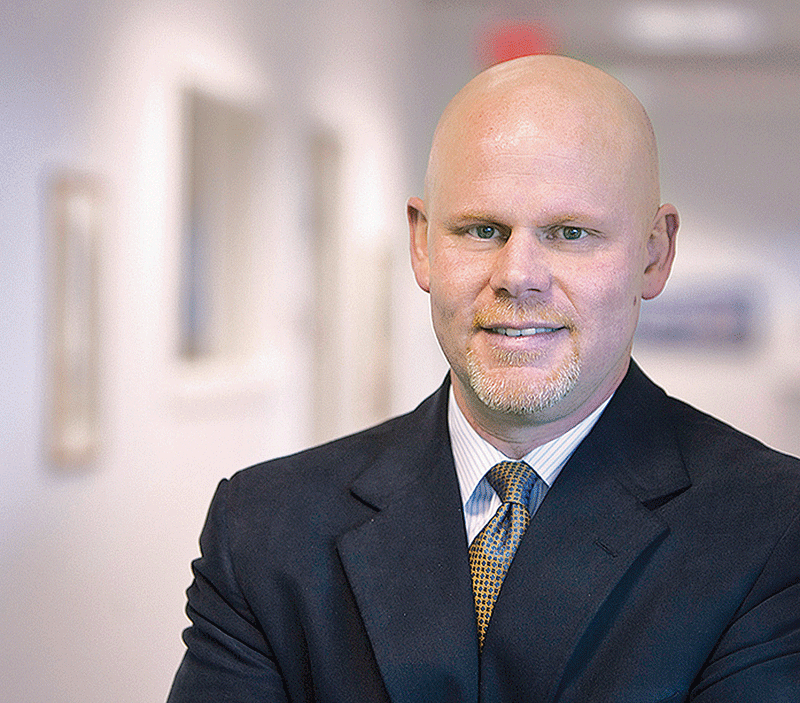
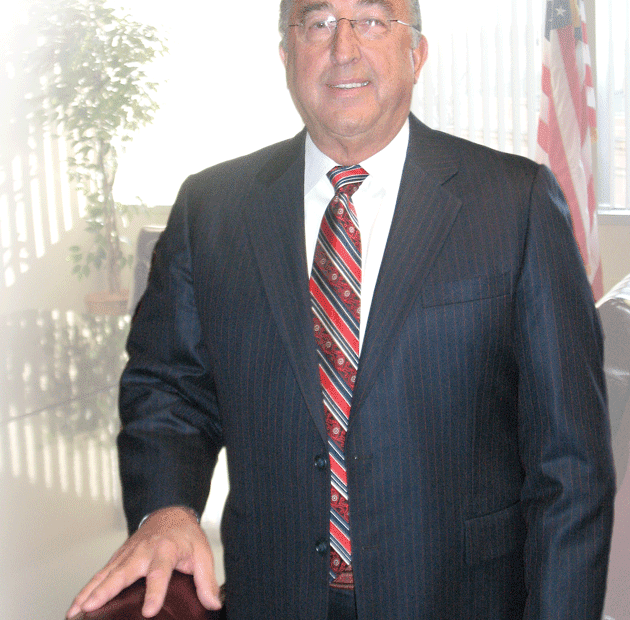
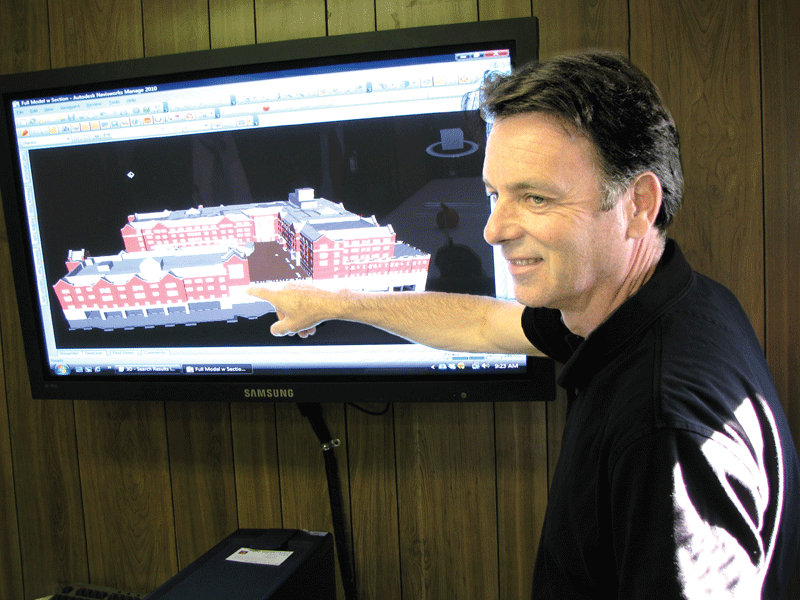
Greg Bialecki, secretary of Housing & Economic Development

Greg Bialecki, secretary of Housing & Economic Development

As the Patrick administration begins its second term in office, the focus, from an economic-development perspective, will be to continue to use public dollars to leverage private investment, says Greg Bialecki, secretary of Housing & Economic Development. He noted that so-called gateway cities such as Springfield and Holyoke need investments from the state to stimulate private spending and create new sources of jobs and overall economic vitality. In a wide-ranging Q&A touching on everything from corporate incentives to market-rate housing development, Bialecki talks about what’s been accomplished, and the work still to do in such cities.

Greg Bialecki acknowledged that that much of the progress being seen in Springfield and other area communities has been generated by state and/or federal assistance — on one level or another.
Examples abound, from the presence of Liberty Mutual in the Technology Park at Springfield Technical Community College to the high-performance computing center in Holyoke; from the tax incentives recently awarded to Smith & Wesson in exchange for its pledge to create 225 new jobs at its Springfield plant and make significant investments there, to the backup data center soon to be take shape at the former Technical High School on Elliot Street in Springfield.
Bialecki, the state secretary of Housing and Economic Development, prefers to look at the state’s contributions as investments that will help trigger private-sector spending in older, former manufacturing centers, like Springfield, Holyoke, Chicopee, and others, that need a boost in their efforts to reinvent themselves and spur economic growth.
The Deval Patrick administration’s strategic plan has been to make prudent, well-thought-out investments capable of generating significant returns, said Bialecki, adding that this policy will continue in the second term that started this month, and that, given some help in the form of economic recovery, such returns should soon be visible and measurable.

data center

The data center taking shape at the old Tech High building is another example of state investment in a gateway city — Springfield.

In this Q&A, BusinessWest sounded out the state’s economic-development czar on what’s been accomplished to date, and what can be expected in the months and years to come.
BusinessWest: Talk about the state’s investments in economic development and the goals and expectations that come with this assistance.

Bialecki: “Everyone who does investing is always looking for leverage, and the state is no exception. The governor has asked me to look for opportunities where a state investment will be matched, not just one-to-one, but many times over, by private investment. The high-performance computing center is a good example of that; the state has committed $25 million to that effort, which will probably be a $160 million project when all is said and done, and a number of private colleges involved have made sizeable investments as well. Originally, we put out the promise of some public funding to encourage private funding, but at this point, all the money that’s needed to make this go is in hand.
“Smith & Wesson is another example. Our $6 million investment tax credit is probably going to be about 10% of the actual private investment. Smith & Wesson has committed to spend at least $60 million in new plant equipment there over the next several years, so we’re just making a commitment that’s way overmatched by private investment.”

BusinessWest: How do these investments fit into the state’s broad strategic initiative involving the so-called Gateway Cities, such as Springfield and Holyoke, and are there signs that state-assisted projects are, in fact, stimulating private development?

Bialecki: “You can see some examples of the model this administration is advancing taking place in Springfield. Liberty Mutual is one, and the old federal building, 1550 Main St., is another, and so is the data center. These are public/private projects, for the most part, and examples of how state assistance has been provided to help older cities. We do believe that, if you’re really going to be a catalyst for economic development and job creation, we need to be thinking not only about places where we can do public projects — Union Station might be an example — but balancing that out with projects where we are providing an incentive for private investment.
“These projects send a bit of a different message about the way we think of the economic potential of different regions of the state, including our older cities. In other words, this approach is based on the view, the perspective, that good things are happening in all the regions and many of our cities, and if we can address their challenges, but also talk up the good things about them, we can convince private business to locate there.”

BusinessWest: Some people and groups criticize such public assistance to private companies, calling it corporate welfare and a flawed system for spurring economic development and job growth. How do you respond to that, and does the state need to make such incentives available to compete with other regions and cities?

Bialecki: “We believe that some level of assistance is probably required in a number of these places to help people make the decision to locate in a Springfield or locate in Western Mass., in part because of what other regions are offering, but also in part because some companies like it here and want to be able to stay here.
“Frankly, the Smith & Wesson deal, although that was real money, was in a way a blockbuster deal, in terms of the amount of incentives compared to what other states are offering. We have other states offering some of our companies huge deals — they’re saying, ‘if you move here, we’ll build you a factory, and we’ll pay for it.’ And if you talk to Smith & Wesson and ask them if the state’s willingness to commit to incentives was an important part of their decision, they’ll say, ‘yes, absolutely.’ But they’ll also say that they really like being in Springfield, we’ve got a great workforce; it’s not a case where they’re saying, ‘we don’t want to be in Massachusetts, we don’t wan’t to be in Springfield, but if you pay us enough, we’ll stay here.’ They want to be here.”

BusinessWest: How important is balance, in terms of public and private investments, to a city’s long-term success?

Bialecki: “Very important. The ultimate goal, obviously, is to maximize the amount of private-sector job-creation and private-sector investment in the region. We’re glad to continue to make significant public investments as well, but, realistically, and from our point of view, you’re only to going to be able to say we have a healthy economy in Western Mass. if there’s not only public dollars going into employment and investment, but also private dollars, and more private dollars than public.”

BusinessWest: Talk about the plight of the gateway cities and what the state is doing to assist them.

Bialecki: “Our approach is very consistent in that we don’t look down condescendingly on these cities — we view them as being able to participate in and contribute to the economic health of the state. We want them to be in the mainstream of the business mix in the state. What are the big industries in Massachusetts? Health care, higher ed, financial services, high tech … a measure of our success should be that those industries are in our gateway cities. In Springfield, MassMutual was already there, but getting Liberty Mutual was big — these are Fortune 100 companies, and they both have a presence there.
“There are also many colleges and universities in Springfield, and that’s important, as well as Baystate Medical center and other health care providers. We want to add the tech sector to that mix, and the high-performance computing center will help. We want the gateway cities to be in the mainstream of the state’s economy, especially the innovation economy.”

BusinessWest: What role does housing, specifically market-rate housing that will, theoretically, attract young people and professionals, play in economic development, and what is the state doing to stimulate such developments?

Bialecki: “Housing is a critical component, and we want to make sure that cities have a good mix of all kinds of people living within their boundaries. We want there to be enough affordable housing for those at that end of the spectrum, but also enough places for people who are middle-class and above and have choices about where they want to live. How can we create an environment where people will want to live in our gateway cities?
“We started a new program where, for the first time, we have money available to provide tax-incentive support for people to create market-rate housing in gateway cities. It’s a pilot program with $5 million available initially, and it’s something [Springfield] Mayor [Domenic] Sarno has expressed great interest in. Officials in Springfield have done an inventory of what market-rate housing is available today, and identified potential pipeline opportunities where such housing can be created; developers will probably need some help, and we’re willing to do that.”

BusinessWest: Is there a policy or strategic plan for helping these cities, and if so, what are the main elements?

Bialecki: “Some of the strategies that people have talked about in the past for helping gateway cities have been to mitigate the challenges and the problems facing these cities, such as public safety, and those are important things to do. But we are actually aiming higher. We’re not just trying to mitigate the problems; our vision focuses on determining what these cities, like Springfield, would look like if they were functioning at a high level and were contributing to the economic life of the region.
“And if you look back, all of these played that role at one time, some more recently than others. Holyoke was the first planned industrial city in the country, New Bedford was the whaling capital of the world, and Lowell and Lawrence were main textile centers. Most all of these cities were, at some point in time, not just keeping up with the economic prosperity of their neighbors, they were driving the economic prosperity of their respective region.
“We understand the challenges, but we think that that is the right aspiration to have for these cities: what would it look like and feel like for Springfield to be that driving force again?”

BusinessWest: What are the immediate hurdles to achieving that goal, and what has to be done for the city to achieve this vision?

Bialecki: “There are a lot of good building blocks in Springfield, like its colleges, universities, and fine health care facilities. We would like to see other aspects of the innovation economy; we’d like to see more tech companies. There are some initiatives with incubator space [at STCC], and there is the Pioneer Valley Life Sciences Initiative to get some other life sciences and biotech. There is plenty to build on.
“And development of these sectors goes back to my earlier comments about how many projects require some measure of state assistance. While it’s true that, to jump-start some of these things, assistance is needed, our goal is to move off that.
“In other words, let’s talk about the things we have to do in Springfield and the other gateway cities so that the businesses will say, ‘you don’t need to persuade me to open a new business unit in Springfield — that’s where things are happening; that’s where I want to be.’

BusinessWest: Is there a model to be followed in terms of such a recovery?

Bialecki: “Lowell is the classic; that’s the one everyone points to, and they have had a good deal of success over a prolonged period of time, going back to the ’80s. But I’ve seen some very impressive changes and improvements more recently, over the past four years, for example. In Haverhill, the mayor has made a big focus on market-rate housing in the downtown, mostly in old mills and even to the point where people said, ‘what are you doing?’ But it’s worked out very well; he’s got a lot of telecommuters there and people who can work anywhere, and it’s a short commute to Boston. And he’s generated a lot of street life, a lot of new restaurants.
“And New Bedford’s done very nicely. We’ve helped them with some things, and they’ve used those projects to trigger some private investments; there is a nice creative-economy element to what they’ve done, with a lot of artists moving in.
“The thing about gateway cities is that there’s no silver-bullet project that’s going to put you over the top; it’s an accumulation of things that are going to make a difference, including that all-important private investment.”

George O’Brien can be reached at [email protected]

Sections Supplements
Health Reform Adds a Twist to Long-term Care Insurance

Imagine that long-term care insurance meets Medicaid, and you will begin to have some idea about the new CLASS Act. CLASS is a program established by the new health care reform law, and it stands for Community Living Assistance Services and Supports.
At a time when long-term care costs are expensive and only becoming more so, the program represents the first major attempt of the federal government to provide long-term care benefits. The program went into effect on Jan. 1, 2011, but it is unlikely that you’ll be able to enroll before 2012 because a number of details still need to be ironed out.

Julie Lackner, Esq.

Julie Lackner, Esq.

The program will be administered by the federal Department of Health and Human Services (HHS) and its secretary, Kathleen Sebelius. CLASS is completely voluntary and is meant to provide cash benefits to working adults who become functionally disabled.
The program is similar to private long-term care insurance because you pay the premiums. It resembles Medicaid, however, in that it offers lifetime benefits and can’t exclude people with pre-existing conditions.

Who Can Enroll?
Any working adult can participate. You must be over 18 years old and actively employed. The details of what constitutes actively employed will be determined by the HHS, but will include part-time employees who earn enough to pay Social Security taxes, or about $1,120 per year. It will also include self-employed people. Retirees, unless they continue to work part-time, will not be eligible. Patients in nursing homes and other institutions, as well as incarcerated people, will be eligible to enroll. The most attractive part of CLASS is that you are not ineligible if you already have health issues.
One major drawback of private long-term care insurance is that you are often disqualified for pre-existing conditions. The CLASS legislation prohibits this kind of underwriting. As long as you can pay the premiums for five years and continue to work at least part-time during three of those years, you can enroll, and you won’t be excluded from receiving benefits. You can either become enrolled through your employer, or you can enroll on your own if your employer decides not to participate. The method for enrolling on your own hasn’t yet been determined, but it will be up to HHS to institute that. If your employer signs up, then all employees will be automatically included. Nevertheless, you can always choose to opt out of the system.

How Much Will It Cost?
Payments for the cost of the premiums will be deducted directly from your paycheck if you enroll through your employer. When the Congressional Budget Office analyzed the legislation, it estimated that monthly premiums would average around $120. This means that, if you get paid weekly, about $30 will come out of each paycheck to pay the premiums for your coverage. Your employer will have the option of deciding whether it wants to cover any of the cost of the premiums. If you’re lucky, your employer may decide to do so as an additional part of the benefits package it offers to employees.
Under the law, premiums can be lower for younger people and higher for older participants. Generally, this makes sense because younger people will usually be paying the premiums for a longer period of time. Additionally, there are some very attractive provisions: premiums are intended to remain the same throughout a person’s lifetime, and people with health issues cannot be charged higher premiums. For people below the federal poverty line and for working students, there will be a special low premium that may be as little as $5 per month. All the premium information has to be determined by HHS by October 2012. Until then, no one knows for sure how much CLASS will cost.

How Do I Get Benefits?
The CLASS Act has various vesting requirements that you must meet before you can become eligible for benefits. First of all, you must pay the premiums for at least five years before you are eligible for benefits. Second, you must have been actively working at least three of those five years. Special rules will apply if you drop out of the program and then subsequently reapply. If you re-enroll within 90 days, your premiums will not change. After 90 days, however, the premium may be adjusted based on your current age. So if you join the program when you are 22, drop out for more than three months when you are 40, then re-enroll a year later, your new premium will be based on your current age of 40, and it is sure to be higher than the premium you had at age 22.
In addition to meeting the vesting requirements, you must have a qualifying level of disability to begin receiving benefits. The benefits granted by the program will depend on the level of physical and/or cognitive disability. The qualifying level of disability is defined as being unable to perform at least two or three of the Activities of Daily Living (ADLs), which include eating, bathing, and dressing yourself. Alternatively, the qualifying level of disability can be met if you require substantial supervision due to cognitive impairment. The disability must occur for at least 90 days consecutively to qualify. But as long as a qualifying level of disability exists, you can continue to receive benefits.

How Large Are the Benefits?
CLASS will pay a cash benefit of no less than $50 per day on average. This means that some people will receive more than $50 and some will receive less, but the average amount paid out cannot be less than $50. The benefit will depend on the level of disability and will increase annually to keep up with inflation. The beauty of CLASS is that there is no lifetime limit on benefits. If you’re eligible for benefits under CLASS and you get into a car accident at age 40 resulting in the need for care for the rest of your life, you’ll get a payment from the government every month, adjusted for inflation, as long as you live.
One criticism of the program is that CLASS could never cover the entire cost of long-term care in a nursing home. Although that is likely to be true, even $50 a day will help finance extra help at home, or take care of part of the cost of assisted living or adult day care. With the cost of a private room in a nursing home averaging over $9,700 per month in Massachusetts in 2010, every little bit helps.
CLASS can provide assistance to people who have pre-existing conditions and would never be able to obtain long-term care insurance. It can also provide benefits to those who make too much money to qualify for Medicaid but not enough to pay the premiums on private insurance. The bottom line is that CLASS is likely to be a winner because it will cost less than long-term care insurance, while providing benefits to more people.

Julie R. Lackner, Esq. is an associate attorney with the Springfield-based law firm Bacon Wilson, P.C. She handles all aspects of estate planning and elder law; (413) 781-0560; baconwilson.com; bwlaw.blogs.com

Sections Supplements
Stock Market Expected to Grow Along with Economy in 2011

Paul Valickus calls it “the Christmas-tree analogy.”
“Christmas tree sales over this past Thanksgiving weekend were up 12% year over year,” he said — and then wove that fact into his stock-market outlook for 2011. “That may sound a little silly, but it tells me that people were more confident and wanted to start celebrating a little earlier, to spend a little more money. It was an indicator of hope, if you will.”

President Michael Matty,

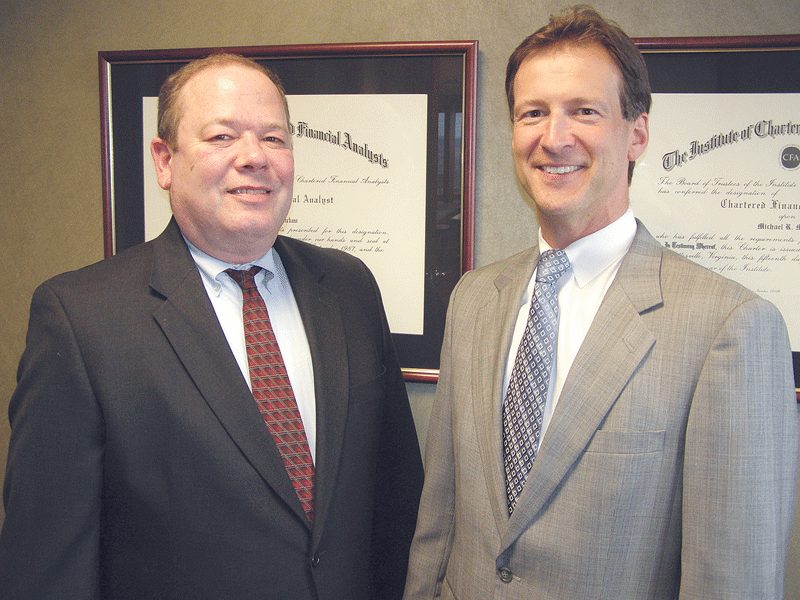
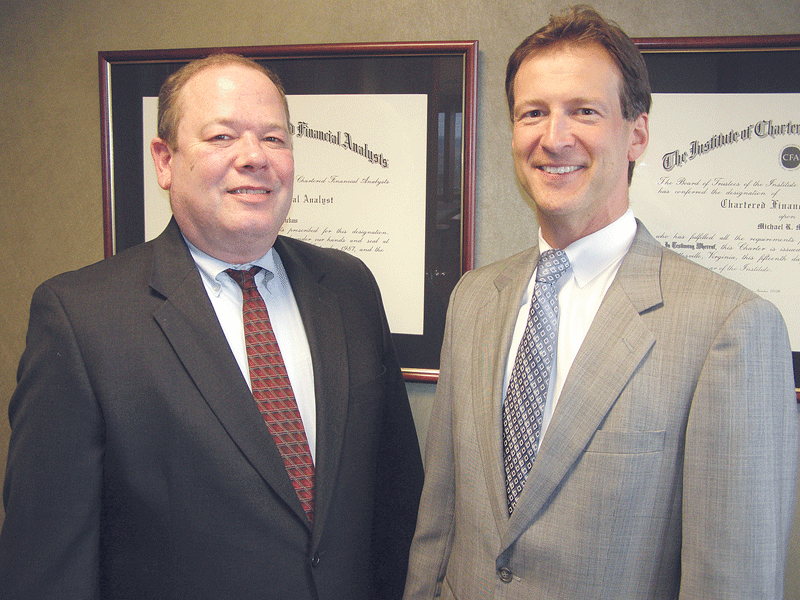
Paul Valickus (left), with St. Germain Investment Management President Michael Matty, says all signs point to a strong year on Wall Street.

It may be a small point, said Valickus, chief investment strategist at St. Germain Investment Management in Springfield, but it’s one of many larger trends — a decline in business vacancy rates and an uptick in employment among them — that point to rising confidence in a slowly improving economy, and that bodes well for the stock market in the coming year.
“I normally don’t make market forecasts, but I think this is an easy one,” Valickus said. “I think the economy and the stock market are going to do much better than most pundits are expecting.”
He cited last month’s Barron’s magazine forecast, which gathers the projections of 10 market experts, most of whom expect stock-market growth around 10%. “For me, that’s kind of a chicken forecast. A rise of 10% is what the market averages, trendwise, going way back. I think they’re just afraid to stick their necks out.”
Coming off the strong market surge late in 2010, George Keady hears the positive drumbeats, too, but has a different take. “That concerns me,” said the senior vice president and branch manager of UBS Financial Services in Springfield. “Don’t forget that what went on in November and December may have been an early 2011 gift. A lot of the movement in equity prices was a little premature.
“We’re expecting a moderate recovery in the economy — not a strong recovery, and not a double-dip,” Keady added. But because the market is all about expectations, he explained, that optimism has already been factored in. “When you see stocks move to the degree they moved in one month, that’s pretty optimistic. We have a positive outlook for next year, but part of next year happened in December.”
Boston Globe columnist Steven Syre agrees, noting that “a good deal of economic enthusiasm is already baked into the market. The S&P 500 index has climbed 21% in just the past four months.”

Changing of the Guard
Valickus, however, believes the upward movement is far from over, and he traces that belief back to the midterm elections two months ago, arguing that businesses spent the past two years in limbo in terms of their expectations about taxes, regulations, and other issues affected by the goings-on in Washington.
“Where I differ from a lot of people is, I think the economy will do a lot better than people expect, and I think the biggest catalyst is the November elections; people have a little more confidence in the business outlook now that Democrats lost their majority in the House.
“There’s a lot of pent-up demand out there,” Valickus added. “People were just afraid to do anything with certainty; they’re most comfortable having a Republican Congress going forward. Whether the Republicans are successful or not, there is that hope out there that maybe we’ll see a little more discipline in Washington. What the market abhors is uncertainty, and things now look a little more certain. Nothing is written in stone, but people are a little more comfortable.”
Writing in Barron’s, Kopin Tan sums up the view of the analysts who spoke with the magazine, noting that their modest projections about market performance bely a much more positive long-term outlook on the economy.
“A majority see 2011 as the year when a sustainable economic recovery takes root, winning over skeptics and persuading both companies and consumers to relax their stranglehold on squirreled-away cash,” Tan writes. “Improving confidence and low interest rates bode well for corporate profits. Meanwhile, the Federal Reserve remains hell-bent on propping up asset prices, and wages and prices of goods aren’t rising enough to sound an inflation alarm that would lead the central bank to alter its course of aggressive benevolence.”
Specifically, the strategists projected stock-market gains ranging from 7% to 17%. And while progress could be set back by global flareups such as trade tensions and conflicts in places like Iran and the Korean peninsula, Tan notes, “the market has started to flinch less at each flare-up of risk.”

Mixed Signals
At a time when rising interest rates are expected to weaken the bond market in 2 011, stocks are justifiably generating enthusiasm, but Keady pointed out that the picture is not rosy across the board.
For instance, he explained, while technology and consumer staples remain strong, health care and energy are charting a flatter course, and more than 30% of the companies in the S&P 500 overall were actually down in 2010.
Analysts note that prolonged cost-cutting and increasing consumer confidence, among other factors, point to long-term economic growth, but Keady said these market fundamentals still have to catch up with equity prices.
But in the short term, much of the market’s performance will depend on increasing confidence, and how long it can be maintained.
“What most people don’t understand is that the market can go up without the economy doing anything,” Valickus said. “People say, ‘wait, unemployment is 10%; how could the market go up?’ But it’s not what happened today; it’s what will happen tomorrow. That’s where a lot of people get confused.”
Still, judging by those Christmas trees in November — as well as plenty of other positive signs — confusion is giving way to confidence, and investors are putting more stock in the market.

Joseph Bednar can be reached at [email protected]

Sections Supplements
Innovative Business Systems Hones Its Pitch

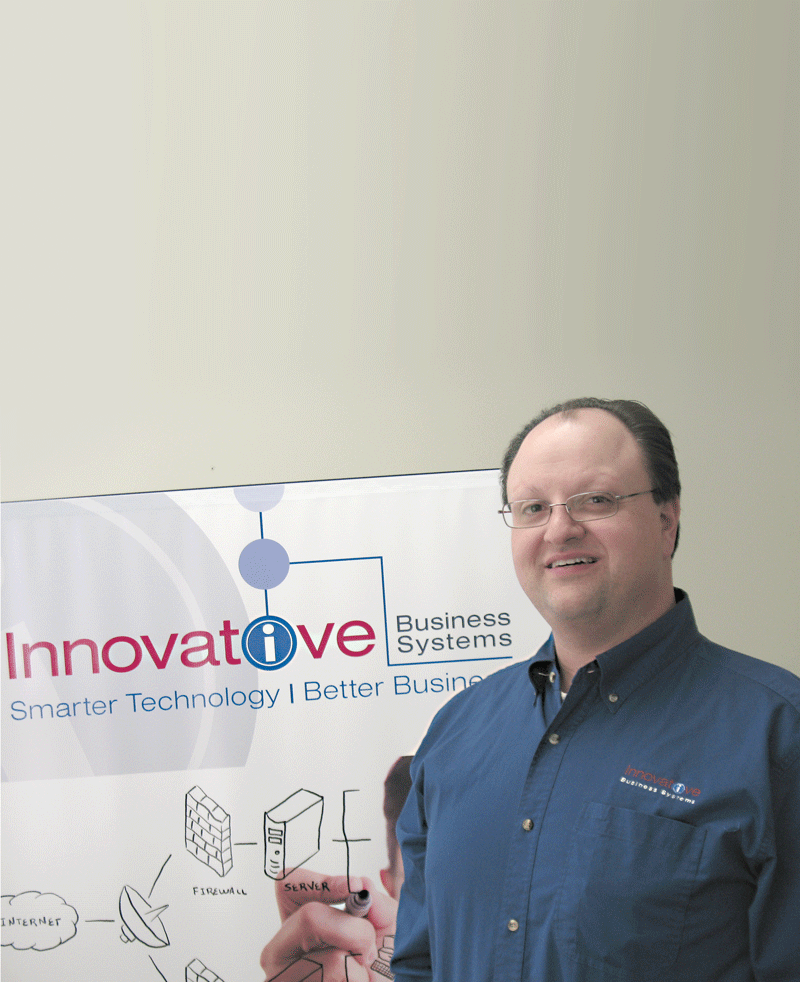
IBS President Dave DelVecchio

IBS President Dave DelVecchio

In 20 years, Innovative Business Systems has evolved from a software-development firm to an outfit that businesses of all kinds rely on to manage their computer networks, data security, and a host of other high-tech needs. But as it celebrates this anniversary, IBS has launched a rebranding effort that aims to better-clarify what its services are, and why they are becoming increasingly necessary.

Dave DelVecchio says that the speed at which information technology advances can leave business owners confused, buffeted by buzzwords, and unsure of the value of an IT partner.
Innovative Business Systems Inc. has successfully built such partnerships for two decades, but DelVecchio, the company’s president, and his staff recently began to ask whether its customers and, perhaps more important, prospective clients really understand the need for its services.
“So many IT companies are so fixated on the ‘how’ that they can’t communicate the ‘why,’” he told BusinessWest. “We’re focused on helping businesses determine the why.”
Last year marked a 20th anniversary of sorts for this Easthampton-based IT sales and support firm (which launched in 1987 but didn’t officially incorporate until three years later). “And, as major milestones tend to be, that became a time for reflection,” DelVecchio said.
He explained that IT changes so much in a few years — “for some people, that’s a blink of an eye, but in our industry, it’s a lifetime” — that questions arose regarding how well IBS was delivering its message to the public.
“We weren’t sure we were doing an effective job communicating with prospects, clients, and the general public exactly what we do,” he explained. “Sometimes, we’re too close to it to communicate it ourselves.”
So the company launched a rebranding campaign, looking for a succinct way to communicate its range of services, and at the same time refreshing its logo. It enlisted an outside consultant for these tasks, and launched a new Web site earlier this month, presenting itself with the new tagline, “smarter technology for better business.”
“A lot of people historically have thought of companies like ours as computer repairmen, like they think of appliance repairmen or auto mechanics,” DelVecchio said. “That’s not what we do, or, it’s a very small subset of what we do.”
Rather, he said, “we help folks cut through the clutter of ever-changing technology, to find out what’s the right fit for a business, what’s applicable and what’s not, what fads stick and what’s a flash in the pan. We want to have conversations with them from a business perspective, not just a technology perspective. And we felt this tagline best encapsulates that.”

Gang of Five
Bill Tremblay began Innovative Business Systems in 1987 as a software-development outfit (more on that later), then sold the firm in 2003 to five employees — DelVecchio, Brian Scanlon, Scott Seifel, Ben Scoble, and Sean Benoit — who continue to run it today.
IBS handles PC sales, data analysis, networking, hardware and software support, repair, and maintenance services for businesses of all sizes. It built much of its business in the financial-services arena, working with banks and credit unions — both those with their own existing IT departments and those without — on issues including data access, information security, and disaster-recovery planning.
The rest of the IBS client list is comprised largely of small-to-medium-sized, privately owned businesses in a wide range of sectors, from health care to manufacturing, many of which are not large enough to have their own IT departments but view the need for constantly updated technology as a growing necessity.
“For many years, our niche was supporting banks and credit unions,” DelVecchio said. “But we’ve got multiple 10-employee companies running technology rivaling what the banks are running — remote offices, mobility suites, document imaging, hosting their own Web-based data applications, some of them being publicly accessible, and some in industries with strict security requirements.”
He said he gets annoyed when people assume that the need for the services IBS provides are always related to the size of the client. Instead, “the more technology-driven a business is, the better fit they are for us, regardless of size.”
One of the biggest issues IBS has dealt with in recent years has been access to data from various computers, company locations, or remotely. A related, and often equally important, consideration is data recovery, because it can be disastrous for a business to store information in one office only.
DelVecchio is especially excited about the company’s new data center in Marlborough, which will serve as a remote office, but, more importantly, as a disaster-recovery suite. In case of some event that renders a customer’s place of business unusable, IBS can transfer the contents of the client’s entire network to the Marlborough office, which is equipped with four workstations, in effect providing a location for that customer to continue to operate.
“From a solutions standpoint, this is huge,” he said. “In case of a localized disaster, like a fire, a flood, a sprinkler goes off at midnight and leaves the office knee-deep in water, this location is, in most cases, within an hour’s drive, so you have a place to function.”
Why Marlborough? Its distance is an asset, DelVecchio said, explaining that disaster-recovery suites should be close enough that the commute isn’t too onerous, yet far enough away to be clear of a regional disaster; 45 to 60 minutes away is ideal.
And while most businesses might never need the use of such a facility, many will, especially those in multi-tenant buildings, and should appreciate paying around $3,500 annually for a “a business continuity plan in a box,” he said.
“For tenants in a mixed-use, multi-tenant building, the odds of a localized disaster go up by a factor of 10. When you have a lot of tenants, all it takes is the tenant next door to plug up the drainpipe with grass and knock out the sprinklerhead, or put a candle too close to a curtain, to cause an issue. In multi-tenant buildings, we see this as an incredibly underused but much-needed solution.”

Down to Earth
Putting this sort of real-life face on often-complex technology is key to IBS’ new focus on communicating the big picture to clients, DelVecchio said.
He noted that Microsoft has been promoting ‘cloud computing’ — a term synonymous with Internet-based computing, whereby shared servers provide resources, software, and data to individual computers and other devices — “but if you ask 100 people what the cloud is, you get 100 different answers. The cloud can be a lot of things.”
He compared it to 15 years ago, when the commercial use of Internet technology was just exploding, and “cyber” became the hot buzzword, even though it wasn’t always used correctly. “We’ve developed our own cloud strategy to cut through that clutter.”
What businesses need to understand, he said, is what those buzzwords mean, and how the technology behind them can benefit their operations. He said some have predicted that 80% of all IT services will be cloud-based within five years, but feels that number may be a bit aggressive; he sees many firms using a hybrid approach. “Businesses might be running things like E-mail in the cloud and applications on premises, or vice versa. Determining the right mix for business is the foundation of what we do.”
No IT firm can be everything to all its clients, so IBS touts a number of ‘partners’ on its Web site — not formal partnerships, but related companies with whom IBS shares clients — that do a good job at what they do, and can benefit Innovative’s customers. “Building a strong partner network is something we take a lot of pride in; it takes a village to maintain an IT infrastructure, but we can be the hub that facilitates getting it done.”
Like companies of all sizes and in all sectors, IBS has endured a sluggish economy for the past few years, but felt it mainly in product sales, not consulting.
“In 2007 and 2008, most companies were investing in their business, with technologies like remote access and document-management solutions,” DelVecchio said. “When the economy slowed down, everyone went into a wait-and-see, maintenance mode; our revenue remained constant in 2009, but our material sales dropped 20%. People kept what they had; they weren’t upgrading. Over the course of 2010, though, we saw a consistent increase in projects.”
All the more reason to launch a rebranding effort — and make some hard decisions about the direction of the company.
“Every business has been forced to look at their balance sheet and take a look at expenses and figure out where they were getting value,” he said. “And if you’re not delivering value, should you be doing it?” In answering that question, last year, IBS phased out of the software-development business, which was the work on which the company was founded.
“Running a software-development business is a completely different model than running an IT service and consulting business,” said DelVecchio, noting that IBS’ full-time developer left the firm on amicable terms and continues to support all the clients for whom IBS had developed applications. “That allowed us to focus on our core business moving forward. After that decision, we focused creating branding for what our core business will be like in 2011 and beyond.”

Bottom Line
By all indications, that core looks healthy, he said, noting that, as clients started to order upgrades they had deferred during the recession, IBS saw a strong second half to 2010.
“Clients are back in the game,” DelVecchio said. “From a business outlook, I’m very positive about 2011. It appears that people have come out of their bunkers, and they’re ready to do business again.”
Whether in their offices, or in the cloud.

Joseph Bednar can be reached at [email protected]

Features
Insurance Exec Has Modesty Element Fully Covered

Sam Hanmer President of FieldEddy Insurance Network

Sam Hanmer President of FieldEddy Insurance Network

Sam Hanmer could play football for Bill Bellichick.
Well … he could handle the pre- and post-game interviews with the media, anyway.
He sure sounds like one of the Patriots when he talks about his career, his life, and the things that define it. He’d much rather talk about the team than himself, and there’s an unassuming, ‘just-doing-my-job,’ ‘it’s-really-no-big-deal’ tone, or attitude, to much, if not almost all, of what he says. However, there’s a little more dry humor than most of the Patriots display.
Consider this comment when asked how he was able to exponentially grow what is now known as the FieldEddy Insurance Network in the 14 or so years after he took the reins as CEO soon after his father retired from the agency known as Field, Eddy and Bulkley:
“I think the thing I’ve done best is put together a really good team of people,” he started. “I want people to be smarter than me when they come here — which isn’t saying much, believe me; that’s not exactly a lofty goal. Together, this team gets it done, and they’ve enabled me to achieve a good work-life balance.”
There was similar modesty when he was talking about his athletic ability and proficiency in various sports.
Indeed, when asked if he was in an over-40 hockey league (he’s 48 and loves the game), he said, “no, but I’m certainly ready for one. I’m still in an over-30 league, and those guys are too fast for me. I’ve got to move on.”
On skiing: “I wouldn’t say I’m good at it … I’d leave it up to the people I ski with to say how good I am.” And on his exploits in triathlon competitions: “I just do the sprints, which is a half-mile swimming, 15 miles on the bike, and a three- or four-mile run,” he said, noting that these events progress markedly, distance-wise, with the so-called Olympic, half, and full, or ‘ironman,’ triathlons. “Each year I think I’m going to do an Olympic or a half, but haven’t gotten there yet; primarily, it’s the swimming that’s holding me back.”
Despite the understated tone to all these comments — and Hanmer’s insistence that his partner, FieldEddy President Timm Marini, who did spend some time playing for the NFL’s Miami Dolphins; his son, in training to be a marine biologist; or virtually anyone else would be a better profile subject for BusinessWest — there is an intriguing story here. Actually, several of them.
The first involves business, of course, and the expansion of FieldEddy well beyond its roots in downtown Springfield, an initiative that Hanmer orchestrated, and that continues today, although current market conditions have brought a temporary halt to the spate of acquisitions.
There’s also a strong track record of community involvement, especially with the YMCA of Greater Springfield, where Hanmer is in his fourth year as board chair and in the middle of his second search for an executive director with the recent departure of James O’S Morton for the Hartford YMCA.
Overall, there seems to be an attractive work-life balance that many business executives are still searching for. Indeed, thanks to that team he mentioned earlier, Hanmer was able to take Fridays off last summer and fall and spend more time at a home he purchased a few years ago in West Yarmouth. And with ski season now in full force, he’s thinking strongly about continuing that schedule into the spring.
The house on the Cape hasn’t helped Hanmer’s golf handicap — weekends there mean less time to play and practice — but he still gets out regularly enough, and there are those other sports, and even a fascination for ’60s and ’70s muscle cars, especially the Pontiac GTO.
“I’ve owned three of them — I’m a car nut,” he said, listing a ’65 tri-power, a ’65 four-barrel convertible, and ’67 hardtop, with a tinge of lament in his voice as he uses the past tense. “I’ll get another one … someday.”
For this, the latest installment of its Profiles in Business series, BusinessWest talks with a man who doesn’t like to talk about himself, but managed to do so just long enough to paint an interesting self-portrait.

Policy Statement
Hanmer was talking about the swimming leg of one of those sprint triathlons he’s taken part in, this one in Ludlow — but if you didn’t know any better, you’d swear he was expounding on the ultra-competitive world of insurance.
“The pack never really separates,” he explained, noting that there are dozens of people in a small stretch of water, kicking and clawing to gain some ground. “You get kicked in the face, punched in the face, and elbowed, and of course the anxiety level picks up; it gets a little crazy out there, a little wild.”
To some extent, though, FieldEddy has managed to gain some degree of separation. It now boasts more than 70 employees after acquiring several smaller agencies over more than a decade of aggressive expansion efforts, a crital mass that brings many competitive advantages. Still, this is a changing, ultra-challenging business sector, impacted most recently in the auto realm by a number of national online companies, such as Geico and Progressive, jockeying for position in a state that recently changed the rules to stimulate greater competition.
“It’s great for the consumers — they’ve seen up to a 20% reduction in their rates,” he explained. “The business has changed for us; it’s not necessarily good or bad, it’s just different. We’ve seen our share of the direct writers get a foothold here, but we’re starting to see that come back because they’re taking some rate increases.
“Geico has done a very soft launch in Massachusetts,” he continued, noting that that the company has been in the Bay State for more than a year, but has yet to make a lot of noise beyond its heavy marketing. “I’m just worried about what happens when they really want to pull the trigger.”
How Hanmer arrived at this position to reflect on, and react to, all these changes is an intriguing story. His father was the majority owner of a firm known then as Field, Eddy, and Bulkley, but Hanmer didn’t go to work for him upon graduation from UMass Amherst in 1984.
“I was interviewing at UMass for jobs, and went with the one that offered the most money,” he explained. “And that was with Liberty Mutual in Boston.”
Ironically, his girlfriend and future wife, Jenny, was working for the agency (she started part-time while they were both at UMass) when he ventured off to the Hub.
While Hanmer enjoyed his time in Boston — he said he spent many an afternoon and evening in the bleachers at Fenway — he soon returned to Springfield to get married and join Field, Eddy, and Bulkley.
He started in sales, but soon moved to the financial side of the business when the then-treasurer suffered a heart attack and had to leave the company for some time. He eventually gravitated back to sales and, in 1995 when his father retired, stepped into a leadership role.
And it wasn’t long before he started to capitalize on a trend within the industry — small, often mom-and-pop operations struggling to adjust to changes and technology began looking in earnest for exit strategies — to grow by acquisition.

Pedal to the Metal
Over the next dozen years or so, the firm acquired a number of agencies, some with familiar names known across the region and others with names known across the city or town in question. That list includes the Curtis and Hodskins agencies in Monson, Aliengena in Palmer, LDS in Three Rivers, Meadows in East Longmeadow, BPI in Springfield, Remillard in South Hadley, Buckley Bridge in Windsor Locks, and, most recently, Lawson, Marino & Bertera, another Springfield-based agency specializing in employee benefits.
When asked to evaluate his body of work with regard to growing the company, Hanmer was his usual modest self, almost Tom Brady-like.
“In the aggregate, it’s working,” he explained. “I’m not going to say all of those agencies are what I thought they were or that everything’s worked out exactly as I’d hoped, but for the most part, it’s worked, or it’s working; we’ve done well.”
Looking ahead, Hanmer said he continues to scan the horizon in search of new acquisition opportunities, but he’s not expecting additional expansion in the near term.
“There’s been a couple that have come across my desk,” he said, “but things are still pretty uncertain out there right now, especially in health care. And in personal lines, well … it’s really hard to put your finger on what might happen there. It’s a very competitive marketplace.”
In the meantime, he says his day-to-day job description at the moment involves working more on the business than in it — something else most area executives are striving to do. “But that’s difficult when you’ve been working in the business as long as I have,” he said.
Equally hard is achieving that desired balance between work, life, and community involvement, but Hanmer seems to found something approaching the right formula.
In addition to his lengthy stint as chair of the Y board — prolonged because successors due to succeed him have been unable to do so — Hanmer has donated time and energy to other agencies and causes. These include Bay Path College and the Springfield Museums, both of which he serves as a trustee, and Mason-Wright Retirement Community, where he’s a corporator.
He’s also a long-time member of an organization known as YPO, the Young Presidents’ Organization, a global network of young chief executives that currently boasts about 17,000 members in more than 100 countries. The local group acts as a de-facto board of directors for smaller companies that don’t have one, he explained, adding that roundtable discussions among members have helped him grow as a business leader and tackle some of the hard decisions he’s had to make over the years.
Hanmer also saves plenty of time for his family, especially his three children — Jessica, 25; John, 24; and Margo, 21 — and his two bulldogs, Bentley and Nola.
As for sports, as he said, he’s still in the over-30 league, playing left wing primarily, “but I go wherever they need me.” He’s also an avid skier and snowboarder — he sold his place at Mount Sugarbush and now rotates between Stratton, Okemo, Mount Snow, and, occasionally, Killington — and a triathlon veteran looking to get better in the water.
“I always thought I was a pretty good swimmer until I did one of these things; I found out in a hurry I wasn’t as good as I thought as I was,” he told BusinessWest, noting that the quality and quantity of competition usually leaves him playing catch-up when he gets out of the water and onto the bike.
“The good news with the swimming,” he continued, “is that it’s so short that being behind the pack means only about 20 seconds or half-minute, which you can make up on the bike, which is my best strength.”

Business Cycles
Time will tell if Hanmer graduates to an Olympic or half-marathon this year. He’s optimistic that will happen, but not exceedingly so.
He’s also not sure about the year ahead in insurance, where the economy continues to be a factor, and a green lizard and a woman named Flo are making things even more interesting in a business known for intense competition.
What is certain is that he will continue on in his understated way, giving credit to the team and essentially directing attention away from himself.
“That’s how I am — we just keep looking for ways to do things better and get ahead,” he said, sounding, again, like a certain hooded-sweatshirt-wearing football coach.

George O’Brien can be reached at [email protected]

Departments People on the Move

People on the Move

van Schouwen Associates, LLC, of Longmeadow announced the following:

Shannon Filipelli

Shannon Filipelli

• Shannon Filippelli has been promoted to Director of Strategic Communications; and
Staasi Heropoulos

Staasi Heropoulos

• Staasi Heropoulos has been hired as Manager of Strategic Communications.
The expanded staffing and organizational changes come as the firm inks several contracts for new business with a regional bank, national retailer, international component R&D test firm, health care services organization, and other companies.
•••••
Dr. Michael Coppola has been elected President of the Washington, D.C.-based American Sleep Apnea Assoc. for 2011. Coppola, who specializes in pulmonary and sleep medicine, has served on the association’s Board of Directors since 2004. He is President and CEO of Springfield Medical Associates. He also serves as an Associate Clinical Professor of Medicine at Tufts University School of Medicine.
•••••
Jeffrey Corrigan has been named Vice President of Human Resources at the Brattleboro Retreat, Brattleboro, Vt. Corrigan has close to 30 years of experience in leading human resources in health care settings.
•••••
Marta Nichols has been appointed CitiStat Director for the City of Springfield. Nichols will be responsible for managing the development and implementation of CitiStat, Performance Management and ACE/LEAN, including the development of all policies, processes, and communication programs. Nichols will also serve as a member of the steering committees that drive Continuous Improvement Springfield, as well as identify, analyze, prioritize, and make recommendations to the committee. Additionally, she will advise Mayor Domenic J. Sarno and Chief Administrative and Financial Officer Lee C. Erdmann on department activities, problems, and performance.
•••••
Christina M. Sousa

Christina M. Sousa

TD Bank has named Christina M. Sousa the Store Manager of the Ludlow Center store at 549 Center St. An Assistant Vice President, she is responsible for new-business development, consumer and business lending, and managing personnel and day-to-day operations at the store.
•••••
Attorney Rosemary J. Nevins has been named Senior Counsel at Royal LLP, 270 Pleasant St., Northampton. Nevins has more than 25 years of experience in labor and employment law.
•••••
John Kennedy has been named Vice Chancellor for University Relations at UMass Amherst. He will direct the campus’ marketing, branding, and communication efforts. He will also oversee units responsible for communications and marketing, news and media relations, and external relations and university events.
•••••
The Central Massachusetts South Chamber of Commerce in Sturbridge announced the following:
• Michael Detarando, of Incom, has been named to the Board of Directors;
• Jonathan Kelley, of Savers Bank, has been named to the Board of Directors;
• James Leaming, of Yogi Bear’s Jellystone Park, has been named to the Board of Directors; and
• Thea Marcoux, of SCHOTT North America, has been named to the Board of Directors.
•••••
Denise McCarthy

Denise McCarthy

Denise McCarthy has joined Marcotte Ford in Holyoke as Business Development Manager. She is responsible for generating new business for the dealership by cultivating Internet inquiries as well as communicating with existing prospects and customers. She also promotes the dealership through participation in the Holyoke and Chicopee Chambers of Commerce and off-site marketing and community events.
•••••
Alfredo Batista has joined Keller Williams Realty in its Longmeadow office.
•••••
David Barclay has been appointed as Director of Development at Historic Deerfield.
•••••
Psychologist L. Saxon Elliott has joined James Levine Associates in Westfield and South Hadley.
•••••
Jeremy M. Leblond, a Certified Public Accountant, has joined the firm of Aaron Smith, Certified Public Accountants and Business Consultants, of East Longmeadow, as a Manager.
•••••
Attorney Carol Cioe Klyman, of the firm Shatz, Schwartz and Fentin, of Springfield and Northampton, has been elected as a Fellow of the Board of Regents of the American College of Trust and Estate Counsel.
•••••
Bradley Newell has joined Consolidated Health Plans in Springfield as Chief Financial Officer.
•••••
Northampton Planning Director Wayne Feiden has been nominated as an honorary member of the American Institute for Architects. His nomination states that Northampton has received the highest score in Massachusetts for sustainability in five of the past six years.
•••••
Tom O’Regan has been hired at UMass Amherst as the Manager who oversees emergency preparedness planning and response activities for the campus.
•••••
Frank DeCaro was recently honored as one of PepsiCo’s top performers worldwide with induction into the inaugural group of Chairman’s Circle of Champion winners. He was among 216 Associates from PepsiCo’s more than 250,000-person global operations team to win the honor.
•••••
Henry J. Drapalski Jr. has been named the Center for Human Development’s Vice President of Business Planning & Analysis. He will be responsible for analyzing business operations and fiscal performance and planning future growth for the $58 million, nonprofit agency.

Sections Supplements
Fifth Amendment

40under40-LOGO2011Nominations Sought for the Class of 2011

Since BusinessWest launched 40 Under Forty in 2007, it has recognized 160 young professionals who have made their mark across Western Mass. — not only for their career success, but their commitment to their communities. Now in year five, the 40 Under Forty program — which includes a must-read issue profiling the winners and an always-well-attended gala in the spring — has become one of the most anticipated events in the region’s business community, one that has nominees constantly setting the bar higher.

By JOSEPH BEDNAR

Jeff Fialky understands what it takes to succeed in business today.
An attorney with Bacon & Wilson, P.C., Fialky was chosen one of BusinessWest’s 40 Under Forty in 2008, in recognition of his career success and community involvement. He’s one of 160 young professionals throughout Western Mass. who have been honored in this way since the program’s inception in 2007.
But as president of the Young Professional Society of Greater Springfield, he’s got a clearer perspective than most on the dedication it takes to succeed at a young age, because he sees it every day in fellow YPS members.
“In this economy, there are a lot of start-up entrepreneurs, a lot of young professionals working maybe twice as hard as they’d have to work in a better economy,” Fialky said. “It’s great that we can promote some of these individuals who have distinguished themselves from their peers.”
Now entering its fifth year with a call for nominations, BusinessWest’s 40 Under Forty has captured the respect of the region’s business community and continues to demonstrate that Western Mass. is home to a creative, motivated, and successful group of young business leaders, entrepreneurs, and innovators — people who are redefining what it means to build successful businesses and serve their communities with whatever spare time they have left over.
“Clearly, YPS and 40 Under Forty have walked a parallel path,” said Fialky, noting that both came into being around the same time. “In that time period, YPS participants — meaning both the membership and officers and directors — have looked at 40 Under Forty with extremely high regard, as a competitive process, a reward, and a distinction in the community that is heavily sought after.”
Kate Campiti, BusinessWest’s associate publisher, is gratified to hear that 40 Under Forty has reached that kind of status in the local business community.
“It makes me proud that it’s something that people aspire to, and it does put them on the map,” she said. “It’s something they can use as a résumé builder, as a symbol of excellence.”
As the nomination process opens for the class of 2011, BusinessWest expects another flood of nominees from a broad range of careers; the 160 previous honorees have emerged from law, education, retail, health care, social services, finance, and many, many other fields. In all cases, they have been successful in business and active in civic volunteerism, the latter being a critical consideration when judging applicants.
As in the past four installments of 40 Under Forty, this year’s winners — chosen by a panel of judges comprised of area business leaders and previous honorees — will be profiled in an upcoming issue of BusinessWest (always a must-read issue) and toasted at a gala reception in the spring.
Meghan Lynch, managing partner for Six-Point Creative Works and one of last year’s honorees, said she was impressed with the wide variety of industries and positions represented by the class of 2010.
In addition, “I was happy with the amount of community support at the event,” she said. “That was a fantastic networking event, and when I left I was proud to have been a part of it. I made quite a few contacts at the event, and the winners have been really good about reaching out to one another, making time to reconnect and get to know each other afterward. I was definitely impressed with a lot of other folks, and it was certainly a very good representation of the talent in the Valley.”
The nomination form can be found on page 35 of this issue. It will be reprinted in upcoming issues as well, and may also be printed from businesswest.com. The deadline for entry is Feb. 18.
Fialky says members of YPS take the nomination process seriously, as evidenced by the healthy number of society members chosen for recognition during the past four years. The same goes for Northampton Area Young Professionals, another group that’s typically well-represented in each class.
“I personally congratulate members of YPS who are 40 Under Forty honorees every year — I send out handwritten cards — and that number has increased exponentially over the past few years,” Fialky said. “It’s terrific that both the Young Professional Society and the 40 Under Forty have walked down these same paths.”
Campiti said the ever-increasing profile of the recognition program is cultivating a healthy sense of competition among area professionals.
“I think it’s making them more competitive with each other, and it is making the young up-and-comers think about their future and plan strategically how they will position themselves. That only makes the group stronger. To win, they really have to stand out.”
Fialky also embraces the competitive aspect of the event, saying that being chosen one of the 40 Under Forty is an honor worth striving for.
“The competition raises the bar for everyone,” he said. “Some folks have submitted nomination forms for a couple of years and haven’t been elected, and that only makes them think they need to work harder in the community and from a personal-branding standpoint. I think that’s great.”

Past 40 under Forty winners

Class of 2007
William Bither III, Atalasoft
Kimberlynn Cartelli, Fathers & Sons
Amy Caruso, MassMutual Financial Group
Denise Cogman, Springfield School Volunteers
Richard Corder, Cooley Dickinson Hospital
Katherine Pacella Costello, Egan, Flanagan & Cohen, P.C.
A. Rima Dael, Berkshire Bank Foundation of Pioneer Valley
Nino Del Padre, Del Padre Visual Productions
Antonio Dos Santos, Robinson Donovan, P.C.
Jake Giessman, Academy Hill School
Jillian Gould, Eastfield Mall
Michael Gove, Lyon & Fitzpatrick, LLP
Dena Hall, United Bank
James Harrington, Our Town Variety & Liquors
Christy Hedgpeth, Spalding Sports
Francis Hoey III, Tighe & Bond
Amy Jamrog, The Jamrog Group, Northwestern Mutual
Cinda Jones, Cowls Land & Lumber Co.
Paul Kozub, V-1 Vodka
Bob Lowry, Bueno y Sano
G.E. Patrick Leary, Moriarty & Primack, P.C.
Todd Lever, Noble Hospital
Audrey Manring, The Women’s Times
Daniel Morrill, Wolf & Company
Joseph Pacella, Egan, Flanagan & Cohen, P.C.
Arlene Rodriquez, Springfield Technical Community College
Craig Swimm, WMAS 94.7
Sarah Tanner, United Way of Pioneer Valley
Mark Tanner, Bacon Wilson, P.C.
Michelle Theroux, Child & Family Services of Pioneer Valley Inc.
Tad Tokarz, Western MA Sports Journal
Dan Touhey, Spalding Sports
Sarah Leete Tsitso, Fred Astaire Dance
Michael Vann, The Vann Group
Ryan Voiland, Red Fire Farm
Erica Walch, Speak Easy Accent Modification
Catherine West, Meyers Brothers Kalicka, P.C.
Michael Zaskey, Zasco Productions, LLC
Edward Zemba, Robert Charles Photography
Carin Zinter, The Princeton Review

Class of 2008
Michelle Abdow, Market Mentors
Matthew Andrews, Best Buddies of Western Mass.
Rob Anthony, WMAS
Shane Bajnoci, Cowls Land & Lumber Co.
Steve Bandarra, Atlas TC
Dr. Jonathan Bayuk, Hampden County Physician Associates
Delcie Bean IV, Valley Computer Works
Brendan Ciecko, Ten Minute Media
Todd Cieplinski, Universal Mind Inc.
William Collins, Spoleto Restaurant Group
Michael Corduff, Log Cabin Banquet and Meeting House
Amy Davis, New City Scenic & Display
Dave DelVecchio, Innovative Business Systems Inc.
Tyler Fairbank, EOS Ventures
Timothy Farrell, F.W. Farrell Insurance
Jeffrey Fialky, Bacon Wilson, P.C.
Dennis Francis, America’s Box Choice
Kelly Galanis, Westfield State College
Jennifer Glockner, Winstanley Associates
Andrea Hill-Cataldo, Johnson & Hill Staffing Services
Steven Huntley, Valley Opportunity Council
Alexander Jarrett, Pedal People Cooperative
Kevin Jourdain, City of Holyoke
Craig Kaylor, Hampden Bank / Hampden Bancorp Inc.
Stanley Kowalski III, FloDesign Inc.
Marco Liquori, NetLogix Inc.
Azell Murphy Cavaan, City of Springfield
Michael Presnal, The Federal Restaurant
Melissa Shea, Sullivan, Hayes & Quinn
Sheryl Shinn, Hampden Bank
Ja’Net Smith, Center for Human Development
Diana Sorrentini-Velez, Cooley, Shrair, P.C.
Meghan Sullivan, Sullivan, Hayes & Quinn
Michael Sweet, Doherty Wallace Pillsbury & Murphy
Heidi Thomson, Girls Inc.
Hector Toledo, Hampden Bank
William Trudeau Jr., Insurance Center of New England
David Vermette, MassMutual Financial Services
Lauren Way, Bay Path College
Paul Yacovone, Brain Powered Concepts

Class of 2009
Marco Alvan, Team Link Brazilian Jiu Jitsu
Gina Barry, Bacon Wilson, P.C.
Maggie Bergin, The Art of Politics
Daniel Bessette, Get Set Marketing
Brandon Braxton, NewAlliance Bank
Dena Calvanese, Gray House
Edward Cassell, Park Square Realty
Karen Chadwell, Doherty, Wallace, Pillsbury and Murphy, P.C.
Kate Ciriello, MassMutual Financial Group
Kamari Collins, Springfield Technical Community College
Mychal Connolly Sr., Stinky Cakes
Todd Demers, Family Wireless
Kate Glynn, A Child’s Garden and Impish
Andrew Jensen, Jx2 Productions, LLC
Kathy LeMay, Raising Change
Ned Leutz, Webber & Grinnell Insurance Agency
Scott MacKenzie, MacKenzie Vault Inc.
Tony Maroulis, Amherst Area Chamber of Commerce
Seth Mias, Seth Mias Catering
Marjory Moore, Chicopee Public Schools
Corey Murphy, First American Insurance Agency Inc.
Mark Hugo Nasjleti, Go Voice for Choice
Joshua Pendrick, Royal Touch Painting
Christopher Prouty, Studio99Creative
Adam Quenneville, Adam Quenneville Roofing
Michael Ravosa, Morgan Stanley
Kristi Reale, Meyers Brothers Kalicka, P.C.
Amy Royal, Royal & Klimczuk, LLC
Michelle Sade, United Personnel
Scott Sadowsky, Williams Distributing Corp.
Gregory Schmidt, Doherty, Wallace, Pillsbury & Murphy, P.C.
Gretchen Siegchrist, Media Shower Productions
Erik Skar, MassMutual Financial Services
Paul Stallman, Alias Solutions
Renee Stolar, J. Stolar Insurance Co.
Tara Tetreault, Jackson and Connor
Chris Thompson, Springfield Falcons Hockey Team
Karl Tur, Ink & Toner Solutions, LLC
Michael Weber, Minuteman Press
Brenda Wishart, Aspen Square Management

Class of 2010
Nancy Bazanchuk, Disability Resource Program,
, , Center for Human Development
Raymond Berry, United Way of Pioneer Valley
David Beturne, Big Brothers Big Sisters of Hampden County
Maegan Brooks, The Law Office of Maegan Brooks
Karen Buell, PeoplesBank
Shanna Burke, Nonotuck Resource Associates
Damon Cartelli, Fathers & Sons
Brady Chianciola, PeoplesBank
Natasha Clark, Springfield School Volunteers
Julie Cowan, TD Bank
Karen Curran, Thomson Financial Management Inc.
Adam Epstein, Dielectrics Inc.
Mary Fallon, Garvey Communication Associates
Daniel Finn, Pioneer Valley Local First
Owen Freeman-Daniels, Foley-Connelly Financial Partners and
, , Foley Insurance Group
Lorenzo Gaines, ACCESS Springfield Promise Program
Thomas Galanis, Westfield State College
Anthony Gleason II, Roger Sitterly & Son, Inc. and
, , Gleason Landscaping
Allen Harris, Berkshire Money Management Inc.
Meghan Hibner, Westfield Bank
Amanda Huston, Junior Achievement of Western Mass. Inc.
Kimberly Klimczuk, Royal, LLP
James Krupienski, Meyers Brothers Kalicka, P.C.
David Kutcher, Confluent Forms, LLC
James Leahy, City of Holyoke and Alcon Laboratories
Kristin Leutz, Community Foundation of Western Mass.
Meghan Lynch, Six-Point Creative Works
Susan Mielnikowski, Cooley, Shrair, P.C.
Jill Monson, Adam Quenneville Roofing & Siding Inc.
, , and Inspired Marketing & Promotions
Kevin Perrier, Five Star Building Corp.
Lindsay Porter, Big Y Foods
Brandon Reed, Fitness Together
Boris Revsin, CampusLIVE Inc.
Aaron Vega, Vega Yoga & Movement Arts
Ian Vukovich, Florence Savings Bank
Thomas Walsh, City of Springfield
Sean Wandrei, Meyers Brothers Kalicka, P.C.
Byron White, Pazzo Ristorante
Chester Wojcik, Design Construction Group
Peter Zurlino, Atlantico Designs and Springfield Public Schools

Joseph Bednar can be reached
at [email protected]

Sections Supplements
Elms College to Introduce M.B.A. with Three Concentrations

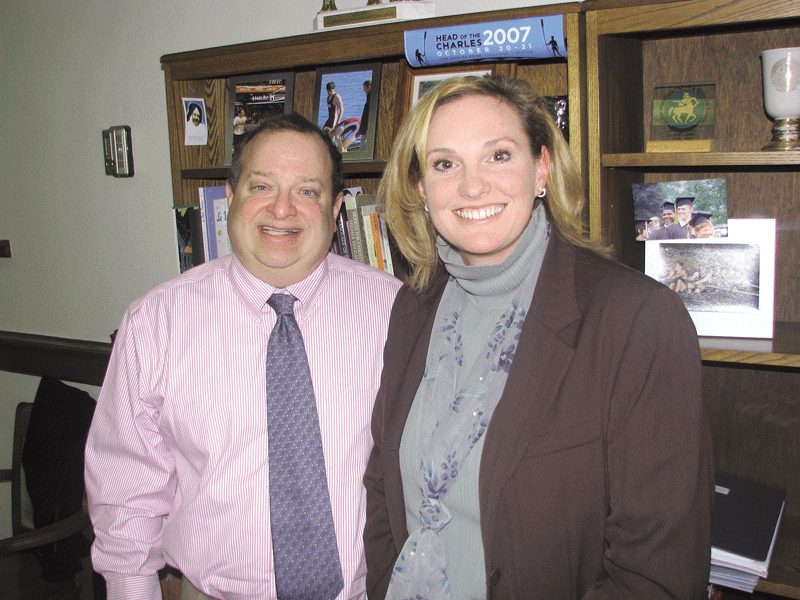
David Kimball and Kerry Calnan

David Kimball and Kerry Calnan say the new M.B.A. program at Elms College, slated to start in the fall, provides a solid growth opportunity for the school.


Kerry Calnan acknowledged there was already a crowded field when it came to M.B.A. programs being offered in this region — before Elms College decided to enter the mix with three offerings slated to make their debuts this fall.
To stand out in this field, programs have to be somewhat unique, provide intrinsic value to students, provide the skills needed in the modern workforce, and address the many changes that are taking place in the broad realm of graduate programs in business administration, said Calnan, director of the program, who believes that Elms has all that covered, convincingly.
“M.B.A students are younger, less likely to come from disciplines other than traditional business disciplines, and expect course-delivery methods that go beyond the traditional classroom model,” said Calnan, an accounting professor at the college. “Elms College’s M.B.A. will provide the flexibility and accelerated delivery expected by today’s students.”
Elaborating, Calnan said the new M.B.A. program will offer concentrations in accounting, health care leadership, and management, and will be delivered in an accelerated hybrid format, with 11-week terms that allow students to combine online and on-campus classes, or take the entire program online. The program also features a community-service component to engage students in solving business problems within their own community.
Looking at the sum of these parts, meaning the concentrations, community work, and other components, Walter Breau, vice president of Academic Affairs at Elms, said the 82-year-old college is “taking its foundational strengths and building on them.
“I’m always looking for strategic initiatives to move forward,” he continued. “We have very high-quality programs and a great reputation in the health care field, in nursing, autism, and other areas, and I see the business area as another center of high quality where we can leverage what we have into future programming.”
Noting that a high percentage of Elms students stay in this region upon graduation, Breau said the M.B.A. is considered another opportunity to “educate young people and keep them in the Pioneer Valley.”
Administrators are projecting, conservatively, that each concentration will attract at least 10 students for the fall semester, and they wouldn’t be surprised if that number is easily exceeded.
“The feedback we’ve been getting is tremendous,” said David Kimball, chair of the college’s Business and Law Division. “The Facebook inquiries have been off the charts, with alumni being very interested; some were in accounting, others want health care leadership … all three tracks are drawing interest.”
For this issue, BusinessWest takes an in-depth look at Elms’ new offerings, how school leaders believe they will advance the college’s mission, and why they believe these offerings will stand out in that increasingly crowded field.

Course of Action
Kimball told BusinessWest that M.B.A. programs have been talked about at the Elms for some time now. And often the discussions involved the school’s business and accounting students who were enjoying, and appreciating, their undergraduate experience at the Elms and asking if they could continue on there.
“As they would approach graduation, our students would ask about graduate programs they could do on campus,” he said, adding that these queries provided not only inspiration, but evidence of a solid core of potential students. “So there will be some retention of those students who want to stay and enjoy their experience here.”
For a number of reasons that he would articulate, Breau said school administrators and the board of directors decided that the time was simply right to forge ahead with a multi-faceted M.B.A. program.
Several factors played into this decision that the timing was right, said Breau, listing everything from the school’s strong track record in placing students in graduate programs, to changes in the accounting field (individuals are not being hired by most firms unless they have completed 150 credits of work, or a fifth year of education), to an expansion of the region’s health care sector and the subsequent need for more individuals with advanced degrees.
“Health care needs are only increasing here in Western Mass., and we have some tremendous health care facilities in this area,” he explained. “I see our program helping any of the health care enterprises in this region moving forward, because leadership is becoming an increasingly important component, and these institutions are looking for ways to not only keep their people but help them move up the ladder.”
As they moved forward with its M.B.A initiative, Elms administrators sought feedback from local business leaders in order to ensure that the offerings would provide the educational background and help develop the skills needed to succeed in today’s changing workplace, said Calnan.
“There’s an increasing need for advanced education in order to be more effective in the workplace, and our program fits the needs of the market,” she explained, adding that Elms administrators were influenced, and motivated, by acknowledged changes in graduate business administration degrees, as outlined in the popular book on that subject, Rethinking the M.B.A.
“Today’s M.B.A.s are very different from those in the past,” she noted. “We need to develop programs that will meet this new need, rather than continue on with the old philosophy of what an M.B.A. should look like.
“Today, you don’t see people from other disciplines, like engineering, getting into M.B.A. programs, at least as much as you once did,” she continued. “Now, it’s generally a business student, and they’re doing it when they’re much younger and with much less experience than they had in the past. So this program tries to blend both pieces, meaning the older, traditional approach and the new approach, along with a hybrid delivery.”
Calnan said one of the distinctions of the program, and a facet that will add value and thus drive enrollment, will be its faculty, most of whom are practitioners and experts from area businesses and nonprofits.
“We have a strong commitment to excellence, and we’ve worked very hard going after top executives in all fields to be a part of this program, and in two different ways,” she explained. “First, in an advisory capacity, and then as instructors, or partners with current instructors.
“For example, there’s a course in global political economy and its impact on social and ethical responsibility,” she continued, “and it will be taught primarily by a corporate mergers and acquisitions person from MassMutual, and it will be partnered with our own Theology department, where one of our professors will co-facilitate all of the discussions during the 11 weeks. So by partnering with corporate business and community members to be involved in delivering the program, as well as advising us as a college on curriculum and important trends going on in the world of business, those two pieces should help drive our enrollment in each of those tracks.”
To build awareness of the new programs and gauge interest, Elms administrators are using a broad range of marketing and communication strategies. These include the traditional — everything from billboards on I-91 to direct mail, to an open house and information session slated for Jan. 11 at the Alumni Library — to the new and non-traditional, including social media and especially Facebook.
“We’re getting a lot of very good response already — there are a number of current students who have expressed interest in staying on and getting an M.B.A. here,” said Kimball. “There’s been a good deal of excitement generated; we’re creating a buzz.”

School of Thought
Summing up what the new M.B.A. program means for the college, Calnan said that, in the simplest of terms, it is a tremendous growth opportunity and a chance to expand the mission.
“This will impact the school in a profound way,” she explained. “Graduate programs are a way for a college to sustain and grow — that’s where the growth potential lies.”
Time will tell if the school can indeed make its program stand out amid a strong field of competitors, but administrators believe they have offerings that will resonate within the marketplace and provide a degree of progress, literally and figuratively, for this Catholic institution.

George O’Brien can be reached at [email protected]

Opinion
A Taxing Situation for Businesses

Massachusetts general law allows cities and towns to tax business properties at a higher rate than residential properties even though all properties are assessed the same way, at full and fair market value. While this practice dates back to 1984, there really isn’t any factual or sound reasoning for it other than to shift some of the property-tax burden off of residents and onto business. That said, 106 of the 351 communities in Massachusetts take advantage of this option, and some of them now have a business tax rate more than twice that of residents.
One other property tax faced by businesses but not residents is a tax on ‘personal property.’ This levy is assessed on objects ranging from the dentist or hairdresser’s chair to the local variety store’s cash register, all of which is taxed at the business-tax rate.
Businesses face many other fees, taxes, and costs, ranging from their annual license to workers’ compensation insurance, unemployment insurance, and health care costs. All of these are either set or regulated on a regional or statewide basis, and therefore all would be using the same rate structure or tax table, as for unemployment insurance taxes. Let me note here that the per-employee cost of unemployment insurance is now the highest of any state. While these costs might cause an economic disadvantage to a Massachusetts business, they do not affect decisions on where to locate within the state.
Back to the local property tax that is set by an annual vote of elected officials. In the Greater Springfield area, five towns within the Affiliated Chambers of Commerce of Greater Springfield — East Longmeadow, Hampden, Longmeadow, Ludlow, and Wilbraham — all have a single rate for both business and residents. At the hearing prior to the vote, residents often speak out, as in Longmeadow this year, asking for property-tax relief, meaning a shift of more taxes onto businesses. Those boards of selectmen have consistently seen the folly in doing that and realize that any shift at all would severely burden a sector so vital to a town’s makeup.
In three other communities — Agawam, Springfield, and West Springfield — it is a different story; all three have adopted a higher business rate. One should note that these communities are surrounded by the other communities mentioned above, and many of those communities do have land zoned for business and therefore have very competitive rates.
This year, in each of the three communities with two rates, the councilors heard from the business community that this rate is important to them, especially in their efforts to survive this difficult economy, keep their doors open, and maintain jobs. As you think of these words, picture the stores that make up the fabric of the community; the barber or hairdresser you go to, where you have your car serviced, where you run to pick up that item or gift you forgot about. One other way to understand the importance of this issue is to look at the vacant storefront that once had a business in it with two to five people employed there.
At one of the hearings, it was noted that the difference in tax rates between Springfield and Ludlow, two communities joined by a very short bridge, is such that a barber on the Springfield side of the bridge would have to perform almost 200 more haircuts than his counterpart on the Ludlow side of the bridge just to pay the increased taxes due to his location. Several other examples showed that, when you break down the tax burden by the square foot of a property, those similar businesses in cities with two rates were paying more than twice as much per square foot as those in single-rate communities.
So, the question is: are local property-tax rates really important to local businesses? They certainly are when businesses make decisions about where to locate, whether to employ that extra person, often from the neighborhood, or simply whether to keep the doors open. In advocating for a fairer split of taxes, it is the business community’s hope that they can survive, prosper, and grow, and, more importantly, that other businesses will come into the city or town and expand the tax base. That way everyone, businesses and residents alike, win.

Jeffrey Ciuffreda is vice president of Government Affairs for the Affiliated Chambers of Commerce of Greater Springfield; (413) 787-1555.

Sections Supplements
For Many Locally, There Is Room for Cautious Optimism

Westover Road in Chicopee

Lym Tech Scientific will soon be moving into this building on Westover Road in Chicopee, an acquisition that is one of many positive signs for the local economy.

Kent Pecoy says he can always tell when a recession is coming to an end, not from a technical, economics-textbook definition, but from real-life experience. And he should know; he’s been through enough of them over a 30-year career.
He told BusinessWest that the evidence comes in the form of remarks and unspoken thoughts that come with conversations he has with prospective clients, specifically couples looking at major home-renovation projects or new-home-building initiatives.
“You sit with a couple, and whether it’s a remodeling job — a kitchen, family room, bedroom, whatever — or a new house, she’s saying, ‘we need to get this done,’ and he’s saying, ‘I’m not sure this is the right time to do it,’” said Pecoy, owner of Kent Pecoy & Sons Construction. “And she starts kicking him under the table, saying, ‘we can’t put this off any longer — the kids will be out of the house by the time we get this done.’”
While acknowledging that there is some stereotyping going on with this anecdote, Pecoy said it serves to make his point — that, during recessions, and especially this past one, couples will put off things as long as they can. The fact that the under-the-table kicking is prompting more husbands to say ‘yes’ to such projects means that many people really can’t wait any longer, but they also have the confidence to move ahead.
This is especially true with remodeling, he continued, adding that this segment of his business now accounts for far more than 50% of revenues, not the breakdown he’d like — he’d much prefer to build new, high-end homes — but he’s happy that at least one aspect of his operation is seeing an uptick, and that he’s getting more of his time-honored evidence that times are getting better.
Others involved in business and economic development say they don’t have such a tell-tale sign that a recession is winding down. For them, things are somewhat murkier. Indeed, there is still considerable uncertainty about if, when, and to what extent things will improve. There is, however, general agreement that 2010 was a real struggle, and the year ahead should yield some improvement, but this will be, by and large, a mostly jobless recovery.
“We predicted 2010 to be this kind of year; we were hoping it wouldn’t be, but we predicted it would be, in terms of land sales in our development corporations and general absorption of real estate,” said Allan Blair, president and CEO of the Economic Development Council of Western Mass. “We thought there would be a slowdown in layoffs in 2010 and there was, but we also thought the job growth would be slow, and it was. So as disappointing as all this was, it wasn’t a surprise to us.
“It looks as though the layoff situation has bottomed out, so that jobs appear to be stable, but there are a lot of unemployed people out there who are going to be struggling to find employment equal to what they left,” he continued. “They’re going to have a hard time — it’s going to be a real struggle for a lot of people, which is going to create a lot of problems for our communities and our citizens. The government is spending what it can to retrain and reposition people, but the business environment isn’t responding fast enough to absorb them.”
Russell Denver, president of the Affiliated Chambers of Commerce of Greater Springfield, said some sectors have performed better than others in 2010, and that uneven performance will likely continue in the year ahead as players in different industries respond — or don’t — to the conditions.
“It’s been a mixed bag … there is not general economic growth spread evenly among the business community. It entirely depends on what sector you’re in,” said Denver. “I’ve heard that temporary employment agencies are having a good year, and some advertising agencies are having a good year, and some architectural firms are enjoying better times.”
“Companies are becoming much more efficient, much more productive, and, interestingly, the companies that are hiring are having a difficult time finding the right person,” he continued. “People attribute this to the fact that, even a few years ago, people were willing to leave one company to go to another; now, many of the people are hunkering down, afraid to leave for another position, because the grass is not always greener on the other side, and if there’s a layoff, they may not get employed again very quickly.”

Hire Ground
Looking back on 2010, Blair said that, while it came off as predicted — rather unremarkable in terms of real growth — there were some positive developments.
At the top of that list would be the groundbreaking for the high-performance computing center, a project that has many question marks in terms of overall impact, especially with jobs, but enormous potential to spark other economic development.
“The Holyoke high-performance computing center is something that we’re looking forward to understanding, as far as the economic impact is concerned,” said Blair. “But the fact that this is happening, and with those particular players, is encouraging to say the least, and we’re optimistic that we have something to rally around in terms of that digital technology cluster, and can see what we have here.”
Movement with regard to identifying clusters and facilitating their growth was another of the bright spots in 2010, Blair continued, noting the hiring of the EDC’s first ‘manager of cluster development,’ Michael Wright (see related story, page 6).
Still another was some signs of movement on absorption of some of the vast amounts of commercial and industrial inventory now on the market, a situation that is no doubt contributing to the lack of new building in the EDC industrial parks and similar facilities across the region.
Bill Wright, president of Lym Tech Scientific, a manufacturer of cleanroom wipes, is responsible for some of that absorption. His company, which has been based in several smaller buildings at the Cabotville Industrial Park complex in Chicopee, recently acquired the 78,000-square-foot building at 2245 Westover Road that was most recently home to Engineered Polymers, and is slated to move in next month.
Wright said the move was necessitated by the need for more space and also better space — the multiple floors at Cabotville are not conducive to efficient operations — but also by confidence that the company would continue its recent growth pattern.
“I hope the economy stays on track,” said Wright. “It appears to be a jobless recovery, but we seem to have found some pockets of business that work OK for us. It’s tough to make predictions about the local economy and employment, though.”
Indeed, it is, said Jim Barrett, manager partner for the Holyoke-based accounting firm Meyers Brothers Kalicka, who hears from clients every day about the economy and how it is impacting business.
‘Cautious optimism’ was a phrase Barrett used repeatedly as he talked about 2011 and his clients’ prospects for stability, growth, and additional hiring.
“Some people are up this year, but most all business owners are thinking hard about whether they should bring back people,” he told BusinessWest. “They’re paying people overtime, things are looking up, but credit is still tight, and there are outside factors impacting specific industries, like health care reform and medical practices; there are a lot of question marks.
“With certain sectors, like manufacturers and retailers, things are looking better, but they’re not yet ready to commit a lot of capital to expansion, because they’re just not sure,” he continued, hitting on one of the variables that will certainly define progress in the year ahead: business confidence. “Some of them are, but most people are still very cautious about spending, and that includes hiring.”
Elaborating, he said many of the staffing agencies the firm represents are reporting growth in 2010, which is a good sign for the overall economy. This uptick means that, while companies might be reluctant to bring people on full-time, they are adding temporary help or paying overtime, which are big steps in the right direction (see related story, page 22).
“Some employers have people working overtime, which is always a good sign,” he said. “They’re paying OT and using temps, which is one step before actually hiring someone. Instead of hiring the staff in anticipation of the work coming, people are waiting for the work to come in, and then they’re hiring staff and they’re augmenting with temporary help or overtime.”

Watch Words
Denver said he’s also observed some improvement in various sectors. Like Barrett, he’s buoyed by the improved health of staffing agencies, but also sees rays of optimism in the growth of some marketing agencies and even architectural firms.
The former indicates that companies that have cut back on their marketing — one of the first areas to be trimmed when times are tough — are putting some dollars back in that area. As for the latter, it provides some glimmers of hope for the construction sector, one of the hardest-hit industries in the region.
Overall, Denver said 2010 was not a year of big, positive headlines in the business community, but of many important success stories. He listed the high-performance computing center, construction of Baystate Medical Center’s $251 million Hospital of the Future, more progress on the State Street corridor in Springfield and also in the South End and downtown, and the start of construction of the new data center in the old Technical High School on Elliot Street.
Many of the positive developments in 2010 were funded, or assisted, with federal stimulus money, said Denver, adding that as this pipeline dries up, which it is expected to do in the months ahead, there may be a negative impact on recovery and the rate of same.
“Government propping up the economy was the story of 2010,” he said. “And now those funds are running out. What happens without federal stimulus, or far less stimulus money, may well be the most significant story of 2011.”
Evan Plotkin knows what he would like the biggest story of the year ahead to be — more visible evidence of progress in Springfield’s central business district, a goal that has become somewhat of a passion for the president of NAI Plotkin.
While noting that the commercial real-estate market remains sluggish amid some signs of improvement, Plotkin said 2010 was a year in which downtown revitalization efforts took steps forward, through everything from the retenanting of the old federal building to the popular Art & Soles program that brought dozens of colorful, five-foot-high sneakers — and some additional vibrancy — to the downtown.
And 2011 may yield more positive developments with projects ranging from revitalization of long-dormant Union Station to ongoing efforts to bring more market-rate housing in locations such as Court Square, the Bowles Building, and others.
“I’m excited that developments like Union Station are getting to a point where people are developing those properties,” said Plotkin. “There’s been a lot of talk, and it’s been very frustrating for many years, but we’re at the end of the discussion phase, and I think we’re at the point where we’re ready to pull the trigger and get started on some of these projects.
“If we convert some of the buildings downtown into market-rate housing, and if we start to do some of these other cultural things that people have been talking about for some time,” he continued, “we’re going to start to see a whole new Springfield emerge.”

The Finish Line
If Pecoy is right, and the recession is not just technically over but really behind us, then more wives will be kicking their husbands under the table in the months ahead, urging them to move ahead with major renovation plans.
Area business owners and economic-development leaders will be looking for these and other signs — real and metaphorical — over the course of a year that seems destined to be defined by more uncertainty.
But it will be one that should, by most accounts, anyway, bring some much- anticipated improvement for a region that is still, in many ways, digging out from the Great Recession.

George O’Brien can be reached at
[email protected]

Company Notebook Departments

Polish National Credit Opens New Office
HAMPDEN — The Polish National Credit Union’s newest office recently opened at 25 East Longmeadow Road. The branch has an in-house mortgage origination office, a drive-thru teller, and drive-up ATM. Carole A. Scott is the branch manager, with Claudine LaValley serving as the assistant branch manager. Tellers are Katie Vient, Sylvia Nadeau-Poole, and Sherry Skinner. Headquartered in Chicopee, the credit union operates full-service branches in Chicopee Center, Granby, Westfield, Southampton, and a stand-alone Mortgage Center on Main Street in Chicopee.

Stony Brook Receives ‘Pacesetter’ Designation
LUDLOW — The Stony Brook power plant, operated and principally owned by the Massachusetts Municipal Wholesale Electric Company (MMWEC), has been named a “Pacesetter Plant” for 2009-10 by the Combined Cycle Journal, an international publication that tracks innovation and advanced technology in combined cycle electric generators. In naming Stony Brook a Pacesetter Plant, the journal cites MMWEC’s role as an industry leader in retaining plant value through technological upgrades and innovative maintenance practices that address changing market conditions. The designation also reflects the successful installation this year of new generator-control systems on four of the plant’s five turbine generators. New controls will be installed on the fifth in the near future. Stony Brook is a nonprofit, public corporation and political subdivision of the Commonwealth of Massachusetts that provides a variety of power-supply, financial, risk-management and other services to the state’s consumer-owned, municipal utilities.

United Bank Provides
Gifts for Children
WEST SPRINGFIELD — United Bank has partnered with the Department of Children and Families in Springfield, Holyoke, and Worcester to provide holiday gifts for local youngsters who might otherwise go without. United’s Foster the Spirit program is in its 13th year in the Springfield area, and will be introduced for the first time this year in the bank’s new Worcester region locations. All United Bank branches are displaying a holiday tree decorated with tags, each representing a child’s wish. Customers, staff, and members of the public are welcome to participate by selecting a tag from the tree and donating that unwrapped gift for the child. Cash donations are used to purchase gift certificates for movies, clothing, and toys. United’s corporate contribution to Foster the Spirit will be supplemented by a special campaign at facebook.com/bankatunited. The bank will donate $1 (up to $1,000) for every visitor to the site who clicks ‘like’ from now until Dec. 17.
Baystate Named
One of Top 50 Hospitals
for Cardiovascular Care
SPRINGFIELD — Baystate Medical Center is one of the nation’s top 50 hospitals for heart and vascular care, according to a new Thomson Reuters study that examined patient outcomes and rated hospitals for their performance in several key areas of cardiovascular treatment. The study, now in its 12th year, examined the performance of 1,022 hospitals by analyzing outcomes for patients with heart failure and heart attacks and for those who received coronary bypass surgery and percutaneous coronary interventions such as angioplasties. Baystate Medical Center is on the Thomson Reuters honor roll for the second consecutive year. The study evaluated general and applicable specialty, short-term, acute-care, non-federal U.S. hospitals treating a broad spectrum of cardiology patients. Baystate was one of 15 teaching hospitals with cardiovascular residency programs named to the list. Thomson Reuters researchers analyzed 2008 and 2009 Medicare Provider Analysis and Review data, Medicare cost reports, and Centers for Medicare and Medicaid Services Hospital Compare inpatient data. The researchers scored hospitals in several key performance areas: risk-adjusted mortality, risk-adjusted complications, core measures, percentage of coronary bypass patients with internal mammary artery use, 30-day mortality rates, 30-day readmission rates, severity-adjusted average length of stay, and wage- and severity-adjusted average
cost.

Westfield Chamber Recognizes Businesses
WESTFIELD — Jen-Coat was named 2010 Business of the Year during the annual meeting of the Greater Westfield Chamber of Commerce on Nov. 17. Jen-Coat was chosen for its policies and projects that have had a positive impact on the community, as well as evidence of working together with community organizations and acting as a role model and inspiration to other organizations. The chamber also recognized Stevens 470 as 2010 Small Business of the Year; Sean Hogan, president of Hogan Communications, as 2010 Business Man of the Year; and Kathleen Damon, CEO of the Carson Center for Human Services, as 2010 Business Woman of the Year. Al Ferst, a long-time resident who has generously funded many projects in Westfield for the benefit of children, was named this year’s recipient of the Don Blair Outstanding Community Service Award.

MassMutual Plans RetireSmart Participant Web Site
SPRINGFIELD — Beginning in the first quarter of 2011, MassMutual’s Retirement Services Division will launch phase one of its new RetireSmart participant Web site that promises to be an “engine for action” among participants striving to plan and save for retirement. The new site will capitalize on significant technology investments MassMutual is making to support its simple, action-oriented approach to participant education. The differentiator behind RetireSmart is that it prompts participants to take appropriate steps when it makes the most sense for them — and makes it as easy as possible for participants to do so in the manner they prefer. Highlights of phase one include a video game designed to raise retirement awareness in a fun, engaging way, and shorter, more intuitive menus to help participants find what they need quickly and easily. For more information, visit www.massmutual.com.

Firm Creates Marketing Materials for New
Home Care Agency
WESTFIELD — Stevens 470 recently created brand marketing for Integra Home Health, LLC, a new home health care agency in the Greater Springfield area. Projects for the agency included a logo, brand standards, stationery, a consumer brochure, and an informational Web site. The Web site is built on a content-management system that allows Integra to update the site through an easy-to-use text editor. In addition, Integra can edit and create new content, update, and manage pages on the Web site. Integra’s Web site is www.integrahomehealth.com.

Giving Tree Marks
26th Year
SPRINGFIELD — The 2010 Hasbro Children’s Giving Tree program is now underway and runs through Dec. 17. Hasbro Inc. donates toys and games during the holidays to children in need in the Greater Springfield area while encouraging community members to perform “acts of kindness” and donate nonperishable food items to the program. The acts of kindness slips will be displayed on the giving tree through Dec. 17, the food items collected will be distributed by The Food Bank of Western Massachusetts, and the toys and games donated by Hasbro will be distributed by the United Way of Pioneer Valley.

Sections Supplements
StenTel Keeps the Information Flowing

President Ray Catuogno

President Ray Catuogno

Ray Catuogno didn’t graduate high school with plans to become a court reporter. But when opportunity knocked, he ran with it, and eventually founded a company that employs about 700 people nationwide, providing transcription services for the medical, legal, law-enforcement, and insurance fields. His story is a case study in how embracing new technology, and being willing to change with the times, have continually opened doors for growth.

In the front lobby of StenTel in Springfield, several shelves are lined with decades-old typewriters, adding machines, and other outmoded devices.
One is a Dictaphone that used wax cylinders to make recordings; to erase a message and start over, the wax was simply heated and melted. Against another wall sits a Graphotype, a century-old machine that punched words onto paper from metal plates. One of the typewriters dates from the 19th century.
Among these devices, which Raymond Catuogno has collected over a lifetime in the transcription industry, is the first dictation machine he used to record court proceedings some 40 years ago. He would keypunch words onto reel-to-reel tapes, which a secretary would type onto paper. “How far we’ve come,” he said.
Indeed, Catuogno — who launched Catuogno Court Reporting in 1978 and later expanded the business to medical dictation and other fields under the name StenTel — is now president of a nationwide network of transcription services that employs the Internet and state-of-the-art communication tools to provide clients with same-day or next-day turnaround.
“We’ve grown to approximately 700 people working for the firm, across the United States,” he said. “Most of them work out of their homes, using the Internet, doing transcription for us.”
It’s a classic story of a business model that rode a wave of technological advances to grow market share. In this issue, BusinessWest examines how StenTel has continually staked out new ground on the cutting edge, and why this family business is well-positioned for the next wave of changes, particularly in health care.

Courting a Career
Catuogno’s life may have been completely different had he not taken a typing course as a teenager.
“After high school, I wanted to build skyscrapers and bridges around the world. But my father said, ‘geez, Ray, I don’t have the money to send you to college; what about joining the Navy on the GI Bill?’ I said, ‘sure, Pop, no problem, I can do that,’ and I joined the Navy.”
He ended up stationed in Key West, Fla., and because he had taken that high-school typing class, he was assigned an administrative role there. Later, his boss sent him to Newport, R.I., where he went through the Naval War College, learning about military law. After that, he returned to Florida, where he served as a court reporter for Navy court martials in Key West and similar Air Force proceedings at Homestead Joint Air Reserve Base in Miami.
“Back and forth along the Florida Keys for three and a half years … that was a really good duty,” he recalled with a smile.
After his military service, Catuogno brought his skills back home to Springfield, where he took a job as a court reporter at Hampden Superior Court, and also started picking up freelance work in courts across the region. In 1978, sensing a growing opportunity, he launched Catuogno Court Reporting, and eventually grew it to five offices, in Springfield, Boston, Worcester, Chelmsford, and Providence, R.I.
But that was only the beginning.
“Over the course of time, we ended up helping a gentleman out with medical transcription, and medical transcription was becoming a national type of business, so we started doing that, too,” Catuogno said. Transcription for insurance companies and police departments soon followed.
But medical transcription was a slower process back then, and required employees who were local.
“The way it used to be done was on tapes — cassette tapes, or even reel-to-reel tapes when we first began — and it’s changed along the way,” he said. “We went from tapes to phone dictation with 800 numbers, and then, of course, to the Internet.”
Catuogno’s son George joined the company in the mid-’80s and eventually took the reins of the medical-transcription side of the business.
“When we entered into medical transcription, we were transcribing cassette tapes for the first customers we picked up,” the younger Catuogno told BusinessWest. But even after the Internet, “we saw an opportunity to further develop that part of the business and do it well. We wanted to get the technology that would allow us to pick up and support customers anywhere in the United States, and wouldn’t be limited to the local region.
“When we went down that road,” he continued, “we saw what technology was available, and we saw an opportunity to develop our own technology.”
The breakthrough was the company’s development and patent of a system of combining audio and text in the same database, allowing doctors, police officers, or other clients to dictate information into the system and print out the transcript from the same location the next day. That technology allowed Sten-Tel to grow rapidly nationwide.
StenTel has since adopted speech-recognition technology and developed a product called Natural Language Processing, that codifies items such as problems, findings, allergies, procedures, lab tests, etc. That capability will streamline the construction of electronic medical records, which will soon be required of all medical practices in the U.S.
That federal mandate, George Catuogno said, will only make cutting-edge medical-transcription services more important, as doctors, by and large, are not going to want to keypunch their own records.
“That’s just not going to happen. In smaller markets, the low-volume guys may be willing to do that, or have their staff do some of that work,” he said, but he predicts most offices will rely on transcription professionals who can create those documents with speed, completeness, and efficiency. “In the end, time is money for these guys.”

New Opportunities
StenTel has built its client roster to more than 7,000, including some of the largest hospitals in the region, including Baystate Medical Center, Mercy Medical Center, Holyoke Medical Center, Wing Memorial Hospital, and UMass Medical Center, as well as Mass General and Brigham and Women’s Hospital in Boston.
“Police, lawyers, doctors — they use handheld recording devices, and they download those through the Internet, and thousands of reports come here daily,” Ray Catuogno said. “Transcriptionists located across the country access those reports, transcribe them in their homes, and then send them back to our mainframes.”
From his start in a one-room office on State Street, Catuogno’s Springfield operation now occupies the entire sixth floor of Monarch Place downtown. And with additional space has come new avenues for business.
“Our five New England offices are set up for attorneys to use,” he said, gesturing around the large conference room where he spoke to BusinessWest. “Lawyers come in and do arbitrations or depositions here just about every day. It gives attorneys a neutral place to go, which works well for the legal profession.”
The offices are also equipped with videoconferencing equipment, so individuals, groups, or companies can connect to some 10,000 sites around the world. “We can connect to China, Russia, Japan, South America, Europe … almost anywhere in the world.”
Like the use of StenTel offices by attorneys, this was a service that grew organically, and made sense. “It’s expensive to fly, and time-consuming,” Catuogno said. “Here, talking to someone on the TV screen, within five minutes, it’s like they’re here in the room. It’s amazing how it works.”
When asked what he enjoys most about this work, Catuogno immediately cited the relationships he has built over 45 years in the profession — with attorneys and court personnel, insurance companies and medical practices, and the public, but especially with the people his growing business employs.
“One of the things I enjoy is seeing young people come into this business and start their lives — lots of them don’t even have an apartment or an automobile — and then begin to grow,” he said. “As their lives evolve, down the road, you see them get their car, get their apartment, eventually become engaged, get married, have children, and really launch their lives.
“I call them all my family, my working family,” Catuogno continued. “I feel close to all the people here, and I love to see their successes. That’s probably my favorite part of doing this work today.”
But it’s a family business in the literal sense, too, as three of Ray’s children work in the Springfield office full-time, and another daughter, a teacher, helps out during the summer.
“That’s the exciting part,” he said. “The family being here means the business will continue for years to come and, I’m sure, become a much larger and more exciting business with all the new technologies coming on line.”
Whether it’s giving credit to the people who helped grow StenTel into a major player in transcription or proudly displaying those typewriters and dictation machines from the last century or two, Catuogno hasn’t forgotten the past as he looks to what promises to be a bright future. n

Joseph Bednar can be reached
at [email protected]

Opinion
‘Anchors’ Need to Step up in Springfield

A little over a year ago, I submitted an op-ed piece to BusinessWest. The subject was my attendance at the annual meeting of the Initiative for a Competitive Inner City (ICIC).
ICIC founder Michael Porter, a renowned Harvard Business School professor, presented 10 years of data about small, successful inner-city businesses. Some of you may recall that Porter spoke in Springfield during the mid-1990s about the importance of small businesses relocating to the urban center. His presentation prompted the move of my business to a downtown Springfield location, where it continues to operate.
While I didn’t attend this year’s ICIC meeting, I received a copy of Porter’s presentation. His subject was the role of anchor institutions — hospitals, colleges, and universities — in the transformation of economically disadvantaged inner cities. These anchors are generally among the disadvantaged cities’ largest employers. This is certainly true in Springfield, and thus the topic is certainly relevant.
Local colleges and universities and health care institutions make significant contributions to Springfield’s health and well-being. They have a sense of obligation and act as good corporate citizens. I believe they view these contributions as distinct from their core businesses and as such are considered expenses. They report how much they contributed in both dollars and volunteer hours, and measure both as costs to the institution.
If anchors are to have the transformative effect that Porter observed in other cities, he contends that these anchors must dramatically change their mindset. He believes they must begin to look at their relationship with the inner city where they reside through the lens of “shared value.” They must answer the questions: what do we (the anchor institution) need from the city? What does the city need from the anchor? At the intersection is where they will find shared value.
Porter challenges these anchor institutions to expand their definition of their respective core businesses beyond the obvious to include fundamentals such as real-estate developer, employer, purchaser, and workforce developer, among others. To achieve shared value requires making investments, but the outcomes are measured as returns on those investments. If you’re interested, you can access Porter’s presentation on the ICIC Web site, www.icic.org.
Among the data cited are some outstanding examples of anchor institutions that have created shared value in inner cities. One such example is the University of Pennsylvania and the impact made on West Philadelphia. In one category, that of purchaser, the university has increased its purchasing from local vendors to 12% of its entire procurement budget. According to Porter, this is by far the largest commitment he’s been able to document. Dramatically expanding local purchasing requires a commitment from an anchor organization’s leadership. These institutions are so large, their leadership understandably has no idea where goods and services are being purchased and who the qualified local vendors are. Porter says these anchors must clearly articulate their needs as well as their expectations to the local vendor community.
While anchors may need to change the way they normally structure contracts or the way they view vendor relationships, there are discernible benefits. Doing business in Springfield is generally less costly. Doing business locally means greater vendor access. This, in turn, should yield a better product. Doing business with people you know and work with on not-for-profit boards and community initiatives should provide assurances about the values of these small, local businesses. Most importantly, the impact of anchors willing to purchase from local businesses sends a signal to other small companies about business opportunity in Springfield.
Last year, I made an informal request of several anchors as well as the EDC — the organization that represents the region’s 80 largest employers. In each case, I asked them to review their accounts payable to determine their degree of local purchasing. I suggested each consider increasing local procurement by 5%. Naturally, they are under no obligation to respond to my request. However, this simple act would have an enormous impact on the local economy and specifically on the health of well-established small businesses.
The return on this investment could be easily measured, and is one of many examples of shared value that these anchor institutions can and should achieve. It is also a big step toward transformation, which is vital to the interests of businesses of all sizes in Springfield. v

Nancy Urbschat is the owner of TSM Design in Springfield; (413) 731-7600.

Company Notebook Departments

United Personnel Among Top Women-led Businesses
SPRINGFIELD — Mary Ellen Scott, founder of United Personnel, has been recognized again by the Boston Business Journal and the Commonwealth Institute with a Top 100 Women-Led Business Award for 2010. United Personnel is in its 26th year of operation, offering regional companies staffing support with temporary, temp-to-hire, and direct-hire placements. Scott noted that the past two years have been “very challenging” for most small and large businesses. She added that these 100 women have demonstrated they can navigate “difficult waters” with the economy and still create jobs and maintain their commitments to family, philanthropy, and community activities that benefit all of society. Since 1997, the Commonwealth Institute has assisted more than 1,000 women in growing their businesses. The awards ceremony, planned for Dec. 8 at the Park Plaza Hotel in Boston, will celebrate and honor the region’s top women-led businesses. United Personnel has two offices, at 1331 Main St. in Springfield and 250 Northampton St. in Easthampton.

Royal & Klimzcuk Moves to New Location
NORTHAMPTON — The law firm Royal & Klimczuk is relocating its offices to 270 Pleasant St. in Northampton. The firm will be in its new facilities on Nov. 29. Amy Royal, a principal with the firm, said the company needed space to grow, and the new location provides it. The firm, which has seven lawyers working in two locations, represents businesses exclusively in all aspects of labor and employment law, including wage-and-hour matters, discrimination and harassment, disability and leave, labor relations, affirmative action, and many others. The firm’s phone number, (413) 586-2288, will not change.

MMWEC Wins National Communications Award
LUDLOW — The 2009 annual report of the Massachusetts Municipal Wholesale Electric Company (MMWEC) has earned an award for excellence in communications from the American Public Power Assoc. (APPA), the national organization of consumer-owned utilities. Each year the APPA recognizes “high-quality annual reports that exhibit excellence in writing, design, photography, organization, and creativity” while communicating a utility’s unique message. MMWEC is among 11 utilities nationwide receiving annual-report awards this year from APPA, which serves more than 2,000 public power utilities in the U.S. The theme of MMWEC’s 2009 Annual Report, “Old Fashioned … But Not,” highlights the organization’s commitment to traditional public-power values and its pursuit of innovative solutions to the challenges posed by greener energy policies, wholesale power-market reforms, and increased financial risks. MMWEC is a nonprofit, public corporation and political subdivision of the Commonwealth of Massachusetts that provides a variety of power-supply, financial, risk-management, and other services to the state’s consumer-owned, municipal utilities.

DiGrigoli Salon Honored on Veterans Day
WEST SPRINGFIELD — Professional stylists from the DiGrigoli Salon provided free haircuts to all veterans who attended a veterans’ outreach event in October at the War Memorial building in Holyoke. As a thank-you to the stylists and students, each received certificates of appreciation on Veterans’ Day at the DiGrigoli School of Cosmetology on Riverdale Street from Laurence White, a member of Vietnam Veterans of America, which co-sponsored the outreach event. Six times per year, DiGrigoli School of Cosmetology provides free haircuts to veterans, all under the supervision of licensed instructors. For more information, visit www.digrigoli.com.

Comcast Launches Local Wireless Data Service
SPRINGFIELD — Comcast recently launched its wireless data service in Western Mass., continuing its nationwide rollout of XFINITY Internet 2go. In its initial offering, Comcast’s XFINITY Internet 2go provides nationwide wireless Internet service via a wireless data card, and is being bundled with one or more services including XFINITY TV or XFINITY Voice products. By the end of the year, Comcast will also offer XFINITY Internet 2go as a fourth-generation (or 4G) wireless, high-speed data service via the Clearwire network in Western Mass. Comcast is selling wireless data services following its investment in Clearwire in November 2008. For more information, visit www.comcast.com/2go.

Colebrook Brokers HCPA Lease Expansion
SPRINGFIELD — Colebrook Realty Services Inc. recently brokered the lease expansion of tenant Hampden County Physician Associates, LLC (HCPA) at 354 Birnie Ave. HCPA extended occupancy from 4,400 square feet to more than 15,000 square feet for a term of five years. Colebrook principal Mitch Bolotin represented property owner Klondike Investment Group Inc. The building remains at full occupancy. HCPA, an independent, multi-specialty network of health care professionals, has housed its administrative headquarters at 354 Birnie Ave. since August 2000. The need for a larger space is related to management-team growth and anticipated expansion in directions HCPA believes “will better serve the community,” according to Al Ogoley, director of facilities for HCPA. Ogoley noted that the Birnie Avenue site is “ideally located” to service its 16 locations throughout Western Mass. and beyond. In addition to HCPA, the property’s other occupant is Baystate Medical Center Inc.

Big Y Continues Growth
SPRINGFIELD — Big Y Foods Inc. recently opened the first two of several supermarkets that were acquired from A&P on Nov. 1. The first two Connecticut locations to open are in West Hartford at 772 North Main St. and in Branford at 1060 Main St. All of the former A&P pharmacies have remained open throughout this transition period. The West Hartford and Mystic pharmacies have been converted to Big Y pharmacies, and A&P’s Naugatuck pharmacy has been relocated into the Big Y World Class Market in Naugatuck. Its Middletown pharmacy has been sold to Walgreens there.

Oregon Company Acquired by APT
SPRINGFIELD — Energy Conservation Training Company (ECONTC), a Portland, Ore., startup firm specializing in training contractors and unemployed workers to become home-energy analysts, has been acquired by Applied Proactive Technologies Inc. (APT). Jeff Catlin, ECONTC’s founder and president, will join APT as director of education services. Educating utility customers on how to make their homes more energy-efficient has been a focus of APT’s work from the start, according to Dave Leishman, president of APT. Leishman noted that homeowners are “very motivated” to save money on utility bills, and utility companies are looking for ways to get deeper energy savings through services like duct sealing, insulating, and improving the performance of heating and cooling equipment. Leishman added that acquiring ECONTC and expanding services in the area of whole home performance “was a logical next step.” Leishman predicts that demand for ECONTC’s training services will grow as more consumers and businesses seek to reduce their energy use and realize cost savings.

Springfield Police Select M&P Pistol
SPRINGFIELD — Smith & Wesson Corp. recently announced that the Springfield Police Department has chosen to equip all of its officers with primary-duty sidearms from the Military & Police (M&P) Pistol Series. The M&P40 will be issued to each officer to replace pistols that had previously been in service at the department. The Springfield Police Department has received 580 M&P40 pistols, and is currently in the process of transitioning officers over to the new firearms. The department said that the M&P pistol was well-suited to meet the needs of its diverse officer makeup, noting such features as the firearm’s interchangeable grip sizes and ambidextrous controls. During testing of the new sidearm, the M&P pistol was further recognized for its ease of maintenance, accuracy, and flexibility to adapt to a wide variety of applications in the field. Each pistol will be laser-engraved with ‘Springfield Police Department’ on the side along with a special control number across the top. In addition to the new sidearm, Springfield police are currently using M&P15 tactical rifles as the department’s issued patrol rifles. Throughout their history, Smith & Wesson and the Springfield Police Department have enjoyed a long-standing partnership, according to Leland Nichols, vice president of sales for Smith & Wesson.

MassMutual Adds Lyman Products to Roster
SPRINGFIELD — MassMutual’s Retirement Services Division has been selected by Lyman Products as the new provider for the company’s $6.3 million 401(k) plan. Lyman Products, based in Middletown, Conn., is a manufacturer of products for the shooting and reloading industry with more than 100 employees. Denis LeBlanc, controller at Lyman Products, noted that his firm sought a “financially stable” retirement plan provider that offered high-touch service and strong educational resources for employees. LeBlanc added that MassMutual’s “demonstrated strengths” in these areas were important in its selection as the new retirement plan provider. Smith Brothers Insurance of Glastonbury, Conn. assisted with the search process.

CHD Opens New OT Center
SPRINGFIELD — The Center for Human Development recently opened its new occupational therapy center, the Institute for Dynamic Living, at 342 Birnie Ave. The facility is fully licensed as both an occupational-therapy clinic and behavioral-health clinic, offering a wide range of services for children, adolescents, and adults. Services include individual and group therapy assessments, consultations, educational trainings, and workshops. Tina Champagne is the program director. She holds a doctorate in occupational therapy and is also a registered and licensed occupational therapist. Programs offered include sensory processing, neurofeedback and independent-living skills, free monthly informational sessions for parents, and professional workshops in areas such as clinical aromatherapy, sensory processing, and weighted-blanket training. For more information on the facility, visit www.chd.org/ot.

Fran Johnson’s Adds Golf Simulators
WEST SPRINGFIELD — Fran Johnson’s Golf & Racquet Headquarters has launched a new division of its business called Tee2Green2. It features 3-D, high-definition golf simulators that will enable people to play such classic courses as Pebble Beach, the Blue Monster at Doral, and Casa De Campo without getting on an airplane. The simulators offer a playing experience that includes perfect weather, no lost golf balls, and no slow play. Fran Johnson’s acquired two of the simulators, and is now booking tee times. Golfers of all ages and skill levels can enjoy the simulators, and can book times by calling (413) 734-4444. The average time for a foursome to play 18 holes is 3 to 3 1/2 hours.

Briefcase Departments

Moen Named President and CEO of SPHS
SPRINGFIELD — Daniel P. Moen, president and CEO of Heywood Hospital in Gardner, Mass., has been named the new president and CEO of the Sisters of Providence Health System (SPHS). Moen, who will assume his new position in January 2011, will succeed Dr. William Bithoney, who has been serving in an interim capacity since the prior CEO, Vincent McCorkle, left the organization in June 2010. Moen was selected after a nationwide search by the Sisters of Providence Health System’s board of trustees. “Daniel Moen is a well-respected, pragmatic health care leader with many years of experience managing complex hospital operations,” said Dr. David Chadbourne, board chair of SPHS. “He is an excellent choice to lead the Sisters of Providence Health System. We are confident his talents will not only help sustain our rich legacy of providing high-quality and compassionate care, but will also help us reach new levels of service to our community.” Moen brings more than 28 years of senior leadership experience in health care in the state of Massachusetts; for 23 of these years he has served as a CEO. Since 1990, he has served as president and CEO of Heywood Hospital, a 125-bed, full-service community hospital based in Gardner. Under Moen’s leadership, the hospital has added key inpatient and outpatient services, initiated a major capital-expansion project, and built outstanding relations with its community. Prior to joining Heywood Hospital in 1990, Moen served for 10 years in progressively responsible leadership positions with Holden Hospital in Holden, Mass., including two years as its president and CEO. “We are pleased to have Daniel Moen join the Sisters of Providence Health System,” said Judith M. Persichilli, president and CEO of Catholic Health East, of which SPHS is a member. “He has extensive experience in the Massachusetts health care environment, an impressive track record of high performance in challenging times, and a strong commitment to the mission and core values of the Sisters of Providence Health System and Catholic Health East. We look forward to Dan’s contributions; we are convinced that he will prove to be an important asset to our entire health care ministry.” Moen earned a master’s degree in health administration from Clark University and UMass Medical School, a bachelor’s degree in management from Worcester State College, and an associate’s degree in radiologic technology from Quinsigamond Community College, all in Worcester. He is also a past chair (2006-07) of the Mass. Hospital Assoc., helping to lead that organization in the midst of groundbreaking health care reform legislation. “I am honored to be selected for this important role,” said Moen. “It will be a privilege to serve the Sisters of Providence Health System, Catholic Health East, and the Western Mass. community.”
AIM Business Confidence Index Surges in October
BOSTON — The Associated Industries of Massachusetts Business Confidence Index shot up 7.7 points in October to 55.3, its highest level since August 2008. Raymond G. Torto, Global Chief Economist at CB Richard Ellis Group Inc. and chair of AIM’s Board of Economic Advisors (BEA), noted the monthly gain was “unprecedented” in the 19-year history of the index, adding, however, that “we must regard it cautiously.” Nevertheless, he noted, there are reasons to take the improvement in employer sentiment seriously. Torto said the October result in effect returns the state, after a three-month gap, to the upward trend of the first half of the year, and is based to a considerable extent on a less negative, and probably more realistic, assessment of prevailing conditions in the national economy. He added that Massachusetts employers remain predominantly positive about conditions for their own operations, and they now expect significant improvement in the business climate generally over the next six months. Even in that timeframe, however, Torto foresees conditions approaching neutral, rather than rapid, expansion. The AIM index was up 12 points from its level of October 2009, and 13.9 over two years. It reached its historic low at 33.3 in February 2009, and its all-time high of 68.5 on two occasions in 1997 and ’98. Among the component sub-indices, the U.S. Index of national conditions led October’s rise with a gain of 12.2 points to 48.7, while the Massachusetts Index of conditions within the Commonwealth added 7.7 to 49.4. The Current Index, assessing overall conditions at the time of the survey, was up 7.1 points in October to 53.2, and the Future Index of prospects for six months ahead gained 8.5 to 57.0, while the Future Index edged up three-tenths to 48.4. In the past year, the Current Index has picked up 10.5 points, while the Future Index has gained 2.5. The sub-indices relating to respondents’ own operations all rose in October. The broadest of them, the Company Index, was up 5.8 points, and the Sales Index was up 5.5, both at 58.9, while the Employment Index added 2.3 to 53.7. Confidence levels moved up together among employers in Greater Boston (+7.6 to 54.4) and those elsewhere in the state (+7.6 to 56.7). The monthly Business Confidence Index, initiated by AIM’s Board of Economic Advisors in July 1991, is based on a survey of AIM member-companies across the state, asking questions about current and prospective business conditions in Massachusetts and the nation, as well as for respondents’ own operations. On the Index’s 100-point scale, a reading above 50 indicates that the state’s employer community is predominantly optimistic, while a reading below 50 points to a negative assessment of business conditions. A number of component sub-indices are derived by analyzing responses to selected questions or those of particular groups of respondents.

Pilot Energy-saving Program Underway
SPRINGFIELD — Western Mass Saves, a pilot energy-efficiency program, was recently launched by Western Massachusetts Electric Company (WMECO). The program helps customers manage their electric use and rewards energy savings with points that can be redeemed at national and local merchants. Under Western Mass Saves, selected customers receive printed reports in the mail that provide personalized recommendations to reduce and track their home-energy use. The report also shows customers how their energy use compares to the average use in their community. While selected customers will receive printed reports, all customers are eligible to participate through the Web site, www.westernmasssaves.com. Under the one-year pilot program, customers can log into the Web site for personalized online electric-bill savings advice. Customers can also review more than 250 ways to reduce their energy consumption, design an individualized energy-savings plan, track the results, and earn rewards. The program is a partnership among WMECO, Efficiency 2.0, RecycleBank, and SmartPower.

Art & Soles Gallery Open
to the Public
SPRINGFIELD — The Springfield Business Improvement District announced that the popular six-foot sneaker sculptures known as Art & Soles have moved indoors for the holidays. The 20 painted sneakers will be prominently displayed in the Art & Soles Gallery, located at 1391 Main St., at the corner of Main and Harrison Avenue. The space is being donated by owner Glenn Edwards. The sneakers will be auctioned off at a later date. The gallery will be open to the public Monday through Friday from 10 a.m. to 4 p.m. (Thursdays until 8 p.m.), and also on Saturdays from 10 a.m. to 2 p.m. In addition to the 20 sneakers, artists will have other merchandise available. Art & Soles is a public art project created by a team of volunteers, including the Greater Springfield-UMass Amherst Partnership, TSM Design, and the Springfield Business Improvement District.

Business Hiring Still Lackluster
WASHINGTON — In the week ending Nov. 6, the advance figure for seasonally adjusted initial claims was 435,000, a decrease of 24,000 from the previous week’s revised figure of 459,000. The four-week moving average was 446,500, a decrease of 10,000 from the previous week’s revised average of 456,500. The advance seasonally adjusted insured unemployment rate was 3.4% for the week ending Oct. 30, a decrease of 0.1 percentage point from the prior week’s revised rate of 3.5%. The advance number for seasonally adjusted insured unemployment during the week ending Oct. 30 was 4,301,000, a decrease of 86,000 from the preceding week’s revised level of 4,387,000. The four-week moving average was 4,388,250, a decrease of 35,750 from the preceding week’s revised average of 4,424,000. The advance number of actual initial claims under state programs, unadjusted, totaled 449,905 in the week ending Nov. 6, an increase of 28,808 from the previous week. There were 531,743 initial claims in the comparable week in 2009. The advance unadjusted insured unemployment rate was 3.0% during the week ending Oct. 30, unchanged from the prior week. The advance unadjusted number for persons claiming UI benefits in state programs totaled 3,745,901, a decrease of 13,638 from the preceding week. A year earlier, the rate was 3.8%, and the volume was 4,961,610. The total number of people claiming benefits in all programs for the week ending Oct. 23 was 8,624,679.

Features Sections Supplements
Medical Society Study Shows Continued Primary Care Shortages

The Mass. Medical Society recently released its annual Physician Workforce Study, showing a fifth consecutive year of shortages of primary care physicians, half of primary care practices closed to new patients, shortages in 10 of 18 physician specialties across the state, and community hospitals continuing to be the most affected by persistent physician shortages.
The 2010 study is the society’s ninth annual look at multiple aspects of the physician workforce, and builds on the previous eight years of data. The study surveys teaching hospitals, community hospitals, practicing physicians, medical directors of medical groups, and resident and fellow programs throughout the state. It is the most comprehensive examination of the physician workforce in the state done on an annual basis.
The report’s key findings include:   
• The primary care specialties of family medicine and internal medicine are in critically short supply, the fifth consecutive year of shortages for these specialties;
• Ten of 18 specialties studied have been found in short supply, three more than last year;
• High percentages of primary care practices are closed to new patients: 54% of family medicine physicians and 49% of internal medicine physicians are not accepting new patients;
• Wait times for new patients for primary care continue to be long, with an average wait time of 29 days for family physicians and 53 days for internists;
• With the exception of Boston, physician shortages exist in all regional labor markets across the state;
• Community hospitals continue to be the most seriously affected by the physician shortages, with difficulty filling vacancies and retaining physicians, resulting in the need to alter services and change staffing patterns; and
• The fear of being sued remains a substantial negative influence on the practice of medicine, affecting access to and availability of physician services.
“The findings from this latest analysis,” said Dr. Alice Coombs, president of the Mass. Medical Society, “clearly show how fragile access to care for patients is across the entire Commonwealth.
“The state’s universal health care plan has improved access to care,” she continued, “but universal coverage and access can only be sustained with a strong physician workforce. As we continue to look at reforming the health care system, we must do so carefully and deliberately in all aspects, and that includes the next steps for cost control, particularly with respect to establishing a fair system of payment reform.
“A strong physician workforce is critical to delivering top-quality and cost-effective care,” Coombs went on. “If physicians think that the viability of their practices is threatened or unsustainable under a new payment system, Massachusetts may encounter further problems with recruitment and retention. And that, certainly, will affect patient care.”
Coombs said the physician workforce in Massachusetts continues to be affected by a lingering poor practice environment in the state. The Society’s Physician Practice Environment Index, a statistical indicator of nine factors that shape the environment in which physicians provide patient care, dropped 0.8% in 2009, and has fallen in 16 of the past 18 years. Since 1992, the Massachusetts Index has declined by 26.4%, significantly more than the 21.3% decline in the comparable national index. The index takes into account such factors as the cost of maintaining a practice, median physician income, liability insurance rates, and hours spent on patient care.
Here are some details on the report’s key findings: 
 
Specialties Classified in Short Supply
The medical society’s 2010 analysis found 10 of 18 specialties studied in short supply: dermatology, emergency medicine, family medicine, general surgery, internal medicine, neurology, orthopedics, psychiatry, urology, and vascular surgery.
Over the last three years (2008-10), six specialties have been operating within tight labor market conditions in each of those years: family medicine, internal medicine, vascular surgery, urology, dermatology, and neurology.
A trend analysis over a five-year period (2006-10) shows that 11 specialties have been in short supply in at least three of those five years: family medicine, internal medicine, vascular surgery, urology, dermatology, neurology, psychiatry, general surgery, orthopedics, emergency medicine, and neurosurgery.
  

Primary Care Practices Closed to New Patients; Long Waits
The primary care specialties of internal medicine and family medicine continue to be under intense pressure following the establishment in 2006 of the state’s health care reform law, which resulted in some 440,000 residents being added to the insurance rolls.
A survey of physician practices showed that approximately half of primary care physicians are not accepting new patients. The percentage of family medicine physicians who are not accepting new patients has increased from 30% in 2007 to 54% in 2010 — the highest it has been in four years. The percentage of internal medicine physicians no longer accepting new patients decreased slightly from the previous year to 49% in 2010 — the same level it was in 2007.
Meanwhile, long wait times for appointments for new patients continue. For internal medicine, the average wait time increased to 53 days, nine days longer than last year’s figure of 44 days and the highest it has been in six years. For family medicine, the average wait time is 29 days, 15 days shorter than last year’s figure of 44 days.

Shortages Across the State
A regional analysis of the 18 specialties for the five metropolitan statistical areas in the state (Boston, Worcester, Springfield, New Bedford/Barnstable, and Pittsfield/Western Mass.) found that, with the exception of Boston, all regional labor markets were experiencing shortages of physicians. Critical shortages exist in Pittsfield/Western Mass. and Worcester.
In an analysis of the 18 specialties examined by the study, the percentage of practicing physicians in the four labor markets of New Bedford/Barnstable, Pittsfield/Western Mass., Springfield, and Worcester who responded that they were dealing with an inadequate pool of physicians, had difficulty in filling vacancies, needed to alter services, and needed to adjust staffing exceeded the percentage of physicians in the Boston market by at least nine percentage points.
In the four labor markets outside of Boston, more than two-thirds of the practicing physicians said there was an inadequate pool of physicians for recruiting. This characteristic was especially acute in New Bedford/Barnstable and Pittsfield/ Western Mass., where more than eight out of 10 said the pool was inadequate.

Community Hospitals Are Most Affected By Shortages
Community hospitals continue to be the most affected by the consequences of physician shortages. All (100%) of the medical-staff presidents of community hospitals reported they are experiencing difficulty filling vacancies, and 82% reported that the amount of time to recruit a physician has risen, an increase of 5% over the average of the previous eight years of the studies.
Community hospitals are also reporting the most difficulty with retaining physicians, with 64% saying retention has become harder over the past three years. However, this is an improvement from the average of the previous seven-year period, when 79% reported difficulty in retaining physicians.
Additionally, 64% of community hospitals reported that physician shortages required them to alter the services they provide, a substantial increase from 43% in last year’s study. Meanwhile, 82% of medical-staff presidents responded that physician-supply problems required adjustments in their staffing patterns, a large increase from 64% last year and the average ratio of 56% for the years 2003-09.

Professional Liability Hinders Practice of Medicine
The 2010 study once again found that medical malpractice concerns and the fear of being sued continue to have a substantial negative influence on physicians and the practice of medicine. This finding is consistent with the society’s previous workforce studies and its first-of-a-kind Investigation of Defensive Medicine in Massachusetts, released in November 2008, which showed that the fear of being sued is a serious burden on health care. Findings from the 2010 Workforce Study:
• A full 46% of practicing physicians surveyed said their practice has been altered or limited because of the fear of being sued, the same percentage as last year; and
• More than half of physicians in five specialties said they have altered or limited their practice because of the fear of being sued: neurosurgery (82%); urology (74%); emergency medicine (70%); orthopedics (70%); and obstetrics/gynecology (60%). Also, 40% or more of physicians in nine other specialties have changed their practice for the same reason: cardiology, neurology, gastroenterology, general surgery, dermatology, psychiatry, radiology, internal medicine, and family medicine.

Additional Findings
For the first time, more physicians (43%) expressed satisfaction with the practice environment than not (41%).
However, more physicians expressed displeasure with the tradeoff between patient care and administrative tasks. More than half (51%, up from 44% last year) of all practicing physicians regardless of specialty expressed displeasure with the abundance of administrative measures. Among primary care physicians, 59% expressed displeasure.

Sections Supplements
Hospital Interpreters Translate More Than Just Words

Ramona Quintana says says a hospital interpreter must, in a way, become the patient.

Ramona Quintana says says a hospital interpreter must, in a way, become the patient.

A law requiring interpreter services in Massachusetts hospitals is less than 10 years old, but most facilities have offered them for much longer — and for good reason. At some hospitals, tens of thousands of non-English speakers walk through the doors each year, facing not only a language hurdle, but cultural barriers as well. As local patient interpreters explain, they play a critical role in health care, one that extends beyond mere words.

Tim Moriarty says some patients who don’t speak English want to bring their own interpreter — a friend or family member — into the examination room. But that’s usually not a good idea.“They tend to withhold information from the patient. They might not know some vocabulary. And they often provide opinion, and you don’t know that they’re saying, ‘your cousin Bill had this same procedure last year, and he died, so you shouldn’t have it,’” said Moriarty, manager of Interpreter and Translation Services for Baystate Health.
Better to use one of the professional interpreters that hospitals are required by law to provide patients who don’t speak English.
“One of the standards of practice is transparency, to relate what’s said without adding or omitting anything,” he told BusinessWest. “Interpreters actually speak in the first person: ‘I feel pain today.’”
And when speaking for the doctor or nurse, they address the patient in the same way, as if they were the provider.
Ramona Quintana, who coordinates interpreter services at Mercy Medical Center, said it’s all about becoming a conduit, as if the third person in the room doesn’t exist.
“As an interpreter, I am not me,” she explained. “I’m trying to be as invisible as I can become, and my words and even my gestures become that of the patient, so the provider gets an idea of what’s going on, so he knows how to treat that patient — not just medically, but also with other issues that might be present.”
Quintana said some people have the impression that interpreting in a medical setting is easy work, simply reciting back and forth. “But it’s not just repeating words; it’s interpreting meaning.”
And it’s complex work, which is why a national certification for hospital interpreters has been established, starting with Spanish speakers this year; other languages will follow.
This month, BusinessWest examines how interpreter services are implemented at area hospitals, and why such programs are so necessary. After all, at such a critical moment in someone’s life, it’s important to have someone speaking not on their behalf, but directly in their place.

Beyond the Law
While most hospitals in Western Mass. have had interpreter services available from at least the mid-’90s, if not before, such programs were not mandated by state law until 2001. The law requires hospitals to provide ‘competent,’ trained interpreters, not family members. It also requires hospitals to designate a coordinator or director of such services; to post notices in emergency rooms, psychiatric units, and registration areas advising patients of their right to an interpreter; and translate relevant documents into languages commonly encountered at the hospital.
“Patients have a right to an interpreter, and that’s posted,” Quintana said, a standard document that outlines that right in dozens of languages. Quintana said Mercy sees not just Spanish speakers, but also Russian, Polish, Portuguese, Vietnamese, and Chinese speakers, among others.
“It’s quite a diverse community we serve as we try to meet these needs. And the languages we don’t speak, we reach through agencies in the area,” she explained, adding that interpreters need to be aware of vocabulary and cultural differences even within the same language group. “There are so many different cultures that speak Spanish, and South America is different than Mexico.”
While Massachusetts is among the states that have been responsive to the need for interpretive services, others cannot make the same claim, which is why national certification is a good idea, Moriarty said.
“Right now there are no national minimum requirements for interpreters,” he noted. “Some states have instituted testing and certain requirements, but most states don’t have that. National certification will require the interpreters in the field to demonstrate their knowledge or functional understanding of their practice, their knowledge and fluency in English and a second language, and their knowledge of medical terminology in both languages.”
Those requirements, he continued, will make it much easier for managers doing the hiring, because they can make assumptions that someone has a high skill level prior to being hired and not just count on someone’s education and state certification, if any, the requirements for which can vary widely from state to state. “Now, interpreters, will have to prove their skills before we bring them on board, and that minimizes the risk, especially to the patient. It ensures that communication between the patient and provider will be very clear.”
Because of Baystate’s size and the fact that about 80,000 patient visits require language translation each year, it boasts a wider range of interpreting skills in house than other regional hospitals, Moriarty said. Its staff of 45 can interpret Spanish, Vietnamese, Polish, Arabic, and Mandarin, and it works with two local agencies to provide services in Swahili and Khmer, among others. “Then, if a really unusual language comes up, which sometimes it does, we have telephonic interpreting with a company that assists us with more than 100 languages in less than 30 seconds.”
At Holyoke Medical Center, Spanish is the overwhelming language barrier, said Rafael Mojica, coordinator of the Community Outreach Department, of which interpreter services are a part. “Last year alone, we had almost 18,000 visits from Spanish-speaking patients who didn’t speak English, but we also had about 2,400 visits from patients who didn’t speak English but spoke another language, like Polish, Portuguese, Russian, Vietnamese, or Arabic,” he explained. Other patient visits required interpretation of Cantonese, French, Tagalog, Italian, Somali, Urdu, Gujarti, and sign language.
“We have staff in person from 6:30 in the morning to 11:30 at night, and overnight we have telephonic interpreting services that speak about 150 languages,” Mojica said. And because the hospital experience can be confusing and frustrating for a non-English speaker from a different culture, Mojica’s department goes beyond making sure services are provided when patients come through the door during the day.
“We originated what we call daily rounds,” he explained. “Every single morning, we have a medical interpreter visit all the bilingual patients and new admissions, and every morning we get a report making sure they can either speak the language or are informed of our services. And we make sure that, if any provider comes in, they call the interpreter. It’s pretty simple; we carry cell phones around the hospital, and we’re a phone call away.”

Emma Dias

Emma Dias used to be an architect, but she gets more satisfaction building bridges between patients and care providers.

Emma Dias, coordinator of Medical Interpreter Services at Cooley Dickinson Hospital, said it’s gratifying to see interpreters make a real difference in someone’s hospital experience, which is often an anxious time even without language and cultural barriers.
“It’s very rewarding,” she said. “I was an architect for more than 10 years, and I never felt that rewarded. This is a really great field.”
Because CDH, like most all Western Mass. hospitals, also encounters more Spanish speakers than any other non-English language, Dias serves as a Spanish-speaking coordinator, and two per-diem interpreters also specialize in that language. Another per-diem interpreter speaks Portuguese (as does Dias), and the hospital contracts with an outside agency for other commonly heard languages, including Korean, Cambodian, and Chinese.
The hospital ensures that an interpreter stays with a patient who needs assistance throughout his or her visit, leaving when there’s a wait and returning for the next test or meeting with a provider.

Beyond the Language
Even without the national certification, New England hospitals have proven to be progressive when it comes to honing interpretive skills. Moriarty serves as president of FOCIS (the Forum on the Coordination of Interpreter Services), members of which meet bimonthly at different hospitals across Massachusetts. They discuss issues including interviewing interpreters, working with interpreter contract agencies, defining patient encounters, and developing a basic assessment tool. The FOCIS model has since migrated across the Northeast and even to North and South Carolina.
And what hospitals are assessing isn’t just how well an interpreter knows the language, but, as Quintana noted, how well they help patients from different backgrounds and cultures navigate an often-anxious time.
“We need to guide patients,” she told the BusinessWest. “We not only serve as interpreters, but we meet different cultural needs. When a patient comes in, we ask that patient through an interpreter if they have any cultural needs that would make their stay more comfortable.”
At Holyoke Medical Center, Mojica said, not only are the interpreters fluent in at least two languages (English and Spanish), have formal interpretive training, and understand medical terminology, but they’ve also received specialized training in the areas of substance abuse, mental health and crisis intervention, domestic violence, oncology and bereavement, cultural competence, and diversity. Recently, interpreters underwent a five-week training course on health interpretation taught with the specific needs of the hospital in mind, reflecting the sort of emphasis on continuing education seen in many Massachusetts hospitals.
“It’s a very rewarding job,” said Mercy’s Quintana. “We do and see it all. It is about quality of life, and that spreads out to the community when patients leave, and society as a whole benefits.”
Yet, while seeing and hearing plenty during patient encounters, she said interpreters are trained not only to be good listeners, but also “fast forgetters,” due to the obvious privacy issues raised by having a third person in the doctor’s office or testing room.
“We also have to read body language. Different cultures have different body language,” she said, noting that certain gestures that are friendly in one culture are disrespectful in another. “Interpreting is more than words.”
Still, she said she sees herself largely as a conductor of language, like metal conducts electricity, hopefully presenting the meaning unchanged to the doctor, and the provider’s instructions back to the patient.
Her job, and that of other medical interpreters, is like electricity in another way, too, shining a light on what might otherwise be a dark, confusing experience. n

Joseph Bednar can be reached at
[email protected]
“They tend to withhold information from the patient. They might not know some vocabulary. And they often provide opinion, and you don’t know that they’re saying, ‘your cousin Bill had this same procedure last year, and he died, so you shouldn’t have it,’” said Moriarty, manager of Interpreter and Translation Services for Baystate Health.
Better to use one of the professional interpreters that hospitals are required by law to provide patients who don’t speak English.
“One of the standards of practice is transparency, to relate what’s said without adding or omitting anything,” he told BusinessWest. “Interpreters actually speak in the first person: ‘I feel pain today.’”
And when speaking for the doctor or nurse, they address the patient in the same way, as if they were the provider.
Ramona Quintana, who coordinates interpreter services at Mercy Medical Center, said it’s all about becoming a conduit, as if the third person in the room doesn’t exist.
“As an interpreter, I am not me,” she explained. “I’m trying to be as invisible as I can become, and my words and even my gestures become that of the patient, so the provider gets an idea of what’s going on, so he knows how to treat that patient — not just medically, but also with other issues that might be present.”
Quintana said some people have the impression that interpreting in a medical setting is easy work, simply reciting back and forth. “But it’s not just repeating words; it’s interpreting meaning.”
And it’s complex work, which is why a national certification for hospital interpreters has been established, starting with Spanish speakers this year; other languages will follow.
This month, BusinessWest examines how interpreter services are implemented at area hospitals, and why such programs are so necessary. After all, at such a critical moment in someone’s life, it’s important to have someone speaking not on their behalf, but directly in their place.

Beyond the Law
While most hospitals in Western Mass. have had interpreter services available from at least the mid-’90s, if not before, such programs were not mandated by state law until 2001. The law requires hospitals to provide ‘competent,’ trained interpreters, not family members. It also requires hospitals to designate a coordinator or director of such services; to post notices in emergency rooms, psychiatric units, and registration areas advising patients of their right to an interpreter; and translate relevant documents into languages commonly encountered at the hospital.
“Patients have a right to an interpreter, and that’s posted,” Quintana said, a standard document that outlines that right in dozens of languages. Quintana said Mercy sees not just Spanish speakers, but also Russian, Polish, Portuguese, Vietnamese, and Chinese speakers, among others.
“It’s quite a diverse community we serve as we try to meet these needs. And the languages we don’t speak, we reach through agencies in the area,” she explained, adding that interpreters need to be aware of vocabulary and cultural differences even within the same language group. “There are so many different cultures that speak Spanish, and South America is different than Mexico.”
While Massachusetts is among the states that have been responsive to the need for interpretive services, others cannot make the same claim, which is why national certification is a good idea, Moriarty said.
“Right now there are no national minimum requirements for interpreters,” he noted. “Some states have instituted testing and certain requirements, but most states don’t have that. National certification will require the interpreters in the field to demonstrate their knowledge or functional understanding of their practice, their knowledge and fluency in English and a second language, and their knowledge of medical terminology in both languages.”
Those requirements, he continued, will make it much easier for managers doing the hiring, because they can make assumptions that someone has a high skill level prior to being hired and not just count on someone’s education and state certification, if any, the requirements for which can vary widely from state to state. “Now, interpreters, will have to prove their skills before we bring them on board, and that minimizes the risk, especially to the patient. It ensures that communication between the patient and provider will be very clear.”
Because of Baystate’s size and the fact that about 80,000 patient visits require language translation each year, it boasts a wider range of interpreting skills in house than other regional hospitals, Moriarty said. Its staff of 45 can interpret Spanish, Vietnamese, Polish, Arabic, and Mandarin, and it works with two local agencies to provide services in Swahili and Khmer, among others. “Then, if a really unusual language comes up, which sometimes it does, we have telephonic interpreting with a company that assists us with more than 100 languages in less than 30 seconds.”
At Holyoke Medical Center, Spanish is the overwhelming language barrier, said Rafael Mojica, coordinator of the Community Outreach Department, of which interpreter services are a part. “Last year alone, we had almost 18,000 visits from Spanish-speaking patients who didn’t speak English, but we also had about 2,400 visits from patients who didn’t speak English but spoke another language, like Polish, Portuguese, Russian, Vietnamese, or Arabic,” he explained. Other patient visits required interpretation of Cantonese, French, Tagalog, Italian, Somali, Urdu, Gujarti, and sign language.
“We have staff in person from 6:30 in the morning to 11:30 at night, and overnight we have telephonic interpreting services that speak about 150 languages,” Mojica said. And because the hospital experience can be confusing and frustrating for a non-English speaker from a different culture, Mojica’s department goes beyond making sure services are provided when patients come through the door during the day.
“We originated what we call daily rounds,” he explained. “Every single morning, we have a medical interpreter visit all the bilingual patients and new admissions, and every morning we get a report making sure they can either speak the language or are informed of our services. And we make sure that, if any provider comes in, they call the interpreter. It’s pretty simple; we carry cell phones around the hospital, and we’re a phone call away.”
Emma Dias, coordinator of Medical Interpreter Services at Cooley Dickinson Hospital, said it’s gratifying to see interpreters make a real difference in someone’s hospital experience, which is often an anxious time even without language and cultural barriers.
“It’s very rewarding,” she said. “I was an architect for more than 10 years, and I never felt that rewarded. This is a really great field.”
Because CDH, like most all Western Mass. hospitals, also encounters more Spanish speakers than any other non-English language, Dias serves as a Spanish-speaking coordinator, and two per-diem interpreters also specialize in that language. Another per-diem interpreter speaks Portuguese (as does Dias), and the hospital contracts with an outside agency for other commonly heard languages, including Korean, Cambodian, and Chinese.
The hospital ensures that an interpreter stays with a patient who needs assistance throughout his or her visit, leaving when there’s a wait and returning for the next test or meeting with a provider.

Beyond the Language
Even without the national certification, New England hospitals have proven to be progressive when it comes to honing interpretive skills. Moriarty serves as president of FOCIS (the Forum on the Coordination of Interpreter Services), members of which meet bimonthly at different hospitals across Massachusetts. They discuss issues including interviewing interpreters, working with interpreter contract agencies, defining patient encounters, and developing a basic assessment tool. The FOCIS model has since migrated across the Northeast and even to North and South Carolina.
And what hospitals are assessing isn’t just how well an interpreter knows the language, but, as Quintana noted, how well they help patients from different backgrounds and cultures navigate an often-anxious time.
“We need to guide patients,” she told the BusinessWest. “We not only serve as interpreters, but we meet different cultural needs. When a patient comes in, we ask that patient through an interpreter if they have any cultural needs that would make their stay more comfortable.”
At Holyoke Medical Center, Mojica said, not only are the interpreters fluent in at least two languages (English and Spanish), have formal interpretive training, and understand medical terminology, but they’ve also received specialized training in the areas of substance abuse, mental health and crisis intervention, domestic violence, oncology and bereavement, cultural competence, and diversity. Recently, interpreters underwent a five-week training course on health interpretation taught with the specific needs of the hospital in mind, reflecting the sort of emphasis on continuing education seen in many Massachusetts hospitals.
“It’s a very rewarding job,” said Mercy’s Quintana. “We do and see it all. It is about quality of life, and that spreads out to the community when patients leave, and society as a whole benefits.”
Yet, while seeing and hearing plenty during patient encounters, she said interpreters are trained not only to be good listeners, but also “fast forgetters,” due to the obvious privacy issues raised by having a third person in the doctor’s office or testing room.
“We also have to read body language. Different cultures have different body language,” she said, noting that certain gestures that are friendly in one culture are disrespectful in another. “Interpreting is more than words.”
Still, she said she sees herself largely as a conductor of language, like metal conducts electricity, hopefully presenting the meaning unchanged to the doctor, and the provider’s instructions back to the patient.
Her job, and that of other medical interpreters, is like electricity in another way, too, shining a light on what might otherwise be a dark, confusing experience.

Joseph Bednar can be reached at
[email protected]

Sections Supplements
Region’s Construction Sector Remains Sluggish

David Fontaine

David Fontaine says new schools are being funded, but other construction sectors continue to lag.

The continued weakness of the region’s construction industry has become frustrating and stressful for area builders, who have seen not just a drastic reduction in the pace of available jobs, but a significant influx of bidders on each project, some from far outside the Pioneer Valley. Faint indications point to a recovery starting next year, but right now, contractors are just looking for some good news to build on.

Joseph Marois shakes his head when he sees some of the winning bids in the current, hyper-competitive construction marketplace.
“The bids are normally pretty clustered together, with everything within a few dollars,” said Marois, president of Marois Construction in South Hadley. “You look at it now, and the low bidder is substantially lower than everyone else, sometimes by 20%. It’s incredible. It’s hard to understand how they make a profit on the jobs they’re doing.”
David Fontaine, president of Fontaine Brothers in Springfield, has noticed the same phenomenon.
“The price structure right now is incredible,” he told BusinessWest. “With some of the bids you’re getting beat by, you just shake your head and send the plans back. There seem to be eight to 10 bids on everything, at minimum, and it seems like there’s always one guy with a bid you just can’t understand.”
William Crocker, president of Crocker Building in Springfield, said these days were forecast by the collapse of the housing market a few years ago and the ensuing economic downturn. “The slowdown tends to affect us as general contractors late,” he said.
But while some other industries are reporting cautious optimism, construction work is as scarce right now — and competition as fierce — as Crocker has seen it since the recession began. “You see it in the bidding activity,” he said. “When there’s an open bid, every contractor in Western Mass. shows up.
“The margins are tight, and the numbers are tough,” he continued. “There’s some activity out there, but we’re still holding our breath.”
For this issue, BusinessWest examines why the major trends in building — few of them good — are continuing deep into 2010, and what contractors are saying about the road ahead.

Looking for a Silver Lining
Mark Erlich, executive secretary-treasurer of the New England Regional Council of Carpenters, recently noted in New England Carpenter magazine that hours worked by union carpenters in New England dropped 38% in the last 24 months, and unemployment in that group has hovered around 30% for much of the same period.
However, he writes, “I believe the worst is over. There are no prospects for a quick or extensive recovery, but I think the bleeding has stopped, and we can begin to think more optimistically about what is next. New England is positioned to rebound sooner than other regions because of the heavy presence of health care, higher education, and life sciences, industries that are more likely to witness future growth.”
That seems to be the case in Massachusetts especially, where the eds-and-meds sectors have been traditional drivers of the economy, and are spurring a significant portion of what activity is occurring right now.
“Look who’s building in Springfield. Look at the North End, and even the work we’ve done in the past few years,” said Crocker, citing projects like a new building for Hampshire Orthopedics in Hatfield. Public works and utilities are relatively active, too; “we’ve got several projects for National Grid substations.”
Others have seen similar trends.
“It seems that a lot of the schools are being funded,” said Fontaine, whose business tends to be about 70% public and 30% private — not a bad ratio in these times. “We recently started the new high school in Wilbraham, and we’re halfway into a new dormitory at the College of the Holy Cross. We’re also just getting ready to start a Transit Authority office in a building up in Greenfield.”
On the other hand, Crocker said, some traditional markets for builders — manufacturing foremost among them — seem to be stagnant. But it pays to be diverse. In addition to the health care and utility projects on his recent slate, Crocker also just completed the framework for Springfield’s Macedonian Church of God in Christ, which burned down a couple of years ago.
It’s good to diversify when things get this slow, he admitted, but even so, there are only so many projects. “We’re not seeing much of the small renovations. Everyone seems to be holding their purse strings rather tightly.”
There’s a little more public work available than private work, Marois said, although neither sector is exactly robust, and some industry watchers fret about the slow pace of infrastructure-investment legislation coming from Washington to help stimulate the pace of progress.
“Some people are busier than others. I think we’ve gotten our fair share of work, although the profit margins are minimal,” Marois said. “We’re just trying to keep our core base of employees. They have families, and they’ve been with us for a long time, so we want to make sure we maintain our relationship with them. I think that’s a common goal you’ll find among my peers.”

Better Days
Marois sees the clouds clearing somewhat, but there’s still a long way to go.
“It seems like there are more projects to bid now than in the past, but that hasn’t eliminated the number of people bidding on each one,” he said. “I’m bidding on a project now with 16 contractors on it. That’s getting to be pretty typical.”
Nationwide, construction employment expanded in 56 out of 337 metropolitan areas between August 2009 and August 2010, according to a recent analysis of federal employment data by the Associated General Contractors of America. More cities added construction jobs during the past year than at any point since September 2008, although Western Mass. has yet to see that sort of rebound.
“With construction employment on the mend in an increasing number of areas, it appears that the worst is finally over,” said Ken Simonson, the association’s chief economist, on the national picture. “The fact remains, however, that this industry has a long way to go before we see construction employment back to pre–recession levels.”
That’s especially true in the Pioneer Valley and into Northern Conn. The Springfield market ranked 208th on the list of 337 metro areas with a net construction job loss of 6%. The Pittsfield market held steady, ranking it 57th in the study, while the Hartford market lost 9% of its construction jobs in that time, ranking Connecticut’s capital at 269th. Overall, 11 of 12 Massachusetts metro areas lost jobs.
Fontaine has seen no improvement in the overall picture, but expects things to pick up soon. “We had scaled down a few years ago, and we stayed scaled down,” he said. “But we’ve been talking to some architectural firms, and they’re saying maybe one more year to go. There’s some large work out there — $100 million, $200 million work — but in the marketplace we survive in, not much.”
That’s why he, like so many other contractors, has been forced to look outside the Pioneer Valley for opportunities. “We actually picked up three projects in the last year, but we bid on probably 50 — most in the eastern part of the state,” he said. “Most of the things we’ve chased have been probably 75 to 90 miles from here.”
Marois has been surprised, however, not that builders are roaming outside of their usual geographic territory, but how far afield some are willing to travel to find work.
“I bid a job with contractors from Rhode Island, New York State, New Hampshire, Vermont, and the Boston area,” he said. “That job had 18 bidders on it, and the Rhode Island contractor got the job.
“I don’t understand it — they have to mobilize and set up, and that costs, and they have to know the local economy, the local vendors — it’s not necessarily something I would do to land a job.”
Until the industry picks up significantly, each construction company has to make those decisions to keep their business running.
“This is the time to get ready for the recovery that will come,” Erlich notes. “It may not be coming as fast as we would like, and there will be continued hardships.”
And way too many bidders for too few projects.

Joseph Bednar can be reached
at [email protected]

Departments Incorporations
The following business incorporations were recorded in Hampden, Hampshire, and Franklin counties and are the latest available. They are listed by community.

AMHERST
 
Amherst Inn Co., 155 South Pleasant St., Amherst, MA 01002. Peter Shea, same. Restaurant and Inn.
 
CAIA Foundation Inc., 100 University Dr., Amherst, MA 01002. E. Craig Asche,
36 Laurel Hill Dr., Leverett, MA 01054. Charitable organization established to promote religious, scientific and literary educational purposes.

BELCHERTOWN
 
Auction Shipper Inc., 442 State St., Belchertown, MA 01007. Aytac Camdeviren, same. Shipping and receiving.

EASTHAMPTON
 
Feeding Tube Records Inc., 150 Pleasant St., Suite 235, Easthampton, MA 01027. Edward Lee, same.

EAST LONGMEADOW
 
Auto Glass Replacement Inc., 119 Pleasant St., East Longmeadow, MA 01028.
Ann Bean, same. Auto glass replacement.
 
Gutter Protection Systems Inc., 123 Melwood Ave., East Longmeadow, MA 01028.
Michael Gregory Jr., same. Sales, distribution, and installation of gutter systems.

FLORENCE
 
Bidwell ID Inc., 30 North Maple St., Florence, MA 01062. John Bidwell, same. Strategic marketing and branding design and consultation services.

GREENFIELD
 
Fisher Express Inc., 331 Wells St., Greenfield, MA 01301. Michael Fisher, same. Trucking company.

HATFIELD
 
Data Engines Corp., 450 Main St., Hatfield, MA 01038. Walker Lee, same. Software and computation services.
 
HOLYOKE
 
Arena Realty Inc., 75 Lyman St., Holyoke, MA 01040. Luis Arena, same. Real estate investment and management company.
 
IHEG Inc., 47 Jackson St., Holyoke, MA 01040. Eric Suher, 28 Jefferson St., Holyoke, MA 01040. Organization, promotion and conduction of entertainment at musical venues.

LENOX
 
Guenhwyvar Inc., 55 Pittsfield Lenox Road, Lenox, MA 01240. Michelle Vanallen, 24 Rotermel Lane, Kinderhook, NY 12106. Restaurant and bar.

LUDLOW
 
Appleton Healthcare Franchising Pro Inc., 185 West Ave., Suite 101, Ludlow, MA 01056. Rebecca Pacquette, same. Franchise health care staffing business model.
 
East Baking Co. Inc., 220 West St., Ludlow, MA 01056. Danny Serra, same.
 
Funland Party Rentals Inc., 29 Deerhill Circle, Ludlow, MA 01056. Pedro Almeida, 56 Lillian Ave., Ludlow, MA 01056. Party supply rentals

NORTHAMPTON
 
Intake Advantage Inc., 355 Bridge St., Northampton, MA 01060. Brigitte Freda, same. Web site development, design, hosting consulting, and other Web-related services to businesses.

PITTSFIELD
 
A Mind Full of Life Inc., 133 High St., Pittsfield, MA 01201. Randal Williams, same. Mindfullness education and retreats.

SPRINGFIELD
 
Helaman Inc., 109 Vincent St., Springfield, MA 01129. Harold Wilson, same. E-commerce activities.
 
Ianello & Brittain, P.C., 55 State St., Suite 201, Springfield, MA 01103. Richard Ianello, 17 Woodside Dr., Longmeadow, MA 01106. Law practice.
 
JDR Construction Inc., 34 Grant St., Springfield, MA 01105. Jailyn Rosario, same. General contractor.
 
JRL Construction Inc., 1145 Main St., Springfield, MA 01103. James Lessard, 24 Arcadia Blvd., Springfield, MA 01118. General contractor.

WEST SPRINGFIELD
 
Ares Inc., 387 Riverdale St., West Springfield, MA 01089. Richard Harty, same.

WILLIAMSTOWN
 
Afghan Youth Initiative Inc., 18 Mill St., Williamstown, MA 01267. Matiullah Amin, same. Charitable and education organization.

Sections Supplements
Region’s Top-performing Companies to Be Honored on Oct. 29

Super Sixty

Super Sixty

Formerly called The Fabulous 50, the Super 60 has become a tradition in Western Mass., a celebration of successful businesses. That tradition will continue with this year’s Super 60 lunch on Oct. 29 at Chez Josef. Individual companies will be honored, but the event will be recognizing the bigger picture — the depth and diversity of the region’s business community.

Russ Denver says the annual Super 60 luncheon has become a celebration of business success in Western Massachusetts.
For 22 years now, nearly 1,000 people have been gathering at Chez Josef not merely to honor the 60 winners in the Total Revenue and Revenue Growth categories (there were 10 fewer in the early days when the program was called the Fabulous 50), but to recognize the depth and diversity of the business community, and the number of success stories being written every year.
“We’re honoring individual companies and the people who manage them,” said Denver, “but we’re also celebrating the sum of what the 60 companies mean for this region, and that is a vibrant, diversified economy — a chain with many strong links.”
The 2010 event, slated for Oct. 29, will be more of the same, said Denver, noting that this year’s 60 companies — and both categories of entries — represent virtually every sector of the economy, from financial services to education; from human services to manufacturing; from health care to retail.
Combined, the companies in the Revenue category recorded sales of more than $850 million in 2009, said Denver, Meanwhile, companies in the Growth column averaged revenue increases of at least 35%.
The top finisher in the Revenue category, Whalley Computer Associates in Southwick, has been a regular at the top of that chart for the past several years. Springfield College, one of two area colleges to make the Super 60 (American International College qualified in revenue growth) placed second, while Sarat Ford in Agawam, placed third.
In the Growth category, Convergent Solutions in Wilbraham, a medical-billing-solutions company, finished at the top of the charts, while FIT (Fallon Information Technology) Solutions LLC, an IT placement-services company, finished second, and Universal Mind, a digital-solutions agency, placed third.
Both categories are defined by diversity, as the accompanying business profiles starting on page 27 clearly show.
The Revenue category includes the Center for Human Development, the Log Cabin, Pinsley Railroad Co., Rocky’s Hardware, Tighe & Bond, and W.F. Young, among others. The Growth ledger, meanwhile, includes Consolidated Health Plans, Adam Quenneville Roofing and Siding, Holyoke-Chicopee-Springfield Head Start, United Personnel, Valley Communications, and the YWCA of Western Massachusetts.
The Oct. 29 luncheon will be from 11:30 to 1:30. The keynote speaker will be Steven Little, a business-growth expert who will deliver a talk titled “The Milkshake Moment: Overcoming Stupid Systems, Pointless Policies, and Muddled Management to Realize Real Growth,” which is also the title of one of his books. A former president of three fast-growth companies, Little now advises business owners and managers. He is a former consultant for Inc. magazine, and is the author of several other books, including The 7 Irrefutable Rules of Small Business Growth and Duck and Recover: the Embattled Business Owner’s Guide to Survival and Growth.
For more information on the luncheon or to order seats ($50 for chamber members, $70 for non-members), call (413) 787-1555. n

TOTAL REVENUE
(Top 3, then the remaining listed alphabetically)

Whalley Computer Associates Inc.
One Whalley Way, Southwick, MA 01077
(413) 569-4200
www.wca.com
John Whalley, president
WCA is a locally owned family business that has evolved from a hardware resale and service group in the 1970s and 1980s into a company that now focuses on lowering the total cost of ownership of technology and productivity enhancement for its customers. Whalley carries name-brand computers as well as low-cost performance compatibles.

Springfield College
263 Alden St., Springfield, MA 01109
(413) 748-3000
www.springfieldcollege.edu
Dr. Richard Flynn, president
Founded in 1885, SC is a private, independent, coeducational, four-year college offering undergraduate and graduate-degree programs with its Humanics philosophy — educating students in spirit, mind, and body for leadership in service to others.

Sarat Ford Sales Inc.
245 Springfield St., Agawam, MA 01001
(888) 254-2911
saratford.dealerconnection.com
John Sarat Jr., CEO
Founded in 1929, Sarat has grown to become the largest Ford dealership in Western Mass. The third-generation business sells a wide variety of new and used vehicles and boasts a 24-bay service center with a $1 million parts inventory, and has received Ford’s Distinguished Achievement Award for excellent customer service multiple times.

American International College
1000 State St., Springfield, MA 01109
(800) 242-3142
www.aic.edu
Vincent Maniaci, president
Launched in 1885, AIC is a private, coeducational, four-year institution in the geographic center of Springfield. Liberal arts serves as the core in all its academic offerings, and the college is organized into schools of Arts, Education and Sciences; Business Administration; Health Sciences; and Continuing and Extended Studies.

Associated Electro-Mechanics Inc.
185 Rowland St., Springfield, MA 01107
(413) 781-4276
www.aemservices.com
Elayne Lebeau, CEO
Associated Electro-Mechanics Inc. is the largest independent industrial service center in the Northeast, providing industry with services that cover electrical, mechanical, machining, welding, and field services. Its multifaceted field-service crews and a staff of electrical and mechanical engineers complement the departmentalized staff operations.

Center For Human Development
332 Birnie Ave., Springfield, MA 01107
(413) 439-2252
www.chd.org
James Goodwin, CEO
CHD was founded in 1972 on a philosophy of helping people in the community, a major departure from the prevailing system of placing people in institutions. Almost four decades later, CHD is still providing vital support to needy children, people with psychiatric and developmental disabilities, the elderly, and the homeless.

Chez Josef Inc.
176 Shoemaker Lane, Agawam, MA 01001
(413) 786-0257
www.chezjosef.com
Linda Skole, president
Chez Josef has 40 years of experience in culinary and special-event planning, specializing in corporate events, nonprofit fund-raisers, holiday parties, weddings, bar/bat mitzvahs, and off-premise catering. Executive Chef Marcel Ouimet was recently awarded the “Chef of the Year” honor by the Western Mass. Restaurant Assoc.

CSW Inc.
45 Tyburski Road, Ludlow, MA 01056
(413) 800-9522
www.cswgraphics.com
Laura Wright, president
CSW Inc. has provided integrated services for packaging since 1937, including brand support, brand visualization, creative services, image engineering, flexographic printing plates, steel rule cutting dies, and workflow coordination. CSW has facilities in Ludlow; Rochester, N.Y.; and Toledo, Ohio to service national and international brands.

Delaney Restaurant Inc.
500 Easthampton Road, Holyoke, MA 01040
(413) 535-5077
www.logcabin-delaney.com
Peter Rosskothen, president
The Delaney House restaurant offers 13 private, themed rooms for any special occasion, with seating for up to 260. It offers two dining options — fine dining and the more casual Mick — and has been voted Best Brunch in the Pioneer Valley.

Dimauro Carpet & Tile Inc.
185 Shaker Road, East Longmeadow, MA 01028
(413) 525-1991
www.dimaurocarpet.com
Vincent Dimauro, president
For more than 30 years, Dimauro has been a provider and installer of carpet, tile, and wood and laminate flooring for residential and business customers in Western Mass. and Northern Conn.

Disability Management Services Inc.
1350 Main St., Springfield, MA 01103
(413) 523-1126
www.disabilitymanagementservices.com
Robert Bonsall Jr., president
Founded in 1995, DMS is an independent, full-service third-party administrator and consulting firm, specializing in the management of individual and group disability products. DMS is headquartered in Springfield, with an additional office located in Syracuse, N.Y., and employs more than 200 professional associates.

Environmental Compliance Services Inc.
588 Silver St., Agawam, MA 01001
(413) 789-3530
www.ecsconsult.com
Mark Hellstein, CEO
For more than 25 years, ECS has specialized in environmental site assessments; testing for asbestos, lead, indoor air quality, and mold; drilling and subsurface investigations; and emergency-response management.

Insurance Center of New England
246 Park St., West Springfield, MA 01089
(413) 750-7101
www.icnegroup.com
Dean Florian, president
In operation since 1866, Insurance Center of New England Group (ICNE Group) is a locally owned, independent insurance agency, providing full-service insurance solutions for individuals and businesses.

Joseph Freedman Co. Inc.
115 Stevens St., Springfield, MA 01104
(888) 677-7818
www.josephfreedmanco.com
John Freedman, president
Founded in 1891, the company provides industrial scrap-metal recycling, specializing in aluminum, copper, nickel alloys, and aircraft scrap, and has two facilities in Springfield — a 120,000-square-foot indoor ferrous facility, and a 60,000-square-foot chopping operation.

Kittredge Equipment Co.
100 Bowles Road, Agawam, MA 01001
(413) 304-4100
www.kittredgeequipment.com
Wendy Webber, CEO
Serving a variety of establishments and institutions for more than 80 years, Kittredge is a one-stop, full-service equipment and supplies dealership for the food-service industry, with three showroom locations — in Agawam, Natick, and Williston, Vt.

The Log Cabin Banquet & Meeting House
500 Easthampton Road, Holyoke, MA 01040
(413) 535-5077
www.logcabin-delaney.com
Peter Rosskothen, president
Set against the Mount Tom range, the Log Cabin Banquet & Meeting House offers quality banquet facilities for events including weddings, showers, anniversaries, engagement parties, bar/bat mitzvahs, business meetings, holiday parties, and more.

Marcotte Ford Sales
1025 Main St., Holyoke, MA 01040
(800) 923-9810
www.marcotteford.com
Bryan Marcotte, president
The dealership sells new Ford vehicles as well as pre-owned cars, trucks, and SUVs, and feature a full service department. Marcotte has achieved the President’s Award, one of the most prestigious honors given by Ford Motor Co., for nine years.

Maybury Material Handling
90 Denslow Road, East Longmeadow, MA 01028
(413) 525-4216
www.maybury.com
John Maybury, president
Since 1976, Maybury Material Handling has been designing, supplying, and servicing all types of material-handling equipment throughout New England. Maybury provides customers in a wide range of industries with solutions to move, lift, and store their parts and products.

Northeast Treaters Inc.
201 Springfield Road, Belchertown, MA 01007
(413) 323-7811
www.netreaters.com
David Reed, president
Northeast Treaters was founded in 1985 as a manufacturer of pressure-treated lumber. In 1996, an additional facility was added in Athens, N.Y. to produce fire-retardant treated lumber and kiln-dried before- and after-treatment products.

Pinsly Railroad Co. Inc.
53 Southampton Road, Westfield, MA 01085
(413) 568-6426
www.pinsly.com
John Levine, CEO
Pinsly Railroad Co., founded in 1938, is one of the oldest short-line railroad companies in the country. Pinsly focuses on acquiring short-line railroads and revitalizing branch and feeder lines of Class I and regional carriers. It now owns and operates numerous railroads and warehouse/distribution facilities.

Rediker Software Inc.
2 Wilbraham Road, Hampden, MA 01036
(800) 213-9860
www.rediker.com
Richard Rediker, president
Rediker Software is used by school administrators across the U.S. and in more than 100 countries, and is designed to meet the student-information-management needs of all types of schools and districts.

Robert F. Scott Co. Inc.
467 Longmeadow St., Longmeadow, MA 01106
(413) 567-7089
Leonard P. Rising III, president
Robert F. Scott Co. Inc. (known as Longmeadow Garage) is a locally owned and operated, full-service gasoline and automotive service station. Its staff includes ASE-certified technicians well-versed in all makes and models.

Rocky’s Hardware Inc.
40 Island Pond Road, Springfield, MA 01118
(413) 781-1650
www.rockys.com
Rocco Falcone II, president
With locations throughout Massachusetts, Rhode Island, and New Hampshire, the family-run business founded in 1926 is a fully stocked, convenient source for not only typical hardware-store items but also a line of goods for the home, yard, and garden.

Specialty Bolt & Screw Inc.
235 Bowles Road, Agawam, MA 01001
(413) 789-6700
www.specialtybolt.com
Alan Crosby, CEO
Founded in 1977, Specialty Bolt & Screw Inc. is a distributor of innovative fastener solutions. The company has engineering resources on staff to help determine the optimum fastener for each application, and utilizes state-of-the-art technology along with more than 30 years of experience to help clients achieve their objectives.

Spectrum Analytical Inc.
11 Almgren Dr., Agawam, MA 01001
(413) 789-9018
www.spectrum-analytical.com
Dr. Hanibal Tayeh, CEO
For more than a decade, Spectrum Analytical Inc. has provided quantitative analysis of soil, water, and, more recently, air samples, as well as petroleum products. Consulting firms, industries, municipalities, universities, and the public sector are among the constituencies that make up the client list.

Sullivan & Associates Inc.
551 East Columbus Ave., Springfield, MA 01105
(413) 733-6100
www.sullivanandassoc.com
Linda Sullivan, executive director
Sullivan & Associates provides individualized residential and day programs for people with developmental disabilities, interfering behaviors, and mental-health concerns. Its programs are based on a philosophy of unconditional positive regard.

Tighe & Bond Inc.
53 Southampton Road, Westfield, MA 01085
(413) 562-1600
www.tighebond.com
David Pinsky, president
Celebrating its 100th anniversary in 2011, Tighe & Bond specializes in environmental engineering, focusing on water, wastewater, solid-waste, and hazardous-waste issues, and provides innovative engineering services to public and private clients around the country and overseas.

Titan USA Enterprises Inc.
140 Baldwin St., West Springfield, MA 01089
(888) 482-6872
www.titanman.com
Ralph Colby, CEO
For almost four decades, Tutan USA Enterprises has served industrial distributors as a manufacturer of premium-quality, solid-carbide, high-speed steel, and cobalt cutting tools.

University Products Inc.
517 Main St., Holyoke, MA 01040
(800) 628-1912
www.universityproducts.com
David Magoon, CEO
University Products is a group of companies run by a family with roots in the archiving business that offers products to restore, preserve, and display collectibles, photographs, paper documents, and heirlooms.

W.F. Young Inc.
302 Benton Dr., East Longmeadow, MA 01028
(800) 628-9653
www.absorbine.com
Tyler Young, CEO
This family-run business prides itself on offering a variety of high-quality products that can effectively improve the well-being of both people and horses with its Absorbine brands.

GROWTH
(Top 3, then the remaining listed alphabetically)

Convergent Solutions Inc.
95 Post Office Park, Wilbraham, MA 01095
(413) 509-1000
Arlene Kelly, CEO
A health care billing solutions provider founded in 2006, Convergent Solutions provides hardware and software that help eliminate human error in medical billing processes, thus helping bring down the cost of health care.

FIT Solutions, LLC
25 Bremen St., Springfield, MA 01108
(413) 733-6466
www.fitsolutions.us
Jacqueline Fallon, CEO
FIT (Fallon Information Technology) Solutions provides staffing services for local IT positions. Launched in 2004 and serving both Massachusetts and Connecticut, the company doesn’t focus on the quantity of openings in the market, but takes a personal approach to staffing by focusing on quality.

Universal Mind Inc.
94 North Elm St., Suite 306, Westfield, MA 01085
(866) 429-2481
www.universalmind.com
Brett Cortese, CEO
Universal Mind is a digital-solutions agency specializing in custom, enterprise-grade, interactive applications for the Web, desktop, kiosks, and mobile and embedded devices. It creates engaging user experiences for customers on any device they use, strengthening client relationships, reducing operating costs, and opening new revenue streams.

Adam Quenneville Roofing and Siding
160 Old Lyman Road, South Hadley, MA 01075
(413) 525-0025
1800newroof.net
Adam Quenneville, CEO
Adam Quenneville offers a wide range of residential and commercial services, including new roofs, retrofitting, roof repair, roof cleaning, vinyl siding, replacement windows, and the no-clog Gutter Shutter system. The company earned the 2010 Better Business Bureau Torch Award for trust, performance, and integrity.

American International College
1000 State St., Springfield, MA 01109
(800) 242-3142
www.aic.edu
Vincent Maniaci, president
Launched in 1885, AIC is a private, coeducational, four-year institution in the geographic center of Springfield. Liberal arts serves as the core in all its academic offerings, and the college is organized into schools of Arts, Education and Sciences; Business Administration; Health Sciences; and Continuing and Extended Studies.

The Axia Group
73 Market Place, Springfield, MA 01115
(413) 205-2942
www.axiagroup.net
Michael Long, CEO
Professionals in five offices across the Pioneer Valley provide a variety of personal insurance products for automobiles, homes, and watercraft, as well as commercial lines that range from liability insurance, property coverage, and workers’ compensation to employee benefits and fiduciary and surety coverage.

Benchmark Carbide
572 St. James Ave., Springfield MA 01109
(413) 732-7470
www.benchmarkcarbide.com
Paul St. Louis, president
A manufacturer of carbide end mills and reamers, Benchmark (a division of Custom Carbide Corp.) sells its products to distributors throughout the continental U.S. and Canada. Its extensive line of products includes its bestselling aluminum series and its patented variable-helix end mills.

Braman Chemical Enterprises
147 Almgren Dr., Agawam, MA 01001
(413) 732-9009
www.braman.biz
Gerald Lazarus, president
Braman has been serving New England since 1890, using state-of-the-art pest-elimination procedures for commercial and residential customers. The company has offices in Agawam, Worcester, and Lee, as well as Hartford and New Haven, Conn.

Center For Human Development
332 Birnie Ave., Springfield, MA 01107
(413) 439-2252
www.chd.org
James Goodwin, CEO
CHD was founded in 1972 on a philosophy of helping people in the community, a major departure from the prevailing system of placing people in institutions. Almost four decades later, CHD is still providing vital support to needy children, people with psychiatric and developmental disabilities, the elderly, and the homeless.

Communication Solutions Partners Inc.
One Whalley Way, Southwick, MA 01077
(413) 569-4200
www.csp-net.com
Paul Whalley, vice president
Communication Solutions Partners (CSP) is a competitive local exchange carrier (CLEC) and an affiliated company of Whalley Computer Associates. CSP provides many of the basic services of a telecom company, such as local and long distance, voice over IP, Internet, and data services.

Complete Healthcare Solutions Inc.
1497 North Main St., Palmer, MA 01069
(800) 250-8687
www.completehealthcaresolutions.com
Michael Penna, CEO
Founded in 1994, CHS provides affordable software solutions for small to mid-sized health care practices. The company helps customers with electronic medical records, practice-management software, medical billing, document management, data security, and a host of other services.

Consolidated Health Plans Inc.
2077 Roosevelt Ave., Springfield, MA 01104
(413) 733-4540
www.consolidatedhealthplan.com
Kevin Saremi, president
Established in 1993, Consolidated Health Plans is a leader in providing third-party claims administration of medical, dental, disability, flex, accident, and life insurance programs for employees and college students throughout the country.

The Dennis Group, LLC
1537 Main St., Springfield, MA 01103
(413) 746-0054
www.dennisgrp.com
Tom Dennis, CEO
The Dennis Group offers complete planning, design, architectural, engineering, and construction-management services. The firm is comprised of experienced engineering and design professionals dedicated to excellence in the implementation of food-manufacturing processes and facilities.

FieldEddy Insurance
96 Shaker Road, East Longmeadow, MA 01028
(413) 233-2100
www.fieldeddy.com
Samuel Hanmer, president
One of the fastest-growing independent insurance providers in Western Mass., FieldEddy offers financial services, commercial insurance, personal insurance, and employee benefits. Its family of agencies offers a complete range of services for personal and business needs.

Footit Surgical Supplies Inc.
340 Memorial Ave., West Springfield, MA 01089
(413) 733-7843
www.footit.com
Marc Lucas, president
Footit Health Care Store has been providing the region with medical and health-maintenance products since 1953. It stocks various styles of walkers, wheelchairs, athletic braces, incontinence products, scooters, access ramps, mastectomy forms and bras, lift chairs, stairway elevators, diabetic shoes, wound-care products, and more.

Gandara Center
147 Norman St., West Springfield, MA 01089
(413) 736-8329
www.gandaracenter.org
Dr. Henery East-Trou, CEO
Focusing on the Latino/Hispanic community, Gandara Center provides substance-abuse recovery, mental-health, and housing services for men, women, children, adolescents, and families throughout the Pioneer Valley.

The Gaudreau Group
1984 Boston Road, Wilbraham, MA 01095
(800) 750-3534
www.gaudreaugroup.com
Jules Gaudreau Jr., president
The Gaudreau Group is an insurance and financial-services agency serving neighboring families and businesses since 1921. It offers a consultative approach to assessing needs and risks and then offering a custom solution.

Haluch Water Contracting Inc.
399 Fuller St., Ludlow, MA 01056
(413) 589-1254
Thomas Haluch, president
For 26 years, Haluch has served the region as a water-main construction and excavation contractor specializing in water, sewer, pipeline, and communications and power-line construction.

Holyoke-Chicopee-Springfield Head Start Inc.
30 Madison Ave., Springfield, MA 01105
(413) 788-6522
www.hcsheadstart.org
Janis Santos, executive director
Holyoke-Chicopee-Springfield Head Start is committed to providing low-income children and their families with a source of support for a brighter future. It does so by providing high-quality, comprehensive child-development services to enrolled children and empowering families to achieve stability in their home environment.

Jet Industries Inc.
307 Silver St., Agawam, MA 01001
(413) 781-2010
Michael Turrini, president
Jet Industries manufactures aircraft engines, parts, and equipment, as well as turbines and turbine-generator sets and parts, aircraft power systems, flight instrumentation, and aircraft landing and braking systems.

The Markens Group
1350 Main St., Suite 1508, Springfield, MA 01103
(413) 686-9199
www.markens.com
Ben Markens, president
Markens has guided hundreds of businesses toward excellence since 1988. It provides services in strategic management, profit planning, sales and marketing, mergers and acquisitions, and more.

Mental Health Association Inc.
995 Worthington St., Springfield, MA 01109
(413) 734-5376
www.mhainc.org
Linda Williams, executive director
The Mental Health Assoc. Inc. provides residential and support services to enhance the quality of life for individuals challenged with mental impairments. Affordable quality housing, advocacy, and public education are part of the agency’s dedication to empowering individuals to develop their fullest potential.

Moriarty & Primack P.C.
One Monarch Place, Springfield, MA 01144
(413) 739-1800
www.mass-cpa.com
Jay Primack, CEO
While audit and tax services continue to be a dominant aspect of the accounting firm’s business, practice professionals also provide a wide range of services in the areas of tax-planning and tax-compliance services.

Pioneer Spine & Sports Physicians
271 Park St., West Springfield, MA 01089
(413) 785-1153
www.spinesports.com
Dr. Scott Cooper, CEO
The practice specializes in the diagnosis and treatment of neurologic and musculoskeletal disorders. While best known for expertise in sports medicine and spine care, it treats a wide variety of conditions. In addition to routine non-operative care, the practice also provides the latest in minimally invasive and reconstructive surgery of the spine.

Proshred (EOS Approach Inc.)
75 Post Office Park, Suite 7401, Wilbraham, MA 01095
(413) 596-5479
www.proshred.com
Joseph Kelly, CEO
Proshred is a paper-shredding company providing secure on-site document-shredding and recycling services for safeguarding private information, maintaining legislative compliance, and protecting public image.

Spectrum Analytical Inc.
11 Almgren Dr., Agawam, MA 01001
(413) 789-9018
Dr. Hanibal Tayeh, CEO
For more than a decade, Spectrum Analytical Inc. has provided quantitative analysis of soil, water, and air samples, as well as petroleum products. Consulting firms, industries, municipalities, universities, and the public sector are among the constituencies that make up the client list.

Sullivan & Associates Inc.
551 East Columbus Ave., Springfield, MA 01105
(413) 733-6100
www.sullivanandassoc.com
Linda Sullivan, executive director
Sullivan & Associates provides individualized residential and day programs for people with developmental disabilities, interfering behaviors, and mental-health concerns. Its programs are based on a philosophy of unconditional positive regard.

United Personnel Services Inc.
1331 Main St., Springfield, MA 01103
(413) 736-0800
www.unitedpersonnel.com
Mary Ellen Scott, president
United provides a full range of staffing services, including temporary staffing and full-time placement, on-site project management, and strategic recruitment in the Springfield, Hartford, and Northampton areas, specializing in administrative, professional, medical, and light-industrial staff.

Valley Communications Systems Inc.
201 First Ave., Chicopee, MA 01020
(413) 592-4136
www.valleycommunications.com
James Tremble, president
Valley is a diversified communications company serving New England with broadband TV distribution systems, satellite-dish installations, data and voice cabling, computer interactive whiteboards, data/video projection equipment and systems, videoconference room design, telephone systems, sound systems, security systems, and AV equipment.

YWCA Of Western Massachusetts
One Clough St., Springfield, MA 01118
(413) 733-7100
www.springfieldy.org
Mary Riordan, executive director
The YWCA is a worldwide organization seeking to bring women of diverse backgrounds together to work toward a common vision of peace, justice, freedom, and dignity for all people. The YWCA of Western Massachusetts is a private, not-for-profit charitable corporation and a certified woman-owned business.


Sections Supplements
Bequeathing Life’s Lessons, Dreams, and Hopes

Gina Barry

Gina Barry

There is richness to your life that cannot be measured in dollars and cents, but should be shared with future generations. In fact, some would argue that your emotional wealth — values, ideas, beliefs, and life experience — is worth far more than your financial wealth ever could be.
Yet many times, the wisdom of the generations is lost simply because the questions were never asked and the conversations were never had. Where typical estate-planning documents falter by not conveying this intangible wealth, ethical wills fill the void.
It is likely that you have executed a last will and testament and have possibly even established a trust. You’ve probably protected yourself from times of incapacity by executing a durable power of attorney and health care proxy. By most standards, your estate plan is considered complete, but it seems that a critical aspect is missing. While these documents are crucial to addressing the legal aspects of estate planning, they are very technical and ill-suited for passing on the intangible assets you have accumulated throughout your lifetime.
Ethical wills are the spiritual counterparts to traditional wills and trusts. They distribute blessings, life lessons, dreams, and hopes, as opposed to tangible possessions. As such, the creation of an ethical will often involves serious consideration of your values and morals, advice to loved ones, invaluable memories, and important events in your life. You may also contemplate themes, such as regrets and forgiveness, personal love, mentors and teachers, cultural beliefs, ancestry, or how you would like to be remembered.
There is no set format for an ethical will because it is not a binding legal document. Unlike traditional wills, ethical wills are not written in stone and are often revised to reflect turning points and transitions in the writer’s life, such as the birth of a child, a marriage, or end-of-life planning. Each ethical will is as unique as the individual who creates it, and your personal preferences are the only constraints.
You may choose to develop and impart a family mission statement or provide blessings for future generations. An ethical will can be a letter to loved ones or to children not yet born. It may also be a detailed account of a life journey or even a set of instructions regarding your family business. Your ethical will need not be limited to writing, either. It may incorporate multimedia messages, such as photos, drawings, music, or videos. The possibilities are endless.
While some may choose to keep their ethical will private until they pass away, creating one need not be an individual endeavor. You may share your ethical will with your family, friends, and loved ones during your lifetime. Indeed, by encouraging input from others, an ethical will may serve as a tool to give them insight into your wishes and intentions. Likewise, many a family rift has been healed during the creation of an ethical will, as the process serves to promote a family cohesiveness that can heal old wounds and last well beyond your lifetime.
If the thought of creating an ethical will is overwhelming, there are various resources available to assist you, including professionals who specialize in this area. These professionals may provide an individual consultation or group writing workshops. If you desire to make an ethical will that is oral or videotaped, they can assist you with the production aspects. They can also help you ascertain what is most important for you to express, and then guide you along in the process so that you will be certain to create an ethical will that is a true reflection of you. If you are inclined to work alone on your ethical will, an Internet search will provide a variety of free resources and examples that you may use as you pursue this process.
Although they have recently gained in popularity, the concept of ethical wills is not new. Medieval models of ethical wills have been found in Jewish, Christian, and Islamic cultures. In the days of illiteracy, wills were read aloud so that all concerned may hear. Thus, it became common practice to attach one last communication to a captive audience.
Today, ethical wills are increasingly being created alongside traditional wills as part of the estate-planning process. While traditional wills are filed in probate court and become public documents, ethical wills often become privately treasured family heirlooms.
Throughout their lives, your loved ones can continuously glean wisdom and advice from the life lessons you have bequeathed in your ethical will.

Gina M. Barry is a partner with Bacon Wilson, P.C. She is a member of the National Assoc. of Elder Law Attorneys, the Estate Planning Council, and the Western Mass. Elder Care Professionals Assoc. She concentrates her practice in the areas of estate and asset-protection planning, probate administration and litigation, guardianships, conservatorships, and residential real estate; (413) 781-0560; baconwilson.com/barry

Company Notebook Departments

WNEC, Big Y Create Wellness Center
SPRINGFIELD — Big Y Foods Inc. and Western New England College School of Pharmacy have partnered to create a faculty pharmacist-run, patient-centered Consultation and Wellness Center at 300 Cooley St. The facility is one of the largest pharmacy consultation and wellness centers in the region and the first to be located in a supermarket. Patients are able to make an appointment with a pharmacist who will work with the individual and their physician to optimize their care. A grand-opening ceremony was staged Sept. 10. Services offered include education and training programs, blood-glucose evaluations, individualized patient care plans, and medication review. The creators of the center note that the services are needed now more than ever given the aging population and the increasing strain on the state’s health care system. Kam Capoccia, clinical associate professor at the School of Pharmacy, will supervise the center. Capoccia notes that collaborative practice models in other states have already demonstrated the ability to improve the health of their patients and save the health care system millions of dollars. Capoccia added that among the goals of the center’s creators are to decrease visits to the emergency room and the number of hospital readmissions by collaborating with physicians on patient care. For more information on the center, call (413) 782-4606 or (413) 796-2000.

Comcast Donates Supplies to Springfield Students
SPRINGFIELD — Comcast recently donated more than 500 backpacks stuffed with classroom essentials to city students from the Martin Luther King Jr. Family Services Afterschool Program, in partnership with Cradles to Crayons, a nonprofit organization dedicated to giving children in need the basic essentials they need to be ready to learn. Comcast and Cradles to Crayons also presented the site with a playground bag filled with essentials including bats, balls, and Frisbees.

NewAlliance, First Niagara Create Top-25 U.S. Bank
BUFFALO, N.Y. — The boards of directors of First Niagara Financial Group Inc. and New Haven, Conn.-based NewAlliance Bancshares Inc. recently announced that the companies entered into a merger agreement, valued on a fixed exchange ratio of 1.10 shares of First Niagara stock for each NewAlliance share. The merger of NewAlliance into First Niagara will be a cash-and-stock transaction creating a top-25 U.S. bank, by assets. The combined bank will have more than $29 billion in assets, including more than $14 billion in loans, as well as $18 billion in deposits. NewAlliance’s 88 branches serve eight counties from Greenwich, Conn., to Springfield. Currently, First Niagara serves communities across Upstate New York, Western Penn. including Pittsburgh, and Eastern Penn. from the Philadelphia suburbs to Allentown. NewAlliance’s Church Street headquarters in New Haven, Conn., is slated to become First Niagara’s New England Regional Market Center.

Law Firm Receives Award
SPRINGFIELD — Skoler, Abbott & Presser, P.C., has been selected for the 2010 Best of Worcester Award in the local business category by the U.S. Commerce Assoc. (USCA). The firm has offices in Springfield, Worcester, and Meriden, Conn. The USCA Best of Local Business award program recognizes local businesses throughout the country. Each year, the USCA identifies companies it believes have achieved exceptional marketing success in their local community and business category. Various sources of information were gathered and analyzed to choose the winners in each category. Winners are determined based on both the information gathered internally by the USCA and data provided by third parties.

MMWEC Upgrades Energy Conservation Web Site
LUDLOW — The Massachusetts Municipal Wholesale Electric Co. (MMWEC) recently introduced a redesigned Web site for its Home Energy Loss Prevention Services (HELPS) program. HELPS provides energy education, home-energy audits, assistance with home-energy improvements, and ENERGY STAR appliance rebates to municipal utility customers. In addition, HELPS provides customers with a gauge of their home’s solar energy potential as a standard part of every audit, with turnkey services for solar-system installation available through the program. HELPS is the residential component of MMWEC’s energy-conservation and efficiency services, which also include programs for commercial, industrial, and institutional customer classes. The redesigned Web site is located at www.munihelps.org.

MassMutual: Plan Participants Stable
SPRINGFIELD — MassMutual’s Retirement Services Division has released data for the quarter ended June 30 indicating that participants in retirement plans administered by MassMutual showed no signs of panic despite the decline in the S&P 500 index, with 96% of participants either maintaining or increasing their savings rates. This behavior helps explain why, despite the stock market’s sharp decline for the second quarter with the S&P 500 index losing 11.4%, MassMutual’s average participant account balance declined by only 3.26%, beating the S&P 500 index by 8.14%, according to E. Heather Smiley, chief marketing officer for MassMutual’s Retirement Services Division. Smiley noted that the “substantially better” performance for participant accounts is primarily attributable to the benefits of continued ongoing deposits by participants and an increased percentage of assets allocated to stable value and bond investments. Male participants fared slightly better than females for the quarter (–2.7% compared to –5.5%) primarily as a result of the impact of higher average deferral rates. The percentage of participant assets in equity investments declined from 41.1% to 38.4% during the quarter, with stable value increasing from 26.3% to 28.4%, and investment in bonds increasing from 7.6% to 8.6%. The percentage in asset-allocation investments (target date and target risk) was relatively unchanged. MassMutual’s data covers approximately 1 million participants across more than 6,000 plans.

TD Charitable Foundation Boosts Museum Programs
SPRINGFIELD — The Springfield Museums recently received a $10,000 grant from TD Bank through the TD Charitable Foundation for its Weekend Family Fun series of educational programs. Family programs highlight holidays, special exhibitions, cultures from around the world, and topics including dinosaurs and Dr. Seuss. Each program includes a performance, hands-on demonstrations, science activities, and craft workshops. TD Bank, through its foundation, provides financial assistance for a variety of cultural and community events. Holly Smith-Bové, president of the Springfield Museums, noted that, without support from TD Bank, these popular programs would not be possible.

Bolduc’s Apparel Under New Ownership
AGAWAM — Bolduc’s Apparel, a sports and custom-apparel company, was purchased in August by the firm’s former vice president and general manager, Todd M. Adelson of Longmeadow. The firm specializes in custom business, corporate, and leisure apparel, as well as school-spirit wear and promotional products. Bolduc’s employs more than 20 full-time employees, many of whom have been with the company for 15 or more years. Adelson noted that he is looking forward to continuing the firm’s steady growth through daily attention to customer satisfaction and the quality of the locally produced custom products.

Firm Acquires ADNET Technologies Inc.
SPRINGFIELD — Kostin, Ruffkess and Co., LLC recently acquired ADNET Technologies Inc. of Farmington, Conn., according to Richard V. Kretz, managing member of the local firm. ADNET is an information-technology firm that specializes in developing and implementing IT solutions for its clients, with measurable returns on investment. With the addition of the new members from ADNET, Kretz noted that the firm can better serve clients with an expansive set of resources “unlike any other accounting, business-consulting, or information-technology company in the region.” Kostin, Ruffkess and Co. also has Connecticut offices in Farmington and New London.

Friendly’s Adds Another Express Restaurant
WILBRAHAM — Friendly’s Express, a unit of Friendly’s new fast-casual concept, will open in Methuen on Sept. 28. The newest Friendly’s Express, located at the Loop at 90 Pleasant Valley St., will offer a fast, fun way for people on-the-go to get the food they crave. The short service time will make Friendly’s Express perfect for quick office lunch breaks, and easy for moms running errands with their children. While guests will place orders at the counter, food will be delivered to each guest’s table. When guests are ready for ice cream, they can place a numbered tag on the edge of their table, and a food runner will bring them their desserts. The 2,338-square-foot restaurant seats 60 and includes additional seating on the patio for seasonal outdoor dining. The Friendly’s Express design incorporates the signature Friendly’s red elements throughout, along with bright tiles and custom pop-art of Friendly’s ice-cream creations. The restaurant features a limited menu of Friendly’s favorites, including SuperMelt sandwiches, Friendly’s Big Beef burgers, salads, Fribbles, kids’ meals, and, of course, ice cream desserts.

Sections Supplements
New ‘Green’ Laws May be Considered a Double-edged Sword

Dennis G. Egan

Dennis G. Egan

As Kermit the Frog so aptly put it: “It’s not easy being green.” While this may be true as it relates to a talking frog, achieving ‘green’ status doesn’t have to be an arduous process so long as you are familiar with the laws and regulations — federal, state, and local — that govern the process of going, and the status of being, green.
As the green movement continues to grow in both depth and breadth, so too do these laws and regulations.
In May, the Massachusetts Board of Building Regulations and Standards adopted an amendment to the Massachusetts building code, which has become known as the “Stretch Code.” This allows cities and towns throughout the Commonwealth to adopt stricter energy-savings provisions to their respective residential and commercial building codes. In communities that have adopted the Stretch Code, newly constructed single- and multi-family homes must achieve a HERS (Home Energy Rating System) index rating of 60 or less, as certified by a third-party HERS reviewer.
The HERS index is a ratings system introduced by the Residential Energy Services Network in 2006 that is used to calculate a home’s energy efficiency. The index is based on a point scale ranging from 1 to 100. The lower the score, the better. Locally, the Stretch Code has been adopted in Springfield, Holyoke, Northampton, Greenfield, Pittsfield, Palmer, and Easthampton, just to name a few.
As a point of reference, currently a newly constructed home in Massachusetts must achieve a minimum HERS rating of 99 (a rating of 100 represents the American Standard Building.) Consequently, a new single or multi-family home built in a municipality that has adopted the Stretch Code must be almost 40% more energy-efficient than the same home built in a municipality that has not adopted the code. Additionally, major renovations undertaken in cities and towns that have adopted the code must receive a HERS rating of 70 or less. While debate continues regarding the efficacy of the Stretch Code, one thing is certain — the cost of construction and/or major renovation of single- and multi-family homes in Stretch communities has increased, significantly in some cases.
One of the most recognized certifications that can be attained by builders, developers, building owners, and landlords is Leadership in Environment and Energy Design (LEED) standards set forth by the U.S. Green Building Council, which awards points based on building specifications. LEED certification can be achieved in a number of different areas, including but not limited to existing buildings (operations and maintenance), commercial interiors (leases/tenant improvements), core and shell (design for new core and shell construction), schools (construction of K-12 schools), retail (retail design and construction), and health care (planning, design, and construction for health care facilities).
More important is the fact that these certifications are being recognized and adopted as the benchmark in ever-increasing numbers by federal, state, and local governments. As such, many government entities are requiring that government buildings, new and existing, owned and leased, comply with LEED standards.
In Connecticut, a state law passed in 2006 that requires all new buildings costing more than $5 million dollars and financed with state funds to be constructed and designed in conformance with LEED standards. As a result, contractors who bid on applicable public projects must adhere to the LEED standards.
Likewise, in January of this year, California became the first state to implement a statewide green-building code. Some of the mandates of this new building code are the use of plumbing components designed to reduce water consumption, diversion of construction waste from landfills to recycling centers, and the inspection of mechanical systems and components to ensure that certain efficiency standards are being met. Interestingly, the code allows local municipalities to implement standards that are stricter than the state standards. As a result, a great deal of power will rest with local governments in determining their respective green-building requirements.
More and more companies and government entities are now demanding green lease space. For example, in 2007, the Energy Independence and Security Act of 2007 (EISA) was enacted, which set forth goals and standards for the reduction of energy use in federal buildings. This includes all buildings in which the federal government leases space. The new standards include the use of energy-efficient lighting fixtures and bulbs and a prohibition against federal agencies leasing space in buildings that do not have an Energy Star rating. Additionally, many companies have enacted sustainability statements that, in addition to other provisions, require that leases entered into by the company contain at least some green language. These mandates, along with a growing and continuing trend toward green building and green initiatives in general, are beginning to force landlords and tenants to rethink lease arrangements in order to meet the goals of both parties.
As you can see, the green movement’s momentum continues, and its reach has grown. As such, you would be wise to understand the related laws and regulations, and the effect they can have on your bottom line, both positive and negative. n

Dennis G. Egan Jr. is an associate with Bacon Wilson, P.C, concentrating in business and corporate law; (413) 781-0560; [email protected]

Sections Supplements
This New Tool Takes Construction to Another Dimension

Stanley Hunter

Stanley Hunter, project executive of Baystate’s Hospital of the Future.

The $230 million Hospital of the Future taking shape at Baystate Medical Center is the largest building project in the region’s history, and it is drawing attention for everything from its size to its projected impact on the health care landscape. The initiative is noteworthy for another reason — it represents one of the first, and largest, implementations of building information modeling, a new and exciting construction tool, or process, that effectively simulates a project’s many phases or individual components, thus minimizing the chances for error and reducing the cost of a project.
By GEORGE O’BRIEN

Ed Tobin was talking about the “good old days.”
They weren’t that long ago, he told BusinessWest, and, well, in retrospect, they weren’t that good, at least when compared to the new way of doing business in the construction industry, made possible by something called building information modeling, or BIM for short.
In those old days, builders and architects would have to pore over thousands of two-dimensional drawings to see how a building is supposed to come together, Tobin, general supervisor for Berry Construction, explained. “Now, through BIM, they can use three-dimensional computer models and advanced GPS [global positioning system] to essentially simulate and coordinate a project well before actual work begins. In so doing, they can see potential problems emerging before they happen, saving time, money, and headaches.”
What’s more, various aspects of a construction project can be handled simultaneously, he continued, where before, things were done on much more of a sequential basis, because one subcontractor would have to see how a phase of work was completed before beginning his assignment.
“This is going to change the whole way we do construction — and construction doesn’t change easily,” said Tobin, who spoke to BusinessWest in one of several Berry trailers now parked at Baystate Medical Center for construction of that facility’s $230 million Hospital of the Future.
BIM is playing a huge role in the Baystate undertaking, said Stanley Hunter, ‘project executive for the BMC Hospital of the Future’ (that’s what it says on his business card). He started by saying that the tool takes construction to another dimension, but quickly amended that to note that BIM takes building well beyond 3-D.
Elaborating, he said the key word in the phrase ‘building information modeling’ is the middle one. In addition to providing 3-D models of what buildings and individual components will look like, BIM provides contractors, subcontractors, and architects with more data sharing than they are used to.

Ed Tobin

Ed Tobin says BIM represents a vast improvement over how projects were coordinated in the “old days.”

“Information is the fourth and fifth dimensions,” he said, adding that, with that information, contractors can do everything from scheduling workers more efficiently to putting in various systems correctly the first time. And while BIM and the information it provides streamlines the construction process, it also makes it easier to maintain buildings long after they’re built.
“Five, 10, 15 years from now, when our staff has to go back and maintain this building, they can just click on that button and know how to replace something,” he explained. “So BIM goes well beyond the drawing phase.”
While Hunter used words to describe how BIM works, Tom Hill, project engineer for Berry, provided a powerful demonstration that more than backed up the commentary.
He called up a three-dimensional image of the Hospital of the Future, and then used his mouse and a few key strokes to turn it in every direction, so that one could even see the footings underneath the massive structure. Through BIM, he peeled off layers of the building, taking it right down to the structural steel. He took BusinessWest down hallways, inside new operating rooms, and then above the ceiling to show, in great detail, what goes where and how it will all come together.
When asked to quantify how much BIM might save Baystate in this massive project, Hunter said that would be very difficult to do, especially at this stage. But he could qualify it. “As they say in construction and every other business, time is money,” he noted. “And BIM will save us all kinds of time.”
For this issue, BusinessWest takes an indepth look at BIM from the perspective of the Baystate project. Those now working with the tool used various superlatives to describe it, but Tobin might have summed it up best when he said, “this reinvents how everybody works.”

Work in Progress
Both Hunter and Tobin stressed repeatedly that BIM is still very much in its infancy — which is just one of many things to get excited about when it comes to this process.
Indeed, as they looked at the images that Hill put up on the screen and talked about how BIM is changing the face of construction, they allowed themselves to ponder what might happen with this technology over the next decade or two.
“Five or 10 years years ago, GPS couldn’t get you within 100 feet of where you needed to be — it wasn’t applicable,” said Tobin. “Now, it can you within an eighth of an inch. And five years from now … who knows?”
But the present tense is certainly exciting enough, said Tobin, who noted that, while Berry first worked with BIM on a recent project at the Massachusetts Institute of Technology, the Hospital of the Future is by far the largest of the company’s projects to make use of the tool.
And he doubts there will be any large-scale projects undertaken without it in the future. That’s because BIM essentially changes the dynamic of a building project.
Hunter agreed, and said, in essence, that BIM will let construction and design teams know if something is buildable, or determine what Hunter called “constructability,” and then it will provide what amounts to high-tech, three-dimensional blueprints to be followed.
Elaborating, he said these blueprints are models of the actual parts and pieces being used to build a building. These models effectively ease the transition from the design phase to the construction phase by greatly improving the communication process between the parties involved.
The many benefits from BIM were generally known when the Hospital of the Future began to take shape on the drawing board, said Hunter, noting that, long before construction commenced in late 2008, Baystate officials had become sold on the technology’s capabilities and wanted to put them to the test.
To make a long story short, they have, and in the process, the Baystate project is providing lessons to both the health care industry and the construction sector about how BIM can be applied to not only large-scale projects, but also those on a much smaller level as well.
“We’re testing the boundaries of what we can do with BIM with this project,” he said, adding that he and others have been giving many demonstrations of how the process works. “There are many people in our industry trying to figure out ways that this can applied, so we’re fortunate to have this large project that we can apply it to.”
Tobin concurred, and before explaining how BIM works and why it is such a vast improvement, he returned to those aforementioned old days, meaning maybe a year ago.
When a project was handed off to a company like Berry, he and those representing the subcontractors would have to look over hundreds, if not thousands, of two-dimensional drawings to determine how floors, walls, and various mechanicals, including electrical systems, plumbing, and ductwork would come together.
“We’d have a series of meetings where we’d actually take a light table and lay these mylar drawings on top of one another and look for conflicts, look for two systems that hit each other and have to be moved,” he said. “It took months and months and months and dozens of these meetings to get the point where you were coordinated.”
BIM takes away all that handwork, he continued, adding that the computer software quickly and efficiently identifies potential hits. “It eliminates a lot of the time and solves potential conflicts.”

Model of Efficiency
To show how BIM accomplishes all this, Hill put his mouse to work.
He showed the Hospital of the Future from a number of angles, and then, after selecting one particular view, showed how the software can strip away layers of the building until only the steel remains.
Later, he focused on one of the operating rooms that will soon take shape and the “very coordinated spaghetti,” as Hunter called it, that represents the various mechanical systems, from plumbing to sprinkler systems, that would be installed in the high-tech ORs.
There is little margin for error when it comes to putting these systems in, Hunter continued, adding that, through the use of BIM, a contractor can greatly simplify and quicken the process known as clash modeling, or identifying where systems may collide and then making adjustments so they don’t.
“By using BIM, you’re essentially building something virtually before you build it in the field,” he explained. “So you can coordinate things so they don’t hit one another once you install them. And since you’re then confident that a system is in the right position, you can prefabricate long runs of that pipe instead of just building it all on site. So that makes the prefabrication process simpler, as well as the installation.
“In the first run-though, when you get everything plugged in, you’ll get hundreds of clashes, and then you sequentially go through them and solve them all,” he continued. “BIM tells them very quickly where the problems are; it takes a process that used to take a month down to a few hours and a few phone calls.”
In those old days, blueprints would simply be redrawn until the conflicts were eliminated, said Tobin, but inevitably, hits would be missed, a unction of human error that BIM eliminates.
“You’ll miss some when you’re hand-drawing things,” he explained. “But the computer doesn’t miss much.”
And because it doesn’t, Hunter and Tobin agree that the Baystate project has been a huge success in demonstrating just how beneficial BIM can be in construction projects of all sizes. Quantifying those benefits is difficult, and it may not be until this project is over before those involved with it can even begin to speculate on how much of a cost savings has been achieved because this process was chosen over traditional methods.
But Hunter believes that several months of time could eventually be taken off the construction process, and, as he said, time is certainly money. Meanwhile, Tobin believes use of BIM could easily take a few percentage points off the cost of a building project.
“As it becomes the standard, and as subcontractors become more comfortable with it, they won’t have to count every light switch; they can just push a button and know that there’s 5,000 light switches in the building,” he explained. “Just think about how much that saves over bringing an estimator out. And their prices go down, too, because they don’t have to spend as much time on coordination.
“There’s a lot of savings in terms of time and money,” he continued, adding that BIM will become even more efficient and cost-effective in the future. “This is what computers were invented to do; now we just have to apply it.”

Building Momentum
As he posed for some pictures on the roof of the parking garage across an entranceway from the construction site, Hunter said the project is on schedule for completion in the fall of 2011, and the facility should be open by early in 2012.
BIM has a lot to do with the pace of construction and scarcity of problems that can often hinder progress with such an undertaking, he continued, indicating that, if Baystate is indeed testing the boundaries of BIM with this project, then its potential may not have boundaries.
So while the name of this project is the Hospital of the Future, it has become a fertile testing ground for the building process of the future, one that, as Tobin said, reinvents how everyone works.

George O’Brien can be reached
at [email protected]

Sections Supplements
The Bottom Line Is That Each Product Serves a Different Need

James Krupienski

James Krupienski

Your certified public accountant (CPA) is able to assist you with many items throughout the year. As a business owner, one of the ways that you may be most familiar with is in the reporting on your annual financial statements.
There are three different levels of engagements that can be performed by your CPA when reporting on your financial statements: compilations, reviews, and audits. Deciding which you need should be based on an understanding of each level, your needs, and the needs of those with whom you will be sharing these statements. This article will help equip you to make this decision.

Compilations
Compilation engagements are the most basic type to be performed and offer no assurance regarding the overall financial activity being reported on. Your CPA will gather financial records that you provide and will assist in compiling them into a set of financial statements that are in conformity with generally accepted accounting principles (GAAP). While your CPA will look for obvious errors and misstatements, no testing of balances or activity will be performed. In order to make the conclusion that there are no obvious errors or misstatements, an understanding of your business and industry are required.
There are two advantages to compilation engagements, as compared to reviews and audits. First, compilation reports are allowed to omit footnote disclosures. This can save time and money, by not including disclosures that are required in standard GAAP reports, but may not be relevant to your needs or the needs of those reading the financials. Second, while your CPA generally must be independent, a compilation does not require that. The benefit of this is that, for small companies, it allows for your CPA to also assist in bookkeeping throughout the year.
These types of engagements are most beneficial for small, privately held businesses, where financials are sometimes required for equipment financing and insurance purposes.

Reviews
Review engagements are the middle level of service and provide limited assurance that the financial statements and related activity are free of error or misstatement. As with a compilation, specific testing of balances and activity are not required.
Through an understanding of your business and industry, your CPA will perform a series of analytical procedures and discuss a number of inquiries with you. These will include, but not be limited to, discussions of activity during the year, development of expectations, trending analysis and the review of various financial and industry-specific ratios. It should be noted that no audit procedures are performed during a review and that review engagements are substantially smaller in scope than an audit.
Reviews are typically best-suited for financial statements that are required by third parties, such as when applying for bank debt. Additionally, they are also common in situations with non-active owners who want greater assurance that there are no financial-statement errors.

Audits
Audit engagements are the highest level of assurance. Accordingly, they can be very expensive, depending on the size of the entity being audited. Audits provide the users with reasonable assurance that the financial statements are free of error or misstatement.
In order to complete an audit engagement, your CPA will be required to gain an understanding of your internal control environment, as well as to perform tests over account balances and activity. These tests include, but are not limited to, confirmations, observations, and review of other third-party evidence. Additionally, while audits are not designed to detect all instances of fraud or illegal acts, your CPA must consider these in audit planning.
Audit engagements are performed for many reasons. In some instances, such as not-for-profit entities, publicly traded companies, and certain employee benefit plans, audits are required by various regulations. In other instances, based on the size of the company and the nature of the business, third parties such as banks, insurance companies, or large customers may require an audit report.

Final Considerations
There are a few exceptions to the rules above that everyone should be aware of. First, even though you may engage your CPA to perform a review or compilation engagement, they can be contracted by you to perform special procedures related to certain account balances or activities. This can be particularly helpful to clients who have large inventory or accounts-receivable balances, but do not want to ultimately pay for a full audit.
Additionally, banks and other third parties are oftentimes willing to accept a compilation or review engagement, with additional procedures performed over certain areas. This provides them with added comfort over their areas of exposure, while helping to reduce your overall accounting fees.
Additionally, there are instances where you may be able to report your financial statements on a basis other than GAAP, otherwise known as an other comprehensive basis of accounting (OCBOA). The most common form of OCBOA financial statements include tax basis, cash basis, or modified accrual basis. There are two key benefits to such reporting. The first is that, depending on how information is displayed in your internal accounting records, such reporting may require fewer adjustments as compared to adjusting to GAAP. Second, there are certain disclosures, such as the consolidation of variable interest entities, which can be avoided by reporting on OCBOA as opposed to GAAP. This can be beneficial, and cost-effective, in cases where there may be two companies under common ownership, as well as in the case of real-estate holding companies.
Overall, the third parties that you deal with tend to have the final decision in directing the level of financial statement that you are required to produce in order to provide for their needs and concerns. However, being knowledgeable about the different options that are available may allow you to discuss with them their needs and concerns with an end result of saving real dollars and a lot of valuable time. Additionally, it will allow you to have a better appreciation for the services that are being performed by your CPA, as well as a better understanding of what you are receiving from them in the end.

Jim Krupienski, CPA, is an audit manager for Meyers Brothers Kalicka, P.C., a certified public accounting firm based in Holyoke. He provides accounting and audit services to for-profit businesses, as well as employee-benefit audit services to for-profit and not-for profit organizations. He is also part of MBK’s Health Care Services Division, providing niche accounting services to medical and dental practices in Western Mass. and Connecticut.

Features
The Region Is Still Struggling to Recover from the Great Recession

Mass East West Economy

MassEastWestEconomyDPart

Recent statistics show that the Bay State is outpacing the nation when it comes to job creation and economic expansion since the recession officially ended roughly a year ago. But Western Mass. is not enjoying the same kind of recovery as the Boston area, primarily because its mix of businesses doesn’t lend itself to profound growth, say economists, and job growth has been negligible. This is not surprising, they say, but rather indicative of an east-west divide that this region has historically struggled to close.

Alan Clayton Matthews says Western Massachusetts is probably not officially still in a recession — although it’s very close to the line, by his estimates — but he wouldn’t blame anyone for thinking that it was.
“It certainly feels that way — there’s still negative job growth on the order of 3% year over year, and it may well be that gross output in Springfield is still declining,” said Matthews, contributing editor to the quarterly Mass Benchmarks, which charts the state of the economy in the Commonwealth. He noted that, while the Bay State as a whole has been growing at about a 6% clip for the past few quarters (far ahead of the national pace), Western Mass. hasn’t enjoyed anything approaching that rate of expansion.
“There’s been no recovery from this recession in Springfield to speak of,” said Matthews. “Year-over-year change in payroll employment has gone up 1.2% statewide, while there’s been no growth nationally. In the Springfield area, it’s declined 3.2%, so it’s been quite a different story there.”
Bob Nakosteen, a professor of Economics at the Isenberg School of Management at UMass Amherst, agreed. He said the discrepancy between what’s happening in the Boston area and in Greater Springfield, “shows more dramatically than ever the east-west divide.”
He chose that terminology to convey the sentiment that this region, known for not having the profound highs and subsequent lows that other regions experience, is simply not recovering from the Great Recession with any degree of vibrancy, and probably won’t for some time to come.
“Employment is going up in Boston, and it’s going down here,” he said, adding that jobs are perhaps the strongest indicator of the divide, but not the only one. “The regions are heading in different directions, and the difference in the numbers shows just how wide that divide has become.”
In the shorter term, Western Mass. will eventually see a bounce, said Matthews, noting that, historically, economic expansions in this state move east to west, and this one will almost certainly follow that pattern. Longer-term, though, the region must further diversify its economic base with technology-related manufacturers and larger employers, he continued, adding that, at present, this area simply doesn’t have the proper mix to generate a job growth and a pronounced recovery.
“In the Boston area, 9.8% of employment [in 2008] was in professional and technical services, and those tend to be high-paying jobs,” he explained. “In Hampden County, that number is only 2.8%; that’s a quite a difference.”
For this issue, BusinessWest looks at the short-term economic forecast for the region, and that east-west divide, the reasons for it, and the prospects for closing the gap any time soon.

Experiencing Some Turbulence
“Headwinds.”
That’s the term Nakosteen chose to describe what this region — and the nation as a whole — will be facing as the fourth quarter approaches, a time when hiring historically picks up.
These headwinds include the dissipating impact of federal stimulus programs, which have provided some sparks and kept things from getting worse than they are, said Nakosteen, as well as an ongoing lack of confidence among consumers, as evidenced by sluggish back-to-school sales, a still-struggling housing market, and a financial-services sector that remains what he called a “mess.”
Nakosteen told BusinessWest that he doubts that the nation as a whole will fall back into recession — the dreaded double dip; “we’re still a long way from that, but it could happen” — but be believes expansion will be modest for at least the next few quarters and slow in coming, especially for the Western Mass. region.
“There are a lot of doubts about whether the economy can sustain itself absent the stimulus,” he said. “In any case, things are going to be very sluggish, and it’s going to feel like we’re in a recession in terms of employment and the housing market, even if, ultimately, we’re not in one.”
The potent mix of headwinds will test the Bay State as a whole to continue its strong, steady pace of expansion, said Matthews, noting that the rate of growth is already slowing and will likely be closer to 4% than 6% for the third quarter, which will end Sept. 30. And for Western Mass., they will make it more difficult to really dig out of the recession and improve on unemployment figures that are north of 10% for the region and above 14% in Springfield, he continued.
Elaborating, he said that expansions do indeed move from Boston westward, “but it takes a while.” And the current conditions may make for a longer while with this cycle than what might be considered typical. “This expansion will have to continue on for quite a while before Springfield sees any real improvement.”
Dissecting the east-west divide, both Matthews and Nakosteen said it is really nothing new, but perhaps more pronounced than ever, due to several factors.
One is the emergence of technology-related sectors, or clusters, in Eastern Mass. that are enabling that region to bounce back more quickly and profoundly, and much smaller numbers of such jobs in this area.
“The largest growth in the first quarter of the year when it comes to national GDP [gross domestic product] was in business investment,” he explained, “and many of those investments came in high-tech areas, and that’s what the eastern part of the state specializes in. We don’t have that kind of mix here; the manufacturing in this region is mostly what would be called ‘low-tech’ in nature.

Work in Progress
Another factor, said Matthews, is that, unlike in the Boston area, major employers in Western Mass. are simply not adding large numbers of workers. In fact, many are still cutting workforces.
This is the case in health care, historically one of the region’s strongest sectors for employment, said Nakosteen, as several hospitals have pared workers or limited hiring in the face of economic pressures resulting from the stagnant economy (see related story, page 43).
“I’ve heard stories about nursing graduates who, two years ago, would have had several job offers, but now can’t get an offer,” he said. “That represents a real change, and it doesn’t bode well for an area so dependent on the health care sector.”
Kathleen McCormack-Batterson, director of Strategic Recruiting at MassMutual, said the financial-services giant did have some layoffs in 2008 and 2009 as a result of the recession, but said there was a pronounced spike in hiring that accompanied a reorganization in 2007, and, overall, hiring at the company has been steady and consistent in recent years.
“I have 125 open requisitions in the system right now,” she said, noting that these slots represent both new hirings and the filling of vacancies created by departures and retirements, and she would consider that number typical.
McCormack-Batterson did note, however, that overall hiring at the company might have slowed somewhat over the past year simply because there was less attrition, because there are, overall, fewer opportunities for existing employees to move on to, and some have put off retirement due to severe hits to retirement accounts.
“Our attrition rate is much lower this year,” she explained, estimating that the number of vacancies created is perhaps half what it was in 2009. “People aren’t leaving here and going elsewhere to pursue opportunities, largely because of the uncertainty of the market, so people are staying with the company, and that means we don’t have as many open positions. Meanwhile, anyone who’s close to retirement age is looking at things and thinking that if they stay a few more years, their 401(k) will rebound.”
Looking at the longer term and this region’s prospects for closing the east-west divide, Nakosteen and Matthews said the Pioneer Valley needs to further diversify its economy with more technology-related businesses, while also spurring new investment in the area.
“There has to be investment, both public and private, in the Springfield area,” said Matthews. “And for that to happen, people have to want to live there, and that takes an attractive quality of life, and that means public investments in infrastructure and public schools that will attract new employers.”
Nakosteen agreed. “The major employers in this region will eventually stabilize and even grow again,” he said, referring to the health care facilities, colleges and universities (many struggling due to state budget cuts), and financial-services companies. “But they’re never really going to be engines of growth. The only way this region has growth prospects is if there’s something new out there that catches on.”
Matthews told BusinessWest that the location of a planned high-performance computing center in Holyoke could be that something new that provides a needed spark in terms of both visibility (the facility may well put the region on the map) and computing horsepower that would draw major corporations, government agencies, or both.
“This is just the kind of investment that could positively effect future growth there,” he said, while acknowledging that there won’t be large numbers of jobs to start. “It could become a magnet to draw other investment in the region.”
Both Matthews and Nakosteen said that a high-speed rail line between Springfield and Boston would provide the connectivity that might spur growth. Such a line would make the region a more attractive place to live (because people could now commute to jobs in the eastern part of the state) and locate businesses, again, because talented workers could more easily access jobs here. But the prospects for such infrastructure improvement is dim.
“It’s just not going to happen,” said Nakosteen, adding that the region will have to find other ways to stimulate investment and create jobs.

The State We’re In
Once again summoning that phrase “a while,” Matthews used it to delineate how long it will take for the current expansion being enjoyed by the Boston area to work its way west and have a real impact on Greater Springfield.
“And a while could be a few years,” he said, noting, as Nakosteen did, that, for the short term, the region will be looking at sluggish growth, at best, that will feel like a recession.
For the longer haul, this area has to find ways to close the gap between east and west, and, as with this recession, creating progress will likely be a long, slow grind.

George O’Brien can be reached
at [email protected]

Sections Supplements
Health Care Hiring Is Sluggish — for Now

Mike Foss

Mike Foss calls the health care job market “cool,” but sees plenty of positive signs for current students.

Through good and bad economic times, health care has always been one of the most robust job markets in Massachusetts. But that has not been the case in the current recession, as hospitals and other organizations have been slow to hire, even resorting to layoffs in many cases. Demographic factors, especially an aging population, are likely to render this sluggishness temporary, but the job market that emerges in coming years might demand far more flexibility from those looking to build a career in health care.

Health care, an industry that accounts for about one in every six jobs in Massachusetts, has long been seen as recession-proof in the Bay State.
The extended economic downturn has tested that, with once-brisk hiring turning stagnant and hospitals across the Commonwealth resorting to freezes and layoffs. Yet, most industry-watchers see the current sluggishness as a temporary swing, if only because people will always need health care.
“Hiring has to pick up,” said Kelly Aiken, director of Health Care Initiatives for the Regional Employment Board of Hampden County. “The economy can’t change how much care people need.”
In fact, despite pockets of layoffs, employment in health fields has ticked up slightly since it essentially ground to a halt last year.
That’s good news to students studying in health programs at area colleges. The robust job market over the past decade has drawn increasing numbers of applicants to those programs, but recent graduates have been navigating scarcer prospects than those who entered the workforce several years ago. Still, there’s reason for optimism.
“Last year, there was definitely a reduction in job availability, and this was pretty much across a dozen fields of health,” said Michael Foss, dean of the School of Health and Patient Simulation at Springfield Technical Community College. “One department chair told me that, since January of this year, there has been an upward swing in job openings, and others were beginning to see that as well.”
That perception is borne out statewide. According to the Executive Office of Labor and Workforce Development, 486,000 people were employed in health care in January 2009, and the number rose to more than 494,000 in January 2010 before essentially plateauing there.
But as the Great Recession fades, optimists say, certain demographic truths will take hold — specifically, mass retirements by the Baby Boom generation, coupled with an overall aging of the population.
“This whole issue with the Baby Boomers retiring — that’s national, and it’s not industry-specific. But the opportunities to replace those retirees might be greater in health care,” said Jean Jackson, vice president for Workforce Planning at Baystate Health, the region’s top employer.
“People are living longer, and they’re going to need care,” she continued. “So you have a combination of people retiring and living longer, and they’re going to need more people to care for them.”
That adds up to what should be increasing opportunities for health care careers, but job seekers may face a far different landscape when it comes to how and where care is delivered. For this issue, BusinessWest examines some of those trends, and why many observers see the current slow job market as a curable condition.

Day by Day
Foss has observed the cycle of medical hiring long enough to recognize a downturn. “It’s not hot; it’s a cool employment environment,” he conceded.
Meanwhile, many of the available openings, in a number of fields, are for per-diem work, essentially part-time jobs without benefits, he explained. Yet, that’s not necessarily a negative trend.
“I know that in some fields, per-diem is actually highly desirable, especially for individuals with families, or they’re the second person working. They kind of like the idea of not being tied down to a rigid work schedule.”
In addition, “I think a lot of people see that as one way they can prove to an employer that they should be full-time,” he said. “And it’s an opportunity for them to see if this is the environment they want to be in, if it’s the right institution, right office, wherever. It almost gives you an automatic job interview because, when there’s a full-time opening, they see the good work you’re doing and that you’re the person they need to hire.”
But the full-time job openings are slowly increasing, Foss noted. “And Baystate, a very large system with multiple locations, is building a brand-new facility. So we know those jobs will be available in the future.”
Indeed, Baystate’s Hospital of the Future project, set to be completed in 2012, is only the largest of a flood of hospital expansions across the Pioneer Valley over the past decade. From Jackson’s perspective, Foss’ assessment of what that means for hiring is right on.
“You have to look at all the factors — turnover, what the retirement plans look like, what the potential growth will be,” Jackson said. “And when you factor it all in over the next 10 years, we are looking at a projection to hire 15,000 employees.”
However, she added, “many of these jobs in health care require specialized skills and training beyond high school, and that’s another trend: concerns about the availability of workers. At Baystate, part of our mission is to recruit from the local labor market, and our work with education, employers, and workforce-development organizations to find solutions has been absolutely critical.”
Economic development leaders have long been concerned about a ‘skills gap’ in certain career fields — health care and precision manufacturing are two often mentioned in those discussions — that leave available jobs unfilled, and potentially create a deterrent for new employers to locate in Western Mass.
The collaborative workforce projects Jackson alluded to range from the Community Based Job Training Grant, a $1.65 million grant from the U.S. Labor Department that will create awareness of and training opportunities in health fields, to Collaborating for the Advancement of Nursing: Developing Opportunities (CAN DO), a grant program aimed at creating career ladders in nursing. Numerous other regional programs have similar goals.
“Everyone is struggling with the economic environment now,” Jackson said. “Health reimbursements are down, patients are choosing not to do elective surgery, putting things off, and people are delaying retirement. But eventually, they’re going to retire.” And sooner than many realize, she continued, the region will need a strong pipeline of qualified workers to take their place.
Care Where It’s Needed
That future workforce will need to be flexible as well as skilled, Foss said.
“Where they work is going to be different. We’re already seeing a shift from always thinking they’ll work at a hospital. Look at all the long-term care facilities out there now. And the outpatient clinics — in my lifetime, I’d never heard of outpatient surgical centers. No way; you had to go to the hospital. But that’s another place where people will work outside of hospitals.”
Home care is expanding rapidly as well, he noted, again, a reflection of that growing senior population that wants to maintain as much independence as possible. In fact, according to the Bureau of Labor Statistics, opportunities for personal and home care aides will increase by 50% between 2006 and 2016.
“I do think that jobs are going to be located in different places,” Aiken said. “When the recession ends and the economy bounces back, coupled with health care reform, the trend across the continuum will be to deliver patient-centered care, and much of that care will be occurring in many, many different places outside of the hospital setting.
“People who go into nursing thinking their first job will definitely be in a hospital need to look beyond that. They need to look where care is being provided and where the need is.”
Foss said he’s encouraged by this changing face of health care.
“There are niches being filled that never used to be there, and all these wonderful things happening with new technology,” he told BusinessWest. “Even with the cool market, I think it’s an exciting time for health care.”
Aiken agreed. “I think there are going to be changes, new health care occupations that may evolve, that we don’t even know about right now.”
One thing is certain, though, Foss said: no one’s going to work forever, and opportunities will be abundant again.
“The Department of Labor and other pundits, they always come back to health care,” he said. “A lot of people in my age group will be retiring in three or four years, and those who have planned their retirement well — especially now, with health care reform — are going to be using the health care system.
“So while things may be a little cool at the moment,” he concluded, “there are still opportunities out there, and those opportunities are going to increase every single year for the foreseeable future.”

Joseph Bednar can be reached at
[email protected]

Departments

The following business incorporations were recorded in Hampden, Hampshire, and Franklin counties and are the latest available. They are listed by community.

BELCHERTOWN

Kac’s Corp., 67 Russell Ave., Belchertown, MA 01007. Katherine Currier, 67 Dressel Ave., Belchertwon, MA 01007. Travel writing.

BRIMFIELD

M.K. Fuel Inc., 4 Sturbridge Route 20 and Route 19. Brimfield, MA 01010. Anwar Afrede, 286 Middle Haddam Road, Portland, CT 06480. Gas station and convenience store.

CHICOPEE

Mick Euclid Corp., 27 Washington St., Chicopee, MA 01020. Michael Methe, same. Transportation services.

Szlachetka Dubay, P.C. 10 Center St., Suite 200, Chicopee, MA 01013. Stanley Szlachetka, 66 Airport Hill Lane, West Springfield, MA 01089. General law practice.

DEERFIELD

S.R. Marketing Services Inc., 81 Old Main St., Deerfield, MA 01342. William Moncrief, 2310 Central Ave., North Wildwood, N.J. 08260. Marketing and promotional services.

FEEDING HILLS

Organic Change Inc., 368 North St., Feeding Hills, MA 01030. Josephine Ann Smith, 346 Rowley St., Agawam, MA 01001. Non-profit organization established exclusively for educational purposes.

FLORENCE

Michael Kayne’s Family Restaurant, LTD, 176 Pine St., Florence, MA 01062. Kerry Ann Avezzie, 32 Berkshire Ave, Southwick, MA 01077. Family restaurant.

HOLYOKE

Ken’s Auto Sales Inc., 921 Main St., Holyoke, MA 01040. Michael Cashman, 36 Indian Ridge Road, Westfield, MA 01085. Auto sales.

LENOX

Pilson Communications Inc., 25-B Main St., Lenox, MA 01240. Neal Pilson, same. Consultation services.

NORTHAMPTON

Pioneer Ecovalley Inc., 42 Day Ave., Northampton, MA 01060. Danielle McKahn, same. Organization established to promote environmental sustainability in the Pioneer Valley region.

Primary Care Foundation Inc., 378 Pleasant St., Northampton, MA 01060. Joyce Miga, same. Primary health care private practice.

SPRINGFIELD

Ianello & Brittain, P.C., 55 State St., Suite 201, Springfield, MA 01103. Richard Ianello, 17 Woodside Dr., Longmeadow, MA 01106. Law practice.

Osaka Japanese Hibachi Steak House Inc., 1380 Boston Road, Springfield, MA 01119. Wai Tin Cheng, same. Restaurant.

Project Progress Inc., 137 Barre St., Springfield, MA 01119. Nadhir Abdul-Wadud, same. Non-profit youth mentoring organization.

Samson Pharmaceuticals Inc., 52 Mulberry St., Springfield, MA 01105. Sherman Fein, 224 Longmeadow, St., Longmeadow, MA 01106. Pharmaceuticals.

Shephard Security Corp., 191 Chestnut St., Suite 2C, Springfield, MA 01103. Dennis Cote, 55 Dearborn St., East Longmeadow, MA 01028. Commercial security.

Sr. Williams Resource and Development Center Inc., 132 Florence St., Springfield, MA 01105. Steven Williams Sr., 141 Florence St., Springfield, MA 01105. Non-profit organization for the purpose of making distributions to organizations that qualify as tax- exempt organizations.

St. Germain Investment Management Inc., 1500 Main St., Springfield, MA 01115. Michael Matty, same. Investment management services.

St. Germain Securities Inc., 1500 Main St., Springfield, MA 01115. Michael Matty, same. Broker-dealer transactions.

WEST SPRINGFIELD

Sun Air Transport Inc., 57 Amherst St., West Springfield, MA 01089. Sergey Poddubchak, same. Transportation services.

The Car Spa of Western Massachusetts Inc., 115 Stevens St., Springfield, MA 01104. Michael Freedman, 71 Woodsley Road, Longmeadow, MA 01101. Cleaning and detailing of motor vehicles.

The Leather Guy, 149 Bolton St., Springfield, MA 01119. Carlos Arce, same. Automotive finish restoration services.

Departments

The following business incorporations were recorded in Hampden, Hampshire, and Franklin counties and are the latest available. They are listed by community.

BELCHERTOWN

Kac’s Corp., 67 Russell Ave., Belchertown, MA 01007. Katherine Currier, 67 Dressel Ave., Belchertwon, MA 01007. Travel writing.

BRIMFIELD

M.K. Fuel Inc., 4 Sturbridge Route 20 and Route 19. Brimfield, MA 01010. Anwar Afrede, 286 Middle Haddam Road, Portland, CT 06480. Gas station and convenience store.

CHICOPEE

Mick Euclid Corp., 27 Washington St., Chicopee, MA 01020. Michael Methe, same. Transportation services.

Szlachetka Dubay, P.C. 10 Center St., Suite 200, Chicopee, MA 01013. Stanley Szlachetka, 66 Airport Hill Lane, West Springfield, MA 01089. General law practice.

DEERFIELD

S.R. Marketing Services Inc., 81 Old Main St., Deerfield, MA 01342. William Moncrief, 2310 Central Ave., North Wildwood, N.J. 08260. Marketing and promotional services.

FEEDING HILLS

Organic Change Inc., 368 North St., Feeding Hills, MA 01030. Josephine Ann Smith, 346 Rowley St., Agawam, MA 01001. Non-profit organization established exclusively for educational purposes.

FLORENCE

Michael Kayne’s Family Restaurant, LTD, 176 Pine St., Florence, MA 01062. Kerry Ann Avezzie, 32 Berkshire Ave, Southwick, MA 01077. Family restaurant.

HOLYOKE

Ken’s Auto Sales Inc., 921 Main St., Holyoke, MA 01040. Michael Cashman, 36 Indian Ridge Road, Westfield, MA 01085. Auto sales.

LENOX

Pilson Communications Inc., 25-B Main St., Lenox, MA 01240. Neal Pilson, same. Consultation services.

NORTHAMPTON

Pioneer Ecovalley Inc., 42 Day Ave., Northampton, MA 01060. Danielle McKahn, same. Organization established to promote environmental sustainability in the Pioneer Valley region.


Primary Care Foundation Inc., 378 Pleasant St., Northampton, MA 01060. Joyce Miga, same. Primary health care private practice.

SPRINGFIELD

Ianello & Brittain, P.C., 55 State St., Suite 201, Springfield, MA 01103. Richard Ianello, 17 Woodside Dr., Longmeadow, MA 01106. Law practice.

Osaka Japanese Hibachi Steak House Inc., 1380 Boston Road, Springfield, MA 01119. Wai Tin Cheng, same. Restaurant.

Project Progress Inc., 137 Barre St., Springfield, MA 01119. Nadhir Abdul-Wadud, same. Non-profit youth mentoring organization.

Samson Pharmaceuticals Inc., 52 Mulberry St., Springfield, MA 01105. Sherman Fein, 224 Longmeadow, St., Longmeadow, MA 01106. Pharmaceuticals.

Shephard Security Corp., 191 Chestnut St., Suite 2C, Springfield, MA 01103. Dennis Cote, 55 Dearborn St., East Longmeadow, MA 01028. Commercial security.

Sr. Williams Resource and Development Center Inc., 132 Florence St., Springfield, MA 01105. Steven Williams Sr., 141 Florence St., Springfield, MA 01105. Non-profit organization for the purpose of making distributions to organizations that qualify as tax- exempt organizations.

St. Germain Investment Management Inc., 1500 Main St., Springfield, MA 01115. Michael Matty, same. Investment management services.

St. Germain Securities Inc., 1500 Main St., Springfield, MA 01115. Michael Matty, same. Broker-dealer transactions.

WEST SPRINGFIELD

Sun Air Transport Inc., 57 Amherst St., West Springfield, MA 01089. Sergey Poddubchak, same. Transportation services.

The Car Spa of Western Massachusetts Inc., 115 Stevens St., Springfield, MA 01104. Michael Freedman, 71 Woodsley Road, Longmeadow, MA 01101. Cleaning and detailing of motor vehicles.

The Leather Guy, 149 Bolton St., Springfield, MA 01119. Carlos Arce, same. Automotive finish restoration services.

Sections Supplements
Five Star Building Corp. Enjoys Taking On Tough Challenges

Kevin Perrier

Kevin Perrier says Five Star Building Corp. welcomes difficult and challenging projects.

It’s not often that a construction company’s work is so impressive that a church service is held to say thanks.
But First Churches in Northampton did exactly that to recognize the difficult restoration work done in their nearly 200-year-old cathedral by Five Star Building Corp. in Easthampton and its subcontractors. The project, which earned Five Star several awards, stands as a testament to the company’s willingness to tackle complex projects and achieve desired results.
Five Star’s focus is on commercial and public work, with an increasing presence in health care, often performing construction very close to where patients are being treated (more on that later). “What sets us aside from other companies is that, when we see difficult and complex projects, we say that we can complete them on time and do an excellent job, even though other companies may not want to take them on,” said President and CEO Kevin Perrier.
First Churches is a good example. The church had been closed for a year when Five Star was hired by Architects Inc. of Northampton to replace sections of the 70-foot-high plaster ceiling that were collapsing. The height, coupled with the fact that the church pews and ceiling are curved, made erecting and working on scaffolding a difficult and complex undertaking.
But that was only the first obstacle Five Star encountered. The firm quickly discovered that the walls of the church, built in 1826, were in very poor condition and needed to be replaced.
“The walls had plaster medallions with gold-leaf painting and stenciling on them set high in the peaks of the ceiling which dated back 100 years,” Perrier said.
Five Star began its task of historic preservation with the utmost of care. In order to preserve the 24-inch bands of artwork on the walls, workers photographed them, made plaster imprints of the medallions, and created molds. After casting new plaster replicas, artists had to hand-paint them with gold leaf before they could be mounted on the new drywall that had been installed.
A sand finish was painted over to resemble plaster, and a team of artists recreated the elaborate bands of stenciling that ran along the top and lower sections of the walls. “We had local artists there for a month. Everything had to be painted by hand,” Perrier said. “We also had the artists chip away the original paint to uncover the original colors, so when the parishioners came into the church, it looked the way it had in the 1900s. They were so taken aback that they held a ceremony to thank us.”
Although the project involved more than double the amount of work initially anticipated, Five Star completed it six weeks ahead of schedule. “It was a really touching moment when they thanked us,” said Perrier. “This is the type of project you can walk into and feel very proud of. This represents what we do . . . the level of detail and the talent of our staff and subcontractors. We may not be the cheapest company around, but we are competitive, and our quality is impeccable.”

Healthy Spaces
Just as challenging, however, is the work taking place on a medical office building on Locust Street in Northampton which houses a plastic surgeon’s office, operating room, and thriving obstretrician/gynecology practice.
“The area we are actively pursuing now is health care,” Perrier said. The work is exacting, and the standards are even more stringent, because the work is often done in hospitals or buildings where patients are receiving care.”
The Locust Street building is another example, like the cathedral, of a project that became bigger than origianlly anticipated.
“We were called in to do a small repair because a window was sagging,” Perrier explained. “But once we began, we realized the building was rotting from the inside out. The flagships had been improperly installed when it was built 25 years ago, and water had poured in behind the windows for years. All of the casing and framing was completely rotted and had to be replaced, so the project went from being very simple to very complicated.”
The cosmetic surgeon uses the operating room in the building, and a constant stream of patients come and go from the gynecology office, whose needs must be taken into account by Five Star’s staff. “At one point, we were literally hanging drywall while, two doors down from us, an individual was having facial plastic surgery in the operating room,” Perrier said.
He explained that, in order to make sure the medical practices didn’t suffer as a result of the renovations, Five Star worked seven days a week, doing some of the labor after hours and on weekends.
Maintaining the quality of the air in the building is another vital consideration. “We were there at 6 a.m. today doing air sampling,” Perrier said. “We have worked on one section at a time, setting up containment and negative air systems. Dust and debris control is crucial in any type of health care environment, and there is zero tolerance for any type of particulate to escape from the air containment area.”
Perrier said that encountering obstacles and producing quality work in difficult settings is an area in which Five Stars excels. “Our projects that really stand out have occurred when we thought we were going in to do a straightforward job, and it ended up being completely different,” he said. “That is where our staff really shines. They can handle the challenges.”
Five Star recently hired a construction superintendent with an extensive health care background to oversee new projects. “You are held to very, very stringent standards when you are working in health care settings, and having staff with that experience is vital,” Perrier added.
But hiring the best people he can find is a practice Perrier has adhered to since he opened his business, shortly after graduating from Easthampton High School. “I always liked building things,” he said, adding that he worked in the construction field during high school.
The name of his company came about because his father, Mike Perrier, already owned a business called Five Star Entertainment. Since Kevin was short on cash, he talked his father into answering the phone with just the words, “Five Star,” which covered both businesses. “The name has stuck because we really try to pride ourselves on quality,” he said.
At first, Perrier worked alone, building decks and renovating small kitchens. “But within eight months, I was so busy I hired a laborer, and by the end of my first year I hired a second carpenter. By the second year, there were five of us, and we continued to grow,” he said.

Building a Legacy
Much of the company’s work involves interior buildouts for commercial space in existing buildings. “We do renovations to suit the client’s needs,” said Perrier. “Two years ago, we completely remodeled the interior of the former Ames store in Southampton, which became a tractor supply store. We also built them a loading deck and did some exterior work on the building.”
Other recent undertakings include building a fire department substation in Orange and a LEED-certified library in Westhampton. Five Star is currently working on a number of projects that are nearing completion. It is almost done renovating the Southampton Town Hall, which was a former school. “We gutted the entire interior,” Perrier said, adding that all town offices and the senior center will be housed in the building.
The company is celebrating its 10th anniversary this year, and Perrier attributes that feat not only to quality workmanship, but to his aggressive stance. “I wasn’t one to sit back and wait for the phone to ring,” he said. “I got involved with the Chamber of Commerce and other community events. The first three years, I took my profits and sunk them back into the company with advertising and equipment. It ended up really paying off.”
Although Perrier’s initial focus was residential construction, about five years ago he began phasing out of that arena. “I wanted to grow, and it was difficult to grow a residential market, especially since I saw a downturn coming,” he said. “We had started to do more commerical and public construction work, and I found that was where my passion is. We enjoy complex challenges and timelines. It’s not even remotely close to the residential world, because it takes more highly skilled contractors.”
This year, the company expects to do about $10 million in business.
At the same time, Perrier believes in giving back to the community. His company hosts an annual golf outing to benefit Dakin Pioneer Valley Humane Society. He is vice president of its board, and of the Easthampton Chamber of Commerce. “We care about others and about the work we do,” he said.
He added that he takes pride in the skill of the people who work for Five Star. “We hire the best of the best,” he said. One of those individuals is project manager Bud Korza, who joined the firm in 2007.
“It’s a young, aggressive company, and we take pride in our work and in customer satisfaction,” Korza agreed. “The whole construction business is a challenge, but we have been successful at the most challenging projects, which is due to a combination of everyone’s experience and efforts.”
After all, whether it’s preserving a nearly 200-year-old church or improving the environment for patients receiving medical care, there’s usually more at stake than just a building.

Sections Supplements
Visiting Angels Franchise Stresses Delivery of Compassionate Care

Joe Arduino

Joe Arduino says he wants his employees to treat clients as they would treat their own family members.

In 1983, Joseph Arduino’s father was dying of congestive heart failure.
“He was a hospice patient, and we had an aide from a local hospice agency taking care of my father,” Arduino said. “I was taken back and amazed at the compassion of this home health aide, how she treated my father and our family like it was her own family.”
He didn’t realize then that he would someday make a career of helping other families find similar comfort and help during difficult times. But in 1999, Arduino — at the time a copier salesman who had an itch for entrepreneurship — was on a plane when he stumbled upon a magazine ad for a fledgling chain of home-care services called Visiting Angels. He didn’t even wait until he got home to call the number in the ad, and later that year, he was in charge of the company’s ninth franchise.
“Here it is, 11 years later, and we’ve seen substantial growth,” he told BusinessWest.
Indeed, his franchise, which now employs just under 90 staffers and caregivers, has served more than 1,100 clients in the past 11 years. “We provide services to adults in any age range. Many are 65 years and up, but we have many younger clients as well, adults with disabilities or in need of assistance during a period of recovery from illness or injury.”
Still, he noted that the elderly demographic — particularly those 85 and up — is growing quickly, and many Baby Boomers entering their retirement years have long been independent in spirit, and don’t want to give that up, especially if their daily needs don’t yet require assisted living or skilled nursing care. That’s where home care has a real opportunity to explode in growth.
“Mostly, it’s our clients’ desire to remain in their home environment, and our job is to help them accomplish that goal of independence with dignity and safety, and to try to improve their quality of life, through good caregiver matching and a good, positive relationship with the caregiver.”
The success of the Visiting Angels chain reflects that outlook. It had surpassed 100 franchises just three years after Arduino came on board, and now boasts nearly 400 locations across the U.S., Canada, and countries as far-flung as Brazil and South Korea.
“When we first started in this business, it was a risk because the company was so new,” he said, noting that he and his wife, Michelle, “bet the farm” on Visiting Angels, taking out a second mortgage and cashing in their retirement funds to get started. But it has turned out to be a winning bet; after launching their venture in Worthington and later moving it to Westfield, they opened a second branch in Springfield in late 2006.
“The day we opened [in Springfield], gas prices shot up to $4 a gallon, ‘recession’ was plastered all over the evening news, and our sales had fallen off,” said Arduino. “But since that time, we’ve experienced steady growth in the Springfield office, and this year, our sales are up 24%.
That success has come despite the fact that the economy continues to struggle and joblessness remains high. And that’s due partly to the fact that home care is simply a growing need that families increasingly can’t live without.
For this issue, BusinessWest takes a look at why Arduino is optimistic about the future of his business, and why he’s committed to showing clients the kind of compassion once shown to his own father.

Caring Touch
Although Visiting Angels typically serves clients with chronic health problems or experiencing an acute health crisis, it is not licensed to provide medical care. But such individuals often need help handling other daily tasks.
“We provide personal care such as bathing, assistance with dressing, hygiene and toileting, meal preparation, medication reminders, routing housekeeping, companionship, and transportation to appointments,” he said. “Our care recipients are able to choose their own caregiver, and we remain available for customer inquiries after hours, with a 15-minute response time.”
Michelle Arduino, who had previously been the postmaster of Worthington, is Joe’s business partner, responsible for finances, human resources, and compliance. “She’s very business-savvy,” he said. “She really understands the balance sheet, and she has a keen sense of forecasting financial trends within the company.”
The fact that those trends have been largely positive, despite the economic downturn, is something that Arduino credits partly to the strong relationships Visiting Angels has forged over the past decade with referral sources.
“I can’t thank them enough,” he said. “We work with local rehabilitation facilities and nursing agencies, and have provided supportive home-care services with their patients as they’re discharged home.” Arduino cited other factors in the franchise’s success, from the professionalism of his administrative staff to the reputation the company’s caregivers have developed for compassionate care.
“Our clients, their families, and our referral sources trust Visiting Angels,” he said. “They trust us to send compassionate, honest, and reliable caregivers into their homes. And we take this very seriously. I say to the people in charge of hiring at our company, ask yourself this question: ‘would you send this person to your own parents?’ If they can’t say yes to that, they don’t work for Visiting Angels.”
Determining that level of trust in each individual job applicant starts with the most basic work values. “We look at how they’re dressed. Did they show up on time? Do they return for the second interview on time? We use those things as a guide when making decisions,” Arduino said, noting that, if someone doesn’t treat a potential employer with respect, how can they be trusted to care for a vulnerable person in their home?
Even more important, perhaps, are the criminal and backgrounc checks the company runs, which go beyond the CORI requirements of the Mass. Department of Public Health. “We also provide a national criminal database searcg, a national identity check, a motor-vehiclem search, and a drug test,” he explained. “We’re trendsetters when it comes to employment screening. We really check people out. It’s very difficult to get a job with Visiting Angels as a caregiver.”
That’s because Arduino knows what drew him to this industry in the first place – the remarkable comfort he felt that his father was in good hands. So, he says, he’s built his business around cultivating that same sense of trust with clients.

Life Lessons
Around the time he opened his franchise, Arduino’s mother required home care due to the onset of Alzheimer’s disease, making two parents who used such services, and at different stages in their lives. The potential of this care model was more obvious to him than ever.
“I’m very positive about the future growth of the private-duty home-care industry,” he said, noting that some 79.6 million Baby Boomers have either retired or are preparing to enter the ranks of retirees. “The demand for supportive home-care services will increase dramatically over the next several decades, and consumers as well as health care providers will look to private duty to provide for this population.”
In addition, he told BusinessWest, “I envision further cutbacks in Medicare and Medicaid services and reimbursement rates, which will increase the pressure on health care facilities to just discharge patients at a faster rate. This will put pressure on families to provide care for their loved ones and also contract with private-duty home-care agencies such as Visiting Angels.”
And it all started with his father’s illness, and what he learned about compassionate care.
“At the time, I didn’t realize that this would happen, my decision to start a home-care agency. It’s just something that happens to you in your life,” he said. “Later on, I knew I wanted to start my own company, and I saw an opportunity with Visiting Angels.”
Clearly, betting the farm was a risk worth taking.

Opinion
We Must Separate Doctors from Industry

This summer, Harvard Medical School announced new restrictions on the relationships between its faculty and the pharmaceutical and medical-device industries. The policy prohibits faculty from accepting gifts and meals, limits their consulting income, and requires public reporting of any payments received. The stated goal is to eliminate a perception of undue commercial influence in medical education. This is the right decision by Harvard. It is now time that all other medical schools and teaching hospitals follow suit.
The medical/pharmaceutical industry influence on academic medicine is ubiquitous. In 2007, a survey of academic department chairs published in the Journal of the American Medical Assoc. revealed that 60% reported some form of personal relationship with industry, including as a consultant, paid speaker, officer, founder, or member of a board.
While many of these relationships are appropriate, an increasing number go off-track. Later that same year, the Department of Justice filed criminal complaints against four of the five medical-device manufacturers in New Jersey, alleging that the companies used consulting agreements with orthopedic surgeons as inducements to use a particular company’s products. According to Justice, the investigation revealed it was common practice that surgeons “were paid tens to hundreds of thousands of dollars per year for consulting contracts and were often lavished with trips and other expensive perquisites.”
More recently, Sen. Charles Grassley of Iowa has investigated research conflicts of interests at numerous teaching hospitals and academic medical centers, including Harvard Medical School. In October 2008, an article in the the New York Times noted that Grassley’s findings “suggest that universities are all but incapable of policing their faculty’s conflicts of interest.” Eric Campbell, a health policy researcher at Mass General and Harvard Medical School, called these consulting arrangements “one of the great wink-winks of all time.”
Things must change. Medical schools and teaching hospitals have nothing to fear by establishing more appropriate restrictions governing their relationships with industry. The experience of our hospital system is one case in point.
Several years ago, clinical leaders at our system, UMass Memorial Health Care, became concerned about the problem created by these relationships. As a result, we launched a comprehensive process that resulted in the adoption, in 2007, of one of the strictest vendor-relations policies in the nation. Among other things, we prohibit gifts, meals, and entertainment, eliminate industry influence in medical education, restrict consulting to true scientific (not marketing) issues, and restrict access by sales and marketing representatives at our facility.
At first, there was skepticism. Some physicians resented the suggestion that accepting a mug or a free lunch somehow taints their medical judgment. Others worried that we would lose industry support for medical education and they would not be able to stay current on the latest drug and device developments. But almost three years later, there has been nary a whimper. No grieving at the loss of free lunches or dinners, and very few complaints about the loss of any educational opportunities. Indeed, most physicians are happier with the more limited, and more appropriate, interactions with industry. And they don’t mind writing with generic pens.
Recently, we conducted a survey of our physicians and residents to determine the level of support for our policy. While there remains some skepticism, almost two-thirds of respondents said they wanted UMass Memorial to continue to play a leading role among academic medical centers in promoting a strict policy. One resident said the policy made him so proud that, as he leaves his training, he asks all his potential employers about their policy.
This is not about demonizing pharmaceutical and medical-device companies. Our policy continues to allow significant contact with industry. These companies are vital to medical research and our continued ability to discover new and improved ways of caring for patients. But when we allow the good parts of those relationships to be sullied by the bad, we undermine the integrity of the entire interaction.
All of academic medicine needs to now acknowledge that the goals of a profit-driven industry, while laudable, do not always align with the goals of independent scientific research, teaching, and the delivery of high-quality patient care. Harvard is not the first to go down this road, but it may be the most influential. It should not be the last.

Douglas S. Brown is senior vice president and general counsel, and Stephen Tosi is chief medical officer, of UMass Memorial Health Care in Worcester.

Agenda Departments

District Attorney Candidates Forum

Sept. 7: Western New England College School of Law will host a forum featuring the candidates for the office of Hampden County District Attorney at 6 p.m. in the Blake Law Center’s J. Gerard Pellegrini Moot Court Room. The event is free and open to the public. The candidates will face questions from a panel including a journalist, a local criminal attorney, and a professor from the School of Law. The forum is scheduled for approximately 90 minutes. WNEC is located at 1215 Wilbraham Road in Springfield.

CORI Board Training

Sept. 14: The Berkshire Area Health Education Center is collaborating with the Mass. Criminal Systems History Board to sponsor training on criminal offender record information (CORI) from 1 to 3 p.m. at Berkshire Hills Country Club in Pittsfield. The training is for staff of agencies who are certified to request CORI information for non-criminal-justice purposes. A $13 fee covers the cost of the venue and refreshments. To register or for more information, visit www.berkshireahec.org   or call (413) 447-2417.

EANE Healthcare Conference

Sept. 16: The Employers Assoc. of the NorthEast will conduct its annual Health Care Conference from 7:30 a.m. to noon at the Publick House in Sturbridge. A panel of experts, representing insurance carriers, brokers, health care providers, and legal professionals, will discuss the challenges of the changing health-care-reform landscape. Attendees will be encouraged to ask questions of the panel. For more information on the conference, contact Karen Cronenberger at (877) 662-6444 or [email protected] .

Mountain Park Memories

Sept. 17: The Holyoke Merry-Go-Round is inviting area residents to take a trip down memory lane with an event called Mountain Park Memories, slated for 6:30 p.m. at the Log Cabin Banquet & Meeting House. The event, a fund-raiser for the Merry-Go-Round, will capture the history and nostalgia of the amusement park located near the base of Mount Tom, which closed in the 1987 after operating for nearly a century. The program will include memorabilia, games, auctions, food stations, and music by Joe Canata & the Memories. Tickets are $45 per person. To order tickets, or for more information, call (413) 538-9838, or visit www.holyokemerrygoround.org .

Financial Pathways at Bay Path

Sept. 19: Intuition, creativity, and empathy are characteristics women can leverage to take control of and build their personal wealth. Bay Path College will continue its Financial Pathways series from 2 to 4 p.m. by examining these traits with A Purse of Your Own author Deborah Owens. Owens will highlight simple approaches to understanding investments and share the seven wealthy habits of successful women. The seminar is planned for the Blake Student Commons on the Longmeadow campus, 588 Longmeadow St. A question-and-answer session and book signing with Owens will follow the presentation. To build on the series’ philanthropic participation, attendees are asked to bring a gently used purse to the workshop as a donation to the college’s Professional Clothing Closet, which provides each undergraduate with one professional outfit as they begin their careers. Registration is required, and light refreshments will be served from 1:30 to 2 p.m. during event registration. Tickets are $10 each or $15 for two when signing up with a friend. To register or for more information, contact Mary Pajak at (413) 565-1115.

Sunday Brunch with Dr. Joy Browne

Sept. 19: Radio psychologist Dr. Joy Browne will be the guest speaker at a program, slated for noon to 3 p.m., sponsored by the UMass Amherst Family Business Center at the Log Cabin Banquet & Meeting House in Holyoke. Browne’s nationally syndicated daily radio show can be heard on the WOR Radio Network weekdays from noon to 3 p.m. A licensed clinical psychologist, Browne will answer questions about family, business, and family business. For more information on the program, contact Ira Bryck at (413) 545-1537, or visit www.umass.edu/fambiz .
Rick’s Place Open House

Sept. 21: Rick’s Place recently moved into a new facility at Kids Village, 35 Post Office Park, Suite 3514, Wilbraham, and an open house is planned from 3:30 to 5:30 p.m. to introduce its services to the public. Established in memory of Rick Thorpe, who died in Tower Two of the World Trade Center on 9/11, Rick’s Place provides a supportive and secure environment for grieving families. Scheduled two weeks before grand opening day, the open house will raise awareness of the work being done by staff and volunteers. For more information, visit www.ricksplacema.org .

Springfield Developers Conference

Oct. 27: The Naismith Memorial Basketball Hall of Fame in Springfield will be the setting for the 2010 Springfield Developers Conference, sponsored by the City of Springfield. The conference theme is “Innovate, Grow, Create … Make It Happen,” and will highlight opportunities to incorporate new technologies and innovative practices in the building, energy, and information-technology industries to improve one’s business. Exhibitor and sponsorship opportunities are still available. For more information, contact Samalid Hogan at (413) 787-6020.

Get on Board

Oct. 28: OnBoard, a Springfield-based nonprofit, hopes to connect local organizations with individuals looking to increase their involvement in the community, from 5 to 8 p.m. at the Naismith Memorial Basketball Hall of Fame. The event will take place at Center Court, where attendees will meet with as many as eight or more organizations. The meetings will be orchestrated using the ‘speed-dating’ format, with individuals spending a few minutes with an organization of their choice and, on the sound of the basketball buzzer, moving to the next. Representatives from each organization will discuss their history, mission, and goals, and what it is they are looking for in board members. Interested individuals will have the chance to explain what skills and interests they have to make a potential match. The event is free and open to the public. For more information, call Elizabeth Taras at (413) 687-3144 or Brittany Castonguay at (413) 737-1131, or visit www.diversityonboard.org .

Advanced Manufacturing Competition & Conference

Nov. 16: The first highly concentrated, cluster-centric, regional manufacturing conference of its kind will be held at the MassMutual Center in Springfield. The event, called the Advanced Manufacturing and Innovation Competition & Conference (AMICCON), is being staged in response to growing recognition among area manufacturers and supply chain members that there is an urgent need to find and meet one another. “AMICCON was formed to identify who’s here in manufacturing, expose them to OEMs (original equipment manufacturers) and procurement, and to make these introductions,” said co-founder Ellen Bemben. “The ultimate goal is to be the advanced manufacturing region in the U.S., where exotic manufacturing, such as micro, nano, and precision, meet higher specifications and tighter tolerances, and short runs are the norm.” Industry sectors to be represented at the event will include plastics and advanced materials, precision machining, paper and packaging, electronics, ‘green’/clean technology, and medical devices. Business opportunities in defense and aerospace will also be highlighted at the event. OEMs and their supply chains are being invited personally to participate. “AMICCON is a new consortium on innovation that also delivers manufacturers to innovators and new markets in order to cause new business,” said Gary Gasperack, vice president and general manager (retired) of the Spalding Division of Russell Corp. “We are very excited about introducing it to our region.” The Mass. Export Center has already produced two programs for AMICCON: an Export Experts Panel, and a seminar, “International Traffic in Arms Regulations for Defense and Aerospace Export.” For more information, visit www.amiccon.com .

Briefcase Departments

AIM’s Business Confidence Index Stumbles in July

BOSTON — The Associated Industries of Massachusetts Business Confidence Index dropped 5.2 points in July to 48.5, falling below 50 — neutral on its 100-point scale — after moving into positive territory in May and June. This is the index’s most significant monthly setback since it bottomed out in February 2009, according to Raymond Torto, global chief economist at CB Richard Ellis Group Inc. and chair of AIM’s board of economic advisors. Despite 14 gains in the previous 16 months, Massachusetts employers’ doubts about the strength and staying power of the economic recovery have been evident throughout, and those concerns are now coming to the fore, he added. Torto noted there are global as well as domestic issues in play; the fate on the euro, for example, will affect Massachusetts exports. The quarterly Massachusetts Consumer Confidence Index, released by Mass Insight, showed similar backsliding. Mostly due to concerns on jobs, the July Consumer Confidence Index fell 19 points to 61, its lowest level since last year. Torto added that weakening consumer confidence, nationally and here in Massachusetts, is a grave concern for employers because there can be no real economic recovery unless consumer spending picks up. AIM’s Business Confidence Index has been issued monthly since July 1991. Its historical high was 68.5, attained in 1997 and 1998; its low was 33.3 in February 2009. The Index was up 3.7 points from July 2009 and 4.1 over two years, but down 6.5 from July 2007. All of the sub-indices based on selected questions or respondent characteristics lost ground in July along with the main index, but there was marked variation in the magnitude of the declines. The Current Index of conditions prevailing at the time of the survey was off 2.2 points to 49.1, while the Future Index of expected conditions six months ahead plunged eight points to 48.1. The Massachusetts Index of business conditions prevailing within the Commonwealth fell 6.1 points to 41.7, but remained above the U.S. Index of national conditions, which lost 6.6 to 38.2. The Company Index, which measures survey respondents’ overall confidence in the situations of their own operations, was down 3.9 points in July to 55.0. The Employment Index held up well, edging off eight-tenths to 53.7, but the Sales Index dropped seven points to 54.4. Confidence was lower in July among manufacturers (down 4.3 to 52.5) and among other employers (down 6.2 to 44.2). Manufacturers were more likely to call current conditions for the companies ‘good’ (50% to 35%), were more positive about sales and employment, and foresaw less deterioration of conditions ahead. Respondents outside Greater Boston were slightly more confident (down1.6 to 49.5) than those within the metropolitan area (down 7.9 to 47.8). Employers of all sizes were less confident in July, with an especially steep decline among small companies. The monthly Business Confidence Index is based on a survey of AIM member companies across Massachusetts, asking questions about current and prospective business conditions in the state and nation, as well as for respondents’ own operations.

Former Mastex Site Chosen for Computing Center

HOLYOKE — After months of speculation, state officials revealed announced recently that the former Mastex Industries Inc. facility on Bigelow Street would become the site for a highly anticipated high-performance computing center. Gov. Deval Patrick, flanked by state and local officials, including Holyoke Mayor Elaine Pluta, U.S. rep. John Olver, and UMass President Jack Wilson, made the announcement, calling this “one of the most excitinjg developments in Western Massachusetts.” The project, which will entail an initial investment of $168 million, has a number of partners, including the state, UMass, MIT, Harvard, Boston University, Cisco Systems, and EMC Corp. Officials expect that the center will create only about 20 full-time positions, but that the computing capacity may eventually lure other companies and perhaps government agencies to the area.

Callaway Announces More Job Cuts at Chicopee Plant

CHICOPEE — Callaway Golf Corp. announced recently that it will substantially reduce its workforce in Chicopee over the next 12 to 18 months as it continues to expand golf ball and club manufacturing operations at its location in Mexico. The cuts are expected to leave the plant, which employed roughly 600 people as recently as the fall of 2008, with 150-200 workers. In a prepared statement, the company, Callaway cited a softness in the golf industry as one of the reasons for the move to Mexico.

Bay State Continues to Add Jobs

BOSTON — Massachusetts employers continued to add jobs for the sixth consecutive month in July, continuing a pace of growth that is well ahead of the nation’s. The state gained more than 13,000 jobs in July, while data revisions showed that employment growth in June, nearly 3,000 jobs, was far stronger than initially estimated, according to the Executive Office of Labor and Workforce Development. The state unemployment rate held steady at 9%.

Legislation Reduces Health Care Costs for Small Businesses

BOSTON — Governor Deval Patrick recently joined legislative leaders and small business owners to sign legislation that could save small employers up to 12% on insurance premiums, increase transparency among providers and insurers, and improve the quality of health care for residents across the state. The law also makes small businesses eligible for savings on health care premiums, and will allow them to be able to pool their resources and establish cooperatives for the purpose of purchasing health insurance. As part of his efforts to control skyrocketing health care costs, Patrick has instructed the Division of Insurance to review rates from carriers using the Division’s existing authority..

Building Permits Departments

The following building permits were issued during the month of September 2010.

AGAWAM

Bondi’s Island
190 Main St.
$77,000 — Construct a truck-loading building

Heritage Hall Nursing Home
61 Cooper St.
$7,000 — Storage shed

Insurance Center of New England
1070 Suffield St.
$1,100,000 — Renovate 13,000 square feet of office space

Robert Germano
13 Maple St.
$15,000 — Renovations

AMHERST

18 Piece Chicopee, LLC
15-17 Fearing St
$6,000 — Interior renovations

Amherst College Trustees
Garman Dorm
$8,000 — Exterior renovation and porch repair

Amherst School Department
1001 South East St.
$51,000 — New roof

Grand Chapter of Phi Sigma Kappa
510 North Pleasant St.
$3,300 — Ceiling repair in party room

Miller Pollin Buildings, LLC
865 Belchertown Road
$27,000 — Installation of solar panels

CHICOPEE

200 Tillary, LLC
165 Front St.
$120,000 — Replace 522 windows

200 Tillary, LLC
165 Front St.
$35,000 — Sheetrock ceilings from first to the fourth floor

Chicopee Housing Authority
165 East Main St.
$257,000 — Strip and re-shingle roof

Chicopee Savings Bank
596 East St.
$158,000 — Interior renovation

Riverbend Medical Group
444 Montgomery St.
$265,000 — Renovate Pediatric office

EASTHAMPTON

Calvery Baptist Church
413 Main St.
$2,500 — Replace 5 windows

Interland Real Estate LLC
180 Pleasant St.
$102,000 — Create 15,000 square feet of space for a machine shop

Peter Peloquin
95 Union St.
$8,400 — Remove existing roof and replace

Robert Chunyk
51 Main St.
$3,700 — Construct new rear entry stair

Valley Programs Inc.
79 East St.
$5,000 — Enlarge window to comply with fire egress

GREENFIELD

Garden Building, LLC
361 Main St.
$67,500 — New roof

Greenfield Farmers Cooperative Exchange
275 High St.
$6,000 — Replace loading dock area roof

Mark A. Zaccheo
30 Olive St.
$1,270,000 — Renovation of commercial building

Ninos Emmanuel
226 Federal St.
$14,000 — Installation of kitchen exhaust hood and fire suppression system

Park Place Realty Trust
80 Sanderson St.
$18,000 — Replace cedar shingles with vinyl siding

Spike Segundo, LLC
25-27 Bank Row
$3,000 — Add three walls for treatment rooms and doors for tenant fit-up

HADLEY

ALDI Inc.
337-357 Russell St.
$880,000 — Construction of a new retail store

Fastenal Company
220 Russell St.
$9,000 — Minor interior renovations

Parmar & Sons Inc.
37-41 Russell St.
$8,000 — Renovating entrance and framing out offices

HOLYOKE

Christian Celebration of Baptist Temple Church Inc.
375 South Elm St.
$5,400 — Change hatchway door, add ramp, and install smoke detectors

Holyoke Mall Company, L.P.
50 Holyoke St.
$122,000 — Remodel of Bare Essentials store

Holyoke Mall Company, L.P.
50 Holyoke St.
$388,500 — Remodel of Express store

Holyoke Mall Company, L.P.
50 Holyoke St.
$99, 500 — Remodel of Megan’s Treasures store

Kmart Corporation
2201-2211 Northampton St.
$328,000 — Construction of a new Taco Bell

United Water
1 Berkshire St.
$30,000 — Construct a new locker room


NORTHAMPTON

Academy of Music
274 Main St.
$101,000 — Interior renovations

CFP Properties LLC
320 Riverside Dr.
$9,000 — Emergency repairs

Edward’s Church of Northampton
297 Main St.
$5,800 — Stair repairs

Nonotuck Mills, LLC
296 Nonotuck St.
$40,000 — Construct interior partitions and two restrooms

Smith College
1 College Lane
$25,000 — Renovate interior at Sage Hall

Trident Realty Corporation
42 Pleasant St.
$41,000 — Interior renovations at Newbury Comics

Valley Community Development Corporation
41 Locust St.
$39,000 — Create new storefront

SOUTH HADLEY

Mount Holyoke College
50 College St.
$5,000 — New ramp at Porter Hall

Mount Holyoke – Shattuck
50 College St.
$200,000 — Renovations

Mount Holyoke President’s House
50 College St.
$315,000 — Renovations

US Industrial – E-Ink
7 Gaylord St.
$320,000 — Renovations

SPRINGFIELD

AT&T Services Inc.
194 Dwight St.
$432,000 — Remove and replace roof

Baystate Medical Center
759 Chestnut St.
$10,000 — Renovate existing office space

Baystate Medical Center
759 Chestnut St.
$80,000 — Open old office space to create surgical holding area

Baystate Medical Center
1550 Main St.
$645,000 — Interior renovations of fifth floor

Baystate Medical Center
50 Maple St.
$55,000 — Interior renovations

Mason Square Health Care Center
11 Wilbraham Road
$331,000 — Renovate existing space to create exam rooms

Mass. Development
1550 Main St.
$277,000 — 3,000-square-foot office retrofit

Mass. Mutual Life Insurance Company
1295 State St.
$293,000 — Installation of support panels for thermal solar panels

Reeds Landing
807 Wilbraham Road
$15,000 — Interior renovation in arts and crafts room

Three Rivers School
26 Ridgewood Ter.
$9,000 — Re-roof

Vincenzo Amore
497 Belmont Ave.
$3,000 — Remodel of existing restaurant

Western New England College
1215 Wilbraham Road
$103,000 — Re-roof of Old Blake Law Center

WMECO
30 Cadwell Dr.
$299,000 — Office renovation and new bathroom

WESTFIELD

Splitfinger, LLC
6 Coleman Ave.
$30,000 — Exterior renovations

WEST SPRINGFIELD

Century Center, LLC
Union St.
$40,000 — Tenant fit out

Dasare Properties, LLC
191 Baldwin St.
$176,000 — Repair fire and smoke damage

Decorative Specialties International, Inc.
101 Front St.
$75,000 — Construct new entryway

Developers Diversified
935 Riverdale St.
$2,000 — Tenant fit out

Lyn Davies for Carter’s
935 Riverdale St.
$146,000 — Renovate existing retail space

Pintus
217 Elm St.
$3,000 — Renovate restaurant after fire

Town of West Springfield
135 Piper Road
$40,000 — Install replacement windows at the Water Department

Sections Supplements
Begin Planning Now to Take Full Advantage of This Opportunity

James Calnan

James Calnan

If yours is a small business or small tax-exempt organization and you pay at least half of the cost of single health insurance coverage for your employees in 2010, you may qualify for a new tax credit. In 2010 the tax credit can be as much as 35% (25% for tax-exempt organizations) of the premiums you pay on your employees’ behalf.

The tax credit is included in the Patient Protection and Affordable Care Act, which became law March 23, 2010 and is effective Jan. 1, 2010. The new law is intended to encourage small employers to offer health insurance coverage for low- and moderate-income workers by subsidizing premiums paid with a tax credit. Section 45R of the Internal Revenue Code was added to provide for this credit. IRS Notice 2010-44 was written to provide guidance in determining eligibility and to assist in calculating the tax credit.

Amount of the Tax Credit
The maximum amount of the credit is 35% (25% for tax-exempt employers) of a small-business employer’s premium costs in 2010. This rate increases to 50% (35% for tax-exempt) in 2014. To obtain the maximum credit, an employer must have no more than 10 full-time-equivalent employees (FTEs), and the average annual wages of its employees must be no more than $25,000.
For employers with more than 10 but less than 25 FTEs or with average annual wages of more than $25,000 but less than $50,000, the credit gradually phases out according to a formula.
For tax-exempt employers, there is an additional limitation. The maximum credit cannot exceed the sum of income and Medicare tax withheld from employees’ wages for the year and the employer share of Medicare tax on employees’ wages for the year.

Who is Eligible for the Tax Credit?
A qualifying employer must have fewer than the equivalent of 25 FTEs as defined in the act, the average annual wages of its employees must be less than $50,000 per FTE, and the employer must maintain a ‘qualifying arrangement’ under which the employer pays premiums for each employee enrolled in the health-insurance plan in an amount equal to a uniform percentage (not less than 50%) of the cost of coverage. For 2010, under transitional rules, paying 50% of the cost of single insurance coverage will satisfy this requirement.

Do Owners of the Business Count as Employees?
A sole proprietor, a partner in a partnership, a shareholder owning more than 2% of an S corporation, and any owner of more than 5% of any other corporation or business and their family members or members of their household are not considered employees for purposes of the credit. Their wages, hours worked, and premiums paid on their behalf are excluded from any calculations in determining the amount of the credit. This is significant because, in many cases, including owners would disqualify the related employer for the credit.

What is an FTE?
For purposes of this credit, an FTE is an employee that is paid for at least 2,080 hours of service, including vacations and other paid time off. So if an employee works part-time and is paid for 1,040 hours, the employee is considered a half or 0.5 FTE. The law allows three different methods for determining hours of service. To calculate the number of employee FTEs, divide the total hours of service by 2,080 and round down to the next-lowest whole number. Therefore, an employer with 25 or more employees may qualify for the credit if some of the employees work part-time.
Seasonal or temporary workers may be disregarded in determining FTEs and average annual wages unless each works for the employer more than 120 days during the taxable year; however, premiums paid on their behalf may be counted in determining the amount of the tax credit.

Determining the Average Annual Wages
To determine the average annual wages, divide the total wages (as defined for FICA purposes) paid by the employer during the year to the employees that were taken into account in determining FTEs by the FTEs for the same year, and round the result down to the nearest $1,000.

Qualified Insurance Premiums
For years prior to 2014, only premiums paid by the employer to health-insurance issuers, such as an insurance company or HMO licensed to engage in the business of insurance, are counted for purposes of the credit. Qualified health-insurance coverage plans include major medical, dental, long-term care, nursing-home care, home health care, community-based care, or any combination of the above. Also included are specific disease or illness plans, indemnity insurance plans, Medicare, and other supplemental plans.
Each type of plan must separately satisfy the qualifying arrangement requirement first before aggregating the premiums paid by the employer to calculate the allowable tax credit; i.e., at least 50% of premiums must be paid by the employer.
Finally, for taxable years beginning before 2014, the amount of the credit is limited to a percentage of the lesser of 1) the amount of non-elective contributions (premiums) paid by the eligible small employer on behalf of employees under the arrangement during the taxable year, and 2) the amount of non-elective contributions the employer would have paid under the arrangement if each such employee were enrolled in a plan that had a premium equal to the average premium for the small-group market in the state (or in an area of the state) in which the employer is offering health-insurance coverage. The secretary of Health and Human Services (HHS) determines whether separate average premiums will apply for areas within a state (‘sub-state areas’) and also determines the average premium for a state or sub-state area. Revenue Ruling 2010-13 sets forth the average premium for the small-group market in each state for the 2010 tax year. This table can be accessed through www.irs.gov.

Claiming the Credit
The credit is claimed on the small employer’s annual income-tax return. Information will be forthcoming from the IRS for tax-exempt employers on how to claim the credit. It is currently contemplated that the credit will be refundable for tax-exempt employers. Small-business employers whose credit exceeds their current-year income tax can carry the excess credit back one year (except for 2010) and forward 20 years.

Devil in the Details
As with most tax benefits, there are exceptions, conditions, and other complications that can limit the amount of the credit and tax savings:
• Members of a controlled group or an affiliated service group, as defined in the tax regulations, are treated as a single employer for purposes of the credit. Therefore, all employees and all related wages of the control group must be aggregated to determine eligibility.
• The amount of the employer’s deduction for health insurance premiums must be reduced by the amount of the credit claimed in that year.
• There are specific rules as to the effect that state tax credits and subsidies for health insurance may have on the amount of tax credit allowable to the employer.
Although the rules and calculations involved are somewhat complex, the tax credits can save a small employer tens of thousands of dollars in cash flow each year, so it behooves you to do the math.

Start Planning Now
You should engage your CPA or tax advisor now to ascertain whether you might likely qualify for this in 2010. The following steps must be followed to determine whether you are eligible for the tax credit under IRS Code Section 45R:
• Determine the employees who are taken into account for purposes of the credit.
• Determine the number of hours of service performed by those employees.
• Calculate the number of the employer’s FTEs.
• Determine the average annual wages paid per FTE.
• Determine the premiums paid by the employer that are taken into account for purposes of the credit. Specifically, the premiums must be paid by an employer under a qualifying arrangement and must be paid for health insurance that meets the requirements of Section 45R.
• Determine if there are any state tax credits or premium subsidies related to the employer’s health-insurance program.
Running a pro-forma calculation now not only gives you an indication of your eligibility, but also identifies an action plan to take over the remainder of the year to maximize the tax credit, such as timing of premium payments and changing the policy relative to employer-paid premiums.
The accompanying examples of small-employer tax credits published by the IRS (see box) shows the potential savings to small employers.

Conclusion
The small-business health care tax credit could represent the largest federal tax credit ever made available to small employers. Go to www.irs.gov and search for ‘small-business health care tax credit’ to learn more about this credit, including a fact sheet, a worksheet to determine eligibility, frequently asked questions, examples of applying the rules, Notice 2210-44, and Notice 2010-13. n

James B. Calnan, CPA, is a partner with Meyers Brothers Kalicka, P.C. in Holyoke, certified public accountants and business strategists; (413) 536-8510; www.mbkhealthcare.com

Small-Business Health Care Tax Credit Scenarios
Examples of Employers Receiving the Credit

Example 1: Auto-repair shop with 10 employees receives $24,500
credit for 2010.
Main Street Mechanic
n Employees: 10
n Wages: $250,000 total, or $25,000 per worker
n Employee health care costs: $70,000
n 2010 Tax Credit: $24,500 (35% credit)
n 2014 Tax Credit: $35,000 (50% credit)

Example 2: Restaurant with 40 part-time employees receives $28,000
credit for 2010.
Downtown Diner
n Employees: 40 half-time employees (the equivalent of 20 full-time workers)
n Wages: $500,000 total, or $25,000 per full-time equivalent worker
n Employee health care costs: $240,000
n 2010 Tax Credit: $28,000 (35% credit with phase-out)
n 2014 Tax Credit: $40,000 (50% credit with phase-out)

Example 3: Foster care nonprofit with nine employees receives $18,000
credit for 2010.
First Street Family Services
n Employees: 9
n Wages: $198,000 total, or $22,000 per worker
n Employee health care costs: $72,000
n 2010 Tax Credit: $18,000 (25% credit)
n 2014 Tax Credit: $25,200 (35% credit )

Cover Story
This Chamber Official Is Fond of Summit Meetings

Cover August 16, 2010

Cover August 16, 2010

Russ Denver has a number of vivid memories from his ascent last December to base camp at Mount Everest, some 17,500 or so feet above sea level.
One is of his first look at the glacier on which base camp sits, positioned between mountains on three sides. “You look out over the glacier and you see what looks like ocean waves, but they’re frozen at their peak height; it was very cool to be able to see that.”
An even more poignant sight came at the 15,000-foot level, when, after clearing a rise, Denver, president of the Affiliated Chambers of Commerce of Greater Springfield, and the other members of his party came across a collection of stone memorials to individuals who dared to climb to the top of the world’s highest peak — and died trying.
“There were maybe 100 of them, and they were all man-made,” he said, noting that this number alone was enough to give him pause. “Some were more sophisticated than others; they had interesting or funny inscriptions in the stones, like ‘he came, he saw, he didn’t conquer,’ or ‘it was always his dream to climb Everest, and he died trying to fulfill his dream.’
“It certainly made you aware of the dangers of what you were doing,” he continued, adding quickly that there are few, if any, fatalities among those whose goal is base camp, which is a little more than halfway to the summit, some 29,002 feet into the sky. But a good number don’t get that far, he went on, noting that he saw several people helicoptered out with extreme altitude sickness, broken bones from falls, and other maladies.
Denver made it to base camp — although he lost 21 pounds over the 18-day excursion (“it took me six months to gain it all back”) — giving him two major triumphs in what has become an intriguing new hobby, one that has given him more than stories to tell and photos to show (more on that later). The other came at Africa’s Mount Kilimanjaro, which he scaled in 2008.
And there are two more scheduled — Mount Elbris in Russia (18,800 feet) for early next year, and Mount Aconcagua in Argentina (21,000 feet) for late 2011. Doing two in one year — a feat made possible by the fact that it will be summer in South America in December — will be taxing on the body and the schedule, but Denver feels he can handle it.
He told BusinessWest that, as might be expected, there is a great sense of satisfaction that comes with reaching one’s goal on such peaks; one trains for months to get in proper shape, and there are many sacrifices that come with getting ready and hardships during the climbs, or what are technically known as ‘hikes.’
Things are a little different with his day job. For a chamber of commerce director, especially one based in a city with as many challenges as Springfield, the work is never really finished, and the triumphs are few and certainly not as definitive as reaching the summit of Kilimanjaro.
The victories are usually much smaller, and some of them don’t even get noticed by most business owners, he said, citing as one example success with tax classification in communities such as East Longmeadow, and keeping the commercial rates as low as possible.
“We have one business owner who’s been a member in East Longmeadow since 1963,” said Denver, who worked for the Springfield chamber for several years before joining a local law firm and then eventually returning to lead the ACCGS. “We’ve worked for years to keep a single tax rate in that town, and we’ve saved him $8,000 a year on his property. He said, ‘I never knew you guys did things like that.’ That’s because it’s behind-the-scenes work, like so much of what we do.”
As for Springfield’s future, Denver, whose 14-year tenure at the helm of ACCGS coincides with one of the most challenging periods in the city’s history, takes that optimistic, glass-half-full attitude that seems part of his job description. He said that things are looking up for the City of Homes in terms of recovery from its steep descent, but plenty of challenges remain, with everything from poverty and all that goes with it to convincing companies to look beyond current demographics and ultimately choose to locate or expand in Springfield.
For this, the latest installment of its Profiles in Business series, BusinessWest talked with Denver about everything from scaling one of the world’s tallest mountains to the role of the chamber of commerce in today’s business community. He had plenty to say about a host of topics.

Positive Steps
Denver said that while he’s always been interested in sports and staying fit — “I work out like crazy” — hiking some of the world’s tallest peaks was something he would never have considered even a few years ago.
Indeed, he came to this pastime in a rather roundabout fashion. It started, he told BusinessWest, with something called the HAM, or the Hike Across Maryland. He heard about it from a friend and former chamber colleague, and decided to take part in the 40-mile, one-day trek along the Appalachian Trail.
“The first year, I did it in 13 and a half hours, and I’ve gotten it down to 11:45,” he said. “That’s moving! We start at the Maryland-Pennsylvania border and finish up by crossing the Potomac River and then going on to Harper’s Ferry, West Virginia; it’s a fun event, and you meet a lot of interesting people along the way because you don’t walk with the same people all day.”
One of the people Denver encountered during the 2007 trek was a woman, a lawyer who had recently returned from scaling Kilimanjaro. “She said that if I could do the HAM, I could do Kilimanjaro, so the very next day, after getting back from the HAM, I started doing some research.”
Denver eventually talked a few local business people into making the hike with him, and the three made the trek in the summer of 2008. “I fell in love with it, and said, ‘OK, what’s my next adventure?’ I determined that I was in good enough shape to make the hike up to base camp at Mount Everest.”
That odyssey, completed early last December, like the Kilimanjaro hike before it, gave Denver what he called “new and different perspective” on life and an appreciation for what he and most Americans take for granted.
“One of the things that strikes you when you travel to unusual places like this is that poverty is a very subjective phrase,” he said. “You see people living with just a pipe sticking out of the ground — there’s no running water. When we were Tanzania, we saw people in thatched homes, and in Nepal, the higher up you went, people lived without electricity — the only heat was from a stove heated with yak dung.
“Another amazing thing is all the different ways people find to make a living,” he continued. “In Nepal, there were 15-year-old boys carrying 40 pounds of goods on their backs delivering things from village to village because there’s no infrastructure.”
Like his treks up mountains, Denver’s career path has also featured a number of interesting twists and turns.
He started out as the aide to the City Council in Springfield, a job he held from 1980 to 1984. In that role, he was responsible for handling committee meetings, requests from constituents, requests from councilors, writing press releases, and other matters. He described it as a good learning experience, one that gave him considerable insight into how local government works.
He took that experience to his next stop, as the first full-time administrative assistant to the Board of Selectmen (now known as town manager) in Longmeadow, a position he kept for the next five years. He then went to work for the Springfield Chamber of Commerce and then-Director Jim Shriver, and attended Western New College School of Law at night.
He took his juris doctor and worked for the Springfield-based firm Robinson Donovan Madden & Barry (now Robinson Donovan) for four years, before putting his name into consideration to succeed Shriver in 1996.
“I loved the law,” he told BusinessWest, “but the opportunity to run a large chamber, be involved in economic development, and have a dramatic impact on a region as an organization was something too big to pass up.”

Getting Down to Business
While he’s in a different profession, Denver says he’s putting his law degree to good use at the chamber.
“I use it almost every day here,” he said, “while interpreting legislation and working on local zoning and municipal ordinances, HR issues that require legal interpretation, and, as lead tenant [in the economic development offices at TD Bank], drafting and interpreting subleases. There’s a lot of use of my legal background.”
Many of these duties fall into that broad behind-the-scenes category that Denver described, which constitutes much of what happens at the chamber and also defines much of its relative worth to members. Putting things another way, Denver, when asked to delineate the value chambers (and especially this one) provide to members, said, “we’ve got your back.”
Elaborating, he summoned the chamber’s mission, “to create a positive business environment for businesses to start, grow, and prosper,” and said this is work he and others in the organization take very seriously — and that many in the business community may not know about, or appreciate, until they need it.
“There’s legislative work we do on specific matters of importance to the business community,” he said as he started listing chamber initiatives. “There are also the 15 to 20 businesses a week that I help out of jams, like people who need additional financing and don’t know where to turn, referrals for banks, people who want to open a restaurant and say, ‘how do I get started?’ and others who want to be hooked up with commercial real-estate people because they want to expand in Springfield.
“It’s these and many other things that seem mundane, but are very important to many individual businesses,” he continued. “I could help 20 to 30 people a week, and the staff people can help another 20 to 30, because they’re out there; people are so busy running their companies they don’t know what resources are out there.”
As for Springfield itself, Denver said demographic evolution, especially with regard to how many residents are at or below the poverty line, has changed the city’s fortunes, and, unless trends are reversed, they will likely hinder its progress moving forward.
“Over the past 10 or 12 years, Springfield has become much poorer, and many people don’t understand that this has a dramatic impact on economic development,” he explained, adding that the Urban Land Institute, in its comprehensive analysis of the city, strongly recommended steps to help reverse this pattern and improve the income demographic to attract more business. And the chamber is committed to following that advice.

“Companies will call that might be interested in the Springfield market because of its size,” Denver continued. “And then you share with them the income demographic for Springfield proper, and that does not put the city first on their list of places, so they may wind up in West Springfield or Wilbraham, so they can get the population size, but they draw a wealthier income demographic.”
Meanwhile, another problem is the educational demographics for the city, he said, adding that once — and not too long ago — the city could boast that a well-educated workforce. “That is not the case anymore.”
And education is just one of many ways that poverty directly and indirectly impacts economic-development efforts, he said, adding that, while there are no easy answers to the problem, Springfield has to do something to reduce its concentration of poverty.
From his office in the TD Bank building, Denver looks out on Main Street and, more specifically, Tower Square, which means he’s had a front-row seat from which to observe the changes that have come to downtown over the past 10 to 15 years.
Noting the sharp decline of the retail base in Tower Square — there are only a handful of stores left — and elsewhere, Denver said changing demographics have impacted that sector considerably, but he says other forces are involved, especially the Internet.
“I’m a lawyer, so I know that, in the old days, you had to file everything by paper — with the court system, with the government,” he explained. “Nowadays, everything is done electronically, so you don’t need to be close to a courthouse, because of all the electronic filing.
“If you were to go back 20 years and look at the number of law firms and accounting firms that were located in downtown Springfield, and compare it to today,” he continued, “there’s probably half the number, and that has a huge impact. With fewer professionals downtown, there’s less money downtown, and retailers look at that.
“If you were to take just 10 professional salaries out of downtown, that’s 10 fewer lunches being eaten every day, 10 fewer books being bought every day, it goes on and on and on,” he told BusinessWest. “I think the Internet has a lot to do with Springfield’s problems.”
Looking ahead, Denver said he expects that Springfield will eventually complete the process of converting to what he called an “eds and meds economy,” meaning one fueled mostly by its many colleges and health care facilities. Job growth in both areas will be significant, he said, adding that there will still be a solid base of manufacturing as well as a significant tourism sector.
However, if real growth is to occur, Springfield must take steps to present current and prospective employers with a better-qualified workforce. “We need to increase the graduation rates in Springfield,” he said, then repeated those words for emphasis. “That’s a must.”

Reaching the Top
While talking with BusinessWest, Denver, 53, allowed himself to contemplate retirement for a few moments.
He said he’d like to spend it in the Midwest, preferably working in some capacity for a minor-league baseball team. “I’ll do anything they ask,” he said. “I don’t care if it’s selling tickets, being a landscaper, whatever. I just want to be involved in sports at a lower level, where the players are still trying their absolute best so they can progress to the major leagues.”
With that, he acknowledged that retirement is still quite a ways off — “that will be well into my 60s; I love working.”
In other words, there are still a number of mountains to climb, in a literal sense, and a figurative one as well.

George O’Brien can be reached at [email protected]

Departments People on the Move

People’s United Financial Inc. of Springfield recently named John P. (Jack) Barnes as President, CEO, and a member of the Board of Directors. Barnes was also named President, CEO, and a Director of the company’s subsidiary, People’s United Bank. Barnes has served as interim President and CEO since April.

•••••

Werner Maiwald of The Gaudreau Group, Inc. in Wilbraham has achieved membership in the prestigious Million Dollar Round Table, the premier association of financial-services professionals. Maiwald has also earned recognition from the American Assoc. for Long-Term Care Insurance for the work he has done on the national and state level in helping to meet his clients’ needs.

•••••

Jeffrey Trant of Human Resources Unlimited in Springfield was recently named a program surveyor in the Employment and Community Services Division at the Joint Commission on Accreditation of Rehabilitation Facilities (CARF). Trant was among 23 industry experts who were selected from a candidate pool of more than 2,000 professionals across North America to participate in comprehensive training. He will conduct surveys of organizations seeking CARF accreditation. Trant has served as manager of HRU’s Lighthouse Clubhouse on State Street in Springfield for two years.

•••••

Dee Dee Mares, Managing Partner of Songline Emu Farm in Gill, recently attended the American Emu Assoc. national convention in Iowa. During the annual meeting, Mares was elected Vice President of the Board of Directors. She also serves as President of the New England Emu Assoc.

•••••

Michael Reilly has been appointed Divisional Sales Manager for the South/Central Region for Springfield’s MassMutual Retirement Services Division. He is responsible for managing the Chicago field office and the territory encompassing Alabama, Florida, Georgia, Illinois, Indiana, Kentucky, Maryland, North Carolina, Puerto Rico, South Carolina, Tennessee, Virginia, Washington, D.C., and Eastern and Central Wisconsin.

•••••

lia sophia announced the following:
• Dorothy Hastings has received top honors among its Excellent Beginnings Program Achievers for sales accomplishments and professionalism; and
• Cathy Cardenuto has received top honors among its Excellent Beginnings Program Achievers for sales accomplishments and professionalism.

•••••

Jeff Ferreri has joined Peter Pan Bus Lines in Springfield as Regional Sales Manager of Charter Sales and Operations.

•••••

Florence Savings Bank announced that the following were elected to serve on the institution’s board of directors:
• Willard Plumley, proprietor of Plumley Consulting and a certified public accountant; and
• Carol Smith, Executive Vice President and Chief Operating Officer of Cooley Dickinson Hospital.

•••••

Anthony Elder, a Cambridge College graduate, recently published the book Your Intangible Assets; Five Simple Ways to Succeed. A successful businessman and life coach, Elder discusses how business professionals, entrepreneurs, and individuals can use their courage, determination, creativity, and other intangible assets to enhance their lives professionally and personally.

•••••

Molly H. O’Brien has been named Advertising Supervisor for equine health care products at W. F. Young Inc.

•••••

Borawski Insurance Agency in Northampton announced the following:
• Lynne Colesano has joined the company as Employee Benefits Director; and
• Mark Rosa has been appointed Marketing Director.

•••••

Barbara A. Baran, Business Development Officer at Holyoke Credit Union, received the 2010 Henry A. Fifield Award for Voluntary Service from the Greater Holyoke Chamber of Commerce at its 120th annual meeting. Baran co-chairs the chamber’s Ambassadors’ Club, a group of 20 business and professional people who support and advocate for the chamber.

•••••

Robert C. Holub, Chancellor of the University of Massachusetts in Amherst, has been elected to a one-year term as Secretary of the Economic Development Council of Western Massachusetts.

•••••

Walter Tomala Jr., of TNT General Contracting of Westfield, was recently sworn in as President of the Home Builders Assoc. of Massachusetts for 2010-2011.

•••••

Nick Graveline has joined the East Longmeadow office of RE/MAX Prestige.

•••••

Attorney Gary M. Weiner has been named President of the Board of Governors of the Commercial Law League of America. Weiner is Managing Shareholder at Weiner & Lange in Springfield.

•••••

Michael J. Roy has joined Easthampton Savings Bank as the Compliance Officer.

•••••

New board members of the Massachusetts Convention Center Authority include:
• Vanessa Otero, owner of a consulting firm in Chicopee;
• Michelle A. Shell, a Vice President at Strategic Advisers, a subsidiary of Fidelity Investments, and the new board chair;
• Ann Conlon Roosevelt, an environmental advocate and owner of a Cambridge real-estate firm;
• David R. Giblin, general manager of the Boston Marriott Copley Place;
• Paul J. Sacco, president and CEO of the Massachusetts Lodging Assoc; and
• Mark Erlich, executive secretary-treasurer of the New England Regional Council of Carpenters.

•••••

Mary Jenewin-Caplin has been appointed Area Agency on Aging Director for Greater Springfield Senior Services Inc. She will oversee the operation of Meals on Wheels and congregate nutrition programs, oversee the long-term care ombudsman program, and administer federal grants for community organizations that provide services to older adults.

•••••

Carol Swistak, Manager of the McDonald’s at 299 East Main St., Westfield, and Ismael Flores, Manager of McDonald’s at 2392 Main St., Springfield, were recently honored with Outstanding Restaurant Manager awards by McDonald’s USA. The awards recognize managers whose McDonald’s restaurants operate at an outstanding level and exemplify leadership following McDonald’s key initiatives. The top 10% of restaurant managers are bestowed with the honor.

•••••

Attorney Peter W. Shrair, a Managing Principal at the law firm of Cooley Shrair in Springfield, presented a seminar titled “Fraud in the Workplace: Assessment and Prevention” for the Financial Executives Institute, sponsored by the Paperboard Packaging Council in Springfield.

•••••

Andrew Crane recently received the Home Builders Assoc. of Massachusetts Legend of the Industry Award.

•••••

Stephen J. Caldeira has been named President and CEO of the International Franchise Assoc.

•••••

The Depositors Insurance Fund announced the following:
• John F. Heaps Jr., President of Florence Savings Bank, has been elected to the Board of Directors; and
• William J. Wagner, President of Chicopee Savings Bank, has been elected to the Board of Directors.
The Depositors Insurance Fund provides excess deposit insurance to 65 Massachusetts-chartered savings banks. At member banks, all deposit amounts above FDIC insurance limits are insured in full by the Depositors Insurance Fund.

•••••

Women recently named to the Leadership Institute for Political Impact include:
• Daryl Essensa and Shenandoah Sluter, both of Greenfield;
• Susan Mareneck of Leverett;
• Ingrid Brandenberg of Montague;
• Joanne Sunshower and Lori Tuominen, both of Shutesbury;
• Corinne Wingard of Agawam;
• Karen Jarvis Vance and Elizabeth Dineen, both of East Longmeadow;
• Maria Salgado, Yaraliz Soto, and Peggy Vezina, all of Holyoke;
• Wanda Banks, Kimberly Barbato, Natasha Clark, Ivette Cruz, Denise Hurst, Jennifer Kirby, Kathryn Kirby, and Haydee Lamberty Rodriguez, all of Springfield;
• Carla Doyle and Kristin Palini, both of West Springfield;
• Laura Mecham of Wilbraham;
• Virgenmina Perez of Amherst;
• Ashley Fay of Belchertown;
• Wendy Gannett of Easthampton;
• Gloria DiFulvo and Susanne Rondeau, both of Hadley;
• M. J. Adams-Pullan, Mollie Fox, and Anja Waechter-Bourbeau, all of Northampton;
• Jennifer Dexter of South Hadley; and
• Norma Adler of Hatfield.

•••••

Dr. Mark Novotny, vice president of medical affairs and chief medical officer at Cooley Dickinson Hospital, announced that several new physicians are affiliating with CDH. Novotny said the hospital seeks to grow a number of specialty services as part of a broader re-positioning. The physicians specialize in areas the hospital has targeted for growth. They include:
• Dr. Timothy Abbott, Anesthesiologist;
• Dr. Kelly Bishop-Bartolomei, General Surgeon;
• Dr. Jacob Chapman, Emergency Medicine;
• Dr. William Dean III, Neurologist;
• Dr. Julia Gates, Interventional Radiologist;
• Dr. Tae Kim, Emergency Medicine;
• Dr. Andrew King, Anesthesiologist;
• Dr. Erin Leahy, Adult Hospitalist;
• Dr. Sean Mullally, Hematologist/ Oncologist; and
• Dr. Sarah Workman, Adult-Pediatric Hospitalist.

Departments People on the Move

Attorney David Webber of Shatz, Schwartz and Fentin, P.C. of Springfield was one of eight local attorneys who recently volunteered their time to answer questions from veterans at the Holyoke Soldiers Home. Veterans from across Western Mass. turned out to ask personal legal questions. In addition, veterans received information on particular state laws and appropriate court procedures. Webber practices law in the areas of business transactions, estate and succession planning, taxation, and nonprofits.

•••••

Brian Smith has joined Cambridge College in Springfield as an Admissions Counselor. He is responsible for educating individuals, health care professionals, and businesses in Connecticut and Western Mass. about the Master of Management Program for working adults.

•••••

Jan Steven Martell has joined UMassFive College Federal Credit Union as a Financial Adviser in the Financial and Investment Services Department for the Northampton and Worcester branches.

•••••

Carla Oleska was recently chosen as a delegate to the Vision 2020 National Convention. Vision 2020 is a national project focused on advancing gender equality by energizing dialogue about women and leadership. The national search for delegates focused on finding women with a demonstrated commitment to helping women and girls.

•••••

Brendan Neal has accepted a position with Higher Colleges of Technology in Abu Dhabi, United Arab Emirates. He will serve as Senior Officer involved in institutional development, planning and managing institutional development, and advancement activities with local and international partners, stakeholders, and alumni.

•••••

Kathleen Krisak, an employee in the Nuclear Medicine Department at Holyoke Medical Center, was elected Secretary of the Society of Nuclear Medicine’s technology section at the society’s 57th annual meeting in Utah. A member of the society for more than 30 years, Krisak received fellowship status in 2008 and recently completed her second term as president of the New England Chapter of the Society of Nuclear Medicine.

•••••

Claudine Parent recently joined Prudential Connecticut Realty in Enfield, Conn. as a Sales Executive. Parent will focus on residential real estate and providing service in Connecticut and Massachusetts. She is licensed in both states.

•••••

Robin Ann Bienemann of Touchstone Advisors in Enfield, Conn. has been named the first entrepreneur in residence at the UConn School of Engineering. At Touchstone Advisors, Bienemann advises companies looking to increase their value through improved business processes and innovation. She is also Chairman and Founder of Crimson Rook, a Connecticut-based firm specializing in helping small and medium-size businesses increase value through improved processes.

•••••

James B. Heffernan has joined Bacon Wilson P.C. as an Associate Attorney in the Springfield and Amherst offices. He will handle a variety of corporate transactional matters, bank financing, and Chapter 11 work.

•••••

Chicopee Bancorp Inc., the holding company for Chicopee Savings Bank, announced the following:
• Guida R. Sajdak has been appointed Chief Financial Officer;
• Lisa Crowley has been promoted to Assistant Vice President of Accounting;
• Maria Lopez has been promoted to Assistant Vice President of Residential Lending;
• Cidalia Inacio has joined the organization as the Senior Vice President of Retail Banking;
• Alyse Ramalho has joined the organization as Senior Vice President of Retail Lending; and
• Henry Downey has joined the organization as Assistant Vice President of Commercial Lending.

Sections Supplements
Bay Path Students Learn by Doing

Lauren Way, Bay Path College’s director of Entrepreneurial Programs and Cooperative Education.

Lauren Way, Bay Path College’s director of Entrepreneurial Programs and Cooperative Education.

Lauren Way, director of Entrepreneurial Programs and Cooperative Education at Bay Path College, likes to say that the school’s programs in entrepreneurship do more than prepare students to start and manage their own business. In short, they promote entrepreneurial thinking, something that can help people in all fields, employers and employees alike. The school has even created its own term to describe the mindset it promotes: ‘entre-vation,’ which blends entrepreneurship and innovation.

Before a conversation began about the nature of entrepreneurial education, Lauren Way posed the hypothetical question, ‘what exactly is an entrepreneur?’
“Some would say it’s a person who takes the risk to start and run a business,” she continued. “Others would say that an entrepreneur is not a social or financial category at all, but rather it is a philosophy, a state of mind that focuses on seeking out opportunities, taking action, and finding ways to solve other people’s problems in a profitable way.”
Way is Bay Path College’s director of Entrepreneurial Programs and Cooperative Education, and she told BusinessWest that teaching college students the tools for starting one’s own business has a practical application that is more important than ever.
“About 50% of the current crop of undergraduates will own their own business one day,” she said, referring to the nationwide population of students. “They don’t realize it yet, but that is a statistic that is cited more and more often. And that’s all students, not just business students.”
Sure, she continued, there is also the statistic that says somewhere in the neighborhood of 90% of new businesses will fail in their first five years, but, she countered, “what that number doesn’t tell you is that the majority of those people go on to found another business.”
As part of Bay Path’s commitment to providing students with a career-focused education, the college has been fine-tuning its entrepreneurial academics on all levels, with offerings from graduate programs all the way to summer sessions for area high-school girls.
“At Bay Path, what we think is that employers want entrepreneurial thinking in need-finders and problem-solvers,” Way explained of the college’s mission. “That’s what our curriculum focuses on … not specifically that you’re going to start your own business, but asking what entrepreneurial thinking is all about.”
With that summer program gearing up, Way met with BusinessWest at her desk surrounded by the supplies for her upcoming week-long session. She explained how Bay Path is the leading entrepreneurial spirit on campus, and how the school hopes to be more widely known nationwide for its ongoing commitment to making entrepreneurial education not just a necessary discipline in higher education, but also a cultural mindset.

The Gifts That Keep on Giving
Way gives much credit for the beginnings of the entrepreneurial programs at Bay Path to the contributions of two charitable organizations.
She credits the Springfield-based Harold Grinspoon Foundation with “doing the impossible.”
“They were an early catalyst in getting 12 local colleges together for an Entrepreneurial Initiative [EI],” she explained, describing that organization’s mission. “Not an easy task to get such a number of schools all on board.”
Those colleges meet once every year for a conference at the MassMutual Center, and as testament to the growing popularity of entrepreneurship at the schools, the number that started out at 50 students this past year numbered close to 500.
In addition, Grinspoon’s EI endows an annual elevator-pitch contest between the colleges, with the winner taking home $2,000. Bay Path has had, in Way’s words, “unusual success” at the competition, taking top prize in five of the seven years, and placing in six.
The Coleman Foundation, based in Illinois, funds educational entrepreneurial programs across the country. Way said that its goal is to instill entrepreneurship on campuses, to make it interdisciplinary, and to embed it into a business department’s curriculum. Through a grant from that organization, she came to Bay Path.
But she said that much credit needs to go to the college’s president, Dr. Carol Leary, for her visionary approach to making Bay Path a fertile ground for all of these initiatives.
“One of the reasons I came here from Hampshire College,” Way said, “is that we are such an entrepreneurial college. In the four years that I’ve been here, we have started 10 new master’s programs. Talk about need-finding — we’re finding the needs of our students, and our region.”

Pitch Perfect
Way said that one of the biggest advantages to teaching entrepreneurship at Bay Path is the size of the college. “We’re small enough that we can focus on reaching all the students from all the different disciplines,” she explained.
In addition to the undergraduate program that is a focus of the business department, there is a certificate program that Way launched last spring for students in all majors. Psychology and Education draw a great deal of students to the program, she said. “Many of them want to start their own child-care centers,” she said, “or they want to invent their own game or learning tool.”
A capstone course for juniors and seniors is ‘Entre-vation’ (a word copyrighted by the college), which is described as a hands-on approach to entrepreneurship and innovation.
While business courses are typically taught by the Harvard Case Study method, Way explained that much of that dates to the 1980s. Entre-vation takes a different approach.
“During the summer, I choose five local entrepreneurs,” she continued, “and do a case study on them. We spend the first five weeks interviewing those businesspeople, learning what makes them tick, how they got started, what their background was.”
The students team up to offer innovative solutions to real-life cases entailing problems or challenges for these businesses. By the end of the course, the student teams present their findings to the business owners, often with surprisingly acute and helpful suggestions.
The next step up is a master’s program in Entrepreneurial Thinking and Innovative Practices, which is open to both men and women, and much of the course work can be completed online. There are students from across the U.S., and even one from Afghanistan, she said.
“We had a student at our last commencement, graduating with his master’s,” she said, “and he had never been to the campus before!” But, she added, there is a high level of interaction with professors in the online classes.
It is the MBA program that sets Bay Path apart from its contemporaries, Way said, describing the non-traditional student body for that degree.
“On the one end of the spectrum you’ve got the Millennial generation, then Gen-Xers, to Baby Boomers, even beyond, in their 60s,” she said. “I’d say that the average MBA student is in their mid-40s or 50s. I love those students … they know what they want to get out of their education, they have been in the world long enough to see links between the classroom and the world. They have hooks to hang the theories on. They have a wealth of material to bring to other students in the classroom.”
In addition, there is a Saturday Program, or the One-day Program, which Way describes as targeted to older women who never got their undergraduate degrees. “They don’t have to fit their schedules around classwork,” she explained.
But as she motioned around her office crowded with supplies for her upcoming one-week summer session, she spoke of the next generation of entrepreneurial education.
Going into its fourth year, the week-long training session is called “It’s My Business,” and is targeted at underserved area high-school girls. For a total of 40 hours in one week, the girls will have readings by high-school and college-aged entrepreneurs who hit the million-dollar mark, seminars with similarly-aged local business owners, and during this time the students will devise a plan for a startup company of their own.
The week ends with an elevator pitch before an assembly of faculty and peers. “Talk about stage fright,” Way laughed.
“Most of these girls say that there’s absolutely no way they can do that, but we have a great speech coach from Connecticut who helps them through it. And they all do it. It blows me away.”

Success Stories
Bay Path students have excelled in peer challenges, and Way is quick to point out how her students have exceeded her expectations more often than not. A sophomore Biology student won the campus elevator-pitch competition, sending her to the Grinspoon challenge with other local colleges, and Way said that “this was a student who was so shy that she couldn’t even make eye contact when I first met her.”
However, her idea for “popper stoppers,” a porous ear plug designed to help with fluctuating atmospheric pressure — no more ears popping on flights — won her campus renown as well as the top prize in the area challenge.
“The fact that our students win against all these other colleges,” Way said, “with older graduate students, and in some cases people who already have owned their own business, is incredible.”
But the successes from Bay Path alumni aren’t isolated to the collegiate arena. Way proudly told the story of Stacey Bilodeau, a woman yet to finish her bachelor’s degree, whose three-year-old company, Independent Solutions, saw $70,000 in revenues in its first year, with a spike to $500,000 dollars the second year, and 13 additional employees.
Bilodeau started full-time work at the age of 13, and quickly realized a vocational passion — working in home health care. “She started working for someone else,” Way said, “and saw the problems inherent in that industry. She realized she could do better than this.”
Providing home care for patients with traumatic brain injuries, Bilodeau is presently looking to hire new staff to help her meet great demand. And that’s where Bay Path’s education helps her keep the wheels on the ground, learning how to make the passion for her field grow in a measured and successful manner, while maintaining the high level of service and care that brought her to this role. Approaching the end of her third year, Bilodeau plans to double the size of her staff and expects to make $1 million.

Learn By Doing
Bay Path takes a philosophical approach to teaching entrepreneurial initiatives, but Way said that she doesn’t frown upon encouraging students to begin a business, even if there’s a better-than-average chance that it will fail.
Learning from mistakes is a growing theme in entrepreneurship, she explained, and added that people tend not to learn from their successes, but rather from their failures.
“Starting a business right away allows them at least to get in there,” she said of current students entering the business world, “and it makes them realize those pieces of their education that they do need to work on. Maybe they find they need more math skills, or customer service. Doing it helps you figure out what else you need to learn.
“It’s important for students to be exposed to failure to see how they react and to see what messages they will take away,” she continued, adding, “You can’t learn to dance by reading about it.”
Way sees Bay Path’s model of entrepreneurial training eventually having important ramifications not just in the workforce, but in society at large. Her hopes are for the college to become more widely known as the premier college for undergraduate and graduate students in entrepreneurial thinking.
“I would love the phrase ‘academic entrepreneurs’ to describe the way we do things here at Bay Path,” she said.
“We can all be more entrepreneurial,” she added. “We can take a more entrepreneurial approach with our jobs, with our relationships, in our communities and our churches. This method of thinking is really for everyone. It’s not just about starting a business. It’s about finding needs and meeting them — finding solutions for problems in a profitable way.”