Home Posts tagged Health Care (Page 15)
Opinion

Take in a public hearing on tax-rate classification in any local city with a split rate, and you will likely hear some long-time resident rise out of his or her chair and say, “raise the taxes for businesses … they can afford it.” Or something to that effect.

This is an attitude that also seems to prevail among many local office holders — who often have only the local chamber of commerce to offer a differing opinion and thousands of voting homeowners filling their ears — not to mention many in the Statehouse. They won’t use that language, or anything approximating it, but their actions often convey that basic belief.

This is part of the reason why ‘Taxachusetts’ came to be part of the lexicon, and we fear there may be good reason to start hearing it again after many years in which it didn’t apply as much as it has historically. It’s not one big thing that is causing alarm bells to start ringing, but lots of little things that, together, could add up to something big and troublesome.

The latest was Gov. Deval Patrick’s proposed changes that would ultimately raise the income tax burden paid by businesses by some $500 million a year. He calls it “closing loopholes,” but it amounts to a tax hike. The bottom line is that, if these proposals become reality, businesses will have additional expenses, and they will have to recover them through higher prices, smaller raises and reduced benefits for employees, or other steps.

That is the basic math, and it really can’t be argued.

But there’s more to this than adding a few cents to the cost of a loaf of bread or a microchip, increases that most consumers won’t notice and certainly won’t attribute to a governor closing tax loopholes. Indeed, if the small additions to the cost of doing business in this state keep coming, then eventually, companies will start going — to other states that have a more realistic take on how much businesses can afford.

Patrick’s initial response to early criticism of his tax proposals from the Greater Boston Chamber of Commerce is to say that it is a minor increase in the overall corporate income tax burden, 4% by his administration’s estimates. He’s right, but he’s missing the larger point — that this hike comes on top of a larger loophole-closing tax-burden increase implemented by a Romney administration that, by and large, did little if anything to improve the business climate in this state, and, in fact, made it worse.

During his tenure, companies doing business in the Bay State were visited by increases in unemployment insurance levies and a new health care insurance program that will add tens of millions of dollars in additional burden for the business community. Add up all these small paper cuts, and it could amount to a fairly substantial wound, one that might give business owners thinking about coming to Massachusetts or expanding here some good reasons not to.

Like Romney before him, Patrick is faced with a difficult budget situation and choices to make about how to address it. And Romney, like most politicians, to be fair, veered away from the hard choices and chose those that were easier and more politically correct — like closing tax loopholes for businesses that, as everyone knows, can afford it.

But, also like Romney, Patrick was swept into office on the wings of rhetoric to the effect that he would strive to make the Commonwealth a more attractive place in which to do business, something that needs to be done in a state where job growth has been anemic, at best, since those robust times before 9/11.

A small increase in the income tax burden, by itself, is not a huge deal, but, when put in the context of other steps taken lately, it is another sign that the pendulum is swinging in the wrong direction.

Like that homeowner at the tax classification public hearing, the governor and all those on Beacon Hill should understand that there are limits to what businesses can afford — and this state simply cannot afford to ignore that.

Features
Entrepreneur Accentuates the Spoken Word
Erica Walch

Erica Walch says speaking in a heavy accent can be problematic in certain professions.

As anyone who has tried to learn it can tell you, the English language is quirky and maddeningly inconsistent.

There are words that are spelled differently but pronounced the same — meet and meat; days and daze; wait and weight; whether and weather; right, write, and rite. And there are words with the same structure that are pronounced differently: height and weight; bury and fury; pour and hour; fowl and bowl.

All this makes for good fodder for stand-up comedians — George Carlin had a famous bit — and headaches for those new to the language. But the troubles don’t cease even after one has come to grasp these idiosyncrasies and gain a working knowledge of English sufficient to read, write, and understand it.

Indeed, there is the matter of properly enunciating the words, said Erica Walch, a college professor of English as a Second Language. She told BusinessWest that those who bring an accent — from a country, region, or dialect — to the task of speaking a language run the risk of being misunderstood, and in some professions (hers included) this can be problematic, and in others (the medical field) even dangerous.

This challenge has provided her with the inspiration for an entrepreneurial venture, one she launched in downtown Springfield late last year.

It’s called Speak Easy Accent Modification, and the name essentially tells the story: Walch works with clients to minimize the effects of an accent on pronunciation.

“Like anything else, it’s a skill,” she said of clearly enunciating words in a new language. “It comes easily for some, but not for all.”

With that in mind, Walch, who holds master’s degrees in both ESL and translation studies, went searching for teaching methods, and found one in Compton P-ESL, a systematic approach to improving pronunciation and communication skills among non-native English speakers. The first step in founding her new business was to become certified in the method, which she accomplished in October, opening the door to an intriguing set of new business ideas.

Corporate Language

A native accent’s effects on communication can lead to a host of problems beyond simply misunderstanding someone, said Walch, noting that newcomers to English may, for example, become dependent on written communication, including E-mail, in lieu of meetings or phone calls. That, in turn, can lead to isolation, or even a failure to make career advancements.

That’s why Walch has made professional development a key focus at Speak Easy. She chose a central, downtown location when she opened her offices last October, in order to offer convenient service to professionals within the Knowledge Corridor, which stretches from Northampton to New Haven. Some of her marketing materials are geared directly toward the health care and higher education sectors, where she has seen particular need, while others are directed toward employers who may want to invest in accent modification as continuing education for their non-native English-speaking staff.

“As a business application, it makes sense,” she said, noting that most clients, with practice, can achieve about a 50% improvement in their comprehensibility.

Programs like Toastmasters teach public speaking skills to professionals, and this is along the same line.”

Classes can also be tailored to help clients with specific words or industry jargon, said Walch, adding that while accent modification can still be a sensitive issue within the employer-employee dynamic, the career-development aspect of Speak Easy helps to translate its importance within business climates.

“Many people are showing an interest in the business,” she said. “It’s still a sensitive issue — ultimately, the individual needs to make the decision to take the course or not — but most people are aware they have an accent; most actually self-refer. Another important point to remember is that these people have already learned English — the hard part is done.”

Form and Function

The Compton program, named for its creator, Dr. Arthur Compton, works by identifying common speech and pronunciation patterns of a client, so improvements can be made quickly and easily. 

Compton, a linguist, analyzed the English pronunciation patterns of hundreds of individuals from more than 100 different language backgrounds while developing the program, and his research revealed that although many different speech errors (also called ‘accented sounds’) occurred in an individual’s speech, these errors represented a relatively small number of basic patterns that lead to pronunciation difficulty.

Walch explained further that the program essentially picks up where more traditional ESL programs leave off, by addressing common issues among non-native English speakers that affect others’ comprehension of their speech, such as word production and voice projection.

Essentially, she said, non-native English speakers usually apply the rules of their own language to English, resulting in an accent. Some accents are light, but others can be thick.

“These are real problems even for people who have been speaking English for a very long time,” she said, listing physicians, college professors, and other professionals as examples. “Many get complaints from patients or students who can’t understand them, and that can be very frustrating, because they know they’re saying the right thing.”

Back to Basics

The course spans 13 weeks, and includes an initial analysis with the client, to assess the level of pronunciation issues and rule out anything that might impede the process, such as lack of fluency or hearing problems.

A customized program that addresses each client’s needs follows that assessment. It can be completed on either a one-on-one basis or as part of a group, and the Compton P-ESL workbook and training materials are used throughout the process. Most of Walch’s current clients are native Spanish or Russian speakers; however, she said the program is effective for all non-native speakers regardless of age; she also offers a seven-week course for native English speakers, such as those from England and Ireland, who want to work toward a more American accent.

Clients meet with Walch once a week, at which time they listen to examples of what is known as standard American English (spoken without regional accents like those from Boston, Maine, New York, the deep South, and other regions) and learn how to make those sounds correctly through, for example, mimicking and practicing mouth movements needed to produce certain sounds.

“Practice on their own is key,” added Walch, who recommends her clients rehearse sounds and mouth movements for about an hour a day.

She said it’s unlikely a client will lose his or her accent completely, but through the course and the individual practice, clients soon begin to learn how to discriminate between different speech sounds.

In addition, complete word production is emphasized; for instance, the final consonants of a word are silent in many languages, and that trait is often applied to English among non-native speakers, creating ‘whir’ instead of ‘word,’ or ‘din’ instead of ‘didn’t.’ In some cases, voice projection is also stressed — some cultures, such as in Asian countries, often lead to soft-spoken English speakers; conversely, other cultures tend to produce loud, booming voices.

Sound Advice

Simple tools such as audio and video recorders and mirrors are used to monitor a client’s progress, and at the end of the course, the difference in speech patterns is compared. Walch said most people hear a marked improvement, which only continues to improve as they speak using new pronunciation skills. She added that the process does not affect one’s pronunciation in their native tongue.

Walch said she really only sees one side effect of the process.

“Some people have muscle soreness,” she offered, “from making sounds they really never have before.”

Sounds like those made by ‘i’ and ‘e’ after a ‘c’ — one of those rules that isn’t always followed.

 Jaclyn Stevenson can be reached at[email protected]

Sections Supplements
Forward Thinking Defines Baystate’s $259 Million Expansion
Porter building

The Porter building at Baystate will be torn down to accommodate the new, 599,100-square-foot construction.The Porter building at Baystate will be torn down to accommodate the new, 599,100-square-foot construction.

A major construction project can take years between blueprint and ribbon-cutting, and that poses a problem in the fast-paced world of health care, where technology, patient needs, and treatment techniques can change dramatically in a short time period. That’s why the most crucial element of Baystate Medical Center’s new, $259 million expansion project may be accurately predicting the health care landscape in Western Mass. a decade or more down the road — and it’s also why Baystate has dubbed the project ‘the hospital of the future.’

There was a time in health care, says Mark Tolosky, when a person’s first major hospitalization was often the last. But those days are long gone.

“Today, our medical processes are better, and people are living rather active lives,” said Tolosky, president and CEO of Baystate Medical Center. “Because of that, people can expect to have multiple hospitalizations, not just one.”

With that in mind, and with an eye toward a population that’s aging faster than it’s growing, Baystate has announced its first major expansion since the 1980s, a 599,100-square-foot construction project it’s calling “the hospital of the future.”

The $259 million endeavor will replace some of the hospital’s older facilities with new, state-of-the-art patient-care areas that officials say will directly address the needs of an aging population.

“It’s primarily based on the need to replace our aging East Wing,” said Trish Hannon, the hospital’s COO. That wing is part of the Springfield building, the oldest on the Baystate campus, and no longer reflects the standard of care required by 21st-century health care facilities.

“The East Wing is completely outdated for today’s care — double rooms, small square footage,” Tolosky said. “Even our operating rooms, which were updated in 1986, were probably designed in the early 1980s, so they’re coming up on 25 or 30 years. They just can’t accommodate the staff, technology, and equipment for what we’re doing today.”

In this issue, BusinessWest examines how Baystate’s latest effort strives to meet those current needs — and future concerns as well.

Doing the Math

Considering how much hospital care has changed over the past two decades, projecting what the next 20 or 30 years will bring is a tricky business — but a necessary task nonetheless, Tolosky said.

“We’ve projected out the rate of utilization and the population numbers, and we’re able to foresee this many operative procedures, this many beds, this much imaging, this much cardiac interventional work,” he said. “The modeling is not an absolutely scientific process, but we have to do something.”

Based on those projections, Baystate is looking at a new, multi-story building connected to existing facilities on Springfield Street and Medical Center Drive — one that replaces and expands current medical/surgical, intensive care, and inpatient cardiovascular procedure areas, while relocating critical-care beds currently located in the outdated East Wing. That wing will be converted into administrative and non-clinical support services space.

Hannon said that, although the exact cost breakdown will be determined as part of an ongoing planning process, the health system will likely fund the $259 million project mainly with debt financing, as well as through equity and some fundraising activity. “We anticipate that we’ll finance approximately $180 million to $200 million in 2009 in order for construction to begin,” she said.

Although the numbers are large, Hannon noted that, once they’re adjusted for inflation, the Centennial building project in the 1980s was a comparable undertaking. And it’s noteworthy that Baystate is using the term “phase 1” when discussing the expansion, she said, because large regional hospitals constantly need to look to the future.

“Most institutions of our size have a master planning process that occurs every few years to be sure the facilities that support patient care are sufficient,” she said, noting that the current plan started to take shape in late 2005. “This is the result of our long-term master facilities plan.”

She said Baystate is “stretched to its limits” in its current environment, a situation that has manifested itself in a shortage of beds, an overcrowded Emergency Department, and a lack of procedure and recovery space — all of which create delays in patient care.

Not that Baystate is in uncharted waters. Hannon noted that Baystate’s plans mirror a nationwide need for hospitals to update their facilities, many of which were constructed or last upgraded in the 1950s. It’s a priority that has only been exacerbated by the aging-population trend.

Specifically, it has long been noted in health care that the graying of the Baby Boomers, the first of whom are now entering their 60s, will soon create a need for much more inpatient care, staffing, and technology than many hospitals have the capacity to deliver.

In many ways, analysts say, the medical industry has become a victim of its own success. Advances in medications and equipment have made it possible to live longer with chronic health conditions. Concurrently, with advanced age come increased incidences of cardiovascular disease, cancer, and neurological disease, continuing the cycle of need.

ICUs provide a good snapshot of that trend. Dr. Edward Seferian, a researcher for the Mayo Clinic, recently noted that intensive care can account for as much as 30% to 40% of a hospital’s costs. Of the 18 million ICU days Americans use every year, about half involve care for patients age 65 and older — a population expected to grow by about 50% by 2020 and double from its current number by 2030, drastically increasing the need for ICU care and straining available resources.

Treatment for today’s patients, Tolosky noted, requires new environments and technologies that cannot be properly accommodated in smaller, older procedure rooms — not to mention a nationwide trend to switch to private patient rooms to boost infection control and offer more space for medical equipment and family involvement.

“If you look at the demographics of the Pioneer Valley, you’ll see a stable population, but an aging population, and at the upper end, people are living longer, healthier, more robust lives,” Tolosky said. “But people are also living longer with chronic diseases that require more care.”

On top of that, he said, the middle tier of the population — those Baby Boomers entering retirement — are just beginning to experience serious, recurring medical conditions, even as they want to stay active. “So they require more medical interventions, and we’ve got the technologies to do it.”

Leaving Options Open

The question for many hospitals is where to put those patients, and how to equip outmoded rooms with that modern technology. Baystate’s expansion addresses both issues, but the total increase in licensed beds — from the current 653 to 775 — will not happen all at once when the new building opens in 2012.

“A good part of this is shell space. We can’t afford to do the whole buildout for day one,” said Tolosky, who noted that developing all the interior space would bring the project’s price tag to around $450 million.

“That troubled us initially,” he told BusinessWest, “but then we decided that gives us more flexibility, as each year goes by, to make determinations about what we need. For example, in 2015, do we build out more operating rooms, or another inpatient unit? We can make those decisions on a year-by-year basis. I think that’s great.”

Making any of those decisions — whether thinking in the short term or a decade down the road — means juggling priorities in areas ranging from patient care and the convenience of the location to financial viability and environmental impact, said Jane Albert, Baystate’s vice president of Public Affairs. It also requires the participation of dozens, even hundreds, of stakeholders, running the gamut from cardiovascular services and emergency surgery to inpatient nurses and the Baystate Children’s Hospital.

“Each of these groups came up with guiding principles for the strategic master plan,” said Albert — and the competing demands of each department can easily turn the master plan into something unwieldy if handled carelessly.

“Everything is driven by priorities; nothing is random here. This is how the whole process begins: people coming together and agreeing on the principles we’re going to follow to plan the hospital of the future.”

M. Dale Janes, who chairs Baystate’s Board of Trustees, said the board’s recent vote to endorse the filing of a Determination of Need with the Mass. Department of Public Health — a required step in any capital project — shows its support for the planning process as it has been laid out so far.

“We believe that Baystate’s leaders are continuing on the path of an exceptional journey that was started long ago in our community — dating back approximately 100 years ago when the first additions were made to the Springfield Hospital,” Janes said.

Baystate officials also tout the project’s economic impact on the city and region, noting that more than 200 construction jobs will be generated, while some 550 permanent clinical and physicians positions will be established at the hospital. But Hannon kept coming back to the impact on health care.

“We’re going to create enough capacity to be able to manage patient care demands with newer technologies and treatments,” she said. “As people live longer and need more health care interventions, we’ll be in a position to provide good support and the ability to care for them.”

In a field that moves as quickly as health care, that can be accomplished only by looking to the future — and Baystate is certainly doing that.

Joseph Bednar can be reached at[email protected]

Sections Supplements
Can Dogs Sniff Out Cancer? Some Studies Suggest They Can

Wiggins the poodle was an ideal sleeping companion, said Suzanne St. Germain — at 10 pounds, he didn’t take up too much space on the bed.

“Most of the time,” said the Ludlow resident, “he would sleep right up against me and not really move much.”

That’s why it was odd when Wiggins began to fuss and toss one night in early 2006, unable to fall into his usual peaceful slumber.

“I was lying on my left side, and he walked right up and stepped on my left breast,” St. Germain said. “I was quite shocked, and it was very painful. Eventually he lied down against me and calmed down.”

She experienced breast pain the next day, but figured it was a bruise from where Wiggins had stepped on her. Then, two days later, he did the same thing in bed — and it made her think.

“In the shower the next morning, I felt my breast and was not sure, but I knew something didn’t feel right,” she said. The following week, she scheduled a mammogram. The diagnosis, as it turned out, was breast cancer.

“As soon as I found out, I talked to Wiggins and told him what a good job he did, and from that day on he never stepped on me again,” St. Germain said. “Wiggins was much calmer, and I feel he knew everything from here on out was going to be okay.”

St. Germain’s story is not an isolated incident. Increasingly, people are reporting a sixth sense in their dogs when it comes to detecting cancer — a phenomenon that intrigues doctors and scientists, although there’s little in the way of solid research to back up the claims.

“There’s some interest in it, in that animals have been shown anecdotally to identify an organ that has cancer — predominantly dogs and breast cancer,” said Dr. Wilson Mertens, head of the D’Amour Center for Cancer Care in Springfield. “Subsequent studies show that, with minor training, some are able to identify a cancer patient by sniffing their breasts.”

Still, Mertens said the phenomenon has not received enough study to be considered a breakthrough in cancer detection — yet.

“I don’t think, from a medical point of view, that this has a lot of relevance right now,” he said. “I don’t think you’ll see cancer-sniffing dogs in cancer treatment areas like you see bomb-sniffing dogs — the accuracy doesn’t seem to be what’s required.”

It’s hard to deny, however, that some dogs have shown to be man’s — and woman’s — best friend in some very odd ways when it comes to cancer.

Common Scents

Studies are ongoing in different parts of the country on how effective dogs are at detecting certain cancers.

In one case, reported in the journal Integrative Cancer Therapies, a team of California researchers acted on the theory that dogs can sniff out traces of chemicals like alkalines and benzene derivatives in the breath of people with cancer. They trained three Labrador retrievers and two Portuguese water dogs using breath samples that had been exhaled into tubes by cancer patients.

The test involved new samples taken from 55 lung cancer patients, 31 breast cancer patients, and 83 healthy volunteers. The dogs correctly detected 99% of the lung cancer samples and misidentified just one of the healthy controls. Meanwhile, they correctly identified 88% of the positive breast cancer samples and misidentified only two healthy controls.

Mertens said another theory about the physiology of cancer sniffing casts it an airborne version of proteonics, the study of how concentrations of proteins in the bloodstream might represent fingerprints for the presence of cancer. “The speculation is that there are chemicals, perhaps very small molecules, that aerosolize in the breasts or come out in perspiration, and dogs have a keener sense of smell to discern them.”

Canines have 25 times more olfactory receptors than humans and break down concentrations of scents 100 million times lower than a human can. So it’s clear that certain dogs are sniffing something when it comes to cancer; the question is what.

For example, a study published in the British Medical Journal reported on six dogs — three cocker spaniels, a Labrador retriever, a papillon, and a mixed breed — that detected bladder cancer in the odor of urine 41% of the time.

“I’m afraid we won’t be doing away with mammography units and replacing them with dogs any time soon,” Mertens said. “Still, anecdotally, it seems to be the real deal.”

Something to Bark About

Even as positive studies emerge, doctors recognize that it’s a tougher task for dogs to identify many specifics about the cancerous cells, only that some might exist. And no one has come up with a good way to implement dogs for this purpose on a regular basis in actual health care facilities.

“The issue is not whether they can detect cancer, because clearly they can,” Tim Cole, a professor at Imperial College in London, told NurseWeek. “The issue is whether you can set up a system whereby they can communicate with you. That requires further ingenuity.”

None of that bothers St. Germain, who remains thankful for her dog’s role in persuading her to get screened. When she got involved in the Rays of Hope breast cancer walk last year, she named her team the Wiggins Warriors to honor the poodle, who died soon after her diagnosis at age 17.

“I had had a baseline mammogram at age 35 that was normal, and I would not have gone for one last year if Wiggins hadn’t stepped on me. I might not have found out about the cancer until it was too late,” said St. Germain, who recently turned 40 and is doing well with treatment.

“I had heard people mention seeing articles about cancer-sniffing dogs, but it was nice having one right in my house,” she added. “He saved my life.”

 Joseph Bednar can be reached at[email protected]

Departments

The following Business Certificates and Trade Names were issued or renewed during the month of January 2007.

AGAWAM

Agawam Pizza & More
421 Springfield St.
Zahra Mortazi

Bobbie J’z
1668 Main St.
Mary-Jane Jensen

Bobskill Paver Stone Co.
17 McKinley St.
William Bobskill

City Fashion
299 Springfield St.
Tommy Mgauyen

Extra Innings of Agawam
45 Tennis Road
Mark L. Tengren

AMHERST

A.D. Cleaning Service
147 Bay Road
Amaro Ferreira

Carrie at Salon Divine
15 Pray St.
Caryl Whiteman

Coinshow.Com
409 South Main St.
Jonathon C. Roche

CHICOPEE

Auto-Pro’s Vehicle Service
35 Gladd Avenue
Robert J. Brault

Chase Automotive Trim & Glass
1422 Granby Road
John H. Chase

Daigle’s Truck Master Inc.
57 Fuller Road
Jeffrey Charles Daigle

Happy Days Breeding and Training
30 Shea Dr.
Elizabeth Ann Leclerc

Intensity Motor Sports
970 Burnett Road
Joseph T. Goulet

Mario’s Auto Service
63 Center St.
Mario J. Domingos

Moran’s Garage USA Inc.
536 East St.
James M. Garvey

Rosy’s Nails
25 Burnett Road
Tina Nguyen

Timberline Properties
83 Thaddeus St.
Robert Kachinski

Vitaliy’s Autobody and Repair
108 Meadow St.
Dmitriy Salagornik

EASTHAMPTON

ABC Construction & Roofing Service
150 Pleasant St.
Bruce Bliven

Eliza Consulting
35 Fort Hill Road
Eliza Lake

Kaleidoscope Institute
116 Pleasant St.
Jennifer Winick

EAST LONGMEADOW

Caldwell Banker Residential Brokerage Real Estate School
55 North Main St.
NRT New England Inc.

Clark’s Landscaping
20 Alandale Dr.
Andrew Clark

Daniel P. Dirico Pro-Shop
176 Millbrook Dr.
Daniel P. Dirico

Family Bike & Sports
217 Shaker Road
Raymond D. Plouffe

NAPA Auto Parts
167 Shaker Road
Stephanie Nelson

GREENFIELD

Harmon Personnel Services
326 Deerfield St.
Community Action Enterprises Inc.

Sonam’s Stonewalls
310 Chapman St.
Sonam Lama

HADLEY

Culinary Partners
84 Russell St.
Valley Computer Works Inc.

HOLYOKE

Dairy Market
1552 Dwight St.
Irfan Kashif

Finding Time
583 Pleasant St.
Marie M. Sheedy

Green Room Salon
159 St. Jerome Ave.
Jennifer Sicotte

SoHo Holyoke
50 Holyoke St.
Hae Yeon Cho

Special Effects Entertainment
179 Pearl St.
Jose Lebron

LONGMEADOW

Alex’s Bagel Shop
786 Williams St.
Aleksandr Belyshev

Creative Edge Salon
7 Edgewood Ave.
Ingrid Margaret Kuselias

LUDLOW

Joseph Testori Electrical Contractor
21 New Crest St.
Joseph J. Testori

NORTHAMPTON

A2Z Pest Control and Problem Wildlife
296 Spring St.
Steven J. Rosetti

Cracked Film Productions
12B Randolph Place
Jared M. Sena

Gear Noho
9 Trumbull Road
Ann S.Colbourn

Hayfield’s Café
48 Main St.
The Certo Group, LLC

Mark Lantz Group
74 Lyman Road
Mark M. Lantz

Small Beer Press
176 Prospect Ave.
Gavin J. Grant


PALMER

Autumn Portraits
51 Vicardau Ave.
Autumn Delaney

Akcess Biometrics
21 Wilbraham St.
Katrina Champagne

Innovative Web Design
1528 North Main St.
Anthony L. Casperini

SOUTH HADLEY

Beautiful Beginnings Event
92 Riverboat Village Road
Christina Stevenson

Blackbird Design
80 Granby Road
Richard Watanabe

DMS Financial Services
50 Prospect St.
Scott M. Duguay

Dwight Prosthetics
128 North Main St.
Eugene J. Sigda

Ichaban
2090 Memorial Dr.
Huang Family Restaurants, LLC

SOUTHWICK

Colonial Windows and Siding
229 Hillside Road
Lisa & Ronald Vandervliet

SPRINGFIELD

Absolute Voice & Data
33 Dana St.
Darren Evangelista

Allied Waste Transfer of Springfield
44 Rose St.
F.P. McNamara Rubbish Removal

Anderson’s Cleaning Company
174 Spear Road
Theresa Anderson

Blueprint Investments
One Monarch Place
Blueprint LLC

B & A Home Improvements
23 Decker Place
Germain Almeida

Carolina’s Montehatillo Variety Gift Shop
2595 Main St.
Carmen V. Fernandez

Cottage St. Motors
807 Cottage St.
Vincenzo Botta

DC Gift & Variety Store
19 Dearborn St.
Diana C. Pusey

Deb’s Place
812 Cottage St.
Deborah Pafumi

DeMars
71 Pear St.
Kenneth DeMars

Dreams by Dana
17 Parkside St.
Dana Hines

Ebony Hill Web Design
111 Florida St.
Derrick & Lillian Hill

Eva’s Beauty Salon
9 Dorset St.
Eva Polanco

Fantastico Wraps & Salads
1500 Main St.
Nazario & Maria Settembre

1st Call Real Estate
770 Plumtree Road
Kenny Nguyen

First Fruits Children’s Center for Learning & Development
54 Marlbough St.
Tiffany McCarr

Fortuna Auto Sales
1650 Bay St.
Jose Taveras

Global Link Translations & Interpreting Service
One Federal Building
Glolin, LLC

The Good Shepard
10 Merrick Ave.
Francis Addai

WESTFIELD

A.J. Stables
1040 East Mountain Road
Tammy Zabik

All Pro Lawn Care
28 Woodbridge Lane
Michael Goodreau

Extreme Consulting
9 Colony Crest
Paul P. Tobias

Reflections Hair & Nail
2 Russell Road
Gloria P. Dandeneau

Serene Photography
51 Court St.
Joan Karanas

T & N Tree Service
77 Mill St.
Anthony Fastiggi

WEST SPRINGFIELD

A Chipaway Windshield Repair
480 Bear Hole Road
William L. Matte

Antonio’s Ringside Incorporated
125 Capital Drive
Gregory A. Vatrano

Canta Napoli Pizza and Restaurant
261 Union St.
Silvestro Vivenzio

Case Handyman and Remodeling
380 Union St.
New England Handyman Services

Charlie’s Diner
218 Union St.
Michael Alfano

Friendly Car Wash
668 Westfield St.
Quicky’s Car Wash, LLC

Melon-Collie Entertainment
445 Cold Spring Avenue
Robert Lewis Pepek, Jr.

Mike’s Auto Service & Repair
173 River St.
Michael Zabik

Riverdale Storage Center Inc.
143 Doty Circle
Jan A. Chrzan

Total Women’s Health Care Inc.
46 Daggett Drive
Aleli L. Villanueva, M.D.

Features

Western Mass. is blessed with a large core of young talent in its business community — entrepreneurs, lawyers, financial services experts, leaders in health care, education, marketing, technology, the biosciences, the non-profit sector, and more.

BusinessWest would like your help in identifying them for a special section to appear this spring called ‘Forty Under 40.’

As the name suggests, we’re talking about individuals under 40 years of age — not 60, the so-called ‘new 40,’ but the real 40, meaning they were born after 1966. To be precise, we’re looking for people who will not turn 4-oh before Jan. 1, 2008.

But the age parameters are just a way to identify the constituency in question. More important are the other attributes that will define those chosen as our Forty Under 40. In short, we’re looking for standouts, in whatever way that word can be defined. We’re assembling a list of leaders, people who are leaving their mark on the Western Mass. community and will hopefully do so for at least another few decades.

The key word in that sentence is community, because we’re looking to identify people who not only excel in whatever field they may be in — from mortgage lending to Internet service; from hospital administration to the district attorney’s office — but who also give back to the community through donations of time, money, sweat, vision, and imagination.

Here’s how it works: On page 45 of this edition of BusinessWest there’s a nomination form that spells out the program and lists the information needed for a candidate to be considered. The form is also available online atwww.businesswest.com, and via E-mail; requests should be sent to[email protected]

We’re very excited about this endeavor to identity and then recognize the young stars on the region’s business stage. With the help of a panel of judges we’ll narrow our list to 40. But first, we need your help to create a field from which choices can be made.

The nomination form takes just a minute to fill out, and can be done entirely online. Please take that minute and help us identify the Forty Under 40.

George O’Brien Editor

Sections Supplements
The Changing Face of the Nonprofit Business

Management of nonprofit organizations has always been challenging, but recent legislative, societal, and technological changes have made it even more so. In response, new college degree programs have been created to address a recognized leadership vacuum — resulting from the retirement of many current managers — and make tomorrow’s nonprofit managers better prepared for the hurdles they will face.

Melissa Morris-Olson, founder of the Axelson Center for Nonprofit Management in Chicago and newly appointed director of the Nonprofit Management and Philanthropy program at Bay Path College, puts it succinctly as she describes life for nonprofit organizations today.

“It’s not enough to do good,” she says. “You must do good well.”

That’s a reality being felt across the board by nonprofits — a large group in and of itself that includes businesses focused on health care, human services, education, advocacy, the arts, community development, and many other areas. They’re facing a wide array of challenges, including what Morris-Olson described as a “leadership vacuum” resulting from the retirement of many long-time directors, staff recruitment and retention, and the intricacies of fundraising.

At the same time, however, nonprofits are also seeing a new set of advantages, including the enormous power of the Internet to market themselves, raise funds, and recruit managers and volunteers, which is causing a marked shift in how they do business.

These trends point to the need for better training of nonprofit managers, and colleges such as Bay Path are responding with new degree programs aimed at putting more leaders in the pipeline, and giving them the skills they’ll need to succeed in a more challenging environment.

“There was a time when nonprofits saw themselves on a different level than for-profits, in part because of the good work they do,” said Morris-Olson. “It’s true that they have played an incredibly important role in our history, serving almost as a safety valve during troubled times. Without them, I can’t imagine how some major historic events — from natural disasters to the fight for civil rights — would have played out.

“But leaders need to know how to explain and defend their organizations and their missions,” she continued. “They need to know how to report on their work, spend money responsibly, and overall, to manage well.”

Virtual Channels

Nonprofit leaders cite a number of factors when asked about how their business has changed. Some are similar to shifts in business practices that all sectors are seeing, such as technological upgrades and the need to be increasingly competitive to recruit and retain staff. But others are more difficult to pinpoint, including a growing interest in working with nonprofits among various age groups, either as staff or as at the volunteer level.

Michelle Theroux, executive director of Child and Family Services of the Pioneer Valley, said staff recruitment and retention are two areas in which nonprofits have historically struggled, and they remain a constant concern.

“It’s a huge economic challenge to be a player,” she said. “We do good work, so there is an attachment to mission-driven practices, but that doesn’t mean we don’t have to make ourselves marketable to keep staff here. We want to offer competitive benefits to our staff, but there is a delicate balance between what we want to offer and what we can afford.”

Similarly, Herb Heller, Food Processing Center Manager of the Franklin County Community Development Corp. (FCCDC), said he sees firsthand the challenges that nonprofit companies face, in contrast with for-profit businesses. The FCCDC is a unique nonprofit organization that works in part to assist fledgling for-profit businesses, including those in the food and beverage industry through the processing center. He said nonprofits in general have different cultures and structures than for-profits due to the work they do, which can make management more difficult.

“Some challenges never change for nonprofits — sometimes, the biggest challenge is still keeping the lights on,” said Heller, who added, however, that along with constant hurdles, nonprofits also possess a number of positives that are now being recognized as intrinsic to the overall economy and climate of commerce.

“Nonprofits are very good at getting to the heart of the matter,” he said. “Because of that, we are able to garner support effectively, and with community support and good management, nonprofits are a type of business that can survive the tough times, and even help the for-profits through those times.”

And increasingly, Heller said, that realization is leading to some new, innovative practices within the nonprofit sector, and a renewed interest in the work they do among job seekers, potential volunteers, and would-be contributors.

“We’re seeing a widening of interest in nonprofits,” he said. “People understand that they can find new business opportunities through their involvement, and that is creating a pipeline to our doors.”

The reasons for this phenomenon vary, but all of them track back to a new sense of interest in the nonprofit sector. Bruce Marshall, senior vice president for development with the American Cancer Society’s Northeast affiliate, said one contributing factor could be the ease with which information can be attained in today’s highly connected world.

“The short answer as to why is the Internet,” said Marshall. “It has changed the way nonprofits and for-profits do business in similar ways, but on our end it’s exciting to see the variety of improvements.”

For instance, Marshall said last year the ACS raised more than $6 million through virtual channels — contributions made through Web sites and online solicitations. And in 2006, one of its more mature programs, Making Strides Against Breast Cancer, saw a 20% increase in revenue over the previous year; historically, older programs tend to bring in smaller numbers.

“Six years ago, we wouldn’t have been anywhere near that number,” he said. “And you can see the evolution … once, people reached for their checkbook and stamps. Now, they reach for their credit cards and look for a Web site address.”

Internet marketing and the ability to make online contributions has also helped many nonprofits expand their donor base, especially among younger generations, he said.

“Older people still give more, but we’re complementing existing numbers more and more with younger donors,” said Marshall. “I think part of the reason why is because through the Web, we are able to communicate more efficiently how every dollar is used. Younger people also like to get involved on a level at which they’re comfortable, and the Internet is probably the most effective way to engage them.”

The Gift of Time

There are other, societal trends that are also shaping the future of nonprofits and their fundraising efforts; as the population ages, for instance, Marshall said giving trends are starting to change.

“In terms of involvement with nonprofit and charitable groups, younger people already show a propensity toward being more hands-on,” Marshall added. “They like to get involved and take on specific projects. The older generations have historically been more likely to give unrestricted gifts, but as the number of younger people getting involved rises, so does interest in restricted projects.”

That trend is also leading to greater numbers of volunteers within nonprofits partly in lieu of solely financial contributors, but Marshall said he doesn’t see that as harmful to the bottom line. He said the more connected to a group an individual feels, the more likely it is that he or she will continue to support that organization for a long period of time, through both financial and in-kind contributions.

“Engaging donors as advocates increases retention rates,” he said, “and I’m a firm believer that, in general, involvement yields investment.”

Theroux agreed. She said Child and Family Services relies greatly on third-party reimbursements and contracts with state and federal agencies such as the Department of Social Services, but its fund-development program is still robust, and is made up largely of contributors who feel a sort of kinship with the organization.

“It could be a grateful client or a supporter of our cause, and it spans all age groups,” she said, noting that Child and Family Services will soon embark on a new series of fundraising appeals and events designed around that trend. “The main theme will be a connection back to the agency,” she said.

Marshall added that campaigns planned around such national trends are proof that the very face of these organizations is starting to change. They still need to become savvier in terms of marketing, fundraising, and translating missions and goals to a larger audience, he said, to make them a more attractive option to job seekers than in the past.

But Marshall, who started his career with the ACS 20 years ago, said one of the biggest changes to the nonprofit landscape is the availability of educational programs to teach those very skills.

“When I started, interest in working with nonprofits was relegated to a small group of people, and in turn it was rare to see any courses at the college level devoted to nonprofit management,” he said. “People who work with a nonprofit organization need some specific skills, such as knowledge of nonprofit sales, communication, marketing, and the ability to focus on net dollars. And today, I do see colleges addressing those areas.”

A Collegiate Contribution

Schools are doing so not only with random courses and informational programs, but with new degree offerings in Nonprofit Management and Philanthropy. They are designed to help fill the need for qualified personnel within such organizations, a problem that is becoming acute as many long-term administrators retire.

According to a study completed by Seton Hall University in the late 1990s and updated in 2002, there are about 255 colleges and universities in the U.S. offering some kind of nonprofit management curricula. Of those, 114 offer a graduate degree with at least a concentration in that field.

Locally, two colleges have recently entered the nonprofit management arena with graduate-degree programs; a master of science in Nonprofit Management at American International College in Springfield and a master of science in Nonprofit Management and Philanthropy at Bay Path College in Longmeadow.

Roland Holstead, vice president for Educational Enterprise and dean of Graduate and Continuing Education at American International College, said the private, four-year institution’s foray into nonprofit management was a response to recognized needs at a number of such organizations in the region.

“Many people expressed the belief that there was a need to develop particular skills to augment the work being done in the nonprofit sector, particularly at the mid-career level,” he said.

AIC announced its master’s degree program in Nonprofit Management last November. Holstead explained that it’s an interdisciplinary program that draws from many different courses and majors at the college, such as Public Administration, Organization Development, Business Studies, and Psychology, in response to the specific skill sets required by most nonprofit businesses, among them grant-writing, fundraising, human resources management, and a knowledge of nonprofit law.

“We believe that to help nonprofits become more efficient and effective, new skills are essential in addition to the compassion that many employees of nonprofits already possess,” he said, noting that changes in the economic climate and on the legislative level consistently create a fragile environment within the nonprofit sector, and many of AIC’s courses will focus on that reality.

“In terms of nonprofit law, for instance, there are new restrictions emerging now that nonprofits need to be very aware of,” he said. “And in terms of recruiting and retaining personnel, there are several things that people need to know. Nonprofits have to look differently at full-time, part-time, flex-time, and per-diem employees than for-profit businesses to meet the needs of their clients, and of their employees. Hours might be very different, and schedules more unconventional.”

Currently, the AIC master’s program, which will be marketed more aggressively for the fall 2007 semester, has 10 students and a capacity of about 60. All of the master’s candidates are already employed by nonprofit organizations, which Holstead said run a wide gamut, including hospitals, human service, and relief organizations like the American Red Cross.

Similarly, Morris-Olson said Bay Path recognized a need for nonprofit management preparation at the ground level, and created its program in response to both national and regional trends.

The program’s first class is enrolled now, and as part of their coursework, the students will be paired with local nonprofit organizations — about 35 of them — to help solve specific problems within those businesses. Morris-Olson said the fact that not one organization she has approached to partner with her students has turned her down speaks to the need for qualified answers to complex issues.

“We see firsthand the need for management training and education for the nonprofit sector,” she said. “One reason why is the leadership vacuum we’re seeing across the country. So many nonprofit leaders are retiring, and in addition, there is an issue of high turnover within nonprofits, among people who joined an organization only to find that they were not adequately prepared.”

In addition, Morris-Olson said that, due to legislative changes and other pressures, nonprofit organizations are also experiencing change at a very fast rate, which in turn underscores the need for formal preparation at the management level.

“Many nonprofit leaders worked their way up without any type of management degree,” she said. “But it’s almost imperative now … the pace of change has really accelerated for nonprofits of late. And this is not old knowledge. In most cases, this is new, cutting-edge knowledge that current nonprofit leaders need, and often worry about.”

Mission vs. Management

Morris-Olson said some of the core themes that are hot topics within nonprofit management include financial management, fundraising, and governance of boards or trustees. She added that successful preparatory programs generally approach these themes with a strong emphasis on the nonprofit perspective and how it differs from governmental and for-profit bodies. Issues surrounding accountability, prompted in part by scandal or disorganization brought to light following major disasters such as 9/11 or Hurricane Katrina, also top the list.

“During those times, some high-profile nonprofit leaders were just skewered in the press,” she said, adding that the philanthropic mission of today’s nonprofits must be coupled with solid business acumen.

Theroux agrees. From her central office in Springfield, she wades through a seemingly never-ending pool of challenges — changes to contracts, complicated funding streams, and health care benefit concerns in light of the Commonwealth’s new system among them. But she said the increased emphasis on education and technology across the nonprofit sector has indeed created a renewed sense of optimism in her field, one that sees the future as promising, not as a series of unknowns.

“We’re still in a period of transition,” she cautioned. “Things are certainly tight, but there are gains to be made, and I think many nonprofit organizations are hopeful about that.

“We’ve been here for 130 years, so we’re not going anywhere,” she said. “But in the future, we will look very different.”

Jaclyn Stevenson can be reached at[email protected]

Sections Supplements
Start! Program Reaches Out to Employers to Improve National Health Statistics
Matt Bannister

Matt Bannister says Start! is an ambitious effort to help improve cardiovascular health.

According to a recent Harvard University study, for every hour of physical activity, the average person gains two hours of life expectancy.

That’s just one nugget of information the American Heart Association (AHA) needed to bolster its newest nationwide program, Start!, which is designed to promote healthy living through regular physical activity and better nutrition.

Start! was launched this year and represents the newest program introduced by the AHA to raise awareness of cardiovascular health. Like other AHA initiatives such as Power to End Stroke and Go Red for Women, Start! works to promote education and awareness of cardiovascular disease, the nation’s number-one killer.

However, Start! is also unique, in that it promotes specific ways to prevent heart disease and other health issues by partnering with employers across the country.

Specifically, companies are being urged to do whatever they can to get their employees to do some walking.

In the Right Vein

Matt Bannister, senior vice president of Health Strategies for the AHA’s Northeast Affiliate, explained that Start! is the first program geared toward participation on a corporate level that goes beyond sponsorship or financial assistance.

“We’re really trying to focus on prevention with this program,” he said. “Historically, the American Heart Association has been focused on treatment and research, and we still will be. But if that’s all we do, then there’s this enormous bubble of people with existing problems moving through the health care system. If we don’t get to them beforehand, we’ll never meet our goals.”

These include increasing understanding of cardiovascular disease and its risk factors, but also reducing the number of preventable illnesses in the United States. In turn, Start! is geared toward the nation’s employers because of the connection between preventable illness and skyrocketing health care costs.

According to a study evaluating physical activity and its correlation with disease, the U.S. Department of Health and Human Services found that fitness programs can reduce employer health care costs by 20% to 55%, and further, that preventable illnesses make up 70% of illness costs in the U.S.

Reducing just one health risk, the study continues, can increase a person’s productivity on the job by 9%.

“What we’ve recognized is that health care costs are a major concern among U.S. employers, and we can already prove through research the health care benefits that come to an employer if employees are more active,” Bannister said. “Productivity increases, and there is less absenteeism. Better health can have a significant impact on an employer’s bottom line, so we’re looking to them to join with us to improve the health of their employees, but also of their wallets.”

Bannister said two basic factors lead to weight problems — too many calories in and too few calories out — and creating a balance between the two in order to help curb health problems is the crux of the Start! program for both individuals and employers.

“On a corporate mission level, our goal is to reduce injury and death from cardiovascular issues such as heart disease and stroke. One way to do that is to tackle the risk factors that lead to cardiovascular disease, and one of those is obesity,” he said. “At this point, we’re not looking for anything except for individuals and companies to join us, and within those companies, we’re looking for internal champions of the cause. This is our chance to give instead of ask.”

Weighing In

Start! revolves around walking as a cardiovascular activity, because it has the lowest drop-out rate of any fitness regimen among Americans. Participating companies are given a kit that includes weekly mile trackers for internal teams and access to several assistance tools, such as the My Start! online portal that logs daily activity and weighs it against calories ingested, and a wake-up call service that provides 12 free calls for an earlier start to the day, recorded by celebrities such as Jane Seymour, Vanna White, and Jared Fogle, spokesperson for Subway restaurants.

“It’s something you can stay with, and it isn’t intimidating,” said Bannister, adding that for Western Mass., the AHA has set a preliminary goal to enroll at least 10 of the region’s top employers in the Start! program by April.

On the 25th of that month, the AHA will stage an ‘Icon Day,’ which has been designed to put a public face on the initiative, asking company leaders both locally and across the country to lead their employees in walking activities, wearing sneakers to work, or participating in walking meetings and walking press conferences.

“The idea is that employers will encourage employees to go walk at some point during the day,” said Bannister, “and lead by example to incorporate walking into the work day.”

Among those companies already pledging involvement is Lenox American Saw in East Longmeadow. Bill Burke, its president, first became involved with AHA initiatives three years ago and has already promoted healthy habits within the company, but said Start! is a natural, easily implemented addition to AHA programming on the corporate level.

“It’s a perfect fit to bring additional awareness,” he said. “There are so many companies that recognize the problem, but how do you grab on to it and formalize it? In this case, the AHA has done the tough work and given us a comprehensive package.”

Burke added that, from a business perspective, Start! addresses not only physical issues, but job satisfaction as well.

“In a pressure-packed work environment, exercise allows you to think more clearly,” he said.

“On every single front, it’s a good cause,” Burke added. “It promotes awareness of a major health issue that affects virtually everyone in some way, and it’s great for families and companies. At American Saw, we’re getting people involved through contests, so even more get out and walk.”

Making Strides

A Start! Heart Walk, which Burke will chair, will be held on May 20 in Forest Park, and overall, Bannister said the program may expand in coming years. But at this point, he said, the main objective is to spread the word about the program and, more importantly, its importance.

“Like with other programs such as Go Red, we’re primarily trying to create awareness,” he said, noting that Start! has begun with a focus on major employers, on both the national and regional level, in order to allow that awareness to gradually trickle down. Nationally, companies like Subway, ConAgra Foods (which produces Healthy Choice), and AstraZeneca have signed on, while locally, American Saw, Health New England, Peter Pan Bus Lines, and Western Mass. Electric (WMECO) will serve as sponsors of the Start! Heart Walk.

“The next phase will be to introduce Start! to the consumers, in hopes of creating a culture of fitness in America,” Bannister said. “We’ve completely gotten away from the ‘I think I’ll take the stairs’ mentality … so not only are we an aging society, but we’re much more sedentary.”

To change that, the AHA maintains that just an hour a day could lead to a new lease on a longer life.

Jaclyn Stevenson can be reached at[email protected]

Departments

The following business incorporations were recorded in Hampden and Hampshire counties and are the latest available. They are listed by community.

AMHERST

Firehaus Studio Inc., 34 Main St., Suite 11, Amherst 01002. Liza Cunningham, same. Design services for online publishing and marketing.

CHESTER

Bolduc Mechanical Services Inc., 20 Sylvester Hamilton Road, Chester 01011. Florence Bolduc, same. Automobile repair, installation and maintenance.

CHICOPEE

Christopher Keroack, M.D., P.C., 268 Szetela Dr., Chicopee 01013. Christopher Keroack, M.D., same. To provide medical services in the field of weight management.

James Lowe CPA Inc., 377 Montgomery St., Chicopee 01020. James W. Lowe Jr., same. Accounting services.

Kilgarden Communications Inc., 611 Memorial Dr., Chicopee 01013. John J. Sullivan, 270 Morgan St., South Hadley 01075. Retail store for sale of telephones, telephone services, etc.

HAMPDEN

Hampden Wilbraham Special Education Parent Advisory Council Inc., 85 Wilbraham Road, Hampden 01036. Maribel Kane, 7 Blacksmith Road, Wilbraham 01095. (Nonprofit) To work towards the understanding of support and education for all children with special needs.

Lisa Fallon, CPA, P.C., 45 Somers Road, Hampden 01036. Lisa M. Fallon, 501 Springfield St., Wilbraham 01095. Certified public accounting services in businesses and individuals.

HOLYOKE

New England Regional Health Care Cooperative Inc., 575 Beech St., c/o Holyoke Medical Center Inc., Holyoke 01040. Michael A. Zwirko, 58 Shady Side Dr., Longmeadow 01106. (Nonprofit) Centralized data processing, billing, food, laboratory, communications, record center and personnel services, etc.

The Order of the White Oak Inc., 101 St. Kolbe Dr., Holyoke 01040. Daibhaid O’Broder, 13 Van Tassel Dr., SE, Lindale, GA 30147. Jeffrey Lilly, 101 St. Kolbe Dr., Holyoke 01040, treasurer. (Nonprofit) To discuss with our peers the lessons of ancient and recent history, to study the Brehan laws of Ireland, etc.

HUNTINGTON

Bob’s Discount Network Inc., 19 Goss Hill Road, Huntington 01050. Robert Deshay, same. Internet sales and marketing.


INDIAN ORCHARD

Parker Liquors Inc., 42 Parker St., Indian Orchard 01151. Jose M. Goncalves, 185 Elizabeth Dr., Ludlow 01056. To own and operate one or more package stores or departments.

LONGMEADOW

Canine Health Events Inc., 167 Dwight Road, Suite 207, c/o Mancinone, Longmeadow 01106. Gayle L. Watkins, 40 Walmer Lane, Cold Spring, NY 10516. Paul L. Mancinone, CPA, Esq., 167 Dwight Road, Suite 207, Longmeadow 01106, resident agent. (Nonprofit) To run events to raise the public’s education and awareness of canine health concerns and disease prevention, etc.

NORTHAMPTON

Massachusetts Academy of Sciences Corp., 371 Prospect St., Northampton 01060. Margaret A. Riley, same. (Nonprofit) To promote the development of interest in scientific matters and science education in Massachusetts.

Route 9 Design and Build Inc., 104 North Elm St., Northampton 01033. John K. Landry, same. Residential and commercial property design.

SOUTH HADLEY

Help From Above Services Inc., 62 High St., c/o Wilmore Webley, Ph.D., South Hadley 01075. Samuel Asare, 62 Capitol View Ave., North Providence, RI 02908. Ellen Webley, 62 High St., South Hadley 01075, treasurer. (Nonprofit) To provide a variety of social, economic, cultural, and spiritual programs to improve people’s lives including persons with mental disabilities, etc.

SPRINGFIELD

Al Ledger Home Improvements Inc., 165 Saw Mill Road, Springfield 01118. Albert M. Ledger, same. Home improvements.

Chico’s North End Oil Service Inc., 2543 Main St., Springfield 01107. Cecilio V. Rivera, same. Fuel oil delivery, automotive transportation and repair.

Heeb Management Inc., 83-85 Magazine St., Springfield 01109. Christopher M. Evans, same. To deal in real estate and ancillary services

Reese Management Inc., 173-175 Spring St., Springfield 01105. Christopher M. Evans, same. To deal in real estate.

WEST SPRINGFIELD

Modern Construction Inc., 100 New Bridge St., West Springfield 01089. Vadimir Lapik, same. Construction, landscaping, real estate.

Opinion

As Gov. Deval Patrick settles into his new job, he finds a rather tall pile in his ‘in’ box.

There are many issues to contend with, starting with the budget — a large deficit is projected — and continuing with energy, healthcare costs, and higher education.

While coping with all this, he must also leave time and energy to address the Massachusetts workforce and its steadily deteriorating state. The reason is obvious: without a qualified workforce, Massa-chusetts simply will not be able to compete in an increasingly global economy. Closer to home, the surge in economic development we’ve all been waiting for will not materialize unless or until we can improve the quality and quantity of workers in the Pioneer Valley.

Before getting into how to address the problem, let’s first state it. The alarming statistics are spelled out in a recent report titled Mass Economy: The Labor Supply and Our Economic Future, compiled by MassINC and the Northeastern University Center for Labor Market Studies. It shows that, from 2003 to 2005, the Commonwealth’s labor force shrank by 1.7%, while the U.S. workforce increased by 3.1%. Part of the reason for this is out-migration — people, especially younger constituencies, are leaving the state, in part because of fewer good job opportunities — but increasingly, the reason people aren’t working is because they’re simply not qualified to handle the work.

This phenomenon is born out in statistics that show that, statewide, there are 171,000 people unemployed, while 74,000 jobs go unfilled. There will always be a skills gap, and therefore what are known as job vacancies, meaning positions that could be filled but are not because skilled help cannot be found. But this glaring disconnect could have serious consequences for the Commonwealth if it isn’t closed.

To narrow the gap, Patrick and his administration must make a real commitment to workforce development, as other states that Massachusetts competes against have made. By ‘real’ commitment we mean funding programs on a permanent line-item basis; historically, studies and pilot programs, such as those ongoing in this region concerning precision machining and nursing, have been supported, but later, when it comes to funding the initiatives identified by those studies, the money has come inconsistently and through a mountain of red tape involving no less than 12 state agencies.

Funding must be more consistent, and the process for disseminating it must be simplified.

Overall, Patrick and his administration must use every resource available to address the workforce issue, starting with early childhood education and continuing with adult basic education initiatives, English as a Second Language programs, and other efforts to enable individuals to be workforce ready.

The state needs to bring together the various parties that are tasked with addressing this problem — employers, career centers, municipal and economic development leaders, educational institutions, and especially the state’s community colleges — and give them the resources needed to get the job done.

What the state doesn’t need is another study. While the extent of the problem can be debated, the basic facts cannot be; the state is losing workers at a time when it needs more of them, and with a greater set of skills than ever before.

There is much at stake for the Commonwealth, and especially for the Pioneer Valley. Without consistent attention to workforce development, the region’s strongest sectors, such as health care, will not be able to grow at the rate they have been. Meanwhile, if more skilled individuals are not put into the pipeline, the region will continue to lose jobs in the manufacturing sector, even among its many highly successful precision machining plants, and sectors like biotech and biotech manufacturing will struggle to get off the ground.

The governor has many priority items to address in the year ahead. They are all important, but the state’s workforce — and efforts to rebuild it — must go at the top of the pile. Without a solid workforce, the state will lose its competitive edge.

Sections Supplements
For General Contractors, It’s a Tale of Two Sectors — Public and Private
Chicopee Comprehensive High School

The new Chicopee Comprehensive High School is one of the few school projects currently underway in the Greater Springfield area.

“Sluggish with a capital S.”

That’s the phraseology Dave Fontaine summoned when asked to offer his view of the current construction market. His choice is understandable given the fact that his firm, Springfield-based Fontaine Bros., specializes in public sector work — and there is very little of that currently in the pipeline.

Spending on new public schools was frozen by the state three years ago, he explained, and it looks like it will remain frozen for at least another six months or more. “But it’s not just schools,” he continued. “It’s all kinds of municipal buildings — police and fire stations, senior housing, just about everything, and I’m not really sure why.

“In short,” he continued, referring to his firm, “we’re just in the wrong place at the wrong time.”

But others would say they’re in the right place at the right time. People like Peter Wood.

He’s the vice president of Sales and Marketing for South Hadley-based Associated Builders, and he already has more work on the books for next spring than he expected to have, and he’s still getting calls from people who would like to see if they can get added to the list.

“There’s quite a bit of interest out there,” he said, noting that factors ranging from the comparatively low price of gas to uncharacteristically warm December weather have companies and institutions, at least those in the private sector, thinking about building. “A lot of people are still in a ‘geez, I should build a building’ mode.”

The wide discrepancy in these takes on the construction market helps explain the current, and somewhat complicated, state of the building sector. Many general contractors would tend to side with Fontaine and see the glass as half-empty — at best. The market has been down for some time, and several firms between Worcester and Boston did not survive the slide. But for others, meaning those in a position to capitalize on private-sector work fueled by still relatively cheap money and strong competition for jobs that is yielding some attractive bids, times are good, and the glass is more than half-full.

“You were either extremely busy last year, or you were very slow,” said Fontaine. “It was hard to be in the middle.”

But that’s about where The O’Leary Company in South Hadley found itself. Tom Zabel, its president, offered cautious optimism for 2007 after a year that was “decent,” but not spectacular by his estimation.

“We had what I would consider a good year, not a great year,” he said, adding that for ’07, he is projecting more of the same. Like Wood, he said the bulk of the work currently available is in the private sector, and there should be a healthy amount available in the year ahead if business owners remain confident enough in the state of the economy to move forward with expansions and new building. “Overall, I think there will be enough work to go around.”

This issue, BusinessWest looks at the state of the construction sector, its prospects for the future, both short and long term, and what current conditions mean for area firms.

Interest-building

For Fontaine Bros., the depressed public sector market means expanding that firm’s reach — in terms of both geography and the nature of the projects on which it will bid.

The company is finishing a school-building project in Lawrence for one of those aforementioned firms that recently went under, for example, and has chased work in Waltham, the Berkshires, and New York state, areas generally beyond the radius within which it prefers to operate. Meanwhile, to keep its many project managers busy, Fontaine has taken on work it might not have considered years ago — like the installation of a synthetic athletic field at Westfield State College.

“There’s a lot more to it than simply rolling out the carpet,” Fontaine said of the WSC job. “We’re chasing things that we wouldn’t normally be going after, because that’s what’s out there; we have a lot of field supervisors looking for a place to go.”

That’s because the company spent most of 2006 finishing up a number of projects it started in 2005, but not putting many new ones in the pipeline for 2007. There are still some projects to finish in the year ahead, including the new women’s correctional facility in Chicopee; the new Chicopee Comprehensive High School, one of the few school-building projects ongoing in the Pioneer Valley; and a new prison in Greenfield. But Fontaine says he’s working hard to fill in the slate with new work.

And he says the bidding activity on some recent, and comparatively small, projects would indicate that he’s not alone.

“There were 12 bids for a small Town Hall renovation project in Stockbridge,” he explained, “and a lot of companies bidding on some physical plant work at UMass. That’s indicative of what we’re seeing.”

But the view is not the same for all general contractors.

Wood said there is still considerable interest in building among many businesses and private institutions, enough for him to project that ’07 might even be an improvement on a year that would be described as solid.

Indeed, Associated, which specializes in design-build work, has a number of projects in progress, including an addition to Senior Aerospace in Enfield, an expansion at High Tech Mold & Tool in Pittsfield, the first building in an new office complex in East Longmeadow, a new ‘freezer building’ for J. Polep Distribution Services in Chicopee, the retrofitting of space in the Agawam Industrial Park into a 50,000-square-foot facility for Diana’s Bakery in Agawam, and a 15,000-square-foot headquarters facility and light assembly plant for DieCast Connections in Chicopee.

For ’07, the queue is nearly full for the spring, prompting an optimistic outlook. “Based on the inquiries we’ve received, it looks like another solid year for us,” Wood said.

But he acknowledges that such optimism does not pervade the industry, because of a general slowdown — one that comes after years of general prosperity for the sector fueled by modest economic expansion and attractive interest rates — especially in public-sector building.

“Industry-wide, things aren’t exactly rosy,” he said, “but there is still a lot of interest in building, and we see it across the board — manufacturing, health care, distribution, almost every sector.”

Zabel, who acquired The O’Leary Company about 20 months ago, agreed.

“There’s plenty of activity out there; money is still relatively cheap, and people are looking at projects,” he said. “Things are in the planning stages in many sectors — commercial, industrial, financial services, office space … people are still building.”

There is, however, greater competition for the work that comes on the market, he said, noting that, when times get tougher in other sectors, like public projects, or in other geographic areas, like the Eastern part of the state, contractors will cast a wider net in search of work.

The O’Leary Company is currently working on several projects, said Zabel, listing everything from interior fit-out work for Innovative Mold in Chicopee to an addition for Able Machine in Agawam; from parking lot work for Bridgeport Bindery in Agawam to an expansion at Australis Aquaculture in Turner Falls, which needs space for additional tanks to farm more of its popular barramundi species of table fish.

Gauging the year ahead, Zabel says O’Leary, which also specializes in design-build work, has several projects on the books, ranging from airplane hangars to recycling facilities. It’s shaping up as another decent year, with its overall quality to be determined by overall confidence in the economy.

Looking forward, Fontaine said his company, like most that live primarily off public-sector projects, will have more scrambling to do for another year and perhaps longer.

He anticipates that it will be at least that long before the spigot is turned back on for school building initiatives and individual projects to move through the design stage and into actual construction.

“It could be 18 months before the public-sector market puts people to work,” he said, adding that the pace and extent of recovery depends largely on Gov. Deval Patrick and the degree to which he loosens the budget reins. “There’s nothing that brings an economy back quite like spending money.”

Finishing Work

Speaking from experience, Fontaine said the current downturn for the construction industry is part of another cycle, the type that firms like his must ride out while waiting for conditions to improve.

“This isn’t the first one of these we’ve seen, and it certainly won’t be the last,” he said. “What we’re going though is part of the cyclical nature of the business; you just have to be ready. You hope to get your people through the slower times and be poised and ready to work when it’s your turn.”

The area’s general contractors hope their turn comes soon.

George O’Brien can be reached at[email protected]

Sections Supplements
Unique Niches Have Helped Dietz & Co. Draft a Blueprint for Success
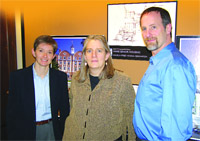
Kerry Dietz, Lynne Wallace, Marc Sternick

Kerry Dietz, flanked by Lynne Wallace, vice president of operations, and Marc Sternick, vice president and senior project architect.

Kerry Dietz likes to refer to her team of architects and support staff as “interpreters.” They listen to what clients tell them, she says, and translate their wants and needs into facilities that carefully blend form with function. These talents have enabled the Springfield-based company to enjoy steady growth through its 21 years of business, and flexibility that provides layers of protection against economic downturns.

Kerry Dietz remembers the days, weeks, and months after 9/11.

It was a difficult time for all business owners, but it was particularly hard for those in construction-related ventures, such as the architecture firm, Dietz & Co., she started in 1985.

“It was like watching dominoes fall,” she recalled, referring to construction projects that were on the drawing board or in the planning stages before Sept. 11, and that went on the back burner, if not onto the scrap heap, soon after it. “September was bad, but October was worse; everything that was in the works simply dried up.”

Coping with what became a traumatic, roughly year-long decline that led to everything from layoffs to salary cuts was one of many things Dietz has encountered in business that they didn’t teach her about in school. “They taught us architecture,” she said. “They didn’t teach us how to do the books, market ourselves, or predict when the economy was going to tank.”

She’s learned most of those things by doing — and doing them well, or at least well enough to survive several economic cycles, the vagaries of state and federal spending, and the totally unpredictable turmoil that resulted from 9/11. Many ingredients have gone into that success formula, but diversity, finding unique niches, and assembling a talented team — the ‘& Co.’ part of the Springfield-based firm’s name — have played big roles.

Indeed, while looking over the company’s portfolio, Dietz referenced public housing projects, the first phase of the battered women’s shelter the firm designed for the YWCA, and a homeless shelter it is currently blueprinting for the city of Springfield, as examples of work that would definitely fall outside the realm of typical.

The full range of work includes components of the Churchill Park affordable housing project in Holyoke, renovations to buildings at Smith College in Northampton, the battered women’s shelter, renovations to Springfield’s Sumner Avenue School, some of the housing components of the massive re-use initiative at the Northampton State Hospital complex, and interior design work at the Banknorth Center.

This mix of public and private work certainly doesn’t make the company recession-proof, said Dietz, adding quickly that no construction-related business can ever truly be that. But the flexibility does help smooth out some of the bumps in the economy.

And it has enabled Dietz to become one of the largest architecture firms in the region, now with 19 employees and seven licensed architects.

This team is now using some of the latest software on the market to turn client wants and needs into reality. The technology, coupled with more aggressive marketing efforts, and several highly visible projects, should position the company for continued growth.

This issue, BusinessWest looks at how this regional success story was drafted, and how many new developments are taking shape at the firm.

Space Exploration

As she talked about the battered women’s shelter, or the YWCA Campus of Hope, as it’s called, Dietz, who has been involved with the project for nearly a decade, said it is a facility that is “hard to build fiscally and physically.”

By that, she meant that raising funds for its various phases has certainly been challenging, because it’s not a cause that easily captures the attention of individuals or corporations, despite obvious need, and designing one is difficult because it is a structure that very few architects and builders have in their portfolios.

“Everyone’s done a bank, and everyone’s done an office building, but not everyone’s done one of these,” she said, referring to the campus’s first phase, a $5.9 million, 60,000-square-foot building that houses administrative offices, meeting rooms, 12 rooms of on-site shelter, and two classrooms for women and their children who are fleeing domestic abuse.

Elaborating to the extent that she could, Dietz said the shelter’s first phase involves many layers of security, and design features that have materialized only through a deep understanding of the individuals who will use the shelter — and the issues and emotions they will face.

“For one thing, they need a lot of room to put things,” Dietz explained, “because in most cases they grabbed whatever they could and ran out the door.”

There are also such matters as dignity and privacy, she said, but also providing staff members with the ability to keep a close eye on the women and their children.

“You want it to be comfortable and cozy,” Dietz continued, referring to the overall feel of the facility, “but not too much, because they’re not going to be there forever; this is not their home.”

Putting these various components together is a good example of how Dietz & Co. has thrived by successfully gauging client needs, and then delivering a product that meets or exceeds them.

“We are interpreters … we take a client’s ideas about a particular space, apply our craft, and make something livable, usable, and memorable,” said Dietz, adding that, while some firms have what she called a ‘signature look,’ hers does not. “We work to create a unique design solution for each client. We view ourselves as conduits of the design process.”

Dietz and her steadily growing staff have been sharpening their interpreting skills for more than 20 years now. It was in 1985 — a good time for the economy and the construction industry — when she decided to go into business for herself.

She made that leap after eight years of work with Architects Inc. in Northampton, the firm she joined after earning a degree in a subject she warmed to while taking in her parents’ work to build a new home while she was growing up in Ohio.

“I liked biology and German in high school; it’s a stretch to get to architecture from there,” she said. “It’s hard to get career counseling in this field … people don’t know how to talk to you.”

Over the years, Dietz said she has managed to learn things about business she wasn’t taught in college and, by assembling a talented team and achieving a high degree of diversity, she has managed to survive several downturns in the economy, including that prolonged recession of the early ’90s that claimed many architecture firms.

While the company has always handled work across several sectors of the economy, including education, health care, retail, and government offices, the development of specialty niches has been a key to its success.

One such niche is public housing, especially affordable housing projects. The company has handled several in Western Mass., and was recently awarded a contract for an ambitious initiative in the Charter Oak section of Hartford.

Affordable housing work is fairly steady, said Dietz, and there is little competition for it among local firms, although some companies from Boston bid on projects in this area. But there are some challenges, including the often-lengthy period between when a venture is conceptualized and when it’s actually funded.

The company has recently expanded its reach in the public housing realm, adding market-rate projects to the mix. It may sound like a minor difference, but the latter is actually a separate specialty, with its own host of competitors, she said.

The Shape of Things to Come

Dietz can’t accurately predict when the market will soften, as much as she’d like to, but she does watch the building sector closely for signs — good or bad.
When she noticed that a large number of area general contractors, including some large players, bid for a work on a bank branch, a relatively small project, she interpreted it as signal that some of those firms are struggling to find work. And that’s usually a precursor to challenging times for her profession.

“The market will slow down,” she said, adding quickly that, for now, her firm is busy. Make that “astonishingly busy.”

“In my business, when you have a backlog of six months, that’s great,” she explained. “We have about a year’s worth.”

Projects in various stages of completion include the homeless shelter, to be built on Worthington Street; the home-ownership phase of the Hartford housing project known as Dutch Point; phase II of the Campus of Hope, which involves construction of transitional housing for women and children coming out of the shelter facility (ground is due to be broken later this year); design of townhouses for phase II of the Northampton State Hospital project, known as the Village at Hospital Hill, among others.

To stay busy, the company is making many different kinds of investments. For example, it has hired its first marketing director, Debbie Whitney, who will be charged with building visibility for the firm through a variety of initiatives, and closely scanning the market looking for opportunities.

This is one of many duties that Dietz has performed over the years, and still handles to some extent. But in recent years she has effectively delegated, handing most office functions to Lynne Wallace, vice president of Operations, and many design responsibilities to Marc Sternick, vice president and senior project architect. Doing so enables her to focus on short- and long-term strategic planning for the company, and providing staff members with the tools, meaning training and resources, to carry out the objectives of those plans.

“We function as a team,” said Dietz, “and the reason we function effectively is that everyone on the team is focused on the same thing — creating value for the client.”

Providing that value was the primary motivation for a major investment in new technology, specifically new software known as Archicad 3D, which takes design work to a different dimension — literally, and new hardware needed to drive it.

Asked to describe it, Dietz struggled a little because she, like everyone else at the firm, is still learning it. In a nutshell, she said it is a cutting-edge product that effectively simulates the way a real building is constructed.

“It enables you to build the building as you’re drawing it,” she explained. “It’s a new way of doing things; before you would draw something and then figure out how to it later. Now, you’re building as your drawing.

“It allows us to understand what we’re doing a lot faster, and understand where we might have problems, with a roof, for example,” she continued, using the battered women’s shelter to illustrate her point. “The roof there was a very complex system to figure out, and it took building a physical model to figure out what was happening. If we had done it on Archicad, we would have figured it out much faster.”

There are many benefits for the client, as well, she said, noting that with the new software, the company can let a client see, experience, and refine their building during the design stage.

The new homeless shelter has presented opportunities to show what the product can do.

“This is a very difficult building to explain to people,” she said. “Using the 3-D software, we’ve been able to sit people down and walk them through the building; we can say, ‘here you are at the reception desk,’ ‘here you are in the day room,’ ‘here you are in the shelter itself,’ ‘this is what you’ll see when you walk in the front door.’ Before, you would have to use hand sketches — lots of them, and they don’t really tell the story.”

Window of Opportunity

When asked if her company’s work on the homeless shelter might lead to another specialty niche, Dietz spoke as a concerned citizen, not as a business owner.
“I really hope not,” she told BusinessWest. “We don’t want to be building more homeless shelters.”

But there should be plenty of other kinds of work for this company that has its stamp, if not its name, on many of the region’s landmarks and public housing facilities.

The depth and diversity of its portfolio have seen it through all kinds of business challenges — even those dark days after 9/11.

George O’Brien can be reached at[email protected]

Sections Supplements
More People Are Choosing Hospice Care in Their Final Days
Joanne Schlunk

Joanne Schlunk says a multi-disciplinary team makes sure not only a hospice patient is comforted and supported, but the patient’s family, too.

Joanne Schlunk recalled a man who was told he had two weeks to live. His volunteer hospice aide asked him if he had any regrets, and he said he wished he had written his memoirs.

The aide offered to write down his thoughts for him. The dying man was skeptical, but convinced himself that two weeks’ worth of memories might have some value to someone.

A year later, the memoirs were finished. The author? Far from it.

The story demonstrates the unpredictability of the final days of life, said Schlunk, director of the recently launched Mercy Hospice in Holyoke. Hospice services are available to people whose illnesses are no longer responding to treatment — who are, in their doctors’ estimation, dying.

And there’s no reason not to accept the comfort, companionship, and relief that hospice care can offer, Schlunk said — because predicting the end of life is a tricky business, and that two weeks, or six months, might not really be the end.

“The focus of hospice care is comfort and quality of life, symptom management and support,” Schlunk said — all with the recognition that the patient has finally begun to succumb to his or her illness, and the end of life would no longer be a surprise.

Robert Engell, vice president of Allegiance Hospice in Springfield, said hospice care marks a significant distinction from traditional health care in terms of its goals.

“For most of us, when we go to the hospital, the focus is on curing us, fixing us. It’s acute intervention,” he said. “For people going into hospice, the recognition has been made — or is in the process of being made — that there is no cure for this life-limiting illness. So hospice is not a place; it’s a philosophy of care.”

It’s also one that increasing numbers of Americans are tapping into, as it enables them to receive care where they’re most comfortable, usually at home. This issue, BusinessWest examines the philosophy behind hospice and how it’s benefiting not only the dying, but those grieving for them as well.

New Concept

Engell said the hospice concept emerged during the 1960s and 1970s, as pioneering studies of the dying process by Elisabeth Kubler-Ross and others were getting serious attention.

“There was a lot of work being done around that time on the needs of the dying person,” Engell said. The first hospice program in America was launched in New Haven, Conn. during the mid-1970s.

“That was the start of it,” he continued. “In the 1980s, Medicare recognized the value of it and lent it credence as one of its benefit programs. As people became more aware of a hospice benefit, they started taking advantage of it as an alternative to more aggressive treatments.”

Schlunk has witnessed the same trend, having spent 23 years in the field of hospice care. She helped launch one of the Bay State’s first such programs at Franklin Medical Center in 1985, and was excited to do the same for the Sisters of Providence Health System.

“This system stands for providing care at all phases of life and serving the needs of the entire community,” she said. “They stand behind that mission, so this was a logical development for us.”

Other area hospitals and health systems have similar affiliations, and Schlunk said it makes sense, allowing people to stay within the health system that might have served them for decades. One difference between 1985 and 2006, of course, is that many more people know what hospice is, and how they can access it.

“There’s much more awareness today of what hospice can provide and the value it has,” she told BusinessWest, recognizing at the same time that moving to hospice care is a significant emotional hurdle for families, since doing so explicitly recognizes that the end of life may not be far away.

“It’s a big step, a huge psychological step,” Schlunk said. “The timing has to be right for each family. Sometimes that’s a few days before the end, and sometimes it’s years before.”

Engell said there are some 3,000 hospice programs nationwide, and about 50 in Massachusetts. Typically, programs feature an interdisciplinary team of physicians, nurses, home health aides, social workers, chaplains, therapists, counselors, and volunteers, all working together to make sure the patient is as comfortable — and at peace — as possible.

Changing Perceptions

Engell tells of hospice patients who wish they had started sooner, if only to have a chance to rest peacefully at home, where most hospice care is delivered.

“It’s really all about the relationships that are established between these professionals and the patient and family,” he said. “As with all good relationships, they take time to develop, so there’s a better benefit to those who access it early.”

However, compared to other models of elder care, such as nursing homes, hospice care is still relatively new. As a result, many people still need to be educated about what hospice is and isn’t, Engell said.

“Back in the ’80s and early ’90s, the majority of people who went into hospice care — about three-quarters — had some form of cancer diagnosis,” he explained. “Many people still have the impression that it’s just a benefit for people who have cancer, but that’s not true.” Still, he said, perceptions are changing; cancer patients now comprise just under half of all those in hospice.

The other major public-awareness hurdle involves communicating how much of a benefit hospice care is not just to the dying person, but his or her loved ones. The philosophy of hospice is closely tied to giving emotional and other support to the entire family — and those benefits, which are paid for by both Medicare and Medicaid, continue for a full 13 months after the main care beneficiary has died.

Why more than a year after? “Think about it,” Engell said. “All of us have a life cycle of events that run throughout the course of a year. Think about the first Thanksgiving that your mother’s not at the end of the table, or the first time your child celebrates a birthday and his favorite uncle isn’t there.”

Providing services throughout a full year, he explained, allows a family to access support as they encounter each holiday, special day, or other key event that might prove to be a surprisingly emotional challenge.

“We’ll receive a call out of the blue from someone we haven’t heard from in awhile,” Engell said. “They’ll say, ‘I thought I was OK, but I just need someone to talk to.’ That’s what’s really wonderful about hospice — it’s there to give relief, whether physical, spiritual, emotional, or psychological. It allows patients and their families to have comfort and dignity.”

Into the Sunset

Engell mused that, as awareness of hospice increases, more people will demand the service. “It’s a holistic form of care that allows for people to reconnect with their families in very significant and meaningful ways.”

Recalling the man who lived long enough to dictate his memoirs, Schlunk reflected on the futility of running out a clock that’s never accurate. Instead, the hospice team helps the patient focus on the goals of care — and of living.

“They’ve documented that the person is declining, or is expected to decline, but they don’t have to discuss that at length with the patient,” she said. “We don’t want to take away hope — and hope can take on many forms. It can be hoping that a miracle happens — and they do — but it may just be hoping to see a son graduate, or see a grandchild born. That’s OK. We want to hope right along with people.”

Even if there’s nothing left to hope for but a peaceful — and regret-free — end.

Joseph Bednar can be reached at[email protected]

Sections Supplements
Seeking to Break Out of Ongoing Stagnation

The Pioneer Valley in Western Mass. has gone through the kinds of cycles that are typical of evolving economies in both the state and nation. But what has been occurring over the past 20 years presents a curious mismatch between appearance and hard data.

By appearance, the region would seem to be in a difficult position; companies, especially ones that once offered high-wage manufacturing jobs, have been closing their doors, victims of the forces of globalization and creative destruction. Poverty rates are high and increasing. And the region continues to see a net out-migration of residents. But at the same time, data nonetheless shows that jobs and income are still growing, albeit slowly. The region has not experienced the rapid economic growth seen elsewhere during the mid- to late-1990s, but neither has it suffered the sharp drop-off seen in other regions in recent years.

In short, the region continues to economically hold its own, especially in the past few years and especially in its level of employment. But progress is slow — indeed, some have described the Pioneer Valley’s economic condition as one of ongoing stagnation. More than anything else, this study of the last 20 years of economic and demographic development in the Pioneer Valley reveals an economic landscape that is missing a dynamic growth sector that can provide a growing number of high-paying jobs — and a sense of economic identity for the region.

During the 19th century, the Pioneer Valley was America’s first Silicon Valley, where innovation led to a thriving manufacturing sector. The use of interchangeable parts in manufacturing, which saw its origins in the production of armaments for the military at the Springfield Armory, revolutionized production processes. As a consequence of this advance, a thriving machine tooling and precision metal working sector developed in the region.

But throughout the 20th century, both major and small employers have gone out of business, a process that continues as manufacturing plants close. The manufacturing economy void has been partly filled by the ‘Ed-Med’ sector — ‘Ed’ stands for education or more generally ‘knowledge creation’ and ‘Med’ stands for the medical, or, more broadly health care. Ed-Med is by far the most important current employer in the Pioneer Valley. But this positive development cannot mask a significant area of alarm: the incidence of poverty in the region, which exceeds that of the state (and, in the case of Hampden County, that of the nation).

While the region has not experienced the same dire fate as other American cities that have lost their economic base, the Pioneer Valley has suffered from comparison with the eastern part of Massachusetts, especially the metropolitan Boston area. This has been especially true when looking at the secular pattern of real (price adjusted) per capita income. While per capita income has been growing in the region, its rate of growth has fallen significantly behind that of the state as a whole, and especially that of metropolitan Boston.

Employment – the “Ed-Med” Influence

From the business cycle peak in the late 1980s and early 1990s to the peak in the most recent business cycle, employment in the Pioneer Valley grew by 2.5%, from 319,739 in 1989 to 328,000 in 2004. National employment growth was a considerably more robust 14.8% during the same period, and statewide growth was 3.8%. The Boston metropolitan/northeastern part of the state experienced employment growth of 4.7% over the same period. The Pioneer Valley has, however, seen somewhat stronger employment growth recently. From the trough in employment in 1995 until 2004, employment grew by a bit more than 7%, from about 306,000 to about 328,000.

In the Boston/Northeastern part of the state, employment peaked in 2002 and then began to decline. The Pioneer Valley, however, did not see a drop in employment through 2004. Nor did it experience a drop in employment during the recent recession, unlike Eastern Massachusetts, where the sharp loss of jobs followed a period of relatively robust job growth. The knowledge creation segment of the economy is broad, and the Pioneer Valley encompasses many of its activities, including information (media production and distribution, telecommunications), professional and technical services provision, management services, and educational services. Combined, such knowledge creation sectors accounted for nearly 60,000 employees, or 21% of all Pioneer Valley employment in 2004.

One of the more prominent employers in this sector is the flagship Amherst campus of the University of Massachusetts system, which is the largest piece of a regional higher education cluster. Surrounding UMass are four well-known small liberal arts colleges: Amherst College, Hampshire College, Mount Holyoke College, and Smith College. These five institutions form the Five College System, which allows students in any of the colleges to enroll in classes in all of them. The five colleges employ a total of nearly 9,000 people, not counting a large number of student employees on all the campuses, especially that of the University of Massachusetts. But while this concentration of employment is important to the Pioneer Valley economy and identity, it has not been a growth area, or even a particularly dependable sector. In particular, UMass has suffered from severe budget cuts in recent years, and only now is beginning to replace some of the jobs that were lost.

After education, the next most important employment sector is health care, which accounts for 16% of regional employment, nearly 44,000 people. This sector consists not only of health care, as traditionally defined, but also “social and community services,” such as homeless shelters and community kitchens. Despite its steep decline, traditional manufacturing remains an important employer, accounting for 11% of the region’s total employment in 2004, or more than 32,000 people.

Considerable economic development efforts, as well as investment dollars from the state, have resulted in the Pioneer Valley Life Sciences Institute, a collaboration between Baystate Medical Center and UMass. While its primary stated goals are clinical, the collaboration is designed to create the environment from which to launch commercially successful development and manufacture of biomedical and other health-related products. This type of activity is broadly defined as ‘advanced technology manufacturing.’ While this activity now accounts for only 1% of Pioneer Valley employment, its potential is important.

Population Trends Reflect the Economy

Recent population patterns in the Pioneer Valley closely mirror the path of the economy. Population growth in the region over the past 20 years has been very slow, growing from 646,000 in 1980 to 680,000 in 2000, for an increase of just 5.2%. Over the same period, population grew in Massachusetts by more than twice as much (10.7%) and in the United States by nearly 23%.

Perhaps the most troubling pattern in population change in the region is its continuing net out-migration. Since 1990, the region has lost a net of nearly 35,000 people to out- migration. This number is the result of considerable ‘churning’ – in other words, it is the outcome of the interaction between flows of in-migration and out-migration. During this period, more than 130,000 people moved into the region while more than 165,000 people moved out. There was been a sharp increase in the volume of net out-migration in the last year for which data is available, 2004.

Much of the migration into and out of the Pioneer Valley involves short-distance moves. Many of these gross flows cancel out, leaving small net (though slightly negative) changes due to migration. By far the largest in- and out-flows have been to and from the border state of Connecticut.

There are also significant flows probably associated with retirement from the labor force. The largest net out-flow of migrants from the Pioneer Valley — nearly 13,000 net out-migrants over the period — was to Florida. This represents one-third of all net out-migrants from the Pioneer Valley since 1990.

Most other destinations/origins of Pioneer Valley migrants are close by, either in New England or New York state (with which the Pioneer Valley had a positive net migration flow). California and Arizona also received relatively large net flows of migrants.

Within the state, the Pioneer Valley has a net negative migration balance with most other regions. The Berkshire and Central regions are the only of the state’s regions with which the Pioneer Valley has a positive net migration. Two regions in the state, metropolitan Boston and the Cape and Islands, have the largest magnitude of negative net migration balance with the Pioneer Valley. Much of the migration to the Cape and Islands may, again, be associated with labor force retirement.

It is encouraging that for all this net out-migration, a good deal of in-migration to the region is also occurring. Typically, when a region is truly stagnating, migration is uniformly in the ‘out’ direction, with very little in-migration. The Pioneer Valley has certainly not experienced that pattern. And a significant portion of the negative net migration may well be due less to economic forces than to retirement.

Nonetheless, the reality remains that net migration has been consistently negative for over a decade. Migration tends to be highly selective of the very members of a population upon which the future is based: Younger, better-educated, and with better income/occupational prospects.

There has been considerable migration within the Pioneer Valley, the net result of which has been a drain on the population of Hampden County, where the cities of Springfield and Holyoke are located. Since 1990, Hampden County has gained more than 29,000 migrants from within the Pioneer Valley, nearly 30,000 of them from Hampshire County. Over the same period, Hampden County lost over 34,000 residents to Hampshire and Franklin Counties. The net effect of this in- and out-migration has been a drain on the population of Hampden County. Nearly 5,000 net migrants have left Hampden County for Hampshire and Franklin Counties, most of them to Hampshire County.

Income and Poverty

The pattern of per-capita income in the region, especially relative to the state, is instructive of the pattern of the regional economy over time. The region’s per capita income has been consistently lower than that of the state as a whole, though that fact is at least partly compensated by a lower cost of living, especially in housing. Still troubling, however, is the pattern of change over time. In 1970, per capita income in the Pioneer Valley was nearly 90% that of the state and more than 80% that of metropolitan Boston. Since then, the region’s per capita income has deteriorated. In 2003, Pioneer Valley per capita income was 75% of the state’s and 66% t of metropolitan Boston’s.

The relative deterioration of regional incomes is a secular, rather than a cyclical, phenomenon. Over the course of the business cycle, whether increasing or decreasing, the changes the region experiences in per-capita income are always more muted than the change experienced in the state. The Pioneer Valley does not rise as high or fall as far as the state. The economic dynamism of the eastern part of the state has never translated well to the Pioneer Valley.

This region did not fully share in either of the two most recent sustained state economic expansions of the 1980s and the 1990s. The other side of the picture is that the Pioneer Valley also did not suffer as badly as Eastern Mass. when recession replaced expansion. Because it is a hotbed of technology, Massachusetts experiences economic cycles that are at times excessive. The bad news is that the Pioneer Valley has long since lost its high technology sectors; the offsetting news is that its economic cycles have been less extreme.

The incidence of poverty provides another measure of the region’s income circumstances. In 2004, the U.S. Bureau of the Census defined the poverty threshold for a family of four as a total household income of $19,157. The poverty rate in the Pioneer Valley has consistently been higher than that for the state. This is especially so in Hampden County, where the poverty rate also exceeds that of the nation. Of the three counties in the region, only Hampshire County has a poverty rate that is less than that of the state.

Perhaps an even more telling measure of regional poverty is the share of students eligible for the free and reduced school lunch program. A study recently completed by the UMass contained the following analysis of this data:

“The federal poverty level is too low to properly assess the number or proportion of children from low-income families. Federal school lunch subsidies cover children from families with incomes up to 165% of the poverty level…

“The percentage of public school students eligible to receive reduced-price or free school lunches in the Pioneer Valley is alarming,” the report continues. “In the 2003-04 and 2004-05 school years, 40% of public school students in the region resided in households with incomes no higher than 165% of the poverty level. No region in the state has a higher percentage of low-income students. Public school systems in cities such as Boston or Worcester have comparable percentages of low-income students, but the regional concentration of low-income students in the Pioneer Valley is approximately one-third higher than any other region in the state. The Pioneer Valley’s low-income students are concentrated in the region’s cities, Springfield, Holyoke, and Chicopee; however, many of the region’s rural school districts are also home to high concentrations of low income students.”

The Cost of Housing

The Pioneer Valley has less expensive housing than the eastern part of the state, a cost advantage that many in the region hope will help promote increased economic growth. A Boston Globe report late last year explained:

“Housing prices in Western Mass. have risen much faster this year than in the Boston area, fueled by Bostonians moving farther from the city in search of lower prices, according to a report released yesterday…

“Between January and November, the median price of a single-family home rose 13.3% from a year earlier in Hampden County, where Springfield is located; 10.9% in Hampshire; and 10.3% in Franklin. Depending on traffic and the time of day, these counties are around a 90-minute commute each way from Boston, though they’re much closer to employers along Interstate 495 or in the Worcester and Framingham metropolitan areas.

“The condo market in Western Mass., while smaller than Boston’s, is sizzling. The number of condo sales surged nearly 28% this year in Hampden, Hampshire, and Franklin. The median condo price rose 28.9% in Franklin County in 2005; 18.9% in Hampden; and 18.2% in Hampshire, according to Warren Group. Condo prices were up 1.8% in Suffolk, and 8.5% statewide. Despite the price increases, the gaps between east and west remain huge. For example, the median price of a Hampden County condo was $124,900 this year, up from $105,000 last year. The median condo price in Suffolk County was $340,000, up from $333,850 last year.”

This may mark the beginning of a significant development for the region. Though it is too early to determine if this trend of housing price-driven movement to the region will continue and grow, especially with home prices flat or falling across the state. But this is at least an indication that the Pioneer Valley has some natural advantages — and these may again be grounds for hope.

Conclusion

In 1999 Benchmarks published a profile of the Pioneer Valley economy. In the conclusion of that study was the following assessment:

“There is a considerable effort under way to revive and remake the economy of the Pioneer Valley … at the moment, those forces have resulted in a flat or slightly growing regional economy. The difficult task of spawning genuine economic development lies ahead.”

< >Seven years later there seems little reason to modify this statement. The Pioneer Valley, despite its illustrious economic history and reputation for offering a high quality of life, remains stagnant and without direction.

Robert Nakosteen is on the faculty of the Isenberg School of Management at the UMass Amherst and is executive editor of Benchmarks, the university’s quarterly report on the state economy. This story originally appeared in Benchmarks.

Sections Supplements
Jobs Market Sees Little Pain, but Not Much Gain

Steady.

That’s the one and only word apparently needed to describe the local jobs scene. It represents the good news — “at least we’re not declining,” said Rexene Picard, executive director of the FutureWorks one-stop career center in Springfield, as well as the bad news, meaning that there is little if any growth to speak of. Steady is, in many respects, the only news.

The term applies, generally speaking, to the employment rate, which, for Hampden County, at 5.1%, is down one-tenth of a percentage point from this time last year. As for overall employment in the county over the past five years, the line on the bar chart is practically straight; the number was 204,800 in 2001, the start of the last recession, and it was 198,300 for mid- 2006, the latest data available. Conversely, the same line for the state looks more like an abbreviated ‘U,’ with 3.4 million people working at the start of ’01, 3.16 million at the low point in December of ’03, and 3.23 million by July of this year.

Steady also defines the broad picture in terms of job losses and gains. There have been a few hundred losses, most in manufacturing, over the past 12-15 months, and some gains, but mostly in the hospitality and distribution sectors, said Picard, meaning comparatively lower-wage jobs. This has been the trend for the past several years.

“In Western Mass., we don’t see the peaks and valleys that other regions of the country, and this state, do,” she said. “We tend to stay level, with no big drops.”

Steady, as defined in Webster’s Collegiate as ‘showing little variation or fluctuation,’ would also describe the state of the so-called skills gap in the region, a phrase used to depict scenarios when and where companies have the ability to grow but have difficulty finding individuals with the skill sets needed for the jobs in question.

This phenomenon is seen in precision manufacturing, and also in health care and especially nursing, said Bill Ward, director of the Hampden County Regional Employment Board (REB), noting quickly that grant-funded programs are underway to address the comparatively high job-vacancy rates in both sectors.

In the precision manufacturing arena, a $150,000 grant from the John Adams Innovation Institute is being used to fund a broad-ranging effort to improve the image of the that sector among both young people and their parents, and to put more individuals in a pipeline that will yield skilled workers who will provide long-term security for that industry. Similarly, a $250,000 grant is being utilized to address an ongoing nursing shortage in the region. Called CAN DO (Collaborating for the Advancement of Nursing: Developing Opportunities), the program will develop a structural framework for nurse advancement, from LPN through to a doctoral degree, and raise the bar for cultural proficiency within the profession.

Hampden County is one of 10 regions from across the country selected for the program from among nearly 200 applications, said Ward, adding that, if successful, CAN DO will put more individuals in nursing positions at the entry level and incentivise people to earn advanced degrees in nursing, enabling them to teach the subject at area colleges, thus allowing schools to accept more people into their programs.

The REB-orchestrated programs are among many short- and long-term efforts to help the region move beyond ‘steady,’ with regard to its employment picture and register real gains across several sectors.

For that to occur, many things will have to go right, said Joe Ascioti, owner of Agawam-based Reliable Temps, a company that handles staffing assignments across the board but is perhaps best known for its work in the manufacturing realm. He listed everything from the policies of the Deval Patrick administration, especially with regard to the cost of doing business in the Commonwealth, to efforts to improve local schools.

“We have a simple math test that we give to people when they come in the door,” he said of applicants for temp and temp-to-hire positions. “When I say simple, I mean basic multiplication, addition, and maybe some long division. And many people can’t pass it. We’re not going to lure jobs to this region if people can’t pass a math test.”

Work Study Job

Ascioti is also a frequent user of the word steady, and one can detect a general sense of frustration when he does.

Indeed, like others, he doesn’t mean it necessarily as a synonym for ‘good,’ although he acknowledges that things could be worse, and have been in years past.

Recently, he’s seen an ongoing trend among area companies, especially area manufacturers, to utilize staffing agencies as extensions of their own HR departments.

Elaborating, he said firms like his are used by businesses looking to outsource many of the steps in the hiring process, especially advertising for and the screening of candidates.

Individuals who pass muster (and the math test) are then subjected to a trial period lasting several weeks or months, after which, if they show enough ability and promise, they are added to the workforce. This ‘temp-to-hire’ process is certainly nothing new, said Ascioti, but what is relatively new, and disturbing, is the greater degree of difficulty for Reliable and other firms when it comes to filling orders.

They are almost always filled, he said, but sometimes it takes awhile, because the pool of qualified candidates is shrinking, and everyone is fishing from the same pond.

Creating a bigger pool is the broad goal for the region, he said, adding that there are several components to this assignment, including an improvement to the overall business climate in Massachusetts, and steps to reduce the number of individuals flunking Reliable’s math and reading tests.

“The climate in Massachusetts isn’t very good, and it could get worse,” said Ascioti, noting that several companies have left the region in recent years, and more will if other steps, such as mandated health insurance, are taken. “I think a lot of companies are waiting for one more straw, and that will be the one that prompts them to leave.

“If you’re a CEO looking to expand, you want to be in a state that has a favorable climate for business,” he continued. “Massachusetts is at the point where it needs to be careful.”

In many respects, Western Mass. has performed better than the state overall, from an employment perspective, over the past five years, said Ward, noting a slower rate of out-migration, actual growth in the labor force, and a less-pronounced decline in overall employment.

Statistics provided by the REB show there were 6,500 fewer jobs in Hampden County in 2005 than there were in 2001, the employment peak for this region and the state. The biggest gains came in health care (nearly 1,500 new jobs); education (almost 800), and the broad category called ‘other services,’ meaning those not in hospitality and retail, for example (2,100). The losses, meanwhile, came in manufacturing, a decline of 4,700; retail (1,470); finance (1,199), transportation and warehousing (1,019); ‘information’ (1,200); and government (723).

Projecting what will happen for these sectors in the months and years ahead is difficult, said Picard, who again summoned steady to describe what is likely.
In October, job postings were down roughly 16% from September and 16% from October of ’05 at FutureWorks, she said, noting many factors could be contributing to a general state of cautiousness when it comes to hiring.

These include the state of the housing market (better than in Eastern Mass., but still slower than a year ago), energy prices and their instability, and even uncertainty about the future of the war in Iraq — a concern to many companies that supply defense contractors.

“Some area firms are hiring,” she said, listing Smith & Wesson, which has added some new product lines, Performance Food Group, Big Y, and others. But overall, the region is seeing individuals move within the market, as companies compete for skilled workers, rather than real gains in employment.

As for the long term, Ward projects that real job growth can and probably will occur in health care and education, and perhaps precision manufacturing, including the development of a medical instruments cluster — there are a few companies now specializing in such manufacturing, and there is potential to expand that base, he said.

Much will depend on efforts to reduce the region’s vacancy rates, which are, in several fields, higher than the state’s.

The precision machining initiative, a two-year program, is already producing some results, some Ward, noting that enrollment is inching up at area technical high schools, and work continues to develop an interactive Web site that will inform young people and their parents about the many benefits of careers in machining.
Meanwhile, Ward is optimistic about CAN DO and its potential to eventually increase the number of nursing graduates at area schools.

“UMass had to turn away a large number of applicants because it just didn’t have the space for them, because they didn’t have enough faculty,” he said. “This program will streamline and facilitate the process of people working toward their master’s and doctorate degrees.”

Employing Logic

When asked for a prediction on the job market for 2007, Picard didn’t venture very far out on the limb.

She said some companies and sectors will likely register some small gains, but the factors she listed earlier — the housing market, energy prices, even uncertainty over the Patrick administration — will probably trigger only tepid growth.

In other words — or in another word — the region can expect more (you guessed) of that term steady.

George O’Brien can be reached at[email protected]

Sections Supplements
Today, Medical Liability Means Never Having to Say You’re Sorry
Attorney Ronald Kidd

Attorney Ronald Kidd says the nuances of physician liability and medical harm can be difficult for jurors to navigate without expert witnesses.

Could the Bay State’s malpractice problem — and the soaring costs that accompany it — be solved with more openness and civility between doctors and injured patients? Some proponents of changing the current system think so.

It’s been well-documented that the Commonwealth’s system of medical malpractice has forced doctors in high-risk specialties, such as obstetrics and neurosurgery, to pay more than $100,000 in annual insurance premiums — while forcing many others out of the state entirely.

“It’s been shown time and again that when malpractice premiums are high, the physician workforce shrinks, and patients have less access to the care they need,” said Dr. Kenneth Peelle, president of the Mass. Medical Society (MMS). “The current medical liability system is not working for physicians and definitely not for patients.”

Peelle cited the typical long stretch between the filing of a malpractice claim and its resolution — five years on average — and cited a study suggesting that the system pays one-quarter of the people without a legitimate claim, and doesn’t pay one-quarter of the people with a legitimate claim.

“We think the current system is badly broken, and it’s broken from the patient’s perspective,” agreed Dr. Alan Woodward, a former MMS president who now chairs the group’s task force on liability reform.

He noted that only one of every 16 injured patients ever sees money, and it’s not unusual for a monetary award in one case to be 40 times that in another, very similar case. “That’s jackpot justice,” he said. “And it’s justice delayed — and we think that’s justice denied.”

Woodward further explained that the system is heavy on overhead, meaning about 30% of award money actually goes to plaintiffs, with more than 60% going to lawyers, expert witnesses, and layers of administrative infrastructure.

John Bagley, an attorney with Springfield-based Morrison Mahoney, disagrees that the system is in need of fixing, noting that physicians win around 90% of jury verdicts, but only after a lengthy, diligent laying out of the facts.

“There’s a perception in the health care community that the jury system doesn’t work in malpractice cases,” Bagley said, “and I think that’s a misperception based on the fact that the verdicts that are publicized tend to be big plantiffs’ verdicts. And that skews what juries are actually doing.”

He noted that many physicians he has represented over the years say that it’s a stressful thing to endure a lengthy litigation and trial, but when all is said and done, most feel good about the experience.

“The time it takes is just a part of doing business for a trial lawyer,” Bagley said. “The court system can only accommodate a certain number of civil trials at one time, and criminal trials take precedence. Also, on the state court level, where almost all medical malpractice cases are tried, courts are underfunded and understaffed, so that adds to the backlog.”

But there is a better way, Woodward claimed, one that promotes openness between doctors and injured patients, while meting out justice more quickly, more consistently, and with an eye on improving safety in medical settings.

In this issue, BusinessWest delves into the concept of health courts, and the establishment of a climate in which doctors aren’t afraid to tell patients they’re sorry. But first, let’s take a look at how the typical malpractice case is conducted today.

Long Road

In Massachusetts, all malpractice cases have to be approved by a three-member tribunal, made up of a judge, a lawyer, and a doctor. The physician must be in the same field as the defendant doctor but from a different county.

At the tribunal hearing, the plaintiff must provide expert testimony from a doctor. Without this testimony and the favor of the tribunal, the suit may still proceed, but the plaintiff must put up a $10,000 bond. If he loses the case, he loses the money.

Once the case moves to trial, several standards need to be met to formulate a successful malpractice case, beginning with what type of duty the doctor owes to the patient, said Ronald Kidd, an attorney with Robinson Donovan in Springfield.

“When you get in a car and go out on the road, you owe the duty of a reasonably prudent driver to everyone else on the highway — prudent, but not perfect. That’s a critical concept,” he explained. “In almost all cases, a similar duty is owed by a health care provider to a patient.”

The second factor, obviously, is whether a breach of that duty has occurred. That could mean one of two things, Kidd said: a doctor doing something that a reasonably prudent physician would not have done if faced with the same or similar circumstances, or failing to do something that a reasonably prudent physician would have done.

The other two factors are harm, and whether there is what Kidd calls a “proximate causal relationship” between the breach and the type of harm that resulted. And because this area can get technical, often requiring some knowledge of medical practice, both sides in a malpractice case rely on expert testimony, typically from other physicians, to make their case.

“That’s one place a medical malpractice claim differs from a typical tort claim,” Kidd said. “In a normal situation, a juror, in the absence of any expert opinion, can decide whether it was negligence to leave a rollerskate out on the porch where the letter carrier could step on it, or negligence for you to be on the wrong side of the road when the accident occurred.

“But jurors are usually not competent, in the absence of expert testimony, to decide whether a doctor failed to meet the standard of a reasonably prudent physician faced with the same or similar circumstances,” and whether an error in judgment directly resulted in harm, he added.

The law requires expert opinion in such situations — typically someone from the same specialty as the defendant, although that isn’t exclusively the case. Such witnesses on both sides help convince a jury whether or not a doctor acted within the accepted standard of care.

Cases often come down to which expert makes a stronger argument, Bagley said, but that goes beyond speaking skills; for instance, an expert who presents peer-reviewed medical articles to support a certain claim has an advantage over an expert on the other side armed only with his or her opinion. In general, he asserted, malpractice cases are decided on the merits by thoughtful juries. “A well-tried case can be a very impressive thing.”

Some tricky instances arise, Kidd noted, when the accepted standard of care changes over time, which it does in many situations. Take, for example, prostate cancer.

This condition can be detected with a test of a protein called the prostate-specific antigen, or PSA. “It has long been understood that elevated PSA in the adult male is suspicious for the presence of prostate cancer, and would warrant further evaluation,” Kidd said.

But how elevated? In the past, physicians called for further tests when a man’s PSA measured 10 or more nanograms per milliliter of blood. Today, the standard is 4. If a patient sued after a physician failed to order further evaluation, a question might then arise as to when the test took place, before or after the standard changed.

“You can’t expect that, the day after this is published in the New England Journal of Medicine, that this becomes the standard of care for every practice in the commonwealth,” Kidd said. “What is a deviation today might not have been three years ago. Reasonable people can differ over what is the standard of care.”

Let’s Talk

However, that very concept — reasonable people differing — is exactly what’s being lost in the current malpractice climate, Woodward said.

“There’s a culture of silence,” he told BusinessWest. “You’re told to talk only to your lawyer, and you can’t attempt dialogue that might improve patient safety and prevent a reoccurrence. This system thwarts direct communication.”

Part of the reason is that any kind of contrition on the doctor’s part may be used against him in court, which is why Woodward supports an ‘I’m sorry law’ that would make physician apologies inadmissible in court.

“An apology can be therapeutic to both parties,” he said. “In this situation, it’s an important part of the doctor-patient relationship.”

Such a law is just one part of a plan proposed earlier this year by Lt. Gov. Kerry Healey and endorsed by the MMS. Other elements in the plan include tightening the tribunal system to make the standard of proof of negligence more difficult before a claim can proceed; a hard cap of $500,000 on non-economic damages; a reduction in attorney fees from 25% for verdicts over $500,000 to 15% for verdicts over $600,000; and the funding of a patient safety initiative through the Betsy Lehman Center for Patient Safety and Medical Error Reduction.

The bill had made no headway even before the recent elections, and now that Healey is wrapping up her time in a lame-duck administration, it has no chance. But Woodward would not stop with those recommendations.

He sat on a task force of the Joint Committee on the Accreditation of Healthcare Organizations (JCAHO), which was tasked with improving patient safety across all institutions. Members talked about ideas that have been around awhile, such as electronic order entry, but they had some more radical ideas in mind as well — including full disclosure of medical errors and apologies to patients.

Those changes should, in the opinion of the task force, come as part of a complete overhaul of medical liability, one that replaces the current climate of mistrust and gag orders with one of openness and constant improvement.

“We are looking at a system of health courts where we have experts rather than the general court hear cases,” Woodward said. “Medical testimony is often beyond the expertise and understanding of the average person, so it’s better to have someone well-educated and versed in this type of litigation.”

Bagley disagrees. “It’s not a perfect system, but the system works,” he said. “Decisions in these cases are made by lay people, but that’s true of all types of cases. Juries admittedly do not have a medical background, but, having done this for 25 years, I can tell you that good lawyers should be able to present medical evidence effectively through qualified, expert witnesses.”

Bagley sees other problems with a health court system, noting that patients already have options for alternative dispute resolution, such as mediation and arbitration, if they do not want to go the trial route.

“If the proposed solution is to basically move malpractice litigation out of the judicial system, some constitutional issues would have to be dealt with — particularly the right to a trial,” Bagley said. “Just as someone in an auto accident has the right to a court action, someone who is injured through malpractice has a constitutional right to file an action.”

The only area of the law exempt from tort action is workers’ compensation, in which there is no burden to prove fault. However, he said, medical liability is “a whole different concept,” one in which proving or disproving fault is a central factor — and one not likely to change.

However, proponents of health courts envision appropriate, consistent compensation being paid more quickly to patients who merit it, and doctors allowed to speak with — and apologize to — those who have suffered wrong, all the while striving to fix the problem instead of wishing it away through a wall of lawyers.

“When it comes to litigation, when we ask patients what they want, it’s full disclosure and an apology — and to make sure it doesn’t happen again to someone else,” Woodward said. “They also want fair economic compensation, which they clearly deserve, and a system like this has the potential to compensate many more patients than 1 in 16.”

Culture Shock

However, it’s not just the liability landscape keeping doctors from saying they’re sorry; it’s the very culture in which they were trained, said Thomas Gallagher, an associate professor of medicine at the University of Washington. “The vast majority of doctors haven’t had any training in disclosure, and these conversations are really difficult.”

A recent survey revealed that 94% of doctors would be willing to disclose an error if it did not increase the risk of litigation, said Cecil Wilson, board chair of the American Medical Association (AMA).

“Patients deserve to know, and the AMA supports that, but in practice, disclosure may not be as frequent and complete as it should be,” Wilson said. “Our perception is that fear of medical liability litigation is one of the major deterrents.”

But something needs to be done, Woodward said, if only to stem the growing physician shortage in Massachusetts — and to allow the doctors who remain to work confidently and without fear. “If they view new patients as potential litigants, they practice more defensive medicine, which costs this country more than $100 billion a year in tests and consultations doctors wouldn’t order if they weren’t worried about legal ramifications,” Woodward said.

“We have to do what we can to change this system,” he concluded. “It’s obviously broken to those who look at it objectively. We need a kinder, gentler, more efficient, and more just system for everybody — both physicians and patients.”

Sections Supplements
STCC’s Patient Simulators Open New Doors to Learning
Nursing student Tracy Stanlewicz

Nursing student Tracy Stanlewicz checks the vital signs of one of STCC’s 14 patient simulators.

When Springfield Technical Community College bought its first patient simulator several years ago, it was a fresh idea in medical education. Now many more colleges are getting on board. They increasingly realize what students and professors at STCC have known for years: that real-world experiences in medical training lead to real-world successes later on.

Michael Foss remembers the day, during his medical training, when lightning struck — a moment both terrifying and valuable.

“I was transporting a patient down an elevator, and lightning struck outside,” said Foss, now dean of the School of Health at Springfield Technical Community College. He recalled that the elevator suddenly stopped, the lights switched off, and the patient, who was hooked up to a respirator, stopped breathing.

“It scared the hell out of me,” he said. “In a matter of seconds, I was completely alone with the patient. All of a sudden, the lights came back on, the elevator jumped, and the patient started to breathe again.”

As Foss related this tale, he leaned forward with a sneaky grin. “We can do that kind of cool stuff here, any time we feel like it,” he said — thanks to a growing collection of state-of-the-art patient-simulation mannequins that can replicate virtually any situation a nurse or other medical professional might encounter in real life.

Say a couple of students are transporting a ‘sim’ patient, thinking they have done everything properly to stabilize him. “If they start to get complacent, thinking everything is cool, we can make everything not OK,” Foss said. “We can have that patient take a dive in the hallway or the elevator or anywhere else we feel like.”

These sim patients — which simulate movement, breathing, and a host of vital signs — are given the human touch by a professor, who monitors students’ interaction with the patient from another room using a camera. The professor not only serves as the patient’s voice, but uses a computer to direct responses and vital signs.

Patricia Hanrahan, director of Clinical Education at STCC’s School of Health, used the example of a blood draw to compare patient simulators to ‘task trainers’ like a realistic — but unmoving — arm.

“When they put the needle in the patient’s arm and the patient passes out, they not only have to figure out what to do with the patient, but what to do with the needle,” she said. “There are two sets of expectations that are simultaneous.”

But then, there’s a payoff. “A student came to me with a great big smile on her face and said, ‘I did it.’ The same thing happened to her in a clinical setting, and she knew exactly what to do. The people at the agency were so impressed that they hired her on the spot for an externship.”

In this issue, BusinessWest looks into the history of patient simulation at STCC — and why it is proving beneficial not just to students, but to real patients everywhere.

Starting Small

The college’s first attempt at patient simulation was in its sonography program, and was a computer-based simulator that looks and acts like a real ultrasound scanner. When a student moves a probe across the patient’s body on the table, the screen brings up actual ultrasound images on the screen.

“That’s how we got started in simulation,” Foss said. “Then we decided to go to full-size human patient simulators, so we made a large investment in an adult male and a pediatric male that could be plugged into the same piece of computer equipment. We opened our patient simulation center and used it for respiratory care, mostly.”

Meanwhile, other faculty members were intrigued by the possibilities of this pair of talking, breathing simulators. Soon after, a nursing graduate who was working for a simulation company approached the college about lending another full-size sim in exchange for the chance to conduct some research on campus.

As time went on, the roster of sims in the department continued to grow to its current total of 14, with a mix of different ages, genders, and ethnicities.

“For a long time, the airline industry has demanded that pilots go through cockpit training in simulators,” Foss said. “We thought, if it’s good enough for pilots to keep people alive, it would probably work for students going into the health care field.”

Each year brings further advances, so that the sims can be updated completely through software. The newer models are also mobile and not confined to a bed setting.

Mobility has opened the use of sim patients to many more departments than the original models did. For instance, the first patients couldn’t be moved into the chair for Dental Assisting students to work on, as is possible today.

“We put a portable patient in street clothes, put him in the chair, and one of the faculty acted like the doctor and gave him a shot of anesthesia,” Foss said. “As the patient was conversing with the dental assistant student, he started to have slurred speech and wasn’t very responsive. We were watching this on a camera and changing all the vital signs, just like what might happen in a real patient situation.”

Confidence and Competence

It’s important, he explained, for students to experience these bumps in the road during seemingly routine procedures now, when no one’s health or safety is actually at stake.

“We’re making sure that the context and environment students learn in is as close as possible to the environment they’re going to work in after graduation,” he told BusinessWest. It’s an effort that goes beyond the sims; the college has been renovating its health education facilities to make the rooms look more like real medical settings as well.

That realism today will build some essential skills that aren’t learned in a textbook, Hanrahan said.

“In clinical education, confidence and competence are very important,” she explained. “When students feel more confident about their skills, they tend to act more competently in the clinical area, and that gives them even more confidence to make clinical decisions.”

The hands-on training is not to be understated, Hanrahan said, recalling one student who aced a written exam, yet flunked the accompanying simulation test. Better to fail in class, of course, than with real patients.

“Before they go to their clinical training, they can walk through that environment here. Then, when a similar thing happens, they feel like they know what to do.” It helps that all simulations are taped so students may review their decision-making and responses with professors afterward.

“We’ve had task trainers for years — parts of the body,” Foss said. “So they can stick the needle into the plastic arm, but the arm does not react. Our patients will react. We can have them refuse — and that brings up an entirely different set of skills. Then, when they’re in a stressful situation with a patient down the road, they can draw on this and say, ‘I’ve done this before.’ It helps them to relax.”

He compared the experience, again, to flight simulators that train pilots — technology so advanced that it’s indistinguishable from performing actual maneuvers thousands of feet above the earth.

“We’re almost to that point, where we’re suspending the users’ disbelief,” Foss said, noting that the hospital-like settings of the rooms are crucial to the illusion.

When we put the simulator on a hospital bed near the normal things you’d find in a hospital, it becomes more real and meaningful to them. I feel strongly that we’ve often taken hands-on experiences in medical training out of context; with the patient simulators, we’re putting it back into context.”

Scary Moments

That context, of course, can be decidedly unnerving.

“I can assure you,” Foss said, measuring his words, “that we can make this one of the scariest moments of your career. We can throw things at you at a very high level that will make you sweat.”

That’s partly because few students ever get everything exactly right, he explained. “You may think you’ve given the right dose for this patient, but you didn’t because you forgot to check his weight. Or perhaps you left the room, and when you came back, you didn’t check his name appropriately. Or you didn’t do chest compressions properly. You thought you did, but the computer knows better.”

But the sims don’t only develop proficiency. They also help students understand that even their best efforts aren’t always enough. “We do, sadly, kill patients,” Foss said. “There are times when you do everything right, and the patient still dies.”

That’s a useful lesson, Hanrahan said. “Students are able to problem-solve not only what they did, but how they feel about it, how to make sense of it, how to communicate with family members. This is not about merely technical or psychomotor skills; it’s about taking care of patients. We give them an environment where they can reflect and faculty who help them reflect.”

Some pick up the concept sooner than others. Foss recalled a tour of visitors to the classrooms during which he voiced one of the patients as a man with Alzheimer’s disease. As the group discussed the patient simulators, Foss, as the sim, kept asking for his long-dead wife, and one of the visitors became intrigued.

“She interrupted the conversation and said, ‘Let’s listen to him. He sounds like he has Alzheimer’s.’ And she had it, dead-on,” Foss said. “You can’t do that with a task trainer.”

Then there was the time a student successfully helped his sim through a critical moment and had him stabilized. Another student took over at that point, and instead of taking it easy or asking for help on what to do next, he started talking to the patient, noting on his records that he smoked two packs a day, and that wasn’t good for him.

“He basically went through a very personal health education moment. We were not expecting that, and it blew us away,” Foss said. “Both students did an exceptional job, and because of that, they have the confidence and competence to handle such a situation.”

Expanding Upon an Idea

Meanwhile, STCC has achieved the competence with patient simulation to become a model for the other 14 community colleges in Massachusetts. Three years ago, hardly any of the other campuses had patient simulators, and now about half own at least one, with more coming on board all the time. And that’s important, Foss said, because although community colleges aren’t turning out doctors, they do supply the bulk of new nurses and other medical personnel across the state.

“If we can help introduce patient simulation to other schools, we’re actually improving the quality of health care across the entire Commonwealth, so that’s our goal,” he said, noting also that simulation also carries some intriguing workforce-development possibilities, such as hospitals sending employees to a local college campus to train on a new procedure.

“It has even been suggested to us as a pre-hire evaluation,” Foss said. “If you want to know for a fact that an employee can do a whole set of skills, you send them to a patient simulator and let them prove it.”

Hanrahan said such efforts would not be out of line with the patient-safety goals so prominent in the modern hospital setting. “All health care institutions are very focused on patient safety as a quality issue,” she said. “We can create and recreate situations that help people evaluate their ability to practice safely.”

They’re doing so by teaching students how to focus on the patient, Foss said. Instead of asking the professor what to do next, students are gradually trained to direct questions to the patient. And technology is continually improving to help suspend students’ disbelief, including baby sims who are “delivered” from adult-size sims; the babies come out with a blue tint and eventually turn pink — as long as the student makes the right decisions.

“It’s powerful to see students acquire mastery,” Hanrahan said. “These students are providing the employment pool in the local and not-so-local health care arena, and we want them to feel that they’ve mastered what they came here to accomplish.”

It’s a sudden rush of knowledge that can hit a student like — well, like a bolt out of the sky.

Joe Bednar can be reached at[email protected]

Departments


Pedro J. Caceres

Pedro J. Caceres has been appointed Global Vice President of Operations at LENOX® in East Longmeadow. He will be responsible for all manufacturing processes and support operations for the tool and band saw areas in support of LENOX’s global expansion.

•••••

Stevens Urethane has hired James P. Galica as Vice President of Market and Product Development.

•••••

Kristin S. Gravanis has been promoted to Assistant Vice President in the Mortgage Department at TD Banknorth Inc. in Springfield.

•••••

Frank Chiera Jr. will lead the Advertising, Marketing and Public Relations Department for Rocky’s Ace Hardware.

••••••

Suzanne L. Parker has been named Executive Director of Girls Incorporated in Holyoke.

•••••

Douglas Fish has been named Director of Financial Aid at American International College in Springfield.

•••••

Park Square Realty of Westfield has hired Duane Desilets as a Sales Associate in its Westfield office. His focus is in residential listings and sales.

•••••

Century 21 Pioneer Valley Associates announced the following:
• Greg Dibrindisi has joined the firm as a Salesperson;
• Erica Burns has joined the firm as a Salesperson;
• Naomi Gendron has joined the firm as a Salesperson, and
• Bruce Dearborn has joined the firm as a Salesperson.

•••••

Dr. Denise Spence has joined Amherst Medical Associates and the practice of Drs. William Smith and Joseph Coppola. Dr. Spence is board-certified in internal medicine and has special interests in women’s health care as well as preventative medicine and diabetes.

•••••

Go FIT announced the following:
• Doug Plavin has been named Program Director;
• Harriet Fingeroth will assume responsibilities for the Go FIT Mentor Training Program;
• Additional staff members have been added to support clinic offerings including: Patrick Tudryn, Mary Lovett, Amy Greenbaum, and Laura Hutchinson;
Speakers set to lecture at Go FIT include:
• Dr. David Cates, a licensed clinical psychologist and program manager for the Child and Adolescent Partial Hospital Program, Day School Program, and Central Intake Department in the Division of Behavioral Health at Baystate Medical Center;
• Erin Smith, a registered dietician and certified diabetes educator;
• Gail Stathis, a safety educator from Baystate Health System, and
• Kelly Tetrault-Stellato, a registered dietician who is also certified in first aid, weight management consulting, personal training, and yoga.

•••••

TD Banknorth Insurance Agency Inc. in Springfield announced that Rosa Dell’Aera-Smith has been promoted to Assistant Vice President.

•••••

Fidelity Bank has hired Brenda L. Young as Branch Services Manager for its Gardner office. She will be responsible for overseeing the daily operations of the facility.

•••••

James B. Ingram was recently awarded the International Society of Arboriculture 2006 Award of Merit. Ingram is the Vice President and Division Manager of the Northeast Division of Bartlett Tree Experts in Osterville.

•••••

At the 15th annual meeting of the Community Foundation of Western Massachusetts, the following announcements were made:
• Stephen A. Davis was appointed Chair of the Board of Trustees;
• Elizabeth D. Scheibel was appointed Vice Chair;
• Peter Daboul was named to the Board;
• Jean Deliso was named to the Board;
• James Morton was named to the Board;
• Peter Picknelly was named to the Board;
The following members were also nominated to serve an additional term: Bruce Brown, Carol Leary, Sonia Nieto, Mary Ellen Scott, and Linda Silva Thompson.

•••••


Michael M. Lefebvre

Michael M. Lefebvre has been promoted to Senior Vice President in the Commercial Lending Division at TD Banknorth Massachusetts in Springfield. He will continue to handle middle-market lending for business customers throughout Western Mass.

•••••

Peter Pan Bus Lines President Peter A. Picknelly recently dedicated a Springfield terrace to the memory of his late father, Peter L. Picknelly Sr., and his late mother, Mary F. Picknelly, at the corner of Park Drive and Normandy Road on the Springfield-Longmeadow border adjacent to Forest Park. The Picknelly family and Peter Pan developed the Springfield terrace as part of the city’s Adopt A Terrace program. The terrace has been landscaped by Ottani Landscaping and has an irrigation system, a park bench, and a memorial stone with Picknelly’s parents’ names inscribed.

•••••

Dowd Insurance Agency of Holyoke announced the following:


Lori Slezak

• Lori Slezek has been named Chief Financial Officer and Vice President of Administration, and


David W. Griffin

• David W. Griffin, CIC, Licensed Advisor and Partner, has been named Senior Vice President.

•••••

Meyers Brothers Kalicka of Holyoke and Greenfield announced the following:
• Jeremy M. Leblond, CPA, has met the requirements to obtain an MBA;
• Lisa M. Hazeltine has met the requirements to obtain an MSA, and
• Christel D. Harju has joined the firm as a Senior Associate in the Holyoke office.

•••••

Bacon & Wilson, P.C. of Springfield announced that the following attorneys were named “Super Lawyers” in the November issue of Boston Magazine:


Paul R. Salvage

• Paul R. Salvage, Co-chairman of the Insolvency Department;


Gary L. Fialky

• Gary L. Fialky, Chairman of the Corporate Department;


Michael B. Katz

• Michael B. Katz, Co-chairman of the Bankruptcy Department;


Paul H. Rothchild

• Paul H. Rothschild, Chairman of the Litigation Department’


Stephen N. Krevalin

• Stephen N. Krevalin, Managing Partner;


Hyman G. Darling

• Hyman G. Darling, Chairman of the Estate Planning and Elder Law Departments, who was also a speaker at the National Academy of Elder Law Attorneys’ Advanced Elder Law Institute in Salt Lake City, Utah, in November;


Francis R. Mirkin

• Francis R. Mirkin, whose areas of practice include commercial and residential real estate;


Bruce M. Fogel

• Bruce M. Fogel, a member of the estate planning and elder, real estate and zoning, and business and corporate departments, and


Gary F. Bevilacqua

• Gary F. Bevilacqua, whose primary area of practice is real estate.

•••••


Jacqueline Keegan McColgan

Nursing professor Jacqueline Keegan McColgan has been honored as the 2006-07 recipient of the Joseph J. Deliso Sr. Endowed Chair at Springfield Technical Community College. At STCC, the Deliso Endowed Chair award includes a $3,000 grant, with half to further the honoree’s professional pursuits and half in grant for the recipient’s academic department. McColgan is planning to use the department share of the award to update hospital equipment such as IV pumps and patient feeding pumps that are used in simulation experiences.

•••••

Diane M. Brzozowski, CPA, has been promoted to Audit Manager at Downey, Sweeney, Fitzgerald & Co., P.C., with offices in Springfield and Westfield.

Departments


Douglas A. Bowen

Holyoke-based PeoplesBank announced two key promotions at the executive level: Douglas A. Bowen has been promoted to President and Chief Operating Officer from his current role as Executive Vice President and Chief Lending Officer.


Joseph D. LoBello

Current President and Chief Executive Officer Joseph D. LoBello is taking on the new role of Chairman and Chief Executive Officer. The announcement follows a Nov. 15 unanimous vote of the Board of Directors of PeoplesBank. “Doug Bowen and I have worked side by side to make this institution the premier community bank in Western Mass.,” said LoBello. “He is a results-driven, strategic, and creative leader with over 30 years of progressive banking experience. Doug also has a strong connection to our community and has dedicated countless hours of volunteer service toward enhancing the quality of life in our region.” In his former position of Chief Lending Officer, Bowen was directly responsible for the PeoplesBank commercial and consumer-lending portfolio of over $1 billion, with much of this growth attributable to the Commercial Lending Division that he started in the late 1980s. LoBello will continue to remain active in the overall management of PeoplesBank in his new role as Chairman and Chief Executive Officer. He joined Peoples Savings Bank in 1992 as President and Chief Executive Officer when the Bank had assets of approximately $400 million. Since that time, he has led the planning efforts and the management team that have grown the bank into a market leader with over $1.4 billion in assets today.

•••••


Heather G. Beattie

Attorney Heather G. Beattie has been appointed a Partner of Morrison Mahoney LLP in Springfield. Her practice is concentrated in the areas of general liability defense including medical malpractice, professional liability, and health law. Beattie has more than 32 years of combined experience in the health care and law fields.


•••••

William F. Steplar has been promoted to Investment Services Officer at Easthampton Savings Bank.

•••••

Ruth Moriarty has been appointed Activities Director at Sarawood Assisted Living in Holyoke.

•••••

The Greater Springfield Convention and Visitors Bureau has appointed Jennifer M. Marion as Convention Center Sales Manager for the MassMutual Center in Springfield.

•••••


Steven G. Budd

Steven G. Budd, Assistant Vice President for Institutional Advancement at Springfield Technical Community College, has been elected President of the National Council for Resource Development. Based in Washington, the council serves more than 1,550 members at two-year colleges throughout the United States. In addition, the council focuses on professional development for fundraising professionals and develops leaders in the field.

•••••

The Springfield-based law firm of Bacon & Wilson, P.C. recently announced its merge with Monsein & MacConnell in Amherst. Bacon & Wilson wanted to expand its reach across the river in Hampshire County, and Monsein and MacConnell’s well-established real estate and litigation practice is complimentary to Bacon & Wilson’s ideals and goals. The newest members of the Bacon & Wilson team are:


Stephen B. Monsein

• Stephen B. Monsein, a member of the domestic relations and litigation departments. His work is primarily concentrated on divorce cases, but he also handles personal injury cases and does a significant amount of OUI defense work each year. He is a Fellow with the Massachusetts Chapter of the American Academy and Matrimonial Lawyers and has been active in Pelham Town Government and UMass activities for many years.


Peter W. MacConnell

• Peter W. MacConnell, a member of the real estate department handling both residential and commercial transactions. He also spends a considerable amount of time on zoning and land-use issues, almost exclusively on the developer side. In addition, he also does estate planning and corporate legal work.


Stacey D.C. Brock

• In addition, Bacon & Wilson recently hired Stacey D.C. Brock. She will split her time between the Amherst and Springfield offices. Brock is a member of the litigation department with a strong background in education law and both criminal and civil litigation. She is a former staff attorney in the Special Education Division of the New York City Department of Education, where she focused primarily on IDEA and Section 504 compliance. She has also represented parents of children with special needs in their attempts to seek appropriate services from their school districts. Brock is an Amherst Town Meeting member and a member of the Board of Directors of Berkshire Art and Technology Charter School.

•••••


Thomas Manzi

Thomas Manzi, a financial advisor in Springfield, has been elected to his second term as President of the Exchange Club of Springfield.


•••••


Bank of America’s Global Wealth & Investment Management division has named Nina Charnley as Northeast Regional President for The Private Bank of Bank of America.

•••••

Terry Bartus has joined Century 21 Pioneer Valley Associates as a Sales Associate.

•••••

David E. Pelkey, Director of Manufacturing at Merriam-Webster Inc. in Springfield, has been inducted into the Publishing Executive Hall of Fame, an honor given to leading publishing executives in book, magazine, catalog, and advertising promotion.

••••


Meyers Brothers Kalicka, P.C. of Holyoke and Greenfield announced the following:
• Anthony J. Gabinetti, CPA, has joined the firm as a Senior Manager in the Holyoke office;
• Bridget M. Hale, CPA, has joined the firm as a Senior Associate in the Holyoke office;
• Abigail Kingman and Kaitlin E. Scahill have begun a 10-week internship in the Holyoke office;
• Maura J. Perry has joined the firm as a Bookkeeper in the Holyoke office, and
• Deborah A. Gates has joined the firm as a Receptionist in the Holyoke office.

•••••

TD Banknorth Massachusetts in Springfield announced the following:
• Kenneth F. Tobias has been promoted to Assistant Vice President in Merchant Services, and
• James W. Broderick Jr. has been promoted to Senior Vice President in the Commercial Real Estate Lending division.

•••••

The Bank of Western Massachusetts in Springfield announced the following:


Sandra J. Batura

• Sandra J. Batura has been appointed Assistant Vice President and Private Banker with responsibility for the development of new business via financial planning as well as providing personal banking and credit solutions for clients;


Erin L. Couture

• Erin L. Couture has been appointed Credit Officer and Portfolio Manager with responsibility for the coordination of, and analytical support for, all commercial loans and assisting commercial lenders in administering a portfolio of commercial loans and renewals as well as monitoring lines of credit;


Michele A. Lindenmuth

• Michele A. Lindenmuth has been appointed Assistant Vice President and Small Business Lender/Market Manager with responsibility for the overall day-to-day operations of the State Street, Springfield branch, and


Cathy A. Roberts

• Cathy A. Roberts has been promoted to Assistant Vice President and Mortgage Officer with continued responsibility for developing and maintaining new mortgage business.

•••••

The law firm of Graham and Albano, P.C. in Hadley has hired Patricia A. Szumowski as a Partner. The firm will be known as Albano and Szumowski, P.C. Szumowski’s practice will focus on litigation in federal and state courts.

•••••

Dave Boisselle has been promoted to Vice President of Operations for J. Polep Distribution Services in Chicopee.

•••••

Dr. Stephen A. Wolman, an endodontist, has joined the team at Valley Dental Eastfield at 1655 Boston Road in Springfield.

•••••

John Majercak, Director of the ReStore Home Improvement Center in Springfield, has been elected to the Board of Directors for the Building Materials Reuse Association.

•••••

Dr. Adnan Dahdul, Medical Director of HealthSouth Rehabilitation Hospital of Western Mass. in Ludlow, recently received HealthSouth Corporation’s ‘Outstanding Medical Leadership Award.’ Dahdul was chosen as the 2006 award recipient from among more than 100 HealthSouth medical directors throughout the country.

•••••

Countrywide Home Loans has promoted Kathleen Dancy to Branch Operations Manager. She will manage the West Springfield operations department.

•••••

Hay Creek Hospitality LLC has named Victor Cappadona as General Manager of the Orchards Hotel in Williamstown.

•••••

Dr. Joseph P. Coppola, Medical Director of Amherst Medical Associates, has completed and passed the examination for recertification in Internal Medicine.

David M. Orfalea has been promoted to District Manager for Modern Woodmen of America, which offers financial services and fraternal member benefits to individuals and families throughout the country.

•••••

The Ludlow Chapter of Business Networking International recently presented Tani Dugger, owner of Insight Photography, with a certificate of achievement for passing the highest number of referrals at its October meeting.

•••••

Weiner Law Firm, P.C. has elected Gary M. Weiner to a three-year term as attorney member of the Board of Governors of the Commercial Law League of America.

•••••

Raymond Glick of Glick’s Lawns of Huntington has joined the Professional Landcare Network, which provides ongoing educational and safety programs.

•••••

Cashman and Katz Integrated Communications of Glastonbury, Conn., has hired Preston Oliver as Assistant Art Director and Web Developer, and Kate Guerin as Public Relations Associate.

Cover Story
Women to Watch in Higher Education
Cover

Cover

Recently, BusinessWest introduced a new feature called Women to Watch, which, as the name suggests, shines a spotlight on some of the rising stars in the Western Mass. business community. Previous segments have spotlighted those in the legal community, health care, and financial services. This issue, we profile professionals in the world of higher education. Through their stories, which feature tales of pioneering and perseverance, innovation and inspiration, we’ll touch on the many challenges facing those in this sector, and the issues confronting all women in business today.

Sections Supplements
Construction Company Quickly Builds a Portfolio in the Pioneer Valley
Bill Aquadro, left, and Steve Killian stand in the shadow of Cooley Dickinson Hospital’s $40 million expansion project.

Bill Aquadro, left, and Steve Killian stand in the shadow of Cooley Dickinson Hospital’s $40 million expansion project.

New York-based Barr & Barr Inc., which counts many elements of Rockefeller Center among its first projects, has, over the past 80 years, compiled a solid reputation in the health care and institutional fields of construction. It made its entry into the Western Mass. area several years ago with work at Williams and Amherst Colleges and, later, Holyoke Medical Center. With that beachhead secure, the company has aggressively gained market share, and has some ambitious plans for the future.

Interaction.

That was the initial, one-word response offered by Steve Killian when asked what distinguishes construction work for the health care industry from, say, that for a college dormitory, parking garage, or office building.

“It’s the give and take between the builder, the architect, the client and the subcontractors to make sure the user knows exactly what their getting, and it’s what they want,” said Killian, senior vice president of Barr & Barr Inc., the 80-year-old New York-based firm that has planted roots in Western Mass. and has built its reputation on, among other things, expansions and new construction for health care providers.

This give and take, as Killian called it, is merely part of an operating model known in the industry as ‘construction management at risk,’ or CM at risk. The CM designation differentiates Barr & Barr from general contractors, or GCs, he explained, and ‘at-risk’ denotes, as the phrase implies, that the builder is assuming some degree of risk.

Specifically, that risk involves the price bid for the project in question, Killian continued, adding that this bid becomes a guarantee of sorts that the price for the work will not exceed that number. And if it comes in lower — something that actually happens in this industry when most, or everything, goes right — then the difference is returned to the client, unless it wants to put it back into the project.

“It’s a model that’s worked very well for us, and it is fairly unique,” he said, noting that there are several versions of the CM delivery method that provide varying levels of risk for construction firms. “It makes us partners with the client, the architect, and subcontractors, and that’s why it’s such an effective method.”

The CM-at-risk operating platform, used for about 90% of its projects, coupled with the company’s reputation — it has handled work ranging from renovations of Radio City Music Hall to hundreds of millions of dollars worth of projects for New England Medical Center in Boston — has enabled Barr & Barr to make a large and rather immediate impact on the Western Mass. market.

It started five years ago when the company successfully landed projects at Amherst College (some new dormitories) and Williams College (its new $50 million Center for Theatre and Dance, and the push into the Pioneer Valley gathered steam when Barr & Barr was chosen to handle a $12 million expansion at Holyoke Medical Center.

After establishing an office in an area on Hampden Street in Springfield, the company soon added to its Western Mass. portfolio. In 2004, the company was awarded a $40 million expansion at Cooley Dickinson Hospital, the largest single project in the hospital’s history, and, more recently, was chosen for a $14 million expansion at Mercy Medical Center, a $12 million renovation/addition at Franklin Medical Center in Greenfield, and the $9 million parking garage built at Baystate Health’s corporate offices in downtown Springfield.

“When we first looked at this market, we saw some real potential, and we’re seeing that potential realized, ” said Killian, who joined Senior Project Manager Bill Aquadro at the CDH construction site recently to discuss the company’s entry into the Western Mass. market and its outlook on the future. “Our plans now are simply to continue to grow within our identified niche areas — health care and institutional work.”

Building Momentum

As he led BusinessWest on one of the countless tours he has given of the new CDH facilities, now roughly six months from completion, Aquadro stopped in what will soon become one of the hospital’s new operating rooms and pointed to the ceiling, specifically to the mounts that will support lighting and other equipment.

“Technology has changed so quickly and so profoundly,” he started. “Today’s operating rooms have to reflect that. They need to be much bigger, because the technology is bigger, and they have to be built with the understanding that technology will continue to improve.”

This is part of that interaction process that Killian described, said Aquadro, who joined Barr & Barr recently after working for many years in his family’s business, Aquadro & Cerruti. The dialogue begins long before a shovel is put in the ground and continues until the client turns the key in its new facility, he continued, noting that the design of the one of the new patient rooms at CDH was altered recently after a nursing supervisor noted that the location of the nurse-call box wasn’t ideal.

“She said it should be moved,” said Aquadro, “and we moved it; we listened to what we were being told and made some adjustments.”

This ability to listen and respond has helped Barr & Barr build a huge portfolio of institutional and health care-related projects across the Northeast. Current health care projects include those at New York Hospital Medical Center in Queens (a $100 million modernization project), Memorial Sloan Kittering Hospital in New Jersey (a $41 million cancer center), Maimonides Medical Center in New York (a $73 million modernization), among dozens of others.

On the institutional/academic side of the ledger, current projects include work at the Massachusetts Institute of Technology, Yale University, Syracuse University, Colgate University, and Mount Saint Mary College in New York, among many others.

The client list (dominated with repeat customers, 80% of the total volume of work) and the geographic reach — from Northern New England to Southern New Jersey — has been eight decades in the making, said Killian, noting that the company was started in New York in 1927 by Joseph Barr. The company was first known as Barr & Lane, and later became Barr & Barr when Joseph’s brother, Donald, joined him.

Early work for the company, awarded by Nelson Rockefeller Sr., included the Time Life Building and Rockefeller Center’s Promenade, Garden, Center Theater, and its British and French Buildings.

The company continued to expand and diversify over the next several decades. Starting in the early ’50s, by which time the venture had passed to the next generation of the Barr family, it began to develop its reputation for work in the medical and education fields. It also expanded geographically, with a strong push into the Boston area — rich in both colleges and medical centers — and also Connecticut and, eventually, Northern and Western New York, Vermont, Maine, and the Pioneer Valley. The Philadelphia area is the next target, said Killian.

Barr & Barr’s list of offices speaks to its territorial expansion; locations include Springfield, Framingham, and Williams-town, Mass., New Haven, Conn., Syracuse, N.Y., Brunswick, Me., New York City, and Franklin Lakes, N.J.

Laying the Groundwork

The company had long eyed the Western Mass, market, also deep in medical, higher education, and cultural institutions, said Killian, and made its first foray into the region’s health care sector with the Holyoke Medical Center project, an initiative that included a new surgical suite, cardiac cath lab, and several renovations.
With that foothold, the company later added projects at several area institutions, and, as its reputation and referrals grew, so did the portfolio.

“Our expansion in this market is similar to what we did in the Syracuse area, Vermont, and Princeton, N.J.,” he explained. “You start with a project or two, like we did at Syracuse University, which led to more work at Colgate, Hamilton College, and other institutions, and keep building on that base.”

It was the strong potential for growth in the Western Mass. market that prompted Killian, who has been with Barr & Barr for 14 years, and was working at its Middlebury, Vt. office to relocate to the Pioneer Valley and essentially set up shop for the company here.

He attributes its quick success — more than $100 million in contracts over the past five years — to the company’s strong reputation, but also the CM at risk model, still rare within the construction industry, and especially the Western Mass. market. That operating style essentially makes the company partners with its clients, he explained. It applies a contractor’s perspective and input to planning and design decisions, and has the ability to fast-track early components of construction.

“By making the construction manager-at-risk a key member of the project team, responsibility for construction is centralized under a single contract,” he explained, adding that Barr & Barr’s project-delivery method has no doubt played some role in winning the projects at CDH, Baystate, and, most recently, Mercy Medical Center, institutions that have often used other area builders.

Describing the expansion project at Mercy, James Fanale, chief medical officer for the Sisters of Providence Health System, said it involves new and more modern facilities for the intensive care unit (ICU) and ambulatory services unit (ASU) and speaks to the many changes that are taking place in health care today.

“The people we have working in our ICU are terrific, they’re very talented, caring individuals,” he explained. “But the space … well, it just doesn’t work; the quarters are small and non-private — it’s the way things were done 40 years ago.”

Work to bring the hospital up-to-date and create space that does work has been ongoing for more than a year now, said Fanale, and in recent months has included discourse between the architects, Newton-based TRO Jung-Brannen, Barr & Barr, and both administrators and eventual end-users at Mercy.

The discussions involve everything from the size of the rooms to the colors on the walls to the amount of direct and indirect lighting.

“It’s all very scientific,” he explained. “There is a lot of detail that goes into how these facilities are going to feel and fit.”

The process has been similar at CDH, said Aquadro, noting that the company has been involved in all phases of this project, from the securing of new parking facilities — the addition swallowed up many existing spots — to the location of nurse-call boxes.

The interaction with hospital administrators and front-line employees starts early and is essentially constant, he explained, adding that, in the case of the new operating rooms (half again the size of the current facilities), Barr & Barr and the project’s architects built what he called mock-ups to determine how the rooms would look and what equipment goes where.

“They know what they want, and by doing these mock-ups, they know what they’re going to be getting,” he explained. “That way, there are no surprises.

“It all starts with a vision,” he continued, “for a healing, caring environment. A lot goes into that vision, from the amount of light in the room to access to nurses.”

Material World

Walking through what will be the new central sterile area in CDH’s ‘surgical tower,’ Aquadro said the codebooks that dictate how such facilities are to be built and operated are several inches thick.

This is another factor that separates construction in the health care realm from other types of building. “Those projects have codes that must be followed, too, he explained, “but it’s nothing like this.”

Helping clients meet all those codes, and turn vision into reality, is one of the traits that has enabled Barr & Barr to secure its reputation — and make an already significant impact on the Western Mass. market.

The challenge now is to build on that portfolio.

George O’Brien can be reached at[email protected]

Features
Yankee Candle’s Programs, Philosophy Earn It the Work/Life Balance Award
Lori Kerwood and Laura McCormick

Lori Kerwood, left, and Laura McCormick, say Yankee Candle’s many programs and perks help in the process of attracting and retaining employees.

When Yankee Candle Co. stages job fairs, it conducts those well-attended events in its Employee Health and Fitness Center.

The facilty’s size, 10,000 square feet, makes it appropriate, said Laura McCormick, head of Corporate Communications and Employee Services for the South Deerfield-based company. But there is another motivating factor.

“We want to demonstrate our commitment to employees, even as they are applying for jobs,” she explained, adding that the wellness center, which opened in the late ’80s and is stocked with a wide array of cardiovascular and weight-training equipment, is one of myriad facilities, programs, and operating philosophies that define the company’s dedication to helping employees balance life and work.

The list of services and benefits is long, and includes everything from a day-care-service locator to a comprehensive disease-management program; a dry-cleaning service to discounts at area retailers; an employee assistance program to breast-feeding accommodations. This collection of perks and programs helps create an attractive work environment, said Lori Kerwood, benefits manager for the company, one that enables the candle manufacturer and retailer to attract and retain quality workers.

But beyond the impressive retention statistics (70% is the most recent number, meaning that more than two-thirds of the workforce has been there five years or more) the company’s various programs help employees live healthier, more balanced lives, said Kerwood. And this ultimately makes them better employees.
Said McCormick, “Yankee Candle’s work/life philosophy has always been to provide practices, policies, and programs that actively support efforts to make our employees successful at home and at work. That’s what we strive for.”

Yankee Candle’s many initiatives in this realm have earned it the Work/Life Balance Award, co-sponsored by BusinessWest and Springfield Day Nursery. Now in its fifth year, the award was created to recognize companies’ efforts to help employees balance work and life outside it — and also promote awareness of the subject and how proactive employers are addressing it.

“Yankee Candle is one of many companies that understood long ago that employers must do more than issue paychecks each week,” said BusinessWest publisher John Gormally. “They have to recognize that their workers are their best assets and that they have lives outside their office, cubicle, or work station.

“Helping their employees manage their health, their time, even their finances isn’t merely something that’s good to do,” he continued. “It’s smart business, and it helps strengthen our communities.”

Kerwood agreed, and said one of the challenges for Yankee Candle, or any company focused on work/life balance issues, is to remain on the cutting edge of programs and services for employees.

“That’s something which is on many people’s job descriptions,” she explained. “Part of being able to offer a great benefits package is to stay on top of trends and new products and offer our employees the very best.”

This issue, BusinessWest takes a detailed look at how Yankee Candle goes about that important, ongoing assignment.

Shedding Light on the Subject

McCormick told BusinessWest that, when advertising job openings at the company, Yankee Candle gets quite descriptive when it lists employee benefits and programs. The goal is to secure a large, qualified pool of applicants for the position in question, and the full menu of perks certainly helps with that mission.

But the benefits do much more than guarantee a large number of resumes, she continued. They help make the 1,500 or so employees at the South Deerfield complex and 5,000 around the world feel happy — and appreciated. And these sentiments no doubt play a role in the company’s explosive growth rate and continued expansion across the country.

Employee benefits, like scented candles themselves come in several flavors at this company, but there is a premium placed on overall health and fitness, said Kerwood. There are many programs that would be described as typical — health and dental plans, disability insurance, reimbursement for fitness club membership for satellite workers, and even discounts on flu shots — but several that go well beyond that word.

They are part of a broad effort on the company’s part to make all of its employees what she called “better health care consumers.”

Elaborating, Kerwood said Yankee Candle goes to great lengths to make sure that employees don’t merely have health coverage, but that they fully understand their plan and can use it wisely and cost-effectively.

“We know that a healthy employee is sometimes just not enough,” she explained. “A smart health care consumer can help control some of the health care costs at Yankee Candle.”

Steps to improve health care IQ include online education programs, on-site programs with area providers, and training initiatives on the part of insurer Blue Cross Blue Shield on how to make smart decisions on health care consumerism.

“Health care is expensive, for all of us,” said Kerwood. “If you have a child who has a health emergency in the middle of the night, the first impulse for most people is to go to the emergency room. But if people can instead use a nurse line available 24/7, they can save themselves the $100 emergency room co-pay.”

Communication plays a vital role in this process, Kerwood continued, adding that the company uses newsletters and other vehicles to get the word out. “We can offer all the services we want, but if we don’t communicate them to people, they won’t be taken advantage of.”

Another part of the broad focus on health and fitness is a commitment to employee safety and injury prevention in the workplace, said McCormick, adding that programs include stretch breaks to reduce repetitive motion problems and an injury-management initiative designed to identify and respond to injuries before they lead to lost work time.

As for the employee fitness center, it would rival any gym in the area and is open 24/7, thus serving all shifts, said McCormick, adding that the company sees its responsibility as going well beyond staffing and equipping the center. Indeed, the primary mission/challenge is to incentivise employees to use it. Meanwhile, for those who aren’t comfortable in a gym, the company wants to encourage exercise at home.

This is accomplished through a number of programs, she explained, noting that while the company certainly supports and encourages those who work out every day, they are equally, if not more, focused on those who might do so once or twice a week or month. And the first priority is to get them to increase that frequency.

“We tailor our programs to allow employees to create their own goals,” she explained. “Maybe for someone to walk once a week in their neighborhood with their grandchild is a big step for them; we want them to set their goals, and if they reach them, we’ll reward them through prize drawings.”

The broad mission is simply to encourage people to exercise more than they have in the past, said Kerwood, adding that those who increase the number of regular visits to the fitness center are recognized on a board at that facility. “We don’t just want to recognize people who find the time to work out every day; we want to encourage those who are taking the first step.”

Dollars and Scents

Beyond health and fitness initiatives, the company has a number of other programs designed to provide convenience and cost savings, said McCormick. In the former category are such things as a dry cleaning drop-off and pick-up service — a very popular perk — and a new item rolled out this year called the “total pay card.”

Issued in place of a paper check, the concept takes direct deposit a step further, she explained, noting that money is deposited onto what amounts to a debit card that employees can use in virtually any location that takes credit or debit cards.

As for cost savings, the company uses its large workforce numbers to create discount programs on everything from auto and home insurance to meals at area restaurants.

“Financially, we help our employees in a number of ways; we work with area and national retailers to secure discounts for our employees,” said McCormick, noting that many such programs are reciprocal in nature, with the company offering retailers discounts on its products.

National chains include BJ’s Costco, Dick’s Sporting Goods, and others, she said, adding that the company has worked with Staples in the past. Meanwhile, a local discount booklet offers deals at a number of Western Mass.-based shops and eateries.

Still another group of benefits falls under the category of personal and professional development, said Kerwood, noting that the company has a number of programs — designed to help employees (especially women) advance their careers and take more active roles in the community.

The company recently created the Yankee Candle Women’s Network, she continued, adding that the program, still in its embryonic stage, is a multi-faceted endeavor involving community outreach, mentoring, and a peer group that will meet quarterly.

The community outreach component involves support of such programs as Dress for Success, which provides clothes for women in need trying to enter or re-enter the job market, said McCormick. “We want to look for ways in which Yankee Candle women can affect and better the community.”

Meanwhile, the mentoring program is designed for women looking to take the next step in their careers, she said, while the peer group will be focused more on social development. “The group will get together, bounce around some ideas, and just have fun,” she told BusinessWest.

When asked to quantify the overall benefit Yankee Candle yields from its largesse with benefits and employee programs, Kerwood said numbers, be they from lowered health insurance rates to savings that result from low turnover, are hard to come by. But it is much easier to qualify the results.

Indeed, repeated surveys have revealed that employees are generally happy with their benefits packages and that Yankee Candle would be considered an employer of choice.

Illuminating Discussion

On top of all the other benefits offered at Yankee Candle, there is an attractive (50%) employee discount on the scented candles and myriad other items the company produces, one that is often extended to friends and family members, said McCormick.

This perk is particularly popular during the holidays, she said, adding that, in the larger scheme of things, the discount is not as important to employee retention or contentment as the health insurance package or the fitness center.

But it is part of the package, and the sum of the various parts is a factor in the company’s success — and its standing as a glowing example of an effective work/life balancing act.

George O’Brien can be reached at[email protected]

Sections Supplements
And All of Them Can Be Easily Corrected

To err is human, and to correct is divine. If you have an existing estate plan and haven’t revisited it for several years, or you never thought you needed one, there is no time like the present to fill that gap. You can address past oversights and begin creating an effective plan that protects your interests and those of your heirs.
Since no one has a crystal ball to tell what the future holds, here is a list of 10 common estate planning mistakes that can be easily be corrected.

1. Failure to accurately determine your taxable estate. It is important to understand what assets are taken into consideration in determining your taxable estate. Assets such as real estate, stocks, bank accounts, IRAs, and life insurance are all included in your taxable estate. By not properly valuing it you could be subject to a significant amount of estate tax, thereby reducing the amounts that could be left to your family and friends. It is crucial that you make yourself aware of the available estate planning options that could reduce or even eliminate potential estate taxes.

2. Failure to recognize recent changes to the Massachusetts estate tax law. Massachusetts recently ‘decoupled’ its estate tax from the federal estate tax, which means that your estate could be subject to Massachusetts estate tax even if no federal estate tax is due. Since the federal estate tax exemption is currently $2 million and the Commonwealth’s threshold is $1 million, without proper planning, this variance could result in an unpleasant surprise for your heirs upon your death. It’s a good idea to review your current financial situation to determine the potential exposure to Massachusetts estate tax and how to minimize it.

3. Failure to plan for a physical or mental disability. A power of attorney guarantees that your finances will be handled properly by someone you trust. A health care proxy will provide you with the comfort that your health care decisions will be made according to your wishes, thereby reducing that emotional burden on family or friends. If you do not have an updated health care proxy and power of attorney, costly and time-consuming court proceedings may be required in order to appoint a guardian or conservator to act on your behalf if you become physically or mentally disabled. These two documents are quite effective and relatively easy to implement.

4. Failure to review and update your estate plan. It is essential that you periodically review your estate plan to make sure it reflects your current wishes. Failing to address changes in the law or in your personal financial and family circumstances can result in additional taxes, family conflicts, and unintended people receiving a significant part of your estate. If any of the following events occur, you should make certain to review your estate plan:

• Relocation to another state;
• Changes in the estate tax laws;
• Birth of a child or grandchild;
• Receipt of an inheritance;
• Marriage;
• Death of an intended beneficiary; and
• Acquisition of real estate.

In order to keep your plan current, you should review it every three to five years.

5. Leaving your estate outright to minor children. In the unfortunate event that you die while your children are still young and maybe not responsible enough to handle a large sum of money, it might not be in their best interest to leave them their share outright. Without proper planning you could end up leaving thousands of dollars that young children may spend as they see fit.

Think back to when you were 20 years old. If you came into a significant amount of wealth to spend at your disposal, the money may possibly have been spent before your 21st birthday. To adequately address this scenario, your estate planning documents may provide that if any of your estate passes to someone who is under 30 or 35, it should be held in trust for them and paid out at predetermined ages. For example, one-third may be paid at age 25, one-half at age 30 and the balance at 35.

If you want to teach your children financial responsibility but also want to make sure they are properly cared for, you could have language in your documents stating that during the term of the trust, income and principal should be paid to your children for their health, education, support and other legitimate purposes.

6. Failure to plan for the possibility of a child getting divorced or having creditor issues. If your child is going through a divorce or has substantial creditor issues, you need to create an estate plan that will not bring unintended results. For instance, would you want your ex-son or daughter-in-law to be awarded an interest in your estate by a court? Alternatively, if your child has significant creditor issues, would you want their inheritance to be subject to a legal judgment against him or her? Such problems can be minimized through proper use of trusts or a business entity, such as a family limited partnership or limited liability corporation.

7. Failure to review beneficiary designations and asset ownership. Certain types of assets, such as life insurance policies and IRAs, pass directly to the recipients you specify on your beneficiary designations. Other assets pass by right of survivorship, such as bank accounts or real property held as joint tenants with right of survivorship. Assets such as these pass according to the beneficiary designation or the surviving joint tenant, regardless of the provisions of your will.
For example, if you intend to leave a joint bank account to all of your children but you only designated one child as a joint owner of the account, that child is only under a moral responsibility, not a legal one, to give his or her siblings an equal share of the account upon your death. Therefore, when planning your estate, it is important to review these types of assets to assure that the individuals designated as beneficiaries are those you intend to receive these assets. 

8. Failure to address life insurance ownership. Life insurance is often a significant part of an individual’s estate plan. A common misconception that people have about life insurance is that the policy is tax-free. It is important to understand that life insurance death benefits are not subject to income tax. However, they are subject to estate taxes if the policies are owned by the insured at their death. This can reduce up to 60% of your policies’ values. By transferring the ownership of your existing policies or purchasing a new policy through an irrevocable life insurance trust, you can avoid paying unnecessary estate taxes.

9. Failure to create a business succession plan. If you currently own a business that you want to pass down to your children or grandchildren, you need to address business succession as part of your estate plan. Family-owned businesses have only a 40% chance of surviving when passed from the first to the second generation, and that survival rate drops drastically as it passes to future generations. In order to plan for succession of your business to future generations, both tax and non-tax considerations should be considered as part of your planning. A properly drafted plan will assure that your business continues for future generations.

10. Leaving money to people with disabilities. If you have a disabled child who is receiving government benefits, such as Medicaid, and your current plan leaves him or her money outright, or in a trust without the required language protecting the benefits, you may disqualify him or her, either temporarily or permanently, from receiving future benefits. To avoid the loss of benefits, your child’s potential inheritance should be placed in a Supplemental Need Trust (SNT). An SNT will guarantee that your child will still receive government benefits, while providing for his or her additional needs through distributions from the SNT.

This list covers only the 10 most common mistakes, but an effective estate planning review addresses many other issues. It is important to understand the potential issues and conflicts that may arise from an improperly planned estate. Knowing your estate planning options provides you with the ability to create a plan that maximizes your wealth and minimize your taxes.v

Brett A. Kaufman is an Estate Planning and Elder Law associate with the regional law firm of Bacon & Wilson, P.C. His practice includes sophisticated estate planning issues, guardianship, conservatorship, and planning for long-term care; (413) 781-0560;[email protected].

Sections Supplements
AIC, Baystate Health Partner to Boost Nursing Numbers, Diversity Statewide
Richard E. Neal and Deb Morsi

U.S. Rep. Richard E. Neal and Deb Morsi, chief nursing officer for Baystate Health, announce the new partnership between AIC and Baystate.

As part of an ongoing effort to address the needs of underrepresented residents of the Springfield area, American International College has entered into a new partnership with Baystate Health and Springfield’s Putnam High School to provide new educational and career opportunities for disadvantaged students, and to address the Commonwealth’s pressing nursing shortage.

The Nursing Workforce Diversity Collaborative Project was announced on Sept. 18 at AIC by the college’s president, Vincent Maniaci, who explained that the program’s objective is to increase nursing education opportunities among minority and disadvantaged student populations, in turn creating a greater number of career options for those students.

A $1.1 million grant from the Department of Health and Human Services will provide the necessary support for the program, which focuses on the early introduction of health-related careers to high school students, academic training, and financial assistance in the form of scholarships and stipends for qualified applicants.

“There’s no question that this is a home run,” Maniaci said. “We have an exceptionally strong nursing program at AIC, and we are committed to making education as accessible as possible to those living in our community.”

Maniaci said the partnership is also an effort to address the Commonwealth’s widespread nursing shortage. It is estimated that Massachusetts health care providers currently need to hire about 7,000 additional nurses statewide to close the gap, and that number is expected to grow incrementally over the next two decades.

The collaboration furthers the mission of Baystate Health’s Springfield Educational Partnership (BSEP), by creating a bridge between high school- and college-level preparation for health careers. BSEP, a 10-year community assistance initiative, pairs the health system with various Springfield public schools to advance the academic and career development of elementary, middle, and high school students, and to promote the importance of math, science, and technology skills to health-related career paths.

U.S. Rep Richard E. Neal, who helped funnel the federal funding into Springfield, said he sees the new partnership as one way to boost the number of employed individuals in Western Mass., through a long-term, incremental plan.

“When you hear those statistics: ‘A need for 7,000 nurses’ – that means there are 7,000 jobs available,” he said. “But that only means something if we are able to place people in those positions, and creating a link between education and the job market is a key part of the ongoing mission of creating widespread, gainful employment.”

Deb Morsi, vice president for Patient Care Services and chief nursing officer for Baystate Health, added that the project is also the kind of multi-faceted, inclusive program that is necessary to address such a pressing need for qualified health care professionals both in Massachusetts and nationwide.

“Nursing is an extremely challenging and complex profession,” she said, “and in order to address this huge nursing shortage across the country, nursing students first need appropriate support and academic preparation.

“To meet those needs,” Morsi added, “we need to be creative, and we need to start early, in the high schools. There are many intertwining parts, but it’s a long-term strategy, not a short-term fix. We want to increase diversity among the nursing workforce as well as lower the vacancy rates, but we also would like to address issues with clinical preparedness and turn-over.”

Carol Jobe, dean of the School of Health Sciences at AIC, said the new collaborative program will include a four-week, part-time summer program for incoming freshmen enrolled in AIC’s nursing program, which will focus on improving verbal, math, and science skills as well as overall preparedness for the college experience and the rigorous nursing curriculum. Many of those students are expected to move on to AIC from Putnam High School, which is already involved in BSEP and has about 160 students enrolled in its ‘Health Academy.’

A student-tutoring program will also be established, pairing upperclassmen studying nursing, chemistry, or biology with freshmen nursing students, and faculty mentors will work closely with freshmen and sophomores. This, Jobe said, will not only help address specific academic issues students may have, but also attempt to curb attrition rates.

“The grant will help us address many needs,” she said. “Both high school and AIC students will benefit, and each student will be evaluated individually. The idea is to get students acclimated early and to maintain a high level of support throughout their college careers.”

The project is the latest offering at AIC geared toward diverse populations in the Greater Springfield area. In October of last year, the college instituted its ‘Community Engagement Initiative,’ awarding $10,000, four-year renewable scholarships to homeowners and their children residing in the city’s Bay Area neighborhood, which includes portions of the State Street corridor, Mason Square, Tapley Street, and Roosevelt Ave., and is home to more than 4,000 of the city’s 152,000 residents.

That announcement came weeks after Maniaci, who took the helm at AIC in August, 2005, signed dual admission agreements with both Springfield Technical Community College and Holyoke Community College, opening the four-year college experience to a greater audience, allowing students accepted at either of the community colleges to continue their education at AIC after two-years of coursework. The admission agreement also provided $4,000 scholarships to those students.

In addition to creating new opportunities for high school students interested in health care careers, Maniaci said this newest initiative is expected to boost enrollment in AIC’s nursing program by as much as 20%. Currently the program includes 350 students, and has the largest enrollment of any academic major at the college.

Jaclyn Stevenson can be reached at[email protected]

Sections Supplements
Area Medical Recruiters Must Show Physicians More Than the Money

If the numbers are to be believed, Massachusetts has a serious problem recruiting talented physicians to its many hospitals and other medical providers. The state’s well-publicized struggle to reimburse physicians for the value of their services, as well as its soaring premiums for liability insurance, make Massachusetts a tough sell for doctors who want to maximize their income. But recruiters who have been successful in recruiting say that, while profits are important, they don’t have to be the only consideration.

If most doctors are only in it for the money, then Massachusetts could be in some serious trouble.

Take, for example, what physicians are paid for their services, from Medicare, Medicaid, and private payers. Medicare payments are the same everywhere, but Medicaid and commercial insurers routinely pay less for doctors’ services in Massachusetts than in most other states – around 70 cents on the dollar, on average.
Then take malpractice insurance, which, in the case of an obstetrician or a radiologist, can run well over $100,000 per year – again, higher than in many other regions.

“Reimbursement in Massachusetts is not what it is in other parts of the country, and our malpractice insurance is high. Those are two of the negatives,” said Mary Kelleher, vice president of Human Resources at Holyoke Medical Center.

They are negatives that concern virtually every hospital, especially at a time when staff shortages are emerging in many specialties.

“It remains very expensive to practice here,” said James Fanale, chief operating officer and chief medical officer of Mercy Medical Center. “It’s always going to be challenging to get physicians to come to this area, when they can go 45 minutes south to Hartford or west to Albany, where commercial payment rates are higher. Massachusetts is bordered by five states, and the competition for talent is extremely high.”

The good news, area recruiters say, is that money is not everything – and the intangibles offered by a healthy hospital culture and a thriving community can make all the difference in convincing a doctor that Massachusetts, particularly Western Mass., is worth giving up the extra dollars.

In this issue, BusinessWest examines the areas in which medical facilities are struggling the most when maintaining adequate staffing – and why recruiters are selling their region as much as they are selling a career.

Crunching the Numbers

In some ways, the statistics seem ominous. According to the annual Physician Workforce Study conducted by the Mass. Medical Society (MMS), the state continues to face physician shortages in key medical specialties, and recruitment and retention of physicians generally remains challenging.

That’s not shocking to anyone who follows this particular study each year. Seven of the 14 specialties tracked by the MMS are experiencing severe or critical shortages: anesthesiology, cardiology, gastroenterology, general surgery, neurosurgery, orthopedics, and radiology. What is surprising, however, is a new trend uncovered by the MMS: an emerging shortage of primary care physicians.

“It is ironic and troubling that, in a state known for its leadership in health care, the physician workforce is so much under stress,” said Dr. Kenneth R. Peelle, MMS president. “The shortage of primary care physicians is especially disturbing.”

Fanale echoed the results of the study on the local level. “Recruitment is still very tight for lots of specialties, including anesthesiology, gastroenterology, and cardiology – but even more so for primary care physicians,” he said.

Community hospitals face the greatest difficulty in recruiting and retaining physicians, with 92% statewide expressing difficulty filling vacancies, as opposed to 67% of teaching hospitals and 65% of individual physician practices.

The MMS has long argued that the stress on the physician workforce is the result of a deteriorating practice environment, which the organization has demonstrated through its Physician Practice Environment Index.

The index, which takes into account factors such as physicians’ cost of doing business, median physician income, and professional liability costs, has declined for 12 consecutive years, and 37% of doctors surveyed by the MMS said they have considered changing their profession due to the practice environment – even though 84% of the same respondents consider their profession to be a rewarding one.

“When you’re looking at a decline 12 years in a row, you can see that the practice environment for physicians in Massachusetts is not very friendly, and that inhibits recruitment and retention of physicians,” said Richard Gulla, an MMS spokesman.

Success Story

Cooley Dickinson Hospital is a notable exception to the trend, having hired 88 new physicians since the start of 2005. Erin Wertheim, the hospital’s physician recruiter, said the key is to make sure potential recruits understand the whole package – which includes the quality-of-life factors the Northampton area is known for – not just the monetary compensation.

“I’ve heard that the Springfield area and Western Mass. in general is having trouble recruiting doctors, but I don’t find it to be an issue,” Wertheim told BusinessWest.

“Recruitment is tough in terms of the lack of doctors across the nation, but I think a lot of people who visit this area find it extremely appealing, for the quality of life, the excellent schools, and the cultural diversity. We try to show them the whole package – and it hasn’t been a difficult sell.”

“We do live in a lovely geographic area with lots of educational opportunities and a nice lifestyle for families,” Kelleher said. “A lot of times we recruit people who have been at Baystate or UMass and have roots in the area and want to remain here.”

She noted, however, that it takes work to get even those recruits to swim against the tide of financial question marks.

“There are some people who will not even list Massachusetts as a state where they’re willing to look at jobs,” said Dr. Glenn Focht, medical director of CDH. “That’s because of the perception of the low physician reimbursement compared to other states and the high liability costs. We need to do a good job letting them know about some of the non-monetary reasons to come here.”

Focht said there are many physicians who have a view on life that’s not overly driven purely by finances, and Cooley Dickinson has worked for the past 18 months to hone its message to those people. The problem, he said, is that certain surgical and technical specialties are already ultra-competitive, and if a doctor can earn hundreds of thousands of dollars more seeing the same number of patients in a different state, Massachusetts faces an uphill battle to attract that recruit – no matter how attractive a community is.

“For some of these specialties, there’s a very small pool of graduates each year – there may be only 90 to 100 graduates in some of them,” he said. “So your chances of finding someone with that broader view of life is much lower.”

Waiting Room

Meanwhile, the MMS claims that the liability issue continues to be problematic not only as a hindrance to attracting doctors to Massachusetts, but also in facilitating patient care. An MMS survey found that 46% of practicing physicians have altered or limited their services because of the fear of being sued.

And the landscape isn’t improving in that regard. Since 1992, liability insurance rates have increased 132% in Massachusetts, and 42% of survey respondents said insurance premiums account for more than 10% of their total operating expenses.

“The results of these studies should carry a strong message to health care officials and policymakers alike: it is imperative that we improve the practice environment for our physicians,” Peelle said. “If we do not make that a priority, our patients will suffer as access to care will continue to erode. Above all, this is an issue of patient care.”

Indeed, the MMS polled Massachusetts residents and found that the number of people who waited more than two months to see a primary care physician jumped from 10% in 2005 to 16% in 2006. The average wait times for patients for four especially short-staffed specialties – cardiology, internal medicine, OB/GYN, and gastroenterology – exceeded three weeks, and the number of women who reported waiting more than one month for an appointment with an OB/GYN doubled, from 20% in 2005 to 40% in 2006.

In general, the MMS claims, residents who say obtaining health care is difficult in Massachusetts rose from 17% in 2003 to 21% this year – and the fact that liability premiums are chasing doctors away isn’t helping to improve that trend.

“The liability premium increases have been relatively stagnant over the past year, but the bad news is that they’re still high,” Fanale noted. He added, however, that hospitals that make a priority of incorporating the latest technology and medical advances have an edge over those that don’t – and Massachusetts is still respected nationally for cutting-edge care.

“It’s easier to recruit where the technology is state-of-the-art, and they’re able to use the best equipment,” he said. “We’ve been successful there, but it’s still tough.”

Yet, he too came back to the most non-medical reason of all for choosing a medical job: the quality of life afforded by communities in the Pioneer Valley.

“If you’ve got family here or grew up here, it might have a bit of attraction for you,” Fanale said. “Either way, it’s a lovely region. If we didn’t have that, we’d be in trouble.”

As for Kelleher, she said some recruits have been attracted by Holyoke Medical Center’s recent expansion, its commitment to cutting-edge equipment, and the opportunity to work on advanced cases over a wide range of medical and surgical specialties.

“It’s never a single issue,” she noted. But even then, it’s often not enough to overcome the financial negatives.

“I think if the government would get on board with changing the reimbursements so physicians are paid better, and if the malpractice laws were reformed,” she said, “you would see a greater willingness to work in Massachusetts hospitals.”

Perhaps, then, future diagnoses of the Massachusetts health care system won’t be quite so critical.

Joseph Bednar can be reached at[email protected]

Departments

ACCGS Announces ‘Super 60’ Winners

SPRINGFIELD — Business is alive and well in the region as this year’s Affiliated Chambers of Commerce of Greater Springfield Inc. (ACCGS) Super 60 revenue winners combined for almost $1.2 billion in the past fiscal year with average revenue for the top 30 exceeding $31 million and 50% exceeding $20 million. Now in its 17th year, the ACCGS award honors the fastest growing, privately held companies in the region for their significant contributions to strength of the regional economy. Companies eligible for the award must be independent, privately owned businesses, be based in either Hampden or Hampshire counties or be a member of the ACCGS, be in business for at least three full years and produce revenues of at least $1 million in the last fiscal year. Seventeen companies are new to the revenue category this year. Four companies on the revenue list also qualify for the growth category, with two companies in the top 10 qualifying for both lists. In addition, four companies new to the category this year are also new to the top-10 revenue winners list. In the growth category, the average growth among the winners was more than 57% with companies needing to have had at least 23% growth in order to be included in the category. Twenty-six of the companies reported growth in excess of 30%, with 18 companies exceeding 40% growth. Winners will be honored at the Super 60 Luncheon and Recognition Program on Oct. 27 from 11:30 a.m. to 1:30 p.m. at Chez Josef in Agawam. Steven Rothschild, CEO and chairman of bulbs.com, an online specialized lighting distributor, will deliver the keynote address, sharing insights on how to achieve rapid rates of growth in business.

Survey: Single Resume Typo Can Ruin Job Prospects

MENLO PARK, Calif. — The adage “It’s not what you say, but how you say it” holds particular weight when it comes to resumes, a recent survey shows. More than eight in 10 executives polled (84%) said it takes just one or two typographical errors in a resume to remove a candidate from consideration for a job opening; 47% said a single typo can be the deciding factor. The survey was developed by OfficeTeam and includes responses from 150 senior executives at the nation’s 1,000 largest companies. Resumes often are a job seeker’s first contact with prospective employers, according to Diane Domeyer, executive director of OfficeTeam. Domeyer stressed that candidates who submit application materials with typographical or grammatical errors may be seen as lacking professionalism and attention to detail, and thus spoil their chances for an interview or further consideration.

Former State Hospital Project Receives Funding

NORTHAMPTON — Gov. W. Mitt Romney recently signed a bill to provide $7 million in state aid to finish the demolition of the former Northampton State Hospital. The funds were part of a larger bill to assist infrastructure improvements for large private development projects. The House and the Senate passed the bill Aug. 31. Billed as The Village at Hospital Hill, the redevelopment plans include a mix of residential and commercial uses at the site. When completed, the development project will feature 476,000 square feet of office, retail and light industrial space, as well as 207 units of housing, according to the Mass. Development Finance Agency.

Director Named for Embattled PVTA

SPRINGFIELD — Worcester Transit Authority Director Mary L. MacInnes was recently chosen as the new administrator for the Pioneer Valley Transit Authority (PVTA) by its advisory board members. Pittsfield Transit Authority Director Charles M. MacNeil was the other finalist who also received strong support from the advisory board, however, it was Springfield Mayor Charles V. Ryan who cast the deciding vote. Both candidates had indicated their experience in the transit industry would be a benefit to leading the PVTA out of its current crisis of an ongoing federal probe. In other news, board members announced it will terminate its contract with auditing firm KPMG since the firm refused to complete its audit until the PVTA expands its own investigation into possible mishandling of the agency’s finances.

1,000 Jobs Lost Across State in August

BOSTON — The state’s total jobs capped at 3.207 million in August as the unemployment rate climbed to 4.9%, according to the state Department of Workforce Development. Due to a statistical revision to July’s estimated jobs total, Massachusetts lost 1,000 jobs in August. The agency noted the loss of 1,000 jobs was in part due to a new estimate of the state’s jobs gain in July, based on a survey of state employers. The state revised its original estimate of 4,000 jobs gained in July to 4,600. Jobs in education and health care had the greatest gains during the summer, while the financial and manufacturing sectors lost some ground. Overall, the state has added 21,600 jobs since January, and had 29,000 more jobs in August compared with August of 2005.

Unemployment Rate Up Across Valley

The unemployment rate for the Pioneer Valley reached 5.2% in August, according to the state Division of Unemployment Assistance. Job postings in August at FutureWorks, a one-stop career center in Springfield, were down by 31% to 508 listings, while the number of job seekers was up 24%, to 2,390. Of the jobs posted in August, the biggest proportion was in the retail sector, followed by administrative support. Sectors losing jobs included financial activities, information, and government, while the construction and manufacturing sectors remained flat over the year. FutureWorks representatives noted that area residents who are employed don’t appear to be seeking out new job opportunities. Approximately 95% of the job seekers who use the services at FutureWorks are currently unemployed

Sections Supplements
Historic Office Facility in Belchertown is Attracting New Ventures
Joan Stoia, Shahrzad Moshiri, and Deborah Robes

Joan Stoia, Shahrzad Moshiri, and Deborah Robes stand in the foyer of the Carriage Towne Commons, where their offices are located.

There was a small celebration taking place on Main Street Belchertown early this month, as tenants of the Carriage Towne Commons professional offices gathered to watch the building’s new sign being erected. It was proof that the building and the businesses inside had arrived, and, moreover, that they planned to stay.

The Carriage Towne Commons is the brainchild of Steve and Joan Stoia, who purchased the historic Jonathan Grout House on Belchertown’s town common nine years ago to open a bed and breakfast that was open for seven years. The Stoias later bought a larger B&B in Northfield, the Centennial House, which they still operate. They held on to the Main Street property, though, in part due to its distinct colonial-era architecture and proximity to Belchertown’s increasingly busy town center.

“The town is coming to life, and at the same time, new life is happening here too,” said Joan Stoia. “We feel this town is on the rise. Belchertown is one of the only towns in Western Mass. that has seen an increase in both population and annual income, and we’re also seeing growth in high-end homes. All of the indicators are good.”

In addition to residential growth, Belchertown will also welcome a new district courthouse, slated for completion in April 2007, and plans are being blueprinted to convert the former Belchertown State School complex into a health- and fitness-focused resort complex. Stoia said she and her husband wanted to capitalize on that growth while at the same time moving away from the hospitality sector at the Carriage Towne property.

Designs on Women

With those goals in mind, the couple moved forward with plans to convert the building into office space and to recruit a diverse set of tenants, particularly in the legal and health and wellness fields. The result is a unique setting for business – an historic, home-like environment in a prime location, one that sees roughly 13,000 cars pass by each day, according to a recent traffic study.

“It’s already zoned for commercial use, so why not take advantage of that?” Stoia said. “The legal and health care communities will likely be rising with the construction of the courthouse and the resort spa, so we felt those were the people we should reach out to first.”

But the Stoias also wanted to create a space that would be ideal for newer, smaller businesses, including sole proprietorships.

“People who have an affinity and a respect for this house as soon as they walk in are the perfect candidates,” Stoia said, noting that they began “vigorously marketing” the property in 2005, and secured their first tenant, Shahrzad Moshiri, CPA, owner of SJM Accounting and Financial Services in December of that year.

“This property is unique,” said Moshiri of her decision to relocate. “You see the seasons change from your windows, you work in comfortable light … the house provides an excellent environment in which to work, and that has definitely grown on me.”

Soon after Moshiri set up shop in the Carriage Towne building, a trend began to emerge – the majority of interested tenants not only owned and operated unique, niche businesses, but were also almost entirely women.

Today, all of the property’s professional tenants are women, representing a wide range of fields. Moshiri runs her business from a second-floor office that once served as a bedroom suite, and downstairs, she’s been joined by Caro Lambert, a speech and language therapist, and Debbie Robes, an attorney who specializes in estate planning, real estate, and special education advocacy.

“I’ll be right next to the courthouse, which is great,” said Robes, “but the primary reason I came to look at the property was because I love old houses. The idea grabbed me, and the space sold me.”

Stoia, who also operates a career development practice, Cold Spring Career Associates, at the location, said Robes’ reasons for coming to Carriage Towne Commons have been voiced several times by interested business owners.

“Initially, we had a suspicion that women were going to be more attracted to this space than men,” Stoia explained. “It’s more home-like and artistic, and we offer amenities that women appreciate. Men tend to look for the high-tech bells and whistles.”

While high-speed DSL is among the amenities Carriage Towne offers, the house also provides for a shared reception area and a community meeting space for the tenants’ clients, cleaning services, and soon, a shared kitchen space as well.

A Living Legacy

But the property also has a history that makes it an appropriate incubator for women-owned businesses. Stoia explained that it has been owned and, in many cases, occupied by women since 1770, including during the Civil War, and has also long supported a variety of businesses, among them a doctor’s practice, an antique shop, a boarding house, and a carriage manufacturer.

“I still get goosebumps when I think about all the serendipity that surrounds this house,” she said. “It has always housed women, and has also frequently housed small businesses. I think now it’s moving forward into a new era with its own inertia.”

When the property is fully leased – there’s one suite still vacant – Stoia said she hopes to further enhance those in-house services, and perhaps involve the tenants in cooperative marketing strategies.

“Once everyone is in and settled, we want to offer as many in-house services as we can provide,” she said, noting that she and Steve have been careful to select tenants who complement one another’s businesses, and have also involved existing tenants in choosing the final company to join the Carriage Towne group.

We’re waiting to hear that ‘click;’ that moment when the final tenant moves in, and everything falls into place.”

Sign of the Times

For now, hearing the sound of a fully-occupied professional suite hitting its stride is dependent on filling that final, blank space on the Carriage Towne Commons’ signage. Stoia said men aren’t barred from applying, by any means, but small, entrepreneurial businesses will continue to receive preference, as well as those that could thrive within the Commons’ historic, colonial-inspired offices.

And Stoia looks forward to the day when she and that business owner quietly stand on Main Street … watching those new signs of life.

Jaclyn Stevenson can be reached at[email protected]
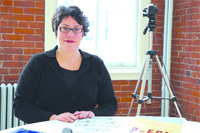
Sections Supplements
Baystate Honored for Treating Heart Attacks with Catheterization
Dr. Marc Schweiger

Dr. Marc Schweiger says Baystate not only excels in treating heart attacks, but also in getting patients quickly into the right hands.

When it comes to saving the lives of heart attack victims, time is everything. Now Baystate Medical Center has received national recognition for the way it saves those precious seconds.

The Premier Healthcare Alliance – an organization of 1,500 hospitals dedicated to improving health care quality, patient safety, and hospital efficiency – recently recognized Baystate with its 2006 Premier Award for Quality for the hospital’s care of heart attack patients.

The award reflects not only Baystate’s mortality rate for heart attack victims – one of the lowest in the nation – but also for the efficient process in place to get those patients the often life-saving treatment they need as quickly as possible.

“We report data on our care of heart attack patients, and that is compared with all the hospitals in the country,” said Dr. Evan Benjamin, Baystate’s vice president of Healthcare Quality. “Baystate received this award for achieving very high quality and very low mortality for patients with heart attacks.”

The hospital has done so with a state-of-the-art approach to battling heart attacks that requires more than just cardiologists to succeed.

A Premier Service

Dr. Marc J. Schweiger, Baystate’s interim chief of Cardiology, said the Premier award is based on the hospital’s collected mortality statistics for heart attack patients – but he added that there’s an intriguing process driving those dry numbers.

“Baystate can treat patients by bringing people to the catheterization lab. We’re the only place in Western Mass. that can do that,” said Schweiger, who heads the lab. “When someone has a heart attack where the artery supplying blood to the heart is totally blocked by a blood clot, the best course is to treat the clot and open up the artery.

“There are two ways to do that,” he continued. “One is with a clot-dissolving drug, and the other is to bring the person to the cath lab and open the artery by doing catheterization and angioplasty.” This is accomplished by inserting a balloon into the artery to expand it.

“Medical literature tells us that the best way to treat a patient who has a heart attack is to use a balloon to inflate the vessel which is causing the occlusion,” or blockage, he said.

And that speed is crucial, Schweiger said. “You have to do it relatively quickly. The efficiency part of (the award) has to do with how quickly it takes a patient to get to the catheterization laboratory.”

Schweiger was quick to add, however, that such success rests not only with the cardiology staff. “It involves systems of care,” he said, explaining that the Emergency Department must make a quick diagnosis and get the patient into the right hands without any red tape. Even hospital employees who answer phones for various departments are crucial in keeping the flow smooth.

“A great many things must happen to make this work,” Schweiger said. “It’s something we do 24 hours a day, and it involves not only the doctors in catheterization, but the techs and nurses in the lab, the ER doctors and nurses, and so on.”

The award “honors clinical excellence in both quality of care and operational efficiency,” said Stephanie Alexander, Premier’s senior vice president and general manager. “It differentiates winners as industry leaders that deliver outstanding patient care while reducing the cost of health care.”

Benjamin said Baystate’s efficiency can be counted among the best in the nation, but the hospital will continue to find ways to improve service delivery and maximize its resources to benefit patients.

“Basically, this award recognizes how well we take evidence-based measures – the industry standards that every hospital has to agree to – and apply them to our practice,” he said.

“Evidence-based information has made it possible for us to analyze how we treat patients over a period of time and make improvements. The result is that everyone wins, with better care for our patients, a more dynamic working environment for our staff, and reduced costs of service delivery.”

Safety First

The Premier award is only the latest in a string of citations for Baystate. Solucient, a company that provides comparative measurements in cost, quality, and market performance, named Baystate one of the nation’s top 100 cardiovascular hospitals. Meanwhile, Baystate was among just 3% of American hospitals named a Magnet Hospital in 2005 by the American Nurses Credentialing Center for the quality of its nursing care.

In addition, the hospital participates in several national efforts aimed at improving patient safety: the Hospital Quality Alliance, which publicly reports data on patient care quality; the 100,000 Lives campaign of the Institute for Healthcare Improvement, which seeks to prevent needless patient deaths; and Patients First, a quality and safety initiative launched by the Mass. Hospital Association.

As for the Premier award, “we’re very excited and pleased with the recognition,” Benjamin said. “It says a lot about the tremendous amount of work that goes into improving our quality overall, and especially with heart attack patients.”

Perhaps most significantly, continued recognition of such efforts may lead to broader change in the way heart attack victims are treated statewide, Schweiger said.

“There’s a move afoot across the state to consider, when transferring patients by ambulance when they’re having heart attacks, bypassing hospitals and bringing them to centers that have catheterization laboratories,” he said. “The outcome does seem to be better in cath labs – if you can bring the patients to the lab fast enough.”

Speed and skill certainly come together at Baystate Medical Center – particularly when seconds count the most.

Opinion
Getting Moving on Health Care

People say nothing is happening in Washington on health care. They say the only thing that has happened is that the crisis has gotten worse. They’re right.

But while Washington waits, Wall Street has acted. Too many big businesses are deciding that to compete and win in the global economy, many jobs no longer will come with healthcare.

While companies such as General Motors struggle under enormous health care obligations, companies such as Wal-Mart are opting out of employers’ traditional health care responsibilities. Wal-Mart currently insures fewer than half of its employees — that’s 800,000 workers left outside the system, some turning to Medicaid just to get health care at all. It’s not right, but it shouldn’t be a surprise. Good corporate citizens are coping with a competitive disadvantage in the global marketplace. GM pays $1,500 in health care costs on every vehicle it manufactures. Toyota pays only $200.

We’re stuck with a 20th century health care system that just doesn’t work for a 21st century economy.

The traditional employer-based health care system can no longer meet all our needs. Costs are too high, and businesses overseas are operating on a whole different playing field.

health care for a family of four now costs more than a minimum-wage worker earns in a year. Certainly, things have gotten worse. Under this administration’s watch, the number of uninsured Americans has grown by 6 million and premiums are up a whopping 73%.

This affects all of us. It matters if the kid down the block isn’t immunized. It matters to your tax burden when simple, treatable illnesses turn into expensive emergency room visits — often the only option for those without insurance. And it matters if we care about our moral obligation to others.

We need to cut health care costs. And we need a health care system that ensures quality, affordable health care for every American man, woman, and child.

We need big ideas and bold solutions, not more of timid Washington tinkering around the edges. If Americans can discover cures for the most devastating illnesses, we can surely find a way to make sure that all Americans benefit from those cures.

Right now the most expensive 0.4% of insurance claims account for 20% of all health care costs. We need to lower costs to businesses with a new federal reinsurance plan for catastrophic care — those with the most serious, and expensive, illnesses. Reinsurance is a simple concept: It’s insurance for insurers; a way for health plans to manage their risks and lower your costs.

Second, no child in America should lack health insurance. Leaving 11 million American children uninsured is wrong and, from the administration that brought us “No Child Left Behind,” it is breathtakingly hypocritical.

Most single moms raising two kids on $36,000 a year don’t qualify for any help. My Kids First plan would change that, covering all children up to three times the poverty level.

Finally, it is untenable for 35 million adults to go without insurance. We need to use every weapon in our arsenal until everyone is covered, including making the Federal Employees Health Benefits Program affordable and accessible for everyone in America with targeted tax credits for small businesses, middle-class families, and people between jobs. Members of Congress give themselves great health care and give taxpayers the bill — if it’s good enough for senators and congressmen, it should be good enough for every American who wants to choose it.

Doctors follow the motto “First do no harm.” So should Washington. We don’t want to reinvent the wheel on healthcare; we need to take what’s already working for those of us who are lucky and make it work for the millions of Americans being passed by. And we need to improve quality and lower costs for those with coverage today.

Americans have a choice. If Congress won’t fix healthcare, then Americans will fix Congress.

US Senator John F. Kerry is a Democrat from Massachusetts.

Opinion

At first blush, the numbers don’t seem too impressive, at least when compared to the $1.1 billion Bristol Meyers Squibb manufacturing facility recently announced for the Fort Devens site, and the hundreds of jobs it will generate.

This is a $4.9 million grant to study therapies for treating Type 1 diabetes, and the gain of possibly six to 10 jobs over the next few years for the company that won the federal contract, Worcester-based Biomedical Research Models Inc. But the news that broke early this month could have far greater implications for the company — and for the region and its still-fledgling biomedical research and manufacturing sector.

Taking the long-term and decidedly optimistic view, area business and economic development leaders believe the diabetes research grant could provide a significant boost to the Pioneer Valley Life Sciences Institute in Springfield, where Biomedical Research Models is a tenant, and to broad efforts to grow this sector in Western Mass.

And we concur.

In the case of both the company and the region, it’s a chance (another chance) to show what they can do, and that’s all both parties can ask for in what has become a highly competitive contest for research dollars and jobs that involves many regions of the U.S. and, increasingly, foreign countries, especially China.

For years now, the Pioneer Valley, which got off to a slow start in the biomed race at the expense of Worcester, Cambridge, and other Massachusetts communities, has been struggling to merely get noticed with regard to that sector, despite its oft-cited cost-of-doing-business advantages and ample land on which to develop. The Biomedical Research Models contract offers a chance to get that vital task accomplished.

Meanwhile, the Pioneer Valley Life Sciences Institute, a joint venture involving Baystate Health and UMass Amherst, has been working over its first three years to spark growth of biomed jobs in the area, and has needed a highly visible opportunity to showcase its facilities and partnership-building capabilities. This contract should help with that mission as well.

Biomedical Research Models President Dennis Guberski, a native of Chicopee, is calling the federal grant a victory for small businesses trying to make it in an increasingly crowded field. His company has developed special lines of rodents used to study several types of diseases, including diabetes. The National Institutes of Diabetes, Digestive and Kidney Diseases, which has stepped up the fight against diabetes amid growing incidences of that disorder nationwide, has awarded Guberski’s company a contract to perform testing on several new compounds that could treat Type 1 diabetes.

The bid for the contract was submitted in association with the life sciences institute, and would not have been awarded without that alliance, said Guberski, noting both physical amenities at the center in the form of research facilities and the strong partnership between the university and the region’s largest health care provider.

Securing the federal grant should help officials at the institute in their ongoing awareness campaign to explain that the facility is not simply a mailing address for biomed companies, but a facilitating venture that blends science, health care, and economic development.

Taking the broad view, the federal contract could provide success stories on a number of levels. First, and most importantly, it could help advance the fight against a disease that is growing at alarming rates in this country. Second, it could help what must now be described as a regional company enhance its reputation within the life sciences research community. And it could, with time, give some real credibility to the Pioneer Valley’s efforts to promote itself as a center for biomedical research and manufacturing.

Thus, this is a small, but very important victory for the region and the life sciences institute, and something this area can definitely build upon as its seeks to add jobs and economic diversity.

Sections Supplements
Baystate, Noble Craft Plans to Affiliate

After years of thinking and talking about it, Noble Health System and Baystate Health have entered into an agreement that could lead to a formal affiliation. Administrators are optimistic about the plan, which could bring new services and capital to the Greater Westfield region.

Baystate Noble Hospital.

That name could become part of the regional health care landscape by this fall, following an agreement between Baystate Health and Noble Hospital in Westfield to formally explore affiliation of the two entities.

The Boards of Trustees from both Noble Health Systems and Baystate Health voted on June 13 to approve a Memorandum of Understanding (MOU) to affiliate. The MOU approval will allow the two entities to enter into a period of due diligence, during which all aspects of the new relationship – from capital improvements to services to staffing – will be explored.

According to George Koller, president and CEO of Noble Health Systems, which serves as an umbrella for Noble Hospital, the Noble Health Alliance, the Noble VNA and Hospice, Westfield Medical Corp., and the Silvermill Realty Corp., the period of due diligence will last approximately four to five months. At the close of that period and following the attainment of necessary state and regulatory approvals, Baystate Health and Noble Hospital are expected to sign a formal affiliation agreement.

Koller told BusinessWest that the prospect of affiliating with Baystate Health has been a very real one for some time, and the success of some recent initiatives between the two health systems further bolstered the idea of a formal affiliation.

“Discussion regarding this partnership with Baystate began more than six years ago,” said Koller, noting that the idea had been considered even prior to that point. “In our most recent strategic planning process, which started last August, we spent some time looking in particular at developing new relationships with Baystate. We zeroed in on the fact that partnering with Baystate on a more serious level would be essential for Noble moving forward.”

Go West

In terms of Baystate Health’s interest in affiliating with Noble, Mark Tolosky, president and CEO of Baystate Health, said the system’s priority is to act in the best interest of patients, partners, and communities to ensure the future of quality health care throughout Western Mass.

“Combining hospital services and resources furthers the charitable mission to the communities we serve,” he said, “and provides benefits that include furthering our joint missions to provide quality health care, and providing a physical presence for Baystate in Westfield; one that is sought by the residents of the area.”

Tolosky explained that through market research conducted by both Noble Hospital and Baystate Health, the health systems were able to identify strong brand recognition of the Baystate Health name and logo, further bolstering the notion of viability of a Baystate affiliate in the Greater Westfield region.

“Through updated market research, we found that brand recognition of the Baystate name is stronger than ever before in the area,” he said, adding that solidifying the positive referral relationship between the Baystate system and Noble Hospital, and providing economies of scale for the health system’s resources and services, are also key objectives of the system in entering the partnership.

“We’ve been on very good terms with Noble Hospital for close to 14 years,” he said. “We’ve enjoyed excellent referral business and very positive physician-to-physician relationships. As we enter this period of due diligence, what we’re looking for is simply a win-win: we’ll continue to look at the market and at products and services that will translate into good business practices that make sense for Baystate and for Noble, and will also be cost-effective and consistent with our missions.”

Koller added that he expects affiliating with Baystate will be a largely positive change for Noble. He cited capital improvements and the availability of a greater number of specialty services among the most important changes that could come to the facility.

Currently, Noble partners with Baystate Health on two specific initiatives in women’s health and emergency medicine. One contract allows area women to receive outpatient primary care at Noble’s Women’s Center OB/GYN practice, while still delivering their babies at the birthing center at Wesson Women and Infants’ Unit at Baystate Medical Center, while a second allows Baystate residents to complete a portion of their training with Noble physicians in the emergency department.

Noble also currently partners with UMass Memorial Medical Center, however there is no word as to what role UMass could play in the coming months, if any.

“Because of their interest in Noble, Baystate Health brings a number of new, beneficial things to the Westfield community,” Koller said. “With a formal affiliation, we will have access to capital markets that we currently don’t have access to, and that will lead to new capital equipment and enhanced technology, ranging from new CT, MRI, and PET scanners to a new EMR (Electronic Medical Records) system. These are things that we’ve been moving toward slowly on our own, because we have to. Now, these development will be in place much sooner.”

Noble Concept

Koller said that the addition of new subspecialty programs and clinics will also have a marked effect on Noble’s roster of community-oriented services.

“These are things that the community could benefit from several times a week,” he said, explaining that while no specific needs for programming have been identified, he’s hopeful that a long list of new services will be mulled in the coming months. “What we’ll be adding is not defined yet, but there is essentially an alphabetical list that we’re looking at, which will also be a large part of the process of developing our medical staff.”

While specifics have yet to be nailed down, however, Tolosky noted that as plans move forward, a few general concerns will be kept at the forefront of discussions, among them the potential for new services and an ongoing focus on providing high-quality care closer to home.

“We believe very strongly in regional, integrated systems of care,” he said, “and all of our business decisions will be made with that in mind, as well as the understanding of how complex the health care environment has become. Sometimes, people still think of small community hospitals as quiet nonprofits, but they still need very clear, standard business practices in place to survive.”

Baystate Health currently includes Franklin Medical Center in Greenfield, Baystate Mary Lane Hospital in Ware, and Baystate Medical Center in Springfield, the largest acute care hospital in western New England. If the move to affiliate is still deemed viable by the board of trustees of both health systems, Koller said a definitive agreement will be signed with Baystate that will necessitate Noble’s name change to Baystate Noble.

That progression is contingent upon not only state approval and the completion of a determination of need by the Department of Public Health, Koller noted, but also on the findings of a comprehensive study of operations, staffing, administration, and capital needs, to be completed at Noble.

“These things are going to move pretty quickly,” Koller said. “At this point, we’re not aware of any staffing or administrative changes, but those are two things that we’re going to be looking at very closely through this period.”

Koller added that he’s hopeful the trial period Baystate and Noble have entered will lead to affiliation smoothly and quickly.

“I’m really excited. We always want to be on the cutting edge of medicine, and now I think we’ll be busier providing services we have not before. Whenever we’ve conducted community surveys, this area has always rated Baystate Health’s services extremely high. Bringing Baystate to us will be a great thing for this community.”

Jaclyn Stevenson can be reached at[email protected]
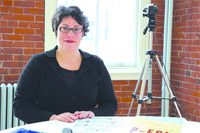
Sections Supplements
New Program at STCC Expected to Yield More Construction Managers
Ted Sussmann

Ted Sussmann says STCC’s new program in Construction Management should help ease a shortage of qualified help now challenging the industry.

The bulletin board outside the Civil Engineering Technology office at Springfield Technical Community College tells the story — or at least a good part of it.

It is nearly covered with letters from construction companies — the letterheads reveal some of the best-known firms in the region — all looking for help. The specific needs vary, but most operations are looking for individuals versed in what is known as construction management — the art and science of coordinating the various aspects of a specific project, from scheduling to tracking equipment rentals.

There is a consistent shortage of such individuals, said Joe Marois, president of South Hadley-based Marois Construction — one of the firms now posting job openings on that bulletin board — and for a number of reasons. Chief among them is a discernable shift in opinion about construction as a career, he said, adding that more young men and women are looking instead at the technology and health care sectors, among others.

“People are migrating to the less-physical fields,” said Marois, adding that, by doing so, individuals may be overlooking some fairly attractive career options in construction, ones with starting salaries of $40,000, $50,000, or more. The process of changing perceptions and attracting more people to the field requires exposure to the industry and an understanding of the opportunities it presents, said Marois, who is among those expressing optimism about a recently launched program at STCC that is expected do all that and thus put more talent in the construction pipeline.

An associate’s degree option in Construction Management completed its first semester of operation in May. There are just a handful of students in that program at present, said Ted Sussmann, chair of the school’s Civil Engineering and Architectural Technology program. But that number could grow to 20 or more in the future, and if it does, more matches can be found for the jobs posted on the bulletin board.

“Right now, there are about twice as many jobs as people to fill them,” he explained. “Look at the board — just about every construction company in the area is on there; everyone is looking for help, and right now I have to tell people, ‘sorry, everyone’s placed.’”

This issue, BusinessWest looks at what is becoming a fairly acute shortage of construction managers in the region, and how the STCC program may help close the gap.

Hammering out the Details

A quick look at the some of the required courses in the Construction Management program — ‘Business Law,’ ‘Principles of Management,’ and ‘Organizational Behavior’ have been added to such staples as ‘Construction Estimating’ and ‘Reinforced Concrete Analysis’ — reveal both the nature of the work such individuals now handle and also how construction has changed in recent decades.

“Everything is much more complex now; there is much more regulation of the business and a lot more paperwork,” said Marois. “It takes a talented individual to keep a job flowing properly.”

Jim Whalen, chief engineer for Daniel O’Connell’s Sons in Holyoke agreed. And in addition to the mounting paperwork, employment-law matters, and other bureaucratic issues, he said, construction itself is becoming increasingly elaborate and complex in terms of design and materials.

Citing the new federal courthouse taking shape on State Street in Springfield, an O’Connell project, as one example, he said the facility is curved, built almost in a semi-circle, posing a host of challenges for sub-contractors and the construction managers and project supervisors who coordinate their work.

“Everyone is using computers to make buildings much more complex, and not only in aesthetics and structure,” said Whalen, adding that while the courthouse is an extreme case, construction at all levels is more complicated and technology-driven, making it more difficult to attain the skills required of a project manager through merely on-job-training, as was possible years ago.

And this phenomenon coincides with that shift among young people toward less-physical careers, as Marois described them.

This confluence of challenges was part of the motivation for the Construction Management program, said Sussmann, adding that it was a blend of needs — construction companies looking for help and area residents seeking new career opportunities — that accelerated the process.

Sussmann said graduates of the new program will likely move on to four-year degrees in Construction Management, a step that is nearly a pre-requisite for employment with firms like O’Connell, which handles mostly large, complex projects. But the new option is not merely preparation for a baccalaureate degree.

Indeed, the advisory board that gauged need for the program and offered insight on its scope and direction, insisted that it provide “employable skills,” said Sussmann. “These graduates will be workforce-ready.”

And graduates of the two-year program should find ample job opportunities in this region and beyond, said Whalen. He noted that while most project managers at O’Connell have four-year degrees, the company has, when need and supply have dictated it, hired those with an associate’s. Meanwhile, each project the firm handles has ‘assistant managers,’ a job for which most STCC graduates would be qualified, and many smaller firms in this region are hiring individuals with two years of schooling — usually in civil engineering — for managers’ positions.

“There’s a need for project managers at all the various levels of construction,” he said. “Programs like this are valuable because they expose people to the construction industry, and they can see that, while this is demanding work, it’s also very rewarding.”

Exposure to the field is one of the main goals for the new degree program, said Sussmann, who, like Whalen and Marois, believes more young people would pursue work in construction if they fully understood the number and variety of opportunities now available.

To shed some light on the subject, Whalen and others at O’Connell hosted a series of visits to the courthouse site late last winter and spring. The visits, which featured discourse on the various stages of the project and the challenges involved with keeping the $55 million venture on time and on budget, was required of Construction Management and Civil Engineering Technology students, but some were also attended by others at the college.

The initial courthouse visit and the press it generated produced spikes in both interest and applications for the program, said Sussmann, noting that through such events, some advertising in construction industry journals, and news stories about the construction field and job opportunities in it, he expects steady enrollment in the Construction Management option.

Which is good, because both Marois and Whalen see no quick or easy resolution to the current need for qualified people.

“Looking down the road, I don’t see this problem solving itself,” said Marois. “In all the trades, it’s getting harder and harder to find people.”

Paving the Way

As he pulled one posting off the top of the bulletin board outside his office, Sussmann said the company requesting help hasn’t stopped with that letter.

“They’ve called at least three times … they really need someone,” he said, adding that he would like to help the firm but currently can’t connect it with a graduate or current student — they all either have a job or need more education to meet the need.

If the Construction Management program succeeds in putting more talent into the pipeline, as its organizers and area construction company owners hope and expect, then the phone may eventually ring less often.

But for now and the foreseeable future, need will outstrip supply — and that adds up to both challenge and opportunity for the region and its construction community.

George O’Brien can be reached at[email protected]

Sections Supplements
JGS Continues to Adapt as the Tide Turns in Elder Care
Resident James Moberg and Director of Case Management Lucy Giuggio

Resident James Moberg and Director of Case Management Lucy Giuggio share a moment outside of the JGS campus.

With its 100-year anniversary fast approaching, Jewish Geriatric Services is a mainstay in the Western Mass. landscape with which many people are familiar. However, what people often do not realize is the breadth of JGS services – from home care to comprehensive health and wellness management to day programs. Through them, the organization is redefining the very process of aging for many seniors.

Lucy Giuggio RN, director of case management for Longmeadow-based Jewish Geriatric Services, often compares the organization to a ship; and the seniors the organization serves, she says, are the captains.

“There are a sea of options for seniors today,” she said, continuing the metaphor. “The challenge is identifying what the best option is for each person, and recognizing that changes … what’s good today may not be suitable tomorrow.”

To that end, JGS, which began in 1912 as a nursing home in Springfield called that Daughters of Zion Home for the Aged, has grown in its 95-year history to not only meet the needs of area elders, but also to predict those changes on the horizon.

“I spend a lot of time answering questions,” said Giuggio, “from seniors as well as their families and caregivers. When need arises, the first thing that comes to mind for most people is a nursing home. But part of my job is explaining that there is a continuum of care today to be utilized.”

 Homeward Bound

Indeed, many people still equate JGS only with its nursing facility, the Julian J. Leavitt Family Jewish Nursing Home (JNH), a 200-bed facility that serves as the flagship for JGS at its Converse Street location. However, the JGS footprint is much larger than that, including several aspects of that continuum of care, a staff of more than 400, and an operating budget of $25 million.

In addition to JNH, the non-profit also operates Ruth’s House, a 76-bed assisted living facility; Genesis House, a 109-unit independent living facility; Spectrum Home Health Care, which offers home-based nursing and assistance services to residents in 10 towns, and the Wernick Adult Day Health Care Center, which provides daily acitivities and health assistance to seniors still living in their own homes.

Alan Rosenfeld, president and CEO of JGS, said keeping people in their own homes will be a driving force behind several new initiatives within the organization in the coming years, as JGS embarks on a new strategic planning phase this year.

“We’re looking very closely at home-based care and trying to create more opportunities for people that will allow them to stay in their own homes,” said Rosenfeld. “It goes back to our mission. We started as a nursing home, but our mission is much broader — to serve the elderly. We have no desire to bring people into a nursing home that do not need to be.”

The growing need for comprehensive care that caters to a wide range of seniors at various levels of independence and health is indeed a major focus for Rosenfeld and his team as JGS moves forward. Baby Boomers are aging, and that means all elder care facilities will be facing capacity issues in the next 20 to 30 years.
But more pressing, Rosenfeld said, is the WWII generation, which although markedly smaller than the Boomers, represents the population with the greatest need.

“The older Boomers are currently turning 60,” he explained. “But the generation that went through World War II — they’re turning 85. That’s the highest-demand population, although it is one that is shrinking.”

The strategy moving forward, then, becomes two-fold, added Rosenfeld — maintaining the quality of the nursing home as enrollment numbers dip, and refocusing attention on home and community services, in order to enter the next decade with a strong care model.

“Baby Boomers will begin turning 85 in 2030,” he told BusinessWest. “And this idea of entering a nursing facility as one’s health declines, I don’t think they’re going to go for that.”

Diane Mintz, executive vice president for Spectrum Home Health Care, agreed with Rosenfeld that in terms of the broad makeup of care at JGS, Spectrum’s services will be very much at the forefront of new planning initiatives, because the home health agency often represents the entry point for seniors seeking assistance. That in turn can lead to a long-standing relationship with the organization as an elder’s needs change.

“Spectrum launched in 1994,” she explained, “which makes us relatively young — many visiting nurse services in the area are more than 130 years old. But in terms of our relationship to the entire campus, we represent a big part of the team. Our clinicians are seeing about 80 people a day, offering specific services including nursing care and rehab.

“And if extended care is necessary due to an acute illness or a fall, for instance,” added Mintz, “there are other services readily available within the same system. I think it’s comforting for people to know that everything is all right here.”

More importantly, though, Rosenfeld noted that Spectrum allows JGS to extend its services and its mission to a larger audience.

“We need to be able to address the needs of the aging population while at the same time keeping them independent longer, and we’re making progress in this area.”

Staying on Course

The work is multi-faceted — in addition to some program additions and enhancement, Rosenfeld said JGS’ new strategic plan, currently still on the drawing board, is expected to include the creation of a privately operated Hospice program. Also planned are an expansion of home health services, a revamped approach to treatment services, particularly of chronic ailments such as Alzheimer’s Disease and diabetes, and an ongoing effort to streamline the many service aspects at JGS, so they work together as seamlessly as possible.

The new directions are an extension of similar initiatives taken on in recent years at JGS to address the varied needs of seniors. These include the addition of telemedicine to home health care services, free-standing digital health diagnostic centers in every building on the JGS campus (residents swipe an ID card and can immediately check blood pressure, weight, and other variables), and a remodeling effort at Genesis House two years ago that added 29 units, new elevators, and a community kitchen and meeting room.

Prior to that project, though, was the notable construction of Ruth’s House assisted living eight years ago, and a renovation of JNH that made the facility more home-like.

Susan Halpern, director of development at JGS, said those projects were funded largely by a capital fundraising campaign called ReGeneration, which took place from 1995 to 1997 and raised more than $7 million.

“The ability to meet the changing needs of the elderly and to be able to adjust to a changing health care community were the driving forces behind that campaign,” she said, noting that as JGS embarks on new projects, the mission will remain largely the same.

The organization conducts an annual fundraising campaign, but also an annual donors’ night, complete with entertainment, and the Kinsler Classic, a bridge, tennis, and golf tournament, among other endeavors. Halpern said the events as well as the annual appeal allow JGS to maintain services and to develop new ones, but in the coming years she expects a greater focus on major gifts and planned giving, in preparation for new additions to the JGS suite of services.

“Part of my job is to educate the public on the challenges of providing quality care for elders,” she explained. “The task is very taxing on our system, because essentially we are being called upon more and more each year to provide more costly health care with fewer dollars.

“We are very blessed with a supportive community of donors who understand and embrace our mission,” she continued, “but there is a growing gap between funding and services, and the question becomes ‘where do we look to fill that gap?’”

Halpern said some of the options she’s experimented with have been some new media initiatives — billboards and other marketing tools that the organization had not used before. She also said JGS recognizes contributors whenever possible through events and inclusion in the community, and through a number of educational projects, meant to better translate the JGS mission to a greater number of people. Naming opportunities — from bricks in the walkway to entire builings on the JGS campus — remain a strong fundraising tool as well.

“We continually establish new budgets and try to reach new goals time and time again, in terms of major gifts and growing our endowment,” Halpern said of JGS’ fundraising objectives (the endowment currently stands at approximately $22 million). “What got us here today was our ability to remain fluid in terms of fundraising, but also in terms of the entire health care picture.”

Sailing Away    

Giuggio agreed.
“We are a long-term care system that offers most levels of care that people need,” she said, “and that allows us to help others balance care with quality of life.

“I use the analogy of the sea a lot because of the many options we provide for the elderly,” she continued, “but also because we provide a sort of telescope for them … the ability to sail through those options, and find the best possible outcome.”

Jaclyn Stevenson can be reached at[email protected]

Departments

The following business incorporations were recorded in Hampden and Hampshire counties and are the latest available. They are listed by community.
     

AMHERST

Kiln Works Inc.,
460 West
St., Suite 1, Amherst 01002.
James A. Jemison, 33
Kellogg Ave., Apt. 69,
Amherst 01002. (Nonprofit)
To promote the arts,
especially ceramic arts
through educational space
and a co-operative
atmosphere to learn and
pursue creative ideas.

BELCHERTOWN

The Belvedere Restaurant
and Cafe Inc.,
9 North Main
St., Belchertown 01007.
Dennis A. Graham, 4 Jon
Dr., Belchertown 01007. To
operate a restaurant and cafe.

CHICOPEE

Chicopee Festofall Inc.,
89
Bell St., Chicopee 01013.
Robert Liswell, same.
(Nonprofit) To promote the
civic well-being for all
citizens and business in the
greater Chicopee area.

Kung Fu Academy Inc.,
551
East St., Chicopee 01020.
Mark A. Ostrander, 360
Osborne Ter., Springfield
01104. Operation of a martial
arts school.

Polish Legion of American
Veteran USA Western MA
Post 193 Inc.,
6 Roosevelt Ave., Chicopee 01013.
Edward J. Kaplita, 615 West
Main St., Plainfield 01070.
(Nonprofit) To preserve the
true spirit of fraternity and
patriotism arising from the
sacrifices in the wars and
conflicts of the USA, etc.

Steve Beshara Inc.,
42 Robin Ridge Road, Chicopee 01022.
Steve Beshara, same. Copy
shop, printing and related
activities.

Westfield Auto and Truck
Center Inc.,
31 Cecile Dr., Chicopee 01020. Nicolas K.
Korny, same. Repair,
servicing, maintenance and
inspection of autos and trucks.

EASTHAMPTON

Bacis Properties Inc.,
67
Division St., Easthampton
01027. Thomas M. Bacis,
same. Home construction and
land development.

Summit Ridge Builders
Inc.,
110 Union St., Easthampton 01027.
Matthew B. Gawle, 36 Holly
Circle, Easthampton 01027.
Construction of homes and
land development.

EAST LONGMEADOW

Holistic Retreat Inc.,
280 North Main St., Suite 7, East
Longmeadow 01028. Alice
Shabunin, 168 Mountainview
Road, East Longmeadow
01028. Holistic health care.

NLB Appraisal Services Inc.,
2 Athens St., East Longmeadow 01028.
Christopher Bertelli, same.
Real estate appraisals.

GOSHEN

Goshen General Store Inc.,
31 Main St., Goshen 01032.Judi Christine Morin, same.
Retail sales of groceries and
general merchandise.

HADLEY

South Middle Street Inc.,
31 Campus Plaza Road, Hadley
01035. Douglas A. Kohl, 59
Summer St., Northampton
01060. Real estate
development.

South Middle Street Inc.,
31 Campus Plaza Road, Hadley
01035. Douglas A. Kohl, 59
Summer St., Northampton
01060. Real estate development.

HAMPDEN

GTech Manufacturing Inc.,
95D Commercial Dr., Hampden
01036. Gary L. Lombardo,
same. General machine shop.


HOLYOKE

Fragrance Source
International Inc.,
88 Winter St., Holyoke 01040.
David L. Peskin, 25 Warwick St.,
Longmeadow 01106. To
manufacture, market and sell
perfumed plastic beads, etc.

Maki of Japan Holyoke Inc.,
50 Holyoke St., Ste. #CS1,
Holyoke 01040. Bi Qiu Wu,
507 Bryant Place, Riverdale,
NJ 07675. Bi Qiu Wu, 50
Holyoke St., Ste. #CS1, Holyoke,
registered agent. To own and
operate a restaurant business.

LUDLOW

CS Landscaping Design and
Construction Inc.,
14 Salli Circle, Ludlow 01056. Lee H.
Corbert, same. Landscaping
and design.

NORTHAMPTON

Turnkey Imaging Consultants Inc.,
161 Crescent St., Northampton
01060. William Orr,
Consulting to and equipping
the photo imaging trade.

PALMER

Doyle’s At Forest Lake Inc.,
702 River St., Palmer 01069.
William J. Doyle, 23
Fieldstone Dr., Palmer 01069.
Operation of restaurant/bar.

Doyle’s Realty Holdings Inc.,
702 River St., Palmer 01069.
William J. Doyle, 23
Fieldstone Dr., Palmer 01069.
To deal in real estate.

Sweet Dreams Anesthesia
Corp., 119 Boston Road,
Palmer 01069. Tammy
Rackliffe, same. To provide
nurse aesthesis services to
various hospitals.

PELHAM

Gary Hyman Consulting Inc.,
49A Gulf Road, Pelham
01002. Gary Hyman,
same.Consulting.

SOUTH HADLEY

Stadium Renovation
Initiative Inc.,
153 Newton St., South Hadley 01075. Mark
Dubois, 4 Scott Hollow Dr.,
South Hadley 01085. (Nonprofit)
To renovate, construct, operate
various public recreational
facilities and public works
within South Hadley, etc.

C.S.O.R.K. Inc.,
27-81 Crooked
Ledge Road, Southampton
01073. Constanza S. Ontaneda,
same. Importing of finished
goods for sale in the US.

SPRINGFIELD

Debra’s Beauty Solutions Inc.,
64 Boston Road, Springfield 01109. Debra L.
Watson, same. Retail sale of
beauty supplies.

Greenleaf Pest Management Inc.,
177 Shawmut St., Springfield 01108. Enoi
Chonmany, same. Pest
management and control.

Manjlee Inc.,
1624 Main St., Springfield 01103. Young Kil
Lee, 10 Chestnut St., Apt.
#3408, Springfield 01103. To
operate a jewelry sale and
repair shop(s), etc.

Wak Services Inc.,
125 Liberty St., Suite 406, Springfield 01103. Kiyoko Ogoke, 116
Hunters Green Circle,
Agawam 01001. Management
of health care practices and offices.

WESTFIELD

Marvon Construction &
Development Inc.,
396 Prospect St. Ext., Westfield
01085. Lori Ann Kurtz, same.
Construction and real estate
development.

Sections Supplements
Physician Assistant Students Take a Tour of Duty in Battered New Orleans
Springfield College physician assistant students work to clear debris in the Ninth Ward

Springfield College physician assistant students work to clear debris in the Ninth Ward

Six months ago, Ashley Cary of Ithaca, N.Y., a physician assistant student at Springfield College, settled into winter break after weeks of intense study and long hours at school.

It didn’t take long for the cabin fever to hit her.

“As a PA student, you’re always busy, you don’t have time to be bored,” she said. “I was sitting at home stir crazy and I said, ‘this is not for me.’ I knew I had to find something worthwhile to do during spring break.”

But Cary bypassed traditional options of tropical vacations and road trips, instead researching volunteer opportunities for college students online. Soon, she’d located an agency willing to work with her during a free week in mid-March, and a locale in desperate need of some help – New Orleans’ Ninth Ward, the site of the first levee break and the hardest hit section of the city devastated by Hurricane Katrina.

With a background in medical care, Cary knew she’d be an asset to the clean-up efforts, but she needed more hands on deck to make a significant impact. She approached her classmates, and soon a troupe of seven Springfield College students, all enrolled in the physician assistant program, had signed on with ACORN (the Association of Community Organizations for Reform Now). ACORN is a FEMA-funded agency, located in several metropolitan areas, which devised a new program after Hurricanes Katrina and Rita called the Home Clean-out Demonstration Program, one of many community-service and rebuilding efforts across the country.

Tearing Down Walls

One of the trip’s participants, Mike Russo of Chicopee, explained that plenty of work remained to be done in New Orleans. Physician assistants (PAs) are trained to provide diagnostic, therapeutic, and preventive health care services, as delegated by a physician. They also treat minor injuries, by suturing, splinting, and casting. But as soon as they entered some of the most ravaged neighborhoods of the city, he said the specific nature of the work they’d be doing became less important.

For five days, the students worked alongside fellow volunteers, hurricane survivors, and paid contractors to essentially rip out unsalvageable property and make way for new structures.

“Even as future PAs, not as much medical work was needed from us,” said Russo, “but we were called on to do what needed to be done. We gutted houses, cleaned up trash … that’s where the city is right now in terms of need — demolishing homes so they can be rebuilt.”

What’s more, the volunteer work was not so far off-track in regard to the students’ course of study. According to the American Academy of Physician Assistants (AAPA), which profiled the Springfield College project in its professional publication and Web site, all PAs and PA students are encouraged to seek ways to enhance the lives of individuals in their local communities and beyond, as part of their overall professional responsibilities. The AAPA even developed a formal campaign, the Joint Efforts campaign, centered on increasing involvement in national health-related and community-based initiatives.

Clearing House

Russo, who lived for a week in a tent city with his classmates and 400 other people, said the level of destruction in the Ninth Ward was quickly evident.
“It didn’t take long to realize that the pictures you see and the news stories you hear do no justice to what is going on,” he told BusinessWest. “Everyone is complaining that not enough is being done, but this isn’t small, this isn’t localized … essentially, there is no good place to start.”

He said the bulk of the students’ work was centered in the upper portions and the east side of the Ninth Ward, on the outskirts of the most badly damaged areas.
“Where we were, there were water lines six feet up the walls and beds flipped over in every room,” he recalled. “There were clothes everywhere and mold on everything. We took everything out of the houses, then we ripped the houses right down to the frames, the studs. That was all we could do, the damage was so extensive.”

But closer to the center of the ward, Russo said the outlook was even more grim.

“Directly inside the Ninth Ward, nothing was salvageable,” he said. “When we were there, bodies were still being found in attics. There was no work to be done – just bulldozers coming in, pushing everything away.”

Cary echoed Russo’s description of the city in its most badly hit sections.

“I hope that anyone who has extra time will schedule a trip to contribute to the relief efforts,” she said. “It’s amazing that this is part of our nation, and it looks like a third world country.”

Recharge and Rebuild

After seeing the devastation and the number of workers and volunteers contributing to the clean-up, Cary said she’s mulling another trip to New Orleans, this time in a more formal medical capacity. Both she and Russo graduated this May, and are now entering clinical rotations that will last a year. After that time, they’ll both likely be certified physician assistants, and more able to provide comprehensive medical care to disaster relief workers.

“The damage that the hurricanes created is indescribable,” she stressed. “The clean-up won’t be done in five years; it won’t be done in 10. I’ll enter my rotations this year, and when I graduate I want to go back to New Orleans. For my next trip, I’m hoping I can provide health care for the workers.”

But Cary said she’s not averse to again abandoning her stethoscope in favor of a sledgehammer.

“We did nothing but demolish wrecked houses this spring,” she said. “I wouldn’t mind going back to help rebuild.”

Jaclyn Stevenson can be reached at[email protected]

Sections Supplements
Kittredge Gift Propels Campaign
Lisa and Michael Kittredge

Lisa and Michael Kittredge at the recent cornerstone-placement ceremony at Cooley Dickinson Hospital

Cooley Dickinson Hospital President Craig Melin says the talks began about six months ago.

These were the discussions he and others at CDH had with Yankee Candle founder Michael Kittredge and his wife, Lisa, about the hospital, health care in the region, and the future of both. Those conversations eventually led to a $1 million donation from the Kittredges for CDH’s Caring for the Future Campaign, the fundraising effort that supports the hospital’s ambitious $50 million expansion program.

That 116,000-square-foot initiative will include several new facilities, including the Kittredge Surgery Center, which will be the heart of the expansion. Other components include a new central sterile laboratory, additional private patient rooms, a central, sterile supply department, and a new parking garage.

The Caring for the Future Campaign was launched in late 2004 with the goal of raising more than $6 million for the expansion project, with the balance coming through borrowing and funds set aside for the initiative. Response has been so great, the campaign’s goal has been raised to $8.5 million, said Melin, adding that the Kittredges’ gift moves the current total past $6.5 million and provides some additional momentum for the task of raising the balance.

The donation from the Kittredges is the largest for the current capital campaign and one of the largest the hospital has ever received. Other major gifts include $705,500 from CDH physicians, $500,000 from the hospital’s auxiliary, $442,650 from hospital employees, $400,000 each from Florence Savings Bank and Easthampton Savings Bank.

At a cornerstone-placement ceremony staged May 12, the Kittredges referred to CDH as their “home hospital,” one where their daughter, Kylie, was born, and where a second child they are expecting in July will be delivered.

Michael Kittredge praised the hospital for its role in delivering quality health care to Hampshire County residents, and also commended hospital administrators for achieving solid financial footing at a time when many hospitals in the Commonwealth are struggling with their bottom lines.

Melin said the addition, due to be completed early next year, addresses what he called the ‘core’ of the hospital’s operations and services. By this, he meant surgical facilities, inpatient care, and the emergency room, and all three will be enhanced by the new facility.

Plans call for eight new operating rooms, each roughly 50% bigger than the existing rooms. The added facilities will enable the hospital to perform more — and more-complicated — procedures, said Melin, taking greater advantage of technological advancements.

Plans also call for the addition of 32 private patient rooms, said Melin, noting that this step will effectively “decompress” the two-, three-, and four-bed rooms currently being used, and produce a higher quality of care for all patients.

The additional patient rooms and the new surgical center will also improve the overall quality of care delivered in the emergency room, said Melin, noting that the new facilities will enable the hospital to expand the ER and create a smoother flow of patients from the ER to the inpatient floors.

“There are two issues in our emergency department, both having to do with capacity,” he explained. “Our emergency department isn’t large enough, and the surgical program is currently adjacent to the ED; by relocating the surgical program it gives us the opportunity to expand the emergency department as the next phase.

“Also, one of the reasons the emergency department becomes overcrowded is because when we’re full in the rest of the hospital, patient-flow gets backed up in the emergency department,” he continued. “With the improvement in inpatient capacity, we can put more patients in beds when they need one, and this will ease that overcrowding.”

Sections Supplements
Diane Brunelle

Diane Brunelle, vice president of Patient Care Services at Noble Hospital, says the legislation that passed in the House is not a true compromise.

A landslide vote in the House supporting nurse-staffing limits in Massachusetts hospitals, has supporters cheering and opponents reeling … many didn’t see this development coming. But regardless of which side of the debate they fall on, health care professionals across the Commonwealth are remobilizing their awareness efforts as the issue moves forward in the Legislature.

It came as a surprise to many health care professionals.

On May 24, the Mass. House of Representatives voted 133 to 20 to set mandatory nurse staffing levels at hospitals.

The vote was a coup for the Mass. Nurses Assoc. (MNA), the largest union of registered nurses in Massachusetts, which originally drafted the bill. However, several major organizations in the Commonwealth have publicly opposed nurse-staffing limits, and openly supported another piece of legislation called the Patient Safety Act, submitted by state Sen. Richard Moore (D-Uxbridge) for close to three years now.

Efforts to increase awareness and knowledge of both bills, however, must begin anew with proof of overwhelming support in the House. No date has been set for a Senate vote on either bill, and it is still unclear whether any votes will take place before the current legislative session closes in July; however both opponents and proponents of staffing limits agree that the House vote is a major factor in the outcome of this potentially landmark legislation.

“A lot of bills will die once the session ends,” said Stephen Bradley, vice president for Government and Community Relations for Baystate Health. “There are about seven weeks left, though, and that’s a long time in the legislative world. I’m sure there will be attention paid to this issue given the considerable pressure from both sides.”

If passed into law, the nurse staffing ratios bill (its proper name is An Act Ensuring Patient Safety) would make Massachusetts only the second state in the nation to set government-mandated limits on how many patients a nurse can care for during a shift. California set similar limits in 1999; 14 other states have similar legislation pending. The ratios, which have yet to be determined, would be put into place by 2008 in teaching hospitals such as Baystate Medical Center and by 2010 at community hospitals.

Conversely, Moore’s bill would attempt to address staffing issues, in particular the widespread nursing shortage, through a state-run oversight process of hospital staffing patterns, guidelines to bolster nurse faculty at state colleges and universities, and the creation of the Mass. Center for Nursing, which would require a $30 million appropriation, among other measures.

Legislative Landslide

Sharon Adams-Babineau RN, vice president for Patient Care Services at Mercy Medical Center, said she’s seen the breadth of the opposition to staffing ratios firsthand at all levels of her own organization, and was taken aback by the endorsement of staffing limits by House leadership last month.

“Only one in five nurses in the Commonwealth support this bill,” she said. “It wouldn’t have been so much of a surprise if the vote hadn’t turned into such a landslide.”

Adams-Babineau added that with such strong support of the Patient Safety Act among Massachusetts hospitals, particularly in Western Mass., many felt the staffing-limits legislation would easily fail on the House floor. Indeed, supporters of the Patient Safety Act have been both visible and vocal throughout the life of the patient safety debate on Beacon Hill.

In a particularly visible move, the CEOs of every hospital in the Commonwealth signed a letter to legislators opposing the nurse staffing ratios bill, which was delivered the day before the May 24 vote in the House. Sixteen nurse, health care, and business organizations, including the Mass. Hospital Assoc. (MHA), the Mass. Organization of Nurse Executives, the Mass. Taxpayers Foundation, the Mass. High Technology Council, and the Mass. Assoc. of Registered Nurses, also signed a letter opposing the measure.

And locally, the Western Mass. Economic Development Council and the Affiliated Chambers of Commerce of Greater Springfield both oppose the legislation, in addition to nine of the area’s hospitals – Baystate Medical Center, Franklin Medical Center, Holyoke Medical Center, Mary Lane Hospital, Mercy Medical Center, Providence Behavioral Hospital, Noble Hospital, and Wing Memorial Hospital.

Those organizations joined forces last year to initiate marketing and awareness campaigns surrounding the issue of nurse ratios and to support the Patient Safety Act. Dubbed the Western Mass. Hospitals Coalition, the group has become one of the Commonwealth’s most active forces in opposition to nurse staffing limits, and includes hospitals with both unionized and non-unionized RN populations.

“Many, including nurses, have been vocal in their opposition to staffing ratios,” said Adams-Babineau, “but I suppose that put us in a sort of nirvana, thinking that this wouldn’t happen.

“Through the coalition,” she continued, “we feel that we’ve done a great deal to educate the public on what ‘staffing limits’ really means. But what this vote says to me is that there is not necessarily a true understanding out there of the potential impact of nurse-to-patient ratios.”

Agreeing to Disagree

The legislation passed in the House represented a modified version of the original legislation, which the MNA calls a ‘compromise bill.’ Among other aspects, the MNA states that the new bill directs the Department of Public Health to undergo a regulatory process utilizing research, data, patient outcome information, and expert testimony to develop safe standards and limits.The measure also includes nurse faculty and recruitment initiatives, prevents understaffing of other critical health care workers, including licensed practical nurses and unlicensed assistive personnel, and places these workers in the formula DPH will create to adjust nurse staffing based on patient needs.

“Everybody wins here; hospitals, nurses, and most important of all, the patients,” said Beth Picknick RN, president of the MNA, referring to the revised bill. “The 23,000 members of the MNA join with the 104-member Coalition to Protect Massachusetts Patients in applauding the efforts of all involved to reach this compromise and in doing so, address this important patient safety issue.”

Still, most nurse and hospital administrators and others who oppose nurse-staffing limits didn’t budge in their stance, despite changes to the bill’s verbiage. Further, the term ‘compromise’ was also called into question following the overwhelming House vote.

In a statement released by the Mass. Hospital Assoc. (MHA) following the House vote, the organization urged legislators to reject the “micromanagment” of health care in the Commonwealth.

“We would like nothing more than to reach a mutually acceptable agreement with the MNA over the issue of nurse staffing,” the letter stated. “But, ultimately, we could not compromise … we believe that the entire care-giving team must be included in the development of flexible staffing guidelines. The union, by contrast, believes government should set RN-only ratios.”

Bradley added that the MHA’s position is not a radical one; national standards for quality of health care delivery are measured by the number of hours spent with a patient by all clinical staff, not just registered nurses.

“The measure of clinical hours should refer to the total care-giving team,” he said. “We’re simply asking that the national norms be applied here, as well as an acceptable definition of ‘overtime.’”

Diane Brunelle RN, vice president for Patient Care Services at Noble Hospital, echoed the MHA’s sentiments and clarified that while some aspects of the bill were modified to more closely resemble the Patient Safety Act, the major sticking points regarding staffing limits remain unchanged.

“The current revision that went through in the House is not a compromise,” she stressed. “The language is still there that talks about limits, and we feel that the decision should rest with nurse managers. Ratios could also have a profound effect on community hospitals – the teaching hospitals will have to recruit nurses first, leaving a shallow pool for us to work with to prepare for 2010. That could put community hospitals in some dire straits, and this region especially cannot afford to lose any facilities.

“Mandates are also not going to cure the nursing shortage problem,” she added. “What we need is to get more faculty into the nursing programs to accommodate the growing number of applicants, and create a larger pool of well-educated nurses.”

Fair and Flexible?

Janice Kucewicz RN, senior vice president and chief nursing officer at Wing Memorial Hospital, suspects that confusion in the Legislature, or at least a lack of complete information regarding staffing limits, led to the lopsided nature of the House vote.

“I think the point being missed here is that care is provided by a team, not just by the RNs,” she said. “There is a whole pool of care-providers who are not even considered through the staffing limits bill, and to best utilize their talents, we need to be able to work within flexible guidelines.”

Kucewicz added that that she too sees the staffing limits bill doing little to address the ongoing nursing shortage.

“There is a notion out there that these staffing ratios will create jobs for nurses, and bring in nurses from private practices and other facilities to our acute care hospitals,” she said. “But it’s a misnomer that there are nurses out there waiting in the wings to take these jobs. Nursing schools only have so many open slots, and currently applicants are being turned away. All ratios will do at this point is contribute to a vicious cycle.”

While the futures of both patient safety bills remain unclear, work will continue through the Western Mass. Hospitals Coalition and other entities to increase understanding of the various components of both pieces of legislation involved, with particular emphasis on the bills’ potential effects on the nationwide nursing shortage.

“We won’t give up our cause,” said Brunelle. “The coalition will continue to work to do the most to bring nurses to the bedside.”

Jaclyn Stevenson can be reached at[email protected]

Sections Supplements
Insurance Agency Owner, Alpaca Breeder Is part of the Region’s Fabric

Cindy Moulton St. George has always loved handling claims.

“That’s the most personal aspect of the insurance business,” she told BusinessWest. “It’s when they have a claim that people come to fully understand why they’re paying premiums — to protect their assets; it’s very satisfying work.”

Moulton St. George still gets to process the occasional claim, but she has myriad other responsibilities as president of Moulton Insurance Agency Inc., the business started by her father in 1952. Those duties include managing three offices — in Ware, Palmer, and West Brookfield — and the 13 employees staffing those locations. She’s also constantly surveying the insurance landscape, scouting possible acquisitions — the company has made several over the past few decades — and even monitoring the latest projections for the hurricane season due to start in a few weeks.

“It doesn’t look good for the Northeast,” she said, adding that the severity of a season’s storms, and the projections of same, will impact the price and availability of certain policies. “They’re saying that New England is due.”

And then, there’s the business of alpaca breeding.

It’s one of several specialty areas for the agency, and one that Moulton St. George has learned from the inside out; she and her husband, Roy, started breeding this cousin of the camel and the llama, native to South America, several years ago.

“It was a diversion from the insurance business and a good investment,” she said, adding quickly that it is not a hobby. Instead, it’s a sometimes-intense business with duties that range from tending to the animals to marketing to attending regional and national shows.

While insurance and alpaca breeding are in many ways worlds apart as business ventures, they have many important similarities, said Moulton St. George. She noted that both are largely referral-related and customer-service oriented businesses.

“To be successful at either, you have to take care of your clients,” she said, “That’s the bottom line.”

Policy-making Decisions

Moulton St. George started working in the family business as a teenager; her father would bring papers home from work for her to sort, alphabetize, and file. By her junior year in high school, she was working in the Ware office during vacations, doing more filing before eventually moving on to claims.

She told BusinessWest that her father had laid out succession plans that had her playing a lead role work for the company. Her affinity for the insurance business and desire to be her own boss facilitated the transition of the agency to her control in 1994; one of her brothers, Glen, now manages a real estate agency, Century 21 Moulton, also started by her father.

Moulton St. George remains one of the few female insurance agency owners in the region, status that still leads to a few awkward moments.

“When I first became the agent I was very young (mid 30s),” she explained. “I would go to conventions and people would ask, ‘who do you work for?’ I would say, ‘I’m the who.’

“It still happens on occasion,” she continued. “People will ask for the owner, and they’re a little surprised when I say, ‘that’s me.’”

Such episodes are becoming increasingly rare, because Moulton St. George’s name and rank are becoming well known within the insurance community — and within the Quaboag Valley area as well, where she serves in a number civic- and business-related capacities.

She currently serves as chair of the Business and Development Committee for Baystate Mary Lane, a fund-raising arm for the Ware-based health care provider, and is on the board of directors for the Ware Community Chest. In previous years, she has been heavily involved with the Quaboag Valley Chamber of Commerce.

“I’ve always felt a responsibility to get involved,” she said. “If you’re going to do business in a community, you have to find ways to give back — and there are many of them.”

Her primary mission, however, is to continually grow the 54-year-old family business, which is a challenging assignment at a time of change and, for some, turmoil in the insurance business.

Moulton St. George told BusinessWest that the landscape is constantly changing, with new competition, in the form of banks, and new technology, in the form of the Internet, to cope with.

Consolidation of the industry is ongoing, she explained, adding that she regularly receives inquiries about making — or becoming — an acquisition.
To survive and thrive in such an environment, she said, agencies must focus on customer service, develop strong relationships with carriers, and develop specific niches that can create opportunities in this market and, in some cases, well beyond.

Mouton has several such niches, she explained, listing as one example bed and breakfast operations. The agency has developed a solid working relationship with a carrier that writes policies for such businesses, said Moulton St. George, and, through the Internet and other marketing vehicles, she has fielded inquiries from across the country.

“We just got a call from Hawaii,” she said, noting that those searching for insurance online will be directed to the Moulton Web site by entering the key words bed and breakfast. “We’ve had inquiries from the Midwest, all over; it’s a good niche for us.”

Another is farms, and, more specifically, alpaca farms. They are growing in number, she explained, as the animal becomes more popular in this country and business opportunities — in the form of breeding operations — are created.

Moulton St. George and her husband were encouraged to pursue such an opportunity by someone already in the business, and eventually took the plunge, starting with two breeding females. They steadily grew their herd of Huacayas over the years — although they’ve recently downsized to nine — and have sold dozens to a growing legion of alpaca-breeding entrepreneurs.

And they’re insuring some of these ventures as well; the Moulton agency now has more than a dozen alpaca farms, scattered across the Northeast, as clients.

A Breed Apart

Moulton St. George told BusinessWest that alpaca hair is one of the finest fibers in the world, warmer than sheep’s wool and lighter in weight.

These qualities help explain the animal’s growing popularity and the emergence of alpaca breeding as an often sound financial investment.

By making such a move, she has put her name and her stamp on two successful businesses. And hardly anyone still asks who she works for.

George O’Brien can be reached at[email protected]

Sections Supplements
Franklin Medical Center Expands its Horizons

Greenfield Savings Bank (GSB) recently pledged $500,000 to Franklin Medical

The population of Franklin County hovers around 72,000, but it’s growing.

Staff at Franklin Medical Center in Greenfield see that growth firsthand, introducing about 400 babies to the region each year. That statistic sends a very clear message: Franklin County is changing, and its time for FMC, its largest employer and only hospital, to grow up a little.

The facility is currently in the midst of a comprehensive five-year plan drafted by FMC to address issues caused by increased admittance, aging technology, and an increasingly health care-savvy public, which includes three major expansion projects currently underway and a number of safety and quality-improvement initiatives.

But according to Michael Skinner, FMC’s president, the physical changes are paired with the ongoing challenges all community hospitals face, as well as those currently affecting all Massachusetts hospitals in the wake of sweeping health care reform. It’s a balancing act, Skinner said, that is centered on providing the most quality care to the largest amount of people, while still remaining true to the community hospital model.

“What we hear again and again is that people like the fact that they can turn a corner and be greeted by one staff member after another making sure they’re getting the attention they need,” he said. “We don’t want to lose that feel. We want to get better, not necessarily bigger.”

But some growth is inevitable, and currently the hospital is seeing more construction activity than it has in years, simultaneously completing those three major renovation projects totaling $16.3 million and working toward a $5.5 million capital fundraising goal through a campaign dubbed Second Century.

“There are a lot of changes happening at once,” said Skinner, “But I think it’s pretty clear that we’re meeting the vast needs of the community and that’s the goal that we are most focused on achieving.”

Big Fish

Indeed, FMC has a formidable presence in Franklin County. It’s the county’s largest employer, with a workforce of nearly 900 people and a $35 million payroll. Skinner said numbers like these necessitate a very keen sense of responsibility to the community from an economic perspective, as does the hospital’s affiliation with Baystate Health.

“All community hospitals typically have peaks and valleys in terms of patient flow, but being part of the Baystate health care system allows us to access resources that other small community hospitals cannot,” he said. “That’s huge for us, because in many ways our systems, such as those for critical, clinical information, mirror those at the large acute care hospitals like Baystate, and that in turn benefits the well-being of the community.”

Skinner did note that not all challenges of the community-sized hospital are eradicated by such affiliations, however, among them staffing issues.

“We still must work very hard to recruit top-notch, experienced, board-certified physicians, because physicians have a lot of choices,” he said. “So small community hospitals have to pull out all the stops to convince prospects that yes, we provide great care, but there are also advantages to living and working in the community.”

The visible role FMC plays in Franklin County also helps to shape answers to a number of health care delivery-related quandaries that are unique to community hospitals.

“We meet frequently with a lot of other community hospitals, and we do share a lot of the same challenges,” he explained. “There is a sort of fraternity of folks who share strategies; all community hospitals face issues due to our smaller size, and there is an overall change everywhere in how health care is delivered that smaller hospitals must work harder to keep up with.”

Skinner added that those variables led specifically to the current renovations and projects on tap at FMC, and in turn fine-tuning of the Second Century campaign.
Now underway are major improvements to FMC’s emergency department, radiology department, inpatient medical/surgical unit, and the intensive care unit. The project’s $16 million price tag will be offset in part by Second Century funding, and represents the largest expansion effort the hospital has ever undertaken.

“In terms of the emergency and radiology departments, we were at capacity,” said Skinner. “We are adding emergency treatment rooms, expanding from 14 rooms to 20, all of which will be private and allow patients to be seen more quickly and efficiently.

“Without an expansion to the radiology department, we would be hard pressed to get any more patients through the door,” he added, noting that the renovations will also include the installation of a permanent MRI – the hospital currently uses a mobile unit a few days a week – and a brand new CT scanner.

But Skinner also told BusinessWest that in addition to capacity issues, some aspects of the renovations are in response to feedback from the community in terms of comfortable, efficient health care service.

“The renovations to the inpatient rooms are the third component,” he said. “We have quite a few four-bed patient rooms, and in the past, they have created the most dissatisfaction, among both patients, and staff. Now, the rooms will be semi-private – the improvement is another type of rationale that leads to caring for more patients more effectively. With more comfortable facilities, people are more apt to choose us.”

Second Sight

He added further that Second Century is expected to serve as a starting point for continued renovation and expansion in the coming years. While he said it’s not a goal of the hospital to change its community-based model, capital projects will take on a brisk pace over the next few years in order to address immediate needs and those that will be necessitated by aging Baby Boomers.

“We only want to be as large as we need to be,” he said. “But we need to project to the future and how many patients are coming in.”

Skinner added that upgrades in response to a changing health care landscape and the needs of Baby Boomers are a particular challenge for smaller hospitals, because many are still emerging from a school of thought that had them scaling down and reducing beds.

“At one time not long ago people still thought community hospitals would disappear, but the Boomers change that,” he said. “Now, we’re faced with planning delayed expansions because of the old model. We’re rapidly trying to catch up with Boomers. There is a wide range of issues to be addressed over time, and we can’t solve all of them with these three projects. We also can’t tear down our walls and build a brand new, $100 million hospital, so we hope the Second Century campaign will sort of whet peoples’ appetites for more projects and attract their support.”

The public portion of the campaign was launched this April after a ‘quiet phase’ that lasted about a year and centered on garnering contributions from FMC employees, medical staff, and its board of trustees.

“We did that to show to the community how the staff supports the hospital, and why others should as well,” Skinner explained, adding that soon after the public campaign was launched, several pace-setting contributions were made by Franklin County employers and organizations, including Greenfield Savings Bank, Channing Bete, the Rice Family Foundation, Greenfield Cooperative Bank, and MassOne Insurance.

“We’re close to the $4.5 million mark already, Skinner remarked, adding quickly, however, that the homestretch has become the most pressing – and community-oriented – phase of the campaign. “The large givers have made their pledges, but that doesn’t mean that we don’t have a long way to go. The public campaign has shifted to be primarily focused on individual community members, and we’re asking people to play some strong leadership roles in the campaign.”

To that end, Skinner himself has taken to shaking the proverbial trees, through a series of public awareness events. The events are not large or flashy in nature, he explained, but they are frequent, and often effective. To raise that last million or more, Skinner, along with Dr. Jacques Blanchet, FMC’s director of emergency medicine, have been visiting homes to conduct information sessions hosted by residents, and often attended by 20 to 40 friends and neighbors.

Growth Factors

“We’ve done about a dozen of them,” he said, noting that while the presentations center on the ongoing renovations and the Second Century campaign, a give-and-take of thoughts and ideas has become the definitive aspect of the home visits.

“We go in and present the hospital in its best light, but we also ask to hear opinions – the good, the bad, and the ugly,” he said. “A pretty intense dialogue usually occurs, but we are also learning what are we doing well.

“The vast majority of people seem to really love this hospital,” he concluded, “and it’s important for us to hear that and respond to it. We’ve chosen not to get bigger, just better at whatever size we choose to be.”

Jaclyn Stevenson can be reached at[email protected]

Uncategorized

Western Mass. was the latest stop on an informational tour of sorts taken on earlier this month by the Office of Health and Human Services, designed to provide answers to mounting questions regarding sweeping health care reform and the effects it will have on the Commonwealth’s employers.

Timothy Murphy, secretary of Health and Human Services for the Commonwealth, has been involved with the drafting and implementation of the health care reform legislation since its early stages, and is currently crossing the state and meeting with residents, legislative bodies, and groups of employers to provide an outline of the new law and answer questions as well as address concerns.

“We’re looking to provide an overview of the law, as well as explain why we approached the legislation the way that we did,” Murphy told BusinessWest at an infmormational session held in Springfield on Thursday, May 4. “Most important to employers, especially small businesses, is the information regarding new challenges, but also new opportunities, such as the changes to insurance options we’ve made to allow for more affordability.”

In terms of the questions he’s been fielding, Murphy said he doesn’t get a sense that the average resident or, more specifically, business owner, is inherently worried about the changes to come, but rather searching for more information on the legislation, and as much as possible before deadlines and requirements go into effect.
“We’re getting questions from a lot of folks, but I’m not seeing so much worry as I am a need for more information,” said Murphy. “Employers have a thumbnail sketch of what is going on right now, and it’s up to our office to fill in the blueprint.”

System Breakdown

Part of that process of filling in the blanks, Murphy added, is to stress the role that Massachusetts businesses played in the initial decision to make an overhaul of the Commonwealth’s health care insurance system.

“Let’s look at what ails the system,” he began. “For one, we are seeing double-digit increases in premiums, in addition to a half-million uninsured residents. Every year, many businesses, especially small businesses, are finding themselves unable to provide insurance to their employees. The bottom-line is we needed to do something to make the system simpler and more cost-effective to keep small businesses part of the health care insurance paradigm.”

To that end, Murphy spoke at length on the topic of the ‘Connector,’ the administrative component of the new law that will essentially serve as a one-stop resource for employers and individuals alike seeking health care insurance coverage. He said in large part, the Connector and its many moving pieces were devised with the state’s small businesses in mind.

“Small-business owners are, of course, focused on their own organizations and their bottom lines,” he said. “The Connector will create consumer choice, but also allow for individuals working within small businesses, including part-timers, to secure coverage on their own on a pre-tax basis. It allows for affordability and for portability — employees can take their accounts with them when they change jobs, and the only change that could happen is the amount they’re paying, based on the contribution that their employer makes.”

That takes some of the onus of implementing the new law off of employers, said Murphy, adding that in the coming years, it is a goal of the Office of Health and Human Services to continue to streamline the system to that end.

He did concede, however, that there are still a number of unanswered questions regarding the employer piece of the legislation, including the oft-discussed $295-per-employee assessment for employers who fail to provide coverage.

He explained that the fee has created confusion regarding its role in the overall legislation. Some have questioned whether the assessment could be a less-expensive alternative to providing insurance for employees, while others have criticized the measure as too punitive. Indeed, Murphy said his own office has issues with this aspect of the bill, but he was quick to note that it’s also not a major portion of the law.

“The $295 assessment is the compromise that was made among legislators to move this legislation forward,” Murphy explained. “And it’s a fee, not a ‘play or pay’ scheme. I don’t see it as an incentive or a disincentive.

“Measures have been built into the law to deal with employers who do not provide insurance and to level the playing field among all employers far beyond this assessment,” he continued, “and it’s not a meaningful part of the entire plan. Indeed, in some ways I think it’s counterproductive.”

Rules and Regulations

At this point, Murphy said his office and others on Beacon Hill are more focused on larger parts of the legislation, including the creation of the Connector and new insurance products. He said that, ultimately, there will be more pressing, concrete issues with all of the major parts of the bill that will need to be addressed and fixed, especially in the small business arena.

“There are going to be holes,” he said. “Businesses are entrepreneurial, and they will find them, and in turn we will find ways to work with that.”

But it’s not merely a matter of sealing loopholes at this early stage. Peter Straley, president and CEO of Health New England, the regional HMO based in Springfield, said even more pressing is the need for employers at all points across this new health care landscape to adjust to a more regulatory environment.
“A lot of this new legislation has been left to regulation, and that will gradually flush out the details; things will likely look different in a couple of years,” he said. “One area of concern we have at HNE is that the individual mandate might create excessive compliance costs for small businesses.

“Few small businesses have the resources for a full-time health insurance compliance person,” he explained. “And as we enter a regulatory environment, I hope the new pressures employers will face will be addressed in an even-handed, judicious manner.”

And to that end, Straley added that with the creation of individual mandates, new employer responsibilities, and administrative bodies, the reform law also calls for the formation of several new boards and commissions meant to oversee and regulate the many aspects of the law. In turn, he stressed that the lack of a Western Mass. presence on those boards would be a major setback for the region’s businesses in terms of dealing with the expected bumps in the road, as it could muffle the area’s voice in the matter.

“This is landmark legislation,” he said, “and I hope very much to see a strong Western Mass. presence involved as we move forward with the new law.”

Reform Referendum

Jeff Ciuffreda, government liaison for the Affiliated Chambers of Commerce of Greater Springfield, concurred with Straley’s call for local involvement.

“There will be six new boards formed as part of the reform,” he said, “totaling about 105 members collectively. Western Mass. involvement within that pool is key to fully addressing any problems we might face down the road across Massachusetts, because as we know there are differences from East to West.

“In the case of Western Mass.,” he noted, “we are represented by employers as large as MassMutual and as small as sole proprietorships, all of which will be affected by this new law. It’s more important than ever that the false wall between our business community and our legislators be broken down. How this impacts employers and their businesses in this area must be communicated, good, bad, or ugly. Our input has been asked for, and we must participate.”

Jaclyn Stevenson can be reached at[email protected]