
Community Spotlight

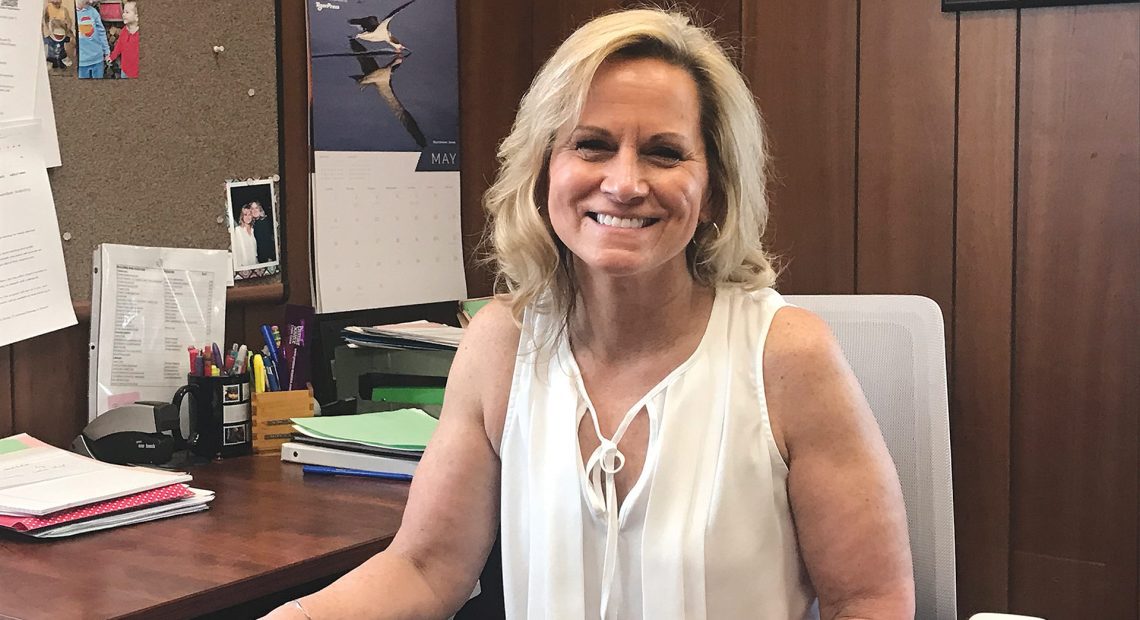
Paragus Strategic IT has become a regional success story from its Route 9 headquarters in Hadley.
Leaders and business owners in Hadley know the value of Route 9, which accounts for the vast majority of non-farm commerce in this community otherwise dominated by agriculture. Roughly 100,000 cars traverse Russell Street every day, but they’ve been slowed — and business owners have been frustrated — by a massive project to widen and reconstruct about 2.5 miles of the thoroughfare.
But relief in in sight, as the project is expected to wind down by next spring, and most agree the end result will be worth the trouble.
At the same time, Hadley residents are also being asked to make tough decisions about the town’s budget and its impact on their property tax bills.
Specifically, they’re being asked to consider a Proposition 2½ override. Proposition 2½ is a 1980 Massachusetts law that limits the amount of property tax revenue a municipality can raise. Each year, a community’s levy limit can increase by 2.5% of the previous year’s limit in addition to added value from new construction, renovations, and other property improvements.
To raise taxes above this limit, a community must seek voter approval through an override. By passing an override, the town can raise taxes beyond the automatic 2.5% annual increase and new growth allowed under Proposition 2½. This results in a permanent increase to the levy limit, meaning the approved amount becomes part of the tax base in all future years.
Ed Augustus
“This funding round is about more than bricks and mortar, it’s about people.”

As BusinessWest went to press on this issue, a Sept. 9 town meeting loomed in Hadley to determine whether two measures make it to a Sept. 29 special election: a $2.25 million general override to cover various operating expenses for town and school departments, and a $300,000 capital stabilization override to pay for various assets and infrastructure.
The larger measure stems from several budget needs in town, including $579,435 for an around-the-clock fire department; $824,404 for increased operational expenses, including town and school budgets and a mid-year health insurance increase; and $846,785 to cover free cash that was used to balance the budget approved by a town meeting in May.
Should both measures pass, the town’s property tax rate would increase from $11.63 to $13.57 per $1,000 valuation. That would mean a $679 difference in the annual tax bill for a house assessed at $350,000, $873 for a $450,000 home, and $1,067 for a $550,000 home.
Then there’s the search — currently paused — for a new town administrator. Carolyn Brennan stepped down from the role in December after more than four years in the chair, and Police Chief Michael Mason has been serving in that role on an interim basis. In June, the Hadley Select Board postponed the search for a permanent replacement after members decided not to offer the job to either of the two finalists — Nate Malloy, an Amherst senior planner, and Nick Caccamo, Williamsburg’s town administrator — who conducted in-depth interviews.
“There’s work that needs to be done on the Russell School. However, it is a strong building, one that is ripe for redevelopment, and one that we think should have a future in this town, from our perspective.”
Select Board members cited the Proposition 2½ matters and the looming town meeting as circumstances making it difficult to focus on hiring a permanent town administrator, and determined to resume the effort soon. In all, the search committee reviewed 16 applications and interviewed five semifinalists before narrowing the list to two and, ultimately, turning both down.
No Place Like Home
Affordable housing remains an issue in Hadley, as it does in most communities in Western Mass., and while it’s far from a broad solution, one state-funded project aims to make a dent.
On July 31, the Healey-Driscoll administration announced $182 million in low-income housing tax credits and subsidies to 21 rental housing developments that will create or preserve 1,245 homes across Massachusetts.
Paul Kozub
“This anniversary is not just a celebration of V-One’s growth, but also of the passion and vision that have driven us since day one.”

One of those projects will be the EconoLodge redevelopment in Hadley, the adaptive reuse of a closed hotel as permanent supportive housing. The nonprofit sponsor is Valley Community Development Corp. The completed project will include 50 units for individuals or small households earning less than 60% of area median income (AMI), with 31 units further reserved for individuals or small households earning less than 30% of AMI. The completed project will primarily serve homeless individuals.
These awards were made possible in part through the Affordable Homes Act and by Gov. Maura Healey’s tax cuts package, which raised the low-income housing tax credit to $60 million annually, a $20 million increase that allows the state to support more affordable housing production.
“Our administration is working on all fronts to build more reasonably priced housing and lower costs for everyone,” Healey said. “These awards are creating thousands of apartments that people can actually afford. This is helping seniors age independently and close to their families and helping workers afford to live in the communities where their jobs are.”
Other Western Mass. projects receiving funding from the program include Ferry Street, a new construction project in Easthampton, which will offer 96 units on a site including former mill buildings; South Holyoke Homes Phase 3, a new construction family housing project in the Paper City that will offer 40 total units; and Eagle Mill Phase II, a new construction project adjacent to Eagle Mill Phase I, a mill conversion project now underway in Lee; Phase II will offer 44 units.
“This funding round is about more than bricks and mortar, it’s about people,” Housing and Livable Communities Secretary Ed Augustus said. “Whether it’s a formerly homeless individual in Boston, a senior in Topsfield, or a working family in Easthampton, the homes we’re supporting will change lives.”
In Hadley, housing is one option being considered for the iconic, 131-year-old Russell School, which has been vacant since 2015. A reuse study has identified several alternatives, including keeping the property as a municipal building and renovating it and creating a public-private partnership.

Pulse Café, a popular vegan restaurant, is among the many eateries located along Route 9 in Hadley.
This past spring, Architectural Heritage Foundation (AHF) Boston, working with Allegrone Companies of Lenox, completed a report on the 1894 building at 131 Russell St. That feasibility study determined that the structure can be rehabilitated into micro apartments, office space, or classrooms and art studios for less than $10 million. The study and resulting 24-page report were funded by the town and the Community Preservation Act.
“There’s work that needs to be done on the Russell School. However, it is a strong building, one that is ripe for redevelopment, and one that we think should have a future in this town, from our perspective,” said Jake Sanders, project executive for the nonprofit AHF Boston.
Hadley at a Glance
Year Incorporated: 1661
Population: 5,325
Area: 24.6 square miles
County: Hampshire
Residential Tax Rate: $11.63
Commercial Tax Rate: $11.63
Median Household Income: $51,851
Median Family Income: $61,897
Type of Government: Open Town Meeting, Board of Selectmen
Largest Employers: Super Stop & Shop; Evaluation Systems Group Pearson; Elaine Center at Hadley; Home Depot; Lowe’s Home Improvement
* Latest information available
“In our research, we have found the Russell School is an ideal candidate for housing or a community use,” he added, noting that options range from active use to repairs to demolition. “We have a path forward for the town.”
Something to Celebrate
Meanwhile, business owners along Russell Street continue to anticipate the finish line of the road project — and they are myriad, from law firms, restaurants, and car dealerships to big box stores at Hampshire Mall and Mountain Farms, to well-established local success stories like Paragus Strategic IT and V-One Vodka, which, in fact, just marked 20 years since opening its doors in Hadley.
“This anniversary is not just a celebration of V-One’s growth, but also of the passion and vision that have driven us since day one,” owner Paul Kozub said.
And while Hadley has plenty on its plate, grappling with budgetary realities, leadership discussions, housing, and more, it’s also a town on the move — and hoping to move a little more quickly down Route 9 next spring.