
Home Posts tagged Security (Page 11)
Sections Supplements
What Every Small Business Should Know about Immigration

Joseph Curran

Joseph Curran


Every small business should understand the basic rules about its responsibilities under the immigration laws, and also the growth opportunities available under immigration laws.
Employer responsibilities are the first concern of a small business. The 1986 Immigration Reform and Control Act (IRCA) requires every employer to verify that all employees have proper work authorization — every single employee. The centerpiece of this system is the I-9 form, which employers must complete within three days of the start of work for each employee. Typically, each new employee must present photo identification and proof of employment authorization, with original, unexpired documents. Employers are not required to keep copies of the documents on file. A properly completed I-9 is all that is required.
It is not your job to make an actual determination whether the documents are legitimate. You are not an authorized Department of Homeland Security investigator. If you check the papers and fill out the form, and it turns out that the worker is illegal, you face no liability. The standard for reviewing the documents is “…reasonably appears on its face to be genuine.” Do not request more or different documents than the minimum required. The employee, not the employer, chooses which documents to present.
The employment verification regulations (the so-called ‘I-9 rules’) cover only true employees, not independent contractors. As in the area of workers’ comp, whether an individual or entity is an independent contractor is determined on a case-by-case basis — there are no bright line rules. The term ‘independent contractor’ includes those who “carry on independent business, contract to do a piece of work according to their own means and methods, and are subject to control only as to results.” In most cases, a company would have no obligation to check the immigration documents its subcontractors’ employees.
Violations of the employment-verification rules through a contract situation must be ‘knowing.’ This includes constructive knowledge and failure to exercise reasonable care in learning about and implementing immigration rules.
Beware of employment discrimination. An employer cannot selectively hire, or refuse to hire, nationals from certain countries. That practice is called ‘national origin discrimination’ under both federal employment-discrimination law and immigration law. Various federal statutes intersect on this issue; 8 U.S.C. § 1981 and Title VII apply to non-citizens, and prohibit discrimination on the basis of national origin.
IRCA adds another layer by prohibiting discrimination on the basis of national origin and citizenship in hiring and firing employees. IRCA violations are known by the legal acronym UIREP (unfair immigration-related employment practices). Employers may require only the minimum identity and employment documents outlined in the I-9 handbook. Employers may not require any specific or additional documentation. The UIREP provisions were added to temper the effect of IRCA on aliens who have proper work authorization. Congress did not want employers to stop hiring foreigners or people with accents out of fear of accidentally hiring an illegal alien.
Civil penalties for failure to fill out and maintain I-9s correctly can range from $110 to $1,100 for each I-9. Civil penalties for employment of unauthorized aliens can range from $275 to $2,200 per alien for the first offense, $2,200 to $5,500 for the second offense, and up to $3,300 to $11,000 per alien for the third or higher offense. Criminal penalties may be imposed in cases involving pattern or practice violations.
The Immigration Service (USCIS) has also implemented E-Verify, a Web-based verification tool that employers can use to check the visa status of potential employees, using information from USCIS and the Social Security Administration databases. E-Verify began as a voluntary program, but now government employers and government contractors, as well as some private employers, are required to use the program as part of their I-9 verification system.
IRCA enforcement is not consistent. Unless there is a pattern of violations, or you are unlucky enough to be targeted for a politically motivated ‘raid,’ you are not likely to be audited, and the penalties for IRCA violations are relatively mild. In fact, current INS policy favors a warning letter before fines are assessed. The goal of this policy is to educate employers and encourage them to correct problems without litigation. There are simply too many employers hiring foreign nationals for USCIS to keep track of them.
But keep in mind that this is all about politics, and the prevailing sentiment is strongly anti-immigrant. Any comprehensive immigration legislation that passes Congress will almost certainly include provisions to increase enforcement of the IRCA/I-9 rules.
In addition to the ‘defensive’ immigration concerns with I-9 compliance, employers should also consider the potential benefits available under the immigration laws.
If you have identified a skilled international professional who can help your business grow, there are employment visas available that will allow this worker to lawfully join your company. Because of the recent economic downturn, the numerical restrictions on these visas have disappeared, and the visa petition process is relatively straightforward. Keep in mind that the employer is the visa petitioner, not the foreign national. It is a process based on promises by the organization, not by the worker. Clearly, the worker gains a benefit from the visa petition, but the procedure must be initiated by, and controlled by, the employer.
The most common employment visa is the H-1B visa, but there are employment opportunities under a variety of visa classifications, including L-1, E-1/2, J-1, O-1, and other visas.

Joseph Curran, a partner with Northampton-based Curran & Berger LLP, has been exclusively involved in the practice of immigration and nationality law since 1985. He provides legal advice to individuals, corporations, and universities, specializing in immigration issues impacting business and health care in the New England area. He currently serves on the AILA Healthcare Committee and the Mass. Bar Assoc. Immigration Law Section, chairing the MBA’s Immigration Essentials Program.


Features
When Experience Counts, This Firm Is a Lock

Stanley Bierowka

Stanley Bierowka says that, despite the sluggish economic climate, there are still plenty of opportunities for a security company to grow.

Stanley Bierowka can tell you firsthand that security companies are not created equal.
“Even though we all draw from the same pool of security professionals,” said the co-owner and general manager of MJ Norton Security in Chicopee, “the main thing is how you manage them and how you manage your accounts.”
After a lifetime of working in the industry, Bierowka said that he’s seen some shops out there throw uniforms on their staff and send them out into the field. “That,” he said with a smile, “is not how it’s done.”
He said that MJ Norton “steps it up a notch,” and offers specialized training to ready the staffers who wear his company’s name. The company has only been in business since January, but between Bierowka and his partner, Rob Allen, they have a lifetime’s worth of experience. “I started out at the bottom,” Bierowka said, “and worked my way to the top, from guard to supervisor to director of operations.”
At his last post, he was forced to take time off for a life-redefining moment. Major surgery put him off the roster for four months, and in that time, he knew that some changes were in order. Little did he know that the sick leave would turn into a silver lining.
“Allen sold his share in that company a few months earlier,” Bierowka said, “and while I was out, he asked me if I’d ever think about going into business with him.
“So I thought about it,” he continued, “and, really, I wasn’t going to go back to the other company anyway after so much time away. I was going to be out of a job and have to look for something else, and at my age, that’s not so easy. But I’m not ready to retire just yet!”
With an enviable rolodex filled with people who had admired their work in the past, the two found that one of the biggest challenges was to decide what this enterprise would be called.
“You can’t believe what we had to go through for a name,” he explained. “We must have proposed about 10 different names to the state, but were turned down for a variety of reasons. Someone either had the name, or there were patents on names.”
‘M.J.’ is the initials of Allen’s mother, and the two added that to a secure-sounding surname. “We felt it was a powerful name,” he said.
With some 15 different area outfits offering similar services, Bierowka said that his business sets itself apart in more ways than one. In addition to offering its guards specific training for their posts, he said without hesitation that their superior management is what puts this outfit ahead of the rest.
“We’re very on top of that here,” he said unequivocally.
“It might not look good for the owner to be at the job site in uniform on the first day,” he added, “but I’m not the type to sit back at the desk all the time. Until our guards are set in their schedules and shifts, we have supervisors on site, and sometimes that will be me.
“I’m out there every night checking on my people,” he continued. “And if you want to be the best, that’s what you have to do.”
By paying a rate higher than the prevailing wage for security, Bierowka said that his business hopes to maintain strong retention, not an easy feat in this industry. “We’re sacrificing our profit to make sure that the level of security guards we have is the absolute best that’s out there,” he said.
His industry gets a “bad rap,” as he calls it, stemming from poor performance to bad hires, and his business sets out to right that misperception. Because of historic problems in contract security, Bierowka said that many larger companies have decided to “go internal.”
“Your larger concerns just don’t hire out as much,” he said. “In the end that costs them a lot more, but really, it hurts our industry big time.”
And when businesses look to the bottom line, security is often one of the first line items to get cut. “It’s not directly adding to their profits,” he explained. “It’s pretty scary, because the crime hasn’t stopped.”
With Bierowka and Allen’s combined reputations, the firm is secure in its present scope, and handles assignments in a wide range of business sectors, including health care, manufacturing, retail, residential — “all commercial property,” Bierowka said. But as the company looks to the second half of its first year, he said that it is still possible to grow in the present economic climate.
“Car dealerships, condo complexes, elderly housing,” he said, listing possible avenues of growth for his venture. “There seem to be increases in those areas, and of course hospitals and clinics will always be hiring.”
Word of mouth continues to be the company’s best asset, and he said that is what drives successful operations in his field. “You’re not selling a commodity,” he said. “The person that’s interviewing you for a job is interviewing you as a person. It’s a tough sell.”
But as Bierowka got ready to head out to a new job that night, it was clear that, after a lifetime in the industry, he had the situation locked down.

—Dan Chase

Sections Supplements
NTS Takes Its Problem-solving Approach into the Greater Springfield Market

Stan Bates, left, and Barry Kelly

Stan Bates, left, and Barry Kelly have plans to “conquer Springfield.”

New Technology Systems (NTS), the East Hartford-based technology-solutions company, has always had a portion of the Western Mass. market, but never really a strong presence. Things are changing, with the opening of a new office in Monarch Place and an aggressive effort to grow market share by being visible and selling the company’s partnership-focused approach to doing business.

Barry Kelly says he had a simple, three-word set of instructions for Stan Bates as he was joining East Hartford-based New Technology Systems (NTS).
“I told him to go conquer Springfield,” said Kelly, who founded the technology-solutions company with his brother in 1981 and, until very recently, focused the vast majority of his time and energy on the Greater Hartford area. Over the years, he picked up several clients on this side of the border, but he never really made Western Mass. a strong priority.
Until now.
Or, to be more precise, until Bates took on the role of business development manager for NTS and started talking up Western Mass. as a potential growth area.
“He was and is very bullish on Springfield,” said Kelly, adding that he’s giving Bates the room (a new office on the second floor of Monarch Place) and the resources to be aggressive in Greater Springfield and grow market share here.
And as he sets out to conquer Springfield, he says he’s selling the company’s full roster of products and services — hardware, software, and consulting — but what he’s actually offering to potential clients is partnerships. That’s the word he chose to describe how NTS goes about its work — with all customers, but especially the SMB (small to medium-sized business) clients, or those who don’t have an IT manager, let alone an IT department.
Describing his approach with clients and potential clients, Bates says he spends time and energy getting to understand someone’s business, and, from an IT perspective, identify their “pain points,” and reduce or eliminate them.
“I really try to think outside the box with technology and find ways to help people use technology more effectively, while also keeping their costs under control,” he explained. “We had one client who had a whole bunch of laptops that he couldn’t afford to upgrade with the recession — but he needed to do something. With the latest technology in hard drives, we were able to significantly increase the performance of his laptops, but at a fraction of the cost of upgrades. That’s what we mean by working in partnership with the client.”
Kelly and Bates say these partnerships are made stronger by the relationships NTS has forged with manufacturers, vendors, and service providers, including Microsoft, HP, IBM, Dell, Intel, Cisco Systems, and many others. Products handled include everything from copiers and printers to computer networks.
Over the past few months, NTS has hosted a number of events featuring some of these manufacturers and their latest products, and more will be scheduled. They’ve been successful, said Bates, because busy business owners often need an education in the latest products that can help them do what they do better and faster than before. What’s more, after pushing most major investments, including those in IT, to the back burner during the economic downturn, many business owners and managers are ready to spend again, or soon will be ready.
“We’re seeing things picking up somewhat … people seem to have more confidence in the economy now,” said Bates, adding that there is a lot of new technology for business owners to consider as they look at their needs and their budgets and try to determine what to do next. “Besides the new operating systems and new equipment that’s much faster and better, there’s new technology that we have to educate our clients on.”
For this issue and its focus on the technology sector, BusinessWest takes an in-depth look at NTS, and why Kelly and Bates believe the timing is right for its expansion into the Springfield market.

Technically Speaking
Tracing the history of NTS, Kelly said the company got its start in the Hartford area and, like most technology-solutions companies 30 years ago, had to work hard to establish itself and grow its client list.
The venture grew largely on the strength of handling all-sized accounts, but especially the large insurance companies that give that city its identity, or ‘enterprise businesses,’ as Kelly called them. NTS still has many in its portfolio, but its bread and butter has always been small to medium-sized businesses with 100 or fewer employees.
And it is this market that Bates has essentially been hired to penetrate in the Greater Springfield area, where NTS has always had a presence — it has handled work for several enterprise businesses over the years — but not a large share of the market.
Since arriving late last year, Bates, working closely with Kelly, has expended considerable time and energy making introductions to business owners and IT managers in Western Mass., and keeping NTS visible.
For example, he secured a major role for NTS in something called the MassISS, or Massachusetts Information Security Summit, a comprehensive program outlining the state’s new information-security regulations, staged on Jan. 27.
“We brought a lot to the table for that event, and it was a major success for us,” said Bates, noting that the company was able to not only introduce itself to the business managers and IT professionals who dominated the audience, but also gain some business, on both the new security law and other matters.
The company also staged an elaborate open house in early May to mark the opening of downtown Springfield office, as well as other events to put the NTS name out and educate its target audience about what’s new in technology. However, most all of the portfolio-building work is done the old-fashioned way, said Bates, through pavement-pounding and earning the kinds of word-of-mouth referrals that bring new business to the door.
From the beginning, the company has worked with that ‘partnership’ mentality, said Kelly, as he talked about how NTS works with clients find ways to get the most out of advancing technology to work better and smarter.
And most companies need a partner to handle those assignments properly, said Kelly, noting that most very small companies don’t have a designated IT person, and even in larger businesses, IT staffs are thin, to say the least.
“You’ll have some companies with 300 employees, and they’ll have one person in IT who’s not even full-time,” he explained. “It’s pretty hard to stay on top of technology under those circumstances.”
Bates agreed, noting that companies in that category, and there are many of them, need assistance with everything from coordinating break-fix work to determining when, how, and with what to upgrade technology.
“You go in looking for the pain, saying, ‘how can I help this customer?’” he said. “Then you work the problem and essentially try to make that pain go away.”
Elaborating, Bates and Kelly said company representatives work with a company’s managers and IT directors to first identify and quantify problems, and then generate solutions. The key to successful outcomes, they said, is asking the right questions, listening carefully to the answers, and creating solutions that serve the client, not the company selling products.
“We try to get the C-level, where we can help those managers lower the cost of technology, or to the IT directors themselves, who might need a little bit of a helping hand getting their network to the next level,” said Bates. “And we approach things with the mindset of forging a long-term relationship.”
Kelly concurred, and said that a client’s representatives will have one eye on managing and reducing costs, and the other on efficiency and optimizing the technology that’s on the market. NTS works on both sides of the equation.
“IT people are all about performance, while the C-level folks are focused on dollars and cents — if it’s going to save them money, on power or cooling, for example, they’re all about that,” said Kelly. “As for the IT people, if you’re solving problems that are keeping them up at night, that’s huge.”
While helping the tech people sleep better, NTS is focused on educating clients and prospective clients about new technology, how it works, and how it can help companies with everything from sales to marketing.
“Things like digital signage,” said Bates, referring to the LCD, LED, plasma displays, or projected images that are becoming more commonplace. “People are aware of the technology, but many don’t know how they can take advantage of it. I have five or six potential clients coming in to meet with us and some professionals on that subject who will be teaching them the pros and cons of digital signage.”
The company also staged informational events like one on May 13 at the Sheraton in Springfield, where attendees were briefed on Windows 7 and learned about HP business-notebook innovations and HP client virtualization, and it has more planned, said Bates, adding that these are true win-win-win scenarios. Clients and potential clients benefit from the education they’re receiving in new technology, while NTS and the manufacturers involved gain exposure and business.

Keys to Success
Time will tell how Bates fares with his assignment to “go conquer Springfield.” For now, both he and Kelly are confident that NTS has the products, services, track record, and excellent timing needed to accomplish that mission.
And as it goes about that work, the company will take the same approach that it does with clients and that process of eliminating pain: in short, NTS is in this for the long haul.
George O’Brien can be reached
at [email protected]

Sections Supplements
Squad 16 Consulting Provides Sales Staffs with the Ability to ACT!

Tom Najemy

Tom Najemy is a certified ACT! consultant and premier trainer.

Tom Najemy has a goal. It’s to help businesses and their salespeople get organized and become more productive.
Najemy owns Squad 16 Consulting with his wife Sarah, and he accomplishes this by customizing a contact-management software program called ACT! for his clients. He is one of 400 certified ACT! consultants in the U.S. and a premier trainer who conducts both public and private corporate training classes.
Najamy says many businesses don’t have a centralized database of information, a situation that can inhibit growth and productivity and result in duplication of efforts or missed opportunities. Without a central database, it can also be difficult to effectively deal with customers when someone is on vacation or leaves the company, as they often take their records with them.
“A customized ACT! program allows a business to have a centralized database which contains information about customers and prospects. It will track all of their interactions with clients, including phone calls, meetings, e-mails, quotes, and sales opportunities,” Najemy said, adding that the system can be set up with Web information tabs to provide users with direct links to social-networking sites such as Facebook and LinkedIn.
The end result is that, when a customer calls, everything the salesperson needs to know, including their contact information and all of the caller’s history with the company, can be accessed with a few clicks of a computer mouse.
Najemy says ACT! can be used by any industry and adapted for single users as well as by large workgroups, which include salespeople who need the ability to connect to their company’s database from a remote location. His clients range from manufacturers to security companies, moving firms, insurance agencies, construction businesses, entertainment agencies, publishers, and schools.
“The program is very diverse. What it does is put everyone in an organization on the same page. It puts everything at their fingertips, including social media, which helps salespeople make better connections with their prospects or clients,” Najemy said.
“The product can help a business and its employees become more productive and organized. If data is entered on a daily basis, everything a person has ever done is there for him or her to analyze,” he explained. This can prove invaluable, as the software preserves details in the client’s records, which include every e-mail, phone call, and sale made, as well as information about key contact people within organizations and the best time to set up a meeting with them.
Although company executives can choose to have access to all of their employees’ files with ACT!, the purpose of the program is not to monitor people’s actions, but promote growth through shared resources and information.
“This is not about micromanagement. It’s about being proactive and helping individual salespeople help themselves,” Najemy said. “This system can allow people to analyze their market. It allows users to document what occurs when they make a call or have a meeting, as well as schedule their next activity, whether it is a phone call, e-mail, or visit.”
Najemy has found that individuals within companies that don’t have a centralized database typically employ different methods of documenting their work. One may use Outlook, while another may use salesforce.com or Excel to track their interactions with customers and prospects. Still others have a list on their computer, information stored in a BlackBerry, or their own method of tracking appointments. This can lead to problems, including losing valuable information.
“Customer-relationship management is a growing field for both large and small companies, yet many offices don’t have a solution in place to increase their customer base and retention,” Najemy said.
He knows firsthand what a difference ACT! can make. He began using it 20 years ago when he owned an entertainment-booking firm. “My problem was how to book 30 bands at 3,000 potential locations. I needed to know who I had called, what I had said to them, and what the conversations were about,” he said. “The program allows you to see the last time you spoke with a customer, what you talked about, how many messages you have left, and more. It also allows all users in a company to know the history of the company’s interactions, from e-mails that go out and come in to proposals and quotes that have been given.”
He told BusinessWest that ACT! can also be used to conduct e-mail marketing, and can be integrated with Microsoft Office, which includes Outlook, Word, and Excel. “You can generate a letter and merge relevant information from ACT!”
Today, the program has undergone many changes and is in its 12th release.
Najemy not only kept up with the technology, he became so proficient in it that he decided to become an ACT! consultant and share his knowledge with others. The timing was serendipitous, as he also wanted to get out of the entertainment-booking business. Although he had done well booking up-and-coming bands, “the music business is a real tough nut to crack,” he said.
Najemy maintained his music-booking agency for about a year as he grew a base of ACT! customers. In 2000, he changed the name of his business from Squad 16 Entertainment and incorporated as Squad 16 Consulting.
Today, he says people call on him for two reasons. The first is that they have adopted ACT! but don’t know how to make the best use of it. The second is that they want to implement a program to track customer interactions.
The first step he takes after he is hired is to conduct a brainstorming session with company officials using a software program called Mind Manager. “We discuss what they want to track as well as the best way to do that using the ACT! program,” he said, explaining that the conceptual design includes many details, including the configuration of drop-down menus and their placement on the ACT! layout.
“When that is done, I build a prototype,” he said.
ACT! provides filters for viewing users’ activities, and since the program contains five levels of user security, company executives can decide how much or how little employees will be able to access. “There are plenty of security features, and records can be open to everyone or limited to certain users. People can also have private records,” Najemy said.
After the program is customized to a company’s specifications, Najemy imports data into it from a wide variety of sources. “It can come from employees’ records or include things such as an industry or conference list,” he said.
The next step is to conduct a full day of training so employees understand all of the nuances of the program. This can be done on or off site, remotely or in his office, which includes a room with computer banks dedicated to training. Najemy also provides technical support once the project is complete.
He has the ability to take a comprehensive view of things, as he lived in Beirut for 14 years, Greece for three years, Iran for a year, and has worked in international sales, as well as owning his own companies. Several months ago, Squad 16 moved from East Longmeadow to a larger office space in East Windsor, Conn.
Najemy’s experience has made him aware that business success comes from giving employees the ability to record and share information via a centralized system. “If becoming organized and developing long-lasting, profitable business relationships is essential to your success,” he said, “then ACT! is right for you.”

Sections Supplements
Mary’s Meadow Touts an Innovative Small-home Model of Nursing Care

Sr. Mary Caritas, Jackie Bolieau, and Sr. Joan Mullen

Sr. Mary Caritas, Jackie Bolieau, and Sr. Joan Mullen say Mary’s Meadow — with its spacious community areas, gardens, and central chapel — was designed to look and feel as little like a nursing home as possible.

Sr. Mary Caritas isn’t sure which feature of Mary’s Meadow its residents and patients like best, but there’s plenty to choose from.
“It’s a totally new model,” Caritas said. “We’re the first in Massachusetts — as a matter of fact, the first in New England — with a social model delivering skilled nursing care, as opposed to a medical model of rehabilitation.”
Specifically, the nursing home, carved into a former open meadow beside Providence Place in West Springfield, is built on a small-home concept, with four houses connected by a chapel, said Caritas, vice president of the Sisters of Providence Health System. Each of those houses features 10 rooms that, in turn, open onto a spacious common area and a kitchen.
“Here, patients have more say,” Caritas said. “They can get up when they feel like it, and have breakfast when they get up,” rather than having to adhere to a certain strict schedule. And because of the layout, “no one walks more than 25 feet from their room to get to an activity.”
In other words, it doesn’t feel like a nursing home. Gone is the nursing station central to a traditional skilled-nursing facility, replaced by medication and supply cabinets in each room; nurses visit each room to administer care.
Also jettisoned are long corridors, extensive off-limits areas, and a central bureaucracy calling the shots for all patients. Mary’s Meadow residents have full access to their house’s kitchen, outdoor garden, and other space, and individual house councils make decisions on menus, activities, and routines. Instead of strictly regimented staff, the ‘elder assistant’ who works in a house is a CNA who provides direct care, laundry, cooking, and housekeeping.
Since its opening last summer, Mary’s Meadow — now completely occupied — has brought plenty of excitement to the Sisters of Providence campus, Caritas said. But it started with a promise.

Coming Home
Mary’s Meadow was established partly to keep a promise to provide a home for sisters who were moved from Providence Place when it became an independent-living facility; they were temporarily housed on one floor of Providence Behavioral Health Hospital. The new facility’s name derives from the fact that all Sisters of Providence once took the name Mary.
And it’s appropriate that this facility, created to welcome the sisters home, is also helping patients return to their own homes. The small houses are designed for both long-term living and short-term rehabilitation, and the staff believes the homelike model is conducive to recovery.
“For our rehab patients, we’re finding that they’re rehabbing much quicker and returning home,” said Jackie Bolieau, admissions and marketing coordinator, a few minutes before patients gathered in the community area to perform exercises together. “Whether someone has a total hip or total knee replacement, or cardiac surgery, they can come here and rehab. What better place to do that than a homelike environment?”
“And their cognitive abilities are sustained much longer,” added Caritas, “because they tend to be with other people when they come out of their room. Instead of walking into a corridor, they immediately find other people; they find stimulation.”
Scientific evidence seems to back up that assertion, Caritas said, pointing to a study published in the Journal of the American Geriatrics Society suggesting that residents of small nursing homes are more satisfied with their care and report a better quality of life than residents of larger, traditional nursing homes.
The report cited higher quality-of-life measurements, such as meaningful activity and relationships; comfort and a sense of security; dignity, individuality, and privacy; and the enjoyment of food, according to one of the researchers, Rosalie Kane, a professor with the University of Minnesota’s School of Public Health in Minneapolis.
The study specifically examined the model featured at Mary’s Meadow: an interconnected community of four 10-resident homes. The survey suggested that such residents have a lower incidence of later decline in activities of daily living when compared with 40 randomly selected residents in each of two traditional nursing homes.
The researchers also found that quality of care in the small-house dwellings at least equaled that provided in the traditional nursing homes and that residents showed significantly higher satisfaction with the small-house nursing home as a place to live, and were as socially active as residents of traditional nursing-home residents.
Additionally, aides working in the small-house model “were much more confident that they could help their residents achieve better social and psychological outcomes, felt they knew the residents under their care better, and had much higher job satisfaction on a variety of measures and were more likely to remain in the job,” Kane told Reuters Health.
Writing in Long-Term Living magazine, Judith Rabig and Donald Rabig go so far as to suggest that the traditional model of care is an outdated relic.
“Traditional nursing-home staff have been organized in a 19th-century industrial model, with a steep bureaucracy, departmental structures, and disenfranchised direct-care workers receiving top-down communication,” they write. “Staff is viewed as interchangeable, and their satisfaction is secondary to efficiency and completed work quotas and schedules. Staff work is focused on satisfying residents’ physical and safety needs, with no time or institutional imperative directed at meeting their higher-level needs.
“A worker,” they continue, “is valued for the ability to meet work quotas and schedules. The result has been to create high levels of job dissatisfaction and high turnover, which in turn produce poor quality of care.”

Outside the Box
Yet, despite the evidence that the small-home concept works, they write, implementation of a different model is no easy task.
“It’s a very different environment for staff, who need to change their mindset to this new model,” Caritas said. “We find that, in hiring staff, it’s easier for people who have been in home care to adapt to what we’re doing, rather than people in a traditional nursing home.”
Sr. Joan Mullen, president of the development project, said the concept has been difficult for even regulators to grasp. “We had to get quite a few construction waivers” — 56 of them, to be accurate, she said. For instance, the corridors in a nursing home must be a certain width, but the rooms at Mary’s Meadow don’t open onto corridors at all, so Mary’s Meadow installed beams in the ceiling to mark where corridors would have gone.
Plenty of thought — and some very long meetings — have gone into the design and features of Mary’s Meadow, from computer access, electronic medical records, and a wireless call system to strategic uses of color. For example, the carpeting of each home is a different shade, and that color is reflected in the stained glass that borders each chapel door that leads to a different home, reducing the possibility of a resident losing his or he way.
Meanwhile, from the layout of the private bathrooms to the meals — eaten at a long dining table, as a family would, with opportunities for residents to help with preparation and cleanup — everything has been designed to make Mary’s Meadow look and feel nothing like a nursing home. And that’s the point.
“This is based on patient and staff empowerment,” Mullen said. And, as Caritas noted, the residents and short-term patients feel like they’re home — no matter what name they go by.

Joseph Bednar can be reached at
[email protected]

Departments

The following Business Certificates and Trade Names were issued or renewed during the month of May 2010.

AGAWAM

Blanchard Landscaping
31 Simpson Circle
David Blanchard

Bloch Designs
119 Regency Park
John Bloch

Groundskeeper Landscaping
338 Silver St.
James Dupre

Hot Spot Phones
21 Joseph St.
Charissa Carr

AMHERST

DMO Construction
213 North East St.
Richard Misterka

Doolittle Construction
1352 West St.
Steven Doolittle

CHICOPEE

T.L.C. Cleaning Services
60 Whitman St.
Jill Allison Rehor

Topor Motor Mall
650 Memorial Dr.
Topor Motor Sales Inc.

Verizon Wireless
650 Memorial Dr.
Bell Atlantic Mobile of Massachusetts

GREENFIELD

Greenfield Tailors
239 Main St.
Muhammad Yasin

Magpie / Hole Pie Inc.
21-23 Bank Row
James Zaccara

McGuane Flooring
11 Abbott St.
Garrett McGuane

Pretty Nails
209 Main St.
Yen Nguyen

Ross Painting
25 Spring Terr.
Salvatore Ross Jr.

HOLYOKE

Bath & Body Works LLC
50 Holyoke St.
Patrick Hennessey

Café Whitney
361 Whitney Ave.
Alan Berrouard

LUDLOW

A Gig of Geek
407 Moore St.
Joel Padilla

BB Auto Transport
12 Lakeview Ave.
Bogdan Bragiel

Joel’s Towing
407 Moore St.
Joel Padilla

PLC Computers
51 Simond St.
Richard Calento

NORTHAMPTON

Dust Dancer
42 Fruit St.
Patricia Trant

Ibiza Tapas
5-7 Strong Ave.
Juan Suarez

MVP Fitness
320 Riverside Dr.
James Fitzgerald

Outside The Box Technology Solutions
17 Forest Glen Dr.
Charles Baranowski, Jr.

Race Day Custom Clothing
80 Damon Road
Seth Ryan

Tula
15 Lasell Ave.
Matreya Hughes

PALMER

AMC Building Construction, LLC
9 Harvey St.
Jocelyn Bolouc

BJC Realty Trust
2190 Palmer St.
Bernard Croteau Jr.

Palmer Co-Op & Dry Cleaner
1331 Main St.
Vi H. Nguyen

Palmer Heating Inc.
2099 Calkins Road
Alfred Bisnette


Sunny Nails & Spa
1331 Main St.
Khoa H. Nguyen

SOUTHWICK

Nails Studio & Spa
208 College Highway
Nga K. Thi

Webcast2u
7 Sterrett Dr.
Linda Hawley

SPRINGFIELD

Karoun Photography
122 Chestnut St.
Karoun Charkoudian

M & J Mobil Mechanic
48 Newhall St.
Mark Sheldon

Miquel’s Towing & Inspection
700 Berkshire Ave.
Miquel A. Santiago

Nice & Neat Interior Paint
337 South Branch Parkway
Curt M. Marcellin

Over the Rainbow Daycare
24 Harmon Ave.
Patricia Eileen

Rave Cinemas, LLC
1655 Boston Road
Arthur Starrs III

Rhino Lining of Springfield
50 Verge St.
Michael T. Dancy

Sally Beauty Supply
1079 Boston Road
Sally Beauty Supply

Sue’s Hair and Beauty
1111 Main St.
Sue Gavitt

T-Mobile
774 Boston Road
T-Mobile Northeast

The Perfect Touch
77 Skyridge Dr.
Tami Baumgardner

Top Shelf Promotions
253 Gillette Ave.
Cara-Anita

Western Mass Cleaning
107 Pine Acre Road
Kevin M. Latourelle

Williams & Williams
46 Clearbrook Dr.
Scott Williams

Williams Business Consult
147 Rosemary Dr.
Jerome Williams

WESTFIELD

Alarm Pro Security, LLC
26 Washington St.
John Bowen

Alice’s Piano Studio
159 Hillside Road
Alice M. Chaffee

Amalfi Pizzeria
280 Southampton Road
Benito Silvestri

Raw Dawg Customz
121 Summit Lock Road
Ryan Fuqua

WEST SPRINGFIELD

Affiance-Events
93 Charles Ave.
Angela Cooper

Aprotocall Inc.
1252 Elm St.
Angus Fox

Bear Spirit Design
42 Murray Place
Cindy S. White

City View Barber Shop
274 Westfield St.
Gregory Erbentraut

Maximum Pawn Co.
1164 Memorial Ave.
Maximino M. Salvador

Moreau Distributing
1583 Riverdale St.
Robert W. Moreau

Needle and Scissors
29 Worthen St.
Marina P. Dragun

Overcome
1538 Riverdale St.
Joellen Anderson

Showcase Cinemas & Rave Motion Pictures
864 Riverdale St.
Peter A. Nelson

DBA Certificates Departments

The following Business Certificates and Trade Names were issued or renewed during the month of May 2010.

AGAWAM

Blanchard Landscaping
31 Simpson Circle
David Blanchard

Bloch Designs
119 Regency Park
John Bloch

Groundskeeper Landscaping
338 Silver St.
James Dupre

Hot Spot Phones
21 Joseph St.
Charissa Carr

AMHERST

DMO Construction
213 North East St.
Richard Misterka

Doolittle Construction
1352 West St.
Steven Doolittle

CHICOPEE

T.L.C. Cleaning Services
60 Whitman St.
Jill Allison Rehor

Topor Motor Mall
650 Memorial Dr.
Topor Motor Sales Inc.

Verizon Wireless
650 Memorial Dr.
Bell Atlantic Mobile of Massachusetts

GREENFIELD

Greenfield Tailors
239 Main St.
Muhammad Yasin

Magpie / Hole Pie Inc.
21-23 Bank Row
James Zaccara

McGuane Flooring
11 Abbott St.
Garrett McGuane

Pretty Nails
209 Main St.
Yen Nguyen

Ross Painting
25 Spring Terr.
Salvatore Ross Jr.

HOLYOKE

Bath & Body Works LLC
50 Holyoke St.
Patrick Hennessey

Café Whitney
361 Whitney Ave.
Alan Berrouard

LUDLOW

A Gig of Geek
407 Moore St.
Joel Padilla

BB Auto Transport
12 Lakeview Ave.
Bogdan Bragiel

Joel’s Towing
407 Moore St.
Joel Padilla

PLC Computers
51 Simond St.
Richard Calento

NORTHAMPTON

Dust Dancer
42 Fruit St.
Patricia Trant

Ibiza Tapas
5-7 Strong Ave.
Juan Suarez

MVP Fitness
320 Riverside Dr.
James Fitzgerald

Outside The Box Technology Solutions
17 Forest Glen Dr.
Charles Baranowski, Jr.

Race Day Custom Clothing
80 Damon Road
Seth Ryan

Tula
15 Lasell Ave.
Matreya Hughes

PALMER

AMC Building Construction, LLC
9 Harvey St.
Jocelyn Bolouc

BJC Realty Trust
2190 Palmer St.
Bernard Croteau Jr.

Palmer Co-Op & Dry Cleaner
1331 Main St.
Vi H. Nguyen

Palmer Heating Inc.
2099 Calkins Road
Alfred Bisnette

Sunny Nails & Spa
1331 Main St.
Khoa H. Nguyen

SOUTHWICK

Nails Studio & Spa
208 College Highway
Nga K. Thi

Webcast2u
7 Sterrett Dr.
Linda Hawley

SPRINGFIELD

Karoun Photography
122 Chestnut St.
Karoun Charkoudian

M & J Mobil Mechanic
48 Newhall St.
Mark Sheldon

Miquel’s Towing & Inspection
700 Berkshire Ave.
Miquel A. Santiago

Nice & Neat Interior Paint
337 South Branch Parkway
Curt M. Marcellin

Over the Rainbow Daycare
24 Harmon Ave.
Patricia Eileen

Rave Cinemas, LLC
1655 Boston Road
Arthur Starrs III

Rhino Lining of Springfield
50 Verge St.
Michael T. Dancy

Sally Beauty Supply
1079 Boston Road
Sally Beauty Supply

Sue’s Hair and Beauty
1111 Main St.
Sue Gavitt

T-Mobile
774 Boston Road
T-Mobile Northeast

The Perfect Touch
77 Skyridge Dr.
Tami Baumgardner

Top Shelf Promotions
253 Gillette Ave.
Cara-Anita

Western Mass Cleaning
107 Pine Acre Road
Kevin M. Latourelle

Williams & Williams
46 Clearbrook Dr.
Scott Williams

Williams Business Consult
147 Rosemary Dr.
Jerome Williams

WESTFIELD

Alarm Pro Security, LLC
26 Washington St.
John Bowen

Alice’s Piano Studio
159 Hillside Road
Alice M. Chaffee

Amalfi Pizzeria
280 Southampton Road
Benito Silvestri

Raw Dawg Customz
121 Summit Lock Road
Ryan Fuqua

WEST SPRINGFIELD

Affiance-Events
93 Charles Ave.
Angela Cooper

Aprotocall Inc.
1252 Elm St.
Angus Fox

Bear Spirit Design
42 Murray Place
Cindy S. White

City View Barber Shop
274 Westfield St.
Gregory Erbentraut

Maximum Pawn Co.
1164 Memorial Ave.
Maximino M. Salvador

Moreau Distributing
1583 Riverdale St.
Robert W. Moreau

Needle and Scissors
29 Worthen St.
Marina P. Dragun

Overcome
1538 Riverdale St.
Joellen Anderson

Showcase Cinemas & Rave Motion Pictures
864 Riverdale St.
Peter A. Nelson

Features
Two Venues, Great Diversity Have Global Spectrum Well-positioned
Worlds of Opportunity

Matt Hollander says a variety of facilities enables the MassMutual Center to book events ranging from small meetings to college commencements to ice racing.

It’s called X-treme International Ice Racing, or XiiR for short.

This is, as the name suggests, racing on ice — or, to be more precise, indoor ice arenas. Motorcycles and four-wheeled vehicles, both equipped with tires boasting 2,000 metal studs, go from zero to 60 mph in under three seconds.

They’re not going that fast for long, however, because turns come up quick on an ice rink 200 feet long and 98 feet wide.

Indeed, when asked if XiiR was like a NASCAR event on a tiny, quarter-mile track (like the one at the former Riverside Park), MassMutual Center General Manager Matt Hollander laughed and said, “more like an eighth-of-a-mile track.”

Hollander got to see for himself in February 2009 and again last Oct. 22, the start to the XiiR 2009-10 season. Subsequent stops were in Erie, Pa., Elmira, N.Y., Independence, Mo., and Dawson Creek, British Columbia.

“It was a fun night … the fans were really into it, and the action was fast and intense; the bikes have no brakes,” Hollander said of last fall’s races, adding that XiiR is just one of several dozen unique, often once-a-year shows with which the staff at the MassMutual Center fills in dates on the calendar, often with two events a day.

A look at the list of gatherings booked for the period between July 1, 2009 and June 30, 2010 reveals just how diverse the facility’s growing client list is. There’s the Miss Bella Hispanic Beauty Pageant, the Mass. Bar Assoc. House of Delegates Meeting, and the Central Mass. Pop Warner Cheerleading Competition. There’s also the Big Y Annual Services Award Dinner, the St. John’s Congregational Church Seasoned Saints Ministry Holiday Luncheon, the Northeast Canvas Products Assoc. and Conference, and the Commerce High School prom. Still to come, with just a month or so left in the fiscal year, is a meeting of the North American Grappling Assoc., the Kids of Character Awards, and a McDonald’s managers meeting.

All this comes on top of events most people already know about: Falcons and Armor games, the Affiliated Chambers’ annual trade show, the Bay Path College Women’s Leadership Conference, and a host of college commencements.

Hollander, who took over as GM in 2006, attributes both the volume and diversity of events to a broad mix of facilities — from small-meeting rooms to an arena that can seat more up to 8,000 people (6,700 for hockey); from a ballroom that can seat close to 1,000 to more than 40,000 square feet of exhibition space — but also to an aggressive sales team, an area that boasts several attractions, and the ability to build niches, such as a growing number of cheerleading and dance competitions that fill the downtown Springfield streets with young girls in sequined uniforms.

“These are events that people wouldn’t know about unless they were downtown those days, but they’re huge,” he said of the dance and cheerleading competitions, which draw hundreds of competitors, coaches, and family members to Springfield, usually for overnight stays. “They’re just one example of how we try to book events that will have a positive impact for us, but also for the community; a number of downtown businesses benefit when these events come to town.”

The same pattern is being followed at the Mullins Center on the campus of UMass Amherst, said Troy Flynn, general manager of that facility since last fall. He told BusinessWest that he has blended a number of university-related events — from sporting contests to the Taste of UMass — with a number of outside bookings, including a months-long series of meetings of Jehovah’s Witnesses and concerts like the one featuring Carrie Underwood in March.

“The Jehovah’s Witnesses move in in June, and they stay till August,” he said, adding that the organization has weekly worship services that draw as many as 7,000 people and help area hotels. “We have other religious events, such as Acquire the Fire (Christian rock worship) in October, that blend nicely with student activity-related events that keep us busy all year round.”

The two venues give Global Spectrum, the Philadelphia-based public-assembly-facility management company a strong presence in the Western Mass. market and a unique opportunity to grow its book of business here. Rather than compete with one another, the facilities work in a complementary manner and combine to bring a wide array of groups to Western Mass. Some come for a few hours, and some for several days. Most importantly, however, most come back year after year.

For this issue, BusinessWest looks at Global Spectrum’s twin facilities in the Pioneer Valley, how they work to fill their calendars, and why their success creates opportunities for many area businesses.

Being Frank

Flynn says there was just one “casualty.”

By that, he meant only one competitor couldn’t keep down his body of work in the hot-dog-eating contest staged this spring at the Mullins Center. Otherwise, the event was a quite a success, although a little hard to watch, by his own admission.

There’s also been a chicken-wing-eating contest; that Taste of UMass, which featured a giant, 40-foot sushi roll; athletic events, including those for both UMass teams and other constituencies; concerts; and more, said Flynn, noting that, in this business, facility managers have to focus first on quality of events, which then creates quantity.

This is a corporate-wide philosophy, said Flynn, who cut his teeth at Philadelphia’s Spectrum (soon to be razed), where his father worked security for years, and where Troy started as change-over supervisor — transforming a basketball court into a hockey surface. He’s added lines to his résumé from work in locales ranging from Trenton, N.J. to Split, Croatia, where, while working for Global Spectrum Europe, he coordinated rounds of the world handball championships at the Spaladium Arena.

At UMass, he’s working to continue and expand efforts to add booking dates for university-related groups and programs, other area communities (several high-school commencements are slotted for June), and regional and national acts such as Carrie Underwood, Cirque du Soleil Saltimbanco, and Daughtry in concert with Lifehouse and Cavo.

Hollander also brings a diverse CV to his position at the MassMutual Center. Prior to arriving there as assistant GM and eventually moving into the top spot, he was director of Operations for the Palm Beach County Convention Center in West Palm Beach, Fla.; executive director of the Valdosta-Lowndes County Conference Center and Tourism Authority in Valdosta, Ga.; and general manager of the University Center Auditorium at Florida Atlantic University, among other posts.

Through those experiences and his time in Springfield, he says he’s learned that there are several keys to success in this business. The first is to cast a wide net and not overlook any opportunities to fill in lines on calendar dates. This means taking prestigious events like college commencements and national ice shows, but also the giant liquidation sales (often booked last minute) that fill the exhibit hall and certainly help on the bottom line.

But while garnering new business is always a prerequisite for success in this sector, gaining repeat business is also a must, and this means providing quality customer service that brings a group back. Also key is developing a reputation for successfully staging certain kinds of events, he said, which has led to the MassMutual’s ability to book a number of dance and cheerleading competitions.

“If people are well taken care of, they’re far more likely to come back, and also talk about their experience with others,” he said. “That’s why, when teams and groups are here, we make sure that they are taken care of, and that every need and concern is addressed.”

This brings both Hollander and Flynn to the phrase ‘How You Doin?’ which doubles as Global Spectrum’s marketing slogan (it’s printed on posters in several places within both facilities) and its customer-service philosophy.

That question is asked early and often doing the course of a group’s event, said Flynn, adding that, by listening closely to the answers, the staffs at both venues can not only meet but exceed expectations, and thus drive repeat business.

Overall, the MassMutual Center has booked between 100 and 125 events in its arena in each of the past five years, which is a good number for this market and that size facility, he said, adding that he and his staff are helped by having two professional sports teams — the American Hockey League’s Falcons and the NBA Developmental League’s Armor — as well as several colleges and those aforementioned dance and cheerleader competitions.

Meanwhile, a similar number of events have been booked for the exhibition space, which can be subdivided in a number of ways, he explained, and thus can accommodate events of all sizes.

The goal with both the arena and the exhibition space is to take advantage of both the venue’s assets and the region’s strengths to not only stimulate bookings, but create long-term customers.

“The destination plays an important role with certain types of business, and the venue plays an important role with other kinds of business,” he explained. “With the cheer events, we find that the keys are accessibility — we’re easy to drive to, and the hotel rates are reasonable — and the services that we offer at the venue, as well as the fact that we have the exhibit hall to support the event in the case of the larger competitions.

“Those elements combine to make this attractive for those kinds of groups,” he continued. “When we get into convention marketing and that type of thing, the specific needs of the organizations and what they’re looking to achieve all play a part in where they go. And once they establish a relationship with a venue that’s been successful for them, they tend to be very loyal to the venue.”

Therefore, creating the experiences that trigger such loyalty is the unofficial job description for facility managers, said Flynn, who noted that the Jehovah’s Witnesses have been coming back for several weeks of conventions for many years now, and are booked through 2016.

Gaining Traction

X-treme International Ice Racing isn’t the only motorsports event staged at the MassMutual Center. Indeed, the venue also plays host to an FMX, or freestyle motocross, competition, said Hollander, adding that the ice racing is the one that can get him and others to shake their heads.

There’s no word yet on whether the XiiR will be back for the next season, but the expectation is that it will. The races drew well, and, by most all accounts, the answers to the question ‘how you doing?’ were generally positive.

The formula for success in this highly competitive business is much more complicated than that, said Hollander and Flynn, but, in many ways, that’s what it boils down to.

George O’Brien can be reached

at[email protected]

Features
Bing Restoration Project Takes a Major Step Forward
Work of Arts

Brian Hale says great strides have been made to breathe new life into the old Bing Theater.

Brian Hale remembers a time when a rainy Saturday would have packed all 900 seats in the Bing Theater on Sumner Avenue, near the city’s X.

“My friend and I came to see Day of the Triffids and Fun in Acapulco, with Elvis, and it was so crowded we couldn’t get seats even near each other,” he said. It might not have been those two movies that led them back to the defunct theater years later, but both men are now board members of The X Main Street Corp. (XMSC), which owns the rechristened Bing Arts Center.

With the sounds of hammers and saws punctuating the conversation, Hale told the story of how the 1930s gas station known as Cossaboom’s Service Station on Sumner Avenue was transformed into Forest Park’s portal to Tinseltown, and became the place to be for the postwar Baby Boomer generation. The future of the Bing Arts Center, he said, has just as an important a role for arts and culture in the city.

The big theater space out back is still far from a return to celluloid spectacles, but for now, the front section of the building is completely refurbished and has been slowly but steadily hosting arts-education classes, movie screenings, and, very soon, its inaugural arts show.

With a soft opening planned for June 5, Hale, board president of the XMSC, plans to introduce the community to what the XMSC calls “a place which will enable our citizens of all ages, ethnic groups, genders, orientation, and economic status to gather, experience, and build the unifying bonds of civilization and community that active participation in the arts can and will provide.

“I live a couple miles away from the Bing, and almost every time my wife and I drive to go to see a show somewhere, we drive right by the Bing,” he added. “We are not alone in thinking how important it is to have something to keep people here.”

Hale took BusinessWest on a tour of the Bing and, with opening day just a short while away, projected his plans and hopes for the future of art and culture not only for Forest Park, but for Springfield and the surrounding area.

X Marks the Spot

In the freshly-painted room destined to be an arts classroom, Hale described the early history of the Bing. “They turned the front of the building into two storefronts, built the theater on the back, and named it after Bing Crosby. It showed films from 1950 through 1999, opening with Samson and Delilah, and ending with the remake of Psycho. How’s that for a programming arc?” he said with a smile.

After 50 years, the city took over the property for non-payment of taxes, and the neighborhood theater’s house lights dimmed for the last time. Suffering from neglect and lax security, the building was fortunately spared the fate of many other defunct urban theaters.

“Honestly, though, I think the city would have torn it down if it had the money,” Hale said.

However, Springfield put forth an RFP for redevelopment of the site, and one interested party intended to transform the theater into an arts center, but the scope of the project was just too great.

In 2002, the XMSC took control of the project. A nonprofit entity that Hale described as one of many Main Street-type redevelopment organizations around the country, the group immediately saw the importance of the history, location, and potential of the Bing Theater.

“The X used to be a fantastic urban retail district,” native son Hale explained. “More than 26,000 people live in Forest Park alone, with another 4,000 to 5,000 in East Forest Park. If you draw a five-mile radius around the Bing, I don’t even know … it’s probably 60,000 people. And completely diverse, too — from Section 8 to millionaires, all ethnic groups.

“We knew that, to have a true community arts center in Springfield,” he continued, “this is the place.”

And so the XMSC “sunk its teeth” into the project, he said, and in true community fashion with help from residents of that neighborhood.

One of those people, who happened to be painting the interior that day with his crew, was Mark Checkwicz, owner of a high-end commercial painting and restoration company in the city. He is one of the many people generously donating his time, resources, and manpower to see the BAC open on time.

“He lives just down the street,” Hale said, “and has been involved with the project from the beginning.”

Which was a project of titanic proportions.

“The first winter we took the building,” Hale said, “literally the lobby floor was covered in ice, and there was a frozen waterfall cascading from the ceiling, which encased the electric panel. In order to make handicapped-accessible bathrooms in the front, we had to jackhammer out the slab floor.”

After installing entirely new HVAC and electrical systems, gut-framing and re-insulating the front section of the building, and assessing the non-structural damage to the large theater in back, Hale joked that his day job owning and operating Design Workshop in Indian Orchard might be supplanted by his role as de facto general contractor for the Bing.

Getting the front section of the BAC in shape is what he calls ‘phase one,’ allowing for gallery space, art-education classrooms, and a modest performance space that will ultimately serve as the lobby for phase two, the larger theater.

The first exhibit, with work from three well-known area artists, is titled “Upcycled: Transforming the Unused into the Inspirational.” Featuring found-object sculptures, Hale said it is definitely fitting for the first show.

Some concerts have been staged in the lobby/entryway area, and that space is destined to be the ad hoc theater showing first-run arthouse films some time after the June opening.

Walking around the finished gallery and front section of the Bing, Hale said, “I’d say that the scope of the project has exceeded my expectations by a factor of three.

“Previously, I had been thinking, maybe $100,000 could get the front open,” he continued. “But then again, we were going to try to reuse a lot of the systems — the heating and such.

“Then I had a conversation with Dave Panagore,” he continued, referring to then-chief financial officer of the Springfield control board, “and he said, ‘you’re just not going to get there if you don’t do it right. People will recognize the difference.’”

Altogether, the BAC renovation has come to just under $300,000, and Hale said, “I think we’ve done very well with that.”

Go Ahead, Make My Day

Hale doesn’t mince words when he assesses the importance of a cultural center for the neighborhood. “Arts education really is pathetic right now,” he said.

While the theater component to phase two is important, providing a venue for film and performance that will easily compete for first-rate offerings, Hale is most thrilled by the possibility for art and culture to come to the city’s newest generations.

“We’ve started a collaborative partnership with the White Street School, two blocks down, which had no art programs for the kids,” he explained. “So we started two classes, a movie-production class, and an art-through-many-cultures program on Saturdays.

“Some people go, ‘well, until you get the theater open, who cares?’” he continued. “Regularly, though, there will be art on the walls, there will be all-ages educational programming going on, performance programming, neighborhood groups can use the space for meetings. We want to support the neighborhood economically with this presence.”

Citing an untapped cultural presence in the city, Hale said that there’s “no ‘scene’ per se; there’s no hub for people to make contacts. I know some amazing visual artists here in the city, some musicians also. But they are low-profile because they go to Boston, or New York.”

The benefits from an arts center transcend the immediate function of movies and a gallery, he said.

“It’s the creative economy that is our best hope as a city,” he explained, “and it doesn’t require a great deal of money to make it happen. We’re not going to get big retail in this neighborhood; we’re not going to get large-scale manufacturing in the city.

“I’ve often referred to this as the ‘cool neighborhood program,’” he continued. “If you make this area culturally attractive, then you’ll get people who want to come here, spend money here, and live here.”

The Show Must Go On

While phase one opens the doors this month, the theater out back will have to wait a bit.

“People keep asking about the big room in the rear,” Hale said, “because everyone is just dying to know when we’ll get that open.”

Like a seasoned GC, Hale added, “I tell people, it’s not when, it’s how much. It’s all about the dollars. If we had the money, we could have it open in about a year, but we’re working on the actual plans, thanks to the pro bono work of a well-known local architect. Hopefully by summer we can have those finished so we can put a budget to it.”

The XMSC hired a fund-development firm, the Hedgepeth Group, to assist with that capital campaign. Word will soon be out on the target figure for that project.

Hale estimates that the total bill will be anywhere from $3 million to $5 million, but that is a turnkey look at the theater, programming, and all expenses necessary to get the show back on the screen and on the stage.

For the more immediate future, the BAC is up and beginning to fill that expressed void as a catalyst for an increased art presence in the city.

“It’s a missing piece here in the city,” Hale said proudly, “but it’s finally falling into place.”

Court Dockets Departments

The following is a compilation of recent lawsuits involving area businesses and organizations. These are strictly allegations that have yet to be proven in a court of law. Readers are advised to contact the parties listed, or the court, for more information concerning the individual claims.

HAMPDEN SUPERIOR COURT

3640 Main Street, LLP v. Eastfield Glass Inc. and Saloomey Construction Inc.
Allegation: Negligent installment of commercial window system and failure to honor warranties: $500,000
Filed: 4/11/10

Hammer & Steel Inc. v. Quaboag Transfer Inc.
Allegation: Contractual dispute regarding storage and handling: $25,000+
Filed: 3/31/10

HAMPSHIRE SUPERIOR COURT

Robert P. Sullivan v. University of Massachusetts, Allison Berger, and Jo-Anne Thomas Vanin
Allegation: Violation of civil rights and First Amendment: $25,000+
Filed: 4/7/10

Silvia & Ronald Ash v. Instar Services Management, LLC
Allegation: Negligence and conversion of personal property and extreme emotional distress: $100,000
Filed: 3/25/10

NORTHAMPTON DISTRICT COURT

Inpro Corp. v. Creative Construction & Remodeling, LLC
Allegation: Non-payment of goods sold and delivered: $3,758.16
Filed: 3/12/2010

PALMER DISTRICT COURT

Cargill Animal Nutrition Inc. v. Arooth Brothers
Allegation: Non-payment of goods sold and delivered: $18,082.93
Filed: 3/22/10

Citibank, N.A. v. LDH Inc.
Allegation: Failure to pay for monies loaned: $18,098.98
Filed: 3/16/10

Majestic Masonry v. Aecon Inc.
Allegation: Breach of contract by failing to pay for contracted work: $5,600
Filed: 3/17/10

SPRINGFIELD DISTRICT COURT

Atwood Fire & Security v. 380 Union St. Properties, LLC
Allegation: Non-payment of services rendered: $6,605.29
Filed: 4/4/10

Comcast Spotlight Inc. v. Priore Design Inc.
Allegation: Non-payment for advertising services rendered: $10,603.51
Filed: 2/22/10

Elite Towing & Auto Repair v. Berkshire Bank
Allegation: Enforcement of mechanics lien: $8,991
Filed: 3/3/10

Marie Norgaisse v. Real Estate Renovations, LLC
Allegations: Failure to provide reasonable performance and breach of contract: $50,000
Filed: 2/22/10

USA Hauling & Recycling Inc. v. Pinocchio’s On the Go
Allegation: Non-payment for waste-removal systems: $7,406.77
Filed: 2/24/10

WESTFIELD DISTRICT COURT

Kelley Fradet Lumber Inc. v. Precision Panels Inc.
Allegation: Non-payment of goods sold and delivered: $20,624.64
Filed: 3/24/10

Pioneer Valley Winnelson Co. Inc. v. Welch Plumbing & Heating
Allegation: Non-payment of goods sold and delivered: $14,354.86
Filed: 3/11/10

Features
This Local Banker Makes Several Points of Interest
Tom Creed

Tom Creed, senior vice president and commercial regional executive, Berkshire Bank

Tom Creed recalls having a number of intriguing summer jobs while growing up in Longmeadow.

He caddied and worked in the bag room for several years at Longmeadow Country Club — “I think I probably learned as much about business from being a caddy as I did from being in business” — and spent a few memorable summers at what was then Riverside Park, now Six Flags, as an operator of the iconic wooden roller coaster called the Thunderbolt. Maybe his lasting memory was from one night when the ride was shut down for repairs.

“We were thinking that maybe we would get to go home early,” said Creed, senior vice president and commercial regional executive for Berkshire Bank. “But it was Saturday, and the park was pretty crowded. Our supervisor came over to me and said, ‘I need you to go out the parking lot and drive one of our double-decker buses for the rest of the night.’

“I told him I’d never driven a double-decker bus before and that I didn’t even know how to drive a standard transmission … but if he wanted me to give it a shot, I’d give a shot,” he continued. “I pull the bus out of its parking spot, and in the process, I take out about six feet of fence with the mirror. I thought for sure the guy was going to throw me out, but instead he looks at me and says, ‘that’s better than the last guy … keep going.’”

But it was one of Creed’s later employment opportunities, or what he called his first real summer job, that would ultimately shape his career path — sort of. It was as a teller at the Forest Park branch of Springfield Institution for Savings (SIS), now TD Bank. He said it taught him a little about banking, but much more about customer service, especially on what he called ‘Social Security day,’ when the place was packed.

“I say this to people all the time: that teller job is still the hardest job in banking,” he told BusinessWest. “You have no idea what you’re going to be presented with; you have no idea what customer is going to come to you, when they’re going to come to you, or what they’re going to ask of you. And whatever it is, they’re going to want it right then, and they’re going to want it perfectly. That’s the pressure a teller is under; it’s a tough job.

“The worst part of the day was the end of the day when you had to balance your drawer,” he continued, “and you had to hit that ‘enter’ button and hope that the number that came up was the one that was supposed to come up.”

Creed has gone on to have to have a number of jobs in banking, as well as a six-year stint away from the industry working for a local manufacturer (more on that later), during which he said he learned more about the financial-services sector than he did in the previous 15 years when he was in it.

He said it took him a long time to figure out what he wanted to do with his professional life, but he eventually came to the conclusion that it is banking, or at least that aspect of it that enables him to work with people to help them achieve goals and solve problems, that he enjoys most.

“I missed the client relationships — that’s why I wanted to get back into banking,” he said. “I like being in the position where you’re always exposed to different people and different businesses. I enjoy being able to spend part of my day on a real-estate transaction and another part helping a manufacturer with a working-capital challenge. It’s the fun part of banking.”

For this, the latest installment of its Profiles in Business series, BusinessWest talks at length with Creed about banking, the recession, those business relationships he mentioned, and the fact that he’s quite sure it’s a question of when, not if, he and his wife, Nancy, will retire to Key West.

Points of Interest

“And as far as she’s concerned, the sooner the better,” he said, adding that both of them love the laid-back lifestyle in the place where they now spend just one week a year. “I’ve spent a lot of money on suits in my life; I’m looking forward to the day when I don’t have to spend on one again.”

That day is still a ways off, though, and Creed must still pull a suit from the closet each morning and also contend with a recession that may be officially over, according to some economists, but is still having quite an impact on Western Mass. and its business community.

“The challenge we’re still going to have is that there are a lot of people who have just been hanging on,” he explained. “Even the little bits of improvement we’re seeing in the economy are not enough to get them through 2010. This is still going to be a tough year for a lot of people, not to mention the 15% unemployment that continues to exist in Springfield.

“But there are signs of improvement,” he continued. “I have one customer in HVAC; he tells of how, in 2008, he installed 70 furnaces, and in 2009, he installed seven. But in 2010, his phone is starting to ring again, and not just because someone’s furnace is busted.”

Creed speaks from experience when it comes to banking and economic downturns. He’s been through several in a career that started with Shawmut in Springfield soon after graduating from the University of Vermont in 1985. The economy was quite sound then, Creed recalled, and jobs were plentiful, “even for a political science major whose grades were pretty average.”

Still not at all sure what he wanted to do when he grew up, he sought out bank training programs, thinking one would give him exposure to many different industry groups and help him choose a career path. “I suppose you can say I still haven’t figured it out, because 25 years later, I’m still in banking.”

Creed eventually chose Shawmut’s training program, and began as a commercial credit analyst. He later ascended to vice president and team leader, with other stops as commercial loan officer, assistant vice president, and vice president.

During that 10-year tenure, Creed saw the financial-services sector get turned upside down as the recession of the early ’90s and real-estate collapse forced some to banks to close, others to fight for survival, and all of them to call in loans, pare staff, and change how they did business.

“It was pretty awful back then,” he recalled. “It was tense; you spent most of your day nervous because even the best of customers were having trouble paying their bills, not unlike the environment we’re going through today. Especially as a younger lender, you take a lot of that personally because you think you’ve done something wrong when loans start going sideways, and it makes you nervous. The better lenders are the ones who are more nervous, because they take their job seriously.

“That was a dreadful time, and at the peak of that recession, I could never imagine us ever seeing it happen again,” he continued. “But I remember a colleague of mine, who’s still lending today … he and I were working together at Shawmut and standing on the platform on State Street, and he said, ‘Thomas, trust me, there will come a time when everyone forgets all this and we’ll go through it all over again.’ And sure enough, he was right.”

Indeed, while times are not as bad as they were 20 years ago, especially in this market where banks did not participate in subprime lending, many institutions are forced to again look at how they do business, and make changes. These days, said Creed, banks of all shapes and sizes are simply being more careful when it comes to lending. When asked what that meant, he said banks are always careful, but in this climate, they’re paying even more attention to the fundamentals.

“You assume nothing, you check, you double-check, and you triple-check,” he explained. “You’d like to think that you do that all the time, but you’re reminded to do it more in these times than you would in others.”

After a 10-year stint at Shawmut, Creed moved on to First National Bank in Springfield and then to Citizens Bank in Boston, where he served as vice president. He was there only a year, because quality-of-life issues were pulling him and Nancy back to the Pioneer Valley, and a job offer from West Springfield-based Omniglow sealed the deal.

“I had a good job at Citizens and was working with good people, but it’s expensive to live out there,” he recalled. “When we started to think about how we wanted to live and how far outside Boston we were going to live to afford it, we were already halfway home.”

So they came all the way back, to work, but also to become quite involved in the community.

At Omniglow, Creed was vice president of corporate development, a job that took him to China for a few weeks every quarter, and also gave him invaluable insight into the banking industry from “the other side of the table,” as he put it.

Within the community, Creed is currently president of the board of directors for the Springfield Symphony Orchestra, and has been a supporter of the SSO for many years. He’s also on the board of the YMCA of Greater Springfield, set to become vice chair in May. He’s also been involved with the Affiliated Chambers of Commerce of Greater Springfield for some time (he was chairman of its legislative steering committee for five years), and is active with the Regional Employment Board of Hampden County and the Holyoke Redevelopment Authority.

The Bottom Line

Creed says he has a number of attractive options for the time when he’s not working on the job or in the community. They include the SSO (and classical music in general), the Red Sox, Jimmy Buffett concerts, golf (although he says he’s not very good), and more.

And then, there are vacations, and especially that week at the timeshare in Key West. Ultimately, he’s longing for the day when, as he says Nancy puts it, that’s the first of 52 weeks — and when he can thankfully stop spending money on suits.

Sections Supplements
A list of exhibitors taking part on May 5

Adam Quenneville Roofing & Siding

(413) 536-5955

160 Old Lyman Road

South Hadley, MA 01075

www.1800newroof.net

Booths: 25 & 26

Affiliated Chambers of Commerce of Greater Springfield Inc.

(413) 787-1555

1441 Main St.

Springfield, MA 01103

www.myonlinechamber.com

Booth: 74

After Hours DJ & AV Rental

(413) 562-2632

1310 Russell Road

Westfield, MA 01085

www.afterhoursdj.net

Booths: 43 & 44

American Convention Services

(413) 739-6811

Springfield, MA 01104

www.americanconventionservice.net

Booth: 31

An African American Point of View

(413) 796-1500

688 Boston Road, Suite B

Springfield, MA 01119

www.afampointofview.com

Booth: 84

Answer Is Fitness

(888) 270-3640

1739 Allen St.

Springfield, MA 01118

www.answerisfitness.com

Booths: 68 & 69

Bay Path College

(800) 782-7284

588 Longmeadow St.

Longmeadow, MA 01106

www.baypath.edu

Booth: 189

Bert Hill Moving and Storage

(413) 485-0050

978 Southampton Road

Westfield, MA 01085

www.berthill.com

Booth: 114

BusinessWest & The Healthcare News

(413) 781-8600

1441 Main St.

Springfield, MA 01103

www.businesswest.com

Booth: 54

Career Point

(413) 532-4900

850 High St.

Holyoke, MA 01040

www.careerpointma.org

Booth: 138

Catuogno Court Reporting and Sten-Tel Transcription

(413) 746-8100

One Monarch Place, 1414 Main St.

Springfield, MA 01144

www.catuogno.cc

Booth: 50

Chicopee Savings Bank

(800) 662-0974

70 Center St.

Chicopee, MA 01014

www.chicopeesavings.com

Booth: 99

Clear Channel Radio

Phone (413) 781-1011

1331 Main St., Suite 400

Springfield, MA 01103

www.mix931.com

Booth: 56

Comcast Business Services

(413) 730-4540

3303 Main St.

Springfield, MA 01107-1111

www.comcast.com/business

Booth: 34

Constellation New Energy

(617) 772-7500

116 Huntington Avenue, Suite 700

Boston, MA 02116

www.newenergy.com

Booth: 102

Country Bank

(413) 967-6221

75 Main St.

Ware, MA 01082

www.countrybank.com

Booth: 92

Crestview Country Club

(413) 786-2593

Shoemaker Lane

Agawam, MA 01001

www.crestviewcc.org

Booth: 42

DiGrigoli Salons

(413) 827-8888

1578 Riverdale St.

West Springfield, MA 01089

www.digrigoli.com

Booths: 195 & 196

Eastfield Mall

(413) 543-8000

1655 Boston Road, Unit A11

Springfield, MA 01129

www.eastfieldmall.com

Booth: 192

EDC of Western Mass.

(413) 593-6421

1441 Main St.

Springfield, MA 01103

www.westernmassedc.com

Booth: 73

Elms College

(413) 594-2761

291 Springfield St.

Chicopee, MA 01013

www.elms.edu

Booth: 110

Fandotech

(866) 514-4415

78 Interstate Dr.

West Springfield, MA 01089

www.fandotech.com

Booth: 115

Fasttrack Airport Parking

(800) 590-6789

24 Ella Grasso Turnpike

Windsor Locks, CT 06096

www.avistarparking.com/fasttrack

Booth: 27

Forest Park Zoo

(413) 733-2251

302 Sumner Ave.

Springfield, MA 01138

www.forestparkzoo.org

Booth: 194

Freedom Credit Union

(413) 739-6961

P.O. Box 3009

Springfield, MA 01101

www.freedomcoop.com

Booth: 199

FutureWorks

(413) 858-2800

1 Federal St., Building 103-3

Springfield, MA 01105

www.getajob.cc

Booth: 72

Get Set Marketing, LLC

Phone (413) 781-7800

125 Main St.

Springfield, MA 01105

Booth: 65

Hampton Inn & Days Inn

Phone (413) 593-1500

600 Memorial Dr.

Chicopee, MA 01105

www.chicopee.hamptoninn.com

Booth: 131

Harrington Insurance Agency Inc.

(508) 219-0209

www.harringtonsaves.com

Booth: 190

Health New England

(413) 233-3178

One Monarch Place, Suite 1500

Springfield, MA 01144

www.healthnewengland.com

Booths: 90 & 100

H.L. Dempsey Co.

(413) 736-8742

103 Baldwin St.

West Springfield, MA 01089

www.hldempsey.com

Booths: 35 & 45

Holyoke Community College

(413) 538-7000

303 Homestead Ave.

Holyoke, MA 01040

www.hcc.edu

Booth: 60

Holyoke Gas & Electric Department

(413) 536-9463

One Canal St.

Holyoke, MA 01040

www.hged.com

Booths: 197 & 198

H&R Block

www.hrblock.com

Booth: 86

La Voz Hispana Newspaper

(203) 865-2272

51 Elm St., Suite 307

New Haven, CT 06510

www.lavozhispanact.com

Booth: 63

Landmark at Monastery Heights

(413) 781-1282

110 Monastery Ave.

West Springfield, MA 01089

www.landmarkseniorliving.com

Booth: 96

Liberty Mutual Insurance

(413) 567-2000

175 Dwight Road

Longmeadow, MA 01106

www.libertymutual.com

Booth: 98

Lincoln Culinary Institute

(866) 672-4337

1760 Mapleton Ave.

Suffield, CT 06078

www.lincolnedu.com/schools/lincoln-culinary-institute

Booth: 180

MacDuffie School

(413) 734-4971

One Ames Hill Dr.

Springfield, MA 01105

www.macduffie.org

Booth: 61

n Mary Kay Cosmetics

(413) 530-1786

www.www.marykay.com/jmcnulty8

Booth: 137

MassLive, LLC

(413) 733-2000

32 Hampden St., 4th Floor

Springfield, MA 01103

www.masslive.com

Booths: 70 & 80

MassMutual Center

(413) 787-6610

1277 Main St.

Springfield, MA 01103

www.massmutualcenter.com

Booth: 91

McIntire Business Products

(800) 847-2463

128K Hall St.

Concord, New Hampshire 03301

www.mbp-inc.com

Booth: 17

Mercy Medical Center Bloodmobile

Phone (413) 748-9000

271 Carew St.

Springfield, MA 01104

www.mercycares.com

Booths: 175-179

Meyers Brothers Kalicka, P.C.

(413) 536-8510

330 Whitney Ave., Suite 800

Holyoke, MA 01040

www.meyerskalicka.com

Booth: 30

MJ Norton Security Inc.

(888) 734-0707

318 Griffith Road

Chicopee, MA 01022

www.mjnortonsecurity.com

Booth: 132

Moriarty & Primack, P.C.

(413) 739-1800

1414 Main St., Suite 1300

Springfield, MA 01144

www.mass-cpa.com

Booth: 95

NECS

(800) 321-NECS

www.necs.biz

Booth: 183

New England Financial Group

(860) 521-2250

17 North Main St.

West Hartford, CT 06107

www.nefghartford.com

Booth: 83

New England Tractor Trailer Training School

(800) 243-3544

32 Field Road

Somers, CT 06071

www.nettts.com

Booth: 184

Northeast Security Solutions Inc.

(413) 733-7306

33 Sylvan St.

West Springfield, MA 01089

www.northeastsecuritysolutions.com

Booth: 82

Peter Pan Bus Lines

(800) 343-9999

P.O. Box 1776

Springfield, MA 01102

www.peterpanbus.com

Booths: 75 & 76

Pioneer Valley Planning Commission

(413) 781-6045

60 Congress St., Floor 1

Springfield, MA 01104

www.pvpc.org

Booth: 133

Porter & Chester Institute

(413) 593-3339

134 Dulong Circle

Chicopee, MA 01022

www.porterchester.com

Booth: 3

ProShred Security

(413) 596-5479

75 Post Office Park

Wilbraham, MA 01095

www.proshred.com

Booth: 140

Regional Employment Board of Hampden County Inc.

(413) 755-1357

1441 Main St.

Springfield, MA 01103

www.rebhc.org

Booth: 103

Reminder Publications

(413) 525-3247

280 North Main St., Suite 1

East Longmeadow, MA 01028

www.thereminder.com

Booth: 207

The Republican

(413) 788-1000

1860 Main St.

Springfield, MA 01103

www.masslive.com

Booth: 81

ResaVue Exhibits

(860) 627-6399

10 Stran Road

Milford, CT 06460

www.resavue.com

Booth: 1

Roger L. Putnam Vocational Technical High School

(413) 787-7424

1300 State St.

Springfield, MA 01109

www.sps.springfield.ma.us

Booths: 200 & 201

Roger Sitterly & Son, Inc.

(800) 533-1171

P.O. Box 2530

Springfield, MA 01101

www.sitterlymovers.com

Booth: 87

Royal & Klimczuk, LLC

(413) 586-2288

1350 Main St., 4th Floor

Springfield, MA 01103

www.rkesq.com

Booth: 89

RRD Technologies

(413) 786-5255

80 Ramah Circle South

Agawam, MA 01001

www.rrd-tech.com

Booth: 185

Sage Engineering and Contracting Inc.

(413) 562-4884

199 Servistar Industrial Way, Suite 2

Westfield, MA 01085

www.sage-llc.com

Booth: 135

Sheraton Springfield Monarch Place Hotel

(413) 781-1010

One Monarch Place

Springfield, MA 01144

www.sheraton.com/springfieldma

Booth: 160

S.J. Services Inc.

(800) 281-1665

52 Robbins Road

Springfield, MA 01104

www.sj-services.com

Booth: 94

Spirit of Springfield

(413) 733-3800

101 State St., Suite 220

Springfield, MA 01103

www.spiritofspringfield.org

Booth: 40

Springfield Armor

(413) 746-3263

One Monarch Place, Suite 220

Springfield, MA 01144

www.nba.com/dleague/springfield

Booth: 62

Springfield Business Improvement District

(413) 781-1591

1441 Main St., 1st Floor

Springfield, MA 01103

www.springfielddowntown.com

Booth: 191

Springfield College

(413) 748-3000

263 Alden St.

Springfield, MA 01109

www.springfieldcollege.edu

Booth: 101

Springfield Falcons Hockey Club

(413) 739-3344

45 Falcons Way

Springfield, MA 01103

www.falconsahl.com

Booth: 125

STCU Credit Union

(413) 732-9812

145 Industry Ave.

Springfield, MA 01104

www.stcu.com

Booth: 67

Steve Lewis Subaru

(413) 584-3292

48 Damon Road

Northampton, MA 01060

www.stevelewissubaru.com

Booths: 38 & 39, 48 & 49

TD Bank

(413) 748-8231

1441 Main Street

Springfield, MA 01103

www.tdbank.com

Booth: 85

United Personnel

(413) 736-0800

1331 Main St., Suite 100

Springfield, MA 01103

www.unitedpersonnel.com

Booth: 64

Univision-TV 43

(860) 278-1818

One Constitution Plaza, 7th Floor

Hartford, CT 06103

www.wuvntv.com

Booths: 32 & 33

Valley Communications Systems Inc.

(413) 592-4136

20 First Ave.

Chicopee, MA 01020

www.valleycommunications.com

Booths: 187 & 188

Verizon

(800) 941-9900 begin_of_the_skype_highlighting              (800) 941-9900      end_of_the_skype_highlighting 

www.verizon.com

Booth: 55

Western Mass Wellness, LLC

(413) 732-9355

West Springfield, MA 01089

www.westernmasswellness.com

Booth: 53

Western New England College

(413) 782-3111

1215 Wilbraham Road

Springfield, MA 01119

www.wnec.edu

Booth: 71

Westfield State College

(413) 572-8020

577 Western Ave.

Westfield, MA 01086

www.wsc.ma.edu

Booth: 105

Westover Job Corps

(413) 593-4000

103 Johnson Road

Chicopee, MA 01022

www.westoverjobcorps.com

Booth: 2

WFCR 88.5 FM & WNNZ 640 AM Public Radio

Phone (413) 577-0779

Hampshire House, UMass

131 County Circle

Amherst, MA 01003-9257

www.wfcr.org

Booth: 104

WGBY

(413) 781-2801

44 Hampden St.

Springfield, MA 01103

www.wgby.org

Booth: 93

Whalley Computer Associates

(413) 569-4200

One Whalley Way

Southwick, MA 01077

www.wca.com

Booth: 15

Wilbraham & Monson Academy

(413) 596-6811

423 Main St.

Wilbraham, MA 01095

www.wmacademy.org

Booths: 57 & 58

WMAS 94.7 FM & ESPN 1450 AM

(413) 737-1414

1000 West Columbus Ave.

Springfield, MA 01105

www.947wmas.com

www.espnspringfield.com

Booth: 14

Zasco Productions, LLC

(800) 827-6616

340 McKinstry Ave., Suite 400

Chicopee, MA 01013

www.zascoproductions.com

Booths: 202 & 203

10 Points Departments

By DENNIS G. EGAN Jr., Esq.

1. File annual reports. In Massachusetts, annual reports must be filed on or before the anniversary of formation and are required to attain good standing to secure financing, enter into purchase-and-sale transactions, and transact other business.

2. Keep business insurance current and complete. Unemployment insurance, Social Security, and workers’ compensation are all required by law. Make sure your insurance is up to date and your business is adequately covered.
3. Create a succession plan. Then memorialize it through a cross-purchase or redemption agreement. These may be funded through whole, term-life, and/or disability insurance.
4. Update your estate plan. As businesses succeed and property and assets are bought and/or sold, the composition of your estate may change. Make sure that your estate plan keeps pace.

5. File and pay taxes in a timely fashion. One thing is certain: not filing and paying taxes in a timely fashion will lead to penalties and interest that far exceed the underlying tax obligation.

6. Make sure your business is qualified to do business in every state in which you conduct business. Non-compliance can lead to significant penalties and interest on top of the filing fees.
7. Review your employment contracts. Recent case law has changed what constitutes an employee versus an independent contractor, and failure to properly categorize workers can lead to significant legal costs, administrative expense, and tax obligations.
8. Review or create a comprehensive employee handbook. This notifies employees of your business’ policies and procedures. It helps to prevent confusion, protects your business from possible litigation, and creates a better work environment.
9. Revisit your business health-insurance coverage. This will help you to balance the health needs of your employees with containing costs.

10. Service your company’s debt. Are you receiving the most favorable terms available? You may be able to refinance your company’s debt, resulting in a lower interest rate and more-favorable repayment terms.

Dennis G. Egan Jr. is an associate with the regional law firm Bacon Wilson, P.C, who specializes in business and corporate law; (413) 781-0560; degan@ baconwilson.com

Features
Wing’s Center for Geriatric Psychiatry Fills a Critical Role
Acute Needs

Dr. Ricardo Mujica said Wing’s geriatric psychiatry unit has the advantage of being on a hospital campus, with the full resources of the institution available to meet whatever medical needs might arise.

It’s retirement time for the Baby Boomers.

Specifically, by 2030, more than 75 million Boomers will be age 65 or older, and the population considered elderly in the U.S. will be double what it is today — partly because this demographic is healthier and more active than past generations of senior citizens, and cutting-edge medical breakthroughs are helping them to live longer.

But as that population increases, so do the specific needs of the elderly, including behavioral-health services targeted for that age group.

That’s where Wing Memorial Hospital saw an opportunity. The Palmer-based hospital opened its Center for Geriatric Psychiatry (CGP) last September, offering 15 beds to care for older people with behavioral-health needs too acute to be managed in an outpatient setting.

“We take a comprehensive approach that includes a medical evaluation to determine whether a medical problem may be causing the psychological symptoms,” said Dr. Ricardo Mujica, a geriatric psychiatrist and director of the center. “The idea is to stabilize the acute problem and send them back to their previous environment.”

The center is designed to treat people age 55 and older, but the typical patient is at least 75, Mujica said, and most are female, since women tend to live longer. Their conditions range from mood disturbances and anxiety disorders to cognitive impairment and dementia, and they’re generally referred by long-term care facilities, primary-care physicians, family members, even the emergency room at Wing or another hospital.

“The reason we wanted a unit that focuses on the elderly population is that the demand for this treatment is growing, and as the Baby Boomer population gets older, we expect that to continue to be the case.”

Safe and Sound

To operate the center, Wing has partnered with New England Geriatrics, a Massachusetts-based organization specializing in mental-health services to residents and their families in long-term care facilities.

With its 15 beds, the center increases the number of acute-care beds at Wing from 59 to 74, an increase of 25%. To create space for the unit, Wing moved its medical/surgical unit into the hospital’s new Country Bank Pavilion in 2008.

That move was followed by eight months of work to renovate the vacated space. The $1.5 million, 11,000-square-foot project includes 11 private rooms, two semi-private rooms, an activity room, a dining room, and various other areas designed for treatment and rehabilitation purposes.

On a tour of the facility, Mujica showed off a series of security features designed to keep patients safe. For example, each entrance to the CGP is electronically monitored and access-controlled. All patients wear wrist bracelets that ensure they remain within the safety of the unit and alert staff of any patients’ attempts to wander. In addition, the center is equipped with 10 security cameras monitored by staff, who conduct safety rounds every 15 minutes.

In patient rooms, Wing also follows the safety standards set by the Mass. Departments of Public Health and Mental Health. These include secure ceiling tiles, drawerless shelving for clothes, tamper-resistant bathroom fixtures, electrical cords run with as little slack as possible, and blinds embedded between the windows — all measures to prevent patients from hurting themselves.

The medical team in the Center for Geriatric Psychiatry includes nurses, social workers who specialize in procuring follow-up care, therapists, a psychiatrist board-certified in geriatric psychiatry, and physicians who specialize in the geriatric population. But the center also has the advantage of being located within a full-service, acute-care hospital in case a patient’s medical needs change.

The unit is one of only two geri-psych programs in Western Mass. (the other is at Providence Behavioral Hospital in Holyoke), and is the only one to have on-site access to acute hospital-level medical treatment, Mujica said.

“We have our own medical team working on the floor, but all of the hospital is a medical backup,” Mujica said. “If there’s an acute problem, if we need to increase the level of medical care, we can provide other services.”

Mujica touted the unit’s dual emphasis on physical and psychological care as critical to its success in transitioning patients safely back into the community.

“Many people assume that people with mental illness don’t have other medical issues, but if you don’t look for medical reasons in mental illness, you can do a lot of harm to that individual,” he said.

The CGP also provides psychological education to family members and caregivers regarding each patient’s illness, including medication management.

“Even though, with certain conditions, we don’t have a cure — let’s say for dementia — medication can still improve the quality of a patient’s life and reduce the stress that is secondary to assorted psychiatric symptoms,” he said.

Mujica told BusinessWest that it’s difficult to express why he chose the niche of geriatric psychiatry when he selected a career path, but it was likely a variety of reasons.

“I have a good deal of respect for the elderly, and the challenges of treating frail individuals with multiple medical problems is interesting to me,” he said. “It’s also gratifying to give back to this ‘greatest generation’ that served this country and all of us.”

Still, he worries about the ability of the health care system in general to provide this type of care at a time when the need is growing, especially considering the current atmosphere of uncertainty surrounding Medicare and health reform in general. “I hope the elderly don’t get left out as they shift their focus to something else.”

Picking Up the Pieces

That concern applies to all mental-health services, said Maria Russo-Appel, Wing’s chief of Behavioral Health Services, who called the need for such resources “enormous.”

Wing’s program includes inpatient services through its 13-bed Parker North unit and outpatient mental-health and substance-abuse services through the Griswold Behavioral Health Center. Both are being strained right now, she said.

“There were two significant layoffs by the Department of Mental Health last year, and that left many patients stranded without an advocate,” she said. “The role of the DMH worker is to coordinate care for people who are disenfranchised.”

At the same time, she said, many group homes and other behavioral-health programs have been closing or changing hands (as in the case of Baystate Health’s substance-abuse programs being taken over by Behavioral Health Network). The reduction in program capacity statewide, and a general sense of uncertainty over the status of services, has programs like those at Wing feeling the pinch.

“We receive, at the Griswold Center, up to 75 calls a day for services. That far outstrips our resources,” Russo-Appel said. “We’re doing everything we can to meet the needs of the community.”

And those needs tend to grow when the economy sours, she added.

“We’re seeing more situational depression, situational anxiety syndromes, more addictions, including gambling,” she said. Meanwhile, more people are being hospitalized with behavioral-health issues, including many who can’t access outpatient services and are relying on emergency-room care instead. “The emergency rooms have become deluged with mental-health patients who can’t find resources.”

To meet these growing needs, Wing is adding two or three more psychiatrists within the next few months and is looking at programmatic changes, like new support groups targeted to specific disorders, but before it can make more wholesale changes to grow the behavioral-health program, it needs to make sure the programs it does offer are stabilized, she explained.

That’s partly why the Geriatric Psychiatry Center is so important, Mujica said. It takes pressure off the entire system and helps allows patients to access a continuum of care in the Wing system.

“The challenge with mental-health patients is that different facilities maintain their own histories, and patients tend to have a very fragmented history,” Russo-Appel said. “The advantage of Wing is that we’re able to maintain a continuity of behavioral-health care that many hospitals cannot.”

No matter how old a patient might be.

Departments

The following bankruptcy petitions were recently filed in U.S. Bankruptcy Court. Readers should confirm all information with the court.

Ace Industrial Cleaning
Minutillo, Gary D.
Minutillo, Susan A.
P.O. Box 262
South Hadley, MA 01075
Chapter: 7
Filing Date: 02/17/10

Akey, Terry G.
367 King Road
Athol, MA 01331
Chapter: 13
Filing Date: 02/25/10

Arroyo, Manuel
Arroyo, Debra M.
46 Aldrew Ter.
Springfield, MA 01119
Chapter: 13
Filing Date: 02/17/10

Barnard, Alfred A.
Barnard, Marcia A.
148 Glen Oak Dr.
Springfield, MA 01129
Chapter: 7
Filing Date: 02/22/10

Barton, Roderick R.
65 Oak Grove Ave.
Springfield, MA 01109
Chapter: 13
Filing Date: 02/18/10

Bartram, Tela J.
21 Robbins Road
Ware, MA 01082
Chapter: 7
Filing Date: 02/16/10

Beals, Elliott
140 Joy St.
Chicopee, MA 01020
Chapter: 7
Filing Date: 02/20/10

Beauvais, Robert A.
350 Secret Lake Road
Athol, MA 01331
Chapter: 7
Filing Date: 02/23/10

Bennett, James M.
Bennett, Cynthia E.
80 Brooks Village Road
Phillipston, MA 01331
Chapter: 13
Filing Date: 02/25/10

Bonk, Stephen E.
Bonk, Tyara M.
41 Johnson Road
Orange, MA 01364
Chapter: 7
Filing Date: 02/23/10

Bourdeau, Lynne
P.O. Box 213
Easthampton, MA 01027
Chapter: 7
Filing Date: 02/22/10

Briggs, Charles L.
Briggs, Michele C.
290 Daniels Road
North Adams, MA 01247
Chapter: 7
Filing Date: 02/16/10

Burchstead, Jason R.
74 Goodale St.
Athol, MA 01331
Chapter: 7
Filing Date: 02/27/10

Carnute, Michael J.
14 Summit Ave.
Pittsfield, MA 01201
Chapter: 7
Filing Date: 02/24/10

Charest, Tina L.
239 Regency Park Dr.
Agawam, MA 01001
Chapter: 7
Filing Date: 02/22/10

Chechile, Michael C.
Chechile, Krista D.
15 Skipper Lane
Westfield, MA 01085
Chapter: 7
Filing Date: 02/26/10

Cognac, Raymond Henry
121 Nonotuck St., Apt. 3A
Holyoke, MA 01040
Chapter: 7
Filing Date: 02/25/10

Covington, Bettie T.
54 Odgen St.
Indian Orchard, MA 01151
Chapter: 7
Filing Date: 02/23/10

Crotti, Linda C.
1367 Westfield St.
West Springfield, MA 01089
Chapter: 7
Filing Date: 02/18/10

Crowley, Erin C.
a/k/a Sicard, Erin C.
73 Barrett St. #1004
Northampton, MA 01060
Chapter: 7
Filing Date: 02/23/10

Crowley, Gary Michael
Crowley, Susan Ann
50 Cooley Ave.
East Longmeadow, MA 01028
Chapter: 7
Filing Date: 02/16/10

Crowley, Gina Marie
27 Blaine St.
Springfield, MA 01108
Chapter: 7
Filing Date: 02/24/10

Cruz, Bjarney A.
393 Jarvis Ave.
Holyoke, MA 01040
Chapter: 7
Filing Date: 02/25/10

Dean, Scott F.
Dean, Rebecca S.
146 Jones Ave.
Pittsfield, MA 01201
Chapter: 13
Filing Date: 02/16/10

Delmolino, Mary P.
193 Elberon Ave., Apt. 15
Pittsfield, MA 01201
Chapter: 7
Filing Date: 02/19/10

deSouza, Jose Goncalves
21 Pond St.
Pittsfield, MA 01201
Chapter: 7
Filing Date: 02/19/10

Dimare, Joseph S.
190 West River St.
Orange, MA 01364
Chapter: 7
Filing Date: 02/16/10

Drollett, Margaret A.
93 Forest Glen
West Springfield, MA 01089
Chapter: 13
Filing Date: 02/26/10

Dussault, Deborah A.
a/k/a Nelson, Deborah A.
151 Mort Vining Road
Southwick, MA 01077
Chapter: 7
Filing Date: 02/23/10

Eccher, Nicholas J.
52 Fuller St.
Lee, MA 01238
Chapter: 7
Filing Date: 02/24/10

Edwards, Michael D.
Edwards, Brenda L.
38 Sturbridge Road
Brimfield, MA 01010
Chapter: 13
Filing Date: 02/25/10

Egnitz, John E.
200 Woodland Road
Southborough, MA 01772
Chapter: 7
Filing Date: 02/25/10

Erickson, Robert M.
3 Harwich Road
East Longmeadow, MA 01028
Chapter: 7
Filing Date: 02/22/10

Extreme Electric & Security
Janes, Joseph Leroy
136 Number Nine Road
Heath, MA 01346
Chapter: 7
Filing Date: 02/18/10

Foote, Robert A.
Tassone, Karen F.
a/k/a Joseph, Karen L.
8 Grand View Ter.
Adams, MA 01220
Chapter: 7
Filing Date: 02/25/10

Gardner, Dorothy Maria
PO Box 522
Ware, MA 01082
Chapter: 13
Filing Date: 02/17/10

Garneau, Tracy E.
1111 North St.
Pittsfield, MA 01201
Chapter: 7
Filing Date: 02/28/10

Gentile, Todd A.
8 Kingsberry Lane
Ware, MA 01082
Chapter: 7
Filing Date: 02/18/10

Gomez, Norma
134 Union St., Apt 58
Westfield, MA 01085
Chapter: 7
Filing Date: 02/27/10

Grady, Scott D.
32 Parkside Ave.
Pittsfield, MA 01201
Chapter: 7
Filing Date: 02/21/10

Green, William R.
Green, Lisa M.
72 Susan Dr.
Westfield, MA 01085
Chapter: 7
Filing Date: 02/19/10

Greene, Kimberly A.
46 Riverboat Village Road
South Hadley, MA 01075
Chapter: 7
Filing Date: 02/27/10

Grimaldi, Aleesha R.
16 America St., Apt. E
Chicopee, MA 01013-1467
Chapter: 7
Filing Date: 02/24/10

Gustave, Michael Richard
Gustave, Christina Marie
71 High Knob Road
Athol, MA 01331
Chapter: 13
Filing Date: 02/26/10

Haggerty, Thomas
1785 Carew St.
Springfield, MA 01104
Chapter: 7
Filing Date: 02/26/10

Hamamjian, Pamela L.
111 Milton St.
Florence, MA 01062
Chapter: 7
Filing Date: 02/22/10

Jackhammer Charters
Carpenter, John D.
Carpenter, Beverly M.
64 Apple Road
Brimfield, MA 01010
Chapter: 7
Filing Date: 02/18/10

Jones, Graham
Jones, Kimberly A.
85 Powdermill Road
Southwick, MA 01077
Chapter: 7
Filing Date: 02/24/10

Khanna, Ashok Kumar
Khanna, Sharda
199 Reservoir Road
Ludlow, MA 01056
Chapter: 7
Filing Date: 02/18/10

Kusek, Thomas Eugene
59 New Ludlow Road
Apt. 10-D
Chicopee, MA 01020
Chapter: 13
Filing Date: 02/26/10

LaBarre, Edward J.
LaBarre, Cristina M.
a/k/a LaBarre, Christina M.
21 Orchard St.
Belchertown, MA 01007
Chapter: 7
Filing Date: 02/22/10

Ladeau, Michael K.
Ladeau, Janelle A.
115 Walnut Hill Road
Orange, MA 01364
Chapter: 13
Filing Date: 02/17/10

Larsen, Jeffrey S.
Larsen, Karla S.
15 Kimberly Dr.
Southwick, MA 01077-9407
Chapter: 7
Filing Date: 02/24/10


Lavoice, Warren A.
181 Barnard Road
Granville, MA 01034
Chapter: 13
Filing Date: 02/28/10

LeBlanc, Lee M.
LeBlanc, Jeanne M.
235 Beacon St.
Athol, MA 01331
Chapter: 7
Filing Date: 02/22/10

Letourneau, Mary Louise
31 Union St.
Greenfield, MA 01301
Chapter: 7
Filing Date: 02/17/10

Levinson, Arthur R.
16 Merriweather Dr.
Longmeadow, MA 01106
Chapter: 7
Filing Date: 02/26/10

Liriano, Oneida
472 Front St.
Chicopee, MA 01013
Chapter: 7
Filing Date: 02/27/10

Lombardi, Michael A.
89 Dalton Ave., Apt. #3
Pittsfield, MA 01201
Chapter: 7
Filing Date: 02/25/10

Lukomski, Oleg
Lukomski, Ella I.
29 Charles St.
Agawam, MA 01001
Chapter: 7
Filing Date: 02/17/10

Lynde, Clara E.
a/k/a Hardy, Clara E.
7 West Road
Bernardston, MA 01337
Chapter: 7
Filing Date: 02/16/10

Mara, Kristen
a/k/a Cichocki, Kristen
22 Liberty St.
Florence, MA 01062
Chapter: 7
Filing Date: 02/26/10

McCollor, Gerald B.
167 Hapgood St.
Athol, MA 01331
Chapter: 7
Filing Date: 02/27/10

McMahon, Paul D.
McMahon, Janice E.
a/k/a Bartak, Janice
a/k/a Bartha, Janice
1548 Mohawk Trail
Shelburne Falls, MA 01370
Chapter: 7
Filing Date: 02/19/10

McManus, Courtney Sarah
P.O. Box 693
Hadley, MA 01035
Chapter: 7
Filing Date: 02/25/10

Mercado, Joana M.
23 Chapman St.
Indian Orchard, MA 01151
Chapter: 7
Filing Date: 02/19/10

Mitchell, Terry
a/k/a Thomas, Terry C.
a/k/a Mitchell, Terry C.
1179 Berkshire Ave.
Indian Orchard, MA 01151
Chapter: 7
Filing Date: 02/23/10

Morse, Shanon J.
Morse, Andrea L.
a/k/a Bell, Andrea L.
33 Iroquois St.
Pittsfield, MA 01201
Chapter: 13
Filing Date: 02/17/10

Neis, Richard A.
32 White Fox Road
Feeding Hills, MA 01030
Chapter: 7
Filing Date: 02/25/10

Oakland, Lawrence A.
79 Russell Road
Westfield, MA 01085
Chapter: 7
Filing Date: 02/24/10

Patruno, Joseph J.
Patruno, Maryann C.
a/k/a Patruno, Maryann
155 Jackson St.
Belchertown, MA 01007
Chapter: 7
Filing Date: 02/25/10

Pavey, Anne Marie
24 Upland Road
Pittsfield, MA 01201
Chapter: 7
Filing Date: 02/26/10

Pecevich, Peter James
24 Grandview Ter.
Barre, MA 01005
Chapter: 7
Filing Date: 02/26/10

Penna, Cheryl M.
a/k/a Collamore, Cheryl M.
488 Stony Hill Road
Wilbraham, MA 01095
Chapter: 7
Filing Date: 02/23/10

Penna, Michael J.
488 Stony Hill Road
Wilbraham, MA 01095
Chapter: 7
Filing Date: 02/23/10

Pieffer, Ian Marc
Pieffer, Kimberly Marie
a/k/a Waller, Kimberly M.
159 Farnsworth St.
Chicopee, MA 01013
Chapter: 7
Filing Date: 02/18/10

Purchase, William T.
Purchase, Diane E.
9 Corona St.
Springfield, MA 01104
Chapter: 7
Filing Date: 02/26/10

Ramos, Lilliam E.
21 Mooreland St.
Springfield, MA 01104
Chapter: 7
Filing Date: 02/24/10

Ratte, Catherine Marion
a/k/a Miller, Catherine M.
24 Western Ave.
Northampton, MA 01060
Chapter: 7
Filing Date: 02/26/10

Regal Construction
Regal Real Estate
Scott, Kyle Jeffrey
103 Millers Falls Road
Turners Falls, MA 01376
Chapter: 7
Filing Date: 02/26/10

Renaud Builders
Renaud, Philip M.
Renaud, Tammy L.
35 Apple Road
Brimfield, MA 01010
Chapter: 7
Filing Date: 02/24/10

Rivera, Wallis
Rivera, Enrique
9 Hymeston Slope
Holyoke, MA 01040
Chapter: 13
Filing Date: 02/25/10

Rodriguez, Edgardo
27 Springdale Ave.
Holyoke, MA 01040
Chapter: 7
Filing Date: 02/26/10

Rodriguez, Valeria R.
10 Chestnut St., Apt.
Springfield, MA 01103
Chapter: 7
Filing Date: 02/24/10

Routhier, Esther C.
75 Parsons St., Apt. S
Easthampton, MA 01027
Chapter: 7
Filing Date: 02/22/10

Rueli, Sally
47 Riverview St.
Springfield, MA 01108
Chapter: 7
Filing Date: 02/26/10

Santaniello, Robert A.
76 Main St.
Wilbraham, MA 01095
Chapter: 7
Filing Date: 02/22/10

Schab, Pamela M.
5 Sullivan St.
Chicopee, MA 01020
Chapter: 7
Filing Date: 02/18/10

Serrenho, Lynne M.
48 Tiderman Road
Wales, MA 01081
Chapter: 7
Filing Date: 02/25/10

Stager, Ronald H.
Stager, Janet B.
93 Grochmal Ave., Lot 1
Indian Orchard, MA 01151
Chapter: 7
Filing Date: 02/25/10

Sullivan, Michael J.
34 Park Slope
Holyoke, MA 01040
Chapter: 7
Filing Date: 02/26/10

Thomas, Robert G.
Hachey-Thomas, Linda A.
14 Monska Dr.
Easthampton, MA 01027
Chapter: 7
Filing Date: 02/25/10

Valentin, Cynthia
Acevedo, Stanley
291 Chapin Ter.
Springfield, MA 01104
Chapter: 7
Filing Date: 02/23/10

Vanalstyne, Valinda L.
63 Champlain St.
Springfield, MA 01151
Chapter: 7
Filing Date: 02/23/10

Vazquez, Anthony
110 Oklahoma St.
Springfield, MA 01104
Chapter: 7
Filing Date: 02/24/10

Vazquez, Dianna M.
a/k/a Velez, Dianna
316 Tokeneke Road
Holyoke, MA 01040
Chapter: 7
Filing Date: 02/26/10

Velazquez, Carmen T.
16 Hall St., 1st Fl.
Springfield, MA 01108
Chapter: 7
Filing Date: 02/25/10

Widner, Elizabeth Jean
71A Elm St.
Hatfield, MA 01038
Chapter: 7
Filing Date: 02/17/10

Wood, Morgan W.
141 Glendale Road
Southampton, MA 01073
Chapter: 7
Filing Date: 02/18/10

Yorke, David W.
73 Cliff St.
North Adams, MA 01247
Chapter: 7
Filing Date: 02/26/10

Yos, David L.
20 Sydney Ave.
Holyoke, MA 01040
Chapter: 13
Filing Date: 02/26/10

Yos, Jacqueline
a/k/a Cartagena, Jacqueline
20 Sydney Ave.
Holyoke, MA 01040
Chapter: 13
Filing Date: 02/26/10

Zebrowski, Ronald S.
61 Chestnut St.
Chicopee, MA 01013
Chapter: 13
Filing Date: 02/18/10

Zomek, Jody Ann
1639 Suffield St.
Agawam, MA 01001
Chapter: 7
Filing Date: 02/25/10

Features
A Sagging Economy, Other Forces Push Some into Business Ownership

Entrepreneurs of NecessityMaking the transition from employee to business owner is usually a scary proposition. What’s prompting more people to take such a plunge is the realization that the corporate world is no less scary and, in many ways, even less secure. But whether one chooses this route by choice or out of necessity, a challenging roller-coaster ride almost always awaits.
Trisha Thompson called it “working for the Mouse,” as opposed to ‘the man.’

That’s a phrase used by many of those who find themselves in the employ of the massive Disney Corp., which Thompson was, as executive editor of a Northampton-based monthly publication for parents called Wondertime.

That’s was.

Indeed, the corporation abruptly shut down the magazine roughly a year ago, despite what most all involved considered solid early success. “We made all our numbers,” said Thompson, referring to the start-up’s performance over its first several years. “We received some awards, we were on track with our circulation … we were a good magazine. We went from an original staff of seven to 32, but they decided to just shut it down.”

Fast-forwarding things a little, Thompson said this sudden, completely unexpected turn of events provided the rather violent push she and her husband, Fred Levine, then a freelance writer and editor, needed to start their own business venture, called Small Batch Books. Operated out of their home in Amherst, this vanity-press operation specializes in personal memoirs, family histories, and commemorative books.

It was launched last summer after some extensive job hunting and soul searching led the two to determine that this was the best, most practical route for them to take given their ages (Trisha was 49, Fred 52), their career aspirations, and the decidedly unsteady state of the print publishing industry.

“It doesn’t feel safe anywhere anymore — there’s no place to go that’s really all that secure,” said Thompson as she explained why she turned down a few other opportunities in publishing, including one in Iowa, and then stopped looking, even if that meant entering the often-scary world of entrepreneurship. “I thought to myself, I’m going to uproot my family to go to Des Moines, and then in a year they’re going to shut that down? No, thank you.”

And because no place is safe in most all sectors of the economy, many, like Thomson and Levine, have become what Dianne Fuller Doherty calls “entrepreneurs of necessity.”

Elaborating, Doherty, director of the Mass. Small Business Development Center Network’s western regional office, said that most who go into business for themselves do so out of choice or opportunity. But all economic downturns, and especially the so-called Great Recession, have seemingly removed choice from the equation for some who have found themselves downsized and with few, if any, attractive job opportunities.

“We’re seeing many people who are choosing this path out of necessity,” she said, “which isn’t always a good thing. Some people are cut out for this, and some people aren’t.”

Sometimes, such entrepreneurial leaps are brought on by other factors, such as a company’s relocation, discontinuation of programs, changes in administration at a company or institution, or others. For Dan Touhey, the ‘push,’ as those who have made this transition call it, came when his long-time employer, Spalding, which he most recently served as vice president of marketing, announced it would be moving out of Springfield.

The first announced destination was Atlanta, home to Russell Athletic, which bought Spalding several years ago, Touhey explained. But then, when Fruit of the Loom bought Russell, employees were told that if they wanted to stay in the organization they would have to relocate to Bowling Green, Ky.

And Touhey never gave that mailing address any serious consideration.

So after sifting through some offers from recruiters and rejecting them — none looked solid enough in these days of unrest and consolidation in corporate America — he decided to go out on his own last spring with DPT Consulting.

There are two aspects to this business. The first, concerning his primary client, the Berkshire Opportunity Fund, involves channeling small businesses looking for funding to that venture-capital outfit. The second is centered on offering Touhey’s vast experience in business and marketing to small businesses that can use it. These include a cycling-apparel company in Northampton and a start-up that manufactures a product called the ‘bunt-down bat.’

As in all cases when individuals mull the shift from being an employee to being self-employed, those who take this step out of necessity must still perform the needed due diligence, said Lyne Kendell, senior business advisor for the MSBDC, who has counseled many people weighing such a decision.

In short, such individuals must have a solid business concept and a plan of attack, she explained, but also the needed skill sets to be an entrepreneur (not everyone has them), and a passion for what they want to do.

“It can’t be something they just feel like they want to do or should do,” she explained. “And it shouldn’t be just a way to make money. It has to be something they’re passionate about. Without that, it won’t succeed.”

By the Book

This requisite passion was apparently missing the first time Thomson and Levine met with Kendell.

That was seven years ago, when they were pondering a different kind of venture, one involving custom publishing in the corporate realm, or what Thompson described as “extended advertorials” for products and services.

“Within about 10 minutes, she was giving us this weird eye, the stink-eye kind of thing,” Thompson recalled. “We were looking over our shoulders saying, ‘who’s she making this face at?’ It was us. She said, ‘do you really want to do this? I’m getting the feeling you don’t, but feel you could or should.’

“We said, ‘well, of course we do,’” Thompson continued. “But shortly thereafter, we found out she was right, but by then, we had already rented office space and spent money unnecessarily.”

Things were different when Levine and Thompson were again sitting across the MSBDC conference table from Kendell, this time explaining Small Batch Books. The two told Kendell (and BusinessWest) that they believed they had a somewhat unique concept — a soup-to-nuts vanity publishing operation — and something that they truly believed in.

This time around, the body language conveyed the necessary confidence and passion, said Kendell, who said she gave Levine and Thompson a homework assignment of sorts, one they ultimately scored well on.

“I gave them some tasks to do and things to think about, on both the personal side and the business side, and a few weeks later, they came back with those tasks completed and with the confidence that they could take the plunge,” she said. “On the personal side, they have to do what I call a personal retreat — do they have the personal wherewithal to do this? If they’re going to work together, what would the guidelines be for the home life and business life? On the business side, it’s more looking at skills, contacts, potential revenue streams, whether you really know the market, and whether you could, if necessary, live on a part-time job or savings for 12 to 18 months.”

Kendell has been assigning lots of homework these days, as she and others at the MSBDC handle a larger portfolio of cases than would be considered normal, mostly due to the recession.

Many of these cases involve businesses that are hurting, said Allen Kronick, senior business advisor for the MSBDC, noting that some wait too long to seek help. For these businesses he sometimes uses the term ‘dead on arrival’ to describe their condition, meaning that there is nothing he or anyone else can do for them. Many others can be helped, he said, adding that his own portfolio has many cases involving companies trying to find ways to hang on until the economy improves — and succeeding.

Meanwhile, many other cases involve startups, with a good percentage of them blueprinted by individuals who have been downsized and can’t find another job, or at least one to their liking, or who could perhaps find a job similar to what they had before, but are tired of what Kendell called the “rat race.”

Looking over his portfolio, Kronick said he has several clients that fit this description. They include everything from a former MSPCA employee — laid off when that agency shut down its Springfield facility — who is now making and selling cat scratch posts, to a laser engineer who knew his days were numbered with his now-former employer and started his own venture, to some other former executives at Spalding trying to figure what to do next.

Tuohey’s situation involves both the recession and general uncertainty about corporate America. He told BusinessWest that, in this economy, even though things have improved somewhat since last spring, opportunities in marketing, and especially senior marketing positions, are few and far between. But recruiters did call, he continued, and upon listening to what they were saying, he became increasingly convinced that there were few, if any, situations that provided the real security and peace of mind he was seeking.

“When I did find situations, they were less than ideal,” he explained. “They were too similar to what I had just left, and I knew how quickly things could change. I looked at a couple of situations, gave them serious consideration, and decided to decline.”

Eventually, he said he simply grew tired of waiting for the ideal situation to come about and for the economy to rebound, and started his own venture. The work with the Berkshire Opportunity Fund has been steady and has given him a solid foundation, he explained, adding that he’s slowly but surely building a portfolio of clients in sports-related businesses that can tap into his marketing and brand-building expertise.

VOmax, a Northampton-based cycling-apparel maker, is one such client. Tuohey said he recently helped the company secure licenses with the National Basketball Assoc., National Hockey League, and Major League Baseball, to make clothes with team logos and colors. Meanwhile, with the Bunt Down Bat venture, he is helping the owner build brand recognition and take manufacturing operations to a higher level.

Gifted and Talented

For Marge Slinski, the push into entrepreneurship didn’t come from the recession. Instead, it came first from a change of direction regarding the UMass program she had been involved with — one concerning youths at risk — and an informal policy at the school that acted as a career barrier.

Elaborating, Slinski said she had a position of authority with a national program, one that won several million dollars in grants to create and replicate initiatives involving youths at risk. She eventually lost that position when the school opted for a different course, and found out rather quickly that, to attain a position with similar responsibilities, challenges, and opportunities to grow, she would need a doctoral degree, which she didn’t have and didn’t want to put her life on hold to earn.

Instead, she went to the Smith College Career Center (she’s an alum) to get some counseling on what to do next. “I was essentially a person who lost a great job and had no way to replace it,” she explained, adding that those at Smith told her that she could take some of her strengths, specifically those in the arts, and what she called “collaboration building” and perhaps use them to start a business.

She took that advice and started Choices, LLC, a venture run out of her home that is focused on helping companies find appropriate gifts for their corporate clients.

Through collaborations with American artists such as Stephen Schlanser, Jennifer McCurdy, Geoffrey Smith, and others, she’s commissioned suitable, meaningful gifts for clients ranging from Fortune 100 companies to locally based banks. The recipients vary, from Mideast oil sheiks to Chinese businessmen to retiring employees, and the occasions vary as well, from celebrations of $1 billion sales (for those Fortune 100 companies, obviously) to employees’ 25th anniversaries.

“I had a new mission,” said Slinski. “Instead of youth at risk, I’m getting corporations to value American arts and crafts as key corporate gifts for their VIPs.”

Starting with a few leads given to her by her husband, who’s in business, Slinski has managed to steadily grow the company over the past few years, and is now looking to take on a partner and take it to the next level.

Meanwhile, Levine and Thompson, who worked in Western Mass. several years ago, then relocated for other job opportunities before returning nearly a decade ago, told BusinessWest that they’ve pretty much understood for some time that they would likely have to go into business for themselves, given the rocky state of the publishing industry in recent years.

“We knew when we moved back here that staying in publishing is not the best place to be, and that we’d probably have to come up with something on our own at some point,” said Levine. “We were lucky along the way in that we did find some staff jobs and we were able to cobble things together with freelance work. But after this last round, with Trisha getting let go, and with the economy taking a huge, huge bite out of print publishing in general, we knew we’d have to do something on our own that would be more stable.”

Over the past several months, they’ve been able to approach stability through several projects involving personal or family histories or other legacy initiatives, most all of them for customers outside the 413 area code; one current work in progress is for a client in Australia.

“There are many who won’t have fortunes to leave behind, but will have thoughts and memories and words,” said Thompson, noting, as one example, the remaining World War II veterans and Holocaust survivors, many of whom, as they approach or reach their ’90s, are thinking about putting their stories into something that can be preserved for future generations.

“They have a legacy to leave behind,” she said, adding that this phenomenon certainly provides some growth potential for their fledgling business.

Free Spirits

When asked about making the transition from employee to employer, or sole proprietor, those we spoke with said there is a definite learning curve that is part and parcel to such a career shift.

There are things to absorb, especially on the financial side of things, and there are some trade-offs. There is no steady paycheck anymore, said Thompson, stressing, as she did repeatedly, that there are no sure things in the corporate world either in this day and age. But there is freedom, more responsibility, and, in general, a pride in ownership that doesn’t come with working for someone.

“It’s very freeing, but’s also a little scary when you’re not working for the mouse,” said Thompson, who noted that, without the strong push that came with the closing of Wondertime, she and Levine may have not made the leap. “It’s freeing because you have as much autonomy and decision-making power as you do responsibility, and that’s unusual. There’s no one else to blame if something doesn’t go right.”

Said Levine, “on the days when it gets dicey for us and we start to get a little scared, we take a step back and look at the people we know from the long careers we’ve had who have stayed with a large publishing company and lost their jobs because the magazine got sold to some other huge conglomerate. It isn’t always better on the other side.

“But maybe the biggest difference for me is realizing how much energy you spent in a
taff job just dealing with personalities and the whole political machinery of it,” he continued. “Now, you can take all that energy and put it into building your business, and also on the creative side as well. Just think about all the time you lose sitting in meetings.”

Roughly a year after he made the transition, Tuohey has no regrets and isn’t looking back, only ahead. He, too, likes the freedom and greater sense of satisfaction that comes with business ownership.

“You definitely make your own breaks,” he said. “The thing about what I’m doing that’s so fulfilling for me is that I’ve earned every penny that I’ve made doing this, and I’ve become much more well-rounded of a professional. I think I’m more determined, and more confident in my abilities.

“Those are the absolute positives,” he continued, “plus I don’t have to jump on a plane every week and fly off and not see my kids.”

Slinski said her background has been in program development, not business management, so she has had to learn many of the basics, from balance sheets, which she’s still mastering, to pricing.

“The hardest thing to learn was to ask for the money I deserved; I would tend to underprice, but I’m getting better at it,” she said. “Overall, I was never a business person; I was great at creating things and developing things systematically, but the business side was all new to me, and I had to learn.”

All those who make the transition to business owner, whether by choice or out of necessity, should be prepared for what Tuohey called a “roller-coaster ride.”

“There are a lot of ups and downs and emotional swings,” he explained. “Most of all, people have to be prepared to work hard and have some determination and some perseverance; it’s not an easy ride by any means.”

The Bottom Line

Touhey says he still hears from recruiters.

“I get calls once in a while,” he said. “I tell them that I’ve stopped looking for a job, but if they want to talk to me, and there’s an ideal situation, I’ll certainly listen.

“But I’m going to be the one dictating the terms; I’m not just going to jump back in,” he continued. “I’ve found something I think I can grow, and in the meantime, I’ve proven to myself and my family that I’m capable of providing for us with this, and there’s a certain amount of accomplishment in that.”

In other words, a former entrepreneur of necessity is now one by choice — and he’s not alone.

George O’Brien can be reached at[email protected]

Departments

Andrea C. Miller was recently named Manager of the Center for Human Development’s Services and Supported Housing program. The program provides services, treatment, and case management for families in Hampden and Hampshire counties who have experienced long-term homelessness or housing instability.

•••••

Todd B. Speed has been appointed Vice President and Director of Investment Strategy for Berkshire Bank. Speed, a chartered Financial Analyst, will help drive investment strategy including security selection, asset allocation, identification of pertinent investment themes, and implementation of risk-management practices as part of the bank’s asset-management and trust group. He will be based at the bank’s headquarters at 66 West St., Pittsfield.

•••••

Dr. Ziad Kutayli has joined the Department of Surgery at Baystate Medical Center, Springfield, where he will specialize in colorectal surgical services with Dr. Kelly Tyler. Kutayli is a member of the American College of Surgeons, the American Medical Assoc., and the American Society of Colon and Rectal Surgeons. He will see patients at Baystate Surgical Associates, 3300 Main St., Springfield.

•••••

Northwestern Mutual Life Insurance Co. announced the following:
• Kathleen Mary Kane has been honored with the 2010 Eastern Region Managing Director Leader Award; and
• Western New England College student Jenny May Catuogno has been honored with the 2010 Eastern Region College Leader Award. The honors recognize Kane and Catuogno, affiliated with the Zuzolo Financial Group based in Springfield, for an outstanding year of performance with Northwestern Mutual, serving the financial-security needs of clients and policy owners throughout the region.

•••••

A short video of West Springfield professional organizer Mary Martone is currently on the front page of MSN’s national Health & Fitness Web site, at healthyliving.msn.com. The site provides medical information and content from well-known sources for consumers looking for the latest news and advice on personal and family wellness. Martone has been a professional organizer for more than 15 years and also offers articles on her Web site, www.mmartone.com.

•••••

Attorney José A. Aguiar has joined the law firm of Doherty, Wallace, Pillsbury & Murphy P.C. in Springfield as a Litigation Associate. His practice area is commercial litigation, which includes all areas of civil litigation.
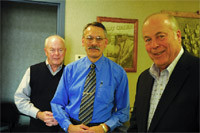
•••••

MassMutual’s Retirement Services Division has added Dan Caple to its sales team in the South/Central Division. Caple has joined MassMutual as Managing Director, and will be responsible for business development and sales support of MassMutual’s third-party and dedicated distribution channels in North Carolina, South Carolina, and Tennessee.

•••••

Dan Jordan has been promoted to Vice President of Purchasing at Friendly Ice Cream Corp. in Wilbraham. Jordan is responsible for purchasing and material-planning functions.

•••••

Sally Imhoff , a Certified Public Accountant, has joined the firm of Aaron Smith Certified Public Accountants and Business Consultants in East Longmeadow as a Senior Accountant.

•••••

Joanne M. Carney recently retired as Associate Director of the U.S. Veterans Affairs Medical Center in Leeds after close to 35 years of federal service. She served as a Clinician Dietitian and Chief of Dietetic Service as well as the facility’s Public Relations Manager during her years at the center.

•••••

Catherine D’Amato has been elected a Director of the Federal Reserve Bank of Boston. She is President and Chief Executive Officer of the Greater Boston Food Bank.

•••••

Dr. Katharine White, specializing in family-planning health-care services, has joined Baystate Wesson Women’s Group in Springfield. She is board-certified by the American Board of Obstetrics and Gynecology.

•••••

Dr. Azad A. Jabiev has joined the Department of Surgery at Baystate Medical Center in Springfield. He specializes in endocrine surgery. He is board-certified by the American Board of Surgery.

Uncategorized
Preventing Check, Wire-transfer, and ACH-debit Fraud

Despite the predications of the demise of the paper check, check fraud is on the rise. Shockingly enough, the value of paper-check fraud this year alone is expected to exceed $50 billion.

With the growing popularity of electronic payments and banking, how is it that paper-check fraud continues to be such a huge problem? Two reasons — technology and the lack of, or weak, internal controls. Technologically adept counterfeiters, armed with check stock and a high-quality color printer, can create close-to-perfect documents that pass for the real thing. When you combine a tech-savvy criminal with weak internal controls, your exposure to fraud skyrockets.

You’re Not Responsible? Think Again

Don’t assume that your bank will accept liability for counterfeit checks written against your bank accounts. The Uniform Commercial Code (UCC) changed more than a decade ago to make the liability for check fraud allocable based upon the negligence of each party. Therefore, it is critical to take precautions and insert controls to protect your company’s assets.

Implementing payee-positive pay is the most effective way to prevent counterfeit- or altered-check fraud and protect your company from liability for these items. With payee-positive pay, your company sends your bank a file detailing all checks issued. The details include the check number, check date, check amount, and payee. When checks are presented to the bank for payment, the above attributes are compared to the file provided by your company. If any of the details do not match, the bank will contact the company to determine if the check is valid and should be paid. Even though implementing payee-positive pay may carry an additional service fee from your bank, the added protection is worthwhile.

In short, it pays to understand your bank’s responsibilities regarding check fraud. Contact your bank to obtain a clear understanding of their policies and services available with respect to prevention.

In addition to implementing payee-positive pay, it’s important to understand that the UCC put a significant amount of responsibility on business customer accounts regarding timely discovery of unauthorized transactions. Section 4-406 of the UCC subsection (c) states that the customer must exercise reasonable promptness in examining the statement provided by the bank for unauthorized transactions, and, if they are identified, they must promptly notify the bank.

If the bank can prove that you failed in this responsibility, you’re precluded from making a claim against the bank unless you can prove that the bank failed to exercise ordinary care in paying the item. In this instance, the loss may be allocated between the customer and the bank. To protect your company, be sure to maintain proper control over check stock, use check stock with proper security features, and perform timely reconciliations.

Check-stock security features are also important in deterring check fraud by making checks difficult to copy, alter, or counterfeit. Some of the more effective security measures include watermarks, copy-void pantograph, and chemical voids.

Watermarks make subtle designs on the front and back of the checks via the printing process that are visible only if held up to the light at a 45-degree angle. This protects against photocopying as a counterfeit measure, since watermarks cannot be copied accurately.

Copy-void pantographs are also protection against photocopying. When the check is photocopied, the pattern changes, and the word ‘VOID’ appears, making the copy non-negotiable.

Finally, chemical voids involve the check stock being treated with a chemical that reacts only when a chemical is used to wash the check (to wash out the payee, amount, etc). When the chemicals are applied, the word ‘VOID’ appears, again, making the check non-negotiable.

Wire-transfer Fraud

Wire-transfer fraud presents another risk to your company’s most liquid asset. Like check fraud, the most effective way to prevent wire-transfer fraud is with proper internal controls. Some of the key controls that all businesses should have in place are:

  • Written wire-transfer procedures, which include who is authorized to initiate the transfer, who is authorized to verify the transfer, and the types of transactions that are authorized (list of vendors, banks, etc.);

  • Required verifications for all wire-transfer orders placed with a person independent of the employee requesting the transfer; and
  • Prompt review and reconciliation by someone independent of those who request transfers.
  • It’s important to note that wire-transfer information should never be provided to anyone via a telephone request. The company should require the bank to receive actual verbal confirmation/verification of transfers requested. Faxed instructions and/or authorized signatures should not be adequate authorization for the bank to initiate a transfer. For additional security, a code word or password should be required by the bank to verify the identity of the employee authorized to verify transfer requests.

    ACH-debit Internal Controls

    Finally, the company should also implement controls regarding automatic clearing house (ACH) debits. The ACH network has been around for some time now but is gaining more widespread use. Rules and regulations governing the ACH network are established by the Federal Reserve.

    Using ACH debits allows a company to schedule payments to be automatically debited to its account. The benefit of this type of service is the convenience of not having to take time to write the check and mail the bill, and the assurance that the bill will always be paid on time.

    The risks related to this convenience are that you must give the vendor your bank-account information, you may be billed the wrong amount, and you give up some of your ability to manage cash flow.

    There have been instances of ACH-debit fraud where unauthorized ACH debits are charged against a company’s bank account. In these cases, the perpetrator gained access to the company’s bank account information. It could have been as simple as obtaining it from one of the company’s checks.

    Again, if your company is using this type of service to make payments, timely reconciliations are a critical control to ensure that only authorized and proper amounts are deducted from your checking account.

    Finally, there are bank services that you can implement to help your company manage these risks, such as ACH blocking, which is a service from the bank that blocks all ACH debits, or ACH filtering, which allows only ACH debits that match the company’s instructions.

    Technology certainly makes business processes more efficient, but without the installation of proper internal controls as part of a larger fraud-prevention program, organizations risk exposing themselves to a higher incidence of fraud. A fraud-prevention program is good for the protection of your business.

    Joseph Centofanti is a member of the firm and the director of the Fraud Services Group at Kostin, Ruffkess & Co., LLC, a certified public-accounting and business-advisory firm with offices in Springfield as well as Farmington and New London, Conn. Beyond traditional accounting, auditing, and tax consulting, the firm also specializes in fraud investigation, fraud prevention, forensic accounting, employee-benefit-plan audits, litigation support, business valuation, succession planning, business consulting, wealth management, estate planning, and information technology assurance;www.kostin.com.

    Features
    Valley Communications Remains Focused on the Big Picture
    Sound Business Strategy

    Jim Tremble (right, with Bob Tremble, left, and Pat Parente) says Valley’s 65 years in the industry gives it a competitive advantage.

    Jim Tremble can tell you that the old adage, ‘the more things change, the more they stay the same’ easily applies to his business.

    As president of Valley Communications Systems Inc., he is one of six second-generation Trembles to carry on the company started by his parents in 1945. What began as a small retail photo shop has grown to become one of the pioneering distributors of communications equipment and services in New England.

    The business has stayed in the same location in Chicopee, just off I-291, for the past few decades, yet from that same location new products and services have been added to the Valley roster almost as soon as they’ve become available.

    Tremble said that, because of the company’s reputation, with 65 years in the industry, when manufacturers have something new to offer, it’s usually Valley who gets first crack at it. “Being in business as long as we have gives us an advantage,” he said. “And we have developed a relationship in each of our disciplines. We’ve represented the top manufacturers of each of them at one time or another. When a manufacturer has a new product and wants representation in the New England area, they come to us first. This isn’t bragging; it’s a fact.”

    While Tremble could easily brag about the strength of the family business, he joined his brother Bob — who, along with brother Mike, heads the video, A/V, and data/imaging department — to describe how the company that began with a spirited young couple became the successful enterprise it is today.

    Mother Knows Best

    When Rita and Ed Tremble first hung out their shingle on State Street in Springfield, the pair sold photographic equipment. Ed ran the front of the house, while Rita took care of both the bookkeeping and the nuts and bolts of the business. Jim and Bob credit her vision for the company that Valley Communications has become today.

    “She was the instrument of change,” Bob said. “She recognized technology and decided that it was something that we wanted to be a part of almost immediately. She called in manufacturers, and, lo and behold, we were suddenly part of the security business, or the telephone business.” Looking back, that foresight is nothing short of spectacular.

    Within four years, a new branch opened on Belmont Avenue in Springfield. From there, Jim counted off the services that his parents added to their portfolio, essentially adding up a roster of the history of the 20th century’s communications industry.

    First branching out as a holding facility for New England Telephone’s 16mm films for elementary classrooms, the pair segued into intercom systems for those schools. When Valley decided to add commercial sound systems to their roster in the late 1940s, it became the go-to resource for professional installation. The Eastern States Exposition’s Coliseum was outfitted by the Trembles, and later, they worked on both Springfield and Hartford’s Civic Centers. Jim estimates that 80% to 90% of all churches in Massachusetts and Connecticut have had Valley Communications install their sound systems.

    When Rita decided to add security to her portfolio, the company installed residential and commercial cameras and touch-tone entry pads. Within 10 years, the focus shifted to larger applications. “And we’ve been doing that for the last 40 years,” Jim noted.

    A landmark FCC deregulation decision in the late ’60s, known as the Carterfone Act, allowed non-AT&T phones to connect to that company’s communications grid. Jim said that this legislation was immediately embraced by Valley. “Because we were already doing work over lines like intercoms and such, it was a natural for us to get into that.”

    The company’s history tells of the challenges they faced in those early days taking on Ma Bell head to head. Valley contended with what it calls “mysterious” accidents, cut wires and cables, uncooperative operators, and many court cases, all without hindering its role as David to AT&T’s Goliath. From that contentious beginning, according to company records, Valley “is nationally recognized as one of the largest independent telephone interconnects in the communications industry.”

    Currently, the largest account for Valley is the Mass. State Lottery Commission. “If you’re familiar with Keno,” Jim said, “Valley installs at least one monitor in connection to the data computer in every restaurant, bar, and grocery store that sells and plays Keno. The new Daily Race Game, started about a year ago, is now an offshoot of that.”

    The beginnings of the company might be humble, but the current business, with more than $25 million in annual sales, is anything but. Jim is happy to mention that, of the 106 employees, many have been with Valley for decades.

    Securing Success

    Keeping abreast of technology in the highly competitive and constantly evolving field of communications can be a daunting challenge. But Jim said that Valley confidently keeps appraised of the latest and greatest, and described his simple yet secure methods.

    “We learn from what we see and read, and we keep up with the industry forecasters — looking three to five years down the road,” he explained. “We listen to the manufacturers that we align ourselves with. They are developing new products, and that affects them more than us. We get it from our salespeople; they are out there seeing what people want and need. We get it from our competitors. Sometimes that’s your best clue to what’s going on. If someone gets the jump on you, well, you’re going to find out what that is.

    “Those four key methods keep us tapped into the vein,” he said.

    Responding to comments about the economic conditions of the past year, Bob proudly stated that “the business part of it, from 1945 to now, can be summed up as easily as this — every single year we’ve made a profit. While some years might have been better than others, that has always been the case.”

    This past year’s performance was helped by solidification and expansion of a new division for the company, one focused on business security, something Valley has always done, but, until recently, on a relatively small scale.

    “About six months ago we decided to start a separate department to forge that division forward,” said Bob Tremble. “So in October of this past year, the division took off, and already we’ve had about $1 million in sales.”

    In addition to security at the former federal building at 1550 Main St. in Springfield, Valley is handling security systems at a county jail outside Boston, all of the WNEC campus, “and just this morning,” Bob added, “we got a job for a high school in Connecticut.”

    Jim explained how the new security division is an example of ongoing expansion and diversification, a trademark for his business. “Instead of saying, ‘how can we cut back?’ and ‘where do we have to cut jobs?’ we’ve said, ‘how do we increase the number of jobs, and increase our income?’”

    Bob agreed, adding that “we knew there was a lot of business out there; what we needed to do was to position ourselves, with the proper people, talent, and resources, to go out there and get that business. And it is working.”

    Back to School

    Another important product category for the company, one that’s really exploded over the past 10 years, is the SMART classroom, Bob explained, using the brand name for what is known in the industry as interactive white boards. Chalkboards are destined to become another academic relic of earlier centuries.

    The product looks like a white, dry-erase panel about six feet square, with a data projector mounted above. That white surface promises to be one of Valley’s next great contributions to its clients.

    “There are about 53,000 classrooms K through 12 in Massachusetts, and about 32,000 in Connecticut,” said Bob. “We have put smart classrooms in about 20% of them, so we look at about 80% to go. That’s a lot of boards.

    “When we started to put these into the classrooms,” he continued, “we thought, ‘what a great product.’ The teachers can link their computer up to it, and the board itself is touch-sensitive — you can write on it with your finger.”

    While the newer crop of tech-savvy teachers might be as familiar with computers as their students, earlier generations found the tools foreign, Bob said. “About three or four years into our putting these boards in, we went back to the schools to see how the teachers were using them. We thought it would be a good exercise. We found out that, in many cases, the boards were used simply as a white chalkboard, or a projection screen — not the purpose for them. It was an awakening for us.”

    In true entrepreneurial fashion, a need was identified, and a solution quickly addressed. A training program for the SMART boards was established, with courses offered in all the disciplines and educational levels that would be working with the equipment. The training became a division known as Valley Academy. Those same teachers who relied on their older lesson plans, perhaps resistant to this newfangled device, discovered how it could improve their lessons and better involve tech-oriented students.

    Because of the success of both Valley Academy and those teachers spreading the word out in the field, Bob said that there was an explosion of additional sales. Parochial schools in the Boston area have been programming a set number of boards to be installed in their schools every year until all classrooms are outfitted, and new construction often designates them. Smiling, Bob said his goal is to see those other 80% of classrooms with SMART boards.

    Local Heroes

    While Valley may have a geographic market all over New England, both Trembles emphasized that this company is, and will always be, a local business.

    “We’re a private institution, not a worldwide entity,” Jim said. “We know that New England is our territory, and we want to do the best possible job that we can in that area. In my lifetime, I don’t want to be a national company. I eat and sleep in the area that I sell my products. I run into the people that I do business with, and I want to continue to be proud of what I’ve done for them.”

    For Valley, he stressed, the relationship with the client begins after the product or service is sold. “It doesn’t take much magic to sell something,” Jim said. “Anyone can do that; you lower your price and get it out there. It does, however, take something to carry on after the sale.”

    Looking ahead, the third generation of Trembles is busy on the front lines, just like the generation before them. Both men have sons that work for Valley, both in the Chicopee facility and out in the field. While Ed passed away some time ago, Rita, at age 93, still comes in once a week to check up on her children. They laughed when the subject of succession to the next generation came up.

    “It’s a little early to tell what will happen,” Jim said. “But there are 48 grandchildren, so there’s a lot of good talent to pick from.”

    One thing is certain: the field of communications will be changing. But when Valley says that it too has evolved apace with technology, there’s 65 years of proof to the statement. The Trembles’ method of business might be old-fashioned in a rapidly changing world, but Jim summed up how it’s a success.

    “The same customer that bought a system from us in 1950 is still doing business with us today,” he said. “That, to me, is the key that keeps my blood running. It’s a great comfort that these people let us continue to do business the way we were taught to do it back in 1945.”

    Departments

    Ten Points About : Home and office security

    By DAVID CONDON

    1. Landscaping and lighting. Ensure that all entrances and windows are well-lit. Using motion-activated lights is an excellent deterrent. Keep bushes and shrubs small so a burglar can’t hide behind them. Plant bushes that grow thorns, whenever possible, below windows.

    2. Locks. To resist breakins, buildings should have deadbolts on all outside doors. Areas with glass, such as doors or windows, should have locks designed to keep a burglar from breaking the glass and reaching in to gain access.
    3. Keys. If you are going to give copies of your keys to employees, neighbors, relatives, or others, install locks that have key control so individuals who receive keys will not be able to make copies without your knowledge and authorization.
    4. Doors. A lock is only as good as the door on which it is installed. Make sure that your doors are properly maintained.

    5. Burglar alarms. Alarm systems are very easy to use, and new technologies have reduced the frequency of most false alarms. An alarm system can notify the proper authority in case of breakins, fire, flooding, medical emergencies, or carbon-monoxide detection.

    6. Safes. Safes come in many different shapes, sizes, and types. When selecting a safe, you need to consider what you are planning to put in it. Things to consider are whether or not you need burglar protection, fire protection, or both, and where you are going to locate the safe inside your home. Fire safes by themselves will not protect media such as CDs, flash drives, and other electronic items, so additional protection is required.
    7. Access control. Locks will keep a door secure, but they will not tell you who unlocked it or when. Access control can give you information on which employee or family member is coming and going, and when.
    8. Cameras. Recorders are now digital and can store months of recorded footage. If something is stolen, use the video footage to find out who took it and when. Cameras come in many different sizes and styles.
    9. Fire extinguishers. Fire extinguishers should be close at hand in commercial buildings and homes. Seconds count when fighting a fire, and a fire extinguisher can be the difference between a small mishap and a devastating loss.

    10. Fire alarm. An often-overlooked area is having your fire-warning system tested. Commercial buildings are required by law to be tested at least annually. Smoke detectors should be of the photoelectric type to ensure early warning of most home fires. Check and replace your batteries once a year.

    David Condon is chief operating officer at Northeast Security Solutions Inc; (413) 733-7306; [email protected]

    Departments

    Security Summit

    Jan. 27: The Massachusetts Information Security Summit (MassISS) will be featured at the Sheraton Springfield. Sponsored by the Massachusetts Bar Assoc. and Associated Industries of Mass., the daylong program will highlight key aspects of the new state and federal information-security laws. Sten-Tel Transcription of Springfield and Peritus Security Partners of East Longmeadow are jointly hosting the summit. In addition, speakers and industry vendors will focus on providing objective information to help attendees develop a comprehensive compliance strategy. Breakout sessions will feature presentations by government and industry experts. For more information, visit www.massiss.org or call (888) 228-8646. For information on summit partners, visit www.sten-tel.com, www.peritussecurity.com, or www.massbar.org.

    Rick’s Place Benefit

    Feb. 6: The Wilbraham Country Club will be the setting for the second annual Heart to Heart fund-raiser to benefit Rick’s Place Inc. Established in memory of Rick Thorpe, who died in Tower Two of the World Trade Center on 9/11, Rick’s Place Inc. was created to provide a supportive, secure environment where families can remember their loved ones and avoid the sense of isolation that a loss can produce. Rick’s Place offers biweekly bereavement support at no cost for families with children ages 5 to 18. Tickets for the 6 to 11 p.m. fund-raiser are $50. A silent auction and raffle drawing are among the highlights of the evening. Underwriting and corporate sponsorship opportunities are also still available. For more information or to make a tax-deductible donation to Rick’s Place, call Shelly Bathe Lenn, executive director, at (413) 348-3120, or visit www.ricksplacema.org.

    Berkshire Job Summit

    Feb. 19: The Crowne Plaza in Pittsfield will be the setting for the first Berkshire Job Summit, a think tank of top employers in the region who will discuss a collaborative growth strategy, region-specific strengths and weaknesses, and potential action plans geared toward ending hiring freezes and steering Berkshire County toward a sustainable economic recovery. A letter to recruit employers to take part in the summit can be read at www.berkshirejobsummit.com. In addition to employers, members of local, regional, state, and federal government are invited to participate. For more information, send an e-mail to [email protected].

    Women’s Professional Development Conference

    April 30: Bay Path College will host its 15th annual Women’s Professional Development Conference at the MassMutual Center in downtown Springfield from 7:30 a.m. to 4:30 p.m. For more information, call (413) 565-1000 or visit www.baypath.edu.

    Chamber Delegation Trip

    May 17-19: The Mass. Chamber of Business & Industry is leading a delegation to the U.S. Chamber of Commerce Annual Small Business Summit in May. Seminars include ‘Government Policies and How Business is Responding,’ ‘TradeRoots,’ ‘Leveraging Social Media to Build New Relationships,’ ‘Temperature Check: Free Enterprise in the Current Political Climate,’ and ‘Economic Outlook.’ In addition to seminars, several networking events include breakfasts, cocktail receptions, and a Technology Center exhibition. Accommodations are planned at the Omni Shoreham Hotel in Washington, D.C. For more information, contact Debra Boronski-Burack at [email protected].

    Departments

    MassMutual Helps Beautify Neighborhood

    SPRINGFIELD — A new Springfield Housing Authority (SHA) program is off to a fast start with a donation from its first ‘friend’ — the MassMutual Financial Group. The Friends of SHA aims to encourage public and private partnerships to improve the quality of life, education, and job opportunities for city residents, according to SHA Executive Director William Abrashkin. MassMutual was awarded a certificate of appreciation at the fall board of directors meeting for its $15,000 donation toward the Robinson Gardens Improvement Project. The donation allowed the SHA to purchase signage, hire a landscape architect, and landscape the grounds that face the intersection of Bay Street and Berkshire Avenue. The Pioneer Valley Transit Authority has also agreed to install a new bus shelter adjacent to the landscaped property. Abrashkin hopes to identify similar needs around the city and develop public/private partnerships to address them.

    Big Y Announces Store Changes

    SPRINGFIELD — Big Y Foods Inc. recently acquired the New Milford Pharmacy in New Milford, Conn., and also announced plans to close the Boston Road supermarket. The results of a recent customer business review led to the decision to close the Boston Road store, according to Big Y President Charles L. D’Amour. The business review included an evaluation of competitive markets within the area, continued lack of population growth within the trade area coupled with a challenging economic climate, as well as the imminent termination of the store’s lease. Many of the 130 employees at the 800 Boston Road market will be offered employment within other Big Y stores. These openings resulted from recent voluntary layoff packages offered before the end of 2009. D’Amour added that the store closing, along with the pharmacy acquisition, will help Big Y move forward with expansion plans for the coming year with intentions to develop two new locations and efforts to remodel five existing ones. In addition, the New Milford Pharmacy will represent Big Y’s 34th pharmacy, and most of the store’s pharmacists and employees will be offered positions at the new Big Y Pharmacy.

    Academy Hill School Donor Issues Challenge

    SPRINGFIELD — The newly created Crandall Family Scholarships will offer opportunities for inner-city students to attend the Academy Hill School on Liberty Street. The program, with scholarships totaling $35,000, is being funded through a gift from Roger and Gabrielle Crandall of Somers, Conn. Academy Hill is a private, independent day school that serves gifted and talented students in grades K through 8. The Crandall Family Scholarships are available to high-performing, minority students who are residents of Springfield and would otherwise be unable to afford tuition to Academy Hill. The Crandalls are also issuing a challenge for other potential donors to contribute to the scholarship fund. The Crandalls pledge to match those additional contributions up to $10,000. For more information about the scholarships or about Academy Hill itself, visit www.academyhill.org, or contact Marjorie Weeks, director of school advancement, at (413) 788-0300.

    Cinemas Bought by Rave Motion Pictures

    SPRINGFIELD — Rave Cinemas, LLC, a newly formed company, recently announced a definitive agreement with National Amusements Inc. (NAI) to purchase the business operations and selected real-estate assets of up to 35 NAI theaters, and that it closed on the acquisition of an initial group of 29 of those theaters. In Western Mass., Rave purchased Showcase Cinemas on Riverdale Street in West Springfield and in Springfield’s Eastfield Mall. Following the close of the acquisitions, Rave, which will operate under the Rave Motion Pictures brand name, anticipates it will own or manage 65 theaters and approximately 1,000 screens located in 20 states, and will have a presence in seven of the top 10 designated market areas in the country. Rave is expected to become the fifth-largest domestic circuit by box-office gross and number of screens.

    Springfield Museums Receive Grants

    SPRINGFIELD — The Springfield Museums recently received a $15,000 grant from the Bank of America Charitable Foundation to support Family Science Adventures and Art Discovery Center programs. The programs are part of the Family Learning and Springfield Access Card Initiative, a combination of family activities and a free admission program that encourages city families to visit the museums and participate in hands-on art, history, and science activities. The free programs are offered on weekends, school vacation weeks, and during the summer. In other news, the museums have been awarded a $28,300 organizational support grant for FY 2010 from the Mass. Cultural Council, a state agency. The support program provides funding to state cultural organizations of all sizes and disciplines that meet high standards of excellence in program quality, community participation, and organizational capacity. The museums’ award was in the multidisciplinary category, reflecting the diversity of the exhibits and programs offered by the art, history, and science museums at the Quadrangle. The Springfield Museums include the Springfield Science Museum, the George Walter Vincent Smith Art Museum, the Connecticut Valley Historical Museum, the Michele and Donald D’Amour Museum of Fine Arts, the Museum of Springfield History, and the Dr. Seuss National Memorial Sculpture Garden.

    SBID Selects Vendor for Guides Program

    SPRINGFIELD — The Springfield Business Improvement District (SBID) has hired Securitas Security Services USA Inc. as the new vendor for the Downtown Guides program. Guides are seen as ‘ambassadors,’ and are the eyes and ears for downtown Springfield, according to SBID Director of Operations Chris Castellano. He added that the hiring of Securitas professionalizes the Guides program and will help ensure that visitors, employees, and residents of the downtown area have a safe and enjoyable experience. The rebranding of the program with easy-to-see orange uniforms will allow the guides to stand out and be easily recognizable. For more information, visit www.springfielddowntown.com.

    Departments

    Hot Topics in Philanthropy Breakfast

    Jan. 8: “Communicating in a Digital Age” is the focus of the next Hot Topics in Philanthrophy Breakfast at Bay Path College in Longmeadow. Nonprofit professionals are invited to the free event; however, registration is required. Keynote speaker Brian Reich, author of Media Rules! Mastering Today’s Technology to Connect with and Keep Your Audience, will provide a framework for understanding our technology-driven environment and how best to harness the appropriate digital tools to communicate an organization’s mission, vision, and purpose. In addition, panelists Suzi Craig, director of marketing at Fathom; and Megan Pete, director of development of the Food Bank of Western Massachusetts, will share their organizational challenges and successes related to this topic. The 7:30 to 10 a.m. event will be held in the Blake Student Commons. To register, visit www.baypath.edu  or call (800) 782-7284, ext. 1056.

    Security Summit

    Jan. 27: Catuogno Court Reporting will present its “Total Compliance Solution” at the Massachusetts Information Security Summit at the Sheraton Springfield. Sponsored by the Massachusetts Bar Assoc., the daylong program will highlight key aspects of the new state and federal information-security laws. In addition, speakers and industry vendors will focus on providing objective information to help attendees develop a comprehensive compliance strategy. Breakout sessions will feature presentations by government and industry experts. For more information, visit www.massiss.org.

    Rick’s Place Benefit

    Feb. 6: The Wilbraham Country Club will be the setting for the second annual Heart to Heart fundraiser to benefit Rick’s Place Inc. Established in memory of Rick Thorpe, who died in Tower Two of the World Trade Center on 9/11, Rick’s Place Inc. was created to provide a supportive, secure environment where families can remember their loved ones and avoid the sense of isolation that a loss can produce. Rick’s Place offers biweekly bereavement support for families with children ages 5 to 18 at no cost. Tickets for the 6 to 11 p.m. fundraiser cost $50. A silent auction and raffle drawing are among the highlights of the evening. Underwriting and corporate-sponsorship opportunities are also still available. For more information or to make a tax-deductible donation to Rick’s Place, call Shelly Bathe Lenn at (413) 348-3120, or visit www.ricksplacema.org.

    Women’s Professional Development Conference

    April 30, 2010: Bay Path College will host its 15th annual Women’s Professional Development Conference at the MassMutual Center in downtown Springfield from 7:30 a.m. to 4:30 p.m.  For more information, call (413) 565-1000 or visit www.baypath.edu.

    Departments

    The following business incorporations were recorded in Hampden, Hampshire, and Franklin counties and are the latest available. They are listed by community.

    AGAWAM

    Applied Chemistries Inc., 619 Silver St., Agawam, MA 01001. Brian C. St. Pierre, 90 Maple St., Southampton, MA 01073. Manufacture chemicals/technical consulting.

    CHICOPEE

    Argus Security Corporation, 63 Main St., Chicopee, MA 01020. Anthony R. Gomez, 44 Eldridge St., Chicopee, MA 01013. Security services.

    HAMPDEN

    CU Companion Inc., 2 Country Club Dr., Hampden, MA 01036. Glenn David Goodman, 195 Bliss Road, Longmeadow, MA 01106. Provider of services to credit unions.

    LONGMEADOW

    Springfield Lacrosse Club Inc., 870 Longmeadow St., Longmeadow, MA 01106. Keith Bugbee, 14 Moosehorn Road, West Granby, CT 01090. Lacrosse training, instruction, practice, and competition.

    SOUTHWICK

    Southwick Acres Inc., 91 Jered Lane, Southwick, MA 01077. Janice S. Lafrance, same. To own and operate a campground.


    SPRINGFIELD

    AJI Sales Corporation, 468 Walnut St., Springfield, MA 01105. Anthony J. Impoco, 41 Sheep Pasture Road, Southwick, MA 01077. Fresh poultry and egg sales.

    Medical Knowledge Institute Inc., The, 136 William St., Springfield, MA 01105. Peter J. Bittel, same. Engage in any religious, charitable, scientific testing for public safety.

    Solution Inc., 80 Worthington St., Springfield, MA 01103. Paul Ramesh, 172 Nottingham St., East Longmeadow, MA 01028. Cargo vessel.

    Viviano Soccer Academy Inc., 121 Brandon Ave., Springfield, MA 01119. Ciro Viviano, same. Soccer league.

    WILBRAHAM

    Kinase Inc., 28 Stonyhill Road, Wilbraham, MA 01095.Kyung Won Kim, 215 Cislak Dr., Wilbraham, MA 01095. Real Estate.

    Departments

    Dean McKenzie, M.D., MHSA, has joined Providence Behavioral Health Hospital in Holyoke as Chief Medical Officer. In this role, McKenzie acts as a liaison between administration and members of the medical staff to support patient care services, while focusing on quality of care, patient satisfaction, risk management, and patient safety. A graduate of Hope College and the University of Michigan Medical School, McKenzie served his residency in the Department of Psychiatry at the University of Arizona. He is board-certified in psychiatry and neurology. He most recently served as Utilization Management Medical Director for Magellan of Arizona, a state-contracted, regional behavioral-health authority that provides a wide range of services, including crisis assistance, children’s services, and substance-abuse treatment.

    •••••

    Jennifer L. Snyder, Esq. has opened the Hadley Law Center at 216 Russell St., Hadley. Areas of practice include elder law, special needs, estate planning, and family law.

    •••••

    Christina J. Quinby has been promoted to Community Development Planner at the Pioneer Valley Planning Commission in Springfield. She joined the organization in 2008 as a Planning Assistant following an internship in the Community Development section. She holds a master’s degree in Social Work from Boston College.

    •••••

    Attorney L. Alexandra Hogan of Shatz, Schwartz and Fentin, P.C. in Springfield recently lectured on “Massachusetts Data Security Law, Compliance, and Confusion” with Marco Liquori, President of Net Logix Inc., of Westfield, at the 48th annual Tax Institute seminar at Western New England College in Springfield. Their presentation focused on the new law and compliance requirements state businesses must have in place to protect their clients’ and customers’ personal information.

    •••••

    Susan Leschine, co-founder of Qteros, has been named one of the Top 25 Women in Tech by media trendsetter AlwaysOn. Those named to the first-annual list were chosen for overall innovation, ability to identify new market opportunities, and creation of stakeholder value, among other criteria. In her lab at UMass Amherst, Leschine continues to work diligently on the Q microbe for ethanol production.

    •••••

    Dr. Keisha A. Jones has joined Baystate Urogynecology where she will assist Dr. Oz Harmanli, Chief of the Urogynecology and Pelvic Reconstructive Surgery division at Baystate Medical Center in Springfield. Jones completed a fellowship in female pelvic medicine and reconstructive surgery at Magee-Women’s Hospital in Pittsburgh. She earned her medical degree from Virginia Commonwealth University, completed her internship and residency at Yale New Haven Hospital in Connecticut, and earned a master’s degree in clinical research from the University of Pittsburgh. She will serve as Resident Rotation Coordinator in Urogynecology at Baystate.

    •••••

    Ben Scranton, Executive Vice President of the Realtor Assoc. of Pioneer Valley, was recently honored by the National Assoc. of Realtors with its certified executive designation, which recognizes exceptional efforts made by association executives. Scranton is one of more than 360 executives who have achieved this mark of excellence.

    •••••

    Marysue Mooney has been promoted to Classified Advertising Manager at The Republican in Springfield.

    •••••

    Dr. Tashanna K.N. Myers has joined the Baystate Regional Cancer Program’s Gynecologic Oncology Division at Baystate Medical Center in Springfield. Myers completed her fellowship in gynecologic oncology at the University of Oklahoma. She completed her doctor of medicine in obstetrics and her residency at Temple University School of Medicine in Philadelphia. She also holds a bachelor’s degree in English from Yale University.

    •••••

    Paul Papaluca of the Sydney Hirsch Team at RE/MAX Prestige in East Longmeadow, has earned the Certified Distressed Property Expert designation, having completed extensive training in foreclosure avoidance and short sales.

    •••••

    Vikki D. Lenhart has joined the Hart & Patterson financial planning team in Northampton. She holds Series 7 and Series 66 licenses and is licensed in life, accident, and health insurance.

    •••••

    Howard Stanton III recently joined Rockville Bank as Controller. He will be responsible for planning, organizing and directing the accounting and financial control activities of the bank, its holding company, and all subsidiaries.

    •••••

    Dr. Neal C. Hadro has joined the medical staff of the heart and vascular program at Baystate Medical Center in Springfield. He comes to Baystate from the Cleveland Clinic and Marymount Hospital in Garfield Heights, Ohio, where he served as faculty and as a staff vascular and endovascular surgeon. He earned his medical degree at Tufts University School of Medicine in Boston and completed his residency in general surgery, as well as a peripheral vascular surgery fellowship, at Walter Reed Army Medical Center in Washington. Hadro also completed an endovascular fellowship at New York Presbyterian Hospital. He is board certified in surgery with added qualifications in vascular surgery.

    •••••

    Corey M. Dennis has joined the law firm Skoler, Abbott & Presser in Springfield as an Associate representing management in labor and employment-law litigation.  

    Departments

    A Primer on 201 CMR 17

    Peritus Security Partners staged an informational seminar on the state’s new personal-information-security law on Dec. 2 at Spoleto restaurant in Northampton. Several business owners and managers were given a detailed briefing on the specifics of the measure and the steps for being in compliance. From left are Charlie Christianson, president of Peritus; Trish Tessier, office manager for the company; Bob Mathiason, vice president of Sales for Peritus; Kurt Baumgarten, vice president of Information Security for Peritus; and Kim Klimczuk, Esq., a partner with the Northampton-based firm Royal & Klimczuk, who provided a legal overview of the measure.


    A Cut Above

    Since 2007, cosmetology students (under the supervision of licensed instructors) have provided more than 500 free haircuts to veterans at DiGrigoli School of Cosmetology in West Springfield. The school originally offered these free services exclusively on Veterans’ Day, but because of an overwhelming response, they increased the frequency to every eight weeks. Six times per year, veterans visit the school by the busload and enjoy a morning or afternoon of pampering and conversation with the cheerful students. This contribution was recently recognized by the West Springfield Department of Veterans’ Services and Veterans’ Council. On Nov. 14, the West Springfield Veterans’ Council staged its 8th Annual Veterans’ Memorial Breakfast at St. Thomas School. Here, Paul J. DiGrigoli (left), owner and president of DiGrigoli Salon and DiGrigoli School of Cosmetology, receives the 2009 “Business of the Year” award from WSVC Treasurer Dorothy Richard. Looking on is master of ceremonies and WSVC President Dr. Frederick Conlin Jr. (U.S. Marines – Korea).


    Comcast Digital Connectors

    On Nov. 30, Comcast and One Economy were joined by elected officials and community leaders at the Urban League of Springfield to kick off a major digital learning and service initiative. The Comcast Digital Connectors program teaches teens and young adults from diverse, low-income backgrounds how to use broadband technologies and how to put that knowledge to work to increase digital literacy in the greater community. David Cohen, executive vice president of Comcast, was on hand to help celebrate the launch, and various elected officials, including U.S. Congressman Richard Neal, State Rep. Benjamin Swan, Springfield Mayor Domenic Sarno and others, also attended and showed their support. In the Comcast Digital Connectors program, teams of high-school students, who attend New Leadership Charter School in Springfield, will gather at the Urban League three times a week after school throughout the year to learn digital literacy skills. The young people will then volunteer their time at community-based organizations, senior centers, churches, and even their own homes to help improve digital literacy. Additionally, they will be mentored by local Comcast employees, who will help develop leadership skills among the young people and lend expertise. From left are state Rep. Michael Kane; Swan; Kateri Walsh, Springfield city councilor; Sarno; Doug Guthrie, senior vice president of Comcast’s Western New England Region; Leon Crosby, Urban League of Springfield Digital Connectors Program director; Cohen; Neal; Henry Thomas, president and CEO of the Urban League of Springfield; Rey Ramsey, CEO of One Economy; and Karla Ballard, National Director of Digital Connectors.


    Celebrating 40 Years on the Air

    WTCC, the college radio station at Springfield Technical Community College, celebrated 40 years of broadcasting at an anniversary showcase at the college on Dec. 12. A number of area bands performed for the large crowd gathered in the school’s auditorium, including Jus’ Us, seen here. The event was broadcast live on 90.7 FM.


    After 5

    The Affiliated Chambers of Commerce of Greater Springfield collaborated with the Lexington Group in West Springfield and the Young Professional Society of Greater Springfield for a special holiday bash on Dec. 9. The event was a double celebration — the Lexington Group’s 20th anniversary, and the chamber’s annual holiday After 5 gathering, staged the past two years in conjunction with YPS. More than 150 area business people were in attendance for the event, which featured a raffle, entertainment, lots of networking, and a chance to see some of the Lexington Group’s offerings in office furniture. Above left, James O’S. Morton of the YMCA of Greater Springfield and Carol Moore Cutting of WEIB 106.3 Smooth FM shared laughs and holiday cheer. Above right (from left), Kelly Zelta of Aflac, Jackie Fallon of FIT Solutions, and Drew Ritter of Mass. Rehab Commission gather for a picture. 

    Departments

    The following business incorporations were recorded in Hampden, Hampshire, and Franklin counties and are the latest available. They are listed by community.

    AGAWAM

    Mehar Inc., 308 Suffield St., Agawam, MA 01001. Rashad Rauf, 41 Royal St., Agawam, MA 01001.

    AMHERST

    Vita Nova Inc., 55 North Pleasant St., Amherst. MA 01002. Scott Hsu, 15 New Ludlow Road Apt 10, Chicopee, MA 01020. A corporation organized entirely for religious purposes, and with the goal of teaching, preaching, and spreading the gospel of Christ and ministering to the local and worldwide community in the name of Christ Jesus and through The Holy Spirit.

    EAST LONGMEADOW

    Bertelli Holdings Inc., 328 Parker St., East Longmeadow, MA 01028. Brent Bertelli, same. To purchase, operate, and control other companies.

    Meadows Dental Group Inc., 100 Shaker Road, East Longmeadow, MA 01028. Thomasz A. Chrzan, 89 Pendleton Lane, Longmeadow, MA 01106. Rendering professional dental services.

    EASTHAMPTON

    Art Bar Café Inc., 1 Northampton St., Easthampton, MA 01027. Alexei Levine, 81 Pine Grove, Amherst, MA 01040. Café bar.

    FLORENCE

    Liberty St. Global Enterprises Inc., 56 Liberty St., Florence, MA 01062. Gretchen J. Hendricks, same. eCommerce.

    GRANBY

    TLJ Realty Corp., 72 Pleasant St., Granby, MA 01033. William E. Johnson, 79 Amherst St., Granby, MA 01033. Retail management of own real estate.


    HOLYOKE

    M.J. Norton Security Inc., 25 Pinehurst Road, Holyoke, MA 01040. Robert Allen, Same. Security company.

    Runway Corp Inc., 50 Holyoke St., D258, Holyoke, MA 01040. Kenneth Michael Dupuy, 12 Greenfield Ave., Waterbury, CT 06708. Retail clothing chain.

    LUDLOW

    S. Landscaping Inc., 37 Highland Ave., Ludlow, MA 01056. Vania M. Silva. Same. Landscaping, retaining walls.

    SOUTHAMPTON

    Truehart Inc., 23 College Highway, Southampton, MA 01073. Paul E. Truhart, same. Ownership, development, and management of commercial real estate.

    WEST SPRINGFIELD

    Allied Drywall Inc., 900 Riverdale St., P.O. Box 146, West Springfield, MA 01089. Geraldine A. Pelc, 17 Forest Dr., South Hadley, MA 01075. Residential and non-residential construction including ceilings and walls.

    WESTFIELD

    Pioneer Valley Volleyball Academy Inc., 549 Russell Road Unit 11B, Westfield, MA 01085. George Robert Mulry, same. Organized and operated to offer competitive volleyball team play for all youth age groups and skill levels.

    Sections Supplements
    Wire and Harness Maker MicroTek Has Found a Niche in the Nonprofit Industry

    MicroTek’s innovative employment model came first, its product second.

    MicroTek’s innovative employment model came first, its product second.

    MicroTek CEO Anne Paradis is holding up a plywood board. It’s got markings on it every few inches and simple diagrams that show one where to tie and cut wires and add connectors. The straightforward visual system makes it easy for almost anyone to assemble a wire harness — even someone who is learning-disabled.

    Fifteen of MicroTek’s 110 employees have disabilities, and the board is one of the many techniques the company uses to train and integrate those employees into its work environment.

    Based in Chicopee, MicroTek, which makes custom cable and harnesses, is part of the changing manufacturing sector in the Pioneer Valley. The company was founded 26 years ago with the sole purpose of providing a meaningful workplace for people with disabilities.

    “I wish I could tell you it was a story about market research, but it wasn’t,” said Paradis about how the company got its start in the cable business.

    Indeed, it was really by chance that MicroTek ended up making wires instead of, say, protein bars or women’s clothing.

    It all started in 1983 when about a dozen human services advocates got together. They were working in conjunction with the University of Oregon, which was researching models for employing people who were difficult to employ.

    One model was to start a company where one controls the environment, provides the training, and brings in the work. It seemed like a good idea. The group just needed something to produce.

    “Someone at the University of Oregon happened to have a connection to Hewlett-Packard,” said Paradis. “That person approached the company and said, ‘we want to start up this company. Can you help us?’”

    Hewlett-Packard agreed and, to get things rolling, gave the young company its first commercial contracts for wire harnesses. With the business elements in place, the founders went to the Department of Developmental Services to secure additional funding.

    Once out of the gates, MicroTek ran into rough seas. While the company originally hoped to hire more disabled people, it quickly realized that if it wanted commercial success, it needed a broader skill set — people who could solder, read blueprints, and so on — and additional customers.

    For this issue, BusinessWest looks at how it all came together.

    Current Events

    ‘Make this company viable.’

    That was the assignment given to Paradis when she was first brought on board in 1987.

    She started off working for MicroTek as a marketing consultant for a year, but when it was discovered that the company’s problems were worse than anybody realized, the board of directors took her on as general manager.

    “I had a background in human services and a master’s in business administration,” Paradis explained. “I didn’t know anything about cabling.”

    She was about to learn.

    “When you are the general manager of a small business, you are doing everything,” she said. “I was doing the sales, the quoting. I was covering for other managers when they weren’t there. I worked long hours.”

    Getting new business wasn’t easy. Paradis had to prove to potential customers that MicroTek wasn’t simply a sheltered workshop and that it was capable of producing advanced assemblies to a consistent level of quality. A helping hand came again from its number-one customer.

    “Hewlett-Packard lent out engineering support to get us to the next level,” Paradis said. “Literally, engineers would come and spend the day with us troubleshooting problems, or we would go to their facility, and they would provide training. It was a real investment in our success.”

    In the 22 years that Paradis has been with MicroTek, she has helped grow the company from 30 to 110 employees and from $1 million in sales to $6 million. In 2001, after outgrowing the space it occupied in an old mill building in Chicopee Falls, MicroTek moved to its current location: a $1 million, 22,000-square-foot factory at 36 Justin Dr. in Chicopee.

    MicroTek makes wire harnessing, cables, and, more recently, control panels for mainly security and medical companies. It’s sweet spot is low- to medium-volume assemblies, meaning anywhere from five to 25,000 of a particular item.

    “Our costs are competitive,” said Paradis. “Some people would say our nonprofit status gives us an edge, but we actually have to work harder to stay competitive, because a learning-disabled person is only 40% to 60% as productive as someone who is not.”

    Working with people with disabilities has additional challenges as well, such as training. One has to be able to teach skills that a disabled person can generalize over a broad range of products.

    “It’s easy to teach someone a specific job they can do over and over again, but it’s harder to teach them how to use one termination machine and then do that same operation on different types of terminals,” said Paradis, referring to the machines that add connectors to the end of the wires once they’ve been clipped. “Another terminal might look or even feel different.”

    The other challenge is integrating disabled people with the rest of a company. Managers want them to work as productive members of teams and remove the stigma of being disabled, explained Paradis.

    That’s where the layout boards come in. A disabled worker can lay the cables out on the board and follow visual cues to know where to cut without having to continually pull out a ruler to take measurements.

    “We made the layout boards for people with disabilities, but then started using them for everyone,” said Paradis. “Because whether you have a disability or not, the board lets you work with greater efficiency and fewer errors.”

    Slump and Rebound

    Earlier this year, MicroTek began to feel the effects of the sluggish economy, albeit a little later than most manufacturers. It cut capacity and saw sales fall by 20%, and took a temporary workforce reduction in which staff was cut back to four days a week for two months and collected unemployment for the fifth day. Ten workers also volunteered to be laid off.

    But all that has changed, with the company rebounding “like gangbusters,” Paradis said.

    “We experienced a sharp decline in spring, but sales picked right back up in July and August, and we rolled back all of the cost reductions,” she noted. “Now we’re ahead of budget projections for this year” — a turnaround that has her feeling more confident about the health of manufacturing in general.

    Meanwhile, Paradis has taken on a new mission. “Our focus has shifted outward,” she said. Last year, the company launched an employment-demonstration project. It’s now working with several local companies to help them train people with disabilities in-house using all-natural supports.

    Paradis believes that bringing in outside trainers sets up artificial barriers between the disabled person and other people in the company, which keep them from forming relationships and integrating successfully.

    If there is one lesson that MicroTek has to teach, it’s that diversity in the workforce is what makes companies stronger.

    Sections Supplements
    How to Battle Corporate Fraud and Balance Employer Security with Employee Privacy

    Combating corporate fraud and striking a balance between employer security and employee privacy is no easy task, but it can be accomplished when an employer communicates its corporate culture through specific policies and procedures. That being said, these policies must clearly convey the expected behavior of employees. In short, the purpose of all company policies is to protect both the company and its employees in situations where it appears that something may have gone wrong.

    Policies can address a variety of areas, including company property, data security, expectation of privacy, and even an employee’s responsibilities for reporting to management known violations of the employer’s policies and/or illegal acts. They can range from a general code of conduct or code of ethics policy to certain general personnel policies, addressing issues such as basic travel reimbursement or the employer’s position on fraud and use of the company’s IT resources.

    Battling fraud and balancing employer security with employee privacy are key areas that warrant specific policies. Every employer should consider establishing and implementing these policies to strengthen its company culture, set the tone from the top, and ensure that employees are acting in ways that do not put the company at risk.

    Create a Fraud Policy

    Although a significant number of employers have a code of ethics or code of conduct, these policies rarely address fraud specifically or in adequate detail. Therefore, every employer should have a separate fraud policy. This policy details clearly the employer’s position regarding fraudulent activity, defines what is considered to be fraudulent activity, and communicates the consequences to the employee if they are found to have engaged in any fraudulent activity.

    A fraud policy also speaks to employees about their responsibility to identify and communicate to the appropriate level of management if they suspect or are aware of fraudulent activity. The policy is not meant to list all possible examples of occupational fraud, but to provide information to employees that will clarify activities that may not always be viewed as fraud. Examples of these activities include such things as:

    • Putting time on a timesheet/card that the employee did not work;
    • Putting expenses on expense and travel reimbursements that are not for the proper amount or for company business; and
    • Personal use of company equipment and office supplies.
    • In addition, the policy should communicate zero tolerance for fraudulent activity along with the possible consequences, including immediate termination.

      Finally, a fraud policy should be included in or with the employee personnel polices provided to a new employee. As with all personnel-related policies, the company should have a signed document from the employee stating they have received and read the company policies.

      In general, employees have a duty to cooperate during an internal or other investigation as long as what is requested from them is reasonable. This duty varies state to state and is affected by statutory and common law.

      Employer Security vs. Employee Privacy

      There are other employer policies that collectively are critical to avoid potential problems in the event of internal investigation or workplace search. All these policies have one thing in common, in that they reduce the employee’s expectation of privacy.

      The expectation-of-privacy issue relates primarily to workplace searches. These expectations cannot be lowered to zero by policies but can be reduced to a significant degree. There is no bright light or safe harbor to determine if an employee has a reasonable expectation of privacy for a particular area. Some of the policies that will lower the expectation include the following:

      • Information system security guidelines (computer use policy);

      • Internal and e-mail use policy (including employer monitoring); and
      • Personal communication devices (company cell phones and PDAs) and voice-mail policy.
      • Personnel policies should be adopted to provide that, in order to maintain the security of its operations, the employer retains the right to access and search all work areas and personal belongings, including desks, file drawers, briefcases, handbags, pockets, and other personal effects.

        In addition, the expectation of privacy is lowered when the employee is not granted exclusive control over an area. By eliminating the control, the expectation of privacy is diminished. In addition to the policy addressing the employer’s right to access these areas, the employer should have keys to the office, cabinets, desk, etc. The employer should require employees to provide keys to personal locks. Again, this clearly demonstrates that the employee does not have exclusive control.

        These policies should also address the fact that workplace areas are subject to surveillance and that business calls may be monitored. As indicated above, the company policies should state that the employer can monitor all electronic communications, including which sites are visited over the Internet.

        It is also important that the employer enforce these policies when violations are noted and enforce consistently for all known violations.

        The issue of reasonable expectation of privacy is a complicated one with many variables and situations. It is strongly recommended that, before an employer conducts a search or surveillance, the employer consult legal counsel to ensure they are not violating an employee’s privacy. It is also recommended that, when an employer develops and implements the policies recommended here, they have legal counsel review them in advance of implementation.

        Issues regarding employer/employee rights in the workplace are certainly a complex area. By combining clear employer policies and appropriate consultation with legal counsel when issues arise, an employer can protect its ability to maintain the security of its operations. n

        Joseph Centofanti is a member of the firm and the leader of the Government Services Group at Kostin, Ruffkess & Co., LLC, a certified public accounting and business advisory firm with offices in Springfield, and also Farmington and New London, Conn.;www.kostin.com

        Departments

        Ten Points About : The Newly Amended Identity Theft Regulations

        By AMY B. ROYAL, Esq.

        1. On August 17, the state Office of Consumer Affairs and Business Regulations announced a new round of revisions to the identity theft regulations that are intended to be less onerous on smaller businesses and more consistent with federal law.

        2. The regulation’s new effective date is March 1, 2010. This is the third time that these regulations have been extended.
        3. The most dramatic change to the newest proposed set of regulations is the adoption of a “risk-based” approach to information security.
        4. With the new risk-based approach, size matters. Under this new approach, businesses are permitted to take into account their particular size, scope, amount of resources, nature and quantity of data collected or stored and the need for security when creating and implementing their information-security program.

        5. The changes in the regulations are especially important to small businesses that do not handle and store large amounts of personal information.

        6. The regulations soften the requirements for businesses that only store personal employee information as opposed to those businesses that also store personal customer information.
        7. The regulations clarify that they apply to “those engaged in commerce,” meaning those who collect and retain personal information in connection with the provision of goods and services or for the purpose of employment.
        8. The computer security requirements of the new regulations apply to a business if they are technically feasible. This means that if there is a reasonable means through technology to accomplish the required result, then those reasonable means must be used.
        9. Whether your business is small or large, your information security program must be in writing.

        10. The regulations require encryption of portable devices where it is reasonable and technically feasible. The definition of encryption has been amended to make it technology neutral.

        Although the regulations have again been delayed, it is still important to begin planning for compliance now, especially since the information security program must be developed, written and implemented, which includes training employees in the program, by March 1, 2010.

        Amy B. Royal, Esq. is a partner in the law firm of Royal & Klimczuk, LLC. She specializes in management-side labor and employment law; (413) 586-2288 or [email protected].
        Sections Supplements
        How to Prevent a Potential Disaster for Your Heirs

        If you pay bills and bank online, and handle much of your financial activity there, your agents under your durable power of attorney, or the executor of your will, or the administrator of your estate must have access to that information in order to manage your financial affairs when you are no longer able to do so.

        Even something so seemingly simple as canceling a deceased person’s account on a social-networking site such as Facebook, LinkedIn, or Twitter may be extremely frustrating and heartbreaking for a fiduciary who doesn’t have the username and password combination to access that account.

        Most security officers of Web sites will allow access with proper documentation, such as a certified death certificate and certificate of appointment from a probate court, appointing someone as the fiduciary of the decedent’s affairs. However, when someone becomes incapacitated, the guardian or conservator who needs access to the information is often blocked by the Web site’s privacy officer, who may require a specific order from a judge. In fact, some credit-card companies and other vendors will also not allow a fiduciary to have access without a specific court order.

        The entire process can be quite frustrating and expensive, and it may also require the filing of separate documentation with the court. Very often, the executor or power of attorney spends countless hours tracking down information and attempting to locate and obtain access to the Web sites holding accounts of the deceased or incapacitated person.

        This may all be prevented by taking a few simple steps right now.

        In this day and age, most individuals with Internet access have login names and passwords. In fact, it is likely that you may have several passwords and/or usernames for various Web sites, as some require a combination of capital and lowercase letters as well as numbers or symbols.

        All is well so long as you are alive and healthy. Unfortunately, a problem is likely to occur upon your incapacity or death if access to your login names and passwords is not available to the person functioning as your durable power of attorney, executor, or administrator.

        Think about this. It is likely that you perform all or many of the following functions online: banking, booking flights, paying bills, and purchasing goods and services. Even Web-based e-mail programs like AOL, Gmail, Hotmail, etc. may contain vital information that will be necessary once you can’t handle your own finances any longer.

        You may not wish to share this private information with anyone during your lifetime, but in the event of incapacity or death, it is vital that this information is available to those who will handle your affairs. Certainly, with the significant issues of fraud and identity theft so prevalent, you don’t wish to share your passwords; however, it is prudent to have them documented so they can be accessed upon your death or incapacity.

        This information may remain private simply by telling whoever will be responsible for your financial affairs the login name and password for access to your computer and that there is a document there with all of the necessary information. In this manner, if passwords are changed routinely and often, then the person who will act on your behalf knows how to access the information when it is required.

        The person who is trusted with this information may be the agent under a durable power of attorney and/or the executor of your will. Often, the same person is nominated to serve as your fiduciary. If there are two separate individuals or entities serving, then both may receive it, or one could be given the information, and the other may be provided with the knowledge as to who is in control.

        Some people choose to keep this information in a safe place, such as a safe in their home or a safe-deposit box. However, when you pass away, what happens if no one knows where the key is or the combination to your safe? It is critical to trust at least one person with your sacred information regarding passwords. An often preferred option is to place this information in a sealed envelope and keep it with your original will and durable power of attorney at your attorney’s office. Because passwords are changed and new sites are added to the list, this envelope may be updated or substituted.

        In the past, when a person completed an estate-planning questionnaire for their lawyer, it required information such as names, addresses, and financial accounts. In this day and age, it is important to also have access to an individual’s e-mail, because many clients prefer to communicate through that channel, so it likely contains vital information.

        In addition, if you are self-employed, access to your Web site, personal, and business e-mail, customer service departments, orders, marketing, etc. may not be available without password knowledge. This information is private, but crucial to have available if and when you become incapacitated or die.

        Naturally, this problem is providing an opportunity for businesses to provide solutions. One such entity that will provide private storage and access to this information is Legacy Locker. This company provides family members or fiduciaries safe and secure access to account information in time of need. It maintains information including e-mail addresses, photo-sharing accounts, online auction access, and all other online information. It even allows other private information to be stored, such as memoranda regarding the ultimate distribution of tangible personal property and any special information regarding end-of-life decisions, funeral arrangements, etc.

        When opening the Legacy Locker account, you designate the ‘verifiers’ who will have access to the information upon your death or disability. This provides peace of mind regarding personal information privacy while living. Confidential information will be preserved in one place and distributed only under emergency circumstances. Fees are generally charged annually or as an upfront lump sum for your lifetime.

        It is likely that safeguarding this private information is going to be an integral part of preparing an estate plan in the future. This will provide peace of mind so you can be assured that your personal information will remain confidential until it must be accessed by someone responsible for handling your affairs. n

        Attorney Hyman G. Darling is chairman of Bacon Wilson, P.C.’s Estate Planning and Elder Law Departments. His areas of expertise include all areas of estate planning, probate, and elder law. Darling is a past president of the Hampden County Bar Assoc., teaches Elder Law at Bay Path College, and is an adjunct professor at Western New England College School of Law (the LLM program), where he teaches elder law. He is a frequent lecturer on various estate-planning and elder-law topics at both the local and national levels, and he hosts an estate planning blog at bwlaw.blogs.com; (413) 781-0560;[email protected]

        Departments

        Women in Business Luncheon

        Sept. 9: The Berkshire Chamber of Commerce will host a “Celebrating Women in Business” Luncheon from 11:45 a.m. to 1 p.m. at the Berkshire Hills Country Club in Pittsfield. Jane Iredale, president and founder of Iredale Mineral Cosmetics, will be the keynote speaker, while Jessica Layton of NewsChannel 13 will serve as emcee. The public is welcome to attend the event. Admission is $30 for chamber members and $45 for non-members, and includes a plated lunch. To register, call (413) 499-4000, ext. 26, or register online at www.berkshirechamber.com.

        Identity Theft Seminars

        Sept. 11, Sept. 22, Sept. 23: Representatives of Royal & Klimczuk, LLC, of Northampton and Springfield, will present several informative seminars on revisions to the identity-theft regulations that will impact businesses. The regulations will be effective March 1, 2010, according to the Office of Consumer Affairs and Business Regulation. The most dramatic change to the new regulations is its adoption of a ‘risk-based approach’ to information security. The Sept. 11 seminar is planned in Northampton, while the Sept. 22 seminar is slated in Springfield, and the Sept. 23 seminar is in Westfield. For more information on locations and registration, contact Amy B. Royal, Esq. at (413) 586-2288, or e-mail [email protected].

        Family Business Dinner Forum

        Sept. 15: For individuals feeling trapped in a family business, a lecture planned by the UMass Family Business Center may be the answer. The lecture will be presented as part of a dinner forum from 5 to 8:30 p.m. at the Clarion Hotel & Conference Center in Northampton. For complete details, visit www.umass.edu/fambiz or call (413) 545-1537.

        Rick Thorpe Golf Classic

        Sept. 26: The 8th Annual Rick Thorpe Memorial Golf Tournament will be staged at the Country Club of Wilbraham, with the tournament starting at 12:30 p.m. and dinner at 6 p.m. The event, named in honor of Rick Thorpe, who died in the South Tower of the World Trade Center on 9/11, will support the Rick Thorpe Memorial Fund. Two $1,500 scholarships are awarded respectively to graduating male and female seniors from Minnechaug Regional High School. The tournament will be staged a week after the start of the fourth year for Rick’s Place Inc. (also named after Thorpe), which provides a supportive, secure environment where families can remember their loved ones and avoid the sense of isolation that loss can produce. All families with children ages 5-18 who have experienced the loss of a close family member are invited to be a part of this support group free of charge. Children meet in small groups led by trained and supervised adult volunteers in projects, games, and activities meant to facilitate their grieving process. Adult family members meet separately with other caregivers to talk about how to support their children, who may or may not outwardly show their grief. Rick’s Place Inc. is located at Kids Village, 35 Post Office Park, Suite 3514, in Wilbraham. For more information on the golf tournament or Rick’s Place, call (413) 348-3120 or visit www.ricksplacema.org.

        Oktoberest

        Oct. 14: An After 5 & Tabletop Expo is planned from 4 to 7 p.m. at the MassMutual Center in Springfield, sponsored by the Affiliated Chambers of Commerce of Greater Springfield. Exhibitors are still sought for the business-to-business event. The general price to exhibit is $175, $100 for chamber members. Parking is $5 at the MassMutual Center Garage. General admission is $20 and $10 for Chamber members. For complete details, visit www.myonlinechamber.com.

        YPS New Year’s Celebration

        Dec. 31: The Young Professional Society of Greater Springfield has once again chosen downtown Springfield for its New Year’s Eve celebration. Only 300 tickets will be available for the affair at the Marriott Hotel in Tower Square. Businesses and individuals interested in sponsorship of the event should visit www.springfieldyps.com for more details. For ticket information, call Jill Monson of YPS at (413) 219-9692.

        Sections Supplements
        They Make Good Sense for Landlords and Tenants Alike

        By now, most people are familiar with the term ‘going green’ and the concept of green building, but many people may not be familiar with green leasing.

        While there is, as yet, no working definition of the term, green leasing generally integrates concepts such as recycling, sustainable-development principles, energy and water conservation, alternative-energy usage, and hazardous materials (usually cleaning materials) use and disposal, with the standard leasing language involving operating expenses, rent structure, and tenant build-out costs.

        Most green leases include provisions for the reduction of energy usage through such simple measures as energy-efficient fixtures and equipment, turning off lights, motion sensors, and increased rent for ‘after-hours’ business operations. These leases also contain clauses requiring recycling programs, sustainable buildout materials, air-quality standards, and reduced water usage.

        Just as green leasing lacks a standard definition, there is also no single certification given to identify a lease as a ‘green’ lease. Instead, there are a number of different certifications that can be attained by builders, developers, and landlords seeking to label leases as green leases. For example, some seek certification pursuant to the Leadership in Environment and Energy Design (LEED) standards set forth by the U.S. Green Building Council, which awards points based on building specifications. In the case of existing buildings, LEED certification for commercial interiors (LEED-CI) is often sought. LEED-CI awards points (a) if the lease is for a term of 10 years or more; (b) if the leased space is located in a LEED-certified building; and (c) if the leased space is located in a building that contains certain green equipment, including but not limited to water- and energy-conservation fixtures.

        Another certification sought is Energy Star for commercial buildings, which is a government program administered by the U.S. Environmental Protection Agency and the U.S. Department of Energy. Energy Star’s goal is to reduce the use of energy through the use of energy-efficient practices and products. Energy Star also uses a points-based system that awards points on a scale of 1 to 100. Buildings that receive a score of 75 or more receive the Energy Star rating.

        So, it’s logical to conclude that green leasing equates to increased construction and operating costs. While there are without doubt costs associated with green leasing that are not found in traditional leases, if crafted properly, green leases can actually result in an overall increase in net operating income through the inclusion of requirements affecting the use of energy, regardless of prevailing energy prices.

        In the context of a net lease arrangement, this can be accomplished through the inclusion of green-building capital expenditures, repairs, and maintenance in the definition of common-area maintenance (CAM) and/or operating expenses. In a gross-lease context, this can be accomplished through the adoption of green rules and regulations that require all tenants to adopt green standards, thereby eliminating the possibility that tenants who have adopted green practices, and therefore incurred such associated costs, are paying a pro-rata share of energy expenses with tenants who have not adopted such practices, and are therefore responsible for a disproportionately large percentage of overall energy consumption.

        In addition, more and more companies and government entities are now demanding green lease space. For example, in 2007, the Energy Independence and Security Act of 2007 (EISA) was enacted, which set forth goals and standards for the reduction of energy use in federal buildings (including all buildings in which the federal government leases space), including the use of energy-efficient lighting fixtures and bulbs and a prohibition against federal agencies leasing space in buildings that do not earn an Energy Star label. As such, landlords who seek federal government tenants will be forced to attain Energy Star certification.

        Additionally, many companies have enacted sustainability statements that, in addition to other provisions, require that leases entered into by the company contain at least some green language. These mandates, along with a growing and continuing trend toward green building and green initiatives in general, are beginning to force landlords and tenants to rethink lease arrangements in order to meet the goals of both parties.

        While green leasing is a relatively new concept, the number of green buildings being built, and the number of companies and government agencies requiring green leases, continue to increase. As with most new concepts, those who lay the groundwork now for preparing and/or negotiating green leases will be well-positioned when this new concept becomes an accepted reality. This positioning requires both landlords and tenants to reconsider the approach the other takes when negotiating lease arrangements.

        Dennis G. Egan Jr. is an associate with

        the regional law firm Bacon Wilson,

        P.C., who specializes in business and

        corporate law; (413) 781-0560;[email protected]

        Sections Supplements
        Report Touts Green Building as Economic and Environmental Imperative

        Investing in the energy efficiency of buildings represents a powerful and strategic energy and climate solution that, combined with other non-transportation initiatives, could reduce the nation’s energy consumption by 23% by 2020, save the U.S. economy $1.2 trillion, and reduce greenhouse gas emissions by 1.1 gigatons annually, according to a study released recently by McKinsey & Co., a national management-consulting firm.

        “This confirms a critical path forward that we have long championed,” said Rick Fedrizzi, president, CEO, and founding chairman of the U.S. Green Building Council (USGBC), which co-sponsored the report. “Harnessing the engine of green, energy-efficient buildings can cost-effectively drive tremendous improvements in our economy and environment.

        “Green building can stimulate the economy at a level one and a half times larger than the federal stimulus bill,” he added. “In terms of climate change, a commitment to energy efficiency would be the equivalent to taking the entire U.S. fleet of passenger cars and light trucks — more than 200 million vehicles — off the road.”

        The report provides a detailed assessment of how much the nation can increase energy efficiency in buildings and other non-transportation sectors using existing methods and technologies. A targeted investment of $50 billion a year over 10 years, the report finds, would enable the entirety of those potential savings to be realized. Those reductions in energy use would save the U.S. economy $1.2 trillion, a return on investment of more than 2 to 1.

        Furthermore, those investments would generate 900,000 jobs and reduce greenhouse gas emissions by 1.1 gigatons, according to the report, “Unlocking Energy Efficiency in the U.S. Economy,” which was sponsored by 12 organizations from within both the government and private sector.

        McKinsey’s research finds that a comprehensive strategy, executed at scale, could reduce the annual non-transportation end-use energy consumption analyzed in this report from 36.9 quadrillion BTUs in 2008 to 30.8 quadrillion BTUs in 2020 — saving 9.1 quadrillion BTUs relative to a business-as-usual baseline.

        “Increasing our nation’s energy efficiency is an economic, environmental, and national security imperative that requires bold public policy,” Fedrizzi said. “As Congress debates climate-change legislation, these findings make an overwhelming case that we must dramatically strengthen provisions that support and scale green building.”

        The energy-efficiency potential cited in the report is divided across three sectors of the U.S. economy: industrial (40% of the end-use energy-efficiency potential), residential (35%), and commercial (25%).

        Solutions, drawn from proven, piloted, and emerging national and international examples, show that maximizing the energy-efficiency potential from any single opportunity — weatherizing homes, utilizing efficient air conditioners, or employing combined heat and power generation — requires addressing multiple barriers simultaneously.

        “By leveraging existing green-building approaches, we have the ability and capacity now to address multiple barriers, and thus generate additional resource efficiencies and cost savings,” said Fedrizzi.

        Call to Action

        The report calls for an integrated national plan guided by five principles:

        • Recognize energy efficiency as an important energy resource that can help meet future energy needs, while the nation simultaneously develops new no- and low-carbon energy sources.
        • Formulate and launch — at both the national and regional levels — an integrated portfolio of proven, piloted, and emerging approaches.
        • Identify methods to provide the significant upfront funding.
        • Forge greater alignment among utilities, regulators, government agencies, manufacturers, and energy consumers.
        • Foster innovation in the development and deployment of next-generation energy-efficiency technologies to ensure continuing productivity gains.
        • According to the USGBC, buildings in the U.S. are responsible for 39% of carbon dioxide emissions, 40% of energy consumption, 13% of water consumption, and 15% of GDP per year, making green building a source of significant economic and environmental opportunity. The organization claims that greater building efficiency can meet 85% of future U.S. demand for energy, and a national commitment to green building has the potential to generate 2.5 million American jobs.

          In addition to USGBC, the McKinsey report was also sponsored by Austin Energy, the U.S. Department of Energy, DTE Energy, the Energy Foundation, the U.S. Environmental Protection Agency, Exelon Corp., the Natural Resources Defense Council, PG&E Corp., Sempra Energy, the Sea Change Foundation, and Southern Co. To download the report, visitwww.mckinsey.com.

          Ashley Katz is communications manager for the U.S. Green Building Council.

          Sections Supplements
          Employee Free Choice Act Opens Fresh Dialogue on the Future of Labor Unions
          Meredith Wise

          Meredith Wise says employers are making a mistake if they underestimate unions.

          As Congress gets set to re-open debate on a bill that will streamline the process by which employees unionize — a measure opposed by many businesses but supported by elected leaders in this time of economic turmoil — there is new discussion about organized labor and the role it will play in the years to come.

          Later this year, a bill to be voted on in Congress will have a significant effect upon the American workforce.

          The Employee Free Choice Act (EFCA) was originally introduced in February 2007 and gained momentum, but a Republican filibuster kept the bill effectively squashed. In March of this year, Sen. Edward Kennedy and Rep. George Miller of California re-introduced the provision to the 111th Congress.

          EFCA’s role in the workplace is to streamline the process by which employees unionize their workplace. Key proponents of the bill see this as necessary for workers in a time of financial turmoil. However, businesses from Home Depot to FedEx have reacted strongly against the pending legislation.

          While supporters lobby to get some form of the bill passed through Congress, larger questions arise. With such powerful federal assistance to organized labor in America, is it time to re-evaluate the role unions play in the contemporary workforce?

          “Basically union membership has been declining overall for the past 10 to 15 years,” said Meredith Wise, president of the Employers Assoc. of the NorthEast, a membership organization that strives to improve employer-employee relations. “One of the reasons why the unions have declined is because their agenda has been legislated.”

          But Tom Juravich, a professor of Labor Studies at UMass Amherst and former director of the school’s Labor Center, disagrees with that basic premise. “I think it’s important to draw the distinction between how unions operate, and the role unions play in this country, with the workforce of Western Europe,” he explained.

          In contrast with that workforce, which is largely granted much of its benefits and social stability through citizenship, said Juravich, “in many ways, the only opportunity an American worker has is through a union card.”

          With historic change possibly on the docket in Congress, BusinessWest opens a dialogue on what role unions have for the nation’s workforce, what EFCA will mean, and what the future might hold for organized labor.

          The Times They Are a-Changing

          Wise said that with all the attention placed on EFCA these days, “companies, as well as unions, are focusing more on what role unions play in the workplace and whether they’re going to grow or continue to diminish in membership.”

          What seems to be happening, she said, is that both companies and unions are in a holding pattern, basically seeing how the legislation fares. “The sense had been that, until the EFCA passed or was totally shot down, that the unions wouldn’t get active. They wouldn’t do more than they typically do, as far as outreach or trying to unionize workplaces, and a lot of employers I think kind of put the urgency to look at their employee relations on the back burner.

          “The economy being what it is,” she continued, “business might be saying, ‘my plate’s full; I just can’t worry about the possibility of unionization unless something happens with EFCA. Unions can’t come after me anyway, because there’s just no money to give increases, people are being laid off … unions don’t have a platform.’”

          However, quite the opposite of that logic is what appears to be underway. Wise said that over the past several weeks, she sees unions in Western Mass. and Northern Conn. not pulling back, but getting much more active in reaching out to workers. “They don’t appear to be saying, ‘the economy’s not good; we shouldn’t push,’” she said.

          Rather, unions are reaching out to increasing numbers of workers, but aren’t filing petition cards with the National Labor Relations Board, said Wise, adding that she is left with questions concerning their intent. “Part of what we as an employers association, and what businesses are wondering, is whether the unions are getting active to gather signature cards, and then sit on them for a while with the thought that EFCA is going to pass, or some version of it passes, and then they can present these cards and be recognized? Or are they gathering them and they just haven’t gotten to enough of a point yet to get an election?”

          While speculation swirls about EFCA and its fate, there is broader discussion about just how much power unions still possess and what it can or should do with that influence.

          While manufacturing has been the traditional base for organized labor, Wise noted that unions have branched out into many different sectors. The public sector, from the federal government on down to town municipalities, represents fully one-third of the organized workforce in the nation, she noted, adding that growth is significant in both human services such as health care and also finance.

          The big difference for unions these days, she told BusinessWest, is that goals have changed with the times. “I think that one of the main reasons is that, 10 to 15 years ago, unions did a really great job of pushing their agenda into the political arena,” said Wise. “So there had been a lot of laws and regulations that used to be part of union contracts, but now they are regulated.

          “These include things like family and medical leave,” she continued. “At one point in time, something that would have been a big part of the union platform is that you can go out on leave and have your job protected. Well, now that is federally legislated. That’s going to happen regardless if you are union or not.”

          The Americans with Disabilities Act of 1990 is another example of union success for the workplace at large. “I think that the unions have done a pretty good job over time of getting their agendas politicized and put across for all employers to have to do without being unionized.”

          Juravich agreed that union’s message has successfully become part of the American worker’s rights, union or not. However, he noted that there is still work for unions to do. “I still think that what we’re given by law is minimal when contrasted with other industrial societies,” he explained. “For example, there is no federally or state mandated right to a lunch hour. So I think that unions still can provide a lot.”

          EFCA Marks the Spot

          Votes for unionization currently take place when 30% of the workers for a given employer agree to sign authorization cards. Those cards are then filed with the NLRB, which then organizes an election for them.

          Generally within 60 to 90 days there is a secret-ballot election, where the employees that have been identified as a unit have an opportunity to vote ‘yes’ or ‘no.’ Those who originally signed those authorization cards may stick with their original vote of pro-union, or they can decide against it.

          If EFCA passes as currently written, there would be no secret-ballot election. If the union voices could get 50% plus one of the workforce originally, the potential bargaining unit that gathered these election cards would present them to both the employer and the NLRB and then they’re in — no further election.

          EFCA, essentially, seeks to safeguard the jobs of employees seeking to organize their workplace. Juravich explained some of the clear and present dangers with the current process and why the legislation has been filed.

          “The problem is that, during the days leading up to the election process, what we know is that they are not very democratic,” he explained. “Employers can do a variety of things to impede the elections. For example, they can bring workers in and meet with them individually for five minutes to three hours to try to dissuade them from voting positively in the election.

          “There is a statistic that in one out of every three union elections, workers are fired illegally for trying to organize,” he continued. “That has an incredibly chilling impact, even though those employees might later be hired back.”

          The possibility for compromise with the EFCA as currently written seems likely, said Wise and Juravich. One of the key revisions already discussed is that the secret-ballot election wouldn’t be abolished; it would just take place with an expedited timeline. Instead of the current waiting period of 60 to 90 days, balloting would have to happen within 10 days. Or, if the election were to take place within 10 to 15 days, there are certain things management can or cannot do regarding campaigning against the union.

          Labor Daze

          While helping employers understand EFCA and potential ramifications, Wise also has some advice for business owners about organized labor in general: Don’t underestimate it.

          She said the card unions are playing today involves respect, or, more to the point, the lack of it being shown to workers during this economic downturn.

          “Businesses are very involved right now in keeping themselves afloat, making it through another payday, making it through the year, and they are neglecting to a large extent those employee-relations pieces,” she continued. “It’s an important thing not to say to an employee, ‘you’re lucky to have a job,’ or, ‘no I don’t have time to listen to your complaint today, and remember, you have a paycheck. You’re not like the other 10% of the workforce that is unemployed.’”

          Wise noted that unions are a business, and are utilizing sound business models these days. “Over the last five to 10 years, the unions have been working so hard at restructuring themselves and re-educating themselves because the workforce that they were accustomed to organizing is no longer the workforce that’s out there,” she said.

          “Now, unions are poised to kind of come back,” she continued, “because they have more technology. They’ve worked really hard at rebuilding their Web sites, updating their methods of communication, and frankly probably done a better job of that than their employers as far as recognizing how tech-savvy a lot of the younger people are, and working that into their campaigns and their outreach.”

          For Juravich, his contrast with the industrialized societies of Western Europe highlights the discrepancies between the two workforces. “As part of the rights one receives there with citizenship, one has the right to earn a living wage, to have health care and pension benefits. Those are their citizenship rights.

          “In this country,” he continued, “the laws provide us with minimum wage, no access to health care, no access to pension programs, with the exception of Social Security. Unions are in many ways for American workers to be a part of a society, to have what workers around the world are offered by law.”

          Speculation on Capitol Hill is that health care is presently on the front burner of Congressional voting, and that EFCA cannot realistically be addressed until at least later this month. Passage of the bill would prove to be a significant victory for organized labor in the U.S., and Wise wants employers to understand the consequences of current actions.

          “My message is that companies need to open their eyes,” she said, “and if they don’t want that union intervention, they need to stop and look at what their employee relations are.

          “That’s what’s going to help them achieve their corporate goals and expectations,” she continued. “Unions have played a role in the economy and environment, but I think that businesses can do a better job of achieving their goals of working with their employees without third-party intervention.”

          Juravich thinks this is a pivotal time for unions. “This is without a doubt the most difficult time that workers will face in over three generations, because of the economy. But also this is the most challenging time for unions to be facing in that same time period.

          “In the industrial sector,” he continued, “unions have not been able to hold onto their workers. In the auto industry, they are struggling and saying to themselves, ‘how can we still make a difference?’ Unions have always been about wages, pensions, and health care. But they have also always been about more than just that. In these difficult times it’s important to remember that unions are also preserving the larger issues of justice and dignity in the workplace.”

          Departments

          The following building permits were issued during the month of July 2009.

          AGAWAM

          Bob Wilcox
          1100 Springfield St.
          $246,000 — Renovate entire structure for new insurance office

          Gravanis Enterprises Inc.
          241 South Westfield St.
          $205,000 — Complete interior fit out for a restaurant

          Hillside Development Corporation
          975-A Springfield St.
          $50,000 — Partition interior space for hairdresser

          Hillside Development Corporation
          959 Springfield St.
          $100,000 — Partition interior space for a bank

          AMHERST

          40 Montague Place, LLP
          38 Montague Road
          $4,000 — New roof

          Amherst Associates, LLC
          345 Northampton Road
          $12,500 — Replace stairs in Building 1

          Brode Block LLC
          63-71 South Pleasant St.
          $2,000 — Remove roof deck and rafter section to prep for repairs

          Cash, Dr. J LLC
          57 North Pleasant St.
          $29,000 — Construct an addition at the back of Delano’s

          Jones Properties LTD Partnership
          1008 North Pleasant St.
          8,000 — New roof

          CHICOPEE

          Curry Honda
          767 Memorial Dr.
          $20,000 — Install one stationary awning

          Hawthorne Services
          517 Chicopee St.
          $625,000 — Construct a residential group home

          Holyoke Health Center
          505 Front St.
          $143,000 — Fit out for a pharmacy in an existing building

          Ken Vincunas
          150 Padgette St.
          $33,000 — Install three external vestibules

          Polish Center of Discovery & Learning
          33 South St.
          $674,000 — Remodel to have a museum in existing building

          Property One, LLC
          388 Broadway St.
          $15,000 – Replace rear decks and stairways

          WE 77 Champion, LLC
          77 Champion Dr.
          $214,000 — Minor office renovations and install four 8’ x 9’ loading docks

          EAST LONGMEADOW

          East Longmeadow Skilled Nursing
          305 Maple St.
          $92,500 — New roof

          G-Laz Realty LLC
          138 Denslow Road
          $118,000 — Tenant fit-out for offices

          Hasbro
          443 Shaker Road
          $500,000 — New roof system

          GREENFIELD

          Alfonso A. Ruggeri
          82 Federal St.
          $5,000 — New roof

          DTS Realty, Inc.
          334 Chapman St.
          $2,000 — Install above ground storage tanks in containment dike

          FBBT/US Properties, LLC
          137 Federal St.
          $45,000 — Interior modifications and cosmetic improvements to pharmacy area

          Lafleur Realty LLC
          10 Silver St.
          $5,000 — Apply vinyl siding to building

          McDonald’s Corporation
          285 Federal St.
          $9,500 — Installation of a trash enclosure

          One Arch Place, LLC
          6 Arch Place
          $56,500 — Renovate entry area including expansion to waiting room

          Rosenberg Property LLC
          311 Wells St.
          $13,000 — Modification of existing fire sprinkler system

          Spike Segundo, LLC
          21-23 Bank Row
          $17,000 – Exterior improvements

          Spike Segundo, LLC
          21-23 Bank Row
          $52,000 — Install a new fire sprinkler system

          HOLYOKE

          City of Holyoke Schools
          500 Beech St.
          $16,566,000 — Renovations including replacement of mechanical systems, expansion of security and fire alarm systems, and window replacement

          City of Holyoke
          Chmura Dr. Playgrounds
          $15,000 — Install new gusset plates to base of existing cell tower

          Oakdale Clinic
          1727 Northampton St.
          $38,000 — Install new doors and exterior windows and replace ceiling tiles

          Oakdale Clinic
          1727 Northampton St.
          $38,000 — Install new doors and replace windows

          O’C Ingleside, LLC
          361 Whitney Ave.
          $27,000 — Interior renovations

          LUDLOW

          Diocese of Springfield
          438 Windsor St.
          $7,500 — Alterations at Our Lady of Fatima


          East Coast Tile, LLC
          8 Stony Brook St.
          $14,000 — Alterations

          Keystone Commons, LLC
          460 West St.
          $6,000 — Alterations

          T.D. Bank, N.A.
          549 Center St.
          $157,000 — Alterations

          NORTHAMPTON

          Jesse Montgomery
          199 Riverside Dr
          $2,400 — Non-structural interior renovations

          Pioneer Contractors
          36 King St.
          $12,500 — Replace rear entry doors and stairs

          Robert Ardizzoni
          80 Damon Road
          $35,000 — Replace pool deck, and plumbing, and repair fence

          Robert S. Fers Inc.
          228 King St.
          $8,500 — Renovations to install Starbucks

          Thomas Dolan
          91 Crescent St.
          $5,800 — Replace cabinets

          Wright Builders
          274 Main St.
          $169,000 — Replace exterior doors and construct marquee/canopy

          Wright Builders
          139 South St.
          $150,000 — Replace retaining wall

          Young Roofing Company Inc.
          30 Locust St.
          $22,000 — Install insulation and new roofing system

          SOUTH HADLEY

          Mount Holyoke College
          50 College St.
          $5,000 — Alterations at Smith Library

          Riverboat Village
          173 Riverboat Village
          $85,000 — New roof

          United Methodist Church
          30 Carew St.
          $9,000 — Roof work

          SPRINGFIELD

          266-268 Main Realty Trust
          266 Main St.
          $68,500 — Interior remodel and new roof

          ALDI, Inc.
          513 Pasco Road
          $1,244,000 — Construction of one-story structural steel and masonry building

          American International College
          170-192 Wilbraham Road
          $6,500 — Interior renovations

          American International College
          963 State St.
          $414,000 — Create a student lounge and outside terrace deck

          American International College
          125 Cortland St.
          $431,000 — Remove existing press box and replace with new bleacher system and press box

          Basketball Hall of Fame
          1000 West Columbus Ave.
          $10,500 — Interior renovations

          City Cyber Café
          1377 Liberty St.
          $8,000 — Construct office and handicap bathroom

          City of Springfield
          380 Belmont Ave.
          $307,000 — ADA upgrades for Forest Park Library

          City of Springfield
          382 White St.
          $4,050,000 — Erect new fire station

          Falcon Management
          One Monarch Place
          $94,000 — Seventh floor office build-out

          Fontaine Properties
          88 Industry Ave.
          $57,000 — Interior non-structural office/warehouse remodel

          Hannoush Jewelers
          1655 Boston Road
          $150,000 — Convert retail space to offices and stores for Hannoush Jewelers

          Maple Street Holdings, LLC
          154-164 Maple St.
          $14,000 — Retaining wall improvements

          Picknelly Family LLC
          1414 Main St.
          $30,000 — Create new offices on the 20th floor of Monarch Place

          PVTA
          2840 Main St.
          $779,000 — Install three new vehicle lifts and wash-bay slab

          Russ Tetrault LLC
          159 Michon St.
          $370,000 — Construct four 1,500-square-foot rental units

          SIS Center Inc.
          1459 Main St.
          $288,000 — Interior renovations

          WESTFIELD

          Cargill, Inc.
          163 Union St.
          $44,000 — Construction of a salt storage building

          WEST SPRINGFIELD

          110 Elm St. LLC
          110 Elm St.
          $5,500 — Strip and re-roof

          CSX Transportation
          164 Western Ave.
          $31,987 — New roof installation

          Departments

          The following Business Certificates and Trade Names were issued or renewed during the month of July 2009.

          AGAWAM

          AIM Marketing Communications
          55 Christopher Lane
          Anthony Ieraci

          Bancroft Bridals
          967 Springfield St.
          Bancroft Bridals

          Bruburger
          241 South Westfield St.
          Constantino Dino Gravanis

          Cardinal Security Consulting
          16 Lawnwood St.
          Phillip Leclair

          Fournier Woodwork
          940 Main St.
          Ann Fournier

          My Tan Factory
          950 Suffield St.
          Becky Lanza

          Pheasant Hill Village Associates
          25 Pheasant Hill Dr.
          Ernest A. Gralia

          Shean Remodeling & Home Improvement
          2 Royal Lane
          Dan Shean

          Tiger Power Wash
          221 Springfield St.
          Kenneth Rose

          United Research Bureau
          24 East View Dr.
          United Research Bureau

          AMHERST

          3C Communications
          157 Aubinwood Road
          James R. L. Holdsworth

          Amherst Coffee
          28 Amity St.
          A Fine Café Company Inc

          Caseify
          96 Larkspur Dr.
          Lauren Kopec

          Five College Laundry
          22 Whipple Tree Lane
          Zachary Zetlin

          H20 Amherst
          431 Pinest Road
          Christopher O’Keefe

          Human Rights Action International
          4 Chadwick St.
          Joseph Wronka

          International Center for Psychological Trauma
          26 South Pleasant St.
          James Helling

          Orrpaz Auto Repair
          48 Belchertown Road
          Craig Eyal Tornovish-Block

          The Humble Baker
          460 West St.
          Brieta M. Goodwin

          CHICOPEE

          Chaput Electric
          90 Royalston St.
          William C. Chaput

          Chicopee Hearing Center of Pioneer Valley Audiology
          500 Front St.
          Kathryn S. James

          Homestyle Café
          1780 Westover Road
          Hollie Warren

          JL Construction
          39 Swol St.
          Jared Laravee

          MacroPlan & Associates
          48 Rose St.
          Obukohwo Urhiafe

          Our Dentist
          747 Memorial Dr.
          Mitesh G. Brahmbhatt

          Vehicle Ventures, LLC
          1840 Memorial Dr.
          Jason Spellacy

          EAST LONGMEADOW

          Consignment Plus
          46 Baldwin St.
          Carla Germain

          Dr. Handyman
          48 Braeburn Road
          Dmitry Rokhkind

          Gasperini & Sons
          45 Longview Dr.
          Michael Gasperini

          Graziano Bros. Landscape Inc.
          280 Elm St.
          Christopher Graziano

          Salon Chiala
          44 Harkness Ave.
          Chiala Marvici

          GREENFIELD

          Aia Sign Travel Company
          15 Chandler Lane
          Kimberlee McAulay

          Barlow Tree, Landscaping, & Excavating Inc.
          77 Davis St.
          Bryan Barlow

          Calins Home Repair
          297 Chapman St.
          Calin D. Giurgio

          Glamorous
          114 Wells St.
          Ryan Kus

          M & M Auto Center, LLC
          295 Federal St.
          Mahmut Omeragic

          New Inkwell News
          78 Federal St.
          Rozina N. Butt

          Real Pickles
          311 Wells St.
          Daniel S. Rosenburg

          Save A Life Certification
          332 Deerfield St.
          Dan Violel Oros

          HADLEY

          General Co.
          32 North Maple St.
          James C. Ting

          Wind in the Woods Farm
          229 Russell St.
          Anna Rose Sample

          Zephyr Rugs
          227 Russell St.
          Victoria Sheikh

          HOLYOKE

          Abercrombie
          50 Holyoke St.
          Marjorie Brody

          Charles Schwab & Co.
          330 Whitney Ave.
          Michael Cavanaugh

          Corners Delight Grocery & Deli
          95 High St.
          Luis A. Alvarado Sr.

          Dairy Market
          1552 Dwight St.
          Sagheer Nawaz

          High Style
          364 High St.
          Besaida Diaz

          J & C Auto Sales
          9 Avon Place
          Cynthia Geiring

          J. M. Hollister, LLC
          50 Holyoke St.
          Marjorie Brody

          No Static
          37 Temple St.
          Brian Robidoux

          Wongshing Inc.
          2223 Northampton St.
          Neil Wong

          LONGMEADOW

          Christian Psychotherapy Associates
          861 Converse St.
          Bernard Marshall

          Coldwell Banker Residential Brokerage
          1 Campus Dr.
          NRT New England, LLC

          Pioneer Valley Tree Professionals
          167 Wimbledon St.
          Ryan O’Leary

          Solomon Communications
          62 Prynn Ridge
          Susan Solomon

          Total Health Acupuncture
          86 Greenmeadow Dr.
          Mei Han

          LUDLOW

          Annie’s Cutting Corner
          183 Prospect St.
          Anne Clement

          Joe’s Auto Body Inc.
          199 West St.
          Joaquim Mateus

          Lost Pond Farm
          975 Lyon St.
          Edgar R. Minnie II

          Monzi’s Café
          390 West St.
          Joseph A. Monzillo

          Performance Diesel Services
          566 Holyoke St.
          Todd Ely

          NORTHAMPTON

          Columbia Delta Company
          32 North Elm St.
          Richard N. Kowalski

          Just B
          30 Strong Ave.
          Bianca Jackson

          Layla Vera
          150 Main St.
          Jessica Sokol

          Noho Pride
          221 Pine St.
          Cindy S. White

          Sakura
          261 King St.
          Hao Chen, Inc.

          Scrappy Do
          284 Sylvester Road
          Michael Samson

          The Taxi Inc.
          One Round House Plaza
          Chester Krusiewski

          PALMER

          Bob’s Auto & Small Engine Repair
          106 Belchertown St.
          Robert E. Cain

          Chicken Coop Café
          103 Thorndike St.
          Li Jia

          Dancing Keys
          1 Laurel Road
          Carolyn Gibbs

          Handy Man Unlimited
          15 Smith Ave.
          John D. Gilmore

          Lyon Home Improvement
          1235 Park St.
          Troy M. Lyons

          Millenium Die Group
          2022 Bridge St.
          Richard J. Sweeting

          Palmer Auto Wash
          1219 Thorndike St.
          Robert W. Ainsworth

          P & H Excavating
          148 Gates St.
          Michael Francis Piechota

          S & S Food Mart
          1520 Main St.
          Syed Hashmi

          Tenczar’s Food Town
          2004 Main St.
          Keyur Patel

          The Wedgewood Motel
          1430 Park St.
          Stanley R. Lamb

          Wayne’s Truck Service
          75 North St.
          Wayne Chapin

          SOUTH HADLEY

          Alphabet LTD.
          11 Cedar Ridge
          Cynthia L. Meyer

          Denise’s Designs
          491 Granby Road
          Denise Pelletier

          Family Cuts
          189 East St.
          Mary Quesnel Sudyka

          South Hadley Farmers’ Market
          10 Pheasant Lane
          Ann Pembleton


          Tailgate Picnic
          7 College St.
          John A. Magri

          T. I. Painting
          77 Ferry St.
          Timothy H. Lawler

          The Center for Functional Nutrition
          514 Amherst Road
          Russell Mariani

          SOUTHWICK

          A Healing Spirit
          44 Charles Johnson
          Wendy Marie Birchall

          Angco-Vieweg Distributors
          24 Laro Road
          Jason Vieweg

          Choice Home Improvements
          3 Matthews Road
          Thomas E. Delnegro IV

          Country Auto Sales
          532 College Highway
          Al Gendron

          Friends of Jaime S. Rivera
          203 Feeding Hills Road
          Jefferey E. Bovat

          Ideal Home Reality
          155 Fred Jackson Road
          Bernadette Bain

          Red Oak Paving
          610 College Highway
          Philip G. Bellinghausen

          SPRINGFIELD

          American Career Institute
          365 Cadwell Dr.
          Robert Payne

          American Traditional Carpet
          43 Shepherd Dr.
          Thomas N. Edens

          Amiracle Construction
          225 Durant St.
          Jonathan Barry Hall

          Happy Feet
          170 Main St.
          Latoya Granesha

          Hilda’s Sewing
          55 Armory St.
          Hilda L. Martinez

          I Wireless
          607 State St.
          Long Nguyen

          JB High Quality Dental
          1655 Main St.
          Jose A. Bautista

          JJ Beauty Salon
          1614 Main St.
          Yoanda Carpio

          Jasm Enterprises, LLC
          805 Newbury St.
          Jefferey Adam

          Jezy’s Cake Wedding Plan
          47 Longview St.
          Jezenia Delgado

          Lupi Illustrations
          665 Belmont Ave.
          Michael Robert Lupi

          Main Connection
          2670 Main St.
          Jacqueline Alban

          Main Kitchen
          1343 Carew St.
          Bun Chan

          Mary T. Tzambazakis
          1120 Main St.
          Mary Tzambazakis

          Melanie’s Beauty Salon
          494 Central St.
          Radhames Rodriguez

          Mercado’s Painting
          122 Temby St.
          William Mercado

          MMY Convenience Inc.
          295 Allen St.
          Mahir Elssir

          Montessori School
          1644 Allen St.
          Path Mangi

          New York Fried Chicken
          7 Audubon St.
          Mahboob Ali Shah

          Next Level Supplements
          80 Lois St.
          Brandon J. McCloud

          North East Performance
          113 Vermont St.
          Derek Dang

          PCX Corp
          1531 Main St.
          Soo Bong Lee

          Platinum Auto Spa, LLC
          1122 Bay St.
          Michael F. McCarthy

          PR Hotdogs
          20 Summit St.
          Noel Mercado

          Premier Automotive Sales
          694 Berkshire Ave.
          Luis Antonio Rivera

          R & R Grocery
          344 Orange St.
          Rohail Uddin A. Khan

          RAMI Photography
          1655 Main St.
          Belal I. Awkal

          Reliable Handyman Service
          36 Upland St.
          Frank Sterlin

          Rise and Shine Auto Sales
          890 Boston Road
          Julia V. Vargas

          R. J. Majowicz Electrical
          65 Main St.
          Robert J. Majowicz

          Ruff Edge Entertainment
          23 Goldenrod St.
          Gina M. Emanuel

          RYS Family Fashion
          2460 Main St.
          Luis E. Liriano

          Sally A. LaFleur
          24 Gardens Dr.
          Sally A. LaFleur

          TMB Consultants
          24 Dorne St.
          Thomas M. Belton

          Trust Associates
          77 Lyons St.
          Debra J. Woods

          Valhalla Labs
          148 Allen St.
          Corrie Jean Platten

          York Street Establishment
          1 Federal St.
          Michael Mastriani

          WESTFIELD

          Angela’s Hair Salon
          78 Frank St.
          Angela Poon

          BPR Concrete Service
          11 Laurel Terrace
          Brian Rousseau

          Disposable Friend
          248 Western Ave.
          Timothy Wylie

          D. J. Webber & Associates
          64 Deer Path Lane
          David Webber

          EMT & SSTA
          577 Western Ave.
          Edward Mello Jr.

          Hess
          310 East Main St.
          Amerada Hess Corporation

          H & C Plumbing and Heating
          75 Beverly Dr.
          Heath Allen

          Lansing Home Improvement
          29 Noble Ave.
          Nicholas Lansing

          Mary Leavy, ATP
          156 Western Ave.
          Mary Leavy

          Morin Home Improvement
          98 Old Farm Road
          Christopher Morin

          Musical Beginnings and Story Time Magic
          287 Shaker Road
          Donna Omega Liese

          Naugatuck River Review
          45 Highland Ave.
          Lori Desrosiers

          New Corner Variety
          2 Crown St.
          Laura Parker

          North Country Harvest
          639 Shaker Road
          Michael Kosinski

          Oleksak Home Services LLC
          31 Schumann Dr.
          James Oleksak

          Property Services Plus
          40 Montgomery Road
          Stephen C. Poteat

          The Home Depot
          111 Southampton Road
          Steven Taplits

          Valley View Property Management & Services
          65 Deborah Lane
          Steven J. Morse

          World Peace Beads
          4 School St.
          Suzanne Tracy

          WEST SPRINGFIELD

          Alex Izoita Electric
          40 High St.
          Aleksander Izoita

          Apex Oil Inc.
          57 Norman St.
          George R. Martin Jr.

          Bertucci’s Brick Oven Ristorante
          847 Riverdale St.
          David G. Lloyd

          EC4WDA Northeast Region
          110 Kings Highway
          Angel L. Matthews

          Edible Arrangements
          1702 Riverdale St.
          Louise Beauchemin

          Fat Boyz Kustoms
          33 Heywood Ave.
          Eric J. Cross

          Friendly Hair Salon
          559 Union St.
          Tatyana Gitsman

          Gooseberry Farms
          201 Gooseberry Road
          Leonard Lapinsky

          Home Mart
          366 Memorial Ave.
          Brian Christopher Clarke

          Hooters
          1290 Riverdale St.
          West Springfield Wings, LLC

          Life Uniform
          935 Riverdale St.
          Healthcare Uniform Corporation

          Massachusetts Power Saver
          179 North Boulevard
          Galen Plourde

          Noho Pet Sitters
          576 Dewey St.
          Melanie M. Miller

          Parsons Sewing Connections LLC
          2009 Riverdale St.
          Marlene P. Warren

          Speed & Hegeman Insurance Agency
          103 Van Deene Ave.
          McClure Insurance Agency Inc.

          Sterling Motors Inc.
          130 Norman St.
          James M. Chojnowski

          Subway
          1329 Riverdale St.
          Steven Petau

          Sweeney Associates
          84 Cedar Woods
          Kathleen H. Sweeney

          The Big Remodeling
          53 Hill St.
          Eugeniu Banaru

          V & K Auto Sales
          44 Exposition Ave.
          Anthony Valentino

          Sections Supplements
          Some Words of Wisdom from a ‘Certified Ethical Hacker’

          Most companies recognize basic security as part of the cost of doing business. However, leaving your information systems exposed is a lot like leaving your front door unlocked 24/7.

          Even very small businesses can attract unwanted attention from those with the skills to infiltrate their information systems, including servers, applications, and operating systems. And chances are, if they’ve been there, you may not even know it without the help of a forensics expert.

          Because many organizations are unaware of the risk of computer attacks, technology security tends to be an afterthought in both small and large companies. Information technology (IT) professionals feel great pressure to maximize functionality and speed, and security controls are often credited with slowing the processes.

          However, when the proper security devices and procedures are built into IT systems on the front end, they can become seamless and efficient while also providing far greater protection from hackers and other security risks.

          As a certified ethical hacker and certified information systems auditor, I am trained to hack into my clients’ systems, just as an unauthorized hacker would. An ethical hacker is an individual who is employed with or by an organization and who can be trusted to undertake an attempt to break into networks and/or computer systems to discover and address vulnerabilities in corporate, governmental, and institutional information systems.

          Hacking is a felony in the U.S. and most other countries. But when it is done by request and under a contract between an ethical hacker and an organization, it is legal. Ethical hackers help municipalities and other government bodies, businesses, and nonprofit organizations to become more secure.

          Who’s a Hacker?

          Hackers come in many forms, and their intent to harm can vary as well. So-called ‘black-hat hackers’ break into Web-interface applications to gain access to servers to steal information or vandalize systems. But malicious behavior can also come from people you know by name — for instance, disgruntled employees. These individuals can cause public-relations problems, such as defacing your Web site or getting access to credit cards and Social Security numbers.

          Hackers target all types of organizations, including professional firms, private and public companies, government, and nonprofit institutions — so all need to take security precautions. The good news is that many of these precautions are neither difficult nor expensive to implement.

          Common Weaknesses

          Fortunately, some of the most common security weaknesses require little to no cost to address.

          Using proper password complexity to secure data is a perfect example. Lack of proper passwords or weak passwords are considered ‘low-hanging fruit’ among hackers. By trying a brute-force-automated attack software that attempts 150 passwords per second, a five-character password can be cracked in less than 24 hours. Default password settings in hardware can also represent an open window to hackers.

          Often, the passwords associated with the hardware aren’t changed after purchase, so the manufacturer’s default password is the only protection against intrusion. For example, if your firm installs a Cisco router and the password isn’t reset, a hacker can easily infiltrate your network because manufacturers’ default passwords are available to anyone on the Internet.

          Poor access controls are also a common weakness within computer networks. Creating policies and procedures to manage access to the network and specific applications is essential to network security. Many organizations fail to eliminate ‘phantom users,’ such as former employees, from their systems, leaving the door open to individuals who may wish to cause embarrassment or damage.

          We encourage clients to implement user ID auditing to ensure that the right people are on the system at any given time, with the right credentials and the appropriate security access.

          Trends in Hacking

          Another trend in hacking should be of particular concern to smaller businesses, municipalities, and educational institutions. Hackers who want to steal information or create damage at a high-visibility target, like a major corporation, need to do so under the cloak of anonymity to avoid being caught and prosecuted.

          To do that, they hack first into smaller, more vulnerable organizations and harvest that site’s credentials — IP numbers and other identifying information — and take on that identity when hacking the primary target. This represents a problem for the smaller organization because the larger company can argue that a lack of proper security allowed the fraud to be committed.

          Protecting Your Virtual Assets

          A vulnerability assessment is an effective way to protect your organization against hackers and malicious intruders. In a vulnerability assessment, a certified ethical hacker attempts to break into an organization’s systems and identify areas of weakness. This results in an analysis and specific recommendations for implementing security technologies, as well as policies and procedures to control and monitor access to the system.

          After six months, a followup benchmark analysis is conducted to ensure that all recommendations were implemented and are working properly. The service offers a high return on investment, not to mention peace of mind.

          Michelle D. Syc, MsAIT, CISA, CEH, a certified ethical hacker and certified information system auditor, heads the Informa-tion Technology (IT) Assurance Service Group at Kostin, Ruffkess & Co., LLC, with offices in Farmington and New London, Conn., as well as Springfield. She evaluates information systems to identify vulnerabilities and recommends solutions to mitigate security weaknesses; (860) 678-6000;[email protected]

          Sections Supplements
          New Law Affects Virtually Every Business in the Commonwealth

          It’s referred to as ‘201 CMR 17.’ It’s better known as the state’s tough new law regarding the protection of personal information, and business owners have considerable work to do if they and their employees are to be ready by the deadline for compliance with this legislation — Jan. 1, 2010.

          The law, passed into law in August 2007, requires that all businesses and individuals that own, license, store, and maintain ‘personal information’ — that’s now a legal term with its own definition — have in place a comprehensive plan to protect that information and help prevent security breaches like the one at TJX Co. in 2006 that led to the theft of more than 45 million customer credit- and debit-card numbers and prompted calls for such legislation.

          Since nearly every enterprise in the Commonwealth falls into this category, the law will have a significant and potentially costly impact on the business community and individual companies. And it will have teeth, in the form of penalties that could reach $5,000 for each violation, in addition to other potential liabilities for investigative and restitution costs.

          This is legislation that will make nearly every business owner somewhat painfully familiar with the acronym WISP, or ‘written information security program,’ which all businesses must have to be in compliance, and which must be comprehensive enough to meet a 32-point checklist promulgated by the state relative to maintaining the personal information and electronic records of customers and clients.

          The original deadline to comply with 201 CMR 17 was last Jan. 1, but the timeline was extended to May 1 amid protests from the business community and calls for more time to comply, and was extended again until next Jan. 1. There is no talk of any further extensions, so the time to act is now.

          What follows is a primer on the new regulations and a comprehensive assessment of what business owners and managers must do to be ready for, and in compliance with, the new law.

          By the Book

          Perhaps the place to start is with that definition of personal information (PI), as set forth in the new regulations: In this case, it refers to any Massachusetts resident’s last name and first name and any of the following: a Social Security number, a driver’s license number, a financial account number (credit card or debit card), or an access code that would allow one to access that person’s financial information.

          With that definition, and given the profound growth in electronic financial transactions, it’s clear to see the broad impact of the measure. First, it impacts every business that employs Massachusetts residents, and it involves each and every service provider and professional, from accountants and attorneys to retail stores and physicians’ offices — virtually every conceivable business or entity that maintains even a bare minimum of financial or personal information regarding its customers.

          To be in compliance with the new law, all applicable businesses must have in place a comprehensive WISP. Such plans dictate that businesses owners must:

          • Include administrative, technical, and physical safeguards for personal information protection;
          • Designate employees to maintain and supervise the comprehensive security program;
          • Identify the paper, electronic, and other records and electronic storage systems (e.g. computers) that contain personal information;
          • Identify and evaluate foreseeable internal and external risks to paper and electronic records containing personal information;
          • Include regular, ongoing employee training and procedures for monitoring employee compliance, including disciplinary measures for violators;
          • Determine procedures for immediately blocking terminated employees’ access to company records;
          • Thoroughly analyze the capacity of third-party service providers (payroll, accounting, legal) to comply with the requirements of this section, including requiring the certification of such third-party service providers and an analysis of the location where physical records are stored, including assuring security and ongoing monitoring to ensure and prevent unauthorized access to such records;
          • Conduct an annual review of security measures; and
          • Establish significant and specific regulations requiring the storage of electronic records, including the use and nature of passwords and user identifications, the encryptions of personal information records and files transmitted in an E-mail or wireless capacity, the encryption of laptops and other portable devices, up-to-date firewall protection, system security agent software and virus protection, and employee training regarding such computer security.
          • There can be no question that the aforementioned laundry list of requirements will impose some financial obligations on the impacted individuals and businesses.

            In fact, as the Commonwealth recently acknowledged in its “fiscal effect and small-business impact statement” relative to the new legal requirements, businesses that will be affected “may be subject to increased costs related to establishing and/or maintaining the comprehensive, written information security program” that is required by the new regulations.

            Information Is Power

            Meanwhile, the new law will change day-to-day operations at most every business because of the way it will change the way customer data is handled. Business owners should expect to confront displeasure and opposition from employees who will be forced to deal with encrypted devices and jump through extra hoops within their daily business routines.

            The new regulation will affect anyone who must move sensitive customer information via an electronic device, such as a USB flash drive, laptop, or PDA (Blackberry, iPhone, etc.), including both office workers and those who work from home.

            How will workers cope with these changes in the protection of personal client information? For starters, they will need to be trained in how to handle PI and adjust to changes initiated by new password policies and E-mail encryption. Depending upon the sensitivity of your company’s customer data, the new password policy and encryption software have the potential to significantly impact the way your employees conduct business.

            Encrypting E-mail is one of the many methods of PI protection. Some solutions will force 100% compliance, and others will leave more discretion in the hands of employees, so business owners and managers must balance your company’s need for security against employee inconvenience. The varying levels of E-mail encryption available include:

            • Software that scans all E-mails and attachments, then automatically determines if PI is necessary and encrypts the E-mail before sending it;

            • Manual encryption of E-mail, giving the worker the ability to determine which E-mails need to be encrypted before sending; and
            • Encryption of all E-mail, regardless of whether it contains any PI.
            • Allowing the decision whether to encrypt to be made on a case-by-case basis by employees may not be in the best interest for your company. Most workers will probably not want the responsibility for making this decision, so one of the remaining two options may be preferable. It may also be in the best interest of your company to remove the risk for error from your employees because most breaches of PI are the result of employee error or improper handling of information.

              Another major risk to your customers’ PI security is your employees’ portable devices. Compliance with the new law will require that data encryption be used on any portable device that transfers sensitive PI. All company laptops and USB thumb drives will require encryption software to prevent any information from being accessed if the device is lost or stolen. One suggestion to start with is TruCrypt (www.truecrypt.org) to protect your company’s laptops. This is free encryption software.

              Another popular communication tool that is heavily utilized in today’s business world is the PDA. This device facilitates the transfer of personal data between clients and your employees, so protecting PI on handhelds is an area of concern.

              Those businesses that use PDAs for E-mail purposes and either transfer PI or synch with a server that can access PI will have to enforce the use of passwords on all handheld devices used by their employees, whether personally or company-owned. Handhelds without passwords are vulnerable to information theft because the data on the device is not encrypted. This means that the information sent via unencrypted E-mail or text message to a handheld device such as a Blackberry, Palm Pilot, or iPhone is not protected, and anyone who could gain physical control of the handheld device would have access to the data.

              Passwords on handheld devices won’t be the only change users will have to face. Part of the new regulation mandates more-stringent password policies and forces the use of stronger passwords and frequent password changes. This new password policy may be an inconvenience to workers who are not used to being so security-conscious.

              It is worth noting that the modifications made by the state Office of Consumer Affairs and Business Regulation resulting in the extended Jan. 1, 2010 compliance date additionally softened the requirements imposed upon impacted businesses to verify compliance of third-party service provides (e.g. payroll companies) with the OCABR regulations.

              Rather than contractually requiring such providers to maintain the privacy safeguards, when the regulations take effect, businesses will need only to take “all reasonable steps to verify that any third-party service provider with access to personal information has the capacity to protect such personal information in the manner provided” pursuant to the regulations.

              As significant and onerous as these obligations may be, it is equally important for individuals and businesses storing personal information to understand fully the potential penalties for violation of the provisions of the new regulations — those fines of up to $5,000 — and the fact that compliance of the new regulations will fall upon the Office of the Attorney General pursuant to Chapter 93A, the Mass. Consumer Protection Statute, which provides for double and treble damages in the case of certain violations.

              There can be no question that,

              with the new privacy regulations, Massachusetts is ushering in a new era of strict regulatory compliance relative to how businesses store personal information regarding its customers. Only with careful and prudent analysis of the new requirements will companies be able to ensure compliance and, perhaps more importantly, prevent a future instance of a TJX-like data breach. n

              Jeffrey Fialky is an associate with the regional law firm Bacon Wilson, P.C, specializing in business, corporate, municipal, and real-estate law; (413) 781-0560;[email protected]. John D. Chavis is the systems administrator at Bacon Wilson, P.C. He is responsible for all hardware and software applications and implementing solutions that comply with the new personal information security regulations;baconwilson.com.

              Uncategorized

              There has been a lot of discussion recently about new federal privacy laws and how businesses must make sure their customer data is secure. It may not be something you often think about, but it is very easy for that data to be compromised.

              Here are some common occurrences:

              • A person is robbed in a parking garage and loses his laptop computer;

              • Hackers unleash a virus that infiltrates the computer network of a large retail store chain. The virus compromises a customer database;
              • An unhappy employee takes customer records home with him and begins applying for credit under customers’ names.
              • These things can and do happen. They are a technological and public-relations nightmare for the businesses involved. They will also likely turn into lawsuits against the firms for mishandling customer information. Without financial protection against these types of events, a business could go bankrupt. These situations raise insurance concerns that were virtually unheard of 10 years ago.

                How can you be protected?

                The use of sophisticated computer networks for storing data has caused the insurance industry to develop products to cover businesses against liability for lost customer information. One product is the electronic data liability policy. Its purpose is to pay for a firm’s defense when customers sue for allegedly failing to safeguard their information, and to pay any resulting settlements or judgments against the firm.

                The policy covers the firm’s liability for “loss of electronic data” caused by an “electronic data incident.” That could be an accident, a negligent act, error or omission, or a series of these. Some examples of the types of incidents this policy might cover are:

                • A virus that enables hackers to access the customer database;

                • During a power blackout, looters break into an office and take employees’ computers;
                • An employee leaves customer files in the open on her desk at night, allowing cleaning staff to obtain bank-account information and Social Security numbers.
                • What Is Covered?

                  Coverage applies on a ‘claims made’ basis. This means the policy will cover incidents that occurred on or after a specific date stated in the policy and reported to the insurance company during the policy period. For example, assume that a policy has a term of Jan. 1, 2008 to Jan. 1, 2009, and it lists Jan. 1, 2005 as its retroactive date. On Sept. 30, 2008, the firm finds out that hackers broke into its systems in the summer of 2006. It reports the incident to the insurance company that day. The policy would cover this claim because it occurred after the retroactive date. This would not be true if the break-in happened in 2004, before the retroactive date.

                  To keep the policy’s cost down, it does not cover several types of losses. For example, it doesn’t cover losses caused by theft or unauthorized use of electronic data by past or present employees, temporary workers, or volunteers. The policy will not provide coverage for the acts of the previously mentioned disgruntled employee. It also does not cover losses arising out of a firm’s providing ‘computer products or services.’ These include, among other things, installing or repairing computer equipment and software, storing data for others, providing Internet services, and providing communications services to others. It also does not cover acts such as alleged copyright or trademark infringements.

                  While the policy covers claims reported during the policy period, it has a special provision to give additional time for reporting. The insurance company will treat claims reported within 30 days after the policy expires as if the policyholder reported them while the policy was in force. For an additional premium, the company may extend the reporting deadline to three years after the policy expires. However, this additional premium can be up to 100% of the original premium.

                  High-speed computer networks have given today’s business owners opportunities they have never had before. However, these opportunities have come at the cost of higher risks with potentially large consequences. Any firm doing business over the Internet or private networks should discuss electronic data liability coverage with an insurance agent. n

                  John E. Dowd Jr. is a fourth-generation principal of the Dowd Agencies, a full-service agency, with four offices in Western Mass., providing commercial, personal, and employee benefits; (413) 538-7444