
Home Posts tagged Signs
Senior Planning

Recognize the Signs of Elder Abuse

By Lynn Wolf
Elder abuse is a silent epidemic that affects millions of older adults worldwide. According to the World Health Organization (WHO), approximately one in six older adults experience some form of abuse in community settings, with the prevalence even higher in institutional settings such as nursing homes. Shockingly, a study by the National Council on Aging (NCOA) found that only one in 14 cases of elder abuse are reported to authorities, highlighting the pervasive underreporting of this issue.


Understanding Elder Abuse

Elder abuse encompasses various forms of harm inflicted upon older adults, including physical, emotional, sexual, financial, and neglectful mistreatment. It can occur in any setting, whether at home or in nursing homes, assisted-living facilities, or even hospitals. Perpetrators of elder abuse can be family members, caregivers, acquaintances, or professionals entrusted with the elder’s care.

Lynn Wolf

Lynn Wolf

“If an older adult confides in you about abuse, listen with empathy and take their concerns seriously. Many victims of elder abuse suffer in silence due to fear or shame, and it’s essential to provide them with support and validation.”

Recognizing the Signs

Physical abuse may include:

• Unexplained injuries such as bruises, fractures, or burns;

• Signs of restraint such as rope marks on wrists;

• Refusal to seek medical treatment or delays in treatment for injuries; or

• Changes in behavior around specific individuals.


Emotional abuse may include:

• Withdrawal from usual activities or social interactions;

• Unexplained changes in behavior, such as depression or anxiety; or

• Verbal threats, insults, or humiliation.


Sexual abuse may include:

• Bruises or injuries around the genitals or breasts;

• Unexplained sexually transmitted infections; or

• Signs of distress or fear around certain individuals.


Financial abuse may include:

• Sudden changes in financial situation or loss of assets;

• Unexplained withdrawals or transfers of money; or

• Unauthorized use of credit cards or forging signatures.


Signs of neglect may include:

• Poor hygiene, including soiled clothing or lack of bathing;

• Untreated medical conditions or lack of medication; or

• Malnutrition or dehydration.


Taking Action

Stay vigilant. Keep an eye out for any signs of abuse or neglect, especially if your loved one is unable to communicate effectively due to cognitive decline or other health issues.

Listen and believe. If an older adult confides in you about abuse, listen with empathy and take their concerns seriously. Many victims of elder abuse suffer in silence due to fear or shame, and it’s essential to provide them with support and validation.

Report suspected abuse. If you suspect elder abuse, don’t hesitate to report it to the appropriate authorities. Contact adult protective services, local law enforcement, or a trusted elder-abuse hotline for assistance. In Hampden and Hampshire counties, Adult Protective Services is operated by Greater Springfield Senior Services. Contact them at www.gsssi.org/adult-protective-services or call (800) 922-2275.

Seek support. Reach out to organizations and support groups specializing in elder-abuse prevention and intervention. They can provide valuable resources, guidance, and emotional support for both victims and their families.


Prevention is Key

Educate yourself. Learn about the warning signs of elder abuse and the resources available in your community to address it effectively.

Establish open communication. Maintain open lines of communication with your loved ones and encourage them to speak up if they experience any form of mistreatment.

Conduct regular check-ins. Schedule regular visits or phone calls with your older relatives to check on their well-being and address any concerns they may have.

Create a supportive environment. Foster a supportive and respectful environment where older adults feel safe and valued, surrounded by caring individuals who prioritize their needs and rights.


Conclusion

Recognizing the signs of elder abuse is essential for protecting our older loved ones from harm and ensuring they receive the care and respect they deserve. By staying vigilant, taking action, and promoting prevention efforts, we can work together to combat elder abuse and create a safer and more compassionate society for older adults everywhere.

Let’s stand together to advocate for the rights and dignity of our elders and ensure they live their lives free from abuse and exploitation.


Lynn Wolf is Marketing and Development manager at WestMass ElderCare Inc.

Senior Planning

How Will You Know If Your Older Parents Need Help?

By Brenda Labbe

Many experience aging as a joyful time in their life, filled with retirement, travel, and spending more time with family. But for some, aging represents a series of losses — loss of employment, health and energy, friends, mobility, and independence.

As such, it is not uncommon for older adults to resist reaching out for help. To help start the conversation, we have listed some common signs that might indicate your loved one may need some extra support.

“Stacks of unopened mail, late-payment notices, unfilled prescriptions, and the lack of general upkeep of the house can all be signs that your loved one may need someone to assist with bill paying or homemaking.”

1. Neglecting household responsibilities. Stacks of unopened mail, late-payment notices, unfilled prescriptions, and the lack of general upkeep of the house can all be signs that your loved one may need someone to assist with bill paying or homemaking. Lack of interest in eating or preparing nutritious food and/or lack of food in the home can be a sign that they may need help with grocery shopping or meal prep.

2. Frequent falls. If your loved one experiences frequent falls or you have observed new bruises on their face or body, chances are they should be evaluated by their physician for illness, dehydration, or infections, or X-rayed for fractures. Other items that can increase the risk for falls include the lack of proper medication management and the lack of proper safety equipment in the home. You may want to consider having a safety evaluation of the home to look for any other factors that may be contributing to their falls.

3. Unsafe driving. As our bodies slow down in the aging process, so too will our reflexes, which can make driving even more difficult. Observe your loved one’s car for new scrapes, scratches, dings, or missing mirrors. Avoiding driving or not being able to tolerate any changes in directions may indicate some cognitive changes which signal that now might be the time to consider transportation assistance.

4. Listen for clues in conversation. Many seniors will state they do not want to burden their busy adult children with requests for help. They describe feeling foolish for not being able to keep up with cleaning, medications, or repairs. However, if you listen closely, you may hear repeated areas of concern. Your loved one’s close friends or neighbors may also have input to offer, if asked in confidence.

Finally, consider the old adage “it is all in how you wrap the gift.” In this case, the gift is the offer of help and support. Try asking the question in a manner that is non-threatening and neutral. For example: “gosh, I would be so overwhelmed if I got all this mail — how about I help you go through it?”

Unfortunately, many people will experience a traumatic event before realizing that they need assistance. One way to help better prepare for any emergencies is to monitor your loved one’s physical and mental abilities and start researching care options before you need them. Greater Springfield Senior Services is your local resource to find help, support, and care for your loved one.

Call our office Monday through Friday, 8 a.m. to 5 p.m., and ask to speak with one of our highly trained information and referral specialists to find out more. Knowledge is power, and we are here to help.

Brenda Labbe is the caregiver specialist at Greater Springfield Senior Services and specializes in assisting caregivers in accessing respite and support services for their loved ones.

Coronavirus

In a Sign of the Times, This Company Has Pivoted into New Products

Jim White says business at Go Graphix is down considerably

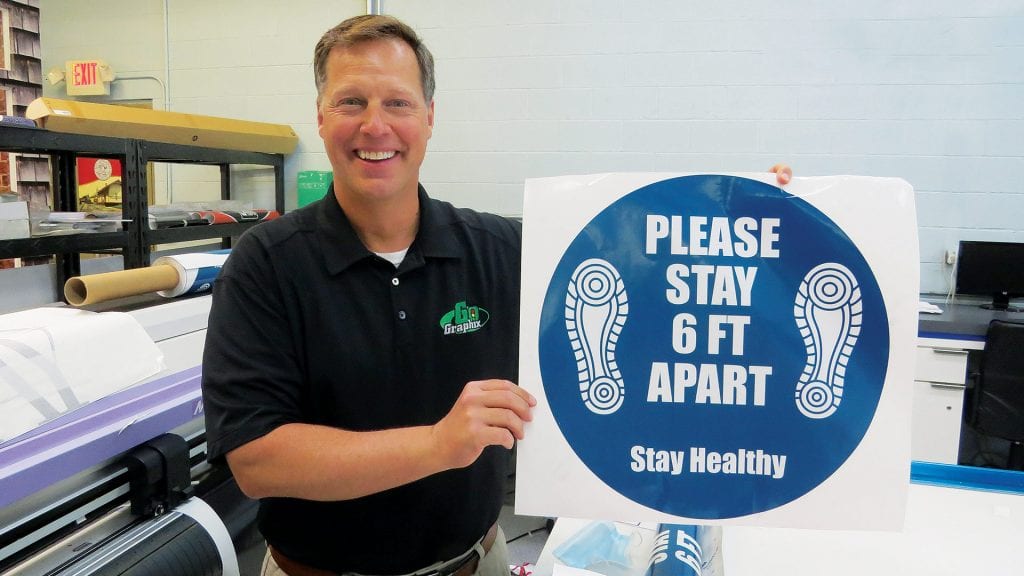
Jim White says business at Go Graphix is down considerably because major clients like MGM Springfield have shut down, but he’s managed to pivot and get work like these social-distancing signs.

Jim White says it took him 15 years to go from zero to 60 with his business. And 15 days to go from 60 to zero.

That’s how the co-founder of East Longmeadow-based Go Graphix, a maker of signs, vehicle wraps, and a host of other marketing products, described that two-week period back in March when business came to a near standstill.

That’s because most all of the company’s major clients — MGM Springfield, the MassMutual Center, sports teams like the Thunderbirds — came to a complete halt.

It seems like years ago now,” White said of those days in March. “It was tough — probably the toughest times I’ve experienced in business.”

With many of those businesses still shut down, Go Graphix has pivoted into other niche products that could be described as ‘COVID-related,’ said White, adding that it now has what could be called a line of ‘back-to-work’ products, including social-distancing graphics — those ‘Please Stay 6 Feet Apart’ signs now appearing across the region — as well as the protective barriers that are also appearing almost everywhere.

Still, revenues for April and May of this year are down roughly 80% from their levels of a year ago. The company, which had to lay off a few workers and cut most employees back to four days a week, has been helped by federal assistance, specifically the Paycheck Protection Program (PPP) — and White’s ‘save for a rainy day’ philosophy, passed down by his parents.

“That’s what you get with the son of a commission-only heavy-equipment sales rep,” he said. “We knew every recession, because it was a depression. And my parents saved, and I learned from them.”

Flashing back to early March, White said that’s when a number of major clients had to shut down operations, which brought operations at the Benton Road facility to something approaching a standstill.

Those clients include MGM Springfield, for which the company makes a wide variety of promotional items, from signage for upcoming events to the dasher-board advertisements for the skating rink.

“That’s what you get with the son of a commission-only heavy-equipment sales rep. We knew every recession, because it was a depression. And my parents saved, and I learned from them.”

“They’ve been one of our best customers,” said White, noting that his company was one of many fortunate local businesses to become vendors for the casino operator. “Throughout the casino, you see a lot of promotional graphics, and we were doing things on a weekly basis — work that came to screeching halt.”

But even clients that weren’t shut down and were actually doing well had put work given to Go Graphics on hold, said White, citing the example of beer distributors, for which the company provides vehicle wraps.

“They were so busy, they couldn’t leave the trucks with us for a day to be wrapped — they needed them on the road,” he explained. “They were hitting all the package stores, which were doing really well during all this. That was tough one for us; we’re thinking, ‘even the guys who are doing great can’t do any business with us.’”

Beyond the PPP loan, what has helped the company through the crisis has been its ability to adapt and create new product lines. White calls this the “great pivot.”

It involves making plexiglass shields for a number of clients, including Baystate Health, Monson Savings, J. Polep, Hartford Hospital, and others, as well as social-distancing signage now seen in virtually every sector of the economy.

As he talked with BusinessWest at the plant, he stopped to display the round ‘Please Stay 6 Feet Apart’ signs bound for Staples’ corporate headquarters, a contract that has provided a good amount of work for the company.

As for the plexiglass partitions, most of them are custom orders, and the work is intricate, which is why a number of businesses across several sectors have decided on Go Graphix for the work.

“We’re not just providing an off-the-shelf solution,” he said, while pointing to some models bound for Baystate Health. “And the orders keep coming in — we’ve pivoted, and we’re going for it.”

And White has to hope that the orders keep coming in, because plexiglass is now a commodity; amid fears that short supplies would become even shorter, he ordered a lot of it.

“It’s kind of toilet paper in the early days of this pandemic,” he said with a laugh. “Everyone’s looking to get it, and it’s becoming harder to find. But we have some good suppliers, and I’ve made the investment in a good amount, even though it scares me to the core. I figured, ‘I’d better be the guy who has it on hand,’ and just pray that we sell it.”

All indications are that he probably will as companies scramble to take the necessary steps to reopen, a process likely to play itself out over the next several months.

As White said repeatedly, this isn’t work he could have imagined doing just four months ago, but he’s very grateful to have it — an attitude that’s understandable after watching a company go from zero to 60 to 15 years, and 60 to zero in just a few painful weeks.

—George O’Brien