Home Posts tagged Technology (Page 32)
40 Under 40 Class of 2008
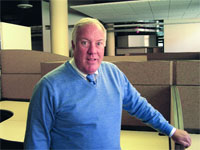
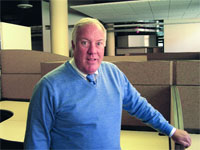
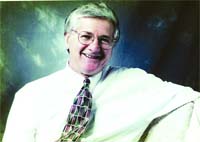
Age 37: CEO, Universal Mind Inc.

Todd Cieplinski has built a business by finding ways to make existing technology even better. Now, he’s turning that discerning eye in a new direction aimed not at the bottom line, but the greater good.

Cieplinski, CEO of Universal Mind Inc., a Web-based application design and consultancy firm with offices in Westfield and Golden, Colo., works with specific technologies, including those owned by Adobe, one of the largest Internet-based companies in the world. His company creates, troubleshoots, manages, and updates a wide variety of ever-changing applications, and the firm’s expertise, coupled with the lightning speed at which the Internet is evolving, creates abundant business opportunities.

But something else caught Cieplinski’s attention recently — the state of the computer labs in his daughters’ schools.

“The technology is antiquated; they’re not great labs,” he said. “I’m at the point in my life where I can’t stand on the sidelines and watch others take care of things, so I tasked myself with getting more involved to make an impact in Westfield.”

He thought he could leverage Universal Mind’s recent success — in 2007 alone, the company doubled its revenues, was placed on Inc. magazine’s list of the 500 fastest-growing privately held companies in the U.S., and increased its staff sevenfold — but he didn’t want to simply throw money at the problem.

“I could have made a donation, but that’s selfish,” he said. “There’s a lot to be done in Westfield. I’d much rather roll up my sleeves and see what, as a technology company, we can bring to the table.”

Currently, Cieplinski is working to identify possible relationships that could lead to new equipment for Westfield’s schools, but he’s also drafting plans to create a training program for volunteers and teachers. “There are a lot of pieces; we want to upgrade the labs, get the teachers in there and provide training, and make sure everything is properly networked. In my eyes, we can do it.”

Beyond his work with Westfield’s schools, however, Cieplinski is fostering a greater passion to assist communities and businesses across the nation through more-efficient technology. “As a company, we’re striving to make an impact on how people perceive and interact with data,” he said, noting that improving that understanding, universally, is the greatest sign of success.

Jaclyn Stevenson

40 Under 40 Class of 2008
Age 38: President, Innovative Business Systems Inc.

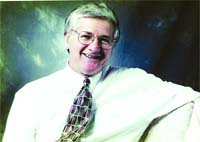
Dave DelVecchio says he was blogging long before it became a national pastime.

“I don’t think they called it blogging then,” he said, referring to the mid-’90s, when he started using the Internet to reach out to friends, family, and colleagues in a manner designed to inform and entertain.

He’s still doing it, through his Web site, davedelvecchio.com, or “the new Dave’s World,” as he calls it, where you could learn much more about this member of the Forty Under 40 than you can in this space — probably more than you want to know. You can even hear a tune from Big Pain, the garage band for which DelVecchio, or the “king of low end,” plays bass — pretty well, actually.

And you can click on ‘Dave at Work’ and find out about Innovative Business Systems, which he serves as president. It is for his work at Easthampton-based IBS, and also his involvement in the Easthampton community, and not for music, that DelVecchio earned a spot among the ‘40,’ although maybe the judges did give the band a listen.

It is more likely that they were impressed with DelVecchio’s ability to take IBS, the IT-solutions company that he and four others purchased from founder Bill Tremblay in 2003, and guide it to steady growth, recognition as a Microsoft Gold Certified Partner (the corporation’s highest designation), and a Workforce Development Award from the Hampshire/Franklin Regional Employment Board.

The “five guys,” as they’re called at IBS — the others are Brian Scanlon, Scott Seifel, Ben Scoble, and Sean Benoit — have created an appealing workplace, said DelVecchio, an environment that provides the tools for professional growth, while also facilitating the often-difficult act of balancing work and life.

While directing IBS and also taking an active role with the Regional Technology Corp., DelVecchio is also involved, on a number of levels, in the revitalization of Easthampton. The former mill town, now officially a city, has reinvented itself as a center for the arts and home to a diverse mix of small businesses.

“This is a community on the rise,” said DelVecchio, who works and lives in the town, is former president of the chamber of commerce, and is entertainment committee chair of the Easthampton Fall Festival.

What else would you expect from the king of low end?

George O’Brien

40 Under 40 Class of 2008
Age 37: CEO, EOS Ventures

In Greek mythology, Eos is the god of the new dawn.

The name has become synonymous with new beginnings and hope for the future, and that’s why Tyler Fairbank attached it to his intriguing business enterprise.

EOS Ventures, launched just a few months ago, was created to help businesses, colleges, municipalities, and other large electricity users incorporate sustainable-energy programs. It was inspired by the successful installation of a wind-power turbine at Jiminy Peak in Hancock, which is owned and managed by Fairbank’s family, and it was prompted by the intersection of two powerful trends — skyrocketing energy costs and a desire among many businesses and institutions to ‘go green.’

The company will focus primarily on wind power, because of the experience gained at Jiminy Peak and the installation there named Zephyr, but it will also involve photovoltaics (solar power) and biofuels, such as biomass. The common denominators, said Fairbank, are ‘green technology,’ and much-desired energy independence.

EOS Ventures also represents a new beginning for Fairbank — sort of.

He’s always been involved in economic development, mostly from the standpoint of promoting and nurturing it, although he has exemplified it by helping to grow Jiminy Peak into a thriving, year-round venture. He has been active with a number of business groups in the Berkshires, from the Chamber of Commerce to the tourism bureau; from the Regional Competitiveness Council to the Berkshire Economic Development Corp., which he served as president. It was during that last stop that he helped write something called the Berkshire Blueprint, a roadmap for growth and diversification of the Berkshires economy.

In a few short months, Fairbank has gone from drafting the blueprint to being a shining example of what it espouses — a diverse economy dominated by small businesses that represent many business sectors.

The past few months have been a whirlwind — no pun intended — for Fairbank, who packed up his belongings at the BEDC and unpacked them at EOS offices at Jiminy Peak. His nomination for the Forty Under 40 class of 2008 was based mostly on his past work within the community, but also on his promise as an entrepreneur.

While getting this business off the ground won’t be a breeze, Fairbank believes he has the right venture at the right time — and thus, some wind in his sales.

George O’Brien

40 Under 40 Class of 2008
Age 39: President and CEO, FloDesign Inc.

It’s called ‘disruptive technology,’ or ‘disruptive innovation.’

That’s a marketing term, first coined by Harvard Business professor and author Clayton Christensen, and now widely used to describe a product or service that essentially disrupts, or overturns, the status quo in a given market.

Examples include the telephone, which displaced telegraphy; minicomputers, which did the same for mainframes; and digital photography, which has supplanted chemical photography.

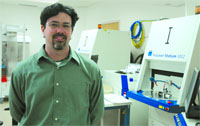
Stanley Kowalski III used to read about disruptive technology, and he witnessed the incredible rise of digital photography first-hand as an engineer with a local film-processing company. He was at a trade show back in 1995 and saw a booth for a small company, SanDisk, displaying digital photo technology. “I remember looking at this stuff and saying, ‘that will never work,’” he said, recalling that the equipment was expensive and the quality wasn’t very good.

History, quite obviously, has proven him — and many others — dead wrong.

Today, Kowalski is creating new examples of disruption at Wilbraham-based FloDesign Inc., a company that he purchased just over a year ago, and that certainly bears watching over the coming years. Indeed, FloDesign has garnered 19 patents over the past year and has licensed 16 of them to various organizations. Kowalski, who prefers ‘inventor’ over ‘business owner,’ is hiring top talent to continue and accelerate this pattern, and has plans to take a spinoff company, FloDesign Wind Turbine Corp., public. “We’re going to make this a billion-dollar company.”

The list of inventions, or innovations, credited to FloDesign engineers is impressive, and includes technology involving everything from silicone breast implants to non-lethal weapons. The company is working at solving problems, or making game-changing developments, across four sectors — aerospace, defense, ‘green technology,’ and biomedical — and has ongoing projects in each realm.

Each initiative employs what Kowalski calls “aerospace methodology” — one of the company’s slogans is ‘Aerospace Technologies Everywhere’ — which centers around creating radical improvements in both performance and cost, which is at the heart of disruptive innovation. The wind turbine is an example, he said, noting that new design features enable the product to essentially extract more energy from the wind.

Though he didn’t actually use the phrase, Kowalski said his current career ambition is plain and simple: to be a disruptive force. In many ways, he already is one.

George O’Brien

40 Under 40 Class of 2008
Age 36: Founder and Owner, NetLogix Inc.

Marco Liquori’s business venture, Westfield-based NetLogix, delivers a wide array of services to clients. Asked to describe them, he does so with a neat, two-word phrase: solutions provider.

And that’s what businesses are looking for today, he told BusinessWest, adding that information technology is changing and improving at light speed. Companies need a partner — that’s a term he would use often — to help them make sense of it and, more importantly, use it to help grow.

Founded in 2004, NetLogix was a simple progression for Liquori after he earned his bachelor’s degree in Information Systems Technology from UConn. “I just kind of fell into IT as a profession,” he said. “It always interested me in college and I got a lot of on-the-job training.”

Since starting in his basement providing basic IT support, Liquori has grown his company to employ five people and has quintupled revenues. Today, NetLogix has become an integral IT partner for more than 125 companies throughout New England, New Jersey, and New York. Liquori has recently expanded NetLogix’s offerings to include WLAN solutions, Voice-Over-IP phone systems, content filtering, and disaster-recovery preparation to its clients.

When he’s not helping other businesses find IT solutions, Liquori is usually out on the field cheering on his children at one of their many sports activities. “A lot of my time is devoted to my family,” he said, referring to his wife Bethany and four children, Nicholas, 13, Hannah, 11, TJ, 4, and Michael, 2. “They’re into soccer, lacrosse, baseball, basketball and gymnastics … my life revolves around my children.”

Watching all those games is a joy for Liquori, who was an avid athlete growing up and has coached youth sports in the past. “I played a lot of sports,” he said. “I love to watch them and I love to participate.”

Liquori has carried this fondness for sports over to his company, which sponsors a number of youth programs. NetLogix has donated considerable time and money to ensure that many of the Westfield sporting programs remain vibrant: “I think sports are important because they’re a good way to meet people and get involved in the community,” he noted.

For the future, Liquori hopes to continue to expand Netlogix’s slate of offerings, and remain at the forefront of the information age.

Laura DeMars

40 Under 40 Class of 2008
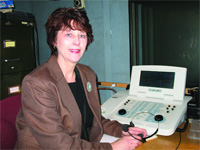
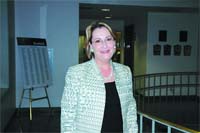
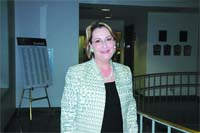
Age 33: Senior Vice President, Hampden Bank

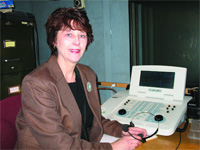
Sheryl Shinn loved studying math — even though she had no idea what career it would lead to.

“My favorite subject was mathemetics,” said Shinn, who selected it as a major at Mount Holyoke College. After graduation, with an additional major in Statistics and a minor in Computer Science in hand, she found a good career fit at Easthampton Savings Bank, where she worked in the systems department. She eventually advanced to an officer’s position, but saw no further room for growth. That changed when a vice-president job opened up at Hampden Bank in 2005.

She was promoted soon after to senior vice president — the first woman to serve in such a capacity at Hampden — and today oversees two divisions: operations and information technology, the latter of which includes managing the bank’s network communications, Internet, and any other technology in use. In 2007, she led a project to implement new check-imaging technology for commercial customers.

“I love that my job is very challenging,” said Shinn. “It changes constantly, and there are always opportunities for learning, growth, and advancement. When I meet other people in my position, we say we’re jacks of all trades, masters of none.”

Well, masterful enough to understand the ins and outs of 60 different software applications, each with its own idisyncracies, she explained. “With the size of our organization, you need to know a lot of things; I work on the network, service, workstations. The job is ever-changing, and that’s what keeps things interesting and creates opportunities as well.”

It’s no surprise that Shinn values lifetime learning. In her spare time, she serves on the New Hingham Regional School Council and also mentors a Springfield ninth-grader one day a week.

“I believe education was the basis for my whole career,” she said, “and when I learned that the graduation rate in Springfield schools is around 50%, it really hit home for me. There are so many students out there who won’t ever graduate from high school, never mind college. So I really wanted to put some work into that area.”

The citywide program aims to match each student with one mentor in a relationship that will last throughout high school. “I get to be a role model for someone to see that you can be successful by staying in school.”

That’s advice anyone can, well, count on.

Joseph Bednar

Departments

Care Center Annual Dinner

April 29: The Care Center on Cabot Street in Holyoke will celebrate its students and staff at its annual dinner from 6 to 8 p.m. at the Log Cabin, also in Holyoke. The event features performances and presentations by Care Center students, including ballroom dancing. The Care Center provides services to pregnant and parenting teen mothers and their children. The celebration is being sponsored by Weiss Consulting, PeoplesBank, and the Northwestern Mutual Financial Network. Dinner and dancing are free, and guests will be invited to make a meaningful gift at the event. For more information, call (413) 532-2900, ext. 128. For details on the Care Center, visit www.carecenterholyoke.org.

Marketing Program

April 30: Anne West, founder and president of the Atlanta-based consulting firm Strategic Communication Counsel, will present “Remarketing Marketing … Creatively” at the Log Cabin Banquet and Meeting House in Holyoke. West offers a down-to-earth look at some common strategies and tactics that marketers overlook. The morning event is sponsored by the Ad Club of Western Mass. Registration begins at 7:30 a.m., with the seminar slated from 8 a.m. to noon. Registration includes a continental breakfast, seminar, and handouts. The cost is $75 for Ad Club members, $85 for non-members, and $50 for students. To register online, visit www.adclubwm.org.

Financial, Estate-planning Workshops

April 30, May 14, May 21: Applewood at Amherst, a part of the Loomis Communities, will host a free public series of financial and estate-planning talks, all beginning at 7:30 p.m. On April 30, Peter Ziomek, J.D., of Ziomek & Ziomek, will discuss wills, durable powers of attorney, health care proxies, and trusts. On May 14, Eva Thomson of Thomson Financial Management will share methods of maximizing one’s assets for a fulfilling retirement and beyond. The series concludes on May 21 with Hyman Darling, J.D., of Bacon and Wilson, P.C., reviewing ways to personalize one’s legacy through ethical wills, pet trusts, charitable bequests, gift annuities, or specific burial instructions. All talks will be conducted in the meeting room at Applewood at Amherst, One Spencer Dr., Amherst. Reservations are encouraged and may be made by calling Kelley Murphy at (413) 253-9833.

Women’s Professional Development Conference

May 1: Bay Path College in Longmeadow will host its 13th annual Women’s Professional Development Conference at the MassMutual Center in Springfield. Actress Jane Fonda will be the keynote speaker for the affair, which is planned from 7:30 a.m. to 4:30 p.m. For a complete list of workshops and speakers, visit www.baypath.edu. Tickets are $250 for the general public and $225 for Bay Path alumni, with an early-bird registration deadline of April 17. A vendor fair is also planned throughout the day.

RTC Digital Marketing Series

May 2: “Using Social Networks as Marketing Tools” will be offered by the Regional Technology Corp. (RTC) from 8:30 to 10:30 a.m. in the tele-classroom at the Springfield Technical Community College Technology Park in Springfield. This is the second seminar in RTC’s Digital Marketing Series, and will offer guidance on developing new relationships with clients, partners, and other key players in one’s industry. Presenters at the seminar will include Mark Firehammer, co-founder of Rumetagro Relationship Technologies, and Morriss Partee, the founder of EverythingCU.com. The class is free to RTC members and costs $50 for non-members. Advance registration is required. For more information or to register, contact Suzanne Parker at (413) 755-1301 or via E-mail at [email protected].

Business Market Show

May 7: The Affiliated Chambers of Commerce of Greater Springfield Inc. will host its 2008 Business Market Show from 7 a.m. to 5 p.m. at the MassMutual Center in Springfield. The show will feature more than 225 booths offering products and services to help, enhance, and grow one’s business. Attendance is free with a business card, and no registration is required. For a complete schedule of workshops throughout the day, as well as exhibitor listings and parking locations, visit www.businessmarketshow.com.

Customer-service Seminar

May 8: Marty Clarke, president of Martin Productions and author of Communication Land Mines: 18 Communication Catastrophes and How to Avoid Them, will present a seminar titled “Customer Service Land Mines and How to Avoid Them” from 8:30 to 11:30 a.m. at the Clarion Hotel in West Springfield. Clarke’s program will lay out a road map of how one can avoid common and damaging customer-service land mines, and begin to set a company apart in the most powerful way possible. Clarke will offer an encore seminar titled “Leadership Land Mines: 8 Managerial Catastrophes and How to Avoid Them” from 1 to 4 p.m. The presentations are presented by the Employers Assoc. of the NorthEast (EANE). The cost for either the morning or afternoon session is $179 for EANE members or $229 for non-members. The cost for the full day is $279 for both sessions for EANE members, and $329 for non-members. For registration information, visit www.eane.org.

Wine Tasting and Auction

May 9: The Chicopee Chamber of Commerce will host a wine tasting and silent auction at the Castle of Knights on Memorial Drive. Proceeds raised from the event will be used to fund chamber events. For more information on the event, visit www.chicopeechamber.org.

‘Defining the Goals’

May 20: Agawam High School is hosting a “Defining the Goals” expo from 8 to 10 a.m. Companies are invited to share products or services, as well as employment needs for the future. The event will be an opportunity to showcase a company and enlighten students regarding its operations and the educational requirements necessary to secure employment in various industries. The event is being sponsored by Engineering Projects in Community Service, Life Science Career Development grants, and MassLive. The event will include a coffee reception, scheduled presentations, and a question-and-answer session. For more information or to RSVP, E-mail [email protected].

Woman of the Year Banquet

May 21: The Women’s Partnership of the Affiliated Chambers of Commerce of Greater Springfield will honor Kristina Drzal Houghton as its Woman of the Year at its annual banquet planned at Chez Josef in Agawam. The award represents the recognition of extraordinary achievement by a woman in the Greater Springfield community whose efforts exemplify the leadership, community involvement, and professional goals of the Women’s Partnership. A reception begins at 5 p.m., followed by dinner at 6:15. Tickets are $35 each, and the deadline to register is May 9. For more information, visit www.myonlinechamber.com.

Torch Awards

May 12: The Better Business Bureau of Central New England Inc. (BBB) will stage its anual Torch Awards & Breakfast at the Orchards Golf Club in South Hadley, starting at 7:30 a.m. At the event, the BBB will honor American Pest Solutions Inc. of Springfield with its prestigious “Torch Award. It will also extend its Honorable Mention distinction to another local company, Moving/Odd Job Unlimited of Chicopee. “The purpose of this award is to recognize businesses that operate with integrity, trust, and marketplace ethics in their approach to commerce,” said Ray Frias, president of the BBB. “The Better Business Bureau is aware that there are businesses that maintain good business ethics and work every day to assure the public of their commitment to fair and honest business practices, and this award was established to focus attention on those good companies.” Also, BBB Student Ethics Award winner Evan Coleman from Amherst Regional High School will be presented with a $500 scholarship. This prestigious award recognizes students who live up to and inspire others with their commitment to ethical living. Individual seats at the event cost $20. Those interested in registering for the event may do so by visiting www.central-westernma.bbb.org/torch  or calling (413) 594-2163, ext. 105

Opinion
Investing in the Nation’s Future

In Mumbai last November, I addressed a conference of India’s leading CEOs. Their interests had a single focus: what makes the American system of higher education such a powerful force for U.S. prosperity?

It was not an idle question, as India builds economic momentum. From 12,000 miles away, they understood something easy to lose sight of here at home — that this country’s distinctively open, varied, and competitive system of higher education has served both as an escalator of individual social mobility and as an engine of our country’s economic growth. Can we afford not to continue to invest in the future of our people and our nation?

Since the GI Bill dramatically expanded America’s middle class by educating half of all returning World War II veterans, the personal value of higher education has been broadly accepted. It opens your mind, and it also expands your prospects. According to the U.S. Census, over the past 20 years, households with an increase in real income were overwhelmingly headed by someone with at least a college degree.

Perhaps less obvious but equally important is the vital role of higher education in our economy as a source of both innovators and innovations. Indeed, MIT economist and Nobel Laureate Robert Solow estimates that more than half of America’s economic growth since World War II can be traced to technological innovation — much of it spawned through government-funded, university-based research.

Backed by extensive federal investment, America’s research universities have invented many of the disciplines and technologies that define modern life, from computer science to biological engineering, from the laser to the foundations of the Internet. If you doubt the value of federal research funding, consider this: over the past 30 years, NIH investments of $4 per American per year in cardiovascular research have led to a 63% decrease in mortality from heart disease. Yet, the Administration’s proposed NIH budget for FY 2009 represents a drop of 13% from 2003 in actual, inflation-adjusted health-science spending.

Our local economy benefits profoundly from the dense concentration of colleges and universities. The region’s eight research universities employ nearly 50,000 people and provide a total regional economic impact, including everything from payroll and construction costs to student spending, of more than $7 billion. What’s more, when research universities attract federal research dollars, those funds not only support individual labs, but buoy the state’s economy as well.

Our system of higher education has, indeed, earned the envy of the world, as I heard in India. According to a Shanghai Jiao Tung University survey, the U.S. still boasts 17 of the world’s top 20 research universities. Not surprisingly, other countries are actively copying our success. China is making dramatic investments in its universities, with the aim of vaulting five of them into the top-20 ranking by 2020.

In this global context, it is particularly important to understand America’s higher-education system as a strength to be nurtured. We must continue to improve the quality of higher education and to increase accessibility. America needs a highly educated workforce. The nation also needs the fruits of university innovation. At this moment of exceptional promise in fields from energy technology to cancer research, the federal commitment to basic research is faltering. Funding for research in the physical sciences has been flat for decades. Overall federal research investment has fallen from 2% of GDP in the mid-1960s to eight-tenths of 1% today.

The result of such shortsighted research investment policies can be measured in opportunities lost: opportunities to attract the best young researchers, to accelerate the clock of discovery, and to conquer humanity’s most urgent challenges. It is time to ask just how much it would it be worth investing, as a nation, to invent our way to a better, cleaner, healthier future.-

Susan Hockfield is president of the Massachusetts Institute of Technology. This article first appeared in the Boston Globe.

Sections Supplements
Green Environmental Consulting Works with Business Owners to Clear the Air
Adam Lesko

Adam Lesko, owner of Green Environmental Consulting, says indoor air quality is one of the most pressing issues associated with ‘green building.’

In the biz, it’s called IAQ — indoor air quality, an often-misunderstood aspect of environmental health and compliance.

According to Adam Lesko, owner of Green Environmental Consulting (GEC) in Florence, there are a number of things that can negatively impact the air we breathe, ranging from mold to asbestos to poorly functioning ventilators.

Sometimes, these issues lead to less-than-healthy working conditions or so-called ‘sick buildings,’ and Lesko has made it his life’s work to serve as the doctor on call.

“We specialize in indoor air quality,” he said, noting that the specialty includes remediation techniques, but also the creation of management systems for buildings, their environmental systems, and record-keeping mechanisms. “All of this relates back to the company name. It’s ‘green’ for a reason — air quality is one of the biggest concerns when it comes to environmental compliance.”

But environmental services like those offered by GEC haven’t always been in high demand.

“In the past, people have not looked at air quality as a place where long-term, positive changes could be made,” said Lesko. “Instead, most people have seen the regulations they must adhere to and the standards they’ve had to meet, and not been able to see past the upfront costs.”

Air Apparent

Today, though, environmental-compliance assistance is in increasing demand. This is due in part to a greater awareness and response to IAQ and other health- and environment-related concerns on both state and federal levels; the EPA, for example, has launched a comprehensive Indoor Environments Program, which includes guidelines for schools and school districts, homes, offices, and institutional buildings.

Trends in the marketplace, including a greater focus on ‘green building’ and LEED-certified construction, are also helping to put IAQ in the spotlight. This, in turn, is making air quality more relevant to a number of other industries, including commercial real-estate markets, construction, health care, and even education.

More than ever, said Lesko, property managers and owners are realizing a need to test for poor air quality and other environmental hazards, and to remediate any issues and avoid complaints from tenants, clients, or employees. Failure to do so can result in costly renovations and cleanup efforts, low productivity, and, in many cases, some bad publicity that can hurt a building’s reputation.

“Anyone who operates any kind of large facility has to think about this,” he said, “and we have plenty of residential work, too. The trends really follow the media — if 20/20 runs a piece on the dangers of mold, we get a lot of calls from homeowners. If there’s a news story about the mountain of paperwork facilities are required to keep, and how it keeps growing, then we hear from colleges, hospitals, schools … you name it.”

Breathing Life into the Industry

In essence, GEC provides options to clients designed to create healthier indoor working conditions. Lesko said most often, this translates into remediating issues with asbestos and mold (“mold is big this time of year,” he said, “and asbestos is always big”), upgrading air-quality infrastructure and plans (including ventilation and filtration systems), and monitoring and testing areas in which employees work to ensure they meet health and safety compliance standards.

“We do a lot of work with industrial hygiene and database solutions to manage environmental information,” he explained, noting that, until very recently, facilities charged with maintaining environmental information often did so with a pad and pencil, storing records in a conventional file cabinet.

“New technology eliminates the need for a physical paper trail and data entry, and increases access to information, thus limiting the potential for a hazardous situation,” he continued. “The most commonly cited issue associated with environmental regulations is the need for thorough, accessible records.”

Lesko had worked in this field for several years, the bulk of those with a national firm specializing in the field of environmental consulting, before striking out on his own in 2006.

“I saw an opportunity to produce a quality product, and I liked the idea of owning a local company,” he said. “I felt I could do a better job — when people work with us, they’re going to be working with a senior-level employee every time.”

His timing was good, too. Now working with a diverse set of clients in the midst of the biggest environmental boom in American history, Lesko leads a team of four, assessing needs, providing solutions, and usually offering some educational components, too.

“There have been a number of studies, for instance, looking at how air quality affects employee productivity,” he said. “In turn, there’s a lot of research on how we can improve efficiency by improving the indoor environment. Healthy employees are happy employees, and we’re definitely seeing more people take that idea seriously.”

Building Excitement

As green trends continue to explode, he said opportunities for GEC are multiplying as well. Lesko has already carved a niche for himself working with a wide range of clients, addressing their clean-air needs. He’s worked with a number of educational institutions across Western Mass. and Northern Conn., including Tantasqua regional schools, Granby public schools, Belchertown public schools, and Smith College. He also works with a number of real-estate brokers and developers offering assessment services on various properties in preparation for a sale, as well as general contractors, offering compliance assurance and monitoring programs.

“Developers are often surprised by the amount of remediation they’re required to perform on a property, and too often, that surprise comes after a property has been purchased,” said Lesko. “Our stance is that pre-investigation, so to speak, is a really smart way to do business because it offers more information on a property that can be used when negotiating prices or taking out a loan.

“There is a real and true cost associated with environmental compliance that too few people acknowledge,” he added.

There’s a residential arm of GEC too, through which Lesko and his team provide testing and inspection services to identify issues caused by lead paint, mold, asbestos, and other hazards.

But in addition, Lesko said he’s gradually moving GEC further into the green-building sector — an area in which environmental compliance is becoming more intrinsic than ever.

“We’re doing more already on the green-building side of things,” he said, “especially in the field of testing. I definitely hope this in an area in which we can grow, because there are opportunities to work with all types of buildings — both old and new.”

GEC is working toward attaining its own LEED certification to better serve the building sector. Lesko said part of the decision to move in this direction was, as in the past, driven by media attention to green-construction practices, but it’s a trend he says will likely forge significant positive changes in the industry.

“This is a good industry to join,” he explained. “Some might say that there’s been almost too much marketing of green building and green products, but a lot of good has already come out of that aggressive stance, and it’s always healthy for us to think about these things.”

Lesko says that this trendy thought process notwithstanding, green building, with environmental compliance as one of its key tenets, is leading to the design of more efficient buildings.

“It’s great because it’s driving people to think more proactively, to think about things more intelligently, and to design tighter buildings.”

The going-green phenomenon is shedding some light on Lesko’s work, which revolves around finding invisible foes and bringing others out of the shadows. “Now, more people are seeing that changes to air quality can create benefits,” he said.

And for him and his clients, that is indeed a breath of fresh air.

Jaclyn Stevenson can be reached at[email protected]

40 Under 40 Class of 2008
Age 39: Co-owner, Atlas TC

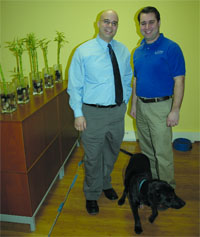
Steve Bandarra, co-owner of the Holyoke-based IT solutions company Atlas Technology Consulting (TC), says that as his company addresses the needs of other businesses, there aren’t a lot of natural inroads to community service.

So, Bandarra cleared a few of his own. A new computer-recycling aspect of his business, for instance, will reduce electronic waste by appropriately disposing of some units, while donating others to area nonprofits and educational institutions. Not long ago, Bandarra offered some pro-bono work to Holyoke’s Enchanted Circle Theater, a nonprofit drama group specializing in performing-arts education, and liked the group’s mission so much he joined its board of directors. He did the same in his hometown of Northampton, where he liked what he saw coming out of the Chamber of Commerce, and became an active volunteer.

And then there’s what Bandarra calls the “kitten story.” It seems a stray found its way into a nook in the stones lining the Holyoke Canal near his office, and, hearing its cries, Bandarra climbed down to rescue it — and got stuck himself.

“This story keeps following me around,” he groaned, noting that, eventually, both he and the kitten wriggled free and now share a home, along with Bandarra’s wife, Meg Moynahan, and their dog, Lucy. To commemorate those rocky beginnings, they named the cat Pebbles.

Bandarra told BusinessWest that helping others, feline or otherwise, has long been a guiding principle of his life. However, it’s also his primary business philosophy. “I truly believe that treating people fairly and with respect is a formula for success,” he said, and so far, his theory is proving true.

Atlas TC, which Bandarra owns with Nathan DeLong, is enjoying brisk business. Clients seem to like the company’s focus on providing efficient, cost-saving technologies, as well as the staff’s ability to speak two languages — English and ‘geek.’

“We’re very happy with where we are,” he said. “We’re busy, and there’s so much word of mouth; that always makes me feel good, because it proves our customers like how we treat them.”

As for any further rewards, Bandarra isn’t one for accolades. He’d much prefer the kitten story went away for good. “I don’t really like recognition,” he said, “but I do like the sense that I’ve treated others well, both in and out of work.”

Jaclyn Stevenson

Sections Supplements

Breakfast (7:15 A.M.)

The keynote speaker is Steven Antonakas, commissioner of Banks for the Commonwealth, who will speak on the subject of “Banking, Business Regulations, and Our Economy.” He will discuss the banking and mortgage issues impacting the region and the nation, and also the proliferation of banks and whether this is a good thing for business.

Microbrew Tasting (12-2 p.m.)

Attendees can sample craft beers distributed locally by Williams Distributing, including offerings from Magic Hat Brewery and the Hook and Ladder Brewery.

Business Seminars

Subjects range from new health insurance regulations to blogging; from information technology and how to use it to innovation — what it is and what it means. (See the full schedule, page 20.)

Taste the Market (3-5 p.m.)

During this two-hour period, attendees can sample items from the menus of several of the region’s finest restaurants. The dining establishments are sponsored by show exhibitors.

Hair Styling

Attendees can enjoy free haircuts from DiGrigoli Salons. Owner Paul DiGrigoli and his team will be styling and cutting hair throughout the day.

40 Under 40 Class of 2008
Age 21: President, Valley Computer Works / Valley Technology Outreach

Delcie Bean had a lemonade stand in his youth like a lot of other kids, but his took the concept to a slightly higher level than most.

“I remember we had four tables with snow cone machines and laminated signs,” he said with a laugh, noting that, as long as he can remember, he’s had that entrepreneurial drive. “I’ve always loved the idea of running a business, making things grow, and seeing things change.”

He also didn’t wait long to move on to more serious pursuits after cornering the lemonade market. As a freshman in high school, Bean founded Valley Computer Works (then called Vertical Horizons), a computer-repair service. He wasn’t old enough to drive a car or open a checking account, but with some help from his family, he parlayed equal interests in business management and technology into a successful venture that continues to grow today.

Valley Computer Works still offers repair services, and also works with small businesses to manage IT operations. A third concentration, selling and servicing point-of-sale hardware and software, especially within the hospitality and restaurant industries, is growing.

At 21, Bean has already accomplished more than many seasoned professionals, but his ongoing interest in facilitating growth and change is not relegated to his own business. Six months ago, he launched Valley Technology Outreach, a nonprofit agency that collects and refurbishes computers in order to pass the hardware on to other nonprofits in the region.

This philanthropic endeavor is the latest in a string of efforts Bean has already put forth. At 17, he organized a ‘climb-a-thon’ of Mount Monadnock to raise money to build a women’s shelter in his native New Hampshire — “I loved seeing a need gradually turn into a building we could actually walk into,” he said — and after moving to Western Mass. with his family in 2000, he joined the board of directors for the Amherst Ballet, for which his sister is a dancer.

In the future, Bean has a few other ideas up his sleeve, including a foray into the real-estate sector. He’s also a consummate student, happy to admit he’s got plenty left to experience.

“I’m entirely self-taught,” he said. “I’ve always loved taking stuff apart and putting it back together — the more I pull things apart, the more I diversify my experience, and the more I learn.”

Jaclyn Stevenson

Sections Supplements
Swing Analyzer Helps Players Iron Out Equipment Decisions
Jason Fiddler

Jason Fiddler, here juxtaposed against some of the data being analyzed by Swing Labs Performance Fitting, says the system helps players find the right equipment for their game.

Jason Fiddler sees it every day — many times a day, in fact — and it frustrates him to no end.

The problem? It’s people trying to fit their golf game to the equipment residing in their bag. It should be the other way around, said Fiddler, store manager for Fran Johnson’s Golf & Tennis in West Springfield, especially when equipment makers are becoming increasingly innovative — and the innovations come with steep price tags.

“Your equipment should be working for you … you shouldn’t be working for your equipment,” he said, adding that Fran Johnson’s has added a new service that will help most players find the right clubs and even the right ball to suit their swing.

It’s called Swing Labs Performance Fitting, a software program that works with launch-monitoring equipment to analyze a player’s swing and performance, and then recommend options for equipment that will help them get the most out of their abilities — and thus enjoy the game more.

“I see far too many people try to make the club fit their game,” he said, adding that people will do things to add loft, like tee the ball higher, or de-loft clubs, for example. “Instead, they should be getting equipment that really does fit their game, and this system will help them do that.”

Swing Labs is part of a broad strategic initiative to take Fran Johnson’s, which opened 33 years ago, in new directions and to new places — literally and figuratively. While adding the swing-analysis component and reconfiguring the storefront on Riverdale Street in West Springfield to accommodate it, the company is also opening a second retail outlet at the Western Mass. Family Golf Center on Route 9 in Hadley.

That facility features a driving range and miniature golf course, said Cindy Johnson, owner and president of the company, adding that the 1,200-square-foot retail store will be a perfect fit and a natural expansion for the venture started by her father in the basement of the family home.

“This is a great facility that draws people from all over that area,” she said of the golf center. “We’re going to fit in nicely there … it’s a great opportunity for us to gain more exposure for the Fran Johnson’s name.”

Swing Shift

Swing Labs measures such things as ball speed, total distance and carry distance, launch angle, backspin, sidespin, and much more, said Fiddler, former director of golf operations at the Ranch in Southwick, who took up Johnson on her offer to join her company. “It dissects the swing in more ways than any human being needs to know.”

It then crunches those numbers, and rates which equipment options — from balls to clubs to shafts — would be best for the player in question, he said, adding that the software was developed in California, but the system was first introduced in Florida a few years ago and is becoming increasingly popular at golf shops across the country.

Fran Johnson’s acquired the software early last year, and spent several months getting kinks out of both the technology and the setup for the testing area. The company eventually determined that the original site was too cramped and lacked privacy, so a separate room was carved out of what had been retail space, and racks for clubs and balls were relocated.

The Swing Labs technology isn’t for everyone, Fiddler admits, but it can help most players. The system essentially picks up patterns in an individual’s performance, and some high handicappers are so inconsistent that that they don’t really have patterns, meaning that Swing Labs isn’t appropriate for them.

“They go left, and then they go right … they go high and then they go low,” he said of such players. “We could help them, but generally speaking, the better the player, the more this system can benefit them.”

Meanwhile, the system has a flaw, if one could or should call it that: It can only analyze what the launch monitor sees, meaning the swing that the player in question brings to the facility that day.

“It can’t analyze what you did last summer,” Fiddler explained, noting that, while the system is ready and able, and the appointment calendar is filling up fast, players would be advised to wait until their swing is grooved for the season before heading to the test mat.

Sessions take perhaps 45 minutes to an hour, and players are advised to arrive 15 or 20 minutes before their appointment to warm up, and thus maximize the benefit they’ll derive from the analysis. Players generally take 10 to 15 swings, and are given a full readout on their performance, as well as a ranking of several options. Individuals can be tested for irons ($50), the driver ($50), or both ($80).

And while the focus is obviously on clubs, their dimensions, loft, and other specifications, attention is also paid to shafts and which ball a player should be using, said Fiddler, adding that there are myriad options regarding both, and picking the right one can make a big difference in one’s score.

“A lot of people don’t realize that 90% is all about the shaft now,” he said. “The way ball flight can be manipulated now by changing shafts is unbelievable; we’ve had a ton of testimonials … people saying they’ve added 20 or 30 yards because of a new shaft.”

The same is true for balls, he said, using the Titleist Pro V1, a very popular choice among touring professionals and low handicappers, as one example.

“The majority of people playing that ball shouldn’t be playing it,” he said, adding quickly that this situation exists despite a high sticker price. “They’re hurting their swing; performance golf balls like the Pro V1 are designed for someone who really goes after the ball, swinging really hard and putting a lot of spin on the ball. Maybe 90% of the players out there can’t make a Pro V1 do what it was designed to do.”

Fiddler told BusinessWest that early indications are that the Swing Labs system will be a popular service, and with good reason — golf equipment today is engineered to help players improve their games, but they must make intelligent choices about clubs and balls, and not make judgments based on TV commercials or how others in the regular Saturday foursome fare with what’s in their bags.

“If you’re going to spend $400 or a driver or $1,000 on a set of irons,” he said, “you’d better get the right equipment.”

The Swing Labs system is a natural extension of the services at Fran Johnson’s, said its owner, as is the Hadley location, a move that has been pondered for several years now, but the timing and conditions were finally right to take the leap.

The expansion, she continued, gives Fran Johnson’s a presence in Hampshire County — something it has never had before and has coveted — and with relatively little risk, or exposure, for the company. The lease is short-term, with the expectation that it will be lengthened, and the rates are favorable.

“This provides an opportunity to expand our brand, and it wasn’t cost-prohibitive,” she explained.

The new location will compete against a Dick’s Sporting Goods location on the other side of Route 9, a situation that mirrors conditions in West Springfield, but Johnson believes there are opportunities to both attract Dick’s customers and better serve loyal Fran Johnson’s customers from Hampshire County with another, much more convenient location.

Addressing the Problem

The facility will be small, but it will have “a little of everything,” said Johnson, as will the pro shop at Cherry Hill Golf Club, a municipal track in Amherst, which Fran Johnson’s will now stock with equipment.

The corporate name will be prominently displayed in that shop, she continued, adding that the venture, like the Hadley facility and the Swing Labs system, are relatively low-risk, high-reward opportunities for the company to be even more of a driving force in the local golfing community.

George O’Brien can be reached at[email protected]

Sections Supplements
Grounded Mobile Training Center Needs to Get Back on the Road

Western Mass. and the nation are now facing a critical shortage of skilled labor. Concerned groups include the Department of Defense, the Aerospace Industries Assoc., the National Defense Industrial Assoc., and the National Tooling and Machining Assoc., and they are treating this as one of the most critical threats to our national security, our economy, and our way of life.

This problem covers the entire pipeline, from highly skilled machinists who can operate the high-tech equipment utilized in today’s manufacturing facilities, to degreed engineers. If we do not find and commit to a solution, we will no longer be able to compete on the world stage, both economically and militarily.

According to a survey of local precision manufacturers conducted by the Western Mass. chapter of the National Tooling and Machining Association (WMNTMA), there are more than 400 openings in the 413 area code at the moment. An aging workforce will add 200 to 300 more per year, even if the economy is flat. Nationally, there are tens of thousands of high-paying jobs, and companies in Western Mass. are turning away work due to an inability to find qualified employees.

There are a number of factors contributing to these sobering statistics, among them being the ongoing challenge of convincing young people and their parents that manufacturing, specifically precision manufacturing, is alive, well, and has a bright future. Another challenge is to simply inspire young people to want to join this sector, and this can best be done by showing and telling them what it’s all about.

Unfortunately, one of the more effective vehicles — literally and figuratively — for handling these assignments, a mobile training unit operated by Mass. Manufacturing Extension Partnership (MassMEP), has been grounded due to funding cutbacks.

This unit must be put back on the road, and recent experiences in Western Mass. involving this important teaching tool will explain why.

A Front-row Seat

When members of the WMNTMA visit middle schools and high schools, the comment heard all too often from the workers of the future is, “I thought manufacturing was dead.”

If those in this industry do not change this perception, it will be.

We continually hear about layoffs and shutdowns. This is the information on which today’s parents and children base their career decisions. The focus is on unemployment, not openings. According to reports issued by the Mass. Department of Labor, there was approximately one unfilled job for every two unemployed people in the state as of last December, and roughly 7% of the unfilled jobs were in manufacturing.

Meanwhile, 100% of graduates from manufacturing technology programs at local vocational high schools have jobs, go into the military, or go to college upon graduation. Neither our elected officials nor our educators preach this message, and that’s why those in high-tech, precision manufacturing need to educate teachers, parents, and kids — to balance the message.

Gov. Deval Patrick and top educators in Massachusetts have identified the need to improve interest and performance in grades K-12 relative to STEM (science, technology, engineering, and math) education. I personally sit on the NDIA’s STEM workforce committee, which is addressing the problem on a national level along with the AIA. Keeping in mind this broad-based focus and awareness, I asked my son, Ethan, a high school junior with an interest in engineering, whether his teachers were relating the STEM subjects to real-world applications and careers. Disappointingly, his answer was “no.”

If we want students to be excited, to learn, and to retain, then we must relate the raw information covering formulas and technologies to exciting real-world applications. This in turn will provide a vision as to how education prepares them for careers and their future.

Today’s high technology manufacturing world is the broadest, purest application of STEM. At my company, Westfield-based Peerless Precision Inc., we use metrology, physics, chemistry, computers, robotics, engineering, algebra, trigonometry, and geometry every day. The future of manufacturing is not about cheap labor. It is about using all of the STEM disciplines to improve productivity and develop new technologies. We need to include application into education.

With all this in mind, I called Jack Healy, president of Worcester-based MassMEP roughly a year ago, and asked if the WMNTMA and the Regional Employment Board (REB) of Hampden County could borrow its Mobile Training Unit (MTU) in an effort to reach out to local middle-school students.

This vehicle had — that’s past tense — 12 computers, a mini-mill, and a mini-lathe. It was in use by MassMEP to train unemployed people in the Northeast to be machine operators. Healy immediately agreed to let us use it for a two-week period, and even provided personnel to operate the vehicle and act as instructors. David Cruise, manager of Regional Networks (part of the REB), worked with middle-school counselors at four Springfield public schools and arranged for the MTU to visit each.

The result was that 320 eighth-graders participated in 45-minute educational seminars, during which they learned how STEM is used in the real world. Cruise described the program as “an integrated STEM-related education activity that links mathematics and science with practical applications of CAD (computer-aided design) and observation of the operation of a mini-milling machine and a lathe. In addition, each student was presented with career information and informed of the educational requirements that are needed in today’s high-technology, precision-manufacturing environment. The program was presented in a highly interactive manner that gave students and accompanying faculty valuable information that exposed them to a myriad of career pathways.”

This was followed by tours of EASTEC by 140 students from six middle schools with funding obtained from the Society of Manufacturing Engineers (SME). At EASTEC, the students had their first exposure to the full scope of today’s high-tech, precision-manufacturing equipment.

This successful program was expanded in the fall of 2007, when the MTU toured 13 area middle schools. This time, almost 1,000 eighth-graders participated in this STEM career-awareness program, which was was followed by Middle School Precision Machining Career Awareness Day, which teamed each of the 13 schools with a local precision machine shop. Almost 200 students who had expressed interest in manufacturing after the seminars were given tours of local high-tech manufacturing facilities. They saw the clean, well-lit, technology-driven companies that are based in this area.

And here are some of the comments from school personnel after tours of the mobile lab and local manufacturing facilities:

  • “The lab gave students a view of a concept that was totally alien to their world. Some students were very fascinated and truly interested in pursuing this venture”;
  • “I think it was helpful for them (the students) to see the inside of an actual workplace”;
  • “Each student came back with favorable comments”;
  • Faculty members have repeatedly said how important they think opportunities like this are for our students. I will be delighted to support future collaborative projects”; and
  • “We had a great day with the mobile lab. Students liked it, and teachers appreciated the opportunity. Matt [Healy] was great with the kids.”
  • Buck Upson, president of Pioneer Tool Supply Co. in West Springfield, observed one of the seminars at Van Sickle Middle School in Springfield, and came away impressed with what he saw.

    “I was standing in a position where I could observe two students. Two young boys, silent, with boredom and apathy painted across their faces, entered the bus and slouched down nonchalantly,” he recalled. “Within minutes they were sitting up straight and leaning forward to actively listen to the teacher. Very soon thereafter, they were asked to program a basic part on the computer workstation. Both of them finished the task before the teacher completed the step-by-step instructions. They had grasped the concept without aid. At the end of the session, they left the bus energized and openly enthusiastic, talking about what they had learned and wanting to learn more.”

    Meanwhile, Clem Fucci, chair of the Manufacturing Technology Department at Westfield Vocational Technical High School, had a similar reaction.

    “Several parents approached me to tell me that their sons or daughters had toured the bus,” he said. “I cannot stress enough what impact that bus has had with helping to recruit young people into pursuing a precision manufacturing and engineering career here in its first year. I hope the bus will have a long-term relationship with us to help fill the pipeline for precision machining and engineering.”

    Fueling the Imagination

    In the eyes of all of the business people and educators who were involved, this program has been the single most successful outreach program to middle-school students that they can remember. It motivated and excited students, faculty, and parents. It brought STEM to life. It showed that STEM education is relevant to their future.

    Unfortunately, MassMEP no longer has the Mobile Training Unit because it has lost state funding for its traditional program operations. However, based on the success of this outreach program, WMNTMA members are proposing a new, expanded vision and mission for the mobile training unit.

    They believe this program would be a perfect model for outreach to grades 6-8 throughout the state and throughout the school year. It would bring STEM alive by showing our young people how these skills are used every day in precision manufacturing. And to make things ‘real,’ demonstrations would be followed by tours of high-tech manufacturing facilities near the schools.

    Industry leaders know the program works based on the sample of 1,300 students who have participated thus far. We need to build on this successful, tested model. And we need to find funds, whether in the private or public sector, to make this happen.

    Every day we hear about failures in our education system. This program has been a success. And we need to find a way to resurrect and expand it.v

    Larry A. Maier is president of Peerless Precision Inc. in Westfield;[email protected]

    Sections Supplements
    Texcel Sees Dramatic Growth in Medical Device Manufacturing
    Keith Checca

    Keith Checca stands in Texcel’s manufacturing facility in East Longmeadow, where complicated, implantable medical devices are created.

    In the 1990s, Texcel, a company that designs and constructs devices and components for some of the most highly regulated markets in the world, was working on some big things — literally. The company was a major player in the aerospace and defense industries, but gradually that started to change, and today Texcel works with international clients to devise some of the smallest, most intricate medical technologies ever seen. And this, the company has found, is where its heart lies.

    Larry Derose, president of Texcel, a medical device manufacturer in East Longmeadow, said there’s story behind every tiny component his company creates that speaks volumes regarding the importance of this work.

    “We’ve had clients come back to us with presentations that show how a device is working in its early stages,” he said. “We’ve seen stroke victims who’ve improved enough to use the telephone or change a diaper. When you’re working to develop theories that have that kind of promise, everyone feels connected to the process, and everyone sees how important their work is.”

    Derose founded Texcel in 1987, and said it was always his passion to work with this type of technology. However, only recently has the company come into its own with the development of complex, implantable medical devices — some of which many within health care and technology fields see as the future of modern medicine.

    “Our long-term goal was to use our expertise in the field of medical devices,” said Derose, noting that this expertise includes the use of precise, high-powered lasers, clean-room assembly, and product and process development. “It took a number of years to achieve that while we waited for the market to develop. But new information in this field is triggering a wave of new device design and development, and that’s creating a great number of opportunities for us.”

    Bionic Biology

    Texcel contracts with several different international companies to help them develop devices including pacemakers, endoscopic surgical instruments, spinal orthopaedic implants, total artificial hearts, and neurostimulators. More specifically, this line of work is dubbed ‘implantable device architecture and construction.’

    Some in the industry refer to Texcel as an ‘integrator,’ because it joins technology with the necessary raw materials, both figuratively and literally.

    Due in part to increased activity in the development of neurostimulating devices in particular, Texcel is now enjoying a major growth period in its history. Keith Checca, director of business development for the company, said several new employees with expertise in areas specific to the medical device market have joined the company over the past three years, nearly doubling its size.

    “The last two years have been really explosive,” said Checca. “We’ve realized what we’re good at, and we know how to focus it — that’s really the key for a contract company like us. Our clients are everything.”

    Checca said attention to this specific niche in the medical device market is important to working with these diverse clients, most of which are kept confidential by Texcel.

    “We’re big enough to offer everything that’s needed, and small enough to remain a dynamic firm that’s easy to work with,” he said. “Clients don’t want to hear ‘we can’t do that’ — they want you to be an infinite well. That’s where our focus on that niche comes back in.”

    Planes, Trains, and Biomanufacturing

    But it also helps to underscore the company’s long-held mission to use its capabilities for the greater good, despite many years of building to this point and working in other fields. Medical manufacturing was not as brisk in the past as it is today, Checca explained, and over the years, this has opened the door to contracts in other highly regulated fields such as aerospace and defense.

    “The medical device market was evolving, but aerospace and defense were already here,” he said, adding, however, that as global needs and trends began to shift, Texcel began taking on more medical device work, and today, that sector represents more than 95% of the company’s contracts.

    A handful of aerospace- and defense-related partners remain, but with an FDA- and ISO-registered environment in which to work and a medical technology boom underway around the world, Checca said the company has long been primed and ready to become a strong player in this sector.

    “Equipment-wise, we haven’t had to change much,” said Checca. “We are a laser-processing, controlled environment, and that’s technology that is being adopted by the medical community. This has been not so much a facility-changing event as it has been a culture-changing event.”

    New partnerships have also emerged, including one forged in June with Microtest Labs of Agawam. The strategic alliance will capitalize on a particularly healthy aspect of medical manufacturing — combination products, which pair devices with pharmaceutical or biologic components like those Microtest works with. The market is expected to reach approximately $9.5 billion in 2009.

    Checca added that the existing emphasis placed on quality of both work product and service has been another hallmark of Texcel’s foray into this arena.

    “Perfect is barely good enough,” he said, borrowing a phrase he said he heard at a recent internal meeting. “We’re lucky to have built a culture focused on that very early, and it’s something of which we are constantly aware.”

    Theories of Evolution

    Still, Checca added, with such growth spurts come some requisite internal changes, including some to workforce development and process management. With potential openings for professionals ranging from engineers to manufacturing technicians and assembly operators, Texcel has forged relationships with several area colleges, including Springfield Technical Community College, Western New England College, UConn, and the University of Hartford, to create a sort of educational pipeline to its doors.

    “It’s a little hard to find applicable experience in this area because there aren’t as many companies doing what we do,” he said. “But last year, the story would have been all about growth; we climbed that hill, and we’re still breathing heavy, but now we’re moving forward.”

    Checca said Texcel is likely to continue expanding in size, both physically and in terms of staff, which now totals about 65 people.

    “There will be further growth at a slower pace,” he said. “Now, we’re more focused on refining the mix. The life cycle of some of the products we manufacture is very long, often five or six years until they’re ready for use on humans, and until our client is ready to ask us for more than a few. To that end, we’re looking now to be even more efficient on the manufacturing side, and changing how we manufacture.”

    One way the company is striving to do this is through ‘cellular manufacturing,’ which spreads work on a single item out more evenly throughout the facility. Checca calls it a “tried and true manufacturing principle” that can be applied to many different industries, and can especially help improve efficiency among growing businesses.

    It’s also another system of checks and balances in this highly regulated environment, which also includes several clients (Checca estimates there are about four dozen) with varying development schedules.

    “These companies don’t follow the old vertical-integration model,” he said. “Because the process of developing a medical device is a long one, they need suppliers that can cover the needs of an entire product, and that will remain strong partners for the long term.”

    Part of Texcel’s business model is to actively seek out these types of companies, and educate the industry as a whole regarding its capabilities.

    “But they’re out there searching for us, as well,” Checca said. “If we’re doing our job right, we find them before they find us.”

    The Human Experience

    Derose said that active recruiting, so to speak, leads to a greater number of opportunities to help in the creation of new, innovative, and potentially life-saving devices.

    “It’s inspiring when a client approaches us with a product that hasn’t been recognized by the public or even the medical community yet,” he said. “Usually, when a client comes to us, they’re in the embryonic stage of development. We’re a high-tech manufacturer, but really, we act like a fulfillment agency.

    “We help them convert a dream into a reality.”

    Jaclyn Stevenson can be reached at[email protected]

    Sections Supplements
    Guy Piccolo Turned a Simple Airport-parking Venture into an International Success
    Guy Piccolo

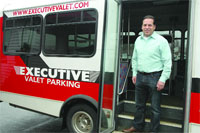
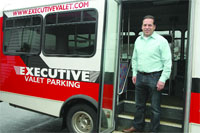
    Guy Piccolo, owner of Executive Valet Parking and a suite of other national parking services, said recognizing new opportunities early on has been a key aspect of his company’s growth.

    In a way, Guy Piccolo’s career began with a pizza pie and VW bus.

    His father, Domenico, an Italian émigré and long-time owner of Piccolo’s Pizza in Windsor Locks, had purchased a lot of land in the early 1970s, with hopes of relocating his restaurant and, ultimately, lowering his overhead.

    But as he kneaded dough, he began to recognize a different opportunity. Business at nearby Bradley Airport was booming, and the proof was in the passersby — trudging past Piccolo’s Pizza with suitcases in hand.

    “When the parking lots at the airport were full, people would actually park their cars on the soft shoulder of the highway and walk in,” said the younger Piccolo.

    With a vacant lot in his possession, his father capitalized on the overflow. He started by waving cars onto the land, and later shuttling travelers to and from the airport in a bright yellow microbus.

    By 1972, Piccolo Valet Parking was collecting $2 a day per car for the service, and business was bustling — the idea of off-site airport parking was still a new one nationally. However, Domenico Piccolo never got to see the true extent to which his business idea would grow; in 1975, he succumbed to Hodgkin’s Disease, and though still in high school, his son assumed full responsibility for the business at the age of 17, maintaining it for more than 20 years.

    By then, he said he was ready for a change — but the industry his father helped create wasn’t ready to let him go. And through the use of the Internet, this second-generation owner is taking a relatively simple business — parking cars — to a new and different place.

    New Frontiers

    “I thought I wanted to take some time off or try something new, but that only lasted about six months,” Piccolo said with a laugh, noting that he sold Piccolo Valet Parking to a national parking outfit in 1997, only to purchase the existing Executive Valet Parking in Suffield in 1998. He pulled two partners into the venture: Tom Lombardi, former marketing manager at Piccolo Valet; and Bob Bielecki, an IT professional who soon found an intriguing niche in the business (more on that later).

    “Just because you have a great idea doesn’t mean it will work,” said Piccolo. “Without all three of us, this business never would have taken off. We each bring our own expertise to the table.”

    In general, the timing was good for a new business. Like his father before him, Piccolo was able to respond to a parking shortage in the late 1990s, as Bradley constructed a new garage.

    “Three days a week, the lots were full, and cars were being redirected here,” he said. “That’s essentially what grew the business. We were getting 100 phone calls a day.”

    But there was one challenge that Piccolo hoped to surmount at the same time: marketing in his industry was expensive and time-consuming, and not as effective as he would have liked. It required making many print orders for flyers, postcards, and coupons to spread the word, and closing a sale often meant convincing someone over the phone in just a few minutes. Plus, in 1999, the Internet was still a new fad in many households.

    But, saying he’s lucky to have inherited his father’s business sense, Piccolo saw an opportunity on the Web. He and his partners launched executivevalet.com that year, directing travel agents, corporate clients, and others to the site to research and compare parking rates. He said that, with Bielecki’s background in IT and Lombardi’s marketing prowess, the initiative matured as quickly as the Internet itself at the time, and the Web soon became his primary marketing vehicle.

    “It eliminated those printing costs, and all of a sudden, business exploded, so I stayed with it,” he said.

    Wheeling and Dealing

    Instead of merely augmenting his first Web site, however, Piccolo decided to make a bigger move, further integrating technology into the Executive Valet business model. He purchased dozens of domain names related to airport parking and Bradley Airport specifically, such as bradleyairportparking.com, and other variations. All of these URLs directed customers to Executive Valet, and by the early years of this decade, the site was bringing in about $10,000 a month in sales.

    That got Piccolo thinking again.

    “I thought, if this works here, this could work everywhere,” he said.

    Pooling their individual strengths, Piccolo, Lombardi, and Bielecki set out to extend their online presence to other geographical regions. They used the same tactic, reserving domain names, but this time targeted several major airports in cities such as Chicago, L.A., and Miami.

    “We bought as many names as possible,” Piccolo said, “but we had an idea to have one, national Web site doing business in several cities.”

    Eventually, the trio directed all of the domain names they’d reserved to one address, airportparkingreservations.com. They’d forged relationships with eight privately owned airport parking lots and valet services in eight cities across the country, and travelers could log on to the site to reserve a space ahead of time. The new site launched on Jan. 1, 2000, and by June of that year, airportparkingreservations.com was serving 65 cities. Today, it serves 90 cities in the U.S., the U.K., and Canada, offering reservations at multiple locations in most cities. The site charges a nominal reservation fee of $5, and that’s where the business makes most of its profits.

    Further, the site has about 1,500 online partners, which link to the site when offering airport parking services. These partners are largely travel agents and online travel service providers, such as Orbitz, who are paid commissions by airportparkingreservations.com per booking.

    Piccolo said growth was, again, explosive in the first few years, posting upwards of 200% annual increases. Now, it’s leveled off somewhat, but Piccolo still expects to improve on this year’s sales by 25% next fiscal year.

    “When we started, we were the only ones,” he said. “Now, I’d say we have about 30 competitors, but we’re still the largest.”

    On the Fly

    To date, airportparkingreservations.com has booked more than 1 million reservations, and for travelers using Bradley Airport, Executive Valet is still doing well in Suffield, just minutes from the terminal. Plus, the business continues to evolve. Piccolo said another new Web site, called ParkSleepFly.com, was recently launched. Through relationships with various hotels (about 800 of them in the U.S., U.K., Canada, and Mexico), travelers can book a night in a hotel before or after a flight, and also park at the establishment during the trip.

    And he says there are other ideas in the works along the same lines, such as ParkingUSA, which will offer parking reservations at the airports themselves, and CityParkingUSA, which will allow for reservations in lots and garages for drive-only travel to major cities, such as New York and Boston. Both of these projects are expected to roll out this year, in the summer and fall months.

    “The timing is right,” Piccolo said. “We started so early that we got way ahead of the competition, and they’re just starting to catch us now.”

    Indeed, the parking phenomenon Domenico Piccolo started in the 1970s is showing no signs of slowing with his son at the helm. And when asked about its beginnings, the latter is always sure to pull out a photo he keeps on his desk of his dad standing by the VW bus that started it all, still wearing his pizza shop apron, but looking off into the distance — as if he knew big things were on the horizon.

    Jaclyn Stevenson can be reached at

    [email protected]

    Sections Supplements
    Atlas TC Proves that Good Communication Equals Good Business
    Steve Bandarra and Patrick Correia

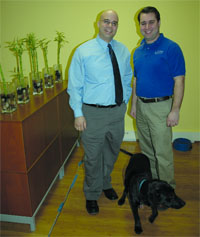
    Atlas TC co-owner Steve Bandarra (left) and staff member Patrick Correia say efficiency and communication are two tenets of their company.

    When Steve Bandarra and Nate DeLong decided to found Atlas TC, an IT consultancy firm based in Holyoke, they first pledged to do a few things differently than other, similar businesses they’d seen.

    There are little signs of that objective scattered throughout the Atlas TC offices; a row of bamboo chutes in their office’s foyer suggests a certain environmental consciousness, bright yellow paint on the walls speaks to the staff’s creativity, and the receptionist is a friendly black lab-boxer mix named Lucy.

    It’s a space that, deliberately, says ‘come in, we speak your language,’ and indeed, that’s a major aspect of the Atlas TC business model. Bandarra and DeLong call it “translation services,” noting that they specialize in changing ‘geek’ into English.

    Sometimes, translation refers to a specific task, literally breaking down complicated terms for a client into more easily digestible pieces. But in addition, translation is an overriding part of Atlas TC’s culture, which begins with staff members doing their best to talk to clients in a clear, concise way, and to bag the industry jargon that often creates a rift between techies and the rest of the world.

    “To a lot of people, the industry terms just sound like gibberish,” said Bandarra. “It’s up to us to help them understand. It’s not their job to make sense of the lingo — it’s ours.”

    Another tenet on which Atlas TC (short for Atlas Technology Consulting) has been built is ‘no technology for technology’s sake.’ While Bandarra is a self-confessed ‘techno-junkie’ and DeLong has a long technology background that includes military training, they both agree that not every bell and whistle is applicable to every situation.

    “We’ve seen people being sold way more than they needed,” said Bandarra. “It’s OK to be excited about technology; that’s why we do what we do. But that excitement needs to be tempered with an understanding of the specific needs a client has.”

    These two major prongs of the original business plan have created a successful spot within the area’s burgeoning IT sector for Bandarra, DeLong, and their staff, which is expected to grow by at least 50% this year. They’ve carved a niche for themselves serving a wide range of clients in various industries, many of which are mid-sized firms that have reached a turning point in terms of growth and, in turn, their technological needs.

    “Many of these are companies that have been around for a while, perhaps with a patched-together network that worked fine for a while,” Bandarra said. “They’ve reached a point where they’re ready for something that, essentially, works the way it’s supposed to. In other words, our clients did what they needed to do to get started, and now, they’re ready to grow up and, as the saying goes, ‘go to the next level.’”

    Bandarra said it’s exciting to work with businesses at this juncture in their legacies, not only because he sees the ways his team can play an integral role in a company’s growth, but also because in many ways, Atlas TC is at the same transitional spot as its clientele, doing well and ready to turn a corner to head for new avenues.

    Words Matter

    When he spoke with BusinessWest, Bandarra was joined by Patrick Correia, who has been with the company nearly two years (DeLong was recuperating from minor surgery).

    The firm and its staff work on two sides of the same IT coin — one half, led by Bandarra, focuses on business development, while the other, led by DeLong, puts most of its efforts into understanding and introducing new technologies. Correia, who works primarily in customer support on the so-called ‘techie side,’ said he was drawn to the company in large part due to the promises of communication and efficiency its founders made to themselves upon starting the company in 2004.

    “I think using buzzwords can be a way of excluding or even controlling people,” he said, “and it’s important to put things on a level that a particular person can understand. That level is different for every client, but it’s what every person needs and deserves.”

    Bandarra added that translating complicated and ever-changing technical terms for clients sounds like a small service at first, but it has become one of the bigger drivers for Atlas TC, particularly as it rolls out a host of new offerings this year.

    “It reminds our clients that they are in control of their businesses and their destinies — we’re just here to help them,” he said.

    Specifically, Atlas TC works with various companies to offer a menu of services that include ‘network therapy,’ designed to give slow computers a jump, and ‘hardware guide’ service, through which staff help clients choose the best systems for their business. The company also offers Web-development services, database creation and maintenance, security enhancements, and complete system builds. Two of its largest areas of concentration today are security and remote access, which often go hand-in-hand.

    “People are still realizing they can access files and networks from anywhere,” said Bandarra. “Our job is to bring a mix of access and security to them, and to educate our clients about the realities of the threats out there. No one should be terrified of viruses and hackers — security is a must for everyone, but it’s not that scary if you use best practices, and again, it’s our job to bring those to the table.”

    That philosophy also extends to another aspect of the IT consulting model. After Atlas TC staff have translated and educated, they’ll often draft an action plan for a client, which in turn sometimes helps a client secure work or products from other IT firms.

    “When a project gets bigger, we’ll sometimes shift to operate in a different capacity,” Bandarra explained, noting, however, that other times, it leads to a much deeper relationship with a company. “We have the ability to work with an IT department or as an IT department, preparing budgets and plans for the next year. Financially, it makes sense for the client because they’re not paying a full-time employee, and at the same time, each of us here has our own individual strength.”

    Host with the Most

    However, that’s not to say Atlas TC isn’t adding to its own repertoire as well. In 2007, the company began gearing up for a new virtual-hosting service that uses a more-efficient approach to providing and managing space within individual servers.

    “Most servers use a lot of power, but using virtual servers is a way to provide the same functionality while consuming less power, and lowering cooling costs,” said Bandarra.

    Plus, like Atlas’s computer new computer recycling program, which will reduce electronic waste by appropriately disposing of some units and donating others to area non-profits and educational bodies, Bandarra said a major driver behind adding virtualization to its list of services are the ‘green’ components it creates. “This allows us to be more eco-friendly as well as more customer friendly.”

    This technology also only recently became more accessible and affordable to small and medium-sized businesses, added Correia, making its introduction to Atlas TC’s client base that much more important.

    “That’s the beauty of being a smaller business,” he said. “We have the agility to stay on top of emerging technology, and to roll things out to our clients when the time is right.”

    That attention to timing refers back to Atlas TC’s golden rule of providing necessary technology that helps businesses run more smoothly.

    “We maintain the perspective needed to bridge business needs with new technology,” he said. “More than anyone else today, IT professionals like us are in a position to help businesses identify new opportunities.”

    I Won the Sandbox

    In addition, there’s no shortage of businesses to help, either. Bandarra said Atlas TC does very little formal advertising, relying on its Web site (which has two versions, on written in English and the other in the universal language of IT — ‘geek’) and word of mouth, which is keeping referrals brisk and workloads big.

    “So many people out there need our services,” he said. “There’s competition, but there are a lot of clients. The sandbox is huge, and it’s an exciting place to be.”

    While Bandarra said he, DeLong, and his staff are looking forward to long careers in that same sandbox, they’re also keeping an eye on new opportunities and developments that will help them, and their clients, open new doors.

    Their own front door, in the meantime, is under the watchful eye of a black dog in a bright yellow room.

    Jaclyn Stevenson can be reached at

    [email protected]

    Sections Supplements
    Avanti Skin Centers Puts a New Face on Cosmetic Procedures

    They’re called ‘lunchtime procedures,’ and they’re not just for the Hollywood set anymore.

    Treatments such as Botox injections, ultrasound facials, and chemical peels were once seen as the beauty secrets of the elite, but increasingly, they’re becoming more common, as well as safer, more effective, and less expensive.

    One of the biggest selling points of these cosmetic procedures of late, however, is speed.

    Dr. Raj Birudavol, director of operations for Avanti Skin Centers in Springfield, said that once, there were tell-tale signs that someone “had some work done”: a few days missing from work, for example, and physical signs as the body healed.

    “In the past, these types of treatments would leave people with swelling or red faces, but not anymore,” said Birudavol. “There are few signs, and there’s very little, if any, downtime.”

    Avanti Skin Centers opened in Springfield just under a year ago, and while Birudavol said it’s a business poised to capitalize on new acceptance of cosmetic treatments from all types of people, he also hopes to play an important role in educating clients about their options, and about the preventative measures they can take to protect and care for their skin.

    “We insist on education,” he said. “We can help people identify problems, and it’s not all about ‘the big sell.’ Many people, especially young women, don’t know what to do to protect their skin from damage, and many kinds of damage — from the sun, or acne, for example — are avoidable.”

    Saving Face

    To that end, a visit to Avanti usually begins with a skin analysis, using the Visia Digital Skin Analysis system, which takes a deep, multi-layered look at the face and what damage is present.

    “From there, we teach people how to prevent further damage, and how to maintain the health of their skin,” said Birudavol, adding that there are several treatment options from which to choose if a client decides to pursue them.

    Avanti’s services include laser hair removal; microdermabrasion, pulsed-light therapy that treats skin damage non-invasively; non-surgical facelifts; Botox injections and dermatological wrinkle-fillers such as Restylane; and chemical and enzyme peels.

    The center also offers a wide range of medical-grade products for skin repair and maintenance — brands such as Skin Medica, Skin Essentials, and Illustre Essenza.

    Birudavol said all of this represents a growing sector of medicine.

    “Aesthetic centers are becoming very popular,” he said, “and because the procedures and products are minimally invasive, it’s more accepted. People didn’t want to talk about it before, but now, many people are realizing that medical-grade products and procedures are more effective than what they can buy over the counter.”

    Often, these treatments produce results that last for several months, said Birudavol, and this is another draw toward medically based skin treatments.

    The Light Fantastic

    Take, for instance, one of Avanti’s most popular offerings, the Regenique procedure, which combines three technologies. First, a medical microdermabrasion system removes the topmost layer of the skin, essentially smoothing and polishing. Second, an ultrasound treatment deep-heats the layers of the skin while electrical stimulation massages the tissue. Finally, non-allergenic skin products are combined with a silicone mask to address specific skin conditions or issues, forcing toxins out of the body.

    Regenique is designed to treat the effects of aging skin by reducing the appearance of fine lines, wrinkles, and discoloration; reduce the visibility of scars and acne; restore even coloration in cases of hyperpigmentation; remove tenderness and swelling after surgery, including liposuction; or lighten stretch marks. Clients generally schedule a few weeks of treatment, but Birudavol said many see results after one session.

    “Having the treatment once a month can keep you looking fresh for a while,” he said. “We call it ‘1,000 facials at once.’”

    Other popular treatments at Avanti include Titan, the non-surgical facelift that uses infrared light to tighten skin, and 3D Skin Rejuvenation, a pulsed-light or ‘photorejuvenation’ therapy that treats several of the issues associated with sun damage.

    These treatments vary in price, but begin at about $100, speaking to the new affordability of these ‘lunchtime procedures.’

    That’s not to say the equipment used for some of these treatments is easy to come by, particularly lasers that can cost upwards of $200,000. Still, all of the equipment used at Avanti has been FDA-approved, and as technology continues to improve, Birudavol said Avanti is positioned to add even more services to its repertoire in the future. These include several minimally invasive or non-invasive treatments and procedures, such as ‘body sculpting,’ which uses medical fillers to correct small imperfections such as acne scars or even a slightly crooked nose.

    “We’re hoping to add more laser procedures, too,” he said. “Photomedicine is really taking off.”

    To allay any lingering fears among potential clients, Birudavol said medical skin care may not be for everyone, but added that medical supervision is virtually constant at the center, and aestheticians are trained to use the laser systems by the equipment manufacturers.

    Avanti is staffed by two physicians (medical director Dr. Craig Schacher rounds out the team) and two full-time aestheticians, in addition to a number of support staff focused on management, marketing, and patient coordination. The venture’s next move, said Birudavol, will be to continue its educational efforts and to forge new collaborations with other beauty-centric companies in the area.

    “We’d like to hold more open houses to explain to people what we do, and especially to reach out to young people and tell them what they can do to take care of themselves better,” he said.

    He’s also working now on an effort to create what he calls “makeover teams,” that, through partnerships with dentists, salons, and other outfits, will address issues with hair, skin, and teeth as a whole, and suggest options to improve all three.

    Brave New World

    All of these efforts are aimed, he said, at arming people with the information they need to make positive decisions about their health and appearance.

    “There are so many things that people can do, and if they’re not afraid, they have even more options,” said Birudavol. “It’s a new world … and they say in this new world, 60 is the new 50.”

    Features
    How a Team Effort Brought Liberty Mutual, and 300 Jobs, to Springfield
    Bob Greeley

    Bob Greeley shows off the space in the Technology Park at STCC that will soon be occupied by Liberty Mutual.

    It was called ‘Project Evergreen.’

    Why? Apparently no one from this region who was involved with it has a clue, nor should they, really. That’s because they don’t name these initiatives, these so-called ‘blind searches’ waged on behalf of companies that are looking for office space or real estate on which to build — and don’t want the world to know they’re looking.

    No, that honor goes to site selectors, said Mike Greaney, senior vice president of business development for the Economic Development Council (EDC) of Western Mass. And he told BusinessWest that such regional and national outfits are getting quite creative in this regard. Indeed, projects code-named ‘Ajax,’ ‘Mercury,’ ‘Apollo,’ ‘Sunshine,’ and even ‘Ocean’s Eleven’ have come across his desk and E-mail box in recent months, he said, adding that the EDC might be involved — to one degree or another — with more than a dozen at any given time.

    Very few have worked out as well as Evergreen.

    At an elaborate yet top-secret (until the very last minute) ceremony staged at the Technology Park at Springfield Technical Community College, it was announced that Liberty Mutual will be assuming 55,000 square feet in the park (the company inked a 10-year lease), for a customer service call center operation that will employ about 150 people to start and perhaps 300 or more down the road.

    Gov. Deval Patrick, eager to showcase examples of job growth and retention across the Commonwealth, turned out for the announcement, ensuring a good crowd (150 people, many of whom had no idea what was being announced) and lots of press — which wanted to know more about casinos than call center jobs, but that’s another story. Patrick was preceded to the podium by Edmund Kelly, president, chairman, and CEO of Boston-based Liberty Mutual, who eventually uttered a line that economic-development leaders in this region have been waiting to hear from someone like him for decades.

    “Massachusetts is not an expensive state in which to do business,” he said in his heavy Irish accent, “if you stay outside of Route 495.”

    Few of the press accounts, which included an item in Forbes via the Associated Press, picked up on the comment, which didn’t seem to faze Allan Blair, president of the EDC, who told BusinessWest that, when it comes to Evergreen and the ceremony to announce its conclusion, “we couldn’t have scripted it any better.”

    Whether the Liberty Mutual deal will help the region write more happy endings of this ilk remains to be seen, but Blair believes it has clearly created some momentum, because of the star quality of the company in question (95th on the Fortune 500 list, with $26 billion in revenues in 2007), the sector represented (financial services), Liberty Mutual’s desire to add jobs in Massachusetts but look outside Boston, and, perhaps most importantly, an apparent willingness on the part of the Patrick administration to help steer such companies to the western part of the state, and especially Springfield.

    “We’re seeing a genuine effort on the part of this administration to sell Western Mass. in the east, in an appropriate manner, and that’s all we ask for,” he said. “But we’re seeing more aggressive behavior on the part of this administration than any previous one in this regard, and it’s very welcome.”

    That said, Blair was quick to note that, despite this sentiment from the Patrick administration, Liberty Mutual conducted Evergreen “by the book,” meaning that the company was out to find the best fit it could in Massachusetts or the Northeast (most believe this search extended into Connecticut), not necessarily Springfield. This means the company became effectively sold on this region, and this bodes well for other sales jobs — involving other projects with imaginative code names — still in progress.

    In this issue, BusinessWest goes behind the scenes on Project Evergreen to show how such initiatives proceed, why this one ended successfully, and what it might mean for the region.

    Policy Statement

    Blair says it’s not uncommon for a search initiative such as Evergreen to have what he called a “big lull.”

    It comes, he explained, when the site selector stops talking with the representatives of one community and starts talking to those in another — while keeping that first locale “on the hook,” as he put it.

    It’s a somewhat nerve-wracking time, which in this case lasted about a month, he said, adding that it’s one of many aspects of such blind searches that make them both exhilarating and frustrating.

    “They generally keep you in the dark right up until the very end,” he explained, noting that communities, or regions, usually have no idea with whom they’re competing or where they stand in a search until the party in question makes up its mind. “You usually don’t know you didn’t get it until they make an announcement somewhere else.”

    Meanwhile, the current weakened state of the economy and generally uncertainty about the future have added some new wrinkles — and layers of anxiety — to the equation with many projects, said Greaney.

    “Sometimes you lose out in these searches,” he explained, “but in a lot of cases, companies are simply delaying their decisions, giving us an ‘on-hold’ category that appears to be growing.”

    Evergreen isn’t in that category, because Liberty Mutual is eager to take advantage of the state’s shift to a ‘managed-competition’ system for auto insurance, and because, by many accounts, the Patrick administration was eager to get a deal done — and in Springfield.

    The search on behalf of Liberty Mutual started late last summer, when, said Greaney, representatives of the Boston-based site section company CresaPartners first dropped the code name ‘Evergreen,’ and issued a request for information and, later, another for proposals to suit an unnamed client searching for roughly 30,000 square feet of office space for an undesignated use.

    That number would eventually increase — twice, in fact, said Greaney, adding that the EDC eventually submitted six or seven possible locations spread across the region, including the STCC Technology Park, located on the grounds of the former Springfield Armory.

    Dave Panagore, director of Economic Development for Springfield, said careful consideration was made to ensure that several downtown Springfield properties were included in the discussion, although none were apparently able to match the tech park’s mix of facilities, fiber-optic connectivity, infrastructure, and ample on-site parking.

    Still, there were some logistical hurdles to be cleared to enable the park to accommodate Liberty Mutual, said Robert Greeley, president of RJ Greeley Co., leasing agent for the park, who noted quickly that no one involved knew it was Liberty Mutual for some time.

    “All we knew was that it was a significant financial institution, Boston-based,” he said, “and that the governor’s office wanted to try and make a deal in Springfield. For a while, we thought it might be Fidelity.”

    Those aforementioned hurdles included some shuffling to get the desired footprint, he explained, noting that at the heart of the discussions was a former call center operated in the park by RCN, which occupied roughly 90,000 square feet before shutting down that facility in 2003. Roughly half that space would eventually go to Western Mass. Electric Co. (WMECO), which moved many of its personnel and operations into the park in 2004.

    To accommodate Liberty Mutual, tech park administrators initiated talks with WMECO that would end with that company effectively giving back about one-third of its space, enabling the park to put together a 30,000-square-foot block of space on one floor that will house phase one of Liberty Mutual’s plans, with subsequent phases to go in adjoining spaces.

    “This was certainly not an off-the-shelf deal,” said Greeley. “It required some maneuvering and, on WMECO’s part, a great deal of cooperation that enabled us to get this done.”

    Art of the Deal

    In response to a question from BusinessWest as to how and why Liberty Mutual came to Springfield and the technology park, Kelly said the choice “made perfect sense,” which is another remark that Blair and others longed to hear.

    He based that assessment on a combination of this region’s comparatively lower cost of doing business; infrastructure, meaning the city’s fiber-optic network and the facilities within the tech park itself; and workforce quality and quantity.

    Whether the region can turn these advantages, coupled with the positive press from the Liberty Mutual lease and support from the Patrick administration, into more jobs for the region remains to be seen.

    But Blair believes the pieces are in place for more success stories like Evergreen, especially if business owners can be persuaded, as Kelly was, to consider locations in this part of the state, and then become properly incentivized to locate in the Valley.

    “I think it certainly makes a difference to the site-selector community and also the CEO community when they read about decisions like Liberty Mutual’s,” Blair told BusinessWest. “Everyone is looking for lower-cost places, and when a leading company like this one makes a move like this, others notice; this will definitely help us.”

    Greaney concurred, adding that the Patrick camp is doing more than any administration in recent memory to prompt companies to choose Western Mass.

    “The Liberty Mutual deal didn’t swing on this, but many times, as we compete, state incentives become a big factor in the decisions,” he explained. “We’re seeing that this administration is becoming as creative in putting incentive packages together in Western Mass. as other administrations historically were for Eastern Mass., Fort Devens, and places like that. So we have to give the Patrick administration high marks for that.”

    But beyond whatever push the governor and his administration may have provided, there were other factors in Liberty Mutual’s decision that bode well for the Valley, said Greaney, noting, especially, the cost factor.

    “We know that part of the analysis the company and its consultants did was a geographic continuum of wages,” he explained. “There were two intersecting lines — one was labor availability, and the other was wage rate; where they got to a rate they could swallow but still had a sufficient labor pool, that was the ideal, and they found it here.”

    Overall, it was a combination of factors that appealed to Liberty Mutual — and will appeal to others, he said. “The infrastructure needs matched the workforce needs, which matched the wage rates that Liberty Mutual needs to be competitive; all the arrows pointed to Springfield.”

    Paul Stelzer, president of Appleton Corp., which manages the tech park and many other commercial properties in the region, said Evergreen went as well as it did because of teamwork and the parties effectively playing the roles to which they were assigned.

    “The EDC was the front door — it got Liberty Mutual here to take a look,” he explained. “But then, the region responded: the Regional Employment Board answered labor force concerns, and an appropriate site with the needed infrastructure was assembled. All the pieces came together — that’s how you prevail in a search like this one.”

    Collision Course

    Greaney told BusinessWest that he has received more than a few electronic congratulatory notes from site selectors in the wake of Evergreen’s successful conclusion.

    “They know how hard it is to close a deal like that, and they also know what it means to the region to have a Liberty Mutual choose to come here,” he said, adding that while this is a fairly close-knit community, news of Evergreen has traveled far and fast.

    That’s just one of the many positive aspects of this deal, one for which, as Blair said, it would be difficult to imagine a better script.

    The task at hand is to write more of them.

    George O’Brien can be reached at[email protected]

    Departments

    Cash Flow Workshop

    March 19: Robb Morton of Boisselle, Morton & Assoc. LLP will present “Understanding Your Company’s Cash Flow” from 9 to 11 a.m. as part of the ongoing training seminars sponsored by the Mass. Small Business Development Center Network in Springfield. The workshop is slated at the Andrew M. Scibelli Enterprise Center, One Federal St., Springfield. The cost is $40. For more information, call (413) 737-6712 or visit www.msbdc.org/wmass.

    Working Clutter-free

    March 19: The Women’s Partnership of the Affiliated Chambers of Commerce of Greater Springfield presents “Working Clutter-free” from 11:30 a.m. to 1:15 p.m. at the Clarion Hotel in West Springfield. Carleen Eve Fischer Hoffman, owner of The Clutter Doctor Inc., will help participants explore ways to create order in the office through simple organizing techniques. The cost is $25, and reservations can be made by contacting Diane Swanson at the Affiliated Chambers of Commerce of Greater Springfield, 1441 Main St., Springfield; by fax at (413) 755-1322; or via E-mail at [email protected]

    Seminar on Undergraduate Programs

    March 20: Cambridge College will host an informational session on its Bachelor of Arts-Multidisciplinary Studies and Bachelor of Science-Human Services programs for working adults from 6 to 8 p.m. in the Boardroom of the Springfield Marriott. For more information, contact Mary A. Nelen, undergraduate admissions counselor, Cambridge College, at (800) 829-4723, ext. 6617, or via E-mail at [email protected].  To view more Cambridge College offerings, visit www.cambridgecollege.edu

    Digital Marketing Seminars

    March 21: The Regional Technology Corporation’s Technology Enterprise Council network will conduct a series of five seminars this year focused on digital marketing. The first seminar, “Viral Marketing,” is planned from 8:30 to 10:30 a.m. in the tele-classroom at Springfield Technical Community College’s Technology Park. Seminars also planned include “Using Social Networks as Marketing Tools,” “Business Blogging,” “Using Video to Enhance Marketing,” and “Web Trends.” The March 21 event is free to RTC members and $50 to non-members. Advance registration is required and can be made by calling (413) 755-1314 or by E-mailing April Cloutier at [email protected].

    Adult Fitness/ Wellness Fair

    March 22: As part of its commitment to total wellness, the Springfield YMCA is hosting a “New Attitude – New You Fit Fair” for adults from 10 a.m. to 2 p.m. The event is free and open to the public. Health screenings will include blood pressure, cholesterol level, glucose level, and body composition. Other offerings will include physical therapy and chiropractic assessments, product samples, raffle prizes, total body health and beauty tips, basic financial and consulting tips, healthy food and soft drink samples, and a fitness wear fashion show. For more details, call the YMCA at (413) 739-6951, ext. 145, or visit www.springfieldy.org

    Peacebuilding Workshops

    March 26: As part of its free 2008 Speaker Series, Elms College in Chicopee will host a workshop titled “Peacebuilding” by Hedley Abernethy, peacebuilding education advisor for Catholic Relief Services, at 3 p.m. Abernethy will also participate in a panel discussion on “Peacebuilding” with Michael True, Ph.D., professor emeritus of English at Assumption College, and Sharon Shepela, Ph.D., professor of Psychology at the University of Hartford, at 7:30 p.m. Meeting locations were not available at press time. Visit www.elms.edu   for more information.

    Panel Discussion on Civil Rights Lessons

    March 26: “Unsettled Histories: Civil Rights Lessons from Jena and Beyond” will feature civil rights advocate and law professor Margaret Burnham and legal investigator Terry Davis discussing their work on behalf of a Jena 6 student. The 7:30 p.m. panel discussion will be conducted in Gamble Auditorium, and is free and open to the public. For more information, call (413) 538-3071.

    YPS Celebrates March Madness

    March 27: The Young Professional Society of Greater Springfield marks its one-year anniversary during its monthly social at the MassMutual Center from 5 to 7 p.m. Highlighting March Madness and the NCAA Elite Eight Division II basketball championship in downtown Springfield, YPS has partnered with the Collegiate Championship Committee of Greater Springfield for its March social. While attendance is free with YPS membership, non-members are welcome for $5 per person. The event will be held on the second floor, outside the main ballroom, overlooking Court Square. Active networking will be accompanied by hors d’oeuvres, a cash bar, and lively entertainment. Tickets for that evening’s semifinal games will be available during the event. March corporate sponsors are BusinessWest and Avanti Skin Care, and the nonprofit spotlight is the United Way of Pioneer Valley. For more information, visit www.springfieldyps.com

    Create-a-Strategy Lecture

    March 27: Representatives of the Berkshire Chamber of Commerce will host a lecture from 9 to 11 a.m. titled “Create-a-Strategy” as part of the ongoing training seminars sponsored by the Mass. Small Business Development Center Network, with offices in Springfield and Pittsfield. Participants will learn to create a seven-sentence marketing strategy that informs and drives marketing campaigns, media selection, messaging, and marketing budgets. Also, learn the secret of delighting the few to attract the many and how to describe your target market and identify your niche. The cost is $40. For more information on the lecture that will be conducted at the Chamber office, 75 North St., Pittsfield, call (413) 499-0933 or visit www.msbdc.org/wmass

    ‘Green’ Workshop

    March 27: Andrea Nager Chasen, assistant regional director for the Climate Change Project of Western MA, will present “Climate Change,” a 45-minute workshop and discussion on how an individual can help reduce the problems of a warming atmosphere and climate. Her 7 p.m. lecture is planned in Mills Theater in Carr Hall at Bay Path College in Longmeadow as part of its Kaleidoscope spring lecture series. The event is free and open to the public. For more information, visit www.baypath.edu

    Cultural Diversity Reading

    March 27: Elms College in Chicopee will present “Ferociously Yours: Poetry as Resistance,” a reading celebrating cultural diversity, in the Alumnae Library Theater at 8 p.m. The reading will include diverse performance pieces and new works by several poets. The event is free and open to the public, and there will be an opportunity to purchase books and CDs from the performers after the reading. For more information, contact Alexander at (413) 265-2343.

    Walking with Dinosaurs

    March 27-30: “Walking with Dinosaurs – the Live Experience,” based on the award-winning BBC television series, will be staged at the Mullins Center in Amherst for seven shows. Ten species are represented from the entire 200-million-year reign of the dinosaurs. The show depicts the dinosaurs’ evolution, complete with the climatic and tectonic changes that took place, which led to the demise of many species. For ticket information, call (413) 733-2500 or visit www.ticketmaster.com

    Legislative Breakfast

    March 28: The presidents of Greenfield Community College, Holyoke Community College, Westfield State College, and Springfield Technical Community College will host a legislative breakfast at STCC, beginning with breakfast at 7:30 a.m. on the seventh floor of Scibelli Hall. The formal program begins at 8 and will feature discussions on public higher education in Massachusetts. For more information, call STCC at (413) 755-4906.

    ‘Globalizing Gender?’

    March 31: The Five College Women’s Studies Research Center in South Hadley will host a presentation titled “Globalizing Gender?: Militarization, ‘New Wars’ and the Global Economy” by Dubravka Zarkov, Ford Associate from the Institute of Social Studies. Zarkov looks at the nexus of the economy and militarism as a contemporary global condition, asking whether this nexus is dependent on specific notions and practices of masculinities and femininities, and thus in need of reproducing them. The free event is open to the public. For more information on the event, visit www.fivecollege.edu/sites/fcwsrc  or call (413) 538-2275.

    UMass Exhibition

    April 1-12: The Augusta Savage Gallery at UMass Amherst will present an exhibition titled “Charles ‘Teenie’ Harris: Rhapsody in Black and White,” featuring works by the late, famed photographer of Pittsburgh. The gallery will feature a talk by choreographer Ronald K. Brown at 7 p.m. during the closing reception on April 11 from 5 to 7:30 p.m. The show documents the historic and daily events of the Pennsylvania city’s African-American community between 1936 and 1975. The event is free and open to the public. For more information, call (413) 545-5177.

    Workshop on Branding

    April 2: John Bidwell of Bidwell ID will present a workshop on “Branding” from 9 to 11 a.m. at the Andrew M. Scibelli Enterprise Center, One Federal St., Springfield, as part of an April Mornings Marketing Series, sponsored by the Mass. Small Business Development Center Network in Springfield. The series continues on April 9 and April 16. The cost is $40 for one workshop, $75 for two workshops, $100 for three, and $125 for the series. For more information, call (413) 737-6712 or visit www.msbdc.org/wmass

    Departments

    The following is a compilation of recent lawsuits involving area businesses and organizations. These are strictly allegations that have yet to be proven in a court of law. Readers are advised to contact the parties listed, or the court, for more information concerning the individual claims.

    CHICOPEE DISRICT COURT

    Theresa Szkolt v. Johnson Construction
    Allegation: Breach of contract for construction services: $4,600
    Filed: 1-28-08

    WJF Geoconsultants Inc. v. Bernard Brunelle & Triple B Auto Service Inc.
    Allegation: Non-payment of environmental services: $6,771.25
    Filed: 2-07-08

    FRANKLIN SUPERIOR COURT

    Gilbert R. Lanoue v. Big Y Foods Inc.
    Allegation: Negligence in dispensing of drug causing personal injury: $6,200
    Filed: 1-31-08

    GREENFIELD DISTRICT COURT

    Sherwin Williams Company v. Todd Baker Decoration
    Allegation: Non-payment of goods sold and delivered: $2,870.15
    Filed: 2-13-08

    HAMPDEN SUPERIOR COURT

    Helen Santaniello v. James Harrington & Hawk Liquors & Spirits Inc.
    Allegation: Breach of purchase and sales contract: $325,000
    Filed: 12-28-07

    Mary Lewandowski, administratrix of the estate of Fred Lewandowski v. Edward Steven Ballis, M.D.
    Allegation: Medical negligence causing death: $25,000+
    Filed: 1-23-08

    Miriam Rosa v. Goodwill Industries Inc.
    Allegation: Other negligence and personal injury: $25,000+
    Filed: 2-01-08

    Nicholas Lynch v. Douglas G. McAdoo, M.D. and Emergency Medicine Associates
    Allegation: Medical malpractice: $25,000
    Filed: 1-30-08

    Roger Cortis Jr. v. Crystal Brook Landscape Construction Inc.
    Allegation: Motor-vehicle negligence: $26,258.55
    Filed: 1-20-08

    Taylor M. Coutant v. Eastern States Expo and North American Midway Entertainment
    Allegation: Negligence causing personal injury while entering amusement ride: $526,136.18
    Filed: 2-05-08

    HAMPSHIRE SUPERIOR COURT

    David Bogardus v. Packaging Corporation of America
    Allegation: Negligent failure to maintain property, causing injury: $601,768.27
    Filed: 1-16-08

    Pramco CV8, LLC v. J & P Dunham Truck & Tractor Service, LLC
    Allegation: Default on commercial promissory note and guaranty agreements: $27,275.32
    Filed: 1-24-08

    William and Ann Marie Woods v. Wagner Spray Technology Corporation
    Allegation: Negligence in design and manufacture of product causing fire damage: $200,000+
    Filed: 1-24-08

    HOLYOKE DISTRICT COURT

    Ramon Suarez v. El-Ro Realty and Pleasant Realty Apartments, LLP
    Allegation: Negligent maintenance of property causing injury: $6,331.59
    Filed: 1-18-08

    NORTHAMPTON DISTRICT COURT

    Assured Nursing Services Inc. v. Somerset Longterm Care, LLC d/b/a Poet’s Seat Health
    Allegation: Principal due on promissory note: $29,764.31
    Filed: 2-15-08

    Fierst, Pucci, & Kane LLP v. Replay Studios GMBH
    Allegation: Failure to pay for legal services rendered: $9,705.39
    Filed: 2-14-08

    McCarthy, Burgess, & Wolff v. Northeast Woods & Waters Inc.
    Allegation: Non-payment of balance on equipment lease: $11,885
    Filed: 2-14-08

    PALMER DISTRICT COURT

    Budget Truck Rental LLC v. Liberty Transportation Inc.
    Allegation: Motor vehicle negligence: $9,676.72
    Filed: 1-30-08

    SPRINGFIELD DISTRICT COURT

    Alan Planky v. Regency Pontiac
    Allegation: Breach of car sales contract: $7,235.47
    Filed: 1-03-08

    WESTFIELD DISTRICT COURT

    Abraham Forish v. YMCA of Greater Westfield Inc.
    Allegation: Negligent maintenance of exercise equipment causing injury: $21,000
    Filed: 2-04-08

    Sections Supplements
    One Source Financial Focuses on Dollars and Sense

    When asked to describe what his company does and how it does it, Robert Berriman talked at length about wealth management, retirement planning, insurance, benefits packages, and how One Source Financial works to educate clients about making smart choices within each realm. He then summed it all up in a different but decidedly more economical fashion: “We do the right thing — even when no one is looking.”

    Robert Berriman likes to say that he works in the “trust business.”
    Not in a literal sense, although he can certainly help someone set up virtually any kind of trust product, but figuratively speaking, as in an industry where he must earn and then maintain the trust of the clients with whom he works.

    And this subject of trust is no small concern in this broad sector, he explained, because the matter at hand is someone’s money — or, looking at things a different way, their future.
    That’s why Berriman, president of East Longmeadow-based One Source Financial Group Inc. and a 30-year veteran of the wealth management and retirement-planning business, has, as an unofficial company slogan — it’s not printed on any literature that he’s aware of — “we do the right thing … even when no one is looking.”

    Of course, with the Internet and instant availability to information, people can be looking all the time, he continued, but that’s another very literal interpretation of his thoughts. The truth is, people aren’t looking all the time, and thus they need the trust factor, he said, stressing again that such trust has to be earned.

    The fact that Berriman is accomplished in this regard is reflected in his large and diverse client list, which includes everything from high-net-worth individuals to small companies to firms with 500 employees. He and his staff have assembled that clientele by effectively focusing not on individual products, but on the concept of creating plans.

    “Planning is more important today than it ever has been,” he explained, adding that people are more sophisticated about investing and overall financial planning than they were 20 or even 10 years ago, but still need help understanding products and services and forging a plan. “People are concerned about their future, and they’re being told every day by the federal to be concerned about their future. So more people are doing things, but they need help doing them.”

    Berriman’s company recently instituted a name change — he followed the advice of some colleagues in his sector and “took my name off the business” — but everything else about it has been a constant, he said. And by that, he meant that the firm, now celebrating its 20th anniversary, has always been in the business of finding solutions, and not simply selling products or services.

    And this has been the case whether the client, be it an individual or business owner, was interested in retirement plans, wealth management, asset allocation, or one or more types of insurance, including life, health, disability, property, and long-term care.

    Berriman has a few quantitative measures of success on his resume — especially inclusion in something called the Top of the Table; Million Dollar Round Table, or MDRT. This is an organization that recognizes only the top 1% of financial producers — not only in this country, but worldwide — and Berriman has been a member in good standing for many years now.

    But he prefers the more qualitative benchmarks for achievement in this sector, especially the clients that have been with him for decades, as well as different generations within many families that are on the client list — constituencies that have slightly different needs and approaches when it comes to accumulating wealth and managing it.

    “One of the things that I’m most proud of is that I have a number of clients — retirement plan clients, 401(k) clients, and others, who have been with me for more than 25 years,” he explained. “Through all the gyrations and transitions with those companies and those people, they stayed here, and there’s a reason — we look after their interests.”

    This track record bodes well for Berriman as he takes stock of the company at 20 and continues down a path toward strong but controlled growth.

    In this issue, BusinessWest looks at how One Source lives up to its new name, and how it has responded to the many changes within this sector to provide bits of advice — and those solutions — that are, to borrow an industry term, on the money.

    Stock and Trade

    Considerable time and effort went into the company’s name-change exercise, said Berriman, noting that it was undertaken late last year as part of the ongoing, broad strategic initiative to grow the firm.

    He didn’t engage the services of a marketing consultant, but instead put his staff — many of whom have been with him for many years — to work on the matter. In other words, he took the team approach, which is how the company goes about everything it handles.

    Starting with the simple goal of retiring ‘Berriman & Associates’ — the name put on the business in 1996 after a previous partnership was discontinued — “because that doesn’t say anything about who we are or what we do,” the staff looked at a number of options, said Berriman, and decided, in rather democratic fashion, on One Source Financial Group.

    The proposed new name was run by clients (there were four different mailers on the subject) to make sure they were comfortable with it and understood that nothing else was changing, and eventually chosen because it does say at least something about what the company does. It also connotes a little about how it does business, as it basically invites clients to think about the firm as a single source for a host of needs — retirement planning, benefits, and others — rather than using several sources.

    “It’s not about one-stop shopping, really,” said Berriman, “but to indicate that this a place, one source, for expertise on a wide range of products and services.”

    This has been Berriman’s approach since he first started working in this sector in 1975.

    He started as a broker/agent with Travelers Insurance in Hartford, and decided after a few years that this was not a career path he wished to stay on. He went into retirement plan marketing for the company, essentially traveling around the country teaching agents and brokers how to sell and design qualified retirement plans, before going to work for Springfield-based Palmer Goodell Insurance in the early ’80s.

    There, he handled advanced sales, estate planning, and deferred compensation. After seven years with PG, he partnered with John Caulkins to form Berriman & Caulkins, a collaboration that lasted nearly a decade before the two parted ways and Berriman created Berriman & Associates.

    The company has grown steadily over the years, in terms of everything from assets under management (that number is now $150 million) to the size of the staff; from the the portfolio of clients to the roster of services. To continue and accelerate that growth pattern, the company intends to emphasize its strengths, especially experience and diversity, market itself aggressively, and demonstate its ability to respond to changes within the industry.

    Achieving Balance

    Elaborating, Berriman told Business-West that while the roster of products and services offered by wealth-management and retirement-planning companies has been fairly constant over the years — they now come in more flavors than ever before — there have been a host of changes within this sector, many of them fueled by technology.

    When the Internet first came into prominence, he explained, many predicted that the instant access to untold volumes of information that it provided would spell trouble for professionals in this sector because individuals and companies could, in theory, become do-it-yourselfers.

    Instead, those in this business, as in others, like insurance, have found that the opposite is true. They’ve discovered that the Internet gives people information, but also (usually, at least) an understanding that they need someone to help them to make educated decisions about what to do with all that information.

    “What the Internet has done is open up the investment world to more people, and made people more knowledgeable about the investment side than they were years ago,” Berriman explained. “But when it gets to the point where they’ve accumulated a little money, they want someone to help them. People came to understand that this wasn’t about just going out and buying and selling things, but having a real plan, and for that, people do need help.

    “The industry has changed dramatically, especially with the communication we have and all the information we have, and the need to help people make sense of that information,” he continued. “When I started in this business, the interest rates didn’t change for three years — it wasn’t even something we thought about. Now, they change every day.”

    Beyond technology, this field has changed to the extent that there are now many more players in it, said Berriman, all of them vying for the rights to help people create and then manage wealth and retirement savings.

    To stand out, companies have to do more than offer a large suite of products and services — although that certainly helps. They also have to serve the client, said Berriman, who noted that this often comes down to efforts to advise and educate them about choices and which ones make the most sense for them.

    Education also comes in the subjects of why people are investing and accumulating wealth for the future, and how this is a long-term exercise, he continued. This helps cut down on the number of calls that come in when the Dow is down 200 points (there have been several of those days already this year) and when the monthly and quarterly IRA statements come in the mail.

    “It’s all a product of how you explain things to people up front — that retirement is a long-term process,” he said. “We’re not spending a lot of time on the phones these days talking to people because of the work we did up front; if you’re explaining the process effectively at the start, then you don’t have to jump through hoops and re-educate people during times like this.”

    But more importantly, education creates more-informed clients who are thus able to take the information available to them, as well as consulting services from a professional, and chart an effective course.

    “I have a new salesperson, and one of the things that I keep telling her is that this is not a product business, it’s a service business,” he explained. “If you do the right service for the client, whatever the product is just fits.”

    The Bottom Line

    Berriman told BusinessWest that he’s proud of his standing within the Million Dollar Round Table. It’s an indicator of success within this sector and, by his way of thinking, a barometer of that all-important intangible known as trust.

    Without it, the numbers wouldn’t be there, he explained, and nor would the clients that have been with him for decades or succeeding generations of members within many families.

    Those measures of success are also the byproduct of trust — and doing the right thing, even when no one is looking.

    Opinion

    This is not your father’s — or your mother’s — field trip. Not by a long shot.

    It might start and end the same way as that visit to Mystic Seaport or the Boston Science Museum back in the ’60s or ’70s did — with a bus ride — but that may be the only thing a day spent as a participant in programs staged by The World Is Our Classroom has in common with those stops from a generation ago.

    The WIOC program, now in its sixth year, places a classroom, as well as a working laboratory, in a company, and in so doing, it opens students’ eyes to much more than an exhibit on dinosaurs or a whaling vessel. It provides learning-while-doing lessons in science and technology, while also exposing young people to the world of work and possible career opportunities.

    Thus, they present win-win-win (we need a lot of ‘wins’ here) scenarios for this region’s business community and individual companies. In short, this is a unique and special program that we can hope can be expanded to include students in more area communities, especially those with lower-income populations that need exposure to career opportunities and perhaps some inspiration to aspire to such careers.

    Overall, WIOC shows that the business community can play a key role in strengthening our region’s cities and towns by helping to educate young people and, in the process, create a larger, better workforce.

    The World Is Our Classroom was created in large part out of need. United Water, which manages water- and wastewater-treatment systems across the country, was mandated to provide some form of educational community outreach as a condition of a 20-year, $263 million contract it was awarded in 2000 to manage the Springfield Regional Wastewater Treatment Facility at Bondi’s Island.

    The company’s answer was to go beyond the ‘adopt-a-high-school’ strategy it had taken elsewhere, and instead implement a program that would take thousands of young people through the plant each year, providing valuable lessons carefully designed to help with performance on the MCAS exams along the way.

    Taking a good idea and making it even better, the company created a nonprofit group, The World Is Our Classroom, to expand on the concept and take it to more companies and communities. In recent years, Hazen Paper Company in Holyoke and Mestek Inc. in Westfield have signed on as participating companies.

    Each business, working in concert with WIOC instructors and officials at area colleges, including Springfield College, Holyoke Community College, and Springfield Technical Community College, has crafted its own ‘curriculum’ to engage and educate young people and then test them on what they’ve learned.

    The lessons come in many forms and on a number of levels, touching on everything from simple machinery to natural processes like evaporation to the value of teamwork in problem-solving and reaching shared goals. The programs are designed mostly for fifth-graders, but some are tailored for high-school students.

    Both constituencies learn about much more than why and how wastewater is treated at Bondi’s. They also learn about the world of work and gain exposure to job opportunities they might not have thought existed here — opportunities in manufacturing, but also in management, engineering, design, and quality control.

    These are important lessons to impart at a time when companies in many sectors are struggling to find enough qualified talent and when the so-called brain drain has reached the status of a serious economic-development challenge.

    A trip to Hazen and an exercise in making paper is not going to change a young person’s life. It’s also not going to solve that company’s workforce issues for the year 2020. But it will get a child thinking — about the planet and about possibilities.

    These are good things that we hope can inspire this region’s business community to step up and do things that can make a difference — things like putting a classroom in a company.

    Opinion
    The State Is Thinking Big on Energy

    Thinking big is not something new to Massachusetts. It was a president from here who declared his goal in 1961 to put someone on the moon, and less than a decade later the country did. In the 1970s, the government wanted a communications network that would survive a nuclear attack, and in Cambridge the Internet was born. When the demand for computers spread to private business, Digital Equipment invented the minicomputer here in 1964. And today, the state is at the leading edge of the biotech revolution. The list of big ideas that have been realized here is long and dramatic.

    Gov. Deval Patrick, who is often accused of being big-idea-happy, has touched the surface of an idea that could once again put us at the forefront of another technology revolution. The governor recently advanced a program that will provide incentives for the development and use of solar panels in this state and does so in a way that is economically feasible.

    The idea is so good that it encouraged a local company, Evergreen Solar, to stay and manufacture its product in this state rather than take it to Germany, which was its original intention.

    It’s funny how far a little government support can go to stimulate economic activity.

    Now imagine what would happen if Massachusetts became a haven for any company that produced new energy-saving technology.

    Susan Hockfield, the president of MIT, has taken a leadership role in addressing the energy issue and has met with political and industry leaders to look at what role research institutions can play in addressing these challenges.

    MIT has the Center for Energy and Environmental Policy Research, which focuses exclusively on issues related to energy and environmental policy in order to support both government and industry in decision-making. MIT is also organizing the MIT Clean Energy Entrepreneurship Prize, which will give a $200,000 award for commercially viable energy ideas. MIT is a resource that no other state in America has and gives Massachusetts instant credibility on this subject.

    But MIT cannot go it alone, and the opportunity before the state requires a full-court press from the governor’s office to create our equivalent of President Kennedy’s call to put a man on the moon.

    If the governor’s office, with support from U.S. Sens. Edward Kennedy and John Kerry, spearheads a sweeping initiative that sets a two-decade goal of producing enough new energy-saving products and technologies from Massachusetts to free the country from its addiction to fossil fuel, the impact would be global. It would also energize the state’s economy, which ranks 49th in job creation.

    Unlike the federal government, which is headed by a president from an oil-producing state, Massachusetts has no obvious conflicts of interest. Indeed, given the state’s climate, the need for creating economical solutions to the country’s energy problems is particularly acute.

    To find the precedent for individual states creating de facto national policy, one need only to look at California, which has driven the automobile emission standards for the rest of the country. Massachusetts can do the same for other energy issues.

    Though a combination of creative tax incentives, free utilization of surplus state land for energy-related manufacturing, streamlined approval processes, state grants, encouragement of university participation, commitments to purchase these new technologies for state use, incentives for Massachusetts residents to purchase home-grown technologies, rewards for products brought quickly to market, accelerated depreciation for venture investments, and incentives for technology companies to relocate to Massachusetts, the state could well become the nation’s center of energy technology. Massachusetts may also help change the world in the process.

    Bruce A. Percelay is chairman of the Mount Vernon Co. This article first appeared in the Boston Globe.

    Sections Supplements
    Florence B&B Is the Region’s First Solar-powered Getaway
    John Clapp and Dee Boyle-Clapp

    John Clapp and Dee Boyle-Clapp stand near the photovoltaic panels that power their B&B in Florence.

    Traveling up the long, gravel driveway of the Starlight Llama Bed and Breakfast in Florence, guests are sometimes greeted by an unlikely crew of hosts: bright blue peacocks perched on a fence, inquisitive llamas, a mischievous miniature donkey, and an emu or two.

    Later in the day, visitors might also take the banana peels and apple cores from the complimentary fruit baskets in their rooms to share with the menagerie, and upon their departure, will leave with a unique show of gratitude — a vibrant peacock feather.

    The animals at the Starlight Llama, nearly all of which were rescued from inhumane conditions, are definitely a draw, and a unique addition to a Western Mass. getaway.

    However, they’re just one aspect of a unique identity for the B&B — that defined by environmental stewardship and an appreciation for nature.

    In fact, the establishment, owned by John Clapp and Dee Boyle-Clapp, who’ve also made their home on the property, is completely ‘off the grid,’ using solar power as its primary energy source. To date, it’s the only 100% solar-powered B&B in the area, and the hosts hope it’s not the last.

    Clapp, a builder by trade, explained that he constructed the home and adjoining B&B, which includes three rooms with private baths and is open to guests year-round, nine years ago, using mostly lumber harvested directly from the property and other sustainable materials.

    “Our original plan was to have the home set up to serve as a B&B upon our retirement,” he said, noting that it will be at least a decade before the couple reaches that stage. “But we completed the permit process earlier, just to have it, two years ago.”

    Clapp said the local newspaper, the Daily Hampshire Gazette, wrote a short article about the unique venture upon hearing of the permit request through City Hall, and since then the bookings haven’t stopped.

    “We didn’t start advertising until about a year ago this spring,” he said, “and that was when the oil and energy crises were really getting people’s attention. Part of our purpose is to show people that alternative energy works, and up until now, that’s been the primary reason guests were finding and visiting us.”

    Hearth and Home

    Clapp will even guide guests on a tour of the property’s solar-power installation — in fact, he encourages it. However, that initial reason for a visit has since been joined by other creature comforts, such as the homemade breakfasts Boyle-Clapp prepares, serving omelets made with the eggs from her free-range hens, German apple pancakes with garnish from an organic garden, and french toast made with almond milk, among other delicacies.

    Guests also enjoy the bucolic charm of the property, which once served as a dairy farm and later a saw mill, and includes 65 acres of land that is conservation-protected, meaning it cannot be developed. Trails wind around the trees, suitable for hiking, snowshoeing, or a stroll with one of the B&B’s llamas (the couple hopes to clear the trails in the future to make them even more accessible).

    Inside, rooms are appointed with a mixture of antiques, Shaker-inspired furniture — much of it handcrafted by Clapp — and new, space-saving pieces from Ikea, all tied together with the charm of the peacock feathers placed in vases and bowls.

    What’s most notable about the Starlight Llama, though, is what guests don’t notice once they’re tucked into their cozy rooms: the B&B gleans its electricity from solar rays captured by an array of photovoltaic, or PV, panels, and has no connection to the electric company whatsoever.

    Photovoltaics generate solar power by using solar cells packaged in modules, which convert energy from the sun into electricity; a generator serves as a backup.

    Further, water is also heated alternatively, using two systems: a tankless hot water system, which uses a copper box with a heating element to circumvent the need for a large hot water heater, and a solar panel and a copper coil wound around the home’s wood stove pipe to augment the system.

    “It’s great, because it’s instant,” said Clapp. “There’s no big tank to heat, and it never gets cold.”

    Have Sun, Will Travel

    Clapp said he first experimented with alternative energy and heating in a studio apartment in the 1980s, and that most of the basic technology hasn’t changed dramatically, other than to improve in performance.

    “It’s fairly early technology — much of it the stuff of Popular Science magazines,” he said. “It’s not in the mainstream yet, but it needs to be.”

    As energy prices continue to soar, Clapp said more people are embracing alternative energy sources than ever before, and seeking to learn about how others have incorporated it into their homes and businesses.

    “Many people still have the mindset that it doesn’t work in New England, and that’s part of the reason we’re here,” he said. “This is something we both want to do, and we’re happy to let it grow organically. Through word of mouth and referrals, we’re already growing, and at the point when we’re ready to leave our jobs and focus on this full-time, we think other people will be ready to start thinking about alternative energy more seriously.”

    In the future, in addition to some gradual improvements to their property, the couple also hopes to begin conducting workshops for guests or community groups in the possibilities of solar power and other alternative energy sources.

    “It’s important to get information out to people so they know that it is not difficult,” said Boyle-Clapp, noting that when educating guests, she and Clapp are careful to point out the peculiarities of such systems. “There are some quirks, but for the most part, it’s easily done.”

    Largely, it’s a matter of getting used to new habits. Flipping off light switches and unplugging cell phone chargers and other appliances is good practice in any home, but at the Starlight Llama, it’s doubly important to make sure everything is powered off during low- or no-use periods, in order to avoid waste associated with what are called ‘phantom loads.’

    “Some larger systems are more automated, but ours is a mid-sized system, so we power off in the evenings and when we’re not here,” said Clapp. “When stuff is plugged in but not running, it’s a big deal for everyone, but it’s a bigger deal for us.”

    Strutting Their Stuff

    And while guests rarely feel the effects of an alternatively powered inn, the couple will check visitors in with a few requests, such as limiting Internet use (free wi-fi is available in all rooms) and charging cell phones during daylight (a.k.a peak) hours.

    “There’s always time for people to ask their questions,” said Boyle-Clapp. “There is plenty to learn, and slowly, people are more open to the knowledge.”

    As for the llamas, donkeys, emus, and goats, they keep to themselves most of the time, unless there’s a treat involved. And after mating season, the peacocks shake loose of their tail feathers, making them available for keepsakes that could tickle the next guests’ fancy.

    Jaclyn Stevenson can be reached at

    [email protected]

    Sections Supplements
    Author of Definitive Medical Travel Guide Offers Insight for Med-trippers
    Josef Woodman

    Josef Woodman

    When Josef Woodman’s father decided to hop a flight to Mexico for a few months to have some restorative dentistry work done, his son was horrified — and took the trip with him out of fear for his dad’s well-being, as well as to satisfy his own curiosity.

    What he found was not an unsafe, unregulated medical environment rife with peril, but rather a professional health care environment offering a number of procedures that are common in the U.S., at a fraction of the cost. What’s more, many of the patients were American, in search of the same savings as Woodman’s intrepid father.

    Upon their return, the elder Woodman had a new smile, and his son had a new direction in which to take his career as a writer — covering the phenomenon of medical travel, also known as medical tourism and global health care.

    It’s a burgeoning field that is receiving increased attention of late, as more types of procedures become available, often at lower costs than can be found stateside, and as a greater number of accrediting, advisory, and regulatory entities enter the picture.

    Three years after first being exposed to medical travel, Woodman is now the author of a best-selling book titled Patients Beyond Borders: Everybody’s Guide to Affordable, World-class Medical Tourism, and an internationally-recognized proponent of the practice.

    He’s also a convert himself, having recently saved about $1,100 on a root canal by traveling to Costa Rica for the procedure. In this issue of BusinessWest, Woodman answers some of our most pressing questions about this health care phenomenon, and how it fits into the medical landscape at home and abroad.

    BW: You first learned about medical travel through your father’s experience. What went through your mind when he told you about his trip?

    JW: When he told me he was heading to Mexico for a medical procedure, I thought, “Oh, God, here we go again. Another wacky idea from dear old dad.” But he’d used the Web to do his research, and he said, “If you’re so concerned, why don’t you join me?” I did, but I was still expecting to see rusty instruments and untrained surgeons practicing in a decrepit building.

    BW: And is that what you found?

    JW: Not at all. My dad had isolated three clinics in the area of Puerto Vallarta that performed the procedure he needed, and had eliminated two of those rather quickly. At the third, a board-trained dentist performed work that, here in the States, would have cost about $24,000, for $11,000 including accommodations and traveling costs for a month. When I came back home and began to get my arms around what he’d done, I told my friends about it, and they were horrified and shocked. But by that time, as a publisher by trade, I was starting to see the beginnings of a book.

    BW: How new was medical tourism when you began your research for Patients Beyond Borders?

    JW: At first, my agent thought there was nothing to it when I pitched the idea for a book. This was only four years ago, and it was about six months after that when I first saw the term ‘medical tourism’ appear on the Web — it was being used by India to explain what they do in this field, and I think that’s where it started.

    But medical tourism itself is thousands of years old. People from all over the world have traveled distances for their medical care as long as it’s been an option, and most recently, the Hollywood crowd popularized trips to Europe and elsewhere, where they will often pay three times as much for a procedure than they would in the U.S.

    Contemporary medical travel is much more cost-effective, though; procedures generally range from 30% to 90% less than U.S. costs, and the industry is driven by quality. The JCI [Joint Commission International, a U.S.-based accrediting body that evaluates medical facilities overseas with a particular focus on state-of-the-art technology] has been accrediting hospitals overseas for about 10 years, and in 2002 there were less than 40 accredited hospitals. Now, there are more than 130.

    BW: How did you go about collecting information in such a fast-evolving industry?

    JW: When I first began looking into it, I thought I was writing a travel book. I began to travel to many of the countries that offer medical procedures for travelers, and visiting a number of facilities.

    Soon, though, I saw it was really a medical book; it was important to get things right. There are a lot of ways to ensure a successful trip of this kind, but there are also a lot of ways to slip up and get in trouble. For example, a lot of the promotion around this has a ‘fun in the sun’ connotation, so I don’t even like the term ‘medical tourism’ and try to downplay it. Surgeries, wound management, physical therapy … this is not the stuff of vacations.

    I learned quickly that as consumers, we must ask the right questions. I made some mistakes along the way — none of them fatal — and in addition, there are the mistakes of a thousand patients in this book, as well as answers to what they’ve done, what could have been better, and what they’d do differently.

    BW: What has the reception been to your book since it was published?

    JW: It has hit a nerve within the health care community, and it’s emerging around the world. The book has a Taiwan edition and a Singapore edition as well [each offer an in-depth overview of the countries’ international hospitals and clinics, selected health travel agents, nearby recovery and guest accommodations, and area travel information]. Both are in English, but Singapore alone receives 400,000 visitors a year as part of medical tourism, and most speak English — so this book is becoming a resource.

    BW: What types of procedures are being sought out by medical travelers, particularly those from the U.S.?

    JW: Here, we have excellent health care infrastructures, but we have priced ourselves out of the market. In terms of who are sometimes called the ‘working poor,’ the lower middle class, some people are one expensive procedure away from disaster. Choices have evolved, and they’re valid.

    That said, the more expensive the procedure, the more attractive because of the big cost savings. Orthopedics, for example, is huge — an estimated 7 million Americans suffer from chronic pain related to orthopedic maladies, and surgeries to correct these problems are largely elective in the U.S. So if a person is uninsured or underinsured, there are not a lot of doors open to them.

    Medical travel has opened huge doors, though, largely due to the fact that health care has improved globally to the point at which traveling for surgery is an option. Cardiac procedures are also huge, for example, ranging from the insertion of stents to angioplasties. Transplants are sensationalized somewhat in this sector. However, cosmetic surgery remains huge, and dentistry is huge among the aging Baby Boomers, who are essentially outliving their teeth.

    BW: Is it safe to say that people from all walks of life are looking into medical travel as an option?

    JW: There are some specific cautions to heed before you travel and prepare for a trip and for surgery — you need to find the right hospital, and to match the treatment to the hospital by making sure the hospital has done a number of those procedures.

    But medical travel is no longer seen as frivolous, and it’s not only for the upper-crust. It isn’t for everyone, but the JCI especially gives Americans a new measure of comfort. I’ve traveled for my own procedure — a $4,000 root canal that, in Costa Rica, cost about 25% less. There were many Americans in the waiting room when I was there, and upon returning home, I had my dentist check the work. Reluctantly, he said the dentist had done a good job.

    BW: Which countries are most prevalent in the global medical travel scene?

    JW: I would say if had to look at four major destinations, they’d be India, Thailand, Singapore, and Malaysia. Singapore is unquestionably the gold standard for medical travel, but it’s more pricey.

    India, Malaysia, and Thailand are also granddaddies of medical travel, and offer huge cost savings, but there is often a lot more to deal with as far as cultural opacity goes, meaning language and cultural barriers. As for dental and cosmetic surgery, Mexico, Costa Rica, and Panama are among the frontrunners.

    BW: Do residents of countries other than the U.S. travel for medical reasons more or less frequently?

    JW: The U.K. has a longer history with this than the U.S. — as a matter of fact, BUPA [the British United Provident Assoc., the UK’s leading provider of private health care insurance and health care services] has quietly begun sending people to India for care. Canada has a rising market: 300,000 Canadians traveled for health care last year, compared to about 200,000 U.S. citizens.

    In addition, 200,000 Indonesians routinely travel to Singapore each year because the former has no health care infrastructure, but does have a rising middle class. These people can use discretionary dollars in Singapore, which is a stone’s throw away, for their medical care.

    BW: So what’s next for medical travel?

    JW: It’s going to continue to grow. Insurance companies are now formulating strategies for sending people, and this is being watched very closely.

    If the drivers stay in place — an aging and affluent population, quality, lower costs abroad, and a lot of people coming back happy if not downright evangelistic, referrals will continue to mushroom. Right now, we’re seeing from 15% to 25% growth annually.

    The main point is that we have a choice that didn’t exist 20 years ago.

    Read more about medical travel and Woodman’s book atpatientsbeyondborders.com

    Sections Supplements
    Senior Citizens Grapple with the Challenges of Hearing Loss
    Janice Walker

    Janice Walker says that, despite the reluctance of some elderly people to address their auditory problems, treating hearing loss can have a significant impact on quality of life.

    Imagine, Jeanne Coburn said, a man in his 70s, sitting with his doctor, answering routine medical questions.

    “In this day of electronic medical records, the doctor is looking down at his laptop, and the patient can’t hear everything because the words aren’t traveling right toward him,” said Coburn, an audiologist with Baystate Rehabilitation Services. “To the doctor, that person might appear confused, or seem to have some dementia or cognitive decline, when in reality he can’t communicate because of hearing loss.”

    That’s a scenario that gets played out every day. Research shows that, while hearing loss is common to the elderly — affecting one-quarter of those above age 65, half of those 75 and up, and 80% of those 85 and up, according to the Centers for Disease Control and Prevention — it typically takes 10 to 15 years for someone to seek help for the problem, usually at the behest of a family member who’s tired of repeating everything multiple times.

    Clearly, there’s a stigma about hearing loss, particularly considering that its most common remedy, the hearing aid, is so visible to others. But as new equipment allows for more effective restoration of hearing than ever before, Coburn and others say, the years of denial simply aren’t worth the impact poor hearing can have on quality of life.

    “Many elderly people are depressed about a variety of issues, yet they dismiss the importance of conversation,” said Janice Walker, an audiologist and manager of the Speech and Hearing Program at Holyoke Medical Center. “People say, ‘I don’t need to hear,’ ‘I hear everything I need to hear,’ or ‘it’s OK to put this on the back burner.’ But it does affect your life.”

    In this issue, BusinessWest examines the causes of hearing loss in the elderly, why some older people feel anxious about admitting a problem, and how technology is working wonders for those who do get help.

    Booming Problem

    Out of 43 million Americans who have disabilities, said Walker, 28 million have hearing loss — that’s almost one in 10 people in the U.S.

    “Hearing loss ranks up there with arthritis, high blood pressure, and heart disease as one of the most common physical problems in older people,” she noted. “It’s also hereditary; you might not always know it because it can skip a generation.”

    Although hearing deterioration is a normal part of aging, other factors may come into play, Coburn said. Diabetes, heart disease, and poor circulation may all contribute to a loss of auditory faculties, while many of the medicines seniors take — thousands of them, in fact — list hearing loss as a possible side effect.

    “In many, it’s not a common side effect,” she said, “but if a person is on five, six, seven medications, and three of them have a side effect of possible hearing loss or tinnitus, those medications can act synergistically and cause a greater problem than taking any one of them alone.”

    Other factors in hearing loss affect the young and old equally, among them noise exposure and cancer treatments such as radiation and chemotherapy, Walker noted.

    Yet, despite its prevalence, older people tend to be reluctant to get help. In some cases, the condition comes on so gradually that they don’t realize what they’re missing; Walker said people who get fitted for hearing aids often are surprised that they have to adjust to suddenly-audible background sounds like Velcro and paper crinkling. But often, seniors who want to remain active — a description that certainly fits the Baby Boom generation — perceive a stigma around hearing loss, despite its prevalence.

    “Probably the number-one complaint I’ve heard from patients is that ‘my hearing aid makes me look old,’” Walker said. “I’ve had people 80 and 90 years old tell me that. Well, you are old, and you have to work with it and do the best you can.”

    On the plus side, she said, hearing aids have gotten smaller — to the point, in fact, that some patients have trouble locating the batteries or cleaning it out.

    One popular option, Coburn said, is what’s known as an ‘open-fit’ hearing aid, which employs a tiny, thin tube that doesn’t plug up the ear like older devices do, and is less noticeable than traditional, behind-the-ear models.

    Because of its design, she said, it lets sound travel normally within the ear as well as electronically amplifying it. “And I’ve found that if Baby Boomers find something cosmetically appealing, they really embrace the technology.”

    Pump Up the Volume

    The stigma some associate with hearing loss can be dangerous, or at least a drain on quality of life. Although delaying being treated doesn’t worsen hearing in the long run, the years spent without a needed hearing aid can interfere with one’s understanding of a doctor’s advice, and even the ability to live independently and safely. “You’ve got to be aware of doorbells, cars approaching, furnaces going on and off — just being aware of your environment,” Walker said.

    Even losing out on daily chit-chat, in part because of the frustration of family and friends, can contribute to feelings of isolation and depression, Coburn said. “People get tired of repeating themselves. If they have to tell you something three times to get their point across, they might not want to bother.”

    For those willing to get help, hearing aids continue to improve in quality, she continued, citing as one example the concern users have about sound levels in a noisy environment, such as a party or a packed restaurant. Modern, digital hearing aids typically feature two different microphones: an omnidirectional one that picks up sound from all directions, and a second that picks up sound close by from the front and side, so that a conversation doesn’t get lost in surrounding din.

    In addition, today’s hearing aids are also better able to monitor for ‘steady-state’ sounds, such as a running dishwasher or a car engine, Coburn explained. “When it hears a steady-state noise, it analyzes the pitch of the noise and decreases the sound of the noise, while enhancing the volume of speech.”

    While the technology isn’t foolproof — a particularly loud neighboring table in a restaurant might pose a problem — it certainly makes the hearing aid ‘smarter’ than past-generation models.

    Some new hearing aids even boast Bluetooth technology that interacts with wireless devices like cell phones. “Baby Boomers are loving this,” Coburn said.

    Implantable hearing aids are also on the horizon, said Walker, as engineers work on ways to recharge their batteries externally, perhaps with a kind of magnet held up to the head. Cochlear implants, which bypass the damaged parts of the ear and directly stimulate the auditory nerve, are a current option for severely hearing-impaired people. But no therapy is going to totally restore hearing, she noted.

    “People complain that hearing aids never make their hearing normal again,” she told BusinessWest. “That’s true, but they do make it better. And although any new technology is expensive, costs will come down over time.”

    The costs of doing nothing, on the other hand, are often significant. That’s a message, audiologists say, that seniors should be hearing loud and clear.

    Joseph Bednar can be reached at

    [email protected]

    Sections Supplements
    ‘Classroom’ Program Educates Children While Inspiring Tomorrow’s Workforce
    Donald Goodroe

    Donald Goodroe leads Springfield fifth-graders in an experiment at Bondi’s Island.

    Launched in 2003, The World Is Our Classroom is a program that creates what are called ‘learning laboratories’ in area companies. These businesses provide different products and services — from wastewater treatment operations at Bondi’s Island to specialty paper converting at Holyoke’s Hazen Paper — but the lessons they impart on students have common themes and goals. In short, they involve science, technology — and possible career paths.

    Donald Goodroe knows it will be a while, maybe nine or 10 years at the earliest, but he wouldn’t be surprised if someday, one of “these kids” came to him inquiring about job opportunities.

    He used that term to reference the 24 students who were visiting the Springfield Regional Wastewater Treatment Facility at Bondi’s Island the day he spoke with BusinessWest. But in a larger sense, he was talking about the 16,000 or so young people from Springfield and Agawam who have partaken in the tour and accompanying learning exercises at the plant since 2003, or the start of an ambitious program called The World Is Our Classroom (WIOC).

    As project manager for United Water, which was given a 20-year, $263 million contract to manage the Bondi’s Island facilities in 2000, Goodroe now oversees his company’s involvement in The World Is Our Classroom, the nonprofit initiative that emerged from United Water’s unique strategy for meeting a commitment made by the company to give back to the Greater Springfield community.

    What the company created, in essence, was a learning laboratory, Goodroe explained, at which material being covered in the classroom can be reviewed and reinforced. This model has now been adapted at two other companies in the region, with perhaps more to come.

    “It’s one of the things that excited me about coming here,” said Goodroe, who joined the Springfield operation in 2003, not long after WIOC was started. “The program provides value in many different ways, and it shows how businesses can make contributions to the community.”

    Finding future employees wasn’t near the top of the stated list of goals for WIOC, Goodroe continued — although he acknowledged that interest in environmental science has been drying up recent years, and this is one way to spark some enthusiasm among young people — but it is one of the many positive aspects of an initiative that, according to executive director Nora Burke Patton, “puts a classroom within a company.”

    And in so doing, it introduces students to the world of work, while they also learn how wastewater is treated; how paper is made, coated, and eventually formed into the cover of a Super Bowl program; and how aluminum is fabricated into baseboard heating elements, among other things — and not just by listening, but by doing.

    Such learning-while-doing exercises will likely help students do better on their Mass. Comprehensive Assessment System (MCAS) tests, said Burke Patton, listing another of the many goals involving this program, which now involves three participating, or sponsoring, companies — United Water, Hazen Paper in Holyoke, and Mestek Inc. in Westfield, as well as the school systems in those cities, area colleges, and a host of sponsoring businesses.

    And further expansion is being carefully considered, said Kevin Maynard, chairman of the WIOC Board of Directors. He told BusinessWest that several communities, including Chicopee, are being eyed, but the board will be careful to continue a pattern of controlled growth.

    “The need is phenomenal out there, and our programs have been well-received by students and their teachers,” he said, “but we don’t want to grow too fast.”

    In this issue, BusinessWest looks at WIOC, which is opening students’ eyes to the marvels of science and technology — and the intriguing world of work.

    Liquid Assets

    Maynard called The World Is Our Classroom a “sneaky educational program,” and quickly explained what he meant.

    “Kids don’t realize just how much they’re learning as they go through their day at Bondi’s Island, for example,” he said, adding that lessons in matters ranging from pure science to organizational teamwork to quality control are often embedded in exercises — such as a dance choreographed to demonstrate how water molecules expand when heated — that are designed to be as much fun as they are educational. “They come out having learned something without knowing that they’ve learned it, which is a good way to teach.”

    Burke Patton, Goodroe, and John Hazen, president of Hazen Paper, didn’t use the same terminology, but they essentially made the same point.

    “Students are learning on a number of different levels,” said Hazen while waiting for a group of touring students to reach a classroom/lab area the company created, at considerable expense, out of old manufacturing space to accommodate the program. “They’re learning about science — how machines work and how paper is converted — but they’re also learning about the workplace and getting introduced to what could be career opportunities.”

    Said Burke Patton, “we’re educating today’s children and inspiring tomorrow’s workforce. Students get a chance to spark the imagination and see what the future could hold.”

    Goodroe, meanwhile, said the program provides what he called a framework for understanding and applying what is taught in the classroom, where most of the real learning takes place.

    “Something is going to go in one ear and out the other unless you have some kind of framework that you can hold onto,” he explained. “This programs helps create that framework within a context that’s fun, which tends to make things memorable.”

    All this this is precisely what United Water had in mind when it started contemplating ways to meet its obligation for community service back in 2000, said Goodroe, adding that the company, which manages plants across the country, traditionally adopts a high school or some similar venture as it undertakes education-oriented community outreach.

    In Springfield, it desired to go much further, and involve students at a host of schools in ways that would help with the MCAS. “We didn’t want to reach just a few students … we wanted to reach all the students.”

    This story starts in the summer of 2001, when 12 teachers from the Springfield school system met at Bondi’s Island with representatives from United Water and Springfield College to gauge the facility’s potential as a resource for teaching science, engineering, and technology — and found plenty.

    What eventually emerged was that learning laboratory, or classroom within a company, first tested in a pilot program involving a few classes, said Goodroe, and a curriculum that is designed to expose students to real-life work experiences while also providing lessons that will help improve performance in science.

    Students tour the expansive plant, starting with a scale model of the facility showing each component. During their five-hour stay, students learn about the physical, earth, and life sciences, specifically concepts such as the water cycle, properties and states of matter, and simple machines — as they relate to the theme of wastewater treatment.

    They do this while watching and listening to lab-coat-wearing technicians, but also via games and a hands-on experiment in which they create what amounts to their own wastewater treatment facility with a host of possible filters, said Goodroe. In one game, students become ‘water molecules’ that move from one station (such as the atmosphere, rivers, glaciers, groundwater, plants, and animals) to another. If they become polluted, which they will if they come in contact with humans and animals, they must have that pollution removed (through a wastewater treatment plant) before returning to the water cycle.

    This interactive exercise shows the importance of facilities like Bondi’s to the community, said Goodroe, adding that most students — not to mention their parents — don’t know what the facility does or how it does it. They mistakenly believe that it contributes to pollution rather than removes it.

    Once the program at Bondi’s was firmly established and the business model for the initiative honed, a 501 C3 nonprofit group — The World Is Our Classroom — was formed, with Burke Patton, who owns a marketing/PR firm and has handled public relations work for United Water, named executive director.

    Soon thereafter, the organization took the Bondi’s model and worked to take it to different companies and communities.

    Pulp Nonfiction

    “What we had was an entity with a critical mass behind it, an organization that could go out, get additional corporate sponsors, and expand on the concept,” said Goodroe, adding that this is what those who originally blueprinted the program thought could happen. “But it’s grown more than anyone could really have imagined.”

    WIOC first expanded into Holyoke and Hazen Paper, in a development that John Hazen, who was approached by Burke Patton about the program in 2004, called beneficial for students, his company, its employees, and the city itself.

    “I liked the idea of doing something in the community at a grassroots level,” said Hazen, who, like Burke Patton, attended E.N. White Elementary School in Holyoke. “We had an experience about a year before we were approached on this where a group of retirees came in for a tour. At first, I was a little cynical about it — it meant time out of the day and a disruption — but we did it, and I’m glad we did.

    “What I noticed was that my employees got a lot of gratification from doing that tour, and really enjoyed talking about Hazen Paper and the products we make,” he continued. “That was a turning point for me from an education perspective; when I was approached about The World Is Our Classroom, I liked the concept because I thought my employees would embrace it, and it gave us a chance to do something for Holyoke.”

    Many of the children who visit the plant live in that general neighborhood, by the canals, and some have relatives who work there, Hazen explained, but few if any have been inside and know what the company does and how its work touches their everyday lives.

    The educational program at Hazen is similar to the one at Bondi’s in that aligns with the Mass. Science and Technology/ Engineering Curriculum Framework and focuses on helping students prepare for the MCAS test, while also exposing students to potential career paths. There are several at the company, said Hazen, ranging from machine operator to salesperson, and many of them opened some eyes, which might bode well years down the road.

    “This is our future workforce,” he said, referring to the hundreds of classes that have gone through the plant. “Four years ago, when we started, it seemed like a very distant future workforce, but now, we’re perhaps only four or five years away from that first class of The World Is Our Classroom being ready to join the workplace; time really does fly.”

    Hazen said the paper-making exercise, which caps a four-hour day at the company, provides important lessons in teamwork and critical thinking.

    “You can’t miss a step,” he said, noting that there are several in the process. “That’s why people have to listen and then work together — and it’s great to see how well they do that.”

    Some Cool Ideas

    Don Pratt joked that the WIOC initiative at Mestek in Westfield has, at the very least, kept local pizza shops humming; pie is the lunch of choice for touring classes there and elsewhere within WIOC, and one of the highlights of the students’ day.

    But there is much more on the menu in terms of fun and learning, said Pratt, director of the Reed Institute at Mestek, which provides technical training for not only installers of equipment made by the company, but also contractors, sales representatives, wholesalers, and even custodians. “We want all the players to understand exactly what they’re selling,” he explained. “Things are always changing, and we need to constantly update people.”

    The institute, with its educational facilities, provides a perfect setting for WIOC, said Pratt, noting that, as a manufacturer and a company committed to the Greater Westfield community, Mestek seemed like a logical place for expansion of the program, and visits began in 2007.

    As he talked with BusinessWest, Pratt was ramping up for this year’s slate of tours — one a day for 24 days starting late last month. The visits are designed to show how individual pieces of heating and cooling equipment, such as thermostats, work, and also how units are made, said Pratt, adding that there are many lessons involving the environment, as well.

    The sum of the experience is greater than the traditional school field trip of decades ago, something that has become a vanishing breed with the MCAS tests and the need to teach to them, he said.

    “We’re connecting their education to the real world,” he said of Mestek’s participation with WIOC. “Any time you show people, especially young people, how the pieces fit together in their own life, they take it to heart. It’s a little easier to learn math or science or whatever you’re doing if you can relate it to something that you’ve experienced.”

    Maynard said that since it was launched, WIOC has practiced what he called “controlled expansion” — both geographically and with different age groups — and this policy will continue into the future. Indeed, while adding the communities of Westfield and Holyoke, the programs have been extended to include some high school students.

    Chicopee is one possible point of expansion, he continued, adding that preliminary work is being done to scout and then meet with companies that will likely make suitable partners. The pattern followed to date is to start a new program and, while it is being honed and made financially stable (meaning the initiative in question isn’t losing money), begin work to launch another partnership.

    “That’s what we’re going to continue to do,” said Maynard, adding that WIOC will also work to build upon its base of sponsoring businesses and organizations. This is a deep list that includes the state, which has awarded funding to help get individual programs started, as well as the Springfield Water and Sewer Commission, the Irene E. and George A. Davis Foundation, Eco/Springfield, a host of area banks, and companies large and small.

    Wherever and however WIOC expands, it will endeavor to create programs that expand minds, stir the imagination, and, in the meantime, show how area companies produce the things people see every day.

    “Kids who go through the Westfield program, for example, will never be able to walk by a thermostat again without saying, ‘I know how that works,’” said Maynard. “They take for granted that these things magically appear in their lives without realizing they go through a manufacturing process; when they see that, it’s very worthwhile.”

    Down to a Science

    After listening carefully to instructions for the exercise in simulated wastewater treatment at Bondi’s, one of the students asked the instructor, “are we going to get to wear one of those cool lab coats we saw?”

    He was informed that they wouldn’t, some disappointing news quickly tempered by word that they would get to wear gloves — if they weren’t allergic to latex — and protective goggles.

    This seemed to suffice, and the episode helped drive home the point about having fun while learning, which is the point of this program — that and giving Goodroe something to perhaps look forward to in about eight to 10 years.

    George O’Brien can be reached at[email protected]

    Departments

    MMWEC, Evergreen Solar Announce Project

    LUDLOW — The Mass. Municipal Wholesale Electric Company (MMWEC) recently announced it is working with Evergreen Solar Inc. to advance solar-power opportunities for customers of Massachusetts municipal utilities. MMWEC and Evergreen Solar are installing pilot photovoltaic (PV) systems on schools, municipal buildings, and other high-profile sites in communities served by municipal utilities. These installations will serve to promote renewable energy and as a visual statement of MMWEC’s commitment to solar power in conjunction with Gov. Deval Patrick’s “Commonwealth Solar” program. Additionally, MMWEC plans to work with Evergreen Solar to develop a municipal program that will provide incentives for municipal utility customers to purchase solar systems for both residential and commercial installations.

    Berkshire Chamber Redesigns Web Site

    PITTSFIELD — The Berkshire Chamber of Commerce has redesigned its Web site with a new site interface, enhanced navigation, and site map reorganization. The new site will also allow the Chamber to update important information including networking events, newsletters, event photo galleries, and up-to-date member business information. A searchable online directory of member businesses has also been enhanced through the implementation of new Web-based software created especially for membership organizations such as chambers of commerce. In addition, members will access an improved members-only subsection through a secure user name and password assigned by the chamber. The members-only area will allow users to update company and individual information, and post news releases and events to provide increased exposure for member businesses. The Web site also features event registration enhancements, allowing registrants to register other employees from their company through a few simple clicks. The new site is located at www.berkshirechamber.com

    Baystate Tax Service Expands

    AMHERST — Richard Holbrook of Baystate Tax Service has recently added offices in Bernardston and Amherst. Baystate Tax Service specializes in small-business and individual tax compliance, and also offers bookkeeping and payroll services in addition to consulting. Holbrook is a 20-year veteran of offering public accounting, tax compliance, and consulting services.

    MassMutual Offers Elite Advisor Program

    SPRINGFIELD — MassMutual’s Retirement Services Division is introducing a new Elite Advisor Program that recognizes loyal retirement-plan advisors who consistently strive to provide outstanding service to MassMutual retirement plans. Charter members of MassMutual’s new program who have already met the criteria will be notified of their qualification over the next several weeks. For more information, call MassMutual at (866) 444-2601.

    Merrill Lynch Supports Falcons

    SPRINGFIELD — Merrill Lynch has purchased a major season-ticket package to help the Springfield Falcons launch its season-ticket drive, according to Bruce Landon, Falcons president. Merrill Lynch has committed to 50 Falcons youth full-season ticket packages and 10 adult full-season ticket packages for the 2008-09 season. Landon noted that Merrill Lynch’s commitment to the team is the type of corporate involvement the Falcons need for its ticket drive to “get off on the right foot.” The ticket packages will be used as part of the Falcons Friends Program, an initiative that will provide local youth groups throughout the Pioneer Valley and northern Conn. with tickets to Falcons’ home games throughout the 2008-09 campaign. The goal of the Falcons’ current season-ticket-package campaign is 500 new packages by June 1. For more information on the program, call (413) 739-3344.

    Have Computer Stress? Need a Massage?

    NORTHAMPTON — From now through mid-summer, TechCavalry Inc. will be giving away free 30-minute massages to clients with the most stressful computer issues. During daily door-to-door services for both small businesses and the home user, TechCavalry technicians will be on the lookout for the most stressed-out clients who could benefit from a massage. TechCavalry has teamed up with Karen LeTourneau Massage to revitalize not only one’s technology but also one’s mental well-being. TechCavalry services include server installations, PC and Mac hardware and software installation, operating system upgrades, Internet set-up and assistance, security checks, networking, data cleaning, PC and Mac tune-ups, training, virus detection, digital camera set-up, accessory installation, printer troubleshooting, and childproofing. For more information, visit www.techcavalry.com or call (413) 586-7070.

    Sections Supplements
    New Technology Park Chairman Wants to Build Awareness of a ‘Gem’
    Paul Adornato

    Paul Adornato says one of his priorities is to raise the profile of the STCC Technology Park.

    Paul Adornato admits that he didn’t know much about the Technology Park at STCC before he was asked to lead the board that oversees operations there and conducts long-term strategic planning for the facility.

    “I knew it existed, but didn’t know any of the history,” he explained, adding that he understood that it had assumed space, several hundred thousand square feet of it, across Federal Street from the campus, once occupied by Digital Equipment Corp., but not much else.

    What he knew of the Andrew M. Scibelli Enterprise Center at the tech park, which features two small-business incubators, was all that he could gather (again, not much) during a brief visit when he accompanied his daughter, who was at that time in the process of starting her own business, to a seminar on how to get such ventures off the ground.

    Suffice it to say that Adornato has been given a crash course on the 12-year-old park since he was asked to chair the STCC Assistance Corp. (STCCAC), the body created by a special act of the state Legislature in 1996 to manage what has become an award-winning, unique facility. But while getting that education, he has been reflecting on his own prior ignorance concerning the park’s mission and operations — and quickly realizing that he certainly wasn’t alone.

    Indeed, if Adornato, a retired senior vice president at MassMutual and an individual who, in his own words, is “committed to Springfield,” didn’t know how or why the park was formed and that it now houses companies employing close to 900 workers, then many others are likely still in the dark.

    Thus, shedding some light on the situation and creating more awareness of the park and its reason for being are priority one for Adornato, who succeeds Brian Corridan, the original chairman of the STCCAC, who stepped down from that post late last fall. Such awareness is key, said Ardornato, because it is the foundation on which a stronger, financially healthier tech park can be built.

    “I was thinking about how much I didn’t know about the tech park,” he told BusinessWest, referring to the conversations he had late last fall with Corridan, STCC President Ira Rubenzahl, and others that effectively brought him up to speed. “In talking to some of my peers, I found that they didn’t really know much about this gem, either.

    “And that’s what excites me about this opportunity,” he said of his new assignment. “We have a chance to educate a lot of people about what we have here.”

    As part of a broad strategy to get the word out, and thus draw more technology-related tenants to the park, Adornato said he’ll work with his board and college officials to correct many of the misconceptions about the facility. “There are several,” he said, starting with the common belief that it is occupied mostly or entirely by state agencies.

    There are a few — the Mass. Department of Revenue’s Child Support Division is in the park, as is the Mass. Rehab Commission — but the facility is filled mostly with technology-related private and publicly held businesses.

    That list includes Western Mass. Electric Co., Fibertech Networks, Crocker Communications, One Communications, MAP Internet, MCI Worldcom, Northeast Optic Network, Springboard Technology, Wiltel Communications, and others. There are also several startups, such as Mindwing Concepts, which creates reading and literacy aids for the classroom, and Magellan Works, a staffing agency; a few non-profits, such as Valley Radio Reading Service; FutureWorks, the one-stop career center; and some established companies such as the engineering firm Vanasse Hangen Brustlin (VHB).

    Other misconceptions, said Adornato, include the belief that the entire park is an incubator, that tenants are subsidized by the state, and that the park itself does not pay city taxes.

    “There are a lot of negatives out there concerning the park,” he explained. “If we can get the real story out about how the park works and the value it brings to the area, people will see that this as probably a key to the future economic vitality of this region.”

    Adornato told BusinessWest that one strategy he may pursue is staging receptions at the park for players in target markets — specifically companies in technology-related sectors, but also business groups and even state legislators — to build awareness and possibly recruit tenants for the immediate future and also further down the road.

    “This method has worked for me with other things I’ve done during my career,” he explained. “You start by identifying your customers, reaching out to them, and then bringing them together. If you can show them something they’re not fully aware of, it’s an education for them, something that can help them.”

    Looking forward, Adornato said he wants to build more synergy not only between the park and STCC, but between the facility and other institutions, especially UMass Amherst.

    Elaborating, he said he would like to attract businesses that would complement existing programs at STCC and other schools or perhaps inspire new ones in ways that would start building new job bases, in areas such as sustainable energy or biotechnology, and also secure adequate workforces to grow those new or emerging clusters.

    “We should be able to do a much better job of tying in to UMass and the technology that’s emerging there,” he said. “We should also be tying in more to what’s happening here at STCC. With the infrastructure we have at the tech park and the technical community college across the street, we should be able to provide an attractive workforce to help this region grow.”

    The tech park is still a player in the state’s quest to locate a data center in Springfield, he said, noting that the former Technical High School is also a candidate. While continuing to pursue that prize, the STCCAC will also explore other means to fill remaining space (the facility is about 80% occupied) and thus put the park, the first of its kind in the country and probably the world, on more-secure financial ground.

    For starters, though, Adornato wants to focus on awareness-building efforts, because after 12 years in business, the Technology Park shouldn’t be a mystery to anyone in the Pioneer Valley.

    — George O’Brien

    Sections Supplements
    Time-tested Tactics Still Outshine the Bells and Whistles
    Paul Robbins

    Paul Robbins, president of Paul Robbins Associates, says he undertakes a certain amount of pro bono work each year to assist causes he feels strongly about and keep his name relevant in the marketplace.

    Marketing is a multi-faceted business sector that draws from many different disciplines to create results for a wide array of clients. But what about when the advertising gurus must promote themselves? It seems the best courses of action still include some of the oldest tricks in the book, revamped with a focus on today’s diverse marketplace — in other words, practicing what you preach.

    There’s an aspect of marketing and advertising that Janet Warren, owner of MarCom Capital in Hatfield, says is unique to the industry.

    “You get to be your own guinea pig,” she explained. “As marketers, we are constantly giving advice to our clients, so we routinely test our own advice on ourselves. We have to take a look at what we’re saying to clients — it helps us to be objective and critical, in a positive way, about the advice given to other people.”

    Indeed, marketers are business owners, too, and they’re frequently charged with getting their own name and message out to the masses, just as they help position their clients for increased success in the marketplace.

    This often means turning their own advice inward, and in turn, this tactic sometimes helps them gauge what’s working and what may be ready for retirement in an increasingly specialized, fast-paced business sector.

    “Whether you’re a marketer or not, you need to know what it is about your business that is unique and makes you stand out,” said Warren. “And that process starts with asking questions.”

    The Value-based Sale

    Some of those questions include ‘what are my strengths?’ ‘how can I best help my clients?’ and ‘which types of clients are the best fit for my set of specialties?’ Further, all of these queries are aimed at one goal: translating the value of a marketer’s services to the most appropriate audience. Warren said it’s the most important aspect of what she calls “value-based selling.”

    “It’s really important for marketers to develop a clear, concise message, and to be transparent about what they do,” she said. “Value-based sales sell results: things like our portfolios or case studies of past projects. We have to have results at the ready. They give someone an illustration of what we do, but also help to explain the process.

    “The overall idea is that, through value-based selling, clients or potential clients walk away with information they didn’t have before,” she added.

    Paul Robbins, president of Paul Robbins Associates in Wilbraham, added that honing in on existing strengths adds even more weight to such presentations, and to advertising one’s own marketing outfit, as it allows firms of all types to speak more directly to the types of clients they can best serve.

    “You can be everywhere, or you can be scarce and let your work be your calling card,” he said, likening the difference between the two avenues to the steady stream of guests on a late-night television show. “Johnny Carson used to have guests that were on all the time, but he also had guests that chose to appear only a handful of times who were just as memorable because they chose their appearances very carefully.”

    In Western Mass., he added, the marketing and advertising sector is robust, creating healthy competition for work. Some firms choose to be as all-encompassing as possible to thrive in this market, while others choose to hone in on a specific niche. Either way, he said, the focus should always been on quality, not quantity, because a marketer’s most powerful tool is the work they’ve completed.

    “Marketers rely heavily on their reputations — letting their projects speak for them,” he said. “If I achieve a successful result, if my client is happy with the work, then that’s an automatic marketing tool for me.”

    Warren agreed, adding that this market is one that is also becoming increasingly diverse in a number of creative and technology-related fields. This, she speculated, could signal a shift in the industry toward greater collaboration and subcontracting among firms with various competencies.

    “I think one of the reasons that firms have tried do everything in the past is that this is a small market, and there aren’t many companies that can afford to hire a number of experts,” she said. “But what is important is not to be the best marketer, but to do what we do really well, and to link strategy with action steps and coordinate the pieces. There are a lot of really smart marketers in this market — there’s something about each firm that is a forté.”

    She said that by differentiating a firm’s services from all others, a marketer can not only better reach clients, but business partners as well. “I focus on strategy, and I work with both small and large companies to pull multiple things together. I am not the most technology-savvy person out there, but I can easily pull in an SEO (search-engine optimization) expert if needed, for example.”

    There are some things that all marketers must do, added Robbins, to remain relevant, among them a maintaining a Web presence and rethinking traditional office hours.

    “This is a whole new arena for business,” he said. “Clients want to be able to reach me at any time — at noon on a Tuesday, or on a Saturday morning. This still boils down to good customer service and accessibility, but with the Internet and cell phones, the channels have changed. We must engage people in a different way.”

    March of the Penguins

    But while the industry is evolving, especially through technology, there are still many time-tested tactics that continue to factor greatly into a firm’s success, including the power of word-of-mouth.

    “It’s still the single most powerful marketing tool in the world, and that’s true for marketers as much as anyone else,” said Robbins. “If someone receives great service, they’re going to refer me to someone else.”

    Lucy Carlson, owner of Carlson Advertising based in Palmer, said word-of-mouth has factored greatly into her business plan, and was also integral in getting her business off the ground two years ago.

    “I mostly started getting work by making contacts through the Quaboag Chamber,” she said. “That was really a home run — my first two clients came from that affiliation. From there, I’ve continued to develop relationships. Developing a level of trust and comfort is important, because it increases the clients’ confidence in referring you to other people.”

    Carlson said that’s doubly important for smaller firms like her own, which is positioned to offer companies of varying sizes a wide range of marketing services.

    “I’m small, so I’m focused on personal, one-on-one service. I want people to see me as their marketing person, handling the things they don’t have time for in their business and to help them stand out by finding their own voice.”

    This has become a key aspect of Carlson’s internal advertising. Her firm’s tag line — “In an over-communicated world, how are you going to stand out?” — sends a message to potential clients, but also applies to her own business strategy. A print ad designed for Carlson Advertising by a design firm she often contracts with translated the phrase visually into a sea of penguins, featuring one bird in particular separated from the flock.

    “When you see footage or photos of penguins, there are always thousands of them, just walking in the same direction,” said Carlson. “This business can feel like that sometimes, so the idea became, ‘how do I stand out from the crowd?’”

    She added that public events such as trade shows have returned positive results as far as getting her company’s name and message out in the region.

    “Public events work for me because of the amount of people seeing my work,” she said. “We’re a visual society, so I think that’s why they’re effective. If someone walks by the booth of a client of mine and asks about who handled the design or the copy, I’m getting a benefit, and it’s not even my business on display.”

    Front-porch Pitch

    Robbins said there are other ways to get a firm’s name out in front of the public eye, including efforts to factor in a certain amount of pro bono work each year.

    Robbins completed just such a project recently for the Hatikvah Holocaust Education Center in Springfield, creating a suite of marketing materials to publicize the museum. He calls such jobs “front-porch projects,” because they are as important to the community as they are to raising his firm’s profile.

    “I do a fair amount of pro bono work, and personally, I feel strongly about healing racism in America,” he explained. “I try to invest in projects that have that characteristic because, first, it’s important to me, and that adds value to my work. Second, there’s a real benefit when someone picks up a brochure for one of these projects and asks who designed it.”

    Warren said that regardless of the project, allowing work to speak for itself is a huge part of any marketer’s self-focused campaign because of the sheer nature of the work at hand.

    “We sell abilities,” she said. “Savvy business leaders and entrepreneurs who don’t know marketing particulars understand that they need people to help them translate their message, and in this ‘Web 2.0’ world, things are getting very specialized. What I try to do is be the one person to pull it all together.”

    Jaclyn Stevenson can be reached at[email protected]
    Sections Supplements
    This Generation Has Some Different Views — on Work, and the World
    Jeanie Forray

    Jeanie Forray, professor of management at Western New England College, says Millennials sometimes lack certain skills, but are very strong in terms of technology and innovation.

    The ‘kids’ aren’t so young anymore. The first wave of the so-called Millennial generation is now a major force in corporate America, and soon, even more members of this large age group will be ready for entry-level positions — and some will be managers. There are several challenges for employers when it comes to this generational shift, among them work habits that are very different from those of older managers and co-workers. But many local experts say it’s less about ‘conforming’ for either party, and more about meeting in the middle.

    “Does a BlackBerry come with this job?” “How about a company car?” “Will they make me take out my eyebrow piercing?”

    These are questions Jennifer Brown has heard from recent college graduates as part of her work with Staffing Now, an employment agency with local offices in West Springfield and Easthampton.

    “We don’t always see that,” Brown, a branch manager, cautioned, “but we are witnessing it more. Even more often than that, we’re seeing some high expectations regarding salary among new graduates … some expect the best, because they’ve been provided with the best.”

    But the questions about high-tech perks and meaty paychecks comprise just one aspect of a larger phenomenon many employers are taking a close look at lately — the effect the so-called Millennials are having on recruitment, retention, and overall management in the workplace.

    “Millennials may come into the marketplace with high expectations, but if we keep the communication lines open and mentor them as well as learn from them, I think companies will find themselves enriched by their ideas,” said Brown. “This is a very smart group of people, and one that is very sophisticated. They have been shaped by things like Enron, handheld communication, and the effect of the media on American business. We shouldn’t be afraid of recognizing some of the things they have to say; that’s what will keep them in a position, and keep them creative, challenged, and happy.”

    Frank Lovelock agreed. He’s an internal organizational development consultant with Baystate Health who told BusinessWest that many organizations are taking a closer look at employees of all ages, in order to better manage them and their strengths.

    “I think that one of the biggest things going on now is an effort to be aware and really learn about each generation,” he explained, “but the Millennials are a special focus. There’s a move to try to provide awareness to managers and employees in general so people can learn to work with them without misunderstanding what they do and why they do it. If we understand a behavior and where it comes from, it’s easier to work and cope with it.”

    In this issue, BusinessWest takes an indepth look at the Millennials, why they are the way they are, and what managers can do to ‘adjust’ — that’s the word HR professionals use — rather than ‘cater’ to this generation.

    Meet the Millennials

    The Millennials, formerly referred to as Gen Y, is the collective name given to the generation born roughly between 1982 and the present. The group, nearly 80 million strong, is quickly surpassing the Baby Boomer generation in size — most Millennials are the children of Boomers — and the oldest members of this group are now in their mid-20s and beginning to make a significant impact on the American business community through both their size and their habits.

    There’s been a lot of talk surrounding all of the five generations present in today’s society of late, and how each group works with others. The ‘G.I. Generation,’ those born between 1901 and 1926 or so, have the smallest impact on the workplace, due to their advancing age and dwindling size. The ‘Silents,’ born between 1927 and 1945, come next — most of them are retired — followed by the Boomers, previously the largest generation in existence, and Generation X, a relatively small group.

    While Boomers and Xers in particular remain a hot topic in terms of management, marketing, wealth transfer, and other areas, Millennials are receiving particular attention because they represent the future of the workplace, and also tend to live life and do business in ways that have never been seen before.

    This generation has been influenced most by the events spanning from the mid- to late 1980s to today, and as such are strongly motivated by technology, environmental issues, and education. It’s an ethnically diverse generation, and one that has been influenced by major events, including 9/11 and Hurricane Katrina.

    It’s a generation that effectively multi-tasks more than any other, values flexibility and work-life integration, and, in general, has been raised by involved parents, which can sometimes make navigating the choppy corporate waters alone a challenge for this set.

    Jeanie Forray, chair of the Management Department at the Western New England College School of Business, said that while not everyone who falls into the Millennial category will display these traits on the job, the trends are no less important to study as a means of better understanding this large generation. This summer, she and Marketing professor Janelle Goodnight will pilot a course called “Professional Presentation” that will speak to many of the areas in which some Millennials need assistance.

    “There are some lessons that other generations have learned that Millennials haven’t,” she said, noting that these lessons include appropriate dress and voice-mail, E-mail, and meal etiquette, as well as acceptable questions or challenges within meetings, for example. “As a college, we focus on career preparation, and as a faculty, we’ve noticed this. We want to teach these people some of the basics that they will face in the workplace, but at the same time, we don’t want to constrain their strengths.”

    As much as most Millennials have yet to learn, said Forray, they also comprise a generation that is not shy about sharing opinions and ideas, and this is where she said their impact will likely be felt most strongly in the future of the corporate sector.

    “It doesn’t have to be seen as catering to them; that has a somewhat negative connotation. But if we look at it as ‘adapting,’ then it’s something we can embrace. It becomes one more aspect of organizational life.”

    Raised to Rebel?

    Lovelock said many ‘Millennial behaviors,’ as he called them, stem from one’s upbringing, generally speaking, as well as from the technology-saturated years in which this group has come of age.

    “A lot of habits spring from what they’ve grown up with. For instance, communication is constant for them. This is a group that multi-tasks; they can work and communicate with friends at other companies via instant messaging, E-mail, and cell phones.

    “Companies have to think about that,” he added. “There are some things you can’t do at work, but there are other areas in which an employer might be well-served to step back, ensure that an appropriate level of productivity is being achieved, and meet halfway.”

    Lovelock added that flex time is another attractive draw for Millennial job-seekers that could help businesses attract and retain young, quality employees.

    “There’s a strong need for flexibility,” he said, noting, however, that this isn’t the first generation to foster change in the workplace. “Gen X came into the marketplace touting work-life values in a big way. But Millennials take it further. They look for flexibility as a requirement.”

    Gen X factors into another variable that is causing managers to take a longer look at their younger Millennial counterparts; because ‘X’ is a small generation, there are too few employees in this age bracket to fill vacancies left by retiring Baby Boomers.

    “The Baby Boomers generation is huge, and X is small, so as Boomers retire, we have to be aware of the Millennials and work to make a bridge to them,” said Lovelock. “Part of that means understanding how they behave in the workplace, and how managers have to be, too.”

    To help foster that understanding Lovelock says is integral, Baystate has developed courses for employees in generational diversity and generational competency that focus on all four generations. These voluntary classes offer training in how to deal with younger employees and, conversely, what younger employees should understand about their older co-workers.

    “These courses have generated a lot of interest, as well as lively discussions,” he told BusinessWest. “The topics also continue to evolve — most Millennials in our organization are still too young to hold management positions, but courses in ‘Millennials as managers’ are coming. I think when that hits, it’s going to stir up a whole new set of comments and questions.”

    He said it’s important to note that Millennials should be involved in those discussions, not just analyzed from afar.

    Questions and Answers

    “Millennials must change and conform to some things,” said Lovelock. “Often, rules and regulations have been put into place after much research and careful thought. I really think that Millennials are not so much resistant as they have a need to understand why things are the way they are. Once they do, they jump to be part of the team.”

    Brown agreed, noting that while she occasionally gets an off-the-wall question from a young job-seeker, more often than not these young employees, like all professionals just starting out, have a burning desire to be heard and to contribute.

    “It’s very possible that they’ll have to modify their behaviors a bit to fit the company culture,” she said, “and it’s just as possible that managers will have to change with the times, too. It’s about moving forward together, in the right direction.”

    Jaclyn Stevenson can be reached at

    [email protected]

    Sections Supplements
    This Is the Primary Challenge Involving Modern Philanthropy

    I keep a sign on my desk that says:

    “Giving away money is easy. Deciding to whom to give it, how much, when, and how, is not.”

    While the attribution of this is unclear, it is certainly a revelation to those who are much more familiar with the difficulties of raising money for their favorite causes, or who envy those with much more to give away. Those same people, however, are often the first to join the rising chorus of complaints about too many dinner-hour telephone solicitations, direct-mail appeals, and, finally, just too darn many nonprofits.

    Indeed, the flood of compelling appeals is unsettling even for the most affluent.

    Whether by necessity or the kind of restless desire for improvement that is part of the American psyche, one of the unique features of modern philanthropy has become a quest to do it better — to get, in that quintessential American parlance, a bigger bang for the buck. And this observation applies across the board — from the smallest school child who is learning to give away $1 of the proceeds from the lemonade stand, to the multi-billionaires of our modern economy.

    Much of the impetus for this has come from the ‘new’ wealth of the past 25 years, built on the success of new ways of creating that wealth, primarily in the financial-services and technology industries — new ways represented not just by new goods and services, but new ways of doing business, such as flatter organizations, more rigorous accountability, and a host of other nostrums that have spawned an entire genre of management publications. If they worked to create the wealth to give away, why wouldn’t they work to deploy that wealth as it was given away?

    “Venture philanthropy,” complete with the kind of roll-up-the-sleeves, serve-on-the board, help-the-CEO involvement of the venture capital world, became the cause du jour.

    Because the results were mixed, however, cooler heads began to prevail, and, in yet one more example of the extraordinary way in which a vigorous, free, educated, and pluralistic society can continuously tackle its important features, American philanthropy has begun to explore, and become much more self-conscious about, how it goes about its business. In countless periodicals, listserves, governmental, and other public forums, the exchanges are lively and the debates are raging, with champions for all kinds of perspectives always ready to jump in.

    At the center, however, remains the premise that some giving is better than others, that choices must be made, and with that necessity comes a responsibility for making the better choice. If you give to one cause, you can’t give to another, and you’d better make sure you make the right choice. The very notion that there are ‘better’ choices, however, is coming under scrutiny as some theorists point out that the giving decision, unlike the venture-investing decision, involves some value judgments that are intensely personal and might be difficult to justify logically. Those who support the handicapped over the hungry might be hard-pressed to justify that decision logically. What that uncertainty does to accountability is conceptually unclear.

    It is clear, however, that there are plenty of ways to differentiate that don’t depend on personal preference, and they usually start with data.

    In the information age, and with computing power everywhere at hand, we know a lot more than ever before. We can know, for example, that, as recently revealed, child poverty is much more acute in Springfield and Holyoke than elsewhere, or that open space is disappearing in Massachusetts at the rate of 40 acres per day. On a micro level, we can, at least in theory, learn that, of $100 given to one organization, only $50 ends up in the hands of service recipients, whereas the comparable amount at another is $90; or that $100 feeds 50 people at one organization, and 75 at another.

    The proliferation of ‘benchmarking’ for communities, and the financial analysis of organizational effectiveness, is unmistakeable. The mass dissemination of this kind of information over the Internet appears to hold both extraordinary promise and danger, empowering millions with information previously only available to a few, but risking its misuse as well.

    ‘Lies, damned lies, and statistics’ are just as prevalent on the Internet as on the printed page. In particular, skepticism about the use of “one-size-fits-all” measurement templates for organizations continues to grow apace.

    It is also becoming clear that measurable accountability for the results of philanthropy is a different animal than its counterpart in the for-profit sector. For one, the results may not be known for years, as, for example, with intervention in early-childhood education. And sometimes, the results are just impossible to know. How would you measure the impact of a campaign to restore Symphony Hall, or the establishment of a community garden in Holyoke, or an energy conservation education program in a school district?

    One important element of the philanthropy scene today is scale. Change for the better is thought to be more likely with $25 million than with $25. Whether many $25 donors pool their money in a capital campaign for their local church, or the 10 largest foundations in a community pool their funds to end homelessness, collaboration is generally thought to be a good thing. Those of us who have tried to get a family to make a collective charitable gift, however, know just how difficult that can be. Collaboration always exacts a price, which may be too high for some participants.

    And the diversity of American philanthropy is also one of its defining features. The best evidence is that 80% of all American families make at least one charitable gift over a five-year period to one of the more than 1 million organizations determined to be tax-exempt by the Internal Revenue Service. The size of that vast sea of transactions keeps America from putting all (or too many) of its eggs into one silly basket.

    The surprising resilience of such a vast market survives most of the passing trends of the day. Even the instant-gratification nature of modern society does not seem to dent the desire for long-term results that is an important component of American philanthropy. Larger charities (particularly the educational institutions) seem to have little difficulty continuing to mount their campaigns for endowments or large capital projects.

    If size is a defining feature of the recipients of such gifts, perhaps that is just a reflection of the trust that must be reposed in an organization by a donor who makes a gift that will be used long after the donor can take any pleasure in or possibly influence that use. The desire to leave a lasting legacy, to help succeeding generations with an act of faith of the kind that previous generations have left to ours, seems just as strong as ever.

    If our government is currently under a cloud worldwide, the American traditions of philanthropy are still the envy of the rest of the world. That its practitioners are seeking to make it even better is surely remarkable. But that’s the American way.

    Kent Faerber is the executive director of the Community Foundation of Western Mass.; (413) 732-2858;www.communityfoundation.org.

    Features
    Vehicle’s Pace May Be Brisker Than Sales, but Retailer Says Innovations Take Time
    George Condon Jr.

    George Condon Jr., son of one of the co-owners of Segway Central Massachusetts, demonstrates the self-balancing, easy-to-use vehicle.

    “Come back in the spring, and we’ll ride them outside for an hour,” Jerry Condon said at the end of his interview with BusinessWest. “Make sure you bring a jacket.”

    Condon, co-owner of Segway Central Massachusetts in West Springfield, had been demonstrating the so-called ‘human transporter’ inside the company’s lobby, due to wintry conditions outside. In that confined space, he could only get the Segway up to 3 or 4 mph. Outside, it hits a top speed of 12.5 mph.

    Hence the jacket — first-time riders are always surprised how fast 12.5 mph actually feels, he said, and how chilly the ride can become if there’s any touch of coolness in the air.

    That brisk ride, as anyone who has stepped onto a Segway knows, is also safe; the revolutionary, self-balancing device unveiled by inventor Dean Kamen in 1999 uses gyroscopes to intrinsically know where the rider is in space at all times. With an ever-so-slight lean of the body in any direction, or just a little pressure on the toes or heels, the Segway moves that way. Lean too far forward or back, and the device automatically moves beneath the rider and keeps him upright. When used correctly, it’s almost impossible to fall off.

    “Typically, it takes less than two minutes to be comfortable with the machine, and two hours to be very good on it,” said Condon. “It’s all about trusting the machine.”

    It’s also a money-saver when it comes to energy costs. In a country where an estimated 50% of all car starts are for trips under three miles, he said, the Segway makes sense — particularly when gas prices have been soaring for some time. “For people who want to be earth-friendly, this will recharge on about 15 cents worth of electricity, and will go 24 miles on that 15-cent charge,” he said.

    It comes down to what’s most efficient, Condon explained. If you’re going from Boston to California, he said, obviously you’ll want to fly, and a car works best between Springfield and Boston. “But if you’re going a few blocks for lunch, the Segway is the fastest way to get there. I can literally race guys in their cars to lunch and win every time.”

    Quick Thinking

    Kamen has produced an impressive series of medical innovations over the years, including IV pumps for premature babies, portable insulin pumps, home kidney dialysis, and a wheelchair that climbs stairs through use of a ‘dynamic stabilization’ system that was a direct predecessor of the Segway.

    Unlike many of Kamen’s other creations, the Segway — which uses five ‘gyroscopes’ that communicate with each other 100 times per second to adjust balance — makes no medical claims, and in fact Kamen sold all medical rights surrounding dynamic balance to Johnson & Johnson, which now manufactures the wheelchair. That hasn’t stopped elderly people and others with mobility issues from using Segways effectively to get around.

    Still, Segways start at $5,200 for the basic model and $5,700 for an all-terrain version with larger tires, so they do require an investment — one that far fewer Americans have made than the national company would like. So why sell such a niche item?

    “We just love the Segway,” said Condon, who partnered with his brother, George, on the venture. They sell about one transporter per week, and sales have steadily increased during their two years in business. But they had to wait awhile before they could convert their passion for the vehicle into a company.

    “When they first came out, they were sold only through Amazon.com, and after that only through Brookstone stores,” he said. “Then they decided to go to dealerships, but we kind of missed the boat at first; someone in Agawam got a dealership first” — and Segway doesn’t allow multiple dealers in one area. But that seller gave up his business after 18 months, and the brothers jumped at the opportunity to take over the territory, which includes Springfield, Northampton, and Amherst, among other communities.

    “No one can open another retail outlet in that area, but we can sell them anywhere in the continental U.S.,” he said.

    About 40% of Segways are sold to police departments, which use them for community policing and neighborhood patrols, Condon said. “They find it makes for very friendly interaction; when you’re riding along, people are willing to go up and talk to you, whereas on a bicycle, you’re moving too fast to be on a sidewalk, so the officer doesn’t get as good a chance to talk to people.”

    Another advantage, Condon said, is the Segway’s height, which adds eight inches to an officer’s own standing, allowing him or her to see over parked cars and crowds. It also keeps the officer from becoming tired during what would otherwise be a foot or bicycle chase.

    “I think it’s been a great tool,” said Holyoke Police Chief Anthony Scott, whose department owns four Segways. “In fact, the mayor, the public works superintendent, and I use them to check several areas of the city. I have several officers trained, and we use them to patrol the shopping center areas on Northampton Street, the downtown area on High Street, and the strip malls. During the summer months, we’re going to be using them at Ingleside in the parking lots and inside the mall.”

    He said the height advantage — enabling the officer to see over crowds, and people to clearly see the officer — isn’t the only advantage a Segway offers.

    “It has better maneuverability than a bicycle, and you can carry a lot more equipment on it,” Scott said. “Plus, people can’t steal the Segway like they can just jump on a bike and ride away.”

    Actually, he clarified, the Segway can be stolen; it’s just useless to the thief. The Segway can be turned on with only one magnetic key, and even if someone tried to bring a stolen Segway to a dealer to have the key replaced, the real owner’s name would pop up on the computer.

    “I realized the year before last that this is a great tool,” Scott said.

    Slow Going

    The fact remains, however, that the Segway has not been the world-changing technology that Kamen and its investors — who poured $100 million into the device’s development and unleashed a torrent of hype before its unveiling — hoped it would be. Segway, which initially boasted that it could produce 40,000 vehicles per month, has always been reluctant to share actual sales figures, but two recent recalls shed some light on how pervasive the machine actually is — or isn’t.

    According to Time magazine, Segway recalled 6,000 vehicles in 2003, a year after it began selling the device, to fix a problem associated with depleted batteries. Then, about 18 months ago, another recall — this time to repair a software issue — revealed that the company had sold only 23,500 Segways to date. Compare the two figures, three years apart, and they reveal steady growth, but also nothing close to serious market penetration.

    “It didn’t catch on like wildfire, but it wasn’t supposed to,” Condon said, noting that Kamen originally anticipated that the vehicle would replace one-third of all cars within 15 to 20 years. “This is an innovation, and innovations take time to catch on.”

    At the same time, some analysts point out, many communities have become more pedestrian- and bike-friendly over the past decade, and many people would rather walk or pedal their way to nearby destinations than pay more than $5,000 to use a Segway and then have to worry about where to park it.

    “From a technological standpoint Segway was a revolutionary invention: a computer-controlled, self-balancing human transporter that was highly maneuverable yet easy and safe to use,” wrote Jeff Foust, an author and blogger who deals with space and technology. “However, to the public, whose expectations had bloomed in a hothouse of hype fueled by the media and the Internet, the Segway seemed more like an odd-looking scooter than the device that was as revolutionary as the Internet and would force people to rearchitect cities.”

    To Foust, the reason is simple: most people have never felt like they need a Segway, which is why its broadest use so far has been among police departments, golfers, and tourism companies, which offer Segway tours in many vacation-destination cities. “In essence, the Segway team had crafted a wonderful technical solution,” Foust said, “but had failed in clearly enunciating the problem it could solve.”

    That doesn’t faze Condon, though, who has sold the transporter to a range of customers, from police to young people who simply enjoy riding them, to people with joint replacements who appreciate the enhanced mobility.

    “I’ve met people who have multiple sclerosis who use it to get around for personal transportation,” he said. “We’re seeing people between age 55 and 75 who don’t want to slow down, and people who have had their knees replaced and are now able to walk with the kids or the dog every day.

    “Well, they’re not actually walking,” he corrected. But they are getting around — and getting around high gas prices at the same time. And, hopefully, wearing a jacket.

    Joseph Bednar can be reached at[email protected]
    Sections Supplements
    At GCC, Students Draw on Their Experiences
    Bob Pura

    Bob Pura, president of Greenfield Community College, says new programs at GCC are aimed at economic and social stability locally and globally.

    There’s construction underway at Greenfield Community College, and a temporary hallway connecting the campus’ north and south wings has been adorned with drawings, quotes, song lyrics, and signatures by its students.

    It speaks to the strong arts programming at the college, and perhaps also to the sensibilities of many of its students; a large blue peace sign stands out from the rest of the largely good-natured graffiti.

    Bob Pura, president of GCC, isn’t surprised by the composition of the makeshift exhibit.

    “Our arts programs are all very strong, and I’d say among the finest of all college arts programs,” he said. “I say that as objectively as I possibly can. It’s based on what I’ve seen at our portfolio days; four-year and arts colleges have come to the campus literally with checks in hand, ready to award scholarships to our students.”

    GCC offers a number of arts-related degree and certificate programs, including Fine Art, Graphic Design, Dance, Digital Media, and Theater. Some course tracks fall under the Commonwealth Transfer Compact, which allows students to transfer their credits to state colleges or UMass (50% of GCC students move on to a four-year institution), while other classes, such as painting and photography, are offered in conjunction with the Massachusetts College of Art.

    The strong arts component at GCC is also derived in part from the Franklin County region, which has a robust creative community. However, Pura, who has served as GCC’s president for seven years, said the community has other strengths, opportunities, and needs that the college is also well-positioned to address as the only community college serving the county.

    “We are the only point of access to higher education in Franklin County, and as such we feel a sense of responsibility to meet the needs of the community,” he said.

    To that end, GCC has long offered a wide range of courses in health care and health sciences. It serves as the primary training center for future EMTs living and working in Franklin County, and its nursing program has the highest pass rate among community colleges in the state. In addition, the college also offers a certificate program in massage therapy, and degree tracks in occupational therapy and the so-called ‘healing arts.’

    About 5,000 students, largely from Franklin County, attend GCC; about half of that number are enrolled in credit-bearing courses, while the remainder take part in non-credit, professional-development, and continuing-education courses ranging from accounting to software development to the politics of the Middle East.

    Pura said creating a pipeline from the community to GCC is an ongoing effort at the school, regardless of its status as the county’s only college.

    This April, a community-access scholarship fund designed to reach students, as he put it, “at risk of not continuing on to higher education,” will be rolled out, awarding scholarships to about 40 individuals. The fund was started by two anonymous donors, both living in Franklin County.

    “They saw a need, as we do, to underscore the importance of the associate’s degree to economic and social stability in our world today,” said Pura. “We truly believe that the associate’s degree is the new standard, and this fund is important in getting the word out. Too many people in our community have been told that they don’t have to continue their education beyond high school, or that they can’t.”

    But Pura believes the bond between GCC and the county it serves is only strengthening, and that bodes well for the campus, the community, and a number of new initiatives that are broadening the scope of educational options for people from all walks of life.

    Pura said each program is aimed at the broad goal of creating a social and economic impact on the community and the world through a strong, liberal arts-based education.

    “We’ve been working aggressively to create collaboration within the community that addresses workforce needs,” he said. “Our students learn in a hands-on manner, in order to be an asset to the workforce, but they’re also taught to see the big picture.”

    Power to the People

    Part of that picture is ecological responsibility, said Pura, and a number of initiatives on the GCC campus have ‘green’ components to them. These new green practices are being put into play in ways both small and large. In an effort to reduce the number of plastic water bottles used each day by students and faculty, for example, water fountains are being fitted with spouts designed to refill them, as often seen in health clubs, as part of the current construction projects — largely renovations and improvements to existing buildings, funded in part through GCC’s annual campaign, which last year raised more than $1 million.

    But on the other side of the spectrum, a more far-reaching endeavor is gaining steam: a new focus on sustainable energy, introduced last year, strives to prepare students for the jobs of the future.

    “Sustainable energy is getting a lot of attention, and we’ve already been identified as a model for the state,” said Pura. “We’re working with individuals and businesses to educate and train people in sustainable fields, such as solar power. As these fields emerge, employers will look to our graduates to perform the work they need.”

    Pura said GCC received a grant four years ago from Northeast Utilities to develop and teach a course called ‘Sustainable Energy: Theory and Practices.’ As the need for workforce education in this field grew, the college began seeking funds for an expanded sustainable-energy program, and last summer garnered a $372,000 grant from the Workforce Competitiveness Trust Fund for a Sustainable Practices in Construction (SPC) project, administered by the Commonwealth Corp.

    The grant paired GCC with local businesses to defray tuition and materials costs, allowing local employees to take renewable energy courses.

    In October of last year, the program expanded again, this time through a $50,000 grant from the Mass. Technology Collaborative that trains high-school educators through GCC courses that teach renewable-energy technology techniques and theories.

    In turn, the teachers who are taking courses at GCC can then create equivalent courses at their schools, which students will be able to take and receive credit from GCC.

    Pura said the college is also constructing a new teaching greenhouse that will assist in delivering the key concepts of sustainable energy, but will also serve as a showcase for sustainable practices.

    “This will be the greenest of all greenhouses,” he said. “We are developing a strong curriculum for teaching sustainable energy, but at the same time, we’ve made a commitment, like many colleges across the nation, to increase our energy efficiency, and to learn as much as we can to reduce our own footprint. We call them ‘role-model practices.’”

    Overall, said Pura, the sustainable energy program is indicative of an ‘act locally, think globally’ model that has long been in place at GCC.

    “It’s probably one of the best examples of how we’ve stayed engaged in the community in order to learn what’s needed, so our graduates are sought after,” said Pura, noting that in recent years, GCC has identified several economic clusters in Franklin County that are poised to welcome college-trained professionals. “We’ve filled gaps in health care, especially through the nursing program; we’ve worked with artists and writers to create networks of support, and we’ve created a very technology-focused business program.”

    Peace of the Puzzle

    Moving forward with that mission of community-minded, globally focused student and resource development, Pura said there’s another academic program blossoming at GCC: a degree-bearing suite of courses in Peace and Social Justice that was also unveiled last year.

    The program evaluates the concepts of peace and conflict through an interdisciplinary studies option, which includes courses in mediation and conflict-resolution and seminars addressing nonviolence and social action.

    Through this program, which awards an associate of arts degree, students are presented with eight tenets of a culture of peace: respect all life, reject violence, share with others, listen to understand, preserve the planet, rediscover solidarity, work for women’s equality, and participate in democracy.

    “It may not be a big program, but it’s one that elevates the definition of student success,” said Pura, explaining that often, a barrier to higher education is the inability on the part of the student to answer the question ‘what do I want to be when I grow up?’

    “At student orientations, I often ask how many students don’t know why they’re here,” he said. “After an uncomfortable silence, usually a few hands start going up, then a few more.”

    Peace and Action

    “I tell them they don’t have to have everything figured out,” he continued. “They’re here to learn how to learn, and through education, they can find their purpose and meaning. They’re here to find out what brings meaning to their lives.”

    That could be a career in art, or installing water-conserving spouts on public drinking fountains. It could be a job in health care, or a mission to promote peace around the globe.

    The writing on the walls at GCC suggests that anything is possible.

    Jaclyn Stevenson can be reached at[email protected]
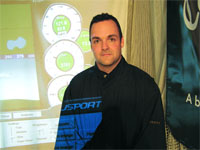
    Sections Supplements
    Green Building Can Benefit the Environment and the Bottom Line
    The photovoltaic roof on the new Food Bank of Western Mass. is already producing significant energy savings over a traditional roof.

    The photovoltaic roof on the new Food Bank of Western Mass. is already producing significant energy savings over a traditional roof.

    It’s called ‘green,’ or ‘sustainable,’ building, the practice of incorporating environmentally friendly concepts into design and materials. It’s not exactly a recent phenomenon, but it’s gaining greater acceptance as home and business owners and developers realize that the practice is not simply the right thing to do — it can also help on the bottom line.

    A recent expansion of the Food Bank of Western Mass. doubled the space at the Hatfield facility from 17,000 to 35,000 square feet. The facility, which once could store 2 million to 3 million pounds of food at any given time, can now stockpile up to 9 million pounds.

    It’s a recipe for electric bill sticker shock, right? Well, not exactly.

    Thanks to a new photovoltaic roof, which features panels that harness solar power, the Food Bank saves some $5,000 in electricity costs annually; in fact, the cutting-edge roof generates some 10% of the building’s total energy.

    “This way, we’re able to experience a 35%-per-square-foot reduction in energy costs,” said Andrew Morehouse, executive director of the Food Bank. “So while our total energy costs have increased because of the new space and new freezers, our per-square-foot energy costs have been greatly reduced.”

    Morehouse said the Food Bank’s interest in incorporating what is known as ‘green’ or ‘sustainable’ design in its expansion project eventually led to a $250,000 grant from the Kresge Foundation to install the energy-saving roof. Recently, the U.S. Green Building Council awarded the facility its gold certification, one step below the highest level, platinum, for its efforts.

    “We’re a food bank; we rescue food from the food industry and are able to turn that around with very little waste,” Morehouse explained. “The way we look at it is, if we minimize our overhead costs, that plays right into our mission, helps us be stewards of the environment, and sets an example for other businesses in the Pioneer Valley.”

    It’s an example that others are already taking seriously. In this issue, BusinessWest examines why a combination of cost savings and environmental stewardship is convincing state agencies and construction leaders that sustainable design has a clear future in the Bay State.

    Crunching the Numbers

    In 2005, the Mass. Sustainable Design Roundtable, a public-private partnership of more than 70 professionals involved in design and construction of buildings in Massachusetts, was convened under the direction of the Executive Office of Environmental Affairs (EOEA) and the Division of Capital Asset Management (DCAM), and funded by the Mass. Technology Collaborative.

    The group examined sustainable-design concepts — which consider site selection, waste minimization, energy efficiency, water conservation, indoor environmental quality, and other environmental and health factors in construction — with the goal of fostering dialogue about green-building issues among public and private design and construction professionals and other experts.

    The roundtable also examined barriers to sustainable design and discussed ways to promote widespread incorporation of sustainable design practices and technologies into all state government construction. It eventually determined that, like the Food Bank found, the initial investment in such practices is often followed by long-term cost savings.

    “Across the country, initial experience with both public- and private-sector buildings that incorporate sustainable design principles is demonstrating that operating-cost savings provided by green buildings are considerably greater than any additional upfront or ‘first’ costs,” wrote Robert Golledge Jr., secretary of the EOEA, and David Perini, commissioner of the DCAM. “First-cost premiums, if present, generally do not exceed 4% and commonly have simple payback periods of as little as three or four years.”

    In fact, the roundtable cited one comprehensive study of green buildings claiming that an average cost premium of $3 to $5 per square foot produced direct operational savings of about $15 per square foot over 20 years. Recent efforts to use such practices on Massachusetts public schools showed an even greater rate of return, the Roundtable claimed, with average cost premiums of 3% to 4% resulting in long-term savings of at least six times that amount.

    “Although the most advanced green buildings have been operational for only a short period of time, initial evidence of their improved performance is highly compelling, most notably energy cost savings of at least 20% and up to 50% compared to baseline,” Golledge and Perini reported. “At a time when energy costs are high and getting higher, the ability to reduce energy consumption and gain significant financial savings is perhaps the single most significant benefit that green buildings provide” — savings that offset the extra up-front costs that green building often requires.

    Green buildings also help to protect and conserve water resources, they continued, as well as providing a market for recycled and environmentally preferable products, and creating improved working and learning environments for building occupants.

    None of that surprises Jeff Hayden, executive director of the Kittredge Business Center at Holyoke Community College, which opened in 2006 with a ‘green roof’ covering 2,500 square feet of its fourth-floor roof.

    “A portion of the fourth-floor roof is a green roof,” Hayden said. “It essentially takes care of itself in that there’s very limited maintenance that needs to be done on it. That was part of the design — the fact that it would operate on its own. Essentially, it’s the first public building in the Commonwealth to have a green roof, and it’s part of our effort to look at these issues.”

    The roof has been populated with native ground cover, grasses, and plants — a modern design concept that students in the environmental science program may eventually incorporate into their program of study. HCC officials intended for the roof to attract some of the birds and insects native to the area, as well as reducing water runoff from the building and lessening the environmental impact on a neighboring brook — one way the campus could preserve some of the rural, woodland feel of its surroundings.

    “As a matter of fact, one of our college priorities for the coming year is to add a plan around sustainable development here on campus,” Hayden noted. “We’re looking at education in relation to the carbon footprint that we make, and to implement green policies that will help with more environmentally sensitive development of the college as we go forward.”

    Easy Being Green?

    That, in a nutshell, is why green building has become an attractive option for some developers; they see it as a crossroads of two desirable outcomes, cost savings and environmental impact. In a state as progressive as Massachusetts, these are no small concerns.

    Take the Food Bank, for instance, which didn’t stop at the photovoltaic roof; it also replaced its inefficient diesel refrigeration units with ozone-friendly refrigerators and freezers, and used more natural light in its offices to cut down on fluorescent lighting.

    “The features of this building are low-ozone-generating and low-toxicity,” Morehouse said, adding that any unusable food is donated to local farms as animal feed, and all paper products are recycled to generate additional revenue.

    “To receive this top-of-the-line green building certification is an extremely difficult and complicated road,” said Peter Wood, vice president of sales and marketing at Associated Builders in South Hadley, which worked with the Food Bank on the project. “It’s called sustainable building because it’s developed from a green concept but is also sustainable in the business market.”

    The U.S. Green Building Council certified the Food Bank through its Leadership in Energy and Environmental Design (LEED) rating system, which provides a set of standards for environmentally sustainable construction.

    Most recent and current LEED-certified projects in Massachusetts are located in the eastern part of the state, but there are several in Western Mass., including the Mount Holyoke College Science Center in South Hadley, as well as an addition and renovation to the college’s Blanchard Campus Center; the Koch Center at Deerfield Academy; and the North Adams Public Library.

    The roundtable, for its part, has called for the adoption of minimum green building standards for all new construction and major renovation projects overseen by designated state agencies — standards that take into account both environmental impact and long-term operating costs.

    Considering that buildings in the U.S. account for 40% of total energy consumption and 70% of total electricity consumption, according to the federal Energy Information Administration, as well as using more than 12% of fresh-water supplies and generating 25% of all solid waste, these are no small goals.

    “Buildings have a significant impact on our budgets,” said Golledge and Perini. “The Commonwealth already commits more than $1 billion of public money each year to building construction and renovation projects. The state constructs a range of buildings for a variety of uses, from schools, hospitals, offices, and courthouses to colleges, prisons, park facilities, and affordable housing.”

    But public-sector activity isn’t enough, Morehouse said, which is why the economic benefits of sustainable design must be effectively communicated. “The bottom line,” he asserted, “is that it’s going to take government support to convince the private sector to invest in green technologies to reduce costs for businesses and households alike. This is common in other countries; we’re behind the curve.”

    As for Holyoke Community College, “I think it’s very important for us to do what we can to maintain and enhance our environment, especially since we are a community campus and have a lot of people driving cars here,” said Hayden. “We need to provide an example to our students and the community.”

    It’s an example some are shouting from the rooftops — be they shingled, covered with grass, or powered by the sun.

    Joseph Bednar can be reached at[email protected]
    Departments

    Go FIT Acquired by Square One

    SPRINGFIELD — Square One, formerly Springfield Day Nursery, recently announced its acquisition of Go FIT, a program that promotes active, healthy lifestyles for today’s youth while also providing education and mentoring to at-risk families on issues of health, fitness, and safety. “By adding Go FIT to our daily lesson planning, Square One is integrating health, nutrition and food, fitness, and personal safety into the daily learning experiences of our children,” said Square One President and CEO Joan Kagan. “We believe that getting children off to a good start and establishing healthy routines early in life will help them in the long run.” In the few months that it has been formally affiliated with Go FIT, Square One has started work on developing a comprehensive and well-integrated plan to incorporate partners such as Springfield College, Partners for a Healthier Community, and the Food Bank of Western Mass. as a means to address the interrelatedness of childhood obesity, food security, access to affordable and nutritious food, physical fitness training, exercise curricula, and establishing a healthy habits lifestyle early in life, said Kagan. “We will dedicate ourselves to the continuation of the Go FIT mission and build upon its accomplishments,” she continued, “carrying forward all of the principles, practices, and fitness strategies that have made this program a stellar success.”

    Old Sturbridge Village Raises $1.83M

    STURBRIDGE — Old Sturbridge Village (OSV) President and CEO James E. Donahue recently announced that, after a successful two-year fund-raising effort, more than $1.83 million has been generated for the museum. Donahue noted that $834,000 was raised in new donations, which in turn qualified it for an additional $1 million matching grant from an anonymous donor. As an incentive to spur fund-raising efforts, in October 2006 an anonymous OSV trustee offered a $1 million challenge grant designed to increase the museum’s endowment and annual fund. Under terms of the challenge, all new and increased gifts would be matched by the grant, up to $1 million. Donahue added that the ‘Village Challenge’ donations came from hundreds of individuals and museum members, as well as from foundations and corporations. “We have a tremendously loyal base of supporters, and this success is a real testament to their faith in this institution,” said Donahue. OSV is one of the country’s oldest living-history museums, and recreates life in a working farm village from 1790 to 1840. For more information, visit www.osv.org.

    MassMutual Named One of ‘America’s Greatest Brands’

    SPRINGFIELD — MassMutual Financial Group is currently being featured in America’s Greatest Brands, a large-format book that annually recognizes the strongest and most trusted brand icons. Now in its sixth edition, America’s Greatest Brands profiles the strongest and most valuable brands in the world from a unique brand-marketing perspective. Selection of companies is made by the American Brands Council, comprising some of the most respected marketing and communications professionals in America.

    WCA Awards $20,000 in Equipment

    SOUTHWICK — CareerPoint of Holyoke was the winner of Whalley Computer Associates’ recent Technology Makeover Contest. CareerPoint will receive $20,000 of computer equipment and services based upon its presentation of need. More than 150 organizations entered the competition, and the top 10 were given an opportunity to make a presentation to a WCA panel during a technology fair conducted in December.

    GoNOMAD.com Will Exhibit At NYC Travel Show
    SOUTH DEERFIELD — GoNOMAD. com, a local travel Web site, will be among the more than 500 exhibitors at the annual New York Times Travel Show in New York City in late February. GoNOMAD.com Editor Max Hartshorne will present a seminar at the show about travel writing, inviting show visitors to learn how to break into the business, with tips on markets, ideas, and the Internet travel-publishing marketplace. For more information on the show, visit www.nyttravelshow.com.

    Biochemist Receives $308,000 Grant

    AMHERST — Alejandro P. Heuck, a biochemist at UMass Amherst, has received a four-year, $308,000 grant from the American Heart Association (AHA) to develop molecular probes capable of measuring cholesterol levels in the membranes of individual cells. The grant, which began Jan. 1, is an AHA Scientist Development Grant to support highly promising beginning scientists. The program encourages and adequately funds research projects that bridge the gap between completion of research training and readiness for successful competition as an independent investigator.

    Opinion

    Across Western Mass., we hear about the need for new business opportunities daily, and the pressures facing the region in this regard.

    There are a number of ideas on the table to strengthen the economy and the profile of Western Mass. as a player in the Commonwealth and even the nation, ranging from bringing the ‘hidden tech’ sector out of the shadows to entering the life sciences race.

    While the region has a long history in manufacturing of all types, it’s a piece of the economic landscape that is often buried under headlines touting new endeavors and tainted by stories of layoffs, company relocations, and plant closings. However, the manufacturing sector in Western Mass. is one in which we’ve noticed a steady undercurrent of progress lately.

    True, manufacturing is not exactly enjoying a new heyday; companies have continued to close or relocate to other parts of the globe in recent years.

    In the Pioneer Valley, American Pad and Paper Co., Ludlow Textiles, and Holyoke Card Co. have all disappeared. Danaher Tool, which manufactured wrenches in Springfield for more than 100 years, closed its doors in 2006 to relocate operations in Texas and Arkansas, and last year, Springfield Wire phased out its local operations and eliminated 180 jobs in the region.

    Berkshire County also said goodbye to some long-standing manufacturing operations in 2007: MeadWestvaco closed one of its two Lee mills, eliminating 70 jobs; Neenah Paper of Alpharetta, Ga., laid off 137 workers after it purchased the former Fox River Paper in Housatonic; and Schweitzer-Mauduit announced that it would begin to close four mills in Lee in 2008, eliminating 165 jobs.

    Adding insult to injury, there are still too few skilled workers to fill those positions that are available. Technology marches on, and appropriate training has become a dire necessity.

    But perhaps more than any other sector, the manufacturing industry of Western Mass. is one that quietly soldiers on. Just as there have been closings, there have been expansions — AM Lithography, for example, a printing and packaging outfit based in Chicopee, just opened a second location in Holyoke to accommodate its expanding operations.

    And Microtest Labs in Agawam, a medical testing and manufacturing facility, is currently seeking $7 million in funding to expand its ‘fill and finish’ division as it concurrently seeks new opportunities in stem cell research.

    New educational initiatives are also surfacing to train a new workforce, and innovative arrangements are being made in cities and towns to woo new businesses and keep them here.

    For example, five Western Mass. companies are benefiting from a $19.4 million financing program for expansions and renovations announced in November (bonds provided by MassDevelopment are being purchased by several area banks), aimed at strengthening the manufacturing base. Funding has been awarded to Hazen Paper of Holyoke, Argotec of Greenfield, Petricca Industries of Pittsfield, Universal Plastics of Holyoke, and VCA Incorporated of Northampton, and the project is expected to help create 84 new jobs.

    And just last month, the Hampden County Regional Employment Board announced the creation of the E. Herbert Burk Fund, established with a $600,000 gift from Burk’s family, to award scholarships and programs to increase interest and job training in the precision machine and tooling industry.

    Burk’s story was one of hard work and perseverance paying off, and one that his family, the REB, and others want to see replicated. But more importantly, they want people to understand that it can be replicated.

    Industry in Western Mass. is often looked at as the region’s legacy of years gone by. But a point often missed when discussing manufacturing is that it does not stand alone, but rather stands primed and ready to serve as a feeder to countless other promising industries, including biotechnology and life sciences, which received $1 billion worth of attention from Gov. Deval Patrick in 2007.

    As we enter a new year, it’s important to remember that manufacturing is not just a part of our past. It’s a key piece of the present, and of the future.

    Sections Supplements
    Norman Rockwell Museum Introduces the Art of Illustration to a New World
    Norman Rockwell's Studio

    Norman Rockwell’s studio on the Norman Rockwell Museum grounds.

    The images are painstakingly rendered portraits of iconic moments: two teenagers at a soda fountain. A family gathered for a holiday meal. A soldier, returning from war.

    By documenting life, Norman Rockwell created a collection of work that remains vital today. And through the work at the Norman Rockwell Museum in Stockbridge, the legendary illustrator’s iconic images are reaching a greater number of people than ever before.

    The museum, founded in 1969, serves to showcase the illustrations of one of the nation’s most recognizable and prolific artists. It has plenty to draw from; the Norman Rockwell personal collection is just one part of a massive store of paintings, reproductions, and other artifacts, and includes 367 pieces alone.

    Through a comprehensive suite of programs, ranging from traveling exhibitions to several types of educational initiatives, the museum’s collections are living on in myriad ways, as Rockwell’s art enters a new, digital age.

    But in addition, there’s more going on at the Norman Rockwell Museum than exhibits of its namesake’s work, and that is creating an even greater presence for the hidden museum, being felt across the country.

    Laurie Norton Moffatt, director of the Norman Rockwell Museum, said the collection is one that is steeped in history on both general and artistic levels, and therefore it resonates within a large, diverse audience.

    “These are pieces of artwork that also documented historic events, values, and moments that are timeless,” she said. “It’s a wonderful collection to work with.”

    The museum’s challenge of late, according to Norton Moffatt, has been to use new technology to deliver Rockwell’s art to new audiences, as well as use his importance in the medium of art and illustration to move the entire discipline forward.

    “Rockwell painted for 70 years and came of age when magazine publishing was booming, and his talents and industry capability made for a great mix. It is our mission is to present this broad form of illustration,” she said. “There are a lot of exciting new programs happening here that are aimed at preserving the centuries, and keeping artists’ work relevant and tied to the times.”

    Have Art, Will Travel

    For instance, the traveling exhibits the museum develops and maintains have become a staple of the Rockwell Museum’s repertoire. The initiative includes exhibits of varying size, often designed to be accessible to small or medium-sized museums, and move around the country for an extended period of time.

    This year, there are more than 10 NRM exhibitions in circulation. Norton Moffatt said the demand for Rockwell artwork is high in the U.S., and the traveling exhibit model allows many people to see original pieces of his work in various venues, rather than copies — even those as famous as Rockwell’s many Saturday Evening Post covers.

    “This is how we reach new audiences,” she said. “Upwards of one million people see these exhibitions, and most are illustration shows.”

    There is a major Rockwell exhibit traveling now, called American Chronicles: The Art of Norman Rockwell, featuring 41 original oil paintings. Norton Moffatt said the exhibit will return to Stockbridge this autumn, but until then will allow thousands of viewers to see Rockwell’s work up close and in full color.

    “It’s a big undertaking; we have a lot of staff overseeing the movement of art across the country,” she said, adding that the impetus behind staging such an extensive collection for traveling exhibits stems from Rockwell’s sheer popularity as a contemporary American artist.

    “Rockwell is the favorite illustrator of this country, and in turn, he was influenced by other great American illustrators including Andrew Wyeth and Maxfield Parrish. He continues that tradition for new illustrators who are influenced by him, and as such, illustration art is important to us in general.”

    To that end, it’s not just Rockwell who appears in NRM exhibits, but a number of illustrators working in various media. Another traveling show, titled Picturing Health, features a collection of advertising marquees designed for use by the Pfizer corp., using some of the famous ‘doctor and patient’ Rockwell paintings. The show also includes the work of 15 additional artists, however, who use various media to portray issues that are relevant to contemporary health care. That exhibit is now traveling in the U.S., and will make a stop at the Atlanta Center for Disease Control.

    At the Stockbridge museum, that focus on illustration is also prominent. LitGraphic: The World of the Graphic Novel opened at the museum last month, and represents a move toward showcasing the new illustrators — graphic novelists — who create the more mature, developed version of comic books.

    “We’re so excited about this exhibition,” said Norton Moffatt. “To the best of our knowledge, this is the most indepth treatment of the art of the graphic novel in any museum.”

    The show includes the work of 20 artists and includes both new and recognizable works such as Maus: A Survivor’s Tale, a Holocaust memoir rendered with both words and pictures by Art Spiegelman.

    “This is a field that is growing by leaps and bounds, which requires the talents of both an artist and a storyteller. It is an art form with a long tradition, but that is experiencing a real renaissance right now, and appealing to people in their teens and twenties, who are very visual,” Norton Moffatt said. “It covers a wide variety of topics, from the funny to the fantastical — there are a lot of modes of expression, and we’re seeing tremendous interest in our exhibition in the blogosphere.”

    The New Media

    That virtual attention is both the cause and effect of the museum’s concerted effort recently to move the Rockwell collection and mission into the digital age.

    Norton Moffatt said the museum will unveil what is called ‘Project Norman’ in 2009, digitizing not just the collection but also Rockwell’s archives, which include sketches, art ephemera tear sheets, photos, personal and professional correspondence, audio recordings, and other effects from Rockwell’s studio, which is also part of the museum’s grounds.

    “All of our materials are being digitized, and that has received tremendous support,” she said of the museum’s fundraising efforts. “We have been very successful in gaining support, and that has been the result of continued dialogue with patrons. It’s also an important testament to Rockwell and how many people believe in his collections.”

    The museum has several new educational programs that are also rooted in visual and interactive learning. NRM already reaches more than 10,000 students a year through onsite programs, and is now using emerging technology to take its mission further.

    “We’re working to make online programs more interactive,” Norton Moffatt said. “This is a new area for many museums, but we feel we are extremely well-suited. As an illustrator, Rockwell’s work was intended for reproduction.”

    And in another vein, NRM is also launching the Rockwell Scholars initiative, which has been designed to better prepare high-level academics for technology’s effect on the art world. The program is expected to begin in 2009 along with Project Norman.

    “The Rockwell Scholars are people who are working in visual studies; graduate students, PhD candidates, curators, and others,” said Norton Moffatt. “These are the people who are shaping culture and doing scholarly work in the field of American illustration.”

    Life Imitating Art

    A number of these programs are funded through foundation grants small and large, such as those provided by the National Endowment for the Arts. The remainder of funding comes from memberships and admissions and program fees, as well as corporate sponsorships, which can be applied to exhibits in the Stockbridge museum, traveling shows, and programs for children, adults, and educators.

    “In an ideal world one always hopes for major sponsorships,” Norton Moffatt said. “We depend on philanthropy for a third of our budget, and we have a full national educational curriculum that sponsorship makes possible. We have some wonderful supporters, who believe in the importance of our mission.”

    That, she said, speaks to that vitality of Rockwell’s art that keeps it moving forward.

    “It’s an extremely vital collection, and one that keeps on living,” she said. “We work to keep it visible, to give it a longer life. It’s wonderful to have it live on.”

    Jaclyn Stevenson can be reached at[email protected]
    Cover Story Sections Top Entrepreneur
    John Maybury : Driven to Succeed
    January 7, 2008 Cover

    January 7, 2008 Cover

    John Maybury was only a few months out of high school when he embarked on what started out as another in a series of odd jobs, but would eventually become a career and very successful entrepreneurial venture. He began selling workbenches, shelving, and industrial stools, but soon partnered with his father to start a diversified business in the competitive field of material handling. Today, the company reflects Maybury’s passion for technology, commitment to excellence, and drive to continuously improve. His success — and methods for achieving it — have earned him BusinessWest’s Top Entrepreneur Award for 2007.

    John Maybury says that for him to get involved with something, there usually has to be some element of danger.

    He’s an avid snowmobiler and skier, and he’s scuba dived, skydived, and flown planes (he doesn’t so much anymore). “If it has a motor, then I’m interested in it,” he said, noting that he probably had 20 cars before his 18th birthday. The only time you’ll find him on a golf course is for a charity tournament, and he’s taken part in many. He has to drive the cart, and he’ll invariably tinker with it to get it to go faster than the club pro might like.

    He approaches all these danger-spiced activities with a philosophy, or thought process: to know and understand the risks, push the envelope — but not too far, and have fun. And this is the approach he takes to business and Maybury Material Handling, a venture he started while attending Western New England College 32 years ago, and trying to figure out just what to do with his life.

    He took a cue, of sorts, from his father, who worked for many years as a salesperson then sales manager, specializing in, among other things, items in a field known as material handling — meaning equipment used to move, store, retrieve, and catalog inventory, records, parts, and other items.

    The Younger Maybury started off as a free agent, selling various product lines to companies like American Bosch, Moore Drop Forge (later known as Danaher Tool), and other large manufacturers, using mostly contacts from his father to get his foot in those doors. He enjoyed enough early success to inspire his father to take a leave of absence from the company join him a venture that would put the Maybury name on letterhead, if not over the door — they started out as a home-based operation, but quickly outgrew those facilities.

    Over the past three decades, Maybury has grown his venture into a highly diversified operation now specializing in sales, service, rentals, and training for equipment ranging from forklifts to work stations; from mezzanines to modular offices. The company has expanded and moved several times, the latest step being construction of a 42,000-square-foot building on Denslow Road in East Longmeadow, not far from where he and his father built the company’s first home on the site of an old tobacco barn.

    But it is not merely what Maybury has accomplished that has earned him BusinessWest’s Top Entrepreneur for 2007 award. Rather, it’s also the how that has made him this year’s honoree.

    To say that this is a company that reflects the character and drive of its owner would be a real understatement. It is, like Maybury, technology-focused, employing the latest hardware and software to enable employees to do work better, faster, and cheaper. It’s also excellence-driven; it was among the early winners of the Pioneer Valley Excellence Award, and Maybury has his sights set on a Mass Excellence Award, and has the ambitious goal of earning the coveted Malcolm Baldridge award within the next decade.

    And this company is people-oriented, with an emphasis on fun. At the 2007 All Associates Year End Gathering, for example, staffers were broken into teams for a spirited contest of ‘Are You Smarter Than a Fifth Grader?’ featuring several special guests from nearby Mapleshade Elementary School.

    The teams were formed with the goal of breaking down departmental barriers and inspiring people in different capacities to work together toward a common goal — in this case, triumphing over the other teams and winning some cash ($4,000 was put on the table).

    This philosophy of working together is at the heart of the company’s success, said Maybury, noting that he stresses teamwork in every facet of the operation, and it has yielded steady sales growth, cutting-edge continuous-improvement practices, and a workplace that attracts and retains top talent.

    In this issue, BusinessWest examines what drives Maybury — literally and figuratively — in his quest for excellence, and why his story of entrepreneurial daring is an uplifting, and ongoing, saga.

    A Real Spark Plug

    As he gave BusinessWest a tour of the new plant and posed for a few pictures, Maybury displayed some of that passion he has for all things motorized.

    He jumped onto one of the newest and most versatile fork truck models, showed all that it can do, and then maneuvered it in out of some tight spaces. “I can handle these better than most people who drive them for a living,” he said, noting that he’s fluent with every piece of equipment on his showroom floor, and needs to be if he is to properly serve his clients.

    Maybury got his first practice on a forklift back in the fall of 1975. He was a freshman at WNEC and also working several part-time jobs to help pay his tuition. One of them was at Milton Bradley — now known as Hasbro Games — and its East Longmeadow plant. He worked in what was known then as Department 26, moving around pallets of games like Monopoly, Life, and Chutes and Ladders, for loading onto boxes that would be packed into freight cars for transport on a rail line that no longer exits.

    When Maybury returns to Department 26 these days — he’s made several visits over the years and still runs into people he worked with three decades ago — it is to help Hasbro stay on the cutting edge of material-handling equipment and processes. The toy maker is just one name on a long and distinguished client list. Others include regional and national manufacturers, distributors, and retailers including Friendly’s, Big Y, Lenox, J Polep, JCPenney, Macy’s Target, Wal-Mart, and even Foxwoods and Mohegan Sun.

    Maybury supplies racks and shelving, conveyors, forklifts, and other equipment to the casinos to move and store money and chips. It also played a lead role in helping Mohegan Sun set a record a few years ago — with an 18-foot-tall, seven-tiered wedding cake weighing 15,032 pounds, or 7.5 tons. Maybury engineers created the huge platforms, or cake separators that the cake rested on (they were supported with steel pipes made by the company and painted to match a frosting sample) and also positioned massive, 30,000-pound-capacity scales in order to give the casino the exact weight.

    The current, ever-growing client list and show of diversity and imagination put on display at Mohegan Sun provide evidence of just how far this company has come from its humble beginnings. How Maybury has orchestrated this evolution and progression is a story of entrepreneurial drive, vision, and ample doses of both luck and determination — mostly the latter.

    Recalling how things got started, Maybury said that in addition to his forklift adventures at Milton Bradley, he also worked at Big Y, SIS (now TD Banknorth), and other area companies while trying to choose a career path. Instead, one chose him.

    Growing up, he recalled, the conversations around the dinner table often revolved around his father’s work in material-handling equipment, and he eventually gravitated toward it himself.

    “I grew up with it, and was kind of fascinated by it,” he said, re-emphasizing his childhood interest in all things mechanical, which manifested itself in early exploits in snowmobiling, mini-bike and motorcycle riding, and an endless parade of cars. “I would go into where my father was employed, go out back, and see all that equipment; it was something that really interested me.”

    That company was Stanley Handling Equipment Co., later to be called StanLift, in Agawam. It was sold while Maybury’s father was executive vice president, and he then left and did consulting work for a similar venture based in Boston.

    “It was at the supper table one night … I asked my father if he thought I could sell the things he used to sell,” Maybury recalled. “He said, ‘let’s give it a try,’ and we did.”

    He started as an independent agent of sorts representing dealers trying to penetrate the Western Mass., market, selling workbenches, industrial stools, shelving, pushcarts, and other items needed by manufacturers that didn’t require help with installation, and was helped considerably by some of his father’s contacts.

    “I’m 18, 19 years old … these people basically adopted me like a son or a grandson, because I was so young,” he explained. “I would go in, show them the book, show them the prices, tell them how much I needed to make, and they were cutting me orders.

    “If I had any questions, I would go and ask my father,” he continued, adding that as the orders started rolling in, the father-and-son team saw a business opportunity unfolding before him. With a $25,000 loan from what was known then as First Bank — “they enjoyed the signature of the 40-year-old father much more than the 19-year-old son,” said Maybury — they were off and running.

    Hitting on All Cylinders

    Beyond the changes in street address over the years, the company was also in a constant state of change and diversification, said Maybury, patterns that have made it unique in the material-handling sector.

    After starting with benching, shelving, and stools, the company moved into larger shelving installations, and two-story installations, including some work for Subaru of America. These installations would require lift trucks, he noted, adding that in the beginning the company would rent such equipment for jobs, but later purchased a fleet of the vehicles to ensure it could get a job done — and on time.

    These ‘installs,’ as they were called, were usually done over a weekend, when a plant was shut down, he continued, adding that the mechanics hired to do these jobs often had little to do during the week, so the company started subbing them out to other businesses.

    This was the beginning of Maybury’s power equipment division, which sells, leases, and maintains forklifts, scrubbers, sweepers, and other pieces of equipment and accounts for roughly 50% of total revenues.

    Maybury remembers when the fleet consisted of one van (he still keeps a picture of it his files) and five hand trucks. Today, it’s 30 vans and more than 300 left trucks serving an area that stretches east to Worcester and south into Northern Conn., but Maybury says the company goes wherever its customers want.

    It’s done work in Pennsylvania for Friendly’s, for example, and also in Nebraska, Texas, the Dominican Republic, and elsewhere for other clients.

    This constant evolution has yielded a company that Maybury describes as a “solution provider,” and one that has no across-the-board competition.

    “Our competitors are silo businesses,” he explained. “We have lift truck competitors, shelving and rack competitors, conveyor competitors, and mezzanine competitors, for example, but there aren’t any real solution providers that can address the full scope of material handling like we do.”

    Summing up what his company does, and simplifying matters as he does so, Maybury says his team of 100 employees helps clients become more efficient, thus making them more profitable and competitive in the face of increasingly global competition. And throughout its existence, the company has essentially practiced what it has preached — using technology, processes, and teamwork to simplify and streamline operations and provide new opportunities for growth.

    “We’re about as paperless as a company like this can get,” said Maybury, citing just one example of how the company works to take time and waste from its processes, while also serving customers more efficiently. The company has used self-directed work teams, the Kaizen process, and other strategies to reduce process times and reduce errors.

    These efforts were rewarded with a Pioneer Valley Excellence Award in 2005, what Maybury calls the first step in an aggressive drive to winning a Baldridge within the next decade. Established in 1988, and named after former Commerce Secretary Malcolm Baldridge, a strong proponent of quality management, the award is given to companies to large and small judged to be outstanding in seven areas: leadership; strategic planning; customer and market focus; measurement, analysis, and knowledge management; human resource focus; process management; and results.

    Maybury said that while his goal is on winning the award, his focus is on doing the things necessary to achieve that end, which means not achieving results, but sustaining them, which is the key to not merely filling a lobby with plaques and trophies, but also taking a company to desired heights in terms of efficiency and profits.

    And for this, Maybury returns to the subject of teamwork, specifically a team of ‘Level 5 leaders’ as defined by business writer Jim Collins, author Good to Great.

    “I have a human resources manager, a controller, a power equipment division manager, a material handling division manager, and a sales and marketing manager, and those positions support our strategy and our goals,” he explained, “and our initiatives and action steps are carried out by that group of people.

    “Into everything we do over the course of a year we come up with some critical impact factors that will impact our business either in a positive or negative way, and then we develop strategies and action steps and come up with goals and plans so we deploy a common theme,” he continued. “If it’s self-managed teams, then it’s self-managed teams until we get it; if it’s paperless, it’s paperless until we get it; if it’s proper deployment of technology, it’s that until we get it; we don’t just say ‘let’s do this,’ and then it never happens.”

    Gasket Case

    There has been considerable deployment of communications technology over the years, said Maybury, adding that the progression of steps, such as the outfitting of service technicians with tablet PCs to eliminate all use of paper, is consumer- and service-driven.

    “We don’t have technology just to have technology — we have technology to be the accelerator for our processes,” he said, noting that the use of the tablet PCs and aircards that provide Internet access eliminate the need for everything from paper receipts to repair manuals.

    Which is significant, because each technician needs vast amounts of information at his or her disposal to maintain or repair the wide range of equipment sold and serviced by the company.

    “With the technology and advancements, our technicians now have the ability to go online,” he said, “and go to the manufacturers’ sites, get their technical service bulletins, get schematics, get parts resources, and communicate by E-mail with the supplier so we can get all the information we need without having any books on the trucks.”

    There are countless other examples of putting technology to work to streamline processes, allow people to do more work in less time, and even save a few trees, he continued, noting that technology is just half the equation; the other is the people who use it, and the company is careful to invest heavily in them, as well.

    This strong focus on people was on display at the All Associates Year End Gathering, a tradition at Maybury for nearly 20 years now.

    As the name implies, everyone who works for the company (and they’re called associates, not employees) is required to attend. In recent years, the date was moved from just before Christmas to the middle of the month to make it easier to fit into the holiday schedule.

    As in prior years, this day-long program had a packed agenda, starting with a welcome from Maybury, a quick review of the safety record (169 days without a lost-time accident by Dec. 14), and then a comprehens
    ve review of the company’s 401(k) program delivered by Charles Epstein, president of Epstein Financial Services.

    “This is a good time to be a having a review,” said Maybury, noting the stock market’s rocky third and fourth quarters and the questions it would generate. “This is a time when people need information about their money and what to do with it to make it grow.”

    The agenda continued with reviews of the health and dental plans, a look back at the accomplishments of 2007 and a glance ahead to the goals for ’08, a celebration of anniversaries (there was a 25th and two 20ths, among others) and new associates, a question-and-answer period, and that spirited round of ‘Are You Smarter Than a Fifth Grader.’

    The associates’ day, and the specific parts of the program, are reflective of Maybury’s desire to make his a people-oriented company, one focused on helping employees balance work and life.

    Finding that balance is something Maybury has had to work at himself, noting that, over the years, he’s managed to make time for his family, community activities, chamber of commerce duties (he was president of the East Longmeadow chamber for two years), work on boards such as the one at Baystate Health he’s a member of, and even some snowmobiling.

    “When I balance my family with my business and the community, that makes me feel better,” he said. “I could probably lock myself in here for several more hours a day, but I wouldn’t have the same self-satisfaction. And I like to learn — I’m a constant learner … I don’t think I’ve every stopped.”

    Growth Engine

    The Maybury company may be essentially paperless, by its president proudly hangs on to an item that could have been recycled years ago.

    It’s a placemat from the Fort restaurant in Springfield, on which Maybury scribbled the preliminary business plan for a subsidiary, or sister business, he started with a partner in 2005 called Atlantic Handling Systems. Based in the New Jersey community of Ho-Ho-Kus, it offers entry into a new, large market, and provides new opportunities for growth.

    There was and is that requisite amount of danger with the Atlantic venture, he explained, adding quickly that this latest endeavor, called ‘Baby Maybury’ by some, amounts to a calculated risk, one that has worked out very well and holds considerable promise for the future.

    And getting it off the ground has been fun, which, like that element of danger, must be part and parcel to everything that intrigues our Top Entrepreneur for 2007.

    George O’Brien can be reached at[email protected]