Home Posts tagged Technology (Page 33)
Cover Story Sections Top Entrepreneur
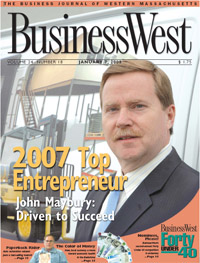
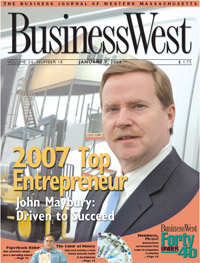
John Maybury : Driven to Succeed
January 7, 2008 Cover

January 7, 2008 Cover

John Maybury was only a few months out of high school when he embarked on what started out as another in a series of odd jobs, but would eventually become a career and very successful entrepreneurial venture. He began selling workbenches, shelving, and industrial stools, but soon partnered with his father to start a diversified business in the competitive field of material handling. Today, the company reflects Maybury’s passion for technology, commitment to excellence, and drive to continuously improve. His success — and methods for achieving it — have earned him BusinessWest’s Top Entrepreneur Award for 2007.

John Maybury says that for him to get involved with something, there usually has to be some element of danger.

He’s an avid snowmobiler and skier, and he’s scuba dived, skydived, and flown planes (he doesn’t so much anymore). “If it has a motor, then I’m interested in it,” he said, noting that he probably had 20 cars before his 18th birthday. The only time you’ll find him on a golf course is for a charity tournament, and he’s taken part in many. He has to drive the cart, and he’ll invariably tinker with it to get it to go faster than the club pro might like.

He approaches all these danger-spiced activities with a philosophy, or thought process: to know and understand the risks, push the envelope — but not too far, and have fun. And this is the approach he takes to business and Maybury Material Handling, a venture he started while attending Western New England College 32 years ago, and trying to figure out just what to do with his life.

He took a cue, of sorts, from his father, who worked for many years as a salesperson then sales manager, specializing in, among other things, items in a field known as material handling — meaning equipment used to move, store, retrieve, and catalog inventory, records, parts, and other items.

The Younger Maybury started off as a free agent, selling various product lines to companies like American Bosch, Moore Drop Forge (later known as Danaher Tool), and other large manufacturers, using mostly contacts from his father to get his foot in those doors. He enjoyed enough early success to inspire his father to take a leave of absence from the company join him a venture that would put the Maybury name on letterhead, if not over the door — they started out as a home-based operation, but quickly outgrew those facilities.

Over the past three decades, Maybury has grown his venture into a highly diversified operation now specializing in sales, service, rentals, and training for equipment ranging from forklifts to work stations; from mezzanines to modular offices. The company has expanded and moved several times, the latest step being construction of a 42,000-square-foot building on Denslow Road in East Longmeadow, not far from where he and his father built the company’s first home on the site of an old tobacco barn.

But it is not merely what Maybury has accomplished that has earned him BusinessWest’s Top Entrepreneur for 2007 award. Rather, it’s also the how that has made him this year’s honoree.

To say that this is a company that reflects the character and drive of its owner would be a real understatement. It is, like Maybury, technology-focused, employing the latest hardware and software to enable employees to do work better, faster, and cheaper. It’s also excellence-driven; it was among the early winners of the Pioneer Valley Excellence Award, and Maybury has his sights set on a Mass Excellence Award, and has the ambitious goal of earning the coveted Malcolm Baldridge award within the next decade.

And this company is people-oriented, with an emphasis on fun. At the 2007 All Associates Year End Gathering, for example, staffers were broken into teams for a spirited contest of ‘Are You Smarter Than a Fifth Grader?’ featuring several special guests from nearby Mapleshade Elementary School.

The teams were formed with the goal of breaking down departmental barriers and inspiring people in different capacities to work together toward a common goal — in this case, triumphing over the other teams and winning some cash ($4,000 was put on the table).

This philosophy of working together is at the heart of the company’s success, said Maybury, noting that he stresses teamwork in every facet of the operation, and it has yielded steady sales growth, cutting-edge continuous-improvement practices, and a workplace that attracts and retains top talent.

In this issue, BusinessWest examines what drives Maybury — literally and figuratively — in his quest for excellence, and why his story of entrepreneurial daring is an uplifting, and ongoing, saga.

A Real Spark Plug

As he gave BusinessWest a tour of the new plant and posed for a few pictures, Maybury displayed some of that passion he has for all things motorized.

He jumped onto one of the newest and most versatile fork truck models, showed all that it can do, and then maneuvered it in out of some tight spaces. “I can handle these better than most people who drive them for a living,” he said, noting that he’s fluent with every piece of equipment on his showroom floor, and needs to be if he is to properly serve his clients.

Maybury got his first practice on a forklift back in the fall of 1975. He was a freshman at WNEC and also working several part-time jobs to help pay his tuition. One of them was at Milton Bradley — now known as Hasbro Games — and its East Longmeadow plant. He worked in what was known then as Department 26, moving around pallets of games like Monopoly, Life, and Chutes and Ladders, for loading onto boxes that would be packed into freight cars for transport on a rail line that no longer exits.

When Maybury returns to Department 26 these days — he’s made several visits over the years and still runs into people he worked with three decades ago — it is to help Hasbro stay on the cutting edge of material-handling equipment and processes. The toy maker is just one name on a long and distinguished client list. Others include regional and national manufacturers, distributors, and retailers including Friendly’s, Big Y, Lenox, J Polep, JCPenney, Macy’s Target, Wal-Mart, and even Foxwoods and Mohegan Sun.

Maybury supplies racks and shelving, conveyors, forklifts, and other equipment to the casinos to move and store money and chips. It also played a lead role in helping Mohegan Sun set a record a few years ago — with an 18-foot-tall, seven-tiered wedding cake weighing 15,032 pounds, or 7.5 tons. Maybury engineers created the huge platforms, or cake separators that the cake rested on (they were supported with steel pipes made by the company and painted to match a frosting sample) and also positioned massive, 30,000-pound-capacity scales in order to give the casino the exact weight.

The current, ever-growing client list and show of diversity and imagination put on display at Mohegan Sun provide evidence of just how far this company has come from its humble beginnings. How Maybury has orchestrated this evolution and progression is a story of entrepreneurial drive, vision, and ample doses of both luck and determination — mostly the latter.

Recalling how things got started, Maybury said that in addition to his forklift adventures at Milton Bradley, he also worked at Big Y, SIS (now TD Banknorth), and other area companies while trying to choose a career path. Instead, one chose him.

Growing up, he recalled, the conversations around the dinner table often revolved around his father’s work in material-handling equipment, and he eventually gravitated toward it himself.

“I grew up with it, and was kind of fascinated by it,” he said, re-emphasizing his childhood interest in all things mechanical, which manifested itself in early exploits in snowmobiling, mini-bike and motorcycle riding, and an endless parade of cars. “I would go into where my father was employed, go out back, and see all that equipment; it was something that really interested me.”

That company was Stanley Handling Equipment Co., later to be called StanLift, in Agawam. It was sold while Maybury’s father was executive vice president, and he then left and did consulting work for a similar venture based in Boston.

“It was at the supper table one night … I asked my father if he thought I could sell the things he used to sell,” Maybury recalled. “He said, ‘let’s give it a try,’ and we did.”

He started as an independent agent of sorts representing dealers trying to penetrate the Western Mass., market, selling workbenches, industrial stools, shelving, pushcarts, and other items needed by manufacturers that didn’t require help with installation, and was helped considerably by some of his father’s contacts.

“I’m 18, 19 years old … these people basically adopted me like a son or a grandson, because I was so young,” he explained. “I would go in, show them the book, show them the prices, tell them how much I needed to make, and they were cutting me orders.

“If I had any questions, I would go and ask my father,” he continued, adding that as the orders started rolling in, the father-and-son team saw a business opportunity unfolding before him. With a $25,000 loan from what was known then as First Bank — “they enjoyed the signature of the 40-year-old father much more than the 19-year-old son,” said Maybury — they were off and running.

Hitting on All Cylinders

Beyond the changes in street address over the years, the company was also in a constant state of change and diversification, said Maybury, patterns that have made it unique in the material-handling sector.

After starting with benching, shelving, and stools, the company moved into larger shelving installations, and two-story installations, including some work for Subaru of America. These installations would require lift trucks, he noted, adding that in the beginning the company would rent such equipment for jobs, but later purchased a fleet of the vehicles to ensure it could get a job done — and on time.

These ‘installs,’ as they were called, were usually done over a weekend, when a plant was shut down, he continued, adding that the mechanics hired to do these jobs often had little to do during the week, so the company started subbing them out to other businesses.

This was the beginning of Maybury’s power equipment division, which sells, leases, and maintains forklifts, scrubbers, sweepers, and other pieces of equipment and accounts for roughly 50% of total revenues.

Maybury remembers when the fleet consisted of one van (he still keeps a picture of it his files) and five hand trucks. Today, it’s 30 vans and more than 300 left trucks serving an area that stretches east to Worcester and south into Northern Conn., but Maybury says the company goes wherever its customers want.

It’s done work in Pennsylvania for Friendly’s, for example, and also in Nebraska, Texas, the Dominican Republic, and elsewhere for other clients.

This constant evolution has yielded a company that Maybury describes as a “solution provider,” and one that has no across-the-board competition.

“Our competitors are silo businesses,” he explained. “We have lift truck competitors, shelving and rack competitors, conveyor competitors, and mezzanine competitors, for example, but there aren’t any real solution providers that can address the full scope of material handling like we do.”

Summing up what his company does, and simplifying matters as he does so, Maybury says his team of 100 employees helps clients become more efficient, thus making them more profitable and competitive in the face of increasingly global competition. And throughout its existence, the company has essentially practiced what it has preached — using technology, processes, and teamwork to simplify and streamline operations and provide new opportunities for growth.

“We’re about as paperless as a company like this can get,” said Maybury, citing just one example of how the company works to take time and waste from its processes, while also serving customers more efficiently. The company has used self-directed work teams, the Kaizen process, and other strategies to reduce process times and reduce errors.

These efforts were rewarded with a Pioneer Valley Excellence Award in 2005, what Maybury calls the first step in an aggressive drive to winning a Baldridge within the next decade. Established in 1988, and named after former Commerce Secretary Malcolm Baldridge, a strong proponent of quality management, the award is given to companies to large and small judged to be outstanding in seven areas: leadership; strategic planning; customer and market focus; measurement, analysis, and knowledge management; human resource focus; process management; and results.

Maybury said that while his goal is on winning the award, his focus is on doing the things necessary to achieve that end, which means not achieving results, but sustaining them, which is the key to not merely filling a lobby with plaques and trophies, but also taking a company to desired heights in terms of efficiency and profits.

And for this, Maybury returns to the subject of teamwork, specifically a team of ‘Level 5 leaders’ as defined by business writer Jim Collins, author Good to Great.

“I have a human resources manager, a controller, a power equipment division manager, a material handling division manager, and a sales and marketing manager, and those positions support our strategy and our goals,” he explained, “and our initiatives and action steps are carried out by that group of people.

“Into everything we do over the course of a year we come up with some critical impact factors that will impact our business either in a positive or negative way, and then we develop strategies and action steps and come up with goals and plans so we deploy a common theme,” he continued. “If it’s self-managed teams, then it’s self-managed teams until we get it; if it’s paperless, it’s paperless until we get it; if it’s proper deployment of technology, it’s that until we get it; we don’t just say ‘let’s do this,’ and then it never happens.”

Gasket Case

There has been considerable deployment of communications technology over the years, said Maybury, adding that the progression of steps, such as the outfitting of service technicians with tablet PCs to eliminate all use of paper, is consumer- and service-driven.

“We don’t have technology just to have technology — we have technology to be the accelerator for our processes,” he said, noting that the use of the tablet PCs and aircards that provide Internet access eliminate the need for everything from paper receipts to repair manuals.

Which is significant, because each technician needs vast amounts of information at his or her disposal to maintain or repair the wide range of equipment sold and serviced by the company.

“With the technology and advancements, our technicians now have the ability to go online,” he said, “and go to the manufacturers’ sites, get their technical service bulletins, get schematics, get parts resources, and communicate by E-mail with the supplier so we can get all the information we need without having any books on the trucks.”

There are countless other examples of putting technology to work to streamline processes, allow people to do more work in less time, and even save a few trees, he continued, noting that technology is just half the equation; the other is the people who use it, and the company is careful to invest heavily in them, as well.

This strong focus on people was on display at the All Associates Year End Gathering, a tradition at Maybury for nearly 20 years now.

As the name implies, everyone who works for the company (and they’re called associates, not employees) is required to attend. In recent years, the date was moved from just before Christmas to the middle of the month to make it easier to fit into the holiday schedule.

As in prior years, this day-long program had a packed agenda, starting with a welcome from Maybury, a quick review of the safety record (169 days without a lost-time accident by Dec. 14), and then a comprehens
ve review of the company’s 401(k) program delivered by Charles Epstein, president of Epstein Financial Services.

“This is a good time to be a having a review,” said Maybury, noting the stock market’s rocky third and fourth quarters and the questions it would generate. “This is a time when people need information about their money and what to do with it to make it grow.”

The agenda continued with reviews of the health and dental plans, a look back at the accomplishments of 2007 and a glance ahead to the goals for ’08, a celebration of anniversaries (there was a 25th and two 20ths, among others) and new associates, a question-and-answer period, and that spirited round of ‘Are You Smarter Than a Fifth Grader.’

The associates’ day, and the specific parts of the program, are reflective of Maybury’s desire to make his a people-oriented company, one focused on helping employees balance work and life.

Finding that balance is something Maybury has had to work at himself, noting that, over the years, he’s managed to make time for his family, community activities, chamber of commerce duties (he was president of the East Longmeadow chamber for two years), work on boards such as the one at Baystate Health he’s a member of, and even some snowmobiling.

“When I balance my family with my business and the community, that makes me feel better,” he said. “I could probably lock myself in here for several more hours a day, but I wouldn’t have the same self-satisfaction. And I like to learn — I’m a constant learner … I don’t think I’ve every stopped.”

Growth Engine

The Maybury company may be essentially paperless, by its president proudly hangs on to an item that could have been recycled years ago.

It’s a placemat from the Fort restaurant in Springfield, on which Maybury scribbled the preliminary business plan for a subsidiary, or sister business, he started with a partner in 2005 called Atlantic Handling Systems. Based in the New Jersey community of Ho-Ho-Kus, it offers entry into a new, large market, and provides new opportunities for growth.

There was and is that requisite amount of danger with the Atlantic venture, he explained, adding quickly that this latest endeavor, called ‘Baby Maybury’ by some, amounts to a calculated risk, one that has worked out very well and holds considerable promise for the future.

And getting it off the ground has been fun, which, like that element of danger, must be part and parcel to everything that intrigues our Top Entrepreneur for 2007.

George O’Brien can be reached at[email protected]
Departments

Cambridge College Open House

Jan. 5: The Cambridge College Springfield Regional Center will host an enrollment open house beginning at 9 a.m. Prospective students will be able to meet with admissions counselors, financial aid representatives, program coordinators, and faculty members to ask questions about the application process, licensures, and the Cambridge College adult learning model. For more information, contact Meaghan Prendergast at (800) 829-4723, ext. 6623, or at [email protected].

University Without Walls

Jan. 8, 19, 23; Feb. 2, 12, 23: University Without Walls (UWW), an adult bachelor’s degree completion program at UMass Amherst, is conducting information sessions this winter for individuals interested in applying. Classes are offered on campus, online, and in blended format (mostly online, with a few live meetings). Information sessions run approximately 90 minutes and are conducted at the UWW office, 100 Venture Way, Room 229A, Hadley. For more information on dates and times, visit www.umass.edu/uww  or call (413) 545-1378.

Communications Conference

Jan. 9: Western New England College and the Valley Press Club will offer professionals a chance to hone their communication skills and learn about the latest technology during the fifth annual communications conference from 8 a.m. to 3:30 p.m. on WNEC’s main campus. Getting Noticed in the 21st Century is the theme for the day-long event which is intended for business professionals, staff of nonprofit organizations, and students looking to communicate more effectively. Participants will have the chance to choose from 14 workshops designed to sharpen skills, explore new technologies, and provide interaction with reporters and editors from local media outlets. Roundtable discussions with members of mainstream and alternative media outlets are also planned, as well as a special panel discussion on promoting Western Mass. as a place to live and work. During the conference luncheon, the Valley Press Club will present a Lifetime Achievement Award to broadcaster Keith Silver. For conference fees and more information, visit www.wnec.edu/communications.

Camera Classes

Jan. 16, 23, 30; Feb. 6: Iris Photo & Digital of Northampton will offer several digital point-and-shoot camera classes this winter, including “Basic Camera Class” on Jan. 16, “Intermediate Camera Class” on Jan. 23, “Advanced Camera Class” on Jan. 30, and “Basic Photo Editing Class” on Feb. 6. Classes run from 6:30 to 9:30 p.m. at the shop at 164 Main St. Classes cost $35, and individuals can save $20 when attending all four. For more information, call (413) 586-8417 or visit www.iris-photo.com.

Howdy University

Jan. 30: The Greater Springfield Convention and Visitors Bureau (GSCVB) will present Howdy University, a half-day hospitality-training seminar at the Kittredge Center at Holyoke Community College. The keynote speaker will be Doug Price, author of License to Serve, one of the premier ‘how-to’ books in the hospitality-training industry. Price is senior vice president of professional development for Destination Marketing Assoc. Intl. in Washington, D.C. The seminar, which will begin at 8 a.m. and conclude at noon, is designed to train front-line hospitality professionals who interact with customers on a daily basis. Suggestions will be offered to help workers deal with unruly customers and successfully resolve customer complaints and issues. In addition, attendees will be given a copy of License to Serve. The cost to attend Howdy University is $50 for GSCVB members, $75 for non-members, and $25 for full-time college students. For additional information or to reserve a space, contact Aimee Tryba at (413) 755-1343 or [email protected].

MTEL Prep Course

Feb. 9, 16, 23; March 1: Elms College in Chicopee will offer the Mass. Tests for Educator Licensure (MTEL) communication and literacy prep course this winter for candidates seeking teaching licenses in Massachusetts. The 12-hour prep course will be offered on four consecutive Saturdays from 9 a.m. to noon in the Springfield Room, lower level of the Mary Dooley College Center. The cost is $100 for Elms students and alums, and $150 for the general public. For registration information, call the Division of Graduate Studies and Continuing Education at (413) 265-2445.

Departments

The following business incorporations were recently recorded in Franklin, Hampden, and Hampshire counties and are the latest available. They are listed by community.

AMHERST

Depalma Salon Inc., 6 University Dr., Amherst 01002. Felice Depalma, 26 Hatter Hill Road, Medfield 02052. Hairdressing, manicuring, beauty shop, health, and beauty spa business.

CHICOPEE

Craniosacral and Massage Center Inc., 101 East St., Suite 201, Chicopee 01020. Gina Welch, 16 Anniversary St., Springfield 01104. Massage and therapy salon.

EAST LONGMEADOW

Accomplished Associates Inc., 36 Elm St., East Longmeadow 01028. Laura A. Stevens, same. Real estate sales, brokerage and development.

Goprok Ambulance Service Inc., 82 Birch Ave., East Longmeadow 01028. Ibrahim Folorunso, same. Ambulance service (routine and emergency).


HOLYOKE

Currant Group Corp., 4 Open Square Way, Suite 319, Holyoke 01040. Hamenth Swaminathan, same. (Foreign corp; DE) Providing goods and services in the information technology industry.

JAF Carpet Installations Corp., 341 Walnut St., Holyoke 01040. Jose Quizhpe, same. Floor installation.

LONGMEADOW

Belleclaire Holdings Inc., 126 Belleclaire Ave., Longmeadow 01106. Michael J. Barbieri, same. Energy conservation audits, insulation, contracting.

Forest Park Fine Homes Inc., 87 Forest Glen Road, Longmeadow 01106. Leslie Clement, same. Real estate development.

LUDLOW

Santos Family Chiropractic Inc., 239 East St., Ludlow 01056. Helena Santos, 175 Tinkham Road, Springfield 01129. To render chiropratic care and rehabilitation services.


MONTAGUE

Tibetan Yung Drung Bon Arts Inc., 27 North Leverett Road, Montague 01351. Judy Ellen Marz, same. Retail Tibetan art.

NORTHAMPTON

Legacy Financial Solutions Inc., 10 Coram Farm Road, Northhampton 01532. Sean R. McCann, same. Financial services.

SPRINGFIELD

Latino Radio Broadcasting Network Corp., 190 Commonwealth Ave., Springfield 01108. Guillermo R. Negron, same. Radio and television live performance and agent.

The Law Offices of Daniel D. Kelly Inc., 115 State St., Suite 300, Springfield 01103. Daniel D. Kelly, same. Law office.

Tong Tong Beauty Center Corp., 127 Parkside St., Springfield 01104. Tong
Wang, same. Body work.

WEST SPRINGFIELD

Northeast Consulting Concepts Inc., 680 Westfield St., West Springfield 01089. Susan J. Brenelle, 33 Woodcliff, Westfield 01085. Mortgage services.

WILBRAHAM

Flodesign Wind Turnbine Corp., 380 Main St., Wilbraham 01095. Stanley Kowalsksi, III, same. Engineering, design, manufacture, sale of wind turbines.

Departments

Taking the Oath

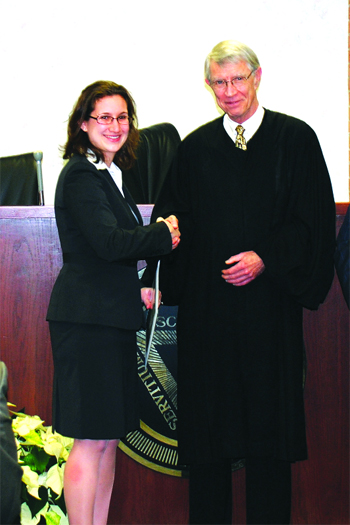
On Dec. 7, a total of 66 new lawyers, including 26 Western New England College School of Law graduates, were sworn in during a pair of formal sessions of the Supreme Judicial Court held in School of Law’s Moot Courtroom.

Below, new lawyers are sworn in before Supreme Judicial Court Justice John M. Greaney. At left, Greaney congratulates WNEC School of Law graduate Alyson Krauss of Palmer.


Cutting the Ribbon

City and state dignitaries officially opened Raymour & Flanigan’s newly constructed, 61,500-square-foot, two-story showroom at 895 Riverdale Street in West Springfield, Nov. 30. Doing the honors are, from left, Mickey Grabner, regional sales manager of Raymour & Flanigan; state Rep. James Welch; state Sen. Stephen Buoniconti; Dave Redekas, vice president of Sales for Raymour & Flanigan; Edward Gibson, West Springfield Mayor; Pamela Langlois, West Springfield store manager; Ben Orbach, vice president of Operations of Raymour & Flanigan; Ken Moss, vice president, Real Estate Development for Raymour & Flanigan; Vicky D’Agostino, director of Communications for Raymour & Flanigan; and Linda Neal, regional trainer for Raymour & Flanigan.


Check This Out

Jennifer Gabriel, assistant vice president and Public Affairs officer at TD Banknorth, presents a check for $50,000 to Springfield Technical Community College President Ira Rubenzahl for the college’s major gifts campaign. The largest single contribution made by the bank’s charitable foundation, the gift will assist STCC in maintaining state-of-the-art technology and labs campus-wide.


Branching Out in the Orchard

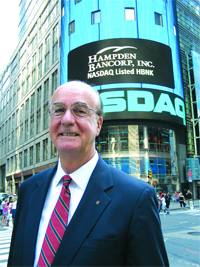
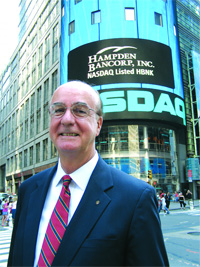
With an official ribbon-cutting ceremony attended by local political and business leaders, Hampden Bank opened its Indian Orchard office at 187 Main St. on Dec. 12. The facility marks the bank’s eighth full-service office location in Hampden County. Shown at the ceremony are, left to right, Thomas R. Burton, president and CEO of Hampden Bank; Russ Denver, president of the Affiliated Chambers of Commerce of Greater Springfield; Springfield Mayor-elect Domenic Sarno; Susan Craven, president of the Indian Orchard Citizen’s Council; Luis Rivera, assistant manager; and Nicole Dionne, office manager.


Contract Claus

Santa’s best friend at the South Hadley Chamber of Commerce’s’ Holiday Stroll on Dec. 7 was Bill Schenker, who greeted more than 200 youngsters and heard their Christmas wishes. The Michael E. Smith Middle School Singers led by Marilyn Steele serenaded the crowd with holiday songs, along with five other musical groups.

Sections Supplements
Colleges Pair Technology and Human Connection to Attract Students
Joe Wagner

Joe Wagner, director of Admissions at Elms College, counsels student Lauren LeBlanc.

For years, college admissions was a fast-paced field that always held a few constants — standardized test scores were commonplace; applications were arduous tasks; and the bulk of the action happened once high school students reached the midpoint of their junior year. All of that has been flipped on its axis, however, as the process becomes more dynamic, and continues to change the world in which admissions professionals work.

Mary DeAngelo, director of undergraduate admissions at Springfield College, defines hers as an ever-changing field.

Joe Wagner, director of admissions at Elms College in Chicopee, says that in the past few years, he’s found himself working in a whole new arena. And Julie Richardson, dean of enrollment management for traditional programs at Bay Path College in Longmeadow, simply calls it a zeitgeist.

“High school students today — the Millennials — are so involved, it’s unprecedented,” she said, noting that a number of factors have converged in recent years to effectively change the face of college admissions.

For years, the process was defined by a sudden frenzy among college-bound students in their junior year; SAT prep frazzled nerves, piles of glossy viewbooks choked mailboxes, and applications were meticulously completed in ballpoint pen, sealed in a manila envelope along with a personal check and a personal essay, and sent off, marking the start of weeks of waiting and nail-biting.

Today, though, those archetypal images have been cast aside in favor of online applications and Web-based research. Students are asking more questions, and asking them earlier.

As for the SATs, they still exist — measuring math and verbal skills in high school cafeterias across the nation. But truth be told, admissions professionals say even standard aptitude isn’t as big a deal as it used to be.

Instead, colleges and universities, especially smaller, private institutions like Springfield, Elms, and Bay Path, are working toward streamlining their operations to cater to an increasingly engaged audience. They’re reaching a greater number of students at various points in their high school careers, and delivering the most relevant information to them at that time. They’re noticing a trend toward more-involved parents, and working toward striking a balance that keeps moms and dads informed, while still underscoring the importance of follow-through by the child.

In the face of dwindling numbers of high school students, especially in New England, schools are performing their due diligence to ensure that every applicant understands the missions of their institutions, to boost not only admission, but also retention.

And admissions departments everywhere are tying this all together with one constant — the power of technology.

Beyond Bricks and Mortar

More than any other starting point, said DeAngelo, an institution’s Web site has become the most important aspect of the college-search process. Many students now use the Web as a virtually exclusive search tool, and that alone is causing a shift in how admissions counselors reach them.

“Certainly, the use of technology has increased dramatically over the past few years, and it’s growing every year,” said DeAngelo. “There has been an increase in visitation of college Web sites, and we find that when students are initiating a search, they’re starting with the Web, so we don’t rely on traditional guidebooks anymore. We’re very conscious that what’s on the site is easy to access and interesting.”

Wagner agreed, adding that about 50% of Elms’ applicants now apply online.

“We still reach students in traditional ways, through high school visits and college fairs, but E-mails, instant messaging, and information on our Web site take the place of mass mailings,” he said. “Students use the Web site more than ever, and it’s easier than ever to stay in touch with them.”

Technology does, however, present a few new challenges for colleges and universities as it matures. Wagner said he’ll soon be taking a look at Elms’ online application process, for instance, which currently requires that the processing fee be mailed separately. That can lead to what are known as ‘ghost applications,’ or students who apply online as a way to test the waters.

“That means it’s actually too easy to fill out an application online, so we have to be cautious about letting that process become more of a glorified inquiry,” he said.

More than a mode of communication, however, Richardson said that incorporating technology-based initiatives into college-admissions practices is a necessary step in streamlining the experience for high school students, who today expect to receive different levels of support from colleges and universities as they move through the process.

“Schools have to incorporate the tech piece to keep up with the students themselves, because they are so tech-savvy,” she said. “But it can’t be all technology. The ideal point is where art meets science, offering better, more sophisticated tools, but holding on to a personal touch.”

One such tool used often by admissions offices is predictive modeling, the often-database-driven process of using information to create a statistical model for future behavior. In the case of college admissions, it’s used to hone in on where students are coming from — their home states, cities, and schools, for instance — and also what channels they’ve used to connect with a college — via the Web, a phone call, or an in-person visit, to name a few avenues.

“There’s so much information about measurement and surveying, and looking at trends,” Richardson said. “But we’re not just relying on anecdotal bits. We’re using our gut instinct, and testing that with measurement tools to make sure we’re headed in the right direction.”

Diving in at the Shallow End

That’s more important than ever, she noted, given the diminishing numbers of high school-aged college applicants.

“National demographics show the high school population beginning to decline, especially in the Northeast,” said Richardson. “We’ve hit the peak, and there’s been a lot of panic about passing it, but the key is to be responsive.”

She said part of that means offering options to students, be they courses, living arrangements, or scheduling choices, and understanding that the term ‘traditional student’ is becoming more archaic every year.

“The challenge is to cater to lifelong learners,” she said. “Students today learn online, at night, through Saturday school, and through traditional options, and those schools that are responsive to what students need and want will be most successful.”

DeAngelo said that to prepare for the eventuality of fewer students applying to college in New England, Springfield College will be spending more time on initiatives to recruit students from outside of the college’s traditional recruiting area.

“We’ll be doing some national college fairs, beginning in the South and in the Southwest,” she said, “and we’ll be looking at ways to engage students to come and visit the campus students from a distance. We have to bring the campus to them early in the process, because typically students at a distance don’t have the opportunity to visit until much later.”

To help make that early connection, DeAngelo said the college has also reached out to its alumni to work more closely with the Admissions Department.

“Springfield College has some great alums all over country, and we’re fortunate to have them working for us. They’re often more able than anyone to identify students who are a good fit for the college.”

Sophomoric Behavior

DeAngelo told BusinessWest that college admissions departments are seeing other changes, including a trend toward serving a pool of potential applicants that is beginning the college search earlier than ever before.

“The process has really accelerated,” she said. “I think this Millennial group of students is one with parents who are college-educated, so it’s been talked about at home early and often.”

As recently as five years ago, most colleges were not dealing with high school sophomores, but now, that’s the norm, she explained.

“Students enter their junior year having been heavily engaged for several months. Clearly, they’re starting earlier, and we need to plan programs as a result to respond to that need.

“It’s really become a year-round process,” she continued, “serving different groups of students at the different times.”

Richardson said she, too, has noticed a diverse set of students in the admissions pipeline at the same time, and added that because the needs of a sophomore are different than a senior or a junior, the onus is on admissions counselors to provide the most appropriate information.

“We start reaching out when they’re sophomores,” she said, “but it’s not a hard sell at that point. It’s more about getting them in the know about judging what will be a good fit for them, the ins and outs of the application process, and financing options.

“That way, they go into the process a little more informed; starting earlier, and with smaller pieces.”

To further assist in that support process, Richardson said informational events are taking on a larger role at Bay Path. Once, open houses on college campuses were relegated to specific weekends or times of year, but no more, she said.

“More than ever, admissions officers are getting to know their students,” she said. “I feel as though we have an event happening every month, and there’s more catering to these students going on. Open houses aren’t just held on Columbus Day weekend anymore, and that, on the whole, makes students feel more comfortable.”

It also makes parents more comfortable, and that’s a more important consideration when dealing with Millennials than it has been in the past.

“Parents are involved more, and I think that’s a big part of what’s going on,” she said. In general, they’re very involved in the lives of this generation. As such, students are making more joint decisions with their parents.”

Wagner said that in some ways that’s a good thing, but not always.

“This is a new, generational thing,” he said. “Parents are very much involved now, and they help us ensure that we’re providing the level of attention to safety and assistance they expect. But at the same time, it’s important that students handle as much of the admissions process themselves as possible. It’s an important step in striking out on their own for the first time.”

To Test or Not to Test

As for decisions on which students are admitted, that process is changing too.

Wagner said that generally, strong school records still carry the most weight, as do patterns of community service and co-curricular involvement — two variables that are indicative, he said, of the ideal student for Elms.

“We have a message and a branding that is important to us as a small, private, Catholic college,” he said. “Often, that message is important to the students who find Elms is their best fit, so we spend a great deal of time matching the strengths of the college with the strengths of our applicants.”

Concerning the SATs, many institutions across the country have gone ‘SAT-optional.’ Cambridge-based FairTest, a non-profit organization that advocates for improvements to student, faculty, and school evaluations, maintains a list of colleges and universities that have chosen to make SAT scores an optional inclusion with an application.

Massachusetts is home to 18 SAT-optional colleges, including Mount Holyoke College, Hampshire College, and Simons Rock College of Bard in Western Mass. Worcester Polytechnic Institute, Stonehill College, Wheaton College, Newbury College, and College of the Holy Cross are also on that list.

They’re still used at Elms, though there’s no set minimum score that applicants must reach, said Wagner, adding that more than anything, they’re used as a supplemental deciding factor for scholarships or within particularly competitive programs, such as nursing.

“Elms still requires the SAT, but only uses the score in evaluation after it’s been determined how strong a school record is,” he said.

Springfield College takes a similar approach to SAT scores, said DeAngelo. “A pattern of achievement is weighed more heavily than the SATs,” she explained. “We use the SATs, but they’re not as significant as in the past. We use several other factors that are more personal in nature.”

Beyond that, said Wagner, there’s no guidebook as to how admissions departments should proceed. Despite the advent of new technology, colleges are largely taking an organic approach to admitting students — reaching them through Web-based channels and supporting them with the latest tools, but also choosing the student population that best reflects the vision of the institution they’ll one day represent.

“There’s no magic to it,” he said. “Providing as much information as possible to the types of students we’re looking for is the only key.”

Jaclyn Stevenson can be reached at[email protected]

Departments

United Financial Completes Second-step Conversion

WEST SPRINGFIELD — United Financial Bancorp Inc., the proposed Maryland holding company for United Bank and the successor company for United Financial Bancorp Inc., recently completed the syndicated offering portion of its second-step conversion. Orders for a total of 6,464,968 shares at a purchase price of $10 per share have been accepted in the syndicated offering, for which Keefe, Bruyette & Woods Inc. acted as lead manager. The company also received orders for 3,097,532 shares in the subscription offering and the community offering portion of its second-step conversion, including 753,834 shares to be issued to the employee stock ownership plan. As a result, the company anticipates that 9,562,500 shares will be sold in the subscription offering, community offering, and syndicated offering combined. In addition, upon the completion of the conversion and stock offering, each public stockholder of United Financial-Federal will receive 1.04056 shares of the company’s common stock in exchange for each of his or her shares of United Financial-Federal common stock. The company has also received the regulatory, stockholder, and depositor approvals necessary to complete the second-step conversion. The transaction is scheduled to close Dec. 3, at which time United Mutual Holding Company will cease to exist.

Hasbro Launches Annual Children’s Giving Tree Program

EAST LONGMEADOW — Hasbro Inc. recently launched its 23rd annual Hasbro Children’s Giving Tree, providing toys and games, as well as food over the holidays, to underprivileged children in the Springfield area. The initiative runs through Dec. 14 and is located at the Eastfield Mall in Springfield. As part of the program, Hasbro will donate toys and games through the United Way of Pioneer Valley and the Salvation Army of the Greater Springfield area. Hasbro officials encourage community members to donate nonperishable food items at the Eastfield Mall, which will be distributed to Rachel’s Table in Springfield. Food donations can be dropped off Mondays through Saturdays from 10 a.m. to 7 p.m. and on Sundays from noon to 6 p.m. In addition, area residents are welcome to display ‘Acts of Kindness’ messages, which will be displayed on the Giving Tree through the duration of the program. ‘Acts of Kindness’ forms are available at www.hasbro.org under ‘special programs,’ and on site at the Giving Tree.

Falcons Charities Tops $400,000 Mark in Giving

SPRINGFIELD — The Springfield Falcons Hockey Club and its related charitable organization, Springfield Falcons Charities, recently announced it has donated $400,000 over 12 years throughout the Pioneer Valley and also Northern Conn. Organizations that have benefited from the charitable program over the years include Shriners Hospital for Children in Springfield, the Springfield Sliders Sled Hockey Program, the Springfield School Volunteers – Time Out for Reading Program, the New England Junior Falcons Hockey Program, the YMCA, Greater Springfield Habitat for Humanity, and the Baystate Health Foundation. For more information on Springfield Falcons Charities, contact Carole Appleton, vice president of Falcons Charities, at (413) 739-3344, ext. 112.

Warfield House Inn Undergoing Renovations

CHARLEMONT — John Warfield Glaze, owner of the Warfield House Inn at Valley View Farm, has several changes in store for his restaurant business. In October, he closed the Warfield House Restaurant and will reopen it in the spring as a full-service banquet facility, catering to group tours, weddings, and special events. The restaurant originally opened in 1997 with one service bar and two small dining rooms, and over the years a pub was added for additional seating. The banquet facility will seat 130 guests and will boast a bridal suite. In addition, the pavilion, which seats 200 guests, also features a bridal suite. Glaze also noted that the 12-room bed and breakfast will remain open throughout the year and will feature a fresh new look for the spring. For more information, visit www.warfieldhouseinn.com.

HRU Honors Businesses, Supporters

SPRINGFIELD — Human Resources Unlimited (HRU) recently recognized three area businesses and one outstanding volunteer during its third annual Stakeholders Meeting. HRU awarded its prestigious Sheldon B. Brooks Award to Papa Gino’s on Boston Road in Springfield. The award, named after a longtime HRU board member, is given to a company that has a track record of employing individuals with disabilities for at least 10 years. The Rookie of the Year Award was presented to the Springfield Public Library. This award is given to a business partner that has worked with HRU for less than a year and a half and that demonstrates a commitment to hiring individuals with disabilities. Also, the Employer of the Year Award was presented to the Newman Center Cafeteria at UMass Amherst. The award is given to a company that has worked with a HRU program for more than one year and that shows a strong commitment to employing individuals with disabilities. Lastly, HRU presented the Armand Tourangeau Volunteer of the Year Award to Betty Lou Shepard for her volunteer services in support of HRU’s Forum House in Westfield. She was nominated due to her advocacy on behalf of those with mental illness.

Peebles Opens in Southampton

SOUTHAMPTON — Stage Stores Inc. recently brought its brand-name apparel, accessories, cosmetics, and footwear for the entire family to town. The company operates under the Peebles name throughout New England, as well as the Mid-Atlantic, Southeastern, and Midwestern regions, and under the Bealls, Palais Royal, and Stage names throughout the South Central states. The company touts its unique retailing concept and niche by offering a broad range of nationally recognized brand-name merchandise with a high level of customer service. The local store employs approximately 18 people and is located at 10 College Highway. The company opened 47 stores this year, and expects to open 70 in 2008.

UMass To Host National Fuel Cell Research Center

AMHERST — The UMass Amherst will create a new research center focused on the cutting edge of hydrogen fuel cell science, the National Science Foundation (NSF) recently announced, awarding a three-year, $1.5 million grant to the Fueling the Future Chemical Bonding Center. The center is one of only three in the nation funded through the NSF’s chemistry program that focuses on renewable energy, providing UMass Amherst a prominent role in the effort to reduce the country’s dependence on fossil fuels. The award also positions the campus to garner $30 million in additional funding, according to the NSF. The initial $1.5 million award is for a three-year period; centers that demonstrate “high potential” then will be eligible for $15 million in additional funding over five years, and another $15 million after that. The center will also have extensive education and outreach at all levels, playing a key role in addressing the human resources needed for the rapidly growing area of renewable energy technology. The center will also have a Web-based interactive network that acts as a public portal where educators, students, and the public can get accurate information on chemical energy topics.

FDIC Relocating Regional Office

SPRINGFIELD — The Federal Deposit Insurance Corporation (FDIC) will move its regional field office to 1350 Main St. on Dec. 15, citing the need to meet federal government code requirements. For 15 years, the FDIC’s offices have been located at 489 Whitney Ave., Holyoke, but the current building does not meet the federal government’s seismic requirements. The new office space, for 32 staffers, will feature 6,000 square feet in the Sovereign Bank building.

Physician Opens Venture Focused on Memory Disorders

SPRINGFIELD — Emily Grandey, MD recently opened a venture, called Memory Wellness, that is a specialized psychiatry practice for patients with memory disorders. Grandey will offer consultation and follow-up for patients who have memory problems ranging from mild impairments in daily functioning to all stages of Alzheimer’s Disease and other dementias. She will offer complete differential diagnostic evaluations of such patients, along with the most current interventions available to slow down or stop the progression of these illnesses.

Departments

Bright Nights

Nov. 21-Jan. 1: Bright Nights at Forest Park in Springfield opened Nov. 21, and will run Wednesdays through Sundays until Dec. 9. Bright Nights will then be open nightly from Dec. 12 through Jan. 1. Buses run nightly from 5 to 6 p.m., and cars from 6 to 9 p.m. Sunday through Thursday, and from 6 to 9 p.m. on Fridays, Saturdays, and holidays. For more information on admission, call (413) 733-3800 or visit www.brightnights.org.

ACCGS Government Reception

Nov. 28: The Carriage House at Storrowton Tavern, Eastern States Exposition, West Springfield, will be the setting for the Affiliated Chambers of Commerce of Greater Springfield Inc.’s annual Government Reception. The 5 to 7 p.m. event allows ACCGS members to meet socially with local, state, and federal elected officials and begin or renew commitments to work together. For more information on tickets, visit www.myonlinechamber.com.

Day of Health

Dec. 5: The YMCA of Greater Westfield and Noble Hospital will team up for a Day of Health from 10 a.m. to noon and again from 5 to 7 p.m. at the YMCA on Court Street, Westfield. A series of free screenings will highlight the festivities, including blood pressure, body-fat analysis and BMI, foot care, pulmonary function, and sun and skin damage. Also, a fasting full lipid profile, a blood test for total cholesterol, HDL-cholesterol, LDL-cholesterol, and triglycerides, will be available for $25. Appointments for the cholesterol screening are available from 7 to 9 a.m. and can be made by calling Noble Health Beat at (413) 568-2328. In addition, Therapeutic Massage of Greater Westfield will treat participants to a five-minute mini-massage, and Beauty by Jeunique Custom Bras and Shape Ware will be on hand to ensure women have the perfect fit. For more information on the event, contact Charlene Call, member retention/wellness director, at (413) 568-8631, ext. 305.

Entrepreneurial  Boot Camp

Dec. 7: The Regional Technology Corporation (RTC), in partnership with the Harold Grinspoon Charitable Foundation, will stage the half-day “Entrepreneurial Boot Camp & Flavors of Capital” seminar at the Kittredge Center for Business & Workforce Development at Holyoke Community College, starting at 8 a.m. The first half of this event will feature a workshop on “How to Speak Investorese,” presented by Paul Silva, managing partner at Angel Catalyst. Banks, investors, and funding agencies use specialized language to describe and analyze companies. Companies that don’t speak this language have much more difficulty in securing funding. This lecture will teach attendees the basics of how to talk to bankers, investors, and granting agencies so they will hear the actual potential of their business. Attendees will also be shown how to identify weaknesses in their business before they become a problem — and stop them from being funded. The focus of the second half is a panel discussion on the “Flavors of Capital,” moderated by Joseph Steig, managing director of Innovation Path Inc. and co-founder of the River Valley Investors angel group. Attendees will learn which types of funding source are a good fit for a given opportunity. The panel will include experts from venture capital, angel investors, regional banks, the Western Mass. Enterprise Fund, and others. Following these presentations, attendees can talk one-on-one with the presenters and visit their tabletop displays for helpful literature and handouts. Cost of the event is $25 for RTC members and $50 for non-members. Advanced registration is required, and seating is limited. Contact April Cloutier at [email protected]  to register.

UMass Dinner Forum

Dec. 11: The UMass Family Business Dinner Forum will host two topics, “The Starbucks Experience: Lessons in Leadership to Spark You and Your Business to Unimaginable Success,” and “Should We Grow Our Business by Acquisition?” Registration is required. For more information and to register, contact Ira Bryck at (413) 545-1537 or via E-mail at [email protected] .

Opinion

It’s been talked about for years, but there now appears to be some real movement in the efforts to give UMass a physical presence in downtown Springfield, and perhaps elsewhere in this region.

Looking for ways to help spark Springfield’s recovery, and also to spread the economic development wealth that the university holds, at least potentially, Gov. Deval Patrick and his administration are talking with greater urgency about creating some kind of “UMass presence” in Springfield — perhaps as part of the broad State Street corridor development/redevelopment effort.

No one knows what such a development might look like, but the parties — Patrick and his secretary of Housing and Economic Development, Daniel O’Connell; UMass administrators; and Springfield officials — have agreed that this is worth at least talking seriously about.

We concur, but would advise that all these parties perform some real due diligence and mastermind a strategy that would make a UMass presence here a long-term asset and not a quick fix designed to make it look like the Patrick camp was doing something to help Springfield. Meanwhile, this UMass presence mustn’t threaten other institutions of higher learning that have been in Springfield for decades; instead, it should complement what one or more of these schools may be doing and inspire other partnerships down the road.

Here’s one idea, actually taken from the governor’s so-called Springfield Partnership. Under the category of ‘potential future investments,’ the document lists a possible feasibility study on the development of a renewable-energy research center. If we assume for the moment that such a study reveals that this research center is indeed feasible, then it seems logical that UMass, working in concert with Springfield Technical Community College and perhaps other schools in the city, could be a catalyst for such a center.

STCC and its Technology Park (which sports a photovoltaic installation on its roof) have identified renewable energy as not merely the focus of a potential degree program, but as a very real economic-development strategy for the region, one that could, that’s could, bring large numbers of jobs to Greater Springfield — not tomorrow or next year, but over the next few decades.

It is only a matter of time, and probably not much of it, before there is an aggressive regional and national push to bring renewable energy sources to the marketplace. If the dire predictions about soaring prices for gasoline and heating oil in the coming months become reality, and the economy suffers greatly, then there will be a louder cry for alternative fuels like wind power, solar power, and others.

And just as Worcester has become a center for development in the broad biosciences field, Western Mass., and specifically Springfield, could become the hub for renewable energy research and product development.

Worcester’s base of biotechnology-related businesses wasn’t built overnight — and it’s certainly still in the early stages of development. It started with research at colleges located in and near the city, research that eventually led to jobs and, for Worcester, a reputation as a place where such businesses can get started and eventually grow.

The same can happen here, and renewable energy is just one example of how the university can help spawn some real, long-term economic development in the Greater Springfield area.

To establish a UMass presence in Springfield merely to help fill space in one or more commercial properties — the old Technical High School, for example — or maybe to help some downtown businesses by increasing foot traffic, isn’t the kind of big thinking that’s needed here.

Those at the university, the Statehouse, and Springfield City Hall need to start a dialogue about the ways UMass can make some major contributions to the local economy in a meaningful way, and for decades to come.

Opinion
A Winning Game Plan for Life Sciences

A championship team is built by investing in a nucleus of talented people and focusing that talent on achieving a common goal. This approach has been the foundation of the success of the New England Patriots.

We believe it is also the formula necessary to sustain Massachusetts’ leadership in the life sciences.

A vision, a game plan, and prudent investment are necessary elements in assuring that the Commonwealth maintains its competitive edge in the life sciences. This is the reason that we support Gov. Deval Patrick’s Life Sciences Initiative.

We have all the fundamentals in this region to elevate our position in the international life sciences community. We are home to the world’s best medical and research facilities and the best and brightest scientists, technicians, and medical practitioners. Many of the world’s leading biopharma and medical-device companies are based here. We have consistently led the nation in per-capita NIH funding, biomedical venture capital investments, and life science PhDs. This success also makes us a target — a target for every other state and international competitor for life-sciences business and talent.

When the Patriots were at risk of leaving for St. Louis in the early 1990s, we made a significant but calculated investment to purchase the team and keep it in New England. Patrick has now stepped forward to do the same with our life-sciences supercluster. It comes at a critical time.

California, New Jersey, North Carolina, Singapore, and others are aggressively investing billions of dollars to attract our top scientists and companies through lucrative grants, tax credits, and facilities. We remember how the high-tech industry all but disappeared in this region a couple of decades ago and the dramatic impact it had in terms of lost jobs and tax revenues. We cannot afford to let that happen with life sciences.

Life-sciences research and industry have a major economic impact on the region. It is growing significantly faster than other sectors, providing millions in tax revenues and thousands of high-paying jobs. These jobs expand beyond research science and PhDs. The Kraft Group’s core businesses are in paper and packaging manufacturing and distribution. These industries and many others, like information technology, software, advanced materials, and construction, benefit significantly from the growth of life sciences companies and facilities.

A recent study by the Milken Institute underscores this ripple effect, concluding that for every direct job in life sciences, 3.6 indirect jobs are created. Combine this economic activity with the fact that Patrick’s initiative also calls for life-sciences workforce and training programs, and we have a game plan that assures the best chance of success.

Massachusetts is at the cutting edge of developing cures and therapies that save millions of lives throughout the world. Over the years we have been major supporters of the Dana Farber Cancer Institute, Children’s Hospital, Brigham and Women’s Hospital, Massachusetts General Hospital, and other institutions, and we have seen first-hand how the science developed has helped in the treatment of heart disease, cancer, diabetes, and Alzheimer’s.

Whether it is addressing serious injuries from sports or aiding the recovery of children from cancer through breakthrough technologies, we are indebted to this research and cannot risk a loss of it to other regions of the nation or the world.

A few years ago, we invested our resources in keeping the Patriots in Massachusetts. It is an investment that we believe will continue to benefit the New England community for generations to come.

Now we must keep life sciences here, and we support the leadership and wise commitment of our friends in the Legislature, the business community, and the governor to maintain our excellence in scientific and medical research and industry and to maintain and grow our significant lead in the life sciences.

Robert Kraft is chairman and chief executive of the Kraft Group. Jonathan Kraft is president and chief operating officer of the Kraft Group. This article first appeared in the Boston Globe.

Sections Supplements
Printers Are Rolling Out More Environmentally Sound Practices
Andy Timmons

Andy Timmons says green printing can provide some effective marketing for companies like John C. Otto.

Starting with a long tradition of streamlined production and strengthened by a number of recent conservation-focused initiatives, printers are emerging at the forefront of the green movement, as they incorporate new programs aimed at keeping the presses running lean, mean, and earth friendly.

Ben Franklin, a printer by trade, may not have seen the green-printing trend coming during his years at the press.

But Andy Timmons, executive vice president at John C. Otto Co. in East Longmeadow, thinks Franklin would have embraced the new, environmentally friendly practice, and seen its worth as a tool to streamline business and bolster the bottom line.

“Printers are some of the most adaptive, technology-driven people in this country,” he said. “We welcome change because it’s necessary to improve the work we do every day. There’s no other industry that spends as much time as we do re-evaluating workflow, and it’s always been that way, since the beginning.”

That sentiment is carrying John C. Otto and other printing companies forward, as the latest major change to their work picks up both speed and attention.

‘Green’ is a ubiquitous term these days, speaking to the practices of all businesses and individuals that reduce negative impact on the environment. There’s a strong focus on recycling, as well as on incorporating organic materials whenever possible, to reduce the use of petroleum-based products.

For printers, this means switching to vegetable-based inks, recycling paper by the ton, and monitoring energy consumption. It means placing recycled paper towels in the bathrooms, turning the heat down during slow production times, and keeping a close eye on direct mailings. Two holiday calendars sent to the same office? Not anymore.

Timmons said that, more than anything else, the devil is in the details when it comes to going green. But increasingly, the printing industry is being seen as one of the leaders of the movement.

The Kings of the Forest

One of the buzz terms prevalent in the printing industry recently is ‘FSC certification,’ a designation granted by the Forest Stewardship Council. It follows a rigorous audit and application process, and essentially verifies that any ‘certified’ product can be traced back to an FSC-certified forest, which has gone through a similar certification process.

According to the FSC Web site, the purpose of the certification effort is to “shift the market to eliminate habitat destruction, water pollution, displacement of indigenous peoples, and violence against people and wildlife that often accompanies logging.” In order to use the FSC logo as an ‘environmental claim’ on paper, the product must have flowed through the FSC ‘Chain of Custody,’ or COC, from a certified forest to a paper manufacturer to a merchant and, finally, to a printer who has obtained certification.

Certified paper producers are becoming the norm, and that’s prompting the next industry in the chain, printers, to join.

“The paper companies really drove this,” said Timmons, noting that John C. Otto obtained its FSC certification last year, along with 68 other companies owned by Consolidated Graphics, its parent company, which mandated the change. “It was a situation in which we felt like we had to get on board or get out of the way.”

Becoming FSC-certified requires an investment, and can be time-consuming, said Timmons, adding that the audit process requires an examination of every part of the printing process, which a company must then record and disclose.

“There’s a substantial fee — thousands of dollars,” he added. “It’s not crushing, but it’s enough to get your attention.”

From that point, the certification process requires that a printer use FSC-certified papers, non-toxic inks, and recyclable plates, and must monitor its paper-recycling efforts closely. If and when a company is approved by the FSC, it is provided with a standard operating procedure for printing an FSC job, which involves everyone from the customer and salesperson to the prepress operator and bindery and shipping personnel.

A series of FSC logos are also provided, which can be placed on a completed product to announce its place in the Chain of Custody, but only after the FSC has reviewed and approved the project and its standing as forestry-friendly.

Power and Process

Certification is still a relatively recent phenomenon in the printing industry; the FSC maintains a directory of certified printers across the country, and as of Nov. 5, there were 614 FSC printers in the nation, including 10 in Connecticut and 18 in Massachusetts. Of those, only two, John C. Otto and Bassette Printers in Springfield, make their home in Western Mass.

Still, the process is becoming the next step for many outfits in their ongoing ‘green’ efforts. June Roy-Martin, communications and business development manager with Quality Printing in Pittsfield, said she first looked into the program a year ago, and at that time was told by industry insiders to hold off because FSC didn’t formally apply to printers yet.

“I made some calls regarding FSC certification because I noticed the trend in the paper companies, and was told that it might be something for us to look into in the future,” she said. “But that was just a year ago, and now it’s definitely something we’re moving forward with.”

Roy-Martin explained that while her company has yet to secure FSC certification, Quality Printing has already instituted a number of environmentally sound practices. She agreed with Timmons that printers are a breed that is accepting of change, and that the industry is, in many ways, at the forefront of the green movement.

“Over the years, we have always tried to listen to what our customers are saying to us in terms of technology and the environment,” said Roy-Martin. “We have had a recycling program for all end-cuts of paper and office paper for many years, as well as a program for aluminum plates. Over the past five years in particular, we have phased into using exclusively soy-based inks and a wide range of recycled papers, and we only deal with paper distributors that are FSC-certified.”

There are other initiatives planned at Quality Printing, among them the incorporation of renewable energy sources, such as solar power.

“Printers in general accrue very high energy costs, and we don’t want to continue to drain the supply,” she said, noting that in light of Gov. Deval Patrick’s focus on renewable energy, she hopes that state or federal assistance could offset the costs associated with installing a solar power system. “We hope to get grant funding for it, but regardless it will be an investment we’ll make, and we’ll make it because we want to.”

Then there’s something called the ‘merge and purge.’ Often overlooked as merely an administrative function, Quality Printing’s practice of reviewing the names on a mailing list and carefully cross-checking names with addresses has allowed the company to eliminate duplicate mailings to one office or home, said Roy-Martin. The little things are more important than ever, she added, because clients are becoming the industry’s watchdogs.

“We failed to merge and purge once, just once, and you can’t imagine the phone calls,” she said, adding that requests for more environmentally friendly practices are frequent, especially among clients in the academic and non-profit fields, and could very well be a deciding factor in an organization’s decision to contract with a given printer.

“The health of our business has become directly related to environmental printing; we have to be aware, or customers aren’t even going to consider us,” she said. “It’s important to our clients to do business with good stewards of our world, and they’re not afraid to tell you how they feel about it.”

Full-court Press

Deanna Gaulin, safety manager and director of Human Resources at Hitchcock Press in Holyoke, a paper converter and printer specializing in film and foil laminations, gravure printing, specialty coating, and embossing, said that while she, too, will soon be embarking on the long, detailed process of FSC certification, many practices that are now seen as ‘green’ have been part of the printing process for some time, and have given the industry an important boost when incorporating new initiatives.

“I think you’re hearing more and more about green printing, but for many printers, things that are seen as environmental now have long been part of the nature of the job,” she said. “Computerized pre-press operations, for example, have reduced the amount of processing chemicals we use, and save water and energy. Communicating by E-mail saves time, but also paper, and labeling waste carefully keeps paper out of the landfill.”

Gaulin noted that, from a price standpoint, the demand for environmental products has made adding new aspects to Hitchcock’s repertoire simpler, too.

“Certainly, an important aspect of green printing is the paper we use, and we utilize recycled paper whenever possible, as well as vegetable-based inks,” she said. “Our customers are absolutely asking for these things more often, and unlike in the past, it’s not more expensive to use now — sometimes it’s cheaper. In making the switch, we’ve had no difficulty whatsoever.”

That, in turn, has allowed Hitchcock to make some of those smaller changes that are contributing to the green movement — the shop uses ecologically sound cleaning supplies, has installed a sensor system for lights to curb electricity use, and sometimes mixes its own inks to avoid ordering multiple colors.

“We also follow all Mass. DEP regulations and obtain a DEP compliance certification yearly, something we don’t have to do, but volunteer do,” said Gaulin. “We find that using environmentally sound measures not only benefits the environment, but protects the bottom line and minimizes waste.”

Green in the Genes

Timmons agreed that embarking on the FSC-certification process was made easier by the cost-saving, conservation-minded measures John C. Otto had already employed.

“We’ve always had a low output of anything harmful to the environment,” he said, “and we passed the FSC test the first time around. Still, it was eye-opening to see how much waste printers create as part of normal business.”

That has led to a new level of environmental stewardship at the company, but also to a new marketing benefit. Timmons said the FSC logo, or any proof of green practices on the part of a printer, not only retains clients who recognize the importance of environmentalism, but can also generate business.

“Initially, we didn’t see business grow directly out of this,” he said, “but as customers gravitate more toward green printing, the FSC logo makes a very powerful statement for us. We’re seeing an increased level of business that is continuing to pick up steam.”

Timmons said about two in 10 print jobs at John C. Otto now carry an FSC logo, and he theorizes that as that pace quickens, green printing will become yet another intervention that leads to an improved workflow.

“Printers must constantly revise the work they do,” he said, echoing one of Ben Franklin’s more famous quotes, first printed on his own press: keep thy shop, and thy shop will keep thee.

“The printing industry is defined by change,” Timmons concluded. “But you know what? We’re used to it.”

Jaclyn Stevenson can be reached at[email protected]

Departments

UMass Amherst Connections to Springfield on the Table

AMHERST — Daniel O’Connell, state secretary of the Executive Office of Housing and Economic Development, recently visited UMass Amherst to discuss the campus’s connections to Springfield, research and development in the life sciences, and the latest advances in clean energy development and technology. O’Connell met with university administrators and top faculty, toured campus laboratories, and met over lunch with regional mayors and legislative and business leaders. Among the research areas discussed were the wind energy laboratory run by James Manwell; the nanotechnology work conducted by James Watkins and his team; life sciences research underway in the laboratory of Lila Gierasch; and work on biomediation and microbial fuel cells being done by microbiologist Derek Lovley.

HNE Earns Top-10 Spot in National Ranking

SPRINGFIELD — Health New England (HNE) recently announced it placed among the top 10 health plans in the nation. HNE was ranked ninth among the 250 plans reviewed in the just-released U.S. News & World Report/NCQA America’s Best Health Plans 2007 ranking. Each year, U.S. News & World Report works with the National Committee for Quality Assurance (NCQA) to determine the rankings. Health plans are rated on a variety of measures including access to care and service, overall member satisfaction, preventative care, and overall quality. HNE is a managed-care organization serving more than 100,000 members and 5,000 employers in Western Mass.

Hampden Bank Set to Open Indian Orchard Branch; Launches On-site Teller

SPRINGFIELD — Hampden Bank recently announced plans to open its eighth full-service branch at 187 Main St., in the Indian Orchard section of the city, later this month. The 3,300-square-foot facility is currently undergoing renovations and upgrades that are designed to make both transactional and consultative services convenient for customers. Services will include drive-thru banking, a drive-up ATM, and a walk-up cash dispenser. Also, on-site parking for more than 20 vehicles will be available. In other news, Hampden Bank has launched “On-site Teller,” a banking deposit technology system that will allow business customers to make deposits from the convenience of their own office. In simple terms, the product lets customers make daily deposits of checks from their place of business. By electronically scanning each item, the paper transactions are converted to digital images for high-speed electronic processing, and then are immediately transmitted to Hampden Bank, thereby eliminating trips to the bank. For more information, visit www.hampdenbank.com.

STCC Foundation Major Gifts Campaign Halfway to Goal

SPRINGFIELD — The Springfield Technical Community College (STCC) Foundation recently announced that its first Major Gifts Campaign, The Best Return on Your Investment, has so far secured $2,394,906 in donations, 53.2% of its goal. Most recently, contributions to the campaign were made by TD Banknorth, pledging $50,000, and Hampden Bank, pledging $25,000. Additionally, the Springfield Medical Assoc. has pledged $10,000. The campaign is set to conclude on Dec. 31, according to Bill Kwolek, executive director, STCC Foundation.

Webster Bank Opens in Longmeadow

LONGMEADOW — Webster Bank recently opened its fourth de novo branch at 398 Longmeadow St. This is the 27th opening of a Webster de novo branch since 2002. During a ribbon-cutting ceremony on Oct. 19, Webster Bank officials presented a $1,500 corporate donation to Louis Abbate, executive director of the Willie Ross School for the Deaf Inc.

Berkshire Hills Assets Climb to $2.5B Following Acquisition

PITTSFIELD — Berkshire Hills Bancorp, parent of Berkshire Bank, recently reported 2007 third-quarter core income of $4.4 million. Core income increased by $0.01 per share before one-time items and Berkshire’s investment in new branches. Third-quarter core 2006 income was $4.7 million. Last year’s results included a $0.03-per-share one-time catch-up dividend received from the Federal Home Loan Bank of Boston. Berkshire’s investment in de novo branches increased expenses by $0.03 per share to $0.07 per share in this year’s third quarter, compared to $0.04 per share in 2006. Third-quarter highlights also included the completed acquisition of Factory Point Bancorp in Manchester Center, Vt., on Sept. 21, adding seven branches, and bringing the total offices to 48 locations in three states.

NewAlliance Reports Third-quarter Earnings of $7.4M

NEW HAVEN, Conn. — Net income at NewAlliance Bancshares Inc., for the third quarter was $7.4 million, lowered by two unusual items — the loss on a restructuring of its securities portfolio and a tax-reserve adjustment relating back to the prior establishment of the NewAlliance Foundation in 2004. Without the two events and merger and acquisition charges, core earnings were $13.8 million, up 24% from the prior quarter’s comparable earnings of $11.1 million, and down just $187,000 from the same quarter a year ago. NewAlliance also announced that its board of directors approved a quarterly dividend of 6.5 cents per share for the quarter ended Sept. 30, 2007, level with the dividend paid following the second quarter.

Performance Food Group Opens Plant

SPRINGFIELD — With an investment of $30 million, the Performance Food Group (PFG) recently unveiled its new plant in the Smith & Wesson Industrial Park. The 236,000-square-foot distribution facility, the first tenant of the industrial park off Roosevelt Avenue, is considered a milestone in the rebuilding of the city’s infrastructure. In addition to carrying nationally known labels, PFG has developed its own proprietary brand food and food-related products created to meet its customers’ specific needs.

Frigo’s Plans Fall Opening

EAST LONGMEADOW — Frigo’s Gourmet Foods will be bringing its selection of foods to its newest location at 159 Shaker Road in the coming weeks. The new store will carry the same array of prepared gourmet foods and imported groceries that customers have been able to purchase at the 90 William St., Springfield location for many years. The new location will also offer a fine selection of cheeses, specialty foods, as well as catering services and gift baskets.

Easthampton Savings Assets at $742M

EASTHAMPTON — Easthampton Savings Bank recently announced its total assets reached a record $742 million by the end of the third quarter. Assets rose by $47 million over the 12 months ending Sept. 30, a 7% increase. The bank also reported net income of $3.2 million in the third quarter, and its loan portfolio grew by $42 million. Additionally, deposits grew by $23 million, or 4%, to end the quarter at $550 million.

Steve & Barry’s Set to Open

AGAWAM — Steve & Barry’s, known for its high-quality products at affordable prices, will soon open a new store in the former Food Mart in the Agawam Towne Square. The 42,000-square-foot space boasts several exclusive lines, including the Starbury Collection, BITTEN, bubbagolf, and dear. In addition, Steve & Barry’s showcases the Big Ben Wallace Collection, an affordably priced line of sneakers and athletic apparel created by four-time NBA All-Star and four-time NBA Defensive Player of the Year Ben Wallace. The company boasts 200 super-stores in 33 states and plans to open approximately 70 stores before the end of the year.

W.F. Young Inc. Marks 115 Years

EAST LONGMEADOW — W.F. Young Inc., best known for its Absorbine product line for both human and horse health markets, celebrated 115 years in business this fall. The family-owned and -operated organization is now led by Tyler Young, president and CEO, the fourth generation of the Young family to lead the company. Though the company is one of the largest marketers of horse care products in the world, its philosophy remains the same as in 1892 — creating a partnership with consumers with innovative new offerings to add to its equine products portfolio. In addition to its equine brands, Absorbine Jr. is one of the best-selling liquid external analgesic products in the United States and is marketed worldwide.

ElectroTerm/ Hollingsworth Moving Operations

SPRINGFIELD — ElectroTerm/ Hollingsworth, a solderless terminal manufacturer and distributor, will move its operations from 90 Memorial Dr., across from Smith & Wesson, to the Cabotville Industrial Center on Front Street in Chicopee. The firm, which employs 56, will continue to maintain a manufacturing operation in Rhode Island.

Sections Supplements
EverythingCU Creates a Community for Credit Unions
Morriss Partee

Morriss Partee, owner of EverythingCU, says his work with credit unions is providing his Holyoke-based company with a national reach.

For Morriss Partee, owner and creator of EverythingCU.com, a multi-faceted resource center and online community for credit unions, people are what it’s all about, and what drives his business forward.

People and gnomes, that is.

Can’t forget the gnomes, the unofficial mascots and a point of pride for EverythingCU and its members, who join to take advantage of products and services designed to make credit union operations smoother, but also to become part of a community that is far removed from preconceived notions of the world of financial institutions.

“Other people want to copy us, but so far no one has,” Partee said. “I think it’s the eBay effect: they’re the best online auction site not because of their technology necessarily, but because that’s where everyone is.”

With 5,620 registered members and counting, EverythingCU.com seems to be positioning itself for a similar reputation.

“We’ve got a formula that is based on three things: education, innovation, and fun,” Partee explained. “These are what attract and inspire people, and also make our members feel like they’re one of the cool kids.”

This philosophy is reflected in several aspects of EverythingCU.com, which began as a strictly marketing-based endeavor in the late ’90s and has since grown to become a more far-reaching information portal for credit unions and their marketing departments across the country.

Understanding Assets

As exhibited by its garden-dwelling poster children, there’s a certain quirkiness about this business. EverythingCU first unearthed the gnomes three years ago, and members, who became honorary gnomes for participating, refused to give up their status after the event. Today, the pointed-cap-wearing, white-bearded mini-members continue to surface in marketing materials, message boards, and in the company’s virtual Gnome Hall of Fame.

But the fun and games are just one part of EverythingCU’s business model, albeit an intrinsic aspect that keeps members coming back for more.

“Just a little bit of personality and character goes a long way,” said Partee, noting that this ‘a-ha moment’ helped to nurture a seed of an idea that began when Partee was a freelance marketing consultant, convinced that the world of financial services didn’t have to be a boring one.

Partee said he first began working with credit unions in 1996, joining forces with the UMass Five College Federal Credit Union in Hadley to offer design work for logos and other materials.

At the start, he was afraid the work was not going to be terribly creative.

“I was envisioning lots of coins and bills and dollar signs,” he said. “I thought it was going to be pretty boring.”

But with the support of the credit union’s then-president, Jon Reske, Partee decided early on to forgo graphics of piggy banks for more creative imagery, ideally depicting people — members — who are intrinsic to the health and longevity of any credit union.

“It was at that time that I truly started to understand that credit unions aren’t all about money, they’re all about the members,” he said.

“And in the sphere of people’s lives, the creative options were endless. We could use images of what credit unions did to make life easier or better, and once we started down that path, everything was a home run.”

The Loan Ranger

Partee maintained a working relationship with Reske and the credit union for three more years, when, in 1999, he began thinking about his next venture. At the same time, the Internet exploded, and he began taking stock of his talents, strengths, opportunities, and interests, to see if he might be able to parlay them into a business with an online component.

“I was trying to think of what I loved and what inspired me,” he said. “I had always enjoyed marketing and business, as well as art, music, computers … by that time, I was working with a few credit unions, but I thought, what do I know about them, besides they all seem to pay me on time? What does the world of CUs look like?”

That was enough to prompt Partee to delve further into that world, though, by creating a ‘discussion site’ online to serve as a sort of idea generator and focus group all in one.

“I thought, I may not know everything about credit unions, but I do know I need more clients like Jon Reske,” he said, noting that he obtained a public directory of credit unions across the country and invited their marketing directors to join the forum he’d created. Not long after, he was welcoming between 15 and 20 new members a day.

“Then after about a year, people started showing up on their own,” he said. “It morphed quickly from a marketing tool to a community of like-minded people.”

A few “environmental factors,” as Partee calls them, also helped spread the word about what would soon be named EverythingCU. Credit union deregulation created a world of new opportunities as well as a new level of competition.

“There was a rush among select-employer-group credit unions to go community, and that got people competing with each other more than ever,” he explained. “All of a sudden, credit unions in the same communities didn’t want to talk to each other anymore. On a national level, though, trading ideas and best practices still felt safe.”

The business began its existence as CUMarketingDept.com, offering marketing, design, and consulting services to the national credit union industry. It operated under that moniker until 2003, when Partee said technology and the need among credit unions for guidance in many different areas of business prompted a name change that would better reflect the diverse services the company offered.

“It’s been a gradual evolution,” said Partee. “We’ve moved away from just marketing to focus more on products that serve credit unions in general, and we’re offering more strategic planning. A lot of our focus is on consulting and helping credit unions adapt to today’s wired world. In essence, we’re helping credit unions find their way.”

The Power of the Product

EverythingCU.com does this through a wide range of technology-based channels. The site is member-based and open only to credit union employees and their dedicated marketing agencies, in order to maintain a level of privacy.

There’s a strong social media aspect — similar to professional networking sites like Facebook and LinkedIn, members post photos and news bits about themselves and their workplaces, create profile pages, and participate in regular discussions regarding everything from holiday hours to promotions to vendors (who, incidentally, are blocked from joining EverythingCU and soliciting its members).

A suite of ‘gadgets,’ online and technology-based tools designed by EverythingCU specifically for use by credit unions, is also available. These items include an online switch kit that streamlines the process of joining a credit union for new members (typically, such kits have been paper-based, until recently). Customized with a given credit union’s name, address, and routing numbers, and tailored to match the look and feel of a Web site, the switch kit creates a complete set of letters and forms as a PDF, while allowing members to type their information into a template only once, and negating the need for a credit union to create such an online option for themselves.

EverythingCU products also include a marketing budget report that allows institutions to compare their own budgets to those of their peers and competitors. The report includes customized Web pages, which show how one marketing budget compares to another using key result metrics such as loan growth, salaries, and expenses.

The report also includes a display of the top credit unions by asset size and membership, as well as those with the largest marketing budgets.

In addition, the site includes a section on branding and what EverythingCU can offer as a marketing firm — brand development, branding workshops, and Web site design are among its specialties.

Meetings of the Mind

Partee said EverythingCU’s break-out product, however, has proven to be its interactive Webinars, or online seminars that facilitate discussion among professionals in credit unions across the nation. The interface was developed in-house and allows members to glean information from a wide variety of guest ‘speakers,’ as well as virtually raise their hands to ask a question on topics such as developing better relationships with select employer groups or determining a marketing budget.

“We’ve tried to make the Webinars as ‘live’ and in-person as possible,” said Partee, “and we’ve realized how cool the credit union discussions can be. The Webinars allow people to share ideas, documents, and what has worked and not worked for them. They create a private place for public institutions.”

The importance of that private place goes back to the trend among credit unions, especially of late, to become isolated as they strive to protect confidential information from their competitors, while at the same time learn new practices in an increasingly competitive climate.

“Essentially, many credit unions are operating in secrecy,” said Partee. “It’s a big problem facing the industry; while they need to find examples of practices that are successful, they need to protect their own ideas and protect themselves from an onslaught of vendors. And as non-profits, their budgets must be closely monitored constantly.”

Regardless of the venue, areas in which credit union professionals can have meaningful discussions that sometimes include proprietary information is a key tenet at EverythingCU. The team, which currently includes six employees, also travels frequently to discuss branding and other marketing initiatives, and in 2005 held its first credit union branding conference with a twist — the Triple B, or Branding, Bonding, and Brew — in Portland, Ore. The following year, a similar conference was held in Baltimore, and Partee said he’s currently planning a third event for 2008, which could be located in the central part of the country, in order to cover all territories.

Gnome-man’s Land

It’s an extremely diverse business model, but one that has created a niche for credit unions that previously did not exist.

“We’ve brought credit unions to the forefront of ‘World 2.0,’ and we’re thrilled with it,” said Partee. “I think we have the best people involved, and we’re working for a mission we can believe in.”

And with a little irreverence for good measure, the company continues to grow its member base and develop new programs and products. At the start of the year, EverythingCU unveiled its latest draw, Stampede! The World’s First Branding Game, starring Tumbleweed the Branding Gnome.

“It’s our way of being authentic, and showing people that we’re real,” said Partee. “It’s what makes us great; it’s what makes us human.”

Jaclyn Stevenson can be reached at[email protected]

Sections Supplements
Bell & Hudson Builds a Legacy on History, Philanthropy, and Forward Thinking
Jim Phaneuf

Jim Phaneuf, owner and president of Bell and Hudson insurance, says streamlined management and philanthropy are two key aspects of the agency’s business model.

The sign on the front of the building says Bell and Hudson Insurance was founded in Belchertown in 1890. But the agency’s president and owner, Jim Phaneuf, estimates that it was a bit earlier.

A history buff and active member of Belchertown’s Historic Society, Phaneuf found a yellowed copy of the Belchertown Sentinel, the town’s local paper, not long after taking ownership of the agency.

In the issue, dated Sept. 1, 1950, George F. Bell spoke with reporters on the occasion of his retirement, and said that in actuality, the agency was formed during the Civil War by Frederick Taylor, a Granby businessman who owned a textile mill and created an insurance arm to protect his own holdings.

The business stayed part of the Taylor family until 1913, when Bell purchased it, taking Byron Hudson on as a partner in the 1930s.

Bell & Hudson, in its current permutation, was officially incorporated in 1940, serving Belchertown and its surrounding communities ever since.

The business was sold in 1950 to the Fuller family, which maintained ownership until 1992, when Phaneuf took the helm after five years of employment with the agency.

He said that as the business continues to grow and change with the times, honoring both history and community remain high on its list of priorities.

“I’ve been the steward of this business for some time now, and I’ve watched the town grow — and along with it, the business,” said Phaneuf. “It’s a great community.”

Blizzards and Benchmarks

Bell & Hudson has a strong philanthropic presence in Belchertown, said Phaneuf, adding that the agency is ‘there’ for the community in myriad ways, from fund-raisers for cancer to disaster preparedness.

“We’re ready to serve our customers in a blizzard,” he said, “because it’s during those times that people need their insurance companies. We’ve made great strides to be ready, with electric generators and other things, and we started that before it was on more people’s minds after Katrina.”

The agency has received high marks for its efforts to streamline various insurance processes and to make them more accessible, including claims-handling and customer service. It has twice received the Mass. Assoc. of Insurance Agents’ Five-star Award of Distinction, given to agencies across the state that, through an extensive, on-site examination performed by the MAIA every three years, prove exemplary performance in a number of key areas, such as customer focus and human resources practices.

Bell & Hudson is currently one of 32 agencies in the state to receive the five-star rating, but Phaneuf said even without the prize, the process of identifying best practices is a valuable one, which the agency uses to continuously improve.

“Agencies must go through a three-day audit. Auditors meet with employees, and look at performance in critical areas,” he said. “They look to see if an agency has a clear mission, and that staff members are well aware of that mission. They look at decision-making, corporate values, technical issues … even if we don’t get the five-star rating, at the end we have a great white paper that shows us what things we need to work on.”

Making the Upgrade

But there’s also a record of what the agency is doing right. Bell & Hudson, which specializes in various types of insurance for both families and businesses — most of its corporate clients are medium- to large-sized outfits with up to 125 employees — excels in technology-based systems that automate standard inquiries, claims, and other communication between the agency and the insurance companies with which it works. Phaneuf said keeping up to date with these systems has allowed the business to grow without necessitating more staff; there are currently 12 employees, a number that has not changed much in the past decade.

“Because we started earlier than most with our computer system upgrades, our number of employees has stayed level,” he said. “The upgrades never end; they are an expense, but it’s something we have to do to maintain a competitive edge and stay ahead of the curve.”

At this point, Phaneuf added, Bell & Hudson’s offices are also close to being paperless, and the systems also help navigate the many different filing practices of the 10 companies with which the agency works.

“Sometimes it’s difficult to support many different companies, but as an independent agency, it’s good for us in the long run because we’re satisfying the needs of our customers, whatever those needs may be,” he said. “Essentially, we sell promises, and a core part of our business is making sure those promises have been fulfilled. Working with insurance carriers can be sticky, and that’s exactly why there’s a need for independent agents. We speak their language.”

To ensure that nothing gets lost in the translation, employees are required to complete mandatory continuing-education courses each year to stay equally current with new trends and practices.

“I keep the staff on a course of continuous improvement,” said Phaneuf, noting that this has also helped him retain qualified personnel over the years. “It’s a challenge finding good people, and our staff members are mostly local people who take pride in their work. We have very low turnover; the average tenure is 10 years.”

This course includes certification and licensing programs that lead to a number of professional designations within the insurance industry, such as C.P.C.U. (Chartered Property & Casualty Underwriter), C.I.C. (Certified Insurance Counselor), and C.I.S.R. (Certified Insurance Service Representative).

A Putt Above

Beyond their career obligations, though, Bell & Hudson employees are also actively involved with the community, often planning large-scale events on their own time.

The agency’s largest philanthropic endeavor is its annual Putt-a-thon, or mini-golf tournament, which raises thousands of dollars each year for the Jimmy Fund and the Dana Farber Cancer Institute. Fighting cancer is a cause that’s dear to many at Bell & Hudson; several employees have been closely affected by the disease.

Dana Farber currently benefits from 150 individual golf tournaments, and Phaneuf said early on, he and his staff wanted to break from tradition and try something different. They devised a mini-golf tournament that the institute at first regarded with some skepticism. But those doubts were quickly erased when residents in the greater Belchertown area flocked to Evergreen Golf three years ago to putt 100 holes, and gather pledge donations for each hole. Local businesses also serve as sponsors. That first year, Bell & Hudson presented a check for $17,000 to Dana Farber, and this year, it raised close to $40,000.

The event, combined with other community assistance initiatives the agency has launched, as well as its strong track record in implementing current technology and processes to augment service, prompted the Quaboag Valley Chamber of Commerce to name Bell & Hudson its business of the year.

“It’s an amazing thing,” said Phaneuf of the putt-a-thon. “The event is still evolving — we’re still working out a kink here and there, and it has rained all three years we’ve had it. But if there’s a need, the people of this community come together. We have welcomed children from age 6 to an 86-year-old woman who came out to support us — and finished all 100 holes.”

Company Policy

What’s more, the event has spurred other communities to begin holding similar putt-a-thons, and Phaneuf said Dana Farber credits Bell & Hudson with devising the model.

“It’s not just about golf,” he said. “Actually, it’s not about golf at all. It’s about people — we might have put it together, but the customers make it happen.”

The agency’s philanthropic work also helps Bell & Hudson foster a level of comfort among clients and in the community that began in the 1800s, when Frederick Taylor sought his own peace of mind by forming what would become one of Belchertown’s longest-held and most successful small businesses.

“People like doing business locally,” Phaneuf said, “and honoring that is what helps us succeed more than anything.”

Jaclyn Stevenson can be reached at[email protected]

Features
Explaining the Link Between Education and Economic Development
Sally Fuller and Bill Ward

Sally Fuller and Bill Ward hope the Nov. 19 conference will energize business owners and managers, and drive home the connection between education and workforce development.

While there is some general understanding within the business community of a recognized link between education, especially early-childhood education, and workforce development, many are still missing that message. A Nov. 19 conference will attempt to drive that point home and, in the process, mobilize area business owners and managers for what will be an ongoing fight to ensure that companies have qualified workers for the short and long term.

Bill Ward calls it “an economic imperative.” That’s how he chose to describe this region’s need to focus on workforce development for the long term and, even more specifically, to drive home the connection between education, at all levels, and economic development.

Some business owners and managers understand this relationship, said Ward, director of the Regional Employment Board of Hampden County, but too many do not. Changing that equation is the unofficial mission of a group of area business and civic leaders who will punctuate their efforts with a conference titled ‘Building a Better Workforce: Investments in Education and Early Development.’

It will feature, among other speakers, Dr. James Heckman, the Nobel laureate in Economics from the University of Chicago, who will present the economic case for investing in young children.

In an op-ed piece that appeared last year in the Wall Street Journal, Heckman said there are many reasons why investing in disadvantaged young children has a high economic return. “Early interventions for disadvantaged children promote schooling, raise the quality of the workforce, enhance the productivity of schools, and reduce crime, teenage pregnancy, and welfare dependency,” he wrote. “They raise earnings and promote social attachment. Focusing solely on earnings gains, returns to dollars invested are as high as 15% to 17%.”

Sally Fuller hopes these and other numbers resonate with conference attendees. Fuller is project director of the Cherish Every Child Initiative launched by the Irene E. and George A. Davis Foundation. Cherish Every Child has a number of focus points, she said, but has made universal early-childhood education one of the biggest planks in its platform.

Fuller and others involved with planning the Nov. 19 conference hope to energize those in attendance for what will be a lengthy and challenging battle to improve education at all levels and, eventually, build a bigger, stronger workforce for the region.

“I have a Chinese menu full of options for business people who want to get involved,” said Fuller, using the word interventions for the first of many times to describe what individuals and companies can do. Menu items include everything from tutoring programs to mentoring junior high school students; from initiating literacy programs to lobbying state legislators to fund universal early education.

Some businesses are already doing such things, and some view it as a “good thing they can do,” said Fuller, adding quickly that such thought patterns need to be altered, because such interventions go well beyond good deeds — they are part of a larger economic-development strategy.

“The research clearly shows that if we can intervene with children at a very early age, that will have a significant economic impact,” she said. “Granted, it’s way down the road, but it’s there, and it’s real.”

Carol Baribeau agreed. As regional director of Public Affairs for Verizon, she’s been involved in a number of programs to promote literacy and early childhood education — and she’s heard Heckman’s message about reaching children at an early age.

“I’ve seen a huge amount of research and science that’s telling us we need to begin the quality education at the youngest, youngest levels,” she said. “We need everyone — educators, families, policy makers — to understand that education is truly a life-long process, and it has to begin at the earliest ages.”

In this issue, BusinessWest turns a spotlight on the workforce-development conference, the motivation behind it, and most importantly, what organizers say needs to happen when it’s over.

Schools of Thought

They’re called “dropout factories.”

That’s the term used by the authors of a nationwide study on graduation rates to classify high schools where no more than 60% of a freshman class will graduate from that institution. Springfield has four of these factories — Central, Commerce, Putnam, and the High School of Science and Technology — while Holyoke has two, and Greenfield and Ware also find their high schools on the list.

These dropout numbers comprise just part of the qualitative and quantitative evidence that points to a mounting problem in the Pioneer Valley, said Ward, one that will have serious consequences for the economy if it is not addressed, and soon.

“These dynamics, on some scale or another, exist in all urban areas,” he noted, referring to dropout rates, poverty, crime, homelessness, and others that can be traced back to disadvantaged youths. “But once the problem reaches a certain scale or proportion — with more and more children dropping out of school and more people going into poverty — it begins to have a more significant impact on the economy.”

And this is the point that Springfield and Holyoke have reached, he told BusinessWest, adding that there are other demographic trends that will impact the future workforce.

Indeed, as he talked about the region, its workforce, and the future, Ward said population growth in the region has been flat, and that it is unrealistic to expect large numbers of people to move into the area down the road. Thus, the Valley’s workforce will be mostly homegrown, which is not an appealing situation when there are eight dropout factories in the 413 area code.

“There are changes in how work is being done … it’s more complex and requiring more and more skills,” said Ward, who said he hears from business owners on an almost daily basis about how difficult it is to find qualified help.

Couple that with the fact that our population is flat, and one can see that we face a real problem.

“These dynamics are forcing us to take a look at finding ways to do better with the people that we have, to grow our own,” he continued. “There’s now an economic imperative, not just a social imperative, to find new and better ways to link economic development and education.”

Many in the business community tend to think that the job of preparing people for the workforce is to be handled by the school systems, he told BusinessWest, “but we can’t afford to think that way anymore; we need to see business people come to the table with an open mind, and use their leadership and problem-solving skills to work on some of these very tough issues.”

Changing the outlook for the Pioneer Valley, workforce development-wise, will require a broad focus on education at all levels, said Ward, noting that the business community must play a major role in this effort.

Some businesses are already involved, primarily out of a strong need for qualified workers for the short and long term, but also out of recognition that this is a regional issue impacting all businesses.

“We take the philosophy that the only way out of poverty is to have a job, and the only way to have a job is to have an education and speak English,” said Bob Schwarz, executive vice president of Communica-tions for Peter Pan Bus Lines, a company that has invested significant time, energy, and resources on literacy programs like the REB’s Literacy Works campaign, and adult basic education, or ABE.

In fact, the company will create a learning center in an intermodal transportation center it is building in conjunction with the Pioneer Valley Transit Authority in downtown Holyoke. Construction is set to begin soon, with ABE classes due to begin at the center next September.

Like others we spoke with, Schwarz said organizers of the workforce development conference face a stern challenge in enlightening the business community about the link between education and workforce development, and then mobilizing it for the work that will have to be done in the years ahead.

“One of the biggest challenges we faced with Literacy Works was to persuade the community at large that there was a literacy problem that we faced, and that there is a connection between employment and one’s ability to speak and read English,” he said. “A lot of human resources directors knew how important it was, but not many small business owners — and even our legislators had to be educated about the importance of ABE to workforce development.”

Driving Forces

This broad message is what will be driven home at the Nov. 19 conference, he said, adding that he hopes and expects that what will result is the necessary commitment to what will be an ongoing campaign.

“We need to get people committed to putting their shoulder behind this,” he explained. “This isn’t something you can start and then walk away from … this is a long-term commitment.”

To get this commitment, conference organizers are leaning heavily on Heckman. The Davis Foundation has been working to bring him to the Pioneer Valley for about two years now, said Fuller, adding that she expects his remarks to be well worth the time and expense.

Heckman’s basic message is that investing in disadvantaged youths is good for the economy, and that such investments yield far better results than adolescent and young-adult remediation programs when it comes to lifting people out of poverty.

“It is a rare public policy initiative that promotes fairness and social justice and, at the same time, promotes productivity in the economy and in society at large,” he wrote in the Journal. “Investing in disadvantaged young children is such a policy.”

There will be several other speakers at the conference, said Fuller, including Paul Harrington from the Northeastern University Center for Labor Studies, who will address the status of the region’s workforce, and Dana Mohler-Faria, Gov. Deval Patrick’s education advisor, who will provide insight into the governor’s “Cradle to Careers” initiative and its planned impact on the development of the state’s workforce.

And while the morning-long event is expected to inform attendees, its primary focus is to inspire, said Fuller, who told BusinessWest that involvement from business owners is needed for a number of initiatives — from lobbying for early-childhood education to helping current and future preschool teachers earn college degrees .

Combined, these efforts can work effectively to close what she called the “achievement gap” among children in the region.

“We know how much we’re spending on special-education diagnoses in Springfield, we know how many kids will be involved in the criminal justice system, and we know how many children are going to drop out of high school,” she said. “But we now also know, thanks to research, that we can level the playing field for children, especially disadvantaged children.

“In Holyoke, 47% of the children in the public school system have not experienced early-childhood education,” she continued. “It is very, very difficult to get those kids to the point where they can read at grade level in the third grade. We have an opportunity to close that gap.”

Part of the challenge facing those who have developed the conference and are stressing the link between education and economic development is to convince business owners to invest in something that probably won’t bear fruit for a decade and a half, said Ward, who admitted that this is no small hurdle.

“The mindset in corporate America today has been accused of being too short-sighted … they’re focused on short-term gains, how their stock is doing, and how they’re looking for the next quarter,” he said. “If you say ‘early-childhood education’ to them, they do the math and say, ‘I won’t see any impact out of this for 14 years … I may not even be here in 14 years.’

“This is the kind of knee-jerk reaction that we have to change,” he continued. “Because there are some direct benefits that can be seen. When you reach out to young children today, you’re also reaching out to their parents, many of whom see their children reading and want to be able to read with them.”

Baribeau concurred, and noted that those preaching the importance of education to the future workforce have to be diligent about spreading awareness and gain the commitment needed to turn the tide.

“Everybody, not just the major employers we have in this region, but everybody needs to make this a priority if Massachusetts and the Springfield area are to be successful,” she said.

Class Dismissed

Fuller told BusinessWest that when she talks with business owners and managers about the many ways they can intervene with the education of people of all ages, but especially children, their eyes tend to glaze over, in large part because they don’t see or fully understand the connection between such steps and regional economic development.

“They still tend to look at these as good things they can do, being good corporate citizens,” she explained. “They need to understand that it’s much more than that — we’re talking about the future workforce here. It’s not just doing good.”

Indeed, as Ward said, it’s an economic imperative.

George O’Brien can be reached at[email protected]
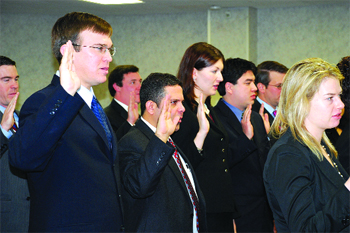
Sections Supplements
O.C. White’s Success Stems from 113 Years of Bright Ideas
Richard May

O.C. White’s owner, Richard May (left), and his son, Richard, stand near some of the company’s lighting offerings.

Richard May, owner of The O.C. White Company in Thorndike, has a wide array of antique lights and magnifiers adorning his office.

All of them are products made by his company, a lighting, audio, and magnification fixture manufacturer, at the start of its 113th year in business. May hopes to acquire several more, displaying them in a showroom now being devised in the six-story mill building in Thorndike, a village of the town of Palmer, into which he moved the company in March.

“It’s going to be designed as a ‘walk through time,’” May explained, noting that the showroom will have a museum-like feel and display some of O.C. White’s earliest and latest contributions to the industrial world.

Many of the items are collector’s items today, as they’ve been used through the years everywhere from textile mills to battleships. That’s a good thing for the O.C. White name, becoming more recognizable each year among antique dealers, but not for May himself, who, despite owning the company at which they were manufactured, must scour flea markets and online auctions regularly, paying top dollar for each and every piece. He purchased one lamp directly from the Edisonian Museum, a collection of antique electrics.

“There are a great many variations,” said May. “Some I’ve never seen, even after 40 years with the company. I find most of them on eBay, where antique dealers don’t think twice about paying thousands. The original molds stamped that O.C. White name right onto the piece, and that’s what the collectors look for.”

A Business with Bite

O.C. White has an intriguing history that is still being written. The company was founded in Worcester in 1894 by Otis White, a dentist who, after failing to find such an instrument in the marketplace, invented a small reflector — illuminated by a flame — to peer at teeth from all angles.

“Basically, he started this company out of need, but he was quite the inventor,” said May.

Records from those times are sketchy — “in the early years, everything was just spoken, not written down,” May noted — but White is also rumored to have invented the first tilt-back dentistry chair, before moving on to create a long-armed, swiveling light that could be easily moved back and forth from a stand.

This invention is documented, by four awards garnered by White at the 1901 Pan American Exposition, a precursor to the World’s Fair. The awards, a gold, silver, bronze, and honorable mention, hang in May’s office as a reminder of the company’s auspicious roots.

Throughout the next 50 years, O.C. White diversified, and began to create a wide range of industrial-strength lighting fixtures, including some for battleships during World War II.

By the 1950s, the company had also become the nation’s largest machine light supplier, working with nearly all machine builders in the country.

May’s father, Robert May, was working as a sales representative in the lighting industry at that time, and in 1962, he purchased O.C. White from the White family. The machine lighting market had begun to decline by the 1960s as Japanese outfits positioned themselves as the world leaders in that realm, but O.C. White was able to shift with the times, developing and manufacturing new products that catered to the electronics industry — items like draftsman’s lights, spring-armed lights, and other work-oriented products designed for industrial use and abuse.

“Our forte is offering products with a form, function, and fit that is superior to existing products on the market,” said May. “We’re not a retail outfit because we can’t outprice the lights and fixtures you’ll find at retail stores, so we make the best products that aren’t priced for normal, regular use.

“That’s how our company is different – the quality,” May continued. “It’s possible for one of our products to hold up for years and withstand the greatest abuse.”

Brick and Switch

The company moved its headquarters from Worcester to Three Rivers, another village of Palmer, in the 1980s, and recently relocated to its new home — a 92,000-square-foot brick mill building once used by Thorndike Awning, and later by Federal Paperboard, among a handful of other manufacturers. O.C. White will use all but 20,000 square feet of the property, which May said will be leased. In addition, he’s taken on what he estimates will amount to about $600,000 in renovations.

“The building is a great shell, but it needs several upgrades to bring it up to current levels for manufacturing today,” he said, noting that the historic showroom will be one aspect of those improvements, doubling as a conference room for clients and distributors, and a tutoring mechanism for new hires.

The latter will instill the importance of the O.C. White name and story, but also introduce the newest products available to the company’s 250 distributors, and how and why they came to fruition.

Today, the company still specializes in spring-arm light fixtures, as well as a suite of newer products that speak to the outfit’s ability to continuously shift gears along with the economy. It has a medical and life sciences division, for instance, that produces high-power microscopes, video monitors, and high-resolution video screens. Imaging firms such as Olympus and Leica use O.C. White components in their products. May said his company both designs and manufactures such items, sometimes contracting a portion of the manufacturing with other U.S. companies, but often completing every step in-house.

Lights and magnifiers for microscopes have become core products, as have lights for video systems and heavy-duty microphone arms that are considered some of the best in the broadcast industry. The product lines may have diversified, but May said that devising sturdy, long-lasting products is still very much a part of the O.C. White mission.

“Every day, you can see our microphone arms on television,” said May, who designs many of the products he sells himself along with O.C. White’s engineers. “They have the best functionality and hold far more weight, without jiggle or squeak. That means they won’t affect radio and television transmissions, and that’s made them the industry standard.”

Moving ahead, May said LED, or light-emitting diode technology, is the future of the business — especially small fixtures used in detail work to view small items.

LEDs form the numbers on a digital clock, assist in the transmission of data from a remote control, illuminate watches, and signal when a household device is on. They’re essentially tiny light bulbs that fit easily into an electrical circuit, but unlike ordinary incandescent bulbs, don’t have a filament that will burn out, and don’t get especially hot.

“Electronics is dying,” he said, “so the key for us will be designing high-level, better-functioning LEDs.”

Light Duty

In the meantime, he’s on the lookout for a particular model of O.C. White lamps, one that hovered over seamstresses as they hunched over industrial sewing machines in the 19th and early 20th centuries.

Finding one will help complete the showroom May is building, but, more importantly, it will help shed more light on why this company with the rich history has a seemingly bright future.

Jaclyn Stevenson can be reached at[email protected]

Sections Supplements
Giclée of New England Is Helping Turn Artists into Business Owners
Nancy Bryant

Nancy Bryant, owner of Giclée of New England, said her trade allows artists to thrive, not starve.

Nancy Bryant snapped her first photo with a digital camera at the start of this decade, and now has become one of the eminent digital artists in the region.

Her work has won awards, including one from the International Assoc. of Panoramic Photographers, and also earned her respect from a growing number of artists.

However, those artists, as well as several business owners, are increasingly seeking out Bryant to take advantage of the unique venture she incorporated in 2003 — Monson-based Giclée of New England, which is using still-emerging technology to lessen the accuracy of the term ‘starving artist,’ one piece of original artwork at a time.

It’s a term that some have trouble pronouncing, but many, especially creatives, hope to learn more about. Giclée (pronounced jee-clay) is an art and photograph reproduction process, which uses digital technology and archival inks, canvas, and papers to create long-lasting, high-quality images.

The process borrows its name from the French verb ‘to spray,’ as inks are sprayed onto paper or canvas by specific, commercial-sized digital printers. The archival nature of the prints the process creates (they last for 100 years or more, instead of just a few), as well as the color management it allows, are what make giclée prints unique, and also some of the best reproductions of artwork available for sale, in terms of resemblance to the original and longevity of the print.

From French to Folk

Giclée has an intriguing history; first developed in the early 1990s, one of its pioneers was Graham Nash, a fine art photographer better known for his musical career with Crosby, Stills, Nash, and Young. His company, Nash Editions, honed the method, and continues to offer it to photographers and artists from around the world.

But Bryant’s story is an interesting one, too, and it began with a yearning to make a living as an artist, one since expanded to help others do the same.

She graduated from Springfield Technical Community College in 1975 with a degree in graphic arts, and immediately began working in that field, pausing after a few years to start a family.

Bryant returned to college in 1988, this time at Westfield State, to complete her bachelor’s degree in fine arts. But upon completing her coursework in 1990, she realized that time and technology had made her previous job as a paste-up artist obsolete.

“My job no longer existed, and I had no computer skills,” she said, adding that she found a job working in the state’s former welfare system, where she stayed for 10 years, while becoming what she calls ‘a weekend artist.’ “It was a good, solid job, and I kept trying to create on my own time, but that’s a very frustrating thing for an artist.”

The tide began to turn, but without Bryant truly realizing it, in 2001, when her son bought her a small digital camera as a gift. The possibilities surrounding the new technology intrigued her, even though this was her first foray into the digital age.

Still, she stuck to family photos and snapshots until another development pushed her further into the digital art world. Her brother became ill, and when she went to visit him, she brought her new camera and began documenting his final days.

These portraits, titled Peter’s Journey, found their way into a local art show, and garnered some praise from other artists. One fan in particular caught Bryant’s attention, though, when he said as beautiful as the portraits were, they would soon fade, because she’d printed them on a standard desktop printer with commonly used inks.

“That’s when I realized that image permanence is an issue,” she said, noting that from that point, her immersion in the digital imaging world became nearly all-encompassing. Just months after receiving her first digital camera, she completed a course in PhotoShop, began researching long-lasting printing methods, and, like Graham Nash before her, stumbled upon giclée.

“I also finally told myself, ‘life is short. If you’re going to do it, do it now,’” she remembers. “So, I mortgaged the house, set up shop, and here I am.”

Art and Parcel

Since its start, Giclée of New England has grown each year and is now, says Bryant, a profitable operation doing a little bit better all the time.

She owns two of the massive giclée printers needed for the process, and has also expanded her services to include framing and large format printing of banners, posters, and signage (up to 44 x 40 feet). She also handles graphic design; business services including logo, letterhead, brochure, and business card design; image capture (creating a digital version of original artwork and photographs); and offers a sales and shipping service for reproduced artwork, used most frequently by working artists who reproduce their original work and sell prints, often limited edition sets, for additional profit.

The business has also grown to include the GoNE Inc. Gallery on Main Street in Monson, which displays a number of both original and giclée prints on a rotating basis.

“There are a lot of things going on,” said Bryant. “It really is a full-service shop, especially for artists. Since we can handle everything from the image capture of a piece of art to its sale, we’re helping artists make a living at what they do.”

What’s more, the very option of reproducing art is a new one for many artists, and that alone is causing business growth at Giclée of New England as the word spreads.

“A lot of artists are just beginning to discover reproduction,” she said, “as well as the idea that they can hold onto their original work longer, selling giclée prints for a few hundred dollars and getting more mileage out of it, while at the same time still being able to sell the original artwork, often for thousands.”

Image is Everything

Bryant said that as an artist herself, she also has a certain sensitivity for staying as close to the original creation as possible. In the early days of giclée, she explained, fading was an issue, but today’s inks, printers, and special canvasses and papers have largely negated that problem.

Later, there was the issue of metamerism, or the effect of various light sources on a print. Sunlight, for instance, could bring the pinks and reds out, while fluorescent lights cast a yellow or green hue. The newer printers, one of which Bryant owns and uses exclusively for artwork and so-called ‘critical jobs,’ have addressed this problem as well. The older printer at Giclée of New England won’t be put out to pasture, though, says Bryant — it’s perfect for banners and other non-critical orders.

But even as technology continues to improve, there is still a very strong human component to quality control at Bryant’s shop. She’s begun to develop a reputation around New England as one of the most accurate fine art reproducers in the region, due to meticulous study of her craft and attention to detail.

“I have spent countless hours learning my trade,” she said, noting that it doesn’t begin with feeding a digital file to a printer and pushing ‘start.’ Rather, Bryant must first capture the image, using a scanner mounted vertically on a hydraulic table. She then reproduces the original artwork, often in sections due to size, and readies the art for printing in PhotoShop. The method is called ‘scan and stitch,’ and amounts, in layman’s terms, to just that — piecing the image together to create a seamless product.

From that point, the image can be printed, but color correction still falls to Bryant’s eyes on many occasions, as she carefully compares the reproduction to the original.

“Sometimes, I get it on the first try. Other times, it can take 50 passes or more to get it right,” she said.

Either way, the finished print is close to indistinguishable from its original, and in the GoNE Gallery, Bryant has taken to noting which pieces are original, and which are giclée prints.

As she moves ahead with the business, Bryant said there are plenty of new plans brewing. She’s currently searching for a new home for the gallery, and is also planning to upgrade some of the equipment that is integral to the shop.
This could mean an investment of upwards of $50,000 — equipment includes digital cameras or camera backs, scanners, copy tables, and copy stands — but Bryant said a faster process will also translate into lower prices for her customers.

A Very Fine Art House

She’s also begun teaching courses, including adult education classes such as ‘how to read your camera manual’ and digital coaching for artists who hope to do some of the work she does on their own.

“I want to keep expanding to help artists market their work,” she said.

And as she does so, she’s helping the arts community thrive, printing her own creations more than ever, and perhaps giving Graham Nash a run for his money.

Jaclyn Stevenson can be reached at[email protected]

Departments

Museum Marks Fifth Anniversary

October-Jan. 27 & Nov. 15-March 9: The Eric Carle Museum of Picture Book Art in Amherst recently launched a full slate of fall programs in celebration of its fifth anniversary, including two special exhibitions. “Spiderwick: From Page to Screen,” opened Sept. 22 and runs through Jan. 27. The show explores the art of Tony DiTerlizzi and Holly Black’s The Spiderwick Chronicles, and follows the story’s translation to the big screen (coming Feb. 15, 2008). The second exhibition, “Children Should Be Seen: The Image of the Child in American Picture Book Art,” opens Nov. 15 and runs through March 9. The show features the work of 84 artists in a comprehensive survey of the best American picture book art of the last decade.

Money Smart Program

Oct. 30-Nov. 27: The Holyoke Credit Union will once again offer its free award-winning financial education program titled Money Smart, which covers a multitude of personal banking and finance subjects. The course will be conducted on Tuesdays from 6 to 8 p.m. for five consecutive weeks at the Holyoke Credit Union’s main branch at 490 Westfield Road, Holyoke. The program is free to the public, however, pre-registration is required. Registration may be made at any branch location or by calling (413) 532-7007.

Women Business Owners Conference

Oct. 31: The 14th Women Business Owners Conference, hosted by the Mass. Small Business Development Center Network, is planned from 8 a.m. to noon, followed by an optional lunch. The theme is “Succession Planning: Transition & Transformation.” Among the highlights of the morning will be a panel discussion on the legal and financial considerations that are paramount to sound succession planning. Registration is planned from 8 to 8:30 a.m. in Willits-Hallowell Center at Mount Holyoke College, South Hadley. For fees and more information, call (413) 737-6712 or visit www.msbdc.org/wmass.

CPA Tech Day

Nov. 2: Uplinc Inc. will host a CPA Technology Day at the Clarion Hotel and Conference Center in West Springfield, complete with breakfast, a vendor technology fair, lunch, and seminars on topics ranging from “Product and Document Management” to “Disaster Recovery.” Vendors participating in the daylong event include Xerox, Barracuda, AmeriVault, Hewlett Packard, and Cisco. The event concludes with a full open-bar social. Reservations are limited. For more information, call (413) 693-0700, ext. 221, or visit www.uplinc.com

Entrepreneurship Summit

Nov. 5: Bay Path College in Longmeadow will host its next Innovative Thinking & Entrepreneurship Summit at 4:15 p.m., featuring breakout sessions and a lecture by keynote speaker Nadine Thompson. Thompson is the co-founder of Warm Spirit, and co-author of Values Sell: Transforming Purpose Into Profit. Breakout session topics will include ‘Coach Me Into Greatness!,’ ‘Making the Leap,’ ‘Best Practices for New Business Launch,’ and ‘Creating a Guide for a Life You Love.’ The program is free; however, pre-registration is required. To register or for more information, visit www.baypath.edu. For questions, call Kellie Lavoie at (413) 565-1054 or E-mail her at [email protected]

Guerrilla Marketing

Nov. 7: Inspired by a guerrilla-marketing philosophy, this workshop will condense an MBA curriculum’s worth of marketing planning fundamentals to seven essential sentences. Participants will leave the workshop with an actionable document designed to focus on 30-, 60-, and 90-day marketing action items relating to the only four profit-boosting methods that exist for any business. The 9-to-11 a.m. session is planned at the Andrew M. Scibelli Enterprise Center, 1 Federal St., Springfield. The cost is $35. For more information, call (413) 737-6712 or visit www.msbdc.org/wmass

BayPath Lecture Series

Nov. 9: William A. Burke III, president of LENOX of East Longmeadow, will be the featured speaker for Bay Path College’s Innovative Thinking & Entrepreneurship Lecture Series in the Blake Student Commons on the Longmeadow campus. A continental breakfast will be served from 7:30 to 8:15 a.m., followed by Burke’s presentation on innovative thinking and entrepreneurship. LENOX employs more than 700 people and markets band saw blades, hand tools, and power-tool accessories in more than 70 countries. Seeking to capitalize on the brand equity of its linear-edge products and its efficiency on the factory floor, Burke initiated a strategy calling for aggressive growth. This growth was driven by new product development, imaginative marketing, and new sales strategies. Seating is limited, and registration is required. For more information, call Briana Sitler at (413) 565-1066 or E-mail her at [email protected]

Six Flags CEO To Address A.I.M.

Nov. 9: Marc Shapiro, president and CEO of Six Flags Inc., will outline his managing style for overseeing the world’s largest regional theme park company during the Associated Industries of Massachusetts Executive Forum meeting at the Westin Hotel, 70 Third Ave., Waltham. Registration begins at 7:45 a.m., followed by the program from 8 to 9:15 a.m. For registration information, call Julie Fazio at (617) 262-1180 or Chris Geehern at (617) 834-4414, or visit www.aimnet.org

Advertising Seminar

Nov. 9: Smart Moves Advertising will offer a free interactive advertising seminar from 9:30 a.m. to noon at the Clarion Hotel and Conference Center in West Springfield to all members of the Women’s Partnership and members of the Affiliated Chambers of Commerce of Greater Springfield. Speakers will be Janet Casey of Smart Moves Advertising, Joan Letendre of Letendre Advertising, and David Horgan of Horgan Associates. Attendance is limited. For more information, e-mail Janet Casey at [email protected]

Internet Marketing 102

Nov. 13: Level the playing field by learning best practices in advertising and how to better target your customers with keyword-triggered advertising on the big search engines. Additionally, participants will learn the pay-per-click advertising that works on Google and Yahoo. The 1 to 4 p.m. workshop is planned at the Andrew M. Scibelli Enterprise Center, 1 Federal St., Springfield. The cost is $40. For more information, call (413) 737-6712 or visit www.msbdc.org/wmass

WNEC Workshop

Nov. 13: Dr. Fran Harris, inspirational speaker and former professional basketball player, will present a workshop titled “Student Entrepreneurship” as part of a workshop series sponsored by the Law and Business Center for Advancing Entrepreneurship at Western New England College in Springfield. For more information, visit www.law.wnec.edu/lawandbusiness

SCORE Workshop

Nov. 16: Dave Wentworth, a SCORE counselor and businessman, will present ‘What Is the Future of Your Non-profit?’ from 9 a.m. to noon at the Scibelli Enterprise Center, One Federal St., Springfield. Wentworth notes that much of the workshop content was developed by the national SCORE organization under a Kellogg Foundation grant. A fee of $25 covers the cost of materials. For additional attendees from the same organization, the fee is $5. For more information and to register, call (413) 785-0314.

Bright Nights

Nov. 21-Jan. 1: Bright Nights at Forest Park in Springfield opens Nov. 21 and runs Wednesdays through Sundays until Dec. 9. Bright Nights will then be open nightly from Dec. 12 through Jan. 1. Buses run nightly from 5 to 6 p.m., and cars from 6 to 9 p.m. Sunday through Thursday, and from 6 to 9 p.m. on Fridays, Saturdays, and holidays. For more information on admission, call (413) 733-3800 or visit www.brightnights.org

Departments

Microtest Labs Wins State Award

AGAWAM — Microtest Laboratories has been honored with a Massachusetts Economic Impact Award for its strong record of job creation and business expansion. The company was named the Silver Level Award recipient in the Western Mass. region by the Mass. Alliance for Economic Development (MAED). Microtest specializes in testing services and contract manufacturing for the medical device, pharmaceutical, and biotechnology industries. MAED is a private, nonprofit partnership of business, industry leaders, and government dedicated to the economic growth of Massachusetts. MAED will recognize its 2007 Team Massachusetts Economic Impact Award winners during a luncheon on Nov. 20. For more information, visit www.massecon.com.

United Financial Bancorp Starts Second-step Conversion

WEST SPRINGFIELD — United Financial Bancorp, Inc. recently announced it and United Mutual Holding Company, its mutual holding company, have received conditional approval from the Office of Thrift Supervision to commence its second-step conversion and offering. The company also announced that the registration statement relating to the sale of common stock by United Financial Bancorp Inc., its new Maryland corporation, was declared effective by the Securities and Exchange Commission. The subscription and community offering was expected to begin on or about Oct. 22, when offering and proxy materials were mailed to eligible depositors of United Bank, the savings bank subsidiary of the company. Proxy materials will be mailed to stockholders of the company eligible to vote on or about Oct. 22. A syndicated offering of unsubscribed shares to the general public is expected to begin at a later date. The Stock Information Center, which opened on Oct. 24, may be reached at (413) 788-3333.

Easthampton Savings Opens Westfield Office

WESTFIELD — Easthampton Savings Bank recently staged grand-opening ceremonies for its new branch on Broad Street in Westfield. Katrina Dziedzic, who has more than 20 years of banking experience, serves as branch manager. The new full-service branch includes a drive-up window, safe deposit boxes, a night depository, and a drive-up automated teller machine. Founded in 1869, Easthampton Savings also has branch locations in Easthampton, Southampton, Northampton, Hadley, South Hadley, and Belchertown.

Bauzá & Associates Expands Client Portfolio

HOLYOKE — Bauza & Associates recently announced it has greatly expanded its client portfolio during the second and third quarters of 2007. The new additions to its portfolio include Comcast, Northeast Utilities, Health New England, Eastern Connecticut State University, Stamford Hospital, Hartford Foundation for Public Giving, Well Done Productions, Eastern States Exposition, and the Mashantucket Pequot Tribal Nation. “We are proud to work with such incredible organizations who understand the value of the Hispanic market and are taking the right approach to building brand awareness and driving sales with Hispanic consumers,” said Hector Bauza, president. The firm also has offices in Boston and New Haven, Conn.

Dave’s Gets OK to Expand Store

AGAWAM — Dave’s Soda and Pet City has received permission from the Planning Board to eliminate 1,500 square feet of the former Ames department store on Springfield Street to make way for adequate parking requirements. David A. Ratner, owner of Dave’s, said he hopes to move his current operation from Ramah Circle to the new site by spring, which will also include a dog obedience facility and a grooming center. Ratner noted that the new site will feature 25,000 square feet of retail space and 10,000 square feet of warehouse space. With the additional space, Ratner plans to expand the Agway line.

Breast Cancer Awareness Program Expected to Raise Donation to Local Groups

SPRINGFIELD — Massachusetts Mutual Life Insurance Co. (MassMutual) recently kicked off an innovative breast cancer awareness program that will raise an estimated six-figure contribution for local cancer organizations across the country while also educating women about financial preparedness, especially when it comes to breast cancer and other unexpected life events. The program, part of a year-long effort by MassMutual to support breast cancer awareness efforts, will make charitable contributions of up to $3,000 to local cancer organizations in the name of each MassMutual agency that conducts a Pearls of Wisdom® financial education seminar in its local community in October. Additionally, as it does every year, MassMutual will undertake a variety of activities at its Springfield and Enfield, Conn., headquarters to involve and educate its own employees on the topic of breast cancer prevention. For more information, visit www.massmutual.com/women.

Mercy Medical Center, Cancer Society Team Up To Help Cancer Patients

SPRINGFIELD — Mercy Medical Center recently signed a collaboration agreement with the American Cancer Society which partners the two organizations in an effort to save lives and improve the quality of life for cancer patients and survivors in the Greater Springfield area. Each year, Mercy Medical Center serves more than 1,200 newly diagnosed cancer patients in Greater Springfield, offering a range of patient care services, including prevention, early detection, treatment, counseling and support, and patient education. The hospital collaboration agreement will ensure that all newly diagnosed cancer patients are informed of all resources, programs, and services provided by the American Cancer Society. Mercy also offers its cancer patients the only American Cancer Society cancer resource center in the area, staffed by well-trained volunteers, where patients can seek out additional cancer-related resources in the community.

UMass Professors, Town Officials Launch Wireless Network

AMHERST — In a distinctive town-gown electronic partnership, researchers from the University of Massachusetts Amherst and town officials have unveiled the first phase of a community wireless mesh network in the downtown area. This network allows the public and town workers access to a broad range of services from WiFi-equipped mobile devices including laptop computers, hand-held devices and smartphones. The new wireless network is the result of collaboration between Kristopher J. Pacunas, information technology director for the Town of Amherst, and Mark Corner and Brian Levine, professors in the UMass Amherst computer science department. The network has been in the testing phase for the last several months. UMass researchers are using the network to run a number of projects in mobile computing, networking for disaster management, and municipal sensor networks. The system will be managed and maintained by the town’s information technology department. Equipment and installation were funded through several grants to UMass Amherst from the National Science Foundation and the Defense Advanced Research Projects Agency. In addition to providing Internet access to the public, town officials have begun experimenting with operating some town services over the network, suggesting the potential to reduce costs for phone lines that the town leases for data from sewage and water sensors. In addition, town officials hope the network could greatly increase the monitoring of the town’s infrastructure, including traffic signals and pollution. For more information about the project, visit www.amherstma.gov/communitywireless.

Enterprise Fund Provides Business Loans to Two Local Companies

HOLYOKE — The Western Mass. Enterprise Fund announced it has provided small business loans recently to Cubit Wire & Cable Co. Inc. of Holyoke and Australis Aquaculture, a fish farm and processing company in Turners Falls. The small business loan to Cubit Wire in Holyoke will be used as working capital and will enable the company to capitalize on new opportunities and increase sales volume resulting in new job creation. Cubit focuses on manufacturing a special type of wiring for equipment such as ambulance track lights, railroad track lights, industrial air conditioning, aircraft instruments and pool vacuums. Cubit is a certified minority owned business and began operations after acquiring the former American Electric Cable Company in 2004. Australis will use the loan to purchase filleting and processing equipment needed to process its primary product Barramundi in house. The company has turned a previously unknown fish in the United States into a significant seafood trend. Australis has relationships with several of the country’s leading supermarket and restaurant chains. Australis grows its fish in an ecologically friendly indoor facility located in Turners Falls. According to Christopher Sikes, executive director of WMEF, “These loans highlight the diversity of our portfolio and the small businesses that operate in Western Mass. sometimes unnoticed. One company provides a unique and growing food product available throughout the country and another is a minority owned company with great potential for growth.”

ECS Announces Stock Ownership Plan

AGAWAM — Environmental Compliance Services, Inc. (ECS) announce the establishment of an Employee Stock Ownership Plan (ESOP). “The timing is right to continue our growth trajectory and to maintain the strong commitment of our dedicated and passionate employees,” said Mark Hellstein, Founder and President. “The employees have made this company what it is and they deserve the opportunity to control their destinies.” Currently celebrating its 25th year in business, ECS is a pioneering environmental consulting firm with more than 200 professionals. ECS’ full line of services includes site assessment, remediation and engineering, fuel system management, multi-media services, and cost-recovery services.

Opinion
STCC Technology Park Is an Asset for the Region

Lost in the controversy earlier this year about the possible location of a new state information technology center either at the STCC Technology Park or in the former Tech High School on Elliot Street is the vital role the tech park has played, and will need to play, for Western Mass. to be considered an inviting address for new, emerging, or native tech-savvy companies.

When former STCC President Andrew Scibelli had the vision to create a technology business park adjacent to the college campus, he, and those of us who were part of the founders’ team, were responding to changes evident in a global marketplace early in the high-tech revolution. It was bold, risky, and the first of its kind.

It was just that kind of ahead-of-the-curve thinking that led STCC’s first president and visionary, Edmond Garvey, to establish STCC, known then as the Springfield Technical Institute, in 1967, turning a suddenly defunct federal armory into a center for technological learning.

Just 10 years ago, around the time the technology park was launched, E-mail and use of the Internet in daily commerce was still in its infancy. That the technology park has grown, changed, and broadened its scope is a testimony to just how fluid and dynamic this new age of technology is. Just as Edmond Garvey saw a niche to fill, so too did all of us who were involved in the startup of the park.

As I exit at the end of October from my service as chairman of the STCC Assistance Corporation Board, I leave satisfied that the park has upheld its original mission but also acutely aware that it will need vision and renewed commitment from all involved in order to respond to a rapidly changing and expanding business environment.

So much has changed, yet the focus, and need for the technology park, have never been greater. Events in the global marketplace and the acceleration of technology at all levels of business and commerce make the case that not only was development of the park the right thing to do, but that it is a critical piece of the puzzle in attracting new business development.

Flying somewhat under the radar to date, the park now has a broad range of business concerns that represent an asset to Springfield, the region, and STCC. These include organizations such as One Communications, the largest privately held competitive telecommunications provider in the U.S.; C2C, the E-mail archiving and management firm; and national and regional companies such as Verizon and Western Massachusetts Electric Company.

On the other end of the spectrum is a company like Mind Wing, a small startup technology firm born in the Curtis Blake Day School at American International College that recently graduated from the STCC Incubator. The park also hosts the National Center for Telecommunications Technology, the advanced technology center that develops and pilots telecommunications courses in high schools and colleges. It is a testimony to the original vision that organizations large and small have the confidence to be stakeholders in the park.

The park has also attracted a breadth and scope of business concerns that are utilizing the park’s unique assets of security and redundant digital capacity. These are important elements needed by growing technology-based companies and can be duplicated nowhere else in the Valley.

And it isn’t just those of us who had a founding role who feel this way. The park has won some national acclaim over the years: in 2001 the Economic Development Administration recognized it for ‘Excellence in Urban Development,’ and the International Economic Development Council bestowed its Excellence in Economic Development Award on the park in 2002.

At the end of the day, it isn’t about awards or recognition, or about my own view of the Technology Park’s success and prospects.

What’s at stake here is how we do business as a larger community — putting on display all of the region’s assets as we go about the task of advancing economic development in the region.

And, as Edmond Garvey proved to all of us, we shouldn’t limit our own thinking about what is possible.

Brian Corridan is the outgoing chairman of the Springfield Technical Community College Assistance Corp.

Sections Supplements
Commerce Show Organizers Want Some Net Results at the Hall
Gail Sherman and Doris Ransford

Commerce ’07 organizers Gail Sherman, right, president of the Chicopee Chamber of Commerce, and Doris Ransford, president of the Greater Holyoke Chamber.

In 2006, organizers of the Commerce trade show took their game up a notch by relocating the annual fall event to the Basketball Hall of Fame. The change of venue, coupled with some different programs, generated some new excitement for the show. Seizing on that momentum, planners have brought the show back to the Hall, but with some new wrinkles to the game plan designed to bring more value to exhibitors and visitors alike.

‘Elevate Your Game.’

That’s the theme for Commerce 2007, the 17th edition of the annual fall trade show staged by the Chicopee and Greater Holyoke Chambers of Commerce, slated for Nov. 1. It was chosen to draw a strong connection between the event and its new home, the Basketball Hall of Fame, to which the show was first taken last year; the event’s brochure is replete with double entendres covering both sports and business. But it also speaks to business owners about the opportunities that show organizers believe the event offers for companies to take their marketing efforts to a higher plane.

Indeed, there are several new wrinkles to the traditional trade show format designed to give participants more exposure. These include a ‘star exhibitor status’ package, which gives vendors more visibility, both on the show floor and in marketing materials for the event. Meanwhile, companies can also sign on as ‘playmakers,’ an upgraded ‘star status’ product tailored toward companies that plan to offer demonstrations or mini-seminars at their booths.

But ‘elevating the game’ also refers to what show organizers, especially Chicopee Chamber President Gail Sherman and her counterpart in Holyoke, Doris Ransford, have been trying to do with their trade show. The move to the Hall of Fame energized some long-time participants and sparked enough curiosity to attract several newcomers last fall, said Sherman, noting that the chambers want to seize on that momentum and make the show an even more attractive marketing option for business owners.

To that end, they have created the new initiatives aimed at exposure, while also tweaking the show layout and some of the programs — all in an effort to add value. Last year, booths were spread out over several levels of the Hall and many different rooms, which many attendees found inconvenient; this year, all the booths are on one floor, but over a broader area. Last year, breakfast was in the Hall’s auditorium, with people essentially eating out of their laps; this year, a buffet-style restaurant will be staged in Pazzo’s restaurant in the Hall complex.

Meanwhile, show attendees will also be given free entrance to the Hall of Fame’s exhibits, as they were last year, and visitors and exhibitors alike can mix their time at the show with a visit to one of three restaurants located within the complex.

“We think it’s a very attractive package of programs and opportunities for networking,” said Ransford, adding that show organizers are expecting to at least match last year’s turnout, a considerable feat considering an ongoing trend of declining participation in trade shows, coupled with an economic outlook now featuring many question marks.

In this issue, BusinessWest previews Commerce ’07, a show that promises exhibitors some real scoring opportunities.

Hook Shots

Flashing back to 1991, Ransford said the Commerce Show was launched to provide area companies, many of them smaller businesses with limited marketing budgets, a chance to gain some important exposure at a time when they needed it — the start of a prolonged recession — and when most couldn’t afford to market themselves extensively, or thought they couldn’t.

The Western Mass. landscape has changed considerably since then, and the economy is obviously much improved, although there are some concerns about the future and more frequent references to the dreaded ‘R’ word, said Ransford. But the basic mission of this trade show hasn’t changed — it remains an opportunity for companies to gain some cost-effective exposure and gain some potentially valuable leads.

“These days, it seems that there’s far less human interaction when it comes to sales and marketing, and technology has a lot to do with that,” said Ransford. “Today, people use E-mail and voice mail to communicate. But there’s no substitute for face-to-face contact, and the show gives people a chance to reconnect.”

Since the beginning, the challenge has been to keep the show fresh and make it well worth it for business owners and managers to devote a day, some expense, and considerable energy to the event.

“Business owners make a big investment in the show in terms of their time, their employees’ time, and the cost of exhibiting,” said Sherman. “We want to make this a prudent investment for everyone, and we do that by providing a lot of bang for the buck in terms of exposure to decision-makers.”

The Commerce Show has been well-traveled throughout its history. It started out at what is now the Plantation Inn in Chicopee, and later spent a number of years operating out of one of the large hangars at Westover Air Reserve Base. The events of 9/11 made those facilities unavailable, so organizers took the show to the Big E, where it remained until the MassMutual Center opened in the fall of 2005.

That year’s Commerce Show was one of the first events staged at the downtown Springfield facility, and it went well, said Sherman, but there were some glitches. Parking was a problem, either real or perceived, she explained, and there were some other logistical and practical concerns; organizers tried a shuttle bus from downtown parking lots, but it didn’t prove popular.

Weighing the pros and cons of that location, Commerce organizers considered other venues, and gave the Hall of Fame a hard look. The uniqueness of the facility, the potential to collaborate and co-market with the Hall, and acres of free parking made the site an attractive alternative.

What the Hall provided was a clean break from the look and feel provided by the traditional, large exhibition hall, said Sherman, noting that in year one at the Hall of Fame, organizers had booths and tables spread out on each of the shrine’s many levels. Such an arrangement looked good on paper, but didn’t work out as well as hoped, she told BusinessWest, adding that for year 2, the show will be on one level, utilizing the Hall’s Center Court area, the hallway outside it, the food court, and a now vacant Adidas storefront. In the promotional brochure for the event, these areas are called the ‘Front Court,’ ‘Back Court,’ etc., in keeping with the general theme.

Beyond the changes in layout for the show — designed to add convenience while still providing a non-traditional trade show experience — there are some new wrinkles designed to provide more value for exhibitors, said Ransford.
The ‘Star Exhibitor’ designation provides added exposure in several forms, including everything from links on the show’s Web site to mentions in all press releases to passes to the Star Exhibitor luncheon at Pazzo’s. Meanwhile, the so-called Playmakers, get those benefits plus announcements on the loudspeaker system prior to their demonstrations, postings of those demonstration and seminars on the Web site, and even discounts on booth prices.

“Thus far, the new packages are proving to be popular,” said Ransford. “They’re something new, and what we expect will be effective ways for companies to get more exposure and more people to their booths.”

Transition Game

Beyond the many imaginative plays on words now available to those marketing the Commerce Show, its current home provides something else — that different look and feel that organizers have long desired to make their show stand out.

Capitalizing on the venue, but also adding more value whenever and wherever possible is the simple game plan for the ’07 show. Early forecasts project that for this event, exhibitors should expect nothing but net.

George O’Brien can be reached at[email protected]
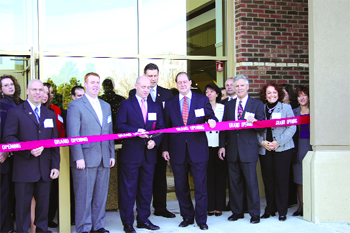
Departments

MassMutual Named A Working Mother 100 Best Company

SPRINGFIELD — Working Mother magazine recently named MassMutual a ‘2007 Working Mother Best Company.’ Leading a significant and ongoing culture shift, MassMutual officials note they are using company-wide benefits and programs to help ensure the retention and advancement of working mothers. MassMutual provides a number of options to help employees achieve a strong work/life balance, including flexible schedules, on-site and near-site child care facilities, an on-site credit union, convenience store with a full-service pharmacy, dry cleaner, tailor, jewelry and shoe repair, a barbershop, and a hair salon. MassMutual also has a strong commitment to employee health, offering state-of-the-art wellness activity centers, employee health service centers that offer such amenities as personal health assessments, on-site physical therapy, and flu vaccinations, as well as an employee-assistance program. In other news, the company has been awarded the No. 1 ranking in this year’s InformationWeek 500 “Information Security/Privacy” category for its proprietary information security management system. MassMutual’s award is one of only five “Leaders in Innovation” category awards identified by InformationWeek, namely, Productivity, Information Security, Supply Chain Innovation, Emerging Technology and Customer Intimacy.

Daly Honored At Baystate Dedication

SPRINGFIELD — Recognizing his strategic vision and his inspirational leadership of the organization for 22 years, Baystate Health recently honored Michael J. Daly during a dedication ceremony of the Daly Building, formerly the Centennial Building, at the stystem’s Springfield campus. Baystate’s Board of Trustees officially renamed and dedicated the medical center to honor Daly, who served as chief executive officer from 1981 to 2003. An unveiling of a special plaque in his honor was among the festivities during the dedication ceremony on Oct. 2.

Spalding Introduces ‘The Beast’

SPRINGFIELD — Spalding is bringing an NBA in-arena style experience to a new portable outdoor system. By introducing The Beast, Spalding now offers the first ever 60-inch glass portable backboard system in the market. The Spalding Beast’s glass board provides increased benefits to players, highlighted by a 37% truer rebound than achieved with acrylic systems, according to company officials. The Beast also boasts an aluminum-trimmed unit which features a heavy duty steel frame, Z-arm board mounts that provide increased stability, and a heavy duty Pro Image® breakaway rim. In addition, an institutional style lift provides infinite height adjustment from 7.5’ to 10’, a portable, multi-wheel with castors base provides ease of movement, and a four-strut pole/base mount provides superior system rigidity.

North Amherst Company Wins National Award

NORTH AMHERST — Cowls Land and Lumber Company has been awarded the Assoc. of Fish and Wildlife Agencies’ prestigious Landowner Stewardship Award. The award is presented annually to landowners who make a significant and positive conservation impact on a large area of privately owned land. The award was recently presented to Cinda Jones and her husband, Chuck Walker, of the Cowls Companies at the annual meeting of the Association of Fish and Wildlife Agencies in Louisville, Ky. Over the past 265 years, the family’s Western Mass. forest land has been devoted to sustainable timber production, while providing public recreational access and improved wildlife habitat. Cowls was one of the original tree farms to embrace and meet the requirements to be certified as a sustainable producer of trees in the United States. Cowls employs professionally trained foresters in the management of its land and incorporates multiple uses into its land-management plans. Cowls management plans are long-term and set the goal of achieving a sustained yield while retaining diversity of fish and wildlife, habitats, and ecosystems function. This year’s award represents the first time recognition has been given to a sustainable forest-based enterprise (in the past only farmers and ranchers have been recipients) and the first time for a Northeastern state. For more information on the award program, visit www.fishwildlife.org.

Big Y Promo Supports Breast Cancer Research

SPRINGFIELD — Big Y Supermarkets will be donating proceeds from its produce department as well as additional select products in October to the local Susan G. Komen for the Cure, Massachusetts and Connecticut Affiliates, to raise awareness and funds for breast cancer. The month-long initiative is titled “Partners of Hope,” and Big Y has partnered with many manufacturers to procure hundreds of thousands of pick-labeled products with funding toward breast cancer research and awareness. Big Y will be selling pink T-shirts, pink-frosted cupcakes, pink travel mugs and water bottles, pink bouquets and more. Pink paper ribbons will also be available for a $1 donation and will be posted in each market. Internally, Big Y’s Wellness Team will be hosting several programs this month to highlight breast cancer awareness to the employee family.

TD Banknorth Grant Supports Museum Programs

SPRINGFIELD — The Springfield Museums have received a $10,000 grant from the TD Banknorth Charitable Foundation for its Weekend Family Fun series of educational programs. Weekend Family Fun programs highlight holidays, special exhibits, cultures from around the world, and popular topics like dinosaurs and Dr. Seuss. Each program includes a performance, art demonstrations, science activities, and hands-on craft workshops. The four Springfield Museums and the Dr. Seuss National Memorial Sculpture Garden are located on the Quadrangle at 21 Edwards St.

Springfield Falcons Partner with Big Y, WNEC

SPRINGFIELD — The Springfield Falcons recently signed a two-year corporate partnership agreement with Big Y Foods that once again offers fans a discount ticket for select nights when they present their Big Y Savings Card at the MassMutual Center Box Office. Big Y Foods will also receive maximum exposure as part of its partnership with their logo appearing on signage on the MassMutual Center center-hung video board, and also on dasherboard signage inside of the MassMutual Center. The Falcons also recently partnered with Western New England College for the 2007-08 season to develop the Falcons’ new multimedia section located on Falconsahl.com. The new feature will consist of both audio and video clips involving Falcons players and coaches, as well as game highlights. WNEC officials noted they are proud to provide support and assistance for this ambitious web marketing enterprise, known as the Western New England College multimedia section of the Springfield Falcons’ website, where fans will be able to enjoy a more interactive experience with the organization.

Avada’s Blulink Offers Wireless Hearing

SPRINGFIELD — Avada Hearing Care Centers recently introduced Blulink™, its first wireless communication system that tackles challenges for those with hearing loss — providing ultimate sound quality that is delivered in sync with the listening environment and offering hands-free connectivity to Bluetooth-enabled cell phones and other wireless electronic devices. Unlike traditional hearing instruments, Blulink’s high speed wireless digital technology creates a wireless ‘bubble’ around the user, allowing a pair of Blulink hearing devices to communicate together to process sounds similar to the way the human brain receives and interprets sounds. For more information, visit www.avada.com.

Hampden Bank to Continue Energy Relief Program

SPRINGFIELD — There is still uncertainty about how much it will cost homeowners to stay warm this heating season. However, many people are already beginning to wonder, and worry, about how they are going to pay their heating bills this winter. In response to what could be some very tough situations for local residents, Hampden Bank has decided to once again continue it’s Energy Relief Program introduced two years ago. The program is designed to give mortgage customers the option to make a smaller, ‘interest only’ payments on their mortgage for the duration of the heating season. “We are reacting to the needs of our customers,” said Senior Vice President Robert Michel. “While fuel prices have come down, filling up your car or paying the heating bill is still painful. With this program, we allow our borrowers to make an interest-only payment. They’ll be able to use the savings each month to apply toward their heating costs.” Michel added. The program is simple, but the savings can be profound. For example, a $150,000 loan balance with a 20-year remaining term at an average 6.5% interest rate would yield a savings of almost $250 per month.

Departments

The following business incorporations were recently recorded in Franklin, Hampden and Hampshire counties and are the latest available. They are listed by community.

AGAWAM

Ganpati Inc., 36 Yarmouth Dr., Agawam 01001. Dinesh P. Patel, same. Convenience store.

AMHERST

Samadisy Inc., 345 Lincoln Ave., #921, Amherst 01002. Amr Elssamadisy, same. To own, develop and market software ideas and companies.

BELCHERTOWN

Mass Information Technology Solutions Inc., 32A Everett Ave., Belchertown 01007. Shahid Habib, same. Information technology solutions.

CHICOPEE

Couture Realty Inc., 67 Ross Ave., Chicopee 01020. Raymond G. Couture, same. Real estate acquisition.

EASTHAMPTON

We Love Bicycles Inc., 4 Applewood Circle, Easthampton 01027. Daniel Richard Coady, same. Retail sales of bicycle related items.

Worldwide Covering Inc., 150 Pleasant St., Easthampton 01027. Glenn T. Labay, same. (Foreign corp; NV) Protection covers for aircraft engines.

EAST LONGMEADOW

Grimaldi Painting Inc., 102 Lee St., East Longmeadow 01028. John A. Grimaldi, same. Painting and paint contractor.

Radcliffe is the Reason and Arthur Too! Fight Autism Inc., 63 Heathertone Dr., East Longmeadow 01028. Radcliffe F. Kenison, same. (Nonprofit) To help raise public awareness of how Autism effects the individual, families, and communities, etc.

HOLYOKE

Baskets and Broken Bread Inc., 372 Maple St., 4R, Holyoke 01040. Kathleen Wilkinson, same. (Nonprofit) For the enrichment and empowerment of inner city residents to enable them to have a more meaningful life, etc.

LONGMEADOW

Massachusetts Citizens for Africa Inc., 92 Riverview Ave., Longmeadow 01106. Gabriel I. Mokwuah, same. (Nonprofit) To establish a humanitarian society to promote charitale works aimed at enhancing the well-being of the society in Africa, etc.

NORTHAMPTON

Hampshire County Bar Association Foundation Inc., 15 Gothic St., Northampton 01060. Alfred P. Chamberland, 5 Arthur St., Easthampton 01027. (Nonprofit) To research any branch of the law, making results freely available to the public, improve the administration of justice, etc.


SOUTH DEERFIELD

Jewish Historical Society of Western Massachusetts Inc., Old Firehouse, Sugarloaf St., South Deerfield 01373. Kenneth N. Schoen, same. (Nonprofit) To provide a resource facility for research on Jewish llfe and activities in Western Massachusetts.

SOUTH HADLEY

Ahsan International Inc., 18 Main St., Suite 2B, South Hadley 01075. Ahsan Latif, same. Trading merchandise.

SOUTHWICK

VMDJ Inc., 8 Buckingham Dr., Southwick 01077. Paul D. Musselwhite, same. To operate a convenience store, etc.

SPRINGFIELD

Advanced Incident Management Corp., 45 Carlisle St., Springfield 01109. Garry A. Porter, same. Management services.

El Bohio Corp., 1655 Main St., Suite 201, Springfield 01103. Miguel Martinez, 13 Donbray Road, Springfield 01129. Real estate acquisition and development.

Joseph Freedman Export Mgmt. Co. Inc., 115 Stevens St., Springfield 01104. John Freedman, same. Sales representative.

St. James Cleaners Inc., 1003 Saint James Ave., Springfield 01104. Myung Sik Kim, same. Dry cleaner.

WESTHAMPTON

Robert H. Dunn, Jr. Construction Services Inc., 43 Burt Road, Westhampton 01027. Lynn M. Dunn, same. Construction services.

WILBRAHAM

SK3 Realty Inc., 840 Ridge Road, Wilbraham 01095. Stanley Kowalski, III, same. To hold real estate.

WEST SPRINGFIELD

Grand Central Vac Inc., 745 Memorial Dr., West Springfield 01089. Daniel J. Desnoyers, 16 Ryan Dr., West Springfield 01089. Central vacuum systems.

Departments

Weight Staff


Mark Archer, right, vice president of Del Padre Visual Productions (DVP) in East Longmeadow, recently experienced the rare thrill of weightlessness aboard G-Force One, a specially outfitted 727 operated by the Zero Gravity Corp. DVP was contributing HD video footage of the event for a documentary for Northrop Grumman’s “Weightless Flights of Discovery” program, in which teachers from around the country get to bring the experience back to their classrooms and promote excitement in science education.


Matthew Reyes, director of Technical Operations for Zero-G, giving Archer a hand in keeping stable while weightless.

Cigars Under the Stars

More than 50 cigar aficionados turned out Sept. 18 for a special night at Max’s Tavern called ‘Cigars Under the Stars,’ a name that pretty much tells the story of this event. At top, from left, are Mark Lauria of Rexel CLS, Dirk Kidwell of Kidwell Electric, and Vito Costantiello and Joe Lapuma, both of Rexel CLS. Bottom, from left, are Max Bichler of The Cigar Agency, Michael Lynch of Florence Savings Bank, Jeff Anderson of the Crystal Company, Karin Tranghese, owner of The Cigar Room, Bob Borawski and Dave Malek, both of Borawski Insurance, and Ken Salem, of Salem Board & Beam.

Marketing Vehicle

On Sept. 12, Innovative Business Systems Inc. of Easthampton hosted a Technology Showcase featuring many local and national vendors, highlighted by the Microsoft Across America Mobile Event Experience vehicle. Pictured are Joseph Parente, left, and Dan Grenier, both of Grynn & Barrett Studios.

Meeting of the Minds

Modeling Change in Urban Communities was the first in a four-part planning series that will be hosted by Holyoke Community College’s Kittredge Center for Business and Workforce Development. At the Sept. 18 installment, urban policy experts James Stergios and Barry Bluestone put a magnifying glass to the struggles and triumphs that frame the experience of older industrial cities like Springfield, Holyoke, and Pittsfield. The two-and-a-half-hour meeting sparked some interesting discussion. From left are Bluestone, Holyoke Mayor Michael Sullivan, Stergios, state Sen. Senator Michael Knapik, and Allan Blair, president/CEO of the Economic Development Council of Western Mass.

Happy 20th

Ronald Marino, left, president of Uplinc, accepts a proclamation from state Rep. James Welch that recognizes the company on its 20th anniversary.

Physically and ‘Fiscally’ Fit Triathletes

More than 50 agents and employees of MassMutual and their families and friends recently participated in the Danskin Women’s Triathlon in Webster. Many triathletes participating in the race, which MassMutual sponsors nationally, raised money through pledges to benefit the Breast Cancer Research Foundation. MassMutual also hosted a pre-race ‘Pearls of Wisdom’ seminar, as it does in each of the triathlon series’ cities, to educate participants about ‘fiscal’ fitness. For each attendee, MassMutual donated $10 to the Breast Cancer Research Foundation. Last year, MassMutual donated more than $7,000 to the foundation as part of its involvement, and expects the total to be even higher this year.


Features
Max’s Golf Tournament Shows the Power of Philanthropy
Ann Marie Harding; Ron Sadowski; Jennifer Baril; Edward Reiter

Gathered on the play deck at BCH are, from left, A.M.Harding, Evnts. Dir. for Max’s Tavern; R.Sadowski, V.P of Williams Distributing; J.Baril, major gifts officer for the Baystate Health Foundation; & E.Reiter, Chm.of the Dept. of Pediatrics.

They call it a “shotgun start.”

That’s the name given to the process used to get as many as 120 people around a golf course in a timely fashion for a charity tournament or even a regular Saturday morning’s play at the local municipal course. The idea is to send everyone off at the same time, using all or most of the 18 holes, enabling them to finish at the same time.

The name is derived from the fact that in the old days, the individual starting the tournament would sometimes actually fire off a shotgun to signal the start of play. Those crackles have long since been replaced by horns.

But for the start of the first Max Classic tournament in 2004, organizers, looking to evoke some nostalgia or to just get the ambitious event off with a bang — literally — fired a Revolutionary War-era cannon to get things going. The blast cracked a mirror in the lobby at Crestview Country Club in Agawam.

Seven years of bad luck? Hardly.

It’s been four years of incredibly good fortune for Baystate Children’s Hospital — which has been the beneficiary of the tournament since the start — with the promise of many more to come. Indeed, the event, so-named because Max’s Tavern is the lead presenting sponsor, is fast becoming one of the most popular tournaments on the region’s crammed slate, and the benefiting organization is one that touches, in one way or another, virtually everyone who puts a tee in the ground or places their name on a tee sign. So the future looks bright.

The past and present aren’t bad, either. In four short years, the Classic has raised more than $500,000 for the Children’s Hospital. Those who organize or play in charity tournaments might think that’s a misprint; it’s not. But perhaps more important than the number behind the dollar sign is the direction in which the money goes — toward specific equipment purchases identified as priorities by hospital administrators.

In the first year, proceeds went toward purchase of omnibeds, or high-tech incubators, for the hospital’s Neonatal Intensive Care Unit — with the accent on the plural. Organizers thought they’d raise enough for one, but obviously did much better than expected. In years two and three, a total of more than $250,000 was channeled toward asthma programs at the hospital, and this year’s event raised more than $160,000 for a digital pediatric echocardiogram.

That’s roughly half the actual sticker price, said Dr. Edward Reiter, chairman of Pediatrics at Baystate Children’s Hospital, who told BusinessWest that the donation probably expedited the process of moving the echocardiogram up the list of capital purchases within the Baystate Health system. Overall, he said the golf tournament and other special events staged on behalf of the hospital have helped the facility stay on bthe cutting edge of technology and programs at a time of still-inadequate reimbursements for care and fierce competition for capital dollars.

“The challenge of the capital budget process for any children’s hospital is a dramatic one,” said Reiter. “That’s because the amount of revenue that comes in from insurance payers for clinical care doesn’t enable you to purchase all the things you need for a modern setting.

“That’s why the gifts from generous individuals and the proceeds from events like the golf tournament are so important,” he said. “New technology is very expensive, but it’s also very necessary if we’re going to provide the best care.”

In this issue, BusinessWest looks at what has become a perfect match between a company, Max’s, with a deep commitment to philanthropy, and a beneficiary that has important items on its wish list.

Round Numbers

It took some doing, but organizers of the 2007 Max Classic managed to get one of the manufacturers of the desired digital echocardiogram to bring one of the machines to the Ranch Golf Club in Southwick, one of two venues used for the tournament, so participants could see where their largesse was going.

The sales representative brought his son along to act as a ‘patient’ for demonstrations, said Jennifer Baril, major gifts officer for the Baystate Health Foundation. “We wanted to make a strong connection between the golf and the beneficiary,” she explained, adding that this has been accomplished in several ways, right down to ‘Children’s Hospital’ logos placed on the golf balls and bottles of water given to each of the players before the start of the tournament. “By making that connection, people can better relate to the hospital and see why their help is needed.”

As she talked about fund-raising efforts for the Baystate system and specifically the Children’s Hospital, Baril said there are several special events during the year involving the Children’s Miracle Network, the fund-raising platform for pediatric care — including an annual radiothon and telethon — that raise money for programs across the system. This includes two other hospitals — Baystate Mary Lane in Ware and Baystate Franklin Medical Center in Greenfield. The system also solicits major gifts from area residents and business owners that are often put toward specific purposes and programs.

The Max Classic is a type of hybrid, she explained, adding that it is a special, annual event, but one with a specific beneficiary — the Children’s Hospital in Springfield — and often very specific equipment purchases. It is quite unique, because it’s organized by a private entity, Max’s, and not the benefiting institution or non-profit group.

It all started with the philanthropic tendencies of Rich Rosenthal, founder and owner of a series of Max’s restaurants: the Tavern, within the Basketball Hall of Fame complex in Springfield, and five others in the Greater Hartford area.
When he started doing business in Connecticut, Rosenthal soon sought out a major beneficiary for fund-raising activities involving his restaurants, said AnnMarie Harding, events coordinator for Max’s Tavern, and found one in the Arthritis Foundation. His restaurant group has also staged events to benefit the Connecticut Children’s Medical Center and myriad other groups, she said.

Rosenthal’s arrival in Springfield coincided with efforts among supporters of the Children’s Hospital to find new funding sources, she continued, adding that the hospital seemed like a perfect fit for Rosenthal’s efforts to find high-impact ways to benefit the Greater Springfield community.

Fund-raising efforts for that facility started with grand-opening festivities for the restaurant in the summer of 2003 — continuing a tradition involving each of the Connecticut eateries — and have been followed up with several special events, including two galas staged at the restaurant and the golf tournament, which has quickly become one of the largest and most popular in the region.

Ron Sadowski, vice president of Williams Distributing in Chicopee, a family-owned business started by his father, Bill, said that despite a saturated schedule of charity golf tournaments, he and others recruited to organize the Max Classic knew there was room for one more, especially if it was unique and had a beneficiary with which area individuals and especially business owners could relate. He’s been proven right.

The Sadowsky family, which has been very philanthropic in its own right over the past several decades, has a strong connection to the Baystate System and especially the Children’s Hospital, said Ron Sadowsky, noting that his wife, Brenna, has been involved in several fund-raising initiatives for the facility and the group Friends of Children’s Hospital.

Couple that interest with Ron Sadowsky’s major contributions over the years — in both time and money — to golf tournaments for the American Heart Assoc. and the Jimmy Fund, and it’s easy to see why the Max’s tournament has become a Sadowsky family affair, with Ron’s brother Jim and his wife Barbara also becoming major sponsors.

And to honor Bill Sadowsky and the philanthropic traditions he established for his family, the 2007 Max’s Classic was played in his memory.

Fair Way to Succeed

The first Max Classic raised just over $100,000 for the Children’s Hospital, said Harding, and has grown in size — in terms of golfers and the number printed on the check given to the hospital — each year since, to the point where the amount raised is approaching that garnered from a similar event staged in the Hartford area for the Arthritis Foundation.

This has been accomplished by gaining the support of numerous corporate sponsors, who contribute on a number of levels. For the 2007 tournament, Max’s was joined as a lead, or presenting, sponsor by Cadillac and Winer/Levsky Group. There are several other sponsorship levels, said Sadowsky, adding that the event has added new supporters each year, again because of the uniqueness of the event and the beneficiary.

“The tournament has really captured the attention of the business community,” he said. “People come back every year, and more people want to be a part of it — it’s really amazing.”

The 2007 event was played seven weeks ago, but already planning is underway for next year’s edition. This means work on the part of the tournament committee to continue to find new and intriguing ways to bring value for sponsors and individual golfers, and among those involved with the Children’s Hospital to identify specific needs that could be met by the event.

A new fiscal year will be starting soon, said Reiter, adding that he and others will soon be reviewing lists for capital requests and programming needs to determine how the 2008 Classic can best help the hospital advance its mission.

He said that it is usually easier to capture the attention of hospital administrators — or golf tournament organizers — with requests for the latest high-tech equipment that can be seen, touched, and heard. It’s harder, but no less important, to gain funding for programs that will have long-term benefits for the region.

“What are the things that your children’s hospital should be doing for the community?” he asked, noting that this question should be the basis of the discussion. “We already have a comprehensive obesity program that needs to be increased in size, and a diabetes program, which is exploding in part because of the obesity problem, that needs more staff.

“And for some reason, this region is a hotbed for asthma,” he continued, adding that he expects the golf tournament and other special events to play a key role in expanding and improving programs to combat these problems for years to come.

Rub of the Green

For the second Max Classic, organizers dispensed with the cannon and started things off with strains from a bagpiper.

It was a safer approach — no cracked mirrors — but one no less poignant.

That’s because since the start, this has been a tournament, and a unique partnership, certainly worthy of note.

George O’Brien can be reached at[email protected]
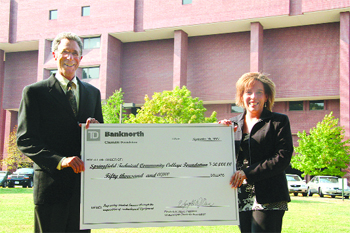
Sections Supplements
From Teen Bashes to Retirement Parties, Jx2 Has a Playlist for Everyone
Andrew Jensen

Andrew Jensen, owner of JX2 Productions, in front of his Westfield offices.

Andrew Jensen serves a diverse and demanding clientele ranging from CEOs to 16-year-olds, and he knows he’d better listen well when it comes to both — they’re equally his most promising demographics.

Owner of Jx2, a production company based in Westfield offering disc jockey, sound, and lighting services for a variety of events, Jensen is one of the region’s most inspiring youg entrepreneurs. He has learned that the only constant in his industry is the ever-growing scale of the events he helps create, spurred largely by more accessible technology and the lofty desires of party planners of all types and ages.

Recently, he’s found that the teen scene is where the action is, but that a solid reputation in the corporate arena can create a strong base for growth in an often unpredictable vocation.

The Jx2 Web site, jx2productions.com, speaks to that range. The welcome page features two boxes; click on one, and it leads to a professional, content-rich site with a professional feel.

Click on the other, and a MySpace profile page for the company appears. It’s not a shortcut, but rather the best way to reach the prom committees, student councils, and teens planning birthday bashes and bar mitzvah celebrations that regularly seek his services.

And as Jensen can attest, the means of finding these audiences may differ, but from there, the lines start to blur — corporate events aren’t just sit-down dinners anymore, and birthday parties have come a long way from pin the tail on the donkey.

It’s a Family Affair

Jensen said he first started noticing that trend in his own family, when he and his brother Eric threw a 25th anniversary party for their parents. They bought much of the equipment they’d need to provide entertainment for the event, in order to stage it themselves, and following the party, guests started asking for repeat performances.

That was in 2001, and since then Jx2, named for the Jensen brothers and now owned by Andrew (Eric still DJs occasionally), has grown to provide a wide array of event entertainment services. His father, Paul, is also now an employee.

The business is primarily a disc jockey service, but in today’s multimedia-driven age, that amounts to much more than spinning records. Jx2 offers event management and organizing, lighting and staging, and audio-visual system setup and operation. The company can provide a master of ceremonies if necessary, as well as ‘audience motivators,’ including dancers, and can provide services and equipment for events ranging from karaoke parties to trade shows.

Jensen said the core of his business is still private formal and semi-formal events, such as weddings, school dances, and jack-and-jill parties, but he added that a number of other offerings that are new to his repertoire are helping Jx2 stand out in a saturated market.

“There’s a lot of heavy competition in the area,” said Jensen. “Some are big, well-known companies, and others are small, one-person operations, but everybody takes a piece of the pie.”

In fact, Jensen once counted 26 DJs doing business in Agawam alone, not far from his offices at Shaker Farms Country Club in Westfield.

One Is a Lonely Number

To thrive in that climate, Jensen has worked to diversify his business model in a number of areas. For one, he has branched out with a new endeavor, partnering with fellow event-services provider Mark Ashe of Marx Entertainment in Enfield, Conn., to form JenMark, which focuses on the management and staging of corporate events. Combining the expertise and equipment of both businesses, JenMark puts the two DJ and entertainment companies squarely in the middle of the event-planning arena, offering a suite of services that includes database procurement to help spread the word about a corporate event, such as a conference or trade show; payment processing for events that require a fee; custom Web site development for the event; facility procurement; food procurement; audio-visual services; and on-site management.

JenMark’s first major event, a trade show catering to the sweet 16, 15, and bar and bat mitzvah crowds, will be staged on Oct. 5, and will serve to promote Ashe and Jensen’s own industry, as well as those of many of their partnering vendors.

It’s a market both entrepreneurs have been actively working to cultivate; a strong presence among the teenage crowd, the corporate crowd, and party-planning families creates a sort of perfect storm, leading to what is currently the juggernaut of the event services world — the Super Sweet 16.

It’s Gonna Be a Party, Party

Sixteenth birthday parties for both boys and girls, as well as bar and bat mitzvahs, have received a rocket-fueled boost in recent years, thanks to the success of MTV’s My Super Sweet Sixteen, a reality show geared toward teenagers and pre-teens.

The show created a national trend by following various would-be 16-year-olds in towns and cities across the country as they plan what they hope will be the party of the year for their classmates.

Gone are the days of birthday cake and potato chips, replaced by elaborate themes (a luau, complete with fire jugglers, for instance, or a jungle with live tigers and pumas), nationally touring musical acts, and, usually, a brand new luxury car to top off the evening. Teens who aren’t featured on the show can still flaunt their own parties by joining an online community sponsored by the show, and uploading bulletins, photos, and videos.

Jensen said the events he’s seen in Western Mass. aren’t usually quite so involved as those featured on television — yet, anyway — but they mirror MTV’s over-the-top celebrations in that everyone wants something unique, and seemingly high-end.

“The kids want it to look like a dance club,” he explained, “with music, lighting, and fun extras. The parents want it to be an upscale event. These parties are moving further and further away from anything that resembles a home or family function; now, people want to turn it into a whole production.”

Jensen is also branching out into area high schools, sending out mailings and meeting with prom committees across the region to provide music, lighting, and other variables for high school formals. Those are some of his most demanding clients, he said; every class wants something different, but each one also wants something big and bombastic, no matter how many bake sales it takes.

Even with such a boom underway, however, Jensen is also expanding his services in other areas, targeting other demographic groups in addition to companies and kids.

All Parties, Great and Small

He continues to zero in on the wedding crowd, offering an extensive suite of services to clients to make their events as seamless as possible, and hopefully to spur referrals. For instance, Jx2 will assist in booking other wedding services via a network of Western Mass. professionals, rather than just point a couple in the right direction.

“It helps with pricing, because I can negotiate with vendors to get more bang for the buck,” said Jensen, “but it also allows me to say ‘yes’ more often when a client asks for something. ‘Yes, I can get a movie screen.’ ‘Yes, I can get a popcorn machine.’ I have the connections, and that helps us expand into other areas.”

But Jensen was quick to note that his business has not been built by tacking on extras, but rather by tailoring his services to the needs of his clients. A blanket approach no longer works in his industry, said Jensen — a huge variety of entertainment choices have created a larger set of demands — and new technology allows for a little bit of spectacle at even the smallest functions.

Jx2 has recently started leasing out equipment, for instance, offering tutorials so clients can save money on a DJ by plugging in an iPod filled with favorite music, or setting up an outdoor movie screen and sound system that only requires the customer pop in a DVD.

That means families and businesses alike can plan memorable events at a much lower cost — movie-night packages start at $299. And if a client would prefer that Jx2 handle everything from soup to nuts, Jensen said he and his staff of three are ready to deliver.

The End of the Night

“We do more than come and play music,” he said, noting, for instance, that he’s drafted a 60-page guide for brides, which covers everything from common wedding-reception traditions to frequently asked questions — not just of him, but of photographers, event planners, and caterers, as well. “We try to go the extra step to help. I’m not doing it to be an event planner, but there’s so much that goes into these events that people appreciate the extra guidance.”

That help might also be increasingly necessary, judging by Jensen’s own notes for a coming event. Too many for a notebook or a software program, Jensen had instead resorted to a classroom-sized whiteboard to record his clients’ wishes and the necessary equipment. “I like to have it all in front of me,” he said.

And with both juniors in high school and senior executives to impress, he might soon need a new, even bigger whiteboard to keep things straight.

Jaclyn Stevenson can be reached at[email protected]
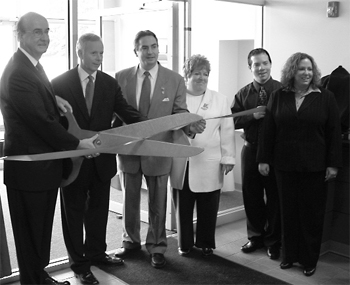
Sections Supplements
From iPods to eBooks, Everyday Life is Getting a Technological Shot in the Arm

The summer of the iPhone is all but behind us, but there is more new technology making headlines these days. Myriad new products, from gadgets to professional software to phones and cameras are coming onto the market.

There are trends — everything keeps getting smaller and more versatile — but the bottom line is an emphasis on communication, organization, and simplifying the everyday tasks involving life and work with some style.

In this issue, BusinessWest offers a sampling of what’s new in technology and what the products hitting the market bring to the table.

Ansering the Call


Left to right, iPod Shuffle, iPod Nano, iPod Classic, and iPod Touch

The sleek, touch-screen iPhone is still making news; on Sept. 9, Apple sold its one millionth unit (after reducing its price by about $200). In response to the many iPhone owners upset with the decision to reduce the price from $599 to $399 two months after its debut, Apple CEO Steve Jobs sent an open letter — directly to the phones, of course — awarding all current iPhone users a $100 store credit toward the purchase of any Apple product.

That’s good news for fans of ‘the people’s company,’ since Apple is following up on the success of the iPhone with the sixth generation of the iPod, and the two devices closely resemble each other.

The iPod Touch was formally introduced to the public this month, and boasts many of the same features as the much anticipated iPhone. It includes a touch screen and Wi-Fi capabilities, a Safari Web browser, and connects directly to YouTube, where users can view millions of free videos. The Touch is available in eight- and 16-gigabyte models, now retailing for $299 and $399, and joins the existing suite of iPods — the Shuffle, Nano, and Classic models;apple.com.

Now Hear This


Aurvana Headphones

Apple may be the big newsmaker in the technology race, but many other companies are in the running, vying for the attention and the loyalty of increasingly in-the-know shoppers.

Another audio giant in the marketplace, Creative Labs, which manufactures the Zen series of mp3 players and accessories, has recently devised high-end, noise-canceling headphones called Aurvana, designed to augment the mp3 listening experience.

The headsets use the latest audio technology, X-Fi, or extreme fidelity, as it’s called, to improve the sound quality of an mp3 file; it does this by restoring the details of a file that are lost during compression. Aurvana headphones also feature three switches to optimize listening experiences for not only music files, but while watching television, movies, or playing games as well. The first is a noise-canceling switch, the second a ‘crystalizer’ that enhances mp3 playback, and the third is a CMSS-3D switch that creates a surround-sound effect.

The headsets are expected to be available later this month, retailing for approximately $300;creative.com.

A Picture and Thousands of Words

Just as CDs and stereos are becoming increasingly passé, paperback books, day planners, and photo albums are also gradually becoming things of the past, replaced by more effective and less expensive digital versions of each.
Photophiles in particular can now take more advantage of the digital photo frame craze than ever before, as frames are being designed with more capabilities, better performance, and more memory.


eStarling 2.0 Wi-Fi Photo Frame

The eStarling 2.0 Wi-Fi Photo Frame, for instance, takes the concept of displaying digital photos to the next level, by adding the ability to connect to the Internet wirelessly.

The seven-inch frame will display photos in a slideshow format, and can accommodate most types of camera memory cards, immediately adding any photos on the card directly into the rotation.

However, JPEG photos can also be sent directly to the eStarling via E-mail or through an RSS photo feed, such as those available through the popular photo-sharing Web site Flickr.

This allows frame owners to have photos E-mailed to them by friends or relatives, send photos to the frame via a laptop or mobile phone from virtually anywhere in the world, and also search for specific photos taken by others and posted on public sites online.

Within the Flickr community, these photos can be added to the eStarling by entering ‘tags,’ or keywords, and having them fed directly to the eStarling. The criteria could be as simple as photos of Hawaii, or as detailed as ‘red 1957 Chevys.’

Despite these new attributes, the frame is relatively simple to use. It requires a one-time setup (connecting the frame to a computer by a USB cord), and eStarling software guides the process of creating a free E-mail address to which photos can be sent. Spam blockers are also provided, and the frames retail for approximately $220;estarling.com.

Also striving to improve the leisure side of life is Sony’s PRS500 Portable Reader System, released this month. The tablet offers a space-saving solution for readers on the go in addition to employing the newest technology to alleviate eye-strain and make digital reading a more comfortable experience overall.

Using E Ink Display technology, the screen mimics the look of a paper book, but text can be magnified up to 200%. It also weighs just under nine ounces and is a half-inch thick, with a memory card slot through which books, photos, and mp3s can be uploaded.

E-books can be found online, often for free, and Sony has instituted its own virtual bookstore, the Sony Connect eBookstore. The PRS500 is currently retailing for about $275, and perhaps signals the beginning of the end for traditional, bound volumes. It’s an intriguing shift, but also one that could significantly reduce the world’s paper consumption;sonystyle.com.

The Technology of Ecology

Other products now being introduced also take the environment and energy conservation into account, in addition to technological quality, in this increasingly hooked-in world.

Dataprobe, a leading manufacturer of technology solutions for networking systems, announced last month that its iBoot product, a remote power solution that monitors, manages, and controls both corporate and personal computing devices and electronics, is now compliant with RoHS (restriction of the use of hazardous substances) and WEEE (Waste of Electrical and Electronic Equipment) standards in Europe.

The RoHS and WEEE directives, respectively, ban the sale and import of electronic equipment containing more than approved levels of lead, cadmium, mercury, and other elements, as well as reduce the exposure of hazardous chemicals within recycled materials.

Manufacturers in the U.S., such as Dataprobe, must meet the requirements of both in order to import their products for sale in the European Union market.

Changes to the iBoot to address the EU’s new guidelines augment its already environmentally friendly function. With a single-outlet power switch, the iBoot allows for power control over various types of equipment from anywhere, using an Internet browser. This, in turn, reduces or eliminates the need for on-site technical support, at a cost of about $275;dataprobe.com.

For those hoping to bring a little bit of alternative energy directly into the home, Tamiya Inc. has created a good starting point: the Loopwing Wind Power Generator Set, which catches a breeze and converts it to electricity.

It’s more of an educational tool than anything else, using the energy it generates to power a small rechargeable toy car, which will run for about one to two minutes for every five to 10 minutes of wind-powered charging;tamiya.com
However, the $50 Loopwing is an example of how green energy is being scaled down for more accessible use by consumers. Another product doing the same has been devised by Italian designers Alberto Medo and Francisco Gomez Paz; the duo has created the Solar Bottle, a portable water-purifying system that uses SODIS technology — Solar Water Disinfection.

Each square, stackable, four-liter bottle has one transparent side to collect UV-A rays, which, coupled with increased temperature from solar sources, effectively kill disease-causing pathogens.

A handle makes for easy carrying, and also serves as a stand while being exposed to sunlight. It’s appropriately sized for both private homes and businesses, as well as for outdoor situations such as camping or boating.

The unique design and concept behind the Solar Bottle, which is still in development, also earned Medo and Gomez Paz a 2007 INDEX Award, and could be positioned as a solution for regions of the world with poor-quality drinking water supplies. For more information on the Solar Bottle, visitinhabitat.com.

From Roomba to RoboCop?

The Solar Bottle may still be in prototype mode, but its creation is part of a larger movement of technological marvels that continue to pour into our lives at break-neck speed. According to PCWorld magazine, some of the future technology that researchers and retailers alike are keeping a close eye on are in the areas of biometric security (handprint, fingerprint, and eye-scan access among them), and artificial intelligence.

True to that trend, iRobot (irobot.com) of Burlington, Mass., the firm that gave us the Roomba robot vacuum, has just debuted a tiny “robot cop,” which carries a camera and an electroshock weapon for use by law enforcement and military personnel.

With those kinds of leaps becoming commonplace, the Jetsons’ automated amenities of ready-made meals and flying cars do not seem quite so far off. Still, it’s to be hoped that a Taser-equipped iPhone is light years away.

Jaclyn Stevenson can be reached at[email protected]

Sections Supplements
Everything You Need to Know about Venture Capital (but Were Afraid to Ask)

As well-known as the term ‘venture capital’ is in the public vernacular, few understand the nature of this high-risk, high-impact form of capital.

To shed some light on this complex capital source, it’s helpful to understand venture capital, first in context of other forms of growth capital, then in terms of requirements of venture-capital funders. What follows is a primer on this important subject.

The Spectrum of Capital

There is a wide spectrum of funds available to small, fast-growing businesses to support their capital needs — from loans and lines of credit to equity (provided by individuals and/or professionally managed funds). Capital sources vary according to their source (government, banks, friends and family, third-party investors) and to the risk associated with the capital. Company stage often defines your source, while risk level impacts pricing. Investors (individuals and funds investing in your company) who take the highest risk (equity investors) expect the highest return; those taking less risk (banks) can afford to charge less for the lower risk.

Venture-capital investors provide capital to fast-growing companies in return for a minority ownership position; these investors take outsized risks (company failure and loss of investment) in return for hopes of outsized returns if the company succeeds. Professional investors manage venture capital by assessing risk, negotiating investment partnerships with entrepreneurs and business owners (exchanging capital for ownership positions and, typically, a seat on the board of directors), and working with company management to optimize success — profitable growth and, ultimately, selling the company — in order to realize returns commensurate with risk taken.

Profile of a Venture-capital Company

Venture investors look for businesses that have potential to grow to a relatively large size, revenue-wise, within a four- to seven-year period. Business characteristics that VCs look for include:

  • Strong gross margins: A business with relatively low gross margins (less than 35%) is a business competing on price or service, both of which are not strong differentiators. Businesses with stronger gross margins suggest an ability to compete on other criteria (product or service quality and/or uniqueness). Higher-gross-margin businesses indicate something special about the business and, more practically, provide the company with more internally generated cash when selling product, thereby enabling the company to self-fund rapid growth to a much greater degree than lower-margin businesses.
  • Scalable business model: Scalability can be viewed through two lenses: product/service model and financial scalability. A scalable product model might be described best as ‘make once, sell many times.’ A software product, or a branded consumer product, offers scalability in this sense. Custom precision machining — where each design is developed uniquely for a given customer — is a model that does not scale as well. Financial scalability relates in part to gross margin (does the business provide meaningful self-funding?) and in part to the ability to find capital sources at different levels of growth. Software, as noted, is a high-gross-margin business (99%) and often is easier to secure subsequent rounds of financing.
  • Barriers to entry/competitive position: Venture-capital investors seek businesses that are difficult for competitors to enter.
    Barriers to entry can be technology-based (intellectual property and/or patents) and/or market based; an established brand with good on-shelf presence is a barrier to competitors — admittedly, less defensible than a technology patent. Generally, a venture investor will seek to invest in companies whose products (if performance-oriented, like technology) have multi-fold performance or cost advantages over competitive products.
    One way to characterize this would be to say that the product would need to perform 10 times better than, or be available at one-tenth the cost of, its nearest competitor.
  • Experienced management: It is often said that the jockey matters more than the horse — i.e., good management trumps good product, though both are preferable. Experience in early-stage ventures is defined in a few ways:
    Domain experience: If you spent years in the food industry and are starting a food business, then your domain experience serves you in your current venture. If you are a biotech person starting a software business, then your domain is relatively useless to your new venture.

Early-stage experience: A senior manager at Microsoft starting a new software company may have tremendous domain experience but lack early-stage experience. Big company resources and experience are substantially different from capital-constrained small-company experience. Small-company professionals tend to do everything in the business (make copies and clean trash as well as develop and market the product). By contrast, a big-company executive might be accustomed to having staff, services, and capital resources that would obviate the need for that individual to do lower-level work that startup executives and small business owners do.

Venture experience: A venture capital-backed startup requires an understanding of the investor’s expectations and role. While venture investors don’t expect or want to run the business themselves, there is a level of involvement and partnership that this investor class expects from founders and senior management in companies in which they invest.

Ability (and willingness) to realize value: If you seek capital from professional money managers, you need to understand that you are signing up to realize and optimize value for investors (and you!) over a certain number of years. Value is maximized for all shareholders by sale or merger with a larger player (often competitor) or through a public offering. If you intend to keep your venture as a family or lifestyle business, then venture capital is not right for you.

Assessing Risk

Venture capitalists evaluate risk in two primary areas — business and stage. Business risk looks at management, market/competition, product, finance, and legal. Failure in a startup is almost always a result of problems in one or more of these areas.

So, venture capital investors research management (reference checks, strength/weakness analysis, completeness of team), market (size, growth of market, trends), product (comparative advantage vs. existing products and services), finance (strong gross margins, capital requirements, availability and likelihood of subsequent financing), and legal (patent protection, liability risk).

The ‘grades’ for each risk area result in a summary business risk level that the investor considers in assessing what return would fairly compensate the investor for the perceived risk.

The second area of risk relates to stage of development. Early-stage ventures carry a much higher probability of failure — borne out by national statistics on small-business failure — than later-stage ventures, meaning companies with established revenue, customers, and profits. Stage risk carries a risk premium that is coupled with business risk to arrive at a picture that the investor uses to figure out what level of ownership is required for a given capital investment.

Entrepreneurs often mistake a venture investor’s need for ownership as a reflection of greed, rather than a dispassionate assessment of the true risk. Early-venture investors typically lose all their capital on a third of their portfolio, break even on a third, and make all the fund’s money on the final third. So, either investors do a poor job picking winners, or their portfolio company heads fail to deliver on the promise they hoped to realize.

Final Thoughts

Venture capital is high-impact capital that can make a meaningful economic development impact in terms of job creation as well as value creation for all stakeholders. That said, the combination of investor expectations for growth and value realization coupled with the relative scarcity of capital (compared to demand) makes it a capital source not for everyone.

That said, if you’ve got the right stuff — management, product, market, etc. — and are game for the ride, venture capital can be an unmatched capital source in its appetite for risk and support for your company’s growth.

Michael Gurau is the managing general partner of Clear Venture Partners, a venture capital fund targeting New England;[email protected]

Sections Supplements
SCORE Volunteers Help Entrepreneurs Get Down to Business
Rick Forgay, Tom Toman, and Richard Lopatka

From left, SCORE volunteer counselors Rick Forgay, Tom Toman, and Richard Lopatka.

There are 45 volunteer counselors currently serving the Western Mass. chapter of SCORE, once (but no longer) officially known as the Service Corps of Retired Executives. Between them, these volunteers have seen just about every issue or problem that can confront a business owner, and by passing on their knowledge and experience they’re helping fledgling entrepreneurs and established business owners clear hurdles in the path to success.

Hendalee Wilson has seen more than a few friends and relatives push the panic button when the ‘check engine’ light comes on in their vehicle.

He told BusinessWest that the indicator, while helpful in that it alerts the motorist that something is wrong, can also bring on some serious anxiety, and unwarranted expense, because there are myriad reasons why the light comes on — many of them serious in nature, but some that are anything but.

He found this out through personal experience; he wound up paying more than $175 for a diagnostic test that revealed he needed to replace a $15 solenoid, or relay, something he probably could have done himself.

Sensing an entrepreneurial opportunity, Wilson, a recent graduate of Western New England College and now a senior technical programmer, analyst, and project leader in the school’s Office of Information Technology, has created something called the ‘CellAssist.’ In simple terms, this device communicates with a vehicle’s on-board computer, views the internal sensor readings, and displays the diagnosis through a simple interface on almost any standard cell phone.

The data extracted from the vehicle can then be transmitted over the Internet to a worldwide system that is viewable by mechanics, repair shops, towing companies, and car manufacturers that can provide assistance as necessary, he continued, adding that his product can let people know quickly, efficiently, and cheaply just what they’re up against — which is all anyone who sees that light go on wants to know.

“A cell phone is a piece of processing power that we all carry, and I thought to myself, ‘we can harness that processing power to create a wireless diagnostic tool,’” said Wilson, who has a patent pending on his invention, but acknowledged that his business venture is still very much in the conceptual stage. And for help in shaping that concept and deciding if and how to bring his product to market, he has leaned heavily on the local chapter (#228) of SCORE, an agency formerly known as the Service Corps of Retired Executives, which now goes largely by its acronym and the marketing line ‘Counselors to America’s Small Business.’

That’s because many of those providing such counsel are in fact not retired, said Tom Toman, former chief information officer with Stanhome, current president of the local chapter, and one of those advising Wilson on the many aspects of making his vision reality.

Like other volunteers we spoke with, he talked of how rewarding it is to be of assistance to people who have ideas and energy but often lack critical knowledge and experience. “It’s been an intriguing time with SCORE … it’s a great feeling when you can bring something to the table and help people through issues. These people often have a lot of the answers, but they don’t know how to bring it all together. That’s where we come in.”

There are hundreds of area business owners who have sought help from SCORE Chapter 228 and its 45 counselors. Assistance comes in a number of forms, said Rick Forgay, one of those not-yet-retired counselors who left a career in the newspaper business — his last stop was as circulation manager for the Republican — to start his own business, the Rick Forgay Leadership Institute. In fact, he was a client of the local SCORE chapter, and was so impressed with the organization and its volunteers that he became one himself.

He said SCORE volunteers provide everything from help with writing a business plan to the hard but necessary questions about whether the individual sitting across the table has what it takes to be an entrepreneur.

“One of our favorite questions is ‘is this a business or a hobby?’” he explained. “And I look for the passion level; do they have what it takes to weather the storm and stick to their guns when they’re under fire? We grill them very hard at the outset on things they may not have thought about, and sometimes we can save them considerable time, money, and pain.”

In this issue, BusinessWest takes an in-depth look at SCORE and how local counselors are helping would-be entrepreneurs and established business owners make smart decisions and avoid what can be very costly mistakes.

Checking Under the Hood

“They took it from something kind of laughable to something much more realistic.”

That’s how Wilson chose to describe how Toman and other counselors at SCORE helped transform his business plan for the CellAssist, which remains very much a work in progress.

“They brought up a lot of concerns; through their experience in business they had a lot of insight into points that potential investors would raise about the product,” he explained, adding that he first sought help roughly a year ago, or two years after he first starting conceiving his product. “They introduced me to a lot of people who have helped me understand the process of obtaining capital, which is the next critical step for me.”

The local SCORE chapter, headquartered in Springfield, has been imparting such knowledge and advice for 40 years now, and through a number of different vehicles, said Richard Lopatka, a retired United Technologies executive who has been a volunteer counselor since 1999.

He told BusinessWest that while business owners face common challenges, their ventures — and their routes to achieving success — are like snowflakes; none are identical. And because of this, the rich diversity of the SCORE volunteer base is an asset for clients, and the region as a whole.

“The journey we take with the client is very much focused on what their needs are,” said Lopatka. “We go on down the path that the client and his and her issues dictate that we take.”

In addition to direct counseling services, SCORE also hosts a number of workshops and courses, as well as an annual Women Business Owners Roundtable. Two of the workshops — ‘How to Write a Business Plan and Cash Flow’ and ‘How to Really Start Your Own Business’ — are staged monthly, while others are conducted once or a few times a year. The titles reveal the full depth and breadth of business subject matter the agency addresses. They include:

• ‘Planning Your Business Web Site’;
• ‘Building and Activating an Effective Marketing Plan’;
• ‘Increase Productivity, Growing Your Bottom Line’;
• ‘Tips on Commercializing Your Innovation’;
• ‘The ABCs of Strategic Planning’;
• ‘How to Gather and Implement Market Research’; and
• ‘How to Start and Operate a Non-profit.’

In fiscal year 2006, the 45 volunteers, including 13 women, contributed more than 5,000 hours of counseling. Overall, there were 1,500 “client services,” a 12% increase over FY ’05; 35 workshops, a 30% jump over the prior year; and a total of 412 clients attending those workshops, an 18% increase. And the projected numbers for FY ’07 show continued growth.

Meanwhile, there has been growth in facilities. The chapter continues to serve the area from Worcester to the New York border, but in recent years it has added offices in Greenfield, Agawam, and Pittsfield.

Counselors serving Western Mass. follow a formal five-step process, said Toman, adding that step one is “establishing rapport.” From there, volunteers move on to conducting a needs assessment; identifying business goals, challenges, and opportunities; preparing and implementing a plan; and finally, obtaining feedback and “setting a roadmap for mentoring.”

Overall, though, services are provided on a needs basis, with the broad goal of making entrepreneurs aware of the steps they need to take, and then helping them successfully take those steps.

“Rather than give them the whole bottle of pills to take, we’ll give them one or two pills at a time,” said Forgay. “We always encourage them to take a specific next step with their business, and then we encourage the accountability — coming back once that step’s been accomplished and going forward; it’s the accountability that they don’t get when they’re out there on their own.”

Referrals to the agency come from area banks — often after submittal of an incomplete or unrealistic business plan — and also area chambers and other economic development-related agencies, said Lopatka. Counselors are assigned usually at random, but sometimes on the basis of a specific knowledge base, such as marketing, creative design, and others.

Counselors work with clients for varying lengths of time, and often intermittently, with business owners returning when different issues or obstacles arise. In many cases, counselors become long-time mentors.

Bean Entrepreneurial

For Kristin Rigg and Samantha Sherman, help from SCORE was sought early and often with regard to a venture they’re now close to getting off the ground. It’s called Tekoa Mountain Coffee Roasters, so named because the two Westfield residents are frequent hikers on that summit, which straddles the Whip City, Russell, and Montgomery, and is known for its rattlesnakes.

“We haven’t seen any yet, but we’ve heard the stories and know someone who was bitten, so we’re real careful,” said Rigg, noting that the snakes, or the tales about them, are so legendary that she and Sherman have named one of their blends ‘Rattlesnake Roast.’ “It has a little more of a bite,” she said, without a hint of remorse in her voice.

Coming up with product names — ‘Tekoa Sunrise’ (“it’s a happy, morning coffee”) and ‘Mountain Zen’ are among the others — has been one of the few relatively easy assignments with getting this business going, said Rigg, an analytical chemist by trade who said most aspects of business were not only foreign to her, but ran counter to the way she was taught to think.

“The roasting and baking and figuring out numbers I was great with, but understanding business projections and just the entire paradigm of business is actually completely the opposite of science,” she explained. “In science, you take all the data and make a hypothesis; in business, you put out a projection and hope your data backs it up.”

SCORE has helped her learn a new way of thinking, she said, adding that this story started in 2004 when she and Sherman were working for a startup coffee shop in Hartford, one that was roasting its own blends. “We kept saying to ourselves, ‘if this were our shop we’d be doing things so much differently,’” she recalled, adding that before too long the two were talking more than hypotheticals, thanks to some chance developments.

Sherman took a job as catering manager with the food service handling Springfield Technical Community College and, upon handling some assignments in the Andrew M. Scibelli Enterprise Center on the school’s campus (where the SCORE office is located), started talking with some of the entrepreneurs doing business there. During one visit, she stopped into the SCORE facility and left with a brochure for one of its programs: ‘How to Really Start Your Own Business.’

The two attended that session and several others in the months to follow, including a program on business plan writing, and while doing so, began to solidify their own plans for a coffee-roasting venture. Over the past few years, they have assembled equipment, including several roasters, conducted market research and contrived specific blends, staged tastings (including one for SCORE counselors), and started to build a customer base. The next step is to find a location in Westfield, preferably close to the state college there, and launch their shop. SCORE has been providing help at every turn because Rigg, in particular, has been relentless in pursuit of it.

Indeed, when asked which counselors she had worked with, Rigg said, “all of them, I think.

“I just kept going back and asking more questions,” she said. “They’d answer them, I’d say, ‘OK, I need to think about these,’ and I’d make another appointment and ask more questions.

“They all have different backgrounds, so I can get help with just about anything,” she continued, referring to the counselors she’s worked with.

“Like health insurance … all I knew about it was going to the HR department and asking for it. I needed to know how to go about it as a business owner, and there was someone to help me.”

Getting the Idea

While Tekoa Mountain Roasters is not yet a success story, Lopatka, one of the many counselors to work with that client, is confident it will become one. Meanwhile, there are many successes already in the portfolio. He listed several instances where assistance from SCORE helped business owners avoid bankruptcy or shutting down their ventures.

But there would probably be many more such stories if business owners would seek SCORE’s help before a problem reached a critical level.

“Some people come to us too late, when they’ve already hit the wall,” Lopatka continued, noting instances when individuals seek help at times of severe financial hardship or other problems that threaten their existence. “I’ve heard many people say, ‘I wish I’d come here six months or a year ago.’”

To help prevent more of these episodes, those with the local SCORE chapter are working to make their agency and its services more visible to those in the business community or looking to enter it. Steps in this direction include a revamped Web site — www.scorewesternmass.org — that highlights the many programs and services offered, as well as new or expanded partnerships with area chambers and other business groups.

The obvious goals, said Toman, are to make more budding entrepreneurs and established business owners aware of SCORE and the many ways it can provide assistance, and to prompt such individuals to make contact before it’s too late.

Elaborating, he said ‘too late’ refers to both established businesses that are in trouble from which they can’t extricate themselves, and entrepreneurs who should have done a little more homework and sought out some practical advice before going out on their own.

“We don’t discourage anyone from going into business, but we’ll open their eyes,” he said. “We’ll ask the key questions; ‘you want to sell a T-shirt for $50, but do you have a market for that?’ Often, it’s the first time people really hear things like that. They have the idea, they have the excitement, and they have the drive, but they haven’t really thought about the financial aspects of making this a successful business.

“We’re an economic development agency,” he concluded. “We’re here to help businesses stay in business and, in the process, improve the economic health of Western Mass.”

Entrepreneurial Horsepower

As he talked about CellAssist, Wilson referenced journalistic exposés that have uncovered some exploitation of consumers on the part of some service providers handling the dreaded ‘check-engine’ light and whatever’s causing it to go on.

He said his product enables motorists to go to a garage or dealership “armed with some knowledge, something that will enable you to have an intelligent dialogue with the mechanic.”

In that respect, his invention is a lot like SCORE, which enables business owners and budding entrepreneurs to be similarly armed as they tackle the many, seemingly endless challenges to finding success in business.

And there is another similarity. They both go to work when the light comes on.

George O’Brien can be reached at[email protected]
Sections Supplements
Universal Mind Makes Inc. Magazine’s 500 Fastest Growing List
Todd Cieplinski

Todd Cieplinski, CEO of Universal Mind, a software consultancy firm based in Westfield, holds his award from Inc. magazine, which named his company one of the 500 fastest growing in the U.S.

Just five years in existence, the software company Universal Mind, based in Westfield, has recorded a staggering 871% growth rate over the past three years and expects to quadruple its staff by the close of 2008. The company is a testament to the versatility afforded by the Internet — while CEO Todd Cieplinski manages the firm from Western Mass., his employees are spread around the world — but it also proves that, at least in the case of the World Wide Web, change is good. Especially for UM.

“I was doing time in the universal mind, I was feeling fine. I was turning keys, I was setting people free — I was doing all right.”

The lyrics of The Doors’ tune Universal Mind may have meant one thing to Jim Morrison when he wrote them, but they’ve come to mean something very different for Todd Cieplinski, who borrowed the title of the song for his Web-based application design and consultancy firm.

He and his business partners are indeed feeling fine; they’ve just seen their five-year-old company named to Inc. magazine’s list of the 500 Fastest Growing Private Companies in America, coming in at 290 (and number 31 among ‘IT Service’ companies) with $3.5 million in revenue for 2006 — up from about $362,000 in 2003.

They’ve done so by turning keys — unlocking the potential of existing applications in a vastly improving virtual landscape.

The firm is also an example of the changing face of business as it relates to the World Wide Web. With communication virtually instantaneous regardless of where an employee’s desk is located, Universal Mind (UM) isn’t located in a high-rise in a primary market. Instead, it employs software technology experts from around the world, using downtown Westfield as its central location while UM’s president, Brett Cortese, and Tom Link, chief technology officer, work from their home base of Golden, Colo.

Cieplinski made the move to Westfield’s Westwood office building this year, in order to return to his roots — he’s a Springfield native, and said he came back for the quality of life and to raise his children “as he had been raised.”

Subsequently, the overhead’s low, but the productivity is high: in March 2007, Universal Mind had four employees; the ranks have since grown to 12 to keep up with demand, and by the end of the year, Cieplinski expects that number to double, and to double again by the end of 2008.

This Internet Fad

Cieplinski said the company originated from a passion for technology, and has been bolstered by a number of trends in the marketplace — among them, a saturation of Web-based technologies within large companies’ sales, marketing, and overall business plans, in both internal and customer-oriented systems.

He said his career path thus far has been guided by such changes in technology; steered by educators toward engineering at an early age after showing promise in related fields, Cieplinski attended Rensselaer Polytechnic Institute in Troy, N.Y., and identified a niche for himself in the college’s business program, which is coupled with RPI’s strong technology curriculum.

That led Cieplinski to enter the sales field after college, first in the veterinary supply industry in Maryland, and later for a database information outfit in Connecticut. By the mid-’90s, Cieplinski, like many others, had begun to realize that the Internet was evolving at break-neck speed, and identified it as a potential next step in his career.

“My boss at the time didn’t see it that way,” he said. “He was a bit of an old hat, and thought the Internet was a fad.”

Ignoring the caution, Cieplinski moved to Boston, joking that if he wanted to work in financial services, which he didn’t, or software, which he did, that was the place to be.

He eventually entered into a consultancy project with software company Allair in Cambridge, where he met Link and Cortese. Allair was bought out by Macromedia (it’s now owned by Adobe), but not before the dot-com bust of the late 1990s and early 2000s.

The trio found themselves looking for work with résumés that detailed skills still seen as niche today, and were, as Cieplinski puts it, “niches within niches within niches” at the time.

Still, their core knowledge of Macromedia programs, one of the largest Internet-based companies in the world, created an opportunity.

In 2002, a year that Cieplinski admits was not the best to launch a professional consultancy firm, Universal Mind was born, borrowing its name from a song penned in 1970.

Because of the strong relationships Cieplinski, Link, and Cortese had forged with Macromedia, work was relatively steady, but began to blossom especially in 2005, following Adobe’s acquisition of Macromedia in a stock swap valued at $3.4 billion.

Flash Forward

Now serving as an ‘Adobe Solution Partner,’ UM continues to work with a very specific suite of technologies to assist clients in creating, managing, updating, and troubleshooting a wide variety of Adobe/Macromedia Web applications. While there are other Adobe partner companies across the country, few specialize in the same type of work.

The most recognizable of these applications, perhaps, is Adobe Flash, which is used to create visual content for Web sites, games and movies, and content for mobile phones and other devices. Others include Flex, Acrobat Connect, ColdFusion, and JRun.

Typically, said Cieplinski, these are tools that the average Internet-user doesn’t see work, but uses frequently. A good example is a product order form; new applications are making the process of entering personal information and purchase specifications quicker and easier, doing more on the back end, and requiring fewer jumps through hoops for the consumer.

“We help large corporations with pre-existing applications, to help them manage them more efficiently,” he said. “Adobe produces these products, and we customize the software and tailor it to fit customer’s needs.”

It’s an important and ongoing task, especially in the current climate on the Internet, which is characterized by strong winds of change.

“Contrary to what some might think, the Internet is not mature,” said Cieplinski. “Instead, it’s in the midst of a rapid growth pattern. Most Web sites today will only be good as is for one or two years. Three, you’re really pushing it.”

The changing face of the virtual world is referred to in the industry as ‘Web 2.0,’ meaning the next generation of the phenomenon, in which applications increasingly behave more intuitively, and produce returns more quickly.

That, in turn, means there’s likely to be no shortage of work for the also rapidly expanding team at UM.

“The only limitation now is peoples’ imaginations,” said Cieplinski. “We are differentiating, enhancing, and streamlining both front- and back-end applications.”

Caps and Cops

To do so, Cieplinski explained, UM employs a staggering amount of diverse services, which are forever changing as well, and divided into five core competencies.

These are code/architecture review, an examination of an application’s design and implementation in regard to its intended purpose, and used for applications still in development; troubleshooting for applications currently in use; mentoring, which combines hands-on training, formal classroom teaching, and informal interaction with UM consultants; development, or design and coding of an application to meet a business objective, and performance review, a series of stress-testing applications to judge performance under real-world conditions.

In these capacities, UM has worked with such clients as AOL/Time Warner, Mapquest, Pfizer, eDiets.com, Brigham and Women’s Hospital, and Ben and Jerry’s, and the case studies are intriguing.

One client, New Era Cap, the largest sports-licensed headwear company in the world, needed a better way to conduct employee reviews. Its employee base, like UM’s, is widely dispersed, and collecting and analyzing data was both inefficient and time-consuming.

UM assisted New Era in the development of an ‘Employee Scorecard,’ which, by using Flex and ColdFusion technologies, reduced the employee-review process from hours to minutes.

Additionally, the firm’s work with the San Francisco Police Department was noted as part of its inclusion on Inc.’s 500 list. This is an ongoing project, Cieplinski explained. He and his team are creating an interface for squad cars that facilitates quicker decisions, by allowing dispatchers to identify not only the squad car nearest a crime scene, but also the car with the best -trained and equipped officers.

The Time to Hesitate is Through

He said it’s an exciting time to be doing what he does, especially given the fact that some of the applications the company is now working to enhance have yet to be used by the general public.

“Some of what we’re working on is coming, but most people haven’t thought about it yet,” he said, adding that this brisk pace is also boding well for further expansion plans at Universal Mind.

At this rate, Cieplinski said he expects to be mentioned as an ‘Inc. 500 Alumni’ as part of next year’s list, which also tracks past winners and their performance.

“We’re very excited about the growth opportunities in front of us,” he said. “We’re exploring opening new offices in the U.S. and in Europe and Asia, and we’re of course adding new employees. Since we work largely in a virtual workplace, there’s no limitation to our growth.”

Indeed, they’re doing all right.

Jaclyn Stevenson can be reached at[email protected]
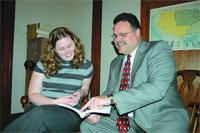
Sections Supplements
Groups Collaborate to Put More Machinists in the Pipeline
Gary Masciadrelli and Mark DiLorenzo

Gary Masciadrelli, left, and Mark DiLorenzo, say the new initiatives involving Springfield Technical Community College will put more machinists in the pipeline.

Mark DiLorenzo calls it a “perfect storm.”

By that, he was referring to a number of factors that have converged to create, by his estimate, 400 openings at machine shops across the region that cannot be filled.

One of those factors is the aging of the current workforce and an historically high number of retirements, said DiLorenzo, president of Tell Tool Inc. in Westfield, a shop that is among those that can’t fill openings and has turned aside work, and thus revenue, as a result. Another is the large volume of work coming to shops like his, a phenomenon fueled by a spike in orders to airplane manufacturers like Boeing and Airbus, as well as instability in several corners of the world that has spawned a steady stream of defense work.

There are other issues, too. Large manufacturers, including Hamilton Standard and Pratt & Whitney, that once had comprehensive apprenticeship programs that created a steady of flow of machinists have halted those initiatives or scaled them back. Meanwhile, the machining business still suffers from a public relations problem, stemming from lingering perceptions of dark, noisy, sometimes dangerous shops and hard memories of plants shutting down, impacting people, families, and entire communities.

All that and more has whipped up the storm system currently settled over this sector, said DeLorenzo, and there is certainly no magic bullet that will quickly clear the skies. There are, however, many small steps that could add up to something big — steps like the memorandum of understanding recently inked by Springfield Technical Community College, the Regional Employment Board of Hampden County (REB), and the Western Mass. chapter of the National Tooling and Machining Assoc. (WMNTMA).

The partnership culminates months of discussions between the three parties about the dilemma facing machine shops and ways to mitigate it, and is manifested in several new initiatives involving the college and NTMA members. They include:

  • A new one-year certificate program in mechanical engineering technology called CNC Operations and Control, which will include a two-credit internship program to be conducted in conjunction with selected NTMA members;
  • A similar internship program to be incorporated into the college’s associate’s degree program in Mechanical Engineering Technology; and
  • The re-offering of a course first offered in January of this year called ‘Metrology and Geometric Dimensioning and Tolerancing’ (the science of measuring), which is designed for incumbent machinists and will likely be attended by 20 or more individuals.

These changes and additions, identified as industry-wide needs during a series of discussions between those at the college, REB, and WMNTMA, are designed to draw more people into the field and improve the skill sets of those already in it. These are the primary goals of a program called Regional Networks, or RENEW, said David Cruise, who is spearheading that effort.

He told BusinessWest that RENEW, funded largely by the John Adams Innovation Institute, is a multi-faceted effort to essentially increase capacity with regard to machinists — meaning everything from the number of them to the facilities used to train them.

The memorandum of understanding is just one cog in that effort, he said, but one with vast potential to generate momentum in what is now a global fight to produce more talented labor.

Lathe of the Land

When asked to calculate how much business is not coming to Western Mass. machine shops because of vacancies that can’t be filled, DiLorenzo and others gathered at a press conference to announce the partnership said there can be only intelligent guesses as to what that number would be.

At shops that handle high-end precision work, each machinist can account for anywhere from $100,000 to $300,000 in annual revenues, said shop owners, meaning that the current labor shortage is costing the region perhaps $80 million or more each year. At Tell Tool, the number is at least $1 million, which DiLorenzo would obviously like on his books instead of someone else’s.

He’s had to turn down business on several occasions — because of shortages across the board, meaning machinists, process engineers, programmers, quality assurance people, inspectors … “in every facet of the company” — and he’s getting frustrated by that pattern.

Which is why he’s enthusiastic about the partnership, which is another in a series of initiatives designed to spark interest in the precision manufacturing sector, which knows that its future health and well-being rests with its ability to get young people interested in the field — and then get them trained.

The new initiatives involving the college, WMNTMA, and REB are designed to help do just that, said Gary Masciadrelli, chair of the college’s Department of Mechanical Engineering Technology. He told BusinessWest that the new certificate program may help steer more recent high school graduates and also some of those not happy with their employment status and prospects to look at precision engineering. The internship program, meanwhile, will expose individuals to area companies and the job opportunities available at them.

“It is hard to get kids interested in this field for some reason; we have more jobs than we have people to fill them, which means that we have to somehow change perceptions about this sector,” he said, adding that one way to do that is to get more people exposed to it.

Once they get this exposure, the goal is to guide individuals through the process required to make them a qualified machinist. And Masciadrelli believes the internship program will play a key role in achieving that end.

“We’re hoping that after one semester, we’re going to be able to introduce some of these students to area companies, have them interview at these places, and then possibly be taken on as an intern,” he said. “These shops can fill in some of the areas that we can’t get to, and create different learning experiences.”

Overall, the academic program and internship component will serve as a form of apprenticeship, but one where the teaching process is shared by the college and a specific machine shop — a model that holds some intriguing possibilities. “We think this will be a great partnership.”

DiLorenzo agreed, telling BusinessWest that the new course offerings and internships could help offset the loss of apprenticeship programs that existed in years past, and create another conduit, as he called it, for skilled machinists, complementing area vocational high schools.

“We’re not going to close that gap of 400 people through a few new courses at STCC,” he explained. “But it is going to alleviate some of the strain, and it’s just one of many avenues that NTMA is working with REB on to fill the void.”

Those in attendance to announce the memorandum of understanding spoke with one voice about how the shortage of machinists is not a local, regional, or even a national problem.

“It’s international,” said William Ward, executive director of the REB, who referenced a recent published report indicating that shops in Europe are facing the same storm system as their American counterparts, meaning they are severely challenged to find adequate supplies of machinists.

“Whoever solves the problem will take control of the global economy in that field,” he said, laying in simple yet powerful terms exactly what’s at stake here.

He called the memorandum of understanding a “co-investment” among the three parties in what will be a comprehensive effort to find a solution locally. “This memorandum has some built-in accountability,” he said, “and because it does, we can build a better pipeline of machinists.”

The Die Is Cast

DiLorenzo told BusinessWest that, like any business owner in any sector, he simply hates to say ‘no’ to a customer trying to offer him business.

“That’s because if you do, they will go somewhere else and you’ll probably never get another chance.”

There are dozens of machine shop owners and managers in this region with an equal disdain for ‘no’ who are nonetheless forced to say it. But there is hope that through initiatives like the partnership between the college, REB, and WMNTMA, maybe someday soon they won’t have to.

George O’Brien can be reached at[email protected]
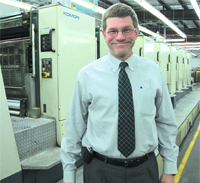
Sections Supplements
Unique Consulting Strategy Gives Business Owners Some Working Knowledge
Harry Gilligan and Roy Smalley

Harry Gilligan, left, and Roy Smalley say their breakthrough executive boards have helped small business owners cope with a wide array of issues impacting the bottom line.

Harry Gilligan doesn’t like the word roundtable, and doesn’t want to see it used to describe a unique concept he’s created with business partner Ray Smalley called the “breakthrough executive board.” Comprised of eight business owners and managers recruited by the two consultants, the executive boards provide a forum for not merely sharing war stories and discussing common issues — but for providing the kind of support and accountability needed to take a company to the next level.

Bill Grinnell says it’s a little like group therapy for business owners.

That was his colorful description for something called the “Breakthrough Executive Board,” the creation of two area business consultants, Harry Gilligan and Ray Smalley, who decided to partner in a somewhat unique business venture two years ago. The executive board is a value-added product, one of many provided by Springfield-based Breakthrough Business Advisors, said Gilligan, and thoughtfully designed to give business owners who don’t have boards of directors a forum in which they discuss common problems and issues and simply bounce ideas off the wall.

During one of the monthly sessions, Grinnell, principal and co-founder of the Webber & Grinnell Insurance Agency in Northampton, sought out some advice on marketing, specifically ways to make his agency stand out among many businesses delivering mostly similar messages and products. “No one had any magic pills,” said Grinnell, “but there was a lot of good feedback — people gave me some things to think about.”

That’s just one of the primary goals of the executive boards, which have been in session for roughly two years now, said Smalley, who added quickly that food for thought is just part of the equation. Results are the real goal of this program, which puts up to eight owners or managers of small to mid-sized business owners in a room for four hours each month.

And they’re achieved because the panels act just as a board of directors would, with respect to follow-up and accountability, said Smalley, adding that they go far beyond the typical business roundtable.

“Everyone learns from one another,” he said, noting that subject matter ranges from compensation policies to valuing a specific business to succession planning. “We’ve structured this process so that members can think things through, and determine where they want to take their business and how to get there.”

Members for the boards are recruited, said Gilligan, from groups attending monthly half-day briefings on business-related topics sponsored by TD Banknorth and staged in the auditorium in its downtown Springfield headquarters. Those invited to join are told to bring with them a commitment to get to that proverbial next level, a willingness to listen to others and share ideas, and, perhaps most importantly, an open mind.

In this issue, BusinessWest looks at how these boards, and the environment they create, have helped Gilligan and Smalley grow their venture, while providing many different kinds of value to all those gathered around the table.

Meeting of the Minds

Andy Myers knows his software.

Well, he knows his broadcast industry software. He started and grew a venture called Myers Information Systems, now based in Northampton, that produces ProTrack, versions of which are used by used by television and radio stations for traffic, program scheduling, content management, and sales.

What Myers didn’t know, and what he asked those gathered at an executive board meeting several months ago, was what software package would help him more effectively manage his own business. He got some good feedback from those in attendance, commissioned Smalley to do hard research and make a recommendation, and today is the proud owner of a program that he says is helping his operation run more smoothly and cost-effectively.

There are many similar stories about how the executive board sessions, facilitated by Gilligan and Smalley and often followed up with direct consulting services from them, have been able to help business owners and managers move their ventures forward and avoid costly mistakes by providing a forum conducive to sharing common problems and crafting solutions.

How the boards came into existence is a story of imagination and forward thinking on the part of two consultants who took two completely paths to arrive at the same place.

Smalley took what would be considered a fairly conventional route to a second career as a business consultant. He worked as a general manager for several different technology-related businesses in the Toronto area, experienced a falling out at his last stop, took some time off, handled a few consulting assignments, and then decided he liked working for himself and would make consulting a full-time venture.

As for Gilligan, well, his was certainly the road less traveled.

After earning bachelor’s and master’s degrees in Communications, he went into sports broadcasting and later sales in the Midwest. He went on to work in college sports as an assistant athletic director, before coming to Springfield in 1985 to start a women’s professional basketball team.

His Springfield Fame — and the U.S. Basketball League of which it was a part — failed to capture the imagination of fans over its first two seasons and then folded. Gilligan decided to stay in the Pioneer Valley and, eventually, started day seminars and training programs on such subjects as communications, time management, and stress reduction. He eventually went into more formal business consulting work and crossed paths with Smalley, who had relocated to the Pioneer Valley, in early 2005.

The two identified a niche within the local market — specifically a need for consulting services to help small-business owners do what they do better — and eventually teamed up to create Breakthrough Business Advisers. That’s a name chosen to highlight what the two partners believe they can help business owners do — break through to the next level of success and profitability.

While this service/promise is certainly not unique among business consultants, whose ranks are growing as Baby Boomers reach retirement age, one of their methods for trying to deliver it — the executive board — would be worthy of that adjective.

Talking the Talk

A “safe haven” is how Gilligan chose to describe the boards. Elaborating, he said, they offer a comfortable place for business owners and executives to discuss problems and issues among peers.

Such a comfort zone generally doesn’t exist in the workplace itself, he said, noting that managers usually feel uncomfortable talking with people within their own organizations about their concerns, goals, and ambitions, and there are few networking or business groups that can offer the same combination of privacy, business know-how, and climate for problem-solving.

“Most business owners don’t have someone to report to,” said Gilligan, noting, again, that many ventures are too small to have a formal board of directors. “This structure provides that someone.”

A look at the current list of executive board members reveals a high level of diversity, said Smalley, noting that there is a mix of manufacturers, service companies, and even a technology venture — Myers’. Meanwhile, membership, while stable, also changes over the course of time as some business owners move on, usually after a year or more of participation, and others join.

This diversity and state of flux are just two of the benefits the boards bring to the table, he said, also listing camaraderie, the ability to share best practices, and that aforementioned level of accountability that is, or should be, part and parcel to an actual board of directors.

Grinnell, who spent more than a year on an executive board before yielding his seat, recalls discussions and problem-solving efforts on topics ranging from finances to handling problem employees; from marketing to long-range planning.

“There were a lot of discussions on financial reporting, which were eye-opening for many of the members,” he said. “There was also a lot of talk about personality fits, and employees giving owners and managers a hard time. We’d try to get to the root of why there were problems and then develop strategies to solve those problems.”

Sessions are broken down into several different components. Each one starts with a quick review of topics to be discussed that day, and move on to something called the ‘hot topic,’ chosen to help members benefit from a strategic review of their company.

Each meeting also features a ‘spotlight company,’ a member who gives a detailed presentation about an issue or opportunity facing their business. Afterward, members provide feedback and advice from their own experience. There is then a lengthy ‘sounding board,’ during which members have the opportunity to put issues on the table and get immediate feedback from others in attendance.

Myers has been a board member for nearly two years now. He says he’s part of what he called the “second wave” of participants, and noted that a third is gradually assuming more of the seats in the room. Like Grinnell, he said it’s helpful to hear from others who are in the same boat and realize that he is not alone in facing what are often stern challenges to continued growth.

“It’s been a very interesting process,” he said. “We act essentially as each other’s board members. We discuss what our goals are and, more importantly, how we’ve made progress toward meeting those goals from session to session.”

Indeed, while issues are discussed, the board meetings are goal-oriented, he continued, with issues brought up and debated in the context of how they impact efforts to meet or exceed stated goals.

In Closing …

Smalley told BusinessWest that, for many small business owners, the word consultant might as well have four letters in it.

That’s because they’ve had a bad experience with one or more, meaning, usually, that they didn’t get what they would consider full value for the money spent, and didn’t get a specific problem or issue resolved.

The executive board was created to provide an additional option, or that value-added that is often missing from the equation.

The sessions have certainly helped Smalley and Gilligan grow their business, but they have also helped members in a number of different ways by opening their minds to ideas and ways of doing business — and then, for lack of a better term, helping them to ‘get better.’

And that’s really what group therapy is all about.

George O’Brien can be reached at[email protected]

Opinion
The Drive Toward Fuel Economy

Over the past two decades, the automotive industry has been ablaze with innovation — from cars that park themselves to cars that ‘clean up’ after themselves. Literally, the automobile has grown smarter as technology has enabled manufacturers to rethink their old ways. Unfortunately, the foresight ends there.

Recently, two bills designed to increase fuel economy standards in the U.S. were introduced in the House of Representatives and promptly shot down. With them, the hope that industry standards would finally catch up with innovations in the field diminished as well. Indeed, Congress has dragged its feet for far too long in forcing automakers to improve fuel economy.

Unfortunately, this latest retreat in Congress is not the first time proposed changes — changes so minor they were not nearly enough to begin with — have hinted at improvement, only to fade rapidly. In his State of the Union speech in January, President Bush suggested a 4% annual increase in the fuel efficiency of cars and light trucks by 2017. His words did little to catalyze any concrete change. Later, a proposal to increase fuel economy standards by 4% annually from 2020 to 2031 died an early death in the House. In short, the U.S. is no better off today than it was 20 years ago as far as fuel efficiency is concerned.

Compare the U.S. to similar economies: European fleets already average 43 miles per gallon, and Japanese fleets are reaching 50 miles per gallon. While there are only two car models in the U.S. that achieve greater than 40 miles per gallon (both hybrid vehicles), there are more than 113 such vehicles in Europe.

The most astounding fact is that many of the European high-fuel-economy vehicles are produced by U.S. carmakers. How can the government let manufacturers continue to convince the nation that a fuel economy of more than 35 miles per gallon is difficult to achieve? Any rational person should not be willing to accept these manufacturers’ excuses.

If existing technology for vehicles with higher fuel economy has succeeded in Europe and parts of Asia in terms of both safety and commercial profit, why not implement policies to make similar vehicles more accessible in the U.S.? The success of the Toyota Prius and other hybrids across the U.S. shows that there is verifiable demand for more fuel-efficient cars.

Equally important is the fact that hybrid technology is not the only way to reach higher fuel economy; nearly 50% of the cars sold in Europe are clean diesel. Such models not only provide a much higher fuel economy than gasoline models, but also run faster and more efficiently and last longer.

A closer look at the diesel industry shows that innovations such as the nationwide availability of low-sulfur diesel and the commercial success of diesel particulate filters (which remove more than 99% of pollutants from diesel exhaust) have made clean diesels cleaner than other vehicles on the road. They also provide nearly 20% to 30% better fuel efficiency than gasoline engines, and low CO2 emissions.

Clearly, the barrier to improving U.S. fuel economy is not technological; the real obstacle is lack of political will. Automakers are demonstrating a remarkable ability to resist any changes in mileage standards, and instead are producing larger and heavier cars with unnecessary amenities, such as chilled glove boxes. A better way to improve fuel economy would be for the government to let market forces do the work, which is what Europe has done so successfully.

Like Europe, the U.S. should price fuel at its actual cost. It is estimated that the U.S. government subsidizes fuel at a cost of roughly $3 to $10 per gallon, if one considers all the tax breaks accorded to the oil companies as well as the costs associated with regulatory oversight, pollution cleanup, and liability. The real price of gasoline in the U.S., without the subsidies, would not differ much from the $6 per gallon in Europe.

What would you drive if you had to pay more than $100 the next time you filled up your tank? I know that I would look for better performance with higher fuel economy.

Bilal Zuberi is vice president at GEO2 Technologies Inc. of Woburn. This article first appeared in the Boston Globe.

Sections Supplements
Hampden Bank Makes Some Public Pronouncements
Tom Burton

Tom Burton shares the spotlight with Hampden Bank, which saw its name in lights in Times Square.

Hampden Bank President Tom Burton and an entourage of officers and board members were in Times Square late last month for a ceremonial ringing of the closing bell on the NASDAQ, where the bank’s stock has been trading since last spring. Behind the pomp and circumstance, those same people have been hard at work crafting a business plan for what is certainly a new era in the history of the 155-year-old institution, but one marked by the same values and philosophies that have yielded steady growth in recent years.

Tom Burton started making phone calls back in late January. And he had to keep on making them well into the spring.

After all, it isn’t easy to earn the honor of ringing the ceremonial opening or closing bell on the NASDAQ Stock Market. There are hundreds of companies looking for that privilege and only so many days in a year, said Burton, president of Hampden Bank, who told BusinessWest that winning such a once-in-a-lifetime opportunity boils down to one thing: persistence.

His eventually paid off.

There he was on July 27, carrying out a short, simple, but very well-choreographed push of a button that ended what was, overall, another turbulent day in Times Square and on Wall Street. Actually, it was the end of the worst week the Dow had suffered in five years (a loss of 500 points over two days), and the NASDAQ Composite didn’t fare much better — a 1.4% slide that Friday, following a 2% drop the day before.

But there was much whooping and hollering as Burton and an entourage of 17 Hampden Bank officers and board members counted down the final seconds of the trading day inside NASDAQ’s elaborate studios — and it wasn’t because the bank’s stock price had managed to gain a nickel, to $10.25, by the closing bell.

Instead, those gathered were celebrating the 18-month-long process of getting to that July 27 pomp and circumstance and, more importantly, the promise of the future, or what Burton, in an wide-ranging interview with BusinessWest earlier in the month, called the start of a new era for the 155-year-old Springfield institution — one as a publicly traded bank.

Overall, though, while there is much anticipation about what will happen at the bank now known to investors as HBNK, very little has changed at Hampden since it completed its initial public offering six months ago, said Burton. It has roughly $50 million in new capital to work with thanks to that offering. It also has a new $3.4 million foundation with which it can make a real difference in the community. And it has stockholders to which it is now accountable.

But none of this really changes the bank’s operating philosophy, said Burton, nor does it substantially alter the bank’s basic game plan moving forward. Hampden had been enjoying steady, often double-digit growth over the past several years, he explained, and the conversion to a stock bank was simply seen as the most effective way to continue that pattern.

“The way we do business hasn’t changed,” he said, adding that the conversion simply offers opportunities to do more business, perhaps across more sectors, and probably in places the bank hasn’t done it before. “The business is still the same — it comes down to a focus on the customer.”

Like other banks that have made full or partial conversions to stock institutions in recent years, Hampden is now faced with the challenge of effectively leveraging the capital it has raised. While doing so, the bank will be “judicious and conservative,” said Burton, noting that options come in many flavors — including adding additional branches to the current roster of seven; being more aggressive in the commercial lending arena, which is facilitated by a larger lending limit; and possibly acquiring businesses in other financial services sectors, such as lending outfits and insurance agencies.

A business plan is being crafted that will eventually include some of those options, he said, adding that common sense will dictate how and when the bank carries out growth strategies.

In this issue, BusinessWest recounts an historic day in the life of Hampden Bank, but also takes a broad look at the months and years ahead.

Stock Answers

Hampden Bank board member Mary Ellen Scott, president of United Personnel in Springfield, was doing a little sight-seeing in Times Square about an hour before the bell-ringing ceremony when a television reporter put a microphone in front of her and started asking questions about the stock market and the miserable week that was mercifully coming to an end.

She thought her comments — broad statements about remaining upbeat and investing for the long term — were destined for some local broadcast. Instead, they became part of Katie Couric’s report that night on CBS. Such was the level of national angst concerning the markets, which, after enjoying a mostly prosperous 2007, were being taken down by a few bad earnings reports and the sad state of the housing market. (They did rebound somewhat the following Monday).

The troubles for the Dow and NASDAQ were certainly the topic of discussion in New York and practically everywhere else that Friday, but they couldn’t put a damper on the afternoon’s festivities, which climaxed a process that began nearly two years earlier.

Actually, Burton told BusinessWest, talk of making a conversion had been ongoing at the bank for several years. It had long been considered one of the options to continue what has been a strong pattern of growth — assets have more than tripled since Burton arrived in 1993 (from roughly $150 million to the more than $500 million today) — and, in early 2006, it was deemed to be the best option.

“Toward the end of 2005 we were talking about ways to get more capital to keep the momentum going,” he explained. “We either had to get more capital or we had to slow down, and we agreed that it would be very disappointing to slow down.”

The bank’s officers and board members considered several options, including full or partial conversion, and chose the former. The resulting IPO, one of the most successful bank offerings in recent years, was oversubscribed, eventually netting just over $50 million.

When considering how to invest that money, Burton said the bank will continue to operate in much the same way it has since its very humble beginnings as an institution created primarily to serve the working-class population of Springfield, especially those toiling for the Western Railroad.

The bank’s geographic reach and product lines (for most of its existence it handled only variable-rate mortgages and consumer loans) remained generally unchanged until fairly recently, when it expanded into other communities, added a line of commercial products and services, and fully embraced technology to allow customers to do banking when and where they wanted.

Throughout it’s history, said Burton, Hampden has taken its cue from its customers, and that won’t change now that its stock is traded on the NASDAQ.

“Any business, no matter how it’s owned, whether it’s private or public or whatever … if it’s not focused on its customers, it’s not going to be successful,” he said. “We’re always been driven by our customers, and we always will be.”

Trade Secrets

As he talked about leveraging the capital raised by the IPO, Burton used the words judiciously and conservatively early and often. He said the bank has already started to become more aggressive in the commercial-lending realm, which is an ultra-competitive sector, and one in which a higher lending limit — Hampden recently raised its in-house limit from $4 million to $10 million — is a real asset to any institution.

“That $10 million number represents probably 99% of the commercial activity in this market,” he said. “Now, we can do larger loans and better serve our customers, which is important because this is a very competitive commercial market that has a lot more players than it did years ago.”

As for additional branches, Burton acknowledged that many areas and specific communities are now heavily banked, if not overbanked — Belchertown, Ludlow, East Longmeadow, Longmeadow, Westfield, and others would fall in those categories — but there are still some opportunities to be had for new locations.

“Even within the city of Springfield I think there are places that might be underserved,” he said, adding that there are also some communities that, while they are heavily banked, may also yield opportunities for new locations. The bank currently has three offices in Springfield — the latest opened in Tower Square two years ago — and one each in Longmeadow, West Springfield, Agawam, and Wilbraham. Further expansion, said Burton, will be dictated simply by what makes sense for the bank.

“We do a lot of demographic studies on potential sites, and there are lot of things that come into play,” he said of the decision-making process when it comes to new branches. “We start by looking at the level of competition, but we also look at the populations in a given area; you don’t want just high-wealth or just low- to moderate- income. You need a good cross-section for a branch to work.”

Overall, Burton projects continued solid growth, in keeping with expectations for a bank of this size in a region that is seeing relatively little commercial and residential growth and is among the state’s most competitive banking markets.

“We’re not going to get to $1 billion in assets in five years; that’s not realistic given this market,” he said. “We just want to continue the momentum we’ve gained in recent years.”

The visit to Times Square, which took six months of phone calls with NASDAQ officials to schedule and coordinate, was just a small part of that momentum-continuing process, he explained, adding that he was persistent in his quest to gain closing-bell ceremonies as a way to officially mark the next chapter in the bank’s story while also generating even more enthusiasm within the bank.

“It’s something I considered very important, something I really wanted to do; it truly is a once-in-a-lifetime opportunity,” he said that Friday, adding that seeing the bank’s name in lights on the NASDAQ tower served to symbolically reinforce the motivation for taking the bank public — bringing the institution to a higher level within the community.

As for the bank’s stock, Burton says he monitors it, but is not obsessed with the minor fluctuations that have characterized activity since trading began. Taking some of Scott’s advice, he’s thinking long-term. “I don’t check it every 15 minutes; I don’t feel it necessary to do that. I know the quality is there, and I don’t have to worry about what it’s doing hour to hour.”

In Closing

There is no actual closing bell to ring at the NASDAQ. Like everything else about the 35-year-old market, this ceremony is technology-driven; the push of a button closes down trading electronically. Meanwhile, the final countdown, with its yelling and clapping, is broadcast live on the NASDAQ tower in the heart of Times Square, providing Burton, the others, and Hampden Bank more than 15 seconds of fame.

The proceedings are well-orchestrated, with the steps laid out in advance and considerable coaching about where to stand, where to look, and how loud to yell. After the ceremonies, the group moved to a well-marked spot across the street from the tower to get just the right angle for pictures.

There is no such script for what a community bank does after it goes public, however. Burton and others at Hampden Bank are still writing one. There will some new plot twists — and no one really knows the ending — but the overall story line will be the same for the foreseeable future.

“This is a new era for the bank,” said Burton, “but we’re going to continue doing things the way we’ve always done them — with the customer coming first.”

George O’Brien can be reached at[email protected]

Sections Supplements
Attorneys Honor the Past, Consider the Future at Doherty Wallace Pillsbury & Murphy
Gary Shannon, Michele Rooke, Deborah Basile, and Rebecca Bouchard

Attorneys at DWP&M (left to right): Gary Shannon, Michele Rooke, Deborah Basile, and Rebecca Bouchard

Doherty Wallace Pillsbury & Murphy has cultivated a strong niche in the Commonwealth’s legal community over the past four decades, and has earned its place as one of the most respected firms in Western Mass. Currently, however, DWP&M is working toward growing its numbers, its presence, and its knowledge base in a diverse set of fields, in response to growing demand for specialty legal services and a client base that needs answers to their questions faster than ever before.

“Twenty years ago, I was much more of a generalist than I am today,” says Paul Doherty, a founding partner of the Springfield-based law firm Doherty Wallace Pillsbury & Murphy, P.C.

Doherty, who specializes in business law and works with a diverse set of clients, explained that the legal profession has shifted greatly since his career began. He said that acceptance of change on myriad levels has become doubly important to law firms, especially those like DWP&M, as it’s called, due to a general shift in the American culture toward speed and convenience.

“There have been huge changes in the peripheral things,” he explained. “Everything is faster. We used to receive a request from a client, and then have two days of breathing room. Clients are more sophisticated today, more knowledgeable, and more mobile, and we need to be that much more on our toes.”

That has led to another shift in the legal profession, a movement away from ‘general practice’ and toward an environment defined by a number of niche specialties, in response to those same cultural and technological changes.

In recent years, Doherty, Wallace has added new specialty areas to its suite of services, while at the same time remaining rooted in the traditions that enabled the firm to excel — a respect for this high-stress profession, for one, and a strong knowledge base in several key areas of law including litigation, corporate, real estate, and estate and probate practices.

Now celebrating its 40th year in business, Doherty Wallace is moving forward in some new, promising directions. The firm, which includes 23 attorneys, has already cultivated a strong presence in the region’s legal landscape, but continues to evolve with national trends and those within the region.

’Hamping it Up

One recent change, for example, has been the addition of a Northampton office to to better serve clients in Hampshire County. Gary Shannon, an attorney at DWP&M specializing in estate law and probate litigation, said the new location was added in November of last year, through the acquisition of Tom Growhoski’s law practice.

“We’ve long served Hampshire County,” said Shannon, “and through mutual clients we got together with Tom. We’ve seen business growing in particular in the Route 5 corridor, but when we first started seriously looking at Hampshire County as a growing area, we were surprised at how many clients we already had.”

Shannon, who joined DWP&M in 1973, said Growhoski will maintain a full-time presence in the office, and work toward cultivating the office and the firm’s Northampton presence is currently underway.

“We’re in the process of building that up now,” he said. “The goal is to better serve our clients, as well as add exposure of the firm.”

But physical expansion isn’t the only way the firm is evolving; new areas of practice are also being pursued, such as intellectual property law and education law, the former a rapidly expanding field and the latter not a new specialty, but one that is experiencing great demand of late.

Deborah Basile, an attorney and shareholder with DWP&M’s intellectual property practice area, said the firm has built a booming business in patent and intellectual property law.

“People, ideas, and concepts are all fertile in the Valley, so clearly, it’s an opportunity for us,” she said. “We always tend to look at the future in terms of emerging practice areas, in order to get ahead of the curve.”

Basile’s own areas of practice, intellectual property and patent law, illustrate that goal, which is not so simple as adding a line to a firm’s list of services and waiting for the phone to ring. Many areas of practice, including Basile’s, are complicated and require a deep understanding of current laws and standards in the marketplace.

Patent law, for instance, is the practice of counseling individuals and businesses on the protection afforded by patents, trademarks, and copyrights and on the protection of business trade secrets from misappropriation (see related story, page 30). DWP&M works with larger businesses in protecting and licensing technology, as well as with inventors at all levels, drafting and prosecuting utility and design patents on their behalf.

It’s also a discipline that differs from many in the field of law; in order to take the patent bar exam, a degree in the sciences is required, whereas the majority of attorneys have educational backgrounds in English or another liberal art, said Basile, who has a bachelor’s degree in biology.

Basile said she saw the area of law as one that could benefit Doherty Wallace, but also one in which she discovered a particular passion.

“I really love it,” she said. “I love to see an inventor spread his creation out on the table after months of tinkering in the basement, or to enter a large corporation that has something new to introduce to the marketplace.”

What’s more, Basile said patent law is a field that has no shortage of work, especially in the Pioneer Valley.

“The phones keep ringing,” she noted. “Of late, people are really interested in maintaining brands and creating new ones — it has been a good growth area.”

Similarly, Basile’s burgeoning work in intellectual property law and Internet law, which can include negotiating hosting agreements, licensing content on the Internet, and online privacy concerns, has also been brisk, and as one of few large firms handling the specialty in the area, she said she’s becoming well-acquainted with the many facets of this still-new, and fast-changing, specialty.

“I think intellectual property litigation is one area in which we’d like to see growth,” she said.

Another area that is growing is that of education law, which includes working with school officials in responding to parents who seek special education programs for their children, for example, as well as defending special education complaints before the Mass. Bureau of Special Education Appeals.

There’s also a school consultation aspect of the practice, which includes advising school administrators in student disciplinary matters, among other types of work. It’s not a new field, but one that is seeing a greater need in area municipalities, as school-related issues become more far-reaching and complex.

Rebecca Bouchard, an attorney who once served as a high school teacher, coach, and administrator, said one reason she sought out Doherty Wallace as a potential employer (she joined in 2006) was because it handled education law before many other firms did; attorney Claire Thompson has long served as the firm’s leader in this area. Bouchard added that while it’s not a specialty that is growing at the same pace as intellectual property and patent law, it’s a field in which few attorneys practice, thus creating a valuable niche for Doherty Wallace.

“The reason I came to the firm, one reason, anyway, was that it was well-established in the areas of education and employment law,” Bouchard said, referring to her two main specialties. “Claire Thompson had built that established education law practice, and adding another lawyer who brings a background, skills, and interest in this field has allowed us to serve more clients well.”

Bouchard added that education law is not as far removed from business law, one of Doherty Wallace’s core strengths, as some might suspect.

“A school is essentially a small business,” she said. “There are real estate concerns, employment concerns, and often disputes. It requires a strong understanding of federal and state laws, and those laws are in constant flux.

“In terms of performance, there is a lot of pressure in education law,” she added. “We are serving the needs of students, and doing so is harder all the time.”

Bouchard and Basile, among others, represent the changing face of DWP&M in many ways. In addition to representing growth specialties, they are both relatively new to the firm, joining some attorneys who have built their practices with the firm over three or four decades. They’re also part of the firm’s cadre of female attorneys — two are partners, four are associates, and one is of-counsel.

Bouchard said that’s one example of Doherty Wallace’s progressive approach to law, which honors tradition while not turning a blind eye to changing trends and needs among its client base.

“This is a well-rooted law firm that isn’t afraid of change,” she said, echoing Doherty’s sentiments about the new face of law practice and Doherty Wallace’s adherence to the shift.

Past, Present, and Future

Doherty said change can be invigorating, and while he’s seen it at his own firm and within his profession, the understanding that change is constant within the legal community has stabilized DWP&M as it moves ahead, faster all the time.

“One of the reasons I like what I do are those three or four phone calls I wasn’t expecting that day,” he said. “There are a lot of challenges, but there are also plenty of good things happening.”

Jaclyn Stevenson can be reached at[email protected]

Sections Supplements
Developers Feel Endangered by Environmental-protection Laws
Thinking Outside the Box Turtle

Massachusetts environmental and endangered-species laws

It’s not surprising that a state as progressive as Massachusetts has environmental and endangered-species laws that rank among the most stringent in the nation. Contractors and developers say those restrictions, both on the state and local levels, add unnecessary costs and delays to projects, damaging the health of the construction industry. Environmental officials, however, argue that those concerns are overstated, and that the laws do much more good than harm.

John Rahkonen tells of a bridge project that was shut down for almost a year.

“We were going to repair a bike path bridge on the Connecticut River in Deerfield, and we had to get to the substructure of the bridge,” said Rahkonen, owner of Northern Construction Service in Palmer. The company wanted to get at the pilings while they were exposed during the dry summer months, a job he said would take two days.

But the permitting process required to work in the river took two months, by which time the water had risen 10 feet, making the job impossible — and leaving the bridge in a precariously deteriorated state — until the following year. The job will be completed this summer.

“That’s the death of common sense,” said Rahkonen, who’s not shy about his displeasure with what he describes as an illogical, business-hostile maze of environmental regulations that hamstrings construction in Massachusetts. And he’s far from alone.

“We’re constantly being made aware of new types of regulations, most recently the preservation act,” said Joseph Marois, president of Marois Construction in South Hadley, referring to the Mass. Endangered Species Act, which protects the habitats of more than 500 different animals and plants — many more than federal law protects.

“The really devastating thing,” said Marois, “is that a lot of development projects in the area have been stalled for endangered species, such as box turtles. I think it has come as an abrupt shock to a lot of people who have actually had to stop projects.”

In a state known for green thinking, it’s perhaps no surprise that developers must contend with stricter sets of regulations than in other regions of the country. But increasingly, builders say the rules are unnecessarily time-consuming at best, and at worst are used as a weapon by environmental activists to prevent development they don’t agree with.

“Massachusetts has a very strict environmental lobby,” said Ken Vincunas, general manager and partner at Development Associates in Agawam. “And when it comes to endangered species, you can’t disturb those plants and animals or their habitats. Such drastic regulations put us at a competitive disadvantage, and Western Mass. is even worse because a lot of the areas of protection are out this way.”

“If a local DPW wants to go and dig out a culvert and replace it, it takes an act of God to get it done because of these regulations,” said Rahkonen. “And all the extra costs get passed on to you. It’s just ridiculous.”

Fair or Fowl?

The state’s Endangered Species Act, last updated in 2006, has borne much of developers’ wrath, but it generally doesn’t put the brakes on development, argued Thomas French, assistant director of the Natural Heritage and Endangered Species Program, an arm of the Mass. Division of Fisheries and Wildlife.

However, the law does require a process of review, and sometimes permitting, that can take months and run into the thousands of dollars.

“Seldom is a project significantly altered,” said French. “Certainly, having an area mapped [with protected species] is a red flag that requires it to be reviewed, and there are quite a few projects that have to amend their original proposal in order to be allowed to move forward, but most of the time, that’s quite doable.”

Indeed, from July 2005 through June 2006, the NHESP reviewed 1,679 projects; 71% were deemed to have no endangered-species impact, 21% posed easily resolved issues, and 8% were more serious issues that required the issuance of permits. From July 2006 through May 2007 (the June figures have not yet been released), the agency reviewed 2,375 cases; 75% posed no problems, 20% had easily remedied impacts, and 4% required permits.

“We think that’s a reasonable outcome,” French said. “If you’re one of the 4%, you might not like it, but generally speaking, it doesn’t hurt the economy or slow down development.”

But at a time when competition is high for prime projects, said Marois, such regulations — and their costs and delays — pose headaches that builders simply don’t need.

“A lot of people have property they’re planning to develop, and they’re encountering brand-new regulations that heretofore haven’t been here, on top of the myriad other regulations that are increasingly difficult to comply with,” he said. “Add to that the fact that there doesn’t seem to be a lot of projects out there, so seven or eight companies are bidding at a time, and profits are minimal.”

“Certainly, getting sites without encumbrances — not just in terms of regulations, but getting buildable sites at all — has been harder, which means we’re going farther afield and doing redevelopments,” Vincunas added. “It’s not as easy as it used to be to get sites that aren’t hilly, rocky, or wetlands-protected.”

Green Ink

It’s not just endangered species that pose difficulties for developers, said Rahkonen, noting that something as small as requiring hay bales and silt fences — even where water isn’t a problem — can add thousands of dollars to a municipal project. “That’s money that could be spent in schools, or for more blacktop,” he said.

“Another thing is the Rivers Protection Act. If you have any viable stream, even a trickle, you’re restricted within 200 feet of it. They call it a river, even though it may be an inch wide. We boilerplate laws on top of laws.”

French also mentioned that act — but as an example of how priorities can change in a society. “It used to be that people built along a river’s edge to have a good view of the river, and their houses would get flooded periodically,” French said.

“These days, our social values dictate that we don’t do that anymore. In the same way, we try to be understanding of the needs of developers while still protecting the public resources of species and their habitats.”

Furthermore, he said, the Mass. Endangered Species Act even allows for some minimal destruction of habitat in some cases where the plan cannot be altered — for instance, a necessary and unmovable access road to a housing development.

In those cases, however, a developer is expected to perform some long-term mitigation. That might entail setting aside a portion of conservation land in perpetuity, or funding research that could benefit the species in question. The law even allows for that mitigation to be conducted offsite, which makes it much more lenient than wetlands regulations.

French said some developers scapegoat the state agency, when many of their troubles actually occur on the local level. Vincunas agreed that local restrictions are often problematic.

“Some towns have become a little more sophisticated in what they’re looking for, and they demand a lot more from developers than they used to in engineering, drainage, and flood runoff control,” Vincunas explained.

“It’s not that these regulations weren’t already out there, but towns didn’t have the staff and the know-how to enforce a lot of things. Now, depending on the town, you may have a very sophisticated staff that wants it all done by the book, and then some.”

Rahkonen suggested local restrictions wind up driving the price of house lots higher, making it more difficult for a young couple to get into a home.

“If you go to the local Conservation Commission and want to put up a garage, you have to hold your breath,” he said. “But there’s no arguing with the green side, because the green side is always right.”

Environment for Change

French said the state’s emphasis on protecting endangered species is analogous to efforts in every state to protect wetlands.

“As a society, we have decided that wetlands have value, and the same is true with rare species,” he said. “The idea is not to stifle development, but to develop in a logical and planned way, so we can have our development but keep our species, too. You don’t want to lose out on either.”

Still, at a time when project costs for materials and labor have been on the rise, said Vincunas, the state’s environmental gauntlet is a tough added burden to bear, as are tougher requirements for handicapped access, signage, and fire codes.

“We used to put in sprinklers,” he said. “Now, you need sprinklers, monitoring, pull stations, horns, strobes — three times as much fire protection as you needed 10 years ago.

“It’s the same building we would have built 10 years ago,” he added, “but the construction is more difficult now, and product costs are mounting, all of which makes a new building a lot more expensive than it used to be.”

It also doesn’t help, noted Marois, that help is harder to come by in construction today.

“People are losing interest in this profession,” he said. “The whole complexion of the industry seems to be changing. We have to change, too. We have to become more proficient, minimize overheads, certainly take advantage of all the new computer technology, and even outsource more work to specialty contractors.”

Still, there’s plenty of building left to be done, even if environmental regulations have made it a more complex, costly proposition. So, no, the construction industry’s not going to the dogs.

But the box turtles seem happy.

Joseph Bednar can be reached at[email protected]

Departments

Westfield Bank Opens New Branch, Adds Sunday Hours

WESTFIELD — Westfield Bank has created an updated model for banking that now includes hours on Sunday. To unveil this new approach, a grand opening with a hometown vintage baseball theme took place June 25 – complete with hot dogs, raffle drawings, and an appearance by former New York Yankees pitcher Jim Bouton. The new branch on East Main Street will be open seven days a week, with weekday hours from 7 a.m. to 7 p.m., Saturdays from 9 a.m. to 3 p.m., and Sundays from noon to 4 p.m. Denise Begley will serve as the business development manager, while Stephanie Morales will be the new operations manager, and Mary Duclos will serve as the client relations manager.

Verizon Program Led by STCC Wins National Business Award

SPRINGFIELD — The Verizon/ CWA/IBEW Next Step Program, offered through 25 community colleges in New England and New York has won the Stevie® Award for ‘best human resources team in the 2007 American Business Awards. Springfield Technical Community College (STCC) is the lead college for the New England program, encompassing 10 colleges at 12 locations. The Next Step program, established in the mid-1990s through an agreement between Verizon (then NYNEX) and two of its principal unions, the Communications Workers of America, and the International Brotherhood of Electrical Workers, offers a specially-designed associate’s degree program in telecommunications technology for Verizon technicians. Hailed as “the business world’s own Oscars.” the American Business Awards are the only national, all-encompassing awards program honoring exceptional performance in business. Nicknamed the Stevies from the Greek word for crowned, the awards were presented on June 11 at the Marriott Marquis Hotel in New York City. STCC has been the lead college in the New England Next Step program since it was established in 1995.

Flexa Kids Furniture Available at Fly By Night

NORTHAMPTON — Fly By Night’s new showroom now includes a “store in a store” with Flexa Kids Furniture. Flexa is uniquely designed and engineered in Denmark, but made in America of solid wood, according to Fly By Night President Richard Zafft. The Flexa concept is popular in Europe, but relatively new to the United States. Toddlers go from the crib right into a Flexa bed. As children grow, the original bed can be raised up to provide storage below. As time passes, the bed can be raised up higher to provide a loft with a desk below or turned into a bunk bed for siblings or guests. Zafft explained that today’s parents want a comprehensive solution to a child’s room – efficient use of space with a lot of well-organized storage, nontoxic finishes and chemical-free mattresses, and the flexibility to adapt to changing circumstances without having to throw away what they’ve already purchased.

Stevens Design Studio Launches Multichannel Marketing Institute

WESTFIELD — Stevens Design Studio is launching the Multichannel Marketing Institute to help businesses understand the new role of marketing in today’s economy. The growth of technology has substantially increased the communication channels that consumers have available when researching and purchasing products and services. The Multichannel Marketing Institute will assist businesses in operating and marketing in this new environment. The mission of the Multichannel Marketing Institute is to expand the understanding of multichannel marketing throughout the business community. It will enable businesses of all sizes, including business-to-consumer and business-to-business, to effectively utilize all pertinent channels for branding, marketing, and business growth. The institute will also provide educational opportunities through brand reviews, marketing audits, Web site assessments, seminars, workshops, case studies, and other means of exchanging information. It will bring together business owners, managers, entrepreneurs, marketing experts, and technology professionals to discuss the challenges and opportunities of marketing in today’s competitive environment.

Big Y Awards More Than $200K in Scholarships

SPRINGFIELD — Big Y World Class Markets have selected more than 300 academically outstanding students from communities surrounding its stores to receive almost $250,000 in college scholarships for the 2007-2008 academic year. Unlike most area scholarships, the awards are based on academic merit, regardless of financial need. Awards are given to students in the categories of high school graduate, undergraduate, community college, graduate, and non-traditional. There is also a special category within the program that honors dependents of law enforcement officers and firefighters. Scholarship applications for the 2008-2009 academic year will be available at all of Big Y’s 56 locations, including Table & Vine, from mid-October through January. Applications will also be available at school guidance offices within Big Y’s market area.

Sections Supplements
A Guide to Some of the Latest Trends in Personal Health Technology

There was a time when the only medical technology we used to keep ourselves healthy was a thermometer.

Those days are over, however, and personal technology in particular has taken on a new role in the wellness market. More than ever, new products are being introduced to the marketplace that tout a wide array of health benefits, from assisting with weight management to promoting better sleep, or preventing illness down the road.

In this issue, Business-West looks at some of the emerging trends in this sector, and some of its newest product offerings.

Calories In, Calories Out


Caltrac Calorie Meter

Losing weight and keeping it off is arguably the most pressing health issue facing Americans today, and new technology can be used effectively to help keep dieters on track.

Following on the heels of the pedometer, a largely successful and accessible gadget of late that records a wearer’s number of footsteps each day, calorie meters are receiving more attention as a similar device that provides even more relevant information for people watching their weight. Just about the size of a pedometer,

calorie meters like those made by Caltrac measure calorie burn. Every two minutes, the unit calculates how many calories have been expended throughout the day, even while resting, or during a specific activity such as running, walking, or even doing housework.

After entering weight, height, age, and gender, the wearer clips the calorie meter onto a belt or waistband. The Caltrac includes an LCD readout that displays calories burned, as well as navigating through special settings for cycling, stair climbing, elliptical trainers, and weight training.

What’s more, calorie counters are relatively inexpensive; the Caltrac retails for about $55, and other manufacturers make less expensive models;www.muscledynamics.net

Save the Weight


Nintendo Wii

Electronic devices like calorie meters help dieters monitor their progress at all times during the day, but sometimes, more sophisticated planning and recording is necessary.

Professionals pressed for time already benefit from organizational software including Microsoft Outlook programs and time-management software such as Base Camp, so perhaps it’s not surprising that weight management now has its own computer-based program as well.

Weight-By-Date Pro, developed by Quite Healthy Technologies of Apex, N.C., includes a weight-loss calendar to track progress; a food diary that automatically provides calorie, protein, and carbohydrate amounts, among other variables; a health and fitness journal that tracks body measurements; and a series of charts that illustrate progress on several levels.

The program can also be synchronized with a mobile phone or PDA for convenience. Both CD-ROM packages and Web-based downloads of Weight-By-Date start at $37.

Quite Healthy is also developing a second software program for tracking health statistics, this one tailored for diabetics. DiabeteSense will provide a computer-based program to help control blood glucose levels and weight, and potentially prevent long-term problems; www.quitehealthy.com

Gaming to Glory?


Hemetrics HydrAlert

Following that move toward round-the-clock fitness, formerly stationary types of recreation such as video games are also throwing their controllers into the ring.

We’ve all seen the lines that form around the holidays in front of electronics retailers and big-box stores once the latest and greatest gaming system has hit the shelves.

Few can doubt the popularity of video games, but they have come under scrutiny in recent years due to rising obesity rates among Americans, especially children, and the role television- and computer-based activities might play in that trend.

One of the industry’s largest contenders, however, Japanese manufacturer Nintendo, has been touting the health benefits of its latest invention, the Wii gaming console.

While the company makes no specific medical claims regarding the Wii, the benefits of video games that require physical activity, such as the popular arcade game Dance Dance Revolution (DDR), have already been noticed by health experts and the media, even spawning a new term: exergaming.

Indeed, Wired magazine recently reported that a 180-pound man can burn about 842 calories lifting weights for an hour and a half, and 900 calories playing DDR for one hour.

The Wii (found at most major retailers for about $200) uses specially designed controllers called ‘Wiimotes’ that players use to mimic the movements of various activities and sports, such as tennis, golf, boxing, or fishing, and also burn calories; 30 minutes of Wii Boxing, for instance, burns about 250 calories, the same amount as a half-hour of aerobics.

Building on the existing success of the console and to expand its reach into other markets, including older players and women, Nintendo has been focusing much of its marketing and sales efforts on this health-related angle.

Currently, the company is mulling the possibility of expanding the Wii’s equipment offerings to include biofeedback options, such as blood pressure and pulse rate monitors, and is adding new games that require even more movement;www.wii.com

Water, Water Everywhere

Personal monitoring goes well beyond the weight-loss realm, however. Devices like calorie and heart-rate meters are indeed helping many people battle the bulge, but another gadget now in development promises to keep an electronic eye on another important fitness variable.

The HydrAlert, created by MIT medical device start-up Hemetrics, monitors a body’s hydration level. It’s a hand-held product that measures the concentration of sodium ion in the blood, which is known to help detect dehydration as well as overhydration. Similar to a glucose meter, the HydrAlert requires that a small drop of blood be placed on a test strip and inserted into the device. The units are being marketed to health care professionals, nursing homes, and medical centers currently, and price at about $800;mitinnovations.com

Time Is on Your Side


Phillip Stein Teslar Watch

Further, many people are looking to make their fitness regimens just one part of a better quality of life overall, which includes restful sleep and a healthy immune system. One intriguing product, dubbed the ‘feel-good watch,’ is attempting to help people achieve that peace of mind.

High-end watchmaker Phillip Stein has entered the health care market with its acclaimed line of Teslar watches, retailing for between $500 and $2,000. Teslar timepieces come equipped with a special chip designed to block electromagnetic fields emanated by cell phones, computers, and other electronic devices. The technology has many fans, including Oprah Winfrey, who recently gave the watches her ‘One of Oprah’s Favorite Things’ seal of approval, and its developers claim that Teslar can lead to a stronger immune system, more restful sleep, and increased energy levels;www.phillipstein.com

To Sleep, Perchance to Dream

Another gadget that touts its benefits as a sleep aide is the Verilux TwiLight Ultra Blue Light Sleep Therapy System, which was conceived in part using NASA-developed research.

The light (about $80) uses ‘flicker elimination technology’ to provide an even, soft glow approximating moonlight. Blue light is thought to improve a person’s sleep patterns by re-setting Circadian rhythms when used by the bedside for 30 minutes;www.veriluxstore.com

Air Apparent

The TwiLight is also small and light enough to travel with, and more people travel globally today than ever before.

But a restful night’s sleep is always difficult with a sinus infection or a cold, and a greater number of people are also getting acquainted with one of air travel’s most formidable foes — illnesses caused by poor air quality in airplane cabins.

The FDA has certified a portable air filter called the Plane Clean, which mounts to the small air vent above your seat and removes about 99.5% of allergens, bacteria, and viruses.

The filter is more effective than oral immune-system boosters and less conspicuous than masks, and is also inexpensive — the units are available at Target and Amazon.com for about $20.

On the Home Front

It’s not just on walkabout that worries about preventing illness will crop up, though.

A suite of products is now targeting the cleanliness and health of the home, too — inventions like Halo Technologies’ Ultraviolet Vacuum, which retails for $399 and up.

Ultraviolet light can be used to clean domestically because it kills mold, dust mites, bacteria, and even viruses. As carpets generally cover more than 70% of floor space in U.S. homes and are rarely, if ever, disinfected, they contain the highest concentration of germs and allergens in the home.

With that in mind, and with asthma and allergy rates on the rise among American children in particular, Halo created the first ultraviolet vacuum on the market;www.halocompany.com

A Brave New World

With such a wide gamut of wellness-related products to choose from, consumers today are hard-pressed to find any reason not to incorporate technological tools into their own health regimens.

The days of the thermometer as the only medical gizmo in the home are far behind us, but more important could be what lies ahead, as people become more hooked into their health and wellness.

Jaclyn Stevenson can be reached at[email protected]

Sections Supplements
‘Hospital Hill’ Starts a New Life With a New Name
The coach house

The coach house on the Northampton State Hospital campus.

It’s a site with an intriguing and, in some ways, unfortunate past. But developers have reached a turning point at the former Northampton State Hospital, at which work can begin to create a new future for the sprawling campus — one centered on community and commercial growth.

Hospital Hill, the name given to development on the site of the former Northampton State Hospital on Route 66 in Northampton, can still send shivers up the spine.

It harkens back to a time when the sprawling campus served as a state-run, residential facility for the mentally ill, in its early years referred to as the lunatic asylum.

Hospital Hill’ also lends some intrigue to the original buildings that still stand on the site, resplendent in brick, but strangled by vines and overgrowth.

But now, the property’s developers want to do away with that reputation with a new name that illustrates a vision for the future, not a vestige of the past.

“It’s a new day on the site,” said Richard Henderson, executive vice president for Real Estate with Mass-Development, the state’s finance and development authority, charged with developing most of the state hospital project. “We respect its history, but we certainly don’t want people shuddering.”

The transfer of ownership of the campus and buildings from the state Division of Capital Asset Management to Hospital Hill Development, a partnership of Mass-Development and The Community Builders, was finalized in 2002. The 126-acre site is in now the midst of a multi-tiered redevelopment project that includes 207 residential units, many of them affordable, including 26 single-family homes and 33 units at the newly built Hilltop Apartments, which are fully leased. 476,000 square feet of commercial space is also being developed for retail, light manufacturing, and office use.

But while the development arm of the project bears the common, locally recognized moniker of Hospital Hill, Henderson said otherwise the term is being consciously phased out. “Hospital Hill is not formal. We’ve settled on ‘Village Hill,’ because we’re trying to create a real village feel that is very much a part of Northampton.”

Tear Down the Walls

Part of that rebirth on the site has included the removal of many of its existing buildings, including the largest and most famous landmark, the primary hospital building on the north campus known as ‘Old Main.’

“This is a complex site that was encumbered by a lot of old buildings that were not suitable for new uses,” said Henderson. “We have saved some of them, but most had to come down at great expense, and that certainly is a unique aspect to this project as opposed to many others.”

In fact, he said, demolition of the original buildings was the biggest challenge developers have had to overcome to date.

“The age made them challenging,” he said. “The oldest parts were in poor condition and had started to collapse, and there were asbestos issues in some areas.”

The original buildings that still stand on the site could also pose problems at a later date, he said, but at this time four are slated to remain, including a building that once housed employees, and the south campus portion of the hospital, which, with its wide hallways and small, cell-like rooms, won’t lend itself easily to modern use.

“Certainly, people are attached to the old buildings,” said Henderson. “Some folks in the community wanted to see Old Main stay, and anyone who walks on the campus now sees these beautiful old buildings and would like to believe they could be saved.

“What people need to understand, though, is that they’re extremely difficult to reuse, if at all. Any reuse will depend on market demands, and the ultimate cost of renovations.”

Empty Spaces

Henderson said now, in the wake of several costly demolition projects, it’s not so much what still stands on the site, but rather what isn’t there, that is most notable.

The removal of Old Main, for instance, opened up one of the largest areas on the campus to redevelopment.

“Development on the north campus is the next thing that will be happening,” said Henderson. “And on the south campus, structures have been taken down to construct a road and commercial space.”

He added that the entire site is at a key turning point, at which reuse of the property can begin. It’s an exciting time, he said, but not one without its challenges.

“It’s a complex plan, trying to create a true village where people both live and work,” he said. “Therefore, it’s unlike most developments that are usually residential or commercial. We’re trying to mix the two — some in newly built buildings, and some in old buildings. That said, the site has numerous infrastructure needs on the campus and on the roads surrounding it. But the work that must be done is finally becoming a reality.”

He said the development partners are currently waiting for subdivision approval on the north campus, which is expected later this summer. Once approved, construction will begin on a new road to serve the site’s residential parcels, both those currently completed and those still on the drawing board. Nearby Earle Street will also be rehabbed as part of the project.

As for the residential construction, Henderson said building will be focused first on market-rate housing, including apartments, single-family homes, and townhouses, and as the projects continue to move forward, a mix of market-rate and affordable housing will follow.

To develop a new look and feel on the site, Henderson noted that examples of several architectural styles seen throughout Northampton have been collected, and will be incorporated in varying degrees at Village Hill.

“There are four predominant styles — Colonial, Greek Revival, Victorian, and Craftsman,” he said. “Those styles will be updated for today, but we’re definitely cueing off of and learning from them, and we think incorporating the looks of the town in the project will further strengthen its ties to the community.”

Another Brick

In another effort to strengthen those bonds with the town, Henderson said MassDevelopment and The Community Builders are working closely with Northampton officials and residents to accommodate growth of existing businesses at Village Hill, and also to attract new businesses.

“There is appropriate space for light manufacturing uses on Earle Street,” he said, “and we’d also like to see a variety of commercial uses, including a small amount of retail.”

Teri Anderson, economic development coordinator for Northampton, expounded on the town’s hopes for commercial development at Village Hill, citing a number of industry clusters it will target, including medical devices and instrumentation, technology manufacturing, printing and publishing, and software development.

“Up to 5% of the square footage can be general professional office or retail space,” she said. “This is intended to encourage offices and retail uses that will support the residential and industrial development on the site, rather than compete with other commercial centers in Northampton.”

Further, Anderson said those sectors represent salary ranges and career path benchmarks that are appropriate for the region and its projected growth, and will create an anticipated 400 to 800 new jobs.

The commercial portion of the project is slated to begin this year and, like the residential side of the venture, will continue for several years.

“The anticipated final build-out is about 337,000 square feet of commercial and industrial space,” Anderson said. “The redevelopment of the former state hospital is the largest economic development project in the city at this time. It’s expected to generate almost $500,000 per year in tax revenues for the city annually.”

Henderson added that, despite the long construction schedule, the newly cleared open space and more concrete plans for specific projects have paved the way for a more quickly moving construction phase.

“We’re really poised for the next move,” he said. “We’re waiting for a few things to fall into place on the south campus, but otherwise, this is it — we’re ready to go, and we’re excited.”

The Show Must Go On

In the coming years, some of the challenges developers must face will center on infrastructure concerns, such as roadway construction — six are planned — and the installation of new utilities.

“Marketing is another challenge,” said Henderson, returning to some of the old perceptions of the site and the work underway to change them.

“We’re gearing up now for a marketing and branding strategy for the site that speaks to some of the more exciting aspects of the project. This is a great conceptual plan on a beautiful site — it has breathtaking views, it’s well-located, within walking distance of downtown — and it’s part of a great community.”

And years from now, perhaps, people will say that’s how Village Hill was born.

Jaclyn Stevenson can be reached at[email protected]

Opinion

You have to give Gov. Deval Patrick some credit. He’s been thinking big lately. Make that very big.

Universal preschool. All-day kindergarten. Free community college tuition and fees. A longer school day and year. A $1 billion life sciences commitment. Extension of a commuter rail line to New Bedford. Property tax breaks for low- to moderate-income homeowners. And perhaps as many as 1,000 new police officers. These are all things he’s put on the table over the past several weeks.

And in doing so, he’s drawn loud applause from educators, the tech sector, public safety administrators, and other constituencies. He’s also spawned some serious skepticism among legislators, conservative think tanks, and political analysts who are wondering out loud just how in the world he’s going to pay for all this.

Indeed, the growing consensus seems to be that Patrick will get only a few, if any, of these proposals funded at a time when there is still a budget deficit, and the chances of the Legislature raising taxes are slim and none.

So it seems to many that Patrick is simply getting people’s hopes up for things that won’t be funded, thus setting himself up for a big political fall when he fails to convert on any of these commitments to the Commonwealth.

Maybe, maybe not.

It is our hope that the doubts — as well-founded as they may be — do not stifle the needed serious discussions on these matters that may eventually lead to some of them becoming reality. That’s because many of these proposals make a good deal of sense.

Start with universal preschool. This has long been touted as a necessary ingredient in the daunting task of re-energizing struggling urban centers in the state, including Springfield and Holyoke, and local economic development leaders have put early childhood education at the top of their priority list for the region. Study after study has shown that when children are exposed to a regimented learning environment early on, they are less likely to drop out of school later in life. These statistics are contrasted against the state’s dramatic drop in the rankings concerning the number of children enrolled in pre-kindergarten; the Commonwealth has slipped to roughly 10% of its 4-year-olds in pre-K, which is about half the national average.

The problem is, universal preschool is expensive — a projected $600 million annually. Also expensive is lengthening the school day and year — $1.3 billion per year, according to some estimates — and free tuition at community colleges, nearly $200 million annually.

But both steps would certainly help Massachusetts remain competitive with other states and other countries at a time of intense fighting for those good jobs at good wages that every municipal leader wants. Community colleges have long been touted as one of the state’s most effective economic development resources because they provide skills that are needed in a modern, technology-driven economy, and graduating students tend to stay in the market in which they were educated.

Community colleges are relatively inexpensive — only a few thousand dollars per semester — but they are still out of the reach of some people of limited means. Free tuition would provide access to a college education for greater numbers of Bay State residents, and thus create skilled employees for companies screaming for qualified help.

Other components of the Patrick agenda are equally worthwhile, especially the investment in life sciences, which many believe will be the proverbial ‘next big thing’ for the state’s economy. But all of them come with steep price tags, and lawmakers show no inclination to raise taxes or create new sources of revenue, such as legalized casino gambling.

Not long after Patrick unveiled his 10-year vision for education in the Commonwealth, something he called “cradle to career,” he likened skeptics of his plan to those who challenged President John F. Kennedy’s mission to put a man on the moon by the end of the 1960s.

But the federal government backed up that bold pledge with what amounted to a blank check for NASA. Patrick won’t get a blank check, and he may not get any kind of check. But that shouldn’t stop him from thinking big — preferably, very big.-

Sections Supplements
HCC Celebrates 60 Years — and a Tradition of Perseverance and Innovation
David Bartley

David Bartley, past president of HCC, poses with a caricature of himself, drawn as part of the college’s 60th anniversary celebration.

David Bartley, former president of Holyoke Community College, said the institution’s 60th anniversary, marked this year, has caused him to remember HCC’s past and look to its future, as well as the changes higher education has seen across the country.

“We used to run colleges with chalk and talk,” he said. “Today, there’s $100,000 worth of equipment in a classroom that has to be continuously updated, and that’s not ever going to change.”

It has indeed been a good month for reflection for both Bartley and HCC’s current president, William Messner, who took his post three years ago. The duo represents two-thirds of HCC’s history of leadership; its first president, George Frost, served from 1947 to 1975, then Bartley held that position until 2003.

“It’s a little daunting to be one of only three presidents,” said Messner, “but what I take away from this 60th anniversary is the overwhelming positivity surrounding the institution. Every individual I’ve talked to recently cites the college’s significant effect on their life, and so it is my job to take that legacy to the next level.”

From the Ground Up

Even with only three presidents in six decades, the college has indeed had a colorful run. It was founded in 1946 as Holyoke Graduate School, and in 1947 changed its name to Holyoke Junior College following state-level legislation that permitted municipal higher education programs to do so.

Frost was the college’s only full-time employee for six years, before Ellen Lynch was appointed his secretary. They shared an office in what was once the cloakroom of the old Holyoke High School building. Additional full-time employees — two full-time professors — were not hired for another five years, in 1958.

Frost called students personally with end-of-semester grades and announcements, and the school funded faculty salaries and operating expenses with tuition payments only — which were $6 per credit for Holyoke residents and $7 for non-residents.

In 1961, Holyoke Junior College moved from its temporary home in Holyoke High School to the former Elmwood Elementary School on South Street, where it remained for six years. In 1965, the institution joined the state community college system and changed its name to Holyoke Community College. Four years later, the college moved again to the Holyoke High School building, which by that time had been turned over to HCC following the construction of a new high school.

Less than four months later, however, disaster struck — the building went up in flames (the cause was thought to be a faulty ventilation fan in the attic), leaving nothing but a brick shell. Operations were returned quickly to the Elmwood Elementary School, and students missed only one day of classes. But a new threat soon surfaced.

With the newly opened Springfield Technical College (now STCC) only a few miles away, the Mass. Board of Regional Community Colleges backed a move to relocate HCC’s students to STC and forego building a new home for the former.

Remembering the fire and the precipice on which it placed HCC, Bartley quoted John F. Kennedy.

“Victory has 100 fathers, and defeat has none,” he said. “The fire in 1968 had a lot of people saying we only needed one college in this section of the Valley, and we did a lot of work to point out why we needed two. Now, there are two very successful community colleges in the area, and we believe we had our victory.”

Out of the Frying Pan…

Indeed, a group of Holyoke-based civic leaders, educators, and business owners formed the Friends of Holyoke Community College and lobbied to save HCC. Holyoke’s mayor at the time, William Taupier, and the president of the state senate, Sen. Maurice Donahue, a friend of Frost’s, were among those who supported the cause, and in 1969, a temporary building on the site of the fire had been erected.

Plans for a new campus were unveiled, and the current campus on Homestead Ave. was opened in 1974.

Frost retired soon after his so-called “final task” was completed, and Bartley took the helm, beginning his nearly three-decade-long career as HCC’s president. His first act at the post was to appoint his predecessor as founding director of the alumni association.

All of these stories, and countless others, were on Bartley’s mind this month, when the college celebrated formally with a number of community, civic, and business leaders from across the region.

“I was delighted that we were able to talk about the past, but the real key is the future,” said Bartley. “I think some of the challenges of yesterday are still there — the college has to keep abreast of developing curricula nationwide, and make sure courses are relevant to the industries of today.”

During his tenure, Bartley watched the advent of computer technology take a front-row seat in higher education. He said the adoption of modern modes of telecommunication went relatively smoothly at HCC, but it also marked a cultural shift on college campuses across the country that brought with it some new hurdles to clear.

“People understood it was necessary, or else the students would change and evolve faster than the curriculum,” he said. “We expanded the electronics offerings dramatically, while staying true to the basics.

“The college has always been current, but challenges revolve around funding new programs, and that’s not going to get any cheaper as time goes on,” he added. “Education is a slow and labor-intensive industry, and because its core product is the imparting of knowledge, it will always be that way.”

Messner agreed, noting that he, too, has seen some of those pervasive challenges shaping decisions at HCC, as well as a host of new concerns.

“Fifty percent of the work day is spent on resource development,” he said. “It’s no secret that competition for state dollars is becoming more acute, and we have to fill the gap some way.”

The college recently completed the Gift of Opportunity campaign to help close that gap, raising $5.2 million — $1.2 million beyond its goal. In addition, a number of programs are in place to capitalize on HCC’s existing strengths and address burgeoning challenges.

“We’ve been doing several things over the past few years to ensure that the quality of programming, and the education the institution has been known for, stays solidly in place,” said Messner. “We’ve needed to build the number of full-time faculty since that number eroded, primarily through attrition, between 2001 and 2003, when the state was suffering economically.”

He said that cutting back on faculty during tight financial times is a good short-term economic strategy, but has an adverse effect in the long term. Currently, the faculty has been boosted to represent the same numbers as in 2001, and as enrollment grows, further additions are planned.

“We’re filling about a dozen spots now,” he said, noting that lowering faculty-to-student ratios is just one part of a larger move to improve operations across the campus. “Another thing we’re doing a better job of is assessing how we are doing in general. We’re looking specifically at how new students are treated — we’ve been involved in a nationwide program called Foundations of Excellence, for instance, which provides support to institutions in assessing the freshman experience.”
Those initiatives are just two examples of an ongoing objective at HCC: to stay available to the community at large.

“The demographics in this area are changing dramatically,” said Messner. “Many individuals are coming to the region with a lack of education, or a lack of a tradition of education, both of which are intrinsic to a strong workforce. As the population has changed, we have needed to change our approach in terms of reaching out to these groups that are part of the community.”

Messner said a wide array of initiatives have been put into place to recruit students and enhance their college experience, ranging from an outreach program geared toward the Latino population to college programs for high school students, to introduce them to the campus and allow them to experience higher education early on.

“We’re also working with students who haven’t come through the high school pipeline and instead took the GED, and are looking for the next step,” he said. “We’re using the GED as a new pathway into HCC, and that’s an example of one strategy to make higher education more accessible.”

These initiatives, in turn, have two divergent goals: the provision of quality education for a diverse community, and the creation of a steady stream of both individuals and resources aimed at workforce development in the region.

One of the most notable developments in that regard was the $18 million Kittredge Workforce Development Center, which opened in 2006. The 55,000-square-foot, five-story building is home to the school’s Business Division and HCC’s Community Services Department, which offers many of the programs Messner spoke of, including GED preparation and testing and summer youth programs.

The center also hosts a number of economic-development and workforce-development-related agencies. These include HCC’s Center for Business and Professional Development, which offers a wide range of workforce-development services designed to assess employee skills, identify knowledge gaps, and conduct training to remediate deficiencies; WISER, home to the country’s leading database for international trade statistics, which relocated to HCC from UMass in 2005; and the Western Mass. office of the Mass. Export Center, will offers market research, export training, and international business development resources.

The center also features 4,000 square feet of conference/meeting spaces equipped with high-speed and wireless Internet, videoconferencing, and state-of-the-art lighting and projection. Messner said the center is an excellent example of new technology and modes of thinking taking HCC’s long-held strength in community, career, and resource development to a new, more relevant level.

“Workforce development has been a strength for 60 years,” he said, “and with the new business building, we can expand into a variety of programs that we didn’t have 20 years ago, and there will be even more opportunity for the students to move forward. Workforce development offerings have increased by 20%, and we’re just gearing up.”

Those programs, said Messner, are just one aspect of bringing a long-held mission at HCC forward into fast-changing times. Concurrently, both he and Bartley hope that some strengths at the college stay largely the same, serving as a foundation for further growth in the future.

Blaze of Glory

“I, for one, am appalled by lecture halls holding 500 people,” said Bartley. “No learning takes place, and that’s not what a community college does. It’s certainly not something I ever hope to see at HCC.”

Looking back on 60 years and looking ahead to the next 60, Bartley mused that today’s dynamic, computer-based presentations in the classroom and the cutting-edge technology of the Kittredge Center are developments that were necessary to bring HCC current in a fast-changing world.

But a little chalk-talk can still take an institution a long way — out of the fire, and into the fight.

Jaclyn Stevenson can be reached at[email protected]