Home Posts tagged Technology (Page 34)
Sections Supplements
HCC Celebrates 60 Years — and a Tradition of Perseverance and Innovation
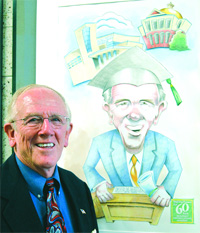
David Bartley

David Bartley, past president of HCC, poses with a caricature of himself, drawn as part of the college’s 60th anniversary celebration.

David Bartley, former president of Holyoke Community College, said the institution’s 60th anniversary, marked this year, has caused him to remember HCC’s past and look to its future, as well as the changes higher education has seen across the country.

“We used to run colleges with chalk and talk,” he said. “Today, there’s $100,000 worth of equipment in a classroom that has to be continuously updated, and that’s not ever going to change.”

It has indeed been a good month for reflection for both Bartley and HCC’s current president, William Messner, who took his post three years ago. The duo represents two-thirds of HCC’s history of leadership; its first president, George Frost, served from 1947 to 1975, then Bartley held that position until 2003.

“It’s a little daunting to be one of only three presidents,” said Messner, “but what I take away from this 60th anniversary is the overwhelming positivity surrounding the institution. Every individual I’ve talked to recently cites the college’s significant effect on their life, and so it is my job to take that legacy to the next level.”

From the Ground Up

Even with only three presidents in six decades, the college has indeed had a colorful run. It was founded in 1946 as Holyoke Graduate School, and in 1947 changed its name to Holyoke Junior College following state-level legislation that permitted municipal higher education programs to do so.

Frost was the college’s only full-time employee for six years, before Ellen Lynch was appointed his secretary. They shared an office in what was once the cloakroom of the old Holyoke High School building. Additional full-time employees — two full-time professors — were not hired for another five years, in 1958.

Frost called students personally with end-of-semester grades and announcements, and the school funded faculty salaries and operating expenses with tuition payments only — which were $6 per credit for Holyoke residents and $7 for non-residents.

In 1961, Holyoke Junior College moved from its temporary home in Holyoke High School to the former Elmwood Elementary School on South Street, where it remained for six years. In 1965, the institution joined the state community college system and changed its name to Holyoke Community College. Four years later, the college moved again to the Holyoke High School building, which by that time had been turned over to HCC following the construction of a new high school.

Less than four months later, however, disaster struck — the building went up in flames (the cause was thought to be a faulty ventilation fan in the attic), leaving nothing but a brick shell. Operations were returned quickly to the Elmwood Elementary School, and students missed only one day of classes. But a new threat soon surfaced.

With the newly opened Springfield Technical College (now STCC) only a few miles away, the Mass. Board of Regional Community Colleges backed a move to relocate HCC’s students to STC and forego building a new home for the former.

Remembering the fire and the precipice on which it placed HCC, Bartley quoted John F. Kennedy.

“Victory has 100 fathers, and defeat has none,” he said. “The fire in 1968 had a lot of people saying we only needed one college in this section of the Valley, and we did a lot of work to point out why we needed two. Now, there are two very successful community colleges in the area, and we believe we had our victory.”

Out of the Frying Pan…

Indeed, a group of Holyoke-based civic leaders, educators, and business owners formed the Friends of Holyoke Community College and lobbied to save HCC. Holyoke’s mayor at the time, William Taupier, and the president of the state senate, Sen. Maurice Donahue, a friend of Frost’s, were among those who supported the cause, and in 1969, a temporary building on the site of the fire had been erected.

Plans for a new campus were unveiled, and the current campus on Homestead Ave. was opened in 1974.

Frost retired soon after his so-called “final task” was completed, and Bartley took the helm, beginning his nearly three-decade-long career as HCC’s president. His first act at the post was to appoint his predecessor as founding director of the alumni association.

All of these stories, and countless others, were on Bartley’s mind this month, when the college celebrated formally with a number of community, civic, and business leaders from across the region.

“I was delighted that we were able to talk about the past, but the real key is the future,” said Bartley. “I think some of the challenges of yesterday are still there — the college has to keep abreast of developing curricula nationwide, and make sure courses are relevant to the industries of today.”

During his tenure, Bartley watched the advent of computer technology take a front-row seat in higher education. He said the adoption of modern modes of telecommunication went relatively smoothly at HCC, but it also marked a cultural shift on college campuses across the country that brought with it some new hurdles to clear.

“People understood it was necessary, or else the students would change and evolve faster than the curriculum,” he said. “We expanded the electronics offerings dramatically, while staying true to the basics.

“The college has always been current, but challenges revolve around funding new programs, and that’s not going to get any cheaper as time goes on,” he added. “Education is a slow and labor-intensive industry, and because its core product is the imparting of knowledge, it will always be that way.”

Messner agreed, noting that he, too, has seen some of those pervasive challenges shaping decisions at HCC, as well as a host of new concerns.

“Fifty percent of the work day is spent on resource development,” he said. “It’s no secret that competition for state dollars is becoming more acute, and we have to fill the gap some way.”

The college recently completed the Gift of Opportunity campaign to help close that gap, raising $5.2 million — $1.2 million beyond its goal. In addition, a number of programs are in place to capitalize on HCC’s existing strengths and address burgeoning challenges.

“We’ve been doing several things over the past few years to ensure that the quality of programming, and the education the institution has been known for, stays solidly in place,” said Messner. “We’ve needed to build the number of full-time faculty since that number eroded, primarily through attrition, between 2001 and 2003, when the state was suffering economically.”

He said that cutting back on faculty during tight financial times is a good short-term economic strategy, but has an adverse effect in the long term. Currently, the faculty has been boosted to represent the same numbers as in 2001, and as enrollment grows, further additions are planned.

“We’re filling about a dozen spots now,” he said, noting that lowering faculty-to-student ratios is just one part of a larger move to improve operations across the campus. “Another thing we’re doing a better job of is assessing how we are doing in general. We’re looking specifically at how new students are treated — we’ve been involved in a nationwide program called Foundations of Excellence, for instance, which provides support to institutions in assessing the freshman experience.”
Those initiatives are just two examples of an ongoing objective at HCC: to stay available to the community at large.

“The demographics in this area are changing dramatically,” said Messner. “Many individuals are coming to the region with a lack of education, or a lack of a tradition of education, both of which are intrinsic to a strong workforce. As the population has changed, we have needed to change our approach in terms of reaching out to these groups that are part of the community.”

Messner said a wide array of initiatives have been put into place to recruit students and enhance their college experience, ranging from an outreach program geared toward the Latino population to college programs for high school students, to introduce them to the campus and allow them to experience higher education early on.

“We’re also working with students who haven’t come through the high school pipeline and instead took the GED, and are looking for the next step,” he said. “We’re using the GED as a new pathway into HCC, and that’s an example of one strategy to make higher education more accessible.”

These initiatives, in turn, have two divergent goals: the provision of quality education for a diverse community, and the creation of a steady stream of both individuals and resources aimed at workforce development in the region.

One of the most notable developments in that regard was the $18 million Kittredge Workforce Development Center, which opened in 2006. The 55,000-square-foot, five-story building is home to the school’s Business Division and HCC’s Community Services Department, which offers many of the programs Messner spoke of, including GED preparation and testing and summer youth programs.

The center also hosts a number of economic-development and workforce-development-related agencies. These include HCC’s Center for Business and Professional Development, which offers a wide range of workforce-development services designed to assess employee skills, identify knowledge gaps, and conduct training to remediate deficiencies; WISER, home to the country’s leading database for international trade statistics, which relocated to HCC from UMass in 2005; and the Western Mass. office of the Mass. Export Center, will offers market research, export training, and international business development resources.

The center also features 4,000 square feet of conference/meeting spaces equipped with high-speed and wireless Internet, videoconferencing, and state-of-the-art lighting and projection. Messner said the center is an excellent example of new technology and modes of thinking taking HCC’s long-held strength in community, career, and resource development to a new, more relevant level.

“Workforce development has been a strength for 60 years,” he said, “and with the new business building, we can expand into a variety of programs that we didn’t have 20 years ago, and there will be even more opportunity for the students to move forward. Workforce development offerings have increased by 20%, and we’re just gearing up.”

Those programs, said Messner, are just one aspect of bringing a long-held mission at HCC forward into fast-changing times. Concurrently, both he and Bartley hope that some strengths at the college stay largely the same, serving as a foundation for further growth in the future.

Blaze of Glory

“I, for one, am appalled by lecture halls holding 500 people,” said Bartley. “No learning takes place, and that’s not what a community college does. It’s certainly not something I ever hope to see at HCC.”

Looking back on 60 years and looking ahead to the next 60, Bartley mused that today’s dynamic, computer-based presentations in the classroom and the cutting-edge technology of the Kittredge Center are developments that were necessary to bring HCC current in a fast-changing world.

But a little chalk-talk can still take an institution a long way — out of the fire, and into the fight.

Jaclyn Stevenson can be reached at[email protected]

Departments

Designs on a Career

Christopher Zarlengo, vice president of Marketing for STCU Credit Union, and Amy McNeil, an intern from Springfield Technical Community College’s Graphic Arts Technology program, check proofs of the credit union’s annual report. McNeil, who recently graduated from STCC in the Commercial Arts program, was responsible for the design of the credit union’s annual report.


Open for Business

Owners of the newly opened Courtyard by Marriott hotel on Route 9 in Hadley recently staged a get-together for staff, contractors who built the facility, and friends of those involved with the venture. Above are many of the principals in the Hampshire Hospitality Group, which made the Marriott the latest addition to its roster of area hotels and inns: from left, Grazyna Vincunas, Ken Vincunas, Lynn Travers, Curt Shumway, COO of the Hampshire Hospitality Group, Bob Shumway and Ed O’Leary.

At right, from left, Ed Newalu, director of Food and Beverage for the Hampshire Hospitality Group; Sherri Willey, special projects coordinator for HHG; Sean Welch, general manager of the Courtyard by Marriott; and Michelle Boudreau, director of Sales and Marketing for HHG.


Groundbreaking Developments

A groundbreaking ceremony was on May 29 to signal the beginning of construction at Rivers Landing, a combination health club, entertainment, and dining venue that will be located at the site of the former Naismith Memorial Basketball Hall of Fame. The complex will feature L.A. Fitness, and is being developed by Springfield natives Peter Pappas, a real estate developer, and Dr. Michael Spagnoli, a chiropractor. From left to right are: Rivers Landing project consultant James Langone; State Rep. Rosemarie Sandlin (D-Agawam); Clerk of Courts Brian Lees; U.S. Rep. Richard Neal; Bill Horner, senior vice president of L.A. Fitness; Springfield Economic Development Director David Panagore; Pappas; Springfield Mayor Charles Ryan; Spagnoli; John Doleva, president and CEO of the Basketball Hall of Fame; Gary Magnuson, an officer with Citizens Bank, which is financing the project; and Paul McDonald, chairman of the Springfield Riverfront Development Corp.

Ware-based FamilyFirst Bank recently broke ground for a new office on Route 9 in East Brookfield. The branch will offer a full range of banking products and services to families and businesses in Western Worcester County. On hand for the groundbreaking ceremony were members of the bank’s board of directors and executives. From left are, Michael Audette, president; Gail A. Piatek, chairman of the board; Charlie Miller, project manager of NES Group; Claire Bothwell and Louis Masse, directors of FamilyFirst Bank.

Sections Supplements
Marx Entertainment Stays a Step Ahead of the Public’s Vibe
Mark Ashe

Mark Ashe, owner of Marx Entertainment, says his industry has changed considerably, but he’s made both small steps and big leaps to stay current.

When Mark Ashe started his career in the DJ entertainment and event services industry, he’d walk into a job with two milk crates full of albums to spin.

Today, his digital music library includes more than 500,000 songs, with plenty of room for more. He suspects the computer-based system will continue to expand, not unlike his repertoire of services overall, which has grown from a one-man operation that began in the early 1980s to an all-inclusive event-production business, Marx Entertainment, based in Enfield, Conn.

The company now provides DJ services, live entertainment, video production, party rentals such as tents, tables, and chairs, and a number of ‘fun extras,’ including virtual reality and carnival games. New products and services are being added continuously, due to the ever-changing requests of the public and, subsequently, the changing face of the traveling entertainment sector.

Ashe said his business — once called Mark’s Rolling Dance Revue and since updated to have a more contemporary feel and better reflect its diverse services — has grown as it has adapted to the gradual changes this industry has seen.

“The learning curve never ends,” he said. “There are constant changes and new ideas, and what I do is look at all of the ideas out there, and decide what I think can work.”

Put the Needle on the Record

Ashe, an East Longmeadow native, first got the bug for disc jockeying and event production in 1979, when he was working as a self-described “gopher” for the Springfield radio station WAQY. He said at the time, DJs were few and far between, and usually relegated to dance clubs and bars.

“I was driving around the area, doing promotions, and I just got the itch,” Ashe recalled. “At the time, DJs were hard to find; it wasn’t like it is now.”

With no real path to follow, Ashe began blazing his own trail, by studying the club DJs of the late 1970s and early 1980s across the Northeast, sometimes with a pad and pen in hand as others partied around him. He then entered the dance clubs in Western Mass. on his own, and in early 1981, he’d acquired enough equipment and expertise to begin bringing nightclub-inspired entertainment to outside events.

Most of those early gigs were birthdays, anniversary parties, or school dances. Weddings, he said, had yet to become a major player in the DJ entertainment sector. Soon, that trend began to take shape, and Ashe was poised to capitalize on the new market.

The volume of couples seeking DJ services for their wedding day began to increase in the early 1990s, and has risen steadily ever since. Demand for such services has since escalated in other arenas, including the corporate and family markets, which have opened new doors for Marx Entertainment.

“I always knew I didn’t want to be a one-man show forever,” said Ashe. “I wanted to stay involved and working, which I do, but I also wanted to be known as a company that could provide basic DJ services as well as big, dynamic productions.”

Ashe said a number of business moves in the past have helped shape Marx Entertainment into the company it is today, and that focus on growth continues.

“We’ve gradually changed along with the industry,” he said, “but we’ve also taken some big leaps along the way.”

On the Road Again

One of the first was the formation of the Commonwealth’s first DJ training school, which Ashe opened in Agawam and operated for four years in the early 1990s. The endeavor eventually proved to be too much of a draw on his core business, but Ashe noted that several of his students later came to work for him, boosting his staff as well as the breadth of services he could offer.

“It was a great way to identify and train talent,” he said, “and in the end it benefited Marx. We started to develop a reputation in Massachusetts, and from that our Connecticut business began to grow.”

To capitalize on his reputation in Western Mass. and a new set of clients in Connecticut, Ashe chose to move his business from Agawam to Enfield in 2004. He now serves clients in both states as well as New York, New Jersey, Florida, and beyond (services for ‘destination events’ are also part of the Marx business model).

He also continues to study the industry and its trends across the country and the globe, both on his own time and at national industry conferences, and constantly adds new offerings to the Marx repertoire.

These include theme decoration and event-planning services, a wide variety of specialty event production such as simulated drive-in movies, and full video production for all types of events. Ashe is now in the process of incorporating ‘green-screen’ technology into his business as well, to offer simulated movies and music videos featuring event guests.

Some of these event-production developments have been major hits for Marx, like interactive games such as Dance Revolution, virtual golf simulators, and a ‘micro-reality’ racetrack that puts party-goers in the driver’s seat — sort of.

Others have been middle of the road in terms of client interest, such as casino tables. But Ashe keeps the service listed in order to serve those customers who are interested, and to remain prepared for a sudden boom in casino party planning — a possibility that isn’t farfetched.

Some ideas, he admits, have flopped. He’ll be doing away with foam pits for kids or college students, for instance, because interest wasn’t as high as he’d hoped, and maintenance of the apparatus can be time-consuming.

But the process of building a multi-faceted event-production company from a solo disc jockey service is one that has been characterized by trial and error, as Ashe carves a niche in an industry he has also helped to define.

While still learning new tricks of the trade, Ashe has shared his own insights with fellow event producers and DJ services. He’s served as a contributing editor for well-known trade publications such as Mobile Beat and the DJ Times, and also serves as a speaker at industry events such as the two largest national DJ conferences in Atlantic City and Las Vegas.

That national presence might have offered some of the inspiration Ashe needed to make another of those big moves he spoke of often with BusinessWest.

Extreme Entertainment

He said that about five years ago, he noticed an emerging trend toward more family-centric events in particular — a desire to create larger, more memorable affairs with unique entertainment, including elaborate themes, live dancers, and sophisticated games.

The problem, which Ashe saw as an opportunity, was that Western New England had few, if any, such event-production companies handling get-togethers of that magnitude.

“There were no resources for high-end parties like that,” he said. “People were going to New York to find talent in that area.”

So, Ashe said he followed suit.

“New York City is teeming with out-of-work actors, dancers, or just people who were born to do one or both,” he said. “There are plenty of people looking for work down there, so I went to find the talent, and brought them here to come work for me.”

His staff of 28 is now comprised in part by professional emcees and ‘dance motivators,’ who perform at events but also work to keep guests active and engaged. Since this aspect of the company took shape, Ashe said his bar- and bat mitzvah business has skyrocketed. Now, so-called ‘extreme 16’ parties, popularized by reality shows such as MTV’s My Super Sweet Sixteen, are taking both 15th and 16th birthday parties (usually among teen-aged girls) to a new level, and further boosting Marx’s client list.

“We’re offering New York-style productions that aren’t over the top,” he said, noting that this still-new aspect of Marx Entertainment has also spurred some cross-over into the corporate market. “Apparently, the big kids want to play, too.”

Not content to rely on this emerging trend, though, Ashe has recently made another move, this time teaming with a partner, Andrew Jensen, to form a sister company to Marx called JenMark, which will focus on producing corporate conferences and trade shows.

His first foray into this market will promote his own industry. Ashe is preparing to roll out a vendor show at the Connecticut Expo Center on Oct. 7. The show will resemble a wedding expo, but will center on the super-sized events for kids and teens that Marx has already seen growing in popularity.

Ashe said he is sending invitations this month to potential vendors, ranging from caterers to novelty providers to fellow DJs, and hopes to secure 150 booths for an anticipated 2,000 visitors. He’s already working on hiring an MTV VJ for the event, and the Jewish Ledger has signed on as a media sponsor. Other sponsorships are in the works, too.

Fast Forward

The venture is a daunting one, but one that Ashe said has a market, and fills a need — or at least, a strong want.

“One thing I’ve noticed over the years is that entertainment always seems to survive,” he said. “Through depression or recession, people still find a way to throw great parties. I think it’s something that keeps us connected.”

And while Ashe’s record albums have taken on a new function, serving as art on his office walls instead of entertaining a crowd, they provide a link to the past and vivid reminders that, in this business, one can’t get ahead by standing still.

Jaclyn Stevenson can be reached at[email protected]

Opinion
Massachusetts Should Embrace Biotech

For decades Massachusetts has been fertile ground for the life sciences. Our unique concentration of extraordinary universities, teaching hospitals, research facilities, venture capital, and talent, spurred by a tradition of entrepreneurialism, provides a strong foundation for growth in the biotech industry. These strengths have brought thousands of jobs and billions of dollars in life science investments to Massachusetts.

For us, that success is more than a commercial matter. Each family can speak poignantly about a family member or friend with a disease or debilitating illness. You cannot be in the company of someone you love, powerless to help them, without appreciating the vital importance of stem cell research and other biomedical breakthroughs. In many ways, the health of this industry and the health of our society are closely linked.

But we cannot afford to rest on our laurels. Competitor states and foreign nations are investing billions to attract our researchers, institutions, and industries. The University of Wisconsin-Madison outspends both Harvard and MIT in research and development. India and China, to say nothing of states such as California, are actively working to attract signature companies away from Massachusetts. At the same time, federal funding through the National Institutes of Health, of which Massachusetts typically receives a large share, is flat and likely to diminish. Politics, especially around stem cell research, impaired the innovation and calculated risk-taking that make breakthroughs possible. It is essential that the Commonwealth step up to maintain and extend our global leadership in the life sciences.

We are doing just that. Working with all sectors of the industry, we have developed the Massachusetts Life Science Initiative. This 10-year, $1 billion investment marks a new partnership between state government, industry, academic medical centers, and public and private higher education, and will accelerate statewide life sciences growth into high gear. We want to support this industry on the path from inspiration to commercialization, from ideas to cures.

That begins with support for new ideas and innovation. The rate of innovation in Massachusetts in recent years has been triple that of the national average and we have no intention of letting it slip. To bring the best and brightest to those facilities and others, we will offer life science grants to young, promising researchers who may not yet have attracted federal funding.

Playing to our world leadership in stem cell research, we will also create a Massachusetts Stem Cell Bank to be housed at UMass-Amherst. Once completed, the bank will hold the largest collection of stem cell lines in the world and make our rapidly growing catalog widely available to researchers. Already, a group of competitive institutions have agreed to contribute to the Stem Cell Bank, underscoring the spirit of collaboration so distinctive about our biotech supercluster.

The state will also develop innovation centers to provide industry and the academic community access to cutting-edge facilities and technology. These centers will serve as regional economic engines throughout the Commonwealth, as new companies and jobs open up in the cities and towns around them.

Finally, when an idea is ready to become reality, we will help guide it to the marketplace. Breakthroughs are often lost in investment gaps typical of the movement from early academic research to industry development. We will designate grants to translate discoveries into applications and support partnerships to move new ideas along. We will also work to help life science projects in Massachusetts win federal assistance. Job growth here in the industry is fueled, in part, by federal support, and our companies lead the nation in these awards per capita. Every new job created in the life sciences results in two additional jobs in support services for suppliers, vendors, and construction. What’s good for the life sciences and biotech is good for Massachusetts.-

Deval L. Patrick is governor of Massa-chusetts. Therese Murray is president of the Massachusetts Senate. This article first appeared in the Boston Globe.

Sections Supplements
East Longmeadow/Longmeadow Chamber Builds Momentum, Membership
Dawn Starks

Dawn Starks, president of the East Longmeadow/Longmeadow Chamber of Commerce, said increased visibility is a primary goal to boost membership.

Earlier this month, torrential rains across the region made driving conditions sticky and motorists increasingly nervous, as tornado warnings crackled from car radios.

Members of the East Longmeadow/ Longmeadow Chamber of Commerce were also biting their fingernails that day, having planned a large ‘open house’ at Spoleto’s Restaurant in East Longmeadow to recruit new businesses and beef up membership on the group’s various committees.

At the end of the night, however, those committees had been filled, and a standing-room only crowd applauded the efforts of the small, two-town chamber for surviving the storm.

Dawn Starks, president of the chamber and business manager for Acres Power Equipment in East Longmeadow, said the event was just one way the organization is calling greater attention to itself and the communities it serves, as part of a larger marketing and outreach campaign.

“We’re stepping up our efforts as far as our visibility goes,” said Starks, noting that the effort is aimed at highlighting the chamber’s work, but is also an attempt at boosting its numbers.

Raising the Ranks

Starks said that, like many membership organizations across the region and the country, the East Longmeadow/ Longmeadow Chamber of Commerce, part of the Affiliated Chambers of Commerce of Greater Springfield, has experienced a drop in its ranks in recent years. She said it began following the economic downturn spurred by 9/11, and has yet to reverse itself.

“Trends in the workplace, including attrition, have a big impact on business-oriented organizations,” she said. “Employers are using more of their employees’ time, and using it in different ways. In our case we saw an initial membership drop in 2001, and never quite got back to the numbers we’d had previously.”

There are other challenges for this group, such as the contrast between the two towns and their business communities; East Longmeadow has a fairly large industrial sector with many large employers, while Longmeadow’s profile is largely retail and dominated by much smaller employers. Roughly 150 Longmeadow and East Longmeadow businesses are now active members of the chamber, though in the past that number has been closer to 200.

However, Starks said she’s optimistic about building those membership numbers back up in the current business climate.

“Business is booming in East Longmeadow in particular,” she said. “Our goal is to recruit at least 25 new member businesses, and we think that’s very doable.”

To do so, Starks said the Chamber has begun by ramping up its media relations efforts, designating a public relations contact, Lavada Munoz, an advertising representative with the Republican, among its ranks.

“We’ve made a concerted effort to get news out on all of our events,” said Starks. “We realized that if no one knows what we’re doing, it doesn’t matter what we’re doing.”

One such event the chamber devised was the open house held during the May 16 rainstorm at Spoleto’s, in East Longmeadow Center Village. Starks said the event was styled after the Affiliated Chambers’ After Five series to a degree, but differed in that its primary focus was recruiting, not networking.

“We’re looking for new members, but we’re also trying to get our existing members more engaged, and to sign up for our various committees.”

Starks said she and her fellow board members — 17 of them — employed a grassroots approach to marketing the event and its goals, making personal visits to area businesses and calling attention to the importance of chamber involvement, not only on a regional level, but on a local level as well.

“Being part of the ACCGS is a huge benefit,” she said. “But we also think involvement on the town level is important in terms of pushing the entire region forward and making valuable connections.”

A New Attitude

The chamber’s clerk and chair of its membership committee, Edward Zemba, co-owner of Robert Charles Photography in East Longmeadow, said the chamber has recorded some successes in recent years that he hopes the group can build upon.

“Our communities are growing, and it is in large part due to organizations like the Chamber of Commerce,” he said. “Currently, we’re resetting the meter as to what the chamber can do for the businesses of our community, to keep fostering that growth.

“We want to increase the number of chamber members who are serving on committees,” he added, “and we intend to begin an effort of educating both existing and prospective members as to the true value of being a chamber member.”

Following its first-ever open house recruitment event, the group seems to be on its way to achieving those goals. Five new businesses signed on as members, and all of the open committee posts were filled; a waiting list for inclusion on the committees was also drafted.

However, Zemba went on to note that translating the mission of the chamber is key to attracting new membership, and that’s one area in which he sees a need for attention.

“Costs are always on the minds of business owners,” he said. “That’s why the chamber needs to do a better job of educating its membership on the benefits. I’m on the board, and even I don’t know half of the benefits. This is a challenge for many organizations, and we’re taking steps to correct it.”

In addition, the East Longmeadow/ Longmeadow Chamber is also ramping up its efforts in other areas, such as support of education, in part to further increase its visibility.

The group typically disseminates about $10,000 in scholarships a year, and also serves as a resource for students seeking internships and externships and job-shadowing opportunities. It also had a hand in developing East Longmeadow High School’s career center, and refurbishing the Longmeadow High School auditorium.

The organization is also becoming a lobbying force, advocating for several pieces of business-oriented legislation. It is a proponent for maintaining a single tax rate in East Longmeadow for residents and businesses, for example, and also a strong voice regarding the issue of traffic mitigation, a pressing concern particularly on Route 83 and surrounding East Longmeadow’s famous (or infamous) rotary, as the town’s population and business community continue to grow.

“In growing communities like East Longmeadow and Longmeadow, it is crucial that the growth be managed,” said Zemba. “The chamber is here to help balance this growth that is taking place.”

Building a Legacy

Starks added that the two communities are indeed growing more prosperous in their own right, which adds to the strength of the chamber, but also to its responsibility as an advocacy body.

“We have a diverse set of businesses — major corporations as well as mom-and-pop shops,” she said. “We advocate for fair zoning and regulations, but we work closely with the town on those issues. The residents have very valid concerns, but it is our job to ensure that the businesses are heard as well.”

Starks said the chamber also partnered actively with the town to advocate for the creation and support of Center Village, the town’s newest development, devised and managed by Falcone Retail Properties LLP. It includes a wide array of businesses, including Rocky’s Hardware, HealthTrax health club, a Starbucks, and Spoleto’s restaurant, owned by Claudio Guerra, who operates five other eateries in Northampton and a regional catering service.

“We really see Center Village as a legacy project for the town, and it’s beautiful,” said Starks. “I think it raises the bar for other businesses in town, or other businesses looking to come into East Longmeadow.”

That’s one reason, said Zemba, why Spoleto’s was chosen as the venue for the chamber’s open house event, which was also sponsored by a number of chamber businesses, including Acres Power Equipment, Business Partner, CMD Technology Group, Graziano Gardens, Marx Event and Entertainment Solutions, PIP Printing, Reminder Publications, Robert Charles Photography, and W.B. Mason.

“The event itself was very reflective of what our chamber is able to accomplish when it sets its mind to doing something,” he said. “In spite of severe weather warnings, we managed to put together one of the most successful events in years.

“The fact is, an event like this can’t take place without the involvement of many.”

And with rain boots and umbrellas in hand, the East Longmeadow/Longmeadow Chamber is setting its sights on sunnier skies.

Jaclyn Stevenson can be reached at[email protected]

Sections Supplements
That’s the Idea Behind This Nuvo Concept,/h6>
Jim Gardner and Jeff Sattler

Jim Gardner, left, and Jeff Sattler believe there is plenty of room for another bank in the region, and that the need will be even greater in the future with more anticipated mergers and acquisitions.

While conventional wisdom holds that the Pioneer Valley is already overbanked, with intense competition driving the yield curve to razor-thin margins, two area financial services veterans believe there is plenty of room for another player in the market. If all goes according to plan, Nuvo Bank & Trust Co. will open its doors in Tower Square this fall. The principals are sketchy with details, but they promise a bank that is customer-focused, progressive, and fun.

Jim Gardner believes he’s in the right place at the right time with the right concept.

But he also understands that some people in the banking industry would substitute the word wrong in each case. And he thinks they’re wrong.

“We heard it all while we were kicking the tires on this … how this region is already overbanked, and there’s so much competition, very little growth, and how the area simply doesn’t need another bank right now,” he told BusinessWest. “Well, this isn’t just another bank; it’s something new.”

That’s what the name of this venture, Nuvo Bank & Trust Co., would certainly indicate. It was conceptualized by Gardner, a former bank president and, most recently, president of the Polish National Credit Union in Chicopee; and Jeff Sattler, former senior vice president at TD Banknorth, who believe there is plenty of room for another bank in the Pioneer Valley. Especially one with the model they’re shaping — which puts the customer first.

“We’ve designed this bank to be inspired by the soul of the customer, which makes it different right out of the gate,” said Gardner, now serving as Nuvo’s chairman and chief executive officer. “We’re essentially re-inventing the bank.”

How?

Well, for now, the two entrepreneurs will say only that their bank — to be physically located in the long-vacant bank branch within Tower Square — will be different, with its rough outline to be essentially colored in by customers, both commercial and retail. The institution won’t try to be all things to all people, but it will attempt to serve all generations and mindsets — from those who still enjoy going to the bank every week to those who haven’t stood in a teller’s line for years.

“Technology is driving the consumers’ options, and it’s allowing them to do their banking when they want to do it,” said Sattler, president and COO of the venture, who left a senior management position at a bank he greatly respects to take Nuvo to the marketplace. “We’re going to allow our customers to take full advantage of that technology.”

This facility, which now exists largely on paper in the partners’ collective imagination, is scheduled to open this fall. Much has to happen between now and then for the doors to open as planned, especially the raising of $15 million to $20 million needed to get the venture off the ground; a prospectus is due to be issued within a few weeks.

But Gardner and Sattler are confident not only that they will raise the money, but that their venture will be a colorful and successful addition to the region’s banking landscape — today, and especially years down the road.

That’s because they anticipate that more of the region’s community banks that have gone public or are in the process of doing so — that list includes United Bank, Chicopee Savings, and Hampden Bank, among others — will be acquired by or merged into out-of-town or out-of-state institutions.

This phenomenon will take the total of area branches controlled by non-local entities, currently 75% by the partners’ estimates, still higher, and, theoretically, spur a need for a decidedly local bank. Sattler and Gardner say they’ll be well-positioned to meet that demand.

“We’ve spent a considerable amount of time and a lot of effort to really focus on what customers think about their banks,” said Gardner. “We wanted to know their emotional thinking, their rational thinking about their banks; from their conclusions, we’ve designed a bank that will address those concerns.

“So whatever you don’t like about your present bank,” he continued, “you’ll love about Nuvo.”

In this issue, BusinessWest takes an indepth look at Nuvo Bank & Trust Co. and the people working to making that name part of the local business lexicon. Gardner and Sattler know there are doubters who say there’s no room for another bank, but they intend to make room.

Banking on It

The fax arrived April 27.

It was several pages in length, but Gardner and Sattler started celebrating (quietly) with the first sheet. It was from the state Board of Bank Incorporation, and was a simple acknowledgement, a certificate of “public convenience and advantage,” or a ruling that the proposed Nuvo Bank would serve a purpose in the community.

The two partners had worked for exactly a year to earn that piece of that paper, which was essentially an OK to move forward with the next, and more daunting, set of challenges. But its arrival also provided a moment to reflect on what the two were doing.

“Very few people in the world get a chance to do something like this,” said Gardner, noting that’s been 20 years since Tim Crimmins, Frank Fitzgerald, and a team of partners formed Bank of Western Mass., the last new bank to be opened in the region. “It’s incredibly exciting to take a concept like this and make it real.”

This story starts with the Chicopee Rotary Club and, more specifically, with events it staged within the community. They gave Gardner, a member of the club and then leader of the credit union, a chance to meet and get to know Sattler, a long-time commercial lender who was the banker for many Chicopee-based businesses.

It was Sattler whom Gardner approached when he started tossing around the idea of creating a new bank in Western Mass. The thought process was actually triggered by a recruiter from California-based De Novo Formations, which has developed a blueprint for new community bank creation and serves as a consultant to those who decide to embark on that complex process, defined by strict state and federal regulations and voluminous paperwork.

The recruiter came armed with a proposition to lead the formation of a new bank in Connecticut, but Gardner decided that if he was going to undertake such a venture, he would do so a market he knew well. And he asked Sattler, who knew it even better and had a huge number of contacts in the Pioneer Valley, to join him.

Before embarking on their venture, the two first decided to do some research — lots of it — to ensure that the concept was viable and worthy of what will likely be the balance of their careers in the banking industry. The two assembled what they would later call a focus group to examine the market, the partners’ proposition, and the extent to which there was a fit.

“I didn’t go into this blindly … I wasn’t about to drag anyone down this path without doing my homework — there was simply too much risk a year ago,” said Gardner. “I needed to know I was on the right track; I thought I was, but I needed other voices to confirm what I thought I knew.”

The partners heard from those already within the sector that, while the De Novo blueprint was being employed successfully in many regions of the country, Massachusetts — and specifically the Pioneer Valley — wouldn’t be a likely addition to that list. That’s because of the immense competition, the slow rate of growth, and the arrival of several powerful newcomers to the market, including Connecticut-based institutions New-Alliance and Webster.

All that competition has compressed the so-called yield curve — the difference between what banks can charge for interest on loans and what they’re compelled to pay in interest on savings — to razor-thin margins.

“We heard all that,” said Gardner. “We heard that this wasn’t the right time to be opening a new bank and it wasn’t the right place. But the more we talked to people, meaning customers of area banks, the better we felt about what we were doing. People were telling us there was a real need for this.”

Such need was confirmed, at least in the partners’ eyes, but the willingness of many area residents and business leaders, some of whom served on the focus group, to become partners, or organizers (that’s the industry term), in the venture.

The list of 27 people who invested, on average, $100,000 in the venture includes Donald D’Amour, chairman of Big Y Foods Inc.; Joseph Peters, president of Universal Plastics in Chicopee; Charles Epstein, president of Epstein Financial Services; Raymond Catuogno, president of Catuogno Court Reporting & StenTel Transcription Services in Springfield; Dawn Carrignan Thomas, president of Instrument Technologies Inc. in Westfield; and Michael Hanson, a principal of Hanson Associates and former commissioner of the Mass. Division of Banks.

“These are very successful, very talented people who obviously believe in what we’re doing,” said Gardner. “That support speaks volumes about our concept and whether it’s needed here.”

Taking Stock

Sattler opened the box carefully, and then started unraveling a thick covering of bubble-wrap.

Finally, he reached a small statue of sorts that is serving as a model for the company’s marketing logo. It features two glass stick figures with their arms stretched to form a semi-circle. The two half-circles nearly come together to form an ‘O,’ in this case the ‘O’ in Nuvo Bank.

But the artwork also conveys how the new institution intends to operate, said Sattler, noting that the two figures represent the bank and the customer, and how they can and will work in unison at the new venture.

The statue and marketing materials are still works in progress, as is the model for the new bank itself. While raising the capital to move their venture forward — the organization is offering to the public a maximum of 2,500,000 shares of its common stock at $10 per share (minimum purchase 1,000 shares) — the partners will simultaneously refine their business plan, develop a marketing strategy, and finalize an operating philosophy.

And the bank’s eventual customers will play lead roles in all that, said Sattler, who was short on real specifics, but said the bank will be non-traditional in as many ways as the partners can make it. He used other words not often employed to describe banking operations — like progressive and fun.

How they intend to do that remains to be seen, although the two partners returned repeatedly to the name Nuvo and what they believe it means: the very latest thing in banking.

“We’ve gone to great extremes to differentiate this bank,” said Gardner. “We’ve been from one end of this country to the other, looking for and challenging ourselves to find new and different things to do.

“And this will be a continual, perpetual effort to re-invent this bank,” he continued. “We won’t ever rest; we’ll never say, ‘we’ve got all these things, these bells and whistles, and now we’re done.”

Both Gardner and Sattler expect that this non-traditional approach will be welcome in the Pioneer Valley if, as expected, there is additional consolidation and acquisition of local institutions by larger, out-of-town entities. But they believe the need exists now.

“Banking is changing, and the players just keep getting bigger,” said Sattler, noting that Bank of America and TD Banknorth now hold more than 40% of the deposits in the region and are focused mostly on the larger commercial loans. “This leaves plenty of room for a community-oriented bank with local decision-making.”

Elaborating, he said the Nuvo Bank & Trust concept appealed to him because he and Gardner share what he called a “fundamental community philosophy,” and can apply it to two different disciplines — Gardner on the retail side of the ledger and Sattler on the commercial side.

“I thought that if we could put those disciplines together, with a relationship-focused approach, we would have a winning concept,” said Sattler, noting that the bank will make full use of advancing information technology to serve both retail and commercial customers.

And on the commercial side of the equation, Sattler believes the bank’s small size and community approach will serve it well. “The banks keep getting bigger, and they’re credit-scoring deals under a half-million,” he said. “Where’s the relationship? How are these banks going to help companies that are starting out and trying to get bigger?”

Extensive renovations are currently ongoing at the cavernous former bank branch in Tower Square, which has served several other roles in recent years, including home to the Pioneer Valley Photo Center. The space will be made considerably warmer and inviting, said Gardner, adding that, while the facility will be an enjoyable place to visit, he’s not sure how many future customers will actually go there.

Indeed, while many individuals still prefer going to the bank, a growing number are opting for online services — everything from bill-paying to loan applications. This trend will enable the bank to service all of the Pioneer Valley from one branch, said Sattler, adding that there are no real discussions about future additions of bricks and mortar.

“How many people in the Y generation are going into a bank anymore?” he asked. “We’re not an Internet bank by any means, but we are going to be capable of providing personalized, empowered service from our employees to customers, whether they want to come into the bank or not.”

Making a Statement

For now, the partners are focused on the Springfield site and quickly proving that the risks they are assuming were well worth taking.

Time will tell if the partners can actually re-invent the bank, as they claim, but Gardner and Sattler do not lack in confidence.

“We think this is absolutely the right time and the right place for this,” said Gardner. “That’s because we’re looking at banking differently than the people who are doing it now.”

George O’Brien can be reached at[email protected]

Sections Supplements
With New and Classic Toys, Kiddly Winks Makes Childhood Its Business

From books to balls; Curious George to First Communion dresses, Kiddly Winks is overflowing with toys, games, clothes, and crafts for kids. The quantity of wares alone speaks to the venture’s success, as do its three locations and brisk online sales. But as owner Joy Leavitt attests, it’s not how many toys you have to sell. It’s how many great toys you have in store.

“Do you remember me?”

Joy Leavitt, owner of Kiddly Winks, a specialty toy retailer based in Longmeadow, said this is a question she hears frequently in her store. It’s usually asked by the children of Baby Boomers, many of whom were her first customers.

“I think it’s the biggest change I’ve noticed over the years. Many of the children who used to come in here to play are now becoming mommies, and they’re coming back to a familiar place.”

It’s a trend that is also rewarding for Leavitt, who first entered the toy business in 1981, when she began a toy-party business (visiting homes with products for private shows) with a partner, Elaine Weiner.

The duo achieved a measure of success with that endeavor, which eventually began to swallow Leavitt’s home — she remembers a dining room table covered with children’s clothes and a basement that became a makeshift store, once clients began making appointments to stock up on some of their favorite playthings.

“Over five years, we grew a considerable clientele,” she said. “There soon came a point when I had to get out of the house — the business was literally taking it over.”

Leavitt and Weiner moved into their first location, a 750-square-foot storefront on Williams Street in Longmeadow, in 1986. Weiner left the business a year later in an amicable split, in order to return to school and begin a career in teaching.

Leavitt, who also taught before launching Kiddly Winks, said she found a passion in retail and in offering high-quality, specialty toys, and chose to stay with the business and gradually grow its stock and its reputation.

Everything’s A-OK

The venture has proven successful; after 25 years in business, Kiddly Winks’ flagship store has grown from one small storefront to the equivalent size of three smaller shops in the Williams Place plaza.

In addition, the company now has two other locations — one in West Hartford that is approaching a decade in business, and another in Canton, Conn., which opened just under three years ago. Kiddly Winks’ Web site also sees brisk business, including a high ratio of repeat customers.

The toys Kiddly Winks carries are carefully chosen, often by Leavitt herself, and merchandise spills off of every shelf and end-cap.

Some are new, innovative toys, such as the Ratz Fratz Running Bike, which uses a new method to teach children how to ride, and is Leavitt’s current pick for product of the month.

But others are classic toys, many of which help bring wide-eyed children (and nostalgic parents) back to the store again and again. An entire display of Curious George stuffed animals, toys, and books certainly hasn’t lost its appeal in nearly three decades, nor have the Erector Sets or rocking horses. It’s proof that, while toys evolve, many have staying power, and it’s that balance that Leavitt said she aims to strike.

“We really do approach this business with a strong belief,” she said, “and this is that good toys are always good toys, and good toys empower children.”

Every Door Will Open Wide

Along with her product list, Leavitt’s staff has also grown, from three employees in 1986 to 65 today, including her husband, Michael Leavitt, whom she recruited to serve as Kiddly Winks’ CFO just before their second location opened for business.

In addition to that growth, though, Leavitt has also become a pioneer of sorts in the industry of children’s merchandise. She was among the first few members of the American Specialty Toy Retailers Assoc., and served on its first board of directors. She’s a frequent traveler to trade shows, always in search of new, innovative toys, and has made research of those products a key part of her management style.

“We started initially because we could not find good toys in this area,” she said, “so researching products has always been a big part of what we do to bring those toys here. That process has changed considerably, though … 25 years ago I was researching by writing letters to companies and poring over microfiche at the library. Now, everything is at our fingertips.”

The research and procurement process has eased, but it hasn’t slowed with new technology. Leavitt’s product line has grown from quality, unique, and educational toys to include baby-care items, special-occasion children’s clothes, and a full children’s book section.

“The independent specialty toy industry has really changed,” she said. “Before, we were essentially helping to create it. Now, I feel as though we’re editing products down, in order to find and sell the best of the best.”

Leavitt said her business fills a need for such products, but beyond that, she sees filling that gap as important on a number of levels. For one, as both an educator and a retailer who has made it her life’s work to understand children’s development and how toys can augment it, she sees play as integral to creating what she calls “wholesome human beings.”

“There is so much age compression today,” she said. “Kids are put in front of televisions and computers way too soon, and I think many are not getting enough three-dimensional play or unstructured outdoor play.

“I worry that without that, they won’t be able to negotiate their way through things as well,” Leavitt continued. “All of our toys are chosen based on this belief.”
In addition, Kiddly Winks’ staff is also trained in childhood development and in the care and use of all of the stores’ products.

“Our knowledgeable staff is a very big part of our mission to create meaningful experiences,” said Leavitt, “and we simply don’t hire anyone unless we feel strongly that they’re on that same page.”

As Kiddly Winks continues to thrive, Leavitt said no firm plans are being mulled for another expansion, although she says she “keeps her ears open,” always willing to entertain an interesting idea.

“We produce two catalogs a year, five mailers, we’ve started E-mail blasts to our repeat customers, and we’re enjoying all three of the communities we serve,” she said. “There’s nothing new in the pot now, but I’m open to ideas. I have no plans of slowing down — I’m having fun, and I look forward to seeing this business continue to grow and become more vibrant.”

On My Way to Where the Air Is Sweet

To that end, Leavitt’s product lines continue to grow to meet the nearly year-round demand for birthday gifts, First Communion outfits, or holiday goodies. Her selection of baby goods is growing in particular, encompassing clothes, toys, stuffed animals, and the so-called ‘Rolls-Royce of strollers,’ the Bugaboo.

“We are very careful to key into special occasions and ensure we have products that reflect those times,” she said. “And there’s definitely a baby boom happening right now; it’s another one of those times.”

Jaclyn Stevenson can be reached at[email protected]

40 Under 40 Class of 2007
Age 31. President and Founder, Atalasoft Inc.

Bill Bither says he doesn’t really have anything he’d call “free time,” just time spent doing many different things.

When he’s not running his software development firm, Atalasoft, in Easthampton, which is growing at an astounding rate of 75% annually, he’s working to recruit technology talent to Western Mass. through his involvement with the Regional Technology Corp. He’s also a prolific blogger at BillBither.com, and encourages the practice among his employees.

But Bither isn’t always chained to his keyboard; he’s also a competitive cyclist who commutes to work by bike, and celebrates a healthy lifestyle within his company, too; Atalasoft’s team meetings are often held in motion on nearby bike paths.

“Sometimes I need to come up for air,” he joked, adding quickly that any down moments are usually spent with his family — his wife Kim and two children, Abriana and Alex. “I just love them, and having two young children to play with is a blast.”

Bither moved to Western Mass. after graduating from Rensselaer Polytechnic Institute with a degree in Electrical Engineering. He started his career at Hamilton Standard, but as a side project began developing a software application called EyeBatch, which processes several images at one time, often for use on the Web.

He said EyeBatch began to generate a nice side income, which in turn motivated him to start his own business. Now, Atalasoft sells six core products worldwide and employs 15 people. Bither expects that number will be closer to 100 in just a few years.

“That’s all organic growth — we hire people as we need them,” he said.

The fast pace at which Atalasoft is evolving has also allowed Bither to make philanthropy a major part of his business. After losing his father to brain cancer, he and his family became involved with BrainTrust, a nonprofit organization focused on improving the quality of life of those with brain-related conditions. To give back, Bither donates 100% of the profits of EyeBatch to the group.

“They offered my family a lot of help, and BrainTrust is a small charity, so it really benefits,” he said.

And, it’s just one more way Bither stays busy — a business owner, bicyclist, blogger, and now, benefactor, as well.

Cover Story
Age 32. President and Owner, Zasco Productions

Michael Zaskey’s career began at age 11, when his father brought home a camcorder, and Zaskey immediately dove into the box.

After learning his way around the camera, he devoted much of his time to amateur filming, until one of his dad’s co-workers gave Zaskey his first break that same year. He taped her wedding, and later, one of the bridesmaids asked him to tape hers, as well. A business was born.

“By the time I got to high school, I was videotaping about 40 weddings a year,” he said, adding that he and his father officially established Zasco Productions when he was 15.

Many years later, Zaskey hasn’t changed his habits much — he still loves new technology and still takes the time to learn how to use every new piece of equipment he procures. But what has changed are the trappings. Zaskey, who began his enterprise in his parents’ basement, has recently moved from a small office into a new, larger space on McKinstry Avenue in Chicopee.

The business has also shifted, from video production to live events, for which Zasco provides audio-visual, multi-media, and lighting services. The current client list includes Springfield Technical Community College, Baystate Health, Big Y, LEGO, the Sisters of Providence Health System, and dozens of others.

“I love my job even at the most stressful times,” Zaskey said. “It continues to be a hobby for me — if I don’t have anything I have to be doing on a Saturday, there’s still a good chance I’m in the office, playing with equipment.”

That passion has led to some unique business practices, such as weekly training sessions with his employees, and it has earned Zaskey some accolades, including being named the Chicopee Chamber of Commerce’s Business of the Year for 2007.

Moving forward, Zaskey said he’s focused on controlled growth for his company, aiming to progress without losing the ability to take an active role at clients’ events. He also credits his team, some who’ve been with him since the basement days, and his parents, and hopes to give back to friends, family, and community.

He also never wants to lose the joy his job brings. As a child, he said he was more amazed by the lighting displays at Disney World than the characters. Today, he’s an avid concert-goer, but still often looks away from the band — to check out the production pit.

Sections Supplements
STCC’s Student Business Incubator — Where Ideas and Passion Come Together
Nancy Kotowitz

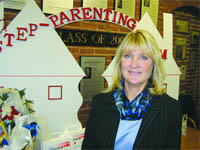
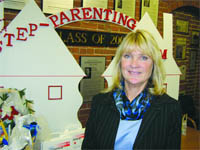
Incubator tenant Nancy Kotowitz has created a business out of helping people become better step-parents.

Since its formation in 2000, the Student Business Incubator in the Andrew M. Scibelli Enterprise Center in STCC’s Technology Park has helped many young, and not so young, entrepreneurs turn ideas and dreams into successful ventures. Technically a room with nine cubicles and a mailing address, the incubator is, in reality, a community of determined business owners trying to learn by doing.

Nancy Kotowitz says it’s hard enough raising one’s own children, let alone someone else’s.

She should know. She has two stepchildren in addition to the five children she had with her first husband and another with her second spouse. She told BusinessWest that, not long after her second marriage, she went on a mission to become, in her words, the “perfect step-parent,” and later went about creating a support group for those facing the same challenges she was.

Her many experiences in this realm led to her conclude that there was a huge need for support services within the large step-parent population, and she went about trying to meet it.

Her vehicle is called step-parenting.com, a Web-based business and one of the many intriguing ventures in various stages of development within the Student Business Incubator in the Andrew M. Scibelli Enterprise Center (SEC) in the Technology Park at Springfield Technical Community College.

Technically speaking, the incubator is a large room on the building’s ground floor that contains nine small cubicles (eight are currently occupied) in which each tenant entrepreneur may conduct some business duties. But in reality, said the facility’s coordinator, Karen Knight, the incubator is actually a community — one without any real walls.

The student entrepreneurs, who have ranged in age from 14 to around 70 since the incubator opened in 2000, share their experiences, frustrations, and hopes for the future. They also take valuable lessons in business and how to grow a venture from agencies within the SEC and individuals across the region who have been there and done that. And ultimately, they work to take their often-unique product or service to the marketplace.

“There is a lot of cross-fertilization of ideas here; it’s an extraordinary place,” said Knight. “People share resources, but they also share their dreams.”

The current mix of businesses is representative of the diversity that has defined the facility since it opened its doors. In addition to Kotowitz’s venture, there is Jx2 Productions, an event-management company that provides DJ, lighting, sound, staging, and other services; thingreen computing, a remotely hosted desktop services venture; Multicultural Multimedia, producers of promotional advertising video clips for local Latino and Hispanic-owned businesses; Kristoriya, a company that designs and distributes customized decorative gift baskets; Tip Off Sales Force, a provider of in-store merchandising and promotions for specialty product manufacturers; Beyond Brackets, creators and producers of an innovative shelf and bracket system; and the latest addition, Irie Designz, which designs and prints high-end T-shirts.

The entrepreneurs are as diverse as their ventures. Andrew Jensen, 20, a graduate of Agawam High School, started Jx2 with his twin brother when he was 14, and has grown it steadily since. Viktoriya Romanchenko, who has partnered with Kristen Thornton to operate Kristoriya, immigrated to the U.S. from Russia earlier this decade. Paul Wilson, 45, owner of Irie Designz, is a native of Jamaica who came to the U.S. in 1995 and spent several years in the Army, among other diversions, before getting into the screen-printing business.

Knight and Diane Sabato, director of STCC’s Entrepreneurial Institute at the SEC, told BusinessWest that there is a lengthy process for getting one’s name and business on one of the cubicles in the incubator.

There are interviews, tours of the facility, an eventual request for a business plan, and some more interviews, said Sabato, adding that, in addition to good answers, officials at the facility are looking for something else — passion, for both a concept and the rugged process of making it into a viable business venture.

And when asked how one recognizes passion, Sabato said it’s not very hard.

“They exude it,” she said of those who possess that quality, adding that this makes it fairly easy to spot those who don’t.

In this issue BusinessWest goes inside the incubator, or hatchery, as officials there call it, to see how it helps tenants get their ventures off the ground — while creating a self-supporting entrepreneurial community in the process.

Not an Eggs-act Science

The business card/bookmark that Kotowitz hands out for her business describes her Web site as “First aid for your stepfamily.” It includes some bullet points that hint at the challenges her clients and potential clients face, and some of the many things that can be accomplished by seeking help, such as:

  • ‘Get your step-child to like you before your marriage self-destructs’;
  • ‘Pacify your lover and your stepchild without losing your sanity’;
  • ‘How to outmaneuver the most devious ex’; and
  • ‘How to win and influence your stepchildren’s lives.’

“People from all over the world have come to this Web site; there is a huge need for this service,” said Kotowitz, adding quickly that she knows her business is viable because others are trying to emulate what she’s doing.

Learning about step-parenting came largely by doing — and listening to others who had experience in the subject and wisdom to impart, said Kotowitz, adding that this is basically the same approach she and others take as tenants of the incubator, where they are, as the name implies, students of business and entrepreneurship.

Kotowitz said that she and other tenants are obviously skilled in whatever it is they do or make. But this skill is never enough to make a business successful, she continued, adding that the incubator and its various programs have provided help with everything from marketing to reading the economic tea leaves.

In her case, advice from officials with the Small Business Development Center, SCORE, other agencies headquartered at the SEC, and staff with the Entrepreneurail Institute helped convince her to convert what she intended to be a nonprofit venture into a for-profit business — the operating model for which is still a work in progress.

And at present, step-parenting.com isn’t as profitable as she’d like, in part because she finds herself essentially giving away her products and services to those desperately in need of them. Finding a balance between providing help and turning a profit is one of the things she’s trying to master.

“Experiential learning” was the phrase Knight used to describe how the incubator, one of two at the SEC (the other is for established businesses), builds a bridge between the classroom and the real (business) world.

It does so by providing both physical space and a forum in which ideas can become successful business ventures, said Knight, adding that students learn from each other, administrators at the incubator (who are known as ‘facilitators,’ not teachers), experts in subjects ranging from marketing to sales, and business owners in the larger incubator within the SEC.

“These students have ideas, and they have enthusiasm,” said Sabato. “What’s missing is experience in business, and that’s what we try to provide; this is a learning environment designed to prepare people for what they’ll find when they leave here.”

This environment has enabled many to successfully cross the bridge Knight described. Blondell McNair is one of them.

She is the owner of Blondell’s Fashion Gallery and the Designer Fashion School of Technology, a multi-faceted business she operates out of a 1,000-square-foot studio in the Indian Orchard Mills. Before moving there nearly a year ago, she spent three years in the incubator, honing her design skills, but mostly learning about what it takes to stay in business.

“My time at the incubator helped me develop a lot of skills, like knowing how to market my business and utilize my time better,” she said, adding that when she talks of being a procrastinator, she uses the past tense.

Beyond time management, however, McNair said the incubator helped her broaden her focus — from her designs, for people of all ages, to the many nuances of running a business.

“That was the biggest help to me,” she told BusinessWest. “Before, I was doing my business, but not doing the things that would help my business grow. Today, I’m more keenly aware of what business is all about.

“I’ve been doing this now for four or five years, and there have been a lot of ups and downs,” she continued. “Having people to talk to during those down times was a huge help; without that encouragement, I might have given up.”

Overall, the incubator has played a key role in the establishment of more than a half-dozen businesses now operating across the Pioneer Valley, said Sabato. The products range from Blondell’s fashions to a brand of gourmet ice cream, she noted, adding that while most of the entrepreneurs who started the ventures remain sole proprietors, there is real hope that they will someday create jobs for the region.

Birth of a Notion

Knight, who assumed her role in 2006, told BusinessWest that one of the things she enjoys about the student incubator is its fluid nature. Indeed, while most tenants stay for more than a year, and some much longer, there is a steady dose of movement to the tenant mix.

This serves to enhance the ongoing learning experience by bringing a steady supply of enthusiasm, energy, and new voices to the discussions about how to succeed in business.

The latest arrival is Wilson, who started developing an interest in design while working at a small garment factory in Kingston after graduating from high school. There, he heeded the advice of his uncle who told him to “try to find out how everything works.” He did, learning how to make silk screens and actually print the designs on the garments.

It’s taken a while to bring his design skills and entrepreneurial drive together, but he has high hopes for Irie Designz. He already has contracts to produce T-shirts for some salons in this area and New York City, but he expects his contacts in the Caribbean to generate larger deals involving sports teams, musicians, carnivals, and other entities.

“I’ve always been a very technical guy; I’m fascinated with how things work,” he said. “But some of the intricacies of business are missing, and I hope my time in the incubator will help me become a better business person.”

Wilson, like Kotowitz and John Reynolds, co-owner of Beyond Brackets, is an example of an older, non-traditional student who has become a tenant. Others, like Jensen, have earned a coveted cubicle while still in high school.

While only 20, Jensen, considered one of the rising stars in the incubator, has already put a number of accomplishments on his resume. He was named a Small Business Administration Young Entrepre-neur of the Year for Massachusetts in 2006, for example. That was a busy year for Jensen; he was also named a Young Entrepreneurial Scholar as part of the YES program administered by STCC, and one of the Top 25 Young CEOs of the U.S., as identified by the Initiative for a Competitive Inner City. Meanwhile, he also won a Harold Grinspoon Charitable Foundation Entrepreneurial Spirit Award .

All this, and much more, for an enterprise he started with his brother, Erik (hence the name Jx2). The name hasn’t changed, but Andrew is the only Jensen still involved, and he has big plans for his venture, to which he has added a sister business called JenMark Events, which handles a broad range of corporate functions.
These include a recent conference for Texas Instruments’ T3 Educational Division and the New England Bar/Bat Mitzvah & Party Showcase, slated for Oct. 7 at the CT Expo Center. Jx2, meanwhile, provides a wide range of music services for proms, birthdays, and other events. In fact, Jensen didn’t just go to his high school prom at Chez Josef in 2006 — he managed the event.

Jensen’s inventory of equipment is rather extensive — from Madison 18” subwoofers to Gemini DJ mixers — and he hopes to complement it with practical lessons in business management at the incubator and the SEC as a whole.

“There’s a lot of knowledge and experience in this building; there’s so much going on and so many people you can learn from,” he said. “I love bouncing ideas off people and picking their brains.”

Getting a business off the ground isn’t easy, and neither is earning a cubicle in the Student Business Incubator.

There is one slot currently open, said Sabato, and competition for it has been keen, with the winner, from among two or three finalists, to be chosen within a few weeks.

Interested applicants, who need only be attending an area high school or college to be eligible, start with an interview and a tour. There is then a written introduction, in which students explain everything from their product to their market to their competition. Applicants are then asked to submit a business plan and references; the former can be preliminary in nature but should address short- and long-term goals, market research, start-up and operating costs, financing, break-even analysis, and much more. All this goes to a screening committee — comprised of members of the Entrepreneurial Institute, STCC faculty, business owners, and student incubator tenants — which conducts a thorough interview.

It’s designed to discern the requisite level of passion, said Knight, but also determine not only what the incubator can do for the applicant, but what the applicant can do for the incubator.

Indeed, this is a community, a team in some respects, she said, noting that when Jensen managed a large event recently, a number of other tenants were on hand to help and show support.

This camaraderie is appealing to Kotowitz, who said that enthusiasm is palpable inside the incubator, and it helps tenants stay upbeat and survive the downs that inevitably come with the ups.

“I’ve had a lot of people say, ‘why are you doing something so negative?’ or ‘why are you doing this?’” she said of her unusual venture. “Being here is like a breath of fresh air; everyone is up, they’re happy, they’re on your team. They say, ‘you can do this,’ and you need to hear that to keep going.”

It’s Not Kid Stuff

“How to outmaneuver the most devious ex.”

Sounds like a lesson plan born from experience. It also sounds like a skill that can be acquired only by doing — and listening to others who have gone before you.
As Kotowitz said, step-parenting isn’t easy. Neither is taking an idea and turning it into a successful venture. The incubator, or the hatchery, was created to make it a little easier. There, students can learn about crafting a business plan, developing some marketing materials, and even some basic accounting. They cannot, however, be taught passion.

They have to bring that with them.

George O’Brien can be reached at[email protected]

Sections Supplements
Why Starting at a Community College Can Be a Saving Grace
Nick Fusini

STCC student Nick Fusini, one of many people now taking what is known as the “community-college route” to a four-year degree.

Starting at a community college and then transferring to a four-year school has been a common strategy for decades at area schools. But there is evidence that more young people — often with encouragement from parents who will pay all or part of the bill — are taking the transfer route for financial and practical reasons. This trend is being facilitated by joint-admission agreements between the community colleges and both public and private four-year schools that could eventually boost enrollment at those institutions and keep more college graduates in the Pioneer Valley.

Nick Fusini’s career ambitions changed somewhat roughly a year after he enrolled at Springfield Technical Community College; his original plan was to get into civil engineering; however, he later focused his sights on the related field of construction management.

But his game plan for achieving his bachelor’s degree didn’t change.

From the start, his strategy was to start at a community college and then transfer to a four-year school, and the driving force behind that plan was simple: money — perhaps $50,000 by his estimates.

That’s how much the Dalton resident projects he’ll save by spending two years at STCC (annual tuition: roughly $5,000) and then transferring to the Wentworth Institute of Technology in Boston (current tuition: about $30,000), which recently sent him an acceptance letter. Just how much he’ll actually save remains to be seen because he’s not sure if he’ll be at Wentworth for two or three years — there is uncertainty about how many of his credits will be transferable — but he knows the total volume of student loans he’ll be repaying years down the road will be a fraction of what they would have been had he started and finished at the four-year college.

“I knew I could save a lot of money doing it this way,” said Fusini, who took a break from studying for finals to talk with BusinessWest. “I knew I’d be taking mostly the same courses to start here or at a four-year school, so it just made sense to take them here.”

Starting at a community college and then transferring to a four-year school — for reasons ranging from pure economics to general uncertainty over a course of study to both — is hardly a recent phenomenon. But it is happening with greater frequency these days, in large part because of the spiraling cost of a college education, and the fact that many (if not most) students simply don’t know what they want to study when they get to college.

And it makes a great deal of sense to spend $10,000 to try and find out, as opposed to $50,000 or, at the rate things are going, $100,000.

That’s what Mark Broadbent tells those looking at or enrolled within Holyoke Community College, which he serves as coordinator of Transfer Affairs. He told BusinessWest that he has definitely seen a surge in the number of students making both conscious and unconscious decisions to start their secondary education at HCC and finish it somewhere else. Sometimes, the students, both traditional and non-traditional, will make such a decision themselves, but, increasingly, the discussion is being started by parents who are paying all or some of the freight.

“We’re hearing about more parents saying, ‘we’ll pay for your education, but start here first and then figure out where you want to go, because I’m not wasting time and money while you go play around at a four-year school,’” said Broadbent, referring specifically to HCC but implying any community college.

And while young people and their parents are warming to the idea of starting at community colleges and then transferring, several recent initiatives make it easier for them to do so. These include articulation and joint-admission agreements between the community colleges and several area schools, both public and private, and, more recently, a Jack Kent Cooke Foundation grant designed to help elite schools create more economic diversity on their campuses by generating more transfers from community colleges.

Locally, Amherst College and Mount Holyoke College are participating in the program, which also includes Bucknell, Cornell, the University of Southern California, and other schools.

The joint-admission agreements vary somewhat in their language and grade point average requirements, but the tone is the same. Essentially, if someone attending a community college meets certain requirements, they will gain automatic acceptance to a four-year school upon graduation.

And there are some financial incentives for students to do so. Those who go from STCC, HCC, Greenfield Community College, or Berkshire Community College to AIC, for example, and have at least a 2.7 GPA will receive $6,000 in annual tuition assistance as long as they remain a full-time student.

Such incentives are enabling more students to transfer immediately after earning their associate’s degrees, said Pam White, director of Cooperative Education, Career Services, and Transfer Affairs at STCC.

“Before, people were still transferring, but some would put transfer on hold for a year or a semester,” she said, listing reasons ranging from finances to uncertainty over the need for the four-year degree. “But with these joint-admission program for both private schools and the Massachusetts state system, I think we’ll be seeing an increase, because it will be more affordable.”

This issue, BusinessWest examines this emerging trend in education and career development, and what it means for students, their parents, area schools, and even the region’s economy, which many say will stand to benefit if more people obtain four-year degrees — and earn them in the 413 area code.

Course of Action

STCC President Ira Rubenzahl told BusinessWest that many of today’s college students have a different mindset about their education, and how and where it will unfold, than previous generations.

Years ago, students would enter a college with the expectation that they would graduate from it two or four years later, he explained, adding that, generally speaking, today’s young people don’t have that same thought process.

“This generation moves around a lot; sometimes they’ll start at a four-year school, transfer here, and then transfer back or to another four-year school,” he said, adding that reasons for such movements vary from a change in major to dissatisfaction with an institution to that common theme of economics.

The phenomenon helps explain an increase, both locally and nationally, in the number of people taking what many call the “community college route,” he continued, but the root cause of the trend is the escalating cost of a college education and greater diligence in the search for ways to minimize it.

Broadbent concurred and said that, from his vantage point, students today are more savvy than previous generations about the cost of education, obtaining value for their (or their parents’) money, and, when possible, shortening the pace of their education to make it less expensive.

“You’re seeing fewer people start at a college and do their four years there because their father and their grandfather did — it’s not like that anymore,” he explained, adding that students will often go to several schools during their pursuit of a degree, and even to two or three at the same time to quicken the pace. “Students have become savvy at finding deals and finding what they want when they want it; if they can’t find it here, they’ll look at another school.”

Economics has been the primary driver of the trend toward more people — young, and sometimes not so young — starting (or starting over) at community colleges, said GCC President Robert Pura. He used his own experiences to explain the basic math.

“When my daughter was born 12 years ago, I sat down with my insurance guy to do some planning,” he said. “He told me I’d better figure on a college education costing about $50,000 a year. I thought he was just being a good salesman, but it turns out he was being conservative.

“My daughter is six years away from college,” he continued, “but some schools are already at or near that $50,000 figure.”

Such numbers will certainly limit access to elite schools, he said, noting that while many public schools, such as UMass and the nearby Mass. College of Liberal Arts, are less expensive, their costs are still challenging, if not prohibitive, for some families and individuals.

So it makes sense to perhaps take nearly half off those price tags by starting at a community college, he said, adding that the enrollment numbers at his school would indicate that people are heeding that advice.

“We’re seeing an increase in the number of students who are choosing to spend their first two years at a community college with the intention of transferring somewhere else,” he said, adding that there have always been, and still are, a large number of students who are arriving at community college campuses looking for some degree of clarity about their education, career options, and life in general. And it makes sense for those people to only be spending a few thousand dollars a year to sort things out.

Nicole Darden, a 2006 graduate of HCC now majoring in Psychology and minoring in Educational Studies at Mount Holyoke, did a lot of sorting out while taking a circuitous route to this point in her education.

She started at UMass-Amerst as a Nursing major several years ago and decided that wasn’t for her. “I was getting good grades, but didn’t think I was getting much out of college,” she explained, adding that she took six years off (four of them in the military) and started a family. She started at HCC in 2003, with the original intention of earning a certificate that would enable her to become an administrative assistant.

But she soon found her passions lay deeper, and told BusinessWest that her experiences offer evidence of why there are both financial and practical reasons for starting at a community college.

“Cost was a factor for me, and getting the first two years out of the way at a two-year college made perfect sense for me,” she explained. “But, furthermore, taking that route gives you a chance to hone your skills and decide on your major before you get into a track.

“Looking at some of my peers, people get a degree in something thinking that this is what they want to do,” she continued. “But often, they haven’t had time to really explore, and in the end, it’s not what they really wanted.”

Fusini used his time at STCC to clearly identify what he wanted. As part of his work toward an associate’s degree in Civil Engineering, he was introduced to the field of construction management, which, as the name implies, involves the management of construction projects, such as the building of the new federal courthouse two blocks down State Street from the STCC campus, an initiative that became part of Fusini’s studies.

“I got exposed to construction management and discovered I really liked it,” he said, adding that the discovery process was exponentially cheaper at STCC than it would have been at Wentworth and maybe half the total at UMass.

Degrees of Progress

White told BusinessWest that STCC’s transfer report for 2005 (the latest data available) is typical of recent years at the school.

The breakdown shows that the vast majority of students transferred to local schools, with 26% of the total enrolled in four-year colleges now going to Westfield State College, 17% to Western New England College, 12% to AIC, 7% to Bay Path, and 4% to Elms (figures for UMass were not available, but it has traditionally been the biggest receiver of STCC transfers, she said). But students also moved on to Rensselaer Polytechnic Institute (3% of them, in fact),

entworth, Chaminade University of Honolulu, the Rochester Institute of Technology, and Suffolk University, among others.

The joint-admission agreements with area schools and accompanying financial incentives in the form of merit-based scholarships will undoubtedly facilitate transfer to area schools, said White, adding that, overall, about one-third of the college’s students will transfer.

That number has fluctuated over the years but has hovered at or near that level. But she expects the lines on the bar charts to start pointing upward.

Matt Fox, associate director of Admissions and coordinator of Transfer Admission at Western New England College, said he has heard and read about a national trend toward more people starting at community colleges, but hasn’t seen it reflected in transfer applications coming into his office.

“Those numbers have been very steady,” he said, as have the number of annual transfers into the college — roughly 100, with an even mix of people coming from two- and four-year schools.

But he expects the joint-admission agreements with area community colleges, inked last year, to at least increase awareness of opportunities at WNEC — especially at GCC and BCC — and perhaps generate more applications down the road.

“The agreements have helped to increase awareness with local students,” he said. “We haven’t seen a surge in applications, but the programs are relatively new. We’ve made more of an effort to get out to the area schools, so we have more of a presence, at least a physical presence, than we have in the past.”

Beyond the awareness factor, the agreements should help facilitate what Fox called the “advisement process” with students. “We’re going to be able to get to them early on,” he explained. “For those who identify that they’re going to be at one of the community colleges and have aspirations to transfer at a later date, at least we can help them plot a course.

“Through joint admissions we identify programs that are more conducive to transfer than others,” he continued. “We can take a more proactive stance and really focus on the advisement piece; we want to help students maximize their transfer credits.”

Kim Hicks does a significant amount of advising in her role as coordinator of the Honors Program at HCC. She assists students with planning a course of study that will facilitate transfer, while also preparing individuals for the rigors of a four-year school — and well beyond.

Like Broadbent, Hicks said community college students must be diligent in not merely stockpiling credits, but amassing the right credits for their career ambitions.
Hicks said the majority of transferring graduates at HCC also move on to area public schools — Westfield State is the primary recipient for that institution, as well — but others are moving on to Cornell, Smith, Mount Holyoke, and other elite schools.

Recently, Amherst College was added to that list through its partnership with the Jack Kent Cooke Foundation. Launched just over a year ago, the $27 million initiative was created to markedly increase opportunities for high-achieving, low-income community college students to earn bachelor’s degrees from four-year schools.

The initiative was designed to spawn greater diversity on those campuses, said Hicks, with regard to both income level and age — many of the transfers from community colleges are in their mid- to late 20s, or older — and there is currently an HCC graduate at Amherst as a result, with two more planning to go there in the fall.

“Amherst has been working very closely with the Honors Program to become a real transfer destination,” she said. “They’ve been reaching out to community colleges; here, they’ve visited honors classes, been to department meetings, talked with students, and invited them to their campus for a transfer event. They’ve been open and receptive to HCC students.”

Overall, said Rubenzahl, the trend toward the community-college route will ultimately benefit both the two-year institutions and the four-year schools to which they feed students — statistics show that transfers do at least as well if not better than those who go directly from high school — as well as the region’s overall economy.

Indeed, today’s technology-driven economy, especially in the Bay State, often demands a four-year degree, he said, and the tran
fer trend, helped by the joint-admission agreements, will put them within reach for more people.

“It’s definitely a win-win scenario,” he said. “Society needs more people with bachelor’s degrees, and this transfer trend will produce them.”

Stern Test

As Fusini told BusinessWest, his shift in focus from civil engineering to construction management came through exposure to the latter and realization that this was what he wanted to do for a living.

The future path to that career remains to be charted, but the first few years have gone according to the script.

It’s one that a growing number of students will be following in the years to come as the cost of a college education continues to soar.

As those numbers escalate, the community-college route will make clear fiscal sense for many individuals and families. To take a line from the course directory, it’s Economics 101.

George O’Brien can be reached at[email protected]

40 Under 40 Class of 2007
Age 31. President and Founder, Atalasoft Inc.

Bill BitherBill Bither says he doesn’t really have anything he’d call “free time,” just time spent doing many different things.

When he’s not running his software development firm, Atalasoft, in Easthampton, which is growing at an astounding rate of 75% annually, he’s working to recruit technology talent to Western Mass. through his involvement with the Regional Technology Corp. He’s also a prolific blogger at BillBither.com, and encourages the practice among his employees.

But Bither isn’t always chained to his keyboard; he’s also a competitive cyclist who commutes to work by bike, and celebrates a healthy lifestyle within his company, too; Atalasoft’s team meetings are often held in motion on nearby bike paths.

“Sometimes I need to come up for air,” he joked, adding quickly that any down moments are usually spent with his family — his wife Kim and two children, Abriana and Alex. “I just love them, and having two young children to play with is a blast.”

Bither moved to Western Mass. after graduating from Rensselaer Polytechnic Institute with a degree in Electrical Engineering. He started his career at Hamilton Standard, but as a side project began developing a software application called EyeBatch, which processes several images at one time, often for use on the Web.

He said EyeBatch began to generate a nice side income, which in turn motivated him to start his own business. Now, Atalasoft sells six core products worldwide and employs 15 people. Bither expects that number will be closer to 100 in just a few years.

“That’s all organic growth — we hire people as we need them,” he said.

The fast pace at which Atalasoft is evolving has also allowed Bither to make philanthropy a major part of his business. After losing his father to brain cancer, he and his family became involved with BrainTrust, a nonprofit organization focused on improving the quality of life of those with brain-related conditions. To give back, Bither donates 100% of the profits of EyeBatch to the group.

“They offered my family a lot of help, and BrainTrust is a small charity, so it really benefits,” he said.
And, it’s just one more way Bither stays busy — a business owner, bicyclist, blogger, and now, benefactor, as well.

Jaclyn C. Stevenson

Features
Museums10 Prepares a Celebration of the Art of the Book
Artwork created with or inspired by books of all types, which will be on display as part of BookMarks.

Artwork created with or inspired by books of all types, which will be on display as part of BookMarks.

Last year, residents and visitors to the Pioneer Valley alike were asked to take a virtual tour of another destination through Museum10’s inaugural, cross-promotional arts and culture endeavor, GoDutch!.

This year, however, Museums10 has closed the book on Dutch culture, and opened a new volume on the written word, and how it has been historically celebrated right here at home. Museums10, a partnership of 10 museums in the upper Pioneer Valley, has announced its second cross-cultural initiative, titled BookMarks: A Celebration of the Art of the Book.

The program follows the success of GoDutch!, which explored the art and literature of the Dutch culture past and present. BookMarks will be the largest Museums10 event of the year, geared toward its mission of using the region’s museums and cultural attractions as magnets for cultural tourism and, ultimately, economic vitality in Western Mass.

According to Tony Maroulis, project coordinator for Museums10, the goal for GoDutch! was to increase attendance at the participating museums by 5%. Instead, the event boosted visitation by 15% across the board, and in some venues by as much as 40%.

This year, the group will be building on that success, and also taking BookMarks in a few different directions, aimed at further increasing visitation to its participating museums and marketing the various attractions within the Valley.

“GoDutch! was a success on many levels, we really did well,” said Maroulis. “The drawback was that the season was really long – it ran from January to the end of August, and that’s a really long time to sustain momentum.”

With that in mind, BookMarks has been planned to run for a shorter period —from September 2007 to January 2008 – a stretch that coincides with the Pioneer Valley’s busiest season for tourism.

In addition, targeted weekends have been created this year, to keep interest and public knowledge of BookMarks programs from waning: Art of the Book Weekend will kick off the initiative, from Sept. 20 to 23, and will be followed by Books Out Loud, from Oct. 12 to 14.

Two weekend programs are still in the planning stages, he said, adding that one will explore the effect technology has had on books and literature, while the other will be a science fiction weekend, planned to coincide with Halloween.

“The weekends looking at different topics differ from our schedule last year,” said Maroulis. “BookMarks already includes quite a few programs — it’s packed, and the weekends help to point out the various options to people.”

Ties the Bind

And similar to last year’s endeavor, several free-standing programs have also been scheduled throughout the fall and winter months at the museums and at area businesses, which speaks to the cross-collaborative goals of Museums10 and of BookMarks.

“This is where we start to meet our mandates in promoting the region,” said Maroulis. “By involving the business community in cross-promotional events, we’re getting people into the museums, but also the stores, restaurants, and hotels.”

According to some data collected during last year’s GoDutch!, Museums10 has had some success in this arena, as well.

Maroulis said the organization recorded about 105,000 visitors to GoDutch! exhibits and programs. Of the visitors surveyed, 60% reported that they were also patronizing stores and restaurants during their visits, and a whopping 40% said they stayed overnight in the Valley – a percentage that was higher than expected, and certainly welcomed.

“There was real economic impact, and that’s exactly what we wanted to hear,” he said, adding that, while applying for a grant for BookMarks from the Massachusetts Cultural Council (the group received $75,000 toward the program), Museums10 estimated a $10 million boost to the local economy during GoDutch!.

“We’ve done a lot more this year, talking with businesses and giving them ideas, not just saying ‘come up with something,’” he said, noting that readings by authors and poets has been one area in which businesses have shown early interest.

To date, businesses such as the Odyssey Bookshop in South Hadley, Thornes Marketplace in Northampton, and Amherst Cinema, which is mulling a mini-film festival inspired by literature, have expressed interest in partnering with Museums10 to create events.

In addition, the organization is actively seeking corporate sponsors, and has already begun preliminary talks with Veridian Village in Amherst, a community geared toward Baby Boomers, and media sponsors WGBY in Springfield, Preview magazine of Easthampton, and WFCR in Amherst.

Maroulis said he hopes to see even more interest as BookMarks’ launch date nears, in part due to the theme Museums10 chose for its second foray into a multi-organization, cross-promotional, regional event.

“It is really unique for us to cross-promote,” he said. “this is something where people can piggyback on our initiative to add value to their events, and if they’re putting our name and our logo in their own materials, it’s just as valuable to us. Everyone wins, and there are very few scenarios like that.”

Literary Prowess

Maroulis added that BookMarks evolved from a desire to offer a program that leaned more heavily on the Valley’s exisiting merits.

He explained that curators who work within the museums initially introduced the idea of celebrating the art of the book, as well as the role books and literature have played in history and how that role has changed in recent years. They were looking for a truer, more organic, museum-centric theme, and added that unlike GoDutch!, which brought the art and culture of a completely different region to Western Mass., BookMarks is a perfect fit for the Valley, drawing on its long, literary history.

“This is a theme that makes sense for the Valley,” said Maroulis. “We have such a rich tradition of literature and art — that’s what the Valley is about.”

BookMarks will present programs or exhibits at all of Museums10’s venues, which include seven college museums, all located on the ‘Five College’ campuses in Amherst, Northampton, and South Hadley: The University Gallery at UMass, Amherst; the Mead Art Museum; the Emily Dickinson Museum and Homestead; the Museum of Natural History at Amherst College; the Hampshire College Art Gallery; the Smith College Museum of Art, and the Mount Holyoke College Art Museum. Two independent Amherst museums – the Eric Carle Museum of Picture Book Art and the National Yiddish Book Center – and Historic Deerfield complete the group. Maroulis said seven museum exhibitions will serve as the anchors for BookMarks:

  • Spiderwick from Page to Screen at the Eric Carle Museum, which will display materials from the books Arthur Spiderwick’s Field Guide and The Spiderwick Chronicles, which is currently being made into a feature film by Paramount Pictures;
  • The Write Stuff: The Material Culture of Literacy, presented at Historic Deerfield, displaying various objects related to reading and writing in colonial New England;
  • Two by Two: Lines, Rhymes, and Riddles, on display at the Mount Holyoke Museum of Art, including original artwork and poetry by Brad and Mark Leithauser, two brothers who collaborated on four volumes of art and verse;
  • Off the Shelf: Books from the Amherst Library Collection at the Mead Art Museum, displaying unique and limited edition volumes;
  • The People’s Book and Alpha Botanica at the National Yiddish Book Center, concentrating on the Five Books of Moses and a book of engraved alphabets by Sarah Horowitz;
  • Poetic Science: Bookworks by Daniel E. Kelm at the Smith College Museum of Art, featuring the work of the artist and book-binder, and
  • Bethan Huws at the University Gallery, UMass Amherst, featuring the artists’ work in text and language as a conceptual art movement.

To promote those wide-ranging events cohesively, Maroulis said Museums10 called on Barry Moser, who has lent his illustrative talents to more than 250 books, to create a logo for the event.

“We had a logo for GoDutch! last year that was cute, and people really liked it,” he said, “but I think they had a hard time making the connection between GoDutch! and Museums10.”

This year, the group has taken that into account, he said, noting that effective branding is key to the success of all cross-promotional events sponsored by Museums10, because of the wide range of activities and venues.

Stepping up to the Plate

“This year, we made sure to have Museums10 in the logo, to tell people who and what we are,” he said. “Another goal of ours is to really create a true sense of brand awareness.”

“Along with that, we’d of course love some brand loyalty – in other words, repeat visitorship.”

In keeping with that goal, Museums10 has already begun mulling 2009’s cross-promotional offering, hoping to take yet another tack and focus on gastronomy – and all things edible.

With a European country and a major mode of communication under their belts, Maroulis expects that this upcoming chapter in Museums10’s legacy will be a piece of cake — or at least include one.

Jaclyn Stevenson can be reached at[email protected]
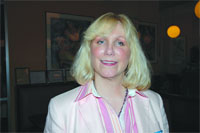
Sections Supplements

10-10:45 a.m.

Creating a Work-life Balance = Healthier Business
Led by Anne-Marie Szmyt, director of WorkLife Strategies at Baystate Health
Room 1

Golf and Learn: Leadership and Team Building on the Green
Led by Lynn Turner and Ravi Kulkarni of Clear Vision Alliance
Room 2

Effective E-commerce
Led by Justin Friend and Fred Bliss, Stevens Design Studio
Room 3

Think Like an Entrepreneur: Any Time, Any Place, Any One
Led by Dr. Jan Ruder, Dr. Sandi Coyne-Westerkamp, Professor Lauren Way, and Dr. James Wilson III, the Graduate School at Bay Path College
Room 4

11-11:45 a.m.

New Ways to Meet Your Workforce Hiring and Training Needs
Led by Kevin Lynn, manager of Business Services at FutureWorks Career Center, and Charles Bodhi, director of Employer Services at the Regional Employment Board of Hampden County
Room 1

The Secret Life of Your Information
Led by Elizabeth A. Rivet, Ph.D., director of Graduate Studies in Communications and Information Management and assistant professor of Information Technology at Bay Path College
Room 2

Taking the Lead: Manage with Style
Led by Carol Bevan-Bogart, Cambridge College
Room 3

Multichannel Marketing
Led by Tina Stevens, Stevens Design Studio
Room 4

2-2:45 p.m.

Effectively Reaching the Hispanic Market
Led by Hector Bauza, president, Bauza & Associates
Room 1

The Implications of Aging Parents: How to Help Your Employees
Led by Joanne Peterson, program development manager, Baystate Visiting Nurse Assoc. & Hospice
Room 2

Seven Steps to Improve Your Web Site’s Performance
Led by Dave Flaherty, president, Ashton Services
Room 3

Sections Supplements
After 32 Years, NESEA Has an Audience for Sustainable Energy Education
David Barclay

David Barclay, executive director of NESEA, in the organization’s Greenfield offices.

Staff at the Northeast Sustainable Energy Assoc. in Greenfield say their phones have been ringing more than ever, and that is bolstering their efforts to create a larger national presence for the organization, which has been educating business professionals and the public about renewable energy for three decades. The road ahead is still long and winding, but as NESEA’s executive director says, this group has the means — and the drive — to reach its destination.

David Barclay says that sometimes, the more things change, the more they stay the same.

As executive director of the Northeast Sustainable Energy Assoc., headquartered in Greenfield, he explained that NESEA began 32 years ago, in the midst of the oil embargo of the ’70s that created mass shortages across the country. At the time, U.S. cars got an average of 25 miles per gallon.

“That’s almost exactly what it is today,” he said, noting further that Ford Model Ts, in their heyday of the 1920s, also got about 25 miles to the gallon.

It’s an illustration of the steady pace of the use of fossil fuels in the country since the advent of the automobile, but also of the energy-saving practices of its residents, which generally tend to be more reactive than proactive.

“There is a tendency now, as then, to get concerned about energy when it is scarce, and not when it isn’t,” he said. “At the time of our inception, as the fuel shortage became less of an issue, many states did away with their energy offices.”

But Barclay has hope for the future. NESEA, a non-profit organization made up of about 2,000 members, is seeing its fastest-growing years on record, and is functioning in a world that, increasingly, sees the value and the importance of its mission: to bring clean electricity, green transportation, and healthy, efficient buildings into everyday use, in order to strengthen the economy and improve the environment.

“What is notably different now are rapidly rising prices and catastrophic climate change,” he said. “Those are realities that have captured people’s attention — in a largely positive way.”

‘The Energy Crisis Has Everyone’s Attention’

Now, NESEA is moving ahead with plans to capitalize on this new awareness, working to increase its membership, which is largely made up of business owners and their employees spanning a 10-state area from Washington, D.C. to Maine.

The organization also hopes to grow and expand its many professional networking and educational programs, and to become a greater presence across the nation in general — its work has been most successful in New England for many years, and Barclay said the time is right to expand west.

A dozen NESEA chapters are now scattered across the Northeast, and members pay annual dues to the organization. About two-thirds of the group’s funding is derived from its membership, either through fees, donations, or revenue from programs hosted by NESEA, the costs of which are often offset by regional and national sponsors. An annual fund drive is also held, and in general terms, the balance of NESEA’s $1.3 million annual operating budget is funded through state, federal, and foundation grants.

Key NESEA programs include building workshops and conferences for professionals, including the largest and longest-running energy conference in the Northeast each year, the Building Energy Conference.

There is also still a strong emphasis on energy-efficient transportation practices, and the organization has a robust education division, which creates programs for both children and adults, and also writes curriculum for school systems.

The Greenfield Energy Park, adjacent to NESEA’s offices, is a local educational offering, including resources and classes for all ages — from business owners to school children.

The group first planted its roots in Greenfield, moving to Brattleboro, Vt. for a time before its current location, on Miles Street in Greenfield, became available. NESEA acquired its headquarters in 1996, and since that time has served as an advocate for several types of sustainable energy, including solar, wind, and hydro-power.

Sandy Thomas, Project Manager for NESEA’s Building Energy Conference and director of the Greenfield Energy Park, said she too has seen vastly increased awareness of NESEA’s work, a development that is as telling as it is encouraging.

“There has been a sharp rise in interest, especially among business professionals,” she said. “The energy crisis has everyone’s attention, and there is a feeling that this is where the rubber meets the road.”

Thomas added that NESEA is in a unique position to help business professionals make choices in regard to sustainable energy.

“There aren’t very many organizations where designers, policy makers, engineers, architects, builders, and many others can join together,” she said. “We network people who need to know each other, and people are listening … they’re calling more than ever, and demanding to know the facts.”

When asked if the new interest NESEA is generating is bittersweet given the many years the group has been advocating the same message, Thomas said she understands the delay.

“Change comes hard to people,” she explained. “The greater number of people listening is icing on the cake for us. I think more people are taking their impact on the environment more personally, hearing these predictions of struggle ahead, and hoping to make the world a better place for their kids and grandkids.”

‘The Means to Get There’

There are other advances that are pushing NESEA’s mission ahead, said Barclay – including the gradual leveling of costs associated with ‘going green.’

“There is a myth that it costs more to be green, and I want to break that myth,” he said, noting that while some green building and energy still costs more than conventional tactics, the returns are better than they’ve ever been, and new techniques and technology are driving those prices down.

“It’s easier with new construction, because you’re not limited to what can be done within an existing design,” he said. “But architects and engineers in particular are consistently finding new ways to reduce consumption at no additional cost.”

Wind power, for instance, is now on par with the price of conventional forms of energy production, said Barclay. Solar still has a way to go to reach that point, but he expects that a decade from now, use thereof will have driven that price down, too.

“To expand the use of renewable energy, individuals, the private sector, and the government all have to work together,” he said. “By connecting businesses to one another and continuing our educational efforts, we have the means to get there.”

‘Planting Seeds Early’

Moving forward, NESEA is now in the midst of a number of initiatives aimed at reaching larger audiences across the country.

“NESEA has traditionally been a New England organization, and we are attempting to broaden that,” said Barclay. “That’s a major effort. We’re working with our chapters to expand their rolls, and we have a much larger public outreach effort underway, to connect with consumers or to connect them with the professionals involved with our organization who can help them succeed with renewable energy practices.”

NESEA’s educational programs are also in the process of expanding — the division’s director, Chris Mason, said he recently completed a curriculum development project with the Pennsylvania public school system, and would like to hold a conference for educators similar to the Building Energy Conference. To do that, he said at least one major sponsor would be necessary.

“It’s a mission to get this into classrooms across the country,” he said. “There is so much activity in the renewable energy industry that people don’t know about; working with children, we’re planting those seeds early.”

And in broader terms, NESEA is revamping its recruitment and membership programs to attract new members and better serve them. Kevin Maroney, trade show manager for the Building Energy Conference, has also been working with NESEA’s membership base, and said that he’s in the process of creating a comprehensive program to present to new or potential partners.

“It’s geared toward making our organization more attractive,” he said. “We asked ourselves the question: ‘as a membership organization, how can we best serve companies?’ And the answer is largely found through advocacy and public policy, all geared toward allowing smaller companies to get the same attention as large corporations.”

Maroney said NESEA is also working now to put together a discounts package, which would allow members to use their membership for savings within a number of partnering stores and organizations.

“Everything is geared toward sustainability,” he said. “And by sustainability, we mean using renewable resources, but also ensuring our members stay in business. Like any industry, there are best practices to learn from. If society is responsible, I think the direction in which we need to move is clear.”

‘We Have an Opportunity to Grow, to Thrive’

Maroney used the metaphor of the American auto industry to illustrate his point — it is imagery that seems prevalent within NESEA’s offices.

“We can learn a lot from that industry — from what worked, and what did not,” he said. “The big thing that has not gone well has been sustainability. I think that’s an issue that started very early on for car manufacturers, and many problems can be rectified if they’re addressed early.

“In my opinion,” Maroney said of the renewable energy sector, “our industry is in its infancy. We have an opportunity to grow, to thrive, and to see what’s working, and what isn’t … by doing that, we can make things happen.”

Jaclyn Stevenson can be reached at[email protected]
Departments


Ken Furst

The World Affairs Councils of America recently appointed Ken Furst, long-time member and president of the World Affairs Council of Western Mass., to the national board of directors.


•••••

Indrani K. Gallagher recently joined the Pioneer Valley Planning Commission in West Springfield as Office Manager/Executive Assistant.

•••••

The Pioneer Valley chapter of BNI (Business Network International) recently elected a new slate of officers to its Leadership Team. Officers are:
• Ken Gotha, president, of Custom Furniture Design and Restoration of Agawam;
• Elaine Labbe, vice president, of Distinctive Marketing in Chicopee, and
• Eric Lubarsky, secretary/treasurer, of E & G Automotive of West Springfield.

•••••

Keller Williams Realty in Longmeadow announced the following:
• Donna L. Duval is working in the Longmeadow Market Center, specializing in estate properties, pre-foreclosure, and residential sales, and
• Kevin F. Moore is also working in the Longmeadow Market Center, where he is specializing in residential sales.

•••••


Greenfield Savings Bank announced the following:
• Shane P. Hammond has been elected Trustee;
• Regina Curtis has been named a Corporator;
• Bruce Lessels has been named a Corporator, and
• Jack Vadnais has been promoted to Assistant Vice President and Infinex Representative. His expertise lies in financial planning, investment, and risk management.

•••••

Michelle McAdaragh has been named Director of Real Estate Development for HAP Inc. in Springfield. She will work to increase production of affordable housing in Hampden and Hampshire counties and expand urban neighborhood revitalization efforts.

•••••

Savage Range Systems in Westfield has appointed Barry Witt to the newly created position of National Sales Manager.

•••••

Myra Marcellin recently received the 2007 Pride of First Pioneer Outstanding Citizenship Award from First Pioneer Farm Credit. She is a loan officer in First Pioneer’s Enfield office.

•••••

FamilyFirst Bank of Ware has promoted Dawn M. Swistak to Vice President and Treasurer. She formerly served as Assistant Treasurer.

••••


Rensselaer Polytechnic Institute’s Hartford campus recently announced the appointment of five full-time faculty members. They are:
• Darius Jal Sabavala, Ph.D., Professor, and Anupam Saraph, Ph.D., Professor, both in the Lally School of Management and Technology; and
• Brice N. Cassenti, Ph.D., Associate Professor, Engineering; Eugene Eberbach, Ph.D., Associate Professor, Computer Science; and Renaud Pawlak, Ph.D., Assistant Professor, Computer Science, all in the Department of Engineering and Science.

•••••

ERA Laplante Real Estate has added Heather Law to its sales staff.

•••••


Teresa C. Utt

Teresa C. Utt has joined the executive sales staff of Andrew Associates in Enfield, Conn.

•••••

Polish National Credit Union has promoted the following individuals:
• Christine M. Janik, Senior Vice President of Human Resources;
• Anthony F. Ogonis, Senior Vice President of Operations;
• Joanne M. Page, Vice President of Lending;
• Celia Wolanin, Vice President of Retail Administration;
• Cynthia Mahoney, Compliance Officer;
• Ela Vickers, Branch Manager at the main office;
• Deborah Rivera, Assistant Manager at the main office, and
• Cynthia Houle, Assistant Manager at the Westfield office.

•••••

James A. Sandagato has been promoted to Commercial Lending and Services Officer for the Commercial Division of Southbridge Savings Bank. He previously served as a branch manager.

•••••

Springfield-based A. G. Edwards & Sons Inc. has promoted Mark W. Teed to Associate Vice President. He is Branch Manager and a Financial Consultant in the firm’s Springfield office.

•••••

Jonathan Pine has been named Vice President of Medical Specialty Services at Baystate Health. In his new role, Pine will oversee Diabetes and Endocrine Services, Neurosciences Services, Behavioral Health, Rehabilitation Services, Renal and Transplant Services, Gastroenterology, Department of Medicine Administrative Services, and several Baystate community health centers.

•••••

Kenneth R. Carter, Associate Director for Research at the UMass-Amherst Materials Research Science and Engineering Center on Polymers, won the Percy L. Julian Award for significant contributions in pure and applied research in chemistry. The award honors black chemist Percy L. Julian, who is known for work that led to the discovery of cortisone.

•••••

Dr. John F. Cardella has been appointed Chairman of the Department of Radiology at Baystate Medical Center in Springfield.

Sections Supplements
Deb Boronski

Deb Boronski said the Business Market Show received a needed boost of energy from its move last year to the MassMutual Center.

Business Market Event Has a (New) Date with Destiny

Organizers of the Business Market Show moved the event to the MassMutual Center last year, one of several steps taken to give the show a shot of adrenaline. The various strategies have succeeded in creating a new look and feel for Market, which should get another boost with an early May date and a number of new features.

Deb Boronski says the decision to move the date for this year’s Business Market Show from its traditional early April to May 2 was strictly a matter of dollars and cents — specifically, those recorded on the tax forms filled out by CPAs.

Area accounting firms have struggled the past several years to do clients’ taxes and the trade show at the same time, explained Boronski, vice president of the Affiliated Chambers of Commerce of Greater Springfield and long-time organizer of the annual trade show.

Many stopped trying, leaving some well-known names from the accounting sector as no-shows for the Market event.

“Something had to give,” said Boronski, joking that, since the Internal Revenue Service wasn’t going to change the filing deadline, the ACCGS would have to make some adjustments. And it did.

Actually, there are several good reasons for moving the date of the show back several weeks — from warmer weather that provides incentives for people to leave their offices for part of the day, to giving people more time to prepare their companies for the show. But the desire to accommodate CPAs was the initial motivation, and a quick glance at the exhibitor list shows it was a wise move.

“We have a lot of accounting firms coming,” Boronski said, “including some that haven’t been here for some time.”

These additions provide more evidence that the trade show remains relevant for the Western Mass. business community and that it has a real future, said Boronski, adding that, in recent years, there were questions about whether it did. Participation had been declining — and not just because of the conflict for accounting firms — and organizers needed to gauge whether that trend could be reversed.

“Last year’s show was the big test,” said Boronski, noting that the event had been moved to the MassMutual Center after more than a decade at the Big E, and many new features were added in an attempt to breathe some new life into the show. “And it passed that test with flying colors.”

In other words, the show stopped losing ground in terms of exhibitor participation, and the needle has started moving in the other direction. And judging by early response this year — only a few booths remained unsold at press time — the show is clearly headed in the right direction.

“Had we not done as well as we did last year, we would have been having a discussion about the future of the show,” she said. “Now, the future looks secure.”

Market Forces

“Back by popular demand.”

That’s a phrase Boronski used a number of times as she talked about what’s in store for the 2007 show. She borrowed it in reference to the venue, many of the breakout sessions staged during the day (although there are some new additions to that list), the so-called ‘Taste of the Market Show’ conducted late in the afternoon, and many other aspects of this event, now in its 19th year.

“We didn’t fix anything that wasn’t broken,” she said, starting with the location.

Indeed, while parking was an issue for some, the MassMutual Center gave the event a new look and new feel, said Boronski, adding that its facilities led to some improvements and refinements with regard to many aspects of the show.

They start with the general atmosphere, she said, adding that the room at the MassMutual Center offers a more intimate environment, in many ways more conducive to effective business-to-business networking than the cavernous Better Living Center at the Big E.

Also, the many smaller, well-appointed meeting rooms provided better accommodations — and acoustics — for the breakout sessions, most of which were well-attended, she said.

While many elements of the 2007 show are back — again, by popular demand — there are many new twists, which show organizers say are necessary to keep the event fresh.

They start with the breakfast speaker, Wes Moss, a certified financial planner, author, and entrepreneur who gained more than his 15 minutes of fame in the fall 2004 season of The Apprentice. He was the 12th person to hear those infamous, often parodied words ‘you’re fired,’ but his experiences with the show — and in business — should provide for an entertaining morning keynote address, said Boronski.

Other additions for this year include a microbrew tasting — participants can sample three craft beers distributed by Chicopee-based Williams Distributing — and a luncheon staged by the Better Business Bureau’s regional office, which will use the occasion to present its Torch Awards for marketplace ethics. The luncheon speaker will be Dr. Steve Sobel, a noted motivational speaker and humorist.

As for the seminars, Boronski said there is a good mix of return engagements from last year and several new offerings, registration for which can be done online at www.businessmarketshow.cm/seminars. The schedule looks this way:

10-10:45 a.m.

  • Creating a Work-life Balance = Healthier Business, led by Anne-Marie Szmyt, director of WorkLife Strategies at Baystate Health;
  • Golf and Learn: Leadership and Team Building on the Green, Lynn Turner and Ravi Kulkarni of Clear Vision Alliance;
  • Effective E-Commerce, Justin Friend and Fred Bliss, Stevens Design Studio; and
  • Think Like an Entrepreneur: Any Time, Any Place, Any One, Dr. Jan Ruder, Dr. Sandi Coyne-Westerkamp, Professor Lauren Way, and Dr. James Wilson III, the Graduate School at Bay Path College.

11-11:45 a.m.

  • New Ways to Meet Your Workforce Hiring and Training Needs, Kevin Lynn, manager of Business Services at FutureWorks Career Center, and Charles Bodhi, director of Employer Services at the Regional Employment Board of Hampden County;
  • The Secret Life of Your Information, Elizabeth A. Rivet, Ph.D., director of Graduate Studies in Communications and Information Management and assistant professor of Information Technology at Bay Path College;
  • Taking the Lead: Manage with Style, Carol Bevan-Bogart, Cambridge College; and
  • Multichannel Marketing, Tina Stevens, Stevens Design Studio.

2-2:45 p.m.

  • Effectively Reaching the Hispanic Market, Hector Bauza, president, Bauza & Associates;
  • The Implications of Aging Parents: How to Help Your Employees, Joanne Peterson, program development manager, Baystate Visiting Nurse Assoc. & Hospice; and
  • Seven Steps to Improve Your Web Site’s Performance, Dave Flaherty, president, Ashton Services.

While packing the schedule with interesting programs, show organizers have taken several steps to ensure an attractive quantity and quality of visitors to the show, thus fueling better opportunities for exhibitors. One such step involves parking; the vendors will be instructed to park under I-91, said Boronski, noting that the walk is only a few minutes, thus leaving more spaces in downtown lots for attendees.

Booth Presents

There will many smaller new twists and turns for the show, said Boronski, listing everything from an appearance by the Fred Astaire Dancers at lunch to a DiGrigoli Salons booth that will be cutting and shaping hair during the day.

Such additions are part of the process of making the show stronger for today — and for tomorrow, she said, adding, again, that the future of the Market show certainly looks bright.

Fast Facts

What:The Business Market Show 2007
When:Wednesday, May 2
Hours:Breakfast starts at 7:15 a.m., with the show floor opening at 9; the event runs until 5 p.m.
Highlights:Several breakout sessions, the Taste of the Market Show (3 to 5 p.m.), a lunch sponsored by the Better Business Bureau, a microbrew tasting.
For More Info:Call (413) 787-1555, or visitwww.myonlinechamber.com

Sections Supplements
Meet J. Sheldon Snodgrass — He Can Help with Your Delivery

J. Sheldon Snodgrass worked in sales and marketing for many years and was, by all accounts, quite good at it. He took that expertise, and some long-undeveloped entrepreneurial drive, and created the Steady Sales Group, a venture that helps clients of all types and sizes effectively market and sell what they do well. There are many aspects to this all-important business function, he says, but it all boils down to finding a good fit between what one is selling and what the potential client needs.

It was early fall 2001. J. Sheldon Snodgrass was an account executive for the local satellite office of a technology consulting company — and stressing about his quarterly numbers. Again.

So much so that, this time, a friend got in his face and prompted a reality check that would change the course of his career track in a seismic way.

“He asked me, ‘do you own this company?’” Snodgrass recalled. “I said, ‘no.’” He then asked if I was going to own the company soon, or if there was any chance that I would ever own it. And I kept saying ‘no.’

“Then he said, ‘Sheldon, why are you carrying so much anxiety when you have so little stake in the company?’” he continued, adding that his friend made it clear that if one is to get so worked up about sales numbers, they might as well do so for a company they own.

And that, to make a long story somewhat short, is how the Steady Sales Group was started. It’s a venture Snodgrass launched out of his Williamsburg home that focuses on how people and companies can improve their sales. Actually, there are several facets to this entrepreneurial gambit; Snodgrass is a sales coach, guerilla marketing expert, and sales consultant.

He has appeared at a number of seminars and networking events locally, telling people how to improve their bottom line, while making impressions that will hopefully boost his own.

His client list has been growing slowly but surely, and now includes everything from a financial services company to a sporting goods distributor to the local nonprofit Human Resources Unlimited. In most, but not all, cases, including that of HRU, which places clients with physical and mental disabilities in employment situations, the product or service being sold is somewhat non-traditional and often quite challenging, said Snodgrass.

“That’s a hard sell,” he said of HRU’s service, but added quickly that, to some, all sales are difficult. His work, in a nutshell, is to simplify the process and help people get a message across.

His own message? That selling isn’t an art and it isn’t a science. It’s a skill that, like all other skills, must be learned and continually honed. This thought process is reflected in a quote from Aristotle that Snodgrass includes in all of his own marketing materials: “We are what we repeatedly do. Excellence is not an act, but a habit.”

Beyond habits, there are nuances in sales, many of them small but all of them important, he said before offering a small sampling of what he imparts.

“When I teach phone-scripting, I say that some the first words out of your mouth should be, ‘if I’ve caught you at an opportune time, can we take a moment now or perhaps schedule a phone appointment to explore a fit between what I do and what you need,” he explained. “But most salespeople will ask, ‘have I caught you at a good time?’ What’s the inevitable answer to that? ‘No.’

“So now, you’re either forced to hang up or essentially ignore what you’ve just heard and proceed anyway,” he continued, “which isn’t a good way to start toward a successful conclusion.”

In a wide-ranging interview, Snodgrass talks about nuances, sales and how to improve them, and why he believes he’s found a unique, potentially lucrative business niche.

A Quick Hook

When asked about his own sales goals and whether he was meeting them, Snodgrass was direct, honest, and said, simply, “no.”

He then clarified and expanded upon that statement, noting that there can in fact be good reasons for being slightly behind (three months or so, in his case) on one’s projections. And he thinks he has one — specifically devotion of time and energy to other aspects of the business, including those that should eventually drive better sales numbers.

That’s how Snodgrass described his efforts to ramp up his Web site, www.steadysales.com, a time-consuming initiative that is starting to yield some real results. Those who visit that site will find a breakdown of his products and services, a quick rundown of his credentials, and some testimonials for obviously satisfied clients. And these success stories are arguably his best sales pitch, because they get right to the heart of the matter — the bottom line.

“I don’t want or need people saying, ‘Sheldon Snodgrass was a pleasure to work with,’” he explained. “I want them to say I got results.”

Helping clients identify their best method of approach is at the heart of the Steady Sales Group, a venture that has evolved since Snodgrass’s friend held up a mirror and compelled the entrepreneur-in-waiting to take a good look at himself.

The path to that moment was certainly a circuitous one, said Snodgrass, noting that before taking a succession of jobs in sales, sales training, or both, he spent three years in the Army Transportation Corps, worked for several non-profit groups, and did a stint at a resort in Mexico.

His introduction to the world of sales came after he answered a small want ad for a commission-only sales job at a Boston-area-based corporate travel company called Uniglobe.

“It was a job knocking on doors or, as they say, dialing for dollars, and I was so naïve about what it took,” he recalled. “The ad said, ‘love travel? … $100,000 commission potential … come to this seminar.’

“So I went and listened to this spiel to recruit people to sell for the agencies that are part of this regional franchise,” he continued. “And I raised my hand and said, ‘does this involve cold-calling?’ She just chuckled and said, ‘yes.’”

Despite that awkward start, he did well with the company, and was eventually promoted to sales trainer. After relocating to Western Mass., he took a job as marketing coordinator for Northeast Utilities’ Corporate Challenge Program, where he developed and spearheaded a sales and marketing strategy to provide leadership development and team-training programs to corporate clients, among other assignments. Later, he was a marketing and sales associate with REMI (Regional Economic Models Inc.) in Amherst, and then an account executive with Convansys, where, after two years of selling, he got his wake-up call.

Since launching the Steady Sales Group only two months after 9/11, Snodgrass has assembled a lengthy and somewhat eclectic client list. It includes Epstein Financial Services and Camfour, the Westfield-based distributor of sporting arms and other products, but also a molecular biologist who approached him recently about helping her sell one of her services — three-dimensional renderings of molecules.

The list also includes several non-profits, a neurosurgeon who wants to gain work as a consultant to health care providers, and several technology companies created by and staffed with individuals who may know how to design software but probably don’t know how to sell or market it.

Getting the Calls

Each case, and each assignment, is different, said Snodgrass, noting that for some clients he works to develop sales techniques and specific pitches for banks of telemarketers, while for others, including the many sole proprietors he’s helped, the mission is simply to get them on whatever radar screen they want to get on.

There are some common denominators with each project, he said, adding that these include identification of clearly defined markets, crafting a message and devising strategies to deliver it, and, in broad terms, finding ways to “flush the game,” as he called it, borrowing a hunting metaphor, and then, more importantly, plucking that game.

Helping clients do so is a fairly unique niche, said Snodgrass, adding that, while there are a number of ventures focused on helping clients market themselves effectively, there are few that specialize in sales. This adds up to what could be a lucrative market, because every company, regardless of what it makes or does, has to sell those products and services.

And there is another constant in the business world: no matter how good sales are, business owners want them to be better.

This simple fact has brought many people to Snodgrass’ door, his Web site, or the seminars he delivers. The messages differ, but there are some basic thoughts that he imparts.

First and foremost, he says sales are all about creating a good fit. If there isn’t one, he continued, there can’t be, or shouldn’t be, a sale.

“I have a very clear methodology for teaching sales, but it’s about finding a fit with someone and then finding good, concise, precise questions to ask in order to explore that fit,” he explained. “And when you ask for that fit, you ask for a close, and here’s a big mistake people make.

“When you close, you’re not always closing for the check, or the transaction,” he continued. “You’re agreeing to some next step in the process.”

Other, more specific forms of instruction include everything from tips on crafting an effective voice mail message to leave with prospective customers to steps to take when that person doesn’t call back — which is most of the time.

“It starts with the message; that’s marketing 101,” he explained. “It tells people why you’re different, what makes you special, and why people should give you money.

“But after you’ve left that perfect message, whose job is it call back?” he continued. “The client’s? No, it’s your job.”

Returning, again, to his own business and its sales volume, Snodgrass said many people are calling him back, or not waiting for him to call, because of the obvious importance of sales.

“It’s almost easier to write an ad campaign or come up with some clever marketing scheme than it is to think about how to have a sales conversation and follow up, follow up, follow up until it comes to some conclusion,” he said. “And that conclusion may be only an agreement to a phone appointment or permission to continue the conversation.”

Closing the Deal

When asked how he was enjoying life as an entrepreneur, Snodgrass said, in not so many words, that he wonders why he waited so long.

“I only experienced anxiety when I was trying to meet quotas for other people,” he explained, adding quickly that he is still driven to succeed, but doesn’t lose sleep at night worrying about numbers.

That’s because, generally speaking, he practices what he preaches — about identifying a specific audience, shaping a message to deliver to that constituency, and then delivering for those clients. In short, making a good fit. When anyone, or any business, can do that, he told BusinessWest, the numbers should take care of themselves.

But they can always be better, so Snodgrass should see his own sales numbers continue to climb.

George O’Brien can be reached at[email protected]
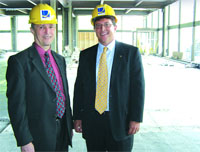
Departments

The following business incorporations were recently recorded in Franklin, Hampden, and Hampshire counties and are the latest available. They are listed by community.

AGAWAM

JL Construction Corp., 18B Mansion Woods Dr., Agawam 01001. Jason J. Larochelle, same. To provide development, excavation, construction and road work services.

Marasi Transportation Corp., 11 Horsham St., Agawam 01030. Steven Marasi, same. Motor transportation of all commodities.

R & A Schoolcraft Inc., 79 Corey St., Agawam 01001. Richard A. Schoolcraft, same. To operate a convenience/package store.

AMHERST

Personalized Pharmaceutical Systems Inc., 356 Middle St., Amherst 01002. Todd A. Hoover, MD, 822 Montomery Ave., #306, Narbeth, PA 19072. Paul Herscu, 356 Middle St., Amherst 01002, treasurer. Consulting.

CHICOPEE

Design Professionals Inc., 554 Grattan St., Chicopee 01020. Peter R. Demallie, 425 Sullivan Ave., So. Windsor, CT 06074. Robert J. Lefebre, Esq., 554 Grattan Ave., Chicopee 01020, registered agent. Civil engineering, urban planning, surveying.

Waris Inc., 241 Chicopee St., Chicopee 01013. Mian Zahoor, same. Fast food.

EAST LONGMEADOW

M. Scott Investment Services Inc., 51 Prospect St., East Longmeadow 01028. Michael Scott Poggi, 112 Nottingham Dr., East Longmeadow 01028. Consulting.

FEEDING HILLS

FMLB Inc., 801 Springfield St., Feeding Hills 01030. Frank Bruno, Jr., 953 Westfield St., Feeding Hills 01030. Restaurant/bar.

FLORENCE

Content Here Inc., 17 Fairfield Ave., Florence 01062. Seth G. Gottlieb, same. Strategic technology consulting and advising.

GREENFIELD

Addam Inc., 409 Chapman St., Greenfield 01301. Maytte Dusseau, same. (Nonprofit) To serve as a network of admissions marketing and business development professionals in child and adolescent residential services, etc.

HADLEY

Lawn Jockey Inc., 49 River Dr., Hadley 01035. Tory J. Chlanda, same. Landscaping design, construction and maintenance.

HOLYOKE

372 Source of New York City Inc., 372 High St., Holyoke 01040. Hoi Soon Kim, same, president and registered agent. To operate a retail apparel and accessory company.

JKZ Inc., 409 Homestead Ave., Holyoke 01040. John D. Zantouliadis, same. Restaurant.

INDIAN ORCHARD

DeVallis Realty Trust Inc., 797 Berkshire Ave., Indian Orchard 01151. Ruth Rodrigues, same. To acquire, develop and deal in real property, etc.


LONGMEADOW

NRG Real Estate Services Inc., 13 Williams St., Suite 211, Longmeadow 01106. Nikita R. Gelfand, 50 Bellevue Ave., Longmeadow 01106. IT technical consulting.

LUDLOW

Ever After Inc., 541 Winsor St., Ludlow 01056. Angelina F. Fragoso, 101 Pine St., Belchertown 01007. Event planning, sale and rental of bridal attire, etc.

MONTGOMERY

Alex Electrical Inc., 115 Carrington Road, Montgomery 01050. Aleksandr I. Dudukal, same. General electrical service.

SOUTH HADLEY

Millenium Investments Inc., 29 Upper River Road, South Hadley 01075. Daniel Muldoon, same. Real estate investments.

VP-Line Inc., 4 Eagle Dr., South Hadley 01075. Vladislay Pehlka, same. Logistics.

SOUTHWICK

Chasamy Inc., 236 Vining Hill Road, Southwick 01077. Amy V. Sfakios, same. Restaurant business.

SPRINGFIELD

Joy of Our Bodies Spa Inc., 20 Arnold St., Springfield 01119. Joy Danita Allen, 63 Edgewood St., Springfield 01109. To provide hair, nail and spa services.

Logic Realty Group Inc., 111 Wollaston St., Springfield 01119. Wilfredo Lopez, Jr., same. Real estate ventures and investment.

TURNERS FALLS

New England Koi and Pond Supply Inc., 81 Oakman St., Turners Falls 01376. Richard L. Walsh, same. Sale of Koi and related products.

WEST SPRINGFIELD

Inter-Technologies Inc., 451 Dewey St., West Springfield 01089. Yury Pshenichnyy, same. Computer store, retail, printing service.

Michael J. Gousy, O.D. Inc., 7 Westfield St., West Springfield 01089. Dr. Michael J. Gousy, same. Optometry.

SSR Construction Inc., 84 Maple Terrace, West Springfield 01089. Peter Slivka, same. Construction and remodeling.

WESTFIELD

Geoffrion Inc., 380 Union St., Suite 312, Westfield 01085. Jeffrey P. Gavioli, 17 South Maple St., Westfield 01085. Disaster restoration and carpet cleaning.

WILBRAHAM

Sundance Leather International Inc., 10 Willoughby Lane, Wilbraham 01069. Patricia W. Degon, same. Manufacturing.

Sections Supplements
Medical Manufacturing Gains a Solid Foothold in the Valley
Brad Rosenkranz

Brad Rosenkranz of Marox Corp., one of the region’s leading medical device manufacturers.

Medical device manufacturing is a healthy and growing niche in the Western Mass. economy, with several companies providing precision machining for companies that design medical products. But some say the region has the potential to move beyond contract manufacturing into more design and development work. The challenge is drawing such companies to the Pioneer Valley — and retaining the engineering talent now looking for work elsewhere.

Spine and joint surgery have come a long way over the past decade or two. So has the technology necessary to turn raw plastic and metal into precision surgical components.

Take Marox Corp. in Holyoke, which performs precision machining for a number of companies that design and distribute implants and instruments for the spine, hips, and knees, from anterior cervical plates and titanium screws used in spinal fusion to devices that drill into the knee and hip during joint replacement surgery.

“The most recent emerging technology is motion preservation,” said Brad Rosenkranz, vice president of sales and marketing for the second-generation family business, referring to technology that allows smoother, low-friction movement between titanium and plastic implants and the natural bone of the spine and joints — technology that would be useless without the skilled, high-precision manufacturing process that Marox specializes in.

“Other companies do the design and ultimately market these products to hospitals and surgeons, but they come to us for the production,” said Rosenkranz. “The larger companies — Medtronic, Zimmer, Johnson & Johnson — do their own in-house machining and precision, but the vast majority outsource those things, and that’s where we come into play.

“We work closely with our customers to determine the next products to come down the pipeline, and we work with them at the earliest stages to get involved with emerging technology,” he continued. “That’s important because technology is always changing, and we want to be at the forefront of it.”

Marox is only one of several companies in the region performing such work. Consider Texcel in East Longmeadow, which also boasts a far-flung roster of clients who would rather focus on engineering new products without the burden of actually mass-producing them.

“The focus at Texcel is to be the strategic manufacturing partner for emerging medical device companies,” said Larry Derose, the company’s founder and CEO, adding that Texcel’s specific expertise is in implantable medical devices such as neural stimulators, drug-infusion devices, and orthopedic implants.

“Our mission is to fulfill the needs of these companies that are seeking a source to manufacture their complete device all the way through final packaging,” he added.

That, in a nutshell, is the most common model in the Pioneer Valley’s healthy and growing medical manufacturing sector, one that has seen many companies become contractors for regional, national, and international firms that design and engineer such equipment. “These are companies that don’t have that manufacturing capability,” Derose said, “and don’t want to have it.”

In this issue, BusinessWest examines this niche that is blossoming in Western Mass. — and why some people feel that the region could someday be known for creating medical devices as much as for manufacturing the creations of others.

Local Partnerships

Blackstone Medical is a rare local example of a firm that designs medical products and supplies a steady flow of machining work to area manufacturers. The Springfield company develops implants and instruments for spinal surgery, but partners with companies such as Marox and Accellent in Brimfield for the actual machining.

“We decided we would take a step up in the food chain and create a company that actually develops products and markets them to the end user, but outsources manufacturing needs to local machine shops and contract manufacturers that specialize in medical devices,” said Blackstone co-founder Bill Lyons.

When Lyons and his brothers launched Blackstone 11 years ago, spinal surgery was just beginning a remarkable wave of innovation that hasn’t abated, meaning companies that design such products, as well as those that manufacture them, are looking at bright futures. But for now, the Pioneer Valley is dominated by the latter group.

“There’s a fairly significant divide in Western Mass. today” between plentiful manufacturers and scarce engineers, said Lyons. “Hopefully, we might someday see a group of companies that develop, engineer, and design their own products, sell them using their own marketing capabilities, and either manufacture them in-house or contract them out to local machine shops.”

The regional disconnect between the ability to manufacture products and the ability to design and develop them partly explains why Blackstone is virtually alone in engineering products for market; it also explains why Blackstone’s design component is primarily based in New Jersey, which Lyons called a “hotbed” for orthopedic engineering.

Ellen Bemben, president of the Regional Technology Corp. based in Springfield, admits there’s a skills gap in Western Mass. when it comes to engineering medical products, but she added that the RTC has the situation on its radar, recognizing the potential of cultivating such an industry in the region.

“I’ve heard from our medical device manufacturers, and they’re very concerned about having experienced design engineers available to them,” said Bemben.

Even though we have students coming out of our universities as top-notch engineers, they’re not experienced, and a number of companies have had to import help.”

She noted that one company in the area currently has 15 employees but six job openings — that is, six high-paying engineering jobs — that it is unable to fill. “People say there aren’t any jobs here, but there are actually a lot of jobs. It’s a matter of getting the word out and coordinating the workforce.”

The problem is a classic chicken-and-egg scenario. Theoretically, a healthy supply of companies that design medical devices could draw young talent to the region and retain local engineering graduates; meanwhile, such companies would be persuaded to locate here if they recognized a skilled workforce — but each potential trend seems to be waiting on the other.

“There’s a growing supply out there,” said Bemben. “We’re well aware of the workforce requirements, and we’re also trying to develop a profile of exactly what kind of workforce a medical device manufacturing company needs.”

Choosing a Path

When people — including economic planners — talk about biotechnology, said Lyons, they often have no idea of the breadth of the industry, which includes life sciences, medical devices, pharmaceuticals, software development, and other niches. He maintains that medical device manufacturing is the facet with the most potential to become a hub based in Western Mass.

“There’s a myriad of industries that fall under the term ‘biotechnology,’” he said. “We have to pick one of those industries and go after it. We have to be specific and look at what the skill basis is regionally to support it.

“How can we support a pharmaceutical initiative if we don’t have that skill basis?” he continued. “But we do have a long, storied history of manufacturing things made of metal and plastic. Efforts to create a base for biotechnology in this area should be strictly focused on medical devices, which utilizes an existing skill base.”

Derose said such companies would already have the non-engineering resources they need, noting that Texcel provides key services beyond simple manufacturing.

“We produce not only the product, but the documentation the customer needs to support its application to the FDA for market approval,” he said.

In addition, “we get involved early on with a client to assist in what we call ‘design for manufacturability’; that means helping the client bridge the gap from the early concept to a design that can be manufactured in volume. That’s all based on our resources and understanding of the technologies needed to build some of these devices in higher volumes. Our goal is to be a manufacturing partner for companies that have no interest in manufacturing for themselves.”

Proponents of the industry say the sky’s the limit when it comes to new technology, too. “We’re building sophisticated devices like implantable neural stimulators for stroke recovery, hypertension, and gastric disorders,” Derose said of his 20-year-old company.

Still, if Western Mass. wants to grow this industry, time is of the essence, said Bemben, noting that Bristol Myers Squibb is building a facility in Fort Devens in Eastern Mass., and Advanced Micro Devices is building in Saratoga, N.Y., projects that could conceivably draw talent from Western Mass. “I’m not panicked,” she said. “It’s just a matter of getting things coordinated here.”

“The challenge for Western Mass. is to get one or two companies like Blackstone to develop a core of experienced medical devices professionals, and then spin off that with entrepreneurial startups,” said Lyons. “We have the manufacturing expertise; what we don’t have is the design and development expertise. We have graduates coming from UMass and other colleges, but we don’t have the companies in place to get them over the finish line.

“We need a champion,” he concluded, “someone willing to bet on this region and start to create those opportunities and make it easy for people to remain here.”
A company, in other words, with a little spine.

Joseph Bednar can be reached at[email protected]

Departments

Twenty-three business professionals recently graduated from the Affiliated Chambers of Commerce of Greater Springfield’s Leadership Institute 2007. The program, sponsored by the MassMutual Financial Group, is presented in partnership with Western New England College to prepare participants to be effective leaders in service to the community and their workplaces. Participants are now encouraged to bring their expanded knowledge and skill base back to their place of employment, as well as to the non-profit sector through a variety of volunteer opportunities. The Leadership Institute Class of 2007 includes:

• Brent Bean, Westfield State College;
• Paul Beturne, Verizon;
• Carole Bolduc, the Bank of Western Massachusetts;
• Kellie J. Brown, Westfield Boys & Girls Club;
• Elizabeth Cardona, Springfield Public Schools;
• Janice Carmichael, Westfield State College;
• Elaine Charest, Shriners Hospital;
• Lori Ann Chaves, Holyoke/Chicopee/ Springfield Head Start;
• Danielle Cochran, United Bank;
• Edda Daniele-Johnson, Regional Employment Board;
• Nancy Fagan, Baystate Health;
• Jeffrey Fialky, Bacon & Wilson, PC;
• Christopher Gingras, Baystate Health;
• Meghan Hibner, Westfield Bank;
• Michelle Lindenmuth, the Bank of Western Massachusetts;
• Karen Martin, Greater Springfield Senior Services;
• Terry Powe, Springfield Public Schools;
• Todd Ratner, Bacon & Wilson, P.C.;
• Janet Ryan-Roman, Holyoke/ Chicopee/Springfield Head Start;
• David Stawasz, Western New England College;
• Angela Vatter, Hampden Bank;
• Cynthia Wage, J.M. O’Brien Company, and
• Tricia Walker, MassMutual Financial Group.

•••••

The Springfield Falcons recently announced that left wing Mitch Fritz has been named the team’s winner of the American Specialty/AHL Man of the Year award for his contributions to the Springfield community during the 2006-07 season. Fritz helped organize the Falcons Family program and hosted his second annual blood drive, which tripled the quantity of blood the Red Cross normally collects on a regular day. Fritz was also an active participant in the Falcons visits to local hospitals, local youth hockey practices, and sled hockey appearances. Fritz is now one of 27 finalists for the AHL’s 2006-07 Yanick Dupre Memorial Award, honoring the overall American Specialty/AHL Man of the Year.

•••••


John M. Lilly

John M. Lilly has been elected by the alumni of Springfield Technical Community College to the college’s Board of Trustees. He will serve a five-year term. Lilly recently retired from Westbank Corporation in West Springfield, where he held the positions of executive vice president, treasurer, and chief financial officer. He is active in community service, serving as the chairman of the St. Thomas Church finance committee, and as trustee and past president of the West Springfield Boys and Girls Club, director for the Sisters of Saint Joseph, and committee member for the NCAA Division II national basketball championship. He also volunteers for the American Cancer Society, United Way, and area youth sport organizations.

•••••

Matthew Kullberg has joined Century 21 Pioneer Valley Associates in Northampton. He will concentrate on the Amherst, Belchertown, and Granby areas.

•••••

Kevin McNamara has been named Senior Director for Organization and Management Development at Friendly Ice Cream Corp. in Wilbraham. He will be responsible for management assessment and development, performance measurement, career development, human resource planning and management succession, and human resource-related services for franchisees.

•••••


John Klimas

John Klimas has been named Vice President of Lending for the STCU Credit Union in Springfield.

•••••

Heatbath/Park Metallurgical in Springfield has appointed Bob Barach as its Regional Sales Manager, covering Michigan, Ohio, Western Pennsylvania, Western Virginia, Alabama, Mississippi, Georgia, and Florida.

•••••

Steven Richter, founder, president, and CEO of Microtest Laboratories Inc. of Agawam, was recently named to serve on the Robert H. Goddard Council on STEM Education, a 27-member council which will advise the Mass. Board of Higher Education on STEM (Science, Technology, Engineering, and Math) Pipeline Fund workforce development programs.

•••••

United Personnel Services has announced the following:
• Carole Parlengas has been promoted to Vice President and Chief Financial Officer;
• Helio M. Duarte has been named Administrative Coordinator, and
• Tammy H. Chimi has been named Staffing Consultant.

•••••

Park Square Realty in Westfield has announced that Jodi L. Nylund and Marie T. Budreau have joined the Feeding Hills office as Sales Associates.

•••••

Allison DeLong is the latest Newsletter Director of the Board of the International Association of Business Communicators, Connecticut chapter.

•••••

Carlson GMAC Real Estate has announced the following:
• Marianne Dubois and Doreen Cunningham have joined the Wilbraham office;
• Craig M. Spooner has joined the Westfield office, and
• Suzanne Bleakley, Leslie O. Rodriguez, and Yaroslav Burkovsky have joined the Chicopee office.

•••••

Beth Brogle and Marcia Petri of Carlson GMAC Real Estate’s Holyoke office have received the GMAC Home Services’ Premier Service Diamond Award.

•••••

Bryan Fortier, an Associate in the Health Care Services Division of Meyers Brothers Kalicka, P.C. in Holyoke, recently met with Vermont Sen. Patrick Leahy and Sen. Bernard Sanders in Washington, D.C., on the importance of Upward Bound, a federal program that helps students from low- to moderate-income families prepare for and succeed at becoming the first generation in their families to get a college education. Fortier, who benefited from Upward Bound while growing up in Montpelier, Vt., joined an effort to persuade lawmakers to leave the program unaltered.

•••••

Margaret “Maggie” Rauh, CPA, of Moriarty & Primack, Certified Public Accountants, of Springfield, recently appeared as one of six witnesses to describe the personal effect of the Alternative Minimum Tax (AMT) on her family. Prior to the hearing in Washington, D.C., Rauh and Managing Partner Jay Primack, CPA, met with Congressman Richard E. Neal on Capitol Hill to discuss the issues related to this tax. The primary focus of the public hearing before the House Ways and Means Subcommittee on Select Revenue, chaired by Neal, focuses on the growing impact of the AMT on middle-class taxpayers.

Cover Story
Keller Williams Realty and Its Unique Business Model Find a Home in Western Mass.
April 2, 2007 Cover

April 2, 2007 Cover

When Texas-based Keller Williams Realty launched a franchise in Western Mass., some competitors openly conjectured that the venture wouldn’t last 90 days. Four years later, the KW franchise is moving up in the rankings and is within sight of a very ambitious goal — becoming the number one broker in the area. This explosive growth results from many factors, but especially a unique operating model that places the agents, not the broker, at the center of the home-selling universe.

Laura Stevens says she went, but with the thought that the meeting would be little more than an intelligence-gathering mission on what would inevitably become a new, potentially troublesome competitor.

That’s how she recalls the invite she accepted in March 2003 from officials with Austin, Texas-based Keller Williams Realty to discuss the possibility of a franchise in Western Mass., with her playing a lead role in that venture. Stevens, then an agent with Coldwell Banker, had met representatives of KW, as it’s called, at the annual convention of the National Assoc. of Realtors in New Orleans five months earlier, and told them that when they were ready to make their move into the Greater Springfield market they should give her a call.

They did, and she agreed to talk.

“I basically was only going because I figured, ‘if they’re coming into the market, I need to know everything I can about them,’” she admitted. “I went in essentially to spy; my goal was to find out who they were and what they had to offer the client so that if I had to sell against them I would know what I was up against. But they had me in about five minutes.”

That’s how long it took to explain and sell Stevens on what was then — and is still now — a fairly radical concept in the world of residential real estate: an operating structure in which the agent, not the broker, runs the store.

“I thought, ‘this is the best thing I’ve ever heard in my life,” she told BusinessWest. “They flip the industry upside-down; in the traditional model, it’s the broker as boss, broker as king, the ‘if you’re going to live in my house, you’re going to live by my rules’ way of thinking.

“At Keller Williams, the broker is a subservient leader, and the agents are the boss, and as an agent that appealed to me,” she continued. “I think that agents are in the best position to know what’s best for their business; the people from Keller Williams were essentially reading my mind.”

What took much longer to sell Stevens on, however, was the concept of her becoming the operating principal in Western Mass, or, in essence, the franchisee. She liked the Keller Williams model, but at first, and for some time after being introduced to it, she envisioned herself experiencing it from the agent side of the equation.

But when no one came forward to take the operating principal, or broker role — one that requires a sizable investment — Keller Williams officials pressed Stevens to consider assuming that risk, and opportunity, herself.

She did, and she’s never looked back.

She took the equity she had in two properties she owned, as well as most of her life savings, and, with some financial backing from several partners, took a somewhat daring entrepreneurial gamble, one that is thus far paying off handsomely and surprising many competitors who didn’t share the view that this was a good risk.

Along the way, she’s had to suffer many slings and arrows. In fact, KW’s business model was and is so foreign — and the Keller Williams corporate value statement, ‘God, Family, then Business,’ is so different and religion-oriented — that some competitors have taken to referring to the company as a cult, said Stevens.

“One area manager told people that we pray at our meetings,” she explained, adding quickly that there are no prayers and no Kool-aid. But there is that unique agent-centered view of the home-selling universe that is still difficult to explain and often hard to sell to agents.

But it is gaining results — across the country and especially in the local market. Nationally, the firm is well ahead of goals to have 70,000 agents by then end of this year, and has re-calibrated that number to 90,000. Regionally, the most recent statistics supplied by the Greater Springfield Board of Realtors show that Keller-Williams is growing steadily and gaining ground on the top firms in the market. The Longmeadow office was slotted second (up from third a year earlier) in terms of total sales and dollar volume for the first three months of the year, behind the Longmeadow office of Coldwell Banker, while the Agawam office was eighth, up from 17th a year ago.

There are several other yardsticks for measuring success, including the number of agents now with the local franchise — 130 (it started with 12) — as well as the opening of a second office in Agawam last year, and a third in Northampton last month. Meanwhile, the Longmeadow office will be moving soon to quarters on Dwight Road that are nearly double the current space on Shaker Road.

In this issue, BusinessWest looks at what Keller Williams has been able to accomplish in only four years in this market, and, more importantly, how it has made such a prominent mark.

Going Through the Roof

Stevens used many words and phrases to describe the agent-centered focus at Keller Williams, including some that were rather direct and reflected her many years of experience and frustration in her chosen field.

“They treat agents like intelligent people with ideas, not like idiots,” she said of KW, adding that she views the traditional plight of agents as the real estate business equivalent of taxation without representation. “I can remember once saying, ‘I have a good idea,’ and my broker replying with, ‘why don’t you let us do the thinking, and you just go do the selling.’ That was the attitude; here, the attitude is, ‘if you have a good idea, we’ll hear it; maybe it will help all of us.”

But perhaps her most effective effort to get her point across came when she gave a quick tour of the Longmeadow headquarters facility, starting with her office — such as it is. Small, oddly shaped, and tucked toward the back of what was once a suite of physicians’ offices, it has no windows. It does, however, have a second door — the one people go through to get to the Dumpster.

“I have the smallest and worst office here,” she said without any hint of regret, embarrassment, or indication that this was in any way improper. “And that’s the way it should be — the agents run the show here; our philosophy is that people do business with people, not companies.”

This was the model on which Gary Keller and Joe Williams started the company that bears their last names in 1984, and it has carried them to meteoric growth and a presence in all 50 states since they started franchising in 1993.

Stevens knew only a little about Keller Williams when she ventured to the NAR conference in late 2002. But it was enough to intrigue her and prompt a visit to the KW booth. And what she heard at that initial meeting on a planned Western Mass. franchise piqued her curiosity and eventually triggered her entrepreneurial tendencies.

Stevens, who first started considering a career as a Realtor while still in high school, had spent 15 years in the business and nearly 20 years in sales by then. She started with George & Green Real Estate in 1987, and spent seven years there before moving on to Coldwell Banker. She wasn’t really looking for a new opportunity when she sat down with KW officials, but she was certainly willing to listen.

And so, eventually, were several other agents she worked with at Coldwell Banker. They, too, liked the business model, enough to become agents and partners. Stevens was joined by Denise Vaudrin, Linda Santinello, Bino Wrona, Kathy Neilson, and Donna Taylor. They invested some money to help get the venture off the ground, and considerable effort in making it a force within the market.

But Stevens assumed the lion’s share of the risk, moving, by her estimates, from an annual salary approaching $200,000 to “zero.”
“It was more than a little scary,” she said of the transition from agent to entrepreneur, adding that she was helped in a way by the fact that agents are, by the nature of their work, independent contractors. “Agents are, in essence, entrepreneurs, but this was going a step further; it was a big risk for all of us, but one we felt good about.”

Stevens said area competitors didn’t give her and her team of partners solid odds for survival. “Many people said we wouldn’t last 90 days,” she said. “And when we did, they said we wouldn’t make it through the winter.”

The unique operating model is the primary reason why, she said, summing it up rather concisely: “Our agents are fully empowered to do whatever it takes to sell real estate — within the confines of the law.”

Seller Dwellers

Elaborating, she said the agents have the right to set policy — on everything from the hours of operation at a given office to the commission rates paid to co-brokers.

All this is done through a body known as the Agent Leadership Council, comprised of an office’s top performers, who, says Stevens, have the best business sense. “So they should have the right to run the company.

“At the beginning of each year, the council sits down, and together we figure out how much it’s going to cost to run the company each month,” she continued. “They submit a budget to me, which I then approve, and I hand over the money to them; they can do whatever they want with it. If they don’t pay the bills, we’re going to go out of business.”

While what the Agent Leadership Council does is noteworthy, why this group is in power is what competitors and area agents should come to understand, said Stevens, adding that it comes down to basic common sense. And for agents, it’s also a matter of basic mathematics.

Indeed, to show why agents are better off with the Keller Williams system than the traditional way of doing business, Stevens used her last year with Coldwell Banker as a working example, and said the KW MO would have put roughly an additional $50,000 in her pocket. She arrived at that estimate though a complicated compilation of numbers, including the amounts paid by agents to brokers, the parent company, and others. But the bottom line is, quite literally, the bottom line.

And that’s roughly the same number arrived at by Carol Roy Bright, an agent who joined KW nearly a year ago after working for Coldwell Banker and, before that, owning her own company, Real Estate Solutions. She told BusinessWest she joined Keller Williams because she could add, but there was more to it than that — specifically the fact that KW does more to help agents succeed than companies using more traditional methods.

It offers ongoing education, for example, she said, noting that classes amount to what she called a Ph.D. in home selling. Also, the company takes an approach that brands specific agents, not the company, which is logical because clients essentially do business with an agent, not with a company, she said.

“The Keller Williams model highlights the agent and puts the company in the background, which is as it should be,” she explained. “That’s because it’s the agent who gets hired, not the company. And in realty, it’s the top producers that clients are hiring, and not the firm, so if they stay with a traditional company, they’re not being properly compensated for what they bring to the table.”

Roy Bright says the KW model provides her with something else as well — a voice in how the company is run.

“We have open-book management, so everyone can see what everybody makes, and we can see what the owner is taking; we decide on equipment … we decide on everything,” she said. “I didn’t have a voice like that when I was with a traditional company.”

Yard Sale

Looking back on the franchise’s first year in business, Stevens said sales goals were exceeded by some 50%, a number that reflects some rather conservative projections.

“We didn’t know how to think big back then,” she recalled. “We’ve learned how since.”

Indeed, Stevens and her team have their sights set firmly on becoming number one in this market, and to Stevens’ way of thinking, it’s not a question of if, but when that will happen — a question she won’t answer because she doesn’t want to throw a date out there for the competition to see.

But she expects that it won’t be too long.

“We’re ahead of schedule; we’re currently No. 3 in this market in terms of gross sales, and we’re competing against some major players that have offices that have been established for 15 or 20 years,” she said. “We’re confident about moving up to number one.”

Thinking big at Keller Williams relates mostly to numbers related to unit sales, total sales volume, number of agents, and revenue-sharing payouts, said Stevens, but not necessarily to the number of offices across the region.

The company generally rejects the ‘office on every corner’ mentality that still prevails in some corners of this industry, in part because technology, primarily the cell phone, enables agents to do the bulk of their work from almost anywhere, but also because a large volume of offices creates redundancies that a cost-efficient operation will seek to minimize.

However, most consumers still want and need that office setting, Stevens continued, adding that this phenomenon explains the expansion in Agawam — an office that can help the company better serve Western Hampden County and Northern Conn. — and the most recent push into Northampton, which provides a more visible presence in Hampshire County and the hot spots in that region, including Amherst.

With the territorial expansion comes more work to sell the KW operating model, said Stevens, who admitted that it has been a harder sell in Northampton than she anticipated.

“To some, it sounds like it’s almost too good to be true,” she explained, adding that some individuals need convincing that what they’re hearing is the real deal.

Agents working for traditional brokers are way overpaying for the services that they’re getting from their brokers. Our model is so different that some people have a hard time believing it.

But ultimately, she believes top producers in the Northampton area will do the same math, and come to the same conclusion, that Roy Bright and 130 or so other individuals have.

“People have come to us from as far away as Brimfield and West Hartford,” she explained. “That’s because they recognize that it’s the right business model and they’re willing to travel for it.”

Window of Opportunity

Stevens said she does not yet know specifics on the layout of the Longmeadow office’s future home — to be part of a new office building going up on Dwight Road.

What she does know is that she will still have the smallest, worst office in the place, because while the facility’s mailing address will change, it’s unique approach to doing business will not.

That’s because successful companies don’t attempt to fix what isn’t broken, and KW’s track record for success is hard to argue with.

But maybe Stevens won’t have to contend with a door to the Dumpster.

George O’Brien can be reached at[email protected]

Opinion

When BusinessWest embarked on its recent mission to identify the Forty Under 40 — a compilation of the brightest lights in the local business galaxy — there was excitement, but also a little trepidation.

In short, we were not exactly sure what we’d find or how our list would look when done. After all, there has been considerable talk of a so-called brain drain in this region, and we didn’t know the full extent of the phenomenon.

Suffice it to say that we needn’t have worried. The impressive quantity and quality of nominations yielded more than enough evidence that there is, indeed, a large pool of young talent in this region, including several entrepreneurs who are getting businesses off the ground or taking them to that proverbial next level.

Still, as we prepare to reveal our Forty Under 40 to the community (watch for the May 14th edition of BusinessWest) we acknowledge that the brain drain is real, not just in the Pioneer Valley, but elsewhere in the state. And we’re justifiably concerned about how a Forty Under 40 list might look 10, 20, or 30 years from now and whether it will have the same overall quality.

The movement of young people out of the state or region (there are two migrations occurring) is happening for different reasons. People from, or educated in, Boston and the communities surrounding it are leaving Massachusetts in growing numbers because they simply can’t afford to live here — or at least in the style to which they believe their profession should allow them to. This movement has helped neighboring states like Rhode Island and New Hampshire, but it has also brought cost-of-living prices that are approaching those that prevail around Boston.

The drain from Boston isn’t helping Western Mass. as much — although there has been some movement here for the quality and price of life — in part because the area doesn’t have the depth of cultural attractions or nightlife that exists in most major metropolitan areas. But mostly, this region simply does not have enough good jobs, especially those in the technology sectors, that are attractive to young people today.

Creating more of these job opportunities is a challenging assignment — and efforts are already underway on a number of fronts — but it is critical work, because this region cannot develop a true technology-based economy without a large, talented workforce. And such a workforce is difficult to create if large numbers of talented young people who grew up here or went to one of the Valley’s many colleges wind up leaving for perceived greener pastures.

In nearly every edition of BusinessWest there is a story, or mention, of an individual who grew up the Valley, left because of a perceived need to do so to find professional fulfillment, and then returned years later to enjoy the quality of life found here. What the Valley needs to do is change that equation slightly, and find ways to keep more people from being tempted to leave.

This can only happen through efforts to promote entrepreneurship — several programs are in place at area schools including UMass, Springfield Technical Community College, Western New England College, and Bay Path College, and they need continued support — and steps to improve public education in area cities to ensure that the businesses created in the future have the workforce needed to keep them here.

Meanwhile, area economic development leaders need to work in concert with the state and area colleges, especially UMass, to help strengthen programs designed to covert work in the laboratory into jobs throughout the Pioneer Valley.

Such steps are needed to ensure that some of today’s high school and junior high school students do not wind up on some other region’s Forty Under 40 list someday. Each time that happens, the Valley’s business galaxy loses some of starlight.

Sections Supplements
Westfield on Weekends Brings Some Energy to the City’s Streets
The eye-catching logo used by Westfield on Weekends helps to draw in new supporters and volunteers.

The eye-catching logo used by Westfield on Weekends helps to draw in new supporters and volunteers.

Creating traditions.

That’s what Bob Plasse, president of Westfield on Weekends, says is the group’s most important mission.

“We’re making connections between people, businesses, and neighborhoods,” he said. “The overriding goal is to market the city as a great place to live, work, and play, and we’re employing some new, innovative concepts to do so.”

Westfield on Weekends, or W.O.W. for short, is a non-profit organization dedicated to spearheading and promoting the arts, entertainment, and culture in its home city and creating a more cohesive community feel among its many neighborhoods.

To do so, W.O.W. hosts and promotes arts and culture-based events in Westfield, both independently and in conjunction with other organizations in need of assistance.

It’s an entirely volunteer-staffed non-profit organization, currently gleaning the bulk of its funding from miscellaneous grants and contributions. But despite small beginnings, some notable developments are sprouting in Westfield with the ‘W.O.W.’ name attached, adding further weight to the notion of the arts as an effective economic driver.

The W.O.W. board of directors is a diverse, lively bunch made up of area professionals, business owners, and leaders in arts, culture, and community planning. Each member says they got involved with W.O.W. at various times and for different reasons, but agree that the organization’s primary role is to improve the arts, culture, and entertainment profile of Westfield, which had been waning in recent years, by creating unique, branded events that involve all sectors of the community.

Plasse said he was planning a series of holiday events with the Western Hampden Historical Society when he crossed paths with Chris Dunphy, senior planning manager with the Pioneer Valley Planning Commission and now treasurer for W.O.W.’s board of directors, who was trying to initiate a performing arts series in town.

The duo joined forces, and soon after, additional members began to add themselves to the fold – many already active members of the community, including Lisa Blouin, a psychology professor at Mount Holyoke College, Jeff Bradford, a sales manager, Kathi Palmer, a school teacher, Kate Pighetti, a Noble Hospital employee, Carl Quist, executive director of Stanley Park, and Chris Lindquist, director of the Westfield Atheneum.

“The opportunity came at the perfect time,” said Lindquist. “There were a few things going on in town that came together, and everyone seems to bring a different set of interests to the table that click together, and work.”

The Buzz Patrol

The group formalized themselves in 2003 with the help of the Westfield Community Development Corp., serving as a committee within the CDC before incorporating and securing its own non-profit status last year.

“That relationship opened us up to funding sources we wouldn’t have found on our own,” said Plasse, noting that W.O.W. continues to collaborate with the CDC.
The boost W.O.W. got from the affiliation also led to greater interest and membership, and created a backbone – and a board of directors – to strike out as an independent entity.

Gary Midura, for instance, was already involved with event planning with the Westfield High School football team, and saw an opportunity to extend his volunteerism, and that of Westfield’s students, into the greater community.

Pamela White, owner of the With Heart and Hand vintage, gift, and home décor shop on Court Street, said she was “strongly urged” by Plasse to join, and Karen Eaton, an attorney, said she’d been living in Westfield for only two months when she began volunteering, now serving as the board’s assistant clerk.

“We were looking to create broad themes, which in turn could serve as vehicles for all kinds of groups to market their events,” said Plasse. “Out of that evolved the greater mission of marketing Westfield, and out of that grew our board.”

W.O.W. secured its non-profit status and incorporated last year, and has since embarked on an extensive branding campaign.

The board enlisted the help of TSM Design in Springfield to create a cohesive identity, including a logo. To separate the new entity from the Pioneer Valley’s logo, which also used the word ‘wow,’ the group designed on a graphic treatment of just the letter ‘W’, followed by some multi-colored rectangles.

“It’s exactly what we were hoping to convey,” said Dunphy. “A spirit of movement, of a jumping, lively place.”

Brand Westfield

That logo is now the icing on the cake that is W.O.W.’s Web site, www.westfieldonweekends.org, which includes a calendar of events, a description of the many events W.O.W. has either created or participated in collaboratively, a growing list of area businesses that support W.O.W., maps and driving directions around Westfield, and a listing of places to eat, stay, and shop.

Plasse said the site is attracting a steady stream of visitors and is beginning to spread the arts and culture news of the city across the region.

“We’re really seeing the Web site take off,” he said. “When we hear of people coming in from other cities and towns to check out our events, that’s the greatest reward. That’s when we feel as though we’ve arrived.”

Dunphy said it’s also proof that the work W.O.W. has done to market Westfield as a leisure destination among its residents as well as potential visitors is beginning to take hold.

“The idea is to provide a sort of one-stop shop for non-profits, businesses, and individuals to promote their events, or to receive some assistance in planning one,” he said. “Through that process, some ideas will grow, some will change, and some might be shelved. But we welcome anyone to come to the table with an idea that, in turn, we can help to develop.

“It’s all geared toward generating interest in Westfield,” he continued, “and promoting the community as another alternative for entertainment, dining, or the arts.”

But there are a number of ancillary benefits emerging from W.O.W.’s work that also have an impact on Westfield’s overall community and cultural development.
For one, the events held throughout the year are helping to create a more lively downtown, which Eaton said is beginning to have an effect on the area’s housing market.

“Property values are rising, people are fixing their houses up, and overall it’s becoming a vibrant downtown community,” she said. “We still need to work on bringing Elm Street back to life, but already these new developments are exciting and energizing, and they add intangibles to the area that we didn’t have before.”

Dinner, Dancing, and Dickens

As Westfield on Weekends continues to mature, it’s serving as an increasingly effective umbrella for businesses, non-profit groups, community organizations, and individuals interested in planning or participating in community-wide events throughout the year.

The organization was recently written into the newly-formed Westfield Business Improvement District’s plan for the city, and will serve as a contractor with the BID to plan and host events.

In addition, W.O.W has received a handful of grants, including one from the Mass. Turnpike Authority for $50,000, shared with the city, which funded programming, Web site development, and advertising, among other operations. Sponsorships, membership fees (at different levels, similar to a public television or radio station), and private donations also fund programs, and costs are further defrayed somewhat by ticket sales.

Since its inception, W.O.W has spearheaded a number of arts and culture-inspired events, including:

  • Dickens Days, a holiday celebration with a literary feel, and the first month-long event produced by Westfield on Weekends;
  • Colonial Harvest Day, which celebrates the colonial history of Westfield as well as the autumn harvest;
  • Arts on the Green, a visual and performing arts festival held on Labor Day, now entering its fourth year;
  • Westfield in Motion, a series of events that celebrate the city’s contributions to transportation;
  • Westfield CommUnityfest, held for the first time last year, which celebrated diversity and local heritage through art, music, and cuisine, and
  • Wintergreen Fest, a month-long celebration held in March to mark the end of winter and the beginning of spring.

There are several other events encapsulated within those larger themes, and others that are on the drawing board now, in order to offer at least one themed event per season.

A ‘Great American Picnic’ is now being planned to coincide with Independence Day, for instance, and W.O.W. will also collaborate with the Westfield Wheelmen to host the World Series of Vintage Baseball this July and August.

Already, about two-dozen organizations and businesses collaborate with Westfield on Weekends, as volunteers, sponsors, or event planners. Those groups include churches, historical societies, booster clubs, and a few large employers, such as Noble Hospital, Westfield State College, and the Westfield School Department.

Westfield restaurants and clubs regularly participate in W.O.W. events, often providing live entertainment or menu choices to coincide with an event’s theme. Eaton said those establishments get an advertising boost from the city-wide events, and in turn W.O.W. enlists the help of area businesses to sponsor the events.

“There are also opportunities for the smaller businesses in town, which I think is important,” she said. “There’s a greater sense of inclusion and value when a smaller business can sponsor one event or one part of an event in a low-cost way.”

And in addition to business involvement, Midura, who joined W.O.W. initially to expand his own volunteerism, said the group’s year-round event-planning initiatives have also opened new doors for community service in Westfield, allowing many groups and individuals to contribute on a number of levels, and creating a cross-generation appeal.

“There are so many events in a year that volunteers can give their time during certain months – a little or a lot,” he said. “Any bit of help people can offer, we can use them.”

Midura said that model has also allowed W.O.W. to recruit Westfield students to volunteer, yet another byproduct of the organization that is bolstering its membership and its overall presence in town.

“If kids grow up not forced to volunteer, but rather shown the opportunities that abound, they start to recognize the various community resources that are open to them more quickly,” he said.

White agreed, noting that she plans on entering the schools in the fall in hopes of adding a few more volunteers to the fold, perhaps as part of a W.O.W. off-shoot for kids.

“I know that personally, I’m not just in this for the betterment of Westfield’s businesses or for the adult programming,” said White. “There is also a pride issue that’s important. We’re generating excitement about our community, and that needs to extend to our kids, because they’re the ones who will be running this city very soon.”

The Business of Traditions

Moving ahead, Plasse said W.O.W. will continue to brainstorm new events and to welcome new, partnering organizations and individuals to the fold. He said using technology as a tool is a prime focus – the Web site is updated constantly to remain up-to-date, and the group recently made itself known on the ubiquitous social networking site, MySpace.

Adding to the coffers through grants and donation is another concern, as is eventually adding paid staff to W.O.W. to streamline its many operations.

“Staff, sponsorship, and support are what we need,” said Plasse. “We are all creative, energetic people, but we need new blood to keep things running smoothly.”

Still, that’s not to say that he’s not pleased with the work W.O.W. has done in its short four-year existence. Indeed, it’s the opinions the group has changed over that time of which Plasse is most proud.

“Changing perceptions is a difficult thing,” he said. “Initially, there were some nay-sayers who said we’d never get everyone – or anyone – working together, but now we have a number of businesses working with us, faith-based organizations the boys and girls club, the YMCA, city departments, city government … the city in general has been very supportive.

“And that’s the real success.”

Jaclyn Stevenson can be reached at[email protected]

Features
World Affairs Council Brings Global Issues to Light with a Local Focus
Cyd Melcher

Cyd Melcher, administrator for the Springfield-based World Affairs Council, said discussion of timely international subjects often leads to greater understanding and tolerance of various opinions.

Following 9/11, World Affairs Council Administrator Cyd Melcher said she was struck by how many people knew very little about the world, and how various parts of it perceive the United States.

“So many people were saying, ‘why do they hate us?’” she said of the terrorists who attacked the country. “I saw a major disconnect between what people saw and understood of the world, and what was really there.”

That realization led the World Affairs Council of Western Mass. (WAC), part of the largest international affairs non-profit in the country, to look more closely at its educational programming and how the organization could positively affect awareness of global issues among the local population.

In some ways, that’s a tall order, but it’s not a mission that is entirely foreign to the council. The WAC is one of 85 such councils across the country, and in fact was one of the first councils to form, in 1926.

Since that time, the council has provided educational opportunities for adults and students in various forms, geared toward a better understanding of the world at large.

But today, with international issues playing a role in everything from homeland security to gas prices, the WAC is redoubling its efforts in order to attract a wider, more diverse audience. Melcher said those efforts are more necessary than ever in today’s tenuous world.

“People are starved for well-informed conversation,” she said, “as well as for civil, interesting conversation. They read the headlines, and they have both the want and the need to talk about them.”

But beyond that, Melcher said conversations regarding the global economy, politics, religion, and other areas can become highly charged, and the WAC is also an outlet for conversation that includes and values differing opinions and perceptions.

“Sometimes people disagree, and disagree passionately, on an issue,” she said. “But what makes us different is that at one of our events, people are allowed to speak long enough that others hear how they feel, and begin to understand why.”

The Power to Speak

Ken Furst, president of the WAC board of directors and a principal of the Momentum Group in East Longmeadow, said there are a few programs in place within the WAC that achieve that goal, including an international visitors program, through which the council sponsors foreigners visiting the area, and facilitates meetings with various business and government officials, as well as residents of the region.

“These are State Department-sponsored guests who are here to get a better understanding of what America is all about,” said Furst, noting that while the WAC works with government-sponsored visitors and ambassadors regularly, the organization is not federally operated. “Some of these visitors want to see how local governments run, and some have more specific requests, like visiting rural schools.”

The largest programming aspect for the Western Mass. council, however, is bringing dynamic speakers and experts in various fields to the area, to offer insight into a wide array of global issues.

“We bring in speakers that are experts in international and world affairs, political and cultural issues, and topics that are timely and ongoing, such as what’s happening in Iraq and Iran, or Latin America,” said Furst. “It is an organization that promotes people-to-people diplomacy.”

In the past, speakers have included Q. Ketumile Masire, former president of Botswana, who led a program on developing sustainable leadership in Africa; Ambassador Phyllis Oakley, former assistant secretary of State, who addressed the topic of anti-Americanism; Ambassador Mark Hambley, former U.S. ambassador to Lebanon and Qatar, who spoke to the U.S. presence in Iraq; and Hugo Restall, editor of the Far Eastern Economic Review, who offered insight on the possibility of India overtaking China as the next superpower of the global economy.

Furst added that, as a non-partisan group, the WAC strives to book speakers who can report on many different aspects of major global issues, including foreign affairs, the environment, war, and education.

“We help promote understanding of what’s going on,” he said, echoing Melcher. “We’re not, for example, necessarily for or against the war in Iraq. The speakers may have a point of view, but we try to achieve a balance; we aren’t there to judge as much as inform.”

Speakers are put in front of the public through regular luncheons called Brown Bags, which began about two years ago and offer frequent low-cost, easily accessible seminars during the lunch hour in downtown Springfield; the WAC also hosts occasional dinners. A program called Classroom Conversations, which places speakers, including diplomats, military personnel, academics, and others in area schools, is one aspect of the WAC’s expert-led seminars that is gaining speed, Furst said.

“The students speakers address are usually high school students in the Springfield area, and our speakers have already talked to about 500 students this season,” he said, leading into another council objective that has been ramped up in recent years.

To capitalize on the growing interest among student populations in the WAC’s work, the council has expanded its academic programming to include a national offering, called Academic WorldQuest.

WorldQuest is an annual competitive quiz open to public high school students on both regional and national levels, which charges them with answering questions on current events, geography, and world leaders.

The WAC formed a school partnerships committee, chaired by member Daphne Hall, and opened the competition to Springfield high schools in 2004. This year, the winning team, from the High School of Science and Technology, has advanced to national-level competition, to be held in Washington, D.C. this month.

The council’s academic efforts haven’t gone unnoticed. Last month, the agency was presented with the 2006 Carol Marquis Award for School Excellence at the national conference of the World Affairs Councils of America in Washington, D.C. The award was given for outstanding growth and development of the Council’s educational system over the past year, and Furst said the honor added some significant weight to the council’s efforts.

“Because of our increased activity educating students, we were recognized for our educational programming, and recognized for the growth in the program,” he said. “It proved that we don’t have to be the biggest group to be noticed. We’re smaller than most councils, but we have a good group of people.”
Melcher added that the educational aspect of the WAC’s work has been the area of which she is most proud.

“It benefits both adults and students,” she said. “Students who are involved become more aware of the world on a deeper level, and I’m also impressed by how many adults change their opinions of high school students.”

The Opportunity to Listen

Moving forward, continued education — not only of students, but of the adult population — will remain a key objective for the council. To that end, the WAC will be zeroing on some key issues over the course of the year, such as the importance of global issues to common business practices, the ever-changing workplace, and the global economy.

That, Furst said, will also allow the council to take a closer look at the region’s business community, and how the council can better integrate itself therein.

“There’s a lot of information given out through the council regarding trade between us and foreign countries, and knowing and better understanding the countries they’re working with helps local businesses,” he said. “We’ve had meetings on the outsourcing of goods in the U.S., for instance, at which we looked at the pros and cons.

“People may not like to hear about the topic of outsourcing,” he continued, “and they might not like the fact that so many goods are being made in China. But that’s not going to help us. Understanding why, however, will. That allows us an opportunity to make that knowledge work to our advantage.”

Furst said the council would also like to better promote its unique networking opportunities, which include international contacts and resources both locally and abroad, available for members’ use.

“We have access to diplomats, non-governmental organizations, libraries, and other sources,” said Furst, “and we can also refer to our database, which includes academics, world travelers, exporters, former Peace Corps volunteers, language experts, and native-born citizens of a number of countries.”

To create stronger relationships with local businesses, Furst said the council hopes to promote membership at an employee level among various companies in the area, and also boost the WAC’s number of event sponsors.

Currently, about 35 businesses and organizations are involved with the council on various sponsorship levels, ranging from benefactors to patrons to basic members. Those outfits include colleges, banks, advocacy groups, foundations, and both public and private companies of varying sizes and industries.

The Need to be Heard

Even with such a wide gamut of services and members, however, Furst said the council still struggles with recognition in the area, of both its name and mission.

With a board that is entirely volunteer-based except for Melcher, the WAC’s sole paid employee, translating its mission can be a challenge, and outside of some specific circles, Furst said, there are still many businesses and individuals in the area still unaware of the World Affairs Council or why it might be relevant to their businesses or daily lives.

“We use all means we can to get better-known, but sometimes we think we are the most well-kept secret in the area,” he said. “What’s important is that we always have our mission in the forefront of our minds — to keep the population better informed on what’s going on in world affairs, so they get a better understanding of the world as it gets flatter and smaller.”

Melcher said that flattening of the world is the result of all politics indeed becoming local, along with business trends, environmental concerns, and societal issues.
But flattened as it may be, the world is still a very big place. Melcher said the act of conversation, as simple as it sounds, opens many doors that lead to more awareness and intuitiveness of complex issues that are relevant worldwide — and through knowledge comes understanding.

“If we’re asked what the best result of the World Affairs Council is, I’d have to say it’s people taking a greater interest in the world around them,” she said. “If someone gets into the habit of reading the New York Times a few days a week to stay current … I’m happy with that.”

Jaclyn Stevenson can be reached at[email protected]

Sections Supplements
Chicopee Electric Light Partners with HG&E to Offer Fiber Optic Internet Service
Jeffrey Cady

Jeffrey Cady, general manager of Chicopee Electric Light, said fiber-optic Internet access in Chicopee is expected to create a new revenue stream.

Through a unique collaboration, Chicopee Electric Light (CEL) and Holyoke Gas and Electric (HG&E) are now offering fiber optic Internet connections and network services to commercial and industrial customers in Chicopee.

Jeffrey Cady, general manager at CEL, explained that a 30-mile fiber-optic backbone was installed in 2001 in Chicopee, with the goal of linking the city’s municipal buildings, including the police and fire departments at the Public Safety Complex and the Health Department, for increased productivity and reliability.

“The purpose was to link our facilities together to improve efficiency, which we felt was important for the community overall,” said Cady. “At that time, we bought and installed additional fiber, with the idea that we could lease that extra cable to generate potential revenue.”

Fiber optic systems, where available, are often deemed superior to cable modem, T1, or DSL technology in that they provide a direct line connection from host servers to a customer’s site, with no sharing of data and no competition for bandwidth. The connection’s speed is often faster through fiber optic lines, and more cost effective than other fast, reliable connections such as T-3 lines.

Cady said the last of the city’s buildings and departments were linked through the new system last year (the last to go online was the town’s landfill), and CEL was able to turn its attention to the additional cabling and what could be done with it.

“We started talking about what to do with the surplus cabling and about putting a structure together at the end of last summer,” he said, “and our first customer went online in January.”

HG&E has served as an Internet service provider since 1997 through its telecommunications arm, HGE.net. It has constructed one of the most advanced self-healing fiber optic rings in the Commonwealth, extending from Holyoke into Chicopee and to downtown Springfield, at the Tower Square and Monarch Place office towers.

The network has a redundant design which guards against interruptions, and it has also passed several quality and confidentiality audits, meeting or exceeding the standards set forth by the FDIC and HIPAA, the Health Insurance Portability and Accountability Act.

Jim Lavelle, general manager of HG&E, said HGE.net’s fiber optic services are currently being used through a similar agreement in Westfield, and he’d like to see such services extend further into other area towns and cities in the coming years.

He added that the new partnership in Chicopee stems from existing alliances between the Holyoke utility company and Chicopee Electric Light, which creates a natural avenue for gradually adding new and developing services.

“It first came about primarily because of our longstanding utility relationship with Chicopee Electric,” he said, echoing Cady’s sentiment that the partnership made sense for both parties. “This was a logical extension of existing collaborative efforts, and an opportunity to take advantage of excess fiber.

“The drivers for such collaborations have always been to improve service and reduce price for customers,” added Lavelle, “and this new partnership falls right in line with those efforts.”

The initiative will not expend city dollars, but it is expected to generate between $150,000 and $300,000 in revenues for Chicopee.

Cady said that, essentially, Chicopee will be leveraging Holyoke’s existing expertise to benefit its own business customers through the agreement.

“It makes more sense,” he said. “Holyoke has very high reliability, and that will support the economic development aspect of fiber optic Internet networking services in Chicopee.”

Through the partnership, fiber optic customers with multiple locations in Chicopee will also be able to link to each other within the network area of Holyoke, Chicopee, and downtown Springfield, and outside of that network footprint, customers will have the option of linking to branch offices through other types of Internet connections (T1 or T1 copper lines) anywhere in the 413 area code.

In addition, a company may place servers at HGE.net’s central office location, to take advantage of its climate-controlled facility and back-up power generators, and can opt for dial-up services for remote employees as part of the total package.

Customers who choose to purchase a fiber optic Internet connection will be connected to the existing ring in Chicopee via a portion of cabling that has been leased to HG&E, which in turn will provide sales, marketing, customer service, and billing support directly to the customer through HGE.net.

Pricing starts at just under $200 a month, and services can include hosted E-mail service and disk storage space for hosting a company Web site.

Cady said CEL and HGE.net are now ramping up their marketing efforts to promote the service in Chicopee.

“We’re really trying to get as many customers as possible,” said Cady. “Another benefit of fiber optic is we can always expand the network, so there’s no cap on how many customers we can serve.”

Opinion

It wasn’t exactly breaking news, but it was eye-opening.

A recently released report, written by the Mass. Institute for a New Commonwealth (MassINC) in conjunction with the Brookings Institution’s Metropolitan Policy Program, reveals that that knowledge-based jobs in the Commonwealth are clustered in Greater Boston, and that 11 so-called Gateway cities, including Springfield and Holyoke, and Pittsfield in Western Mass., are, by and large, not sharing in the wealth of the technology sector.

We knew that already.

What we didn’t know — or hadn’t seen spelled out in detail until this report — are the many costs associated with this phenomenon. In short, say the report’s authors, unless this pattern is reversed or mitigated, the gateway cities will fall into a deeper fiscal funk, urban sprawl will accelerate, and the pressures placed on Greater Boston, especially the costs of living and doing business, will continue to escalate, forcing people and businesses to leave the state.

In other words, and to paraphrase the report’s conclusion, spreading the wealth isn’t merely the democratic thing to do, it’s the right thing to do, and for many reasons.

The report calls on elected and appointed leaders to take steps to address this problem. They range from enhancing infrastructure and transportation to improving public education to create a better workforce in a state that is losing population. We suggest the Patrick administration and the state Legislature heed the suggestions in the report, titled Reconnecting Massachusetts Gateway Cities: Lessons Learned and an Agenda for Renewal — because these problems will not fix themselves.

The most important word in the report’s title is reconnecting. At the moment, those gateway cities — Brockton, Fall River, Fitchburg, Haverhill, Lawrence, Lowell, New Bedford, and Worcester are the others — are far less connected than they once were. They are more isolated and, in many ways, more vulnerable.

Why? Because the manufacturing bases that allowed them all to once thrive — precision machining in Springfield, paper in Holyoke, textiles in Lowell and Lawrence, shoes in Brockton, fishing in New Bedford — are all in various states of decline and with little or no hope of regaining past glory.

Each of those cities is searching for something to replace what’s been lost, but most have found only frustration. Some have benefited from simple geography — being close to Greater Boston has yielded some opportunities, especially in housing; Lowell’s old mills, for example, have been converted into high-end condos that constitute affordable housing to those priced out of the Boston market. But geography does not help Springfield, Holyoke, or Pittsfield.

What will help are steps to enable them to compete for knowledge-based jobs by compelling existing businesses and those in the formative stages to look beyond the Route 128 beltway. At the moment, most businesses don’t because they don’t see enough reason to; Boston has made the adjustment from an industrial to a knowledge-based economy, and other cities, especially those in the 413 area code, are still working on it and have much left to do.

Demographics plays a key role in these struggles; cities like Springfield have 30% or more of their populations living below the poverty line. Many of these individuals lack the skills needed to hold jobs in a knowledge-based economy. Meanwhile, as the name ‘gateway’ implies, these cities are home to many immigrants who lack the language skills to make it in today’s economy.

To make the gateway cities more competitive, there must be a local and statewide focus on everything from transportation to improving public education to better utilizing assets, especially state and community colleges, to spark economic development.

The solutions to the problems of the gateway cities won’t come easily, and the report’s authors say as much. But if steps aren’t taken to accelerate their transition to a knowledge-based economy, there will be some long-term consequences for the Commonwealth.

Let the process of reconnecting these cities commence.

Features
Business Survey Designed to Give a Snapshot of the Knowledge Corridor

Jason Giulietti says that, while the brand Knowledge Corridor is gaining some traction among legislators, site selectors, and business groups, those representing agencies that serve businesses in that cross-border region have little hard data to work with when it comes to those companies, their relative fiscal health and well-being, and the challenges they’re facing.

This is a situation that economic development leaders hope to rectify with something called the 2007 Hartford/Springfield Regional Business Survey. It contains 33 questions, the answers to which (due March 7) should be enlightening, said Giulietti, a research economist with the Conn. Business and Industry Assoc. (CBIA), which represents about 10,000 businesses in that state.

He is one of the authors of the business survey, the first of its kind for the Knowledge Corridor, which is designed to shed some light on the businesses within that region stretching from Northampton to New Haven. It will do so with questions on subjects ranging from transportation to telecommuting; from hiring patterns to exporting.

“This is the first time we’ve done something like this,” he said, noting that a similar study was conducted involving Connecticut’s Litchfield County and New York’s Westchester County, and the results were compelling enough to prompt officials in Hartford and Springfield to undertake one. “I think we’re going to get some data that will help us better understand our region and the businesses in it.”

Russell Denver, president of the Affiliated Chambers of Commerce of Greater Springfield, agreed. He said there are some assumptions about businesses in the Corridor and the challenges that are part and parcel to doing business in both states and often well beyond, but no hard data.

“The Census Bureau doesn’t offer information on that region,” he said. “This survey will give us a better understanding of the requirements needed for businesses to operate on both sides of the border.”

The survey was sent to thousands of area businesses via the CBIA, the ACCGS, the East of the River Chambers of Commerce in Northern Conn., and the Metro Hartford Alliance. The responses will be analyzed and the results unveiled at a May 18 event at Asnuntuck Community College in Enfield. A formal report will then be printed and distributed.

Giulietti said answers to all 33 questions could prove insightful, but there are some he will monitor closely. These include the first three, which amount to essay questions (most of the rest are multiple choice):

  • What do you think is the greatest challenge to operating a business in the Hartford-Springfield region?
  • What do you think is the greatest benefit of running a business in the Hartford-Springfield region? and
  • What do you believe will be the biggest concern facing your business in the next five years?

“Those three should give us the best gauge of what’s going on,” he said. “Because they’re open-ended and we don’t give people any options, you get a true look at what people are thinking, and oftentimes, the responses are similar.”

Giuletti said he’s anxious to also see the results from a series of questions on workforce issues. These include queries on when workers are expected to retire, the types of positions filled over the past 12 months, the skill sets new employees will need to succeed in their jobs, and the reasons why employers may be having trouble finding qualified workers.

Another key section deals with transportation, a key issue for legislators and economic development leaders, said Giuletti. Questions were structured to gauge transportation needs, methods to pay for improvements, and even the percentage of employees who cross state lines to get to their jobs.

Officials on both sides of the border are advancing plans to improve commuter rail service between Springfield, New Haven, and New York, he said, and the survey will hopefully yield insight into how valuable such a resource could become.

Other sections deal with energy, international trade, housing, demographics, and the region’s business environment.

Giuletti said there has been good response to the survey to date, with nearly 400 questionnaires returned by late February. At least 600 would be needed to get an accurate read on the issues facing the region.

Denver said surveys have been sent to roughly 400 businesses in Western Mass., a cross-section that includes board members of several area chambers, as well as agencies such as the Economic Development Council of Western Mass., the Greater Springfield Convention and Visitors Bureau, the Regional Technology Council, the Small Business Development Council, and others.

Surveys can also be downloaded from the CBIA’s Web site:www.cbia.com

Sections Supplements
Forward Thinking Defines Baystate’s $259 Million Expansion
Porter building

The Porter building at Baystate will be torn down to accommodate the new, 599,100-square-foot construction.The Porter building at Baystate will be torn down to accommodate the new, 599,100-square-foot construction.

A major construction project can take years between blueprint and ribbon-cutting, and that poses a problem in the fast-paced world of health care, where technology, patient needs, and treatment techniques can change dramatically in a short time period. That’s why the most crucial element of Baystate Medical Center’s new, $259 million expansion project may be accurately predicting the health care landscape in Western Mass. a decade or more down the road — and it’s also why Baystate has dubbed the project ‘the hospital of the future.’

There was a time in health care, says Mark Tolosky, when a person’s first major hospitalization was often the last. But those days are long gone.

“Today, our medical processes are better, and people are living rather active lives,” said Tolosky, president and CEO of Baystate Medical Center. “Because of that, people can expect to have multiple hospitalizations, not just one.”

With that in mind, and with an eye toward a population that’s aging faster than it’s growing, Baystate has announced its first major expansion since the 1980s, a 599,100-square-foot construction project it’s calling “the hospital of the future.”

The $259 million endeavor will replace some of the hospital’s older facilities with new, state-of-the-art patient-care areas that officials say will directly address the needs of an aging population.

“It’s primarily based on the need to replace our aging East Wing,” said Trish Hannon, the hospital’s COO. That wing is part of the Springfield building, the oldest on the Baystate campus, and no longer reflects the standard of care required by 21st-century health care facilities.

“The East Wing is completely outdated for today’s care — double rooms, small square footage,” Tolosky said. “Even our operating rooms, which were updated in 1986, were probably designed in the early 1980s, so they’re coming up on 25 or 30 years. They just can’t accommodate the staff, technology, and equipment for what we’re doing today.”

In this issue, BusinessWest examines how Baystate’s latest effort strives to meet those current needs — and future concerns as well.

Doing the Math

Considering how much hospital care has changed over the past two decades, projecting what the next 20 or 30 years will bring is a tricky business — but a necessary task nonetheless, Tolosky said.

“We’ve projected out the rate of utilization and the population numbers, and we’re able to foresee this many operative procedures, this many beds, this much imaging, this much cardiac interventional work,” he said. “The modeling is not an absolutely scientific process, but we have to do something.”

Based on those projections, Baystate is looking at a new, multi-story building connected to existing facilities on Springfield Street and Medical Center Drive — one that replaces and expands current medical/surgical, intensive care, and inpatient cardiovascular procedure areas, while relocating critical-care beds currently located in the outdated East Wing. That wing will be converted into administrative and non-clinical support services space.

Hannon said that, although the exact cost breakdown will be determined as part of an ongoing planning process, the health system will likely fund the $259 million project mainly with debt financing, as well as through equity and some fundraising activity. “We anticipate that we’ll finance approximately $180 million to $200 million in 2009 in order for construction to begin,” she said.

Although the numbers are large, Hannon noted that, once they’re adjusted for inflation, the Centennial building project in the 1980s was a comparable undertaking. And it’s noteworthy that Baystate is using the term “phase 1” when discussing the expansion, she said, because large regional hospitals constantly need to look to the future.

“Most institutions of our size have a master planning process that occurs every few years to be sure the facilities that support patient care are sufficient,” she said, noting that the current plan started to take shape in late 2005. “This is the result of our long-term master facilities plan.”

She said Baystate is “stretched to its limits” in its current environment, a situation that has manifested itself in a shortage of beds, an overcrowded Emergency Department, and a lack of procedure and recovery space — all of which create delays in patient care.

Not that Baystate is in uncharted waters. Hannon noted that Baystate’s plans mirror a nationwide need for hospitals to update their facilities, many of which were constructed or last upgraded in the 1950s. It’s a priority that has only been exacerbated by the aging-population trend.

Specifically, it has long been noted in health care that the graying of the Baby Boomers, the first of whom are now entering their 60s, will soon create a need for much more inpatient care, staffing, and technology than many hospitals have the capacity to deliver.

In many ways, analysts say, the medical industry has become a victim of its own success. Advances in medications and equipment have made it possible to live longer with chronic health conditions. Concurrently, with advanced age come increased incidences of cardiovascular disease, cancer, and neurological disease, continuing the cycle of need.

ICUs provide a good snapshot of that trend. Dr. Edward Seferian, a researcher for the Mayo Clinic, recently noted that intensive care can account for as much as 30% to 40% of a hospital’s costs. Of the 18 million ICU days Americans use every year, about half involve care for patients age 65 and older — a population expected to grow by about 50% by 2020 and double from its current number by 2030, drastically increasing the need for ICU care and straining available resources.

Treatment for today’s patients, Tolosky noted, requires new environments and technologies that cannot be properly accommodated in smaller, older procedure rooms — not to mention a nationwide trend to switch to private patient rooms to boost infection control and offer more space for medical equipment and family involvement.

“If you look at the demographics of the Pioneer Valley, you’ll see a stable population, but an aging population, and at the upper end, people are living longer, healthier, more robust lives,” Tolosky said. “But people are also living longer with chronic diseases that require more care.”

On top of that, he said, the middle tier of the population — those Baby Boomers entering retirement — are just beginning to experience serious, recurring medical conditions, even as they want to stay active. “So they require more medical interventions, and we’ve got the technologies to do it.”

Leaving Options Open

The question for many hospitals is where to put those patients, and how to equip outmoded rooms with that modern technology. Baystate’s expansion addresses both issues, but the total increase in licensed beds — from the current 653 to 775 — will not happen all at once when the new building opens in 2012.

“A good part of this is shell space. We can’t afford to do the whole buildout for day one,” said Tolosky, who noted that developing all the interior space would bring the project’s price tag to around $450 million.

“That troubled us initially,” he told BusinessWest, “but then we decided that gives us more flexibility, as each year goes by, to make determinations about what we need. For example, in 2015, do we build out more operating rooms, or another inpatient unit? We can make those decisions on a year-by-year basis. I think that’s great.”

Making any of those decisions — whether thinking in the short term or a decade down the road — means juggling priorities in areas ranging from patient care and the convenience of the location to financial viability and environmental impact, said Jane Albert, Baystate’s vice president of Public Affairs. It also requires the participation of dozens, even hundreds, of stakeholders, running the gamut from cardiovascular services and emergency surgery to inpatient nurses and the Baystate Children’s Hospital.

“Each of these groups came up with guiding principles for the strategic master plan,” said Albert — and the competing demands of each department can easily turn the master plan into something unwieldy if handled carelessly.

“Everything is driven by priorities; nothing is random here. This is how the whole process begins: people coming together and agreeing on the principles we’re going to follow to plan the hospital of the future.”

M. Dale Janes, who chairs Baystate’s Board of Trustees, said the board’s recent vote to endorse the filing of a Determination of Need with the Mass. Department of Public Health — a required step in any capital project — shows its support for the planning process as it has been laid out so far.

“We believe that Baystate’s leaders are continuing on the path of an exceptional journey that was started long ago in our community — dating back approximately 100 years ago when the first additions were made to the Springfield Hospital,” Janes said.

Baystate officials also tout the project’s economic impact on the city and region, noting that more than 200 construction jobs will be generated, while some 550 permanent clinical and physicians positions will be established at the hospital. But Hannon kept coming back to the impact on health care.

“We’re going to create enough capacity to be able to manage patient care demands with newer technologies and treatments,” she said. “As people live longer and need more health care interventions, we’ll be in a position to provide good support and the ability to care for them.”

In a field that moves as quickly as health care, that can be accomplished only by looking to the future — and Baystate is certainly doing that.

Joseph Bednar can be reached at[email protected]

Sections Supplements
Crocker Communications Adds VoIP to Answer the Call
Matt Crocker

Matt Crocker says VoIP should yield a burst of growth for the family-owned company similar to the one generated by DSL.

There has been only one major snowstorm in this mostly non-winter of 2006-07, but the mixture of snow, sleet, and freezing rain that visited the region on Valentine’s Day was messy enough to keep many people from making it into the office.

Matt Crocker was one of them.

But his decision not to test the elements resulted in little inconvenience for him or anyone trying to do business with him, because those who dialed his work number would have reached him at the desk in his home. “No one knew I wasn’t in the office,” said Crocker, president of Crocker Communications, explaining one of the many benefits of VoIP, or Voice over Internet Protocol technology, as it’s called.

The service made possible by that technology has many names — IP telephony, Internet telephony, Broadband telephony, Broadband phone, and Voice over Broadband. They all describe essentially the same thing: the routing of voice conversations over the Internet or through any other IP-based network. In a nutshell, VoIP allows people to take their phone number (not just their phone) with them wherever they go.

This adds up to a wide range of benefits for business owners, companies with multiple locations, traveling salesmen, snowbirds who can now have what amounts to a 413 phone number in Florida or Arizona, companies facing disaster recovery issues, and many other constituencies, said Crocker. He added that the technology also represents a huge business opportunity for this family-owned company, which last year celebrated its 50th year in business.

It all started as Barrett’s Answering Service in Greenfield, a venture purchased by Crocker’s grandmother, Marie MacNeil, in 1963.

“Back then, phone service was really localized; just making a call out of town was a laborious process,” said Crocker, noting that the company still provides answering services to hundreds of clients across the Pioneer Valley.

But over the years, it has evolved into an Internet service provider (ISP), although Crocker’s mother (who took over the business in the ’70s) was at first hesitant, and needed convincing that computers were the wave of the future. Later, the company morphed into a competing local exchange carrier (CLEC), or phone company.

This potent combination of voice and data services has enabled Crocker to enjoy steady growth over the past several years, and remain competitive in a field that has seen consolidation, price pressures, and declining margins.

The addition of VoIP is the latest step in an evolutionary process that has been defined by commitment to using technology and customer service to most-effectively meet client needs, said Crocker. The company has invested close to $1 million in an 18-month ramp-up and the flipping of what is called a VoIP soft switch. In layman’s terms, this is the technology that enabled Crocker’s clients to dial his work number and find him at home on that snow day.

It’s also the technology that allows people to dial a vendor in New York and reach him while he’s on his a business trip to China, and allows a company hit by fire, flood, or other disaster to get back on its feet in a matter of minutes, not days or weeks.

In this issue, BusinessWest examines VoIP and what it means for a company that got its start with rows of phones on a table, and is now helping people make and answer calls in ways that might not have been imagined in 1956.

Ringing True

Crocker told BusinessWest he recently completed the purchase of a new home. As it is for everyone, this process proved to be exciting, but also frustrating and time-consuming. And it provided Crocker a perfect example of the ways in which VoIP can be used to improve customer service, among other things.

“My Realtor was making a big commission off me, but here I was having to dial a bunch of numbers trying to find him; he made me go through hoops,” Crocker recalled, adding quickly that if this Realtor had been outfitted with something called ‘Find Me/Follow Me,’ one of the features of the hosted VoIP system Crocker is now marketing, he could have been found anywhere by pushing one button in speed dial.

This, in simple terms, is what VoIP provides. The technology isn’t exactly new, but it is finding greater acceptance in business and in the home, because it can facilitate operations that may be more difficult to achieve using traditional networks.

For example, incoming calls can be automatically routed to one’s VoIP phone, regardless of where they are connected to the network. Meanwhile, call center agents using VoIP phones can work from anywhere with a sufficiently fast, stable Internet connection.

“Right now, your phone number is on your phone line, the physical wire that your phone company runs to you, and any phone you plug into that line inherits that number,” he explained. “With VoIP, the phone number is assigned to the phone, and anywhere that phone is the phone number will follow; it’s not the line that matters anymore, it’s the phone.

“As an example, my mother has a VoIP phone in Greenfield; when she goes to Florida for three or four months in the winter, she takes her phone with her,” he continued. “She has a Greenfield phone number while she’s sitting in Florida.”

The move to VoIP is the latest nod to emerging technology at Crocker, a company that has expanded and diversified with two goals in mind — serving client needs and adding revenue streams; VoIP accomplishes both.

Diversification efforts started in the ’70s, when the company, seeing only minimal growth in the answering service business, morphed into a private dispatch center, summoning police, fire, and ambulances in the days before 911. It later expanded its answering service operations to all of Western Mass. through a facility in Northampton. From there, the Crocker family entered the Internet business in the mid-’90s, after Matt convinced his mother that hers was a communications business and that the Internet was the next wave of communications.

And over the past decade, the company has been at the forefront of change within Internet service, specifically the shift from dial-up to DSL, or digital subscriber lines, starting in the late ’90s. It has done so through operations in Greenfield and a data center located in the Technology Park at Springfield Technical Community College. In 2000, the company launched Crocker Telecommunications and its CLEC operations.

Ramping up the VoIP service has been a three-year process from conception to going live, said Crocker, one that has included several “curve balls” from the Federal Communications Commission regarding 911, wiretapping, and other security issues. The company cleared all those hurdles, and went online with VoIP earlier this year.

The VoIP soft switch, the so-called ‘next generation switch,’ amounts to a carrier-grade software package that runs on a series of seven computers that can handle roughly a million phones and provides all the traditional phone features — including dial tone, voicemail, call forwarding, and call waiting — but does so over the Internet.

A few customers have switched over from DSL — the process usually takes about a week, and is what Crocker described as “detailed, not complicated” — with many more expected to do so in the coming weeks and months.

The business plan moving forward is to focus first on the company’s 1,100 or so DSL customers and 150 T-1 customers and convince them to convert, then quickly move on to adding new clients, said Crocker, adding that the target market is the 413 area code, specifically the Pioneer Valley and the I-91 corridor from Connecticut to Vermont. He believes that the product can almost sell itself — if people can come to understand the technology, all that it can do, and probable cost-savings.

“VoIP is a technology that we use to provide hosted IP telephony — it’s what you do with that technology that makes the difference,” he said, noting that there are many providers currently providing cheap VoIP capability, but few features.

These include Find Me/Follow Me, which enables users to route incoming calls, according to some pre-defined criteria, and to a specific destination. For example, the system can be programmed to reroute calls to one or several pre-configured telephone numbers, If the individual is not available at the first number, the system automatically tries the second number, and so on. If the system is unable to locate the individual ay any number, the call is transferred to voicemail.

This feature would obviously improve customer service, said Crocker, while also enabling managers to reach employees and salespeople more easily.
But VoIP has other, more practical benefits for business owners, managers, employees, and customers.

One is the broad, and increasingly important, subject of disaster recovery. With VoIP, a company that might have been crippled by a fire or flood can recover more quickly because it doesn’t need a new phone system installed.

There are also a number of benefits for companies with multiple locations, call centers, and business people who travel frequently.

“In the traditional environment, if you had a company with three offices, they would have three PBXs, or private branch exchanges (phone systems),” he explained. “With hosted IP telephony, we provide a virtual PBX on the Internet, and the phones can be anywhere. So now, these three offices can all be on one PBX, sharing the same voicemail, transferring calls back and forth between offices as if they were on the same phone switch, because they are.”

From a business standpoint, VoIP enables Crocker to layer more services for its customers, thus generating more revenue from each — a key consideration in a relatively no-growth market, and also at a time when many smaller ISPs are finding it more difficult to compete with the giants in the industry.

VoIP gives the company needed doses of diversity and flexibility, he continued. “We’re really excited about this; we think it’s going to provide strong growth for us.”

Weather or Not

As the calendar turns to March, Crocker has less concern about snow days, for this season at least.

But the ability to work at home without any real convenience to clients is simply one of the many practical and economic benefits of VoIP, which is both the technology of the future (and today) and the voice of reason — literally.

George O’Brien can be reached at[email protected]

Sections Supplements
The Hallmark Institute Puts the Focus on Photography and Business
Don Ayotte, George Rosa III, and Vern McClish

Don Ayotte, George Rosa III, and Vern McClish say the Hallmark Institute meets a need for a business-based approach to photography education.

The Hallmark Institute of Photogra-phy in Turners Falls has a cavernous foyer in its educational center that is flooded with natural light, and characterized by the constant din of camera shutters snapping closed.

 The institute also has a 75-page, full-color catalog with images that rival any major magazine, all shot by recent graduates, and a current roster of students who hail from 41 states and five countries.

Outside of the photographic world, the Hallmark Institute has long remained a well-kept secret. But as careers in visual imaging become a greater part of the professional landscape, that anonymity is starting to fade.

 The school was founded 32 years ago by George J. Rosa Jr. to provide artistic and business education for aspiring photographers. His son, George J. Rosa III, graduated from the school in 1980, and has served as its president since 1992. Rosa said his father founded the school because he recognized a need for a comprehensive artistic and business-based education for the photographic community, and today that model persists.

“We are conditioning our students to be professional photographers, with all that entails,” he said.

Most importantly, that means offering a balanced curriculum that prepares budding photographers in an entrepreneurial way. But within an industry that has seen vast changes over the past decade alone, that also means keeping pace with technology, emerging trends within both artistic and corporate communities, and new or evolving career paths.

Developing Talent

In response to those concerns, growth has been steady but controlled at Hallmark.

During his tenure, Rosa has seen the school, which is accredited by the Accrediting Commission of Career Schools and Colleges and Technology and licensed by the Mass. Dept. of Education, grow from a 10,000-square-foot facility to a two-building campus adjacent to the Connecticut River.

In 2002, a 50,000-square-foot educational center was completed at the former site of Mohawk Plastics, including 160 digital imaging workstations, a commercial shooting area, a retail boutique, a research library, and an auditorium. The existing building from which Hallmark’s first 20 classes graduated was converted into administrative offices.

In addition to physical growth, the school’s growing student population and reputation are also making Hallmark a more visible entity worldwide.

The mission to prepare photographers for both the artistic and pragmatic challenges of the corporate world already sets Hallmark apart from most art and photography schools, and that focus attracts a growing number of students from around the globe to tiny Turners Falls each year.

Last year, there were 600 applicants for 225 slots, and the institute plans to increase capacity to about 320 students. Rosa said admissions will likely cap at that number for some time, to preserve an 11-to-1 student-to-faculty ratio. However, the increase has necessitated a new capital commitment, a student housing complex, which is about two years away from completion.

“It won’t house all of our students — maybe 25%,” he said, adding that currently, students from outside of the region are assisted by the school to find housing within the local community. “We hope to break ground in September of 2007. It’s a move toward offering a more private housing situation for some of our students.”

Shutter to Think

Hallmark students attend the school for 10 months, and must complete 1,400 hours of work in an intensive set of courses ranging from Traditional Photography to Portfolio Preparation to Vendor Relations. They work with 17 faculty members, and are assigned projects in a variety of photographic genres, including portraiture, photojournalism, advertising illustration, and aerial photography, among others. Students must purchase their own film and digital camera system (Hallmark offers discounts on required equipment through relationships with vendors), and the typical financial commitment is between $50,000 and $60,000 for tuition and materials.

To maintain an educational environment that is focused on realistic business concerns and practices, assignments are dubbed ‘business contracts,’ and structured much like an agreement with a client would be, complete with an end cost. ‘Dollar credit’ is awarded in lieu of traditional course credit, and while that credit doesn’t translate into an actual check on graduation day, students are ranked based on the amount they’ve earned. They must secure at least 75% of the total amount of dollar credit available, and some of that is attributed to punctuality and attendance.

Don Ayotte, director of Education, said the model is one that can be tailored to students with no photography background or to professional photographers looking for a course that will boost their business acumen.

“All of our students are accountable,” he said. “It’s not enough to just sign on the dotted line; an extraordinary amount of work is required of them. The model has been popular, even among photographers who are already very strong in their craft; many still need to hone their small-business skills.

“And among the parents of our younger students,” added Ayotte, “what we hear most is, ‘what did you do to my child?’ They mature quite a bit.”

Similarly, Vern McClish, director of Career Services and Marketing at Hallmark, said the dollar-credit structure is just one way to give students a feel for real-world transactions and the worth of their work. Classes are modeled after a business day, held from 8 a.m. to 5 p.m., Monday through Friday.

“What is needed is a better grounding in the business of photography in order to survive in a very competitive marketplace,” said McClish. “About 60% of the coursework is the craft and technology, and about 40% is the business aspect. In short, it’s a reality-based education.”    

Image Is Everything

While educating students about the business of photography, Rosa said the school’s faculty and administrators also spend a substantial amount of time educating potential students and the public about the school’s mission and its curriculum.

 “We spend a lot of time explaining how different it is,” he said, noting, however, that even as a career in photography evolves at the same brisk pace as other technologically-based industries, the educational model at the Hallmark Institute has not changed very much since its early days.

“Careers have changed, and how photographers arrive at the end product has certainly changed,” he explained, “but the core curriculum has really stayed the same.

“We’ve always had marketing and sales classes, but I’d say there’s 10 times more content in those courses than ever before,” he added. “Once, our students left not knowing how to design a self-promotional piece, but still left prepared. Now, they absolutely need that.”

 McClish added that the Internet has also played a key role in that gradual augmentation of courses.

 “Thirty years ago, no one imagined anything as exciting and scary as the World Wide Web,” he said. “But by staying true to our mission, we’re able to evolve to meet changing needs. Today, our students need to design their own Web site.”

 Keeping up with technology is a challenge for Hallmark, which subsists entirely on revenue from tuition.

But in order to stay ahead of major industry trends, Rosa said the school continuously makes major investments in equipment for its students, including the purchase in 2006 of 250 Leaf Aptus digital camera backs, which are placed on high-end, medium-format cameras. At $6 million, it’s been called the largest acquisition of such equipment ever.

 “We’re at the forefront of digital photography now,” said Rosa. “We made some mistakes early on, but those were necessary for our students and faculty to understand just how large the challenges of this new medium were going to be.”

 Indeed, the most notable sign of the times at Hallmark was the elimination of its darkrooms not long ago. Students still shoot with film and digital media, but Ayotte said removing the black and white darkrooms to make way for more advanced classrooms was simply a manifestation of the direction in which all photography is headed, and not an attempt to be trendy.

 “Our job is not to teach the latest and greatest just because it’s cool,” he stressed. “It’s to educate our students on every aspect of photography that we know of so when they leave here, many doors are open to them.”

Entrepreneurship and Art, 101

As technology becomes a greater force at Hallmark, its students are graduating with a certificate of completion that qualifies them for a myriad of careers in the visual arts; it’s also a piece of paper that has grown to include a substantial amount of weight within the photography, graphic design, and entertainment communities.

“People come here wanting to be photographers,” said Rosa, “and many leave to open their own small businesses. Others take great positions with other photography outfits, and still others leave prepared for jobs they never gave a thought to before — like being a set designer for Law & Order: Criminal Intent, or a production assistant on America’s Next Top Model.

 “I think that’s because while they’re here,” he continued, “they realize it wasn’t just the camera they were attracted to. It’s the discipline and the knowledge of all things visual.”

And vision, which honors the past and the present but prepares for the future, is likely the most valuable aspect of Hallmark’s lesson plan.

 Jaclyn Stevenson can be reached at[email protected]

Sections Supplements
Adding Horsepower to Your Search Engine Optimization Efforts
Larri Cochran

Larri Cochran says today’s Web sites need to include as many inbound links from other sites as possible in order to rank highly on Google.

As savvy business owners know, it’s not enough to have a creative, informative, easily navigable Web site; people have to be able to find that site. This is the realm of search engine optimization, or SEO. Mastering it can put your business on the first page of a Google search — and often drive more sales.

“A science and an art.”

That’s how Jim Flynn, CEO of EZ Takes, an online movie download service based in Easthampton, describes search engine optimization (SEO).

“When people search, they’re looking to discover something,” said Flynn. “It’s not about typing in the name of a business and its location to find its Web site … that will only bring in people who already know you exist.

“To be truly optimized,” he continued, “you must be attracting new customers who had never heard of you before. That’s the point of it.”

In more specific terms, SEO refers to a wide array of tactics designed to drive visitors to Web sites, by making it as easy as possible for search engines to find and interpret the site.

Those search engines include those controlled by Yahoo, MSN, and Ask.com, but the primary concern of developers, programmers, and business owners alike is falling into the good graces of the granddaddy of them all — the ubiquitous Google.

In the early days of search engines, Flynn explained, people sorted through and cataloged Web sites in a directory, but during the late 1990s, two students from Stanford University drafted a thesis that detailed the possibility of an automated system that evaluated a site’s relevancy to a search term — any word or phrase typed in by an Internet user. That idea became Google, and today, after countless changes and upgrades to the system, it’s the ruling force of finding information on the Web, and in turn, the primary driver of E-commerce today.

“The goal is to land on page one of a Google search of the most relevant search terms for your site,” said Flynn, noting that, in and of itself, that process is a constant challenge. “When a search engine scans a site, it doesn’t look at it like a human. It looks at the code in a page to figure out what it’s about. The goal is to put as much information in the best places on the site, such as in the title bar or the home page, to tell the search engine everything we can about the site.”

Caught in the Web

Larri Cochran, manager of Professional Services for Tortus Technologies in West Springfield, said there are three critical elements a site needs to optimize its searchability: keywords, constantly evolving text, and inbound links from other sites. Those are the most organic — meaning ‘free’ — ways to optimize a Web site. There are other paid interventions, such as sponsored links (those in the blue box on the top of the first page of listings returned after a Google search), or the Google AdWords program, a pay-per click system that allows for the purchase of keywords to drive visitors to a site.

However, Cochran said all companies, even those that are household names such as Coca-Cola or Nike, must utilize SEO on all levels to varying degrees, in order to capitalize on increasingly intelligent searching systems.

To begin, a set of keywords or key phrases describe what the site, or the business it serves, offers. Cochran said these words essentially become what search engines’ ‘spiders’ latch onto when they ‘crawl’ the Web to find sites, define them, and index them in their constantly evolving databases.

“They are what get the spiders to the site to grab information,” said Cochran, who noted that this process is constantly changing, especially in Google’s case, to make the search process more efficient for the end-user. “The goal for us is to be found for specific keywords. That becomes a struggle, because we need to define which keywords will be effective.”

That’s because the broader the term, the harder it is to stand out in the vast virtual world. A local law firm that uses the keywords ‘lawyer,’ ‘attorney,’ or even ‘intellectual property law’ as its primary searchable terms, for instance, will be indexed in a Google search, but so will millions of other firms around the globe. Those that use more specific, descriptive terms as well — for example, ‘Springfield, MA’ — will have a greater chance at better placement on a list of relevant sites, and in turn of being found by viable clients.

To stay relevant, however, Cochran said sites also need a critical amount of text-based copy as opposed to graphic elements, such as a company logo, that, while it includes the company’s name, will not be seen by a search engine spider.

“Search engines can’t read images,” she said, “but they can read HTML text. That copy needs to be increased on a regular basis. The critical foundation of the site should stay the same, but new copy can be added to a dynamic part of the site.”

These ‘dynamic,’ or easily updated, portions of a site can be a ‘news’ section, for instance, where information about a business can be added regularly, or any other Web page or pages that can serve to expand the content available at the site, without changing its overall look and feel too drastically.

Finally, Cochran said including as many ‘inbound editorial links’ — in other words, other sites that link to one’s own — as possible is one of the newest challenges that Web denizens face.

“That was Google’s last major change,” she said. “It analyzes the inbound links a Web site has to rank page popularity.”

Those links to a given Web site could appear on a directory such as the Western Mass. Web Guide, for instance, or another company’s site. In turn, reciprocal linking guards against irrelevant links and helps to create a network.

As search engines become more intelligent, Cochran said, it’s also increasingly important to ensure that links on a site are included within relevant, readable text, not just as part of a simple listing or in a way that doesn’t translate to human eyes.

“Spiders are really intelligent,” she said. “It’s not enough to have a simple link — it has to make sense.”

The Written Word, Reinvented

And that, Cochran added, is creating a whole new writing genre — one that is scannable by automated search engines, but that doesn’t alienate human viewers. It’s part of the reason why blogs and other forms of online media-based content are becoming such a phenomenon.

To augment his own business, Flynn regularly writes articles on his business and his specialties, and submits them to various online locales. Every article published, especially with a link to EZ Takes, adds to the site’s optimization.

Nino Del Padre, owner of Del Padre Visual Productions in East Longmeadow, which creates and optimizes Web sites for clients as part of the company’s repertoire of services, said that as editorial content becomes more important, so do the keywords and key phrases that are included for search engines to find.

Once, he said, search engines worked by identifying words (metatags) hidden from plain view in the site’s HTML code. But today, they look to identify more specific terms.

“Hidden keywords, or tags, are not as important anymore, but keywords in content are becoming very important,” he said, noting that the World Wide Web’s vast landscape is largely the cause. “The new algorithms work off the actual title of the document and the descriptive words it includes.”

For instance, Del Padre said, where just including the term ‘Flash Web site’ was once enough to optimize a site, now the goal is to better place that site to attract relevant visitors. “Now, the goal is to include phrases like ‘Flash Web site design in East Longmeadow,” he said.

Form and Function

But Del Padre said that as SEO becomes an increasingly prevalent concern for Web developers, design of the site can’t take a back seat.

There are some conflicts between Web design and SEO, one of which returns to the reality that images are not identifiable by current search engines. This creates a challenge for any business with a Web presence; it must not only create a site that can be found, but one that doesn’t sacrifice its aesthetic value to be located.

Conversely, Del Padre said a site can be very well-designed and still rank low in Google searches. “Flash-based sites are made up of images, and images aren’t searchable, but there is new technology that can be used.”

As proof of the ever-changing face of the Internet and its functions, Del Padre said an evolving program, Javascript SWF Object, embeds text within a Flash-based Web site, allowing Google to read the non-flash content and index the site in its listings.
“It creates alternate text that search engines can see,” he said. “It’s not being widely used yet, but it’s constantly revamped.” Del Padre said it’s one glimpse at the future of SEO and of Web site design in general, as all search engines move toward more complete, personalized search tactics.

Revving the Engine?

Flynn agreed, saying that the whole idea of search engines, and Google in particular, was to get people the information they were looking for online, and that objective remains.

“That’s Google’s whole edge — it gets you to the right place,” he said, adding that SEO also gives small businesses an edge, allowing them to compete with larger entities. “We’re not Amazon, but through SEO we are able to get a large number of visitors anyway, if we’re paying attention.

“It goes back to the art and science of it,” Flynn concluded. “We have to do the work to make it easy for others.”

Jaclyn Stevenson can be reached at[email protected]

Departments

“Customer Loyalty Best Practices”

March 14: Do you know what your customers are saying about you? The Mass. Small Business Development Center Network will sponsor this workshop that features interesting feedback from area visitors presented by the Berkshire Visitors Bureau. In addition, a discussion of best practices for developing customer loyalty is planned. The class will be conducted from 9 to 11 a.m. at the Berkshire Chamber of Commerce, 75 North St., Suite 360, Pittsfield. The cost is $30. For more information, call (413) 737-6712.

eWomen Network

March 20: The next eWomen Network meeting is planned from 6 to 8:30 p.m. at the Log Cabin in Holyoke. Abundance Intelligence expert Kim George will be the guest speaker for the evening. Her lecture is titled Getting Out Of Your Own Way: How Scarcity Sabotages Business Growth. Tickets are $35 for members, $45 for guests. For more information, contact Shana Ferrigan Bourcier at (413) 566-8443.

Women’s Partnership Luncheon

March 21: The Women’s Partnership luncheon at the Best Western Sovereign Hotel and Conference Center in West Springfield will feature speakers Carla Oleska, Ph.D., executive director of Women’s Fund of Western Mass., and Aimee Griffin Munnings, executive director of the New England Black Chamber of Commerce and director of the Law and Business Center for Advancing Entrepreneurship at Western New England College. Oleska will discuss the power of women to galvanize their energies across all boundaries when it comes to creating a better and stronger community, and Munnings will speak on building capacity through collaboration. Preceding the speakers will be the Reaching Goals graduation recognizing the mentees from the Mass. Career Development Institute. Networking is planned from 11:30 a.m. to noon and the program will run from 12 to 1:15. Tickets are $20 for Chamber members and $25 for non-Chamber members. For more information, contact Diane Swanson at (413) 755-1313 or via E-mail at [email protected].

Blogging Basics Workshop

March 22: The Regional Technology Corporation’s (RTC) Technology Enterprise Council network will present Blogs, Podcasts and Webinars, Oh My! from 8:30 to 10 a.m. in the teleclassroom at Springfield Technical Community College’s Technology Park in Springfield. Mike Taber, founder and president of Moon River Software Inc., and Bill Bither, founder and president of Atalasoft Inc., are the presenters. A representative from Nicolai Law Group will also present possible legal issues involving podcasting, blogging, and digital marketing. The event is free to RTC members and $40 to nonmembers. Advanced registration is required. For more information, contact April Cloutier at [email protected].

“Guerrilla Marketing”

March 28: Inspired by a Guerrilla Marketing philosophy, this workshop by the Mass. Small Business Development Center Network will distill an MBA curriculum’s worth of marketing planning fundamentals to seven essential sentences. Also, learn the four key principles upon which all success rests. The session is planned from 8:30 to 10:30 a.m. at the Scibelli Enterprise Center, 1 Federal St., Springfield. The cost is $30. For more information, call (413) 737-6712.

“Ordinary People Make a Difference”

March 28: Elenore Long, Ph.D., will discuss a five-point model that describes how ordinary people develop public voices that allow them to make the world a better place as part of the Kaleidoscope series at Bay Path College in Longmeadow. Her lecture is planned at 7 p.m. in Blake Student Commons and is free. Based upon analysis of not-for-profit community organizations, the model contributes to rhetoric studies and community informatics, and aids the growing commitment across college campuses to support its students, educators, and community as moral agents in their own lives. For more information, call (413) 565-1293 or visit www.baypath.edu.

Academic Conference

March 30: The second annual Academic Conference titled Current Issues in Community Economic Development is planned from 8:30 a.m. to 5 p.m. at Western New England College in Springfield. The conference, hosted by the Law and Business Center for Advancing Entrepreneurship, will feature legal and business scholars, industry representatives, and policy makers exploring issues relating to entrepreneurship and community development. Panel topics will include ‘Set-Asides and Affirmative Action,’ ‘Public-Private Partnerships,’ ‘Urban Entrepreneurship,’ and ‘Fringe Bankers.’ Andrea Silbert, co-founder and former CEO of the Center for Women & Enterprise, will be the keynote speaker during the luncheon. For more information, call (413) 736-8462 or E-mail to [email protected].

Improving Your Web Site

April 4: This Mass. Small Business Development Center Network workshop will focus on designing or redesigning your web site to work better once you’ve got your customers there. The 9 a.m. to noon session is planned at the Scibelli Enterprise Center, 1 Federal St., Springfield. The cost is $35. For more information, call (413) 737-6712.

Creating Healthy Conversations

April 18: Guillermo Cuellar, Ed.D., MBA faculty member, and MBA students, discuss why it is so difficult to create and sustain genuine collaborative healthy conversations, even among people who have similar goals, as part of the Kaleidoscope series at Bay Path College in Longmeadow. The lecture is planned at 7 p.m. in Blake Student Commons and is free. The audience and facilitators will discuss opportunities to create a culture of collaboration, beginning with how mental models or strategies for behavior determine the process of our conversations. For more information, call (413) 565-1293 or visit www.baypath.edu.

Departments

Signing In

NewAlliance Bank became part of the Western Mass. landscape late last month, with the official unveiling of the corporate sign at the former Westbank headquarters in West Springfield. NewAlliance acquired WestBank last fall.

Above Patterson presented checks from the NewAlliance Foundation to HAP Inc., the Food Bank of Western Mass., and the Holyoke Health Center.

Above, West Springfield Mayor Edward Gibson and NewAlliance President, Chairman, and CEO Peyton Patterson pose under the new sign.


Show and Tell

Springfield Technology Community College recently staged a technology careers open house, at which individuals could learn about the school’s various technology programs.

Above, prospective students get a look at Holography in the college’s Laser Electro-Optics Technology program. Below right, prospective students gain first-hand insight into the Teleproduction Option in Digital Media Production.

Opinion

It sounded like something Winston Churchill might have said of London at the height of the Blitz.

“Springfield will not fail on my watch,” Gov. Deval Patrick told an overflow crowd of more than 1,100 at the Affiliated Chambers’ annual ‘Outlook’ breakfast earlier this month. Such rhetoric might have been expected from a newly elected governor addressing an audience of business and civic leaders and knowing that he would soon be facing a horde of media wondering what he had in store for the City of Homes and the control board currently running it.

But it was good to hear, because despite all the talk of Springfield turning the corner, starting a rebound, or moving back up after hitting rock bottom (pick one), everyone knows there is still a lot of work that remains.

What we need to hear soon are some specifics about the governor’s intentions for Springfield — beyond the control board (which he says will stay in place for at least another year) and the back-up data center that everyone hopes will go in either the Technology Park at STCC or the former Technical High School. These are starting points in the discussion about how the state can be of more assistance in helping Springfield not just get back on its feet (we’re past the point of failing now, or should be) but be a catalyst for growth in the region.

This was another phrase (or words approximating it) that was thrown around at ‘Outlook’ by Patrick and others, including Springfield Mayor Charles Ryan. This is the ‘as Springfield goes, so goes the region’ argument, and while there is some easily accessible evidence to indicate that this is not entirely true, a healthier Springfield would do wonders for the region.

A quick look around would reveal that many area communities have actually done quite well while Springfield has suffered. Holyoke has crafted an intriguing turnaround; it’s very much a work in progress, but the city has added many new businesses and achieved significant progress in repairing a long-tarnished image. At the same time, Chicopee’s downtown is improving, Memorial Drive is exploding, and the Westover industrial parks continue to add jobs.

Meanwhile, Westfield has several large projects on the drawing board and, if it can ever get its stalled hotel/transit project off the ground, will see continued revitalization downtown. Northampton, Amherst, and most of the rest of Hampshire County is thriving, and communities to the east, such as Belchertown and Monson, are witnessing dramatic growth.

But while it might seem that the region’s other cities and towns can flourish even while Springfield teeters on the brink of financial collapse, those who know better will tell you otherwise. Indeed, ask any bank president in the region, and he or she will say (usually after announcing they’re opening four new branches in a 10-block area) that this is essentially a no-growth area — with too many banks.

To make it a growth area, Springfield needs to become a bigger jobs center, and it must become a place where people can not only work but also live. Everyone knows this, and those who wrote the Urban Land Institute study said as much. The question is, how do we get it done?

It starts with commitment from all parties, including the state. The Legislature has several other regions of the state to be concerned with — the South Coast area and Blackstone Valley are still struggling somewhat — but it could take steps to incentivize people to do business in Western Mass. And it could, as the Connecticut Legislature has done for Hartford, provide incentives for individuals to create more market rate housing projects downtown to attract more professionals to the city — and maybe convince many who have left for the suburbs to return.

The state can’t do the job by itself, however. There must be a commitment from area officials and financial institutions to help bring more businesses, more workers, and more commerce to the city.

Helping the city ‘not fail’ is the absolute minimum that the Patrick administration can do for Springfield. The goal — and the mission — is to make the city, and thus the region, thrive.

Opinion

There’s an interesting presidential search going on at Westfield State College.

A search panel has narrowed a long list of candidates down to five semifinalists — a rather unassuming list except that it includes the current mayor of that city, Richard Sullivan, who has served in that capacity for 14 years now.

His inclusion on the finalists list has sparked some debate in the region about whether Sullivan, or anyone who has ‘mayor’ at the top line of his or her resume, should be considered a candidate to lead a state college. Some would argue no, and one faculty member at the college who attended a meet-the-candidate (Sullivan) session recently suggested that he was “a fish out of water.”

We would disagree, and while we won’t go so far as to endorse Sullivan’s candidacy (we really don’t know enough about the other hopefuls to do so), we will suggest that his bid not be dismissed as merely an attempt by a connected politician to take a plum state job and, in the process, nearly double his current salary and pension. There is simply too much evidence to the contrary in this region to suggest that those from what would be considered outside the realm of academia are not qualified to run academic institutions.

Let’s start with the area’s two community colleges. Holyoke’s was ably led for nearly three decades by David Bartley, longtime state representative and former speaker of the House. He used those connections to help build the college from a physical standpoint — several new buildings were added during his tenure — and also build its reputation as an excellent institution from which to transfer to a four-year college.

At Springfield Technical Community College, Andrew Scibelli, who had some academic background, including stints as registrar and assistant to the president at the college, but was known mostly as a Springfield city councilor and before that a School Committee member, has succeded in putting that institution on the national and even international stage.

Much of the acclaim has come from the decade-old Technology Park, a quasi-public institution located in former Springfield Armory space later occupied by Digital. When DEC closed its doors, Scibelli worked with local and state leaders, many of whom were skeptical about the project, to secure the needed funding for a facility that has become a model for schools across this country and many others.

Still another example of a non-academic achieving success in the public school realm is former state Senate President William Bulger, who ascended to president of UMass. He was controversial, and his recent, successful fight to enlarge his pension by including a housing allowance could have expensive consequences for the Commonwealth. But during his tenure, Bulger brought much-needed funding to the university, as well as greater visibility and recognition as a vital economic engine for the state.

The moral to these stories? It’s simple. While an academic background can certainly help someone sitting in the president’s office, the record clearly shows that those from business and public service can take an institution forward.

Can a mayor handle such a job? Of course. Without oversimplifying things, a mayor handles budgets, departments, and people. It’s the same for a college president. (A school’s faculty can be a very difficult constituency to handle, but that task usually isn’t any easier for those from academia). A mayor also sets a tone for a community and creates, for lack of a better term, a strategic plan. That’s the same job description a college president would have. The mayor is the CEO of a city; likewise for a college president.

Westfield State College has some work to do. It plays a role in Westfield, but certainly not as big a role as it could. Many would suggest that it is a largely untapped resource. Meanwhile, it must work much harder to tell its story in this market and well beyond it.

Is Sullivan the best person do to all this? Perhaps. At the very least he should be given strong consideration. Failure to do so would be a mistake for the search panel and the college.

Opinion
Why the Control Board Should Stay in Control

During a recent appearance at American International College, Lt. Gov. Tim Murphy stated that it’s time for the Finance Control Board that has been managing Springfield for the past 30 months to go. I believe that once he and Gov. Deval Patrick fully understand Springfield’s situation, they’ll come around to my way of thinking — which is that the control board’s work is not finished.

During the FCB’s first two and a half years, I have watched as the city has made steady progress, due in large measure to the board’s undivided efforts. Created by unanimous vote of our legislators, the control board was a thoughtful response to a very complex situation. Rather than impose a single receiver, as was the case in Chelsea in the 1980s, the Legislature created a body that would be reflective of the democratic process. Elected officials — the mayor and the rotating position of City Council president — represent two of the board’s five votes.

Beyond the financial difficulties Springfield experienced prior to the election of Mayor Charles Ryan and the arrival of the FCB, the city was quite literally starving for legitimate attention. Corruption placed a stranglehold on the way Springfield conducted its business.

As a result, very little of the city’s business got done — and not very well.

Thanks to the FCB’s hiring of some effective managers, Springfield’s $41 million budget deficit has been eliminated, and the city now operates with a balanced budget. More than 20 contracts have been negotiated. (It wasn’t that long ago that our police, firefighters, and teachers were working without contracts.) Our resource-deprived departments are now gaining ground on the adoption of 21st-century technology. (It wasn’t long ago that records were kept on index cards and filed in cardboard boxes.)

According to the Finance Control Board, more work needs to be done, particularly in the area of technology: a computerized financial-management system still needs to be implemented. The city should have a centralized payroll system. There is more work to integrate data so that various departments can come to the same conclusions on matters such as permitting and licensing. Zoning reform is still a work in progress.

These critical initiatives — too long neglected — require an effective, non-politicized body in place so that they can move forward in an expeditious manner.

During the receiver’s four-year tenure in Chelsea, citizens were given enough time to lay the groundwork for a new form of government. The charter-review process resulted in the hiring of a city manager. According to my research, two successive city managers have kept Chelsea’s finances in good order for the past 20 years.

I’m not suggesting we need to adopt Chelsea’s solution. Chelsea is a city a fifth the size of Springfield with a land mass about the size of Springfield’s South End. I am advocating for time equivalent to that given Chelsea so that we can conduct a charter review.

Springfield is a complex, $450 million enterprise that gears up for a management change every two years. Can you imagine a private enterprise preparing for a transition in the corner office every 12 months? We need time to review the best practices of other cities our size, facing our urban challenges. Certainly there are ways to combine professional business management with political leadership.

If the Patrick administration is concerned about Springfield, and I have to believe that it is, it needs to keep the Finance Control Board in Springfield for at least two more years. If it’s a simply a matter of semantics, label the next two or three years of the FCB’s tenure transitional. Place the onus on the citizens of Springfield to get their collective act together to lay the groundwork for life after the control board.

In the meantime, allow the FCB to finish what it was created to do.-

Nancy Urbschat is owner of TSM Design in Springfield; (413) 731-7600.

Features

Western Mass. is blessed with a large core of young talent in its business community — entrepreneurs, lawyers, financial services experts, leaders in health care, education, marketing, technology, the biosciences, the non-profit sector, and more.

BusinessWest would like your help in identifying them for a special section to appear this spring called ‘Forty Under 40.’

As the name suggests, we’re talking about individuals under 40 years of age — not 60, the so-called ‘new 40,’ but the real 40, meaning they were born after 1966. To be precise, we’re looking for people who will not turn 4-oh before Jan. 1, 2008.

But the age parameters are just a way to identify the constituency in question. More important are the other attributes that will define those chosen as our Forty Under 40. In short, we’re looking for standouts, in whatever way that word can be defined. We’re assembling a list of leaders, people who are leaving their mark on the Western Mass. community and will hopefully do so for at least another few decades.

The key word in that sentence is community, because we’re looking to identify people who not only excel in whatever field they may be in — from mortgage lending to Internet service; from hospital administration to the district attorney’s office — but who also give back to the community through donations of time, money, sweat, vision, and imagination.

Here’s how it works: On page 45 of this edition of BusinessWest there’s a nomination form that spells out the program and lists the information needed for a candidate to be considered. The form is also available online atwww.businesswest.com, and via E-mail; requests should be sent to[email protected]

We’re very excited about this endeavor to identity and then recognize the young stars on the region’s business stage. With the help of a panel of judges we’ll narrow our list to 40. But first, we need your help to create a field from which choices can be made.

The nomination form takes just a minute to fill out, and can be done entirely online. Please take that minute and help us identify the Forty Under 40.

George O’Brien Editor

Sections Supplements
Her Career in Cooking is Successfully Panning Out

Cindy Pierce always enjoyed cooking.

She fondly remembers taking part in the preparation of lavish Sunday dinners orchestrated by her Italian grandmother and great aunt.

“They were like master chefs,” she said of her older relatives, noting that they took pride in making their own sauces and breads and turning meal preparation into an event. “I think that’s now somewhat of a lost art; these days, more and more people are saying, ‘what I can I slap together quickly?’”

Despite her fondness for the stove — Pierce experimented with French cooking in her teens, won ribbons for her baking at 4-H fairs, and financed her college education by working in various restaurants — she never imagined she could ever make a living from it. It wasn’t until nearly 20 years after she graduated from college — and after assorted career stops in fields ranging from broadcast journalism to software development — that she realized she could.

It was while in that software industry phase of her career that she started working long hours, getting home late, and, after discussing dinner options with her partner, often resorted to take-out food.

“That was the epiphany for me,” she said. “While trying to decide between Dominos or Chinese, we would say how we wished there was a person, an elf, that would magically make us dinner.”

Soon, she would learn that many colleagues and friends had similar wishes, and this eventually led her to revisit her youth and juxtapose her culinary skills with her career situation. “I said, ‘wait … I like to cook, I’m not happy at work; I could be that person who magically cooks dinner.”

Using the kitchen at the Polish American Club in South Hadley (a facility she rents for a few hours a day), and not magic, she is doing just that under the corporate name Abbondanza! LLC, which, in Italian, means abundance. That term would not accurately describe the size of her client list, but she’s getting there through a service largely unique to this region.

Rather than personal chef work, which is where Pierce started and involves an individual coming to one’s home and cooking meals to their specifications, Abbondanza! delivers up to a week’s worth of meals to clients who range from a young couple struggling with 70-hour work weeks to an elderly woman suffering from a bad back.

Pierce currently prepares and delivers several dozen meals a week, and expects to grow her client list through word-of-mouth referrals and societal dynamics that will keep her products and service in demand — and more-so as the Baby Boom generation heads into retirement.

“These are people who realize that they need some help and value their time,” she explained. “They’re willing to make a trade-off — spending a little more, perhaps, but gaining some precious time and eating meals that will serve them far better than most take-out.”

Her Bread and Butter

Braised chicken with dried fruit. Pan-seared whitefish and potatoes. Curried couscous with broccoli and feta. Turkey cutlets with cider and thyme sauce. And something called ‘Caribbean stew.’

These are just a sampling of the offerings Pierce has put on the menu for the past few weeks; she says she has roughly eight months’ worth of different offerings. The stew, by the way, is described on the menu as a tropical blend of sweet potatoes, tomatoes, greens, and other vegetables. It’s served over brown rice with cornbread, and, like other dishes, comes in regular (usually 8 ounces) and spa (4 ounces) portions, and blends taste with nutrition and affordability. The stew is $13, while most entrees are a few dollars more.


“And it comes right to your door,” said Pierce, noting that convenience, above everything else, is the factor that will take this business where she wants it to go.
The business card says ‘Chef Cindy Pierce.’

That’s not something the Tewksbury native could have imagined while attending the University of South Carolina and working toward a degree in broadcast journalism. She took that diploma and went to work for WSBA, a small CBS affiliate in Spartanburg, S.C. There, she worked in the production department for the 6 and 11 nightly news broadcasts, starting as a studio camera person and working her way up to lighting chief and assistant director, eventually working on a number of projects including an American Bandstand-like program called Sound Effects.

She eventually segued out of TV and into freelance video and production work. Soon, however, she realized this was a field with limited income potential, and thus sought something with better opportunities.

She found it in the technology sector which was booming at that time, the late ’90s, and place, the Route 128 corridor in Eastern Mass. She worked first for Reading-based Addison Wesley Longman, a textbook publisher, and was part of the team that created its InterAct math tutorial program. Later, she became a Lotus Notes developer for Lexington-based IBS America Inc.

She enjoyed the work, but the long hours and lengthy commute brought her home late — too late on many occasions to do anything but order out, a practice that wasn’t good for her health or her wallet.

These experiences ultimately led to some soul-searching and a decision to start over — in a big way. She would embark on a new career, as business owner and personal chef, and do so in Western Mass. (specifically Holyoke), where the cost of living, and especially real estate prices, were and still are far lower than in Eastern Mass.

Before launching Abbondanza! Personal Chef, however, she did considerable research, talking with a number of people who have chosen that profession in this market and outside it.

“When I Googled ‘personal chef,’ I found all kinds of information,” she said, adding that she eventually communicated with a personal chefs organization, which offered direction on how to get started. “What I kept hearing was that this is a viable field to go into. People can make it work; they just have to do it right.”

Stirring Things Up

Pierce enjoyed some initial success as a personal chef, and still works in that capacity for a few clients, but eventually came to the realization that there was a bigger, better market for a different kind of service, one where the meals are cooked off-site and then delivered to the home.

“That’s what this market seemed to want,” she explained. “I was getting a lot of calls from people who wanted meals, but they didn’t want me coming to their house; they were saying, ‘we just want the food.’”

The nature and volume of those comments brought a new name and direction to her venture.

Pierce now spends Mondays and Tuesdays preparing meals (ordered by noon the preceding Friday) at the Polish American Club, which has the requisite licensed kitchen as well as long stretches during most days when those facilities aren’t being used. Deliveries are made on Wednesdays to Southern Hampden County, and on Thursdays to Chicopee, Holyoke, and the Northampton area. They are accompanied by advice on which entrees will freeze better or should be eaten first.

Since shifting to delivery of meals, Pierce said she has seen the venture take off. She has a group of what she calls “regulars” — whom she described as individuals or couples who can’t cook for themselves for mostly physical reasons, or can but don’t have the time to do so or would prefer to put that time to other uses — and some who use the service on occasion.

To grow those numbers, Pierce is relying on word-of-mouth referrals, some marketing, mostly through a Web site (www.abbondanzachef.com) that includes everything from menus to reviews, and some extensive networking. She’s a member of the Women Business Owners Alliance (WBOA), the networking group BNI, and other organizations, and is involved with the Northampton Chamber of Commerce.

Her immediate goals include expanding the array of offerings to include meals that would fit in with many of the more popular diet plans, while longer-term she hopes to add volume to the point where she can hire staff and perhaps drop delivery duties from her job description. For now, though, she enjoys that assignment, because it keeps her in touch with the client base, providing important feedback on the menu.

Pierce acknowledges that she has considerable competition in the form of individual restaurants and companies that will bring meals from a wide list of area restaurants to one’s door. But she believes she has something unique, something more personal, that has strong growth potential.

“I think I go beyond what restaurants can offer,” she said, listing everything from the variety of the menu to the local produce she uses (when it’s in season) to the give and take she has with clients about ways to deliver what they want. “It’s a more personal approach that people like.”

Bringing Home the Bacon

Pierce says recipes for meals ranging from lasagna to “Nuts4Nuts Crusted Pork Chops” — with seasoning that comes from another WBOA member enjoying success — arrive from a number of sources. They include cookbooks, magazines, acquaintances, the cooking shows she catches on rare occasions, and her own imagination.

Her specialty? She thought for a moment and summoned pan-roasted eggplant Parmesan — and her in-demand morning glory muffins.

They represent both part of her desire to revive some of that lost art mastered by grandmother and great aunt, and her broad goal to forge a career that brings the many different kinds of rewards she’s seeking.

Time will tell just how popular this venture becomes, but for now, its certainly panning out the way she’d hoped.

George O’Brien can be reached at[email protected]

Sections Supplements
Despite a Few Speed Bumps, Valley Transporter’s Progress Is On Schedule
Gary and Valerie Bosselait

Gary and Valerie Bosselait saw an unmet need in the Pioneer Valley, and rectified the situation with Valley Transporter.

Gary Bosselait remembers the early days.

“When I say we did it all, we did it all,” he said, referring to the fledgling business known as Valley Transporter, which took individuals to and from Bradley International and other airports, and the partnership he created with his sister, Valerie, in 1986. “We drove the van, maintained the van, took the appointments, everything.”

Gary, who relocated from Worcester and left a position with one of his father’s businesses, a travel agency, to launch the venture, moved into an apartment shared by Valerie and her now-ex-husband. It served as residence and office for the business. Gary kept the answering machine close to his bed so he would hear it; the calls would come at all hours of the day and night, but it was, as it is to all small business owners, a pleasant sound.

“We loved to hear the phone ring,” he said. “We still do.”

It rings much more often today, and there is a growing staff of people to answer it. They take reservations and plot schedules to keep a fleet of 14 vans busy and running cost-effectively, an often-challenging assignment given the large geographic area covered by the company.

This includes Hampshire County and parts of Hampden and Franklin counties as well. The five colleges in close proximity to the company’s headquarters on Route 116 in Amherst provide a solid base for business, said Valerie, adding that the venture’s success rests on its ability to create repeat customers.

This is accomplished by providing value — the no-frills vans provide a lower-cost alternative to limousines and taxis — and quality service; in short, getting people to the airport on time and with no hassles.

The company has handled those assignments well enough to recently record its 20th anniversary, and it has preliminary plans for expansion, possibly into the Connecticut area, on the drawing board.

In this issue, BusinessWest looks at how this business has been able to take off and handle the turbulence that faces all small businesses, but especially those in this small but challenging field.

Flights of Fancy

The Bosselaits say they’ve booked shuttle trips for a number of celebrities over the years. Astronomer Carl Sagan used the company when he was in town for a speech at UMass. Former Defense Secretary Robert McNamara has also utilized Valley, as have a number of bands and solo artists who have come to the area for performances at area clubs like the Iron Horse in Northampton.

But the partners know that it’s not the star power of a customer base that matters in this unique sector of the economy, but its overall size — in other words, the basic business tenet known as supply and demand.

Both Bosselaits were mulling career options in the mid-’80s when they began gauging the Western Mass. market and whether it had the requisite critical mass for an airport shuttle business. The two cut their teeth in travel work at their father’s travel agency (Gary would later manage that facility), and, in the late ’70s, Valerie went to work for a small shuttle business operating in Denver.

She returned to the Pioneer Valley in 1980 and went to work for Carroll Travel in Amherst. Years later, she was trying to decide whether to go back to school or start a business, and she was helped with that decision by commentary from customers of the travel agency.

“We had people coming in all the time wondering how to get to the airport,” she explained. “There really was nothing at the time — maybe a Peter Pan bus, and not much in the way of taxi service.”

These comments became part of the discussion between the siblings during a family vacation in Maine in the summer of 1985. “We started talking about how we would love to start our own business, be it a travel agency, a tour business, or something,” Gary explained. “Val had recognized the need for a shuttle service out this way, so of all the things we bandied about, we decided on the airport shuttle.”

In hindsight, they made a smart decision, but success didn’t come quickly or simply. Nor was it expected to.

Despite outward appearances to the contrary, the airport shuttle business isn’t easy, said Gary, and profitability is elusive and often takes years to achieve, unlike with most limo services. The keys to success are a large, reliable customer base, effective scheduling that minimizes the number of unprofitable runs — those with one or a few customers in the van — without sacrificing convenience for the customer in the form of a lengthy trip in a van while picking up other riders, and word-of-mouth referrals that create new business. All this takes time.

The pace of progress was, indeed, slow, said Gary, adding that it was a full three years after the venture was launched before the two could hire their first employee — a reservations taker.

The many colleges in the region, and especially the five schools in the Amherst area, provide a rock-solid base of support, said Valerie, noting that administrators, faculty, students, their parents, and visitors all make use of Bradley International and many of those constituencies need affordable shuttle service.

And, increasingly, business stemming from the schools is year-round in nature, she explained, noting that years ago many schools shut down for the summer months, but today they rent out facilities to a wide range of groups.

Beyond the colleges, the company serves the region’s business travelers and area residents who, for one reason or another, need a lift to and from the airport. Many are looking for an affordable lift, and, with rates averaging roughly $45 for a round-trip shuttle, Valley charges about half what a limo ride would cost.

The company has encountered a number of challenges over the years, including spikes in fuel prices, which it has largely been able to absorb without resorting to surcharges, through patience and proactive steps such as purchasing smaller, more fuel-efficient vans (Honda Odysseys) for longer runs to Boston and New York.
Other challenges include the struggle to find drivers, the high cost of insuring passenger vehicles, and even fluctuations in plane ticket prices, which have impacted the bottom line.

But the biggest hurdle has been 9/11, which impacted every business in some way, but threatened many of those in travel-related ventures with their very existence. Indeed, the terrorist attacks brought all airline travel to a halt for two days, put most businesses and colleges in a state of suspended animation, canceled or postponed virtually all events and vacations that month, and prompted many to refrain from flying for extended periods of time.

“The only time the phone rang then was for cancellations,” said Gary, adding that he was exaggerating, but only slightly. “Everything came to a screeching halt. For 30 days we just sat idle, wondering what the heck was going on; virtually no one was flying.”

The Bosselaits noted with no small amount of relief that by Thanksgiving break, 2001, there was a return to something at least approaching normalcy. But it would take a year to fully recover, a feat achieved with some help from Florence Savings Bank, which eased some loan-repayment schedules.

In recent years, the company has achieved steady growth and reinvested profits in some of those smaller, more economical vans, as well as in new technology in the form of an automated reservation system, steps the partners/siblings say will position Valley for continued expansion.

Moving forward, the company hopes to translate its strong track record for customer service into larger market share, while, like any small business, looking at any and all ways to control expenses and add revenue.

The partners are looking into creating a second location in the Hartford area, which, they say, does not have a shuttle operation to Bradley. Meanwhile, they’re also exploring the possibility of turning their vans into moving billboards, in much the same way that transit buses are used for marketing area businesses and non-profits — but with obvious limitations.

“It’s something we’re looking at,” said Valerie. “We have a lot of vans, and they’re very visible. There’s some potential there.”

Final Approach

If ads are placed on the vans, they will be small and placed (probably across the back) so as not to detract from the name Valley Transporter, said Valerie.
That’s a name that has survived more than two decades, when many others in this sector have crashed and burned.

This longevity and continued growth are a tribute to resiliency and a large dose of old-fashioned hard work — plane and simple.

George O’Brien can be reached at[email protected]