Home Posts tagged West Springfield MA
Features Special Coverage

A Long-running Success Story

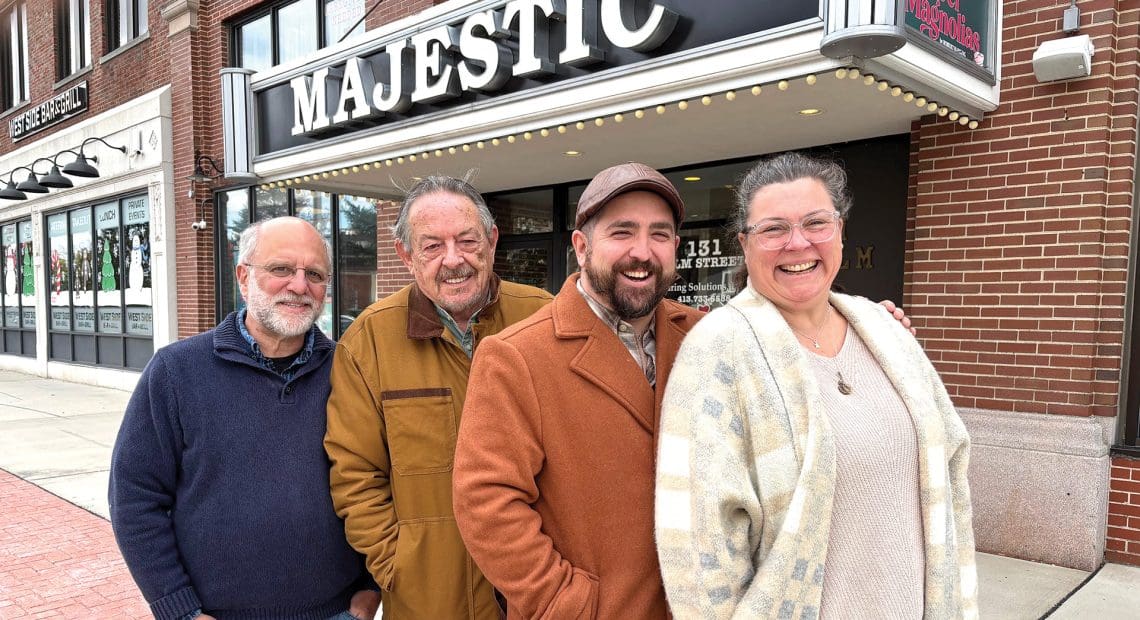
From left, Todd Kadis, Danny Eaton, Sue Dziura, and Terry LaCasse.

From left, Todd Kadis, Danny Eaton, Sue Dziura, and Terry LaCasse.


It’s been more than 30 years now, but Danny Eaton can still vividly remember the first time he saw what was left of the historic Majestic Theater on Elm Street in West Springfield.

There wasn’t much to look at, he recalled, adding that the back area of the old moviehouse, where Mickey Rooney once played Puck in A Midsummer Night’s Dream and the Three Stooges had performed, had become a crumbling dumping ground of sorts.
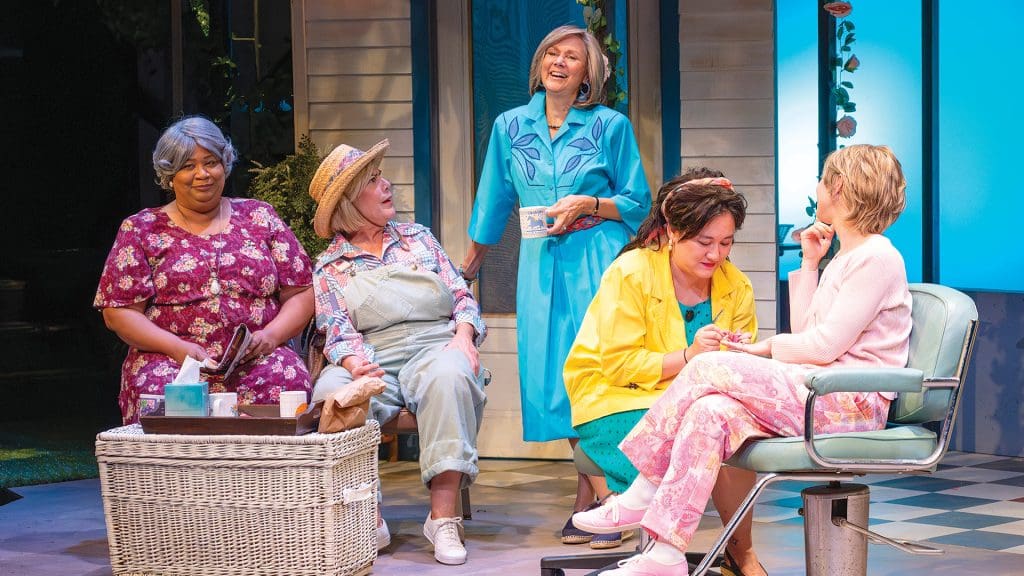
A scene from Steel Magnolias, currently playing at the Majestic.

A scene from Steel Magnolias, currently playing at the Majestic.

“There were carpet remnants, some broken office furniture, and all kinds of junk like that,” said Eaton, the actor, director, playwright, and entrepreneur who had been leading a group of like-minded individuals in the creation of a nonprofit professional theater company called the Theater Project, which was, at that time, looking for a permanent home.

A board member who taught business at Westfield State University arranged for two interns to work with the fledging troupe, and their primary assignment was to find a venue. They were steered to the old theater, built in 1928, by the town’s assessor. And after being let in by the owner of a delicatessen that occupied the front part of the theater, they could see what they had to work with.

That same board member thought he was crazy to do anything but look at the Majestic, but Eaton said simply, “I loved it … it spoke to me.”

Nearly three decades after the theater opened with a showing of The Buddy Holly Story, it’s still talking — to Eaton and to the tens of thousands of people who visit it every year.

“We’ve always seen new people, first-timers, coming to the theater, based upon the offerings.”

And the Majestic — not the building, necessarily, but the institution — has become part of the fabric of the region, said Eaton and others we spoke with.

“People have grown up with us,” he noted, referring to both the audiences for the shows, which span generations now, and some of the performers as well.

Like Ben Ashley, who played Buddy Holly in the The Buddy Holly Story and has reprised that role a few times, while performing in several other shows at the theater as well, including its upcoming Home for the Holidays. And Robbie Simpson, who grew up attending shows at the theater, then started performing in some, and has gone on to star on ABC’s General Hospital and Hulu’s The Path. He returns to West Springfield for shows at the Majestic, such as 2023’s The Glass Menagerie.
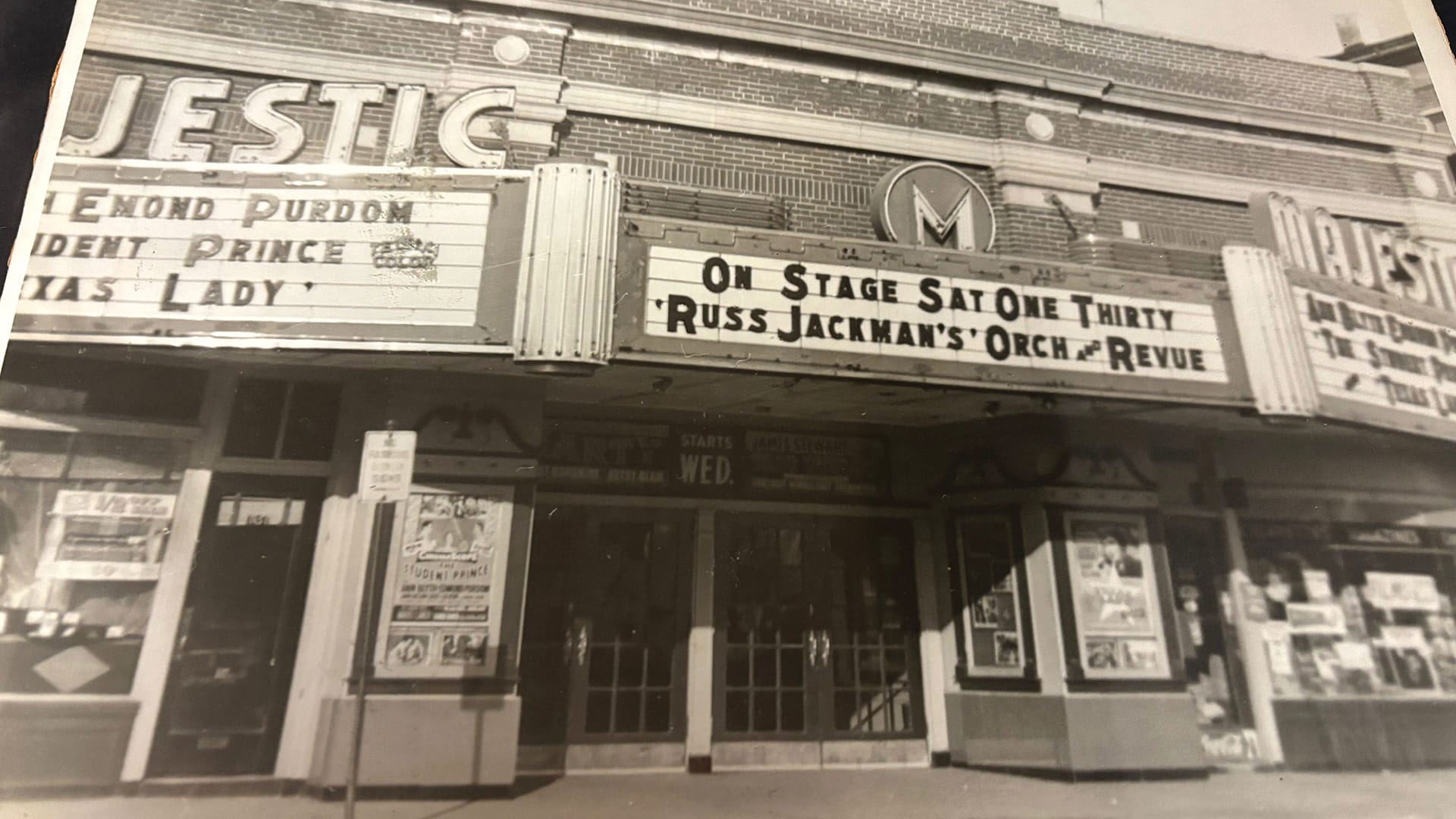
The historic Majestic Theater opened in 1928.

The historic Majestic Theater opened in 1928.

Like the plays shown at the theater, the Majestic has several plotlines and props, from the framed showbills that line the café area celebrating shows that include the well-known (Death of a Salesman, Hamlet, Miss Saigon, and Judgment at Nuremburg, for example), and the not-so-well-known (Golf: The Musical) to the annual fundraising car raffle, another institution — first prize this year is a 1962 Corvette convertible; the drawing is Dec. 31.

And then, there are the coffee mugs. Given each year to subscribers — who now total more than 4,000 — they’re printed with the names of the shows from each season.

Subscribers passionately collect them, said Sue Dziura, producing director for the Majestic, and look for them every year.

“They’ll tell us when they come in — ‘I have all my mugs,’” she said, adding that, in many ways, the mugs have become symbols of the Majestic’s two enduring traits — creativity and perseverance.

Indeed, between the shows, the mugs, the cars, a playbill supported by more than 100 local businesses, and more shows, the Majestic has become a long-running success story, one complete with its magic moments and stern challenges, like the pandemic, but also the rising expenses associated with professional theater, from paying the actors to insuring the property.

“Danny has programmed it so that there’s something for everyone, whether that’s genre-related — a comedy and a drama and sometimes a whodunit.”

For this issue, we look behind the curtain, if you will, at nearly 30 years of a class act — literally and figuratively.


Setting the Stage

When he spoke with BusinessWest as the 10th anniversary of the theater’s opening approached in 2006, Eaton recalled how, at that opening, a local journalist remarked that his dream had come true.

Eaton said he had to correct him to a degree and note that getting the doors open wasn’t the dream, or the hard part, or the end of the story. Keeping them open was, and is, the dream. And the hard part as well.
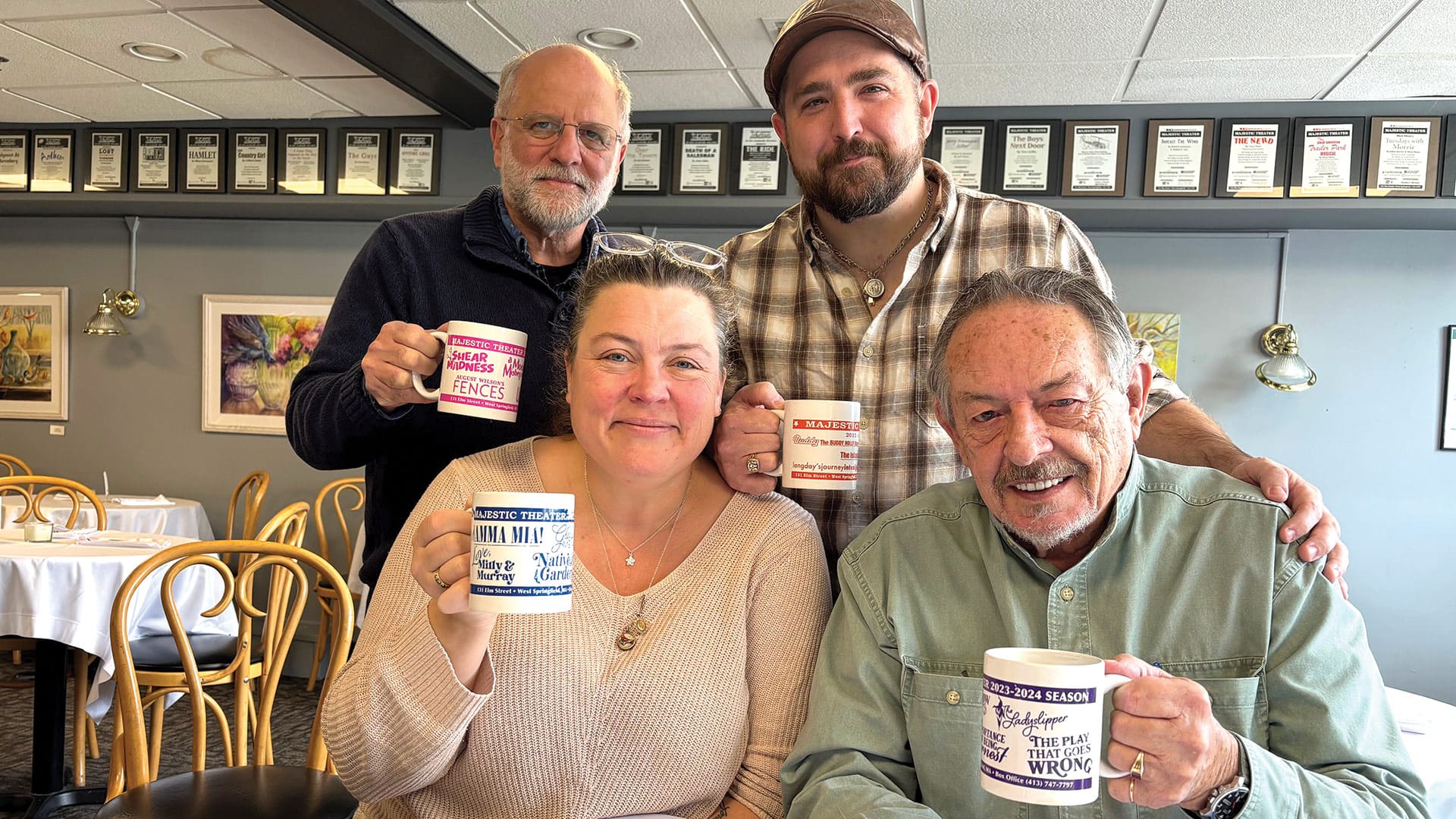
From left: Todd Kadis, Sue Dziura, Tery LaCasse, and Danny Eaton in a ‘mug’ shot.

From left: Todd Kadis, Sue Dziura, Tery LaCasse, and Danny Eaton in a ‘mug’ shot.

And nothing has really changed in that regard over the past three decades, he said, adding that the overriding mission can be boiled down to those four words: keeping the doors open.

Actually, there’s much more to it than that, said Todd Kadis, the Majestic’s treasurer, who has also been here from the beginning.

Indeed, the overriding goals are to make theater accessible and affordable (tickets are under $40), he said, and also to draw people who might not otherwise attend theater.

“We’ve always seen new people, first-timers, coming to the theater, based upon the offerings,” he explained, adding that most of these first-timers will return, and many of them will become subscribers.

It all started, as noted, with The Buddy Holly Story, which returns every five years at the Majestic. Actually, our story really begins in 1992 with the creation of the Theater Project, which performed shows at the Church of the Good Shepherd, just down the street from its current home, to raise money to open the Majestic’s doors.

Or new doors, to be precise, because the current front entrance still led to the deli, so a new entrance had to be built in the back of the structure.

“We spent summers hammering nails and lugging concrete blocks,” Eaton recalled, adding that the team put in two and half years of sweat equity to get the theater ready for prime time. And that hard work essentially set the tone for all that has happened since.

“One of things we found with The Buddy Holly Story is that we could get people to come to the theater who had never been to the theater before and maybe had a notion that it was a highbrow thing that couldn’t be part of their lives.”

Over the years, the Majestic has added more framed playbills to the walls — to the point where there’s no remaining room; raffled off 29 vintage cars; transformed its café into a gathering spot, with patrons showing up an hour or more before a show starts for a quick meal and a beverage; maintained its core audience while attracting new patrons; and become one of the cornerstones for growth and new businesses in the Elm Street area.

Very little, if anything, has been easy, said those we spoke with, but the Majestic has persevered through hard work, imagination (in all its forms), and the ability to stay engaged with its audience.

All these traits were on display during the pandemic, when the lights went down, literally, on March 21, 2020, and didn’t go back on again until August 2021, when the Majestic picked up right where it left off.

Kadis said the institution was kept afloat by PPP and also a much-needed Shuttered Venues Operating Grant, a federal program that, as its name suggests, provided grants to shuttered venues ranging from theaters to aquariums to museums.

And while the theater was dark, those at the Majestic found ways to stay engaged with subscribers and the community at large through online programs such as “Behind the Curtain,” a series of interviews with actors and directors who had done shows at the Majestic, providing a backstage perspective.


Shows of Force

The Majestic now hosts between 250 and 300 shows each season, which begin in September, said Dziura, noting that the simple strategy is to “create as much art as possible.” Each season features five subscription shows as well as Home for the Holidays and a packed summer schedule that includes more than 100 performances, including a children’s theater.

In putting together that five-show slate, organizers strive for diversity and a solid mix of plays and at least one musical, a lineup crafted to appeal to both subscribers — who provide a rock-solid base for the theater company — and single-ticket sales.

“Danny has programmed it so that there’s something for everyone — a comedy and a drama and sometimes a whodunit,” she explained, adding that this year’s slate is no exception.

The season started with Once – The Musical, which tells the story of an Irish street musician and a Czech immigrant who form an unlikely bond over their shared love of music. Currently running is Steel Magnolias, a comedy set in a small Southern beauty salon. In January, The Hound of the Baskervilles, a parody of the Sir Arthur Conan Doyle classic, will begin its six-week run, followed by a ‘two-hander,’ an two-person performance called Dear Jack, Dear Louise, described as heartfelt and comical play that unfolds through the letters exchanged between a young Army doctor and a nurse during World War II. The season concludes with Come From Away, an uplifting musical that tells the true story of 7,000 passengers who were stranded in the small town of Gander, Newfoundland after the events of 9/11.

Each year’s schedule is crafted to provide variety, but also more opportunities to bring new people to the theater and bring back those who have already found it.

“Being a nonprofit theater in a small community in an area that is not particularly known as a cultural hub is a challenge,” Eaton said. “One of things we found with The Buddy Holly Story is that we could get people to come to the theater who had never been to the theater before and maybe had a notion that it was a highbrow thing that couldn’t be part of their lives.

“We changed their minds,” he went on, adding that this might be the unofficial mission statement for the Majestic. “I’ve always maintained that, if I can get 10 new people to come to theater for the first time in their lives, I’ll get seven of them to come back, and I’ll get five of them to become subscribers — and that’s held true in many respects.”

Looking ahead, the simple goal is to keep changing minds about theater, said Kadis, while also maintaining and growing the subscriber base and attracting audiences of all ages. He noted that the average age of attendees is roughly 65, and it has been this way for some time, meaning the theater group has managed to retain subscribers who joined years ago and add new, younger ones as the original subscribers move into their 70s and 80s.

Terry LaCasse, the Majestic’s managing director, agreed. “There’s a multi-generational appeal here,” he noted. “I remember my first week here … I was introduced to a parent, a grandparent, and a child at one of the shows. They were sitting in the back, and they said, ‘we’ve had these seats for years, and we’ve passed then down from generation to generation.’”

That story, and others like it, speak volumes about what the Majestic has become over the years in terms of a cultural institution and tradition.

“The Majestic is a true-to-form community anchor,” said LaCasse, speaking for all those at the table, adding that it promotes the arts, supports local businesses, and makes this region more of a destination.

And that’s why the show has gone on for nearly 30 years — and counting.

Community Spotlight Special Coverage

Community Spotlight

Eileen LaMountain has been managing the giant slide at the Big E for nearly 40 years.

Eileen LaMountain has been managing the giant slide at the Big E for nearly 40 years.


Eileen LaMountain says she’s getting too old to handle the waxing duties at the Big E’s Giant Slide, so she leaves that to her younger co-workers.

That waxing detail generally involves the upper portions of the 46-foot-high attraction, she noted, followed by repeated runs down the slide to spread the wax across its full length.

“That’s why I tell them to hire young people,” she said with a laugh. “A lot of the people I have are not that young, and they can’t go back and forth 10 times.”

But she still handles every other duty involved with managing that popular attraction, which she’s been doing since 1987. She essentially took over for her husband, who had done it the previous five years before moving over to handle admissions, which he did until he officially retired last year after working 58 years at the Big E.

The LaMountains are prime examples of area residents who return each year to work the 17-day fair and become part of a workforce of more than 1,000 people, said Gene Cassidy, president and CEO of Eastern States Exposition.

“Pre-COVID, we retained about 90% of our staff, and post-COVID, we retain about 80% of our staff,” he explained, adding that the fair needs to hire about 200 people for this year’s edition — to handle assignments ranging from parking lot attendant to landscaper to cashier — and is well on its way to doing so.

“I was all in favor of knocking it down originally and building something nice and new and modern. But on the other hand, that’s more expensive. Maybe we can do it with a remodel, but this is probably the last time in my lifetime that we’ll build a police station, so we want to do it right and give them what they need.”

Assembling the workforce is one of the many storylines for the 110th edition of the fair, which will start Sept. 12 and have a very difficult act to follow.

Indeed, 2024 was a banner year for the Big E. Attendance records were set (1,633,937 people came through the gates, breaking the previous mark by seven-tenths of a percentage point) and it was the fair’s most profitable year ever, with more than $6 million in net income.

“And all $6 million will be put into the facility,” Cassidy said, adding quickly that it will make just a very small dent in what he estimates to be $250 million in deferred maintenance on grounds dominated by buildings more 100 years old.

The Big E’s new season is one of many storylines unfolding in West Springfield. Others include:

• Movement toward creation of a new police station at the site of the former Walgreens location on Route 20, which was acquired by the city. A preliminary study by a design team will determine whether the best course is to renovate the facility, just a few feet from City Hall, where the police are currently headquartered, or demolish it and build new, Mayor Will Reichelt said;

• Ongoing infrastructure work on both of the city’s main retail arteries — Memorial Avenue and Riverdale Street — with the former entering the “final stretch,” as Reichelt called it, and the latter in its earlier stages;

• Little movement to create new housing despite critical need, said the mayor, citing a lack of developable land, the high cost of building, and the relative scarcity of funding assistance from the state as the primary reasons why. There is an 11-unit subdivision in the works off Piper Road, as well as 40 to 50 over-55 condos now under construction off Birnie Avenue and continued talk of new housing at the site of a former nursing home off Route 20, but little else on the drawing board;

• More new development on Riverdale Street, which is in a seemingly constant state of change, including the demolition of a few older hotels, including a large portion of the Clarion, and plans to build new ones, as well as a new Balise Honda store taking shape in the parking lot of the existing facility (more on this later);

• A new breakfast and lunch restaurant, the Roundabout, at the Route 20 and Elm Street rotary, another sign, said Reichelt, of how investments in that area, which also include new sidewalks, lighting, and other improvements, are paying dividends in the form of new businesses; and

• Preliminary discussions about creation of a new master plan for the city, one that will provide a blueprint to take the community to 2050 and beyond.

“Our master plan is 16 years old now, give or take, and we’re finishing up a lot of what’s in it,” the mayor explained. “We want to look out 25 years — not to predict the future, but to examine what the retail world will look like, for example, and whether we’re ready for potential changes that could impact Riverdale Street.”

For this latest installment of its Community Spotlight series, BusinessWest takes an in-depth look at the many converging West Side stories.

Alex Balise says the new Balise Honda store will better serve customers.

Alex Balise says the new Balise Honda store will better serve customers.


Progress Report

Reichelt noted that West Springfield is perhaps the last city in Western Mass. that still has its police station within City Hall — a throwback to when this was a much smaller community, but a situation that has lingered for decades as the city has searched for a suitable site.

It found one when Walgreens closed its Route 20 location in 2024 as part of a larger scaling-back initiative, leaving another question — renovate or build new? And Reichelt can look at two neighboring communities for some possible insight.

Indeed, Westfield is building new on Union Street, and Agawam is nearly done renovating the former Hub Insurance building on Suffield Street into its new headquarters.

“Agawam spent like $30 million less than Westfield’s going to spend” said Reichelt, adding that renovation of the Walgreens, which has a full basement in addition to its spacious retail floor, could be a less expensive option.

“I was all in favor of knocking it down originally and building something nice and new and modern,” he explained. “But on the other hand, that’s more expensive. Maybe we can do it with a remodel, but this is probably the last time in my lifetime that we’ll build a police station, so we want to do it right and give them what they need.”

In either case, the new headquarters will be downtown — which won’t be the case in either Westfield or Agawam — which has its advantages, the mayor noted.

Beyond the plans for the new police station, infrastructure work remains one of the main storylines in the city, especially on those two retail arteries, said Reichelt, adding that there is some light at the end of the tunnel when it comes to the work at Memorial Avenue, which recently entered a new, more visible phase with completion of the Complete Streets initiative set for early 2027.

“Until recently, most of the work has been replacing the water main, sewer main, stormwater … the underground stuff,” he explained. “But now, as you come onto Memorial from the rotary at the Memorial Bridge, they’re redoing the road layout, adding new granite curbing, and changing the actual look of the road to get ready for the new pavement.”

On Riverdale Street, infrastructure work, due to be completed in 2027, is in earlier stages, and will include new sidewalks, off-street bike paths, and some repaving, the mayor continued, adding that, longer-term, the state has plans to improve Route 20.

Meanwhile, the new Honda store at the east end of Riverdale Street is starting to take shape.

And for those thinking the existing store isn’t very old … you’re right. It was just 2010 when Balise Motor Sales completed an extensive renovation of the former Yale Genton clothing store and a 20,000-square-foot addition. But Honda is changing the look of its dealerships, with a nod toward less square footage and a design that features a new-look façade and is modular and flexible, and the Balise store will be at the forefront of these changes, said Alex Balise, director of Corporate Strategy for Balise Motor Sales.

“The existing dealership is fully functional, but we have plans to grow,” she explained, noting that talk of building a new store began in 2023. “And to do that, and better serve our needs, we needed a new dealership.”

She said the new facility will be easier to navigate and be very similar to what was done at the chain’s Lexus dealership further down Riverdale Street in terms of easier access to the service area.

A portion of the existing dealership will be salvaged and used for a state inspection center, calibration services, parts distribution, and used-car reconditioning, she went on, adding that the remainder will be demolished and used for parking. The project is on track to be completed in mid-December.


Fair Assessment

Cassidy’s attention to detail, especially when it comes to the weather, has been well-chronicled. Indeed, each day of the Big E, he takes detailed notes about what the conditions were, almost hour by hour, entries that help explain attendance figures.

So when he said it didn’t rain much last year, he didn’t generalize. He went right to the book.

“Let’s see … the second Thursday, the 26th, we had light rain late morning and mid-afternoon, but it didn’t really have any impact on our attendance … that was it,” he said, adding that this rainfall total was a big change from 2024, when it rained on several days during the fair, and it goes a long way toward explaining the record attendance and record profits.

West Springfield at a Glance

Year Incorporated: 1774
Population: 28,835
Area: 17.5 square miles
County: Hampden
Residential Tax Rate: $14.87
Commercial Tax Rate: $30.28
Median Household Income: $40,266
Median Family Income: $50,282
Type of Government: Mayor, City Council
Largest Employers: Eversource Energy, Harris Corp., Home Depot, Interim Health Care, Mercy Home Care
* Latest information available

Those numbers will be tough to repeat, let alone surpass, in 2025, he acknowledged, noting that the weather will likely not be as good this year. But with a shrug of the shoulders, he indicated that anything is possible.

For the most part, he stuck to what is likely, which — again, weather permitting — will be another solid year. He noted that fairs like this one are not entirely recession-proof, but they’re close.

“Fairs represent tradition, and people, at this time in our history, are hungry for that; they desire that,” he said. “And for that reason, fairs tend to be insulated from inflation. People might defer on taking a trip to Disney, but they’re going to come to the fair because that’s their family tradition.”

This explains why many recent fairs have done well, said Cassidy, citing the Wisconsin State Fair, which was on pace to shatter attendance records until heavy rains and some flooding, as one example.

As for the 2025 Big E, like most of the 109 that have come before it, this one will feature ‘new and old,’ a phrase that covers everything from attractions to food to the brews in the many beer gardens.

The ‘new’ this year includes the return of Navy Week programming as a lead up to the nation’s 250th birthday, including performances by the Navy Band Northeast and the Navy Windward Quartet, as well as Collector Car Live: Race Day, a car show featuring race vehicles and NASCAR driver Ryan Preece, and increased ‘strolling entertainment,’ including Fritzy One Man Circus and strolling musician Freddie Marion.

‘New and old’ also refers to the music lineup, which includes everything from ZZ Top and Foreigner to Five for Fighting, Train, Busta Rhymes & Rick Ross, and TLC with Big Boi.

As for the ‘old,’ that would include the giant slide, which has been part of the Big E since 1969. It stretches 135 feet, and LaMountain knows every inch of it, although, as noted earlier, she’s not out there waxing it anymore.

When asked how those applying the wax to those higher areas do so without gravity taking hold, she said “very carefully.”

In addition to supervising the waxing, LaMountain, 73, makes sure the slide is properly staffed (it takes a half-dozen people to operate it) and that the various procedures are followed, including protocols when it rains — it shuts down immediately when drops start falling.

Overall, more than 100,000 people will go down the slide over the course of the 17 days, she said, adding that maybe 9,000 will visit the attraction on a busy Saturday. That adds up to long days, but she endures — and she comes back every year.

“It’s fun. It’s a long day, but … it’s the people you see every year,” she explained, adding that that the money earned over the course of the fair pays for a vacation or some extras, with some going in the bank. “We have a good time, and I would really miss it if I didn’t do it.”

With that, she spoke not only for people who work at Big E, but for everyone who visits each year.

Opinion

Editorial

Rain, rain, go away.

That’s Gene Cassidy’s wish every year when it comes to the 17 days of the Big E, the agricultural fair that will celebrate its 110th year when it kicks off next week.

That’s because the weather is typically the most impactful factor in how successful the fair proves to be. After a rainy 2023 dampened attendance (and profits), a largely clear-skied 2024 saw the Big E set records for attendance (1,633,937) and net income (more than $6 million).

As Cassidy, president and CEO of Eastern States Exposition, told BusinessWest in the story on page 10, all of that $6 million will be put back into the facility, which is grappling with some $250 million in deferred maintenance on grounds dominated by buildings more 100 years old.

So, clearly, the success of the Big E is critical to the Eastern States Exposition (ESE), as is the site’s robust, year-round slate of activities, from animal, mineral, and home shows to the annual Hooplandia 3-on-3 basketball tournament.

And that success — and impact — ripples out much further than the grounds on Memorial Avenue. In fact, ESE attracts about 3 million people to West Springfield annually, across a bustling calendar of more than 120 year-round events — slightly more than half that crowd count coming from the Big E itself.

And, according to a study conducted by Regional Economic Models Inc. (REMI) of Amherst, ESE’s economic impact on Hampden County in 2024 was $235 million in gross regional product (GRP), and its larger footprint across New England and New York equaled a record-breaking $1.167 billion.

“The impact of Eastern States Exposition is not limited to the Springfield area, agriculture in Massachusetts, or even agriculture in New England; we have touched 26 states and multiple Canadian provinces,” Cassidy said when the report was released earlier this summer. “This makes us arguably the most impactful agricultural fair in North America.”

The study revealed that the ESE created 8,085 jobs across New England and New York in 2024; 60.8% of all jobs created went to individuals without a college degree, 5,646 jobs were filled by individuals in the bottom 20% of income earners, and 1,310 jobs created across the region supported Hispanic employment. Employment growth was observed across all races, income levels, and education groups.

Meanwhile, since 1995, when the Big E first expanded from 12 to 17 days, ESE has donated 1% of its annual gross revenue to the town of West Springfield each year to build and bolster the Eastern States Exposition-West Springfield Trust. In 2024, 26 groups benefited from the trust, including sports teams, food rescues, and cultural centers. ESE’s overall contributions, including a sizable donation of $370,970 made on June 12 of this year, now total $5,425,220.

At a time of economic uncertainty, that overall impact of the ESE — again, much of it driven by that 17-day fair window in September — is critical to this region, and something to be celebrated.

Plus, the Big E is simply a lot of fun — rain or shine.

Community Spotlight Special Coverage

Community Spotlight


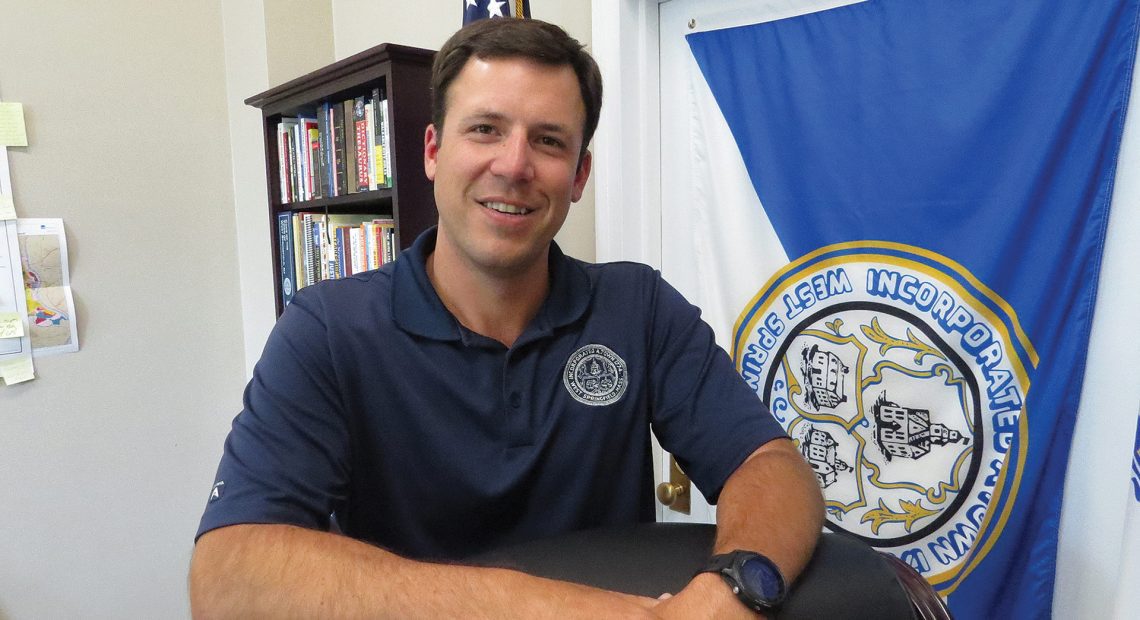
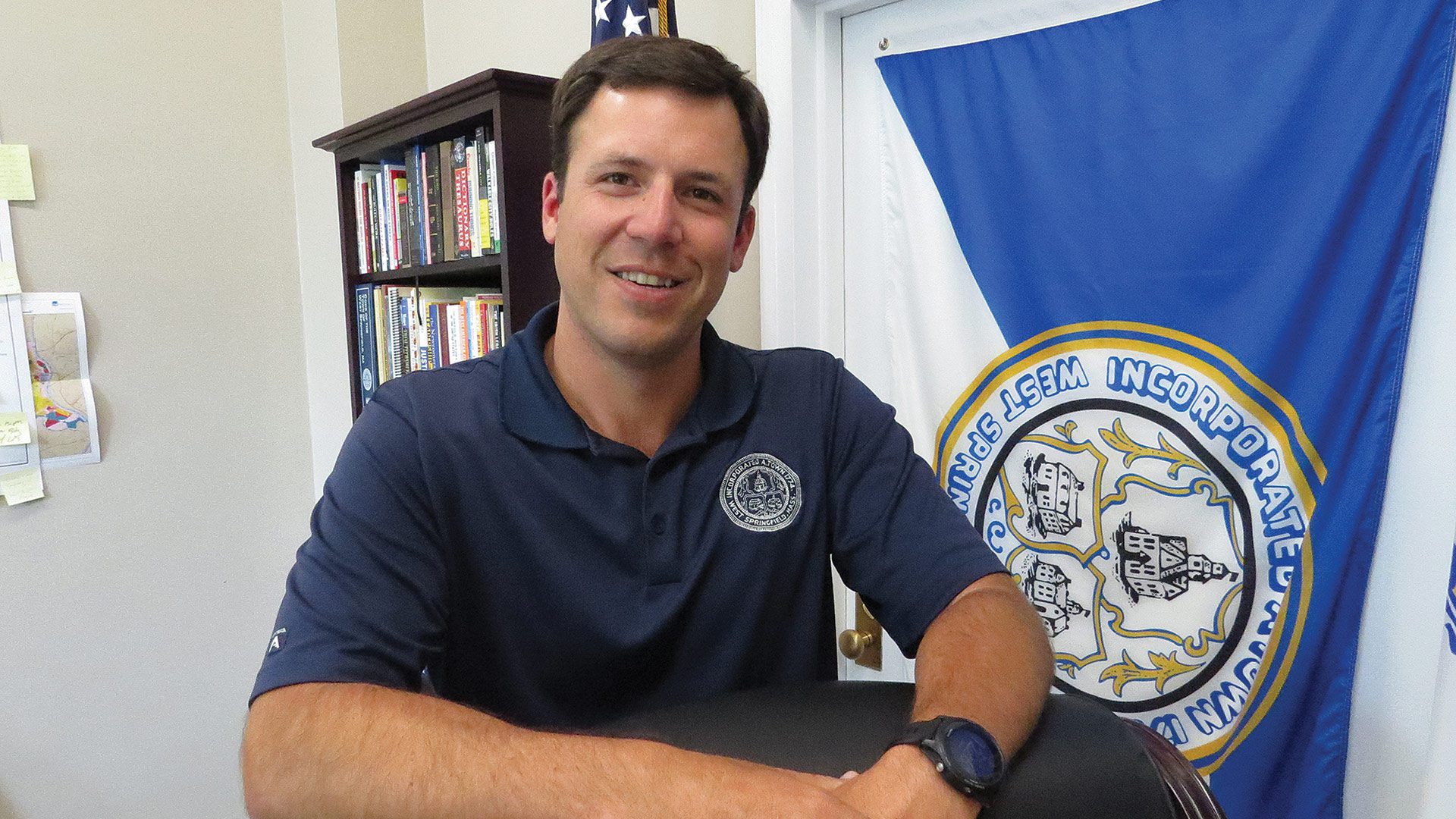
Mayor Will Reichelt

Mayor Will Reichelt says planning is underway for West Springfield’s 250th birthday, with anniversary-themed events slated for each month of the year.

Once the 17 days of the Big E Fair begin, Gene Cassidy settles into a routine he’s followed for years now.

His day starts early, with a few minutes in his office in the Brooks Building, before he gets into a golf cart and proceeds to his ‘other office’ in the Hampden County building. Along the way, he stops in with employees in the parking area, the ticket booths, and other areas to get a sense of how things went the day before and what would be expected in the hours to come. And to stress, again, the importance of these 17 days to the overall health and vitality of this West Side institution.

“I remind people that they can make the difference between someone who’s a patron having a good day or a bad day,” he said. “Or I’ll thank them if the day before was pouring rain … I’m very conscientious about making sure that people understand that we make 87% of our revenue in 17 days. The people who work here, they have to know how important their role is to delivering to the fairgoing public an experience that’s at the highest level it can possibly be.”

Before any of that, though, Cassidy checks the attendance numbers for the corresponding day of the fair the year before. That number becomes a target and a tone setter, he explained, adding that, if that day from the year before was a washout due to rain, there probably won’t be any trouble matching or exceeding results and moving toward the ultimate goal of improvement over last year. If it was a really good day the year prior, it’s the opposite.

Which means that, this Big E season, there will be some big nuts to crack.

“I remind people that they can make the difference between someone who’s a patron having a good day or a bad day.”

Indeed, the fair set five single-day attendance records in 2022, starting on opening day, and continuing to the second Friday, the second Saturday (when the single-day record was broken and more than 177,789 came through the gates), the second Monday, and the final day. Overall, the 2022 fair came in just shy of the 17-day record of 1,543,470 set in 2018.

“People really responded to the fair last year, and, overall, the weather was pretty good,” Cassidy said, touching on a subject we’ll get back to in some depth later. “People really came out.”

Those new standards set last year, and maybe some others as well, might fall this year, based on what Cassidy has seen in Wisconsin, which just wrapped up its annual fair, as well as Indiana and elsewhere.

Indeed, while inflation remains high, and Americans have plowed through most of the money they saved during the pandemic and are now taking on more debt, attendance at fairs like the Big E is up, said Cassidy, who believes such institutions provide what people are looking for these days.

“We represent the very best of the American way of life,” he said. “The fair is a place for family and friends and camaraderie. The Wisconsin fair recently ended, and they had amazing attendance, and Indiana is going on now, and they had a few record-setting days. People gravitate toward that which satisfies the need for human interaction. Even in years when we have high inflation, people may sacrifice a trip to Disney or a trip to Boston for a Red Sox game to get together with family at the fair.”

West Springfield at a glance

Year Incorporated: 1774
Population: 28,835
Area: 17.5 square miles
County: Hampden
Residential Tax Rate: $15.54
Commercial Tax Rate: $30.58
Median Household Income: $40,266
Median Family Income: $50,282
Type of Government: Mayor, City Council
Largest Employers: Eversource Energy, Harris Corp., Home Depot, Interim Health Care, Mercy Home Care
* Latest information available

The ramp-up to the Big E is always big news in West Springfield, and this year is no exception. But there are other developing stories, as they say, starting with the community’s 250th birthday in 2024; a major, as in major, upgrade of Memorial Avenue, the mailing address for the Big E and many other businesses; and the opening of the town’s first cannabis enterprises.

Mayor Will Reichelt said planning for the 250th is well underway, with a full slate of events set, starting early in 2024 and continuing throughout the year.

That slate includes a 250th Leap Year celebration on Feb. 29, with specifics to be determined; a 250th Ball, slated for May 18; a parade and block party in June; a golf tournament and 5K in July; a parade in August … you get the idea.

As for the massive, $26 million upgrade to Memorial Avenue, work is already underway, said Reichelt, noting tree-removal work and other initiatives, and it will ramp up considerably over the next few years, bringing improvement to a major thoroughfare, but undoubtedly some headaches as well.

For this, the latest installment of its Community Spotlight series, BusinessWest takes an in-depth look at West Springfield and the many things happening in this community, starting with the annual fair.


On a Good Run

Reichelt was among the competitors at the recent Ironman competition that wove its way through several area communities, including West Springfield — and a stretch of the Connecticut River for the swimming part of the competition.

He finished in just under seven and half hours — the top finishers came in at just over four hours — a time that he will look to improve upon next year (yes, he’s already committing to doing it again).

“Even in years when we have high inflation, people may sacrifice a trip to Disney or a trip to Boston for a Red Sox game to get together with family at the fair.”

“I bought an Ironman training guide and wrote my time for this year and my projected time for next year,” he said, adding that the target for the 2024 event is to get under six hours. “If I start training now, I think I can get there.”

The Ironman is one of many events already on the 2024 calendar — or soon to announce official dates — that will take on the flavor of the 250th anniversary, everything from St. Patrick’s Day activities to the block party, which will embody elements of a Taste of West Springfield event that was a staple in the community for many years.

Overall, planning for the 250th is ongoing and will ramp up over the coming months, said Reichelt, noting that, while the actual 250th birthday is Feb. 25, this will be a year-long celebration.

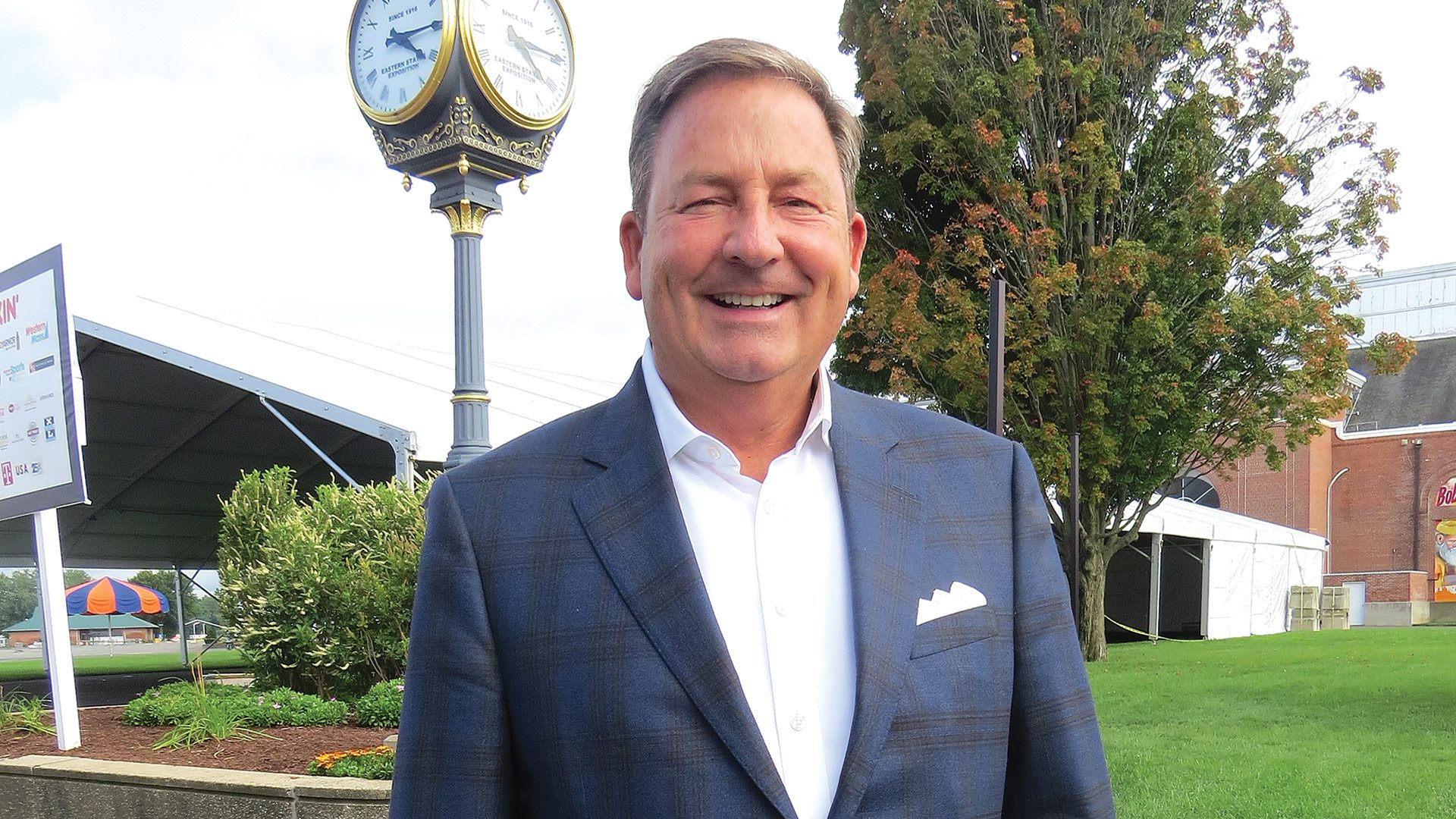
Gene Cassidy

Gene Cassidy says the Big E came close to setting a new 17-day attendance record in 2022, and if the weather cooperates, it might accomplish that feat this year.

By the time it’s over, some major thoroughfares will look considerably different, he said, starting with Memorial Avenue. By this time next year, a project that has been nearly a decade in the making will be well underway, he noted, adding that highlights of the ambitious undertaking, designed to improve traffic flow, will include a reduction of lanes from four to three along a stretch by the Big E, with reconstruction of traffic islands to allow for better turning in and out of businesses along the street. The stretch from Union Street to the Memorial Bridge will also feature a bike lane.

In addition, water and sewer mains are being replaced, and drainage systems will be improved, he said, adding that the project will take several years to complete.

Meanwhile, the city will soon commence work on another major infrastructure project in its downtown area.

It includes construction of a roundabout at the intersection of Westfield and Elm Streets, an area that has seen renewed vibrancy with the opening in recent years of new restaurants and the redevelopment of the former United Bank building into a mixed-use facility called Town Commons. Also planned are improvements to the town common, with new sidewalks, tree plantings, and more.

Beyond infrastructure, there are some new developments within the business community as well, said the mayor, noting that the town’s first cannabis dispensaries — the community was a late entry in this sweepstakes — will be opening in the coming weeks, with one on Memorial Avenue near the bridge, and the other on Riverdale Street.

Meanwhile, the town continues to work with Amherst Brewing on redevelopment of the former Hofbrahaus restaurant just off Memorial Avenue — a project that has been paused with hopes that it can be restarted — and plans are being forwarded, by the same group that redeveloped the former United Bank building, to redevelop a long-closed nursing home off Westfield Street, with housing being the preferred option.


Fair Game

As he talked with BusinessWest about the upcoming Big E, the weather, and the overall goal of matching or exceeding last year’s numbers, Cassidy got up from his desk and retrieved his notes from previous fairs.

In deep detail, he has recorded not just the attendance for a given day, but the weather and other factors that might provide deeper insight into those numbers.

Especially the weather.

Indeed, Cassidy goes much deeper than ‘rain,’ ‘sun,’ or even ‘partly cloudy’ to describe a day. Much, much deeper.

“We missed the 17-day record last year by just a little bit, and the reason we missed it is because we had five days of rain,” he explained. “I often laugh, because people will say ‘oh, the weather was great year.’ Well, it was great on the day they came.”

Running back over his notes, Cassidy revealed the level of detail given to cataloguing, if that’s the right term, each day of the fair, so that the numbers can be fully understood and put in their proper context.

“That first Sunday was a threatening mix all day; Monday and Tuesday were heavy rain; Monday, there was sun at 5 p.m.; Tuesday, there was sun at 2 p.m., and it was very hot,” he said, reading from his notes. “The first Thursday, there was heavy rain with lightning all day. And the second Monday was pleasant, but there was serious rain at 5:30, and the people ran out — although we had a very big day that day. We had a big day on the final Sunday, but it was cold and overcast.”

All this serves to show the importance of weather to the success of the fair, Cassidy said, adding that this isn’t lost on anyone at the fair, with everyone involved hoping that the seemingly constant rains that have swollen area rivers and damaged crops of all kinds will take a break in mid- to late September.

Beyond weather, Cassidy also likes to talk about what’s new at the fair, starting with entertainment, but also food.

Regarding the former, the 2023 fair will feature an eclectic mix of musical acts, including John Fogerty, Bachman-Turner Overdrive, Parker McCollum, Jimmy Eat World, Quinn XCII, Chris Young, and many more. As for the food, Cassidy teased that there is an intriguing new addition for the 2023 fair, but he couldn’t announce what it was at the moment.

What he did say is that food has come a long way — a long, long way — over the past few decades, with offerings that go well beyond traditional fair food and also beyond the ‘everything that can possibly be fried’ category as well.

“The food is so different today than it was 20 years ago, when it was more fair food,” he told BusinessWest. “There is a lot of high-quality food here, and it has nothing to do with being fried. The food today is so much more creatively put together. You can get steak tips with real mashed potatoes and fresh vegetables; no one thought you could buy that on a fairgrounds 20 years ago.

“When I first started in the fair industry, there were hamburgers and hot dogs and cotton candy and candied apples; there was a guy who made sausages,” he went on. “Today, the quality of food, the abundance of it, and the diversity of it are significantly different.”

Some of these eclectic offerings are available at a new area that made its debut in 2022 and will return this year. It’s called the Front Porch, and it promotes small businesses, many of them taking their first opportunity to showcase their brand, Cassidy said.

Last year, there were nine or 10 businesses participating, and this year, there will be seven or eight, to provide the ventures with more room to operate, he said, adding that some will be back from last year, while others will not, primarily because they’ve moved on to brick-and-mortar operations.

“It’s a fun way for people to get their feet on the ground,” he said, adding that the Front Porch has become an intriguing and popular addition to the landscape at the Big E — and one more reason for folks to show up in West Springfield … and maybe break a few more records.

Building Trades Special Coverage

Current Events

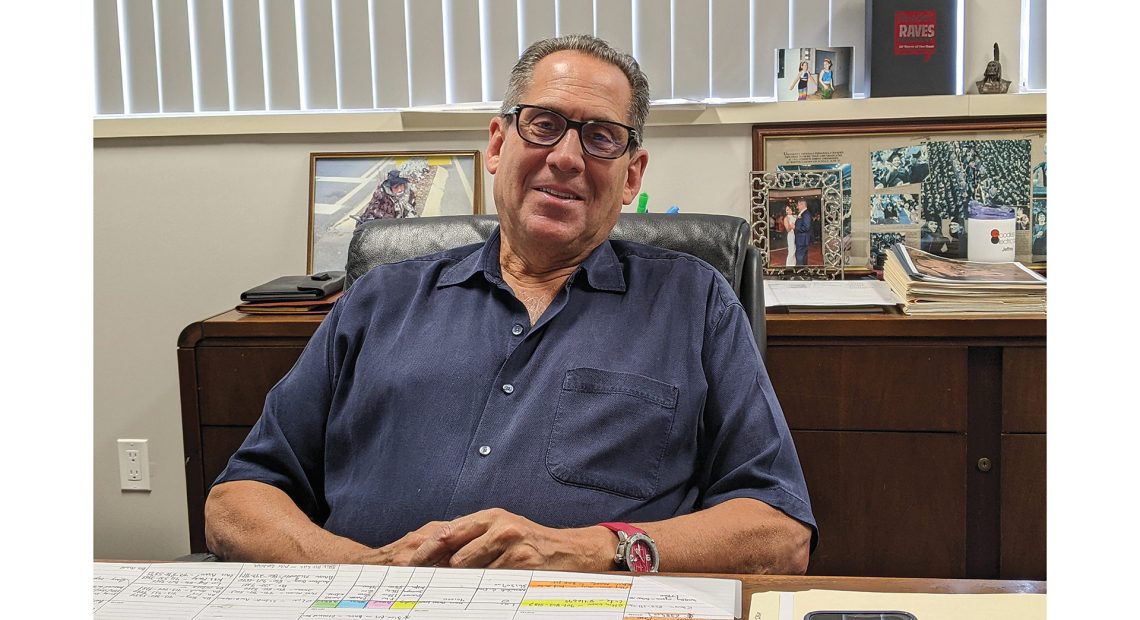
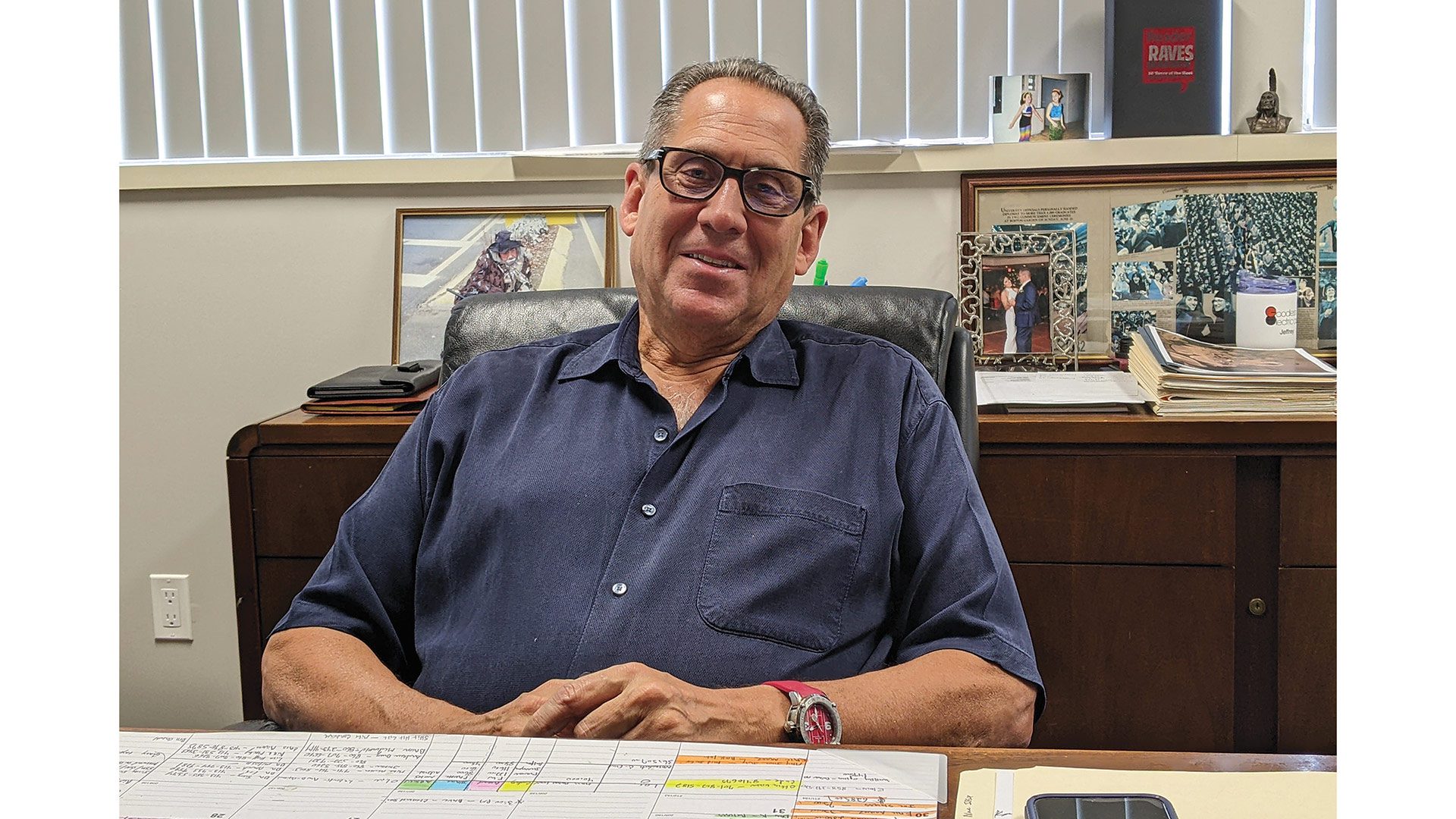
President Jeff Goodless

President Jeff Goodless

Early on, Jeff Goodless knew life wasn’t easy in the world of electrical contracting.

But he also knew his family had built a strong reputation in the field since 1945, so it was always on his mind to one day enter the family business.

“I went to Northeastern University for five years,” he said, studying electrical engineering and business management there in the 1970s and taking advantage of NU’s well-known co-op work programs. “Everybody said, ‘why did you go to the co-op school?’ But I wanted to go through the experience of actually working and doing real interviews, knowing I was coming here, just to have that experience.

“I came back here and thought I was going to take a month off, and my father said, ‘you can have a day off,’” he went on. “So I came right to work, right out of college.”

He knew that was a good decision and knows it even more now, almost a half-century later, with Goodless Electric marking 78 years in business, still serving clients in the residential, commercial, and industrial sectors, just like his father, Leon Goodless, and uncle, Irving Goodless, did from the start.

Irving launched the business behind his parents’ home in Springfield, and his brother Leon joined in 1957, when the firm took the name Goodless Brothers Electric Co.

They did quite a bit of moving in the first few decades, Jeff said, to Riverdale Road in West Springfield, Worthington Street and then Winter Street in Springfield, then to the current location at 100 Memorial Ave. in West Springfield, alongside the Route 5 rotary at the Memorial Bridge. Irving retired in 1977, Irving retired in 1977, around the time his nephew came on board part-time. Jeff moved into a full-time role around 1982 and eventually took over the firm’s leadership.

“Everybody went into computer technology. That’s really what happened; they all went into IT, computer technology, and they weren’t going through the electrical programs. But now, I think the classrooms are filling up again.”

“Believe it or not, the type of work has stayed the same, although maybe on a larger scale later,” Jeff told BusinessWest. “But even way back when, they always did residential, industrial, and commercial work. They ran maybe three, four, six guys.”

At its heyday, Goodless said, the company was running about 90 workers, where now, it boasts about 20, keeping them busy with projects ranging from parking-lot maintenance and upgrades, generator services, and fire-alarm systems to lighting retrofits, swimming pools and hot tubs, and residential and commercial service upgrades, just to name a few.

“There’s a lot of jobs with UMass Amherst, a lot of state work, some city work, fire stations, DPW facilities, a little bit of everything. A lot of work for the housing authorities throughout the years, too,” he said. “We don’t do new homes, but I do additions and a lot of repair work. Out of our service department, we run about four vans, and we roll basically 24 hours a day.”

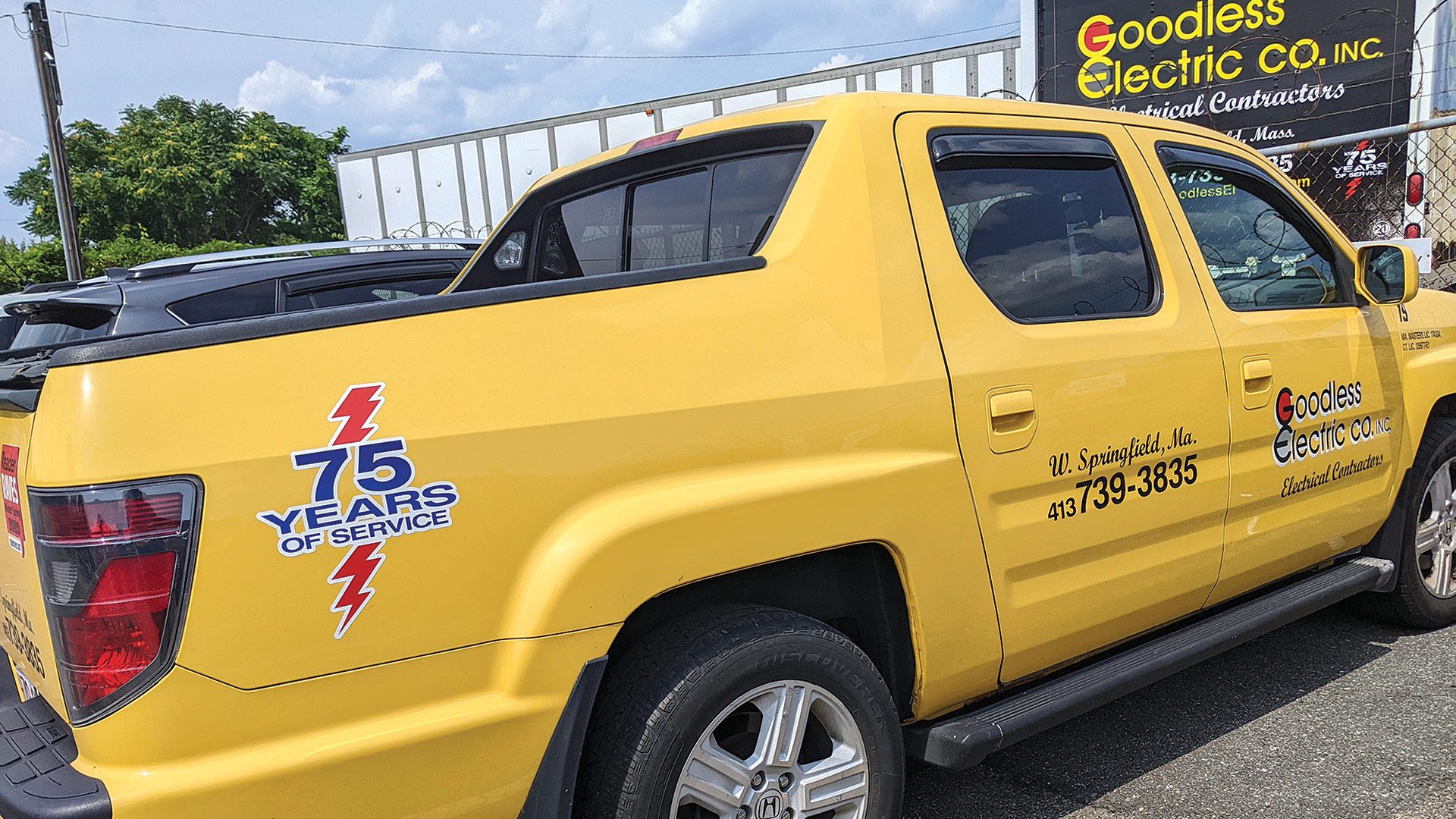
Goodless Electric celebrated its 75th anniversary in 2020

Goodless Electric celebrated its 75th anniversary in 2020, a major milestone for any company.

As the firm celebrated 75 years in business in 2020, an emerging pandemic posed serious challenges, especially since it was performing work at the Holyoke Soldiers’ Home, where COVID killed 84 residents.

“I couldn’t get my people to go up there, and I couldn’t really blame them,” Goodless recalled. “People didn’t want to work; people were scared. I had an outbreak in my office. It was challenging.”

What made a difference, he said, was the federal Paycheck Protection Program, which poured funds into businesses to keep their teams employed. “We took advantage of that; it was so helpful. We used it right. We used it responsibly. We kept guys going. In fact, we didn’t have to let anybody go through the pandemic at all.”

“I tell them, ‘if you work hard, if you work diligently, you can have anything you want. The sky’s the limit if you want to work.”

The economic ripple effects from the pandemic — particularly higher costs and supply-chain issues — still resonate, however. Goodless was able to stock up on things like 100-amp and 200-amp panels to keep housing projects moving, but said customers are still shocked to hear it might take nine to 10 months to get switchgear in.

“We say it over and over again: we’re not the chef; we’re the waiter. We don’t make the stuff,” he said. “It’s still a very difficult message to get through, though.”


The Next Generation

Goodless said the company’s reputation for fast response and competitive bids has helped it earn multiple awards for customer service.

At the same time, though, growth is challenging at a time when building trades of all kinds are beset with a talent drain.

“The workforce situation is awful,” he said. “You can get people, but it’s very hard to get good people in. But I’ve been pretty fortunate; I’ve been able to pick up a few people along the way during the past couple of years, and I’m working on a third one right now.”

Part of the issue has been the pipeline of new, young talent not keeping up with the pace of retirements, but Goodless said that might be changing.

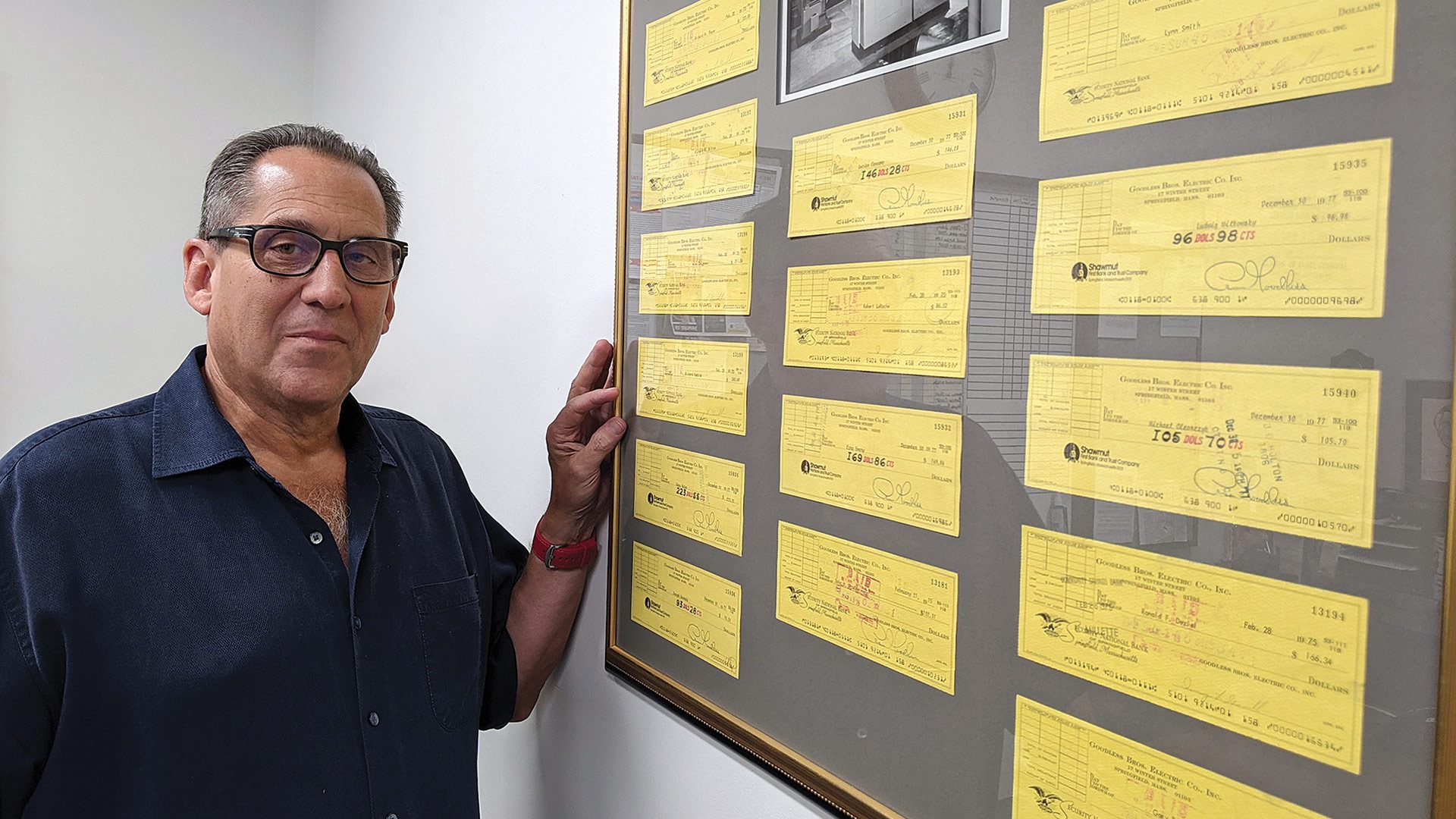
Jeff Goodless’ first projects

This wall represents some of Jeff Goodless’ first projects for clients in the late ‘70s.

“Over the years, we noticed a huge decline in the electrical trade,” he said, referring to the programs young people were choosing to study. “Everybody went into computer technology. That’s really what happened; they all went into IT, computer technology, and they weren’t going through the electrical programs. But now, I think the classrooms are filling up again.”

He’s gleaned as much through conversations with teachers at the trade schools in Springfield, Westfield, Holyoke, and others, who say students are more serious than before about entering the electrical field and other trades. Part of the reason may be the talk of graduates of four-year colleges entering the workforce with six-figure debt and a cloudy career path.

“A kid in a trade, they’ll pay their dues and go through the program, and at the end, you can make well over 100 grand a year. And you’re going to do your side jobs like everyone does and make another 25 grand,” he said. “I tell them, ‘if you work hard, if you work diligently, you can have anything you want. The sky’s the limit if you want to work.’”

And work hard Goodless has over the past four-plus decades, outlasting many former clients whose companies are no longer in business. And it’s work he relishes.

“Everybody will have something different to say,” he noted when asked what he enjoys about running this 78-year-old business. “I love going after a bid, going over the numbers, and winning the bid. That gives me a thrill. My second-biggest thrill is going out and doing the buys.”

He’s also got his eye on making sure Goodless Electric continues to be a force for many years to come, even after it moves past family ownership.

“I always think about what I’m going to do with this business as I’m getting older. My ultimate goal is to turn it over to the employees, or half to the employees and maybe sell the other half, something of that nature,” he said. “I just want to keep the business going, keep the name going.”