Daily News

CHICOPEE — Elms College announced that all of its class of 2018 education licensure graduates, undergraduate and graduate, have successfully landed jobs as teachers in their licensure fields. This is the fifth year in a row that the Elms College Education Division has reported a 100% hire rate for its graduates.

“The continuing 100% hiring rate of our licensure completers is reflective of their diligence and commitment to youngsters,” said Mary Claffey Janeczek, chair of the Education Division at Elms College. “Students who graduate with a teaching license endorsed by Elms are in demand in local school districts because the candidates know their subject matter well, and they are able to teach students with both skill and compassion.”

Elms College allows education majors to specialize in elementary, early childhood, English as a second language, moderate special needs, or secondary education. Graduate students can work toward a master of arts in teaching degree in a variety of fields including reading specialist, a master of education degree, or a certificate of advanced graduate study.

Daily News

FARMINGTON, Conn. — First Connecticut Bancorp Inc. announced that its board of directors has voted to pay its quarterly dividend of $0.17 per share. Dividends will be payable on Sept. 17 to all shareholders of record as of Sept. 7.

First Connecticut Bancorp is the holding company for Farmington Bank, a full-service community bank with 25 branch locations throughout Central Conn. and Western Mass., offering commercial and residential lending as well as wealth-management services. Farmington Bank has assets of $3.3 billion.

Daily News

SPRINGFIELD — Freedom Credit Union (FCU), headquartered in Springfield and serving members in the four counties of Western Mass. with 10 branches, announced it has agreed to merge with West Springfield Federal Credit Union (WSFCU).

Freedom Credit Union was originally chartered as the Western Massachusetts Telephone Workers Credit Union in 1922 and renamed in 2004. FCU currently has $491 million in assets with 28,000 members who live, work, or attend school in Hampden, Hampshire, Franklin, or Berkshire county.

West Springfield Federal Credit Union, which was initially chartered in 1960 as the West Springfield Municipal Employees Credit Union before its name change in 2003, has nearly 3,000 members and more than $29 million in assets.

“This is a tremendous opportunity to extend our products and services to West Springfield, an area where we do not have a branch but where many of our members live and work,” said President and CEO Glenn Welch. “We promise our members accessibility to us, whether it’s at a branch location or through mobile banking. This merger delivers on that promise.”

Welch added that West Springfield Federal Credit Union members will have access to many new products and services, including member business lending, use of 55,000 surcharge-free ATMs across the worldwide Allpoint Network, and robust mobile-banking products and services. All employees of WSFCU will become part of the Freedom Credit Union family. The West Springfield Federal Credit Union location will remain open at 58 Union St. and conduct business as Freedom Credit Union.

“The additional products, services, and opportunities available to both our members and the employees who serve them is a win-win proposition,” said Ann Manchino, manager of West Springfield Federal Credit Union. “We are excited for a new chapter in our history and to be part of the Freedom Credit Union family.”

The merger will require regulatory and member approvals. The merger is anticipated to be complete by the end of 2018.

Daily News

CHICOPEE — William O’Neil and Gayle Rae, owners and founding partners of Industrial Steel & Boiler Services Inc., announced a change in company management, as Alex Korobkov has become sole owner and president of ISB.

Korobkov has been employed by ISB for 17 years, beginning his career as a welder/boilermaker. He has steadily increased his responsibilities and expertise to become the operations manager for the last several years.

Korobkov has appointed Debbie Salamon, who has been with the company since its beginning, and has been in the office manager position for 27 years, to serve as treasurer.

ISB was incorporated in 1991 and is engaged in industrial power-plant services throughout the Northeast. The company is well-known in the industry for its work in boiler repair, valve repair, steel fabrication, pressure vessel fabrication, and code repairs to ASME vessels. ISB also holds many ASME and NBIC stamps.

Daily News

AGAWAM — OMG Inc., a leading global supplier of specialty fasteners and products for commercial roofing and residential construction applications, is having an open house at its Agawam headquarters, located at 153 Bowles Road, on Saturday, Sept. 8 from 9 a.m. to 3 p.m. The event is free and open to the public and will include a job fair, a variety of family-oriented activities, and tours of OMG’s state-of-the-art factory.

In addition to the job fair, on-site screening, and factory tours, the open house will include a giant, multi-employee tag sale, as well as children’s activities including a photo booth, bounce house, and face painting. For additional information and updates about the Open House, visit www.seehowscrewsaremade.com.

“OMG is an excellent employer and a great business,” said Hubert McGovern, president. “We like to involve the community in our activities whenever possible. We thought it would be fun to show our friends and neighbors what we do, how serious we are about safety, and the career opportunities that exist at OMG. We hope everyone will bring their kids, take a tour, and enjoy some fun.”

OMG is headquartered in Agawam and operates two divisions, OMG Roofing Products and FastenMaster.

Daily News

SPRINGFIELD — Springfield Technical Community College will offer the Emergency Medical Technician (EMT) training program during the upcoming fall semester.

This course consists of 188 hours of lectures and workshops in trauma, medical, behavioral, and environmental emergencies, including 28 hours of online instruction and an auto-extrication field trip that prepares the student to challenge the National Certification Examination.

Day and evening classes will be offered Mondays, Wednesdays, and Thursdays starting Sept. 5. Day classes will run 8 a.m. to noon. Night classes run 6 p.m. to 10 p.m.

Applications are now being accepted through STCC’s Workforce Development Center. Visit stcc.edu/wdc or call (413) 755-4225 to enroll.

Daily News

LONGMEADOW — The American Women’s College at Bay Path University has been helping women complete their bachelor’s degrees at twice the rate of the national average since its inception in 2013, thanks to its digitally enhanced learning model, SOUL (Social Online Universal Learning). This innovative approach to education has placed its bachelor of arts degree in liberal studies among the 50 best in the nation, as ranked by TheBestSchools.org.

“The American Women’s College seeks to accommodate our students by offering a liberal studies degree, complimented by our Women Empowered by Learners and Leaders [WELL] program, to develop well-rounded, articulate, critical thinkers and leaders,” Chief Administrative Officer Amanda Gould said. “Our adaptive coursework can help students refresh on content, as needed, on each student’s customized learning path, even if they have had to take breaks in their learning. With our fully online, accelerated schedule, credit for prior experiences, and generous transfer policy, many students are able to finally obtain an undergraduate degree that may have been in progress off and on for many years.”

TheBestSchools.org ranked colleges based on six major categories: academic excellence, strength of faculty scholarship, reputation, financial aid, range of degree programs, and strength of online instruction methodology. The university’s program placed 21st on the list, in which the editor highlighted the freedom it provides to students, particularly adult women who have other responsibilities, including family and work obligations, to design an academic program to suit their needs and schedule.

The SOUL model uses data-driven intervention strategies to help mitigate achievement gaps, and has been recognized with more than $5 million in support from industry thought leaders and organizations. SOUL was developed after the American Women’s College was awarded a grant through the First in the World competition administered through the U.S. Department of Education’s Fund for the Improvement of Postsecondary Education (FIPSE). The four-year, $3.5 million award was used to develop — and continually hone — the program by improving educator access to learning data, allowing for targeted feedback and personalized guidance. SOUL has been recognized with several other grants and awards from national foundations, the federal government, and awarding agencies.

“The American Women’s College is focused on being responsive to students’ needs,” Gould said. “From accommodating complex lives with flexible delivery to using adaptive technology to create customized learning paths, to building an entire network of support and community, we try to find ways to meet students where they are and provide them the opportunity to change their lives with education.”

Daily News

WILBRAHAM — Colony Hills Capital announced that it recently sold the 2,013-unit Mobile Five portfolio for $134,300,000. The sale of the multi-family apartment portfolio, purchased for $98 million in May 2013, produced a healthy, double-digit return for the firm’s investors.

This sale is the latest example of Colony Hills’ ability to source investment opportunities to which it can add substantial value through strategic capital investments and optimizing on-site management. This profitable investment also highlights how Colony Hills can enter various markets and capitalize on opportunities that others may overlook. Colony Hills recognized that Mobile, Ala. was an underappreciated market for multi-family investments and purchased the portfolio prior to the arrival of major employers like Airbus, Whole Foods, SSAB, and Amazon, as well as the major expansion of Austal, USA.

Colony Hills Capital is a real-estate investment company specializing in the acquisition and management of value-add multi-family properties. The investment targets are typically sourced ‘off-market,’ and at the time Colony Hills acquires them, they are underperforming relative to their peers in the marketplace. The Mobile Five portfolio was identified as an ideal investment by President David Kaufman, due to it being mismanaged, undercapitalized, and lacking a clear business plan.

The portfolio consists of five separate communities comprising a variety of vintages and styles, which catered to a wide spectrum of renters. The properties are Yester Oaks (587 units), Crossings at Pinebrook (545 units), Windsor Place (384 units), Sandpiper Townhomes (253 units), and Pathways Apartments (244 units). The portfolio is also geographically diversified, from east of Interstate 65 to the western suburbs, and further diversified in product quality ranging from class-A to class-C apartments, demonstrating that Colony Hills has the capability to manage assets of varying classes and in diverse locations.

While under Colony Hills’ ownership, the properties benefited from a $4 million capital-improvement program which focused on upgrading unit interiors, modernizing outdated clubhouses, adding resident amenities such as fitness centers and dog parks, and enhancing existing resort-size pools with new furniture and grilling centers. Colony Hills also rebranded the communities with new signage and landscaping, and added management systems to optimize the marketing and sales execution. As a result of these improvements, average rents rose considerably.

The neighborhoods surrounding the communities improved as well. A new Whole Foods market moved in a short distance from Crossings at Pinebrook. The city of Mobile garnered a number of awards for the business climate created by the addition of Whole Foods, Airbus, Amazon, and SSAB.

“The Mobile Five Portfolio is the most recent example of the value that can be created by our investment and management team here at Colony Hills,” said founder and CEO Glenn Hanson. “We are currently very active in seeking off-market investment opportunities, and even within this part of market cycle have several new acquisitions under consideration within our pipeline, and look forward to our next announcement.”

Daily News

SPRINGFIELD — The World Affairs Council of Western Massachusetts will present Harry Krejsa of the Center for new American Security in conversation with Bill Scher, contributing editor of Politico, at the council’s 92nd annual meeting and dinner on Monday, Sept. 17 at 6 p.m. at the Sheraton Springfield at Monarch Place. The topic of the evening will be “Heartland Security: How Global Engagement Once Fueled the American Middle Class — and Can Again.”

“We’re very excited to have Harry Krejsa speak to us,” said John Morse, World Affairs Council board president and former president and publisher at Merriam-Webster. “We know the conversation with Bill Scher will be illuminating. Krejsa’s report on heartland security meshes perfectly with the council’s mission to help people understand the impact foreign policy and global issues have on their daily lives.”

The program is open to the public. The cost is $50 per person and includes dinner. The RSVP deadline is Monday, Sept. 10. Register by calling (413) 733-0110 or online at www.worldaffairscouncil.com.

Daily News

BOSTON — Opioid-related overdose deaths in Massachusetts have fallen steadily over the past three quarters even as the presence of fentanyl in overdose deaths reached an all-time high. The presence of fentanyl in the toxicology of those who died from opioid-related overdose deaths rose to nearly 90% in 2018, underscoring its impact as the driving force behind the opioid epidemic in Massachusetts, according to the latest quarterly opioid-related deaths report released by the Massachusetts Department of Public Health (DPH).

The report illustrates the changing nature of the epidemic, with cocaine now surpassing heroin in the toxicology for opioid-related deaths, beginning with the fourth quarter of 2017 (October through December). DPH officials reissued a June clinical advisory to all medical providers to warn them about the increase of fentanyl in cocaine.

Overall, 2017 saw a 4% decrease in opioid-related overdose deaths from 2016. The data also shows that the Commonwealth has experienced a 30% decline in opioid prescriptions since the launch of the Massachusetts Prescription Monitoring Program (MassPAT) in August 2016. Between April and June 2018, searches by registered prescribers to MassPAT increased by 100,000 searches over the previous quarter, making it the largest increase in searches conducted in a single quarter.

“The opioid epidemic is a tragic public health crisis that has taken scores of lives in our Commonwealth, and while we have much work to do, there continue to be trends related to a decline in overdose deaths and a decline in the number of opioid prescriptions written by physicians,” said Gov. Charlie Baker. “This quarterly report provides a new level of data revealing an unsettling correlation between high levels of synthetic fentanyl present in toxicology reports and overdose death rates. It is critically important that the Commonwealth understand and study this information so we can better respond to this disease and help more people. The legislation I signed earlier this month adds another set of tools to our toolkit, including requiring all emergency departments to offer medication-assisted treatment in emergency departments and extending medication-assisted treatment in correctional facilities.”

Daily News

Massachusetts Gaming Commission Chairman Stephen Crosby was undoubtedly speaking for everyone in the room.

“After seven long years, I’d say it’s about time to party.”

He’s right. About everything.

It has been seven long years since the state initiated the process of bringing casino gambling to the Commonwealth. And it is time to party. And while the real party gets underway today at 11 a.m. — only minutes from now — when MGM officially opens the doors, never to close them again, the partying started Thursday with a press conference. Crosby was just one of many who came to the microphone.

It’s not written down anywhere, but you can’t open a $960 million resort casino without a press conference. Well, maybe you can, but not in Massachusetts, and not if you’re MGM.

And this was a press conference MGM style, with the Blue Man Group leading things off, and the dance group Jabbawockeez providing a fitting climax.

And then, there was the video promoting MGM Springfield and the entire MGM family at the start of things. MGM has shown it, or something like it, before. It’s fast-moving, complete with a lot of cool imagery and a few subtitles, including: “We’re not in the hotel business” … pause … “we’re in the ‘holy sh#t’ business.”

That line gave a number of the speakers, elected officials and MGM executives alike, something to talk about — even Jim Murren, MGM’s chairman, mentioned that his mother wasn’t particularly fond of it — but they already had plenty of good material.

As Crosby stated, it’s been seven long years. Seven hard years. Seven years of hard negotiating. Seven years of shaping a vision and bringing it to reality. Seven years since the tornado roared down Main Street and devastated the property where the casino now sits. Seven years of doubt and question marks turned into reality.

Springfield Mayor Domenic Sarno equated MGM Springfield to a phoenix rising in the South End. Murren, who was determined to reflect the history and culture of Springfield and this region in the design and the details of the casino, quoted Emily Dickinson and Theodor Geisel (Dr. Seuss). Gov. Baker recalled how he visited the casino a month and a half or so ago and was blown away by it.

Most of all, though, people talked about how promises were made, and promises were kept.

It was an auspicious start for MGM Springfield and a clear indicator of how things — right down to your typical press conference with a long line of people to get to the microphone — are going to be different around here.

Yes, it is time to party.

Daily News

LONGMEADOW — The Chronicle of Higher Education has recognized Bay Path University in its Almanac of Higher Education 2018-19 as one of the fastest-growing colleges in the U.S., currently ranked 13th in the category of private nonprofit master’s institutions, with a 118.1% growth rate over a 10-year period (2006-16). Bay Path was the only institution of higher education from Massachusetts on the list, and the only women’s college in New England ranked in this category.

“I am pleased that Bay Path has moved up four places in the national ranking,” President Carol Leary said. “Our continued presence on the list can be attributed to three key factors: from undergraduate degrees through doctoral programs, the different levels of education we provide; the variety of modalities we use in our learning environments, which include on campus, online, and hybrid; and the continual diversification of our program offerings for both undergraduate and graduate students.”

Bay Path offers a range of educational options in response to the shifting needs of prospective students and the changing 21st-century workplace. According to a Bureau of Labor Statistics report for 2018 that cites the top 20 fastest-growing careers, several professions require master’s degrees, including marriage and family therapists, physician assistants, post-secondary nursing instructors, and genetic counselors, among others. Bay Path offers graduate degrees in these areas, and the recently launched MS in genetic counseling has earned distinction as the first all-online program of its kind in the country.

Daily News

SPRINGFIELD — Three regional medical societies have selected the Markens Group Inc. as their full-service management firm: the Connecticut Podiatric Medical Assoc., the Hartford Medical Society, and the New England Assoc. of Neonatal Nurses. A Springfield-based company, the Markens Group hopes to help these groups advance wellness throughout the Pioneer Valley, Hartford, and beyond.

Medical societies comprise a large portion of the professional groups throughout the region and the U.S. — and for good reason. These associations empower medical professionals to connect with one another, advance their various specialties, and, ultimately, provide better care to patients. Because these healthcare professionals are so focused on their patients, many medical associations look to management companies like the Markens Group to make sure their organizations operate efficiently.

The Hartford Medical Society provides retired and practicing physicians, as well as others interested in medicine and medical history, with opportunities for learning, camaraderie, and community service. The Connecticut Podiatric Medical Assoc. serves Connecticut’s podiatrists — those medical professionals who treat feet and ankle disorders. The New England Assoc. of Neonatal Nurses promotes learning and high standards in the practice of neonatal healthcare, or the care of newborns, especially those that are premature or ill.

In addition to event planning and foundation work, the Markens Group specializes in all of the competencies and knowledge areas required to manage an association. Some of these include marketing, financial management, strategic planning, and administrative services. The Markens Group is the only association management company in Western Mass. and one of about 80 companies worldwide to be accredited under the Association Management Company Institute’s standard for management best practices.

“While most of our association clients are national in scope, our newest groups offer us an opportunity to work closer to home,” said Ben Markens, president and founder of the Markens Group. “Not only do I look forward to seeing each of them grow and prosper, I’d like to explore ways we can help connect the various medical groups in the area in order to promote a healthier, happier Pioneer Valley and New England.”

Daily News

EAST LONGMEADOW — Facial Cosmetic & Maxillofacial Surgery, P.C. announced that Dr. Steven Nguyen, an Atlanta native, has joined the oral-surgery practice.

Nguyen earned his DMD degree at Tufts University School of Dental Medicine in Boston. He also completed a general practice residency at Jacobi Medical Center in Bronx, N.Y. Afterward, he was accepted into the six-year MD integrated Oral and Maxillofacial Surgery Residency Program at the Mount Sinai Downtown/Jacobi Medical Center in New York City, and received his MD degree from Albert Einstein College of Medicine.

Nguyen practices the full scope of oral and maxillofacial surgery procedures, including repair of oral-facial trauma, orthognathic surgery, general anesthesia and IV sedation, wisdom-teeth removal, bone grafting and dental implants, management of oral pathology, treatment of temporomandibular joint (TMJ) disease, minimally invasive salivary gland procedures, as well as traditional dentoalveolar surgery. He maintains certifications in BLS, ACLS, PALS, and ATLS.

For an appointment with Nguyen, call (413) 525-0100. Nguyen will also be offering same-day emergency appointments based on the direction of patients’ general dentists and physicians; area dentists and physicians should press option 1 when they call, and they will be directed to a front-desk coordinator who will accommodate the patient.

Daily News

HOLYOKE — The American Lung Assoc. announced that Dr. Laki Rousou, program director of the Lung Cancer Screening Program at Holyoke Medical Center, was named a LUNG FORCE Hero for his commitment to making a difference in the community for individuals living with lung cancer.

“I am humbled to have been nominated by my peers for this prestigious recognition,” said Rousou. “I am passionate about reducing lung-cancer statistics and look forward to working with the American Lung Association as a LUNG FORCE Hero.”

Rousou is a thoracic surgeon at Holyoke Medical Center. He trained in general surgery at New York University Langone Medical Center and completed a research fellowship in cardiothoracic surgery at Beth Israel Deaconess Medical Center/West Roxbury VA Hospital – Harvard Medical School. He then completed his cardiothoracic surgery residency at Yale New Haven Hospital/Yale Medical School.

Rousou is board-certified in general surgery and thoracic surgery with broad expertise in diseases of the chest and abdomen. His particular interests are on lung cancer and minimally invasive/robotic surgery for the treatment of thoracic surgical diseases. As an official LUNG FORCE Hero, he will become a storyteller for the American Lung Assoc. and a voice for awareness, research, and education on lung cancer.

“Our LUNG FORCE Heroes are such a vital part of the Lung Association’s effort to build awareness and education about lung cancer,” said Jeff Seyler, chief division officer of the American Lung Assoc. “Dr. Rousou’s dedication to his patients and to the extended community has been instrumental to saving lives. Going forward, as our LUNG FORCE hero, his medical expertise and continued advocacy will undoubtedly help us to defeat this devastating disease.”

Today, lung cancer is the top cancer killer of women, killing one woman every seven minutes in the U.S. The LUNG FORCE movement focuses on encouraging women to speak to their doctors early because survival rates are five times higher when lung cancer is detected early. Fewer than half of all women diagnosed with lung cancer survive one year after diagnosis, and yet, according to new research from the American Lung Assoc. Women’s Lung Health Barometer, only 2% of women identify lung cancer as a cancer that is top of mind for them. 

LUNG FORCE also works to educate the public on lung disease, early-detection methods, and general lung health. The movement aims to show that lung cancer does not discriminate and can affect anyone.

The Lung Cancer Screening Program at Holyoke Medical Center screens patients with specific smoking history criteria. Qualified patients are provided with yearly lung screening with low-dose CT, which has proven to be effective with early detection, leading to better outcomes for patients who are at high risk for developing lung cancer. To learn more, call (413) 535-4721.

Special Publications STUFF Made in Western Mass

A Guide to STUFF Made in Western Massachusetts

Manufacturing jobs have been hard to fill and qualified employees difficult to find –

While the manufacturing sector represents a robust 160,000 jobs in the state, the industry has a PR problem, especially with younger workers. The message of GOOD JOBS AT GOOD WAGES and a future career offering advancement in a growing company is just not getting through. And even with the state’s unemployment rate at 4.4% the industry struggles with recruiting, and needs potential workers to take a fresh look at manufacturing.

Introducing a new publication aimed at the workforce of tomorrow – A Guide to STUFF Made in Western Massachusetts. STUFF will be a cool, interactive publication and website profiling area manufacturers, showcasing what they make, who uses it, and what kinds of jobs/careers there are in each company. This special publication will be an awareness and recruitment tool for western Mass. manufacturers like no other before it.

If you are manufacturing in Western Mass. and have workforce development as a top priority, make sure your company has a profile in STUFF! Read about how this publication will become part of the efforts to expand the manufacturing workforce and area supporters. 

Print Distribution:

Students:
Copies will go to all trade and technical high schools, with additional distribution to all area
high schools through career fairs, guidance counselors.
Community Colleges, as well as career counseling offices in all the state’s colleges.
Through regional workforce groups, employment offices and other targeted workforce
development programs

Manufacturers & MA Business Leaders:
STUFF will be direct mailed to top manufacturers – CEO’s and Sr. executives at the top firms across Western Mass.
Mailed to non-manufacturing employers in Western Mass.
To BusinessWest subscribers
Through manufacturing industry partners and at key manufacturing events throughout the year

Click for Publication Specifics & Pricing
Click for Order Form
Click for Manufacturing Questionnaire

SPACE DEADLINE: OCTOBER 18, 2018.

For more information contact:
Kate Campiti 413.781.8600 (ext. 104) [email protected]
Kathleen Plante 413.781.8600 (ext. 108) [email protected]

This specialty publication is presented by BusinessWest in partnership with Associated Industries of Massachusetts (AIM), MassDevelopment, MassMEP, Massachusetts Technology Collaborative, and The Western Massachusetts Chapter of the National Tooling and Machining Association (WMNTMA)

  • downloaddownload


Daily News

SPRINGFIELD — Square One will welcome MGM Springfield Assistant Executive Chef Chris Smigel, along with General Manager Alex Dixon and Vice President of Human Resources Marikate Murren, to participate in a hands-on healthy eating lesson.

In keeping with Square One’s commitment to teaching children the importance of making healthy choices, Smigel will prepare a creative snack using parsnips as the featured vegetable with the children at Square One’s Tommie Johnson Child & Family Center at 255 King St. in Springfield on Monday, Aug. 27 at 11 a.m.

The lesson will occur in conjunction with the presentation of $25,000 from MGM Springfield to support Square One’s work with children and families.  

“We are so grateful to our friends at MGM Springfield for recognizing the important roles that high-quality childcare and early learning play in building a better community,” says Joan Kagan, president and CEO of Square One. “We know that by providing more opportunities for children to be nurtured in a safe, healthy, playful, and inspiring atmosphere, parents can have greater peace of mind while they are at work.”

Alex Dixon, general manager of MGM Springfield, added that “it is an honor to support such a fantastic organization. The valuable work they’re doing for the Springfield community is truly admirable. We’re thrilled to participate in the healthy-eating program.”

Daily News

HOLYOKE — The Valley Blue Sox have been named Perfect Game’s 2018 Collegiate Summer Team of the Year. Led by Manager and Director of Baseball Operations John Raiola, the Blue Sox paced the league with a 30-12 regular season record before winning all four of their postseason games en route to a second straight NECBL championship.

Following the season, Raiola was named the recipient of the 2018 Joel Cooney Award, given to the NECBL’s Manager of the Year.

Holyoke native and starting pitcher Endy Morales of Southern New Hampshire University) was named to the All-NECBL First Team. Morales posted a 5-0 record and a 1.12 ERA in 40 innings pitched. His lone postseason start came in Game 1 of the NECBL Championship Series, where he held the Ocean State Waves to one run over seven innings. Morales also received the Robin Roberts Award following the season, given to the league’s best starting pitcher.

Starting pitcher Cooper Bradford (North Florida), first baseman Tyler Kapuscinski (Marist), closer Ricky Reynoso (Pacific), and shortstop Jaron Robinson (Murray State) were all named to the All-NECBL Second Team. The Blue Sox led the league with five All-NECBL selections this summer.

Daily News

SPRINGFIELD — The Hampden County Bar Assoc. and the Hampden County Legal Clinic, in conjunction with the Springfield City Library, will be holding a Landlord/Tenant Forum today, Aug. 23, from 4:30 to 6:30 p.m. at the Mason Square Branch Library, 765 State St., Springfield.

This is a free opportunity and open to anyone in need of legal advice on a housing matter. Local attorneys will discuss apartment leases, 14- or 30-day notices to quit, evictions, rental disputes, and other matters concerning residential landlord/tenant issues. In the later portion of the program, a volunteer attorney will meet with audience members privately to discuss their questions discreetly. Pizza and juice will be served.

Daily News

AMHERST — On Friday, Sept. 21, the Family Business Center of Pioneer Valley (FBCPV) will present a workshop by business coach Julia Mines, called “Mindset: Hacks for Your Hindrances.”

Attendees will learn how to gain some control over their amygdala, set better boundaries, be more courageous, stop procrastinating, and increase their self-esteem and happiness. Attendance is free for members and strategic partners of the FBCPV and $30 per person for others, who are owners and key managers of Western Mass. closely held and family owned companies. Contact Ira Bryck at [email protected] to register or for more information.

Daily News

LONGMEADOW — The American Women’s College at Bay Path University announced the launch of its bachelor of science degree in business: food industry management, now enrolling.

The university’s fully online food industry management major prepares students for a wide array of positions within the industry. The program covers core business fundamentals and combines them with a solid foundation in food science. Business topics include accounting, marketing, operations, and management. The major areas of food science, such as food processing and safety, are also covered and have been adapted for flexible online learning through the university’s digitally enhanced learning model, SOUL (Social Online Universal Learning), which uses data-driven intervention strategies to help mitigate achievement gaps.

According to the U.S. Centers for Disease Control and Prevention, foodborne illness hits one in six Americans every year. That’s why Sara R. Milillo, senior academic director of the program, believes it’s more important now than ever for professionals in the food industry, all along the chain “from farm to fork,” to understand the business and safety principles for success.

“Millions of cases of foodborne illnesses are documented each year. While that’s nothing new, technology today means that these cases are more widely shared than ever before. Industry professionals at every level need to understand the measures that can improve food safety, and enhance the success of their business overall,” Milillo said.

Milillo earned her Ph.D. in food science with minors in education and microbiology at Cornell University. She has authored numerous publications, including papers and book chapters, on food science and safety. Prior to being named senior director of Core Curriculum & Science at the American Women’s College at Bay Path University, Milillo served as director of math and science for the college.

Daily News

HOLYOKE — Whittlesey announced that Tom Davis, CPA, CFE has been named a manager in the firm’s Holyoke office. In this role, he is responsible for expanding and managing assurance and advisory engagements.

Davis has more than eight years of experience in providing accounting, tax, and advisory services to manufacturing and distribution, retail, renewable energy, construction, and nonprofit organizations. Over his career, he has managed client relationships, made process improvements, and analyzed data to provide actionable insights for his clients.

Davis formerly served as audit manager for a national public accounting firm. He is a graduate of Boston College and has an MBA in accounting from the University of Phoenix.

“We are excited to have someone with Tom’s data-analytics and forecasting skills join our firm,” said Steve Erickson, partner‐in-charge of the Holyoke office. “Tom’s experience mining data and communicating findings will play an important role in expanding our advisory services.”

Whittlesey also announced the promotions of Abbie Gamache, Joshua Labonte, Kristie Nowik, and Bryan Santiago to senior associate.

Daily News

BOSTON — The state’s total unemployment rate increased to 3.6% in July from the June rate of 3.5%, the Executive Office of Labor and Workforce Development announced.

The Bureau of Labor Statistics’ preliminary job estimates indicate Massachusetts added 4,800 jobs in July. Over the month, the private sector added 5,900 jobs as gains occurred in education and health services; professional, scientific, and business services; construction; manufacturing; and trade, transportation, and utilities.

From July 2017 to July 2018, BLS estimates Massachusetts has added 66,800 jobs. The July unemployment rate was three-tenths of a percentage point lower than the national rate of 3.9% reported by the Bureau of Labor Statistics.

“Job estimates show the Commonwealth has gained over 51,000 jobs since December and 213,600 jobs since January 2015. These job gains, alongside low unemployment rates and labor-force growth, are signs of the continued health of the Massachusetts labor market,” Labor and Workforce Development Secretary Rosalin Acosta said.

The labor force increased by 27,100 from 3,758,900 in June, as 24,700 more residents were employed and 2,400 more residents were unemployed over the month.

Over the year, the state’s seasonally adjusted unemployment rate decreased one-tenth of a percentage point from 3.7% in July 2017. 

The state’s labor force participation rate — the total number of residents 16 or older who worked or were unemployed and actively sought work in the last four weeks — is up four-tenths of a percentage point over the month at 67.3%. Compared to July 2017, the labor force participation rate is up 1.8%. 

The largest private-sector percentage job gains over the year were in construction; professional, scientific, and business services; leisure and hospitality; and other services.

Daily News

HOLYOKE — Holyoke Medical Center’s Dr. Yannis Raftopoulos, a board-certified bariatric surgeon and weight-management specialist, has been selected to give a podium presentation at Obesity Week 2018 in Nashville, Tenn. in November.

Obesity Week is an international event focused on the basic science, clinical application, surgical intervention, and prevention of obesity. By combining both the American Society for Metabolic & Bariatric Surgery (ASMBS) and the Obesity Society (TOS) annual meetings, Obesity Week is the largest obesity meeting in the world, bringing together world-renowned experts in obesity to share innovation and breakthroughs in science. 

“I am very excited to be presenting at Obesity Week; being selected among presentation candidates from across the globe is a humbling honor,” Raftopoulos said. “I am proud to share the work my team and I have created regarding successful outcomes for our patients.”

Raftopoulos will present his findings on effectively assisting patients in losing 10% of their body weight before bariatric surgery. With a sample size of nearly 1,400 patients, out of which 190 patients were from Holyoke Medical Center, patients who are able to lose more than 10% of their body weight before bariatric surgery had substantially better results after two years post-surgery than those who did not lose weight or lost less than 10% of their body weight. This is the first time that such effective weight loss prior to surgery has been reported and additionally has been linked to better weight loss after surgery long-term.

“We are very proud of the Weight Management Program that we have built at Holyoke Medical Center because for the first time we have been able to demonstrate that having an effective non-surgical weight loss program improves the results of our bariatric surgery weight loss program,” Raftopoulos said.

The HMC Weight Management Program is the only site in the Northeast participating in an FDA trial assessing the efficacy of the revolutionary intragastric balloon. The device is swallowed as a pill and requires no endoscopy, sedation, or anesthesia to be placed or removed. This trial began in early 2018 and will be completed in early 2019.

Daily News

SPRINGFIELD — Nancy Creed, president of the Springfield Regional Chamber, and John Regan, executive vice president for Government Affairs for Associated Industries of Massachusetts (AIM), were part of a team, including the state’s other major business groups, that worked for months to negotiate a legislative compromise on minimum wage, sales tax, and paid family and medical leave to avoid the ballot box on these three issues.

On Tuesday, Oct. 2, at a luncheon event from 11:30 a.m. to 1 p.m. at the Log Cabin in Holyoke, Creed and Regan will discuss how the comprehensive legislative compromise on paid family and medical leave, sales tax, and minimum wage (the ‘grand bargain’) came to be and the impact it will have on the business community. The program will offer insight into the process and what it could mean for future hot-button issues. Creed and Regan had two of just seven seats at the table, and Creed was the single voice representing the Western Mass. business community.

The Springfield Regional Chamber program is presented in partnership with 1Berkshire, AIM, and the Greater Easthampton and Greater Northampton chambers of commerce, and sponsored by Sullivan, Hayes & Quinn.

Reservations for the program are $30 for members of the Springfield Regional Chamber, the Greater Easthampton and Greater Northampton chambers of commerce, and 1Berkshire, and $40 for general admission, and may be made online at www.springfieldregionalchamberchamber.com.

Daily News

CHICOPEE — Elms College ranks in the top 30% of colleges in Money magazine’s list of Best Colleges for Your Money 2018.

“We are very pleased to be recognized as a Best College by Money magazine,” said Walter Breau, vice president of Academic Affairs at Elms College. “It’s gratifying to receive recognition from Money magazine for the work of faculty and staff to provide high-quality academic programs and personalized student support at a reasonable cost.”

To determine this year’s value rankings, Money reviewed each institution’s graduation rates, tuition charges, family borrowing, and alumni earnings, in addition to 22 other factors. The colleges on the list each demonstrate educational quality, affordability, and alumni success.

“The fact that Elms is the top-ranked school in the Greater Springfield area — ranked higher than nearly all other Western Massachusetts colleges — is a testament to our mission of transforming lives through education, which calls us not only to prepare students with a liberal-arts curriculum and professional studies, but also to remain affordable and therefore accessible,” said Harry Dumay, president of the college.

The full rankings are viewable at time.com/money/best-colleges.

Daily News

SPRINGFIELD — Thirteen lawyers from Bulkley Richardson were recently selected by their peers for inclusion in The Best Lawyers in America for 2019. These 13 lawyers were recognized in 19 unique areas of practice. They include:

• Peter Barry: construction law;

• Michael Burke: medical malpractice law (defendants); personal-injury litigation (defendants);

• Mark Cress: bankruptcy and creditor-debtor rights/insolvency and reorganization law; corporate law;

• Francis Dibble Jr.: bet-the-company litigation; commercial litigation; criminal defense (white-collar); litigation (antitrust); litigation (labor and employment); litigation (securities);

• Daniel Finnegan: administrative/regulatory law; litigation (construction);

• Robert Gelinas: personal-injury litigation (defendants);

• William Hart: trusts and estates;

• Kevin Maynard: commercial litigation; litigation (banking and finance); litigation (construction);

• David Park: corporate law;

• Melinda Phelps: medical-malpractice law (defendants); personal-injury litigation (defendants);

• John Pucci: bet-the-company litigation; criminal defense (general practice); criminal defense (white-collar);

• Elizabeth Sillin: nonprofit/charities law; trusts and estates; and

• Ronald Weiss: corporate law; mergers and acquisitions law; tax law.

In addition, Pucci and Sillin were each named 2019 Springfield, Mass. Lawyer of the Year in their respective practice areas — criminal defense and trusts and estates, respectively — by Best Lawyers, in partnership with U.S. News Media Group. Lawyer of the Year rankings are awarded to only one lawyer per practice area in each region.

Daily News

HOLYOKE — The next dinner forum of the Family Business Center of Pioneer Valley will be held Wednesday, Sept. 12 at Delaney House, and the main presenter is Robert Frank, professor of Management and Economics at Cornell University.

Frank will discuss how the field of behavioral economics helps business owners (and all humans) understand our irrational decisions, behaviors that run counter to our own interests, and what we can do about it.

Owners and managers who are members or interested in a closer look may contact Ira Bryck at (413) 835-0810, or learn more at fambizpv.com.

Cover Story

MGM Opens

MGM Springfield will open for business on August 24, thus ending a seven-year-long effort to bring a resort casino to Springfield’s South End and beginning a new era in the city’s history. In this special section, we’ll look at what brought us to this moment and what MGM’s arrival means to a wide range of constituencies, from those now working for the company to those doing business with it. (Photography provided by Aerial 51 Studios)

• The Moment is Here

Springfield Begins a New and Intriguing Chapter in its History

• From Their Perspective

Area Civic, Business Leaders Weigh in on MGM and its Impact

• An MGM Chronology

• Hitting the Jackpot

Dozens of Area Companies Become Coveted MGM Vendors

• MGM Springfield at a Glance

• In Good Company

Area Residents Find Opportunity Knocks at MGM Springfield

• Who’s Who?

The MGM Springfield Leadership Team

MGM Springfield

The Moment Is Here

groundbreaking ceremonies

Few in attendance at the groundbreaking ceremonies three and half years ago could have imagined how Springfield’s South End would be transformed by MGM Springfield.

Back about 1,300 days or so ago, several hundred business and civic leaders and other dignitaries gathered in bright sunshine in Springfield’s South End to witness the official ground-breaking ceremonies for MGM Springfield.

Analysis

Those in attendance that day would probably struggle now to remember what that area looked like back then. Maybe not. The former Zanetti School and the old correctional facility (known as the ‘alcohol jail’ to many) on Howard Street were considerable landmarks, and it’s not difficult to conjure up remembrances of them and other structures now gone.

More to the point, it was virtually impossible for anyone there that day to stretch their imagination and conceive of the complex that occupies that site now. We had all seen the renderings, but back on that warm spring day, those architect’s drawings were a long, long way from reality.

Indeed, even though the journey began well before that day, those groundbreaking ceremonies marked the official moment, for most of us, anyway, when the $960 million MGM Springfield project became real. And even then, it didn’t actually seem real.

This was (and is) Springfield after all, and in the minds of many, something this big, something this grand, something this potentially life-altering, just wasn’t going to happen here. MGM was going to change its mind. The Legislature was going to screw things up. Something bad was going to happen.

The city hasn’t really seen anything like this probably since George Washington picked that acreage on the hill above downtown as the site of the young nation’s first arsenal — what became the Springfield Armory.

But here we are, 1,300 or so days later. It is real, and is happening, even if for some it seems surreal.

That phrase ‘history-making’ is overused these days, to the point where it doesn’t mean much anymore. The talking heads at ESPN use it almost every night to refer to some relief pitcher, hockey goalie, or field goal kicker achieving some obscure statistical milestone.

But with MGM Springfield, it fits. The city hasn’t really seen anything like this probably since George Washington picked that acreage on the hill above downtown as the site of the young nation’s first arsenal — what became the Springfield Armory. The armory, as most know, changed the course of this city and this region in all kinds of ways.

The innovation and craftsmanship that marked the Armory’s early days — and all its days, for that matter — sparked waves of related businesses and an entire business sector — precision manufacturing. Meanwhile, the solid jobs available at the Armory spurred wealth and the construction of the large, beautiful homes that gave the city its nickname.

What kind of chapter in the city’s history will MGM author?

We really don’t know. No one does.

Back 30 years or so ago, the good people of Atlantic City hailed the gambling palaces being built there then as a renaissance, a rebirth for a city that had fallen on some very hard times. We all know how that turned out.

MGM Springfield is opening at a time when competition for the gambling dollar has never been stiffer, and the pace of competition will only accelerate as states and regions look to cash in on what appears to be a sure thing.

Only … there is no such thing, as anyone who gambles can surely tell you.

And while MGM Springfield is many things to many people, it is, overall, a gamble, and people shouldn’t ever forget that. And when you gamble, you can win, you can lose, and you can break even.

A lot can happen over the next few years or the next few decades, but we choose to believe that the city and this region will see this gamble pay off.

And while MGM Springfield is many things to many people, it is, overall, a gamble, and people shouldn’t ever forget that. And when you gamble, you can win, you can lose, and you can break even.

It will pay off in jobs, in vibrancy, in a trickle-down effect to other businesses in many sectors, and above all, in making this city relevant again, something it really hasn’t been for a long time. Remember, before that ground-breaking ceremony, there hadn’t been a significant private-sector development in downtown Springfield in almost 30 years.

Not every development will be positive; some businesses will definitely be hurt by the arrival of MGM, and there will be more traffic and hassles getting in and out of the city. And there is the very real possibility that many of those coming to visit MGM will get back in their cars, buses, and limos at the end of the stay and get right back on I-91 north or south and leave Springfield behind.

But for city leaders, the state, the Gaming Commission, this region as a whole, and especially MGM, this was a gamble well worth taking. In the end, we don’t believe anyone will regret putting their chips on Springfield and letting it ride.

Those are the kinds of words that can certainly come back to haunt someone, but we don’t believe they will. This is, as they say in this business, a solid bet — for MGM and this region.

BusinessWest invited area business and civic leaders to offer their thoughts on what the arrival of MGM Springfield means for this region. Maybe Peter Rosskothen, owner of the Log Cabin and a host of other businesses, all of them to compete with MGM in one way or another, said it best: “I am excited about the excitement.”

So are we.

George O’Brien is the editor of BusinessWest.

MGM Springfield

From Their Perspective

Editor’s Note: As the countdown to MGM’s grand opening ticks down to the final hours, we asked a number of area business and civic leaders for their thoughts on what this momentous development means for Springfield and the surrounding region.

Nancy F. Creed

Nancy F. Creed

Nancy F. Creed, president, Springfield Regional Chamber

“MGM is already making a difference in the local economy — from job creation to utilizing local vendors and suppliers to attracting all types of folks to downtown. You see those results every day. Just this past week, I met a couple from Sardinia who were here on leisure travel. The streets are bustling with people; restaurants are filling up; people are lined up to get coffee at cafes. It is an exciting time in Springfield and in the region and I can only imagine what more is to come once they officially open!”

Richard Sullivan, president and CEO, Economic Development Council of Western Mass.

“MGM presents an exciting economic opportunity for Springfield and Western Mass. Certainly the almost $1 billion investment in downtown Springfield, the construction jobs, and now permanent 3,000 new jobs are significant. However, the real opportunity is the yearly $50 million purchase of goods and services from the existing local economy. MGM has worked diligently to fulfill this commitment. All of this investment will stay local and provide our local businesses an opportunity to grow.

MGM also presents an opportunity to grow our travel and tourism economy and our convention business. Western Mass already has a lot to offer with the Hall of Fame, Museums, Yankee Candle, Northampton restaurant scene, the Armory, and Six Flags. Adding the new casino and entertainment options brings the region’s culinary and hospitality offerings to a new level.”

Peter Rosskothen

Peter Rosskothen

Peter Rosskothen, owner, Log Cabin, Delaney House, Delaney’s Market & D. Hotel & Suites:

“I am excited about the excitement. I hope to see some new businesses in downtown soon. I know that MGM will cannibalize some of our businesses, but we should be able to compensate for that with increased tourism and the support of its employees. Increased tax revenue, plus the commitment of funds from MGM to promote tourism should increase visitation to our market. I am hopeful that this rising tide lifts all boats. Welcome MGM!”

Mary Kay Wydra

Mary Kay Wydra

Mary Kay Wydra, president of the Greater Springfield Convention and Visitors Bureau:

“The primary role of the Greater Springfield Convention and Visitors Bureau is to attract visitors to Western Mass., and MGM Springfield will certainly help us accomplish that. Tourism is the state’s third-largest industry and continuing to grow in our region. We are confident that MGM Springfield’s incredible new development with a variety of entertainment in the heart of downtown will bring more visitors. It’s our job to encourage these folks to see more, do more, and stay longer, because that translates into additional spending. All of this extra revenue enhances businesses, governments, and residents across our region alike.”

Kevin Kennedy

Kevin Kennedy

Kevin Kennedy, chief development officer for the city of Springfield

“MGM and its $1.1 billion investment in Springfield is a game changer for the region. The job-creation, repeat vendor spending, and world-class entertainment will impact us well beyond anything we could have hoped for in the aftermath of the tornado. Trains through Union Station will provide first-class transportation south to Hartford and New York. In 2019 the service will expand as far north as Greenfield. More than 400 new units of market-rate housing have been created in the downtown. The excitement is real and it will hit home when we welcome Stevie Wonder on Sept. 1.”

Robert A. Nakosteen

Robert A. Nakosteen

Robert A. Nakosteen, professor, Isenberg School of Management, UMass Amherst

“Manufacturing activity in Springfield peaked in the 19th century, and though interrupted by two World Wars, has been in decline ever since. Though anchored by Mass Mutual and Baystate Health, employment growth in the city has been tepid or non-existent for a long time. Now, the MGM casino promises to bring renewed vitality and growth to Springfield. After a construction phase that created 2,000 jobs, once the Casino is fully operational it will employ 3000 people, with some of the hiring from long-neglected pools of available labor. To put these numbers in perspective, from 2010 through 2017, as the state economy was in a strong rebound from the “Great Recession,” Springfield added less than 4,000 jobs overall.”

Nicole Griffin

Nicole Griffin

Nicole Griffin, chief talent officer and owner, Manehire

“ManeHire is thrilled that this day has come when we can celebrate the opening of MGM Springfield. This investment will continue to induce development in the city and support both our tourist and surrounding businesses. The economic development and workforce impact MGM Springfield is providing is just what the city needed. Congratulations MGM Springfield and the residents of Springfield. We did it! #TheCityofWinners.”

Paul Robbins

Paul Robbins

Paul Robbins, president, Paul Robbins Associates Strategic Communications

“The term ‘game-changer’ is probably overused, but this may be one instance where it applies. Springfield, under many administrations, has been seeking to reinvent the core city. There have been many great ideas through the years, but each lacked the economic engine required, which MGM supplies, to create real transformational change downtown. It will be fascinating to see if and how that extends through the city center and regionally on things like job growth and housing values.”

Jack Dill

Jack Dill

Jack Dill, president, Colebrook Realty Corp.

“While I wasn’t a proponent of gaming in Springfield, I have been impressed with how MGM made the case and met its obligations through the approval and development process. Much of the impact on existing businesses in the area will depend on MGM’s ability to expand the market by drawing customers from outside the region and from other venues. If they succeed in long-term market expansion, other businesses in the food, lodging, and entertainment sectors should benefit. If they don’t succeed in growing the market, cannibalization would be an obvious outcome. I imagine MGM will make a concerted effort in the first several months to build market share and demonstrate the new casino’s value proposition; that would impact competitors of all types in the short term following the facility’s opening. We are already seeing the employment impacts in regional and local unemployment data; the Casino, CRRC, and an overall expanding regional economy have been good for job growth in segments that weren’t previously experiencing strong employment demand. We have observed wage rates and time to fill open positions reflecting this demand.”

Nate Costa

Nate Costa

Nate Costa, president, Springfield Thunderbirds

“I believe that MGM is going to be a game-changer for downtown Springfield. Everything they have planned is going to be top-notch, and first class — from their events to their facilities. To have a world-renowned brand steps away from the MassMutual Center and other downtown landmarks, I believe it will spur even more economic development and life in our city. They are also our presenting partner, and an organization that has stepped up and supported our vision from day one. We couldn’t be more excited for MGM to open their doors, and to join us in the true renaissance of a great American downtown. It truly will be a first in this city.”

Eugene Cassidy, president and CEO of the Eastern States Exposition

“The arrival of MGM presents a number of opportunities for this region, especially with regard to tourism, conventions, meetings — bringing a wide array of groups to the Greater Springfield area. The Big E already hosts a wide array of trade shows and events, but the arrival of MGM presents a great opportunity to drive more trade-show business to this region. To say that there is now a world-class resort casino in Springfield will be a great sales tool.”

David Cruise, president and chief executive officer, the Regional Employment Board of Hampden County

“The MGM casino is not about table games and entertainment, it’s about economic development and sustainable job-creation. It’s about the continued economic resurgence of the host community and the continued economic expansion of a critical region of the Commonwealth. We’ve always looked upon this as a job-creation initiative. We’ve always felt that our responsibility is to look at the broader region and make sure that the opening of MGM is a catalyst that helps everyone grow.”

John Doleva

John Doleva

John Doleva, president and CEO, Naismith Memorial Basketball Hall of Fame

“The Naismith Memorial Basketball Hall of Fame formally welcomes our ‘new’ neighbor, MGM, to Springfield with their beautiful new expansive complex just across the highway from the Hall of Fame. MGM has already proven to be an active, energetic and committed community partner and we know that our work together will provide visitors very unique options as they visit the Springfield region. The advent of the MGM property will be a magnet to our community and all attractions and businesses need to be prepared to put our best foot forward to complement the influx of these new and affluent customers.”

Kate Phelon

Kate Phelon

Kate Phelon, executive director of the Greater Westfield Chamber of Commerce

“Back in 2013, I remember being contacted by MGM with regards to building a casino in Springfield. While they didn’t even have the contract at that time, I must admit I was quite intrigued with the call. Fast forward to the present, and in a few days’ time, our area will have a world-renowned casino right in our back yard. We all know and understand the economic impact it will have primarily for Springfield, the vendors who were able to meander the procurement process, and those who are now employed with a prestigious enterprise. It is, no doubt, a very exciting moment for Western Massachusetts, when we are so often overlooked by major corporations. Having met and worked with several of the MGM teams over the past several years, I was impressed with their accessibility, enthusiasm, and genuine concern for fulfilling their contractual obligations. And, might I add, about wanting their guests to have an exceptionally good time. Whether you are for or against gambling, the opening of MGM will be electrifying, and only time will tell if it is sustainable.”

MGM Springfield

Editor’s Note: MGM’s opening on August 24 will cap a more-than-seven-year-long process of bringing a resort casino to Springfield’s South End. Here is a chronology of the events that brought us to this moment in Springfield’s history.

Original designs called for a 25-story large glass-façade hotel

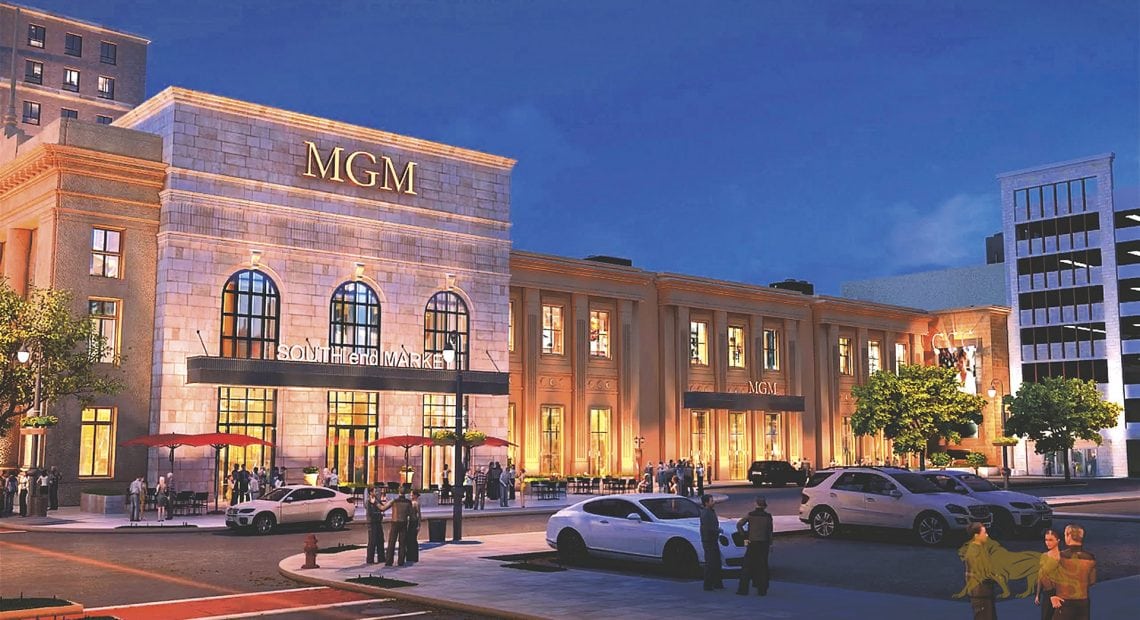
Original designs called for a 25-story large glass-façade hotel; they were changed in late 2015 to include a five-story hotel along Main Street.

• Nov. 2011: Gov. Deval Patrick signs “An Act Establishing Expanded Gaming in the Commonwealth,” allowing for up to three destination resort casinos located in three geographically diverse regions across the state, as well as one slots-only facility. The act states that the Commonwealth will receive 25% of gross gaming revenues, and also creates an independent body, the Massachusetts Gaming Commission, to oversee the implementation and licensing process.

• August 2012: MGM formally announces its interest in a resort casino in Springfield. In fact, a total of three proposals for casinos emerge in the City of Homes — MGM, which targets the city’s tornado-damaged South End; Penn National, which proffers a development in the North End; and Ameristar, which hones in on the former Westinghouse site.

• Dec. 2012: Ameristar withdraws its proposal for the Westinghouse site, leaving just two competing projects in Springfield.

• April 2013: Mayor Dominic Sarno selects MGM Springfield as the winning proposal for the city of Springfield, ending Penn National’s bid in the North End.

• July 2013: Springfield voters approve the casino project at a referendum, with 58% of voters in favor. The project is now one of three proposals competing to win the Western Mass. casino license, along with Hard Rock’s proposal in West Springfield, alongside the Big E fairgrounds, and Mohegan Sun’s proposal for Palmer, just off the Mass Pike.

• Sept. 2013: West Springfield voters block the Hard Rock proposal, leaving only MGM and Mohegan Sun in the race for the region’s sole casino license.

• Nov. 2013: Palmer voters follow suit, defeating Mohegan Sun’s project, leaving MGM Springfield as the only Western Mass. proposal standing. Had either Hard Rock or Mohegan Sun won voter approval, the Gaming Commission would have had to make the final decision — but the commission must still give the official go-ahead to MGM.

• Jan. 2014: Michael Mathis, vice president of Global Gaming Development for MGM’s hospitality division, is named president and chief operating officer of the MGM Springfield project. “I’m appreciative and grateful for this opportunity,” he said at the time. “There is much to be done in and around Springfield to bring this exciting project to completion. I look forward to continuing to build a team that will create a world-class urban casino-resort proposal and anchor a renaissance for this important Gateway City and the region around it.”

• June 2014: The Gaming Commission unanimously votes to grant the Western Mass. license to MGM. The commission’s decision comes after an extensive, two-year process of hearings and background investigations culminating in a final week of hearings and deliberations.

• Nov. 2014: The final roadblock for MGM’s development falls when a referendum attempting to ban casinos in the state fails, with more than 59% of voters giving the go-ahead to the Commonwealth’s casino era. The four-year process of opening MGM Springfield begins in earnest, with MGM planning to create about 3,000 permanent jobs to benefit the local job market.

• Jan. 2015: MGM Resorts International names Seth Stratton vice president and general counsel of MGM Springfield. Stratton, a Springfield native and Longmeadow resident, is responsible for overseeing legal affairs and government relations at the casino resort.

• March 2015: Brian Packer is named vice president of Development and Construction for MGM Springfield, and a groundbreaking ceremony is held at the site.

• June 2015: Springfield officials announce that Springfield will coordinate the casino project in the South End with the multi-year reconstruction of the Interstate 91 viaduct through the city’s downtown, which will delay the opening until 2018. The original target date was late 2017.

• Sept. 2015: MGM unveils a redesigned site plan for the project, abandoning the planned 25-story glass-facade hotel on State Street, in favor of a five-story hotel to be located on Main Street. The changes also include the reduction of the parking garage by one floor, and market-rate apartments being relocated off-site.

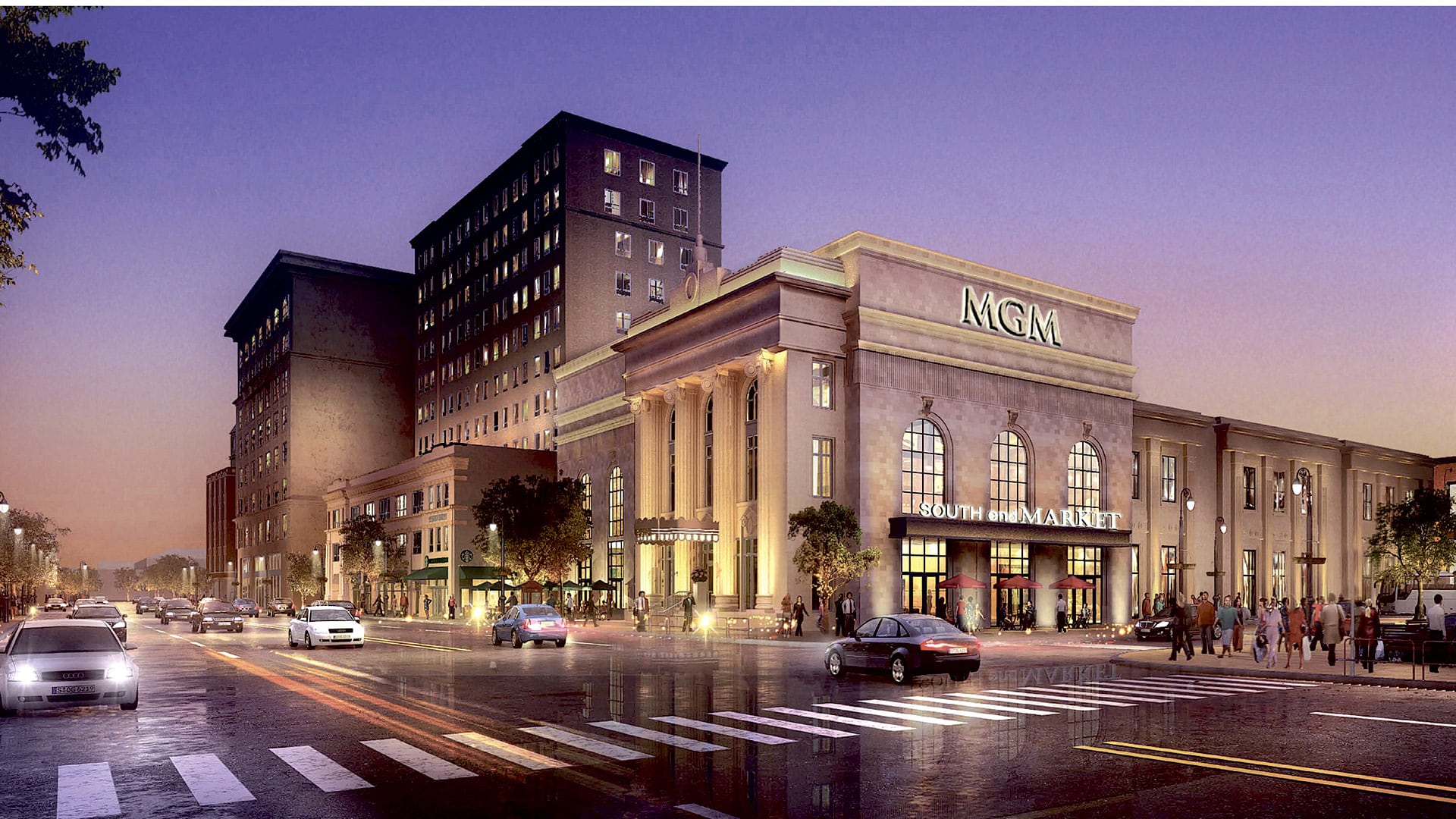
This rendering shows the revised design of MGM Springfield

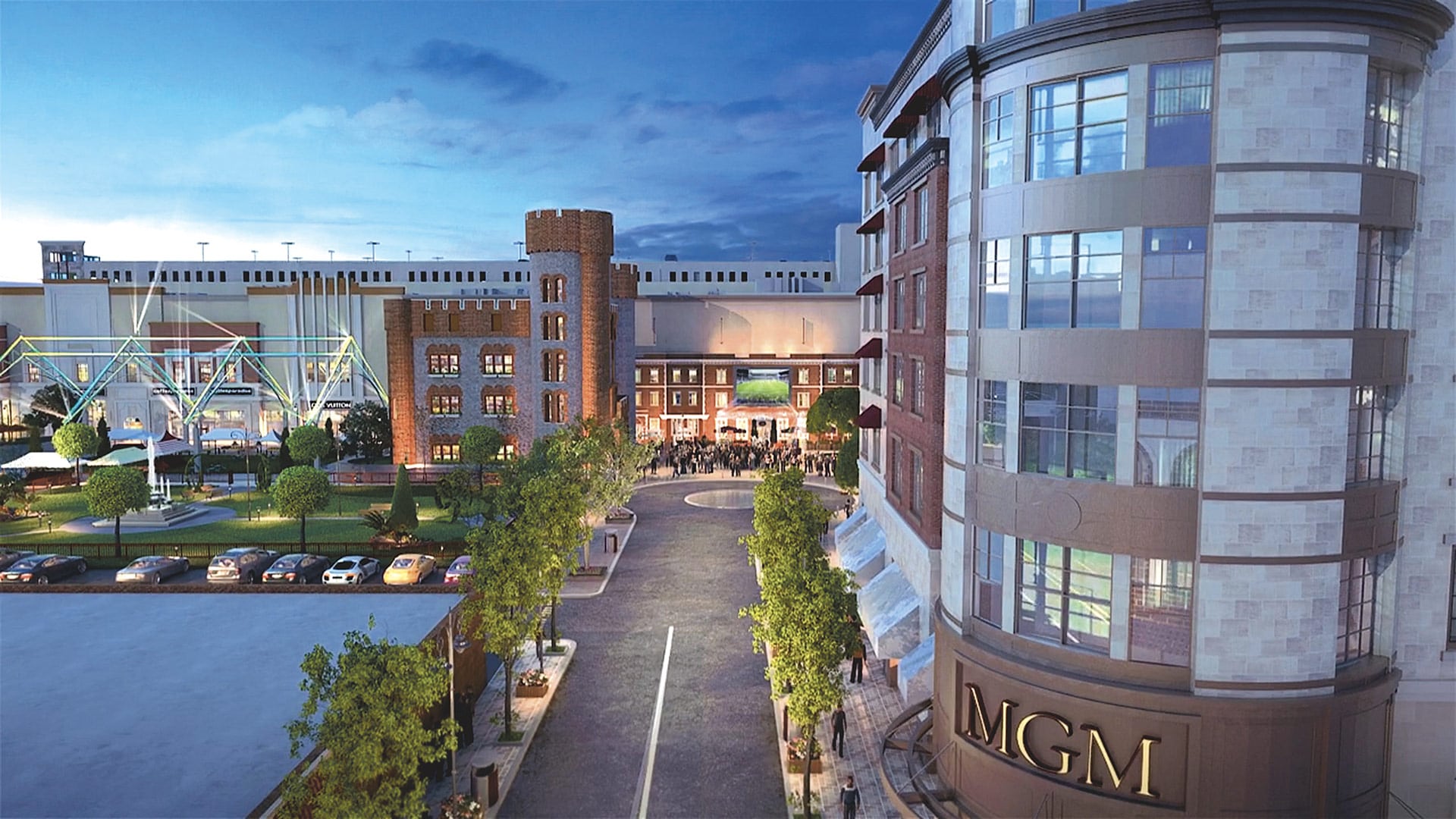
This rendering shows the revised design of MGM Springfield, with this view capturing the landscape on State Street.

• Feb. 2017: MGM Springfield announces the terms of an agreement with the Massachusetts Convention Center Authority (MCCA) and Spectra by Comcast Spectacor to become the exclusive venue manager of the MassMutual Center.

• March 2017: Hundreds of construction workers, city officials, MGM employees, and others gather at the future casino site to watch a crane raise the final steel beam into place in a topping-off ceremony.

• June 2017: Alex Dixon, a third-generation casino worker and former assistant general manager at the Horseshoe Baltimore Casino, assumes the duties of general manager of MGM Springfield. “A big part of my role is to help facilitate and build a culture,” he told BusinessWest at the time. “And the only way you can do that is by touching people and having an opportunity to not only impart the vision, but listen.”

Alex Dixon was named general manager of MGM Springfield in the spring of 2017.

Alex Dixon was named general manager of MGM Springfield in the spring of 2017.

• Nov. 2017: The MGM Springfield Career Center officially opens for business, with mass hiring events commencing two months later — a period when most of the casino’s 3,000 employees will be hired. Under the host-community agreement, 35% of those employees will be from Springfield, and 90% from a combination of Springfield and the greater region.

• Dec. 2017: The Massachusetts Casino Career Training Institute, a joint effort between Holyoke Community College and Springfield Technical Community College, opens, with classes launching in February.

• May 2018: Passersby finally see signage for the casino and hotel, including the MGM Springfield sign atop the parking garage, highly visible from I-91. Meanwhile, a dome is raised atop the MGM Springfield hotel, just above the hotel’s presidential suite.

• June 2018: MGM Springfield hosts its final pre-opening hiring event, interviewing hundreds of applicants and hiring many of them on the spot.

• August 2018: Plans are announced for MGM Springfield’s Aug. 24 grand opening, which will be preceded by a parade down Main Street at 10:30 a.m. from the corner of State and Main streets, featuring the world-famous Budweiser Clydesdales. The procession will arrive at MGM Springfield at 11 a.m., at which time the doors to the casino will officially open — never to close.

MGM Springfield

Hitting the Jackpot

For some, the contracts are truly life-changing, providing an opportunity to add employees, not cut back. For others, they amount to solid additions to the portfolio. In every case, though, status as an MGM vendor has brought with it a significant payoff.
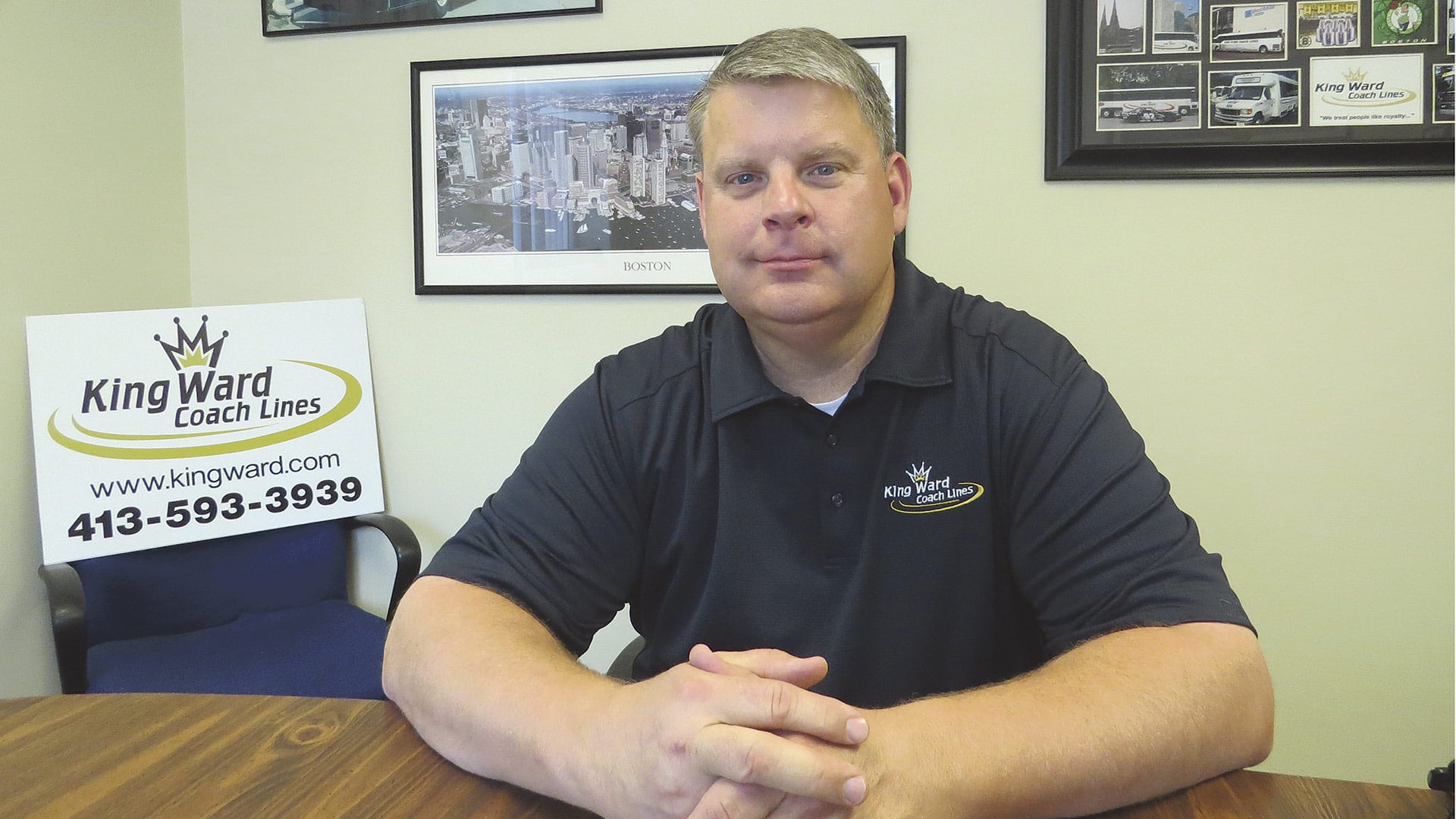
Dennis King says that only a few weeks ago, he was thinking about selling off some vehicles and downsizing; a huge contract with MGM has certainly changed the trajectory of his company.

Dennis King says that only a few weeks ago, he was thinking about selling off some vehicles and downsizing; a huge contract with MGM has certainly changed the trajectory of his company.

Dennis King says that, from the day MGM first set its sights on Springfield, he became focused on doing business with the casino giant.

But he didn’t let this pursuit consume him, nor did he allow himself to get too excited, because, from the start, and to borrow a phrase from the gaming industry, King, president of Chicopee-based King Ward Coach Lines, considered himself a long shot. A real long shot.

That’s because Peter Pan Bus Lines in Springfield is his main competitor, and, outwardly, he thought his rival was, to borrow a phrase from his own industry, more or less in the driver’s seat when it came to winning a coveted contract to provide a variety of services to MGM.

“I never, in my wildest dreams, thought this was going to happen; I’m shocked we got this. I was told to my face that they were going to go with Peter Pan.”

So when he received that initial e-mail a few weeks back indicating that the casino giant would like to do business him, he stayed in his seat, but he was more than a little taken aback.

“I never, in my wildest dreams, thought this was going to happen; I’m shocked we got this,” he told BusinessWest, referring to a contract that will make MGM his biggest account. “I was told to my face that they were going to go with Peter Pan.”

The contract calls for King Ward to provide shuttle service from parking lots at the Big E to the casino the first few days it’s open, and also daily services (line runs) from Worcester, Brattleboro, Vt. (down through Hampshire County), the Berkshires, Holyoke and Chicopee, Hartford, and other Connecticut communities — three buses a day doing six runs.

To say that this contract is huge — the word King used himself a number of times — would be, well, a huge understatement.

Indeed, King, projecting that the opening of MGM Springfield would put a real hurt on the company’s line runs and charter service to the Connecticut casinos, Foxwoods and Mohegan Sun, and coupling that with not getting the MGM contract (which, again, was his prediction), was preparing to make cutbacks.

“I had intentions of downsizing my company, selling off vehicles and reducing staff, because Mohegan and Foxwoods are big destinations for us,” he told BusinessWest, adding that now, with this contract in hand, he has bought additional vehicles — vans to handle smaller groups travelling to the casino but also other destinations — and projects that he will have to hire a new dispatcher and several more drivers.

Thus, MGM’s contract is a game changer in every sense of that phrase, and King is certainly not alone in seeing his future altered in a profound manner.

Rebeca Merigian can certainly relate, although the future is already here.

“The work is really starting to roll in; we’ve been preparing the wardrobe department for about three weeks now. We’ve broken records here.”

BusinessWest first caught up with her in April, when the ink was drying, figuratively but almost literally, on a contract for the fourth-generation dry-cleaning business she now owns to handle essentially every uniform to be worn by an MGM Springfield employee.
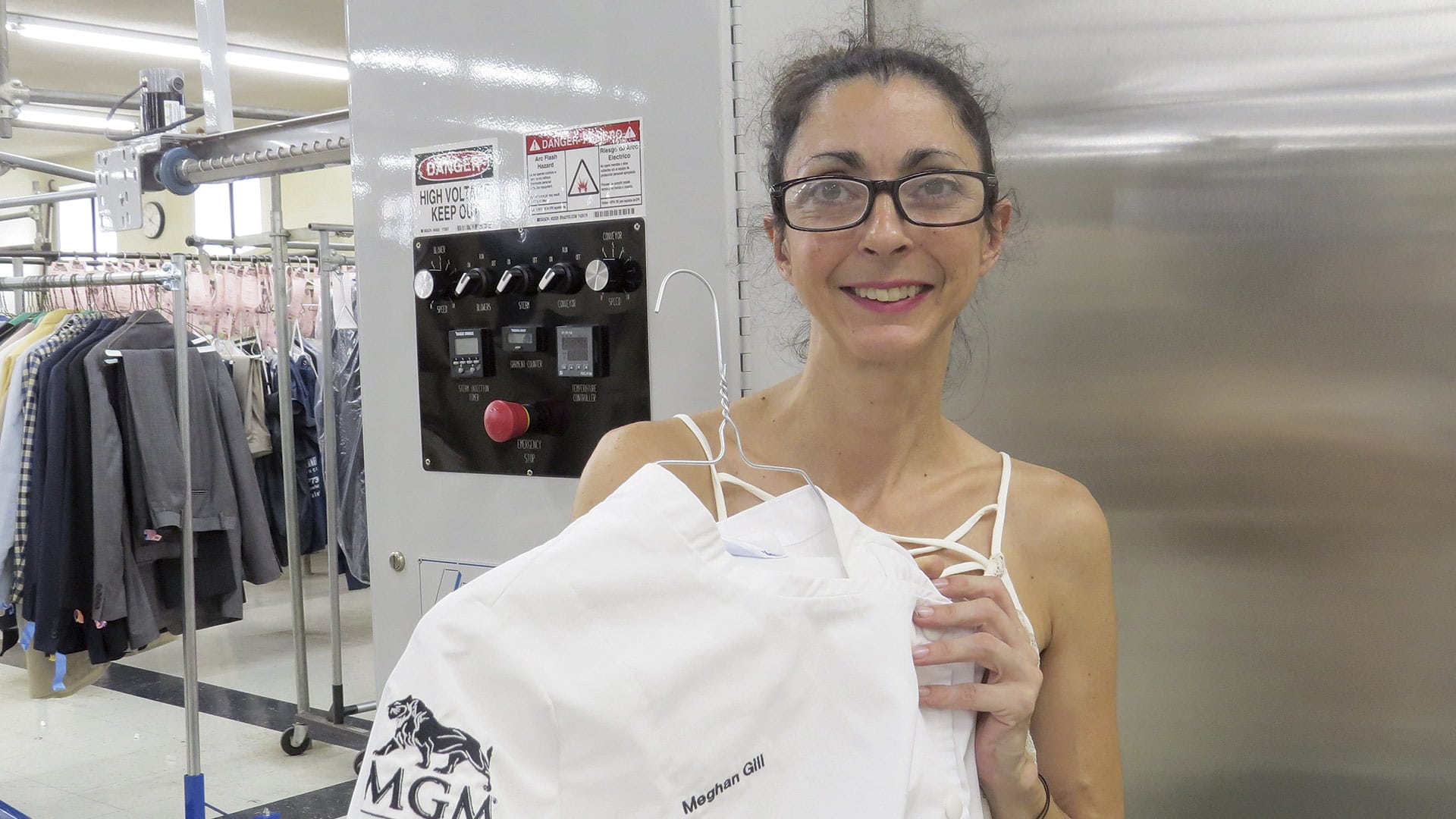
Rebeca Merigian

Rebeca Merigian says that a year ago, the focus at Park Cleaners was on survival. A massive contract with MGM Springfield has changed all that, and prompted her to buy new equipment such as the steam tunnel behind her.

At that time, she projected that the contract would double the volume of business at a company that had seen little, if any, growth in years, and add a few bodies to the payroll. When we circled back recently, as work was coming in from the casino in ever-larger amounts, her predictions were coming to pass.

“The work is really starting to roll in; we’ve been preparing the wardrobe department for about three weeks now,” she said earlier this month, adding that racks at the company are filled with chef coats, shirts for the table games dealers, suits for limo drivers, and much more. “We’ve broken records here.”

Not every business owner that is now an MGM vendor is going to have the kind of life-altering experience that King and Merigian are enjoying, but for dozens of companies, MGM, which is expected to spend $50 million a year on goods and services from local suppliers, has become a very solid addition to the portfolio, one that will give their products exposure to thousands of people a day and to individuals from across the country and probably around the world.

A partial list of these vendors includes a host of businesses, small and large, from brewers to produce providers; fruit-basket makers to a kitchen-supply outfit; a hand-dryer maker to a mattress manufacturer.

Some of the businesses, like Williams Distributing in Chicopee, have long histories, while others, like White Lion Brewery and the D-13 Group are startups or next-stage ventures.

As the casino prepares to open in a matter of hours, not weeks or even days, BusinessWest takes another look at one of the more important aspects of MGM’s arrival — the boost to be received by a number of area businesses across a host of sectors.

Lion Around

Ray Berry has already enjoyed a good deal of success with his craft beer label White Lion. Indeed, the brand has moved well beyond Western Mass., and is now statewide, having made deep inroads into the lucrative Boston market, with the north and south shores being the next targets.
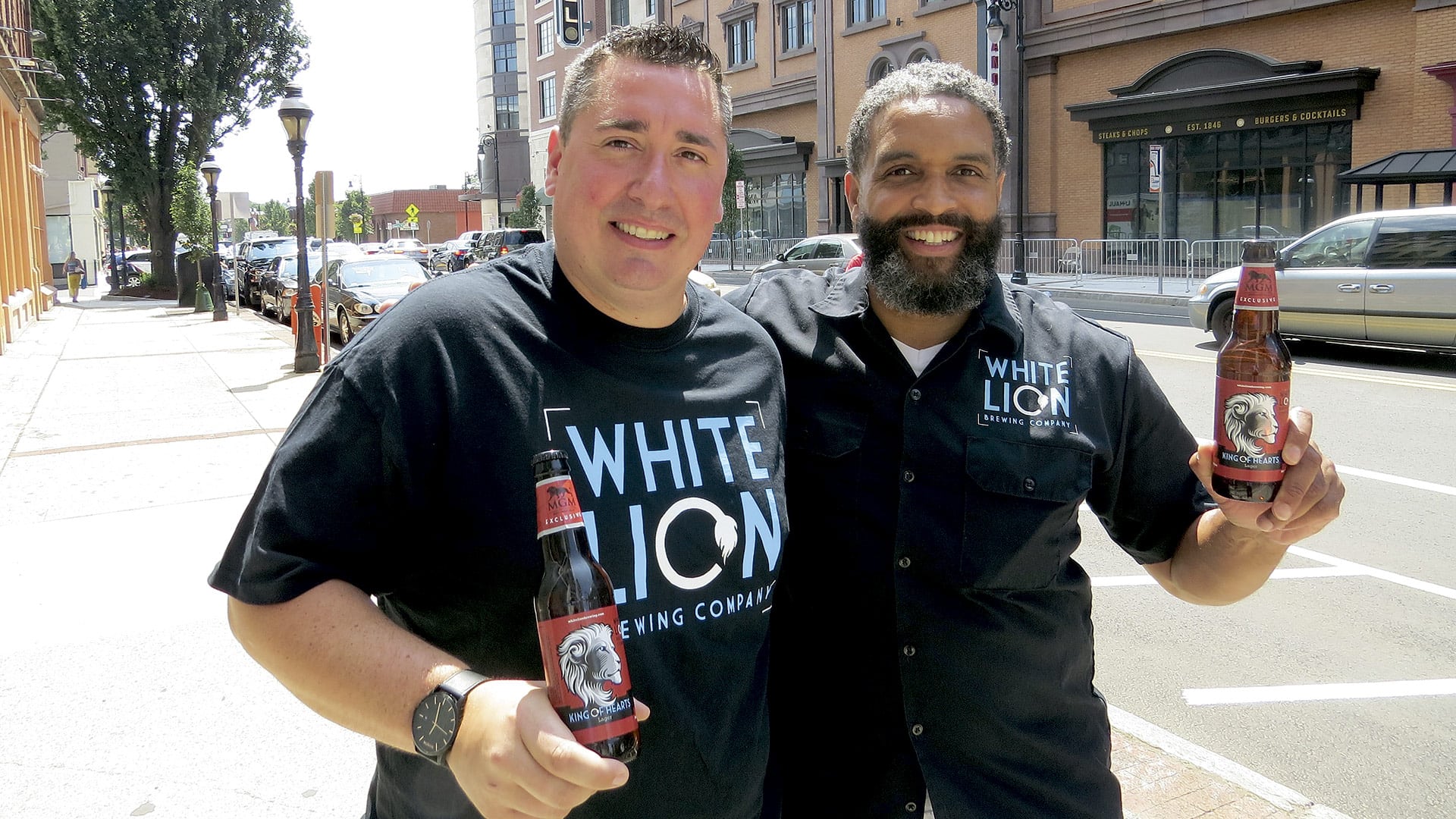
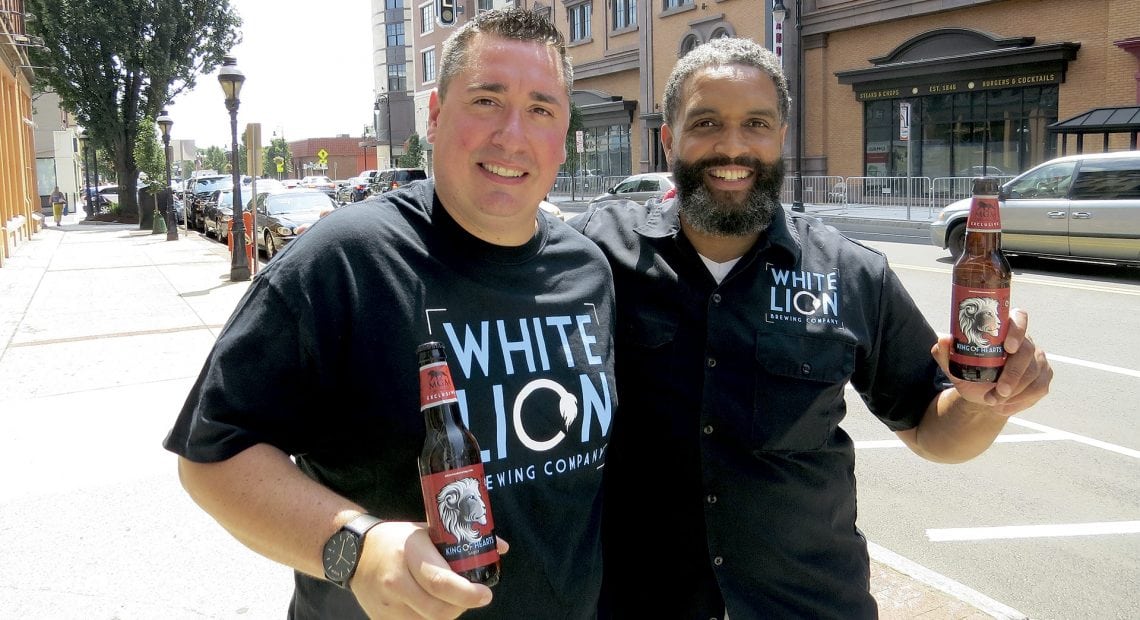
Ray Berry, right, with partner Bill Collins, shows off King of Hearts Lager, to be sold exclusively at MGM Springfield.

Ray Berry, right, with partner Bill Collins, shows off King of Hearts Lager, to be sold exclusively at MGM Springfield.

But the contract Berry signed to provide MGM with an exclusive label, to be called King of Hearts Lager, is perhaps the most significant development in the brand’s short history because of the exposure it will provide.

“To be in a position to have our brand and lager in front of thousands of people on a daily basis extends our brand and our visibility tremendously,” he told BusinessWest. “And we believe that with the right approach, and the right strategic conversations, we’ll be able to broaden our relationship accordingly.”

“We wanted to present some brand standards that would be appealing to MGM Springfield and their team, and we presented them with several concepts. We went through several meetings, which also included some pilot taste tests, and we decided to move forward with the King of Hearts name.”

Berry said MGM and White Lion have been in discussions about doing business together for some time now. After the food and beverage lineup for the casino was finalized, that allowed the parties to take those talks to a higher level, with the focus on being creative, he noted.

The result was King of Hearts Lager.

“We wanted to present some brand standards that would be appealing to MGM Springfield and their team, and we presented them with several concepts,” Berry explained. “We went through several meetings, which also included some pilot taste tests, and we decided to move forward with the King of Hearts name.”

Thus, the bottle has two lions on it — the White Lion logo around the middle, and the MGM Lion on the neck. People will only be able to drink this label at MGM, but, as Berry noted earlier, visitors to the casino — and up to 10,000 are expected each day — will be introduced to the brand and, hopefully, compelled to look for it at home.

“When you think about the kinds of people who will be going to MGM — the global connoisseur, the festival goer, families, individuals coming in for events — all of them may encounter the White Lion brand,” he noted. “And when they get back to their respective geographic area, they may go to their local restaurant or package tour and be able to extend that experience.”

Bill Gagnon sounded a somewhat similar tone, only he was talking about a much different kind of experience — the one that takes place at the end of a visit to the men’s or ladies’ room.
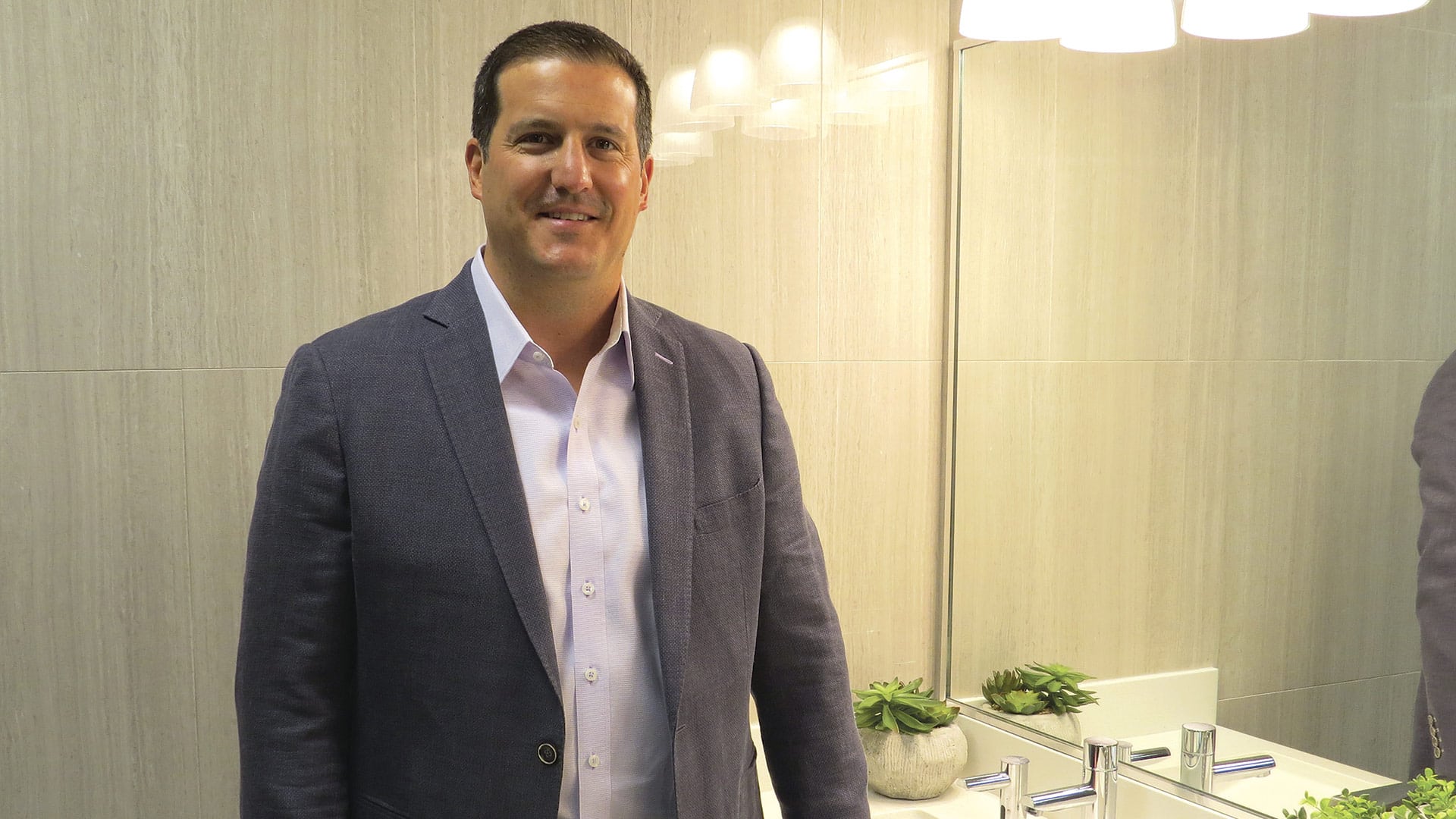
Bill Gagnon says MGM Springfield’s order for 96 integrated sink systems will generate some real momentum

Bill Gagnon says MGM Springfield’s order for 96 integrated sink systems will generate some real momentum for D-13 Group, the startup venture he launched last year.

Gagnon is president of Natick-based D-13 Group, suppliers of Integrated Sink Systems, which, as that name implies brings a host of components together in one system, including the XLERATORsync Hand Dryer, produced in East Longmeadow by Excel Dryer, the company started and still led by his father, Denis.

MGM has ordered 96 of the integrated systems for its restaurants, hotel, and meeting facilities, said Bill Gagnon, adding the company and its signature product are still just getting off the ground, and MGM’s contract provides a huge boost.

“It’s a huge deal for D-13 Group, as a new company, to supply a brand and international entity such as MGM; to add them to our profile is a significant development for us.”

But the MGM corporation is actually a repeat customer, he noted, adding that the first real client for the integrated system was MGM’s National Harbor Casino in Maryland; the units at MGM Springfield are what he described as the “production version.”

“And in between, we’ve done some new jobs,” he said, listing the JFK Library in Boston, Red Rose Pizza in Springfield, and other projects. “It’s a huge deal for D-13 Group, as a new company, to supply a brand and international entity such as MGM; to add them to our profile is a significant development for us.”

Along for the Ride

The same could certainly be said for King Ward, the company started by King’s father, Robert, and partner Russ Ward. The venture turns 30 this year, and, as its president noted earlier, this wasn’t shaping up to be a great anniversary year.

Indeed, the company had developed a very solid business taking individuals and a wide array of groups to the Connecticut casinos and especially Mohegan Sun — it’s a few miles closer than Foxwoods and, said King, that makes a big difference (Mohegan has been the company’s biggest destination) — and much of that business was generated from the Greater Springfield area.

With the arrival of MGM Springfield, King was projecting that many of those customers would be gambling closer to home, and a decent number wouldn’t need a bus to get there. Couple that with not getting the MGM contract, and things were looking quite glum.

But then, King got that e-mail from a consultant working for MGM who essentially started the dialogue that led to the contract. Things didn’t happen overnight, or even over a few nights, for that matter — there were some serious negotiations over specific routes — but the deal got done, as they say.

And it’s a huge deal for King Ward, which is located just a few hundred yards from the runways at Westover Air Reserve Base and has carved out a nice business dominated by charters to destinations ranging from the Bronx Zoo to Fenway Park.

The contract provides a steady stream of income, said King, and the timing of many line runs — the buses drop off passengers at 9:30 and pick them up at 2:30 p.m. — allows the company to deploy its buses elsewhere during that stretch, perhaps for charters to MGM Springfield.

“This is the biggest thing that will ever happen to our company,” he said.

Rebeca Merigian could likely say the same thing. Park Cleaners has had big customers in the past, including MassMutual, but nothing like this. Each of the 3,000 MGM employees will have three uniforms, and Park will handle all of that. But there is also dry cleaning coming in from employees, and new business opportunities developing, such as work for the meeting facilities at the casino complex.

The volume became so great so quickly — “we’re pushing about 500 pieces a day, and they haven’t opened yet” — the company bought some new equipment, specifically a so-called ‘steam tunnel,’ and has plans to add additional workers. Regular customers are happier because the company is now open Saturdays and Sundays.

Meanwhile, the van the company has long used to make its deliveries is no longer sufficient, said Merigian, adding that among all the other things she’s doing, she’s researching 24-foot box trucks.

All this represents quite a reversal of fortune.

“A year ago, we were talking about survival,” she said. “Now, it’s about managing this incredible surge in volume; it’s amazing.”

Cashing In

While a comparatively small company, King Ward had already made its mark in this region, becoming the transportation provider for a host of area institutions, ranging from Mount Holyoke College to the Springfield Thunderbirds.

There are buses at the company’s terminal wrapped in those clients’ logos and colors, said King, and soon they’ll be joined by a few bearing the MGM lion.

The company won’t be charging MGM for the cost of the wrap jobs, he noted, adding that this perhaps the least he can do for a client — and a contract — that has changed the trajectory of the company in, well, a huge way.

There are a few other area businesses enjoying a similar life-altering experience, and for dozens more, MGM is providing a tremendous lift.

In a few days, visitors to the casino complex can dream about hitting the jackpot; several area businesses already have.

George O’Brien can be reached at [email protected]

MGM Springfield

Editor’s Note: From the beginning, MGM Springfield has touted its $960 million resort casino as, well, much more than a casino, and as the property gets set to open, one can clearly see that this is the case. Here is a quick glimpse at the South End property and all that it will offer visitors:

The Casino

The expansive 125,000-square-foot gaming floor will feature approximately 2,550 slot machines, 120 gaming tables, a poker room and high-limit VIP gaming area for a variety of experiences.

Accomodations

• The boutique-style five-story hotel will feature 250 eclectic guestrooms inspired by the historic significance, iconic architecture and literary legacy of its urban surroundings. Each space is punctuated by details such as quotations from the works of Emily Dickinson and whimsical Merriam-Webster-inspired works of art.

Dining Experiences

MGM Springfield will offer an array of new-to-market food and beverage spots, including:

• Cal Mare: Award-winning celebrity chef Michael Mina will introduce a must-experience restaurant to the New England dining scene with Cal Mare, an Italian concept evoking the vibrant seaside elegance of Italy’s Amalfi Coast. With accolades including James Beard Foundation “Who’s Who of Food & Beverage” inductee in 2013, Gayot Restaurateur of the Year 2011, Bon Appétit Chef of the Year 2005 and more, Mina continues to dazzle the culinary world with bold dining concepts. For Cal Mare, Mina and MINA Group are collaborating with San Francisco’s Chef of the Year Adam Sobel, for whom the concept has been a passion project for several years. Seafood from the Mediterranean and Pacific Ocean will be essential menu offerings, as well as fresh handmade pastas and brick-oven pizzas. Charcoal grilled fish, crudos and lighter Italian cuisine will inspire the restaurant’s colorful menu, while the beverage program will spotlight coastal Italian wines and an extensive list of Amari including house-made limoncellos and craft cocktails.

• The Chandler Steakhouse: The name and location of The Chandler Steakhouse hold a special place in Springfield history. The restaurant is located in the former Union House Hotel — later renamed the Chandler Hotel — which was preserved as part of the development of MGM Springfield and incorporated into the new resort. Guests will savor the finest seafood and steaks at The Chandler Steakhouse, which will be helmed by Hell’s Kitchen season-14 winner, Meghan Gill. The restaurant will offer cuts of meat made with 100% Midwest Angus beef that has been dry aged in-house for 21 days. Guests will watch their dinner as it is prepared over an open mesquite charcoal broiler through a glass-walled kitchen serving signature dishes such as northwest salmon, whole steamed lobster or a tomahawk ribeye.

• TAP Sports Bar: Building off the success it found at MGM Grand Las Vegas, MGM Grand Detroit and MGM National Harbor, TAP Sports Bar will make its mark on downtown Springfield. TAP will feature a 10-lane bowling alley, arcade, and beer garden, and fans can keep up with live game action on state-of-the-art HD TVs, as well as a massive video wall featuring 32 screens that can operate individually or as one giant image. Hundreds of hand-selected, vintage memorabilia pieces will be displayed prominently in the bar and dining areas, all carefully chosen to represent the surrounding area’s deeply rooted sports history. Adjacent to the sports bar, TAP’s arcade and bowling alley will be energetic and eclectic gathering spots for gaming, drinking and socializing. The space also will house a playful area featuring vintage video games, billiards, shuffleboard, air hockey and foosball. TAP will serve up Springfield-inspired menu items, including TAP’s Hall of Fame Burger, signature wings and Reubens. Beer aficionados will appreciate the vast varietals on tap and draft at TAP’s beer garden, which also will showcase local brewery partners.

• South End Market: Adding a gourmet twist to the classic food hall, the bustling South End Market will feature a variety of quick-casual dining spots. Located off Main Street, the Market will house Wicked Noodles, a pan-Asian restaurant; Jack’s Lobster Shack, offering lobster rolls and New England-style clam chowder; an all-American eatery at Bill’s Diner; and healthy options at the Hearth Grill. Additionally, guests will be able to sit and sip at a Wine & Cheese bar or satisfy their sweet tooth at a Gelato & Espresso counter.

Meeting Facilities

In addition to large-scale convention capabilities at MassMutual Center, MGM Springfield will offer approximately 34,000 square feet of space to accommodate meetings and events ranging from business to social gatherings. The meeting and event center will feature ballrooms, meeting rooms and boardrooms adjacent to a 6,200-square-foot outdoor terrace that will flood pre-function areas with natural light. All meeting spaces will incorporate sister property names highlighting the resort’s connection to other top destinations around the country: The 10,600-square-foot ARIA Ballroom; 5,600-square-foot Bellagio Ballroom; 1,000-square-foot Borgata Meeting Room; and the 1,000-square-foot Beau Rivage Boardroom. For larger groups, the nearby MassMutual Center offers 100,000 square feet of large-scale event space.

Retail

MGM Springfield will offer a retail lineup with a decidedly local flavor, with:

• Indian Motorcycle: The Springfield-born pioneers of the American motorcycle industry, will debut the brand’s first-ever apparel store as an anchor tenant of MGM Springfield. retail collection. The store will offer items from the brand’s casual apparel line, the Indian Motorcycle 1901 Fashion Collection, which includes graphic tees, sweatshirts, hoodies and jackets inspired by Indian Motorcycle’s rich heritage. Indian Motorcycle jewelry and accessories also will be available for purchase. Mirroring the aesthetic of the store’s product lines, the space will feature an industrial-yet-modern vibe with exposed, vaulted ceilings and concrete and wood elements.

•Hannoush Jewelers: Founded in Springfield in 1980, Hannoush Jewelers is a family-owned and operated business. The MGM Springfield location will be a flagship for the expanding brand that boasts more than 50 locations throughout Massachusetts. Guests can expect to find pieces from sought-after designers such as Tacori, Breitling, Alex and Ani, Pandora and more.

• Kringle Candle: Kringle Candle unites heritage and innovation in its signature line of all-white, ultra-fragrant, pure-burning candles. The Springfield boutique will be situated in the First Spiritualist Church space (a historic High Victorian Gothic church that was literally lifted from its foundation and relocated approximately 600 feet to its new permanent home). It will draw inspiration from Kringle Candle’s thriving Bernardston shopping destination, featuring candles, eclectic gifts, keepsakes and chocolates alongside a gourmet café offering sandwiches, salads and pastries for breakfast, lunch, or dinner.

Entertainment

The 8,000-seat MassMutual Center is MGM Springfield’s official entertainment venue, serving as the home for large-scale conventions and events. MGM Springfield also will partner with other local venues, such as Symphony Hall, for live events;

More Entertainment

Guests can tee up at MGM Springfield’s Topgolf® Swing Suite, a new social gathering spot featuring high-tech immersive golf simulators and a lively lounge with delicious food and beverage offerings. The resort also will feature an eight-screen movie theater complex; 10-lane bowling center; serene spa; and an 8,000-square-foot pool situated within a terraced rooftop garden.

Open Air Plaza

Inspired by the classic New England town common, MGM Springfield will create a lively outdoor plaza and thriving public space, with the iconic 19th century Springfield Armory at its center. The historic United States arsenal will provide the backdrop for the open-air marketplace, which will feature live events, local artisans, farmers markets and seasonal programming including an outdoor ice rink. The plaza will become the anchor for the neighborhood’s pedestrian crowd, encouraging guests to explore the many local businesses and attractions nearby.

Art

Woven through all elements of the resort, a public fine art program inspired by the industrial ethos of Springfield will feature a captivating collection of commissioned and hand-selected pieces by international and local artists from Springfield, the greater Berkshires, New England and beyond. The property also will feature an exclusive exhibit, “Cabinet of Curiosities: Springfield Innovations from the Springfield Museums,” curated in partnership with the Springfield Museums to showcase turn-of-the-century objects throughout the resort, such as a 1925 Edison Western Union Stock Ticker, a 1915 Springfield-made Telegraphone, and an 1895 Edison Home Phonograph.

MGM Springfield

In Good Company

Editor’s Note: From the start, one of the main focal points of the discussion involving MGM Springfield has been the employment opportunities it will bring to the region. Overall, MGM has had to fill roughly 3,000 positions, and it’s filled most of them with residents of the 413. With each job awarded, there is a story. Here are five of them:

Karisma Roach

Karisma Roach

Name: Karisma Roach
Age: 24
Residence: Springfield
Position: Cage Cashier

Why did you seek employment at MGM Springfield?:

I’ve been looking for a better job opportunity for so long and it is finally here. When I came from St. Thomas a couple years ago I never thought I would have the opportunity to build my career at such an amazing company.”

What does this opportunity mean for you?:

This feels just like a dream come true. This is my first full-time and steady job. I remember I cried when I got the position, because I really needed it. I have no words to describe how I feel. But I feel like I’m part of MGM Springfield. I love the management and the staff.”


Keishla Morales

Keishla Morales

Name: Keishla Morales
Age: 21
Residence: Springfield
Position: Table Games Dealer

Why did you seek employment at MGM Springfield?:

First of all, I think that MGM is one of the biggest companies worldwide, but most of all in United States. I am taking advantage of the opportunity of working for the first casino at Springfield. This is my reward for all my hard-work successfully completing the Blackjack and Carnival Games courses at MCCTI.”

What does this opportunity mean for you?:

This opportunity means EVERYTHING to me. I have never gambled before, but now I love dealing cards. I’m thankful for all the instructors that helped me out in the process. I’ve had so many struggles in my short life, but being part of this company makes me feel that I can finally take control and secure my future. It makes me feel that I will be able to raise and provide my daughter everything she needs. I’m very happy to finally be here. I look forward to being in the casino life and meet all my co-workers. This experience makes me feel excited, comfortable, but most of all thankful.”

Miguel Figueroa

Miguel Figueroa

Name: Miguel Figueroa
Age: 43
Residence: Longmeadow
Position: Executive Chef at TAP Sports Bar

Why did you seek employment at MGM Springfield?:

I saw the opportunity to grow and the stability the company provides. It’s exciting to grow a concept like TAP. I’m very lucky to lead an outlet like this. I’ve been to Vegas a few times, and I thought it would be great to have something like that in Springfield. It was a no-brainer when I was asked to join the team.”

What does this opportunity mean for you?:

This means a lot. It solidifies that I have made it far, and my hard work has paid off. Running this operation means the world to me, and gives me a sense of pride. Leading one of the outlets the casino has is the ultimate goal as a chef. It separates the good from the great. I feel like I have arrived.

Timothy Mock

Timothy Mock

Name: Timothy Mock
Age: 40
Residence: Connecticut (Moving to Springfield)
Position: Security Officer

Why did you seek employment at MGM Springfield?:

I wanted to be a part of the SHOW. I am a people person, and I love helping people. I wanted to meet different types of people from all different cultures, and MGM provides that. I wanted to be a part of it all.”

What does this opportunity mean for you?:

Working here allows me to be me. I’m fun-loving, outgoing, and I love life. This is who I am. I appreciate MGM for giving me this opportunity. It’s dear to my heart. Being chosen to be a part of this family is very special, and I get to embark on this journey of my life.

Jonathan De Arce

Jonathan De Arce

Name: Jonathan De Arce
Age: 32
Residence: Springfield
Position: Executive chef for the South End Market

Why did you seek employment at MGM Springfield?:

Because I’m from Springfield! I heard about this property since the beginning. I went to Boston for five years, I gained experience, and as soon as I knew that this was real I knew it was my opportunity to come back. I know what MGM Springfield means to the area, I’m aware of where this city has been, and excited about where it is going to be very soon.

What does this opportunity mean for you?:

It means everything! The possibilities are endless. Learning from all the leaders, being able to receive training in Vegas, visiting other properties, meeting all the Executives, this is definitely an eye opener! Sky is the limit!”

MGM Springfield
Mike Mathis: President and COO
Anthony Caratozzolo: Vice President, Food & Beverage
Alex Dixon: General Manager
Anika Gaskins: Vice President, National Marketing
Brian Jordan: Director, Surveillance
Monique Messier: Executive Director, Sales
Sarah Moore: Vice President, Marketing, Advertising & Brand
Marikate Murren: Vice President, Human Resources
Jason Rosewell: Vice President, Facilities
Jason Rucker: Executive Director, Security
Lynn Segars: Vice President, Slot Operations
Gregg Skowronski: Executive Director, Hotel Operations
Talia Spera: Executive Director, Arena Operations
Seth Stratton: Vice President and General Counsel
Courtney Wenleder: Vice President and Chief Financial Officer
Robert Westerfield: Vice President, Table Games
Features

Focused on Fiscal Fitness

Last fall, while Dexter Johnson was making up his mind to take the job being offered him — president and CEO of the YMCA of Greater Springfield — a few friends and relatives had a simple five-word question for him: ‘Are you sure about this?”

He was — and is.

But he acknowledged then and now that those asking the question had every right to do so.

That’s because this YMCA, though steeped in history and tradition (it is the fourth oldest Y in the world, after all), like a number of other Ys across the country, has been struggling financially as it adjusts to a host of changes impacting the traditional Y business model, if you will.

These struggles are nothing new — they’ve been going on … well, for as long as most can remember. And a path to more-solid footing seems as elusive as ever.

But Johnson, who has been working for this YMCA for several years now and within the organization for more than two decades — and is therefore known as a ‘Y guy’ — decided that this was a challenge to embrace, not run away from.

And he’s never had any second thoughts.

But Johnson understands that the Springfield Y’s path to fiscal fitness will be challenging and, undoubtedly, lengthy. In short, some progress has been made, but there is still considerable work to do.

“This Y has operated with an operating deficit for a number of years now, “ he noted, adding that the organization has refinanced debt, tapped into its endowment, and taken other steps to cope with the red ink. “And we have to look at what our opportunities are to turn that around; our focus right now has been to get operations to a point where they’re approaching break-even status or creating a surplus. We’re doing better this year than we were last year, but we have a ways to go.”

The Springfield Y, like many others, has generally struggled in recent years due to a variety of factors, including changing demographics in urban centers and a proliferation of competition — there is seemingly a gym or two on every corner now.

But the difficult times have been exacerbated by some missteps, especially the opening of a branch in a strip mall in the center of Agawam. Attempting to duplicate the success of the Y’s Scantic Valley operation on Boston Road in Wilbraham, and armed with some data that said the venture could work (although there were some numbers that indicated otherwise) the center was opened in 2015.

“This Y has operated with an operating deficit for a number of years now. And we have to look at what our opportunities are to turn that around; our focus right now has been to get operations to a point where they’re approaching break-even status or creating a surplus. We’re doing better this year than we were last year, but we have a ways to go.”

But the ‘Y’ sign would come down only 18 months or so later, as the expected memberships never materialized.

“Looking back, that was just a mistake in judgment,” Johnson said. “After a year and a half of trying and making those efforts, we were losing significantly there to serve a really small population, so we decided to take the loss, which was painful, and move on.”

Moving forward, the Y will seek to avoid such mistakes and be more calculated in its attempts to be both entrepreneurial and fiscally prudent, said Johnson.

The key, he told BusinessWest, is to firmly identify the role this Y can play and must play in the years and decades to come. Not all YMCAs play the same role, he went on, especially given the demographic and societal changes taking place.

At the Springfield Y, for example, 60% of all revenues come from child care, with the health and wellness components contributing only 30%.

All this is explained, sort of, in new wording on the front of Johnson’s business card and in other marketing material used by the organization. Specifically, there are three new lines under the huge ‘Y’:

• For Youth Development

• For Healthy Living

• For Social Responsibility

Individual YMCAs can focus on one, two, or all three, he went on, but mostly, they have to mold themselves into what the region being served requires and what will ultimately work fiscally.

“The Y becomes what that community needs,” said Johnson. “If the community needs childcare and doesn’t need health and wellness, then we’re glad to provide that; or it could be health and wellness that goes well beyond treadmills.”

For this issue, BusinessWest talked at length with Johnson about this process of becoming what the community needs while also putting the Y on more solid financial footing.

Sign of the Times

On the day he spoke with BusinessWest, work crews were busy taking the old ‘Y’ logo off the side of the YMCA building on Chestnut St., a move undertaken in accordance with a national initiative to rebrand the institution and bring more consistency to the letter ‘Y’ used by individual YMCAs. A new sign will be going up “soon,” said Johnson.

Dexter Johnson is the latest of several leaders of the YMCA of Greater Springfield

Dexter Johnson is the latest of several leaders of the YMCA of Greater Springfield to grapple with the question of what to do with the aging facility on Chestnut Street.

“They give us color options, but there is a change in the logo,” he explained, noting that the new ‘Y’ (as in the letter on the letterhead) is more rounded in its look. “All the Ys throughout the country had kind of gone out on their own and come up with all kinds of different logos, and back in 2010 the national office said ‘enough’s enough, and we need to get back to being nationally identifiable.’”

There was more than a little symbolism attached to the exercise of taking the old ‘Y’ off the building. For starters, the Springfield Y missed the seven-year deadline to rebrand set by the national organization by a wide margin, an obvious symptom of its fiscal struggles. There’s also the poetic juxtaposition of giving the letter ‘Y’ a new look, while the staff and board and of the Springfield institution have been attempting to reinvigorate the local YMCA brand on a much broader scale.

And then, there’s the physical act of taking the letter off that building. Indeed, there are a number of questions about just how much longer the more-than-half-century-old structure will continue to serve in that capacity, and in what shape and form (much more on all that later).

Like we said, quite a bit of symbolism, and sorting it all out goes a long way toward explaining the challenges Johnson faces, but also the determination and passion he brings to his work.

And with that, we need to trace the steps that brought him to Springfield and his current assignment.

Our story starts in Tampa, Fla. That’s where Johnson attended a satellite campus of Springfield College, renowned for producing future YMCA leaders, and where he began amassing experience in virtually every facet of a YMCA operation, a diverse resume he believes is serving him well at this critical stage of his career. It’s also where he worked with Kirk Smith (he actually was Smith’s supervisor), who would eventually become director of the Springfield Y and convince Johnson to join him there.

“The Y becomes what that community needs. If the community needs childcare and doesn’t need health and wellness, then we’re glad to provide that; or it could be health and wellness that goes well beyond treadmills.”

“I was going to school to be a teacher and just went to the Y to work with some kids and get some experience, and 26 years later, I’m still here,” he said, noting that he started as director of the Child Care Services/Outreach program at the Tampa Metropolitan Area YMCA. He would later go on to direct the Youth Opportunity Movement program there and then become executive director.

After then serving as a district executive in Tampa and as a regional training manager at YMCA of the USA in Chicago, he joined Smith in Springfield as senior vice president and chief operating officer.

“I was ready to get back into the operational side of the Y and decided Springfield was the move,” he told BusinessWest.

When Smith left for another opportunity in Florida, Johnson was named interim president and CEO, but the permanent job eventually went to Scott Berg, then associate vice president of Development at Springfield College and a key player in the opening of the Scantic Valley YMCA.

When Berg left less than two years later to become vice president of Philanthropy at Baystate Health, Johnson was quickly named his successor.

He takes over a Y that, as noted, is steeped in tradition (it dates back to 1852). But recent history has been marked by fiscal struggles and hard work to adapt to a changing landscape. And as Johnson addresses the many challenges facing him and the team he’s assembled, he plans to call on the many forms of experience he amassed.

“I definitely learned some valuable lessons during that time when I was interim president,” he noted. “But now that I’m in the permanent job, I’m definitely calling on all resources. During my time with Y USA I had the chance to make some great connections, and I have a number of CEOs and other leaders at Ys to give me counsel and help me through some of the challenges we have here.

“Nothing’s new when it comes to problems — they’ve all happened somewhere at some time before,” he went on. “So we’ll try to gain some advantage by learning from those experiences.”

Building Momentum

And an advantage will be helpful, because righting the fiscal ship has been an ongoing challenge, not just for this Y, but for facilities across the country, especially urban Ys; one in Pittsburgh recently filed for bankruptcy, said Johnson.

Specifically, the age-old challenge is generating revenues to meet and hopefully exceed expenses. In Springfield, the problem has been exacerbated by the downtown branch, an aging building that is expensive to maintain, and a facility that has seen its health and wellness membership numbers fall 40% over the past decade.

Creating the Scantic Valley Y has helped the Y cope with the rising costs and falling revenues downtown, and the Agawam facility was conceived with similar ambitions; however it need did not match expectations.

Moving forward, the Y has to implement a long-term strategic plan for its downtown branch, and the operation as a whole, with the goal of making it become what the community needs.

Such a plan was drafted during Berg’s tenure, Johnson said, and, not surprisingly, its main focus was the downtown location — meaning both the building and the various programs housed there — and on devising actions plans for both.

As for the property itself, the Y sold the 40,000-square-foot residential component of it (the tower that faces Chestnut Street) to Home City Development, and still owns what’s left in what amounts to a condominium-like arrangement. But that portion it still owns is large, old, in many cases under-utilized, and in all cases expensive to operate and maintain.

Talk of a ‘new Y’ has been ongoing for years, said Johnson, noting that several of his predecessors have grappled with the issue and its myriad complexities, especially the cost of a new building.

Rumors have persisted, and one very preliminary proposal — to move to a closed car dealership site on Boston Road — made its way into the newspapers. “There’s still people that ask me … what happened to the Boston Road thing?” said Johnson.

Nothing happened with it, and nothing has really happened with any of the other rumored options, he went on, adding quickly, however, that the issue is real and a solution must eventually be found — and inevitably much closer to downtown than Boston Road.

At present — and on an ongoing basis — a variety of options are being looked at, he told BusinessWest, including leasing space instead of owning it (the new owners of Tower Square have reached out, for example), extensively renovating the existing quarters, or eventually moving into much smaller, more efficient quarters.

“We probably have about 70,000 square feet, and we don’t need all that space quite frankly,” he said. “We have a whole racquet ball floor, and no one goes up there, really; if we decide to renovate and use this space, we would make it a smaller environment; 50,000 square would probably be more the right size to support the membership we have here.”

Building a new Y building is the long-term strategy, he said, adding that such a step would require significant fund-raising efforts and other steps. Shorter term, renting space might become an option, he went on, adding that there are pros and cons to any new location, temporary or permanent.

As for growing the Y, in terms of everything from its revenues to its presence within the community to its overall relevance, Johnson said the key, as it has always been, lies in partnerships with other groups and agencies across the city and the region.

“I’m looking to be a partner and be a part of any partnership that fits our mission, and that effectively serves this community,” he told BusinessWest. “We’ve had some great partnerships with the Springfield Public Schools, the United Way, the Martin Luther King Family Center, and right now, we’re doing a multi-agency youth basketball league that is going gangbusters.

“We probably have about 70,000 square feet, and we don’t need all that space quite frankly,.We have a whole racquet ball floor, and no one goes up there, really; if we decide to renovate and use this space, we would make it a smaller environment; 50,000 square would probably be more the right size to support the membership we have here.”

“To me, no agency can do it all,” he went on. “It has to be a collaborative effort, and I want to make sure that our Y is established as a strong community partner, whether that’s leading a collaboration or being a functional part of the collaboration.”

The Bottom Line

Not long after taking over as president and CEO on a permanent basis, Johnson reached out to Steve Clay, who filled that same role two decades ago.

And faced pretty much the same fiscal challenges two decades ago.

Indeed, Johnson’s talk with Clay helped put some things in perspective and provide him still more resolve to become the leader to put this venerable institution on something approaching solid financial footing.

As noted, some might have asked him if he was sure about this career, but deep down, there was no question in his mind.

George O’Brien can be reached at [email protected]

Employment

Talking Pot

By Erica E. Flores, Esq.

It took almost two years, but Massachusetts regulators have finally started to issue licenses to businesses looking to grow, manufacture, distribute, and sell recreational marijuana products in the Commonwealth.

The first license went to a cultivation facility in Milford back in June; since then, the Cannabis Control Commission has issued licenses to six other businesses, including provisional licenses for retail locations in Northampton and Easthampton.

Erica E. Flores, Esq.

Erica E. Flores, Esq.

Despite this progress, however, retailers cannot open their doors just yet — retail marijuana products must be tested for various contaminants before they can be sold, and the commission has yet to issue a license to a testing facility. But with the licensing process finally picking up steam, and public pressure on the commission to allow the voter-approved industry to take root, Western Massachusetts employers may be wondering how these changes will affect their workplace and what they can or should be doing to prepare.

Here’s what you need to know now:

Marijuana in the breakroom?

The recreational marijuana law specifically provides that it “shall not require an employer to permit or accommodate conduct otherwise allowed by [the law] in the workplace,” and further, that it “shall not affect the authority of employers to enact and enforce workplace policies restricting the consumption of marijuana by employees.”

This means that employers who pre-screen job applicants for marijuana, have drug-free workplace policies that prohibit employees from working under the influence of drugs or alcohol, and who conduct other lawful drug tests of employees may continue their current practices, and need not accommodate an employee’s use of marijuana for recreational purposes, even when they are off duty.

That being said, the availability of marijuana products for sale at retail locations (and, eventually, at so-called “cannabis cafes”) will likely drive an increase in marijuana use by adults across the state. This means that employers may see a rise in positive drug-test results by applicants and those who are subject to random testing. Employers may also see an uptick in employees arriving to work impaired and/or using marijuana products on the job.

To combat these potential problems, employers who have drug-free workplace policies might consider issuing reminder notices to employees making clear that their policies apply to marijuana just like they do to alcohol, which is also legal.

Employers may also want to adopt a reasonable-suspicion drug-testing program, if they do not have one already, and train their managers and human resources professionals about how to recognize the signs and symptoms of marijuana impairment and how to properly document their observations. Such evidence, in combination with a positive test result, can help an employer prove that its reasons for disciplining or terminating an employee were legitimate should the employee challenge that decision in a legal forum, particularly given the fact that currently available drug-testing methods do not measure current impairment; they can only detect that the drug is in an employee’s system.

Drug-testing Considerations

Employers may also want to reconsider the scope of their pre-employment drug-testing programs. Such tests are legal in Massachusetts, but a 2016 decision out of the Mass. Superior Court suggests that employers who screen applicants for non-safety-sensitive positions run the risk of being sued for an invasion of privacy. Accordingly, employers can reduce their risk of a privacy claim (and possible liability) by eliminating marijuana from the testing panel for non-safety-sensitive positions or even doing away with drug screens for such positions altogether.

“… employers who have drug-free workplace policies might consider issuing reminder notices to employees making clear that their policies apply to marijuana just like they do to alcohol, which is also legal.”

Finally, employers should be prepared to address requests by prospective and current employees to tolerate the use of marijuana as a reasonable accommodation for a disability. Last year, the Supreme Judicial Court ruled that Massachusetts employers have a legal obligation to accommodate a disabled employee’s off-site, off-duty use of medical marijuana, pursuant to a valid prescription, unless there is an “equally effective alternative” or the employer can demonstrate that the accommodation would be unduly burdensome.

The decision relied, in part, on the language of the medical marijuana law, which guarantees to registered users the continued benefit of all “rights and privileges.” But many disabled employees may choose to bypass the medical marijuana registration process when they are able to obtain the drug at a recreational shop, potentially at a lower cost, while avoiding the cost, time and potential stigma associated with becoming a registered medicinal user. Must these employees also be accommodated?

Technically, the SJC’s decision applies only to employees who have registered as part of the medical marijuana program. Additionally, both the legislature and the Cannabis Control Commission may seek to keep it that way. To be sure, it may not be such a good idea for doctors and other healthcare providers to be able to recommend marijuana as a treatment for a medical condition without going through the process that would enable them to actually prescribe the drug.

Further, it may be bad public policy to encourage disabled persons to self-medicate by using marijuana products that are designed for recreational use as medication. On the other hand, if an employee can demonstrate a disabling condition and the absence of an equally effective alternative to marijuana, allowing employers to deny the accommodation just because the employee obtained the drug at a recreational shop seems somewhat arbitrary.

Bottom Line

These competing considerations are not likely to be resolved all at once, and certainly not right away. So employees who do not want to risk becoming the test case should give some thought to the pros and cons of accommodating such employees and devise a strategy that makes the most sense for their unique business.

When in doubt, employers should consider retaining employment counsel to help them navigate these difficult and ever-changing legal issues.

Erica E. Flores is an attorney at the firm Skoler, Abbott & Presser, P.C.; (413) 737-4753 or [email protected].

Health Care

‘We Are a Different Place’

Shriners Hospitals for Children – Springfield is in a much healthier place than it was nearly a decade ago, when its parent organization seriously considered shutting its doors. A move in 2011 to accept third-party insurance — although free care is still provided to those who need it — stabilized the national network, and canny decisions to introduce new services have helped the Springfield facility not only survive, but thrive and grow stronger: the same goal it has for each young patient.

George Gorton recalls a conversation he had with the parent of a child who nearly drowned — and then required months of intensive rehabilitation to regain full function, both physically and mentally.

Unfortunately, the only two pediatric inpatient rehabilitation units in Massachusetts are located in Boston.

“There was nowhere in Western Massachusetts to bring him back to maximum function level,” Gorton told BusinessWest. “She couldn’t transfer her family to live in Boston for two months to get the care she needed.”

That has changed, however, with last month’s opening of a new, 20-bed Inpatient Rehabilitation Unit at Shriners Hospitals for Children – Springfield.

“Now, everyone in Western Massachusetts who needs that kind of support can come here rather than figure out how to maintain their family 90 miles away,” said Gorton, the hospital’s director of Research, Planning, and Business Development. “It made sense; we had this excess capacity and didn’t need to do a lot of renovation work. It seemed like a natural fit, so we worked to get it set up.”

That excess capacity is due to a trend, increasingly evident over the past two decades, toward more outpatient care at Shriners — and hospitals in general. But despite the space being in good shape, it still needed to be converted to a new use and outfitted with the latest equipment, and that necessitated a $1.25 million capital campaign, which wound up raising slightly more.

George Gorton, left, and Lee Kirk

George Gorton, left, and Lee Kirk say long-standing support from Shriners, their families, and community members — reflected by this display in the lobby recognizing donors — has been a major reason why the hospital provides care regardless of ability to pay.

The new unit is an example of both the community support Shriners continues to accrue and the hospital’s continual evolution in services based on what needs emerge locally.

Specifically, Gorton said, the hospital conducts a community-needs assessment every three years, and out of the 2013 study — which analyzed market and health data and included interviews with primary-care providers and leaders in different healthcare sectors — came a determination that an inpatient pediatric rehab clinic would fill a gaping hole.

When H. Lee Kirk Jr. came on board as the facility’s administrator in 2015, he and his team honed that data further, spending the better part of that year reassessing the hospital’s vision and putting together a strategic plan. They determined that continued investment in core services — from neuromuscular care and cleft foot and palate to spine care and chest-wall conditions — was an obvious goal, but they also identified needs in other areas, from fracture care to sports medicine to pediatric urology, as well as the new rehabilitation unit.

“After a traumatic injury — a brain injury, serious orthopedic injury, it could be spinal injury — a child might have some functional deficits, even though they are not in a medically acute situation,” Kirk told BusinessWest. “So they come to this program and spend anywhere from two to eight weeks with intensive rehabilitative services, which is physical therapy, occupational therapy, and speech therapy, and also physician care and nursing care.”

Under the supervision of a fellowship-trained pediatric physiatrist, patients admitted to the unit will receive a minimum of 15 hours of combined physical, occupational, and/or speech therapy per week, added Sheryl Moriarty, program director of the unit. “Using an individualized, developmental, and age-appropriate program model, our Inpatient Rehabilitation team will manage medically stable children and adolescents with a variety of life-altering and complex medical conditions.”

That evolution in services makes it even more clear, Gorton said, that the landscape is far different than it was in 2009, when the national Shriners organization seriously considered closing the Springfield hospital.

“We’re stronger in every sense of the word,” he said, “from our leadership to the quality of the employees we have to the diversity of programs we have to the financial strength behind all this. We are a different place.”

First Steps

When a boy named Bertram, from Augusta, Maine, made the trek with his family to Springfield in February 1925, he probably wasn’t thinking about making history. But he did just that, as the hospital’s very first patient.

“While Shriners opened hospitals primarily to take care of kids with polio, Bertram had club feet,” Kirk said — a condition that became one of the facility’s core services.

After the first Shriners Hospitals for Children site opened in 1922 in Shreveport, La., 10 other facilities followed in 1925 (there are now 22 facilities, all in the U.S. except for Mexico City and Montreal). Four of those hospitals, including one in Boston, focus on acute burn care, while the rest focus primarily on a mix of orthopedics and other types of pediatric care.

As an orthopedic specialty hospital, the Springfield facility has long focused on conditions ranging from scoliosis, cerebral palsy, and spina bifida to club foot, chest-wall deformities, cleft lip and palate, and a host of other conditions afflicting the limbs, joints, bones, and extremities. But that’s the tip of the proverbial iceberg.

“This is along the lines of a community service, and our athletic trainers are working with school systems and private sports clubs in the community, to participate from a preventive point of view, but they certainly can attend games as a first responder and then follow up with treatment.”

“There’s some consistency in services, but each of the hospitals has adapted to the needs that present themselves in that community,” he went on, noting specialties like rheumatology, urology, and fracture care in Springfield, as well as a sports health and medicine program that brought on two athletic trainers and is currently recruiting a pediatric orthopedic surgeon with training in sports medicine.

“This is along the lines of a community service, and our athletic trainers are working with school systems and private sports clubs in the community, to participate from a preventive point of view, but they certainly can attend games as a first responder and then follow up with treatment.”

In all, more than 90% of care provided in Springfield is outpatient, reflecting a broader trend in healthcare, Kirk added. “We have always had, and still have, the only pediatric orthopedic surgeons in Western Massachusetts.”

Jennifer Tross stands in a hallway of the new Inpatient Rehabilitation Unit.

Jennifer Tross stands in a hallway of the new Inpatient Rehabilitation Unit.

After its clinical work, he noted, the second part of the Shriners mission is education. Over the past 30 years, thousands of physicians have undertaken residency education or postgraduate fellowships at the children’s hospitals.

“We have a lot of students here in a lot of healthcare disciplines, particularly two orthopedic residents who come on 10- to 12-week rotations from Boston University and Albany Medical Center. We have nursing students, nurse practitioners, physical and occupational therapists — a whole cadre of individuals.”

The third component of the mission is research, specifically clinical research in terms of how to improve the processes of delivering care to children. That often takes the shape of new technology, from computerized 3D modeling for cleft-palate surgery to the hospital’s motion-analysis laboratory, where an array of infrared cameras examine how a child walks and converts that data to a 3D model that gives doctors all they need to know about a child’s progress.

More recently, a capital campaign raised just under $1 million to install the EOS Imaging System, Nobel Prize-winning X-ray technology that exists nowhere else in Western Mass. or the Hartford area, which enhances imaging while reducing the patient’s exposure to radiation.

That’s important, Kirk said, particularly for children who have had scoliosis or other orthopedic conditions, and start having X-rays early on their lives and continue them throughout adolescence.

It’s gratifying, he added, to do all this in a facility decked out in child-friendly playscapes and colorful, kid-oriented sculptures and artwork.

“It’s truly a children’s hospital when you look around the waiting areas and the lobbies,” Kirk said, noting that ‘child-friendly’ goes well beyond décor, to the ways in which the medical team interacts with patients. “This is a happy place, and it’s a privilege for me to be part of such a mission-driven organization. I’ve been in this business for 35 years, and this is the most mission-driven healthcare organization I’ve ever been associated with — and I think others feel that way too.”

Joint Efforts

Jennifer Tross certainly does. She’s one of the newest team members, coming on board as Marketing and Communications manager earlier this summer. “I felt the commitment as I was being recruited here,” she said. “It’s an honor to be a part of it, really.”

It’s not that difficult to uphold the hospital’s mission when one sees the results, Kirk added.

“Our vision is to be the best at transforming the lives of children and families, and that’s what we look for every single day,” he told BusinessWest. “You see how their lives are transformed, and how, regardless of their situation, they’re treated like normal kids here. That helps them to evolve and have confidence to function normally at home, at school, and in their communities.”

There’s a confidence in the voices of the hospital’s leaders that wasn’t there nine years ago, following a stunning announcement by the national Shriners organization that it was considering closing six of its 22 children’s hospitals across the country — including the one on Carew Street.

“Our vision is to be the best at transforming the lives of children and families, and that’s what we look for every single day. You see how their lives are transformed, and how, regardless of their situation, they’re treated like normal kids here. That helps them to evolve and have confidence to function normally at home, at school, and in their communities.”

In the end, after a deluge of very vocal outrage and support by families of patients and community leaders, the Shriners board decided against closing any of its specialty children’s hospitals, even though the organization had been struggling — at the height of the Great Recession — to provide its traditionally free care given rising costs and a shrinking endowment.

To make it possible to keep the facilities open, in 2011, Shriners — for the first time in its nearly century-long history — started accepting third-party payments from private insurance and government payers such as Medicaid when possible, although free care is still provided to all patients without the means to pay, and the hospital continues to accommodate families who can’t afford the co-pays and deductibles that are now required by many insurance plans.

“That was a very good strategic move,” Kirk said, noting that, regardless of the change, 65% of the care provided last year to 11,501 children was paid for by donors, the Shriners organization, and system proceeds.

If a family can’t pay, he noted, the hospital does not chase the money, relying on an assistance resource funded by Shriners and their families nationwide. “One of the largest causes of personal bankruptcy is healthcare. It’s unfortunate that all healthcare can’t be delivered in the Shriners model. But I don’t disparage my colleagues — they don’t have a million-plus Shriners and their families around the world who are incredibly passionate about raising money to take care of kids.”

As a result of this model, “Shriners Hospitals for Children is a net $10 billion business with no debt. And one of the things we try to minimize is the support we require from system proceeds, other than our endowment,” he noted. “And we’ve been very successful here. It’s kind of an internal competition — which hospital requires the least support from the system.”

In the past three years, the Springfield facility has ranked second on that list twice, and third once. And that’s despite actually growing its services significantly. In 2016, Gorton said, the hospital grew its new patient intakes by 44%, followed by 26% the following year and a projected 20% this year. “So we serve a lot more children across the diverse set of services we provide.”

He noted that the outpouring of community support in 2009 — which included a sizable rally across the street — was an awakening of sorts.

“They said, ‘hell no, don’t go, we need you; stay here,’” he recalled. “Since then, we’ve done everything we could to identify what it was that the community wanted from us and recreate ourselves in that image. I think we’ve been largely — more than largely … exceptionally — successful on that.”

The hospital saw a lot of turnover in the years following 2009, Gorton added, “but the people who stayed are committed to the mission and vision of transforming children’s lives. The people who have joined us since then sense that the one thing we don’t compromise on is our mission and our vision.”

Best Foot Forward

When asked where the hospital goes from here, Kirk had a simple answer: Taking care of more children.

That means making sure area pediatricians, orthopedists, and hospitals are aware of what Shriners does, but it also means bolstering telehealth technology that allows the hospital not only to consult with, say, burn experts at the Boston facility, but to broaden outreach clinics already established in Maine, New York, and … Cyprus?

“We go to Cyprus every year — for 37 years now,” Kirk said of a connection the organization made long ago with the Mediterranean island. “We’ll see 300 kids in four days of the clinic, and over the course of a year, 10 to 20 will come to Springfield and stay in the Ronald McDonald House here while they receive care — typically surgical care.

“We’ve had an ancient telehealth connection with Cyprus, and we’re now updating that to the latest technology, so we can have telehealth clinics with Cyprus four to six times a year in addition to going over there,” he went on. So we’re going to focus on taking care of more kids.”

That is, after all, the core of the Shriners mission.

Joseph Bednar can be reached at [email protected]
Green Business

A Hot Topic

The Center for EcoTechnology has carved out a significant legacy over the past four-plus decades by promoting green energy, waste reduction, and a host of other environmentally friendly initiatives — partly because it effectively conveys how such practices are good for not just the planet, but the bottom line. Two new solar-access projects — one for homeowners, one for businesses that use a lot of hot water — are no exception.

After decades of connecting businesses and homeowners with renewable-energy solutions, the Center for EcoTechnology in Florence keeps coming up with new ones.

Take, for example, a solar-access program specifically for middle-income homeowners, making it possible for qualifying families to procure solar panels and heat pumps with no upfront costs.

“A lot of middle-income homeowners have not been able to take advantage of owning their own solar arrays,” CET President John Majercak said. “They can make a fixed payment for electricity to somebody who owns the equipment, but there are many more benefits to owning the panels.”

To introduce more households to those benefits, CET has worked with UMassFive College Federal Credit Union on a loan product that not only makes it easier to purchase solar panels — CET actually makes the first six payments on the 10-year loan — but includes a warranty on all equipment and labor for the life of the loan.

“This product makes it possible for a homeowner to own the solar panels and heat pumps,” he explained. “We set it up to make sure what they pay on the loan is less than what they’re paying now for heating and cooling, so they see immediate savings, and after 10 years, they own the system outright, so the heating and cooling, when powered by solar panels, is essentially free after that.”

Then there’s a new program that works with businesses that use a lot of hot water — think breweries, hospitals, laundromats, and many others — and connects them with incentives for solar hot water.

Andrew Mankin (pictured) and Gary Happ recently had a solar hot-water system installed

Andrew Mankin (pictured) and Gary Happ recently had a solar hot-water system installed at their business, Barrington Brewery.

“That’s a program available to any business or farm in the state — including multi-family buildings and nursing homes — that use a lot of hot water year-round. It’s a great technology where we use solar panels to heat water, as opposed to make electricity,” Majercak explained. “For folks who use a lot of hot water in their business, it’s a really economic way to make hot water. It’s technology not a lot of people know about, compared to solar panels that make electricity. So we’re doing a lot of outreach and hand-holding, getting businesses to look at the proposals, the free technical assistance, and the incentives available from the state.”

In both cases, CET partners with state agencies like the Department of Energy Resources (DOER) and the Massachusetts Clean Energy Center (MassCEC) to bring the economic and environmental benefits of solar energy to customers who might not have considered them before.

“If we can help someone’s life be better or their business perform better at the same time we’re helping the environment, it just makes so much sense,” he said. “So we’re always pushing harder to make more of it happen.”

Home and Business

In the case of solar hot water for businesses, CET provides solar hot-water installers to get the project done, information on grants and rebates to help cover costs, and step-by-step guidance through the whole process, Majercak said, adding that other businesses that might benefit include hotels and restaurants, car washes, and community centers and resorts with large indoor swimming pools — any business, really, with year-round use of heated water in large quantities.

A solar hot-water system essentially captures heat from sunlight and circulates the thermal energy to a water tank. Solar hot-water systems reduce reliance on traditional water-heating fuels, such as oil, electricity, or propane, saving consumers money on their energy bills. These systems can provide up to 80% of domestic hot-water needs. Incentives of up to $100,000 are available for qualifying projects, Majercak said.

“The technology has been around for a long time — for decades, really — but it’s improved over the past five to 10 years, and word hasn’t really gotten out how effective it is,” he noted. “We’ve helped a variety of different businesses and been very successful saving them a ton of money — things like a multi-family building that has central hot water, or a farm that has a cheese-making factory on the side. It doesn’t cost anything to have us come out and do an assessment and see if it would be a good match for you.”

John Majercak

John Majercak presents information about CET’s impact during the organization’s annual meeting.

Business owners Majercek has spoken with are often surprised at savings they didn’t know existed, he noted.

“There’s so much information out there, but people don’t always think of their energy costs as something that’s controllable — they say, ‘oh, wow, it costs a lot of money to heat hot water, but what can I do?’ They think of it as the cost of doing business, rather than something they can improve on by using new technology.”

The same is true in the residential market, to some degree, he said, but to those who have signed on, the benefits are evident, including, again, step-by-step guidance through the program from CET, the 10-year warranty on equipment and labor, and a reduction in energy costs right from the start along with increased home value — not to mention a 30% federal tax credit and a 10% tax credit from the Commonwealth for solar installation.

While most homeowners know what solar panels do — convert sunlight into electricity to power a house without any pollution or carbon emissions — heat pumps aren’t as commonly understood, Majercek said.

Rather than burning fossil fuels to produce heating and cooling, heat pumps move heat from one place to another — bringing heat into the home in the winter and removing heat in the summer. Advancements in the technology now allow for excellent performance even on the coldest and hottest days of the year.

“This is a great new program,” he told BusinessWest. “The state specifically targeted middle-income homeowners, helping them get financial help and hands-on assistance from us to take advantage of these two technologies — solar photovoltaic panels and heat pumps, which are becoming much more commonplace.”

Even so, he said, many homeowners have been reluctant to pay the up-front costs for energy-efficient technology, which is why the loan product CET is using — ensuring that their costs don’t rise from what they’re already paying — is so attractive.

Some of those who believe in solar power but fear the initial costs sign onto power-purchase agreements with solar-panel owners, he added, “and that’s OK, but they don’t get the benefits of ownership — the tax credits, the renewable-energy credits. They’re missing out on one of the best parts. This program helps them take advantage of that, and it’s affordable for them right from the start.”

A Green Legacy

Connecting individuals and businesses with green energy solutions is a large part of CET’s mission, but that mission has taken many forms since the organization’s mid-’70s inception.

At first, CET focused on energy conservation, in particular partnering with utility companies on the relatively new concept of ‘energy audits,’ whereby a consultant visits a home or business to talk about ways in which their building or operation could be revamped to save on energy costs.

Other early initiatives included the development of a passive solar greenhouse at Berkshire Botanical Garden and Project SUEDE, a program that taught solar energy, energy-conservation theory, and carpentry to unemployed people, who then installed 31 solar space-heating systems in low-income households.

CET still conducts energy audits, helping homeowners and businesses understand the value of sustainable systems and educating them on the incentives available to make changes. But the organization has become much more, expanding its mission into a host of new opportunities, from composting to food-waste reduction.

Paulina Alenkina, a CET employee

Paulina Alenkina, a CET employee, says she’s glad she took advantage of the solar-access program.

Through a program called RecyclingWorks in Massachusetts, CET offers technical advice and assistance to companies regarding recycling and composting waste. In doing so, it has worked with companies ranging from small shops to large entities like Big Y and Titeflex.

Another success story at CET has been EcoBuilding Bargains, which began life as the ReStore in 2001 before undergoing a move and rebranding seven years ago.

In its first incarnation on Albany Street in Springfield, the ReStore dealt in recycled building materials, with the twin goals of saving builders and do-it-yourselfers money while reducing the burden on landfills. A move to Warwick Street in 2011 involved a $900,000 energy retrofit on the existing building on that site — a good example of CET practicing what it preached.

CET is also making an effort to raise up the next generation of green innovators, through a fellowship program it launched seven years ago. Five fellows per year — recent college graduates from across the U.S. — are chosen to work with CET for one year and receive training in environmental science, energy efficiency, waste reduction, and other aspects of green business. They’ve gone on to work at similarly minded nonprofits, and also corporations looking to go green.

Meanwhile, with utility incentives making energy-efficient technology more affordable for Massachusetts businesses, the Center for EcoTechnology continues to works with Columbia Gas and Berkshire Gas to help companies navigate the incentives and options available.

“The state has goals for how much renewable energy it wants to create, and it wants to address climate change and access all the benefits these technologies and services provide,” Majercek said. “Those goals align closely with our mission. We’re trying to bridge the gap between what we’d like to happen and what’s actually happening in the world.

“If we can come in and provide some education and hand-holding to make it simple for people,” he went on, “the technology can ensure that people get benefits, and the environment gets benefits, too. We’re helping people be more comfortable and save money — and saving the planet. It’s a triple bottom line.”

All Aboard

Businesses can also boost the new solar-access program for middle-income homeowners simply by letting their employees know it exists, he added. “Many businesses have lots of employees that fall into the middle-income bracket and would be able to benefit from the program. We can provide information for companies: newsletters, posters, lunch-and-learn presentations for employees and staff. Businesses can help employees go green and save money; it’s an easy thing to promote, and a win for any employee who would qualify.”

Such initiatives have been a win for CET as well, which not only reached but surpassed its program goals in the most recent three-year period.

“That’s exciting,” he said. “Everyone who works here is extremely motivated by our mission and the impact we can make.”

Joseph Bednar can be reached at [email protected]