Daily News

SOUTH HADLEY — Mount Holyoke College President Sonya Stephens announced that she will step down in August to become president of the American University of Paris.

Stephens joined Mount Holyoke in 2013 and served as vice president for Academic Affairs and dean of faculty before being appointed acting president in 2016 to replace Lynn Pasquerella. In 2018, the board of trustees voted to remove the ‘acting’ title.

In a letter to the Mount Holyoke community, Stephens said her new role in Paris is a “unique opportunity to advance a contemporary expression of the liberal arts in France — one that brings together so many of my intellectual and administrative interests and commitments.”

She added that “it has been an extraordinary honor and a privilege to serve you and Mount Holyoke since 2013 and to work in concert with brilliant and exacting students, with a faculty that is as devoted to outstanding scholarship as it is to cultivating inquiry in others and with a leadership team and staff so exceedingly devoted to our mission. It has been inspiring and motivating to work with such an engaged, thoughtful, generous, and dedicated board of trustees, and to come to know, admire, and deeply appreciate the wider alum community. While I have held different roles over these nine years, I see our work together as a continuum — one focused resolutely on the future strength of the college, on enhancing the exceptional educational experience it offers, and on the community that makes this possible, here on campus, across the nation, and worldwide.”

In the past six months, Stephens is the third president in the Five Colleges community to announce she will be stepping down, following Amherst College President Biddy Martin in September and Smith College President Kathleen McCartney last week.

Daily News

CHICOPEE — Michelle Jarvis-Lettman recently joined Elms College as director of Financial Aid in January. She has 15 years of experience within student financial services with positions at Worcester State University, Springfield Technical Community College, Wesleyan University, University of Hartford, and Ironbridge Resources, LLC. She has presented on the topic of financial aid to many audiences, including the Massachusetts Assoc. of Student Financial Aid Administrators in 2019.

Jarvis-Lettman received her master’s degree in higher education administration from Bay Path University after completing her bachelor’s degree in psychology from Worcester State. She was recently appointed to Worcester State’s Athletic Hall of Fame Committee. She also coaches basketball.

In addition, the Elms College Graduate Admission Office recently announced the promotion of Stefany Scliopou to director of Graduate and Continuing Education Admission. She is a graduate of Johnson & Wales University with a bachelor’s degree in hospitality management. After working in the hotel industry for nine years, she transitioned into higher education, where she completed her MBA degree with Elms College.

For the last six years, Scliopou has worked in a graduate admission role helping non-traditional adult students embrace their next-level education endeavors. She has worked alongside students and program directors to ensure exceptional student support. In addition, she is the academic coordinator for the Elms-HCC business-degree-completion programs as well as a part-time adjunct. She serves on the board of the Young Professional Society of Greater Springfield, the Greater Chicopee Chamber of Commerce events committee, and the parish council board for St. George Greek Orthodox Cathedral in Springfield.

Daily News

CHICOPEE — Phillips Insurance Agency Inc. was named a 2021 Elite agent by Liberty Mutual Insurance. The award recognizes the contributions of the top-performing agencies in the country. Phillips is the only agency in Massachusetts to win the award for 15 straight years, and was recognized at the President’s Club award ceremony at the Four Seasons in Kapolei, Hawaii in December.

Phillips Insurance Agency, established in 1953, is a full-service risk-management firm with a staff of 31 professionals and the largest independently owned agency in Western Mass. The agency handles the personal and commercial insurance needs for thousands of individuals and businesses throughout the Northeast.

Daily News

EASTHAMPTON — On Friday, May 20, the Greater Easthampton Chamber of Commerce will host sheLEADS, a woman’s conference aimed at building a bold, brave community of women in the 413 with an eye on professional development and beyond.

“This is a high-energy day filled with professional development, relationship- and leadership-building opportunities. Our focus is on providing attendees tools and connections that they didn’t have when they walked in,” said Moe Belliveau, the chamber’s executive director.

The day begins at the Boylston Room in Easthampton at noon and ends with networking at Abandoned Building Brewery. In between, attendees can look forward to “Activating Your Leadership Strengths,” facilitated by Colleen DelVecchio of Colleen DelVecchio Consultants; “The Language of Leadership,” a panel discussion featuring Pia Kumar, chief strategy officer at Universal Plastics, Lynnette Watkins, president and CEO of Cooley Dickinson Health Care, and Waleska Lugo-DeJesus, CEO of Inclusive Strategies; and “Be Great Where Your Feet Are,” featuring keynote speaker Robyn Glaser Sr., vice president, Business Affairs for the Kraft Group.

For tickets and details, visit www.easthamptonchamber.org or click here.

Cover Story

The Return of a Tradition

Marc Joyce

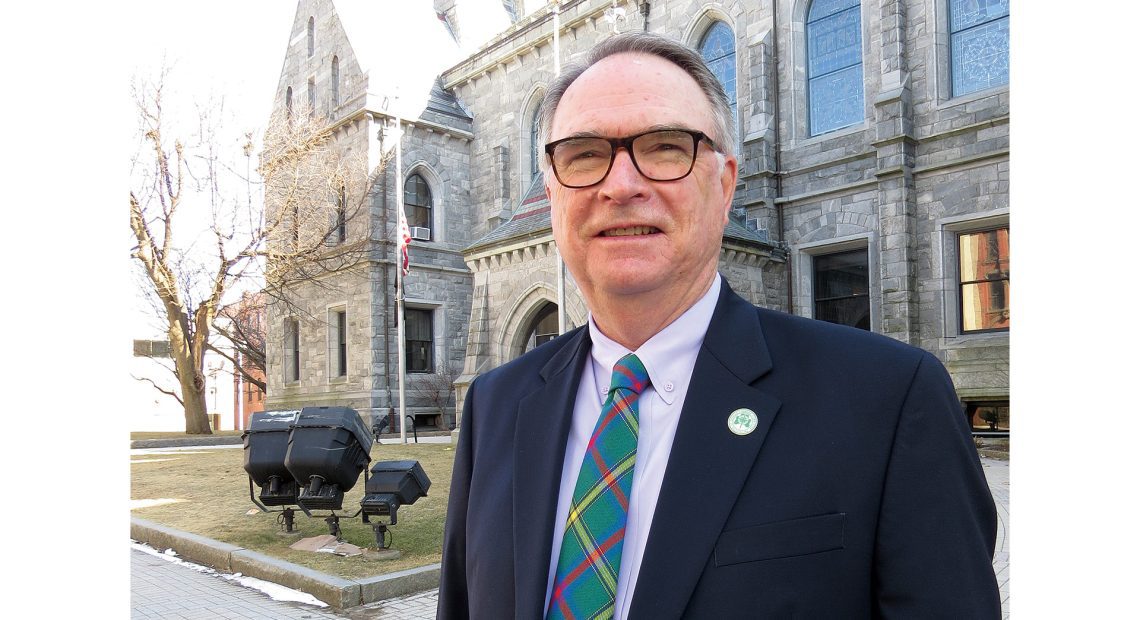
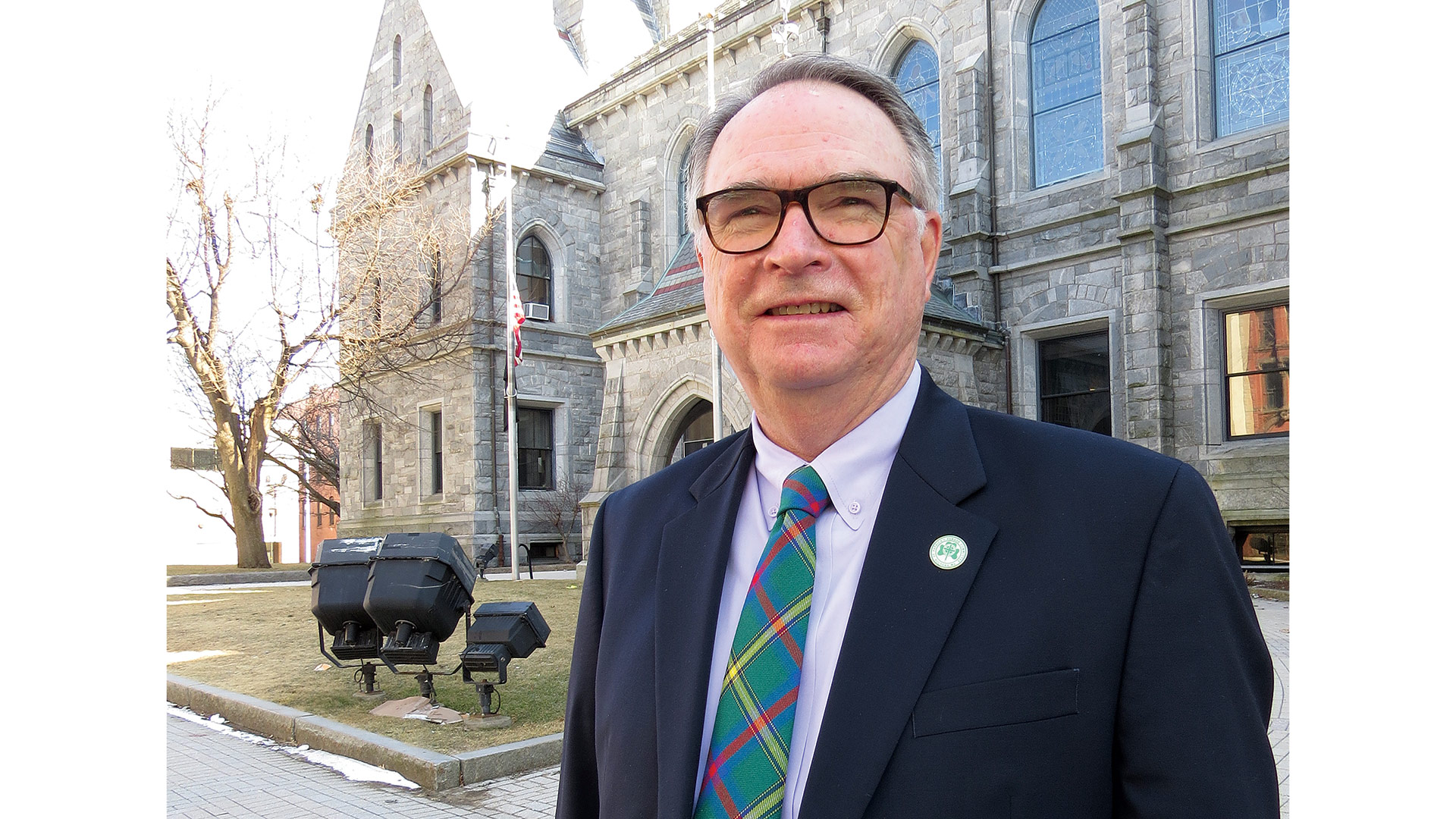
Marc Joyce, chairman of the 69th Holyoke St. Patrick’s Day Parade

It’s been nearly 1,100 days since Holyoke has staged its St. Patrick’s Day Parade and accompanying road race. That’s way too long for the businesses that depend on those institutions for a large percentage of their annual revenue. And it’s way too long for a community that always gains a huge dose of civic pride when mid-March rolls around. The traditions are back for 2022, and for the city and the region, there is much to celebrate.


The cover to the program book for the 69th Holyoke St. Patrick’s Day Parade was designed by an artist from Ireland.

Blended with the headline ‘The Season of Green,’ is a collection of the words that identify dozens of shades of green — from pistachio to lime; jade to shamrock — arranged in the shape of the Emerald Isle, and in those various colors.

It’s striking — and, yes, very green. But perhaps the most poignant thing about this publication is the date printed in smaller type to the side: March 22nd, 2020.

Indeed, this program book was published just over two years ago, and except for some minor updates in a supplement that will be inserted into the book, it remains profoundly unchanged. That goes from the date on the cover to all the advertisements inside to the ‘welcome’ from parade President Marc Joyce. In it, he thanks sponsors, the business community, and all those who helped make the parade possible. But there is no mention of the pandemic that kept this tradition from happening for two years.

“Civic engagement and pride in a community, any community, is critical. Any opportunity we can get to keep people excited about feeling good about the city they live in continues to help build on quality of life. That’s why it’s so important to have the parade back.”

Joyce told BusinessWest that the decision was made not to print another book, just that supplement, and to essentially pick up where the world, and Holyoke, left off when the COVID-19 pandemic prompted a shutdown of the state just a week or so before the 69th parade was to step off.

“We like to say that it’s the 2020 parade in 2022,” said Joyce, noting that, in most all respects, the date of the 69th parade has simply been moved up two years. Everything, or almost everything, is as it was then; he is still parade president (his has been a long, grueling three-year stint; normally, it’s one year); John (Jay) Driscoll, a prominent lawyer in Holyoke, is still the grand marshal, and Dave Glidden, president and CEO of Liberty Bank, is still recipient of the prestigious John F. Kennedy Award.

It is as if time has stood still in some ways. Only it hasn’t, obviously.

The program guide for the 69th annual parade

The program guide for the 69th annual parade, or what the event chairman calls “the 2020 parade in 2022.”

Holyoke has been without its greatest tradition for nearly 36 months now, and as it returns, many reflected on all that has been lost — and what has been regained as more than a month of parade-related events and gatherings have returned.

While those in the business community spoke of lost revenue — in some cases more than a third and perhaps even half of what they would generate in an entire year — and lost opportunities to introduce themselves to thousands of patrons (more on that later), all those we spoke with mentioned other, even more important losses, including a sense of identify and feelings of pride in the community.

As for what is being regained … the word that came up over and over and over again is ‘normalcy.’

“There’s a lot of pride in our community when it comes to parade weekend activity, when it comes to the parade and the road race, not just in this community, but across the region,” said Holyoke Mayor Joshua Garcia. “With quaranteening and all the other things we’ve had to deal with, this will bring back some kind of sense of normalcy.

“And that’s important, because civic engagement and pride in a community, any community, is critical,” he went on. “Any opportunity we can get to keep people excited about feeling good about the city they live in continues to help build on quality of life. That’s why it’s so important to have the parade back.”

Peter Rosskothen, owner of several hospitality-related businesses in Holyoke, including the Log Cabin Banquet & Meeting House, the Delaney House restaurant, and others, agreed.

“It’s very good for business,” he said of the parade, the road race and the month of events and activities leading up to it. “But it’s also good for the morale of Holyoke; it’s bigger than business, it’s civic pride, it’s the community coming together. Holyoke is a city with some problems, but you kind of forget about that with the parade.”

Joyce concurred, noting that the losses are not restricted to dollars and cents.

“It’s in the mindset and emotions of people who have grown up with this,” he explained. “I’m 71 years old, and I’ve been on the committee for 45 years. And I remember the first parade I went to; my father was marching with the Post Office, and my mother and I would walk about a mile and a half downtown to watch the parade. When I was away at college, I missed a few parades, but other than that, I haven’t missed any.

“It’s a homecoming,” he went on. “People come back to the city, and you see people you haven’t seen since perhaps last year; it’s a wonderful family-oriented event.”

For this issue, BusinessWest puts the lost years of 2020 and 2021 into perspective, and looks ahead to what all are expecting to be a memorable month as Holyoke welcomes back a tradition.


Mummers the Word

As he reflected back on March 2020 and the parade that wasn’t, Joyce said he remembers many things from that turbulent, mostly forgettable month, including the weather, which, to all those involved with this tradition, is often a big part of the story.

Mid-March in New England can bring with it all kinds of weather, and the parade has seen just about everything over its long history — snow, cold, rain, sleet, wind, and, occasionally, some sun and spring-like conditions.

In a somewhat cruel bit of irony, there were two such warm, sunny days — for the parade and the accompanying road race — in 2020, said Joyce, adding that it was the same in 2021, a meteorological turn of events that would only add insult to the injury of having to call off the parade two years in a row, he noted.

Turning his attention to 2022, Joyce joked that there is now considerable pressure on Driscoll.

Damien Rivera

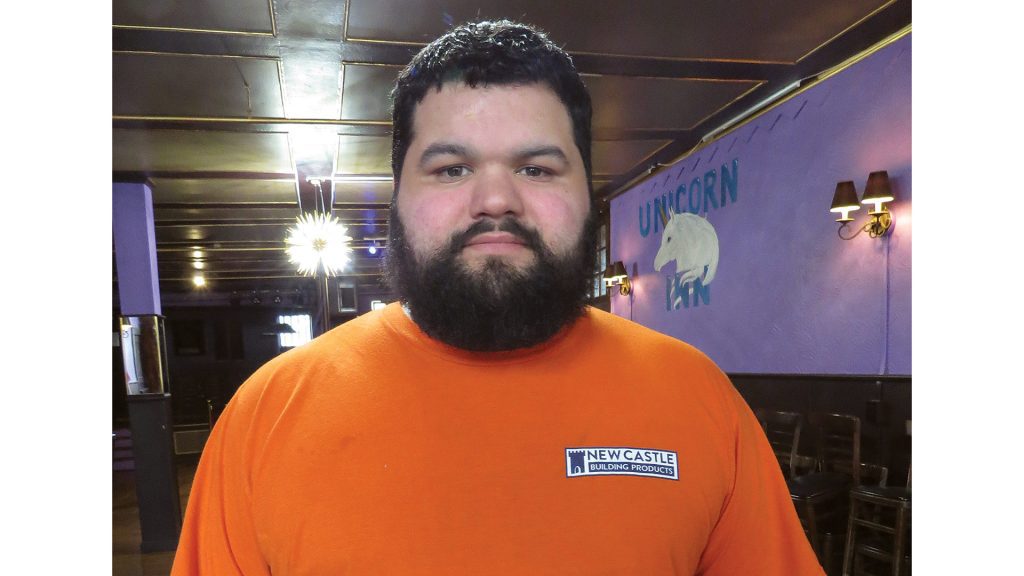
Damien Rivera says that, for bars and restaurants in downtown Holyoke, the parade and road race are like the Super Bowl.

“We always kid that the grand marshal is in charge of the weather, one way or the other,” he explained. “I kid with him and say, ‘Jay, you’re two for two; can you pull it off a third time?’ I’m hoping, for all of our sakes, that he can.”

Keeping one’s sense of humor hasn’t been easy for the past two years, but Joyce and others involved with the parade have had little choice. The alternative is too depressing.

Recapping the past two years, Joyce recalled that “all systems were go” for the 2020 parade even as the virus first detected in China made its way to this country.

“We know it was out there, but no one knew how serious it was going to be,” he said. “The parade that was going to be in 2020 was canceled about 10 days before the event. That was really tough; people were saying ‘Oh, you’re babies, don’t cancel it.’ The fact of the matter is, we didn’t cancel it. Alex Morse, who was mayor at the time, called me into his office; we met with the Board of Health, and the DPW, and the police and fire, and they explained clearly the science of this thing and the interconnectedness of everything. The Fire Department was concerned that if they lost half their force to COVID, they wouldn’t be able to protect the city of Holyoke appropriately, and it was the same with the police.

“This is an event when every bar can show off what they can do, and we missed out on that opportunity for two years.”

“That was a hard pill to swallow but we always figured that this would be over soon and we’d be back in 2021,” he went on. “But that didn’t happen, for obvious reasons; we actually approached the city right after the first of the year in 2021 — the directors met, we discussed it long and hard, and we just figured that the same reasons we canceled in 2020 still existed in 2021, and it just made no sense to go forward. We approached the city and said ‘this is just not going to work, and we’ll be back in 2022.’”

Joyce remembers sitting on his front porch on parade day 2021, soaking in the gorgeous weather, drinking a Guinness, and watching a few friends drive down the street honking their horns. “That was the extent of the parade.”

Over the course of the past two years, the parade committee has never really stopped preparing for the 69th parade, he went on, adding that some things have gone on as they normally would, like the annual past president’s raffle and a memorial mass for deceased members of the committee.

Meanwhile, there has been planning — much of it via Zoom — for events this year, such as a gala staged late last month at the Log Cabin, the annual Awards Night, and many others.

Nicole Ortiz, who opened Crave on High Street

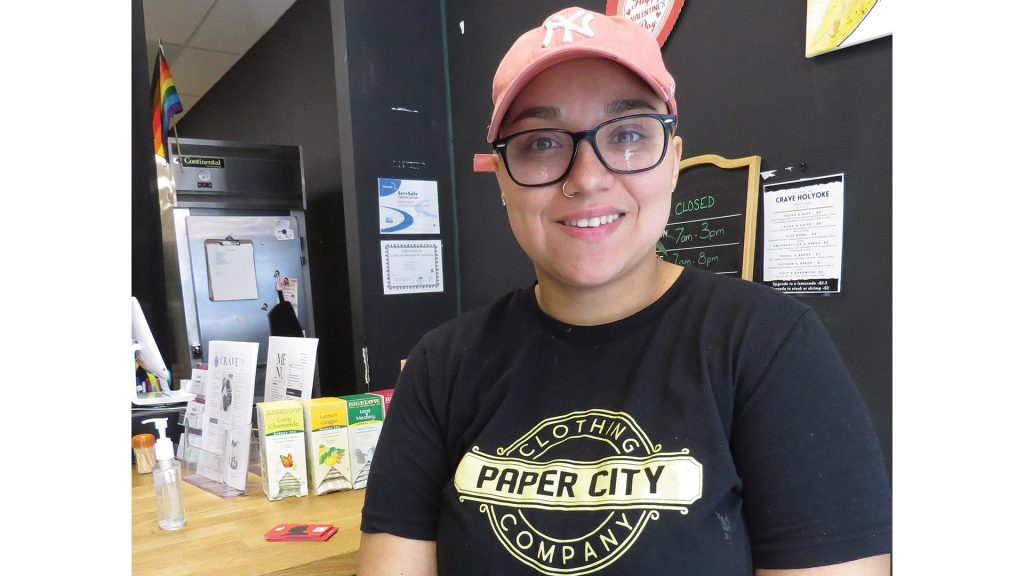
Nicole Ortiz, who opened Crave on High Street just over a year ago, is looking forward to her first parade week of activities.

As for the parade itself, it will be roughly the size of previous parades, with 15,000 marchers expected, close to 30 musical units, and 19-20 floats. What Joyce and everyone else expects to be larger this year — as in much larger, is the level of anticipation for both the parade and the race.

“It’s really hard to describe,” said Joyce. “Anywhere I’ve gone over the past few years and especially the past six to eight months, people have walked up and said, ‘Marc, are we having a parade?’ ‘Are we having a parade next year?’ People are excited to have the parade back.”

That’s especially true within the business community and its hospitality sector, which has suffered mightily over the past 24 months, as we’ll see.


Glass Half Empty

‘Crazy.’

Wasting no time at all, that’s the word Damien Rivera used to describe road race day at the Unicorn Inn on High Street.

“Really crazy,” he went on, gesturing with his hand around the two rooms that comprise this cozy neighborhood bar, adding that, by late morning on race day both rooms would be crammed with standing patrons — standing because the establishment can fit more people in if there are no tables and chairs on the floor.

Elaborating on ‘crazy,’ Rivera, a long-time employee who once lived above the bar with his father, Bobby Rivera, the establishment’s bar manager, detailed all that goes into race day at the Unicorn, which is even bigger than parade day, because, as he noted, the race ends at that northern stretch of High Street, and that’s where people congregate; the parade, in contrast, is spread out over a larger area, and thus the crowd is more spread out as well.

Peter Rosskothen

Peter Rosskothen

“It’s bigger than business, it’s civic pride, it’s the community coming together.”

He said that extra help is hired, a separate beer station is set up so that bartenders are not slowed by those who simply want a bottle of suds. There’s a DJ, and a deeper menu of food options is created, all in hopes of attracting race fans, who have a number of options when it comes to where to quench their thirst and whet their appetite.

Summing it all up, Rivera said simply “this is our Super Bowl — that’s the best way I can describe it,” meaning it’s the biggest, most lucrative time of the year. How big? Without giving specific numbers, he estimated that St. Patrick’s week — yes, it’s a week to many of those who celebrate it, especially when the holiday falls mid-or even early week and the parade as always, is on a Sunday — generates more than a third and perhaps even half of an entire year’s revenues.

What was it like to be without that week two years a row? Rivera simply shook his head and said “awful.” And by that, he was referencing more than just lost revenue.

“It’s a celebration,” he said of road race day, but also the entire week and beyond. “Holyoke is historically Irish, so when that week happens … it’s timely, it’s cheery, it’s a bright celebration of Irish culture, and for the businesses, this is our most important time.”

He said that establishments like the Unicorn depend on parade-week festivities for more than just revenue. It’s also a great marketing tool, a way to make introductions with potential new patrons.

“It brings people from so many places,” he explained. “If they didn’t know this place was here, they learned that it’s here. So not having the race and the parade meant that new people weren’t learning about this place as much as if we had it; this is an event when every bar can show off what they can do, and we missed out on that opportunity for two years.”

Nicole Ortiz is certainly looking to make some introductions during this year’s parade. She’s the owner of Crave restaurant on High Street, just across the street from City Hall — and the reviewing stand for the parade. She opened the establishment, which specializes in “modern and unique Puerto Rican food,” just over a year ago and missed out on a parade that year. In fact, Ortiz, who started with a food truck in early 2020, hasn’t experienced a parade as a business owner — although she’s heard quite a bit about the tradition from other business owners. She’s looking forward to the opportunity.

“They told me there’s tons of people down here, and they make tons of money,” she explained. “They say there’s tens of thousands of people down here for the race as well as the parade; it sounds pretty crazy.”

Rivera is looking forward to 2022 being a breakout year, and he’s not alone in that assessment.

Indeed, the phrase pent-up demand has been used in almost every context imaginable over the past 24 months, from cars to dining out to vacationing. And when it comes to the parade and the road race, pent-up demand is real.

Mayor Garcia drew parallels between this year’s parade and last year’s Big E. Both marked the return of an institution that the region had to do without, he said, adding that the Big E saw record attendance one Saturday during its run last year, and he’s expecting something similar with the parade.

Rosskothen agreed. “I feel that the parade is going to be bigger and better than it’s been in years,” he said. “I think people are ready to get out and do stuff. We’re handling the road race, and I’m preparing for a record breaker.”

“I feel that the parade is going to be bigger and better than it’s been in years,” he said. “I think people are ready to get out and do stuff. We’re handling the road race, and I’m preparing for a record breaker.”

Rosskothen, like others we spoke with, noted repeatedly that the parade and road race are not one day, or two days, as the case may be, but a week’s worth of celebration and, actually, several weeks’ worth of events, activities, and Irish-related food, drink, and culture leading up to the climax of mid-March.

“It’s a whole month,” he said. “We start playing Irish music at our venues, people go out, and in my case we start selling corned-beef-and-cabbage dinner packages in the beginning of March at Delaney’s Market. It’s all tied into the parade; it puts your Irish mindset on for lack of a better phrase.”


Bottom Line

Joyce said that there are only about 500 of the program books left to distribute at the parade. Those already given out have become a kind of dubious collector’s item — a guide to a parade that didn’t happen, or wouldn’t happen for two years.

In a way, they have become a symbol, not of what was lost or of a time that stood still, but of the community’s resilience and of the immense importance of this tradition to the city and the entire region. No one ever really doubted that importance; it was too obvious for that to happen. But three years removed from the last parade, it is now even easier to see all that the parade and the race mean to Holyoke.

It’s not just the revenue for those bars, restaurants, hotels, and banquet halls, although that’s a very big part of it. It’s the sense of community, the feeling of pride, the people coming back to this city year after year. It’s history. It’s tradition. It’s Holyoke.

It’s something else, too. It’s normal, and everyone involved is excited that it has returned.


George O’Brien can be reached at [email protected]

Community Spotlight Special Coverage

Holyoke Looks to Build on the Momentum from Cannabis, Entrepreneurship
 

Aaron Vega

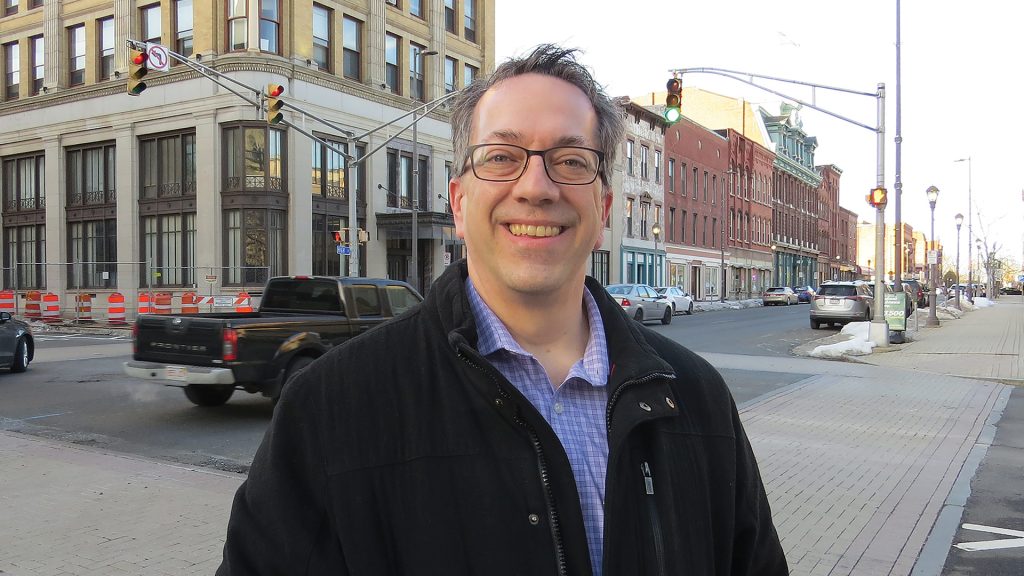
Aaron Vega says there are many cannabis-related businesses now operating in Holyoke, and many more in the pipeline.

Joshua Garcia, Holyoke’s first Puerto Rican mayor and a lifelong resident of this historic community, says that, in many respects, history is repeating itself in the city.

Elaborating, he said that for the better part of a century, the paper and textile mills on the canals were a symbol of strength, a source of jobs, and, in many ways, the city’s identity (see Sidebar here)

It wasn’t that way through the latter half of the 20th century as most of the mills went south, and into the 21st century, he went on, but it’s becoming that way again, largely because of the booming cannabis industry that is breathing new life into those long-vacant mills.

“Those mills were the economic anchor,” he said. “And it’s interesting to see history repeat itself; but instead of the Paper City, there’s now this ‘Rolling Paper City’ interest. Although it’s a different industry … the impact is the same.”

Indeed, cannabis is changing the landscape in Holyoke, figuratively if not literally, although that, too. Aaron Vega, director of Planning & Economic Development in Holyoke and a former state representative, said there are now eight cannabis operations doing business in Holyoke, and several dozen more in various stages of development.

Just as important as the number of ventures is the broad diversity on display, he said, noting that the city boasts several cultivating operations, dispensaries, a testing lab, and more.

“We continue to see cannabis interest and cannabis companies opening,” said Vega. “There’s a lot in the pipeline.”

But while the emergence of a cannabis cluster in Holyoke — similar to what is happening with biotech in Worcester in many respects — has been impressive, there is much more to what most would call a resurgence in this city than one industry. There has been a surge in entrepreneurship that has brought many new businesses to High Street and other streets. There have been several new restaurants, for example, despite the toll the pandemic has taken on that sector, but many other kinds of ventures as well, said Jordan Hart, executive director of the Greater Holyoke Chamber of Commerce.

“Over the past year, we’ve had more than a dozen ribbon cuttings, most of them restaurants and all of them small businesses.”

“Over the past year, we’ve had more than a dozen ribbon cuttings, most of them restaurants and all of them small businesses,” she said, noting that her ceremonial scissors have been given a workout. She credits the pandemic and the manner in which it has prompted introspection and, for many, a desire for something different and hopefully more fulfilling than their 9-5 job, as being a catalyst for some of this activity.

Tessa Murphy Romboletti, director of EforAll Holyoke and now also at-large City Councilor — she was elected last November — agreed.

She said the pandemic has helped fuel interest in entrepreneurship across the board, meaning people of all ages and demographic groups. EforAll has been expanding and evolving in ongoing efforts to meet the needs of such individuals, she said, adding that it is now staging its 12th and 13th cohorts of aspiring entrepreneurs, one for English-speaking candidates, and one for Spanish. It is also adding a new program, called E-Forever, a resource for those who are already in business rather than trying to get off the ground.

But beyond COVID, this surge in entrepreneurship is also being fueled by Holyoke’s emergence as a landing spot for those looking for affordability, diversity, a growing cultural economy, and a chance to do something they may not be able to do in a larger, far more expensive municipality.

People like Jay Candelario, who grew up in the city, moved to New York, but eventually returned. Battling heavy doubts and some long odds, he took an historic home on Dwight Street that had been damaged in a lightning strike, and converted it into Jay’s Bed & Breakfast.

Opened in 2016, the facility has certainly been challenged by the pandemic, but it has hung on, through diversification into catering and events, and Candelario’s persistence and belief in not only himself and his concept, but Holyoke itself (more on that, later).
Jay Candelario

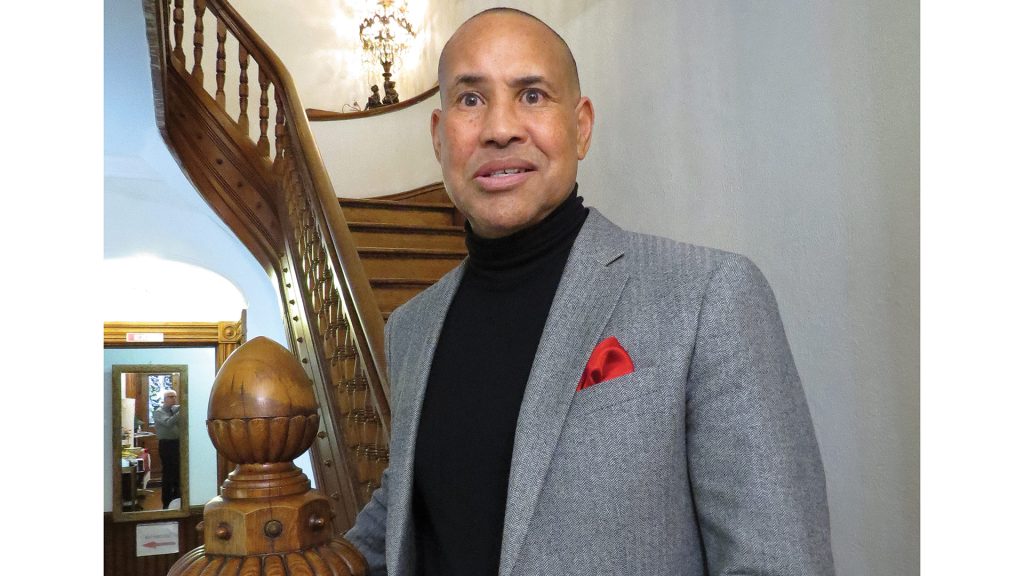
Jay Candelario, seen here at the grand staircase at his B&B on Dwight Street, says Holyoke is staging a resurgence and attracting many new residents and businesses.

For this, the latest installment of its Community Spotlight series, BusinessWest takes an in-depth look at Holyoke and the many forces that are shaping progress in the city and, as the mayor noted, enabling history to repeat itself.


On a Roll

While there are many developments in Holyoke from a business perspective, cannabis continues to be the story.

And as Vega said, it’s one that involves a large number of businesses, diversity of ventures, and large supply of potential new initiatives in the pipeline.

Providing a quick snapshot of the cannabis cluster in Holyoke, which has a popular destination because of its cheap electricity, location near major interstates, and large supply of old mill buildings, Vega said there are now more than 500 people working within the industry in Holyoke, many of whom have graduated from cannabis programs at area colleges (see related story, page 35), and many different kinds of facilities, from cultivation and manufacturing operations., to dispensaries, to a testing facility, Analytics Labs, which opened last year, on Appleton Street. It’s the first operation of its kind in Western Mass., and provides a vital service to businesses that are required to submit the cannabis to independent labs that run a number of tests, for potency, solvents, pesticides, pathogenic microbes, and more.

“We have several businesses already operating, and another dozen growth and manufacturing facilities that could be up and running by the end of the year,” said Vega.

But there are still many challenges facing those looking to enter this industry, especially the smaller ventures, he went on.

“I think there’s still a lot of challenges for these companies to get their financing,” said Vega. “The MSOs — the multi-state operators — are able to set up shop more easily than the locally owned companies, but they are starting to come to fruition.”
Tessa Murphy-Romboletti

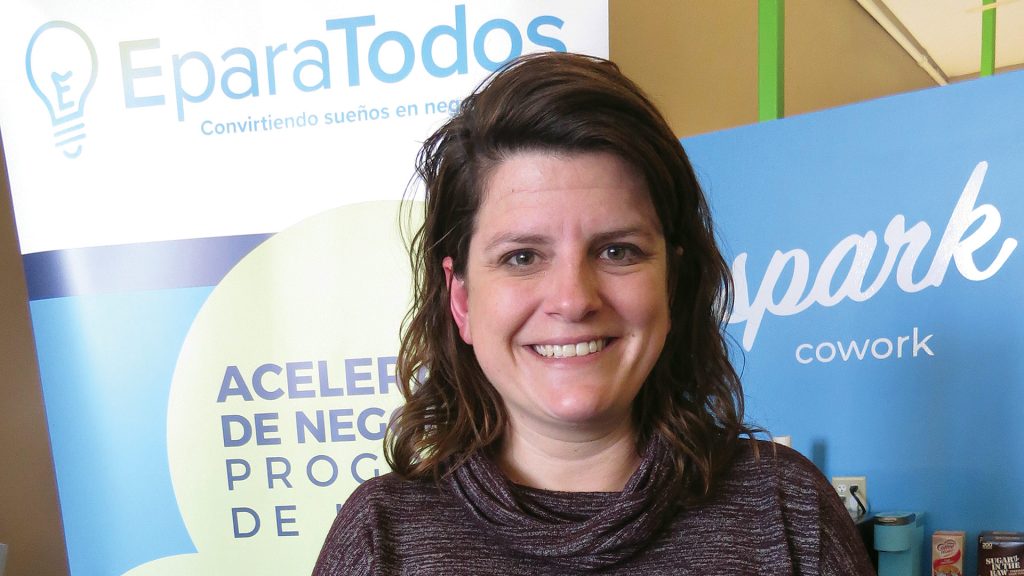
Tessa Murphy-Romboletti, director of EforAll Holyoke, took her involvement in the city to a higher plane with election to the City Council last fall.

One development that may help some of these businesses get over the hump — and help Holyoke as well — is the creation of what Vega called an “incubator” for cannabis businesses in the old National Blank Book property on Cabot Street. There, many smaller businesses are getting support to break into the business and overcome the many hurdles — from financing to licensing to building a workforce — to opening the doors to a new cannabis business.

“We’re really excited about it,” said Vega, adding that there are a number of smaller enterprises occupying spaces in the facility and trying to move ventures forward.

Looking ahead, both Vega and Garcia said that one challenge — and opportunity — for the city is to promote the development of support businesses for the cannabis sector.

Elaborating, Vega said that these businesses must now order lighting, raw materials, and other products from companies on the other side of the country, and would certainly prefer to be able to source them locally.

“They all agree; there could be substantial savings if they didn’t have to order their products from Texas and Florida,” he told BusinessWest. “And we also like to think about the bigger picture — if we get those kinds of companies to land here in Western Mass., not just Holyoke, but Western Mass., there could be tremendous opportunities for the region.”

Elaborating, he said several neighboring states have either already legalized marijuana or are in the process of doing so, and having support businesses that can provide lighting and products in Massachusetts, as opposed to Texas, could facilitate efforts to make this area a hub, not just for Massachusetts, but for all of New England.


Getting Down to Business

Murphy-Romboletti said she first started thinking about running for City Council two years ago. A former city employee — she worked in the mayor’s office and, later, the Office of Planning & Economic Development — she said she has always wanted to be involved with the community and knew that the Council was where one could make an impact — on the city, but also its business community.

After consulting with her bosses with EforAll, a national organization with several locations in the Bay State, including two in Western Mass., and getting their blessing, she threw her hat into the ring. She’s only been on the job a few months now, and has spent most of that time reaching out to department heads and talking with them about what they need for their offices to run better and more effectively.

From an economic development perspective, she said she has long understood the Council’s impact on business. “It has the ability to slow down process or speed up process on things,” she said. “And I think permitting, in and of itself, within our local government, is confusing and not always as necessary as it needs to be, and that’s one of the reasons why I ran.”

Elaborating, and without actually using the phrase, she said one of her goals is to help make the city more business-friendly, and especially at a time when there is so much interest in entrepreneurship — both within the cannabis sector but also well beyond it.

Which … brings her back to her day job. EforAll is seeing growing numbers of applications for its cohorts, she said, adding there are 22 participants in the current sessions. The pandemic has brought a regrettable halt to most in-person learning opportunities (although she’s hoping that might change soon), but the agency is carrying on through Zoom.

A number of graduates have gone on to open businesses, many in the downtown area, she said, adding that the ongoing needs of these ventures prompted the creation of E-Forever.

Undertaken in conjunction with Entrepreneurs Forever, the new group is a “resource for those who have gone through the program and are currently in business, rather than those who are just getting started,” she explained.

“These businesses are generating revenue, and they have unique challenges,” she went on, adding that this group of perhaps 8-10 entrepreneurs will meet once a month, share information, and troubleshoot. “The entrepreneurs pick what they want to work on; it’s like having an accountability group that meets each month to support whatever challenges you’re having as an existing business owner.”

The broad goal, she said, is to enable more businesses to weather the many storms they will face as they mature and grow and stay in business, preferably in Holyoke.

A good deal of resilience has already been on display, said Jordan, adding that she couldn’t think of a single business in the city that closed during the pandemic, and, meanwhile, as she noted, many new ones have been opening.
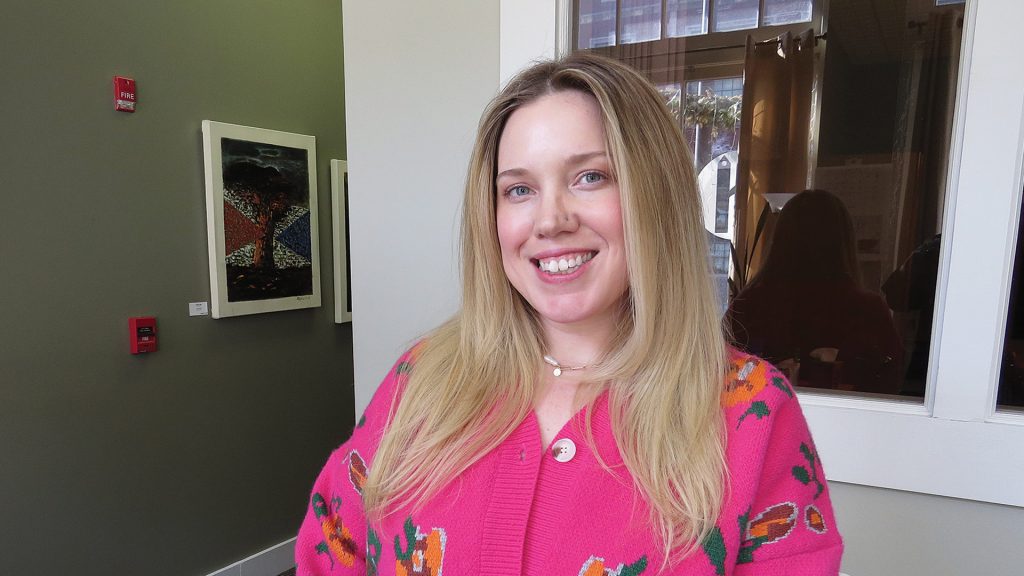
Jordan Hart, executive director of the Greater Holyoke Chamber

Jordan Hart, executive director of the Greater Holyoke Chamber, says the pandemic has helped create a surge of entrepreneurship in the city and a number of new businesses.

“It’s been remarkable to see the perseverance the community has to see Holyoke thrive,” she said, adding that while existing businesses, often with help in the form of local, state, and federal grants, have found what it takes to survive the pandemic, COVID has inspired many others to join their ranks in the business community.

“People began to prioritize not only their personal life and their personal interests, but also their mental health and well-being,” she explained. “And many found that what they wanted was more work-life balance and flexible schedules. And that’s where entrepreneurship came into play … with people finding their true selves, what their purpose is, and what they want their purpose to be; the pandemic really shook things up in that sense.”

She said the roster of new businesses includes restaurants, like Crave, El Paradiso Colombiano, and the Avalon Café, and several cannabis-related businesses, but also a few boutiques. And, as noted, most are in the heart of downtown, bringing many formerly dormant spaces to life.


Rooms with a View

That historic home on Dwight Street that Jay Candelario found was more than dormant.

It needed considerable work inside and out, he told BusinessWest, adding that while most were more than willing to consider the property known to most as the Moriarty mansion and ultimately pass, he decided to take a chance.

“I’m a risk taker,” said Candelario, who was born in Puerto Rico, grew up in Holyoke and then Amherst, and moved to New York City as an adult. “And you would have to be a risk taker to take this on.”

Those sentiments reflected more than the condition of the Queen Anne Victorian; they also referenced the time of this acquisition (2009, the height of the Great Recession) and the seemingly long odds against creating a successful B&B in downtown Holyoke.

But Candelario was able to look past the challenges and the doubters and see opportunity. It’s taken a while for the vision to become reality, and the pandemic has certainly put more hurdles in front of him — he admits to coming close to packing it in and moving on to something else — but Candelario, like many business owners in Holyoke, has persevered.

“We have several businesses already operating, and another dozen growth and manufacturing facilities that could be up and running by the end of the year.”

As he gave BusinessWest a tour and pointed out rooms bearing the names of places he’s visited in and lived in — ‘Brazil,’ ‘New York,’ ‘Puerto Rico,’ and ‘Holyoke,’ among others — Candelario said business has been steady if unspectacular, with guests ranging from traveling nurses, to executives for Coca Cola, to “emergencies” in the form of needed beds for those being helped by the nonprofits Roca Holyoke and Women’s Shelter Companeras, now Alianza. Over the years, though, he’s been able to draw guests visiting area colleges, individuals in town on business, and those attending the St. Patrick’s Day parade and road race. His audience is those who want something different than the run-of-the-mill hotel room.

Shut down for the better part of a year by the pandemic starting in March, 2020, he said he’s been able to keep his dream alive by diversifying and expanding his operation into catering and the hosting of events ranging from baby showers to family reunions to nonprofit retreats.

While reflecting on his business and where he can take it, Candelario also ruminated on Holyoke, its present and its future. And he drew many comparisons to the Bronx, another diverse community he believes is also misunderstood and underappreciated. He lived there for some time, and was originally planning to open a B&B near Yankee Stadium until the economic downturn in 2008 scuttled those plans.

“The Bronx and Holyoke have a lot in common,” he said. “It’s the inner city, working class, different cultures; they’re melting pots that many people just don’t appreciate for all that they are.”

Beyond these qualities, the city boasts location and affordability, two important factors in these changing times.

“Holyoke is very affordable for those people who are starting off,” he explained. “They can get better housing for the buck. And if you want to work in Northampton, it’s 10 to 15 minutes away; Springfield is 10 to 15 minutes away; Agawam is 10-15 minutes away.

“I see Holyoke as a very progressive, very upwardly mobile city,” he went on. “You have people from many different areas coming here, not just locally, but from around the country. I run into people from Chicago who moved here, and Florida, California, New York City, and Boston. They come here because they see opportunities. People see the same thing that I see.”


View to the Future

Candelario said he assigned the name ‘Holyoke’ to one particular room at his B&B because, if one looks closely, he or she can see City Hall from one of the windows.

As he surveys the scene, though, he sees more than that iconic structure. Much more.

He sees a city that is putting its recent, not so glorious, past, behind it, and becoming something else: a destination of sorts, for travelers, but especially residents seeking affordability and quality of life, and businesses looking for a solid spot to land.

This is what Mayor Garcia had in mind when he said that history is repeating itself in Holyoke, and not just when it comes to the mills as a symbol of jobs and economic might.

Indeed, Holyoke’s past, as an ethnically diverse center of business and culture, is also its future.


George O’Brien can be reached at [email protected]

Special Coverage Wealth Management

Facing New Realities


The past few years — and even the past few months — have brought about changes to the landscape that should give individuals reason for thought as they consider their long-term financial goals — and how to reach them. These changes include everything from soaring real estate prices to inflation rates higher than those seen in the past 40 years. Overall, these changes and many others should prompt an even stronger emphasis on the ‘long term’ when it comes to financial planning.


By Patricia Matty


The pandemic and the resulting environment of the past few years has brought about a lot of changes to the financial advisory world.

While not unique to financial advisory, the widespread use of Zoom (or Microsoft Teams) meetings in lieu of face-to-face interactions has been a big change. This is true for initial meetings of new clients as well as existing client financial planning meetings and account reviews.

As we have all experienced, remote meetings make it much more difficult to get a real sense of someone’s body language, gauge their comfort (or not) with a recommendation, adequate vocalization of their fears, and an increased difficulty in just making a true emotional connection. Aside from the physical aspect of the change, there have been some other repercussions that I would like to focus on. Some of these changes have been driven by the client, the others are being driven by me as the advisor.

On the client driven side, there has been a lot of moving parts. Some of these changes are monetary, some not. Looking at monetary changes:

• Real estate prices have changed drastically over the past several years. For most people real estate is the first or second largest piece of their assets. The upending of the real estate market has greatly increased the value of home equity for a lot of people, which has strengthened their balance sheets. For the Millennials who had not yet entered the market, the price of entry became a lot higher, with parents being asked for help more than ever.


• The impressive increase in the stock market over the past two years has altered the client side of the ledger. At the start of the pandemic, many people felt they could never afford to retire. The recent run up has given some hopes of retiring earlier than ever.

• Prices have risen. As a visit to any grocery store or home improvement center will demonstrate, inflation levels have been creeping up.

Patricia Matty

“The gains made in real estate and stocks over the past few years are sometimes making clients too optimistic, and we need to temper expectations.”

On the non-monetary side:

• Many people lost a loved one due to Covid related illnesses. For many, this has them questioning their existing priorities in life. Even if you did not lose a loved one, you probably had severe restrictions on visiting many of them, which has had a similar effect.

• Working from home has caused a reassessment of priorities as well. For those where work from home may continue, they often want to live someplace completely different than where they reside today.

• There is a great pent-up demand for travel. ‘Stuff’ seems to be taking a backseat to experiences and travel.

But as I stated earlier, this isn’t one sided. On the advisory side, we have also seen some changes.

• Bitcoin and other cryptocurrencies now receive a lot more attention;

• The changing client priorities necessitate updating client goals, and therefore financial plans.

• The gains made in real estate and stocks over the past few years are sometimes making clients too optimistic, and we need to temper expectations.

• Increased use of more-sophisticated financial planning software that can be screen shared with clients on Zoom calls.

• And last but certainly not least: needing to incorporate some ‘long term’ in long term financial plans. This is especially true on inflation over time, as well as accounting for lifespans.

It has been quite some time since planners have been faced with an inflationary environment. Rising prices can be devastating to a financial plan if you are not adequately positioned. All too often, we see clients who are overly concerned about short-term market volatility, but turn a blind eye to the long-term effects of rising prices on their spending power. As our sophisticated software consistently demonstrates, however, this is the real risk to achieving your goals over time.

Regarding longevity, it is all too easy to say you and/or your spouse “won’t make it to our 90s” and fail to adequately invest for the long term. Despite COVID, people are living longer than ever, and healthcare continues to improve. Having adequate resources over the long term is essential and requires planning.

With all of the above said, in the wisdom of Forrest Gump, “Life is like a box of chocolates, you never know what you’re going to get.” We don’t know what the stock market, real estate market, inflation, lifespan, and other factors will be over the years to come. So what should you do in light of the evolving changes?

Meet with your advisor. In person if possible, especially if you have significant changes. Life changes, and so do your priorities. Make sure your advisor understands your goals, especially if they have shifted. In addition, have a two-sided dialogue with your advisor, making sure you are comfortable with their recommendations as to how to achieve your goals. u


Patricia Matty is senior vice president and financial advisory director at Springfield-based St. Germain Investment Management. She has an extensive education and business background, with 18 years in the financial services industry. Her background is in business management, financial planning and relationship development. She holds Series 7 and 66 designations for securities representatives and investment advisors, earned the Accredited Investment Fiduciary [AIF], and holds the Trust 1 certification; (413) 733-5111.

Business of Aging Special Coverage

Peace of Mind

Ruth’s House

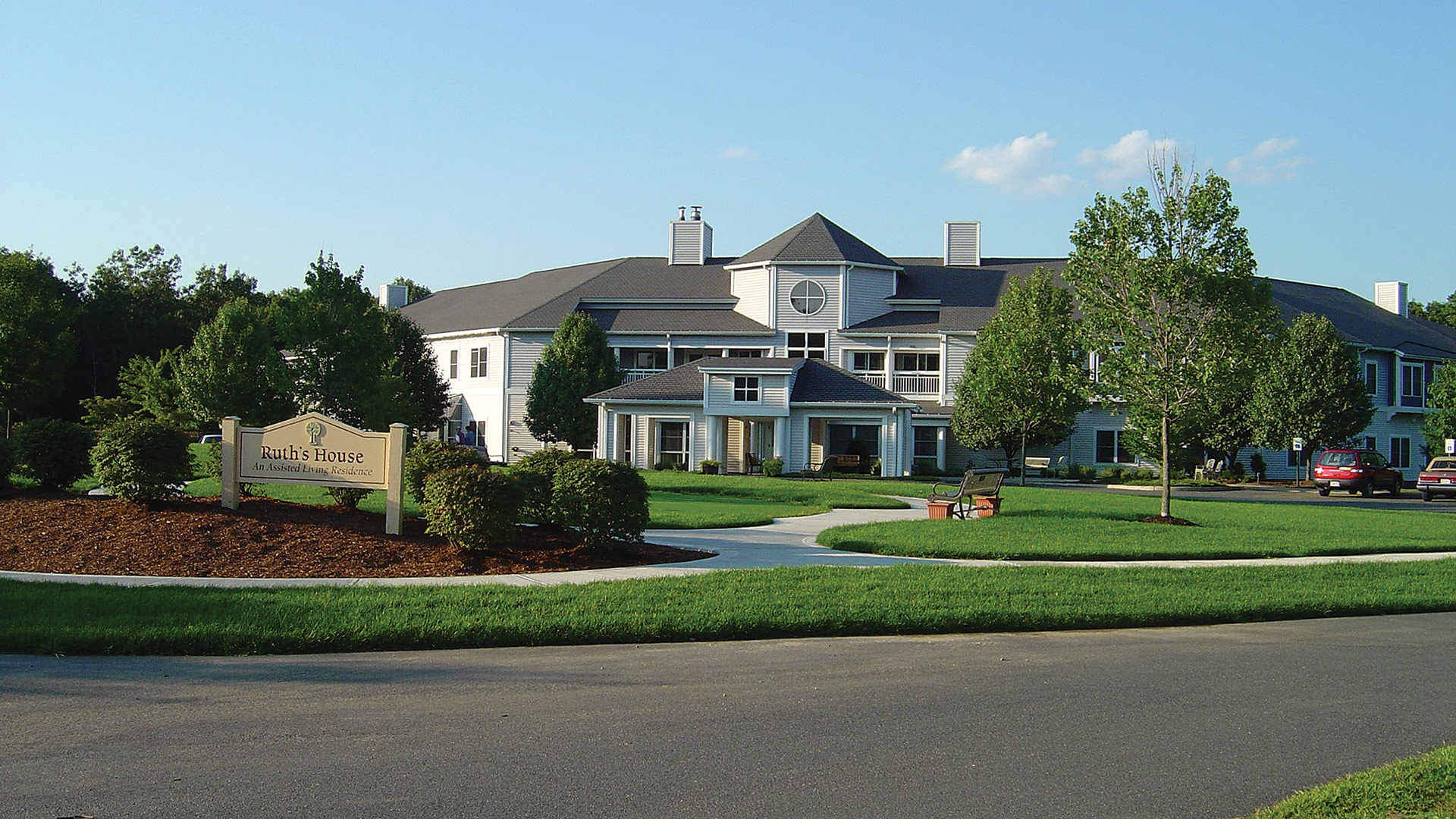
Ruth’s House dedicates its lower-level Garden neighborhood to memory care.


The connection between music and memory is a complex and often surprising one. Just ask the families of loved ones with dementia at Ruth’s House, the assisted-living residence on the JGS Lifecare campus in Longmeadow.

“We ask, ‘what sort of music did your loved one enjoy?’ Then we have volunteers come in and build personal playlists,” said Susan Halpern, vice president of Development and Communications at JGS. “It’s amazing to see the reactions — to see someone who’s agitated get less agitated, or someone who had been very quiet come out of their shell because they’re hearing something that’s very familiar to them.”

Mary-Anne Schelb, director of Business Development, has also seen the results of what JGS calls its music and memory program.

“Maybe they’re not much of a talker, and suddenly they’re singing this song. It’s hard to carry on a conversation with them, but when the music comes on, they remember every word. The artistic and creative ability is really the last to go. It’s in there — we just need to know how to pull it out.”

Or, as Halpern put it, “it’s about meeting them where they are.” That’s why residents’ families fill out a long (around eight pages) resident profile upon admission, Schelb added.

“We really want to get to know your mom or dad, and we want to know what they like and don’t like, because then we utilize that.”

“If they can’t stand bingo, we’re not going to try to push bingo. Or if they love hot-air balloons, we can go up to them and ask, ‘hey, do you know we’re showing a hot-air-balloon movie in the movie room?’ You see their face light up — ‘you are? I love hot-air balloons.’ The profile is time-consuming, but we really want to get to know your mom or dad, and we want to know what they like and don’t like, because then we utilize that.”

Meeting residents where they are is especially important for those with early- to mid-stage memory impairments and other dementia-related diseases who live in the Garden at Ruth’s House, a separate, secure neighborhood that caters to individuals with increased cognitive and physical limitations, including Alzheimer’s and dementia, and where staff members are specifically trained to care for individuals in need of memory care.

Sue Halpern (left) and Mary-Anne Schelb

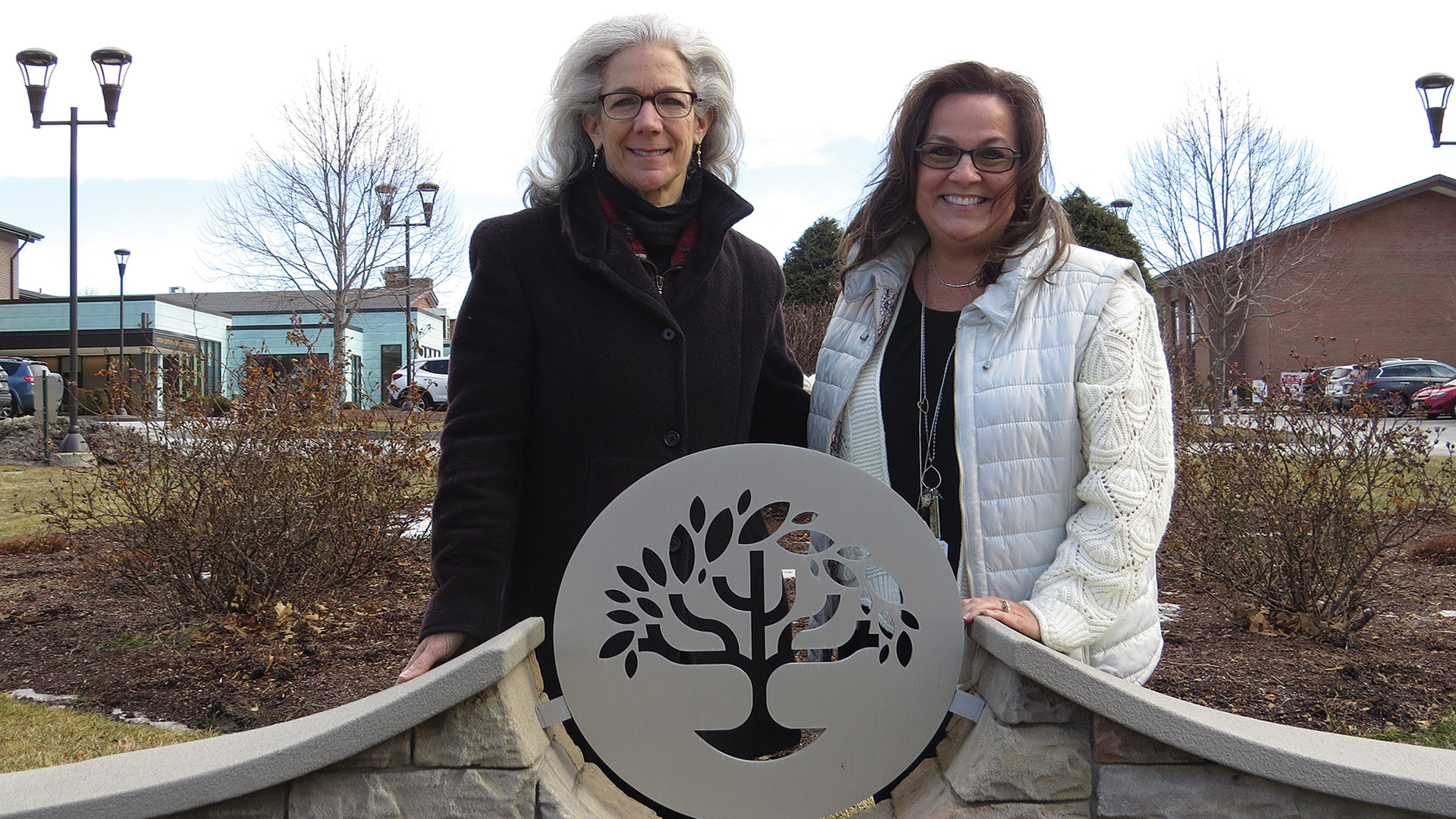
Sue Halpern (left) and Mary-Anne Schelb say incorporating memory care into the entire JGS continuum makes sense with people living longer and dementia becoming more prevalent.

But what some might not know, Schelb said, is that JGS has, over the years, incorporated specific memory-care training across its contimuum of services, from Spectrum Home Health & Hospice Care to Wernick Adult Day Health Care; from the Leavitt Family Jewish Home to the Sosin Center for Rehabilitation.

Why? Because the memory-care population is on the rise as Americans live longer than ever — and early-onset dementia in younger people is ticking up as well. So the model JGS has adopted, of making sure all the points along its continuum of services can handle different levels of dementia, is one increasingly taking hold in the world of senior living and care.

“We were the ones who spearheaded dementia-friendly Longmeadow a few years ago, which was really important to us, to make people aware of the differences of folks that have this higher level of memory loss, because people really didn’t know how to deal with them. They didn’t know what to do, how to act,” Schelb explained. “We wanted to make people aware, so I worked with the senior center, some emergency responders, and we worked with the Alzheimer’s Association and got certified as a dementia-friendly town.”

Similarly, making JGS a dementia-friendly campus was a natural evolution, she noted. “Except for Genesis independent living, every single piece of the campus concentrates on memory care.”


Gardening Tools

The Garden gives Ruth’s House an element of security and higher-level care for individuals with dementia, Schelb explained.

“Maybe you start out in traditional assisted living, and as they progress [with memory loss], we could add services to the apartment as long as they’re not a wander risk, and if they do become a wander risk, we’ve got the secure Garden level, which is beautiful inside and out,” she said, noting the waterfall, scenic walkways, and benches out back; the fact that the area is safely fenced in is obscured by the landscaping.

“We just wanted to make it this gorgeous, park-like environment. A lot of people like to walk, and and here they can be outside, and it gives them that sense of freedom.”

In the Leavitt skilled-nursing facility, two nursing neighborhoods are dedicated to caring for people with memory impairments, Halpern explained, while staff of the other JGS programs, like Wernick and Sosin, are trained in working with people with memory loss as well.

“As a campus, we’re caring for elders, and it sort of goes hand in hand that, as people get older, they’re suffering memory loss,” she told BusinessWest. “So we take the care of people with dementia, memory loss, and Alzheimer’s disease as a central care delivery that we train our staff on during orientation.”

That orientation, when staff are taught how to engage with people with dementia, is followed by annual reviews and specific skills-training events during the year, she added, noting that JGS will be using grant funds to expand that skills training.

Ruth’s House’s memory-care residents

Ruth’s House’s memory-care residents take part in both indoor and outdoor activities intended to engage their minds.

“We’re a person-centered campus, and we deal with memory impairment across our entire campus the same way,” Halpern added. “You take the approach that you’re meeting the person where they are.”

Added Schelb, “we’re finding a lot more people suffering from memory loss at earlier ages. Early-onset dementia and Alzheimer’s is something very real that a lot of people are experiencing, so we need to pivot and shift to make sure we can care for our folks here on the campus in any way, shape, or form.

“We’ve even got our home health dealing with folks with memory loss, or even end-stage Alzheimer’s in hospice,” she went on. “Unfortunately, we have seen more of it, across the board; I think healthcare in general has seen a lot more. And we want to be able to give our residents as fulfilled a life as possible.”

“We just wanted to make it this gorgeous, park-like environment. A lot of people like to walk, and and here they can be outside, and it gives them that sense of freedom.”

Many times, Halpern said, a senior-living facility is one of the first places family members contact when they suspect a memory issue.

“People reach out to us when they need help. And when do families need help? Often, it’s when they have a loved one who’s suffering from dementia and memory impairment, and they’ve tried to work with them at home. So we’ll work with them at home with our Spectrum Home Health Care, but then it can get to a point where you just can’t handle it. Maybe it’s the incontinence, maybe it’s the wandering and the risk of that, but we find that families are reaching out to us when they’re willing to give up their loved one. And it is a tough decision to place your loved one in a care setting.”

Even people with dementia who are able to live at home with family members can benefit from Wernick’s day programs, Halpern added.

“We were one of the first adult day health centers in Western Mass., back in the ’70s. We get a lot of people needing adult day care who have memory impairment and forgetfulness, and they are benefiting from being in social settings — and we offer social settings, be it in adult day care or assisted living, that helps people not feel isolated, and we help give them experiences that are failure-free.”


High-tech, Human Touch

Some of those experiences at Ruth’s House take place in a sensory room that allows residents to have experiences that reduce agitation and frustration, especially late in the day, a phenomenon known as sundowning.

“Some don’t want to be touched, or don’t like bright lights or loud sounds. They react differently to activities,” Schelb said, explaining that the sensory room is softly lit, soothing music often plays, and the room incorporates tactile technology, on touchscreens and activity panels, that stimulates in a calmer way.

“We downplay the aggravation for them. We teach staff how to recognize it and what to do, and it’s part of their care plan. We know what activities they like. And any new technology they have out there, we try to get and incorporate into our care plans and train staff to utilize them properly.”

Beyond its own programs, Ruth’s House works with families on their own communication, Schelb said.

“Sometimes we find families don’t know how to interact with their loved ones, causing frustrations. There’s a level of resentment because it really engulfs their whole life. We say, ‘let us help you; let us be the caregiver, and you go back to being the son or daughter or husband or wife.’ It’s really hard to do both.”

By focusing on the relationship and not the caregiving, families learn to move past the frustrations of life with Alzheimer’s or dementia, especially during the early stages when they’re just getting acclimated to the situation.

“They can get upset with mom or dad: ‘I just told you that; how do you not remember that?’ But they’re not purposefully forgetting; this is just part of the disease,” Schelb said, so family education and support groups are crucial — as is understanding when it’s time to seek the appropriate level of help. “Sometimes they can stay at home, and we can help. But sometimes they realize it’s just too much, and they realize they have options on our campus.”

It’s a campus that embraces not only person-centered care, Halpern said, but — at least in the Sosin Center — the ‘green house’ model of small-house care, which focuses on three goals: an authentic, home-like setting; meaningful life; and empowered staff.

“We recognize the environment is important to peoples’ well-being and how they feel,” she noted, adding that a second phase of what’s been called Project Transformation will bring the green-house model of renovations to the Leavitt Jewish Family Home as well — arguably a more important site for it, since it’s a long-term facility where residents will live the rest of their lives.

In short, Halpern said, JGS continues to look at ways to meet residents where they are.

“That affects how we care for people with dementia as well,” she added. “It’s part of our philosophy.”

Features

Sidebar

Joshua Garcia

Joshua Garcia

Joshua Garcia says that, among his friends, family, and colleagues at various career stops, there was always an expectation that that he would someday run for mayor of Holyoke. And not just run, but win.

“Even when I was a kid … people would say ‘this young man one day is going to run for mayor, should be mayor,’” he said, adding that it took a while before he eventually started believing — and acting on what people were saying.

Born and raised in Holyoke, he attended city schools and spent much of his time at the Holyoke Boys & Girls Club, where he would later work. Starting at an early age, he got deeply involved in the community.

That involvement included stints on the School Committee, the Fire Commission, Nueva Esperanza, an agency devoted to promoting entrepreneurship and spurring economic development in the city, and other groups. Meanwhile, on the career side, he was gaining experience in the management of municipalities, early on at the Holyoke Housing Authority (while he was also earning a master’s degree in Public Administration), then with the Pioneer Valley Planning Commission, which he served as municipal services coordinator, and later as town manager of Blandford, population 1,200.

That blend of professional growth and community involvement would earn Garcia a 40 Under Forty plaque from BusinessWest in 2015. Meanwhile, each of these stops seemed to bring him closer to that ‘someday’ when his friends and family thought he would run for mayor, and that day came last year, and an election that would determine a successor to Alex Morris, who left Holyoke City Hall to become town manager of Provincetown.

“I started getting the questions again … it was election time, and people were saying ‘why aren’t you running for mayor?’” he recalled. “My answer was that I liked my career track — it was great being a town manager of a town where I could go home at the end of the day and spend time with my family.”

It was with some prodding from his wife, Stefany, (Garcia actually called it an “endorsement”) that he was eventually swayed to become the seventh candidate to declare for the position.

“What many don’t realize is that small towns have their own set of unique challenges that can be just as challenging as a large city.”

“That endorsement really sealed the deal for me,” he told BusinessWest. “She just simply said that, in her opinion, being mayor of the City of Holyoke, knowing who I am, is bigger than her family. I thought that was a very humble and unselfish response. We talked more about what that meant …and felt strongly that if running for mayor to help more people is the sacrifice, then why not?”

He would eventually triumph in that crowded race, becoming the city’s first Puerto Rican mayor. He commenced finishing Morse’s unfinished term in November, and started his own first term in January.

Garcia moves into the corner office at a time when Holyoke is in what most would call a growth mode, especially when it comes to jobs, new business development, housing, and overall vibrancy. As the story on page 14 relates, the city has benefited tremendously from the strong five-year start of the cannabis industry, with many of its long dormant or underutilized mills roaring back to life as homes to a wide array of cannabis-related businesses.

But there is more to the story than this one industry, he said, adding that, even during a pandemic, many new businesses have opened across several sectors, especially hospitality.

“During the pandemic, when restaurants everywhere were shutting down, Holyoke was opening six new ones,” said the mayor, adding that the EforAll Holyoke, the nonprofit created to inspire would-be entrepreneurs and help them get started and to the proverbial ‘next stage,’ has helped create a wave of entrepreneurial energy that is bringing new businesses to the downtown and other areas, and also creating more interest in the city as a place to live.

While all this is positive, said Garcia, these forces are spawning some new and different challenges for Holyoke, especially when it comes to the affordability that has defined it for decades now.

“There’s a tidal wave that’s coming in a very positive way, but it’s going to create a new set of challenges that we’re going to have to figure out,” he told BusinessWest. “One of them is affordability. No one wants to be in a situation where they are priced out of their neighborhood. Costs are rising everywhere, not just in Holyoke but around the region. How to move forward and embrace these new quality-of-life activities that are going on, but also balance that with making sure we’re not pricing people out of the neighborhoods they grew up in. And that’s why affordable housing continues to stay in the forefront.”

While focusing on these issues, Garcia said he will also concentrate on how Holyoke is managed, with an eye toward improvement. And as he goes about that work, he will take some lessons from his last assignment.

Indeed, while Blandford and Holyoke are seemingly worlds apart when it comes to the size and nature of the communities, Garcia said he can draw on his experience serving that hilltown in his new role in the Paper City, especially when it comes to creativity — in management and finding solutions to problems.

“What many don’t realize is that small towns have their own set of unique challenges that can be just as challenging as a large city,” he explained. “The greatest benefit for a city of Holyoke’s size is capacity and resources — you have enough resources to hire full-time department heads and experts to help mitigate liability and meet mandates.

“In a town, you have the same expectation, but you have to be very creative in how you can keep and be competitive, meet needs and mandates, and maintain quality of life,” he went on. “Here, I make a call to a department, and I have someone on a grant, writing and executing it, and doing things. In a town, I’m it, with part-time people or volunteers; so oftentimes, the skill you build working in a small town is the ability to be as creative as you can to meet needs for the community.”

Elaborating, he said that, while Holyoke does have capacity and resources, the growth in new businesses, an unprecedented influx of federal money through ARPA (The American Rescue Plan Act of 2021) and other sources, and a growing mix of challenges and opportunities is putting the city to the test.

“The new challenge internally is the capacity to execute from start to finish,” he said. “In my campaign, I didn’t engage in any of the traditional rhetoric involved in campaigns; instead, I focused on the need for management. My focus with this budget season is to help departments build up so that they’re in a much better position to effectively carry out the responsibilities they’re charged with, and keep up with these projects.

“Holyoke’s form of government, with the mayor as the city manager, is antiquated,” he went on, adding that, overall, he’s working toward reducing or eliminating what he called ‘learning curves’ — in the mayor’s office and elsewhere in City Hall, and perhaps adding a city manager, comptroller, or other positions.

“Whatever model the city decides to go forward with, the idea is to strengthen internal controls and better mitigate harm and liability,” he went on. “Those are some of the longer-term objectives, and it’s going to require the community coming together, between this office, the City Council, and residents, because we’re talking about ordinance and charter changes, potentially.”


George O’Brien