Daily News

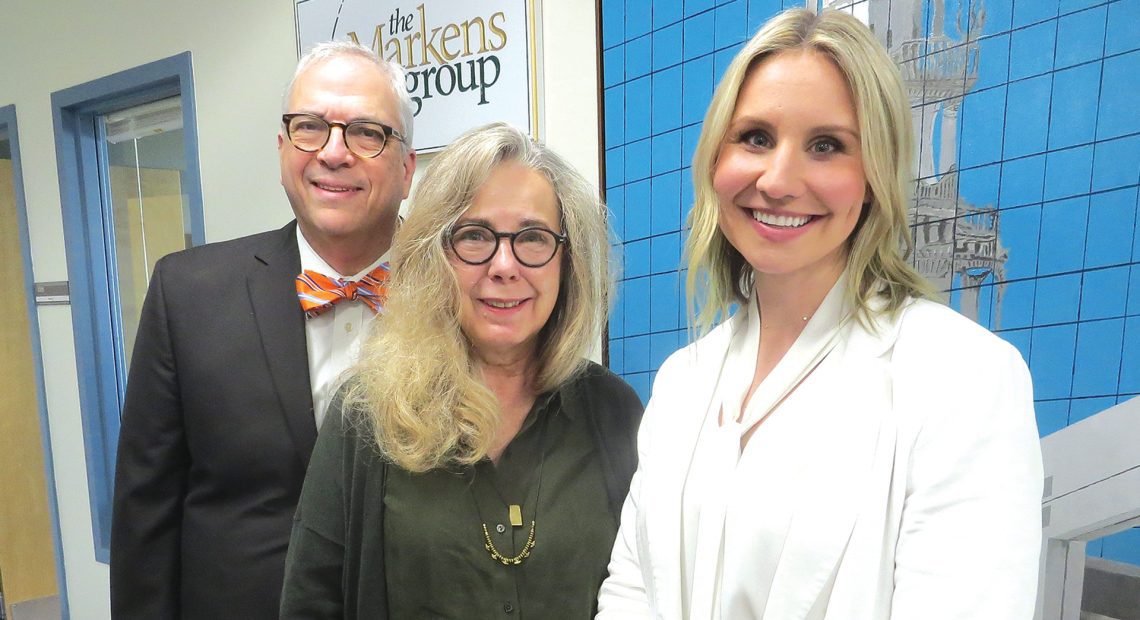
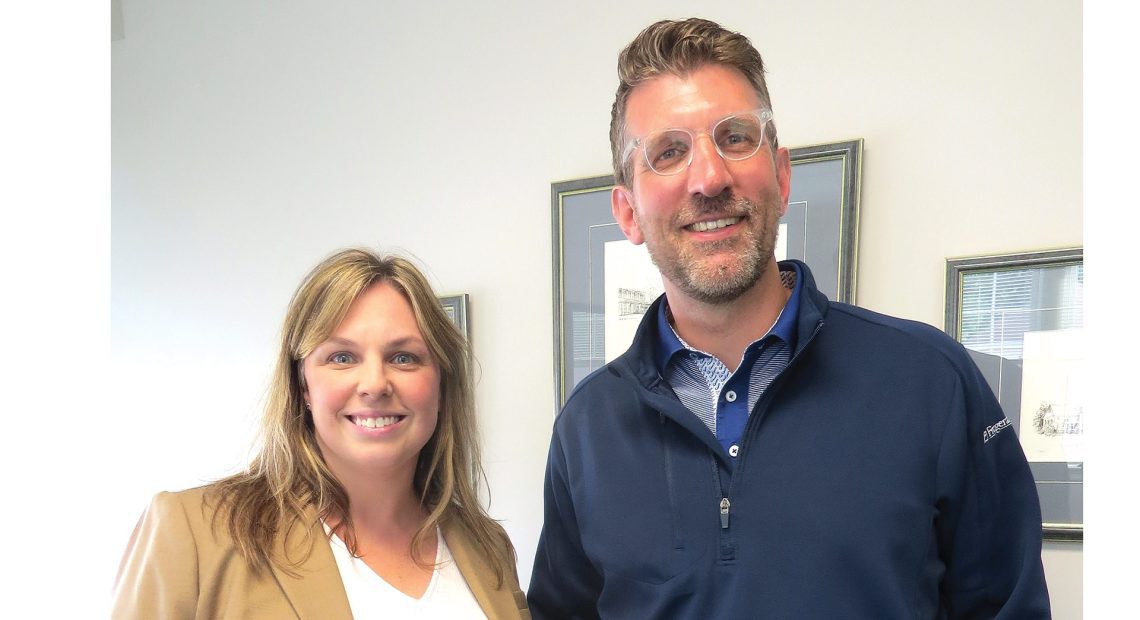
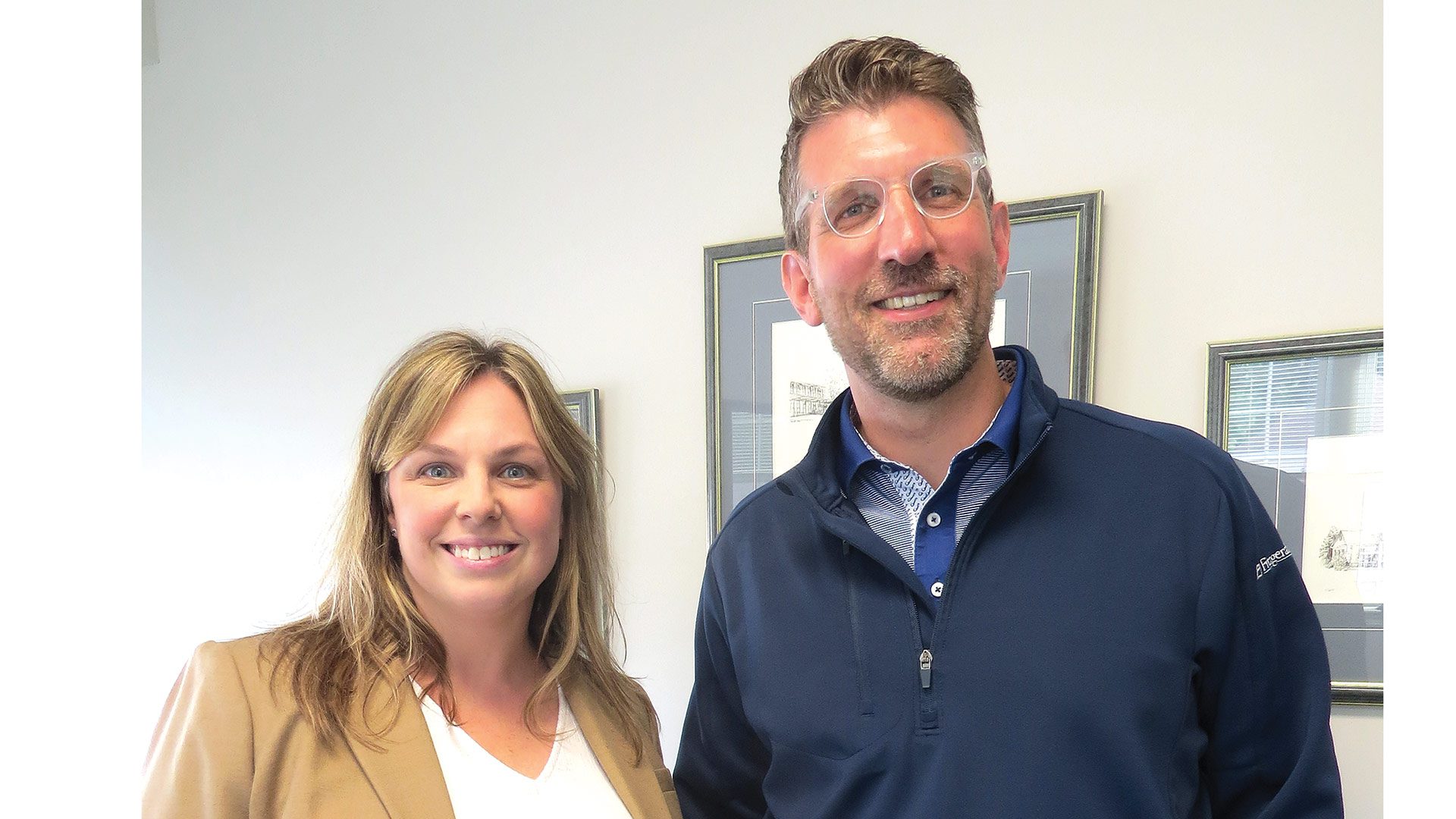
EAST LONGMEADOW — Fitzgerald Law named attorney Andrea O’Connor a shareholder and announced that attorney Christina Turgeon has joined the firm.

“Andrea’s depth of experience and teamwork has really helped our firm grow, so she was very deserving of appointment,” noted Seth Stratton, also a shareholder with the firm. “We are also delighted to announce that Christina is now part of our firm, as she brings a wealth of experience and knowledge with her. Through their volunteer activities in the profession, these two attorneys not only elevate their representation of clients, but are improving the practice of law in their specialty as well.”

O’Connor counsels corporate and consumer clients in all aspects of insolvency law, primarily including bankruptcy, asset protection, taxation, real estate, and commercial matters. Her experience representing debtors and creditors in all types of matters, from complex Chapter 11 cases to adversary proceeding litigation, as well as serving as a Chapter 7 trustee for the District of Connecticut, allows her to analyze problems from all angles and develop creative solutions.

She has 13 years of legal experience, including a clerkship for the U.S. Bankruptcy Court for the District of Massachusetts. She earned a bachelor’s degree, cum laude, from the University of Connecticut, and graduated magna cum laude from Western New England University School of Law. She is an active member of several bar associations, where she has served in various leadership roles, and serves on the Massachusetts Bankruptcy Court’s Pro Bono Committee and Diversity Task Force. Her admissions include the state of Connecticut, the Commonwealth of Massachusetts, the U.S. District Court for the Districts of Connecticut and Massachusetts, and the U.S. Court of Appeals for the First Circuit.

O’Connor is routinely called upon by professional organizations to author materials and present on insolvency-related topics. She recently presented on the intersection of real estate and bankruptcy law, the new Subchapter V of Chapter 11, and complex bankruptcy sales for various Massachusetts and Connecticut bar associations. She will be presenting this summer at the ABI Northeast Conference & Consumer Forum. Additionally, she currently co-chairs two annual bankruptcy conferences, one targeting Western and Central Mass. and one serving New England.

Turgeon has more than 21 years of practice experience and is primarily engaged in business litigation and counseling services, including reviewing and preparing discovery and trial strategies in Fitzgerald Law’s Litigation Department. In addition, her concentrations include bankruptcy law representing debtors and trustees before the U.S. Bankruptcy Courts in Massachusetts and Connecticut; commercial evictions; real-estate law representing buyers, sellers, and financial institutions in real-estate transactions; and general civil litigation representing plaintiffs and defendants in district and Superior courts.

She earned a bachelor’s degree in criminal justice with a minor in English literature from Western New England University and is also a graduate of Western New England University School of Law. She is appointed to Supreme Judicial Court’s Standing Committee on Lawyer Well-Being and the U.S. Bankruptcy Court’s Local Rules Committee and Pro Bono Advisory Committee.

Turgeon is a board member of the Hampden County Bar Foundation, where she serves as treasurer; a board member and past president of the Hampden County Bar Assoc.; and a member of the International Women’s Insolvency & Restructuring Confederation, where she serves as treasurer and was elected at-large director. She also is co-chair of the Western Massachusetts Annual Bankruptcy Symposium.

Her admissions include the Commonwealth of Massachusetts, the U.S. District Court for the District of Massachusetts, and the U.S. District Court for the District of Connecticut. She frequently participates as a panelist in professional legal seminars and continuing-education programs locally and statewide.

Daily News

EASTHAMPTON — bankESB recently promoted Tim Czerniejewski to assistant vice president, commercial lending.

Czerniejewski has 16 years of experience in banking. He joined bankESB in 2016 as a credit analyst and was promoted in 2018 to assistant vice president, portfolio manager. In his new role, he will be responsible for developing, structuring, and closing commercial loans, as well as maintaining and servicing existing accounts. Before joining bankESB, he was a risk analyst and credit analyst at TD Bank.

Czerniejewski earned a bachelor’s degree in accounting from Western New England University and an associate degree in accounting from Springfield Technical Community College, and is a graduate of the Springfield Leadership Institute.

Daily News

SPRINGFIELD — Dhaval Patel has been selected for the 2023 class of 30 Under 30, highlighting his remarkable accomplishments and the impact he has made throughout his career.

Dhaval, 27, of Rovi Homes, was selected by REALTOR Magazine, which recognizes members of the National Assoc. of Realtors (NAR) under age 30 who have demonstrated exceptional skills in areas such as sales, marketing, entrepreneurship, technology, association leadership, and community involvement.

Lori Beth Chase, 2023 president of the Realtor Assoc. of Pioneer Valley (RAPV), noted that “Dhaval Patel is an exceptional Realtor. He represents the NAR 30 under 30 as part of our local association in the Pioneer Valley, embodying the true essence of real-estate professionalism. The RAPV congratulates Dhaval on this tremendous achievement.”

Daily News

NORTHAMPTON — Smith Brothers Insurance, with an office on Main Street in Northampton, has acquired Rawson & Sons Insurance Group, an independent insurance agency located in Worcester. The acquisition expands the Smith Brothers Insurance footprint in Massachusetts, with Rawson & Sons maintaining a local presence while leveraging the resources of Smith Brothers Insurance, one of the nation’s top 100 independent brokers.

Rich Rawson, founder of Rawson & Sons, will stay fully engaged in business development, sales, and client service, alongside the same team of insurance professionals. All Rawson & Sons team members will be joining Smith Brothers.

“Rawson & Sons brings us continued expansion in Massachusetts and allows clients of Rawson & Sons to gain access to additional carriers, coverages, and risk-management services,” said Joe Smith, president and CEO of Smith Brothers Insurance. “Rawson & Sons team members and their Worcester location are great additions. Our combined company will best serve our clients and community. We look forward to working together and also expanding on what Rich Rawson has built in servicing the mortgage-broker and real-estate community, to provide responsive services to help them do their business easier and faster.”

Smith Brothers Insurance has more than 200 team members in locations across Connecticut, Massachusetts, New Jersey, and New York.

“As I have come to know Joe and members of the Smith Brothers team, it is clear we share the same values,” Rawson said. “Their commitment to exceptional client service, continued growth, and being a great place to work is exciting to our team and aligns with our commitment to be the best we can be for our clients, partners, and the community. I look forward to working with the Smith Brothers team to continue to build what we have here at Rawson & Sons and do what we do even better.”

Cover Story

Support Network

TMG

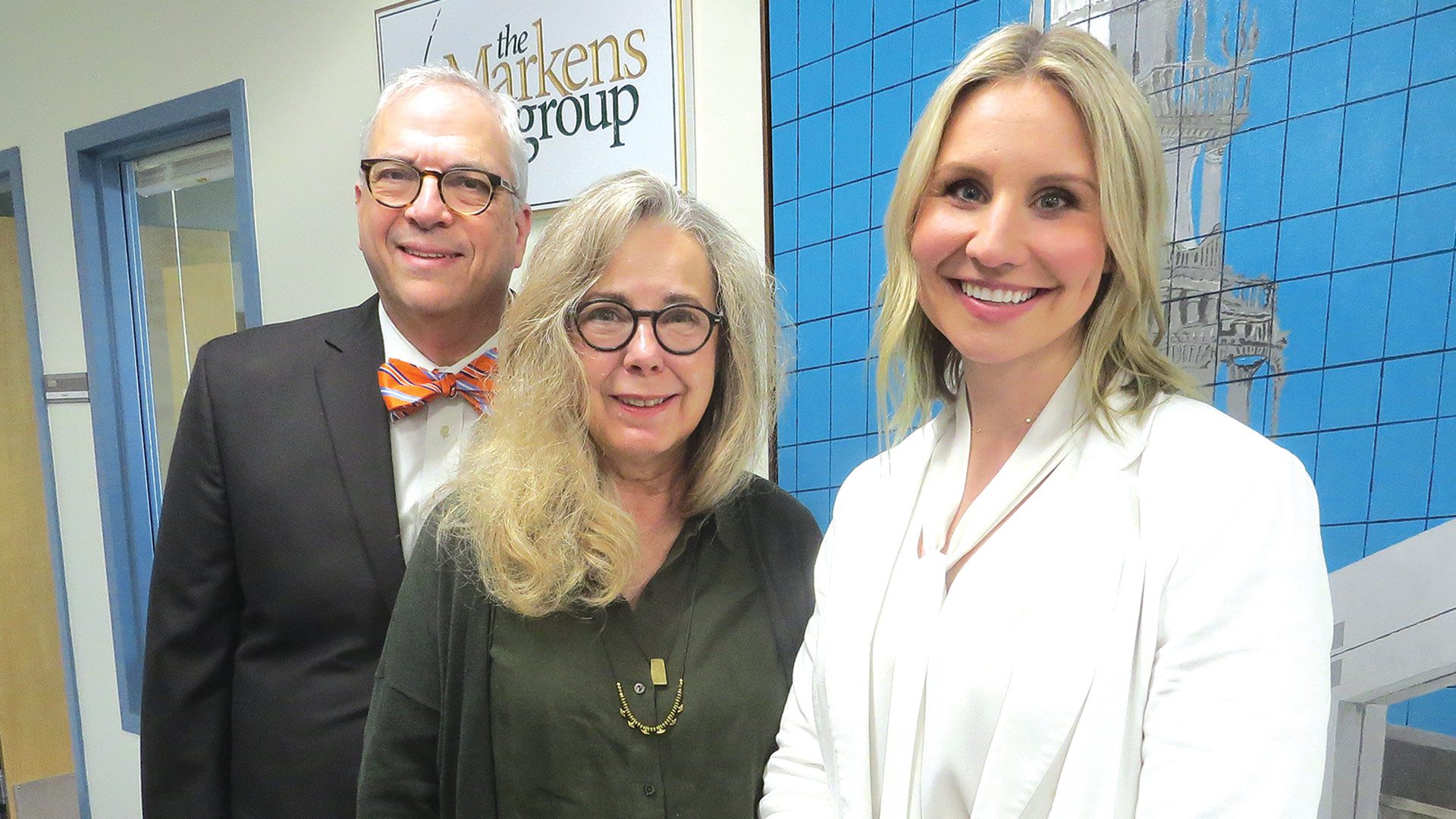
From left, founders Ben and Jennie Markens and Emily Leonczyk, TMG’s vice president and chief operating officer.


When Lauren Zuber started with the Markens Group just over two years ago, she understood that she would be working for “an association-management company.”

But she noted that it took her quite some time to fully understand just what that meant, what this now 35-year-old venture does, and, just as importantly, how it does it.

“I was inherently confused by the concept until probably three months into my job here,” she told BusinessWest, adding that, despite this confusion, she was drawn to the company and took the role of director of Marketing & Development because of its track record of success and strong set of values.

Emily Leonczyk, the company’s executive vice president, can relate, and said that, for many employees, it takes closer to a year before they have a firm handle on all that goes into the equation when it comes to association management — and how this company stands out in a crowded field of competitors.

Indeed, there is a lot that goes into that equation, she said, including everything from organizing and staging events to strategic leadership; from marketing and communications to membership services; from website design to social media. And the Markens Group, or TMG, provides all this and more to a wide variety of trade associations, membership societies, and not-for-profits, including the Springfield Regional Chamber, providing a team of specialists in place of one generalist.

For the chamber, TMG handles a number of assignments, from its newsletter to assistance with events such as its Outlook lunch in March, one of the region’s largest annual gatherings, to the recent annual meeting.

Diana Szynal, president of the chamber, summed up what the firm does with two highly effective words.

“They’re our support team,” she said, emphasizing both terms and noting that, while she still leads the various efforts at the chamber, TMG provides support from many different individuals with experience and expertise in several different areas. “You don’t get a person … you get a team.”

“There’s a whole story out there about how I invented the concept of association management, but … that’s another story.”

The company’s growing portfolio of clients manifests itself in an alphabet soup of acronyms for the organizations it serves — letters that appear in emails, on a large board tracking a lengthy list of events that TMG is working on, and on the binder covers on a shelf in one of the conference rooms.

There’s SRC — that’s the Springfield Regional Chamber; MLF, the Mary Lyons Foundation; NEFMA, the New England Financial Marketing Assoc.; IMFA, the International Molded Fiber Assoc.; AAHP, the American Assoc. of Homeopathic Pharmacists; FPPA, Flexographic Pre-Press Platemakers Assoc.; and many others.
portraits of staff members

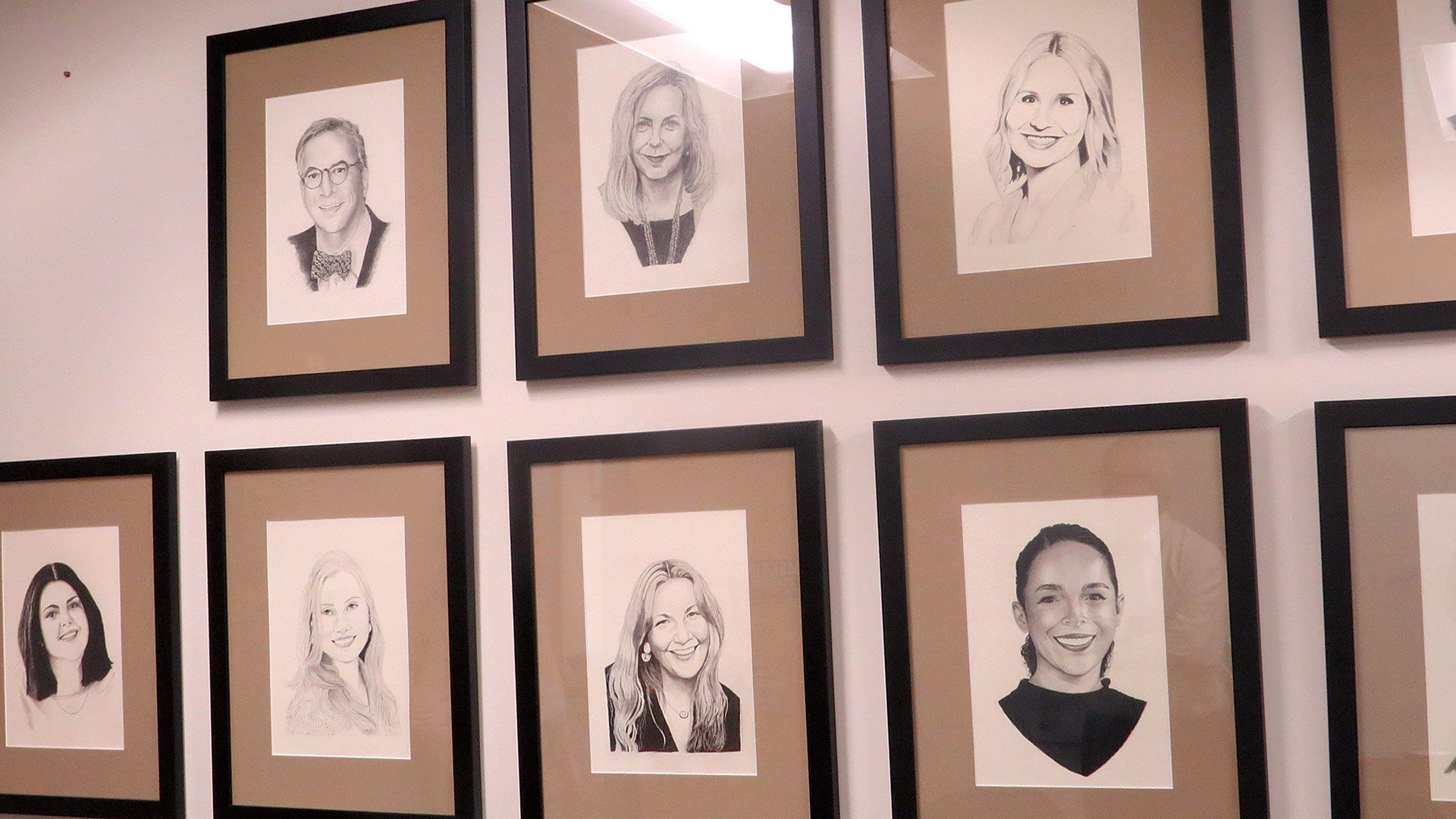
Jennie Markens’ portraits of staff members hang in TMG’s conference rooms.

Behind those letters are associations comprised of businesses and organizations that are committed to their missions and moving them forward, said Ben Markens, but need help with the many day-to-day aspects of managing their organizations.

The desire to meet this need was the goal behind a broad transformation of TMG from a consulting business focused on the folding-carton industry into an accredited association-management company, or AMC (yes, another acronym), a metamorphosis that began in 2008, when the company took on management of the PPC, the Paperboard Packaging Council.

Over the past 15 years, the company has expanded its reach and its portfolio of clients and accompanying acronyms, giving the associations it manages a Springfield mailing address and phone number. In the meantime, it has become a great place to work — figuratively, but also quite literally.

Indeed, TMG has been named a ‘Great Place to Work’ by Forbes magazine, but beyond that designation, it has become a company with a culture grounded in the concept of teamwork and simply having fun, as we’ll see.

The firm has been in a serious growth mode in recent years, adding employees, taking on more space at 1350 Main St. — it now occupies a large chunk of the 11th floor — and bringing on a number of new clients.

There have been costs and risks associated with this rapid and profound expansion, said Ben Markens, but he prefers to look upon them as investments in the future of a venture that he and his wife, Jennie, built from the ground up with the intention of it remaining a force in Springfield, and in the AMC galaxy, for decades to come.

“We have a very strong bench of cross-trained individuals.”

With that in mind, the pair have spent considerable time and energy on the matter of succession, and have put in place a plan whereby Leonczyk will become the majority shareholder over the next several years.

For this issue, BusinessWest talked with the senior leadership team at TMG about the first 35 years of growth, change, and maturation, and how there is more on tap for a company that has become a leader in what Ben Markens likes to call “the huge business that no one knows about.”


Portraits of the Artists

Among her many talents, Jennie Markens is a talented artist. And some of her work is on the walls at TMG.

Indeed, visitors to the office are greeted by a painting of the reflection of Springfield’s famous campanile clock tower in the glass façade of the Springfield Sheraton — an image that many TMG workers can see out the windows of their offices.
The leadership team at TMG

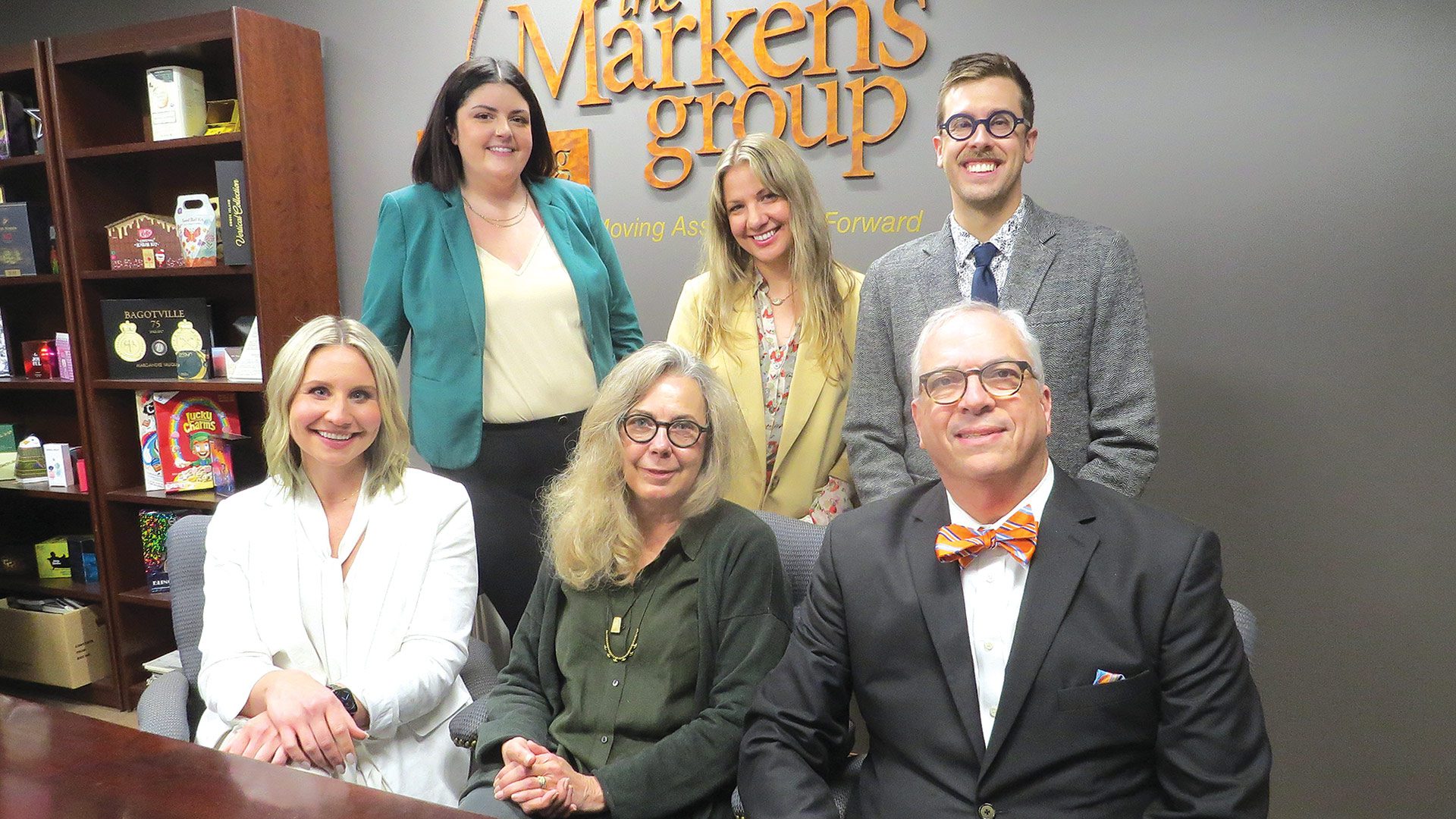
The leadership team at TMG, from left: Emily Leonczyk, Irene Costello, Jennie Markens, Lauren Zuber, Brian Westerlind, and Ben Markens.

Meanwhile, in one of the small conference rooms just off the front entrance are two rows of pencil sketches of TMG’s employees, a collection that has grown larger as the company has over the past several years.

The sketches, which make great conversation pieces for guests, speak to the concept of ‘team’ and how it is valued at TMG, which, as noted earlier, started as a consulting firm in 1988 that was niched to the folding-carton industry, a business that is well-represented in one of the conference rooms with a number of packaging products, including a Lucky Charms box.

TMG provided assistance to that industry on everything from pricing to strategy, said Ben Markens, adding that the leaders of the industry eventually asked him to become president of their association.

“I told them ‘no,’ because I already had a job,” he recalled. “They said, ‘figure it out,’ and we became what’s known as an association-management company. There’s a whole story out there about how I invented the concept of association management, but … that’s another story.”

While he may or may not have invented the business, Markens and the team that has been assembled has certainly come to be a leader in an industry he described as simply the outsourced management of associations — in TMG’s case, manufacturing groups and medical entities, representing everyone from podiatrists to neonatal intensive-care nurses.

“We’re able to take our experiences from one association or industry group and apply them and add value to others.”

Early on, Ben and Jennie made the decision to do this from Springfield. The PPC wanted them to move to the Washington, D.C. area — the association is based in Alexandria, Va. — and they considered basing it in or near their home in Westfield, but they ultimately decided the venture needed to be in Springfield and its downtown.

That move represented a risk in and of itself, said Jennie Markens, noting that 2008 was the height of the Great Recession, and taking on substantial debt and essentially launching a new business was a scary proposition.

But they moved ahead with confidence, a vision, and an operating philosophy grounded in what they call ‘fundamentals’ — and they’ve never looked back.

As they talked about association management, members of TMG’s leadership group said there are many components to this work.

Events are an important and highly visible part of it, said Ben Markens, adding that the firm will assist with everything from finding speakers to choosing the hotel; from ordering awards to handling the banquet order. But there is much more to this than events, he said, adding that TMG essentially becomes the back office for the association it serves, managing assignments ranging from membership to marketing to social-media content.
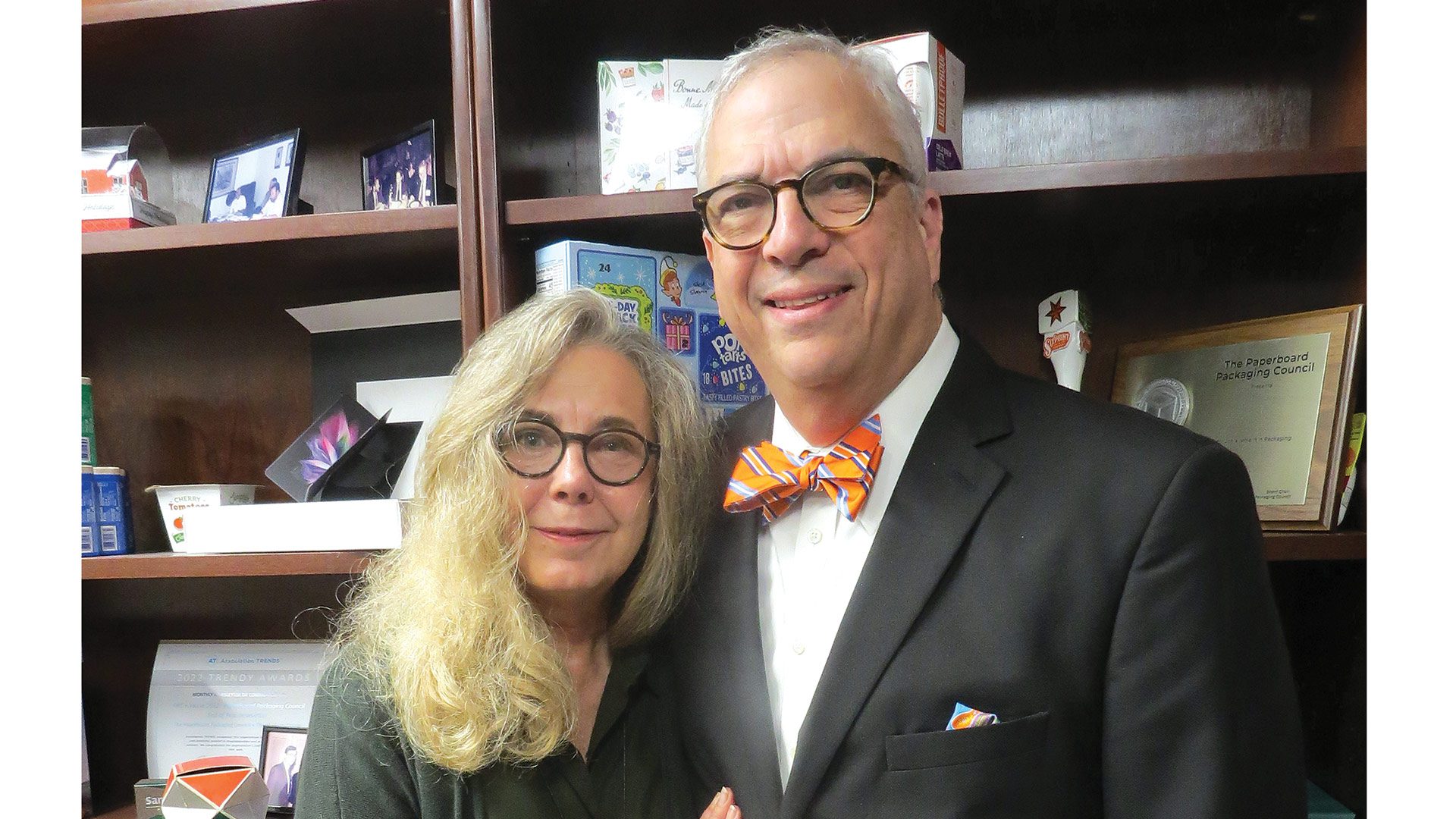
Jennie and Ben Markens

Jennie and Ben Markens have the firm on a serious growth trajectory in recent years.

As it does so, it brings to those assignments several specialists, as opposed to one generalist that a nonprofit or trade association might hire to handle those tasks listed above, said Irene Costello, director of Operations for TMG.

“If they do hire that one full-time staff person, they have one person managing the books, doing the marketing, trying to plan an event … and that person can’t be a master of everything,” she told BusinessWest. By hiring us for a similar price as a full-time employee, you wind up with a full staff of experts in each individual area that can bring their expertise and pull the association forward and make it successful.”

Ben Markens agreed. “Instead of having one person with two arms and two legs, you have the arm of a social-media person, the leg of an event planner … it’s full-time staffing at part-time rates.”

But while they’re specialists, the team’s members are cross-trained and can step in and fill any of a number of roles, said Leonczyk, citing, as one example, the Springfield Regional Chamber’s recent Outlook lunch. The team member managing the chamber’s account came down with COVID the week of the event, she recalled, adding that others within the firm were able to effectively backfill.

“We have a very strong bench of cross-trained individuals,” she said, adding that this is one of the key ingredients in the firm’s formula for success.


Firm Resolve

This deep bench, and the ability to provide specialists in the place of one or a few generalists, help explain the emergence of AMCs, and especially TMG, said Brian Westerlind, vice president of Industry Affairs and Strategic Communication for TMG. He noted that there is an association for association-management companies (the Association Management Company Institute), which has conducted studies yielding statistical evidence showing that groups that use such a firm fare better than those who try to handle such matters themselves.

“AMC-run associations had three times more net growth in assets and 31% higher growth in net revenue,” he noted. “And I think most of that comes from the fact that we know associations, we run associations every day, and I think our special sauce comes from the fact that Ben started out in this business discipline helping individual companies, and now we’re doing that for nonprofit associations and professional societies.

Leonczyk agreed, noting that one of the firm’s strengths is its ability to take lessons from work it does for one client, or group of clients, and apply it to others.

“We’re able to take our experiences from one association or industry group and apply them and add value to others,” she explained, adding that this ability helps explain the company’s strong growth trajectory in recent years.

And while the Springfield Regional Chamber doesn’t represent TMG’s niche within the AMC realm — its bread and butter is trade associations in the manufacturing and medical fields — its work with the agency exemplifies its role as a support network and its ability to handle the work of one or several full time equivalents.

Its work with that group also exemplifies the mindset with which it enters each assignment.

“Our job is to make them look really good and be all things behind the scenes,” said Leonczyk, adding that, for many associations, TMG takes the place of an executive director or administrator.

Zuber agreed, noting that the relationships with clients are partnerships in every sense of that term.

“We’re on the journey together, as opposed to a situation where we’re just managing them,” she explained. “It’s a real partnership.”

And while what TMG does for its clients is a big part of this story, an even more important piece, Leonczyk said, is how it goes about this work. By this, she meant a supportive culture created by the Markenses, one grounded in a strong value system and a desire to make theirs an enjoyable workplace, but also built on a foundation of excellence.

“It came down to the fact that Jennie and I wanted to found a company that we would like to work at — one that didn’t have a lot of arbitrary rules or a lot of backbiting, a place founded on those things we started with back in 1988,” Ben Markens explained. “We’ll do whatever’s fair, we want to have fun, and personal relationships are important.

“That’s easy when there’s just three or four of us, but as we become eight, nine, 10, or more, it becomes more difficult,” he went on, adding that, to maintain that culture he and Jennie covet, TMG stresses what are known as ‘fundamental behaviors,’ ranging from ‘we are friendly’ and ‘we do our best’ to ‘we are fair’ and ‘we have fun.’

Ben Markens puts a special emphasis on that last one — what he calls the ‘fun factor,’ and to say there has been a trickle-down effect would be an understatement.

“You can be quirky, you can be yourself here, and I really enjoy that — that’s who we are here,” Zuber said, adding that another fundamental is what she calls ‘support and defend.’

“Within three months of working here, I knew people had my back,” she explained. “I’ve worked in many different industries, and never have I enjoyed the level of support I have here.”

Moving forward, Leonczyk, a member of BusinessWest’s 40 Under Forty class of 2023 who came to the company four years ago and eventually assumed the role of executive vice president, said she is committed to keeping the firm in Springfield, continuing to build on the culture that has made this a great place to work, and maintaining the strong pattern of growth it has seen the past several years.

“I’m really grateful for this opportunity, and want to build on everything that Ben and Jennie have done here,” she said.


Bottom Line

Ben Markens may or may not have invented the concept of association management. As he said, “that’s another story.”

This one is about the company he and Jennie started and how it has grown and evolved over the years to become a leader in this business that so few know about.

This work is a science, but it’s also an art, and mastering it has become a function of teamwork, as represented in those portraits on the conference-room wall.

Those portraits speak of a canvas that is still being filled in, with new elements — and, yes, new acronyms — being added regularly.

That’s what this story is all about, and there are many intriguing chapters still to come.

Law Special Coverage

Working in Concert

Managing Partner Seth Stratton with recently named Shareholder Andrea O’Connor.

Managing Partner Seth Stratton with recently named Shareholder Andrea O’Connor.


“Non-traditional.’

That’s not a term you hear often in reference to a law firm. That’s because … well, the vast majority of them would still be considered the opposite — traditional, operating pretty much the way law firms have operated for decades now.

But Seth Stratton uses the word quite liberally as he talks about the firm he serves as managing partner, Fitzgerald Law, P.C., which is based in East Longmeadow but also has an office in downtown Springfield.

He says it applies to the firm’s founder and still very active partner, Frank Fitzgerald — “he’s always marched to a different beat when it comes to the practice of law; he’s a businessperson first and lawyer second” — and also how the firm’s members go about team building. Most recently, it was at a Bruno Mars concert at MGM Springfield (Stratton formerly served as vice president and legal counsel of MGM Resorts’ Northeast Group, and still had the requisite connections to buy 40 seats to the show), preceded by some bowling in the casino’s alleys.

That term also applies, to one degree or another, to how the firm is expanding, adding lawyers, and even making them partners.

Indeed, Andrea O’Connor, a bankruptcy and insolvency specialist who joined the firm in 2020 (not long before Stratton left MGM and rejoined Fitzgerald), was recently made a shareholder, continuing a pattern of growth and what Stratton called “re-invention.”

“More people have gotten involved as shareholders in the firm,” he explained. “And we’ve also been bringing in mid-career lawyers who have considerable experience and a lot that they can bring to the firm. We’re bringing people in non-traditionally to grow our firm, and as we grow, we’ll talk out ownership opportunities in the firm.”

The addition of O’Connor, as well as Christina Turgeon, another bankruptcy specialist formerly in solo practice, and Daryl Johnson, who specializes in everything from commercial lending to zoning, further diversify a firm focused mostly on business advisory work, said Stratton, noting that it handles a wide array of legal issues, including commercial real-estate development, acquisition, and sale; zoning, permitting, and licensing; and business succession and estate planning.

Bankruptcy and restructuring are now part of that mix, and an important part, he said, because, while the economy remains strong and bankruptcies have generally been on the decline in recent years, businesses do fail, and such work is part of providing the full range of services that businesses might need.

“We’re trying to figure out a model that allows us to capitalize on talent but not be wed to a traditional law-firm model. We are a little different, and we think this is what many of our clients like about us.”

Meanwhile, there are few firms in this region that have such expertise, he went on, adding that this is a key component of the firm’s overall growth strategy.

As he talked about that strategy, Stratton said the broad plan is to continue to grow and diversify the firm — it has added several new lawyers over the past few years and now boasts 10 attorneys and five partners — and take its expertise to different markets.

The Fitzgerald firm has opened a satellite office in Worcester, he noted, enabling it to better serve clients and potential clients in that part of state, and O’Connor and other attorneys in the firm are serving a growing number of clients in Boston and other metropolitan areas, as clients take advantage of the firm’s deep portfolio of services — and at Springfield-area rates.

Overall, Stratton said the firm is still trying to determine the “sweet spot” when it comes to the desired size of the firm, and hinted strongly that it will essentially know what that size is when it gets there.

In the meantime, it will continue to look for opportunities to add some rock stars to the roster and continue to grow and diversify in a way that could, indeed, be called ‘non-traditional.’


Additions of Note

O’Connor told BusinessWest that she would consider her own career path non-traditional.

She started with the Springfield-based firm Hendel & Collins, which specializes in bankruptcy and related work, after graduating from law school. After six years there, she left to serve as a clerk for the bankruptcy court.

She then returned to the firm, which became Hendel, Collins & O’Connor, P.C. While her partners eventually started winding down their practices, she was looking to take hers to the next level. The question was … where?

She said she had a number of options, but eventually decided to join the Fitzgerald firm in August 2020, the height of the pandemic.

“I started my last firm when I was eight months pregnant, so I make bold choices sometimes,” she said with a laugh. “But when the opportunity comes, you have to seize it; it was a huge opportunity for me to come here and work with this team.”

Fitzgerald has been creating such opportunities for other mid-career lawyers, said Stratton, adding that the traditional path that lawyers took for years — one where they would join a firm as an associate; make partner after six, seven, or eight years; get a bigger office; and stay with that firm for the next several decades — is increasingly not the norm.

Especially at Fitzgerald, a firm that was founded in 1992.

“There is a sweet spot in terms of size, and we’re all trying to figure out what it is.”

“We’re trying to figure out a model that allows us to capitalize on talent but not be wed to a traditional law-firm model,” said Stratton, who was on the partnership track at a large regional law firm but ultimately rejected that path and left for Fitzgerald and ultimately returned to it after a six-year stint with MGM that eventually saw him become the face of the casino. “We are a little different, and we think this is what many of our clients like about us.”

And when he returned, as managing partner, he continued and accelerated that process of reinvention, adding that it involves expansion and diversification of the firm, while focusing on what it does well.

Elaborating, he said the firm moved on from the work it was doing in such areas as family law and personal injury, and focused all its talent and energies on serving businesses and their families in all the ways they need to be served, including areas such as bankruptcy and insolvency.

Work in that realm has been relatively slow in recent years, said O’Connor, adding that an expected surge — or wave, or tsunami — of personal and business bankruptcies, one that would accompany an end of COVID-related relief efforts, has yet to materialize, and now there are doubts that it will.

“We’ve had a really good economy for a very long time,” she told BusinessWest, adding that the high-water mark for bankruptcy work came at the height of the Great Recession, some 15 years ago, and has been fairly tepid ever since, to the point where she believes fewer people are entering this specific specialty.

But there is always work in this realm, she said, adding that most of hers involve businesses in distress. Recently, she was appointed a Chapter 7 panel trustee in Connecticut, administering bankruptcy cases, primarily in New Haven, but also in Bridgeport and Hartford.

This additional focus on bankruptcy and insolvency enables the firm to better navigate the cyclical nature of the economy, said Stratton, adding that it also helps separate it from many competitors.

“This allows us to be more diversified and recession-proof in our own business,” he explained. “When the economy is good, the bread and butter of our business — transactional work, real-estate development work, loans and financing — is busy. When the economy goes in the other direction, some of that work dries up, but then, bankruptcy and insolvency work picks up, so it allows us to diversify.”

The recent staff additions to the firm have enabled it to get both younger and more gender-diverse, said Stratton, adding that he anticipates this growth pattern to continue in the years to come.

“I expect that the approach we’ve taken over the past two years will continue over the next several years,” he said. “But there is a sweet spot in terms of size, and we’re all trying to figure out what it is. We want to have enough lawyers to service the business, without growing too big to where we take on additional overhead, which pushes rate structures higher and you feel less competitive with clients.

“We don’t know what that sweet spot is yet,” he went on, “but we will find it.”


Bottom Line

Getting back to the Bruno Mars concert, Stratton said he still has a few MGM employees on speed dial who were able to make it happen.

The concert, bowling, and dinner in the sports bar before the show was a decidedly different course for the firm’s annual summer outing, and one that provided another example of how Fitzgerald is different and — here comes that word again — non-traditional.

Thus far, that character trait is serving it well, and Stratton and his growing team are committed to staying on this course moving forward.

Where it will take them is a question to be answered later — when they find that aforementioned sweet spot. For now, it’s a path toward continued growth and diversity, in every sense of that word.


Healthcare News Special Coverage

Specialized Approach


The new hospital

The new hospital, seen here in the late stages of construction, will open in August.


As Dr. Barry Sarvet surveys Valley Springs Behavioral Health Hospital a couple months before its opening, he’s excited about what he sees.

“We are extremely excited to be providing a brand new, state-of-the-art psychiatric hospital facility for our communities in the Pioneer Valley,” said Sarvet, chair of the Department of Psychiatry at Baystate Health. “Hospital care for behavioral-health patients requires a specialized environment of care to ensure safety, comfort, and privacy for patients and a setting for a full range of therapeutic services to support their recovery.”

The Holyoke-based hospital does just that, he noted. “Our new facility is spacious and will have an abundance of natural light. It includes ample spaces for psychotherapy, rooms for art and occupational therapy, a gymnasium for physical activity and recreation, and access to outdoor spaces for fresh air. Psychiatric patients deserve to be treated in an environment of care that supports their dignity, and we’re so pleased to be able to offer this.”

But he’s just as excited, if not moreso, about what the hospital, a joint venture between Baystate Health and Lifepoint Behavioral Health, means for access to behavioral healthcare in the region, which still faces a shortage of inpatient psychiatric services and increasing mental-health needs.

“We care deeply about people who need psychiatric services and are committed to the success of this new project,” he said, adding that the partnership with Lifepoint is smart considering that organization’s expertise in the development of new specialty hospitals and its commitment to quality care. “In developing this new hospital with our Lifepoint partners, we are continuing and enhancing our commitment to fulfilling the mental-health needs of people in our region.”

Dr. Barry Sarvet

Dr. Barry Sarvet

“Hospital care for behavioral-health patients requires a specialized environment of care to ensure safety, comfort, and privacy for patients and a setting for a full range of therapeutic services to support their recovery.”

Baystate actually announced a partnership on this project with Kindred Healthcare LLC during the summer of 2000, before Kindred was purchased by Lifepoint Health about a year and a half ago. Lifepoint boasts more than 100 specialty hospitals across the U.S. focused on four divisions: skilled nursing, rehabilitation, acute care, and behavioral health, said Roy Sasenaraine, CEO of Valley Springs.

“There’s a significant need in Western Mass. for this specialized hospital. The behavioral-health needs in the population are so great, and the differentiation between this service line and every other service line is so different, you need something like this; just like having a specialty hospital for children, you need a special team to come together to care for behavioral-health patients.”

The new facility, set to open in mid-August, will increase capacity for inpatient behavioral healthcare for adults, children, and adolescents in the area by 50%. Built with the unique needs of behavioral-health patients in mind, the $72 million hospital is designed so patients receive their care and treatment in an environment that supports their recovery, Sasenaraine said.

The 150-bed hospital at 45 Lower Westfield Road in Holyoke, including 30 beds dedicated to longer-term care through the Massachusetts Department of Mental Health, has been planned with patient safety in mind, he added.

“A benefit of new construction is that patient safety and privacy has been factored into every aspect of the building, from patient rooms to the gymnasium. We have fine-tuned every detail and thought of everything in terms of safety: toilets, window blinds, even door jambs. The new building allows us to make use of modern technology to elevate patient safety in a way retrofitting an existing unit could not.”


Access Points

A new service offered by Valley Springs Behavioral Health Hospital will be on-site evaluations following a provider referral, allowing some patients to be admitted without an Emergency Department visit at a different hospital.

Currently, around one-third of the behavioral-health patients evaluated in Baystate Health’s four emergency departments are transferred to facilities outside of Western Mass. due to a shortage of psychiatric beds in the region. With the opening of Valley Springs, more patients will have the opportunity to receive treatment close to home, Sasenaraine explained. The hospital’s location is intended to provide accessibility, being close to Routes 90 and 91, while also providing a facility focused solely on specialized care for mental health.

Roy Sasenaraine

Roy Sasenaraine

“The new building allows us to make use of modern technology to elevate patient safety in a way retrofitting an existing unit could not.”

He explained that patients will be admitted in three ways: people in crisis can be taken directly to the hospital by ambulance, other care providers will refer patients in need of behavioral-health treatment, and people can also walk in off the street.

“They might say, ‘I think I need help. I’m suicidal.’ That’s what my intake-assessment team is here for, to assess them for clinical issues, suicidal ideations, whatever it may be.”

Sasenaraine also noted that the new facility will provide employment opportunities with the opportunity to positively impact the lives of patients and families in the community. Employees currently working in Baystate facilities whose services will be transferred to Valley Springs Behavioral Health Hospital will have the opportunity to apply for positions there, in addition to opportunities for new employees to be a part of the joint venture.

“We’ll employ a lot of people, even some departments that didn’t exist before,” he said, such as a 24/7 intake department that will provide 18 full-time equivalent jobs. “For many people, this will be a once-in-a-lifetime opportunity to be a part of building a new organization from the ground up.”

Behavioral-health services from Baystate Wing Hospital and Baystate Noble Hospital, as well as pediatric behavioral-health services from Baystate Medical Center, will begin to transition to the Valley Springs site in August. Spaces in those facilities will then be converted to primary and specialty care or will be used to accommodate the increasing demand for inpatient medical services.

Baystate Health is working closely with the Department of Public Health (DPH) during this transition. The affected inpatient facilities are expected to be fully transitioned by the end of the year, with most completing the move in the fall, and partial hospitalization programs transitioning by January 2024.

As Baystate Health works with DPH to facilitate the transition, a series of formal notices will be made, public hearings will be held, and DPH will work with Baystate Health to assure patient-access needs are met. This process has already begun, about four months before the intended full transition for each affected unit, starting in late May for Baystate Wing, mid-June for Baystate Medical Center, and late June for Baystate Noble Hospital; it will continue in July for the partial-hospitalization program at Baystate Franklin Medical Center.

Valley Springs Behavioral Health Hospital will be affiliated with the psychiatric services operated directly by Baystate Health, including a 28-bed Adult Psychiatric Treatment Unit at Baystate Medical Center, which serves as a primary site of training for medical students and psychiatric residents within UMass Chan Medical School – Baystate educational programs. This unit has a unique role in the care of patients with co-occurring and complex medical issues, requiring the resources of a general hospital.

Baystate’s Department of Psychiatry will also continue to operate its array of ambulatory behavioral-health services, psychiatric consultation services, emergency psychiatric services, and programs supporting mental-health treatment in the primary-care setting.

In addition, Baystate Health will continue to operate its 22-bed Mental Health Unit at Baystate Franklin Medical Center, which provides inpatient behavioral healthcare for patients in Greenfield and the surrounding communities. According to Ronald Bryant, president of Baystate Regional Hospitals, the decision to keep this unit open was made based on geography and Baystate Franklin’s history of integration of behavioral-health services, such as the 24/7 presence of recovery coaches in the Emergency Department.

“Baystate Franklin has spent many years building strength in behavioral-health practices that really connects with a lot of the other types of care provided,” Bryant said. “We didn’t want to lose the continuity of that integration.”


Fulfilling a Mission

Before coming to Valley Springs, Sasenaraine served as vice president of Operations for the central region of Spire Orthopedic Partners, where he led new construction, patient-access initiatives, and acquisition and integration work for Spire’s nine locations in Connecticut.

Prior to that, he served as vice president of Operations for Hartford Healthcare System’s East Region behavioral-health network, where he oversaw 18 locations, including six school-based programs, two emergency departments, one inpatient psychiatric hospital, eight ambulatory locations, and one inpatient juvenile program. His leadership led to the implementation of a new care model for adolescent, pediatric, and adult patients in inpatient care, along with the implementation of a new electronic medical record across all sites of care.

“Roy’s breadth of operational experience and his deep understanding of the behavioral-health setting make him the right leader for this new, state-of-the art facility that we are excited to open in the coming months,” Dr. Andrew Artenstein, Baystate Health’s chief physician executive and chief academic officer, said when the appointment was announced in the spring.

For his part, Sasenaraine said he embraces the opportunity to oversee a new specialty hospital that will increase employment in the region and generate $1.6 million in taxes annually — but, most importantly, provide more access to behavioral healthcare at a time when it’s needed.

“I know that we have an exciting road ahead of us,” he said. “I look forward to serving patients in Western Massachusetts with safe, high-quality behavioral-healthcare services.”

Autos Special Coverage

Driving Forces

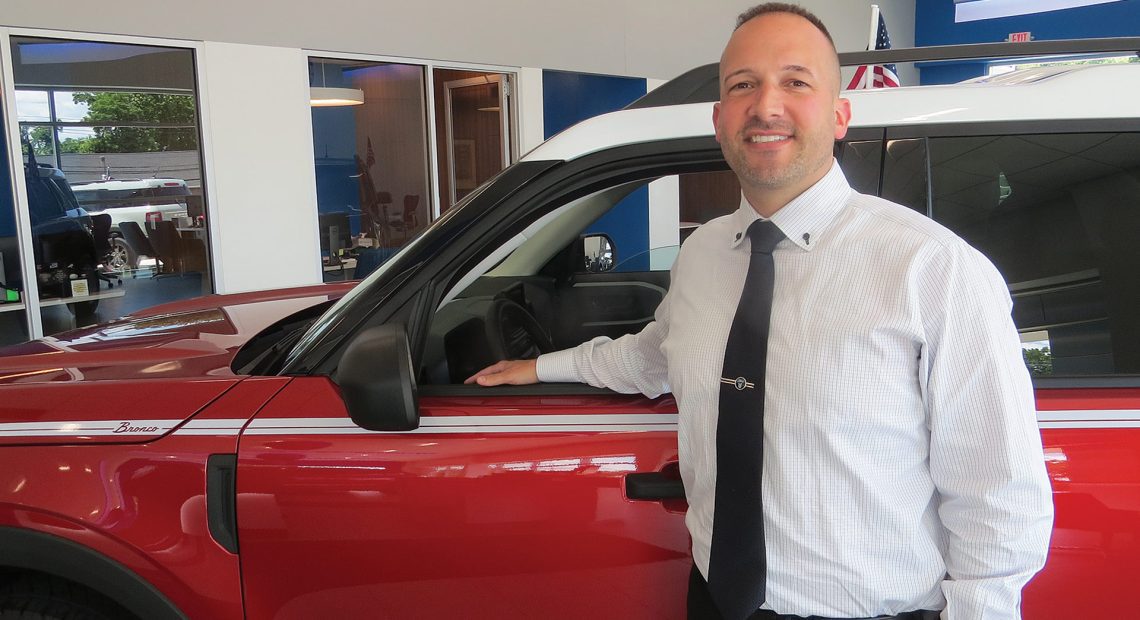
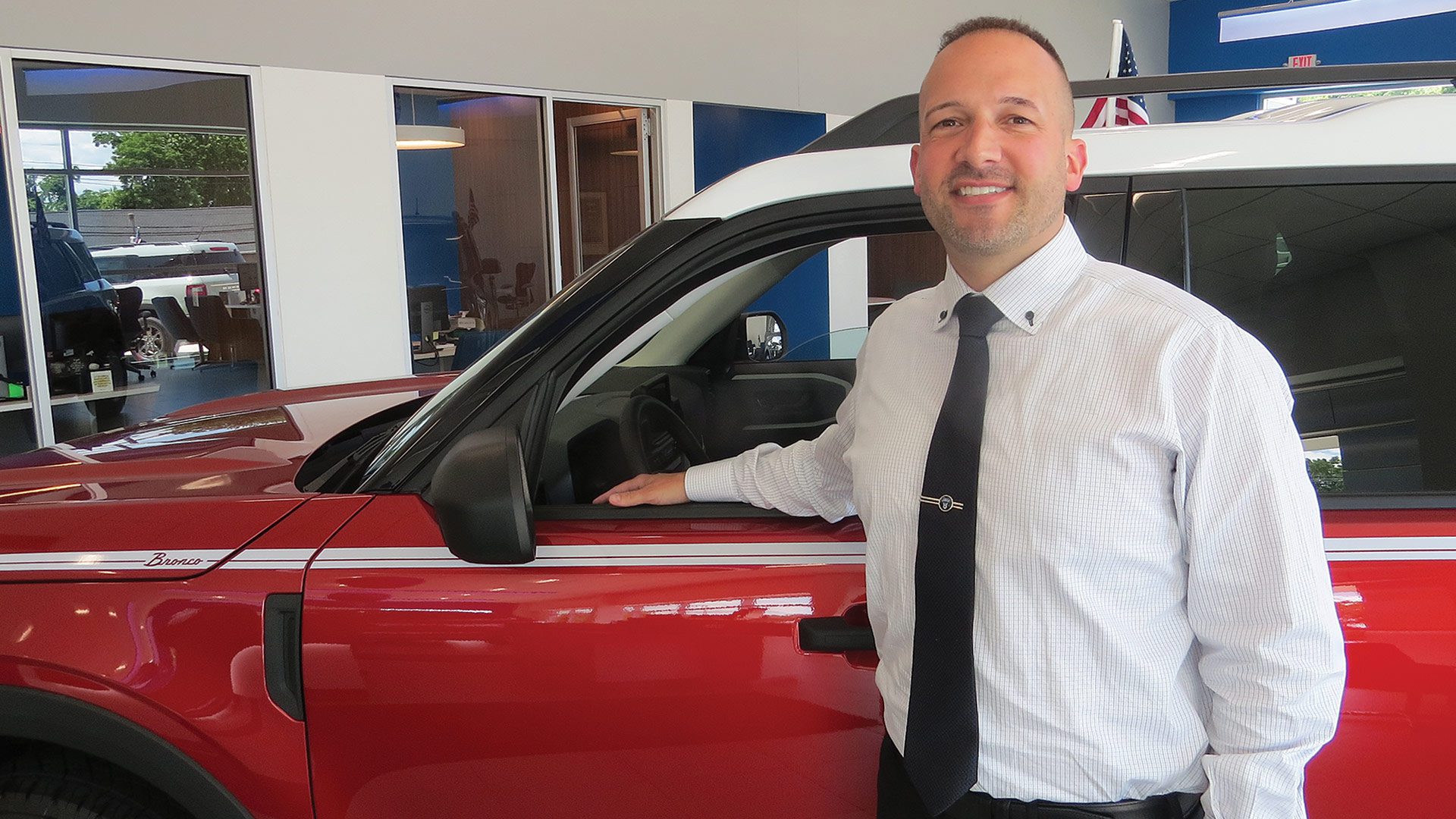
Mike Marcotte shows off one of the Bronco Sport models

Mike Marcotte shows off one of the Bronco Sport models on the Marcotte lot, one of the small SUVs that are seeing a surge in popularity.


Prior to the pandemic, Mike Marcotte recalls, there would be between 300 and 350 new cars on the lot at Marcotte Ford, the Holyoke mainstay started by his grandfather more than a half-century ago.

At the height of COVID, when there were supply-chain issues and a massive microchip shortage, there were maybe 30 or 40 cars on that same lot.

“Employees could park wherever they wanted at that time,” Marcotte, the company’s president, said with a laugh, noting that today, there are close to 200 cars on the lot on Main Street, partly out of necessity — there are still fewer cars available from the manufacturer — but also out of choice.

“You don’t need to have everything on the lot because you can factory-order vehicles,” he explained. “It’s nice to have all the options, but you have carrying costs, and you want the freshest product.”

This commitment to keeping smaller inventory levels has provided the business with another opportunity to expand what has become a complex of sorts on Main Street, one that includes everything from the dealership to a commercial truck center to a car wash. Indeed, Marcotte showed BusinessWest a row in the parking lot that is now the site of a construction project — one that will create a bank of charging stations to handle the growing volume of electric-car sales.

“You don’t need to have everything on the lot because you can factory-order vehicles.”

Rising electric and hybrid car sales and smaller inventories, by choice, are among the trends and ongoing developments in an auto-sales industry that is still in many ways adjusting to life post-COVID. It’s a time of challenge — higher interest rates, talk of recession, and some lingering availability issues when it comes to many makes and models, for example — but also opportunity, in the form of new and intriguing products (mostly those electric models), some improved incentives from the manufacturers, and some lingering, pent-up demand.

Other trends include a still-challenging used-car market — meaning challenging for dealers who struggle to find cars and challenging for consumers, who continue to face limited options and high prices — as well as steadily rising SUV sales and a growing willingness among consumers to order a vehicle rather than pick one off the lot.

Carla Cosenzi, president of the Tommy Car Auto Group, which includes Hyundai, Genesis, Nissan, Volkswagen, and Volvo dealerships, said she and her team, like most in this business, entered the year with conservative expectations, because of those challenges listed above, and two quarters into 2023, they are meeting them.

“It’s been such a volatile market, with inventory constraints, interest rates, and what’s happening with the economy, so we just made a conservative projection and figured we could always adjust if we needed to,” Cosenzi said. “We projected to increase sales over last year, which we always do, but not by a lot.”

Ben Sullivan, chief operating officer at Balise Motor Sales, concurred. He told BusinessWest that, after three years of decline, to one degree or another, and a 2022 that was essentially flat, 2023 was seen within the industry as a year when, despite higher interest rates and inflation, dealers would do some catching up.

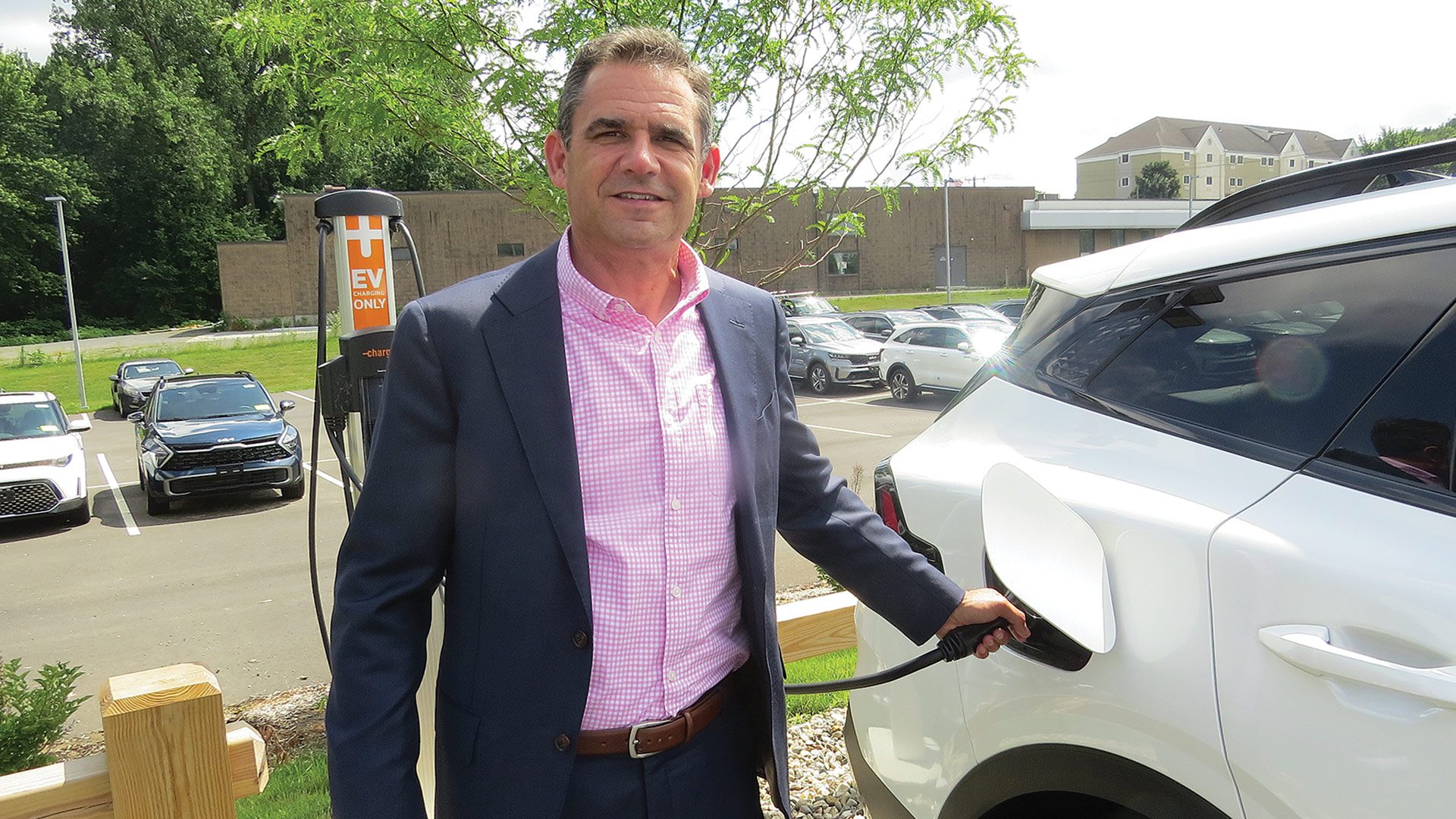
Ben Sullivan, seen here with a Kia Sportage plug-in hybrid

Ben Sullivan, seen here with a Kia Sportage plug-in hybrid, said electric cars and plug-ins comprise a growing percentage of sales at the company’s many dealerships.

And they have, he said, although limited supplies have impacted the degree that they can do so, with some brands impacted more than others. He noted that, while there are still some supply-chain issues, the bigger challenge now is getting the cars to the lots.

“There’s still some fragility in the supply chain,” Sullivan said. “On top of chips and COVID lockdowns, which, for most part, have passed in the global supply chain, now what you’re dealing with are labor shortages at ports and shortages of rail cars — there’s a particular type of rail car that carries vehicles. And on top of that, at the end of this year, the domestic manufacturers will be renegotiating their AUW contracts.”

For this issue and its focus on auto sales, BusinessWest talked with several dealers about what’s happening with this market at the halfway point in the year, and what we can expect in quarters three and four — and beyond.


To a Higher Gear

Before addressing 2023, Sullivan first set the tone by recapping 2022, which was, by most measures, and especially the new-car-sales yardstick, a down, or flat, year. And the availability of cars, or the lack thereof, was the biggest factor.

“Every time we thought that someone was going to build enough cars to grow sales, they weren’t able to, or they weren’t able to ship them,” he explained, listing issues ranging from plant lockdowns due to COVID to a computer-chip shortage and backups at the ports. “So the industry was really under some pressure.”

“People like to feel and touch and experience what they’re going to be driving, so there’s definitely an opportunity to lose market when you don’t have the right inventory and your competitor does.”

The consensus within this sector was that things would rebound somewhat in 2023, but the bounce would be limited by everything from lingering shipping challenges to higher interest rates to inflation limiting consumers’ buying power.

And all that has come to pass, said those we spoke with, noting that one of the biggest issues still facing dealers is inventory. Indeed, while most all of them would carry fewer vehicles than they did before the pandemic, for those reasons mentioned above, they would prefer more than they have at present — at least with most models.

Cosenzi, like Sullivan, said inventory levels vary with the brand, with some manufacturers faring better at bringing cars to the lot than others.

“Hyundai has inventory, and inventory is becoming more available every month,” she said. “Meanwhile, Volkswagen’s inventory isn’t nearly as robust as Hyundai’s, and with Nissan, we’re slowly seeing it grow, but it’s not faring as well as Hyundai.

“Obviously, we’ve learned to be more disciplined through COVID and not having as much inventory, and I think that has trained the consumer to some respect,” she went on. “However, people like to feel and touch and experience what they’re going to be driving, so there’s definitely an opportunity to lose market when you don’t have the right inventory and your competitor does.”

Carla Cozensi

Carla Cozensi says inventory issues are among the many challenges facing dealers today.

Sullivan said inventories are generally improving across the spectrum of brands in the Balise stable, which now includes a second Subaru store (the other is in Rhode Island), with the quiet acquisition of the Steve Lewis dealership on Route 9 in Hadley early this spring. Overall, 60% of cars are now pre-sold, or factory-ordered, compared with 80% to 90% at the height of COVID.

Overall, he said, there is now more of a willingness on the part of consumers to factory-order vehicles and get exactly what they want — and wait several weeks for it — while rising inventory levels improve the odds of getting exactly what they want (or at least close) and driving it off the lot the same day.

Marcotte said levels of inventory are rising at his Ford store, but a good number of vehicles — maybe 33% of all sales, by his estimate — are still factory-ordered, with wait times of roughly six to 12 weeks, compared with four to six months at the height of COVID.

“It’s back to normal in many respects, but you’re still dealing with some supply issues; it may not be microchips, but other parts — one widget can hold up a whole vehicle,” he said, adding that it can still be challenging to secure adequate inventories of some product, especially, in his case, trucks and cargo vans.


Current Events

But while challenges persist, those we spoke with have seen several encouraging trends and developments.

At the top of that list is electric vehicles and hybrids, sales of which have been climbing steadily, if unspectacularly, over the past several years.

Within the Balise stable, Sullivan said, there are now 15 electric models, with more on the way, when a few years ago, there were just three.

“It’s back to normal in many respects, but you’re still dealing with some supply issues; it may not be microchips, but other parts — one widget can hold up a whole vehicle.”

“Soon, there are going to be 54 entries into just the electric-vehicle market,” he said. “And it’s going to be a very interesting landscape to watch as people decide, ‘can I go all the way in electric, and which one do I get, based on range and price and tax credits?’

“It is certainly a growing part of the business, but what’s interesting to watch as well is the number of people who go out with an electric and decide they’ll take one step away from that and go plug-in hybrid,” he went on. “We’re seeing a real demand push going on for plug-in hydrids; the hybrids have been around for a while, but the plug-in hybrid is really starting to come into its own. We’re seeing a huge increase in demand for those vehicles.”

Meanwhile, sales of SUVs, especially the smaller, crossover models, continue to dominate the market.

Some makers have all but stopped selling sedans — Ford has only the Mustang left in its portfolio, for example — amid growing popularity of SUVs, which appeal to consumers of all ages.

Cosenzi said sales of models such as the Hyundai Tuscon, Nissan Rogue, Volkswagen Tiguan, and Volvo XT60 continue to trend higher. There is still a market for sedans, she went on, noting that VW’s Jetta and Hyundai’s Elantra, both smaller models with comparatively smaller price tags, are still a strong seller. But that market is smaller and continuing to trend in that direction.

Marcotte concurred, pointing to soaring demand for the Ford Bronco and Bronco Sport, a smaller SUV that is capturing an audience.

“We’re getting a lot of new buyers because of the style of the Bronco Sport — we’ve had some Escape customers, people who have bought two or three Escapes, moving to the Bronco Sport,” he said, adding that another popular addition to the portfolio is the Maverick, a small truck that gets 40 miles to the gallon and lists for under $30,000.

As for the used-car market, 2023 has looked a whole lot like … well, 2022, said those we spoke with, much to the chagrin of consumers and dealers alike.

The problem, now and then, is inventory, or lack thereof, said Cosenzi, adding that supplies remain low, for many reasons. These include fewer new-car sales (compared to pre-pandemic levels) and, therefore, fewer trade-ins, as well as the fact that seemingly all constituencies, from consumers to car-rental companies, are hanging onto their cars longer.

That means there are fewer pre-owned cars on the lots, which equates to higher prices, a simple byproduct of the laws of supply and demand that is not likely to change any time soon, Sullivan said.

Cosenzi agreed, noting that dealers can’t get as many cars, and they have to work much harder to secure what they can.

“We’ve done a really good job sourcing them from our own customers, like marketing to people in our market that we’re interested in buying their car, and that’s how we’ve been able to maintain our levels,” she said. “But it’s been difficult. It’s been more work than it’s been in the past, that’s for sure.”


The Road Ahead

Summing up the mindset at Balise, Sullivan said the company is “bullish,” and in a growth mode.

And, increasingly, it is securing the fuel it needs for such growth — fuel in the form of inventory, demand for products (especially the new electric vehicles and SUVs now dominating the lots), and economic conditions that will prompt consumers to buy.

Time will tell what happens over the final two quarters of this year, but it seems likely that dealers will do more of that catching up that was projected for 2023.


Special Coverage Women in Businesss

No Place Like Home


Founder and CEO Sheryl Blancato.

Founder and CEO Sheryl Blancato.


It’s called Homebound to the Rescue.

The idea behind this initiative, one of many launched over the years by Second Chance Animal Services, is that many senior citizens can’t afford to provide basic medical care for their pets or don’t have transportation to bring them to a vet.

What Second Chance does is bring care to the pet owner’s doorstep by visiting low-income senior-housing areas to offer low-cost vaccinations, testing, and other care, so the animals stay healthy and, just as important, don’t have to be surrendered because they can’t be properly cared for.

Then there’s Project Keep Me, which provides temporary housing for the pets of domestic-violence survivors, enabling their owners to seek safe housing arrangements while ensuring the well-being of their animal companions, and later returning them to a more stable environment. Without such a program, people in crisis often have to choose between staying in a dangerous situation and losing their beloved pets.

“Our main focus is what we call surrender prevention. If they have a loving home, we want to keep them there, if at all possible.”

“Maybe your sister can temporarily house you, but she’s got dogs, and you have cats, and the dogs don’t like cats, so you have to find a place for your cats,” said Sheryl Blancato, founder and CEO of Second Chance. “So we’ll take the cats, up to 90 days. It’s a wonderful experience to be able to get those people out. We hope that shelters take the animals as well, but not all shelters do. They just need that transition time, and we need to get them out of that dangerous situation.”

“Keeping families and pets together” is a slogan found on many of Second Chance’s brochures, and for good reason: it’s at the heart of what Blancato and her team do.

Simply put, she founded the organization in 1999 primarily to find homes for homeless animals, but later began providing low-cost medical care and vaccinations, realizing that healthy animals are less likely to be surrendered. And many of the programs that have followed have been with the same goal in mind: not only to help animals find homes, but keep as many as possible from being surrendered at all.

“Our main focus is what we call surrender prevention. If they have a loving home, we want to keep them there, if at all possible,” Blancato said in describing why programs like Homebound are so important. “For those that are on Social Security, retired, on a fixed income, those pets are often their sole daily companion. They’re vital to the health of the senior as well. They provide companionship, they keep your blood pressure down, they stave off loneliness, and with dogs, they walk them, so they get outside and meet people.”

This focus on not only making sure animals have good homes, but also improving quality of life for their owners has seen Second Chance expand its reach dramatically over the past 24 years. From its beginning with $400 in cash and donated land, it now encompasses four hospitals (in North Brookfield, Springfield, Worcester, and Southbridge) and serves about 44,000 animals a year.

Second Chance’s Springfield location

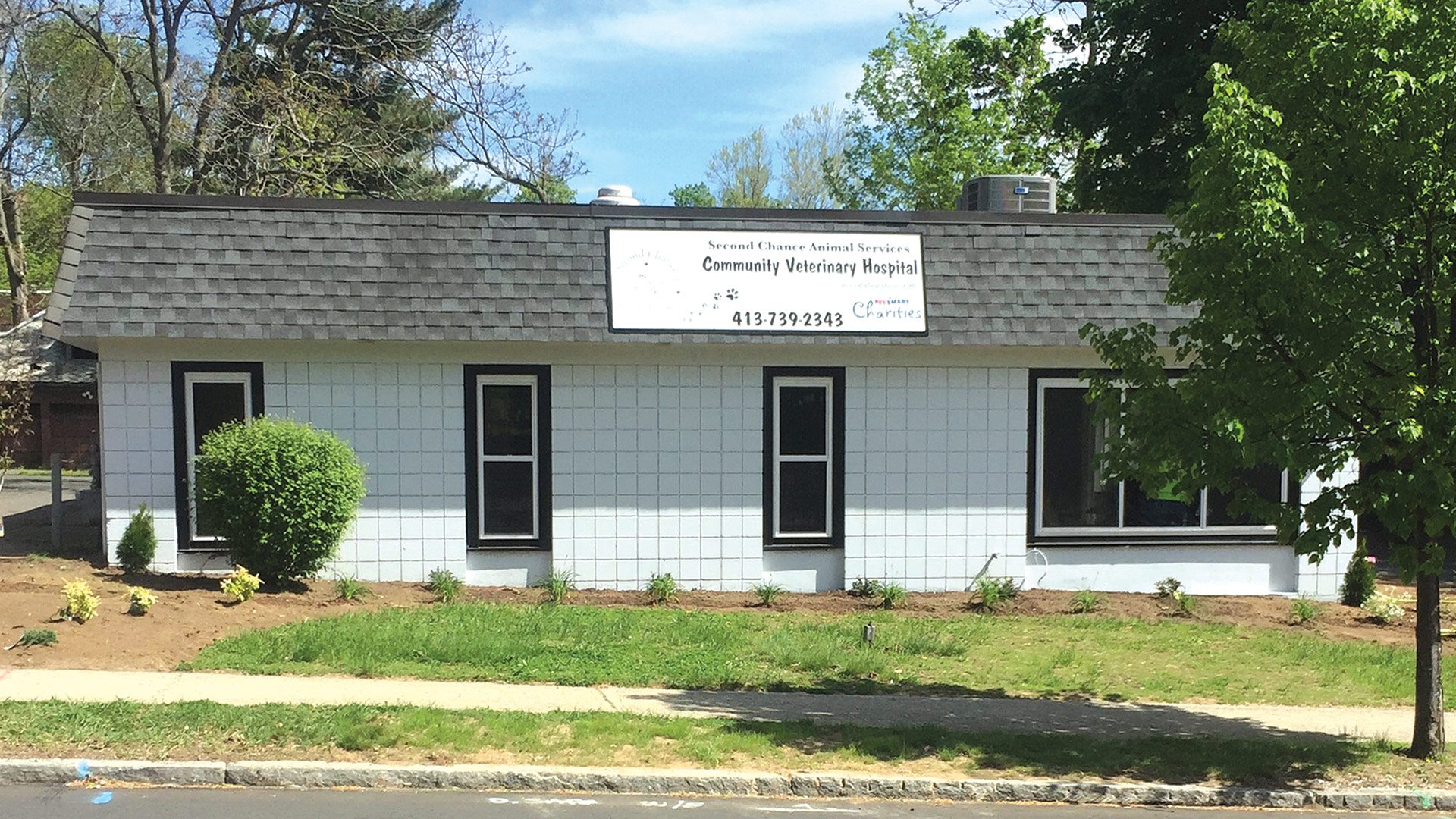
Second Chance’s Springfield location is one of its four community veterinary hospitals.

“There are times I’m like, ‘wow, this is amazing,’” Blancato said. “I’ll sometimes go in a hospital to meet with a manager or something, and I just watch what goes on in the lobby, and I listen. And I think, if I had helped 44,000 animals in my whole career, that would have been great. But to have that be a yearly thing is wonderful.”

For this issue’s focus on women in business, we visited one of those hospitals to sit down with Blancato to talk about the broad work of this nonprofit, why it’s so important, and why more people — and donors — need to know about it.


Bringing Home Buster

At least some of the credit for her long career in animal welfare goes to an escape artist named Buster.

That’s the puppy Blancato — then a single mother of three — adopted during her 20s, following a tough stretch in which her husband left and she battled cancer. And Buster was “ridiculous” at getting out of the yard. So Blancato got to know East Brookfield’s animal-control officer, and they became friends — and he eventually offered her a job as an animal-control assistant. He retired not long after, and she took over his role.

“ I think, if I had helped 44,000 animals in my whole career, that would have been great. But to have that be a yearly thing is wonderful.”

“Once I became an animal-control officer, I picked up a lot of strays that were never claimed. And the struggle I had was getting them homes, getting them medical care, all that stuff,” she recalled. “I worked with no-kill shelters, which were many in Massachusetts, and I would have to hold on to the dog for a few weeks. And I thought, ‘we need a resource here in this community.’”

As it turned out, a neighbor had a plot of land he wasn’t using, and when Blancato approached him, saying she’d like to start a shelter, and asking if he would donate the land, he agreed. By that time, she had adopted another dog, Dusty, who had been abused.

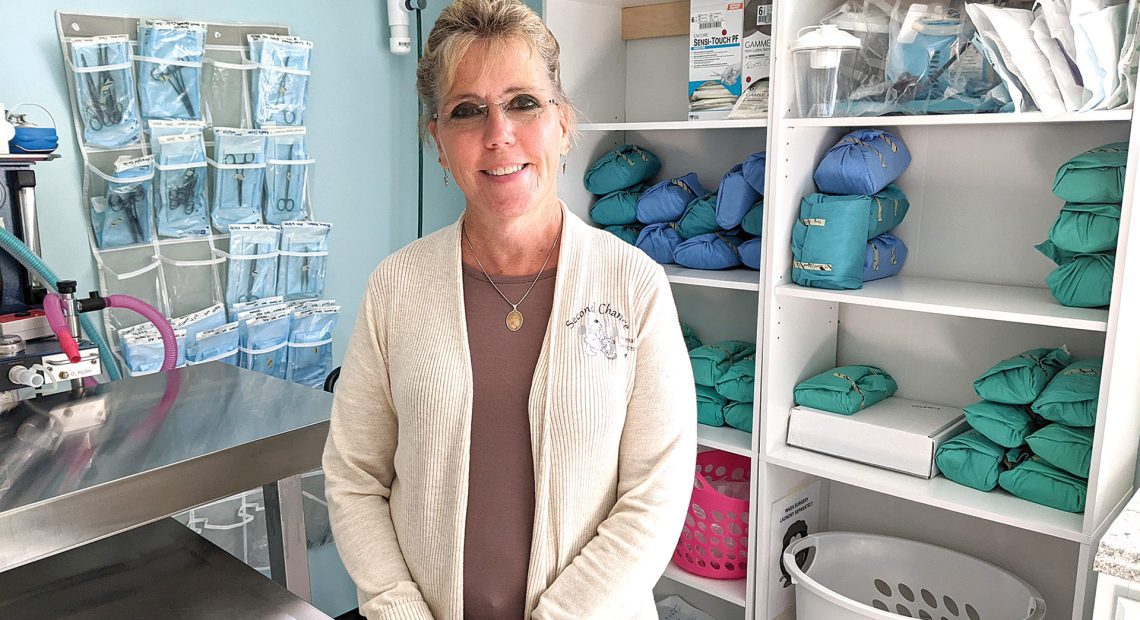
Lindsay Doray says Second Chance not only rescues animals

Lindsay Doray says Second Chance not only rescues animals, many from other parts of the country, but also provides services that allow owners to keep their pets and not have to surrender them in the first place.

“He was the reason this became really important to me, because if I didn’t take him in, what would have happened to this dog? So that was the real kickoff for Second Chance.”

So, while raising three children — and, by that time, two stepchildren — she took that $400, raised whatever else she could, and built the adoption center that still sits on the property today.

“The original intention, when I founded the organization, was that it was for helping homeless pets, but we quickly realized that a lot of animals were being surrendered simply because the people did not have the means to afford veterinary care — something catastrophic happened in their life or to the pet.”

The shelter was offering spay/neuter services and vaccines in the early years, but Blancato realized she could do more to keep pets and families together through expanded veterinary care. The first hospital was built in neighboring North Brookfield in 2010 and expanded to full-service care in 2013, and the other three hospitals followed, giving Second Chance a broad footprint across Central and Western Mass.

“We had to strategically place hospitals because not everybody could get to North Brookfield,” she explained. “We do about 1,500 to 1,700 adoptions a year, but the rest is veterinary — spay/neuter, vaccine clinics, all of our other programs and services.”

Those services also include:

• The Helping Hands outreach, which assisted 76 rescue sites, shelters, and municipal facilities in 2022, providing low-cost spay/neuter and vet care, while accepting homeless pets from other facilities;

• Project Good Dog, which matches behaviorally needy dogs with inmates in pre-release programs at local correctional institutions, providing 24/7 care and training for the dogs while teaching handlers patience, compassion, and responsibility;

• A pet-food pantry that served more than 7,600 pets in 2022, distributing dog and cat food to 25 local human food pantries — again, helping financially struggling families keep their pets;

• Mobile adoption, education, and vet-care events; and much more.

The low-cost veterinary care provided at the hospitals makes a huge difference, longtime Development Manager Lindsay Doray said.

Rescue program brings mobile vet services

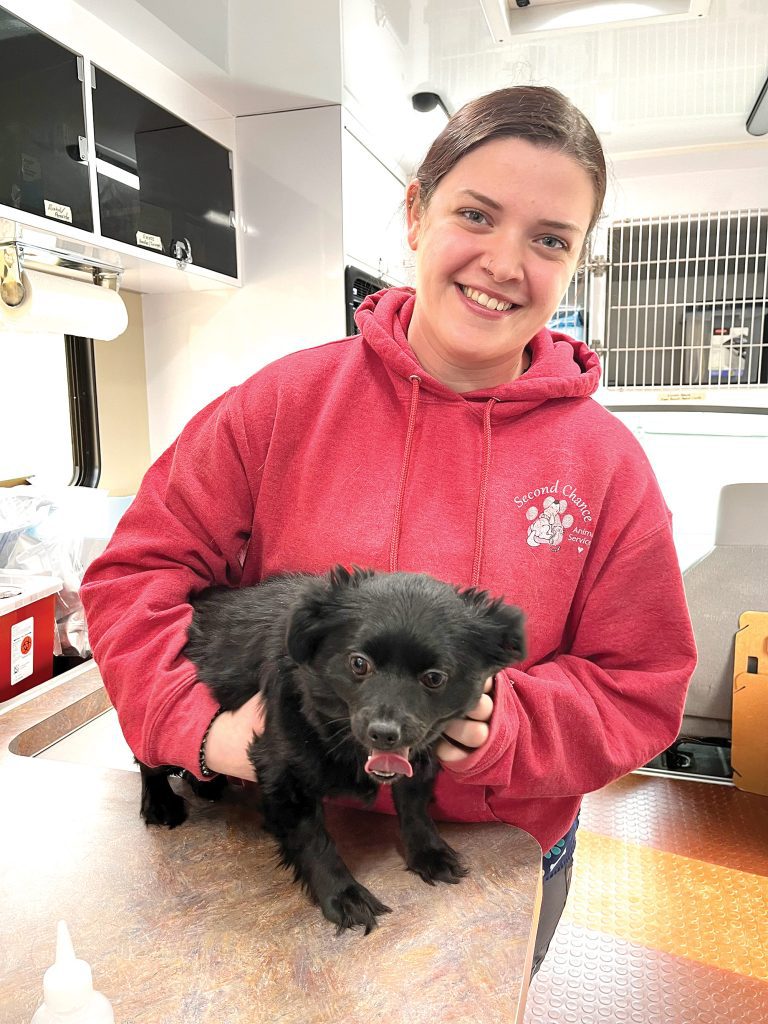
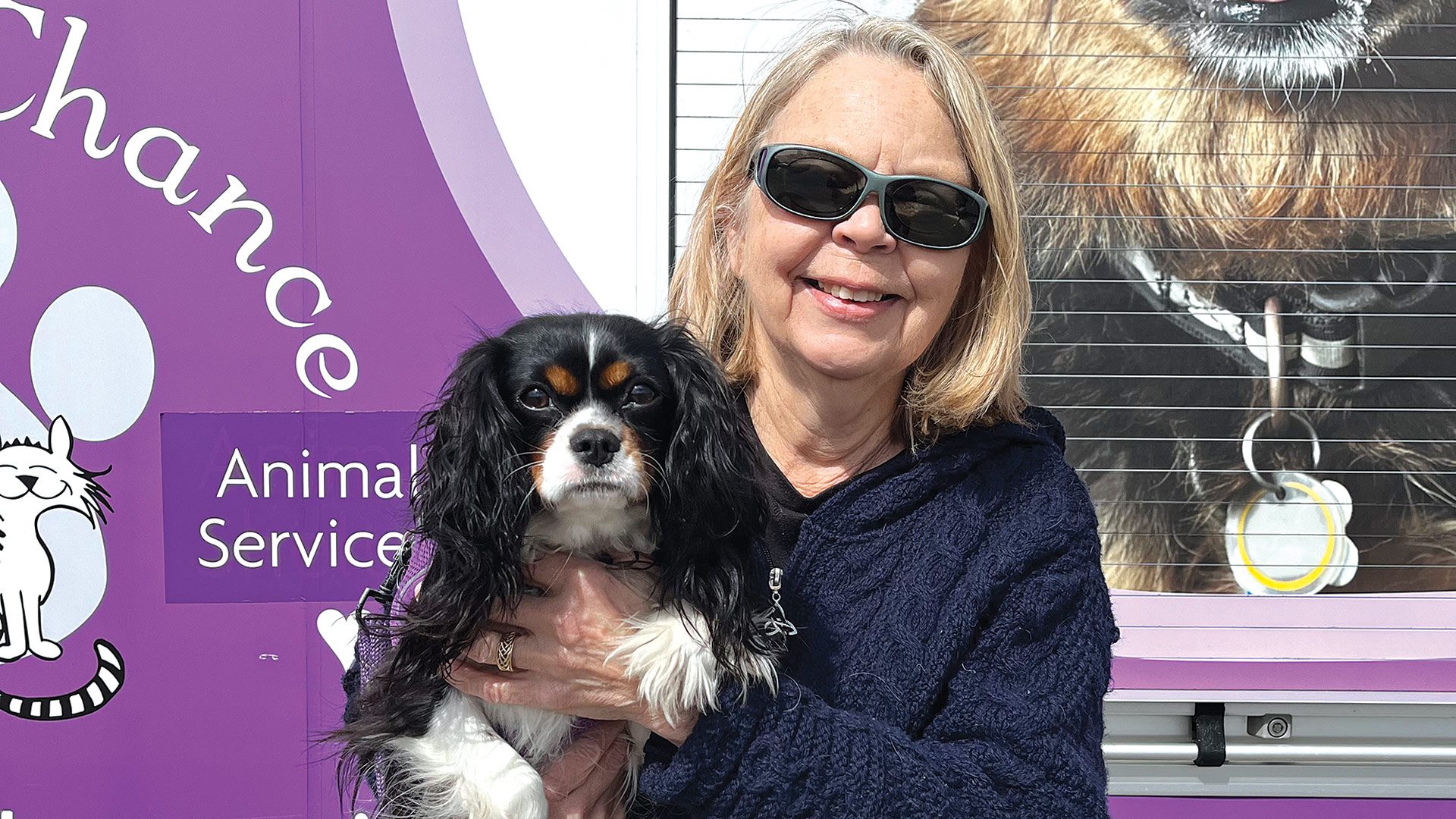
Second Chance’s Homebound to the Rescue program brings mobile vet services to seniors where they live.

“Prior to the services that we offer, people weren’t taking their pets to the vets yearly because they couldn’t afford to,” she noted. “Maybe they did the bare minimum and got the rabies vaccine, and that’s it. But when the animal became sick, either they would end up having to surrender the animal, or the animal would go without care.”

Blancato agreed that preventive care is critical.

“If you don’t get regular maintenance on your car, at some point, it breaks down, and then it’s very expensive. The same thing happens with animals,” she said. “A lot of people never go to the vet because of fear of the cost and everything involved. And once we get people in and they see that, ‘oh, this isn’t so bad,’ they understand that bringing them in yearly makes it a lot easier, and they can maintain the health of their pet for a lot less money.”

Second Chance’s services cost more than what clients can pay, so the nonprofit relies heavily on grants, donations, corporate sponsorships, and a few fundraising events each year to make up the difference and keep growing.

Even for adoptions, Doray said, “what we receive in adoption fees only covers about 50% of what we’ve put into the animal medically.”

At the same time, Second Chance is not short-changing its medical team, Blancato said.

“We have the highest quality of staff, and we pay at or above market standards because we want to attract veterinarians to us,” she said, noting that the U.S. is currently dealing with a shortage of between 7,000 and 10,000 veterinarians. Second Chance currently employs nine vets, but needs at least four more to keep up with demand.

“There’s a misnomer out there that, if you work for a nonprofit, we pay far less. And that hasn’t been true for many, many years,” she added. “We have to attract the same talent as any veterinary hospital; I’m competing for the same talent they are. I want the top talent here because I want the best of the care for the animals.”


Lending a Paw

Doray has worked with these animals — and families — long enough to understand the importance of what Second Chance does.

“I’ve had people say to me, ‘if people can’t afford an animal, they shouldn’t have one.’ And I say, ‘well, what about your 80-year-old grandmother who loses her husband, and she’s obviously not in the workforce anymore. You think she should have to give up her 15-year-old cat because now that she doesn’t have a spouse, there’s less money in the household?’ They say, ‘well, no, you can help those people.’

“Then I’m like, ‘OK, what about the woman who lost her husband at 45, and they’ve got three kids? Should they also have to give up the family dog because the husband’s gone and the mom now has to go back to work and she’s got three kids to support?’ ‘Well, no, you can help them.’

“‘So, what about a wheelchair-bound person whose dog or cat is their sole daily companion, and they’re not able to get anywhere? Should they have to give one up because they can’t physically work because of whatever injury or disability they have?’ And then they’re like, ‘oh, now I get it.’

“These are real-world situations that happen to people,” Doray continued. “Nobody expects to lose your spouse, but it happens, and you shouldn’t have to lose something else that you care about. Sometimes it’s a very temporary situation where you lose your job, and a year later, you’re back on your feet, and you’re able to pay the full veterinary cost.”

And many Second Chance clients do, indeed, pay full cost.

“Even for them, our rates are still very competitive,” Doray said. “But they also love our vets, and they support our mission, and they know that, by coming to us, they’re helping to subsidize the cost for somebody else, for the 80-year-old woman who just lost her husband and doesn’t want to lose her cat.”

Second Chance operates mobile vaccine clinics across the region.

Second Chance operates mobile vaccine clinics across the region.

Second Chance pushed through the pandemic like all nonprofits did, but those years set back the cause of animal homelessness nationwide by bringing adoption and spay/neuter programs to a temporary standstill.

“In 2019, we were so excited because euthanasia in this country had dropped to a point that I figured, within two years, we would be at zero. Then COVID hit, and it basically flatlined everything for two years,” Blancato said. “Now, we’ve got two to five years to get to zero, when we were so close.

“It’s heartbreaking for all of us in animal welfare, and I know it’s been devastating in the South, because they got used to not having to euthanize for space, and now they’ve had to go back to it. That’s why we want to get as many animals up here as we can and get them homes, and be able to take more.”

Blancato doesn’t envision working more than 10 more years, and said the organization has been structured — with a strong, dedicated team in place — to continue thriving long after that.

And it should — “because the need isn’t going to ever go away,” she said. “There’s always going to be a need to take care of animals, there are always going to be animals that find themselves homeless, there are always going to be people who need veterinary care. So this is very gratifying. But I didn’t do it alone.”

Special Coverage Wealth Management

Whether to Do So Depends on Several Factors

By Barbara Trombley, MBA, CPA

Should you pay off your mortgage early? This is a common question that financial planners get, and the answer is not always what you may be thinking.

According to the Federal Reserve Bank of St. Louis, historic mortgage rates peaked in 1981 at a 30-year fixed rate of 18.63%. Throughout the 1980s, the 30-year fixed rate steadily declined to a lofty 10%+ in 1990.

According to historical data provided by the U.S. Department of Housing and Urban Development, the average price of a house sold in 1980 was $76,400. Using these numbers and an online mortgage calculator, a $60,000 mortgage payment in 1980 would be $935 per month. This would have been an extraordinary burden for the average family. Paying off a mortgage as soon as financially possible would have been an excellent financial move at that time.

Fast-forward to our reality in the last few years. Those who were lucky enough to buy before the Federal Reserve started increasing interest rates after the pandemic were able to lock in historically low mortgage rates. It was not unheard of to get a 30-year, fixed-rate mortgage under 3%.

Barbara Trombley

Barbara Trombley

“You may need more money than you think in the future due to healthcare costs, inflation, family needs, etc., and if it is tied up as equity in your house, it may be difficult to access.”

Even if you didn’t purchase your house in the last few years, if your credit was good, you would have been able to refinance to get these terms. The same $60,000 mortgage in 1980, calculated at 3% interest, would result in a monthly payment of $253 versus $935 at 18.63% — a huge financial difference.

Low-rate mortgages should be considered good debt. Why is it called good debt, and what is bad debt? I would consider good debt to be a mortgage, car loan, and some student loans. These types of loans may increase your future net worth or help you achieve your goals. Most people do not have hundreds of thousands of dollars in the bank to purchase a house, so a mortgage is a great tool to achieve home ownership. Purchasing a car can be imperative to get to a job for many people. A small loan, when necessary, would be considered good debt.

The same argument would hold for student loans. Of course, we do not want students to be burdened by debt. But for many conscientious students, loans are the only way to achieve their academic dreams and set them up for a financially stable future.

Bad debt can derail your financial goals with high-interest rates. The main source of bad debt that comes to mind would be credit cards, especially when used for discretionary purchases. Credit cards have notoriously high interest rates, and many people are not good at managing the debt. If you are paying off your charges in full each month, then the interest rate does not come in to play. Other sources of bad debt would be many personal loans and payday loans. Payday loans can be extraordinarily damaging, with interest rates as high as 30%. These types of loans prey on economically disadvantaged people who need cash before their actual payday.


Assessing Your Needs

So, should you pay off your mortgage early? My personal point of view is that, if mortgage debt increases your net worth over time, and you are investing your funds elsewhere, it is good debt to have.

Paying off a mortgage early, for many people, would result in becoming ‘asset rich’ and ‘cash poor.’ I like to use the phrase ‘living in a piggy bank’ to describe having your money tied up in a primary home. You may need more money than you think in the future due to healthcare costs, inflation, family needs, etc., and if it is tied up as equity in your house, it may be difficult to access.

Also, many homeowners mistakenly think it is best to leave a debt-free house to their kids. In my experience, most ‘kids’ do not want their parents’ home or cannot afford the upkeep. Upon their parents’ death, they will sell the house quickly and pay off any mortgage on the property and keep the remaining proceeds.

If you have spent the last 30 years diligently paying your monthly mortgage and it is fully paid, that is something to be proud of. If you have purchased a property in the last 15 or 20 years, think carefully and weigh the pros and cons with a financial advisor before making a hasty decision.


Barbara Trombley is a financial planner with Wilbraham-based Trombley Associates Investment and Retirement Planning. Securities offered through LPL Financial. Member FINRA/SIPC. Advisory services offered through Trombley Associates, a registered investment advisor and separate entity from LPL Financial. This material was created for educational and informational purposes only and is not intended as ERISA, tax, legal, or investment advice. If you are seeking investment advice specific to your needs, such advice services must be obtained on your own, separate from this educational material.