Daily News

SPRINGFIELD — The Zoo in Forest Park will host its sixth annual Brew at the Zoo on Saturday, Aug. 3 from 1:30 to 5 p.m.

This 21+ event offers adults a unique way to enjoy the zoo with samples from more than 20 local breweries and home brewers, live music, food trucks, games, and a raffle, all while visiting with the animals at the zoo. Brew at the Zoo has become a fan favorite on the zoo’s event calendar, selling out each year. It is the zoo’s largest fundraiser, raising money for the daily care of more than 225 animals that live at the zoo year-round.

“We look forward to Brew at the Zoo all year,” said Sarah Tsitso, executive director of the Zoo in Forest Park. “This event raises much-needed funds that provide high-quality care for our animals, 365 days a year. The vast majority of our animal residents live here because they have been deemed non-releasable, for a variety of reasons, and thus would not survive on their own in the wild. It’s our job to take care of them.”

This work speaks directly to the zoo’s mission to inspire the community to respect and value the natural world through education, conservation, and rehabilitation.

A limited number of VIP tickets are available, which include extra time to sample the beer, as well as interactive animal encounters and keeper talks with members of the zoo’s animal-care and education teams. The VIP time slot runs from noon to 1:30 p.m.

The zoo will be closed to the public for this ticketed event on Aug. 3. Advance tickets are required, and all IDs will be checked at the door. No one under 21 will be admitted. For a list of participating breweries and to purchase tickets, visit www.forestparkzoo.org/brew.

Daily News

WILBRAHAM — The Sugar Chalet, Wilbraham’s newest bakery and cafe, will hold its grand opening on Saturday, July 20 at 10 a.m. at One Crane Park Dr.

Owner and head chef Allison Henry will offer an assortment of fine pastries and desserts. Her specialties include chocolate-chip cookies and housemade bagels. She also will offer breakfast sandwiches and other items, like focaccia pizza and salads. The Sugar Chalet has espresso drinks and milkshakes crafted with house-made frozen custard.

Henry will also offer cooking classes, including demonstrations for children and adults for cake decorating, cooking, and baking, and has a small room for private events. She does custom orders for specialty items on request.

“I feel very welcomed by the community and am excited to bring new desserts and experiences to the town of Wilbraham,” Henry said.

A classically trained chef, Henry graduated from the Institute of Culinary Education in New York in the spring of 2022 and is a 2021 graduate of the culinary program at Tantasqua High School in Sturbridge.

“Allison has dreamed of being a chef since she was 6 years old,” said Dawn Ruffini, Henry’s mother. “She started the Sugar Chalet in our family kitchen in the fall of 2022 and just took off from there. I’m really proud of her.”

Daily News

SPRINGFIELD — The Young Professional Society of Greater Springfield (YPS) will present its Third Thursday speed networking event with the Rally Cry tonight, July 18, from 5:30 to 7:30 p.m. at Table-n-Tap, 2039 Boston Road, Wilbraham.

YPS is hosting this networking event alongside Angel Rios of the Rally Cry in an effort to bring the community together at a new Wilbraham hotspot. The event will commence with open networking, then move to quick-round rotations. Each table will feature cards from the Rally Cry’s newest networking game, Enough Said, which serves up easy, thought-provoking questions to break the ice and make for memorable interactions throughout the evening.

Guests can purchase tickets for the event and find more information by clicking here. Tickets are free for YPS members and $10 for non-members, and will include light snacks and an automatic entry into winning a copy of Enough Said.

Daily News

NORTH ADAMS — Massachusetts College of Liberal Arts (MCLA) announced it has received its decennial accreditation from the New England Commission of Higher Education (NECHE).

NECHE is a voluntary, peer-based, non-governmental membership association that promotes educational excellence and quality assurance to its more than 200 members, all of which are degree-granting, post-secondary institutions. NECHE, through its membership, has established rigorous standards for accreditation to ensure quality, innovation, and student success across the evolving higher-education landscape. The commission consists of faculty and administrators from affiliated institutions, as well as public members who have no institutional affiliation.

MCLA submitted its 10-year accreditation report (self-study) in October 2023, documenting its work to provide a high-quality, affordable, public liberal-arts education. The content responds directly to the nine standards outlined by the commission for all institutions undergoing reaccreditation.

The self-study was the outcome of two years of careful, thoughtful work, with input from more than 70 members of the campus community. The study covered everything from MCLA’s mission and purpose to its academic program and student profile, to its physical plant and financial strength. In the self-study, MCLA described the ways in which it meets the standards, identifies areas of progress and improvement, and offers plans to continue moving the college forward in the next 10 years.

As part of the accreditation process, a NECHE team visited campus on Nov. 5-8, 2023. The college received a formal accreditation letter in May 2024.

In addition, MCLA continues to ascend in the U.S. News & World Report rankings in alignment with its mission, rising to be the top college for social mobility in the state, second in the country for public institutions, and 22nd nationally for liberal-arts colleges. MCLA ranks seventh on the list of top public liberal-arts colleges.

Construction Cover Story

Firm Foundation

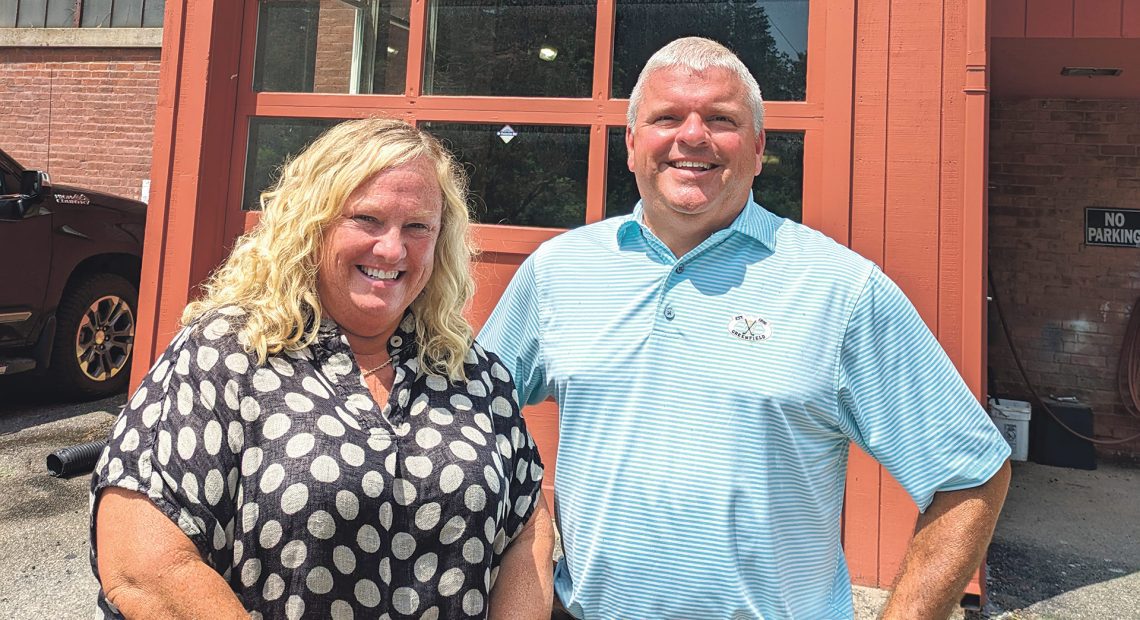
Co-owners Robyn Provost and Bob Provost

Co-owners Robyn Provost and Bob Provost


Marking 75 years in business is a significant milestone for any company, and when Mowry & Schmidt Inc. hit that mark in 2022, it was extra gratifying, simply because of how it had survived the worst of the pandemic.

“We stayed working; we’re that essential workforce,” said Bob Provost, the third-generation co-owner of this family business with his sister, Robyn Provost. “People trusted us, we practiced the proper protocol, and we went in and out of people’s houses and people’s businesses. We never stopped. It was tough, what was going on, but at the same time, we were fortunate because we were able to work; our guys were able to work.”

Greenfield-based Mowry & Schmidt was also able to ride a wave of home improvement that arose when people began spending more time at home, as well as working from home, a trend that has solidified into something more or less permanent.

“You hate to shout out the positives from something that was so horrible, but we were able to stay in business through the worst of it, then things picked up dramatically,” Robyn said. “And that hasn’t changed. We’re still seeing a lot of work out there, and we actually have the ability to pick and choose a little bit more, to figure out what’s the right fit. There’s always a job that’s not the right fit, and you have to recognize that and be able to admit that. But it was an interesting phenomenon that happened, how construction exploded for a lot of people — if they could make it through that initial wave.”

“You hate to shout out the positives from something that was so horrible, but we were able to stay in business through the worst of it, then things picked up dramatically.”

The pandemic years were only the latest cycle in the long history of Mowry & Schmidt, which has been doing residential, commercial, and industrial work since its inception.

“It has kind of evolved over the years,” Bob said. “Years ago, a big part of it was industrial. But a lot of the paper mills and machine shops closed down, so it bounced more to residential and commercial. Even 20 years ago, we still had some pretty substantial industrial contracts. And now it’s maybe one or two, some smaller machine shops.

“So I’d say our work base now is commercial and residential, and that it kind of fluctuates depending on the market. We used to say we were 70% commercial and 30% residential. Now we might be 60-40, or maybe even 50-50 at times.”

The firm has tackled a wide range of jobs, from large construction jobs to smaller renovations and repairs, throughout its history, a diversity of expertise that has served as a buffer against shifting trends and economic tides.

The dining room inside the Farm Table

The dining room inside the Farm Table in Bernardston, where Mowry & Schmidt performed significant work across the campus.

“We do new construction, renovations, additions, alterations,” Bob told BusinessWest. “We still do small projects, decks on homes, window replacements, door replacements, repairs. And then we do larger projects, whether it’s building a new bank, building a new restaurant, new home construction, large additions, prefabricated metal buildings as well.”

For this issue’s focus on construction, we talked at length with the Provost siblings about how their business has stayed remarkably stable over the years, and how they’re tackling today’s challenges — from higher costs to fierce competition to workforce issues — with an eye toward growing the firm further as it approaches the century mark in the decades ahead.


History in the Making

Mowry & Schmidt was founded by David Mowry and Albert Schmidt in Greenfield in 1947, quickly gaining loyal customers and the reputation for diverse expertise it touts today. In 1977, when the founders retired, Robert Provost (David’s son-in-law) and Georges Wetterwald purchased the company and continued to grow it. In 1990, Wetterwald retired, and Robert became the sole owner.

During the 1990s, Bob and Robyn Provost, the current owners, started working in the office — Robyn from outside the company and Bob from its job sites, where he had labored since the 1980s — to work with their father on estimating, project management, and other roles. When the elder Provost died in 2007, ownership was transferred to his wife, Marcia Mowry Provost, and today, the third generation of Bob and Robyn manage all the day-to-day operations, with the help of Bob’s wife, Jessica Provost.

“If they had their kitchen renovated, but then, 20 years later, they come back and ask you to do their deck and porch or their bathroom, I think that’s a big deal.”

“A big part of our success is repeat business, whether it’s residential, commercial, or a commercial project leading to residential work,” Bob said, noting that longtime customers run the gamut from Greenfield Savings Bank — one recent project is the restoration of Greenfield’s former library, the Leavitt-Hovey House, into a new facility for the bank — to educational facilities like Northfield Mount Hermon, Stoneleigh Burnham, and Deerfield Academy.

“One of our last large jobs was the VESH veterinary clinic in West Springfield,” Robyn added. “That was a good-sized project, and we hope to become a repeat customer and able to do more work for them.”

That job is one example of how Mowry & Schmidt continues to expand its footprint outside of Franklin County.

Mowry & Schmidt’s work for VESH in West Springfield

Mowry & Schmidt’s work for VESH in West Springfield is an example of seeking jobs outside its traditional Franklin County footprint.

“We’re not afraid of travel. We’ll go where the customer base is, and if it’s a repeat customer, I’ll go anywhere for them,” Bob said, adding quickly that other firms are doing the same these days.

“We’re competing against contractors up here that we haven’t had to in the past,” Robyn agreed. “And then, vice versa, we’re walking into places that we haven’t been all the time. It’s happening everywhere.”

And it’s happening at a time of flux and challenge in other ways in the construction world, one example being the impact of high prices, she added.

“Our costs are high, and we have to pass that on to the consumer, so consumers are facing construction costs that are substantially higher than what they maybe think they should be. So we need to explain that and get people to understand that this is the time we live in; these are the costs.”

The other major issue across the construction spectrum these days is workforce — specifically, finding enough people to do the available work, a situation that has caused many firms to turn down work they might otherwise procure.

“There’s a lot of work out there still in construction; even though the prices are high, people are paying it. There’s a demand, and that creates a demand on the workforce,” Robyn noted. “People are needed to work in all of the industries, whether they’re making the material, trucking the material, or actually installing it.”

Fortunately, Bob added, Mowry & Schmidt hasn’t seen significant employee turnover, with team members who have been on board for anywhere from five to more than 20 years.

“If they had their kitchen renovated, but then, 20 years later, they come back and ask you to do their deck and porch or their bathroom, I think that’s a big deal.”

“As for the new guys, it’s hard to find younger folks, but some of our newer folks come from other companies closing up, or a lone sole proprietor who has come to a point in their life where they don’t want to deal with the bills, the headaches, all the office crap; they just want to come in and work. That’s been a good avenue for us to find people to come in and work for us. We also have people who’ve retired from other industries, other types of work; they’ve put their 20-plus years in, and they’ve still got a lot to offer.”

Often, they’re offering those services to clients that have been loyal to Mowry & Schmidt for generations, Bob said. “We keep them because they know they can trust us, and we go in there and do their work, and we’re fair.”

More challenging, he added, is developing trust with new clients, but the firm can lean on its reputation over 77 years in business, as well as its recent performance.

“When the same individuals come back time after time to do projects in their house, I think that speaks volumes,” Robyn said. “If they had their kitchen renovated, but then, 20 years later, they come back and ask you to do their deck and porch or their bathroom, I think that’s a big deal.”

The key is honesty and open communication, Bob added. “Don’t get me wrong; in 77 years, we’ve made mistakes. It’s how you finish it out and correct those mistakes … it’s how you take care of them and make sure everything’s squared away at the end.”

The company was founded in Greenfield in 1947

The company was founded in Greenfield in 1947 and is still headquartered in the city today.

Valuing transparency extends to the firm’s expectations for its subcontractors, Robyn said.

“Our crew doesn’t do everything on a project. We do X amount of the work, but we have to rely on subcontractors, or we would not exist. And being able to find trustworthy, transparent subcontractors is something we’ve worked really hard at achieving. And we maintain those relationships as long as we possibly can. We know that’s an important part of being a general contractor because you have to rely on these people.”


Looking to the Future

Bob told BusinessWest he has twins — a son and daughter — who both work at the firm, but he doesn’t know whether they’ll eventually want to become part of a fourth generation of family ownership — and, besides, he and Robyn have a long way to go in that role.

“I’m still pretty young, and I can’t imagine doing anything else. So we’ll be doing it for a while,” he said. “Hopefully another generation comes along, which wouldn’t break my heart if it did. I’m a firm believer that this is a good place, and there’s always going to be a need for general contracting and construction. You just have to run it the right way and keep moving forward; that’s the key.”

Whether it’s construction and renovation, design-build projects, construction management, or even small repairs, there’s still plenty of work in Franklin County and beyond, he added.

“It feels great when you finish a veterinary clinic, but you also feel great when you know that you’ve helped somebody stay in their home by renovating their bathroom or putting up a ramp.”

“Those are good customers. Your local banks, your YMCAs — they’re strong, they’re local, and they’re good repeat business. You could have some people on the board at the YMCA, where you’re working, and next thing you know, you’re working at their house. Getting an opportunity to work for all these people and customers, it’s very rewarding.”

Robyn noted that the city of Greenfield will often call Mowry & Schmidt to tackle an urgent job for the Fire Department or Board of Health. “Unfortunately, things happen, and they need somebody local they can call at a moment’s notice, that can put together a crew and send them out.”

It’s a nimble trait, and an earned one, Bob said.

“That’s having a quality crew. You’ve got to have guys that aren’t looking at you cross-eyed when you take them out of finishing somebody’s beautiful kitchen and say, ‘come with me; we have to go board up a house.’”

Another niche has been helping elders in their homes, figuring out ways to keep them aging in place, Robyn added.

“The other thing is just being there when someone who we’ve worked for for 30 years needs a cabinet door adjusted, and they call, and we do it,” she added. “We’ll send somebody over there as soon as we can to get it done.

“I think if we weren’t able to adjust so quickly and do those small things, that would be tough for us because it makes you feel good about what you do. It feels great when you finish a veterinary clinic, but you also feel great when you know that you’ve helped somebody stay in their home by renovating their bathroom or putting up a ramp.”

It’s just one more way Mowry & Schmidt isn’t just staying busy — it’s making an impact, one customer at a time.

Features Special Coverage

Goal to Go

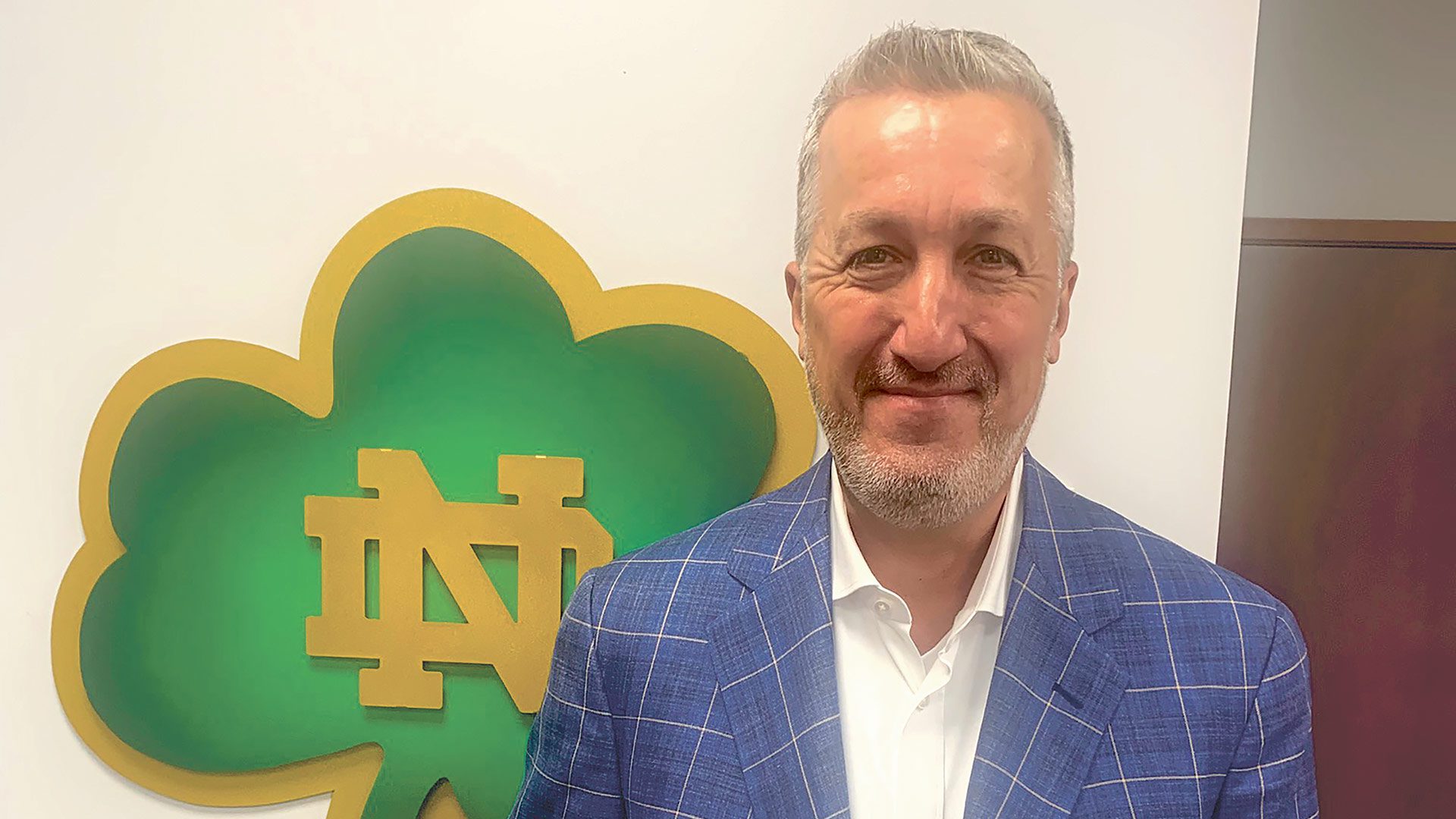
Peter Banko

Peter Banko

Peter Banko earned a bachelor’s degree at Notre Dame in the late ’80s.

And as with most people who attend that university, his connection to it — and its football team — remains quite strong, manifesting itself in many ways.

Indeed, his office on the sixth floor at 280 Chestnut St. boasts everything from signed photos of players from his era — including one of Pat Terrell, who famously broke up that two-point conversion in the so-called ‘Catholics vs. Convicts’ game against the University of Miami in 1988, Banko’s senior year — to a replica of the famous ‘Play Like a Champion Today’ sign that players smack as they exit the locker room. Meanwhile, he has season tickets and goes to most games in South Bend each fall.

But the connections to Notre Dame don’t end there, and they extend, coincidentally, to his eventual arrival at Baystate Health, where he took the helm as president and CEO on June 3.

As Banko tells the story, he was standing in line at the men’s room at Notre Dame Stadium during the game against USC last October when the person two ahead of him in that line, someone who places executives in healthcare systems, started talking about the top position being open at Baystate, and how he might want to think about pursuing it.

“In meeting with the board and others, what came across was a commitment to mission and community. The academic nature, but also the community nature of the system was very attractive.”

“He turned around and said, ‘hey … are you open to looking at something?’ I said ‘yes,’ and he said, ‘Baystate,’” Banko recalled. “I said, ‘in Springfield?’ and he said, ‘yeah.’” (More on this later.)

And then … well, there’s his commitment to taking the Notre Dame family’s philosophy, if you will, about taking care of one another — long after they’ve graduated or stopped playing football — to healthcare in general, and now to Baystate Health.

Baystate Medical Center

Peter Banko says these have been difficult times for Baystate Health and its flagship hospital, Baystate Medical Center, but the system’s goals are “within reach.”

“There’s a way that you’re indoctrinated, that you take care of each other,” he said, referring those who are called ‘Domers,’ a reference to the campus’s famous golden dome. “From a healthcare perspective, this is a people business, and we have to take care of the people who provide the care. That’s the business lesson learned — you take care of the people; the rest works itself out.”

Putting aside all the Notre Dame memories and connections for a moment, Banko said he came to Baystate because he was well aware of its strong reputation within the industry and wanted to be part of it.

“I’m also having fun again. Sometimes big is not great,” he said, adding that he wasn’t having much fun — or, at least, not as much as he used to — at Centura Health in Centennial, Colo. (which he served as president and CEO), which is part of the massive, $4 billion CommonSpirit Health system.

How much fun he has at Baystate will likely be a function of how well the system, which consists of four hospitals — Baystate Medical Center, Baystate Noble Hospital, Baystate Wing Hospital, and Baystate Franklin Medical Center — as well as several neighborhood clinics and other community-based services, fares with the many challenges facing all healthcare systems today.

“I heard someone say I’ve got the toughest job in town, and I said, ‘no, I’ve got the easiest job in town; I’ve got a great group of people.’”

These include workforce issues, which started before COVID and were amplified by the pandemic; inadequate reimbursements from public payers; and, in general, maintaining a healthy bottom line.

Perhaps the biggest of those challenges is building and maintaining a workforce, he said, adding that a number of factors, from retiring Baby Boomers to COVID-induced burnout that prompted many to leave the industry, are conspiring against healthcare providers on this front.

“We’re facing all the demographics — people are retiring, and there aren’t people replacing them,” he said, adding that Baystate’s status as a teaching hospital will likely be an advantage as it confronts these workforce issues moving forward.

As for financial challenges, he takes over a health system that experienced an operating loss of $178 million in FY 2022, lost $63 million on operations in FY 23, and saw operating losses carry over into FY 24. Nonetheless, Banko sees light at the end of this tunnel.

Peter Banko says workforce issues are the biggest challenge

Peter Banko says workforce issues are the biggest challenge facing Baystate Health, and all healthcare providers, today.

“We’re poised and in a good situation, even though we’ve had a couple of rough years,” he went on. “Folks have said, ‘yeah, it’s been really rough here. I said, ‘well, if it was too rough, I wouldn’t have come.’ We’re poised to do some really good stuff.”

Overall, he said his primary goal is to build on the solid foundation put down his predecessor, Dr. Mark Keroack, and take full advantage of the system’s many assets, especially its core of physicians and clinicians.

“As I told the board then and I keep telling people now, I can move mountains with the group of physicians we have here,” he told BusinessWest. “We can do anything.”

For this issue, we talked at length with Banko about healthcare, the challenges facing the industry, his plans for meeting them head on, and, yes, Notre Dame football and all those connections to his alma mater.


His Chosen Field

Banko calls it his “week of fame.”

It came in 2006, when he was serving as administrator of the CHRISTUS Spohn Health System in Corpus Christi, Texas, and it started when he got a phone call alerting him that Vice President Dick Cheney had been shot while quail hunting and had been taken to what was known then as Corpus Christi Memorial Hospital, part of the system. Upon arrival, Banko found out that wasn’t the case, and also that, while no one was saying it out loud, let alone officially, it seemed that Cheney had likely shot the person who was in his hospital.

“I did a few interviews with national news outlets that evening on the phone, and I came in the next day at 6:30, and every news outlet on the planet was parked outside the hospital,” he recalled. “I did all the press conferences every day; I had a direct line to the White House.”

And what he remembers as much as those press briefings and his hotline to 1600 Pennsylvania Ave. is how his doctors eventually solved the mystery surrounding the victim’s heart-attack-like reaction to the shooting.

“We couldn’t figure out what it was,” he recalled. “We had doctors in from three major teaching hospitals and the White House. I was in the cath lab with seven cardiologists and three heart surgeons on our side, and one of our docs found an obscure article about a Vietnam vet who had shrapnel in his heart, and years later he had the same symptoms. So they treated him based on that one article.”

The rest of Banko’s career has brought considerably less fame, if you will, but myriad rewards and rich learning experiences. And except for one very brief stint in the private sector, as he called it, he’s spent that career in healthcare administration.

He actually got his start in healthcare as a junior volunteer in his home state of New Jersey while attending Notre Dame. His specific assignment was patient transport, which enabled him to meet hundreds of people and compile a large portfolio of stories.

“I had a lot of great conversations, and I learned a lot,” he said, adding that the administrator of the hospital — a Notre Dame football fan — told him he a knack for health leadership.

“Being an academic center has put us in a better position. We can more easily work with the universities and colleges, we can partner more, and we have that academic setting where we can train and keep our own, which puts us in a unique position.”

“I said, ‘I don’t even know what you do,’” he recalled. “She spent a few hours with me and encouraged me down a path. So, other than one week working in a supermarket as a porter, I’ve never worked anywhere other than a hospital or physician group or health plan.”

After earning his bachelor of business administration degree at Notre Dame and his master of health administration degree from the Sloan Program in Health Services Administration at Cornell, where they take their football far less seriously, he worked in a succession of jobs in healthcare administration, starting at Saint Clare’s Health Services in Denville, N.J. Later, there were stints as president and CEO of CHI St. Vincent in Little Rock, Ark.; and at CHRISTUS Spohn in Texas.

With CommonSpirit Health, he spent nearly two decades in various capacities, including vice president of Southeast Operations and national chief integration officer, before becoming president and CEO of Centura Health, with facilities, including 20 hospitals, across Colorado, Kansas, and Utah.

“I was at CommonSpirit for 17 years, and I was ready for a refresh and a chance to do something different,” he said.

Which brings us to that encounter with the executive recruiter in the men’s room at Notre Dame Stadium.


New Team Leader

Banko said he was late, as in very late, to the game when it came to Baystate’s search for a successor for Keroack, but, with some additional encouragement from his executive coach, who once worked in the Baystate system and told him he needed to look into this opportunity, he hustled and became part of a large field of candidates. As noted earlier, he said he was familiar with the organization and its strong reputation within the industry.

“And in meeting with the board and others, what came across was a commitment to mission and community,” he told BusinessWest. “The academic nature, but also the community nature of the system was very attractive.”

He persevered through several rounds of interviews, including a lengthy discussion with the board about his vision for the system, and was chosen by the search committee in March.

Summarizing that vision, he said there are several components to it, everything from honoring a mission and legacy that dates back to 1883 to having a “more physician- and clinical-centered system”; from achieving growth and operating at scale to having a healthy balance sheet.

“We want to use our physicians and other clinicians to drive our strategy and what we do going forward,” he explained. “One of the things that impressed me being here and interviewing is that our cadre of physicians is one of the best I’ve seen in the country in terms of training, expertise, skills, and leadership.”

As for the bottom line, that balance sheet, he said COVID and its after-effects have obviously taken a toll on this and every other healthcare system across the country.

“But it’s all within reach,” Banko added. “Financially, our future is easily within our reach; it’s nothing that’s not attainable. I heard someone say I’ve got the toughest job in town, and I said, ‘no, I’ve got the easiest job in town; I’ve got a great group of people.’

“COVID wasn’t great, and the recovery afterwards has been worse, almost,” he went on. “We’re not facing any problems anybody else isn’t dealing with nationally — some more, some less — but I feel our future is attainable and within our grasp; we just have to go for it.”

Elaborating, he noted that, while all healthcare systems are facing the same issues and challenges, the solutions are local.

“The problems are generally the same … the solutions and how you work at them are very locally contextual,” he elaborated. “Workforce challenges in Boston are different than the ones we face here, but we both have them, and our solutions are not the same as what our colleagues in Boston are doing.”

As for those workforce issues he mentioned earlier, he said Baystate Health does have some advantages as it works to attract and retain talent, including its status as a teaching hospital, but also its location and comparatively lower cost of living.

“Being an academic center has put us in a better position,” he explained. “We can more easily work with the universities and colleges, we can partner more, and we have that academic setting where we can train and keep our own, which puts us in a unique position.

“Plus, this is a great area,” he went on. “It’s affordable, you can raise a family here, and that’s not true of a lot of places around the country.”

One of the keys to success with workforce moving forward is taking care of people, which includes the wages paid, but certainly doesn’t end there, he told BusinessWest.

“My view is that, if you take care of people and help them produce a good product, then growth and profitability will take care of themselves,” he said. “That’s where we have to start; we need to make sure that people want to work here and that we’re a workplace of choice and that we’re delivering a quality product for our community.”

Since arriving at Baystate, Banko says he’s been on a listening tour, one involving both internal and external constituencies, which will continue for the next several months.

What he hears, what he learns, and what he shares will all be part of a report to the board on his first 100 days at the helm, one that will update and likely add new layers of specificity to that vision he has for where this system can go in the years and decades to come — and how to get there.


Passing Thoughts

Getting back to those season tickets Banko has had since 2017 … there are four of them for each game, and he likes to share the wealth. And that includes work colleagues.

Which means some of his new team members will be journeying to South Bend in the autumns to come as the Irish pursue their first national championship since … well, Banko’s senior year.

They’ll also be contributing to another journey, one in which they’ll help write the next chapters in the history of this institution — a game with much higher stakes, and one for which he believes the winning formula is already in place.

As they say in football, it’s a matter of execution — and that will be a big part of Banko’s new job.


Banking and Financial Services Special Coverage

Lending Perspective

President and CEO Tony Worden

President and CEO Tony Worden

Tony Worden has worked at several banks in his career, of various types and sizes, but there’s something about a small community bank that … well, just suits him.

For starters, “there’s less pressure,” said Worden, president and CEO of Greenfield Cooperative Bank (GCB). “I mean, we certainly have to grow, and we have to make money, but there’s less emphasis on that and more emphasis on relationships. I’m not trying to pat us on the back because I know Florence is like this, bankESB is like this, Greenfield Savings, too — we all need to make money, we need to grow, but we also get how important we are to the communities that we serve.

“There are loans we make that, at a previous bank, we never would have made,” he went on. “They just would have said, ‘no, we’re not doing that.’ But community banks find ways to stretch to get people’s mortgages done, and even on commercial loans. As a community bank, we have to think about how we’re serving our community, and bigger banks worry less about that. It’s easier for them to turn loans down because they’re not as involved.”

Worden knows a lot about commercial lending after working in that realm for the vast majority of his career before former GCB President and CEO Michael Tucker persuaded him, in 2019, to pursue that role as Tucker prepared to retire. Worden knew he’d have a steep learning curve in areas ranging from finance to IT to human resources — but he embraced the challenge.

“My thought was, someday, if I play my cards right, maybe I’ll get a chance to be the senior lender somewhere. And I got to be that here. It was not part of my grand plan to be president.”

“A lot of people get into this business, and their dream or goal is to become president of a bank. But I never really thought about that. My thought was, someday, if I play my cards right, maybe I’ll get a chance to be the senior lender somewhere. And I got to be that here,” he said. “It was not part of my grand plan to be president.”

But Tucker was convinced Worden was the right candidate to put forth internally, and the board eventually chose him over two external candidates. Worden, a longtime senior commercial loan officer, initially worked alongside Tucker as chief operating officer through 2020, then took over as president at the start of 2021; Tucker stayed in the CEO role until the start of 2022, when he retired and passed that mantle to Worden as well.

The long transition period working alongside Tucker turned out to be a blessing in more than one way. Not only was Worden learning the ins and outs of a much broader job than his previous career in commercial lending, but the emergence of the pandemic threw a major wrench into the banking world.

“The transition got stunted a little by the pandemic,” he recalled. “Obviously, I was excited when I accepted the job, and we knew COVID was a thing that was happening, but no one knew exactly what it was going to do. And literally within a week, my excitement ended because it was, ‘OK, now we have survive this.’”

Greenfield headquarters

While nine of its 10 branches are in Franklin and Hampshire counties, including its Greenfield headquarters (pictured), GCB has been making inroads into Hampden County as well.

Worden said bank leaders will be telling stories for decades about the adventure of PPP loans and everything else they had to do to help customers navigate that whitewater, but they are gratifying stories to tell.

“It’s amazing, in hindsight, to think about what all the banks accomplished. There were certainly technological hurdles because the SBA was not set up to be doing this volume.”

But in the years that followed, Worden has become accustomed to many other challenges, from a shifting rate environment — and its impact on lending — to the continued evolution of digital banking platforms, to Greenfield Co-op’s own growth trajectory.

“As a community bank, we have a responsibility to serve our customers’ needs as fully as we possibly can,” he told BusinessWest. “So we all stretch a little bit more to get loans done, to get projects done.”


Steady Growth

Greenfield Cooperative Bank has grown in numerous ways over the past decade, most notably by merging with Northampton Cooperative Bank in 2015, which increased its branch total from five to nine; a tenth branch opened in South Hadley in 2020, the first outside of Franklin or Hampshire county.

At the time of the merger, Greenfield Co-op boasted roughly $350 million in assets, and Northampton brought roughly $150 million, to create a $500 million bank.

“Right now, we’re just under $800 million in total,” Worden said. “So, in a decade, we’ve had about $300 million worth of growth, which, obviously, for a bigger bank or a publicly traded bank, wouldn’t be acceptable. But we don’t have stockholders, so we can grow sensibly.”

“The real growth, from a demographic perspective, is in Hampden County. And with all the mergers and acquisitions, there are fewer banks in Hampden County than there used to be.”

That said, he views Hampden County as a big part of GCB’s future, and the South Hadley branch as a jumping-off point to do more business in that region. In fact, many of the bank’s lenders have worked at Springfield-area institutions in the past and have maintained relationships there.

“If you look at the demographics, Hampden County is growing. Franklin County is not; it’s actually retracting. Hampshire County’s growing a little bit, but the real growth, from a demographic perspective, is in Hampden County. And with all the mergers and acquisitions, there are fewer banks in Hampden County than there used to be.

“So we see opportunity,” he went on. “We’ve had some success on the commercial side, and this past winter, we hired a mortgage originator from a local competitor who’s based out of Holyoke and knows that market, and we’re making a push to start doing some residential mortgages in all of Hampden County. But our focus right now is Holyoke, Chicopee, and Springfield because we feel like we can handle that through a branch in South Hadley, which isn’t technically in Hampden County, but it’s not that far away. So we’re taking tentative steps to be more of a presence down there.”

Greenfield Cooperative Bank

Greenfield Cooperative Bank partners with many community organizations, such as Montague Public Libraries (pictured) for programs like its bilingual children’s music and movement program.

That said, when Worden joined the commercial lending team at GCB 15 years ago, the bank had $29 million in commercial loans; that number is now $260 million, and the bank employs more lenders, credit analysts, and administrative staff.

“But we’ve also seen some significant payoffs of our loans — not because they’ve gone and refinanced somewhere else, but because they sold their properties when the market got so hot,” he noted.

At the same time, “I think the rising rate environment has made people shyer about going out and pursuing things because, again, no one wants to finance something at the top of the market and have the rates start to go down the day after they do it. So I think what we’ve seen is people kind of sitting and waiting: ‘is the economy going to tank or not?’

“As time has gone on, I think more people are buying into this idea that there could be a soft landing,” he went on. “But I think it would help to see the rates drop because I think that would get people active again. There’s a lot of wait and see at this point.”

That said, a large swath of the customer base never lived through really high rates.

“When I first started, I was a junior commercial credit analyst at Vermont National Bank up in Brattleboro,” Worden said. “And people were saying, ‘you know, if prime would just get down to 10%, that would be perfect.’ And then we were so low for so long that people started to think that was normal.”

He recently watched a recording of a Red Sox game from the 1980s, complete with commercials, and one in particular made him laugh. “It was a car commercial, and it said, ‘low, 11.99% financing for well-qualified buyers.’ Today, people would see that, and their heads would explode.”

Historical perspective isn’t the only thing separating younger from older bank customers — they have different banking habits as well, as Millennials and Gen Z grew up with technolology and are more apt to eschew physical branches.

“They go in as little as possible. They want to do as much remotely and through their phone as they possibly can,” Worden said. “That’s a new reality, making sure we have the technology and the channels for them to bank the way they want to bank.”

But there will always be a need for a physical presence and face-to-face interactions, he added, which is why banks continue to expand geographically.

“For a decade or so before the pandemic, if you went to any banking-industry events, they said, ‘get rid of your branches, get rid of the bricks and mortar; they’re expensive. The fintechs are eating your lunch because they don’t have those costs. They’re not paying real-estate taxes. They’re not paying for AC. They’re not paying for the lights.’ But now, we’re hearing, ‘lean into your branch network because that’s your advantage over the fintechs. The fintechs wish they had a building on the corner that people could walk into.’

“If everything is going well for you as a customer, maybe you don’t need to talk to somebody face-to-face. But as soon as something goes sideways, it’s nice to know you can walk into a building and talk to somebody face-to-face and deal with them,” he went on. “We, as a bank and as an industry, have to do a better job explaining to people what the value is of having someone local working with you.”


Different Kind of Dream

That local face and relationship banking may be even more important at a time when mergers are creating ever-larger institutions — and fewer of them, Worden noted.

“Some people say to me, ‘you must be happy when you see these bank mergers because it’s one less piece of competition for you.’ But no — I think it’s a shame that local options are going away.

At a Massachusetts Bankers Assoc. meeting he attended last fall, attendees were told there are half as many banks in Massachusetts as there were 20 years ago, and it’s estimated that, over the next decade, that figure could be halved again. “I left there thinking, ‘we have to focus on what it will take for us to make sure we’re one of those banks that survive.”

But it’s a challenge he’ll enjoy, even though it’s not one he dreamed about taking on earlier in his career.

“When it was announced that I got this job, people would come up to me and say, ‘you got your dream job.’ And I’d say, ‘no, actually, I gave up my dream job for this job.’ If someone offers you the chance to be the president of a bank, you take the job. But what’s been fun is focusing on other parts of the bank than commercial lending.”

One of those is philanthropy, and Worden appreciates being in a place where community giving decisions are made locally, rather than regionally or nationally, as is the case at larger banks.

“The decisions we make about where we’re going to give our money happen right here in this building, for the most part,” he noted. “We certainly upped our giving during COVID, and then we never went back down to the historical level — not that it was low before.”

Overall, Worden said, GCB is a relatively uncomplicated bank to run. “We’re very vanilla. I think my senior staff gets sick of hearing me say that, but I say it as a good thing. We’re not in all kinds of weird things. We stick to what we know how to do, and we do them well.”

While Greenfield Co-op isn’t among the region’s largest banks in terms of assets, it’s well on its way to $1 billion, and Worden is looking forward to that milestone.

“Things will change a little bit; there’s more regulation,” he told BusinessWest. “But it’s gratifying to see the growth and to know I played a small part in that. A lot of the reason for the success was Mike Tucker. He did a great job for 20 years; he got the ball rolling. I’m just trying to keep the thing moving down the road.”

Commercial Real Estate Special Coverage

A Matter of Speculation

‘What happens now?’

That’s the question that was on the minds of many as Hampshire Mall was sold at a foreclosure auction last month — to the company that holds the mortgage on the property, and for far less than half its assessed value.

Actually, people have been asking that question for a while now, as the fate of the mall becomes less clear after years of struggle, even after its former owner, Pyramid Management Group (which also owns Holyoke Mall), started doing the things malls are supposed to do in these changing times, especially shifting gears and devoting far more square footage to entertainment-related venues — everything from a large gym to escape rooms to taekwondo.

Apparently, all that simply wasn’t enough, said John Benoit, a principal (with his two brothers) of Vantage Point Retail in Longmeadow, which leases and sells retail properties and finds locations for a few national chains, such as Five Guys, Advance Auto Parts, and 99 Restaurant.

“Zoning is complicated, to say the least, and sometimes, when people hear about an effort and there’s a lack of specificity surrounding it, they can draw conclusions that are not appropriate.”

He noted that Hampshire Mall, located near the Amherst line in Hadley on busy Route 9, is just one of many malls across the U.S. that are suffering and destined for new life; others in this region include Eastfield Mall, which has already been demolished, to be replaced by a large power center, and Enfield Square, which is also awaiting its fate. Meanwhile, the retail sector itself is a state of flux.

John Benoit

John Benoit says Route 9 is a retail destination, but he wonders how much more retail can come to that busy thoroughfare.

“Retail has been undergoing change for a long time, and I don’t know if it’s settled,” Benoit told BusinessWest. “There was a time when online was a new world in retail and the discussion in the trade journals and at the trade association meetings going back 10 to 15 years was about whether brick-and-mortar locations would go away — would people just do business online?”

What has emerged, he went on, is the concept of multi-channel retail that includes online as well as bricks-and-mortar elements, with some consumers using one or the other for research, buying, returns, or some combination of the above.

“It changes every year,” he added. “Some of the statements I just made … I don’t even know if they’re current.”

Nothing is expected to happen at Hampshire Mall for a while, as the new owner, Deutsche Bank Trust Co. Americas and Wells Fargo Commercial Mortgage Securities Inc., which, as noted, held the mortgage on the property, figures out what it wants to do. The bank foreclosed on the mall after Pyramid defaulted on its mortgage.

Shardool Parmar, a more-than-interested observer at the auction — that’s because the Pioneer Valley Hotel Group, which he serves as president, owns three hotels on Route 9 in Hadley and is building a fourth — said it will likely be years before the fate of the property is known.

“It’s a big unknown what will happen to the mall property,” he said. “That’s because it’s difficult to say what the future market will be when it comes to whether this will remain retail or become residential. There are a lot of unknowns.”

The most obvious future uses are more (and perhaps different) retail — because of the emergence of the Route 9 retail corridor as one of the strongest, if not the strongest, in the region, rivaled perhaps only by Memorial Drive in Chicopee, said Benoit — and housing, mostly because of the size of the parcel and the huge need for more housing in that region.

But both of those options come with question marks. Indeed, while Route 9 is a retail hub, there are vacancies — actually, several of them — along that corridor, Parmar said. Meanwhile, Benoit added, while successful retail and especially grocery stores (and there are lot of them on this corridor) attract more retail, most of the major players, from Walmart to Home Depot, are already there.

“They did what people said what malls could do and should do, and they did it early — and that’s entertainment, as compared to shopping. They had the shopping, but they also had an entertainment component.”

As for housing, a zone change would be required, said Hadley Select Board member Molly Keegan, noting that the town will likely pursue creation of what’s known as a 40R, otherwise known as a smart growth zoning overlay district, which, according to the state’s website, “seeks to substantially increase the supply of housing, and decrease its cost, by increasing the amount of land zoned for dense housing.”

“The Planning Board has been working with the Pioneer Valley Planning Commission on researching and potentially bringing a zoning change to town meeting in either the spring or fall of 2025 that would allow for additional types of development, specifically using Chapter 40R,” Keegan explained, noting that the intent of 40R is to encourage municipalities to create dense housing or mixed-use zoning districts.

Such a proposal would require educating town residents about just what such a zone is for and what could happen if one becomes reality on that corridor, she noted, adding that, if a vote comes to fruition, it will Hadley’s first attempt at creating a 40R.

Molly Keegan

Molly Keegan says information and education will be the keys to passing a needed zone change to permit dense housing at the Hampshire Mall site.

“There’s an awful lot of education that needs to go along with this,” Keegan said. “Zoning is complicated, to say the least, and sometimes, when people hear about an effort and there’s a lack of specificity surrounding it, they can draw conclusions that are not appropriate. So the most important thing the town can do right now is educate.”

For this issue and its focus on commercial real estate, we take an in-depth look at Hampshire Mall and what might come next for this retail and cultural landmark.


Landmark Decisions

Hampshire Mall is one of the several area spots that gets some exposure in the recently released Janet Planet, a coming-of-age movie set in Western Mass. in the early ’90s.

In a recent Boston Globe article intended to help readers understand just what ‘Western Mass.’ is — and how the movie helps explain that geography — it is noted that the mall became a solid locale for the movie because … well, with a JCPenney and a rollerskating rink, it looks the part of an early-’90s mall.

In the larger scheme of things, that’s probably not a good look, even though, as noted earlier, the mall has made some significant changes in recent years to make it more viable, especially that shift to more entertainment-related venues. Indeed, in most respects, it doesn’t look like an early-’90s mall, with tenants that include FunHub Action Park, All In Adventures, LaserBlast Ancient Adventure, Planet Fitness, and PiNZ, a bowling alley.

“They did what people said what malls could do and should do, and they did it early — and that’s entertainment, as compared to shopping,” he explained. “They had the shopping, but they also had an entertainment component.”

This shift helped, but it certainly hasn’t stemmed the mall’s decline, said Benoit, theorizing that habits changed during the pandemic — people didn’t want to be indoors around a lot of other people — and they haven’t really changed back.

This reality, coupled with the many changes in retail — and the proliferation of other retail on Route 9 — conspired to all but seal the fate of Hampshire Mall, he noted, adding that similar stories have been written at malls around the country. The ones changing the narrative for the better have embraced reinvention.

“Malls are really struggling, and that struggle didn’t just start — it’s been going on a long time,” Benoit said, emphasizing that word ‘long.’ “Malls are big, complicated financial and physical arrangements.”

Using Eastfield as an example, he said talks about converting it to a large power center with a housing component have been going on for at least 15 years, by his count. Advancing those plans have been complicated by everything from the Great Recession to the pandemic; from ownership of some footprints by the anchors themselves, which slows and adds more layers of complexity to the equation, to the fate of existing tenants.

“The more information people have, and the earlier they have it and have time to ask questions and digest it, the better they’ll understand what they’re voting on what they get to town meeting.”

That question of what might come next at Hampshire became an assignment — “Reimagining the Hampshire Mall: Exploring Opportunities for Intergenerational Housing and Community Development” — for 40 juniors in the architecture and landscape architecture programs at UMass Amherst.

Teams of five students presented different concepts for the mall property. Each one included 350 to 700 new housing units, designed for young professionals, working families, and seniors; site amenities for residents and visitors; parking for tenants and shoppers alike; and some portions of the existing mall. Many of those elements are likely to be included in whatever the mall becomes next, said those we spoke with.

Getting back to a possible 40R zone at the Hampshire Mall site, Keegan said the Planning Board has formed a smart-growth subcommitee that is specifically working on the next steps in the process of creating such a zone. Informational sessions will be scheduled to help inform the public of what is involved and what it means for the community moving forward.

“The more information people have, and the earlier they have it and have time to ask questions and digest it, the better they’ll understand what they’re voting on what they get to town meeting,” she added, noting that, while there is a recognized need for more housing in the community, 40R and its emphasis on dense housing is a new concept for Hadley.

What certainly isn’t a new concept is retail on Route 9. With five colleges only a few miles away and several smaller communities without their own retail centers, the stretch between the Coolidge Bridge and the center of Amherst has been a retail destination for more than 50 years now, one that has consistently added new regional and national brands to the portfolio, becoming what Benoit called a ‘super-regional trade area.’

As a measuring stick, he pointed to all those aforementioned supermarkets. As he commenced counting them, he started with Big Y and Stop & Shop and ended with Maple Farms, a smaller, independent outlet, and listed eight in all. And he was quite sure there was a ninth that he couldn’t recall.

In any case, all those supermarkets attract other retail, he said, adding that there may still be room for more on Route 9, including at a reshaped Hampshire Mall property, where a power center, at which “every store has a front door,” as he put it, could — that’s could — be part of the equation.


History Repeats?

That’s what happened at Mountain Farms Mall, which opened in 1973 and, ironically enough, became known as the ‘dead mall’ after its precipitous decline and the closing of all but a few of its 35 stores.

Converted to an open-air mall and anchored by Whole Foods Market and Walmart, it is now thriving — so much so that Benoit wondered out loud if there is, in fact, room for more retail on that stretch.

“I’m not sure retail is that strong anymore,” he said. “And with the Mountain Farms Mall thriving, a lot of tenants that are in business are already in that market. Between there and the Stop & Shop center, there’s already a lot of retail. The anchors are there — Home Depot, Lowe’s … there’s no one left.”

Parmar concurred, noting that, whatever comes of the site, it will be costly and probably complex.

“There are a lot of variables, including the cost of construction,” he told BusinessWest. “To bring something to light there is not going to be cheap, and will there be a return on investment? There is a lot to investigate before someone can say ‘this will work’ or ‘that will work.’”