Daily News

AGAWAM — Six Flags New England announced a new roller coaster for the 2025 season, called Quantum Accelerator. The park’s 12th coaster will be the first dual-launch straddle coaster in New England, offering “an exhilarating blend of high-speed excitement and captivating steampunk adventure,” the park stated.

Riders will mount a steampunk-themed hoverbike vehicle, straddling the seat and gripping handlebars as they lean forward. The ride will begin with a launch, propelling riders into a series of twists, turns, and ground-hugging curves. Midway through the ride, a second launch will accelerate the vehicle to 45 mph. Quantum Accelerator will feature more than 2,600 feet of track and 11 moments of airtime.

“Quantum Accelerator is an innovative addition that will redefine the family thrill-ride experience at Six Flags New England,” said Pete Carmichael, Six Flags New England park president. “With its dual-launch system and unique straddle seat design, this coaster is set to become a favorite for guests of all ages. It perfectly complements our extensive lineup of world-class rides and attractions, making Six Flags New England the ultimate destination for family fun and excitement in 2025.”

Daily News

SPRINGFIELD — Starting today, Aug. 16, Peter Pan Bus Lines and Megabus have announced a partnership that will result in Peter Pan taking over all the Megabus routes in the northeast and mid-Atlantic states.

Peter Pan will now operate those routes 24/7, including service to Washington, D.C.; Baltimore; White Marsh, Md.; and Philadelphia, and connecting passengers to the 100 destinations the company already serves.

“We’re modernizing our fleet, which is what our consumers want; they want a nice, clean, modern bus,” Peter Picknelly, chairman and CEO of Peter Pan Bus Lines, said in a recent interview with BusinessWest. “We listen to our customers — where they want to go — and expand where it makes sense.”

In preparation, Peter Pan has reduced fares by close to 40%, hired 75 new drivers, and purchased 45 new buses. The entire fleet of Peter Pan’s modern buses includes better-designed seats, video, and Wi-Fi. The company has also relaunched its app, enabling passengers to easily book their trips in advance and featuring its PERKs program, through which users can earn free travel.

Peter Pan is making travel more convenient, especially for Gen-X and Gen-Z riders, said Picknelly, the third-generation leader of the company.

“What people want in a bus company is really very simple. They want a clean bus, a professional driver, and on-time friendly service. It seems easy, but it’s really difficult to execute all the time. I happen to think that Peter Pan executes it better than most.”

The company recently announced a partnership with Trailways and a strategic alliance with Amtrak. It actively forms relationships with ride services like Uber and Lyft to make all aspects of travel it controls or can influence more reliable and affordable.

Daily News

SPRINGFIELD — You have pleaded, counseled, warned, and threatened an employee with respect to poor work performance and/or a record of (hopefully documented) negative workplace behavior. The time has come, or perhaps is long overdue, for the workplace equivalent of capital punishment: termination.

On Wednesday, Sept. 11, Elaine Reall, an attorney with the Royal Law Firm, will lead an exploration of the good, the bad, and the ugly surrounding employee terminations. The seminar, which will take place from 8 to 9 a.m. at 33 Elliot St., Springfield, will explore effective strategies to lessen an organization’s exposure to time-consuming administrative agency complaints or legal actions. The first piece of advice: breathe deeply and mentally step away from a ‘personalized’ view of the situation.

The cost of the seminar is $30 per person. Payments should be mailed, and checks made payable, to the Royal Law Firm, 33 Elliot St., Springfield, MA 01105. Registration is required, and seating will be limited. Email Heather Child at [email protected] to register or with any questions about the seminar.

Daily News

SPRINGFIELDBusinessWest is now accepting nominations for the seventh annual Women of Impact awards.

In 2018, BusinessWest created the Women of Impact program as a way to honor women in the region who are making an impact and creating positive change. Women of Impact was chosen as the name for the program because, while nominees can hail from the world of business, they can also emerge from other realms, such as the nonprofit community, public service, law enforcement, education, social work, the mentorship community, a combination of these — in short, we’re recognizing inspirational women on any level. Since its inception, the women honored through this program have been successful, inspiring, and most importantly, impactful.

Consider nominating someone for this prestigious award. Nominations for the class of 2024 are due by Monday, Sept. 2 at 5 p.m., and the honorees will be announced in the Oct. 14 issue of BusinessWest. Nominations should be written with one underlying mission: to explain why the individual in question is, indeed, a woman of impact.

Visit businesswest.com/women-of-impact-nominations for additional information and a nomination form. The 2024 Women of Impact presenting sponsors are Country Bank and TommyCar Auto Group. For more information, call Natasha Mercado-Santana, Marketing and Events manager, at (413) 781-8600, ext. 100, or email [email protected].

Community Spotlight

Community Spotlight


Stacey Blanco and her husband, who opened Hide’n’ Sneakz, are among a growing number of small-business owners in Easthampton.

Stacey Blanco and her husband, who opened Hide’n’ Sneakz, are among a growing number of small-business owners in Easthampton.


Stacey Blanco says she’s always been entrepreneurial.

Although she’s worked in office settings — and those experiences have helped inspire her current venture — she has preferred working for herself and has had side hustles, if you will, like teaching Zumba classes.

During the pandemic, she and her husband, Israel, began thinking about new business opportunities and needs they could meet. And they settled on footwear and related items and ultimately opened Hide’n’Sneakz in a storefront on Cottage Street. There, as the name suggests, they sell sneakers, but also apparel (such as T-shirts) and skateboards.

The store opened roughly 15 months ago, and not long thereafter, Stacey, seeking to learn more about the ins and outs of running a business — and improve her odds of success — became part of the first cohort for a new program created by the Greater Easthampton Chamber of Commerce called CO.STARTERS.

The 10-week entrepreneurial training program, lauched with $50,000 in ARPA funding, is designed for those who have started a venture, said Moe Belliveau, executive director of the chamber, but especially for those who are exploring a new idea or getting close to starting up. And it was conceived to complement, not compete with, other programs within the entreprenerial ecosystem, such as EforAll.

“It’s like a menu — we have a lot of different flavors. And that’s what we want to see in Easthampton; it’s what has made us so attractive to the people who want to come live here; it’s not one size fits all.”

“We cover everything from assumptions going in to your work style, knowing your customers to brand identity,” said Belliveau, adding that the first cohort drew some established business owners as well as those thinking about starting ventures ranging from a vegan restaurant to an outlet providing chef’s chothes for women.

“I wanted someone to check and see what I’ve been doing thus far and help me make wiser decisions about what directions to take next,” Blanco said, “and that’s what I found at CO.STARTERS.”

The iniative, soon to launch its second chort, is just one of the intriguing new programs at the chamber — another is its WorkHub on Union, a co-working space several years in the making that is set to open its doors next month — and one of many interesting storylines in this former mill city that has, over the past 30 years or so, reinvented itself as a home for the arts, hospitality businesses, and, well, entrepreneurs of all kinds.

It has become an increasingly popular place to live, work, and operate a business, said Dave DelVecchio, vice president of Marketing for Sourcepass, a national managed-IT services provider, who has lived in the city for 20 years now.

He praised a succession of municipal leaders with continually building on the progress made in various realms to create a very livable city that is continously raising the bar higher — and then clearing that bar.

“Easthampton has continually invested in ways that have been built upon itself,” he explained. “First it was a bike path by Millside Park, then it was ‘let’s clean up the back side of the mills on Pleasant Street to make them more accessible along the bike path and Millside Park.’ Then, it was ‘let’s do the pond project,’ then Union Street. Everything we’re doing is smaller-scale projects, but when you take the aggregate of everything that’s happened over 20 years, one plus one has equaled three, and it’s brought an uplift to Easthampton in general.”

Mayor Nicole LaChapelle agreed, noting that, in addition to new initiatives to support entrepreneurs and would-be entrepreneurs, the city is making strides in several other areas as well, including infrastructure and an issue impacting seemingly every community in the region — housing.

Indeed, there are several intriguing projects in the pipeline — and in a variety of different settings, from former mill buildings to decommissioned schools to wide-open space, as we’ll see — although most are at least a few years away.

“It’s like … hang on tight, housing units are coming, but they’re getting closer every day,” the mayor said, adding that there are a few hundred units of various types in the mix, additions that will certainly provide some intriguing options for the growing numbers of people who want to call Easthampton home.

Moe Belliveau stands in the soon-to-open WorkHub on Union at the chamber offices in Easthampton.

Moe Belliveau stands in the soon-to-open WorkHub on Union at the chamber offices in Easthampton.

“It’s like a menu — we have a lot of different flavors,” LaChapelle said. “And that’s what we want to see in Easthampton; it’s what has made us so attractive to the people who want to come live here; it’s not one size fits all. You can live in a mill district and get that flavor or live in the middle of a pasture.”

For this, the latest installment of its Community Spotlight series, BusinessWest takes a hard look at Easthampton and the many forms of progress taking place in this community at the foot of Mount Tom.


Getting Down to Business

As Belliveau talked with BusinessWest at WorkHub on Union earlier this month, all was quiet.

Indeed, the rows of desks and half-desks (there are 18 in all), the conference room available for rent to tenants, and the common kitchen area were empty.

She expects things will be much different in a few weeks, when the facility officially opens its doors. She’s spent several years bringing her vision for the hub to fruition because she believes there’s a strong need for such a facility in Easthampton, and she expects its vast potential to be realized.

“We’ve had a lot of inquiries,” she said, adding that the $450,000 facilty was inspired by anecdotal but also statistical information indicating that there are large numbers of entrepreneurs working from their homes who would prefer to be in a co-working space if one became available to them. Also, there are professionals working remotely, fully or partially, who would likewise prefer not to be home on occasion.

“There’s a whole shadow economy in Greater Easthampton,” Belliveau explained. “And we’re trying to help those who are part of that informal, shadow economy into a more formal space and give them the opportunity to have professional space when they need it. And some people are finding that, since they’re working remotely, every now and then it’s just nice to be with others and get that creative-energy collaborative and their innovative juices flowing.”

WorkHub provides such opportunities, she said, adding that talk about creating such a facility began well before the pandemic, and the need has only increased since then.

DelVecchio, who has long been involved with the chamber, agreed, noting that iniatives like WorkHub on Union and CO.STARTERS represent a shift of sorts when it comes to the overall mission of the chamber.

“Traditionally, when people think about a chamber, the first thing that comes to mind is business-to-business networking — After-5 events — and that is a component to the overall chamber value proposition,” he explained. “But the chamber has other value propositions, one of which is economic development, particularly for budding entrepreneurs. So we see as part of our mission helping build the next generation of Greater Easthampton-based businesses and giving them an opportunity to build their organizations.”

Businesses like Hide’n’Sneakz, and entrepreneurs like Stacey Blanco.

She said she and Israel were attracted to Easthampton because of both the high energy there and the many forms of support for small businesses, especially at the chamber.

They took their concept to Cottage Street, and thus far they’re off to a solid start, said Stacey, adding that they spent much of their first year building visibility, setting goals, and developing a game plan for continued growth.

CO.STARTERS has played a big role in all that, she told BusinessWest, adding that she found, through the program, a solid support network providing both feedback and mentorship.

Easthampton at a glance

Year Incorporated: 1785
Population: 16,211
Area: 13.6 square miles
County: Hampshire
Residential Tax Rate: $13.56
Commercial Tax Rate: $13.56
Median Household Income: $45,185
Median Family Income: $54,312
Type of Government: Mayor, City Council
Largest Employers: Berry Plastics Corp., INSA, Williston Northampton School, National Nonwovens Co.
* Latest information available

Overall, their venture looks to meet what they consider a need — there isn’t a store like this in Easthampton, and its prices are lower than what can be found at the mall — while also promoting sneakers as, among other things, wellness.

“I think a great pair of sneakers will change your attitude for the day,” she explained. “I’ve worked in the office, in the corporate world, and you always had to wear uncomfortable shoes; I’m trying to promote how you can wear a nice pair of sneakers with casual work pants, and you’re going to have a really comfortable day at work.”


Building Momentum

It’s called the Growing Green project.

This is one of several housing initiatives unfolding in the community, each one different, and each one with a story behind it.

Growing Green is a rural project planned for 56 acres just off Main Street near the border with Southampton. It’s a partnership between the Kestrel Land Trust and the Community Builders Inc. said LaChapelle, adding that 22 of those acres will be set aside for housing — 87 units in the affordable category — and the rest will be preserved as open space, with Kestrel and the Massachusetts Audubon Society overseeing the conservation.

“It’s a very interesting project — it’s really cutting-edge,” said the mayor, adding that the initiative will soon be the focus of an upcoming article in Sierra, the magazine of the Sierra Club, because of the way it demonstrates that new housing (a regional and national issue) and land preservation can be undertaken in the same project.

The new units of housing are expected to come online in 2028 or 2029, with the ultimate timing to be influenced by when the developers can secure low-income-housing tax credits, said LaChapelle, adding that other housing initiatives in the community are decidedly more urban in nature.

They include redevelopment of one of the two remaining former mill buildings in the Ferry Street complex — Building 11 to be specific (leaving the largest of the mills, Building 7 still to be developed), said the mayor, adding that this project, being undertaken by Springfield-based Home City Development Corp., will create 96 units of housing — 90 in the ‘affordable’ category, with the other six being market rate. Low-income tax credits will be needed for this project as well, she said, adding that the hope is that these units can come on line at the end of 2026.

Meanwhile, more housing is planned for three recently decommissioned schools — Maple, Center, and Pepin — into 69 units for those of mixed incomes, said the mayor, ading that the buildings “triangulate” the downtown district.

Also, what’s known as the original Town Lodging House on Oliver Street, known to many as the ‘Poor House,’ is being renovated into housing (perhaps 30 units in the affordable category) by the city in partnership with Valley CDC in an initiative with another long time horizon — 2029 at the earliest.

“That’s a building with a lot of restrictions — there’s a historical restriction on it, an affordable-housing restriction on it, there’s an agricultural restriction on it … it’s very complex to develop,” LaChapelle said. “But historically, it’s a very cool project, and Valley CDC has been working with the city to keep those aspects — some of the history of the building, some of the architecture — while putting together modern housing units.”

These projects comprise several hundred units that are needed, not just because of overall demand for housing, she said, but due to a need, in these changing times, of housing of a somewhat non-traditional sense.

“There’s just a conundrum around housing these days,” she told BusinessWest. “When you close you eyes and dream the American dream in New England, it’s literally a white house with black shutters and a picket fence. There simply isn’t enough land for that, and it doesn’t fit the lifestyle like it did 25 or 30 years ago. With the housing units we have planned, there’s a big cross-selection; with those three schools in the downtown, there’s high walkability — you can park your car and forget about it for a week.”

Like the mayor said, there’s a full menu of options — and a wide range of growth opportunities — in a community that has come a long way in 30 years and continues the process of reinventing itself into a dynamic, in-demand community.


Architecture

Designs on the Future

Spending on non-residential buildings is projected to increase over 7% this year, but then slow to only 2% growth next year. Commercial-facilities activity effectively will be flat this year and next, manufacturing construction will increase almost 14% this year before stabilizing in 2025, and institutional construction will see a more than 10% gain this year before slowing to 4% in 2025.

These are the key conclusions from the midyear update by the American Institute of Architects (AIA) Consensus Construction Forecast panelists, a group comprised of leading construction forecasters from across the country. This survey evaluates how this year is likely to shape up from the midyear vantage point and projects how these trends are expected to play out in the coming year.


Sector Conditions Diverging

While the overall non-residential building market is seeing reasonably healthy growth this year, its performance has varied greatly by sector. The commercial sector has seen declines year-to-date as compared to the same period a year ago, while spending on manufacturing facilities has seen strong growth, and most institutional sectors have seen reasonably healthy gains.

On the commercial/industrial side, a few key sectors have been generating strong growth, while others are stagnating. For example, manufacturing construction currently accounts for well over one-quarter of all spending in the non-residential building sector, a share that has doubled since 2019.

Embedded in the generally weak retail and other commercial sector is warehouses, which account for more than 9% of spending in the broader non-residential building category. Its share has increased from just over 6% in 2019.

“While traditional office spending has been declining, spending on data centers has been rapidly increasing. Commerce Department figures peg data-center spending as accounting for over 3% of the overall non-residential building market, and its share has doubled since 2019.”

Finally, data centers are categorized within the broader office sector. While traditional office spending has been declining, spending on data centers has been rapidly increasing. Commerce Department figures peg data-center spending as accounting for over 3% of the overall non-residential building market, and its share has doubled since 2019.

In total, these three niche commercial/industrial construction sectors currently account for more than 40% of the non-residential building market, up modestly from their 39% share last year. In 2019, these three sectors accounted for less than 23% of overall non-residential building activity. As a result, these construction sectors, which typically have a different design focus, materials composition, and contractor specialization, now account for much of the gain that the industry has seen recently. That would suggest that some segments of the industry have benefited from the strong growth in these sectors, while others have been passed over.


Market Challenges Continue

Construction spending, while continuing to increase, has seen the pace of growth slow so far this year, and this slowdown is expected to continue through this year and into 2025. Indications of a continued slowdown include a challenging lending market for construction projects, continued weakness in commercial property values, and ongoing softness in billings at architecture firms.

The lending market remains challenging, and current lending rates are significantly changing the calculations of project feasibility. The Federal Reserve Board’s survey of senior loan officers documents the tighter lending standards for commercial real-estate (CRE) lending.

According to the Fed’s recent report, “a significant net share of banks reported tightening standards for all types of CRE loans. Meanwhile, a moderate net share of banks reported weaker demand for construction and land development loans, while significant net shares of banks reported weaker demand for loans secured by non-farm, non-residential, and multi-family residential properties. The most cited reasons for tightening credit policies on CRE loans were less favorable or more uncertain outlooks for CRE market rents, vacancy rates, and property prices. Additionally, major net shares of other banks cited a reduced tolerance for risk, increased concerns about the effects of regulatory changes or supervisory actions, and a less favorable or more uncertain outlook for delinquency rates on mortgages backed by CRE properties.”

A tighter financing environment coupled with weaker demand for most categories of commercial properties continues to put downward pressure on property values. MSCI’s Commercial Property Price Index indicates a 13.5% overall decline in commercial property values since its most recent high in mid-year 2022.

Offices have seen the steepest decline of over 26% over this period, while apartment values have declined by 21%. Retail facilities have seen a more modest decline of 10%, while industrial property values have continued to increase, tacking on about 5% in value gains over this period. Price declines for apartments and retail facilities are beginning to moderate, but continue to fall quite sharply for offices, particularly in downtown areas.

Architecture firm revenue is a very accurate leading indicator of construction spending with a nine- to 12-month lead. Quarterly billings at architecture firms have been declining since the fourth quarter of 2022, according to the AIA/Deltek Architecture Billings Index. However, the pace of decline — though volatile— has begun to accelerate over the past 10 months.

Firms that specialize in the multi-family residential market have seen the steepest downturn in billings, followed by those specializing in commercial/industrial activity. Firms with an institutional specialization have generally seen revenue levels hold steady, although there has been emerging weakness in recent months.

Given that both new design contracts and project inquiries at architecture firms have been about as weak as billings, prospects for a turnaround in design activity do not appear to be imminent.


Institutional Sectors Offer Bright Spots

Outside of a few niche sectors, including manufacturing and data centers, the commercial/industrial outlook is poised at best for very modest growth or more likely declines in spending levels moving forward. The AIA Consensus Construction Forecast is calling for essentially no growth this year and next overall in the commercial markets. For industrial facilities, current project activity is expected to produce healthy double-digit spending growth this year, but then stabilize for 2025.

Most of the institutional sectors offer more potential in terms of growth in the near term, according to the AIA Consensus Forecast panelists. The overall sector is projected to increase almost 11% this year and then record another 4% increase next year.

Healthcare construction, a significant institutional sector that has seen growth throughout the pandemic, is poised for a 7% gain this year and an additional 4% next year. Amusement and recreation, a sector that understandably saw little activity during the pandemic, is now poised for a double-digit percentage rebound this year and an additional 4% increase in 2025.

However, expectations are that much of the projected growth in the overall institutional sector will be generated by the education market. Education is the largest institutional component, accounting for almost one in every five dollars spent on non-residential building construction.

Longer-term, spending on educational facilities is largely driven by demographics, namely the increase in the under-age 25 population. There were over 100 million people under age 25 in the U.S. in 2020. This group is expected to increase by almost 2 million by 2030. The greatest increases are expected to come from the under-10 population, as the number of 10- to 19-year-olds is expected to decline between 2020 and 2030, while the 20- to 24-year-old group is expected to increase only modestly.

However, these estimates may turn out to be too low if immigration numbers were to increase. This decade, the increase in net immigration is expected to outpace the natural increase in our population (defined as the number of births minus the number of deaths), and historically children have comprised a large segment of the immigrant population. Additionally, many educational construction and reconstruction projects were put on hold during the pandemic with the increase in remote education, so pent-up demand will push up construction activity levels.


Eye on Reconstruction

One final consideration that will impact the construction outlook moving forward is the growing importance of reconstruction activity as a share of overall construction spending. Surveys conducted by the AIA have discovered that about 50% of billings at architecture firms come from work on existing buildings, including additions to existing facilities.

The current economic environment of declining values of existing buildings, coupled with the elevated cost of building new facilities, often tilts the scales toward reconstruction over new construction. The expectation is that the reconstruction share of total construction activity will continue to increase in the years ahead.

Features

Employment

By Nicole Polite


Nicole Polite

Nicole Polite

The workplace dynamic has continually evolved, influenced by shifting societal values, economic landscapes, and generational ideologies. Views on work can be broadly categorized into two philosophies: live-to-work and work-to-live. Understanding these perspectives is essential as they shape the environments and cultures that define our working lives.


Traditional Workplaces: the Live-to-work Ethos

Traditionally, a significant divide existed between work and personal life, marked by strict hierarchies, rigid schedules, and minimal flexibility. This structure, predominant among Baby Boomers and Generation X, is deeply rooted in a post-World War II economic boom that prized efficiency, stability, and conformity. In such settings, employees often found themselves adhering to exhaustive norms and sacrificing personal priorities for work commitments, epitomizing the live-to-work doctrine.

The typical workplace during this era was characterized by a top-down management style, where decisions were made by high-level executives and permeated downward, often ignoring the needs of lower-tier employees. These practices shaped an environment where individual creativity and innovation were stiflingly restricted, mirroring the mechanical precision of assembly-line work rather than fostering a nurturing and progressive workplace.


Modern Workplaces: the Work-to-live Approach

Conversely, the modern work philosophy, favored by Millennials and Generation Z, champions flexibility, autonomy, and a balanced integration of work with personal life. The 2008 Great Recession shaped the worldview of these younger workers, many of whom watched as their parents struggled with job loss, financial instability, and economic uncertainty despite the years spent working in corporate jobs and traditional career paths.

That experience left a mark on these modern employers and workers and instilled in them a strong desire for financial resilience, job security, and a skepticism toward traditional corporate structures. They realized that their parents’ career paths, work approach, and strict adherence to norms weren’t a surefire guarantee of success, security, and wealth.

Most importantly, they didn’t want to feel the pain of loss and unfulfillment they saw in their parents’ eyes as once esteemed and revered institutions, systems, and structures crumbled around them during the recession. They made it their goal to perpetuate work environments and work in jobs that satisfied their desires, met their yearnings, and fueled their passions. They forged career paths that offered some financial stability and a sense of purpose and autonomy, such as entrepreneurship, freelancing, or pursuing work in socially conscious organizations.

Some modern workers would rather not have a 9-to-5 job. They want control over their schedules, the ability to choose projects that align with their interests, and the freedom to work with like-minded colleagues. The possibility of remote work, facilitated by advancements in technology and software platforms like Zoom and Google Meet, allows these workers to enjoy the benefits of working from anywhere, at any time, and for any company.

Many modern workers are also gig workers; about 16% of American workers have earned an income from gig work such as ride sharing, food delivery, or freelance services. This type of work typically has a lower barrier to entry and offers the kind of flexibility that workers crave today. The emphasis is on working to live, where employment is a means to enjoy a preferred lifestyle rather than the sole focus of one’s existence.


Bridging the Generational Divide

The challenge arises when these two distinct mindsets interact within the same workplace. Conflicts can ensue when a traditional employer hires a modern-thinking employee, or vice versa. Such clashes can lead to misunderstandings, stress, and a decrease in productivity, highlighting the need for a more integrative approach to workforce management.

In an ideal workforce, employers would adopt a more inclusive and flexible mindset that accommodates diverse work philosophies. This involves creating policies that respect traditional values of structure and stability, while also embracing the flexibility and innovation that modern workers bring. Ensuring clear communication and mutual respect among employees can foster an environment where varied work values coexist harmoniously.


The Road to a Symbiotic Workplace

The future of work doesn’t have to be confined to a choice between living to work or working to live. Instead, it can be a blend of both philosophies, taking the robustness of traditional structures and merging them with the flexibility and innovation of modern approaches.

My experience in talent recruitment has shown me that both employers and employees seek a productive, symbiotic relationship that supports individual and collective growth. To achieve this, it’s crucial to go beyond merely matching skills and qualifications. We must understand and integrate the nuanced preferences, goals, and aspirations of the workforce.

Creating such a workplace requires an ongoing dialogue between different generations and mindsets. It needs adaptation and compromise from both sides to forge a solid partnership that withstands the tests of time and challenges of a changing world. Only through such integrative efforts can we build a workforce that not only bridges the gap between generations but also thrives on the diverse strengths each brings to the table.

With a balanced approach, we can ensure that both the live-to-work and work-to-live philosophies contribute positively to our collective professional landscape, leading to increased satisfaction and productivity across the board.


Nicole Polite is CEO of the MH Group, a staffing and recruiting firm in Massachusetts and Connecticut, and the author of Expectations Aligned: Forging Better Paths for Employers and Employees to Meet in the Middle, which will be released on Sept. 16.

Education

Surprising Study


Which packaging type for a 12-ounce, single-serve container of orange juice would you choose as the most sustainable option:

• An aluminum can made with recycled material;

• A carton described as biodegradable or compostable;

• Glass described as 100% recyclable; or

• Plastic described as biodegradable or compostable?

If you were like the U.S. consumers surveyed by food scientists in a UMass Amherst study, you’d prefer glass and believe it was the most sustainable choice. And you would be mistaken.

“Glass was the most sought-after and most highly esteemed packaging type. But it turns out, glass is actually among the least sustainable if you look at the whole packaging lifecycle,” said Nomzamo Dlamini, lead author of the paper recently published in the journal Sustainability.

Alissa Nolden

Alissa Nolden

Dlamini, a food science doctoral candidate, was a recent visiting Fulbright scholar from the University of Pretoria in South Africa studying in the UMass Amherst lab of senior author Alissa Nolden, assistant professor of Food Science.

When asked to rank the packaging choices from their perception of the most to least sustainable, overall the consumers responded: glass, carton, aluminum, and plastic.

Though food-packaging sustainability varies depending on the type of product and packaging, the size and weight of the container, and other variables, in the case of the single-serve orange juice, a carton would be the most sustainable, followed by plastic, then canned, and, finally, glass.

This came as a surprise even to Dlamini. “I was shocked to read the lifecycle assessment from the experts that it takes so much energy to produce glass and recycle it — much more than what it takes to make or recycle plastic,” she said.

The study states that “the production and end-of-life impacts of plastic are less than that of glass; plastic is lighter and thus requires less energy to transport. Furthermore, the aseptic sealing process of plastic containers using steam is less energy-demanding than the retort system used for glass.”

The study aimed to understand the motivation behind consumers’ packaging choices, while also weighing price, lifestyle, and other attitudes. In turn, the data can help industry experts understand what consumers think, believe, and prefer, and educate them on how to make more sustainable choices.

“We designed a questionnaire using a method called conjoint analysis, which mimics a real-life situation where you’re presented with various options and you have to make a tradeoff,” Dlamini said. “And we try to understand, at the end of the day, what matters to people. The whole idea behind the study was to get an understanding of what people think and what drives their choices.”

Nolden pointed out that, while many consumers expressed an intention to purchase sustainable packaging, in the end, the top motivating factor was price — particularly the lowest price — followed by packaging type, product claim, and packaging claim.

Nomzamo Dlamini

Nomzamo Dlamini

“We try to understand, at the end of the day, what matters to people. The whole idea behind the study was to get an understanding of what people think and what drives their choices.”

The ideal orange juice option — culled from the 847 adult consumers who answered the online survey — was priced at $1.10 per 12 fluid ounces, packaged in glass, locally produced, and labeled as 100% recyclable.

The message to the food industry is that consumers are motivated to choose sustainable packaging, as long as the price is right, the paper states. “These sustainable packaging options should be clearly labeled as such, effective (e.g. not defective or just as durable as conventional packaging) and affordable to increase consumers’ motivation and adoption of sustainable packaging for food and beverages.”

Ultimately, there is something even more important than choosing the best packaging when it comes to consuming food with a focus on sustainability, the paper concludes.

“Overall, while packaging choices contribute to environmental outcomes, the most impactful and practical way consumers can contribute to sustainability efforts is to reduce or avoid food waste.”

Education

New Title IX Compliance

By Kathleen E. Dion and Sabrina Galli


Schools across the nation were required to comply with the new Title IX regulations by Aug. 1, 2024, and were undoubtedly given a lot to think about. As institutions continue to iron out new policies and procedures, they will need to balance a number of moving pieces. When trying to prioritize implementation, here is a list of top questions federally funded institutions should ensure they have answered.

1. Is the school’s Title IX coordinator up to date on all new regulations? The Title IX coordinator’s role has been greatly expanded by these new regulations, and it is of the utmost importance that such coordinators are aware of all changes.

For example, coordinators should be aware that the breadth of activities covered under Title IX have increased, such that the new Title IX regulations also apply to conduct that occurs in a building owned or controlled by a recognized student organization, conduct outside of the U.S. (for example, in study-abroad programs), and conduct subject to the school’s disciplinary authority. Additionally, coordinators should be prepared for an influx of complaints now that such complaints are no longer required to be formally in writing.

2. Does the institution’s Title IX policy include the expanded scope of sex-based discrimination? Under the new regulations, sex discrimination now includes “all forms of sex-based discrimination,” as opposed to only sexual harassment, based on sex stereotypes, sex characteristics, pregnancy or related conditions, sexual orientation, and gender identity. The regulations also prohibit discrimination based on parental, family, or marital status.

3. Have all necessary non-discrimination policies been drafted and finalized? The new Title IX regulations require that a notice of non-discrimination be provided to students, employees, applicants for admission and employment, and all unions and professional organizations holding collective-bargaining agreements.

Further, if they did not have a policy in place already, schools also must ensure that they have a policy prohibiting retaliation, including at the peer level, and that the policy calls for handling complaints of retaliation the same way it manages complaints of other forms of sex discrimination. The U.S. Department of Education has released helpful guidance on drafting such policies, which may be helpful to institutions as such policies are implemented and/or revised.

4. Is there a schedule or plan in place for annual employee training? Schools must annually train all employees on Title IX, their obligation as employees to address sex discrimination, and their reporting requirements. Different training is required for each of four employee statuses, pursuant to the following categories:

• All employees;

• Investigators, decision makers, and individuals with authority to modify or terminate supportive measures;

• Facilitators of informal resolution processes; and

• Title IX coordinator and designees.

Practically speaking, institutions will have to evaluate the best method for ensuring that the training reaches all employees. Schools may consider implementing mass Title IX trainings for employees or incorporating such training into other meetings or trainings that are already in place. For example, institutions may consider incorporating such training into pre-existing staff meetings to effectively reach all employees rather than imposing additional, separate training times wherein some staff may not be available or are reluctant to attend.

5. Did the school decide to implement an informal grievance process? The new regulations permit schools to adopt an informal resolution process for complaints of sex discrimination based on sex stereotypes; sex characteristics; pregnancy or related conditions; sexual orientation; gender identity; parental, family, or marital status; as well as for complaints of quid pro quo sexual harassment and Clery Act offenses for non-students. This informal process is less prescriptive and gives the investigator additional flexibility in facilitating the investigation.

6. Is the institution using a single-investigator model, and does it accomplish the school’s objectives? The single-investigator model allows the investigator to also act as the decision maker in the Title IX case. This means that they are not only conducting all of the interviews and collecting all of the evidence, but also assessing the credibility of all parties and rendering a decision as to whether a Title IX violation occurred.

First, institutions should confirm that the single-investigator model is permitted in their jurisdiction, as not all courts have allowed it. The single-investigator model has been critiqued for potential pitfalls in providing due process, but it also often has the benefit of efficiency and can be helpful given that the investigator is generally most familiar with all facets of the case.

Second, if the school’s jurisdiction does allow for use of the single-investigator model, then there are a number of questions to consider, including whether the institution wants to use said model, whether it will conduct investigations in-house or outsource, and whether parties will be permitted to pose questions to the decision maker.

7. Has the institution decided to use live hearings? Is that method working for the needs of the school? Live hearings, which were once required, are now permitted but no longer required. Schools can evaluate the use of a live hearing on a case-by-case basis. If a school has decided to use live hearings, has a decision been made on:

• What criteria will be used to determine whether to do so for each case?

• Whether live cross-examination will be permitted?

• Whether the school will provide an advisor to parties who do not have one?

Schools should keep in mind that, if they choose not to conduct live hearings, they still must allow parties to propose relevant and permissible questions to the other side and that investigators must record party and witness interviews, subsequently providing each party with an audio or audiovisual recording or transcript of said interviews with time to propose follow-up questions.

If schools decide to pivot away from the use of live hearings, evaluate whether the new process is working. Is the process more or less effective and/or time-consuming than the use of a live hearing? Does the new process affect the decision maker’s ability to reach an equitable result? It is common for new policies to include a bit of trial and error.

Overall, as institutions ensure compliance with the new regulations, it would not be surprising to see schools continue to revise policies based on how the new procedures pan out in practice. This is especially true given that the new regulations give schools more autonomy in deciding how to manage grievance procedures and related policies despite expanding the applicable scope of conduct.

With the new school year underway, Title IX teams should keep an eye out for how their chosen policies work in practice and consider any needed changes as the school year progresses.


Kathleen E. Dion is chair of the education industry team at Robinson+Cole. She represents private schools, colleges, and universities in a variety of civil matters, such as tuition disputes, allegations of staff misconduct, and Title IX matters. Sabrina Galli is a member of Robinson+Cole’s business litigation group and education industry team. She represents corporate clients in general commercial litigation matters involving breach of contract and business torts, as well as in arbitrations, mediations, and settlement negotiations.


Tourism & Hospitality

Final Approach

Kevin Dillon says Bradley has made great strides over the past decade

Kevin Dillon says Bradley has made great strides over the past decade and has the potential to eventually welcome 10 million passengers per year.

Kevin Dillon will be retiring from his position as executive director of the Connecticut Airport Authority (CAA) in January, after 12 years in that job and a half-century in the aviation industry.

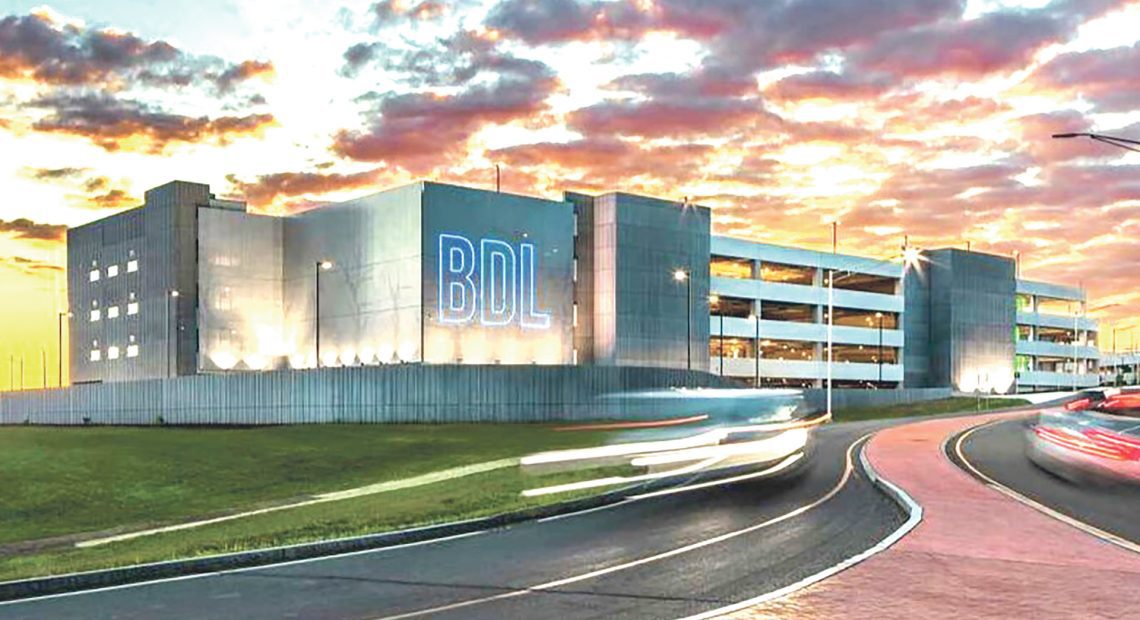
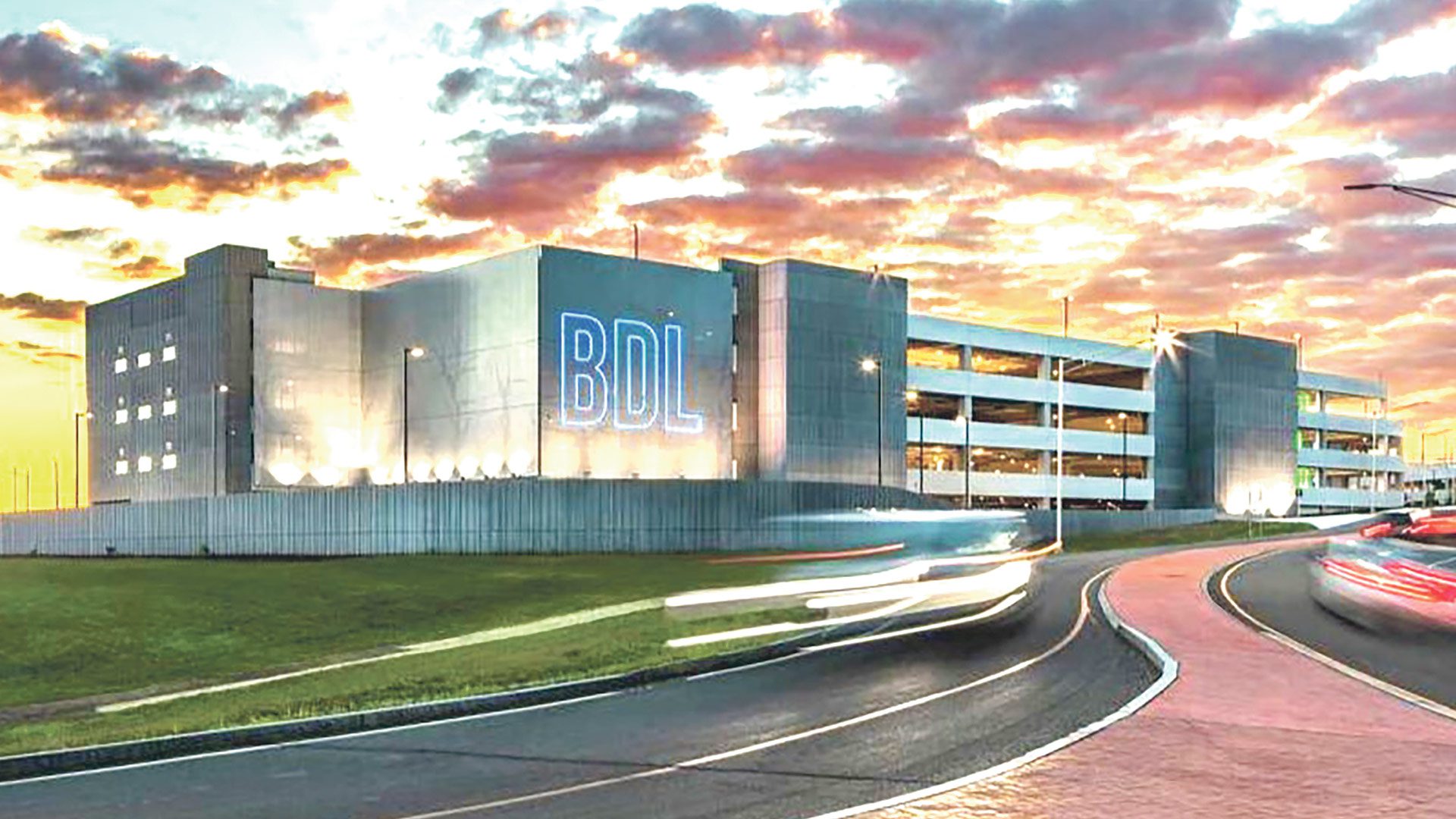
As he talked with BusinessWest late last month for what will likely be the last time in his tenure, he listed a number of accomplishments and milestones during his stint — everything from sharp increases in the number of carriers and non-stop flights at Bradley International Airport (12 and 47 are the current numbers) to the addition of trans-continental and trans-Atlantic flights; from the completion of the airport’s $210 million ground transportation center to the recent kickoff of $250 million worth of additional improvements to BDL.

“We’ve accomplished most of the goals we set down when we established the airport authority,” Dillon said. “Certainly the re-establishment of trans-Atlantic and trans-continental service was a very high priority for us, and we’ve been able to accomplish that with our Aer Lingus service and our LAX and other California service that we’ve had over the years.”

But he spent far more time with what has become his favorite subject — where this airport, the second-largest in New England, can go from here, building on the momentum gained over the past dozen years and the solid foundation that’s been built.

Indeed, Dillon has talked often over the years about Bradley reaching 10 million passengers per year (the current number is about 7 million) and what it will take to get there.

Specifically, it will take more of what the roughly 2.8 million people living and working in Bradley’s catchment area (mostly those within an hour’s drive from Windsor Locks) are looking for — more carriers, more flights, and especially more non-stop flights to more places, in this country and beyond.

Kevin Dillon

Kevin Dillon

“Business travel hasn’t come back to the level it was pre-pandemic. And that’s a question mark across the country; will the business ever get back to that level?”

Bradley was making considerable progress in these efforts, increasing passenger volume from just under 6 million to 7 million, before significant headwinds, in the form of the pandemic and its after-effects, set things back, as they did at airports across the country.

But slowly but surely, as air travel has recovered in dramatic fashion and Bradley has added more non-stops via carriers such as Breeze and, most recently, Avelo, the airport is back to roughly where it was before the pandemic, Dillon told BusinessWest.

“We’re turning over an airport that still has tremendous opportunity and potential in front of it,” he said. “Right now, we’re back to where we were before the pandemic, and we’re back on that growth mode. I certainly believe that the next person coming in has a real opportunity to bring that airport passenger count to that 10 million level.”

As it looks to make continued progress, the airport, as it eyes nonstops to London and other popular destinations, is facing enormous competition from every other airport looking to grow its numbers, he went on. Meanwhile, the carriers have only so many planes.

“We’re in competition with every other airport in the country for the airline assets,” he said. “Every airport is trying to convince airlines to put flights into their airport; we compete with every airport in the region for passengers, but we compete with every airport in the country for airline assets.”

Then there’s the still-sluggish business-travel market, which is an important part of the equation at Bradley, where, before the pandemic, roughly half the passenger volume was business-oriented — a high percentage for an airport of this size — and now, it’s closer to 40%.

“Business travel hasn’t come back to the level it was pre-pandemic,” he said. “And that’s a question mark across the country; will the business ever get back to that level?”

Overall, Dillon is bullish on Bradley and believes it has all the ingredients to become an even more popular alternative to Logan in Boston and the airports in and around New York. For this issue’s focus on travel and tourism, he talked about how to, well, get there from here.


Plane Speaking

Dillon became the first executive director of the CAA after its formation by state officials more than a dozen years ago in an effort to help Connecticut’s airports, and especially Bradley, reach their full potential.

“We’ve demonstrated time and time again that, if we have non-stop service to a location, we will capture at least 80% of everyone in our core area that’s looking to travel to that location.”

Prior to that, he had worked at several different airports and in various capacities, starting with more than 20 years with the Port Authority of New York and New Jersey, with his last assignment as acting general manager of LaGuardia Airport. Later, he served the Massachusetts Port Authority as director of Aviation Operations before working in Manchester, N.H. as director of its airport, in Orlando, and then as president and CEO of the Rhode Island Airport Corp., before taking the helm at the CAA in 2012.

As noted earlier, his time at Bradley has been marked by a number of accomplishments, including a doubling of non-stop flight destinations, the addition of several new carriers, an economic impact to the region of just under $4 billion, and several capital improvements.

These include upgrades to the terminal building, including $250 million in ongoing work, including an in-line baggage-check system that will also bring two additional gates to the airport, which are sorely needed as it continues to grow.

There’s also a vertical-circulation project that will change the way travelers move through the building, allowing the airport to expand its security checkpoint, Dillon explained, adding that these improvements will effectively extend the useful life of the terminal building.

Some of the biggest steps forward, though, have come with the adding of new carriers, especially those in the “ultra-low-cost” category, as he called it, which are in demand among consumers.

Such carriers include Breeze (which has made Bradley a hub), Frontier, Spirit, and, most recently, Houston-based Avelo, which will start service from Bradley to Cancun; Montego Bay; Jamaica; Charlotte/Concord, N.C.; Daytona Beach and Orlando, Fla.; Houston; and other destinations starting in November.

“That’s a level of carrier that didn’t really exist when the CAA was first created,” he noted, adding that, at the time, Bradley had most of the mainstream carriers — Delta, United, Southwest, and others — and has since has put a hard focus on the lower-cost carriers, “because we saw that’s what the marketplace was looking for, and it has really fueled a lot of the growth here at Bradley as well.”

Another key is the addition of more non-stop flights, which are also in demand among consumers, Dillon said, adding that the total is now at 47 and certain to climb higher. Many of them are to Florida, courtesy of Breeze, JetBlue, Southwest, and Spirit, he said, adding that such flights are popular and integral to the overall success of any airport in the Northeast.

“We know where people in our catchment area are flying to and what airport they’re using to do that — so it’s a matter of aggregating that data and then presenting it to an airline and making the business case for why an airline should start that level of service at Bradley.”

“We’re thrilled to see this level of coverage down into the Florida market,” he said. “It’s what allows us to continue to keep people in our market home instead of seeing them travel to a New York airport or Boston.”


Non-stop Action

These initiatives and others have positioned Bradley for continued growth, Dillon believes, adding that the priorities moving forward are to stress Bradley’s many assets while continuing to add more services to the mix.

Doing so will enable the airport to draw more customers from within that 60-minute-drive circle, while also perhaps expanding that radius, making Bradley an attractive alternative for people in various regions.

That includes Western Mass., the source of perhaps 20% of Bradley’s overall passenger volume, he said, adding that the 413 is definitely a potential source of additional growth, as is the area just east and south of Worcester — and Connecticut, for that matter, he said.

One of the priorities — and opportunities — moving forward is adding non-stop service to London, a key destination and part of the success quotient for any large airport.

“Far and away, I think London would be the most successful trans-Atlantic service for us, simply because of the high level of demand into London itself, but also all of the connectivity opportunities that exist,” he said, adding that Bradley has been in discussions with British Airways and other carriers about such service.

It would come with a certain amount of risk at mid-size airports such as Bradley, he went on, adding that, because of this, airlines look for revenue guarantees and/or business-community commitments that will guarantee a certain amount of revenue on the flight.

“There’s always risk when you start a service like that,” Dillon said. “But I do believe, based on the numbers we’re generating every day in the market area that we serve, of people who are traveling to London, that it would be a very successful service.”

Other priorities include additional non-stop flights to spots in the Caribbean and this country, including Seattle, an increasingly popular destination.

With more non-stops, the airport can, as he noted earlier, attract more people in its main catchment area.

“We’ve demonstrated time and time again that, if we have non-stop service to a location, we will capture at least 80% of everyone in our core area that’s looking to travel to that location,” Dillon said, adding that this bodes well for carriers looking to accept the risk of bringing more of these flights to Bradley.

“If we can bring Seattle service to Bradley, people are going to stay home and utilize Bradley for that service,” he went on. “Today, if you want a non-stop service into Seattle, you have to go to either Boston or New York. We have a lot of data available to us; we know where people in our catchment area are flying to and what airport they’re using to do that — so it’s a matter of aggregating that data and then presenting it to an airline and making the business case for why an airline should start that level of service at Bradley.”

Strong levels of business travel always help an airport make its case, he continued, adding that Bradley has historically been blessed with that quality. Thus, the future of business travel will be one of the factors determining the overall trajectory of its growth pattern.

Overall, many factors will ultimately decide where Bradley goes from here. And as Dillon prepares to step into retirement, he believes he’s helped put the airport on the proper flight path.