Home 2024 (Page 12)
Daily News

SPRINGFIELD — Evernorth Rural Ventures, a subsidiary of Evernorth, announced the closing of $14.3 million in New Markets Tax Credit (NMTC) allocation to create a larger, new state-of-the-art facility for Square One, a nonprofit early-childhood education and care provider. The NMTC supports the construction of a new building dedicated to early learning classrooms and workforce-development programming for families.

The new facility will create 80 additional childcare slots, including a pioneering 24-hour care program. Additionally, the facility will house administrative, finance, and home-visit teams for the nonprofit and generate 16 full-time, living-wage positions, further bolstering the local economy.

U.S. Bank is the investor to Evernorth Rural Ventures, providing equity to help finance the new facility. The complex financing package also includes a $5.5 million capital campaign, $2 million from the Commonwealth of Massachusetts, $950,000 from the city of Springfield, contributions from Square One, and several other sources. MassDevelopment provided a $6 million tax-exempt bond, furnished through PeoplesBank, to facilitate the project closing.

“Evernorth is proud to be part of this project that provides essential services that families need to overcome poverty and achieve economic stability and mobility, while supporting the long-term growth of the Springfield area,” said Deb Favreau, NMTC program director at Evernorth. “We are committed to advancing economic and social development in underserved communities all across the region.”

Square One provides early learning and care to more than 500 children daily and family support services to 1,500 families each year. Nearly 90% of children served come from families living at or below the poverty level. Furthermore, 54% of the families earn less than $15,000 annually, and 83% of the parents and caregivers are single heads of household.

“We thank Evernorth for sharing in our vision and leading us through the NMTC process with patience and professionalism,” Square One President and CEO Dawn DiStefano said. “We believe this project clearly reflects the collective commitment and the investment needed to close the opportunity gap in our region, providing children with a foundation for long-term success and economic stability for families and businesses. Through opportunities like the NMTC program, we are investing in the economic future of our community.”

The project broke ground in mid-June, and construction is expected to be complete in the summer of 2025.

Daily News

GREENFIELD — Greenfield Cooperative Bank announced two upcoming free document-shredding events in partnership with Valley Green Shredding. These events will take place on Saturday, Sept. 21 from 9 to 11 a.m. at the Sunderland branch, located at 18 Amherst Road; and on Saturday, Sept. 28 from 9 to 11 a.m. at the Florence branch, located at 6 Main St.

At both events, people are invited to bring up to four grocery bags or two boxes of confidential documents for secure shredding. This service is provided free of charge as a way to help individuals protect their personal information.

In addition to document shredding, Greenfield Cooperative Bank will be accepting optional monetary donations to benefit the Food Bank of Western Massachusetts.

“We are excited to offer this valuable service to our community,” said Tony Worden, president and CEO of Greenfield Cooperative Bank. “Protecting your personal information is important, and we are happy to provide a secure way to dispose of confidential documents.”

Daily News

AMHERST — The Amherst Area Chamber of Commerce announced a ribbon-cutting ceremony to celebrate the grand opening of Resonance Hot Yoga + Massage. The studio will officially open its doors on Saturday, Sept. 21, with the ribbon-cutting ceremony commencing at 3:30 p.m. at Amherst Shopping Plaza on 181A University Dr. in Amherst.

Resonance Hot Yoga + Massage is hosting a grand-opening weekend on Sept. 21-22 that includes a range of free yoga classes and an open invitation for visitors to enter the space to meet the staff, including founders Michael Shick and Alice Feldman. Following the ceremony on Saturday, at 4 p.m., attendees are invited to participate in a complimentary vinyasa flow yoga class led by Michael Shick.

Resonance Hot Yoga + Massage is a studio created with the intention of being a place where visitors can experience the transformative process of vinyasa yoga, meditation, and other branches of yogic teachings, as well as the therapeutic benefits of professional massage.

The ribbon-cutting ceremony and free yoga class are open to all community members. For more information, visit resonance-amherst.com.

Daily News

SPRINGFIELD — Springfield Technical Community College (STCC) leaders, dignitaries, and community and industry partners celebrated the grand opening of the Richard E. Neal Cybersecurity Center of Excellence on Monday.

The state-of-the-art facility will be dedicated to advancing education and innovation in the field of cybersecurity and protecting against security threats.

The center, named in honor of U.S. Rep. Richard Neal for his commitment to leading-edge cybersecurity education and the betterment of Springfield Union Station, aims to be a cornerstone for training the next generation of cybersecurity professionals.

The ribbon-cutting ceremony was attended by a host of guests, including Neal, STCC President John Cook, Springfield Mayor Domenic Sarno, Massachusetts Technology Collaborative (MassTech) CEO Carolyn Kirk, CyberTrust Massachusetts CEO Peter Sherlock, and partners from the state Legislature, academia, and industry. The event showcased a regional commitment to addressing the growing demand for skilled cybersecurity professionals, as well as affordable cyber services and resiliency resources for municipalities, companies, and nonprofit organizations.

Neal led a funding effort in 2023 that resulted in $3 million in congressionally directed spending to establish the center, as well as an additional $2 million in state and local funding. The center is a collaboration between STCC, the Springfield Redevelopment Authority, MassTech, and CyberTrust Massachusetts, and will serve as a regional nexus, giving students the resources to learn how to combat threats and strengthening the resiliency of cybersecurity in Western Mass.

“I’ve committed much of my career in public life to saving this building, securing tens of millions of dollars in federal funding to refurbish what is a pillar in Springfield’s downtown,” Neal said. “Now, 51 years after Union Station closed its doors, I am grateful to have a small piece of this building named in my honor — an honor that I never sought. Today is a great day for the city of Springfield, as we celebrate not only the opening of a cybersecurity center that will have a tremendous impact on our students and the regional economy, but also a milestone for this historic building: reaching 100% occupancy of the station’s main concourse level.”

Cook expressed his appreciation to Neal as well as state, local, and higher-education partners for taking the project from vision to reality. He noted that the cybersecurity center reflects STCC’s technical mission and reinforces high-value career skills that complement employers need.

“The opening of this center represents a significant step forward with a strategic plan that invites us to lead the educational ecosystem,” Cook said. “We are grateful for the public investment and proud to stand up a facility that will not only enhance the learning experience for students, but also contribute to continued economic development in Western Massachusetts.”

The Richard E. Neal Cybersecurity Center of Excellence will serve as a regional center for Western Mass. and beyond, with programming that will also include information seminars and mini-conferences, as well as in-service training and simulation for current cyber professionals. The 6,000-square-foot facility includes a cyber range, a simulated cyber environment for student training and exercises; and a security operations center (SOC), which provides real-time detection and response to local municipalities and businesses.

The center is one of three SOC and/or cyber-range facilities in Massachusetts currently open and running that were established as part of the state’s Cyber Security Operations Center and Cyber Range Initiative. Another cyber range and SOC are based at Bridgewater State University, and a cyber range opened last fall at MassBay Community College. MassTech also recently awarded grant money to Salem State University to establish and operate a cyber range.

In addition to federal funding, additional support came from the state and city of Springfield. MassTech provided the initial $1.46 million through the MassCyberCenter.

Daily News

SPRINGFIELD — Bulkley Richardson recently welcomed Rachel Knauerhase as an associate in the Business department.

In 2024, Knauerhase graduated magna cum laude from Western New England University School of Law, where she concentrated her studies on transactional law and served as senior articles editor of the Law Review. She was an Oliver Wendell Holmes Jr. Scholar and CALI award recipient. She graduated from the University of Connecticut in 2021 with a bachelor’s degree in business & finance.

Prior to joining Bulkley Richardson, Knauerhase was a legal intern at the Massachusetts Attorney General’s Office and summer law clerk at a boutique litigation firm in Connecticut.

“Rachel brings incredible talent to the table. Her intellectual capabilities combined with an eagerness to be mentored make her a valuable addition to the firm,” said Scott Foster, chair of Bulkley Richardson’s Business department. “Rachel has a promising future as a lawyer, and we are pleased that she has chosen Bulkley Richardson as her home.”

Daily News

GREAT BARRINGTON — Organization INK Inc., a provider of bookkeeping, accounting, payroll, and human-resources services in Western Mass. and the surrounding areas, acquired My Office LLC, a firm based in Torrington, Conn. The acquisition, which was finalized on Sept. 2, comes as My Office LLC’s owner, Cynthia Rines, seeks to retire after 13 years in business.

The majority of My Office’s staff, including Rines, will join Organization INK, ensuring continuity of service for existing clients and contributing to the expanding regional presence of Organization INK. Clients of My Office can expect a seamless transition, with enhanced access to human-resources services, which are not offered by My Office.

My Office LLC provides bookkeeping, accounting, and payroll services to businesses, nonprofits, and government agencies in the northwest corner of Connecticut.

“We are ecstatic that Cynthia and most of her team have decided to join Organization INK,” said Carolann Strickling, CEO of Organization INK. “This acquisition aligns with our strategic goals of expanding our footprint and providing comprehensive financial and human-resource services to small business, nonprofits, and government agencies throughout New England and Eastern New York.”

Rines, who founded My Office LLC in 2011 along with Candace Craig and Roberta Leffingwell and built it into a trusted firm in Litchfield County, expressed confidence in the transition. “As I am nearing retirement, I have been looking for the perfect partner to take over My Office LLC. I have found such a partner in Organization INK Inc. Org INK shares my philosophy of providing quality services with a personal and caring approach.”

The acquisition further solidifies Organization INK’s position as a regional leader in financial solutions, providing businesses with expert bookkeeping, accounting, payroll, and human-resources services.

Daily News

HOLYOKE — In partnership with the nonprofit CanCode Communities, Holyoke Community College (HCC) is offering a free, six-week beginner computer training course starting Sept. 30.

The real-time, instructor-led online classes will run Mondays and Wednesdays from Sept. 30 to Nov. 6, from 5:30 to 8:30 p.m. Laptops and WiFi hotspots for internet access will be provided for students who need them.

The program is aimed at helping individuals build essential computer skills for both personal and professional development. Participants will explore the Microsoft Office program; learn how to create résumés, manage calendars, and send email; and be introduced to the world of artificial intelligence.

Funding for the progam comes from the Western Mass Alliance for Digital Equity. To sign up for classes, email [email protected] or call (518) 238-6808, ext. 702.

Daily News

SPRINGFIELD —The STEM Starter Academy at Springfield Technical Community College (STCC) received the Inspiring Programs in STEM Award from the magazine Insight Into Diversity.

The STEM Starter Academy (SSA) has been instrumental in creating opportunities for STCC students who might otherwise face significant barriers to entering and succeeding in STEM fields (science, technology, engineering, and math).

SSA is designed to support STCC’s underrepresented student populations by providing equity and access to STEM majors and pathways and to promote positive and equitable outcomes through intense student support and guidance.

The Inspiring Programs in STEM award is a measure of an institution’s individual college programs and initiatives that encourage and support the recruitment and retention of women and underrepresented students into all STEM fields. STCC was one of only two community colleges recognized for this award.

Lara Sharp, dean of the School of STEM, expressed pride in the program’s achievements and praised Samar Ghrear, director of the SSA, and her staff at the STEM Center.

“The STEM Starter Academy is a shining example of how targeted support and community engagement can make a significant difference in the lives of students,” Sharp said. “This award is a recognition of the hard work and dedication of everyone involved in the program, from our staff and faculty to the students themselves.”

As the only technical community college in Massachusetts, STCC offers several STEM-focused programs through the SSA, including the Student Success Program, which provides students with free resources and support services; the Summer Bridge Program, which gives students a head start before the start of the fall semester; College for Kids, which provides opportunities for preteen and teenage children to learn about STEM; the STEM Internship Program, which is for STEM majors who want to gain experience within their field of study; and the two- to four-year Summer STEM Transfer Academy, which prepares students who are ready to graduate and wish to transition to one of the Massachusetts public institutions.

Sharp said the award serves as a reminder of the importance of supporting underrepresented groups in their academic and professional journeys.

STCC is a federally designated Hispanic Serving Institution, which requires that 25% of its students identify as Hispanic. Approximately 34% of STCC students identify as Latino/a/x. About 60% of STCC’s students identify as female, and 14% identify as Black.

Daily News

HOLYOKE — The new Holyoke Community College (HCC) food pantry is more than four times the size of the old one. More than that, it is now just steps away from the HCC Campus Center and cafeteria.

“This new location feels so much more like a hub for our students to receive the support they need,” said Amanda Sbriscia, HCC’s vice president of Institutional Advancement. “The shelves are well-stocked. It’s bright, it’s accessible, and it’s judgment-free, which is so important.”

The occasion for her remarks was a Sept. 10 ribbon-cutting celebration marking the relocation and expansion of both the HCC Thrive Center and the food pantry. Prior to the move, the food pantry occupied a small space within the Thrive Center, which was located in a tight, reconfigured classroom on the second floor of the Frost Building.

Now, the Thrive Center and food pantry occupy dedicated, more spacious rooms side by side on the second floor of the Kittredge Center for Business and Workforce Development, which adjoins the Campus Center.

The Thrive Center (formerly called the Thrive Student Resource Center) helps students address non-academic issues that can interfere with their studies, such as food and housing insecurity, transportation, healthcare, childcare, utilities, and credit. Thrive also manages the food pantry.

“When you think about college and what it takes to be successful, there are so many things that can prevent you from learning,” HCC President George Timmons said. “So this is just another opportunity for us to live up to our mission, which is being an institution of academic excellence that helps remove barriers to student success.”

Now, inside the Thrive Center, Ben Ostiguy, Thrive coordinator, and Elizabeth Rivera, Thrive’s bilingual program assistant, each have their own offices where they can meet privately with students. There’s also an additional office for a soon-to-be-hired food pantry manager.

Next door, in the food pantry itself, black wire shelving units hold non-perishable food as well as school supplies, baby supplies, and personal-care items — all free. There is also a freezer for frozen food items and a refrigeration unit for drinks and perishable items.

Before the ribbon cutting, Sbriscia thanked the many donors and partners responsible for making the Thrive Center and food pantry successful, including the United Way of Pioneer Valley, Holyoke Housing Authority, Rachel’s Table, Caring Health Center, PeoplesBank, Stop & Shop, Gary Rome Hyundai, Hyundai America, One Holyoke CDC, Enlace de Familias, and Tech Foundry.

Daily News

HOLYOKE — The St. Patrick’s Committee of Holyoke announced that its 58th Citizenship Award winner is the Rev. Fr. Robert Gentile Jr. The Citizenship Award is presented annually to a person or organization that may be of non-Irish descent and has made substantial contributions to the parade and/or the parade committee.

Gentile has been a long-time friend to the St. Patrick’s Committee of Holyoke, both providing spiritual guidance to the committee and being a long-time supporter for parade weekend.

While pastor of Holyoke’s Blessed Sacrament School and Parish, Gentile encouraged students to participate in the many celebrations of the famous Holyoke St. Patrick’s Road Race and Parade. Whether it was managing water stations and cheering on the thousands of runners, encouraging students to enter (and sometimes win) the annual Grand Colleen Float Design Contest, and marching with students and parishioners in the Parade, his support for the committee and its events has helped to ensure that these community traditions will continue.

Gentile served as interim chaplain to the St. Patrick’s Committee, and to this day, although he now serves as pastor of Ste. Rose de Lima Parish in Chicopee, he continues to provide spiritual guidance and friendship to the committee.

In 2003, Gentile was ordained to priesthood in the Diocese of Springfield. After ordination, his first assignment was at St. Thomas in the Apostle Church in West Springfield as the parochial vicar, where he served for 33 months. That assignment concluded when he was asked to become the new pastor of Blessed Sacrament in Holyoke. He served that parish from May 2006 until March 2024, when he began his assignment at Ste. Rose de Lima.

“I’m honored that Father Bob will be marching in the 72nd Holyoke St. Patrick’s Parade as its Citizenship Award recipient,” said John Beaulieu, parade president. “Father Bob’s service to his parishioners and his community is well-known and appreciated throughout Western Massachusetts. We are grateful to the contributions he has made to the parade and support he has given to my fellow committee members. As his parishioner, I’m especially grateful for his spiritual guidance.”

Added Gentile, “I have the greatest job — God does all the work, and I get all the credit. Thank you to the St. Patrick’s Committee of Holyoke for this great honor. I look forward to marching again in the Holyoke St. Patrick’s Parade.”

The 72nd Holyoke St. Patrick’s Parade will be held on Sunday, March 23, 2025, and the 48th Holyoke St. Patrick’s Road Race will be held on Saturday, March 22, 2025.

Daily News

GREENFIELD — The Greenfield Local Cultural Council (GLCC) is accepting grant proposals from organizations, schools, and individuals seeking funding to support cultural activities in the community. All submissions are due by Wednesday, Oct. 16. Proposals can be for community-oriented arts, humanities, and science programs.

Greenfield received an allocation of $20,200 for this year’s funding round. The grant portal opened on Sept. 1. Click here to apply.

Greenfield’s funding priorities are to support Greenfield-based artists, performers, and venues, although others may apply. Based on the results of the council’s 2024 community survey, the following types of projects are strongly encouraged: live performances and festivals, social-justice and cultural-diversity events, and public art. The results of the GLCC’s survey, conducted this past summer, can be found at www.greenfield-ma.gov/cultural-council.

Recent cultural activities that received GLCC funding include the Winter Carnival, Franklin County Pride, the Stephen King Film Festival, and Greenfield Military Band concerts.

The GLCC is part of a network of 329 Local Cultural Councils (LCCs) serving all 351 cities and towns in the Commonwealth. The LCC program is the nation’s largest grassroots cultural funding network, supporting thousands of community-based arts, sciences, and humanities projects every year. The state Legislature provides an annual appropriation to the Massachusetts Cultural Council, a state agency that allocates funds to each community. Click here for more information.

Daily News

SPRINGFIELD — MGM Springfield recently announced the return of Andres Gomez in his new role as executive director of Hospitality.

Gomez was part of the initial team that helped launch the MGM Springfield brand in Massachusetts in 2018, serving as director of Restaurants and Nightlife Operations. His tactical direction and leadership helped set hospitality standards that remain in place today. He was promoted within the MGM family to director of Food & Beverage at MGM Grand Detroit in late 2020. In 2022, he moved to MGM National Harbor just outside of Washington, D.C., where he assumed the role of director of Food & Beverage.

“We are thrilled to welcome Andres back to Springfield. He not only brings a wealth of local knowledge, but also a deep commitment to our community, which makes this homecoming particularly special,” said Louis Theros, MGM Springfield president and chief operating officer. “In his new role, Andres will be instrumental in elevating our dining and hospitality experience to an unprecedented level of excellence. We know his exceptional skills and innovative vision will ensure that we continue to exceed our guests’ expectations.”

As executive director of Hospitality, Gomez will continue to develop and oversee the plan and vision for MGM Springfield that is consistent with the objectives of MGM Resorts International, overseeing all aspects of the property’s hospitality operations.

“I am overjoyed to be returning to MGM Springfield, a property I had the honor of helping to open,” he said. “As a Springfield native, coming back to this city and this property is incredibly meaningful to me. It’s coming home. I am deeply thankful to the executive leaders at MGM Springfield for giving me the opportunity to continue my personal and professional growth as part of their incredible team. But above that, I’m humbled and enthusiastic to have an opportunity to contribute once again to this community. This return is not just a professional milestone, but also a heartfelt reunion to my roots. I look forward to what we will accomplish together in the coming years.”

Originally from Puerto Rico, Gomez moved to Springfield as a preteen and carved out his early career working in the local restaurant industry. Local diners may recognize him from his years at Agawam’s iconic Federal Restaurant & Bar, where he served as general manager. He grew his career with that group from host to business partner of some of its fast-casual concepts. He attended Springfield International Charter School and attended UMass Amherst, where he studied business and corporate communications.

Daily News

SPRINGFIELD — The Women’s Fund of Western Massachusetts recently announced $240,000 in grant awards this year and through 2026 to 17 organizations serving women, girls, and transgender and gender-diverse people across Berkshire, Franklin, Hampden, and Hampshire counties.

CEO Vanessa Pabón-Hernandez explained that the Women’s Fund’s general grant cycle will provide a total of $100,000 in awards to 13 organizations in 2024 and 2025. An additional four gifts totaling $40,000 were also made from the organization’s Young Women’s Initiative for the current year. The funding rounds were competitive, with applications received from 126 organizations.

“These grants will uplift the incredible work being done by organizations throughout the region that are committed to addressing disparities and fostering inclusion for women, girls, and gender-diverse individuals,” Pabon-Hernandez said. “We are honored to offer grants that will support efforts in building more equitable and vibrant communities.”

In the general grant cycle, the Women’s Fund awarded grants in 10 communities throughout the region. Priority was given to organizations committed to gender and racial justice and equity as well as the philanthropic agency’s key strategic pillars: economic security, parity in positions of power and leadership, and freedom from gender-based violence. These grant dollars will support a broad range of organizations, including small startups, grassroots organizations, and well-established nonprofits.

The general grant cycle awards total $200,000 over two years and provide unrestricted grants that can be used for general operations or program support. Grant recipients for this funding round include 50 Arrow Gallery in Easthampton, A Queen’s Narrative in Springfield, Berkshire Community Diaper Project in West Stockbridge, Elizabeth Freeman Center in Pittsfield, It Takes a Village in Huntington, Make-It Springfield, Mother Root Farm in West Cummington, New England Learning Center for Women in Transition in Greenfield, Pioneer Valley Workers Center in Northampton, Somali Bantu Community in Springfield, Springfield No One Leaves/Nadie Se Mude, Visioning B.E.A.R. Circle Intertribal Coalition in Greenfield, and Western Massachusetts Parasol Patrol in Montague.

Daily News

CHICOPEE — Elms College announced that two regional leaders have joined the college’s board of trustees.

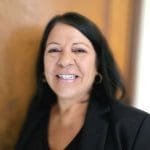
Lydia Martinez-Alvarez

Lydia Martinez-Alvarez is the former assistant superintendent for the Springfield Public Schools system, and was the first person of Hispanic descent to hold this position. Her career in public education spanned more than 25 years and began in the mid-1990s as a substitute teacher at Samuel Bowles Elementary School. In 2003, she became superintendent of Springfield High School of Science and Technology, and in 2012, she began her tenure as the city’s assistant superintendent. Martinez-Alvarez holds a bachelor’s degree in business management from Westfield State University and a master’s degree in teaching from Elms College. In 2019, she was named a Women of Impact by BusinessWest.

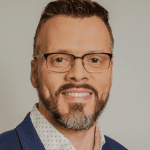
Pedro Sanchez Jr.

Pedro Sanchez Jr. is the president of BlueX Solutions, a consulting firm in Springfield specializing in leadership coaching. A bilingual speaker and entrepreneur, he empowers individuals and business leaders by deconstructing preconceived beliefs, identifying opportunities for growth, and nurturing their process of self-discovery. His client base includes companies from several industries, including manufacturing, event and studio production, nonprofit, and mental health. Sanchez holds a bachelor’s degree in theology from the Assemblies of God Theological Spanish Seminary in Springfield.

Daily News

James Brown

AGAWAM — Governors America Corp. (GAC), a veteran-owned, Massachusetts-based, global manufacturer of innovative engine-control products, recently welcomed James Brown as its new Business Development lead.

“James joins our team with more than two decades of military leadership and technical expertise,” said Sean Collins, president and CEO. “His insight and experience will be invaluable as we serve our clients in the defense and federal industry and thereby better support our military.”

In his role, Brown’s responsibilities include researching and building relationships with potential clients, growing Department of Defense contracts within the Hawkeye Innovation division and identifying new business opportunities for growth by analyzing market trends, the competitive landscape, and customer needs.

Brown received his bachelor’s degree from the University of Massachusetts and his MBA in healthcare management from Fitchburg State University. He rose to the rank of chief master sergeant (E-9) in the U.S. Air Force over a career spanning 25 years served.

Daily News

SPRINGFIELD — The Advertising Club of Western Massachusetts’ trustees of the Order of William Pynchon announced the selection of three local residents as this year’s Pynchon Medal recipients: Anthony Gulluni, Jeffrey Sattler, and Kevin Vann.

“This year’s recipients all embody what this award is about: community enrichment, selfless acts, and a longstanding determination to better Western Massachusetts,” said Kelly McGiverin, chairperson of the Pynchon trustees.

Gulluni is now serving his third term as Hampden County district attorney. He has promoted a vision of safer communities through community outreach, crime prevention, and education — as well as through the smart prosecution of violent offenders. Furthermore, he has shown commitment to compassionate and effective rehabilitation.

Gulluni’s notable accomplishments include spearheading the Emerging Adult Court of Hope, a one-of-a-kind program in Massachusetts designed for criminal defendants ages 18 to 24. Instead of incarceration, the court provides intensive support and programming focused on the participants’ physical and mental health, behavior patterns, housing, and other factors, and ultimately develops a pathway for careers through education and job training.

He also developed a cold-case unit, the first in the Commonwealth to use cutting-edge technology like DNA phenotyping and forensic investigative genetic genealogy to assist law enforcement in generating leads and narrowing down suspect lists.

Inspired by his humble beginnings, Sattler has spent his lifetime dedicated to service over self. After putting himself through school to earn a bachelor’s degree from Springfield College, he went on to found a bank in Springfield. When he was 18 years old, he became a third-degree member of the Knights of Columbus Council; 47 years later, he is still a member.

Throughout Sattler’s professional life, public service has been a mainstay. A partial list of organizations for whom he has volunteered and supported includes the Western Massachusetts Boy Scouts of America, the Chicopee Rotary Club, Springfield Technical Community College, the Chicopee Boys and Girls Club, the Make-A-Wish Foundation, and the American Cancer Society.

For each organization he serves, he has shown heart and commitment, with particular passion in fighting the impact of cancer in his community. When the American Cancer Society’s 2021 fundraiser was canceled due to COVID, he was instrumental in launching the Men in Pink event in its stead.

A native of Springfield and a lifelong resident of the Pioneer Valley, Vann has made serving his community a lifetime commitment, particularly for those who can’t help themselves. The many organizations to which he has dedicated his time and resources reflect a strong affinity for supporting the youth of our region. His involvement with the Chicopee Boys and Girls Club spans decades and includes multiple capital campaigns, including chairing its current campaign to build a new teen center.

Vann’s service has included, but is not limited to, the Chicopee Boys and Girls Club, the Western Massachusetts Economic Development Council, the United Way of Pioneer Valley, the St. Christopher’s Capital Endowment Fund, the American Cancer Society, the National Conference on Community and Justice, and the NFIB Governors Guardian Council. In addition to his nonprofit and charitable activities, he has been a life mentor and coach to countless young people.

Daily News

GREAT BARRINGTON — On Friday, Sept. 20 at 10:45 a.m., Knosh & Knowledge will host columnist and attorney Jeff Robbins, who will speak about his recently published anthology, Notes from the Brink: A Collection of Columns on Policy at Home and Abroad.

Robbins will focus his remarks on the state of American politics and journalism, the threats faced by Israel, and the scourge of anti-semitism on the far right and the far left.

This free Jewish Federation of the Berkshires program will take place at Hevreh of Southern Berkshires, 270 State Road, Great Barrington. Click here for more information.

Daily News

SPRINGFIELD — The Springfield Museums will announce a partnership with the Office of Public Works (OPW) of Ireland on Tuesday, Sept. 17 at 10:30 a.m. at the Wood Museum of Springfield History. Together with the OPW, the Museums will explore the development of exhibitions, educational resources, and community events that enrich and promote the deep and enduring cultural and personal ties between Western Mass. and County Kerry.

Scheduled to speak at the press conference are U.S. Rep. Richard Neal, Springfield Mayor Domenic Sarno, Kerry Mayor Breandán Fitzgerald, Blasket Centre Manager Lorcán Ó Cinnéide, Explore Western Mass President Mary Kay Wydra, and Springfield Museums President Kay Simpson.

The first effort in this partnership is the exhibition “Gone Now, to Springfield: Celebrating the Legacy of the Blasket Islands,” currently on view in the lobby of the Wood Museum. The Blasket Islands (Na Blascaodaí) are a group of islands off the west coast of the Dingle Peninsula in County Kerry, Ireland, uninhabited since 1954. Many Blasket Islanders immigrated to Springfield and Greater Western Mass. throughout the 19th and 20th centuries, bringing with them the language, literature, culinary traditions, and familial connections that continue to shape the city today.

Local Blasket Islander Mairead Kearney Shea will attend the press conference. Born the youngest of seven children, she is the last living woman from the island. She came to the U.S. when she was 26 years old in the 1940s and worked as a seamstress at Berkshire Maid. She will celebrate her 102nd birthday in December.

Daily News

EAST BROOKFIELD — Second Chance Animal Services announced that longtime supporter Tito’s Handmade Vodka has stepped in to help following the nonprofit’s recent plea for assistance with four pets requiring life-changing surgeries. Tito’s has issued a $5,000 challenge match for the month of September to assist with the care of these and other shelter pets in need of urgent medical attention.

The match comes at a critical time, as late last week, another shelter pet in need of extensive medical care was surrendered by local animal control. Johnny, a 1-year-old cat, is suffering from a fractured leg and a suspected fractured tooth.

“Tito’s Handmade Vodka has been a steadfast sponsor of our mission to provide life-saving care to pets in need,” said Lindsay Doray, Second Chance’s chief Development officer. “Their generous $5,000 challenge match gives our community the opportunity to double the impact of their donations and help even more pets receive the medical care they need.”

Supporters of Second Chance who wish to have their donations matched can do so by visiting www.secondchanceanimals.org/titosmatch. Every dollar donated during the challenge will be matched by Tito’s Handmade Vodka, doubling the support available for pets in desperate need of care.

Second Chance recently issued an urgent plea for help when faced with the unprecedented challenge of simultaneously caring for four shelter pets in need of critical medical care to alleviate their suffering. Three of the four pets mentioned in the original plea — Rocky, Iris, and KJ — had their surgeries since then and are expected to make a full recovery in time. Laura is scheduled for her surgery in the days to come to relieve her pain and improve her quality of life. With the support of donors and the generosity of Tito’s, Second Chance will aim to cover the costs of their surgeries and continue providing life-saving care for other pets in need.

“We are so grateful to Tito’s Handmade Vodka for once again showing their commitment to animal welfare,” Doray said. “With their help and the support of our community, we can make a real difference for these pets and many more.”

For more information or to make a donation, visit www.secondchanceanimals.org/titosmatch.

Cover Story Event Galleries Healthcare Heroes

Back in 2017, BusinessWest created a new recognition program to recognize those working in the region’s large, and critically important, healthcare sector.

After much deliberation, we settled on the name Healthcare Heroes, and since then, many have asked the question, ‘how do you define hero?’

Our answer has always been simple, direct, and something along these lines: we don’t define ‘hero,’ you do.

Which explains why, over the years, we’ve honored a diverse cast of individuals and groups that are, in the eyes of those nominating them, true heroes for the ways in which they improve quality of life for those they touch. And the class of 2024 continues this tradition.

We tell the stories of eight Healthcare Heroes, each one different, but with common threads, especially a passion for their work and an ability to change lives. 

Go HERE to see the 2024 Healthcare Heroes Digital Flipbook

Click on the names below to read  each story of this years Healthcare Heroes:

Dr. Andrew Balder

Attending physician at Baystate Mason Square Neighborhood Health Center, honored in the Lifetime Achievement category for working tirelessly on behalf of those who are traditionally underserved, with a specific focus on the homeless population and infant mortality, child maternal health, and birth outcomes;

Bernice Drumheller

Past president of NAMI Western Massachusetts, another honoree in the Lifetime Achievement category, who, driven by the struggles of her son, Mark, has become a tireless advocate for those with mental illness and their families;

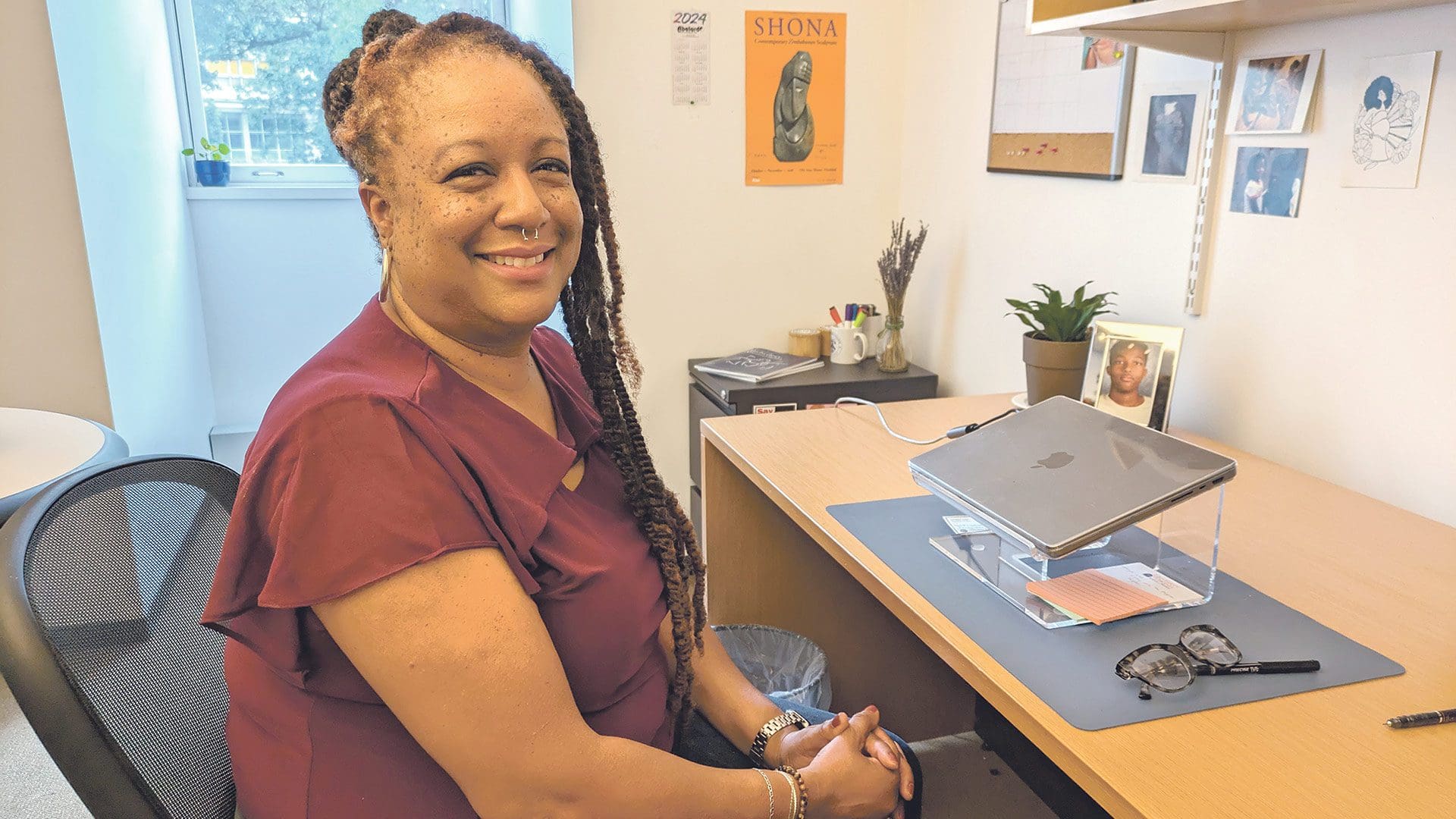
Lucinda Canty

Associate professor of Nursing and director of the Seedworks Health Equity Program at UMass Amherst, honored in the Community Health category for her efforts to improve health equity for traditionally underserved women of color;

Peta-Gaye Johnson

Director of Healthcare Workforce Initiatives for the MassHire Hampden County Workforce Board, honored in the Collaboration category for working tirelessly — and with a wide array of partners — to help ensure there is a reliable pipeline of healthcare workers

Maggie King

Occupational therapist at Baystate Health, honored in the Provider category for bringing passion and compassion to her efforts in the NICU to not only care for newborns, but help parents through perhaps the most stressful time in their lives;

Alexa Mignano

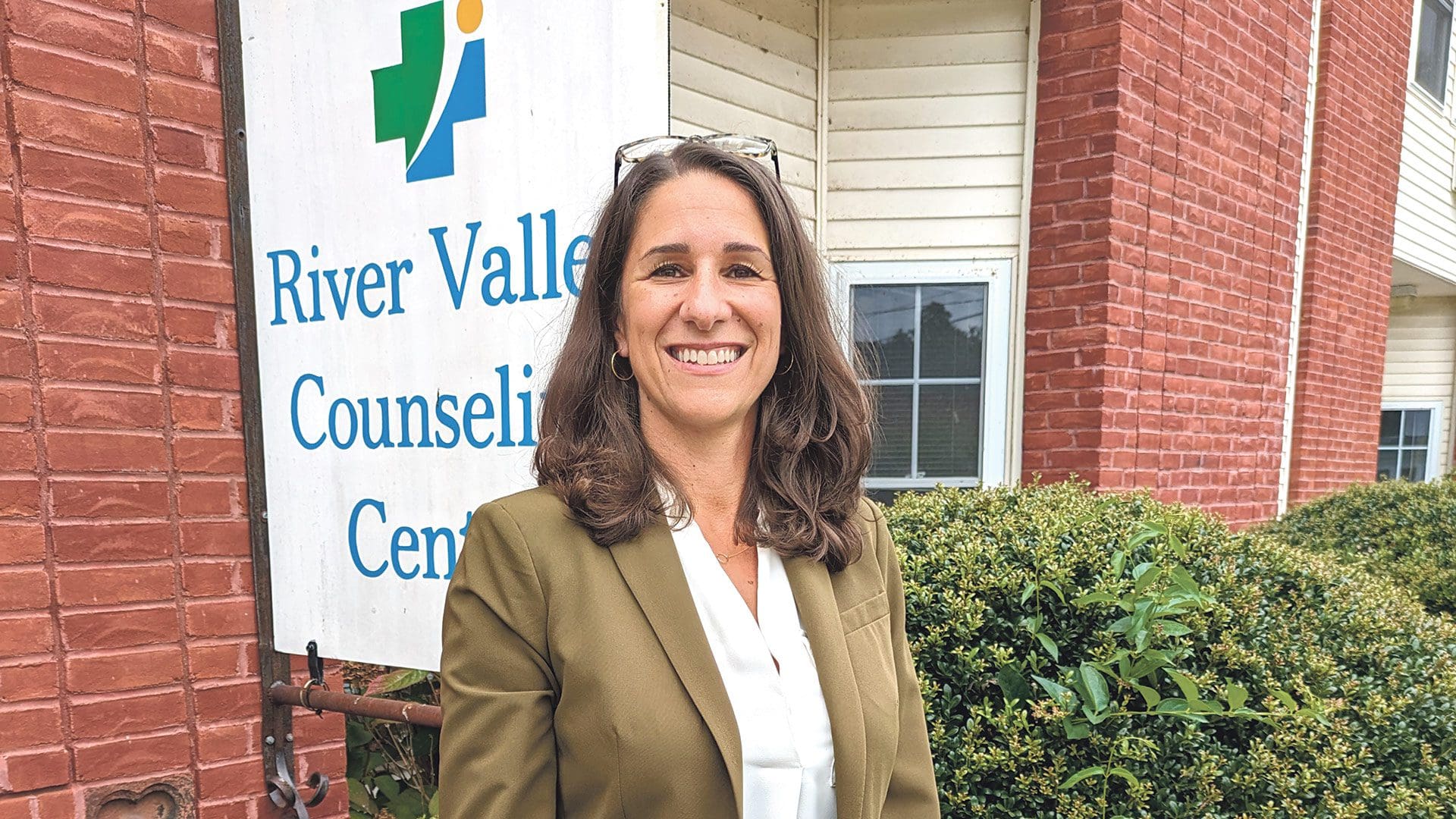
Director of School-Based Clinical Services at River Valley Counseling Center, honored in the Administration category for expanding an effective — and much-needed — mental-health counseling program to students in some 70 schools;

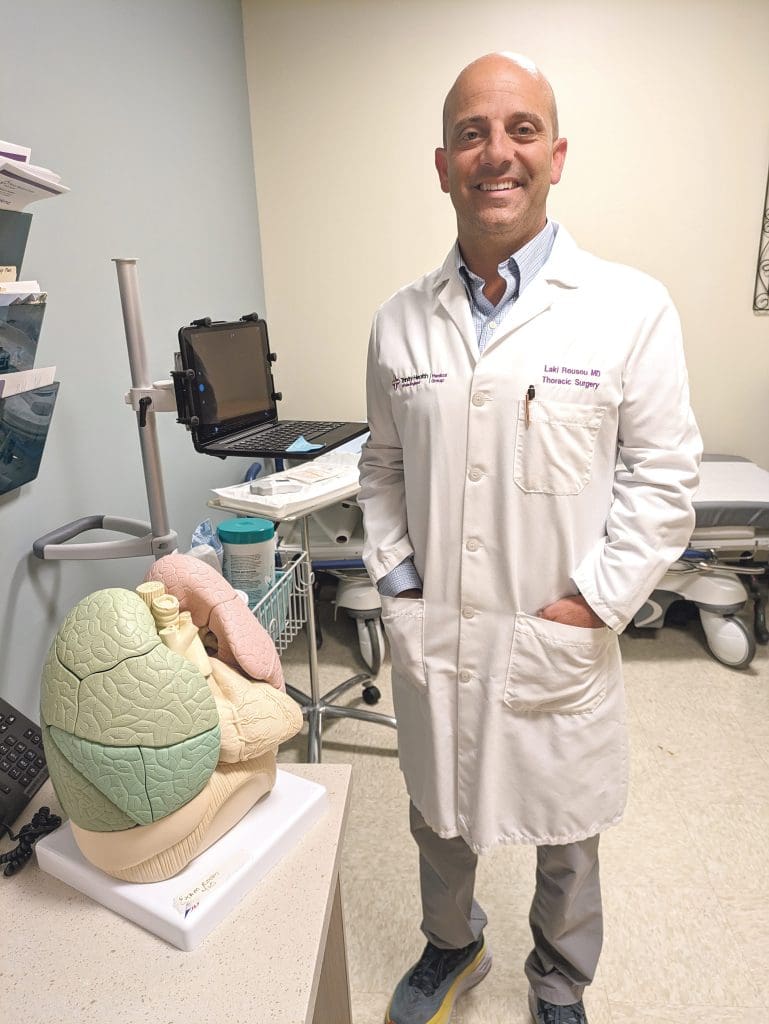
Dr. Laki Rousou

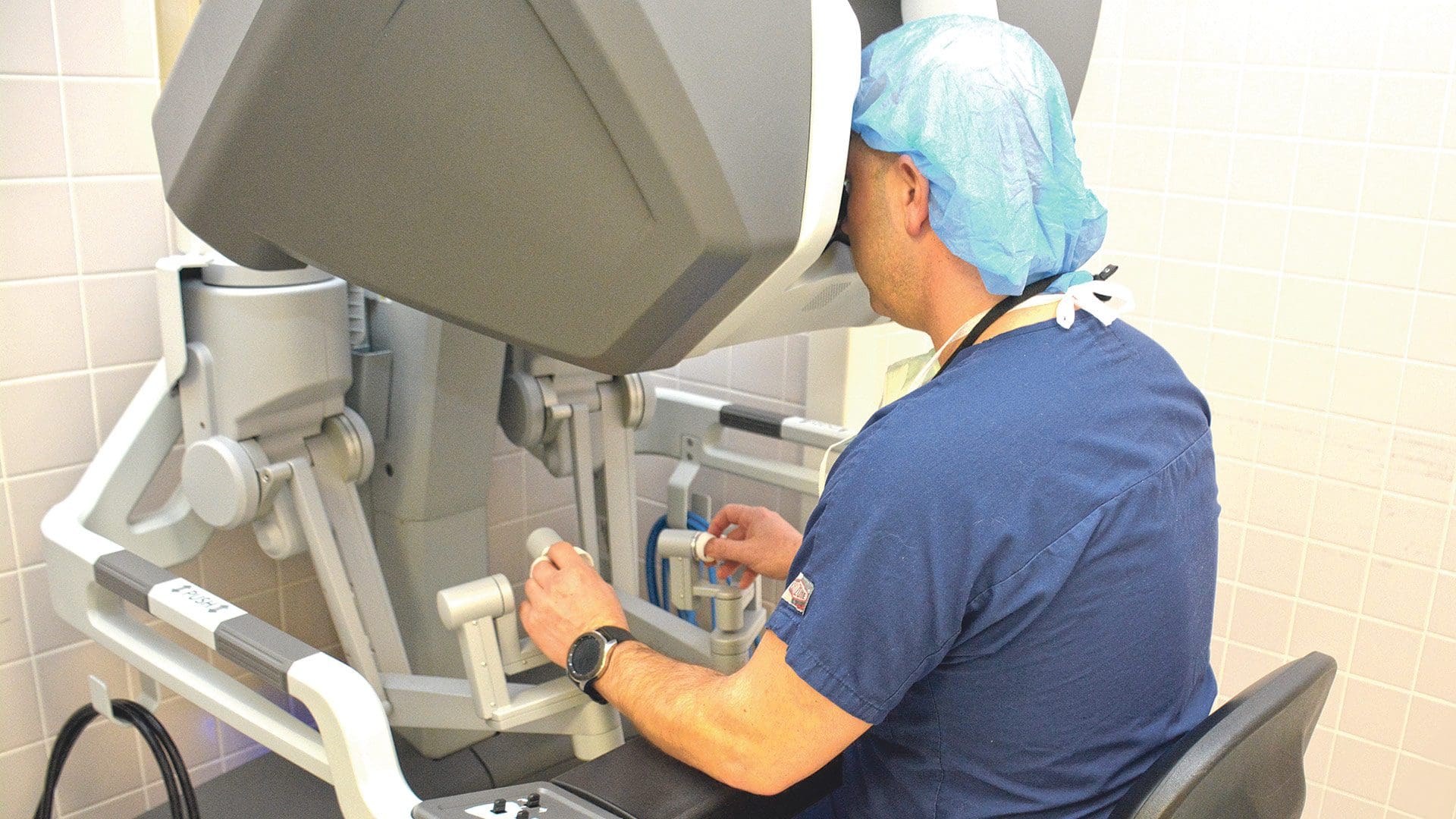
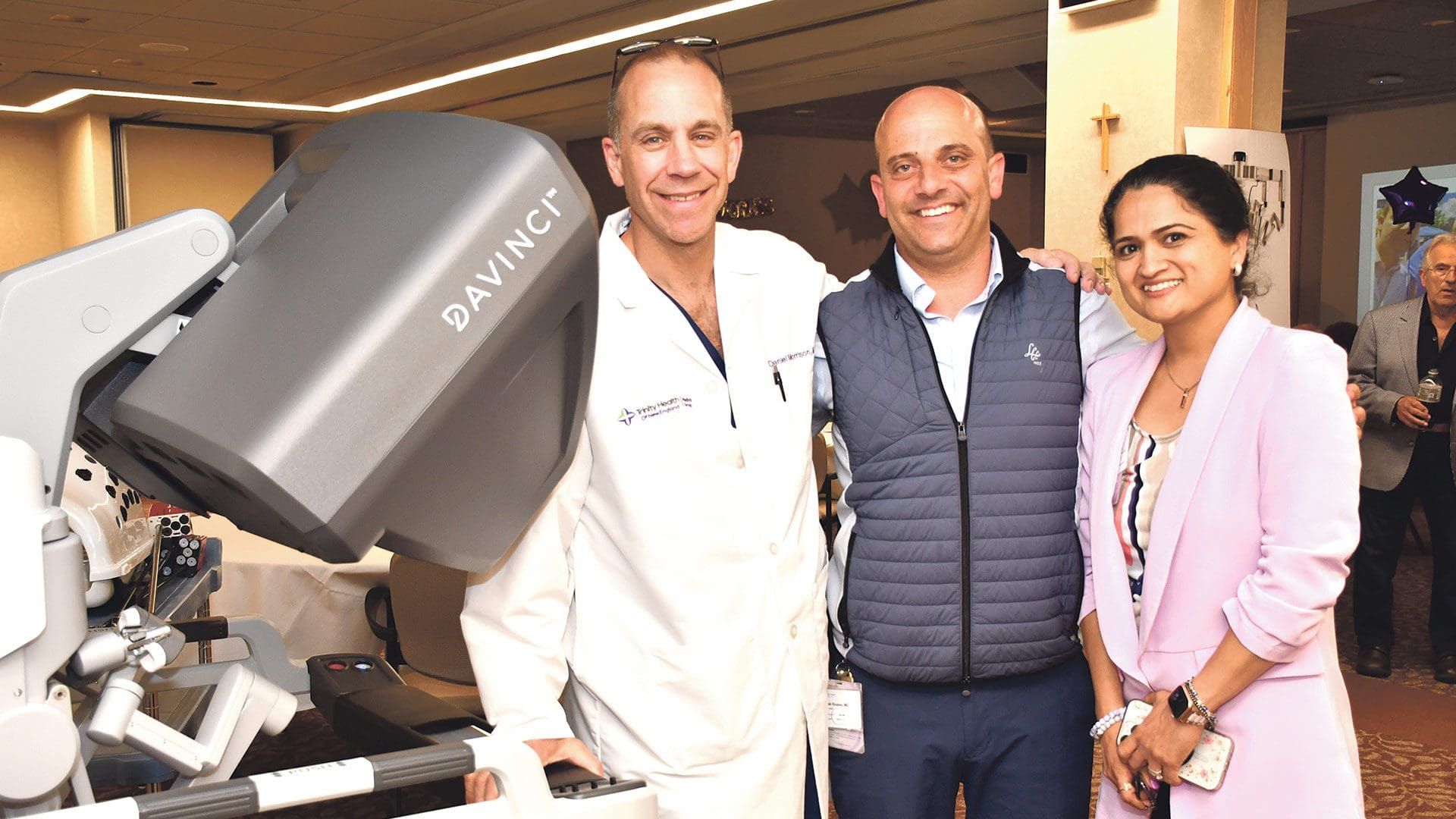
Chief of Thoracic Surgery, chief of Robotic Surgery, and medical director of the Lung Cancer Screening Program at Mercy Medical Center, honored in the Innovation category for using both advanced technology and screening to lower mortality rates in an all-too-deadly disease

Janet Williams

Professor of Biology at Elms College, honored in the Education category, whose work in the field of biology has influenced a generation of nursing and health-sciences graduates and significantly impacted the healthcare industry locally and beyond

BusinessWest and the Healthcare News will celebrate this year’s honorees on Thursday, Oct. 17 at 5:30 p.m. at the Log Cabin in Holyoke. Tickets cost $95, and tables of 10 are available. To purchase tickets, GO HERE

Presenting Sponsors

Partner Sponsor

Features Special Coverage

Hire Purpose

Peter Farkas

Peter Farkas

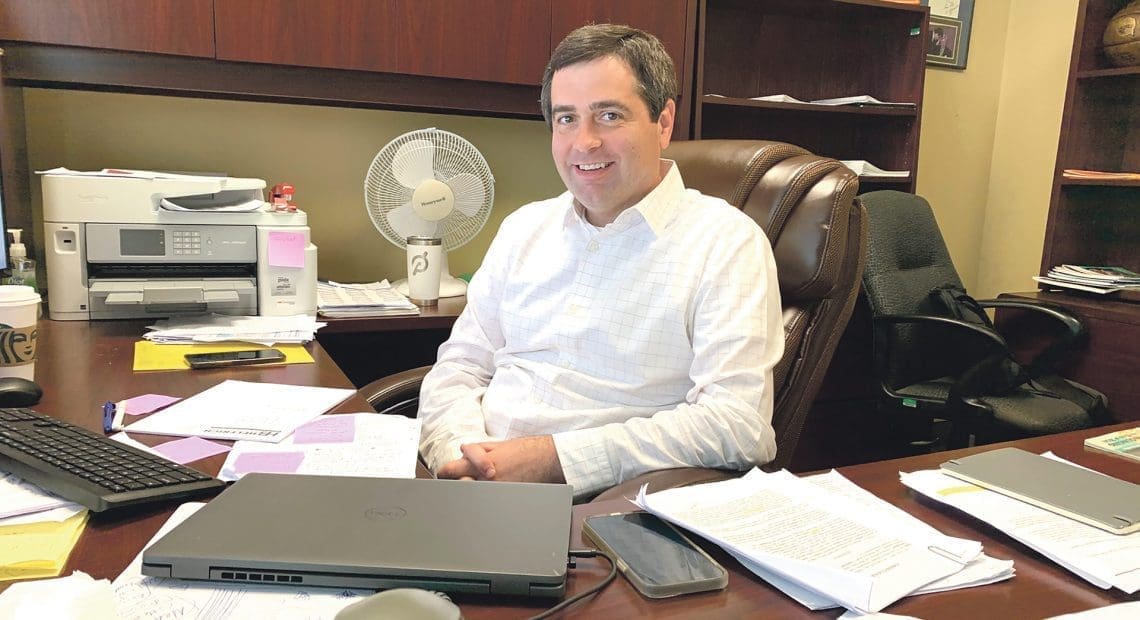
Peter Farkas can give you the textbook definition of workforce development, at least as he understands it.

“Workforce development is economic development,” said Farkas, who was named president and CEO of the MassHire Hampden County Workforce Board in March, succeeding long-time president David Cruise. “Workforce development is addressing the needs of employers by reskilling and upskilling the labor force to meet industry needs. It’s ongoing, and it’s very fluid.”

To him, though, workforce development is defined by, made possible by, and is a function of … partnerships.

In fact, forging and strengthening partnerships is the unofficial job description for his position with the workforce board, the latest stop in a career that, as we’ll see, has been entirely in the broad realm of workforce development in different regions of the Bay State, from the Berkshires to Middlesex County to Boston, and in different capacities, including executive director of the MassHire Greater Lowell Workforce Board.

His latest assignment brings him to Hampden County, a region that includes several gateway cities — Chicopee, Holyoke, Westfield, and, of course, Springfield. These former manufacturing hubs have been reinventing themselves over the past several decades, and, like other Gateway Cities across the state, have their challenges when it comes to workforce.

Specifically, companies across virtually every sector are struggling to find enough qualified help. At the same time, there are significant numbers of unemployed and underemployed individuals who need the skills — often, basic skills — to succeed in the workplace.

With these challenges in mind, MassHire focuses on current needs, while anticipating future needs and taking steps to create a solid pipeline of workers.

“From the workforce-board perspective, we’re demand-driven and industry-led,” Farkas explained. “What are the needs from our industries? What are our employers’ needs? Currently, what jobs are they having trouble filling, but also short- and long-term, where are the areas they need to be invested in?”

Farkas comes to MassHire at an intriguing time. The workplace is changing, thanks largely to COVID and the seismic shifts it brought about in how people work and where. There is still a workforce crisis, if you will, with many sectors struggling mightily to find enough qualified talent. Baby Boomers continue to retire in huge numbers, impacting all sectors, but some, including healthcare and manufacturing, more than others.

“From the workforce-board perspective, we’re demand-driven and industry-led.”

In this environment, the workforce board is working on several fronts involving recruitment, retention, and enabling employees to advance within a business or sector, he said, adding that one of these initiatives involves internships, which not only introduce people to jobs and individual businesses, but start them down the path toward a potential career.

He said the Hampden County Workforce Board is one of the leading participants in the state’s Registered Apprenticeship program, an employer-driven model that combines on-the-job mentoring with job-related instruction.

“This an area I would like to see us continuing growing in,” he told BusinessWest. “We’re doing a lot of registered apprenticeships, which are helping employers address a few areas of need — filling their current job openings, but also investing in current employees and upskilling them for retention purposes.”

Internships are just one piece of a much larger puzzle, he went on, adding that he made this work his career because of the many kinds of rewards it brings. “A lot of what we do can be life-changing. Taking someone who’s unemployed and putting them in a career where they have room to grow and they can support their families … that’s rewarding.”

Peter Farkas says workforce development essentially comes down to one word: partnerships.

Peter Farkas says workforce development essentially comes down to one word: partnerships.

For this issue, we talked at length with Farkas about his latest career challenge, workforce development and what defines it, and his goals and objectives for fulfilling this agency’s important mission.


Forging a Career

As noted earlier, Farkas has spent pretty much his entire career in workforce development.

A graduate of UMass Amherst who later earned an MBA at Suffolk University’s Sawyer Business School, he started his career at Middlesex Community College, serving as Youth Services director, as well as overseeing programs at one-stop career centers serving 20 communities and also managing and coordinating several state- and federally funded grants and initiatives.

In 2014, he became associate director of the Metro North Regional Employment Board. During his tenure there, he chaired the youth committee of the Massachusetts Workforce Professional Assoc. and also secured a three-year, $500,000 grant with the U.S. Department of Commerce by partnering with the city of Somerville and Greentown Labs to connect hardware startups and advanced manufacturers in Northeast Mass.

In 2017, he took the helm at the MassHire Greater Lowell Workforce Board. Lowell is another of those gateway cities, and during his tenure there, punctuated by the pandemic, he secured a three-year, $2.4 million National Health Dislocated Worker grant from the U.S. Department of Labor to address workforce-development issues impacted by the opioid crisis. He also developed strategic relationships with several community stakeholders, including adult basic education providers, Middlesex Community College, UMass Lowell, and various state agencies.

In 2022, Farkas returned to higher education (and where he grew up), but remained focused on workforce development, serving as associate director of Workforce Development & Community Education at Berkshire Community College. There, among things, he oversaw a $735,000 grant to train a diverse talent population for in-demand occupations in the Berkshires.

When Cruise announced his plans to retire late last year, Farkas, who said he “missed the workforce-board/MassHire world,” saw an opportunity to take his career in a different direction, and in a different corner of the state.

“We’re disappointed we didn’t get the grant, but I think — correct that, I know — the region is better-situated now to proceed with applications for larger grants.”

“I wasn’t really looking for a change, but I knew here in Hampden County that the board itself was very strong in terms of the team staff-wise, but also the board of directors,” he explained. “And there were a lot of solid partnerships in place. I was looking forward to joining a great board that is well-regarded across the Commonwealth.”

At MassHire, he manages a budget of between $12 million and $15 million; oversees the region’s two one-stop career centers, in Holyoke and Springfield; and administers publicly funded worker-training and job-placement programs in the county’s 23 cities and towns.

But mostly, this job comes down to developing and nurturing strategic alliances and partnerships with internal and external stakeholders, he said, noting that these include educational institutions; community-based organizations; and federal, state, and municipal government agencies — everything from the U.S. Department of Labor to the state Department of Higher Education.

The career centers are the public-facing entities within the state’s 16 MassHire workforce boards, most of them covering regions rather than counties, Farkas noted, adding that they stage job fairs, stage résumé-writing workshops, and conduct training programs. His work, and that of most team members, is more behind-the-scenes in nature, involving everything from writing grant applications to meeting with other stakeholders to forge strategies for dealing with the region’s workforce issues.


Work in Progress

Since arriving in March, Farkas has been spending some of his time meeting with stakeholders, such as employers and the region’s colleges and universities, and coming to understand the wants, needs, challenges, and opportunities that exist.

He said the unemployment rate in the county remains comparatively low, and employers are still struggling to fill positions. Those remaining on the sidelines when it comes to the workforce are those who lack necessary skills and/or face other challenges, such as transportation, he went on, adding that many employers are just looking to get people in the door and then provide them with the skills they need.

“They’re saying, ‘give me someone who will show up on time, knows how to talk to their co-workers, is a team player, and dresses appropriately, and we’ll help build up their technical skills,’” he said, adding that some struggle simply to find people who can clear this low bar.

Overall, as he surveys the scene in Hampden County, Farkas sees several sectors being impacted by the changes and trends dominating the workplace.

Manufacturing, specifically precision manufacturing, is one of them, he said, noting that this sector is being especially impacted by the so-called silver tsunami, the retirement of the Baby Boom generation, and is thus one of the areas of focus when it comes to educating people, especially young people, about this industry and then putting them on a course to enter it.

“How do we get more people interested in manufacturing, whether it’s young people, current job seekers, or career changers?” he asked, adding that one of the assignments for his team is to create answers to that question.

Meanwhile, healthcare, the region’s largest employer, is another sector facing challenges, and one where the focus must be on both today and tomorrow.

“We have to build awareness of the various career paths in healthcare and let young people know that there are a lot of occupations within this industry,” he said, adding that such work is ongoing and being undertaken by the Healthcare Workforce Partnership of Western Massachusetts, led by one of BusinessWest’s Healthcare Heroes for 2024, Peta-Gaye Johnson (see story on page H20).

Internships are an important part of the equation, but so are efforts to introduce people to careers in these sectors at a young age — middle school and even earlier.

Funding is the key to these and other programs, he said, adding that the workforce board collaborates with its many types of partners in applications for both state and federal grants, many of them focused on young people, unemployed and underemployed individuals, but also incumbent workers needing more skills to advance within a company.

The workforce board was the lead applicant for a $20 million grant from the U.S. Economic Development Administration, Farkas noted, adding that there were several partners in the bid — from Baystate Health to Way Finders — known as the Springfield-Holyoke Recompete Plan.

The alliance became a finalist but did not ultimately receive the grant, which would have gone to “connect historically marginalized communities in Springfield and Holyoke to good jobs,” Farkas said, but the experience gained through that process, which brought several different parties together behind the initiative, will benefit the region moving forward.

“That process of bringing together all those various stakeholders has been beneficial to continue growing partnerships and relationships, which is very important for my role,” he added. “We’re disappointed we didn’t get the grant, but I think — correct that, I know — the region is better-situated now to proceed with applications for larger grants.”

As he said earlier, workforce development is all about partnerships — and workforce development is economic development, and that’s why it’s so important, and so rewarding.


Berkshire County Special Coverage

Progress and Promise


Rebecca Brien was born and raised in Berkshire County and has lived in Pittsfield for the past 30 years, so she knows something about the ebbs and flows of the economy and how that impacts a city and its downtown.

“When an organization like General Electric or a major employer leaves, it does create this gap,” she said, which is why she’s thrilled that 20 new businesses have set up shop downtown over the past two years.

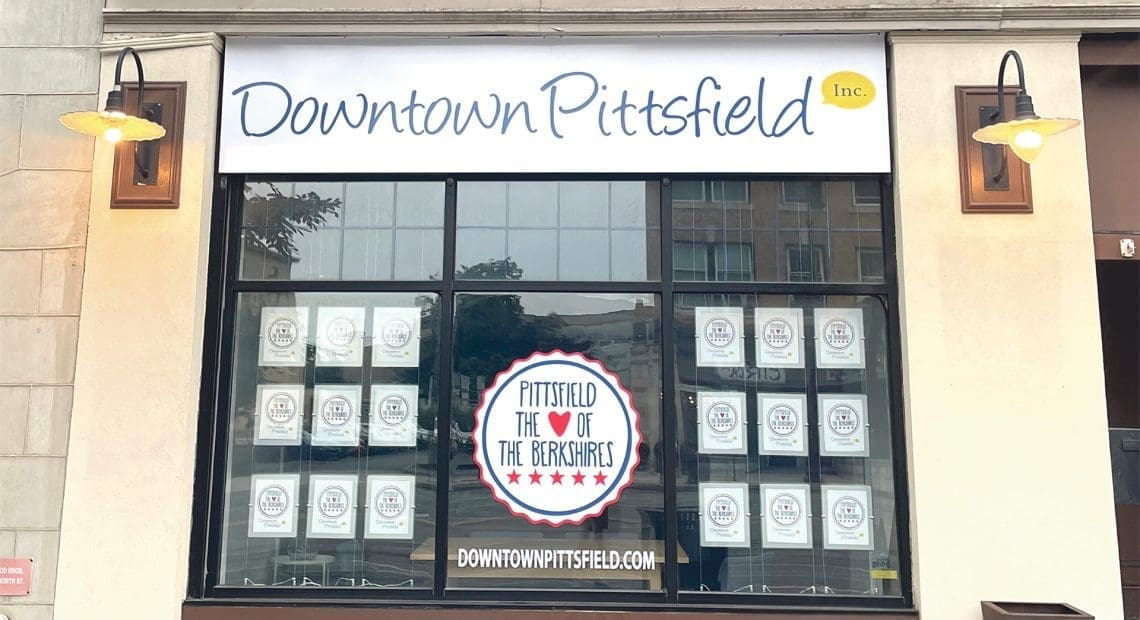
And why she’s equally excited to be managing director of Downtown Pittsfield Inc. (DPI), which has been advocating, convening, and promoting downtown businesses since its launch in 1983.

“We act as a chamber of commerce for downtown. It’s a membership-driven organization; members consist of the usual retailers, restaurants, and cultural and entertainment venues. Nonprofit organizations are welcome, and we work very closely with key property owners downtown as well,” Brien explained.

“We have a vision for as many businesses to join our membership as possible. We have really great diversity downtown, and we want to make sure we welcome as many people as possible and create more foot traffic and a bustling district. Our mission is to strengthen and promote membership through advocacy, collaboration, and celebration.”

The advocacy element means DPI acts as a representative for its members to the city of Pittsfield, speaking to what members want to see downtown. One example has been the parking situation.

“We’ll be announcing, in the next few weeks, meetings to talk about what other changes will best represent what we want the downtown to be — lanes for parking; sidewalks for events and dining; individuals who need more protection, such as bikers or people with motorized scooters — we’ll find what works best for what we want.”

“We worked very closely with membership and City Hall in terms of changing parking along the downtown to be a three-hour limit, which allows for more turnover in parking spaces right on the street,” Brien said. “That’s something that was brought to us by our members. We conducted a survey and brought it to City Hall, and changes have been made. It makes a great difference for retailers when there are open spaces available along North Street.”

DPI also brought a proposal to the city to look at angled parking downtown, but further discussions will be more comprehensive and encompass a fuller plan.

“It prompted the city to go a step further and work with a consultant and talk about many different types of configurations downtown, rather than making a quick decision and a quick paint job,” Brien noted. “We’ll be announcing, in the next few weeks, meetings to talk about what other changes will best represent what we want the downtown to be — lanes for parking; sidewalks for events and dining; individuals who need more protection, such as bikers or people with motorized scooters — we’ll find what works best for what we want.”

Meanwhile, DPI worked with the city on a collaboration called Downtown Blooms, which develops and improves gardens throughout the district. “This program is converting many gardens downtown from annual plantings to perennial beds, and actually saves money for the city.”

First Fridays at Five

First Fridays at Five have featured live music, art, dance, family fun, shopping, food, and entertainment throughout downtown Pittsfield.

But perhaps the most visible aspect of DPI’s work is downtown events, from First Fridays at Five — which spreads art, music, food, family fun, and more across the downtown every month — to First Friday Artwalks, which engage the public with artists and galleries, and Let It Shine!, which is a public art project that has installed almost 20 new murals downtown over the past two years, with funding from MassDevelopment and a host of other local entities. “Last year brought international artists, and we also work with local artists,” Brien said.

In short, DPI seeks to raise the profile of downtown Pittsfield in myriad ways, while supporting businesses both old and new in what she calls “the urban epicenter of Berkshire County.”


Raising All Boats

Downtown Pittsfield Inc. is a lean operation; Brien is the only full-time staffer, and she’s assisted by two part-timers, Marketing Coordinator Kimberly Gritman and Executive Administrator Arri Better.

“So we’re very lucky to have 25 board members and our downtown stakeholders that can help us in terms of programming activities and making connections,” Brien noted. “In terms of hands-on staff, we’re very small.”

The organization has worked with the Pittsfield Cultural Assoc., municipal departments, and other entities on events and programming, and, as noted, there’s quite a lot of both.

Brien came on board DPI two and a half years ago — an exciting time, in some ways.

Rebecca Brien

Rebecca Brien

“There’s a lot of work going on and a lot of partners to work with.”

“Coming out of the pandemic, there was a lot of funding,” she said, noting initiatives like the American Rescue Plan Act and a program of DPI and the Pittsfield Economic Revitalization Corp. (PERC) called Glow Up! whereby businesses and property owners are awarded grants up to $10,000 for signs, painting, lighting, and improvements to their entryways.

This past spring, the second round of grant recipients was announced, including Angelina’s Submarine Shop, Berkshire Pipe & Tabacco, Clark Vintage Lighting, Independent Mobility, Phoenix Theatres, Hotel on North, Otto’s Kitchen & Comfort, Pittsfield Health Food Store, Soda Chef, Thistle and Mirth, and the owners of the Brothership Building and the Dunham Block.

Recipients are selected using a grading system that ranks their responses on how COVID-19 impacted their business, the details of the projects to be funded by the grant, and on the impact the projects would make on their space.

Meanwhile, the Berkshire Black Economic Council introduced VIBE grants for new businesses last summer — the first four recipients were Guelce Collaborative Marketing, BB’s Hot Spot LLC, Dolce Rose Beauty Supply, and Brazzucas — while PERC and MassDevelopment funded Boost! North Street, which supports local businesses through competitive grants and professional consulting. The initial cohort includes ASTScuba/Aquatic Roots, Berkshire International Market, Clark Vintage Lighting, Dottie’s Coffee Lounge/Dorothy’s Estaminet, Empire Pizza, Espetinho Carioca, Methuselah Bar and Lounge, Otto’s Kitchen and Comfort, Placita Latina Restaurant and Market, Steven Valenti Clothing, Tito’s Mexican Bar and Grill, and Witch Slapped.

“It’s made for a wonderful period to come in. There’s a lot of work going on and a lot of partners to work with,” Brien said, adding that Chuck Leach, president of Lee Bank and the newest DPI board president, sees the potential as well. “He’s not a resident of Pittsfield, but he recognizes the importance of Pittsfield to the community, and Lee Bank has made major investments in building downtown and really bringing it to the next level.”

Berkshire Museum is a key cultural driver downtown, with activities and exhibits for the whole family.

Berkshire Museum is a key cultural driver downtown, with activities and exhibits for the whole family.

But Downtown Pittsfield Inc. also has its eye on issues like public safety and social services. “The thing about Pittsfield is, although we’re a tourist area, we’re also a major epicenter in terms of urban services,” she noted, which is why a healthy city isn’t just about arts, events and recreation, but good jobs and easily accessed supports for those who struggle with housing insecurity, food insecurity, and health and mental issues.

“The biggest thing now is how to maintain the momentum,” she went on. “It has to do with our community partners realizing where we are economically and where people are at, and make sure places like food pantries are well-staffed and well-supported.”


Creating a Framework

While helping the city move ahead in many ways, DPI also recently relocated its office to the heart of downtown, at 431 North St., former home of Jan Perry Realty, hosting a ribbon cutting and open house on Sept. 15. DPI is also managing the Framework co-working space at 437 North St., offering rentals of semi-private offices, a classroom, and a boardroom to DPI members and the public.

“We’re also able to offer classes on things like how to better market your own business and how to do collaborative marketing with other members. We have such great offerings, and we want to make sure people know about it,” Brien said, adding that Downtown Pittsfield Inc. also hosts quarterly meetings with Mayor Peter Marchetti.

All these collaborations and connections have generated positive vibes, which Brien appreciates, even though she knows there’s always work to do.

“I’ve had people stop me on the street regularly and tell me things are wonderful. We’ve had letters to the editor about how great things are looking. For our July 4th parade this year, our downtown had never looked better,” she said. “But we recognize there are things that every small town or large city are struggling with right now, and we recognize that changes are needed, even small increments at a time.

“But I really believe this upcoming year will be our best year ever,” she added, encouraging residents to not only check out the the improvements and events, but to talk them up, as a way to change the narrative around downtown and keep the momentum going. “That’s what I would recommend for every community at this time.”

Special Coverage Wealth Management

Opportunity or Crisis?

By Jeff Liguori

The U.S. economy has been strong, with the unemployment rate remaining below 4% (considered full employment by most economists) from the start of 2022 through July of this year. Although it just recently ticked above 4% with the August report by the Bureau of Labor Statistics (BLS), this 31-month stretch has been the longest period of full employment since 1970.

Consequently, incomes have been on the rise as employers compete for employees and inflation has persisted. What has this meant for housing? Coming out of COVID (which caused a sharp — and unexpected — spike in the demand for real estate), prices of homes soared. The combination of remote work, a migration out of cities, and a healthy dose of federal stimulus ignited a mini-frenzy of homebuying.

The median sale price of existing homes in the U.S. increased from about $281,000 in March 2020 to almost $427,000 at its peak in July of this year, a surge of 52%. Incidentally, the median home price in Massachusetts is currently the third-highest in the country at roughly $600,000.

Because of significant inflationary pressures, the Federal Reserve initiated a rate-hiking cycle in 2022 — possibly the most aggressive in history — and the rate on a 30-year mortgage increased to about 6.5% from about 3% prior to the Fed’s actions. For context, the monthly payment on a home purchased for $300,000 with 20% down is $1,500 per month today, up from $1,000 per month a few years ago, which translates to a 50% increase in after-tax dollar spending.

“Coming out of COVID (which caused a sharp — and unexpected — spike in the demand for real estate), prices of homes soared. The combination of remote work, a migration out of cities, and a healthy dose of federal stimulus ignited a mini-frenzy of homebuying.”

Why hasn’t this softened the market? Supply and demand. Cash transactions for real estate now account for almost one-third of all transactions, the highest percentage since 2014, according to the National Assoc. of Realtors. Thus, fewer folks require financing, which has supported prices of existing homes. More importantly, fewer homeowners are using their equity to ‘trade up’ to bigger, nicer homes because the cost to upgrade is exorbitant, thus keeping a lid on supply.


What’s Next?

The horizon isn’t very clear for real estate. Homes are the least affordable they’ve been in decades, and some economists believe they may be the least affordable ever (or at least since the data has been recorded). Prior to the Fed raising rates, both the median household income and the income needed to buy a home in the U.S., which accounts for monthly payments, insurance, property taxes, and maintenance costs, was about $75,000 per year. The income needed to buy has seen a drastic increase due to the higher interest-rate environment.

Some economists believe that new homebuyers are spending north of 40% of their income on housing costs. Renting is not a great alternative, especially in desirable areas, as rents — up until recently — have become largely unaffordable. Tight lending standards by banks, skyrocketing insurance costs, and the effect that inflation has had on building materials have created quite possibly the least affordable housing market ever. According to Zillow, an astounding 43% of homebuyers in 2023 used a gift from friends or family to help with a down payment.

Jeff Liguori

Jeff Liguori

“The horizon isn’t very clear for real estate. Homes are the least affordable they’ve been in decades, and some economists believe they may be the least affordable ever.”

From a long-term perspective, demand is likely to persist. There is a shortage of housing in the U.S. as Millennials are in their prime home-purchasing years, and, until recently, construction of new homes has not kept pace with demand. Real-estate prices should stay firm.

The Fed is expected to cut rates in September, which may help the logjam. But if higher rates have curtailed supply, will lower rates increase the supply of homes for sale? Typically, the Fed eases rates due to fears of a recession or during one, which means unemployment is rising and incomes stagnate. If the past several years are an indication of what happens when residential real-estate demand outpaces supply, the next few years may prove to be the inverse of that dynamic.


Election Impact

Residential real estate is a complex and nuanced market, significantly influenced by geographic location and migration trends. Unlike the market for stocks, bonds, or other assets, it is a zero-sum game. People must live somewhere, whether by renting or owning.

As the election approaches, both candidates have introduced policies to address the real-estate puzzle as part of their platform, ranging from significant tax credits and federal subsidies (Harris) to streamlining the permitting process for construction (both Trump and Harris) to opening portions of federal land for new home builds (Trump). A summary can be found on the National Assoc. of Homebuilders website.

The unforeseen ramp in real-estate demand due to COVID-era policies has taught us one thing: predictions are a fool’s errand. Let’s hope the current quagmire unfolds into opportunity and not crisis, because both scenarios seem possible.


Jeff Liguori is the co-founder and chief Investment officer of Napatree Capital, an investment boutique with offices in Longmeadow as well as Providence and Westerly, R.I.; (401) 437-4730.

Community Spotlight Special Coverage

Community Spotlight

Betsy Andrus says Great Barrington attracts many types of visitors

Betsy Andrus says Great Barrington attracts many types of visitors, including those seeking a respite as they hike the Appalachian Trail.

“Small-town living with an extra dose of culture and sophistication.”

That’s how Brook Redpath chose to describe the Southern Berkshires community of Great Barrington, and she’s well-qualified for that assignment.

Indeed, she grew up in town and moved back after living in the D.C. area for some time to raise her family there (and be near her own family) because of that rare blend of small-town feel with culture — and much more. And, for the past 17 years, she’s owned Matruska Toys and Gifts, a downtown staple in the process of relocating from Main Street to Railroad Street.

“This community has something that appeals to just about everyone,” said Redpath, listing stores and restaurants, theater and art, craft beer, hiking, skiing, biking, and more, adding that this blend makes it a great place to live, but also visit. And many do, from across this state and New England, but especially New York, which is just a few miles away.

Indeed, while the community is home to just over 7,000, it is a destination for exponentially more, who come here for everything from leaf peeping to a brief respite while hiking the Appalachian Trail — there’s an access point to the trail off Monterey Road — to something relatively new and completely different. It’s called Berkshire Busk!

“We live in a world where people are on the screens all day long, and there’s a lack of social cohesion; there’s a real need in this world for people to come together.”

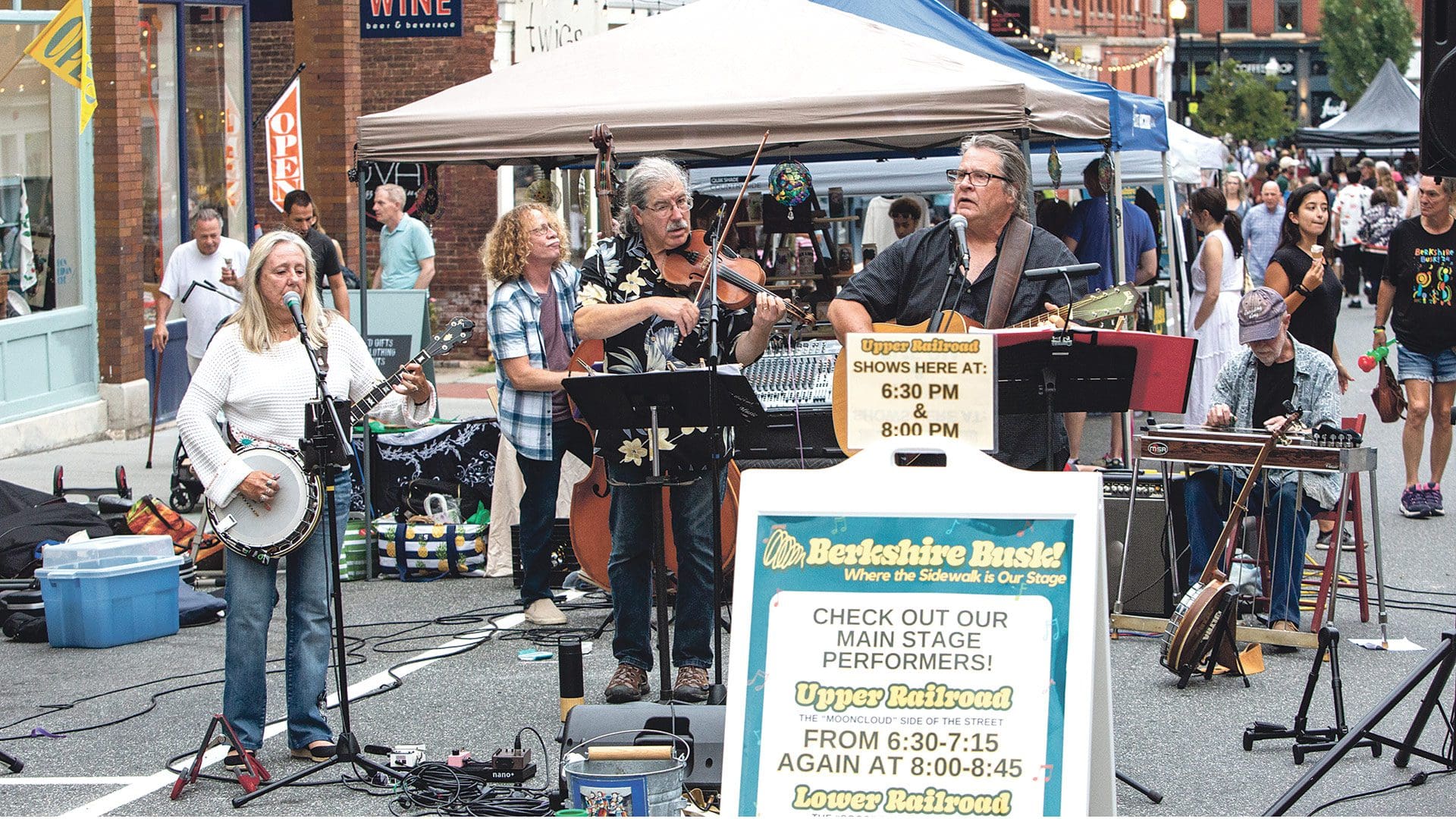
Call it organized street entertainment — everything from singers and flamenco dancers to poets and aerialists — which runs on Railroad Street and other parts of the downtown on Friday and Saturday nights from early July to Labor Day weekend.

Gene Carr, the cellist and arts executive (he was director of the American Symphony Orchestra) turned tech entrepreneur who conceived the program, said it brings people, vibrancy, and “community” to Great Barrington.

“We’re creating economic impact, and we’re also creating community, and that’s something that’s hard to quantify,” he told BusinessWest. “We live in a world where people are on the screens all day long, and there’s a lack of social cohesion; there’s a real need in this world for people to come together. And when you come downtown and you experience what we’re putting together, you’ll see people having an experience together in a community, and it’s rare.”

Betsy Andrus, executive director of the Southern Berkshires Chamber of Commerce, said Berkshire Busk! is one of the many positive notes being hit in Great Barrington these days. Others include its bustling, ever-changing downtown, a farmers market combining with an arts market that is drawing diverse audiences, and its many outdoor activities.
Gene Carr says Berkshire Busk! Is creating economic impact

Gene Carr says Berkshire Busk! Is creating economic impact — and also cultivating community.

While enjoying this vibrancy and progress, the town is experiencing what Gary Happ, co-owner of Barrington Brewery and Restaurant, nearing its 30th anniversary in business, called “growing pains.”

Specifically, he talked about a shortage of workers for the many hospitality-related businesses in town, a shortage of affordable housing, and how the two trends are certainly related.

To make his point, he flashed back nearly a half-century to when he first came to town and worked at a local school. He recalls making $7,000 a year back then, but he could still easily afford to live in the community. That is not the case with the current generation of workers in entry-level jobs and even those a few rungs higher on the ladder.

“People who work here can’t afford to live here,” Happ said, adding that, while this problem is not unique to Great Barrington, it is certainly acute here, where home prices have skyrocketed since the pandemic as rural living has become more popular, and rents have risen accordingly, pricing many people out.

Meanwhile, there are some serious infrastructure issues — the Brookside Road bridge over the Housatonic River was closed down by the state after a routine inspection revealed it was unsafe for vehicular traffic, and there have been two other bridge shutdowns since 2019 — creating some real inconvenience for residents and visitors alike, he noted.

But despite all this, Great Barrington is a picture of vibrancy and energy. For the latest installment of its Community Spotlight series, BusinessWest looks at how this picture is ever-changing and always intriguing.


Taking It to the Streets

As he talked with BusinessWest, Carr was gearing up for Labor Day, the last weekend of Berkshire Busk! The lineup was set to include the Cate Great! Show, an act that combines high-end circus with comedy, at Lower Railroad Street; singer/songwriter Garrin Benfield on Upper Railroad Sreet; Rick and Marilyn, who perform “guitar-centric, edgy, acoustic rock music,” at Carr Hardware; poet Kevin Devaney at TP Saddleblanket, and much more.

That lineup typifies what the program has been about since it was conceived during COVID and launched in 2021 with the support of town officials and several corporate sponsors, including Big Y, Adams Community Bank, and the Geoffrey C. Hughes Foundation, among others.

“Many of our employees have to live in larger groups or further out — maybe in Pittsfield or in New York State. In Great Barrington, the demand for workers is high, and that puts a lot of stress on many businesses.”

As Carr explained, outdoor dining was exploding onto the scene in the summer and fall of 2020, and Berkshire Busk! — busk is a verb referring to street performing — was created to bring that street dining experience to a new and much higher level.

“I went to the town and said, ‘you have such a wonderful outdoor opportunity … why don’t we add some buskers, some street performers, who can perform all over town in Great Barrington, and we can bring people downtown who can dine and shop and be with each other — why don’t we create a real festival?’” he recalled, adding that is exactly what has materialized.

Each weekend, there are between five and seven buskers at different locations in the downtown, he went on, adding that the lineup varies each week and includes local performers and professional buskers.

Carr said about 25,000 people turned out during the 10 Friday and Saturday night weekends of the festival, with two rain days.

“About half the attendees said they specifically came because of Berkshire Busk!, and the vast majority said they came to also to dine and shop … which means that we generated more than $1 million of incremental economic impact,” he noted.

“We reached all ages, particularly families with kids, and the audience was about 50% local Berkshire county and surrounding areas and 50% tourists, with the majority of the tourists coming from the New York metro area. Also, 97% of respondents said that Berkshire Busk! improved their perception of the town of Great Barrington.”

Great Barrington at a glance

Year Incorporated: 1761
Population: 7,172
Area: 45.8 square miles
County: Berkshire
Residential Tax Rate: $13.89
Commercial Tax Rate: $13.89
Median Household Income: $95,490
Median Family Income: $103,135
Type of Government: Open Town Meeting
Largest Employers: Fairview Hospital; Iredale Mineral Cosmetics; Kutscher’s Sports Academy; Prairie Whale
* Latest information available

As noted earlier, Berkshire Busk! is one of many draws in Great Barrington. Another is its array of arts and cultural attractions, including the historic Mahaiwe Performing Arts Center, in continuous operation since 1905, and also an eclectic mix of shops along Main and Railroad streets.

This collection of shops is in an almost-constant state of change, said Andrus, noting that, in addition to new shops opening on a fairly regular basis, existing businesses will often move to different storefronts. All this keeps the downtown fresh, she said, adding that it attracts a mix of locals, many from neighboring New York, and tourists from across New England.

They come … not quite year-round, but for at least three seasons, she said, noting that, while spring is relatively slow, summer and fall are very busy, and winter can be, especially if the conditions are good for skiing.

Happ agreed, but noted that winters, especially lately, have been more hit or miss, with generally less snow and even fewer opportunities to make it.


Lager Than Life

Fall is perhaps the busiest season, here and across the Berkshires, and this year, there will be an additional draw.

Indeed, 15 years after the last one, Barrington Brewery is staging Octoberfest, Happ said. When a wedding slated for Oct. 20 at Crissy Farm, the brewery’s events venue, was canceled and he couldn’t fill the date, he decided to turn back the clock.

“It will be a celebration of beer and food, with entertainment,” he said. “It will be a nice late-fall event.”

In general, business is good, but these are certainly changing times for the craft-beer industry, said Happ, who was one of the local pioneers, if you will. He told BusinessWest that those who just brew beer are struggling — he knows this from all the brewing equipment for sale online from operations that have gone out of business — and that a taproom, and, preferably a full restaurant, is now needed to be profitable.

“To be in the microbrew business without a restaurant attached like we do … it’s hard,” he said. “A lot of those little breweries are struggling because it’s hard to find that space; it’s hard to get taps in bars, and it’s hard to find shelf space in package stores.”

Barrington Brewery & Restaurant not only fits that bill, it’s one of the only businesses of its kind that is solar-powered, and it has Crissy Farm nearby, which hosts a wide array of events, including weddings, rehearsal dinners, anniversary parties, and more.

And while the business has had fewer workforce issues than many other hospitality-related businesses in town, Happ noted that his employees increasingly struggle to both work and live in Great Barrington, and this represents a problem for the town.

“Many of our employees have to live in larger groups or further out — maybe in Pittsfield or in New York State,” he noted. “In Great Barrington, the demand for workers is high, and that puts a lot of stress on many businesses.

“You talk to guys in construction, they can’t find anybody to work — masons, plumbers, electricians, they’re all busy as can be, but there’s no workers,” he went on. “And that does create some problems.”

Still, by and large, most businesses are getting by and having a good summer and good year, said Andrus, even if many shops are seeing an overall drop in consumer spending due to a combination of COVID, the economy, and maybe even the election.

The community remains a popular destination, she said, adding that visitors are drawn to the downtown, the hiking and biking trails the ski resorts, and myriad other events and attractions in and around town.

“There’s so many different reasons why people come,” she said. “Sometimes they come for one specific reason, and then they get here and they say, ‘I want to do that, too. There’s just a lot going on all at once, and there really is something for everyone.”

Visitors come from all over, and many will stay a day or two, but some are simply passing through — quite literally, in the case of those hiking the Appalachian Trail.

The trail, which stretches more than 2,000 miles from Georgia to Maine and passes through 14 states, draws more than 3 million people to hike segments of it each year.

A very small percentage of those hikers will step off the trial in Great Barrington for a break to eat, rest, resupply, or all of the above, but those who do certainly contribute to the local economy and individual businesses, Andrus said.

“It’s amazing the volume of hikers that go through here, and Great Barrington absolutely has become a stopping point for them,” she noted. “A friend of mine who’s retired calls himself a trail angel; he will shuttle people around from one location to the next — to town, to get groceries at the Big Y, etc.

“And he keeps statistics on everyone who gets in his car,” she went on. “He said that 99% of the time he’s driving them into town to eat a meal, go grocery shopping, or stay overnight, usually at the Travelodge, because they accommodate for the hikers, or even to a camping facility. People are in town, and they’re purchasing things — there’s a big impact.”

As Redpath noted, this community has something that appeals to just about everyone — especially that small-town feel with an extra dose of culture and sophistication.


 

Healthcare Heroes

Community Health

Associate Professor of Nursing and Director of the Seedworks Health Equity Program, UMass Amherst

Her Focus on Health Equity Is Changing Outcomes for Women


Lucinda Canty

Lucinda Canty

It takes more than a sentence or two to describe what Lucinda Canty does — and then a lot longer to fully describe the impact of her work.

She’s an associate professor at the Elaine Marieb College of Nursing at UMass Amherst, but also a nurse midwife.

“A lot of what I teach is around women’s health and reproductive health, but I also address social justice and health equity. So there’s quite a range of what I do,” she said. “I mentor undergraduate students and support them through my program, but I also have PhD students or DNP students that I mentor through their projects.”

She also founded Lucinda’s House, a maternal-health initiative that creates an environment where women of color feel safe, supported, and empowered. It provides comprehensive services, including individual consultations, health-education events, and access to community resources covering critical topics such as postpartum mood disorders, breastfeeding, perimenopause and menopause, pregnancy loss, reproductive health wellness, and HIV.

And as director of the Seedworks Health Equity in Nursing Program at the university, she is helping to mentor the next generation of healthcare providers.

According to Crystal Neuhauser, chief Development officer at the Elaine Marieb College of Nursing and one of Canty’s nominators as a Healthcare Hero, “her dedication to her students is evident in her commitment to fostering an environment where future nurses and midwives are trained to understand and address health disparities.”

In short, Canty has found avenues to direct her work as a nurse and educator to achieve some very specific goals. It’s a career that has unfolded in intriguing ways since she chose a healthcare path over a culinary one at a young age.

“When I was in high school, I wanted to either be a chef or a nurse,” she recalled. “I was trying to decide, and a friend was like, ‘you know, you can always cook. Even nurses cook.’ And I wanted to help people; I love being able to provide care. So that’s how I started into nursing.”

In nursing school, she discovered a specific passion for maternal health and midwifery, and she worked in that field for about 14 years before having yet another epiphany moment, when a friend told her about a teaching opening for a clinical maternity professional at the University of St. Joseph in West Hartford.

“I was like, ‘oh, I could do that with my eyes closed.’ So I was going to do one semester and then go back to clinical practice. But I loved it so much. I loved working with the students. I loved how they discovered their confidence — them being terrified to even hold the baby, and then at the end, you see them giving a shot like it’s nothing, and see their interactions. I wanted to be part of that. And now, that one semester has turned into 15 years. And I still love it to this day.”

Others appreciate her as well. “Dr. Canty’s work as a scholar is transformative, especially in addressing maternal health disparities,” said Allison Vorderstrasse, dean and professor at the Elaine Marieb College of Nursing, another nominator. “She is a formidable advocate for maternal and child health in the Pioneer Valley. Her leadership extends beyond UMass Amherst as she engages with local healthcare providers and community organizations to promote health equity. Her efforts have brought much-needed attention to the disparities in maternal-health outcomes and have driven collaborative efforts to address these issues.”

That’s the broad impact of a Healthcare Hero.


Legacy of Learning

As a professor, Canty loves seeing the impact her own students have in the community — and appreciates how the teaching environment has changed.

“Things are different from when I was a student to seeing students now. When I was given a clinical site, I didn’t have a say in it; whatever site you got, you went to,” she recalled. “But now, when I hear people asking, ‘what do students want?’ or hear them advocating for themselves, I’m like ‘that’s what we need in nursing.’ I feel like I was kind of made to feel silent. I did what I had to do, and I appreciate it, but I see these new ways, and I love being part of that.

“And then, to see them in their careers, working, that’s really the most gratifying part. That’s awesome.”

“I loved working with the students. I loved how they discovered their confidence — them being terrified to even hold the baby, and then at the end, you see them giving a shot like it’s nothing, and see their interactions. I wanted to be part of that. And now, that one semester has turned into 15 years.”

But she also desired to delve into research, which included earning a doctorate 20 years after graduating with her master’s degree.

“I wanted to look at health disparities and reproductive health. I wanted to understand what causes disparities, especially among black women,” she told BusinessWest, noting that, for many populations, as socioeconomic status improves, so do health outcomes — but for Black women, that’s not always the case.

Among the findings of her research was the importance of making sure women have accurate health information, but another was the impact of having a relationship with a healthcare provider that goes beyond the basics.

And that gets into the importance of diversity in healthcare, of having doctors, nurses, and other professionals who understand cultural differences and can connect more effectively with patients — and develop a relationship built on trust, communication, and mutual understanding.

“I feel like there’s so much that we can learn from each other,” Canty said. “And I also feel, in nursing school, medical school, we don’t talk enough about culture and how that shows up in healthcare. So we need to have environments where we can have discussions about that.”

Lucinda Canty has created, in Lucinda’s House

Lucinda Canty has created, in Lucinda’s House, a program that powerfully helps women of color while giving hands-on training to tomorrow’s nurses.

Vorderstrasse agrees, calling Canty’s scholarly contributions “vast and impactful,” adding that she has “published extensively in esteemed journals, providing evidence-based insights that are shaping the future of maternal healthcare. Her research is not just academic, but is deeply rooted in community engagement, ensuring that her findings translate into practical applications that directly benefit the communities she serves.”

This research, in fact, influences the Seedworks Health Equity in Nursing Program, which began in 2022 as an effort to increase diversity in the nursing world.

“It’s recruiting students, but it’s also supporting them from their freshman year all the way up until they graduate. So it’s involved mentoring,” Canty explained, adding that it’s not just professors doing that; upperclassmen also mentor incoming students.

“Sometimes you’ll have programs that want to increase diversity, and the students come in, and they feel very isolated through that, or they don’t feel supported. So it’s really about changing that environment so they can see that they belong here and they belong in nursing. Our goal is to increase diversity, not just to say, ‘oh, look, we have a few people of color,’ but to say, ‘look, we have people who have something to offer to nursing.’ And as they’re going through, I want them to see what they have to offer.”


Heart of the Matter

A focus on community is at the heart of that model, Canty said, but when it comes to direct community impact, Lucinda’s House — where her nursing students get hands-on experience in community-based healthcare — has been a game changer for many women since it opened in 2022.

“When I finished my research, I started to see how many things could have been prevented just in the experience of care,” she recalled. “And I felt like I needed to do something.”

Lucinda’s House, according to the description Canty wrote for its website, is a collective space where women of color can discuss sensitive issues related to their health and bodies, while developing their own solutions. “We understand the challenges Black mothers face in the healthcare system and know that changes can occur when the members of the community come together to address issues that prevent Black women and other women of color from maintaining a level of wellness.”

“When I finished my research, I started to see how many things could have been prevented just in the experience of care. And I felt like I needed to do something.”

One of the standout programs at Lucinda’s House is its community baby showers, which provide pregnant women of color with essential resources and support. The showers have been held in underserved communities, ensuring that women receive the care and support they need, both during pregnancy and postpartum.

Canty’s innovative approaches also include the Perinatal Loss Program, which offers health education and support in a safe space for women to discuss their needs and receive the necessary support for healing, including support groups that use creative forms of expression to promote healing.

Lucinda’s House also hosts Community Conversations exploring Black women’s views on factors impacting hypertensive disorders of pregnancy. These storytelling events capture the experiences and beliefs of Black women to develop community health-education programs tailored to their needs.

“What I found, being in the community through my research, is that people just want to tell their stories,” Canty said. “They want someone to listen to them. They want you to understand what they went through, to be able to share and say, ‘this is what happened to me,’ and not be judged in that. At Lucinda’s House, you’re going to be receiving non-judgmental support. Just tell me what it is that you need so that you can better take care of yourself.

“I’m not going to tell you, you’re going to tell me,” she went on. “And from that, I also don’t say, ‘this is what you need to do.’ I give them the opportunity to get the information and let them make the decision. And if they have questions from that, they can let me know.”

Connecting with women, both culturally and emotionally, but also giving them autonomy in the healthcare system has been incredibly powerful, she added. And she’s not only working with first-time moms, but many who are in their second or third pregnancy but are dealing with trauma from a previous pregnancy.

“I don’t turn anyone down,” she said. “I provide support that helps someone’s mental health and well-being, but if they have trauma, I know a social worker, a psychologist, I know people that I can refer them to.

“And that’s the other piece — I have a network of support,” Canty went on. “I’m grateful for that because it’s overwhelming to try to do something and address an issue like maternal health all by myself, or diversity in nursing all by myself. To have people support that strengthens me and strengthens the work that I’m doing. This is not something that I’m just doing on my own.”


Bottom Line

Vorderstrasse recognizes the value of this body of work, not just for the students at the Elaine Marieb College of Nursing, but across the entire community.

“Her work is directly impacting the health and well-being of women in our community, and her influence is shaping the future of healthcare providers,” she wrote. “Dr. Canty’s unwavering dedication to improving maternal health outcomes, her innovative educational programs, and her relentless advocacy for health equity make her a true Healthcare Hero.”

Yet, Canty never set out to earn that title; she’s just following her passion and proving every day that choosing nursing over cooking was a great decision.

“I feel like things just fell into place, and I’m doing something that I love,” she told BusinessWest. “I have friends who have good positions, but sometimes they feel like they’re not 100% happy with what they’re doing. I can really say that I feel good about what I’m doing. Sometimes I feel like it’s a dream — but it’s real.”

Healthcare Heroes

Lifetime Achievement

Past President, NAMI Western Massachusetts

Her Work on Behalf of the Mentally Ill Became a Lifelong Mission


Bernice Drumheller

Bernice Drumheller

When Bernice Drumheller’s son, Mark, was in grade school, she noticed he was having some issues.

“He showed symptoms of some kind of illness early in life,” she recalled. “I noticed some peculiarities; he was my youngest son of four, and I didn’t see any of those signs in my other three children, so I knew that there was something going on with my youngest son.”

That something was mental illness, she said, noting that, as early as age 4, Mark seemed to be depressed and didn’t talk much.

Drumheller’s concern led her to become a school aide so she could keep an eye on him — and also on how the school was “going to deal with his situation.”

You might say that was the very beginning of what would become deep involvement in efforts to help those with mental illness and their families — work that would move beyond Mark’s school and into several different settings, as we’ll see.

“When Mark became a teenager, at 14 and 15, that’s when real problems started to develop,” she went on, noting that he was skipping school, having trouble making his grades, and resisting calls to attend a resource center because he was embarrassed to do so.

Fast-forwarding a little, she said Mark did graduate from high school, but his problems mounted, and his illness took new turns. He would eventually be hospitalized and later sent to Brattleboro Retreat in Vermont. It was there that Drumheller met a social worker who introduced her to an organization called NAMI, the National Alliance on Mental Illness, and that’s where our story begins an exciting new chapter.

Indeed, she would receive some help from the organization, which now boasts 600 local affiliates — and then spend the next 30 years helping it provide assistance to others.

“I noticed some peculiarities; he was my youngest son of four, and I didn’t see any of those signs in my other three children, so I knew that there was something going on with my youngest son.”

She started as a Family-to-Family Education teacher, with that program’s name effectively explaining what it is — individuals in families experiencing mental illness educating others going through the same things (much more on this program later).

But over the years, she would go on to serve on NAMI’s board and as the president of its Western Mass. chapter, now headquartered in Holyoke, for 12 years. For more than three decades, she has been a tireless advocate for those with mental illness and their families — a commitment that has made her a Healthcare Hero in the Lifetime Achievement category.

This award — one of many Drumheller has received over the years, including another lifetime achievement award from NAMI Massachusetts — speaks to the passion she has brought to her work — and the fact that she’s never considered it work.

Bernice Drumheller, right, volunteers at a walkathon to benefit NAMI along with Ruth Stein

Bernice Drumheller, right, volunteers at a walkathon to benefit NAMI along with Ruth Stein, who, with her husband, Harold, founded the local chapter.

Instead, it’s a fulfillment of a commitment she made a long time ago to Mark and countless others like him to be their advocate, their champion, and to speak and work on their behalf.

“I swore, when I got involved in this, that it would be a mission for my life,” she told BusinessWest, adding that this mission doesn’t actually get accomplished; the work is ongoing, and it takes many forms.

Over the years, she has testified at the State House as part of an effort to have the Department of Mental Health budget increased to ensure that beds are still available in hospitals and proper care is provided to those receiving services.

She has spoken at National Gun Violence Awareness Day, specifically addressing the public’s misperception that those with a mental-health diagnosis are responsible for gun violence; her message is that they are far more likely to be the victims of violence than the perpetrators of violence.

She appeared with then-Hampden County Sheriff Michael Ashe to promote the “CEOs Against Stigma” campaign as part of what has become an ongoing fight to battle stigma surrounding those with mental illness, and she has shared her story in crisis-intervention trainings for first responders to mental-health emergencies so they would have a better understanding of these crises.

“Most of her time has been spent giving countless hours serving an organization she believes in and is dedicated to, promoting mental health and well-being throughout the community,” said Tamari Cole, the current president of NAMI Western Massachusetts, who nominated Drumheller for the Healthcare Heroes award, noting that she continues to be a force in this realm.

And at NAMI, she continues to serve on the board and also as a family support-group facilitator, while also raising money for the agency and volunteering several hours monthly.

Her tireless work has served to inspire others, while it is also giving a louder voice to those battling illness, as well as their loved ones.

All this makes her more than worthy of the title Healthcare Hero.


Someone Who ‘Gets It’

Drumheller said her son Mark’s story is typical of many of those with mental illness. And her efforts to understand that illness and help him are typical as well.

In short, families need support, direction, and someone who can relate and understand what they are going through. Someone who, for can lack of a better phrase, can speak that language.

“COVID caused a lot of isolation, and that leads to depression. We’re social beings, and we couldn’t really socialize like we did, and this led to a lot of problems. And now, we have to fix this; we have to fix all these kids who are suffering from anxiety.”

And for many, Drumheller has been, and still is, that someone. But her work has gone much further, as noted earlier, into the realm of advocacy and education — at the local, state, regional, and national levels.

As for Mark, his case exemplifies how the road is hard, but it can take people to a good place, like the one he’s in now — his own apartment where he lives independently.

But, as noted, the road has been a hard one.

After graduating from high school, he struggled, usually without success, to hold onto a job, Drumheller recalled, adding that symptoms of schizophrenia continued to mount.

“When I would send him into a store, he would say, ‘someone’s following me’ — he was paranoid,” she recalled. “He was acting very strangely.”

To understand his illness and help him, she continued to seek the services of a family therapist, who informed her that Mark needed to be hospitalized because he was having a mental breakdown.

“He was sent to Brattleboro Retreat and ran away from there — he was quite a problem there,” she said. “He would hear things, and he would see things that aren’t there. He would think that the radio was talking to him, and the TV was talking to him; he would hear voices.

“He was on a lot of medication, and he got to a point where he couldn’t move,” she went on. “He would lie down, he wouldn’t talk, he wouldn’t move, he wouldn’t do anything.”

Mark would eventually come out of this catatonic state and get better, she recalled, adding that it was about this time that a social worker introduced her to NAMI.

“As soon as I got him home, I called our NAMI affiliate here, and they helped me a lot,” she said. “They were very supportive, and that’s when I got involved.”

That’s an understatement. She joined the organization’s board and soon became a family-to-family teacher.

“We teach families how to cope with people who are living with mental illness,” said Drumheller, who was named by NAMI Massachusetts as a charter member of its Family-to-Family Hall of Fame, adding this is a simple job description, but the work is often difficult, made easier by shared emotions and experiences.

“These families form camaraderie,” she explained. “Someone called me the other day and said, ‘Bernice, I love to talk to you because you understand. Even my immediate family members … they just don’t get it. But you get it.’

“Unless you’re dealing directly with someone who is mentally ill, people just don’t get it,” she went on. “They don’t understand mental illness, and there is such a stigma; I wanted to fight against stigma, I wanted to help educate families of people with mental illness, and I wanted to advocate for people with mental illness.”

She has, and she still does.


Giving Voice

Drumheller recalls being reluctant to take on the role of president of NAMI back in 2007, when she was first asked. There was a lot to the position, and she was working full-time in insurance.

But she eventually acquiesced and would then stay 12 years in that role, the longest tenure of any president. She said she was helped by a strong board and her years of experience as a family-to family teacher, which provided her real insight into the problems being experienced by families — problems she could articulate to constituencies ranging from elected officials who set budgets to the many agencies in this region and beyond that serve the mentally ill and their families.

But it was her drive to fulfill her mission that drove her as she helped carry out NAMI’s broad mission, focused on advocacy, raising awareness about mental illness, education, listening, and leading.

During her tenure, she did a lot of speaking to many different groups, from first responders to student nurses; from senior citizens (about seasonal affective disorder, among other things) to elected leaders in Boston.

“Every year, we had an advocacy day at the state level, and I would go and talk with members of the Legislature about mental illness and the bills that were pending,” she explained. “And I spoke at schools about the importance of trying to spot symptoms in children.”

She also spoke at Smith & Wesson about gun violence and how those with mental illness are far more likely to be the victims of shootings than the perpetrators of gun violence.

And while she doesn’t speak as much as she used to, she continues to volunteer, raise money for NAMI, serve as a family support-group facilitator, and, in general, stress that this work is ongoing.

Indeed, while progress has been made on some fronts, many needs are not being met.

“Even today, there’s still problems with families getting the help they need to cope, and also for the person with the illness,” she explained. “It’s very, very difficult to get resources for them; there are not enough clinicians, and the ones we have don’t get paid enough.”

Meanwhile, the pandemic has exacerbated what already was a mental-health crisis in this country.

“COVID caused a lot of isolation, and that leads to depression,” she said. “We’re social beings, and we couldn’t really socialize like we did, and this led to a lot of problems. And now, we have to fix this; we have to fix all these kids who are suffering from anxiety.”

As for her own son, Drumheller said Mark is doing well these days.

He’s not able to work, because he has a hard time focusing, she noted, but he lives independently, loves music, and takes part in several programs aimed at helping him contribute to the community.

His story is not unique except that it helped to inspire what his mother called a mission, one that she would carry out for the rest of her life.

Not only has she done that, she has inspired others to join her in that mission, while also making continuous strides in combating stigma and improving quality of life for those with mental illness and their families.

In short, Mark helped give the region a Healthcare Hero. And everyone should be thankful.


Healthcare Heroes

Healthcare Education

Professor of Biology, Elms College

She Has Impacted Generations of Young Healthcare Professionals


Janet Williams

Janet Williams

Janet Williams traces her interest in biology back to animal care — specifically, horses, which she had as a child.

“And when you have horses, you have to know how to take care of them,” she noted. “So I got involved with 4-H in New Jersey, and they have a big emphasis on horse care and knowing everything about the anatomy and physiology of the horse — knowing about their nutrition, knowing some basic veterinary care. I had a lot of background in that.”

It was something she kept with her when she first majored in journalism in college — and found she was bored. “So I decided to switch to biology. And that was hard because I didn’t have any science background. I did struggle for a while, but then I really liked it and decided to go to graduate school.”

She has one caveat regarding her love for biology, though.

“I would definitely say, ever since I was young, I am a squeamish biologist. I don’t get sick or anything; I just don’t like some things. I like things that don’t bleed, scream, or throw up. In my career, I’ve had to do things like teach anatomy and physiology where there’s a lot of dissections. I’ve had to work with a lot of live animals and do studies, which I’ve not particularly liked doing, through my degrees.

“But after I finished my PhD, I pretty much switched just to molecular work, where everything’s in a test tube and very tiny and there’s nothing that looks really biological,” she added. “It’s much more like chemistry.”

In graduate school, however, Williams did some intriguing work with chickens and the autoimmune disorders vitiligo and alopecia areata; the principal investigator on that project teamed up with a group from Harvard University that was doing work on both vitiligo and alopecia in humans.

“I did a lot of experiments to try to find out whether the tendency to lose pigment was something to do with the immune system or something to do with the genetics of the bird. It turns out that it was a cross between both of them,” she said. “That was fun.”

Other intriguing graduate-school projects followed, notably in the molecular realm, including cloning experiments and DNA-sequencing experiments, before she finished her PhD in zoology at UMass Amherst, where she also earned a Distinguished Teaching Award for the instruction that was part of her doctoral work.

After that, Williams did post-doctoral work with a company called New England Biolabs, where her work with enzymes earned three U.S. patents with the company. During almost a decade there, she got to work with Richard Roberts, who earned a Nobel Prize in the mid-1990s.

“It was quite an honor working there with him; he was a very interesting man,” she told BusinessWest. “I even have a publication with him, so that was really cool too. Then I got married, and New England Biolabs was about two and a half hours away, so I couldn’t stay there. But Elms College had a position open, so I came here and taught anatomy and physiology and genetics.”

That was 30 years ago, and she hasn’t looked back.

“It was really fun. I’ve always enjoyed teaching, and you don’t get to teach very much when you’re doing research,” she said. “So it was really fun to get back into the classroom again.”

More importantly, Williams has been able to implement new academic programs and generally influence students moving through the college’s well-regarded nursing and health-science majors, while also connecting them with area employers and boosting the region’s healthcare workforce.

“Janet is innovative, always reaching out to our local healthcare industries to see how Elms can better serve the community.”

“During her tenure at Elms College, Janet has embodied the health-sciences program at Elms,” said Julie Beck, dean of the School of Nursing. “She teaches biology, which extends itself to other health-related fields, such as pre-med, physician assistant, pre-PT/OT, and pre-chiropractic studies. Janet is innovative, always reaching out to our local healthcare industries to see how Elms can better serve the community.”

As a professor with impact — three decades worth — Williams certainly merits being chosen as this year’s Healthcare Hero in the category of Education.


Into the Real World

Williams approaches her role with a sense of gratitude for being able to shepherd and mentor students as others did for her during her college and early-career years.

“There’s a huge difference between my previous position as a research scientist and being in academia, being a faculty member, and teaching and mentoring students — it’s very, very different,” she said. “But at the end of every day, I feel great because some student has probably come up to me and said, ‘I never understood that, and today I understand it.’ Or they tell you something exciting; maybe they got a letter and have been accepted somewhere. It’s the greatest feeling, and you feel like every win for them is a win for you.

Janet Williams calls herself a “squeamish biologist”

Janet Williams calls herself a “squeamish biologist” who prefers molecular work over, say, dissections.

“But then, every time they are struggling, you’re struggling with that too — especially when you know that they’re a great person and they’d be a great doctor and you feel like they just need a chance, and you just hope somebody opens the door for them,” she went on. “But they find their way. Sometimes medical school might be the pie-in-the-sky goal, but some of them find they may need to think about something else — maybe dental school, or podiatry, or physician assistant … there are so many wonderful options out there. That’s the thing about this kind of path — there are many different ways they can go from it.”

Since most of her students are going into some branch of healthcare, she became the pre-med advisor as well.

“I had to show students the pathway of how you get from an undergrad program into an MD or DO program, or chiropractic, or pharmacy, or physician assistant, or dental school, or veterinary school,” she explained, adding that, around 2008, she started something called the post-baccalaureate pre-medical program.

“That’s kind of an odd program. It’s where students have already gotten a bachelor’s degree — they might have studied pre-med, or they might have studied something else. So they could either retake courses that they’ve already taken to get better grades and to understand it better, or maybe they majored in English and didn’t have any pre-med prerequisites, so they are taking those courses for the first time.”

That program has drawn students who graduated from places like Amherst College, Princeton University, and other schools where they didn’t study in the medical field, but wanted to expand their career options.

“Those students would do well in our classes, and then they would take the MCAT, do well, and go off to medical school. It was really exciting because, all of a sudden, we were bringing these students from all over the place — not just the Northeast, but California, Florida, Texas, Uganda, China, you name it. It was amazing.”

More recently, she launched master’s programs in biomedical sciences and biotechnology, which many students have taken on their way to medical, dental, veterinary, or physician assistant (PA) programs.

Many Elms students also receive clinical training at the region’s many hospitals and other institutions, and Williams has helped forge those connections over the years.

“A student really can’t get into medical school or dental school or PA or anything without having experience with patients,” she said. “It’s great because you get paid, but you’re also learning, which supports your career goals. We’ve had a lot of students do that; this area has been fantastic supporting our students in their progression.”

“It was really exciting because, all of a sudden, we were bringing these students from all over the place — not just the Northeast, but California, Florida, Texas, Uganda, China, you name it. It was amazing.”

More recently — in the past year, in fact — Elms also launched a phlebotomy class. “This is where students learn how to do blood draws. We’ve had a lot of interest from not only our students who want to be pre-meds, but also the nursing students, because the nursing students find that, if they have this skill, they’ll be a little bit more valuable and a little bit more marketable.”

An EKG certification course may be on the horizon as well. All these efforts, Williams noted, translates into strengthening the local healthcare workforce.

“Interestingly enough, some of our students that have come here all the way from California stay here. They don’t even want to go back. They like the Northeast.

“We’re also very fortunate that, in this local area, we have a lot of physician-assistant programs. We have Assumption, Springfield College, Westfield State, St. Joseph’s down in Hartford, and also Bay Path, which has accepted a lot of our students. That’s been really good, too, because there are so many local opportunities for students to get into PA programs. And then we’ve had a lot of students interested in medical school.”


Giving the Full Picture

One advantage to studying at Elms, Williams said, is access to ethics courses through Dr. Peter DePergola, whose many titles at the college center around bioethics, religious studies, and medical humanities, and who was honored as a Healthcare Hero himself in 2018.

“So many of our students take classes with him, and they learn so much from him. And that is such a critical aspect of really doing well in healthcare,” she said. “He just rolls out a scenario and puts you right into the difficulties of understanding the ethics and concerns of a situation, which is a great thing for students because it’s going to happen to them when they’re out there practicing medicine.”

But there are many, many other challenges in healthcare, and Williams doesn’t sugarcoat them.

“I’m the devil’s advocate. I try to paint the worst possible picture for the students so that they really understand what they’re getting into, because medicine isn’t easy,” she told BusinessWest. “We’re not just talking about the academic part of it; we’re talking about the other parts — working with people in healthcare is not easy. Veterinary is even probably harder because you’re not only working with people, but you’re working with people and their animals, so that’s that’s really a difficult field, and not everybody has insurance to cover the bad things that happen to their animals.

“So I’m trying to breathe a little reality into students so that they don’t just see medicine as what we see on TV,” she went on. “That’s also what’s nice about getting them out to volunteer or work in some of our local practices, because they’re really seeing it; they see the struggles they’ll face in healthcare and medicine.”

But Williams believes in the opportunity for the right person to make a difference in healthcare, whether it’s locally or far beyond Massachusetts. Beck, in nominating her, called her a “valued asset” at the college — and much more: a truly impactful Healthcare Hero.

“I do really love working with students every day,” Williams said. “When you get to work with students every day, they always bring something to you. The students have been really amazing.”

Healthcare Heroes

Lifetime Achievement

Attending Physician, Baystate Mason Square Neighborhood Health Center

He’s Spent His Career Serving the Underserved

Dr. Andrew Balder

Dr. Andrew Balder

“As a person, he’s authentic in his desire to truly make things better for people. He is the first to show up whenever and wherever issues of equity and social justice are to be addressed. And he brings something extra to the table in his role as a knowledgeable physician.”

“What is really important for everyone to know about him is his compassion and patience for those he serves. He truly cares about unhoused individuals. This is not a job for him, but a calling. He gravitates toward helping underserved, marginal, and vulnerable individuals.”

Those two separate testimonials come from previous winners of the Healthcare Hero award in the Lifetime Achievement category — the former from Frank Robinson, the recently retired vice president of Public Health for Baystate Health, and the latter courtesy of Helen Caulton-Harris, commissioner of Health for the city of Springfield.

And they sum up, effectively and concisely, the work of the latest recipient of that award, Dr. Andrew Balder, attending physician at the Baystate Mason Square Neighborhood Health Center, and why he is worthy of that honor.

Indeed, when it comes to not only his commitment to help the homeless, but also his efforts in the realm of maternal-fetal health — and his tireless efforts to serve patients living in some in some of the poorest neighborhoods in the state — his work certainly isn’t just work. It is, indeed, a calling. And he is authentic in his desire to make things truly better for people.

You might say he gets some of that from his mother.

She was a psychiatrist who also served as a general practitioner in West Philadelphia, and during World War II, when many of the male physicians were called to serve, was a general practitioner for a large population.

“She realized that 75% of the patients that needed to see her just wanted to talk,” Balder said, adding that she went on to be a child psychologist as well as a GP, often relating stories about her work and bringing her young son to her offices, where he would hang out in the waiting room while she saw patients.

During a med-school interview, when someone asked him what he wanted to do for a career, he repied, “anything except what my mother does,” he recalled.

“And here I am in primary care. And what’s primary care? She said it’s 75% psychiatry,” he went on, adding that he has some patients who mostly just want to talk — about life and the challenges they’re confronting — and he engages them. Most importantly, he listens.

Beyond the day-to-day work with his patients, Balder has indeed become deeply involved with broader programs to serve the underserved, including as one-time chair of (and still an active participant in) the Springfield Department of Health and Human Services’ Project Baby Springfield. This is an initiative that addresses issues related to infant mortality, child mortality health, and birth outcomes, especially for disproportionately represented women of color, by bringing education and awareness to families and caregivers about healthy pregnancies and safe infant sleep, and ensuring that all mothers, regardless of race, ethnicity, age, or income level, can access excellent pre- and post-natal care.

He has also become involved with programs to assist homeless individuals in Springfield, serving as chief medical officer of the city’s Health Services for the Homeless since 2015.

These and other efforts to serve the underserved not only improve quality of life for many people in Springfield and beyond, they inspire others to want to give back as well.

“He is the first to show up whenever and wherever issues of equity and social justice are to be addressed.”

“Dr. Balder is present, dedicated, and passionate for the care of those who are traditionally underserved in Springfield,” said Paul Pirraglia, division chief of General Medicine and Community Health at Baystate Health, and a previous Healthcare Hero himself. “He is tireless in this work and sets an impeccable example for service, not just for those in healthcare, but for all.”

For these and many other reasons, Balder is worthy of the title Healthcare Hero.


His Life’s Work

When he was called by BusinessWest and informed that he was being honored as a Healthcare Hero in the Lifetime Achievement category, Balder, after first saying “thank you,” joked, “I guess I can retire now.”

He admits to thinking about that day, but he’s not there yet, which is good for the city of Springfield and especially for those underserved populations that he has committed himself to serving pretty much since he started his career.

Indeed, after a short stint as a staff physician with Philadelphia Health Associates/John Hancock Health Plan of Philadelphia in King of Prussia, Penn., he came to Springfield, Baystate Health, and, soon thereafter, the Mason Square Neighborhood Health Center.

There, he has found that, by and large, his mother was right; psychiatry is a big part of primary care.

Dr. Andrew Balder, seen here talking with a patient at the Baystate Mason Square Neighborhood Health Center

Dr. Andrew Balder, seen here talking with a patient at the Baystate Mason Square Neighborhood Health Center, counts listening among his strongest skills.

“Whatever you’re doing in primary medicine, part of the guts of it is understanding behavior and behavior change, and also self-efficacy and self-image, all of those things,” he explained. “And that’s basically talk; it may be structured, it may be unstructured, it all starts with listening, but it really is the human interaction and exchange of things, much more than pulling out the electronic prescription pad.

“Most of what you’re doing is understanding people and dealing with their goals, their dreams, their desires, their perception of health, and their behaviors,” he went on, adding that he’s learned, and really always knew, that it’s more important to listen than to talk.

And that pretty much sums up what Balder has been doing for the past 35 years. But what’s more noteworthy is the fact that he’s spent almost all his career working with underserved populations, which he described as his life’s goal.

When asked why, he said he came out of a family that was attuned to issues of equity and civil rights back in the ’30s and ’40s, and “this sort of gets baked in — what you hear, what you think, and partially what you feel.”

These sentiments explain, at least in part, why he left Pennsylvania, where he was caring for “General Electric space engineers,” as he put it, and came to Springfield. He first worked in the North End in a job that involved far more work in the hospital setting before eventually coming to Mason Square, with the attitude that he wasn’t coming to save the people there, but listen to them and serve them.

“You’re not playing the role of savior. You’re not riding into a community to save it — the community will save itself.”

“You’re not playing the role of savior. You’re not riding into a community to save it — the community will save itself,” he explained. “They will empower themselves … but the tools that are necessary are not always obvious or easily available, so you get to speak up with individuals for themselves and speak up with communities for themselves. But you’re not there to save the world; that’s not going to happen.”

When asked what he likes most about his work in this setting, Balder said, “you get to meet a whole lot of people you would never have met otherwise, and this deepens your understanding of human beings and how, yes, we’re all different, but we have many commonalities and differences that we don’t always appreciate.”


Birth of a Notion

Elaborating, he said he also gets a chance to generate change “on an individual or larger level,” and that no two days are the same.

And he attributes both to the fact that, in his role, he has been able to “build my own life and my own job,” one that has him seeing patients at the health center some days, training residents, leading a diabetes clinic, continuing his work in the broad realm of maternal-fetal health, providing care to the homeless at facilities in Springfield and Northampton, and much more.

He enjoys this variety, which enables him to extend his leadership, and overall impact, well beyond the Mason Square center.

That’s certainly true of his work with the homeless population, which he described as challenging, but rewarding — challenging because many of these individuals have been removed from the healthcare system for many years, most have substance-abuse and mental-health issues, and almost all of them have multiple health problems.

Meanwhile, most don’t have the resources to follow through on what he might recommend, Balder said, adding that this includes financial issues, lack of transportation, lack of housing, lack of a phone, or all of the above.

“All that makes it hard to follow up, and it makes it hard to continue consistent motivation, consistent sensitive messaging, and dialogue,” he said, adding that overall efforts to serve this population are limited by a shortage of providers, nurses, and resources to go where the homeless are.

But there are certainly some qualitative indicators that these efforts are making a difference.

“You don’t get the immediate reward of ‘oh my goodness, my glucose is doing better,’ or ‘my blood pressure is better; let’s focus on that today,’ because you’re always dealing with the other issues first and the difficulties of achieving certain things,” he explained. “But when they do, they’re happy; the patients are thrilled with the changes they’ve made. But they’re always getting beaten by something.”

As for Project Baby Springfield, that’s another initiative, started more than 20 years ago, that is trying to move the needle on a persistent problem for the City of Homes.

“We’re a small band of warriors,” Balder said of those who have led initiatives over the years that eventually came to be branded as Project Baby, adding that those involved have worked to identify the causes behind infant mortality and the reasons for the inequity in the numbers involving certain populations.

“In our country, as well as in our city, Black infants die before their first birthday at two to three times the rate of white infants,” he said. “The numbers go up, the numbers go down, they gradually improve, they occasionally get worse … but the disparity and inequity continues to exist in the same proportions.”

As an example of the work undertaken, he cited efforts to curb what are known as ‘unsafe-sleep-related deaths.’

“We managed to get to some money together and did a four-month campaign on safe sleep,” he noted. “We had things on the sides of buses, in the buses, videos, all sorts of stuff. We took it on as Project Baby to push that message; we did talks in public, we did talks with small groups, we sponsored the development of the new maternal-child healthline in Springfield.”

Other initiatives have included pregnancy, delivery, and post-partum support, especially in communities of color, where such efforts have proven to improve birth outcomes, with fewer cesarian sections, Balder explained, adding that one of the latest initiatives has involved breastfeeding.

“We’ve taken on small things over the years to try to stir the drink and help bring the message to the public,” he explained. “I wish we were bigger and we were doing more, but we are a band of happy warriors.”


Bottom Line

Few people in this region know more about the underserved populations in Springfield than Frank Robinson and Helen Caulton-Harris. They’ve both been on the front lines of efforts to improve the lives of those constituencies.

And Balder has been right there with them. He knows he can’t save the world, or even his small piece of it. But he can make a difference, and he has, in a great many ways.

And this helps explain why he’s a Healthcare Hero.

Healthcare Heroes

Innovation in Healthcare

Chief of Thoracic Surgery, Chief of Robotic Surgery, and Medical Director of the Lung Cancer Screening Program, Mercy Medical Center

With Screening and Technology, He’s Improving Outcomes and Saving Lives


Dr. Laki Rousou

Dr. Laki Rousou

Robotic surgery has been one of the most significant medical developments of the past couple decades, one with impacts that are … well, deeply human.

“It allows you to do major operations through small incisions and, at the same time, protect some vital structures more easily than you could even if you’re doing non-robotic minimally invasive surgery,” said Dr. Laki Rousou, who has performed more than 1,000 surgeries on the da Vinci surgical platform — and earned him recognition as a Healthcare Hero in the Innovation category.

Raised in Longmeadow, Rousou grew up with a deep appreciation for the medical field. As a child, he saw the impact his father, Dr. John Rousou, retired chief of Cardiothoracic Surgery at Baystate Medical Center, had on the lives of his patients. Meanwhile, his brother, Dr. Tony Rousou, is a cardiothoracic surgeon who specializes in cardiac surgery at Baystate.

At Mercy, Dr. Laki Rousou has carved out an intriguing, multi-faceted role as chief of Thoracic Surgery, chief of Robotic Surgery, and medical director of the Lung Cancer Screening Program (more on that later).

“My father was a physician in this area for years, so it was always in the back of my mind as something I would want to do,” he told BusinessWest. “Right after college, I didn’t immediately decide that’s what I wanted to do, but I eventually came to that conclusion and went to medical school.”

Rousou was drawn to the physiology of the heart and lungs, and wanted to find a way to marry that interest to some technical skill, which would turn out to be thoracic surgery.

“The main operation I do is taking out a lobe of the lung for a lung cancer,” he said. “Then there’s the esophagus, which is also in the chest, and diaphragm hernias. But robotics helped me along in my career in that I was able to expand some of the things that we could do minimally invasively.”

Two examples are a thyectomy, the removal of the thymus gland in the middle of the chest, and esophagectomy, in which he removes a good portion of the esophagus. “All that can be done robotically.”

Robotic surgery — by which a surgeon controls a camera and mechanical instruments inside the body from … well, outside it — brings many advantages for both patient and doctor, Rousou told BusinessWest.

“For cancer operations, it allows you to do a more comprehensive lymph-node dissection and gives you better visualization so that you can make sure that you’re taking out everything that you can take out and you’re doing that safely,” he explained.

“Even for non-cancer operations — let’s say a hernia of the diaphragm — there’s a fair amount of sewing that goes into that. In some of these open operations, when we’re deep in a cavity and we’re sewing with our hands and not robotically, it’s hard to see. You’re stretching your arm out, and the angles aren’t quite right, but with the robot, you can make the angles perfect, and you can see perfectly.”

From the physician’s standpoint, robotic surgery brings a different set of advantages.

“If you’re doing open surgery — or even doing non-robotic, minimally invasive surgery — you’re standing, and a lot of times reaching, and you’re not in an ergonomic position. When we’re doing these robotic operations, we’re sitting in a chair in a perfect ergonomic position,” he explained.

“So, just from that standpoint, you can lengthen your career. I know plenty of surgeons who, as they get toward the end of their career, their knees hurt, their backs hurt, and they stop because of that. Maybe this allows you to continue. You may still stop at the same time, but you can do it on your terms, and not because your knee hurts or your back hurts or things like that.”

While he’s become proficient at robotic surgery, Rousou admits he was a skeptic of the technology at first. Then he started to learn about the potential good it could do for patients by decreasing pain, more accurately dissecting lymph nodes, and other reasons.

“I went into it saying, ‘all right, I’m going to find out for myself.’ So I tried it. I did the trainings, and I started doing it. And told myself, ‘I’m not going to commit totally for a year.’”

“I see future benefits coming down the pike, just by being able to use AI and various technologies that can be linked with the robot to help others get better, to help myself get better, and to better evaluate outcomes.”

But after that year, he was seeing clear benefits, especially as he became more adept at it. “Once I saw that benefit, I committed wholeheartedly to it, and now, six or seven years after fully committing to it, I see future benefits coming down the pike, just by being able to use AI and various technologies that can be linked with the robot to help others get better, to help myself get better, and to better evaluate outcomes.”


Breathing Easier

Rousou also heads up Mercy’s Lung Cancer Screening Program, but he wasn’t enamored with the idea at first, when he was asked by hospital leadership to launch the initiative.

“I thought, ‘I’m a surgeon. Why am I going to start a program like that?’ But I thought about it and said, ‘all right, I’ll do it’ — because I think, with any screening program, if it’s not done in a particular way, it can cause harm. And I didn’t want that.”

Robotic surgery is essentially performed away from the body

Robotic surgery is essentially performed away from the body, with better precision than open surgery in many cases.

He was joined in that endeavor shortly thereafter by Ashley LeBlanc, who was honored as a Healthcare Hero in the category of Emerging Leader just last year. “Together, we grew this program that we started,” he said before explaining how it works.

“It’s not just a CT scan; it’s a visit with a patient that might be eligible for screening. They’re eligible for screening if they have a certain smoking history, a certain age — and if they’ve quit, it’s got to be within 15 years. But it starts with a visit and a discussion, and then, typically that day, they get a CT scan.”

Those results are reviewed, especially if there’s a high-risk result, by a group comprised of oncologists, pulmonologists, surgeons, radiologists, and pathologists to recommend next steps. If the result is not high-risk, the patient is advised to return for a scan the following year.

“The idea was to have those eligible get screened, but also get information back quickly because, if there’s a risk or a potential for cancer, you don’t want to sit on it. So, they get information back quickly, positive or not, and the care ends up being multi-disciplinary, with much, much better outcomes.”

That’s a big difference from the past, when CT scans for lung cancer were typically reactive, not preventive.

“Before screening, the lung cancers that we caught were caught incidentally,” Rousou said. “They got a CT scan because they had pneumonia. Or they got a CT scan because someone thought they had a blood clot in their lung. And then you see this mass. The vast majority of those were stage 3 or 4 lung cancers. Stage 3 is very difficult to treat; stage 4 is not curable.

“The idea behind screening is you flip the script on that. So now, in the screening population, the majority of the cancers that we find are stage 1 or 2, and are not as difficult to treat. We’ve had a lot of success with it.”

Those early screens are especially critical considering that lung cancer is the leading cause of cancer death in the U.S. (and in most other countries as well), and second only to heart disease in total deaths. In fact, Rousou said, lung cancer causes more deaths than the next four cancers combined in both men and women.

“I grew up here. I’ve got skin in the game here. And one of my goals from the outset, coming back here, was — at least in thoracic surgery and thoracic oncology — to make Western Mass. the equivalent, or better than, some of the major medical centers.”

“So that’s the perfect scenario for screening because, if you do have symptoms, it’s late. And lung cancer is an aggressive cancer,” he added. “You can get diagnosed with late-stage lung cancer, and then you might be gone in six months. That’s not the case, necessarily, with stage 1 or 2.”

Rousou is encouraged that earlier screening, combined with diagnostic advances, new treatment technologies, and pharmaceutical breakthroughs, are resulting in many lives saved. “This is a pretty exciting time, in my opinion.”

Dr. Laki Rousou (center) celebrates his 1,000th da Vinci procedure with Mercy’s Chief of Surgery Dr. Dan Morrison (left), and Chief Medical Officer Dr. Asha Dhamija.

Dr. Laki Rousou (center) celebrates his 1,000th da Vinci procedure with Mercy’s Chief of Surgery Dr. Dan Morrison (left), and Chief Medical Officer Dr. Asha Dhamija.

While outlining the innovations, robotic and otherwise, that Rousou has been putting into play at Mercy, Mary Orr, the hospital’s Media and Communications specialist, also took time to praise his human side in nominating him to be a Healthcare Hero.

“In addition to being a highly qualified, proficient thoracic surgeon, Dr. Rousou is deeply committed to his patients, always putting them at the center of everything he does,” she wrote. “He not only keeps current on the latest developments regarding technological advances and best practices in patient care so that his patients have the best chance of a positive outcome, his bedside manner is second to none. It’s not unusual to find him taking extra time to make sure his patients and their families fully understand the care plan or calling a patient after offce hours to answer their questions or allay their fears.”


Surgical Milestone

Having recently completed his 1,000th robotic thoracic surgery using da Vinci Xi, Rousou is among the nation’s most frequent users of the da Vinci surgical system for thoracic surgery, and he has also completed the most da Vinci thoracic surgeries in all of Trinity Health, the parent organization of Mercy Medical Center, which boasts 36,500 physicians and clinicians across 27 states.

The technology is highly adaptable; da Vinci Xi can be used across a spectrum of minimally invasive surgical procedures, including gynecologic, urologic, thoracic, cardiac, and general surgeries. Rousou was instrumental in championing efforts for Mercy to acquire the da Vinci Xi surgical system earlier this year.

“They had the older version of the robot when I got here; at least for thoracic surgery, it wasn’t being used a lot,” he explained. “So, once I made that commitment, that bolstered the program for robotics, and when the next version of the DaVinci robot came into play, I was involved in making that happen. Now we have two, and I was one of many who pushed for that second version of the robot.”

To hear him tell it, these are not only his patients, but his community — one where he has deep roots and personal connections. It explains why he returned to Springfield in 2014 after a decade of surgical roles at New York University Medical Center, Yale-New Haven Hospital in Connecticut, and Concord Hospital in New Hampshire.
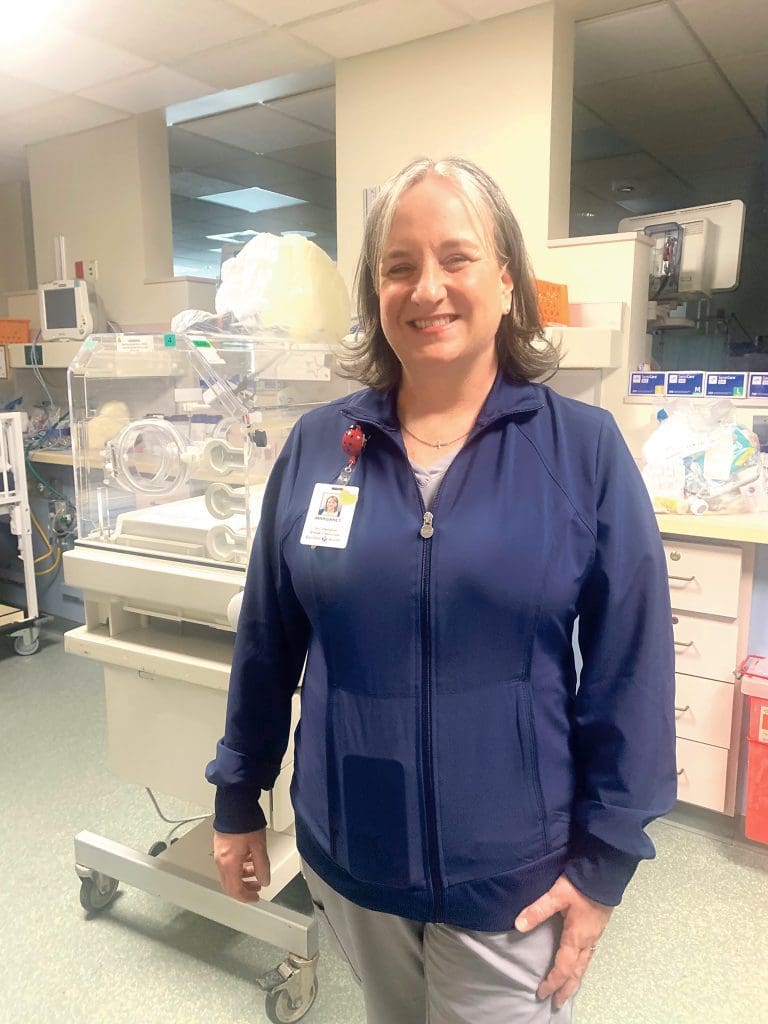
“I grew up here. I’ve got skin in the game here. And one of my goals from the outset, coming back here, was — at least in thoracic surgery and thoracic oncology — to make Western Mass. the equivalent, or better than, some of the major medical centers, like Boston, New York, Yale, those places.”

By doing so, he envisions people getting care at a smaller, more intimate health center and not having to travel to bigger cities — and having access here to the most recent innovations, including the most advanced robotic surgery possible.

“That’s been an overreaching goal, and still is, for us here — to make this top-of-the-line care in your backyard,” he said. “And we’re not done yet.”

Healthcare Heroes

Healthcare Administration

Director of School-Based Clinical Services, River Valley Counseling Center

As a Leader, She Makes Sure Team Members Are Heard — and Valued

Alexa Mignano

Alexa Mignano

Like many in healthcare who have traded direct interaction with patients for roles in which they manage others who provide that care, Alexa Mignano found the transition somewhat challenging; stepping away from direct care is never easy.

But to say she has managed and is flourishing in her current role would be a real understatement.

As the director of School-Based Clinical Services (SBS) for River Valley Counseling Center, she now leads a team of more than 85 people. Since taking the helm in 2019, she has expanded the SBS program in dramatic fashion, taking it from two school districts to 11, providing behavioral healthcare to more than 1,600 students in more than 70 schools.

And this growth comes at a critical time.

Indeed, COVID-19 had a significant impact on the behavioral health of society as a whole, and especially young people. It also comes at a time when many young people are experiencing trauma and its many side effects, and when there are simply not enough clinicians, especially in non-school settings, to meet this need.

But behind the numbers, and these sentiments on growing need for behavioral-health services among young people, are the traits that Mignano brings to her role — traits that make her a Healthcare Hero in the Administration category.

“There are really difficult things that we hear about in this work that happen to children. And to be able to create some change and help them heal, and help families heal, is a way to give back to my community.”

These include passion for her work, strong leadership skills, an ability to build teamwork and camaraderie, a willingness to listen and maintain an open mind, and the ability to inspire others to reach higher and deeper as they go about their work and serve this important constituency.

These are traits that come clearly into focus in the thoughts of team members and others who came together to nominate her for the Healthcare Heroes award.

“The SBS is a connected, warm, passionate, and energetic team, which has accomplished amazing things in our school system,” said Elaine Campbell, assistant executive director and clinical director at River Valley. “This team is spread out across Hampden, Hampshire, and Franklin counties, and Alexa brings them together and unifies them as a collaborative unit. Alexa engages the team and brings them together for various events and trainings throughout the year to build support and community amongst the team.”

Alexa Mignano says trained clinicians offering care right in the schools

Alexa Mignano says trained clinicians offering care right in the schools provides consistency for the kids, which translates into better care.

Emma Cohen, an SBS clinician, added that “Alexa is — and consistently has been — an amazing leader. She always manages to support our whole team, work hard to help each and every one of us, and make sure we’re providing the best care we can to our clients.

“Alexa truly makes our program great — she is always open to new ideas, makes sure everyone has space to feel heard, and helps us make a large and complex program run smoothly,” she went on. “Alexa is an incredible example of a leader, an advocate for both her employees and the people we serve, and an overall wonderful person to work for.”

If one looks up the definition of ‘leader,’ especially in a healthcare sector, these are the words and phrases that will come up. And that’s what Mignano has become — a true leader.

And while she misses providing direct care to clients, she said that, as a manager, she can actually have a bigger impact and touch the lives of more young people in need of critical help.

“What’s so cool about what we do, the schools that we’re in … the kids know us, therapy’s cool, and more kids want to come see us. They’re not afraid to get help.”

“This is the classic very rewarding job,” she told BusinessWest. “There are really difficult things that we hear about in this work that happen to children. And to be able to create some change and help them heal, and help families heal, is a way to give back to my community.”

Such sentiments explain not only why she loves what she does, but why she’s a Healthcare Hero.


Taking the Lead

Since the Healthcare Heroes recognition program was created in 2017, its Administration category has been perhaps the most competitive.

There are several nominations each year, and to stand out in these crowded fields, one must be more than a manager. He or she must also be a leader, someone who displays those skills and traits mentioned above.

In short, those that prevail in this category, often providers of care themselves at various points in their careers, are able to motivate and, for lack of a better phrase, get all the members of a team to row in the same direction. And their strongest trait might be an ability to not only listen, but make team members understand that they are being heard.

Mignano brings all this and more to a role she’s grown into after taking a somewhat winding road into healthcare and, more specifically, behavioral healthcare.

Indeed, this is a second career for her. She was working at UMass Amherst, doing academic advising and first-year-experience work. She enjoyed that role, but with a young daughter, she needed something that provided more flexibility.

“So I decided to go with what my degree was originally in, which was mental-health counseling,” she said. “And then I fell in love with it.”

That’s another understatement.

Eventually, she started providing therapy to children in schools, was hired by Holyoke-based River Valley Counseling Center, and worked at Holyoke High School and Kelly Elementary School. She ended up going back to school so she could get licensed.

“It was a perfect match for what I wanted,” she went on. “And I felt like I was good at it; I was very interested in how children’s brains change over time, especially when they’ve been exposed to trauma, and how you can heal that and shift that.”

Mignano worked as a counselor for eight years before transitioning into administration, first in a few school districts and, eventually, as director of School-Based Clinical Services.

This is a position with a broad job description that includes everything from overseeing partnerships with school districts and charter schools in the area to hiring, training, and, most importantly, supporting the clinicians that go into schools and provide outpatient therapy to young people coping with a wide array of issues and conditions.

“There’s a lot of trauma,” she noted. “I’d say about 25 to 30% of our cases are focused on trauma. There’s depression, anxiety, ADHD … there’s really a wide range.”

As they help students deal with these issues, the counselors become trusted and accepted, and at a time when students need help, they seem increasingly willing to embrace it.

“I have been in the field for more than 20 years, and Alexa is the most caring, supportive supervisor I have ever had.”

“What’s so cool about what we do, the schools that we’re in … the kids know us, therapy’s cool, and more kids want to come see us,” she told BusinessWest. “They’re not afraid to get help. The stigma is removed quite a bit, especially in the younger grades. When they get to high school, they want to feel a little bit more private, but even there, we’ve become part of the school, and part of what happens at school is that you also get help for your mental-health problems.”

And dissipation of this stigma is an important step forward, she went on.

“Kids are not afraid to say they need support,” she noted. “I mean, I think there’s a lot of emphasis on that in social media — that it’s OK to speak out and say what’s going on and ask for help. But they also get to see it in their school environment, and it gets normalized. It’s not some random place they go to get services and to get support. They do it in a place they’re really familiar with, and I think that helps with breaking down some of the shame or embarrassment that they might feel about getting support; their friends are getting help.”


School of Thought

In short, school-based services are enjoying large levels of success. And thanks to Mignano’s leadership and drive, they are enjoying success in many more ZIP codes.

“I wanted more people to focus in on treating children, so I started supervising and providing support to other clinicians doing the work,” she said, adding that she initiated efforts to coordinate a contract with the Easthampton School District and oversaw the program there before becoming director of all school-based services, with a commitment to continue adding more districts.

“We started with a few, and then I was like … no, we can do more,” she went on. “And the word started to spread, so I started meeting with different superintendents and principals and talking about what we do. And then, a real focus of mine became cultivating a group of therapists that really wanted to be child-focused or adolescent-focused, supporting them in that work. And it’s just a win-win for everybody in terms of how it’s set up.”

As noted earlier, there are now 11 districts in the fold, and Mignano believes there is room for more expansion, especially since the hiring challenges brought on the pandemic are mostly in the rearview mirror.

“I always say we’re done, and then a principal calls,” she said. “I’ve always wanted to expand responsibly; whenever we add a new school district, we add the infrastructure to support the consistency, the supervision, the communication … that’s critical in making these programs work.”

Beyond these expansion efforts, her leadership has brought consistency and steady improvement to existing programs, with the school setting becoming an increasingly effective place for young people to receive therapy because it removes barriers to care.

“I know I’m biased, but I’ve seen it work,” she said. “As a clinician, I’ve seen it work incredibly well, and now I see it at this end. It works for the kids, it works for the schools because they have some added support, and it works for the clinicians who want to focus on kids, but they don’t want to necessarily work every single evening to do that. They get to have a normal schedule too, so it works for everybody.”

And Mignano is committed to making sure it works for everybody.

“As an administrator, I’ve really been focused on how to create a work environment for mental-health professionals that feels really supportive, so they feel challenged, they feel valued, because ultimately that is the foundation of retaining clinicians,” she explained. “Because we get to train them, they get to grow clinically with us, and that translates into consistency for the kids, which translates into better care for the kids. As an administrator, I focus a lot on that — what type of environment are we creating? And people stay with us.”

Which brings us back to some of the team members who nominated her — and why.

“Alexa is an incredible leader, clinician, advocate, and supervisor,” said Catherine Vaughan, assistant director of School-Based Services. “She is truly passionate about the work we do and gives her all in everything that she does. She also encourages her co-workers to go outside their comfort zones with their work, and she is always there supporting and guiding them along the way. I am so grateful to be a part of her team.”

Lisa Smith O’Connor, an SBS clinician, agreed. “I have been in the field for more than 20 years, and Alexa is the most caring, supportive supervisor I have ever had,” she said. “She is an expert in our field, but also an amazing supervisor. I agreed to become a supervisor and commit to this agency long-term due to her caring and thoughtful support and guidance.”

All that certainly helps explain why Mignano has earned another title: Healthcare Hero.

Healthcare Heroes

Healthcare Provider

Occupational Therapist, Baystate Medical Center

She Brings Passion, Compassion to Her Work in the NICU

Margaret King

Margaret King

As she talked about her work as an occupational therapist in the Neonatal Intensive Care Unit (NICU) at Baystate Medical Center, and why she believes she was “born” to be in this setting, no pun intended, Margaret King flashed back almost 40 years.

As King tells the story, she and her mother were visiting her father, then a patient in a hospital in Texas, when her mother suggested they swing by the maternity unit and look at the newborns. And they did.

“I lit up, and I clearly remember my mother saying, ‘you should work with babies someday — I think you’d be really good at it,’” she recalled. “I have carried that with me, and I truly feel like this is what I was put on this Earth to do.

“I feel like I have the best job in the world,” she went on. “It’s a privilege to be able to do this work; these babies … they just melt your heart.”

King, a Healthcare Hero in the Provider category, has worked as an OT in pediatrics, and mostly in the NICU, for most of her career, and at Baystate for the past 16 years. And while this unit — for babies born prematurely (as many as 10-12 weeks prematurely) and babies with serious medical conditions — is not what most people think of when they hear the words ‘occupational therapist,’ there are many aspects to this assignment, she told BusinessWest.

“Occupational therapy, by definition, is about improving someone’s ability to participate in life skills,” she said. “Those are the jobs of living that we refer to, and a baby has jobs of living, too. They need to be able to grow correctly; they need to be able to sleep and rest because that’s also how they grow; they need to be able to eat, whether that’s bottle or breastfeeding; and they need to be able to bond with their parents.”

As she helps newborns with these jobs, King works in concert with other professionals in the NICU to essentially bring light to a unit kept dark to replicate conditions in the womb.

And, according to those King works beside, she is the consummate team player — supportive, always positive, and often serving as a mentor to younger OTs and other professionals.

“Maggie is known for her smile, kindness, patience, and resilience,” said Erin Jarosz, Rehabilitation manager for Baystate Health, who nominated her for this honor. “She is passionate about her care for babies, and she works closely with families to be able to best support the physiological needs of their babies and improve the babies’ abilities to participate in daily life activities.”

Olivia Fernandes, a Baystate Rehabilitation speech pathologist, agreed.

“Not only is Maggie a phenomenal clinician, she truly is a wonderful person,” Fernandes said. “She is a leader within our department and treats everyone with respect and kindness. I have looked up to her throughout my time at Baystate as I always value her guidance and advice.”

These qualities resonate not only with co-workers, but also with the parents and other family members of NICU patients, none of whom expected their child to be in this unit and all of whom agonize over each day spent there.

“This is not where they wanted to be — they didn’t want to meet me or anyone else in the NICU, so you have to start from there,” said King, adding that the unique setting, coupled with the emotional nature of the work, leads to relationships that last for years after the baby has gone home.

“I run into so many parents at the grocery stores, Target, places like that,” she went on. “That’s always sweet; that was such a unique, difficult time for them, and that’s why we become family to them during that stressful time, so it’s exciting to see them.”

King was — and still is — a part of hundreds of families across the region, families touched by her passion, warmth, and competence. Families who would say she is more than worthy of being called a Healthcare Hero.


Baby Steps

Whenever a baby goes home from the NICU, it’s an event, a celebration, King said. “It’s always a big thing, especially for the parents. And for me, if I’ve worked with them a lot, it’s just a very exciting day.”

And when a baby who has been there several months leaves those confines, there’s an even bigger sendoff, with pom-poms and the theme from Rocky playing in the background, a nod to the perseverance and fighting spirit of that child — and his or her family.

“She is passionate about her care for babies, and she works closely with families to be able to best support the physiological needs of their babies and improve the babies’ abilities to participate in daily life activities.”

King said it happens regularly, sometimes a few times a day. But it never, ever gets old.

“There’s lot of tears and hugs,” she noted. “Every situation in the NICU is meaningful and challenging, but some of those babies have been here for months, and it’s a big feat to get out of here.”

Helping babies ‘get out of here’ might be King’s unofficial job description — and, as she noted earlier, work she was born to do, even if it took a while to realize that.

Maggie King, center, with Rebecca Hillenbrand, left, and NICU Manager Stephanie Adam

Maggie King, center, with Rebecca Hillenbrand, left, and NICU Manager Stephanie Adam, has been called the consummate team player.

Indeed, she did a music-therapy internship while in high school, and during that time, she pulled an occupational-therapy journal out of the trash and remembers saying, “what’s this?”

“I starting learning about occupational therapy and really never looked back,” she said, adding that she focused on that specialty while studying at Texas Tech. She started in Texas, first in adult rehab and then pediatrics, but eventually relocated to New England (and Baystate) to be closer to family.

And for most of her career, the NICU has been … well, home.

It’s a unique setting, obviously, one where the patients are small, cannot talk — although they can certainly communicate — and, in many cases, their eyes are not yet open.

But they still need occupational therapy, and King loves to talk about that subject.

“Even when babies that are tiny — the 23-weekers — one of my jobs is to help with the positioning of that baby so their arms, legs, and bodies grow properly, but also in a way that keeps them calm so they can sleep and keep their vital signs stable so they can be medically well,” she explained.

“I love working with adults, and the main difference with them is that you can communicate with them and have a give and take, and they can work on following directions. With babies, you have to be really good at following their cues to know what they like and what they don’t like.”
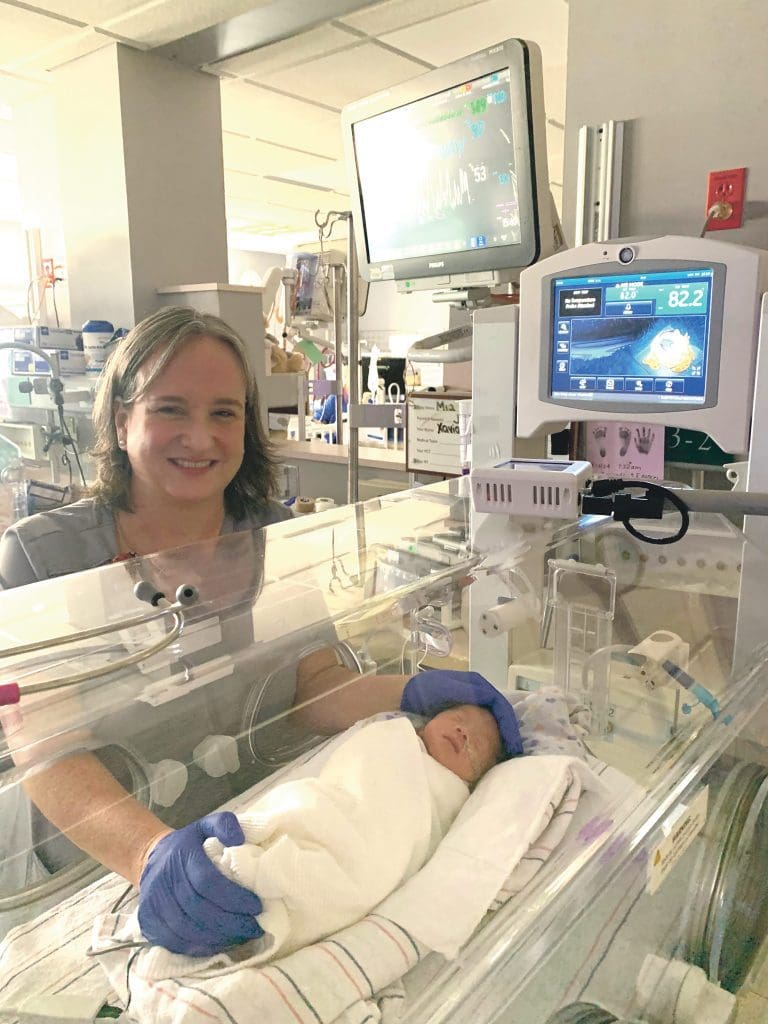
With premature babies, she noted — and, really, all babies in the NICU — she and other team members work to keep those babies in the same position they would be in if they were still in the womb.

“As an occupational therapist, I provide positioning aids that we put the babies in to provide support and containment — we try to recreate the womb,” she explained, adding that this is why it’s kept dark in the unit. “For babies, looking at the light is very stressful; it can actually raise their blood pressure and elevate their heart rate, just because it’s too light. And it’s my job to protect babies from those stressors.”

There are many other aspects to this work beyond positioning, she said, listing everything from supporting the baby during painful procedures, such as putting in an IV, to help with feeding, which is obviously a large part of her work.

When asked what she likes about OT, King said it’s the ability to “work on a little bit of everything with a person, things that are meaningful to them, things that are necessary for life, and you get to establish relationships with people. It’s very unique, and it’s special, and you get to give a lot of yourself to make things happen.”

She stressed that all that is true even if the patient is a few days old and/or several weeks premature.

“I love working with adults, and the main difference with them is that you can communicate with them and have a give and take, and they can work on following directions,” she explained. “With babies, you have to be really good at following their cues to know what they like and what they don’t like.”

Maggie King says there are anywhere from 30 to 50 babies in the NICU at any given time

Maggie King says there are anywhere from 30 to 50 babies in the NICU at any given time.

They don’t like light, and they’re also put off by sounds, everything from phones ringing to isolette doors closing, she said. “Just small sounds to us can be painful to these babies, and we know that because of their vital signs.”

And while her primary work is with patients, King is also there for parents and other family members, who are obviously under a good deal of stress.

Parents of NICU babies are not ‘visitors,’ per se, as in a traditional hospital setting; they can come whenever they want and stay as long as they want.

“We do encourage parents to have rest breaks, take a walk, go get some lunch, maybe go home,” she said, adding that helping parents through this extremely difficult time is just one of myriad rewards that come with this job.


Born Leader

King told BusinessWest that the tiny patients in the NICU — there are between 30 and 50 at any given time — stay in that unit anywhere from a few weeks to several months, depending on how prematurely they were born or the severity of their condition. But the relationships forged with those patients and their parents last for years, if not decades.

Indeed, in addition to the yearly holiday cards she receives from the families she’s worked with, there are pictures sent as those former patients grow older, as well as invitations to their birthday parties — a steady stream of them, actually.

So many that King “sets boundaries,” as she put it. “I’ll go to a few of them. If I went to all of them, I’d be going to about 50 birthday parties a month.”

King is on those birthday-party invite lists because parents remember her, and they remember all that she brought to the NICU every day, from her competence to her passion to the smile that seems permanently etched on her face.

Those she works with see these same things every day, and they consider her the consummate team player: supportive, encouraging, and, in many ways, a mentor.

“Maggie has been consistently supportive and proactive in helping me work in this challenging, rewarding setting,” said Dan Lemaire, another Baystate Rehabilitation OT. “The NICU is, after all, an intensive-care unit; the patients are very involved medically, and Maggie’s experience and guidance has been essential to me in navigating this practice area. She has helped me understand an OT’s role amidst highly trained nurses, neonatologists, and other specialists. She has shown sensitivity and awareness regarding my skill level and readiness to approach different patients, and has guided me to appropriate training resources. Not least of all, Maggie is simply fun to work with.”

Upon reading or hearing such comments, one thing becomes abundantly clear: Maggie King’s mother, who died just a few years after that visit to the maternity ward in that Texas hospital, was right. Her daughter is really, really good at this, meaning work not just with babies, but babies in an intensive-care unit — and with parents who are under more stress than perhaps at any other time in their lives.

In such a setting, someone must bring to their job passion and compassion, and they need to bring it every day.

Maggie King does, and that’s why she’s a Healthcare Hero.

Healthcare Heroes

Collaboration in Health and Wellness

Director of Healthcare Workforce Initiatives, MassHire Hampden County Workforce Board

She Helps Put Future Healthcare Heroes into the Pipeline

Peta-Gaye Johnson

Peta-Gaye Johnson

Peta-Gaye Johnson is not your typical Healthcare Hero.

Indeed, in the eight-year history of this recognition program, there hasn’t been an honoree quite like her.

She’s not a provider of care, like a doctor, nurse, or occupational therapist, and she’s not an administrator in a healthcare facility; in fact, she’s never worked in the healthcare sector. Nor does she teach those who want to enter this profession, as several honorees, including two in the class of 2024, do.

But as the director of Healthcare Workforce Initiatives for the Hampden County Workforce Board, she works with administrators, educators, and others to help ensure that there is a reliable pipeline of workers — and, yes, potential Healthcare Heroes — for this sector.

Thus, “she has been the cornerstone for driving successful workforce-development programming to strengthen the region’s workforce and enhance the quality of patient care,” said Peter Farkas, who became president and CEO of the MassHire Hampden County Workforce Board earlier this year and nominated Johnson for this award.

Johnson is the winner in the Collaboration category, specifically for her efforts to foster collaboration — between the region’s larger healthcare providers, its colleges and universities, community-based organizations, and philanthropic agencies — and, in many respects, to lead these collaborative efforts.

They include:

• The Healthcare Workforce Partnership of Western Massachusetts, a MassHire inititive that, through Johnson’s leadership, responds to the workforce needs of employers and ensures that workers have access to the education and training needed to prepare them for lifelong careers in a changing industry;

• The Western Massachusetts Nursing Collaborative (WMNC), one of three working groups within the partnership — the others are the Allied Health Working Group and the Pioneer Valley Interprofessional Practice and Education Collaborative — and one that has made great strides to ensure that the region has an adequate supply of nurses;

• A website called westernmasshealthcareers.org, which Johnson developed to provide area residents with relevant information on occupations and career pathways in the healthcare industry;

• The Pioneer Valley Healthcare Center Pathway Forum, an annual event that brings together high-school guidance counselors from across the region to provide them with information to assist and direct students to enroll in and successfully complete health science programs; and

• Her work to oversee and drive a three-year grant to train 174 unemployed and underemployed individuals in the Pioneer Valley for careers as medical assistants, EMTs, recovery coaches, and behavioral resource technicians.
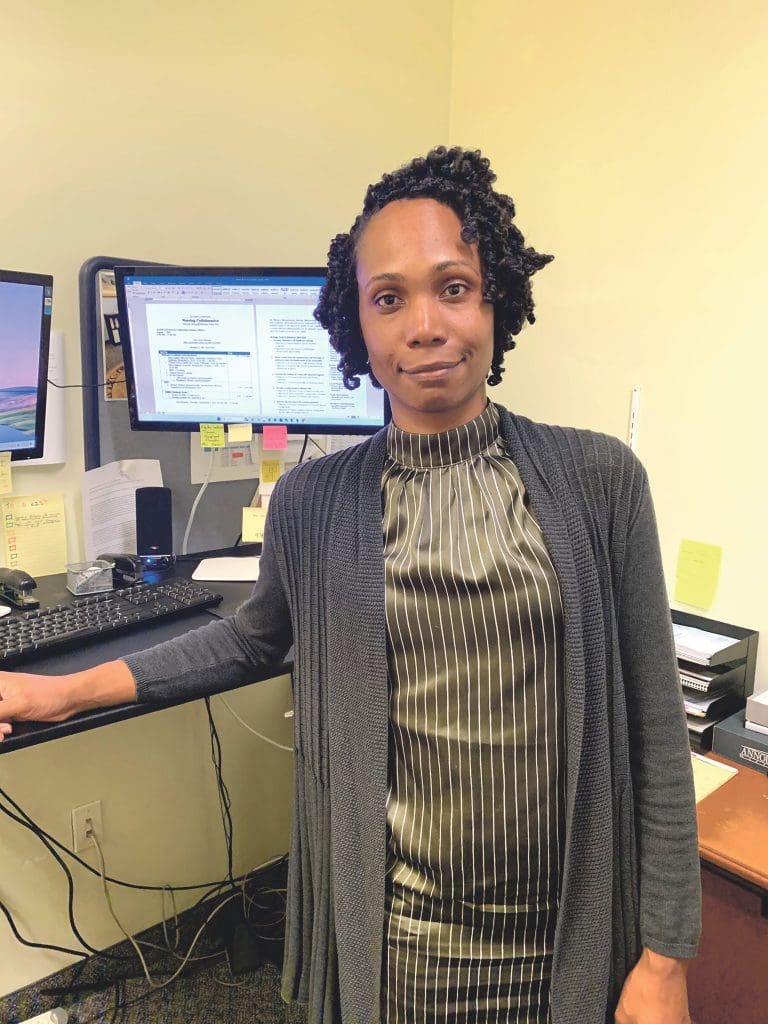
Summing up all these initiatives and Johnson’s involvement with them, Farkas said it’s not necessarily what she does for this sector — the largest employer in the Pioneer Valley, with roughly 73,000 jobs — that makes her a Healthcare Hero, although that’s certainly part of it. It’s how she goes about this work.

“She’s very passionate about the industry, and she’s a leader when it comes to driving the agenda,” he said, adding that it is her job to not just convene the partners working with the workforce board, but to help them set goals and objectives and then create strategies to meet and, hopefully, exceed them. “She’s a good listener and helps build consensus.”

Using these skills, she’s helped area providers address recognized shortages when it comes to many occupations within this broad sector, including nurses, CNAs (certified nurse aides), home health aides, medical assistants, emergency medical technicians (EMTs), and others.

“Before, it was mostly about numbers. Now, it’s beyond numbers — it’s about how people feel about their work, the appreciation they feel for the work they’re providing for the community.”

Beyond that, the collaboratives she leads address myriad other workforce-related issues, from retention of valued workers, to the different generations working together in healthcare and how the wants and needs of each one is different, to the seismic changes that came about during, and because of, the pandemic.

She said the region, and its healthcare sector are still experiencing a workforce crisis, but one where the parameters — and priorities — are shifting.

“Before, it was mostly about numbers,” she said. “Now, it’s beyond numbers — it’s about how people feel about their work, the appreciation they feel for the work they’re providing for the community.”

Johnson said her work is rewarding on many levels, and when asked what she likes most about, she said simply “the collaboration piece.”

“That’s the one thing I’m really excited about,” she told BusinessWest. “The people who are part of our collaboratives are leaders of our collaboratives, so when anything comes up I can reach out to these people, and I always get a ‘yes’ — no matter what it, no matter what I ask them to do, I always get a ‘yes.’

Peta-Gaye Johnson (first row, center) with the other members of the Western Massachusetts Nursing Collaborative.

Peta-Gaye Johnson (first row, center) with the other members of the Western Massachusetts Nursing Collaborative.

Elaborating, she said the stern workforce challenges facing this sector require collaborative efforts — individuals sharing information and experiences and working together to meet agreed upon goals — and she is inspired by the way these groups go about their work.

Meanwhile, others are inspired by her efforts to lead these collaboratives and address challenges old and new. And this is why she is a different kind of Healthcare Hero.


Hire Education

1. Increase retention in all healthcare settings;

2. Ensure nurses have comptetencies and full scope of practice to meet the healthcare needs of the community;

3. Increase the number of nurses with advanced degrees;

4. Increase nursing faculty in Western Mass.;

5. Increase the diversity of the nursing workforce; and

6. Sustain the partnership.

These are the stated strategic goals and objectives of the WMNC, and they, and the progress made toward achieving them, are reviewed at each monthly meeting, said Johnson, adding that this is just one of many meetings, most of them now by Zoom, that she attends on a regular basis.

Meetings are just a small but important part of her job description, she said, adding that such sessions help keep the many agencies and institutions partnering with the workforce board focused on goals like those stated above.

And these goals provide some real insight into how Johnson and all those she works with keep one eye on the present when it comes to the workforce needs of the region and the healthcare providers that call it home, and the other eye on the future.

“We try to project what our future needs will be and address those needs before they come,” she said, adding that this proactive approach helps ensure an adequate pipeline of workers across the broad spectrum of healthcare and social services.

Peta-Gaye Johnson and members of the Western Massachusetts Nursing Collaborative

Peta-Gaye Johnson and members of the Western Massachusetts Nursing Collaborative celebrate the WMNC’s 16th-year celebration lunch.

Filling this proverbial pipeline is just part of the job description for Johnson, who came to the workforce board 13 years ago. She started as an intern while working toward a master’s degree in social work at UConn, and took part in the Hasbro Summer Learning Initiative. She was hired by then-President and CEO Bill Ward, working part-time on the summer learning initiative and part-time with Kelly Aiken, then-director of Healthcare Workforce Initiatives.

When Aiken left for another opportunity in 2016, Johnson was encouraged to apply for her position. She did, won the job, and has flourished in it ever since.

Over the past nine years, she has certainly learned a lot about the healthcare sector and its challenges, but she’s learned much more, she said, about workforce development and all that goes into it, especially partnerships and efforts to work collaboratively.

The WMNC is a good example. It’s a large board — 17 people — representing the nine colleges and universities in the region with nursing programs, as well as five service partners (Baystate Health, Caring Health Center, Cooley Dickinson Hospital, Holyoke Medical Center, and Trinity Health Of New England/Mercy Medical Center) and the Western Massachusetts Black Nurses Assoc., the Massachusetts Senior Care Assoc., and MassHire.

It met three or four times a month during COVID to address the myriad challenges it created and exacerbated, but has settled back to once a month.

By convening these partners, Johnson is able to help gauge their needs, understand their challenges, and lead the group to finding solutions together, said Farkas, using the WMNC as an example.

“Bringing together that group monthly … I would say that’s helpful just for them to hear from each other in terms of their struggles and successes,” he noted. “It’s not different than most people’s jobs — you can get in silos. Just to talk as a group helps; people say, ‘this is what’s working for us.’ Hearing from your peers is invaluable. Peta-Gaye’s ability to drive collaboration and consensus amongst diverse stakeholders has positively impacted the region’s healthcare workforce.”


Work in Progress

As noted earlier, Johnson’s work, and that of the partnership, involves meeting the healthcare sector’s needs today — and tomorrow.

When it comes to today, as she mentioned earlier, the challenges of the workforce crisis extend beyond sheer numbers. There are also issues with retention and adjusting to changing dynamics in the workplace, and especially in healthcare settings.

“For every person, COVID helped them to reassess the work they were doing,” she explained. “And one of the things we talk about in our groups now is the fact that the people coming into the workplace today are much different from those who entered previously; the generational shift is real, and it’s happening.

“Before, people committed a lot more of their time to work — that’s not the case anymore,” Johnson went on. “Conversations that we’re having most recently in our groups center on the fact that people want work to match their lifestyle, and hospitals have to deal with that; they have to deal with people who want to work as little as possible and receive as many benefits as possible. And on the other end, they have to deal with that increase in violence toward healthcare workers.”

As for the future, efforts include everything from introducing young people to the many career opportunities in healthcare early — as in middle school — to the website westernmasshealthcareers.org, which helps visitors gain an understanding of the many careers in this sector, how to pursue them, and the degree offerings at area colleges and universities.

“One of the things that our leaders have identified is the fact that recruitment doesn’t start with people entering high school — we go all the way back to middle school,” she explained. “We run programs with middle-school-aged students to talk with them about to expect and what the journey is like so they’re prepared academically.”

Elaborating, Johnson said young people have, historically, heard about the benefits and rewards of a career in healthcare; what they need is the full picture.

“One of the biggest obstacles that we identified years ago is that students are not necessarily prepared academically, whether it’s math or science,” she noted. “But on the other side of it, what many people do not consider is what healthcare looks like, the fact that it is very demanding. It doesn’t just mean providing care to people who are ill or wounded; it means making them feel comfortable.”

As she talks about these issues and challenges and how they are being addressed, Johnson will always use the collective ‘we’ or ‘our groups.’

She does so to stress that these are complicated issues that must be addressed collectively. For that to happen, the region needs a leader and a convener, someone to bring people together and, as Farkas noted, “drive the agenda.”

That someone is Johnson, whose tireless work to forge partnerships and address matters through collaboration makes her a Healthcare Hero.

Daily News

HOLYOKE — Meyers Brothers Kalicka, P.C. (MBK) announced two new hires: Allison Gaynor, administrative assistant, and Jalaysia Isaac, Audit and Accounting associate.

Allison Gaynor

Gaynor comes to MBK with more than 30 years of experience in the administrative world. Her role at the firm is vital to ensuring smooth workflow, and her approach tactic to customer service is to always offer a helping hand and a warm smile. “Allison’s addition to the admin team has quickly brought a vibrant energy to the firm,” Partner Kristi Reale said.

Gaynor is not limited only to her administrative roles, but has a creative world outside work life. She is the founder of the Jammie Jingle drive and has established roots in the community for the past 10 years, collecting pajamas for children and adults and donating them in time for the holiday season. She flourishes in community involvement and is excited to take part in the community-service branch at MBK.

Jalaysia Isaac

Isaac brings her fresh perspective to her engagements as a recent college graduate and believes that customer service starts with listening to the client and their needs. “We are confident that Jalaysia will be a key asset to the core relationships with our clients” Partner Howard Cheney said.

Isaac received her bachelor’s degree in accounting and management from Elms College. She is also a member of CPAmerica and the Massachusetts Society of Certified Public Accountants. She is eager to continue growing as an accountant to best help her team and clients succeed.

Daily News

WARE — Country Bank President and CEO Mary McGovern announced the promotion of Julie Sanders Yi to chief financial officer. Having joined Country Bank in 2012 as first vice president and controller, she has made significant contributions to the Finance department. Her exceptional performance led to her promotion in 2021 to senior vice president, where she demonstrated her ability to drive results in the Operations department as well.

She brings a wealth of experience to her new role, with 23 years in various roles in finance. She graduated from the University of Nevada Las Vegas with a bachelor’s degree in accounting and is a certified public accountant.

“Julie’s promotion to chief financial officer is a well-deserved recognition of her exceptional leadership and expertise,” said Mary McGovern, president and CEO of Country Bank. “Throughout her tenure at Country Bank, Julie has consistently demonstrated her commitment to excellence and ability to drive results. She is a role model for our corporate values of integrity, service, teamwork, excellence, and prosperity. Her deep understanding of finance and strategic mindset, which will guide us into the future, make her the ideal candidate for this critical role.”

As chief financial officer, Sanders Yi will oversee all financial operations of Country Bank, including financial planning and analysis, budgeting, and financial reporting. She will drive the bank’s financial strategy and ensure long-term financial stability.

“I am honored and excited to take on the role of chief financial officer at Country Bank,” she said. “I am grateful for Mary’s trust and confidence in me. I look forward to working closely with the talented team at Country Bank to continue driving our success and delivering value to our customers.”

Daily News

PITTSFIELD — Carr Hardware announced a major investment in its downtown Pittsfield location, which will undergo a $400,000 remodel this fall. The project underscores Carr Hardware’s commitment to the community and its confidence in the future of downtown Pittsfield.

The remodel will be completed with all local contractors, highlighting the dedication and appreciation Carr Hardware has for supporting fellow local businesses and contributing to the local economy.

The store will remain open through the remodel. With plans to expand and diversify products, customers will have a wider range of shopping opportunities. The newly remodeled store aims to enhance the shopping experience for customers while preserving the store’s welcoming and friendly atmosphere.

Daily News

AMHERST — UMass Amherst hosted state and local leaders this week to celebrate the start of construction for a new $43 million School of Public Health and Health Sciences (SPHHS) hub. The 26,000-square-foot structure will serve as the heart of SPHHS, which currently has its six departments housed in seven locations around campus.

Construction of the new facility, at the corner of North Pleasant Street and Eastman Lane adjacent to the Totman Gymnasium, commenced in May and is scheduled to be complete in December 2025.

SPHHS houses some of the university’s fastest-growing programs focused on pressing public-health problems, as well as cross-cutting issues such as obesity and diabetes prevention, women’s health, global health, aging and healthy living, and autism-spectrum disorders. Currently, 88% of SPHHS graduates stay in Massachusetts, improving the quality of life in community settings where they work, including hospitals, laboratories, health departments, and community health and well-being programs.

UMass Amherst Chancellor Javier Reyes said the new facility will serve not only as a centralized location for SPHHS students, faculty, and staff to come together as a community, but also as a space to engage with and connect members of the local community.

“By strengthening the connection between our people and our place — our students and our community — we will help to ensure that our next generation of public-health leaders continue to stay in Massachusetts to live, work, and thrive in the years to come,” he noted.

SPHHS Dean Anna Maria Siega-Riz said the new facility will feature flexible, team-based learning classrooms, office space, time-shared cubicles, conferencing facilities, and open areas designed for informal work and collaboration. Additionally, the hub will include an outdoor event space to complement the interior academic program spaces to allow SPHHS to host a wide variety of outdoor events.

As an energy-efficient and sustainable facility, the SPHHS hub will aim to exceed the minimum certification level of LEED Silver, in keeping with UMass Amherst’s position as a sustainability leader in the Commonwealth. The building was designed by Boston-based Leers Weinzapfel Associates.

Picture This

Email ‘Picture This’ photos with a caption and contact information to [email protected]


Sprucing Up the Zoo

A group of Health New England employees helped out on Aug. 23 at the Zoo in Forest Park as part of Health New England’s summer volunteer efforts with United Way of Pioneer Valley.  They helped stain around the fox exhibit and lemur stage and cleaned out and organized a shed. This summer, Health New England employees also helped stuff backpacks, manned a thrift store, served lunch to people without homes, and helped the Food Bank of Western Massachusetts.

Pictured, from left: Robin Wysicki, Joani Arroyo, Tracy Dowd, Jimmy Kopie, and Kim Cooney in front of a fennec fox enclosure at Forest Park Zoo.

Pictured, from left: Robin Wysicki, Joani Arroyo, Tracy Dowd, Jimmy Kopie, and Kim Cooney in front of a fennec fox enclosure at Forest Park Zoo.


Back to School in Style

On Aug. 20, a team of Marcotte Ford employees and board members visited the Boys & Girls Club of Greater Holyoke to surprise the children with a gift of 300 new pairs of Adidas sneakers. The gift was extra resonant for the management team, as the basketball court at the Boys & Girls Club is named for the late Bryan Marcotte, the dealership’s second-generation owner.

On Aug. 20, a team of Marcotte Ford employees and board members visited the Boys & Girls Club of Greater Holyoke to surprise the children with a gift of 300 new pairs of Adidas sneakers.

On Aug. 20, a team of Marcotte Ford employees and board members visited the Boys & Girls Club of Greater Holyoke to surprise the children with a gift of 300 new pairs of Adidas sneakers.


Driving Innovation

Kayla Sheridan, Marketing director at TommyCar Auto Group, was honored as a finalist and presented at the Reynolds and Reynolds Automotive Amplifier Contest on Aug. 20 in Leesburg, Va. This event, known for highlighting the most innovative minds and ideas in the automotive industry, provided a platform for leaders to share insights and advancements that are shaping the future of the field. Sheridan’s presentation showcased her dedication to driving innovation and excellence in automotive retail, particularly at TommyCar. Although not selected as one of the overall winners, her work was highly regarded by industry experts.

Kayla Sheridan, Marketing director at TommyCar Auto Group, was honored as a finalist and presented at the Reynolds and Reynolds Automotive Amplifier Contest on Aug. 20 in Leesburg, Va

Kayla Sheridan, Marketing director at TommyCar Auto Group, was honored as a finalist and presented at the Reynolds and Reynolds Automotive Amplifier Contest on Aug. 20 in Leesburg, Va


Agenda

MCLA Constitution and Citizenship Day Lecture

Sept. 17: MCLA will host the annual Constitution and Citizenship Day with a presentation for students and community members at 4 p.m. in Murdock Hall, Room 218. The presentation, “Understanding the Electoral College: Insights into 2024’s Presidential Election,” will be led by MCLA Associate Professor of Political Science Samantha Pettey. The lecture is free and open to the public. Pettey will explore the historical origins and current controversies of the Electoral College, including the disparity between the popular vote and electoral outcomes and the influence of swing states. It will also cover best practices for interpreting polling data to help students and attendees critically analyze ‘hot-take’ headlines. A Q&A session addressing these topics and others will follow the presentation. This lecture is designed to empower students of democracy with the knowledge to understand and influence elections. Pettey has been interested in politics from a young age and has worked in the History and Political Science Department at MCLA since 2016. She teaches a range of courses on American government but is most passionate about teaching and researching Congress, state and local politics, and women in politics. Her current research focuses broadly on female candidates. She is particularly interested in the impact institutional features and demographic characteristics have on state-level candidate emergence and success.


Paragus Firehouse Cook Off

Sept. 17: Polar Park in Worcester will host the third annual Paragus Firehouse Cook Off. Last year, the event, presented by Paragus I.T., drew more than 300 people to Polar Park and raised $20,000 for the Worcester Firefighters 6K charity. This year, the event will also raise funds for DetecTogether, a nonprofit that promotes early cancer detection in young adults, first responders, and workplace employees. For the Paragus Firehouse Cook Off, firehouses from around the city create dishes to be judged by a panel of local business leaders. This year’s judges will be Niche Hospitality President Michael Covino, Worcester Red Sox Coordinator of Public and Community Relations Katie Siegle, Worcester Wares founder Jessica Walsh, and Fontaine Bros. CEO Dave Fontaine. In addition to the Judge’s Prize, there is a People’s Choice Prize based on a vote taken among event attendees. The event will be hosted by Mike Hsu and Radio Worcester’s Hank Stolz. Harpoon Brewery will hold a free beer tasting for attendees. There will also be pies donated by Table Talk and seltzer donated by Polar Beverages. The event begins at 5 p.m. Tickets cost $30 for the general public and $25 for firefighters and their families, with children under 10 admitted free. A ticket entitles entrants to a Harpoon beer tasting, a Table Talk pie, Polar seltzer, and samples of all the dishes. After covering expenses, all funds raised will be donated to the Worcester Firefighters 6K charity and DetecTogether. Tickets are available at firehousecookoff.com.


Amherst BID Block Party

Sept. 19: The Amherst Business Improvement District (BID) announced its 11th annual block party will take place from 5 to 9 p.m. on North Pleasant Street in downtown Amherst. This community event promises an evening of fun, entertainment, and celebration of all things Amherst. The annual block party draws thousands of residents and visitors. This year’s event will feature a lineup of live music and performances, showcasing local talent. Attendees can look forward to aerialists, acrobats, stilt walkers, jugglers, and a variety of street performers that will delight audiences of all ages.


Party for a Purpose

Sept. 19: With the goal of making sure Square One’s children have a new, state-of-the-art, outdoor learning and playspace, Friends on a Mission will host its annual Party for a Purpose to raise funds for the playground project at Square One’s Tommie Johnson Child & Family Center in Springfield. Now in its second year, Friends on a Mission started with a trio of friends — Bob Perry, Walter Tomala, and the late Jenn Schimmel — who set out to spend time together while giving back to the community. Their inaugural event held last fall raised more than $38,000 for Make-A-Wish of Massachusetts and Rhode Island. With early sponsorship support from PeoplesBank and Meyers Brothers Kalicka, P.C., this year’s Party for a Purpose, featuring cocktails, food, and festivities, will be held at 5:30 p.m. at the Delaney House in Holyoke. Interested sponsors should contact Perry at (413) 530-3787. For tickets, visit www.startatsquareone.org.


Free Shred Day

Sept. 21: Westfield Bank announced that it will be holding a free document-shredding event at its 26 Arnold St. branch in Westfield on Saturday, Sept. 21 from 9 a.m. to noon. Sponsored by ProShred Security, the event is free and open to the public. There is a limit of five boxes of documents per person.


OMG Inc. Open House

Sept. 21: OMG Inc., a leading global manufacturer and supplier of specialty fasteners and products for commercial roofing and residential construction applications, is hosting an open house at its Agawam headquarters, located at 153 Bowles Road, from 9 a.m. to 2 p.m. The free event is open to the public and will include guided riding tours of its manufacturing facility, demonstrations of the company’s innovative products and construction technologies, a job fair with on-the-spot interviews, and a variety of activities for children, including pumpkin decorating, face painting, a bounce house, and a photo booth. Vendors will be onsite offering breakfast and lunch during the event.


Cruise for Critters

Sept. 21: The engines are revving for the much-anticipated Cruise for Critters at Westview Farms Creamery. Now in its 12th year, this car show, presented by Al Widlan, owner of Service Connection, is set to once again make a meaningful impact on the lives of pets in need at Second Chance Animal Services. Widlan has championed this event for over a decade, rallying car enthusiasts and compassionate hearts alike to come together for a worthy cause. This year’s Cruise for Critters promises an array of fall-themed activities for attendees of all ages. A vendor fair will offer unique items of all kinds, and the Halloween Barktacular kids’ games will be back, thanks to dedicated Second Chance volunteers. The festivities are set to kick off at 10 a.m. and continue until 3 p.m., featuring food, ice cream, and an assortment of fall attractions that Westview Farms Creamery is known for, from pumpkin picking to navigating through a corn maze. The event will also include live music by the Barberic Band, a raffle, and more. The event is sponsored in part by Ted and Barbara Hebert of Teddy Bear Pools & Spas and by Joe Campisi, a longtime friend of Second Chance. Organizers extend an invitation to local businesses and vendors to support of pets in need. Information on sponsorship opportunities, item donations, and becoming a vendor can be found at secondchanceanimals.org/events/cruise. The event will welcome spectators free of charge. Car enthusiasts are encouraged to take part in the show by contributing a $20 entry fee per vehicle, with every dollar earmarked for the betterment of pets’ lives. A rain date has been set for Saturday, Sept. 28.


MCLA Athletics Golf Classic

Sept. 23: The 27th annual MCLA Athletics Golf Classic will be held at Wyndhurst Golf & Club in Lenox. The Golf Classic serves as a major fundraiser for the college’s Athletic Department. Over the years, the Classic has netted $25,000 to $40,000 annually to support MCLA’s student athletes. Each year, MCLA recognizes a deserving individual or business that has impacted MCLA Athletics. This year’s honoree is Jason Dohaney ’04, a financial advisor at MountainOne Investments and chair of the MCLA Foundation. This year’s Golf Classic premier sponsor is MountainOne. The format for the event is an 18-hole scramble tournament. The entry cost includes greens fees, golf-cart rental, course snacks, a post-golf dinner, branded gifts, and more. Registration takes place from 9:30 to 10:30 a.m.; the tournament starts at 11 a.m., and the awards dinner follows at 5 p.m. To sign up for or sponsor the event, visit alumni.mcla.edu/pages/golf-classic-information-23.


Healthcare Heroes

Oct. 17: BusinessWest and the Healthcare News will celebrate the eight annual Healthcare Heroes starting at 5:30 p.m. at the Log Cabin in Holyoke. The class of 2024, profiled in this issue and at businesswest.com, includes Dr. Andrew Balder, attending physician, Baystate Mason Square Neighborhood Health Center; Lucinda Canty, associate professor of Nursing and director of the Seedworks Health Equity Program, UMass Amherst; Bernice Drumheller, past president, NAMI Western Massachusetts; Peta-Gaye Johnson, director of Healthcare Workforce Initiatives, MassHire Hampden County Workforce Board; Margaret King, occupational therapist, Baystate Medical Center; Alexa Mignano, director of School-Based Clinical Services, River Valley Counseling Center; Dr. Laki Rousou, chief of Thoracic Surgery, chief of Robotic Surgery, and medical director of the Lung Cancer Screening Program, Mercy Medical Center; and Janet Williams, professor of Biology, Elms College. Tickets cost $95, and tables of 10 are available. To purchase tickets, visit businesswest.com/healthcare-heroes-tickets. Presenting sponsors include Baystate Health/Health New England and Elms College. Partner sponsors include Trinity Health Of New England/Mercy Medical Center and Holyoke Medical Center.


Cancer Connection Harvest Dinner

Oct. 17: Cancer Connection will host its annual Harvest Dinner at Inn on Boltwood in Amherst, featuring a farm-to-table dinner, live jazz, a silent auction. Starting at 6 p.m., this festive evening will bring the community together and raise critical funds to bring Cancer Connection’s support groups, integrative therapies, and educational programs to a larger, more diverse population of cancer patients and their caregivers. Cancer Connection is the only independent cancer support center in the area. Visit www.cancer-connection.org/special-events to purchase tickets. For more information about the event or for sponsorship opportunities, contact Liz Horn at (646) 234-8805 or [email protected].


People on the Move
Debbie Esposito

Debbie Esposito

Greenfield Cooperative Bank (GCB) announced the addition of Debbie Esposito to its team as senior vice president, Business Banking officer. She will be instrumental in driving the bank’s growth and development within the Franklin, Hampshire, and Hampden county markets. With more than two decades of experience in the financial industry, Esposito brings a wealth of expertise in business, commercial, and cash-management solutions. Prior to joining GCB, she served as vice president of Cash Management Sales for PeoplesBank and vice president, senior Treasury Management relationship manager for Citizens Bank. In her new role, she will be responsible for promoting financial solutions in partnership with Commercial Lending, Government Banking, and Retail. She will also play a key role in implementing marketing strategies to enhance brand awareness and strengthen the bank’s presence in the community. Esposito holds a bachelor’s degree in communications, public relations, and marketing from the University of Wisconsin – Whitewater and a nonprofit certification with a financial focus from the University of St. Thomas in Minnesota. She is committed to community involvement and actively volunteers for various organizations across Western Mass.

•••••

Robert Fraser

Robert Fraser

MountainOne announced that President and CEO Robert Fraser was elected as chair of the Massachusetts Bankers Assoc. (MBA), a one-year post that began on July 1. Fraser explained that key focus areas already in full swing for 2024-25 include creating greater awareness of the role of banks and their positive impact on communities across the Commonwealth and expanding the association’s engagement with the industry’s emerging leaders. “I am honored to have been elected to the position of chair by my peers,” said Fraser, who joined MountainOne in 2007 and has served as its President and CEO since 2014. “I truly enjoy working with our members and with the Mass Bankers professional staff team to achieve the strategic priorities for the association.”

•••••

Country Bank President and CEO Mary McGovern recently announced the promotion of five individuals within the organization: Dale Mazanec, Jason Mourao, Tori Graffam, Crystal Mansfield, and Ashlynn Fratoni. Previously serving as vice president, Mazanec has been promoted to first vice president, Asset Mitigation. With a decade of service at Country Bank and 35 in the financial-services industry, his thoughtful approach and positive attitude make him a leader within the bank, significantly improving its asset-mitigation strategies and operations. Mourao has been appointed assistant vice president of Retail Lending Operations. Since joining Country Bank in 2019, he has excelled in bringing a fresh perspective to the loan operations team. With 10 years of banking experience as an originator, he continues to enhance his skills while pursuing further education at the New England School for Financial Studies through the Massachusetts Bankers Assoc. Graffam has been promoted to assistant vice president, BSA/Fraud. Joining Country Bank in 2020, she has demonstrated exceptional vigilance in safeguarding the bank and its customers. With more than 35 years in banking, she is respected for her deep knowledge and expertise in BSA/AML/OFAC regulations. She is a liaison, ensuring adherence to evolving regulatory requirements to protect the bank and its stakeholders. Mansfield assumes the role of Customer Experience officer. In 23 years at Country Bank, she has excelled across various roles, including sales, customer service, retail management, marketing, and data analytics. Known for her commitment to excellence and customer-centric approach, she ensures that customer voices are heard and valued throughout the bank. Her dedication was recognized with the prestigious 2023 Presidents Platinum Award. Fratoni has been promoted to Lead Audit officer. In her three and a half years as senior auditor, she has consistently leveraged her extensive audit experience to drive process improvements and efficiency gains across the organization, Her leadership in audit operations reinforces Country Bank’s commitment to operational excellence and regulatory compliance.

•••••

John Berryhill

John Berryhill

The Botanic Garden of Smith College recently welcomed John Berryhill as its new director. Berryhill has been serving as interim director since January as part of a career at the botanic garden that began more than 27 years ago. He brings to this role an in-depth understanding of the botanic garden, a steadfast dedication to its mission, and a strong commitment to the partnerships that are at the center of its work. Berryhill has worked in many different roles during his tenure — as a garden steward tending to the outdoor collections, as an arborist caring for the historic arboretum, and most recently as landscape curator managing the outdoor team and launching several conservation initiatives. These projects and priorities have connected Smith students to the work of the botanic garden community at both a regional and national scale. In the summer of 2022, Berryhill earned a master’s degree from Smith, making him the first Smithie to serve as director of the botanic garden. His research focused on the mountain magnolia’s vulnerability to climate change, which led to the development of a conservation collection at Smith College. He has long been a proponent of social and environmental justice being central to the botanic garden’s work. This priority has led to outreach and collaborations with local Indigenous leadership and conservation organizations, which will help shape the future direction of the Botanic Garden of Smith College.

•••••

Shatz, Schwartz and Fentin, with offices in Springfield and Northampton, was recognized by Best Lawyers as a Best Law Firm in Springfield for 2025. The firm was singled out in the fields of banking and finance law, bankruptcy and creditor debtor rights/insolvency and reorganization law, business organizations (including LLCs and partnerships), corporate law, elder law, trusts and estates, litigation – trusts and estates, and tax law. In addition, eight attorneys at Shatz, Schwartz and Fentin were selected for inclusion in the 2025 edition of the Best Lawyers in America for outstanding contributions to their fields. Attorney Carol Cioe Klyman was included for her expertise the fields of elder law and trusts and estates. Attorney Mark Esposito was selected by his peers in Best Lawyers: Ones to Watch in America in the fields of commercial litigation and litigation – labor and employment. Attorney Michele Feinstein was selected by her peers as a Lawyer of the Year for trusts and estates in Springfield. She was also chosen for inclusion on the Best Lawyers in America list for her outstanding contributions to the fields of elder law, litigation – trusts and estates, and trusts and estates. Attorney Gary Fentin, one of the firm’s founders, was selected for his work in the fields of banking and financial law and commercial transactions/uniform commercial code (UCC) law. Attorney Timothy Mulhern, managing partner, was included for his work in the fields of corporate law and tax law. Founding attorney Steven Schwartz was selected for his expertise in the fields of business organizations (including LLCs and partnerships), closely held companies, and corporate law. Attorney James Sheils was included for his contributions in the field of commercial transactions/uniform commercial code (UCC) law. Attorney Steven Weiss was selected for inclusion for his work in the fields of bankruptcy and creditor debtor rights/insolvency and reorganization law.

•••••

Bulkley Richardson announced that 13 lawyers from the firm were recently selected by their peers for inclusion in the 2025 edition of The Best Lawyers in America. These lawyers were recognized in 22 unique areas of practice. They include Peter Barry for construction law, education law and healthcare law; Kathleen Bernardo for real-estate law; Michael Burke for medical-malpractice law (defendants) and personal-injury litigation (defendants); Mark Cress for banking and finance law, bankruptcy and creditor debtor rights/insolvency and reorganization law, and corporate law; Francis Dibble Jr. for bet-the-company litigation, commercial litigation, white-collar criminal defense, labor and employment litigation, and securities litigation; Daniel Finnegan for administrative/regulatory law; Scott Foster for business organizations, including LLCs and partnerships; Mary Jo Kennedy for employment law (individuals), employment law (management), and labor and employment litigation; David Parke for corporate law and mergers and acquisitions law; John Pucci for bet-the-company litigation, general-practice criminal defense, and white-collar criminal defense; Jeffrey Roberts for corporate law and trusts and estates; Michael Roundy for commercial litigation; and Ronald Weiss for corporate law, mergers and acquisitions law, and tax law.

•••••

Bacon Wilson, P.C., with offices in Springfield, Northampton, Amherst, and Westfield, announced that seven of its attorneys have been recognized in the 2025 edition of Best Lawyers in America, including recognition in the Ones to Watch category. They include Kenneth Albano, business organizations (including LLCs and partnerships); Gina Barry, elder law; Gary Breton, banking and finance law and business organizations (including LLCs and partnerships); Hyman Darling, elder law; Michael Katz, bankruptcy and creditor-debtor rights/insolvency and reorganization law; Tyler Humphrey (Ones to Watch), banking and finance law; and Daniel McKellick (Ones to Watch), real-estate law. Two Bacon Wilson attorneys were named Lawyer of the Year in Springfield for 2025: Breton for business organizations (including LLCs and partnerships), and Darling for elder law.


Company Notebook

UMass Dining Tops for Eighth Straight Year

AMHERST — UMass Amherst has once again been recognized for its exceptional campus dining experience, earning the coveted top spot on the Princeton Review’s list of Best Campus Food for an unprecedented eighth consecutive year. The achievement underscores UMass Dining’s commitment to culinary excellence, sustainability, and experiential dining that features globally inspired, culturally driven menus. The Princeton Review’s annual rankings are based on surveys of 168,000 students at 390 colleges and universities across the nation. UMass Dining’s consistent top ranking is a testament to its innovative approach to campus dining and commitment to delivering student-focused and locally sourced cuisine at its four dining commons, one large retail food hall, and more than 30 cafés across campus.


Excel Dryer Earns SEAL Sustainability Awards

EAST LONGMEADOW — Excel Dryer Inc. recently received Sustainable Product Awards as part of the 2024 SEAL Business Sustainability Awards for its ThinAir Hand Dryer and the D|VERSE Sink System featuring the XLERATORsync Hand Dryer. Both products feature Electrostatic HEPA (eHEPA) Filtration. The SEAL Sustainable Product Award honors innovative and impactful products that are “purpose-built” for a sustainable future. Excel Dryer’s sleek, surface-mounted, ADA-compliant ThinAir Hand Dryer with eHEPA represents a design breakthrough in electric hand-dryer technology. Its ability to conserve space without sacrificing drying time allows users a quick, hygienic, and convenient experience while eliminating paper waste. The D|VERSE Sink System featuring the XLERATORsync Hand Dryer with eHEPA is a collaboration between high-end commercial product designer D|13 Group and Excel Dryer. Integrating the elements of proper hand washing and drying in a cohesive, 30-inch unit, D|VERSE introduces a new level of hygiene, sustainability, and aesthetic appeal to commercial restrooms.


bankESB Among Most Charitable Companies

EASTHAMPTON — For the 10th straight year, bankESB has received the 2024 Corporate Citizenship Award from Boston Business Journal, recognizing the bank as one of Massachusetts’ top corporate charitable contributors. The magazine annually publishes this list to showcase companies that promote and prioritize giving back to their communities. Through its sponsorship and charitable-giving program, the Giving Tree, bankESB and the Easthampton Savings Bank Charitable Foundation support nonprofit organizations and causes throughout Hampden and Hampshire counties. In 2023, the Giving Tree donated nearly $635,000, and over the past decade, it has donated more than $3.6 million. This year, 100 companies qualified for the distinction by reporting at least $100,000 in cash contributions to Massachusetts-based charities last year.


MountainOne Named a Top Insurance Employer

NORTH ADAMS — MountainOne Insurance Agency Inc. has been recognized as a Top Insurance Employer by Insurance Business America for the fifth time. The company previously earned this title in 2019, 2021, 2022, and 2023. This award is based on several key factors, including MountainOne’s workplace culture, employee benefits, and dedication to overall job satisfaction. It was also recognized for its commitment to fostering career growth and implementing forward-thinking strategies that position the company at the forefront of industry.