Cooling Trend

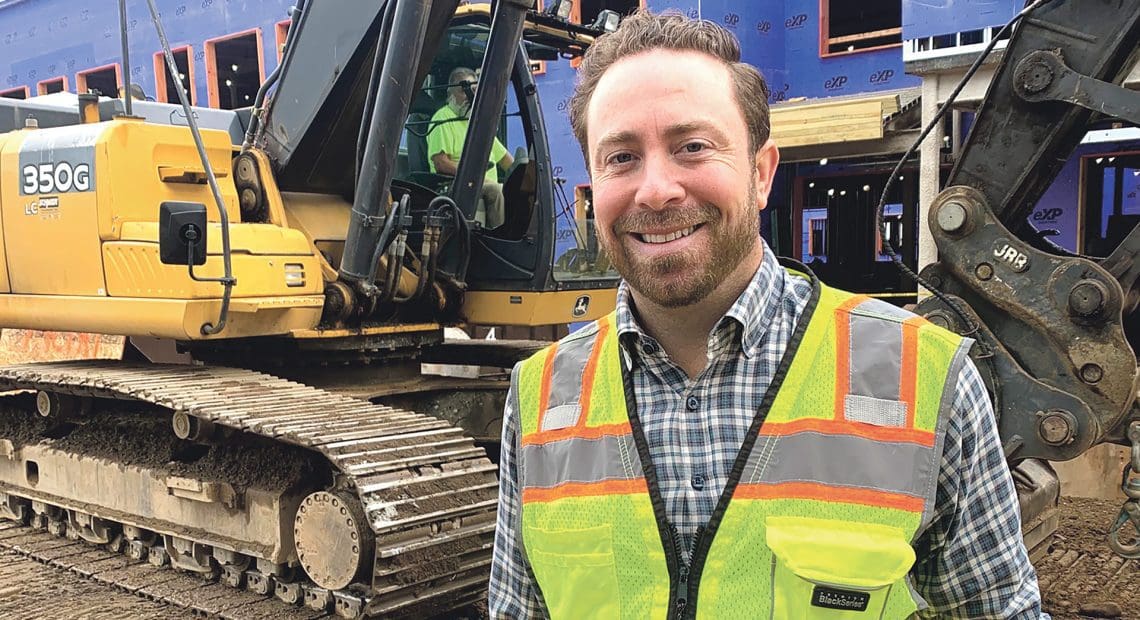
Dave Fontaine at the site of the new Peck Middle School in Holyoke.
Bill Jodice has lived through several economic cycles since he and a few partners bought the engineering and construction firm started by his father in 1964.
And he was quick to note that this current downturn, if it can even be called that, pales in comparison to the Great Recession of 2008, the post-9/11 slump, and even the prolonged recession of the early to mid-’90s, times when the phone seemingly stopped ringing.
Still, it’s been ringing a little less often (in a figurative sense) over the past several months, said Jodice, president of Bloomfield, Conn.-based PDS Engineering & Construction, noting that, while his firm is still quite busy, things are slowing down somewhat, a result of some clients hitting the pause button starting a little over a year ago, waiting for interest rates to come down, the presidential race to be decided, or both.
“We’ve heard some people say it all depends on what happens with the election and who’s managing the finances of the country when it comes to whether they move forward with a project,” he said. “If Trump gets in, they’re going to absolutely move ahead; if Kamala gets in, they’re maybe not going to do it, or at least give it some second thoughts. Some people get nervous around elections, and we hear about it.”
Scott Keiter, president of West Springfield-based Keiter Corp., reports a slowing of many segments within this sector, especially new residential construction, one of his firm’s specialties.
“We’ve seen a lot of deals and projects that were planned with lower interest rates — those in the 2021, 2022 range — in mind that have hit some roadblocks as the interest rates have been rising, borrowing costs have been going up, and the math starts to get difficult.”
He noted that his firm has been averaging five to 10 new homes a year over the past several years, and is certainly on the low end of that range this year, primarily because of higher interest rates and comparatively attractive prices for homes on the market.
“The combination of higher interest rates and well-priced options for people to move to has definitely hit home,” said Keiter, adding that his firm is still busy with work in several areas, from projects for colleges and nonprofits to home renovations, and enjoying the benefits of a diverse portfolio.
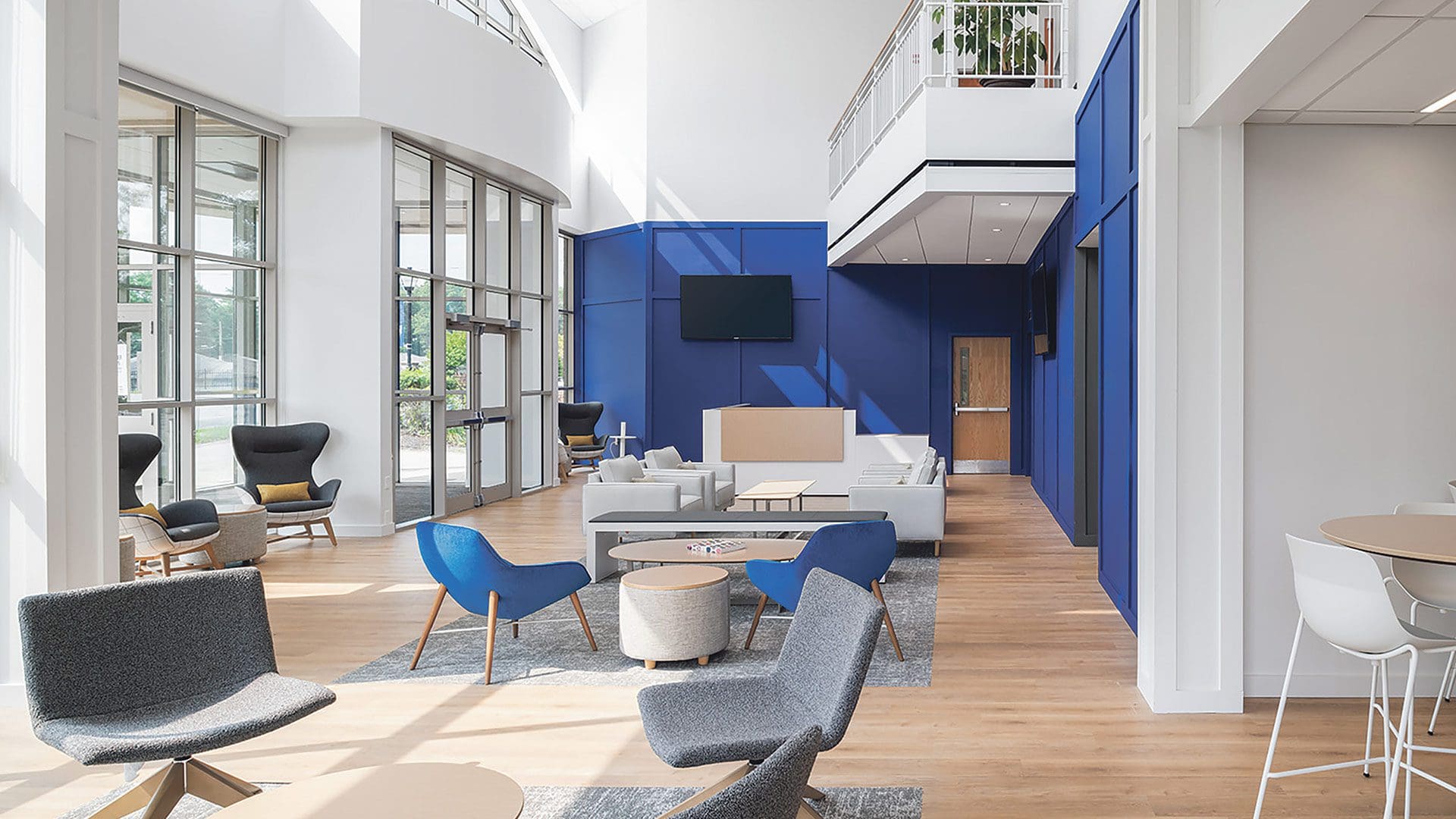
The interior of the new Welcome Center at Western New England University, one of the many institutional projects in the Keiter Corp. portfolio.
John and Josh Raymaaker, co-owners, with their parents, of Westfield-based J.L. Raymaakers and Sons Inc., agreed. John noted that the number of invitations to bid on projects (especially on the private side) started trending downward several months ago and remains well below the pace of a few years ago.
“They’ve slowed from maybe 10 to 15 a month to eight to 10 a month — it’s not drastic, but it’s definitely noticeable,” he said, adding that the public side of the ledger, which comprises 75% of the firm’s portfolio, remains solid and seemingly unfazed by recent events.

Bill Jodice
“We’ve heard some people say it all depends on what happens with the election and who’s managing the finances of the country when it comes to whether they move forward with a project.”
Dave Fontaine, CEO of Springfield-based Fontaine Bros., noted that, generally speaking, the broad construction sector is somewhat of a lagging indicator, meaning decisions to pause or discontinue projects often don’t impact contractors until months later, meaning most firms still have projects on the books.
“We’ve seen a lot of deals and projects that were planned with lower interest rates — those in the 2021, 2022 range — in mind that have hit some roadblocks as the interest rates have been rising, borrowing costs have been going up, and the math starts to get difficult,” he said, noting that most of the hesitancy has been on the private-sector side. “We’ve seen some projects that have been put on hold and others that have been canceled.”
Meanwhile, this slowdown has manifested itself in several different ways, said Fontaine, noting everything from a general cooling of construction material costs from their peak highs (although labor costs continue climbing) to subcontractors, which were booked solid during COVID and the following years, being “hungrier” and more available (more on that later).
But, as noted, this sector remains quite busy, and most players, meaning general contractors, architects, and engineers, have plenty of work on the books now — and, for the most part, for the start of next year as well.

Michael (left) and Brian Sweitzer at the site of the new Embr cannabis retail facility on Boston Road in Springfield.
“The money is still flowing, and we anticipate that it will continue to flow,” said Curtis Edgin, a principal with the Chicopee-based architecture firm Caolo & Bieniek Associates, which counts both public and private projects on the books, everything from an elementary school in Westfield to a new Rocky’s hardware store in South Hadley.
“It seems that people are somewhat apprehensive right now, but we’re still busy and hope to still be busy a year from now,” said Edgin, who was one of many to use the phrase ‘cautiously optimistic’ to describe the outlook for the foreseeable future.
Busy Signals
Jodice calls it a “wave.”
He was referring to the explosion of new car-wash centers in Connecticut, a development that has certainly benefited his firm.
“It’s moving across the state,” he said of this wave, mostly involving facilities that offer monthly wash passes that provide benefits to consumers (if they use them) and guaranteed income to those building these facilities.

Curtis Edgin
“It seems that people are somewhat apprehensive right now, but we’re still busy and hope to still be busy a year from now.”
Beyond the car-wash wave, PDS is also benefiting from what Jodice called an ongoing “arms race” in the auto business whereby makers — Ford and Chevrolet are among the latest — are continuously refreshing dealerships to lure customers to showrooms and service bays, as well as an ongoing self-storage boom and Connecticut’s dire need to rehabilitate some aging prisons.
All of the above have brought new projects to the PDS portfolio in recent months, he said, noting that it includes several car washes for a chain called Russell Speeder’s; new dealerships or renovations for Executive Kia in Wallingford, New Country Porsche in Greenwich, and Curran Volkswagen in Stratford; and work at a prison in Cheshire.
But there has been a discernable slowing across the board, particularly in some sectors, including the defense industry (PDS has done work for several of the smaller companies that supply large defense contractors like GE and Pratt & Whitney), which he finds puzzling given the wars in Ukraine and the Middle East.
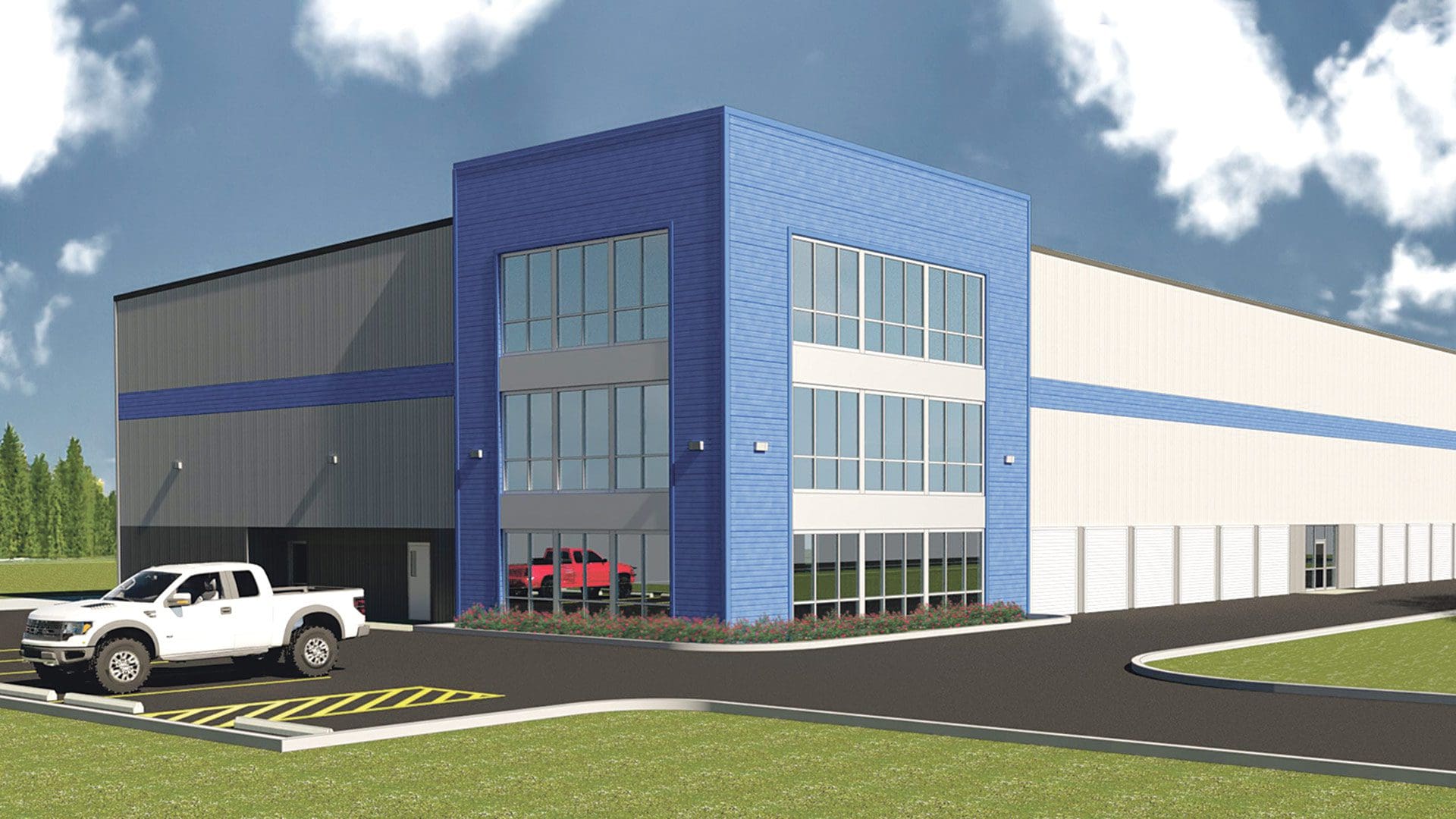
A new self-storage facility in East Longmeadow is one of many recent projects in the PDS Engineering & Construction portfolio.
Overall, rising interest rates have prompted some commercial and residential clients to hit pause, or at least think about whether to pause, said those we spoke with. They noted that, while interest rates are still historically low, they are certainly much higher than they’ve been over the past five or six years.
And with the Fed’s move to finally lower rates by half a percentage point last month, there is the possibility, if not the expectation, that they will go lower in either the fourth quarter of this year or the first quarter of next year.
Pat and Craig Sweitzer, the husband-and-wife owners of Monson-based Sweitzer Construction, said they’ve already seen one client benefit from waiting until this fall to build rather than early this year, as originally scheduled, and they believe there is a lot of that going on.
“That’s the first time I’ve ever heard someone say they were happy there were delays,” said Craig, noting that many clients did their original pro formas based on 3% interest rates, and with rates at or around 7%, profit margins are smaller, breeding hesitancy.
Still, like the others we spoke with, the Sweitzers, who share management responsibilities with sons Brian and Michael, are busy, having just wrapped up a new cannabis retail facility called Embr on the large, long-vacant site of the former Russell’s restaurant on Boston Road in Springfield.
The firm specializes in medical facilities, especially dental offices, but has taken on several projects in the cannabis realm over the past several years, said Pat, adding that, at this time, or any time, for that matter, diversity is an important asset.
Josh Raymaaker agreed, noting that his family’s firm remains busy with both private and especially public projects. The list for the former includes a new Dunkin’ Donuts in Easthampton, a new hangar at Barnes Airport, and construction of a new headquarters for the Raymaakers firm on Falcon Drive in Westfield.
On the public side, the firm has several projects in progress, including new sewer lines in Suffield, Conn., pump-station rehabs in Great Barrington, bridge projects in Braintree and Alford, and a new hangar for C5s at Westover Air Reserve Base in Chicopee.
“The combination of interest rates and the costs of construction have definitely affected which version of the project our clients are able to proceed with; in order for them to make their numbers work, they are having to make some concessions.”
Keiter said that, while things are slower, his firm is busy on several fronts, from a move to a new headquarters building in West Springfield to projects across several realms.
Indeed, he said residential renovation work remains vibrant, despite the higher interest rates, while the firm is also handling projects for several colleges and universities, as well as nonprofits, including Girls Inc. of the Valley, which is moving onto the latest phase of renovations to its new home in the former Daniel O’Connell’s Sons headquarters in Holyoke.
“We continue to work with our nonprofit partners — we’re still seeing a good pipeline there — and with the private sector as well,” he said. “But the combination of interest rates and the costs of construction have definitely affected which version of the project our clients are able to proceed with; in order for them to make their numbers work, they are having to make some concessions.”
Elaborating, Keiter said that, while prices for materials and labor are still comparatively high, they are lower than what has been seen since the pandemic. The same is true for availability.
“Our benchmark is … screwy,” he told BusinessWest. “When you say materials availability is better, it’s in reference to a time when it was abnormally askew.”
Moving Forward
Fontaine noted that, while he can certainly understand why some businesses institutions — and homeowners — would put projects on hold until interest rates come down, there are definitely advantages to going forward now as opposed to waiting.
At the top of that list is a cooling of construction prices and better availability of materials, which are already impacting some of the projects the firm is handling, including the new East Longmeadow High School, the new Peck Middle School in Holyoke, and work at Deerfield Academy and the College of the Holy Cross.
“Just the fact that the costs have steadied and that there is increased predictability of costs is starting to be a good thing again for the market; we’re even starting to see some isolated decreases in costs,” he said, adding that these developments could and should incentivize action now, rather than waiting.
“If you can get a lower construction cost, that’s a finite figure for a project,” Fontaine noted. “People always have the option to refinance later if rates come down, but you only have one chance at lower construction costs, and that’s why this might be a good time to build.”
Keiter wouldn’t go that far, noting that no one really knows what tomorrow will bring.
“It’s always a good time to build — it just has to work for you,” he said, adding that, for some clients across different segments of this sector, it’s more difficult to make things work.
And that’s why there is anxiety and some hesitancy among those considering residential and commercial building projects.
Still, as Jodice noted at the top, while this is a slowdown, it doesn’t compare with the far more serious cycles that have visited this sector. And that’s certainly something to build on.