Daily News

‘Unique.’

When pressed to describe John O’Brien, the radio personality and community activist who died Sunday after a lengthy and courageous battle with cancer, with just one word, that’s the one Dave Oldread, former general manager at Rock 102, where O’Brien was a fixture for more than 30 years, chose.

And he put a considerable amount of thought into the assignment because there are many words that come to mind when one thinks of O’Brien — like ‘opinionated’ and ‘confrontational,’ or ‘complicated’ and ‘complex.’ Others that work include ‘fun,’ ‘serious,’ and especially ‘genuine.’ Springfield Mayor Dominic Sarno called him a ‘lovable curmudgeon.’ OK, that’s two words.

But ‘unique’ works best.

Indeed, O’Brien was one of a kind, a true character, who was never afraid to speak his mind or ruffle some feathers — whether he was on the air, playing golf with you in a charity tournament, or sitting next to you at a Patriots game.

“When I would tell someone I worked at Rock 102, the first question anyone would ever ask was, ‘what’s it like to work with John O’Brien?’ or ‘what’s John O’Brien like?” Oldread said. “And, of course, that was a complicated question. I would tell anyone who was asking that John was the same person — who you got on the air was who you got off the air.”

And who you got was a true radio personality who would go on to become one half, along with Mike Baxendale, of perhaps this region’s most famous and enduring radio team.

Indeed, Bax and O’Brien were a morning tradition in this region, staying together for 25 years — unheard of in the radio industry — and earning their way into the Massachusetts Broadcasting Hall of Fame.

But you also got someone who was involved in his community, lending his time, talent, wit, and opinions to many causes and institutions, from the Spirit of Springfield to the Mayflower Marathon (which he co-founded), during which he and Bax would stay on the air for 52 hours, filling the time with an eclectic mix of guests and endless stories.

Fittingly, the marathon is going on right now, and many area residents are making a point of making donations in O’Brien’s honor. That’s a fitting way to remember someone who will never be forgotten.

He was, in a word, ‘unique,’ and his strong, clear voice will certainly be missed.

Daily News

SPRINGFIELD — Bulkley Richardson holds an annual campaign to raise funds for the United Way of Pioneer Valley through personal contributions from attorneys and staff. The campaign has become a tradition at the firm for many reasons, making an impact in the local community.

This year’s campaign donations will go directly to battling food insecurity. The temporary increases to SNAP (Supplemental Nutrition Assistance Program) benefits that were provided during the pandemic have now ended, leaving families across the Pioneer Valley with a significant reduction in their monthly food assistance at a time when grocery prices remain high. This means more households are struggling to keep food on the table and are turning to community resources for help.

“Each year, Bulkley Richardson holds this campaign for the United Way of Pioneer Valley during the month of November. It has become a firm tradition, and I am pleased to announce that we raised $11,000 this year,” said Rachel Knauerhase, 2025 campaign co-manager. “We want to thank everyone who donated, with an extra special thanks to Chris Visser, Jenelle Dodds, John Pucci, Scott Foster, and Dan Finnegan for participating in our Match Days. This is the most money we’ve raised for the United Way campaign since 2018, and we could not have done so without everyone’s generosity.”

Andrew Loin, 2025 campaign co-manager, added that, “for more than 100 years, our local United Way has mobilized community resources to meet community needs. Food security is just one of their many initiatives, providing food to families who are struggling to meet their needs due to the substantial impact of inflation on the affordability of food. With community donations, the United Way of Pioner Valley has been able to create its own food pantry in Springfield that directly gives food to over 400 families every Tuesday.”

Daily News

HOLYOKE — Holyoke Mall recently welcomed two new eateries to the center, Mama G’s Halal Platters and Frozen D Lite.

Mama G’s Halal Platters is now open on the JCPenney wing of the upper level, next to Pretzelmaker. It offers Middle Eastern flavors like chicken, lamb, shrimp, or falafel rice platters; chapli kabob; Indian dishes like chicken tikka and butter chicken; as well as classic American dishes like burgers, Philly cheesesteaks, and chicken tenders. All the food will meet halal dietary standards.

Frozen D Lite opened recently on the lower level next to Mystery Bins. The snack shop offers a range of treats, from sweet crepes and waffles with ice cream to smoothies, shakes, and frozen yogurt.

“We’re thrilled to add these two new tenants to Holyoke Mall,” said Kristen Hinckley, Marketing director. “We think they nicely compliment the dining options we already offer and hope our guests will love the variety they add to the center.”

Daily News

HOLYOKE — Atlas Chiropractic of Holyoke announced the successful completion of its 2025 annual giving campaign, resulting in a significant donation to support local food security efforts.

On Nov. 18, Dr. James McCann presented a check for $8,055 to Michael Nowak of Providence Ministries, which operates Kate’s Kitchen. The presentation took place at the Atlas Chiropractic office on Dwight Street, marking the culmination of the practice’s 13th annual patient appreciation event.

This annual initiative brings together McCann, his staff, and the patient community to support those in need within the Holyoke area. For more than a decade, the event has served a dual purpose: providing high-quality chiropractic care to the community while gathering essential resources for local charitable organizations. Historically involving food drives, the event has evolved to focus on monetary donations to maximize impact for local service providers.

During the appreciation event, existing patients were invited to schedule appointments where they received chiropractic adjustments in exchange for a voluntary cash donation. The event saw robust participation, with 233 participants contributing to the fundraising total. This community-driven approach allows patients to directly support their neighbors while maintaining their own health and wellness.

Atlas Chiropractic also expanded its outreach to new patients during this period. The clinic waived standard consultation costs for individuals suffering from health conditions who had not yet found relief. First-time patients received a comprehensive consultation and examination, including any necessary X-rays and neurological scans — a package valued at up to $240 — in exchange for a $99 donation to the annual giving fund. This structure ensures that financial barriers do not prevent residents from accessing necessary spinal care while simultaneously boosting the donation goals for Kate’s Kitchen.

The success of the 2025 campaign highlights the dedication of the Atlas Chiropractic patient community. Their generosity directly supports the mission of Providence Ministries and Kate’s Kitchen to feed the hungry in the Holyoke area. Since starting the practice 29 years ago in September, McCann has remained committed to leveraging his professional expertise to foster a healthier, more supportive community.

Daily News

SPRINGFIELD — The Springfield Symphony Orchestra (SSO) announced its official launch of the search for its next music director, a step that President and CEO Heather Caisse-Roberts said will shape the artistic future of the organization. The SSO is the sole professional orchestra in Western Mass. and the largest in Massachusetts outside of Boston, with more than 70 contracted musicians.

“Launching the music director search marks a defining moment for the Springfield Symphony Orchestra. We’re stepping boldly into our next chapter with a deep commitment to artistic excellence, community connection, and the future of symphonic music in Western Massachusetts,” Caisse-Roberts said. “The next music director of the SSO will not only shape our stage, but they will also shape our region’s cultural heartbeat. This is a monumental next step in the SSO’s history and represents a moment of possibility, momentum, and transformation, and we are ready.”

A formal Search Committee has been established, she added, including musicians, members of the SSO staff, SSO board members, and Renato Wendel, SSO’s director of operations, personnel manager, and artistic transition lead, who will serve as chair of the search committee. The committee will include a way for community input to be part of the hiring process.

The job description and application are live on the SSO’s website, springfieldsymphony.org. Applications will be accepted through Jan. 5, 2026, at which point a thorough process will begin to determine a shortlist of candidates. Finalists will then conduct one concert during the SSO’s 2026-27 season, with the next music director to be named in 2027.

“This is one of the most important investments we can make in the SSO’s future,” Caisse-Roberts said. “Establishing consistent artistic leadership is something that has been needed for a long time for stability, for a clear artistic identity, and for a deeper commitment to this community and to our musicians.”

Most recently, Kevin Rhodes served as the SSO’s music director for 20 years, from 2001 to 2021. Prior to that, Mark Russell Smith served as music director for five years, from 1995 to 2000.

The next music director will serve as the SSO’s principal conductor and will conduct an agreed-upon number of concerts each concert season while also identifying and engaging occasional guest conductors, soloists, and composers for performances. The music director will be tasked with driving the artistic vision of the SSO, honoring traditional symphonic programming while embracing innovation by developing diverse and compelling performances in collaboration with the president and CEO, the programming committee, and musicians.

The music director will also support and participate in the SSO’s long-standing education programs in collaboration with the education manager and youth orchestra conductors, and will be expected to build bridges with schools, universities, and cultural organizations across the region with the aim of growing audiences and inspiring the next generation. The music director will also collaborate with the SSO Chorus director to prepare and present performances involving the SSO Chorus.

The qualifications for the next music director include an advanced degree in music and significant professional experience conducting full-size symphony orchestras, with proven success in programming, rehearsal leadership, and audience engagement. The SSO is also looking for candidates who have experience conducting across a wide repertoire, including classical, pops, and hybrid performances, as well as new works and youth/education concerts. Residency in Springfield is not required; however, the music director must maintain a strong, visible, and consistent community presence.

Daily News

SPRINGFIELD — From now until Dec. 5, Liberty Bank is coordinating a clothing drive to benefit Dress for Success Western Massachusetts and Suit Up Springfield. These two Springfield-based organizations provide professional attire and support to low-income people preparing for job interviews and entering the workforce.

The Springfield Business Improvement District will maintain collection boxes throughout downtown Springfield. Community members are invited to donate new or gently used business attire and accessories at the following locations: 1350 Main St., Monarch Place, Tower Square, 1441 Main St., and 1319 Main St.

Donated clothing should be freshly dry-cleaned or laundered. Items most needed include suits, business dresses, pants, blazers, and other professional apparel, as well as shoes, boots, coats, and accessories such as ties, handbags, and jewelry.

“We would like to thank our community partners for making this third annual clothing drive such a success,” said Dawn Creighton, Community Outreach officer at Liberty Bank. “Without AM Litho providing donation boxes, Springfield Sheraton/Monarch Place for promoting it on the marquee, and the Springfield BID aiding in collection, it simply couldn’t be possible.”

Daily News

WEST SPRINGFIELD — Every year, the Eastern States Exposition (ESE) board of trustees donates beef purchased at the Big E’s 4-H Beef Sale to organizations that combat food insecurity in Western Mass.

On Nov. 20, ESE President and CEO Gene Cassidy, accompanied by West Springfield Mayor Will Reichelt and members of the ESE staff, visited the Parish Cupboard, Open Pantry, and Friends of the Homeless to donate the beef. Each food shelter received more than 300 pounds of beef to help those in need in Greater Springfield.

The 4-H Beef Program is a staple of the agriculture showcase at the Big E. The program is the culmination of more than a year’s worth of labor and dedication by 4-H students from across New England. The 4-H Beef Sale, the final event of the program, occurs in the Mallary Complex during the fair and provides an opportunity for buyers to support rising agriculture workers by rewarding their hard work and purchasing a project steer.

This year, the 4-H Beef Sale saw its most successful auction to date: 44 steers were sold at an average of $7.77 per pound. Auction sales totaled $424,946, which is a 67% increase from 2024. The ESE board of trustees purchased the highly commended overall steer, which weighed 1,510 pounds and was raised by Angelina Otero of Connecticut. The board also purchased the fifth-place medium weight steer, a 1,270-pound steer raised by Zoey Violette of Massachusetts.

“The 4-H Beef Program is one of Eastern States Exposition’s time-honored agricultural initiatives,” Cassidy said. “The ultimate event of the program, the beef auction, is a fantastic evening that brings together prospective buyers from local businesses, colleges, and university food service programs to hungry people, all with a common goal: creating agricultural markets that support our future producers. Our board of trustees is proud to then donate the beef they purchase to nonprofit organizations focused on feeding those in need among us, supporting the community we strive to uplift.”

It is key that ESE’s year-round programming aligns with its founding purpose: to support agriculture, innovation, and education throughout New England and beyond. Students in 4-H learn foundational life skills and responsibilities through initiatives including the 4-H Beef Program at the Big E.

“When you buy from the 4-H Beef Sale, you’re supporting agriculture, you’re supporting youth, and you’re providing for those in need,” Cassidy said. “All the while, you’re getting a great deal on quality beef. The beef sale does a lot of good on a lot of levels.”

Cover Story

Where Will It Go?


Chuck Irving says he’s surprised that none of the other groups that responded to the state’s request for proposals to build a new Springfield Regional Justice Center submitted plans that focused on the current courthouse site.

“We see an opportunity to not abandon the current courthouse location, but embrace it and make it even better,” said Irving, a principal with the Davenport Companies, who is partnering with Thomas O’Brien, CEO of HYM Investment Group, on two proposals for a new courthouse, one involving redevelopment of the current site off State Street. “We want that site to be the tentpole that it is in terms of holding up the economy of downtown.”

That’s his opinion.

And everyone, it seems, has their own opinion on this project, which has captured the attention of the development community, the business community, the legal community, and the city as a whole — to an extent that has impressed Adam Baacke, commissioner of the State Department of Capital Asset Management and Maintenance (DCAMM), which issued the RFP and will decide — probably in Q1 of next year — which of the 11 proposals received will be the winner.

“We do a lot of projects, both construction and leasing, and the vast majority of them don’t garner the level of interest and, dare I say, excitement that this is generating in Springfield.”

“We do a lot of projects, both construction and leasing, and the vast majority of them don’t garner the level of interest and, dare I say, excitement that this is generating in Springfield,” he said. “We’re happy to be involved with something that the community sees as such a significant project for its city.”

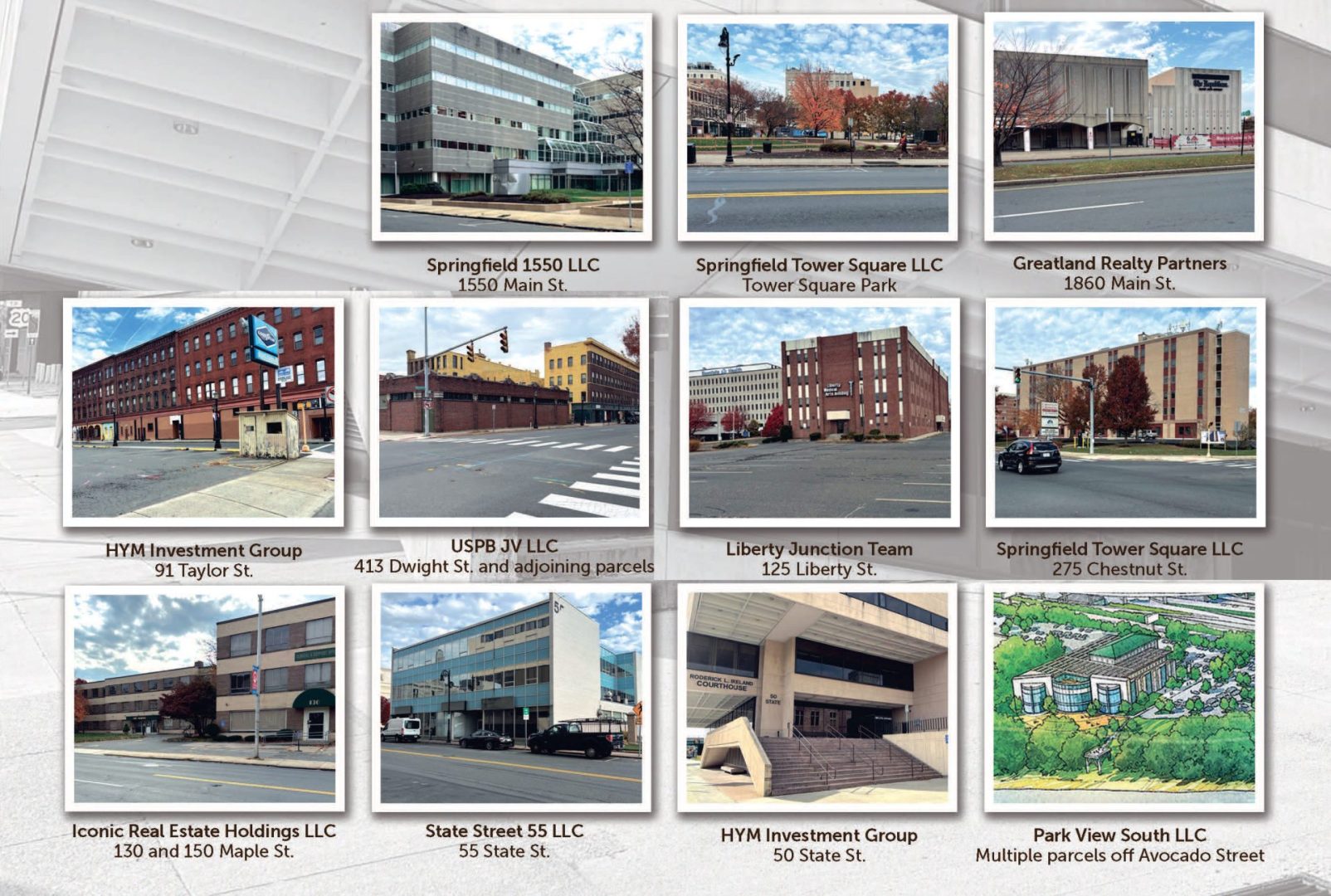
Efforts to build a replacement for the troubled Roderick L. Ireland Courthouse reached an intriguing phase last month, when DCAMM released the list of 11 proposals submitted by a wide range of local and regional developers (see box).

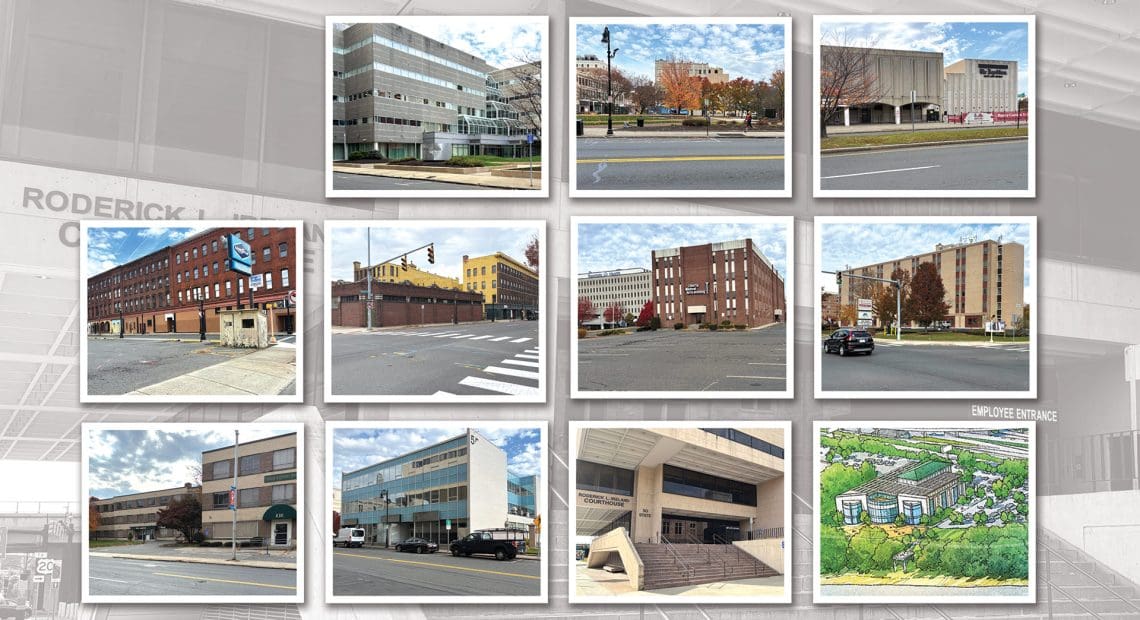
The submissions cover an eclectic mix of properties, ranging from the park created when the Steiger’s department store on Main Street was razed nearly 30 years ago to the building that houses the Republican and its giant printing presses; from the site of a factory where Absorbine Jr. was made to a now-vacant property that was home to a strip club.

An architect’s rendering of the proposal submitted for the property at 55 State St.

An architect’s rendering of the proposal submitted for the property at 55 State St.

Meanwhile, the list of developers includes a notable who’s who when it comes to major projects in Springfield and the Commonwealth, from Davenport and HYM to the brothers Picknelly (Paul and Peter, each heading their own proposal); from Greatland Realty Partners, which recently prevailed in a similar competition to build the state’s new crime lab in Marlborough, to the team of Jeb Balise, president of Balise Motor Sales, and Tom Dennis, president of the Dennis Group, which both have downtown Springfield development projects in their portfolios.

These groups were drawn in by a unique opportunity whereby DCAMM has decided to use a private developer to identify a site, permit, and build the new justice center and then lease it back to the Commonwealth. The terms are quite attractive — a 40-year lease, a rarity in commercial real estate — with an obviously high-credit tenant, and these conditions certainly contributed to what Baacke considers a robust response.

“We’re very happy with the quantity of responses, and I think it’s a clear reflection of how attractive this opportunity is in the development community,” he noted, adding that the RFP has attracted a solid mix of local and regional developers. “This is a very substantial requirement from the largest commercial tenant in Massachusetts that also happens to be one of the strongest credit tenants available in the marketplace, and this is a time when the commercial real estate market is not as strong as it has been at other times.”

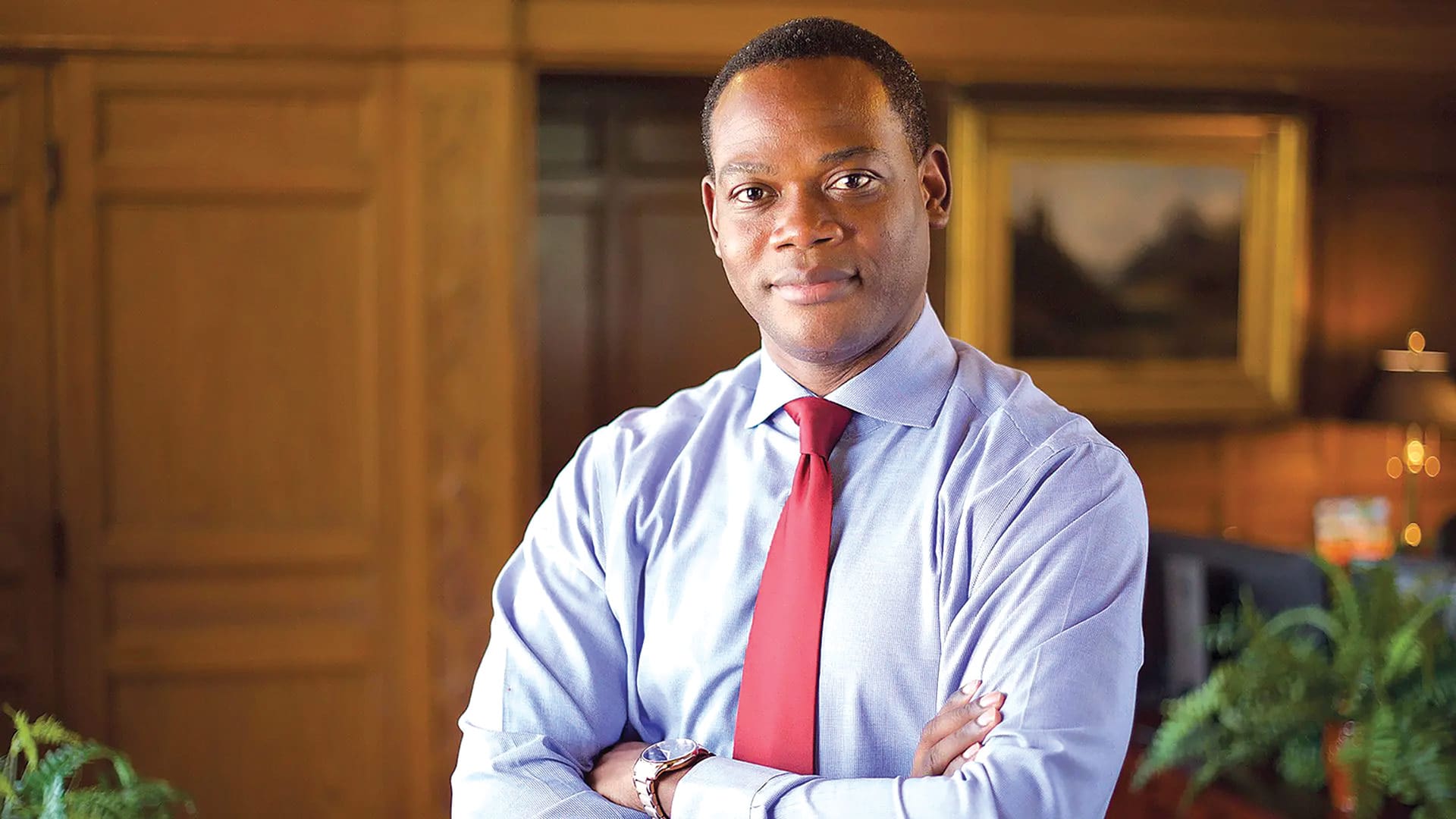
Adam Baacke

Adam Baacke

“This is a very substantial requirement from the largest commercial tenant in Massachusetts that also happens to be one of the strongest credit tenants available in the marketplace, and this is a time when the commercial real estate market is not as strong as it has been at other times.”

Overall, this method creates opportunities for the city (in tax revenue from what will be a privately owned facility, as opposed to state owned) and both the state and the chosen developer, said Baacke, adding that it enables the justice center to be built more quickly and perhaps more cheaply, although cost is not the overriding reason for going this route, which was also chosen for the crime lab.

“The biggest benefit for the state, especially in this instance, is the speed with which we can deliver the project,” he explained. “The process that the private sector undertakes for construction procurement is more efficient — time-efficient and probably cost-efficient as well — than the process the Commonwealth is required to undertake for a public building.

“That results in some benefit in how quickly we can deliver the project,” he went on. “But the really big factor in this case is that this is a pretty sizable project, and fitting it into an already-oversubscribed capital plan would push the project further out than would otherwise be necessary.”

The current courthouse at 50 State St. is considered obsolete in many respects.

The current courthouse at 50 State St. is considered obsolete in many respects.

As for what will go into the decision-making process, Baacke said several factors will be considered, from cost to accessibility to “having a positive economic impact on the city.” And given all that, there was a requirement within the RFP that the courthouse be built in the center of the city, a broad area that covers all 11 proposals, from Maple Street to the south to a parcel on the riverfront to the north.

For this issue’s focus on commercial real estate, BusinessWest examines the many aspects of the courthouse project, from the process to the players to the factors that will go into the decision.


Court of Opinion

Baacke noted that, while the ‘sick’ nature of the current courthouse has added a degree of urgency to the matter, the 46-year-old facility is in many ways obsolete, from operating efficiency to design.

“That building reflects old thinking around everything from security to how the building welcomes the public and celebrates the importance of justice,” he said, adding that, with recently constructed courthouses, such as the one in Lowell and those under design in Quincy, Framingham, and Lynn (all to be built by the state), there is a “different feel to the buildings and a very different organization, particularly around circulation and security, and it’s just not possible to retrofit that building, which was designed for a very different philosophy around judicial architecture.”

“We believe we’re ready to move as fast or faster than anyone. We’ve got a fully formed team that has built basically the last several courthouses to the state’s specifications and satisfactions, so there will be no learning curve for anyone involved. And we have a site that is basically shovel-ready.”

As noted, the state’s quest to replace the structure has attracted a broad range of development teams, many of which have helped reshape the landscape in Springfield in recent years.

In addition to Davenport, which has been involved in several projects in Springfield, including the recent conversion of the Willys-Overland building on Chestnut Street into market-rate housing, redevelopment of the former RMV building in Springfield, and the new Square One facility, teams submitting proposals include the owners of Tower Square, Vid Mitta and Dinesh Patel, who successfully retenanted the downtown landmark, bringing in the Greater Springfield YMCA, White Lion Brewing, and others.

The new courthouse in Lowell is one of several opened recently or in the design/construction phase.

The new courthouse in Lowell is one of several opened recently or in the design/construction phase.

The two partners have submitted three different proposals, one involving 1550 Main St., the office building adjacent to Tower Square that they acquired in 2023; another involving the park across the street, created when Steiger’s closed and was torn down; and a third entailing the site of the former YMCA building on Chestnut Street, most of which has been demolished, with the remaining portion used for affordable housing.

As for Greatland, company President Kevin Sheehan said the company’s portfolio is dominated by projects in the eastern part of the state, including the crime lab, and the Springfield courthouse represents a growth opportunity in a different market.

Sheehan didn’t want to discuss the Springfield project in any detail other than to say the company looked at several sites and ultimately concluded that the Republican building represented the best option for the city and the trial court.

Other developers also chose to refrain from comment on their projects, opting, as one put it, to “let the DCAMM process play out.”

The Balise/Dennis partnership, for example, issued a simple statement on their proposal, which involves a city block between Dwight, Taylor, and Chestnut streets that includes the former home of W.F. Young, maker of Absorbine Jr.

“We see this project as an opportunity to transform downtown Springfield in a way that connects the metro center’s various neighborhoods and increases community pride,” it reads. “By tying Union Station more closely to the rest of downtown, we can bring new energy and life to the area while revitalizing the surrounding neighborhood. Just as important, our proposal prioritizes the health, safety, and well-being of everyone who works and visits the new courthouse, giving Springfield the modern facility it deserves.”


Building Momentum

But other developers were more open about their proposals and willing to tout their attributes.

Irving said both Davenport/HYM proposals have merits. The second, for the building that once housed the Mardi Gras strip club, is just a block from Union Station, he noted, adding that a courthouse on that location could provide a substantial boost to that section of the downtown.

But the group’s other school of thought was that moving the courthouse from its current location would be devastating for the city’s downtown, so it submitted two plans.

Kevin Sheehan

Kevin Sheehan

“I definitely wouldn’t say there’s no risk, but I think that, with a high-credit, long-term lease, you’ve solved a lot of the risk in real estate development. It’s a smart strategy for the state to get what it wants, a nice new facility, and not take the risk on construction overruns and instead push that to the developer.”

“We said, let’s give the state its choice,” he noted. “But the best thing we’re offering to DCAMM is the depth of our development experience. Between a massive company like HYM, which has done work for DCAMM around the state, and Davenport, which has vast experience in Springfield, I think we bring a team that can deliver, and I think that’s the biggest issue for this project — who can deliver. The state needs this to be done on budget and on time, and we can do that.”

Meanwhile, Paul Picknelly gushed about the proposal submitted by Monarch Enterprises for the property he owns at 55 State St. — and the team behind it.

That team includes Finegold Alexander, a women-owned architecture firm that has designed several courthouses, including the one in Lowell, as well as the one under design in Framingham; Springfield-based Fontaine Construction, which has a deep portfolio of projects in the city, including the MassMutual Center and the Court Square apartment complex, a block from the current courthouse; Dimeo Construction, which built the courthouse in Lowell and is currently building the one in Framingham (Fontaine and Dimeo recently collaborated to build the new Doherty Memorial High School in Worcester); and Westmass Area Development Corp., chosen to see oversee redevelopment of the existing courthouse site.

Picknelly and David Fontaine Jr., president of Fontaine Construction, talked about what they consider to be a strong case for their proposal, including everything from design (it bears a strong likeness to the Lowell courthouse, also built vertically) to how quickly their concept could move from demolition to construction, to its location across the street from the current courthouse — proximity, they say, that brings everything from familiarity to better odds for successful redevelopment of the existing courthouse when it is demolished.

“We believe we’re ready to move as fast or faster than anyone,” Fontaine said. “We’ve got a fully formed team that has built basically the last several courthouses to the state’s specifications and satisfactions, so there will be no learning curve for anyone involved. And we have a site that is basically shovel-ready.”

Even parking, a consideration for all proposals and a problem for some, won’t be an issue for the 55 State St. site, said Picknelly, who referred to his recent call for jury duty at the Springfield courthouse to get his point across.

“It instructs me to park in the I-91 South lot,” he said, referring to the facility under the highway, adding that these instructions won’t change if the courthouse is built at 55 State St.


New Lease on Life

The Springfield Regional Justice Center will be the largest undertaking by the state when it comes to using a private developer to build a facility and then leasing it. But this method has been used with many facilities, including smaller courthouses, such as the one in Westfield.

“The state has about 7.5 million square feet under lease across the Commonwealth, including dozens of properties on behalf of the Trial Court,” Baacke explained, adding that what makes the Springfield project unique is its scope and the length of the lease.

Approved by the state’s Asset Management Board, which authorizes leases longer than 10 years, the 40-year commitment was considered necessary for this project to work.

“During the process of working with the Asset Management Board for the authorization for this project, we really tapped into expertise of the development community members of that board for their recommendations about what length of term would enable developers to not only be interested, but obtain financing on terms that could be most favorable, ultimately, to the Commonwealth in what they would pass through in terms of the lease cost.”

In those respects, this project is most similar to the new State Police crime lab in Marlborough, a 200,000-square-foot, $300 million project that comes with a 20-year lease; construction is due to start in early 2026.

Sheehan said there are many similarities between the crime lab project and the courthouse initiative. He described the former as an effective process, one with advantages for both the state and the chosen developer — and even for the host community.

“In terms of working together with a private developer and the state and the local community … that has resulted in a pretty successful outcome,” he told BusinessWest, referring to the crime lab. “It can be a great partnership; it allows us to do what we do, and by publishing a long-term lease, the state can use its credit to support the construction of this facility without putting all the cost up front and without committing its resources to the design and construction and procurement process, which I think we can a little more efficiently than the state government.”

Irving agreed. “The state provided an opportunity to have a 40-year lease, and in my lifetime, I’ve never seen Massachusetts offer a 40-year lease, which is pretty much the equivalent of a bond,” he explained. “So, this is really well done because it makes this easily financeable, and it makes that financial modeling much easier, and that’s why you have 11 proposals on the table; it’s an amazing opportunity.”

And while there are certainly fewer risks for developers with a project of this nature rather than building a spec office building or renovating a tenanted office facility (where leases typically run five to 10 years) given recent trends with remote work, there are still risks, even with the state as a tenant and a 40-year lease.

“In the development world, there are three basic risks — the leasing risk, the financing risk, and the construction risk,” Sheehan noted. “If it’s a pre-leased facility, you’ve solved the first one, and if you’re using the state’s credit, you’ve somewhat solved the second one, but there’s still fluctuations in interest rates that certainly impact cost, so that’s a risk. And then, there are the construction risks — cost escalation, trade tariffs, labor rates, and general execution risk from construction of the building.

“So I definitely wouldn’t say there’s no risk, but I think that, with a high-credit, long-term lease, you’ve solved a lot of the risk in real estate development,” he went on. “It’s a smart strategy for the state to get what it wants, a nice new facility, and not take the risk on construction overruns and instead push that to the developer.”


Heavy Wait

Getting back to the factors that will ultimately decide which proposal is chosen, Baacke said there will be several, from the proposed lease terms to accessibility; from meeting the state’s decarbonization and climate goals to a project’s ability to positively impact the city economically.

“We do want this project to be a benefit to the city of Springfield,” he told BusinessWest. “As a former gateway city planner myself, I know this is the kind of facility that can be influential in attracting people to an area. It can have a positive impact, and it can also have, if it’s placed in the wrong location, a negative impact on areas that benefit from the location of the current facility.

“The biggest factors in selecting the best proposal are going to be about how the proposal aligns with the needs of the Trial Court,” he explained. “And that’s a little bit about siting, but more about the design of the facility and how well it meets the program and is consistent with their expectations for a hall of justice.”

And then, there’s the cost.

“This is not going to be a decision that is made on which project is cheapest, but which project delivers the best value to the Commonwealth,” Baacke continued. “The project that has the strongest alignment with the needs of the Trial Court, at the best price available to the Commonwealth, is what we’re ultimately going to be looking for.”

Which proposal best does all that will be decided over the next several months.

Now comes what may the hardest part of this process — waiting for a decision.

Business Talk Podcast Special Coverage

With new episodes airing every other Monday, BusinessTalk features in-depth interviews and discussions with local industry leaders who offer thoughtful perspectives on the Western Massachusetts economy and the many business ventures that keep it running. BusinessTalk is sponsored and presented by Greenfield Cooperative Bank.

Go HERE to view all episodes

Episode 247: November 24, 2025

Joe Bednar talks with Jillian Morgan, Director of Development, Food Bank of Western Massachusetts

Every single month, through its roughly 200 partners, the Food Bank of Western Massachusetts helps about 125,000 people in the 413 access more than 1 million meals. Among the roles of Director of Development Jillian Morgan and her team are to execute fundraising activities, boost engagement through volunteering, and develop strategies to raise awareness about this nonprofit’s critical mission — one that has been challenged this year by everything from federal funding cuts to the recent SNAP disruption. For this episode of BusinessTalk, Jillian sits down with BusinessWest Editor Joe Bednar to talk about all of that, plus the 16th annual March for the Food Bank, which engages a sea of participants in a four-county effort to raise hundreds of thousands of dollars. It’s must listening — and certainly food for thought — so tune into BusinessTalk, a podcast presented by BusinessWest over both audio and video platforms, and sponsored by Greenfield Cooperative Bank.

Sponsored by:

Also Available On

Features Special Coverage

A Long-running Success Story

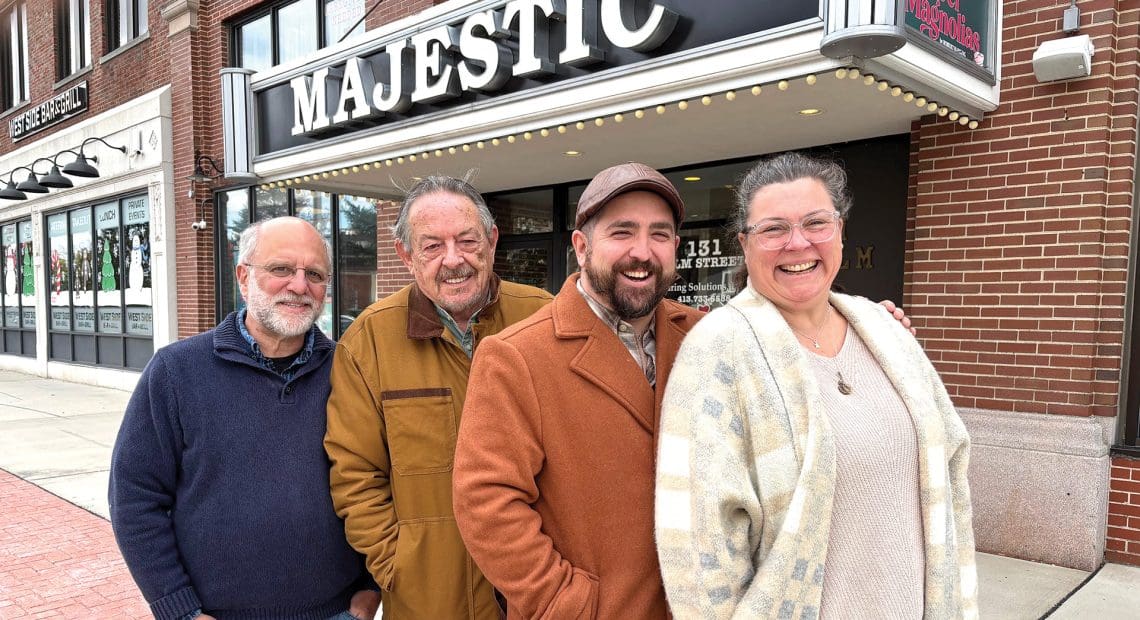
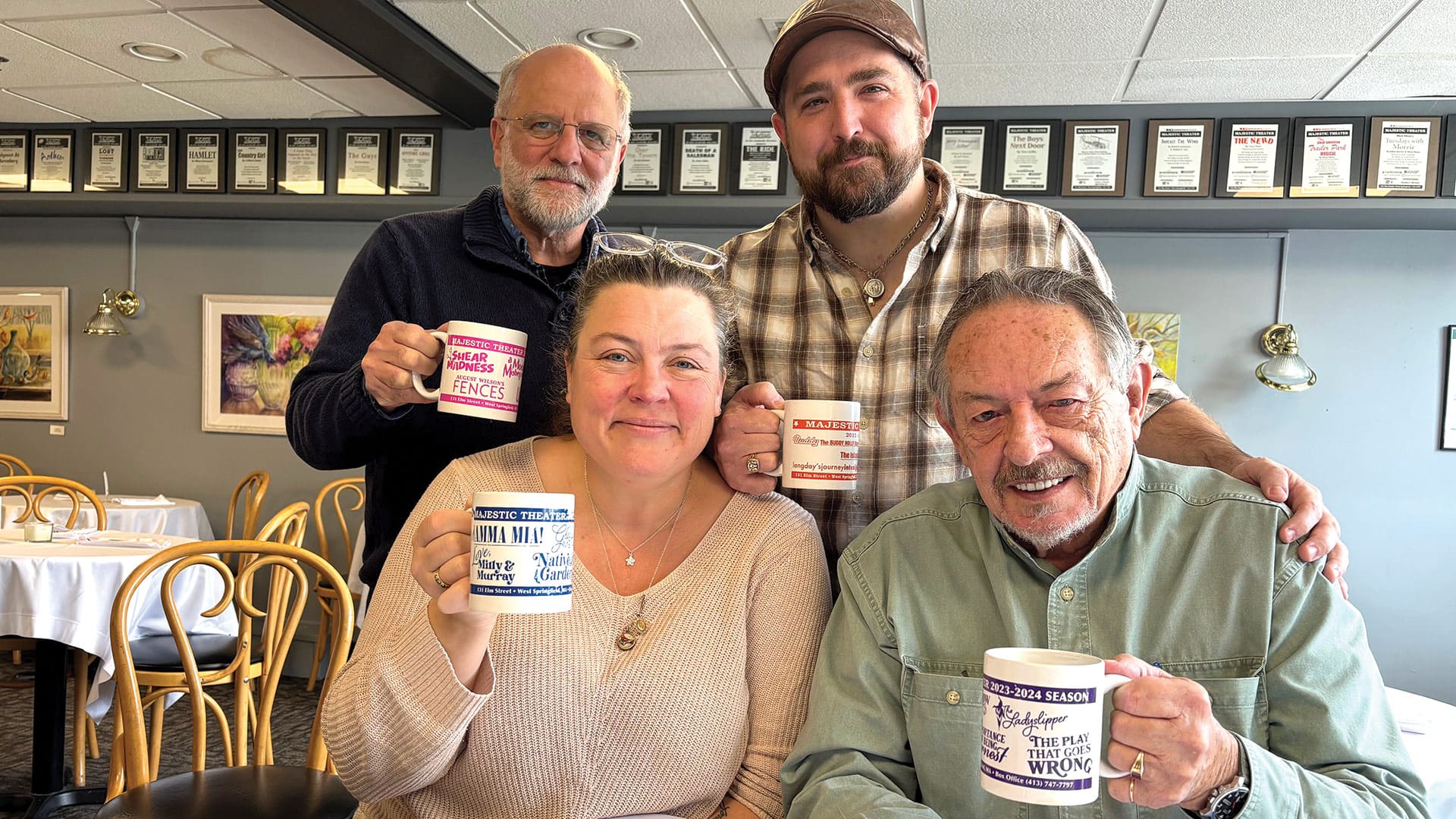
From left, Todd Kadis, Danny Eaton, Sue Dziura, and Terry LaCasse.

From left, Todd Kadis, Danny Eaton, Sue Dziura, and Terry LaCasse.


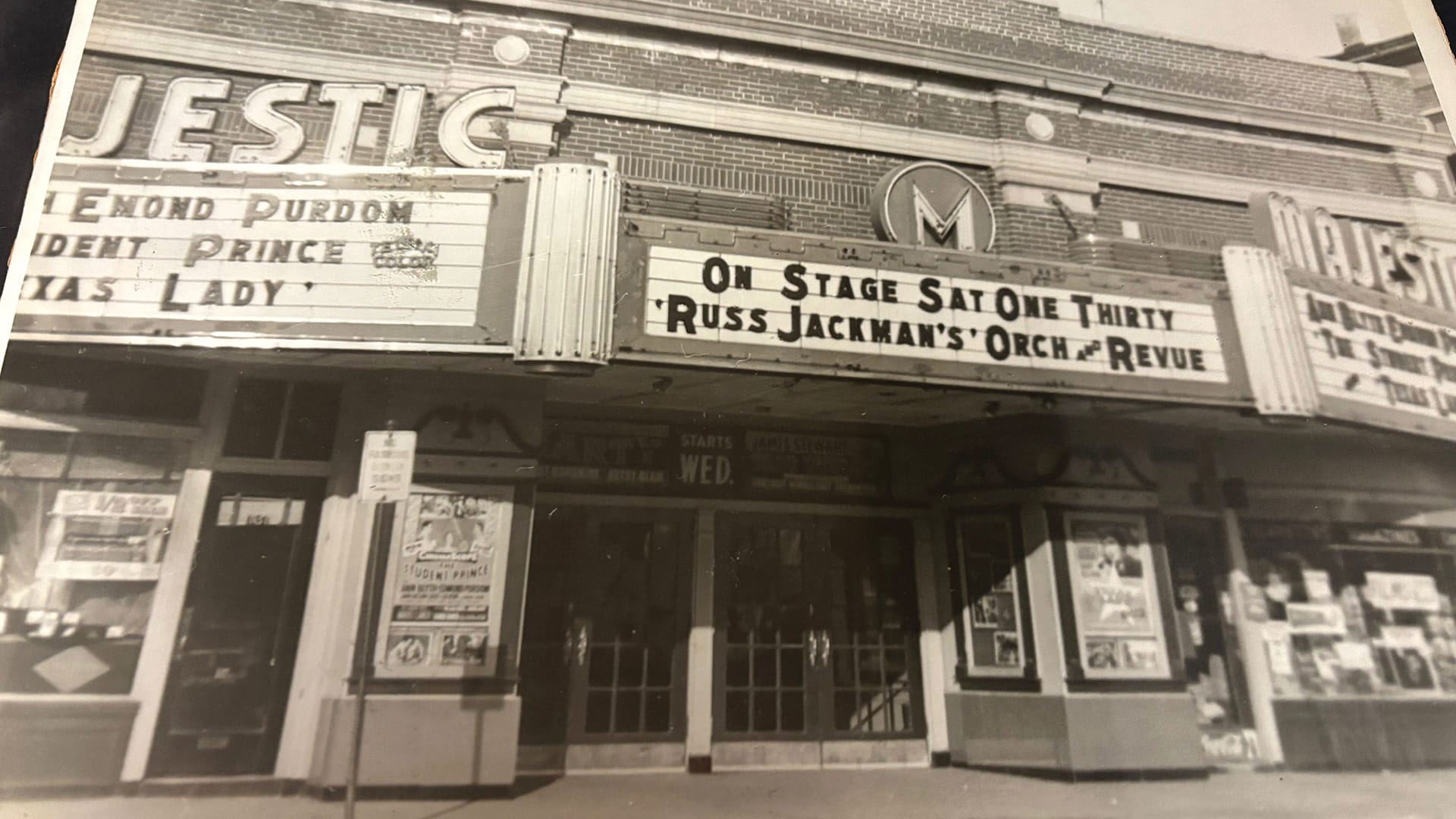
It’s been more than 30 years now, but Danny Eaton can still vividly remember the first time he saw what was left of the historic Majestic Theater on Elm Street in West Springfield.

There wasn’t much to look at, he recalled, adding that the back area of the old moviehouse, where Mickey Rooney once played Puck in A Midsummer Night’s Dream and the Three Stooges had performed, had become a crumbling dumping ground of sorts.

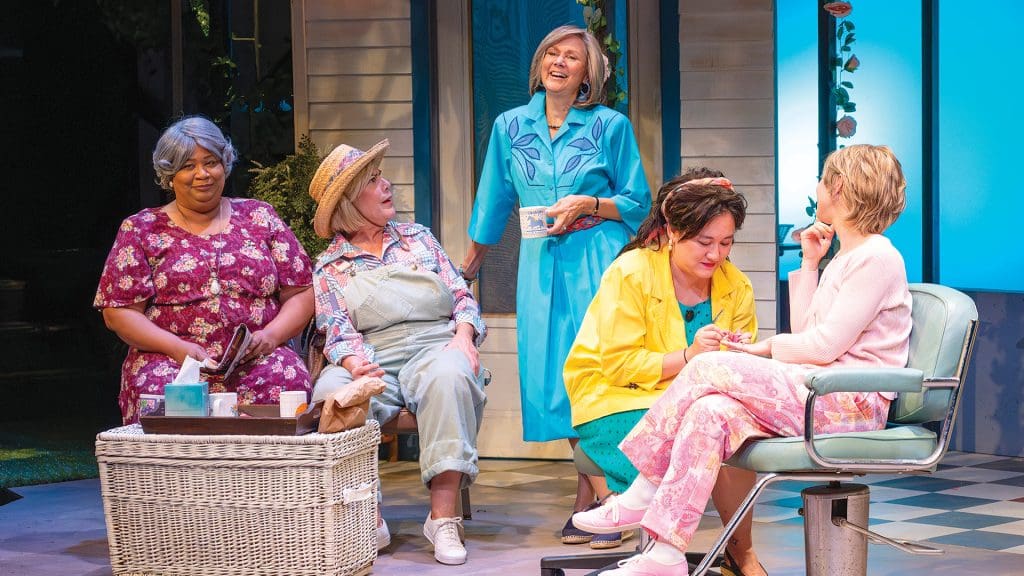
A scene from Steel Magnolias, currently playing at the Majestic.

A scene from Steel Magnolias, currently playing at the Majestic.

“There were carpet remnants, some broken office furniture, and all kinds of junk like that,” said Eaton, the actor, director, playwright, and entrepreneur who had been leading a group of like-minded individuals in the creation of a nonprofit professional theater company called the Theater Project, which was, at that time, looking for a permanent home.

A board member who taught business at Westfield State University arranged for two interns to work with the fledging troupe, and their primary assignment was to find a venue. They were steered to the old theater, built in 1928, by the town’s assessor. And after being let in by the owner of a delicatessen that occupied the front part of the theater, they could see what they had to work with.

That same board member thought he was crazy to do anything but look at the Majestic, but Eaton said simply, “I loved it … it spoke to me.”

Nearly three decades after the theater opened with a showing of The Buddy Holly Story, it’s still talking — to Eaton and to the tens of thousands of people who visit it every year.

“We’ve always seen new people, first-timers, coming to the theater, based upon the offerings.”

And the Majestic — not the building, necessarily, but the institution — has become part of the fabric of the region, said Eaton and others we spoke with.

“People have grown up with us,” he noted, referring to both the audiences for the shows, which span generations now, and some of the performers as well.

Like Ben Ashley, who played Buddy Holly in the The Buddy Holly Story and has reprised that role a few times, while performing in several other shows at the theater as well, including its upcoming Home for the Holidays. And Robbie Simpson, who grew up attending shows at the theater, then started performing in some, and has gone on to star on ABC’s General Hospital and Hulu’s The Path. He returns to West Springfield for shows at the Majestic, such as 2023’s The Glass Menagerie.

The historic Majestic Theater opened in 1928.

The historic Majestic Theater opened in 1928.

Like the plays shown at the theater, the Majestic has several plotlines and props, from the framed showbills that line the café area celebrating shows that include the well-known (Death of a Salesman, Hamlet, Miss Saigon, and Judgment at Nuremburg, for example), and the not-so-well-known (Golf: The Musical) to the annual fundraising car raffle, another institution — first prize this year is a 1962 Corvette convertible; the drawing is Dec. 31.

And then, there are the coffee mugs. Given each year to subscribers — who now total more than 4,000 — they’re printed with the names of the shows from each season.

Subscribers passionately collect them, said Sue Dziura, producing director for the Majestic, and look for them every year.

“They’ll tell us when they come in — ‘I have all my mugs,’” she said, adding that, in many ways, the mugs have become symbols of the Majestic’s two enduring traits — creativity and perseverance.

Indeed, between the shows, the mugs, the cars, a playbill supported by more than 100 local businesses, and more shows, the Majestic has become a long-running success story, one complete with its magic moments and stern challenges, like the pandemic, but also the rising expenses associated with professional theater, from paying the actors to insuring the property.

“Danny has programmed it so that there’s something for everyone, whether that’s genre-related — a comedy and a drama and sometimes a whodunit.”

For this issue, we look behind the curtain, if you will, at nearly 30 years of a class act — literally and figuratively.


Setting the Stage

When he spoke with BusinessWest as the 10th anniversary of the theater’s opening approached in 2006, Eaton recalled how, at that opening, a local journalist remarked that his dream had come true.

Eaton said he had to correct him to a degree and note that getting the doors open wasn’t the dream, or the hard part, or the end of the story. Keeping them open was, and is, the dream. And the hard part as well.

From left: Todd Kadis, Sue Dziura, Tery LaCasse, and Danny Eaton in a ‘mug’ shot.

From left: Todd Kadis, Sue Dziura, Tery LaCasse, and Danny Eaton in a ‘mug’ shot.

And nothing has really changed in that regard over the past three decades, he said, adding that the overriding mission can be boiled down to those four words: keeping the doors open.

Actually, there’s much more to it than that, said Todd Kadis, the Majestic’s treasurer, who has also been here from the beginning.

Indeed, the overriding goals are to make theater accessible and affordable (tickets are under $40), he said, and also to draw people who might not otherwise attend theater.

“We’ve always seen new people, first-timers, coming to the theater, based upon the offerings,” he explained, adding that most of these first-timers will return, and many of them will become subscribers.

It all started, as noted, with The Buddy Holly Story, which returns every five years at the Majestic. Actually, our story really begins in 1992 with the creation of the Theater Project, which performed shows at the Church of the Good Shepherd, just down the street from its current home, to raise money to open the Majestic’s doors.

Or new doors, to be precise, because the current front entrance still led to the deli, so a new entrance had to be built in the back of the structure.

“We spent summers hammering nails and lugging concrete blocks,” Eaton recalled, adding that the team put in two and half years of sweat equity to get the theater ready for prime time. And that hard work essentially set the tone for all that has happened since.

“One of things we found with The Buddy Holly Story is that we could get people to come to the theater who had never been to the theater before and maybe had a notion that it was a highbrow thing that couldn’t be part of their lives.”

Over the years, the Majestic has added more framed playbills to the walls — to the point where there’s no remaining room; raffled off 29 vintage cars; transformed its café into a gathering spot, with patrons showing up an hour or more before a show starts for a quick meal and a beverage; maintained its core audience while attracting new patrons; and become one of the cornerstones for growth and new businesses in the Elm Street area.

Very little, if anything, has been easy, said those we spoke with, but the Majestic has persevered through hard work, imagination (in all its forms), and the ability to stay engaged with its audience.

All these traits were on display during the pandemic, when the lights went down, literally, on March 21, 2020, and didn’t go back on again until August 2021, when the Majestic picked up right where it left off.

Kadis said the institution was kept afloat by PPP and also a much-needed Shuttered Venues Operating Grant, a federal program that, as its name suggests, provided grants to shuttered venues ranging from theaters to aquariums to museums.

And while the theater was dark, those at the Majestic found ways to stay engaged with subscribers and the community at large through online programs such as “Behind the Curtain,” a series of interviews with actors and directors who had done shows at the Majestic, providing a backstage perspective.


Shows of Force

The Majestic now hosts between 250 and 300 shows each season, which begin in September, said Dziura, noting that the simple strategy is to “create as much art as possible.” Each season features five subscription shows as well as Home for the Holidays and a packed summer schedule that includes more than 100 performances, including a children’s theater.

In putting together that five-show slate, organizers strive for diversity and a solid mix of plays and at least one musical, a lineup crafted to appeal to both subscribers — who provide a rock-solid base for the theater company — and single-ticket sales.

“Danny has programmed it so that there’s something for everyone — a comedy and a drama and sometimes a whodunit,” she explained, adding that this year’s slate is no exception.

The season started with Once – The Musical, which tells the story of an Irish street musician and a Czech immigrant who form an unlikely bond over their shared love of music. Currently running is Steel Magnolias, a comedy set in a small Southern beauty salon. In January, The Hound of the Baskervilles, a parody of the Sir Arthur Conan Doyle classic, will begin its six-week run, followed by a ‘two-hander,’ an two-person performance called Dear Jack, Dear Louise, described as heartfelt and comical play that unfolds through the letters exchanged between a young Army doctor and a nurse during World War II. The season concludes with Come From Away, an uplifting musical that tells the true story of 7,000 passengers who were stranded in the small town of Gander, Newfoundland after the events of 9/11.

Each year’s schedule is crafted to provide variety, but also more opportunities to bring new people to the theater and bring back those who have already found it.

“Being a nonprofit theater in a small community in an area that is not particularly known as a cultural hub is a challenge,” Eaton said. “One of things we found with The Buddy Holly Story is that we could get people to come to the theater who had never been to the theater before and maybe had a notion that it was a highbrow thing that couldn’t be part of their lives.

“We changed their minds,” he went on, adding that this might be the unofficial mission statement for the Majestic. “I’ve always maintained that, if I can get 10 new people to come to theater for the first time in their lives, I’ll get seven of them to come back, and I’ll get five of them to become subscribers — and that’s held true in many respects.”

Looking ahead, the simple goal is to keep changing minds about theater, said Kadis, while also maintaining and growing the subscriber base and attracting audiences of all ages. He noted that the average age of attendees is roughly 65, and it has been this way for some time, meaning the theater group has managed to retain subscribers who joined years ago and add new, younger ones as the original subscribers move into their 70s and 80s.

Terry LaCasse, the Majestic’s managing director, agreed. “There’s a multi-generational appeal here,” he noted. “I remember my first week here … I was introduced to a parent, a grandparent, and a child at one of the shows. They were sitting in the back, and they said, ‘we’ve had these seats for years, and we’ve passed then down from generation to generation.’”

That story, and others like it, speak volumes about what the Majestic has become over the years in terms of a cultural institution and tradition.

“The Majestic is a true-to-form community anchor,” said LaCasse, speaking for all those at the table, adding that it promotes the arts, supports local businesses, and makes this region more of a destination.

And that’s why the show has gone on for nearly 30 years — and counting.

Education Special Coverage

Moving On Up

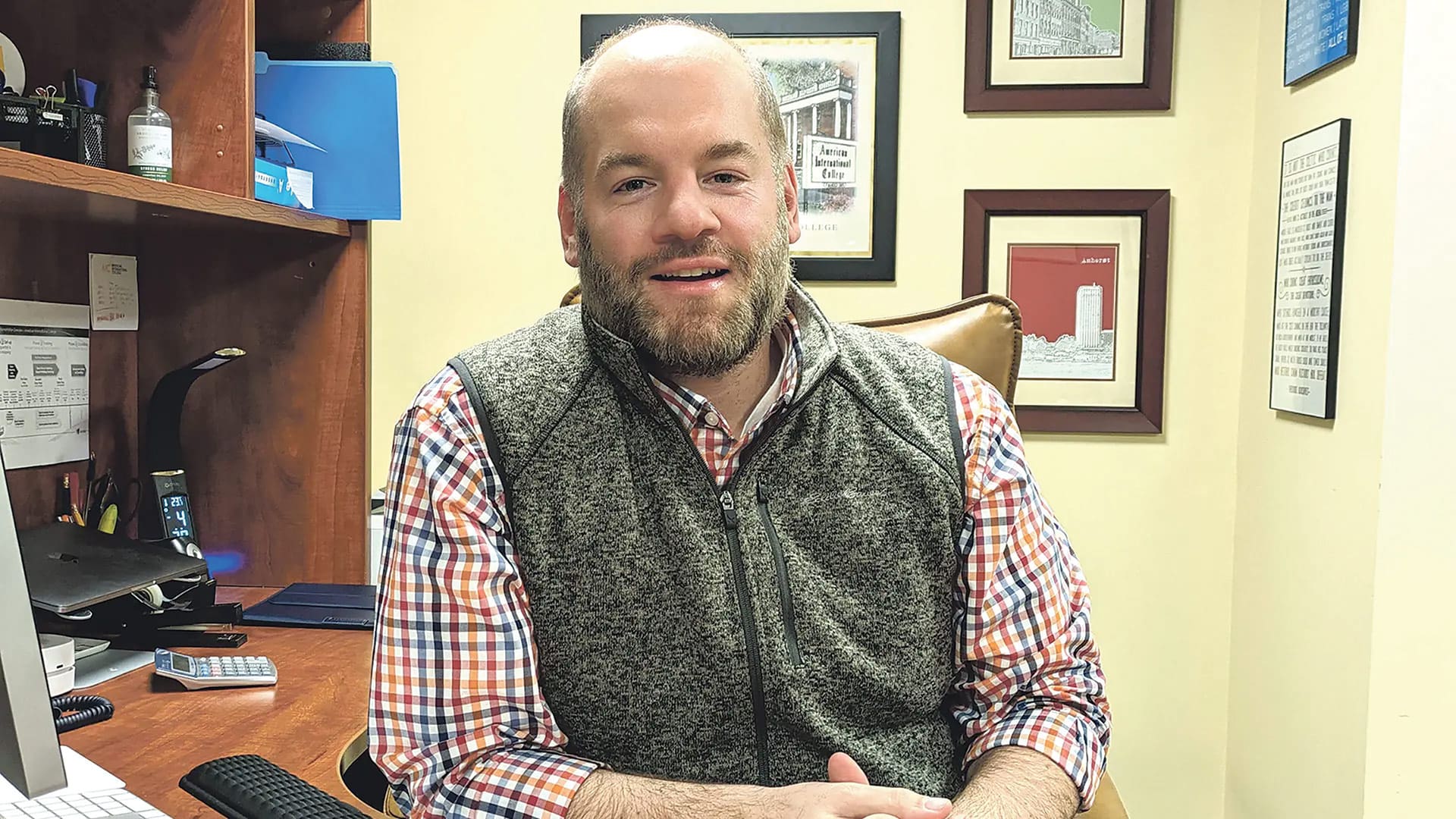
American International College Provost Michael Dodge

American International College Provost Michael Dodge


When Michael Dodge thinks about the 227 students from Duggan Academy in Springfield currently taking classes at American International College (AIC), he understands who benefits the most — and it’s not necessarily the academic high achievers who already have their eyes on college.

“We’re reaching the ones saying, ‘college isn’t for me,’ or ‘I’m not smart enough,’ or ‘no one in my family has gone to college.’ And we’re saying, ‘this program is for you.’ We’re helping students that might not have thought of college as an option — helping it become an option for them.”

Dodge, AIC’s provost, was describing the college’s relationship with Duggan, which began three years ago with high-schoolers taking classes for college credit, and has now become much more robust with AIC being designated as a Massachusetts Early College Program by the state’s joint Early College Committee.

AIC, in partnership with the Springfield Empowerment Zone Partnership (SEZP), is one of 18 new Early College programs announced this year by the Healey-Driscoll administration, and the only private college west of Worcester to receive this designation.

“Those students are taking a total of 900 credits,” Dodge said. “Given our successful pass rates with Duggan, that’s bringing in a significant number of students who are picking up a lot of college coursework that they now have under their belts as they think about where they want to go after high school.”

Notably, the program is a ‘wall-to-wall’ model in which every Duggan student participates. Students have the opportunity to earn up to 60 college credits — at no cost — before graduating from high school. Courses focus on high-growth, high-wage fields including allied health, education, and criminal justice.

“We’re reaching the ones saying, ‘college isn’t for me,’ or ‘I’m not smart enough,’ or ‘no one in my family has gone to college.’ And we’re saying, ‘this program is for you.’”

“We wanted to focus on fields that are in demand and lead to well-paying jobs,” Dodge said. “This puts them on a path to pursue an associate degree either at AIC or a community college or another four-year institution.”

The model ramps up the college coursework as they advance, he explained. Freshman year orients them to the expectations of a college class, and what follows is coursework in general education classes that are easily transferable, regardless of institution.

“Those include things like English composition, analytical writing — things that can help them be better writers and critical thinkers, which sets them up for success when they get to their junior year and senior year,” Dodge noted.

In those final two years of high school, students are blending college-credit courses at Duggan with classes they actually take on the AIC campus, he explained. “We want you to come to AIC, but regardless of where you go, you’re setting up a strong foundation to help you be able to keep pace with the academic rigor that exists at a college.”

While Duggan students have already been earning AIC college credits, the new designation is designed to build on that success and help even more students access college by removing common barriers.

Key program features include personalized support, including small cohorts, academic coaching, and dedicated advisors for multilingual and exceptional learners; advising to promote college readiness; culturally responsive teaching and staffing to reflect and support the student population; and universal access, with 100% of Duggan students participating regardless of prior academic performance.

Tricia Canavan

Tricia Canavan

“Tech Foundry’s senior team has been collaborating with various members of UMass leadership in a variety of ways over the last couple of years. Our partnership has evolved to include working with the IT staff on workforce priorities and employment opportunities.”

“All students deserve opportunities to succeed,” Dodge said. “Early College is about more than earning credits — it’s about building the skills, confidence, and support networks students need for college and life.”


Priming the Pump

Early College is just one way the state has been trying to draw more students into the college pipeline. The most notable ones, of course, have been MassReconnect, which made community college free for Massachusetts residents age 25 or older, and, more recently, MassEducate, which extended that tuition- and fee-free model to any resident, regardless of age, who has not yet earned a bachelor’s degree.

Beyond that, many of the state’s community colleges have forged articulation agreements with four-year institutions, under which students who satisfactorily complete an associate degree program are guaranteed admission into a bachelor’s degree program at the four-year school.

One of these partnerships, between Elms College and both Holyoke Community College (HCC) and Springfield Technical Community College (STCC), deepened recently by allowing students of those two community colleges to reside in residence halls at Elms.

STCC and HCC are commuter colleges and do not provide on-campus housing, so the agreement benefits STCC and HCC students who have housing needs, while creating the kind of familiarity with the Elms campus and culture that makes it more likely they’ll pursue a baccalaureate degree there.

“Elms College, for nearly 100 years, has prided itself on promoting educational opportunities to those who would otherwise not have access, and being a collaborative partner with our neighboring colleges. This agreement accomplishes these goals and expands our strong partnerships with HCC and STCC,” Elms President Harry Dumay said. “Our campus has always been a welcoming, inclusive community, where we work hard to ensure that everyone feels like they belong in the spirit of our founding mission. HCC and STCC students now get to discover that aspect of the Elms experience.”

Other regional partnerships target an older demographic — people who either never attended college or started but didn’t finish.

Elms College President Harry Dumay recently announced that the college expanded its articulation agreement with HCC and STCC to allow students at those colleges to live on the Elms campus.

Elms College President Harry Dumay recently announced that the college expanded its articulation agreement with HCC and STCC to allow students at those colleges to live on the Elms campus.

One recently announced collaboration between UMass Amherst and the Tech Foundry — the Springfield-based workforce development nonprofit that trains local residents for IT careers — enables Tech Foundry staff and community members to complete their undergraduate degrees through the university’s flexible, customizable online program.

Specifically, Tech Foundry members can take classes, receive academic counseling, and map their educational pathway through UMass Amherst’s University Without Walls Department of Interdisciplinary Studies (UWW-IS).

Current UWW-IS admission requires 12 transferrable college credits and a 2.0 GPA for adults who did not previously attend UMass Amherst. As part of its program, however, UWW-IS offers credit for prior learning or life experience. Under the new agreement, students who are accepted into UWW-IS and have completed Tech Foundry’s 18-week immersive hybrid training program will receive 15 credits via special transcript, which is equivalent to a full semester courseload. The collaboration builds on earlier programs in which UMass Amherst IT provided internships for Tech Foundry trainees.

“Tech Foundry’s senior team has been collaborating with various members of UMass leadership in a variety of ways over the last couple of years. Our partnership has evolved to include working with the IT staff on workforce priorities and employment opportunities,” said Tricia Canavan, CEO of Tech Foundry, who called the new collaboration an important expansion of opportunity for Tech Foundry students.

“We’re really centering equity efforts. We don’t always want to polish just the shiniest of apples, but we’re making sure we’re reaching out to that student who may not have thought of college as an option — but help them do it in ways that make sense.”

UWW-IS Department Administrator Siobhan Henderson said the collaboration also enhances University Without Walls’ longtime relationship with Springfield residents. “We are committed to meeting learners where they are — professionally, academically, and geographically. This collaboration aligns with our UWW-IS mission that was founded more than 50 years ago: to open doors to adults who thought achieving a bachelor’s degree was unattainable.”


Opportunity Knocks

Gov. Maura Healey has called Early College programs a central element of her administration’s Reimagining High School initiative to prepare students for college or careers and expand access for those historically underrepresented in higher education — at a time when higher education is already facing demographic headwinds in the form of fewer high school graduates.

“Early college is an important and effective tool for making higher education more accessible and affordable for every Massachusetts student,” she said earlier this year. “These new partnerships give more young people the opportunity to earn college credit at no cost while still in high school, setting them on a path to success and helping to close opportunity gaps.”

Dodge sees such efforts as steps in the right direction, and considers the college campus immersion element an important part of the process.

“The intent, in senior year, is to have students be on our campus taking college-level courses, similar to the models for dual enrollment in the past,” he explained. “Students can take 12 to 15 credits over the course of senior year — typically four to five classes — develop some affiliation with the institution, and be able to take some independent coursework and things very specific to their planned major, so it’s not just, ‘oh, I come to campus for one class and then leave. Instead, they’re thinking about being on campus most of the day for Tuesday and Thursday, or Monday, Wednesday, and Friday.”

He also appreciates the Healey administration’s focus on equity and helping close performance gaps.

“That’s one of the reasons why we applied for this designation with SEZP and the Department of Higher Education. We’re really centering equity efforts. We don’t always want to polish just the shiniest of apples, but we’re making sure we’re reaching out to that student who may not have thought of college as an option — but help them do it in ways that make sense. That’s why we start small, one or two courses freshman year, then building up intentionally and bringing them into the fold in college.

“We’re really thankful for the support from SEZP and the Department of Higher Education, and we value the partnership we have with Duggan and the Springfield Public Schools,” Dodge went on. “We think it’s a partnership that makes sense in this current environment, this academic cliff where fewer 18-year-olds are going to college. It seems like what the future of higher education needs to be.”

Special Coverage Wealth Management

Lessons Learned

Ty Vinick

Ty Vinick

Ty Vinick says his grandfather, the late Jim Vinick, had been “training me my whole life.”

That’s not surprising to anyone who knew Jim, the former managing director of investments at Moors & Cabot — and a 2013 BusinessWest Difference Maker — who passed away in June, and was known for his passion for financial literacy.

“When I was like 8 years old, he was teaching us stocks and bonds and everything else,” Ty recalled. “I came to work with him at the start of this year, and I was hoping to work with him longer — I mean, he’d been teaching me my whole life though.”

That wasn’t meant to be, however. “Three days before he passed, we were in the hospital, and he was asking to check on his portfolio. So he was working right up to the end. He went out with his boots on.”

Those are certainly massive boots to fill — Jim was one of the driving forces behind the establishment and evolution of the Basketball Hall of Fame in Springfield, as well as a longtime, respected wealth manager and financial expert — but Ty is up for the challenge, recently taking over his grandfather’s book of clients and running the Springfield office of Moors & Cabot, a Boston-based financial planning firm with numerous locations across the U.S.

“He loved his job,” Ty recalled. “Outside of his family, he loved his job, and he loved the Basketball Hall of Fame. Anyone who ever met him heard all about both things. He had incredible relationships with people, and I feel really fortunate that I get to do the same thing he did.

“I had a lot of teaching experience, which I actually find helpful now because I spend a lot of time explaining different concepts to people in terms of investing, or different investment vehicles they might not know about.”

“I see a side of him that maybe even other people in our family don’t get to see, where I’m talking with people, and they say, ‘you know, he was like a father figure to me. He was there for me when my husband passed or when my parents passed, and I didn’t know what to do, and there was money, and I needed help handling it,’” he went on. “And then they’re like, ‘but he was also just there to talk about life and what I might need.’ So it’s good to see, not just coming from him, but from other people, the impact he had on them, where they say, ‘you know, when I really needed somebody, he was someone I could turn to.’ That’s pretty cool.”

And the younger Vinick finds it gratifying to help people in the same way.

“Life keeps on going for everybody, and different things come up, and people call me because they had someone pass or they’re planning for their kids,” he told BusinessWest. “Sometimes you’re helping them because it’s a good situation that you’re trying to manage, making things a little more secure, like parents paying for college. And sometimes you’re helping them because it’s a sad situation; if a partner dies or spouse dies or a parent dies, they’re in a really tough moment, but at least you’re there to make that tough moment a little more manageable and a little bit smoother to get through.”


Let’s Talk

Vinick’s title is financial professional, though, as noted earlier, it involves a lot of education, too. That makes sense, considering his career journey.

At Tufts University, he majored in economics and also studied pre-med, thinking he might want to be a doctor. But after that, he went to Spain for a year and worked as a teacher in a rural village of about 700 people; he had also done some tutoring in college.

“I had a lot of teaching experience, which I actually find helpful now because I spend a lot of time explaining different concepts to people in terms of investing, or different investment vehicles they might not know about. So, in a weird way, it actually ended up being very, very helpful.”

After returning to the States and working in a few doctors’ offices, he realized he had lost enthusiasm for the medical profession. So he worked in biotech for a time, then returned to his native Western Mass. and entered the family business. In retrospect, it was the logical choice.

Jim Vinick, pictured here in 2013, when BusinessWest named him a Difference Maker, was well-respected in the region for wealth management, financial literacy, and civic commitment, particularly with the Basketball Hall of Fame.

Jim Vinick, pictured here in 2013, when BusinessWest named him a Difference Maker, was well-respected in the region for wealth management, financial literacy, and civic commitment, particularly with the Basketball Hall of Fame.

“I think I took a lot of it for granted growing up. We would sit with my parents and with my grandfather at the table, learning about investing and things like that, and now that I’m working in this role, a lot of times, I’m explaining things to people that I’ve been taught my entire life, and he was so good at teaching all that.”

It’s an ethos he brings to each client interaction today.

“I’m constantly talking to my clients, pretty much every month. So I get to really know them as people,” Vinick said. “A lot of the planning and understanding their finances is ongoing, rather than just sitting down and having it be a one-time conversation. It’s ongoing conversations, understanding where people are in life and meeting their shifting needs.”

Those clients, he said, range from young families all the way up through retirees working on estate planning matters, and they come to Moors & Cabot with a wide range of income levels and assets. Obviously, the investing strategies — and those conversations — are far from cookie-cutter.

“It definitely changes with retirees who might be looking more for income and living off of the savings that they have, versus younger people who might be looking to build something for the future, planning for a house or college,” Vinick said. “There are a lot of key factors that most people want to consider, so we just talk through those. You can always start with the big picture and then hone down as you go.”

As for clients closer to retirement, at a time when people are living longer than ever, it’s important to help them understand they might be looking at 25 years or more of post-work years — and how much money it will take to live the lives they want.

“Part of it is factoring in the fact that there’s going to be inflation in that path, and expenses might vary even during retirement. Health concerns can come up. Do you plan on traveling, and do you have certain goals or a certain lifestyle you want to maintain during retirement? Those costs can change as you go,” he explained. “So you want to consider that variability. You don’t want to get to retirement and then run out of money because that would be a tough position. So that’s part of the plan as well.

No matter what one’s age, Vinick said, it’s important to start crafting that life plan as soon as possible.

“The best time to start was yesterday, and the second best time to start is today. So even if you didn’t start yet, you can always get started now, and it’s better than not getting started at all. Better late than never, they say.”

“Some people can see volatility and say, ‘it’ll be fine. I know I’m not investing for tomorrow; I’m investing for 10 years.’ And for some people, there could be a 1% change in their account over the span of a month, and it will worry them.”

Another element of helping clients is guiding them through periods of uncertainty in the market, like during the roller-coaster ride this past spring when the market kept diving and rising amid constant tariff rumours, announcements, and rollbacks.

“Part of investing for different clients is meeting the level of risk that they’re willing to accept,” Vinick said. “Some people can see volatility and say, ‘it’ll be fine. I know I’m not investing for tomorrow; I’m investing for 10 years.’ And for some people, there could be a 1% change in their account over the span of a month, and it will worry them. It’s something to keep in mind for each client, how much risk they can accept or how much tolerance they have for it.

“And then part of it is explaining to them, ‘hey, something may have happened last month, but overall we’re doing OK,’ or ‘this is the vision for the long term, and this is what we’re looking to do,’ and keeping them on track rather than giving in to either overjubilance when things go really, really well, or panicking when things get a little rocky for a month here or there, whatever it might be.”

That’s easier to do with somebody who’s at an earlier stage of life and can take a longer view, but it’s also a matter of personality, he added. “Younger people can still panic, too. I think it just depends on the personality, the person, and the risk they can accept.”


Back to School

Vinick’s father, Michael, didn’t choose the financial services path, but rather forged a successful career in the HVAC trade; he’s president of Duct & Vent Cleaning of America in Springfield. But Ty’s transition into leadership at Moors & Cabot ensures a multi-generational family legacy there — serving clients that are often also multi-generational.

“My grandfather had clients that were parents, grandparents, great-grandparents, and then, with his passing, I now have them as clients,” he said. “I’m the fifth generation of my family that’s in Springfield, and part of the business for me will also include being involved in the community that my family’s been involved in.”

And also education and communication. Vinick is already thinking about not only how he can become more involved with community organizations, as Jim was, but also how to continue his grandfather’s work on financial literacy, which included, many years ago, The Vinick Report, a local TV show on that topic.

“I love talking to people. I get to be on the phone all day with people, and you get to know them quite well,” he said. “You get to build these very meaningful relationships with people where you can kind of track them through their life. I think that’s the part that I enjoy doing.

“And I get to have a meaningful impact on their lives as well — I’m genuinely helping people reach milestones and achieve their financial goals,” he added. “You know, outside of their health, making sure they have a reasonable financial plan creates the foundation for everything else they want to do.”

Community Spotlight Special Coverage

Community Spotlight

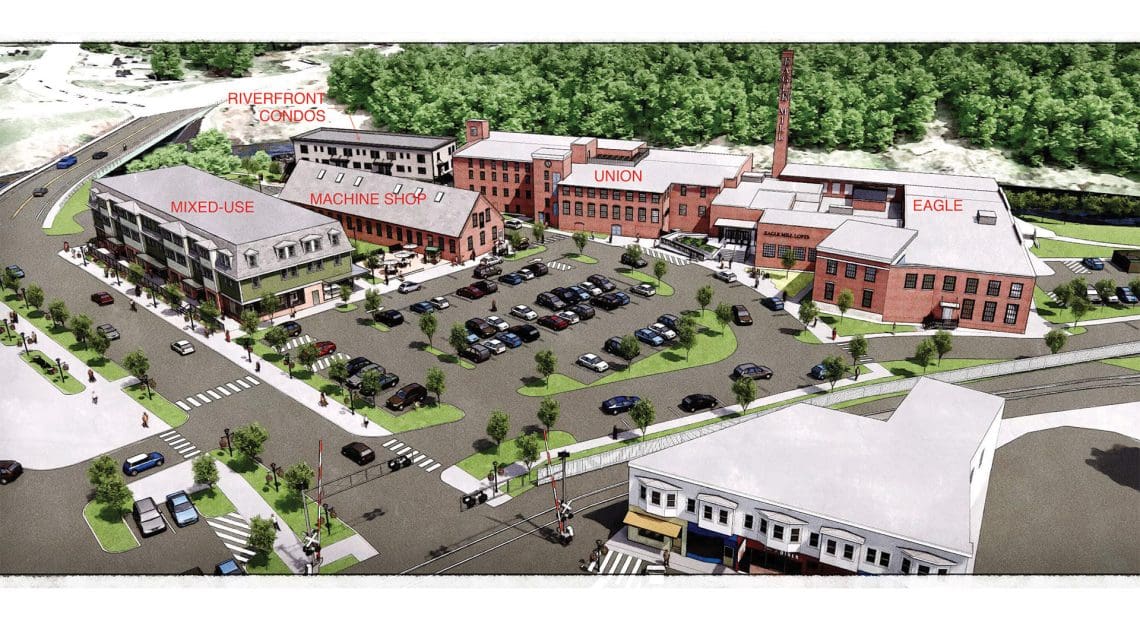
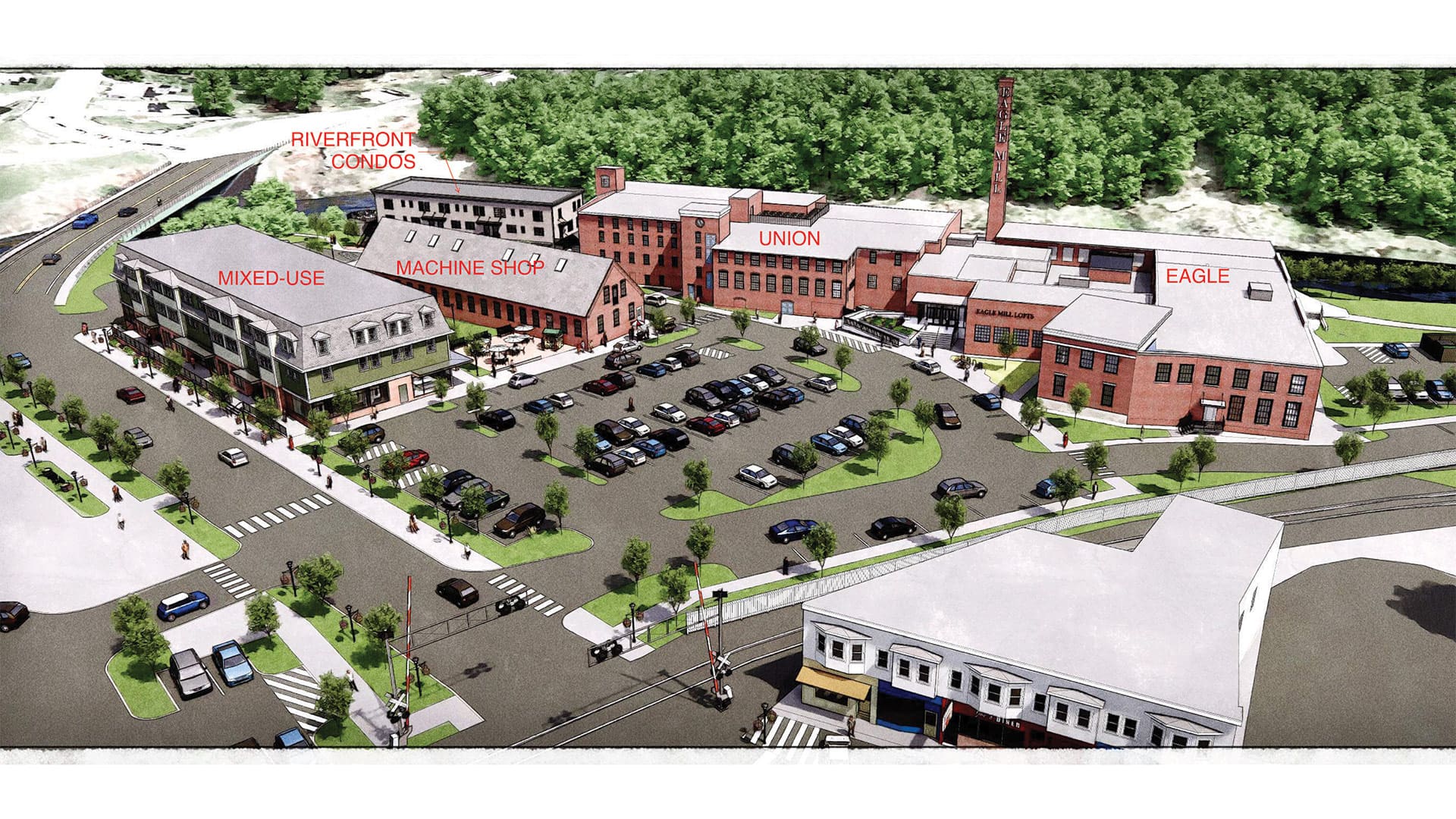
An architect’s rendering shows the various buildings and parcels to be developed at the Eagle Mill complex in Lee.


Jeff Cohen says he was “looking for something to do.”

That was how the long-time developer, lawyer, and one-time police officer casually described how he began what has become a 14-year journey (and counting) to redevelop the Eagle Mill in Lee, one of the oldest paper mills in the country.

It certainly hasn’t been an easy journey — “I have lot more gray hair now than when I started,” Cohen said — but the Eagle Mill canvas, if you will, is filling in, and there is more on the drawing board for this parcel bordering downtown.

Indeed, nearly 60 units of affordable housing are in the process of being leased, and should be occupied next spring. Meanwhile, roughly 150 more units are planned, as well as commercial space, in subsequent phases of the project, including a recently announced plan for 69 units of affordable housing on property across the street from the Eagle Mill.

As these different phases of the project unfold, the impact on Lee, its downtown, its business community, and different constituencies searching for affordable housing will only grow.

Alex Heddinger

Alex Heddinger

“Our walkable downtown is lined with one-of-a-kind shops and restaurants, many family-owned for generations, and there’s a real sense of connection among the people who live and work here.”

“This is going to create a village at the north end of town,” Cohen explained. “As you drive from the Berkshires through Lee along Route 20, there will be a great-looking community, and there will be lots of people on the street. This is going to enable Lee to attract people who want to work in and around the town, it’s going to put more kids in the schools, and it’s going to enhance the businesses in town and probably create opportunities for new ones.”

Redevelopment of the Eagle Mill complex is one of many converging stories in this community of almost 6,000 people. Others include:

• A slight cooling of its housing market, which was one of the hottest in the state just a year or two ago. Town Manager Chris Brittain said the market has returned to something approximating pre-COVID days, before prices exploded amid the surge of remote work and strong interest in rural settings from which to do it;

• Ongoing efforts to encourage development of other mills in Lee, and there are many of them — the community was once home to two dozen mills making more paper than anywhere else in the country;

• Progress toward construction of a new and much-needed public safety complex — groundbreaking is slated for next month — as well as discussion of converting the historic fire station into a community space;

• Continued efforts to make this community, known as the ‘Gateway to the Berkshires,’ more of a place to stop, dine, shop, recreate, and more, rather than being a gateway to other, better-known destinations, including Lenox, Stockbridge, and Pittsfield; and

• Some new restaurants and other small businesses that are certainly helping in these efforts to make Lee more of a destination.

“Our walkable downtown is lined with one-of-a-kind shops and restaurants, many family-owned for generations, and there’s a real sense of connection among the people who live and work here,” said Alex Heddinger, a Lee native who became executive director of its Chamber of Commerce this past spring. “We also have one of the most diverse dining scenes in the area — Mexican, Indian, Peruvian, French, pizza, new American, pub fare, diner classics, and even a Burmese restaurant.

Brooke Healy

Brooke Healy

“When it comes to affordable housing, many people have preconceived notions about it, but it can really impact everyone — from families to young professionals just starting out in their career like I was.”

“Lee has a way of making visitors feel right at home,” she went on, adding that one of the goals moving forward is to make business owners feel at home as well.

For this latest installment of its Community Spotlight series, BusinessWest takes an in-depth look at Lee and the many intriguing storylines converging there.


Milling About

Cohen told BusinessWest that he and his wife moved to the Berkshires in 2012, and soon thereafter, he became fascinated with the Eagle Mill and the prospects for developing it.

The property had been abandoned since 2008, he said, adding that the various buildings were in poor condition when he acquired them, but still historic. He contracted with an architect and started meeting with various groups in town to get a sense “for what could be attractive to the town and be profitable for me, and that’s how it started.

“I’m not the type of person who buys something and says, ‘here’s what I’m going to do,’ and then present that to whomever is going to approve it,” he explained. “My style is a little different; I try to work with people in the neighborhood, various town officials, and various interested community groups to get a sense for what’s going to pass muster.”

It took several years to identify the preferred use, he said, adding that various uses, including a 100-room hotel and a Faneuil Hall-type retail market, were considered. Overall, it’s been a long, difficult journey, made much more complicated by the pandemic, but pieces to a complicated puzzle are coming together, starting with phase 1 — 56 units of affordable housing in the two original mill buildings, the Union Mill and the Eagle Mill.

Phase 2 includes 44 new apartments at the eastern end of the site; phase 3 is another new building with 35 units of housing and 4,000 square feet of retail, with construction slated for 2028 if all goes as planned; phase 4 involves redevelopment of the historic machine shop building for commercial and retail use, including a restaurant; phase 5 will consist of five condominium townhouses on the Housatonic River; and phase 6 will be 69 more units of affordable housing on the corner of West Center and Canal streets.

Cohen described the sum of these parts as game-changing, and Lee Town Planner Brooke Healy agreed.

“These new units will provide a boost to our downtown business owners and stores,” she said. “You’ll have people walking up and down Main Street — the restaurants are going to get a boost, the stores are going to get a boost … and while some people will work in Lee, others will work in surrounding towns, meaning this will benefit not just Lee, but the Central and Southern Berkshires.

Healy speaks from experience when she said many workers in the Berkshires face lengthy commutes between their jobs and housing they can afford, and the Eagle Mill project will be a difference maker in this regard and make a huge dent in the demand for housing, especially the affordable variety.

“I took this job about a year ago, and it took me a few months to find housing that was less than an hour away; I’m very lucky to live close to downtown Lee,” she told BusinessWest. “When it comes to affordable housing, many people have preconceived notions about it, but it can really impact everyone — from families to young professionals just starting out in their career like I was.”

Meanwhile, there are several other mills that remain vacant or mostly vacant, Healy said, adding that the town is working on revamping zoning bylaws and other strategies for making these mills more “developer-friendly.”

Lee at a Glance

Year Incorporated: 1777
Population: 5,788
Area: 27 square miles
County: Berkshire
Residential Tax Rate: $11.25
Commercial Tax Rate: $11.25
Median Household Income: $41,556
Median Family Income: $49,630
Type of Government: Open Town Meeting
Largest Employers: Lee Premium Outlets; Onyx Specialty Papers; the Landing at Laurel Lake; Oak n’ Spruce Resort in the Berkshires; Big Y
* Latest information available

The town recently collaborated with UConn students to create a site reuse assessment and master plan for three mills — Columbia Mill and Greylock Mill, both on Columbia Street; and Greenwood/Mountain Mill on Forest Street, which was recently sold by the town at auction.

“When a lot of the current bylaws were written, most of these mills were still functioning, and people didn’t really think about the next steps if these mills were to ever go out,” she explained. “Looking forward, we have some mills that are not being used, and there’s been some discussions with the owners of those properties to make sure they know the town has their interests in mind and will help in any way it can.”


Progress Report

Brittain told BusinessWest that Lee’s current fire station, a granite and marble structure built in 1912, was designed for horses, not 21st-century firetrucks.

Which means the town has had to special-order trucks to fit into the doors of this facility. And they just barely fit.

“The last one had five-eighths of an inch clearance on either side,” he said, adding that a few mirrors have been lost over the years.

Wider doors are just one of the myriad design elements to a new, 37,000-square-foot public safety complex, said Brittain, adding that the facility, with a projected price tag of roughly $32 million, will bring the Police, Fire, and Building departments under one roof on the site of the former Bull’s Eye Pub in downtown Lee. And, as noted, the town is in early-stage talks concerning what to do with the current fire station, also downtown.

These developments are just some of the emerging stories in the community’s eclectic downtown, which is just a few miles off Exit 10 of the turnpike, a unique asset that has certainly helped the town’s efforts to promote tourism, while also attracting other types of businesses, such as biotech and enterprises such as Sharp Sterile Manufacturing and Boyd Biomedical, both on Pleasant Street, just off the turnpike exit.

Getting back to the downtown, visitors pass through on their way to Tanglewood and other Lenox attractions, as well as Pittsfield, said all those we spoke with, adding that the goal is to get them to stop along the way — or, better still, make Lee the destination.

There’s a growing list of reasons for doing so, said Heddinger, adding that there is a good mix of restaurants, including some recent additions, such as the Station Gastropub, so named because it’s housed in a former train station.

“Downtown has restaurants, shops, several different kinds of businesses, a park where we stage events, and much more,” she said, adding that this central business district is more than a place to drive through on the way to somewhere else.

Brittain agreed. “We’re seeing a lot more people dining and staying here than we used to, and our hotel and restaurant taxes reflect that,” he said, adding that the growing number of restaurants, and the diversity of those offerings, is a big reason why. “More people are stopping and enjoying the downtown area on their way to Tanglewood or the Norman Rockwell Museum, or whatever.”

Meanwhile, the town is developing strategies for bringing more businesses to the community, such as the “Friend-Lee Approach to Business” marketing campaign, which Healy described as a work in progress, likely to be ready for the new year.

“We’re trying to break down the barriers for developers and residents interested in owning businesses,” she explained. “We want them to able to come in and have conversations face-to-face with various departments and understand what is needed to open a business.

“It can very overwhelming to try to open a new business,” she went on, adding that the campaign will likely ask the question ‘why Lee?’ and then focus on the town’s many attributes — from recreational facilities to that turnpike exit to proximity to other destination communities.

It’s all part of an effort to promote this Gateway to the Berkshires, but also make it much more than that.