GREENFIELD — Greenfield Community College (GCC) invites the community to an interactive online discussion, “The Struggle Is Eternal: Learning from the Movement,” on Wednesday, March 4 from 3:30 to 4:30 p.m. via Zoom.
The program features historian and author Joseph Fitzgerald and will be moderated by Angela Campbell, GCC’s vice president of Institutional Mission, Culture, and Climate.
The discussion explores the lives and legacies of civil rights organizer Gloria Richardson and scholar-activist Barbara Smith, centering Black women’s leadership, student activism, and coalition building across social justice movements.
Drawing connections between the Cambridge Movement in Cambridge and student activism in Holyoke, the program examines how historic struggles for civil rights, women’s civil liberties, and community accountability continue to shape contemporary movements for justice and freedom.
By linking historical and present-day activism, the conversation invites participants to reflect on their own traditions of social justice engagement and to consider the ongoing responsibilities of allyship, accountability, and collective action in dismantling systemic oppression.
The event is free and open to the public. Community members, students, faculty, and staff are encouraged to attend. Click here to receive the Zoom link and RSVP online.
CHICOPEE — WWLP-22News announced the appointment of Kelly McGiverin as the station’s new strategic account manager. Bringing more than 15 years of deep expertise in media and digital advertising, McGiverin joins the team to further enhance the station’s mission of delivering customized, client-centric marketing solutions across multiple screens and platforms.
In this role, she will support the strategic development of sales proposals and plans alongside account executives for clients. She will manage campaigns across all media platforms, focusing on both pre- and post-sales.
“With Kelly’s extensive background in both traditional and digital media, she is uniquely positioned to help our clients navigate a progressively complex marketing environment,” said Heather Dols, multi-platform sales manager at WWLP-22News. “Her devotion to data-driven results and client success makes her an invaluable addition to our leadership team.”
BOSTON — MassDevelopment recently announced $1,849,795.10 in grants from the Biz-M-Power Grant Program to help 48 small businesses in Massachusetts strengthen and grow. Ranging from $6,720 to $50,000, the grants will empower businesses to buy, expand, improve, or lease a facility; buy or lease equipment; or meet other capital needs.
“Small businesses drive our economy by creating jobs, producing valued goods and services, and contributing to vibrant communities across the state,” said Economic Development Secretary Eric Paley, who chairs MassDevelopment’s board of directors. “We are glad to see these grants supporting a variety of small businesses in every region of Massachusetts, from farms to restaurants to bakeries and beyond.”
Administered by MassDevelopment on behalf of the Commonwealth, the latest Biz-M-Power Grant Program awards represent the fifth round of the program, which opened for applications in March 2024. Eligible applicants include small businesses and microbusinesses with fewer than 20 employees and up to $2.5 million in annual revenues at the time of application. Applicants are required to contribute a minimum of 20% of the project costs. The latest grants will leverage more than $370,082 in private investment and support the creation of 77 full-time jobs and 66 part-time jobs.
“MassDevelopment is pleased to deliver funding from the Biz-M-Power Grant Program to help 48 small businesses succeed and grow in our state,” MassDevelopment President and CEO Navjeet Bal said. “Small businesses are the economic heartbeat of communities across Massachusetts. By investing in a new or renovated facility, equipment, or another capital need, these small businesses are a step closer to achieving their business goals, strengthening their bottom line, expanding their workforce, and flourishing.”
Fifteen of the 48 awardees are located in Western Mass:
• Kismet Foods Inc. (Agawam): $50,000
• The Saucy Mama LLC (Agawam): $21,768.34
• Fruit Life Inc. (Chicopee): $50,000
• Pine Hill Orchards (Colrain): $43,067.10
• Sound Health Bodyworks (Deerfield): $27,987.50
• Crooked Stick Pops LLC (Easthampton): $40,521.82
• Heather Beck Designs (Easthampton): $15,886.05
• Roundabout Books Inc. (Greenfield): $49,583
• Diemand Egg Farm Inc. (Montague): $21,583
• Element Brewing Company LLC (Montague): $49,227.78
• Door Prize LLC (North Adams): $14,583.34
• Dandelion Hill Farm (Sheffield): $8,246.67
• Good Eats to Go (Southampton): $14,558.99
• Las Kangris Food Truck Inc. (Springfield): $50,000
• Fieldcrest Brewing Co. LLC (Wilbraham): $41,116.58
GREENFIELD — The city of Greenfield announced a collaborative partnership with graduate students from the Conway School of Landscape Design aimed at improving the connectivity of the city’s bike network. The city invites all residents to participate in this planning process through an upcoming community meeting and online survey.
As interest in active transportation grows, the city is taking proactive steps to identify gaps in — and potential improvements to — the current infrastructure. The visiting graduate students will apply their expertise in ecological design and planning to analyze Greenfield’s streets and trails, looking for opportunities to create more cohesive bike routes for riders of all ages and abilities.
“We’re working to ensure that Greenfield is accessible for everyone, whether they are driving, walking, or biking,” Mayor Virginia “Ginny” Desorgher said. “We are thrilled to partner with the Conway School to identify where our connectivity can be improved. This is an opportunity to look at our city with fresh eyes, and I encourage our residents to join the conversation and help shape a more bike-friendly future for Greenfield.”
Residents can share their thoughts on current trouble spots and desired improvements by clicking here and filling out the project survey.
SPRINGFIELD — Viability Inc., a human services organization dedicated to building a world in which individuals with disabilities and other disadvantages realize acceptance, inclusion, and access, announced the addition of Paul Murphy to its board of directors.
“Paul Murphy is an experienced leader who brings the value of care for people and mission coupled with thoughtful curiosity and insight for important discussions and steadfast commitment to service,” said Colleen Holmes, Viability’s President and CEO. “I can’t say enough about how thrilled we are to welcome Paul to Viability’s board of directors.”
Murphy is a retired attorney with more than 30 years at the Boston law firm Foley Hoag, after which he served as legal and administrative counsel at Amherst College, his alma mater. He has served on the board of directors or board of trustees of numerous nonprofit organizations, including New England Public Media, Baystate Health, and the Community Foundation of Western Massachusetts.
“I am honored to join the Viability board of directors,” Murphy said. “For 55 years, Viability has had a profound impact on the lives of many disabled and disadvantaged members of our community. Viability has helped to ensure that they have real opportunities to thrive in all aspects of life. I am grateful to have been given an opportunity to contribute to this important work.”
HOLYOKE — Due to the snowstorm, Chic Salon Beauty Bar Inc. has postponed the grand opening and ribbon cutting celebration originally scheduled for Monday, Feb. 23.
A new celebration date at the upscale salon at 250 Westfield Road, Suite 3, Holyoke, is being arranged and will be communicated soon.
BOSTON — Following the U.S. Supreme Court’s decision to strike down President Trump’s global tariffs today, Associated Industries of Massachusetts (AIM) President and CEO Brooke Thomson hailed the outcome.
The 6-3 decision centers on tariffs imposed under an emergency powers law, including the sweeping ‘reciprocal’ tariffs he levied on nearly every other country, according to the Associated Press, handing the president a significant loss on an issue crucial to his economic agenda.
“The 3,400 member companies of Associated Industries of Massachusetts are gratified by the U.S. Supreme Court ruling that the president does not have the authority to impose tariffs under the International Emergency Economic Powers Act,” Thomson said. “The tariffs imposed in 2025 represent the largest U.S. tax increase as a percent of GDP since 1993 and have burdened Massachusetts employers with increased costs, disrupted supply chains, and retaliation in overseas markets.
“Massachusetts companies export some $77 billion worth of goods each year to 210 markets globally, and support one of every five jobs in the Commonwealth,” she added. “It is our firm hope that today’s ruling will reinvigorate international trade and confirm the status of our Commonwealth as a global center of economic growth and opportunity.”
The Supreme Court majority found that the Constitution “very clearly” gives Congress the power to impose taxes, which include tariffs, the AP reported. “The framers did not vest any part of the taxing power in the Executive Branch,” Chief Justice John Roberts wrote. Justices Samuel Alito, Clarence Thomas, and Brett Kavanaugh dissented.
HOLYOKE — Following a fire early this week that temporarily shut down most of Holyoke Mall, the center largely reopened today, while tenants in the Food Court, Sunglass Hut, and Frozen D Lite remained closed.
Restaurant and store hours may vary; guests are encouraged to contact individual businesses directly to confirm hours of operation prior to visiting. Contractors continue to work on deodorizing the mall, and there will be faint pockets of smoke odor as the air conditioning continues.
GREAT BARRINGTON — Multi-disciplinary artist and researcher Gabrielle Senza will present “I Must Be Invisible,” an intimate performance lecture and participatory workshop, on Sunday, Feb. 22 at Studio Lab Eleven. The event is part of the ongoing In/Visibility Lab, a creative research platform exploring who and what is seen, ignored, or rendered invisible in contemporary life.
Blending storytelling, music, guided reflection, and facilitated dialogue, “I Must Be Invisible” invites participants to explore personal and collective experiences of visibility, belonging, and presence. Senza will be joined by Dan Ruderman as lead lab technician. The work has been presented internationally in conferences, cultural spaces, and small group settings, and is designed to foster thoughtful conversation in an increasingly fragmented world.
The event follows recent news that Senza has been shortlisted as an official speaker for London Experience Week this April, where she will share the work with an international community of experience designers, artists, and cultural leaders.
“This work creates spaces where people can slow down, reflect, and truly feel seen as they most wish to be,” she said. “In a moment when many feel unsafe being seen or heard, these conversations feel especially vital.”
Additional In/Visibility Lab events are planned for March and April in New York City, London, and beyond, with dates to be announced.
WEST SPRINGFIELD — The Realtor Assoc. of Pioneer Valley (RAPV) celebrated the outstanding achievements of its members at its annual Excellence Awards Gala, held Feb. 12 at Wyckoff Country Club.
At the gala, RAPV celebrated members’ achievements, dedication to professionalism, and community engagement throughout 2025. The event featured Excellence Awards for Production and Participation, as well as recognition of membership milestones and Rising Star Awards. Additionally, two new awards were introduced — the Good Neighbor Award and the RAPV Hall of Fame — alongside the prestigious Realtor of the Year and Affiliate of the Year honors.
The Gala’s highest honors were presented to: Carrie Blair of Keller Williams Pioneer Valley, 2025 Realtor of the Year; and Margaret Bulatewicz of Liberty Bank, 2025 Affiliate of the Year.
The Realtor of the Year Award is the highest honor RAPV bestows on a member, recognizing exceptional contributions in three key areas: active association involvement, outstanding community service beyond the organization, and excellence in professional practice. It celebrates those who lead, give back, and inspire.
Since 2009, Blair has been an active RAPV member, contributing to the finance, RAPV Spring Conference, and professional development committees. She became a director on the RAPV board in 2023, providing leadership and guidance to the organization. Her support of fellow Realtors and mentorship of peers demonstrates her dedication to the industry and community, making her a valuable asset to the real estate profession.
The Affiliate of the Year Award acknowledges exceptional participation, community service, and professional excellence within the association.
Bulatewicz embodies these qualities, actively serving on the community service committee and donating to charitable causes. Her generous spirit extends beyond RAPV; she volunteers at the Ludlow Senior Center and supports the local nonprofit For the Love of Good Foundation, demonstrating a deep commitment to improving her community.
The evening also honored exceptional members with the newly introduced Good Neighbor Award, recognizing outstanding dedication to community service. This year’s recipient is Jennifer Tetreault of BHHS Realty Professionals.
The RAPV Hall of Fame honors individuals whose careers and contributions have left a lasting legacy on the association and the real estate industry in the Pioneer Valley. This year’s inductees are Peter Davies (posthumously), Dorothy “Dot” Lortie of Landmark Realtors and Dot Lortie Realty, and Don Thompson of NextHome Elite Realty.
Finally, the 2025 Rising Stars are Brody Trott and Diane Vadnais, both of RE/MAX Connections.
“The Excellence Awards Gala is more than a celebration — it reflects the professionalism, leadership, and community that define our membership,” RAPV President Judy Nevarez said. “We’re proud to recognize the dedication and achievements of members who continue to move our industry forward.”
DALTON — Berkshire Money Management (BMM) announced that Financial Advisor Michael O’Brien has earned the chartered retirement planning counselor (CRPC) designation, further strengthening the firm’s ability to support clients as they approach retirement with confidence.
The CRPC designation focuses on real-world retirement strategies, income planning, and the key decisions individuals face as they transition into their next chapter. Known for his calm, approachable style, O’Brien helps clients cut through financial noise and focus on clear, practical planning.
“I pursued the CRPC because retirement isn’t just about numbers; it’s about helping people feel confident in the choices they’re making,” he said. “This training allows me to better guide clients through income planning, risk management, and the real-life decisions that shape a secure and fulfilling retirement.”
O’Brien works closely with hardworking savers — especially nurses, business owners, and tradespeople — to help them see their best-case scenarios while protecting against unnecessary risk. His collaborative approach emphasizes transparency, clarity, and long-term confidence.
He joined BMM as a financial paraplanner and junior advisor in 2024. He holds a bachelor’s degree in communications with a minor in Spanish from Massachusetts College of Liberal Arts, and is also a licensed property and casualty insurance agent.
HOLYOKE — On Wednesday, Feb. 11, more than 70 nonprofit leaders, donors, and community advocates gathered at De la Luz in Holyoke for the Resilient Valley Community Lunch. The event was a celebration of collective power, marking a major milestone in a grassroots movement to unlock philanthropic dollars for the Valley.
Resilient Valley was born from a simple but urgent realization — organizations are stronger when they collaborate rather than compete for dwindling resources. During the lunch, the coalition announced that its Match My DAF (donor advised fund) campaign received 73 grant submissions totaling $228,810 — with $91,610 of that being eligible for matches — to support the critical work happening across Franklin, Hampshire, and Hampden counties. More than $100,000 has been raised so far for the matching pool thanks to individual donors, Greenfield Savings Bank, and PeoplesBank.
“Resilient Valley grew out of a potluck lunch and a shared fear of losing federal funding, but it has turned into a powerful statement of community resilience,” said Julia Riseman, director of Philanthropy for CET, a coalition member. “Today wasn’t just about the numbers; it was about the energy in the room and the firm belief that we can keep our Valley’s communities, landscapes, and shared future thriving if we act together.”
The campaign’s first lottery, held on Feb. 2, distributed just under $75,000 in matching funds. The recipients represent a diverse cross-section of area communities, spanning environmental conservation, food justice, education, the arts, and social services. One recipient, Amherst Survival Center, was able to turn its $1,000 gift into a $6,000 gift through the matching pool lottery.
“This kind of collective generosity strengthens our entire community,” said Bianca Walker, Development director at Amherst Survival Center. “It allows us to meet growing needs with dignity and consistency, and it reminds us that, when people come together, the impact is far greater than any one gift alone.”
The organizations that won a match award include Abortion Rights Fund of Western Massachusetts, All Out Adventures, Amherst Survival Center, CET, Center for New Americans, Community Foundation of Western Massachusetts, Community Legal Aid, Conway School of Landscape Design, Downtown Amherst Foundation, Family Diversity Project, Franklin County DIAL SELF, Friends of Forbes, Grow Food Northampton, Hampshire County United Way, Hampshire Support Alliance, Historic Northampton, Hitchcock Center for the Environment, Jewish Family Services of Western Massachusetts, Kestrel Land Trust, the Literacy Project, Manna Soup Kitchen Inc., Massachusetts Audubon Society, New England Public Media, Northampton Center for the Arts, Northampton Community Arts Trust, Northampton Community Music Center, Northampton Education Foundation, Northampton Musical Booster, Northampton Survival Center, Perugia Press, Pioneer Valley Workers Center, Red Gate Farm, Scarlet Sock Foundation, Tapestry Health, Transhealth, Western Massachusetts Asylum Support Network, Young at Heart Chorus, and Young Scholars Fund.
Resilient Valley is continuing the momentum as it builds toward the final matching lottery after May 1. All remaining matching funds will be distributed to organizations randomly selected for dollar-for-dollar matches of up to $5,000. The organization is encouraging people to support local organizations through their DAFs and nominate those gifts for a match. Any DAF gifts given to a Valley organization from Dec. 2, 2025 until May 1 could be eligible. Resilient Valley is also continuing to raise funds for the matching pool.
The coalition includes All Farmers, Amherst Survival Center, Cancer Connection, CET, CISA, Grow Food Northampton, Hilltown Land Trust, Hitchcock Center, Kestrel Land Trust, Northampton Survival Center, Nuestras Raices, Peace Development Fund, and Stone Soup Café.
SPRINGFIELD — Tickets are now on sale for the 18th annual Difference Makers awards gala, hosted by BusinessWest. The event will take place on Tuesday, April 7 from 5:30 to 9 p.m. at the Log Cabin in Holyoke. Tickets cost $95 per person, and tables of 10-12 are available. They can be purchased by clicking here.
The Difference Makers class of 2026 will be introduced in the Feb. 16 issue of BusinessWest. This year’s honorees are:
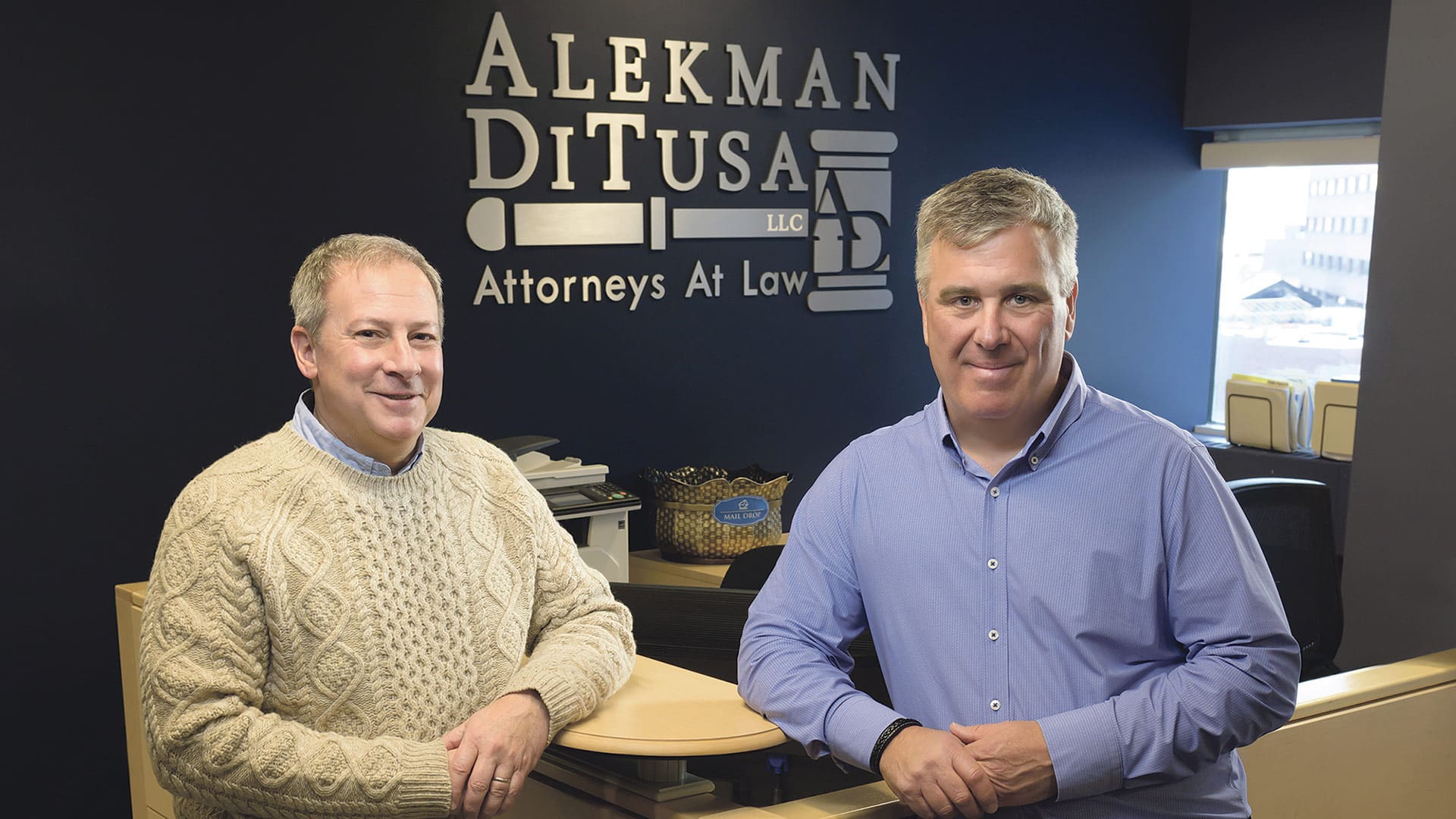
• Ryan Alekman and Robert DiTusa, partners, Alekman DiTusa, LLC;
• Rachelle Hannoush, director of Youth, Violence Prevention, and Court Support Programs, YWCA of Western Massachusetts;
• Jess Miller, comedian and founder, The Kind Squad;
• Edward Sokolowski, managing partner and wealth advisor, Pioneer Valley Financial Group;
• Margaret Tantillo, executive director, O’Dell Women’s Center; and
• Zeno Temple, founder, Just Us Movement.
BusinessWest launched the Difference Makers program in 2009 to recognize and celebrate the work of individuals, groups, businesses, and institutions that are positively impacting the communities of Western Massachusetts. The 18th annual Difference Makers program is sponsored by Burkart Pizzanelli, P.C., TommyCar Auto Group, and Westfield Bank.
For more information, call Natasha Mercado-Santana, Marketing and Events Manager, at (413) 781-8600, ext. 100, or email [email protected].
Elise Puza, CPA, has been promoted to manager in the Taxation department. She brings a diverse and well-rounded expertise across real estate, manufacturing, healthcare, and estate and trusts. She holds both a bachelor’s degree in business management with a concentration in accounting and a master’s degree in accounting from Westfield State University. She is a certified public accountant licensed in Massachusetts. Additionally, she is an active member of CPAmerica and the Massachusetts Society of Certified Public Accountants (MassCPA).
Lauren Foley, who started her journey with accounting at MBK in 2020, has been promoted to supervisor. She focuses on commercial and individual tax returns as well as compilation and review engagements. She graduated from UMass Lowell with a bachelor’s degree in business administration and a master’s degree in accounting. She is also a member of the American Institute of Certified Public Accountants (AICPA) and MassCPA.
Joanne Haley has been promoted to supervisor in the Audit and Accounting department. She has been practicing public accounting since 1987, specializing in 401(k) audits and medical practices. She has extensive experience across various accounting domains, including reviews, compilations, financial statement preparation, corporate and partnership tax returns, and nonprofit audits. She holds a bachelor’s degree in management from Westfield State University. She is also a member of AICPA and MassCPA.
Keara King, who began her career with MBK as a tax intern in January 2020, has been promoted to supervisor in the Taxation department. She continues to look forward to overseeing the tax internship training program, guiding clients through year-round tax planning, and ensuring they are prepared for filing deadlines. She enjoys mentoring students and associates and is a leader in the firm for various community service and corporate culture initiatives. She received her bachelor’s degree in accounting and sports management from Elms College. She is also a member of AICPA and MassCPA.
Karen Korpinen, CPA, has been promoted to supervisor in the Audit and Accounting department. She has been practicing public accounting at MBK since 2022 and brings a wealth of experience from her tenure on the flip side of the desk. Her background is diverse, encompassing various roles within not-for-profit organizations, municipalities, and higher education. She also holds master’s degrees in both business administration and accounting, equipping her with a broad understanding of the financial landscape. She is also a member of AICPA and MassCPA.
Mia McDonald, CPA, has been promoted to supervisor in the Audit and Accounting department. Her skillset is diverse, with strong focuses on engagements in not-for-profit, employee benefit plans, manufacturing, and wholesale and distribution industries. She is also the leader of the Municipal Utility Audit division. She became a CPA in 2025 and holds a bachelor’s degrees in economics and business management with a minor in mathematics and a concentration in accounting. She also holds a master’s degree in accounting from Westfield State University. As one of the two firm ambassadors for MassCPA, she remains engaged with the broader accounting community, staying updated on industry developments and best practices.
Lyudmila (Mila) Renkas has been promoted to supervisor in the Audit and Accounting department. She is recognized for her dependability and collaborative approach, earning the trust of clients through her tailored solutions and prompt responses to inquiries. While continuing to deepen her relationships with her engagements, she is actively pursing her CPA license. She holds a bachelor’s degree in accounting and information systems from Elms College and master’s degree in accounting from Westfield State University. She is also a member of AICPA and MassCPA.
Jacob Bear was promoted to senior associate in the Taxation department. Joining the firm in 2024, his expertise lies in real estate, not-for-profits, individuals, and pass-through entities. He looks forward to expanding his experience in his new role. He received his master’s degree in accounting from UMass Amherst. He is also a member of CPAmerica and MassCPA.
Taylor Sawicki has been promoted to senior associate in the Audit and Accounting department. She has been a valuable member of the MBK team, working on a diverse range of engagements, including not-for-profit, employee benefit plans, and wholesale and distribution engagements. She holds a bachelor’s degree in accounting from Western New England University. She is also a member of AICPA and MassCPA.
Justin Szwajkowski was promoted to senior associate in the Audit and Accounting department. Specializing in not-for-profit, commercial, and real estate industries, he brings tax experience and strengths in work ethic, organization, teamwork, critical thinking, and problem solving. He emphasizes clear communication, timely solutions, and smooth processes for all involved.
HOLYOKE — Auto dealer Gary Rome is again partnering with the HCC Foundation for a one-day campaign to raise money for student support programs and academic resources at Holyoke Community College.
The sixth annual “Together HCC: Drive to Change Lives” campaign is set for Wednesday, March 4 and will run for 24 hours from 12:01 a.m. to midnight. With a goal of 500 donors, this year’s success would put the campaign’s six-year cumulative support total over $1 million.
“What makes this campaign special is seeing all our community members come together in a single day to tell our students, ‘we see you, we believe in you, and we’re invested in your success,’” said Julie Phillips, HCC’s executive director of Development.
The campaign supports six critical areas that directly support HCC students: academic excellence and innovation, scholarships, the Thrive Center and Food Pantry, the President’s Student Emergency Fund, the President’s Fund for Opportunity, and the HCC Foundation’s general fund.
Donations can be made through a secure portal on the HCC website: hcc.edu/drive. The campaign has already received pledges for challenges and matching funds in excess of $125,000.
Rome, a member of the HCC Foundation’s board of directors, has pledged an additional $50 for every first-time donor. To help promote the event, he will visit the “Together HCC” celebration on campaign day from 11 a.m. to noon on the second floor of the HCC Campus Center.
“My father always said that no one can ever take away what you put between your ears,” Rome said. “That lesson has stayed with me my whole life, and it’s exactly why community college matters so much to me. HCC gives people the chance to build something no one can take away — education — and that’s worth showing up for, year after year.”
Additionally, longtime supporters Peg Wendlandt (’58) and Gary Wendlandt will provide $100,000 in challenge gifts throughout the day. Alumni Myke Connolly (’04), founder of the Launch and Stand Out marketing agency, and Dylan Pilon (’12), founder of Cloud 9 Marketing Group, have pledged $10 each for every alum who makes a gift.
The HCC Foundation launched “Together HCC: A Campaign for Caring” in March 2020 to build community support and raise money for students experiencing financial distress during the pandemic. As part of that campaign, members of the HCC community — students, staff, faculty, alumni, relatives, and college friends — were asked to use the hashtag #TogetherHCC to share stories and images on social media that demonstrated the resilience of the college community in response to the COVID-19 crisis.
In its first year, the campaign raised $40,000 for the President’s Student Emergency Fund and was selected as a finalist for a national Bellwether award. In 2021, with Rome signed on, HCC added the “Drive to Change Lives” theme and has so far raised more than $900,000 for student support programs over the past five years.
“Our students are driven, and they are just getting started,” Phillips said. “A gift to ‘Together HCC’ will help make sure nothing gets in their way.”
SPRINGFIELD — BusinessWest is now accepting nominations for its 20th annual 40 Under Forty awards. Nominations for the class of 2026 are due by Tuesday, Feb. 24.
The 40 Under Forty program was launched in 2007 to honor young professionals in in the region, not only for their career achievements, but for their service to the community. Winners hail from a host of different industries; many are advancing the work of long-established businesses, while others have created their own entrepreneurial opportunities. Nominators help BusinessWest identify young professionals in the four counties of Western Mass. who have stories that deserve to be told.
PALMER — Online voting has opened for the 2026 Choice Awards on the Quaboag Hills Chamber of Commerce website, qhma.com. Each year, the Quaboag Hills Chamber recognizes individuals and businesses that enrich the region. Members of the public are encouraged to cast their votes between now and March 15 for the finalists being celebrated this year.
“The annual Choice Awards continues to be one of the most beloved traditions we operate,” said James Przypek, CEO of the Quaboag Hills Chamber of Commerce. “Last year, we tallied more than 22,000 votes for the deserving people and businesses nominated.”
The 2026 Choice Award categories and finalists are:
• Community Hero of the Year finalists: Ann Davidson of Wales Community Food Pantry, Karen Jacobs Davis of Monson Together Community Cupboard, Brenda McCarthy of Bondsville Post Office, Amy Scribner of River East School to Career, and Chris Smith of Light Up Palmer.
• Educator of the Year finalists: Pam Ellis of Granite Valley School, Jacqueline Fernandez of North Brookfield Elementary School, Marcie Fusco of Wildwood Acres Farm & Forest School, Beky O’Brien of Old Mill Pond Elementary School, and Marion Reilly of Wales Elementary School.
• “We Keep You Running” HVAC Business of the Year finalists: C.W. Angell, Noonan Energy, Pioneer Valley Environmental, River-Air HVAC, and Squier & Co.
• “We Build It” Manufacturer of the Year finalists: Palmer Foundry, Palmer Paving, Quabbin Wire & Cable Co., Quirk Wire Co., and Sanderson MacLeod.
• “We Do Good” Non-Profit of the Year finalists: Behavioral Health Network, Hitchcock Free Academy, Palmer Historical & Cultural Center, Quaboag Valley Community Development Corp., and Workshop13.
• Chamber Champion of the Year finalists: Burkhart Pizzanelli, P.C., Hardwick Vineyard & Winery, Pathfinder Tech, SERVPRO Team Fall, and Superior Plus Energy.
• Chamber Legacy Award finalists: Bell & Hudson Insurance Agency, Country Bank, Monson Savings Bank, Moulton Insurance Agency, and North Brookfield Savings Bank.
The winners will be announced and all finalists will be honored at the QHMA Choice Awards dinner on Wednesday, May 6 at the Steaming Tender restaurant in Palmer. Tickets to the event are on sale now at qhma.com.
GREAT BARRINGTON — Berkshire Community Land Trust announced the promotion of Operations Director Beth Carlson to the newly created position of executive director.
The Community Land Trust movement was founded in 1969 by civil rights activists Bob Swann, Slater King, and others to return land and prosperity to Black communities in the South. In 1980, Swann and Susan Witt moved to the Berkshires to found what is now the Schumacher Center for New Economics. They simultaneously established the Community Land Trust in the Southern Berkshires (CLTSB). In 2015, CLTSB founded a sister organization, Berkshire Community Land Trust (BCLT), to expand its capacity to hold multiple types of land.
Today, CLTSB/BCLT holds more than 130 acres in community trust, providing homeownership opportunities to 23 families and two local nonprofits with residential and office facilities. Nearly 100 acres of that land are productive farmland supporting two thriving agricultural businesses that strengthen our local food system and economy.
“We are thrilled that Beth has stepped into the role as our first executive director,” board member Sarah Downie said. “She brings experience, enthusiasm, great communication skills, and optimism to our organization. We feel very lucky that she moved into this new role and look forward to a successful and invigorating future with her at the helm.”
Carlson, a partner in Silo Media, initially got involved with BCLT and the Farmsteads for Farmers initiative through events, video, and graphics projects. She became campaign manager for Farmsteads for Farmers in 2023 and became director of Operations in 2024. On Nov. 1, she began full-time in the new executive director role.
No stranger to the nonprofit world, Carlson served as president of the Dewey Memorial Hall board until recently and is credited with leading the team that brought the organization through COVID and a significant revival. She is a founding board member of the W.E.B. Du Bois Center for Freedom and Democracy. Her Silo Media projects were mostly for nonprofits and involved fundraising campaigns, social media, and consulting.
Witt, executive director of the Schumacher Center for New Economics and founder and board member emeritus of Berkshire Community Land Trust, worked closely with Carlson and encouraged her continued involvement and role expansion with BCLT.
“Thanks to the commitment of a volunteer board and the help of great part-time assistants, BCLT and its sister organization, CLTSB, has achieved much in its 46-year history,” Witt said. “But it is now time for a full-time executive director to build the organizations to their full potential. Grounded in the Berkshires with skills honed in the nonprofit community, Beth Carlson is the right person at the right time for this task.
Added Carlson, “affordable access to land is critical to the health of our local communities. Land speculation had concentrated ownership in fewer and fewer hands. Placing land into a community land trust and making it available in perpetuity for workforce housing, farming, local retail, and light manufacturing can revitalize the local economy.”
A reception celebrating the recent acquisition of River Run Farm and welcoming Carlson to her new role will be held this spring. The event will also honor David Fix, director of Operations at the Schumacher Center, for his years of work assisting the board of directors and maintaining governance and supporting operations for both organizations.
SPRINGFIELD — 6 Brick’s Cannabis Dispensary recently concluded its “Shop for a Cause” initiative, raising nearly $7,500 to support Square One’s programs and services.
“Our partnership with Square One reflects our belief that strong communities are built through early investment in children and families,” said Payton Shubrick, owner and founder of 6 Brick’s. “As a Springfield-based, family-run business, we feel a responsibility to reinvest locally — particularly in organizations that are addressing generational opportunity through education, stability, and support services. Square One’s work aligns directly with that commitment.”
During the month of January, $1 from every 6 Brick’s-branded product sold was designated as a donation to Square One.
“What makes this especially meaningful is that it wasn’t just a corporate contribution — it was a collective effort with our customers,” Shubrick added. “Our community chose to participate. Many of them expressed appreciation for the opportunity to support a trusted local organization while shopping with us. That level of engagement reinforces that Square One’s mission resonates beyond its direct service population.”
Kristine Allard, vice president of Development & Engagement for Square One, added that “the Shubrick family has a long history of involvement with Square One. They have fully experienced the importance of our work and understand the long-term implications that a high-quality early learning experience and family support have on children, youth, and families. We are so grateful for their friendship, generosity, and shared commitment to building a better community.”
NEW YORK — JPMorganChase announced plans to open more than 160 new branches in more than 30 states and renovate nearly 600 locations this year as part of a multi-billion-dollar investment to expand access to affordable and convenient financial services nationwide.
This milestone continues Chase’s multi-year growth strategy, announced in 2024, to open more than 500 new branches, renovate 1,700 locations, and hire 3,500 employees nationwide over three years.
In Massachusetts, new branches in Greater Boston are slated to open in Beacon Hill, Pembroke, Saugus, Medway, and Longwood. Outside of Greater Boston, branches are planned in Clinton, Springfield, and South Attleboro.
Chase operates the largest branch network in the U.S. and is the only bank with branches in all lower 48 states. Since 2018, Chase has invested billions to open more than 1,000 branches, renovate hundreds more, and introduce innovative branch concepts tailored to each community.
“Chase branches are more than just a place to transact; they are vital engines driving economic activity and supporting people, businesses, schools, hospitals, and nonprofits,” said Tom Horne, head of Consumer Branch Banking. “Every day, we’re proud to welcome a million customers into our branches, and we look forward to serving even more as our network grows.”
HOLYOKE — Due to an overnight fire, the interior common area of Holyoke Mall, including the food court, is closed today, Feb. 18. Anchor stores and any venue with dedicated exterior entrances will be open during normal business hours.
According to WWLP 22News, Holyoke Fire Department crews were alerted to a fire on the roof of the Holyoke Mall around 11 p.m. Tuesday night. They found heavy fire coming from the ductwork on the roof close to Target and smoke throughout the mall. The fire was upgraded to a third-alarm fire and was brought under control around 2 a.m. No injuries were reported, and the cause was determined to be accidental.
NORTHAMPTON — The International Language Institute of Massachusetts (ILI) has launched a newly approved, part-time English program, expanding its educational offerings while strengthening its role in the regional economy and community.
The program offers flexible morning classes designed for international visitors and residents who want to improve their English while balancing professional and personal commitments.
“Our goal is to respond to changing needs while continuing to serve our community,” Executive Director Caroline Gear said. “This program allows us to welcome a broader range of students while strengthening the financial foundation that supports our nonprofit mission.”
Founded in 1984, ILI attracts students from around the world, contributing to the local economy through housing, dining, transportation, and retail spending. The school also partners with local employers to provide workplace language training.
As a nonprofit organization, ILI uses tuition revenue to support its free English program for immigrants and refugees, which serves hundreds of residents annually and helps strengthen the regional workforce.
WESTFIELD — Stanley Park of Westfield offers a private dinner inside its iconic Carillon Tower, and now, the community has a rare opportunity to win this experience.
Stanley Park is hosting a raffle for an evening inside the historic Carillon Tower. On Saturday, May 2 at 5 p.m., one winner and three guests will enjoy an exclusive, four-course gourmet dinner, paired with wines, in a setting few ever get to experience.
The evening begins with appetizers and wine or champagne served on the outdoor balcony overlooking the park’s rose garden. Guests will then move inside the tower for a candlelit dinner surrounded by the glow of its stained-glass windows, creating an intimate and memorable atmosphere.
Private Chef Daniel Mahoney has curated three distinct menu options, allowing the winner to personalize this culinary experience to suit their tastes.
Tickets cost $20 each, and only 200 tickets will be sold, making this a limited opportunity to support Stanley Park. The drawing will be held on Friday, April 10 at 3 p.m. The winner will be notified through auctria.com and by Stanley Park staff. Tickets may be purchased online at carillontowerdinner.auctria.events.
SPRINGFIELD — Country Bank announced the appointment of Devan Summers as retail banking officer for its newest banking center, located at 1500 Main St., Tower Square, in downtown Springfield, scheduled to open in March.
Summers brings more than 14 years of experience in retail banking, management, and community development to Country Bank. He will lead day-to-day operations of the Springfield banking center, support customers with personalized financial solutions, and further strengthen Country Bank’s long-standing relationships throughout the city of Springfield.
“We are thrilled to welcome Devan to our retail banking team,” said Miriam Siegel, chief Culture & Development officer. “His extensive background in banking, combined with his genuine passion for helping individuals and families achieve their financial goals, reflects the core of who we are at Country Bank. Devan’s commitment to service, teamwork, and community embodies our iSTEP values of integrity, service, teamwork, excellence, and prosperity.”
Summers has served in nearly every role within branch banking throughout his career, from customer service to branch management and senior leadership. His experience includes leading high-performing teams, revitalizing branch performance across competitive markets, and overseeing retail operations and community engagement initiatives. Known for his people-first, relationship-based approach, he brings a deep understanding of both the operational and human sides of banking.
“I’ve admired Country Bank from afar for some time,” Summers said. “Many institutions talk about community involvement, but Country Bank truly lives it. The opportunity to bring that commitment to Springfield, a city with incredible people and strong community pride, was a natural fit. I’m excited to build relationships, support local businesses, and help customers achieve their financial goals.”
Country Bank has been a long-time supporter of the city of Springfield through financial contributions, supporting businesses, volunteerism, and partnerships with local organizations. The opening of the Tower Square banking center reinforces the bank’s continued investment in the city and expands access to relationship-based banking in the heart of downtown. Country Bank also maintains an existing Business Office presence within the Tower Square building.
The Springfield banking center will officially open on March 16, with a grand opening celebration planned for April.
GREENFIELD — The city of Greenfield is seeking applicants for the Storefront Improvement Program. This initiative provides resources for storefront upgrades to elevate downtown Greenfield’s aesthetic appeal and economic vitality, ultimately enhancing the area as a welcoming place to visit, shop, and work.
The program is funded through the federal Community Development Block Grant Program and administered by the Greenfield Community and Economic Development Department. Businesses located in the Central Commercial Zone can apply for up to $10,000. While funding is prioritized for signage and awnings, other visual storefront improvements may be eligible.
“We are putting federal funds to work in our effort to improve downtown vitality and support small, local businesses,” Mayor Virginia “Ginny” Desorgher said. “The Storefront Improvement Program is a great opportunity for local businesses and organizations to improve their curb appeal while contributing to the overall health of our downtown.”
Applications are being accepted on a rolling basis. Improvements must be completed by June 1. Businesses can fill out an application and learn more about the program by clicking here.
Community and Economic Development Department staff will review applications for completeness and eligibility as they are received. Grantees will be selected based on the proposed improvements’ likelihood of completion and potential visible impact on the downtown streetscape. The city expects to make five to seven awards depending on project costs.
SPRINGFIELD — Thanks to the generosity of numerous donors, Mercy Medical Center has received gifts totaling $1 million for the Sister Caritas Endowed Nurses Education (SCENE) Fund, securing its permanent endowment. SCENE funds are available to nurses to help them attain higher education and new certifications, and to other Mercy colleagues who want to become a certified nursing assistant (CNA) or licensed practical nurse (LPN).
The need for more qualified, talented, and dedicated nurses is an urgent priority for Mercy, along with most other healthcare organizations. The concept for the SCENE Fund was first introduced at the celebration marking the 100th birthday of Sister Mary Caritas, former president of Mercy Medical Center and the Sisters of Providence congregation, as well as a member of the Mercy Nursing School class of 1945. The original goal for the SCENE Fund was set at $100,000, the minimum required to establish an endowed fund at Mercy.
This fundraising generated more than 200 gifts, ranging from $5 to $275,000 from individuals, foundations, and admirers and followers of Sister Caritas, including a $25,000 challenge/match gift from philanthropist Harold Grinspoon and his foundation to help launch the fundraising effort. The initial challenge required Trinity Health and Mercy to raise $75,000 first, then Grinspoon would add the final $25,000 to formally establish the SCENE Fund. This challenge was swiftly met, and upon the foundation’s check presentation, Grinspoon issued another challenge to help permanently endow the SCENE Fund at $1 million; once Mercy and Trinity Health raised $900,000, the Grinspoon Foundation would add the final $100,000 to reach the $1 million goal.
Fueled with even more inspiration, the Mercy and Trinity Health Of New England fundraising team worked toward that goal, and the $900,000 mark was recently reached. Grinspoon made good on his promise, gifting the final $100,000 in a celebratory check presentation at the Harold Grinspoon Foundation offices in Agawam.
While every donor has been vital to this effort, larger gifts supporting the SCENE Fund include an anonymous donor, bankESB, the Brindle family, the estates of Homer Foucher and Monte Cohen, Dean Kavanagh, Dave and Pat Johnson, Kevin and Sandra Delbridge, John Sjoberg and Brenda Garton-Sjoberg, and Richard Dooley, former Mercy board member and lifetime supporter.
Trinity Health Of New England and Mercy Medical Center will host donors at a celebration of the new Sister Caritas Endowed Nurses Education Fund at the Delaney House in Holyoke on Thursday, April 23. Mercy’s leadership will partner with local colleges and universities offering nursing degrees, as well as make available scholarship dollars for professional development and advanced certification for current Mercy nurses, as well as any Mercy colleagues who may wish to pursue a nursing career.
HAMPDEN — Legal and financial well-being will be the focus of a community conversation on Tuesday, Feb. 24 from 4:30 to 6:30 p.m. at Hampden Post Acute, 9 Maple St., Wilbraham. The event is part of the Peace of Mind Series, a monthly community education series facilitated by Chanda Care to support older adults, caregivers, and families with practical guidance and resources.
The featured speaker, attorney Nicholas Kubacki, will share how to protect oneself and one’s loved ones through proactive legal planning and financial decision-making. The event is free and open to the public. RSVP by emailing [email protected].
This month’s Peace of Mind Series conversation is sponsored by Chanda Care, Chanda’s House, Holyoke VNA Hospice Life, Hampden Post Acute, Brookhaven Hospice, and McLane|McLane.
WESTFIELD — The Westfield Starfires announced that Hall of Fame baseball writer Peter Gammons will serve as host for the upcoming Starfires Hot Stove event featuring legendary pitcher Roger “the Rocket” Clemens. The event will take place on Saturday, March 28 at Westfield State University and promises to be an unforgettable evening of baseball stories, insight, and behind-the-scenes conversation with one of the game’s most dominant pitchers.
Gammons, one of the most respected and influential baseball journalists of all time, brings decades of experience covering the sport. A longtime columnist for the Boston Globe and former beat writer for the Boston Red Sox, Gammons became a national voice of baseball through his work with ESPN and later MLB Network. His reporting, relationships throughout the game, and deep knowledge of baseball history have shaped how fans understand the sport. In recognition of his contributions to baseball journalism, Gammons was honored with the J.G. Taylor Spink Award and inducted into the National Baseball Hall of Fame in Cooperstown in 2005.
The Hot Stove will feature Roger Clemens reflecting on his storied career, unforgettable moments, and lasting impact on the Boston Red Sox and their fans. With Gammons hosting the discussion, attendees can expect a dynamic and candid exchange between two figures who have significantly impacted the game.
The event will take place at Parenzo Hall (Dever Auditorium) on the campus of Westfield State University, located at 577 Western Ave., Westfield, starting at 6 p.m.
A Rocket Hot Stove Ticket is available with limited availability due to auditorium seating capacity, while an exclusive VIP meet & greet experience — offering a one-of-a-kind opportunity to meet Clemens — is available in extremely limited quantities. This VIP experience includes an autograph and photo with Clemens, along with hors d’oeuvres and a cash bar prior to the Hot Stove program. Tickets are available now at www.westfieldstarfires.com.
NORTHAMPTON — The Northampton Jazz Festival will present the legendary jazz guitarist Peter Bernstein with his quartet in a one-night-only concert at the Drake in Amherst on Saturday, March 7 at 8 p.m.
The Northampton Jazz Festival has expanded its live jazz offerings beyond just a two-day festival in late September. It now co-presents visiting jazz artists in one-night-only concerts by partnering with area performance venues. In doing so, the Jazz Festival is able to bring world-class jazz musicians to the region year-round.
“I am a guitarist myself, and have wanted to invite Peter Bernstein to perform at the Drake for some time,” said Lincoln Allen, manager of the Drake. “With this partnership with the Jazz Festival, we both market the concert to our audiences, so we’re more sure to get a large, savvy jazz audience as a result, which is the goal for us both.”
A New York City native, Bernstein has been playing and recording since 1990, when he first appeared on recordings with Lou Donaldson and the organ trio of Larry Goldings and Bill Stewart, a group still touring and recording today. Bernstein has played on festival, concert, and club stages worldwide and has appeared on over 300 recordings, 14 under his own name. Bernstein’s other associations and collaborations include Jimmy Cobb, Dr. Lonnie Smith, David “Fathead” Newman, Brad Mehldau, Etta Jones, Melvin Rhyne, Diana Krall, Bobby Hutcherson, Lee Konitz, Nicholas Payton, George Coleman, and Sonny Rollins. His latest recording on the Smoke Sessions label is Better Angels, featuring Brad Mehldau, Vicente Archer, and Al Foster.
Performing with Bernstein at the Drake on March 7 will be Aaron Goldberg on piano, Vicente Archer on bass, and Joe Farnsworth on drums. Farnsworth, a South Hadley native, headlined the 2023 Northampton Jazz Festival with his “Max Roach Centennial Celebration,” a sold-out performance at the Academy of Music.
“We’re thrilled to bring the great Peter Bernstein to the Valley with his equally talented bandmates,” said Ruth Griggs, executive director of the Northampton Jazz Festival. “We especially love having Joe Farnsworth back in town; he brings a love and enthusiasm for Western Mass. like no other jazz musician I’ve ever seen.”
Tickets cost $30 in advance and $35 at the door. For more information and tickets, visit thedrakeamherst.org.
Amherst Oyster Bar is the sponsor of the Peter Bernstein Quartet. The restaurant will donate 20% of dinner service profits on March 7 to the Northampton Jazz Festival. In addition, guests who show their tickets to the Peter Bernstein Quartet while dining at Amherst Oyster Bar on March 7 will receive six complimentary oysters per ticket (selection determined by Amherst Oyster Bar).
NORTH ADAMS — Bonney Hartley, tribal historic preservation manager for the Stockbridge-Munsee Community, will present “Tribal Historic Preservation in the Stockbridge-Munsee Ancestral Homeland” as part of Massachusetts College of Liberal Arts’ (MCLA) Green Living Seminar Series on Wednesday, Feb. 25 at 5:30 p.m. The event is free and open to the public.
Hartley’s presentation will discuss the community’s ongoing work to protect Mohican and Munsee cultural sites and repatriate sacred items and ancestral remains. She will highlight landmark achievements, including the 2021 return of Papscanee Island, a 156-acre nature preserve along the Hudson River that served as the center of Mohican life for thousands of years, and the 2024 acquisition of 372 acres at Monument Mountain in the Berkshires, returning ancestral homelands to tribal stewardship.
For 10 years, Hartley has served the historic preservation interests of the Stockbridge-Munsee Community from an extension office in the tribe’s homelands in Massachusetts. An enrolled member of the community, she leads the work to protect Mohican and Munsee (Lenape) cultural sites and repatriate cultural items, often serving to transform museums’ understanding of tribal cultural patrimony.
Hartley holds a master of social science degree in international relations from the University of Cape Town, South Africa, and a master of fine arts degree in creative writing from the Institute of American Indian Arts. She serves on the board of the Erie Canalway National Heritage Corridor and the National NAGPRA Community of Practice steering committee. She is a founding member of the Mohican Writers Circle and a 2025 Forge Project fellow.
The Stockbridge-Munsee Community’s ancestral homelands span the Hudson and Housatonic River valleys. Today, the federally recognized tribe is based on a reservation in Wisconsin, where approximately half of its 1,500 members live.
MCLA’s Green Living Seminar Series brings environmental experts to campus throughout the academic year to engage students and community members in conversations about sustainability, climate change, and ecological responsibility. All presentations take place Wednesdays at 5:30 p.m. in MCLA’s Feigenbaum Center for Science and Innovation, Room 121, and are recorded as podcasts available at mcla.edu/greenliving.
With new episodes airing every other Monday, BusinessTalk features in-depth interviews and discussions with local industry leaders who offer thoughtful perspectives on the Western Massachusetts economy and the many business ventures that keep it running. BusinessTalk is sponsored and presented by Greenfield Cooperative Bank.
George O’Brien talks with Julie Quink, Managing Principal, Burkhart Pizzanelli, P.C.
Julie Quink says the accounting profession has changed quite a bit in her 35 years of practice, but one of the more positive changes has been a focus on workplace culture, mentorship, and the well-being of team members — all areas she has continued to cultivate at Burkhart Pizzanelli. Julie sat down with Contributing Writer George O’Brien for the latest installment of BusinessTalk to talk about all this and more, including how she and her team have prioritized giving back to the community in many ways, and why she’s gratified to be named one of BusinessWest’s Difference Makers for 2026. It’s must listening, so tune into BusinessTalk, a podcast presented by BusinessWest over both audio and video platforms, and sponsored by Greenfield Cooperative Bank.
By now, most New England employers have heard the rumblings: the Equal Employment Opportunity Commission (EEOC) is taking a dramatically tougher stance on workplace practices it views as ‘DEI-motivated discrimination.’ What began as a political undercurrent in 2025 has become a fullscale regulatory pivot in 2026, and companies across Massachusetts, Connecticut, and Rhode Island are realizing that the DEI landscape they have operated in for a decade has shifted beneath their feet.
The message from Washington is blunt. EEOC Chair Andrea Lucas has made clear that any employment decision — hiring, promotion, training, or even internal programming — that factors in race, sex, or similar protected characteristics may trigger scrutiny in 2026. The agency is actively reviewing organizations with DEI policies, affinity groups, or diversity-focused hiring or marketing initiatives, signaling a broad and aggressive enforcement posture.
Tanzi Cannon-Eckerle
“Any employment decision that factors in race, sex, national origin, or other protected characteristics — even with the best of intentions — may now trigger scrutiny.”
That means any employment decision that factors in race, sex, national origin, or other protected characteristics — even with the best of intentions — may now trigger scrutiny. Hiring pipelines, mentorship programs, employee resource groups (ERGs), and even internal messaging are being examined through a new, far more conservative lens.
For New England employers who have long prided themselves on inclusive cultures and progressive workforce strategies, the shift is more than a compliance headache. It is a strategic reckoning.
And increasingly, companies are turning to an unexpected ally to navigate it: fractional general counsel.
A New Enforcement Era Arrives
The EEOC’s 2026 enforcement strategy is rooted in a strict interpretation of Title VII, one that treats DEI initiatives as potential sources of ‘reverse discrimination.’ The agency is signaling heightened attention to:
• Hiring or promotion practices referencing demographic goals;
• Diversity-focused recruiting pipelines;
• ERGs organized around protected characteristics;
• Training or leadership programs aimed at specific demographic groups;
• Public DEI commitments that imply preferential treatment; and
• Workplace policies tied to national origin, religion, or COVID19 vaccination.
According to reporting, the agency is even reviewing companies’ websites and public statements to identify DEI-related language. In other words, if it is on your website, it is fair game.
This is particularly relevant in New England, where employers — from Boston’s tech corridor to Springfield’s manufacturing base to Providence’s healthcare systems — have spent years building DEI programs as part of their brand identity. Many now find themselves asking the same question: what does compliance look like in 2026?
The New England Challenge: Values vs. Liability
New England companies tend to be values-driven. They care about fairness, community, and workplace culture. They have invested in DEI not because it was trendy, but because it aligned with who they are.
But the EEOC’s new posture means that even well-intentioned programs can create legal exposure. A mentorship program for women in leadership? Risky. A hiring initiative aimed at increasing representation? Risky. An ERG for employees of color? Risky unless structured carefully.
The challenge is not abandoning inclusion — it’s modernizing it. And that’s where fractional general counsel has stepped into the spotlight.
Why Fractional General Counsel Is Suddenly in Demand
Most midsized companies in New England don’t have a fulltime general counsel. They rely on outside firms for litigation and occasional advice, but they don’t have someone embedded enough to understand their culture, operations, and risk profile.
Fractional general counsel (GC) fills that gap. It’s a model that gives companies ongoing, strategic legal support, without the cost of a full-time executive. And in a regulatory environment that is shifting monthly, that combination of expertise and affordability is proving invaluable.
Fractional GCs are helping companies:
• Audit DEI-adjacent programs;
• Redesign policies and training;
• Reframe initiatives around neutral, business-driven goals;
• Strengthen documentation and decision making;
• Respond to EEOC inquiries;
• Coordinate with outside litigators when needed; and
• Keep leadership informed as the legal landscape evolves.
In short, they are giving companies a way to stay compliant without abandoning the values that define them.
What Fractional General Counsel Actually Does in This Moment
The role goes far beyond reviewing handbooks. In the context of the EEOC’s 2026 crackdown, fractional GCs are functioning as strategic advisors, risk managers, and operational partners. Their roles include:
Conducting DEI Risk Audits. Fractional GCs review everything from hiring practices to ERGs to training modules. They identify where language, structure, or intent may now be interpreted as discriminatory. This includes subtle issues — like job postings that reference ‘diverse candidates’ — that once signaled inclusion but now raise red flags.
Rebuilding Programs Around Legally Defensible Principles. Instead of demographic targets, companies are shifting toward skills-based leadership development, equal-access mentorship programs, workplace civility and respect initiatives, and culture building open to all employees. The goal is to preserve the spirit of inclusion while eliminating legal exposure.
Training Leadership and HR. Managers and HR teams are often the ones making decisions that later get scrutinized. Fractional GCs provide practical training on objective hiring criteria, documentation standards, avoiding demographic preferences, handling complaints, and responding to employee concerns. This reduces risk and increases consistency.
Strengthening Documentation. Documentation is everything. Fractional GCs help companies standardize interview processes, build defensible evaluation frameworks, ensure that promotion and discipline decisions are job-related, and create clear, consistent records. This protects against both traditional and reverse discrimination claims.
Managing EEOC Inquiries. When the EEOC (and their state counterparts MCAD, CHRO, and RICHR) come calling, companies need a steady hand. Fractional GCs coordinate responses, manage communication, gather documents, work with outside litigators if necessary, and keep the business’s perspective front and center. This prevents the operational disruption that often accompanies regulatory investigations.
Providing Ongoing Monitoring. The 2026 enforcement shift is not a one-time event. Fractional GCs stay on top of new guidance, court decisions, agency priorities, and state-level developments.
The New England Advantage: Culture Without the Liability
New England companies do not need to abandon inclusion. They simply need to express it in ways that comply with the evolving legal landscape.
The employers who will thrive in this 2026 anti-DEI environment are those who maintain strong workplace cultures, avoid demographic preferences, focus on equal access and opportunity, build legally defensible programs, and stay ahead of regulatory shifts.
Attorney Tanzi Cannon-Eckerle is principal and chief legal officer at General Counsel by Cannon, PLLC. Based in Western Mass. and serving companies across the region, the firm focuses on labor and employment law, business law, and fractional general counsel services. With deep experience advising organizations on DEI-related compliance, regulatory risk, and workforce strategy, General Counsel by Cannon helps businesses modernize their policies, strengthen their culture, and stay ahead of the EEOC’s evolving enforcement priorities, without the cost of a full-time legal department; www.gcbycannon.com; [email protected]
Operating a restaurant, bar, event hall, or other business that utilizes a liquor license is hard enough without accidentally tripping over a clause in your lease that turns into a legal disaster. The Massachusetts Supreme Judicial Court’s recent decision in Nicosia, et al. v. Burn LLC, et al. (2025) is a good reminder that, when it comes to liquor licenses, contract terms still matter, and creative financing can come with some very sobering consequences.
How This All Started
This case arose out of a fairly common commercial setup and straightforward set of facts. N&M Trust VII (Nicosia) leased a commercial property in downtown Boston to Burn, LLC (Burn). As part of the lease agreement, Nicosia sold its liquor license associated with the property to Burn for the sum of one dollar. The lease terms included an ‘anti-pledge’ provision, which prohibited Burn from pledging the liquor license as collateral for a loan, and provided that any pledge in violation of such provision constituted a default under the lease. In addition, at the end of the lease term, Burn was required to transfer the liquor license back to Nicosia for one dollar.
Joshua M. Goldstein
“Pledging a liquor license as collateral may seem like an easy solution when money is tight, but if doing so violates your lease terms, it can lead to lease termination, an awkward conversation with your landlord, and very expensive consequences.”
Before the lease term expired or otherwise terminated, Burn pledged the liquor license to its principal, Brian Lesser, as collateral for a loan to Burn in the amount of $445,000. When Nicosia discovered this, it declared Burn in default of the lease, terminated the lease, and demanded the return of the license.
Nicosia initiated the lawsuit, and Burn challenged its claims, arguing that the lease’s anti-pledge provision is unenforceable as it violated public policy and Massachusetts General Laws c. 138 § 23, the statute which governs and expressly permits the pledge of liquor licenses.
The Court’s Holding
The court disagreed with Burn’s argument and upheld the anti-pledge provision as enforceable. The court reasoned that the clause did not violate public policy concerns as financing agreements among commercial sophisticated parties do not generally raise public policy concerns.
Further, the court distinguished this case from its decision in Beacon Hill Civic Assoc. v. Ristorante Toscano Inc. (1996), where it found that a private agreement not to apply for a liquor license was unenforceable because it thwarted public participation. In the case of Nicosia, et al. v. Burn LLC, et al., the anti-pledge provision does not interfere with public participation but rather is only a limitation on the licensee’s ability to use the liquor license as collateral to secure financing. No loopholes. No judicial sympathy for “but we needed financing.”
Why This Matters to Business Owners
Liquor licenses are often viewed as valuable assets, and they can be to a business. However, Nicosia makes it clear that their value can be tightly controlled by contract. Here are the key takeaways:
• A Liquor License is Not Always ‘Your’ Asset. Even if a license is technically in your business’s name, contractual restrictions can dramatically limit what you can do with it. If your lease says “no pledging,” that means no pledging no matter whether the lender is a bank, a private investor, or your own business partner.
• Courts Will Enforce Anti-pledge Provisions. This decision confirms that Massachusetts courts will uphold contractual limits on liquor licenses so long as they don’t limit a prospective licensee’s ability to participate in the licensing process or conflict with statute. Public policy is not a magic eraser for inconvenient lease terms.
• Financing Shortcuts Can Trigger Long-term Pain. Pledging a liquor license as collateral may seem like an easy solution when money is tight, but if doing so violates your lease terms, it can lead to lease termination, an awkward conversation with your landlord, and very expensive consequences.
Practical Advice for Local Restaurant and Bar Owners
If you currently operate, or plan to operate, a business that utilizes a liquor license, this case offers some practical lessons:
• Read the Entire Lease (Yes, Even That Section). Anti-pledge clauses are easy to overlook, especially when they’re buried in lengthy lease sections or among boilerplate provisions. But as this case shows, it is very important to read the entire lease, whether you have an existing lease or are considering entering into a new lease. Further, it is important to review the lease to ensure that any anti-pledge provisions apply to real property or personal property other than a liquor license.
• Coordinate Legal Advice Before Financing. Before pledging any business asset as collateral, make sure it doesn’t conflict with your lease or other applicable agreements. A quick legal review can be a lot less costly than litigating or defending a default of a lease.
• Assume Enforcement, Not Flexibility. Courts generally assume that sophisticated parties mean what they sign and expect to be bound by the same. It is very important not to rely on hoping a judge will ‘balance the equities’ later.
Final Pour
Nicosia is not flashy, but it’s important. For local business owners, the lesson is straightforward: treat your lease like required reading, and don’t assume that creative financing will survive creative lawyering on the other side.
If you’re ever tempted to pledge a liquor license as collateral without reviewing your lease first, just remember: the hangover from that decision can far outlast the term of the loan.
Attorney Joshua M. Goldstein is an associate with Bacon Wilson, P.C. whose practice areas include banking and finance and business and corporate law, with additional specialties including liquor licensing and other licensing matters. He is administered to practice law in the state of Massachusetts and is an active member of the Hampden County Bar Assoc.
WESTFIELD — The 21st Almost Annual Penguin Plunge has been rescheduled to Saturday, Feb. 21 at Hampton Ponds State Park in Westfield. Check-in and registration are from 11:30 a.m. to 12:30 p.m., with the Plunge beginning at 1 p.m. The money raised by the Plunge goes toward providing a playful learning area for children and their families. This event is crucial in supporting the work of Amelia Park Children’s Museum.
Participants may join as individuals or as a team. Each participant pledges to raise a minimum of $75. Full-time students will receive a registration discount of $25 with valid school ID and pledge to raise at least $50. The registration fee for the Petite Plunge participants is $25.
Cash prizes will be awarded to the top three individuals or teams that raise the most money: $300 for first place, $200 for second place, and $100 for third place. A costume contest is also part of the fun, and prizes will be awarded for best individual costume and best team costume.
Register in advance online at www.ameliaparkmuseum.org/penguin-plunge or on the day of the event from 11:30 a.m. to noon. All participants will receive a free 2024 Penguin Plunge T-shirt.
SPRINGFIELD — Springfield College announced that its bachelor of science in sport management program has been awarded accreditation from the Commission on Sport Management Accreditation (COSMA), which extends until February 2033.
“The accreditation process has provided our program faculty with the opportunity to examine the curriculum and our best teaching practices,” said Heather Gilmour, associate professor of Sport Management and chair of the Department of Sport Management and Recreation. “We have long considered our students and alumni to be leaders in the sport industry, and achieving this accreditation status grants us even more opportunities to highlight all the amazing achievements.”
The purpose of COSMA accreditation is to promote and recognize excellence in sport management higher education. Upon reviewing a college’s sport management program, COSMA evaluates how well the program educates students and prepares them for a career in the sport management industry.
The Springfield College sport management program provides students with the opportunity to develop expertise in the rapidly advancing world of sport. The program leans into its history of innovation in the classroom and within the sport industry. The broad-based sport curriculum is combined with the sport lens for the administration and management of a variety of sport and athletic careers.
Currently, 90% of Springfield College sport management graduates are employed full-time or enrolled in graduate school within six months of graduation. Of those employed, 93% are within sport. Some 2025 graduates found careers in athletic facilities at the University of Michigan, in sales for the Orange Bowl Committee, and with the Cleveland Cavaliers.
PITTSFIELD — Berkshire Talking Chronicle, a radio reading service provided by UCP of Western Massachusetts, has launched The 413, a serialized audio mystery drama created specifically for sight- and print-impaired audiences and broadcast on WRRS 104.3 LPFM Pittsfield.
The show follows a group of college friends working over winter break in the Berkshires who stumble into a decades-old disappearance and discover it may be happening again. When a woman vanishes from a local diner, leaving only a cryptic note reading, “I finally ordered what I wanted,” at the same booth where her grandmother disappeared 40 years earlier, the friends are pulled into a mystery that spans generations.
The first season, “The Holiday Shift,” is a three-episode arc now available through Berkshire Talking Chronicle’s broadcast platforms.
The 413 was meticulously designed using “Theater of the Mind” principles, ensuring total accessibility. Every plot point, clue, and character interaction is fully comprehensible from the audio alone. The show achieves this by building its world for the ear: characters identify themselves naturally in dialogue, entrances and exits are acknowledged by others, and no visual element is left unspoken.
“When you’re creating for an audience that can’t see, every line has to carry more weight,” said Tina Brissette, the show’s creator and producer. “It’s a discipline that actually makes the writing stronger, and it benefits all listeners, not just our target audience.”
The 413 is distinguished from traditional audio dramas by its production method and its openness about it. The show was developed using AI tools at every stage: collaborative scriptwriting with Claude (by Anthropic), synthesized voice performances and sound design through ElevenLabs, and AI-generated music and sound effects.
The production is fully transparent about this process. Each episode is followed by a behind-the-scenes conversation between host Adam Santos and Brissette, in which they discuss story decisions, the AI tools used to produce the episode, and how sight- and print-impaired listeners can access those same tools in their own lives.
“This isn’t about pushing a button and getting a finished product,” Brissette said. “It’s a collaboration between human creativity and technological tools. I make every creative decision, story direction, voice selection, scene pacing, and editing. AI gives me raw material. The craft of shaping it into something that connects is still human work.”
The project grew out of her volunteer work with the Retired Senior Volunteer Program (RSVP) in Berkshire County, where she has been leading AI literacy workshops for lifelong learners. Through that work, she connected with Berkshire Talking Chronicle (BTC) Station Manager Elizabeth Irwin, who invited her to create content for BTC’s specialized audience.
Rather than produce a straightforward technology program, Bressette proposed something more ambitious: an original mystery series that would demonstrate AI’s creative potential while delivering genuine entertainment and serving as a model for how emerging tools can expand accessibility and opportunity for creators at any experience level.
The 413 serves dual audiences: sight- and print-impaired high school and college students ages 16 to 22, and AI-curious adults age 55 and older. The show aims to build technological confidence through storytelling rather than instruction alone.
WARE — Country Bank announced a $25,000 donation to the Scantic Valley YMCA in Wilbraham in support of its ongoing capital campaign aimed at expanding community offerings and completing critical facility improvements.
Country Bank has been a long-time partner of the YMCA, supporting both the Scantic Valley and Springfield branches for many years. This latest contribution reinforces the bank’s commitment to investing in organizations that strengthen families, promote wellness, and enhance quality of life across the communities it serves.
The Scantic Valley YMCA capital campaign focuses on much-needed facility upgrades and program enhancements, including roof replacement, fitness center expansion and equipment upgrades, outdoor pickleball courts, parking lot improvements, locker room renovations, enhancements to childcare spaces, and signage, ensuring the facility continues to meet the evolving needs of members of all ages.
“The YMCA has long been a cornerstone in our communities, providing a welcoming place for individuals and families to grow, stay healthy, and connect,” said Russell Fontaine, chief Retail Delivery & Customer Experience officer at Country Bank. “We’re proud to support the Scantic Valley YMCA and its mission to serve thousands of members while ensuring the facility remains strong and accessible for generations to come.”
Dexter Johnson, president and CEO of the YMCA of Greater Springfield, added that “Country Bank’s generosity plays a vital role in helping the YMCA continue to serve our community in meaningful ways. Partnerships like this allow us to expand our reach, enhance our programs, and create lasting impact for the people who rely on the Y every day.”
Difference Makers was launched in 2009 to recognize and celebrate the work of individuals, groups, businesses, and institutions that are positively impacting the communities of Western Mass. As our winners have shown, there are many ways to make a difference within our community.
Click HEREfor the digital flip book, or continue scrolling to meet the Difference Makers of 2026.
THANK YOU TO OUR SPONSORS!
Ryan Alekman and Robert DiTusa
Partners, Alekman DiTusa, LLC
Beyond Helping Clients, They Have Created a Culture of Giving Back
Tim and Andrea Monson, owners of Monsoon Roastery.
Technically, it’s a collection of old industrial buildings on Albany Street in Springfield in the shadow of the huge oil storage tanks that provide its name.
But Gasoline Alley is so much more, say the people doing business there now.
They describe it as a community, an incubator of sorts, a sustainable business collective, a place for events, and … well, did we mention community?
“It’s an amazing place,” said Andrea Monson, co-owner, with her husband, Tim, of Monsoon Roastery, one of several businesses now part of what’s called the Urban Food Brood, also described as an avant-garde culinary haven.
It was created, with the help of a MassDevelopment grant, by the Monsons; Teri Skinner, owner of Nosh Café and Restaurant; and Jack Wysocki, owner of Urban Artisan Farm — entrepreneurs who knew each other and were already partners of sorts.
The vision was to build a pandemic-proof business, a place for “community, collaboration, and culinary innovation,” said Monson, adding that, in recent years, like-minded individuals have joined the venture as tenants within the collaborative. These include the owners of Rumspringa Books, Corsella Butcheria, Forest Doe Botanicals, Journeys Lemonade, and Happy Man Freeze Dried, which, as name suggests, specializes in all things freeze dried, from smoothies to dog treats.
Monson described the assembled businesses as family, with each member taking on the many challenges of operating a business individually, but also collectively.
“It’s a family, and with any family, there’s conflict and resolution,” she explained. “We don’t give up on each other.”
“We each have our little part that we do that creates that magic that we have here.”
Skinner agreed. “It’s definitely an interesting community, and the best thing about it is the support that you have from your fellow partners or entrepreneurs that are working here,” she said. “Everyone in this place is a business owner, and that alleviates some of that pressure from being the sole business owner who has to do everything. We each have our little part that we do that creates that magic that we have here.”
The Urban Food Brood is a huge part of the broad picture at Gasoline Alley, but there is a diverse list of other tenants as well, including Chris Marion Photography, Street LXL Mixed Media Arts, FJR Towing, and many others.
Collectively, they are continuing a long tradition of entrepreneurship, innovation, and collaboration at this location.
Indeed, since 1990, more than 1,000 jobs have been created through more than 100 alumni companies, including Al’s Beverage Co., Marty’s Soda Mix, the Salon at Gasoline Alley, Mad Gab’s, the ReStore, and many others, said Joe Sibilia, founder and creator of Gasoline Alley, which he describes as “a place, an idea, an inspiration,” and so much more than a mailing address.
“Culturally, it’s a campus and culture that embraces the arts,” said Chris Marion, who started taking pictures as a side hustle years ago and eventually made it his career, and Gasoline Alley his home — a studio out of space that was formally a club for motorcycle police. “It’s a fun place to be. We all have our own businesses, but in a lot of ways, it’s like family.”
Joe Sibilia describes Gasoline Alley as an ever-evolving community of entrepreneurs.
Behind the ventures that now call Gasoline Alley and the Urban Food Brood home are entrepreneurs who are, as Skinner noted, learning from one another and often leaning on one another as they try to grow their ventures.
“What’s nice about being here is that, as a small business owner, I have the ability and opportunity to talk it over with other small business owners,” said James Brooks, owner of Happy Man Freeze Dried. “We’re always helping each other out; it’s a great environment to be in.”
For this issue, BusinessWest takes an in-depth look at a truly unique spot on the local business scene, a community of business owners who all contribute to the magic being created there.
Coming Together
Sibilia doesn’t really like to talk about himself or his various roles at Gasoline Alley.
He would rather put the focus on the businesses and the programs there — and that’s essentially what he’s done from the beginning. When pressed, he said he’s a landlord, yes, but he’s also a facilitator of sorts and a mentor to many, passing on advice to entrepreneurs and sometimes advising them that it might be best if they found something else to do.
He said Gasoline Alley has had a long history of not only incubating businesses and hosting them — sometimes for a dozen years or more — but also for supporting local police (there remains on site a stable where police horses are fed) and providing job training and life skills to young people.
“We had, for many, many years, young men between the ages of 15 and 20 who hadn’t graduated from high school, never held a job, some of them homeless or living with extended family, may or may not have been convicted of a crime, on a six-week job training program here — basically triage for the local thugs,” he said, adding that the program ran until COVID. “That was very rewarding.”
Kate Forest (left) and Missy Doe are co-owners of Forest Doe Botanicals, one of the many diverse and interconnected businesses at Gasoline Alley.
Sibilia is proud of Gasoline Alley’s strong track record for helping businesses get off the ground and get to the next level. The list of alumni also includes several other soda companies, the Springfield Journal, Todd Lemieux Design, Artifact Cider, and even state Rep. Athan (Soco) Catjakis. The list goes on and on, everything from a skincare salon and car detailing shop to photography and yoga studios and a car wash.
They’ve all called that relatively hidden slice of Springfield home. And now, it’s time for the current generation — an equally eclectic mix of businesses that live by one of Gasoline Alley’s credos, “to give value to that which has been abandoned” — to thrive.
“In nature, and in humanity, there is no waste,” said Sibilia, adding that another credo is for the businesses there to create a “learning community,” which is another tradition that continues today.
He referenced almost all the current tenants on a tour during which he emphasized everything from the diversity of the businesses to the many, often unlikely, success stories, such as FJR Towing, to the manner in which the businesses support one another and create a community.
Ventures like Forest Doe Botanicals. Founded by Kate Forest and her wife, Missy Doe, the venture specializes in a broad range of eco-friendly gifts, including plant-based body care — soaps, salves, face and beard oils, relaxation roll-ons, and body oils handcrafted with organic, vegan ingredients.
“Our mission is around self-care and planet care,” Forest explained. “We’re helping people be a little more eco-conscious about the products they put on their bodies, the products that they use that go off their bodies and down the drain and into our bodies of water and affect our marine life and go into our air and effect our breathing.”
“What’s nice about being here is that, as a small business owner, I have the ability and opportunity to talk it over with other small business owners. We’re always helping each other out; it’s a great environment to be in.”
The two started three years ago in Doe’s kitchen, dabbling in oils and shea butter, and eventually expanded into soaps and took their act on their road, transforming a 2016 Ford van into a home on wheels. On their travels, they met a soap maker, and “it snowballed from there.”
Like many, they frequented Gasoline Alley and the eateries in the Urban Food Brood — Nosh catered their wedding roughly 18 months ago — before making it their own business home.
“We walked into this space, and Teri [Skinner] said, ‘they’re bringing vendors in here,’” Forest recalled, referring to a space created when a wall was knocked down within the 5,000-square-foot complex that was home to the Urban Food Brood. “We asked if they would consider letting us come in with our production space and our retail space. Teri said, ‘let’s talk to Joe,’ and we signed a lease a week and a half later; it was pretty quick.”
The two set up shop last April, becoming the first tenants in the marketplace. Their large suite includes a production area and the retail space, and it was expanded into recently vacated space for an eco-conscious gift shop.
“It’s such a great community to be involved in,” Forest said of Gasoline Alley. “As we grow together, we become more like a family — it’s great to be a part of this.”
Food for Thought
Those sentiments were echoed by others we spoke with, especially in the Urban Food Brood — open Friday through Sunday — where things are generally humming.
Even within this small space, there are some intriguing stories about entrepreneurs finding a home — and finding their stride.
Like Brooks, an operating room nurse by trade who once made jerky but found it wasn’t a good business model, and who is perhaps better known as the ‘freeze dried guy.’
During the pandemic, he did some scrolling, came across the freeze drying process, and eventually decided he could create a business that would fit in nicely with the overall mindset at Gasoline Alley.
“It’s very much what Joe Sibilia wanted — there’s no waste at all, and the health benefits are off the charts,” he said as he showed off his space and his equipment.
Brooks noted that he freeze dries just about everything, from fruit to meats; from candy to those smoothies and dog treats. He was making some of the latter when he spoke with BusinessWest.
“It’s all chicken,” he said of the treats. “There’s no additives; there’s no preservatives. This machine will freeze the chicken livers to like 20 below zero, and over a period of time, it starts to heat back up … this vacuum pump turns on, and the water from the chicken collects on the cylinder on the inside. It takes out 96% of the water and holds 96% of the nutrients, so it’s shelf-stable.”
The smoothies are a recent addition to the stable, he said, adding that he makes them in a blender and then pours the mix into a mold, creating small squares that are put into a freezer and then the freeze drier, creating snacks that have become a best seller, with flavors such as mango, pineapple, banana, and more.
Brooks is a tenant, but he has also helped Sibilia build out some of the spaces at Gasoline Alley. And as he noted earlier, the businesses support one another in many different ways.
Skinner agreed, noting that she decided to expand into Gasoline Alley with a second location after a space became available — and some prompting from the Monsons and Wysocki. And while there were some logistical challenges and build-out issues, “now, it’s awesome.”
Skinner said that, while the businesses started the process of creating the intriguing overall environment at Gasoline Alley and its Urban Food Brood, the customer base that has emerged has certainly contributed to that ‘magic’ she described earlier.
“We have a really diverse base of customers,” she said, noting that, while the Urban Food Brood is open only three days a week, those days are busy, and the location has become a real destination for people living across the 413.
Andrea Monson agreed, noting that she and Tim explored Gasoline Alley at Wysocki’s advice — the two ventures crossed paths at a winter farmer’s market.
“Tim actually went first and, unbeknownst to me, signed a lease,” she recalled. “And then we both went to check out the space and meet Joe.”
They opened in 2019 and survived the pandemic through a delivery service and then a walk-up window on the Gasoline Alley property. “People would come in the rain and the snow; they’d order at one window and walk around and pick up at the other window.”
Through the MassDevelopment grant, they and their other partners embarked on what would be a three-year journey to create the Urban Food Brood, which, with its condensed schedule — a broad effort to address changing spending habits as the economy slowed — has become a bustling destination those three days of the week.
“On Saturday, it’s packed — there’s a line out the door,” she said, adding that the businesses take full advantage of a location just off several major highways. “We get a lot of people passing through, but we also have a large number of regulars.”
They come for the traditional offerings, but also special events like farm-to-fork table dinners on Thursday nights, where Skinner handles the food, Andrea Monson mixes drinks, and other businesses in the complex chip in as well.
“People come, and they spend three hours with us for a six-course meal,” she said, adding that Gasoline Alley has become a gathering spot for businesses and patrons alike, continuing a unique tradition at a place that is most certainly also an inspiration.
In 2026, employers across the U.S. are expected to continue to face intensified and broadened immigration enforcement efforts. Executive actions, regulatory shifts, agency‑level mandates, and recent events reflect aggressive enforcement within and outside of the work environment.
ICE (Immigration and Customs Enforcement) has become a household word. Restrictions on enforcement in certain areas, such as schools, hospitals, and places of worship, have been lifted. Unannounced visits to the workplace, expanded audits, and coordination between ICE and other enforcement agencies has strengthened.
In 2025, certain cities, states, and industries were affected more than others when it came to the Trump administration’s efforts to enforce immigration policies. The focus was on agriculture and farming, food processing, construction, healthcare workers, and cleaning and maintenance services because they often employ immigrant workers.
In 2026, efforts have been expanded, and are expected to continue to expand, to employers in all businesses of all types, sizes, locations, and number of employees. All employers, regardless of industry, size, or location, must be prepared for ICE visits to the workplace as well as other potential enforcement actions, such as unanticipated Form I-9 audits conducted by the U.S. Department of Labor.
Marylou Fabbo
“All employers, regardless of industry, size, or location, must be prepared for ICE visits to the workplace as well as other potential enforcement actions, such as unanticipated Form I-9 audits conducted by the U.S. Department of Labor.”
Importantly, employers must also be prepared for conflicts that may arise when employees or ICE agents engage in actions that may have unintended and serious consequences, such as personal injury.
ICE Visits to the Workplace
Immigration agents may go to a workplace to conduct a Form I-9 audit, a raid, or to detain specific people. ICE doesn’t always ring the bell before entering. ICE can enter the public areas of a business, such as the reception area, without permission. Still, ICE does not have the unrestrained authority to stop, question, or arrest someone, even if they are in a public area.
Rather, for access to the private areas of a business, ICE needs either company permission or a judicial warrant. A judicial warrant is from a court and is signed by a judge. Although some agents may present an administrative warrant, that type of warrant is insufficient. An administrative warrant usually says “Department of Homeland Security” or is from an immigration court, and it does not give ICE the right to enter private areas of your business without your permission.
Having a judicial warrant only gives ICE authority to enter the areas identified on the warrant to be searched. Be wary, however. While it is illegal for ICE to enter any private area without a judicial warrant, there have been many reports of ICE failing to adhere to legal standards when entering the workplace, and employees permitting ICE agents to do more than they would otherwise legally permitted to do. Such actions give rise to one of the newer concerns being discussed among employers: whether the deadly results of community enforcement actions having turned violent spread to the workplace.
Access to Employees
Attempts to arrest an employee may also lead to physical altercations between ICE agents, the employee at issue, or other employees protecting the employee who is being sought or employees who wish to aid ICE’s efforts.
The desire to assist ICE often derives from U.S. citizens’ concerns about losing employment opportunities to undocumented workers, regardless of whether an employer intentionally employs individuals who are not authorized to live and/or work in the U.S. There is a misconception that all employers who are employing an employee who does not have authorization to work or be present in the U.S. knowingly do so.
For Form I-9 purposes, employers are not required to be document review experts. If the document reasonably appears to be genuine and related to the employee, it is sufficient. Therefore, some employers are shocked when ICE arrives with a judicial warrant to arrest someone who has been a hardworking, long-term employee and who presented what appeared to be genuine Form I-9 supporting documentation.
If a judicial warrant is presented, employers must comply. If ICE has an administrative warrant identifying an employee, the employer does not have bring the agent to the employee or even have to let the agent know if the employee is working that day. That is, if ICE enters the employer’s property at all, it has become more common for immigration officials to stop employees before they pull into the employer’s parking lot. Employers must consider whether they want to have a plan in place if such a circumstance arises.
Employers’ Right to Legal Advice
Human resource personnel, the company president, and all other employees can ask to speak to a specific attorney or ask the immigration officer for a list of pro bono lawyers before speaking to immigration authorities or answering any questions. It’s not certain, however, that the request will be granted.
Still, no one is required to speak at all. No one must state where they were born or whether they are in the U.S. legally, sign anything, or group according to country of origin. Employees do not have to show identification or other papers to ICE agents. However, if someone does not cooperate, it is not out of the realm of possibility that ICE would claim that the person is ‘impeding’ their efforts and arrest them. Employers should communicate to employees their position on ICE cooperation even whether or not ICE’s actions appear to be legally supported.
Difficult Choices
Employers who violate immigration-related employment laws or lawful enforcement actions can be subject to fines, large penalties, the inability to work on government contracts, and even criminal liabilities. But in today’s immigration landscape, there’s been much contention that even lawful activities can be penalized. An even greater concern is increasing violence.
If an ICE agent demands action that you believe to be illegal, what do you do? Efforts to assert an individual’s rights in the face of an improper action may lead to unexpected — and even dangerous — situations. Most employers do not know what their employees will do who take offense to ICE’s action, whether right or wrong, and also lack action plans when circumstances begin to present a risk of harm to one more people involved.
Regardless of the position employers take on Minnesota’s enforcement-related deaths, they must recognize that similar situations could occur in their workplaces and should consider having a plan in place to address them.
Attorney Marylou Fabbo is a senior partner at Skoler Abbott and heads the firm’s immigration team. She has successfully represented the firm’s clients in state and federal courts, as well as the Equal Employment Opportunity Commission, Massachusetts Commission Against Discrimination, Connecticut Commission on Human Rights and Opportunities, and other forums.