Daily News

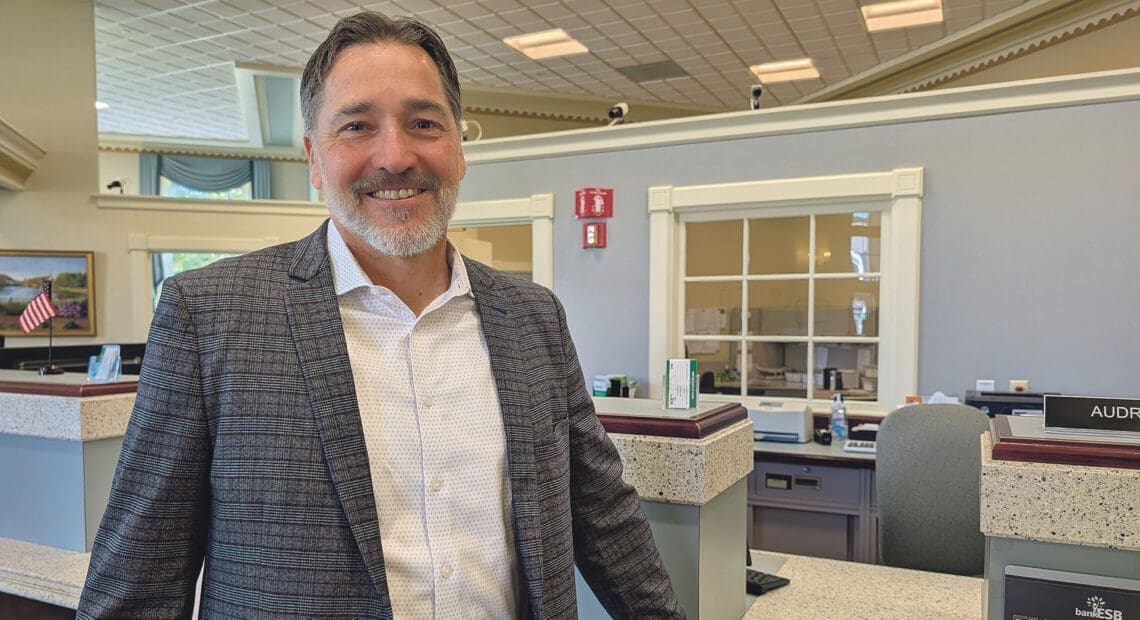
GREENFIELD — Greenfield Savings Bank (GSB) celebrated the grand opening and ribbon cutting of its new Easthampton branch on June 8, strengthening the bank’s presence and long-term commitment to the community.

Located at 1 Sierra Vista Blvd., the new Easthampton branch is the bank’s ninth location and its southern headquarters, offering full-service personal and business banking, along with wealth management and trust services, residential and commercial lending, and cash management.

“With so many of our customers already living and working in Easthampton, it became clear that a brick-and-mortar presence was necessary,” said Peter Albero, president and CEO of Greenfield Savings Bank. “We’ve supported nonprofits and community organizations here for years, and opening a branch allows us to better serve those relationships, deepen existing ones, and continue growing alongside the community.”

Designed to feel open, welcoming, and distinctly local, the Easthampton branch reflects GSB’s relationship-driven approach to banking. Upon entering, visitors are greeted by a custom wall mural created by local artist Jesse Morgan, featuring recognizable local landmarks. Just beyond the entry is the bank’s signature ‘faces and places’ wall, showcasing community members, scenes, and moments that capture the character of Easthampton.

“That sense of belonging was important to us from the very beginning,” Albero said. “We wanted the space to feel thoughtful, welcoming, and connected to the community around it.”

Leading the Easthampton branch is Branch Manager Melvin Coleman, who has spent the past several months building relationships with residents, business owners, and nonprofit leaders throughout the city.

“I’ve been out listening and learning — understanding what matters to people here and what they need from their bank,” Coleman said. “I’m genuinely excited to open our doors and begin serving Easthampton from a space that was built with the community in mind.”

The Easthampton branch strengthens Greenfield Savings Bank’s presence in Hampshire County, where the bank already serves hundreds of customers and supports numerous local nonprofit organizations and initiatives. The new location is intended as a place for conversation, guidance, and long-term financial partnerships, whether customers are opening their first account, financing a home, growing a business, or planning for the future.

The grand opening and ribbon cutting brought together local officials, members of the Greater Easthampton Chamber of Commerce, community partners, residents, and GSB leadership to celebrate the milestone.

Daily News

Bozena Dabek

EASTHAMPTON — Bozena Dabek, executive vice president, chief administrative officer at bankESB, has been elected to the board of directors of the Cooperative Banks Employees Retirement Assoc. (CBERA).

CBERA was established in 1946 to administer pension programs for employees of the Massachusetts cooperative banking industry. Today, the organization serves not only pensions for cooperative banks, but 401(k) plans for financial institutions across the region. CBERA’s mission is to support the retirement needs of member employers and their employees through sound and affordable administration of pension plans, prudent investment of retirement funds held in trust, and guidance that helps participants and human resources professionals achieve desired retirement outcomes.

In her role on the board, Dabek will contribute her extensive financial and operational expertise to help advance CBERA’s mission and ensure the continued strength and sustainability of its retirement programs.

Dabek assumed her current role at bankESB in 2015 after serving as executive vice president, chief financial officer beginning in 2010. She now leads human resources, learning and development, and executive administration, bringing more than three decades of experience in finance and banking, including leadership roles at JPMorgan Chase, MassMutual Financial Group, and United Bank. Throughout her career, she has demonstrated deep expertise in financial management, strategic planning, and organizational leadership.

Dabek holds an MBA in finance and international business from NYU’s Stern School of Business and a bachelor of business administration degree in accounting from Pace University’s Lubin School of Business. She also completed advanced professional studies at the New England School of Financial Studies.

Her election to the CBERA board reflects her longstanding commitment to sound financial stewardship and to supporting organizations and employees in achieving long-term retirement security.

Daily News

GREAT BARRINGTON — Berkshire Bounty, a 501(c)(3) food access organization, will conduct a crowdfunding campaign on June 9-15 to raise funds and address urgent and growing community needs.

“With cuts to the Supplemental Nutrition Assistance Program and increasing food costs, food insecurity rates continue to rise in Berkshire County. We get calls almost every day for more food,” said Morgan Ovitsky, executive director.

The “Spring Forward for Food Security” campaign aims to raise $75,000 for Berkshire Bounty. According to the Greater Boston Food Bank’s statewide food access survey and report, 39% of households in Berkshire County reported food insecurity in 2024, comparable to more than one in three households across Massachusetts.

While donations support day-to-day operations, Berkshire Bounty is focused on helping to fund these programs:

• Food Box Project: a collaboration with the Southern Berkshire and Berkshire Hills regional school districts and Berkshire County Head Start. These partners participate in the Food Box Project because the number of people in their service areas who face barriers to accessing feeding assistance programs is increasing.

• Farm to Food Access (F2FA): a partnership with Berkshire Grown to purchase and distribute food from local farmers designated as ‘socially disadvantaged’ to feeding assistance programs. Berkshire Bounty made a commitment to additional fundraising for F2FA, following the cessation of federal support for it.

“We’ve seen significant increases in the volume of participants in our programs,” said Mark Lefenfeld and Jay Weintraub, co-founders and board members. “Our fundraising allows us to serve our community.”

“Spring Forward for Food Security” is aided by the Donald C. McGraw Foundation, the Black Rock Foundation, and the Gilson Family Foundation, offering a $30,000 match, as well as a donation from Warrior Trading.

Donations can be made online by clicking here. For more information or to inquire about making a donation, email Sara Haimowitz, Berkshire Bounty’s director of Development, at [email protected].

Daily News

AMHERST — The Amherst Business Improvement District (BID) has kicked off Amherst Restaurant Week, which takes place 7-13. This year’s event features 16 restaurants and eateries across downtown Amherst, offering an opportunity for residents, families, and visitors to explore the area’s vibrant dining scene.

From globally inspired kitchens to beloved local favorites, participating establishments will offer a range of special promotions throughout the week, including prix fixe menus, exclusive deals, and specially featured dishes that highlight the eclectic and diverse flavors downtown Amherst has to offer.

This year, diners can also take part in a giveaway running throughout the week. The more restaurants visited, the more chances there are to win gift cards to participating downtown eateries. Check-ins can be logged through the Brightr app or via a printed map, available for pickup at the Amherst Visitor Information Center.

Restaurant Week arrives at a natural pause in the Amherst calendar, just after the energy of commencement season, making it the perfect moment to rediscover downtown at a more relaxed pace. Whether one is a longtime local or new to the neighborhood, Restaurant Week is an ideal time to try somewhere new, revisit an old favorite, or simply enjoy a meal in the heart of the community.

“Downtown Amherst is home to an incredible array of restaurants representing flavors from around the world, and Restaurant Week is our invitation to come explore all of it,” said John Page, executive director of the Amherst BID. “Whether you’re in the mood for something familiar or ready to try something new, there’s a seat at the table for everyone.”

A full list of participating restaurants and their featured offerings is available at amherstdowntown.com/restaurantweek and on the Amherst BID’s social media channels.

Business Talk Podcast Special Coverage

With new episodes airing every other Monday, BusinessTalk features in-depth interviews and discussions with local industry leaders who offer thoughtful perspectives on the Western Massachusetts economy and the many business ventures that keep it running. BusinessTalk is sponsored and presented by Greenfield Cooperative Bank.

Go HERE to view all episodes

Episode 258: June 8, 2026

George O’Brien talks with Jennifer Core, Executive Director, Community Involved in Sustaining Agriculture: Experts in Their Field

Agriculture has always been a large and important part of the region’s economy, even it is often overlooked. But this sector faces many stern challenges, everything from the rising cost of everything to issues with succession at family farms; from weather extremes like the current drought to workforce shortages. Community Involved in Sustaining Agriculture (CISA) works to strengthen area farms and engages the community to build the local food economy. On the next episode of BusinessTalk, Jennifer Core, CISA’s executive director, talks with BusinessWest contributing writer George O’Brien about the agency’s broad mission and specific initiatives, such as its Senior Farmshare program, which serves more than 800 seniors in Hampden, Hampshire, and Franklin counties. It’s must listening, so tune into BusinessTalk, a podcast presented by BusinessWest over both audio and video platforms, and sponsored by Greenfield Cooperative Bank.

Sponsored by:

Also Available On

Daily News

SPRINGFIELD — As Square One leaders continue to negotiate with the union representing the nonprofit agency’s teachers, drivers, and food service workers, President and CEO Dawn DiStefano has issued a statement:

“As we continue to navigate the challenges presented by our current labor strike, I want to take a moment to update our community on this important matter. First and foremost, Square One remains steadfast in our mission to ensure that all children and their families are positioned for long-term success. This has been our promise since 1883 and will continue be the commitment that drives us going forward,” DiStefano began.

“I am deeply grateful to our team of educators, administrators, and support staff who have stepped up to ensure that we continue to provide care for our children, enabling their parents and caregivers to go to work, during this challenging time. We are encouraged by the support and patience demonstrated by the hundreds of families who continue to entrust us with the care of their beautiful children.

“We have the utmost respect for the work that our teachers, drivers, and food service providers do each and every day. They are beloved by our children and families and cherished by myself, my fellow leaders, board of directors, staff, and volunteers.

“The needs of our children continue to evolve in ways that require a highly trained team of childcare experts. We have a responsibility on our part to ensure that our teachers have the education and resources needed to respond to every child’s social, emotional, and developmental needs, ensuring they are building a foundation for long-term success. This requires more than a high school diploma.

“With this in mind, our teachers have been offered a wage increase that compensates them above the level of their public school counterparts with similar levels of education: 9% increases in year one, followed by 3% in year two and 3% in year three. It is also important to note that the last contract, which expired on July 1, 2025, included wage increases of 29%. During that time, employee health insurance premiums increased by nearly 30%. Through careful budgeting and tireless fundraising, none of that cost was passed onto our employees.

“Under the terms of Square One’s current contract offer, our highest-paid union staff members who hold a high school diploma would earn $31.18/hour, following the immediate 9% increase. On July 1, 2026, that salary grows to $32.12/hour. By comparison, their public school counterparts with the same level of education are earning $26.34/hour. Likewise, our entry-level positions for high school students and recent high school graduates will grow to $20.60/hour immediately and again to $21.22/hour on July 1, 2026, while their public school counterparts are earning $19.67/hour.

“Our current offer also provides our staff with the opportunity to obtain a college degree and thus move into a higher pay scale — at no cost to them. We have offered to flex their schedules so that they can attend classes without compromising their income. In fact, we have built in cash incentives for those who are pursuing higher education. We feel this is critical for the long-term success of the children in our care, as well the success of our individual employees.

“As a nonprofit organization that relies on government contracts and philanthropic support, we have a responsibility to be good stewards of these funds to best serve our current clients and protect Square One’s future in order to ensure that our community will continue to benefit from our work for years to come.

“We are eager to see our children reunite with their beloved teachers,” DiStefano concluded. “We recognize the stress that this situation has brought to our Square One families and remain hopeful that a peaceful resolution that fairly compensates our staff while protecting the financial stability of the agency will be soon be reached.”

Daily News

BOSTON — The Massachusetts Society of Certified Public Accountants (MassCPAs) announced that Anais Jones was awarded the Lisa Russell, CPA, Memorial Scholarship through the MassCPAs Educational Foundation’s 2026 Scholarship Program.

Jones, a student at Springfield Technical Community College (STCC), was one of 50 students selected to receive a scholarship. The students were honored for their awards at MassCPAs’ annual, member-wide networking event, Connect 2026, on May 13.

“It’s truly inspiring to see the talent and drive of this year’s scholarship winners,” said Zach Donah, president and CEO of MassCPAs. “Their commitment to excellence gives us great confidence that the accounting profession in Massachusetts will continue to thrive under their leadership. We are honored to play a role in their success and extend our deepest gratitude to the donors and volunteers who make this investment in our future possible.”

Scholarships are funded 100% through donations to the MassCPAs Educational Foundation. The mission of the foundation is to inspire and support the next generation of CPAs in Massachusetts. Since the program’s inception in 2006, the foundation has awarded 500 scholarships to aspiring CPAs, ranging from $1,000 to $10,000 and totaling more than $2.25 million. MassCPAs scholarships are available for both undergraduate and graduate accounting students who are attending a college or university in Massachusetts or attending a college or university out-of-state with a permanent residence in Massachusetts. Scholarship funds are issued directly to the students and can be used for tuition, books, interviewing expenses, or other needs.

“Empowering students through these scholarships is at the heart of our mission to build a robust and resilient accounting workforce,” said Allie Orlando, director of Academic and Career Development at MassCPAs. “We are thrilled to celebrate this year’s recipients and look forward to seeing the significant contributions they will make to the profession.”

Daily News

PITTSFIELD — On Thursday, June 11 at 10:45 a.m., the Jewish Federation of the Berkshires will present the first of Steven Rubin’s summer-long current events seminars focusing on the latest world happenings. Participants will have an opportunity to examine and discuss topical and newsworthy national and international issues and problems, as well as possible solutions.

Rubin will suggest readings, introduce relevant topics, and offer discussion questions. The seminar will be conducted in a collaborative and collegial manner, with all participants encouraged to voice their opinions.

This free program will be presented as part of the federation’s Connecting with Community Series at Knesset Israel, 16 Colt Road, Pittsfield. Following the program, the conversation will continue with a home-cooked lunch around the community table.

All are welcome. Advance lunch reservations are required and can be made by calling (413) 442-2200 before 9 a.m. on the day before the program (June 10). The suggested donation is $3 for adults over age 60 and $7 for all others.

Additional seminars will be held on July 16 and Aug. 20. Rubin is professor emeritus and former dean of the College of Arts and Sciences at Adelphi University in Garden City, N.Y.

Building Trades Cover Story

Marking a Milestone

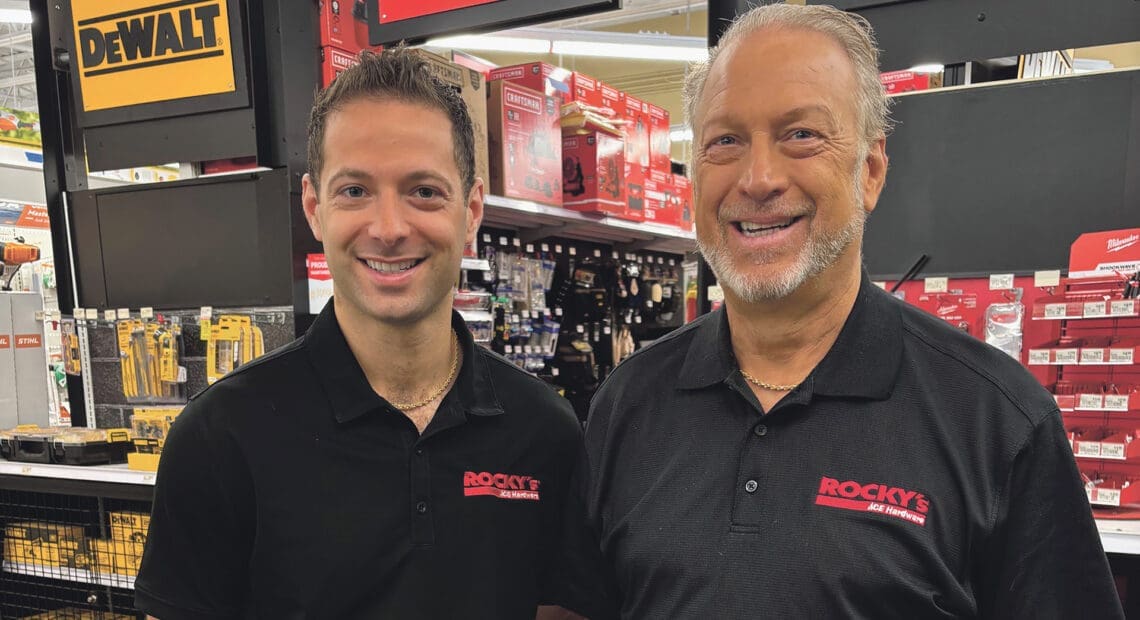
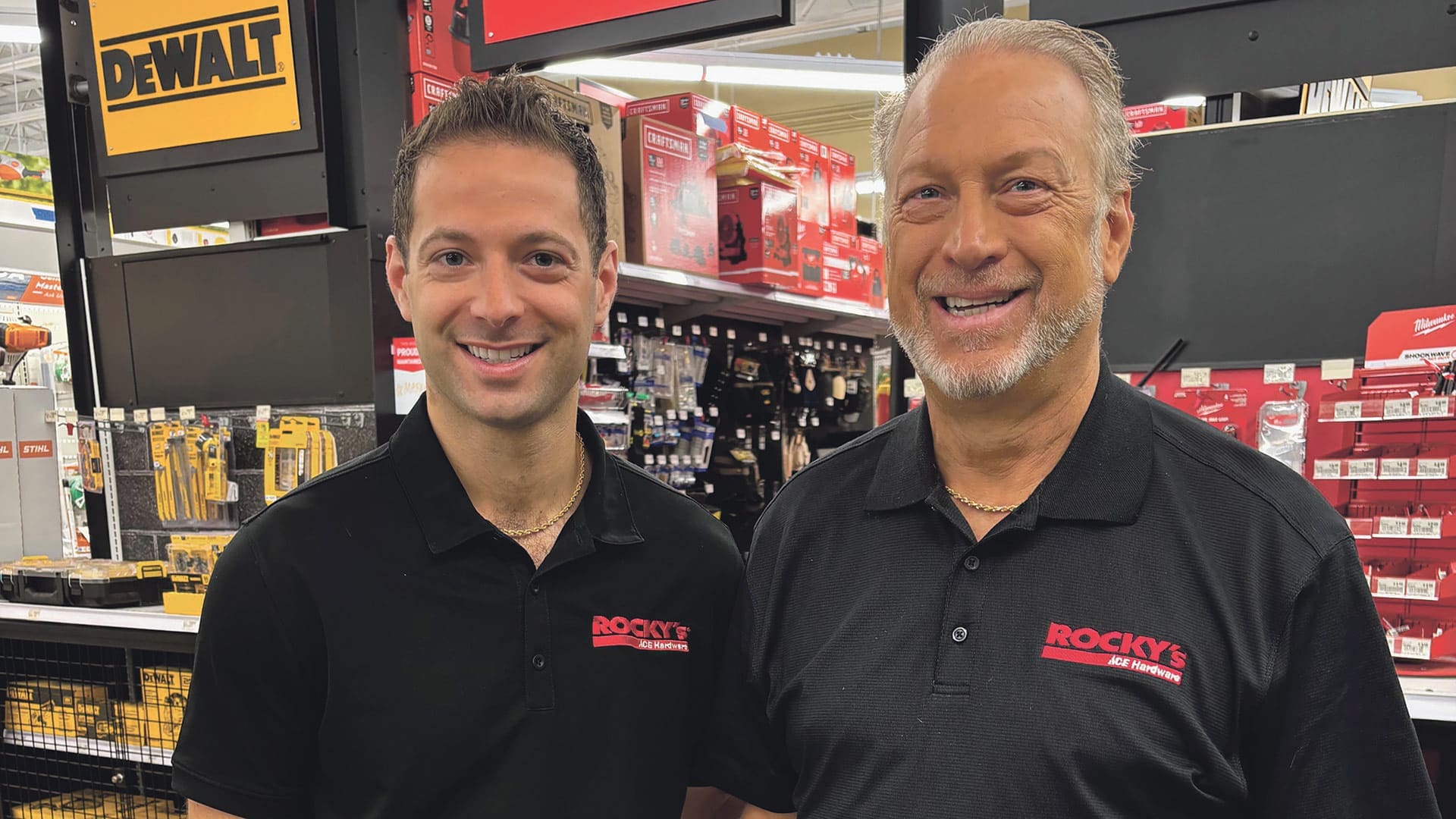
Johnny Falcone (left) and Rocco Falcone

For the Rocky’s Ace Hardware chain, there are many numbers of significance to consider.

Let’s start with 100. That’s the round-number anniversary the family business that started in downtown Springfield is celebrating this year.

But there’s also 52 — the number of stores in the chain. (It was 50 before two recent additions in Kennebunk, Maine and Manchester, Conn.) And also nine, the number of states in which you will now find the Rocky’s chain — five of the New England states (there are none in Vermont) as well as Ohio (which boasts 10 stores), New Jersey, Pennsylvania, and Florida.

There’s also the number four, connoting the number of generations of the Falcone family that have been involved with managing the chain, with the fourth being led by John ‘Johnny’ Falcone, who carries the all-encompassing title of ‘director of growth.’

“In our industry, there are a lot of senior folks like myself who don’t have families ready, willing, or able to take on the family business.”

Indeed, quite a bit goes with that designation, especially the numbers just mentioned and what they will be in five, 10, or 20 years.

There has been a wave of consolidation in the hardware business over the past few decades as the small, independent store that almost every city or town could boast has given way to larger chains, especially as Baby Boomers, many with no succession plans in place, moved into retirement, a process accelerated, in many cases, by COVID.
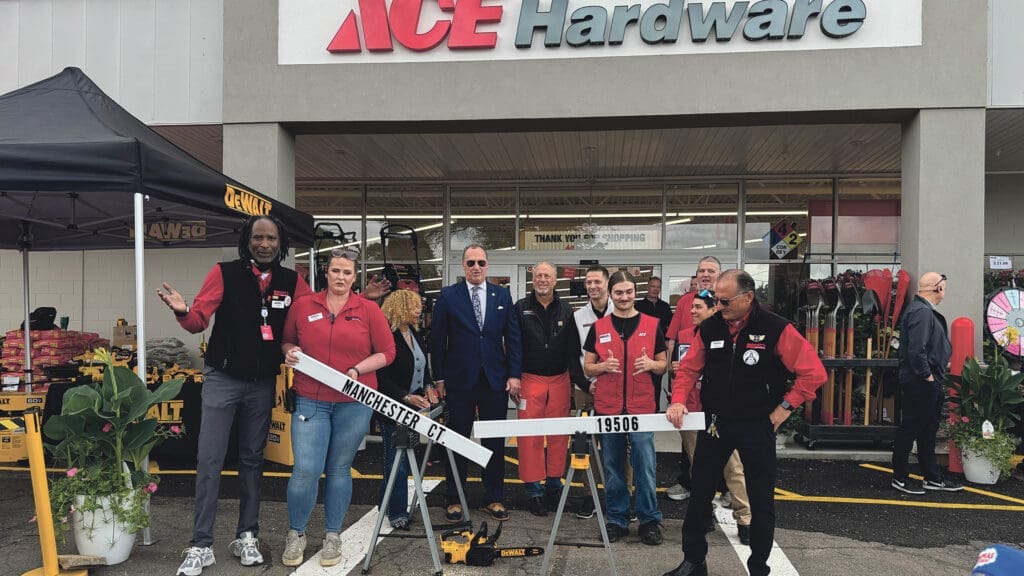
Instead of cutting a ribbon, officials chainsawed a board to mark the opening of the Rocky’s in Manchester, Conn, one of the latest additions to the chain.

“In our industry, there are a lot of senior folks like myself who don’t have families ready, willing, or able to take on the family business,” said Rocco Falcone II, third-generation owner of Rocky’s and the one who has been instrumental in much of the company’s expansion, even if he didn’t take the same title as his son. “So we’re still seeing opportunities for acquisitions for that reason.”

Beyond growth in the number of stores, the company is looking ahead to the next 100 years, with an eye toward anticipating and embracing change, and keeping its focus where it has always been: on the consumer.

“Every decision we want to make is with the consumer in mind,” Johnny said. “We think about our customers and the options they have when they want to buy. When we look at growth for this business, it has a lot to do with allowing the customer to choose the method with which they want to buy that item or help them with their project — whether that’s buying in store, online, on a mobile app, through third parties like DoorDash, or other apps that are out there — and then meeting them in the method they want to receive that product, whether it’s picking it up themselves, having someone deliver it, or having someone assemble it for them.

“It’s really reinventing what convenience means,” he went on. “Fifteen or 20 years ago, convenience meant a neighborhood hardware store; today, convenience means so much more when it comes to technology, especially with how consumer behavior has changed. So for us, every one of our decisions is made with the customer in mind; we’re working hard at redefining what convenience looks like in the digital world.”

“Every one of our decisions is made with the customer in mind; we’re working hard at redefining what convenience looks like in the digital world.”

For this issue, we take an in-depth look at the first century in the history of the Rocky’s chain and what will come next for what can only be called a retail institution — in this region and now far beyond it.

Changing with the Times

For those not familiar with the Rocky’s story — and by now, most are — it begins in 1926, when Rocco’s grandfather (also named Rocco), who saved some money while selling newspapers in front of the Paramount Theater and, later, working at Zundel’s Hardware in downtown Springfield, decided to go into business for himself.
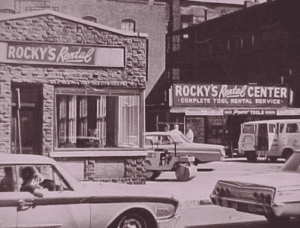
Equipment and tool rentals were a big part of the Rocky’s success formula for decades.

He started with a small hardware and tool rental business, with the latter half thriving because, at that time, many people could not afford to own equipment.

The company remained on Main Street for decades, but as the population moved out from downtown (and in many cases out from Springfield), the company went with it, eventually adding hardware and rental locations in other parts of the city, such as Breckwood Boulevard, before moving its headquarters and flagship hardware store into a former sawmill on Island Pond Road in the ‘60s. 

In the ‘70s, the company, now under the leadership of Rocco’s father, Jim, expanded to a seven-store chain and joined the Ace Hardware cooperative to leverage national buying power. It also eventually eased out of the rental business while also adding paint and wallpaper, and transitioning into home centers, with lumber, building materials, kitchens, baths, doors, and windows — and larger stores to accommodate all that.

With the arrival in the ‘90s of Home Depot, which took much of that business, the company, now with Rocco at the helm, transitioned again, to maintenance and repair as well as lawn and garden supplies — and smaller stores, with the outside lumber yards on Island Pond Road and the Agawam store converted to garden centers.

“People will shop at Rocky’s not for price, but for value, and the combination of the national brands that we feature and the service, knowledge, and advice we can give. That’s a value that brings people back.”

This evolutionary process has continued, as has expansion of the chain across this state and into other states, with more of the same projected in the years to come as new opportunities continue to arise.

Rocco Falcone noted that there are still smaller, independent stores doing business, but far fewer than a few decades ago, especially in this region, which has seen many familiar names disappear from the landscape, with Manchester Hardware in Easthampton, which closed in 2021 after being in operation for 125 years, being one of the latest.

There are more independent stores in other regions and other states, he said, adding that Rocky’s will get calls on a steady basis gauging interest in acquisitions, and the company has let it be known that it’s interested in further expansion — if the fit is right.

“A good source of referrals are the owners of the stores we’ve bought,” he said. “That’s how we ended up with the store in New Jersey; a fellow from Pennsylvania said, ‘my buddy in New Jersey, who’s only 20 minutes away even though it’s in a different state, is ready to sell.’”

And while there are a few acquisition opportunities remaining in the 413, most of them are in other markets, Rocco said, citing those recent additions in Maine and New Jersey as examples of where growth is happening for this company.

“We want to fill in the map,” he told BusinessWest, referring to both gaps between states and gaps between stores in states where there is already a presence. “Between New Jersey and Pennsylvania and up the Connecticut coast is a great place to look; the I-91 corridor would be nice.

“There are still more opportunities in Worcester … we just can’t find good locations,” he went on, adding that the company’s longer-term goal is to cluster stores in the Worcester market, as it has in the 413, with locations in Springfield (two), East Longmeadow, Agawam, Westfield, South Hadley, and Ludlow. “We could have eight stores in that [Worcester] market, but we only have one or two now. And then we can move up the coast of Maine and into New Hampshire; there’s a lot of opportunity there.”

What’s in Store?
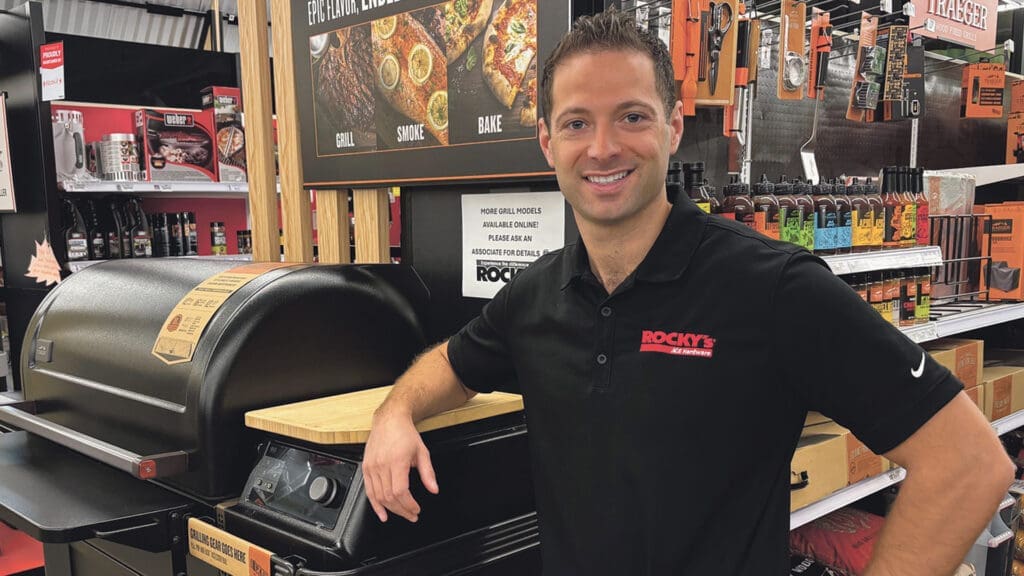
Johnny Falcone says Rocky’s continues to adapt to a changing retail landscape and “reinvent what convenience means.”

Continued growth makes sense for many reasons, especially the economies of scale that come with larger numbers, Rocco said, adding that, as with banks, insurance agencies, and other types of businesses, size is certainly an advantage.

Meanwhile, the company continues to adjust and react to that need to continually reinvent convenience, as Johnny Falcone described it.

That includes growth of the company’s online business, which includes the DoorDash option for smaller items and company-coordinated delivery of larger products like grills, serving as an effective complement to the brick-and-mortar stores, which will always be needed in this business.

“The retail space is not going away,” Rocco said. “The online component just brings the product closer to the customer rather than being in an Amazon warehouse 500 miles away.”

While coping with changes on the retail spectrum, Rocky’s, like all businesses, is adapting to a new workforce landscape as well. Indeed, while many young people are still landing their first or second jobs with the chain, many of those patrolling the aisles have gray hair, said Rocco, noting that this has been the trend over the past several years, especially at the company’s Florida stores, but also in other markets, including this one.

It’s a reflection of changing demographics — fewer young people — but also a desire among many seniors to stay active and remain in the workforce, often on a part-time basis.

“They don’t want to work full-time, they want a purpose, they want to come in and be helpful, which is one of our core values,” Rocco said, adding that these older staff members serve as mentors to the younger men and women learning the hardware business.

And many of those young people are staying with the company, he said, noting that, with 52 stores and growing, there are ample opportunities to advance and move into management positions.

 As for those core values, they are being re-emphasized and reinforced — such as at the company’s recent Leadership Summit at the Marriott in downtown Springfield — as Rocky’s turns 100. Other values, Johnny said, include ‘helpful,’ ‘responsible,’ ‘caring,’ ‘excellence,’ and ‘fun.’

That’s not an acronym, but rather an operating philosophy, he said, and one that separates the company from its competitors, especially the large, big-box variety.

“We all focus on ‘helpful,’ especially the customer-facing employees, as the most important value, because that’s really what sets us apart from our competition,” he told BusinessWest. “People will shop at Rocky’s not for price, but for value, and the combination of the national brands that we feature and the service, knowledge, and advice we can give. That’s a value that brings people back.”

As for the 100th anniversary, the company will be marking that milestone in many different ways, from a kickoff at the Leadership Summit to several ‘hometown days’ events coinciding with holidays this spring and summer, as well as a larger celebration in October, including promotional sales.

Mostly though, Rocky’s will be doing what it’s been doing for the last century — changing, adapting, growing, and, well… being helpful.


Features Special Coverage

All Together Now

Dig into the term ‘true north,’ and you’re bound to find multiple definitions — at least when used metaphorically.

The phrase can refer to finding a sense of purpose, or pursuing an important goal, or even adhering to one’s true values.

All of that resonates with the leadership team at Hometown Financial Group that chose the name TruNorth Bank — which, later this year, will be the new name of Hometown’s family of banks.

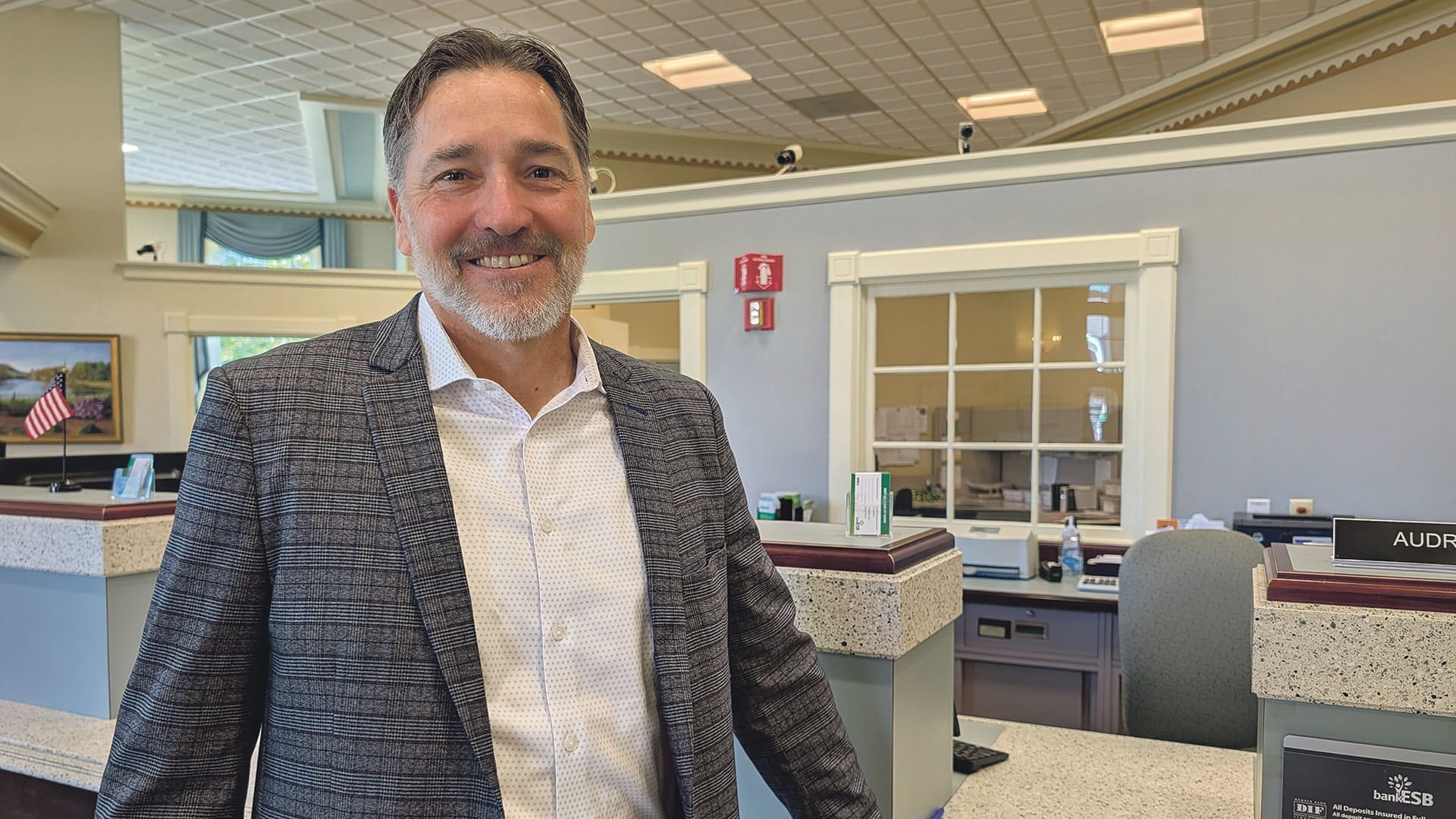
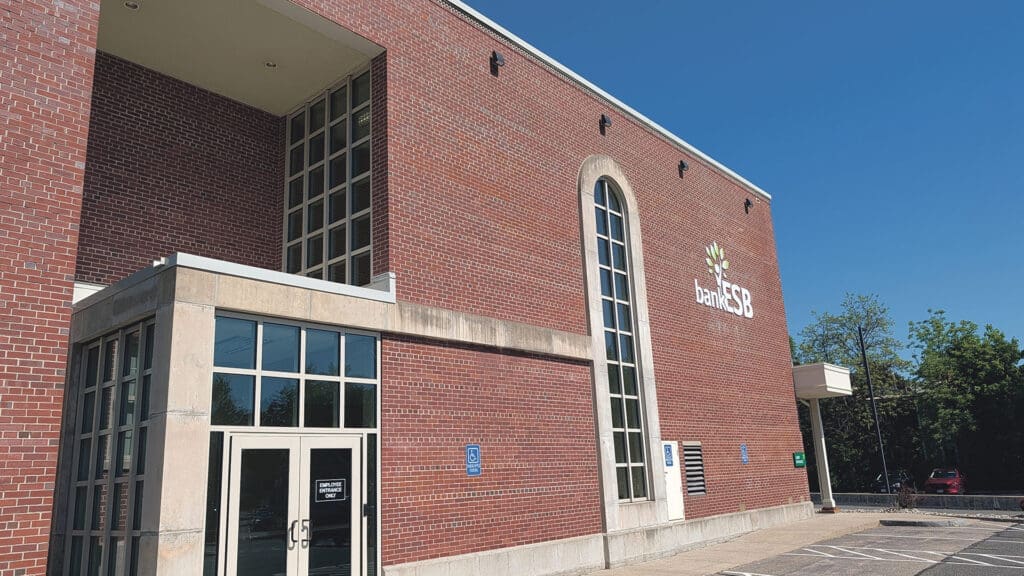
It is, in fact, the name above the door (and on the checks) at the former North Shore Bank and Abington Bank, two Hometown acquisitions in Eastern Mass.; later this year, bankESB and bankHometown will undergo the same name change, casting a single identity across Hometown Financial’s network of 55 branches.

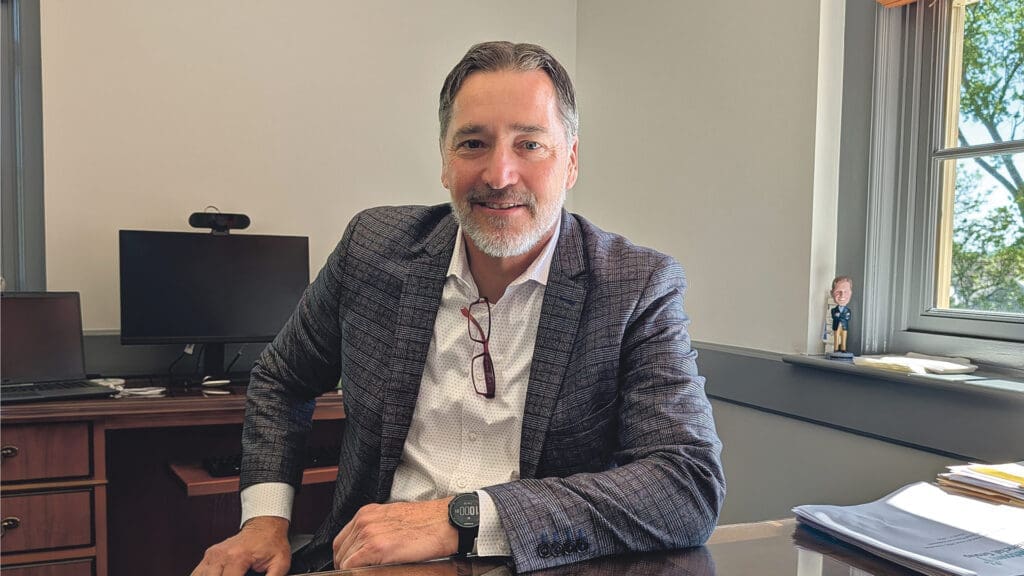
Matthew Sosik, president and CEO of bankESB and CEO of Hometown Financial Group, said the multi-name approach wasn’t sustainable, so the holding company set out to find a new identity, which it did last year, applying it first to the aforementioned pair of Eastern Mass. banks and eventually moving to convert all of them.

“It’s a lot of work to find a brand that works for you, but we were fortunate to come up with the TruNorth brand,” he told BusinessWest.

“Here we are in little Easthampton, sleepy Easthampton, with a $7 billion company, one of the largest banks in the region, one of the most successful banks in the region. I think our financials speak for themselves.”

This month, bankESB will begin talking to customers about what the bank is doing and why, and what the transaction will look like, Sosik said, adding that the data conversion — moving from separate databases of customers at each bank to one central database — will follow.

“When we’re done with this entire project, the combined company, with the new TruNorth brand, is going to be headquartered here,” Sosik said, before stressing the significance of a Western Mass.-based bank with that kind of reach and scale.

“At $7 billion or so, we’re probably top 200 in the country, while regionally, we’re easily one of the top 10. Here we are in little Easthampton, sleepy Easthampton, with a $7 billion company, one of the largest banks in the region, one of the most successful banks in the region. I think our financials speak for themselves. And regionally, we’re one of the largest employers — all based right here in Easthampton. I think that’s a cool story.”

Sosik said the official transaction is slated for Aug. 21 if everything goes smoothly.

“Obviously, we have separate bank boards, and communicating the rationale to our bank boards and then ultimately our staff, communicating what our strategy was, was all a big part of that. But now we have the green light.

“You might have seen the public notice of our application to merge the banks and rebrand as TruNorth,” he added. “That’s still pending with the two regulatory bodies, the Division of Banks and the Federal Reserve, but we’re not anticipating any issues with that. It’s an internal merger; it’s not something that would particularly catch their attention. So we expect approvals from them within a reasonable time.”

Sosik said he understands that people get nervous about name changes over bank doors. “They go, ‘wait, who’s buying whom?’ Obviously, there’s none of that here, but still people get anxious about it. In fact, it’s a converse story to that — we are pulling this company together, from Boston to Easthampton, and keeping it right here in Easthampton.”

Changes will be minimal for customers, he noted. “Obviously, there will be a new sign over the door and a new debit card with the TruNorth logo. The logo looks similar to bankESB’s and Hometown’s, just with that new TruNorth name. And the mobile app will have a new look to it. But other than that, it’s the same places, same people, new name over the door.”

“This rebrand, while it’s a name change over the door, also represents a significant nod to our history and the combined many hundreds of years of legacies within our company. We didn’t want to — and we don’t want to — forget that. We’re carrying that forward into the future with something that’s aspirational.”

And the idea is to make the transition as seamless as possible for those customers, he added.

“We have an unbelievable team that pulls everything together each time we do one of these. So this one will be no different — except this one’s a lot easier because it’s all internal,” he said.

Meanwhile, from that internal perspective, operating under one brand and one database will make the company easier to manage, he added. “We have been happy to run our multi-bank company, but this company will be a simpler day-to-day operation for us.”

Steady On

As for the TruNorth name, Sosik is grateful the team wound up with a name he considers apt and meaningful.

“Branding is important. And the reality is, in today’s world, in this day and age, unless you’re just going to pick a bunch of consonants and run them together, everything’s pretty much been used or taken in some fashion or form. At the onset of a project like this, a huge governor of where you can go is simply what’s available,” he explained.

“That said, we didn’t want just a word or a name that doesn’t have meaning to our present customers and our prospective customers. So we went through an exhaustive process, and when we landed on TruNorth, it was all about what that connotes to somebody who’s viewing our company, not just from an image perspective, but what do we stand for?”

What emerged was the idea of the true north directional signifying moving forward — in business growth and in the community — and expressing that idea succinctly.

“In marketing, you can’t have five-word name — you want something bite-sized, but that really does mean something and represents what this company is all about, legacy-wise, and speaks to both that legacy and a wide-open future,” Sosik went on. “So when we landed on TruNorth, that’s what it was all about for us. It just means something.

“It’ll be a change, of course. But as I said, this rebrand, while it’s a name change over the door, also represents a significant nod to our history and the combined many hundreds of years of legacies within our company,” he added. “We didn’t want to — and we don’t want to — forget that. We’re carrying that forward into the future with something that’s aspirational.”

With that, he came back to the importance of community connections in a bank’s legacy.

“Think of a vibrant New England community that is really economically successful, that does not have a community bank in it. It’s a small number, if there’s any.”

“One thing that these towns` need — and I say these towns very generically, not Easthampton only by any stretch, but every town that we’re in — they need a community bank,” Sosik said, with everything that definition entails, from the financial services business to how the institution supports local nonprofits and other organizations.

bankESB has done so consistently through its Giving Tree initiative, which distributed more than $716,000 in 2025 and more than $4.4 million over the past 10 years, with a focus on basic needs, financial literacy, economic development, youth and education, and the arts across the region.

“When we think about fulfilling those needs, we don’t think about our business like, ‘are we going to open tomorrow?’ We think about it in much larger chunks of time; at least I do, and our board does,” he added. So when the company makes a big change like the rebrand to TruNorth, “it’s all to ensure our long-term viability and relevance in every single market, Easthampton included, so that we can be here 10 years and 20 years and decades from now. That perspective really drives some of what people see as robust growth — and some might call aggressive growth. To us, it’s absolutely necessary if our goal is to be here for the long term for our communities.

“So, sometimes it takes rebrands and things like this to ensure all that. It’s all in the name of serving the very long-term needs of communities,” Sosik went on. “Think of a vibrant New England community that is really economically successful, that does not have a community bank in it. It’s a small number, if there’s any. So these community banks are super important to the success of communities in general. And, again, our goal is to be committed long-term to these communities. It takes some bold strategies and some difficult decisions, but we’re happy to do it.”


Looking Forward

After growing through multiple acquisitions, Sosik said bankESB — well, TruNorth — isn’t done, though no news of that nature is expected over the next several months.

“We obviously have a full plate of stuff here; you have a certain level of capacity, and you respect that; you don’t stretch it too far, so 2026 is spoken for. But we are working on other projects that will continue to grow us in size and footprint. We’ll have some really cool stuff going on for 2027.”

And that growth is necessary, he said, to provide the kind of scale necessary to be profitable in what he described as a low-margin business. The latest move to the TruNorth name is simply a way to become more efficient as well.

“Our multi-bank holding company strategy served us really well; it’s allowed us to to attract like-minded independent bankers. And now is the time to put it all together, to gain the rest of those cost efficiencies, so we’re getting that,” Sosik explained. “This gives us a jumping-off point to continue to grow, and, as I said, we have some really interesting projects heading into 2027 that’ll allow us to do that. So there’s lots of bright sunshine ahead in our news feed.”  

Community Spotlight Community Spotlight Features Special Coverage

Northampton at a glance

Year Incorporated: 1883
Population: 29,571
Area: 35.8 square miles
County: Hampshire
Residential Tax Rate: $13.67
Commercial Tax Rate: $13.67
Median Household Income: $56,999
Median Family Income: $80,179
Type of Government: Mayor, City Council
Largest Employers: Cooley Dickinson Hospital;
ServiceNet Inc.; Smith College; L-3 KEO

* Latest information available

Having been with CLICK Workspace for more than a decade, Mary Yun has seen ebbs and flows in its business, the most notable decline being during the pandemic.
“Like all businesses, we took a huge dip. But by the summer of ’24, we were almost back to our pre-pandemic numbers,” she recalled.
But in the fall of 2024, another drop in numbers began — actually, “a really steep nosedive,” as Yun characterized it. “There were a few reasons. That fall, there were some tech layoffs that affected us. The interest rate dropped a tiny bit in the fall of ’24, and three members were able to get into homes, and had rooms in their homes for home offices. And with the election, there was so much uncertainty about business.”
Now, as CLICK is celebrating 10 years in its current space on Market Street in downtown Northampton — it will host a reception,featuring an art exhibit and live jazz music, to mark the occasion on Friday, June 12 from 6 to 8 p.m. — not all of that business has come back, said Yun, executive director of the facility.
“Co-working spaces are ever-changing, and our membership had a big shift. Before the pandemic, it was predictable: about a third of the membership were consultants, about a third had their own small businesses, and another third were true remote workers, with parent companies that supported their membership. Since the pandemic, it’s less predictable. And with AI coming on, businesses aren’t able to plan as easily, and a lot of businesses that went remote have started to go hybrid. There’s so much uncertainty with the way people are working.”

“We opened not just a co-working space, but a place where people could celebrate their arts and have community activities — and we’ve continued to do that.”

That said, one thing that has not wavered at CLICK is its commitment to connecting the space to the local arts scene. The facility frequently hosts art openings by local and regional artists on Arts Night Out, on the second Friday of each month, complete with live jazz musicians, food, and beverages. Also featured are performance groups from Northampton High School and the Community Music Center. Arts organizations, such as the Northampton Jazz Festival, and music teachers from the area regularly rent the first-floor gallery space for live music concerts and student recitals.

CLICK Workspace has regularly hosted music recitals, art exhibitions (like the one pictured here), and other events.

“We opened not just a co-working space, but a place where people could celebrate their arts and have community activities — and we’ve continued to do that,” Yun said. “Co-workspaces are doing as robust business as they used to be. We’re trying to get support from the community so we can continue to do these events.
“I never thought this space would be just about co-working. I believe it has to have another mission,” she added. “We are mission-driven; we’re a nonprofit, and the arts have always been a part of the mission. We have a wall of art, gallery space, that’s integral to the design of the physical space itself. I always saw the space as bringing art to people, so our membership gets exposed to art. It really is a little microcosm of what Northampton is all about.”

Art and Commerce

Amanda Shafii, owner of the CopyCat commercial print shop in Northampton and president of the Downtown Northampton Assoc. (DNA), agrees that the arts are integral to the city’s identity.
“Northampton is a very special place. We have super unique businesses and a huge concentration of arts and culture,” she told BusinessWest. “Also, Northampton is a lot about relationships — about collaboration and networking and community coming together.”
Meanwhile, she said, the DNA aims to support businesses downtown, and create conditions for businesses to succeed throughout Northampton, through events, marketing partnerships, and other means to draw people downtown.
For example, the Ice Art Festival in January saw a lot of foot traffic, with visitors coming in from as far away as Vermont, New Hampshire, Connecticut, Eastern Mass., and even New York, Shafii said. “It brought in a lot of people, and that really sums up one goal of the DNA: to create fun events for people to attend.”
She’s especially looking forward to Taste of Northampton on the weekend of Sept. 12-13, and said the monthly Arts Night Out has become a highlight in the city.
“Where there’s success downtown, everyone benefits,” Shafii said of the DNA’s impact on the entire city. “If you have a thriving, vibrant downtown, whether it’s retail, restaurant, or service businesses, it has an impact on everyone.
“One of the really special things the DNA does is, we host a downtown business owners forum, a space for downtown business owners to get together and discuss things in a safe setting, talk about how last month went, or about upcoming events we should be aware of. Like, if Smith College is having a big event, maybe the downtown restaurants could have more staff to accommodate more foot traffic. We’re keeping everyone in the loop.”
As for music, the Northampton Jazz Festival is slated for Sept. 26-27, with Friday featuring the Downtown Jazz Strut, with jazz emsembles playing at breweries, bars, and restaurants across town, and Saturday featuring a free lineup of performances throughout the day followed by a ticketed evening concert with Lakevia Benjamin at the Academy of Music.
Meanwhile, the Iron Horse Music Hall continues to thrive two years after its reopening, having presented hundreds of shows and generated, according to economic models, more than $2.4 million in annual impact on Northampton’s broader economy.

“Northampton is a very special place. We have super unique businesses and a huge concentration of arts and culture. Also, Northampton is a lot about relationships — about collaboration and networking and community coming together.”

The Parlor Room Collective, the nonprofit that purchased and renovated the historic venue on Center Street, is currently operating an $800,000 “Playing It Forward” campaign to pay off construction debt, build reserve funds, and support free programming, among other goals.

Music to Her Ears

Meanwhile, over on Market Street, Yun is grateful for the opportunity to host the arts, especially the young people who use the space.
“In the school districts, art has been on the chopping block for years now. And no matter what kind of business you’re in — whether it’s tech, industry, financial, not just artistic professionals — it’s so integral to our culture, how we understand the world,” she said.
“Our mission here is to bring art to a nice environment. And when the community comes in and joins together, art and music can be a part of everyday life. The spirit of CLICK is all about making a community.” 

Features Healthcare News Special Coverage

Overcoming the Stigma

When Michele Anstett recently attended an Alzheimer’s Assoc. leadership luncheon called the Power of Now, speakers talked about how so many people with dementia are not identified as such because of a persistent fear of talking to a doctor — or even family members — and the general stigma that exists around those discussions.

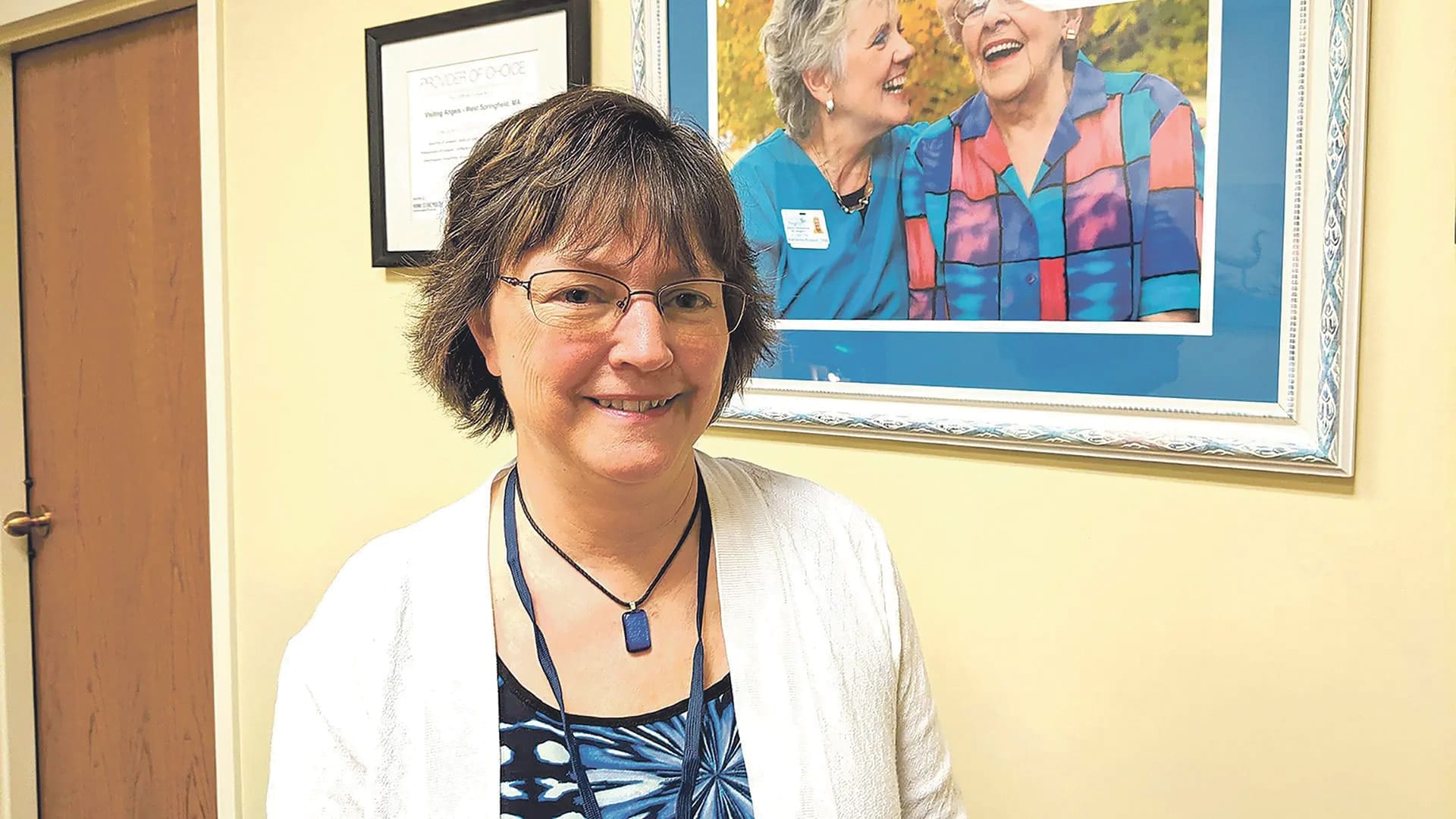
It all hit home for Anstett, president of the home care agency Visiting Angels West Springfield, because her father, who lived in Florida and had dementia, recently passed.

“They talked about how people with Alzheimer’s hide it. And that’s exactly what my father did. But I knew. I tried to get him some help. He wouldn’t do it,” she said. “When you’re older, and you’re afraid of losing your independence, when your memory is going, a lot of people are going to try to stuff it away and be the same person they’ve always been.

“They’re scared of losing their independence, that their family members may find out and just stuff them away somewhere, and they’re afraid of losing their entire mind and not being able to recognize people. They’re scared to death.”

“It was frustrating for me, watching him go through each stage, and yet he still wasn’t fessing up to anybody. Even the VA didn’t know he had dementia. I got him to do the very first test, and they said there’s a probability of a memory issue, and we were supposed to go to a neurologist. But he knew, and he wouldn’t go any further because it would be like opening Pandora’s box.”

Mary-Anne Schelb, regional director of JGS Lifecare in Longmeadow, has encountered this reluctance to talk about dementia on numerous occasions.

“One family comes to mind immediately. Their father had passed away a few months earlier, and what they later realized was that he had quietly been compensating for their mother’s cognitive decline for quite some time. Once he was gone, the cracks began to show — but not right away,” she recalled.

The woman was living alone, and on the surface, everything appeared fine, Schelb said; the family visited weekly, prepared meals for her refrigerator, filled her pill boxes, and checked in by phone. Their mother was always well-dressed and could hold a pleasant conversation.

“To them, she seemed independent — until she wasn’t,” Schelb continued, explaining that a urinary tract infection — and resulting hospitalization — left her weak, dehydrated, confused, and no longer functioning at her baseline, and it eventually became clear she likely needed a secure memory-care setting. But even the family resisted that recommendation.

That is, until they learned from a neighbor that their mom had been feeding stray cats with the meals the family prepared, watering her plants instead of drinking enough fluids herself, and had a shoebox overflowing with untouched medications.

Mary-Anne Schelb

“We helped them understand that mom was not being difficult or stubborn intentionally. Her brain was changing.”

Today, she lives within the secure memory-care neighborhood at Ruth’s House Assisted Living at JGS Lifecare, and the family often visits. “They tell us they have never seen her happier. She participates in activities, engages socially, laughs, and has meaningful friendships. In many ways, she regained a quality of life the family did not even realize she had lost.”

They also expressed gratitude that the team there took the time to educate them — not only about memory care itself, but about dementia as a disease process, Schelb said. “We helped them understand that mom was not being difficult or stubborn intentionally. Her brain was changing.”

And that gets to the heart of what people with emerging dementia — and their families — fear when they’re avoiding those tough conversations.

“They’re scared of losing their independence, that their family members may find out and just stuff them away somewhere,” Anstett said. “And they’re afraid of losing their entire mind and not being able to recognize people. They’re scared to death.”

Accepting the Truth

For many families, the signs of dementia do not appear all at once. They emerge quietly — missed medications, forgotten meals, confusion disguised as normal aging, or subtle changes hidden behind familiar routines. Often, families are doing everything they can to support a loved one while still hoping life can continue as it always has.

“Accepting that a loved one has dementia can be one of the most emotional and difficult experiences a family will ever face,” said Kathy Walker, executive director of Ruth’s House Assisted Living. “Frequently, families are trying to balance what they are seeing with the hope that things have not truly changed. Many families wait until they are emotionally or physically exhausted before seeking outside support, and by that point, they are often carrying tremendous stress and uncertainty.”

When they seek help, Walker explained, many families initially focus on traditional assisted living rather than a memory support neighborhood because they are trying to preserve a sense of normalcy for as long as possible.

“There is often fear surrounding memory care because families are unsure what it will look like for their loved one. Part of our role is helping families understand that memory care is not about limiting independence — it is about supporting quality of life in a safe and meaningful way,” she said. “A large part of our role is helping families recognize the cognitive changes their loved one is experiencing while also educating them on how the right environment can do far more than simply keep someone safe — it can help them truly thrive.”

Families often struggle to accept these recommendations, said Stacy Kenworthy, Admissions director of the Jewish Nursing Home at JGS Lifecare — but that’s understandable.

“Dementia is complicated and deeply emotional. Families are often processing grief, denial, fear, and exhaustion all at once,” she explained. “Sometimes families become upset when we recommend a secure unit. Occasionally they tell us they no longer want admission. But many times, after speaking with other facilities or after difficult experiences elsewhere, they come back and realize we were trying to guide them toward the level of care their loved one truly needed.”

Kenworthy added that families sometimes think a secure memory care setting means someone is being restricted, when in reality it is about protection, supervision, and specialized support.

“Memory care units have higher staffing ratios, specialized programming, and activities designed specifically for residents living with cognitive impairment. These environments are created to reduce confusion, anxiety, wandering risks, and unsafe situations.”

Schelb said the team at JGS Lifecare understands families’ concerns and anxieties, and even empathizes with them.

“Families need patience, understanding, and grace — especially for themselves,” she told BusinessWest. “Almost every family experiences guilt. They say things like, ‘we should have known,’ or ‘how did we miss the signs?’ Sometimes siblings blame one another. One child may live closer and feel responsible, while another wonders why something wasn’t noticed sooner.

“But the truth is, families are not healthcare professionals,” she went on. “Dementia can be incredibly subtle in the beginning. Many individuals become experts at masking symptoms. A parent may still appear polished, conversational, and independent in public while internally struggling with confusion, medication management, nutrition, or safety concerns.”

Schelb noted that families also don’t always realize how much routine and muscle memory can compensate for cognitive decline. Someone may function well within the familiarity of their own home because they have repeated the same routines for years. But when they are suddenly hospitalized or moved into a rehabilitation setting, that familiarity disappears, which is often when families first witness behaviors such as increased confusion and wandering.

“We also spend time educating families about sundowning, which can be difficult to recognize if visits typically happen earlier in the day,” she said. “Many families tell us, ‘mom just gets tired early,’ without realizing that increased confusion, anxiety, agitation, or restlessness later in the afternoon and evening can be very common in individuals living with dementia.”

But importantly, she added, “we spend a great deal of time reassuring families that they should not blame themselves.”

Let’s Talk

The Alzheimer’s Assoc. luncheon got Anstett thinking about breast cancer 20 or more years ago, and how far that topic has come.

“I remember when nobody talked about breast cancer. Everyone was hush-hush about it,” she recalled. “And then suddenly, awareness was brought out, and the benefits of being aware and getting checked. Lives were saved, and that stigma was erased. Now, people want to make sure they get that diagnosis immediately while they can do something about it.

“That’s where we need to be with dementia. People now are afraid to get the diagnosis,” she went on, and one of the reasons is an image they have of what a memory care unit looks and feels like — not realizing that the model has come a long way, and there are many more options for care than there used to be.

“There are so many opportunities to keep this at bay and then, maybe in our lifetime, eradicate it,” she said, and in the meantime, it’s going to take a lot of people working together to create a climate in which people seek help earlier and wind up with longer life and better quality of life — not only for themselves, but for their family members.

Kathy Walker

“Frequently, families are trying to balance what they are seeing with the hope that things have not truly changed. Many families wait until they are emotionally or physically exhausted before seeking outside support, and by that point, they are often carrying tremendous stress and uncertainty.”

One of the luncheon speakers, Anstett recalled, was a man in his 50s who wound up with an early dementia diagnosis.

“He was telling us he’s going to fight this thing. He’s going to do every single thing he can do. I love his attitude. So, how can we switch the mindset? How can we do some kind of publicity campaign to say, ‘hey, we see you, we get you are scared to death. However, it is a better solution to tackle it head on right away.’”

After all, she added, “breast cancer was considered a death sentence, and now, how many people survive because women don’t hide it and disappear?”

As the average age of the U.S. population continues to creep up, dementia will only increase in prevalence, barring a cure, Anstett noted. “I don’t believe there’s a person who doesn’t know a person who’s been affected by this.”

And when they seek help? Walker said one of the biggest changes families notice is relief — for both themselves and their loved one.

“Families often tell us they finally feel at peace knowing their loved one is safe, socially engaged, and supported by people who understand dementia care. They are able to step back from the exhausting role of caregiver and return to simply being family again,” she said. “That emotional shift can be incredibly powerful.”