Business Talk Podcast Special Coverage

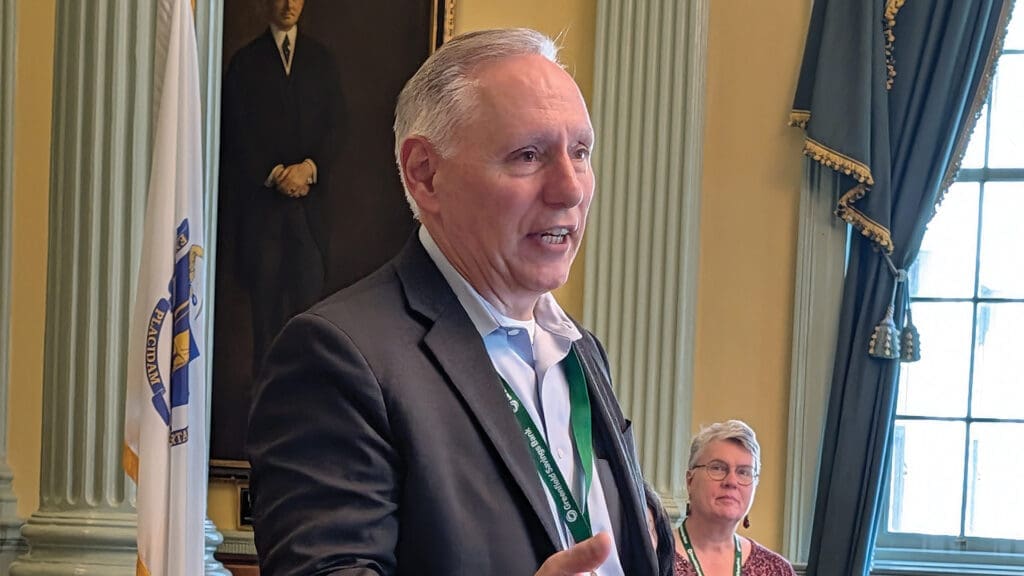
With new episodes airing every other Monday, BusinessTalk features in-depth interviews and discussions with local industry leaders who offer thoughtful perspectives on the Western Massachusetts economy and the many business ventures that keep it running. BusinessTalk is sponsored and presented by Greenfield Cooperative Bank.

Go HERE to view all episodes

Episode 259: June 22, 2026

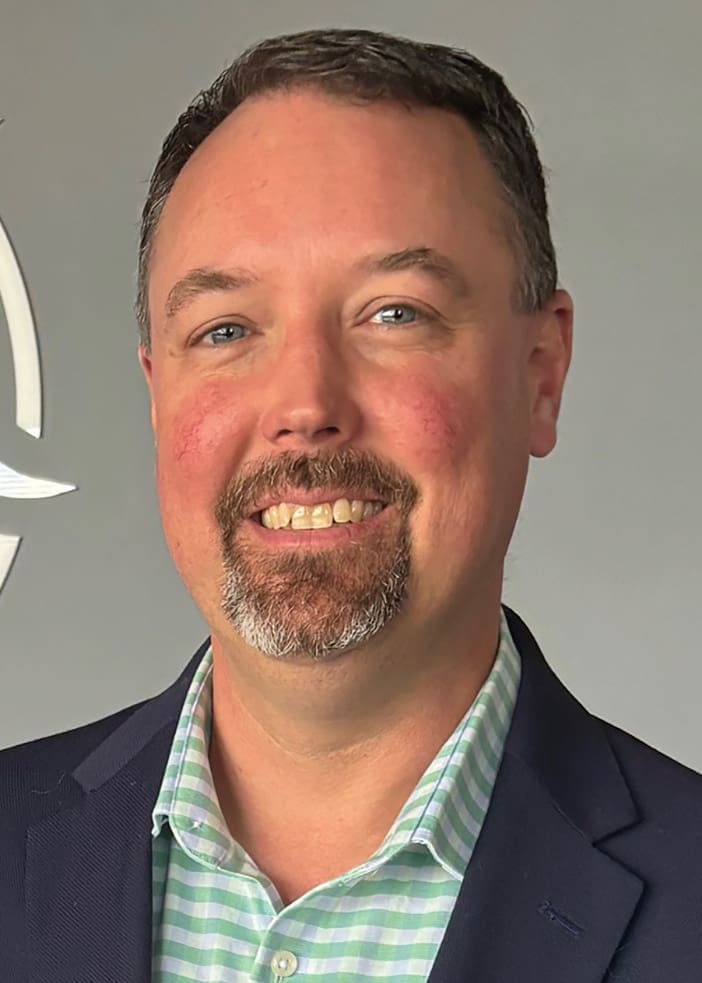
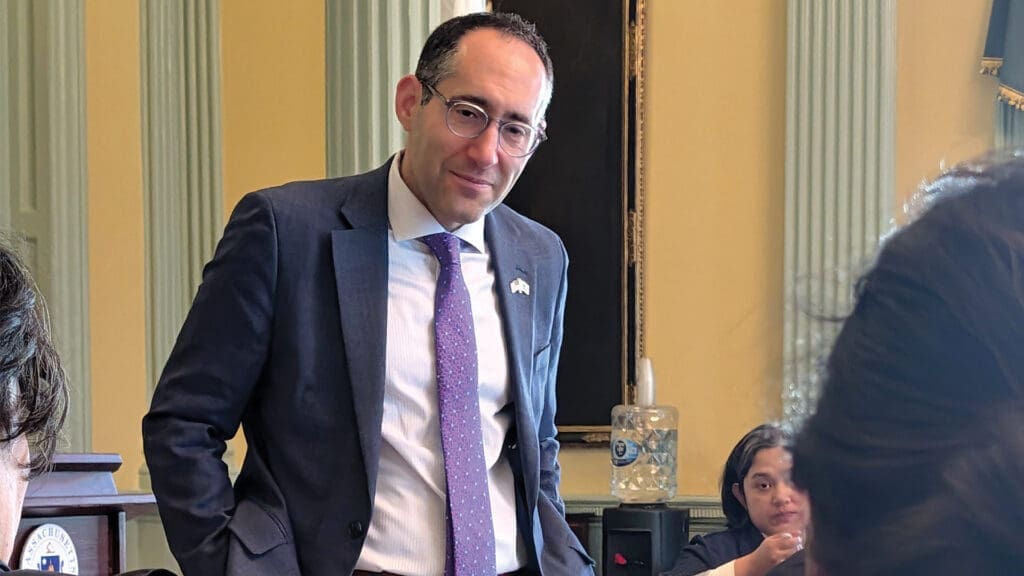
George O’Brien talks with James Krupienski, Partner at Meyers Brothers Kalicka, P.C, and 2026 Alumni Achievement Award Winner

When James Krupienski was named to BusinessWest’s 40 Under Forty class of 2010, he was CPA manager for the Health Care and Pension Audit Divisions at Meyers Brothers Kalicka, P.C. (MBK). Now, he’s one of six partners who together manage all operations at the firm. But it takes much more than a change in title to be named Alumni Achievement Award winner, as James was earlier this month. That prestigious honor reflects how much an individual has accomplished since joining the 40 Under Forty club, and James has excelled not just at his job, but as a mentor to many young people entering the accounting field, and as someone who gives back to the community in many ways, both through his own volunteerism and the way he encourages the firm to support local causes. On the next episode of BusinessTalk, James talks with BusinessWest contributing writer George O’Brien about all of that, and why it’s so gratifying. It’s must listening, so tune into BusinessTalk, a podcast presented by BusinessWest over both audio and video platforms, and sponsored by Greenfield Cooperative Bank.

Sponsored by:

Also Available On

Daily News

SPRINGFIELD — Springfield Technical Community College (STCC) students earned second place in the 2026 Community College Innovation Challenge (CCIC), a prestigious national competition sponsored by the American Assoc. of Community Colleges (AACC) in partnership with the National Science Foundation (NSF).

STCC was one of only 12 community colleges nationwide selected as finalists and the only community college in Massachusetts to advance to the competition’s final round. The student team presented its innovative project, HydroShield, during a poster session on Capitol Hill in Washington, D.C., on June 9 before congressional leaders, including U.S. Rep. Richard Neal, STEM leaders, and a panel of judges.

HydroShield is a replaceable washing machine filter designed to capture microplastic fibers before they enter waterways. The low-cost system uses a specialized coated textile layer and a sensor that alerts users when the filter needs replacement. The innovation aims to reduce microplastic pollution, improve water quality, and address long-term environmental health concerns.

The STCC team consisted of Phi Theta Kappa Honor Society students Shahmeer Ali, Vincent Githiri, and Sophia Landrau, who graduated in May with an associate degree in biology. The team worked under the guidance of Associate Professor of Biological Sciences and PTK advisor Reena Randhir.

“Congratulations to our talented students for this remarkable accomplishment,” said John Cook, STCC president. “As Massachusetts’ only technical community college, STCC has always focused on connecting classroom learning with practical solutions that improve lives and strengthen communities. We are incredibly proud of Shahmeer, Vincent, and Sophia for earning national recognition under the guidance of Dr. Randhir, who recently was honored as Faculty of the Year at STCC.”

Randhir described the accomplishment as “an extraordinary achievement for Sophia, Shahmeer, and Vincent, and a proud moment for us.

“Their success reflects months of research, teamwork, and perseverance. Their courage to believe that their ideas can protect our water, advance U.N. One Health, and create meaningful change is truly inspiring,” she added. “I am deeply grateful to the organizers [AACC and NSF[, inspiring interactions with the other brilliant finalist teams, and for the priceless friendships we formed along the way.”

The Community College Innovation Challenge, now in its 10th year, encourages entrepreneurial thinking among community college students by challenging them to develop science, technology, engineering, and mathematics (STEM)-based solutions to real-world problems. This year’s finalist projects addressed issues ranging from food insecurity and water quality to search and rescue operations, energy efficiency, infrastructure, education accessibility, and fraud prevention.

As finalists, the STCC students participated in an Innovation Boot Camp in Washington, D.C., where they worked with entrepreneurs, industry experts, and business leaders on topics including strategic communication, stakeholder engagement, business planning, and marketplace dynamics. The experience culminated in presentations before judges and a public showcase on Capitol Hill.

According to AACC, the 2026 finalist projects showcased student-led innovations that protect the environment, improve infrastructure, and advance public health and safety.

“You have distinguished yourself as creative thinkers and problem solvers,” AACC President and CEO DeRionne Pollard told the students during the event, according to a Community College Daily article.

The first-place award was presented to SUNY Broome Community College of New York for its Hands-on Quantum Education project. STCC earned second place for HydroShield, and De Anza College of California received third place for the Micro-Buoy project.

Daily News

BOSTON – The Executive Office of Labor and Workforce Development (EOLWD) released Massachusetts unemployment and job estimates for May, with preliminary data indicating that payroll jobs decreased by 2,900 for the month, following a revised increase of 7,400 jobs in April.

Massachusetts has added more than 17,600 payroll jobs, including 14,100 private sector jobs, since September. Preliminary data also shows the May unemployment rate dropped to 4.5%, and labor force participation rate decreased slightly to 65.4%.

BLS categories with the strongest growth month-over-month for Massachusetts employment in May include government; education and health services; trade, transportation, and utilities; and information.

“The unemployment rate fell this month to its lowest level since last August,” said Mark Rembert, chief economist with EOLWD’s Department of Economic Research. “At the same time, we continue to see shifts in the labor force as more older workers retire. Combined with elevated job posting activity, these trends suggest the labor market could continue to tighten through the summer.”

Daily News

SPRINGFIELD — On Wednesday, June 24, the public is invited to come together, online and in person, for a powerful, 24‑hour Day of Compassion fundraiser supporting the Reese Fund, created in honor of Reese, a dog who endured unimaginable cruelty at the hands of a human. Today, the fund provides emergency medical and recovery care for animals who have experienced severe neglect, cruelty, or abuse.

Participants’ generosity will also help support the Reese Pet Food Initiative, a new partnership with Lorraine’s Soup Kitchen in Chicopee. This program provides pet food and supplies, both onsite and through a mobile delivery service, to families who need extra support to keep their pets healthy, safe, and at home where they belong.

From midnight to midnight on June 24, the organization will raise funds online, and from 10 a.m. to 2 p.m., all are invited to stop by the Thomas J. O’Connor Animal Control and Adoption Center at 627 Cottage St. in Springfield for an in‑person pet food drive. Among the requested items are dog and cat food (wet and dry), treats (no rawhides), and new toys.

Attendees will be able to enjoy lunch from Wandering Waffles and check out the exclusive Reese Day T‑shirt, available both online and onsite at TJO for one day only.

“Please consider making a gift on June 24 to the Reese Fund Day of Compassion,” organizers said. “We have a goal to raise $10,000 for the Reese Fund and to collect 400 pounds of pet food for Lorraine’s. Together, we can give animals a second chance, keep pets fed, and strengthen the bond between people and their animals.”

Cover Story Features

Experts in Their Field
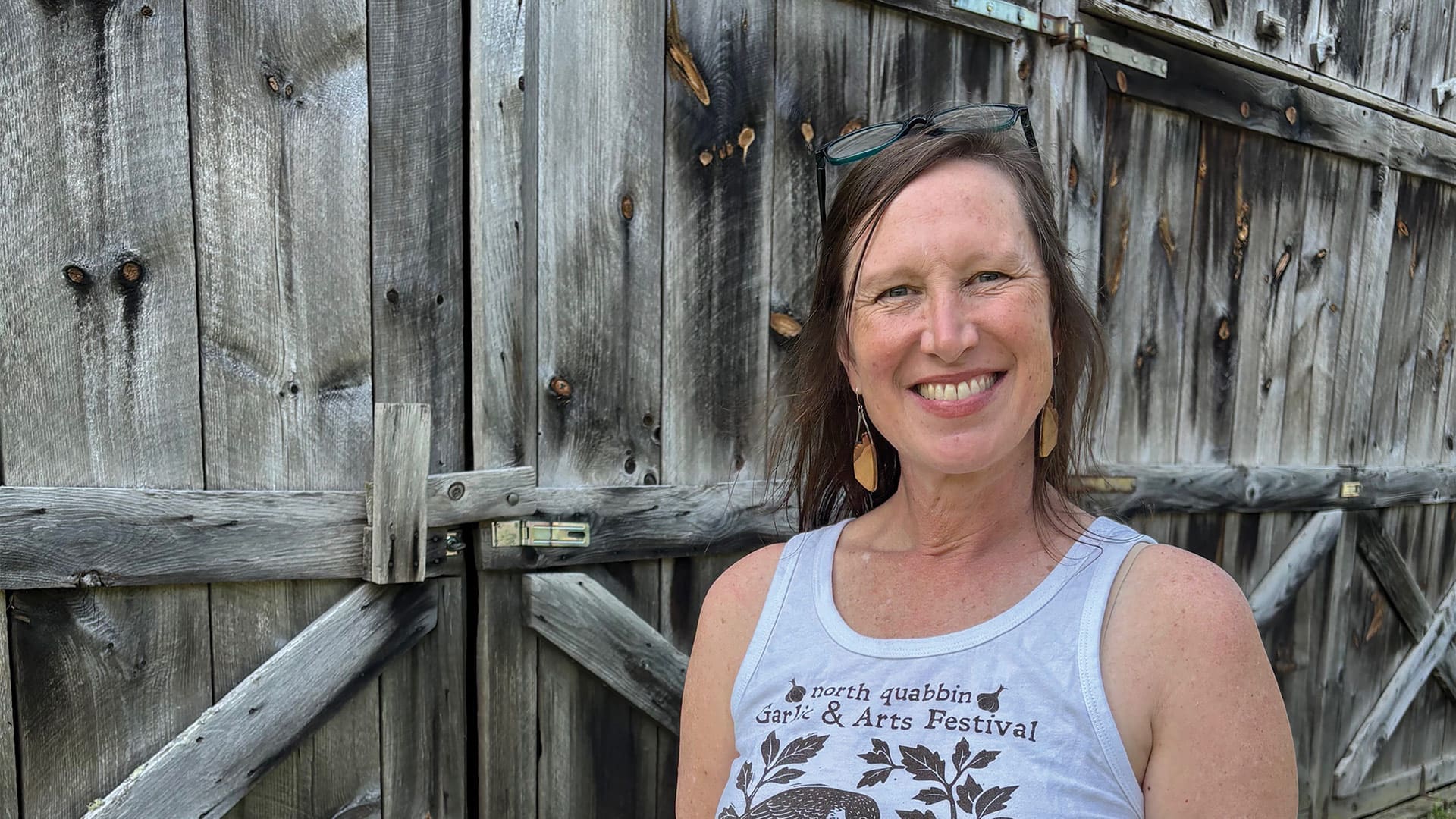
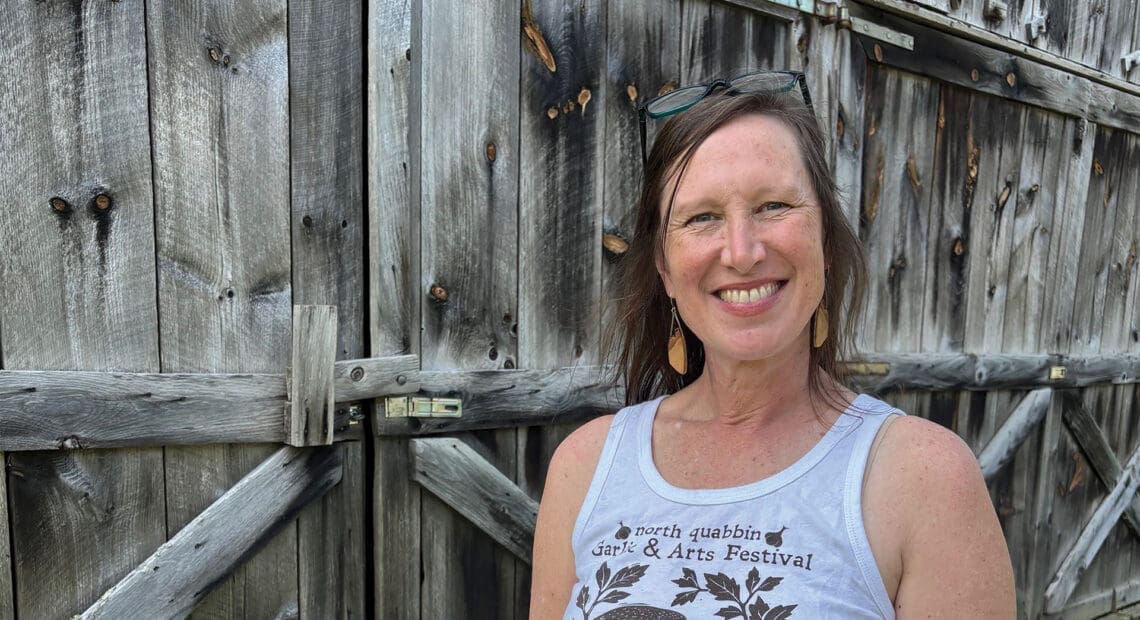
Jennifer Core is certainly familiar with the myriad challenges facing the region’s farms these days.

Indeed, she and her husband, Olivier Flagollet, operate Heddy Bell Farm, a livestock farm in rural Warwick, specializing in beef, lamb, pork, Thanksgiving turkeys, and more.

“We see it all, every day,” said Core, who, through that operation, became familiar with, and supportive of, the nonprofit agency CISA (Community Involved with Sustaining Agriculture) and its broad mission to build a stronger, more resilient, and more just local food system.

So supportive, in fact, that when longtime Executive Director Phil Korman retired in 2025, she sought to succeed him in that role.
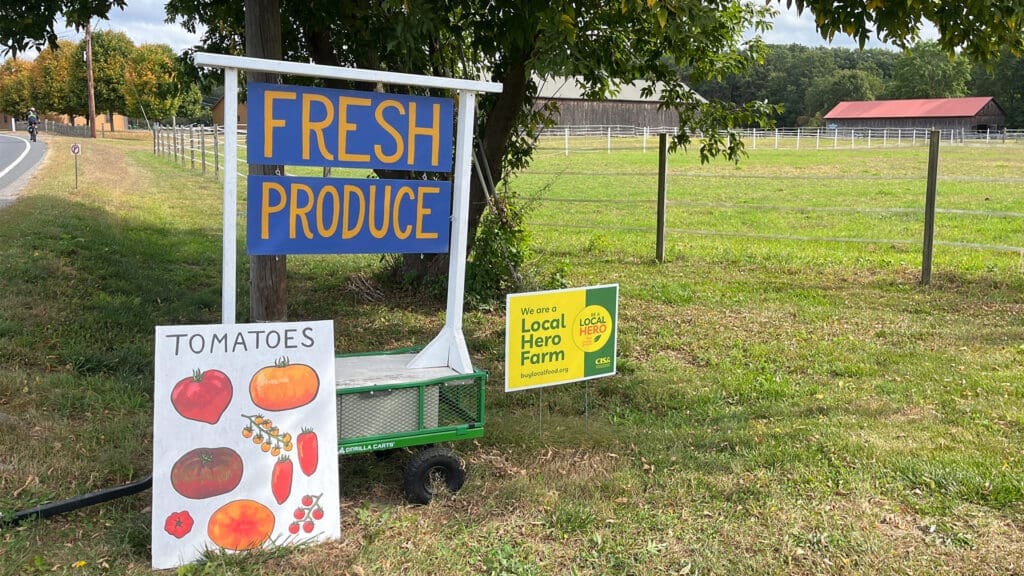
One of CISA’s primary missions is to promote the region’s nearly 2,000 farms and everything they produce.

“CISA has been this cherished place in my heart and mind for a long time,” she said. “I feel fortunate to have landed at CISA, where we celebrate all the farms in this area and talk about the issues that impact farms, educate and engage the community — and now, I get to see it from the other side.”

For this issue, we talked at length with Core and others at CISA about the state of farming in Western Mass., and about CISA’s mission and how it carries it out.

Regarding the former, she said this region boasts a strong, vibrant farming community, one that is diverse — everything from livestock to vegetables; hay to fruit trees — and features many young, first-generation operators. But it’s also one that, like farms across the country, faces numerous challenges.

“According to a recent legislative report, two-thirds of the farms in Massachusetts are earning about 95.5 cents for every dollar they spend on their farm operations.”

They range from various climate change-induced weather extremes — at present, it’s persistent drought — to succession issues involving the many family farms that remain, to the pressures facing all large landowners during an ongoing housing crisis.

And then, there’s simple economics.

“According to a recent legislative report, two-thirds of the farms in Massachusetts are earning about 95.5 cents for every dollar they spend on their farm operations,” she said. “And that’s important to understand … that’s not sustainable, and that’s why many farmers need multiple careers.

“If I were ever to be stuck on an island with one other person in the world, I would want it to be a farmer — because farmers tend to know how to do a lot of things, how to problem solve, and how to work really hard creatively,” she went on. “And that is asked of them every day in this economy, in the recent past and moving forward.”
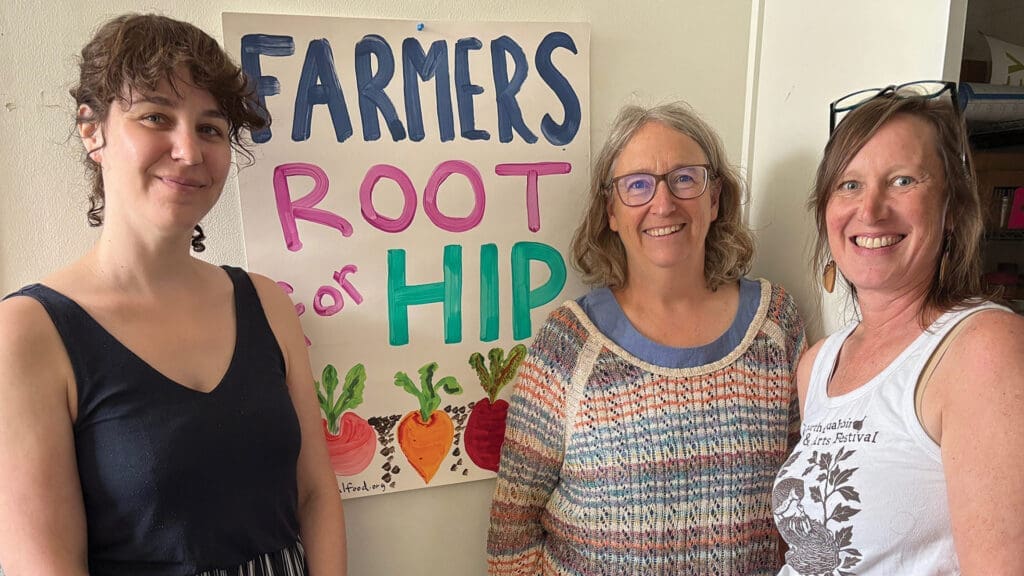
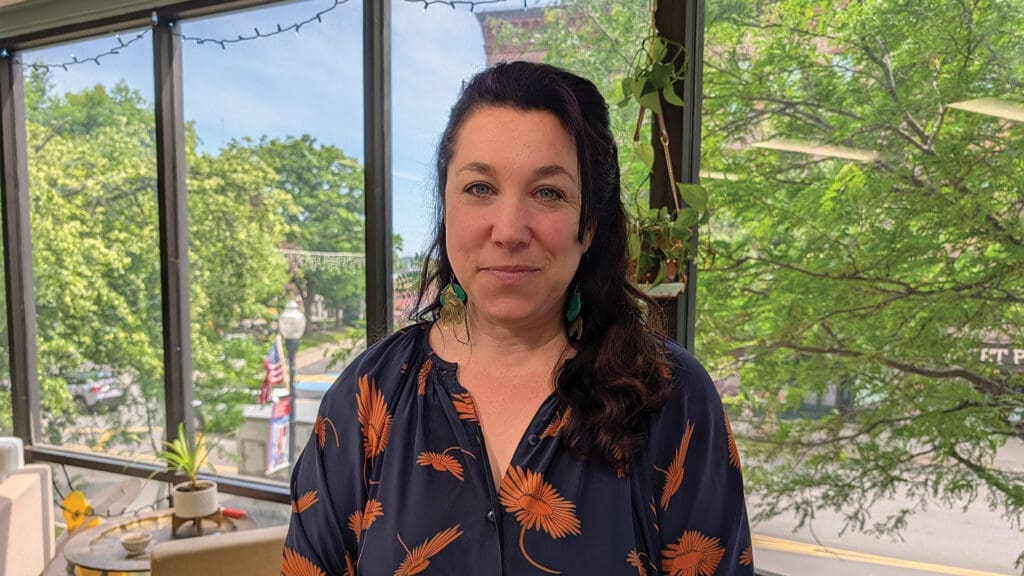
From left, Claire Morton, Margaret Christie, and Jennifer Core handle the many aspects of CISA’s broad mission.

And CISA exists essentially to assist farmers with all they must confront, said Margaret Christie, special projects director, who has been with the agency almost from its beginning in in the early ’90s. And this assistance comes in many forms, from workshops on issues ranging from succession to irrigation to climate change, to targeted programs such as the Local Hero ‘buy local’ campaign and an emergency farm fund that provides zero-interest loans to assist farmers and farm businesses struggling to meet their immediate needs in the aftermath of severe weather events and other emergencies.

“We try to be a one-stop shop, which doesn’t mean we can solve every problem that every person has,” said Christie, who, like others we spoke with, described CISA as a resource, but also an important connector, linking farmers with experts and information.

Claire Morenon, CISA’s communications manager, agreed, noting that many of the agency’s initiatives, and part of its mission, is to create opportunities to both support the region’s farmers and address food insecurity issues in the region.

Such efforts include the Senior Farmshare program, which subsidizes summer CSAs for low-income seniors, and HIP (Healthy Incentives Program), which offers individuals and families in the Bay State receiving SNAP benefits an automatic rebate on purchases of fruits and vegetables from farmers markets, farm stands, mobile markets, and CSAs.

“We talk about that program being a win-win program — it increases food access for low-income people, but it’s also an important revenue stream for farmers,” Morenon said. “In larger conversations about policy and how we want to see our local food system be supported in a more general sense, we’re thinking about solutions that are at the intersection of benefiting the larger community, but also providing really important financial support for farms.”

By the Numbers

Core told BusinessWest that the latest census data shows there are nearly 2,000 farms across Franklin, Hampshire, and Hampden counties (CISA’s service area), 94% of them are family farms, and about one-third of them sell directly to consumers through farmstands, CSAs, and farmers markets. The value of what’s produced in the three-county area is more than $162 million, she noted, adding that this is more than one-third of what’s produced across the Bay State.

The buy-local thrust so critical to its messaging is essentially how CISA started.

The most popular crops are mixed vegetables, feed corn, hay, and tobacco, she went on, adding that many of those managing area farms would be considered first generation, an encouraging sign for the region.

“The vast majority of the farms in this area are new and beginning farmers, meaning they’re first-generation farmers,” Core said. “Many came to this region for school — our higher education activities in this region draw young people, and we’re talking more about food systems at the university level than ever, which piques a lot of interest.

“A lot of folks who come to farming from a values perspective or an academic interest may not stay in production farming,” she went on. “But they may end up in ag-adjacent careers, system careers, so it is driving a tremendous amount of economic activity.”

When asked how these farms, and all the region’s farms, are doing, she said they are holding their own given all they have to contend with.

“There are a few compounding factors at play right now. Climate is one; the norm now is that farmers have to be ready for any possibility all the time, and that’s a pretty risky endeavor and a costly endeavor. We’ve had late frosts, we’ve had early frosts, we’ve had drought, we’ve had extreme precipitation events, flooding events … and all of those take a toll on crop production in our area.

“That is combined with incredibly increased input costs,” she went on, listing everything from gasoline to fertilizer. And then, there’s a pinch in the agricultural labor market with recent immigration efforts, “which have created an incredible amount of stress on the agricultural workforce, which is a very skilled and valued workforce in our area.”

All this helps explain why many farmers need other sources of income, usually second jobs, said Core, adding that this is an understandably difficult proposition given how taxing farm work is.

“We try to be a one-stop shop, which doesn’t mean we can solve every problem that every person has.”

And it also explains why farm owners are feeling extreme pressure when it comes to keeping their land devoted to farming.

“There’s tremendous development pressure — both housing and solar pressure,” she told BusinessWest. “It’s a lot easier to put solar on agricultural land — it’s flat and accessible. And there’s a vulnerability in farming … when we think about farm transitions and succession planning, that’s a very vulnerable moment for the farmland itself if it’s not protected.

“We’re lucky to live in a state that has exceptional farmland protection programs — that’s something we should all be proud of, that our taxpayer dollars do protect farmland,” she went on. “But farmers are particularly vulnerable for financial reasons; most of the farm equity serves as retirement funds for retiring farmers, most of the time. Balancing and weighing the tradeoffs of how you can pass the business on to another grower or whether you need to liquidate your assets is a tricky moment and an incredibly personal decision, but a decision that could actually impact all of us.”

Planting Seeds

When asked what climate change has brought to this region and those 2,000 farms, Christie said it’s not one specific pattern such as warmer temperatures or more rain.
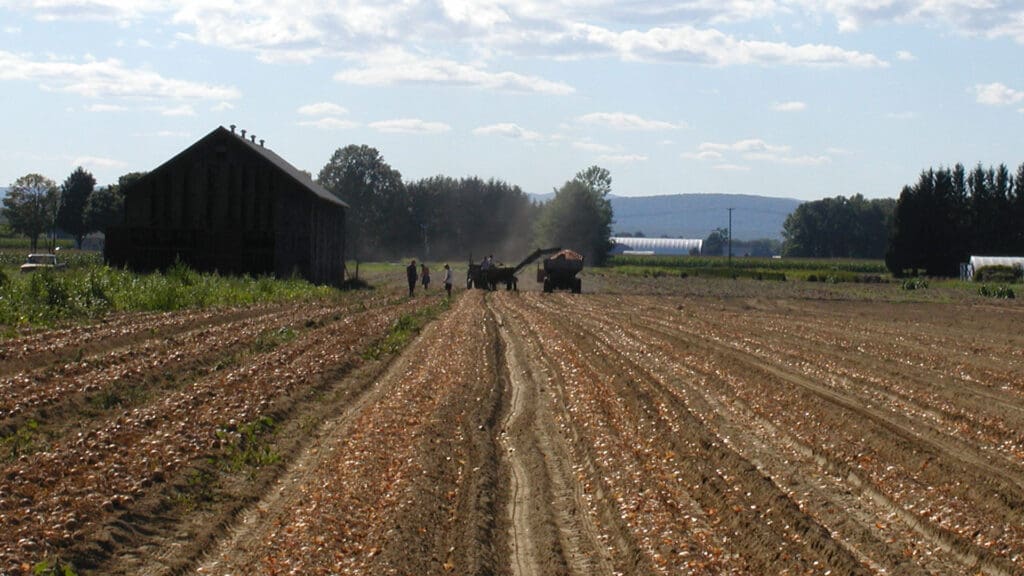
Profitability has become a key issue for area farms.

“The short answer is that weather is less predictable and more extreme, meaning that we’re more likely to have drought and more likely to have floods,” she explained. “Our rain tends to come in bigger, more precipitous events — we get more rainfall in shorter periods of time rather than more gentle rainfall that is spread out, and that causes drainage problems and erosion problems, and can cause flooding, as we saw in 2023.

“Sometimes, people think that, ‘well, if the climate’s getting warmer, we’ll just be able to grow things that normally don’t grow well here because we’re too far north — all we have to do is shift our product mix,’” she went on. “But, in fact, the weather is getting more erratic and more extreme, so it’s more difficult to plan and make adjustments.”

Helping farmers cope with these extremes and unpredictability is just one of many forms of assistance provided by CISA, she continued, adding that such help generally falls into one of three buckets: business support, including training and technical assistance for both farm and food businesses; promotion of local farms and communication about agriculture and local food; and “making the system work bett`er,” as she put it, meaning the larger system of both farming and food access.

And a big part of that category is advocacy, she went on, adding that this takes many forms, including work to monitor progress on both the federal and state farm bills now working their way through the legislative process, and help ensure that they support that constituency.

Overall, CISA does act as a connector, Christie said, adding that, for some issues, the agency can and will refer farmers to groups such as the UMass Cooperative Extension for production issues, and Land for Good for succession matters.

Promotion of the region’s farms is one of the key aspects of CISA’s mission, Morenon said, adding that the primary goals are to inform area residents of all that is produced in the region and then encourage local buying.

And a key instrument in this work is the Local Hero campaign, the longest-running ‘buy local’ program in the country. It has grown into a comprehensive public awareness and marketing effort with 400 local business members, including farms, farmers markets, distributors, butcher shops, and more.

“This was one of the first ideas that CISA was founded on — the idea that using mainstream media tools to promote local farms and local farm products could be a really powerful way to help farms survive, and not just survive but thrive,” Morenon told BusinessWest, adding that the initiative includes advertisements to alert residents about what’s in season as well as an online database of farms that are part of CISA’s program, detailing what they grow and where their products can be found.

“A lot of other communications work is about helping farmers and other local food businesses tell their own stories,” she went on. “And that’s about highlighting the people who are part of this larger food system and helping them make connections to the community around them.”

This buy-local thrust was essentially how CISA started, she continued, adding that it has branched out in different directions since, including technical assistance and programs designed to address both food insecurity and the needs of farmers.

And that technical assistance takes several forms and addresses a number of issues, from immigration to disaster response, with many of them involving the larger issue of profitability, said Christie, citing those numbers mentioned earlier, as well as the attention given to inflation and the higher cost of going to the grocery store.

Often lost in that dialogue is the plight of farmers producing those products.

“We have prioritized low prices for food, even though, right now, food prices feel high to many people, and they’re not wrong — food prices are high,” she noted. “No one would blame people for wanting prices to come down, but it’s also true that we don’t really pay enough for food to ensure that farmers can pay their workers well, take care of their land, and make sure that their own families are able to be comfortable and send their kids to college and plan for retirement.”

Educating the public on such matters is just one of the many ways CISA goes about its mission of helping farmers grow crops, but also grow their business. 

Features Special Coverage

Back on the Bus

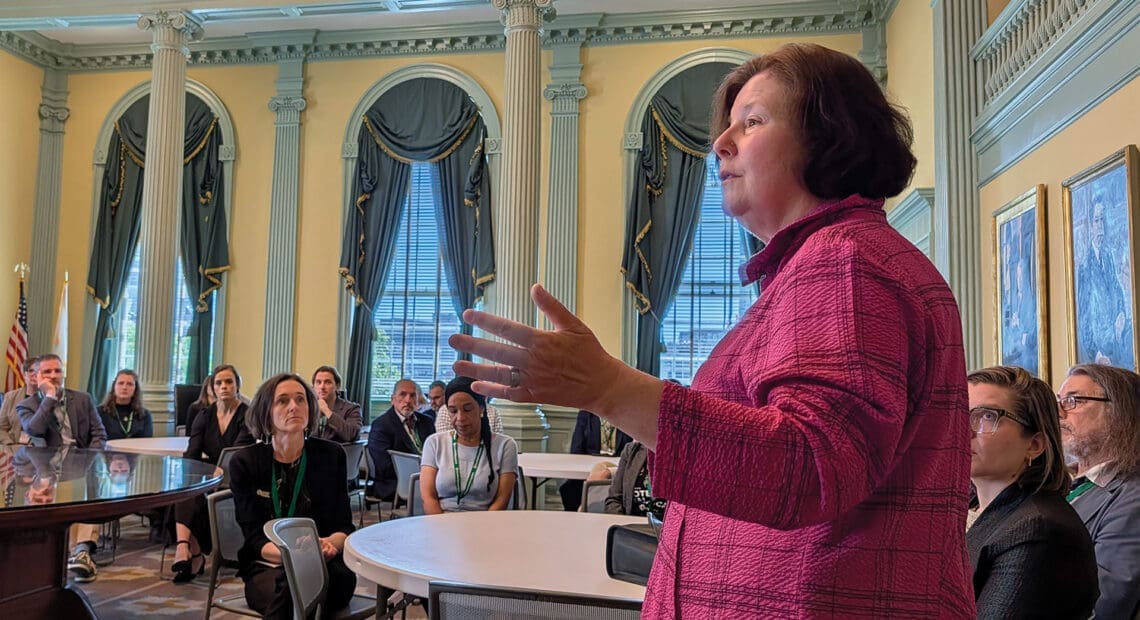
Secretary Eric Paley says Massachusetts will not thrive as it should unless all regions of the Commonwealth, from the 413 to the 617, are doing well.

Eric Paley calls it “one of my biggest concerns — maybe my biggest concern that keeps me up at night.”

Specifically, “we have a very robust economy, but there’s tremendous economic dispersion. So how do we handle the fact that we have this K-shaped economy throughout Massachusetts?” said Paley, Massachusetts’ secretary of Economic Development, using a term for an uneven growth environment where different segments of the economy or population experience different outcomes.

And in grappling with that question, he knows he’s accountable to not only dozens of sectors, but 351 municipalities.

“The people on the ground, they’re the ones who know what matters in their community,” he went on. “So we can’t sit here thinking we know all the answers to solving the problems in those communities.”

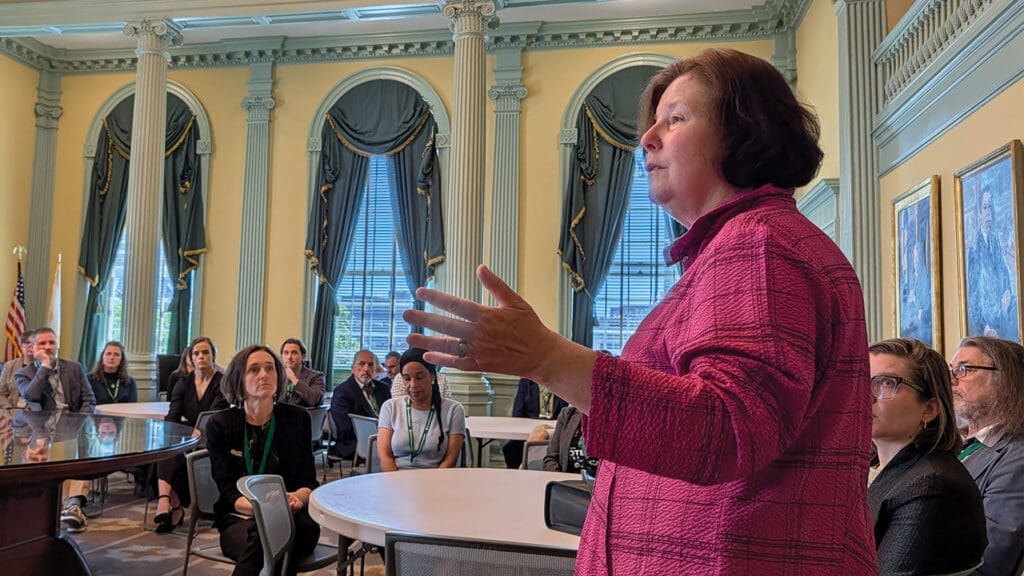
In the spirit of mutual education, communication, and collaboration, Greenfield Savings Bank hosted its third annual bus tour to the State House on June 3, bringing about 50 regional business and nonprofit leaders to Boston to speak with legislators and department and committee chairs about economic development, discuss issues ranging from housing to clean energy to transportation, and hear about the legislative process that moves the needle on all of it.

The importance of those “people on the ground” is why Paley conducts roundtables in local communities, he said, in addition to the one that came to him on this occasion, as he gave the main address over lunch in a Senate meeting room.

“It’s why I want to talk to the bankers — because the bankers tend to invest in and support businesses that, on paper, make no sense whatsoever. It’s because they know the people, and they’re willing to commit and support those people,” he said. “Sometimes people have misconceptions about bankers, but community banks step up in ways that are extraordinary, and I see it all the time.”

Tara Brewster, Greenfield Savings Bank’s vice president of Business Development and director of Philanthropy, said the annual trip keeps building on previous successes.

“We have new people on the bus each year, making meaningful connections with each other in the 413 as we travel to the 617, to the State House, to make meaningful connections with the elected officials there,” she told BusinessWest on the ride home. “We heard from so many amazing elected officials, senators, representatives, chairs, all listening about how they want to help all of Massachusetts strengthen each other.

“We have amazing elected officials, and we know they do the hard work every day, every week, every month, to really champion us in Western Massachusetts, and it was time for us to start doing some of our own heavy lifting for them,” Brewster added, describing how the annual trip came together two years ago. “So this has been such an incredible trip, so meaningful, toward collaboration, friendship making, bridge building, and convening of Western Mass. constituents, both nonprofit and for-profit.”

“The people on the ground, they’re the ones who know what matters in their community. So we can’t sit here thinking we know all the answers to solving the problems in those communities.”

Paley pointed to a February report by JPMorgan Chase & Co. that surveyed business owners nationwide. Among Massachusetts employers, positivity about their own business was well above the national average, but when asked about the overall economy, they were much less positive than the national average.

“When I go to groups of business owners, a lot of people start shaking their heads and tell me, ‘I worry about it.’ But why are we so negative?” he went on. “I think some of it is, we are disproportionately affected by a lot of the federal policies today. The whole country’s felt a lot of volatility around this. You think of something like tariffs — we are a very heavy exporter of money. That doesn’t explain it alone, but that is key.

“Then there’s immigration — we are a top five immigration state. I didn’t know that we have more immigration per capita in Massachusetts than Texas does; that kind of blew me away. But as we’ve seen ICE crackdowns and all this anti-immigration stuff, the sense that people can’t get visas, borders are closed … I think that’s created a lot of anxiety. Some people are not coming to work because they’re so worried about raids.

“And then the biggest one that I think is unique to us is our research economy, which is a huge engine of our overall economy,” Paley explained. “We get more federal research dollars than any state in the country, and there’s been a huge cutback in federal research. So a lot of the universities are really struggling. UMass is a really great example of that, but every major research institution has massive uncertainty.”

Developing Matters

Peter Albero says legislators have responded positively to Greenfield Savings Bank’s annual bus trip.

In another session on June 3, Carole Fiola, House chair of the Joint Committee on Economic Development and Emerging Technologies, addressed a number of topics, including the importance of both collaboration and persistence when it comes to getting things done — because no projects move as quickly as their proponents would like.

As one example, she cited South Coast Rail, a $1 billion project connecting Boston and Southeastern Mass. that was 30 years in the planning and development before coming to fruition last year.

“With 351 cities and towns, everyone wants the attention of the administration; everybody wants that infrastructure grant, right?” Fiola said. “So you’ve got to be focused, you’ve got to have a good message, you’ve got to have an idea of how the funding streams can work, and the private-public partnerships that would be needed.”

Especially over a 30-year timeline, she added, “administrations change. Some of the community leaders change. And as elected officials move and change, priorities can change — but if your priority hasn’t changed, you’ve got to stay with it. I can’t repeat that enough because, finally, after 30 years, it happened.”

Later, Secretary of Housing and Livable Communities Juana Mattias said constituents need to bring similar energy and persistence to matters like housing stock, which has become a serious concern for communities of all sizes across Western Mass.

“Showing up to those town meetings, showing up to those discussions and saying, ‘this is where the business community stands,’ ‘this is where the nonprofit community stands,’ writing op-eds in your local newspaper, all makes a huge difference,” Mattias noted. “We have to organize and understand, who are the partners at the state level, at the regional level? What are the stories we’re bringing to the forefront?

“It’s reminding [state and local leaders], ‘you had an opportunity to raise your family. Your kids had an opportunity to leverage the public school system. What we want to do is make sure that other people have the same opportunity.’ It has huge implications on our ability to remain the state that we are. So organizing and leveraging your voices is critically important.”

Others who spoke to the bus trip participants included state Sens. Jo Comerford and Barry Finegold and state Rep. Lindsay Sabadosa, and the day concluded with a tour of the State House. But the liveliest conversation emerged from Paley’s talk, which touched on everything from Community One Stop for Growth, a streamlined application portal and collaborative review process of grant programs, to a recent effort to lower LLC filing fees for small businesses.

“We are a global competitor. People don’t even realize, if Massachusetts were a country, we would be the fourth most productive economy in the world by GDP per capita,” he said. “So we want to attract global investment. We get a lot of it anyway, but we need to really build business development programs and activities around this.”

He also touted a ‘one Massachusetts’ model, noting that “people in Greater Boston need to understand Boston ultimately will not thrive if the whole state is not thriving. The rest of the state also needs to appreciate it; if the region inside 128 or 495 is not thriving, the rest of the state won’t. We are one state.”

“We have amazing elected officials, and we know they do the hard work every day, every week, every month, to really champion us in Western Massachusetts, and it was time for us to start doing some of our own heavy lifting for them.”

Paley also discussed continuing conversations around affordability in Massachusetts and how that affects outmigration, and, as a related matter, the importance of talent capture amid all that movement. “We think we have the best talent engine in the world,” he noted, “but a disproportionate percentage of it leaves.”

Keeping the Conversation Alive

State Sen. Jo Comerford addresses a gathering of about 50 Western Mass. business and nonprofit leaders at the State House.

A former venture capitalist who shifted to a career in public service, Paley said he’s constantly learning new things every day, and those emphases on learning, communication, and listening framed a busy day in Boston for the Western Mass. contingent.

“I’m learning stuff I’ve never seen before, being challenged in ways I’ve never been before,” he said. “I literally feel like the limit might be my capacity to learn as fast as I want to learn. I remember feeling like that in college, wishing there was a way to inject the knowledge. I feel that way again. It’s been incredibly exciting and challenging.”

Peter Albero, president and CEO of Greenfield Savings Bank, said he hoped all the guests on the bus trip embraced the same spirit of learning and collaboration.

“We think it’s important for Greenfield Savings Bank to bring all these organizations in Western Massachusetts to Boston to voice their concerns and hear directly from the legislators about what they’re doing to address those concerns,” he told BusinessWest.

“We think, as a community bank, one of our main missions is to bring the community together, and we think this is one of the best ways we can do it,” he added. “This is our third year in a row doing this, and when we talk to legislators, they think it’s important for us to continue to do this year in and year out. So we’ll be back next year and in the years to come.” 

Features Special Coverage Where Are They Now?

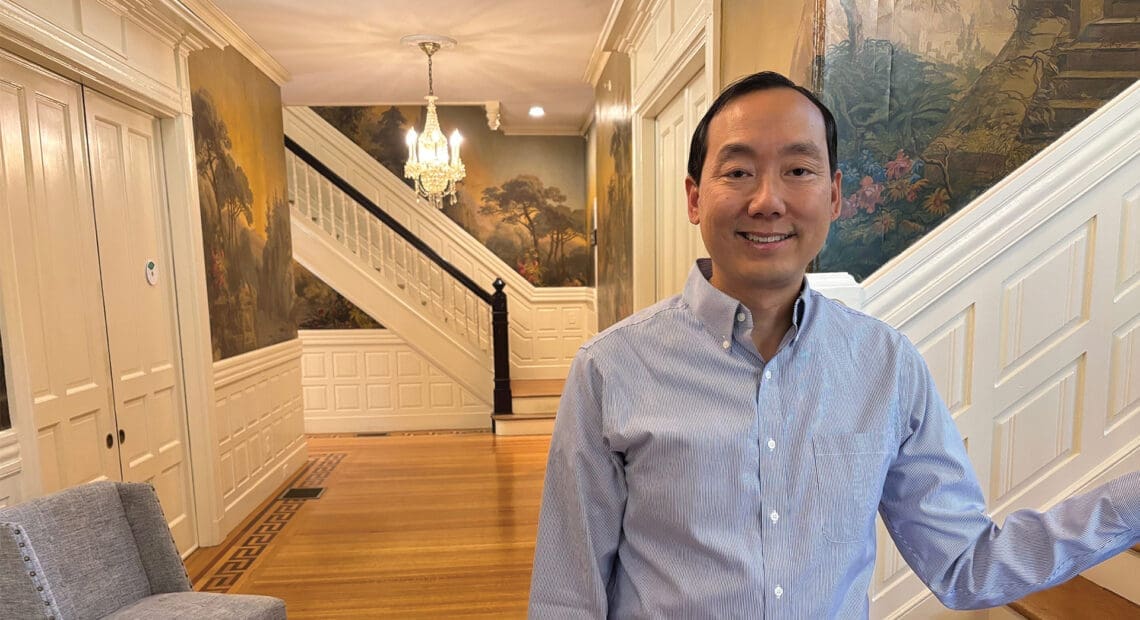
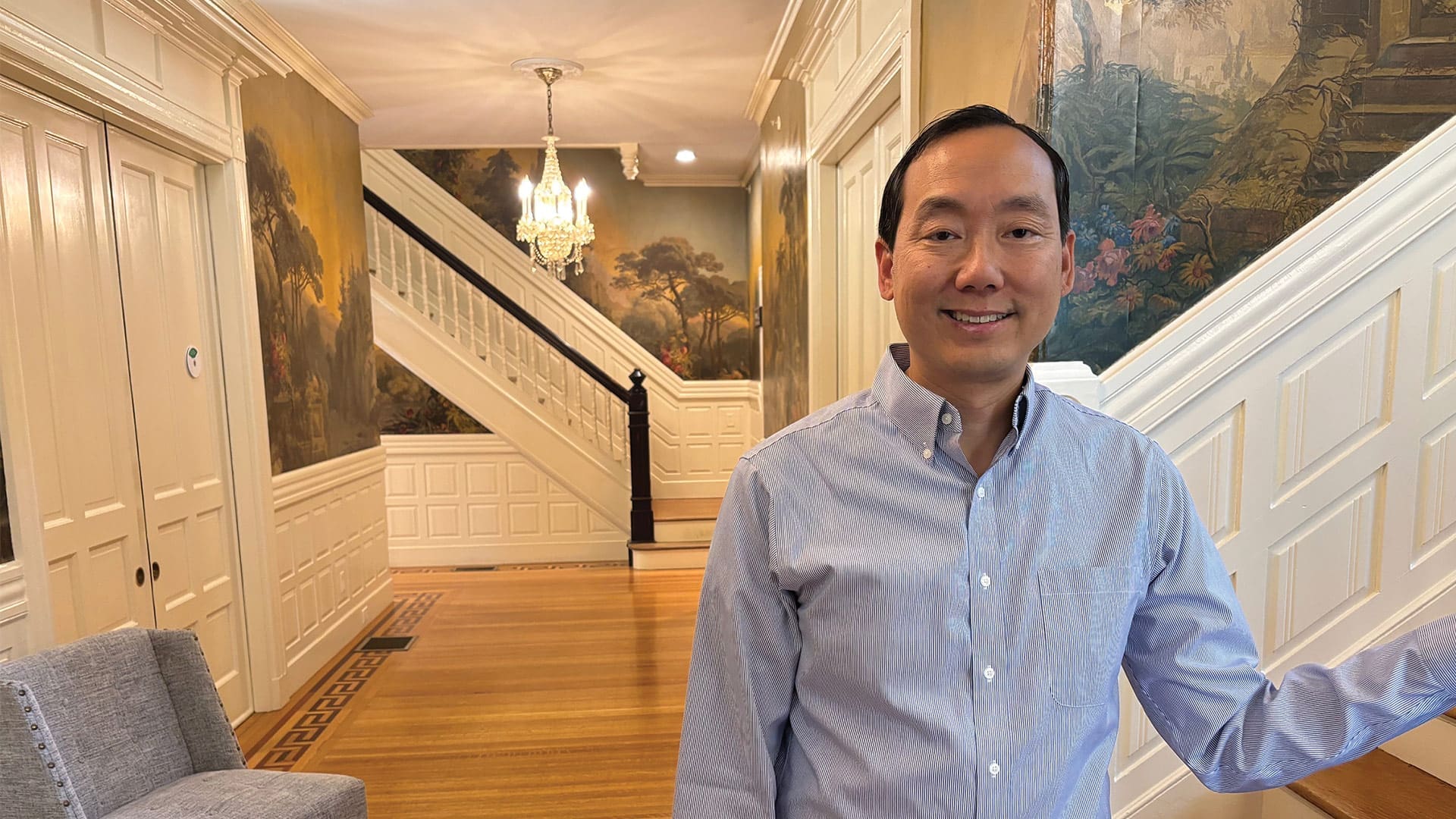
Dr. Andrew Lam inside the restored Brewer-Young mansion

Where Are They Now?

It’s called the ‘Cobra Effect.’

And Dr. Andrew Lam is more than happy to explain.

“In India in the 1800s, the British in Delhi had a problem: there were too many cobras. So they said, ‘let’s make a bounty on cobras; if the people bring us a dead cobra, we’ll pay them,’” he explained. “At first, it seemed to be going great; they were getting all these cobras, and the native cobra population declined. But for some reason, the cobras kept coming, and they realized people were breeding cobras so they could get paid for them. So they stopped doing the bounty, and then the people released their cobras into the wild because they were worthless, and that increased the cobra population.

“It was a classic backfiring of a well-intended policy,” Lam went on, noting that he made this case part of a chapter in his latest book, called What Could Possibly Go Wrong? Unintended Consequences, Unnecessary Blunders, and the Urgency of Avoiding Tomorrow’s Mistakes.

It is expected to be released early next year, said Lam, who gave BusinessWest a sneak preview of sorts — a breakdown of tentatively titled chapters and cases to be explored within them. 

In the chapter called “Resist the Easy Fix,” he looks at China’s one-child policy, price freezes, and rent controls. In one called “Assume Your Invention Will Be Misused,” he explores the work of the Wright Brothers, Alfred Nobel, and Richard Gatling, as well as developments such as AI. And in a chapter called “Do Good Carefully,” he addresses Prohibition and the Bay of Pigs.

We’ll get back to What Could Possibly Go Wrong? later. It represents just that latest … well, chapter in Lam’s story, and there are many of them, all ongoing.

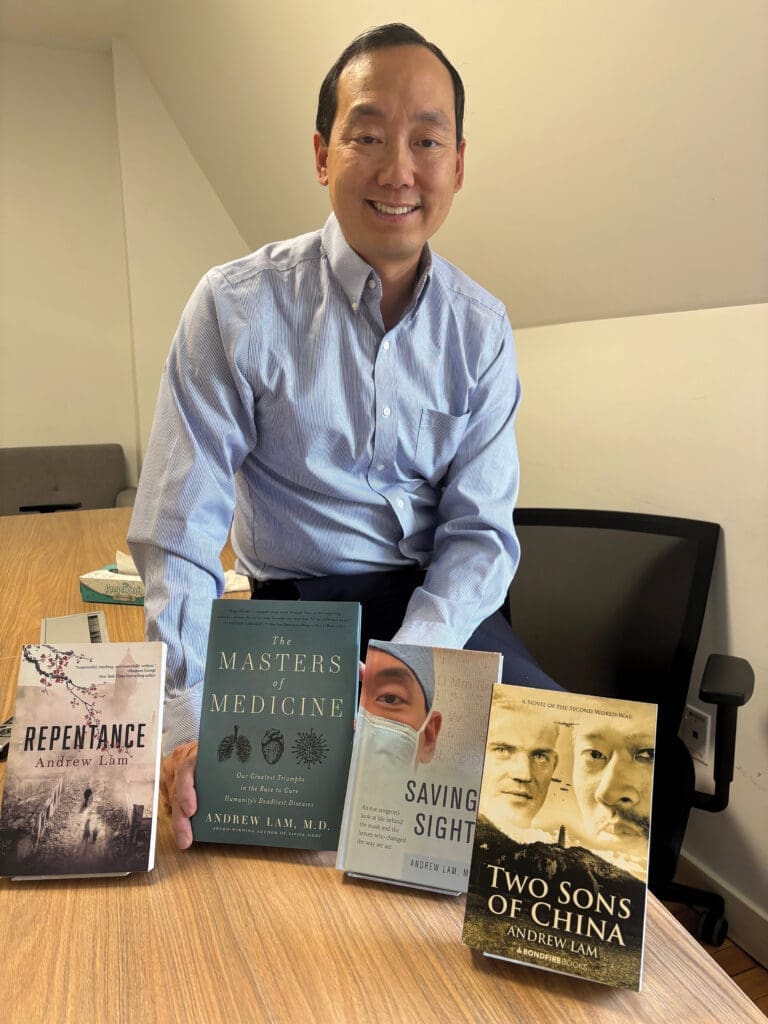
Dr. Andrew Lam has written four books, with a fifth slated for release next year.

Let’s start with his day job. He’s a senior partner at New England Retina Consultants and professor at UMass Medical School. And there are his books, several of them now. The others are Saving Sight, in which he describes his life as a retinal surgeon while also telling the stories of doctors whose inventions make saving sight possible; Repentance, an award-winning novel drawn from the heroic story of a Japanese-American regiment that fought in World War II; Two Sons of China: A Novel of the Second World War; and The Masters of Medicine: Our Greatest Triumphs in the Race to Cure Humanity’s Deadliest Diseases.

And then, there’s his work in the community of Longmeadow. He started on the Historical Commission, later served on the Finance Committee, and, in 2024 was elected to the Board of Selectmen.

“I enjoy doing everything I can to help make Longmeadow better,” he said. “And I’m particularly passionate about helping to steer a prudent fiscal course.”

Meanwhile, Lam and partners Henry Clement and Chris Orszulak restored the historic Brewer-Young mansion on Longmeadow Street into co-working space called Modern Workspace. The venture, which had to endure its own battle to win approval from town board and, ultimately, town meeting voters, has successfully transformed the landmark, which had fallen into deep disrepair, into home for a wide array of professionals.

And just this past week, Lam gave the keynote speech as Longmeadow celebrated the nation’s 250th birthday party with an event on the town green.

Most of the above has happened since he was named a 40 Under Forty winner in 2014. Back then, he had two books published — Saving Sight and Two Sons of China — and was just starting to get involved with the town, on the Center School Council and Longmeadow Soccer Assoc., for example.

He’s added to the résumé in both realms, especially as a public servant, which he finds rewarding, but worlds apart from his work as a retinal surgeon, as he explained.

“I don’t think there’s anything as antithetical to the skills and attitude of being a surgeon as being in government,” he said. “As a surgeon, you learn to be decisive, and sometimes the stakes are extremely high. In government, it’s the exact opposite; it moves like molasses, and things that seem like common sense take a long time because of the process.”

For this latest installment in its Where Are They Now? series, we look at the many aspects of Lam’s life and career, and how he makes time for them all.

Learning from History

Dr. Andrew Lam in 2014, when he was named to the 40 Under Forty.

In his address to those assembled at Longmeadow’s 250th celebration, Lam offered some history lessons about men from Longmeadow who left their homes to travel to Boston the day after the battles of Lexington and Concord — men whose names now grace streets and open spaces in town: Captain Simon Colton, Medad Stebbins, and others.

He also offered some thoughts on the nation’s first 250 years and the forces that have shaped its trajectory.

“History shows us the story of American progress is not a straight line upward,” he said. “It has always involved setbacks, disagreements, sacrifice, and renewal. It has included grievous errors, from slavery to prejudice, nativism, and some wars fought abroad that contributed to untold havoc and suffering. 

“We’ve made mistakes, but the difference between us and the monarchies and dictatorships of the past and present is that our system allows us to recognize those mistakes and correct them,” he went on. “We do not have to pretend we are perfect. We can believe we have an excellent form of government and that America can be a force for good in the world, without insisting that we are exceptional or somehow better than people in other nations.”

These comments display Lam’s passion for history, public service, and learning lessons from past mistakes with an eye toward not repeating them. And these passions have driven his writing, which covers considerable ground — from China during World War II to efforts to cure deadly diseases — and different genres.

“A smart author would only do the same kind of book every time because you make a ton of connections with reviewers and readers,” he explained. “When I did the historical novels, I got lots of connections with people who write blogs and reviewers and podcasts on that subject. And with the medical books, I made a lot of connections. But I can only write well if I’m really interested and fascinated by the subject.”

This mindset includes his latest effort, which is much more than a comprehensive listing of things that have gone wrong over the years, everything from plastic bag bans to desegregation busing; tariffs to geoengineering; the ill-fated bullet train between Los Angeles and San Francisco to overreaction to the ‘shoe bomber.’

It’s also a look into what drives these failures — the cognitive biases, emotional drivers, and systemic blind spots that consistently derail even the most thoughtful plans.

“With optimism bias, we plan for perfection,” he explained, adding that this mindset drives everything from cities staging the Olympics to towns (like Longmeadow) building new DPW facilities, to people scheduling their day and leaving for appointments. And this bias helps explain why things go wrong — and why people are late.

“People expect there to be no traffic, no parking problems — we do this all the time in our daily lives; we’ll leave at the last second, for everything,” he said, adding that this is just one tiny example of how thinking everything will go right is a major contributor to things ultimately going wrong.

By cataloging some of the more infamous things that have gone wrong over the years, Lam hopes these cautionary tales can perhaps prevent future calamities on many different scales.

“This book covers our worst mistakes in government, business, medicine, the military, and more,” he said. “The idea is to learn lessons from these errors and apply them to future problems.”

The Write Stuff

Like most authors, Lam said that, even before his latest book has been published, he’s thinking about the next one.

He has an idea, but isn’t ready to share it just yet. Suffice to say it will address something he’s passionate about — and that certainly covers a lot of ground. 

Features Law Special Coverage

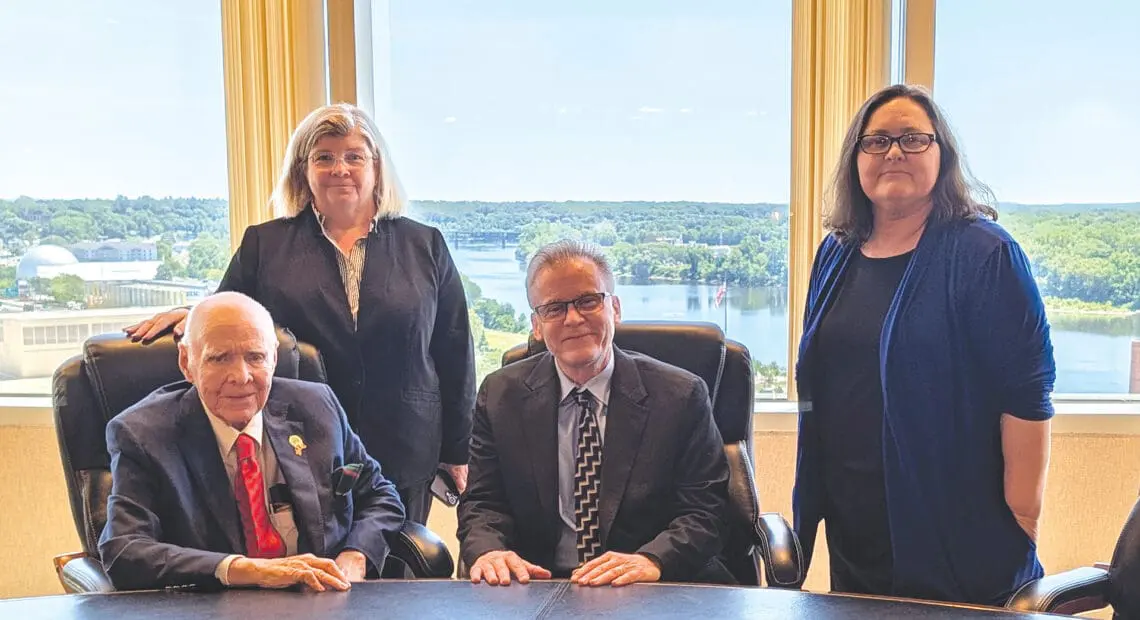
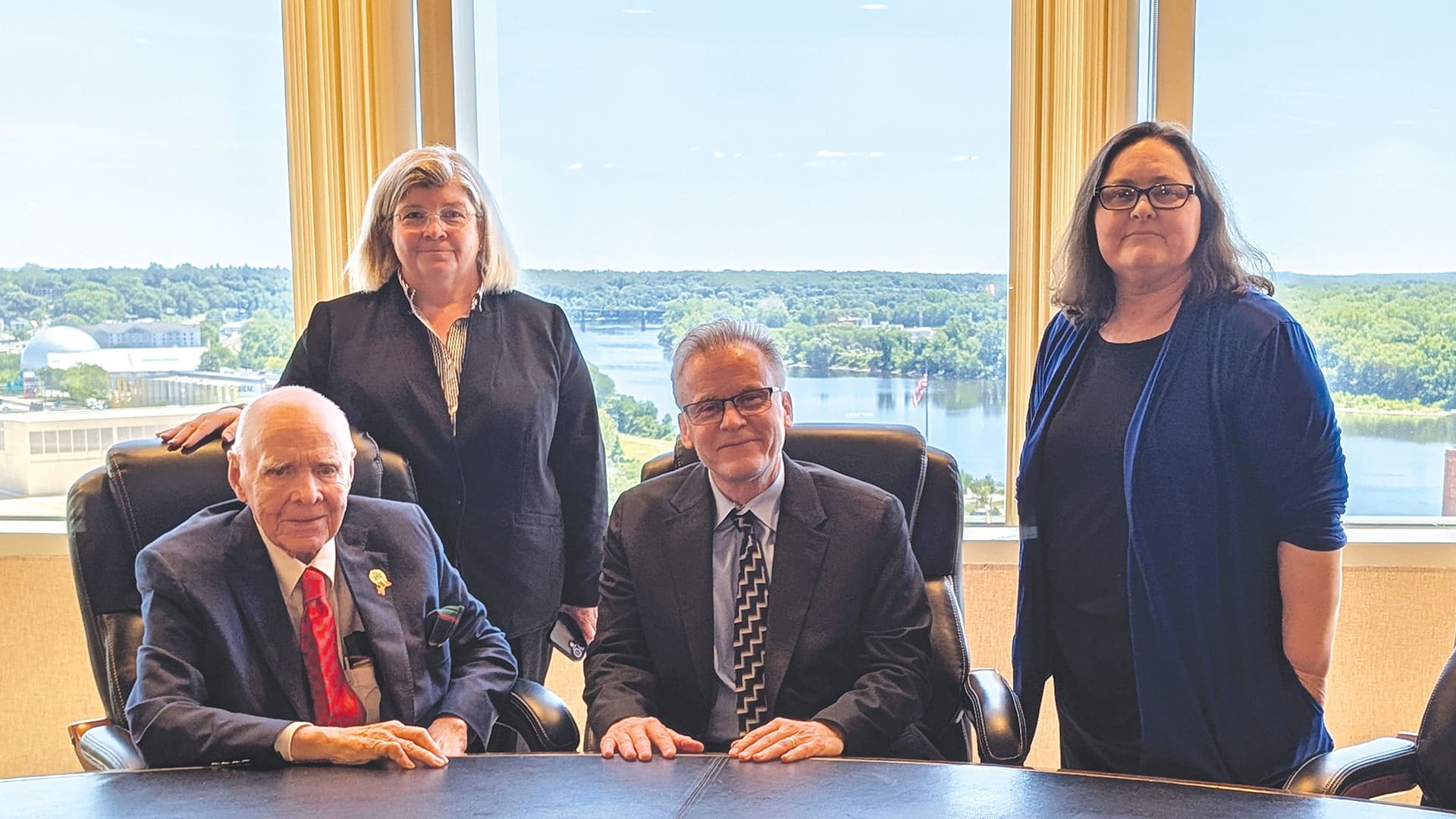
From left: Frederick Sullivan, Meghan Sullivan, Gordon Quinn, and Layla Taylor.

Early in 2000, on one of her first days on the job at Sullivan, Hayes & Quinn, Meghan Sullivan visited a lead smelting and refining plant in New York, one of the firm’s clients.

Her father, Frederick, the founding partner who co-created the firm in 1976, asked the plant manager to give her a tour.

“I thought, all right, I’m going to go walk around the plant. And all of a sudden, I’m being sized up for the respirator mask for my face,” said Meghan, now managing partner. “I was in there climbing ladders to look down into smelters, and when I came out, I asked, ‘why did you make me spend three hours doing that?’ And he said, ‘so you understand.’

“It was a wonderful learning moment — that we are obligated to understand a client, more than just what their statement of purpose is when they file their incorporation, and to have as broad an experience as possible, so we can picture it when our client calls and says, ‘this is the issue we have today.’ We’re able to understand it and picture it so that we can give relevant advice, not just something out of a book that’s theoretical.”

And plenty has changed in the 50 years since Frederick Sullivan and Dick Hayes hung a shingle in Springfield. As the firm reflects on this milestone year, its attorneys also recognize the many changes that have emerged in labor and employment law over a half-century.

“When I joined the firm in 1990, there was no Family Medical Leave Act. The American Disabilities Act came online later in the year I joined,” Partner Gordon Quinn said. “The whole concept of sexual harassment in employment, was still a novel legal claim. And there’s been an explosion of laws that have happened since then.

“Just look at the leave laws,” he went on, citing not just the federal Family and Medical Leave Act, but Massachusetts’ Earned Sick Time and Paid Family and Medical Leave laws. “It’s become a much more challenging environment for employers because of this mushrooming of laws.”

“We’re able to understand it and picture it so that we can give relevant advice, not just something out of a book that’s theoretical.”

Frederick couldn’t have predicted all of that, but said he fell in love with this area of the law at at an early age and found someone equally enthusiastic when he met Hayes, and the rest is history — a constantly changing, evolving history.

In the beginning, he said, the primary focuses were union organizing, collective bargaining, strikes, and wage and hour issues, all working on behalf of the employer, as remains the case today. “But we have seen great changes within the discipline. And we were able to stay abreast of it — and try to stay ahead of it.”

“We’re all nimble,” Partner Layla Taylor said, and that goes for tools of the trade as well as ever-changing laws and regulations. “One of the things I’ve appreciated since I’ve been here is, whenever there’s a new technology or there’s a new thing that we need to adopt, we’re pretty quick to adopt it. We all recognize that we need to be able to speak with the same tools as our peers.”

The firm is also deeply collaborative, Quinn said.

“If I have an issue or a question about immigration law, I know I’m going to be talking to Layla. Or if there’s something that could involve a criminal issue, I’ll talk to Meghan. If it’s a really heavy-duty labor law issue, I’ll talk to Fred. We all have open-door policies, and we’re all in constant communication. We talk to each other.”

“We always looked upon ourselves as the partners of the entrepreneur, trying to accomplish what the entrepreneur sought, but to do it in a lawful way, in a way that was really the right way when it came to employees.”

And not only at formal meetings, he added. “We just go into each other’s offices. If it’s a complex issue, I’ll say, ‘have you handled an issue like this before?’ And that’s invaluable. We’re not all cubbyholing in our offices. We all interact with each other, ask each other questions. And I’ve found that very rewarding. I’ve always felt secure in the advice I give, not only from the research I do, but also being able to talk to people and work it out and think about things from a different perspective.”

Proactive Strategy

The partners emphasized that their roles don’t stop with actual issues that arise, and the negotiation and/or litigation that follows. That’s where experiences like the lead plant tour come in — Sullivan, Hayes & Quinn prioritizes understanding a client’s business inside and out, so they can identify potential employee issues and legal landmines that might arise, before it’s too late.

“As much as everyone wants to avoid litigation, we all feel very fortunate that we consistently have clients who are just inclined to do what they’re supposed to do — to do the right thing and be fair,” Meghan said. “So that’s nice, when we come in and navigate situations that can feel very complex. We also know that our clients are partners with us in trying to make sure that the way that they’re treating their employees is the way that they would want to be treated, or would want their own family members to be treated.”

Quinn agreed. “A typical question might be, ‘we have an employee, and there’s an absentee issue there.’ We try to be proactive, obviously, to help them navigate those laws to avoid what we call landmines — a misstep that could lead to costly litigation and vast defense costs. So the proliferation of all these laws — and that’s just in the leave and absence area — have made it a lot more interesting for us, and a lot more challenging for our clients.”

From the very beginning, Frederick said, “going back to the days of Dick Hayes and myself, we always looked upon ourselves as the partners of the entrepreneur, trying to accomplish what the entrepreneur sought, but to do it in a lawful way, in a way that was really the right way when it came to employees, because that went to the question of productivity, too.

“So it’s been an interesting 50 years, with the people that we’ve met. We’ve worked with casinos. We’ve worked with convents. We’ve worked with zoos, hospitals, colleges, museums, public sector employers in schools and towns … just about every type of employer. And we’ve met wonderful people along the way who basically wanted to do the right thing. They wanted to be successful, and they realized there is a real art to managing people.”

Meghan said she enjoys the educational aspect of the job, as it applies to helping companies understand how — and why — to do the right thing.

“I love doing trainings. Whether I’m presenting to college professors or third-shift factory workers, I know that I have an ability to take this abyss of legal compliance and make it understandable.

“Every employment law, just like every labor law, gets presented as if it’s an employer’s obligation and an employee’s right,” she went on. “But frequently, they’re mutual rights and mutual obligations. So I love that part of the work that we do, where we get to go into this diverse set of workforces with vastly different types of jobs and talk about what it means to be an employee or a supervisor and the fact that it is mutual.”

And she understands the limits of legal consulting, especially when it runs into bottom-line issues. “I very much appreciate when we are dealing with people who want to do the right things. But we know they can’t just do everything that someone demands because every budget is only so large, and they need to have the ability to make payroll after that.

“But when we help a client navigate a murky situation, and the result of it is satisfactory to the employer, but also satisfactory in a way that that employee-employer relationship is not completely disturbed or that doesn’t lead to a massive morale issue, that’s always a happy day. To resolve a situation artfully means considering the bigger picture of what it means to be a manager or a supervisor, and you still need a workforce that wants to continue.”

Never a Dull Moment

Whether it’s working with issues of discrimination and harassment, wage and hour, labor relations, workplace safety, or any number of other employment matters, the constant evolution of workplace laws is, on a personal level, very intellectually fulfilling, Taylor said.

“If you’ve been doing this long enough — and all of us here have been — you start seeing the history of the American workforce, and how that evolves. And it’s a really fascinating thing.”

Indeed, the team brings plenty of institutional knowledge to work every day; Taylor came on board in 2003, the most recently of the four.

“Not only has there been a proliferation of laws, but the administrative agency involvement in the legal process has evolved,” she said. “And now we’re starting to see emergent things that we hadn’t seen before. AI is one of them — and the impact that’s having on the workplace. So, intellectually, you’re not going to get bored because there’s always going to be something new.

“Sometimes we’ll start with a client from its business inception, so we’re looking at compliance; we’re looking at getting things right from the start,” Taylor added. “But sometimes we’re actually helping clients at the end of their life, in their succession planning and how that’s going to work. We get involved with purchase and sale. We get involved with reductions in force. It’s a really fascinating thing we do. Every day we come in, it’s a little bit different.”

“I’ve always felt secure in the advice I give, not only from the research I do, but also being able to talk to people and work it out and think about things from a different perspective.”

Frederick praised not only the experience of his team, but their creativity.

“It takes creativity, it takes foresight, it takes anticipating where the judicial boards are going to be going, how people are going to be thinking. And 99% of the professionals are routine in their approach: the law says yes, the law says no,” he explained. “I think what has made the people who have worked for this firm different is that they are creative in how to accomplish what should be accomplished.”

That’s part of why so many clients are long-term — including the firm’s very first client, a third-generation metallurgy enterprise, which is still on board.

“It’s very rewarding, working with the variety of clients that we have, not just private sector, but public sector as well,” Quinn said. “And when you have public sector clients in towns and cities and schools, they have another layer of laws that regulate how they interact with their employees. Whether it’s collective bargaining or dismissal decisions or disciplinary decisions, being able to work with them and guide them through that process is … well, they say variety is the spice of life. And we see a lot of variety here.” 

Features Special Coverage Wealth Management

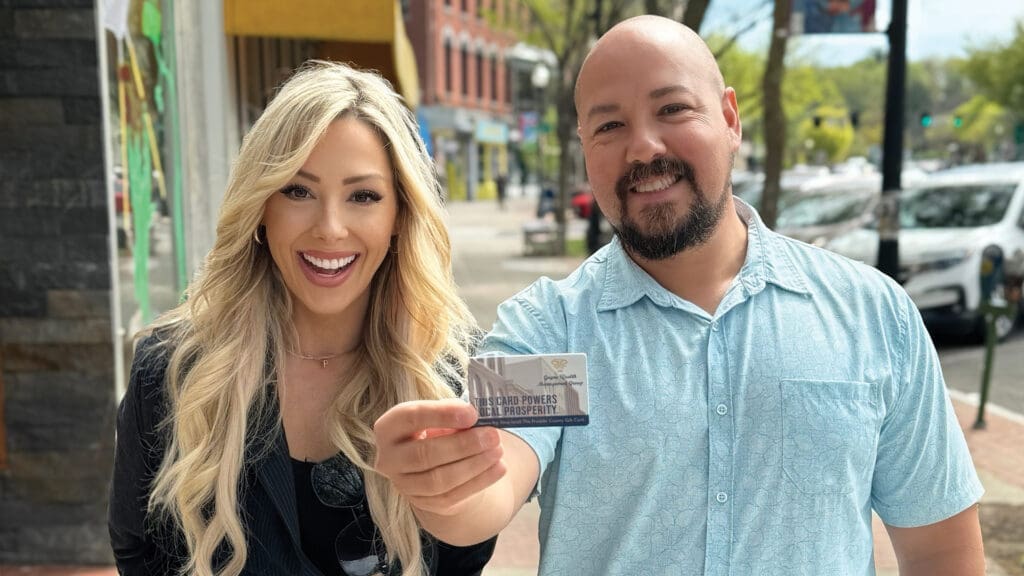
Merrill Gagne knew his $10,000 matching investment in a Franklin County gift card promotion last year — making each $25 card worth $50 at participating stores, restaurants, and other businesses — was going to be popular when one woman wanted to buy 200 of them.

“She basically wanted to use it to pay for her wedding venue,” he laughed. “That’s smart — I get it. So we had to put a limit on it.”

The more obvious sign the promotion was a hit was the fact that the 400 cards sold out in three hours. Earlier this month, the Franklin County Chamber of Commerce Gagne issued a second round of gift cards doubled by another $10,000 donation from Gagne, and they sold out as well — this time, in just 17 minutes.

The idea — like other such programs in the Valley, like the doubled gift card Scott Keiter has funded with the Greater Northampton Chamber of Commerce for a few years now — is to use philanthropy to boost local businesses. And for Gagne, president of Gagne Wealth Management Group in Greenfield, who has given back like few business owners have over the years (much more on that later), it just made sense.

“It’s just the idea of trying to infuse some cash into the businesses so that people are buying gift cards and then spending it locally,” he said. “You’re really benefiting local businesses because people are coming back and spending their card, and the money goes back into the community.”

Jessye Deane, executive director of the Franklin County Chamber, has worked with plenty of nonprofits and sees the good that can come from giving — and the joy of celebrating that support in a public way.

“But with Merrill, it’s less about celebration and more about the impact. That’s always what stands out,” she said, adding that this is the only countywide gift card match in the Pioneer Valley, encompassing 26 towns.

“Instead of a generic gift card or an Amazon gift card, this is a card that guarantees the money secures local spending in a way that’s really unique. People can choose where to spend it, but also find new favorite businesses to fall in love with, and really increase their foot traffic.”

Hannah Rechtschaffen says Merrill Gagne’s philanthropy not only benefits the GBA, but inspires others to do the same.

Hannah Rechtschaffen, director of the Greenfield Business Assoc., is celebrating Gagne’s community support as well, touting a challenge grant created last year whereby he donated $10,000, which the GBA then had to match through its own fundraising, followed by another $15,000, which it again had to match, for a total of $50,000 toward the association’s work to promote the economic and civic vitality of the Greenfield business community.

“People want to feel a part of something,” Rechtschaffen said. “You need that leader. You need someone to say, ‘I will take a gamble on you, on your organization, on what you’re telling me you’re going to accomplish.’ Without that person, it is harder to go after other large gifts. But when I can go to someone and say, ‘look, Merrill Gagne is willing to vote confidently in our favor. Will you join him in that?’ — it puts me in a different position as a fundraiser. So it is a gift in itself for him to take that kind of chance.”

The success of that $25,000 challenge gift has already helped catalyze a broader wave of support for the GBA’s vision. In February, it inspired a successful fundraising event at JaDuke Center for the Performing Arts (co-sponsored by Gagne), where business owners, community members, and local leaders came together to dance, sing, and raise more than $31,000 to support the next phase of the association’s organizational growth.

“I just think Merrill is a real standout when it comes to the way he sees his business fitting into the greater ecosystem,” Rechtschaffen said, adding that Franklin County may not have as much investment capability or as many angel investors as larger counties, but they exist, and may just need motivating.

“Merrill is part of this conversation of who could be involved more, and how do we get them involved? How do we get them thinking about themselves as philanthropists, as impact investors, and really being a part of things? In that way, he’s driving a lot here — it’s not just simple sponsorship.”

National Reach, Local Impact

Jessye Deane says Merrill Gagne’s gift card match not only excites local consumers, but keeps money circulating at local businesses.

When BusinessWest sat down recently with Gagne in his Main Street office in downtown Greenfield, he said giving back has long been part of his business model, especially with a concept he calls philanthropic marketing.

“That is, putting as much good out into the world as possible without expecting any return, just assuming that it’ll eventually all be paid forward, as they say,” he explained. “And living in this community, I grew my whole business over the last two decades under the premise, and the promise, that we were going to give back and do good things.

“We’re licensed in 42 states,” he went on. “So it allows us to not only draw from Boston, but we have clients all over the country, as far as Alaska. We can literally jump on a Zoom or a Teams meeting at any time. It’s fantastic. But all of those dollars that those clients are paying come back to Franklin County.

“That allows us to grow from an economy of scale perspective — I mean, we’re just shy of a billion dollars in assets under management. And that gives us the ability to have all that revenue come back here and support the local community in as many ways as we can.”

Gagne’s community efforts include fully sponsoring the Learn to Skate program with the Franklin County Hockey Assoc., backing Greenfield Minor League Baseball, spearheading holiday food drives, generating support for the Greenfield Public Library, and serving as a leader and donor for the YMCA, the United Arc, Rachel’s Table, and the Children’s Advocacy Center.

He has also established match incentives for the Children’s Advocacy Center, Community Action Pioneer Valley, and, as noted, the GBA and the chamber.

Meanwhile, he has developed a relationship with JaDuke since it opened its Greenfield location in 2025.

“I worked with [executive director] Kim Williams right away in order to foster a program where we would pay for any kid that doesn’t have access to the money to be able to pay for dance classes, and then pay for their dresses and their dance recitals, so they can go perform on the main stage,” Gagne said. “So it’s not their parents choosing whether they’re going to spend the money on it or not, because we’re going to cover that cost for them.”

And on Monday, Sept. 28, the Gagne Wealth Impact Invitational will debut — a first-of-its-kind golf tournament at the Crumpin Fox Golf Club in Bernardston. All tournament expenses, including lunch, dinner, and an open bar, have been underwritten by Gagne Wealth Management, and 100% of all entry and raffle fees are awarded to the top three nonprofit organizations selected by participating players.

“We always started with children and local families,” Gagne said. “Like, 10 years ago, with the Franklin County Hockey Association, we decided we were going to pay for all of the ice time for the Learn to Skate program — because if a family has to choose between spending 500 bucks on ice time or not, they’ll choose not. But if it was free, it would provide access, and those kids then go on to feed the hockey program — which has literally quadrupled in size in the last five years.

“People don’t always put their money where their mouth is. They always have an opinion, but they’re not willing to listen, step up, and be the difference in the world. So that’s what we’re trying to do, and it’s really easy to start out with children and families,” he went on.

“I’ve been told, ‘my kid just loves hockey now. He’s changed. He doesn’t want to be on video games anymore; he just loves being out there on the ice. And I never would have had the money to be able to do that. It’s really changed our family.’ I’ve heard that story dozens of times.”

Future Focused

Gagne didn’t wait for his degree from the Isenberg School of Management at UMass Amherst to start working; he paid his way through college by interning as a financial advisor.

“I grew up very poor in downtown Springfield, so I knew that the only way [to attend college] would either be to take on debt, or to work. And I always knew, early on, that I’d be good at managing money.”

Now, about 20 years into his business, he has evolved from an early focus on estate planning to a wide-ranging, higher-end, boutique wealth management firm, one that serves both individuals and businesses. “We do full-level estate planning, financial planning, and then income and wealth management all together.”

The average client, he added, is past what’s known as the accumulation phase and into the distribution phase — in other words, figuring out what to do with their money.

“That’s the fun part. And then also, how do I leave it to my kids? How do I leave it to charity?” he said. “Most of my clients don’t even know what a qualified charitable donation is — at age 70½, you can take IRA money pre-tax and give it to charity at $100,000 a year and never pay taxes on it. I see people all the time who take all the money out, then cut a check out of their checkbook. It’s after-tax money, they do the donation, and they never get to deduct it.”

“With Merrill, it’s less about celebration and more about the impact. That’s always what stands out.”

Besides this educational aspect, Gagne enjoys the fact that no day is the same — because all clients are different. “I have a CFA, a CFP, a full suite of advisors in my office who all work for me only, and only my clients. And we customize every single person’s portfolio to their risk tolerance, where they’re at, their goals, what they care about. There’s not a single client in my books that’s the same. I mean, the concepts are the same, but the stories are different.

“My job is being with people,” he went on. “And when I’m in front of people, we talk about finance for, like, three minutes, and the other 97% of the meeting is therapy. We’re talking about how you’re feeling, what’s going on, divorces, children, grandchildren, babies, all that stuff. It’s almost like going to like a family reunion every time I see a new client. We catch up on life. It’s such a rewarding thing, being able to be there for people when they need you the most.”

As for business clients, Gagne is gratified to help them strategically grow, figure out what their markets are, and work effectively in that space as well. Rechtschaffen sees him as a local success story, one who wants to pay that success forward.

“Merrill has been in this community for a very long time. And he’s choosing to be here,” she said. “He could take his business anywhere. And I hear a lot of business owners say that: ‘I could do this anywhere.’ But people are choosing to be here.”

And some of them are choosing to do good outside their office walls.

“I think,” Gagne said, “if more people just gave because they want to be here and they want to be community-driven, it would be better for everybody.”