Home Archive by category Cover Story (Page 10)

Cover Story

Cover Story
New Development Officer Is Focused on the Big Picture
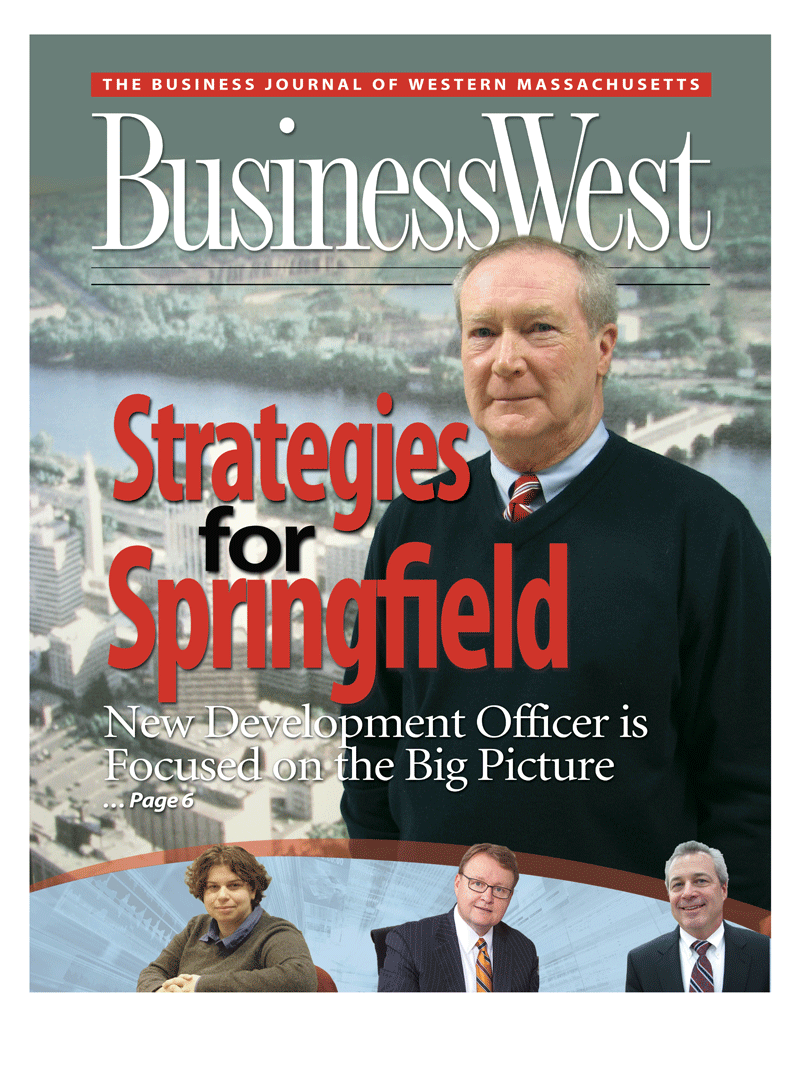
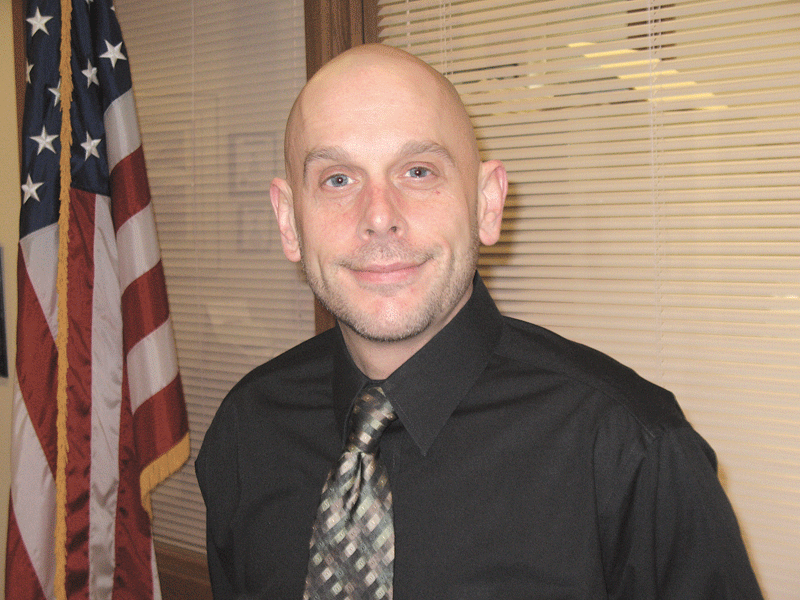
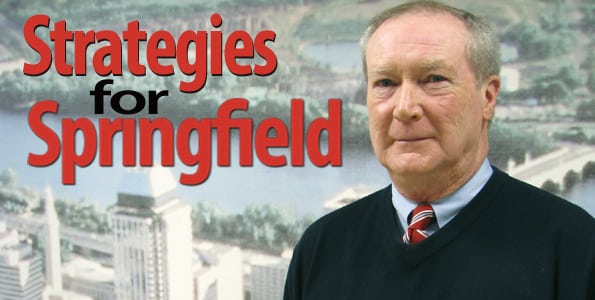
January 16, 2012Kevin Kennedy, long-time aide to Richard Neal while he was both mayor of Springfield and the congressman representing the state’s second district, was recently named the city’s chief development officer. In that capacity, Kennedy said he plans to take full advantage of his knowledge of the city, as well as lessons taken from involvement in projects ranging from the building of Monarch Place to the recent State Street Corridor initiative.

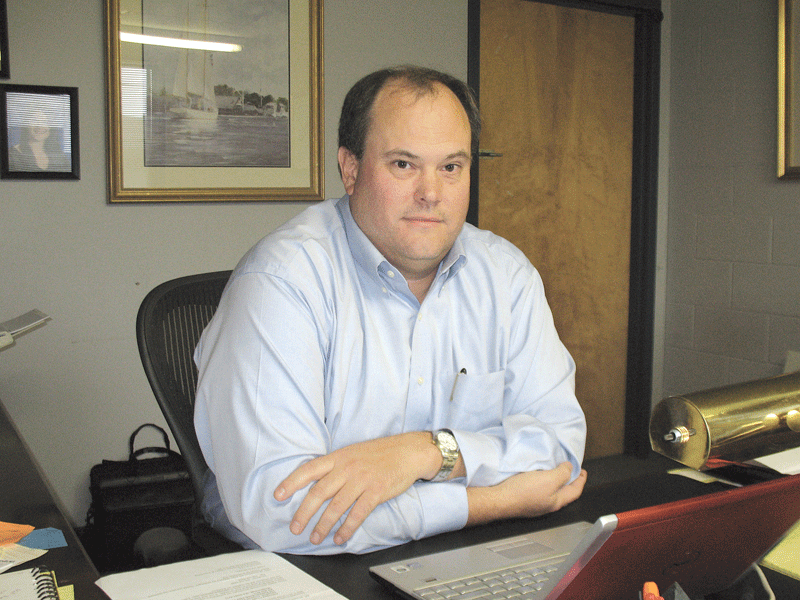
Kevin Kennedy is still settling into his new office on Tapley Street.
He told BusinessWest that he has several blank walls to cover, and is still making up his mind on just how to carry out that assignment. However, there are some items up, and together they tell a lot about the city’s new chief development officer, and also help explain why he’s supremely confident he’ll hit the ground running in his new position.
First, there’s the picture of the U.S. team at the first Nike Hoop Summit in 1995. Kennedy, then the head coach at Cathedral High School, is visible on the far left, just a few spots down from an 18-year-old Kevin Garnett. (The event was staged at the Basketball Hall of Fame, and it wanted a local coach to take part). There’s also a framed poster announcing then-President Bill Clinton’s visit to Springfield on Nov. 3, 1996, the so-called Celebrate Democracy event at which he campaigned for himself, but also for John Kerry in his pitched Senate battle against Bill Weld. Kennedy said he was asked to be “protocol chief” for the president and his entourage on that visit.
Also framed and hanging beside his desk is a rendering of the new federal courthouse on State Street, a project that Kennedy helped see from conception to reality as chief administrative aide to Congressman Richard Neal, who secured the funding to build the facility. And then there’s one that will soon be going up — a frame holding two architect’s renderings of what the Great Hall inside Union Station will look like when it’s renovated. (Kennedy always uses ‘when,’ not ‘if,’ as he discusses Union Station, even though the building has been mostly vacant for more than 30 years.)
Together, the wall art tells of Kennedy’s long involvement in Springfield politics, sports, economic development, and even architecture. Individually, they speak to passions — basketball (he won championships as both a player and coach at Cathedral), public service, and, yes, Union Station. The courthouse rendering? That symbolizes strategic planning, he explained, adding that the facility isn’t simply a building, but rather one part of a much larger initiative involving the State Street corridor (more on that later).
“It’s good to have an institutional memory,” said Kennedy, noting that he’s worked for or with every mayor of Springfield, in one capacity or another, since the mid-’70s. “You don’t want to live in the past, but it’s good to know what’s happened previously, what’s worked, and what hasn’t worked.”
Kennedy said his knowledge of Springfield and all the players there — something lacked by some recent occupants of his office — coupled with his experience taking plans from start to finish and his work on broad strategic endeavors, persuaded him that he was the right person for this job, and especially at this critical juncture in the city’s history.
Indeed, 2012 will be a year when tornado-recovery plans are put on the table, many downtown initiatives could take big steps forward, the Union Station project may actually go to bid, and the casino debate — with a Springfield site among many in contention — will intensify.
“While the hits we took in 2011 were substantial, I foresee a very good year in 2012 — we have enormous possibilities,” said Kennedy. “If we can all work together and coalesce around the plans and come up with the correct strategies to implement what’s there, we’ve got great opportunity. We still have good bones and great institutions, and I think downtown will take on a completely different vitality in 2012.”
For this issue, BusinessWest talked at length with Kennedy about his new position, his thoughts on what’s next for Springfield, and how to transform plans into reality.

Background — Check
When asked why he wanted to take on the high-profile chief development director’s job at this stage in his career, the 58-year-old Kennedy smiled and said, “I thought I was still young enough to take on some more challenges.”
Elaborating, he said he wanted to take some of the lessons — and measures of success — garnered from the courthouse and State Street corridor initiatives and apply them to the broad canvas of citywide development.

site of the former Tech High School

Kevin Kennedy says the state data center now under construction at the site of the former Tech High School is an integral part of a much broader State Street corridor improvement project.

“The thing that’s attractive about this,” he explained, “is that you get to combine thinking about things — which you must do because you really have to think ahead — with actually getting something done.
“When a project comes up, be it large or small, and obviously the larger ones are a little more complicated, you have to be able to develop the plan and execute the plan,” he continued. “And to go along with all that planning and execution is strategy, which is the piece that keeps the planning and execution together; it’s the glue.”
And as he goes about applying this glue, Kennedy said he’ll take every bit of experience from his nearly 40 years of service to the city and Neal with him to his new office in the Tapley Street municipal complex.
That location is only a stone’s throw from where Kennedy grew up, on Melbourne Street, which no longer exists because the property was taken to build I-291 in the late ’50s. From Hungry Hill, Kennedy’s family moved to the East Forest Park neighborhood, and he attended nearby Cathedral.
He graduated from St. Anselm’s during the recession of the mid-’70s and, after a lengthy search for work, found a position with the city through the Comprehensive Employment and Training Act (CETA) in 1974. He started as a personnel assistant and worked his way up to become personnel director in 1978. Soon thereafter, he became the city’s collective bargaining agent and negotiated labor contracts.
He left municipal service to work for a technology-related startup, Data Management Corp., before branching out into individual data-processing consulting. When Neal was elected mayor in 1985, Kennedy joined him as executive assistant (a job now titled chief of staff), and in that position essentially ran the day-to-day operations of the city.
When Neal was elected to Congress in 1988 following the retirement of Ed Boland, Kennedy eventually joined him after first staying behind to facilitate the transition to first interim mayor Vincent D’Monico, and then elected mayor Mary Hurley.
He coached at Cathedral from ’85 to ’97, during what he called “one of the golden eras” for local high-school sports.
“I had Derrick Kellogg, and Howie Burns had Travis Best and Edgar Padilla at Central,” he said, noting that Kellogg and Padilla played at UMass and Kellogg now coaches there, and Best enjoyed a solid career in the NBA. “We used to fill up the Civic Center; we didn’t play our homes in our own gyms because too many people wanted to watch them.”
In recent years, Kennedy’s responsibilities with Neal have involved more work that would be considered economic-development related, including the State Street corridor, the new courthouse, and Union Station, which he described, alternately, as a “personal challenge” and “the next thing we have to do to complete the plan, with that plan being preservation of the central business district.”

Tracking Results
Kennedy said he clearly remembers what he considers the last big event in the Great Hall. It was early in 1977, he explained, when Neal used the facility to announce his candidacy for Springfield City Council.
“It still looked good then,” he recalled. “It had declined somewhat, but it was still in good shape, and it was still a special place, one with a lot of history.
The hall has been seen by only a few people — maintenance crews, journalists (BusinessWest has been inside a few times), economic-development leaders, and representatives of prospective tenants — over the past 25 years, said Kennedy, noting that efforts to revitalize the station do not constitute a project, although many hold that opinion.
Rather, he explained, the initiative is an important part of a much broader plan for bringing more vibrancy to the central business district. That plan involves the full length of Main Street — from the South End, where the equation, not to mention the landscape, has certainly been changed by the June 1 tornado, to the Chicopee border. It also involves State Street and many other arteries, said Kennedy, noting that all but a handful of Springfield’s neighborhoods are included in this plan.
Elaborating, he said Union Station’s transformation into an intermodal transportation center is one of the links in the chain in downtown revitalization. Some have been completed — 1550 Main Street, the new federal courthouse, and the convention center, for example — but most are still in progress. That list includes Court Square redevelopment initiatives (specifically 31 Elm St.); the Paramount and other endeavors involving the New England Farm Workers’ Council and its energetic leader, Herbie Flores; the vacant and partially demolished Asylum building; and others.
Union Station’s redevelopment would be a catalyst for further progress in the so-called North Blocks area, and the North End as well, said Kennedy, who drew an analogy between the current efforts downtown and the ongoing work along the State Street corridor, while returning to the subject of strategy.
The new federal courthouse was a piece of the State Street initiative, albeit a big one, he continued, adding that there were and are many other components to that strategic plan.
Finding a new use for the abandoned Technical High School was another big piece of the puzzle, he went on, noting that this is why Neal fought tooth and nail to put the state data center (now under construction) there, as opposed to the Technology Park at STCC or anywhere else.
“We knew that we wanted to build a new courthouse,” he explained, “and we knew we had to deal with the disposal of the old courthouse. We also knew that, by itself, the courthouse is not a real economic generator, so the congressman came up with the State Street corridor improvement project, which is what really leveraged the investment in the courthouse.
“We also knew that Tech, which had been sitting there since 1986, was a serious issue in terms of both State Street and the new courthouse,” he continued. “So you had to get a plan that was executable to not only build a new courthouse, but dispose of the old courthouse, do something with Tech, and make all the other real-estate transactions that were necessary for this to happen. There were so many moving pieces that had to be put together, you needed a strategic plan to get them done.”
Returning to Main Street and the central business district, he said individual initiatives are part of a broader plan there as well. And he believes that enough pieces of the puzzle are falling into place to generate more private-sector investment downtown.
“Between reuse of the [old] federal building, Cambridge College coming to Tower Square, 31 Elm St., Union Station, and some other announcements to be made soon, we’re starting to aggregate enough people down there to generate economic-development activity,” he explained. “And, frankly, it’s up to the private sector to take advantage of it.”

Pieces of the Puzzle
When asked about his approach to economic development, Kennedy said he’s adopted the philosophy and operating style of his mentor in this realm.
That would be Gerald Hayes, who was the city’s chief development officer in the mid-’80s, and thus worked with Neal and Kennedy to make the Monarch Place project a reality.
“I learned a lot from him about how to manage a large-scale project and a small-scale project, and the biggest thing I took from him is the importance of accountability,” said Kennedy. “You convene regular meetings, with assignments of future tasks, and then report on what you accomplished on those future tasks, so you’re accountable.
“We did that when we did State Street — we sat regularly, twice a month for two years, planning the corridor project,” he continued. “The results were minimal change orders, and the project came in $600,000 under obligation; the same was true with the federal courthouse. If you spend enough time planning what you want to do, and you do it correctly, that’s critical to the project.”
Accountability will be a much-needed character trait moving forward, said Kennedy, noting that there are many large, complex projects — either in progress or in the offing — that will require high levels of coordination between local, state, and federal officials, and could be described as public-private initiatives.
Tornado recovery certainly falls into that category, he said, noting that, while the June 1 twister impacted several Springfield neighborhoods, most of the rebuilding efforts moving forward will involve the South End, Six Corners, and East Forest Park areas.
A recovery plan is expected from the consulting firm Concordia later this month, said Kennedy, adding that it is likely to spell out specific initiatives for each impacted area. For the South End, where much of the speculation is focused, he expects retail and residential components that will enhance but not change the character of that neighborhood.
“I think it needs much of what it had before,” he told BusinessWest, “which means lots of walk-in retail — it used to be the greatest place to go for restaurants — and you still need a housing component to go with it.
“I don’t think the ideas today will be much different than they were,” he continued, “but they’ll be modern, and there are already people out there speculating, which I take as a good sign.”
Union Station is perhaps the most complex of the endeavors, Kennedy explained, because it is involves a number of players, government agencies, and potential funding sources, including a new round of TIGER (Transportation Investment Generating Economic Recovery) grants from the U.S. Department of Transportation and another transportation reauthorization program (one is about three years overdue).
The plan is to seek bids late in 2012 for construction of a project that will blend transportation elements — rail, inner-city bus, and possibly intra-city bus — with transportation-related businesses and agencies that will fill roughly 75,000 square feet of space, said Kennedy. In that latter category would be the Pioneer Valley Transit Authority offices, the Pioneer Valley Planning Commission, transit-related retail, and what he called “opportunity space.”
If all goes as planned, the project would be completed by 2015 or early 2016, in conjunction with improved and expanded north-south rail service from Southern Vermont to New Haven, with a projected 25 runs a day between Springfield and Hartford going through Union Station.
When asked about the proverbial elephant in the room — casinos — Kennedy, sounding much like Mayor Domenic Sarno in recent interviews, said that, while he won’t necessarily advocate for a casino in Springfield, he considers it his job to make sure that Springfield gets the best “deal” possible, whether the casino is built in the old Westinghouse House site, Palmer, Holyoke, or anywhere else.
And by ‘deal,’ he meant a wide range of considerations, from preferences on employment to traffic-mitigation efforts; from tax benefits to measures that will help minimize the impact on a host of other hospitality-related businesses.
“If you’re in the hospitality business and you’re around a casino, you’ve got a problem,” he said. “Springfield could get hurt, Northampton would get seriously hurt, and Amherst could take a real hit, depending on where this casino is located.
“If we’re going to get one in Springfield, we need to think a little bigger than that citadel, or that fortress that a casino could be,” he continued. “If we put a casino in the North Blocks, for example, and coupled it with a baseball stadium and a revitalized Union Station, and insisted that the MassMutual Center and Springfield Symphony Hall were their performing-arts venue, we’d then have a casino effect that would really be widespread and benefit a lot of people.”

Court of Opinion
While packing up his photo from the Nike Hoop Classic, the Bill Clinton event poster, and the rest of his belongings from his congressional office, Kennedy said he came across his disposition testimony in the legal action involving David Buntzman, former owner of Union Station, and the city of Springfield.
“That goes back to 1989,” said Kennedy, noting that, when the city took the station by eminent domain a year earlier, Buntzman sued for greater remuneration.
Knowing all of what happened back then, and even decades earlier, may not necessarily help in the current efforts to redevelop the station, he acknowledged, but historical perspective, meaning institutional memory, is usually a benefit.
Kennedy has plenty of that, as well as what he called a desire to “get some things done.”
If he can, then he’ll have plenty of new items with which to cover all that wall space.

George O’Brien can be reached at [email protected]
Cover Story Sections Top Entrepreneur
Herbie Flores Is Making His Vision for Springfield Reality

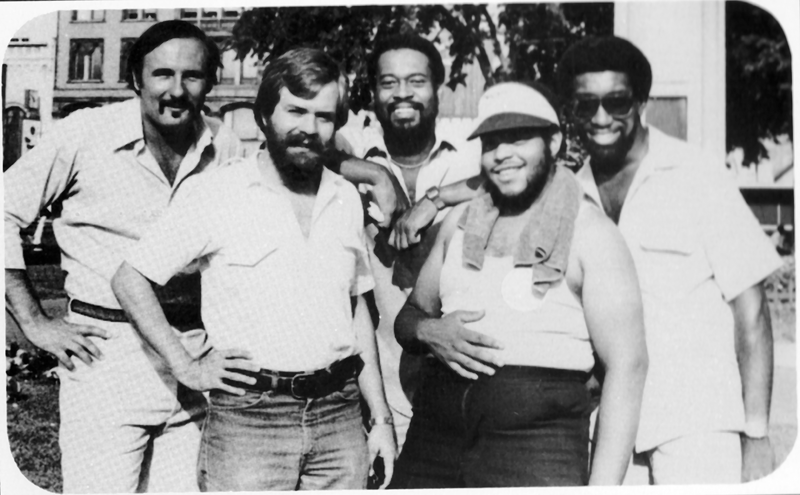
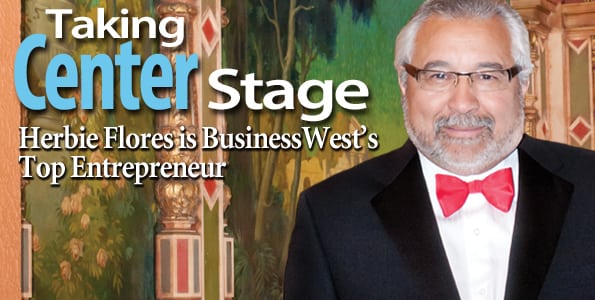
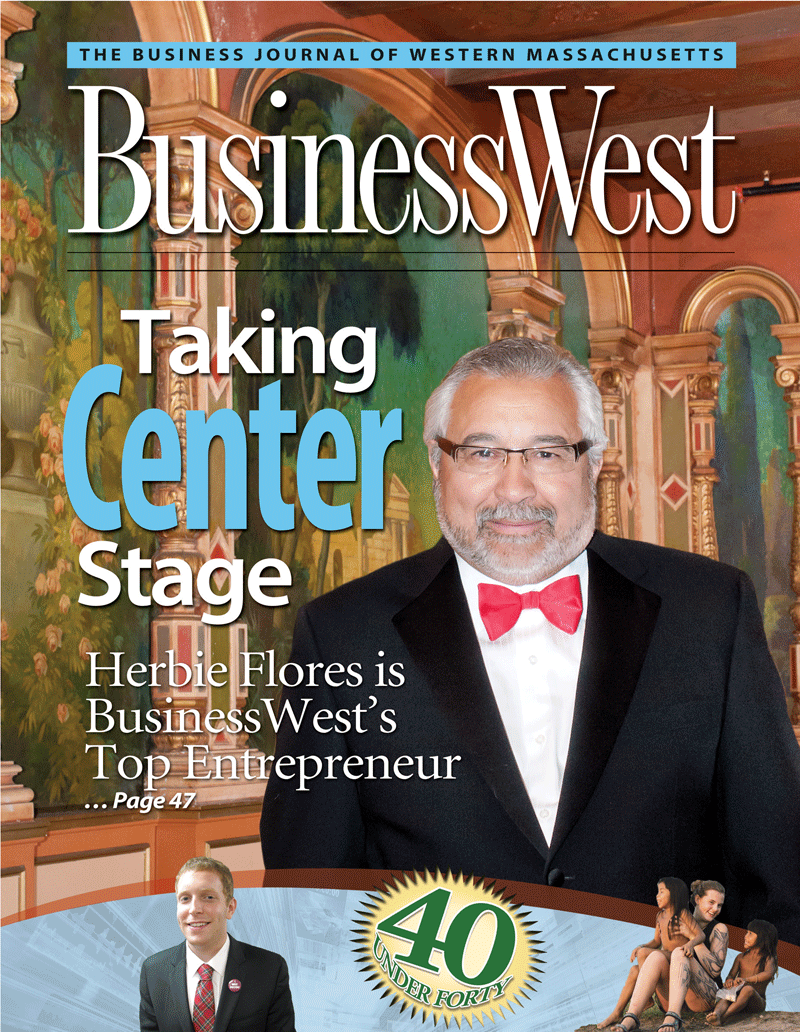
COVER0112aHeriberto “Herbie” Flores has always had a heart for needy people, partly because he grew up poor. From its humble origins 40 years ago providing legal and financial assistance for migrant farm workers, he has grown his multi-agency nonprofit, Partners for Community, into an $80 million force for economic development and community improvement. But he’s made bigger news with a series of real-estate acquisitions, including the Paramount Theater (seen here), that promise to transform Springfield’s downtown. The kind of long-term change Flores envisions for the City of Homes will require energy and passion — and BusinessWest’s Top Entrepreneur for 2011 has no shortage of either.

“This city is coming back,” Heriberto Flores said. “People don’t want to live out in the woods.”
He was sharing a vision of a societal shift away from suburban sprawl back to a city-life model, especially as aging Baby Boomers increasingly seek to live close to all the amenities they need and desire, from food stores and restaurants to banks and performing arts.
As Flores spoke those words, he was standing beside the stage of the 86-year-old Paramount Theater on Main Street in Springfield, an icon of music and theater that has fallen into disrepair — but whose walls, ceilings, and fixtures are breathtaking in their ornate beauty, for anyone willing to look beyond the dust, grime, and faded paint.
And vision is something Herbie Flores has in spades.
Just as he sees the potential in the Paramount — a $1.75 million purchase that will require millions more to restore to a multicultural center for performing arts and community events — he’s also an unabashed optimist when it comes to Springfield itself, choosing to focus on the positives of the city and not the large pockets of poverty, high-school dropout rates, crime, and other issues that often color people’s perceptions.
“When you start looking at the assets, the city has clean water and natural resources. We have companies like Big Y, Peter Pan, and MassMutual. We have three TV stations in this city. We have Baystate Medical Center — how many people would kill to have a hospital like that in their region? And all the schools and universities … this is a very good region,” he told BusinessWest.
“I could live anywhere, but I live in Springfield,” Flores continued. “The investments we make in the city, some people say, ‘they’re paying too much for that.’ ‘Why are they doing that?’ But you have to invest for the future. I don’t believe Springfield will be in the position it is today in the future. I see the changes coming.”
For the past three decades, from his stewardship of a social-assistance network called Partners for Community to his more recent ambition to transform the city’s downtown, Herbie Flores has been the catalyst for many of those changes, and for those reasons, among others, he is BusinessWest’s Top Entrepreneur for 2011.

Herbie Flores outside the State House in Boston, mid-1980s.

Herbie Flores outside the State House in Boston, mid-1980s.

“He’s making investments in Springfield, and this region, at a time when some people and businesses are dis-investing,” said BusinessWest Editor George O’Brien as he explained the selection of Flores as the magazine’s 16th top entrepreneur. “He directs a number of nonprofit agencies, but his actions, especially in recent years, are, in a word, entrepreneurial.
“Purchases like the Paramount and the Bowles building [further south on Main Street] involve risk, and they require vision,” O’Brien continued. “Together with other things happening downtown to bring vibrancy and a larger, more diverse residential population in that area, these bold steps could provide the much-needed spark that Springfield needs.”
Said Flores, “the city needs help, the city and the region; we have a responsibility to step up to the plate. There are problems, but you can’t just stand in the corner and complain. And nobody’s going to do it for you.”
That optimism doesn’t go unnoticed by those in Flores’ circle.
“I think very highly of Herbie,” said Russ Omer, vice president of Commercial Lending for Chicopee Savings Bank, the lead lender on the Paramount project. “He’s been involved in the neighborhood for 30 years, and I’ve always known Herbie to be community-minded. Whatever he did, he always did it for the betterment of his community. The Paramount is just one example of what he does for Greater Springfield.”
For this issue, Flores speaks about some of those initiatives, and discusses how he is creating a legacy that promises to keep improving Springfield long after he’s gone.

Street-level Perspective

Bowles Building

Herbie Flores says the acquisition of the Bowles Building could be a spark for downtown revitalization.

At one point during a lengthy interview, Flores brought BusinessWest to the Borinquen project in the impoverished North End of Springfield. The initiative involves the renovation of 41 units of low-income housing, as well as six commercial spaces, including amenities like a grocery store and a laundromat.
The $11 million project, completed in July 2011, combined federal tax credits, private-investment tax credits, Mass. Department of Housing and Community Development funds, city of Springfield HOME funds, and private financing — a good example of the tapestry of players Flores must weave together to turn one of his visions into reality.
And although it’s just one parcel amid one of the poorest neighborhoods in Massachusetts, when one stands under the rebuilt wood porches and clean, quiet doorways away from the street, it doesn’t feel like a low-income neighborhood.
“America was not built by rich people,” Flores said. “It was built by poor people who did something to create wealth.”
Flores knows something about starting poor. Born in Caguas, Puerto Rico, he was intimately acquainted with poverty as his family struggled for sustenance throughout his childhood. It was there, he said, that he began to identify himself with economically deprived groups and devote himself to service on their behalf.
He moved to Springfield with his family in 1965, then served with the Army in Vietnam in the late ’60s. He has remained active in veterans’ causes, and was named Springfield Veteran of the Year in 2001.
But it was his affinity with migrant farm workers that led to the development of an agency — the New England Farm Workers’ Council — to help them out with various needs, from fuel assistance to job skills to education. That agency would, in the decades that followed, morph into Partners for Community, an $80 million nonprofit with several departments under its umbrella.
Those include the Corporation for Public Management, which seeks solutions to welfare dependency, chronic joblessness, and illiteracy, and also focuses on providing services to those with physical and developmental disabilities; the Corporation for Justice Management, a leader in community-based offender re-entry services to reduce recidivism and address public safety; and New England Partners in Faith, which supports small, faith-based organizations.

Solid Ground
Those agencies share space with a number of private businesses in a number of buildings owned by the Farm Workers’ Council downtown, including 11-13 Hampden St., 1628 Main St., and 1666 Main St., among others.
About 25 years ago, Flores made his first forays into real estate through Brightwood Development Corp. (BDC), a nonprofit formed with the goal of providing housing and economic development on the north side of Springfield. As president and CEO of the BDC, he developed a $2.5 million shopping center, La Plaza del Mercado, on Main Street in 1995, followed by a $3 million neighborhood medical clinic, El Centro de Salud Medico Inc., the next year. That was immediately followed by a $2 million rehabilitation of blighted, multi-family houses in the North End.
His recent deals are helping him secure a wide swath of downtown, which will have a dual effect. First, the resulting critical mass of space will ultimately create economies of scale for development opportunities, as well as a diverse mix of inventory that will suit the needs of a wide range of potential tenants. Second, it will allow him to control the immediate environs around his buildings, reducing opportunities for negative elements to creep in.
The Massasoit building, which houses the Paramount, will be renovated as phase one of Flores’ planned downtown redevelopment. The theater will boast a completely new façade, with interior renovation of the seats and stage area, including all technical aspects of a performing-arts theater. Work on the four-story building, which will include other commercial and residential space, is expected to begin during the first quarter of 2012.
As Flores led BusinessWest through the cavernous corridors — including a projection room hollowed out of equipment and rows of narrow, beaten-up, red seats in need of restoration or replacement — he talked about the impossibility of pleasing everyone with a project of this scale, but with a clear belief that the end result will be worth all the give and take.
“You can work to do something for yourself,” he said from the theater floor, just in front of the stage, “or you can work to do something for society.” Clearly, he envisions a restored, vibrant Paramount as an example of the latter.
Then there’s the Bowles building, a property recently purchased for $2 million which currently houses the Student Prince restaurant; that structure will be phase two of the council’s planned downtown development. The office building will be renovated for commercial and residential space, with work beginning sometime in 2013. However, the adjacent parking lot, which will be converted to a four-story, covered parking garage, will be part of phase one and will be completed first.
Flores said the Bowles project could became a key initiative in efforts to prompt more people with disposable income to make downtown Springfield their mailing address, a necessary ingredient in any municipal recovery effort.
Flores has been a participant in two so-called ‘City2City’ excursions that have taken delegations from the Springfield area to resurgent cities — Greensboro and Winston-Salem, N.C. in 2010, and Grand Rapids, Mich. late last year — and said that, in both instances, investments in the downtown areas, and especially those in market-rate housing and entertainment-related ventures, provided sparks that translated into real momentum.
He says he wants to do the same in Springfield.

Glass Half-full
Flores said he enjoys the politics and networking necessary to bring together the necessary investors, both public and private, to create real-estate deals. And he enjoys the challenge of doing so at a time when many people still don’t believe in Springfield’s potential.
“Sometimes people tell you it’s a bad time to invest in Springfield,” he said. “But if you take that attitude, nothing gets done. You have to be able to see the opportunities and run with them.”
Simply put, it doesn’t matter whether people see the city’s glass as half-empty of half-full. “The way I see it, even if the glass is empty, then there are more opportunities.”
The number of projects occurring downtown, he added, will make the landscape more attractive to other investors, although many of the city’s problems — keeping kids in school, creating more jobs, etc. — will take more than time and money to solve, and he also believes Springfield desperately needs an infusion of young, middle-class residents. Still, he said, banks are willing to back realistic capital projects today, even though lending regulations are more difficult to navigate.
Omer called Flores an example of someone creating projects that the entire community can benefit from — the Paramount being a good example.
“He wants to make it available to faith-based organizations, Springfield public schools, and other community events, as well as some general entertainment,” he said, adding that the mere idea of restoring that building appeals to many longtime city dwellers.
“I tell the story that I grew up in Springfield, and I used to go to the movies there. They’d pass out free pencil boxes in the ’50s and ’60s. Today, it could be a museum in itself. I think it’s a great thing to preserve in Springfield, and now the city is going to get to enjoy it.”
Flores says he doesn’t envision the Paramount as a standalone attraction, but something that should operate alongside other entertainment venues and restaurants as part of a destination district for fine arts.
“The symphony should be doing a show, the Basketball Hall of Fame should be doing some kind of activity, the MassMutual Center should be doing some hockey, CityStage should be doing something, and the Paramount should be doing something,” he said. “If we think with a big vision, advertising will come in, and everyone can make money.”
Omer said Flores approaches projects with the big picture in mind, “kind of like a chess player, always four or five moves ahead of the pack. He’s a very bright, astute businessman, and over the years he’s been very successful at completing his projects.”

Something to Build On
In addition to his other endeavors, Flores is president of the North End Educational Development Fund, which administers the largest Hispanic scholarship fund in New England, providing college scholarships for underprivileged, inner-city Springfield residents — and, hopefully, starts them on their own journeys of success.
“I’d like to see another 25 millionaires come out of Springfield,” he told BusinessWest. “If people can make money here, they will invest and stay. I see myself as a catalyst to open doors.”
As he walked around the Bowles building and toward his modest office overlooking Hampden Street, Flores said people have wondered what wealth he could have amassed as a for-profit real-estate entity. But he said he’s building more than just physical structures. He’s also constructing a legacy — through his nonprofit endeavors guided by a committed board — that will far outlast his own life and continue to remake Springfield for decades to come.
“I’m not making anything for myself,” he said. “I’m building all this wealth for the nonprofit, so that, when I’m gone, we’ll be able to do some good in the future. Money is neutral — money is not good or bad. Good people with money can do good things, and bad people with money can do a lot of bad things.
“I have tried to set up these programs and buildings to have something for the next generation,” he continued. “I don’t know who’s going to be here 25 years from now, but these programs and services will still be here.”
Flores said he believes people should take responsibility for their community with the resources they have, and he’s tried to run his business — and prioritize his life — that way.
“I’m hard on myself. I keep saying there’s more that can be done,” he said. “I ask, ‘did you leave it better than found it? What did you do to make this country better?’ I can honestly say I’m still working on it.”
To Herbie Flores, that goal is paramount — and reachable.

Joseph Bednar can be reached at businesswest.com

Previous Top Entrepreneurs

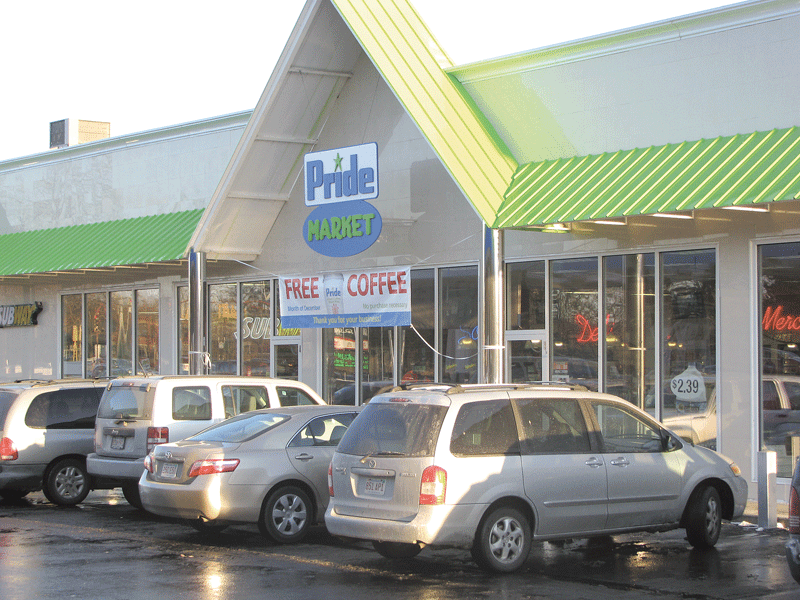
• 2010: Bob Bolduc, founder and CEO of Pride
• 2009: The Holyoke Gas & Electric Department
• 2008: Arlene Kelly and Kim Sanborn, founders of Human Resource Solutions and Convergent Solutions Inc.
• 2007: John Maybury, president of Maybury Material Handling
• 2006: Rocco, Jim, and Jayson Falcone, principals of Rocky’s Hardware Stores and Falcone Retail Properties
• 2005: James (Jeb) Balise, president of Balise Motor Sales
• 2004: Craig Melin, president and CEO of Cooley Dickinson Hospital in Northampton
• 2003: Tony Dolphin, president of Springboard Technologies in Springfield
• 2002: Timm Tobin, then-president of Tobin Systems Inc.
• 2001: Dan Kelley, then-president of Equal Access Partners
• 2000: Jim Ross, Doug Brown, and Richard DiGeronimo, then-principals of Concourse Communications
• 1999: Andrew Scibelli, then-president of Springfield Technical Community College
• 1998: Eric Suher, president of E.S. Sports in Holyoke
• 1997: Peter Rosskothen and Larry Perreault, co-owners of the Log Cabin Banquet and Meeting House
• 1996: David Epstein, president and co-founder of JavaNet and the JavaNet Café in Northampton

Cover Story
Troy Industries Has Growth, Diversification In Its Sights

Steve Troy calls his venture, “the biggest company no one’s heard of.” And that’s largely due to his hard work to fly under the radar screen as he’s nurtured Troy Industries, a government contractor that designs, manufactures, and markets advanced small arms components and other products, into a diverse, cutting-edge company that will soon have 100 employees. But remaining anonymous is becoming increasingly difficult as this unique success story adds new and intriguing chapters.

Steve Troy already had plenty of evidence that his company was becoming a real force in the large but mostly unseen world of modern small arms design and manufacturing.
There were the soaring revenues, which had doubled nearly every year since the venture was started in 2003, as well as a rapidly expanding workforce, which stood at six only a few years ago, and is now approaching 100. And then, there was the growing collection of trade magazine covers featuring company products —  publications such as Guns & Ammo, Tactical Weapons, American Rifleman, Shotgun News, and SWAT magazine.
But then came some additional proof that made him pause and reflect.
Indeed, when Troy, a Massachusetts state trooper stationed in Lee (he calls that his “night job”) was issued his MP 15 semi-automatic patrol rifle roughly a year ago, he noticed that the Smith &Wesson-made product bore several components with the Troy Industries name on them.
“I looked down, and there they were, a Troy sight and a Troy handguard,” he said, adding that he was not involved in the procurement process, and, to the best of his knowledge, the state police didn’t know he manufactured the components. “For them to endorse that product was personally rewarding, and it also drove home the importance of the high quality standards we set here; I’m using this gun.”
Personal satisfaction has come in a number of forms for Troy since he started the company not long after a deployment in Kuwait as a security forces team chief with the  U.S. Air Force in 1998, during which he concluded that he could design and manufacture a gun sight better than the one on the weapon he was issued — and then set out to prove his point.
Since then, Troy Industries has seen its product catalog expand to more than 300 items — including sights, slings, upgrade kits for existing weapons (much more on that later), and a gun stock that comes complete with an embedded GPS device — and revenues skyrocket. (Troy, the sole owner of the venture, wouldn’t release specific numbers, but said sales are now in eight-digit territory and he believes they could hit nine in only a few years.)
The company is now a vendor for some of the best-known arms makers in the world, including Smith & Wesson, Sturm Ruger, Viking Tactics, LaRue Tactical, and many others, and its products are being used by U.S. Army Special Forces (Green Berets), SEAL teams, SWAT units, traditional law enforcement, government agencies, the Colombian National Police, and similar outfits in other countries.

Law enforcement is another market in which Troy Industries is looking for greater market share.

Law enforcement is another market in which Troy Industries is looking for greater market share.

Along the way, there have been several prominent success stories, probably the most significant of which is an upgrade kit, known as the “M14 modular chassis system,” that has enabled the U.S. military to take thousands of mothballed M14 carbines produced at the Springfield Armory in the years just prior to its closure in 1968 and put them back into productive use as a more attractive alternative to the smaller-caliber M16.
“We’ve taken a weapon that was 50 years old and transformed it into the front-line, tip-of-the-spear of American special operations and airborne brigades,” he said, adding that the chassis system reduces recoil, enabling users to fire more quickly and accurately, while also allowing users to add scopes and other hardware that transform the basic M14 into a sniper weapon. “These are being used all over Afghanistan and Iraq, and soldiers are doing very well with them.”
Meanwhile, the company has produced its own version of the M-4 carbine, one of the mainstays in the U.S. military today, and has submitted the entry in hopes of winning a large government contract to replace the current Colt product now in use.
At least that’s the ultimate goal.
At the very least, Troy Industries wants to use this exercise to showcase individual components of the product — everything from the sight to the magazine — with the hope and expectation that some of those parts will become specifications for the eventual weapon chosen for production.
As that project and a host of other initiatives are advanced, the main challenge for this company moving forward, said Troy, who is still a part-time CEO in this venture — he parks his state police car, No. 2061 in a designated spot behind the building — is to effectively control the growth of this rapidly expanding company and create an effective balance of on-site production and outsourced work.
“The growth has been phenomenal, but we need to carefully control growth going forward,” he explained. “The business is there for us because of the reputation we’ve built, and it’s easy to attract new business, but we want to make sure that we can deliver on what we promise.”

Taking His Shot
The Troy Industries logo says a little about the company, sort of, but a lot more about its founder.
And it’s not the design — a somewhat mean-looking Trojan horse with what appear to be heavily armed soldiers rappelling down it — that speaks volumes, as much as the time and energy Steve Troy says he put into it.
“I came up with it myself and I’m rather proud of it,” he said, adding that there was much thought and imagination that went into the concept, which is both a play on his last name and a nod to modern weaponry and technology, as well as great attention to detail.
And the same can certainly be said for every other aspect of this venture, which Troy started with a $10,000 home equity loan, some mechanical ability but no formal training in that area (he said he built that house himself), and certainly no shortage of confidence as he went about designing and manufacturing improvements over what he saw and experienced first-hand when it came to weaponry.
Retelling the story, Troy said that he was already involved in a different kind of entrepreneurial venture with a colleague from his deployment in Kuwait when he started to conceptualize what would become Troy Industries. That business was called Basher Tactical, which he started with Matthew Picardi, now a lieutenant colonel in Homeland Security. It provided training seminars for police departments and federal agencies seeking to learn how to handle so-called “active-shooter disturbances,” such as the incidents at Columbine in 1999, Heath High School in West Paducah, Ky., in 1997, and Virginia Tech in 2007.
“We’d set training scenarios for between 100 and 150 students,” he explained, “where we had both a classroom session and an active portion where we actually seize control of a school; we’d teach the history of active shooters, and some theories on response, touch on motivation, and then do a training scenario in which they’d be responding, containing, and assaulting the situation.”
Eventually, Picardi would opt to continue his work in training, while Troy would launch his own venture, focused on small arms components and accessories, that started with some R&D and crude prototyping in his basement.
“While I was in Kuwait, I saw some shortfalls in the weapons they had,” said Troy, an expert marksman, “pistol master,” and trained sniper. “I decided that I could do better; I saw what was out there, and no one was really hitting it right on the head, so I developed a set of folding sights for a federal contract that I responded to and won for internally silenced rifles for tunnel fighting for homeland security.”
To date, the company has delivered more than 500,000 of these or similar sights, while also expanding the product catalog to more than 300 products. These items come with names — such as ‘battlerail,’ ‘prograde sling adapter,’ ‘low-profile gas block,’ ‘mash hook,’ ‘NAV stock’ (that’s the GPS device), and ‘Medieval flash suppressor,’ to name just a few — that mean little to those not versed in automatic or semi-automatic weapons, and some sell for just a few dollars each.
But together, this roster of products has become a very effective niche for the company, and for a number of area manufacturers as well; while Troy produces some of these components and accessories at its facilities on Capital Drive in West Springfield, a former U.S. Postal Service processing facility, many others are outsourced to a host of businesses, all within 10 miles of the Troy plant.
Most all the products now in the catalog have come to fruition though the same basic formula, if you will, that Troy employed with the folding sight that he started with: observing, listening, and learning, and then applying that data to improve upon products already on the market.
And it has obviously been a winning formula, based on Steve Troy’s ambitious sales projections, as well as the amount of expansion going on at the company’s facility. And if the growth has come quickly and steadily, it has also come quietly. Indeed, with the exception of those trade-industry magazine covers and stories — seen by a relatively small percentage of the population — Troy Industries has flown effectively under the radar, especially in this region.
“We’re probably the biggest company no one’s heard of,” said Troy, adding that BusinessWest’s look inside is the first provided to local media. Nationally? Well that’s a slightly different story; Troy has been starting to get some attention, he noted, adding that one of the Hollywood studios has expressed interest in doing a television segment on the company and recently asked for background information with which to start preliminary research.

Staying on Target
While giving a tour of his facility — which included stops at everything from the injection molding area to the procurement warehouse, complete with razor wire (security is ultra tight here) to a new employee-wellness center now taking shape in an area being built out on the second level of the 55,000-square-foot complex — Troy stopped to pick up one of the M4s that he and his engineering team designed from scratch.
Moving his hands quickly across the weapon, Troy pointed out several features that he thought made the gun stand out, from the sight to the hand rest, and reiterated his hope that at least some of these individual components will catch the attention of those who will eventually award the contract.
“We’re competing against 60 other companies, and from what we understand, we’re in the top of the competition,” he said. “What we think the Army will do is say, ‘we’d like to take the features on these various weapons and combine them’; we’re just trying to enable the government to see our accessories, which is our main line, and our enhancements, and maybe incorporate them into the rifle of the future for the military.
“Right now, basically only commando forces are using our products,” he continued. “They’re choosing them over the general-issue items, because we’re superior to everything that is issued in the Army, but we’re not mainstream, or general issue.”
While gunning hard for such broader customer bases, Steve Troy is focused on many other aspects of a rapidly evolving business plan.
Chief among is them is the expansion of his operations and manufacturing facilities, a definite work in progress being undertaken with expected further growth, diversification, and new-product development in mind. Indeed, as he showcased different areas of the business, Troy noted that many were at some level of transition to new and larger quarters.
One in particular is the engineering department; 10 people are currently crowded into cramped quarters that will soon be replaced by a much larger suite of offices on that second level.
Meanwhile, in addition to an ongoing push to increase the quantity of items in the colorful product catalog, there is also a greater stress on quality and efficiency. The company recently received ISO-9001 status — Troy proudly displayed the plaque — and is engaged in an organization-wide ‘lean’ initiative.
“Most people in our industry choose not to do this,” he said of ISO certification. “It’s not required in our industry, but as a growing company working toward being different and unique among the competition, I chose that as a way of strengthening our quality and our processes.
“With this rapid growth that we’ve had, we just haven’t had time to slow down,” he continued. “With many things, we’ve just thrown money at them; we’ve characteristically had a high scrap rate, rather than really getting into the problems that were scrapping parts.”
The stronger focus on lean will enable the company to continue its insistence on only sending out parts that meet the highest of standards — “the user is betting his life that the product will perform properly,” said Troy — while also reducing waste and therefore cost.
Part of the quality initiative is to continue to increase the amount of work done on-site, he continued. “We’re not looking to take all our production in-house, but we certainly want to have more involvement in especially our military product line,” Troy told BusinessWest. “Doing so will only help ensure quality.”
Marketing is another area in which the company is sharpening its focus. While it is still somewhat press shy (and that is changing), Troy is being aggressive with getting its name and product list known across the broad market in which it operates. Initiatives include everything from a large, high-tech trade booth display, taken to several dozen shows a year, to an interactive Web site designed, in large part, to tell the company’s story.
There is also ongoing work in research and development, much of it following intensive research, consultation with customers and potential customers, and lots of hard questions about what’s needed in the field.
“There are some incredible things that are happening around the world that we’re involved in,” he said. “We’re doing consultation for governments, as well as counter-terrorism training, consultation on product design and development for larger weapons manufacturers, and other work that I’m passionate about.”

Bullet Points
‘Passion’ was the word Troy used to also describe his work with the State Police, and explain why he is still a part-time CEO at the company he started.
“I guess it’s one of the ways I give back the community,” he said of his police work, adding quickly that he is at least thinking about retirement and devoting more time and energy to Troy Industries.
For now, though, his police uniform still hangs on a locker in his cramped office (he’s also due to get larger quarters through the renovation project), where the walls feature photos, citations, and assorted memorabilia from his days in the military.
Those experiences helped provide the spark for the largest company that most people have never heard of, but will probably know much more about soon, because it’s going great guns — and in more ways than one.

George O’Brien can be reached at [email protected]
Cover Story
The Challenge for Friendly’s is to Reinvigorate the Brand

Harsha Agadi, Friendly’s chairman and CEO, has presided over several brand-reclamation projects over a 25-year career in the restaurant industry, most notably the recovery at Church’s Chicken, and he’s confident he can steer the Wilbraham-based chain to a similar comeback. He said the recent Chapter 11 bankruptcy filing is a regrettable but necessary part of that process, which includes a multifaceted plan to reinvigorate the brand by giving it a new look, feel, and attitude.

Were it not for the Boston Red Sox, Friendly Ice Cream Corp. would easily be the most criticized, scrutinized, analyzed, and perhaps overanalyzed institution in New England this fall.
Since the Wilbraham-based company filed for Chapter 11 bankruptcy protection on Oct. 5, there has been seemingly endless speculation about went wrong for this company (as with the local 9), and a few Canadian forests felled to provide the newsprint for the voluminous speculation about what could — and should — come next (again, just like with the team that plays on Yawkey Way).
Roughly a week after the filing, for example, the Boston Globe carried a piece with commentary from five restaurant-industry executives about what they believe the company might do to improve its chances for success post-bankruptcy. Ideas ranged from hiring a ‘cleanliness concierge’ as part of a focus on being family-friendly, to shelving the restaurants and putting Friendly’s ice cream counters in Panera Bread outlets, to moving the kitchen back to the front of the store as part of a ‘return to short-order cooking’ approach.
Chief Executive Harsha Agadi says he’s read much of the commentary, criticism, and thoughts on the future. And he agrees with some of it. He openly acknowledged that Friendly’s must improve its food, its service, and its looks, and there are plans in place to do all of that and more.
What he doesn’t agree with are any and all suggestions that, moving forward, Friendly’s will only be talked about glowingly in the past tense. He admitted to BusinessWest that, once a restaurant chain develops a reputation for being tired, slow, inattentive to changes in the marketplace, and inconsistent — and Friendly’s has earned all those adjectives, by most accounts — it is certainly difficult to change the course of public opinion.

Harsha Agadi

Harsha Agadi says the process of changing a restaurant chain’s reputation is not a simple thing, “but at the same time, it’s not terribly difficult, either.”

But he believes it can be done, and, more importantly, he made it happen with another restaurant chain he’s managed, specifically Church’s Chicken.
“When I got involved with Church’s in 2004, it had declining sales, hadn’t franchised anything in three years, and was closing more stores than it was opening,” he recalled. “From 2004 to 2009, we grew stores and sales every year, and we expanded into many different countries.”
Friendly’s can make a similar comeback, he said in a wide-ranging interview a few weeks after the bankruptcy filing, noting that the Chapter 11 procedure was a necessary step in that direction.
It will give the still-profitable company relief from a massive debt burden, and especially from leases signed during boom years for the commercial real-estate market that have severely hindered the company as it has sought to make investments in its operation.
The company won’t be starting over, Agardi stressed repeatedly, using the term ‘business as usual’ early and often, but rather building on its core strengths — especially an ice-cream business that has grown exponentially over the past several years (more on that later) — and, in many ways, updating and reinvigorating the Friendly’s brand.
For this issue, BusinessWest looks at how Agadi plans to go about that assignment and how, by next spring, if not much earlier, people will be talking about his company using much more positive tones.

Any Given Sundae

The Friendly’s on Route 20 in West Springfield

The Friendly’s on Route 20 in West Springfield was one of the casualties as the chain sought relief in Chapter 11 bankruptcy and the closure of several dozen locations.

Mike Katz, an attorney with Springfield-based Bacon Wilson who has handled a number of Chapter 11 filings over the past few decades, including the much-chronicled fall and rise of Savage Arms in Westfield, told BusinessWest that much of the stigma, or embarrassment, once attached to bankruptcy proceedings is a thing of the past.
In recent years, he went on, Chapter 11 has become an effective and increasingly popular relief mechanism for companies burdened with heavy debt, large court settlements, severe cash-flow issues, and combinations of the above.
And this has been especially true in the restaurant industry, he continued, due in large part to the high volumes of risk involved with establishments of any and all sizes.
“As a business lawyer, I’ve always thought that an investment in a restaurant or a chain was the riskiest investment you could make,” he explained. “For starters, tastes change; what’s hot today may not be hot tomorrow. There’s also high overhead — generally you have to lease the space, and there are often multiple employees — and a huge element of theft, of both money and product. And there’s also the spoilage factor; if you’re a seller of clothing, that product may eventually go out of style, but it doesn’t go bad and have to be thrown out if you don’t sell in three days.
“You have all of these problems conspiring against you as you’re trying to keep 12 balls in the air,” he continued, adding that these factors coupled with intense competition are responsible for the high mortality rate across the sector.
All that said, the Friendly’s filing, while certainly not surprising to most industry watchers, was met with large degrees of sadness and disappointment, Katz continued, noting that many in this region especially were dismayed that years of ownership changes, a revolving door at the top leadership rung, and apparent missteps or lack of proper response to changes within the restaurant industry would lead to this.
And like many in this area who can talk nostalgically about the Awful Awful (a Friendly’s milk shake so named because it was ‘awful big and awful good’) Katz had his own thoughts and theories on what happened to the company.
He mentioned everything from his belief that the Friendly’s name doesn’t resonate as well in other regions of the state or country as it does in Western Mass. — where it was founded by Curtis and Prestley Blake, and where that surname appears on many college buildings and other facilities — to a general deterioration in quality and consistency.
Perhaps the biggest factor, he believes, has been the larger, more convoluted menus in the restaurants and other indications that Friendly’s was (and is) trying to be too many things to too many people in an age of heightened specialization.
“It had morphed itself into a business that no longer knew what it was,” said Katz, echoing the sentiments of some of the analysts in the Boston Globe and other publications. “Friendly’s management may disagree, but I’ve talked to former employers and former managers, and my own personal opinion is that for a number of years you could go to Friendly’s and get a burger, a hot dog, and good fries; there were friendly people, good prices, and always great ice cream. You had a good time with your family, and it was a reasonable place to go. It’s all different now.”

Friendly Pursuasion
Agadi hears such comments, and while he agrees that some changes must be made, he bristles at the notion that Friendly’s has somehow lost its way.
“If we were drifting, how is that I’m still serving 1 million customers a week, 52 million people a year?” he asked rhetorically, adding that he believes that many elements of the company’s model still work. However, there is that proverbial but, or several of them, as the case may be.
“We need to improve our service dramatically, there’s no question in my mind,” he said. “Our number-one issue is speed, and we’re addressing that speed of service every day.”
Looking back, Agadi said it was series of factors that brought Friendly’s to this point, everything from the soaring cost of butter — a huge factor for a company that makes 16 million gallons of ice cream a year — to those aforementioned albatross-like leases, to an economy that has many still cutting back on non-essentials, which includes ice-cream cones and Jim Dandys.
“There’s been a massive — and that word is massive — escalation in commodities costs over the past two years,” he explained. “And that’s driven by butter pricing; it’s gone up 57% in the past two years, while milk has gone up 22%. And if my commodity costs go up 57%, I can’t go and charge my customer almost half more overnight and expect him to pay it.
“That cost essentially evaporated a lot of profitability, which caused many of these issues,” he continued. “The company is still profitable, contrary to what everyone in the media is saying, but these commodity prices are having a huge impact on us. The other thing is the economy itself; the unemployment rate is 9% or 10%, and it’s even greater than that because it doesn’t take into account the number of people who are working part-time that used to work full-time, or the people who have had their hours cut back, and all that affects restaurants.”
On the real-estate front, Agadi went on, the company has been able to get relief from some leases sold when market conditions where much different — generally from landlords concluding that a tenant paying less rent is better than no tenant at all — but not in enough instances to make a real difference.
“When you’re locked into stores that don’t make money and have these high rents,” he said, “all you’re doing is bleeding.”
Considering all these factors, he said the company had little recourse but to take relief in the form of Chapter 11, and to take other steps as well, including the closing of 63 stores, a few of them in Western Mass. What the filing does, in essence, is provide the company with time and breathing room, and the ability to renegotiate more of those leases, he went on, adding that the company intends to take full advantage of this opportunity and eventually emerge a stronger, more vibrant chain.
And most initiatives have been in place for some time, he said, noting everything from an aggressive marketing campaign for the company’s so-called ‘High 5’ menu (items cost $5) to a move back to fresh, not frozen hamburgers (“I wish we had 10 years ago”), to plans for remodeling and updating the chain’s restaurants.
Meanwhile, the price of butter has actually started to come down.
“Many good things are starting to happen,” Agadi said, adding that the code word being used internally is ‘the American,’ the name given to some new-look, new-attitude stores that will start taking shape over the next several months.
“We’re making changes to the product,” he said, referring specifically to food, but also a broad spectrum of measurables. “And those changes, in many respects, are going back to who we are and how we did things; we’re going back to our classical roots.”

Just Desserts
And with that, he returned to the subject of Friendly’s prospects for altering public opinion about its products and services, and the skepticism voiced by many analysts about whether it can actually do that.
“It’s not a simple thing to change your reputation,” Agadi told BusinessWest, “but at the same time, it’s not terribly difficult, either. You need a plan, you need capital, which we have access to through our partner, Sun Capital, and you need to test a few stores and then start replicating the entire chain with the new look — very aggressively and rapidly.”
And by that, he meant both the menu, featuring the High 5 component, and the facilities themselves, a few of which will soon sport a new, contemporary look that will be “brighter and fresher,” and immediately send a message that this is not the same restaurant it was even a few months ago.
“When you walk in, there has to be a marked change,” he explained, “so people will say, ‘wow, that’s a different-looking Friendly’s.’”
The new look has to be backed up by better service and food, he went on, adding that there is already some hard data confirming improvement in at least that first department.
“Our speed of service and friendliness have improved dramatically over the past six months,” he said. “We track this religiously, every day, every store — my head of operations gets a report, we all look at the results and see how our stores are doing in service, hospitality, friendliness, accuracy of order, and more.
“And this is measured not by us, but by outside customers who go to the Applebees, the Dennys, the Ruby Tuesdays, and other chains,” he continued. “We’re starting to see a measurable change in our service level.”
By next spring, the new-look Friendly’s will make its debut in the Greater Springfield area, he said, adding that a few area locations will be made over, and the movement will then spread to other regions. Beyond the look, there will be new, slimmer menus with more healthy choices, changes in staff uniforms, and remodeled fountain areas that will pay homage to the chain’s ice-cream lineage.
“We want to bring back heritage items,” he said, “in a contemporary atmosphere.”
At the same time, the company will continue to build on what Agadi calls its “other business” — ice-cream items sold in the restaurants and now more than 7,000 supermarkets (up from 4,000 just a few years ago), including the recently added Wal-Mart. The surge has brought Friendly’s to 95% capacity at its Wilbram manufacturing facility and a search for alternatives to make ice cream — a good problem to have, actually.
“We’ve been around for 76 years and just set a record — 165,000 cases of 48-ounce cartons,” he said. “That’s an example of what I mean by business as usual.”
As for the far-more-problematic and image-impaired restaurant side of the business, Agadi is confident that he can continue a quarter-century-long track record of success with brand building and, in many cases, revitalization.
“I’ve had 100% success with moving the brand in the right direction, and I believe that, in this case, we can, and will, do the same,” he said, adding that, three years out, he expects to be selling ice cream in 10,000 supermarkets and have the restaurant chain back up to 500 stores, with maybe half of those redone into the ‘American’ model, and movement into markets in Canada and Mexico.
Those are ambitious goals, but he’s done it with Church’s Chicken and other chains he’s been involved with.

Stepping to the Plate
Red Sox fans will have to wait until at least next February, and probably next April or even midsummer, to gauge how the team is faring with its bounce-back initiative.
Agadi says the transformation and rebranding of his company is already well underway, and by about the time the Grapefruit League swings into high gear, people in this area will be able to see and experience a change for the better.
Chapter 11 bankruptcy is a regrettable part of the process, he told BusinessWest, but it’s also a big factor in this company’s efforts to enable people to stop using the past tense when they refer to the Friendly’s brand in a positive light.

George O’Brien can be reached at [email protected]

Cover Story
From the Editor and Publisher

For nearly 30 years now, BusinessWest has been shining a spotlight on the business community of Western Massachusetts and, at the same, serving as an invaluable resource for this large, diverse constituency. It’s been our mission to inform, educate, inspire, and make those all-important connections between area businesses and the communities they serve. And over the years, the methods for doing all this have evolved and expanded.

Indeed, we’ve moved beyond the printed word and also into electronic media and a host of events, including the hugely successful Forty Under 40 and Difference Makers programs, enabling us to say that we make connections in print, on line, and in person.

And this fall, BusinessWest takes things to an even higher level as producer of the inaugural Western Mass Business Expo, on Oct. 18 at the MassMutual Center in Springfield. We decided to take the leadership role in making this event reality because we believe, first and foremost, that the business community truly deserves an event of this magnitude and quality. What’s more, we are dedicated to finding new and exciting ways to carry out that aforementioned mission, and the Expo is the perfect vehicle for doing so.

In conjunction with the event-planning firm Rider Productions, BusinessWest has assembled an all-star lineup of area business leaders, elected officials, and experts in several fields to lead more than two dozen seminars, panel discussions, and special presentations on the pressing issues confronting all business owners today.

We’ve also brought together more than 135 companies representing every sector of the economy — from health care to information technology; from higher education to ‘green’ energy.’ Together, they illustrate the strength and diversity of our business community and a wealth of talent and experience with which attendees should want to do business.

We’ve billed the inaugural Western Mass Business Expo as the “place to be” on Oct. 18, and it is exactly that. There, exhibitors and guests will be part of a large audience of decision-makers, contributing to a room filled with energy and excitement.

This is the event that business owners across our region have been asking for, and it is our privilege to be able to present it.

Enjoy!

George O’Brien, Editor
John Gormally, Publisher
Kate Campiti, Associate Publisher

Event Schedule

Tuesday, Oct. 18, 2011

Kickoff Breakfast
7 a.m.; Registration
7:30-8:50 a.m.; Program; keynote speaker,
John Morse, president, Merriam-Webster

Ribbon Cutting
9 a.m.; Show Floor Theater

Exhibition Hall
9 a.m. to 4 p.m.

On the Expo Floor:
• The Whalley Computer and Valley
Communications Technology Corridor
• The HealthcareNews Health Corridor
• The DiGrigoli Artistic Team

Show Floor Theater:

Session One: 9:15-10 a.m.
Thriving in a Wildly Changing Market Place

Session Two: 10:15-11:15 a.m.
The Forecast: A Look at What’s Ahead for the State and Regional Economy

Session Three: 11:30 a.m.-noon
The Anti Resume Revolution

Session Four: 12:15-12:45 p.m.
Laugh For No Reason

Session Five: 1-1:45 p.m.
Blood From A Stone: How to Get Motivated and Do More Business in Any Economy

Session Six: 2-2:30 p.m.
The 401(k) Coach

Session Seven: 2:45-3:15 p.m.
Empower Your Workforce

Session Eight: 3:30-4 p.m.
You Don’t Have to Be Perfect to Be Great

Educational Seminars,
Meeting Rooms 1, 2, and 3
Continuously, from 9:15 a.m. to 4 p.m.

ACCGS & BBB Torch Awards Luncheon
11:30 a.m.; Registration
Noon-1:30 p.m.; Program; keynote speaker,
Michael Kittridge II, founder and former chairman,
Yankee Candle Corp.
Special presentation: the Better Business Bureau’s Torch Awards honoring: • Baystate Dental P.C., Springfield;
• St. Germain Insurance Inc., Ware; and
• Amy Alaimo of Agawam, Student of Integrity Award Winner

2011 Expo Social
presented by Meyers Brothers Kalicka P.C.
4-6 p.m.; Atrium

Show Floor Presentations

Click Here to Download the PDF: WMBEshowFloorPresentationsBW1011a

Educational Seminar Schedule

Click Here to Download the PDF: WMBEseminarSchedulesBW1011a

Floor Plan and List of Exhibitors

Click Here to Download the PDF: WMBEFloorPlan

Cover Story
Why Area Businesses Need a Disaster Recovery Plan

There’s no doubt that the summer of the tornado, hurricane, and earthquake in Western Mass. got more businesses thinking about the importance of a disaster-recovery plan. But the truth is, it doesn’t take a natural disaster to suddenly shut a company down; a freak fire or flood will do the trick, too. Employers who have developed business-continuation strategies in case of an adverse event — and those who wish they had done so sooner — agree that there’s plenty of value in preparing for the worst.

No one goes to work expecting the roof to come off. Gretchen Neggers certainly didn’t.
She’s the town administrator in Monson, and she recalls the fateful late afternoon of June 1, when a tornado cut a path right through downtown.
“It passed right over our town offices and police station, causing significant damage to that structure,” she told BusinessWest. “It essentially blew the roof off.”
The initial concern, of course, was to see if anyone was physically hurt. The next was how to keep municipal services running at a time when residents would need them more than ever.
“Obviously, that facility houses critical operations,” she said. “All the town’s vital data, our permanent records, everything was housed in that building, and all the essential functions we perform as a town happen there. So it was a challenge to respond to the needs of residents in the community, and at the same time deal with the disaster within our own building.”
One of the town’s first calls was to CMD Technology Group in East Longmeadow, which handles a variety of information-technology services for Monson.
“We said, ‘we need to get our servers out of here,’” Neggers said. In the meantime, someone had the sense to do what they could to protect them before CMD was able to move them — in this case, covering the equipment with a tarp and setting up a fan to blow cool air at it.

Charlie Christianson

Charlie Christianson says disaster-recovery plans should have many facets, from IT to relocation to communication plans if the phones go down.

“We were very fortunate that our data survived,” she told BusinessWest. “There was some blessing in that; had we lost our data, the recovery would have been much harder. We did have some limited backup, but we didn’t have any off-site backup, which is something I now strongly recommend. It was a lesson learned.”
The town offices were relocated, and the town undertook what she called “an intense effort” to get operations up and running in a few days. Importantly, no municipal employees had any paychecks delayed.
“It was something you say, ‘that’ll never happen,’” Neggers said. “Unfortunately, what we learned is that the unthinkable can happen, and you do have to be prepared for it.”
After a summer when Western Mass. was hit with a tornado, the remnants of a hurricane (and plenty of flooding), and even a minor earthquake, companies, municipalities, and nonprofit agencies are looking more seriously at having a plan in place to keep their business operating even if their place of business is no longer usable.
Joan Kagan knows what that’s like. The president and CEO of Square One, whose Springfield headquarters was demolished by the tornado, did indeed have a disaster-recovery plan in place, meaning luck was less of a factor than it was at Monson’s town hall.
“We had completed the first phase of our plan, which was focused on our financial data, which we backed up every night on computer servers down in Connecticut, far from any of our facilities,” she said. “All our our financial data was backed up every night. That allowed us to get back into business right away, and we didn’t lose any of our data. That was critical to us.”
Why? For one thing, “we bill the state electronically for 1,200 kids every month,” Kagan said. “What if we had to go back and recreate the ID numbers and what the services are that we provided that month, so we could bill the state for it? We’d probably still be working on it now. Instead, we were able to get back in business right away.”
For a business like child care, where so many clients depend on those services every day, that continuity is particularly important, she added.
Joan Kagan (center, with Sarah Smith, vice president of Finance, and Phil Klimoski, director of IT)

Joan Kagan (center, with Sarah Smith, vice president of Finance, and Phil Klimoski, director of IT) says Square One not only had a disaster plan, but actively practiced it.

“These are critical services for families, and also, our employees depend on us for their paychecks,” she said. “Some are single or heads of household. You’re talking about hundreds of people who could be impacted if they go without paychecks. But we were able to get payroll out three days after the tornado because we had a backup system. A lot of people lost jobs because of that storm, but we were able to keep everyone employed.”
In this issue, BusinessWest examines the issue of disaster response, and how having a plan — and, just as important, making sure employees understand it and train on it — can make the difference between being helpless and staying in business when there’s no longer a physical business to go to.

Banking on Trouble
Paul Scully knows a little about disaster planning. That’s because Country Bank, of which Scully is president and CEO, has long had such a plan, and trained on it often — which turned out to be extremely fortunate the day a fire broke out at its main office in Ware in 2008, causing no injuries but significant smoke damage.
“It doesn’t matter what the size of your company is; if you could potentially have an interruption in cash flow and business, you have a problem,” Scully said. “You should never think you’re too small to prepare, even if you’re just a two-person company.”
With 44,000 square feet of space rented nearby, stocked with dozens of spare computers, and plenty of server redundancy, every bank office except the one affected by the fire (which had to be cleaned and renovated) was open for business the following morning (a Saturday), with no loss of data for any customer.
“The real key to having a plan is testing it — on an annual basis at mininum — but, in addition to testing it, updating it,” he said. “We do a mock disaster drill every year; we literally make the switch over as if we had just had a disaster. Not only do we switch the operating system over to backup, but we have people come in and do testing at the backup site that day.”
The reasons for repeating the training often are obvious, he said.
“A lot of folks wear different hats, their job responsibilities might change, or they might leave the organization,” he explained. “If Joe was in charge of making sure everyone is accounted for, and suddenly Joe’s gone, then who is the person responsible for that?”
Kagan also stressed the importance of having staff trained in disaster-recovery procedures — “particularly, in our case, with safety measures, evacuating children, which allowed us to avoid any tragedies or having anyone injured. We practice that in our centers and have fire drills once a month, so the staff are trained in how to safely evacuate, and children know how to go to a safe place. That worked to our advantage.”
She emphasized the need for a communication plan after an event. “We make sure that people have their cell phones, that people are in communication and identifying what the needs are,” she explained. “We were able to do that, and the next morning we were able to use our contacts in the community to help us identify space [to set up shop]. The community was very responsive, and from day one people offered us space.”
Dave Delvecchio, president of Innovative Business Systems in Easthampton, recently opened a data center in Marlborough that acts not only as a remote office, but as a disaster-recovery suite for clients. If a customer’s place of business is suddenly rendered unusable, IBS can transfer the contents of the client’s entire network to the Marlborough office, which is equipped with four workstations, in effect providing a location for that customer to continue to operate.
It’s not just disasters business owners should worry about, he said, but everyday mishaps. For tenants in a mixed-use, multi-tenant building, he explained, the odds of a localized disaster — anything from a candle fire to a knocked-out sprinklerhead — go up by a factor of 10. But the past summer’s weather events have really got clients talking.
“We’ve definitely received some cold calls from a few folks about disaster response this year,” he said — as well as a humorous moment the day the Valley trembled. “I was talking with a client one day about potential solutions, and he said, ‘is the floor moving?’ As soon as the earthquake ended, he said, ‘all right, you’ve made the earth move — I’ll sign anything!’”
On a serious note, though, sometimes it takes a disaster for people to realize the importance of their computer infrastructure.
“They don’t have paper-based forms to fall back on anymore. A hotel can’t make a reservation without going online. Insurance companies can’t process claims without going online. Whether you’re a large, regional bank, a single-location business with 10 employees, or a nonprofit agency, we’re finding that disaster planning is meaningful to businesses.”

In Touch and in Business
Charlie Christianson, president of CMD and its sister company, Peritus Security, which offers risk-management services to businesses, echoed the importance of backing up data off-site.
“A lot of people just plug a USB drive into the server and create another hard drive — but all the hard drives are sitting on one site,” he said. “What if the building gets crushed? It’s great on a day-to-day basis if a file gets lost, but it certainly doesn’t protect against catastrophic failures. If a catastrophic event comes through, or an electrical event occurs, you run the risk of losing it all.”
And that means possibly losing business — permanently. After the tornado, the CMD/Peritus offices had no phone connections or Internet access; even cellular service wasn’t active. So the team “triaged,” Christianson said, at a local coffee shop where service was available.
“We started going down the customer list and calling our clients, letting them know how to get hold of us, finding out what they needed, and we started slapping priorities on things,” he said. “You could have people who have been customers for years, and when they can’t get hold of you during an event like this, instead of thinking, ‘maybe there’s a problem with the phones,’ it’s ‘oh, we hope you’re not out of business.’ That’s how quickly people turn nowadays.
“You have to have systems in place on the technology side,” he added, “and it’s equally important to have this stuff written down. Because as calm and cool as people think they’re going to be when stuff hits the fan, that’s not a good time to be figuring things out.”
Scully agrees with the importance of a business-continuity plan. “What do you do if the building isn’t accessible for months? How would you operate? Sure, you may have business insurance, and that may help with cash flow, but what it doesn’t do is satisfy your customer base, and that’s a risk you can’t quantify.”
Some customers would go elsewhere, he said, while competitors would have no problem exploiting the situation and reaching out to welcome them. “I don’t think you can underestimate the the impact of not having a disaster-recovery plan or a business-interruption plan. It’s worth its weight in gold.”
That goes for all kinds of operations, Neggers said.
“A lot of business are regulated — like banking — and are required to have disaster-recovery plans, but I can see why it’s something that everyone should put a lot more attention into,” she told BusinessWest. “It’s not something you want to develop after a disaster happens.”
And just having a plan isn’t enough, she said. “Your plan needs to be precise, it needs to be comprehensive, and you need to train on it. What are you going to do if you can’t go to the office tomorrow, if you don’t have your computer, don’t have your files, don’t have your phone? How are you going to perform the essential functions of your business?
“I hope our experience is something that other entities can learn from,” she continued. “We were lucky in many ways because we didn’t lose our server, but you can’t have your critical functions reliant on luck. It’s something I know we’ll take a lot more seriously moving forward.”

Shelter from the Storm
Christianson still marvels at the sudden outburst by Mother Nature.
“Western Mass. never used to have such radical swings in weather. Maybe once in a great, great while,” he said. “But during the course of the summer, we had a tornado, an earthquake, a hurricane, multiple borderline tornadic events — it seemed like every two weeks we were having a windfall of activity.
“It certainly kept us busy,” he added. “You don’t like to see it happen to people, of course. But no sooner than we’d get one mess cleaned up, the next thing you know, another storm ripped through, causing damage or flooding.”
It shouldn’t take a natural disaster to get employers preparing for the worst, he said, but it’s an effective reminder.
“You need to step back and think outside your box,” he said. “You can’t just say, ‘oh, it’ll never happen,’ because we saw it happen.”

Joseph Bednar can be reached at [email protected]

Cover Story
For the ‘Prez,’ It’s All About Building Connections


Vince Maniaci was talking about the profile of the typical American International College student.
Before doing so, the school’s president made a point of qualifying things by noting that there is a great deal of diversity on his campus, and that individuals with varied backyards wind up there. That said, though, he admitted that many have certain things in common.
For starters, a good percentage of the student population comes from urban areas, he told BusinessWest, and most do not come from what would be considered wealth, as evidenced by the fact that 51% are eligible for federal Pell Grants.
“A lot of our students are smart enough to have gone to any college in the country,” he said, “but for the fact that they’ve had virtually no academic foundation, no intellectual stimulus, growing up. Many of them come from homes where their parents have not gone to college, and they didn’t even know anyone who had gone to college.
“They’ve gone to schools that are not particularly strong, but they’re inherently bright,” he continued, “and they realized at some point that getting an education is a way to improve quality of life. So they come here, and when they get here, their value added is tremendous, because they want to be in school, and they don’t have a sense of entitlement.”
In other words … they are a lot like Maniaci was when he agreed to join a childhood friend and attend City College of San Francisco 35 years ago — mostly with the mindset of playing sports — and also when he moved on from there to the University of California at Berkeley, where he would earn a degree in Sociology.
And this is a big reason why Maniaci feels very comfortable on the campus wedged between Boston Road and Wilbraham Road in Springfield’s economically challenged Mason Square neighborhood, and also why he feels he connects well with the student body.
So well, he said, that most students call him ‘prez’ or by his first name.
And with that, he walked over to the bookcase at the front of his office and grabbed a well-worn, youth-sized football bearing the logo of the team he watched growing up — the San Francisco 49ers.
“This has touched a lot of hands,” he said of its condition, while noting that he takes it with him to the school’s quad most Friday afternoons, and invariably winds up playing catch — and sometimes a quick pick-up game — with several students. “This is a tool I use to build connections.”
But it’s just one of many tools, he stressed, as he reached behind his desk for another — a multi-page rundown of the incoming students this fall, complete with small pictures of each one.
“I try to memorize all the students’ names; each year it gets a little harder because each year I get a little older,” said Maniaci, 53, adding that he spends a good deal of time on this exercise because he believes that a college president calling a student by his or her first name is much more than a symbolic gesture. And he goes well beyond just names.
Indeed, he gets to know a little of each student’s story, and if he sees that one of them is having problems academically, he’ll seek out that individual and offer some advice and encouragement.
“Knowing someone’s name, knowing where a kid is from, knowing what a kid’s story is … those are the kinds of things you can know at a small institution, and those are the things that, if you’re willing to know, can make a difference in someone’s life,” he said.
But there’s much more to his job than simply making connections with students, he acknowledged, adding that one of his priorities has been long-term strategic planning, with ‘long’ being a decidedly relative term in this age of constant change in higher education.
“Strategic planning is critical, now more than ever, because the landscape is moving faster on every level,” he explained. “The economic landscape is highly volatile, technology is changing the shape and form of pedagogy … everything’s evolving at a rapid rate.”
For this, the latest in its profile series, BusinessWest talked with the colorful Maniaci about everything from the state of higher education to the condition of his throwing arm, to phrases he uses like “mission-attractive and market-adaptive” to describe what his school must become.

Making Big Gains
As he spoke, Maniaci made a few references to a talk he would soon be giving to the school’s incoming freshman athletes.
An address from the prez has become part of an orientation of sorts for the students, said Maniaci, adding that he had been thinking about what he will say, and was likely to meet the request of the program’s leader and relate his experiences in community college and then Berkeley, and the lessons to be drawn from them.
It’s a story he shared with BusinessWest, and it starts with his youth — and cultural heritage.
“My parents were both Sicilian, and they spoke the Sicilian dialect as a first language, and in that culture, it’s actually considered disrespectful, at least as far as I knew, to be better-educated than your father,” he said, perhaps to help explain why he wasn’t a great student in high school and had no real plans to go to college.
But he was a pretty good athlete, and much heavier (225 pounds) than he is today. And thus, with the urging of a former youth football teammate, he went to San Francisco City College, basically to perform on the gridiron. (The school had — and still has — a solid tradition of excellence in that sport, he said, noting that O.J. Simpson played there before going to USC.)
Maniaci tore up his knee in the third game he played in, however, and was left to ponder what was next. And this is the part of the story that he emphasizes for the incoming freshmen.
“I wanted to hang out, because I got to know the guys and was having fun, and the only way to do this was to actually go to class,” he explained. “I’ve always been competitive by nature, and I started to think that, if I could be competitive in sports, why should the guy next to me in the classroom be any better than me if I try to do my best?
“So I got what I call ‘competitive with an edge,’” he continued. “I looked at the guy across the aisle from me and said, ‘he’s no smarter than I am,’ and I started to apply myself. And I did three very basic things which I still hold today as being the platform for success: show up, do everything you’re asked to do, and do the best you can.”
He’s followed those guidelines along a circuitous route to the president’s office at AIC, one that continued at Berkley — which he chose mostly because of its affordability — and then at law school, although, by the time he graduated, he had pretty much decided that he didn’t want to be a lawyer.
“I did not like the adversarial nature of law,” he said, adding that he eventually took a job that made him part of a small fund-raising campaign at the University of San Francisco to build a health and recreation center.
He stayed at USF for five years and three different positions, all in the broad realm of development, before moving on to Occidental College in Los Angeles in a vertical move, and from there to the University of Tulsa and eventually to Bellarmine University in Louisville, Ky., and the position of vice president for Institutional Advancement.
It was while in that job that he started thinking about running his own college, and then applying for such jobs.
When asked how he came to the AIC campus, he said the choice — for himself and the college — came down not to credentials, although they always play some part, but to the overall fit.
“I believe that the key to a presidency is not necessarily who’s the smartest, who’s the best writer, or who’s the best manager,” he explained. “But it really has to do with the chemistry, the fit. I was an urban guy, I have a very strong urban sensibility, and the kind of students we get here remind me a lot of the kind of kid that I was.”

Scoring Points
Since Maniaci arrived at AIC, the football-tossing activity has been a constant —  “it gives the students a lift, it creates a sense a humanity for the administration, and it creates a sense of campus community,” he said — as has his work to memorize names, as well as a well-documented tradition of donning blue jeans and a baseball cap and helping students unload cars on moving-in day each September.
Such practices are components of his operating style, and methods to ease the transition to college for students who, as he said, probably have no real academic foundation, and could use some support.
“One thing I know about college-aged kids is that they don’t need older people — adults, for lack of a better term — a lot in their lives, but when they need you, they really need you, and you have to be there. When a kid knows that there’s someone in their life who’s there for them, it subconsciously creates a sense of confidence and well-being in that individual that helps them excel.
“One of the things I do is look through the five-week warnings for our freshmen,” he continued. “And if I see a kid got a warning, just pulling that kid aside and saying, ‘hey, Johnny or Betty, I saw that you didn’t do so well in English; are you going to class? Have you talked to your professor? Are you thinking of that?’ … all that can make a difference.”
And while being careful not to make too many analogies to sports, he thought one was appropriate for this point in the discussion.
“It’s human nature; if you know someone’s watching, you tend to play a little better, you get a little more jazzed about playing,” he said of athletic competition. “And if you think someone’s watching how you’re doing academically, you tend to think about it a little more subconsciously.”
Today, Maniaci is watching, counseling, and tossing spirals to students from a few blocks away, a few time zones away, and even a few continents away, as evidenced by the collection of gifts from foreign students now crowding the front left corner of his desk. It includes items from Egypt, Russia, Holland, China, Brazil, and many other nations.
And it speaks to the reach of the strategic-planning initiatives the school has undertaken, he told BusinessWest, adding that the first such plan, blueprinted soon after he arrived, was focused squarely on two priorities — being “mission-centric and market-smart,” with the goal of increasing enrollment.
“To that end, we focused on attraction and retention, using financial aid, athletics, and transfers as a point of emphasis,” he said, “and also trying to generate more revenue on the perimeter from our graduate programs.
“We were astonishingly successful in all areas,” he continued. “Our enrollment grew by 125% over the past six years; there are few institutions in higher education that have seen that kind of growth.”
The school’s efforts to increase enrollment have taken a number of forms, even marketing in several areas of California where getting seats at public two- or four-year colleges is becoming ever-more challenging. To date, 19 students from the Golden State have enrolled at AIC, a number Maniaci thought would be much higher, but is still respectable in his estimation.
But the abrupt changes to the economy that started in mid-2008 and have continued since have certainly slowed the pace of progress at AIC, he continued, because the demographic constituency served by the school has been the one most impacted by the recession and slow recovery.
“It turned almost overnight … the private loan market dried up, the unemployment rate soared, and when that happens, kids from those backgrounds tend to be impacted the most,” he said. “So what was a growth market turned almost overnight into a mature market. And when that happens, those kinds of tactics don’t work as well.”
So the strategic plan has been tweaked somewhat, he said, noting that, while being mission-centric and market-driven are still important, given the sluggish economy and the ongoing changes in higher education, those qualities are no longer enough.
“So now I’m focused on us being what I call ‘mission-attractive and market-adaptive,’” he said. “What I mean is that we have to move the demand curve; this comes down to affordability, and when I talk about affordability, I’m not talking about price and cost, but about offering an education that parents and students are willing to either pay for out of pocket or borrow to obtain.”
“Our mission, what we’re offering, has to have a strong sense of attraction,” he continued, adding that to be market-adaptive, he means identifying, on what he called the “perimeter,” strong programs in degree-completion, graduate, and non-traditional-student initiatives to boost volume.
“We need to identify what’s strong and what the market demands,” he said, “and we need to be able to move into it quickly, effectively, and efficiently, whether it’s using different kinds of delivery functions through technology, or the pedagogy has to change. We have to get there, and we have to be equally willing to move out of it when the market changes, because things are moving that fast.”

Getting to the End Zone
Returning to this thoughts about AIC’s students and common traits among them, Maniaci again focused on how few, if any, have any sense of entitlement. It’s most evident on the day the diplomas are handed out.
“Our graduations are a thing of beauty,” he explained, “because you see the pride and joy in the families, many of whom are watching this child, who’s now a woman or man, reaching an aspiration they never dreamed of. And you see the pride in the faces of the students, too; it’s really a great, rewarding experience to be able to do that.”
Maniaci remembers feeling the same way when he graduated from San Francisco City College and then Berkeley. He has that and many other things in common with his students, which is why he’s been able to relate to them, and not just in the quad with a football in his hands.

George O’Brien can be reached at [email protected]

Cover Story
Former Musician Ron Ancrum Now Hits High Notes with the Community Foundation

July 4, 2011

July 4, 2011


Growing up, Ron Ancrum wanted to be the next Quincy Jones. He was a skilled trumpet player, but liked writing music even more than performing it. He put aside those interests a quarter-century ago as he was shaping a career in higher education and the broad realm of philanthropy, which continues today as president of the Community Foundation of Western Massachusetts. He’s not writing music in that position, but he is working to orchestrate progress for the Pioneer Valley.

Ron Ancrum says he fell in love with jazz — and discovered the trumpet — when he was in the 7th grade.
And by the time he graduated from Rippowam High School in Stamford, Conn., he was, by his own admission, quite good at the craft, which he honed while playing with such groups as the Silver Falcon Drum & Bugle Corp and the Stamford Young People’s Symphony Orchestra. He wasn’t alone in that opinion, either; he earned a mention in Downbeat magazine in 1967 as a promising up-and-coming jazz musician.
“I was a senior in high school at the time,” he recalled. “They [Downbeat] did these jazz competitions where the magazine would go to different cities and have different groups compete; we didn’t come in first, but we got a mention.”
But as much as he liked playing music, he enjoyed composing it even more, and majored in theory and composition at UConn.
“My dream was to be the next Quincy Jones — I wanted to write for motion pictures,” he told BusinessWest, noting quickly that, while he had some success in music — one of many bands he played with, ANKH (his nickname), opened for Gladys Knight and the Pips back in 1973 at the Bushnell in Hartford, and another jazz band, Quintessence, released an album in 1981 — his career has gone in a completely different direction (actually, several of them), mostly out of necessity, but also desire.

Ron Ancrum (center) on the back cover of the 1981 album recorded by his former jazz band, Quintessence.

Ron Ancrum (center) on the back cover of the 1981 album recorded by his former jazz band, Quintessence.

“The major record labels were not picking up jazz — they were more into pop and R&B,” he said of the then-unusual step of releasing the album himself, as well as the primary motivation for his entry into the higher-education sector in the early ’80s, and then a subsequent move into the broad arena of philanthropy, first as a consultant with his own company and later with an outfit called Associated Grant Makers.
His current assignment, as president of the Community Foundation of Western Massachusetts, carries with it some composition work of a different kind — in the realm of what’s known as ‘community leadership.’
Explaining the concept, Ancrum said it involves groups like the Community Foundation moving well beyond the work of managing funds and distributing grants to area nonprofits (although those are still important parts of the whole), and into efforts to address some of the many social and economic issues impacting the region — from school dropout rates to the creative economy to social entreprenuership.
This work has manifested itself in a number of ways, from the coordination of the first of what is expected to be several so-called ‘City to City’ tours — Springfield-area business and civic leaders visited Winston-Salem and Greensboro, N.C. last fall to learn how those communities have bounced back from adversity — to the funding of a new leadership-development program (see story, page 50). And more initiatives are in the formative stages, said Ancrum.
For this, the latest installment of its Profiles in Business series, BusinessWest talked with Ancrum about jazz, philanthropy, and community responsibility, and how they all involve hitting the right notes at the right time.

On-the-record Comments
Ancrum said his interest in jazz these days is confined mostly to listening to it — “picking up an instrument and playing is not what I’m interested in, although I would like to start writing again; that’s what I really enjoy.” But since he’s in Western Mass. at least five days a week (his permanent home is in Canton, Mass.), finding good listening can be challenging.
“I’m used to being in Boston, where there’s tons of jazz,” he explained. “There’s some here, but certainly not as much; there’s been a lot of good jazz at UMass through the Fine Arts Center, for example.”
He is putting his knowledge of the genre and the business to work as a member of the planning committee for the upcoming Hoop City Jazz & Art Festival, slated for July 8-10 at Court Square in downtown Springfield. “I found out that the person organizing it, John Osborn, is a UConn grad like myself, so we got together over lunch and I got involved,” he said, adding that his role is simply as adviser rather than band recruiter. “John’s more into smooth jazz, and I’m more into traditional jazz; I recommend people, but he doesn’t necessarily gravitate toward them.”
Ancrum thought he was destined for a career in music after UConn, where he ran the jazz band and was the arranger, French horn, and electric piano for a multimedia rock production of the Who’s Tommy, among other things. But the stars were simply not aligned for that eventuality.
“I actually took off for California right after graduating, but eventually turned around and came back,” he said, not wanting to go into details of that excursion. Instead of Hollywood, his next stop was a short stint in graduate school, studying music theory at UConn, while also finding different ways to remain active in the music business.
He wrote music and performed with the Voice of Freedom Gospel Choir, for example, and was leader, manager, arranger, and composer for Quintessence, which released an album with that same name in 1981 that has become a collector’s item of sorts.
“There’s a guy in New York who has it listed as a ‘rare-find album’ — he came up and purchased 200 of them from me,” said Ancrum, who found a copy for BusinessWest.
And while he continued to perform and compose until 1987, Ancrum was by that time well into a career in higher education. He started at UConn as a staff assistant in the Student Activities Department in 1972, and later became director of Admissions at Connecticut College. Next was a two-year stint as associate dean of Admissions at Colgate University in Upstate New York. “That’s one of the nicest places to work; it’s just in the wrong place,” he joked. “It’s in the middle of nowhere, and it snowed from Columbus Day to Easter.”
He then spent nearly a decade at UMass Boston as director of Undergraduate Admissions before starting his own consulting business in the Boston area, which provided services to numerous nonprofit organizations and higher-education instituitions. From there, he went to a Boston-based company called Third Sector New England, again providing consulting services to nonprofit organizations, and eventually on to a lengthy stint as president and CEO of Associated Grant Makers, a membership association for foundations and corporate-giving programs serving Massachusetts and New Hampshire.
During his tenure there, Mary Walachy, executive director of the Springfield-based Irene E. and George A. Davis Foundation, and Kent Faerber, then-president of the Community Foundation, both served on the board of directors, providing him some insight into Springfield and the Pioneer Valley in the process.
Over time, Ancrum said he developed a desire to work at a foundation, rather than for them, and began looking for such a position around the time Faerber announced that he would be retiring from his post. Following conversations with Walachy and others about the job and the region, Ancrum decided to apply and was ultimately chosen.

Projects of Note
Ancrum said that, when he took the helm at the foundation, he knew little about Springfield other than what he’d learned from Walachy, Faerber, and other funders. He had read of the city’s deep financial problems, but also that they were mostly a thing of the past by the time he started moving into his office on the 23rd floor of Tower Square.
“When I came here, I saw a lot of opportunity to do something,” he said, acknowledging that this was an outsider’s perspective, although little has changed since he’s become an insider. “I thought this was a place ready to take off; it has a lot going for it. There’s clearly some strength in the quality educational institutions, and the health community is quite strong.
“There are assets here,” he continued, “and culturally, there’s a lot of potential; there’s music and art and some museums. This should become one of the places in the state that people come to visit. It’s a destination stop; however, it needs to be marketed better.”
But along with all this potential there are issues and challenges, not only in Springfield, but in communities across the three-county (Franklin, Hampden, and Hampshire) area served by the Community Foundation, said Ancrum, noting, among things, a clear need to create new sources of jobs, efforts to replace lost manufacturing companies, and a need to rebuild what he called the “economic infrastructure.”
The sum of these challenges and the need for a coordinated response have been the primary motivators for the foundation taking big strides into the realm of community leadership, he continued, noting that this is now the third leg of the Community Foundation’s mission.
The first leg is essentially providing a vehicle for individual donors to engage in philanthropy, he said, adding that the foundation manages roughly 500 funds ranging in size from $10,000 to $12 million. The second leg is grant making, including the largest scholarship program in the region, awarding nearly $2 million in the most recent cycle.
There are also competitive grants, awarded in several cycles, that have recently totaled roughly $1.4 million. “We recently made 77 awards totaling $720,000,” he said of the most recent round, which featured 104 requests, one of the highest totals in recent years. Following the recent tornadoes, the foundation created a relief fund and directed $50,000 toward it, with other donations coming from a number of financial institutions and other area companies (see related story, page 28). At present, the fund now totals more than $125,000, and will be used to assist nonprofits directly impacted by the tornadoes (and there were several) or that provide assistance to victims.
The community-leadership component is part of a nationwide trend among community foundations, said Ancrum, adding that the agency’s board of directors approved a broad plan to move in this direction in late 2008, and a big part of his job description is carrying out that assignment.

Getting Creative
There have been several manifestations of this initiative, he explained, many of them sparked by what he called “community conversations.”
“These are simple convenings where we invite our donors as a way of educating them, and we invite other people in the field who can contribute to the conversation,” he said of the sessions. “We basically try to figure out what the really hot issues are and bring in national, regional, and local speakers who we feel can add to the discussion and provide direction moving forward.”
One such conversation was about the controversial subject of dropout rates in inner-city schools.
“We took an angle that it’s not just an educational issue — it’s really an economic issue, and it’s really a public safety issue as well,” he explained. “So we had the sheriff there, the superintendent there, someone from the state who could talk about the research done on the subject … we brought people together who we thought would be good to have in the room for the kind of conversation that probably should happen.”
This was followed up by a session on the creative economy, he continued, adding that this featured speakers such as state Sen. Stanley Rosenberg and others, who focused on the success achieved by North Adams and other communities as they have used the arts to stimulate economic development.
One of the most visible of the community-leadership initiatives was last fall’s City to City tour of Winston-Salem and Greensboro, this region’s first foray into a national program designed to let business and civic leaders in one area see, hear, and analyze how other urban areas of similar size and demographics have achieved progress with economic-development initiatives.
More than 50 representatives of area businesses, colleges, and nonprofit agencies spent three days in North Carolina, learning how the two cities had succeeded in revitalizing their downtowns, generating new sources of jobs, and making their cities safer and, overall, more livable.
Ancrum said he believes the program was a success on a number of levels, starting with how it brought a number of area leaders together for three days, giving them a chance to get to know one another, build relationships, discuss matters of importance, and analyze what they were seeing and hearing.
“We had people from the nonprofit sector talking with business leaders and also officials from the city,” he explained. “When you’re with people for several days like that, you can create relationships, and that makes it easier for people to pick up the phone later and talk with people and collaborate with them.”
The other obvious benefit was the rich learning experience, which yielded a number of potential takeaways, either in the form of projects to emulate or attitudes to embrace.
“Because we saw a baseball park in Greensboro, that doesn’t mean we need one here, necessarily,” he explained. “The lesson for me was that creating a venue that will bring families and individuals to the center of your city creates other business in that area that will help your economy overall; we need to create something like that, but it doesn’t have to be a ballfield.”
Another City to City tour is planned for late this fall, he explained, adding that trip organizers are currently researching several options, with Grand Rapids, Mich. and Jersey City, N.J. heading the list of possible destinations.
Meanwhile, the foundation continues to look for other ways to meet that stated commitment to community leadership.

A Major Hit
For $74.99, one can still obtain a copy of the Quintessence album. An outfit called Rarebro Records has it in stock, apparently.
Next to the item on the company’s Web site is a quick description and review of the album. “Recorded in 1980, the jazz arrangements here are soulful and full-bodied,” it reads, “with some nice texturing with the rhodes, saxophone, flute, trombone, flugelhorn, recorder, congas, bongos, bass, acoustic bass, handicaps, drums, and vocals by the lovely Kharmia.”
For this critic, at least, it appears that Ancrum was able to take a number of diverse elements (the flugelhorn?) and blend them into something distinct and meaningful. That’s not exactly his job description with the Community Foundation of Western Massachusetts, but, given its new focus on community leadership, it would seem to fit.
He’s dying to start writing music again, but in the meantime, he’s helping to script some economic-development success stories.

George O’Brien can be reached at [email protected]
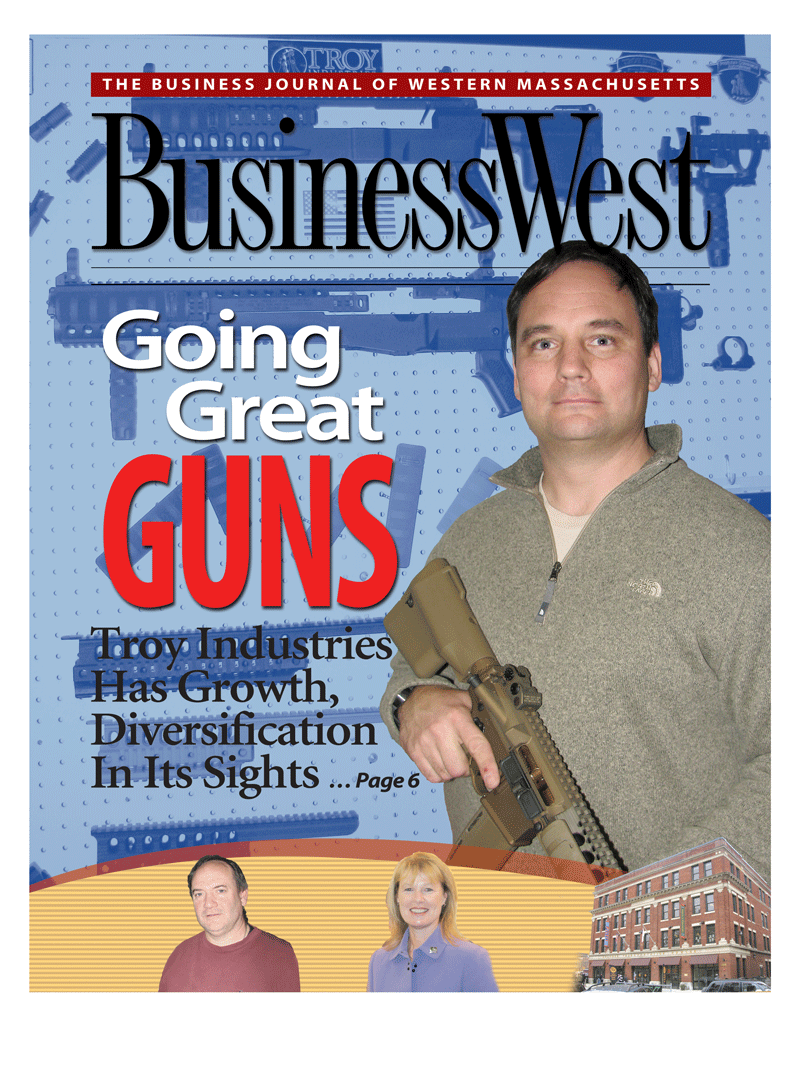
40 Under 40 Cover Story The Class of 2011
This Diverse Group Finds Ways to Stand Out and Give Back
April 25, 2011

April 25, 2011

The ‘club’ has now reached 200 members.
Indeed, with this announcement of the Class of 2011, there are now five groups of 40 Under Forty winners, each one distinct, but with several common denominators that run through all the classes.
The most important of these is a willingness to find the time, energy, and, yes, passion to not simply perform a job or manage a business or nonprofit — but also contribute to the community in some way, or several ways.
Like the groups before it, the Class of 2011 is diverse, with each story unique in some ways. Perhaps the most unique is that of a 16-year-old high-school student who became the youngest winner to date through his work in the community, which ranges from tutoring Somali refugees to work on the Web site for Link to Libraries; from involvement with a teen-philanthropy organization to membership in the aptly-named Don’t Just Sit There, a ‘good-works’ group that assists a number of causes.
Looking over this group of 40 individuals, it would be fair to say that none of them ‘just sit there,’ and most all of them could be considered truly inspirational. Here are some other examples:
• A lawyer who has also served for several years on the board of the Forest Park Zoological Society, but also recently helped initiate a new program to mentor fledgling entrepreneurs, thus improving their odds of survival and staying in Western Mass.;
• A melanoma survivor — and marketing manager for the Food Bank of Western Mass. — who founded SurvivingSkin.org and now actively promotes a message of sun safety while also helping to raise awareness and funds to fight the disease;
• A loan-review officer for a local bank who finds a number of ways to give back to the community, including work as a mentor to young women at the Mass. Career Development Institute;
• The regional director of the Mass. Office of Business Development, who helps area companies secure needed state assistance to grow and add jobs, while also helping young men learn life lessons (and a better jump-shot technique) as a high-school basketball coach; and
• A Web-site designer who has also created a recognition program that is inspiring Springfield-based businesses to become more earth-friendly in everything from how they make their products to how they build out their office space.
There are about three dozen more stories like these in this special section introducing the Class of 2011, which will be honored at BusinessWest’s annual 40 Under Forty Gala on June 23 at the Log Cabin Banquet and Meeting House.
We hope you’ll enjoy these stories and become inspired to find your own ways to stand out in the community and give back to it.

2011 40 Under Forty Winners:

Kelly Albrecht
Gianna Allentuck
Briony Angus
Delania Barbee
Monica Borgatti
Nancy Buffone
Michelle Cayo
Nicole Contois
Christin Deremian
Peter Ellis
Scott Foster
Stephen Freyman
Benjamin Garvey
Mathew Geffin
Nick Gelfand
Mark Germain
Elizabeth Gosselin
Kathryn Grandonico
Jaimye Hebert
Sean Hemingway
Kelly Koch
Jason Mark
Joan Maylor
Todd McGee
Donald Mitchell
David Pakman
Timothy Plante
Maurice  Powe
Jeremy Procon
Kristen Pueschel
Meghan Rothschild
Jennifer Schimmel
Amy Scott
Alexander Simon
Lauren Tabin
Lisa Totz
Jeffrey Trant
Timothy Van Epps
Michael Vedovelli
Beth Vettori

Photography for this special section by Denise Smith Photography


Meet Our Judges

This year’s nominations were scored by a panel of five judges, who accepted the daunting challenge of reviewing more than 110 nominations, and scoring individuals based on several factors, ranging from achievements in business to work within the community. BusinessWest would like to thank these outstanding members of the Western Mass. business community for volunteering their time to the fifth annual 40 Under Forty competition. They are:

Diane Fuller Doherty

Diane Fuller Doherty

• Diane Fuller Doherty, regional director of the Western Mass. Regional Office of the Massachusetts Small Business Development Center Network. Previously, she founded and served as president and CEO of Doherty-Tzoumas Marketing.  She is a founder of the Women’s Fund of Western Mass., and also serves on the boards of the Pioneer Valley Plan for Progress, Bay Path College, and the Community Foundation of Western Mass.

Eric Gouvin

Eric Gouvin

• Eric Gouvin, a professor of Law at the WNEC School of Law and director of WNEC’s Law and Business Center for Entrepreneurship. Previously, he practiced corporate, commercial, and banking law in Portland, Me. He founded the Small Business Clinic at WNEC School of Law, serves on the Board of Editors for the Kauffman Foundation’s eLaw web site, and is a member of the Board of Advisors for the Scibelli Enterprise Center and Harold Grinspoon Charitable Foundation’s Entrepreneurship Initiative.

Hector Toledo

Hector Toledo

• Hector Toledo, vice president and Retail Sales director for Hampden Bank, and member of BusinessWest’s 40 Under Forty class of 2008. He is currently chair of the Board of Trustees at Springfield Technical Community College (from which he graduated), and has long been active with the Juvenile Diabetes Foundation, Springfield’s libraries, his church, and a host of other nonprofit groups.

Jeffrey Hayden

Jeffrey Hayden

• Jeffrey Hayden, director of the Kittrredge Center for Business and Workforce Development at Holyoke Community College, which houses a number of workforce-development programs, the Mass Export Center, and WISER, the World Institute for Strategic Economic Research. Previously, he was director of the Holyoke Office of Planning and Development and the Holyoke Economic Development and Industrial Corp.

Michael Vann

Michael Vann

• Michael Vann, a principal with The Vann Group, a professional services firm that provides small-to mid-size businesses with solutions such as accounting and bookkeeping, human resources, recruiting and strategic advisory services. He handles day-to-day operations of the group’s strategic advisory services and merger/acquisition activities. He is actively involved in a number of charitable organizations, and is a member of the 40 Under Forty Class of 2007.

Cover Story
Separating Hype from Reality on Debt Relief

Cover March 14, 2011

Cover March 14, 2011

Millions of Americans are drowning in debt and desperate for a lifeline, so it’s no wonder ads touting easy debt relief are so alluring. But they can also be deceptive, glossing over the harsh realities and limitations of the debt-settlement industry; in fact, these programs leave many customers worse off than when they enrolled. Solutions to spiraling debt — bankruptcy among them — do exist, financial experts say, but finding the right remedy takes an understanding of all the options and a willingness to accept that there are no easy answers.

Michael Katz keeps a box of tissues behind his desk. And they get a lot of use from the people who sit down to talk with him about their crippling debt, and the reasons — unemployment, divorce, medical bills, or perhaps plain old bad decisions — it has spiraled out of control.
It’s not just feelings of anxiety and helplessness, but often a sense of desperation that brings them to tears — and to promising-sounding solutions, like debt-settlement companies that promise to drastically reduce or eliminate that crushing red tide.
Reality, they often find, paints a far different picture.
“So many people I talk to found these agencies through a television commercial or on the Internet, and in a very high percentage of cases, they have no idea about the legitimacy of the agency,” said Katz, an attorney with Bacon Wilson, P.C. who specializes in business and insolvency law and co-chairs the firm’s bankruptcy department.
“Most people who come to see me who have been in one of these programs found them to be unsuccessful and basically worthless,” he continued, explaining that many of them charged membership fees in the hundreds of dollars, followed by a monthly maintenance fee. This monthly payment typically goes into a ‘dedicated account’ which builds up over time, and is eventually used to make ‘full and final’ settlement offers to one or more of a customer’s creditors.

Thom Fox

Thom Fox says people should be wary of companies that want to enroll them in a program without offering credit counseling.

Sometimes these are accepted, and an account settled. However, Katz said, “the problem with that is, during this time, your debts are still earning interest and still accruing fees and late charges. Some people who started the plan with X dollars of debt find that, by the time the settlement is offered, the debt has grown to twice that, and they owe as much at the end of the plan as when they started.”
That anecdotal evidence is backed up by a Federal Trade Commission (FTC) study determining that 65% of people who leave debt-settlement programs do so without receiving any settlements whatsoever. Overall, during the survey period, they paid $55.6 million in fees while receiving just $58.1 million in savings from settlements — essentially a wash.
However, the FTC points out, those figures don’t include other costs typically associated with debt-settlement programs, such as late fees and interest charges from creditors, meaning the cost of using such a program, in many cases, far outweights the benefits.
“The FTC received a couple thousand complaints about these services, and that put them on the radar,” said Thom Fox, community outreach director at Cambridge Credit Counseling Corp. in Agawam. “When the FTC did its report, the findings were startling to many people.”
The data eventually led the FTC to amend its Telemarketing Sales Rule. The new regulations, which went into effect in October, set tighter restrictions on how debt-settlement companies — specifically those that solicit customers by phone or receive phone calls in response to ads — conduct their business.
But consumers must still be wary of the remedies they seek to get out of debt, Fox said. In this issue, BusinessWest examines what those options are, and why becoming debt-free is almost never as easy as a TV commercial might make it sound.

Cards on the Table
For instance, Fox said, a consumer might owe $10,000 on a credit card, and the creditor might accept a $7,000 settlement. But while payments to a debt-relief firm are amassing in escrow, that $10,000 can rise at an alarming rate. “Your creditor’s not being paid during that time, the bills pile up, you fall behind, and maybe you get sued,” he said, adding that debt-settlement programs have rarely explained that to clients, but now they have to lay it all out.
Under the new FTC rule, debt-relief companies that run ads or engage in telemarketing will not be able to charge upfront fees until three conditions have been met: the service successfully renegotiates, settles, reduces, or otherwise alters the terms of at least one debt; a written settlement, debt-management plan, or other agreement is worked out between the consumer and the creditor; and the consumer has made at least one payment to the creditor as a result of this agreement.
Also, debt-relief services cannot require that consumers set aside payments in a dedicated account unless the account is maintained at an insured financial institution; the consumer owns the funds (including any interest accrued); and the consumer can withdraw the funds at any time without penalty. In addition, the debt-relief firm cannot own, control, or have any affiliation with the company administering the account, nor receive any referral fees from it.
Finally, before the consumer signs up for any debt-relief service, the company must disclose certain aspects of their services, including how long it will take for consumers to see results, how much it will cost, the negative consequences that could result from using debt-relief services, and detailed information about dedicated accounts if they require them.
The Better Business Bureau (BBB) heartily supports the changes. From December 2007 — roughly the start of the Great Recession — through late 2010, the BBB received more than 6,000 complaints from consumers about debt-relief or debt-settlement companies. Complainants typically said they were charged large up-front fees in exchange for a promise — soon proven empty — to significantly reduce or eliminate their debt.
But consumers aren’t out of the woods because of a rule change, the bureau stresses, and still need to use caution when enlisting a third party to help them get out of debt.
“The debt-relief industry has flourished in the current economy, and you can bet that many unscrupulous companies are feverishly trying to figure out ways to get around the new laws, such as relying less on telephones to solicit new customers,” said Alison Southwick, BBB spokesperson. “While these new rules provide effective new protections, consumers still need to be on the lookout for deceptive debt-relief services.”
Fox said the rule takes aim at all sorts of misleading marketing practices, from promising to cut personal debt by 75% to using President Obama’s image in ads, giving the debt-relief service the appearance of government approval.
“A lot of these things are going away” with the new rules in place, Fox told BusinessWest. “They’re trying to get rid of deceptive advertising, give people proper disclaimers, and empower people with knowledge. Debt settlement can hurt people as well as help them.”
Katz added that people facing debt issues have local options — banks, lawyers, and agencies like Cambridge, to name a few — that provide a level of security that an out-of-state debt-relief firm might not.
“That way, if you have issues or problems, you know where to find someone to help you,” he said. “You can go to a local office and sit down with someone to talk about a program, rather than doing business with someone you and I and, frankly, sometimes Google has never heard of, who has no desire to be a responsible citizen or work out your concern.”

Problem Not Solved

Mike Katz

Mike Katz says bankruptcy can be preferable to debt relief because it erases all the debt at once so that an individual can begin to rebuild his credit rating.

One drawback to debt settlement, Katz said, is its piecemeal approach to fixing the problem. For instance, if two of an individual’s 10 creditors eventually accept a final offer, that still leaves eight more debts that remain — and, in most cases, have only grown since the start of the process. “Whether you’re shot with eight bullets or 10, you’re still mortally wounded,” he quipped.
Another issue, he explained, is the problem of ‘phantom income.’ It can take several forms.
“If you owe the bank $200,000 on your home and the bank forecloses on the house, and the house sells for $100,000, by law the bank is required to report the money being written off to the taxing authorities, including the IRS and the Mass. Department of Revenue, and they issue a 1099 to you as well as to the IRS,” he said. “Therefore, you owe federal and state income tax on the amount of debt being written off by the lender, and must pay taxes on it at the same rate as your own personal income tax.”
Similarly, Katz explained, “any debt that’s settled through one of the debt-settlement agencies will result in phantom income being produced. And we have found that, in virtually every agency we have dealt with, that fact has never been disclosed to people until the end of the term.”
As an example, he noted that someone with $50,000 in debt who settles for $25,000 might be taxed 30% on the $25,000 written off, or $7,500.
Opting instead for Chapter 7 bankruptcy proceedings, he noted, does not produce any phantom income and might cost as little as $2,000 to erase the entire debt, and the individual can start rebuilding his ruined credit score immediately, especially if he’s diligent about paying other bills, such as a mortgage or car payment. Choosing debt settlement can be equally devastating to one’s credit rating — again, something customers weren’t always told in the past — with little chance of improving it during the life of the plan, which might be three years or more.
“You don’t get any extra credit unless you pay your creditors in full,” Katz said. “So it’s better to do the Chapter 7 and start building your credit back three years earlier than not having it paid in full and still having a black mark on your credit. That’s the reality.”
That’s not to say bankruptcy is the only answer — “it’s not a good thing for anybody,” he said — but he recommended at least talking to a lawyer with expertise in that field.
If someone is considering using a debt-relief agency, Katz said, at minimum they should go online and search for positive or negative comments about that firm. But even then, they should be aware that companies often hire people to post false comments on message boards, praising their services or blasting a competitor’s, a practice that extends to other service industries as well, such as restaurants and hotels.
“So when you see reports online, you have to take them with some skepticism because you don’t know who’s writing them,” he noted, adding that the Better Business Bureau is often a more reliable resource to investigate customers’ experience with various agencies.
A good start, Fox said, is to seek help from a nonprofit agency, which is more likely to focus on the needs of each client, and not just the bottom line.
“Let’s say 100 people call me tomorrow; we’ll offer a debt-management program to roughly 20 of them. That’s about how many would qualify. But the remaining 80% receive personalized advice regarding their situation. Our average employee has been here eight years and has made a career out of helping people with their finances.”

No Quick Fix
The mistake many consumers make, Fox said — and one that has been exacerbated by those ads trumpeting quick, dramatic debt reduction — is relying on a one-size-fits-all program to solve their problem quickly. But the first step in the journey out of the red has to be a serious study and understanding of their own situation, how it developed, and what it will take to avoid future setbacks.
To that end, Cambridge Credit Counseling conducts hundreds of seminars each year — reaching about 7,000 people in Western Mass. annually — in addition to issuing publications and maintaining a weekly YouTube show called Your Money. That’s in addition to spending hours at a time providing free, intensive counseling services to its clients, whether they’re among the 20% referred to debt-management programs or the 80% who aren’t.
“Our goal is empowerment. Maybe 90% of the people who call us have never put a budget into play. They understand their income, but they don’t understand their expenses,” he said — and, specifically, which ones can easily be reduced or eliminated.
“The best learning experiences are the mistakes you make, not the triumphs you have,” Fox continued. “But people aren’t learning financial literacy in their school systems, although that philosophy started changing after the financial collapse. Money is a central aspect of life, and people need to know how to manage it.”
It’s an issue close to the heart of Brady Chianciola, assistant vice president and regional manager at PeoplesBank, who has initiated a series of financial-literacy programs for area students.
“Locally, we’re trying to start young and educate the youth of the region with financial-literacy initiatives,” he said of the school-based programs in Springfield and other Pioneer Valley communities — from budgeting and recognizing the difference between needs and wants to seminars on mortgages and mutual-fund investing.
“No matter what, you need to know about the complex financial landscape we live in,” Chianciola said. “We certainly understand how easy it is to get into trouble, and we hope that, by the time they get out into the real world, they’ll understand these concepts and not fall into some of the traps and scams out there.”
In talking to parents, Chianciola is encouraged by their support of the program. “They say they didn’t have this education,” he told BusinessWest, “but they’re excited about their kids starting young and not falling into the same pitfalls they did.”
Fox said his agency is providing a crash course to people who are learning the hard way. “Our counseling sessions can be an hour and a half, two hours. We do an in-depth budget analysis. We can’t give anyone advice without a full understanding of their goals and situation and aspirations. We can’t build a plan from nothing.”
While making sure any solution fits the individual is simple common sense, he said, it’s a practice that has been neglected by debt-relief services and people who are clamoring for an easy way out — when one usually doesn’t exist.
In most cases, Fox said, “there’s not going to be a quick answer. If anyone gives you a quick answer just to enroll you in their program for debt settlement or debt management, you’re with the wrong agency. Walk away; nobody benefits from that. They’re not providing value if they’re pushing you into a program that’s going to hurt you.”
In too many cases, the end result is more debt — and more tears to wipe away.

Joseph Bednar can be reached at [email protected]

Cover Story Sections Top Entrepreneur
Fueling the Imagination: Pride Founder Bob Bolduc Stays Ahead of the Curve
Bob Bolduc, Top Entrepreneur for 2010

Bob Bolduc, Top Entrepreneur for 2010

Bob Bolduc said the concept came to him early last fall as he was pondering ways to say thank you to his ‘friends,’ a word he would use interchangeably with ‘customers’ early and often.

For years, Pride has offered free coffee on Christmas, New Year’s, and Veterans Day (Bolduc was in the Army and has a deep appreciation for all those who have served their country), but he thought it was time to take things up a notch — or several, as the case may be.

“Free coffee for the month of December,” he said slowly, as if to add emphasis and convey the enormity of this executive decision.

“A lot of people here looked at me funny, and some thought I was out of my mind,” he admitted while explaining the promotion that would involve the chain’s 24 stores, scattered across Western Mass. “That’s because we’re in the coffee business; it’s one of the things we do best, and it’s quite profitable.

“I can’t say how much it has cost us, but it’s expensive, very expensive,” he continued. “It’s worth it, though; it’s been fun, and it’s certainly created a buzz. This is a big cup we’re giving away — 16 ounces — not some dinky thing.”

With 10 days left in December, Bolduc could easily do the math concerning his coffee giveaway, and he was already declaring it a good business decision. And he should know, as he’s made quite a number of them in an entrepreneurial career that now spans nearly 40 years.

“There have certainly been some that haven’t worked out well,” he conceded with a hearty laugh, one of many that would punctuate his candid interview with BusinessWest. “But many have gone right for us over the years.”

Indeed, starting with his decision to get into the wholesale tire business in the early ’70s — and then out of it when the radial changed the landscape of that business by adding tens of thousands of miles to a tire’s lifespan — Bolduc has penned a number of success stories. And he’s made several of what he called ‘firsts,’ listing everything from the first fire-suppression system at a self-serve gas station to the first in-house Dunkin’ Donuts in this market; from cash acceptors at the fuel pumps to the first ethanol sold in Western Mass.

This body of work, as well as the indication that there’s plenty more to come, has earned Bolduc BusinessWest’s Top Entrepreneur Award for 2010.

“Bob Bolduc exemplifies what entrepreneurship — and this award — are all about,” said BusinessWest publisher John Gormally. “His career, most notably his work with Pride, has been characterized by risk-taking, having the vision to see the future of his industry, and getting there first in many cases, and simply being innovative; in many ways, he’s redefined the convenience store.

“We created this award to honor people who have those qualities — vision, innovation, and risk-taking,” he continued, “and he’s a very worthy recipient.”

Russell Denver, president of the Affiliated Chambers of Commerce of Greater Springfield, agreed, and praised Bolduc for his career accomplishments, as well as his recent aggressive steps in the face of the worst downturn in nearly 80 years.

“Here is a man who didn’t sit back during the last two or three years of difficult economic times,” he noted. “He charged forward and has dramatically redone most of his properties and built new properties. And he ended up increasing his employment levels in our communities.

store at the North End Bridge

Pride’s ‘free coffee for the month of December’ promotion, prominently displayed on the store at the North End Bridge, is one of many risks Bob Bolduc has taken during his career.

“What he has done to the troubled property that used to be Valley’s Steakhouse, and after that Razzles, has put a whole new face on Springfield as one enters from West Springfield,” Denver continued, referring to the latest Pride store just east of the North End Bridge. “Where there was a vacant building, an eyesore, is now a thriving business that employs about 70 people; it’s a stunning turnaround.”

And like most projects Bolduc has taken on since he first went into business for himself, the North End initiative involved a good deal of risk that he considers part and parcel to being a successful entrepreneur.

“If you don’t take risks … if you just play it safe, you’ll limit what you can do,” he said. “There are lots of risks and gambles in business; it’s not for the faint-hearted, and it never really stops.”

Pedal to the Mettle

BusinessWest sat down with Bolduc near the end of the work day (at least for most other people at Pride), a time he chose because the preceding hours were packed with more pressing matters.

The 90-minute conversation was interrupted, briefly, perhaps a dozen times by employees stopping by Bolduc’s office on the way out the door with questions, answers, updates, and agendas for the following day. When asked about what appeared to be micromanagement, Bolduc smiled and said, “show me a successful entrepreneur who is not involved in every aspect of his business.”

He then proceeded to say he’s better than he used to be when it comes to delegating responsibilities, but that he still considers even the smallest of details paramount to his operation and thus worthy of his time and attention.

“Every decision you make is important when you’re talking about your business,” he continued. “There are no small matters.”

This penchant for micromanagement is one of many aspects of Bolduc’s personality that come across loud and clear after only a few minutes of discussing business and society in general and watching him operate. Others include a real passion for what he does — this is a man who went on for five minutes about the quality of the breakfast sandwiches in his store and how proud he is of them — and both concern for and commitment to the city of Springfield (where he grew up), but also the broader subjects of education and parental involvement.

“Springfield has a serious education problem, there’s no question about that — 60% of kids drop out of high school, that’s a problem, and 60% of the fourth-graders can’t read to fourth-grade level,” he said. “That’s why we’re big supporters of early-childhood education and the early years, because it’s been proven that, if we don’t get kids started on the right track, and early, they will never make it.

“We need to get more people involved, and we need to convince some parents — I said some, not all — to get more involved in their children’s education, and make them do their homework, see that they get to bed on time and have a good breakfast, and inspire them to learn. On a bigger note, the whole country needs to do that; we need longer school days and longer school years, and we need to raise our standards — a lot — if we’re going to compete in the global economy.”

In many ways, the Pride chain and its various causes — from books to pajamas to toys — reflect Bolduc and his priorities, and it’s been that way since the beginning, or when he started down the path to entrepreneurship, which is the road he knew he would eventually take even as a mechanical engineering student at Notre Dame.

“I knew I wanted to be in business for myself some day,” he said. “I thought I had it in me, and my father and grandfather were both entrepreneurs.”

Born in Indian Orchard, Bolduc attended local public and parochial schools. After graduating from Notre Dame he went on to Purdue, where he earned an M.B.A. — and he’s put both degrees to good use. “I always enjoyed the engineering part as well as the business part.”

After graduate school, but before enlisting in the Army and eventually serving in Vietnam, he worked as a quality engineer at American Bosch. Upon returning from Southeast Asia in 1970, he briefly went to work at his father’s gas station in Indian Orchard before buying him out, thus becoming the third generation of the family to run that business.

In addition to running the station, he became a tire and auto-parts wholesaler, specifically a distributor for BF Goodrich and Continental, and became proficient enough at it to be chosen to address a national sales convention of Goodrich retailers at age 30.

As good as he was at tire wholesaling, Bolduc saw the handwriting on the wall with the introduction of the radial — and also foresaw changes that would cut out two layers of ‘middle’ people in this business — and thus sold off the venture. He then moved into an emerging field on the business landscape, one that he would ultimately help shape locally: the self-service gas station.

Priming the Pump

He started with one, again in Indian Orchard, in 1976, and continued to expand over the next 34 years, and counting.

In the process, he would not merely create a chain, but continually break ground when it came to the concept of marrying the self-service station with another emerging phenomenon, the convenience store.

Part of this matrimony was taking what was then a small store that sold bread, cigarettes, and dairy items (many people called them ‘milk stores’) and thinking outside that small box, he explained.

“We were the first chain in Western Mass. to put a Dunkin’ Donuts in our stores,” he went on, “and, later, we were the first to put a Subway in our stores — and then everybody copied both.

“We already had our own little deli shops, but when I saw the Subway concept, I said, ‘let’s give this a try,’” he continued. “And as for coffee and donuts, we were already making our own coffee, and buying a full line of products from the [former] Liberty Bakery. I sold cakes, donuts, everything; you could come in here and order a wedding cake from us, and people did.”

As he expanded the line of products and services inside the stores, Bolduc also expanded geographically, moving beyond his Springfield roots across the Pioneer Valley. “We expanded as we saw opportunities arise,” he explained, adding that many of his locations have been enlarged and renovated over the years to keep pace with his vision of what his stores should be offering.

“We’ve built and rebuilt our stores to keep up with the times and keep up with the changes we’ve made as a company,” he said. “I’ve rebuilt some stores four times as we’ve evolved from a full-service gas station to a gas-only self-service, to small stores, to large stores, and, now, to super-large stores that are able to pump fuel into as many as 20 vehicles at a time — cars and trucks.”

Bolduc said that, when many people think of the Pride name, they associate it with gasoline. He understands this — well, sort of, because this is how and why many trips to his locations begin or end. But he becomes somewhat animated as he stresses that his chain is about so much more than that.

Bob Bolduc, center, with his senior management team

Bob Bolduc, center, with his senior management team

And to get his point across, he proceeded down the roster of what is now in the Pride inventory, for lack of a better term. This would be 24 stores; a commissary that makes baked goods, those aforementioned breakfast sandwiches, and a host of other items for those stores; 10 Subways, making Pride the largest franchisee in the region; six Dunkin’ Donuts locations (those spaces are leased out to the corporation); two truck stops; one package store; two beer-and-wine stores; a trucking company; a construction company; and a commercial fueling station for local fleets.

Today, in addition to Dunkin’ Donuts and Subway locations, the larger Pride stores are, in essence, full markets complete, in some cases, with shopping carts, and, in all locations, prices he says can compete with supermarkets.

Indeed, beyond the sheer volume of locations is what’s in the stores, Bolduc told BusinessWest, that should compel people to think of this as more than just a chain of gas stations.

“We’re in the milk business,” he said, again with a large dose of pride in accomplishment. “We’re a dairy store; we sell milk $1 or $1.50 less per gallon than the supermarkets. And it’s so fresh, because we’re turning it over every day.

“In some of the stores, we changed the name to Pride Market,” he continued, going on, in great detail, as always, about what his locations now offer. “We now have major food areas with all kinds of coffee, hot and iced, and our own brand of sandwiches, subs, and bakery items — fresh-baked cookies and muffins every day.”

This emphasis on price and variety is just one way Bolduc says he’s trying to take the perceptions about convenience stores — especially the one about how people have to trade this convenience for higher prices — and turn them on their ear.

“People from several generations wouldn’t think to buy in a convenience store because the price was too high,” he said. “You buy here, and you can save money.”


What’s in Store?

When asked if he and others at Pride spend much time studying consumers as they go about designing, stocking, and staffing Pride stores, Bolduc shrugged his shoulders slightly as if to indicate ‘not really.’

He said much of the success that he or anyone else enjoys in retail comes from instinctively anticipating what his customers or ‘friends’ want — like free coffee for the month of December — and then providing it in an efficient and cost-effective manner.

This thought process has taken him from simply putting Subway franchises in his stores to adding full delis and his own baked goods, as he described.

It also led him to the cash acceptors, which, it would seem to some, but not Bolduc, would work against the larger overall mission to get people into his stores.

“This saves someone the trouble of coming into the store and standing in a line to pay someone for the gas,” he said. “If someone was going to come in, they would come in anyway; this is a great convenience for people, and it’s worked out very well.”

And it also represents one of the many risks Pride and especially Bolduc have embarked on over the years. He said his goal has always been to make these risks calculated, and to manage the many gambles he’s taken, while also working to continually move his operation forward and to new heights.

And he says this is always a difficult task, no matter how much practice one has at it.

“In this business, you have to be a high-risk taker, and you need to have a very strong stomach at times,” he explained. “You don’t get to build a chain of our size with the real estate we have without taking some gambles and putting serious money on the table.

“And then, of course, you have to make it work,” he continued. “And the same goes for other decisions you make; when you’re an independent operation like ours, there’s no fallback — if you make a mistake, there’s no one to catch you.”

As an example of this risk-taking, Bolduc sited the North End location in Springfield, the biggest in the chain. It’s known to many long-time, or very-long-time, residents as the Valley’s Steakhouse site, even though that restaurant has been closed for decades. Bolduc expressed hope that it will someday be known as the ‘Pride site.’

He said he acquired the property a decade or so ago, sensing there would be an opportunity, but going on with the intent of being patient until he knew the time was right.

“I wanted to be sure I could build and operate the kind of facility the site deserved,” he explained. “So I took my time developing it.”

Eventually, two years ago, just as the Great Recession was getting started, he decided to move ahead. Why then, when most business owners were hunkering down?

“I just decided that it was the right time,” he said. “How did I know … I can’t tell you that.”

Today, Bolduc, along with a young leadership team (comprised mostly of women), is mulling the next gambles and the next steps in the evolutionary process for the chain and the genre. And while Bolduc did indeed use the word ‘I’ quite a bit in his talk with BusinessWest, he stressed repeatedly that what he’s accomplished in 34 years has been a team effort.

“I’ve hired a lot of great people along the way,” he said. “I owe it all to them and couldn’t have accomplished all this without them.”

And, often in concert with that team, he continues to get involved in the Greater Springfield community and especially the City of Homes, with support for everything from Springfield School Volunteers to Square One to the Springfield Falcons.

He said that, like many who grew up in the city and have watched it struggle in recent years, he’s eager for a turnaround and doesn’t believe it’s far off. And, like many, he said part of the problem is a lack of self-confidence and a preoccupation with all things negative.

“Yes, we have problems; all cities do,” he said. “We need to work on those problems, especially those involving our schools, but all we hear, unfortunately, is the negative.”

The Bottom Line

Bolduc was non-committal when asked if he would be repeating his free-coffee promotion through December later this year.

As with many other aspects of his business, he knows, or probably knows, the answer to the question, but isn’t exactly eager to share it.

What he does know, and can share, but in a very vague way, is that he is going to continue to develop ‘firsts,’ and strive to remain at the forefront of the ongoing evolution of the convenience store/self-service gas station.

He’s not sure how many times he’ll have to tear down and rebuild or find new, often-innovative ways to assemble sites and create locations. But he’s quite sure he’s not done taking risks — “because that’s what being an entrepreneur is all about.”


George O’Brien can be reached at [email protected]
Cover Story
Searching for Answers to an Uncertain Future

Cover Decemebr 20, 2010

Cover Decemebr 20, 2010

While uncertainty is the one word most experts are using to frame their opinions about 2011, something approaching consensus is taking shape. It appears the region and nation are due for more slow, unremarkable growth, and probably insignificant gains in terms of employment. In other words, it looks like more of the same that we saw in 2010.

Andre Mayer had an intriguing way of summing up what happened with the economy in 2010, one that captured the sentiment of most observers.
“It’s been a year in which conditions have certainly improved … but in a rather disappointing way,” said Mayer, vice president of Communications and Research for the Associated Industries of Mass. (AIM). Indeed, after recording fairly significant growth in the first six months of the year, the economy stumbled, and then seemed to take at least one step backward for every step forward.
“In 2010, we had a pretty good first half in terms of working our way out of a recession,” Mayer continued. “The state economy improved, and business confidence increased, right up until June, and fairly steadily. But then, things began to deteriorate, and some of that has to do with the diminishing impact of stimulus actions on the part of the federal government. We had quite a disappointing third quarter, and while the fourth quarter has been a little better than the third, we’re well behind where we thought we’d be in terms of recovery.”
Karl Petrick, an assistant professor of Economics at Western New England College, agreed.

Karl Petrick

Karl Petrick says a “Mexican standoff” between consumers and business owners is one of the many issues limiting recovery from the Great Recession.

“The recovery’s been shaped like a U, a very long U,” he explained, referring specifically to the horizontal line. “There’s only been a little bit of an upward tick. It’s been really frustrating … we’ve just been bouncing along the bottom on this recovery, and that’s been nationwide, not just Western Mass. And every month there’s good news, the next month, there’s bad news. And the nationwide jobs report has done it again.”
That report — which showed that just 38,000 jobs were added for the month of November, after robust growth in October, and an unemployment rate of 9.8% — has many economists scratching their heads and shrugging their shoulders when they talk about 2011 and what can be expected regionally and nationally.
But while there is certainly a large amount of uncertainty, there is something approaching consensus when it comes to the outlook on the months and quarters ahead — growth that will be slow and generally unremarkable, with probably only slight improvement in the jobs situation.
This goes double for Western Mass., said Bob Nakosteen, professor of Economics at UMass Amherst, because this region lacks what he calls a “jobs-creating fuel source” like the technology and biosciences clusters in Central and, especially, Eastern Mass., which greatly outperformed the western counties in 2010.
“The problem, of course, is that we really haven’t replaced our declining manufacturing base with anything that has dynamism into the future,” he said, with ‘we’ referring to the Pioneer Valley as a whole, but especially its largest city. “Springfield has not reinvented itself; it has a lot of potential, but isn’t that the worst curse in life, to have a lot of potential?”
“We’re just in for a period of relative stagnation, if that’s the right word,” he continued. “There will be slow growth; I think this may start to improve, but it probably won’t happen before midyear. And it’s only when the national economy starts to improve that we’re going to feel some of the benefits in this part of the state. And there just isn’t enough of an economic engine here to have traction once the national economy starts to grow.”
But Mayer was much more positive in his outlook. “I think 2011 should be a year in which it becomes clear that the recovery is taking hold. We should see improvement from a very low rate of growth as the year goes on, and we’ll enter 2012 in much better posture than we’ll enter 2011.
“Unless we fall off completely,” he continued with a laugh, noting that there is just too much uncertainty — in this area code and countries like Ireland, Portugal, Greece, and others — to say with any degree of confidence what will happen.
For its Economic Outlook 2011, BusinessWest talks with several economists about the immediate future and what will shape it from a recovery standpoint. Overall, they said there are far more questions than hard answers.

Realistic State of Mind
Amid the prevailing disappointment over how 2010 played itself out, there were some bright spots that could prompt optimism if one were so inclined.
Mayer said the state’s performance, which exceeded the nation’s, was one such positive, in part because it showed some depth and diversity in the Commonwealth’s economy, although the good showing likely had more to do with the fact that the Bay State isn’t dominated by the industries hardest hit by the Great Recession, such as home building and automobile manufacturing.
“The fact that we’ve not only been able to keep pace, but actually outperform the nation so far in this slow and halting recovery is a good thing for us,” he explained, adding that, historically, the state has lagged behind the rest of the country when it comes to bouncing back.
Meanwhile, the Commonwealth’s performance helped it retain some talented young people who might otherwise have left for presumably greener pastures.
“We have not seen the kind of outflow of human capital, mostly young people with marketable skills, that we’ve seen after past recessions,” Mayer explained, “because they would leave to seek better job opportunities elsewhere in the country. Right now, there aren’t those kinds of opportunities.
“In fact, the kinds of places where they used to go, the areas with high population growth, like Arizona, Florida, and Nevada, are suffering very badly in this cycle,” he continued, “because those are places where real estate and home construction are very important parts of the economy, and those sectors have just been hammered.”
Overall, the Massachusetts economy — and individual businesses large and small — have “adjusted,” said Mayer, which, roughly translated, means they’ve become more efficient and able to do the same with fewer people, which is another positive from a competitiveness standpoint, but not from a job-growth perspective.
“On balance, companies have been able to adjust to more-difficult circumstances, to a slow-growth economy,” he told BusinessWest. “They’ve been able to keep afloat and in some cases do pretty well, but they’re doing this, in large part, at the expense of job creation; they’ve slimmed down their staffing, and they’re very reluctant to add on new people, so we haven’t seen a whole lot of job creation.”
And, surprisingly, one of the areas where there’s been recorded growth is manufacturing, noted Mayer, adding that this is probably the last sector most observers thought would expand. “Manufacturers can usually squeeze more productivity out of their existing staff, and they’ll usually do that before they add people, so this has been an odd pattern, but something else that bodes well for the state.”
Despite these positive developments, 2010 has been rather forgettable, said Mayer and other observers, and the sluggishness of the past few months, not to mention the November jobs report, makes it that much more difficult to gauge what the year ahead will be like.
“One month you get 172,000 jobs, and the next, 39,000 new jobs, one-fifth the number that was forecast,” said Petrick. “That just really shows how uncertain the recovery remains in terms of when it’s going to gain steam.
“Most forecasters were almost writing 2010 off, saying, ‘we’re going to see some improvement, but not a lot,’ and those people were right,” he continued. “But then, most people were forecasting that things would pick up in 2011; now, some of the more pessimistic forecasts are for 9.5% unemployment nationwide, and the optimistic ones are for 8%, which is significantly higher than it had been, and that doesn’t bode well for Western Mass.”
Petrick noted that perhaps the biggest stumbling block to economic progress, both regionally and nationally, is confidence, or lack thereof. This fear of what is still very much the unknown has both consumers and business owners frozen in their tracks and either unwilling or unable (or both) to step forward with any conviction.
“Consumers are uncertain — they’re holding back as much as they can,” he explained. “Businesses are uncertain, not because they’re worried about taxes, but because they’re worried about what’s happening with consumption. It’s a Mexican standoff between consumers and businesses, each one saying ‘you first.’ Consumers are saying ‘hire us and we’ll spend,’ and businesses are saying ‘spend and we’ll hire you.’”

Stimulating Conversation
Whether there is any relaxing of this standoff in 2011 depends largely on when and to what degree the national economy improves, said Petrick, adding that there are several factors that will play into this.
These include everything from the fate of the announced compromise tax plan to the impact of whatever stimulus funding is still to be spent, to the Federal Reserve’s attempts to actually spur inflation, or at least ward off the more dangerous deflation.
“They are trying to get a higher rate of inflation than we have now, because there are some things that might spring from this that are healthy,” said Nakosteen. “If businesses can get a bit more of a margin in the prices they charge, if low interest rates in the face of a little more inflation prompt investors to get more into the stock market, these are good things, and two outcomes the Fed is trying to get by doing this.
“The risk is that they’re in a little bit of uncharted territory,” he continued, “and it’s not real clear that those actions are actually going to prompt the economy to begin to recover. There are only so many things they can try, and they seem to have tried one of everything; no one really knows.”
Those four words apply to many of the questions concerning the regional and national economy, including the matter of federal stimulus efforts.
Indeed, while many believe the impact of stimulus programs is now mostly in the past tense, Petrick said there remains a substantial amount of stimulus funding that has been allocated for this region but not spent.
“This is construction money, by and large, and it will be helpful, because that’s the sector that’s been the hardest-hit,” he explained. “There still could be a positive effect in the next year from that money that’s been allocated for different projects but hasn’t been spent.”
Locally, progress for the short and long term may well depend on if and to what degree the region can advance the process of reinventing itself.
Petrick sees some signs of progress in the Valley’s ongoing efforts to build its ‘green’ sector.
“This is a region that could, with a lot of work, start to make a name for itself in terms of green technology,” he said. “We have some green shoots — individually, they’re not much, but collectively, this could be a positive thing that could prompt hiring across a number of skill levels.”
But Nakosteen says the region still has a lot of work to do with regard to the process of reinvention.
“We’ve had this long-term decline in our base,” he explained. “There’s nothing really stopping that, and there’s nothing arising to take its place. There’s nothing taking hold to get these gateway cities going, and Springfield is one of those gateway cities.”
The biggest concerns for the year ahead involve jobs and the likelihood that this state and region won’t be creating many.
“We’ve done all right in Massachusetts relative to the rest of the nation,” said Mayer. “October was a pretty good month, maybe the first we’ve had, and then the November report came out, and we went backwards. So it’s very hard to predict what will happen next year.”

U Guessed It
While the past few months have shown that seemingly anything can happen in 2011, economists are in general agreement that the nation and region will likely continue moving along what is the bottom of the U that several referenced when taking about the shape of the recovery.
There may be more movement back up, Petrick told BusinessWest, predicting what amounts to more of the same for at least the next few quarters.
In other words, when 2011 nears its end, you may be seeing and hearing economists say there was improvement, but in a rather disappointing way.

George O’Brien can be reached at
[email protected]
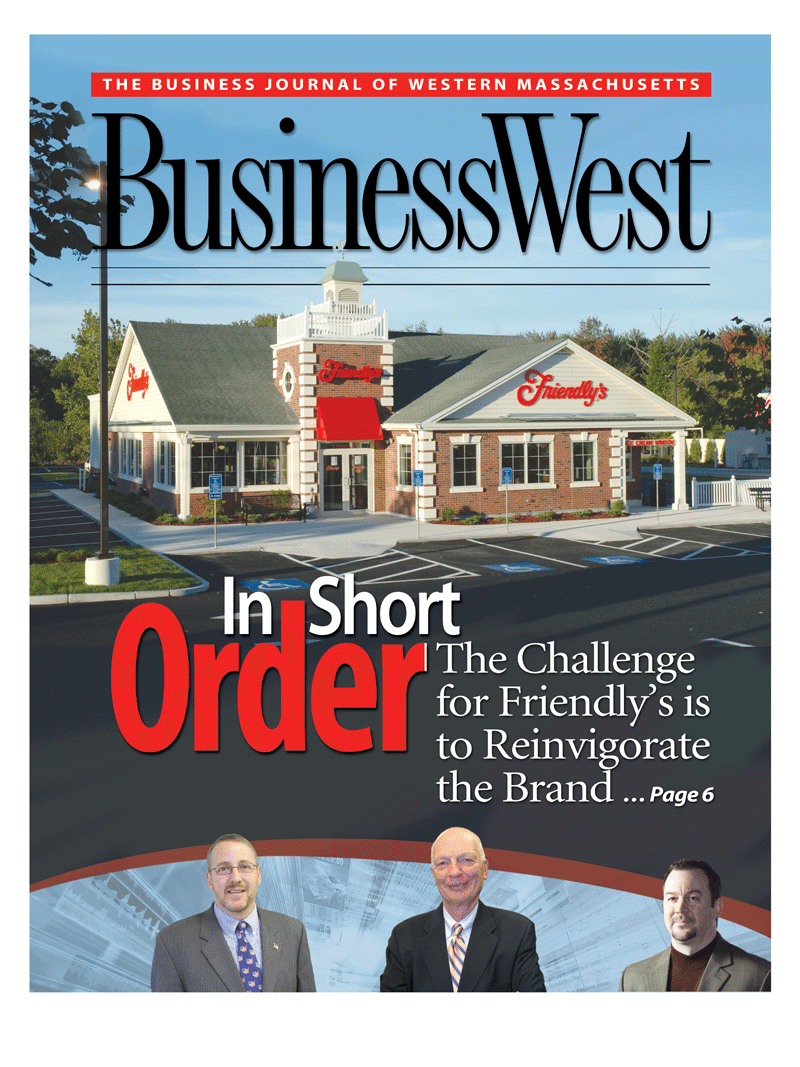
Cover Story
Taking Lessons — and Inspiration — from North Carolina

Cover December 6, 2010

Cover December 6, 2010

A group of 40 business and civic leaders from Greater Springfield were in two North Carolina municipalities — Winston-Salem and Greensboro — last week as part of the City to City program. As the name suggests, participants travel from one city to another, but they also take ideas and, hopefully, inspiration and determination back home. There were myriad thoughts expressed about what Springfield could learn from this excursion, but commentary centered around creating vibrancy downtown, focusing on steps to keep more young people in the 413 area code, crafting a more regional approach to economic development, and, perhaps most importantly, creating more positive energy in the City of Homes.

Allen Joines was explaining — sort of — just how it came to be that 40 business and civic leaders from Greater Springfield were having breakfast at the Marriott in his city, Winston-Salem, N.C., listening to him talk about economic development, downtown revitalization, and generating business diversity.
“The closer you get to the guillotine, the more you start to focus,” joked Joines, now in his ninth year as mayor of this city of 220,000, located about an hour from Charlotte.
‘Focus’ is a very general, perhaps overly simplistic way to describe what the leaders of Winston-Salem, or WS, as it’s called, did when, about 20 years ago, the bottom simply fell out of an economy based on tobacco, textiles, and furniture manufacturing, all industries on the decline. “We lost more than 10,000 jobs in about 18 months,” said Joines, who was then economic development director for the community. “In just a few years, RJ Reynolds [the tobacco giant headquartered in the city] went from 16,000 employees to under 3,000.”

Winston-Salem Mayor Allen Joines

Winston-Salem Mayor Allen Joines says his city has been quite resilient, bouncing back from a series of economic calamities.

In the face of this precipitous decline, the city took dramatic steps to diversify its economy, said Joines, adding that it had no choice but to do so. And it has rebounded on the strength of small businesses — there are only five companies or institutions in the city employing more than 1,000 people.
Today, the manufacturing sector that once accounted for 45% of the jobs in Greater Winston-Salem now provides roughly 14%. Dramatic gains have been made in health care (now the largest employer), the biosciences (much of it happening at the Piedmont Triad Research Park created in the heart of downtown), the broad field of design, logistics and distribution, and others. Meanwhile, the city is making major strides in its efforts to become a center for something called regenerative medicine, or the engineering of tissue and organs (more on that later).
Over the past few years, the city has successfully attracted FedEx, which has built a regional air hub at nearby Piedmont Triad International Airport; prevailed in an intense competition to land a $426 million Caterpillar assembly plant; built a new baseball stadium downtown (not without controversy); opened dozens of new restaurants in the central business district; lowered its high-school dropout rate, and earned status as one of the few cities across the nation to curb, and actually reverse, the so-called brain drain.
All this and more explains why those 40 leaders from Greater Springfield were in the Bethabara Room at the Marriott for the opening act of a program called City to City, where representatives of one (usually distressed) municipality visit another — to see, hear, ask questions, and, hopefully, take back some ideas and inspiration. Winston-Salem was chosen, said Ron Ancrum, president of the Community Foundation of Western New England and organizer of this junket, because it is like Springfield in many ways, including size, demographics, its status as a former manufacturing center, and recent challenges. Greensboro, a slightly smaller city 30 miles to the east, was chosen for the same reason.
A day after hearing about Winston-Salem’s progress, the Western Mass. contingent learned how Greensboro had waged a similar comeback in the face of deep losses in manufacturing jobs.
Reflecting on what they had absorbed in Winston-Salem on day two of the junket, participants had varying thoughts on what could be taken away.
Paul Robbins, president of the Wilbraham-based marketing and public-relations firm that bears his name, said the progress Winston-Salem has made in its downtown — with regard to everything from housing to new restaurants — and the resulting improvement in the retention of young people should prompt Springfield officials to redouble their efforts in that realm.
Meanwhile, Maryann Lombardi, director of Creative Economy for UMass Amherst, came away impressed not only with the large role the arts has played in economic development in Winston-Salem, but also how Wake Forest University, located within the city, has been part of virtually every initiative mentioned by leaders in that community and is a true “economic engine.”
Russ Denver, president of the Affiliated Chambers of Commerce of Greater Springfield, joked that he loved the city’s $11 commercial tax rate, less than one-third Springfield’s levy, and thought officials in the City of Homes might try such a number. Turning serious, he had high praise for the vision and creativity it took to put a 200-acre research park downtown.
Sally Fuller, project director for the Davis Foundation, was among many to observe that the overwhelmingly positive attitude and can-do philosophy in Winston-Salem stood in stark contrast to the negativism that she says prevails in Springfield and stifles progress.
Her remarks prompted many to nod in agreement, and Denver to summon a remark made by one of those carrying out the Urban Land Institute study on the city several years ago. “He said, ‘some people see the glass as half-full, others see it as half-empty; in Springfield, people believe they don’t even have a glass.’”
For this issue, BusinessWest recaps the City to City experience, focusing mostly on Winston-Salem, and on what participants want to take back from Tobacco Road. Their comments speak volumes about just how much work needs to be done in Springfield.

Changing the Landscape
Gayle Anderson says she’s like most chamber of commerce directors. She tracks what people say and write about her community, and takes great pride in placement on those ‘best of’ and ‘top 25’ lists that publications like to put together.
So she has a lot to be proud of these days, because WS is on many such compilations, including:
• ‘One of the Best Places to Live and Launch’ from 2008 in Fortune Small Business;
• The ‘Top 25 Places for Business and Careers’ as compiled by Forbes in 2009;
• The ‘Top 25 Locations for Biotech’ as assembled by Business Facilities magazine in 2009; and
• The ‘Top 7 Intelligent Communities in the World’ as compiled by the Intelligent Community Forum in 2008.
Meanwhile, the New York Times reported earlier this year that WS is one of only 14 cities across the country with more college graduates moving in than moving out, and North Carolina was listed on the most recent ‘Top Destination States for People Relocating’ list put together by United Van Lines.
“We didn’t get all of those people, obviously, but we certainly got our share,” said Lombardi, who like Mayor Joines and others, said Winston-Salem has come a long way over the past 20 years, and even a decade ago, when West Fourth Street, on which the WS chamber is located, was, in her words, “dead as a doorknob.”
How the business district, and the city as a whole, has come back to life, is a compelling story, one that placed WS in a 23-page report authored by Federal Reserve Bank of Boston called “Lessons from Resurgent Cities,” and garnered the attention of Ancrum as he and others considered possible destinations for a City to City tour involving Springfield area leaders.

Ron Ancrum

Ron Ancrum says the City to City tour was a learning expereince, but also a chance for participants to get to know one another so that they might better work together to implement what they've learned.

Ancrum, who came to the Community Foundation late last year, was familiar with City to City through his participation in a visit to Chicago by business and civic leaders in Boston. “That was a tremendous learning experience,” he told BusinessWest, adding that he wanted to create a similar tour for Springfield-area representatives as a way to provide an education in how other communities were getting things done, while also getting the Community Foundation more involved in economic-development matters.
Several destinations were considered for the City to City experience, Ancrum continued, noting that two in New England — Providence and New Haven — while meritorious, were rejected because the committee planning the program thought it would be difficult to get business leaders to commit to a three-day itinerary, which is the preferred length of such visits, in cities so close to home.
After considering Jersey City, N.J., a community in Michigan, and several others, the planning committee chose Winston-Salem and Greensboro because of both geography and their many similarities to Springfield. The tour would ultimately have four learning focal points: education, economic development, arts and culture, and public safety.
Ancrum said he and others had many goals in mind when they put the trip together. First among them was providing a learning laboratory of sorts, but there was also the desire to bring business and civic leaders together so that they may get to know one another, talk about their experiences, and then perhaps ultimately work together to help put some of the concepts they’d seen in North Carolina to work in Greater Springfield.
Participants visited a number of locations over the three days, including the research park; the WS chamber complex; the Milton Rhodes Center for the Arts, a renovated former Hanes underwear plant now home to galleries, meeting and event spaces, the Sawtooth School for Visual Art, and the Hanesbrands Theatre; the Goler Community Development Center in WS; Bennett College in Greensboro; the International Civil Rights Museum, also in Greensboro; and other stops.

Rolling with the Punches
As he recounted Winston-Salem’s near-miss with the guillotine, Joines said the city’s comeback — still very much a work in progress — has been marked by diligence and creativity, but even moreso by resiliency.
“When I look back on all that we went through, I think of that kid’s toy, the one where when you punched it, it would fall over, but then bounce back up again,” he explained during his opening remarks. “We took a lot of punches — and we still get punched today — but we’ve always bounced back up.”
Joines said he was a somewhat reluctant mayoral candidate, but was eventually compelled to run because he didn’t think city government was moving the city in the right direction. Running with the slogan ‘One City Pulling Together,’ Joines took nearly 80% of the vote in his first election.
Since assuming the corner office, Joines says he has focused economic-development activity on job creation in seven identified sectors:
• Financial services, in which the city already had a solid base, with Wachovia, recently acquired by Wells Fargo, headquartered there;
• Health care, a sector dominated by two large medical centers, including one at Wake Forest;
• Biomedical, an emerging sector that the mayor believes may yield more than 30,000 new jobs. This sector has been bolstered by the creation of the PTRP, which is anchored by the Wake Forest University School of Medicine’s Department of Physiology and Pharmacology and now boasts more than 20 companies;
• ‘Design,’ a term that applies to the design of everything from clothing to furniture to medical devices, and has become a steady source of new jobs, said Joines;
• Advanced manufacturing;
• Logistics and distribution, a field bolstered by the arrival of FedEx, which has a history of attracting to its hubs companies that depend on overnight shipping, and the same is expected for Greater Winston-Salem; and
• Travel and tourism, which has historically been a reliable source of jobs.
Growth has come in fits and starts over the past 20 years or so, said Joines, noting that, after a great deal of activity in the mid- and late ’90s, things were slowed by the recession that followed 9/11. Meanwhile, the severe downturn of 2008 and 2009 also took a toll on several sectors, especially travel and tourism.
But there has been growth across those seven sectors, he said, adding that, despite measurable progress, city leaders were not satisfied. They studied 108 other communities, focusing mostly on 17 metropolitan areas that were growing twice as fast as WS.
“We wanted to determine if we were going at things the right way,” said Joines. “We looked at these cities to see what they were doing differently that we might do. We determined that what set them apart was a driver, or magnet, that was ruthless.
“And we set about creating our own driver,” he continued, adding that such an economic force would have to meet several criteria. “We had to ask ourselves, ‘is it feasible, is it unique, and is it impactful?
Eventually city leaders would answer ‘yes’ in each case to the field of regenerative medicine, which, says Joines, could eventually create perhaps 20,000 or 30,000 jobs.
The nucleus for this ‘driver’ is the Wake Forest Institute for Regenerative Medicine, led by Dr. Anthony Atala. The institute is an international leader in the engineering of multiple types of human tissue, allowing for the growth of replacement organs and transplanting them into patients.
“We’re galvanized around regenerative medicine,” said Joines, adding that the city now hosts all major conferences involving this field. “We believe that this is going to be a great source of growth and jobs for us.”

Young Ideas
To keep its many sources of jobs thriving, from a workforce perspective, WS officials realized that they had to do something to retain more young people and attract some from outside the region. “Jobs are the best way to do that,” said Anderson, adding quickly that the city has made major progress in creating well-paying jobs in exciting, potential-laden fields.
But there are other factors involved in attracting young people, she said, especially the need to create the kind of vibrancy that this constituency demands. With that in mind, city officials went to work downtown.
Some market-rate housing was created, and there are plans for more, Anderson continued. Meanwhile, an ambitious restaurant-loan program involving area banks and the Downtown Winston-Salem Partnership was created to help boost the hospitality sector. Despite the volatility and high failure rate in the industry, only a few of the ventures that have received funding have folded, she told BusinessWest, and, at the moment, there are no restaurant-ready sites left downtown.
Beyond new restaurants and clubs, the city has scheduled a number of events downtown, said Jason Theil, president of the downtown partnership, noting that these happenings introduce the central business district to people and reinforce the notion that it is a good place to live, work, and play.
He said that any city looking to thrive must place a heavy emphasis on downtown development because it is the central business district that often defines a community.
“When you think about it, it’s a city’s skyline that you see in many pictures and postcards and marketing materials,” he explained. “The downtown is a reflection of how a community sees itself. Each one is different, each one is unique, each one gives a city its identity.”
To create still more vibrancy downtown, city officials, working with private developers, crafted plans for a baseball stadium. But halfway through construction, amid plans to double the size of the facility, the Great Recession hit and work ground to a halt, and Jones knew he had to get it started again.
“If we didn’t finish it, 60,000 people would be looking at failure, and we didn’t want that,” said the mayor, referring to the number of commuters who pass that site every day.
City officials eventually pumped more than $20 million in public funding into the project, drawing criticism from many quarters as they did so. But today, the public is supporting the park, filling it for most all the games played there to date, said Jones, adding that the ballpark struggle is a prime example of the resiliency he spoke of early and often.
That resilience has been one of the factors that have keyed Winston-Salem’s turnaround, said Bob Leak Jr., president of Winston-Salem Business Inc. (WSBI), an economic-development group focused on attracting and retaining businesses that he described as a “marketing agency.” When asked to list some of the others, he mentioned everything from that low commercial tax rate and comparatively low cost of living to an attractive workforce; from all the improvements made downtown that are attracting young people to the fact that North Carolina has the lowest percentage of union representation among its workforce in the country.
It is a package of benefits more than any single factor that has led to the city’s resurgence, Leak said, adding that financial incentives, in the form of tax breaks and other provisions, are, while important, just part of the equation.
“Right now, labor and facilities are the two most important factors,” he said, listing some others, such as energy costs, transportation, and schools. “Incentives are important, but not at the start, because if you don’t have the labor or the physical location or the other operating advantages, there’s not enough money you can throw at it for a long enough period to make it work.”
Meanwhile, a decidedly regional outlook on economic development has certainly helped as well, he said, adding that, while the WSBI is essentially selling WS, in many instances it first has to sell the Winston-Salem/Greensboro/High Point region, and its salability helps open doors.

Gaining Perspective
As she got up to leave at the conclusion of one of the sessions in Winston-Salem — this one involving the city’s Housing Authority and the Goler Community Center, both of which are involved in outside-the-box housing projects — Joan Kagan, executive director of Square One in Springfield, turned to BusinessWest and said, “this is a city of collaboration and creativity.”
Those were the two words heard most often amid discussion and reflection on the part of those in the Springfield contingent. Others included Joines’ favorite, ‘resilient,’ as well as ‘energetic’ and ‘imaginative.’
Overall, participants were impressed with the level of cooperation among the various players in the public and private sectors, including major corporations like RJ Reynolds and institutions like Wake Forest, and wondered out loud how to bottle it and bring it home.
While most in attendance considered many of the things WS has accomplished, such as the research park and landing Caterpillar, beyond Springfield’s reach, they said the real lessons from the city are to create a working plan, and then summon the wherewithal to carry it out.
“I think that’s the biggest thing I’ll take back from this,” said Ancrum. “I think we’ve seen the importance of having a plan and having everyone on the same page with that plan.”
For Robbins, the work done downtown, and its impact on overall vibrancy and the retention of young people, was perhaps the biggest takeaway. In recent years, he said, there’s been a ‘downtown versus the rest of the world’ mentality that needs to end.
“The neighborhoods don’t think we need a downtown, the suburbs don’t think we need a downtown,” he explained. “What we’ve seen here [in Winston-Salem] is that, to have a vibrant community, you must have a core center city that people want to go to. Cities are hot again, and the proof is right here.”
Bill Ward, executive director of the Regional Employment Board of Hampden County, came away impressed with the candor of Winston-Salem officials, who, he said, weren’t afraid to talk about failures, and there have been many, nor were they taken down by them.
“They never let failure get in the way, and we can learn from that,” he said, while also making note of the many times Joines and others made use of the phrase ‘collaborative leadership.’
“Those words have also been heard in Springfield,” he said, adding that, for the most part, people are talking about it, not doing it. “We have to drill down and figure out exactly what that means.”
For Fuller, the positive energy in WS is palpable, and something Springfield needs to create for itself.
“We have so many of the ingredients in place,” she said, referring to downtown specifically but also the city as a whole. “But what we seem to be lacking is the excitement. Here [in Winston-Salem] people feel they can make things happen. In Springfield, I think we’re down on ourselves; we spend too much time agonizing about what we can’t do.”

On the Cutting Edge
A decade ago, Joines said, Winston-Salem certainly wouldn’t have been a destination for any City to City tours. It had escaped the guillotine he mentioned metaphorically, but most of the major success stories were still to be written.
The fact that the city is now hosting groups like the one from Springfield in its Marriott should provide some additional inspiration to those who took this trip, he said. And, indeed, some of those who listened to the mayor expressed the optimism that someday, probably no time soon, the City of Homes may just be on the other side of the City to City equation.
To get there, though, it appears that the city will first have to find a glass, and then make sure people consider it at least half full.
In other words, and to sum up and paraphrase those who took this excursion, there must be more focus.

George O’Brien can be reached
at [email protected]
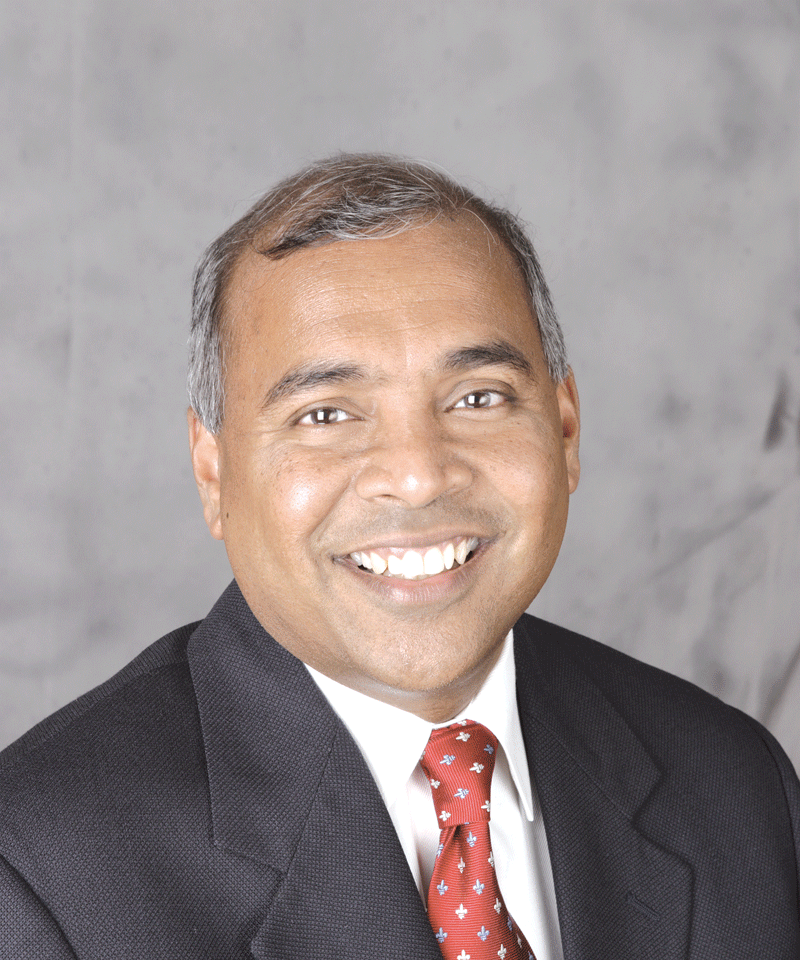
Cover Story
Human Resources Unlimited Has Been Supplying It for 40 Years
Cover October 25, 2010

Cover October 25, 2010

For four decades, Human Resources Unlimited has been debunking myths about people with disabilities and helping such individuals become part of the local workforce. As the agency marks its milestone, it reflects on a solid track record of success, but, more importantly, looks ahead, toward developing strategies for doing what it does even better.
Like many people across Western Mass., John Gullotti is looking for work — and not having much luck finding it.
But unlike most of those perusing the want ads and sending résumés to companies across the region, Gullotti is confronting much more than a lingering recession and wariness among many employees to make additions to the workforce as he carries out his search.
For starters, he’s hindered by a résumé that shouts that he is overqualified for some of the entry-level, minimum-wage positions he’s seeking; he has a bachelor’s degree and experience, some of it in management, with many national retailers. And then, there’s the 12-year gap on that résumé, which includes a five-year span during which he was simply too afraid to leave the house.
That fear was a byproduct of the deep depression and paranoia that Gullotti was diagnosed with years ago, and has been battling ever since.
And maybe because of his progress in that fight, especially in recent years, Gullotti has something in abundance that many job seekers have all but run out of: hope.
His large supply of that commodity comes mostly through his association with Human Resources Unlimited (HRU) — a private, nonprofit agency — and, more specifically, a program, or facility, called Lighthouse. There, Gullotti and dozens of other developmentally disadvantaged individuals are trying to enter or re-enter the workforce and thus connect with the community around them.
Providing hope and making connections to the community are not the official missions of HRU, but they might as well be, said Don Kozera, its long-time president, noting that, as the agency turns 40, it is not merely celebrating four decades of carrying out those assignments, but also looking ahead, toward creating ways of continuously doing what it does better.
And perhaps what the agency does best, said Kozera, is help debunk many of the myths or misperceptions about people with disabilities, while also helping members like Gullotti realize that they can do things that others say that they can’t, and that they themselves might believe they can’t do.
“It was believed that people with developmental disabilities couldn’t work with equipment or couldn’t work in outside businesses, or could only handle repetitive work, so that became our battle cry,” said Kozera, noting that, over, the years, HRU has accomplished that mission through programs and businesses it has created or acquired, which ranged from a printing shop to a restaurant to a packaging outfit. But it’s also done it by placing members in jobs with area companies.
Created in 1970 to be the vocational training center for Belchertown State School residents and provide employment opportunities for residents of the facility, HRU, known then as the Carval Workshop, has expanded and evolved over the years. It now offers a broad range of services, from assistance for individuals transitioning from public assistance to the workplace to a ‘day habilitation’ program called Pyramid for people with developmental disabilities; from a commercial division known as Custom Packaging to four so-called ‘clubhouses’ (more on that term later) — Lighthouse, Star Light, Forum House, and Trade Winds.
With most all of these programs, there is one common thread that has defined HRU since the beginning — putting people, or members, to work.
Since he first came to Lighthouse, rather reluctantly and with great doubt about whether it would help him in any way, Gullotti has worked in what’s known as a transitional employment (TE) position as a receptionist with the state Department of Mental Health. Later, he worked in a supportive employment position handling calls to First Response from business owners impacted by the massive oil spill in the Gulf of Mexico.
Over the past few months, he has continued his search for independent work, and while he’s had just one actual interview, he remains upbeat and believes that, overall, he’s in a much better place than he was when he first walked in the door at 1401 State St.
“I’m able to deal with different situations that I never could before,” he explained. “Hope … that’s been the strongest piece. I have seen results that, even if they’re small, allow me to push on.”
For this issue, BusinessWest takes an indepth look at HRU as it celebrates its milestone, and, while doing so, weaves in in Gullotti’s thoughts and experiences to show what this agency does and how it does it, and maybe quantify and qualify the sheer power of hope.

Unlimited Potential
Kozera was teaching a little, coaching soccer, and working toward his MBA at American International College when he applied for the job of fiscal director of the Carval Workshop in 1980.
“I saw 120 people sitting around with no work in front of them,” he recalled, “and I thought to myself, ‘I can’t mess this up any more than it already is.’”
So he took the job, while going to school at night — but with the expectation that it would be little more than a line on a resume. Instead, it’s become his life’s work — and very much a work still in progress.
And when one visits ETS Career Services and Custom Packaging, two programs that are essentially the current incarnations of Carval Workshop, there are dozens of people with plenty of work in front of them.
Those initiatives and their growth patterns are emblematic of how HRU has expanded well beyond its humble roots and evolved over 40 years, and especially Kozera’s tenure, which started in 1980.
Today, HRU has several components, including:
• Workforce Alternatives, which helps transition individuals from public assistance to the workplace through job-readiness skills, placement assistance, and ongoing support;
• Pyramid, a ‘day habilitation’ program that provides a caring environment in which individuals with developmental disabilities can enhance their physical, mental, and social competencies;
• ETS (Employment Training Support) Career Services, which provides individuals who are disadvantaged or have developmental or other disabilities with opportunities to increase their vocational skills and find meaningful work. Participants handle work ranging from light assembly to sorting gift cards bound for the Final Markdown;
• Custom Packaging, HRU’s commercial division that provides customers, including Olympic Manufacturing and other area employers, with services including hand assembly, heat sealing, shrinkwrapping, folding, collating, and mailing; and
• The four clubhouses, which help transition members, who join on a volunteer basis, to meaningful employment and, hopefully, independent employment.
Kozera said he doesn’t particularly like the word ‘clubhouse’ — he believes it conjures up images of children in tree forts — but he certainly likes the results these facilities have generated over the past half-century, and especially since they became part of the landscape in Western Mass.
The clubhouse model provides members with a supportive environment where they can get assistance with transitioning into the workplace or back into school as well as increasing their participation in the community.
Members work with staff to operate the clubhouse, said Kozera, adding that activities are designed to help members develop and hone critical vocational skills needed to succeed in the workplace. The facilities then help members transfer the skills and capabilities learned at the clubhouse to real jobs in the community. Over the years and decades, a number of area companies have stepped forward to provide such jobs.
That list of more than 120 business partners includes large regional or national retail chains, such Big Y, Friendly’s, CVS, A.J. Wright, Burger King, and others, but also such wide-ranging local businesses as WGBY and Berkshire Service Experts.
Each member of a clubhouse receives a comprehensive vocational assessment that identifies training and job-placement priorities, as well as preferences. Members are also provided with career counseling, interview-skills training, résumé writing, and job-search assistance, as needed.
Once a member is placed in a transitional or competitive employment job, clubhouse staff members continue to provide ongoing support for work-related and personal issues, said Kozera, adding that the goal with most members is to move them into independent employment after a specified period.
It was into this world that Gullotti walked about 18 months ago.

Seeing the Light
He told BusinessWest that it was his therapist who first suggested that he become a member of Lighthouse, thinking that its group setting would help him gain the needed confidence and inspiration needed to move his life forward and gain meaningful employment.
Gullotti agreed to give it a try, but did not share his therapist’s optimism, to say the least.
“I remember that my first impression of the place was that I couldn’t wait to see my therapist again and tell him that I thought he needed more help than I did,” said Gullotti with a laugh, adding quickly that with each visit he was getting more comfortable, while also learning and gaining inspiration from those around him.
Jeff Trant, program director at Lighthouse and Gullotti’s mentor since the day he walked in the door, said he is representative of the people who come to that facility — but also atypical in at least one respect: he wants to work, to be independent.
“He wants to get off of disability benefits,” Trant explained. “Many people are so polarized, they’re afraid that if they go back to work they’ll lose those benefits. John doesn’t want them; he wants to be independent and self-sufficient, and that’s an anomaly these days, because we have such a disability-entitlement culture.”
But it took Gullotti several weeks to get comfortable at Lighthouse, said Trant, adding that, at the beginning, he was overwhelmed by the situation he found himself in, and, in most all ways, simply not ready to join the workforce.
“It took a while for him to get really get comfortable, but once he got past that threshold and over that barrier of going into this place called Lighthouse, he found it extremely liberating,” said Trant. “You could almost see him relax once he got in and saw what this place was.”
A seminal moment in Gullotti’s progression came roughly a month after he arrived, when he was given a transitional employment assignment with the Department of Mental Health as a administrative assistant and receptionist. This was another transition that had some rough moments, but eventually, as he did with Lighthouse, Gullotti found a comfort zone and made it progressively larger.
“I remember having some impromptu counseling sessions with John in the early days when he would come back in tears,” said Trant. “He was so emotionally overwhelmed, and his confidence and his self-perception were so low that he didn’t think he was worthy and able to work.
“But very slowly, as he found his office colleagues were supportive and receptive, he went from doing the simple nuts and bolts of the job — answering the phone, sorting mail, and greeting people as they came in the door — to doing some very high-end projects that some of their more seasoned staffers would handle; he became a go-to person in that organization.”
The confidence he gained at DMH, coupled with ongoing support from family and both staff and members at Lighthouse, gave Gullotti what Trant called the “gusto” to move on to not only the next step employment-wise — a temporary position arranged through Johnson & Hill Staffing handling with Innovations First Notice — but also other platforms through which he could connect with the community.
“Here’s someone who, a few years earlier, wouldn’t leave his room,” said Trant. “Now, John is out speaking in front of Rotary clubs with me. He shares his story of hope and recovery, and he’s spoken in front of groups of more than 100 people. To me, that is so telling about how far he’s come and how much insight he has.”

Forward Thinking
There have been many success stories scripted by Lighthouse and the other clubhouses within HRU, as the walls within Lighthouse attest. There are pictures of members and former members in work settings and wall charts indicating current assignments and who has them.
Moving forward, Kozera said those at HRU want to make this 40th anniversary a time of celebration, obviously, but also a time for introspection, looking at programs, and developing a strategic initiative that will ultimately yield more pictures for the walls and more stories of individual triumph over adversity.
The company has always been focused on continuous improvement and the ‘good to great’ philosophy, said Kozera, but he wants the current milestone to spark an even deeper commitment to reach higher and, ultimately, put more members in jobs and have them thrive in those positions.
“We have a whole new level to get to,” he explained. “We have every accreditation in the world — national, international, state, and we get the highest ratings in all of those. But we don’t feel that we’re even close to the level we need to be at.”
To get to where it wants to go to go, HRU will continue to observe not only similar programs in other parts of the state and the country, but also businesses across myriad sectors and educational institutions, and “steal shamelessly,” as Kozera put it, when it comes to best practices and concepts it can apply.
In other words, the agency intends to be innovative, in the strictest definition of the word.
“Over the years, innovation has rarely been someone creating something brand-new,” he explained. “What they do is, they take a process, product, or system in one industry, and they tweak it and apply it to another system, and all of a sudden, it’s new.
“If you look at the iPhone and the iPad, these are things that are conglomerations of things that already existed; they’re just packaged in a different way,” he continued, adding that he wants HRU to continue innovating in that same fashion, again with the simple, overarching goal of putting people in the workplace.
And to achieve continuous improvement in that realm, Kozera and his staff will be focusing on the two agency’s two core functions — job preparation and job placement.
With regard to the latter, Kozera recently brought in some sales executives and sales-training professionals to work with and motivate those at HRU who are essentially selling job placements to area companies, thus creating opportunities for members like Gullotti.
“Most sales professionals are motivated by money, but the people who end in our industry are motivated by mission,” he explained. “Someone has to tie what your job is to the mission. So what we were able to do is bring in the sales principles, the sales discipline, and the sales structure, but then have individuals who have passion for what they do — because that’s why they’re in this industry and equate that there’s nothing more critical than them making a phone call and ultimately making a sale.
“It doesn’t matter how much you job train,” he continued, “if you don’t have a job waiting for you at the end of your job training.”
Meanwhile, on the job-preparation side of the ledger, HRU is working to make individuals better able to get and keep the jobs sold by the sales team. And at the heart of these efforts will be an initiative to be launched in January called “Changing Habits and Transforming Lives.”
It will take a number of proven principles not typically applied to job training and put them together for that purpose, said Kozera, noting that, collectively, individuals with disabilities mirror society in general, which means that many are obese and do not have the stamina to be employed, while others may lack the work ethic to obtain or keep a position. So HRU will be focused on those areas and others to help members become more workplace-ready.
As just one example, he cited exercise and its ability to help people focus.
“Exercise is really Miracle-Gro for learning,” he explained. “If you have an exercise routine, for up to four hours after that routine, you have the ability to take in information better, faster, quicker.
“There are schools around the country that are implementing this,” he continued. “I traveled to Naperville, Ill., and visited a school where they’re not cutting gym, like everyone else; they’re looking to expand it. Now, whatever your hardest subject is, you have gym right before that. And the results are amazing.”
The challenge for HRU will be to take some of these proven methods and repackage them to benefit members and meet the agency’s primary mission to get people employed, he told BusinessWest.
“The bottom line is get people to fit in,” he concluded, stating HRU’s reason for being in still another way. “That’s the number-one issue to getting people employed and keeping them employed — they get along with others, and they fit in.”

Getting the Message
As part of its 40th-anniversary celebration, HRU will stage a breakfast at the Sheraton in downtown Springfield on Oct. 26. The keynote speaker will be Troy Brown, former New England Patriots wide receiver and integral part of three Super Bowl-winning teams.
His talk is expected to center around his ability to defy the odds and rise to stardom in the NFL when few thought he would.
That message should resonate with an audience of HRU administrators, staff members, business partners, and business and civic leaders, who have helped enable the agency to permit others to beat long odds against them.
People like John Gullotti, who both understand and help create the power of hope.

George O’Brien can be reached
at [email protected]
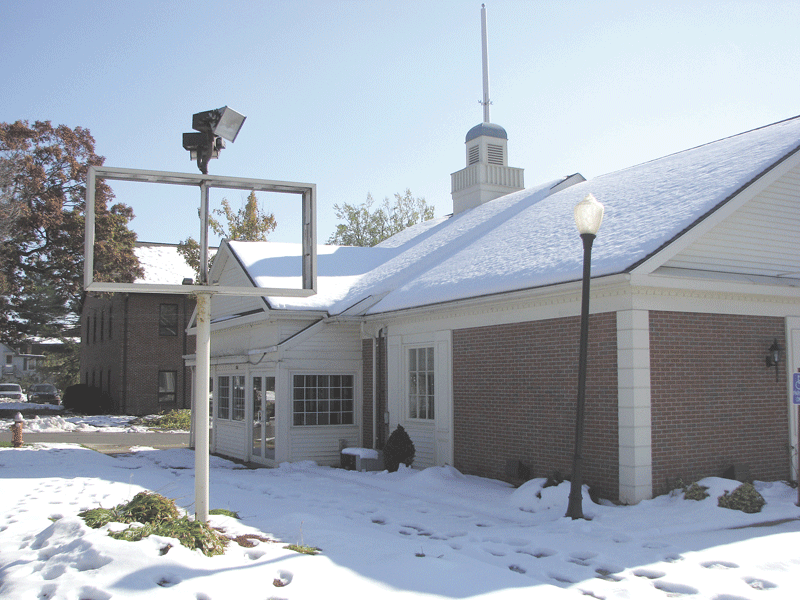
Cover Story
Casinos — and a Town — Are in Limbo

Cover October 11, 2010

Cover October 11, 2010

Town Council President Paul Burns says a proposed $1 billion casino casts a big shadow over the town of Palmer, a very big shadow. And this makes the current stalemate on the issue of gaming on Beacon Hill quite frustrating to those who support the initiative and the jobs and tax revenue it will generate. In some respects, the Palmer casino is closer to reality than ever, but in others, resolution of the matter still seems far off amid questions about who will be leading the state come January and whether he can broker a Palmer-friendly casino deal. Ultimately, many believe casinos are simply too big to fail in the Bay State.

“Hopeful frustration.”
That’s the phrase Paul Burns summoned, after a few moments of careful consideration, to describe his mindset these days, a few months after gaming legislation that seemed destined to pass in Boston fell by the wayside instead.
Failure on the part of the governor and Legislature to seal a deal on casinos has left gaming — and the town of Palmer, which Burns serves as town councilor — in a serious state of limbo, one where Mohegan Sun’s plans to build a $1 billion resort casino on a hillside parcel just off the Mass. Turnpike are agonizingly close to becoming reality, yet, in some ways, no closer than they were years ago.
That’s where the frustration comes in.
As for ‘hopeful,’ well, Burns, like many others in this town who support gaming, believes that casinos are essentially too big to fail in the Bay State, and that common sense dictates that if several casinos are approved — or even one — Palmer is the state’s first, best choice.
“It was very frustrating to watch the process — I couldn’t understand why the three groups couldn’t get together on this,” said Burns, noting that he’s become an unofficial spokesperson for supporters of a casino, although he stressed repeatedly that he speaks for himself, not the nine-member Town Council as a whole. “But at the end of the day, I think common sense will prevail and this will get done.”
Whether casinos are indeed too big to fail is still a matter for debate, but there’s no debating that the proposed facility in Palmer is a nearly all-consuming matter there, where the assessor’s office estimates that a casino on the scale being planned could bring the town more than $15 million in total tax revenues annually, nearly double the amount collected now. Meanwhile, there are estimates that the casino will create more than 3,000 jobs (not to mention 1,500 temporary construction jobs) and spur more ancillary economic development, and it will certainly change the landscape of the community in just about every way that word can be defined.
“Let’s just say it casts a very big shadow,” said Burns, noting that, while things haven’t ground to a halt while the gaming issue plays itself out, much of what happens in this town business- and economic-development-wise will be impacted by whether the casino becomes reality. “I want to see a casino project, but everyone wants to see a resolution to this matter.”
These are indeed frustrating, anxious times for Palmer. It has been 14 years, by Burns’ count, since the issue of a casino was first raised here. Over the past few years, gaming bills have come increasingly closer to passage, but have never made it to fruition. In late June, things came apart in an almost maddening way, as Gov. Deval Patrick and leaders of the state House and Senate could not reconcile their differences over how many slot parlors, or ‘racinos,’ as they’re called, the state should license, scuttling legislation that most in Palmer and elsewhere thought would pass — in some form.
Now, there is optimism that a measure can be passed next year or even this fall. But there are also nagging questions, especially about who will be governor come January and what that individual’s mindset will be when it comes to gaming.
Republican candidate Charles Baker has said publicly that he supports one casino to start to see how gaming and the Commonwealth suit one another. If Baker prevails in November, and sticks to that plan, will Palmer be the chosen site?
For this issue, BusinessWest examines the mood in Palmer and the thought processes moving forward as the elephant in the room that is casino gambling grows ever larger in stature.

High-stakes Proposition
It’s called Nostalgia Day.
That’s the name given to the annual community get-together in Palmer that marked its fifth year on Sept. 18. Once staged on Main Street, the event was moved a few years ago to Legion Field behind Converse Middle School. Nostalgia Day pays homage to the community’s past, especially its status as a rail hub; this is known as the ‘Town of Seven Railroads.’ This year, the event included everything from narrated trolley rides to a Wiffle ball tournament to entertainment ranging from polka music to a tribute to Fleetwood Mac.
While taking part in all those things, attendees were also talking about the casino, said Robert Young, president of K.E.Y. Property Services and also president of something called Palmer Businesses for a Palmer Casino. “And they were letting some anger out.”
“The frustration was palpable,” said Young as he described the general mood, at least among casino backers, and they are, according to most all assessments, in the majority in this community. “The issue’s not dead; it’s not moving forward, and it’s not moving backward. It’s in limbo.”
In some ways, it’s always been in that state. Palmer passed a resolution supporting a casino within its borders several years ago, and in 2007, the proposal for Mohegan Sun’s $1 billion facility — complete with a 164,000-square-foot casino, a 600-room hotel, 12 restaurants, and 100,000 square feet of retail space — took shape.
For the past several years, casinos have been the subject of debate on Beacon Hill, with the Palmer facility always taking prominence as one of the lead proposals and essentially the Western Mass. option. Over the past few years, gaming measures have been gaining momentum as the state’s fiscal situation has worsened and the need for additional revenue has risen.
Indeed, in previous years, the players in Boston never really came close to passing a measure, but earlier this past spring, Patrick, House Speaker Robert DeLeo, and Senate President Therese Murray were seemingly united in their support for some form of gaming measure.
They just couldn’t agree on the final details, especially those concerning the number of racinos, and once again, the clock ran out on the legislative session.
There is some speculation that the Legislature may return to session and vote on a casino bill this fall, but most consider it more likely that the issue will play itself out again next spring and summer, when there may be a new governor and several new legislators in office.
So this leaves casino backers watching, reading, assessing, and, well, weighing the odds.
Late last month, they read about the New England Gaming Summit, staged in Mohegan, Conn., where Mohegan Sun officials reaffirmed their commitment to a project in Massachusetts — and Palmer. “When Massachusetts is ready, we will be ready,” said Mitchell Grossinger Etess, the company’s president and CEO.
They’ve also read that, while more casinos are being proposed in the states surrounding Massachusetts, and the sector suffers through the effects of the Great Recession, the gaming industry remains bullish on New England, and Mohegan Sun is still focused on the Town of Seven Railroads.
“Palmer is without question the premier site for a casino resort in the Commonwealth,” Etess told the Gaming News late last month. “More than 11 million adults are within two hours of Palmer throughout New York and New England. Its central location makes it ideal to draw significant out-of-state traffic.”
While these signs look positive for casino backers, so, too do many of the comments from those now in the Legislature — and those who wish to unseat them in the November general election, said Leon Dragone, president of the Northeast Resort Group, which owns the proposed casino property and leases it to Mohegan Sun.
“I’ve been watching the legislative contests, from Cape Cod westward,” he said, “and almost everyone running is for casinos; no one is running away from this issue.”
Meanwhile, area legislators, as well as some from outside this region, seem to favor one of the resort casinos being located in Western Mass., said Dragone, adding that such strong support is a relatively new phenomenon and another reason to remain optimistic about the prospects for a Palmer casino.

A Winning Hand?
But while many signs seems to be pointing in the right direction, there are still a number of hurdles to clear and certainly no assurances that last summer’s close call will translate into triumph when the matter comes to the Legislature again.
And this is where much of the current frustration surfaces in Palmer, said Burns, noting that, to many, the casino has become Palmer’s best hope for economic revival after a prolonged slide during which most of the town’s manufacturing plants have closed down or moved out. And there really isn’t a plan B, or at least one that’s being given any real consideration until the casino mattered is settled — somehow.
“In the back of my mind, and for the sake of the town, I have to at least be prepared to say at some point, ‘if this doesn’t happen, what’s next?’” he told BusinessWest. “If it gets to that point, then I guess we’ve failed, and after two or three years of really hard work, that’ll be tough to deal with. But hopefully, we don’t wind up at that point.
“And if it doesn’t come here, the next steps are a little less clear,” he continued. “This helps to solve a lot of economic issues in one swoop. Without something of this magnitude, you’ve got to build in much smaller pieces; you’re not going to have someone come in and pay $9 million a year in property taxes — it’s going to take an awful lot of smaller entities to make up that difference.”
Young agreed. He said he’s watched a number of manufacturing facilities close or move, and only a fraction of the jobs lost have been replaced. The Monson Developmental Center, which is located in Palmer and employs several hundred people, is slated to be closed by the state in 2013, further reducing the base of jobs in the Quaboag area.
“We have to do something to create jobs here,” he said, “and a casino is easily our best option. People are losing their livelihoods here in Palmer, and that’s why this issue becomes extremely important.”
Moving forward, the main priority for Palmer casino backers is to stay visible, especially with regard to lawmakers, and drive home the point that the town intends to remain a prominent player in this realm.
“We’re trying to keep ourselves in the media so the focus stays on Palmer,” said Burns, “and people don’t assume we’ve given up or gone away.”
Young agreed, and said Palmer Businesses for a Palmer Casino is keeping the town’s name, intentions, and status as what he called “the frontrunner” in the casino race in front of people.
“We’re keeping the word alive,” he said, “that this bill is not dead, that Palmer and the business community are still active in pursuing this, and that most people in this town want this to happen.”
Meanwhile, Burns said he’s watching the governor’s race closely and knows who he’ll be voting for, although he’s not saying. He did say that this race poses some tricky questions for casino backers, and an atmosphere where it will be unlikely if individuals or groups like Palmer Businesses for a Palmer Casino will endorse either of the frontrunners, Patrick or Baker.
The latter is a somewhat unknown quantity on this issue, so he is somewhat of a wild card, said Burns. But Patrick, while he supports more resort casinos and essentially authored the legislation that came so close to passing, also gets most of the blame for the demise of this year’s effort.
“How can you go out and support the governor who killed the casino in Palmer?” asked Burns, referring to this year’s close call. “Still, you don’t want to tick off anyone; we need to be able to communicate with whoever ends up becoming governor in January.”
Sizing up the current state in Palmer, at least among casino backers, Burns again came back to that phrase ‘hopeful frustration,’ and said that mindset will likely remain until there is reason to lose either of those two words.
“There’s a sense in Palmer that this is still coming here,” he said. “We may be deluding ourselves, I don’t know; we understand it’s a process and there’s a lot to this process that still has to happen, but we’re hopeful this will work out for us.”

Still on Track?
Mohegan Sun officials have unveiled a new architect’s rendering of the planned Palmer casino. The new concept pays homage to the Town of Seven Railroads by incorporating what looks like a rail trestle into the design of the complex.
Whether this latest rendering actually moves off the drawing board and onto the hill just off exit 8 of the turnpike remains to be seen. Amid the myriad questions still to be answered, there is optimism among casino backers and that aforementioned hopeful frustration.
It may well be at least another nine or 10 months before they know for sure, but casino backers like Burns believe Palmer can and will eventually come out from under that shadow.

George O’Brien can be reached
at [email protected]

Cover Story
A New Potential Developer, Renewed Optimism for State School Site

Cover August 30, 2010

Cover August 30, 2010

To date, efforts to redevelop the former Belchertown State School property have been met with only frustration and some embarrassing moments — the last lead development team bounced a check on the town as it proceeded with initial steps in the process. But there is renewed, if cautious optimism as another outfit, Pennsylvania-based Weston Solutions, goes through the due diligence process on the challenged but opportunity-laden property. Said a Weston executive: “Let’s look at the canvas, see what we’ve got. Then we can figure out what brushes and paint we want to use, and then we move forward.”

Bill Terry made a show of knocking on his wooden conference table when introducing the latest unfolding chapter in the redevelopment of the former Belchertown State School property.
Perhaps he did so because, after more than a decade of stalled or failed plans, the Belchertown Economic Development and Industrial Corp. (BEDIC), current owner of the site, may have finally found the right people for the right job.
And that’s on both sides of the negotiating table.
Terry is the chair of the BEDIC, and he said Weston Solutions, a Pennsylvania-based remediation and redevelopment firm signed a letter of interest this past July, giving it full rein over all past documents, research, and findings from the BEDIC.
That letter of interest begins a relationship between town officials and the employee-owned Weston, and while the process of due diligence is carefully underway, both sides expressed reserved, and not-so-reserved, enthusiasm.
One of the Weston officials on the site these days is Valarie Ferro, senior technical director for the Northeast Division. She told BusinessWest that “there are many fine assets to the property.
“Yes, there’s contamination there,” she continued. “But hospitals are not a new thing to us. We’ve looked at many, and were involved in a couple in various roles. When we walked onto the Belchertown property for the first time, we had a pretty good idea of what the project might entail, and when we got here, it was, ‘yup. That’s what we thought.’”
And that’s the attitude that has local officials betraying their reservations on the potential for redevelopment of the property. A 50-year-old firm with a long and successful history, Weston is no stranger to projects of this magnitude and degree of difficulty.
Weston now has 90 days to assess the property and the scope of the job. The BEDIC, meanwhile, also has 90 days of due diligence on Weston to see if its capabilities and track record are in line with the town’s master plan.
Terry acknowledged that, thus far, he is “reservedly excited.”
“They didn’t just come in and say, ‘we’re interested; we heard about this property from a developer,’” he said. “Their approach is, let’s crawl before we walk, and let’s walk before we run, and make sure that there is a good fit here for all parties involved.”
While others have come before and failed, Weston Solutions is not, as Terry said, “just some guy out of the wooly West who says he’s a developer. This company, they know what they’re doing.”
The halfway point for both parties’ pro forma on this job hasn’t yet been reached. But in separate conversations with BusinessWest, the hope for all involved is to no longer knock on wood when talking about the future of the Belchertown State School.

Strength in Numbers
The last time a developer took on the prospect of repurposing the Belchertown property, a grand resort and spa was envisioned for the remaining buildings and land at the state school, comprising just under 100 acres. Famously, the developer bounced the deposit check for the job, and the BEDIC found itself bounced back to square one — no development, a blighted property, and scant opportunity for a project to move forward.
But that’s history, and what is unfolding has those involved far more excited about prospects in tune with the community.
The details at this stage of Weston Solutions’ examination of the property is purely within the realm of speculation, but Terry allowed himself optimism when expounding on the current players involved on both sides of the property’s negotiations.
For starters, Belchertown has a crack team in its court, and Terry said that, going forward, it’s not now just him and his colleagues, all of whom have full-time jobs in addition to their role with the BEDIC. “We on the board have talents,” he explained, not diminishing whatsoever the solid work he and his colleagues have accomplished over the years, “but it is good to have these professionals in our camp.”
Among those professionals is MassDevelopment, with whom the BEDIC has been in collaboration since this past May. That signed memorandum of agreement, Terry said, puts all the resources of the state agency into play for the Belchertown property.
“These are dedicated professional real-estate people and engineers — big players,” he continued. “We need only write out a request for service, provide some sort of budget, and they get right to work.”
In addition, the town’s state legislators are all on board with any and all help that can be garnered from Beacon Hill, and Terry singled out Sens. Stan Rosenberg and Gale Candaras, and State Reps. Tom Petrolati and Stephen Kulik.
“It’s finally the time where we have the right team assembled to make this happen,” he said.

Finding a Solution
Of course, those players are an important step in maneuvering the Belchertown project toward a positive outcome. But an ace team alone doesn’t get a project of this size and scope closer to a finished product.
Weston’s history of engineering, procurement, property remediation, and development spans several countries and countless properties that were in far worse shape than the Belchertown site. From complex wetland locations to defunct chemical plants, Weston has a stated goal of “zero tolerance for unethical behavior” while working within communities.
Ferro quoted her company’s logo at the beginning of her conversation with BusinessWest: “The trusted integrator for sustainable solutions.”
“We do integrate, we pull it all together,” she explained, “but before that, we sort it all out. It’s an art, and it’s a science, and it’s an art and science at the same time. That’s where developers stumble with blighted or underutilized assets. There are just so many components to these projects.”
Like the team assembled by the BEDIC, Weston has mobilized its own bevy of seasoned professionals. At the Belchertown property that day, Ferro, who has a background in redevelopment planning and community planning, said that in addition to herself, there are three others with specialized interests.
A green deconstruction expert, “not just a landfill expert, but someone who knows how to safely and successfully repurpose any material,” she explained, was on hand along with Weston’s LEED-licensed site professional, to evaluate the environmental aspect. Rounding out the team was the LEED green-development expert, who also happens to be leading Weston’s Northeast efforts in a green-roof technology company it owns.
“That’s just three of maybe four or five other components that we have to sort together,” she emphasized.
When asked about the complexities of the Belchertown site, Ferro said, “by and large we are attracted to challenges. The projects we take on, and are successful at, are where others have failed before us. Or they were just not interested because of the inherent difficulties.”
In addition to all those difficulties, however, is a site that she said comes with just as many, if not more, attributes. She described the brick buildings as “stately,” but it’s the landscape that holds more promise than other projects Weston has overseen.
“The rolling topography, the views, the fact that it’s also a very valuable critical mass of land … you don’t know how much we struggle when working in urban environments, and we have to cobble together eight or 10 property owners just to sew together three acres. Here, we have a great big glob of land, and the surrounding land use is compatible.”
That was a word often repeated in her conversation, and in which lies a core value for Weston Solutions. She said that’s a major difference between her firm and a more traditional property developer, which customarily has a book of clients and end users for projects of this size.
“For us, we might want it, whatever it is,” she said of potential use at the site, “but if it’s not compatible with the town, or consistent with our core values, then we don’t pursue it. We just don’t go there.
“And that’s why, frankly, there’s not a lot of talk up front for us right now,” she continued, “because we’re just trying to understand what the context is — both the town and the property. What’s our canvas? Let’s look at the canvas, see what we’ve got. Then we can figure out what brushes and paint we want to use, and then we move forward.”
That canvas, however, has some underpainting already.
When asked if Weston has been given an understanding on issues of core importance for the BEDIC, town hall, and the voting population of Belchertown, Terry stated unequivocally, “absolutely.”
“They have our master development plan, and they have the 43D plan,” Terry said, referring to the site work made possible through MassDevelopment. “Not only that, we’ve verbally told them what is important to us. We told them we’re not building a new town center here. We’re not being disrespectful, but there are clear things that the community wants and doesn’t want.
“Our development plan says no big-box stores,” he added. “Nothing against ‘Wally World,’ we all go there, but we’re not a community that wants them. Weston knows that too, and knows that we won’t entertain that idea. That could have happened years ago, but we didn’t want it.”

Sense Break
Looking ahead, Terry said the BEDIC has some clear hopes for what might unfold at the state school property. As a town resident with roots that trace back to the earliest settlers, he said that it is important for him, and many others, to keep that intergenerational component in Belchertown.
To accomplish that, he sees health and wellness, specifically assisted living, as a good use for some of the property. He cited a similar project in Ludlow that had designs on full occupancy five years after construction, but successfully met capacity in two.
Belchertown, he maintains, is a middle-class community with good schools and a strong commitment to public services. In keeping with that tradition, he said, is the need to “take care of mom and dad.”
An assisted-living developer has expressed interest in parts of the property for several years, he continued, but has lacked the resources to tackle anything beyond his own slice of real estate.
To further substantiate the possibility of a successful market for that style of development, he noted that several other assisted-living builders have looked at the site and weighed in with their own vote of confidence and an interest in buildable property.
In a separate conversation, Ferro brought up a similar train of thought, giving evidence to her prior comments on collaboration. Weston has looked at the conceptuals for wellness and assisted-living development on the property, and while one of the things it is doing during this period is “going with their gut feelings and considerable contacts,” she agreed with that facet to Terry’s vision.
“I really am attracted to their idea of inter-generational living,” she said. “Right next door there’s the police station, the teen center, and maybe some of this can be expanded so that it represents Belchertown as a whole. I think there’s real potential there.”
But again, she tempered her enthusiasm with restraint. “I think we all wish there was a CliffsNotes on what to do about the Belchertown property. We’re sorting through an enormous amount of information and just literally sopping it up like sponges.”
Just like everyone working on both sides of the project, however, restraint gave way to hope. “My gut feeling is that, seeing what’s there, there is potential to pull this off,” she said.
From his office in Springfield, Terry echoed that sentiment.
“We’re conservatively excited,” he said again. “It’s going to take a lot of care, but it seems like we’re working with the right folks, and this is the best shot we have had since I’ve been on the board.”
Noticeably, he didn’t knock on wood this time. n

Cover Story
This Chamber Official Is Fond of Summit Meetings

Cover August 16, 2010

Cover August 16, 2010

Russ Denver has a number of vivid memories from his ascent last December to base camp at Mount Everest, some 17,500 or so feet above sea level.
One is of his first look at the glacier on which base camp sits, positioned between mountains on three sides. “You look out over the glacier and you see what looks like ocean waves, but they’re frozen at their peak height; it was very cool to be able to see that.”
An even more poignant sight came at the 15,000-foot level, when, after clearing a rise, Denver, president of the Affiliated Chambers of Commerce of Greater Springfield, and the other members of his party came across a collection of stone memorials to individuals who dared to climb to the top of the world’s highest peak — and died trying.
“There were maybe 100 of them, and they were all man-made,” he said, noting that this number alone was enough to give him pause. “Some were more sophisticated than others; they had interesting or funny inscriptions in the stones, like ‘he came, he saw, he didn’t conquer,’ or ‘it was always his dream to climb Everest, and he died trying to fulfill his dream.’
“It certainly made you aware of the dangers of what you were doing,” he continued, adding quickly that there are few, if any, fatalities among those whose goal is base camp, which is a little more than halfway to the summit, some 29,002 feet into the sky. But a good number don’t get that far, he went on, noting that he saw several people helicoptered out with extreme altitude sickness, broken bones from falls, and other maladies.
Denver made it to base camp — although he lost 21 pounds over the 18-day excursion (“it took me six months to gain it all back”) — giving him two major triumphs in what has become an intriguing new hobby, one that has given him more than stories to tell and photos to show (more on that later). The other came at Africa’s Mount Kilimanjaro, which he scaled in 2008.
And there are two more scheduled — Mount Elbris in Russia (18,800 feet) for early next year, and Mount Aconcagua in Argentina (21,000 feet) for late 2011. Doing two in one year — a feat made possible by the fact that it will be summer in South America in December — will be taxing on the body and the schedule, but Denver feels he can handle it.
He told BusinessWest that, as might be expected, there is a great sense of satisfaction that comes with reaching one’s goal on such peaks; one trains for months to get in proper shape, and there are many sacrifices that come with getting ready and hardships during the climbs, or what are technically known as ‘hikes.’
Things are a little different with his day job. For a chamber of commerce director, especially one based in a city with as many challenges as Springfield, the work is never really finished, and the triumphs are few and certainly not as definitive as reaching the summit of Kilimanjaro.
The victories are usually much smaller, and some of them don’t even get noticed by most business owners, he said, citing as one example success with tax classification in communities such as East Longmeadow, and keeping the commercial rates as low as possible.
“We have one business owner who’s been a member in East Longmeadow since 1963,” said Denver, who worked for the Springfield chamber for several years before joining a local law firm and then eventually returning to lead the ACCGS. “We’ve worked for years to keep a single tax rate in that town, and we’ve saved him $8,000 a year on his property. He said, ‘I never knew you guys did things like that.’ That’s because it’s behind-the-scenes work, like so much of what we do.”
As for Springfield’s future, Denver, whose 14-year tenure at the helm of ACCGS coincides with one of the most challenging periods in the city’s history, takes that optimistic, glass-half-full attitude that seems part of his job description. He said that things are looking up for the City of Homes in terms of recovery from its steep descent, but plenty of challenges remain, with everything from poverty and all that goes with it to convincing companies to look beyond current demographics and ultimately choose to locate or expand in Springfield.
For this, the latest installment of its Profiles in Business series, BusinessWest talked with Denver about everything from scaling one of the world’s tallest mountains to the role of the chamber of commerce in today’s business community. He had plenty to say about a host of topics.

Positive Steps
Denver said that while he’s always been interested in sports and staying fit — “I work out like crazy” — hiking some of the world’s tallest peaks was something he would never have considered even a few years ago.
Indeed, he came to this pastime in a rather roundabout fashion. It started, he told BusinessWest, with something called the HAM, or the Hike Across Maryland. He heard about it from a friend and former chamber colleague, and decided to take part in the 40-mile, one-day trek along the Appalachian Trail.
“The first year, I did it in 13 and a half hours, and I’ve gotten it down to 11:45,” he said. “That’s moving! We start at the Maryland-Pennsylvania border and finish up by crossing the Potomac River and then going on to Harper’s Ferry, West Virginia; it’s a fun event, and you meet a lot of interesting people along the way because you don’t walk with the same people all day.”
One of the people Denver encountered during the 2007 trek was a woman, a lawyer who had recently returned from scaling Kilimanjaro. “She said that if I could do the HAM, I could do Kilimanjaro, so the very next day, after getting back from the HAM, I started doing some research.”
Denver eventually talked a few local business people into making the hike with him, and the three made the trek in the summer of 2008. “I fell in love with it, and said, ‘OK, what’s my next adventure?’ I determined that I was in good enough shape to make the hike up to base camp at Mount Everest.”
That odyssey, completed early last December, like the Kilimanjaro hike before it, gave Denver what he called “new and different perspective” on life and an appreciation for what he and most Americans take for granted.
“One of the things that strikes you when you travel to unusual places like this is that poverty is a very subjective phrase,” he said. “You see people living with just a pipe sticking out of the ground — there’s no running water. When we were Tanzania, we saw people in thatched homes, and in Nepal, the higher up you went, people lived without electricity — the only heat was from a stove heated with yak dung.
“Another amazing thing is all the different ways people find to make a living,” he continued. “In Nepal, there were 15-year-old boys carrying 40 pounds of goods on their backs delivering things from village to village because there’s no infrastructure.”
Like his treks up mountains, Denver’s career path has also featured a number of interesting twists and turns.
He started out as the aide to the City Council in Springfield, a job he held from 1980 to 1984. In that role, he was responsible for handling committee meetings, requests from constituents, requests from councilors, writing press releases, and other matters. He described it as a good learning experience, one that gave him considerable insight into how local government works.
He took that experience to his next stop, as the first full-time administrative assistant to the Board of Selectmen (now known as town manager) in Longmeadow, a position he kept for the next five years. He then went to work for the Springfield Chamber of Commerce and then-Director Jim Shriver, and attended Western New College School of Law at night.
He took his juris doctor and worked for the Springfield-based firm Robinson Donovan Madden & Barry (now Robinson Donovan) for four years, before putting his name into consideration to succeed Shriver in 1996.
“I loved the law,” he told BusinessWest, “but the opportunity to run a large chamber, be involved in economic development, and have a dramatic impact on a region as an organization was something too big to pass up.”

Getting Down to Business
While he’s in a different profession, Denver says he’s putting his law degree to good use at the chamber.
“I use it almost every day here,” he said, “while interpreting legislation and working on local zoning and municipal ordinances, HR issues that require legal interpretation, and, as lead tenant [in the economic development offices at TD Bank], drafting and interpreting subleases. There’s a lot of use of my legal background.”
Many of these duties fall into that broad behind-the-scenes category that Denver described, which constitutes much of what happens at the chamber and also defines much of its relative worth to members. Putting things another way, Denver, when asked to delineate the value chambers (and especially this one) provide to members, said, “we’ve got your back.”
Elaborating, he summoned the chamber’s mission, “to create a positive business environment for businesses to start, grow, and prosper,” and said this is work he and others in the organization take very seriously — and that many in the business community may not know about, or appreciate, until they need it.
“There’s legislative work we do on specific matters of importance to the business community,” he said as he started listing chamber initiatives. “There are also the 15 to 20 businesses a week that I help out of jams, like people who need additional financing and don’t know where to turn, referrals for banks, people who want to open a restaurant and say, ‘how do I get started?’ and others who want to be hooked up with commercial real-estate people because they want to expand in Springfield.
“It’s these and many other things that seem mundane, but are very important to many individual businesses,” he continued. “I could help 20 to 30 people a week, and the staff people can help another 20 to 30, because they’re out there; people are so busy running their companies they don’t know what resources are out there.”
As for Springfield itself, Denver said demographic evolution, especially with regard to how many residents are at or below the poverty line, has changed the city’s fortunes, and, unless trends are reversed, they will likely hinder its progress moving forward.
“Over the past 10 or 12 years, Springfield has become much poorer, and many people don’t understand that this has a dramatic impact on economic development,” he explained, adding that the Urban Land Institute, in its comprehensive analysis of the city, strongly recommended steps to help reverse this pattern and improve the income demographic to attract more business. And the chamber is committed to following that advice.
“Companies will call that might be interested in the Springfield market because of its size,” Denver continued. “And then you share with them the income demographic for Springfield proper, and that does not put the city first on their list of places, so they may wind up in West Springfield or Wilbraham, so they can get the population size, but they draw a wealthier income demographic.”
Meanwhile, another problem is the educational demographics for the city, he said, adding that once — and not too long ago — the city could boast that a well-educated workforce. “That is not the case anymore.”
And education is just one of many ways that poverty directly and indirectly impacts economic-development efforts, he said, adding that, while there are no easy answers to the problem, Springfield has to do something to reduce its concentration of poverty.
From his office in the TD Bank building, Denver looks out on Main Street and, more specifically, Tower Square, which means he’s had a front-row seat from which to observe the changes that have come to downtown over the past 10 to 15 years.
Noting the sharp decline of the retail base in Tower Square — there are only a handful of stores left — and elsewhere, Denver said changing demographics have impacted that sector considerably, but he says other forces are involved, especially the Internet.
“I’m a lawyer, so I know that, in the old days, you had to file everything by paper — with the court system, with the government,” he explained. “Nowadays, everything is done electronically, so you don’t need to be close to a courthouse, because of all the electronic filing.
“If you were to go back 20 years and look at the number of law firms and accounting firms that were located in downtown Springfield, and compare it to today,” he continued, “there’s probably half the number, and that has a huge impact. With fewer professionals downtown, there’s less money downtown, and retailers look at that.
“If you were to take just 10 professional salaries out of downtown, that’s 10 fewer lunches being eaten every day, 10 fewer books being bought every day, it goes on and on and on,” he told BusinessWest. “I think the Internet has a lot to do with Springfield’s problems.”
Looking ahead, Denver said he expects that Springfield will eventually complete the process of converting to what he called an “eds and meds economy,” meaning one fueled mostly by its many colleges and health care facilities. Job growth in both areas will be significant, he said, adding that there will still be a solid base of manufacturing as well as a significant tourism sector.
However, if real growth is to occur, Springfield must take steps to present current and prospective employers with a better-qualified workforce. “We need to increase the graduation rates in Springfield,” he said, then repeated those words for emphasis. “That’s a must.”

Reaching the Top
While talking with BusinessWest, Denver, 53, allowed himself to contemplate retirement for a few moments.
He said he’d like to spend it in the Midwest, preferably working in some capacity for a minor-league baseball team. “I’ll do anything they ask,” he said. “I don’t care if it’s selling tickets, being a landscaper, whatever. I just want to be involved in sports at a lower level, where the players are still trying their absolute best so they can progress to the major leagues.”
With that, he acknowledged that retirement is still quite a ways off — “that will be well into my 60s; I love working.”
In other words, there are still a number of mountains to climb, in a literal sense, and a figurative one as well.

George O’Brien can be reached at [email protected]

Cover Story
Manufacturers’ Collaborative Puts Pieces Together

Cover July 19, 2010

Cover July 19, 2010

It’s called the Pioneer Valley Precision Manufacturing Collaborative, a bold initiative whereby four small area machine shops will market themselves as what amounts to one larger enterprise, one with capabilities ranging from injection molding to the machining of tiny components for medical devices to the production of parts that help NASCAR vehicles go faster. The collaborative is expected to help participating companies gain contracts they couldn’t garner on their own, while also making them better-able to compete on what has become a truly global stage.

Tom Langevin says the idea is to take what he calls “big-company philosophies” and bring them to exponentially smaller businesses.
This is the main motivation behind the Pioneer Valley Precision Manufacturing Collaborative, or what Langevin described as an ambitious pilot program that involves four small area manufacturing outfits: Boulevard Machine & Gear and Thorn Industries, both in Springfield; Mechanical Drive Components Inc. (MDC) in Chicopee; and Creative Machining & Molding Corp. (CMMC) in Westfield.
Each of these companies is successful and profitable, and enjoys a solid reputation in their respective specialties, said Langevin, who takes the title ‘technology innovation application engineer,’ and works for the Regional Employment Board of Hampden County (more on all that later). However, they, like most other small manufacturers in the under-20-employees category, live “day to day,” as he put it, a corporate lifestyle Langevin noted while surveying area companies in his first assignment with the REB as point person for efforts to expand and strengthen the region’s precision-manufacturing sector.
“All of the companies I surveyed really hadn’t planned beyond the current year,” he said. “There were no three-, four-, or five-year plans, meaning marketing plans or engineering-research plans, or anything else,” he explained. “Everyone was in the same predicament; they didn’t really have a business system in place to take them through the next several years.
“It became clear that we needed to come up with a way to help these companies develop a business system that would help them strategically plan for the future,” he continued, adding that the methodology chosen was the collaborative.
It should, in effect, enable the four companies, working in unison, to achieve progress in the key areas of revenue growth and cost reduction that they likely could not accomplish on their own, he explained, adding that, in addition to thinking and acting like bigger companies, those enterprises in the collaborative should be able to generate opportunities generally reserved for much larger corporations.
Chris Araujo, owner of CMMC, a unique outfit that handles both precision manufacturing and injection molding, agrees, and he says he’s not speculating when he talks about the collaborative’s chances for success; he speaks with the voice of experience.
“This is something I’ve done very successfully in my career,” he said of the concept of collaboration. “By bringing together several smaller companies as we have, we can go after work that none of us could go after individually. As a group, as a collaborative, as a much larger entity, we will now be able to be competitive and have the horsepower that a lot of the big companies want.
“Everyone’s reducing supplier bases, and they’re looking for unique opportunities with their suppliers to have them do more,” he continued, adding that the collaborative can accomplish this end. “This gives us a unique opportunity to go after some of the larger aerospace companies, medical companies, and possibly even automotive companies, utilizing not only the assets of four companies but the intelligence of four individual owners to problem-solve and uniquely put together schedules and other details to accomplish very difficult tasks.”
Susan Kasa, owner of Boulevard Machine & Gear, concurred, and said she believes the collaboration represents another manifestation of an emerging trend within the manufacturing sector, one where smaller shops are viewing other players in the sector more as possible partners than competitors to fear and resist.
“I think local business owners have gotten over the hurdle, and no longer look at each other as competitors; we’re starting to look at what we can do to help one another grow and not necessarily be afraid of what we can take from one another in business,” she said while borrowing an industry term — prototype — to describe what the collaborative is or could easily become.
For this issue, BusinessWest takes an indepth look at the Pioneer Valley Precision Manufacturing Collaborative, how it is expected to benefit the participants, and how this model might be emulated by other companies in the region.

Gauging Possibilities
Joe Giffune, owner of MDC, said that, among other things, the company makes parts for the after-market automotive sector, or what he called “speed products,” including horsepower boosters, vacuum pumps, and other parts for NASCAR and National Hot Rod Assoc. vehicles and other customers.
“It’s a fun niche,” he said, adding that, while the company doesn’t deal directly with NASCAR drivers and owners, it serves those who do. “You’ll get calls from people saying, ‘so-and-so’s team needs this part by next weekend … you’ve got to get this done.’ It’s a good talking point; it’s fun to do.”
While the 11-year-old company has done well historically, it has been limited by its small size, relatively tight niches, and that ‘day-to-day’ operating philosophy that Langevin referenced, said Giffune, adding that the opportunity to increase its reach and operate more strategically is what prompted him to jump at the chance to become part of the collaborative.
“He [Langevin] seemed to think our companies had a lot of similar things to bring to the table — skill sets, approaches to the way we do business, approaches to the way we do machining,” Giffune explained, “but also some unique things specific to our businesses. But his perspective is that we were also operating without a strategic plan as individual businesses, and that was a real shortfall — and no one realy disagreed with him on that.
“As a small business you’re caught up in the day-to-day processes of making your debt payments, making your payroll, those sorts of things, and that tends to lead to more short-term thinking,” he continued, “which comes down to getting through a specific time period, be it a day, week, month, or a year, rather than think strategically.”
Giffune’s story is similar in many ways to those of the other participants in the collaborative, said Langevin, a former engineer with Danaher Tool who was hired in May 2009 by the Regional Employment Board as part of the so-called PMRAP (Precision Manufacturing Regional Alliance Project), a multi-faceted initiative involving the REB, UMass Amherst, the Western Mass. Chapter of the National Tooling and Machining Assoc. (WMNTMA), and other parties.
He told BusinessWest that his basic job description is to identify and execute strategies for helping area manufacturers become more competitive and tap new markets. One of his current endeavors involves work with educators at UMass to develop a cryogenic milling process for project machining.
One of his first assignments, however, was to survey WMNTMA members and determine what kind of support they needed. It was during these interviews that he identified a lack of — and need for — longer-term planning, as well as a stronger commitment to continuous improvement.
This is what Langevin calls a big-company philosophy, or ‘lean’ philosophy, and he acknowledged that it is something difficult for smaller companies to embrace and implement because of the resources required to do so.
“You have to develop data, gather data, coordinate data, analyze data, and things of that nature, and that’s hard to do if you’re a mom-and-pop shop with 10 employees,” he explained. “But if you take three or four or five shops and put them together, you can amortize those administrative costs to implementing such a business system.”
The desire to spread the cost and combine resources was the spark for creating the collaborative, said Langevin, adding that several area companies were asked to participate, with Thorn, Boulevard, MDC, and CMMC eventually agreeing to join forces.
They were chosen because they are among the more progressive companies in the area, said Langevin, adding that they are well-managed, have good engineers, are “above water,” as he put it, and, above all, have something to offer each other.
Working together, said Langevin, the companies in the collaborative will be better able to do what he says they need to do to compete in the global marketplace — become what amounts to contract manufacturers focused on the big picture.
“I’ve sat with many companies, and their focus seems to be on how to increase the speed of their machines — that’s where they think their money is,” he explained. “But that’s not really where their money is. We can’t really compete with the rest of the world machine for machine; we can’t compete labor-wise. We have to compete more on services; we have to provide more services to our prime contractors.”

Parts of the Whole
Kasa told BusinessWest that, while Boulevard has a long track record of excellence in its specialty — machining parts for primarily the aerospace industry — she recognized that there were many potential benefits to becoming part of the collaborative.
That’s because the companies involved complement each other and bring different things to the table. This should enable the group to compete effectively for more and bigger contracts from customers that always looking to get more from their suppliers.
“By coming together like this, we can, in effect, corner the market and gain business,” she said, noting that the collaborative will likely enable individual companies to gain pieces of contracts that they could not have garnered otherwise. “We all bring very different things to the table: we have the aerospace certification, Thorn has the medical certification, Creative has the injection molding, and Joe [Giffune] has the commercial market.
“When we pool our facility list,” she continued, “it’s actually quite impressive, but we don’t necessarily have duplicate equipment; we all specialize in such different niches that we feel that, by coming together, we can have a true edge on the market.”
Steve Hicks, co-owner with his father of Thorn Industries, which specializes in machining parts for medical devices, agrees. He said the collaborative enables the four shops to merge in a figurative sense, not a literal one, and, in the process, present themselves in the same way that some of the area’s largest and most successful precision manufacturers, such as Hoppe Tool, Berkshire Industries, and others can, and compete for bigger contracts.
“As part of this collaborative, we can look at some of these big jobs that we couldn’t quote before and identify pieces of the pie that we’d like to work on,” he explained. “One of us can handle the milling, another one the turning, and someone else can handle another aspect of making the part; we can all broaden our horizons.”
Araujo, whose company produces everything from stands for scented candles (CMMC has dozens of manufacturers in that industry on its client list) to components for credit-card readers, has seen several collaborative efforts succeed through a lengthy career in precision manufacturing.
“I’ve done it with automotive, with medical, with gun companies, aerospace, and more,” he said, adding that, through one collaborative effort, he was able to win a contract from Hamilton Sundstrand to make the air-handling system for the Boeing 787.
Echoing Kasa and others, he said that companies that award such large contracts are looking for diversity, but also solid management and especially long-term stability, and these are tangibles and intangibles that most smaller companies can’t boast.
“With the size of these contracts and the number of years involved, they’re looking for very strong companies that are going to be around a long time, with proven backgrounds and opportunities to handle not only their growth but the customer’s growth,” he explained. “As an individual company, you would have to be very large and established to meet those needs. As a collaborative, we can do the same thing.”

End Product
All those participating in the collaborative say time will tell if it can yield the many benefits organizers say it can.
But there is considerable confidence within the various companies that, by coming together in this fashion, the machine shops in question can do far more as a group than they can individually.
In short, they believe they have a working prototype — a prototype for growth and progress.

George O’Brien can be reached at
[email protected]

Cover Story
STCC/UMass Partnership Created to Take Incubator to
the Next Level

COVERart6.10a

COVERart6.10a

Springfield Technical Community College and UMass Amherst have announced a partnership involving the Springfield Incubator in the Scibelli Enterprise Center on the STCC campus. The collaborative effort is expected to breathe new life into a facility that has struggled — due in large part to the economy and the loss of a $500,000 state subsidy — while also increasing the university’s presence in Springfield.

Marla Michel and Ira Rubenzahl were trying — but not ultimately succeeding — in their efforts to come up with a single word to describe what they’re doing with the Scibelli Enterprise Center in the Technology Park at Springfield Technical Community College.
Both thought ‘reinvent’ was too strong a word and, overall, not accurate, since the basic operating model for the facility won’t change appreciably. Also cast aside were ‘reposition’ and ‘rebrand’ — they don’t really tell the whole story, they said — and while Michel appeared to like ‘rejuvenate,’ the two ultimately decided they would need phrases, not a single word, to convey their intentions.
“We’re going to take things to a much higher level,” said Rubenzahl, STCC’s president, as he talked about the Enterprise Center and the Springfield Incubator it houses, home to a few small businesses (clients) and several business-support agencies, and which will now be operated in partnership with UMass Amherst.
Michel, who works for the university as executive director of Strategic Communications and Outreach, and who also now directs the incubator as a shared executive, went further.
“We want this to be the entrepreneurial hub of Western Mass.,” she said, noting that her broad plan is to take the center, which opened a decade ago but has struggled in recent years with declining occupancy, from being a purely mixed-use facility — meaning that it has incubated ventures across many business sectors — to a ‘modified mixed-use’ center, or home to only IT-enabled companies and different kinds of ‘green’ enterprises.
She’ll start with a venture called Texifter, LLC, a spinoff company based on text-analysis research conducted by Stuart Shulman, a professor of Political Science at UMass Amherst. Describing his business in broad, simple terms, Shulman said they are “power tools for language” that, as the company’s contrived name indicates, allow users to sift through text — large amounts of it.
Texifter software and techniques can help government officials, academic and legal researchers, non-governmental organizations, and corporate employees make searching, sorting, and analyzing large numbers of documents far more manageable, he explained, adding that the company now has a small staff and is moving out of the research-and-development stage and into the contract-procurement stage, said Shulman, who spoke with BusinessWest from Ronald Reagan National Airport in Washington after talking with representatives from several government agencies about how his products can help them.
This makes Texifter exactly the kind of venture with which Michel is hoping to fill the many available suites at the incubator.
To grow the tenant population, Michel intends to aggressively market the incubator, which many small businesses, operating in basements, attics, and garages, probably don’t know about. While making them aware through a variety of vehicles, from social-media outlets to direct communication with area colleges whose students and faculty members have become entrepreneurs, Michel will also work to inform them about the benefits of incubation. And she says there are many.
“Research shows that 67% of companies that are incubated succeed, while for those that are not, it’s less than half,” she said. Thus, a part of her job description will be work to convince entrepreneurs looking for space to grow to look for an incubator and not simply square footage in an office building.
For this issue, BusinessWest looks at how the new partnership between STCC and UMass Amherst evolved, and why officials at both schools believe the collaboration will enable Michel to achieve that goal of making this the entrepreneurial hub of Western Mass.

Schools of Thought
Rubenzahl said there were a number of factors that brought the two schools together several months ago in discussions about the enterprise center. Chief among them was the fact that the facility had hit a wall of sorts in its efforts to attract and effectively incubate clients, and for several reasons.
First, STCC lost its $530,000 state subsidy for the center — which paid for staff and operating costs — in the wake of massive budget cuts across the public college system stemming from the economic downturn and its harsh impact on revenues to the Commonwealth. Meanwhile, the recession also took a toll on entrepreneurs trying to take their companies to the proverbial next level; many were slowed in their development due in large part to difficulties obtaining financing, and thus were not willing to take on the costs of moving into commercial real estate, he continued.
“Companies can’t get started without financing,” he said. “We would have more startups if entrepreneurs could get the money they need to get started.”
There were also some staff changes and turnover in leadership positions at the center, said Rubenzahl, adding that, collectively, these factors provided what he called “an opportunity to revisit” the facility and plan its future.
And as he did so, Rubenzahl recalled reading somewhere that in the original legislation for the technology park at STCC, opened in 1996, there was wording to the effect that UMass Amherst should be considered as a potential partner in that venture. This recollection, reinforced with suggestions from others to initiate a dialogue with the state university, prompted Rubenzahl to commence talks with Tim Milligan, executive vice chancellor for University Relations, and John Mullin, dean of the university’s graduate school, director of the Center for Economic Development, and point person for the so-called Springfield Initiative, the university’s ongoing efforts to increase its visibility and impact in the City of Homes.
Mullin told BusinessWest that the incubator project touches on at least a few of the primary goals for the initiative, including the twin desires to be more visible and to bring more of its spinoff companies to Springfield and its suburbs (see related story, page 9).
He recalls meeting last fall with Paul Stelzer, president of Appleton Corp., which manages the SEC and tech park, about ways to partner on the incubator and create momentum there. “Very gradually, a couple of things morphed,” he said, “including the idea of the university directing startups to the incubator, and the other was providing someone who would be a coordinator or manager.”
Fast-forwarding a little, Rubenzahl and Michel said these initial talks eventually led to the creation of a formal partnership that involves a ‘what,’ a ‘who,’ and a ‘how.’ The ‘who’ would be Michel, who has been part of several economic-development-related initiatives at UMass, including efforts to take research from the laboratories to area communities. She will now split her time between the university and the incubator, with the institutions splitting her salary.
The ‘what’ would be a collaborative effort between the college and the university to make the incubator a bigger economic force in the region. Doing so would serve many different purposes, said Michel, listing everything from potential job growth to giving the university a still-greater role in economic-development efforts in the region.
As for the ‘how,’ as in how to make the facility the entrepreneurial hub of Western Mass., Michel says she plans to utilize all the resources and connections available to her to bring more, and higher-quality, clients to the incubator. Creating this critical mass will achieve many goals, from making the facility far more self-sustainable (more on that later) to making the incubator a desired landing spot for entrepreneurs.
Moving forward, the operating model will remain essentially the same, said Michel, noting that this means attracting clients with sound business plans and growth potential, properly incubating them, or giving them the help they need to get to the next level through the agencies in the SEC and three-person advisory boards assigned to each client, and then ‘graduating’ them into the community in two or three years and using their spaces to assist more small businesses.
“This is the model that (former STCC President) Andrew Scibelli created,” said Michel, “and we don’t have to change it; it works.”

Getting Down to Business
What will change, however, is the makeup of the incubator’s clientele. Indeed,
to make her vision for the incubator become reality, Michel wants to recruit more companies like Texifter, which fits the profile for the preferred client in a number of ways. For starters, it can take advantage of the extensive fiber-optic infrastructure that runs through the technology park. Also, it is technology-enabled, has strong growth potential, is ready to move from R&D into the sales and marketing phase, can clearly benefit from being in the incubator and around business-support agencies, and may soon to be in a position to hire STCC students and graduates.
“This is the kind of company we’re trying to attract, and we believe there are many that fit this profile,” Michel said, noting that UMass Amherst probably has several spinoffs that already meet this description or soon will. Technology-related companies are a prime target, as are certain types of ‘green’ ventures, she said, noting that what are known as ‘green-technology companies’ may not be suitable for this type of incubator because of the long periods of time it takes to move products from the drawing board to reality.
Shulman has spent a number of years in the R&D stage, perhaps 10 by his count, but is now ready to move forward. He has one employee at present, but he hopes to have five within a year and perhaps 15 in two years. The growth rate will largely be determined by how many clients, especially government agencies, the company can add as either a primary contractor or subcontractor with other text-analysis companies. That’s why he was in Washington the day he spoke with BusinessWest.
“I was making presentations to the Environmental Protection Agency, the Department of Transportation, the Department of the Interior, the Bureau of Labor & Statistics, and others,” he said. “They all have one form or another of a common problem: either large piles of small documents or small piles of large documents. We’re trying to build search engines to get around document piles.”
One challenge facing Michel as she sets out to lease up the incubator is finding such companies. There are many out there, but some keep a low profile, she said, adding that UMass spinoffs like Texifter will obviously be among the primary targets.
Another challenge will then be to convince such companies to come to Springfield and the incubator, she continued, noting that it will be her job to sell the entrepreneurs in question on the benefits of incubation. Overall, she doesn’t think it will be a hard sell.
For starters, she said that, while operating out of one’s basement or garage may be cheap, it’s not an effective way to grow a business. The Springfield Incubator provides clients with facilities they simply couldn’t have in their home, such as a shared receptionist and conference rooms, and close access to agencies such as the Small Business Administration, the Mass. Small Business Development Center Network, and SCORE, the Service Corps of Retired Executives.
There are also more far-reaching advantages. Quoting statistics provided by the National Business Incubator Assoc. (NBIA), Michel said that incubation substantially reduces the risk of small-business failure. According to a report called “Incubation Works,” “historically, NBIA-member incubators have reported that 87% of all firms that have graduated from their incubators are still in business.”
There are benefits for the community, as well, she continued, citing more MBIA stats showing that, in 2005 alone, “North American incubators assisted more than 27,000 start-up companies that provided full-time employment for more than 100,000 workers and generated annual revenue of more than $17 billion.” Also, research has shown that 84% of incubator graduates stay in their communities.
The primary goal at the SEC will to make the incubator self-sustainable, or at least much more so than it has been historically, said Michel, noting that most incubators receive some sort of support — be it state, federal, or both — and the Springfield facility will certainly be aggressive in pursuit of such support.
And this is a good time to be doing so, she continued, adding that the federal government is putting additional emphasis on supporting innovation, and is making funds available to incubators and also companies like Texifter.
Indeed, Shulman said his venture will soon receive funding from the federal Small Business Innovation Research (SBIR) program, which he expects will help the company add staff and gain government contracts.
“The way the program manager describes it, the U.S. governments wants to invest in companies it wants to see succeed, but without taking any equity,” he said. “We’ll get $100,000 on July 1, and that could grow to $150,000 by the end of a six-month period. Then we’ll be eligible to get another $50,000 if we can bring in $50,000 from another source between now and Oct. 15. All told, we can get $200,000 from SBIR that will allow us to hire some programmers and pay lawyers to do something other than borrow cash.”
Meanwhile, Rubenzahl said the timing is also right as far as entrepreneurs stepping forward with new concepts, many of them out of sheer necessity, with the recovery taking on a decidedly jobless look and feel.

Room for Growth
At a packed press conference at the SEC to announce the partnership between STCC and UMass, Shulman was one of the final speakers to reach the podium. He talked at some length about what his company does (always a fairly difficult task), and then about what brought him to the incubator, specifically the physical space, but also, more importantly, the support he’ll find inside the facility.
Then, speaking for every entrepreneur who’s ever signed the front of a paycheck, he said that getting a venture off the ground isn’t anywhere near as easy as it might look.
“It is scary being a startup,” he told those assembled. “I have to admit that there was a month or two there when I woke up every morning sick to my stomach. I suppose it’s only going to get worse, but having this resource here has made it possible to forge on.”
In many ways, those last few words can also be used to describe how the STCC/UMass partnership will breathe new life into a facility that has always had vast potential.
One term won’t suffice, but ‘forge on’ does it nicely.

George O’Brien can be reached at [email protected]
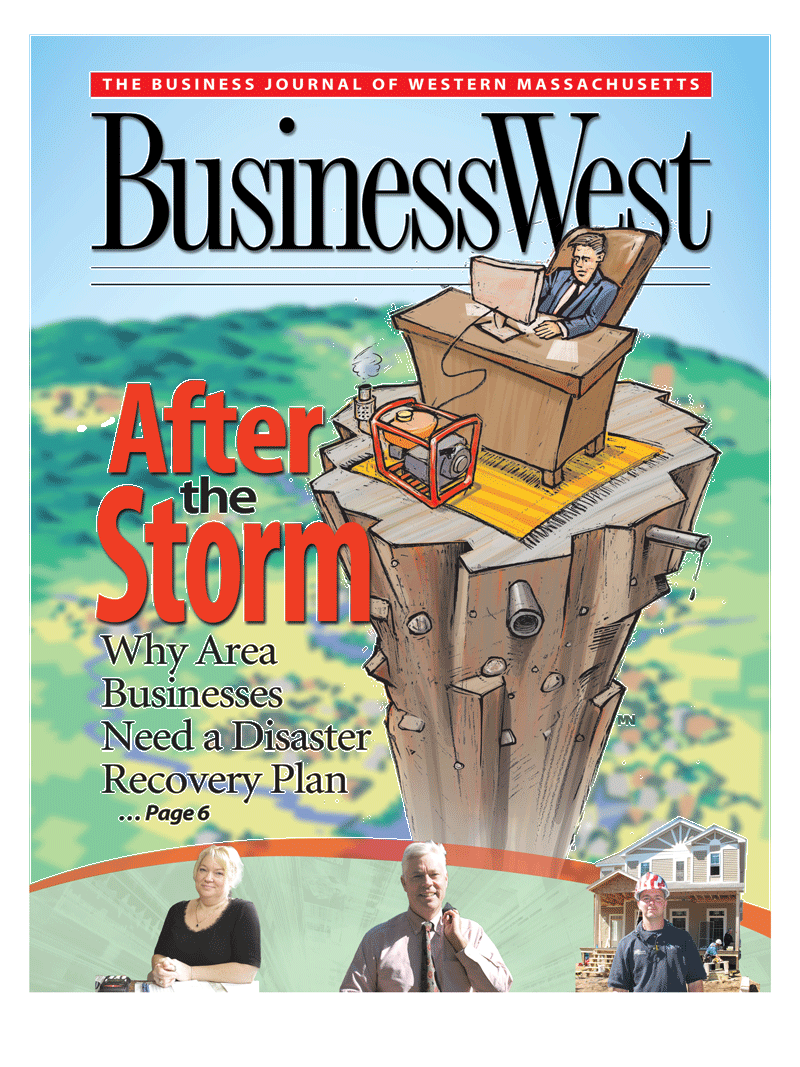
Cover Story
How Best to Develop a Corporate Strategy That Generates Results
Cover May 10, 2010

Cover May 10, 2010

As you look around your office, is everyone just like you? Probably not.

The demographics of the American workforce have changed dramatically over the past 50 years. In the 1950s, more than 60% of the American workforce consisted of white males. They were typically the sole breadwinners in the household, expected to retire by age 65 and spend their retirement years in leisure activities. Today, the American workforce is a better reflection of the population, with a significant mix of genders, race, religion, age, and other background factors.

The long-term success of any business calls for a diverse body of talent that can bring fresh ideas, perspectives, and views to their work. The challenge that diversity poses, therefore, is enabling your managers to capitalize on the mixture of genders, cultural backgrounds, ages, and lifestyles to respond to business opportunities more rapidly and creatively.

Diversity is no longer just a black/white, male/female, old/young issue. It is much more complicated and interesting than that. In The Future of Diversity and the Work Ahead of Us, Harris Sussman says, “diversity is about our relatedness, our connectedness, our interactions, where the lines cross. Diversity is many things — a bridge between organizational life and the reality of people’s lives, building corporate capability, the framework for interrelationships between people, a learning exchange, a strategic lens on the world.”

A benefit of a diverse workforce is the ability to tap into the many talents which employees from different backgrounds, perspectives, abilities, and disabilities bring to the workplace. An impressive example of this is found on the business cards of employees at one Fortune 100 technology company. Employees at this company have business cards that appear normal at first glance. On closer inspection, the raised Braille characters of employee information are evident.

Many companies, however, still face challenges around building a diverse environment. Part of the reason is the tendency to pigeonhole employees, placing them in a certain silo based on their diversity profile. If an employee is male, over 50, English, and an atheist, under what diversity category does this employee fall? Gender, generational, global, or religious? In the real world, diversity cannot be easily categorized, and those organizations that respond to human complexity by leveraging the talents of a broad workforce will be the most effective in growing their businesses and their customer base.

So, how do you develop a diversity strategy that gets results? The companies with the most effective diversity programs take a holistic approach to diversity by following these guidelines:

Link diversity to the bottom line. When exploring ways to increase corporate profits, look to new markets or to partnering with your clients more strategically. Consider how a diverse workforce will enable your company to meet those goals. Think outside the box. At a Fortune 500 manufacturing company, Hispanics purchased many of the products. When the company hired a director of Hispanic markets, profits increased dramatically in less than one year because of the targeted marketing efforts. Your new customers may be people with disabilities or people over the age of 65. How can your employees help you reach new markets?

Walk the talk. If senior management advocates a diverse workforce, make diversity evident at all organizational levels. If you don’t, some employees will quickly conclude that there is no future for them in your company. Don’t be afraid to use words like black, white, gay, and lesbian. Show respect for diversity issues and promote clear and positive responses to them. How can you demonstrate your company’s commitment to diversity?

Broaden your efforts. Does diversity at your company refer only to race and gender? If so, expand your definition and your diversity efforts. As Baby Boomers age and more minorities enter the workplace, the shift in demographics means that managing a multigenerational and multicultural workforce will become a business norm. Also, there is a wealth of specialized equipment available to enable people with disabilities to contribute successfully to their work environments. If your organizational environment does not support diversity broadly, you risk losing talent to your competitors. How can your recruitment efforts reach out to all qualified candidates?

Remove artificial barriers to success. The style of interview — behavioral or functional — may be a disadvantage to some job candidates. Older employees, for example, are less familiar with behavioral interviews and may not perform as well unless your recruiters directly ask for the kind of experiences they are looking for. Employees from countries outside the U.S. and non-Caucasian populations may downplay their achievements or focus on describing, who they know rather than what they know. Train your recruiters to understand the cultural components of interviews. How can your human-resources processes give equal opportunity to all people?

Retain diversity at all levels. The definition of diversity goes beyond race and gender to encompass lifestyle issues. Programs that address work and family issues — alternative work schedules and child and elder care resources and referrals — make good business sense. How can you keep valuable employees?

Provide practical training. Using relevant examples to teach small groups of people how to resolve conflicts and value diverse opinions helps companies far more than large, abstract diversity lectures. Training needs to emphasize the importance of diverse ideas as well. Workers care more about whether or not their boss seems to value their ideas than whether they are part of a group of all white males or an ethnically diverse workforce. In addition, train leaders to move beyond their own cultural frame of reference to recognize and take full advantage of the productivity potential inherent in a diverse population. How can you provide diversity training at your company?

Mentor with others at your company whom you do not know well. Involve your managers in a mentoring program to coach and provide feedback to employees who are different from them. Some of your most influential mentors can be people with whom you have little in common. Find someone who doesn’t look just like you. Find someone from a different background, a different race, or a different gender. Find someone who thinks differently than you do. How can you find a mentor who is different from you?

Measure your results. Conduct regular organizational assessments on issues like pay, benefits, work environment, management, and promotional opportunities to assess your progress over the long term. Keep doing what is working, and stop doing what is not working. How do you measure the impact of diversity initiatives at your organization?

In the book Beyond Race and Gender, R. Roosevelt Thomas defines managing diversity as “a comprehensive managerial process for developing an environment that works for all employees.” Successful strategic diversity programs also lead to increased profits and lowered expenses.

The long-term success of any business calls for a diverse body of talent that can bring fresh ideas, perspectives and views and a corporate mindset that values those views. It’s also no secret that the lack of diversity can affect your ability to communicate effectively with diverse clients.

Link your diversity strategies to specific goals like morale, retention, performance, and the bottom line. Build your business with everything you’ve got, with the complex, multi-dimensional talents and personalities of your workforce, and make diversity work for you. n

Judith Lindenberger, principal of the Lindenberger Group, LLC, and Marian Stoltz-Loike, CEO of SeniorThinking, provide human-resources learning and consulting;www.lindenbergergroup.com;www.seniorthinking.com

Cover Story
Experts Predict a Slow, Steady
Cover

Cover

While there are concerns about a double dip and a largely jobless recovery, the general consensus among economy watchers is that the worst is over and better times are ahead. But ‘better’ is certainly a relative term, they say, and in this case it refers to what will likely be slow, steady growth, with the accent on slow, with the eventual pace to be impacted by the level of job recovery and, perhaps more importantly, by overall confidence among consumers and business owners alike.

Bob Nakosteen feels like most of those people watching the economy for signs of what’s to come. He says he’s pretty much convinced that the worst is behind us … but he’s not at all sure how much better things are going getting to get, or when.

After discussing all the major talking points — from the housing market to consumer and business confidence; from the employment scene to the latest, and improved, gross domestic product numbers and whether he believes them (he doesn’t) — Nakosteen, an Economics professor at UMass Amherst, finally drew an analogy between the current economy and an oil tanker.

“You can turn it around, but it’s not going to happen quickly or easily,” he said, projecting that recovery will indeed come in 2010, probably by the second or third quarter by his estimates, making this what he termed a “slow-motion process” in the Bay State.

Continuing his search for words, phrases, and images to describe his sentiments, he said this region and the state as a whole are due to experience what he called a “U-shaped” recovery, meaning a pronounced slide (already behind us, by most estimates), followed by a long, relatively flat stretch, which we’re in now, by most accounts, followed by a sharp tick upward.

Quick Quote

But when that ascension will begin is anyone’s guess, and other economy watchers found words similar to Nakosteen’s to describe what they see coming in the months and quarters ahead.

“I don’t see much happening that’s going to be terribly vibrant; I don’t see a robust recovery coming,” was how Richard Collins, president of West Springfield-based United Bank summed up his thoughts. “We have money to lend here, but we don’t see people knocking on our door demanding it because they’ve got more pressing things to do.”

Such passive activity is a clear sign that consumer and business confidence, while improving, according to some yardsticks, is still not where it needs to be for a quick, strong recovery, said Collins, who is certainly not alone in his use of the word ‘slow’ to describe his thoughts on the pace of this much-anticipated recovery.

Andre Meyer used it early and often as well. He’s the senior vice president for Communications and Research at the Associated Industries of Mass. (AIM) He said that while only a few quarters ago, all economic signs were pointing down, some, but not all, are now pointing up. He’s seeing it in AIM’s Business Confidence Index, which, at 44.9 for the November reading, is still below the 50 mark (indicating general positiveness about the economy), but it has gained a point or two seven of the past eight months and is now well above the low point of 33.3 recorded this past February.

He’s also seeing it with regards to employment, despite widespread projections for a jobless recovery (see related story, page 22). There hasn’t been a marked uptick in hiring, but there are some indications that matters have improved, said Meyer, citing a slight surge in hiring among in an area he called ‘professional business and scientific services.’

“That tends to be a real bellwether,” he explained, “because that’s money that companies are spending on outside vendors, and it’s often the kind of thing they’ll put off if they don’t absolutely need it; you don’t need an architect if you’re not going to build a building.”

Meyer says he’s also seeing hints of progress in such things as improving sales figures for some categories of retail, a slight bounce for the housing market, and rising export levels, and that together, the signs validate the heavy use of the words ‘slow’ and ‘steady’ with regard to a turnaround

“Barring some unforeseen setback, we’re looking at a year of recovery, but slow growth overall,” he told BusinessWest. “But things will accelerate as we get into the year.”

Just how much they’ll accelerate is the question on everyone’s minds as they prepare to turn the calendar. The consensus seems to be that there are too many related question marks — concerning everything from jobs to confidence to the housing market — to effectively answer that question.

The Hoard Way

Before looking ahead to 2010, Meyer chose to start with a glance back, to about a year ago, when the dark clouds had gathered and the conjecture focused on just how bad things were going to get.

“The last quarter of 2008 and the first quarter of 2009 were just terrible,” said Meyer, stating the obvious. “Everyone was hunkered down, and companies weren’t even filling critical jobs if they became vacant; they just didn’t want to make any kind of commitment because there was a sense that almost anything could happen.

“In retrospect, 2009 hasn’t been the complete meltdown and disaster that a lot of people thought it would be,” he continued, adding that, regionally, what has occurred over the past 12 to 15 months is not in most ways unprecedented, and, in fact, not as bad as the last great recession, the one in the early ’90s, in terms of duration and the impact on the financial-services sector.

All that said, the region was hard-hit, especially with regard to employment — which came close to but didn’t actually hit double figures in Massachusetts — as well as construction, residential, and commercial real estate, and companies’ bottom lines, Meyer continued. But things were much worse in many other parts of the country.

And while there is come concern about what’s known as a double dip — a recession followed by a slight uptick and then another downturn — most experts believe that the worst is in the rear-view mirror and that the nation and the region are in recovery mode.

But how pronounced will the recovery be, and when will business owners see real improvement?

Nakosteen is not particularly optimistic because he doesn’t see the requisite fuel he says is needed for a pronounced recovery.

“This has been a recession that’s killed off a lot more small businesses than most other recessions have,” he explained. “Couple that with the stagflation we’re seeing, and I just don’t see anything that’s going to pull us out of this.”

There is still a great deal of stimulus money remaining to be spent, Nakosteen continued, noting that maybe 75% of the nearly $1 trillion package has yet to be allocated. But he has doubts about whether that money will have any real impact on the pace and overall level of recovery.

“The only sector that’s really spending is the government,” he said, “but all that’s really done is put a bottom on the recession.”

Real recovery is only going to come when individuals and business owners possess enough confidence to start spending again, Nakosteen explained, adding quickly that he hasn’t seen any solid evidence indicating that day is here, or even close.

“For the most part, people are keeping are keeping their wallets in their pocket and their credit cards in their wallet,” he explained, noting that both consumers and business owners are hording cash and paying down debt — trends that are generally positive, but not when businesses need sales and the national recovery needs that aforementioned fuel.

Interest-bearing

Collins has witnessed this cash-hoarding first-hand. Like most all bank presidents, he’s seen growth in deposits far surpass growth in the loan portfolio.

Part of the reason for this has been a tightening of credit, which has been industry-wide, he continued, but the far bigger factors have been confidence, or a lack thereof, and the fact that many people — and businesses — don’t have the wherewithal, even if they do have the confidence.

Indeed, looking across the board, Collins said his bank has near-historically low rates on mortgages (around 5%), attractive products for new and used cars, and solid commercial packages. But demand for such offerings simply isn’t there.

“There are people who are really just hanging on, and they’re going to continue to have to hang on for a while,” he explained. “It gets tough; if you’ve been laid off, you can continue to pay your mortgage for a while, but if you’re out of your job for a long time, it gets more difficult.”

Overall, those at the bank are cautiously optimistic about the year ahead, he continued, but all expectations have to be grounded in realism, and the reality, as he sees it, is limited growth potential with regard to the loan portfolio.

Allan Blair, president of the Economic Development Council of Western Mass., sounded similar notes about realistic expectations. He described 2009 as a quiet year in terms of both new-business attraction and growth of existing businesses, and a big year for hunkering down for businesses large and small.

“Most all of them have cut their costs; they’re hoarding cash and paying down their debt,” he explained. “Some have laid off as part of their cost-cutting, but most of the smaller ones have tried to hold onto their people because they’re expecting an uptick and their workers have unique skill sets that they’re trying to preserve. In general, this has been a year of people weathering the storm, and most have done that well.”

When asked when business owners will come out of the proverbial storm cellar, Blair said much depends upon the sector in question and the level of confidence reached by decision makers. In health care, he explained, there is widespread concern about the debate on national reform of that sector and the impact it will have (see related story, page 25). Meanwhile, in public higher education, there has been a collision between rising enrollment and budget-cutting on the state level (trends seen in most recessions), which might hamper growth of that important sector.

Springfield Technical Community College President Ira Rubenzahl said his school, like all other public institutions, was helped considerably by stimulus funding, which nearly offset state cutbacks. His concern is that the same level of federal help won’t be there for fiscal year 2011, for which STCC is facing what could be a 14% budget cut.

The school has responded to the budget adversity with some fee increases, a hiring freeze, and a number of steps to control costs, said Rubenzahl, adding that recessionary times, and especially this recession, present challenging times for public schools. On one hand, their services are in greater demand, among both those seeking to upgrade their skills and high-school graduates (and their parents) recognizing the value of starting at a community college, but on the other hand, it becomes more difficult to deliver those services.

“What we’re seeing is people recognizing that they need a college education to get a high-paying job these days,” he explained. “Our mission is more important today than before the recession. But we need adequate funding to deliver a quality product.”

Looking at other sectors, and the larger issue of business recruitment, Blair said the EDC has not abandoned those efforts, although 2009 has been a tough year in that regard. And he is seeing signs of what could be light at the tunnel.

“We’ve seen more interest among European companies in having a U.S. presence than ever before,” he explained. “Much of this has to do with the favorable exchange rate with the Euro, but a big part of it is a need to get into the big U.S. marketplace. These companies are looking for partnerships and manufacturers’ representatives.

“We’ve been busy responding to the interest expressed by European companies,” he continued. “We haven’t seen any making any final decisions yet, but there is a lot of interest and a lot of talking.”

Meanwhile, Blair said, over the last part of the third quarter, his agency has seen an uptick in searches by national site selectors, an indication that perhaps some of the nation’s larger companies are looking at expansion opportunities or relocation of distribution facilities.

“That’s been a fairly encouraging trend,” said Blair, adding that the EDC is watching the distribution sector closely because it is usually a good barometer when it comes to developments in their respective sectors, and also because there is a trend toward decentralization in that industry that may bode well for this region given its strong infrastructure.

Still Laboring

Overall, both Meyer and Nakosteen say the Bay State is trailing the nation by at least one-quarter when it comes to recovery.

In fact, a report in the latest issue of MassBenchmarks, the quarterly publication produced by the UMass Donahue Institute in cooperation with the Federal Reserve Bank of Boston, indicated that the state’s economy is estimated to have declined at a 1.1% annualized rate in the third quarter, a time when the national economy was, by many accounts, beginning to grow.

“The state entered the recession later than the U.S., and so appeared to be performing better than the U.S. through the spring of this year,” wrote Alan Clayton-Matthews, MassBenchmarks senior contributing editor and associate professor of Economics and Public Policy at Northeastern University. “However, recently released income and tax data suggest that the state’s economy continued to decline through the third quarter, and that recent economic performance may be weaker than that of the nation as a whole.”

When and to what degree the state catches up and experiences real recovery depends mostly on two factors — jobs and confidence, said Meyer.

Regarding the former, he said he expects to see some turnaround in 2010, at least in several sectors of the economy, and that, long-term, he expects the state will recover all or most of the jobs it lost to the recession, something that didn’t happen with the last downturn in 2001.

“There’s been some disagreement among economists about how quickly employment comes back,” he said. “Some people feel that employers actually let too many people go and will need to hire some back.

“In many industries, the jobs will come back, but they’ll come back slowly,” he continued. “It’s hard to hire the people you want, and it’s expensive to hire the people you want, and employers are going to be somewhat reluctant to hire people.”

Meyer sounded a cautionary note about falling too far behind the rest of the country.

“It’s very damaging to us here in this state when we lag seriously in the recoveries, as we have in the last two recessions,” he explained. “A big thing that happens is that people, particularly young, well-educated people, leave. If they think they can get a job somewhere else and not get one here, they’ll go to where the jobs are. But so far, the signs look pretty good on that.”

But many, including Blair, are somewhat less optimistic when it comes to jobs.

“Employers continue to be extremely cautious,” he said, “and from a broad economic-development point of view, the forecast of a jobless recovery in 2010 continues to be the predominant view. A lot of companies have invested in technology that reduces their reliance on labor, and so they’ll be productive as the economy’s demand increases without having to add workers.

“So it may be a a year from now before we see an uptick in job growth,” he continued, “which is obviously very important to our region.”

Sea Change

Returning to h
s comparison between the economy and an oil tanker, Nakosteen said that, for the most part, the change in course has begun.

But it will take some time to turn this ship around, he continued, adding that the so-called Great Recession touched every sector and nearly every business, and the specter of a jobless recession looms large.

It won’t be full-speed ahead any time soon, Nakosteen concluded, but the slow-motion process he described is at least underway.

George O’Brien can be reached

at[email protected]
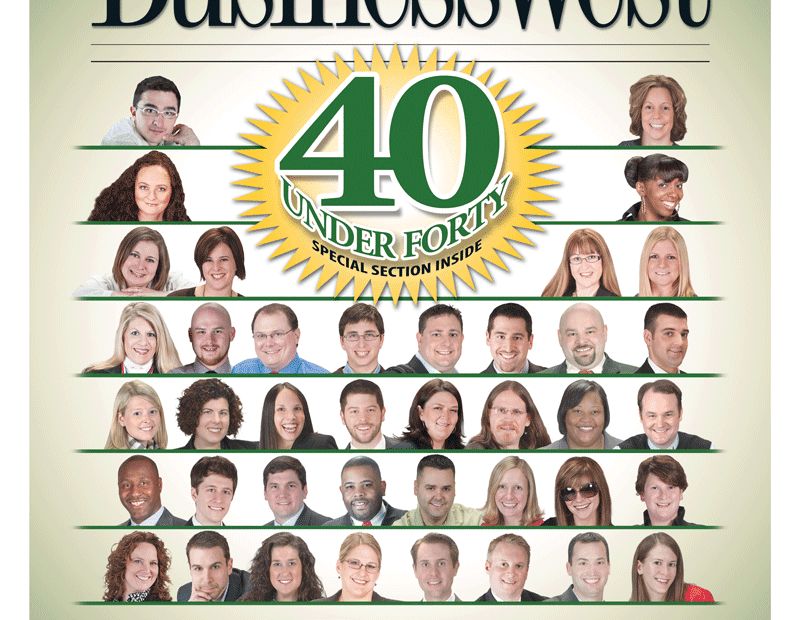
Cover Story
Computing Center Fuels Speculation, Optimism in Holyoke
Cover 11/23/09

Cover

The high-performance computing center planned for downtown Holyoke will apparently become reality in the next 12 to 18 months. While details of that venture — to involve UMass, MIT, and many other institutions — are starting to emerge, speculation has begun in earnest about what kinds of economic-development opportunities will follow such a project. Those involved in a task force to develop something to be called the “Innovation District” in the heart of the city say much depends on the research agenda that will emerge at the center. But all signs point to an enormous opportunity for this former paper and textiles hub, and the goal moving forward is to fully leverage this asset.

Jeff Hayden was recalling some of the Holyoke history he’s known since he was a child.

“When the dam was first built, there were no mills — this was an agrarian community with about 3,000 people,” said Hayden, vice president of Business and Community Services at Holyoke Community College and former director of economic development for the city, as he referenced the engineering project that enabled what was then a small town to take full advantage of a 57-foot drop in the Connecticut River. “Some 35 years later, there were 36 mills, probably close to 40,000 people living here, and an industrial complex that could rival anything in the country. That’s incredible growth in a very short time.”

He cited the chapter in Holyoke history written between 1850 and 1880 as he discussed the high-performance computing center that will now apparently become reality in the Paper City — and, perhaps more importantly, what could follow that facility in terms of economic-development potential.

Hayden is not predicting that history will repeat itself with such profound growth, but then again, he’s certainly not ruling it out.

Such is the power of imagination, and speculation, when it comes to the computing center, a concept that most people in this region, including many of those most-closely involved with it, are struggling to get both hands around. But optimism abounds, and there is widespread sentiment that the $50 million facility could change the landscape in this city that has been trying to reinvent itself since most of the mills closed decades ago.

What is known is that UMass, MIT, Boston University, CISCO, EMC, and several other partners will come together and build a facility somewhere along the canals in downtown Holyoke. This much was announced at a packed press conference in late October that featured Gov. Deval Patrick. What is also known is that the computing center will be a nonprofit venture that will not pay taxes to Holyoke and will create perhaps only a few dozen jobs to start, by most early estimates.

What isn’t known is what kind of economic development can follow such a facility. There are other so-called super-computing centers around the country, but most have been in existence only a short time, so there is no real body of evidence to show what can happen in Holyoke.

But there is widespread speculation that government agencies, private businesses, support services, and perhaps (or probably) all of the above will want to locate around the computing center, said Kathy Anderson, director of the Holyoke Office of Planning and Development. She, like others, said that much will depend on the research agenda that emerges at the center. But there are some common denominators.

“There is a pattern developing about the kinds of businesses that want to be located near these centers,” she said, noting that her office is conducting research on the subject. And there is ample reason to believe that many companies and institutions will want to be around this particular center, she continued, because of its uniqueness with regard to how it will be powered.

Indeed, inexpensive hydropower will be the primary source of energy to drive and cool the computers, said Anderson, adding quickly that this is an attractive drawing card at a time when many businesses and institutions want to portray themselves as environmentally conscious. “It’s clean, it’s green, and it’s comparatively cheap,” she noted.

Anderson will be one of the co-chairs of a task force charged with exploring development opportunities in what will be called the “Innovation District” in downtown Holyoke, where the center will be built, although the exact location isn’t known. She said the group will likely begin meeting next month, and while its specific charge hasn’t been put down on paper, it amounts to devising strategies to help enable Holyoke to leverage, and thus take full advantage of, an incredible opportunity.

Tim Brennan, director of the Pioneer Valley Planning Commission and the other co-chair of the task force, put things a different way.

“We’re essentially coming up with a re-use plan for a city,” he explained. “Holyoke was the first planned industrial city; now it could become the first re-planned industrial city.”

For this issue, BusinessWest talked with many who will be directly involved with this Innovation District about what the computing center could mean for Holyoke, and how the city can capitalize on this enormous asset.

Breaking New Ground

Brennan acknowledged that, like many who now have ‘high-performance computing center’ as part of their vocabulary, he’s still trying to grasp the concept.

There’s much that he doesn’t know about these facilities and the economic development that they could spur. What he does know is that nothing will happen overnight, and also that there is no clear model to follow, or anything approaching same.

“You can’t run to the library and get books on this,” he explained. “There just aren’t any. This is brand-new territory.”

Therefore, mapping out strategies will be challenging, but also rather exciting, he said, noting that a $50 million facility built by some of the top research institutions in the world is going to be dropped into the middle of an urban center, specifically a low-income community still struggling to gain a new identity after much of its paper and textiles mills closed down or moved south.

That makes this still-unnamed facility rather unique and potentially attractive, said Anderson, noting that most of the existing super-computing centers are located on or near college campuses (such as Ohio State University, the University of California at San Diego, and the University of Hawaii), or in rural areas such as Rio Rancho, N.M., Fitchburg, Wis., and Butte, Mont.

Research into existing centers reveals that most have affiliations with both universities and federal agencies or departments, she continued. The Advanced Biomedical Computing Center in Frederick, Md., for example, is affiliated with the National Cancer Institute and the National Institute of Health. The Maui High Performance Computing Center, meanwhile, has affiliations with the U.S. Air Force and the Department of Defense, and Research Triangle Park in Raleigh-Durham, N.C., has one with the Environmental Protection Agency.

Such affiliations are usually determined by the types of research being conducted at the centers, said Anderson, noting that it is far too early in the process to determine what the institutions involved in the Holyoke project will be focused on. The possibilities are seemingly endless, and include everything from work in climate change to new developments in so-called ‘cloud computing,’ or the delivery of hosted services over the Internet, or the ‘cloud.’

But the likely scenario, no matter the research agenda, is that government agencies will follow the computing center, and then private-sector firms doing business in (or trying to break into) the research areas that develop. There will also be support businesses to provide services to all those constituencies, as well as other businesses that want or need to locate near such a center.

“Our goal is to essentially create a campus,” Anderson explained. “We’ll see other businesses that are not even related to a high-performance computing center that would like to be around this.

“As the research agenda unfolds, we’ll see other researchers that will want to be around this,” she continued, “and we’ve already had calls from businesses that are not related to this kind of center but want to be near one.”

Hayden agreed, and used research and development of cloud computing as one example of what might emerge at Holyoke’s computing center, and how such work might attract businesses and jobs.

“One of the things they’ve talked about with this center is studying cloud computing itself and how it can be made more efficient, and green, and how it can best be utilized,” he explained. “That also incorporates things like security; if everything’s out there on the cloud, how do you keep it secure and how do you keep it proprietary?

“There are all kinds of complex computations that will be done in terms of how to do cloud computing in a way that’s effective for business,” he continued, adding that many private businesses could potentially be involved in this research, with the goal of bringing new products to the marketplace — products that could be produced in Holyoke.

Such scenarios echo Holyoke’s proud past, said Anderson, noting that, in many respects, history will indeed be repeating itself. It was abundant, inexpensive hydropower and an infrastructure to support large manufacturing operations that put Holyoke on the map 150 years ago, she noted, and it is these assets that are collectively bringing the computing center to the city — and fueling speculation about what will follow it.

Plenty of Dam Attributes

Indeed, while there are many unknowns when it comes to the computing center and the economic development it may generate, those who spoke with BusinessWest were in general agreement that Holyoke will certainly be well-positioned to capitalize on such opportunities.

“There are a lot of things happening in this city right now that are going to make it an attractive place for businesses to want to be,” said Anderson, adding that the computing center could be the catalyst that compels business owners, federal agencies, and college presidents to look in Holyoke’s direction.

Listing attributes and signs of progress, Anderson noted everything from the start of work on Holyoke’s Canal Walk to a large supply of former mill space that can be retrofitted to a number of uses; from an attractive location on or near several major highways to one of the lowest electric rates in the Northeast; from fast-track permitting to a strong fiber-optic backbone.

All of this and more is captured in a recently released video designed to promote the city as an attractive home for businesses, especially those of the green variety.

It features several players in business, industry, and economic development, including Anderson, Holyoke G&E General Manager James Lavelle, Universal Plastics President Joe Peters, and Brendan Ciecko, the 22-year-old entrepreneur who has made downtown Holyoke the home for his Web site design business Ten Minute Media.

“It’s a great strategic location for any business,” Ciecko says in the video. “Being within two hours of New York City and being an hour and a half from Boston is very advantageous for my business. I have the majority of my clients located in New York, so if I want to meet with Mick Jagger, for instance, I can be there in two hours.”

Summing up the content in the video and the many initiatives involving her office, Anderson said Holyoke has the wherewithal, and the creativity, needed to effectively leverage an asset like the computing center, making this city the proverbial right place at the right time for businesses in many sectors.

“A lot of things are coming together at the right time,” she told BusinessWest, noting everything from transportation facilities — a new intermodal transportation center downtown and the potential for commuter rail — to fast-track permitting that will expedite the process of bring a business to the city. “The pieces are coming into place for Holyoke to stand out in the market, and the state has recognized that.”

But perhaps the biggest asset is abundant, green energy, said Lavelle, noting that Holyoke’s hydropower is part of an attractive package, which also includes high-speed fiber-optic services, that is turning heads in the business community and elsewhere.

It obviously caught the attention of those at UMass, MIT, Boston University, and other colleges, who recognized the need for a high-performance computing center, but also the need to place it a community where the huge amounts of electricity needed for such a facility would be comparatively inexpensive — and green.

Lavelle noted that the electricity his utility would provide to a large commercial customer like the computing center (which is protected to need anywhere from six to 12 megawatts for its first phase) would currently cost about 8.4 cents per kilowatt. That’s roughly one-third lower than the rates currently charged by Western Mass Electric Co., he said, and about half what large businesses in Cambridge, home to MIT, are paying at present.

But it’s not just the rates that are attractive, he noted, adding that roughly two-thirds of the power supplied by HG&E is from renewable sources, mostly hydropower, and the utility is currently exploring ways to increase that percentage and also provide ample ‘green’ power for all those who might want to come to Holyoke.

“More than 80% of our power produces no carbon footprint, and that’s really attractive to entities looking to manage their growth and their carbon footprint at the same time,” said Lavelle. “And that’s not unique to high-tech and education; we’re seeing it across the board. Our challenge is going to be to scale and increase our renewable content with this growth so that we don’t dilute it.

“We’re trying to build our renewable portfolio so that our carbon footprint is continually declining,” he continued. “We’re looking at the possibility of wind generation on Mount Tom, we’re always looking at the hydro component to get more generation out of that plant, and we’ll look at other renewable sources.”

But the words ‘green’ and ‘renewable’ refer to more than just energy, said Anderson, referring to Holyoke’s vast inventory of old mill space and, in the larger scheme of things, its downtown as a whole.

Just as companies and institutions may want to reduce their carbon footprint, she explained, they may also desire to be part of an effort to revitalize and reuse some of the old mills, putting them back to work for economic development.

“I think a lot of entities would be intrigued by the possibility if reutilizing the existing resources we have here,” she explained, “taking old buildings built for manufacturing, looking at them in a different way and reusing them. That’s part of the whole green initiative, and it could be a real advantage for Holyoke.”

Powerful Arguments

Hayden, a Holyoke native, said the high-performance computing center is the hot topic of conversation seemingly everywhere in Holyoke, from HCC, which is already exploring creation of programs to train people who would work at the center, to the Stop & Shop, to the Dam Café on Northampton Street.

“There’s excitement and a level of energy I’ve never seen before,” he explained. “This has captured the imagination of an entire city.”

And it has drawn a number of references to Holyoke’s past and its meteoric rise as a manufacturing center, said Hayden, who, like Brennan and others, offered a cautionary note about the progress that could follow the computing center.

“Things won’t happen overnight,” he said. “It will take m
ny years for things to come into place.”

But as he recalled Holyoke’s profound growth after the dam and canal system were constructed, Hayden said, “30 years can go by in the blink of an eye.”

George O’Brien can be reached

at[email protected]
Cover Story
Springfield Armor Set to Win Games, Win Over Fans
Cover

Cover

On Nov. 27, regular-season Developmental League, or D-League, basketball will come to the Pioneer Valley when the Springfield Armor square off against the Iowa Energy at the MassMutual Center. Tip-off that night will cap months of work to bring a team here and then introduce it the Western Mass. community. Principle owner Michael Savit, who picked Springfield over a host of other cities in the Northeast, including Providence and Worcester, admits that this decision represents a bit of gamble, but one that he believes will eventually pay off.

Michael Savit says he could, in theory, have placed an NBA Developmental League team almost anywhere in the country.

But that’s not what Savit, owner of several minor-league baseball teams, had in mind, nor was ‘just anywhere’ what the National Basketball Assoc. wanted, either. The NBA wanted the D-League, as it’s called, to expand eastward and northward (most of its 16 teams are west of the Mississippi), and Savit — a native of Boston who operates his business, the HWS Group, in Wellesley — wanted to locate a team close to home.

He looked at cities ranging from Providence to Worcester, to Kingston, home of the University of Rhode Island, but ultimately decided on Springfield.

“I decided that if I was going to give this a shot, Springfield made the most sense,” he said, citing everything from the city’s status as the birthplace of basketball to its proximity to Hartford, Worcester, and other population centers. “I just had a feeling, a gut instinct, that this was a basketball community.”

Soon, he’ll get to see if those instincts are correct. The franchise now known as the Springfield Armor (a name chosen in part to reflect another piece of the city’s history, the Springfield Armory) will begin its regular season with a Nov. 27 game against the Iowa Energy at the MassMutual Center.

Alex Schwerin, the Armor’s general manager, isn’t predicting a sellout for that night, but he says filling the house is definitely doable given the extensive promotional work being done and the level of interest he’s witnessing. Overall, he’s projecting first-year attendance of perhaps 3,000 per game (not quite half the capacity of the MassMutual Center for D-League games), which would be a solid start for the new franchise and enough to at least break even for the year, which is the unofficial goal going in, or one of them, anyway.

“Minor-league sports is not a huge moneymaker from year to year,” he explained. “But if the league does well and the team does well, then the value of that franchise will increase, and if you’re an owner or an investor, that’s what you’re looking for.”

For the past several months, Schwerin, a graduate of the UMass Amherst Sports Management Program who worked for some of Savit’s baseball teams before being given the opportunity to guide the Armor out of the gate, has been putting the pieces in place for the inaugural season. Such work includes everything from assembling a management team and hiring a coach (former Celtics star Dee Brown) to picking a name (a rather involved process) and even hiring a dance team that will perform during the games.

But much of his work falls under the category of building awareness for this team and making it part of the regional landscape. This has been ongoing, and tireless, work, he said, noting that he, Sales Director Eric Reddy, and, more recently, Brown have ventured anywhere and everywhere they can to be visible and amass some name recognition for their franchise.

“We’ve been to pancake breakfasts, heart walks, chili cookoffs, you name it,” said Reddy. “We’ve gone pretty much anywhere where we can get our name out in front of the public.”

For this issue, BusinessWest goes behind the scenes with those readying the Armor for battle this fall. There will be two major initiatives, said Schwerin — winning on the court, obviously, but also, and much more importantly, winning over fans and corporate sponsors.

Net Results

As part of his work to be visible and build awareness, Brown was behind the microphone on Oct. 30, addressing attendees at a so-called Developers Conference designed to familiarize the development community with opportunities that exist in the City of Homes.

He followed Mayor Domenic Sarno to the podium in the ballroom at the MassMutual Center, and was the last of a few morning speakers who preceded a lengthy bus tour of the city and afternoon remarks by city and state economic development leaders. Paraphrasing Brown’s remarks, he told those assembled that the Armor and the city of Springfield were essentially doing the same thing at the same time: creating some excitement and pulling the necessary ingredients together for success.

“Like Springfield, we’re building from the ground up,” said Brown, who told attendees that the NBA has a term for cities of Springfield’s size: ‘micropolitan area.’ This means it’s not as big as a metropolitan area, but it certainly has the wherewithal to support a D-League franchise.

Brown has introduced a number of area residents and business owners to that term. Since being hired in August, he’s spoken before groups ranging from area chambers of commerce to the Greater Springfield Convention & Visitors Bureau, to area nonprofit groups staging annual meetings. Often, these groups have dialed his number, seeking a celebrity voice, but just as often, the team is making him available as part of a broad marketing initiative.

Brown said his messages vary somewhat, but what he generally tells his audience is that the D-League is a quality product, worthy of an investment in a ticket.

“It’s not semi-pro … it’s professional basketball,” Brown told BusinessWest, as he took a quick break from preparation work for the league’s player draft last week. “Each NBA team has probably two or three players who spent time in the D-League; nearly 20% of the NBA’s players spent some time at this level.”

Schwerin concurred, noting that, if the 360 best basketball players now working in this country are in the NBA, most of the next 200 or so best players are in the D-League. “It’s some of the best basketball in the country,” he said, noting that the Armor will serve as the affiliate to three NBA teams — the New York Knicks, New Jersey Nets, and Philadelphia 76ers.

The team’s rosters, capped at 12, will be made up of perhaps a few NBA players assigned to the D-league by their clubs to develop their talents (hence the name), Schwerin continued, with the balance comprised of former college players who were not drafted into the NBA, perhaps some former NBA players, and some from overseas. In each and every case, the player’s goal is to get to, or return to, the big leagues.

It was this quality of talent that convinced Savit that could sell the D-League product, and when the NBA approached him about establishing a team after a franchise in Anaheim folded, he consented, thus agreeing to join the likes of the Fort Wayne Mad Ants, the Maine Red Claws, the Tulsa 66s (named after the famous highway), and the Rio Grande Valley Vipers.

The question then became where to place this franchise, Savit continued, adding that Springfield’s geography, demographics, and historical attachment to the game invented by Dr. James Naismith eventually provided the answer.

And so far, Springfield is showing signs that it could be the basketball town that Savit perceived it to be. Schwerin and Reddy said that season-ticket sales have eclipsed the 1,500 mark, and they have confidence they can match that number with game-day sales to hit their attendance targets.

Still, they know that they still have considerable work to do to institutionalize the Armor brand and make this team part of the local fabric.

Points of Interest

Schwerin said the NBA announced the awarding of the Springfield franchise nearly a year ago, when he was in job-search mode. He left minor-league baseball and Savit’s employ to return to his native Western Mass. and seek opportunities here. When Savit called asked if he would be interesting in leading the D-League franchise, he jumped at the opportunity.

“I was looking at some other things,” he explained, “but what really interested me in this was a new team; this represented a chance to start from scratch, which is somewhat of a unique thing in this business.”

And start from scratch he has. Indeed, since April, he has been hard at work on a laundry list of to-do items needed to get the team ready for its 50-game schedule.

At the top of that list was assembling a management team, and one of his first draft choices was Reddy, who handled sales and marketing for the America East Conference (a college athletics league) until he was downsized earlier this year and found himself in search of a new opportunity.

Other steps included the hiring of Brown, enlisting much-needed support from the business community, making travel arrangements for lengthy road trips that will take the team across several time zones, selecting team colors (black and silver), coming up with a mascot (they have one, but it hasn’t been named yet), and all manner of work that falls under the heading of marketing and public relations.

And then, there was the task of coming up with a name and logo. Regarding the former, team officials compiled a list of finalists — Fame, Spirit, Colonials, and Founders were also on a list put through what Schwerin called the “NBA washing machine” to weed out potential copyright violations and politically incorrect monikers — and then asked area residents to vote. Armor emerged as the winner.

The team then hired the Springfield-based marketing firm Six-Point Creative Works Inc. to come up with a brand, the imagery that will be used on everything from uniforms, stationery, and business cards to T-shirts and other merchandise for sale on game days and the team’s Web site.

All of this took a back seat, of sorts, to the overriding mission — the building of a financial model, which, in this case, was based on the majority of revenues coming from ticket sales. There is a small radio-broadcasting contract, said Schwerin, and many corporate sponsorships, but the rest of the revenue comes from the gate, which means a heavy emphasis on both season-ticket sales and game-day transactions.

As for corporate sponsorships, they form a solid revenue stream, Schwerin continued, and the team has secured several, from companies including MassMutual, Big Y Foods, Mercy Medical Center, the Springfield Sheraton, and others.

Overall, Schwerin is predicting that the Armor can at least break even in their first year of operation, but there are many unknowns and several intangibles.

“There is a lot of overhead — 12 of the teams are west of the Mississippi, and two are in California, one’s in Nevada, one’s in Idaho … that means considerable travel,” he explained. “But we’re very optimistic; there’s a great deal of excitement surrounding this team.”

To drive ticket sales, team officials are keeping prices low — there are packages for so-called ‘flex tickets’ (10 for $99), for example — and focusing on group sales and getting families out.

There are birthday-party specials, for example, that offer 10 lower-level tickets for $99, said Reddy, with an added bonus: the birthday girl or boy’s name on the video board.

Meanwhile, the team is casting a wide net, trying to attract fans from not only the 413 area code, but also Connecticut, the Worcester area, Eastern New York, and other regions. The broad goal is to attract not simply the hardcore basketball fan, but the occasional fan who might be attracted to a product Schwerin said is better than Division 1 college basketball, as well as families looking for an economical night out.

And while winning on the court is obviously a factor in the team’s success at the gate, the far-bigger ingredient is what Schwerin called simply “the experience.”

“Our goal is to make people want to come back,” he explained. “To do that, we have to show them a good time, and that goes well behind what happens on the court.”

At the Buzzer…

“The Future of the NBA Today.”

That’s one of the many marketing slogans now being employed by the Developmental League. It speaks to the level of talent on the display and the ultimate goal for those who take the court in Fort Wayne, Tulsa, Albuquerque, Reno, and Sioux Falls.

But the tagline also speaks to Springfield’s entry in this league. Indeed, the future is now, and Armor officials are intent upon making the most of their golden opportunity.

George O’Brien can be reached at[email protected]
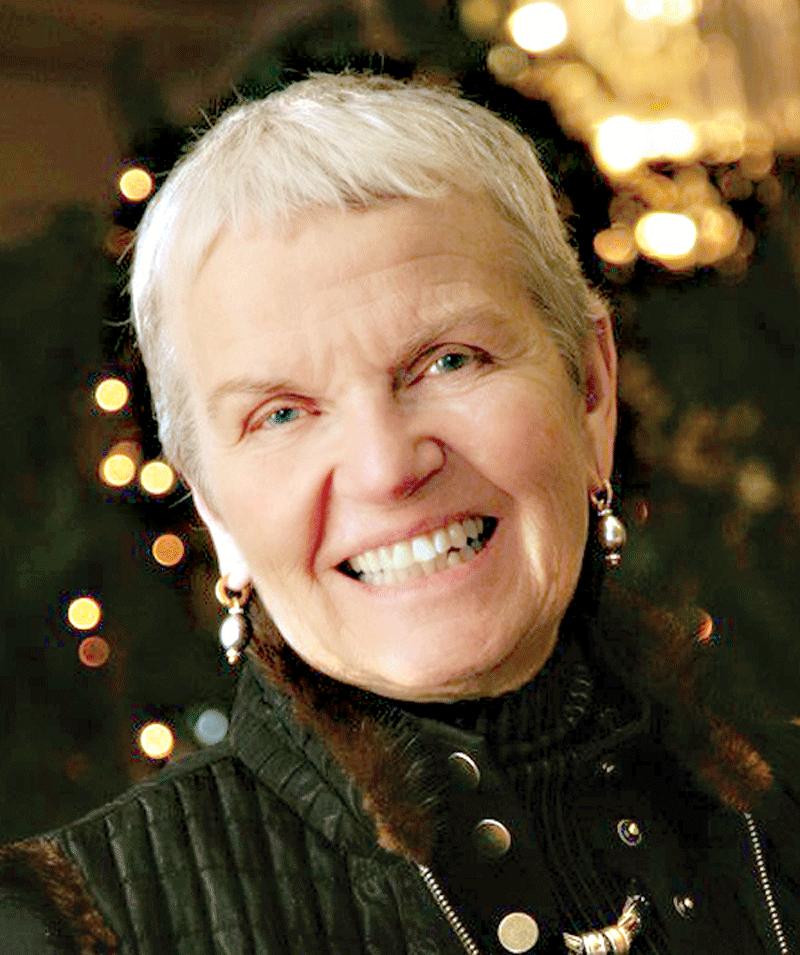
Cover Story
Friendly’s Is Focused on Branding, Execution
Cover

Cover

Friendly’s President and CEO Ned Lidvall says the current recession is unlike anything that has hit the restaurant industry in recent memory. It has created casualties — individual restaurants and entire chains have failed — and forced all players to examine what they do and how they do it. Friendly’s is responding with some new concepts, including an ‘Express’ model restaurant and a renewed focus on the fundamentals, or what Lidvall calls “blocking and tackling.”

Ned Lidvall says that, based on their experiences during the two previous economic downturns — the one in the early ’90s and the other one, which came after 9/11 — most in the restaurant industry entered the current slide thinking their sector was all but recession-proof.

They’ve learned, the hard way, that they were dead wrong.

Indeed, across the many categories within this broad industry — including fine dining, casual dining, mid-scale family, as it’s called, and even fast food — the numbers are down, said Lidvall, president and CEO of Wilbraham-based Friendly’s. And the reason is quite simple: people are eating at home more and eating out less.

“Everything that drove this industry over the past few decades, from the two-wage-earner households to people being compressed for time and needing quick food, to the affluence of Baby Boomers — all of those things have been reversed with the recession,” said Lidvall. “We’ve seen people change lifestyle habits and behaviors that we believed were entrenched.”

This phenomenon has resulted in more intense competition for fewer restaurant visits, said Lidvall, who arrived at Friendly’s roughly a year ago. That means it has also prompted a good deal of introspection and detailed review of how business should be conducted — not merely for the present with the goal of surviving the Great Recession (many restaurants and some chains have not), but also for the future and life after the downturn is over.

That’s because Lidvall, for one, is rather confident that when better times return, things will not simply go back to the way they were before. Instead, consumers will likely continue to put a strong emphasis on value, meaning not simply the food on the plate, but the overall experience.

To compete — and potentially thrive — in this environment, restaurants like Friendly’s, founded nearly 75 years ago by Curtis and S. Prestley Blake, must find ways to differentiate themselves, and then continually drive home to the consuming public what makes them different, said Lidvall, adding that, with Friendly’s, that differentiator is ice cream.

“The family meal occasion, while declining due to the economic conditions, is still a very relevant occasion in America,” he explained. “And we have the benefit of what I call a glaring point of difference, and that’s one of the things we really search for in our business today.

“As the industry has continued to segment, the lines and the definitions of brands have blurred somewhat, I believe,” he continued. “The fact that the Blakes built this company, and subsequent owners continued operating, around the notion of ice cream as a hero product is a point of difference. There’s not many companies you can point to that have that.”

To fully leverage that advantage, Friendly’s is focusing on the guest experience, meaning the basics, or what Lidvall, who played football at the University of Kentucky, calls “blocking and tackling,” gridiron fundamentals and terms that many in business have applied to what they do. Elaborating, Lidvall said it’s incumbent upon his company to simply execute better.

“This is an execution-based business,” he said of food service. “It’s not so much what you do, but how well you do it, because there are so many touch points when you go through a restaurant experience. It’s a matter of being competitive or slightly better with as many of those as you can, and that’s what we have to do to win.”

As part of this focus on execution, the company has created a new concept, called Friendly’s Express, its first foray into the relatively new food-service realm known as “fast casual.”

The first of these smaller restaurants opened two months ago in Mansfield, Mass., southwest of Boston. It offers a more condensed menu, with patrons ordering their meals at a window and then waiting, on average, about six minutes for their orders. Some eat on the premesis, but many take their items out.

In the first few weeks the first ‘Express’ was open, before school started, the venue saw a good number of visits from families, which was encouraging, said Lidvall, but more promising was the business from workers looking for a fast lunch — and finding it at a new face on the block.

Moving forward, the company plans to chart activity at the Friendly’s Express, refine the concept, and expand it (there are no immediate plans to place any in the 413 area code), said Lidvall, adding that the broader assignment is simply for more of that aforementioned blocking and tacking, and positioning the company for the day when the economy improves — and whatever it might bring.

Here’s the Scoop

Lidvall categorizes himself simply as a “career restaurant guy.”

He told BusinessWest that he got “the bug” soon after graduating from college as a biology major. Not knowing what to do with himself, he took a job at a Steak and Ale restaurant, and has been in food service ever since.

“Steak and Ale was one of the seminal breeding grounds for restaurant people back then — it sort of invented casual-theme dining,” he said, noting that it gave a solid education to those, like himself, who entered its management program. “In the realm of casual dining and full-service dining, [founder] Norman Brinker is considered one of the real innovators and one of the real creators, with both Steak and Ale and another chain called Bennigan’s.

“I was lucky to get started in a culture that was very educational,” Lidvall continued, adding that there have been a number of stops during his 35-year career, the last of which was a 12-year stint running the Colorado-based chain Rock Bottom Restaurants, which has locations in 14 states, including a few in Massachusetts.

He was in the process of leaving that corporation and beginning the search for a new opportunity in the industry when he interviewed with Sun Capital Partners, which acquired Friendly’s in 2007, for the opportunity to succeed George Condos as president and CEO.

“I guess the stars kind of aligned,” he explained. “I had spent my entire career in casual dining, and thought it would be fun and interesting to join a complex, vertically integrated family-dining, mid-scale chain.

Explaining that word ‘complex,’ he said it refers to the number of business units at Friendly’s. There are five: manufacturing and distribution, which are both profit centers, as well as a retail component, a franchise division, and 300 company-owned restaurants.

This complexity appealed to him, as did the company’s life-cycle status, which he said academics would call a realignment.

“The company’s financially healthy, but there’s work to do and wood to chop around improving the base business, and I wanted to do that,” he explained, adding that word on the street, meaning industry circles, concerning Friendly’s was that it was a strong brand that had let its value proposition weaken somewhat.

Since arriving, Lidvall and his team have been developing a strategic plan to regain some of that lost ground.

Perhaps the most noise is being made with the Friendly’s Express, which has earned solid reviews since it opened, and gives the company another way to compete for what Lidvall called “share of stomach.”

And it provides entry into an emerging segment in the industry known as ‘fast casual,’ or ‘quick casual,’ a progression that makes sense given the direction in which society is moving.

“It’s a natural development,” Lidvall explained, noting that it blends speed with more high-quality food than what one might encounter at fast-food establishments. “It’s a blend of limited service with better food, and it’s the one segment in the industry that’s been flat or has actually seen some growth over the past 12 months.”

The current leaders in the fast-casual segment are Panera Bread and Chipotle, and Lidvall expects to soon have Friendly’s on that short list, based on what he’s seeing in Mansfield.

There, at a 2,200-square-foot facility (just over half the size of a standard Friendly’s restaurant), the company is offering what Lidvall said is the best of its lunch and dinner menus — burgers, salads, and SuperMelt sandwiches — along with a vibrant selection of ice cream and sweet-treat offerings.

“What we like about the position of the Friendly’s Express is that we think we can play in the premium convenience or quick-casual food occasion,” he explained, “and we also think we can get the sweet-treat occasions, whether it’s sundaes, ice cream cones, or ice cream beverages that the Cold Stones and the Ben & Jerrys are currently getting.”

Any Given Sundae

The plan moving forward is to add four or five new ‘express’ locations in the near term, said Lidvall, adding that the company hasn’t yet opened up the concept to franchisees, although he expects this to be its biggest opportunity because of the lower cost of opening and operating such a facility. “It will be a significant piece of a our future growth.”

But it will be just a part of the equation, he continued, noting that Friendly’s is still in the traditional full-service food business, and will remain there. And as with the ‘express’ model, the assignment with the larger restaurants is to continue refining, improving, and growing that segment.

Which brings Lidvall back to the recession and how it has prompted all players in this industry to look hard at what they do and how they do it, with an eye toward not simply surviving — although for some, especially those not in Friendly’s strong financial position, that’s a real challenge — but positioning themselves for what happens next.

Overall, it’s been a long year for most independents and chains, said Lidvall, noting that ice-cream-focused outfits have been hit not only by the downturn, but Mother Nature as well. “To not have a 90-degree day in June or July was certainly tough for us,” he said.

Friendly’s has seen its revenues decline, but it is running better than most other players, again because of its diversity, said Lidvall, noting quickly that the current conditions are forcing everyone to ramp up their games.

“There’s been a marketplace retreat in terms of food eaten away from home since the Great Recession began,” he explained. “People are simply eating out less. But there’s also been a trade-down effect, where people have traded down from full service to quick service. All of that means that you have to become more competitive.

“As a result, we’re doing a lot of innovation around the menu — that’s going to be a big part of our strategy for next year,” he continued. “There will be significant menu work, largely improving the value proposition. People will also see a lot of work on how we execute, meaning speed of service, the cleanliness of our restaurants. And we’re going to continue to go to market aggressively from an advertising and promotional standpoint; we’re fighting for market share.”

And the fight will go on, in earnest, even when it is clear to all that the recession is over, he continued, reiterating his comments about how consumers will not simply open their wallets again.

“The rebound will come, but people are spending a lot of time talking about how the marketplace is going to be different, because the rebound will not, in my opinion, mean that things will go back to the way they were,” he said. “I really think that the consumer, in general, will be a lot more value-conscious, and that, in our industry, doesn’t just mean price, because we essentially market and sell experiences.

“The product is experiential, and for us that involves not only the tangible product,” he continued, “but the emotional product of service, hospitality, and atmospherics — those things that go into the purchase decision other than what I eat and drink.”

Just Desserts

As he talked about competition in his chosen industry, for today and the foreseeable future, Lidvall used the words ‘keen’ and ‘intense.’ And then summoned one more: ‘Darwinian.’

His intent was clear. While success in any business has always been about survival of the fittest, that phrase applies especially to the food-service industry, where, by some accounts, 4% to 5% of the nation’s nearly 1 million restaurants have closed in the past 18 months, with more failures projected.

Friendly’s is still among those standing, but the goal is not merely survival; instead it’s about fully leveraging a brand and a differentiator — and gaining a bigger share of the stomach.

George O’Brien can be reached at[email protected]

Cover Story
Jeff Daigneau Creates a World of Possibilities at Lattitude
Cover

Cover

Jeff Daigneau says he’s long desired to be a chef/owner, the coveted title that most all those who enter the restaurant business aspire to. After working at several area landmarks, including, most recently, Max’s Tavern, he decided that he didn’t just want to be in the kitchen — he wanted to be in his kitchen. The story of how he created Lattitude in West Springfield speaks to the myriad challenges — and sleepless nights — facing those who choose this road.

Jeff Daigneau calls it the “itch.”

And like many of those who start working in a restaurant, usually washing dishes, at a very young age, he got it — big time.

Elaborating, he told BusinessWest that many of those who get exposed to the challenging but intriguing restaurant business early on get drawn into it and make plans to make it a career. From washing dishes, they move on to peeling potatoes, chopping onions, and assorted other duties. Those not intimidated by the long hours, hard work, and industry lifestyle often go to college to learn how to cook — Daigneau turned down a full scholarship at Johnson & Wales in Providence to attend a two-year program at the Culinary Institute of America (CIA) in Hyde Park, N.Y., instead — and eventually go to work in someone’s kitchen.

However, if one truly gets the itch, said Daigneau, he or she eventually wants their own kitchen, and if they go down that road, they get everything that comes with those bragging rights, from those long hours to credit card balances with lots of zeros to often-sleepless nights spent wondering how to make ends meet.

Daigneau got all that and much more — including the enormous challenge of coping with the Big E, located directly across Memorial Avenue from his establishment (more on that later) — when he decided to open Lattitude more than 20 months ago. He has absolutely no regrets, though, and nothing even approaching a second thought about his high-risk entrepreneurial gambit.

“That’s because it’s … really a lot of fun,” he said, shaking his head for emphasis. “I get to have fun every single day.”

This fun comes in the form of creativity he can express in myriad ways as he plays out the role of chef/owner, or “true chef/owner,” as he puts it, explaining that some who put this title on their business card are chefs who own merely a small piece of the restaurant in question. Daigneau, former executive chef at Max’s Tavern in Springfield, owns Lattitude lock, stock, and salad forks, and he has those credit-card balances — once soaring above $150,000 but now down to $30,000 or so — to prove it.

In that role, Daigneau is, in essence, carrying out the mission that prompted him to choose the name Lattitude, while giving the word an extra ‘t’ for some flair and to be a little different. “Latitudinal lines go around the world,” he explained. “I try to give people a little flavor of the world.”

Elaborating, he says part of that aforementioned mission is to educate his patrons, and he does so by introducing menu items such as “true” San Francisco cioppino, a bouillabaisse-like dish, and keeping some prices on wine “stupidly reasonable” to give people a chance to sample various labels.

Overall, his strategy is succeeding. Revenues are running well ahead of projections for where he thought the restaurant would be at this juncture, and the sluggish economy has, in his opinion, been a non-factor, a testament to the fact that he’s obviously doing something right.

As for the Big E, well, it was a big part of a first year that Daigneau described as a real learning experience.

“That first fair … it nearly put us out of business,” he explained, noting that the doors had been open only a few months before the start of the exposition’s 2008 run, and he simply didn’t know what to expect in terms of the challenge of luring customers to that stretch of Memorial Avenue for those 17 days in late September.

This year, he says, he’ll be ready, with a game plan — he’ll pay for his customers’ parking, for example — as well as some aggressive marketing to remind people he’s open, and a refined attitude born from last year’s experiences.

Meanwhile, for the other 49 1/2 weeks of the year — and fair time as well — the Big E represents opportunity, said Daigneau, one that he intends to fully maximize.

“We do very well with a lot of the weekend shows,” he explained. “The Morgan Horse shows have been really good, but all of them have helped — the dog shows, a motorcycle show, even the gun and knife show; someone from Ohio came in for dinner and asked what kind of heat we pack around here.”

In this issue, BusinessWest looks at Daigneau’s early success recipe, and how his story is typical, albeit with some different wrinkles, of those involving individuals who get that itch.

Entrepreneurial Flavor

Daigneau says he probably wouldn’t have his own kitchen — or at least not the one he currently patrols — were it not for a 57-page business plan he wrote for the restaurant that would become Lattitude.

“It was a work in progress for about three years,” he said of the document he eventually handed to commercial lending officers at Berkshire Bank in early 2008. “It was rock solid, and full of true facts and figures.”

Solid enough, apparently, to convince those at Berkshire to write the bank’s largest restaurant loan to date — $400,000 — after a few other institutions wouldn’t even talk to him. That wasn’t enough for Daigneau to get the doors open, actually; he had to start using his credit cards. But it came close, and it exemplified just how different, and compelling, the concept for Lattitude was and is.

Daigneau probably first starting thinking about it when he was washing dishes at a small breakfast place located on the Congamond Lakes in Southwick. This is where the itch first developed. It progressed while Daigneau, an Agawam native, went to work at the Chez Josef banquet house, where he handled a number of duties over a stint that lasted through most of his high school years.

“You start out washing dishes — everyone does — and you realize that what you’re doing is kind of cool,” he said of how his passion for the business developed and evolved. “Soon, you’re peeling potatoes and peeling carrots, and you get an itch — and that’s exactly what it is, an itch.

“You initially look around and see what else is going on, and you see the guy at the grill and the woman doing the fries, and you say, ‘I’d like to be doing that,’” he continued. “And pretty soon, you end up there because someone doesn’t show up for work. Eventually, you’re working on the line. By my junior year in high school I had decided that this is what I wanted to do for the rest of my life.”

After attending CIA, Daigneau worked in a few restaurants, including Eastside Grill in Northampton and School Street Bistro in Westfield, before eventually landing at Max’s. He started as executive sous chef, was quickly promoted to executive chef, and, in 2007, was tabbed to lead the eatery’s catering division.

Daigneau said he enjoyed the work, but kept returning to the notion of running his own establishment, a thought that first entered his head maybe five years ago and never actually left.

“I wanted to be able to do what I wanted to do and how I wanted to do it,” he told BusinessWest. “It’s not that I didn’t believe in everyone else’s way of doing things; owners were always giving me a lot of freedom, but I wanted more. I wanted to be the chef/owner, I wanted that level. I’ve had that goal since I was a kid.”

He started scouting for suitable sites, and had trouble finding what he was looking for. He said that when he “stumbled” across space, actually three spaces, in a building on Memorial Avenue that comprised the old Caffeine’s restaurant and the former home to Kent Pecoy Construction, he knew he’d found a home.

“I don’t know why, I just knew,” he explained. “I talked to the landlord and signed a lease immediately. I didn’t have any money, I didn’t have a liquor license, I didn’t have anything; I just said, ‘I’ll figure it all out later.’”

And he did.

Salad Days

As he assessed his first 15 or so months in business, Daigneau said most things have gone according to that detailed plan he worked out for the lenders. But not everything, obviously.

The restaurant has become popular with most demographic groups and draws patrons from across a wide geographic radius, he explained. But it has become, somewhat to his surprise, extremely popular with women, a fact he attributes to well-lit parking areas and entrances and a feeling of safety not attainable in many settings.

And then, there’s the Big E.

Daigneau said he was caught somewhat off guard last year by the fair, which can be a drain on Memorial Avenue businesses, as he soon learned. Most restaurants in the vicinity of the fairgrounds simply shut down for those 17 days (with most using their real estate to park cars), he explained, adding quickly that he didn’t have that option last year and, despite his strong start, doesn’t have it this year, either.

He’ll be open, but with the understanding that Lattitude will become more of a bar than a restaurant those 17 days, and he’ll be pouring far more draught beer than specialty martinis. But he wants his regulars and potential first-timers to know he’ll be open for lunch and dinner.

And despite the solid nature of his business plan and no shortage of confidence in his abilities and business instincts, Daigneau says there was plenty of apprehension in the weeks and months after he opened the doors to Lattitude. “I didn’t sleep much those first eight months,” he said.

Overall, Daigneau says he believes he’s planned — and guessed — right when it came to his menu, basic approach (a heavy emphasis on local, fresh produce) and the general experience he provides.

As for the cuisine, he calls it ‘Global American’ in another reference to latitude, and says he likes to mix things up, with new offerings regularly on both the lunch and dinner menus, with the former becoming increasingly popular of late with the business crowd. It features everything from a ‘house made mac & cheese’ to a grilled scallop salad to ‘Asian spiced grilled king salmon.’

“I didn’t want to limit myself on anything,” said Daigneau, referring both to what’s on the menus and how offerings are prepared. “I change the menu almost every day — dishes come off, dishes go on. We change all kinds of things because we want to educate people, not intimidate them.”

Most all of the items on the menus are prepared or accented with locally grown produce, said Daigneau, adding that he’s at Cecci Farms in Feeding Hills every day. “A case of tomatoes is $25 there, while I can get one from the wholesaler for $10, but I want the local,” he explained. “To have a true farm restaurant is a lot of fun.”

There’s that word again. Daigneau used it repeatedly in the course of his talk with BusinessWest, and he used it with sincerity, while reiterating, repeatedly, that this business certainly isn’t all fun and games.

Check, Please

Daigneau said his father got married a few months ago. It was still another event for which he handled the cooking.

He took the occasion to look through some old photographs and noticed that in practically every one taken over the past decade, he was in a chef’s outfit. Recalling the event prompted him to recite something he’s probably said hundreds of times in his career: “this isn’t a life,” he said of what it’s like being at the upper levels of the restaurant business. “It’s a lifestyle.”

It comes to those who get the itch, he continued, adding that few ever regret scratching it, and he certainly doesn’t.

After all, how many people get to have fun every single day?

George O’Brien can be reached at[email protected]
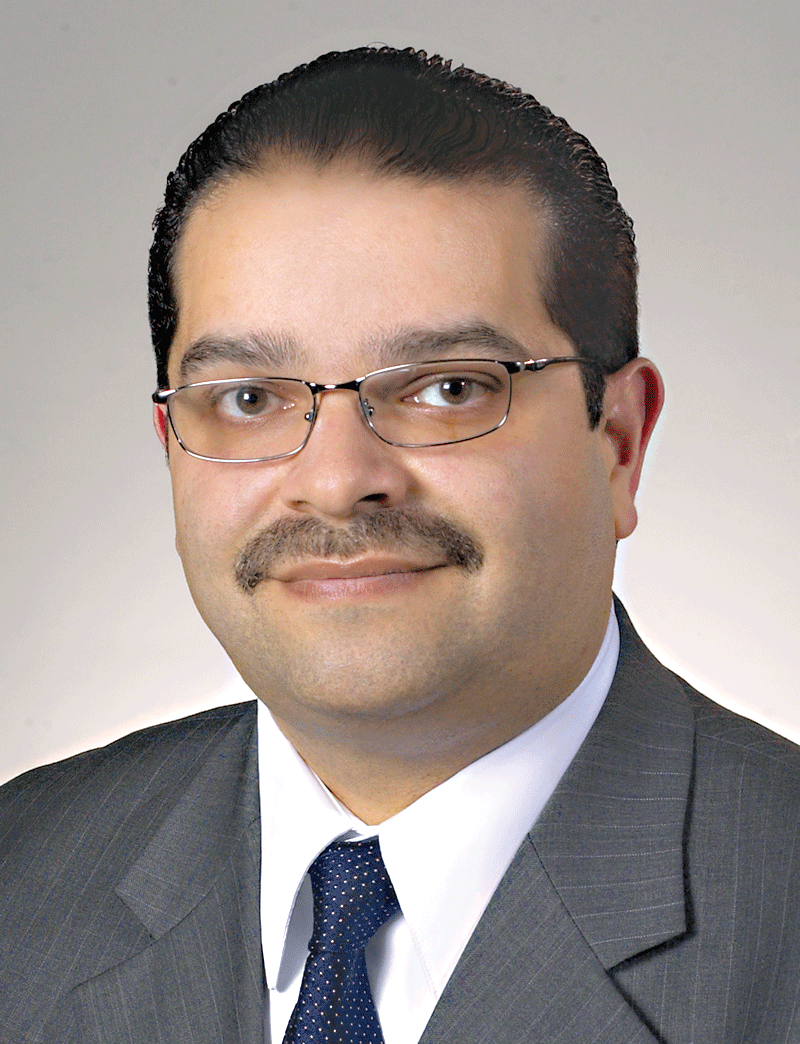
40 Under 40 Class of 2009 Cover Story
Cover

Cover

Back in 2007, when BusinessWest’s inaugural 40 Under Forty honorees gathered for a group photograph outdoors, the sky was clear and bright — appropriate, since the clouds that now darken the nation’s economic outlook were a long way off.

It was an impressive group of entrepreneurs, innovators, and community leaders — in short, success stories that any region would be proud to tout. Last year’s group of honorees — in the second go-round of our annual celebration of the region’s young talent — was equally impressive, even if the economy was growing shakier by the week.

This year, economic bad news is everywhere, and the clouds only seem to get darker by the day. But guess what? Our third 40 Under Forty class shines just as brightly as the first two.

Not that this should come as a surprise to anyone with a finger on the pulse of the region. In fact, the vibrancy of the area’s young achievers — and getting younger; this class includes more 20-somethings than either of the previous two — gives those who care about Western Mass. plenty of optimism about the future. Even in the midst of perhaps the worst recession in 70 years, these individuals are starting and expanding companies, growing profits and creating jobs, seamlessly taking the reins of family businesses … and, in most cases, staying intimately involved in their communities through service on boards and volunteer efforts with charitable organizations.

Better yet, they’re creating lasting legacies that will inspire others to follow in their footsteps. Check out Kathy LeMay, this year’s highest-scoring honoree, who is cultivating philanthropic connections that will make a difference throughout the region for years to come. Brenda Wishart has worn a number of hats over the past decade, all aimed at building the next generation of entrepreneurs. Corey Murphy takes time away from his insurance agency to help kids read and do well in school — maybe giving a leg up to a future 40 Under Forty winner along the way.

By most expert accounts, the clouds will clear. And when they do, what will be left standing are the 40 Under Forty and others like them, who are working hard to build a buzz — and a foundation for long-term economic health — in the Pioneer Valley and beyond.

And now, we’d like to tell their stories, so you can be inspired, too.

—Joseph Bednar

The Class of ’09

Cover Story
River’s Landing Partners Take Their Vision to the Bank
Cover

Cover

A year after opening the doors to their River’s Landing concept at the site of the old Basketball Hall of Fame, partners Peter Pappas and Mike Spagnoli are pleased with the results, but certainly not content. They’re looking to expand their project — and make a broader impact on Springfield’s turnaround efforts.

Mike Spagnoli was working the room at the Onyx Fusion Bar & Restaurant a few weeks ago when one of the patrons got up from his dinner to have a word with him.

He wanted to pass along some compliments about the establishment and his experience that night, and, to help get the job done, let Spagnoli in on something that fellow members of the Springfield Riverfront Development Corp. (SRDC) probably wouldn’t want him to know. Or maybe they would.

“He said that after Peter and I made our original presentation to the board and left the room, members of the committee started laughing out loud — they all had a big laugh,” said Spagnoli, referring to plans, laid out more than three years ago now by himself and partner Peter Pappas, for an entertainment- and fitness-focused complex at the old Basketball Hall of Fame. “One of people on the board announced after we left, ‘what a couple of dreamers.’”

From the tone of these comments, Spagnoli told BusinessWest, he interpreted them to mean that, at least according to this individual, those laughing naysayers on the board were wrong about the two partners and their plans, and that the gleaming complex, which also includes an LA Fitness and ProEX Physical Therapy center, is a dream that has become a successful reality.

Others have said or implied the same thing, said Pappas, who, like Spagnoli, takes enormous pride in hearing such remarks, because they are heard amid a still-vibrant chorus of negativism, doubts, and even rumors of impending closure of one or more of those aforementioned businesses.

“The more people tell us we can’t do something, the more that makes me want to succeed,” Pappas remarked on the first anniversary of the opening of what is called River’s Landing, a $14 million, privately financed project.

Still, both partners know that even if they — and apparently others — are pleased with the performance to date at River’s Landing (despite the recession), there is considerable work to be done if they are to turn more of those naysayers into believers. Indeed, while the partners market themselves extensively, and their complex can be seen by the nearly 200,000 cars that pass by each day on I-91, there remains a lack of awareness on the part of some as to just what has become of the old Hall.

As evidence, Papas referenced a quick tour of the complex he had just given, one that momentarily delayed his conversation with BusinessWest.

“Those two women own a salon in East Longmeadow,” he said as they left for the parking lot. “They said they’d heard some things about us but didn’t really know what we were all about. Now they know, and they say they’ll be back.”

Both partners have given many similar tours over the past several months. They have been part and parcel to a first year in business marked by promising numbers that have met or exceeded projections in the business plan, but also some frustration that doubts persist about this venture and that some, like those salon owners, don’t really know what’s happening across the parking lot from the new Hall of Fame.

“Every day, we’re winning over people,” said Pappas. “But we still have a ways to go; it’s going to take two years before people really believe in us.”

As they mark their first-year anniversary, Spagnoli and Pappas say they’re waging fights on several fronts simultaneously. Building awareness of Onyx is just one of them. Others include hard work to ensure the success of LA Fitness, which is crucial to efforts to convince other national chains that the region (not Springfield by itself) has the requisite demographics for such ventures to thrive.

Meanwhile, the two are exploring any and all options to create more parking in the complex — a clear need — while also working with the other restaurants at the site to promote the riverfront as a destination. And they’re also trying to expand their footprint as well, with development of the neighboring, and vacant, former visitors center into another fitness-related facility — perhaps a racquetball center or a climbing wall.

For this issue, BusinessWest talked at length with the two partners about the state of their vision and the prospects for the future. In doing so, they offered candid remarks on everything from the enormous growth potential of the riverfront to the frustration they’re feeling as they attempt to broaden their impact on the City of Homes and the surrounding region.

Back to the Future

Pappas will sometimes refer to his partner and childhood friend as ‘Dr. Spagnoli.’

That’s a nod to what was, until River’s Landing, the top line on his professional resume.

It seems that in Calabasas, Calif., near Malibu, where he lives and works, Spagnoli, a chiropractic physician, is known to some as the ‘chiropractor to the stars.’ Indeed, his list of clients includes Joe Pesci, Bruce Willis, Hilary Swank, and Priscilla Presley, whom, he says, he helped get ready physically for her stint on Dancing with the Stars.

Spagnoli has done some acting himself; he had a small role in The Last Don, appeared in both Casper movies, and even had a bit part in some 24 episodes that aired two years ago.

But today, most of his attention and his energies are focused on the health of River’s Landing and on helping it play a lead role in the fortunes of Springfield and its riverfront. “This is my primary focus,” he explained. “I put so much time in here I had to hire two full-time doctors to cover me — this is a hell of a commitment.”

Pappas used different and much stronger words to describe his level of investment in this endeavor: “If this didn’t work, they’d take my kids away from me,” he said, referring to the financial limb he’s on. “That’s what I mean when I say I’m 100% committed to this; some say they’re 99% committed … there’s a big difference between 99% and 100%.”

And yet, for all their confidence and commitment to their concept, Spagnoli and Pappas say they can almost understand why there was so much doubt concerning it — almost. The vision was certainly unique for this region, they acknowledged, and the backgrounds the partners brought to the table gave little indication that they could handle a venture of this magnitude.

In the end, said Pappas, the SRDC chose their project because there were no other options. “They picked us because they essentially had nothing else, and I mean nothing else,” he explained, referring to a limited list of alternatives topped by a public-market concept based loosely on a model in Portland, Me. “If they had anything else, they would have taken it; that’s how little faith people really had in this.”

Spagnoli had faith in the vision almost from the moment Pappas told him about his idea for the old Hall soon after he mpotored by it about 3 1/2 years ago.

“I was in my car drinking a coffee when I called Mike in LA,” Pappas explained. “I said, ‘I just drove by the old Hall of Fame, it’s been vacant for a while. I don’t know what they’re doing with it, but wouldn’t that make a great sports and entertainment complex?’”

Said Spagnoli, “I’m in my car and I close my eyes for a quick second and pictured it. I’ve had three sports medicine clinics within LA Fitness facilities in California, and I knew that LA Fitness was looking to expand, so I immediately felt it. I said, ‘Peter that’s an unbelievably great idea — let’s do it.’”

But it would take a long time for the two to take the concept even one step beyond their collective imaginations. In fact, it took almost a year just to get before the SRDC, tell the members about their idea, and, as they found out later, get laughed at.

As the two recounted for BusinessWest, there was little support among area elected officials, some of whom seemed bent on seeing a publicly funded project in the old Hall of Fame.

“There was not one politician who wanted us to do this, because there was nothing in it for them because it was a private business,” said Pappas, who quickly amended that statement, noting support from former state Sen. Brian Lees, former Springfield Mayor Charles Ryan, and, to a lesser extent, U.S. Rep. Richard Neal.

And while trying to sell their concept to elected leaders, the two were also pitching it to LA Fitness, and it wasn’t an easy sell, said Pappas. That’s because this was a new model for the chain, which usually has stand-alone facilities in retail centers, and also because Springfield’s demographics usually frighten off national chains.

“The demographics for Springfield are horrible — the average household income in the city is $30,000, and the national average is $42,000 — that’s how bad it is,” he told BusinessWest. “So what we had to do was sell them on the demographics for the region, which are much better. We convinced them that this location is easy to get to from Agawam, from the West Side, from East Longmeadow, from Longmeadow. Still, this was a leap of faith for them.”

As for the SRDC, at least from the partners’ perspective, it seemed the only hope for the site, but still a laughing matter.

“They never thought we could do it,” said Spagnoli. “To this day, I don’t think they ever thought we were for real.”

More Food for Thought

Spagnoli told BusinessWest that he brought some props with him to that climactic SRDC meeting during which the board was going to choose a development team.

One was a pie plate on a stick, which he held in the air to signify ‘pie in the sky,’ or his take on the public-market proposal, which, at one point, Pappas referred to as “an expensive tomato stand.” The other was a rock, chosen to indicate the partners’ belief that their concept was rock-solid.

Whether the board actually had no real choice as to which project to award the nod, as Pappas suggests, remains a matter of speculation. But even after River’s Landing was chosen, and a year after it opened, the two partners still find themselves having to prove that this complex is, indeed, worthy of that rock.

They say the numbers from Onyx’ first year in business, half of which comprised a recognized recession that some say is the worst in 70 years, are, in fact, solid. Spagnoli said there were 350 people in the restaurant that night when he was pulled aside by the SRDC member, and there have been many evenings like that, despite the pronounced downturn.

“These are not great times for anyone, and that includes the restaurant business,” Pappas told BusinessWest. “But we’re doing very well considering the times we’re in.”

They attribute this to a combination of factors — from the fusion menu to the uniqueness of the facility — that give the restaurant a decidedly different look and feel. “One compliment we hear all the time,” said Pappas, “is people saying, ‘we don’t feel like we’re in Western Mass. when we’re here — we feel like we’re in Boston or New York or LA”

The partners said they created Onyx, which wasn’t really part of the original plan, because they simply couldn’t find the right chain for the site, although there were a few offers. “Remember, chains don’t believe in Springfield,” said Pappas, adding that, as a result, he and Spagnoli blueprinted a different kind of facility, one that blends fine dining with entertainment and a club-like atmosphere.

Pappas and Spagnoli acknowledge that times are tough, but they have no regrets about what would seem to most to be poor timing for a complex with businesses dependent on discretionary spending.

“I wouldn’t change our timing at all, even if I could,” said Pappas. “The nice thing about being in lean times is that it helps you to operate lean. It also pushes us to provide more value to people, because that’s what they’re looking for; they’ll still go out and spend that $50 or $100 for dinner for two, but they want value for it.”

To accentuate that emphasis on value, the two partners have created a special promotion, called the “Onyx experience” — dinner for two and a bottle of wine for $50 — which Spagnoli calls “affordable elegance.”

As for the other components of River’s Landing, Pappas and Spagnoli said both tenants are off to good starts. The two stressed repeatedly that LA Fitness does not disclose numbers, so they used words instead.

“They’re doing extremely well here,” said Spagnoli. “They’ve become believers in Springfield and this region, and that faith is being rewarded.”

Court of Opinion

But while they’re generally pleased with the first-year results, the partners are in no way content. There are several initiatives, in various stages of advancement, they are pursuing to bolster the River’s Landing venture, the riverfront as a whole, the Columbus Avenue corridor, and Springfield’s downtown.

They are taking a lead role, for example, in the creation of the Riverfront Restaurant Assoc., which will work to market the five eateries in the Hall of Fame complex — Onyx, Max’s Tavern, Pazzo’s, Pizzeria Uno, and Samuel’s sports bar — as a destination, and otherwise work to improve the competitive position of that cluster.

The theory, said Spagnoli, is that restaurants grouped in one tight area can grow the pie for the individual players, not create competitive disadvantages — and there is ample evidence (Northampton is the best example in this market, he says) that the theory is valid.

“In California, the most-successful places I’ve been to, and this is up and down the coast, have projects very similar to this one, with a theme,” he explained. “And there are at least four to seven great restaurants in close proximity to one another.”

Pappas nodded his head in agreement, and said the region can easily support such a cluster of residents, with some aggressive marketing and maybe a little help from the economy.

“There are 600,000 people living within a 10- or 15-mile radius of this point,” he said. “And there are 180,000 cars going by every day on I-91; this is not a small market.”

This is a point that both partners make to retail-chain executives and investors with whom they’ve discussed Springfield in general, the old York Street Jail site, and properties on both sides of Columbus Avenue. Such discussions are just one indication that Pappas and Spagnoli don’t want to stop with River’s Landing.

Indeed, the two responded to a request for qualifications concerning the Court Square property, which has been vacant for several years. They submitted a plan for either a boutique hotel or market-rate apartments — something they say is needed to spark some life in the central business district — and were disappointed not to be among those development teams chosen to move on to the next stage in the process.

“I didn’t even get a call to discuss the RFQ — apparently they wanted bigger names,” said Pappas. “That was nearly two years ago, and the building is still sitting empty; it’s very frustrating.”

He used that same word to describe what’s happening (or not happening) with the visitors center.

“We would like to expand in there and we’re ready to go,” he said, referring to two stated options — racquetball courts or a climbing wall that was part of the original vision for River’s Landing and the only piece that didn’t become reality. “It’s really frustrating how slowly things are moving, but hopefully we can get something done.”

As they talked about the present and the future, both partners recalled something Ryan s
id to them at the groundbreaking for River’s Landing.

“He hugged me, and Peter said, ‘continue to help us take this city back block by block,’” said Spagnoli. “That’s where it begins, with one block, or one building. That’s what we’re trying to do.”

Dream Weavers

Hanging on a wall in the front lobby at Onyx is a framed copy of a page from the May 9, 2007 edition of the New York Times. The headline reads “Glimmers of Hope in Springfield, Massachusetts.”

There are two photos accompanying the story relating progress in the City of Homes — one depicting construction of the new home for Performance Food Group in the industrial park created on land adjacent to Smith & Wesson, and the other showing the transformation of the old Hall of Fame, roughly eight months away from completion.

The partners said they placed the story there to display their pride in being part of a turnaround they say is still very much a work in progress, and an effort they want to play a bigger role in.

Time will tell if River’s Landing becomes all that its creators hope it will, and if they can expand upon that venture with other initiatives on the riverfront and perhaps well beyond it.

But one thing is for sure. No one is laughing at these two dreamers anymore.

George O’Brien can be reached at[email protected]

Class of 2009 Cover Story Difference Makers
They lead — and inspire
Cover

Cover

Their contributions vary, from helping to improve the quality and diversity of the region’s workforce to providing books for local school libraries; from donating time, energy, and know-how to area nonprofit agencies to spearheading efforts to engage, involve, and educate the Valley’s young professionals. The common denominator is that these individuals are all making a difference in Western Mass. They’re not the only ones, certainly, but their stories reflect the work of countless others to make this a better region in which to live, work, and run a business.

Cover Story
A Passion for Wellness Has HNE Moving Up the Charts
Cover 11/24/08

Cover 11/24/08

Health New England has been moving up in the national rankings of health plans — all the way to No. 1 in one agency’s ratings for customer service. While such scores are generating headlines, it’s what’s behind the attractive ratings that constitutes the real story — specifically, the company’s strong focus on wellness, healthy communities, and strong growth, and not simply the bottom line.

Peter Straley says there are a host of quantitative methods for measuring the relative success of a health care plan such as Health New England — and by that he doesn’t mean the bottom line, but rather efforts to effectively serve clients.

There are numbers, and lots of them, said Straley, the company’s president and CEO, such as those awarded in national rankings of health insurance providers, and for HNE, they’re getting lower, which is the direction of choice in such matters. On Nov. 17, U.S. News & World Report, collaborating with the National Committee for Quality Assurance (NCQA), placed the company at number six out of 239 commercial health care plans; it ranked 11th three years ago and 9th in 2007. And in NCQA’s own annual report — the Quality Compass 2008 — Health New England was ranked No. 1 in terms of customer service among 160 health plans evaluated.

Meanwhile, there are some numbers that are rising — again, the desired trend — such as the totals for members (more than 100,000) and companies (more than 5,000) being served by the 22-year-old venture, and even in the number of physicians’ offices stocking a series of educational pamphlets, or comic books, created by the health plan.

They teach young people about everything from asthma to diabetes to the importance of weight control, said Straley, and they speak to the general operating philosophy that has enabled Health New England to score so well in those national rankings.

Summing it up, Straley said HNE has always focused on creating healthy communities — in every way that word can be defined — and not on the perceived role of an HMO, simply deciding what gets covered and what doesn’t.

“The true HMO was designed to take a holistic view of the person,” he explained. “It wasn’t about denying care or paying bills; it was about trying to engage you in what will make your life fuller and richer — which you can’t do unless you’re healthy, or as healthy as you can be.”

Overall, Straley attributed HNE’s success in the national rankings to its ability to listen and learn. In the case of the former, this means hearing from a host of constituencies, from individual members to business owners; from doctors to hospital administrators. And with the latter, it means observing what has worked and what hasn’t when it comes to health-plan administration and employing best practices.

In this issue, BusinessWest talks at length with Straley and others at HNE about why the company is turning heads on a national level, and how it certainly isn’t satisfied with the glowing approval ratings it has earned to date.

A Cover Story

Indeed, Pat Scheer, HNE’s Quality Operations manager, says the company wants to continue the current trend and do better than sixth in the next U.S. News/NCQA ranking. He and Straley believe that number will continue to fall due to the common denominator known as passion that they say permeates the company of some 240 employees.

These individuals, including Straley himself, know and live among the people they insure; this lack of corporate distance means feeling a personal responsibility for how well providers, employers, and consumers are treated.

“What differentiates HNE,” Straley said, “is that we really want to help people get the benefit of their health plan. Because, what’s your biggest fear? That something has just happened to you or a family member, and they’ll say, ‘oh, we don’t take that insurance here.’ We want to make sure that people are confident that, if they need their benefit, they’re going to get it. Because we’re going to see these folks on the soccer field or in the grocery store, we take it really seriously.”

It’s been this way since HNE was created in the mid-’80s amid concern from area doctors that Blue Cross’ new HMO would drain patients away from their practices—and potentially deliver lower-quality care.

A group of physicians collaborated with Michael Daly, then-CEO of the system now known as Baystate Health, and other administrators to integrate their own financing and delivery of health care through creation of a new HMO.

The result of that collaboration, said Staley, is that HNE remains sensitive to both the doctors providing the care and the employers who choose HNE for their employee insurance. “The ultimate goal is to provide high-quality health care,” he explained, “and we don’t think you can do that with a sledgehammer from either vantage point, because that’s been tried, and that’s failed.”

How these efforts to strike a needed balance and promote healthy communities become visible to the national organizations that rank health plans is another story — and Scheer’s bailiwick.

“Managed-care organizations have a choice whether or not to seek the NCQA accreditation or not,” he explained. “Back in 1991, HNE was actually the first health plan in the country to seek that accreditation level, and we’ve been accredited ever since.”

There are dozens of standards by which a health plan is judged, he said, including whether a company has a quality care committee; whether it collects data and how that data is used; how medical necessity is determined; how quickly a company responds to a patient appeal; and how the appropriateness of a provider is determined. The NCQA also asks for an additional 74 measures called HEDIS — the Health Care Effective Data and Information Set — as well as customer service surveys.

“It’s not something where we can say, ‘hey, everybody, NCQA is coming in three months, so get ready,’” Scheer explained. “They look back for a two-year period to be sure that you have quality-committee meetings. They say, ‘show me the minutes for the last 24 months. Show me that you’re taking action.’ There’s no possible way you can bluff anyone.”

All health plans are required to have the collection of their data audited, to make sure they’re adhering to the technical requirements. So while accreditation happens every three years, Scheer says documenting their efforts is a rigorous process that begins again the minute the current accreditation process is complete.

Well Done

Behind those attractive rankings are programs and operating philosophies grounded in imagination, innovation, and a commitment to the broad subject of wellness.

“I love wellness … it’s all about behavioral change, and doing what your mother said you ought to do all along,” Straley joked, adding that one of HNE’s successful wellness initiatives is that series of comic books that educate young people on health-related issues.

During their creation, the books were reviewed by medical personnel — and kids. The comic books have been distributed to pediatricians’ offices and offered to schools, and several have won National Health Information Awards.

“What we’ve found,” Straley said, “is that the pediatricians are doing a great job of explaining to mom and dad what the condition is and what the kids should do. And the kid is standing beside them getting some of it, but then they’re out on the playground and have an attack and wonder what to do.”

It’s an instance, he noted, where improving health care does not involve new science or treatment methodologies — just providing practical information in an accessible format.

It also means providing members with options, and plans specifically tailored for their changing needs.

Thus, in January of 2009, HNE will begin offering Medicare Advantage coverage for the first time. For people who are 65 and older, the Advantage plan allows them to remain within the system of their current HMO with Medicare coverage and the option to purchase additional benefits. On a day-to-day basis, the switch to some Medicare-paying benefits will be invisible to the consumer; they will experience the same health care package they had before turning 65.

“The individual who’s 64 years old and has our insurance through her employer is still the same person at 65,” said Straley. “She’s still seeing the same doctor. She still has the same issues. Nothing has changed.”

Enrollment levels in Massachusetts in Medicare Advantage plans are currently below the national average, but with HNE’s entry into the arena, that’s likely to change.

Meanwhile, HNE’s focus on overall wellness extends well beyond what would be considered traditional health care. Indeed, the company participates in the larger health of the community by supporting cultural institutions like the Springfield Symphony and museums, and helping fund and organize kids’ programs with the Urban League.

“Quality of life,” said Straley, “is not just are you coughing, but are you healthy physically, mentally, and spiritually?” It’s not just the right thing to do, he added — it also makes financial sense to support other businesses and the quality of life in Springfield and surrounding areas.

The company has become involved in the issue of homelessness for both reasons, helping raise money for a new resource center that will break ground next spring, eventually providing around-the-clock counseling, medical care, and other support services to homeless individuals.

“I think that it’s a failing of society when we don’t take care of people who are most in need,” Straley told BusinessWest. “This is not something you should blame people for — you need to provide help. But I’m also interested in economic development, and if we have people panhandling on the streets, it does not reflect well on Springfield.”

Turning again to the challenges being faced on a national level in caring for people’s health and well-being, Straley said HNE is already confronting the central issue that health plans will face as more people are insured: how to change the delivery of services to accommodate demand. “As you get more experienced, you literally can do more with less,” he said, offering an example: “If you do group information sessions rather than individual sessions, you’re dealing with 80% of the solution for 10 people all at once, and that creates capacity. There are pieces that you want to keep individual, but there are behavioral pieces that could be done differently.”

As a self-described “walking billboard for the company” (he often wears HNE logos), Straley expects people to approach him with questions. He listens, gives them his card, and says he’ll get somebody on it. It’s part of his belief that communication is at the core of the company’s success. “We try really hard to communicate clearly. We’ll try anything. We’ll write comic books! We’ll send you a memo! It doesn’t mean we’re always successful, but it’s the way you’d want a friend sitting across the table to tell you, ‘well, here’s how it works.’

“As you can tell, I’m so proud of what the people in this company do,” he continued, “and how connected they are to the communities that we serve, and just how passionate they are about not wanting to be the big, bad HMO the way the industry gets painted. We’re really different, and they care about that. We’re committed to what we do, and we know how important people’s health is. At the end of the day, if your health isn’t good, the rest doesn’t matter a whole lot.”

The Bottom Line

Returning to the subject of numbers, Straley said HNE passed the 100,000-member plateau two years ago, and has been enjoying steady, controlled growth since — a pattern he desires.

“I don’t want explosive growth,” he explained. “I want steady growth where we can manage the quality of the product we deliver.”

If one does that, he said, the numbers, including those in the customer service rankings, should take care of themselves.

Cover Story
Tim Sneed Charts a New, More Entrepreneurial Course at MCDI
Cover 11/10/08

Cover 11/10/08

Earlier this decade, the Mass Career Development Institute and the acronym MCDI became almost synonymous with the mismanagement and corruption that plagued Springfield. Work to stabilize and refocus the institute began with now-former Director James Morton, and it continues with his successor, Tim Sneed, who is also developing a new strategic plan while also building awareness and transitioning the nonprofit workforce-training entity away from its partial subsidy from the city. ‘Transition’ is a word you hear often with regard to this agency, which Sneed is giving a more-entrepreneurial character as it strives to be an even-more-pivotal force in regionwide economic development efforts.

Tim Sneed was winding up his tour of the many facilities at the Mass. Career Development Institute (MCDI) with a quick stop in the expanded metal shop area. He stopped at a trash barrel in the making, quickly recognizable as the same model seen on many streets in downtown Springfield.

The unit features several iron rods twisted and welded into a somewhat artistic yet obviously functional shape as part of the training that individuals involved in this particular program gain as they look to enter or re-enter the workforce in one of many sectors that are struggling to find qualified help. As he looked over the nearly finished product, Sneed, MCDI’s executive director since early 2007, mused about an already-existing inventory and opportunities to make and sell more of the units, and said with a chuckle, “I’ve got 20 of these to sell; I want to be the trash barrel vendor of choice in this region.”

He would use such phraseology early and often as he talked with BusinessWest, and offered the rubbish-receptacle-manufacturing work as one very small but nonetheless significant and symbolic example of what he wants to do at and with MCDI. His mission is to do some shaping of his own — in this case transforming the once-troubled agency that became symbolic of the corruption and mismanagement that plagued Springfield earlier this decade (more on that later) into a major player in the revitalization of the city — and improvement of the economic health and well-being of the region as a whole.

He wants the nearly 40-year-old institute, now located in a former box-making plant on Wilbraham Avenue, to be a learning and training facility of choice, and he’s already taken some significant strides in that direction.

Indeed, the former financial management executive at Solutia (formerly Monsanto) and MassMutual, working in concert with a revamped, committed board of directors, is positioning the institute, which provides training in areas ranging from computer programming to culinary arts to that aforementioned welding and machinery, to be an integral player in workforce-development efforts in the region.

And this commitment comes at a time when workforce development has been identified as the most critical economic-development issue facing the region.

In many ways, Sneed is continuing the work started by now-former MCDI Director James Morton, who, before moving on to become director of the YMCA of Greater Springfield, commenced the often-difficult work of stabilizing the agency after a scandal involving previous Director Gerry Phillips tarnished its name. But Sneed told BusinessWest that the image-restoration efforts are now mostly in the rear-view mirror.

The task at hand has several components, he said, starting with awareness-building efforts and development of a new, comprehensive strategic plan that will evaluate specific programs and identify ways to strengthen and grow them. Meanwhile, the nonprofit agency is also transitioning itself away from its partial subsidy from the city in an agreement forged with the Finance Control Board.

To successfully handle all of the above, MCDI must become, in a word, far more entrepreneurial, said Sneed, noting that this means everything from program development to trash-barrel production and sales.

In this issue, BusinessWest talks at length with Sneed about his plans for MCDI and how he intends to make that vision reality.

Work in Progress

Sneed told BusinessWest that when he first came to Springfield and Monsanto, the expectation would be that the stay would be only a few years in duration, as it had been been with other stops while working for that company.

But more than two decades later, he’s still working in the region and with several of its nonprofit groups, such as the Martin Luther King Center, where he served as chairman of the board for two terms, and the Community Music School, among others. Such involvement helped create what Sneed called a mid-life crisis of sorts regarding his own career.

“I always said that if I had the opportunity to become the exec of a nonprofit agency, I’d try to take advantage of that,” he explained. “Lo and behold, a year and a half ago, this position opened up.

“I didn’t know anything about MCDI at the time,” he continued. “Someone referred my name to (former) Mayor (Charles) Ryan; he called me in, we talked, and three weeks later I was hired. I see this as an opportunity to really contribute directly to the community.”

Since arriving at MCDI, Sneed said he has focused his energies on improving visibility, especially within the business community, developing a strategic plan, recruiting a strong board of directors to provide better oversight, and instilling that more-entrepreneurial character he talked about. Add it all up, and it translates into work to make MCDI run more like a business itself than the quasi-public entity, or city department, that it has been.

“There’s probably a notion that MCDI is some sort of social-service organization,” he said. “I am of the notion that I don’t want to be a social-service agency — I want to be a training facility. And that’s the direction we’re taking.”

Such an attitude will be necessary as MCDI transitions itself away from its city subsidy, which is about 20% of a roughly $5 million annual budget also funded with help from state and federal allocations. Specifically, MCDI receives funding from the federal Department of Housing and Urban development, the federal Workforce Investment Act, the Employment Board of Hampden County, the Department of Labor and Workforce Development, and the Commonwealth Corp., among other sources.

Separation from the city will occur over the next four years, said Sneed, adding that this period of transition will allow MCDI to cultivate other funding sources and become more-entrepreneurial in its operations. And when asked where and how, he said, “everywhere and with everything.”

“The obvious challenge for us is to replace that revenue we receive from the city,” he explained, adding that there were plans to begin transitioning MCDI away from city assistance roughly a year ago, but they were pushed back, in part to provide more time to cultivate a strategic plan for moving forward and closing that funding gap.

Such work boils down essentially to partnership-building, said Sneed, adding that this has been the blueprint for MCDI since its start back in 1970, but these efforts now take on an ever-more-critical nature.

And they represent a form of ongoing evolution at the institute, which has seen a number of changes since it was founded as the Hampden District Regional Skills Center. Now, as then, the mission has been to work with various challenged constituencies — the homeless, those on transitional assistance (formerly known as welfare), the unemployed and under-employed, those once incarcerated, and youths at risk among other groups, and, “graduate them into the economy,” as Sneed put it.

Over the years, technology and other changes in the workplace have presented new opportunities and challenges for the institute, which has, generally speaking, responded effectively to demands for both broader skill sets and qualified help in specific sectors of the economy. Since its inception, MCDI has transitioned more than 18,000 people into full-time employment, the majority of them women and minorities.

But the institute was rocked by scandal earlier this decade, with Phillips eventually removed from his position amid allegations ranging from creation of no-show jobs to inappropriate use of funds to improper relationships with students — sometimes in exchange for those no-show jobs.

Morton, a former attorney and long-time teacher in Springfield, succeeded in putting the institute back on solid ground, reaffirming its relevance within the region, and even gaining some positive headlines, said Sneed, adding that his role is to build on what’s been done and move MCDI forward through creation of more and better partnerships with area economic-development agencies.

Training Grounds

Sneed said MCDI has always been performance-based in its operations, but now, it will be even more so as it becomes more entrepreneurial in nature.

“The incentive was never to get people in the door, but to get them jobs, and that’s more true today than ever before,” he said, adding that this operating philosophy (and funding provision) dovetails nicely with a new sense of urgency within the community regarding workforce development.

Indeed, the Regional Employment Board, working in concert with a host of other agencies and institutions, has blueprinted something called Building a Better Workforce — Closing the Skills Gap on the Road to Economic Resurgence, and MCDI is already slated to play a role in one of its first initiatives.

It’s a project within the health care sector to increase pathways for lower-skilled incumbent workers by providing certified nursing assistant (CNA) and acute-care training. The program will eventually involve both current health care workers and those outside that sector and, essentially, provide an entranceway and then a clearer path to better-paying jobs in that industry, which is struggling to fill vacancies in many areas.

MCDI will join Springfield Technical Community College and Holyoke Community College in training efforts aimed at making participants ready to work in an acute-care setting.

Meanwhile, the institute is also playing a part in efforts to help bring more skilled individuals into the manufacturing sector, and, specifically, the precision-machining quadrant, said Sneed, adding that work to secure more contracts of this type will be the real key to closing the funding gap that will result from the transition away from city support.

And to get them, MCDI must improve its visibility, he explained, but also continuously prove to business owners, groups like the REB, and other partners and potential partners that it can produce results.

“We have to show people that we can deliver — just like any business must,” he said, adding that, to continuously gain those desired results, the institute must make sure its programs are relevant, up-to-date, and provide graduates with those skills that employers are demanding.

Thus, the institute uses advisory boards to review the needs of various business sectors and even specific businesses to help make sure the institute is graduating individuals who can meet those needs.

These include the so-called “soft skills,” he continued, referring to everything from punctuality to communication to proper attire — something the institute helps to address through the Dress for Success venture, which provides graduating women with clothes and shoes for interviews or their first day on the job.

“It’s always been our mission to have people be job-ready,” he explained. “And that’s why we have conversations with people, starting on day 1, about what it takes to be ready.”

As for visibility, or marketing, this is something on which MCDI has traditionally not focused much of its time, energy, or budget (as a look at its Web site will reveal), but this philosophy, like many other day-to-day operations, will change with the institute’s more businesslike approach.

“We have to market ourselves more aggressively, we know that,” said Sneed, who has gone so far as to hire a consultant to assist with such matters. “We have to get our message out; too many people still don’t know who we are, why we’re here, or how we can help them. ”

And the message to be sent, he said, is that this is no longer a ‘troubled’ agency with a dark cloud hanging over it. “We’ve managed to put that behind us; we’re focused on the future and being a key part in workforce-development efforts here.”

Moving forward, Sneed said his basic mission is simply to make the institute’s phone ring more often — make that much more often. Calls are traditionally from companies that need help, or a problem solver, he explained, adding that his level of success in making MCDI a thriving, independent entity will ultimately be measured by that volume of phone calls.

“We want to be this region’s training facility of choice — it’s as simple as that,” he said, using, again, words that he summoned often.

Trash Talking

As Sneed gave BusinessWest a tour of the institute’s many programs — stopping in the computer lab, one of the English for Speakers of Other Languages (ESOL) labs, the commercial kitchen, and the Dress for Success shop, among others — he moved quickly and purposefully. He wanted to provide a detailed look at what the institute does and how it does it, but he also had work to do.

MCDI is entering a new, intriguing, and very challenging phase of its existence, and Sneed is quite busy with the many aspects of partnership-building, strategic planning, and developing new and reliable sources of revenue. If it all sounds like the process of running a business, that’s because that is increasingly what this entity has become.

And Sneed just might be able to sell a few trash barrels while he’s at it.

George O’Brien can be reached at[email protected]
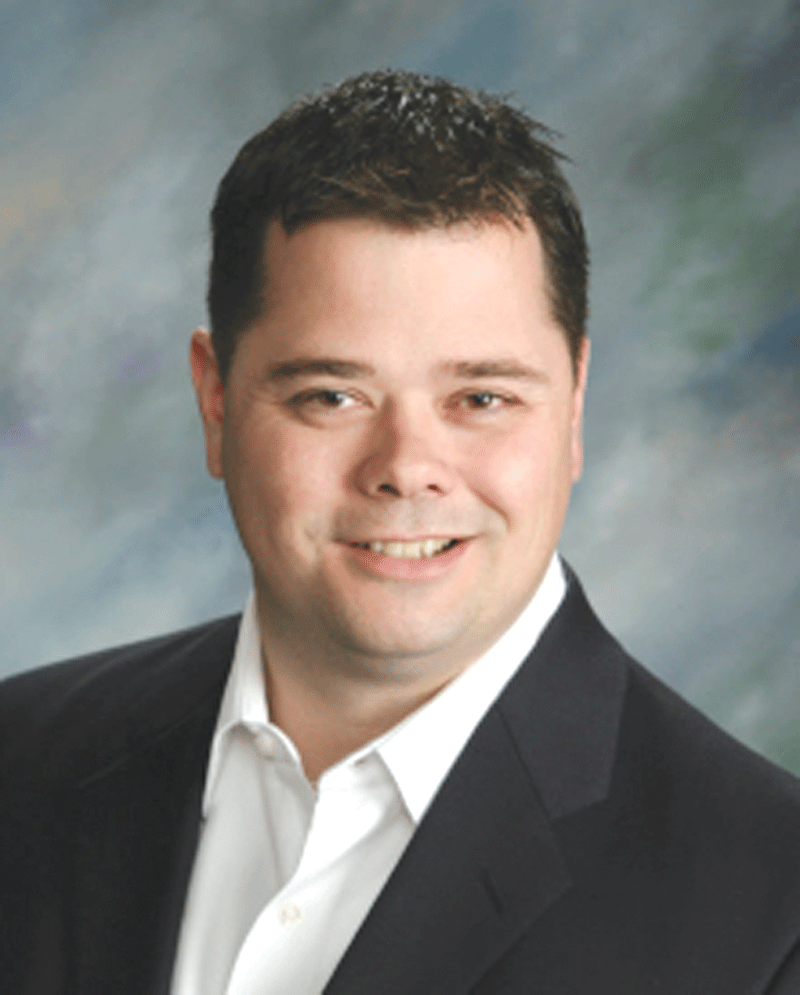
Cover Story
How Robert Holub Plans to Take UMass Amherst to the ‘Top Tier’
Cover 10/27/08

Cover 10/27/08

Robert Holub says it was the first pragraph of the ad placed in a higher-education trade journal that caught and held his attention.

He doesn’t recall the exact wording, but it was something to this effect: that the president and trustees at UMass Amherst were looking to recruit someone who could bring the campus into the top tier of public research universities in the country.

Only a few months before that ad was placed, Holub, then provost and vice chancellor for Academic Affairs at the University of Tennessee, wasn’t looking for another job opportunity. But by the time it appeared, following some leadership changes in Knoxville and greater uncertainty about his future there, he was paying much closer attention to such postings.

He was aware of UMass and its national reputation — like many others, he says the school is better-regarded outside the Bay State than within it — and was intrigued. But it was the ‘next-level’ nature of the assignment that also appealed to him. Many schools are looking to make such a jump, he told BusinessWest, and UMass has been for several decades now, it seems.

Indeed, such ‘top-tier’ language is commonplace in ads posted by schools seeking a president or chancellor, he said, adding that this opportunity — with its blend of timing, institution, and lingering historical challenge — stood out in some ways and got him thinking about what might be the next line on his resume.

By midsummer, Holub, a German scholar, wasn’t thinking about the UMass assignment any longer — he was already hard at work on it, or at least laying the groundwork for it. And by September, when he arrived at the Amherst campus, he was talking to media outlets and other constituencies, including alumni, faculty, students, elected officials, and others, about just what’s involved with taking such a school up a notch.

There is no manual and ‘how-to’ guide for such work, he explained, adding that it comes down to making an across-the-board effort to improve everything from research to the volume of faculty awards; from endowment to the rankings in U.S. News & World Report and other publications.

And Holub has already taken some steps in these directions.

For example, he recently reinstituted the position of ‘vice chancellor for Research,’ and expanded the title to include ‘Engagement,’ in one of several organizational moves.

“In examining the top public research institutions in the country, I have found very few that did not have a research office at the level of vice chancellor or vice president,” he wrote to the campus community. “If we are going to be among these top institutions, I believe it is wise to emulate their emphasis on research and research productivity.”

Following, or attempting to follow, best practices established by the schools well ahead of UMass in the rankings will be part of the strategic plan for the university, said Holub. But such efforts don’t take place in vacuums, and are inherently complicated by a number of factors, he said, putting everything from campus politics to simple economics on that list. And at the moment, state financing is a rather sore subject, with Question 1 (a proposed end to the Commonwealth’s income tax) hanging over every public institution, and $1 billion in cuts already made by the Patrick administration ($12 million at the Amherst campus).

But there are other factors, not the least of which is the fact that schools currently ranked higher than UMass in several of those categories have no intention of moving down the list.

“They don’t sit around and say, ‘we’ve had our time in the top 25; let’s give our spot to someone else,’ and the 20 schools in our position don’t say, ‘we’re happy where we are,’” Holub explained with a laugh, adding that reaching the next level certainly won’t happen overnight.

In this issue, BusinessWest introduces Holub to the Western Mass. region and details (to the extent possible) his intentions and plans to take UMass Amherst where no one has.

School of Thought

As he talked with BusinessWest in his offices in the Whitmore administration building, Holub referenced a wall of framed photographs and architects’ renderings. Together, they convey more than a decade’s worth of expansion and new construction — totaling hundreds of millions of dollars — that crosses several schools and departments at the university.

The collection is impressive, and includes the integrated science building, the new Skinner Hall (home to the School of Nursing), the Isenberg School of Management, the recently opened integrated arts building, a recreational center currently under construction, the new, state-of-the-art central power plant, and many others.

But they will all be coming down soon.

“These are things that are already done, for the most part, and achieved by the previous administration,” said Holub. “There are a host of new projects coming via the capital bond bill; we don’t need to keep up the old ones.”

Re-covering that wall with new building and expansion projects is just one of the official or unofficial goals that Holub has set since learning last summer that he had been the one chosen to take UMass to a higher tier — and a new set of pictures will provide some evidence of progress in that regard.

But the real proof will come in the rankings, specifically those set by the National Research Council, or NRC, said Holub, who told BusinessWest that he wants UMass Amherst to join such schools as Michigan, Penn State, Berkeley, UCLA, and others among the top echelon of public universities.

Gauging the scope of the work ahead, Holub said that several UMass departments have already achieved top rankings from the NRC — in terms of faculty awards, the school is in the top 20, for example — but in others, the school is well down the lists.

“It’s a mixed bag,” he explained. “We do well in faculty awards, but in research, we’re down around 50 or so, and in endowment, we’re down below 100. We have some departments ranked in the top 20, and others that are unranked.”

Questions about how to achieve across-the-board improvement no doubt dominated the interview process for the chancellor’s position, which Holub entered after nearly 30 years in higher education, 27 of them at Berkeley, which he placed in that top tier.

Holub started there as an undergraduate adviser in the German Department, and eventually became chair of that department and served in that post from 1991 to 1997. He would move up the ranks, and eventually be named dean of the undergraduate division of the College of Letters and Science, continuing a career-wide focus on undergraduate education. He left Berkeley for Tennessee and its chief academic post in 2006.

A change in leadership in Knoxville late in 2007 prompted him to start mulling career options, and he set his sights on a chancellor’s or president’s position.

What appealed to him about UMass was the solid foundation on which to build — several academic programs are highly ranked — and the professional challenge that awaited him at the school.

When asked where he starts, he said there will be several initiatives undertaken simultaneously, but research is obviously a top priority — hence the launching of a national search for a vice chancellor of Research.

“We have to improve in research productivity, in terms of federal research expenditures,” he explained. “That’s the way in which the top institutions are measured; we do well there, but don’t do as well as the top tier.”

The administrative change, with an emphasis on that word ‘engagement’ that will now be in the title, is a key first step in this initiative, he continued. “The research office should be able to act more effectively to assist faculty in doing their research, getting out research grants, and working with industry inside the state and outside it to attract research dollars.”

Another priority is communication, he said, meaning both the internal and external varieties.

“We have to make it known what is going on here, and what is so positive about what’s going on here,” he explained, noting that the accomplishments of the faculty are not as known and understood as they should be, for example. “Many of the surveys that you have, whether it’s the National Research Council or US News and World Report, are reputational in nature, and in the past, I don’t think we’ve done a good-enough job of communicating the excellent work that goes on here and the great research and teaching that are accomplished on this campus.”

To achieve improvement, Holub has appointed Tom Milligan to the position of executive vice chancellor for University Relations, and has moved several units and individuals under this unit to “ensure a more consistent and coordinated approach in reaching and engaging our key constituents,” as the chancellor wrote in his E-mail to the campus community.

Milligan is putting together a more-cohesive communications strategy for the campus, Holub continued, adding that several departments at the school have been handling what amounts to public relations, but these have lacked coordination.

Textbook Examples

While discussing what it will take to move UMass up in the rankings, Holub addressed some of the theories offered as to why the school isn’t on a higher tier, and why some question whether it can get there.

The proliferation of quality private schools in the Bay State is often mentioned in this discussion, because of how those schools — Harvard, MIT, Wellesley, Amherst, Smith, and Mount Holyoke, among seemingly countless others — compete with the state university for students, faculty, and the attention of the press, especially the Boston newspapers that cover Harvard like a blanket.

Meanwhile, distance from Boston is sometimes listed as a factor by those who believe Amherst is perhaps too remote to gain consistent attention from the Boston media, or to attract faculty and graduate students.

Holub acknowledged these contentions, but quickly discounted most all of them simply by showing what other schools facing similar issues and challenges have done.

Champagne, home to the Univerity of Illinois, is hundreds of miles of Chicago, he explained, and the Windy City has a number of top-tier private schools. But neither of those factors has kept the state university from reaching the place where UMass wants to be.

Meanwhile, he said, students don’t usually choose between Harvard and UMass, or MIT and UMass — the university traditionally faces different forms of competition for students. And as for the press, Holub took the attitude that, while the university can and will work harder to draw attention to itself — as he outlined above — he believes that if UMass can generate the kind of news he’s looking for (not students getting arrested after Red Sox playoff games), then the media will cover it.

So the task at hand is to create such news or more of it.

Doing so amounts to a process, said Holub, adding that, for the past few months, he’s been engaged in what might be considered the first step: listening.

He’s done a lot of it, while sitting across the desk from or standing at podiums in front of individuals and groups ranging from Allan Blair, president of the Economic Development Council of Western Mass., to distinguished alumni; from elected leaders in Boston and Washington to the school’s foundation board; from every dean on the campus to some current students.

What is he hearing from them? Many things, he said, but one common thread is the need to move quickly and decisively to restore a sense of stability, something that is lost, or perceived to be lost, when a school like UMass loses as many top administrators as it has over the past several months.

What is Holub telling those groups and individuals? Essentially, that he wants to take those departments not ranked among the country’s elite and elevate them there, while taking those with high rankings and pushing them higher still.

“We’re the best public research university in New England,” he said, stating with no lack of confidence in his voice that the school tops UConn in that category. “But we can’t be satisfied with that; we want to be one of the best in the country.”

Overall dissatisfaction with the status quo is what Holub says brought him to UMass.

“If they had said that they were satisfied with the way things were going and that they wanted someone to keep operating in that way, I wouldn’t have been interested in the position,” he said, referring back to that job posting. “This university has achieved some great things, but it can do more and be more.”

By the Book

When asked if there were any often-cited examples of schools reaching that ‘next tier’ that he would attempt to emulate in some way, Holub said there are several, but that each story is different is some ways.

The common thread is achieving a campus-wide commitment to excellence, and not allowing standards — or performance — to slip.

That’s why schools that are that top-echelon usually stay there, he continued, adding that UMass won’t easily take another university’s slot among the elite.

“Every public university that’s in the top 25 wants to stay in the top 25, and everyone who’s 25 to 50 wants to get in the top 25,” he explained. “So, it’s a very hard competition.”

Thus, UMass will have to earn its way to the top echelon, and the processing of doing so is already underway.

George O’Brien can be reached at[email protected]

Cover Story
Cover 9/15/08

Cover 9/15/08

At an owners meeting back in January, Bruce Landon, a long-time executive with the Springfield Falcons and part of that ownership team, said that if the AHL affiliate didn’t boost season sales by roughly half the then-total of 1,100, then owners would have to consider all options — up to and including selling the club. That preliminary goal has been realized, but much work remains to drive up attendance for the 72-year-old franchise and thus secure a solid future in the City of Homes.

Bruce Landon calls it the “war room.”

That’s a colloquialism for the conference area within the Springfield Falcons Hockey Club’s office complex at the MassMutual Center. There, along one wall, are two giant white boards that are now covered by expansive charts with information on all 40 home games for the 2008-09 season, which Landon describes as a “very important season” for the franchise.

These charts list the date, day, opponent, and a host of other data on each game — from the corporate sponsor for the tilt in question to the theme for that contest to the individual or group scheduled to sing the national anthem. Falcons officials have been working diligently to fill in these boxes since the day the schedule was announced in July, and they have a lot of work ahead of them.

Eight of the contests are marked in red, explained Landon, president, general manager, and part-owner of the franchise, because they have been identified as big games — potentially, as far as the standings are concerned, but definitely, in terms of possible turnout and thus revenues. These are weekend games for the most part — the exception being the last game of the year, on a Wednesday — against what would be considered traditional and geographical rivals, especially the Hartford Wolfpack and the Providence Bruins.

“These are the ‘A’ games,” Landon told BusinessWest. “These are the ones we’ve identified as being key for us in terms of getting big crowds out, and we do everything we can to make the most of these dates.”

Maximizing the return from these ‘A’ games is just one component of a multi-faceted strategy to boost attendance for the American Hockey League franchise, which can trace its roots in Springfield to 1936, but probably won’t have much of a future in the City of Home unless those numbers rise from the current 3,600 or per game to something closer to 4,600, minimum.

This was the essence of a blunt message that Landon, who’s been part of this franchise as a player and executive for most of the past 40 years, left with other members of the ownership group, as well as the media, at and following a meeting last January, during which he threw down a gauntlet of sorts regarding season-ticket subscriptions and the critical need to drive up volume.

“I wasn’t trying to put fear in anyone,” he said of that meeting, at which he said that, if the team failed to gain another 500 season tickets by June, then ownership would have to consider a host of options, including selling the club. “I was just trying to get my point across — that this is a business, one that can’t keep losing money.”

Apparently, he made his point. Indeed, season-ticket sales climbed from about 1,100, one of the poorest totals in the league, to beyond 1,600 (the initial threshold) by early summer — thanks in part to efforts within the business community — and they’re inching closer toward the more ambitious goal of 1,800.

But season-ticket sales are just one part of the equation in the larger effort to boost attendance to that 4,500 level or, hopefully, much higher, he continued, adding that group sales and day-of-game purchases are also critical to hitting the number. Bringing attendance up will require a good on-ice product — something that’s been mostly lacking in recent years (the team hasn’t made the playoffs since 2003) — but also some effective marketing, a little help from the economy, perhaps, and even some luck.

“Let’s see if we can avoid the snowstorms on Friday and Saturday nights, or even forecasts of snow,” said Landon, adding that the latter can be nearly as impactful as the former.

Overall, Landon knows that what he wants to accomplish with attendance is doable. That’s because he’s done it before: he led efforts to resurrect hockey in Springfield after the city lost its AHL franshise for a short time in the early ’90s. He and partner Wayne LaChance were awarded a team, eventually named the Falcons, in 1994, and the partners succeeded in steadily drawing more than 5,000 fans to the old Springfield Civic Center.

Duplicating that feat will come down to generating and then holding greater interest in the team — in whatever ways that can be accomplished, said Landon, who recently inked a new three-year contract as president and general manager. He noted that the AHL product is good, but it seems that fans, especially in this market, need to be constantly reminded of that.

“This is the second-best hockey league in the world,” he said. “And what we want to stress is that people can see the stars of tomorrow at prices they can afford today.”

Being Goal-oriented

As he talked about the Falcons, the team’s rich history, its past success (six Calder Cups, including two in the early ’90s), and the challenges ahead, Landon summoned, in his mind, a news clipping from a game he played as a goalie for what were known then as the Springfield Kings. (The team was called the Indians at the start, then the Kings, then the Indians again, and finally the Falcons, starting in 1995.)

It was 1969, he recalled, adding that he remembers the story noting that he had a big game and helped lead the Kings to a win “before a crowd of 3,800 loyal fans.”

“That was on opening night, a Saturday,” he continued, adding that he summoned that moment from his youth and perhaps the team’s high-water mark in terms of success and popularity to make a few points. First, the fact that, despite some perceptions to the contrary, the team’s attendance wasn’t much, if any, higher nearly 40 years ago, when it played in the Coliseum at the Big E, than it is today, and second, that while a team could survive and thrive with that kind of attendance back then, it can’t today.

“Not with the expenses that we face these days — the days of surviving in the American Hockey League on 3,600 or 3,800 fans are over,” he said, noting everything from travel (the league is much bigger geographically than it was then) to facilities to a large portion of the parking tab for each vehicle. It is simple mathematics driving the current push for higher attendance, Landon continued, noting that many teams in the league are averaging more than 5,000 per game, and Springfield must join that club to compete effectively and enable a dedicated ownership group to use black, not red, ink when logging season-ending financials.

This was the point Landon said he was trying to drive home at that January owners meeting and after it ended.

“I looked at the numbers, and they showed that we do pretty well in group sales, we do a lot of promotional things to entertain the fans, and we have a quality league and a good team,” he said. “But the bottom line was that we just didn’t have a big-enough season-ticket base.”

He knew that the gold standard (5,000 season tickets) set by the league’s oldest and, by most accounts, most successful, franchise, the Hershey (Pa.) Bears, was not attainable in a market only 90 minutes from Boston and NHL hockey. But he thought the team could match or approach the numbers (2,000 to 2,200) amassed by some similarly sized communities such as Syracuse and Binghampton, N.Y. and Portland, Maine.

“We knew we had to get that season-ticket base up to 1,600 or 1,700 to have a fighting chance,” he said, adding that what emerged from that January meeting was a much-needed sense of urgency that has manifested itself in concerted efforts from city leaders and the business community to help the club boost season-ticket sales.

“We’ve had a lot of people rally behind us — the media, the fans, and the businesses of the Western Mass. area,” said Landon, noting that Springfield Mayor Domenic Sarno, among others, called area business owners seeking support for the franchise in many forms, but especially season-ticket subscriptions. “Merrill Lynch bought 60 to kick off the campaign, and it just snow-balled from there. And it wasn’t just the corporate sector … individuals stepped up. The spark came from many different areas, and it was refreshing to see. ”

But considerable work remains, said Landon, noting quickly that a larger season-ticket base will help the team meet its higher attendance goals, but it is only part of the equation.

Win-win Situation

And this point brings him back to the ‘war room,’ those white boards, and ongoing efforts to fill in the grid with corporate sponsors, pre-game activities, special promotions, anthem singers, and everything else that goes into making a game successful from a revenue standpoint.

Each of the 40 home contests is important, noted Landon, although some — those ‘A games’ especially — obviously have more potential, revenue-wise, than others. Maximizing each contest is an all-consuming exercise, he said, involving staff members and a number of interns enrolled in sports-management programs at area colleges and universities.

“We gather here (the war room) on Friday afternoons — it’s a little slow in the off-season — and we brainstorm about everything,” he said, adding that there are more-formal gatherings on Tuesday mornings. The assignment is to look at every game — whether it’s a Saturday-night tilt against Hartford, a late-Sunday-afternoon contest against Portland, or a Wednesday-night encounter early in January against Binghampton — and find ways to put “fannies in the seats.”

“It’s frustrating in some ways,” he said. “Too many people think that they have to drive to Boston and spend $400 to see good hockey. They don’t — they can see it right here; a family of four can attend a game here for $50. We just need to show people how good the product is, and to that, we have to get them out to see the Falcons.”

To that end, the club works to create value, said Landon, adding that this comes in many forms, from giveaways of backpacks on “school” nights, providing individuals or school choruses an opportunity to sing The Star Spangled Banner, to bringing in attractions such as Red Sox mascot ‘Wally the Green Monster.’ For games like the 1 p.m. matinee on New Year’s Eve against Hershey, the staff members will stretch their collective imaginations to make the most of what is an opportunity but also a challenge.

Creating value doesn’t exactly substitute for a lack of on-ice success, said Landon, but it does help, and all teams must contend with factors that are, for the most part, out of their control.

These include injuries — which eventually doomed the 2007-08 Falcons, a team that started strong and was in the playoff hunt until the final week — but also parent clubs short on young talent (this describes the Tampa Bay Lightning, the Falcons’ former parent), the lengthy renovations to the Civic Center a few years ago, which prompted some to think the arena was closed, and even the weather and forecasts of same.

To overcome all that, the Falcons, like all teams, strive to provide a great experience for fans, and this explains all the hard work in the war room.

This is also the motivation behind the ‘Perch,’ a new seating area for groups that was opened last year to solid reviews. It seats roughly 50, comes complete with HD televisions, and enables groups to cater in whatever menu they like.

“The Latino Chamber of Commerce had it for a game and loved it,” said Landon, adding that the Perch was rented by 15 groups and businesses last year, and the goal is to have it used for all 40 home games this year. “It gives businesses and organizations a great opportunity to thank and entertain clients, employees, and family.”

Filling the Perch and as many of the 6,600 seats at the MassMutual Center as possible, including full and effective use of those season tickets, leads to other forms of revenue generation, said Landon, including concessions and program sales.

“Everything comes back to putting people in the seats,” he noted, adding that to do so the team will focus on promotions, create that all-important value, hope for a winning team, and also stress the tradition of hockey in Springfield and the quality of the on-ice talent.

Thus some marketing efforts, still being finalized, will feature stories about such former Springfield stars as Manny Legace, a goalie now with the St. Louis Blues; Danny Briere, now one of the leading scorers with the Philadelphia Flyers; and Robert Esche, a former NHL star now playing in Russia.

“We want to get a little edgier with our marketing and sell the history of hockey here since 1936,” he told BusinessWest. “We want to talk about the great players you can see right here in your own backyard.

“We’re going to have a radio campaign featuring fans of all ages talking about their favorite players here,” he continued. “We want to stress that there’s a tremendous tradition of hockey here and fantastic hockey being played in Springfield.”

Net Results

As he waved his hand across the charts in the war room, Landon said the boxes are steadily being filled in, especially for those ‘A games’ — Dec. 27 against Hartford, Jan. 24 against Providence, and Feb. 20 against Worcester among them.

There has been some progress as well with the so-called ‘B games,’ other weekend tilts against the likes of Manchester, Philadelphia, Lowell, Toronto, and Albany, among others, and even with those challenging weekday games, such as the Tuesday contest in mid-February against Portland.

“We’re getting there, but there’s still a lot of work of do,” said Landon, who might have used those same words to describe the efforts to create a solid future for this storied franchise.

As he said, this is a very important season, one that starts Oct. 11 in Hartford, really kicks off with the first home game a week later against Portland, and will hopefully end with a playoff run and some black ink.

George O’Brien can be reached at[email protected]
Cover Story
Young Professionals and the Future of Massachusetts

Greg Torres, president of MassINC, said that, when it comes to the latest study completed by the nonprofit research entity he leads, the proof is in the statistics, and the devil is in the details.

“We make it a practice to look at specific demographic groups and their attitudes, and in turn to look at how the economics of the state stack up, given those attitudes,” he said. “But we don’t make any specific recommendations. We frame the problem and get the research out.”

The latest group studied by MassINC is one that has not been examined closely in the past — young adults in the Commonwealth, ages 25 to 39. The study, titled Great Expectations: A Survey of Young Adults in Massachusetts, delves into this demographic’s views and priorities, with the goal of evaluating what impact these perceptions have on the Massa-chusetts economy.

“There is plenty of research on Boomers, but very little looking at young adults,” said Torres, adding that what the study found was in parts surprising — including a high level of positive thinking regarding the state and its future — and intriguing, such as the discovery of an equally high level of cynicism when it comes to state and federal government.

It also touched upon a disparity in opinions and concerns between different types of residents — those who moved here versus those who were born and raised in the Bay State, for instance, or those living in Greater Boston versus those in southeastern, central, and western communities.

In this issue, BusinessWest takes a closer look at Great Expectations, as well as how it relates — and does not relate — to the pressing issues of Western Mass.

A Case for Education

Torres noted that studies like Great Expectations are research-heavy and light on specific recommendations. However, the statistics presented become important tools for regional employment boards and other economic-development entities across the state as they implement new programs to better the Commonwealth’s economic outlook and retain its young population.

The need to get a finger on the pulse of this age group has become doubly important, Torres added, due to the growing emphasis on the Commonwealth’s knowledge-based economy. It’s a big piece of discussions surrounding the potential for Massachusetts to lead the country in areas such as life sciences and biotechnology, but on a broader scale, education has a marked impact on economic stability, and today’s young-adult population is a more educated group on the whole than the any other, both regionally and nationally. According to Great Expectations, about 46% of this group has earned a college degree or higher, 49% earn $50,000 or more annually, and 54% own a home.

“When you look at education levels and the extent to which young people are doing well economically, there’s a direct tie-in,” said Torres. “A high-school diploma used to be the standard, but all of our research suggests that a college degree is now the key.”

There are other trends, Torres continued, that are perhaps more intangible than the education piece, but no less intriguing. The largest common denominator among the young adult set, he said, was an undercurrent of optimism regarding the future.

“We were struck by that,” Torres said. “The optimism that was reflected regarding their economic standing and that of their children surprised us a little bit, especially with the economic storm clouds on the horizon and no real wage growth over the last decade.

“It struck us that, as a group, young adults are pretty confident that they’ll be able to do better moving forward,” Torres continued. “They believe they’ll be able to increase their economic standing.”

The Cynical Side of the Street

There is a downside to this optimism, however — not only are young adults upwardly mobile, they’re not averse to taking their talents elsewhere if they feel they’re not reaching the heights they’re capable of in the Bay State, an already historically expensive place to live.

“Twenty percent are saying if they can’t get a handle on costs in Massachusetts, they would consider leaving in the next five years,” said Torres. “We’re a high-cost state, and there’s no getting around that. It’s not going to change in any immediate sense.”

Even more specifically, Torres said, Great Expectations reveals that this demographic has a greater respect for and confidence in the private sector, and a lack of confidence in public sector.

“This offers us some interesting insight that we intend to focus on,” he said. “What this means is that the majority of young adults in Massachusetts believe that solutions to problems like environmental issues are going to be driven by creative work in the private sector, and further, that confidence is low in public sectors.”

He said that while some political candidates, including Gov. Deval Patrick and presidential candidate Barack Obama, have successfully tapped into the overriding optimism of young adults on the campaign trail, MassINC’s research offers an opportunity to delve further into the potential pitfalls of low confidence in state and federal government.

“The less confident the population, the higher the rates of non-participation,” he said. “People who don’t believe the public sector can do what needs to be done are less likely to vote, and support for taxes goes down. We hope to explore politics more so candidates can reflect on it — and, in general terms, we need more of a balance between public and private sectors.”

Curb Your Enthusiasm

Anita Dancs, an economics professor at Western New England College, agreed that the attitudes of this demographic have an impact on the state’s economic outlook, as well as some of its existing realities, including in the political arena.

“It caught my attention that this group is so cynical about government; I wonder what future impact that could have,” she said. “They’ve heard all through their lives that government fails, but I do find that a concern, because there is a role for government to play, especially in terms of the race with the rest of the world.”

However, Dancs added that she takes certain aspects of the MassINC report with a grain of salt, particularly when applied to Western Mass., which is working to clear its own hurdles that differ from those in other parts of the state.

For one, she said, the high percentage of optimism could be colored by certain variables.

“I think the first thing we need to realize is that this is an age group that is in the prime of their lives,” she said. “Buying a home, starting a family, advancing in a career … these are all things that are happening to these people because of their life stage, and they’re hopeful.”

More specifically, the optimism reflected in the report is driven in part by people who have moved to Massachusetts because of the better, knowledge-driven jobs in Greater Boston,” Dancs said, referencing one of three groups, ‘the Imports,’ into which the surveyed demographic is broken in Great Expectations.

According to the report, 37% of the 25-to-39 demographic represent this sub-group — those who grew up outside of Massachusetts and relocated. The remainder consists of ‘the Boomerangs,’ 23% of the total, who grew up in Massachusetts but have lived outside of the state for a year or more before returning, and ‘the Homegrowns,’ the largest percentage of young adults at 40%, who have not lived outside of the Commonwealth for a significant period of time.

“If you take apart the report a little more and look at the homegrowns, this is the group that is more representative of Western Mass.,” said Dancs. “There’s more concern over finances in this group and more concern over availability of jobs. In Western Mass., wages tend to be lower, and we have fewer high-paying technical jobs.”

Indeed, the MassINC study states that “imports are the most satisfied with the way things are going for them.” The majority are college graduates (60%), while only 32% of Homegrowns have an advanced degree. Further, three-quarters of Imports work in professional or managerial jobs, compared to 41% of Homegrowns. Finally, 71% of the Imports live in Greater Boston.

Dancs went on to note that some pervasive economic issues also run contrary to the positive view many young adults have of their own futures and that of the state; it just may take longer for these effects to be felt within the surveyed population.

“It’s likely that a recession will be coming on, and economic indicators aren’t looking very promising,” she said. “There are also a few general, national trends that Massachusetts follows that need to be taken into account; optimism may exist, but income inequality is also growing tremendously. Massachusetts had the third-largest income-inequality growth in nation in last two decades.

“There’s also income instability,” Dancs continued. “People’s wages go up and down more than those of their grandparents or parents, and we also know that weekly earnings are lower than in the 1970s in real terms. There’s something about this report that flies in the face of economic reality.”

Great Expectations does state that outside of Greater Boston, the survey population focuses on a different set of concerns than their Hub-based counterparts. For one, those in the Boston area cite high costs of living as a primary worry, while others — particularly Homegrowns — speak to the need for job creation.

Offering this research to be applied to new or existing programs to augment the Commonwealth’s young workforce is one of MassINC’s primary goals, according to Torres; however, in areas where problems such as high unemployment and high-school dropout rates already exist, including in many locales of Western Mass., the approach employment organizations and departments must take is not so straight-forward as reading the statistics and trying to reflect them.

Rather, in many ways, these findings represent an ideal that may exist within much of the 25- to 39-year-old age group now, but could easily wane if the economy continues its downward trend, or if younger populations are not educated on their options and offered opportunities by assistance agencies, schools, and employers alike.

Tomorrow’s Adults,

Today’s Concern

Melissa Scibelli, manager of Youth Projects with the Hampden County Regional Employment Board (REB), said she works primarily with youths ages 13 to 21 to provide educational, career-ladder, and work-training opportunities. She agreed with Torres that education and career experience are intertwined and proven to have a marked effect on employment rates.

However, in Hampden County, the road to that ‘new standard’ of a bachelor’s degree to prepare for career stability and advancement is a long one.

“Education and work experience are aligned,” she said, “and with a 50% non-graduation rate over four years in this area, many of today’s students need support that previous generations did not. We have to start early to educate students on their options and cultivate their goals.”

This is an objective that doesn’t start and stop in high school, either. Scibelli said her department’s work begins with children as early as pre-kindergarten, and carries on to young-adult populations.

“This is how we are preparing the next generation — by finding every way possible to get kids connected and contributing to the community.”

Further, this work cannot include only young, developing populations. Instead, Scibelli explained that the latest push in youth development and career training in Hampden County is engaging businesses in the process of developing tomorrow’s workforce.

“Many businesses are stepping up to the plate,” she said, citing MassMutual, Big Y, Baystate Health, and Western Mass. Electric Co. among the REB’s largest partners. “They’re providing career-ladder training, internships, and educational opportunities that help students develop 21st-century skills. But more importantly, these businesses are signaling to the students what positions exist for them following education and training. This, ultimately, is what’s going to keep those young people in the area.”

As more area businesses sign on to work more proactively with young populations, Scibelli noted that new opportunities are surfacing, which could lead to further development of the connection between education and economic security cited in Great Expectations among the 25-to-39-year-old set.

“More partners are realizing they need to be a bigger part of the picture,” she said, “and they’re starting to introduce programs that link to internships and scholarships at the higher-education level. They’re essentially building a new infrastructure that’s aimed at knowledge transfer, and helping younger people to do better overall.”

Common Ground

In its closing assessment, Great Expectations reports that, overall, “there is a lot of goodwill toward the state, which leaders can build upon as they try to attract and retain young adults.”

In response, Dancs said this is the greatest strength of the study and its findings.

“There are a lot of questions that come up when we read this; it will also be interesting to see five years from now if that level of optimism still exists,” she said. “But in the end, any optimism is going to have a positive effect on the economic outlook.”

For now, the economic outlook is hazy. But the belief that things will get better, and that the young workforce of Massachusetts will be a driving force thereof, is a documented fact.

Cover Story
Those Driving Diversity Say This Is a Matter Involving Everyone

Visael (Bobby) Rodriguez was exaggerating, but clearly making a point when he said that there are “probably a million” definitions of the word ‘diversity’ being put to use in businesses and organizations across the country.

He has his own.

“Diversity includes everyone; specifically, it is the unique combination of human characteristics of self and others,” he said, quoting from a page of a PowerPoint presentation he uses in his role as the chief diversity officer for Baystate Health, a post he assumed in March. “Diversity is the foundation” — a word he underlines — “of cultural competence.”
And he defines that phrase, as it applies to Baystate, as “the ability of individuals and organizations to effectively understand and address the unique perspectives and health needs of all populations.”

How all this manifests itself varies, he explained, but includes everything from the fact that the information printed on his business card is also in braille to Baystate’s participation this past spring in Northampton’s Gay Pride Parade, a first for the system.

“Diversity looks at embracing differences, and means taking into account the needs of everyone,” said Rodriguez, who must have used that word, and with accompanying emphasis, a dozen times as he spoke with BusinessWest. “This includes males, females, whites, blacks, Hispanics, Moslems, Christians, Jehovah’s Witnesses, lesbians, gays, bisexuals, transgenders, single mothers, people caring for elderly parents … everyone! And it means acknowledging differences.”

Rodriguez is one of a fairly new breed of administrator, at least in this market, the individual charged with not merely defining diversity, but also institutionalizing it and formalizing it within a given organization.

The titles for such employees vary — ‘chief diversity officer,’ ‘global diversity and inclusion executive,’ ‘vice president of Workplace Culture, Diversity, and Compliance,’ and ‘senior vice president and chief people officer’ are among the myriad contrivances now in use across the country — as do the written job descriptions. But their basic mission is the same: to drive diversity, however it may be defined.

And this is not an assignment that amounts to political correctness or just doing the proverbial right thing, said Lorie Valle-Yanez, who was recently named vice president of Diversity and Inclusion at MassMutual. Rather it’s an extremely important strategy for long-term growth, one that touches everything from sales to the supply chain; from employee recruitment and retention to strategic thought processes.

“It’s as much about diversity of thought and perspective as it is about some of the more visible aspects of diversity,” said Valle-Yanez, who came to MassMutual from a similar position at ESPN. “If you’re in a room full of people and there’s visible diversity, you’ll tend to have more diversity of thought, ideas, and perspective — there’s a connection.”

Valle-Yanez told BusinessWest that, as the huge Baby Boom generation enters retirement, corporate America will be faced with replacing tens of millions of workers, and will be fishing in a smaller, historically diverse pool of workers as it goes about that task.

Companies that embrace and effectively exude diversity will thrive in this environment, she said, and those that don’t will likely fare less well.

Greg Michael agreed. He’s the executive director of Human Resources and the Career Center at Western New England College. He told BusinessWest that employers will face two huge challenges in the foreseeable future — attracting qualified talent and then keeping it, at a time when loyalty doesn’t mean what it once did, at least on the employee’s side of the equation.

“The challenge for people in HR over the next five to 10 years is going to be hiring, because the numbers tell us we’re going to lose more people than there will be available to fill the slots,” he explained. “But getting them in the door is only the beginning of the issue. Retention is going to be more and more of an issue; companies have to look at how they’re going to keep people, and one of the ways to do that is to create an environment that is friendly and tolerant.”

In this issue and this focus on business management, BusinessWest looks at how diversity managers will go about creating such environments, and why doing so is simply part of their work to create a ‘diversity strategy.’

Not a Black-and-white Issue

As he talked with BusinessWest, Rodriguez stopped to retrieve the June edition of DiversityInc magazine from his credenza.

This was the annual compilation of the national publication’s “Top 50 Companies for Diversity.” Rodriguez referenced it to help refresh his memory regarding which corporations were at the top of the list — Verizon, Coca-Cola, Pricewaterhouse-Coopers, Procter & Gamble, and Cox Communications were the five highest scorers — but also to point out that the Henry Ford Health System in Detroit was ranked No. 40.

This was the first time that a health care provider had cracked the top 50, said Rodriguez, who told BusinessWest that one of his hard goals is to put Baystate in that position, and within five years.

“That won’t be easy,” he said, noting that many of those on the top-50 list are seemingly permanent fixtures that continue to hone elaborate diversity strategies. “Displacing any of those companies will be difficult.”

But Rodriguez is committed to achieving that goal, and he says the reason isn’t the plaque that comes with the honor or the publicity it will generate. Rather, it’s what achieving that status will mean.

In short, it means the company will have taken some huge steps toward becoming one of those employers of choice that Michael referenced.

And that will be an important designation because, by his count, the Baystate system will have to fill roughly 18,000 positions over roughly the next decade, a figure he arrived at by calculating needs from continued expansion, especially construction of a $250 million addition, the so-called ‘Hospital of the Future,’ and also turnover and replacing retirees.

But cracking the top 50 will also mean the system will be better able to serve the region than it is today, he said, because it will better understand the needs and challenges of the many constituencies that comprise the local population.

As he talked about the work to be done at Baystate, and why he left a similar position at Blue Cross/Blue Shield in Florida to join the system after being recruited by a ‘diversity headhunter’ to interview for the position, Rodriguez used the phrase “starting from scratch.”

He quickly elaborated, noting that, while diversity has long been a matter of discussion and, in many ways, part of the culture at Baystate, the process of formalizing it, or institutionalizing it, is essentially just beginning.

When asked how he will go about that assignment, he said the work will take many forms, but the broad mission is to create a workforce within the system that is what he considers “culturally competent, and that reflects changes in the population.”

And by that, he means a workforce that really understands how various demographic groups are different and is able, in effect, to get inside those worlds.

“Because I have, say, 100 employees who speak Spanish doesn’t mean they’re culturally competent,” he noted. “Cultural competence means acknowledging differences and understanding them; it’s a male acknowledging that a woman is different and that he understand her needs; it’s understanding that Vietnamese women are five times more prone to cervical cancer than American women; it’s understanding that Hispanics comprise 20% of new tuberculosis cases.

“That’s what I mean by cultural competence,” he continued, “and having it will make us a better health care system.”

These are some specific examples of the many ways diversity efforts manifest themselves, he said, adding that his general job description is to make diversity a strategic initiative and not a buzzword.

Policy Shift

In many ways, Valle-Yanez assumed a similar challenge at ESPN, which had no formal diversity programs prior to her arrival, and she’s now doing essentially the same at MassMutual.

She told BusinessWest that the company, which has more than 10,000 employees and financial professionals across the country, has undertaken a number of initiatives in the name of diversity. It will be her job to coordinate all of them and provide more structure.

“MassMutual certainly has many efforts going on with regard to diversity,” she explained. “My job is to hopefully align them all so they’re all pointing in the right direction and we can leverage those efforts; I’m here to put together an integrated strategy.

“It starts with understanding the business and its culture, finding out where the company is, and then putting together a strategy that makes sense culturally to create some forward momentum,” she continued. “A company needs to focus on how diversity and inclusion really help from a business perspective.”

Listing some of the ways it helps, she mentioned recruiting and retaining employees, but said it goes much deeper. It can also help cultivate new customer bases at a time when demographics are changing, in this region and across the country — the term ‘minority majority’ sums up the census numbers in most urban areas.

“Recruiting and retaining talent is a big piece of the diversity pie,” she said, “but it’s also about really serving the diversity of our customer base and reaching new markets that are untapped or currently underserved.”

Summing up her assignment at MassMutual, she said it is to create what she calls a “diverse mindset.” Elaborating, she described this as “an overarching strategy that people can align themselves to.

“This occurs when it starts to really take hold in an organization and becomes part of the culture,” she explained. “Diversity becomes top-of-mind, and people start to think differently … they even think about how to approach their work differently.”

Valle-Yanez could truly be described as a veteran of the diversity movement, if one could call it that. Before joining ESPN, she worked for more than 20 years at the Lawrence Livermore National Laboratory in California, and eventually took the lead diversity role as group leader of the Diversity Programs Office. She is a member of something called the Diversity Collegium, 25-member think tank dedicated to advancing the field of diversity and inclusion.

She said there have been diversity directors on the West Coast for 20 years or more — largely because that area has historically been more culturally diverse — and that she has seen this trend, like many others, move west to east.

Many large companies now have diversity directors and/or departments in place, she explained, and most colleges now have an administrator charged with promoting diversity.

Myra Smith is one of them.

A 30-year employee of Springfield Technical Community College, Smith, who has held several titles at the school, including assistant vice president of Human Resources, was promoted in 2005 to vice president of Human Resources and Multi-cultural Affairs.

One of her first assignments was to create a diversity council. It currently has 27 members from several constituencies, including students, faculty, and staff, and exists not merely to promote diversity but also to celebrate it.

“The council takes a look at all aspects of the campus, to make sure that they properly reflect the diversity that exists here, especially with our students,” she said, mentioning marketing as one area in which the council has generated change to what existed prior to its existence. “We began to make sure that we had more inclusion in the marketing materials that were sent out, in everything from race to age, so they better reflect the people we serve here.”

Not by the Numbers

Smith, like all those who spoke with BusinessWest, said that diversity is often confused with affirmative action when, in reality, it is, or should be, something different and much broader. Corporations and institutions such as colleges must approach their diversity efforts with such a mindset, she added, or they won’t reach their full potential.

Affirmative action is a term that has come to describe a host of often-controversial efforts to increase the representation of women and minorities in areas of employment, education, and business from which they have been historically excluded. Diversity, meanwhile, according those now placed in charge of it, is not about numbers — although numbers are usually a good barometer of whether diversity programs are working, and they are a big part of explaining why companies are Diversity-Inc’s top 50.

“I don’t look at the numbers,” said Smith, adding that diversity, as it has come to be defined, doesn’t mean setting out to create quotas for hiring. Instead, it means creating a broad, inclusive pool of candidates that will, or should, help create a workforce that is diverse and, in the case of STCC, more reflective of the student body it serves.

To achieve this, campuses and companies must be, in a word, “friendly,” or accepting of people who are in some way, or ways, different, said WNEC’s Michael.

“Everybody works for money,” he explained, “but most people choose to work in a place that provides them with qualitative returns on their investment in labor, rather than just monetary returns. Companies have to create feelings of comfort, feelings of belonging — that’s how they’re going to attract talented individuals and generate loyalty.”

Like others we spoke with, Smith said diversity must be a top-down process, with a huge commitment from the CEO that moves throughout an institution. This was what happened at STCC, she explained, noting that President Ira Rubenzahl, who arrived on the campus four years ago, brought with him a firm belief in the importance of diversity and making the campus better reflect its student body.

This commitment was soon adopted by the board of trustees, which moved to create and fund her position.

This role has evolved since then, she said, but it generally involves helping a host of constituencies (especially students and future students) understand what diversity is, incorporate programs to help achieve it, and, in general, help prepare students for a diverse world.

“You’re working to ensure that everyone in your business or your school has a seat at the table, everyone has a voice, and everyone is heard,” she said, explaining the basic role for all diversity directors. “Here, we want to help prepare people to succeed in a global world where you do have all these people at the table. To do that, they need to be knowledgeable and sensitive to various cultures.”

Rodriguez concurred, and referred back to his experiences with Xerox (where he worked before Blue Cross Blue Shield), a company that worked hard to ensure that its teams and divisions were diverse.

“It’s been proven that, when you have a group that reflects differences in people, the thinking process is different, and you bring ideas to the table that can be very innovative,” he explained. “If I have a team that is only white males or white females, you’re going to get the same input — and output. But if you bring a diverse group together, you’re going to get better input and better ideas.”

Diversity efforts come with a price tag, say those we spoke with, and one that is not insignificant.

But rather than a cost, most consider such an expenditure an investment that should, or must, be made.

“It is an investment, and one we see as critical to our mission,” said Paula Dennison, senior vice president of Human Resources at Baystate Health, who worked with other administrators to create a budget for diversity efforts and then hire an experienced veteran in that field such as Rodriguez.

“We need someone with the expertise needed to get us where we want to be,” she explained. “This is an important strategic initiative for us.”

Debra Palermino used similar words to describe the mindset at massMutual, which she serves as vice president of Corporate Human Resources.

“We have a clear mandate from our CEO [Stuart Reese] that this is not just a workforce imperative, it’s a business imperative,” she explained. “This is a long-term business, and we need to understand our demographics; we’re looking to diversify our sales force, diversify our products and the way we bring them to the market, diversify the customer base, and, because we’re doing all this, we have to diversify our workforce.”

The Last Word

Summing up his ultra-broad job description, Rodriguez said his task is to “embed” diversity into everything at Baystate, from hiring to the menu in the cafeteria; from marketing to the supply chain; from community involvement to his business cards.

Only when such a state is reached can a company or institution truly be “culturally competent,” he explained, adding that, while this phrase doesn’t dominate all of those of millions of definitions of diversity, it does his.

And so it might be fair to say that his real job description is to make definitive changes.

Cover Story
CRA Locks Down Telecom Costs as It Opens New Lines of Communication

Laura Bernstein and Bob Varady say there are three bills no one can read: the electric bill, the tax bill, and the phone bill.

It’s the last of these that the business partners, co-owners of CRA — Cost Recovery Associates Inc., in Holyoke — chose to tackle after years of cumulative experience in the telecommunications industry.

“We knew a lot about the phone business, and we saw a need for a service that was more beneficial to the end-user,” said Bernstein. “And where there is confusion, there is profit.”
And that’s where CRA comes in.

The Telecommunications Society of America estimates that U.S. businesses accrue more than $47 billion in costs due to errors in billing every year, and that’s quite a mountain that Bernstein and Varady have been working to move since 1999.

The relationship between the two entrepreneurs began while both were sales associates for what was then known as Brooks Fiber in Springfield, later purchased by MCI, in 1998. Varady, a long-time entrepreneur, had already founded his own telecommunications business, the Telephone Group, on Dwight Street in Holyoke, but left it in the hands of his staff while he pursued sales positions in an attempt to, as he put it, “learn the nitty-gritty.”

Bernstein put it a different way. “He was bored,” she said. “But telecom is a very difficult business to work in, and for Bob, as a business owner, to take on a sales position just to learn more was very inspiring. Everyone wanted to emulate that.”

Conversely, Bernstein had never run a business on her own, but Varady said she stood out in her field.

“Something just clicked,” he said. “Laura is an excellent salesperson and knows how to build and maintain relationships. After six months of working with her, I knew I wanted to go into business with her.

“It took some convincing,” Varady added. “I asked, she passed. I told her to think about it, and then I asked again.”

This pattern continued for a few years — the co-workers even left MCI more or less together after the company stopped its local selling operations, taking jobs with Total Communications in Connecticut. The polarized objectives of Bernstein and Varady were still there — she wanted to pay the bills and excel in her career, while he wanted to take advantage of company-sponsored workshops and training courses, and forge his own path.

There were a few other career stops for both of them, always with Varady asking Bernstein to go into business with him, accepting a ‘no,’ waiting a few months, and trying again.

Finally, she gave a different answer — and the first permutation of CRA, a business doing work that had really never been done before, was born.

“We started doing audits of bills,” said Varady, “and that was a good start, but we’d fix one bill and then the next month there would be problems again. That’s when the business morphed into a more service-oriented venture.”

The subsequent business model is unique, and essentially puts CRA behind the wheel when it comes to evaluating, disputing, and ultimately reducing the telecommunications-related expenses for a diverse set of clients, ranging from colleges and universities to financial institutions and restaurant chains. Bernstein and Varady, who represent two of a six-person staff, rely on technology, careful record-keeping, and an extensive list of contacts within provider companies and other allied fields to save their clients thousands of dollars, if not hundreds of thousands, each year.

In this issue, BusinessWest looks at how they do it, and where these business partners want to take their venture.

A Positive Tone

CRA charges each client a flat fee on a monthly basis, based on the client’s monthly expenditure, its number of locations, and the complexity of the services it contracts for. Bernstein said 99% of CRA’s clients sign a three-year contract.

At first, this multi-faceted service was a hard sell to business owners, many of whom had never even questioned the total amount due on their telecom invoices. But as the amounts on those bills soared, and companies became more bottom-line-focused, that mindset changed, said the partners.

CRA’s current client list includes upwards of 500 different customers both regionally and nationally, and it is comprised mostly of small and mid-sized businesses. Clients with a national reach include Newbury Comics, Encharter Insurance, and Rand McNally, while locally, CRA’s clientele includes Florence Savings Bank, Human Resources Unlimited, Teddy Bear Pools, the Holyoke Chamber of Commerce, O’Connell Oil, and American International College, among others. All of these companies have forged ongoing relationships with CRA to save much-needed dollars and cents — but also some aggravation.

Susan McEvoy, chief information officer with American International College, said her work with CRA in the past year has resulted in substantial monetary savings, but she was quick to note that the time savings have been equally important.

“Working with the big telecom vendors can be incredibly time-consuming and often frustrating, because it is difficult to get the attention of the right people who can actually help you solve your problems,” she said. “These issues are usually compounded by layers of technical and business complexity inherent to the industry.”

McEvoy said that, with CRA handling these issues, she’s gained valuable hours to focus more on the core aspects of her job.

“This leaves me with more time to focus on matters where I have a great deal more expertise — and interest,” she said.

Bernstein said this is an apt endorsement and description of what CRA strives to do — offer its collective expertise in an area that often distracts and confuses a company’s administrative team.

“At first, I think people are a little leery about giving up control to someone else, but really that’s an illusion,” she said. “Our involvement gives them more control in the long run. We’ve gotten very good at anticipating our clients’ needs and delivering a level of service that assures them we can reduce not just costs, but mistakes, grief, and time waiting on hold.”

It’s Got a Ring to It

CRA works with clients through a number of steps, each designed to help businesses better understand their telecom services and, most importantly, to reduce their costs.

Bernstein said the process begins with a blueprint: bills, customer-service records, and the findings of on-site surveys performed by CRA are compiled and cross-checked, to create a sort of snapshot of what a given company’s telecom network looks like.

“We compare paper records with the physical site to compare what’s in writing with what’s going on at that site,” Bernstein explained, noting that it’s not uncommon to find unused lines that a client is still being charged for, or other technical glitches. “If the information doesn’t jibe, that affects cost, and errors continue because of the paper game. We want to make sure people are paying for what they’re actually getting.”

Once that blueprint has been drafted, the company takes the next step, by rerouting a client’s telecom bills directly to CRA’s Holyoke offices. The customer’s name remains on the bill, and only the mailing address changes, but Bernstein said this step is integral in creating a comprehensive record of charges and services that both CRA and the client can access and manage.

“We open the bill, date-stamp it, enter the information into our server, and send an E-mail to the client within 48 hours letting them know their bill has arrived,” she said. “We don’t interfere in accounting at all; that’s handled by the client. But the bill does make a pit stop here, and that’s when we audit it, identify whatever errors there may be, and fix them.”

At this point, CRA adds or changes any necessary services — adding or removing lines, for instance — and addresses any cost- or service-related issues directly with both service and hardware providers. The firm will also meet with sales representatives on a client’s behalf, and will make technical and carrier recommendations to allow clients to streamline their operations and save money.

“We can do that because of our relationships in the industry,” said Varady, noting that CRA is also a member of one of the largest telecom buying groups in the country, allowing the company to secure better pricing than a client could on its own. “In some cases, we have contractual relationships with phone companies where we make a commission, and we’ll make an allowance in our client’s fee in those cases so we aren’t double-dipping.

“We do have biases,” he continued, “but that’s because we’ve learned to be biased. Some companies do better with certain services with others, and the technology moves so fast in the telecom world that some companies have gotten good in certain areas, while other companies do well in other areas. That knowledge helps us help our clients do things smarter and save money.”

In fact, Bernstein and Varady say their clients average between a 10% and 40% savings annually in telecom costs after signing on with CRA, and many of the errors they identify and eliminate are paper- or human-based. Further, the model allows CRA to remain fluid when working with clients, shifting focus to address different needs.

McEvoy said AIC’s relationship with CRA reflects this malleability.

“The college originally hired CRA to help us resolve some major phone system issues resulting from miscommunications and misunderstandings in working with the big telecom vendors,” she explained. “CRA helped us get past some difficult holdups when we would have otherwise been dead in the water. Now that we’ve smoothed out some of the bigger issues, CRA is helping us to streamline our telecom spending and manage our day-to-day phone system operations.”

Busy Signals

As the business continues to grow, Varady said he’d like to expand the brand in some way, perhaps by creating additional CRA branches in other parts of the country, or by passing some of the partners’ knowledge on to like-minded entrepreneurs.

“I would love to replicate this model elsewhere,” he said. “The policies, plans, and procedures we have in place have taken years to develop, and they’re proven to work.”

Plus, CRA has few, if any, competitors conducting the same type of work, and this also bodes well for expansion.

“We never run into anyone with a similar model; there’s no issue with competition,” said Bernstein. “We often have CFOs give us a call and say, ‘I’d love to compare your prices with your competitor, but I can’t find any.’”

With a laugh, Bernstein added that she doesn’t think there are many people out there who want to deal with phone bills and their myriad nuances, but for her and Varady, it’s as good a fit as a receiver to its cradle.

“I’m glad I agreed to do this, because I’ve received a tremendous education,” she said. “I’m very fortunate.”

To that, Varady added that, for him, it’s been a wonderful ride.

“In the beginning, Laura kept saying she couldn’t go into business — that she just couldn’t do it,” he said. “I’m glad she changed her mind.”

Cover Story
Rising Fuel Costs Force Tough Decisions for Businesses

It’s an election year, so it’s no surprise that, as soaring energy costs fuel increasing concern across America, the rhetoric is flowing as freely as $4-per-gallon gas.
A Congressional panel recently called a group of oil-company CEOs on the carpet, berating them for profiteering during an economic slowdown. The execs, in turn, blamed Congress for restricting drilling and refining at home, contributing to an unhealthy dependence on oil-rich but often-unfriendly foreign governments.
Caught in the middle of this heated exchange are average Americans, who increasingly find themselves diverting money from other household needs to filling up the gas tank, leading to often-difficult spending decisions.

Receiving less media attention, however, are businesses of all kinds, which are also forced to make tough decisions, whether it’s retail stores pondering whether to pass hefty shipping surcharges to customers or construction firms seeing profits shrink as the cost of fuel and supplies far outstrips what they had anticipated during the bid process — not to mention auto dealers watching as consumer anxiety keeps would-be buyers from making that big purchase.

“It’s certainly having an effect on the auto business,” said Don Pion, president of Bob Pion Buick Pontiac GMC in Chicopee. “Any time people feel uncertain about the economy, they tend to hold back and not make long-term purchases — and that’s what automobile purchases are. Few people are coming in paying cash; it’s a four-, five-, six-year commitment. A lot of people are standing on the sidelines and seeing how this all shakes out.”

Big Y Foods, with more than 50 stores across the region, has seen its fuel surcharges on produce trucked from California and other distant locales increase by $1 million over just the past six months, on top of everyday energy costs that also continue to rise.

“Our customers are accustomed to having a great variety of produce, and we want to provide it, but those costs have gone up tremendously,” said Claire D’Amour, Big Y’s vice president for corporate communications. Rising energy costs have also raised the cost of paper and plastic packaging, and while the chain looks for alternative products where possible, that’s not always — or even often — possible. “If you’re buying Cheerios,” she said, “well, that’s the package it comes in.”

“Paper costs are higher than they’ve been in years, because of the higher fuel costs to get that paper to our door,” added Greg Desrosiers, sales and marketing director at Hadley Printing in South Hadley. “And it’s costing us more to fill up our own delivery trucks.”

It’s a story BusinessWest heard repeatedly from local companies, which are often saddled with the double burden of their own rising energy costs and the additional costs being passed on to them from their suppliers. No one wants to increase the prices they charge customers, but when the resource that runs much of the American economy costs so much, they often have no choice.

Cost Drivers

The auto-sales business would seem to be on especially shaky ground these days, and Pion said it’s difficult to know how much buyer reluctance has to do with gas prices and how much is typical behavior in a softening economy. But car sales have actually been holding up fairly well, he noted — it’s recreational purchases that are being hit the hardest.

“I think the biggest impact we’ve seen is with the discretionary truck buyer, who doesn’t need to buy a truck, but likes trucks and wants to own one as a first or second family vehicle,” Pion explained. “That person isn’t buying right now, and truck and SUV sales have fallen off because of that.

“Now, the person who needs a truck for work, or they’re towing a boat or a camper, or need it to do some other job, that customer is still buying,” he added. “But it seems like the only people buying a truck or SUV right now are those people who need it for a specific purpose.”

Rising fuel costs have forced many businesses to rethink their energy use, and a large, regional supermarket chain like Big Y deals with the issue on multiple levels.

D’Amour said Big Y buys as many goods as it can with each shipment, “stocking up just as we would encourage customers to do.” And, in fact, she has already started to see changes in customer behavior brought on by higher gas and food prices, such as shopping less frequently, combining food shopping with other errands, and buying more generic brands.

When examining rising grocery prices, however, factors other than energy costs are at play, she said, including a decline in wheat production in the U.S. while demand for the grain rises worldwide. “Corn is a more lucrative product because you can make more things with it, including ethanol,” she explained. But the fact that consumers demand a wide variety of produce year-round makes the shipping surcharges a more central issue.

Big Y has taken steps over the years to reduce its energy costs, D’Amour noted, including efforts to fill its own trucks completely before transporting items, installing lighting regulators in stores to avoid peak brightness during less-trafficked times of the day, and reclaiming heat from the freezer generators to heat the stores.

“The older stores are also replacing equipment,” she told BusinessWest. “After awhile, it becomes cheaper in the long run to replace an older refrigerator case than to keep repairing it.”

Culture Change

Municipalities struggle with energy costs on an even larger scale than most businesses; for example, the city of Chicopee spends about $4 million per year on electricity and $750,000 on gasoline and other fuel, out of a total budget of $150 million. Mayor Michael Bissonnette said the city has been proactive in reducing those costs, including implementing a Texas-based conservation program called Energy Education in Chicopee schools — a program that will soon spread to other city departments.

“It’s not rocket science. Either you’re proactive, or you pay more for energy use,” said the mayor, whose city also benefits from its own electric department to keep costs down. “This program is designed to assess and then curtail the use of energy in buildings. We hired a full-time staff person to take all that data and apply it to reducing energy use. In the past 18 months, we’ve saved $920,000.”

Energy, Bissonnette said, is something that most municipal governments don’t keep a careful enough eye on, but it can be shocking to discover how many lights, heating systems, and computers are left running all night when offices and buildings are unoccupied.

Besides cutting down on that type of waste, Chicopee — which boasts a fleet of 225 vehicles, from passenger cars to heavy-duty trucks and police and emergency vehicles — has begun replacing its SUVs with hybrid models and its Crown Victorias with Tauruses, both changes offering better fuel economy. In addition, the routes driven by patrolling police officers and sanitation vehicles have been studied and altered to reduce miles driven.

“It’s really about changing the culture,” Bissonnette said of the efforts, which will allow him to avoid an increase in the energy budget next year, despite the rising cost of fuel — efforts, he said, that homeowners and businesses can replicate. “If every single household in America were to change from a regular lightbulb to one of those newfangled, funny-looking, energy-efficient lightbulbs — just one bulb per house — it would be the equivalent of taking 600,000 autos off the street in terms of reducing pollution and global warming.

“People are coming to accept that we can’t use energy the same old way,” he continued. “It’s like it was with recycling — it takes awhile for people to change their behavior and accept a new reality, but that’s what’s happening now.”

Reality Check

All industries are now getting an education in that reality.

“Gas prices are certainly affecting our business,” said Andrew Crane, president of A. Crane Construction in Chicopee. “Every time the trucks leave in the morning, we have to make sure the trips are efficient,” meaning combining trips in order to do the most work on the least miles. “We’re just starting a job in Sturbridge; I made that deal a year ago, and now I’m trying to stay within what I thought the budget would be. It costs me $30 a day, per truck, just to get there and back.

“How do you stay competitive?” he continued. “Every two months, I get letters from our suppliers saying costs have gone up 8% to 10%. So we have to pay more attention to how we’re managing jobs to make them efficient, and that takes time and energy.”

Desrosiers said the rising cost of paper, because of production and shipping costs, is unavoidable, but Hadley Printing is reluctant to pass along to customers its own rising energy costs — both from operating the heavy printing machinery and using its own trucks for transport. That makes energy conservation a must if profits are to remain steady.

“Paper costs more, and that’s figured into costs,” he said. “But for the smaller jobs, we really try to absorb those other increased costs through volume, and try to do more with less.

“We have to make some tough decisions because people, including our customers, are very sensitive to the way everything is going up,” Desrosiers continued. “This isn’t a nickel-and-dime type of business. I don’t put line items in for fuel charges. I find that to be a big turnoff to many people, and not a good business tactic.”

In addition, Hadley Printing has embarked upon efforts to win ‘green’ certification from the Forest Stewardship Council, an organization that promotes ethical, environmentally friendly, and economically viable business practices. “We hope that spurs some interest from people and gains us some new business from people looking to print with companies that are greener,” he said — another way to increase volume and lessen the impact of rising fuel and electricity costs.

Driving Home a Point

If business owners are finding it challenging to stay profitable in such an environment, gasoline costs often pose a more immediate threat to employees who commute long distances to work.

Meredith Wise, president of the Employers Assoc. of the Northeast, said members of that organization are sensitive to the fact that employees who live check-to-check can find the extra cost of commuting crippling — and even a reason to search for a different job. But they’re divided on what to do about it.

“We found a split,” Wise said. “There are some organizations that are saying, ‘you know, that’s just a part of life,’ and continue with business as usual, but there are a few companies doing some neat things — they’re actually looking at the regular commute people have and giving them a monthly fuel adjustment because the price of gas has gone up so much.”

Companies taking this route are calculating the benefit in different ways. Some are paying a set amount per mile, while at least one takes the total weekly miles commuted and multiplies that by the difference in gas prices between today and 12 months ago. “Others are pulling a number out of thin air,” Wise said.

“The important thing is, they’re doing it for the regular commute, and that’s not something they have to do,” she continued. “But they’re recognizing that they need to keep their people, some of whom might drive 30 or 40 miles each way to work. This is a way of saying, ‘we understand what you’re going through.’ I don’t know how long these programs will stay in place at companies that have rolled them out, but my expectation is at least for the remainder of this year, as long as gas prices stay high.”

Wise hasn’t seen a rise in telecommuting at companies that don’t already offer the option widely, but businesses are examining other options, from shifting toward leasing company vehicles to increasing the mileage reimbursement for salespeople and other employees who spend a lot of time on the road. The problem is, it’s difficult to relieve costs for employees and ownership, so companies are forced to walk a difficult tightrope.

Already, many are preparing for changes in consumer habits. Pion noted that trucks and SUVs actually get better mileage, on average, than they did five years ago, but they’re still a tough sell with gas prices so high. “I think people are being cautious in how they’re spending their money today,” he said.

“We’re riding it out,” D’Amour added. “It’s a little frightening, frankly.”

That’s a sentiment that business owners across Western Mass. — not to mention their customers — certainly share.

Cover Story
Serial Entrepreneurs Look to Shape the Future of Health Care Operations

Arlene Kelly wouldn’t say how big the check was — just that it was big enough to allow her and business partner Kim Sanborn to retire to the beach.

And they thought about that scenario, but just for a proverbial minute or two.

“I sometimes wonder why we didn’t just head to the beach,” joked Kelly in an apparent editorial comment with regard to what she and Sanborn have put themselves through over the past 18 months or so, before quickly answering the question she posed. “We didn’t because we said to ourselves, ‘we’re still young, and we’re not done … we’re not through yet.’”
Not done with taking bold entrepreneurial risks — the two have helped launch several ventures — and certainly not done trying to change the face of health care administration and reducing the frustration and skyrocketing costs associated with it, she told BusinessWest.

That’s what the two partners did with Healthcare Resources Solutions Inc. (HRSI), a company they started in 1996 with the intention of managing billing and other revenue-management processes for its clients.

This venture, which eventually grew to 120 employees, more than 600 regional clients, and more than $250 million a year in total billing that it handled, eventually caught the eye of software maker IDX Systems Inc., which cut that large check not long before it was absorbed by massive GE Healthcare. Thus, that’s the name on the door of the space in Wilbraham’s Post Office Park into which Sanborn and Kelly moved HRSI amid a serious growth spurt three years ago.

And now, the two partners are back in the space they started in over a decade ago, just a few hundred feet away in another office building within Post Office Park. The name on their mailbox is now Convergent Solutions Inc. (CSI), a company that Kelly and Sanborn expect will go much further in their efforts to make a serious dent in a statistic they quote often: that 35 cents of every dollar spent on health care goes to administrative processes.

Summing up CSI, Kelly said it was created to help physician practices large and small (down to individual physicians) take “subjectivity” out of medical billing and other administrative processes through a suite of products under the brand name Visum (Latin for ‘understand’).

Elaborating, Sanborn said this subjectivity (a word both partners would use often) occurs essentially whenever there is human involvement with information and the processing of it.

“Any place there’s a manual process, any place you’re relying on people, there’s an opportunity for failure,” she explained. “There are landmines everywhere … a person could forget a critical step or take the wrong step.”

To clear the minefield, Sanborn, Kelly, and fellow CSI partners Craig Coffey and Edward Authier have, after more than a year of extensive research and development, created a system that uses artificial intelligence and business process management (BPM) software (which is new to health care but has been used in other sectors for years) to remove large doses of that subjectivity, thus reducing errors, enhancing revenues, and ultimately allowing physicians to focus on health care, not revenues and billing.

“The key word in the company’s name is ‘Convergent’ — this is the convergence of people, process, and technology,” Kelly explained, adding that the CSI product, or service, as they prefer to call it, begins with the physician’s office. And essentially, it takes the emerging technology known as electronic medical record, or EMR, and makes it less error-prone, more accessible, and more affordable.

“We knew going out of the gate that we were not going to find a single, simple software solution,” she explained. “We knew we were going to have to bring technology together, bring people into it, because no matter how much technology you have, you still need people to run the technology, and then the process — understanding the business is critical.”

CSI, which opened its doors in January with a series of BPM and EMR practice-management products, is ready to launch an ambitious new offering that essentially interprets physician dictation and advances the process straight to the billing of a claim, thus eliminating several steps involving that aforementioned subjectivity. The company is hiring a wide array of professionals, and could have a staff of 150 or more within a few years.

In this issue, BusinessWest explains how a year not spent in the sun led to what many expect to be a key breakthough in the health care industry.

Form and Function

As she went about the elaborate process of explaining just what CSI is and how it will ultimately go about changing how business is done in health care, Kelly started by talking about HRSI — and tonsils.

“There are probably 20 or more ways that a tonsil can be coded,” she explained, adding that this statistic contributes to broad problems with projecting revenues within physician practices and myriad other headaches. “And if small businesses, which is what physician practices are, can’t predict revenues, how can they determine what their expenses should be?”

This is just one of many challenges facing physicians and physician groups in the information age, and to help such businesses overcome them, Kelly and Sanborn created HRSI, a company to which physician practices outsource medical billing and other revenue-related procedures, thus enabling them to ultimately reduce errors as well as what are known as AR (accounts receivable) days — the time between when a bill is submitted and when it is paid.

In a nutshell, what HRSI did was make a sophisticated (and expensive) software program made by IDX available to smaller physician groups that otherwise couldn’t afford it.

As IDX continued to lose clients and revenue to outsource companies like HRSI, it started looking into how these outfits operated — only, in the case of HRSI, it did much more than look.

“They scheduled a meeting, listened to us for about a half-hour, and then said, ‘we’d just like to buy you,’” said Kelly. “They just threw an offer on the table … it was unbelievable.

“We weren’t expecting this at all,” she continued, adding that what ensued was a six-month-long review period during which IDX examined HRSI’s operations to see if they were in compliance with the myriad regulations governing this industry, and if it was, indeed, a good fit.

“They came away thoroughly impressed,” said Sanborn, adding that, as the negotiations continued, it was announced that IDX was being acquired by GE, which knew about the HRSI deal, gave its blessing to it, and completed its transaction of IDX two months later.

For the next year, Sanborn and Kelly watched as their small company was assimilated into a huge corporation, and pondered their own future.

The status quo — meaning work for GE Healthcare in a management role — and the beach were always options, but as they observed GE’s absorption of their company, the partners also observed many other things, and envisioned some different career alternatives.

For starters, they recognized that the model they had created with HRSI didn’t work nearly as well in an environment where volume increased exponentially.

Meanwhile, they also observed that, despite improvements born from new technology, there was still far too much subjectivity — meaning too many manual processes remaining — in the realm of health care billing, and that there were certainly some business opportunities available to those who could find some ways to reduce or eliminate it.

Recognizing this, and the fact that the operating environment within GE Healthcare wasn’t for them, Kelly and Sanborn also understood that they weren’t ready for the beach, and also had too much to offer the health care industry to walk away from it.

“GE was a great place to work — they paid us very well to stay on,” said Kelly. “But it just wasn’t what we wanted to do; it was very difficult for us to stay in that environment, running a business one way as we did for all those years and then have a major corporation come in and change the philosophy.

“What that big check did was put us in the financial position to walk away from that structure,” she continued. “We knew we weren’t done, but we also knew that we had a huge amount of experience and knowledge in this industry, and there are simply not many people out there who understand the business the way we do. And you hate to waste all that.”

For the next year or so (the length of their non-compete agreement with GE Healthcare), the four partners — Coffey and Authier had worked with Kelly and Sanborn for years — traveled across the country and, ultimately, over the Big Pond, to create what they fully expect will be the next big thing in the outsourcing of medical billing and other revenue-management processes.

Word Has It

As they embarked on their search for technology that would help them achieve their stated goals, Sanborn and Kelly were guided by one overriding question — ‘what can we do to improve the situation in health care?’ — and to answer it, they made broad use of what could be called the ‘perfect-world’ approach to research and development.

“That’s what we kept saying to each other,” said Kelly, adding that the intellectual discussion starts with what happens just after a physician provides a clinical service, “because that’s where the problems start.

“In a perfect world, the doctor would provide that service and then document it through EMR or some electronic form,” she continued. “We don’t want the doctor to think about billing … we want the byproduct of his documentation to become the billing service, and the codes and the charges we need to process.”

Elaborating, she said, in the current, far-less-perfect world, most physicians document their clinical service, essentially detailing what they did for the patient in question. This information is then reviewed by someone else at the office to ensure that everything was crossed off correctly, and then goes to an internal coder, a person trained to do coding, then on to someone in data entry, and finally out the door to the insurance company in the form of a claim.

In other words, there is far too much room for error in this scenario, said Sanborn, adding that CSI was created to take much of that room out of the picture.

“So we said, ‘OK, how do we get from clinical documentation to the claim going out the door without any manual intervention,” said Sanborn, noting that the search for the answer would take them from Boston to Belgium, amid a host of other places, and heavily involve the technical expertise possessed by Authier, CSI’s chief technology officer, and Coffey, the company’s chief operating officer.

Condensing the details of that search, Kelly and Sanborn said it boiled down to bringing together business-process-management software with technology that involves natural-language processing, or, in this case, taking physicians’ dictations and converting them into codes for billing purposes.

BPM, used in many financial-services sectors, essentially creates rules that can’t be broken, said Sanborn, adding these rules essentially make a system “bulletproof,” thus preventing expensive errors. Insurance companies have had such software for years, she said, adding that CSI wanted to put it in the hands of those at the other end of claims — the physicians.

Those at CSI worked to essentially plug BPM into EMR in an effort to cut down on errors involving both under- and overpayment of claims that result from simple human error.

“The same coder could read a note and code it one way today, and read the same note and code it a different way tomorrow — and that’s scary,” said Sanborn, “because that can make a difference of a few hundred dollars or more in how something is paid.”

The problem with taking such human subjectivity (there’s that word again) out of the equation — and it was a big problem — is that EMR involves mostly physicians’ dictation, or what is known as ‘unstructured text.’ For CSI to even approach its ‘perfect world’ scenario, it would need a technology that could read unstructured text, or free-text data, and thus extract the information from it and code it for billing purposes.

And for this tall order, those at CSI turned to a Belgian-based company called Language and Computing Inc., which specializes in natural-language processing, or, as Kelly put it, “teaching a computer how to understand free-text data — read it and interpret it.”

“It’s like teaching a person … we’re talking about artificial intelligence,” she continued, adding that, while this concept may be hard for many to grasp, it is the linchpin to accomplishing what CSI set out to do. “Coding is the No. 1 flaw in this entire process, and it’s a problem that has to be solved.”

CSI is doing so with a product that Language and Computing originally designed for the homeland-security industry. In a nutshell, that program was created to hear and interpret words in many different languages. The partners at CSI saw the technology in use and thought it could also be used to understand physician dictation.

“You have all these documents that are created from recorded conversations,” Kelly said of the product’s use for homeland security. “This software is essentially interpreting what people are saying — that’s what it does — and now this company is moving into health care, and we’re partnering strategically with them.”

Kelly and Sanborn told BusinessWest that they have brought the pieces to the puzzle together, have test-driven it, and know it works.

Now, the work shifts from R&D (although that will always be ongoing) to sales and operations. They expect to launch their natural-language-processing product by midsummer and, in the meantime, are putting their EMR and practice-management systems into the hands of many physicians and physician groups that don’t use it because they don’t think they can afford it.

“Right now, probably 90% of the physicians in this country still work in a paper environment, and if you ever went into a doctor’s office and really looked at that process, you wouldn’t believe how scary it is,” said Kelly. “That’s because it’s so manual and there’s so much room for error; things are misfiled, you can’t find charts … it is just a mess.”

Cleaning up the mess is what Kelly and Sanborn first set out to do 12 years ago with HRSI, and now they’re taking it to a higher — make that much higher — level.

Their Day in the Sun

All joking aside, Kelly said she and Sanborn never really considered the beach as their next stop after HRSI.

As she said, they consider themselves too young for retirement, too entrepreneurial to be happy working for someone else, and far too invested in driving down the cost of health care to sit on the sidelines when the system is still considerably flawed.

But most of all, they have the experience and the know-how, and, as Kelly said, that would be a terrible thing to waste.

Cover Story
Brimfield’s Antique Shows: A Regional Treasure

Nearing its 50-year anniversary, the Brimfield Antique Shows are a tourism magnet for shoppers from around the globe. As the events continue to evolve, celebrity endorsements, technological advances, and increasing interest in the unique experience of hunting for treasures are creating a solid base for growth in this tiny New England town.

It’s one of Martha Stewart’s favorite ‘good things.’
It’s a constant haunt for staffers from Ralph Lauren, who come armed with cameras to snap photos of vintage fabrics that could inspire new clothing lines.

And recently, Oprah Winfrey caught wind of the oldest outdoor antique show in the U.S. and its acres of one-of-a-kind items, featuring it in her magazine, O.

Not a shabby following for a flea market that began back in 1959 with one man operating out of the tailgate of his pickup truck.
What’s now known as the Brimfield Antique Shows started with a local auctioneer looking for a way to sell some of his goods without the use of a podium and gavel, who began holding informal sales on Saturday afternoons. Other entrepreneurs saw passersby stopping to have a peek, and gradually began setting up their own tables of wares, and from there, it mushroomed.

Today, the shows, held three weeks out of the year in May, July, and September, are among the most widely recognized markets of their kind around the world, and are almost synonymous with the town of Brimfield’s name to many antique aficionados. The shows are sometimes still referred to as the flea markets or just ‘the fleas,’ but residents closely involved with the show, such as Bill Simonic, owner of the Yankee Cricket B&B and Web master for the privately maintained site Brimfield.com, say that’s become a bit of a misnomer.

“People come for the antiques before anything else — that’s why they’re here,” he said. “Plenty of people have tried selling plenty of other things on the grounds, but there’s nothing like seeing and touching something that might not exist anywhere else. There’s nothing like the hunt.”

The shows operate under an intriguing business model, too, with no one coordinator or managing body, but rather a number of property owners (also known as show promoters), local business owners, and dealers working in concert with the town and its government to make each week-long event a success.

The Brimfield Show Promoters Assoc. (BSPA) is a major driving force, made up of promoters — primarily those who own the fields and buildings that accommodate dealers, and line Brimfield’s share of Route 20. The Quaboag Hills Chamber of Commerce works closely with promoters and the town to promote the shows, and professional associations such as the Heritage Corridor Bed & Breakfast Group, made up of B&B owners, keep tabs on this important source of bread and butter. All of these groups serve as watchdogs over publicity, show information, developing regulations on the legislative level, and even the weather.

Each promoter advertises individually through the usual channels (newspapers, trade journals, radio, and some new forays into television), and sometimes, more frequently now than ever, as a group. There’s no official Web site for the shows, but many exist, including Brimfield.com, maintained by Simonic; BrimfieldExchange.com, maintained by Tim May, who also owns May’s Antique Market and the Brimfield Pocket Guide; and a site created by the Quaboag Hills Chamber of Commerce.

All of the promoters’ fields that are flooded with dealers, buyers, and individual shoppers during the shows are individually owned plots of land — there are about 20 of them. In the off-months, these fields are downright desolate, but during show weeks, people line up on opening day like runners in the Boston marathon, maps in hand, ready to pick the tables over for the perfect find.

And, as various show promoters have realized over the years, one of the secrets of the Brimfield Shows’ success is that the proverbial ‘perfect something’ is different for everyone. Sometimes, it’s a Japanese tourist staying at the Yankee Cricket, shrugging off jetlag to be the first to find some specific vintage books. Other times, it’s a wealthy socialite looking for new furnishings for her vacation home. And sometimes, it’s Martha Stewart, looking at shabby chic teapots and tableware, and taking careful notes.

A New Day Dawning

While shoppers strain at the gates before a show opens at daybreak (“that’s part of the draw,” said May), most are unaware that a complicated, if not choreographed, dance is happening on the other side of the entrance.

May explained that the shows grew relatively unchecked until the late 1980s and early 1990s, when residents began realizing the lack of a pre-approved schedule for the shows, and the days dealers would begin arriving en masse were causing disruptions across town.

“It wasn’t until then that the town instituted new regulations on the shows,” said May, “and the result is largely what you see today, which works pretty well for everyone.”

The town government imposed limitations on the events — each of the three show weeks must now be identified more than a year in advance (they’re different every year, but begin on a Tuesday and extend until Sunday) — and approved by the Board of Selectmen. The 2008 show schedule kicks off on May 13.

Show promoters also work in concert with the town to secure police and fire personnel to staff the events, and even to keep an eye on the weather. While once, field owners and dealers came to the shows equipped with hand-held radios to listen to forecasts, now the town’s Doppler radar system helps tremendously in watching for storms and ensuring that no major issues — hurricanes, microbursts, and the like — sneak up on the tents that cover a third of the show grounds during the markets.

Don Moriarty, another show promoter who owns Heart-o-the-Mart, location self-explanatory, explained that dealers are assigned various opening times within that six-day period to lessen the stampede of new people into town all at once.

“All of the dealers open at different times because of logistics,” he said, “and as a result I think opening works very well.”

E-Brimfield

Over the years, promoters have watched the shows grow, change, and evolve with the times. There was a period when some feared that online access to the same kinds of items found in Brimfield, however vast, could adversely affect the events. But as the Internet matures, the opposite is proving true.

David Lamberto, owner of Hertan’s Antique Shows, said the tangible quality of the shows is likely one reason why.

“The education, the interesting wares, the nostalgia … all of these are things that connect people in a world that can be very disconnected,” he said. “The shows are a destination for antiques, but also for face-to-face interaction and an opportunity to see, feel, and touch things.”

Plus, said Lamberto, the sheer amount of items at the shows ensures that there’s something for everyone, and moreover that the events remain relevant in terms of design and decorating trends.

“People follow what the trade journals and Martha Stewart promote,” he said, noting with a laugh that, a few years ago, it seemed like everyone was toting a metal sap bucket or two back to their cars. This year, he expects to see large metal stars in people’s hands, ready to be hung on the outside of a house.

“Not only are we a source for these trends, we’re a source for ideas for designers, and we promote ourselves as that,” he said.

May added that technology is augmenting the shows’ role in the design sector rather than lessening it.

“It used to be that dealers had little black books and were constantly running back and forth from pay phones, with walkie-talkies in their hands trying to seal deals,” he said. “Now, technology is part of the evolution of the shows. Many dealers have Internet access. Buyers can take a photo of an item with their iPhone and send it to a colleague for an instant assessment. Instant gratification has become part of the game, and it’s not taking people away.”

Moriarty said that, as technology continues to become a greater part of everyday life, he has nothing but optimism for its role in Brimfield. Even the online auction giant eBay has become a complement to the events, not a drain.

“eBay and other online auctions are a big advantage for Brimfield, not a bane,” he said. “It has an impact on the volume of sales, and Brimfield isn’t always competing with online auctions. In fact, it’s an outstanding buying source.”

The Economics of Antiquing

There, Moriarty hits upon another hidden strength of the Brimfield Shows — the buyers. While many outsiders see the events as prime shopping time for homeowners and antique lovers, it’s also a hotbed for professionals such as antique dealers, shop owners, and online sellers, not to mention film and television crews that routinely visit Brimfield to find props and set design materials.

Camera phones, for instance, are not to be taken lightly on the grounds; often, they’re in the hands of ‘runners,’ people sent to the shows by major corporations including restaurants, magazines, film studios, and interior-design outfits to capture the flavor of a show and make purchases based on what are seen as hot sells.

“The 20 contiguous fields are a buyer’s mecca because of the social aspect and the opportunities to see people in the trade,” said Moriarty. “It’s almost like a convention.”

And, similar to conventions, the Brimfield Shows’ economic impact on the region is diverse and far-reaching, including the sought-after extended hotel stays and increased restaurant business. It’s estimated that the shows bring in between $30 and $50 million a year in revenue, and not just to Brimfield. Adjacent Sturbridge is home to more than 40 restaurants that are often filled to capacity during show weeks, and bed-and-breakfasts in the Quaboag area begin booking reservations a year in advance, if not sooner.

“The B&Bs and motels are filled in Brimfield, Sturbridge, and into South-bridge,” said Simonic, “and at this point, we usually start sending people toward Worcester and Springfield. Many hotels, even in those areas, have begun running special ‘Brimfield rates.’”

Essentially, Simonic said, an entire city — albeit a tent city — springs up in Brimfield three times a year, and the return to the region and even the state through room taxes is unmistakable.

“Brimfield has a population of 3,400,” he said, “but during the May show, which is typically the largest, there are a half-million people in attendance. There are between 3,000 and 5,000 dealers, 80% of whom are returning dealers who man the same booth at every show, and all of them need supplies — everything from gas to food to packing tape. The domino effect is very visible.”

Even the town’s churches have a stake in the shows. Moriarty noted that about a third of the budgets of Brimfield’s churches, including the First Congregational Church on North Main Street, is derived from parking fees during the antique shows, and many residents have had similar success.

“A lot of children from this town have gone to college thanks to parking cars,” he said.

The softened economy in the U.S. this year has slowed room bookings somewhat, said Simonic, but he expects that the numbers will reach similar heights as previous years, with a greater number of last-minute bookings.

“People are making their decisions in a shorter time period, so I think what we’re really losing is that long-term security we’ve had in the past,” he said, noting other trends, including solid interest in culture, history, and the antiques that are part of both among the European market.

“The shows get a great deal of international travelers,” he said. “Antiques are a major attraction and a huge market.”

The Future of the Fleas

Moving forward, promoters are hoping to continue to streamline the show-planning and organizing process, with the town’s needs always in mind as well as those of its many visitors. Next year marks the 50th year of the Brimfield Antique Shows, and Simonic said he and several others are now in the midst of planning events they hope will span the entire year, not just its three flagship weeks.

In addition, some of those varied groups working together in town are lobbying to extend public transportation from the Greater Springfield area to Brimfield to create a stronger connection between the westerly part of the region and the shows.

“We’d like more attention from the Springfield area,” said Simonic. “The tourism profile in the Quaboag Hills is still in its infancy, but we’re making progress. Better lines of communication and transportation between Springfield and here would definitely help, though we understand that it will take a little time.”

That sentiment is proof of an appreciation across Brimfield for things that take time to grow — sometimes, 50 years. It’s taken that long to build to a point where the atmosphere of the Brimfield Antique Shows is palpable in the air and sightings of Martha Stewart are commonplace.

“We could fill an encyclopedia with stories,” said Simonic. “They’ve become part of the area, and they add to the excitement that keeps people coming back. You can’t put a price tag on that.”

Cover Story
Historical architect draws from past experience
March 17, 2008 Cover

March 17, 2008 Cover

The act of giving old buildings new life is a discipline that requires endless study and research, but also creative thinking for architects who’ve chosen to focus on this aspect of their field. Stephen Jablonski is one such professional, whose work can be seen across the Pioneer Valley and beyond. He says many think his line of work is staid and stuffy, but his portfolio of projects in Western Mass. shows that it is anything but.

Architect Stephen Jablonski works out of one of the oldest homes in Springfield, the Alexander House, built in 1811.

It was recently moved to accommodate the new federal courthouse on State Street, and some feared that the building wouldn’t make it to its destination. But with nary a crack in sight, it stands — original columns, windows, and elliptical, cantilevered staircase intact.

“This building is in line with the work that I do,” said Jablonski, who has focused on a specialty known as historical architecture, a specific niche within the industry, for the majority of his career. “A lot of architects want to knock things down to show what they can really do, but I slow down and explain what a building like this is made of, and why it’s important.”

The Alexander House’s spiral staircase, for instance, is unique because it uses no supports — the design alone makes it sturdy — and because it’s the only known elliptical, cantilevered staircase in the city.

It’s also just one of many examples of intriguing design that Jablonski can offer when discussing historical architecture. His is a discipline that draws from countless architectural styles and implements an equally large number of methods, but still, Jablonski said his field is one that has taken some hard knocks.

“The perception is that historical architects are not cutting-edge,” he said, “or that we’re frumpy and boring and wear bow ties. While I do have a large collection of bow ties, the perception is not accurate. There is an innate creativity associated with historical work, and there are plenty of craftsmen to recreate historical structures.”

And while historical architecture is often seen as a specialty that recreates the past but shies away from devising anything new, Jablonski said this, too, is a fallacy. The field is broad, including historical restoration and renovation, but also the design of, additions to, and replacements of buildings. It’s never the same, he said, and every job is a new challenge that opens up a world of possibilities.

“When creating something new, most of society tends to go in a banal direction,” he said. “It may be new, but often, new buildings are designed to look more like everything else, not less.”

What’s more, Jablonski’s specialty sometimes makes him an anomaly within his own profession.

“As an architect, everything you do is focused on change, but how things change is really the essence of historical architecture,” he said. “Building standards vary from property to property; some are broad-brushed, and some are very strict. The guidelines are necessary, especially because historical renovation or replication can be very expensive. That’s where the real creativity comes in.”

The Nuts and Bolts

As an historical architect, Jablonski has a set of specific concerns that he must consider with every project. There’s considerable research to do before even setting pencil to plans, for instance, and it’s aimed at developing a keen understanding of how a building was constructed, what it’s been used for in the past, and how many changes have taken place within its walls since they were erected.

“You have to appreciate what a building was designed for,” he said, “and look for any changes in use. You also need to make a good record of what’s there; often, existing drawings are incomplete, and in any case, you don’t want to confuse the map for the territory.”

Further, properties that have been placed on the National Register of Historic Places offer their own design challenges, including standards set forth by the Secretary of the Interior. These center on preserving the historical integrity of a building by requiring the use of ‘in-kind’ materials, for example (a copper roof can only be patched with copper; finding the right storm window can take months).

Jablonski attended the School of Architecture at Syracuse University and said that, even as a student, he had to forge his own path to study historical buildings and their design.

“Syracuse has a very modern program, so I more or less had to train myself,” he said. “We were discouraged, for instance, from using color when drafting plans, whereas I always wanted to use color in my designs. I never wanted to wrap a building in steel or something to make a statement. To me, there’s something about a patina of age that adds character that is real.”

His passion for history remained strong through college, and Jablonski began his career in Boston in the early 1980s, later relocating to Northampton in 1987 and practicing there until 1994, when he relocated again to Springfield. Today, Jablonski’s firm includes three employees, and works frequently with other architects, drafters, and craftsmen in the area. Their renovations and restorations can be seen across Western Mass., and the company is beginning to expand its reach toward the eastern part of the state and into Connecticut.

Jablonski’s first historical project in the area was at Holyoke’s Wistariahurst Museum, a National Historic Register property. The work began with restoration of the Bell Skinner bedroom, but over the past decade, his firm has completed interior and exterior restoration to the museum’s siding, paint schemes, roofs, and conservatory.

The Skinner bedroom renovation was followed by an interior renovation project at the Sacred Heart Church in Springfield, restoring floor patterns and long-faded color schemes. That led to a particular professional focus on places of worship for the firm.

“I’d never worked on a big church before, but I liked the approach,” he said. “The parish didn’t want to change their church, but rather embellish what it already had, and maintain its character.”

His work at Sacred Heart led to similar projects across the region, including the Holy Spirit Chapel at St. Michael’s Cathedral in Springfield, the Old First Church in Holyoke, First Congregational Church of South Hadley, and Worcester’s Hadwen Park Congregational Church.

Jablonski’s calling card can be found in many other locales, too. His portfolio includes the Latino Professional Building in Holyoke, the Barney Carriage House at Forest Park, the Brennan and Admissions buildings at Springfield College, and the Museum of Fine Arts at the Springfield Museums.

In all of these projects, said Jablonski, close attention was paid to the use of lasting and traditional materials, natural light, custom woodwork, well-thought-out circulation, and blending old with new. Energy efficiency, affordability, and the ability to stand up to wear and tear are also important considerations, as in any architectural endeavor, which brings Jablonski to another defense of his trade: the intrinsic green qualities of historical construction.

“The big thing now in the building industry is going green, and in my mind there’s nothing greener than preserving what you already have,” he said.

A City of Stories

Others are beginning to understand this, and while the surge in interest regarding historical architecture of late is helping to expand Jablonski’s radius of influence, he said Springfield provides plenty of work.

“There aren’t too many cities like Springfield, of this size with world-class buildings,” he said. “It looks the way it does because of the people who came here, often to manufacture things. There is no predominant architectural style because of the multitude of periods of growth — we see Greek revival, neoclassic, arts and crafts … my job includes not just architecture, but making sure people understand the region’s resources, especially when they’re feeling down on their luck.”

Jablonski said that in Springfield, as in many urban centers attempting to spur a rebirth, the first instinct of many is to raze older buildings that are long past their heydays.

“People don’t see these properties with the eyes that I see with,” he said. “Does Springfield have some dust on it? Yes, but I urge people to understand that once a building is gone, it’s next to impossible to recreate what we once had.

“There’s a lot of talk about this city as a glass that’s either half-full or half-empty,” he continued. “I see many of the same problems other people cite, but from my point of view, the glass is more than half-full, and it’s a beautiful glass.”

Currently, he’s in the middle of a project that speaks to that belief, designing what will be the newest addition to the Springfield Quadrangle — the Museum of Springfield History. Slated to open in 2009, the facility will be located in the former telephone operating building on the corner of Edwards and Chestnut streets, and will house such firsts for the city as the GeeBee plane, a Silver Shadow Rolls Royce, and an original Indian motocycle.

“This project is the type of work I love to do,” said Jablonski. “But it’s also the first time that the museums have expanded outside of the perimeter of the Quad, and the first new museum to be constructed since the Depression.”

He added that the project includes both renovation aspects and new construction.

“We’re finalizing drawings for an addition now, and renovation to the existing building is about 50% completed,” he said. “We’re adding a lot of vertical space and not a lot of square footage, but this will still be the largest exhibit space at the Quad.”

He noted that the Museum of Springfield History will also offer a new type of museum experience to the city, its residents, and, most importantly, visitors to the region.

“This is going to be totally different, because it will attract the male population,” Jablonski explained. “The museums do an excellent job catering to many different groups, but they’re pretty much maxed out on women and kids. With the cars, airplanes, and guns that are part of Springfield’s history on display, the missing population can be drawn in, as we showcase what has also been a missing part of Springfield’s story.”

A New Way of Seeing Things

For Jablonski, the project couples an important mission with a rewarding architectural challenge, creating the perfect kind of historical project.

“It’s a combination of the architecture I love and the opportunity to do something important in the city where I make my home,” he said.

He can see the project from his second-floor window at the Alexander House as well, in addition to a handful of others he’s completed, and a few at which he’d like to try his hand.

“I think I have a quality product in historical renovation,” he said, “and I have a constantly broadening scope. One thing I don’t want to ever become is isolated, working on plans in the proverbial ivory tower of a locked-up office. Inspiration is critical.”

To that end, Jablonski can sometimes be seen strolling the streets of Springfield, pausing at a building and perhaps asking passersby, “what do you see?”

Jaclyn Stevenson can be reached at

[email protected]