Home Sections Features Archive by category Community Spotlight (Page 8)

Community Spotlight

Community Spotlight Features
New Developments Send Westfield’s Spirits Soaring
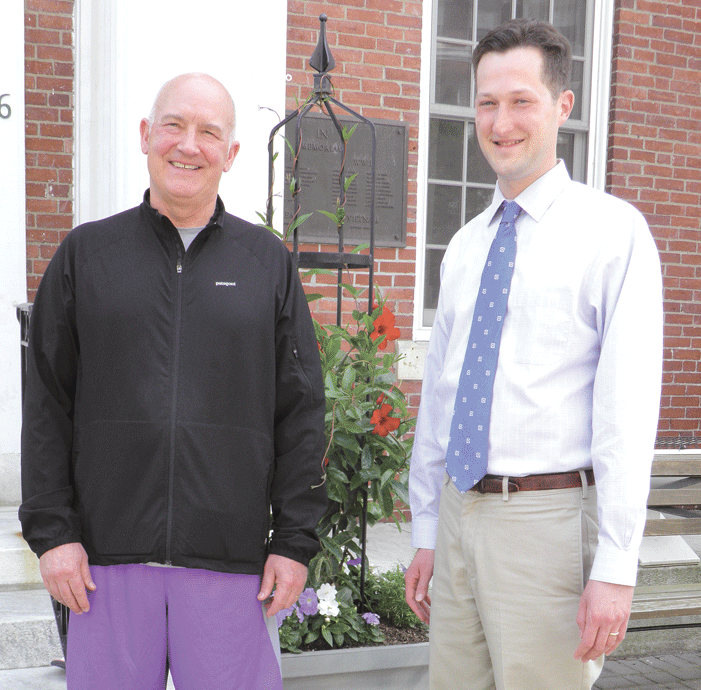
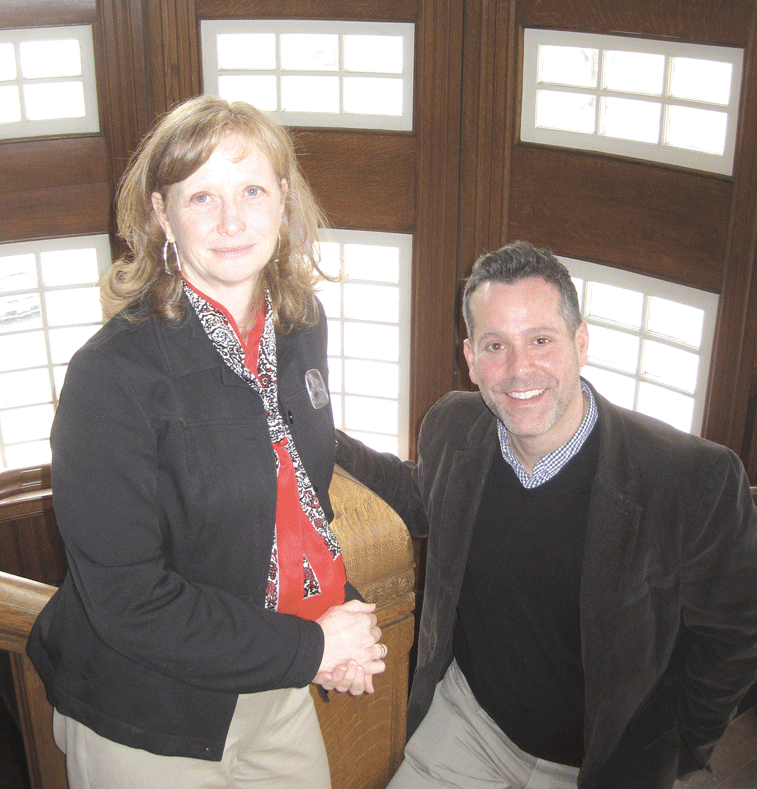
Kate Phelon says a host of new restaurants and other new businesses are bringing a renewed sense of vibrancy to Westfield’s downtown area.

Kate Phelon says a host of new restaurants and other new businesses are bringing a renewed sense of vibrancy to Westfield’s downtown area.

This summer, Westfield was ranked as a “City on the Rise” and one of the “Best Cities to Live in Massachusetts” on different websites. Officials are pleased by the accolades, and believe they reflect a number of dramatic changes that are attracting people to its shops, restaurants, and year-round events.

“It’s an exciting time for us due to new developments at the airport and the continued growth and revitalization of our downtown,” said Peter Miller, the city’s director of Community Development, who noted everything from a number of new restaurants in the central business district to a growth spurt at the municipal airport in the city’s north end.

The $80 million Great River Bridge project is finally complete, and Miller said it is significant because people avoided coming to the city for years because of the traffic congestion.

“Westfield had developed a reputation for being a traffic nightmare,” he said. “But we finally have a pattern that flows and is aesthetically pleasing. We’ve restriped and fully reconstructed our roads, we have new plantings and new sidewalks, and have renovated four parks. We also made a commitment to use the Park Square Green as a gathering space. It is the focal point of the city, and we are working to develop programs and community-based activities that will be held there throughout the year.”

Westfield-Barnes Regional Airport is also experiencing growth, and Miller said a $21 million resurfacing project of the 9,000-foot runway is complete. It was paid for by a partnership between the city, the state Aeronautics Commission, and the federal government.

In addition, Gulfstream Aerospace Corp., a unit of Virginia-based General Dynamics, has completed a $23 million expansion, which led to the creation of more than 100 new jobs. The Westfield location has also been chosen to service the new Gulfstream G650 aircraft, a twin-engine, $100 million corporate jet.

“When the company decided to expand, Westfield was one of four airports across the nation they looked at. It’s impressive that Barnes was chosen, and it put Westfield on the map for people who use corporate aircraft,” said Kate Phelon, executive director of the Greater Westfield Chamber of Commerce, as she explained that the area’s skilled workforce was a critical factor in the decision.

However, Miller said there are a number of other things that made the airport attractive. He cited its modern terminal, which was constructed in 2006, as well as the availability of 24/7 runway access and fire service, made possible through a partnership with the 104th Fighter Wing of the Massachusetts Air National Guard at Barnes.

“We’ve learned through this expansion that we can really position ourselves as a hub for aircraft maintenance and specialized services,” said Miller. “We’ve been building toward this for the last decade, but in the past we didn’t have the facilities to accommodate it. The runway and new terminal were the game changers.”

The change has sparked growth, and several developers and fixed-base operators have been expanding to accommodate the increase in traffic. “Rectrix and Whip City Aviation are also in the process of evaluating and expanding their hangar space,” Miller said.

In addition, Papp’s Bar & Grill opened at the airport several months ago. “It’s very unique and has an observation deck bar. We think it will attract more people to the airport and make them aware of how much activity is generated there,” he noted.

The city is also developing a new program at Westfield Vocational Technical High School that will train students for careers in aviation.

Phelon said a representative from Gulfstream is on the high school’s advisory board and has been instrumental in the creation of the program, which is important, because there are not enough skilled workers to fill available positions at Gulfstream.

“We’re still trying to identify a facility to house the program at the airport, but hope to launch it in the fall of 2015,” she explained. “It will be the third of its kind in the Northeast and will give students another choice of careers in a growing industry where they can get a job that pays well after graduating from high school.”

Takeoff Mode

The city’s downtown also boasts a number of new attractions, and the Hangar Pub & Grill, which opened during the first week in June, is thriving. “It has a great atmosphere and is a place where families and students can come together and enjoy themselves,” Miller said, adding that Westfield is its second location; the first is on University Drive at UMass Amherst.

Phelon also believes the restaurant will result in an increase in foot traffic downtown. “The Hangar is a well-known name, and we see it as a magnet that will drive traffic to our downtown and help other new businesses. It is so popular that some nights there is a line of people waiting outside the door.”

Other new, popular eateries include Wings Over Westfield, which opened in the former School Street Bistro building; Two Rivers Burrito Co.; and Clemenza’s Brick Oven Pizza.

However, there is still room for growth, and Miller said the city is hoping to attract other restaurateurs to the city. “The Hangar has demonstrated that there is an audience for new eateries.”

In addition, city officials are focused on filling empty commercial space that includes a full block on Elm Street. “We’re focusing on attracting investors from the region because they understand our market and culture,” Miller said.

Another development, finally coming to fruition after more than a decade of work, is the extension of the Columbia Greenway rail trail. “Westfield is the northern terminus of the trail, and this summer it will be extended into our downtown,” Miller said. “We’re looking forward to it, as we believe it will introduce an entirely new population to our shops, businesses, and restaurants.”

Phelon agreed. “Rail trails have become so popular that we believe it will inspire entrepreneurs and further economic development,” she said.

Other news includes a groundbreaking ceremony this month for a new, $7 million, 22,000-square-foot senior center being built on Noble Street, which will serve thousands of residents. It is expected to be completed next summer.

The city’s marketing tagline is “Business Focused, Community Driven,” while the chamber’s is “The Power of Community,” and Miller said the concept of community is something city officials take very seriously.

“We’re very fortunate to have a diverse group of people working toward the goal of creating a place where community matters, neighbors engage with each other, and people know each other,” he said.

Phelon concurred and said the chamber is using all its resources to promote activities and events that bring people together.

“We’re the only chamber of commerce in the area that hosts free, monthly coffee hours with the mayor,” she said, “which is a great opportunity for people to learn about what is going on in the city.”

Although the Westfield Business Improvement District dissolved earlier this summer, Miller said, “our message to businesses and the public is that the city and chamber stand committed to continuing the progress made in the past seven years. We will continue to raise the bar, and the social, community aspect of our city is being fostered through festivals, new restaurants, Westfield State University, and the efforts of our chamber.”

Two MusicFest concerts staged this summer each attracted more than 1,000 people, and local restaurants took advantage of available vendor space during the concerts, which created a festive atmosphere in the city.

Upcoming events include a MusicFest featuring a Beatles tribute band on Aug. 21, a fall street festival called Megaplanetpalooza on Sept. 20, a Haunted Chocolate Walk on Oct. 25, and a Lantern Light Parade Nov. 29, as well as an expansive, city-wide event titled “The Universe According to Josh Simpson,” which is ongoing through October and includes exhibitions of the glass blower’s work in galleries, banks, and restaurants, as well as demonstrations, a film series, lectures, raffles, and children’s activities.

Phelon said these events and others, such as Small Business Saturday, are advertised on the chamber’s website, through mailings, and in its newsletter. “We want to do all we can to support businesses and entrepreneurs who have taken a chance on our downtown.”

A partnership between the city and community radio station WSKB 89.5, which is operated by Westfield State University, kicked off in June and also serves to publicize local events.

“A different personality hosts the show every weekday between 6 and 8 a.m.,” Miller said. Officials from the city’s nonprofit organizations take to the air on Mondays and Tuesdays, Mayor Daniel Knapik is the host on Wednesdays and Fridays, and Patrick Berry from Westfield News Group is the featured guest on Thursdays.

“It’s a great way to learn about what’s going on in the community and gives people another way to interact,” Miller said. “The university approached us with the idea, and we were more than pleased to use the station to promote local events.”

Plane Speaking

Officials say Westfield is accomplishing its goal of becoming a vibrant community.

“There’s a synergy happening among the people who live and work here,” said Phelon. “Plus, Westfield is the only community in Massachusetts whose population has grown in every census conducted over the past 60 years. We’re also the largest city before you get to the hilltowns, and it may inspire growth when people come here, eat in our restaurants, and attend our events. We’re very proud of how our city looks, and with the upgraded traffic flow, it’s a great place to visit.”

Miller agreed. “We have a lot more to offer now,” he said, “than we ever had before.”

Westfield at a glance

Year Incorporated: 1669
Population: 41,094 (2010)

Area: 47.3 square miles

County: Hampden

Residential Tax Rate: $18.18

Commercial Tax Rate: $33.84
Median Household Income: $57,018 (2010)

Family Household Income: $55,327 (2010)

Type of government: Mayor, City Council
Largest Employers: Westfield State University, Noble Hospital, Savage Arms Inc., Mestek Inc., National Envelope
* Latest information available

Community Spotlight Features
Hadley Takes Steps to Enhance Commercial Growth

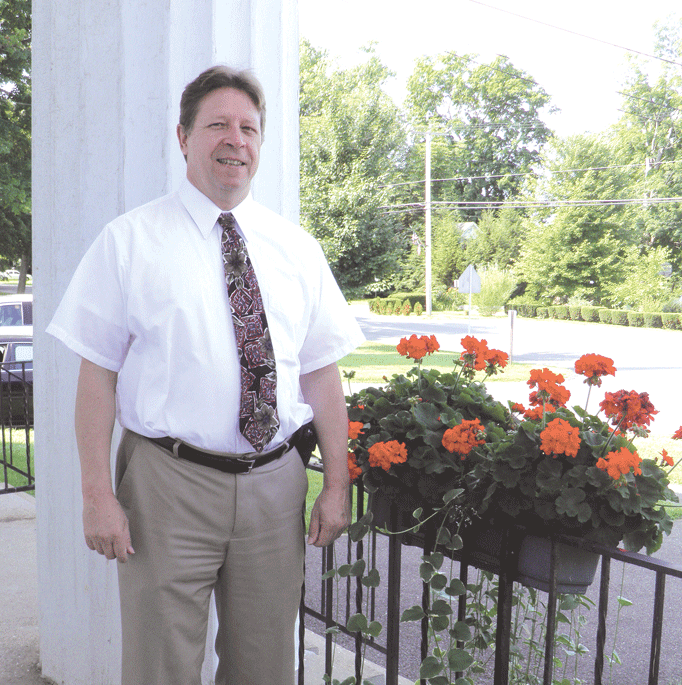
David Nixon says Hadley’s mix of open space, farmland, commerce, and homes has positioned it well for the future.

David Nixon says Hadley’s mix of open space, farmland, commerce, and homes has positioned it well for the future.

The town of Hadley has always strived to achieve a balance between open land, agricultural enterprise, and retail business. But over the past year, special efforts have been made to enhance commercial opportunity along the 13-mile stretch of Route 9 that runs through the town. The effort includes proactive measures, partnerships, and infrastructure improvements.

“We admire and respect people who are trying to establish and maintain a business. It’s a very difficult thing to do and takes a lot of sacrifice,” said Town Administrator David Nixon. He added that building lots are available on Route 9 and the town has been approached by a number of business owners who want to expand, particularly in the shopping-mall area of the roadway.

“There is a lot of new construction taking place,” he told BusinessWest, listing several expamples. “Texas Roadhouse is in the permitting process, a Starbucks store is under construction, and other businesses are being built or are under design. It’s good for the community and good for America, so we are doing whatever we can to support them and give owners the opportunity to flourish.”

A major milestone was reached several months ago when the state granted the town 12 new liquor licenses it applied for last fall. “The restaurant/hospitality trade is very important to our local economy, and last November, the town reached its quota of liquor licenses,” Nixon explained. “We knew there was a market for them, and we wanted to be able to provide opportunity for new restaurants and stores that would address the need for dining and entertainment. As a result of our petition, six new licenses for malt and wine and six for all-alcohol were granted.”

The licenses are for establishments on Route 9. One has already been applied for, and interest has been expressed in the remainder. “We expect more applications for them in the near future,” he said.

Hadley has also been proactive in helping 13 small businesses recover from losses suffered in a fire last October that leveled the strip mall at 206 Russell St. that housed them. “We developed a coalition to help the owners get back on their feet and find new locations to re-establish their businesses. It includes the Chamber of Commerce, United Way of Hampshire County, the town of Hadley, and our legislative delegation, as well as banks and charitable institutions,” Nixon said.

The coalition worked to make sure the owners received insurance money and any benefits available to them, he explained, adding that some of the businesses were quite successful and had been established by immigrants who realized the American dream through hard work and sweat equity put forth by their families.

The coalition also helped the owners create business plans and document their history so they could receive bank loans and apply for grant money. “Some have reopened, and others are still looking for the right location, but our work with them is ongoing,” Nixon said.

For this, the latest installment of its Community Spotlight series, BusinessWest looks at how this town strategically positioned between Northampton and Amherst is certainly the right place at the right time for commercial development.

Setting the Stage

Nixon said the town has also been proactive in taking steps to ensure that existing and potential business owners have the infrastructure they need to thrive. To that end, town officials partnered with the Mass. Department of Transportation to improve travel along Route 9 for vehicular traffic as well as for pedestrians and bicyclists.

Progress is being made, and new walking paths will be installed within the next year that will connect residential neighborhoods to shopping areas. In addition, a plan to widen and recondition the road is in the design stage and is expected to be complete next summer. It includes bicycle lanes, which will be enhanced by an upgrade of the Norwottuck Rail Trail by the Department of Conservation Resources.

Nixon said promoting bicycle use is part of the town’s ongoing strategy to reduce energy consumption, and officials have collaborated with the Pioneer Valley Planning Commission to realize that goal. The project includes a study paid for by a Community Innovation Challenge grant received last year, and the final report is expected in the near future.

“We also just received grant money to purchase three bicycle racks,” Nixon said. Two will be installed on municipal property along Route 9, and the third will be stationed at a local business chosen by the Select Board.

Town officials are also working with the state Department of Transportation to install safe pedestrian crossings along Route 9. Nixon said this is critical because the town common, which stretches a mile and a half and is the longest intact town common in New England, is being used for an increasing number of events.

Over the past year, these have included a farmer’s market, a 5K road race, and the town’s annual Asparagus Festival, which was held in early June. The festival kicked off for the first time last year at the Seven Sisters Market Bistro & Long Hollow Bison Farm at 270 Russell St., and this year, it was moved to the town common.

“It was extremely successful,” said Nixon. “People came from as far away as Brooklyn, and a story about it was published in Yankee magazine.”

But parking and walking to the common is problematic. People who attend such events often park in the Hopkins Academy lot or along Route 9, which means they have to cross the busy road on foot. “If they park on the south end of the road, they have to walk across four lanes of traffic,” Nixon explained, adding that the new crossings will be a boon to pedestrian safety.

The problem of aging water lines is also being addressed. “The lines we have are about 75 years old and will be replaced with higher-capacity ones and better materials,” he noted. The town plans to borrow money to finance the project, and officials are working with legislators to procure state funding to help pay for the improvement. Nixon said the preliminary cost for phase 1 is $400,000, and an additional $500,000 will be needed to complete phase 2.

A program to upgrade the town’s fire hydrants is also underway, and water valves are being tested by the Fire Department and Department of Public Works.

“We are also repairing our wastewater lines because we want to be sure there is enough capacity for our wastewater-treatment plan to handle an expansion,” he said. “It’s important to have this infrastructure in place and working properly so business owners know there is abundant water for their needs as well as enough to put out fires.”

Growth Patterns

Agriculture has always been an important part of Hadley’s economy, and the steps taken to bring new business to Route 9 and support firms already there have the potential to spur economic growth, since the town’s agricultural profile includes enterprises such as Carrs Cider, which is sold in package stores and restaurants; Valley Malt, which provides ingredients to make locally produced beer; and V-One Vodka, which can be purchased in Hadley and has plans to expand.

“Many Hadley restaurants support local agriculture, and we have six dairy farms and thousands of acres used to grow vegetables and fruit, such as strawberries, asparagus, corn, potatoes, squash, and pumpkins. So opportunities for new restaurants are linked to an opportunity for growth in both commercial and agricultural areas,” Nixon said.

He told BusinessWest the town is a leader in land preservation and has thousands of acres protected for agriculture and wildlife.

“But we also want to have the right kinds of commerce to provide people with employment as well as services they need, want, and enjoy,” he said in conclusion. “The commercial base helps to keep our taxes affordable, and the mix of open land, commerce, and residences in small villages and neighborhoods has provided Hadley with a very stable and vibrant community that is well-positioned to handle the challenges of the future.”

Hadley at a glance

Year Incorporated: 1661
Population: 5,520 (2010)
Area: 24.7 square miles
County: Hampden
Residential Tax Rate: $10.64
Commercial Tax Rate: $10.64
Median Household Income: $51,851 (2010)
Family Household Income: $61,897 (2010)
Type of government: Open Town Meeting, Board of Selectmen
Largest Employers: Super Stop & Shop, Evaluation Systems Group Pearson, Elaine Center at Hadley, Home Depot, Lowe’s Home Improvement
* Latest information available

Community Spotlight Features
Balanced Growth Continues in East Longmeadow

Paul Federici

Paul Federici says a favorable business climate bodes well for further economic development in East Longmeadow.

Paul Federici says East Longmeadow has undergone a growth spurt over the past several years, and the trend is continuing.

“The town has been fortunate to have new developments in both our residential and commercial areas,” said the clerk of the Board of Selectmen. “Real estate has picked up tremendously in terms of new construction as well as sales of existing homes, and there has also been a steady increase in commercial growth.”

He attributes the upswing to the availability of property, East Longmeadow’s favorable business climate, and the town’s many amenities. “Businesses and individuals like what we have to offer, and our single tax rate is a big incentive for businesses to move here. We’ve never had a serious discussion about changing the rate because town officials want to keep business owners happy and give them the ability to grow without additional tax burdens. Plus, residents and employees can take advantage of our restaurants, shops, and businesses.”

Robyn Macdonald agrees. “The school system is great, and the town is very safe. The crime rate is very, very low,” said the director of Planning, Zoning, and Conservation. “The single tax rate has a lot to do with the increase in business.”

This business growth is important because East Longmeadow suffered a loss of tax revenue during the recession. “We had a severe slowdown of residential building after the downturn in the economy,” Federici said. “A number of businesses moved out of our industrial area or ceased to operate, and the Appropriations Committee had to tighten their purse strings.”

Although the town fared better than others of its size, Macdonald added, foreclosures occurred for the first time in years. “There were also fears that other businesses would be forced to leave.”

But that has changed, and a surge in balanced growth has helped to improve East Longmeadow’s financial outlook. “Last year, the town was given a triple-A rating by Standard & Poor,” Federici said, referring to the upgrade in long-term bond rating from AA to AA+.

Federici credits the strong fiscal rating in part to dedicated efforts by the Appropriations Committee and town department heads to adhere to tight budgetary constraints while retaining high standards, which include working closely with new businesses to minimize the pain of relocating to the community or opening new.

“Building Commissioner Dan Hellyer does an outstanding job of helping builders get permits and other things they need, which range from utilities to curb cuts,” he said.

As a result, the landscape continues to evolve. “I’ve lived here since 1996, worked in East Longmeadow since 1986, and have witnessed tremendous growth over the years,” said Federici. “We foresee it continuing because we have a favorable business climate.”

Altered Landscape

Roughly 70% of the town is zoned for residential use, and a number of new, high-end housing developments have taken root over the past few years.

“It’s good to see so many developers have confidence in East Longmeadow and are willing to put their shovels in the ground and build houses in anticipation of selling them,” Federici said.

Al Joyce, president of Rose Bud Builders of East Longmeadow, said his company has a new subdivision on Wisteria Lane, off Somers Road (Route 83). “It contains eight lots. Five homes have been built and sold, and the remaining three are under construction,” he said.

In addition, the Great Woods development of single-family homes on Shaker Road and Prospect Street continues to expand. “Phase 11 is almost complete, and we are anticipating Phase 12,” Macdonald said.

Meanwhile, Kent Pecoy & Sons Construction Co. also has a new subdivision called Bella Vista that contains 30 lots, and Macdonald said the homes are all large, with five bedrooms.

“A ribbon-cutting ceremony was held after the first one was completed about 18 months ago, and they are selling as fast as they are built; prices start at about $500,000, and demand continues to be strong,” Federici said.

“Families see East Longmeadow as a good place to live and buy a home. It is a growing community with a great school system and a busy rotary area filled with shops and restaurants,” he added, noting that a new high school has been proposed as well.

Town officials are also happy that Bay Path University in Longmeadow has chosen to expand its campus to East Longmeadow. It is building a new, two-story, 56,000-square-foot structure that will be called the Center for Graduate Studies in Health Sciences; construction is underway, with a completion date expected in early 2015.

“It will be prestigious to have their graduate-studies program here, and it’s also nice to see a parcel of land that sat vacant for many years put to such a good use,” Macdonald said. “The building will be absolutely gorgeous and fits in well with the neighborhood, as there is a residential area across the street and subdivisions on the other side of it.”

Federici agrees. “It’s wonderful that they have chosen to expand from Longmeadow to East Longmeadow, and the college is already doing a lot for us,” he said, noting that Bay Path has made a commitment to provide the town with an annual payment (as a nonprofit, it is exempt from paying taxes), and plans to offer scholarships to East Longmeadow High School graduates and town employees.

Growth is also occurring a short distance away in the town’s Industrial Garden district.  A vacant building on 126 Industrial Dr. was given new life when it was purchased by the Arbors Kids two years ago. “They renovated it and have been very successful. They offer full-time day care, after-school care, and summer camps, which is a great addition to the town,” Federici said, adding that, a short distance away, a new self-storage facility is also in the initial phase of construction.

Go Graphics is another firm that finds East Longmeadow attractive. It relocated from a shopping plaza on North Main Street to a 5,000-square-foot space on Benton Drive in the industrial park. “The company that was in the space before them left because they downsized, and Go Graphics took advantage of the opportunity to move there, which gave them room to expand,” Federici said.

Nearby, he added, the Deer Park section of the Industrial Garden district is also growing. “GMH Fence relocated from Parker Street to a space on Benton Road as they needed more space.”

Change has also taken place in the town center. “Bentley’s Bistro on North Main Street just celebrated its one-year anniversary, and Baystate Rug opened next door about a month ago,” Federici said, adding that the side of the building that houses Bentley’s had been vacant for close to a year, and the portion that is home to Baystate Rug had been empty for almost two years.

The former Spoleto’s restaurant building at 84 Center Square has also changed hands. It was sold to its long-term managers, has reopened as Center Square Grill, and has a staff of about 75 employees.

And Macdonald said a new gas station and convenience store have been approved at the corner of Chestnut Street and Shaker Road on an empty piece of property. “It will contain a 6,500-square-foot building,” she told BusinessWest.

Housing options for older adults are also expanding. The Fields at Chestnut, a condominium association with individual homes for people age 55 and over, continues to grow. “It’s in Phase 5. Most of the homes contain 2,200 square feet, and they are sold as fast as they are built,” Macdonald said.

The town also boasts a new assisted-living facility. Emeritus at East Longmeadow opened a few weeks ago on the grounds of the former Bluebird Acres apple orchard on Parker Street. The property had been vacant for a number of years, and Federici said it offers assisted-living apartments as well as a unit for people with dementia. “It is a well-staffed facility,” he told BusinessWest.

Solid Base

Federici is happy about the surge in residential and commercial activity, especially since East Longmeadow does not have an economic-development director and the marketing budget is limited.

“The town is definitely on the upswing, and the growth is balanced,” he said. “New businesses and families are moving here, and we still have our stalwarts — Lenox and Hasbro. Lenox has been growing and has spent tens of millions of dollars on their facility and training for their employees in the last decade.

“There is still plenty of open land and space available,” he went on. “The town has a lot to offer, and the future looks bright.”

East Longmeadow at a glance

Year Incorporated: 1894
Population: 15,720 (2010)
Area: 13 square miles
County: Hampden
Residential Tax Rate: $20.47
Commercial Tax Rate: $20.47
Median Household Income: $62,680 (2010)
Family Household Income: $70,571 (2010)
Type of government: Open Town Meeting; Board of Selectmen
Largest Employers: Hasbro Games, Lenox, Lower Pioneer Valley Educational, Redstone

* Latest information available

Community Spotlight Features
Lenox Strives to Become a Year-round Destination

Channing Gibson, left, and Christopher Ketchen

Channing Gibson, left, and Christopher Ketchen want Lenox to become a year-round tourist attraction.

When Channing Gibson envisions what the town of Lenox will look like in the future, he sees a vibrant, year-round destination with a wide array of recreational activities that appeal to young people, along with the cultural attractions that have drawn tourists to the area for generations.

“Recreation could range from birding to biking, hunting, horseback riding, and cross-country skiing,” said the chair of the town’s Board of Selectmen. “We have a town beach on Laurel Lake, and although the traditional tourist comes here for relaxation and culture, there is an opportunity to attract people for recreation as well.”

Right now, the town is packed with tourists whose typical goal is to relax and enjoy the wealth of cultural events offered during the summer. In the coming months, many guests will also attend weddings, because the pastoral setting and large number of historic inns and hotels have made Lenox a popular place to get married. “There are so many places to stay that range from modest accommodations to high-end inns and hotels,” Gibson said.

But during the winter, business dies down, and many storefronts close their doors. In addition, young people in Lenox, as well as in other towns in the Berkshires, are leaving the area, and the town’s demographics reflect an aging population.

So the community is looking to create new recreational venues that would attract tourists year-round and appeal to young people. To that end, officials are waiting for the final report from a study conducted by the Conway School of Landscape Design. It is titled “Lenox’s 2013 Open Space and Recreation Plan,” and provides recommendations to improve existing natural and recreational resources.

In order to understand why the town has chosen this focus for its economic-development plan, Gibson said, it’s necessary to look at its past. He explained that the General Electric manufacturing plant in Pittsfield and the tourist industry played vital roles in the town’s economy for generations, and although GE closed its doors in 1986, Lenox continued to thrive, thanks to tourism.

“The Berkshire Visitors Bureau says that Lenox accounts for 40% of the tourist dollars spent in the Berkshires. Our geography works for us, and our hardworking innkeepers and people in the hospitality business make sure that visitors who come to the Berkshires want to stay in Lenox,” he said, adding that Canyon Ranch, Cranwell Resort and Spa, and Tanglewood, whose offices are in Lenox, are among the town’s leading attractions. “But even though we are in the right place, it’s something we can’t take for granted. We have to do things to improve revenues from tourism, and there is a lot of land available that is presently underdeveloped that can be put to good use.”

Town Manager Christopher Ketchen concurs, and says putting a new spin on tourism offers great potential. “We specialize in hospitality and making folks feel welcome, and the town offers picturesque natural beauty in winter as well as in spring, summer, and fall. Plus, we have been designated by the state as a green community and are starting to become known as a center for health and wellness.”

Gibson said the Conway report contains many suggestions, including the fact that existing trails, parks, and other natural resources could be linked by a pathway which would give residents and tourists easy access to recreational resources.

“There are lots of little pieces of land that could also be developed and linked by a trail that could be used for walking, biking, and more; it’s something we can do ourselves,” he told BusinessWest, adding that there is plenty of open space available for new recreational venues, which could increase the town’s vitality and help change its demographics. “Our goal is to find a way to take what worked in the past and bring it into the future.”

Need for Growth

When town officials created the FY 2015 budget, it included a fiscal-impact analysis. Gibson said it had been suggested by a consultant who did some free work for the town, and the Planning Board thought it was an excellent idea. “There are a lot of people with different ideas about what should be done in terms of economic development, and we were told it was important to understand what was needed and what was realistic.”

Unfortunately, it was eliminated from the budget due to cost. But since that time, several things have put a positive spin on the future.

The first is that Ketchen was hired in April; the town had been without a manager for almost a year. He had served as finance director in Hopkinton and deputy director of general government in Wellesley before moving to Lenox, and town officials are optimistic that his enthusiasm and ideas will result in concrete gains.

Ketchen says his plans include hosting open houses so interested builders and developers can meet town officials from different departments.

In addition, a concerted effort is being made to market the attractions in Lenox via the Internet. “In the past, the Select Board did very little in the way of marketing, other than maintaining our infrastructure,” Gibson said. “But now the Berkshire Visitors Bureau is promoting Lenox as a year-round destination with a Google display ad.”

Some businesses have also started their own marketing campaigns, and Gibson said they have been successful. “But we want to maximize the success and continue to promote the town and bring more tourists here,” he explained.

The Conway report will help facilitate that goal. Its recommendations take into consideration the results of two community forums, in which residents overwhelmingly stated that one of their top priorities was to protect the town’s natural resources. But although they want to maintain the pastoral views and ecological richness found in Lenox, the initial report showed that many do not know where the town’s parks are or where they can access hiking trails.

This needs to be remedied, and town officials hope they will also be able to add new recreational offerings. Collaborative efforts will be required to make the vision a reality, but if the plan is approved, it will allow the town to apply for competitive grants from the state as well as from other entities. In addition, Lenox will be able to use monies set aside beginning in 2006 when the town approved the Community Preservation Act. “The Conway report is timely, as last year the state added recreation to the areas in which Community Preservation funds could be used,” Ketchen said.

Although most people think of the Berkshires as a summer destination, he added, marketing will focus on events held during other seasons, such as the Apple Squeeze Festival in the fall; Shakespeare and Co., which hosts performances year-round; and the summer cottages built by wealthy individuals during the Gilded Age. “Some have been reused and turned into hotels and museums,” Ketchen said, citing Canyon Ranch and Ventford Hall Mansion and Gilded Age Museum as examples.

In addition, Lenox continues to maintain its infrastructure and retain the town’s reputation as a safe, beautiful community. “The majority of our efforts are aimed at tourism,” Gibson said. “We make sure the roads are well-paved, the town is run well, and we have good police and fire departments. It helps the community at large, but is also good for our tourist industry.”

Gibson says every town in the Berkshires is focused on bringing new business to the area, but they have different things to offer. For example, Pittsfield ranks high in terms of size and capacity of building space, while North Adams appeals to lovers of the arts. “So we needed to create our own fertile seed bed, because we don’t have the Mass Turnpike nearby or a lot of industrial space.”

Breaking Ground

Plans for a small, high-end boutique hotel and spa within a Gilded Age mansion were recently permitted, and a new Courtyard by Marriott hotel has received approval from the Zoning Board.

Both will add to the town’s character, but “the Marriott’s demographics are slightly different than our other inns and represent a young, energetic clientele,” said Gibson. “It’s exciting and could relate well to our plan to create new recreation and change our demographics.”

Ketchen agrees. “We have a lot to offer young people in terms of lifestyle. There is a small-town familiarity here that lends itself to a deep and meaningful sense of community, and this feels like fertile ground for businesses,” he said. “Focusing on year-round amenities will give us an opportunity to bring new vitality to the community, and our creativity will drive our economy in the future.”

Gibson is looking forward to bringing the vision to fruition. “I’m very excited about the potential represented in the Conway plan,” he said. “It’s still pie in the sky, and we are not there yet, but we have a good chance for success.”

Lenox at a glance

Year Incorporated: 1767
Population: 5,025 (2010)
Area: 21.7 square miles

County: Berkshire
Residential Tax Rate: $12.07
Commercial Tax Rate: $14.91
Median Household Income: $45,581 (2010)
Family Household Income: $61,413 (2010)
Type of government: Open Town Meeting, Board of Selectmen, Town Manager
Largest Employers: B Mango & Bird, Canyon Ranch, Boston Symphony Orchestra Inc., Cranwell Resort Spa & Golf
* Latest information available

Community Spotlight Features
Zone Change Spurs New Growth in Agawam

Deborah Dachos

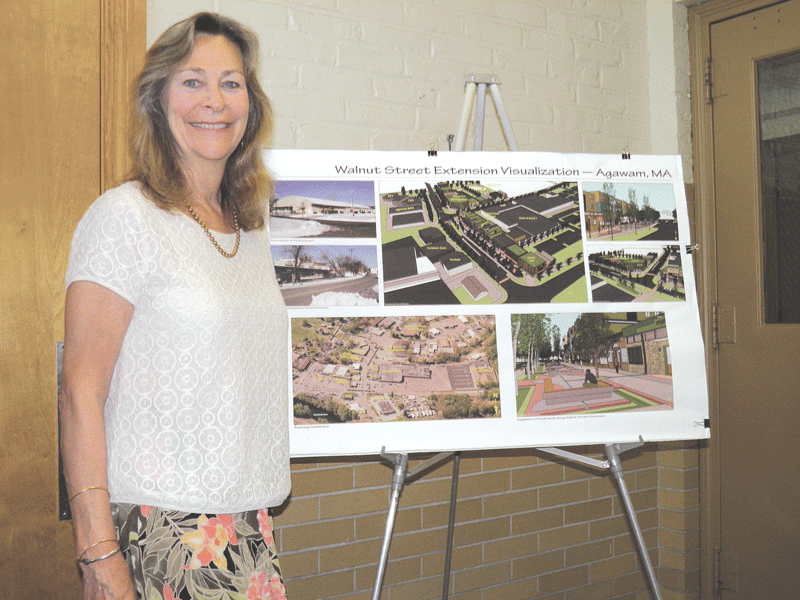
Deborah Dachos says a recently approved ordinance for mixed-use zoning in the Walnut Street Extension area will promote revitalization.

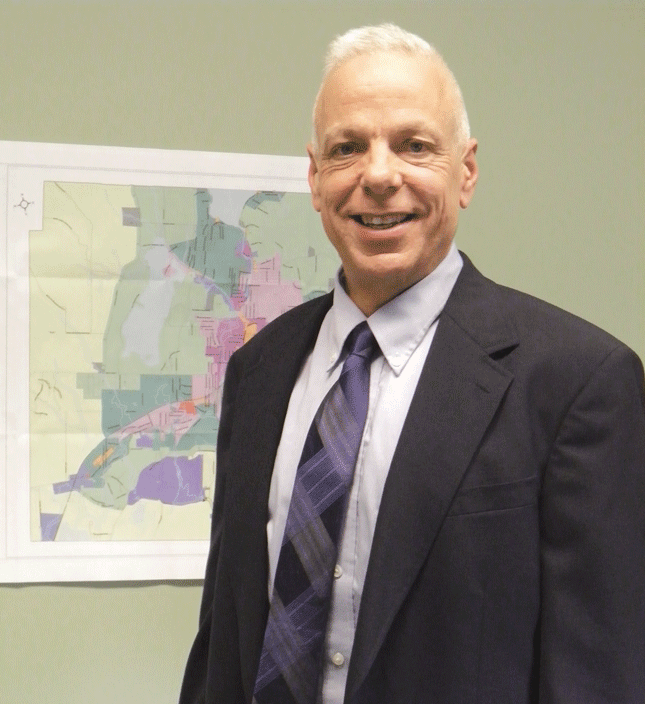
Mayor Richard Cohen created what he calls a “dream plan” to revitalize the Walnut Street Extension area years ago, and says it has taken tremendous patience and untold hours of dedicated work to bring it to fruition.

The idea is to make the area into an attractive, walkable, downtown-style location with venues that enhance quality of life for residents of the city, he told BusinessWest, adding that the plan received a major boost early this month when city councilors approved a mixed-use business C zoning change for the area. It relaxes dimensional requirements for buildings and is aimed at encouraging the development of new restaurants, cafés, family-oriented enterprises, and second-story residences.

“Agawam is a great place to live, work, and play, and we want to maintain those attributes and continue to develop them. Our goal is to create an environment that is friendly and can be used by families for entertainment. We don’t have a downtown, and need a place where people can walk and have things to do,” said Cohen, adding that the Walnut Street Extension area had been declining for years, and prior to the zone change, there was no incentive for business owners to improve their property because they were uncertain as to whether they could realize a return on their investments.

Deborah Dachos, director of Planning and Community Development, agreed, and said the new zoning offers an ideal setting for growth and is in line with what business owners and residents want in that section of the city. “The zoning change has finally passed,” she said. “It involved a concerted effort to work with businesses to make the area more user-friendly and less restrictive. We worked hard on the plan, which includes the old Food Mart site and former Ames store building.”

She explained that the downturn in this commercial area began when Food Mart and Ames moved out, leaving both structures in the Springfield Street shopping plaza vacant. The decline was exacerbated after a fire led to the closing of the former Games and Lanes building, which housed a bowling alley. “The Walnut Street commercial area was developed in the ’50s, and the decline occurred over a 10-year period. But the mayor and I made a concerted effort to revitalize the area 12 years ago.”

Progress began after the city sought and gained acceptance from the state to designate the location as an exceptional-opportunity area. The designation made tax-increment financing possible, allowing the city and businesses to agree on a property-tax exemption for up to 20 years, based on a percentage of value added through new construction or significant improvements.

In 2010, city officials also completed an economic-development plan that made the Walnut Street Extension neighborhood a priority. It included the provision for mixed-use zoning, which was refuted by the city council last December before being passed this month.

Parking has been problematic for business owners in the district, but that obstacle is being addressed. The Pioneer Valley Planning Commission accepted the city’s application for district technical assistance, and has plans to study parking and pedestrian issues in the area. “Their report will provide the town with the information we need to seek a MassWorks grant of up to $1 million to address the deficits and construct new parking areas. It’s important because business owners have complained that there is inadequate parking,” Dachos said, adding that the study was contingent on getting mixed-use zoning passed.


Inroads to Success

New venues for family entertainment have begun to crop up in the Walnut Extension Street area in the past few years, and several new businesses are expected to open in the future.

Revitalization began when Dave’s Pet Food City purchased the former Ames building about six years ago. The company used about half of the space and put the remainder up for lease.

Stick Time Sports Inc. opened its doors last fall in a portion of the building, offering training for hockey, field hockey, and lacrosse in its complex, which includes two 45-by-85-foot synthetic turf fields, a strength and conditioning space, a fully equipped pro shop, and a birthday party/conference room for special events.

And a new YMCA is scheduled to open in early August in the old Food Mart building. It is under construction, and will be called the Agawam YMCA Wellness and Program Family Center.

“It will offer everything included in a traditional YMCA, with the exception of a swimming pool and basketball gym,” said  Kristine Allard, chief operating officer for the YMCA of Greater Springfield. “There will be a fitness center, café, community space, group exercise area, and technical center, as well as a child-development center with projects and activities for children whose parents are exercising or participating in other programs.”

The facility is being built in response to need expressed by residents and city leaders, and will be the first YMCA in New England without a pool and gym. “It’s a groundbreaking concept, and we are extremely excited about it; it will be beautiful and functional and will contribute to the community,” Allard said.

Mayor Richard Cohen

Mayor Richard Cohen says the Walnut Street Extension area is becoming a center for family recreation.

The site was chosen several years ago, but it took time to raise enough money to proceed with construction. Allard said $300,000 has been raised for that purpose, but $100,000 is still needed to cover the first year of operating expenses, and fund-raising efforts include soliciting new memberships as well as donations.

Another major improvement is also anticipated. The former Games and Lanes site at 346-350 Walnut St. Extension, which has been an abandoned eyesore for 13 years, may soon be sold and revitalized, thanks in part to an environmental study completed in March that provided the city with a cost-assessment and remediation plan for the 2.3-acre brownfields site. The building on the property was occupied by Standard Uniform Corp. from 1969 through the late ’80s, and when an underground gasoline tank was removed in 1989, contamination was discovered.

“In the past, developers were reluctant to purchase the property because the cost of cleaning it up was unknown,” Dachos said.  “The current owner invested $1 million to do the work, but it was not enough. So in 2012, the city applied for a MassDevelopment grant so prospective buyers would have a better understanding of what needed to be done.”

She told BusinessWest that four parties recently expressed interest in the site, and a Ware couple is pursuing a purchase-and-sale agreement. “They want to make the property into a family entertainment center with a racing theme,” she said, adding that go-kart racing would not have been possible before the mixed-use ordinance passed because the site had been zoned for industrial use.

“Their plan is consistent with other new businesses in the shopping center, which include a tae kwon do training center that opened about 18 months ago and a new Napa Auto Parts store,” Dachos said. “The theme of the Walnut Street Extension area has become family-oriented entertainment and services. A new Dollar General store opened a few months ago at 53 Springfield St., and a Salvation Army Family Store opened about two years ago at 65 Springfield St.”

Cohen said fulfilling his dream plan has taken years of effort, but the vision is finally being realized.

“We have been diligent in pursuing our goal of making this area into a beautiful place for families to enjoy, and we are finally going to be able to see the fruits of our labor,” he explained. “Many people become critical when they see empty buildings, but they don’t know the passion and time it takes to get something to happen. Now that the economy is turning around, there is money for mixed-use zoning from state, federal, and private investors, and a private-public partnership is beginning to take shape.”

Infrastructure improvements that will advance the plan include widening the Morgan Sullivan Bridge from four lanes to five. The bridge connects West Springfield and Agawam, and MassHighway has deemed it structurally and functionally deficient. It approved $12.3 million for bridge reconstruction and remediation of three intersections neighboring the span.

“The bridge is the gateway into the Walnut Street shopping-center area,” Cohen said.

Dachos added that the state has assigned the project to a consultant and it is in the design stage, with construction expected to begin in the winter of 2016-17.

The mayor said these improvements are needed to promote the area and give new businesses the easy commuter access they need to thrive. “There were a lot of pieces of the puzzle that had to be put into place. But everything is finally coming together.”

Other changes are also being made to enhance quality of life in the city. Agawam’s 50-acre School Street Park will undergo a $2 million expansion this year that will include a splash park, disk golf, a volleyball area, a picnic area, walking trails, and a band shell, where open-air concerts can be held during the summer. And a 1.7-mile stretch is being added to the 3.7-mile Connecticut River Walk and Bike Path, which will make the park accessible from the pathway that runs from Springfield into Agawam.

The city will also begin construction on a new dog park this summer, said Cohen, adding that funding for that project comes from a variety of sources. The city received a $237,000 grant from the Stanton Foundation, which was supplemented by $14,000 in Community Preservation Funds and another $10,000 raised by the Agawam Dog Owner’s Group.

In addition, the city recently saw completion of a $4 million project on Main Street that includes new curbing, lights, signs, sidewalks, and traffic signals.

“There are a lot of nice things going on here,” the mayor said, noting that Agawam was designated the second-safest city in the Commonwealth and the 11th-safest in the U.S. in January, based on data from police reports.


Future Outlook

Cohen is happy the City Council voted in favor of mixed-use zoning in the Walnut Street Extension area, and says the future outlook is bright.

“Agawam is a beautiful place, and our convenient location, affordable land and buildings, and low tax rate allow us to build good lives for ourselves and our children. We are proud that this is a safe community with family values and great schools, and the year 2014 bodes very well for Agawam residents,” he said.

“We have learned to be patient and never give up,” the mayor added, “and I hope our dream and vision for the Walnut Street Extension will become a reality that the community will be proud of in the near future.”

Community Spotlight Features
Partnerships Anchor Easthampton’s Development

Jessica Allan

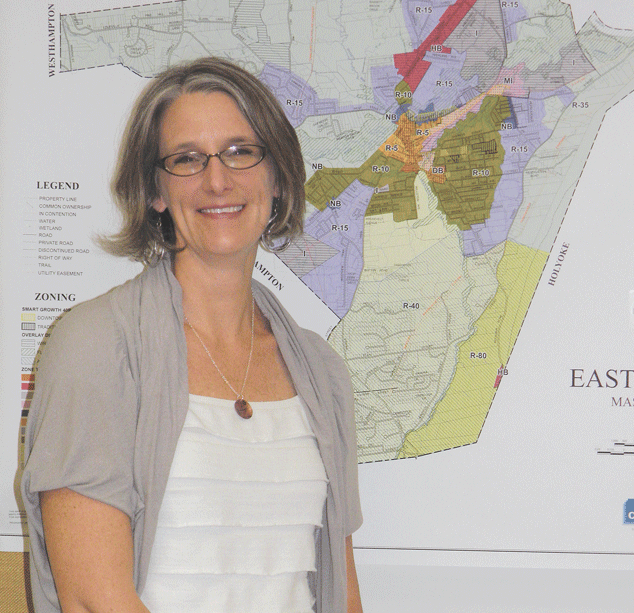
Jessica Allan says Easthampton will soon have three breweries, thanks to the quality of its water and improvements in infrastructure.

Mayor Karen Cadieux says Easthampton’s transformation from a mill town into a thriving city began roughly 15 years ago, and continues today due to unique and ongoing collaborations.
“One hand helps the other here, and partnerships between the city and private business owners have spearheaded revitalization,” she explained. “Public funding has encouraged business owners to make investments, which is how our story began.”
Town Planner Jessica Allan agrees.
“The city finds money through grants for infrastructure, and as a result, private business owners use their own money to make improvements to their property,” she noted. “Things have happened in Easthampton because the community and city have worked together to improve different areas. Our arts community has also formed collaborations to help Easthampton gain recognition in and outside of the Pioneer Valley.
“In the past, Easthampton had a really strong manufacturing base. It is still happening within the mills, but in a creative way,” she continued, citing enterprises that include furniture makers and a high-end wrapping-paper business whose clients include New York City boutiques.
She pointed to the Pleasant Street mills project that is now underway as a good example of a public-private partnership. Several years ago, Michael Michon, who owns Mill 180; Will Bundy, who owns the Eastworks Mill; and James Witmer, who owns the Brickyard Mill, approached the city for help. “They told us they had tenants who wanted to move into their buildings but were hesitant due to the lack of parking,” Allan said, adding that the trio had the idea of connecting their buildings and flipping the entrances, so they would open facing the Manhan Rail Trail instead of on Pleasant Street, because there was space there for a new parking lot.
The owners paid for the design, which includes 440 parking spaces, trees, and lighting. “The city did its part by applying for a MassWorks grant. The city received $2.75 million in October 2012 for the first phase of the project, and a second $1.5 million a year later to increase the parking capacity,” Allan said.
Money from the first grant will pay for an upgrade of the water lines as well as burying the electric lines. “We’re really dealing with safety issues,” Allan said. “The original water lines are still there, and the fire-suppression system doesn’t have enough pressure. There will also be new lateral connections to each building, so, if there is a problem in one building, it won’t affect the others. And burying the electric lines is helpful to the fire department.”
All those involved said Western Mass Electric Co. is a key player in the undertaking and that the utility made additional investments outside the area to some of their substations so the mills can get the power they need.
Cadieux says the project has been challenging, and Allan has held weekly construction meetings with representatives from city departments, the mill owners, the design consultant and engineering team, WMECO, and the construction contractor.
“The project is really complex, and a number of easements were needed,” she said. “But the end result will be rewarding and will spawn new economic activity. And the mill owners have spent millions on their buildings in anticipation of being able to fill in their empty space.”
Cadieux agrees. “It’s absolutely fantastic to have all these groups working together,” she said. “The project is very important to everyone involved.”

Ongoing Collaborations
Cadieux said the city’s history of partnerships began 15 years ago on Cottage Street when a buyer wanted to purchase the former 9,000-square-foot Majestic Theater, which was an eyesore that had been closed for years.
“But the owner of the theater insisted that he would not sell to the man unless he also bought the parking lot across the street. He couldn’t afford both properties, but the city was able to help by purchasing the lot with state funds,” she explained. “It was advantageous to both sides because the city needed more parking. And since that time, the city has received a great deal of state funding for infrastructure improvements. As a result, many restaurants and businesses have gone into space on the street.”
The city’s next major project is aimed at helping downtown businesses as well as providing people with a new recreational outlet. It’s called the Nashawannuck Pond Promenade Park, and will finally bring to fruition an idea that was born about a decade ago. The park is in the design stages, and, thanks in part to a $400,000 grant from the state, construction is expected to begin this summer.
“The 30-acre pond is in the heart of the community and will provide a gathering space for residents and visitors,” Allan said, as she viewed the peaceful body of water from the mayor’s office windows.
“The park will be the gateway to the cultural district on Cottage Street and will make Easthampton a destination location. We want to attract tourism and bring foot traffic downtown,” she told BusinessWest, adding that this is another example of how public funding spurs economic development in the city.

Mayor Karen Cadieux

Mayor Karen Cadieux says Easthampton is flourishing due to its diverse economy.

The project will include three handicap-accessible boat ramps, a 1,600-square-foot plaza, and a 4,000-square-foot boardwalk.
She added that the city is also looking at streamlining its permitting process and has partnered with the Greater Easthampton Chamber of Commerce to develop a workshop for first-time business owners. “In the past two years, ten new businesses have applied for permits downtown, and we are filling in vacant storefronts,” she said.
Allan explained that increased interest in space downtown is related to Easthampton City Arts+ and the events it sponsors, such as monthly art walks, which are very popular.
The formation of that organization resulted from yet another collaboration, this one between Easthampton City Arts and the Easthampton Cultural Council, which shared office space and coordinated events at Old Town Hall with a shared mission before they merged and became ECA+.
The group has worked with the city on a variety of occasions, and last year it was successful in its bid to have Cottage Street designated by the state as its 16th cultural district. “The effort was spearheaded by ECA+,” Allan said, adding that the city applied for the designation from the Mass. Cultural Council in January 2013.
The mayor says these partnerships are beneficial. “It’s exciting to have all of this happening in one community, and the growth that is taking place due to partnerships between the city, private businesses, and the arts community makes Easthampton unique.
“Again, it’s a matter of people working hand in hand,” Cadieux continued. “The arts community stimulates art growth, which attracts businesses to the city, and that results in our diversity.”
Fifty affordable-housing units called Cottage Square Apartments are also under construction in a long-abandoned building at 15 Cottage St. “It was our largest tax title and was purchased by a developer three years ago. The city supported the developer’s idea, and the project was permitted under special zoning,” Cadieux explained, referring to Easthampton’s so-called “smart-growth zoning,” which allows for denser development downtown. The mayor added that the city procured  $200,000 in Community Preservation Act monies, which has helped the owner leverage additional state and federal funding.
Improvements to infrastructure, as well as the city’s pure water, which comes from the Barnes Aquifer, have also played a role in attracting three breweries to the city over the past three years. The Abandoned Building Brewery was created through a renovation of 2,700 square feet in the Brickyard Mill; the Ford Hill Brewery and Hop Farm, located in a 9,500-square-foot building on three acres less than a mile away, is expected to be operational by the end of the year; and New City Brewing, which is not yet open, has chosen Mill 180 as its home.

Bright Future
Cadieux said partnerships will continue to take center stage in Easthampton. “Things have happened here because the business community and the city have worked together. We are committed to working collaboratively with our business and arts community and do all we can to foster partnerships.
“As a result,” she concluded, “we are flourishing — which is exciting, especially during these economic times.”

Community Spotlight Features
Planned Growth Boosts Great Barrington’s Vitality

Betsy Andrus

Betsy Andrus says Great Barrington culture and art venues draw thousands of people to the town each year.

Christopher Rembold calls the economic activity that has taken place in Great Barrington during the last year “a rising wave.”

“It’s a really exciting time, and things are just going to get better with all of the projects and investments that are being made here,” said the town planner, noting that the community’s walkable downtown — featuring a Main Street that bustles with business in small shops and eateries — has been extended in the past year, thanks to businesses and developers who purchased and are renovating and moving into historic buildings.

Meanwhile, the village of Housatonic, just outside downtown, is also experiencing growth as small businesses expand, restaurants open their doors, and old mills become sought-after locations for commerce.

But the vitality that the hub of the Southern Berkshires is known for has been carefully crafted.

“Economic development is very important to Great Barrington, but the way we define it is particular to our community,” said Town Manager Jennifer Tabakin. “People really value local businesses and the quality of life here. We have a beautiful environment with conservation land and natural resources, so it’s a matter of keeping things balanced while supporting sustainable growth that is appropriately scaled.”

The town created a so-called master-plan framework three years ago, which was passed by the Board of Selectmen and earned the prestigious American Planning Assoc. Masssachusetts Chapter Award. “It is a very comprehensive vision that came about after hundreds of meetings with town staff members and community members who looked at our strengths, our weaknesses, our challenges, and our values,” said Tabakin, adding that anyone who wants to start a business in Great Barrington can access the document on the town’s website, www.townofgb.org. “It’s a wonderful resource that defines where we want to go.”

Rembold agreed and said the key element in the plan is promoting locally based growth.

“Many of our buildings and downtown businesses are owned by people who live in Great Barrington, and although they may not employ a lot of people individually, together they employ a great number,” he said. “These business owners are active in our civic organizations and contribute to our nonprofits and our award-winning Fairview Hospital. Small businesses tend to be resilient, and almost every business has relationships with other businesses and with our banks, which makes for a tight-knit community.

“We hope to attract more activity in line with that,” he went on. “Great Barrington is not looking for large corporations.”

However, Tabakin said opportunities to establish new businesses or expand still exist in publicly and privately owned property. “We hope to attract companies that will employ younger people,” she added, noting that the town’s population contains a high percentage of retirees, and officials would like to attract more members of the younger generations to the community.

For this, the latest installment of its Community Spotlight series, BusinessWest examines the many positive developments in Great Barrington, and how that wave Rembold described is just starting to build.


Right Place, Right Time

The success of the local businesses that dominate the Great Barrington economy is fueled by a number of factors, which include an active arts community, the town’s location — near the New York border and not far from many other destinations in the Berkshires — and its plethora of small shops and boutiques.

Many of these ventures have expanded, and some have earned national recognition.

McTeigue & McClelland is one of them. The jewelry store plans to move from its location on 597 South Main St. into the former Christian Science church on Main Street. “They purchased the structure last year and are renovating it and expanding their business,” Rembold said. “It is a real success story because they are also protecting and preserving an historic building. The company is nationally known, and we are lucky to have their business here.”

He added that Salisbury Bank is another example of a business that has chosen to invest in Great Barrington’s downtown. “They opened a new branch on Main Street last week. They renovated an old structure because they wanted to be downtown in a historic building. And the Barrington Boutique, a bed and breakfast with an artistic look, also just opened. It covers the entire third floor of an historic building, and they put in an elevator.

“I could go on and on with examples like this,” he continued. “There are so many businesses who want to be in Great Barrington and Housatonic.”

Jennifer Tabakin

Jennifer Tabakin says the town’s master-plan framework earned the prestigious American Planning Assoc. Massachusetts Chapter Award.

Betsy Andrus, executive director of the Southern Berkshire Chamber of Commerce, concurred. “A new furniture store is about to move in on Main Street, and over the past three months, the chamber received three calls from store owners who wanted to find space in Great Barrington,” she said.

Shoppers appreciate the fact that the town issues its own currency, called Berkshares, which can be purchased at local banks. “It’s popular because it gives people a 5% discount when they are shopping. The program has recently expanded, and architects, printers, and other business people also accept Berkshares,” Tabakin said.

Andrus said the walkable downtown area, which is intersected by side streets housing small businesses, is always bustling with activity. “Nothing stays vacant for every long. Things move very quickly, and in the past year Main Street has seen huge renovations,” she told BusinessWest.

The former Betros Market on the north end of the street, which was a blighted property for many years, was purchased a year ago and has been completely renovated. “It is fully permitted for a 2,500-square-foot, 90-seat restaurant, and the owner is looking for businesses who want to lease space in it,” Rembold said. “And a year ago, Cumberland Farms redid the look of their structure. There has been a lot of progress in that area, and the street is expanding north and south. Our downtown is no longer limited to a small area.”

Opportunity Abounds

Although most downtown storefront space is occupied, space zoned for business use is available in a number of other locations, including three former schools on the Searles/Bryant campus on Bridge Street. “The river runs behind the buildings, and Iredale Mineral Cosmetics, which is one of our biggest companies, is in the former middle/high school. The complex is noteworthy because it’s LEED-certified,” Tabakin said, adding that it was the first project of its size to receive the LEED Gold designation in Southern Berkshire County.

She said the Bridge Street corridor, which the complex sits on, is a prime location. “Iredale is the anchor company, and the property is adjacent to other successful businesses on Main Street. But the big news is that Main Street is being reconstructed. It is long overdue, and work on the curbs, sidewalks, catch basins, and lighting will start this summer.”

The $5 million project is being funded by the state, and will include a large number of new plantings and trees. “Both community and town officials contributed to the design, which will make the street easier to cross,” said Tabakin. “The design has already created excitement and helped expand the streetscape on both ends.”

Andrus agreed. “In the past, people didn’t go past the post office. Now the walkability of downtown has been extended with the new bank, another new jewelry store, a new gallery, and the Prairie Whale Restaurant, which buys from local farms and is a farm-to-table operation.”

The village of Housatonic has also witnessed development activity, as businesses have chosen to locate or relocate in three former mills in the Monument Mills Complex.

“All of the mills are partially occupied by businesses that are leaders in their field, such as Country Curtains and Berkshire Pulse,” Rembold said, adding that the latter is an arts center that serves 650 students. It leased the first two stories of the former Barbieri lumber operation for six years, but moved into larger studios in the Rubin Mill building across the parking lot from its former location earlier this month.

A new restaurant called Pleasant and Main also opened last month in Housatonic, and Rembold tells businesses who are contemplating a move to Great Barrington not to hesitate if they find a suitable spot. “It is so vibrant that, if anyone waits, the space may be taken,” he told BusinessWest.

Town officials are also taking measures to stimulate economic growth. For example, Rembold said they are working to assess the cost of cleaning up the former Reid Dry Cleaners building by the post office, which is a contaminated site. “It is a privately owned, beautiful building with parking for at least 30 vehicles,” he explained. “We’re working with the owners to get funds from a federal grant program to pay for the assessment and cleanup.”

Tabakin said town officials continually look for opportunities to tap into state and federal monies, and do their best to alert business owners and nonprofits about available programs.

Andrus said the former St. James Church on the south end of Main Street was recently purchased and will become a performance space, thanks to a grant from the Massachusetts Cultural Council.

The arts community is thriving in Great Barrington, and thousands of visitors are drawn to the town each year due to its cultural attractions, which include the renowned Mahawie Performing Arts Center. “There are an endless number of cultural organizations within a mile of downtown, including the Daniel Arts Center at Bard College, the Berkshire Playwright Lab, and the Community Access to the Arts,” Andrus said.

Great Barrington is also breaking new ground in the emerging farming and agriculture sector of the Southern Berkshires, and Rembold said the town’s more than 70 restaurants provide an important outlet for farmers selling produce.

Meanwhile, Wired West, an organization focused on expanding fiber-optic broadband, also expanded into Great Barrington within the past year.

“The town already has cable, but fiber optic is 100 times faster, which is great for filmmakers and the healthcare industry,” Rembold said, adding that the service has already been installed in anchor institutions such as Town Hall and Fairview Hospital. “The trunk lines are up, and the next step will be to expand to individual homes and businesses.”

In addition, demand for housing is on the rise, especially for single-floor living. A new development called Barrington Brook, which will be made up of 44 single-floor condominiums and homes, was permitted last year, and the model unit is expected to open soon.

Bright Future

Tabakin said the town’s popularity and desirability continues to grow.

In addition to drawing tourists and people from the Southern Berkshires who do their shopping and business there, “we have had six calls this year to do film shoots here,” she noted.

They include the seven-minute film “Selfie,” which has gone viral and is a testament to the life and people who work and reside in a town whose name and reputation continue to rise.

Great Barrington at a glance

Year Incorporated: 1761
Population: 7,003 (2012)
Area: 45.2 square miles
County: Berkshire
Residential Tax Rate: $13.56
Commercial Tax Rate: $13.56
Median Household Income: $50,882 (2012)
Family Household Income: $75,508 (2012)
Type of government: Open town meeting
Largest Employers: Butternut Ski Area and Shop, URJ Eisner Camp, Fairview Hospital, Berkshire Hills RSD, Berkshire Meadows, Simon’s Rock College
* Latest information available
Community Spotlight Features
Ware Looks to Spark Economic Growth

By KEVIN FLANDERS

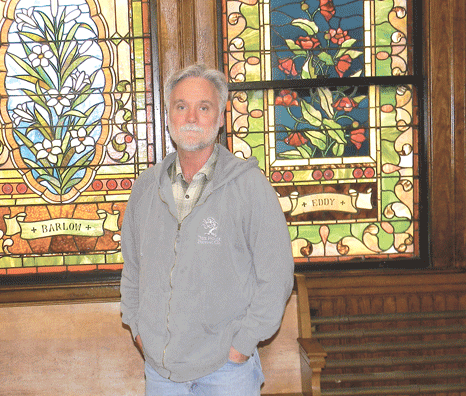
Roc Goudreau

Roc Goudreau, one of the developers of Workshop13, believes the renovated church will become a cultural hub for Ware.

For eight years, the building at 13 Church St. stood vacant and dilapidated, an eyesore that most residents and town leaders assumed would be torn down.

But two town residents, Roc Goudreau and his friend, Chris DiMarzio, looked past the blight and the daunting challenge of rehabbing the 117-year-old former Methodist Church and saw something others didn’t: opportunity.

What they’ve created at that address is called Workshop13, a bustling cultural-arts and community center that has become not only a major resource, but also a source of inspiration for a town looking for a spark — or several sparks — in its downtown, and is starting to find them.

Indeed, the renovation of the Workshop13 building is just one example of a minor wave of development that has swept through town in recent years, said Town Manager Stuart Beckley.

“Ware can be a hub of activity and services for regional residents,” he told BusinessWest. “The more activity and the better the quality of activity and service, the more growth that will follow. Ware is working to be ready for that increase.”

Hoping to open up a new art school, Goudreau and DiMarzio purchased the 11,000-square-foot former church building in December 2012. After several months of renovations, including the installation of a new roof and chimney, as well as the additions of new doors, flooring, shelves, and lighting, Workshop13 opened in October 2013.

“I’m really glad we were able to save the building,” said Goudreau, who plans to renovate the exterior of the building next year. “It was a real mess when we first bought it, but we always said the place has good bones and structure.”

That phrase could be applied to the community’s downtown as a whole, and officials are looking to create momentum for more development there.

The Ware Business and Civic Assoc. (WBCA) has partnered with town officials to conduct a series of workshops to help gain insight into best practices for a planned revitalization of Ware’s downtown section. Funded by town grant monies, the workshops will be led by four people from throughout Massachusetts with experience in various revitalization strategies. Bill Braman, chairman of the WBCA, is excited about the ideas these individuals will bring to the table.

“They all have different backgrounds and approaches and experiences when it comes to revitalization, and we want to look into employing some of their strategies in Ware,” he said. “There have been a lot of great recent developments downtown, with a new restaurant being constructed a few years ago and Workshop13 opening. Now we’re looking to come together as a community in a coordinated effort to continue revitalizing that area.”

For this, the latest installment of its Community Spotlight series, BusinessWest puts the focus on Ware and the many signs of progress — and hope — in this Quaboag-region community.

Major Steps Forward

The progress at Workshop13 just scratches the surface of recent developments in Ware. A new Cumberland Farms convenience store will soon be constructed on Route 32, a project that has received site-plan approval from the Planning Board. The proposal will now be reviewed by the Zoning Board of Appeals, and representatives from Cumberland Farms hope to be open for business as early as the fall, said Karen Cullen, Ware’s director of Planning and Community Development.

Meanwhile, Seaboard Solar, of Danbury, Conn., received approval last year from the Planning Board to install a solar array on Gilbertville Road, which will be adjacent to a larger array the company is building in West Brookfield. Cullen said Seaboard Solar has submitted a building permit and is planning to get construction underway soon.

From a recreational perspective, Ware is taking major steps with the planned construction of a new section of its Rail Trail within the next 18 months. Selectman John Carroll said recently awarded grant monies from the Recreational Trails Program, as well as volunteer contributions, will allow for the construction of two new bridges and other work.

“Once this new section is finished, people will be able to go from Wal-Mart all the way down to Robbins Road,” covering a significant stretch of Route 32 in town, he said.

The new trail section and others expected to follow it will ultimately connect Ware to several other towns through larger regional trails — both existing and proposed — which would attract more people to the town and thereby generate increased revenue for businesses. “It is important to be connected to the larger region,” Beckley said.

But the transformation of 13 Church St. has been the visible and potentially impactful development in recent months.

“The total rehabilitation they did of the building was wonderful, a very exciting project in our town,” Carroll said. “They took a building that would have been demolished and completely renovated it. Whenever something like that happens, it’s big for the town.”

Cullen agreed. “They put a lot of money and work into it, preserving most of the original features of the building, and now it is a thriving arts center,” she said.

Workshop13 hosts several youth art programs and camps each week, including a spring vacation camp that introduced several youngsters to painting during their break from school. With an accomplished staff of artists, Goudreau is hoping to expand membership in the coming months.

“We have really great instructors here; all of them are professional artists, and right now we’re just looking to get the word out about this place so residents know about what we have to offer,” he said. “Some people who come in didn’t even know we were here.”

Another goal for Goudreau and his staff is to maximize the use of the property, which was built in 1897 and also served for a short time as a senior center. The building boasts stained-glass windows and expansive rooms, and Goudreau is contemplating adding a performance or dance component to his business. The upper rooms, he said, are also perfect for an exercise studio, and renting sections of the building is another viable option. Currently, one of the second-floor rooms serves as a makeshift art museum displaying creations of Workshop13 instructors.

“I really hope that one day this building will be a cultural hub for the town,” he said.

Winds of Change

Karen Cullen

Karen Cullen says there are a number of development projects underway or on the drawing board in Ware.

Several other businesses and organizations in town have been active over the last year with expansion or development plans. Officials at Baystate Health, which operates Baystate Mary Lane Hospital on South Street, has announced its intention to explore the acquisition of Wing Memorial Hospital in nearby Palmer from UMass Memorial Healthcare, and is nearing a decision on whether to proceed.

“Right now we’re in a process of due diligence to move toward a definitive decision,” said Ben Craft, Baystate Health’s director of Public Affairs. “We’re anticipating a decision by the summer, but Baystate Mary Lane Hospital will continue to operate normally and remain a key part of our strategy moving forward. It’s important that we maintain a strong presence in Ware.”

If the agreement is approved, Beckley said it could lead to opportunities for growth in town. Baystate Health operates several medical facilities in the region, including Baystate Medical Center in Springfield and Baystate Franklin Medical Center in Greenfield.

The Quaboag Valley Business Assistance Corp., based in Ware, has also reported major developments of late. Officials with the QVBAC recently learned the corporation has been certified as a ‘community development finance institution’ by the U.S. Department of the Treasury’s Community Development Financial Institutions Fund.

“This certification will increase our access to financial and technical assistance from the CDFI fund and enhance our ability to raise funds from other donors,” said Sheila Cuddy, executive director of the QVBAC. “These funds support our work to increase economic opportunity for the 15 communities in our region.”

The QVBAC, a nonprofit organization, provides loans to small businesses that are not eligible for traditional bank financing.

Meanwhile, officials expressed hope that the planned workshops downtown will spark more development opportunities there.

In addition to exposing residents, town officials, and business owners to specific strategies, the workshops will also serve as a promotional mechanism for the revitalization plans, which will tie into the town’s ongoing formation of a master plan.

“This will create a vehicle to bring various businesses, large and small, together to focus on our priorities,” Braman added. “We’re hoping to get participation from throughout the community as we move forward to determine the best approaches for revitalization.”

At the conclusion of the workshops, Beckley said the town will assist Ware Business and Civic Assoc. members with deciding how they wish to move forward.

Ware It’s At

Overall, town officials are encouraged by the growth that has taken place in recent years, in addition to developments that still may occur.

Even in a tepid economy that has caused many communities to stagnate in terms of development, Ware residents and business owners have found a way to effect positive change and gain momentum.

“All of these activities show the commitment of town and business leaders to growth,” Beckley said, “both residential and commercial.”

Ware at a glance

Year Incorporated: 1775
Population: 9,872 (2010); 9,707 (2000)
Area: 40.0 square miles
County: Hampshire
Residential Tax Rate: 18.31
Commercial Tax Rate: 18.31
Median Household Income: $36,875
Family Household Income: $45,505
Type of Government: Open town meeting
Largest Employers: Baystate Mary Lane Hospital, Wal-Mart, Big Y, Country Bank, Kanzaki Specialty Papers, Town of Ware

* Latest information available

Community Spotlight Features
Wilbraham Carefully Crafts a Plan for Growth

Tracey Plantier and John Pearsall

Tracey Plantier and John Pearsall say Wilbraham residents want to maintain the town’s historic New England charm.

John Pearsall says Wilbraham residents appreciate the town’s New England charm and want it maintained. But they’re equally thankful for the plethora of stores, businesses, and restaurants available to them on Boston Road.

“Wilbraham is primarily a residential community, and what attracts people here is the quality of life,” said the town’s planning director. “But people are also comfortable with the idea that Boston Road is very commercial, and they want growth there to continue.”

These opinions were voiced repeatedly in studies contained in a report released last September titled “Wilbraham Looks Forward.” It documents the results of surveys and focus-group meetings conducted by an all-volunteer vision task force over an 18-month period. Members of the panel were appointed by the Planning Board, and their goal was to solicit opinions from residents and business owners about what they appreciate about the town as well as change they would like to see in coming years.

“Our mission was to generate a consensus-based guiding vision to address Wilbraham’s current and evolving challenges and opportunities,” said vision team chair Tracey Plantier, who is a member of the Planning Board and volunteer for the Open Space and Recreation Plan Committee (more about the report later).

Wilbraham was devastated by the tornado that swept through Western Mass. in 2011, but the majority of that damage has been repaired. And although commercial and residential growth has been slow since 2008, Pearsall said, “last year, things started to rebound.”

In December, Lumber Liquidators opened on 2148 Boston Road, and two auto dealerships made significant investments in their properties. Balise Ford held a grand-opening ceremony to welcome the public to a new, 26,000-square-foot, $4.2 million dealership about 11 months ago. The expansion added about 20 new jobs and helped strengthen the town’s tax base.

“Officials from Balise told us they were impressed by the town’s streamlined permitting process,” said Pearsall. “They described it as effortless compared to other communities.”

In addition, Lia Toyota’s showroom on 2145 Boston Road got a $300,000 facelift last year. “And Baystate Self Store LLC on 2350 Boston Road is expected to open in June with 73,125 square feet of available storage space,” said Pearsall, adding that some of it will be climate-controlled.

Growth is also occurring in the residential sector, as 18 new homes and/or condominiums were built in 2013 at a cost of $4.74 million. “The majority were in the Gardens at Wilbraham and in Cedar Ridge, which are both on Boston Road,” Pearsall said.

Eric Fuller, the town’s planning director, told BusinessWest that the three-mile strip of Boston Road that runs through Wilbraham is zoned for commercial and industrial use and contains land and buildings available for purchase or for lease. “Properties for sale include the former Medeiros Williams Chevrolet Co. building and lot.”

Pearsall agrees that opportunity abounds on Boston Road, home to a significant amount of underutilized and/or vacant space. “The former Taylor Rental property next to Home Depot is available, and on a smaller scale, there is space for lease in a number of strip malls,” he said. “Plus, the site across the street from Post Office Park has been cleaned up and is for sale.”

Post Office Park is a horseshoe-shaped, planned commercial development on Boston Road with two entrances and traffic signals. The back of the property is home to many businesses that are attractive to families, including the YMCA’s Wilbraham branch, All American Gymnastics, a dance academy, some small retail shops, and a pediatric medical office.

But land is still available at the front of the park, which Pearsall said is suitable for a high-profile retail business, due to its visibility from Boston Road and the fact that 40,000 vehicles travel up and down the busy thoroughfare each day.

“It is a significant commuter route, with Springfield to the west, Palmer to the east, and the entrance to the Mass Turnpike in Palmer,” he said. “Jake’s Restaurant across the street feeds off the traffic from the people who attend recreational and sporting events at Post Office Park, and Eastfield Mall, just down the road in Springfield, attracts shoppers.”

Enhanced Value

Education is important to Wilbraham residents, and the town boasts three secondary schools, including the private Wilbraham-Monson Academy; the parochial Cathedral High, temporarily housed in the old Memorial School building; and the new, $50 million, state-of-the-art Minnechaug Regional High School, which serves students from Wilbraham and Hampden.

“When people come into my office, they always ask about our schools, and the high quality we offer is a really big draw,” Pearsall said, explaining that the new high school has a day-care facility, and the grounds of the old building have been turned into athletic playing fields.

Eric Fuller

Eric Fuller shows off a copy of “Wilbraham Looks Forward,” which documents opinions solicited from residents and business owners.

“And Wilbraham Monson Academy continues to expand its campus,” he continued. “A brand-new dorm is under construction for students in their middle-school program, and they have put in new athletic playing fields.”

Major investments have also been made at Spec Pond, which is home to a summer day camp run by the Parks and Recreation Department. “More than $1 million has been spent in the park over the last few years,” said Fuller. “We have new pavilions, a new playground, and new playing fields for youth baseball, lacrosse, and softball. It’s a very large complex with lights that can also be used for night football. Plus, a spray park is being installed and will be ready by the time summer arrives.”

In another section of town, the iconic Rice Fruit Farm building is undergoing a major renovation. “The Rice family ran their farm for many generations and grew their fruit stand into a retail store,” Pearsall explained. But the storefront has been vacant since the family closed the business about five years ago.

Fuller said there was some interest in redeveloping the site, but its residential zoning was a stumbling block. However, that changed recently when the Planning Board revised the zoning based on the fact that the building had been operated as a farm stand. “It allowed the new owner to repurpose the structure and make it into a viable business,” he explained.

The retail establishment, called Heritage Farm Stand, is expected to open within the next few months. “They’ll sell fruit, ice cream, pies, and baked goods, and will have indoor and outdoor seating,” Pearsall said. “This is an adaptive reuse of a building that everyone in town wanted to reopen.”

Vision Quest

The town is comprised of a number of neighborhoods — Wilbraham Center, North Wilbraham, East Wilbraham, Wilbraham Mountain, South Wilbraham, the Boston Road Corridor, and the Pines section — and during the past year, residents and business owners from all sectors had the opportunity to voice their opinions about what type of change they would like to see in the future via surveys conducted by the Vision Task Force.

“We created subcommittees that did in-depth studies on education, land use, livability, and town services,” Plantier said. “The study was unique and something that few towns do, but we wanted to create a focused vision strategy.”

To that end, the task force developed an extensive questionnaire titled “Community Insights,” and residents were given the opportunity to respond online or in writing at town meetings, at concerts in Fountain Park, and during tours of the new high school held at the beginning of the 2012-13 school year.

The study was designed to provide input on what Plantier refers to as “the dynamics of change,” and answer the questions, “where are we going?” “what are we in the process of becoming if we follow the current course?” and “what will Wilbraham look like in 20 years and beyond if current trends continue?”

The task force also held focus-group sessions with business owners, members of the Boston Road Business Assoc., the Rotary Club, the East of the River Chamber of Commerce, and other organizations. In addition, a survey was mailed to 200 businesses.

The final event was called Imagine Wilbraham Day, which was attended by 100 people who had the opportunity to express or reiterate their opinions about what works well in town and what changes could prove beneficial. The results have been compiled in a report titled “Wilbraham Looks Forward,” and a new committee has been created to facilitate ways to implement desired change.

However, two items that emanated from the surveys are already on the town’s agenda and will be voted on during the May 12 town meeting. The first involves signage and would allow new businesses to erect temporary signs welcoming customers.

The second would permit an expansion of land use in Wilbraham Center. Pearsall explained that every plot of land in the neighborhood is currently zoned as either neighborhood/office space or neighborhood/shopping space. “We are not changing the zoning; we are homogenizing it,” he said, adding that the proposal would give property owners the ability to create food establishments or small shops in that section of town.

However, Plantier reiterated that, although residents want more shopping and restaurant options, they are deeply committed to maintaining the look and feel of Wilbraham, which she described as “a scenic, small New England town.”

“One of the biggest challenges to our economic development is balancing the change that residents want while keeping the look and feel of a scenic, historic small town with green, open space,” she said, adding that two requests voiced repeatedly in the survey are for additional sidewalks and bike lanes along the roadways.

The May town meeting will also give residents the chance to learn about volunteer opportunities with the town’s nonprofit organizations. Booths will be set up by representatives who will be ready and willing to share information. “This is important, as many people who responded to the survey expressed an interest in becoming more engaged in town, and said they want to see more events held in our community,” Plantier said.

Wilbraham also has two active committees pushing for a new safety complex and senior center. Although financial resources are limited, the Fire Department completed a $2.8 million renovation of its main fire station last year. “It was brilliantly done in a manner that didn’t require the town to borrow any money,” Fuller said. “It was a collaborative effort, and the fire chief was committed to adapting what he had to the needs of the department through the use of available funds.”

Pearsall added that the project set a precedent “to be creative and try to get the best results at the lowest cost to the taxpayers.”

Home-based Help

One thing that makes Wilbraham unique is the willingness of its residents to share their time to improve life in town.

“Many people own businesses or have professional expertise and are happy to contribute their talents or make donations to programs here,” said Pearsall. “There is a lot of community support to improve the quality of life.”

That trend is sure to continue as “Wilbraham Looks Forward,” paying due diligence to the opinions of residents who take great pride in the place they call home.

Wilbraham at a glance

Year Incorporated: 1763
<strong>Population: 14,868 (2010); 13,473 (2000)
Area: 22.4 square miles

County: Hampden

Residential Tax Rate: $20.44
Commercial Tax Rate: $20.44
Median Household Income: $90,670
Family Household Income: $102,557
Type of government: Open Town Meeting

Largest employers: Friendly Ice Cream Corp.; Town of Wilbraham; Wilbraham and Monson Academy; Life Care Center of Wilbraham
* Latest information available
Community Spotlight Features
Chicopee Is Well-positioned for Economic Growth

Mayor Richard Kos

Mayor Richard Kos says Chicopee’s transportation infrastructure, diverse mix of businesses, and abundance of available building sites all contribute to its economic stability.

The city of Chicopee is known as “the crossroads of New England,” and Mayor Richard Kos says its transportation infrastructure, diverse mix of businesses, and abundance of available building sites play a role in its economic stability and capacity for growth.

“The city’s insignia is ‘Industraie Variae,’ and Chicopee has a variety of industries that show the breadth of its diversity and help it to weather economic storms,” the mayor told BusinessWest.

Four major highways —  Interstates 90, 91, 291, and 391 — exit into Chicopee, and state roads, including Routes 33, 116, and 141, connect to the city’s six neighborhoods, or communities — Chicopee Center (Cabotville), Chicopee Falls, Willimansett, Fairview, Aldenville, and Burnett Road.

Kos, who was mayor from 1997 to 2004 and took office again in January, said his goal is to help Chicopee realize its full potential, especially in its business parks and sections of the city that have not seen much growth in recent years.

Kenn Delude, president and CEO of Westmass Area Development Corp., cites the Chicopee River Business Park as an example of an area poised for development. The park, built on the grounds of the former Oxford Country Club and Springfield Rifle Range, is located at the intersection of I-90 and I-291, and contains plots that vary in size and could be used for office space and/or manufacturing.

“The park contains 147 acres and has fully permitted sites for sale that are complete with utilities,” Delude said, adding that 826,000 square feet of space has been pre-permitted, and incentives are available for qualified businesses. “The sites range from 15,000 to 45,000 square feet, although we could accommodate up to 100,000 square feet. The infrastructure is there, the prices are appropriate, and Westmass will handle the permitting.”

Kos said the industrial park was developed in cooperation with Springfield and contains land in both cities. Infrastructure grants have totaled $4.2 million, but growth has been slow over the past 12 years, and a streamlined permitting process has been created to promote development.

Delude told BusinessWest that many other areas of Chicopee are also rife with opportunity. “Chicopee has existing buildings that are available and ready for occupancy. There is also potential for new construction, and at the same time, the city continues to accumulate land and develop Air Park South,” he said.

The park contains about 80 acres of vacant land acquired from the city by Westover Metropolitan Development Corp. It is located between Burnett Road, Chicopee Municipal Airport, and the Chicopee River Business Park.

In addition, Economic Development Manager Tom Haberlin says there are a number of buildings for sale that were erected in the ’80s and ’90s and are good buys. “They’re available for 25 cents on the dollar in terms of market rate, and can be retrofitted for manufacturing for less than it would cost to build something new.”

For this issue’s Community Spotlight, Kos, Delude, Haberlin, and other city officials talked with BusinessWest at length about opportunities for new business, as well as about firms that recently moved to Chicopee or have chosen to expand and relocate their enterprises within the city’s boundaries.

“My transition team has helped to identify opportunities for economic development,” Kos said.

Future Growth

An exciting development is slated to take place at Westover Air Reserve Base. In addition to the fact that the Great New England Air Show will be staged there again this year, fears that the base could be closed due to military cutbacks have been relieved, thanks to recently passed legislation.

Kenn Delude, left, and Lee Pouliot

Kenn Delude, left, and Lee Pouliot say new hangars for corporate use at Westover Air Reserve Base will mitigate the cost of running the base and add to the city’s economic vitality.

Delude said the state Legislature has allocated $177 million that will be shared by six military bases. Westover will use its funds to tear down antiquated hangars built to house B52s during the ’50s, replacing them with new, modern hangars with space that can be leased by corporate aircraft.

“The public/private investment will enhance Westover and mitigate its costs,” said Kos. “This is the first time that a state has made an investment in a federal military facility, and it reflects the commitment of the community to withstand base closures.”

The city, MassDevelopment, and Western Mass. Development Corp. will be involved in the project, and city officials hope it will lead to an aviation-repair program in Chicopee Comprehensive High School’s Career Education Development division.

Another newsworthy development is the renovation of 150,000 square feet in a building on Champion Drive that was home to the packaging manufacturer RockTenn and sat empty after the corporation closed its Chicopee operation five years ago. The space will be occupied by the German firm Menck Windows.

“They chose to locate here because of the workforce and the city’s ability to train students at Chicopee Comprehensive High School for high-level precision-manufacturing jobs,” Kos said.

The mayor added that the manufacturer was impressed by the school’s vocational-training program and the fact that the city is willing to work closely with them.

“Chicopee has a long history of being supportive of businesses and job creation, and tax incentives helped this as well,” he continued. “Menck looked at more than 20 sites in Western Mass. before they chose our city. This will be their first manufacturing operation in the U.S.”

The business is expected to open in June and will create 50 new jobs.

Haberlin spoke about another success story that involves the manufacturer Lymtech Scientific. “They had offers to move south, but chose stay in Chicopee when they decided to expand their Cabotville operation. They purchased a building at the entrance to Westover and made a substantial investment, which was underwritten by the city and Mass Development,” he said. “The building was ready, so it was cost-effective. They built a clean room and, as a result, have grown quickly.”

Delude added that MicroTek, which is located in Westover Air Park West, is yet another firm that opted to remain in Chicopee when it decided to expand its 24,000-square-foot operation housed in a building on Justin Road.

“They looked at sites everywhere, but wanted to stay in the city,” he said. “They purchased a 55,000-square-foot building in the park.”

To add to the mix, T.J.Maxx has become a tenant in Air Park West. “They expanded from 55,000 square feet to 100,000 square feet,” Kos said. “So staying put is moving forward for a lot of our businesses.”

The mayor said one of Chicopee’s assets is the fact that it’s a data crossroads. “When the Mass Turnpike was redone, new data lines were installed, which is important for businesses that need a lot of capacity.”

In another section of the city, a development known as Chicopee Crossing is taking shape. The Residence Inn by Marriott opened in the complex on Memorial Drive, and Buffalo Wild Wings recently won preliminary approval from the city council to build a restaurant with a liquor license there.

Economic growth continues to occur along that busy thoroughfare. In February, Chick-fil-A opened beside Aldi’s supermarket, and the former IHOP Restaurant, which sat empty for a decade, has become the second McDonald’s restaurant along Memorial Drive.

In other areas of the city, the Collegian Court restaurant, a landmark establishment, reopened last year after being closed for seven years, and the Munich Haus also expanded and added a beer garden with 60 seats, Haberlin said.

Meanwhile, the city also continues to make water and sewer infrastructure improvements, and a $9 million bond has been approved by the City Council to install a second water line to the Quabbin Reservoir, which is the source of Chicopee’s water supply. In addition, the city’s sewer-separation project is scheduled to be complete by June 2015. “It will have addressed 80% of the combined-sewer-overflow issue,” Kos said.

Renewal is also taking place in Chicopee Center at Ames Privilege Apartments. The units are located in a former Civil War foundry that made swords and cannons on 1 Springfield St. But half of them were never opened because the city condemned a portion of the building in 1988 due to weakened support beams, and those apartments sat vacant for 20 years, Haberlin said.

But MassHousing closed on an $8 million loan last summer to allow the developer to renovate 94 occupied apartments and completely restore the 40 units that have never been rented. An additional $1 million was provided by the Affordable Housing Trust Fund, and funding also came from the the city itself and private investments. “We’ll finally see a project that was started in the ’80s brought to completion,” Haberlin said.

Future Outlook

Moving forward, Kos said the city has much more going for it than its location. There is momentum, land, a business-friendly City Hall, and a large legislative delegation — four state representatives and three state senators —  that makes sure the city gets attention from the Commonwealth.

“As we move forward, it is important to recognize Chicopee’s strengths, which include its location, its competitive tax rate, the quality of its utilities, and the benefit of having its own municipal electric supplier,” said the mayor. “I plan to make sure that public and private economic developers, as well as the city team, interconnect on a regular basis so their skill sets enhance their ability and knowledge.”

Which is, indeed, a surefire recipe for success.


Chicopee at a glance

Year Incorporated: 1848
Population: 55,298 (2010); 54,653 (2000)
Area: 23.9 square miles
County: Hampden
Residential Tax Rate: 16.51
Commercial Tax Rate: 29.60
Median Household Income: $35,672
Family Household Income: $44,136
Type of government: Mayor, City Council
Largest employers: Westover Air Reserve Base, J. Polep Distribution Services, Avery Dennison Corp., Callaway Golf Ball Operations Inc., Microtek Inc.

* Latest information available
Community Spotlight Features
Developments Strengthen Northampton’s Economy

Mayor David Narkewicz

Mayor David Narkewicz says new projects in Northampton range from redevelopment of blighted buildings to new construction.

On March 7, a ribbon-cutting ceremony was staged at two new auto dealerships on 347 King St. — Country Hyundai, which relocated from Greenfield, and Northampton Volkswagen, which moved from Damon Road.

Mayor David Narkewicz said the dealerships are among a bevy of exciting new projects that will increase vitality in Paradise City. “There is a lot of investment going on right now, which we are very pleased about,” he told BusinessWest.
Terry Masterson agreed. “There are 13 projects with a total value of $88.6 million that will add 203,000 square feet of office/professional floor space, 110 new hotel rooms, 73 housing units, and 83 assisted-living units,” said the city’s economic development director.

He and the mayor then offered a tour, figuratively speaking, of the community and its many commercial and residential developments. And there were stops in virtually every corner of the city.

They started on King Street. The auto dealerships were a $6 million investment, and were built by TommyCar Auto Group on the site of the former Kollmorgen Corp. Electro-Optical Division (now L-3 KEO), which moved to Village Hill. They will add about 50 jobs and generate about $85,000 in tax revenue, Narkewicz said, adding that there is a significant amount of activity happening in the King Street area.

This includes the redevelopment of the blighted former Price Chopper supermarket property by Colvest Inc. It is now called Northampton Crossing, and a new building has become home to Greenfield Savings Bank, while the existing Firestone building has been expanded.

The most significant change, however, is the conversion of 70,000 square feet of retail space into medical offices. Baystate Health moved a medical practice into the renovated building and added a laboratory, MRI and imaging services, and obstetrics and gynecology. “They leased about 60,000 square feet of the facility,” Narkewicz said. “This is a great reuse of the property and gives area residents additional medical options in one of our key commercial areas.”

The former Mobil station at 300 King St. was also redeveloped last year by PeoplesBank in Holyoke, which purchased the site and built a LEED-certified, green banking center. “This is a commercial corridor, and we are excited about all of the investment here,” Narkewicz said.

Meanwhile, another project slated to change the landscape is the construction of a 108-room Fairfield Inn on Conz Street. Narkewicz said developer Mansour Ghalibaf, who owns Hotel Northampton, has been challenged to meet the demand for hotel rooms at commencement and other times of the year.

“This will increase the city’s hotel-room inventory from 358 rooms to 470 rooms,” said Masterson. “And multiplying it by the current occupancy rate will equate to 100,000 people staying overnight each year when it is complete.”

Activity is also occurring south of the site on Route 5 in Atwater Business Park, where space in two, new 40,000-square-foot office buildings has been leased. “The first building is occupied, while the second is expected to be finished by the end of the year,” Narkewicz said, adding that Cooley Dickinson Hospital’s medical offices and Community Support Options are consolidated into one building, and the hospital plans to move additional medical practices into the second.

There are also plans to tear down the former Clarion Hotel and Conference Center and build a new hotel with 100 rooms. “The property has a big footprint, and there is a separate retail pad that could become a restaurant as well as room for an 80,000-square-foot office building in the back,” he said.

Moving north, to the site of the former Northampton State Hospital, residential and commercial development is escalating (more on that later), and downtown continues to thrive.

Terry Masterson

Terry Masterson says the majority of space in two new office buildings in Atwater Business Park has been leased by Cooley Dickinson Hospital.

“Downtown has no real vacancies; there are over 70 stores and 35 different types of restaurants and specialty shops,” Masterson said. “Talbots is celebrating 20 years in their Northampton store, and the Academy of Music programs draw more than 40,000 people to the city.”

And long-term planning continues to redevelop the Three County Fairground into a year-round exhibition facility for agricultural and cultural shows. “A new, 80,000-square-foot exhibition facility will be built, and renovations will be made to the existing buildings,” he noted. “In the coming years, the expanded facility will become a regional attraction for shows and exhibits with the potential to generate $50 million in commerce.”

For this, the latest installment of its Community Spotlight series, BusinessWest continues that tour of Northampton, which reveals that an already-thriving city is building additional momentum in every sense of that phrase.

Grounds for Optimism
At Village Hill, the canvas that developers started filling in 15 years ago is fast becoming a masterpiece of mixed-use development, with more initiatives in progress or on the drawing board.

The Gatehouse, a 16,000-square-foot structure that integrated the former gates to the state hospital into its design, opened its doors last year. It hosts office and retail space, and is the first commercial building on the north side of the campus.

Fazzi Associates, a Northampton-based healthcare services firm, relocated to the Gatehouse from King Street and expanded into 20,000 square feet of office space, Masterson noted, adding that the building also contains a Liberty Mutual claims office, and a small coffee shop is being planned.

Although the Gatehouse is the first commercial structure on the north side of the development, it already was home to a number of residential developments that cross all price brackets.

“It’s impressive to drive through Village Hill and see the different types of housing and how balanced it is,” Masterson said, noting that Wright Builders Inc. built a six-unit subdivison of single-family homes last year and started the first phase of Upper Ridge, a four-unit townhome building. The company is expected to begin the second phase of its Upper Ridge at Village Hill project this spring.

That development will include a duplex as well as one three-story, six-unit, elevator-equipped apartment building. Each unit will have three bedrooms and two bathrooms.

Pecoy Builders is also developing homes in Village Hills, said Narkewicz. The company has completed roughly half of a 24-unit subdivision of single-family homes that offers homebuyers nine plans to choose from in varying price ranges.

MassDevelopment, for Hospital Hill Development LLC, has invested more than $18 million in planning and infrastructure construction, and created the master plan for Village Hill, which is being marketed and developed in sections. In addition to the land currently out to bid on the back property, additional acreage remains to be developed, the mayor noted.

Overall, said Masterson, commercial, retail, and residential development occurring in the city is well-balanced. “We have hotel and retail space, along with senior housing,” he noted as he spoke about the new Christopher Heights project, a $13.4 million, 50,000-square-foot, 83-unit assisted-living facility being built at Village Hill by the Grantham Group.

“Half of the units will be affordable,” Narkewicz said, explaining that the master plan includes mixed-income development.
Meanwhile, many other developments are underway or in the planning stages in and around downtown.

Northampton Community Arts Trust has found a new home at 33 Hawley St. “They purchased a former health club [Universal Health and Fitness] and plan to create 12,000 square feet of exhibition space and a 250-seat black-box theater in it,” said Narkewicz. “Northampton Center for the Arts will be the key tenant.”

Also, the former Clarke School campus on Round Hill Road is slated to undergo a transformation. The Springfield-based OPAL Real Estate Group purchased 12 acres, which contain eight buildings, and plan a historic conversion of the structures that will include residential apartments and retail and office space.

“It’s a significant development because the campus was never on the tax rolls,” said Narkewicz, adding that efforts to bring more housing stock onto the market are critical, because officials believe more healthcare professionals will want to live in Northampton due to the expansion of Baystate Health and the fact that Cooley Dickinson Hospital has become an affiliate of Massachusetts General Hospital.

The Northampton-based hospital and Mass General’s Cancer Center have also entered into an agreement to expand oncology services to Pioneer Valley residents, with plans to build a new cancer center in the city.

On the Right Track
Coinciding with the many commercial and residential developments are infrastructure initiatives designed to improve traffic flow and, overall, make it easier for people to commute to and live in Northampton.

For example, improvements are in the works for the fork in the road that drivers encounter when they take Exit 18 off I-91 and head into Northampton.

“The intersection is owned by the state, and it plans to redevelop it and turn it into a roundabout,” said Narkewicz, noting that design work is 75% complete. “It’s a much safer and more efficient way to move high volumes of traffic through a complicated traffic pattern.”

The city is also in discussions with the Greater Northampton Chamber of Commerce about the many new businesses that have opened at the juncture where Pleasant Street becomes Route 5.

“Several commercial buildings have been redeveloped, and this is an area we are trying to grow as a way of extending our downtown,” the mayor explained. “It’s evidence of an emergence of positive small business and retail growth, and the city is working with the chamber to improve parking to support the growth, traffic, and other pedestrian issues to extend the walkable district of Main Street. All these changes are bearing fruit.”

State officials also want Northampton to take over the section of Route 5 that turns into Pleasant Street. There are some environmental challenges, said Narkewicz, adding, “we’re looking at how we can create a better transition from the state highway to downtown. We have put in some traffic islands to demarcate the point when you leave the highway and enter the city zone to encourage new commercial development.”

City officials are also looking forward to the return of Amtrak service, which will transport passengers along the west side of the Connecticut River. It is part of a larger, $73 million federal project and calls for a shift in Amtrak’s Vermonter route, which will include new stations in Greenfield, Northampton, and Holyoke. “The state is working with us on plans to build a new railroad platform next to the track,” Narkewicz said.

Local businessman Jeremiah Micka has purchased the old rail station building with plans for its conversion, which will include a new sports bar on the north side of the structure, as well as a 200-seat banquet hall. The Tunnel Bar underneath the building will remain open, and the mayor said he is happy that the rest of the building will be redeveloped, as it was empty and on the market for several years.

Moving Forward
Masterson calls Northampton a leading city in Western Mass. “It has many diverse economic and demographic assets that generate economic strength locally and within the Pioneer Valley Knowledge Corridor region.”

Narkewicz agreed, and said Village Hill is a model development because it is close to downtown and residents can walk there, ride their bikes, or use PVTA buses. “Plus, it contains open space and community gardens. It’s an example of the sustainable growth Northampton is focusing on,” he said.

Growth that is taking place in every corner of the city.

Northampton at a glance

Year Incorporated: 1884
Population: 28,592 (2012)
Area: 35.8 square miles
County: Hampshire
Residential Tax Rate: $15.39
Commercial Tax Rate: $15.39
Median Household Income: $48,864
Family Household Income: $56,844
Type of government:
Mayor, City Council
Largest employers: Cooley Dickinson Hospital, Smith College, City of Northampton

Community Spotlight Features
Economic Transformation Continues in Pittsfield

Community Development Director Douglas Clark

Community Development Director Douglas Clark says diversity is the key to sustained growth in Pittsfield.

Mayor Daniel Bianchi says downtown Pittsfield is continuing to evolve, and the establishment of a new, multi-million-dollar Innovation Center is moving forward. In addition, a new vocational technical high school is planned as part of a workforce-development initiative, and the city is taking a regional approach to growth.

“We have a lot of good things going on and are progressing nicely,” he told BusinessWest.

Douglas Clark concurred. “We want to be diverse. You have to grow on multiple fronts,” said the city’s community development director.

The Innovation Center holds real promise, and $6.5 million has already been earmarked for the project as part of the Commonwealth’s Life Sciences Bond Bill. It will be built in William Stanley Business Park, which encompasses 52 acres on the grounds of the former General Electric Pittsfield Works. The park opened in the summer of 2012 with a ribbon-cutting ceremony for its first tenant, Mountain One Financial Center, but since that time, plans for the Innovation Center have taken center stage.

Clark said the original plan called for a ‘life science center,’ but the name was changed to reflect the fact that Pittsfield has more plastic and advanced-manufacturing companies than life-science companies.

The 20,000-square-foot center will provide space for the development of new products, support services, and specialized equipment. Companies will pay a membership fee to use the facility, and will be able to lease space for first-stage commercialization.

“It will provide them with access to new, expensive equipment such as a 3-D printer. Plus, we envision support services with intellectual-property rights, patents, and a range of other things a startup might need,” Clark said. “We also hope to foster connections with one or more research universities, such as UMass or RPI [Rensselaer Polytechnic Institute], and become connected to high-speed computer service through the Mass Broadband Initiative. Our hope is that, if a company’s first-stage commercialization is successful, they might move into their own building.”

The center will contain a clean room with a controlled level of contamination, which advanced-manufacturing companies require to produce medical devices and other sensitive equipment.

However, Clark said the room will also offer educational opportunities. “Berkshire Community College could run training in the clean room and tie it into their curriculum.”

Progress has been fueled through a number of groups. Bianchi created a Life Science Task Force to develop ideas for the site, New England Expansion Strategies was hired to conduct outreach and feasibility studies, and Pittsfield Economic Development Authority (PEDA) is doing everything possible to move the project forward via loans and technical assistance. “We are not lying idle,” said the mayor.

Clark agreed. “The task force meets to discuss initiatives, including how Pittsfield can capitalize on life-science industries. They are a strategic focus of the Commonwealth, and we are hoping not to be left out of the discussion,” he said, adding that PEDA has commissioned a study of advanced manufacturing in the Berkshires.

An example of a success story is Nuclea Biotechnologies Inc., which develops and makes diagnostic tests for cancer and diabetes. It moved to Elm Street about a year ago, and recently received a $510,000 state tax incentive from the Massachusetts Life Sciences Center to develop more manufacturing in Pittsfield and create 25 jobs.

The city and PEDA have also joined forces to entice a rail-car manufacturer to the business park.

“The MBTA [Massachusetts Bay Transportation Authority] has issued a request for proposals for an $850 million contract to build railway cars for their Orange and Red Line trains,” with the stipulation that they must be assembled within the state, Clark said. “So a few weeks ago, the city put forth an offer of $1 million, and PEDA offered another $1 million incentive to try to bring a rail-car manufacturer here.”

Proposals are due in May, and any firm coming to Pittsfield will need to develop a parcel and erect a new building in the park, which could cost up to $20 million. But Clark said PEDA has a foundation suitable for construction, and the offer has led to meetings with a number of rail-car manufacturers. “It could bring 200 to 250 jobs to the city,” he added.

Potential for development also exists in Downing Industrial Park, and city officials are in discussion with a high-tech company about the former Meadwestvaco Resource building there, which has been unoccupied for years. If the company decides to settle in the city, Bianchi said, it will add about 100 scientifically oriented jobs to the area.

And although GE closed its transformer and aerospace operation in Pittsfield more than two decades ago, its presence is still evident. GE Advanced Materials, now owned by SABIC Innovative Plastics, has made Pittsfield its North American headquarters, and General Dynamics occupies many of the old GE buildings and is a major employer for the area.

Expanding Metropolis

The city’s downtown, which has undergone a transformation over the past decade, continues to evolve. Pittsfield has received $1.7 million to complete work on its main common, which Bianchi describes as “the largest, most centrally located urban block in the city,” and an additional $2 million in grants has been allocated for Phase 3 of the downtown streetscape-improvement project.

Community Development Specialist Laura Mick noted that infrastructure improvements have been ongoing since 2005, when a concerned citizens advisory committee told city officials the area needed more aesthetic appeal, better lighting, and improved pedestrian safety. “So we updated the master plan. We wanted to create a new image.”

To that end, new sidewalk treatments and LED decorative lighting have been installed; bump-outs were shortened, which makes it safer to cross the streets; and benches, bike racks, new trees, and a rain garden have combined to change the landscape.

Mick said Phase 3 of the plan, which will kick off this spring, will continue the improvements and include a bicycle lane.

The project has brought new restaurants and retail shops to the area, and Bianchi said there is not much vacant space left as developers continue to take advantage of tax credits and repurpose buildings that had sat abandoned for years.

They include the former Berkshire Bank building on 54 North St. Last month, NBT Bank opened a full-service location on the first floor, which will serve as the central location for its Berkshire County presence. Office space on the second floor has also been leased out and is being rented by attorneys. “The building is unique, and the bank fills a gap downtown,” Bianchi said.

A block away, Allegrone Construction is converting the old Goodrich House behind City Hall into about 20 market-rate apartments. That project is nearing completion, but Allegrone has plans for a similar makeover in the nearby Onota building.

In addition, Tierney Construction recently announced construction of a new boutique hotel with 43 rooms and space for meetings. It will occupy 68,000 square feet in two connected brick buildings that run from 273 to 297 North St. “Tierney will also maintain the two restaurants that are there now, and hope to get started on the hotel in 12 to 18 months,” Bianchi said.

Other efforts to promote vitality include a parking-management study commissioned by the city to ensure it is using available space wisely. “These things all work together to create a vibrant downtown,” Clark said.

Change is also occurring nearby. “We are seeing little restaurants, shops, and ethnic markets opening,” Bianchi said, adding that they offer Polish, Far Eastern, and Columbian products.

In addition, an architect hopes to put greenhouses inside the former Eagles building in the Morningside neighborhood, located a few blocks from downtown. “It would complement the farmers’ market that opened last year,” Bianchi said.

The arts community is also thriving. “Pittsfield used to be the ‘hole in the donut’ as far as the arts went, but with the Colonial and Berkshire theaters, Great Barrington Stage, the Beacon Cinema, and our First Friday Art Walks, we have filled that hole,” Clark said.

Bianchi said Barrington Stage opened a second venue about three years ago in a former Veterans of Foreign Wars hall, and the city’s newest art project, which is in the works, is a retrospective that will show how art and industry intertwined throughout Pittsfield’s history.

“The GE plant created glass bushings that were almost a crossover between art and industry,” the mayor said, citing one example. The undertaking will include televised interviews of residents who will recall the heyday of the mills.

In addition to arts and entertainment, Clark said the city offers recreation in the form of a state forest, a ski area, three golf courses, and two large lakes within city limits. But the arts overlay district and these venues are not enough to attract and retain skilled workers, so city officials are working in conjunction with other groups on workforce development.

To that end, a new vocational technical high school will be built on the grounds of Taconic High School, where enhanced programs to prepare people for careers in advanced manufacturing can be developed with partners such as Berkshire Community College.

Bianchi said the city is working with the Mass. School Building Needs Authority on the high school. DAR Associates in Waltham was selected to do the design, and it expects to have several concepts to choose from that will result in either a renovation and expansion of the existing building or a brand-new school. “The new school is integral to helping businesses grow,” the mayor said.

Moving Forward

Progress is expected to continue as people from many walks of life continue to join forces.

“We have a community that knows how to work together and really pull together for mutual purposes, and we are able to turn to the state and federal government and show them investments downtown which inspire them to invest in us,” Bianchi said. “We also have had good public and private partnerships for the last 10 years, and Mass Business Development is interested in helping us with a lot of these projects.”

Clark concurs. “Things don’t change in a linear, predictable fashion,” he said. “They spiral up or down, and right now, Pittsfield is in a good upward spiral.”

Pittsfield at a glance

Year Incorporated: 1761
Population: 44,737 (2010); 45,793 (2000)
Area: 42.5 square miles
County: Berkshire
Residential Tax Rate: 16.70
Commercial Tax Rate: 34.47
Median Household Income: $35,655
Family Household Income: $46,228
Type of government: Mayor, City Council
Largest employers: Berkshire Health Systems, General Dynamics Advanced Info Systems, SABIC Innovative Plastics

* Latest information available

Community Spotlight Features
Farms, Open Space Shape Belchertown’s Outlook

Doug Albertson

Doug Albertson says most residents don’t want big-box stores or other large-scale commerce, so even though Belchertown has grown, its bucolic character has largely remained unsullied.

The sun shone brightly on almost a foot of snow as Steve Lanphear pruned apple trees in his Belchertown orchard. Although the temperature hovered in the mid-20s, the owner of Sentinel Farms enjoyed the hours he spent working outside.

“I love doing this,” said Lanphear, who, with his wife, Meg, began cultivating the fruit trees on their land and running a maple-sugaring business after they retired.

Today the couple numbers among an active group of small farmers whose efforts continue the town’s agrarian history. “Belchertown has always been a place with a huge amount of open space, and our small farms play a role in maintaining agricultural activity in it,” Steve said. “It’s very important to keep that alive.”

William Shattuck concurs. His property includes about 200 acres of farmland, and he says customers who frequent the family’s two businesses — Devon Lane Farm Supply and Devon Lane Power Equipment — often tell him, ‘you have it all right here,’ as they talk about the woods, hayfields, brooks, and open space that are highly visible throughout the town.

Douglas Albertson says most Belchertown residents don’t want big-box stores or other commerce in their neighborhoods, so although the population has doubled since the ’70s, when people began moving from nearby cities such as Springfield and Chicopee, its bucolic setting remains largely unsullied.

“House building is the biggest industry in town, but we have done a lot to preserve and protect the character of the town — the rural look and feel of the community and its open space and farms. We are also working to promote agriculture and viable industry,” he said, speaking about the large number of loggers and licensed foresters who have businesses in Belchertown. “Plus, we have a very active agricultural commission that works to boost local farm products, which include organic vegetables and maple syrup.”

Shattuck, who co-chairs that commission, told BusinessWest that “it’s a different community than it was 30 years ago due to the huge number of new homes that have been built, but our farmers and suppliers hope to see a resurgence of farming here. There is a lot of interest in small startups and self-sufficient food supply.”

He noted that many students from the five nearby colleges want to farm in Belchertown using new technology. It’s possible due to plentiful acreage in the south end of town.

“It’s important for the long term to have enough viable agricultural land to produce more food,” Shattuck said, “and although politics can drive agricultural possibilities away, there are still many farmers here working their land.”

Judith Gillan, founding director of the New England Small Farm Institute, which promotes the development of small farms, said residents have differing opinions about what is best for Belchertown’s future. “But one thing that engages the whole community is a sense of its history and the desire to protect its rural look and feel. Even though the town needs businesses and more discussions about the future, this issue brings people together across demographic lines.

Bountiful Opportunity

The grounds of the former Belchertown State School offer the potential for growth, and MassDevelopment is taking steps to remediate the tillable acreage on the property. “It will give the town an opportunity to meet many of its objectives, including commercial business development,” Gillan said.

The first project will be an assisted-living center, and the agency recently put out an informal request for offers to build the residence on several acres that sit behind the town’s senior center. “People agree there is a demand and believe it is an acceptable and desirable use for the property,” Albertson said.

In addition, there are approximately 50 more acres, currently dotted with old buildings and a network of underground steam tunnels from the school’s steam plant, which offer potential for redevelopment.

That parcel does not include land once used as the farm for Belchertown State School, which was originally designed and operated as a self-reliant community in terms of food production.

But Gillan and other groups, including the town’s agricultural commission, have a vision for that part of the property. “We are in discussion with the state and want to establish a small enterprise zone on the farm parcel which would include small farms and also host food- and energy-related businesses,” she said. “We would like to see people take advantage of the opportunity to assist the town with conservation through small businesses.”

Judith Gillan

Judith Gillan says striking a balance between economic development and environmental and social values is key to Belchertown’s future.

Suitable examples she suggested include a small biodiesel operation or a business producing energy from recycled biomass. “We also want to create a discovery center which would tell the story of the town’s agricultural history and attract visitors.”

Shattuck spoke about how critical farming is to food production in the U.S. “We are trying to increase the food supply produced by local farms. It’s very important.”

Gillan concurred. “Balance is key, and if there was ever a time to be thoughtful about the future, it is now,” she said. “We want to offer economic-development opportunities and at the same time protect the environment and social values through open space and land conservation. For many years, Belchertown State School was off limits to the community, and our hope is that our efforts will result in a combination of economic development and preservation of environmental resources.”

Albertson said economic development has already begun to occur in the area, particularly on State Street. About a month ago, Easthampton Savings Bank moved into a newly constructed building situated at the entrance to the state school property, and a new diner not far from the site is set to open soon.

Shattuck added that people looking to open or relocate a business may find Belchertown attractive because four major roadways — Routes 9, 181, 21, and 202 — intersect at points in town and are well-traveled. “A railroad also runs through town, which adds to the possibilities.”

Quality of Life

Belchertown was one of the first ‘green’ communities designated by the state, and the Department of Public Works and the school system operate energy- conservation programs in all their buildings.

“We are a fairly progressive community,” said Albertson. “We put solar panels on the fire station in the last five years, and are continuing to plan as we step into the future and try to get away from using fossil fuels.”

Other projects in line with conservation include a sewer-treatment plant and a commercial solar operation slated to go online soon. “It’s a good, clean, quiet project on 11 acres,” Albertson said.

Cold Spring Country Club opened two years ago, offering an 18-hole, semi-private course and restaurant, all with panoramic views. UMass also operates a horticultural research station in Belchertown, which Shattuck calls the premier center in New England for research on orchards and fruit trees.

In fact, UMass is integral to the town’s vitality and has been the main employer for townspeople during the past decade. “The UMass transit system, which is operated by the Pioneer Valley Transit Authority, runs from Amherst into Belchertown, and a lot of students, faculty, and staff live here,” Albertson said.

Meanwhile, Quabbin Reservoir, which covers one-fifth of the town’s 54 square miles, offers ample space and opportunity for people to enjoy the outdoors via pursuits such as hiking and fishing.

Albertson reiterated that residents want to preserve open space for recreation, which includes hunting and snowmobiling. “Hunting is still important to many people, and we have a very active snowmobile club that maintains a number of trails,” he said. “We want to make sure we have a good balance.”

Unified Effort

Albertson said MassDevelopment will continue working on a plan for the former Belchertown State School property, which could include a mix of retail establishments, space for offices, some light research and development, and perhaps some small-scale residential development, although the latter will not be the focus. In addition, a set of commercial design guidelines created for the entire town, presented to the board of selectmen in November, is on the agenda for the spring town meeting.

So, growth will continue to move Belchertown into the future, but some things will remain unchanged, including the residents’ appreciation for the landscape that surrounds them. Although they may travel to other communities to shop, many feel their town does ‘have it all’ as a sanctuary from the stressors of city life.

“The people in Belchertown are very friendly,” Shattuck concluded. “It’s a great place to live.”

Belchertown at a Glance

Year Incorporated: 1761
Population: 14,649 (2010); 12,968 (2000)
Area: 55.4 square miles
County: Hampshire
Residential Tax Rate: 17.72
Commercial Tax Rate: 17.72
Median Household Income: $52,467
Family Household Income: $60,830
Type of government: Board of Selectmen, Town Administrator, Town Meeting
Largest employers: Town of Belchertown, Hulmes Transportation, Super Stop & Shop
* Latest information available

Community Spotlight Features
Holyoke’s Leaders Take a Broad View of Economic Growth

The Massachusetts Green High Performance Computing Center

The Massachusetts Green High Performance Computing Center is not an end in itself, but hopefully a catalyst for the entire Innovation District.

Alex Morse has a message for Holyoke’s residents and businesses: keep your eyes open.
Over the past two years, said the city’s 24-year-old mayor, “we’ve been doing some excellent planning, laying the foundation for things we’ll be pursuing in 2014. And we have a lot of projects happening this year. Residents, and people visiting Holyoke, have been noticing the changes in the city.”
Added Marcos Marrero, Holyoke’s planning director, “where 2012 was a big year for planning, and in 2013 we took steps to bring things to fruition, we’ll actually see that fruition in 2014.”
For instance, he noted, the Canal Walk project will break ground as soon as the ground thaws, while a $2 million train platform at Main and Dwight Streets, intended to bring passenger rail service to the city, will begin construction this year as well. “And there are a few private projects in the works, too. We’re seeing the needle moving on private activity.”
When Morse took office, he talked up a strategy of bringing municipal brass, economic-development agencies, and business leaders together to formulate and implement growth strategies in several different sectors.
And the city has seen a number of successes, many set in motion long before the current mayor’s tenure, from the $165 million Massachusetts Green High Performance Computing Center that opened in 2012 to the $1.4 million renovation of Veterans Memorial Park, a $14.5 million renovation of the public library, a new, $8.1 million senior center, and a $250,000 skate park at Pulaski Park, all of which opened in 2013. And the city continues to develop residential projects such as conversion of the former Holyoke Catholic High School property into 55 units of housing.
“The city is taking an active role in making the city a more attractive place,” Morse said, “a place where people want to live and where businesses want to be.”
Meanwhile, the urban-renewal plan unveiled by the Holyoke Redevelopment Authority in 2012 — which includes the city’s acquisition of 131 parcels, 92% of which are vacant, as well as a series of infrastructure upgrades and improvements, all with an eye toward spurring more private investment in the city — continues apace.
“The city approved the plan and sent it to the state to be approved, and it was approved in February 2013,” Marrero said, noting that the Redevelopment Authority has received its first seed money — just $100,000, but it’s a start — to start making land deals.
But Morse and Marrero continually stressed that measuring progress in Holyoke is not just an exercise in counting projects; it involves reshaping the image of the city in order to grow and attract sustainable economic vitality. For this issue’s Community Spotlight, they share some of the ways the city is working toward that goal.

Creating Change
Take the creative economy, for example. More than 100 painters, photographers, crafters, filmmakers, and other artisans had already set up shop in Holyoke’s central district when Morse and other leaders began discussing how to galvanize the city’s creative energy into real economic development.
One of the first steps was hiring Jeffrey Bianchine, a photographer who lives and works on Main Street, as the city’s ‘creative economy coordinator’ late in 2012. His roles include connecting the various artists and cultural activities in Holyoke, forging links among creative businesses, and using the presence of arts-related enterprises to boost economic development.
But when city leaders talk about the creative economy, Marrero said, they’re taking a much wider view than that phrase might suggest.
“We’re talking about companies that employ creativity as a centerpiece of production,” he explained. “It can be fine art, but we’re not building an economy based on painters. Craftspeople, photographers, architects, marketing, people like Steve Porter, who’s nationally acclaimed for digital media … what all these industries share is a need for creativity and artistry.”
Bianchine told BusinessWest last year that ‘art’ is too small a term for what the city hopes to accomplish. Rather, it’s forging connections between artists and the overall business community.

Marcos Marrero

Marcos Marrero says building a creative economy in Holyoke means forging connections between creative businesses and companies of all kinds.

One way the city hopes to do that is through a program called SPARK (Stimulating Potential, Accessing Resource Knowledge) geared toward identifying, recruiting, and, yes, stimulating individuals and businesses that have a desire — a spark, as it were — to move innovative or creative business proposals from concept to reality.
The program — which just this month received a $250,000 grant from the state’s Working Cities Challenge program — provides access to community-based resources (nonprofits, government, private business, and higher education), and is run through the Greater Holyoke Chamber of Commerce Foundation in conjunction with several local agencies.
“In cities that successfully develop their local economies, the characteristic they really share is cross-sector cooperation, with both nonprofits and the private sector, to solve very complex problems,” Marrero said.
“We want to start changing our value proposition,” he continued. “We’re not the capital of making paper anymore. We want to become a center of innovation and making things in new ways, and SPARK is really a response to that. We have several strategies, whether it’s being site-ready for businesses to build or rehab buildings, whether it’s fostering specific industries like the creative industry.
“But we want to open up more opportunities for people to be involved in the creative economy, in business and social ventures, and recruit and identify good and promising ideas for new ventures,” he added. “Several will turn into businesses, and some of them will fail — and that’s OK too, because it will make them better for their next venture, or make them more marketable for their next job.”
In a similar vein, the Holyoke Creative Arts Center, a nonprofit creative-learning resource, will benefit from a $75,000 Adams Art Grant. “We want to reposition the center so it’s more financially sustainable on its own — that it doesn’t become just a teaching center for do-it-yourself stuff, but move to the next level, so artists can start marketing their products … start making money, frankly.”
It’s an example of the city leveraging its assets to grow something larger than the sum of its parts, Marrero said, similar to the vision of the Innovation District Task Force, which is tasked with cultivating economic activity along the downtown canals, near the computing center. “We have this great computing resource; now what do we do with it?” Marrero said. “That’s the challenge — it’s not just new construction; you have to know how to leverage it.”

Upping the Ante
Holyoke is also moving quickly to procure benefits from MGM Springfield’s planned $800 million casino project in that city’s South End. Specifically, the city and casino reached a ‘surrounding-community mitigation agreement’ that calls for MGM to pay Holyoke $50,000 up front and nearly $1.28 million over 15 years if it gets a casino license, and also to provide residents hundreds of permanent job opportunities.
“MGM had options to negotiate with surrounding communities,” said Morse, whose initial campaign for mayor emphasized his opposition to siting a gaming resort in Holyoke. “We negotiated with them and are the only non-abutting community to get that designation from them.
“They’re committed to jobs for Holyoke residents at all different levels,” he added. “We’re working with CareerPoint to identify those applicants, and also working with the Chamber of Commerce to identify small businesses in Holyoke that could be contract vendors for services to be provided at the site.”
The main challenge regarding a casino, the mayor said, is how to mitigate the negatives and maximize the positives.
“A casino potentially sited in Springfield only accentuates Holyoke’s ability to set itself apart from other gateway cities to create a different kind of economy,” Morse told BusinessWest. “People are seeing that we have an economic plan that doesn’t rely on one thing, and are impressed that we have a long-term economic plan complemented by short-term gains.”
To that end, Morse and other leaders will continue to pursue development projects while trying to balance growth with neighborhood issues and quality of life, he explained.
“We’re sending a message, with some of the things that are happening, that our city is open for business,” he said. “We do have sites for development, not only in the center of the city, but in all areas of the city. The message is that we’re committed to development; we know we have to generate jobs here and bring in more opportunities for tax revenues, just as every city seeks to do.”
And people who keep their eyes open do recognize the changes, he added. “Sometimes we don’t know exactly what’s going on in a building, but when you see somebody buying it and renovating it, it makes a noticeable difference.”

Holyoke at a Glance

Year Incorporated: 1850
Population: 39,880 (2010); 39,838 (2000)
Area: 22.8 square miles
County: Hampden
Residential Tax Rate: 19.04
Commercial Tax Rate: 39.74
Median Household Income: $33,242
Family Household Income: $39,130
Type of government: Mayor, City Council
Largest employers: Holyoke Medical Center, Holyoke Community College, ISO New England, Marox Corp., Universal Plastics
* Latest information available
Joseph Bednar can be reached at [email protected]

Community Spotlight Features
Amherst Is Redefining the Phrase ‘College Town’

John Musante

John Musante says Amherst’s market-rate housing issue is being addressed with two new private developments, targeting two different demographics.

Through most of its history, Tony Maroulis says, Amherst has been a college town, or, to be more precise, the quintessential college town.
He used that phrase to describe a community that not only hosts institutions of higher learning — in this case, UMass Amherst, Hampshire College, and Amherst College — but has a business community centered mostly on serving those who learn, teach, or are otherwise employed by those colleges and the university.
And while Amherst has certainly thrived in that role through the decades, said Maroulis, the long-time executive director of the Amherst Chamber of Commerce, it has, in relatively recent times, become much than that.
Indeed, it has become a center of arts, culture, and fine dining, with several museums, arts-related programs and events, and eateries that draw people from across the region, not merely across town.
Meanwhile, it has also become — at least partly, because of all those amenities — a popular retirement spot, ranking high on many recent lists of places for people to live out their golden years.
And while it desires to remain all of the above, Amherst is aggressively seeking to add more lines to its résumé by becoming home to start-up companies and research and development (R&D) facilities, said Maroulis, noting that, instead of just hosting service businesses for area students and faculty, the community is taking steps toward becoming an incubator for businesses in several sectors, but especially the life sciences.
Optimism for such a development stems in large part from the emergence of new programs and tens of millions of dollars in research projects at the university, said Maroulis, who pointed specifically to the new, $157 million Life Science Laboratories, part of the Mass. Life Sciences Center (MLSC), and one of many potential catalysts for economic development in the town.
Through the MLSC, the Commonwealth is investing $1 billion over 10 years in the growth of the state’s life-sciences supercluster. At UMass Amherst, the MLSC includes such facilities as the Biosensors and Big Data Center, the Healthcare Informatics and Technology Information Center, and the Models to Medicine Center.
Research at each of those facilities, and others representing many other fields, could translate into startup companies and jobs, said Maroulis, adding that one of the challenges for the community is to build an infrastructure that can support these new enterprises.
Sarah La Cour (left) and Tony Maroulis

With the Amherst BID now up and running, Sarah La Cour (left) and Tony Maroulis are able to focus economic-development efforts on specific projects in each of the organizations they manage.

Elaborating, he said this means everything from building facilities for people to start and grow businesses to creating new places for people to live, to enhancing prospects of doing business through technology.
And already there is progress on these various fronts.
It comes in the form of initiatives like Kendrick Place, a 44,000-square-foot, five-floor, LEED-certified, mixed-use residential, retail, and incubator space on a parcel on East Pleasant Street, not far from downtown. And also in the form of a business-improvement district (BID) that is adding members and broadening its reach, as well as what is being touted as the fastest and largest outdoor wi-fi network in the state (more on those later).
“It’s going to be a really exciting next 10 to 15 years here,” said Maroulis, summing up both what’s happening and what he and others expect to happen over that time span. “It’s important for Amherst to establish this area as an R&D center, not just for this community, but for the rest of the region.”
For this, the initial installment of its Community Spotlight series, BusinessWest focuses on a community that is looking to redefine the phrase ‘college town.’

Work in Progress
John Musante, Amherst’s town manager, noted that the community has four distinct villages.
The first is the downtown center, or central business district, and common area, which Maroulis reports has a vacancy rate of only 3%. Another is called North Amherst Village Center, which includes the Cowls Land Co. and Cowls Building Supply, one of the town’s major employers. Meanwhile, Pomeroy Village Center is on Route 116, and Atkins Corner consists of the new double-rotary intersection of Bay Road and Route 116.
Together, these villages give Amherst a diverse mix of businesses and residential experiences, he told BusinessWest, adding that, with each village, the town is looking for smart growth that facilitates those stated goals of bringing new businesses, more tourism dollars, and more opportunities on many different levels to the town.
One of the most exciting new developments for the town is Kendrick Place, said Musante, noting that it will hopefully build on the success of Boltwood Place, a 12-unit, market-rate housing initiative built in the heart of downtown that also features retail and restaurant space.
Like the Boltwood project, Maroulis said, Kendrick Place, which is being developed by Archipelago Investments, LLC, was conceived with the notion that professionals want to live in the central business district to take advantage of all it offers, but require attractive, market-rate facilities.
“Archipelago is doing with science what other developers in the area have done with their gut,” added Maroulis.  “People know that this is how others want to live … within walking distance from the café or to their jobs. An interesting factoid is that only 30% of UMass professors and staff live in town, so we can do better.”
Meanwhile, Archipelago is moving forward with another intriguing development, Olympia Place, a 100,000-square-foot LEED-certified, 262-bed private dormitory on taxable land next to the UMass campus.
Slated to open in the fall of 2015, the project will feature suite-style dormitory apartments and bring what Archipelago calls “condo-level quality to a prime Amherst location.” With the Kendrick Place endeavor, it will bring more people — and vibrancy — to the downtown area.
“Both are the first of multiple efforts to bring sorely needed residential units and retail space to the northern end of the downtown,” said Musante. “And there’s an active effort to reach out to the university in particular to fill the Kendrick incubator space for some of this off-campus research and development.”
Housing and economic development will be the twin focal points of a survey that will be conducted as a joint initiative between the town and the university, said Maroulis, adding that a request for proposals will be issued shortly. The results of that survey will provide some direction about what kinds of development are needed and where, he said, adding that there is vast potential for new business growth, given the town’s high quality of life and the research taking place at the surrounding colleges.
“I don’t think we have even touched the tip of the iceberg,” he told BusinessWest.
The community has already seen a number of ventures open in Amherst or move there over the past several months, he said. This list includes B. Home, where eco-friendly meets beautiful home furnishings; All Things Local Cooperative Market, a new food and crafts marketplace; and HitPoint, a video-game company that employs 35, which recently relocated from Hatfield.
The HitPoint owners, Maroulis noted, intentionally chose the artsy Amherst lifestyle and the constant source of nearby R&D advancements and tech-savvy talent that the local schools produce, and he expects others to follow that lead.

Right Time, Right Place
While developers explore opportunities in downtown and other areas of the city, the town is broadening its economic-development infrastructure in an effort to make this a better community in which to live and work — and also visit.
Indeed, the BID, still one of only a handful in this region, was created in 2012, and the Regional Tourism Council of Hampshire County (RTC) was launched last May.
The Amherst chamber, which was instrumental in the creation of both agencies, can now shift some of its responsibilities to them, said Maroulis, and focus more time and resources on getting new businesses off the ground and to the next level.
“This is allowing us to focus over the next 12 months on business development and, specifically, small businesses to make sure they’re sustainable,” said Maroulis, noting that the ability to step aside a bit while still supporting the municipality in strengthening town-gown relationships is enabling every organization to put energy into their own projects.
The BID is a legislatively approved nonprofit that collects a nominal tax, currently totaling $275,000, from property owners in a designated area to cover marketing, property cleaning, and beautification, and transportation services to the downtown.
“Creation of the BID has given the local individual businesses the opportunity to join forces and do things they might like to do but, on their own, didn’t have the resources or personnel to do,” said Sarah La Cour, who became executive director last fall after serving as interim head.
Like other BIDs across the state, Amherst’s benefited from a recent change in the rules included in the original legislation that enabled formation of these entities, said La Cour, adding that the controversial opt-out clause has been removed, resulting in a spike in membership from 67 to more than 100.
“The BID’s biggest challenge now is to show those new BID members that had to become members the value in what we do with their money,” she added, noting that the staff consists of herself and a part-time bookkeeper, but assistance and talent also come from the 13-member board.
One of the major initiatives in the BID’s first year was the downtown trolley, a bus that looks like an old-fashioned trolley car. It is underwritten by the BID and is seeing great ridership, not only from students, but also among residents and tourists.
The trolley sees heightened use during special events and the monthly Art Walk, which has been continuous since 2007, said Maroulis. Coordinated by Michelle Raboin, owner of the Hope and Feathers Gallery on Main Street, the event showcases local talent at a variety of galleries, businesses, and restaurants from 5 to 8 p.m. on the first Thursday of each month.
Assistance with tourism-related initiatives is coming from the RTC, the tourism partnership that includes Amherst, Northampton, and Easthampton, which launched in May 2013, located online at www.visithampshirecounty.com, La Cour added. Museums like the Eric Carle Museum of Picture Book Art, the Yiddish Book Center, and the Emily Dickinson Museum are being marketed with other cultural and tourism nonprofits and businesses.
“With more than eight museums that bring in a combined 120,000 people each year, noted Maroulis, “this is an amazingly rich place.”

Open for Business
That sentiment applies to much more than culture, he noted, adding that it also touches on everything from the scenery to the vast number of talented college students who currently call Amherst home and may want to make that arrangement permanent.
As he said, the quintessential college town is expanding the definition of that term, whih should make the next 10 to 15 years, and probably many more, a very exciting time.

Amherst at a Glance

Year Incorporated: 1759
Population: 37,819 (2010); 34,874 (2000)
Area: 27.8 square miles
County: Hampshire
Residential Tax Rate: 20.39
Commercial Tax Rate: 20.39
Median Household Income: $40,017
Type of government: Select Board, Town Manager, Town Meeting
Largest employers: UMass Amherst, Hampshire College, Amherst College, Atkins Farm Market, Cowls Building Supply
(Latest information available)

Elizabeth Taras can be reached at [email protected]