Home Sections Features Archive by category Community Spotlight (Page 7)

Community Spotlight

Community Spotlight Features

Community Spotlight

By JACLYN C. STEVENSON

Mike Sullivan

With many key projects completed last year, Mike Sullivan says, the town is now assessing its next moves.

Town Administrator Mike Sullivan said 2016 is shaping up to be a transitional year for South Hadley, but not necessarily a quiet one.

“A lot of projects finished last year,” he said, listing completion of a new library, high school, elementary school, and two new parks among them. “Things are steady. Now we’re assessing where we’re at and where we need to go.”

Several avenues have already been pointed out for the Hampshire County town of 17,000, guided by an expansive, town-wide renewal plan with a focus on creating healthy environments, giving the overall commercial landscape a boost, and collaborating whenever possible with neighboring communities.

The latter has been a necessity for South Hadley since its incorporation in 1775, largely due to geography. It’s in a unique spot; bordered by Hadley, Amherst, Granby, and Chicopee, and separated from Holyoke and Easthampton by the Connecticut River, South Hadley is insulated by a series of canals, rivers, and reservoirs, and isn’t fed by any interstate highways. It’s long depended on cooperation with its neighbors, particularly Holyoke, but with the town on solid footing with some new, positive developments on the horizon, Sullivan said South Hadley is positioned to offer its neighbors plenty in return.

South Hadley formed an official redevelopment authority last year, which is now working out a plan for revitalization that will begin in the area of South Hadley Center — commonly known as ‘the Falls,’ a former mill village with historic industrial roots — and branching out across town from there.

“It’s been a detailed and aggressive endeavor,” he said, noting that the plan will be presented to town meeting this year and, if approved, must then also be accepted by the state in order to access grant funding and other opportunities.

“Like most mill villages, we’re looking to regenerate the community and adapt it to be a cool place. The attempt is not to gentrify the mill village by any means — the attempt is to make it more habitable, safer, and particularly more pedestrian-friendly.”

As arguably South Hadley’s largest presence, Mount Holyoke College — and the college-owned Village Commons and Orchards Golf Club — is an active presence in the town’s revitalization efforts. Kevin McCaffrey, director of Government and Community Relations in the office of the president at the school, said Mount Holyoke has ramped up its community-support efforts of late, ranging from collaborations with the town’s schools to planning assistance for a new network of recreational trails that extends the walkable-town concept across the community.

“Mount Holyoke has very close ties to South Hadley in terms of economic development and revitalization, and we work every day to strengthen our relationship to the community,” he said, noting that, most recently, the college contributed $300,000 toward the Bachelor Brook Stony Brook Conservation Area and constructed a new boathouse with a community-rowing component, among other projects.

“Mount Holyoke is closely involved with South Hadley in planning efforts around issues such as development of new bike- and hiking-trail opportunities to enhance the quality of life for residents and our students alike,” added McCaffrey. “Our local connections, already strong, have strengthened further under President Lynn Pasquerella, who is very committed to community outreach, and should continue to grow under acting President-elect Sonya Stephens.”

Jeffrey Labrecque, chief operating officer of the Village Commons, has a similarly positive view of South Hadley’s overall business picture and how it’s positioned for the coming years. Today, the town has an opportunity to tackle some key issues surrounding growth in the business sector, he said, including increasing the commercial tax base in hopes of reducing the residential tax burden.

“I see business in South Hadley as being very steady, with a sudden increased interest in commercial and retail opportunities and with restaurant growth exceeding expectations,” he said, noting that conditions at the Village Commons reflect this stability; the mixed-use complex with a focus on retail, restaurants, office, and residential space is currently at 98% occupancy.

“On the office side, interest has calmed down, but business is stable. South Hadley’s ‘big little village’ continues to thrive and brings in business from all over the Valley,” he went on. “Most importantly, we are here to stay, we are invested, and we voluntarily support the community, its events, and its goals on a variety of levels.”

The Commons is eyeing possible expansion opportunities of its own, perhaps in the areas of additional leasable space or parking. Any move on the part of the Commons or South Hadley at large, said Labrecque, should be made to ensure a strong position in the local market, and always with an eye toward what’s happening in adjacent towns.

“There is a lot of growing competition in neighboring communities, and the future may very well lead to shared departments and services with neighboring towns,” he said. “We would be remiss in our position to sit back and watch; we need to always be looking for new ways to improve growth.”

Making Paper Tigers

In that regard, Sullivan said South Hadley has recorded a few wins lately. One of the most heralded developments in the Falls recently was the arrival of Mohawk Paper, the largest family-owned producer of envelopes in the country. Mohawk’s plant moved into a group of buildings formerly known as the U.S. Gaylord properties last year, and makes more than a million envelopes a day.

“It was quite a coup,” said Sullivan. “They were looking at plants not only in this region — in Chicopee, Westfield, Holyoke — but also locations in other states, including New Hampshire and Connecticut. We see having them choose South Hadley as a big success.”

What’s more, the properties still have more than 200,000 additional square feet of space available that the town is now actively looking to fill. Labrecque said Mohawk’s arrival was exactly the kind of boon South Hadley was hoping for, and added that he sees several other hot spots for development, including the now-vacant Newton Shopping Plaza.
The Village Commons

The Village Commons, a mixed-use complex of retail, eateries, offices, and apartments, is 98% occupied.

“We’re seeing some great growth on the commercial-industrial side, and I remain hopeful that will support additional commercial interest,” he said. “While there are many areas of concern, I hope that much of the focus goes to Bridge and Main streets and the corner of Newton and Lyman streets. Route 33 from Newton Street to Chicopee also has prime areas of opportunity.”

Labrecque noted that growth in the commercial sector is the ultimate goal, but he does see development in the housing market as one of the town’s most immediate opportunities.

“I foresee huge opportunities, especially in the area of rental housing,” he said. “For some 26 years, the Village Commons has maintained a residential waiting list that at times could exceed 30 anxious prospective tenants. Whether you add housing on Main Street or College Street, there will continue to be a need.”

Sullivan agreed that South Hadley’s residential base is solid, and improvements to its infrastructure are very much on the town’s to-do list, in order to continue to attract residents, visitors, and businesses alike.

“We need to improve the housing stock,” he said. “We’re hoping this spurs investment in other properties from people around them who haven’t invested in years but might start feeling a new level of confidence. We’ve been very aggressive enforcing codes and health and safety regulations, particularly among absentee landlords.”

Age-old Practices

Two separate condominium projects are now underway in town — six units in the former public library through a $1.8 million investment, and plans for a second condo development near the new library building have just been approved, raising that investment in housing to nearly $3 million.

It’s a move that goes back to the overall redevelopment plan for the town — “those are the kinds of gateways you want to make really inviting to have people see the value of the community right away,” noted Sullivan — but development in the housing sector is also one aspect of a larger effort to continue to cultivate South Hadley’s strong niche in the business of aging.

“South Hadley is not an aging community so much as it is a community that is investing in aging,” he said. “Whether the community recognized it or just through happenstance, they have positioned the town very well to be ready for that industry.”

Sullivan listed elder-care businesses including Loomis Communities, Wingate at South Hadley, and Hubert Place, a federally funded supportive housing development for residents 55 and older, as examples.

“There are also early talks happening now regarding the construction of a new senior center for the town,” he went on, “and of becoming a ‘dementia-friendly community,’ a commitment to working with issues around people with changing abilities due to diseases of the brain.”

To that end, April will be Dementia Awareness Month in South Hadley, and the town is now exploring AARP’s Age-friendly Communities program to develop practices for walking, biking, and other outdoor recreation opportunities that are suitable for users of all ages. If approved, South Hadley would be the first community in Western Mass. to hold the title, and Sullivan hopes the focus on creating walkable areas will resonate with residents of all ages.

One project underway is a shift in operations at the town-owned Ledges Golf Club. The course’s general manager will now serve as the town’s recreation director, with the goal of attracting more South Hadley residents to the property for myriad activities year-round, from walking to snowshoeing. Sullivan said he’s also keenly interested in creating a walking path to Holyoke’s train station, less than a mile away from the center of South Hadley.

“People could walk across a bridge and access transportation to New York or Montreal,” he said. “We think that’s one of those cool features that could be an economic catalyst for South Hadley.”

Stakes and Bonds

All of these endeavors demand collaboration within South Hadley and beyond, but Sullivan, McCaffrey, and Labrecque each told BusinessWest that the climate in town is one more accepting than ever of cooperative ideas aimed at cost savings, efficiency, and economic growth.

“We work with the college quite a bit,” Sullivan said, “and we get a lot of cooperation from many surrounding towns, including Granby, Ludlow, Hadley, Chicopee, and particularly Holyoke. Holyoke Mayor Alex Morse understands the connection that exists between the city and South Hadley.”

McCaffrey said Mount Holyoke also sees that link and many others, and is actively creating programming aimed at the revitalization of South Hadley and economic growth region-wide.

“We’re very interested in discussing further opportunities,” he noted. “South Hadley’s economic health and our health as a college are intertwined, and we are always looking for opportunities to strengthen the bonds of South Hadley.”


South Hadley at a glance

Year Incorporated: 1775
Population: 17,514 (2010)
Area: 18.4 square miles
County: Hampshire
Residential and commercial Tax Rate:    $19.85 (Fire District 1); $20.49 (Fire District 2)
Median Household Income: $46,678
median family Income: $58,693
Type of government: Town Administrator,      Town Meeting
Largest employers: Mount Holyoke College, Loomis Communities, Mohawk Paper
* Latest information available

Community Spotlight Features

Community Spotlight

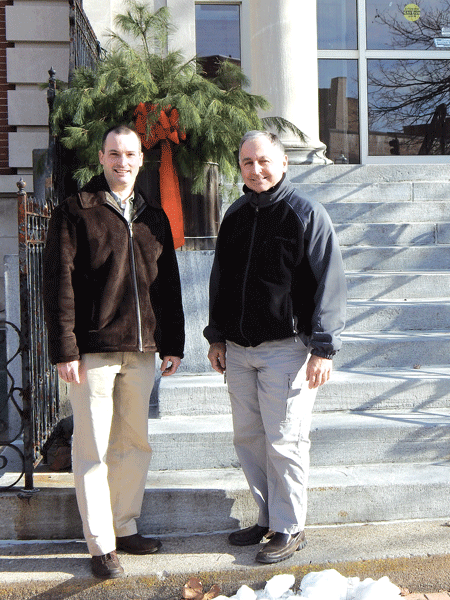
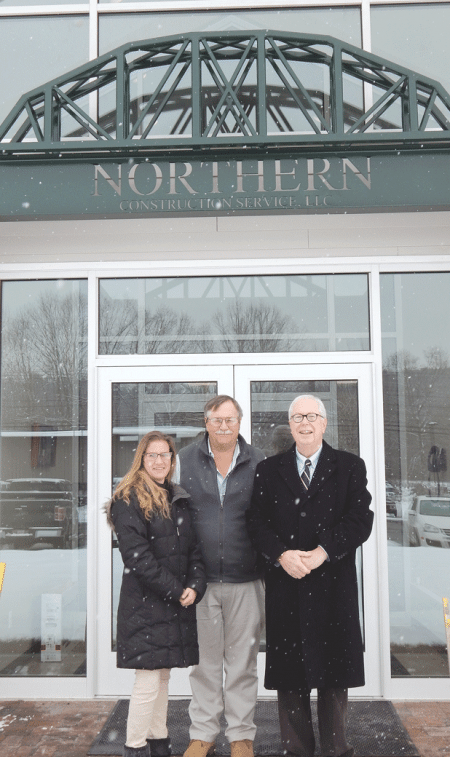
From left, Linda Leduc, John Rahkonen, and Charlie Blanchard

From left, Linda Leduc, John Rahkonen, and Charlie Blanchard say Northern Construction’s new, $1 million office building contains cutting-edge technology that will help the company stay competitive.

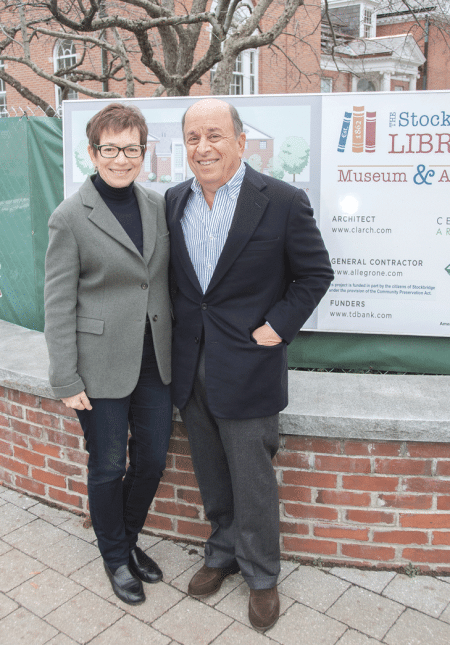
The scope of economic development in Palmer is so diverse that Charlie Blanchard had to make a list to ensure he didn’t forget any major projects when he spoke about them with BusinessWest.

“We have a lot of commercial activity taking place. There has also been an increase in high-tech manufacturing; new medical office space is being developed, and we have a new recreational motorsports raceway,” said the town manager. “Progress continues in Three Rivers, and we are working to revitalize the Thorndike Mills.”

Linda Leduc, the town’s planner and economic development director, added that projects that were permitted years ago are coming to fruition, and commercial properties that sat on the market for years are finally being purchased.

“I’ve seen a 180-degree turnaround this year, and it has brought a multitude of new jobs to Palmer,” said Leduc, who attributes recent growth to a resurgence in the economy.

And, as she noted, change and progress is taking place in all parts of the community, including the Palmer Industrial Park in Bondsville.

Blanchard said Detector Technology Inc. needed room to expand and purchased a building from Wayne Buxton, who was using it to house his ShedWorks Inc. business.

“Wayne needed to downsize but wanted to stay in Palmer, so he kept half the lot and built a new, smaller structure on it,” Blanchard noted.

The decision reflects a trend he and Leduc are seeing: businesses are choosing to stay in Palmer, whether they are downsizing or expanding, if they can find appropriate space — a pattern town officials believe is based on the town’s location, competitive tax rate, good school system, and excellent municipal services.

“We’re right on the Mass Pike, which is ideal for businesses and for their customers coming from the east and west,” Blanchard said, adding that interviews with owners and executives of 16 companies showcased in a 2014 promotional video titled “Industry Alive in Palmer: An Inside Look at Local Businesses” showed they are happy with the educated workforce in the area and have dedicated, exemplary employees.

Growth is also occurring in the downtown area known as Depot Village, which is the first commercial district travelers encounter after they exit the Turnpike. It’s a prime commercial area and the place where O’Reilly Auto Parts chose to expand their New England presence.

“They purchased a vacant building on 1569 North Main St. that had been an eyesore for years,” Blanchard said. The old structure was demolished, and a new, state-of-the art distribution center has been built on the lot.

In addition, the American Legion building on 1010 Thorndike St. was purchased by Fire Service Group two days after it went on the market last May; the company was located in a smaller building in town but wanted to expand.

Meanwhile, Michael’s Party Rentals is moving from Ludlow into the former home of Baldyga’s Auto and RV Sales Inc. on 1221 South Main St. Company President Michael Linton said he purchased the 20,000-square-foot building in early January, and it is undergoing a substantial renovation.

“We’re building a showroom and design center so that we have a dedicated space where wedding planners, brides and grooms, and corporate clients can see our inventory and design capabilities,” he noted. “We’re also adding office space, as there wasn’t any in the building, and plan to install a $60,000, state-of-the-art tent-washing machine which will allow us to clean the tents we rent with less labor.”

The cost of the building, renovation, and new machine are expected to total about $712,000, and Linton anticipates moving in May or June when it is complete.

“My entire staff is excited. We are extremely cramped in our current location and looked for a building for two years,” he continued. “A combination of factors led to the decision to relocate in Palmer: the price of the building, its access to the Mass Pike, Palmer’s commercial tax rate, and the proximity to my home in Sturbridge.”

For this, the latest installment of its Community Spotlight series, BusinessWest looks at the many reasons why development is occurring in Palmer, and the various forms it is taking.

Progress Report

While Baldyga’s sold its property for the Michael’s relocation, the business didn’t leave Palmer; Blanchard said the owner purchased an empty lot on Park Street and has plans to construct a new, smaller building on the site, which is in the permitting stage.

In addition, a former Knights of Columbus hall was purchased last fall by Joe Kelley of Angelica Properties. It sits on the corner of Route 32 and River Road and had been for sale for more than a year; it is currently in the permitting stage, and the plan is to renovate it and turn it into state-of-the art medical office space.

Meanwhile, Northern Construction Service Inc. is another company that has chosen to expand in Palmer. About three years ago, owner John Rahkonen purchased a lot adjacent to the business that contained a mini-golf course and batting cages. They were demolished, and a new, state-of-the-art, 7,400-square-foot building, which cost about $1 million, opened in early February.

The company has grown from a $2.5 million operation in 1994 to a $45 million to $50 million business today, and although Rahkonen has two other locations, the new office space, which features skylights and advanced technology, was critical to continued success.

Today, the business occupies about 12 acres, but Rahkonen wishes there were more space available in Palmer so he could continue to expand there.

“I could use another 10 acres,” he told BusinessWest, adding that he agrees with town officials that Palmer’s location is ideal due to its access to key roadways. “We’re in the middle of the state, an hour from Boston and the New York border, and 40 minutes from Hartford. Interstate 91 is around the corner, the Mass Pike is here, and I-84 is 20 minutes down the road.” The company’s work requires moving heavy machinery all over New England, up to the Canadian border, and as far away as White Plains, N.Y., as well as to Block Island and Martha’s Vineyard, so access to a multitude of roadways is helpful.

The town also boasts a new recreational facility called Palmer Motorsports Park. It opened last May on a 500-acre tract of land, and since that time, Road & Track magazine has named it as one of the top 10 racetracks to drive on in North America.

However, it was one of the aforementioned projects that didn’t get off the ground for years due to the flagging economy.

“The Sports Car Club of America permitted the site for a sports motorpark in 2007 because they wanted a track in the Northeast,” Blanchard explained. But the land was not developed until 2012 when club member and private investor Fred Ferguson built the multi-million-dollar recreational facility with its 2.3-mile track, which has since brought new people to Palmer and had a beneficial impact on businesses in the north end of town.

As noted earlier, it is just another of a slew of projects that is expanding and diversifying the economy of a community that just three years ago was pinning its hopes on a resort casino.

New Initiatives

Efforts to revitalize the Thorndike Mills, situated north of Depot Village, are another example of continued progress.

The property consists of seven linked mill buildings that contain 90,000 square feet and sit on 15 acres. They were once home to the thriving Diamond Cascade Manufacturing Co. but have been vacant since 2000, although a hydropower turbine operation has been installed at the site.

“The hydro units are under the floors because the canal runs beneath the buildings,” Leduc said, noting that some units are also located near the dams. But, despite the fact that she has worked with the mill owners for more than a decade to find new uses for the property, they couldn’t seem to make any progress.

However, new hope was generated last fall, thanks to state Sen. Anne Gobi, who was instrumental in introducing them to the Central Mass. Regional Planning Commission (CMRPC), whose work includes revitalizing the Warren Mill in West Warren, the Hardwick Knitters Mill in Hardwick, the Holland Road Mill in Sturbridge, and now, Palmer’s Thorndike Mill.

Leduc said a tour of the properties was conducted last fall as part of a larger project that includes the Jefferson Mill in Holden.

“We’re working with the CMRPC, MassDevelopment, and the Mass. Department of Housing and Community Development,” she noted. “It’s an interesting and important collaboration because these mills are significant historic structures. Our mill was once the center of Thorndike Village.”

The Center for Economic Development at UMass Amherst is also involved, and will hold a conference titled “The Future of the Massachusetts Mill Community” on April 12 in the campus center. In addition, UMass Professor of Planning John Mullin and a group of his students are working to identify common themes shared by these mills.

“We were on our own for years, so it’s wonderful to have this support,” Leduc said.

Growth is also occurring in Three Rivers, and collaborative efforts to revitalize Main Street are coming to fruition, thanks to work by the consortium On the Right TRACK (the acronym stands for Three Rivers Arts Community Knowledge).

Partners include North Brookfield Savings Bank, Palmer officials, the Palmer Historical and Cultural Center, the Three Rivers Chamber of Commerce, the Palmer Redevelopment Authority, and the Quaboag Valley Community Development Corp., all of which have been working to build a cultural and creative economy that will attract visitors.

Alice Davey, the town’s community development director, noted that the Quaboag Valley Community Development Corp. was successful in its bid to win a $13,500 Adams Art Grant for fiscal years 2016 and 2017, and the town completed a market-assessment and business-recruitment tool as well as a feasibility study showing that a building on 2032 Main St. obtained through the tax-title process has potential for redevelopment.

In addition, Davey said, “Palmer also signed a Community Compact agreement with the Commonwealth which will provide us with assistance. We’re taking positive steps forward, and many things are in the planning stages.”

The town also boasts five solar farms, and permits for four new ones have been issued. The newest operations include a five-megawatt farm on the grounds of the former Palmer Metropolitan Airfield that went online last February. It was built by Borrego Solar and is financed, owned, and operated by Syncarpha Capital.

In addition, a 4.8-megawatt operation on Baptist Hill Road, which was developed by Blue Wave Capital and is owned by Sun Edison, went online earlier this month. Blanchard said the town will purchase 2.8 megawatts of the generated electricity, which will meet 100% of its municipal needs and should result in a 20% to 30% savings on its electric bill.

Positive Outlook

Overall, officials expect growth in Palmer to continue. “There is so much going on here, and we are touching so many areas of the economy that are growing,” Blanchard said.

As a result, optimism is running high as new ideas to revitalize the Thorndike Mills are brought forward, and the creative economy in Three Rivers, the new racetrack, and a host of other growing enterprises attract people to “the town of seven railroads” from many different roadways.


Palmer at a glance

Year Incorporated: 1775
Population: 11,049 (2015)
Area: 32.14 square miles
County: Hampden
Tax Rate (Residential and Commercial): Palmer, $21.27; Three Rivers, $22.19; Bondsville, $22.13; Thorndike, $22.30
Median Household Income: $50,050
Family Household Income: $58,110
Type of government: Town Manager; Town Council
Largest Employers: Baystate Wing Hospital; Camp Ramah of New England; Big Y World Class Markets

* Latest information available


Community Spotlight Features

Community Spotlight

By JACLYN C. STEVENSON

Corydon Thurston

Corydon Thurston says GE served Pittsfield well, but long gone are the days when the city should strive to be a one-industry town.

The pervasive feeling in the city of Pittsfield — the Berkshires’ largest city and county seat — is that it’s done trying to return to its heyday.

Rather, elected officials, business-development professionals, and entrepreneurs alike are calling for a new day in Pittsfield, one that celebrates the creative economy, makes great use of existing resources, and stands ready for entrepreneurial endeavors of all types and sizes.

Mayor Linda Tyer, who took office in January and will serve Pittsfield’s first-ever four-year mayoral term, made these tenets some of her key platform points during her campaign, and the message appears to have resonated. The former Pittsfield City Clerk defeated two-term incumbent Mayor Daniel Bianchi with 59% of the vote, winning all 14 precincts.

Tyer said the city has long suffered from what she calls “group depression” following the departure of General Electric, which became part of the Pittsfield landscape in 1903 and at its peak provided 13,000 jobs in a city of 50,000 residents. Its influence on the city’s economy dwindled steadily through the ’70s, ’80s, and ’90s, but many people long held hope that another outfit similar in size and scope may someday return.


Mayor Linda Tyer Embarks on First Term in Pittsfield

BusinessWest spoke with Pittsfield’s Mayor Linda Tyer on day 11 of her administration.

Read more …


“Pittsfield has a tendency to say, ‘someone is out there,’” Tyer noted. “But we’ve already seen that one business will only be able to sustain us for so long. I’m interested in who is already here, on the cusp of expansion or ready for something new. In the end, the best investment is local, big or small.”

Corydon Thurston, executive director of the Pittsfield Economic Development Authority (PEDA), has a similar, if not more concentrated, view of the city and its opportunities for business development.

“The chances of landing a major corporation are akin to winning Powerball,” he explained. “Today, competition isn’t just statewide, it’s worldwide, and finally the realization here is that we need to support who we already have, help them grow, and find ancillary opportunities for additional growth and added diversity — not create another a one-industry town.”

If You Build It…

The largest development currently underway is the creation of the Berkshire Innovation Center (BIC), which will be located at the William Stanley Business Park (created at the massive former GE complex) and cater to small and medium-sized businesses positioned to add to the supply chain of various life-science and biotechnology projects.

“The BIC is designed to provide access to high-tech equipment that will allow businesses to innovate, grow, and respond to customer demands in an efficient and timely fashion — rapidly prototyping products and bringing them to market,” Thurston said. “Temporary space will be available for lease within the center to allow companies to mature, and hopefully they will stick around. Pittsfield has plenty of existing manufacturing space at low cost, and once we get them here, we can grow them here.”

He added that support of the BIC, which was made possible by a $9.75 million state grant, has been citywide and dovetails with a number of other initiatives in the areas of workforce training, real-estate development, and education. In the coming year, PEDA is expected to blend its efforts with 1Berkshire, a regional economic-development organization, and Pittsfield’s Office of Community Development.

“One of the reasons why we’re so bullish on the innovation center is it has a broad base of community support at every level,” Thurston went on. We also believe that a young startup company, whether it’s in Worcester, Boston, Albany, or Rensselaer, that is looking for a place to commercialize or test their ideas and inventions, will be attracted here because of our existing manufacturing structure and lower costs of doing business.”

A built-in mentor network will be part of the BIC’s offerings, with 19 mentoring partners from across Pittsfield already signed on, along with several academic partners from across the Northeast, including UMass and Rensselaer Polytechnic Institute.

“The support from the education side is rewarding to me because it’s a foundational element that will create a number of new opportunities for our industrial base,” Thurston said, noting that Berkshire Community College has been a particularly active participant.

In the absence of a physical building, for instance, BCC has taken the lead on the programmatic components of the center, identified a variety of courses to complement the BIC’s eventual hands-on work, and set up a temporary center at Pittsfield’s Taconic High School that includes a pipeline for students to pursue advanced-manufacturing careers.

Hire Education

Ellen Kennedy, president of Berkshire Community College, echoed Thurston’s excitement for the BIC.

“This could be the most promising economic-development engine to enter Pittsfield in a long time,” she said. “As the facility itself comes into play, training opportunities are already in place that allow existing businesses to share research and identify workforce-development needs.”

Kennedy said BCC has been instrumental in identifying academic opportunities for Pittsfield students from grade school to college, as well as career-development and refresher courses for the workforce. It received $500,000 in funding from the Massachusetts Life Sciences Center last year in order to create educational components to support the BIC, such as the purchase of state-of-the-art equipment and new courses in advanced manufacturing and engineering technology, and another $10,000 just last month to fund career-path programming for middle- and high-school students.

The BIC has also become the new lead organization of the Berkshire Robotics Initiative, with an eye toward underscoring the use of robotics in today’s manufacturing world and the career opportunities that may arise.

“We’re looking to build on students’ interests, allow them to see the different employment opportunities open to them, and start them on a career path,” Kennedy noted, adding that this and other projects have the dual benefit of increasing the college’s profile among prospective students, and therefore that of the city, which has an aging population.

“Berkshire County’s demographics are challenging, and it has become the job of both Pittsfield and BCC to keep the younger population engaged,” she told BusinessWest. “In a sense, we’re making a commitment to the Millennial.”

For Kennedy, that means offering more opportunities for the community to visit the campus, be it to play sports, attend a career fair, or utilize campus amenities. By extension, she hopes the city’s cultural destinations, retail shops, eateries, and nightlife will also get a boost.

“In order to attract people here to experience what we have to offer, we all need to market the quality of life and the world-class culture. In that respect, we are tied at the hip with the city of Pittsfield.”

North Star of Our Nights

That’s a construct the team involved with Hotel on North, a boutique hotel on Pittsfield’s main thoroughfare that just opened its doors in June, subscribes to as well.

Owned by Berkshire residents David and Laurie Tierney and managed by Main Street Hospitality Group, a hotel-management company based in Stockbridge that manages three other properties in the county, Hotel on North includes a restaurant, bar, event space, and gift shop housed in a pair of adjoining 19th-century buildings that are on the National Register of Historic Places.

Sarah Eustis

Sarah Eustis says Hotel on North was designed to reflect the character of its region, with plenty of local contributions.

Sarah Eustis, CEO and part-owner of Main Street Hospitality Group, said work between the partners began in earnest in 2012, and moved swiftly into “two solid years of highly collaborative project work.”

“We represent two deeply rooted Berkshire businesses with different skills that we wanted to apply to Pittsfield, to contribute to the renaissance that is happening here,” she said, noting that a hospitality venue in Pittsfield has been a goal of Main Street Hospitality Group for several years. “We looked originally to Pittsfield to build on a base, and now we have an undying passion that this is right for the city. That belief comes from both gut and numbers.”

The hotel features brick walls, tin ceilings, and hardwood floors that hearken back to the buildings’ original décor, as well as Victorian themes paired with nods to the Berkshires in the form of vintage maps and organic elements. The scheme is bound together with the ‘on North’ tagline, i.e. ‘Eat, Drink, Stay on North.’

In more ways than one, the entire business was “made on North,” said Eustis, by partnering with local vendors and craftsmen whenever possible, from architects to designers to furniture and décor makers.

“We like to create hotels that give you a sense of where you are, and we realized early on that it had to be ‘by Pittsfield for Pittsfield,’ with influences from around the world. That’s one reason we didn’t partner with a large brand or make a slick New York hotel and plop it in the Berkshires,” she went on. “The ‘on North’ concept arose from that idea of using local businesses.”

One of the hotel’s owners, Laurie Tierney, added that she hopes its luxurious feel paired with local accents will instill a feeling of pride in Pittsfield’s residents, and attract them downtown along with other visitors to the region.

“My goal is to change perceptions so people realize what’s downtown and feel safe,” she said. “The locals need to be brought into the change, and I do believe that there is a movement afoot.”

Sometimes, Tierney added, getting big things to happen in a city is like starting a lawnmower.

“You pull the cord, but it often takes a few times to start. That’s how it’s been in Pittsfield … almost, not quite, almost, not quite. I’m hoping this is what turns the engine.”

Indeed, it’s been nearly 90 years since GE made Pittsfield a boom town, and many people are now seeing the city’s heyday as something ahead of them, not behind. The key, says Tierney, is to maintain momentum.

“We can’t stop; we have to keep going,” she said. “I hope to be in a place someday where I can sit back and watch the ball roll a little, and maybe be a background person who whispers in someone’s ear, ‘hey. You know what we should do?’”

One person Tierney may be able to whisper to is Mayor Tyer.

“I’m interested in anyone who wants to make an investment in the city,” Tyer said in conclusion. “The idea of a hip, walkable urban center is coming back, and we have the infrastructure for it. Now, we just need to be plugged into the modern economy.”


Pittsfield at a glance

Year Incorporated: 1761
Population: 43,697
Area: 42.5 square miles
County: Berkshire
Residential Tax Rate: $18.76
Commercial Tax Rate: $38.06
Median Household Income: $35,655
Family Household Income: $46,228
Type of Government: Mayor, City Council
Largest Employers: Berkshire Health Systems, General Dynamics, Berkshire Community College, SABIC Innovative Plastics

 Latest information available


Community Spotlight Features
Mayor Linda Tyer

Mayor Linda Tyer says her administration is focused more on helping and growing existing busineses, not luring someone “out there.”

BusinessWest spoke with Pittsfield’s Mayor Linda Tyer on day 11 of her administration.

Only 1,450 days to go.

That’s notable because Tyer is serving Pittsfield’s first-ever four-year term, and, as such, she’s in the beginning stages of laying out a map for the long haul that pinpoints high roads, trouble spots, destinations for the future, and plenty of pit stops in between.

The journey began for Tyer last year, while she was still serving as city clerk. She’d served as a member of the City Council for five years prior to taking the clerk’s position, and watching the inner workings of Pittsfield’s government had her mulling a run for its top office.

“I saw the city’s potential being lost to old ways of thinking, governing, and leading,” she said. “It was time for a new generation of leadership, and I wanted the residents of Pittsfield to really think about what they imagined for themselves. I offered an alternative in every way: from gender to voice to style.”

Tyer announced her candidacy for mayor on the City Hall steps in March, and defeated two-term incumbent Mayor Daniel Bianchi in November. Since then, she’s pledged more communication and relationship building between the mayor’s office and all its stakeholders, from elected officials to Pittsfield’s residents and business owners.

“The plan is to have constant, regular communication, both incoming and outgoing,” she said, noting that this will include regularly scheduled public updates on some key issues — among them public safety, workforce development and retention, and ongoing work to create a hip, walkable urban center in the heart of Berkshire County. “We need to invest in public safety and, as part of that, address the underlying issues that are the source of crime, including poverty and feeling disenfranchised.”

Tyer added that there are strategies at play in these arenas, starting with youth initiatives such as a city-wide mentoring program for high-risk young adults. That program has recently been expanded through grant funding to include job training and workforce-development opportunities for men ages 17 to 24, which is one way Pittsfield is also addressing the dual issue of workforce training to fill the area’s job vacancies.

“The business community cares that its investments are being protected, but it also cares about filling the gap that exists between marketing their jobs and finding candidates with the right skills,” she said.

Abandoned sites scattered across the city and outdated technologies are other barriers to recruiting and retaining great talent in Pittsfield, Tyer noted.

“Neighborhood blight and business blight make it very difficult to market our city; it affects community pride, and potential investors aren’t going to announce their arrival so we can show them our best sites … they’re going to be stealth,” she said. “And we need access to broadband in our commercial centers. We have the infrastructure, but we’re not yet plugged in. A modern-day creative economy has to be global.”

Ultimately, that creative economy is what Tyer hopes to nurture through all of these initiatives: a diverse business landscape powered by human capital.

“Our transportation system is not conducive to big manufacturing — that’s not our strength,” she said. “What we can do is ensure that we’re providing young professionals with the tools they need to succeed so we can continue to cultivate the vibrant community we have here.”

To that end, Tyer’s plans for the first leg of her four-year tour of duty include targeting resources to Berkshire-based small businesses; ‘Blight to Bright’ initiatives, such as requiring that vacant buildings are maintained for aesthetics and safety; street-improvement plans; and strategies for expansion of early-childhood education.

It’s a packed itinerary, but Tyer said she has the drive.

“I am motivated by a belief that the city has great potential,” she said.

— Jaclyn C. Stevenson

Community Spotlight Features

Community Spotlight

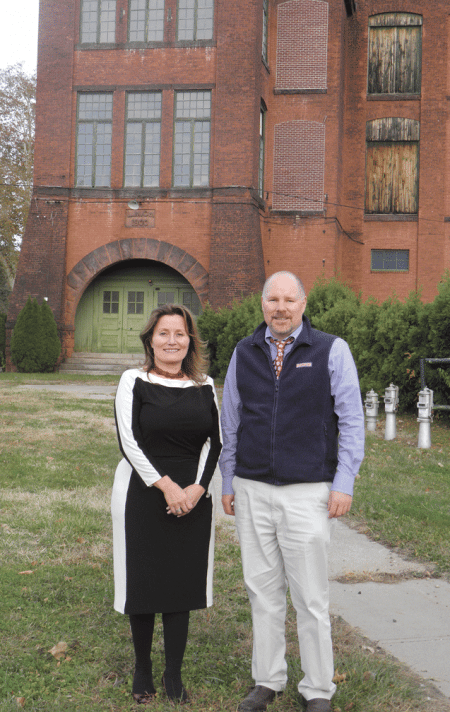
Mayor Richard Kos (right) and Mike Vedovelli

Mayor Richard Kos (right) and Mike Vedovelli say Chicopee has issued an RFP for the old library building adjacent to City Hall.

Mayor Richard Kos says Chicopee is well-poised for growth, thanks to what he called a multi-faceted approach to economic development.

“We’re trying to address the city as a whole to make sure we strengthen any areas where there are weaknesses,” he told BusinessWest a few days after being sworn into office for the second consecutive term and sixth term overall. “Although any urban environment has challenges, Chicopee has a great track record of addressing infrastructure needs in conjunction with development opportunities, and we continue to build on this in one of the strongest financial communities in the state.”

To that end, biweekly meetings are held to assess projects that are underway or on the drawing board. And there are several in those categories, as developers convert space in old mills and buildings downtown and a variety of neighborhoods for housing, business, or industrial use.

In turn, the city has done its part; in addition to initiating infrastructure improvements that encourage growth, it has a new middle school, is focused on improving its network of parks, and stays closely aligned with Westover Air Reserve Base, which has a significant economic impact on the city and region.

Revitalization is taking place in Chicopee Center, and Kos said two high-profile projects show that significant investments are being made downtown. The first is a $6 million conversion of the former John R. Lyman Mill building at the lower end of Front Street, situated next to the Chicopee River Canal, that has been vacant for several years.

A developer has purchased it and plans to convert the space into 80 market-rate live/work/loft apartments, Kos noted, adding that a groundbreaking ceremony is expected for March.

The second project is a $7 million renovation of the Kendall Building at 4 Springfield St., which has been purchased by Valley Opportunity Council. That agency plans to convert it into 39 apartments with $3.1 million in help from the state, Kos explained.

A request for proposals was also issued last month for Chicopee’s old library, which sits adjacent to City Hall.

“We’re looking to see what the private sector wants to do with the property,” Kos said, adding that the city secured a number of grants that allowed it to undertake selective remediation and resolve contamination issues in the building.

“Marketing this building is part of the emphasis we’re placing on our downtown,” he went on, noting that security cameras were installed downtown last year to help make it “a safe, secure, and convenient place to live.”

Michael Vedovelli said the city is fortunate to be working with developers in the old mills, and received a $2.6 million MassWorks grant to make utility, water, and sewer infrastructure improvements in the canal area.

“It’s a very competitive process, and they are difficult to obtain; there were 110 grant applicants, and only 37 were awarded,” said the director of Community and Economic Development. “But we constantly do all we can to create a vibrant downtown, and the projects in Chicopee Center are moving forward and will generate more activity.”

Tom Haberlin, the city’s Economic Development manager, agreed, saying these are the first investments that have been made in the area since 40 new apartments opened last year at Ames Privilege, a former mill and downtown complex that is home to several businesses and 120 apartments.

“When these projects are finished, the bookends [of the mills] will be complete, which leaves the middle of the sandwich to be developed, and we are hopeful that the owners of the mills will ramp up their plans,” he told BusinessWest, explaining that Ames Privilege and the Lyman building sit on opposite ends of the mill area that flanks the canal.

Private investment is being matched by public investments, and the city has demolished a six-family property on 296 Front St. that it plans to turn into a parking lot.

Kos said adding parking space is part of an effort to make City Hall more accessible, and earlier this month the City Council voted to fund an analysis of the building in hopes of turning the antiquated third-floor auditorium into a community meeting center. The council also allocated $500,000 to preserve stained-glass windows in the building that had deteriorated.

The well-known Munich Haus restaurant downtown is also making improvements, which include enlarging its parking area. Its owners purchased the former Ferris parking lot downtown and are awaiting final approval to reconstruct it, Kos said. The new lot will contain more than 50 spaces to complement the businesses’ beer garden and restaurant, and 15 will be designated as free public parking sites.

“Chicopee is one of the largest cities in the area that provides substantial free parking, which is part of the comfort and ease of getting into our downtown,” Kos noted, adding that Munich Haus also purchased the former Bank of Boston building and continues to invest in Chicopee.

Multitude of Projects

As Kos mentioned earlier, there are a host of economic-development initiatives taking place across Chicopee.

Cleanup efforts continue on the 27-acre Uniroyal property, for example, and last year the city not only secured a $200,000 grant to make improvements to the six-story historic administration building on the site, the City Council approved adding $186,000 to weatherproof and preserve it for the future.

The former Facemate site is also being addressed, and several acres are out for bid.

“We anticipate interest in building senior living there,” Kos said, explaining that the acreage abuts the new $10 million RiverMills Senior Center that opened in September 2014.

Progress is also taking place at the former Schine Inn. It was built in 1960 and decades later became the Plantation Inn, known for its 30-foot waving mascot that greeted travelers coming off Exit 6 on the Mass Pike. Kos said 194 motel units on the site have been demolished so a luxury auto dealer can fulfill plans to build a dealership there.

Developments are also taking place in Aldenville, and the former Racing Oil Service Center at 181 Front St., which has remained vacant since 2004 due to contamination issues, will be cleaned up, thanks to a $200,000 grant from the Environmental Protection Agency.

The city also welcomed coffee-maker manufacturer Chemex to a location off James Street after the business moved from its Pittsfield location to Chicopee, said Kos, noting that many businesses move to or expand in Chicopee due to its accessible location. In fact, it has been marketed as the ‘Crossroads of New England’ because of its easy access to I-91, I-391, and the Pike.

Education ranks high on the list of Chicopee’s assets, and last year the 90-year-old former Chicopee High School building on Front Street reopened as the 1st Sgt. Kevin Dupont Middle School after undergoing a $38 million renovation. The building boasts a television production room and a number of new science laboratories, and Kos says half of the city’s middle-school students attend the new school.

Work on the city’s network of parks is ongoing, and last year, a $20,000 KaBOOM! grant paid for new playground equipment at Nash Park with the help of volunteer labor. And although the public outdoor pools were found in need of extensive repairs, the city was able to reopen the Rivers Park pool last summer after it received a $400,000 state grant to do needed work. And earlier this month, the City Council accepted another state grant that will pay for 70% of the cost of replacing Ray Ash Park pool located in the city’s center, Kos said.

Westover Air Reserve Base is a major entity that adds to the city’s economy, and the 2015 Air Show proved to be of its most successful public events. Nearly 375,000 people attended, and an economic-impact study estimated the air show had an $11.5 million economic impact in the area, Kos said, explaining that more than $9 million was spent on hotel stays, meals, gas, and other items. Meanwhile, he added, the fact that base commander Col. Albert Lupenski was recently promoted to general shows his leadership has captured attention in Washington, D.C.

In addition, eight of Westover’s C5-As are being retrofitted with the “quietest engines in the industry and will become C-5M Super Galaxy aircraft,” Kos noted.

Many military installations across the country have closed due to budget cuts, but the city has an innovative plan to help Westover remain open. Kos said 69 multi-family units of military housing on 26 acres that were purchased from the U.S. Navy in 2011 are being demolished to make way for a three-megawatt solar farm on the property with the aim of reducing Westover’s utility bills.

MassDevelopment agreed to provide $1 million to fund the project, and that grant was matched by $1 million from the state.

The base uses approximately $2 million of electricity each year, so this step will save the facility $100,000 annually, which equates to a 5% reduction, Kos said.

“The solar farm will also be a plus for the city because we are clearing up a long-abandoned property and developing it into a taxpaying entity; it will benefit Chicopee, Westover, and the neighborhood,” he noted, noting that roughly 70% of the acreage will contain the solar farm, while the remainder will be preserved for future development because it is contiguous with Westover AirPark North.

The park contains the former Avery Dennison Corp. building, which was purchased by investors after the plant closed two years ago. Yankee Candle now occupies 289,000 square feet of the building, Kos noted, adding that the company opened a distribution operation there.

Haberlin said the number of available commercial and industrial buildings in the city is one of its strengths because many communities lack the space that businesses need to expand. “Chicopee continues to have a supply of large industrial buildings that are being reabsorbed and reused. The cost is typically about $30 per square foot, which is 30 to 40% less than the cost of new construction.”

Celebrating Continued Success

The city is divided into distinct neighborhoods that include Chicopee Center, Chicopee Falls, Willimansett, Fairview, the Burnett Road area, and Aldenville, and last September the city held its first block party downtown.

“We received a $7,500 grant from MassDevelopment and had help from local businesses,” Kos said. “The streets were closed from noon to 10 p.m., and more than 7,000 people attended the family-friendly event that showcased food, entertainment, and the convenient assets of our city in a way that multiple generations could enjoy. We also have a Halloween event downtown which 3,000 families attended last October, and our annual Christmas-tree lighting that more than 1,000 people turned out to see. We are a substantial city that still has a small-town atmosphere and sense of community.”

Haberlin agreed. “Our neighborhoods complement each other and give the city its unique flavor,” he said, “making it a great place to live, work, play, and call home.”


Chicopee at a glance

Year Incorporated: 1848
Population: 55,795
Area: 23.9 square miles
County: Hampshire
Residential Tax Rate: $16.91
Commercial Tax Rate: $31.17
Median Household Income: $45,763
Family Household Income: $58,118
Type of government: Mayor, City Council
Largest employers: Westover Air Reserve Base; Chicopee City Hall; Ethos Energy; J. Polep Distribution Services

* Latest information available


Community Spotlight Features

Community Spotlight

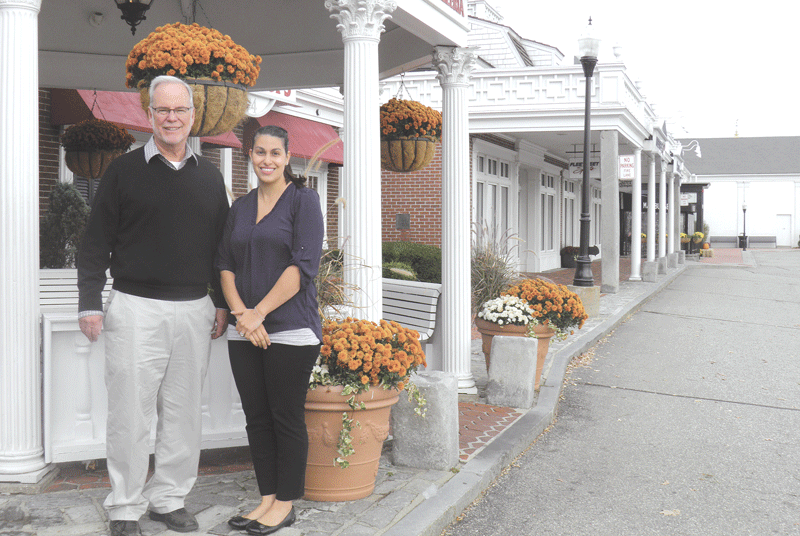
David Ziomek

David Ziomek at the recently opened Kendrick Place, which houses the MassMutual Data Science Center and 34 luxury apartments.

As the new year begins, Amherst officials point to a number of current and planned projects that will improve quality of life and make 2016 a memorable year in terms of economic development.

Construction is underway on multi-use buildings, infrastructure work is planned, the town has hired its first economic development director, and officials are involved in collaborations and partnerships aimed at fueling economic development.

“We’re well-poised to move forward, thanks to the vision and work done by Town Manager John Musante,” said David Ziomek, the interim holder of that title, as he spoke about the well-loved and respected official who died last September. “He really focused on building strong relationships between the town, UMass, Amherst College, and Hampshire College, which is important because our futures and success are intertwined; the colleges are critical economic drivers, not only for our downtown, but for our real-estate and housing market.”

These strong bonds led to the creation of a University-Town of Amherst Collaborative (UTAC) last fall, co-chaired by Ziomek and Nancy Buffone, associate vice chancellor for Community Affairs at UMass Amherst. The group’s first meeting was conducted in October with the goal of examining town/gown relations to discover opportunities for growth and what can be done to capitalize on them.

Ziomek said the panel is focusing on three areas: economic development; housing; and culture, arts, and living.

Economic-development efforts will begin by looking at the availability of space to house spinoff companies from UMass. “Some of them are going to Boston,” Ziomek noted, adding that, although Amherst offers high quality of life, as well as access to a skilled pool of potential employees, research facilities, a large student population, and a full roster of college and university faculty and staff, it can be a challenge for young companies to find suitable space for their needs.

The town has also made a commitment to expand housing, and a market study has been undertaken to determine whether what is needed has been completed. As a result, the town has a strategic plan in place, said Ziomek, explaining that it includes providing more housing for the growing number of retirees who are attracted to Amherst’s walkable downtown and other amenities, as well as more choices for students and people in the workforce.

“We need housing in almost every category, and want to make it as affordable as possible for everyone,” he continued, touting additional reasons why people want to live in Amherst, such as its 3,000 acres of conservation land intersected by hiking trails. Amherst has won awards for agricultural and land preservation, and has four Community Supported Agriculture farms that people buy shares in, Ziomek told BusinessWest.

The third focus on ‘culture, arts, and living’ is an area in which Amherst already excels but still seeks improvement. “We have award-winning plays and performances at the UMass Fine Arts Center and at Amherst College; games played by collegiate sports teams; the Mead Art Museum and Beneski Museum of Natural History at Amherst College; the Amherst Cinema Center, which shows first-run films in a number of genres; and the historic Emily Dickinson Museum,” Ziomek said.

In addition, the Hitchcock Center for the Environment is erecting a ‘living building’ in South Amherst, slated to open next September on the Hampshire College campus. “It will produce all of its own water and energy and will be a wonderful educational and tourist destination,” he explained.

“UTAC has committees and subcommittees made up of citizen volunteers and UMass faculty and staff who are going to look at what we can and do offer,” he went on, “and at what can be done to make our downtown more vibrant, and how we can enrich and promote all of these attractions.”

In this, the first Community Spotlight of 2016, BusinessWest looks at how one of the region’s most vibrant and most livable communities is working hard to become even more of both.

More Than a College Town

There’s a building boom taking place in Amherst. Indeed, ground has been broken for seven major construction projects. However, Ziomek said the most exciting new build is Kendrick Place, a 54,000-square-foot, four-story building on 57 East Pleasant St. that contains 26 luxury apartments and 10,204 square feet of commercial space.

“The apartments are within walking distance of downtown,” he noted. “And they not only have incredible views … there are Zipcars in the garage for residents who don’t own a vehicle and want to use one.”

He added that MassMutual occupies the entire first floor, which it has turned into a data science center staffed by a dozen new employees.

Kendrick Place was built by Archipelago Investments LLC, which has plans for a second development called One East Pleasant Street a short distance away. An old motel will be razed to make way for the multi-use building that will contain 84 units of housing and 6,000 square feet of commercial space.

Archipelago is also building Olympia Place, a privately owned student-housing project with 75 units that is under construction in the fraternity-sorority park on Olympia Drive. Work on the 98,400-square-foot building began in the fall of 2014 and is expected to be completed this summer.

Progress is also occurring in North Amherst, thanks to two major projects, and officials are happy to see revitalization taking place in what is now called the Mill District.

The first new build was the Trolley Barn, which was completed early last year. “It contains four residential units, and the commercial space has become home to a spa and wonderful restaurant called Bread and Butter,” Ziomek said.

In addition, Atkins Farms built a new, 6,600-square-foot satellite retail store called Atkins Farms North across the street from the Trolley Barn that opened last September.

“These projects have been embraced by residents and are bringing new life to North Amherst,” Ziomek said, noting that there is still plenty of space available for redevelopment in the district.

North Amherst also gained 54 new units of housing when the Presidential Apartments opened in September. Some units aren’t finished yet, but they have all been spoken for, and five are earmarked as affordable housing, he told BusinessWest.

Other activity on the housing front includes a three-story, mixed-use building called 417 West Street that opened last October in Pomeroy Village Center in South Amherst. “It has solar panels on the roof and contains 11,628 square feet of commercial space as well as the residential units, which are all occupied,” Ziomek said.

The town works closely with developers, and infrastructure improvements are often planned to enhance their success.

The town recently paved Pine Street and Cowls Road, two of the arteries for accessing North Amherst Village Center, Ziomek said, adding that it also completed $3.2 million worth of water and sewer improvements in advance of the two major projects there.

In addition, town officials took a proactive stance when Archipelago was in the permitting process for Kendrick Place and One East Pleasant Street by applying for and receiving a $1.5 million MassWorks grant to bury utility lines and install new sidewalks and streetscape amenities adjacent to Kendrick Place.

Enhanced parking is also on the drawing board, and the town just held its final forum to get input from business owners and residents, said Ziomek, adding that officials came away with a plan that will include installing new banners pointing out private and public parking spaces.

Officials know they need additional parking, and plan to address that by hiring a consultant to gather data about parking needs on peak weekends. In the meantime, the town plans to spend $1 million redoing the two parking lots outside Town Hall and in front of Jones Library, Ziomek noted.

Amherst is also addressing its energy use, and recently announced plans to build two large solar facilities on the old landfill, which will provide enough electricity for all the municipal buildings.

Access to health and dental care for people in low and moderate income brackets is another area of concern that led officials to form a new partnership.

“We have known for a number of years that there are residents on MassHealth in Amherst whose healthcare needs are falling through the cracks,” said Ziomek. “The nearest place for them to get dental care is in Holyoke, and although some people ride the bus, it takes an hour and 45 minutes to get there. So by the time they get a checkup and return, it uses up almost a whole day.”

This reality led town officials to form a partnership with Hilltown Health Center, giving that facility 4,000 square feet to build a medical and dental clinic in Bangs Community Center. Construction is slated to begin this summer, and the new facility will be named the John P. Musante Health Center in honor of the late town manager.

An active partnership also exists between the Amherst Business Improvement District (BID) and the Amherst Area Chamber of Commerce.

“They held a block party last fall that was attended by more than 7,000 people, and do all they can to attract new businesses and restaurants, as well as promoting the ones that are already here,” Ziomek noted, adding that the BID is also funding a $35,000 fiber-optic feasibility study for the downtown area, as only a few buildings have this service.

Looking Ahead

Ziomek says Amherst’s focus on collaborative efforts will help the town become a better place to live, work, and play.

“We have the ability to concentrate growth where we would like it to be,” he noted, adding that the state Legislature passed a bill last month to incentivize more units of affordable housing.

Amherst’s first economic development director, Geoff Kravitz, was hired recently and began work Jan. 4. His job will include creating an economic development plan, helping to staff UTAC, and continuing to build on the strong relationships forged between the town, UMass, and the colleges.

“We’re very grateful to the private developers who have chosen to invest here and will continue working to secure millions of dollars in local and state funding to help them leverage private reinvestments in our community,” Ziomek said. “Collaboration is key in Amherst.”


Amherst at a glance

Year Incorporated: 1759
Population: 37,819 (2010)
Area: 27.8 square miles
County: Hampshire
Residential Tax Rate: $21.22
Commercial Tax Rate: $21.22
Median Household Income: $48,038 (2015)
Family Household Income: $75,469 (2015)
Type of government: Select Board; Town Manager; Town Meeting
Largest employers: UMass Amherst; Amherst College; Delivery Express; Hampshire College
* Latest information available


Community Spotlight Features

Community Spotlight: Ware

Stuart Beckley

Stuart Beckley says Ware is on the cusp of a rebirth.

“Ware is somewhere worth investing in.”

That’s the new tagline for this Hampshire County community of nearly 10,000 people. That statement is already true, said town officials who spoke with BusinessWest, but a host of initiatives are underway to make it even more so, and to make the slogan resonate with those who hear or read it.

Indeed, major efforts are underway in Ware to stimulate growth and economic development, projects focused on everything from increasing access to higher education to expanding public transportation.

“There’s a lot going on, and it’s an interesting story, but no one entity is responsible; it’s a core effort aimed at revitalization,” said William Braman, president of the Ware Business & Civic Assoc., or WB&CA.

Tracy Opalinski agreed, and said several initiatives were initiated or advanced last year, when the Edward and Barbara Urban Charitable Foundation decided it wanted to do something to make a significant impact in the town.

Opalinski, a trustee of the foundation, told BusinessWest it gave the town $45,000 to hire community marketers to provide a visioning statement, community branding, wayfinding, and economic-development services, and since that time, the foundation has donated another $50,000 for execution of the wayfinding system, which includes logos and new signage.

Progress began after the initial donation was made, and Arnett Muldrow & Associates Ltd. was chosen via a request-for-proposals process.

“They’ve done this for more than 180 mill towns in the country,” Opalinksi noted, adding that the firm mailed a survey to business owners and got a 65% response, held 15 focus groups, and conducted 50 interviews with a cross-section of people from the community that included representatives from businesses and industries, youth, retired residents, outdoorsmen, and artists, to discover what they wanted and needed in terms of services.

Arnett discovered an untapped potential for new and expanded restaurants to make $24 million and small to medium-sized businesses to make $139 million in sales each year.

“They found a need for a small, independent furniture store, a family and women’s clothing store, and an outdoor store,” Opalinski said, adding that Ware is a hub for the surrounding 15 towns in the Quaboag region.

The project was completed in April, and one of the most significant suggestions involved establishing a community-college satellite program, since education and workforce development are critical to economic stability and growth. Coincidentally, the WB&CA had begun working on the same goal four months earlier.

“Their initiative included the Ware Literacy Group, the Ware Business & Civic Association, Country Bank, the Behavioral Health Network, Quabbin Wire, Baystate Mary Lane Hospital, the town, the Franklin and Hampshire Regional Employment Board, Pathfinder Vocational Technical High School, and, most importantly, the Quaboag Valley Community Development Corporation in Ware, which helps businesses start, stabilize, and grow,” Opalinski said.

She added that the WB&CA has a number of teams, including one that does advocacy work for businesses, and another group focused on helping property owners on Main Street fill empty space. That subcommittee contacted Greenfield Community College, Quinsigamond Community College in Worcester, and Holyoke Community College, and asked if they were interested in establishing a satellite site in Ware.

The reaction was positive, and since Ware falls under HCC’s geographic territory, it has taken a lead role in the project, although the other two schools and Springfield Technical Community College are involved and contribute to what will be known as the Community College Educational Incubator.

“This is the first time in history that four Massachusetts community colleges have worked together on a project like this,” Opalinski said, noting that many businesses have contributed to the effort, and the facility will open in February in a space donated by a business in a prime location on Main Street.

“Businesses in this area are starved for qualified employees, so we’re trying to create our own feeder program and build a base so people can live and work locally instead of having to move far away or commute to find employment,” she noted.

For this, the latest installment of its Community Spotlight series, BusinessWest looks at the many initiatives taking place in Ware and how, collectively, they make that new marketing slogan ring true.

Solid Growth

As officials in Ware noted, progress is being made on a number of fronts.

Town Manager Stuart Beckley noted that an international manufacturing firm known as G&G Medical Products recently purchased an underutilized mill that was owned by American Disposables and is investing about $1 million in the building.

He said the structure was run down, and the town just approved a 10-year tax break for the company to rehabilitate it and move in. That equates to about $6,500 each year, in addition to assistance the company will receive from the state.

“The purchase took about a year,” Beckley noted. “We worked closely with the company, and they told us they plan to add 70 employees over the next five to 10 years, which is huge for Ware.”

He added that workforce development is a primary focus for officials.

“This is a working-class town with lower incomes than most of Hampshire County, so jobs are important,” Beckley said, adding that some businesses are in the process of downsizing. For example, Kanzaki Specialty Papers recently put in a new treatment plant that allows for more efficient operations.

“Over time it will set them up for new products, but it has cost us 25 jobs in the last year,” he noted.

In addition, Baystate Mary Lane Hospital may move its inpatient services to Baystate Wing Hospital in Palmer, which would eliminate 35 more jobs.

However, hospital officials have approached the town and are working with them and local service agencies to identify other potential uses for that space.

“We hope that, since Baystate owns other hospitals, it will bring its services here or enhance the emergency room in Ware; it’s very important to the town as well as to the other 15 communities in the Quaboag region,” Beckley continued, explaining that Ware is one of the major commercial and service hubs for these small, outlying towns.

While efforts are being made to retain and create jobs, other initiatives, and especially the program involving area community colleges, are designed to help ensure that a qualified workplace is in place.

Initial offerings will include free basic education classes and workshop-training certificate programs in culinary and hospitality, which will run for eight to 12 weeks. Organizers hope to add a certified nursing assistant program in the spring, along with a bank of computers next fall that people can use to register for college or to take classes, since not everyone in the region has access to a computer.

“The goal is to offer coaching, enrollment, and certificate programs to students in the Quaboag region because towns such as Hardwick and West Brookfield have the same transportation issues as Ware. It’s located at the outermost corner of Hampshire County, so there is no viable transportation between Springfield or other cities aside from a car,” Braman said.

Opalinski added that many working people already travel a half-hour or more to get to work and are unlikely to drive an additional hour back and forth to college classes in the evening, even though it could improve their lives. Meanwhile, although people can take online courses, only 30% of students complete programs on their own. However, studies show that adding an instructor and fellow students, which will happen in Ware, pushes the graduation rate to 90%.

Meanwhile, other forms of economic development are taking place. As one example, efforts are being made to market Ware as a place with great recreational opportunities, since the access points to the southern portion of Quabbin Reservoir are in town.

“We plan to stage a fishing tournament in 2017 in partnership with the Quabbin Reservoir; it’s a hidden jewel and has been named the 37th-best spot in the country for bass fishing,” Beckley noted, explaining that the tournament is one of a number of activities on the drawing board that will focus on the outdoors and scenic beauty of the town.

“Ware is a great place to live; housing is very affordable, and our public schools are about to get a very positive accreditation. The report will show how much has been done in the past five years in terms of creating quality education,” he continued, explaining that, in the past, Ware lost many students to regional school systems due to a lack of programs, but that is expected to change due to the addition of new technology, advanced-placement courses, and strengthening of basic coursework.

In addition, new streetscape and infrastructure improvements are planned for 2019. “We’ll repave roads and install new lighting and sidewalks on Main Street,” Beckley said.

Future Outlook

The town manager describes Ware as a “community that cares,” which is highlighted by the amount of effort residents and businesses are putting into current revitalization efforts. “There is a lot of local pride and belief that the community can and will grow,” he said.

Along with measures taken to create a new master plan for the town, which is expected to be complete next year, marketing the Quabbin Reservoir as an ideal place for recreation that includes fishing, hiking, hunting, and boating will continue.

“Ware regularly celebrates the Quabbin’s history, and two years ago we held a 75th Anniversary Ball commemorating its creation,” Beckley said.

Improving public transportation is also a recognized priority. “There’s also an effort underway to collaborate with a group called Growing Transit & Growing Communities that is made up of businesses and municipal leaders from the 15 towns in the Quaboag region,” Opalinski said, adding that the Quaboag Valley Community Development Corp., Ware Business & Civic Assoc., Behavioral Health Network, Citizens for Palmer Rail Stop, and two regional planning commissions have banded together to improve and add to public transportation offerings and meet on a regular basis with the state Department of Transportation Rail & Transit Division to explore existing models and develop unique solutions for transportation.

“Ware is a special place that’s about to undergo a rebirth and blossom,” Beckley said as he summarized all that is taking place and might transpire in the years to come.

Opalinski concurred. “People and groups were doing good things on their own, but now we are supporting each other and working together,” she said. “As a result, Ware is poised for tremendous growth and development.”

Ware at a glance

Year Incorporated: 1775
Population: 9,872 (2010)
Area: 40.0 square miles
County: Hampshire
Residential Tax Rate: $19.65
Commercial Tax Rate: $19.65
Median Household Income: $36,875
Family Household Income: $45,505
Type of Government: Open town meeting
Largest Employers: Baystate Mary Lane Hospital; Kanzaki Specialty Papers; Walmart; Quabbin Wire & Cable Co Inc.
* Latest information available

Community Spotlight Features

Community Spotlight

David Nixon says Texas Roadhouse expects to open soon on Route 9

David Nixon says Texas Roadhouse expects to open soon on Route 9, one of several new businesses that went through with their plans even after a moratorium on new natural-gas hookups.

Officials in Hadley recently met with a developer to go over some technical zoning issues for a new retail establishment he hopes to build in town.

Town Administrator David Nixon said it’s one of many projects that are underway or on the drawing board, and a combination of factors make Hadley a great place for a business to grow and flourish.

“We have low property taxes, a stable single tax rate, affordable water and sewer utilities, appropriate zoning, and good access to transportation,” he told BusinessWest. “The town is in a strong financial position and has a AA+ rating from Standard & Poor’s, so as a package Hadley is an attractive place for businesses.”

However, last spring Berkshire Gas issued a moratorium on new or expanded service in Hampshire and Franklin counties due to a lack of pipeline capacity, which led town officials to become concerned that the decision would impact economic-development potential, not to mention a number of projects that had been started but were not complete.

Nixon said he took a proactive stance and voiced his concerns when he met with Berkshire Gas representatives as well as state Rep. John Scibak, chair of the Joint Committee on Labor and Workforce Development, and state Sen. Stanley Rosenberg to talk about possible consequences of the moratorium.

“You don’t know what will happen when a major energy provider tells you, ‘sorry, there is no more,’” Nixon said, adding that the decision affects all towns in both counties. “But we have been very pleased that it hasn’t caused a slowdown in economic development in Hadley. Companies are continuing to build here; they are using propane instead of natural gas.”

Indeed, Bob Bolduc said the lack of the energy source did not hinder progress on a new, $6 million Super Pride station and 6,000-square-foot convenience store being built on Route 9 that can be seen immediately upon crossing the Calvin Coolidge Bridge into Hadley.

“Route 9 has a high traffic count, and the visibility of the site is excellent,” Bolduc said, explaining that Pride accumulated 4.5 acres of the choice property over a period of several years and nine structures, including the former Aqua Vitae restaurant and several houses being demolished to make way for the new facility that will occupy two acres.

“Although we were disappointed that we couldn’t have natural gas, a large propane tank will be satisfactory because it’s what we have in Southwick, Belchertown, and Palmer,” he noted.

Other commercial construction projects that have moved forward since the moratorium include a new, 7,163-square-foot Texas Roadhouse which is nearly finished; a 6,192-square-foot Advanced Auto Parts store; a new, 10,000-square-foot mall containing five storefronts that will be known as Mill Valley Commons, which is expected to open in February or March; and American River Nutrition, a manufacturing firm that makes vitamin E and is building a 24,192-square-foot plant on Venture Way, expected to open sometime in the near future.

“They had all planned to heat with natural gas, but switched to propane,” said Building Commissioner Tim Neyhart, explaining that piping designed for natural gas has been modified accordingly.

Development of East Street Commons, which consists of 32 new, affordable, and energy-efficient single-story homes for people 55 and older, was also affected by the moratorium. “They had to decide whether to continue building, and it drastically slowed down the project because the developer has to change every unit,” Neyhart said, adding that natural gas pipes do exist on East Street, and if the moratorium is lifted, people could tie into them in the future.

For this, the latest installment in its Community Spotlight series, BusinessWest looks at how neither the natural-gas moratorium nor anything else has failed to slow the pace of progress in this farming community turned retail mecca situated strategically between Northampton and Amherst.

What’s in Store?

Bolduc told BusinessWest that navigating the state permitting process for his project has taken took two years and cost $200,000, which is typical for a new gas station on a state highway because a bevy of environmental and traffic studies must be undertaken to ensure the facility won’t affect endangered plants, endangered species, or their natural habitats.

But it is finally complete, and although construction will not begin until spring, when it is complete, the new Pride complex will be among the largest in the region, with a drive-up window for coffee and a Subway restaurant with a seating area inside.

“We’ve applied for a license to sell beer and wine, which Pride does in five other stores,” Bolduc continued, adding that the company is working closely with the UMass Campus and Community Coalition to Reduce High Risk Drinking. The organization’s efforts are highlighted on a billboard that went up in late October near the Calvin Coolidge Bridge that bears the group’s website and the message “Working Together to Prevent Underage and Dangerous Drinking.”

“It’s an impressive group, and they have a lot of good ideas about where to place alcohol in the store, as well as the signage for it, and the optimal hours of operation,” said Bolduc. “We will be their poster child; it’s a first for a business to roll up their sleeves and do proactive work based on their recommendations.”

The Pride complex is one of many initiatives underway or in the planning stages, said Nixon, adding that the town is taking a proactive stance to reduce energy costs and officials are supporting projects related to alternative energy.

They include a new solar farm on Mill River Road built by Nexamp that is expected to be operational by the end of the month. He said the town offered Nexamp the option of making payments in lieu of taxes over a period of 20 years, which will increase by about 2% annually.

“It helps everyone avoid a roller-coaster ride. If we collected taxes right away, we would get a lot of money up front before they started making much, but as their property and equipment depreciated, we would get a lot less,” Nixon explained, adding that another solar farm that was completed by Nexamp about two years ago subsidizes 70% of the town’s municipal power at a 21% discount and Nexamp has agreed to subsidize the remaining 30% at a 16% discount.

“The town spends $225,000 annually on electricity, so it will be a significant savings,” he noted.

In addition, Hampshire College plans to build a solar farm in Hadley to power its buildings, and town officials are working out a pilot agreement with the institution.

“We also partnered with the Hampshire Council of Governments and were able to get a three-year extension on a fixed rate for municipal electricity. So we are looking at a stable cost that will be discounted by the two solar farms, above and beyond any conservation measures we take,” Nixon continued.

In other news, the Municipal Building Committee is working to renovate old structures, and progress has been made on that front. Asbestos flooring in Town Hall was removed and replaced during the summer, and lighting in the building was improved.

Nixon said Town Hall operations were moved to the public-safety complex during the six weeks it took to complete the project.

“We used the temporary move as an exercise related to our emergency-management plan,” he noted. “Outside of a few technical issues, it went very smoothly, and the issues were documented so know what works, what doesn’t, and what changes we need to made for a real emergency.”

There are also plans to install new front doors on the facility and new roofs on the three buildings — the senior center, public-safety complex, and garage used by the Department of Public Works — which is all being paid for with local funding.

And although cutting costs, making improvements to municipal buildings, and fostering economic growth is important, Hadley has no plans to ignore its agricultural history. In fact, the town recently implemented a Farmland Preservation Agreement, and is working to transfer property-development rights to preserve farmland that is put up for sale.

“We’re in the process of buying 100 acres through a partnership with the state,” Nixon said, adding that this land will be protected from development. “Hadley leads the Commonwealth in open-space preservation; we have 3,000 acres of preserved land, not counting state forests, which speaks to food security and natural-habitat preservation. It’s important because farming is a lifeway and part of our heritage.”

Hadley has also done millions of dollars of infrastructure work over the past year. “We’ve been working on culverts, bridges, roads, and sewer and water lines. Two existing pumping stations were refurbished at a cost of $1.86 million, in addition to $182,000 spent on the design and engineering,” Nixon said. “And we’re working on a state-funded culvert project that will cost $900,000, and replacing water and sewer lines at a cost of $377,000 and $240,000.”

Moving Forward

Hadley is doing well in terms of economic growth, and the prospects for more in the year ahead look good.

“I’m seeing solid growth,” Nixon said. “There is still commercial land left to build on and places that can be rebuilt, which is what Pride is doing on the land near the bridge. About 21,000 vehicles travel along Route 9 every day, and businesses there provide employment as well as goods and services that people want and need: food, entertainment, gardening centers, movie theaters, dining facilities, a pet motel, and commodities that range from sporting goods to electronics. Overall, Hadley is an attractive place to do business.”

The town’s master plan is being updated, and surveys, focus groups, and public hearings have been held to get public input. “It should be completed in another year and will have a lot to say about housing, zoning, roads, population, and land preservation,” Nixon noted.

Which will all add up to change that officials believe will make Hadley an even more vibrant town in the years to come.


Hadley at a glance

Year Incorporated: 1661
Population: 5,013  (2011)
Area: 24.7 square miles
County: Hampden
Residential Tax Rate: $11.15
Commercial Tax Rate: $11.15
Median Household Income: $51,851 (2010)
Family Household Income: $61,897 (2010)
Type of government: Open Town Meeting, Board of Selectmen
Largest Employers: Super Stop & Shop; Evaluation Systems Group Pearson; Elaine Center at Hadley; Home Depot; Lowe’s Home Improvement
* Latest information available

Community Spotlight Features

Community Spotlight: Stockbridge

Leslie and Stephen Shatz

Leslie and Stephen Shatz stand outside the historic Stockbridge Library, which is undergoing a major renovation.

Stockbridge became known for its quintessential New England charm after it was depicted by artist Norman Rockwell in a masterpiece titled “Main Street.”

The town is also known for its cultural offerings, which include Tanglewood, and Stockbridge has become a destination for people who appreciate its unique character. But, despite the fact that hotel-room occupancy was up 5.3% this summer, cell-phone service is extremely limited and available in just a few locations.

In fact, Selectman Stephen Shatz said it’s not unusual for him to be asked by tourists who are shopping downtown where they can go to use their phones. “They come here with the expectation that they will have cell-phone service, and you can see them on the streets hunting for a place where they can find it,” he told BusinessWest.

That problem will soon be solved, as Verizon is in the process of installing a cell-phone tower on the town’s capped landfill.

“We’ve completed the local part of the permitting process,” Shatz said, explaining that, two years ago, the Board of Selectmen proposed a zoning bylaw to permit the tower to be erected, which received a favorable vote at a town meeting last year. He added that town officials were quite pleased to have the well-known, licensed FCC carrier win the bid because the law requires the company to provide up to four co-locations for other cell-phone companies. “We also negotiated the right to put up municipal public-safety antennas on the tower, although there are no plans to do that at the moment,” he noted.

Preliminary work is expected to begin in March, which will involve installing electricity and a landline at the site. Construction of the actual tower will start next summer, and “by this time next year we should have cell service in town,” Shatz said.

It’s one of a number of measures officials are taking to keep pace with changes in society and allow the town that always appears frozen in time to be anything but.

“Many people have an image of Stockbridge that is immutable. They think of it like the Norman Rockwell portrait, but change does occur, even when you do nothing,” Shatz said.

He explained that, in addition to advances in technology, which require infrastructure to support them, the town’s population has grown smaller and considerably older, which presents a number of intriguing challenges.

“The town has changed. Between 1996 and 2010, our population decreased by almost 20%, and the median age went from 31 to 55,” he told BusinessWest. “Unfortunately, it’s a fact of life in Berkshire County, and even though we don’t have all of the tools we need to respond, we are trying.”

Three years ago, Shatz also came up with the idea to take a new look at other measures that will help the town move into the future and meet the needs of residents and tourists, who are vital to its economy. To that end, a committee has been formed for a Visionary Project that could lead to a master-planning process.

“The last master plan was completed in 1996, and although it was supposed to be looked at every five years, that never happened,” Shatz explained.

One of the first steps will be to initiate a discussion with residents about services they need and want and how the town can provide them. “About 60% of our residences belong to second-home owners. It’s pretty significant because we get income from the taxes they pay, but these people aren’t actively involved in the community. They participate in our cultural and community activities, but they can’t vote, and we are trying to find ways to involve them in our ad hoc committees,” Shatz said.

Since their input is critical to the Visionary Project, the 10-person committee, chaired by Shatz, includes two second-home owners as well as people born in Stockbridge and those who moved there recently.

“We need a different model and want to increase public awareness about our challenges,” he said, adding that the town appropriated $25,000 to fund the initial phase of the project.

Capital Ideas

Leslie Shatz (Stephen’s wife) is a trustee of the Stockbridge Library Assoc., head of its development committee, and a member of its capital campaign steering committee, which was formed four years ago to raise funds to renovate and revitalize the town’s private, nonprofit library and museum. “It contains more than 500 artifacts along with artwork and detailed records of the town’s history,” she said, adding that the renovations were prompted by the need to install an elevator to make the library’s three floors handicapped-accessible because the historic building had been untouched since its last renovation in 1937.

Library Director Katherine O’Neil said that, right after she was hired in June 2011, the library received a $6,000 grant for a code review of the building. The following month, Center Line Architects from Vermont was selected to do the work, which included preliminary design schematics. In addition, a consultant was hired to determine whether it was realistic to raise the funds needed for a major renovation. The result was positive, and a capital campaign kicked off in 2013, right after Thanksgiving.

“By the end of January 2014, we had raised $1 million in pledges and contributions,” Leslie Shatz said, adding that they included some “magnificent leadership gifts.”

The John and Jane Fitzpatrick Fund, headed by Nancy and Ann Fitzpatrick-Brown, contributed $500,000, and an equal amount was donated by sisters Mary Stokes Waller and Carol Fremont-Smith in memory of their mother and grandmother.

Revenue raised to date includes a grant of $600,000, $500,000 in historic tax credits, and $200,000 from the town. As a result, the renovation is well underway and the committee is close to wrapping up its $4 million fund-raising goal.

“The library is essential to the community life of Stockbridge. It opened in 1862 during the darkest days of the Civil War and was launched by a group of public-spirited men who believed a library was central to the life of the town,” Leslie Shatz said.

“They put up the money needed to build the structure on donated land and challenged the townspeople to raise enough to buy books. It was a community endeavor,” she continued, adding that the first librarian was the sister of a Supreme Court Justice, and the library was only one of five built in the U.S. during the war.

The new building will retain the majority of its historical elements, but square footage has been added for the elevator. Space has also been repurposed in the attic, the roofline has been raised, and skylights are being installed.

In addition to updating the electrical, plumbing, and heating and air-conditioning systems, a new multi-purpose room will accommodate up to 35 people in the main area of the building.

“It will give us the option of holding more library programs as well as allowing groups in the community to use the space,” Leslie Shatz said.

O’Neil said a strategic plan for new programming was created for 2012-17 after input was received from focus groups and community surveys, which resulted in an expansion of existing programs and a plethora of new ones, including a financial-literary program for teens and their parents that will be conducted by second-home owner Jon Budish.

“The renovation has been a wonderful project to be part of, and we are looking forward to letting patrons see the renovated space and using it to better serve their needs and interests,” O’Neil said.

The work is slated to be completed in January, and the building will open after the books are shelved and the museum artifacts are put into place.

“We have been exceptionally gratified by the support we have received for the project,” Leslie Shatz said. “We are all very excited about opening the doors and welcoming the community into the building.”

While the library project draws to a close, there are other initiatives taking shape in this picturesque community.

One of the primary challenges the town faces is providing ambulance, police, and fire protection, since the population increases by 7,000 on summer weekends.

To lower operating costs and take advantage of underutilized sites, the Board of Selectmen has taken a proactive stance, and in addition to the cell phone tower, it plans to establish a solar farm on the landfill. The board is in the process of selecting a provider, but the project cannot begin until it receives permission from the state.

“If we’re successful, it will cover the cost of almost 100% of the electricity used to power the town’s buildings,” Shatz said. “The landfill has the potential to be a real income generator because we will receive rent from Verizon which could amount to $30,000 annually. It’s real money to a small town.”

Moving Forward

Stephen Shatz said Stockbridge is a great place to live, but lacks the type of jobs needed to retain and attract young people. So he hopes the Visionary Project, coupled with a new cell-phone tower, solar farm, major renovations to the library, and efforts to get second-home owners more involved will help Stockbridge solve the challenges it faces.

“The Visionary Project is related to finances and services,” he said. “One of the only things we can do is provide a regulatory framework conducive to smart growth.”

Indeed, that is in line with the change occurring on many levels in a town so picturesque that it attracts tourists from all over the world.

Stockbridge at a glance

Year Incorporated: 1739
Population: 2,065
Area: 23.7 square miles
County: Berkshire
Residential Tax Rate: $8.67
Commercial Tax Rate: $8.67
Median Household Income: $65,323 (2013)
Family Household Income: $79,144 (2013)
Type of government: Town Administrator/Board of Selectmen/Open Town Meeting
Largest Employers: Austen Riggs Center; Berkshire Theater Festival; Red Lion Inn
* Latest information available
Community Spotlight Features

Community Spotlight

Carmina Fernandes and Douglas Stefancik

Carmina Fernandes and Douglas Stefancik say the redevelopment of Ludlow Mills will preserve the town’s history while providing opportunities for economic growth.

Town Planner Douglas Stefancik calls it “the crown jewel of the mills.”

He was referring to the recently completed HealthSouth Rehabilitation Hospital of Western Massachusetts, the first new structure to be built on the Ludlow Mills property, owned and being redeveloped by Westmass Area Development Corp.

The $28.5 million, 74,000-square-foot hospital has 53 private rooms and a state-of-the-art physical therapy center, said Stefancik, adding that the project received the prestigious national Sustainability Impact Award at the Redevelopment and Renewal Awards Ceremony in Chicago.

“It is serving as a model for other HealthSouth facilities, and our intent was for it to become a catalyst to other growth and development on the Ludlow Mills site,” he went on. “Fortunately, we’re seeing that come to fruition.”

Indeed, officials are happy to have HealthSouth in the mill district and are looking forward to another exciting project.

“The HealthSouth building is historically accurate, and the second jewel will soon be built,” said Stefancik, referring to the town’s decision on Oct. 8 to grant Winn Development and Westmass the approvals needed to transform what’s known as Mill #10 into a senior-housing development.

The four-story structure will be converted into 75 one- and two-bedroom apartments; 66 will be affordable, and the rest will be rented at market rate.

“It’s fantastic because it will preserve the whole building and help continue revitalization of the downtown area,” said Stefancik. “There will be new landscaping surrounding the parking lot, traffic islands with seating areas, and a patio, which will help it to become a nice residential community.”

Westmass President and CEO Kenn Delude said the plans were approved in 17 days, which is highly unusual, because it typically takes months for a project of this magnitude. “We’re proud because the town found these plans consistent with their master plan,” he told BusinessWest. “It shows how strong the partnership is between WestMass, Winn Development, and the town.”

Westmass will sell Winn three acres of the mill property, with closing anticipated to take place at the end of December. The work should start in February, and the units should be complete and occupied by June 2017, Delude said, adding that the town has a backlog of 150 seniors seeking affordable housing, and this will help fill the gap.

“Winn will spend $19 million in 14 months, and we anticipate 300 new construction jobs; we’re pretty proud of this,” he continued.

In addition, the first phase of a 1.5 mile Riverwalk is complete and just opened to the public. It runs behind the mill property along the Chicopee River, features beautiful overlooks, and was a private project; HealthSouth contributed $600,000, and WestMass did the engineering, permitting, and other necessary work.

“We’re excited about the redevelopment of the mills and the partnership with the town, as well as the shared vision for the preservation of some of the buildings,” Delude said. “We’re on our way, and although the project is not near completion, $74 million has been invested in Ludlow Mills over the last four years. It’s a great start, and we hope to work with other developers to preserve things like the historic clock tower.”

But while Ludlow Mills continues to be the story in this community of 21,000, it is far from the only news.

There is a solid mix of residential and commercial development taking place, said Stefancik, adding that the town has a number of attractive selling points, including its reputation as a safe community, a relatively low tax rate, and many amenities, such as free limited trash pickup, a free van service for seniors, and its own ambulance service, which people can subscribe to for $40 annually and use as often as they need.

Together, these attributes make this an attractive community in which to live, work, and do business, its leaders say. For this latest installment of its Community Spotlight series, BusinessWest looks at how Ludlow intends to build on a current wave of momentum.

A Developing Story

Carmina Fernandes, chair of the Board of Selectmen, said the mills were the heartbeat of the town in their heyday, and the redevelopment is encouraging reinvestment within the community.

“The Iron Duke Brewing microbrewery moved into a mill building two years ago and is already expanding; they want to put in an outdoor patio near the Riverwalk,” she said, adding that the former Montelegre Restaurant on State Street, located across the street from HealthSouth, is under new ownership and has been renamed the Com e Cala-Te Restaurant. It’s owned by Pedro and Joe Fernandes (Carmina’s brothers), and since it reopened two months ago, it has been booked solid on weekend nights.

Those are are just a few of the many signs of progress in the community. Indeed, Stefancik said, additional residential development is taking place, and the town is continuing to grow in every respect.

Last year, HAPHousing completed a $7.4 million conversion of the Stevens Memorial Building into 28 affordable rental apartments for seniors. The three-story 23,760-square-foot building at 12 Chestnut St. was built in 1906 by the Ludlow Manufacturing Co. as a recreation facility for its employees. The town acquired it in 1949, and it was home to the Ludlow Boys & Girls Club until 2005.

“It’s a great project because it’s across from the senior center and near restaurants, the library, shops, the post office, and a number of mom-and-pop stores,” Stefancik said.

He added that, in addition to affordable housing, there has also been an uptick in the number of proposed subdivisions. Roughly 40 single-family lots were approved earlier this year as the second phase of a Parker Lane Extension project, with an estimated infrastructure cost of $1.5 million; a 19-lot subdivision extension on Cislak Drive with an infrastructure cost of $780,000 was just approved; and a definitive plan is expected late this month for 14 lots across the street from Cislak Drive on Maria’s Way.

“These homes will bring in additional tax dollars to the community,” Stefancik said. “It’s a positive sign when this much building is going on.”

However, commercial growth is also taking place.

The Cumberland Farms store on West Street is undergoing a $500,000 renovation, and the Planning Board approved a site plan and special permit for the East Street store, which will result in a new building that will help to further revitalize the street, Fernandes said.

Stefancik explained that the company purchased a former bar with two parking lots on East Street next to the existing store, which will be knocked down to make way for a new building.

It’s a project that was planned with community feedback, and is in line with the Board of Selectmen’s request that businesses seek input from neighbors when making changes. In this instance, the feedback led to an agreement to install a fence to block views of the store, additional landscaping, noise deflectors on the air-conditioning units, and glare-free lighting.

In addition, the Colvest Group has begun work on the former Mobil station property at 450-456 Center St. across from CVS. The firm received approval for two commercial buildings in April; one will have a drive-thru, and both can house up to three suites.

Growth is also taking place on Holyoke Street, where Black Diamond Development LLC just completed work on a new medical building.

Commercial investments are definitely on the rise, but Fernandes says town officials strive to balance residential and commercial growth. Still, the town is doing everything it can to make it easy to open a new business. Its permitting process went online in the last year, which helps the growing number of home-based firms.

“In the past, people had to go before the Planning Board, but we have eliminated that step,” Fernandes told BusinessWest. There is also a new computer screen outside the entrance to the Building Department which allows people to access information if they are closed, and Ludlow Community Television installed new technology on their website that allows viewers to look at presentations put before the Board of Selectmen.

Continued Progress

Everything being done falls in line with Ludlow’s master plan, which was approved last year.

“Ludlow is a great place to own a business, live, and play. It’s a vibrant town, and we were recently selected to be on Terry Bradshaw’s Communities of Distinction TV show because of our economic development and quality of life,” Fernandes said.

The hope is that Ludlow Mills will become the heart of the community once again as redevelopment efforts transform the property. “It’s in an ideal location and will become vibrant because it’s within walking distance of restaurants, storefronts, hairdressers, and many other businesses on the intersecting streets,” Fernandes said. “But the most wonderful thing is the symbiotic relationships that are being created with the town. There are a lot of things in the pipeline that are very exciting.”

Delude agreed. “We are proud of this project,” he said, “and it’s important to the community.”


Ludlow at a glance

Year Incorporated: 1774
Population: 21,103
Area: 28.2 square miles
County: Hampden
Residential Tax Rate: $17.29
Commercial Tax Rate: $17.29
Median Household Income: $57,803
Family Household Income: $71,601
Type of government: Town Administrator; Board of Selectmen; Open Town Meeting
Largest Employers: Hampden County House of Correction; Ludlow Public Schools; R & C Floral Inc.; Town of Ludlow; HealthSouth Rehabilitation Hospital
* Latest information available

Community Spotlight Features

Community Spotlight

Richard Walker and Antigoni Proctor

Richard Walker and Antigoni Proctor say the addition to the Longmeadow Shops will enable retailers and eateries to stay competitive in a rapidly changing marketplace.

The economic landscape in Longmeadow will soon be changing — quite literally — and the new development is just what this residential community needs — in many ways.

Indeed, for the first time in more than two decades, the Longmeadow Shops will undergo a major expansion, which will include a 13,100-square-foot space with a drive-through to accommodate the growing needs of CVS.

“Voters approved a zone change in February for an adjacent 1.2-acre parcel that we have owned since we purchased the Longmeadow Shops 22 years ago,” said Steve Walker, regional property manager for Grove Property Fund LLC.

“More than 80% percent of residents approved the change after we showed them what we want to do; we felt it was important for them to know as much as they could about our plan,” he continued, explaining that they will add a new, 21,000-square-foot building, which will be separated from the current strip that houses shops, banks, and eateries, by Bank of America’s drive-through, located on the far end of the existing structure.

The site plan has received approval from the Planning Board, and although some might wonder why Grove would want to expand now after leaving the grassy parcel empty for so many years, Walker said several factors provided the impetus.

“We felt the time was right. Longmeadow has a new high school that was completed last fall and the town has a lot of new residents,” he said. “CVS has had several conversations with us about expanding, but we never had room to accommodate them. The space they are in is too small for their needs, and elderly patrons as well as parents with sick children often need to park quite a distance away to get inside the store.

“In addition, we’re trying to strengthen our position in the marketplace,” he went on. “Change is good, and we want to provide shoppers with more variety, and make this into a larger lifestyle center, which will help our retailers stay competitive, especially since Internet shopping has taken a toll on all local retail businesses.”

The expansion of the Longmeadow Shops is expected to generate an additional $80,000 to $90,000 in taxes each year, which makes this development significant for another reason.

Indeed, although officials say the new revenue will help, they have serious concerns about their ability to sustain services over the next decade due to a lack of developable land, and therefore, a distinct lack of opportunities to generate new tax revenue.

“The state limit on how much you can charge residents on their home is $25 per $1,000, and we are projecting we could hit that limit in five years,” said Selectman Chairman Richard Foster. “There are some variables, and a debt exclusion is possible, but it would mean no increases to the town budget and no new hires, and if we reached that figure, we would be faced with a possible reduction in services.”

He knows other communities have had to deal with the same situation, but said they usually have land that can be developed.

“Our town is 96% residential and 4% commercial, so what makes it so great also cripples it, and everything we do affects homeowners’ tax bills,” he noted. “Our infrastructure is aging and we need to start replacing it, which will cost millions. We need to keep moving forward, but I have become very concerned as I watch tax bills increase each year. There is a finite limit to how much people can pay and we need to find new ways to generate income.”

For this, the latest installment of its Community Spotlight series, BusinesWest explores just how Longmeadow intends to go about that all-important mission.

Growing Pains

Town Manager Stephen Crane said rezoning the land next to the Longmeadow Shops from residential to commercial certainly shines a spotlight on challenges the town could face in the future.

“We have the highest combined tax rate in the state; we instituted a split tax rate for the first time this year, but there is such a small amount of developable land left,” he told BusinessWest.

To help solve that problem, the town has engaged the Pioneer Valley Planning Commission to help officials update the community’s long-range strategic plan, with the goal of assessing development opportunities in the community.

“We have a AA bond rating, and the town is very well- managed, but the lack of growth isn’t keeping pace with the increased cost of operating the town,” Crane said. “So, we’re taking a proactive stance to find areas that are underdeveloped or undeveloped and plan to look at any restrictiveness in our zoning that impedes new development.”

The PVPC will re-evaluate the land-use portion of a document titled, Face the Future: The Long Range Plan of 2004, and present town officials with options for redevelopment. Foster said officials will study three sites that could potentially be used as recreational, commercial, or residential development at some point in the future, if residents voted in favor of such proposals. They are:

• The 20.1-acre Water Tower Property on Academy Drive near the East Longmeadow line;

• 65 acres of developable land in Turner Park, the town’s largest tract of unused property (the park contains more acreage but it is composed of wetlands and ponds). “From a developmental standpoint, this area could be a phenomenal site due to its natural features,” Foster said, adding that building a senior community on the property might be a viable option;

• Either of the middle school properties, since one of them may become available if the facilities are consolidated, a move which some have suggested. Williams Middle School sits on 16.1 acres, while Glenbrook Middle School is on 20.5 acres.

Last March, the School Committee voted unanimously to recommend the submission of two statements of interest for a new middle school to the Mass. School Building Authority, based on their age and limited amount of space. The district would like to move students from both schools into a new facility.

Although the selectmen denied the request, they had an engineering firm update a report they had done several years ago by re-inspecting the schools and bringing cost estimates up to date.

“But the school department may come back with the proposal again this spring,” Foster said, adding that the middle schools could be consolidated. “We’re looking at a lot of things right now.”

Due to that and the fact that the town needs to establish new sources of revenue, officials are being diligent about fleshing out all possibilities, he went on.

“I’m striving to establish a plan that is so dynamic that future boards will institutionalize it and accept it and continue to reinforce its development,” Foster continued. “It could become our 15-to-20-year master plan and the number one objective of our community.”

What’s in Store

Meanwhile, the plans for expanding the Longmeadow Shops are becoming reality.

And as she went into detail on them, Grove Property Fund Manager Antigoni Proctor first explained the meaning and value of a lifestyle shopping center.

“It’s a place where people can have a cup coffee, shop for clothing and gifts, get their hair and nails done, pick up medicine, have dinner and visit with their friends,” she said, adding that this is what the shops have become. “We want it to be enjoyable to come here.

“It’s a place where people can socialize and buy things they want and need. They can also do their grocery shopping across the street at Big Y, or buy children’s toys at Kiddly Winks in Williams Place,” she continued as she pointed to the shopping complex, which is fronted by Williams Street and separated from Longmeadow Shops by an island containing a gas station, Big Y and Bliss Road, which runs in front of the shops.

Walker said Grove is excited about the expansion and grateful to the town and its residents for approving the plan.

“This is a really unique property. It sits in the most affluent community in Western Mass and it’s not right off a highway,” he said. “It has become Longmeadow’s downtown and it’s a great place to do business.”

Construction is expected to begin early next spring and be completed by November 2016. The cost is estimated at $3.1 million, which includes adding a fourth entrance with a new curb cut, as well as a complete reconfiguration of the parking lot. In addition to 139 new parking spaces, the current lines will be blacked out, the lot will be resealed, then it will be restriped to provide room for more vehicles.

“The new parking design will make it easier for people to get in and out of the shopping center,” Walker continued.

CVS will move from its current 7,900-square-foot space and become the anchor tenant in the new structure. “Their new store will contain 13,100 square feet, and the drive-through will help elders, parents with young children, and other people who don’t want to go into the store to pick up prescriptions,” Walker said.

That will leave about 8,000 square feet in the new building, he went on, adding that Grove is having discussions with a national retailer interested in leasing about 6,000 square feet and they hope to sign a contract within the month.

“We’re really excited about the tenant,” he said, noting that the company is taking a proactive stance in filling the remaining space and hopes to get a new restaurant in the building. “We also have to backfill CVS’s current space as well as the space that was vacated when Semolina Bread moved out this month.”

To that end, Proctor recently visited The Promenade Shops at Evergreen Walk in South Windsor, Conn., hoping to find a shop or eatery that would be a good fit for the Longmeadow Shops.

“We try to find the best national, regional and local tenants that will complement what we already have here,” Walker said.

Crane believes the expansion will be beneficial on a number of levels.

“It will provide additional tax revenue as well as giving the community more retail options. Something like this doesn’t happen often in Longmeadow,” he noted.

Forward Progress

Foster said Longmeadow is doing everything possible to generate new revenue, and the addition of a meals tax two years has generated $125,000. But it’s not nearly enough, so the quest to find ways to generate new income will continue. “We’re stretching our thought process as far as we can and hope PVPC will bring new ideas to the table,” he noted.

Meanwhile, the Longmeadow Shops will be expanded, and the town will remain a quiet, bucolic place with a small number of businesses that do very well.

“Longmeadow is a well-managed community that offers residents and businesses a wide range of high-quality services,” Crane said. “We don’t have many opportunities for commercial expansion, so we are being proactive and in spite of our limited economic development tools, we are trying to apply them in the most effective way possible.”

Longmeadow at a glance

Year Incorporated: 1783
Population: 15,803
Area: 9.5 square miles
County: Hampden
Residential Tax Rate: $23.63
Commercial Tax Rate: $26.13
Median Household Income: $99,089
Family Household Income: $114,515
Type of government: Open Town Meeting; Town Manager; Board of Selectmen
Largest Employers: Bay Path University; Glenmeadow; Longmeadow School Department
* Latest information available

Community Spotlight Features

Community Spotlight

Courtney Hendricson spends a moment with Sean Vaccarella

Courtney Hendricson spends a moment with Sean Vaccarella in the newly opened Vitamin Shoppe on Elm Street.

Courtney Hendricson thinks of herself as a matchmaker.

Although it’s an unusual way to describe the job of a town official, she is doing all she can to strengthen and facilitate the growth of Enfield’s key industries by introducing people to each other and keeping them informed about opportunities via networking events and social-media platforms.

“Some of our key industries are really strong, and others are burgeoning, but we’re taking a very proactive approach to growth, and I have relationships with builders, developers, site selectors, property owners, and brokers,” said the assistant town manager of development services. “It’s my job to connect them and let them know what is happening in town.”

Retail business is among the community’s key industries, and it is home to 3,000 stores. “Enfield is a regional retail destination, and many people spend their Saturdays here,” Hendricson said, pointing to the presence of industry giants such as Sears, Home Depot, and Costco, as well as a plethora of other stores and eateries found in the mall, shopping centers, and business corridors easily accessible off Interstate 91.

She added that the retail corridor — which starts immediately after vehicles exit from 91, runs along Elm Street, and connects to Freshwater Boulevard — continues to grow.

“Starbucks and the Vitamin Shoppe opened in late August in a renovated building on Elm Street that used to be an Arby’s restaurant, Asian Grille and OMI Grocery are opening this month on Enfield Street, and a new, 14,500-square-foot Goodwill store is under construction on Palomba Drive,” Hendricson said. “Hannoush Jewelers put up a new building on Elm Street, expanding from a much smaller space in the Stop & Shop Plaza, and Chick-fil-A built a pad site and opened in the parking lot of an existing shopping center on Hazard Avenue.

“We rarely have vacancies in our retail corridors, and when they occur, the space is filled very quickly,” she continued, adding that the town is working with a food franchiser who hopes to move into the former Rockville Bank building, which sits on 1.1 acres and has been empty for several years.

One of the town’s many retailers, Vitamin Shoppe Manager Sean Vaccarella, views Enfield as an ideal location.

“We’re really excited to be here; the economy is thriving in terms of retail, and there are acres of stores in Enfield,” he said. “We’re looking to penetrate the market and develop a footprint here.”

Advanced manufacturing is another thriving industry, and a pipeline of employees is continually being created, thanks to the strong program at Asnuntuck College.

“They’re known as the leader in Connecticut for this type of education. In fact, the governor took their model and replicated it in other community colleges across the state. Enfield students are exposed to the program in middle school, and every grade from that point on has a program for interested young people,” Hendricson said. “The advanced-manufacturing industry here is robust. ”

The third key industry in town is logistics and distribution. “We’re very strong in this area,” she told BusinessWest. “Advanced Auto Distribution Center moved to Enfield after completing a major renovation of a former 400,000-square-foot Lego warehouse and brought more than 200 jobs here in the last year, and Brooks Brothers Distribution Center is in Enfield and is thriving in our industrial park.”

Hallmark Cards Distribution Center plans to close next June, but town officials are working to connect Hallmark’s commercial real-estate team with interested brokers. “It’s critical to fill all of our buildings to their best use, and we are very proactive in this area,” Hendricson said.

The town is also looking for an interested manufacturer or tenant to occupy a 235,000-square-foot building on 19 acres at 35 Manning Road. “It’s zoned industrial and is part of the commercial real estate that is available,” she told BusinessWest.

Meanwhile, growth is occurring in residential real estate, and revitalization efforts continue in the Thompsonville section of town.

For this, the next installment in BusinessWest’s Community Spotlight series, we look at the many forms of progress being recorded in this community just south of the Massachusetts state line.

Raising Awareness

While existing, traditional sectors of the economy are thriving in Enfield, town officials want to build even more diversity into the equation.

For example, while there are some biomedical-related companies in Enfield, officials want to increase their number.

“The industry is growing, and we’re trying to cultivate it here. Johnson Memorial Hospital has a campus in Enfield, and we have companies that are thriving,” Hendricson said, mentioning Davita Enfield Dialysis on Palomba Drive as an example. New zoning was created about 18 months ago within a few industrial sites to spur growth and facilitate the use of properties for biomedical manufacturing, which include Metro Park North on Route 5, a 135-acre site that could be subdivided.

Town officials are encouraged by the decision by Cirtec Medical Systems, LLC to move from East Longmeadow into a new, 35,000-square-foot plant in Enfield. It will have a 5,000-square-foot clean room and a 6,000-square-foot, controlled-environment assembly space, in addition to a machine shop and laboratory. The company provides outsourced services for the medical-device industry that are used in stroke recovery and heart-disease treatment.

“The move will bring 100 jobs to Enfield, and they have told us they plan to add another 50,” Hendricson said. “We’ve made a concerted effort in the past year to do more outreach to spur additional economic growth. We have also strengthened our revitalization efforts in Thompsonville, and continue to foster an environment that provides new ways to unite our business community.”

To that end, the city’s Economic Development Commission held its first Business Development Summit on Sept. 23, and the 150 available slots were filled quickly.

“It highlighted all of our key industries, and people came from both the Greater Hartford and Springfield areas,” Hendricson said, adding that there were breakout sessions with panels composed of experts who discussed the town’s main industries: advanced manufacturing, logistics and distribution, healthcare and the environment, and the future of retail.

“These are areas where we are really strong, and our goal was to showcase them,” she told BusinessWest, adding that each participant received a booklet with photos and detailed information about every available commercial property in town. “The properties range from 600 to 235,000 square feet; from small, rentable spaces downtown and in Thompsonville  to an available building in our retail corridor that was a car dealership. We worked hard on the summit in hopes that, by bringing players to the table together, they could make deals.”

She added that copies of the booklet, which contain photos and detailed information about available property, were given out last year during a breakfast for commercial real-estate developers.

Hendricson also records quarterly video news clips called “V-News,” which can be seen on YouTube and keep viewers up to date on economic development.

She just finished her third video, and a link to each broadcast is e-mailed to more than 3,000 of what she refers to as “key players,” who range from commercial and residential real-estate developers to businesses and CEOs of leading companies.

Efforts have also been made to streamline the town’s permitting process and make sure it is consistent and predictable. To that end, Enfield recently purchased new, customer-friendly software that is being customized and will allow people to apply for a permit online, 24 hours a day, then check its status.

“It’s exciting. We’re really trying to serve developers and businesses and figure out what we need to do to get people to invest and grow their companies,” she explained.

Growth is also being recorded in residential real estate. A 340-unit, luxury apartment community called Mayfield Place is under construction, and will contain 10 two-story buildings.

“There is a real demand for this type of housing. Bigelow Commons is completely filled, and these units are likely to appeal to professionals,” Henricson said, referring to the former carpet mill that was renovated and converted to apartments.

In addition, revitalization efforts continue in Thompsonville, which include infrastructure improvements. “We’ve been very proactive; we have formed partnerships with building owners and continue to work with state officials to make sure a new transit center there becomes a reality,” she went on, explaining that the vision for Thompsonville is to turn it into a vibrant, walkable village centered around the transit center, as a commuter rail line between New Haven, Hartford, and Springfield is slated to begin operating next year.

Moving Forward

Town officials urge business owners and investors to visit www.thinkenfield.com, a site established a year ago devoted entirely to news and opportunities related to economic development.

“It contains demographics on all of our commercial properties,” said Hendricson. “There is also a calendar of current events and information about revitalization work being done.”

In addition, Enfield offers space for business classes and meetings free of charge, and employees in its information-technology department help new businesses with tasks ranging from creating Excel spreadsheets to establishing websites.

“We continue to show investors and developers the potential of Enfield,” she went on. “The town is on the move, and we are making things happen. There is room to grow and open a business here.”

Enfield at a glance

Year Incorporated: 1683 in Massachusetts; annexed to Connecticut in 1749
Population: 44,654 (2010)
Area: 34.2 square miles
County: Hartford
Residential Tax Rate: $29.89 (plus fire district tax)
Commercial Tax Rate: $29.89 (plus fire district tax)
Median Household Income: $68,356
Type of government: Town Council; Town Manager
Largest Employers: MassMutual; Hallmark Cards Distribution Center; the Lego Group
* Latest information available
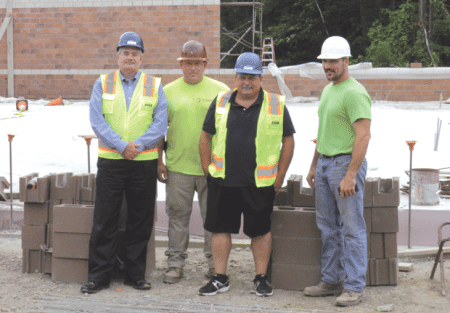
Community Spotlight Features

Community Spotlight: Easthampton

Mayor Karen Cadieux

Mayor Karen Cadieux says Easthampton has witnessed an exciting year marked by constant buildouts and growth.

The view from Mayor Karen Cadieux’s Easthampton office is stunning.

Sunshine glints off of the serene waters of the newly opened Nashawannuk Pond Promenade Park, and the boardwalk that spans it is busy.

“The park was planned to become a destination; it’s located right in the heart of our cultural district, and it’s booming,” Cadieux told BusinessWest. “Every day, people stroll along the boardwalk, sit and relax on the benches, do yoga, fish from one of the three handicapped-accesible boat ramps, or launch their boats. Families have been bringing their children to the park … it has something for everyone and offers enjoyment for all walks of life.”

The $945,000 park project is just one of many developments completed over the past year. They range from new housing for people at all income levels to infrastructure and interior improvements in the city’s old mill buildings — which have made those spaces more attractive to businesses — to the continued growth of the creative economy, which is thriving.

In fact, the ribbon-cutting ceremony for Nashawannuck Pond Promenade Park was staged June 13 in conjunction with the start of the second annual Cottage Street Cultural Chaos festival. “Thousands of people attended, and it was wonderful; there were vendor booths as well as music and performers,” said Moe Belliveau, executive director of the Greater Easthampton Chamber of Commerce.

She added that the new boardwalk is beneficial to nearby shops and businesses, which include the downtown area and the thriving Cottage Street Cultural District, which is populated by artists, galleries, gift shops, and restaurants.

“The Promenade project has increased foot traffic downtown, which is wildly important. The businesses there have done well, but now people are on the boardwalk all the time. They walk along eating ice cream from Mount Tom’s on Cottage Street and holding bags with items purchased from nearby stores,” Bellieveau noted, adding that a new restaurant known as Bliss Café, whose menu includes vegetarian and vegan options, opened at 42 Cottage St. last month.

An $18 million development has also been completed across the street from the park. The historic, 125,000-square-foot Dye Works factory, which closed in 2005, has been turned into Cottage Street Apartments. Cadieux said the project involved a complete renovation of the brick structure into 50 affordable-housing units, which were immediately occupied after it opened in May.

“More than 250 people applied, so there is a long waiting list,” she said. In addition, construction on a brand-new, six-building, affordable apartment complex called Parsons Village, which came about thanks to Valley Community Development Corp., had just been finished, and people began moving into the units at the beginning of the month.

“Another very exciting development has taken place across the street from Parsons Village,” Cadieux continued. “The former Parsons Street School that was surplused by the school department in 2013, has been turned into a luxury apartment complex called Parsons Place.”

The building was purchased by developer Kevin Perrier, president of Five Star Building Corp., which served as general contractor for the project, and the city was paid all the back taxes owed on it. “It contains 16 high-end units, and the entire top floor is a penthouse that rents for $3,500 a month,” Cadieux said, adding that every apartment contains stainless-steel appliances, mahogany flooring, tiled bathrooms, 12-foot ceilings, and central air conditioning.

New developments are also brewing in Easthampton’s old mills. This year the city was feted with an award for the Best Tasting Drinking Water in the U.S. by the National Rural Water Assoc. in Washington, D.C., and beer makers are taking advantage of it.

“We have two breweries in the Pleasant Street mills,” said Cadieux. “Abandoned Building Brewery opened last year, and New City Brewery is in the process of opening. In addition, Fort Hill Brewery opened in a new, state-of-the-art building last year.”

For this, the latest installment in its Community Spotlight series, BusinessWest looks at the many types of development taking place in Easthampton, and how this former mill town has evolved into a cultural destination.

New Developments

The mayor noted repeatedly that Easthampton has been extremely fortunate in many respects. “It’s been an exciting year because there have been constant buildouts and growth. Businesses want to come here because we’re a thriving community,” she told BusinessWest.

But the economic growth is far more than a simple matter of luck; Cadieux and other town officials have worked hard to promote partnerships that encourage and promote growth.

An example of the communiuty’s success is a collaboration between the city and the owners of all five mills on Pleasant Street. It resulted in the Pleasant Street Mills project, which was funded by three major MassWorks grants.

“It started with work by the city that was done for safety reasons, so our fire department could access the back of the building,” Cadieux said, adding that it quickly morphed into a larger project that is now in its final phase.

The goal is to connect three of the revitalized, 19th-century brick mill buildings and create a main public entryway behind them. “The design includes a landscaped parking lot with new lighting and ties the back of the mills to the Manhan Rail Trail and Lower Mill Pond,” the mayor explained.

She added that the city purposely zoned its old mills for mixed use and worked closely with the Pleasant Street owners, who spent a significant amount of money upgrading their interior space. As a result of the magnitude of the project, Eversource (formerly WMECO) upgraded the electric lines going into the buildings.

“It’s something they had not planned to do for 10 years, but they were inspired by the project and the fact that the mill owners invested money to do renovation at the same time,” Cadieux explained.

Belliveau said the three-stage MassWorks project will bring even more vitality to the town. “It’s a storybook partnership and has spurred a lot of private reinvestment by the mill owners, which is key to renting available space,” she noted. “There’s a tremendous amount of energy and synergy in Easthampton, and a lot of growth and renaissance going on.”

Cadieux said the Pleasant Street mills are doing well, housing art galleries, hair salons, restaurants, and beautiful apartments. “And the Conway School of Landscaping opened a new facility in Mill 180 this month,” she added.

The creative-arts community is also growing, and the lobby of the historic Old Town Hall on 43 Main St., which has become a center for Easthampton’s arts organizations, underwent a major renovation that was completed last month.

CitySpace Inc., a nonprofit that maintains the building as a center for the arts, received a $133,000 tourism grant to do the work, and the City Council approved an additional $256,000 of Community Preservation Act funds for the project. “There are new doors, refurbished floors, new lighting that goes up the stairs, and more,” Cadieux said.

An August ribbon cutting for the entranceway was staged during Easthampton’s monthly Artwalk, which has been highly successful and draws people from many communities, said the mayor, adding that the city is also actively seeking grants to renovate the second floor of the building, which would be used to host theater groups and other functions. At present, it is not handicapped-accessible.

She added that the soaring popularity of the town extends to the housing market. “Easthampton has become the place to live, and in some neighborhoods, where the houses are priced in the $200,000 range, they have been selling in two days,” the mayor said, noting that three homes in her neighborhood took deposits for full-price offers recently on the same day. She attributes it to the city’s low tax rate, vibrant downtown, and Easthampton’s new, $40 million high school, which just received a Level I rating.

“The students moved in two years ago, but we just closed out the project this year,” she explained.

Belliveau said the Chamber of Commerce also established new programs and partnerships during the past year, along with new events, such as the day-long 2015 Checkpoint Legislative Summit, which will be held for the first time in Easthampton on Nov. 4 in collaboration with other chambers.

In addition, a partnership was formed with Williston Northampton School, and a chamber breakfast was held there in June featuring a speaker. “It was such a success that it will become an annual event with different speakers,” she told BusinessWest.

The chamber’s first Beach Ball was also held recently at the Oxbow Marina. The summer event was created to mirror the successful winter Snowball, with its silent and live auction, dinner, and dancing, said Belliveau, adding that the city also partnered with the Greater Holyoke Chamber and staged a legislative luncheon with that body in April.

Moving Forward

Belliveau told BusinessWest that Easthampton is thriving. “This is a community that really loves who and what it’s become, and it’s an exciting time.”

Cadieux agreed. “We’ve had a lot going on in the past year. We’re vibrant, but we are still growing and want to remain attractive to new businesses.

“There is still space available in the mills, available land zoned for highway business along Route 10, or Northampton Street, and a blighted building on 1 Ferry St. for sale,” the mayor continued. “We’re striving to keep our diversity so there is something for everyone here. It’s the key to our success.”

Easthampton at a glance

Year Incorporated: 1809
Population: 16,036
Area: 13.6 square miles
County: Hampshire
Residential Tax Rate: $15.15
Commercial Tax Rate: $15.15
Median Household Income: $57,134
Family Household Income: $78,281
Type of government: Mayor, City Council
Largest employers: Berry Plastics; Williston Northampton School; Argotec
* Latest information available

Community Spotlight Features

Community Spotlight

Andy Hogeland (left) and Hugh Daley

Andy Hogeland (left) and Hugh Daley say the conversion of the former Cable Mills into new apartments is an example of a public/private partnership that will add vitality to the town.

Williamstown is in the process of creating its first economic-development plan, and the Board of Selectmen, as well as key figures from major town institutions, are excited about its potential.

The Economic Development Committee, or EDC, was established in January, and members include Andy Hogeland and Hugh Daley from the select board, business owners, educators, and officials from Williams College and the Clark Art Institute, major employers in town.

“It’s a significant team effort, and I am delighted with the composition and dedication of our committee, as well as the fact that hundreds of people have shown up at public hearings to give us ideas,” Hogeland said.

Fred Puddester agrees. “It’s an important effort; we have a really good working group, and I know we will end up with a great product,” said the EDC member and vice president for Finance and Administration at Williams College.

The initiative came to life late last year after the selectmen identified priorities they wanted the committee to focus on. The most important is stimulating economic growth by attracting new businesses and residents, but it is tempered by an equally strong resolution to protect existing businesses and institutions as well as the town’s educational system, quality of life, and bucolic environment.

“The town is open to doing whatever we can to improve our vitality without losing our character; it’s something we’re all protective of,” Daley said. “But if the Clark is getting 150,000 visitors a year, the question is, how can we can get them to come to Spring Street to frequent our restaurants and businesses?”

In order to answer this and develop a comprehensive plan, the committee has been divided into three subdivisions with different functions:

• The best-practices group, which measures and evaluates findings about the town’s economic health and strategies for growth compared to congruent communities;
• The town-outreach group, which is focused on implementing communication between the team and residents, businesses, enterprises, and town officials; and
• The reporting group, which has developed an interim report and will create a draft and a final report to be presented to the selectmen in December.

Hogeland and Daley told BusinessWest that data compiled by the outreach subcommittee will weigh heavily in the final report. “We want to make sure we understand and incorporate what residents are looking for,” Daley said.

To that end, the committee has hosted two public forums, which included question-and-answer periods. “They were well-attended and turned into discussions about what kind of town people want this to be; values centered around culture, education, the quality of life we have, and our natural beauty,” Hogeland explained. “People said they like the town the way it is, but would enjoy it if it was a little more economically vibrant.”

The feedback was posted on the town’s website, and a survey with eight questions was included with every tax bill, which could be filled out online or on the questionnaire.

“We received 500 responses, which proved that people are actually interested in what we’re doing,” Daley said. “They included a wide range of suggestions, which points to excitement about our plan.”

Hogeland concurred. “Hundreds of ideas were submitted, and the concerns and ideas people expressed were not just about money and jobs, but about the quality of life and what it’s like to live here,” he said. “Some things were as simple as improving the town website, which we are in the process of doing. But it’s our job to distill all of the ideas and come up with a feasible, actionable focus.”

The outreach group also conducted a forum for the business community, and impediments to growth were identified and ideas were generated to help create a more robust economy.

Meetings of the entire committee are held twice a month, and key individuals present profiles of their work, along with updates on institutional and professional efforts relevant to economic development within the community.

Concrete Progress

Williams College, which has close ties to the town, recently kicked off a huge capital program, which benefits local businesses and tradespeople.

“We have a number of interesting projects underway, but the largest is the construction of our new science facilities,” Puddester said, noting that an addition will be put on an existing building and an old building will be torn down and replaced with a state-of-the-art science center. The cost estimate for the projects is $200 million.

The space for the addition contains two houses, and one that is in good condition will be relocated to a vacant lot this fall. “It’s a similar situation that occurred last year when we built a new dorm,” Puddester said, explaining that a house on the site was purchased by the owner of Guntlow Engineering, who moved it and is using the first floor for business and the second floor as apartments.

The college is also building a $15.5 million, 60-bed dormitory that will be used as swing space when renovations are needed on older dorms, and undertaking a $12.5 million renovation of an old fraternity house on Route 2.

“It’s a restoration of a fabulous building that will be used to house our admissions and financial-aid offices,” Puddester continued. “We’re also renovating the performance space in Chapin Hall, a $5.5 million project.”

In addition, an architect has been hired to design a new, two-story building downtown on Spring Street. The first floor will become a college bookstore with a children’s section, coffee bar, and space for poetry readings, book signings, and other events, while the second floor will contain office space.

The Log, located across the street, is also being restored with $4.5 million from alumni who cherish memories of the place that constituted a primary meeting ground for them before the new Student Center was built.

“It will become a fabulous gathering space for people in the community and will contain a restaurant and area for students to practice poetry readings or standup comedy,” Puddester said.

He added that the college has a terrific working relationship with the town and is doing all it can to help the EDC. The college supported the best-practices subcommittee by supplying it with two interns to collect and analyze data from 12 communities in New England, New York, and Ohio that were chosen for comparison and inspiration.

Economics Professor Stephen Sheppard, also a member of the EDC, is supervising the interns, and Daley said the data they collect will allow the committee to identify key characteristics of successful towns.

“We can bounce it against ideas we have generated and learn what works, then use those programs,” he noted. “We don’t have to reinvent the wheel.”

The town is already on the path to enhanced vitality, however, and construction is taking place in a number of arenas, including the Cable Mills buildings downtown, where Phase I of converting them into apartments is well underway.

A total of 61 units will be constructed during the first phase, and 13 will be dedicated to affordable housing, Hogeland said, adding that the $26 million project is a good example of how the town works with developers via public/private partnerships.

Daley concurred. “We used $1.525 million of Community Preservation Act funds for this because it supports affordable housing, historic preservation, and open space.

“The buildings were empty for over a decade and had started to deteriorate, but the new units will be extremely nice,” he continued. “They will have one to three bedrooms, and the adaptive reuse of the existing infrastructure will increase the economic vitality of Williamstown. When the buildings are filled with people again, it will change the surrounding area.”

Units in the new Highland Woods complex for low-income seniors, built on land donated by Williams College, will also be ready for occupancy this winter and will help replace affordable housing lost when Tropical Storm Irene flooded Spruces Mobile Home Park.

“It contained about 300 residents, many of whom were elderly, and we have done everything possible to make sure they have an opportunity to live here,” Daley said, adding that the town contributed $100,000 in Community Preservation Act funds, boosted by $2.6 million from a FEMA grant, to make the project possible.

“It’s an example of how we work to protect our citizens and shows the character of our town, which is one of the things residents want to preserve; everyone knew someone who lived in the Spruces,” he continued, noting that the project came about as a result of a partnership between the town and three nonprofit organizations.

Implementation Process

Officials on the EDC committee are dedicated to the project, and a draft of strategic priorities will be finalized in October.

“At that point, it will go out for public comment — there will be a lot of publicity, and we will host meetings so people can give us feedback,” Hogeland said, adding that modifications will be made after input is received.

The selectmen will receive the final document in December, which will include strategized priorities, an assessment of feasibility, and the projected impact of change, as well as recommendations about implementation.

“Williamstown has great things coming over the next few years; Williams College has kicked off a huge $278 million capital building plan, and the town has taken steps to deal with housing affordability for families and seniors,” Daley said. “And with the creation of an economic-development plan that focuses on increasing the vitality of our local economy without sacrificing the character of our town, Williamstown will continue to be a great place to live and invest.”

Williamstown at a glance

Year Incorporated: 1765
Population: 7,754 (2010)
Area: 46.87 square miles
County: Berkshire
Residential Tax Rate: $15.61
Commercial Tax Rate: $15.61
Median Household Income: $72,203 (2013)
Type of Government: Town Manager; Board of Selectmen
Largest Employers: Williams College, Steinerfilm, Town of Williamstown
* Latest information available
Community Spotlight Features

Community Spotlight: Westfield, Mass.

Bob Russell and Jeffrey Smith

Bob Russell and Jeffrey Smith say new zoning was created so Rice Fruit Farm could reopen after sitting vacant for four years, one of many positive developments in the community.

Bob Russell grew up in Wilbraham and has spent most of his life in the town. The selectman is proud of his community and cites work by officials that encourages business growth while keeping a close eye on retaining and expanding the vast amounts of open space and recreational opportunities that can be found on walking and hiking trails crisscrossing the community’s 22 square miles.

He told BusinessWest a 50-year-old time capsule was recently unearthed that contained a statement by town officials who predicted the population would rise to 40,000 residents. “It is significantly less, which speaks to responsible planning and management,” Russell said. “We are not completely built out like some other towns.”

Jeffrey Smith concurred. “We allow for responsible growth and development, particularly in our business districts, which include the town center and Boston Road,” said the chair of the Planning Board. “There are opportunities to construct new homes on single lots and in new subdivisions as well as condominiums. But we put a high value on open space and recreation.”

This value statement was reiterated by Selectman Susan Bunnell.

“We’re in the early stages of another wave of economic development, and informal discussions are taking place between the Select Board and business leaders about how to proceed,” she noted, adding that the state brought fiber-optic cable into the town via the Mass Broadband Initiative activated in the spring, and a committee is exploring whether to expand it because it is currently limited to town buildings and schools.

“We have a municipal light plant that was created last year and are positioned to move to the next level, but we have to determine how to move forward; fiber-optic cable is something businesses have a need for, but any expansion would be done in a measured manner,” she told BusinessWest, adding that she recently attended a statewide seminar on the topic.

But officials also tout the large amount of available space for new businesses and cite potential for success, because much of it is concentrated on the busy stretch of Boston Road that runs through town.

“We have good access to state highways and the Mass Turnpike and good utilities; high-quality water from the Quabbin and adequate sewer capacity,” said Planning Director John Pearsall.

Smith added that Dunkin Donuts just completed a major renovation and expanded its parking lot. “They worked with the Planning Board to come up with a good design,” he recalled, adding that Lumber Liquidators next door has done well, as has the new, $5 million Balise Ford dealership built two years ago.

“There is also a textile mill on Cottage Street off Boston Road under new ownership, and we are in discussion about potential new uses for it,” Smith said, noting that the 200,000-square-foot building sits on 10 acres.

For this issue, BusinessWest continues its Community Spotlight series with an in-depth look at Wilbraham and its ongoing balancing act.

Prioritized Goals

Wilbraham officials say the town welcomes new business, and zone changes are made on a regular basis to accommodate growth.

“Changes were recently passed at the annual town meeting to allow for more retail business in two zones in the center,” said Russell. “They were combined, which will allow properties to be used for retail sales and food-based operations where they could not be established before.”

Pearsall added that the town has a long history of changing its zoning to allow for development, and pointed to the engineering firm FloDesign as an example.

“It was built on abandoned property that was zoned residential; we developed new zoning to allow it to be reused for a business, but were sensitive to the fact that it is surrounded by a residential area,” he told BusinessWest. “It’s the norm in Wilbraham to make adjustments and tweak things to adjust to the changing business climate.”

New zoning has also been put in place for two solar farms. One is permitted at the former landfill, while the second is under review and would be built on private land. “Plus, we constantly approve requests for new residential solar systems,” Smith said.

The iconic Rice Fruit Farm reopened in April, thanks to specific zoning changes created to allow for an adaptive reuse of the property, which includes a farm stand, a food-service operation, and some retail.

“The 100-year-old farm is a landmark in Wilbraham and had been vacant for four years. But the Maloni family came to us with a vision to renovate the existing buildings and create a viable business that would become part of the community, and the town worked with them to make it happen,” Smith explained.

Russell said the opening was well-attended, and residents are glad to see the property brought back to life. “We created a heritage-farmland bylaw to make it happen, and an antique store opened on the property about a year ago.”

The town also allocated $100,000 last year for improvements to sidewalks on Main Street, and hope to expand the project. “The new sidewalks run right past Rice Fruit Farm, and the changes are consistent with items outlined by the Vision Task Force,” Russell said, referring to a 2013 document titled “Wilbraham Looks Forward,” which took residents’ opinions into careful consideration.

Russell says the open space in Wilbraham is one of its main attributes and must be preserved.

“In 2008, Money magazine listed us as one of the best towns to live in, and one of the main factors was our access to open space; there are contiguous hiking trails from one end of town to the other, and we are constantly working to improve them,” he explained. “The town has continued to purchase land when it becomes available, despite the fact that the state cut back on reimbursements.”

To that end, Wilbraham recently approved the new position of land-management coordinator, an official who will inventory all vacant land and work to improve access and recreational opportunities throughout the community.

“Some of the land is under forest management, and we have received money from the sale of timber, which is used to make improvements,” Smith noted.

Officials said the tornado, microburst, and October snowstorm in 2011 pointed out the need for preventive maintenance, and Wilbraham is hosting an annual conference next month for municipal officials, foresters, land trusts, and other groups, which will offer local, state, and regional perspectives on town forests and take participants on a field tour of the community’s forestland to highlight methods and results of sustainable management.

Officials also noted there has been a decided uptick in residential building in the past year.

“The Planning Board recently approved a zoning change for 11 single-family homes in a development that will be called Falcon Meadows,” said Smith. “The land was home to the former Bennett’s Turkey Farm and has sat empty for more than a decade.”

Another subdivision, called Westminster Court, is in the preliminary planning stages and will have seven to 10 lots. Meanwhile, a subdivision known as Carla Lane, which was approved three years ago, is entering Phase III of development. In addition, four lots are still available in the Washington Heights subdivision.

“Building has increased in the past several years, and a number of new townhouses are being built at the Gardens, an over-55 community,” said Building Inspector Lance Trevallion. “Fourteen new single-family building permits have already been issued this year, and I can foresee 15 more by the end of the year.”

He added that the town has a very active and vibrant community garden on a 300-acre parcel of land that is under forest management, and a new greenhouse was just built with Community Preservation Act funding.

In addition, ground has been broken for a new, $8.2 million police station on property adjacent to the fire station, which will be paid for entirely by the town.

“The residents voted for a $4.2 million debt exclusion,” Russell said. “The rest of the cost will be paid out of available funds and bonding capability within the Proposition 2½ levy limit. The cost for the average home will be $78 on the tax bill the first year, which will decline to $49 in year 15 of the bond.”

The Vision Task Force deemed maintaining the beauty and vibrancy of the town important to residents, and although it’s too early to tell how the MGM Springfield casino will affect Wilbraham, officials signed an agreement that provides the town with $100,000 per year for 15 years to mitigate any impact. In addition, Wilbraham will receive a $100,000 consultant fee in the casino’s first and fifth operating years to examine whether the financial repercussions total more than $100,000.

“It is foolish to try to predict the future. But town officials and department heads have created a baseline on our traffic, water, and sewer use,” said Russell. “We will re-measure these things in the future; it’s important because part of the town uses the same sewer line as Springfield, and we get a good portion of our water from Springfield and the Quabbin Reservoir.”

Moving Forward

Russell likes everything about his hometown.

“It is only getting better, and college graduates who grew up here tell us they hope they can afford to raise their children in Wilbraham. We used Community Preservation Act money to revamp the Children’s Museum this year, and Sevey Park is being completely re-landscaped. Our teacher-student ratio is very low, and we have a new, $63 million regional high school,” he told BusinessWest, listing attributes that appeal to families.

“In the last two years, we have not fully exercised the tax-levy limit under Proposition 2½, despite the fact that we have increased our savings and funding for other post-employment benefits for former town employees,” he added. “We have a lot to be proud of, but it’s all about balance — and our citizens consistently vote to develop and grow in a very responsible manner.”

Wilbraham at a glance

Year Incorporated: 1763
Population: 14,868 (2010)
Area: 22.4 square miles
County: Hampden
Residential Tax Rate: $20.88
Commercial Tax Rate: $20.88
Median Household Income: $65,014
Type of government: Open Town Meeting; Board of Selectmen
Largest employers: Friendly Ice Cream Corp.; Town of Wilbraham; Wilbraham and Monson Academy; Life Care Center of Wilbraham

* Latest information available
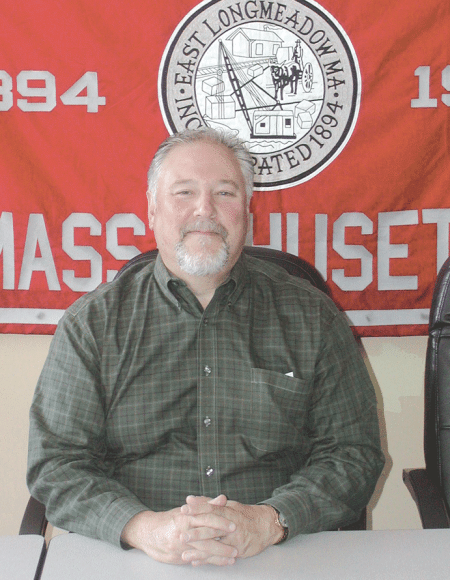
Community Spotlight Features

Community Spotlight: Southwick, Mass.

From left, Todd Phillips, Stephen Phillips, and Doug Moglin

From left, Todd Phillips, Stephen Phillips, and Doug Moglin say Nitor Corp. in the Southwick Industrial Park plans to double its size.

After 12 years in business, Stephen and Todd Phillips decided it was time to own their own building.

They spent two years looking at sites in Springfield, Agawam, West Springfield, and Windsor, Conn. before they found the perfect location: Southwick Industrial Park.

“We were able to buy 3.1 acres on an industrial building lot for $30,000 per acre, which gave us plenty of room to expand; you can’t touch that price anywhere, and the double whammy was the town’s uniform tax rate. It was a huge incentive to come here,” Stephen said, adding that, prior to building a permanent home for laser-equipment supplier Nitor Corp. four years ago, they had leased space in Westfield and then Agawam Industrial Park.

Today, the brothers are planning to double the size of their footprint, and Stephen calls Southwick’s Industrial Park a hidden gem. “It’s close to Route 57, Interstate 91, 291, and the Mass Pike, and the town’s Planning Board is made up of working-class people who are very receptive and understand business,” he told BusinessWest.

The uniform tax rate, $16.94 per thousand for 2015, and amount of affordable property available for development are among attributes Southwick officials are banking on to spur economic development. There are 50 acres in the industrial park primed and ready for development, another 150 acres that will be available in the future, and about 200 acres of former farmland on Route 57, bordered by Routes 10 and 202, that would be an ideal location for retail establishments, especially since there are new sewers in areas proximate to it.

Other factors officials are relying on include infrastructure improvements; a wide range of recreational opportunities; new residential building; closer ties with the Greater Westfield Chamber of Commerce, led by Kate Phelon, who has held nine ribbon cuttings for them since last year with plans to stage more; and other measures that have evolved as they work to remove impediments to growth.

“All roads are open, and we are working hard to get everything in place for the future. All of the ingredients are here; we have done our part, and our eyes are wide open. We want to help and have things in place so people know exactly what they need to do to open a business,” said Joseph Deedy, chairman of the Board of Selectmen, who has owned MooLicious Farm and Ice Cream for eight years, was on the Planning Board before being elected to his current position, and has owned several other businesses in different states, which helps him understand difficulties new companies deal with.

“We’re looking for mom-and-pop operations as well as light-industrial companies that will bring more to the town than just workers. They will be stakeholders in the community,” he explained.

Doug Moglin agrees. “There is so much opportunity here, and our population is growing,” said the selectman, who is OEM director at Whalley Computer Associates Inc., based in town.

Chief Administrative Officer Karl Stinehart says it’s much easier to do business in Southwick than it was 10 years ago.

The town has worked hard to identify areas that need sewers, and completed phase I of its installation plan, which includes downtown as well as part of the area around Congamond Lakes. In addition, the water quality was improved, which has helped to retain businesses along the corridor as well as allowing them to position themselves for growth.

“The interceptor pipe to Westfield’s treatment plant has been finished, which lays the groundwork for us to move forward,” Steinhart said.

In fact, town officials have been working hard for several years to leverage as much federal assistance as they can before their population hits 10,000, when they will no longer qualify for funding aimed at towns below that number. “We want to make sure we don’t miss out on any opportunities,” he added.

New Growth

The multi-faceted efforts of Southwick officials are already bearing fruit.

A new, $2.2 million Rite Aid is under construction on College Highway and is expected to open by Thanksgiving. “They’ve been renting space in a smaller building and are expanding to a free-standing building with a drive-thru,” Deedy explained.

From left, Karl Stinehart, Jesse Saltmarsh, Joseph Deedy

From left, Karl Stinehart, Jesse Saltmarsh, Joseph Deedy, and Gordon Webster at the site of the new, $2.2 million Rite Aid set to open in November.

Site developer Jesse Saltmarsh of Saltmarsh Industries Inc. in Southwick told BusinessWest an old building was demolished to make way for the new, 11,000-square-foot pharmacy, and contractors are creating retaining walls because they lowered the grade of the land to provide enough space for parking.

“Roughly 90% of the vendors we’re using are local companies,” said site superintendent Gordon Webster of Bass Hatfield Construction, the general contractor for the project, adding that Southwick businesses already working or soon to be on the job include Southwick Electric and Brasca Plumbing as well as a landscaper in town.

Meanwhile, Kearsage Venture Capital Co. recently completed construction of the largest solar farm in Western Mass. on Route 168.

“Agriculture is still an important part of Southwick’s identity, and this is just a different way of farming,” Stinehart said. “And the town is in the process of finalizing a purchase agreement to buy a solar farm north of here. We hope it will save us 15% on our electric bill.”

The new, 66-acre Whalley Park, built on donated land and leveraged with Community Preservation Act (CPA) funding, opened this summer and has increased the number of playing fields, which is important because the town didn’t have enough to accommodate demand.

“It’s a wonderful thing, and we are very fortunate because the private, nonprofit Southwick Recreation Center is right next door, which helps kids in town play on sports teams,” Deedy said.

The Polverari Southwick Animal Control Facility was also finished late last year, which meets another need as it replaced an outdated structure.

“We’re doing all we can to make the community an attractive place to raise a family,” Stinehart noted, adding that $69 million was spent over the past few years on renovations to the town’s schools which are almost complete, and a new track was built with private donations and CPA funds. Plus, the Conservation and Open Space committees have used state and CPA monies to acquire land for agricultural use because there is growing demand for it.

New small businesses are also opening, and two restaurants have new owners. D’Georgio’s is expected to open by Labor Day in the former Brew Too building on Westfield Street, which has been repurposed, and the former Salmon Brook Restaurant on Point Grove Road near Congamond Lake was recently purchased and will reopen as the Legends of the Lake.

The selectmen added that the town offers wonderful opportunities for recreation.

“We pride ourselves on our recreation, which ranges from boating to golfing and open space where people can hike,” Stinehart said. “We have two public marinas and a boat launch on the Congamond Lakes, and a dedicated committee makes sure there is a freshwater fishing tournament there every weekend. There is also the 6.3-mile Southwick Rail Trail, four golf courses, a miniature one, and two campgrounds. Southwick is the home of motocross, we have a very active Parks and Recreation Committee, and the Conservation Commission has acquired land that will be used for parking which will provide better access to the segment of the Metacomet Trail that runs through town.”

Residential construction is also on the rise, and land is being cleared for a 26-home development called Noble Steeds. “It was permitted, then shelved due to the downturn in the economy,” Stinehart said. “There are also a significant number of single lots being developed along major roads.

“The housing market is slowly turning around, and a dozen lots in a private community are being developed around the Ranch [golf course], and with our lucrative tax rate, people can afford to build their dream home,” he went on. “The Shops at Gillett Corners were also sold within the last two years, and the new owners have invested money because they see the future in Southwick.”

Deedy noted that the single tax rate has been a great selling point for the town.

“We’re taking a balanced approach to growth,” he explained. “Our planning board is composed of a group of very dedicated individuals, and we are very cautious and deliberate in making any zoning changes. But few are necessary, as permitted uses for land have already been identified; we look at other communities to see what works and what doesn’t.”

Officials don’t expect the MGM casino in Springfield to affect their community much, other than increasing the flow of traffic from Connecticut. “We will evaluate it in the future to see if we are eligible for any funds and will revisit the issue at that time to see if it affects our infrastructure,” Stinehart said.

However, Deedy pointed out that Southwick is only 15 minutes from Springfield, and its low tax rate may prove attractive to businesses that support the casino. “They may want to relocate to the suburbs once it is built.”

Formulated Plan

Deedy added that efforts put forth by the town have been aimed at future development.

“We have plenty of land available, and if people can afford it, they should buy it now while it is still inexpensive,” he said. “Members of the select board are always available to talk to people; the last thing we ever want to hear is that someone who owns a company or wants to open one looked at Southwick, but it was too difficult to do business there.”

Which seems unlikely, because officials strive to promote their town and encourage growth in this rapidly growing community.

Southwick at a glance

Year Incorporated: 1775
Population: 9,629
Area: 31.7 square miles
County: Hampden
Residential Tax Rate: $16.94
Commercial Tax Rate: $16.94
Median Household Income: $78,476
Family Household Income: $89,970
Type of Government: Open Meeting; Board of Selectmen
Largest Employers: Big Y World Class Markets; Whalley Computer Associates Inc.

* Latest information available
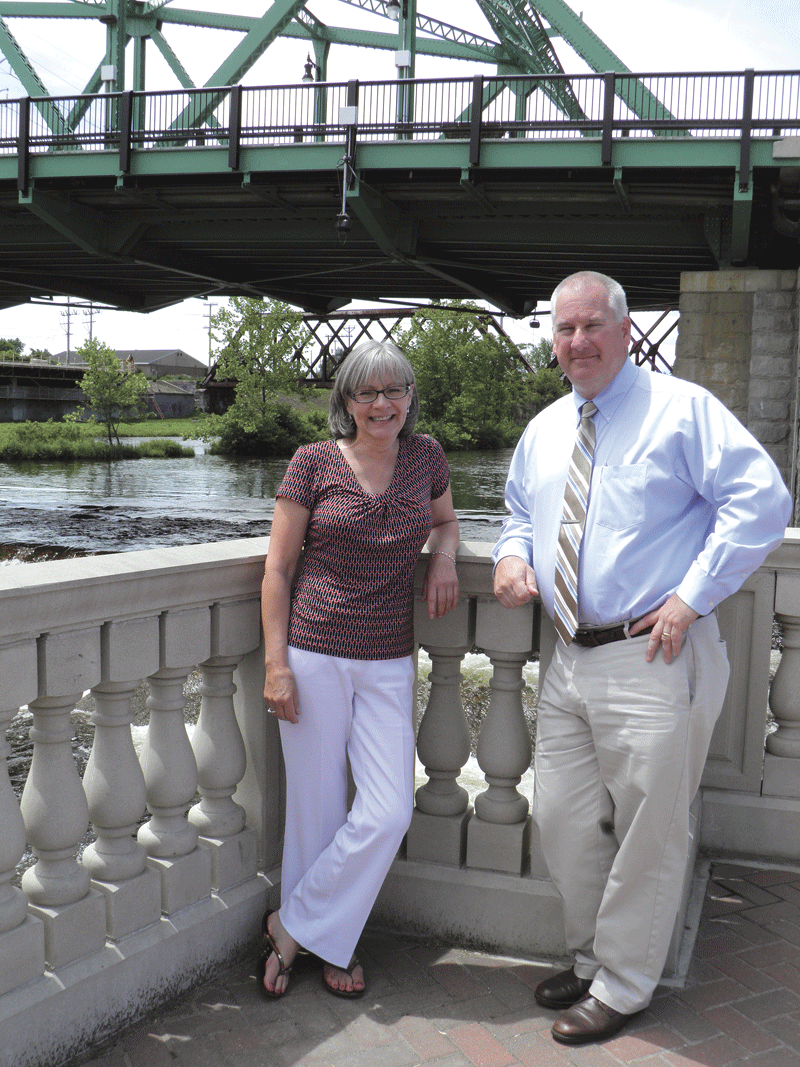
Community Spotlight Features

Mayor Richard Cohen, seated, and Marc Strange


Mayor Richard Cohen, seated, and Marc Strange, the city’s new director of Planning & Community Development, say redevelopment of the Walnut Street Extension area remains a priority.

When you ask Mayor Richard Cohen to talk about Agawam, the city that still likes to be called a town, be prepared for a non-stop, enthusiastic, 30-minute sales pitch for the community where he has lived for the past 27 years, and served as mayor for seven non-consecutive terms.

And while that might be expected from the individual sitting in the corner office, especially someone who has invested so much time and energy in the city, Cohen said his enthusiasm — and optimism about what’s next — are well warranted.

The fifth-largest Hampden County community in population (neck and neck with West Springfield at around 28,000), Agawam has long endured the image of a town dominated by industrial parks, condos, strip malls, farms, golf courses (there are four of them), and, of course, the largest amusement park in New England. But is is fast becoming known for much more.

Indeed, while Cohen places great value in the town’s fully occupied Agawam Industrial Park, and in the town’s measures to preserve open farm space, his enthusiasm level rises to a new height when he talks about Agawam’s new School Street Park, a 50-acre project he calls “the largest development of its kind in the region in the last 25 years.”

The first phase of the park opened in 2008, with basketball courts, playing fields, play-scapes, and baseball fields. In early July, a ribbon-cutting was staged to open the second phase of the park, which features a concert band shell, a spray park, a disc golf course, a volleyball court, a large pavilion and numerous smaller shade pavilions, and walking trails throughout the park.

“This is truly a park for all ages,” noted Cohen, “and a great example of how family friendly the town of Agawam is. That’s what I want the image of Agawam to be.”

The park has been drawing great crowds in the few weeks that the second phase has been open, said Cohen, whose enthusiasm is also evident when he talks about the new, two-acre dog park, off Maple Street, scheduled to open in the fall. The facility is being built through a $250,000 grant from the Stanton Foundation.

What makes Agawam special though, says Cohen, and differentiates it from a lot of other communities, are taxes and services.

“Agawam has the lowest split tax rate in the area, but we’re able to deliver a lot of services for that money. The residents of Agawam get a great bang for their tax buck. Our schools are fully funded, and we have a great, Level-2-rated school system. We provide full services with no fees. We have weekly trash pickup with no fee, and free kindergarten for every student.”

One of the results of Agawam’s low tax rate and high-service government, said Cohen, is the stability of the town’s residential real estate values.

“When you buy a home in Agawam,” he said, “your investment tends to hold its value very well because of the efficiency of our taxes and services. Our community is one of the safest in the Commonwealth, and we’ve got a great school system. This is what families want.”

The engine that makes all this possible is Agawam’s industrial tax base.

With a fully occupied Agawam Industrial Park and nearly full Shoemaker Industrial Park, Agawam benefits from tax receipts as well as employment opportunities generated by a healthy list of companies that would be the envy of many area towns. Cohen rattles off names like OMG, the largest manufacturer of roofing fasteners in the world, HP Hood, Southworth, Sound Seal, Ebtec, Simmons Mattress, Fisher Scientific, and Six Flags.

“Who wouldn’t love to have Six Flags, one of the biggest attractions in the country, right there on Main Street in your town,” Cohen said proudly. “It’s been a great asset to the town, in terms of revenue, tourism, and job opportunities, especially for our young people, and that’s important.”

Being Industrious

To talk about the next big project on the table for Agawam, Cohen introduced the town’s new Planning & Community Development Director, Marc Strange, who took over the job three months ago from 32-year veteran Deborah Dachos upon her retirement.

Strange, formerly a private practice attorney, will be heavily involved in the long-awaited project to redevelop the Walnut Street Extension area, long a source of frustration and stagnation.

“Our vision is to turn this into a downtown pedestrian walking area,” said Strange, “with retail shops, housing, professional services, restaurants and green spaces, and make it a focal point of Agawam.”

Cohen acknowledged that such talk has been going on for years, if not decades, but there is renewed optimism that something can be done in this once-thriving retail area.

“This is a project that’s been on the drawing board for many, many years,” said the mayor, “but now we’re making some real progress, and I’m confident we can make it happen.”

The need for a “more-focused, city-center shopping area” is echoed by long-time Agawam business woman Kate Gourde, owner of Cooper’s Gifts, Apparel and Home and the developer of the adjacent Cooper’s Commons, an eclectic mix of shops and services housed in the former Country Squire Furniture building on Main Street.

“Agawam is a great town and a wonderful place to do business,” said Gourde. “But we’re not thought of as a great retail destination because our stores are spread out along many different streets.”

Kate Gourde, developer of Cooper’s Commons

Kate Gourde, developer of Cooper’s Commons, says Agawam needs a more focused shopping area to become a true retail destination.

Gourde, who has been running the family business for 28 years, said she welcomes competition from new stores that might open in the redeveloped Walnut Street Extension area. “I think it would be great for business and for everyone in Agawam, and I fully support it. We can really use a downtown retail center.”

Another factor in Agawam retailing that can’t be overlooked, is the effect of the Big E, the 17-day September fair that has grown into one of the largest fairs in the country. The Big E, in West Springfield, is literally a stone’s throw from Main Street in Agawam. When asked about it, Gourde just smiled and shrugged.

“Well, the Big E was here long before we were, and yes, it hurts our business for two weeks like it does most stores in town,” she told BusinessWest. “But we don’t whine about it. Over the years we’ve learned how to market a bit differently during the Fair, to the point where it’s not a huge factor anymore. In fact, it’s a great time to shop at Cooper’s Gifts.”

Kathy Ayre, owner of Ayre Real Estate, also on Main Street, disagreed slightly with Cohen’s assessment of the stability of residential real estate in the town. “We went into a downturn in 2005, just like the rest of Western Mass did, but that has gradually been leveling off,” she said. “And this year has been great. We just had the best quarter we’ve had in the past 10 years, and it’s still going in July.”

Ayre, whose company is traditionally one of the leaders in market share of Agawam real estate adds, “the mayor is correct though in that, compared to many other towns around, residential properties in Agawam do tend to hold their value very well.”

She cites the low tax rate, excellent school system, and the town’s services, as the main reasons for Agawam’s healthy residential real estate market. “It’s a great place to raise a family,” she said, “and it’s also a great location, abutting Connecticut. Suffield is an upscale town and we get a lot of business from Connecticut people looking to lower their costs or get more house.”

Ayre also cites easy access to the area’s highways and to Bradley International Airport as factors in the town’s location.

Like every other greater Springfield community, Agawam awaits the impact of the MGM Casino opening, two to three years down the road.

“I don’t know,” Cohen said flatly when asked to gauge its potential impact. “But we’re going to find out; we’ll be doing some baseline studies on a number of factors, to help us assess the impact during our ‘look-back’ intervals, to see if additional mitigation is warranted.”

Regaining his normal optimistic enthusiasm, Cohen added, “I hope the casino does great. I hope it’s a tremendous success for Springfield, because all of the surrounding towns benefit from a healthy, robust Springfield.”

Gourde looks upon the MGM Casino as an opportunity for Agawam businesses. “I don’t think it will hurt our business in any way, and I’ll be happy to take my shot at getting some of those casino patrons across the river and into our shops.”

Ayre is pragmatic. “No one knows if the casino will have any effect on the real estate market, but I really can’t see it hurting us. The one thing I do know, is that the town of Agawam will be here long after the casino opens, and it will still be a great town for families to live in.”

The Bottom Line

That last comment brings the discussion about Agawam full circle.

While officials there are looking for change, especially with the problematic Walnut Street Extension area — and the retail scene in general — one thing they don’t want to change is that image of being family friendly.

And that character trait extends well beyond the rides at Six Flags.

Agawam at a glance

Year Incorporated: 1761
Population: 28,608
Area: 35.75 square miles

County: Hampden
Residential Tax Rate: $15.74
Commercial Tax Rate: $28.29
Median Household Income: $49,390
Family Household Income: $59,088 (2013)
Type of government: Mayor; City Council
Largest Employers: Six Flags New England, OMG Inc., Agawam Public Schools
* Latest information available

Community Spotlight Features
East Longmeadow Touts Residential, Business Gains

By GERRY FITZGERALD

Paul Federici

Paul Federici says East Longmeadow’s strong balance, in the form of both residential and commercial growth, has made it an attractive location for businesses.

When asked to list the most pressing problems in his community, Paul Federici, chairman of the East Longmeadow Board of Selectmen, paused, then grimaced slightly as he tried to think of matters that might fit that description.

Finally, he shrugged and almost apologetically offered, “well, we’ve got two issues on the horizon that we’re going to have to deal with, but I’m not sure I’d say either one is a problem.”

And if they are problems, they could well be placed in that category of ‘good problem to have,’ he told BusinessWest, referring to a recognized need to build a new high school and an ongoing study to determine if this town of 16,000 people should change its form of government, from the present three-member Board of Selectmen to a mayor, town manager, or other format.

“As much as I enjoy being a selectman, we’ve got a $50 million corporation here, and it may be time for full-time professional management in town,” said Federici, adding that the two issues he mentioned are tied directly to the town’s strong recent pattern of growth, both commercial and residential.

And there are many reasons for both — everything from available, buildable land to an attractive location near several affluent communities; from an alluring commercial tax rate to a host of quality-of-life amenities (everything from the attractive parks to the region’s largest Fourth of July parade) — that collectively make this an attractive place to live, work, and launch a business.

“The town continues to grow,” said Federici. “Homes are selling in all price ranges, from the smaller starter homes on up to the high-end luxury homes in the developments off Prospect Street, which is a very positive sign, and the business climate here has probably never been better.”

East Longmeadow businessman John Maybury, president of Maybury Material Handling, located in the Denslow Road Industrial Park since 1981, echoes Federici’s comments about East Longmeadow’s commercial economy.

“The industrial park is just about completely filled,” said Maybury, “although there still may be a couple of buildable parcels left. The Deer Park industrial area just south of Denslow is also growing nicely, and all of these companies are doing very well. And, of course, we still have the big ones, Hasbro and Lenox, which has invested $60 million in the plant since its purchase by Newell Rubbermaid in 2003.”

Federici pointed to recent newcomers to town as great examples of the positive business climate of East Longmeadow. He listed the Arbors Day Care, WhiteStone Marketing Group and Go Graphix, a new self-storage facility, Toner Plastics, All Hose Inc., and the recently opened, $15 million Philip H. Ryan Health Science Center of Bay Path University on Denslow Road.

Bay Path’s first physician-assistant class to use the new building graduated in May. “It’s great to have Bay Path University in town,” said Federici. “The new building is fabulous, inside and out, and we’re proud to have it in East Longmeadow.”

That facility is one of many recent success stories recorded in town, and, for this latest installment of its Community Spotlight series, BusinessWest chronicles many others while speculating on what might come next.

In Good Company

Asked to pinpoint the core reason why East Longmeadow is thriving financially — the town’s bond rating is at its highest point ever — and has become an attractive landing spot for families and businesses alike, both Federici and Maybury repeatedly used the word ‘balance.’

“It’s the great balance we have between the commercial, retail, and residential sectors that makes East Longmeadow unique,” noted Maybury. “We’ve got some huge industrial companies, and big employers, in Hasbro and Lenox, along with a great mix of large and small commercial firms in the industrial parks, several thriving retail areas, and a growing residential market. That’s a great mix.”

Federici concurred. “That balance is why we have a strong tax base and reasonable taxes, good infrastructure, and good schools,” he told BusinessWest. “It’s why East Longmeadow is a great town for families.”

And for businesses as well, he added, noting that growth has come in virtually all sectors of the economy, from manufacturing to education.

That extends to the retail sector as well, said restaurateur Bill Collins, who, with his business partner, Michael Sakey, opened the Center Square Grill in May 2014.

According to Collins, the restaurant has far exceeded its first-year projections. “Knock on wood, of course,” he said with a grin, “but business has been great, better than we’d hoped for.”

He is quick to attribute much of the restaurant’s success to the centralized location of the town between Wilbraham, Hampden, Springfield, Longmeadow, and Somers, Conn.

“We draw our customers from a five- to 10-mile radius that cuts through five surrounding towns plus all of East Longmeadow,” he explained. “If you look at a map, the center of East Longmeadow is just a fabulous location for retail businesses, and all of the stores, restaurants, and services in the area are doing very well.”

He also credits the town government for creating a positive business environment. “When were first looking to open at Center Square, the Planning Department, selectmen, and the licensing people could not have been more helpful or more welcoming,” said Collins. “They bent over backward to help us get up and running as soon as possible, and that means a lot to a new business.”

Bring up the 100-pound gorilla that every Western Mass. restaurant is at least wary of, the MGM Springfield casino coming to downtown Springfield in a few years, and Collins says he is aware but not overly concerned. “We’re quickly creating many, many loyal, return customers,” says Collins. “We don’t see these people suddenly heading into downtown Springfield to eat at a casino.”

Federici has a similar reaction to the impact of MGM Springfield. “We’ll see,” he said with a shrug. “I don’t think the casino will have a huge impact on us. Two different impact studies, one by the Pioneer Valley Planning Commission and the other by the casino people, both predicted an increase in traffic in the town of about 6%. For a few hours on certain days, we may feel that, but I don’t think it’s going to be anything dramatic.”

Returning to those aforementioned ‘good problems to have,’ Federici said the School Department has concluded that the nearly 60-year-old high school, built when the town was roughly half its current size, is clearly in need of replacement.

“The selectmen gave the approval to the School Committee to go to the state for funding,” he said. “Last year, the project didn’t make the list of 100 or so building projects approved for partial state reimbursement, but it will be submitted again this year.”

Even if approved for partial state reimbursement, the new high school will be a costly burden for the town. “The estimated cost for a new high school is $80 million,” said Federici, “and some significant part of that is going to have to be picked up by the town. But that will be a problem we’ll overcome, and then, we’ll have a beautiful new high school for our children.”

The Bottom Line

As for a possible change in the town’s governmental structure, Federici chose to discuss it with humor, in the form of a story the town clerk once told some visitors to Town Hall.

“He told them, ‘East Longmeadow has a three-member Board of Selectmen and an open town meeting … the pilgrims had a three-member Board of Selectmen and an open town meeting.’ So maybe it is time to make a change.”

If one does come, it will be a clear sign — yet another one in a series of signs, actually — that this community is in a growth mode, and that the trend will only continue and accelerate.

East Longmeadow at a glance

Year Incorporated: 1894
Population: 15,720 (2010)
Area: 13.0 square miles
County: Hampden
Residential Tax Rate: $20.72
Commercial Tax Rate: $20.72
Median Household Income: $62,680
Family Household Income: $70,571
Type of Government: Open Town Meeting, Board of Selectmen
Largest Employers: Hasbro, Lenox Tools, East Longmeadow Skilled Nursing, Redstone, Plastipak
* Latest information available
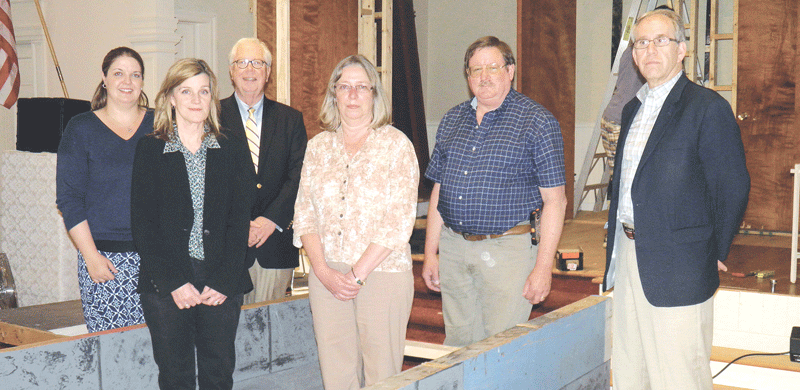
Community Spotlight Features
In Westfield, Redevelopment Plan Becoming Reality

Mayor Daniel Knapik says Westfield is rife with activity that is leading to dramatic changes in the landscape, as projects that were years in the making come to fruition.

New buildings are under construction, while older ones that sat empty for as long as a decade are being transformed and repurposed. Phase I of the Columbia Greenway Rail Trail is underway, work is being done in the so-called Gaslight District, and other initiatives are becoming a reality.

“Fourteen years ago, Mayor [Richard] Sullivan showed me his plan for the city, and I saw what the future could be,” said Knapik, adding that this action plan and its prospects for becoming reality led him to seek election to the City Council, where he held a seat from 2001 to 2009 before being elected to the corner office. “It’s astonishing what has happened since then. I supported the mayor’s vision that he created with City Engineer Mark Cressotti, and all of the projects have finally come over the finish line.”

Much of the work has taken place in the last year or two, and projects are in varying stages of development. Change is occurring downtown as well as on Route 20, where a new 99 Restaurant will be built on property that has stood vacant since a Pontiac/Oldsmobile dealership closed down more than 15 years ago.

“We have been talking with officials from 99 for six years to help them find the right spot; they were very selective and looked at other parcels, but finally settled on this one,” Knapik said, adding that ground was broken two weeks ago for the eatery, which is expected to open before Thanksgiving.

In addition, the end units of the former Kmart plaza will finally have tenants. Habitat for Humanity’s ReStore opened in late April in the former Grossman’s Bargain Outlet building on East Main Street, and the space at the other end will soon be occupied by a business that will provide medical-related services. “The site they will move into had been vacant for six years,” Knapik noted.

Daniel Knapik, pictured with Kate Phelon

Daniel Knapik, pictured with Kate Phelon, says the Great River Bridge project, finally completed in 2012 after 30 years in the planning stage, benefits residents and businesses alike.

Another parcel, located at the gateway to Westfield on Route 20, is also flourishing. Nabil Hannoush, serial entrepreneur and vice president of the Hannoush Jewelers chain, purchased the former Balise Ford dealership on 99 Springfield St. and turned the 11-acre property into a center that houses Expert Fitness and other health-related businesses, along with the new Short Stop Bar and Grill and Batter’s Box. He and his wife want to build three additional standalone structures on the side of the building that would likely house a bank as well as retail and commercial office space.

“We are working with them and the Mass. Department of Transportation to enhance the traffic entrance,” said Knapik. “The hope is that the city can secure a grant to widen the road and add a traffic light and dedicated turn lane; we would like to begin work next fall.”

In addition, funding for the entire rail trail has been secured (more about that later), and nearby parks and other venues are planned or under construction.

Progress has also been made on a medical office built on 57 Union St. by Noble Hospital during the recession. Although New England Dermatology rented 20% of the space after it was completed, finding occupants for the remainder became problematic due to the economy. “But that changed in the past year. Noble brought in physicians who have offices there, and it has been nicely filled,” Knapik said.

Overall, the completed and in-progress projects have created a great deal of momentum in the city, said Kate Phelon, executive director of the Greater Westfield Chamber of Commerce, adding that the positive vibes will undoubtedly spur additional growth.

“Since I’ve been in my position, it is very exciting to see these various projects completed, new businesses opening or expanding, and continued growth in our city,” she said. “This has a direct impact on jobs and population growth.”

Complex Components

The vision Knapik embraced and has worked toward with Cressotti’s help included a number of components: the Great River Bridge project, which was on the drawing board when the mayor took office; the rail trail; badly needed infrastructure improvements on Main and Broad streets; and development of the Gaslight District and an area of underutilized property on Elm Street that fronts it.

The $100 million Great River Bridge project was completed in 2012 after 30 years in the planning stage. The original bridge that crosses the Westfield River was rehabilitated, and a twin span was built directly opposite it. The construction required relocating three parks as well as overcoming other obstacles, but today the old bridge serves southbound traffic while the new one accommodates northbound vehicles.

Major improvements have also taken place at Westfield Barnes Regional Airport, including a $13.5 million runway reconstruction and two new hangars to be built in the future. In addition, a $2 million redesign and reconstruction of Airport Industrial Road is complete, providing better access to companies operating just outside Barnes as well as those who want to locate in the city’s new, 80-acre Air Industrial Park.

Knapik said there has been a tremendous amount of interest in industrial parcels on the north side of the city over the past six to eight months.

“It’s a sign that the economy is turning around, and we are anticipating an announcement of a big warehouse and distribution facility this month on more than 500,000 square feet of vacant land by the airport,” said the mayor. “Plus, a manufacturer is looking at a smaller parcel owned by the city. If we capture both of these, it will lead to about 400 new jobs.”

City officials also secured the $18.5 million needed to complete the rail trail. They are working on Phase I, which covers two miles from the Southwick line to the Stop & Shop in the city’s downtown. During Phase II next summer, the old railroad bridge that crosses the Westfield River will receive new decking and a new surface; work on the last leg of the project will take place in 2017 when the middle section will be completed. It’s no easy feat because the elevated, 3.5-mile trail crosses nine bridges.

“But the economic impact will be significant,” said Phelon, noting that it will connect with a larger rail trail that covers 65 miles. “We expect tens of thousands of travelers to use it, including cyclists on multi-day trips and organizations that plan bicycling vacations. Retail stores and eateries will benefit, and the area will become a perfect spot for bed-and-breakfast operations.” She added that the chamber and Friends of the Columbia Green Railway hope to partner with local businesses to help them become more bicycle-friendly and draw rail-trail users into their stores.

Travelers and locals will also be able to enjoy amenities on the Westfield River Esplanade, which runs along the levee between the Columbia Greenway Rail Trail and Great River Bridge.

“We plan to construct overlooks with natural-gas fireplaces on it and bocce courts where families can gather; we broke ground six weeks ago and expect to be done by midsummer. The most livable cities encourage people to get out of their automobiles,” said the mayor, who was recently feted with the 2015 Bicycle Advocate of the Year Award by the Alliance for Biking and Walking.

Another major capital project is underway in the Gaslight District. The streetscapes are being rebuilt, and utilities are being modernized and moved underground.

“The design was completed last year,” Knapik said, adding that the $6.5 million cost is being paid for with local money. “The city engineer wants to make this a neighborhood of distinction, and the six streets in the district will be outfitted with gaslights to create an old-fashioned, colonial-style feeling. It’s appropriate because the gas and electric companies got their start there in the 1870s.”

There will also be a new park in the district that will feature a fountain from the Thayer House that was demolished decades ago. “It was saved and unearthed by the Parks Department and hasn’t been used for about 80 years,” Knapik said.

Once improvements are complete in the Gaslight District, the city will finally be able to redevelop Elm Street. “The infrastructure was 100 years old and failing, so we couldn’t put anything there, but three buildings have been knocked down, and two more will be demolished,” Knapik said. “We have remediated the brownfield sites, and when the project is finished in the fall of 2016, the city will have four acres of unpolluted land ready for redevelopment.”

Efforts to modernize Westfield include green initiatives that were finished last year. “Sustainability is important, and adopting single-stream recycling has reduced the amount of tonnage that leaves the city by 30%. We also spent $30 million to make city buildings energy-efficient, which included new rooftops, boilers, and windows,” Knapik said, noting that the heating systems in 14 structures were converted from steam to hot water, which lowered the consumption of gas.

Another green project proposed six years ago came to fruition in January when a ribbon-cutting ceremony was held for a 2-megawatt solar farm on the former Twiss Street landfill, which closed about 20 years ago and was a topic of discussion for many years.

“Citizens Energy is leasing the property from the city and will care for the 10 acres in lieu of a tax payment,” the mayor explained, adding it guaranteed the city’s price for electricity for the next 20 years, and cost savings of about $100,000 a year are expected.

Lengthy Process

When Knapik first learned about Sullivan’s vision for the city, he had no idea how long it would take to accomplish. The work on Main and Broad streets has been completed thanks to stimulus funds, which reaped the city $14 million for shovel-ready projects.

“We’ve spent $130 million on utilities, bridges, roads, and street lamps in the last decade, and all of the projects we envisioned have come to a collision point,” Knapik said. “We have had a lot of support from the governor, and good things have come to Westfield.”

Phelon agreed. “With all that has happened and will continue to happen in our great city,” she said, “the chamber is even more excited about connecting its business members and leaders to further promote economic development and entrepreneurism, and to keep the momentum moving forward that makes Westfield a great place to work, live, and play.”

Westfield at a glance

Year Incorporated: 1669
(town); 1920 (city)
Population: 41,094 (2010)

Area: 47.3 square miles

County: Hampden

Residential Tax Rate: $18.54

Commercial Tax Rate: $34.69
Median Household Income: $55,327 (2010)

Family Household Income: $57,018 (2010)

Type of government: Mayor, City Council
Largest Employers: Noble Hospital; Westfield State University; Airtherm; Berkshire Industries Inc.
* Latest information available

Community Spotlight Features
South Hadley Falls Rebound Gathers Momentum

Michael Sullivan says the newly opened Texon Mill Park in

Michael Sullivan says the newly opened Texon Mill Park in South Hadley Falls features a walking trail with beautiful views.

The village known as South Hadley Falls was the center of life and commerce in the town of South Hadley for more than a century. But over the past 60 years, major employers downsized or moved, and as buildings and lots were left vacant and underutilized, the village slowly lost its vitality.

But ‘the Falls’ is undergoing a revitalization, one that is a central feature of the community’s master plan. And efforts by town officials to realize a vision outlined in a report titled “The Rise of the Falls” are coming to fruition.

“When we first started down this path, we wanted to draw attention to South Hadley and the Falls,” said Town Administrator Michael Sullivan. “We are at the point where we are seeing some results, but talks with developers have pointed out other needs and opportunities, so the plan is evolving and changing.”

Indeed, officials are taking a holistic approach that includes a variety of measures. For example, several weeks ago, the South Hadley Redevelopment Authority, established last year, unveiled concepts aimed at changing the traffic pattern at the intersection of Main and Bridge streets and Main and Lamb streets. The SHRA would like to see roundabouts created, which Sullivan says are often referred to as “traffic-calming devices,” because they slow down traffic and improve pedestrian safety, while allowing vehicles to flow in an orderly manner.

In addition, the Redevelopment Authority is evaluating the use of several properties that are highly visible to drivers who enter South Hadley Falls from Holyoke via the Vietnam Veterans Memorial Bridge.

“Two are vacant, and two are occupied by businesses, but that may not be their highest and best use; there might be suitable and available space for them to move into elsewhere in South Hadley,” Sullivan said, adding that this would have to be negotiated, but one site contains an auto-repair shop that is an eyesore due to distressed vehicles sitting outside.

“We want to use these properties to make a statement. First impressions count, and they are on adjoining lots that encompass 7.3 acres,” the town administrator told BusinessWest, as he talked about the importance of how people view the Falls.

Another part of the redevelopment plan that plays into the way the area is viewed is abating vacant and blighted buildings, and combined efforts by the Planning Board, selectmen, and Redevelopment Authority to eliminate the problem have yielded some success.

Sullivan said the town was successful in its bid to get Mohawk Paper to open a new, 120,000-square-foot envelope manufacturing and distribution facility in the Falls in the former James River Graphics building, which had been vacant for more than 10 years. South Hadley competed against Chicopee for the business, but Mohawk chose the Falls and invested $2.5 million to retrofit the building. “They opened May 15, added 35 jobs, and told us they plan to add another 35 next year,” he said.

In addition, Presstek consolidated the manufacturing side of its New York and New Hampshire plants and expanded its business in South Hadley via a $2 million upgrade of machinery and improvements. “They also added 25 employees,” Sullivan said.

Expanding Horizons

These investments, coupled with the growth of other businesses, led town officials to realize they need more housing and transportation options if they expect to attract new residents to South Hadley Falls.

“We need to redouble our efforts to provide workforce housing,” Sullivan said, explaining that the hope is that new hires in South Hadley or the environs will want to move to the village.

Progress in that arena is already taking place. Via the tax-title process, the town took ownership of a home on 8 Graves St. that was in deplorable condition, and is hoping to auction it off at the end of the month.

South Hadley officials also worked with the Attorney General’s office to get the owner of an abandoned home on 10 Canal St. to sell it. They were successful, and it was purchased, renovated, then resold to a family that is now living there.

“We’re using a variety of tools to try to improve housing and are really positioning South Hadley for the new millennium,” Sullivan said.

The town’s efforts have been aided by developer Nicholay Dipon, who plans to construct three new buildings that will contain 12 condominiums on an empty lot owned by the town situated across the street from the new, $7.7 million South Hadley Public library on 2 Canal St., which opened in August.

The selectmen have also approved Dipon’s plans to convert the decommissioned library building on 27 Bardwell St. into six market-rate apartments, and Sullivan said all of these units will be steps away from the newly opened, $12 million Texon Mill Park, which features a 3.4-mile looped walking trail with breathtaking views of the Connecticut River and the Holyoke Electric Dam.

In addition, South Hadley applied for a 40R designation from the state, which would allow the town to substantially increase its supply of housing and decrease its cost by expanding zoning for dense housing. Sullivan said officials expect to find out if their bid was successful in the next few months, adding that, if South Hadley receives the designation, it will give the town access to grants and low-interest loans to meet the goal.

“But we’re trying to give thoughtful consideration as to where we would put any new housing,” he told BusinessWest, explaining that the town recently received a $15,000 Planning Assistance Toward Housing Grant, which will be matched by $21,000 from town coffers to determine how to improve the available housing stock and increase density while keeping the Falls safe from crime.

Access to recreation is important to young professionals, and the town appropriated $30,000 to have the Pioneer Valley Planning Commission determine the best way to establish a pedestrian/bicycle path that would connect the Village Commons to the Falls.

Sullivan said the path is necessary because the housing market has changed dramatically over the last decade, and graduate students and young professionals are looking to rent apartments of 900 square feet or less in walkable neighborhoods where they can recreate as well as live and work.

“They can climb the Mount Holyoke Range at one end of town and canoe or kayak on the river at the other end,” he said. “But young people today don’t want to put a bike rack on their car. They are very active and will want a bike path, so we’re trying to find a way to tie in the amenities we have and offer diverse recreational opportunities, which include things such as golf.”

Public transportation is another critical component that appeals to young professionals, and the new Holyoke rail platform slated to open in September is within a mile of the Falls.

Although residents will be able to bike or walk to the train when service begins, South Hadley officials realized they needed to offer alternate ways to get there. To that end, they worked closely with Pioneer Valley Transportation Authority and created a ‘Tiger Trolley,’ which will allow residents to use the bus to get to the high-speed train when service begins without having to use a vehicle, and travel to Big Y, the Village Commons, restaurants, and other attractions in town.

The trolley began operating in February and runs from the Mueller Bridge in Holyoke into the Falls, before looping through South Hadley to the Village Commons. In addition to regularly scheduled stops, there is a transit-access-point, or TAP, program, which allows people to get picked up at any one of eight additional stops if they call a half-hour in advance or use a smartphone app to schedule a stop. Five of the pickup points are in South Hadley, and three are in the Falls, and Sullivan noted that, once the high-speed rail service starts, it could eliminate the need for residents of the Falls to own a vehicle.

“The Tiger Trolley transportation system is the first of its kind in the state, and we plan to increase the number of stops as demand increases,” he said, explaining that people who are on the bus can ask the driver to drop them off at any of the access points.

Work in Progress

Town officials are doing all they can to make South Hadley Falls into a walkable, vibrant neighborhood, and will continue to expand their plan to realize that goal.

“We want to build on our strengths as we head into the future,” Sullivan said, “and although we are positioned well as a cradle-to-grave community, there is still room for improvement.”

South Hadley at a glance

Year Incorporated: 1775
Population: 17,961

Area: 18.4 square miles

County: Hampden

Residential Tax Rate: $19.38 to $20.26

Commercial Tax Rate: $19.38 to $20.26

Median Household Income: $46,678 (2010)

Family Household Income: $58,693 (2010)

Type of government: Town Meeting; Board of Selectmen
Largest Employers: Mount Holyoke College; Exopack Advanced Coatings; Big Y World Class Markets; Pioneer Valley Performing Arts School
* Latest information available

Community Spotlight Features
Three Rivers Looks to Get on the Right TRACK

Dave Golden was proudly showing off artwork created by Palmer public-school students in a room in the North Brookfield Savings Bank in Three Rivers.

The exhibit has been on display only several weeks, but it has already sparked interest, and other artists have approached Golden, the branch manager, to ask if they could exhibit their own work there. He says the art show is part of a collaborative effort to transform Three Rivers into a thriving center for the arts.

“I’ve partnered with organizations that are working together to bring arts to the village; we want to beautify Main Street and fill empty commercial spaces,” Golden said, adding that he is talking with a property owner about having a mural painted on a wall across the street from the bank.

Members of On the Right TRACK

Members of On the Right TRACK say the popularity of the Palmer Historical Cultural Center indicates that a creative-arts economy could help revitalize Three Rivers.

There are myriad examples of this movement and the momentum it is creating, including Palmer Historical and Cultural Center Inc., or PHCC, which stages performances in Harmony Hall that include concerts by international and national musicians; plays by local theater groups; lectures; and a variety of workshops.

Collectively, they show the potential of the creative arts as a revitalization tool. The PHCC, for example, is just a few steps from the bank and a number of vacant storefronts that could be made available to artists on the half-mile stretch of Main Street.

But a lot more will be needed to realize the vision, and the timing is critical.

“Main Street has fallen victim to the economic downturn, and modern shopping habits have made it difficult for small businesses in the village to survive,” said Alice Davey, director of Palmer’s Community Development Department. “We realize that if action is not taken immediately to reverse this trend, the commercial area of Three Rivers will be lost forever.”

Town Manager Charlie Blanchard concurs. “Three Rivers was once a thriving community, but that has changed over the years,” he said, explaining that the village came into existence when manufacturing plants were built on the riverbanks in the 1800s and early 1900s. 

These facilities led to the establishment of a bustling economy, and Main Street businesses cropped up and flourished around the factories until they began to downsize and eventually close. They included the Otis Factory building that was built in 1872 and operated until 1936, and the massive Tambrands plant that was built in 1872 and closed in 1997.

“But until that time, hundreds of employees went to local restaurants for lunch and shopped at the hardware store, grocery store, furniture store, and clothing store,” said Davey. “They patronized the local bank and had their hair done at the local barbershop or hairdresser.”

That ended when Tambrands left the area. “The customer base shrank, and slowly, one by one, businesses closed,” Davey told BusinessWest, adding that people began frequenting big-box stores and using the Internet to shop.

Today, the former Tambrands factory has become the Palmer Technology Center, and although it houses about 20 small businesses, Davey said they don’t come close to employing the hundreds of residents who once worked in the building.

In addition, 41% of the existing storefronts on Main Street are vacant, and the businesses that remain are struggling. “Some Main Street building owners are finding it impossible to find commercial tenants, so they have resorted to converting spaces into residential units in order to have sufficient income to cover their expenses,” she told BusinessWest, adding that fewer people go downtown, and last October, an anchor restaurant closed, due in part to its customers’ concerns for personal safety after dark caused by poor lighting in the area.

But officials hope that is about to change via a consortium called On the Right TRACK (the acronym stands for Three Rivers Arts Community Knowledge). Partners include the bank, Palmer officials, the PHCC, the Three Rivers Chamber of Commerce, the Palmer Redevelopment Authority, and the Quaboag Valley Community Development Corp.

Individual Efforts

These organizations had known for a long time that something was needed to revitalize Three Rivers, and efforts to that end began in earnest when the Quaboag Valley Community Development Corp., a nonprofit that assists businesses with training and other resources, held a number of public hearings to get input from residents as to whether they believed building upon the cultural and creative economy would attract visitors.

“There is a long history of pride in the cultural resources of Three Rivers that dates back many years,” said Executive Director Sheila Cuddy.

Daniel Slowick of the Palmer Redevelopment Authority agreed, and explained that the village contains many families of Polish and French descent who came to Three Rivers to work in the mills. “One of the hallmarks of the Polish culture was the establishment of Pulaski Park, which draws Polish fans from all over the country who come here every weekend from May to September to hear the bands,” he said, adding that the cultural heritage of the French and Polish has been kept alive.

Dave Golden

Dave Golden shows off some of the student artwork on display at North Brookfield Savings Bank.

Three Rivers’ first major arts venture was established in May 2012, when the PHCC purchased a former church building for $1 with the intent of preserving its historic character and using it as a place to stage performances that would appeal to a diverse group of people.

“We began holding programs in the fall of 2012, and since then we have rented out the space to outside groups, such as Monson Arts Council, who staged a play here,” said PHCC President Robert Haveles.

The nonprofit has been highly successful, and Haveles said it is sought out by national and international performers and has built an e-mail notification list of more than 1,100 people in the two and a half years since it opened.

Other agencies had also been working on revitalization efforts, and in January 2014, the Three Rivers Chamber of Commerce begun putting together a business program that will be launched this year.

“We will provide three months of free rent to new or relocating businesses that will be matched by the building owners. The new businesses will also be provided with a laundry list of professional services donated by members of the chamber, including printing, graphic design, and legal and accounting help,” said chamber spokesperson Renee Niedziela. So far, four landlords have agreed to participate, and the chamber hopes to sponsor two businesses this year.

At about the same time, the Palmer Redevelopment Authority made arrangements with Maple Tree Industrial Center to provide small businesses with free rent for a year, supplemented by a five-week business-planning course offered by the Quaboag Valley Community Development Corp.

But it took nine months before the two groups became aware they were developing similar programs independently.

“That all changed a few months ago,” Slowick said.

When Davey found out about the different efforts taking place, she applied for assistance from the Massachusetts Downtown Initiative, and received funding that will be used to conduct a market study.

Then, when the Mass. Cultural Council announced it was taking applications for the Adams Arts Program, which supports projects that revitalize communities through the creation of jobs in creative industries and engagement in cultural activities, Davey and Cuddy got together and decided it was an ideal opportunity for Three Rivers because of the success of PHCC and the fact that other communities have been successful in using the arts as an economic driver.

A partnership was formed among the Quaboag Valley Community Development Corp., the PHCC, the Three Rivers Chamber of Commerce, and the Palmer Redevelopment Authority, which led to the On the Right TRACK project.

It was submitted last month as part of the application for the Adams grant, and if the town receives the money, it will be used to establish a website and pay for marketing and other costs related to the project.

But interest has already been piqued, and attendance was high at public meetings held in April. “People are genuinely excited about using the arts as a revitalization tool,” Davey said.

Moving Forward

Niedziela says it’s amazing to have so many groups working together on a project that holds unlimited potential.

Slowick concurred, and added that the Palmer Redevelopment Authority has the ability to apply for grants from the Dept. of Housing and Community Development that could include money for an enhanced streetscape, which would complement the park that is within walking distance of Main Street. “Each group involved in this brings something different to the table, and the consortium is pulling it all together to make it happen,” he said.

Indeed, enthusiasm is running high.

“We’re really excited about bringing cultural opportunities to residents and visitors,” Cuddy said, explaining that her organization plans to work with landlords to help them view their properties in a new way.

Which will definitely help this effort to put Three Rivers on the right track.

Palmer at a glance

Year Incorporated: 1775
Population: 12,140 (2010)
Area: 32 square miles
County: Hampden
Tax Rate, residential and commercial: Palmer, $20.63; Three Rivers, $21.35; Bondsville, $21.44; Thorndike, $21.61
Median Household Income: $50,050
Family Household Income: $58,110
Type of government: Town Council
Largest Employers: Baystate Wing Hospital; Camp Ramah of New England; Big Y World Class Markets

* Latest information available
Community Spotlight Features
West Springfield Focuses on Memorial Avenue

Mayor Ed Sullivan

Standard Plating on Main Street was devastated during the 2011 tornado, and Mayor Ed Sullivan says the city is working to clean up the property and market it.

West Springfield is a city on the move, Mayor Edward Sullivan says, and the Memorial Avenue corridor is exhibit A.

“We’re excited about the work that will be done and think there will be some great multi-purpose opportunities along the corridor,” he told BusinessWest. “It has needed work for years, and the redesign we’re planning will make it a pretty special place to own a business. It’s close to major highways, and the MGM casino in Springfield will increase traffic.”

Indeed, an increase in vehicular traffic is expected when the casino opens in Springfield’s South End, right across the Connecticut River, in 2017. While that’s not why the work is being undertaken, the casino has changed the scope of what will be needed, since pedestrian and bicycle travel are also expected to rise.

And one of the major projects is already underway. The rotary on the West Springfield side of Memorial Bridge, which contains two overpasses of Route 5 to the north and south, is being reconstructed by the state Department of Transportation under its Accelerated Bridge Program.

The rotary bridges were found to be structurally deficient several years ago (but still safe to drive on), and crews have been working since March to relocate major utility lines and perform other preliminary work. Phase 2 of the project will take place from May 29 to June 2, and officials anticipate the third phase will be completed over another long weekend, June 19-23.

“The bridges are being prefabricated offsite and will be handicapped-accessible. It’s important because some [pedestrians] have complained they can get on the bridge in Springfield but can’t get off it in West Springfield,” Sullivan said.

In fact, the project has been designed in accordance with the state’s Complete Streets program, with the goal of expanding mobility for all types of traffic, including pedestrians and bicyclists, while supporting a healthier environment and creating a stronger community.

Department of Public Works Director Robert Colson told BusinessWest that the state staged two public meetings in advance of the work, and its final design reflects concerns expressed by people who attended the sessions.

“MassDOT has taken the existing footprint of the rotary into account, and the new bridges will have protective curbing to delineate motorists from pedestrians and cyclists, very similar to what is on the Memorial Bridge,” said the mayor, adding that the sidewalks curving around the rotary will be eight to nine feet wide. “It’s important, especially during the Big E, because the fair generates a lot of foot traffic.”

The design includes flashing lights that pedestrians will be able to activate with the press of a button to alert motorists they will be crossing one of the junctions in the rotary that lead to Route 5, Memorial Drive, and Riverdale Street.

The rotary marks the gateway to the Memorial Avenue corridor from Springfield, while the gateway from Agawam lies at the other end of the roadway, and the entire 1.7-mile strip will be revamped. To meet that goal, the city signed a contract several weeks ago with Greenman-Pederson Inc. to create a design that will incorporate principles in the Complete Streets program. It will be paid for with $280,000 from the city’s capital-budget funding, which was set aside in previous years for the project, and $665,000 received from MGM as part of a compensation agreement to deal with the expected increase in traffic.

When the design for the corridor is finished, Sullivan said, the city will seek grant money from MassDOT and MassWorks to pay for work that will need to be done, which will include infrastructure improvements, such as new pavement and replacement of underground utility lines.

City officials hope they will be awarded funding for the project, but Sullivan said he met with the director and staff of MassWorks on April 15 and was told the grants are very competitive and they could not guarantee anything. However, Colson is cautiously optimistic that the project will be given a high-priority status.

“Normally, we would wait 10 years for a project of this magnitude to get on the list,” he said. “But we are very hopeful that the design by GPI will become a high priority because of the casino and the increase it will bring in traffic. We can’t just fix the pipes and pavement. We have to turn Memorial Avenue into a Complete Streets corridor; otherwise it could present a significant safety hazard.”

Sullivan explained that residents in the Merrick and Memorial neighborhoods in West Springfield will be closer to MGM than people in neighborhoods in Springfield, and those who get jobs at the gaming establishment may choose to walk to work, which would be an easy commute over the Memorial Bridge.

“Plus, the Big E is the number-one tourist attraction in New England, and the casino will be at the other end of the bridge,” he added. “There will be two main attractions at either end of Memorial Avenue, so we expect a real increase in pedestrian, bicycle, and vehicular traffic.”

Continued Progress

Although Memorial Avenue is built out, Sullivan said it’s possible to “take old space, rehab it, and make it new, and West Springfield will serve as an example of how it can be done.”

To that end, the city is working with the owner of Standard Plating to clean up the property that was demolished by the 2011 tornado, take ownership of it, then market and sell the site.

The city received $750,000 from the Community Development Block Grant – Disaster Recovery program to remove contamination at the brownfields site and raze the building, which sits on 964 Main St., within walking distance of the Memorial Avenue rotary.

“We’re in the process of studying the environmental hazards and coordinating efforts with the Department of Environmental Protection,” said Joe Laplante, director of Community Development. “We hope to have all of the work done by the end of the year and have a vacant lot available for development. It’s not only a good spot for a business, it’s an important part of the [Memorial Avenue] strip aesthetically as visitors come into West Springfield.”

Although the Memorial redesign has not begun, change is already occurring, and Sullivan believes infrastructure and aesthetic improvements will spur growth in the future. Footit Health Care Store is getting a facelift, and Fathers and Sons plans to demolish a number of its buildings and construct a new $3 million Audi showroom and service center along the thoroughfare.

Plans are also in place for the former St. Ann’s Church site that Colvest-West Springfield LLC purchased from the Diocese of Springfield. Sullivan said the developer hopes to build two retail storefronts and a bank with an ATM on the property, and its proposal has advanced through the site-planning review process and will be voted on during the second City Council meeting in May.

Special efforts are also being made to help new Americans in the Memorial-Merrick neighborhoods who want to start businesses, and SCORE of Western Massachusetts, which provides free services to entrepreneurs, has been working in conjunction with Tara Gehring, the city’s economic development coordinator and assistant planner, to facilitate their needs.

In addition, a collaborative effort is taking place between SCORE, the city, and Ascentria Care Alliance, which also provides services to help people who own or want to start small businesses. “We are working together to host a seminar on what it takes to open a business in West Springfield,” Sullivan explained. “We will guide participants through the permitting process required by the Health Department, Building Department, Planning Department, and License Commission so they know the steps they will need to take to obtain a certificate of occupancy and open the doors to a business. It will be an amazing event, and we will have interpreters to bridge language barriers.”

Meanwhile, the Community Development office and police substation recently moved into a 3,000-square-foot building at 389 Front St. that was purchased last year with $775,000 in Community Block Grant funds. The offices had been housed in rented space on Front Street, and the new location will double their space. “We are thrilled about our new home. It’s right next door to Alice Corson Playground, which is the only full-fledged playground in the neighborhood, and since it’s twice the size of our old facility, it’s a perfect place to share with the community,” Laplante said.

The building, which most recently served as a daycare facility for Sunshine Village, had been vacant for several years, and the owner approached the city when he was ready to sell it. “We thought it was a really good match for what we needed,” Laplante added.

The Parks and Recreation Department will have a satellite office and community room in the back of the building, and the community policing station will face the playground. The mayor said the interior has been completely renovated, thanks in part to in-kind donations from Home Depot. The city also plans to install new sidewalks and conduct targeted rehabilitation work on lower-income housing in the neighborhood.

Other renewal ideas will come to fruition in the second phase of the Merrick-Memorial Avenue Study, completed last year by the Pioneer Valley Planning Commission and reviewed by the Redevelopment Authority. It will serve as the master plan for Memorial Avenue, with suggestions including the enhancement of the River Street area by redeveloping the empty lot that formerly housed the Medallion Motel.

“The idea is to build a professional building there,” the mayor said, noting that the study proposes construction of a mixed-used structure with retail shops on the first floor and office space or apartments on the second floor that could help fill the need for multi-family housing in the city.

Bright Outlook

The MGM casino will not be completed for several years, but officials believe it will benefit businesses on Memorial Avenue. However, the city is determined to maintain the quality of life in neighborhoods that will be in close proximity to the gaming establishment. To that end, an overlay district was approved last July that prohibits the establishment of a wide range of businesses, including adult book stores, adult clubs that display live nudity, adult motion-picture theaters, check-cashing and pawn shops, hourly-rental hotels, and similar operations.

“It’s important to maintain and improve the quality of life for our residents and keep unwanted businesses out,” Sullivan said, noting that the district is bordered by the Westfield River to the west and south, the Agawam town line to the southeast, the Connecticut River to the east, and Park Street and Park Avenue to the north.

Plans are also being made to improve other areas of the city, and the state Interagency Permitting Board recently voted to accept portions of Front Street as a “priority development site,” including the former Southworth Paper Co. mill. Consultants have suggested using the main building, which contains most of the available space, for mixed-use development, and officials say having that area of Front Street designated as a priority development site will increase the likelihood of obtaining grant money and guarantee local permitting within 180 days, along with help from the state in marketing the site.

Sullivan said efforts are also being made to streamline the city’s permitting process via software that will allow people to do business online. “It will be in place by the end of the year, and we plan to open a kiosk in Town Hall where people can fill out applications for large projects and pay with a credit card.”

In addition, the Morgan Sullivan Bridge, which spans the Westfield River and leads from West Springfield into Agawam, is slated for reconstruction in 2017 and will also be redesigned according to the Complete Streets program.

“The projects we have planned are big and will take a few years to finish, but we are anticipating change,” the mayor said. “The potential is unlimited, and as we move forward into the 21st century, we believe Memorial Avenue will become even more vibrant than it is today.”

West Springfield at a glance

Year Incorporated: 1774
Population: 28,391
Area: 17.5 square miles

County: Hampden
Residential Tax Rate: $16.99
Commercial Tax Rate: $33.19
Median Household Income: $54,434
Family Household Income: $63,940
Type of Government: Mayor, City Council
largest employers: Home Depot; Interim Health Care; Mercy Home Care; Northeast Utilities

* Latest information available
Community Spotlight Features
State School Project Tops Belchertown’s Priority List

Douglas Albertson

Douglas Albertson says redevelopment of the former Belchertown State School — and other highly visible projects — are lending momentum to the town’s growth.

With equal amounts of anticipation and relief, officials in this Hampshire County community talked about how redevelopment of the former Belchertown State School campus is finally underway — at least in a way that’s visible to passersby.

“We’re obviously excited about it,” said Town Planner Douglas Albertson with a touch of understatement in his voice. “We just approved a site plan for an assisted-living facility that will be built by the Grantham Group LLC in Marlborough.”

The development will include 83 units, and 40 of them will be affordable housing, he went on, adding that the town has a large senior population and the project will be particularly advantageous to older people who need a place to live but can’t afford market-rate rents.

The three-story structure, which will be known as Christopher Heights of Belchertown, is expected to cost $15 million. However, the Grantham Group has applied for $5 million in federal tax credits and another $2 million in state subsidies. Albertson said the developer is also seeking $250,000 in Community Preservation Act funds from the town, and the Board of Selectmen will vote on the request in May.

“Town officials, MassDevelopment, and BEDIC [Belchertown Economic Development & Industrial Corp.] have all worked hard to facilitate this project,” he told BusinessWest, adding that MassDevelopment is in charge of overseeing the cleanup of the former state-school property.

The Grantham Group was chosen to build the senior-living facility from among three entities that responded after MassDevelopment issued a request of interest for the site.

“They’re known for their assisted-living communities, and ever since the school closed, residents have said they would like to see one built on the land there, so we are thrilled that this is happening,” Albertson said. “It has great potential to enhance the community.”

He said the Grantham Group has developed dozens of assisted-living facilities, including the $13.4 million Christopher Heights of Northampton, which is situated in the Village Hill neighborhood on the grounds of the old Northampton State Hospital.

Although the property has been vacant for decades, several studies have been conducted to determine options for its reuse. Albertson said the last one was completed in 2009, thanks to $100,000 the town received from the state after the campus was designated as a priority development site.

At that time, Belchertown officials hired RKG Associates to assess the land, buildings, and layout of the 85-acre campus. When they finished, Fuss and O’Neill, a civil and environmental engineering consulting firm, created a conceptual use plan based on RKG’s findings. The work was done in association with the Massachusetts Development Finance Agency, and although they came up with two uses for the property, mixed-use development was seen as the most viable option.

“Our strength is that we are a residential community,” Albertson said, adding that the report stressed that any new residential housing should be targeted to fill gaps in Belchertown’s existing housing inventory, which includes housing for seniors.

The report also concluded that the western end of the property was the most suitable location for residential housing, and advised a gradual transition to mixed-use buildings, then to businesses on the eastern end of the campus near the railroad.

“We’re still using their concept in our work with MassDevelopment,” Albertson said, adding the state agency is developing a master plan for the property.

The report also found the town had enough infrastructure to support dense development on the campus, and Albertson told BusinessWest that Belchertown officials have kept the property in mind over the years as they upgraded and expanded sewer and water distribution lines.

“Provisions have been made to accommodate expansion in that sector of town,” he said, adding that, after the buildings are razed to make way for the new assisted-living complex, the town will seek to bond up to $1.2 million for road construction and utilities over a period of several years.

For this, the latest installment in its Community Spotlight series, BusinessWest looks at developments in Belchertown and how the state school project is expected to create momentum on several levels.

School of Thought

Belchertown State School for the Feeble Minded opened in 1922, had a storied history, and was closed in 1992 due to multiple lawsuits that cited inhumane conditions and poor treatment of patients. In 1999, the state turned the property over to the town, and the Board of Selectmen created the BEDIC to manage it and appointed a board of directors.

Although town officials did their best to secure the buildings, Albertson said, the structures have been vandalized over the years. And although a number of proposals were put forth for the site, none of them ever came to fruition.

However, that has finally changed, and the first signs of new life at the old state school could be seen last month when Springfield-based Associated Building Wreckers started working on the three acres where Christopher Heights will be built. The company removed asbestos and other hazardous materials from the area and will begin demolishing buildings in the section known as Pad I this month.

“The work is being paid for with state funding,” Albertson said, explaining that the Commonwealth has released $4 million of $10 million approved to conduct a comprehensive cleanup of the state school campus.

The town also instituted a special type of zoning for the site late last fall, and its Business Neighborhood Center District plan design will provide aesthetic consistency with the surrounding neighborhoods, while encouraging economic development. It will increase possible uses for the property, but site-plan approval by the Planning Board will be required for each development in the district.

“The one thing that was excluded is single-family housing because we didn’t want to compete with local builders who are finishing up subdivisions in town or hope to create new ones,” Albertson explained. “However, we do want to encourage housing for single people, seniors, and artists or artisans who want to create a studio and live and work in the same place. We would also like to have enough density so that people can patronize businesses on the property and work there.

“And now that the economy is improving, things are getting busy in other areas of Belchertown again,” he went on, adding that economic development has gained real momentum over the last year and many home-based businesses are also thriving. “It’s a hidden economy in Belchertown, and some of these businesses do expand.”

Belchertown has two new restaurants that are doing well, he went on. Oneis Almeida’s Café, which was built on an empty lot last summer near the state school campus on Routes 202 and 21, “has been a real success,” Albertson said.

Antonio’s Pizza by the Slice has also gained a following since it opened late last spring in its newest location on 31 Federal St.; others are in Amherst, Easthampton, Rhode Island, Texas, and Illinois.

“The owners saw an opportunity for a sit-down restaurant here,” Albertson said, adding that the location was home to Saporito’s Pizza before it was purchased in the early part of 2014. “The parking lot was packed immediately after they opened, and they have been busy ever since.”

Nelson’s Barber Shop also opened on the first floor of a house on North Main St. that had been a poorly maintained rental property for decades. “The neighbors are happy about it,” Albertson said, noting that the upper story is still a residential rental, but the entire ground floor is occupied by the business.

In addition, Belchertown’s first tattoo shop opened in February in the same strip mall as Antonio’s Pizza, and Surner Heating Co., which provides fuel and service throughout Hampshire County, is expanding its Belchertown facility.

“They’re adding propane and putting in two large underground tanks; the city recently approved the site work, which began several weeks ago,” Albertson said, adding that the property includes a building that houses a mini-mart, several apartments, and a gas station on Federal Street. “Their heating-oil storage tanks are also at that site, and they lease one to Noonan Oil; the business expansion reflects the fact that fewer people want to heat with oil. Propane is another option, and many people like to cook with it.”

Looking Ahead

Town and state officials hope Christopher Heights will spark renewed interest in the Belchertown State School property.

“The redevelopment of the campus has been a long-awaited project, and we’re excited about it. When it is done, we anticipate growth in surrounding areas; we believe it could be a catalyst for the whole area,” Albertson said. “The campus has always been pretty, but it hasn’t been maintained — but that is about to change.”

He cited a small plaza across the street from the property as an example of a site with room for growth. “The complex could be expanded. Plus, there are several other parcels available nearby,” the town planner said, adding that Easthampton Savings Bank opened a branch last year at the entrance to the grounds of the former state school.

Christopher Heights will support 65 construction jobs and create 40 permanent positions, and when the assisted-living community is complete, a long-neglected area in Belchertown will finally begin to realize its potential.

“We believe that, once the Grantham Group develops a portion of the site,” Albertson said, “it will give others the confidence to follow.”

Belchertown at a glance

Year Incorporated: 1761
Population: 14,735
Area: 52.64 square miles

County: Hampshire
Residential Tax Rate: $17.89
Commercial Tax Rate: $17.89
Median Household Income: $52,467
Family Household Income: $60,830
Type of government: Open Town Meeting; Board of Selectmen
Largest Employers: Belchertown High School; Super Stop & Shop; Cold Spring School

* Latest information available
Community Spotlight Features
Northampton Expands Housing and Its Downtown

Mayor David Narkewicz

Mayor David Narkewicz says Northampton officials are planning a major redesign of Pulaski Park.

For more than three decades now, Northampton’s downtown has been the envy of cities and towns in this region and well outside it.

It is known for — and in many cases has won awards for — its cultural community, inventory of dining establishments, vitality, diversity, liveability, driveability (with bicycles), and sustainability. And moving forward, said Mayor David Narkewicz, the goal is to essentially make this city, well, even more of all of the above.

Indeed, plans are underway or on the drawing board for additional housing (especially in the ‘affordable’ category), traffic improvements, a wide range of developments on Pleasant Street (Route 5), long-awaited revitalization efforts involving Pulaski Park in the heart of downtown, new retail, and more.

“Northampton has won awards for its walkability and for having the best Main Street in America,” said the mayor. “And I’m excited about the progress being made and am very bullish about our city.”

The net effect of these many initiatives will be to effectively expand downtown, enable more people to live in it — thus providing more foot traffic for existing businesses and potential new ones — and make the city even more of a destination.

And that’s an important factor in the casino era set to begin in Massachusetts and especially the South End of Springfield, just 20 miles to the south, said the mayor, and also at a time when rail service will improve across the region, making Northampton that much more accessible.

Overall, Narkewicz says Northampton’s initiatives to expand its downtown, add more affordable housing, and make infrastructure improvements is a “winning strategy,” one that should enable it to withstand whatever threat the casino presents to its vitality.

“We need to focus on how to prepare and position ourselves so that we can remain a successful and viable downtown destination,” he said, adding that this is a multi-pronged initiative.

For this, the latest installment in BusinessWest’s Community Spotlight series, we take an in-depth look at the many developments underway or planned for Paradise City, and how they are expected to improve what is already considerable quality of life.

At Home with the Idea

Narkewicz said one of the few downsides to Northampton’s three-decade-long resurgence has been consistently high property values that have had the effect of pricing some people out of the city and its downtown.

Plans to increase the inventory of affordable housing will not only help remedy that situation, but they could also result in a more diverse population.

Two major housing projects that will feature affordable units and are in different stages of development are part of a broad initiative to expand and improve the Pleasant Street corridor.

HAPHousing Inc. is purchasing the Northampton Lodging House and plans to transform the multi-story building from single rooms into 72 units of housing, with half of them affordable or subsidized. The new apartments will be built on the upper stories of the building, and the first floor will contain 3,500 square feet of retail space, enough for two storefronts.

In addition, the Northampton Lumber Site, which sits perpendicular to the Northampton Lodging House, is under contract negotiations. Valley CDC is planning to purchase it and convert the property’s 70,000 square feet into 55 affordable housing units, each with one to three bedrooms.

“It’s a plus for our future to have new housing near state-transit-oriented development; these two projects are on a route served by the Pioneer Valley Transit Authority and within a five-minute walk to the Amtrak passenger rail station,” Narkewicz said, adding that the rerouted Amtrak Vermonter train service is operational, and although there are only two trains stopping in Northampton each day right now, ridership is strong and will continue to grow.

“There are also other benefits associated with an increase in downtown housing, including more customers for retail stores and restaurants. The housing will also allow people to be within walking distance to jobs, and the affordability factor is important,” he continued. “We take pride in trying to make sure that Northampton remains affordable to people on every rung of the income ladder.”

New housing options will also become available this year for elders when construction on Christopher Heights is complete. The senior housing facility is being built on the grounds of the former Northampton State Hospital, and half of the 86 assisted units will be affordable.

“It is part of a continuum to try to provide affordable housing for people of all ages,” the mayor said, adding that the Christopher Grantham Group which is building the facility, applied for and received housing tax credits from the state, which were boosted by $250,000 in Community Preservation Act funding from the city.

In addition to new housing options, other developments are planned for that area of the city. The state will begin construction on a major reconfiguration of the intersection of Route 5 and Conz Street, and the fork in the road that people encounter when they enter Northampton from the south will become a roundabout.

“This is one of our busiest intersections, and many businesses are centered around it, so this will help to make the traffic pattern more efficient and will be a more aesthetically pleasing gateway from the south,” Narkewicz said.

The vitality of the roadway was enhanced when the Fairfield Inn by Marriott opened late last year on Conz Street and added 108 new hotel rooms within walking distance to downtown, increasing the city’s hotel space to 300 rooms.

Art of the Matter

Northampton touts a new initiative called “Pleasant Futures,” which Narkewicz describes as a “community re-visioning process for Pleasant Street,” and a number of public meetings have been held to get input from residents in surrounding neighborhoods about what needs to be done to increase density and expand the downtown area in the neighborhood in a way that is pleasing to everyone.

It kicked off last May and is a collaborative effort between the Office of Planning and Sustainability and the Ward 3 Neighborhood Organization. “The concerns expressed in the meetings focused on pedestrian safety and vibrancy along the corridor,” Narkewicz said.

To that end, the city filed an application for a MassWorks grant to install new sidewalks, increase on-street parking, and create an attractive streetscape that would make the roadway more walkable. Traffic-mitigation funds from a new medical-marijuana dispensary soon to open on Conz Street will be used to help fund the planning process, and the mayor said Yes Computer renovated a building there a few years ago, while the owner of the shops across the street has renovated several storefronts.

“One of the advantages of interjecting more housing is that it pushes Pleasant Street to be more walkable and increases downtown’s vibrancy, which we are looking to expand,” said Economic Development Director Terry Masterson.

Change is also occurring in the heart of downtown. The Academy of Music, the oldest municipally owned theater in America, has increased its programming, and a major capital campaign kicked off in the fall of 2013 to install new seating, repair damage to the building’s ornate plaster from a leaky roof, and return the interior to its original colors.

“The city partnered with the Academy to improve the exterior and replace the roof,” Narkewicz said. “Most of the work was done last summer when the academy went black, and the city installed a new fire-escape system in the building at that time. The Academy is a major driver for tourism and brings 45,000 to 50,000 people to the city every year.”

He told BusinessWest that arts and culture play a major role in Northampton’s success, and venues like the Calvin Theater and Iron Horse Music Hall, events such as First Night and a monthly Arts Night Out, and retail stores that showcase the work of artists and artisans are part of the thriving arts fabric.

“A really exciting development in the same realm is also taking place on the other side of town,” Narkewicz said. “The Arts Trust has purchased the Universal Fitness Center, and through fund-raising and grants, they are turning it into an arts center with a black-box theater and space for artists to work in, which is important because Northampton’s success and the growth in property values and rents has made it difficult for artists to find affordable studios to work in.”

Park Place

Meanwhile, another major development is the broad effort to revitalize Pulaski Park.

It sits in the center of the city’s downtown, and a $2.4 million renovation and addition is being planned that will create more green, open space for residents and visitors to enjoy.

“We think the park will become a crown jewel in our already-excellent downtown,” said the mayor. “It sits between City Hall and the Academy of Music and hasn’t undergone a major renovation since 1976.”

Although upgrades had been considered in the past, cost played into the equation. But revamping the park recently became a viable option due to a change in state law that allows cities to use Community Preservation Act funds for existing parks, rather than just for new ones.

As a result, last year Northampton sought and received a $400,000 Parkland Acquisitions and Renovations (PARC) Grant to help fund the construction, as well as some initial design money from the City Council.

Stephen Stimson Associates was hired to create a plan for the park, and after holding a series of open meetings with residents to determine what they would like to see done, “they produced a breathtaking new design,” Narkewicz said. It is pending approval from the Community Preservation Committee, and, if it’s granted, construction will begin in June and continue through July 2017.

“Sustainability is part of the design, and it features a unique bioswale that will collect rainwater runoff and process it in an environmentally friendly way. The park will also have a new nature play area that will replace the existing, dated play structure. It will incorporate rocks, logs, and platforms and have a small slide,” the mayor said.

However, additional funds will be needed to complete the project, and the city is seeking $1,675,000 in the next round of PARC grants. About $200,000 of that funding would be used to comply with state PARC requirements to move utilities and communications lines underground.

Narkewicz said his office, the Department of Public Works, the Recreation Department, and the Office of Planning and Sustainability are all committed to identifying construction funding through a combination of local monies and state grant opportunities.

Bottom Line

For decades now, downtown Northampton has set the standard when it comes to vibrancy, diversity, and, as mentioned earlier, overall liveability.

Mayor Narkewicz and other city officials believe that the overall impact of the many initiatives underway will be to set the bar even higher. And, in doing so, they will give new meaning to that nickname Paradise City.

Northampton at a glance

Year Incorporated: 1884
Population: 28,495
Area: 35.75 square miles

County: Hampshire
Residential Tax Rate: $15.81
Commercial Tax Rate: $15.81
Median Household Income: $57,991 (2013)
Family Household Income: $81,680 (2013)
Type of government: Mayor; City Council
Largest Employers: Cooley Dickinson Hospital; Smith College; Veterans Administration Medical Clinic
* Latest information available
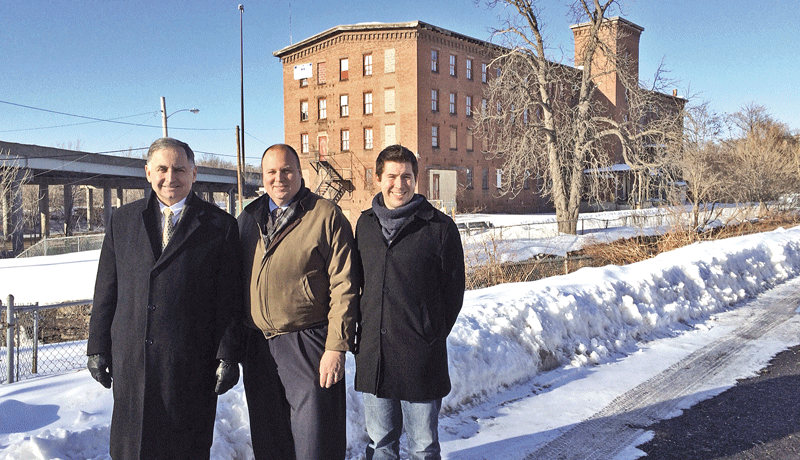
Community Spotlight Features
Lenox Aims to Become a Year-round Destination

Town Manager Christopher Ketchen

Town Manager Christopher Ketchen says winter recreation in Lenox includes snowshoeing and cross-country skiing.

On March 5, Yankee magazine named Lenox the “prettiest winter village in New England.”

The accolade was not only timely, but in perfect alignment with recent efforts by the town and the Chamber of Commerce to market Lenox as a year-round tourist destination.

“Although we are known for what happens here in the summer, we want people to realize there is a lot to see and do in Lenox 12 months a year, especially in terms of recreation and culture,” said Town Manager Christopher Ketchen.

Ralph Petillo agreed. “Lenox used to be perceived as a summer resort, but today it attracts people in every season, and the winter is the perfect time to come here, enjoy the beauty of nature, and regenerate the mind and body,” said the chamber’s executive director. “There is value in that, and this is a wonderful place to live, work, and play.

“Lenox has great cross-country skiing and snowshoeing in Kennedy Park and three downhill ski areas within a 20-minute drive,” he went on. “We’re also home to Canyon Ranch, and Travel and Leisure magazine ranked it as the number-one health spa in the nation. Bill Clinton went there five times last year.”

A second high-end resort that will add to the mix is in the approval process. The palatial, Gilded Age mansion known as Elm Court, which sits on almost 90 acres in Stockbridge with frontage in Lenox, was purchased for $9.8 million in 2012, and Travassa Destination Resorts & Spas, which runs high-end destination spas in Maui, Hawaii, and Austin, Texas, is hoping to transform it into an elaborate, upscale resort/spa with a restaurant.

In addition, plans are moving forward for a $15 to $20 million renovation of the historic, 29-acre Spring Lawn property, which will be become a 95-room, 14-building resort with a unique twist. “It will be open to the public, but will also offer memberships that will allow people to stay there at a reduced rate; the goal is to incentivize return customers and attract new clientele who like to visit the Berkshires, but don’t necessarily want a second home here,” said Gwen Miller, town planner and land use director.

The buildout of the property will occur in two phases. During phase one, the mansion will be turned into a 20-room inn with a restaurant, and the carriage house will be outfitted as a fitness center. Phase two, based on market demand, will include construction of a dozen low-rise buildings that will house an additional 75 hotel rooms.

“A number of older structures will be torn down, and the new buildings will be carefully sited,” Miller said. “The membership option will make it easier for people to come here, as they will know exactly where they will be staying. Spring Lawn is within walking distance to downtown and contains hiking trails and a skating pond with views of Stockbridge Bowl. The master planners really took the historic landscape design into consideration, and the views and trails on the property help make it a desirable location.”

The town is also being promoted by a number of popular venues offering a wide range of wedding packages. They include Blantyre (Castle), the Brook Farm Inn, and Chesapeake Inn of Lenox.

Recreational Opportunities

The Lenox Chamber of Commerce launched a phone app in late December. It is updated daily and lists restaurant specials, store sales, and things to see and do, as well as school closings and other town-related information. A number of businesses are also offering loyalty programs and promotions through the app, such as giving a 10th lunch free at a restaurant.

“We’re helping to shape the future by changing with it,” Petillo said, as he spoke about the new app. “People age 50 and under are much more tech-savvy than they were in the past, so we deemed it prudent to create this app, which we linked to Facebook and to our chamber website. It becomes a personal guide to what’s happening every day in Lenox and even has a section on weddings that lists the places that are available and the contact people, as well as a service directory with plumbers, electricians, doctors, lawyers, real-estate agents and other professionals.”
Keeping up with the times is important because the face of Lenox continues to evolve. Petillo said that, although it was once a summer getaway for the upper 2% of Americans, including the Vanderbilt and J.P. Morgan families, after Tanglewood opened 75 years ago and General Electric left Pittsfield, Lenox became the perfect place to establish year-round cottage industries.

“The number of tourist attractions here is growing, and last year Shakespeare and Co. extended its season,” Petillo told BusinessWest. “The Mount is now open eight months a year, and the National Museum of the Gilded Age and Ventford Hall Mansion and Gilded Age Museum are both open year-round.”

Special events are also staged to attract tourists, and the summer season will kick off with the town’s annual Memorial Day Races, which start and end at Tanglewood and include a marathon, half-marathon, 10k, and 5k, as well as a 15k trail race.

Last year, participants came from more than 25 states and nations, including Florida, California, Canada, the Philippines, and Brazil. “We look forward to having folks take part in this great event, especially since it helps raise money for Team Red, White and Blue, which supports veterans,” Ketchen said.

The town has also focused on promoting Kennedy Park, which contains 500 acres, is used by locals 12 months a year, and boasts several different entrances.

“It’s the recreational gem of the town and is located right in the center, off of Routes 7 and 20. It’s a five-minute walk from our downtown, which contains boutique shops and galleries and a plethora of restaurants, and it’s not uncommon to see mountain bikers stopping to get a coffee or something to eat,” Ketchen said. “But the park is also an ideal place to go snowshoeing, cross-country skiing, hiking, and horseback riding. People can rent skis and snowshoes at the Arcadian Shop, and horses at Berkshire Horseback and Undermountain Farm.”

Meanwhile, efforts are being made to revive the man-made Baker’s Pond, which sits in a remote area of the park. “It served as a water source for the cottage known as the Dormers during the Gilded Age and was acquired by the town years ago,” Ketchen said. “A number of trails go into that part of the park, but the pond has slowly filled in over time.”

Last fall, the town received a $100,000 grant from the state to restore the area, and plans were made to dredge the pond to remove invasive species, then refill it. Access to the trails is being improved, and Berkshire Community College is working with town officials to develop an environmental curriculum that will allow students to study the ecology around the pond.

“The town also hopes to eliminate hardy kiwi from around the pond. It is an invasive plant, and we are working with the Mass. Natural Heritage Endangered Species Program, under the Division of Fisheries and Wildlife, to do this,” Ketchen said, noting that Lenox is seeking a $15,000 state grant that would be matched by an equal amount from the city, if the Board of Selectmen votes to move forward with the project during its May 7 meeting. He added that Massachusetts Audubon’s Pleasant Valley Wildlife Sanctuary, which offers hiking on seven miles of trails, along with a number of other activities, is right around the corner from Kennedy Park, and has joined the effort to mitigate the impact of hardy kiwi on the properties.

Four-season Getaway

Petillo said Lenox was called “A Gem Among the Hills” in a Chamber publication in 1921, and he noted that the Church on the Hill at the entrance to Kennedy Park is the most-photographed church in New England.

Visitors can find its exact location as well as a lot more to see and do by downloading the new phone app, and Petillo believes the new technology tool, coupled with efforts to promote events taking place throughout the year, will help increase tourism.

“Our fall season has become as busy as the summer. Our Apple Squeeze and Harvest Festival features phenomenal food, artisans, and crafts, and celebrates life in Lenox. It’s Americana at its best,” he said. “And our annual Tub Parade marks the end of the summer, while re-enacting an event held in the Gilded Age. The men used to go hunting right before the cottages were closed for the summer, and while they were gone, the ladies would decorate small, horse-drawn carriages, then drive them through town when they returned.

“Lenox is steeped in history,” he went on, “and we are doing all we can to draw the tourist of today and tomorrow and let them know all that we have to offer.”

Lenox at a glance

Year Incorporated: 1767
Population: 5,077
Area: 21.7 square miles

County: Berkshire
Residential Tax Rate: $12.33
Commercial Tax Rate: $15.18
Median Household Income: $51,089
Family Household Income: $74,531
Government: Town Manager; Board of Selectmen
Largest Employers: B Mango and Bird; Cranwell Resort Spa and Golf; Guidewire Inc.; Boston Symphony Orchestra

* Latest information available
Community Spotlight Features
Chicopee Officials Take Balanced Path to Growth

From left, Mayor Richard Kos, Carl Dietz, and Lee Pouliet

From left, Mayor Richard Kos, Carl Dietz, and Lee Pouliet stand near the former Lyman Mill, which a developer plans to turn into 50 market-rate loft apartments.

Mayor Richard Kos is taking a multi-pronged approach to economic development in Chicopee.

Rather than focusing strictly on new initiatives, he and other city officials are taking steps to preserve and repair existing infrastructure, while preparing for the future.

“Balance is important. People like to see things that are different, but we also have to take care of what we have,” said Kos, citing a wide variety of projects that will help revitalize the downtown area, promote pride in home ownership, and pave the way for ambitious undertakings on sites once used for military housing, as well as the former Facemate and Uniroyal properties.

Since Kos took office for the second time 14 months ago, one-third of the senior management staff has changed, and new ideas are being generated. “Some positions were vacant, and some became open through attrition and retirement,” he said. “We brought in some new talent, and the people on board are continuing the work that has been done with fresh eyes, new ideas, and skill sets in a seamless manner.”

The effort includes making full use of City Hall and the auditorium on the third floor, which has been closed for years and is now being renovated. The graceful room contains beautiful stained-glass windows, two balconies, and architectural details difficult to replicate today, and Kos hopes that, when repairs to the crumbling plaster are complete, it can be used to televise all meetings of city officials as well as school events and other city functions. “We want to make sure everything we do is accessible to the public; that type of transparency is really good for the city,” he said, explaining that the telecasts will be also be put on the city’s website so people who do not have cable TV subscriptions can view them.

Through a partnership with Mass IT, Chicopee has also become one of the first cities in the state to offer free wi-fi service downtown. “We’re calling it Chi-Fi; it’s an initiative designed to bring people downtown,” Kos said.

Others include more public parking, and last month the Munich Haus restaurant purchased the former, long-abandoned Ferris parking lot on Center Street with help from the city, which included $150,000 in block-grant funding.

“They will make 15 of the 50 parking spaces public and will also create five new full-time positions,” said Carl Dietz, the city’s building commissioner and director of community development.

The city also purchased and demolished an abandoned, multi-family home on Front Street, and the lot will be used to create dozens of additional parking spaces.

Although Kos said a plan to convert the former Cabotville Mill into new housing units is not likely to happen, a developer is pursuing the purchase of the former Lyman Mill property on lower Front Street. “It’s very exciting, as he plans to turn it into 50 market rate, loft-style apartments.”

Lee Pouliot agreed. “The apartments will be built in a way that will allow people to work and live in them,” said the city’s acting planning director.

In addition, an innovative owner-occupied, multi-family grant program will kick off this month in Chicopee Center, Chicopee Falls, and Willimansett to help make properties in those neighborhoods more marketable.

“The city worked with Polish National Credit Union and Chicopee Savings on the program, and we will provide entitlements of up to $16,000 to help people purchase homes,” Kos said, noting that buyers must live in them and will receive $1,000 each year for up to 16 years if they remain in the homes. “We believe this will improve the quality of life; landlords who live in a property they own are more likely to keep it clean and hold tenants responsible for their behavior than absentee landlords,” Kos said, adding that he believes well-maintained homes and pride in ownership are far more effective in improving neighborhoods than additional police patrols and efforts to enforce compliance codes.

Another new project is about to begin in Aldenville. “Wells Fargo foreclosed on a very small, single-family home on 42 Grace St. and offered the city $10,000 to use toward its redevelopment,” Pouliot said. “We expect to demolish it and have students from Chicopee Comprehensive High School build a new home on the site.”

Restoring Vitality

Memorial Drive has been a busy commercial strip for decades, and it continues to add vibrancy. Ground will be broken this spring for a new PetSmart store at Chicopee Crossing that will create 50 new jobs. But even though the 3.7-mile corridor is flourishing, Kos said it is not being ignored.

“Memorial Drive is our major commercial area, and although it continues to grow, we want to see if there are ways to make it better,” the mayor told BusinessWest.

So, last fall, the city contracted with UMass and a group of students in the Architecture and Regional Planning master’s program who called themselves Hill House Planners, to undertake a study of the roadway. They divided it into three sections and examined traffic flow, the vacancy rate, potential redevelopment strategies, and how much space is available for green infrastructure, along with zoning conflict resolution in areas where commercial property abuts residential property.

The study was completed in December, and suggestions include reducing the speed limit, adding new signage and multiple roundabouts, creating a bicycle path (which would be of particular benefit to residents on the South Hadley end of the corridor), and installing new sidewalks on both sides of the street that would improve access to shopping and commercial properties.

Kos said the results of the study are helpful and under consideration. “It’s one more area where we are looking for new ideas,” he told BusinessWest, explaining that the undertaking is in line with his plan to maintain and improve things that work, while addressing problem properties and issues.

The old library building, which has become an eyesore in the city’s center since it was vacated in 2003 when a new library was built, is one of those problem areas. The City Council allocated funding to remove a significant amount of asbestos and lead paint in the interior, and EDM Achitecture has been chosen to examine possibilities for reuse. “It’s just part of what we are doing to remove impediments to progress through preparation,” Kos said.

Progress is also being made on a plan to convert the former Chapin School, located between Meadow and Chicopee streets, into 40 apartments for homeless veterans through the Soldier On program.

“The school has been vacant and unused for 12 years, and this will be great for the neighborhood, as the veterans in the program have a history of taking great pride in their homes,” Dietz said.

In addition, interest in the former Facemate site and the Chicopee River Business Park, located just off Route 291, has escalated over the past year, officials said.

“In the last six or eight months, new companies have leased space both inside and outside of the park, and we are anticipating an active spring,” said Dietz, adding that, in the next few months, the city will put out a request for proposals to redevelop about five acres of land next to the new, $8.2 million RiverMills Center on West Main Street, which was constructed after former Facemate factory buildings were demolished and hazardous waste was removed from the property.

Westover Air Reserve Base has always played a prominent role in the city, and Kos said a plan created to expand its use through partnerships will help it thrive, which is especially important in light of the budgetary cuts the government has been making at military installations across the country.

“The state has allocated $5 million to UMass to lease and transform a vacant building on the base into a National Aeronautics, Research, Development and Training Center, and private investments around or on Westover will also provide jobs,” Kos said, speculating that, at some point, an aviation training program could be established at Chicopee Comprehensive High School that would contribute to jobs within that industry.

Dietz added that Westover Metropolitan Airport Development Corp. is playing an important role in the joint effort to ensure that Westover remains open. The corporation oversees the airport as well as four industrial parks built on land vacated by the military.

“They are partnering with the base to make things more efficient so they can play a larger role in the aircraft-maintenance business,” he said. “As the private side grows, the military is able to reduce its costs.”

The corporation also hopes to develop an unused, 100-acre site near the airport which could attract new businesses related to the aeronautics industry.

Kos said the state has also given the city $1 million to help demolish antiquated Navy housing off of James Street on a 26-acre plot, which Chicopee acquired at no cost in 2011. The plan is to build a 4-megawatt solar farm on the property, leveraging the state grant with an additional $1 million from city coffers.

“The electricity that will be generated should save Westover $100,000 each year and will also save our residents money,” Kos said. “Plus, Westover will receive $900,000 from the state’s military bond bill to do energy-infrastructure work that will make it more efficient.”

Changes are also being made to other properties throughout the city. “We are completing $250,000 in improvements to Wisnowski Park, and the wading pool is being turned into a splash pool, and the City Council appropriated $185,000 to fix structural problems in the administration building on the former Uniroyal-Facemate property,” Pouliet said.

Future Possibilities

The city will continue to seek ways to redevelop unutilized properties, and Kos said officials from the Roman Catholic Diocese of Springfield told him they will consider building a new regional Catholic high school on the former Uniroyal factory site.

“Our city is strong; we have maintained our savings, our growth, and the services we offer, and a lot of our initiatives have received wholehearted support from the City Council and our legislative delegation,” said the mayor. “Chicopee is fortunate to have four representatives and three senators, led by Rep. Joe Wagner, as they have played a monumental role in our success.”

The mayor and other officials have high hopes for downtown and view it as an ideal location for new restaurants and businesses related to the healthcare industry.

“People come from all over Western Mass. to go to the Herbarium for holistic care, and the Munich Haus and Collegian Court have been real successes,” said Kos. “So, we believe the work that will be done on Interstate 91 for the casino will provide an opportunity for new restaurants in a spot with plenty of free parking that lends itself to future growth.”

During his recent State of the City address, he said the last year has been fruitful, but credited it to a team effort. “When I took office, I promised to work to make the city better. And I’m pleased to report that, together, we are doing that.”

Chicopee at a glance

Year Incorporated: 1848
Population: 55,717 (2013)

Area: 23.9 square miles

County: Hampden
Residential Tax Rate: $17.54
Commercial Tax Rate: $31.67
Median Household Income: $46,708 (2010)
Family Household Income: $57,760 (2010)
Type of government: Mayor; City Council
Largest Employers: Westover Air Reserve Base; City of Chicopee: ; J. Polep Distribution Services; Turbo Care Inc.
Latest information available

Community Spotlight Features
In Amherst, Public, Private Investments Bear Fruit

John Musante

John Musante says development projects that include incubator space bode well for the town’s future.

Town Manager John Musante says a plan to position downtown Amherst as a center for innovation is gaining momentum.

“One of the keys is to make it an attractive place where people can live, play, and start and grow a business,” he told BusinessWest, adding that the town is doing all it can to redevelop its downtown and strengthen its relationships with UMass Amherst, Amherst College, and Hampshire College.

A recently released report from the 24-member Town Gown Steering Committee, titled “The UMass/Town of Amherst Housing and Economic Development Plan,” outlines strategies, interventions, and recommendations to enhance the overall desirability and affordability of living and working in Amherst. The report is based on an analysis conducted by consultant U3 Advisors that cites the need for an increase in quality housing for UMass students, faculty, and staff that will lead to a stable balance and strengthen neighborhoods, as well as an expansion of the tax base, which could be achieved by encouraging entrepreneurial and research endeavors and targeting opportunities to support the business sector.

The special committee formed by UMass Amherst and the town of Amherst to address the common housing and economic-development opportunities delivered its final recommendations only two months ago. But a number of significant public and private investments over the past year have already led to change that will help bring the plan to fruition.

“Overall, 2014 was a breakthrough year for Amherst,” Musante said, citing examples of how public funding and private investment have worked together to pave a pathway to success.

Last October, the town was awarded a $1.5 million MassWorks Economic Development Grant to bury the utility lines in the north end of its downtown, which will allow investors maximum use of any available property.
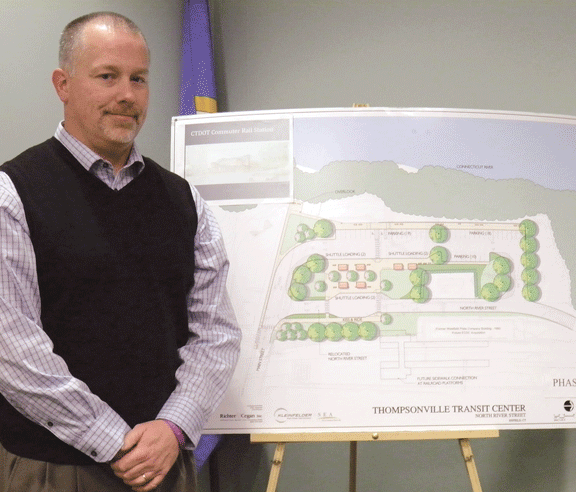
Meanwhile, Archipelago Investments LLC in Amherst has become a major player in that neighborhood and has ambitious plans to build two major, mixed-use, LEED-certified buildings there. The first is a five-story structure called Kendrick Place, which is under construction on a vacant lot on the corner of Triangle and East Pleasant streets across from Kendrick Park.

The ground floor will contain commercial space and a café, while the upper stories will house 36 luxury apartments with floor-to-ceiling glass, white-oak hardwood floors, stainless-steel appliances, and views of UMass and Amherst College. “We are tremendously excited about Kendrick Place,” Musante said.

The project is expected to be complete in August and is the second of its kind in Amherst by developers Kyle Wilson and David Williams, who invested $4 million into Boltwood Place, which opened in 2012 in the back of Judie’s Restaurant, featuring 12 loft apartments in a LEED-certified, award-winning, mixed-use building with 650 square feet of retail space on the ground floor.

Two months ago, Archipelago received approval from the planning board to build a third mixed-use, five-story building called One East Pleasant near Kendrick Place, on the site of the old Carriage Shops, which have been deteriorating for some time.

Plans call for demolition of the 52-year-old structure originally built as a motel before it was converted into shops in the 1970s, along with two additional buildings that house the Loose Goose Cafe and the law offices of Seewald, Jankowski & Spencer.

One East Pleasant will contain commercial and retail space on the ground floor and about 80 apartments on the upper stories. “The permits for the building have been approved. There is one ongoing appeal which will result in a short delay, but the goal is to have it built and occupied by 2017,” Musante said.

Both Kendrick Place and One East Pleasant will contain incubator and maker space on their ground floors.

“It’s an exciting component, and the developer is working with the town, the university, and the Business Improvement District to attract research and development spinoffs,” Musante said, adding that the report generated by the Town Gown Steering Committee shows UMass spent $194 million on research in FY 2013, and although 24 patents and 21 license and option agreements were issued, little of this potential was realized locally. Reasons cited include Amherst’s lack of space for startups, along with a lack of community among those that do exist.

Musante believes having incubator space close to the UMass campus in buildings where people can also live and play has real potential for the town, and free wi-fi and Internet service available downtown will also help to position it as an innovation district.
Sarah la Cour agreed. “Combining business and social space will make it easier for spinoffs coming out of the university,” said the executive director of the BID, as she explained that the business community is doing its part to promote downtown as a walkable, livable center.
Variety of Undertakings

The town adopted an innovative master plan in 2010, and Musante said one of its primary focuses is to concentrate on development downtown and in the village centers of North Amherst, East Amherst, Pomeroy, and Atkins Corner. “The plan contains an anti-sprawl, smart-growth strategy.”

La Cour concurred, saying this is important because the town wants to preserve its farmland.

“We want to balance and protect our natural resources while creating more density downtown and in our village centers, and the types of projects envisioned in the Town Gown report follow the same principles as the master plan,” she noted. “And we are seeing that vision begin to take shape. Things have really moved forward in the last year or two, and since zoning was passed in 2012 to increase density downtown, we’ve seen private investment that will create incredible opportunities for an innovation district on the doorstep of the Commonwealth’s flagship campus.”
Private investment is also occurring in North Amherst, and W.D. Cowls Kamins and Jones Group Realtors have been seeking partners to build what they are calling the ‘Mill District’ in a one-block radius on the commercially zoned 10-acre former sawmill and Trolley Depot site in hopes that it will become a center for arts and entertainment.

Developer Cinda Jones built and opened the Trolley Barn there in December. It contains retail space on the ground floor and four large apartments above.

“The commercial space is completely occupied, and a salon and breakfast place in the Trolley Barn have become part of the village,” Musante said. “Jones Library has a branch in the Mill District, and there is a recreation area within walking distance. As a result, more and more people are becoming excited about its potential as a gathering place for families and young people.”
He added that Atkins Farm Market plans to open a satellite location in the former Cow Barn there this summer after it finishes renovating the formerly vacant structure. “There are also other opportunities available within the footprint.”

But ultimately, Amherst is a college town, he continued. In addition to UMass, it is also home to Amherst College and Hampshire College, and Musante said they are all making investments in the future, which include the two new science buildings UMass has put up over the past five years. “There has been a lot of positive momentum under the leadership of Chancellor Kumble Subbaswamy, and the university has been working collaboratively with the town,” he said. “Amherst College, which sits at the edge of town, has also been active in the BID and is an incredibly ambitious partner. They are planning to build a $200 million state-of-the-art science center and have some residential housing under construction.”

In addition, Hampshire College President Jonathan Lash is an internationally recognized expert on practical solutions to global sustainability, climate change, and development challenges. “He has really been positioning the college as a leader in environmental education and sustainability,” Musante said.

Hampshire’s R.W. Kern Center, which is under construction, is one of only a handful of buildings in the country that meet the rigorous requirements of the Living Building Challenge. “Jonathan is re-imaging the campus, and this will become the portal building,” said Musante, noting that it will house the admissions office.

The 50-year-old Hitchcock Center for the Environment in Amherst is also active in town and is in the middle of a capital campaign to build a new facility on the Hampshire College campus, which will be another Living Building.

Solid Ground

Musante said the development projects that were a dream when the master plan was created five years ago are beginning to be realized.

“Two studies completed in 2013-14 show pent-up demand for housing, and the new projects by Archipelago Investments will meet that demand,” he told BusinessWest. “Kendrick Place will become the gateway to our downtown, and we are expecting a wide range of tenants: college and university faculty and staff members, young retirees, and some students. We are a college town, so having more residential units in the center is key to strengthening the entire BID, as it will increase foot traffic downtown.”

The Town Gown Steering Committee recommended creating a University-Town of Amherst Collaborative to continue their combined efforts, and also suggested the town would benefit from hiring an economic-development director.

Musante said he and Subbaswamy will announce the next steps they will take in the weeks ahead, and he included funds to pay for an economic-development director in his budget recommendation.

“We are working to build relationships and strengthen our partnerships and have all the permitting processes we need to bring great concepts and ideas to reality,” Musante said in conclusion. “Amherst and its downtown are really on the way to becoming an innovation hub. We plan to leverage the research and development spinoffs from UMass, and we have a road map for the town to reach its full potential. The momentum here is palpable; it’s a tremendously exciting time.”

Amherst at a glance

Year Incorporated: 1759
Population: 37,819 (2010)

Area: 27.8 square miles

County: Hampshire

Residential Tax Rate: $20.54
Commercial Tax Rate: $20.54
Median Household Income: $53,191
Family Household Income: $96,733
Type of government: Select Board, Town Meeting
Largest Employers: UMass Amherst; Amherst College; Delivery Express; Hampshire College
* Latest information available

Community Spotlight Features
Greenfield Crafts Detailed Road Map for the Future

Mayor William Martin

Mayor William Martin says a new rail platform will help Greenfield attract residents and allow businesses in Springfield to draw from a larger pool of employees.

‘Independence.’

That’s a word Mayor William Martin uses frequently, and a goal he has set for Greenfield that the city is well on its way to achieving, in his estimation.

“Synonyms are ‘sustainability’ or ‘resiliency,’ and that is where we have focused our economic-development efforts,” he said. “We want Greenfield and its residents to become as independent as possible.”

To that end, an important initiative kicked off last month when Greenfield Light and Power began operating as a municipal aggregation plan to provide electricity. The town gained final approval and certification for the plan from the Department of Public Utilities in October.

Greenfield has a contract with Peregrine Energy Group to develop the innovative initiative, which will not only bring lower-cost electricity to the community, but includes measures to procure it from renewable sources.

“Our price is fixed and is about .0125 per kilowatt hour,” Martin said, adding that the variable rate from Western Mass. Electric was about .014 per kilowatt hour at the time of the interview. “Although it may not seem like much of a difference, it adds up when you factor in millions of kilowatt hours,” he explained.

The mayor said it’s important for the town to be able to offer competitive pricing because reports from the U.S. Small Business Bureau show small businesses account for 60% to 80% of the jobs in the U.S., and the top obstacle they face in New England and Massachusetts is the cost of electricity.

“We want to continue to help existing companies in Greenfield expand as well as facilitate and accommodate the Yankee ingenuity and entrepreneurial spirit of businesses that are an idea in someone’s garage,” said Martin as he outlined steps taken over the past three years to bring the municipal aggregation plan to fruition.

Greenfield Light and Power also plays into Greenfield’s commitment to a green economy and environment, because power purchased will be generated from renewable energy sources.

“We were the first city in the state to be designated as a green community,” Martin said. “We worked hard for this and can only get better. We already have a 2.5-megawatt solar farm and can create new solar and hydroelectric projects. We will eventually produce all of the electricity that we need and move it into our aggregation plan.”

The successful establishment of the municipal aggregation plan, coupled with the Green Communities Act of 2008, which gave municipalities the opportunity to seek independent telephone and Internet service, laid the groundwork for a telecommunications or (fiber-optics) light plant also designed to further Greenfield’s independence.

“I want us to have our own Internet provider and phone company,” Martin told BusinessWest, noting that he conceived the idea three years ago.

Steps to establish what’s known as Greenfield TelNet were enhanced in 2012-13 when the Mass Broadband Institute laid seven miles of fiber-optic line in the town as part of a project to increase broadband access to communities along Interstate 91 (more on that later).

Other projects designed to make Greenfield a more attractive place to live, work, and own a business include the town’s new, handicapped-accessible rail platform located behind the John W. Olver Transit Center. It was completed in December, and in addition to stops by Amtrak on its reconfigured Vermonter line, commuter rail service has been proposed that would run between Springfield and Greenfield four times a day, with stops in Holyoke and Northampton as well as Springfield.

Martin said a state transportation-funding bill passed last year includes $30 million to acquire and retrofit older MBTA commuter-rail locomotives for the line.

He hopes the new rail service will entice people to live in Greenfield and commute to jobs in Springfield, or travel to the town from Vermont, park there, and use the train to get to work. “People hired for the MGM casino could avoid congestion on I-91. Plus, it will give businesses in Springfield options to hire people out of the immediate job pool,” he said.

Net Gains and Concrete Results

Martin’s telecommunications proposal received approval from the Town Council two years in a row, and the town is waiting to get the legislative approval necessary to hold a special election for voters on April 14. Martin hopes the approval will come through and residents will approve Greenfield TelNet at that time.

However, steps have already been taken in an effort to shrink the time frame to implement service while following the process. The town partnered with Holyoke Gas and Electric to ultilize its fiber-optics network to create voice over IP telephone service and also contracted with Crocker Communications to install and maintain it. As a result, the phone service was changed over to VoIP in Town Hall several weeks ago, which Martin said will save about $158,000 a year. After wrinkles are worked out in the system, the town’s schools will also be outfitted with the new phone system.

“The next step will be Internet access, and we hope to develop strong partners to provide and service it for the city and for our residents and businesses at a future date, which could result in a huge cost savings for everyone. We want to guarantee the future use of fiber optics and make sure that bandwidth is not reserved for those who can afford higher rates,” Martin said. “Our plan includes installing wireless Internet access downtown in the future, which would be free to housing authorities. It would also guarantee the existence of Greenfield Community Television, and the possibilities would be unlimited.”

However, he added that the town is in discussions with Comcast to renew its contract, because it wants to leave all its options open.

Meanwhile, Martin said Greenfield has a number of other significant projects underway to spur economic growth. Construction of a new, $66 million Greenfield High School is expected to be complete in August, and the new $60 million Franklin County Courthouse is slated to be finished in two years.

“There is also a lot of private investment taking place,” the mayor told BusinessWest, noting that the owner of the block downtown that houses Wilson’s department store is putting together a proposal for a hotel and banquet hall that would occupy the upper stories of the building over the store and include new construction on the Chapman Street side of the property, which abuts a parking lot.

It would recreate the 19th-century hotel that once existed there, Martin said. “It served the bustling economic activity in the area, and was supported by industry and businesses. We haven’t seen the proposal yet, but a new boutique hotel would be important, as it would give people a place to stay overnight and would be another asset to our downtown.”

Patriot Care, a licensed and experienced medical-marijuana company, is also nearing the permitting phase for rehabilitating a historic building on the western part of Main Street.

“The $1 million project is expected to begin in the spring,” Martin said. “We are focusing on rehabilitating buildings from the early 1900s of Greenfield’s heyday.”

He added that the state has accepted a proposal to conduct a feasibility study for a new library, the school administration office is moving from Davis Street to Main Street, and the public safety commission has selected a site and formed a committee to move forward on a new public-safety complex that would house the fire and police departments.

In addition, “the Ford Toyota dealership on Main Street is building two new showrooms behind its present structure, which will separate the brands and showcase them in larger, more modern facilities. In addition, a new $2.5 million Cumberland Farms on Federal Street will be finished in a few weeks, and there is a proposal for a new Dunkin’ Donuts and Sunoco Convenience Store on Federal Street, which is the second-largest commercial area in the city.”

Baystate Franklin Medical Center is also adding a new, $23 million surgical wing to the hospital, which is expected to be open next year. In addition, Baystate purchased the former Holy Trinity School and convent across the street and has plans to demolish them and erect a medical professional building on the property.

Another project that has ties to the city’s history involves the Wiley and Russell Dam. It was scheduled to be demolished years ago, but the town requested that the Department of Conservation and Recreation Office of Dam Safety conduct a new review last November. As a result, it has been reclassified from a significant-hazard-potential dam to a low-hazard-potential dam, which means a failure would not be likely to result in any loss of life or significant damage to property.

The dam, which has a V-shaped waterfall just upstream of the Meridian Street Bridge, does need some repair. But in addition to making plans for that work, Greenfield officials are exploring the possibility of constructing a fish passage at the site with the U.S. Fish & Wildlife Service and the Massachusetts Division of Marine Fisheries.

Martin said the dam speaks to the town’s history, and in the 1800s, two businesses existed at its base, which include a company whose genesis led to the development of Kennemetal Inc.

Last July, that firm announced plans to expand its Greenfield operation with a $5 million investment in infrastructure, new equipment, and machinery. The expansion will result in 50 new jobs, which will be added over the next five years. Martin said the company’s decision to invest in the town is particularly significant because Greenfield was pitted against a site in South Carolina that Kennemetal considered after it closed its factory in Vermont.

Argotech is another Greenfield business that employs skilled workers and has plans to expand. “The company is based in our industrial park and is investing $20 million over the next 10 years in new equipment,” the mayor said.

He explained that the city is working with Greenfield Community College, Franklin County Technical School, and the Regional Employment Board to make sure both of these companies will have access to a pool of people trained in the specific job skills required in their industries.

“We talked about this and about our utility plan during our pitch to Kennemetal, and told them what we could provide in terms of training and power savings,” Martin said. “It’s the type of accommodation and collaboration we facilitate to help large businesses move to Greenfield or expand here.”

The town has also taken over a 100-year-property on an 11-acre site on Federal Street, and put out a request for proposals to redevelop 75,000 square feet of former factory space in a commercial condominium on the site obtained in December through the Bankruptcy Court. Greenfield also purchased the undeveloped half of the property from the court, which contains three playing fields on 6.62 acres the city had been leasing for $1 a year from Lunt Silversmiths.

“The entire property has been rezoned,” Martin said.

He added that Greenfield’s location and affordable housing also make it an attractive place to live and work. “We are the junction between Routes 2 and I-91 and have been known as The Crossroads since the Village of Deerfield was established,” he said. “Businesses are expanding here and are coming to Greenfield because they see it as a safe investment. We have shown that we can maintain a stable tax base of $1.36 million, and we are very competitive when it comes to the cost of electricity.”

Secure Future

Martin believes the measures that Greenfield is taking to become independent will bear fruit and make the town more resilient.

“Some people are guessing that the future will be different. But we guess we will be prepared for whatever it holds; we’ll have as many options as possible,” he told BusinessWest.

And that’s a solid blueprint for a sustainable economy.

Greenfield at a glance

Year Incorporated: 1753
Population: 17,456 (2010)

Area: 21.89 square miles

County: Franklin

Residential Tax Rate: $22.51
Commercial Tax Rate: $22.51
Median Household Income: $33,110 (2010)
Family Household Income: $46,412 (2010)
Type of government: Mayor; Town Council
Largest Employers: Baystate Franklin Medical Center; Town of Greenfield; Greenfield Community College

* Latest information available

Community Spotlight Features
Spirit of Innovation Is Taking Hold in Pittsfield

Mayor Dan Bianchi

Mayor Dan Bianchi says the new Berkshire Innovation Center will be a boon to local businesses and will draw attention to the western part of the state.

The city of Pittsfield has a new project in the planning stages that Mayor Daniel Bianchi calls “amazing.”

It is the Berkshire Innovation Center, which is so innovative that it qualified for funding from a $1 billion investment the Commonwealth is making in projects that further the life sciences.

“We’ve been working with the Massachusetts Life Sciences Center in Boston on this for the last few years,” Bianchi said, adding that when he heard about the state’s plan to invest in the field, he thought about how Pittsfield could become part of it.

His initial idea was to build an incubator that would draw entrepreneurs from the Boston area to Pittsfield, which is home to many small, applied materials and plastics companies that make products such as sutures and suturing equipment.

But when it became clear that this concept was not feasible, a new plan was formulated that led to a $9.7 million capital grant from the Life Sciences Center to build the Innovation Center in the William Stanley Business Park on the grounds of the former General Electric complex that dominated this city’s business community for decades.

The new, non-profit facility will enable shared research between local companies and educational institutions; early-stage production and commercialization of products; and workforce training at the site.

Bianchi said officials toured Rensselaer Poly-technic Institute and Hudson Valley Community College’s new science centers, which have been very successful, to help them formulate the plan.

Local manufacturing companies, including General Dynamics, SABIC and Crane & Co., as well as regional educational institutions such as the State University of New York’s College of Nanoscience, MassMEDIC, the UMass campuses in Amherst and Lowell, Berkshire Community College, McCann Technical School, and Massachusetts College of Liberal Arts have already expressed interest in becoming affiliated with the center. 

“We’ve received more than 20 letters of interest,” said Bianchi, adding that the center will give local companies access to training and advanced technology, including a clean room, 3-D prototype printers, and laboratories with reverse engineering capabilities that will allow them to make new products or improve existing ones. “There are some pretty creative companies in this area, but in order to grow they need this type of facility. A company making complex compounds will be able to work with researchers at UMass Lowell as well as at the Nanotechnology Center in Albany.”

The center will also contain incubator space for entrepreneurs. “It will be unique, and people at the Life Sciences Center are really excited about it,” the mayor said, noting that the facility will be sustainable and generate income through tiered memberships, usage and rental fees on equipment, training, and sponsorships from regional companies.

Ground will be broken this winter, and Bianchi said that if meaningful relationships can be created, it will mean “great things for local companies.”

Meanwhile, other forms of economic development are taking place in this former mill city, everything from new investments in the community’s burgeoning downtown, to more steps to bolster an already thriving creative economy,

For this, the latest chapter in its Community Spotlight series, BusinessWest talked at length with Mayor Bianchi about what’s next for the largest city in Berkshire County.

Downtown Transformation

Among the many new developments in Pittsfield is a boutique hotel taking shape within a building on 273 North St. that dates back to the 19th century. The 68,000-square foot, $14 million project will include 42 unique rooms, three conference areas, an atrium with a skylight, a bar, a revolving door, and a marquee sign with “Hotel” spelled out in lights over the entrance.

“They’re keeping the old windows as well as the 8-by-8 posts in the building, and no two rooms will be the same,” said Bianchi in a voice brimming with anticipation. “It’s very exciting because Berkshire County needs more hotel space, and it will really jazz up this part of North Street. The Crown Plaza and area bed and breakfasts are booked solid all summer, so the owners of the property believe it will be a great destination.”

The popular Spice Dragon Restaurant, which was located in the building, has closed, but a new eatery, which is yet to be determined, will take its place.

“The hotel is only a couple of blocks from the Barrington Stage Company and is right behind City Hall,” Bianchi said, adding that it will be a boon to business travelers as well as tourists.

Other improvements are also being made to North Street via a streetscape plan, and the city was able to procure money from the state much earlier than it planned to complete it.

“The work began about six years ago and we expected it would take two more funding cycles to finish it,” Bianchi said, noting that the first phase of the project ran from the corner of East Housatonic Street to Columbus Avenue and included new lighting, sidewalks, and plantings.

“But we were able to leverage the massive investment made by Berkshire Medical Center and private investors,” he continued, adding that the hospital’s new day-surgery center, parking garage, and wound clinic, combined with the boutique hotel and renovation of the Frank Howard Building (more about that later) played into the equation and convinced state officials to grant the city $4.5 million to complete the streetscape work along an additional three blocks. “We received the money six months ago and we hope the infrastructure improvements will lead to an increase in private investments.”

To that end, work on The First Street Common downtown will also be completed in the spring. “It’s one of our largest urban parks and dates back to the early 19th century,” Bianchi said. “It’s a two-minute walk from City Hall and is very important. It has a new spray park and a performance center, and Shakespeare and Co. will stage events there this year.”

Market-rate housing is being built in the Frank Howard Building as part of an historic redevelopment plan that will convert the underutilized structure into 14 apartments, with 10,000 square feet of storefront retail space on the ground floor.

In addition, the Anota Building will also be converted into 25 units of housing with commercial space on the first floor.

“The work will begin in the spring, which is wonderful, because we can’t seem to keep enough market-rate housing downtown,” Bianchi said. “Eleven new units were completed in the old Notre Dame Elementary School at the end of 2013 and they were immediately rented. Encouraging people to live downtown is part of our master plan, because there are 6,000 jobs in the downtown area. So, our downtown is being completely transformed.”

A complete analysis of every street in Pittsfield was also recently undertaken by the engineering firm Kimley-Horn Associates Inc. “It will help us take a scientific approach on how to expend our limited resources,” Bianchi told BusinessWest as he spoke about how the condition of each roadway, coupled with information on when utility work will be done, will make it possible for officials to prioritize work and avoid resurfacing roads that will be torn up a year later. “The overall condition of our streets is good, but the study is important because streets are something everyone notices, whether they live here or are just driving through the city.”

Planning for the Future

The city is also building a new, comprehensive high school. “It’s in the design stage and will have a huge vocational element,” Bianchi said, adding that when he first became mayor and began talking to small business owners, he was reminded that years ago high school students in the vocational track spent every other week working at local companies, which helped them advance their skills and benefitted local companies.

“The school has had an internship program, but the limited number of hours students spend at local businesses does not give them much exposure to their trade, and provides very little value to companies,” he noted. “So we’re framing a new educational model that will benefit students and our small businesses. There has to be a rigorous academic component to it, but there are waiting lists in the state for vocational schools.”

The goal, he continued, is to create a system that will prepare students who don’t want to pursue higher education to go directly into the workforce after graduation.

Courses of study will range from plastics and applied materials to early childhood education, and since Berkshire Medical Center is a large area employer, Bianchi surmises that students who enroll in the latter field of study may decide to become a nurse or pediatrician.

“Vocational education shouldn’t be a limitation, and the high school has to encompass a lot more than a new building. It has to offer a new model of education,” he said, adding that a program in horticulture could plant seeds of interest in farming, which is a growing venture that is being embraced by young adults in the Pioneer Valley again. “I think we can offer our young people some wonderful opportunities, which will also help small and medium-size companies to grow.”

In addition, Pittsfield is creating a partnership with Berkshire Community College that will allow students to complete courses and earn college credits while they are still in high school.

The mayor told BusinessWest that Pittsfield offers a wonderful quality of life, and the hope is that the Berkshire Innovation Center, new high school, and growth downtown will help attract people to the city and advance economic growth.

“We are too small not to have every move integrated, so every project has to have an economic development connection, whether it is housing, entertainment, educational or a new hotel. But we can offer young people a wonderful middle class life and a nice home can be purchased here for $175,000,” he said.

And with the spirit of innovation and change taking place in the city, Pittsfield’s hopes are likely to become reality.

Pittsfield at a glance

Year Incorporated: 1891
Population: 44,057 (2013)

Area: 42.47 square miles

County: Berkshire

Residential Tax Rate: $17.15
Commercial Tax Rate: $35.17
Median Household Income: $42,114
Family Household Income: $56,896
Type of government: Mayor; City Council
Largest Employers: BHS Management Services Inc.; Berkshire Medical Center; BMC Hillcrest Campus; Sabic Innovative Plastics

* Latest information available

Community Spotlight Features
In Holyoke, Municipal Investments Pay Dividends

Mayor Alex Morse

Mayor Alex Morse says Holyoke has been a leader among area communities in efforts to build a creative-economy sector.

When Alex Morse was elected mayor of Holyoke in 2011, he was determined to revitalize the city and alter the way people thought about it.

“My number-one job was to change the perception that Holyoke’s best days were behind us,” he said.

His efforts have been largely successful, and dedicated planning and teamwork have led to major investments in infrastructure and noteworthy projects.

“Good things have happened in the last year, and there are a lot of shovels in the ground. People can see things moving forward, which is a sign that the economy in Holyoke is getting better, and we will continue to put more shovels in the ground this year,” Morse said. “The city is on a positive trajectory.”

The most significant undertaking is the new, $3.5 million passenger-rail platform being built on Dwight and Main streets. “We broke ground on Dec. 22, and when it is finished in September, it will be the first completed rail platform in Western Mass.,” the mayor said.

The project is a reflection of foresight, because when Morse took office, there were no plans for a commuter-rail stop in Holyoke. “But it was a huge economic-development opportunity, and although there were times when funding was short, we were able to get $4 million in state and federal funds for it through MassWorks grants; it has been paid for without taking any money from local sources,” Morse said, adding that Marcos Marrero, the town’s Planning and Economic Development director, worked closely with the state Department of Transportation, “and we made it a priority project, as it is integral to the revitalization of our downtown.”

In addition, Morse said new businesses have opened and apartments are under construction (more about that later) that will help to reinvigorate the city.

“We see ourselves as part of the Springfield/Hartford metro area, and have a lot of space available that is very affordable. People are recognizing that, and folks from as far away as San Francisco are investing here,” he told BusinessWest, citing the purchase of the Wauregan building on 384 Dwight St., which is co-owned by San Francisco artist Scott Reilly, and adding that Vertitech IT moved its national headquarters to Holyoke last year, and the city helped the company work with Holyoke Community College to find employees.

Expanding the creative-arts community has been a cornerstone of the city’s economic-development strategy, and Morse hired a creative-economy coordinator shortly after he took office. “We’re the first community in the state to have a full-time person dedicated to bolstering the creative economy. It is a job creator that generates a lot of revenue, and we have seen an uptick of artists moving here, and a spike in the development of makers spaces,” he said.

They include Gateway City Arts on 91-114 Race St., which was founded in 2012 by artists Lori Divine and Vitek Kruta with a cash incentive from the city. “The business provides space in which craftspeople work, teach, and hold events. It has become an incubator space for artists,” Morse said.

“People are amazed at the amount of talent we have in Holyoke, and on any given night, you can see cars parked on Race Street for an art gallery, opening show, or performance,” he added. “We’ve taken it very seriously.”

He also pointed to the Brick Co-workshop Co. on Dwight Street as another example of success. Artists representing 10 different trades have made it their home and are helping to promote the city as a center for arts and crafts. Plus, the Holyoke Creative Arts Center, which provides classes at a minimal cost, has plans to move from 400 South Elm St. into the three-story, red-brick Wauregan Building, located in the newly designated Art and Innovation District, later this month.

Time and effort has also been spent to encourage people in the community to open businesses, and Holyoke was one of six cities named as a winner of the Working Cities Challenge. It was sponsored by the Federal Reserve Bank of Boston, which identified 21 working cities whose median income was lower than the state average, then challenged them to create innovative proposals that would help provide employment.

Holyoke’s winning program is called the Stimulating Potential and Accessing Resources or Knowledge Initiative (SPARK). Its goal is to link the Massachusetts Green High Performance Computing Center with the city’s innovation-economy strategy and increase the number of businesses owned by Latinos. The initiative is being led by the city in partnership with the Greater Holyoke Chamber of Commerce, and is supported by other partners in the public, private, and nonprofit realms.

Morse said the idea is to create a pipeline that will help Latinos who are interested in the creative arts see themselves as entrepreneurs and open businesses. “We want to continue to build on our local talent and have hired a director for the program,” he said, adding that the city will receive $250,000 over three years to implement the program.

Plethora of Projects

When a city invests in itself, Morse said, it sends a message that it is willing to partner with businesses to grow the economy.

To that end, Holyoke boasts a new library and senior center, and also kicked off Phase 2 of a $4.3 million Canal Walk project on Race Street over the summer. Phase 1, which runs between Dwight and Appleton streets, is complete, and the second section of the walkway will include a foot bridge over the canal.

“This is just one of the improvements we’ve made to catalyze retail businesses along the canal and make our downtown walkable,” Morse said.

Vibrant metropolises also contain residential living space, he added, noting that the city is making progress on this front as well. A groundbreaking ceremony was held in August for a $20 million project that will transform the former Holyoke Catholic High School into 55 one- and two-bedroom apartments. The city has been working with Denis Walsh, who owns Weld Management, for several years on his vision to create the new residences in the 74,000-square-foot building, which is set on 2.3 acres.

“The prospect of getting more people to live downtown is exciting, and this is a great example of a public/private partnership,” Morse said, noting that the city contributed $750,000 toward the project. He added that a $1.4 million renovation of Veterans Park, which can be seen from the building, was completed last year.

The Holyoke Transportation Center also overlooks the park and contains a café on the first floor operated by the Log Cabin Banquet and Meeting House. Holyoke Community College holds classes in the building, and it is also home to a Head Start program.

“The conversion of Holyoke Catholic High School will complete that block and bring more life to the neighborhood,” Morse said, adding that Walsh is also developing high-end, market-rate apartments on the upper floors of a few other buildings.

One challenge the city faces, however, is a lack of eateries downtown. Attracting restaurateurs has been difficult because liquor licenses have not been available. In order to mitigate the problem, Morse put together a proposal that received approval from the City Council and the state, which will give Holyoke 13 additional liquor licenses.

“The caveat is that they can only be used for full-service restaurants in the downtown urban-renewal district,” the mayor said. “Although a liquor license can go for upwards of $100,000 on the open market, these will only cost $10,000 because they’re being offered as an economic incentive. We plan to hold an event later this month to explain what is involved, and have invited people in town as well as restaurant operators from places that include Worcester, Hartford, Amherst, and Pittsfield.”

Plans have also been made to address the former Parsons Paper Co. site, which has been an eyesore since a fire devastated the property in 2008. Northeast Utilities has provided $250,000 to assess the contamination, demolish what remains of the buildings, and clean up the brownfields, as part of a mitigation agreement connected to a former electric plant near the dam and canal.

When the work is complete, the property will be put on the market, and Morse said a business has already expressed interest in the site.

Meanwhile, Divine and Kruta, who opened Gateway City Arts, also purchased the Steam Building on Race Street last year and are turning it into office space.

“The city and Holyoke Community College recently announced that HCC is moving its entire culinary-hospitality department downtown, and the Steam Building is being considered as one of the potential sites,” Morse said. “We are hoping to pair the college program with a full-service, privately owned restaurant.”

Private-sector growth is also occurring, and Marcotte Ford on Main Street recently broke ground on an $8 million expansion. “We worked hard to keep them here,” Morse said. “They were landlocked, but were able to purchase an old dealership next to them. We’re working to help them get some city land between the properties as well as negotiating a tax incentive.”

Bright Future

Morse said a number of other projects are on the horizon, among them the redevelopment of the old Lynch Middle School.

The project was put out to bid last spring, and the city chose Frontier Development from the firms that responded. It will create 25,000 square feet of retail space in the building with the opportunity for expansion, which will lead to jobs and turn a non-taxpaying property into one that generates taxes, Morse told BusinessWest. “Plus, we think it will bring people to the city, as it’s right off the highway.”

In addition, the recently decommissioned Mt. Tom coal plant will be assessed to determine what it would take to clean it up and reuse the property.

The mayor said the projects that have come to fruition have not happened overnight, and the effort and thought that have gone into them will continue.

“Today,” he concluded, people see Holyoke as a city on the rise.”

Holyoke at a glance

Year Incorporated: 1850
Population: 40,135 (2012)

Area: 22.8 square miles

County: Hampden

Residential Tax Rate: $19.04
Commercial Tax Rate: $39.74
Median Household Income: $33,030
Family Household Income: $36,262
Type of government: Mayor, City Council
Largest Employers: Holyoke Medical Center; Holyoke Public Schools; Holyoke Community College; Amica Mutual Insurance Co.
* Latest information available

Community Spotlight Features
In Enfield, Growth Efforts Focus on Thompsonville

Peter Bryanton

Peter Bryanton says Thompsonville was a thriving center in its heyday, but may be on its way back.

Enfield town officials have had a revitalization plan for the village of Thompsonville for more than two decades now. It was created in 1992 after the former Bigelow-Sanford Carpet Co. was transformed into a 470-unit apartment complex.

Community Development Division Director Peter Bryanton said that Thompsonville was a thriving center in its heyday, with stores, eateries, and businesses that benefitted from the people who lived in the neighborhood and worked in the Bigelow factory. But after the mill closed in 1971, the area began to languish, and many neighborhood businesses closed their doors.

However, when construction on Bigelow Commons began, small businesses began to open again. “Town officials thought Bigelow Commons was a new starting point and formed a committee to work toward revitalizing the village. The Thompsonville Revitalization Strategy Plan was created as a result of their effort, and although it was a good plan, it was never implemented due to a lack of funding and resources,” Bryanton told BusinessWest, adding that updates were made in 2010.

But over the past year, a great deal of progress has occurred, and what was once a dream is fast becoming a reality. In fact, the town held a recent breakfast for commercial real-estate investors, developers, consultants, and other interested parties, which was attended by more than 100 people. The goal was to let them know about projects and new initiatives that have drawn residents and tourists into Thompsonville, and why it is has become a desirable investment.

“We told people what we’ve done and where we are headed, and we also created a book for them that shows every piece of property available in Enfield,” said Courtney Hendricson, assistant town manager of Development Services, adding that the impetus behind the recent initiatives was the announcement that a commuter rail line linking New Haven, Hartford, and Springfield will begin operating in 2016.

“Our plan revolves around building a new, multi-modal transit center that will include commuter rail and bus service; we know that many people want to live near these stations,” she said. “Rail service will make it easy to get to different places without owning a car, and surveys show that people in their 20s and 30s overwhelmingly want a walkable lifestyle. There is generally a 30% increase in property values within a half-mile of a transit station.”

Bryanton agreed. “Revitalization is finally happening; five years ago it was just an idea, but now it’s a reality. Once Enfield has commuter rail service, it will become a destination for people looking for a lifestyle based around public transit — we just need to get the transit center built,” he said, adding that it will be located in the former Westfield Casket Hardware building on 33 North River St.

He added that the four-story structure, which sits on the Connecticut River, is owned by Enfield Community Development Corp. and is in good shape.

“The ground floor will be used as the entranceway to get upstairs to the second floor, where the rail platform will be located. The third and fourth floors will be turned into loft apartments,” Bryanton said, adding that a portion of space on the first and second floors will also be designated for mixed use, which will allow people to shop, eat, and do business at the station.

However, land is needed to build a parking lot and a bus turnaround, and the town has been negotiating with Northeast Utilities about a plot adjacent to the building that was once home to a power plant. It is contaminated, so the negotiations are focused on who will pay for the cleanup, which will likely be a joint effort financed with brownfield grant money and funds from NU.

“In addition to the parking lot and bus turnaround, we also plan to build a new riverfront park on the property,” Bryanton said.

Town officials are lobbying the state and federal government to get funding to build the transit platform. “State officials told us they will build it after the rail service begins, but that means it would not stop in Enfield when it starts up, which is key to our development focus,” Hendricson said.

However, work is progressing, and Connecticut recently launched the Hartford Line. The commuter rail service will use Amtrak’s New Haven–Springfield Line and supplement existing intercity rail services between the two cities. The project is a joint venture between Connecticut and Massachusetts, with support from the federal government.

Once the line is operational and the transit platform has been built, Enfield officials say, they plan to focus their efforts on promoting public transportation, which will help spur private investment in the village.

Multi-faceted Approach

Hendricson said the town’s economic-development efforts rest on five pillars.

The first is an initiative called Riverfront Recapture, which involves capitalizing on access to the Connecticut River. “It’s our greatest natural resource and borders many of our neighborhoods as well as downtown Thompsonville, so we feel it has a lot of potential,” she explained, adding that the town plans to build a hiking and bicycling trail along the river, extending from Fresh Water Pond to the business corridor and down to the river. It is currently in the design stage.

The second and most important pillar is the revitalization plan for Thompsonville. “But we don’t want to ignore our other neighborhoods, which include Hazardville,” Hendricson said, noting that lessons learned from a successful streetscape plan implanted there, as well as from projects completed in other areas of town, will be employed in Thompsonville’s revival.

She also stressed that town officials feel it is important to celebrate the businesses that stayed open after the Bigelow carpet factory closed and have done well.

The fourth pillar is to continue to attract new businesses and retain the 3,000 companies that make Enfield their home. “They include many Fortune 100 companies,” said Hendricson. “We share the headquarters for MassMutual and are home to the headquarters for the North American and South American branches of Lego. The Hallmark Distribution Center and Advanced Auto Distribution Centers for the entire East Coast are also in Enfield, and we have many small, mom-and-pop businesses and home-based operations.”

Finally, town officials also plan to take advantage of the traffic that the MGM casino in Springfield will generate. “We believe Enfield could serve as a secondary destination because we have so many retail businesses and restaurants,” Hendricson said, discussing how the commuter rail platform in Thompsonville will play into the equation.

The revitalization of that village is being done in stages. The infrastructure around Fresh Water Pond, located in the center of the neighborhood, has been upgraded with new lighting, benches, planters, and trash receptacles. “We are also working to improve a walking path around the lake,” Hendricson said. “It is an ongoing effort.”

Engaging the interest of businesses and residents is another element in the plan. “It’s critical to make sure the neighborhood meets their needs,” she went on.

Hendricson noted that Thompsonville contains many multi-family homes, and although officials hope new residences will be built, they want to retain the character that was established when the carpet mill was thriving. “We’re not looking to change the proportion of multi-family housing. But we are looking to increase the number of housing options, so people can choose to live in a loft apartment, a multi-family residence, or a single-family home,” she told BusinessWest.

Town officials have staged new events over the past year to attract people to the center. The signature event was a Community and Farmer’s Market, staged from June through October on Wednesdays from 4 to 8 p.m. in front of Fresh Water Pond. There were 30 to 40 vendors each week, including artisans, farmers, food trucks and community groups, said Hendricson, adding that the market was a great success and went far beyond expectations.

Festivals were also held for families on Earth Day and Halloween, which generated positive feedback, while a presentation for business owners allowed officials to share their vision for the future. “We gave awards to businesses who have been in Thompsonville for years; we wanted to recognize and thank them. We plan to do this annually,” Hendricson said.

In addition, land was set aside to create a community garden. “There were 50 plots, and we asked people to pay $25 to become a member. They received soil and seeds, and they shared equipment. The town provided water, porta-potties, and security cameras, and a master gardener from the University of Connecticut gave a weekly seminar,” Hendricson said. “The garden was run by volunteers, and people are already asking if we are going to do it again next summer. We’ve been really working to engage the community.”

Another initiative, which focused on the use of alternative transportation, proved highly successful. Called the Magic Carpet Shuttle, it’s a bus service that takes people through the town with a number of dropoff spots. It connects to the Hartford Express (run by the Connecticut Department of Transportation) in the Macy’s parking lot.

“We started the shuttle to prove that residents will use other modes of transportation, but it has taken off beyond our expectations,” said Hendricson. “We expanded the route and the hours because 100 to 150 people ride on it every day.”

The success of these programs is being used to show investors that the outlook for Thompsonville is bright. “We’ve been meeting with developers in Greater Hartford and Springfield who are looking for opportunities,” she went on.

The town is also in the process of changing the zoning in the village, Bryanton added. It is mostly residential, but will soon have more areas designated for mixed-use development.

Moving Forward

Town officials believe their vision for Thompsonville will be realized over the next few years.

“We’ve done our homework and are making it into a desirable destination by bringing back its economic vitality,” Hendricson said. “There is so much potential, and I can easily picture it becoming a walkable, safe, attractive downtown for tourists and residents. I have no doubt it will happen.”

Bryanton agreed. “It’s been a long process to get where we are today, but we are finally on the doorstep,” he said. “We have a vision, and we know that, once the transit center is in place, people will come here.”

Enfield at a glance

Year Incorporated: 1683 in Massachusetts; annexed to Connecticut in 1749
Population: 44,654 (2010)
Area: 34.2 square miles
County: Hartford
Residential Tax Rate: $29.13 (plus fire district tax)

Commercial Tax Rate: $29.13 (plus fire district tax)
Median Household Income: $69,356
<strong>Family Household Income: $80,997
Type of government: Town Council; Town Manager
Largest Employers: MassMutual; Hallmark Cards Distribution Center; the Lego Group

* Latest information available

Community Spotlight Features
Efforts to Revitalize Deerfield Gain Momentum

From left, Kayce Warren, Carolyn Shores Ness, and Paul Olszewski

From left, Kayce Warren, Carolyn Shores Ness, and Paul Olszewski are working to revitalize Deerfield’s Center Village District.

The Yankee Candle Flagship Store is one of the most popular attractions in New England and draws tens of thousands of people to Deerfield each year. But although the complex is only about a quarter-mile from the village center, most visitors fail to go the distance and discover what the downtown area has to offer.

“In the past, our downtown businesses have missed out on the opportunity to benefit from the potential associated with Yankee Candle,” said Deerfield interim Town Administrator Kayce Warren. “So we’re working to make the center into a place that people will want to visit — a place where they can shop, eat in our restaurants, buy produce from local farm stands, and just enjoy.”

The idea is not new, and town officials and community-based groups began focusing on sustaining the economic viability of the town decades ago.

But last March, a study called the South Deerfield Complete Streets and Livability Plan was completed, outlining a revitalization plan for the future. The 116-page document is part of the Franklin Council Regional Government’s Plan for Sustainable Development and contains measures that will bring South Deerfield into the 21st century and transform its downtown into a thriving, walkable destination. It encompasses economic development, land use, and transportation, and details topics ranging from driving routes and parking to bike paths, new sidewalks, and an enhanced streetscape design.

However, the plan is married to two other initiatives. The first involves a joint effort between the Planning Board and the Deerfield Economic Development Industrial Corp. (DEDIC), which owns and manages Deerfield Industrial Park. The board requested help from DEDIC several months ago to change the zoning within the park to allow for commercial development, because it is currently zoned strictly for industrial use. It’s considered a critical component in helping Deerfield move forward, since manufacturing has declined and DEDIC has had to turn away interested commercial developers and businesses in recent years.

“The industrial park is only about a mile from downtown, and if more businesses move here and the streetscape plan is implemented, it would not only generate an increase in tax dollars, but would also bring more employees to town who could shop, eat, and do business in the village,” Warren said. “An influx of new businesses would support both our public and private sectors.”

The third initiative is focused on sustaining the agricultural history of the town by enacting measures to help local farms prosper, as well as preserving the farmland that plays a major role in Deerfield’s bucolic landscape and economy. Efforts have been spearheaded by the nonprofit organization Community Involved with Sustaining Agriculture, or CISA.

“We recognized in the ’70s that agriculture was an important economic generator. Our soil is in the top 5% in the world, especially along the Connecticut River, so the potential for production is huge,” said Carolyn Ness Shores, a member of the Board of Selectmen and Board of Health. “We have struggled to maintain a balance for many years, but there has been a resurgence of interest in our downtown, and the goal of the streetscape plan is to revitalize this center and connect it to Yankee Candle and our industrial park, which will make it more attractive to businesses and residents.”

Need for Change

Today, the village center contains two banks, an antique store, an art gallery, several restaurants and farm stands, a few retail shops, a gas station, some small businesses, and the offices for CISA and state Rep. Stephen Kulik.

But it has been apparent for quite some time that the formerly thriving downtown has not been headed in a sustainable direction.

“When we applied for a grant for the streetscape plan, we knew we had to figure out how to attract people and give them a reason to be downtown. I was on the Planning Board for more than 20 years, and it has been a long-term vision,” Shores Ness said, adding that it’s important to consider Deerfield’s economic history to realize the value of the three-pronged plan.

Paul Olszewski agrees. “Things started to slide in the ’70s when large companies closed or were sold,” said DEDIC’s chairman of the board, citing Deerfield Plastics and Oxford Pickle Co. as examples.

Things came to a head in that arena in 1977, when Millers Falls Tools, which is owned by Ingersoll Rand, threatened to move out of the area and take 700 to 800 jobs with it. When that occurred, a group of business people and residents in Deerfield took action, and, led by John Ciesla, DEDIC was formed as an emergency response.

“A group of folks worked night and day to build Deerfield Industrial Park along with a new building on the property, and tax incentives and other measures were used as a carrot on a stick to get Millers Falls Tools to relocate from Greenfield to the building,” Olszewski said. The plan worked, and the tool company became the anchor business in the new park, which was zoned for manufacturing and industrial development.

A few years later, the nonprofit Deerfield Land Trust was formed by a small group of concerned citizens with the goal of preserving agricultural land. It was a grassroots effort, and Shores Ness said meetings were held at her kitchen table.

“At the time, the balance between agriculture, industry, and residential was about 30/30/30. But since then, the town has struggled to maintain that balance,” she told BusinessWest. “However, we’ve managed to keep a uniform tax rate that is conservative and stable, which helps to make Deerfield attractive.”

Years ago, long before it became a household name, CISA took a proactive stance on the agricultural front and began encouraging people to “buy local” and “grow local.”

“We have fought hard to get equity in the farm bill,” Shores Ness said, adding that $32 million in federal funds is distributed in Massachusetts each year, and Deerfield gets a large proportion of the money. “But it’s a constant struggle for farmers to sustain their businesses. It would be very easy for them turn their land into building lots, but if that happens, the top 5% of the best soil in the world will be lost forever.”

Hope for the Future

Olszewski said the town’s geographic location is ideal for businesses, because it sits directly off Interstate 91, is close to the Five Colleges system and a half-hour from the Mass Turnpike, and is expected to benefit from the planned resumption of rail service via Amtrak’s Vermonter passenger train. But, despite all that, other efforts have been needed and initiated to promote economic development.

In 2009, the town purchased the former Oxford Pickle Co. property and leveled the 15-acre site. It was zoned for all types of business, and currently the town is negotiating with New England Natural Bakers, which wants to build on a portion of the property.

Warren said the hope is that other businesses will follow, because the site is adjacent to the downtown area.

Olszewski said DEDIC is also working with the Planning Board to change the zoning in the industrial park to include commercial development, and will present the plan to residents at the April 2015 town meeting.

He said two pivotal events occurred that led DEDIC to become active again, as the board hadn’t done much for years.

“Last year, Disston Tools closed their plant in the industrial park; they were the anchor tenant and were leasing the building that Millers Falls Tools had been in before them,” said Olszewski. “Then John Ciesla died. He was DEDIC’s original chairman and spearheaded the effort to purchase land in 1977 to create the industrial park.”

The terms of the board members had expired, and the selectmen made new appointments during the summer. And since Olszewski took over as chairman, he has spent a lot of time in Boston working with the Department of Housing and Urban Development, and has requested funding to pay for technical assistance to update the new zoning plan that will be presented to residents in April.

If this occurs, he said, it will open doors in the industrial park.

For example, there is a building set on five acres that could be used as an incubator for small businesses or offices. “People could be very creative with the space. But time is of the essence, as the building has been empty for several years, and we want to see something done with it while it is still in good shape and we can still market it,” Olszewski went on, adding that, if the zoning plan is approved, DEDIC could also help market the remainder of the Oxford Pickle site.

However, implementation of the streetscape plan will be required to keep the three sectors of the community balanced and interconnected, which includes filling empty storefronts as well as attracting entrepreneurs to purchase or lease land preserved for farming, which can be found within a half-mile of downtown.

“The new streetscape plan will provide connectivity, and if agriculture and economic development keep pace, it will keep the downtown viable,” Warren told BusinessWest, adding that local produce is used by the restaurants in town and sold in its farm stands.

Olszewski added that niche farming is becoming fruitful, as evidenced by the success of Berkshire Brewing Co. in South Deerfield, which has negotiated with MGM to carry its ales and lagers in the casino slated for downtown Springfield.

But in order for everything to gel, funding is needed to implement the streetscape plan. It was a complex endeavor to create it, and included incorporating suggestions from residents culled from numerous focus groups and meetings.

However, the final version contains many bullet points, which include improving the street markings and adding parking areas; making the center look more like a village through the establishment of green spaces, trees, and other beautification measures; designing bicycle lanes; establishing pedestrian plazas; introducing a farmer’s market with high-end foods and a bakery; exploring the use of the pickle factory as an incubator for UMass Amherst; and creating a new intersection and a more unified identify.

“But we need money to do all of these things, and it’s very competitive to get federal funding for streetscape projects,” Shores Ness said.

However, the selectmen voted to make obtaining federal funding for the streetscape a priority earlier this month, and the town is working with the Franklin Regional Council of Governments on that goal.

Optimistic Outlook

The potential of the combined initiatives has amped up town officials’ enthusiasm about the future.

“What’s exciting is that everyone is working together to make our center village vital again,” Shores Ness said. “It’s been a long process and a slog for a lot of people in town, but we think we have all of the pieces in place, and we are getting to the point where we can overcome the last hurdle and move into the 21st century.

“We have a vision for Deerfield, and we plan to make our downtown a walkable, sociable place where people feel safe and where businesses want to settle, due to our unique, viable mix of sectors,” she went on. “There will be connectivity between the synergy of Yankee Candle, the industrial park, and our center village district.”

And when that happens, the balance the town once knew will finally be restored.

Deerfield at a glance

Year Incorporated: 1677
Population: 5,125 (2010)
Area: square miles: 33.44 square miles
County: Franklin
Residential Tax Rate: $13.71
Commercial Tax Rate: $13.71
Median Household Income: $66,970 (2012)
Family Household Income: $86,165 (2012)
Type of government: Town Meeting; Board of Selectmen
Largest Employers: Yankee Candle Co.; Pelican Products; Deerfield Academy

* Latest information available

Community Spotlight Features
In Palmer, Life Goes On After Failed Casino Bid

Linda Leduc and Charles Blanchard

Linda Leduc and Charles Blanchard say it’s important to implement strategies to raise Palmer’s profile and reputation as a business-friendly town.

Charles Blanchard says many residents and people who drive through Palmer think, because the majority of its mills have closed, that industrial jobs no longer exist in town.

“We hear it all the time,” the town manager said, adding that this is an erroneous conclusion, and a new video, titled Industry Alive in Palmer: An Inside Look at Local Businesses, has been created to dispel that notion.

It was shown for the first time on Oct. 14 during a Town Council meeting and showcases eight of the town’s successful manufacturing companies. They range in size from large to very small, but many have been operating for generations inside former mills and locations such as the Maple Tree Industrial Center, a 48-acre site on Route 20 with access to rail that abuts the Massachusetts Turnpike.

“There are people doing things behind walls here better than anywhere else in the world; it’s just interesting that it’s happening in Palmer,” said Mark Borsari, president of Sanderson MacLeod Inc., a company featured in the video that makes twisted wire brushes.

Darcy Fortune agrees. “I’m a fifth-generation Palmer resident, and before I did the interviews for this video, I did not realize how many factories, foundries, commercial distribution facilities, and industrial parks we have here in town,” said the co-creator of the production. “Although Palmer is known as the Town of Seven Railroads, it should actually be called the Hub for Industrial Activity.

“People work hard here every day behind the scenes to produce products that are distributed all over the world,” she went on. “These establishments are participating in the American dream, and they deserve recognition, along with the smaller mom-and-pop businesses that prosper here. Palmer is an ideal place to live, work, and operate a business.”

Getting that message across was the unofficial motivation behind the video, which shows that there is definitely life in this community after a high-stakes attempt to bring a casino to a site off Turnpike exit 8 — an endeavor that went on for several years — came to an abrupt end 13 months ago when town voters voted against the plan.

And while the casino dominated talk in the town, officials there didn’t wait for the matter to be decided before moving forward with a number of economic-development-related initiatives. These include everything from a tax-increment-financing (TIF) zone to establishment of so-called priority-development sites, a status that requires officials to issue permits for new businesses in those sites within 180 days, to the creation of the new position of economic development director. Linda Leduc, who had been serving as the town’s planner, now has that new title as well, and she’s moving ahead with a number of strategic initiatives ro raise Palmer’s profile and bring more businesses to the community.

“We have a variety of strategies and resources that can help businesses that want to move here,” she noted. “They include our priority-development- zoned properties, which have an expedited permitting process, as well as our single tax rate. We just want people to know that Palmer is a business-friendly town.”

Making Strides

Leduc said she plans to use the video as a marketing tool at economic-development conferences and other appropriate settings. She told BusinessWest that she and Blanchard came up with the idea for the production after she became economic-development director last year, and they began to tour local businesses with Lenny Weake, president of the Quaboag Hills Chamber of Commerce.

“We wanted to see what types of businesses were in town, make sure the town was meeting their needs, and find out what they needed to help them grow and prosper,” Leduc said, adding that the visits generated a wealth of information and insight.

Blanchard said they visited 16 companies. “Along the way, we met a lot of owners, learned about their businesses, and became excited about what was going on in Palmer. Many had developed a strong niche in the marketplace, and their prosperity has been a well-kept secret,” he told BusinessWest, citing examples that included a foundry, a precision metal company, a construction firm, and a major tree service.

After the trio completed their visits, Blanchard approached M-Pact TV General Manager Bruce Henriques with the idea of creating a video that would focus on companies involved with manufacturing and distribution. M-Pact is the town’s public-access station and airs in Palmer and Monson on channels 7 and 12.

Henriques said he would be happy to do the work at no charge. “I had been self-employed most of my life when I took this job 15 years ago, and I wanted to give the station a more commercial feel and do more for the business community, so it was an ideal fit,” he explained. “I know some of the business owners who are profiled in the video, and they have gone through some tough times over the years. I felt they deserved a break; they supply jobs and are doing some great things people aren’t even aware of.”

Leduc concurred. “We wanted people to understand the types of businesses we have here and why they are successful, and the video speaks loudly about why a business would want to be located in Palmer.”

Since its completion, the video has been shown frequently on the public-access channels and has also been posted on the town’s website, YouTube, and Facebook. Companies featured in the production include Palmer Foundry, Mustang Motorcycle Seats, Rathbone Precision Metals Inc., Sanderson MacLeod, Maple Leaf Distribution Services Inc., Palmer Paving Corp., Northern Tree Service, Northern Construction Service LLC, Architectural Millwork Specialists, and BL Tees Inc.

Beyond simply telling Palmer’s story, though, town officials are also taking steps to incentivize businesses to move there.

Within the TIF zone, for example, a new business that opens there can negotiate an agreement with the town to pay taxes on a graduated rate for a period of no less than five and no more than 20 years. The state also offers incentives connected with the agreement, and Leduc said Palmer Corp. and, more recently, Detector Technology Inc. have taken advantage of the program.

“Palmer Corp. moved into warehouse space and made $1 million in improvements,” she noted, “while Detector Technology acquired a second building and changed warehouse space into manufacturing space.”

Right Place, Right Time

Blanchard believes there is plenty of opportunity to build a business in Palmer’s four villages, including space in a mill in Thorndike that is only partially occupied. He also believes the town is an ideal location for businesses due to its location.

“Palmer has access to a number of major highways,” he said, adding that, in addition to the turnpike, Routes 20, 32, 181, and 67 run through town. “Plus, there are a number of freight lines that go into Palmer Industrial Park, and there is an off-loading rail-line facility at Maple Street Industrial Park on Route 20.”

Blanchard cited Sherwood Industries, which is not showcased in the video, as a prime example of how Palmer’s access to rail is beneficial to businesses.

“They bring lumber products here by rail from the Northwest, then distribute them all over the Northeast and into the Carolinas,” he said. “And last year, they received an industrial rail access grant to extend rail service onto their property to allow more products to be brought in and distributed.

“There was also another grant issued to expand rail service in our industrial park,” he went on, adding that many local businesses not featured in the video are doing well, such as American Dry Ice, which distributes carbon dioxide and dry ice to various firms, including hospitals and restaurants.

Leduc agrees there is plenty of room for new businesses. “Palmer Technology Center and Maple Tree Industrial Park have unfilled space, and there are some empty storefronts available in Depot Village,” she said.

The town also has five priority-development sites, and in 2009, the community received a $15,000 grant to conduct a study to determine what was needed in terms of water and traffic control to put the sites to “their highest and best use,” said Leduc. These sites include:

• Olson Farm, 30 acres of open land zoned for mixed business along Route 20;
• The Holbrook site, a downtown parcel of less than a half-acre on the corner of Route 20 and Bridge Street;
• Chamber Road Industrial Park, a site containing two parcels of shovel-ready land totaling 10.7 acres;
• Thorndike Energy, an old mill complex located off Church Street on five acres with the potential for 90,000 square feet of renovated building space; and
• The area formerly slated for the casino, 152 acres across from the turnpike exit controlled by Northeast Realty.

Moving Pictures

Leduc, Blanchard, Fortune, Henriques, and other people who helped create the video hope it will inspire new businesses to consider moving to these sites or other available properties in Palmer. However, Blanchard said the production has already had an impact within the town.

“It opened new lines of communication between town officials and existing businesses, which we hope will continue whenever an issue comes up and they need support,” he told BusinessWest.

Meanwhile, the screening before the Town Council probably inspired a vote to make the town more business-friendly, or at least not less so.

“They were scheduled to vote on the tax-classification rate that night,” said Blanchard. “Although we have historically maintained a single tax rate, the council was considering changing it because of rising costs. But the video made them recognize the value of maintaining the single tax rate, and they voted to continue it to help the businesses in Palmer.”

It is the hope of those involved that the video, not to mention the many other initiatives undertaken by town officials, will yield more success stories to relate in the years and decades to come.

Palmer at a glance

Year Incorporated: 1775
Population: 12,140 (2010)
Area: 32 square miles
County: Hampden
Residential Tax Rate: Palmer, $19.36; Three Rivers, $20.06; Bondsville, $19.97; Thorndike, $20.25
Commercial Tax Rate: Palmer, $19.36; Three Rivers, $20.06; Bondsville, $19.97; Thorndike, $20.25
Median Household Income: $50,050
Family Household Income: $58,110
Type of government: Town Council
Largest Employers: Baystate Wing Hospital; Sanderson MacLeod Inc.; Camp Ramah; Big Y

* Latest information available

Community Spotlight Features
Southampton’s Building Boom Brings Challenges

Although the downturn in the economy in 2008-09 caused building to come to an abrupt standstill in most cities and towns across Western Mass., Southampton was an exception.

“Building never came to a halt here, and new housing continues to go up,” said Ed Cauley, vice chair of the Board of Selectmen.

“Right now, there are four new subdivisions with 35 lots in various stages of development, plus a half-dozen single lots where new homes are being built; there is a lot of growth going on,” he continued, adding that the new homes are priced between $400,000 and $500,000.

Heather Budrewicz

Heather Budrewicz says 24 building permits for new homes have been issued this year in Southampton.

Town Administrator Heather Budrewicz agrees. “We’ve already issued 24 building permits for new homes this year. The market turns over very fast, and I don’t know of any new houses that are sitting empty,” she said, noting that, in 2009, 26 new homes were built; in 2010, the number increased to 32, and since that time, at least two dozen houses have been built every year.

In fact, Selectman David McDougall calls home ownership in Southampton “the dream,” explaining that, as people become successful, they want to build a home in the country on an expansive lot.

“But if you work in Springfield or the surrounding cities, your options are limited,” he said. “You can buy land in Montgomery or Huntington, but they are farther out and require longer commutes. Southampton is one of the last areas that is convenient to I-91 and has reasonably priced land that people can build a dream on.”

Cauley also cites Southampton’s location and adundance of land as attributes that have led to the town’s popularity, but said the school system, large amount of open space, and opportunities for recreation also attract homeowners, who often move to the town from Holyoke and Westfield.

“Route 10 runs through Southampton, and we’re close to I-91 and exits 3 and 4 off the Massachusetts Turnpike; we’re a bedroom community, but are close to Northampton and Easthampton, which have a lot to offer in the way of arts and restaurants,” Cauley said, explaining that residents are able to enjoy living in a rural atmosphere but also benefit from nearby shopping and entertainment venues.

“Southampton is a beautiful place. It’s picturesque, people are friendly, we have a great school system, the taxes are reasonable, and we provide good services,” he went on.

The town was once an agricultural community, and although there are still two working dairy farms, several equestrian operations, and a number of small farms, former farmland has become a prime focus for developers, and because there is so much of it, Cauley said the majority of lots in new subdivisions are at least an acre in size.

“Plus, we have 14 conservation areas that contain 600 acres. They range from 9 to 200 acres and are under the jurisdiction of the Conservation Commission,” Budrewicz said. “We also have three parks, including Labrie Field, which contains 19.4 acres and is a multi-field athletic complex that is so new, we are still waiting for the grass to reseed itself so the soccer fields can be fully utilized.”

Growing Pains

However, rapid growth in Southampton has led to significant financial problems as voters have repeatedly turned down proposals to increase taxes.

In July, a Proposition 2½ override was rejected by voters. Town officials were hoping to raise $1 million to avoid budget cuts, and said if the override was passed, $200,000 would have gone into two dwindling stabilization accounts and $40,000 would have gone into a fund to pay future employee benefits.

But it didn’t happen, and there have been repercussions, which include a change in the student/teacher ratio at Norris Elementary School. “It’s a very small school, and for many years the ratio of students to teachers was 17/1, which is what you find at many private schools,” Budrewicz said. “But this year, we had to change, and it is now 24/1.”

Town officials say they may also have to close the library, and although Cauley says the town’s police officers, firefighters, and other service providers are doing an excellent job, the growth in population indicates a need for more feet on the street.

“We’re a small town that is growing faster than other communities, and we would like to be able to do more, but we have been forced to tighten our belts,” he said.

McDougall said there has been significant controversy surrounding the budget, but what new residents often don’t realize is that the town spends $1.19 in services for every dollar it takes in, with 60% of the annual budget allocated for educational expenses.

The shortfall and differing opinions in the community led the selectmen to request a review of their budget process this summer by the Department of Revenue’s Division of Local Services. The results were released last month, and state inspectors said the town is in a “vulnerable financial condition,” and noted that voters have failed to pass every Proposition 2½ override proposal on the ballot since 1991, although 39 override questions have been put before them during that time period, ranging from $1,500 to the recently requested $1 million.

In addition, a recent report from the Pioneer Valley Planning Commission shows the number of housing units in Southampton grew by 47% between 1990 and 2010, and the population increased by 93% between 1970 and 2012.

And therein lies the problem, said McDougall.

“Proposition 2½ was passed in the early ’80s when the town’s population was between 1,500 and 1,900 people. At that time, the town was a small farming community, but since then it has become a bedroom community of about 6,000 people, and the budget has not kept pace with the growing cost of services,” he noted, explaining that the town is losing money on new homes.

“When new roads go in, they have to be plowed, which requires trucks and manpower. The police need to patrol these roads, but the police force has shrunk in size in the last decade due to a lack of funds. We only have one full-time firefighter, our chief, with the rest working part-time or on-call. People complain that we are slow to plow the roads, but we just don’t have the resources,” he went on. “Our Finance Committee has been advocating for an override to Proposition 2½ for six years to reset the financial equation, so it’s not a new problem, but one that has slowly grown. No one wants to pay more taxes, but we have gone from having $670,000 in our stabilization fund in 2007 to $90,000 today in two accounts, and although some people say we are mismanaging the money, it’s hard to do when you don’t have any.”

The Department of Revenue also noted the difficulty of balancing the town’s budget due to the shortfall, but recommended a number of changes, which the selectmen have begun to implement.

Moving Forward

However, town officials don’t expect the growth to stop or even slow down, and Cauley says the town is a great place to live because there is a lot to do, including activities staged by the school and a wide variety of sports teams for children.

Recreation includes fishing on the Manhan River, along with an endless number of hiking trails. “We’re in the foothills of Pomeroy Mountain, and hikers who go to the top can see UMass Amherst on one side and Mount Tom on the other side,” Cauley said, adding that other enjoyable venues include concerts at Conant Park held throughout the summer and fall, as well as the annual Celebrate Southampton event that evolved from the former Old Homes Day.

“One-third of the area that makes up Hampton Ponds is in Southampton, and we also have a Memorial Day parade with ceremonies that a large number of people march in,” Cauley told BusinessWest.

Residents also enjoy the Manhan Rail Trail, which starts on Coleman Road and continues through Easthampton into Northampton. In fact, it is so popular that a new greenway project is underway that would connect to the trail and extend in the opposite direction toward Westfield.

Charlie McDonald, chairman of the Conservation Commission, said a group called The Friends of Greenway has kept the idea moving forward over the past few years. The initiative involves purchasing 4.25 miles of old railroad track owned by Pioneer Valley Railroad and transforming it into a bike path.

Two years ago, after the section of rail corridor was appraised at $340,000, the Conservation Commission applied for and received a state Local Acquisition for Natural Diversity Grant. It will pay for 80% of the land, and the town will be responsible for the remaining 20%, which will come from Community Preservation Act funds.

“In November of 2012, 80% of the residents at a town meeting voted in favor of purchasing the track,” McDonald said, adding that the Mass. Department of Transportation has been supportive, and the town is currently in negotiations with the railroad to purchase the property.

After that occurs, officials will find a company to remove the rails in exchange for keeping and selling them. “The final step will be to develop a design for a permanent, paved trail,” McDonald said.

He believes the project will enhance quality of life in town and may lead to economic growth, because it will bring new people into Southampton. “This is a residential community, and many people like to bike and take their children with them. So the new trail will make it safer and give people a great place to exercise, as well as connecting the town to a variety of cities through a network of trails, he explained.”

Continuing Process

In short, although Southampton is primarily a residential town, it has a balanced slate of offerings. “We don’t have a lot of restaurants and businesses, but we have enough,” Cauley said.

McDougall agreed. “People move here to escape the noise and crowds in nearby cities,” he said.

Still, both say it is a mixed blessing, due to the budget situation. “People want a simple answer, but it’s a complicated issue, and it will take earnest, open discussions to solve it,” McDougall said. “But it’s not a new problem, and the dream of owning a country home with a long driveway in Southampton will continue.”

Southampton at a glance

Year Incorporated: 1753
Population: 5,792 (2010)

Area: 29.1 square miles

County: Hampden

Residential Tax Rate: $15.20
Commercial Tax Rate: $15.20
Median Household Income: $61,831
Family Household Income: $64,960
Type of government: Town Meeting; Board of Selectmen
Largest Employers: Town of Southampton/Norris Elementary School, Big Y
* Latest information available

Community Spotlight Features
Stockbridge Broadens Its Palette of Offerings
Chuck Gillett and Jorja Ann Marsden

Chuck Gillett and Jorja Ann Marsden say town officials and residents alike are adamant about maintaining the historic character of Stockbridge.

In 1967, artist Norman Rockwell told the editors of McCall’s magazine that they could not showcase his work titled “Main Street” unless they let readers know the scene depicted Christmas Eve in Stockbridge, where he lived and had his studio.

Today, the painting is of one of Rockwell’s masterpieces that reflect life in small-town America, and Stockbridge has become a destination for tourists who appreciate its history and character.

“Some people view Stockbridge as the quintessential New England village and come here just to see that,” said Selectman Chuck Gillett.

Jorja Ann Marsden agrees. “A woman from Virginia recently stopped in my office just to tell me how nice it is that we don’t have a single stoplight,” said the town administrator. “She said we should keep things that way.”

Town officials are well aware of the importance of maintaining the town’s charm, and it’s something the Board of Selectmen keeps in mind when making decisions.

“We see ourselves partly as a travel destination,” Gillett said, as he named a list of things to see and do, and spoke about them in detail. They include the Norman Rockwell Museum; Tanglewood (its entrance is in Lenox, but 90% of the grounds are in Stockbridge); the Berkshire Theater Festival; the Kripalu Center for Yoga & Wellness; Chesterwood, the 144-acre summer estate and studio owned by renowned American sculptor Daniel Chester French, who is best known for his statue of Abraham Lincoln in the Lincoln Memorial in Washington, D.C.; Naumkeag House & Gardens, a 44-room Gilded Age estate built by 19th-century attorney Joseph Choate; and the National Shrine of Divine Mercy.

“Many people drive here purposefully just to go to our museums, see a play, or visit an historic site,” Gillett said, adding that, in addition to attracting tourists, 64% of the town’s residents are second homeowners from New York, Connecticut, and New Jersey.

Although they all enjoy the town’s ambience and cultural attractions, tourists are often dismayed to discover there is no cell-phone service downtown.

However, the problem is being addressed by the selectmen, and Gillett said it’s important to resolve this dilemma, because, in addition to being an inconvenience, the lack of service poses a significant safety issue. “Our downtown is only one block, but it’s a big problem for people who stay at the Red Lion Inn because they expect to be able to use their phones. But more importantly, we have had situations where police, firefighters, and emergency medical technicians needed to communicate via cell phones and were unable to do so.”

Historic Preservation

Gillett and Marsden agree that town officials and residents are adamant about maintaining the historic character of Stockbridge.

That principle was one of the major reasons why the selectmen voted unanimously in September to issue a special permit to allow Denver-based Travassa Experiental Resorts & Spas to add a four-story wing to Elm Court on 310 Old Stockbridge Road.

Gillett explained that Travassa plans to preserve the historic integrity of the palatial, Gilded Age mansion, which it purchased for $9.8 million in 2012, with plans to transform it into an elaborate, high-end resort/spa with a restaurant. The estate, which sits on close to 90 acres and is situated in the northeast corner of town, hearkens to a time when wealthy families built cottages in the Berkshires and used them as summer homes.

“Andrew Carnegie and George Westinghouse lived here, and there are about 15 similar homes in Stockbridge and Lenox,” Gillett said, noting that Elm Court was built in 1885 by William Douglas Sloane and Emily Thorn Vanderbilt.

The estate remained in the family until 2012, but Gillett said it was unoccupied from the early ’70s until 2002, when Vanderbilt descendants Robert and Sonja Berle began restoring it. “They ran a bed and breakfast there,” he noted.

But when the couple put the estate on the market, many townspeople feared it would be torn down, which has been the fate of several similar cottages. Although Gillett said the Berle family was committed to finding a buyer who would use it for an appropriate purpose, the property was on the market for about five years before it was sold.

Still, the proposal to turn it into a hotel evoked some controversy. “About 200 people attended a meeting held by the selectmen to discuss the proposal. They didn’t think we should grant the permit because they believed the hotel would be too big and would create too much traffic,” Gillett said.

After much consideration and three separate hearings over a four-month period, however, the selectmen agreed to issue Travassa the permit it was seeking.

“The majority of residents felt it was a positive project. They wanted to see the cottage saved and hoped to prevent it from being turned into multi-housing units. But we had to create a special, cottage-era estate bylaw so they can build the annex,” Gillett said, noting that 16 of the resort’s rooms will be inside Elms Court and 80 will be in the new building.

The project is expected to cost $50 million, and Travassa still needs to seek approval from Lenox officials, because the driveway and about 50 feet of the road in front of Elms Court are located in that town.

“We see it as another business in Stockbridge that will be significant,” Gillett noted. “The hotel and spa will bring new tax revenue to the town and will also generate economic activity for Stockbridge and Lenox because it will create jobs and bring tourists here who will frequent our shops and restaurants and visit our cultural attractions.”

Other efforts to improve Stockbridge include $500,000 of infrastructure work to enhance the downtown area.

“Last year, Main Street was repaved and a bike lane was added along two blocks that run from Route 7 and Route 102 to the Red Lion Inn,” said Marsden. “This year the other end of the street is being repaved. The area extends from the Red Lion Inn to the First Congregational Church of Stockbridge.

“The town also invested $150,000 of taxpayers’ money in new sidewalks because the ones downtown were dangerous,” she went on. “They had been undermined by frost heaves and tree roots, and we felt it was an important safety issue.”

And then, there are the ongoing efforts to bring cell-phone service downtown. Lack of it has become a safety issue in the community, said Marsden, who cited two recent examples.

“In one instance, a man fell off a roof and hit his head on a rock; his co-workers had to run a block to get to the police station because they couldn’t use their cell phones to call for help,” she said, adding that a similar scenario occurred when a driver hit a bicyclist near the fire station.

“We have also had power outages which had the potential to create problems for our elderly citizens who rely on their cell phones to get help if they have an emergency,” she went on.

In the past two years, Gillett said, town officials have contacted cell-phone service providers and encouraged them to install a tower that would provide service to the downtown district. They also hired an engineer to examine a portion of the town landfill to determine if it would be a suitable location. Since there is no electricity on the property, National Grid was brought to the site, and a representative told town officials it will cost $400,000 to install underground electric lines, which are needed for the tower to operate.

But the site has been deemed appropriate, and on Oct. 8, the selectmen passed an article that will allow a tower to be built on the property.

“We’ve put out a request for proposals; they’re due Nov. 19, and we hope to have service downtown by the end of next summer,” Gillett said. “The tower won’t be visible and will have a positive effect on the health and safety of our residents, as well as the tourists who shop downtown.”

Marsden added that expanded cell-phone service will also benefit home-business owners who need to stay in touch with their clients during a power outage.

However, this is not the only step the town has taken to promote safety. Last year, officials purchased a $470,000 rescue vehicle that is fully equipped with the Jaws of Life, as well as medical and stabilization equipment, including foam to extinguish fires.

“We put aside money for four years until we could afford to purchase the vehicle,” Gillett said, adding the selectmen believe it is important to be proactive in matters that affect the health and safety of residents. “We owned some rescue equipment before we made the purchase, but it was kept at a number of different sites,” he explained. “Now it’s all in one place, and the rescue vehicle has already been put to use.”

Continued Progress

Marsden said town officials are determined to preserve the historic charm of Stockbridge, while taking steps to keep up with the times.

“We are a very small community and want to maintain our small-town feel as well as the historic integrity that exists here. But we are looking toward the future,” she said.

Gillett agreed. “It’s important to us to maintain our reputation as the quintessential New England village in a typical New England setting. But we will continue to do all we can to maintain the safety of our residents, as well as the visitors who come to our town.”

Stockbridge at a glance

Year Incorporated: 1739
Population: 1,947 (2010)

Area: 23.7 square miles

County: Berkshire

Residential Tax Rate: $11.12

Commercial Tax Rate: $11.12
Median Household Income: $48,571 (2010)

Family Household Income: $59,556 (2010)

Type of government: Open Town Meeting
Largest Employers: Kripalu Center for Yoga & Health, National Shrine of Divine Mercy, Red Lion Inn

* Latest information available

Community Spotlight Features
Hampden Strives to Increase Revenue, Cut Costs

John Flynn

John Flynn says Hampden is a town rich in community spirit, where many municipal officials are following in the footsteps of family members who served before them.

John Flynn says many people want to make improvements to their homes but are curtailed by their budgets and increases in the cost of living. “Municipalities are no different, and it’s always a balancing act between what we want to do and what we can afford,” said the chair of the Select Board in Hampden, adding that budgetary decisions are determined by residents at town meetings.

He noted that one way to raise additional revenue is to attract new businesses, but Hampden’s ability to do so is limited by its lack of town water and sewer facilities. However, town officials and employees are working diligently to find ways to increase services and make infrastructure improvements without burdening the taxpayers.

Flynn said this is important because Hampden is a small town with a number of significant financial obligations, which include payments on a $2 million bond taken out to improve its roads over a five-year period, and approximately $8 million owed as the town’s share of the new $67.4 million Minnechaug Regional High School that opened two years ago and serves students from Hampden and Wilbraham.

“The payments for the school will be spread out over 30 years, but it’s a pretty big bill to pay,” Flynn said. “However, we are continually looking to reduce costs through grants and programs, including those offered by the state and federal government and the Pioneer Valley Planning Commission. As a result, we are able to continue to improve the town while lightening the burden of the cost to the taxpayers, who are our friends and neighbors.”

Jane Budynkiewicz agrees. “The school department has a grant writer, but the town does not, so we take time out from our normal schedules to fit this in,” said the Board of Health coordinator. “I try my hardest to get anything that will help the people in this town. They put their faith in me, so I constantly work to find something, bigger, better, and more helpful.”

Over the past year, proactive measures by the Select Board have led to a number of initiatives, which include two solar-energy projects on town-owed property that have the potential to generate income while reducing Hampden’s electric bill.

Flynn said the selectmen and the energy company Soltage are currently in negotiations, with the shared goal of building solar-collection systems on the town’s capped landfill and the roof of Thornton Burgess Middle School.

Seeds for the projects were sown last year when several companies expressed interest in building solar facilities in Hampden. The proposals led the selectmen to schedule meetings with officials from other communities that have small-scale solar-electricity systems on publicly owned land, and it soon became clear that there were economic benefits with few drawbacks.

Flynn said Hampden’s landfill is an ideal location for a solar-collecting station, which fits in perfectly with the vision selectmen had for the property years ago when it was capped. “It was repurposed to allow the land to generate income; a piece of the property is being leased for a cell-phone tower, but we wanted to find a way to use the large, grassy area on the site to bring in revenue while keeping our overhead to a minimum and limiting the impact on our residents,” he noted, adding that, in addition to generating income, the Select Board hopes the cost of running the town’s streetlights might be mitigated because the line item constitutes Hampden’s largest electric expense.

In addition to these public projects, requests to install solar stations on private property are on the rise. Several weeks ago, construction began on a 3.2-megawatt, photovoltaic electricity-generating facility at the privately owned Kibbe Farm gravel pit on 229 Somers Road. The property is being leased by Minnechaug Solar, LLC (formerly known as Soltas Holdings, LLC).

And earlier this month, a special permit was granted to Stephen Andwood that will allow him to use a portion of a lot he owns for a solar-energy facility that will be built by solar-solutions provider Heliovaas.

“A proposal for a fifth solar project, which would also be built on private property, was presented to the board at our Oct. 6 meeting,” Flynn said. “The number of solar projects taking place in Hampden over the past year has exploded.”

An increase in tax revenue is also expected when a major renovation of Hampden Country Club is complete. The club was sold at auction in 2012 for $1.4 million, and since that time, the golf course and pro shop have been redesigned, and a $9 million banquet facility is under construction that will hold more than 200 people.

Flynn cited yet another project that will add to the tax coffers. “Last year, National Grid started work on a new substation off of Allen Street which is almost finished. We anticipate that all of these projects will increase our tax revenue by $300,000, which is a significant amount for Hampden.”

Exemplary Dedication

Flynn said community spirit is a cornerstone of life in Hampden. He told BusinessWest that it can be seen and felt in places such as Village Food Mart, where friends and neighbors inadvertently meet and enjoy conversations while they tend to the daily tasks of living.

“People who live here fall in love with the town,” he said as he extolled Hampden’s attributes and noted that some families have made it their home for more than a century.

“Many of the people who serve in our town government have family members who held similar positions, and saw how rewarding these roles can be,” Flynn noted, adding that his father and great-grandfather were long-term selectmen, and the Town Hall, which is getting a facelift thanks to Community Preservation Act funds, was donated to the town by a Hampden family.

Senior Center Director Becky Moriarty agrees that community spirit flourishes in all segments of the population. “Hampden is an amazing town, and I have been very fortunate to work here for 12 years. The Senior Center community is like one big family, and our building is like a home away from home,” she said.

However, she concurs that efforts to procure funding for services and amenities to improve the lives of residents has to be aggressive and ongoing in order for the town to continue to offer the lifestyle residents enjoy today.

“The budget we receive from the town is not always enough, so supplementing it with grant funds is how we fill in the financial gaps,” Moriarty explained, as she listed grants the senior center received within the past year.

They include an annual Formula Grant from the Executive Office of Elder Affairs that pays for a part-time activities coordinator; Title IIIB grant funding from Greater Springfield Senior Services, which pays for a portion of the outreach coordinator’s salary; a grant from the Hampden Cultural Council that was used to provide entertainment at a celebratory event; and a grant from the Mass. Assoc. of Councils on Aging that allowed the center to offer an Aging Mastery Program, which is a health and wellness initiative.

Budynkiewicz cited other examples of how the town benefits from grants and outside funding.

“Two years ago, the Hampden Health Coalition purchased a trailer for the Board of Health that costs $5,234, and we were able to fill it with emergency-preparedness equipment, which includes cots, blankets, pillows, medical supplies, and personal-care kits, with state funding,” she noted. “As a result, if we have a major power outage, I can call the fire or police department and have them tow the trailer to a designated site and have a shelter equipped in less than an hour.”

She also just received news that an application for a $1,400 grant for the transfer station was approved by the Mass. Dept. of Environmental Protection. “We want to use it to put up new signage and look into recycling bins,” she said.

Cost-saving measures are also adopted by every town department whenever there is opportunity to do so. “We take advantage of discount pricing for natural gas and gasoline by participating in a county-wide contract,” Flynn said, while the Select Board belongs to a regional group that includes representatives from Wilbraham, East Longmeadow, Longmeadow, and Ludlow, who share ideas to promote growth, increase revenue, and reduce the price tag associated with running their towns.

Graybar Electric recently contacted town officials and offered to help obtain energy-efficient lightbulbs through a Department of Energy Resources grant program. “We were approved for 565 free, energy-efficient lamps for the Town Hall and anticipate they will save us $525 a year,” said Select Board Administrative Assistant Pamela Courtney.

She agrees that town employees are very dedicated, and cited a few examples of their laudatory commitment.

“Eva Wiseman, who is the town clerk and tax collector, is always looking for ways to reduce costs in her office, which she achieves by doing much of the work herself, rather than contracting it out. And the Board of Health coordinator [Budynkiewicz] employs every tactic she can to get the best prices on anything that needs to be purchased for the town and continually goes above and beyond to work for the 5,000-plus bosses who employ all of us on a daily basis,” Courtney said, referring to the residents.

“In fact, the employees of the town of Hampden always do more than is expected from them, particularly when it comes to providing good service and saving money,” she went on. “We live in the town, so it behooves us to work hard to manage our budgets well.”

Gaining Ground

Flynn said residential growth is beginning again after being stalled by the economy for years, and two homes in a 20-lot subdivision were sold last year. A new church is also planned, and the wide range of benefits the community offers is expected to continue.

“We don’t just give lip service to the idea of doing more,” he said. “We believe we have the best roads in the area and great schools, which all adds up to a source of tremendous community pride.”

Hampden at a glance

Year Incorporated: 1878
Population: 5,139 (2010)

Area: 19.7 square miles

County: Hampden

Residential Tax Rate: $18
.00
Commercial Tax Rate: $18.00
Median Household Income: $65,662
Family Household Income: $75,407
Type of government: Select Board
Largest Employers: Hampden-Wilbraham Regional School District, Rediker Software Inc., Hampden Police Department

* Latest information available

Community Spotlight Features
Williamstown Officials Look to Drive Development

From left, Select Board Chair Ron Turbin and Selectmen Hugh Daley

From left, Select Board Chair Ron Turbin and Selectmen Hugh Daley and Andy Hogeland enjoy the weekly Williamstown Farmer’s Market.

Hugh Daley doesn’t mince words or spare any hyperbole when he talks about all that Williamstown has to offer visitors and residents alike.

“It is so beautiful that, once people move here, they never want to leave,” said Daley, one of three selectmen serving this picturesque community in the northwest corner of the Bay State. “You can hike in the morning, spend the afternoon in a world-class art museum, and have a nice dinner without ever having to get in your car.”

Andy Hogeland, another selectman, was equally descriptive. “People can go to the farmer’s market for fresh produce and community conversation, then walk to see the Magna Carta exhibit at the Clark Art Institute, or attend the Bluegrass Festival in North Adams,” he said during an interview late last month.

And board Chair Ron Turbin isn’t shy about extolling the town’s virtues either, noting that its elementary school is a state-of-the-art green building, and the Massachusetts School Building Authority recently approved a feasibility study to renovate or rebuild Mount Greylock Regional High School, which serves Williamstown and Lanesborough.

But all three elected leaders are quick to note that this community is lacking something — an economic-development plan.  “About 10 years ago, an ad hoc committee was formed to focus on economic development, but nothing much happened,” Turbin said.

That is about to change, though, because Daley and Hogeland have spent the past four months working on a plan to foster growth. They were elected to the board in May after two longstanding members retired, and are adamant about pursuing options that will revitalize the town by encouraging business expansion and increasing the number of young families who live there.

“We want to encourage new investments and get more businesses to move here,” Daley said. “The area offers great appeal, and we are formulating a plan to identify the type of businesses we hope to attract; we need to figure out who our audience is so we can pitch Williamstown to them.”

Such action is particularly important now because the town’s population is shrinking, and many residents are growing older, which is occurring in many neighboring communities in the Berkshires as well.

However, it became more evident earlier this year when the Berkshire Regional Commission released demographic data showing that, although Williamstown is a college town (it is home to prestigious Williams College), its overall population is graying, and with some potential economic consequences.

“If we don’t start working on economic development and regenerate our population, we will become even smaller, and 20 years from now the town may not offer the same opportunities we have today,” Daley said, adding that jobs are needed so young people will feel confident they can move to the area and thrive.

Hogeland recently met with the economic-development director from North Adams, where a “Vision 2030” master plan has been adopted, and says he plans to stage additional meetings with other town economic directors to share and compare ideas.

“We can learn from each other,” he said. “The towns in Berkshire County need to be less competitive between themselves and more complementary so they can team up and market themselves to the broader community, which includes promoting tourism on a regional basis.”

He pointed to examples where it is already happening, such as a partnership between the Clark Art Institute and the Massachusetts Museum of Contemporary Art in North Adams. Bus service was instituted between the museums a few months ago, Hogeland said.

He told BusinessWest that Williamstown’s new plan will have several themes, and efforts to increase tourism will be high on the list. “Town officials will strive to promote the town’s attractions so guests will stay in the area longer,” he noted, adding that a group of volunteers has already developed a new website, www.destinationwilliamstown.org, which lists myriad cultural events in Berkshire County.

Hogeland and Daley also want to pursue greater access to broadband connectivity so families and individuals who want to live in Williamstown and work remotely will have the power they need. “It will give them the best of all worlds,” Hogeland said.

New Initiatives

The selectmen noted that several new housing projects are underway, which will increase options available to prospective residents and those who already live there.

The first is Cable Mills on Water Street, which will be a community of 82 new and renovated mixed-income homes. Units will range from lofts and flats to townhouses and single-family-style duplexes created through an adaptive reuse of three historic mill buildings and a number of carefully designed new homes, all set on a nine-acre site.

“It’s a very interesting project and a great regenerative use of an old industrial site that is within walking distance to downtown,” Daley said.

When the project is complete, Hogeland added, it will benefit existing businesses on Spring Street, and may also promote additional development on Water Street, which is already home to three restaurants, two art galleries, and a new retail store.

Earlier this year, he went on, the downtown area, which includes the dramatically expanded Clark Art Institute, was designated as a Massachusetts Cultural District. It includes Spring Street and the upper part of Water Street, and town officials hope it will help their efforts to draw more people downtown and promote events in Williamstown.

“We would also like to create an attractive walkway between Water Street and Spring Street, which are connected now by Latham Street,” Turbin said, adding that the Mass. Dept. of Highways is also scheduled to repave Water Street and some  sidewalks.

Hogeland believes the relatively inexpensive cost of living in Williamstown helps make it an ideal setting for businesses whose clients are elsewhere, such as Integrated Eco Strategy on Water Street, which does LEED-certified work.

Turbin agreed. “The only thing we don’t have here is traffic,” he said.

The second initiative, which is a new housing complex for seniors, will replace affordable housing that was lost when Tropical Storm Irene flooded Spruces Mobile Home Park.

“The park had about 300 residents, many of whom were elderly,” said Turbin. “There are still about 40 mobile homes there, but most of the residents were displaced. We are committed to providing replacement housing for them, which is important, as the park is in the flood plain and will be closed in another year.”

A grassroots organization called Higher Ground, which began in the churches to collect money for displaced residents of the park, came up with the concept for the new complex, called Highland Woods, and construction has begun on land donated by Williams College.

“Highland Woods will contain 40 units,” Turbin told BusinessWest. “It has come about as a result of a true partnership between three nonprofit organizations, which include Higher Ground, Berkshire Housing Development Corp., and Boston’s Women’s Institute for Housing and Economic Development, who are working on it with support from the town.”

Daley agreed. “It’s a reuse and redevelopment of existing space, which we want to focus on in order to protect and preserve the natural beauty of our town,” he said.

In addition, Berkshire Housing Development Corp. and Boston Women’s Institute for Housing and Economic Development are also studying the best way to convert the former PhoTech mill property on Cole Avenue into housing. The property has been a vacant eyesore for at least 15 years.

“They are the lead developers and will figure out how many units could fit here and how much it would cost to bring the project to market,” Daley said. “There were proposals for the site in the past, but they never came to fruition.”

Preservation efforts were also furthered two years ago when the town created a new agricultural commission. “We want to preserve opportunities for farmers to prosper and promote the sustainable agriculture that already exists in Williamstown,” Turbin said.

Work in Progress

The new economic-development plan will include proposals to promote business growth as well as welcome new companies to town, and officials say there is space for start-ups along with larger firms.

Williams College owns much of the property on Spring Street and leases second-story office space to commercial enterprises. There are also three sites available on Route 2, which include a plot of land and two empty buildings.

One of those properties is the former Williamstown Financial Center, a 16,000-square-foot, state-of-the-art building in an attractive location, with parking, that has been vacant for about a year and is for sale, Daley said.

The second site is a 3,500-square-foot office condo, and Daley said space is also available in a building on Spring Street whose landlord rents to small businesses that share amenities, such as a conference room. “We feel we can help companies grow from home-based businesses into firms with offices,” he noted.

An additional 1.2-acre site at 59 Water St., which housed a town garage in the past, is also available and is zoned commercial.

Hogeland said town officials will refine the economic-development plan they are developing with feedback from the public, which they hope to receive at several community forums that are in the planning stages. “We need to find out what people here want and need, and we hope the new plan will encourage residents to get involved in the community,” he said.

However, the first draft will be presented to the selectmen this month.

“We want to protect the current economy, enhance and entice new investments from existing businesses, and augment what we have by getting new people and businesses to move here,” Hogeland told BusinessWest.

The selectmen said Williamstown benefits from a very active chamber of commerce and generous support provided by Williams College. In addition to donating land for Highland Woods, the college donated $1.5 million to help pay for the elementary school, helped fund a new youth center, and held a business-plan competition last winter for its students that gave winners seed money to start new businesses in Williamstown.

“The town and the college work together whenever our interests align, and it supports our community projects at all levels,” Hogeland said. “We have a lot of professors on our boards, and the college has work-study programs in our schools,” including one called Reading Buddies.

Bright Future

Hogeland owns a manufacturing company in North Adams and believes other business owners may want to settle in Williamstown and enjoy its many offerings, even if their business is located elsewhere in Berkshire County.

“We have everything — good quality of life, access to a high-quality educational system, culture, and hiking trails,” he reiterated. “The pursuit of an economic-development plan is a great step forward for the town.”

Williamstown at a glance

Year Incorporated: 1765
Population: 7,754 (2010)

Area: 46.87 square miles

County: Berkshire

Residential Tax Rate: $15.28

Commercial Tax Rate: $15.28
Median Household Income: $40,223 (2010)

Family Household Income: $70,000 (2010)

Type of government: Town Manager, Board of Selectmen
Largest Employers: Williams College, Steinerfilm, Town of Williamstown

* Latest information available

Community Spotlight Features
South Hadley Leaders Seek Rebirth of the Falls

Michael Sullivan

Michael Sullivan says the Falls offers opportunities for investors, business owners, and developers.

Two years ago, South Hadley won a Communities by Design award from the American Institute of Architects, or AIA. In addition to the accolades, it earned town leaders a visit from a sustainable-design assessment team, which created a revitalization plan for the Falls section of town.

The committee that crafted the winning proposal is called the Rise of the Falls Facilitation Group, and part of its work involves implementing recommendations put forth in the report.

It has been updated with new ideas and adjustments, but the vision of a rebirth of the industrial neighborhood, which had fallen into a state of disinvestment, has become a focus for town officials.

“The Falls was once the center of life and commerce in South Hadley, and we want to restore that vibrancy today,” said John Hine, chair of the Board of Selectmen.

Frank DeToma agreed. “The Falls has enormous potential, and a lot of people are working to move the area toward that goal,” said the board’s vice chair.

The South Hadley Falls Neighborhood Assoc., which was formed two years ago in response to a recommendation by the AIA, has taken a proactive approach to improvement. It publishes a monthly newsletter, continuously lobbies the Select Board to take action that will help that section of town, and has created events that have brought thousands of people to the area.

Its efforts have been supplemented by the Rise of the Falls group, which is working to create a historic district in the neighborhood. Other initiatives are being undertaken by the four-month-old South Hadley Redevelopment Authority, which has been tasked with improving economic conditions in the Falls. The group has chosen a consultant to write a redevelopment plan, which it needs to move forward, and was in negotiations with the firm when BusinessWest went to press.

However, over the past year, these endeavors received a major boost from a number of noteworthy projects. A new library has been built at the corner of Main and Canal streets on a formerly vacant lot, and is slated to open this fall. Its brick façade is reminiscent of the industrial history of the Falls, and the public spaces inside have beautiful views of the Connecticut River.

The library is situated above a new, $12 million park slated to open this month. It is set on the banks of the river and overlooks the Holyoke Dam.

John Hine, left, and Frank DeToma

John Hine, left, and Frank DeToma hope the vibrant neighborhood that once existed in the Falls can be revived to meet 21st-century standards.

Work on the park began in April when the Texon factory building, which was an eyesore that had been vacant for 20 years, was torn down. “It was a very complicated demolition,” DeToma said.

But it is complete, and the park, which features a lookout platform, will be handicap-accessible and enhanced by attractive landscaping and plantings that will be installed in October.

Town officials don’t plan to hold a grand opening ceremony until next May, because the park must remain closed from Nov. 1 to April 1 due to a mandate by the Army Corps of Engineers. “But we will have limited access for special viewings if the conditions are right,” said Town Administrator Mike Sullivan. He explained that the park is being built by Holyoke Gas & Electric as remuneration to the town for using its half of the river, which came about through an agreement with the Federal Energy Regulatory Commission.

In addition to the breathtaking lookout platform, the park will feature walking areas and a quarter-mile pathway that will begin at the Vietnam Memorial Bridge.

“It is very much in keeping with the master plan of trying to link the village common with the Falls through a series of bike paths and walkways, and we are hoping that, in the future, this path can be linked to the beachgrounds below,” said Sullivan, adding that the town is working with the Pioneer Valley Planning Commission to create a comprehensive plan for a bicycle and pedestrian pathway.

“It’s all part of our efforts to redevelop the Falls,” DeToma said.

Innovative Measures

Work by the South Hadley Falls Neighborhood Assoc. is ongoing because it wants people to see what the Falls has to offer. The association has organized many activities, including a block party, a fall cleanup day, a tag sale, a winter luminary, and other social events.

The Falls Fest music festival, held at Beachgrounds Park in July, attracted more than 6,000 visitors, and Sullivan says the area has the potential to become a center for the arts.

“Many people don’t realize what a beautiful piece of earth it is,” he said. “It’s important for visitors to come here because there’s a rule of thumb that, if people visit a place eight times in a year who have not visited before, they are five times more likely to consider it as a place to live and establish a business.”

Other efforts to bring people to the Falls are being undertaken by the Rise of the Falls group. A few months ago, it met with representatives from the Bike/Walk Group, the Tree Committee, the Falls Neighborhood Assoc., and the Board of Health to discuss how to create a map that would showcase the walkability of the neighborhood. The meeting was fruitful, and maps will soon be published that will outline four self-guided walking loops.

Housing plays a vital role in revitalization, and officials are looking at opportunities to create a variety of new units. A property at 1 Canal St. owned by the town is large enough to house 14 units. “We think it would be an ideal place for commuter housing,” Sullivan said.

He explained that this type of housing, typically made up of apartments that contain 400 to 600 square feet, appeals to young people who are living at home but want to live independently while paying off student loans. “It’s an interesting new phenomenon and would be a way of putting more wallets in the Falls,” he said.

A developer wants to build three duplex homes very close together on Ludlow Street, and the former Carew Street School building, owned by Lake Star Development, could also be turned into housing. In addition, the town is working with the Pioneer Valley Planning Commission and the Department of Housing to create a 40R district that would increase the amount of land zoned for dense housing.

Currently, the Falls contains many two- and three-family homes. However, a number of owners had stopped renting their apartments, so last year the town held a symposium to educate them on best practices to attract good tenants.

“It was well-attended, and I think it made a difference,” Sullivan said. “If we can increase the number of people in the Falls, there will be a tipping point that makes it worthwhile for people to invest in small businesses, such as barbershops, dry cleaners, and the traditional services needed in a small village.”

Zoning changes may be needed, but the infrastructure is in place, and several initiatives are in the works, including an application for a grant that would make housing-rehabilitation funds available to qualified Falls homeowners.

The vision of recreating a walkable village will also be boosted, Sullivan said, when Amtrak’s Vermonter passenger train begins running from Springfield to St. Albans, Vt., because people from the Falls will be able to walk to the Holyoke station and go to New York or Montreal.

Another bonus is the fact that the Falls has a number of very successful restaurants, which officials say are an important part of creating a walkable, vibrant neighborhood.

“There is El Guanaco, the Vietnamese restaurant Sok’s, and Ebenezer’s, which has typical pub fare,” said DeToma. “Plus, The Egg & I and the Ruse are South Hadley institutions.”

Hine agreed. “The village has good bones. We just need to add meat and muscles to the skeleton that is there,” he said.

That will happen when new businesses make their home in the area. However, interest in the neighborhood is already beginning to rise. The new Patriot Care Corp. medical-marijuana cultivation center will create 30 jobs, and town officials have been working with other companies considering the location, Sullivan said.

Seemingly unlimited opportunity exists in a five-building complex on Gaylord Street that was once a bustling mill. “It has 270,000 square feet of unoccupied space, and some of it is in move-in condition; it would be ideal for a small manufacturer who needed 20,000 to 30,000 square feet,” Sullivan said, adding that Lake Star Development, which owns the property, is willing to subdivide it.

“We believe the complex is also an ideal area for startups or venture capitalists. One section contains 159,000 square feet that is wide-open space and could be converted to a research facility,” Sullivan said, adding that E Ink moved into a 45,000-square-foot space in a building there three years ago.

Potential also exists in the former library on 27 Bardwell St., and DeToma said residents have suggested ideas for the structure that range from a bed and breakfast to an art gallery.

Efforts are also being made to address neglected properties, and although Sullivan said some owners are less than cooperative, town officials believe their efforts will yield positive results.

“In the short term, it’s very painful as people shake their fists and call us names, but the reality is that, long term, it will result in a better appearance and draw more people who are willing to make investments,” he told BusinessWest.

Far-reaching Vision

Sullivan said South Hadley is using many tools to encourage investors, residents, and visitors to view the Falls as a great place to live and work.

“Everything we’re trying to do is inherently contained within the name of the committee, the Rise of the Falls,” he said. “And the area has so much to offer — riverfront property, a very affordable tax rate, and the influence of colleges and urban centers like Chicopee and Holyoke.”

DeToma agreed. “The Falls is getting lots of attention, and it’s going to pay off soon.”

South Hadley at a glance

Year Incorporated: 1775
Population: 17,514 (2010)
Area: 18.4 square miles
County: Hampden
Residential Tax Rate: $18.65 or $19.21
Commercial Tax Rate: $18.65 or $19.21
Median Household Income: $46,678 (2010)
Family Household Income: $58,693 (2010)
Type of government: Town Meeting; Board of Selectmen
Largest Employers: Mount Holyoke College, Loomis Communities, E Ink

Latest information available

Community Spotlight Features
West Springfield Takes Active Approach to Growth

Mayor Edward Sullivan

Mayor Edward Sullivan says the quality of life in West Springfield helps attract new businesses to the town.

Mayor Edward Sullivan says the city of West Springfield has changed its tactics toward economic development, and is moving forward “like a battleship,” which is a significant development.

“In the past, we moved like an aircraft carrier,” he said, meaning more deliberately. “But we are no longer sitting back on our heels. Instead, we have taken a proactive approach and are moving from a passive role to an active role. We’re doing a better job of marketing through our website and collaborations with regional agencies and commercial brokers. Nothing happens overnight, but we’ve laid the groundwork and put a strategic plan in place.”

To that end, Tara Gehring has been hired as the town’s first economic-development coordinator and assistant planner. She grew up in West Springfield, completed an internship in town, has a master’s degree in regional planning, and is part of a new team Sullivan created that meets with him weekly to brainstorm ideas to promote economic development. Members include Mark Noonan, the town’s conservation officer and assistant planner, and Douglas Mattoon, director of planning and development.

“We call ourselves the ‘crossroads of New England,’” said Sullivan. “And we have a lot to offer, including access to Interstate 91, Route 90, and Route 5, which meet in West Springfield, along with the CSX rail yard, which is the largest rail yard in Southern New England. And we believe that new investments by business owners will add to the quality of life.”

However, the mayor told BusinessWest the town is also investing in itself. He pointed to its new, $107 million high school, which opened in February; a $16.1 million library reconstruction and renovation project that is underway; and recent infrastructure improvements. He said they are all important because when communities are rated, these things, along with public safety, recreation, and access to highways, are taken into account.

Sullivan’s team meetings have resulted in marketing initiatives that include a redesign of the town’s website, which now contains links to commercial banks and business opportunities. “If someone is looking for commercial property, they can visit the website instead of having to look on their own. In the past, the town did not have a listing of available commercial sites,” Gehring said.

New guidebooks have also been created that are available online or at Town Hall. The first is titled “Business and Residents’ Guide to Permits and Licensing,” and lists the town’s departments and the permits they handle. There is also a more comprehensive version called the “West Springfield Permitting Guidebook.” It is more detailed and includes the names and contact information of the employees in each town department, as well as office hours and other pertinent information.

In addition, monthly open houses will begin Sept. 9. They will be held on the second Tuesday of each month from 10:30 to 11:30 a.m. for people hoping to open a new business or expand an existing one. The sessions will be attended by the heads of every department involved in the permitting process and will give people the opportunity to discuss their projects in a group setting.

“We wanted to remove any hoops or hurdles that businesses face, so we’re trying to streamline the process,” said the mayor. “It’s all part of our new, proactive approach.”

Mattoon noted that people who attend the meetings will have instant access to critical information, such as zoning laws and parking regulations. “In the past, there was no way to get representatives from every department to discuss a project. People had to go to each individual department, and in some cases, they were not aware of what was going on in other departments.”

Noonan added that these sessions will allow town officials to work more cohesively. “We want to change the way we operate as a municipality, and these meetings will provide us with business owners’ concerns so we can address them in a faster and more efficient manner.”

Sullivan concurred. “Time is money, and people would rather get a quick ‘no’ than a six-month ‘yes,’” he said.

Dedicated Measures

This summer, a team of experts began the preliminary work needed to create a new use for the former Southwick Paper Co. mill site at 150 Front St.

“We hope to revitalize the property and have it serve as an economic-development catalyst; it’s situated on the Westfield River and has an old canal on it,” Sullivan said, noting that Fibermark’s world headquarters are located in a separate building on the property.

From left, Mark Noonan, Tara Gehring, and Douglas Mattoon

From left, Mark Noonan, Tara Gehring, and Douglas Mattoon meet with Mayor Edward Sullivan every week to brainstorm ideas to promote economic development.

The project began about three months ago when Gehring requested help from John Mullin in assessing the site. An economic-development expert at UMass Amherst, he complied by assigning three graduate students to conduct a complete inventory of the property, including zoning and whether easements will be needed to move forward.

A public forum was held on Aug. 14 by the UMass researchers to gain input from neighbors and interested parties on what they would like to see built on the multi-level site, which includes several buildings.

“The district has vast potential because access to the river has not been taken advantage of, and there was discussion about using the site for small light manufacturing, condominiums, retail shops, and even a micro-brewery,” said Mattoon, adding that rezoning may be required to bring the plan to fruition. “All of the ideas had merit, and once we get the final report, the next step will be to implement the goals and objectives.”

In addition, improvements to other areas of the town are changing the landscape. They include an initial plan unveiled in June for a $650,000 Mittineague Park Gateway Project. The work is expected to be finished next year and will include a new pedestrian bridge along the nature trail and improvements to the park’s entranceway, the community garden, a horseshoes tournament pit, and parking facilities. In addition, accessibility to areas around the park, such as the Ezekiel Day House, commonly known as Santa’s House, will be improved.

Traffic flow to the UNICO building located within the park will also be modified, and a $1.4 million renovation of that structure, which began a year ago, has just been completed.

“Now it can be used year-round as a recreational facility,” said Mattoon, noting that the building, which was as constructed by volunteers from the nonprofit service club in the 1970s, was outdated and had never been insulated, so heating costs prohibited using it during the winter.

Improvements include a new kitchen, outdoor playscape, pool, picnic area, and parking lot as well as handicap accessibility.

“It can hold 100 to 150 people, and our plan is to have it become a meeting space for groups such as the Garden Club; the Senior Center will also use it as an ancillary building,” Mattoon said.

Sullivan added that “these things are important because people who do site reviews look at a town’s amenities. We’re investing in West Springfield in hopes that businesses will, too.”

The lack of parking in the Merrick Memorial District and downtown area is another obstacle officials are working to remove, as it has been a roadblock for business owners who have expressed interest in these sections of town but felt the problem was significant enough to settle elsewhere.

“Our zoning is not consistent with the needs of small businesses, especially in the Merrick section,” Noonan said, adding that the district now includes several empty storefronts.

He noted that the regulations were adequate when they were created in the ’50s because, at that time, people who lived there were able to walk to work at nearby companies such as Gibarco, and do the majority of their shopping in the neighborhood. “So many families didn’t own a car,” he told BusinessWest.

Sullivan said efforts are being made to expand the restrictive regulations, and measures may include shared parking space. For example, a business that is open during the day might share space with a restaurant that opens in the evening.

“Things that functioned for the 20th century are being re-examined or built anew for the 21st century,” Noonan added.

To that end, Gehring is exploring areas of town that haven’t been examined for a while to determine if business owners in these locations need help. For example, she recently visited the large industrial section behind Century Plaza on Memorial Avenue, but was happy to report that the business owners didn’t need any assistance from the town.

In addition, Gehring is working closely with the West of the River Chamber’s economic-development team to open lines of communication. “And in June, West Springfield had a table at the Western Mass. Developers Conference in Springfield — it was the first time the town was represented,” Gehring said, adding that she narrated a bus tour through the town in which she highlighted several neighborhoods.

“I want to help move our community forward for the next generation by assisting businesses and improving investment in West Springfield,” she added.

Infrastructure improvement is also ongoing, and West Springfield has undertaken more road repairs this year than it has in the last three or four years. In addition, the town put in a new water main from the Southwick Well Fields to the tanks and feeder system, and purchased additional land to protect the water supply.

The town also enacted a zone change in July in the Memorial Corridor Overlay District. “It was adapted to achieve economic stimulus as well as a means of protection from adverse uses that may or may not be associated with a casino built 800 yards from the West Springfield border,” Mattoon said. “It prohibits businesses such as pawn shops, but opens up opportunities for small businesses operating in 900 square feet or less that were previously not allowed, as it had industrial zoning.”

Multiple Offerings

Sullivan says the improvements West Springfield has made and continues to make, coupled with its focus on helping business owners succeed, should result in growth.

“Why wouldn’t a business want to come here?” he asked rhetorically. “We have everything they could want, and we plan to continue to invest money to enhance the quality of life in town. There is a lot going on here, and it all adds up to what government can do to help promote economic development.”

West Springfield at a glance

Year Incorporated: 1774
Population: 28,391 (2010)

Area: 17.5 square miles

County: Hampden

Residential Tax Rate: $16.41

Commercial Tax Rate: $31.99
Median Household Income: $40,266 (2010)

Family Household Income: $50,282 (2010)

Type of Government: Mayor, City Council
Largest Employers: Northeast Utilities; Brightside for Families and Children; Home Depot; Itt Exelis; UPS
* Latest information available

Community Spotlight Features

Community Spirit Fuels Growth in Southwick

Russell Fox grew up in Southwick and remembers when it was primarily a farming town. Although that has changed, farming still plays a significant role in the town’s economy, and the close-knit community that developed generations ago continues to be a cornerstone of life there today.

“There’s a community spirit in Southwick that people want to be part of,” said Fox, chairman of the Board of Selectmen. “It is alive and well and is enhanced by the generosity of our residents. We’re also very fortunate to have an extremely active business community that invests time and money in the town, along with many boards and commissions manned by volunteers.”

Karl Stinehart concurred. “People willingly step forward to volunteer to improve the community and help move it forward,” said the town’s chief administrative officer.

A prime example is the town’s new Whalley Park, which exists thanks to the generosity of John Whalley III and Kathy Whalley, who donated a 70-acre parcel to Southwick in honor of their son John Whalley IV, then paid to outfit it.

Russell Fox says residents' willingness to help the town makes Southwick an attractive place to live and work.

Russell Fox says residents’ willingness to help the town makes Southwick an attractive place to live and work.

Fox said the park is in line with the town’s open-space plan and fulfills the need for more playing fields for youth sports, which were sorely needed. “The park also has a beautiful playscape, pavilion, underground irrigation system, and plenty of safe parking,” he told BusinessWest, adding that it will be run by the Parks and Recreation Commission.

It is located on 42 Powder Mill Road, adjacent to the Southwick Recreation Center, which stands as an example of the long history of private investment for public good. The center was formed in the ’60s by a group of farmers and residents, and is still run entirely by volunteers. “The people who created this nonprofit took out mortgages on their homes to raise the money they needed to acquire 24 acres for the center,” Stinehart said.

Today, it hosts sports teams that include soccer, baseball, softball, basketball, and floor hockey, serving hundreds of children and teens each year and boasting one of the best fields for travel soccer in Western Mass. “People love to come to Southwick and play on the field here,” Fox said.

A new, $500,000 animal shelter, called the Polverari/Southwick Animal Control Facility, is also being built, thanks to the generosity of residents Robert and Barbara Polverari, who approached town officials with the idea.

Stinehart said their proposal was timely, because the town had outgrown its old shelter, which was an outdated cinderblock building with electric heat. “It was so small, there was no way to separate different types of animals other than provide them with their own cages. It got to the point where we had to bring in temporary structures to house the kittens and cats,” he said.

The new facility not only fills a need, but also pays tribute to some town residents. For example, the adoption room was named after 22-year-old Haley Tierney, who was killed last year in a motor-vehicle accident, while the outdoor cat field is named for logger Tyler Granfield, who died in 2012 at age 28 while working at a job in East Longmeadow.

Southwick officials said there are many other examples of residents pitching in to address gaps the town cannot afford. For example, last year, when the police department needed bulletproof vests, residents and businesses came forward to pay for them. “And in the past few years, they also paid for two police dogs,” Stinehart said.

The town’s residents also support local businesses, who, in turn, do their share to contribute to the quality of life. “We were the first local community to have flags that welcome people to the town along our business corridor,” Stinehart said, noting that the business community paid for them. “There are also U.S. flags along College Highway that were donated and demonstrate the patriotism of the townspeople.”

Proactive Stance

Signs that greet drivers entering Southwick read, “Recreational Community,” and its attractions include the Congamond Lakes, the 6.3 mile Southwick Rail Trail, three golf courses, and a miniature golf course. “Southwick is also the home of motocross, plus we have two campgrounds and a very active Parks and Recreation Committee,” Fox said. “The town has also invested millions in cleaning up its lakes, and we have rehabilitated our boat ramp.”

The regional school system has expanded in the last two years and now includes Granville, in addition to Southwick and Tolland. The addition of the third town made the school system eligible for state funding not previously available, which prompted major renovations to Woodland Elementary School, Powder Mill Middle School, and the Southwick-Tolland-Granville Regional High School, which are all on one campus on Feeding Hills Road.

Fox said the three-year, $69 million project is nearing completion and includes additions as well as upgrades. “A new science wing and a wing that will become a junior high for seventh- and eighth-graders is being added to the high school,” he said, adding that the middle school currently houses grades 5 through 8.

Other improvements to the schools include new roofs, windows, heating, air conditioning and ventilation systems, and upgrades to make the buildings handicapped-accessible. “What’s unusual about this project is that the state typically only approves renovations to one school at a time, but they approved renovations for all of our three schools simultaneously,” Fox said. “This is a major step for the region, and everything is on schedule, so we are very happy.”

The state will pay for 40% of the work, and the three towns will share the remaining cost. “The voters of Southwick, Tolland, and Granville all approved debt exclusions to make this a reality,” Steinhart said. “They understand it’s important to keep our schools up-to-date so we can equip students with the skill sets they will need to enter the job market.”

A new, rubberized track at the high school is also under construction, thanks to a combination of Community Preservation Act funding and a $500,000 donation from alumnus Steven Nielsen via the Steven and Elizabeth Nielsen Gift Fund.

Nielsen graduated in 1981 and resides in Florida, but continues to support his alma mater. “He funds the Atkinson Scholarship, which is one of the largest scholarships given to a student at the high school each year. Plus, he has anonymously donated computers and school supplies,” Fox said, adding that Nielsen’s philanthropy is an example of the generosity of Southwick’s former and current residents and their dedication to the town.

Moving Forward

Economic growth has also occurred in the business arena. A new funeral home has been approved, Rite Aid expanded, and a CVS was built. “There is also a new Pride gas station, a new dollar store, and several new businesses in our industrial park,” Fox said.

In addition, in an effort to promote local businesses, the town partnered with Agawam to complete an expansion of Route 57, which will also benefit residents who use it to travel back and forth to work.
Other projects include $17 million of sewer infrastructure improvements downtown and around the lakes. Phase 1 was completed a few years ago, and the town is set to embark on Phase 2.

Karl Stinehart says Southwick takes a proactive stance to applying for state and federal money to improve quality of life.

Karl Stinehart says Southwick takes a proactive stance to applying for state and federal money to improve quality of life.

Stinehart explained that part of the motivation for the sewer work comes from the fact that Southwick is growing. Its population has reached about 9,500, and once it exceeds 10,000, it will no longer qualify for federal funding aimed at towns with populations beneath that number. “We want to make sure we don’t lose out on any opportunities to offset future expenses.”

But the small-town community spirit remains strong and is boosted by a number of active civic organizations in town, which include the Rotary and Lions clubs. “The Rotary hosts an Interact Club in the high school and offers internships and job shadowing through their Business Education Alliance program. This things connect people and keep them integrated,” Stinehart said.

Fox agreed. “The Rotary took up a collection this year to pay for the annual fireworks display. They received donations as small as $1 from children and as large as thousands from adults, which says a lot about our community; there is a reason why Southwick is growing, and it’s that people want to live here,” he said, adding the town has seven churches for 9,500 people, which illustrates the diversity of the population.

Seniors are choosing to live in Southwick, too, and several new 55-and-over communities have proved popular. “The American Inn, which offers independent and assisted living, has more than 200 residents who came from towns that include Westfield and Agawam as well as states as far away as New York because they wanted to make Southwick their home,” Fox said.

He has given updates on town government at the inn and said the Board of Selectmen has held meetings there. “Many people who live there are active in the community and we want to reach out and welcome new residents and urge them to become involved. We are a whole community, from young to old.”

To that end, a new, 1,500-square-foot addition was added to the Council on Aging building to accommodate the increase in demand for services and activities for seniors.

There are also two solar projects under development. “They are being done very tastefully; we appreciate alternative energy, but want to keep our rural views and vistas,” Fox said, adding that the farms in existence are very active and profitable.

Bright Future

Many new developments are taking place throughout the town. “We’re very busy and have a lot of positive things going on. We’ve been proactive with our infrastructure as well as improvements to our schools, and our fire station, police station, library, and Town Hall have all been renovated or moved to new buildings,” Fox said. “So I’m optimistic that new businesses will continue to come to Southwick, which will help with our tax rate and make the town an even more desirable place to raise a family.”

However, he reiterated that the strong sense of community will continue to play a major role in Southwick’s development. “The spirit that began when the town was first settled carries down to this day.”