
Home Posts tagged Editorial
Opinion

Editorial


There are many positive aspects to the story (on page 4) about how Rick’s Auto Body will live on after the death of its founder and inspiration, Rick Recor, and remain part of the local landscape.

Indeed, the passing of a company’s founder often means the passing of a company because that founder was the business, and there was not a plan in place for succession. In this case, there was.

And that plan entailed the very best aspect of this story — that Rick’s will not only live on, but it will be local, and it will be independent — still family-owned and operated, to be more specific.

This, at a time when so many businesses, many of them small to mid-sized, are being snatched up by venture capital-backed companies and private equity firms as part of comprehensive roll-up strategies that are changing the face of business communities across the country.

We’ve seen it with a wide range of sectors, from insurance agencies to IT; from legal services to, yes, auto body repair shops. The strategy is simple: buy up as many of these companies as you can, take full advantage of the economies of scale, make a lot of money, and then, when the time is right, cash out.

These companies are throwing what some would call ‘stupid money’ at small business owners, many of them nearing retirement age, making it very difficult for them to say no.

But they when they say yes — and who can blame them, really — they’re doing more than selling their business to an interested party. They’re changing the dynamic of the local business community by taking more local businesses out of the equation.

And, as we all know, locally owned businesses usually … care more.

They care more about the customer, and they care more about the community than regional and national interests who are out to maximize profits by becoming ever larger.

We’ve seen this across the broad spectrum of business, from funeral home operators to banks (generally, the larger, more national they are, the less they are involved with area causes and nonprofits) to convenience store chains; indeed, the Pride chain was a powerful force in the region when it was locally owned. Now, it’s much less so.

All of this brings us back to Rick’s.

Recor’s widow, Mari Tarpinian, told BusinessWest that, over the years, the company received countless calls from larger entities making super attractive offers to make Rick’s part of their fold.

Had Recor or Tarpinian said yes to any these offers, there’s a good chance the ‘Rick’s’ name would have stayed over the door, but it would not have been the same company. It would have been part of a larger entity that, in all likelihood, would have cared less about local customers and local causes than the company Recor started more than 50 years ago.

Rick’s will remain local because there was a plan in place. And there’s a lesson there. Area businesses, especially smaller entities, need to have similar succession plans in place. Creating such a plan isn’t easy — it involves sometimes difficult discussions and hard decisions — but the lack of a plan often leads to more chaotic endings when founders retire or pass away, and this often leads to more … let’s call it panic selling.

That didn’t happen with Rick’s, and we’re glad it didn’t. This region needs more stories of succession, stories of survival, like this one.


Opinion

Editorial


The restaurant business has never been an easy one.

In fact, it’s always been among the most challenging sectors within our economy, one of the first to feel the impact when times turn challenging, and among the last to fully recover when things get better, Meanwhile, tastes change, habits change, and downtowns change. And consumers are fickle.

We see some restaurants that are part of the local landscape for decades, but the truth is that many struggle to survive for even a few years.

And these days, the challenges for restaurants are mounting, and the number of vacant storefronts is growing at a similar clip. In this region, and across the state, it seems, restaurant closures are rising as the owners of such establishments grapple with a laundry list of challenges, some age-old, some much more recent.

Indeed, costs are rising for just about everything, and this is a business where it’s difficult to pass along those increases to consumers. Meanwhile, habits are changing again: people are eating earlier, eating out less often, and drinking less when they do go out, adding more challenges to those trying to keep a restaurant’s doors open.

But maybe the biggest challenge to this industry has been the rise of remote work and its impact on what we’ll call central business districts. With fewer people in the office towers in downtown Springfield — and there are far fewer people in those towers — and in the office buildings in Amherst, Northampton, and other communities, the restaurants that rely on those workers for breakfast, lunch, and often after-work gatherings are suffering greatly.

While area elected leaders, especially Springfield Mayor Domenic Sarno, have made repeated calls to bring people back to work because of the boost they provide, these calls have mostly fallen on deaf ears. Remote work, or at least the hybrid work schedule, is here to stay, and the impact on the retail sector, and especially restaurants, is tangible.

Area communities understand these challenges, and they have responded in various ways, from programs helping entrepreneurs and property owners work collaboratively to fill vacant storefronts to efforts — such as those in Amherst, Northampton, and elsewhere — to promote those community’s restaurant sectors, to initiatives to bring people downtown for entertainment, retail, and also dining.

And these efforts need to continue because restaurants do a lot more than fill spaces on Main Streets across our region. They add to the vibrancy — and the vibe — of our cities and towns. And they help create memories for families, groups, and individuals gathering for special occasions, from a 50th wedding anniversary to the Wednesday before Thanksgiving at the Student Prince in downtown Springfield.

That’s one eatery that has managed to survive the decades, most recently with the help of a group of area business leaders committed to seeing it live on. But many haven’t, and memories are all that’s left.

Local communities need to continue their efforts to encourage and support this vital sector of our economy, and those who call this area home or do business here must understand the challenges they face and do what they can to help keep the doors open and the memories coming.

Opinion

Editorial


Last week, a new international study, called “Firm Data on AI,” reported that artificial intelligence (AI) adoption is now widespread across the U.S. and other countries with advanced economies — but measurable impact remains limited, or at least elusive.

The study, which surveyed nearly 6,000 CFOs, CEOs, and senior executives across the U.S., U.K., Germany, and Australia found that about 70% of firms are actively using some form of AI; in the U.S., that figure is 78%.

However, more than 80% of the surveyed firms say AI has had no impact on employment or productivity over the past three years.

Something has to give — and it’s probably not going to be the advance of AI, which seems here to stay.

“The total impact of AI … I don’t think anyone knows what it is,” said Scott Longley, a manufacturing expert in residence for FORGE, one of the companies partnering with BusinessWest on a new workshop series centered on putting AI to the most productive uses (see story on page 4).

Our new StratAI Series aims to demystify the potential of AI in several different sectors, starting with manufacturing on Thursday, March 26 at the STCC Technology Park. Future workshops will address the impact of AI in professional services such as law, accounting, and financial services; nonprofits; the service sector; and others.

Considering the statistics above — the idea that almost everyone is using AI, but few companies truly grasp it — this series is especially timely, and we are excited to partner with a number of smart, forward-thinking business leaders to bring it to you.

“Manufacturers, especially Western Mass. manufacturers, have had their hands so full dealing with the regular chaos of the economy that taking time for new technology has never been at the top of the priority stack, and understandably so,” said Paul Silva of Innovate413, one of the partners on StratAI. “It needs to be a conservative industry. You spend a lot of money for capital assets, so you can’t afford to really screw up; they have to be very careful.”

But that’s also true of other sectors, and so are the feelings of general uncertainty around how best to incorporate AI — and why. We are confident, and excited, that this StratAI Series is an important step in the right direction.

Opinion

Editorial


It’s a refrain we hear all the time: the construction trades are facing a shortage of workers as retirements continue to outpace young talent entering the pipeline. Sure, jobs in carpentry, roofing, electrical, plumbing, HVAC, and more are hard work, but they also pay well and are (probably) resistant to the AI trend that many folks in the white-collar world worry could threaten their jobs.

As Sam Pomeroy, an HVAC professional and president of Climates by Pomeroy, told us in this issue, “robots won’t be doing our job anytime soon.”

But at the same time, what do surveys tell us Generation Z values in the workplace? Purpose-driven work. Communication. Opportunities for advancement. The idea that employers have their goals at heart.

And that’s where a few of the business leaders we spoke with for this month’s home improvement focus are doing things the right way.

Pomeroy has been working in his field for almost 40 years, and said he still feels like a “hero” when he can return heat to a family’s home or restore power to a business storing perishable food. That’s purpose.

Tim Drost, CEO of Window World of Western Massachusetts, talks about the robust array of apprenticeship programs his company has developed, ensuring that young people can get a foot in the door. That’s opportunity.

Both Drost and Scott Cernak, president of Western Mass Heating, Cooling & Plumbing, talk about their investments in continuing education and training, helping employees, even long-time ones, advance their careers. That’s understanding — and advancing — career goals.

The fact is, during a time of economic uncertainty, with the long-term impact of AI and automation on many jobs still very much up in the air, there is a real appeal to be made to young people that careers in the trades can be satisfying, well-paying, purposeful, and — importantly — stable. And demand for their talent is only rising.

“It’s a rewarding career,” Pomeroy told us. And companies in the trades that aren’t making an effort to apprentice, train, and mentor potential workers are missing out on an opportunity to create another form of stability: in their own workforce.

Opinion

Editorial

Thirty years ago this month, BusinessWest launched a new recognition program.

We called it Top Entrepreneur, and from the beginning, this award has been about paying homage to this region’s long history of entrepreneurship — more than 300 years of it — and recognizing those who continue that tradition today. 

And for 30 years, we’ve enjoyed telling the stories of people who follow in the footsteps of Horace Smith and Daniel Wesson, Milton Bradley, Everett Barney, inventor of the ice skate, the Picknelly family, William Skinner, and so many others. Entrepreneurship played a huge role in the development of this region and communities like Springfield, Holyoke, Westfield, Lee, and North Adams, and it continues to shape our region today, in ways large and small.

As the list on page 9 reveals, this award has been given to individuals, families, and institutions across the broad spectrum of business — from car dealers (the Balise family) to hardware (the Falcone family) to technology, healthcare, energy, education, and the nonprofit realm.

This year, there is a new twist, sort of. We’ve chosen to recognize Dan Dziuban and Frank Langone, founders and owners of Theory Skate Shop. It’s a different kind of story, but one with many of the same threads as the ones we’ve told starting in 1996.

Only this one lends itself to some poetic analogies between business and the sports of skateboarding and snowboarding — the twists and turns, ups and downs, thrills and spills, and the need to keep getting right back up when you’ve fallen.

Dziuban and Langone, like all entrepreneurs, have experienced all of this on a journey that will soon mark 30 years itself. They started with a small shop in West Springfield and gradually set up headquarters in the Holyoke Mall, with a second location in Northampton and a large presence at the Big E. They sell a broad range of items and have created their own line of clothing.

But they’re being honored not just because of their success in the challenging, ever-changing, ever-fickle world of retail, but also because of the way they have changed the landscape in the region — literally, by helping several area communities create skateboard parks — and also changed the lives of countless young people by introducing them to a new sport, and, in some cases, providing them with a new passion.

They’ve done this through the skateparks, summer skate camps, and through countless other efforts to promote a sport they discovered themselves in the late ’80s.

As for being entrepreneurs, like skateboarding, it’s something you get better at over time, and they’ve done that, applying lessons they’ve learned over nearly three decades to continue on their growth trajectory and grab some air, as they say in the skateboarding world.

We started this program to recognize the very important role entrepreneurship has played in this region, and how it continues to not only provide jobs and fill spaces on Main Street and in industrial parks, but shape our cities and towns.

Dziuban and Langone continue that proud tradition, and they are quite worthy of the title Top Entrepreneurs.

Opinion

Editorial


Tim Paciorek, president of Paciorek Electric in Hatfield — whose story we share starting on page 4 — always had a desire to own his own business someday, even as a child.

What fueled that desire — and, in many ways, was fueled by it — was a work ethic that came from simply … well, working. He had lots of jobs throughout his youth, from a paper route to farm labor; from reconditioning cars to woodcrafting; from raking leaves to mowing lawns. It’s a path he believes would benefit many young people today — only, it’s not as easy to find those jobs for teenagers.

The past 30 years has seen a dramatic decline in youth labor force participation. In the 1990s, most U.S. teenagers had at least some connection to work. But according to Bureau of Labor Statistics data, the labor force participation rate for teenagers dropped from well above 50% in the mid-1990s to just 36% today. The steepest declines came between the late 1990s and early 2010s, after which participation stabilized at much lower levels.

There are many reasons for that. Fewer jobs for teens exist today due to automation replacing entry-level tasks, increased competition from college graduates, older people staying in the workforce longer, higher minimum wages making teens — and their relative dearth of experience — seem costly, and stricter child labor laws reducing available hours and roles compared to past decades.

Paciorek said any teenager who really wants a job can still likely find one, but less motivated young people aren’t as likely to dig beyond the obvious, while opportunities that dominated in decades past, from paper routes to fast food, aren’t as prevalent today, or are much more populated with adults than in the past.

Some of those adults are seniors, and one can’t blame them for being part of the competition. Many want to work to feel vibrant and stay active and sharp, and many may need to work just to make ends meet.

But first, second, and third jobs are important — for a number of reasons. From a practical standpoint, jobs provide young people with the resources to help pay for college and, in many cases, just to support themselves. Also, they provide key lessons in how the world of work operates, thus better preparing them for future employment — or, for budding entrepreneurs like Paciorek, launching their own enterprises. Jobs also help keep young people from getting bored and getting into trouble.

Meanwhile, the U.S. Chamber of Commerce lists several reasons why small businesses might want to hire teen workers:

• They’re eager for work. Many teens want financial freedom, and they’re willing to work to get their foot in the door.

• They’re an efficient means to expand the workforce during peak times. Since they’re typically not seeking benefits, hiring teenage workers in part-time, limited-skill positions can be especially useful for businesses operating seasonally or needing extra hands temporarily, such as during summer vacation or over the holidays.

• The business might be eligible for a tax credit. Teens are included under the federal Work Opportunity Tax Credit, which encourages employers to hire candidates who face challenges securing employment, and Massachusetts offers state tax credits for hiring registered apprentices in specific industries.

• Businesses can help shape the next generation of working professionals. No matter the industry, teenage workers can develop soft skills such as responsibility, organization, time management, and creative problem solving that will serve them well throughout high school, college, and the workforce. Professional experience at a young age can lead to higher-paying jobs later on, as it boosts résumés and professional skills.

We’ve been saying it for decades, and it’s still true now: area economic development leaders and employers need to collaborate to find ways to get more young people into the workforce, and help build the next generation of success stories.

Opinion

Editorial


Almost 42 years after John Gormally published the first issue of the Western Mass. Business Journal — which would later be rebranded as BusinessWest — the biweekly magazine continues to shine a spotlight on the Western Mass. business landscape, telling the stories behind the stories — of entrepreneurs, visionaries, and legacy companies alike — and sharing the trends, challenges, and opportunities that drive those companies and their industries, as well as sharing articles written by experts in a variety of fields.

And as the calendar turns to 2026, business leaders continue to rely on BusinessWest to illuminate not just present conditions, but what’s ahead for myriad sectors, from law to education; from finance to healthcare; from retail to technology — and so many more.

They’re emerging from a year of uncertainty — about the overall economy, costs, and interest rates; funding pressures from Washington (and a deeply divided electorate on matters economic and cultural); and concerns about what comes next. Those funding challenges have landed hard in Western Mass., impacting higher education, healthcare, the broad nonprofit sector, and startups like Sublime Systems, which continues to cope with the loss of an $87 million federal grant last spring that would have helped fund a new manufacturing plant in Holyoke.

But almost six years out from a crippling pandemic, many companies recorded strong years in 2025, and entrepreneurship — a critical and robust element of the economy in the 413 — continues to produce new, and inspiring, successes.

What is certain is that BusinessWest will continue to reflect the current times, trends, and stories from a local perspective — that is, through the eyes, minds, and experiences of business owners and economic experts throughout the 413.

In the Jan. 5 issue, we’ll present our annual Economic Outlook, once again featuring the voices of dozens of regional business leaders from many different sectors. And on Jan. 19, we’ll reveal our 30th annual Top Entrepreneur.

Two issues after that, we’ll unveil our 18th annual class of Difference Makers, the first of four very popular recognition programs throughout 2026, along with 40 Under Forty in April — marking its 20th year of honoring high-achieving young professionals — Healthcare Heroes in September, and Women of Impact in October. BusinessWest accepts nominations for all four programs all year long.

This year will also bring a broad mix of feature stories, as well as returning favorites like each issue’s Community Spotlight, shedding light on economic development, municipal projects, tourism, and quality of life in individual cities and towns; and the quarterly Where Are They Now? — each installment visiting with a past winner of one of the four awards mentioned earlier, detailing how their life and career have evolved since. All that is, of course, on top of our regular coverage of dozens of industries.

And look for our annual Book of Lists early in the year as well, a comprehensive resource guide to the businesses and sectors that drive this region’s economic engine.

As 2026 takes shape, with all the challenges and successes it might produce, we’re excited to bring all that, and more, to you — on the page, through our podcast conversations with local business owners, at our recognition events, and at businesswest.com. Happy New Year.

Opinion

Editorial


More than 14 years after a tornado destroyed its former home, Square One recently opened its new home at a ribbon cutting that looked a whole lot like a Frank Capra movie.

Indeed, the ceremony became a celebration of the people and the institutions that it took to get this done — from the federal, state, and local governments to the Davis Foundation and the Red Sox Foundation, to the Balise family, which ultimately contributed more than $3 million toward the cause.

Amid the many comments from the speakers about going back to square one and rising from the ashes, there was a palpable sense of pride in all that had been overcome for Square One to be able to turn the key at its new, $18 million facility and remain in Springfield’s South End, where it all started 142 years ago as Springfield Day Nursery.

It took 14 years because Square One first had to get back on its feet, which became more challenging when another of its facilities was leveled in a natural gas explosion in 2012. And then it had to decide to what to do and where to rebuild. And then it had to survive a pandemic. And then it had to find a site — and that site turned out to be its old site. And then it had to raise the money, clear the site, and design and build a new facility.

None of that was easy, but just as Square One was committed to staying in the South End and building new, the community it has served for nearly a century and a half became committed to help get the job done.

There were many contributors to this cause — from the federal government and its New Markets Tax Credits program to the city chipping in $1 million in ARPA money; from the foundations to the Balise family, which first donated $1 million and then bought a building on Main Street for more than $2 million and donated it to Square One to create a campus.

And there were many times at the ribbon cutting when it was said this ‘wouldn’t have happened without…’ any of the above.

And while that’s accurate, the truth is it wouldn’t have happened without all of them coming together as they did.

This was a 14-year journey, one with more than enough bumps in the road to traverse. But like all Frank Capra movies, this one also had a happy ending, one the community can share in.

Opinion

Editorial


Innovation and collaboration.

As he steps down from his leadership post next month, Rick Sullivan, president and CEO of the Western Massachusetts Economic Development Council (EDC), has been touting those two elements among what makes the Western Mass. economy tick, and what it needs to continue to build on in the coming years.

And those were two words he drew on when it was announced earlier this month that Western Mass. has been designated as both a Quantum Technology TechHub and a Food Science TechHub through the Massachusetts Technology Collaborative.

In addition to the two designations, funding in the form of $1 million to advance a feasibility and design study of a quantum supply chain accelerator (QSCA) was awarded to Springfield Technical Community College.

The QSCA will anchor the next phase of the Commonwealth’s quantum strategy, building on the foundation established in Holyoke at the Massachusetts Green High Performance Computing Center (MGHPCC) and the state’s first quantum computing complex launched with QuEra Computing Inc. The accelerator will be the first regional facility of its kind to drive commercialization, support startups, and strengthen advanced manufacturing supply chains across the Pioneer Valley.

In a recent conversation with BusinessWest, Sullivan said it’s impossible to know for sure what the economy will look like a decade or two down the road, or what will be driving it, but the EDC and other local leaders have been proactive about considering that question and pushing for strategic investments.

“These are sectors that are going be more important tomorrow and 10 years down the road than they even are today,” he said of these evolving industries. “AI is booming, and quantum is booming, and the issues of food science and food scarcity, water delivery systems and water scarcity … those problems are only going to grow and be more important in 10 years.”

We’ve been talking about innovation and collaboration for many years at BusinessWest because we recognize how those concepts have raised the profile and economic strength of a region that sometimes gets forgotten out east — concept that, when put into action, create not just vibrancy, but jobs, and a promising future.

“Springfield, the City of Firsts, has a proud legacy of innovation,” U.S. Rep. Richard Neal said regarding the QSCA. “This award will help solidify Springfield’s position as a leader in this new technological era, placing the city at the forefront of advancement in quantum technology.”

We believe this project, and the TechHub designations, have that potential — and more.

Opinion

Editorial


Several weeks back, we opined that the ongoing search for a new courthouse site in Springfield has been much like the race to locate the Western Mass. casino more than a decade ago — an exercise packed with speculation, hope, and … more speculation.

Now that DCAMM (the state Division of Capital Asset Management and Maintenance) has released the list of proposed locations and developers, we’d have to say this search is like the casino hunt on steroids.

In all, 11 proposals have been submitted, covering a wide range of properties across downtown Springfield, many of them vacant or underutilized to one extent or another — everything from Steiger Park to the building that was home to the closed Mardi Gras strip club; from the Springfield Newspapers property to the current courthouse itself; from the former YMCA building on Chestnut Street to office properties on Main Street, Maple Street, and State Street.

It’s quite a list, and together these proposals tell the story of just how much real estate downtown falls into the categories of ‘non-performing’ and ‘underperforming.’

Indeed, the quest for a new courthouse offers an intriguing answer to the question — and in some cases it’s been asked for years, if not decades — ‘what to do with…?’ Examples include:

• Steiger Park. Created after the demolition of the Steiger’s department store on Main Street, it was then called by some ‘a little park for a little while.’ That was nearly 30 years ago. Meanwhile, the park has become a popular gathering spot, home to a farmers’ market and at least one art exhibit. Many would like to see it stay a park.

• The Republican building. Built during a much different time for newspapers and for a staff exponentially larger than the one now working there, the property has been the subject of considerable speculation in recent years and was a big part of one of the proposed Springfield casino plans. In a few signs of the times, a considerable portion of the property is now being leased out to a cannabis dispensary;

• The Liberty Arts Building (125 Liberty St.). Built in the mid-’60s as part of comprehensive urban renewal in the North End (as was the Republican building), this property has certainly seen better days and now has a relatively high vacancy rate. It would be combined with another parcel to create the requisite space for a new courthouse.

• The Mardi Gras building (91 Taylor St.). The strip club has been closed for years, and the building that housed it has been mostly vacant. Housing has been proposed as a new use, but this would be an expensive retrofit.

• The existing courthouse site. It has long been considered a second development opportunity if and when a new courthouse is built elsewhere. It has some advantages as home to the new courthouse, but a temporary facility would have to be found while a new facility is being built, and that might prove problematic. The theater section of the former Eastfield Mall had been suggested for that role before it was torn down.

We can continue this exercise with the other properties on the list, including the former YMCA, the office building at 55 State St., and two mostly vacant office and medical buildings on Maple Street.

Unfortunately, the courthouse project will only solve one of these problems. It will be up to the city and the development community to solve the others.

Meanwhile, Springfield Mayor Domenic Sarno is calling for a courthouse project that will be ‘game-changing.’ We interpret that to mean something that will do more than solve one of the above-listed problems, a project that could help transform a part of the downtown.

It remains to be seen if any of the projects actually fit that description. So let the speculation begin. Actually, it began a long time ago, so … let it continue.

Opinion

Editorial


Back in 2009, the first year BusinessWest staged its Difference Makers recognition program, the group of honorees included a relatively new nonprofit devoted to inspiring entrepreneurship and giving startups and early-stage companies a leg up as they sought to develop concepts and bring them to the market.

It was called Valley Venture Mentors, and its mission was relatively simple … give entrepreneurs and aspiring entrepreneurs exposure to mentors within the business community and provide programming to accelerate startup initiatives and get them off the ground. And the need was real, because new businesses weren’t coming to the region in large numbers, existing businesses were being merged into other entities at an increasingly alarming rate, and, because of these forces, new sources of jobs would be needed for the decades to come.

VVM, as it was called, was still in its infancy then, but it was already generating momentum and some positive results, enough to earn it the designation Difference Maker.

A dozen or so years later, VVM all but vanished from the landscape. We’re not sure what happened, but it was probably a combination of the pandemic, which robbed it of momentum and the ability to stage in-person meetings, changes in leadership, and other factors that led to dormancy — and a sizable hole in the region’s entrepreneurship ecosystem.

Recognizing the importance of filling this hole, a group led by Paul Silva, one of the early leaders of VVM and an entrepreneur himself who has created several ventures aimed at fostering startups, has launched Innovate413, or what they have nicknamed VVM 2.0 (see related story, page 4).

Silva joked that he was ‘getting the band back together,’ a reference to some of the mentors involved with the original VVM who will be participating with this version as well. But Innovate413 will go a step or two further.

Indeed, fueled by $250,000 in seed money from the Irene E. and George A. Davis Foundation and the MassMutual Foundation, the new nonprofit will seek to link entrepreneurs with mentors, but also catalysts in the form of access to potential customers (employers with problems that need solving) and access to the latest artificial intelligence and product-development technology from groups such as the Center for Data Science and Artificial Intelligence (CDS) at the Manning College of Information and Computer Sciences at UMass Amherst.

The broad goal, said Silva, is to provide teach-based startups with what he called “an unfair advantage,” meaning direct access to businesses looking for solutions. This will enable entrepreneurs to problem-solve and develop technology for which there is a recognized need, rather than developing a product or service and hope that a market for it will develop.

It sounds good on paper. Whether Innovate413 will succeed with this mission remains to be seen, but we are encouraged that the band is coming back together and that there is a concerted effort to fill this hole in the entrepreneurship ecosystem.

That’s because the need that was apparent back in 2009, is still painfully evident. The region is not attracting large employers, the pace of mergers and acquisitions is only accelerating, and, while there is a strong wave of entrepreneurship sweeping the region, there remains a need for new tech-based companies that will stay in the 413 and potentially become large sources of jobs.

We hope VVM 2.0 can generate some momentum on this front and become a Difference Maker in its own right.

Opinion

Editorial

Rain, rain, go away.

That’s Gene Cassidy’s wish every year when it comes to the 17 days of the Big E, the agricultural fair that will celebrate its 110th year when it kicks off next week.

That’s because the weather is typically the most impactful factor in how successful the fair proves to be. After a rainy 2023 dampened attendance (and profits), a largely clear-skied 2024 saw the Big E set records for attendance (1,633,937) and net income (more than $6 million).

As Cassidy, president and CEO of Eastern States Exposition, told BusinessWest in the story on page 10, all of that $6 million will be put back into the facility, which is grappling with some $250 million in deferred maintenance on grounds dominated by buildings more 100 years old.

So, clearly, the success of the Big E is critical to the Eastern States Exposition (ESE), as is the site’s robust, year-round slate of activities, from animal, mineral, and home shows to the annual Hooplandia 3-on-3 basketball tournament.

And that success — and impact — ripples out much further than the grounds on Memorial Avenue. In fact, ESE attracts about 3 million people to West Springfield annually, across a bustling calendar of more than 120 year-round events — slightly more than half that crowd count coming from the Big E itself.

And, according to a study conducted by Regional Economic Models Inc. (REMI) of Amherst, ESE’s economic impact on Hampden County in 2024 was $235 million in gross regional product (GRP), and its larger footprint across New England and New York equaled a record-breaking $1.167 billion.

“The impact of Eastern States Exposition is not limited to the Springfield area, agriculture in Massachusetts, or even agriculture in New England; we have touched 26 states and multiple Canadian provinces,” Cassidy said when the report was released earlier this summer. “This makes us arguably the most impactful agricultural fair in North America.”

The study revealed that the ESE created 8,085 jobs across New England and New York in 2024; 60.8% of all jobs created went to individuals without a college degree, 5,646 jobs were filled by individuals in the bottom 20% of income earners, and 1,310 jobs created across the region supported Hispanic employment. Employment growth was observed across all races, income levels, and education groups.

Meanwhile, since 1995, when the Big E first expanded from 12 to 17 days, ESE has donated 1% of its annual gross revenue to the town of West Springfield each year to build and bolster the Eastern States Exposition-West Springfield Trust. In 2024, 26 groups benefited from the trust, including sports teams, food rescues, and cultural centers. ESE’s overall contributions, including a sizable donation of $370,970 made on June 12 of this year, now total $5,425,220.

At a time of economic uncertainty, that overall impact of the ESE — again, much of it driven by that 17-day fair window in September — is critical to this region, and something to be celebrated.

Plus, the Big E is simply a lot of fun — rain or shine.

Opinion

Editorial


Maroun Hannoush doesn’t seem fazed by what some are describing as ‘trade wars’ and a rapidly changing scene when it comes to tariffs imposed on products from around the world.

Indeed, while Hannoush, CEO of the family-owned chain of jewelry stores and manufacturing facilities, acknowledged the 39% tariff rate imposed on products from Switzerland, including a wide array of watches sold in his stores, and some uncertainly about will happen with the price tags on those and other items, he was generally upbeat when he talked with BusinessWest.

He spoke of manufacturing moving to other countries, and especially this one, and, more generally, about how his industry (and others) will respond to this latest challenge with creative efforts to continue thriving, while also minimizing the impact on their customers.

“It’s exciting to see — there’s great potential for new jobs and new opportunities,” he said of already announced plans to move some manufacturing to this country, and the promise of more. “The United States has a great deal of untapped resources when it comes to making products like jewelry here.”

While most others are not as openly optimistic and upbeat, the general tone we’re sensing is that, yes, the tariffs are just another challenge to be overcome, and they are confident that they can make the needed adjustments, whether it’s steering wine lovers toward domestic labels or finding ways to absorb or offset some of the price increases.

As we talked with several other local business owners about tariffs, most said the full impact of these measures are still matters for the future tense.

Whether it’s Swiss watches, German beers, French wines, Japanese cars, or even some construction materials, there is mostly plenty of stock in warehouses that arrived well before the tariff rates were set in stone — if they’ve actually been set in stone — for the next several months.

Meanwhile, other factors, from attractive incentives on the sale and lease of new cars to falling prices on some construction materials amid a mild slowdown, are keeping the full effects from tariffs from being felt.

The question is, for how long? Actually, that’s just one of the questions being asked — questions for which there are no real answers at this point.

But amid these questions, there is a certain amount of confidence that many of these tariff issues can be minimized through the same creativity and diligence that has seen this business community endure through a Great Recession, a pandemic, an ongoing workforce crisis, and much more.

Maybe Hannoush is right. Perhaps these tariffs will generate more manufacturing in this country, equating to more jobs and more game-changing investments in communities across the country. Maybe the negotiations will continue, tariffs will fall, and important concessions will be gained as a result.

Maybe.

In the meantime, area businesses are responding as they always do — with imagination and determination.

Opinion

Editorial


There have been a lot of good stories to come out of Holyoke in recent years, including a wave of entrepreneurship, an emerging clean-tech sector, a cannabis sector that isn’t what it once was but is still prominent, and a more vibrant downtown.

But there was always a cloud hanging over the city in the form of an school system in receivership, a radical step taken by the state when a system is chronically underperforming, local leadership is ineffective, and there is essentially no hope and few alternatives.

This is where the Holyoke schools were a decade ago, with one of the state’s lowest graduation rates, highest drop-out rates, poor MCAS scores, and leadership that seemed unwilling or unable (actually, a mix of both) to do anything about it.

Receivership, as we noted, is a dramatic step. Only three systems across the state have been put into receivership — Lawrence, Holyoke, and Southbridge. And until July 1, no community had emerged from receivership, until Holyoke managed to achieve that feat.

It did so by achieving progress on many on those aforementioned fronts, including graduation rates that have soared from 52% to 77% — not where anyone wants them, but much better than they were.

But mostly, this was accomplished through a commitment to regaining local control — Mayor Joshua Garcia is firm in his belief that receivership should be temporary and that a community should run its own schools, and he’s right about that — and also through partnering with the state, and, most importantly, showing the kind of leadership that was, quite frankly, missing a decade ago in the years leading up to receivership.

Garcia and Anthony Soto — the interim school superintendent and, now, former receiver — like to say there was no blueprint for coming out of receivership, and that they believe they have created one. Its fine points includes everything from continued strong involvement from the city’s school board (even though it had no real power with a receiver in place); investments in schools, such as the new Peck Middle School; hard but necessary decisions, such as rezoning and restructuring away from the K-8 model; and programs designed to keep students engaged and motivated not to drop out.

And, don’t forget, all this happened with the pandemic serving to stifle momentum, isolate students, and add to an already deep list of societal problems that include poverty, homelessness, and more.

Make no mistake, these problems still exist. They make it difficult for students to focus on learning, and equally difficult to attract and retain the talent needed in the classrooms and administrative offices to provide a quality education. And there is much work still to be done to improve MCAS scores and further improve those graduation rates.

But Holyoke has taken a huge step forward, one that bodes well for the community and its business community. The challenge now is to maintain the current momentum — but the black cloud is gone.

Opinion

Editorial


When Bob Bolduc sold his hugely successful chain of Pride stations and stores a few years ago, people wondered what the entrepreneur, philanthropist, and BusinessWest Difference Maker would do next. They didn’t have to wait long for the answer.

It came in the form of Hope for Youth & Families, a foundation into which Bolduc has put the same intense drive and attention to detail as his business. In three short years, the family foundation has made progress with its three stated points of focus — literacy, helping young people find paths to a college education, and the arts.

And it is in the last category that the foundation has made its most visible, and potentially most impactful, contribution, with the creation of the Hope Center for the Arts in the former CityStage space in downtown Springfield (see story on page 4).

CityStage has been dormant for many years now, and the stunning transformation into the Hope Center for the Arts reactivates that space in a powerful way. But this is about much more than turning the stage lights back on at that theater — although that has been accomplished as well.

Bolduc and others at the foundation realized early on that they could do a lot more than bring CityStage online. They could create a true learning and performance center, where young people could become immersed in everything from dance to theater; music to photography; creative writing to visual arts.

And that’s what has been created in the various spaces at the center, into which the foundation has poured more than $15 million, by Bolduc’s estimates, for everything from new HVAC systems to a teen café and lounge to a revamped main stage that is state of the art in every way.

Bolduc likes to say he’s not making these investments in equipment or infrastructure or lighting. He’s making them in young people. Several generations of young people.

And he’s right. Because while the new stage might produce rich sound and intense lighting, what it and the other facilities at the center ultimately do is help educate young people and, through the arts, inspire them to reach higher, pursue excellence, unlock talent, and perhaps even find a career.

They might possibly have done all that without the Hope Center for the Arts, but this new facility, clearly one of the better and more inspiring stories unfolding in Springfield, makes it exponentially easier.

Bolduc says he hopes the new center changes the trajectory of many young lives in Springfield. We believe it will.

Opinion

Not a Sublime Turn of Events


Leaders at Sublime Systems, a company that has developed a low-carbon cement, believe they can withstand the loss of an $87 million federal grant and move their plans forward, including those for a manufacturing plant in Holyoke.

News of the Trump administration’s plans to terminate $3.7 billion in grants issued by the the U.S. Department of Energy’s Office of Clean Energy Demonstrations, including the $87 million earmarked for Sublime, came down earlier this month.

To many, the news sounded like a death knell for Sublime, but officials there believe they have enough momentum, in the form of contracts with players ranging from Microsoft to regional and national construction companies, including Daniel O’Connell’s Sons in Holyoke, to press on and perhaps only be slowed down, not stopped, by the loss of the federal grant.

We hope they’re right, because Sublime’s ability to weather this storm has huge implications for both Holyoke and the region.

Before getting to that, we’ll just say that the termination of this grant makes little sense. The Trump administration has stated goals to bring more manufacturing to this country and lessen its dependence on foreign countries for everything from energy to construction materials.

Sublime’s cement does all that. It will bring jobs here, and it will reduce dependence on foreign makers of cement, including Canada and Mexico.

We can only assume it is the phrase ‘clean energy’ that does not align with the philosophy and goals of the Trump administration, but the ‘why’ in this case is not what matters. It’s the end result.

Now, Sublime must try to resecure that federal grant by restating its already strong case about what its product can do to dramatically reduce the carbon footprint from cement making, while also creating jobs and helping to revitalize a community like Holyoke.

The Paper City has a lot riding on Sublime’s ability to move forward with plans to construct a plant in the Flats section of the city that will produce 30,000 tons of cement per year. Indeed, the city is trying to stake a claim as a home to clean-tech companies, and brings many assets to bear, including land and former mills to develop and reliable, cheap, green energy (hydropower) from the Holyoke G&E.

With the cannabis sector plateauing, if not declining, Holyoke needs clean energy and companies like Sublime for job creation to help continue the momentum that has been building in this historic manufacturing city for several years now.

The region needs Sublime and other success stories in this realm as well. We’ve already documented how its traditional economic pillars — higher education, healthcare, and nonprofits — were already struggling before the Trump administration began changing policies and terminating grants, and now, their struggles are deepening. The region needs to tap new sources of innovation and jobs, and clean energy is one of them.

It’s very difficult for a company like Sublime to overcome the loss of an $87 million grant. It must tap other resources — from the state to venture capital — while also hoping to get that grant back.

We hope Sublime can overcome this loss and move forward, because Holyoke and this region need this company to succeed.


Opinion

Editorial

BusinessWest launched its 40 Under Forty program in 2007 to recognize the rising stars in the 413. It’s become an immensely popular initiative that has created a somewhat exclusive club, if you will, one that now boasts 760 members.

That’s a big number, and something to bear in mind when considering a spinoff from that original program, something we call the Alumni Achievement Award, which, as that name suggests, recognizes 40 Under Forty winners who have continued to build on their résumés, both professionally and with their work in the community.

This is a far more exclusive club and, in many ways, a more notable achievement, just because of those numbers.

Which brings us to our latest AAA competition, if you will. There can be only one winner — and he or she will be announced at the 40 Under Forty gala on June 19. But we celebrate our finalists because it’s an honor just to be in that group. And these stories provide us with a great opportunity to tell more stories about individuals who continue to excel and find new ways to give back and make a difference.

Each of our finalists (see cover story) has a unique story, but there are common denominators, especially a commitment to this region and using their talents to improve quality of life here. Each story is compelling, and each finalist is certainly worthy of being the next AAA winner:

• Jeff Fialky was an associate at the law firm Bacon Wilson when he became part of the just the second 40 Under Forty class in 2008. He’s now managing shareholder, leading the firm through a time of change and challenge in that sector while also giving back to the community and, specifically, agencies and causes ranging from the Springfield Regional Chamber to Springfield Museums.

• Amelia Holstrom was an associate at the law firm Skoler, Abbott & Presser when she earned her 40 Under Forty plaque. She’s now a partner and a regional leader in this ever-changing, vitally important field of law. She is also active in the community, with groups from the Girls Scouts to Clinical & Support Options, and roles such as library trustee in Wilbraham.

• Jim Krupienski has risen to the rank of partner at the accounting firm Meyers Brothers Kalicka, where is a real leader and mentor to many young people entering the field. And he acts as a true role model for them, especially with the many ways he gives back to the community, whether it’s through his own work with the Westfield State Foundation or the Westfield YMCA, or the way he encourages the firm to support agencies ranging from the Food Bank of Western Massachusetts to Habitat for Humanity.

• Ryan McCollum is, in a word, a ‘connector.’ As the founder and owner of RMC Strategies, he coordinates political campaigns and spearheads the marketing efforts of a growing number of area agencies, businesses, and causes, many of them involving under-represented constituencies. And, since long before joining the 40 Under Forty club in 2012, and continuing through his career, he has been involved in the community, with agencies like Square One, YPS, Suit Up Springfield, and the Healing Racism Institute of Pioneer Valley.

Orlando Ramos and his family moved around a lot when he was young. They eventually settled in Springfield, which, for him, became a home — and a passion. He’s represented the community on the City Council, and now as state representative for the 9th Hampden District. It’s been 11 years since he was presented his 40 Under Forty plaque, and over that time, he’s continually found new ways to advocate for city residents and make the City of Homes a better place to live, work, and do business.

As noted earlier, all five are worthy of the AAA award, and all five should be celebrated for all they’ve done, and all they continue to do in, and for, this region.

Opinion

Editorial


In many respects, the timing could not be worse.

Indeed, the sharp cutbacks — and threatened cutbacks — for programs provided by area nonprofits comes at a time when needs are rising.

There’s increased need for food provided by area pantries and soup kitchens because of inflation, workforce reductions at several area companies, and the soaring costs of other necessities, like housing and healthcare.

There’s rising need for behavioral health services as people young and old continue to grapple with the lingering effects of COVID, the isolation it created, and other side effects.

Need is also rising for programs to assist the victims of domestic violence, child abuse, stalking, and related issues because of a worsening economy and the pressures it puts on families.

These are just some of the many programs and initiatives that are being threatened by cuts or the threat of cuts in federal funding to everything from early childhood education to SNAP benefits; clean air programs to the arts.

As the story on page 4 reveals, these are extremely challenging times for the area’s nonprofits, who are seeing cuts large and small involving programs that, in one way or another, impact quality of life in Western Mass.

These nonprofits are responding, as they always do, with determination and a strong desire to find ways to carry out their missions and continue to provide some of the services mentioned above. They’re looking at alternative sources of funding — from appeals to the public and area foundations to, in the case of the YWCA of Western Massachusetts, a capital campaign, not to build a building, but to keep programs operating.

At the same time, nonprofits are exploring ways to collaborate with other agencies so that vital needs can be met.

In some cases, as with a terminated $1 million grant for programs to address asthma in area cities, it will be difficult, if not impossible, to find other sources of funding and continue initiatives that have yielded progress on this important front.

Overall, many nonprofits are fighting, not necessarily for survival, but for the ability to retain their talented workforces and carry on their critical missions. And it’s an important fight, for the reasons mentioned at the top, but also because our nonprofits are a large — much larger than many people realize — and very important cog in this region’s economy. And not just because of the tens of thousands of jobs they provide, but because of the services they offer that help strengthen families and enable people to work and thrive in this economy.

If there is one adjective that could best describe this region’s nonprofit ecosystem — and it is exactly that, an ecosystem — it’s resilience.

Indeed, nonprofits have weathered recessions, workforce challenges, and, most recently, a pandemic that forced many of them to find new and different ways to carry out their missions.

They will need similar resilience, and much of it, in these ultra-challenging times, and we are quite confident they will find it — because there’s simply too much at stake.

Opinion

Editorial

Turtlepalooza. The Sheriff’s Shuffle. Lynchie and Friends. Swim 1922.

Monson Free Library. The Miracle League of Western Massachusetts. Credit for Life. Girls on the Run.

Head of Internal Audit. Founder and CEO. Dental practice owner. Farm & Food Products Program director.

Respectively, these are some of the unique community programs that members of the 40 Under Forty class of 2025 are involved with; just a few of the nonprofits to which they donate time, energy, and expertise; and a handful of the many impressive titles they now hold.

Collectively, all this helps tell story of this class, which, like the 18 before it, is full of rising stars doing impressive things. And, like previous classes, this one is diverse, although 29 are women, tying a record set just last year; what that trend means, we don’t exactly know.

But it’s diverse in every other sense of that word, including geography — members represent communities from Greenfield to Monson; Holyoke to Ludlow — and business sectors. Indeed, while there are bankers, accountants, and nonprofit managers, there’s also a DJ with his own entertainment company, an EMS coordinator, and the employment program supervisor for the Hampden County Sheriff’s Department.

This rich diversity and collection of inspiring stories helps explain why BusinessWest created its 40 Under Forty program back in 2007. The strategy was simple: solicit nominations from across Western Mass., hand them to a panel of judges, let them decide which ones stand out the most, and then inspire a region by simply telling their stories.

We’re up to 760 of them now, and each one has been different, but with some common denominators — namely, outstanding work in their chosen field and a willingness to give back to the community.

And by highlighting what they do, we learn more about them — whether they keep bees and sell honey or play the guitar or raise milking shorthorns — and this personalizes the stories, bringing into focus the many ways in which they balance life and work.

One of the reasons we created Forty Under 40 and tell these stories is to inspire others to follow the lead of those being honored and find their own way to stand out. And we have to believe that the program has done that.

After reading about these 40 people, how could you not be inspired?

Opinion

Editorial


As she wrapped up an interview with BusinessWest for the story on  Kathleen Szegda, director of Community Research and Evaluation at the Public Health Institute of Western Massachusetts, wanted to emphasize that PHIWM doesn’t work alone when it comes to tackling mental health — with an particular focus on youth mental health — in the 413.

“We do this all in collaboration,” she said. “So I just want to make sure that’s lifted up — that we’re doing this in partnership with so many amazing groups.”

It’s true. In addition to its many community program partners, stakeholders ranging from public schools and colleges to a host of mental-health organizations — River Valley Counseling Center, Clinical & Support Options, MiraVista, Gándara Center, and several others — were among the many advisory-group voices that helped craft the Youth Mental Health Roadmap for Western Massachusetts, which focuses on five themes: destigmatizing and normalizing mental health, boosting social connection, developing social and emotional learning, grappling with social media, and connecting mental-health promotion with clinical care.

But there’s another group that has long been intimately involved in PHIWM’s strategies and outreach around youth mental health, and that’s teenagers themselves, who — largely through a group called Beat the Odds, but in other ways as well — have provided a valued, street-level perspective to these issues that goes far beyond survey data.

But their involvement also speaks to another development, this one positive: the continued destigmatization of mental health among teenagers. Numerous behavioral-health professionals across the region have told BusinessWest for years now that teenagers are more willing to share their mental-health concerns, and even seek help, than they were decades ago, and that there’s much more openness and acceptance around these conversations.

As Tiffany Rufino, senior manager of the Youth Mental Health Coalition, a PHIWM program, explains in the article, “they’re using the resources that we’re putting forth, and they are vocal and open to talking about challenges that they’re facing. They are also really excited about sharing information with the community.”

At a time when young people are still dealing with long-term impacts from the pandemic years, that’s a heartening trend. So let’s keep the conversation going.

Opinion

Editorial


Take a glance at the Competitive Index released recently by the Massachusetts Taxpayers Assoc. , and you’ll certainly sense some alarm bells for the Commonwealth.

Indeed, the poor national rankings in several categories, including energy costs, overall cost of living, commute time, childcare costs, and housing cost burden are not exactly news flashes — this state has always been expensive, and the Boston area has always endured extreme traffic — but they do not bode well at a time when professionals have real options when it comes to where they live and work, especially in the remote-work era.

But take a closer look, and you’ll see something else: all or most of those red flags (energy costs are high almost everywhere in the Commonwealth) do not pertain to this region — for better or worse, mostly the former.

The Western Mass. region, with the exception of the Berkshires, which has certainly benefited from the advent of remote work, does not have the sky-high housing costs that are making it increasingly difficult to afford to live anywhere near Boston. Childcare costs are not as high, nor are many other expenses. As for commute time … it’s not exactly something to be proud of, in our opinion, but Springfield does not have unbearable traffic or anything approaching parking shortages, except for Thunderbirds games or events at MGM.

So, if you’re an optimist, you can look at the Competitive Index and see concern for the Commonwealth on the whole, but opportunity for the 413, and some other area codes as well, like the Cape.

Indeed, as people leave the Bay State for other regions of the country, and even some of our neighbors such as Maine and New Hampshire, opportunity exists to convince them to stay in the Commonwealth — just move from one side to the other.

It will take some doing, and some marketing dollars (from where they would come, we don’t know), but it appears that the state can help stem the outmigration of some of its professionals if it promotes some of its lower-cost areas, such as the 413.

And there is much to promote. Indeed, while this region does not have the large employers or workforce of the Boston area, or the nightlife that is attractive to many young people, there is quality of life here, from large open spaces to recreation areas to arts and culture.

There are stories, and a growing number of them, concerning people who are trading the super-high cost of living in the Boston area for this part of the state. Many of them involve people who grew up here, have tasted life in the Hub, and now want to return to their roots for the reasons mentioned above. We could use some more of that, and swell those ranks to include people who didn’t grow up here.

Obviously, the biggest priority for the state at this pivotal time is to address its overall competitiveness in any and all ways that it can, from building more affordable housing to improving the overall transportation network to shorten commute times.

But while doing all that, it can also try to stem outmigration by stressing that there are some areas in Massachusetts that are already more affordable and more competitive.

Yes, within the sobering numbers there are some opportunities.

Opinion

Opinion

By Sean Hogan


In the bustling world of modern business, contracts form the backbone of countless transactions, agreements, and partnerships. Yet, many businesses remain unaware of the myriad contracts that exist within their operations, particularly those for software and services. This oversight can lead to significant financial and operational pitfalls.

Contracts are not merely formalities; they are binding legal agreements that dictate the terms of business relationships. These documents encompass a wide range of commitments, from software licenses and service agreements to leases and supplier contracts. Unfortunately, the complexity and volume of these contracts can often lead businesses to lose track of their obligations, especially when it comes to the fine print.

A common feature in many business contracts, particularly for software and services, is the auto-renewal clause. These clauses are often buried in the small print, easily overlooked during the initial review. An auto-renewal clause stipulates that the contract will automatically renew for another term unless the client explicitly opts out, usually in writing, within a specified period.

Many businesses fall into the trap of neglecting these clauses, leading to unintended renewals. These renewals can range from a minimum of one year to as long as three to five years, depending on the contract. The implications of such automatic renewals can be profound, locking businesses into costly agreements that may no longer serve their needs or align with their strategic goals.

The financial impact of auto-renewals cannot be overstated. Consider a scenario where a business has multiple software subscriptions, each with an auto-renewal clause. If these contracts renew without the business’s knowledge, the company could find itself incurring substantial, unexpected expenses. These costs can quickly add up, straining the company’s budget and diverting funds from more critical projects.

To mitigate the risks associated with auto-renewals, businesses must implement robust contract-management practices. Tracking contracts involves maintaining a detailed and organized record of all agreements, including their terms, renewal dates, and termination clauses. This level of oversight ensures that businesses remain aware of their contractual obligations and can take proactive steps to manage renewals effectively.

Engaging legal counsel can provide invaluable support in managing business contracts. Legal professionals have the expertise to review contract terms, identify potential pitfalls, and negotiate favorable terms on behalf of the business. Their insights can help businesses navigate the complexities of contract law and ensure that their interests are protected.

Finally, fostering a culture of contract awareness within the organization is crucial. Employees at all levels should be educated on the importance of understanding and managing contracts. This includes training on how to read and interpret contract terms, recognizing the significance of auto-renewal clauses, and knowing the procedures for contract termination.

By promoting contract awareness, businesses can empower their teams to take an active role in managing contractual obligations. This collective effort can lead to more informed decision making, better risk management, and ultimately, a stronger financial position.


Sean Hogan is president of Hogan Technology Inc.

Opinion

Editorial


In 1996, BusinessWest created a new recognition program, its Top Entrepreneur Award. We did so to acknowledge this region’s deep history of entrepreneurship and to recognize those that are continuing that tradition today.

As for that history, you know the names — or many of them, anyway: Milton Bradley, Horace Smith and Daniel Wesson, Charles and Frank Duryea; Everett Barney (clip-on ice skates), George Hendee (Indian Motocycle); Curtis and Prestley Blake (Friendly’s); Paul and Gerry D’Amour (Big Y), William Skinner (the Skinner Silk Mill) … the list goes on. And the people on that list created tens of thousands of jobs and helped shape the region.

Today, this tradition continues, although mostly with people creating dozens, and perhaps hundreds, of jobs, all of them vitally important to this region’s future. Indeed, entrepreneurship creates more than wealth — although it does that, too. It creates vibrancy in our communities, jobs (sometimes for generations of people), and opportunities for others to make their own mark.

This is why we recognize those that continue this region’s proud tradition of entrepreneurship with our annual award. Over the years, we’ve honored some traditional entrepreneurs — the Balise family of auto dealers, the D’Amours, the Falcone family (Rocky’s Hardware), and people like Paul Kozub, founder of V-One Vodka. We’ve also honored some non-traditional entrepreneurs, such as the Food Bank of Western Massachusetts; Andrew Scibelli, former president of Springfield Technical Community College; and Craig Melin, former president and CEO of Cooley Dickinson Hospital.

For 2024, we blend the past with the present and future by honoring John and Chris DeVoie, founders of the Hot Table chain of panini restaurants (see story on page 12).

Their story echoes many of those from the past. They started with an idea and started small, and eventually grew the venture. Indeed, from humble beginnings in the Breckwood Shoppes in Springfield, they have grown the chain to 13 locations across this region, into Eastern Mass., and also into Connecticut, with plans to continue growing and taking the concept to new markets.

Beyond growing their venture, the brothers DeVoie, along with third partner Rich Calcasola, have succeeded in creating a culture of giving back as well as a pattern of providing employment opportunities, especially to young people. These include all-important first and second jobs to high school and college students, who need the experience as well as the paycheck, but also opportunities to advance and take on leadership positions.

While doing all this, the partners have exemplified the traits of all successful entrepreneurs — vision, persistence, imagination, perseverance, and the ability to overcome adversity and learn from mistakes.

They share traits with Smith, Wesson, Bradley, Skinner, Barney, and three generations of the D’Amour family, and, like those others, they have become true inspirations to others.

They are making their own mark, but they are also carrying on a proud tradition, and that’s why they’re the Top Entrepreneurs for 2024.


Opinion

Editorial


BusinessWest celebrated its 40th anniversary this year, and that’s worth celebrating — so we did, with a special issue in May that looked back on how things have changed — and, in some ways, how they’ve stayed the same — in fields like banking, construction, education, technology, and more.

But as the calendar turns to 2025 — well into our 41st year of delivering key business news, trends, profiles, and much more to our readers — business leaders are far more focused on what’s ahead, not what’s behind, as they should be.

While they’re undoubtedly split on the results of the Nov. 5 election — some cheering the shift in power in Washington, some apprehensive of the policy changes ahead — any federal leadership change poses questions that won’t be answered immediately. Meanwhile, the economy continues to pose a mixed bag of good (still-healthy unemployment rates) and bad (still-pesky inflation, interest rates, and a housing shortage), all of which lend an unsettled element to the immediate future.

What is more certain is that BusinessWest will continue to reflect the current times, trends, and stories from a local perspective — that is, through the eyes, minds, and experiences of business owners and economic experts throughout the 413.

In the Jan. 6 issue, we’ll present our annual Economic Outlook, this year featuring the voices of dozens of regional business leaders from many different sectors. And on Jan. 20, we’ll reveal our 29th annual Top Entrepreneur, the owner of a local chain that’s pressing forward — and beyond this region — in some intriguing ways.

Two issues after that, we’ll unveil our 17th annual class of Difference Makers, the first of four very popular recognition programs throughout 2025, along with 40 Under Forty in April, Healthcare Heroes in September, and Women of Impact in October. BusinessWest accepts nominations for all four programs all year long.

This year will also bring a broader mix of feature stories, as well as returning favorites like each issue’s Community Spotlight, shedding light on economic development, municipal projects, tourism, and quality of life in individual cities and towns; and the quarterly Where Are They Now? — each installment visiting with a past winner of one of the four awards mentioned earlier, detailing how their life and career have evolved since. All that is, of course, on top of our regular coverage of dozens of industries.

And look for our annual Book of Lists early in the year as well, a comprehensive resource guide to the businesses and sectors that drive this region’s economic engine.

As 2025 takes shape, we’re excited to bring all that, and more, to you — on the page, at our recognition events, and at businesswest.com. Happy New Year.


Opinion

Editorial


‘Eds and meds.’

You hear that phrase repeatedly in reference to the local economy. It refers to education and healthcare, two of the largest sources of jobs in Western Mass.

And by education, we mean a broad spectrum, but especially higher education; this region is blessed with more than two dozen colleges and universities in communities ranging from Springfield to Amherst; Chicopee to Westfield.

On the ‘meds’ side, there are, likewise, a wide range of players, but the sector is dominated by its many fine hospitals, including all those within Baystate Health system as well as Mercy Medical Center, Holyoke Medical Center, Cooley Dickinson Hospital, and Berkshire Medical Center.

Both of these sectors remain strong, and they continue to be pillars of the local economy. But they are both being severely challenged, as evidenced by recent headlines and news items in BusinessWest.

Recently, Baystate Health, faced with $300 million in operating losses over the past few years, announced the first step in what it is calling a ‘transformation,’ the difficult decision to reduce 134 leadership positions across the Baystate system. That’s less than 1% of the workforce, but a significant workforce reduction nonetheless.

And it symbolizes the many challenges facing all hospitals today as they continue to recover from COVID-related setbacks that include higher costs, inadequate reimbursements, stern workforce challenges, and the ongoing need to invest in new technology and equipment.

Baystate has been in the headlines, but all area hospitals are struggling, and they are all making adjustments and hard decisions.

It is the same with many education institutions, a reality punctuated by a new organizational business plan announced at American International College (AIC). Dubbed ‘Pathway to Progress,’ it details an expansion of degree options, but also a comprehensive re-enrollment program to engage and recruit former students to return to AIC and complete their degrees, as well as cuts within the athletic program, including the return of the men’s hockey program to Division II and the discontinuation of two women’s programs.

“In an era of unprecedented disruption across the higher-education industry, it is more important than ever that we do all we can to ensure AIC can adapt and evolve to best serve our students — those we serve today, and in the future,” interim President Nicolle Cestero said of the new business plan.

Her comments, and that plan, help drive home the fact that this disruption — marked by demographic changes, the nationwide conversation about the value of a college education, free community college, and other issues — is not an AIC problem. It’s a problem for the entire sector. Indeed, noted institutions such as Brandeis University in Waltham, Lesley University in Cambridge, and countless others have embarked on their own cost-cutting programs and revisions to their business plans.

Most colleges and universities in this region remain on very solid ground and, like the region’s hospitals, remain sources of pride — and good-paying jobs.

But these recent headlines reflect the fact that these are, indeed, very challenging times, during which we hope these institutions can and will make the hard decisions and the needed adjustments to remain vital cogs in the region’s economy for decades to come.

Opinion

Editorial


On a recent BusinessTalk podcast, Emily Leonczyk, executive vice president and chief operating officer at the Markens Group, talked about an interesting generational trend that concerns many business associations and chambers of commerce. And as one of the leaders of an association-management firm, it concerns her, too.

Simply put, Zoomers and Millennials in the workforce aren’t as interested in association membership to the degree Gen-Xers and Boomers have been.

“Gone are the days of a person showing up to, let’s say, a chamber of commerce because it’s the right thing to do, a betterment of your community,” Leonczyk said, before offering a couple of reasons why. “That next generation really needs to, number one, see the return on investment, what’s in it for me. And, number two, they need to feel like it’s a place where they belong.”

There are multiple takeaways here. For one thing, associations shouldn’t assume that what once drove membership will continue to do so today.

“Gone are the days of, ‘well, we’ve always done it this way.’ We don’t want to lose the historical frame of reference that has to be a guiding light, but also it’s different,” Leonczyk explained.

Irene Costello, director of Operations at the Markens Group, recently told BusinessWest that young people are looking for a tangible takeaway from membership and giving their time. “Is it a résumé builder? Is there something of value at this conference, some credentialing? Instead of just going to build community, what am I getting from this networking?”

Those are valid desires that associations need to consider as they craft their programming, but Leonczyk also suggested that young professionals can also receive plenty of return in terms of personal growth, new connections, and lasting friendships — all things she personally experienced long before working with those organizations through her current job.

“That friendship and camaraderie and networking can be so enriching to somebody’s life. And that’s really on kind of a heartfelt level, but I think professionally, there’s so much data around how you grow in your professional career. It’s by watching other leaders; it’s by accessing mentorship; it’s by making connections.

“So there’s a matter of the heart, to which I would say, ‘show up, get involved, because it’s going to just make your life richer.’ And then there’s that professional side, where building those connections is going to supercharge your career.”

These are messages that apply to many aspects of business. The way it’s always been done may not be the way going forward. But at the same time, younger generations may want to consider the inherent value in some important traditions as well. They are discussions well worth having.

Opinion

Editorial

Everyone wants to buy great gifts. But what about building a great economy? While it’s only one part of a healthy economic ecosystem, the idea of buying local has gained traction in recent years, even at a time when online commerce is still a massive force.

Amazon isn’t going anywhere, and we get the importance of convenience. But why not do both? Sure, there may be some gifts especially well-suited to an online order, for reasons of availability and especially price. But why not check out the abundance of locally owned retail shops, artisans, restaurants, and personal-care services — people love gift cards, after all — when rounding out that shopping list?

Local shops are where you’ll find unique wares you can’t find anywhere else — the sort of special gifts that make an impact and create memories. Plus, every $100 spent in a local shop returns $68 to the local economy. Local businesses are more likely to utilize other local businesses, such as banks, service providers, and farms, and the cycle continues.

Meanwhile, according to the U.S. Small Business Assoc. and the U.S. Department of Labor, independent retailers return more than three times as much money per dollar of sales to the community in which they operate than chain competitors. And independent restaurants return more than twice that of national restaurant chains. Local businesses are also more accountable to their local communities and donate more money to nonprofits.

Finally, supporting local businesses is good for the environment because they often have a smaller carbon footprint than larger companies, and goods don’t have to be shipped across the country or the world.

It isn’t always the most convenient option to drive to an independent business rather than visiting a large chain down the road — or clicking a keyboard and having Amazon deliver right to your house. But so often, it’s the right option. The holiday season would be a good time to start.

Opinion

Editorial


In 2018, BusinessWest launched a new recognition program, one what would recognize the outstanding accomplishments of women across this region and tell stories that might otherwise go untold.

Over the first six years of this program, we have done that just, and this pattern continues with the class of 2024 — a very diverse group of eight women who have given back, and changed lives, in many different ways: by taking their business or nonprofit to new levels of success; by serving as a role model to others, but especially women and girls; by mentoring others and helping them find direction and purpose in their lives; by persevering through adversity; by doing, well … all of the above. They are:

• Alison Berman, council director of Girls on the Run Western Massachusetts, whose efforts to boost girls’ confidence and character have impacted not only thousands of program participants, but entire schools and communities;

• Dianne Fuller Doherty, co-founder of the Women’s Fund of Western Massachusetts and former director of the Massachusetts Small Business Development Center’s Regional Office, who has spent a lifetime not only being the 413’s biggest cheerleader, but tangibly improving its communities through a host of key leadership roles;

• JoAnne Finck, president of Friends of Cooley Dickinson, whose goal has always been to make a difference in the community and individual lives, and has found myriad roles through which to accomplish that; 

• Kimberley Lee, chief of Creative Strategy and Development at MiraVista Behavioral Health Center, who has not only boosted the impact of numerous nonprofits, but has found many ways to help people, especially women, overcome barriers to self-sufficiency;

• Megan McDonough, executive director of Pioneer Valley Habitat for Humanity, whose work to advance homeownership in the region has improved the economic prospects for both individual families and the entire region;

• LaTonia Monroe Naylor, chief business educator at Monroe Naylor Consulting, LLC; and president and CEO of Parent Villages, who is not only helping entrepreneurs get their enterprises to the next level, but working on key issues of education and trauma resilience; 

• Kristi Reale, partner at Meyers Brothers Kalicka, P.C., whose reputation as a local leader in her industry extends not only to her clients, but the many young people, especially young women, she has mentored; and

• Dr. Shirley Jackson Whitaker, a nephrologist and artist who brought lessons in patient histories and healing to her latest role, as the producer of an important, moving documentary about one of America’s deep, unhealed wounds.

Congratulations to the Women of Impact class of 2024.

Opinion

Editorial


In 1993, Lucy Giuggio-Carvalho was still recovering from breast cancer when she pulled together the concept, the sponsors, the upfront money, and the determination to get a fundraiser off the ground. She called it Rays of Hope, and she likely had no expectation that, three decades later, that annual walk and run would have raised more than $17.2 million and still be drawing some 20,000 participants each October.

One key to its success? Kathy Tobin, director of Annual Events and Giving for the Baystate Health Foundation and a breast cancer survivor herself, may have put it best in the article that begins on page 20, when she said, “we celebrate life — this is not a downer.”

It’s true. Anyone who has gathered at Temple Beth El in Springfield to step off for either the 5K or 2K walk first experiences something special in that large parking lot. From the annual survivors’ photo to the outward celebration of progress in cancer diagnosis and treatment, to the simultaneous tributes to the fighting spirit of those battling cancer and reflections on those we’ve lost, it truly is a celebration of life — or, as Tobin also put it, “a big pink hug.”

In another story in this issue, beginning on page 24, we visit with Cancer Connection, which is currently marking its 25th year of offering those with cancer diagnoses — and, importantly, their families — resources ranging from support groups to integrative therapies to programs that raise quality of life by nourishing body, mind. and spirit. And, of course, the organization’s signature ‘befriending’ program, which simply provides a compassionate ear at a critical moment.

Sitting down with Executive Director Chelsea Kline to talk about this work is not, in any way, a downbeat experience; she’s actually one of the most positive people you’ll ever meet. “I feel very, very lucky that I get to be a tiny part of it,” she said. “It’s an awesome place.”

Both stories, honestly, were inspiring to write. These are organizations that deal with one of the most terrifying words to hear: cancer. But a cancer diagnosis, in many cases, is a little less terrifying than it used to be thanks to evolutions in research and treatment that have lowered mortality rates and improved quality of life — thanks in part to funding streams like those millions of dollars generated by Rays of Hope.

It’s also less daunting thanks to resources like Cancer Connection and others (like the Center for Human Development’s Cancer House of Hope) that are helping those with cancer and their families find inspiration, support, and positive interactions along their difficult journey.

In short, these are organizations — thriving, growing organizations — worth celebrating right alongside the scientists and doctors working toward a cure.

Opinion

Editorial


Let’s talk generations.

About how Zoomers are too focused on work-life balance, dressing down, and taking mental-health days to get anything done in the office.

About how Boomers can’t adapt to a workplace culture that’s more flexible, collaborative, and tech-driven than they’re comfortable with.

How Gen X — oh, wait, no one cares about Gen X.

Now, let’s take the first line of this article and add a comma.

Let’s talk, generations.

That’s better.

For all the (sometimes negative) stereotypes about how four (and often five) generations coexist in the work world, there’s really more that connects us than divides us, as savvy employers and HR managers have learned.

What was striking, when we delved into the topic in the story on page 17, was the emphasis on what communication and openness to new ideas can do for a workplace culture, turning generational differences that might otherwise cause conflict into something positive.

You’ll read about a 29-year-old leader who regularly seeks out the advice and perspective of an older employee whom she manages. And, conversely, how employers have instituted something called reverse mentoring, whereby younger employees share their ideas with older employees, including older executives.

That may be the biggest generational shift of them all, away from a hierarchical, siloed model of management that, if it didn’t actively discourage such exchanges and questioning, at least didn’t encourage it.

But as Millennials and Zoomers continue to comprise a greater and greater share of the workforce, employers, even those from the Boomer and Traditionalist generations, are learning … well, the value of learning from each other, no matter the ages or positions of the people having the conversation.

The consensus seems to be that many benefits and perks favored by the younger cohort, from work-life balance and hybrid schedules to more wellness-focused benefits, are here to stay, benefiting all generations in the workplace, but it’s equally true that they have plenty to gain from the perspectives of business leaders who have been succeeding and adapting for decades.

It all begins with open conversation and trust.

“You want everyone on the team to question everyone else — to question everything, in a good way,” the 29-year-old Operations director told us. “Does this make sense? Is there a better way to do this? Why are we doing this? Why are we still doing this?”

So let’s talk about it.

Opinion

Editorial


For the past several years, Springfield has recorded various forms of progress within its central business district — on or just off Main Street, to be more specific.

Examples range from the $1 billion MGM complex, which dramatically altered the landscape in the South End, to the 31 Elm St. project, which brought market-rate housing to the former Court Square Hotel; from dramatic renovations to Tower Square and its hotel, with the Marriott flag restored, to new, local ownership and a host of improvements to the TD Bank building.

And there’s more on the way, with announced plans to convert the Clocktower Building and Colonial Block just south of State Street into more housing, all or most of it market-rate.

Mostly missing from the equation has been progress north of Bridge Street, the North Blocks area, a stretch dominated by older buildings, many of them vacant or largely vacant. But two recent developments may change that.

The first is the announced sale of what is known to many as the Fort building because the famous restaurant occupies much of its ground floor. The building was sold by the New England Farmworkers Council, at a fraction of its assessed value, to the same group that saved the restaurant from closing back in 2014.

That group is planning some improvements for the restaurant, some streetscape work, and, most importantly, 50 or more condos on the upper floors of the property, which have been mostly vacant for more than 40 years.

The sale by the beleaguered Farmworkers Council to the Fort Street Realty Assoc. will bring much needed stability to an important property and, for the longer term, more housing, and the vibrancy that comes with it, to the neighborhood.

The second development is the upcoming auction of the property housing the Paramount Theater and former Massasoit House Hotel, also owned by the Farmworkers Council. The auction is the last and best hope for council, which has been trying to sell the property for some time, without any luck, and has been desperate to get out from under the taxes and other costs it is burdened with when it comes to this landmark.

It acquired the property years ago with the intention of renovating the theater and reactivating the former hotel space, perhaps for offices or even housing, and invested millions of dollars in a new roof and other improvements. But the development team it was partnering with was never able to get these plans off the drawing board.

The auction provides an opportunity for a new party to come in and breathe some new life into efforts to take this important piece of the city’s past and give it a future. There are myriad challenges, and renovation of the property could still be classified as a long shot, but there might now be some renewed hope that something can be done with this property.

It remains to be seen what will happen with both the Fort building and the Paramount property, but with these developments, there seems to be more stability — and more promise.


Opinion

Editorial


At the top of this issue’s cover story, Ryan Voiland says something striking.

“If I was a smart businessperson, I’d be out of this business.”

Striking, because the casual reader might ask, “then why are you still in it?”

It’s a question he quickly answers as he tells the story of Red Fire Farm in Granby, the fire that ravaged its historic barn in February, and the efforts he and his wife, Sarah, are making to keep the farm running and build a new structure.

The answer is simple and poignant. He does it because he loves it, and because it’s important.

Elaborating, this “labor of love,” as he calls it, is driven by a belief that locally grown food is critical to this region at a time when support for the Community Supported Agriculture model is on the decline.

The story is also a lesson in pivoting — a word everyone got tired of during the pandemic years, but a word that truly does apply to the experiences of so many businesses in myriad sectors, at any time in history.

Take this issue of BusinessWest alone. In the page 15 story, Val Francis goes in-depth on her winding journey to HUB International New England, where she’s vice president of Employee Benefits — a role she achieved without a college education, following a long series of career stops where she kept learning, kept adapting, and kept seizing opportunities. It’s a story well worth reading for anyone who goes to work every day wondering if there’s something better on the horizon — and how they might get there.

In the page 46 story, Ray Berry, owner of White Lion Brewing Co., talks about his original business plan, which included setting up shop in downtown Springfield based on a volume of workers in the office towers that has dramatically shrunk since — and how forging connections through community events has become even more critical.

Even on page 52, where several area auto dealers express optimism about the current state of business, they also talk about a couple years when manufacturing and supply issues emptied their lots of much of their usual inventory.

The point is, almost every story in BusinessWest — you’ll be hard-pressed to find exceptions — touches on challenges and often-sudden economic or personal changes that caused a business owner (or many of them) to doubt themselves, lose a little confidence in that original business plan, even contemplate giving up on their goals or dreams altogether.

There are no direct paths to business success. Everyone struggles. Maybe not with a fire, but with something, and usually something unexpected.

And that’s what makes writing these stories so gratifying — because that struggle is so often followed by perseverance, a few well-timed pivots, and eventual recovery and growth. That’s business. That’s life. And we’ve been relating that idea at BusinessWest for 40 years, in every issue.

The Voilands have a long way to go, and some nagging insurance woes to grapple with as well. But grapple they will on their road to rebuilding at Red Fire Farm.

Why? Because it’s important. And it’s a labor of love.

Opinion

Editorial


As you likely know, BusinessWest marked its 40th anniversary this month.

Over that time, the magazine has told many intriguing stories involving entrepreneurship, innovation, risk taking, and pioneering.

And one of the best — one that involves all those qualities and more — has been the meteoric rise of the institution now known as Bay Path University.

Roughly 30 years ago, this was a small — make that tiny — two-year school with a reach that barely extended beyond its campus in Longmeadow. Over the course of the past three decades, under the leadership of two presidents, first Carol Leary and now Sandra Doran, the school has taken dramatic strides, adding four-year and then graduate programs, creating new degree programs in areas ranging from cybersecurity to healthcare, launching the annual Women’s Leadership Conference, taking dramatic steps in online education, including creation of the American Women’s College, and much more.

The university now has a reach that is national and even global, and it has achieved this status by being what it encourages its students to be — innovative, bold, and entrepreneurial.

The latest example of all these traits coming together in a powerful way is the school’s recently announced acquisition of Cambridge College (see story on page 26). This bold move speaks not only to Bay Path’s intention to continue its efforts to grow enrollment and expand its reach, but to the trends and challenges in higher education today as well.

Indeed, due to a series of factors, especially heightened competition for enrollment and the rising costs of doing business, many schools have found it difficult to continue their missions. Many, in fact, have looked to merge or partner with other schools.

Meanwhile, Bay Path was developing a growth strategy, one that called for everything from new graduate programs to a broadening of its healthcare offerings; from geographic expansion to profound growth in enrollment among the Hispanic population — the fastest-growing population in the region.

As Doran told BusinessWest, there were several options for achieving these various goals, and one alternative was to nibble at the corners, as she put it. Another was to take a bold step, which was far more likely given the school’s recent track record.

Several acquisition options were considered in several different parts of the country, before Bay Path’s leadership eventually set its sights on Cambridge College, the Boston-based institution created a half-century ago.

This acquisition will essentially double Bay Path’s enrollment and take the institution (and probably the Bay Path name itself, although the specifics still must be worked out) to different markets, including Boston and Puerto Rico, where Cambridge has a campus in San Juan that provides graduate programs in business and technology as well as education and counseling to working professionals.

It will also allow the school to add another 30 graduate programs to its existing portfolio and better serve the growing Hispanic population — Cambridge is ranked among the best colleges and universities for Latinos.

Full integration of Cambridge College into Bay Path will take 18 to 24 months, and it will be interesting to see what the combined schools will look like then.

But we expect that this will be another success story for an institution that has written several of them over the past 30 years.

Opinion

Editorial

The Western Mass. region has a strong tradition of entrepreneurship that goes back more than three centuries.
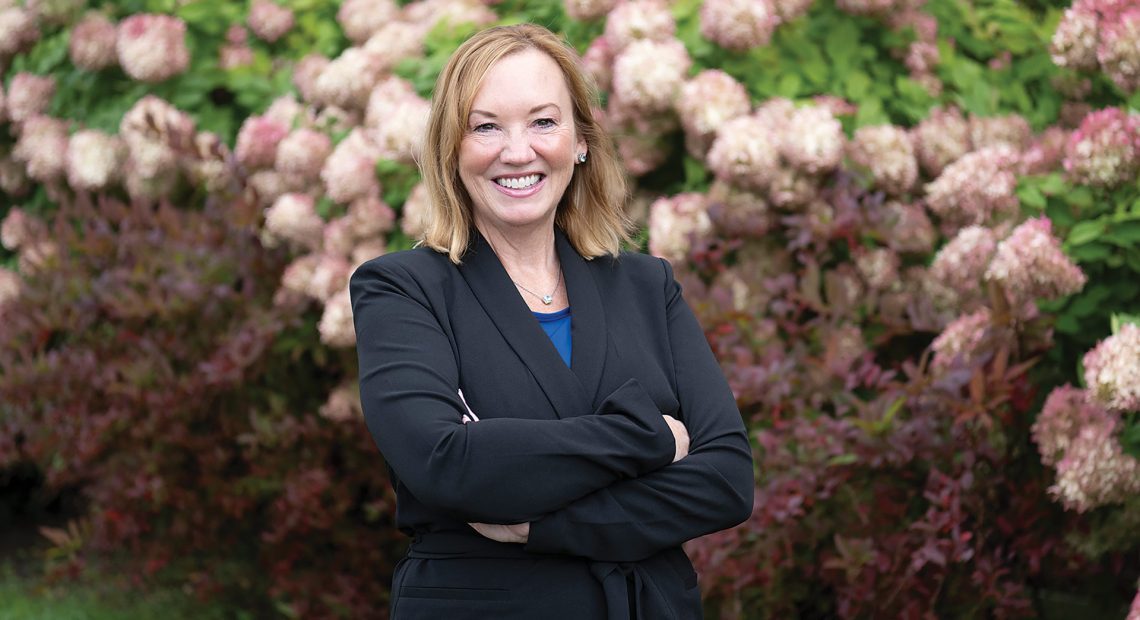

And BusinessWest publisher John Gormally reflects that tradition in many ways. He has owned, or still owns, everything from a billboard company to a television station to a boutique resort hotel in Costa Rica. But his story began 40 years ago with a small, monthly publication he decided to call the Western Massachusetts Business Journal (the first issue is pictured at right).

As he tells the story, he looked around New England and saw that other cities and other regions had publications focused specifically on the many aspects of business. He saw that the Greater Springfield area did not have such a publication, and decided that it should, because, well … there were stories that needed to be told.

Four decades later, there are still stories to be told, and we remain dedicated to telling them. We also remain dedicated to expanding on Gormally’s initial vision of 40 years ago and finding new and better ways to turn a mirror on the region’s business community and provide thought-provoking stories and commentary on what is reflected by that mirror.

A great many changes have come to the region and its economic landscape over the past 40 years, and these are reflected in the stories that start on page 6, each focusing on a specific sector. These developments involve everything from the consolidation of many industries to profound shifts in how work is done, where, when, and by whom (or what, in the emerging AI era).

There are many common threads running through these stories, but the biggest is technology. Those who can recall what the workplace was like 40 years ago remember a time when desks didn’t have computers on them, when people who wanted to contact someone reached for a three-inch-thick phone book, when the fax machine was a wonderous new way to deliver information; when the internet was still a decade away from emerging from government research facilities into millions of homes and businesses, when portable phones were the size of bricks and the only thing you could do with one was call someone.

Now, information is everywhere and instantaneous. People can call or text their lawyer at 3 a.m. — and he or she will answer the phone. Consumers can move their money from one bank to another in a matter of minutes — or get a quote on car insurance or a loan approval just as fast. Manufacturing equipment can and does run all night, with no one to attend to them. Business meetings are often taken by Zoom, saving travel time and expense and allowing people to work from virtually anywhere, while not diminishing the value of in-person collaboration.

There have been many other developments as well. Our business community is different in many ways, but it is especially more diverse, with far more women (29 of whom earned a spot in this year’s 40 Under Forty) and those from traditionally minority populations serving in leadership positions and owning their own businesses. This has been a profound and refreshing change.

Speaking of 40 Under Forty, BusinessWest introduced that recognition program and gala in 2007, and it remains a fiercely coveted honor among the region’s young professionals. We followed that up with other recognition programs and accompanying galas, including Difference Makers in 2009, the 40 Under Forty Alumni Achievement Award in 2015, Healthcare Heroes in 2017, and Women of Impact in 2018. Why? Because so many success stories, both individuals and organizations, deserve to be celebrated, and their stories told.

Those stories and thousands more in the pages of BusinessWest and the Healthcare News, our sister publication introduced in 2000, and on our two websites, businesswest.com and healthcarenews.com, have, over the years, testified to a changing business landscape. So has our use of daily e-newsletters, social media, and weekly podcasts, dynamic business tools that further reflect changes in the way people work, share information, and engage with each other in 2024.

Even the way we produce this magazine is much different today; we went, like other media companies with a long history, from using negatives and paste-up ads in the ’80s and early ’90s to quickly laying out and producing each issue digitally, and immediately sharing stories on our websites and through daily e-news. And we’ve undergone all that change while retaining our culture as a small, independent, local operation with deep roots and a commitment to the communities of Western Mass.

The downtowns of many of those communities, by the way, have been dramatically reshaped by changes that have come to retail and other sectors. Meanwhile, many of the huge manufacturing mills that once gave many communities their character (think Holyoke, Easthampton, Chicopee, Greenfield, Palmer, and Pittsfield) have become housing facilities, spaces for artists, multi-use properties, shared office space, small-business incubators, or cannabis cultivation operations, to name a few.

Yes, cannabis cultivation. That’s another profound development, and one of many that probably could not have been imagined back in 1984.

Indeed, when asked to look ahead and project what will come next, many of those we spoke with said, given the pace of change that has taken place, predicting the future is very difficult, indeed.

As for BusinessWest … we’ll just keep doing what we have been doing: holding up that mirror and putting the spotlight on a business community that is rich, diverse, ever-evolving, and with an endless supply of good stories to tell.

We thank our advertisers, our readers, and the entire Western Mass. business community for your support over the past four decades, and we’re looking forward to the next 40 years of progress, challenge, and unpredictability.


Opinion

Editorial


When the report surfaced on March 21 that MGM Resorts International is exploring the sale of its casino operations at MGM Springfield and Ohio’s Northfield Park, it should not have come as a shock to anyone.

Indeed, rumors about MGM shedding the Springfield property from its portfolio of casino holding have been floating around since … well, since the facility opened its doors in August 2018.

And they have persisted, primarily because the casino has, to put it mildly, underperformed, at least when it comes to the expectations MGM had when it decided Springfield would be a good entry point for the Massachusetts market.

MGM projected that a Springfield casino could reap $34 million in revenues a month. The reality is, it hasn’t come close to that number, with $26 million the first month it opened being the actual high-water mark.

The casino has had to endure a pandemic and increased competition from several points on the compass — and there was already formidable competition not far away in the form of well-established Connecticut casino complexes.

But from day one, when the long lines that were expected to form outside MGM to check out the shining new attraction failed to materialize, it was clear that this facility was not going to perform as hoped, and it was going to become a drain on the parent company, which invested $1 billion in its creation.

That became clear when Bill Horbuckle, MGM CEO, told reporters after meeting local officials last year, “our original valuation of this market simply was off — full stop.”

So what now?

Talks of a sale are in the preliminary stages, and nothing may come of this. If MGM is intent on selling the property, we hope it will be to a responsible party, and maybe even a local party, that can somehow change the trajectory of the property and at least continue to make it a key contributor to the local economy.

From the start, we have said that MGM Springfield was not going to magically change the landscape and transform the Western Mass. economy. But it would be an important addition to the mix and would bring people to the region.

It has done that, to some extent, but it simply hasn’t performed as MGM Resorts expected it would and needs it to.

“The news of MGM exploring the sale of MGM Springfield is both surprising, as they’ve become a fixture in our community, and unsurprising, as the rumors of their fickleness to the site started even before a shovel was in the ground,” state Sen. Adam Gomez said. Other local elected officials have even stated they won’t be sad if and when MGM leaves town.

Not knowing who or what might come next, we won’t go that far.

But we will say that Springfield and this region could certainly do much worse than what MGM has brought to the 413 — and that anything worse would be a serious setback to the South End, Springfield, and the area’s economy.

Almost from the day the casino opened, people have been asking, “what will happen if MGM sells the property?” We may soon be finding out.

Opinion

Editorial


Photo by Leah Martin

Fredrika Ballard, founder and owner of Fly Lugu Flight School, one of BusinessWest’s Women of Impact for 2023, was one of three people who died tragically in a plane crash in Leyden, at the Greenfield line, on Jan. 14.

The others killed were William Hampton, a flight instructor, and Chad Davidson, a student pilot.

Their deaths sent shock waves through the region, its business community, and all of us here at BusinessWest, who, in a short time, came to know Ballard as the epitome of the program created by those at the magazine to recognize women who are making a difference in this region.

Ballard, a flyer since her youth and a true entrepreneurial spirit, brought both of those qualities together in Fly Lugu, a name whose origins could be traced to something her father told her about how, when it came to the yoke of a plane, when you look up, you go up — LUGU.

Ballard brought that sentiment not just to flying, but to life in general. To move forward, she said, one had to look up, be positive, and move with confidence.

She did all of that, and she inspired others to do so as well, again, not just with flying, but with their lives and careers.

BusinessWest created its Women of Impact program, and chose that name, not simply to honor successful businesswomen, although several of them have been recognized. It was created to honor women who stand out, women who are true leaders, women who are mentors to others, women who inspire those around them to set a higher bar — in their work and in their lives — and then clear that bar. Women whom others consider powerful forces in their lives.

Ballard was all of these things and more, and this is why she epitomizes that phrase Woman of Impact. She was a success in business and a true entrepreneur, but she was also a teacher, a mentor, and an inspiration.

Opinion

Editorial


The main reason the Food Bank of Western Massachusetts opened a long-awaited distribution center in Chicopee this month is that it distributes millions of pounds of food each month, and more space means doing more of that critical work, and in a more streamlined way, thanks to Chicopee’s proximity to two interstates.

The nonprofit’s new, larger, greener food-distribution center is twice the size of its previous Hatfield location, with an additional 18,000 square feet in the warehouse alone. Floor-to-ceiling warehouse racks and expanded refrigeration and freezer sections enhance efficiencies and enable the Food Bank to store and distribute more healthy food than ever before to 175 member food pantries, meal sites, and emergency shelters of the food-assistance network across all four counties of Western Mass.

The new site also features a dedicated community space with a working kitchen for cooking and nutrition classes and other educational events. Other efficiencies include electric charging stations, an expanded member pick-up area, and ample parking for staff and volunteers. In 2024, the Food Bank will add a solar array on the roof and a canopy over part of its parking, along with backup battery storage that will fully support all electricity needs of the building.

“The Food Bank of Western Massachusetts’ new, state-of-the-art facility will allow their dedicated team to provide greater access to healthy, nutritious foods to thousands more of our neighbors in need and expand service routes to partners throughout the area,” U.S. Rep. Jim McGovern said. “I’m proud of the Food Bank’s 40 years of history serving our community and their continued leadership on the national stage in our movement to end hunger now.”

The Food Bank certainly isn’t alone in those efforts, but the sheer scale of its work to connect food-collection sources through distribution channels to reach people in need is nothing short of remarkable, and its shepherding of tens of millions of dollars to build the new Chicopee location testifies to the firm belief in its work held by individuals, businesses, and government.

“I want to express my gratitude to our incredible community of supporters and donors who made our vision a reality,” Food Bank Executive Director Andrew Morehouse said.

No, thank you.

Opinion

Editorial


“Honestly, this was one of our busiest years I can remember.”

“It’s been a very challenging year.”

Those are two quotes from this issue of BusinessWest, one from the world of construction, the other from hospital administration.

And if you asked leaders of other sectors — from education to auto sales; from real estate to insurance — how things are going, you’d probably encounter the same range of answers.

Because these are unusual times. In some ways, the economy is strong, with historically low unemployment, real wages rising, and energy prices falling. But in other ways — indeed, the ways in which people feel it most immediately — things are not getting better: inflation is still too high, housing is increasingly unattainable, and employers are struggling to find talent.

But even by those negative measures, the U.S. has seen improvement over the past year, and in many industries, business is steady. We hope for even more improvement in 2024, of course, and while we do, here are four other developments we wouldn’t mind seeing, both locally and nationally.

• Lower interest rates. Not only has it been a terrible year for banks on that front, but consumers have been struggling with the dual issues of housing availability and higher mortage rates. Now that inflation is easing, mortgage rates are expected to make a slow decline throughout 2024. Realtor.com forecasts that rates will be 6.8% on average for 2024 and 6.5% by the year’s end, following a high of 7.79% earlier this year.

• Movement on east-west rail in Massachusetts. Obviously, any movement here will be painfully slow, but there has been some progress toward connecting Springfield (and even Pittsfield) with Boston. This fall, the federal government awarded a grant of $108 million to Massachusetts for infrastructure upgrades, and Gov. Maura Healey signed off on $12.5 million in DOT funding in the state’s FY 2024 budget toward the effort.

• Federal cannabis decriminalization. Well over half of U.S. citizens live where cannabis is legal in some way statewide, that number is rising every year, and about 60% of Americans want the drug legal for recreational use. But the federal government’s continued categorization of cannabis as a Schedule 1 drug — and the related Section 280E issues in the Internal Revenue Code — continue to hamper the industry in many ways, from banking and taxes to security and transportation. Descheduling marijuana seems to have bipartisan support in Congress, but there has been little movement.

• More momentum in downtown Springfield. The good news is plentiful: MGM posted some of its best-ever months this year. The Thunderbirds generate a $126 million effect on the local economy, according to a UMass Donahue Institute study. The market-rate housing development at the former Court Square Hotel has been taking applications, with the promise of bringing more foot traffic to the area. All the downtown office towers report new tenants or progress toward that goal. Downtown may never attain the energy of its mid-20th-century heyday, but the progress has been encouraging.

Opinion

Editorial


Second Chance Animal Services calls it a “trifecta of challenges that demand immediate attention.”

First, a rising tide of inflation has led to food insecurity for both people and their furry companions, as the cost of pet-care essentials skyrockets. Housing costs, too, are soaring, forcing families to make wrenching decisions about their living situations, often resulting in the surrender of beloved pets.

Second, a veterinary-care crisis persists, with burnout among professionals causing a shortage of crucial services.

Finally, shelters are reaching capacity across the country — and not just in the South, where overpopulation has long been a problem — forcing many to euthanize perfectly adoptable pets when they are out of space.

North Brookfield-based Second Chance, which runs four community veterinary hospitals, never euthanizes for space and is taking in as many transports as it can, but its space is limited as it grapples with an increase in surrenders from local pet owners.

“We are being stretched to our limits, and I am deeply concerned,” Second Chance CEO Sheryl Blancato said recently.

But there’s hope, too, she added, citing her own organization’s efforts to keep pets with their families, from subsidized rates at its hospitals and a pet food pantry to community vaccine clinics and veterinary care at senior-living residences.

But it needs help: more volunteers, more donations, more awareness of the problem.

Meg Talbert feels the same way, as she told BusinessWest in the story that begins on page 4. The executive director of Dakin Humane Society says volunteers and foster families are critical to the nonprofit’s work, but so is financial support.

“A corporate donation or a foundation or individual giving, they really let us do the work. They are that bridge that allows us to go that extra mile for the animals, and to help people out when they’re coming to us,” she said, whether they’re at the point of surrendering an animal or having trouble affording veterinary care.

The goal, in almost every case, for organizations like Dakin and Second Chance is to keep families and their pets together. Not only is it heartbreaking to have to surrender an animal, but every pet back in the shelter system is one more animal adding to an overcrowding problem that is not letting up.

That’s why, Talbert said, every adoption of a dog, cat, or other critter actually saves two lives: the adopted animal’s life, and the animal that adoption makes room for at the shelter. Just as every surrender compounds the problem, every rescue adoption improves it.

We encourage families who want to add a pet to their home to consider adopting first, not only to reduce the overcrowding issue, but to literally save a life worthy of saving — a pet with plenty of love and appreciation to spare.

Speaking of appreciation, Dakin, Second Chance, and other animal-welfare organizations are always grateful for not only financial gifts, but volunteers. As the season of giving commences, that’s something that should give us all paws — er, pause.

Opinion

Editorial


Almost from the first puck drop back in the fall of 2017, we have been writing about the importance of the Springfield Thunderbirds — not just to the general psyche of the region (it’s good to have a pro sports team to root for) and to the vitality of Springfield’s downtown, but also to the local economy.

We’ve said many times that the team is a powerful force not just for filling bars and restaurants, and the casino on Main Street, but for job creation and supporting jobs elsewhere in the Pioneer Valley.

And now, we can quantify this broad impact.

Indeed, a recently released report details a study undertaken by the UMass Donahue Institute showing that the team’s operations have generated $126 million for the local economy since 2017.

The study included an analysis of team operations data, MassMutual Center concessions figures, a survey of more than 2,000 T-Birds patrons, and interviews with local business owners and other local stakeholders. Among its most critical findings, the study shows that the T-Birds created $76 million in cumulative personal income throughout the region and contributed $10 million to state and local taxes.

Meanwhile, the report shows that the team has doubled the number of jobs created from 112 in 2017 to 236 in 2023, and estimates that income per job created by the T-Birds is approximately $76,000, and that each job created by the Thunderbirds creates or supports 3.3 other jobs elsewhere in the Pioneer Valley.

Overall, the study concludes that the franchise, which has enjoyed success both off the ice and on it, including a run to the Calder Cup finals in 2022, is having a true ripple effect that extends beyond the walls of the MassMutual Center. Indeed, the study found that 78% of T-Birds fans spend money on something other than hockey when they go to a game, including nearly 70% who patronize a bar or restaurant or MGM Springfield. It also found that median spending by fans outside the arena is $40 per person on game nights and that every dollar of T-Birds revenue is estimated to yield $4.09 of additional economic activity in the Pioneer Valley.

We’re not sure, but it’s unlikely that even those business owners who came together to 2016 to save professional hockey in Springfield could have imagined this kind of impact. The numbers clearly show that they did more than bring a franchise here; they put together a team, led by President Nate Costa, that has put a quality product on the ice, marketed it in ways that are the envy of the American Hockey League, and turned that product into an economic engine.

Over the years, Costa and the team’s ownership group have won a number of awards from BusinessWest, everything from a Forty Under 40 plaque and a Difference Makers award for Costa to the Top Entrepreneur recognition for the team’s owners and managers.

Together, those awards speak volumes about what a success story this has been, not just for hockey fans, but for the entire region. But the Donahue Institute report speaks even louder. It puts numbers behind the words and quantifies what can only be called an unqualified success.