
Home Posts tagged Law (Page 45)
Sections Supplements
Going from Practicing Law to Sitting on the Bench Is a Challenging Transition

Kenneth Neiman

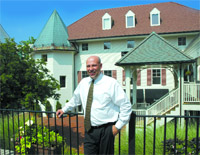
Kenneth Neiman says he enjoys the “intellectual challenge” of decision-making.

The transition from practicing law to sitting on the bench, and watching and listening while others practice it, is a big leap, according to those who have experienced it. There is a lengthy learning curve, and a number of trade-offs involving everything from compensation to socialization. Overall, those who don the black robe every day say they’re making a different, and in many ways more rewarding, contribution to society.

Kenneth Neiman remembers walking by himself after lunch one day, several months after being appointed United States magistrate judge, and feeling … well, “physically different.”

That’s one of the many ways the former general practitioner who, among other things, handled some of the copyright work for the creators of the Teenage Mutant Ninja Turtles, described the transition from practicing law to sitting behind the bench and watching and listening, intently, while others practiced it.

“Let’s just say I felt more relaxed,” said Neiman, who was appointed to the District of Massachusetts and its Springfield facility in 1995. That was 14 years after he co-founded a law firm in Northampton and 24 years after he graduated from law school and soon joined the Center on Social Welfare Policy & Law in New York, the first of several career stops that made him familiar with Federal Court and aspire to it.

Elaborating, Neiman told BusinessWest that lawyers and judges take much different roles within the courtroom, and that for him, anyway, the new role was appealing, challenging, but also less stress-inducing — at least after he became acclimated to it.

“The biggest difference for me was switching from being an advocate and one of the adversaries in that system to being a decision maker and resolving disputes,” he explained. “That was almost a startling change; I realized that I was no longer in the midst of an argument — it was their argument, the lawyers’ argument, and my responsibility was to try to resolve it.

“As a lawyer, I had no problem with being an advocate,” he continued, “but in the long run, this role, the one of making decisions, suits me much better.”

Using language that was mostly similar, others who have made the same career transition talked with BusinessWest about why they sought work on the bench (sometimes it seeks them) and what they’ve experienced since donning the black robe.

“For me, it was enormously liberating to be impartial,” said Dina Fein, associate justice in the state Housing Court’s Western Division since 1999, when she left a practice dominated by civil work. “The opportunity to see a dispute impartially was really wonderful. The job description is to come to work every day and use your best judgment to do what you think is right. For me, it’s an enormous privilege to have that define my work.”

William Hadley, a former litigator with the Springfield firm Doherty, Wallace, Pillsbury and Murphy who was appointed a District Court judge two years ago, compared his transition to that of an athlete who moves on to become a referee in the same sport.

“For trial lawyers, it’s a somewhat combative profession — you want to win, and you have to be highly motivated to win,” he explained. “As a judge, you have to back away from really caring about who wins and loses and ensure that the trial is fair and the law is applied properly.”

There might be less stress or tension for most judges, but their work is difficult, often requires long hours and considerable travel, and comes complete with enormous responsibilities.

Which explains why, for the first several months she was on the bench, Fein would come home exhausted, despite working fewer hours than she did while handling mostly civil work for the law firm started by her grandfather and then managed by her father.

“I couldn’t figure out why I was finding the job so exhausting, and then other judges told me they had the same experience,” she recalled. “What I realized was that judges are expected to do so much simultaneously. One has to hear the facts as they’re coming in, understand them as they’re coming in, assess credibility, keep an eye on the courtroom, remember the law, apply it, articulate rulings from the bench, and do all of those things in the public eye. That’s a lot of multi-tasking.

“We spend our days doing active listening,” she continued. “We may not be asking the questions, but there is nothing passive about being a judge. That active listing — listening to what’s said, what isn’t said, and how it’s said … is just challenging, but also very exhilarating.”

In this issue, BusinessWest talked with several individuals who have transitioned to the bench about why they took that route. While explaining their motivations and aspirations, they also shed some light on what happens in their courts and also on the many challenges facing the legal system today.

Honorable Mention

“Moriarty and Wilson.”

That’s how Hampden County Superior Court Judge C.J. Moriarty answered a phone call from BusinessWest recently, invoking the name of the Holyoke-based law firm he founded and worked at for 30 years before being appointed to the bench just over a year ago.

“Old habits die hard,” he said with a chuckle, adding that it had been a while since he’d made that gaffe, but it happened frequently at his new office — and his home — in the months after he left private practice.
There were other old habits that lived on, as well.

Indeed, during one of his first cases as a judge, Moriarty, upon hearing a question from one of the attorneys, blurted out “objection.” There was some laughter, he remembers, adding quickly that most in the courtroom that day had probably seen it happen before. “When I mention that episode to other judges here, they say, ‘I did that, too.’”

Hadley told BusinessWest that, while he doesn’t believe he’s ever actually said ‘objection,’ he’s thought about doing so — or that the opposing lawyer should do so — on myriad occasions. Being able to keep such thoughts to himself was just part of the transition, he said.

As was acknowledging and then understanding that he, like all judges, was now under a microscope.

“People are always watching and wondering why you scratched your chin or moved to your left the way you did,” he explained. “They’re looking for clues to see which way you’re leaning, so you have to be cognizant of almost everything you do or say.”

All this is part of a “serious learning curve,” as Hadley called it, for those who ascend to the bench. There are those aforementioned changes in roles, some emotional swings, those early feelings of exhaustion, and, as in Neiman’s case, even some improvement to one’s overall health and well-being.

Meanwhile, however, the paycheck usually has a smaller number on it, and there are often long stretches during which judges in the federal and state trial systems (most of the latter are getting paid just under $130,000 at present, less than many new associates in New York and Boston) will not see raises or even cost-of-living increases.

Then again, the number is stable, and one doesn’t have to chase work, or pray that it comes through the front door, to earn it.

“Any accomplished lawyer would be taking a pay cut when they become a judge,” said Neiman, adding quickly that no one seeks and accepts such a career change for the money.

Their reasons for doing so vary, but usually revolve around practical considerations as well as a desire to serve society in a different and, in many ways, more fulfilling manner than practicing law.

“I think it’s in my blood,” said Moriarty, whose father was a long-time Superior Court judge. “I thought a lot about following in his footsteps. I’d been trying cases here for a long time, and decided I wanted to try the other side.”

When asked why she pursued the bench, Fein first prefaced her remarks. “This is going to sound corny,” she told BusinessWest, “but this was a way to implement a fundamental belief I have that those of us who are privileged by wealth and great education and wonderful opportunities in life do have an obligation to put those advantages toward the public good. I’d like to think that I brought those values to the practice of law, but it’s clearly easier to live those values in this position.

“As a lawyer in private practice, I always thought I had three responsibilities,” she continued. “I had to win the case; I expected myself to do the right thing; and I had to make money. In my experience, those responsibilities are not always compatible with one another. And if you took those responsibilities as seriously as I did, it would just wear you down, and my friends who are still practicing law tell me it certainly hasn’t gotten any easier.”

Court of Opinion

Hadley told BusinessWest that he thoroughly enjoyed being in court arguing cases while at Doherty Wallace, and that when his practice started to change, with the bulk of his work taking place in his office or that of a mediator, he sought a way to return to the environment he loved, specifically an opening in District Court.

“I took an assessment of what I wanted to do with my life — either stay at a place where I was happy or do something different,” he explained. “At that time in my life, my mid-’40s, I decided it was time to make a change and do something I think is very important, and hopefully make a greater contribution to the community.”

Like others we spoke with, Hadley said there are trade-offs when one goes from practicing law to presiding over a court. On the positive side, the pay is secure, there is no concern about billable hours, and when a judge goes on vacation, someone fills in for him or her; lawyers don’t have that luxury.

On the flip side, however, this is a much lonelier profession — which explains why Neiman was walking alone that day. Judges cannot socialize with lawyers, at least to the extent that they did before they took the bench, to avoid any indication of favoritism, said Hadley. Meanwhile, although judges do socialize amongst each other and share general thoughts on matters, they cannot actually discuss specific cases. “With individual cases, you’re pretty much on your own.”

Those we spoke with all said that there were times, even very early in their careers, when they would think about perhaps becoming a judge. Moving from there to the point of sending in an application for a vacant or soon-to-be-vacant position is a big leap, and a function of timing, feeling comfortable about making the transition — from both career and economic perspectives — and then finding a proper fit.

“Judges tend to find the court they’re best suited for,” said Fein, adding that while she was encouraged by some to apply for District Court positions, she felt that court, with its preponderance of criminal matters, did not match her background in civil work.

For Fein, who also applied for the position eventually given to Neiman, a much better match was Housing Court, which, until late 1998, had been a one-judge court. For many years, that individual was John Greaney, who now sits on the State Supreme Judicial Court, and later William Abrashkin, who still sits in that court.

Fein said she wound up in Housing Court while handling several civil matters during her work with the firm Fein, Pearson, and Edmund, and liked what she saw and heard. “I got to know it, and thought it was a fabulous court.”

When the state Legislature approved a measure to add a second judge to the Housing Court Division’s Western Division in 1998, she jumped at the opportunity.

Neiman told BusinessWest that he didn’t give himself much a chance to win the judge magistrate’s post when he applied, but knew at the time he would regret not seeking a post on a court he first came to know early in his career through work with first the Center on Social Welfare Policy & Law and then Western Massachusetts Legal Services.

“I was a poverty lawyer working for poverty wages,” he quipped, adding that things got better, compensation-wise at least, when he partnered with Fred Fierst to form Fierst & Neiman, which is now Fierst, Pucci, and Kane, with Fierst still handling a wide range of work in the entertainment industry, both locally and nationally.

Neiman handled criminal and civil matters in a number of courts, and enjoyed the work, but became intrigued when then-Magistrate Judge Michael Ponsor was appointed as a district judge. “I had tried a number of cases in federal court, so I was familiar with it,” he said. “I was thinking about applying, and some people thought I could do it, so I went ahead and applied.”

For Moriarty, the decision to seek the bench came down to several factors, including a desire to preside over a court he knew well and that his father served as a judge. But there were also some practical, or economic, issues that played into things.

“Being a lawyer is a very expensive way to make a living,” he said. “And when you’re in this community, most lawyers are depending on what walks in the door.”

Weighing the Evidence

Before sitting down with BusinessWest in her office, Fein first had to climb a short set of steps, go into Courtroom One, and deliver a quick, 10-minute talk she’s now given several hundred times.

It is Thursday, and in Springfield’s Housing Court, Thursday is ‘eviction day.’ (It’s Monday in Hampshire County, Tuesday in Franklin County, and Wednesday in Berkshire County, and Fein travels to all those courts weekly. “Have gavel, will travel,” she said, borrowing a line she attributed to Abrashkin.

Many of those facing eviction, as well as most looking to do some evicting, appear in Housing Court without legal representation, said Fein, noting that there are several volunteer, or pro-bono work, programs designed to help those who must appear in her court. The lack of lawyers in the room explains the need for the talk — which goes over everything from options to ground rules (if the opposing party fails to show up, the other prevails in the dispute) to the need to do one’s math before they sit before the judge or mediator — and it is also one of things Fein likes most about her work.

Indeed, while there are civil matters and some complex litigation that comes before the court — everything from class action cases involving lead paint to slip-and-falls — there are also the landlord-tenant disputes and other summary judgment matters that Fein equates to ‘people’s court.’

“If we do our jobs well, we’re really a problem-solving court,” she explained, noting that most of those facing eviction have issues that contribute to their dilemma, including substance abuse, mental illness, or some combination of both.

“We have the opportunity, if we choose to take it, to deconstruct the presenting dispute, identify the underlying social problem, and try to do something about it,” he said. “And that’s what makes the work of this court so exciting to me. I think we have an opportunity here to get people on the right track in their lives, and that’s enormously gratifying.”

As he talked with BusinessWest, Hadley was heading east on the Turnpike, returning from District Court in Pittsfield. Recently, he’s been spending less time on the road — he was assigned to handle the civil docket in the Springfield court — but still travels regularly, as many judges in that court do.

Hadley is associate justice of the Greenfield District Court, which means that, while he handles matters in that court when the presiding judge is out, he moves from court to court across Western Mass. While the travel can wear one down, it does have certain benefits.

“Every community has different issues,” he said. “Meanwhile, there’s different personnel in each of the courthouses, and you get to meet a lot of lawyers. Overall, I don’t mind the travel.

‘Variety’ was a word Hadley used often to describe his court, which handles a wide array of criminal cases (mostly misdemeanors) and civil matters involving dollar amounts that are usually, but not always, under $25,000. Between the diversity of the cases and she
r volume of them (100 new criminal cases each day, on top of thousands of civil cases moving through the system), judges work full, long days.

And each one represents a learning experience in many respects. “If you really enjoy the law intellectually, you are allowed to become an expert,” Hadley explained. “There’s an academic expansion to this that I really enjoy. I can spend as much time as I need to become an expert in a specific area of the law, and without having to worry about billing someone for my time.”

Coming to Terms

Moriarty took a quick break from his talk with BusinessWest to handle what’s known as a bail review, one of the many types of matters that come before Superior Court judges. The party in question believed bail has been set too high and was requesting that it be lowered.

During the 15-minute hearing on the matter, the attorney for the defense argued that his client, arrested on drug charges, was not a risk to flee. The prosecutor, citing several previous defaults and the serious nature of the charges (possession within close proximity to a school) argued that bail should remain where it was.

Noting that past history is very often a good predictor of future conduct, Moriarty denied the defendant’s request. Later, he acknowledged that, as decisions go, this one was comparatively simple.

Most, however, are not, and all of them, especially those dealing with sentencing and bail (meaning one’s freedom) come with huge doses of responsibility, and consequences for all those involved. But this is the world that judges must operate in — and often with what would be considered very little training or education, at least compared to other fields or professions.

“I was sent to Boston for three days,” said Moriarty. “We were shown how to work a computer, we sat in on one jury impanelment with another judge, and that was essentially it — they said, ‘OK, you’re ready, see you later.’

“I’ve had a lot of on-the-job training, what with 30 years in the business,” he continued, adding that, in the process of making the transition, he has learned that presiding over a court is a world apart from practicing law in one, and the adjustment has been challenging in many ways.

“I remember that on my first day, I had to take a guilty plea,” he recalled for BusinessWest. “Therefore, I had to make sure that the one making the guilty plea knows what he’s doing, knows what rights he’s waiving, and knows what he’s giving up. They handed me the file, and it’s dawning on me for the first time that I’m being asked to sentence this person, and yet I know less about him than anybody involved with this case.

“It was then that I fully grasped the magnitude of the responsibility I had,” he continued. “As a lawyer, I knew everything about my client, and the prosecutor, while he didn’t know as much as me, still knew an awful lot. Here I was, set to sentence someone, and when I walked into the court, I didn’t even know the gentleman’s name.”

For Neiman, while he has enjoyed the transition from advocate to decision maker, he said it hasn’t been without challenges. Overall, he said he enjoys the intellectual aspects of his work, which he described as problem-solving.

“In probably 60% of cases in which you’re faced with a dispute, whatever that dispute is, if you got 10 judges together, or individually, it would probably come out the same way — it’s relatively self-evident as to what the resolution of that particular dispute should be with regard to how the law applies,” he explained. “And then, they get progressively more difficult.

“I enjoy the challenge of figuring out what the law is and applying the facts,” he continued. “Almost always when I go through that process, at some point something will click, and I’ll understand what I believe to be the proper resolution of that dispute given the law and given the facts. I like that exercise, and I hope that I do it with an understanding of the effort that the lawyers have put into it and the plight that the litigants find themselves in.”

Final Arguments

When asked if he ever worried about being wrong with his decisions, Neiman, known for his dry wit, said, “that’s what appeals are for.”

Continuing, he said his rulings have rarely been overturned on appeal, something he takes a good measure of pride in. But how does he feel when judges with the First Circuit Court of Appeals do reverse one of his decisions?
For that he summoned a quote he attributed to the late Frank Freedman, a long-time federal judge in Springfield: “they’re entitled to be wrong.”

Such confidence in his decision-making abilities is just one more product of the transition from lawyer to judge for Neiman. It’s a change that’s made him feel better about himself — and just feel better in general.

George O’Brien can be reached at[email protected]

Opinion
At the United Way, Community Matters

It’s called the Day of Caring, and the name says it all.

The program was started in 1994 by the United Way of Pioneer Valley to involve area businesses and their employees in initiatives that would benefit the community and those who live, work, and play here in Western Mass. It started small, with only 12 companies and fewer than 80 employees. On Sept. 7, 1,700 employees representing 48 companies completed 209 projects in the latest Day of Caring.

Most of these projects were small in nature — spreading mulch in playgrounds, cleaning graffiti from park equipment, sweeping up litter, fixing bicycles, painting fences, for example — but together, they made a difference in the quality of life for many people.

This, in a broader sense, is how the United Way of Pioneer Valley works. It coordinates a number of programs and partners with dozens of area agencies and service providers to make a difference in the lives of more than 100,000 area residents, and make the Pioneer Valley an attractive place in which to live and work.

The United Way of Pioneer Valley plays a unique leadership role. It identifies specific community issues, coordinates the necessary resources to address those needs, and then follows up to measure the results of its funded programs.

The United Way and its board of directors are doing things in new ways — being conveners, enablers, and facilitators, all to address our community’s ongoing and ever-changing needs. The United Way strives to be proactive, not reactive, and to address needs before they become a crisis. It approaches old problems in new ways — its food and shelter programs do not just provide hot meals for the homeless, but encourage services that also provide a welcoming and safe haven, teach job skills, provide vocational training, help arrange job placement, as well as coordinate child care and transportation needs.

Other supported programs focus on areas dealing with children and young adults, the elderly, families, and health and wellness.

Many people think the United Way benefits and serves others, but not them or their families; they’re wrong. By connecting community resources to community needs, the United Way helps make the Pioneer Valley the type of place where you, your family, your employees, and your co-workers will want to live and thrive. Its involvement and impact on quality of life in the region makes it easier to recruit and retain good employees, and to increase your own property values.

It makes our community a place where our children will want to live and raise their own families, rather then heading to someplace where they believe the grass is greener.

As the Day of Caring shows, when people work together, they can make a difference — and at the United Way, we prove this 365 days a year. As this year’s United Way campaign kicks off, I see another opportunity for the people of this region to show what they can do — together.

They can show that community matters and that the United Way is a worthy investment for us and our community.

None of us can predict what personal problem or natural disaster will face us, our neighbors, and co-workers, but we can rest assured knowing the United Way and its affiliated agencies will be there with solutions when situations arise, funding the human services needs of the Pioneer Valley with integrity and innovation. For all of these reasons, I ask that you give generously and support the United Way campaign this year.

For less than the price of a cup of coffee each week, you can make a meaningful impact. Do it for your community, and do it for yourself.

Michael B. Katz, Esq. is the chairman of the 2007-2008 United Way Campaign. He is a partner at the regional law firm of Bacon & Wilson, P.C.

Sections Supplements
From iPods to eBooks, Everyday Life is Getting a Technological Shot in the Arm

The summer of the iPhone is all but behind us, but there is more new technology making headlines these days. Myriad new products, from gadgets to professional software to phones and cameras are coming onto the market.

There are trends — everything keeps getting smaller and more versatile — but the bottom line is an emphasis on communication, organization, and simplifying the everyday tasks involving life and work with some style.

In this issue, BusinessWest offers a sampling of what’s new in technology and what the products hitting the market bring to the table.

Ansering the Call


Left to right, iPod Shuffle, iPod Nano, iPod Classic, and iPod Touch

The sleek, touch-screen iPhone is still making news; on Sept. 9, Apple sold its one millionth unit (after reducing its price by about $200). In response to the many iPhone owners upset with the decision to reduce the price from $599 to $399 two months after its debut, Apple CEO Steve Jobs sent an open letter — directly to the phones, of course — awarding all current iPhone users a $100 store credit toward the purchase of any Apple product.

That’s good news for fans of ‘the people’s company,’ since Apple is following up on the success of the iPhone with the sixth generation of the iPod, and the two devices closely resemble each other.

The iPod Touch was formally introduced to the public this month, and boasts many of the same features as the much anticipated iPhone. It includes a touch screen and Wi-Fi capabilities, a Safari Web browser, and connects directly to YouTube, where users can view millions of free videos. The Touch is available in eight- and 16-gigabyte models, now retailing for $299 and $399, and joins the existing suite of iPods — the Shuffle, Nano, and Classic models;apple.com.

Now Hear This


Aurvana Headphones

Apple may be the big newsmaker in the technology race, but many other companies are in the running, vying for the attention and the loyalty of increasingly in-the-know shoppers.

Another audio giant in the marketplace, Creative Labs, which manufactures the Zen series of mp3 players and accessories, has recently devised high-end, noise-canceling headphones called Aurvana, designed to augment the mp3 listening experience.

The headsets use the latest audio technology, X-Fi, or extreme fidelity, as it’s called, to improve the sound quality of an mp3 file; it does this by restoring the details of a file that are lost during compression. Aurvana headphones also feature three switches to optimize listening experiences for not only music files, but while watching television, movies, or playing games as well. The first is a noise-canceling switch, the second a ‘crystalizer’ that enhances mp3 playback, and the third is a CMSS-3D switch that creates a surround-sound effect.

The headsets are expected to be available later this month, retailing for approximately $300;creative.com.

A Picture and Thousands of Words

Just as CDs and stereos are becoming increasingly passé, paperback books, day planners, and photo albums are also gradually becoming things of the past, replaced by more effective and less expensive digital versions of each.
Photophiles in particular can now take more advantage of the digital photo frame craze than ever before, as frames are being designed with more capabilities, better performance, and more memory.


eStarling 2.0 Wi-Fi Photo Frame

The eStarling 2.0 Wi-Fi Photo Frame, for instance, takes the concept of displaying digital photos to the next level, by adding the ability to connect to the Internet wirelessly.

The seven-inch frame will display photos in a slideshow format, and can accommodate most types of camera memory cards, immediately adding any photos on the card directly into the rotation.

However, JPEG photos can also be sent directly to the eStarling via E-mail or through an RSS photo feed, such as those available through the popular photo-sharing Web site Flickr.

This allows frame owners to have photos E-mailed to them by friends or relatives, send photos to the frame via a laptop or mobile phone from virtually anywhere in the world, and also search for specific photos taken by others and posted on public sites online.

Within the Flickr community, these photos can be added to the eStarling by entering ‘tags,’ or keywords, and having them fed directly to the eStarling. The criteria could be as simple as photos of Hawaii, or as detailed as ‘red 1957 Chevys.’

Despite these new attributes, the frame is relatively simple to use. It requires a one-time setup (connecting the frame to a computer by a USB cord), and eStarling software guides the process of creating a free E-mail address to which photos can be sent. Spam blockers are also provided, and the frames retail for approximately $220;estarling.com.

Also striving to improve the leisure side of life is Sony’s PRS500 Portable Reader System, released this month. The tablet offers a space-saving solution for readers on the go in addition to employing the newest technology to alleviate eye-strain and make digital reading a more comfortable experience overall.

Using E Ink Display technology, the screen mimics the look of a paper book, but text can be magnified up to 200%. It also weighs just under nine ounces and is a half-inch thick, with a memory card slot through which books, photos, and mp3s can be uploaded.

E-books can be found online, often for free, and Sony has instituted its own virtual bookstore, the Sony Connect eBookstore. The PRS500 is currently retailing for about $275, and perhaps signals the beginning of the end for traditional, bound volumes. It’s an intriguing shift, but also one that could significantly reduce the world’s paper consumption;sonystyle.com.

The Technology of Ecology

Other products now being introduced also take the environment and energy conservation into account, in addition to technological quality, in this increasingly hooked-in world.

Dataprobe, a leading manufacturer of technology solutions for networking systems, announced last month that its iBoot product, a remote power solution that monitors, manages, and controls both corporate and personal computing devices and electronics, is now compliant with RoHS (restriction of the use of hazardous substances) and WEEE (Waste of Electrical and Electronic Equipment) standards in Europe.

The RoHS and WEEE directives, respectively, ban the sale and import of electronic equipment containing more than approved levels of lead, cadmium, mercury, and other elements, as well as reduce the exposure of hazardous chemicals within recycled materials.

Manufacturers in the U.S., such as Dataprobe, must meet the requirements of both in order to import their products for sale in the European Union market.

Changes to the iBoot to address the EU’s new guidelines augment its already environmentally friendly function. With a single-outlet power switch, the iBoot allows for power control over various types of equipment from anywhere, using an Internet browser. This, in turn, reduces or eliminates the need for on-site technical support, at a cost of about $275;dataprobe.com.

For those hoping to bring a little bit of alternative energy directly into the home, Tamiya Inc. has created a good starting point: the Loopwing Wind Power Generator Set, which catches a breeze and converts it to electricity.

It’s more of an educational tool than anything else, using the energy it generates to power a small rechargeable toy car, which will run for about one to two minutes for every five to 10 minutes of wind-powered charging;tamiya.com
However, the $50 Loopwing is an example of how green energy is being scaled down for more accessible use by consumers. Another product doing the same has been devised by Italian designers Alberto Medo and Francisco Gomez Paz; the duo has created the Solar Bottle, a portable water-purifying system that uses SODIS technology — Solar Water Disinfection.

Each square, stackable, four-liter bottle has one transparent side to collect UV-A rays, which, coupled with increased temperature from solar sources, effectively kill disease-causing pathogens.

A handle makes for easy carrying, and also serves as a stand while being exposed to sunlight. It’s appropriately sized for both private homes and businesses, as well as for outdoor situations such as camping or boating.

The unique design and concept behind the Solar Bottle, which is still in development, also earned Medo and Gomez Paz a 2007 INDEX Award, and could be positioned as a solution for regions of the world with poor-quality drinking water supplies. For more information on the Solar Bottle, visitinhabitat.com.

From Roomba to RoboCop?

The Solar Bottle may still be in prototype mode, but its creation is part of a larger movement of technological marvels that continue to pour into our lives at break-neck speed. According to PCWorld magazine, some of the future technology that researchers and retailers alike are keeping a close eye on are in the areas of biometric security (handprint, fingerprint, and eye-scan access among them), and artificial intelligence.

True to that trend, iRobot (irobot.com) of Burlington, Mass., the firm that gave us the Roomba robot vacuum, has just debuted a tiny “robot cop,” which carries a camera and an electroshock weapon for use by law enforcement and military personnel.

With those kinds of leaps becoming commonplace, the Jetsons’ automated amenities of ready-made meals and flying cars do not seem quite so far off. Still, it’s to be hoped that a Taser-equipped iPhone is light years away.

Jaclyn Stevenson can be reached at[email protected]

Departments

The following is a compilation of recent lawsuits involving area businesses and organizations. These are strictly allegations and have yet to be proven in a court of law. Readers are advised to contact the parties listed, or the court, for more information concerning individual claims.

CHICOPEE DISTRICT COURT

Arnoldo Costa & Antonio Raimondo v. AN Construction Services Inc.
Allegation: Recovery of unpaid wages: $20,000

Evans, Mechwart, Hambleto, Tilton v. Miller Development Enterprise Inc.
Allegation: Recovery of unpaid wages: $19,780.12

FRANKLIN SUPERIOR COURT

Giffin v. Charlene Manor Nursing Company, LLC
Allegation: Personal injury: $56,000

Nancy Ducat v. Bernardston Cemetery Corporation
Allegation: Negligence: $40,000

Thomas Sogard v. Echo Industries, Inc.
Allegation: Breach of contract: $17,420

Uwins Trade Company v. Montague Energy Group, LLC
Allegation: Breach of contract and wrongful termination of lease: $100,000

GREENFIELD DISTRICT COURT

WEWS Television v. Hallmark Institute of Photography
Allegation: Nonpayment of television advertising services: $2,925

HAMPDEN SUPERIOR COURT

The Vine Group Inc. v. JRL Enterprises
Allegation: Breach of contract: $32,500

Prima North America v. Spartan Aerospace LLC
Allegation: Breach of contract: $50,000

HAMPSHIRE SUPERIOR COURT

Mara Lamb v. Keith Mortman, M.D.
Allegation: Malpractice during surgery: $49,480

NORTHAMPTON DISTRICT COURT

Dorothy DeJesus v. Mass Northampton Limited Partnership
Allegation: Negligence causing injury: $7,187.50

Ungerman Electric Inc. v. 5K Mortgage Corporation
Allegation: Recovery for unpaid services: $14,670.35

SPRINGFIELD DISTRICT COURT

Johnny Dickerson v. The Commerce Insurance Company
Allegation: Breach of contract: $3,357

New England Industrial Uniform Rental Services v. Olympic Manufacturing Group, Inc.
Allegation: Breach of contract: $24,529

WESTFIELD DISTRICT COURT

Donna M. Veith v. Classic Conservatories Corporation
Allegation: Damages due to negligence: $2,715

Leo C. Bolduc v. Lou’s Fuel
Allegation: Services not rendered: $380

O’Connell Oil Associates of Northampton v. Five Star Transportation Inc.
Allegation: Non-payment for goods and services rendered: $1,686.18

Southwick Electric Inc. v. Luigi’s Auto Body & Sales, Inc.
Allegation: Breach of contract: $680.40

William S. Ashby d/b/a Penfield Production v. Warren James d/b/a Accurate Signs & Painting
Allegation: Breach of contract: $950

Departments

A Day of Caring

The United Way of the Pioneer Valley staged its 14th annual Day of Caring on Sept. 7. Hosted by Peter and Melissa Picknelly, the event included more than 1,700 employees, representing 48 companies, who completed 209 projects in several area communities.


As part of a project for the Margaret Ells Elementary School in Springfield, volunteers from Baystate Health System participated in landscaping of the school grounds and painted a map on the playground.


Volunteers from MassMutual Financial Group, Baystate Health, and Hamilton Sundstrand participated in a project to benefit Child and Family Services. Activities included maintaining and repairing adaptive sports equipment (Hamilton volunteers) and cleaning a storage unit (Mass Mutual and Baystate Health).


Volunteers from Sisters of Providence Health System, The Junior League of Greater Springfield Inc., Westfield Bank, Mass Mutual Financial Group, and Meyers Brothers Kalicka, P.C. participated in activities to benefit Springfield Day Nursery, such as spending time with and reading to the children, cleaning the closets and playgrounds of the nursery, painting, and washing the nursery’s vehicles.


As part of a project for the Whispering Hose Therapeutic Riding Center in East Longmeadow, volunteers from Health New England, and Monarch Life Insurance Co. participated in projects such as painting a barn and fences, and cleaning their pasture.

Habitat Happenings

Employees of the Springfield-based law firm Cooley Shrair, P.C. volunteered their time recently to assist in the construction of a Habitat for Humanity home on the corner of Chester and Central streets in Springfield. “Cooley Shrair was proud to join the efforts of Habitat for Humanity,” said David Shrair, managing partner of the firm. “It’s part of our ongoing commitment to invest in and help revitalize the city.” The local affiliate of Habitat for Humanity is currently working on three homes, with five planned for completion in 2008.


Left to right, attorneys Dawn McDonald, Peter Shrair, David Shrair, and Candace Goodreau, and Denise Bryan-Dukette of Sovereign Bank work with Habitat for Humanity construction manager Dave Letellier.


Heather Hammon, Dawn McDonald, and Ryanne Nixon of Cooley Shrair work with Walter Valentine of Kleer Lumber of Westfield and Dave Letellier of Habitat.


David Shrair pulls nails with Walter Valentine of Kleer Lumber.


Attorneys Diana Sorrentini-Velez and Ryanne Nixon complete a project together.

Opinion

Springfield Police Commissioner Ed Flynn believes his department is winning the war against violent crime — or at least several key battles. The latest statistics, which show pronounced declines in such categories as rape, aggravated assault, and motor vehicle theft, would seem to bear this out.

But there is another fight his department is waging where the gains, which are impossible to accurately measure, are apparently less-pronounced. This would the fight against fear, which, as anyone in the business community knows, must be won, and decisively.

That’s because, in the larger scheme of things, while the law-abiding people who live, work, and play in Springfield are seemingly safe, at least in the commissioner’s estimation, many do not feel safe. And as long as that perception holds, this city will never enjoy the full economic recovery everyone is anxiously awaiting.

In a comprehensive profile of Flynn in this issue of BusinessWest, Springfield’s first police commissioner talked at length about fear and how it is impossible to understate the importance of controlling it when it comes to the economic health and vitality of not only this city but the region surrounding it.

If people are afraid to come to a community, then businesses across every sector will suffer to one degree or another. This is why public safety is at or near the top of every list of priorities for those involved with economic development.

But a community cannot will people to feel safe, and all the statistics in the world won’t get that job done, either. People will feel safe when they are convinced that they are. Such convincing will come only through one’s experiences, not from crime stat reports or press conferences.

And there has been progress made in this realm of experiences — one can see it in the city’s downtown. Those who have worked there for some time can, or should, notice a decline in the number of panholders and homeless people on the streets. Why? Because the police department has made such issues a priority in recent months, and the city has succeeded in moving many of the services created for such individuals, such as the homeless shelter that previously existed in the York Street Jail, out of the larger downtown area.

While some individuals who work on behalf of constituencies such as the homeless regarded the city’s actions as somewhat cruel and unnecessary, they were very necessary steps when one considers the general good of the business community and the city as a whole. Yes, the homeless have needs, and panhandlers are people, too. But the rights and wants of these individuals must be addressed in a thoughtful, intelligent manner that doesn’t jeopardize the community’s overall economic health and well-being. This is basic common sense.

There are still some homeless people to be seen downtown, and there are still panhandlers trolling for loose change. But we think it’s fair to say that most who work in downtown should feel better about walking down Main Street and State Street and should feel safe or at least safer.

Whether they do or not is another story, especially when area media outlets are still playing up violent crimes committed anywhere in the Valley, and especially in Springfield.

The bottom line is that Flynn, his department, and officials in City Hall and the Finance Control Board offices must continue to be vigilant in the fight against fear. There is simply too much at stake for the city and the region.

Sections Supplements
The Many Issues in Negotiating Commercial Real Estate Leases

Commercial leases are not simply contracts; they are often roadmaps to both a landlord’s and a tenant’s future business plan for a particular premises.

Thus, both parties should exercise due diligence and take ample time to contemplate, discuss, and include within the lease all such matters that could arise during tenancy. If one distills the complexities of commercial real estate leasing to the most basic notion, the most important thing to remember is that nearly everything is negotiable for both sides.

Unlike residential real estate leases that are strictly governed by statutes and case law, the world of commercial real estate leasing is generally left to the landlord and tenant to decide. As a result, the commercial lease agreement is the bible when it comes to the landlord’s and tenant’s respective rights and responsibilities for the lease term.

How much of a ‘template’ lease is negotiable by each respective party? That often depends upon the leverage of the market and of the property being leased. For example, if the market has a significant amount of space for lease, the tenant will likely have more ability to dictate lease terms. Conversely, in a market where one particular piece of property is unique, or where the market has high occupancy rates and thus a smaller inventory of available space, a prospective tenant may find itself with less bargaining power.

Here are some considerations relative to issues that tend to emerge during lease negotiations.

Use of the Property

Regardless of market conditions, it is essential that the landlord and tenant contemplate each aspect of the tenant’s business, what the tenant’s needs will be during the lease term, and how the tenant’s use will comply with the rights, requirements, and remedies of the landlord.

For instance, if the prospective tenant intends to operate a retail store or anticipates significant customer visits, the lease should contain a specific provision governing parking spaces reserved for the tenant’s customers’ use.

In addition, if a tenant is operating, for example, a coffeehouse and bookstore, then perhaps the landlord and tenant should re-evaluate leasing the adjoining space for use as a home theater/electronics demonstration business. Since the use of the leased premises is often restricted by the terms of the lease, the tenant should ensure that the intended use is specified and permitted.

Term

The term (length) of a commercial lease is determined by its starting date (commencement date) and its date of expiration. While a lease may have a specific commencement date, it is not uncommon for a tenant’s obligation to pay rent to be delayed for a month or two, which may be referred to as the “rent-commencement date.” The lease term may consist of an initial term with optional renewal terms of an equal or shorter duration than the initial term. To avoid any misunderstandings, is often helpful to set forth actual calendar dates, including day, month, and year.

Operating Expenses, Taxes, and Utilities

Each lease should specify the party responsible for the operating expenses, e.g. maintenance of the leased premises, taxes (or tax escalator), and utilities. These costs, both individually and collectively, can be significant, and should be discussed by the landlord and tenant at the beginning of negotiations to ensure that all parties are in agreement from a budgetary standpoint.

What are the landlord’s maintenance obligations? Are they restricted to structural issues? How about the HVAC system, snow removal, and landscaping? These are just some of the issues that should be specified in the lease, including a clear understanding of which party is responsible, and at what cost, if any, to the tenant.

Very often, a tenant will pay a proportionate share of common operating costs in a building with multiple tenants. In this case, the lease should include the proportionate share as a numerical percentage (e.g. tenant’s proportionate share shall be 43%) of the total leaseable space in the premises, to avoid ambiguity.

Building Systems

As an offshoot to operating expenses, the lease should also clarify the party responsible for providing and maintaining building systems. In New England, where both summer and winter represent extreme temperatures, a tenant should ensure that the HVAC system in the leased premises is sufficient to support its needs.

Also, if the tenant will have an ongoing obligation to maintain the system, he may consider having an inspection performed prior to the execution of the lease to evaluate efficacy.

Tenant Improvements

It is common for a tenant to perform some customization prior to opening the leased premises for business. This could be minor, like painting, or significant, such as installing a kitchen or other trade fixtures. The tenant should bear in mind that, during this period, he could conceivably be paying rent, even when the business is not open for business and there is no incoming revenue. With this in mind, the tenant should consider negotiating postponement of the rent commencement date during his renovation/improvement period.

Lease Rates

A major consideration for each party to be mindful of relative to rent is the consideration of the rent that will be paid over multiple “terms.”

For instance, if a lease is five years in duration with rent fixed at $1,000 per month, and the lease allows for two renewal periods of 10 years, the rent may be fixed for the entire 25-year period. Such a lease could ultimately end up being impractical to a landlord who may have the space leased for less than market rate. Accordingly, a lease should contemplate the potential need for a rent escalator after a certain period of time so that the landlord is assured that the rent obligations of the tenant remain consistent with the appreciating value of the leased premises.

Assignment/Subletting

While at the time the lease is negotiated, a tenant expects to occupy the leased premises for the full period of the lease, it is often the case that unforeseen events in the tenant’s business modify reality. For instance, a tenant may merge with or sell its business to another party, or it may have a need for less space in year five than it had in year one.

A tenant should realistically contemplate its business needs on a going-forward basis, and negotiate the lease terms accordingly. If there is a likelihood that the tenant’s space needs may be less at some point, the ability of the tenant to sublease a portion of the leased premises to another subtenant is ideal. Also, if a tenant merges with or sells its assets to a third party, the tenant will want the ability to assign its rights in the lease to that third party.

Parting Thoughts

This summation is certainly not exhaustive, but it serves to illustrate that commercial leases are not merely contracts, but truly roadmaps, which must be read and understood so that both parties can get where they want to go, and without getting lost.

Jeffrey Fialky is an associate with the regional law firm Bacon & Wilson, P.C., who specializes in business, corporate, municipal, and real estate law; (413) 781-0560;[email protected]

Sections Supplements
After Some Uncertain Years, the Village Commons Makes a Comeback
Jeffrey Labrecque

Jeffrey Labrecque says good relationships with tenants are helping move the Village Commons complex ahead.

Ten years ago, the Village Commons in South Hadley was having more than its share of problems. Tenants were unhappy, or else they were moving out; the stores inside weren’t what many had hoped for, and a feeling of unrest was settling over the architecturally striking shopping center owned by Mount Holyoke College. There’s been a quiet turnaround in recent years, however. Occupancy has improved to 100%, and management is involving tenants in a greater number of decisions. Now, some say ‘the Commons’ is starting to feel like the bustling retail and business center it was
always supposed to be.

Jeff Labrecque, COO for Center Redevelopment Corp. (CRC), the management firm that handles operations at the Village Commons in South Hadley, says he’d sooner hold a bottle-and-can drive than ask the shopping center’s owners for an influx of cash.

That sentiment was born, he said, from a time, not so long ago, when The Village Commons survived only when financed by its corporate parent and neighbor, Mount Holyoke College. And it has only been strengthened by a subsequent turnaround the Commons has orchestrated.

“At one time, we were draining funds from Mount Holyoke to survive,” said Labrecque, noting that when his current management team was formed, a goal was set to redefine the complex as one that could stand alone on its own two feet.

“The arrangement we made was that we would not borrow from Mount Holyoke,” said Labrecque. “That earned us the respect of the tenants, and now, 10 years later, we require no money from the college, and we never want to ask.”

Mount Holyoke College made a sizable investment in the Commons in the early 1980s to improve South Hadley’s town center and create a more welcoming atmosphere for both potential and current students, faculty, and their families, as well as general visitors.

The original vision of quaint, upscale shops and restaurants that would draw visitors from near and far has proven, however, to be largely unrealistic. But there is life in the Commons — spawned by a workable mix of office, retail, and residential tenants — and a great deal of optimism for the future.

BusinessWest looks this issue at how the picture continues to change, and for the better.

Making Change

Beyond ownership, Mount Holyoke has little involvement on a regular basis, said Labrecque. CRC handles day-to-day management of the complex, which hosts 56 businesses and 19 residential units and is led by President James Carey, who was appointed to his post in 1996. Labrecque was promoted to his current position at the same time, having previously served as director of operations at the Commons, and administrative assistant Trish Neiland rounds out the sparse team.

The Commons has navigated its share of bumpy roads since its inception, especially in the mid- to late ’90s. In addition to a lack of self-sufficiency, many storefronts were vacant, and, according to some tenants, that was due to a lack of a clear vision and a cohesive management plan.

Darby O’Brien, owner of Darby O’Brien Advertising, located in Building 9 of the Commons, was vocal about the center’s issues in 1997. At that time, O’Brien had been a tenant for six years, and told BusinessWest that the shops had “no buzz” and that the complex had “lost its soul.”

But he doesn’t feel that way now. O’Brien’s sentiments toward the Commons have become more positive, and he said it’s the development’s new management that has made a difference.

“I’ve been critical in the past, but things are moving well, and that’s because of the front office,” he said. “We’ve been here since this building went up, and when we first showed up, there was tenant unrest. But now, it feels like a neat little community. Jeff Labrecque is hands-on and non-stop; he understands small businesses, and really, it’s been calm ever since he stepped in.”

O’Brien said he gets the impression that through careful perseverance and hard work, many of the Commons’ issues are being resolved, or at least addressed.

“Several businesses are thriving here, expansions have happened … I noticed that the landscaping is really up to speed, and (CRC) seems to be employing local, independent companies. I think things have come together. I wondered back then how it would happen, but now I don’t even think about it anymore — this is a relaxed, fun, little neighborhood, and it feels good to be here. A lot has changed.”

Scrapping the Original Plan

LaBreque agreed that the climate at the Village Commons has in fact shifted, and while challenges remain, including the maintenance of architecturally unique buildings with unique problems, there are several positives to report.

For one, the complex is on more solid financial footing than it was 10 years ago — overall revenue at the retail stores ticked up by 3%, on average, over last year, while the restaurants averaged a 1% increase. Occupancy has also improved dramatically over the past decade. Between 1997 and 1998, CRC increased occupancy from 70% to 90%, and the Commons has been fully occupied since Sept. 11, 2002.

Currently, the ratio of office tenants to retail businesses is about one-to-one, and that’s one example of a change to what Labrecque refers to as “the original plan” for the property, which leaned more heavily on retail operations than office use.

“The original business plan that was put together was more retail and restaurants than office space,” he said, “but we’ve moved more toward office leases because those and residential rentals create stability and constant, consistent revenues.”

The original plan also included attracting upscale, trendy retailers proffering high rents. And while attracting quality tenants is still very much an objective, the focus on recognizable names and high-end merchandise has softened. Labrecque said the businesses that were expected simply never came, and many might not have even considered the Village Commons an adequate location.

“Tenants and Mount Holyoke were sold a bill of goods that didn’t play out,” he said. “For one, national tenants were promised, but the buildings here just weren’t built to attract them — they need space, on one level. There are 11 Victorian, all-wood, free-standing buildings here that are like houses — the largest space is about 3,000 to 4,000 square feet, and that’s why there’s no CVS here.”

Labrecque added that high vacancy rates became the root of other problems on the property in the late ’90s, some of which CRC is still working to correct.

“When the original plan didn’t come together, people were upset,” he said. “Tenants were unhappy, and the college was unhappy. Management wasn’t performing — they started treating it like a mall, affixing marketing fees on top of tenants’ rent.”

To begin a return to health, CRC did away with marketing fees and rents based on projected percentages of business when Carey took over as CEO, and instituted gross leases instead.

Lebrecque added that current lease rates are on par with similar markets. “ It is fair to say that the current rents are lower than the projections presented to the owner by the developer some 19 years ago,” he said.

New Day Dawning

That change, plus an overall shift to better incorporate tenants into the decision-making process at the Commons, has helped some businesses feel the same sense of inclusion that O’Brien cited as a benefit that once seemed lost.

Royanna Law, owner of Arts Unlimited, an art gallery offering framing services, retail sales, and corporate art consulting, relocated her operation to the Commons from Chicopee eight years ago, and characterized her decision as “wise.”

“The move to the Village Commons has proven to be a great place to have a business, and I really enjoy the people I work with, as well as my faithful clientele,” she said.

Law was one of the businesses that was able to expand recently within the complex, adding a gift gallery three years ago. Labrecque said hers is an example of how CRC is working with tenants to both retain them and strengthen the Commons as a whole.

“What we’re doing now is building from within,” he said. “We have a core group of tenants, and we are working to find out who needs what — expansions or changes, for instance — before going outside.”

As another example of renovations and expansion, Labrecque said the Commons will soon be seeing tenants leave for the first time in five years; 60 Minute Photo is closing its doors in response to increasingly sparse business for photo developers, and Saia Jewelers will also be leaving the complex soon.

But instead of viewing the changes as a dip in business, Labrecque sees an opportunity. The open space will allow for an office expansion project as well as a renovation of the Odyssey Bookshop, the Commons’ first tenant, and he expects the complex to be fully occupied again within a few months.

“We have an understanding of the types of businesses that do well here, and as such, we are also more discerning with leases,” said Labrecque of the decision to invest in existing tenants, rather than scramble for new ones. “We don’t fill empty spaces with the first offer we get to save face. That affects our overall stability, and just causes a lot of in and out.”

Moving forward, there are some concerns to address; the Commons is not located in a particularly high-traffic area, he said, so it must be marketed as a destination to thrive. Conversely, the shops’ parking lot is proving to be too small of late, and CRC and Mount Holyoke are also looking into a parking expansion to better accommodate shoppers, although that plan is only in the fledgling stages.

“Most of our tenants’ sales are good, but we’ve noticed they’ve maxed out,” said Labrecque. “We’re still looking at ways to pay for that investment; steel and concrete are so costly now — it will probably be some sort of platform, not a garage, and we’re asking our tenants for input on that.”

But Labrecque said infrastructure issues are his biggest challenge now, with repairs surpassing utility costs in his budget.

“The expenses keep growing. Our tenants provide us the revenue we need for upkeep, but we still spend every dollar we take in — we don’t have ‘plenty of money,’” he said. “We’re constantly correcting building issues, and it’s our largest budget buster. We’ve probably spent more than a half-million on builder blunders.”

Those issues include roof failures and water damage that began in earnest about eight years ago, with no signs of abating.

A Penny Saved Is a Penny Spent

In addition, the Commons faces retail challenges that continue to affect most small businesses and collections thereof, such as the pressure created by big-box stores and national chains that provide both convenient locations and, often, lower prices. It’s a reality, says Labrecque, that at this point in American business must be accepted.

“The nature of the business is delicate,” he explained. “The picture isn’t always great. It gets tiring at times, but it’s always challenging, and that’s what keeps us moving.”

Progress comes slowly, but there are no can drives in sight, and that’s Labrecque’s most oft-used benchmark.

“We don’t have a dime to save,” he said, “but we do have a dime to spend, and that means we spend that dime on improvement.”

Jaclyn Stevenson can be reached at[email protected]

Departments

Seven Proposals Received for Union Station

SPRINGFIELD — The Pioneer Valley Transit Authority (PVTA) has received seven proposals for transportation and redevelopment planning for Union Station, according to Mary MacInnes, PVTA administrator. MacInnes said the proposals show that the Union Station project “is back on track.” The next step in the process is a due diligence review by the Selection Committee to ensure submitted responses contain the information required from the request for qualifications (RFQ). The committee will review the proposals, rank them, and select at least three finalists who then may be interviewed, according to MacInnes. The finalists will be ranked in order of qualification, and the committee will present the ranking to MacInnes. Members of the selection committee include industry and business professionals from Amtrak, Greyhound, the New England Black Chamber of Commerce, the Springfield Redevelopment Authority, the Pioneer Valley Planning Commission, and the PVTA. MacInnes expects the award to be made by the end of September. Firms submitting proposals were Lozano, Baskins & Associates, Watertown; HDR Architecture Inc., Boston; Finegold Alexander, Boston; SEA Consultants Inc., Cambridge; STV Inc., Boston; Nelson/ Nygard Consulting Associates, San Francisco, Calif.; and HR&A Advisors Inc., New York.

Near-term Home Sales Hold in Modest Range

WASHINGTON — The housing market will probably hold close to present levels in the months ahead, according to the latest forecast by the National Assoc. of Realtors. Existing-home sales are forecast at 6.04 million in 2007 and 6.38 million next year, below the 6.48 million recorded in 2006. New-home sales are expected to total 852,000 this year and 848,000 in 2008, down from 1.05 million in 2006. Housing starts, including multi-family units, are likely to total 1.43 million in 2007 and 1.40 million next year, below the 1.8 million units started in 2006. The 30-year fixed-rate mortgage is forecast to average 6.7% in the fourth quarter and then ease to the 6.5% range next year. The National Assoc. of Realtors represents more than 1.3 million members involved in all aspects of the residential and commercial real estate industries.

AIM’s Confidence Index Back Up in July

BOSTON — The Associated Industries of Massachusetts (AIM) Business Confidence Index rose 3.4 points in July to 57.6, more than recouping June’s decline, according to Raymond G. Torto, co-chair of AIM’s Board of Economic Advisors, and principal CBRE Torto Wheaton. Since April, the Index has followed an up-down-up pattern, with June’s loss virtually cancelling out May’s gain, and July’s rise returning to the higher level — above a year before (55.4), and close to the reading of July 2005 (57.8). However, the July survey was conducted before the new wave of uncertainties, particularly around the mortgage situation, that produced sharp drops in the equity markets, added Torto. Confidence levels were virtually identical in July among manufacturers (57.5, up 3.3) and non-manufacturers (57.8, up 3.6), with manufacturers more positive than others about conditions for their own firms and sales trends, but less so about recent hiring. A strong gain in confidence outside Greater Boston (+5.2) and a lesser rise within the metro area (+1.9) similarly left that split close to even (57.4-57.7). Larger firms were more optimistic than small and medium-sized employers.

Nominations Sought for ‘Super 60’

SPRINGFIELD — The Affiliated Chambers of Commerce of Greater Springfield Inc. is seeking nominations for its annual Super 60 awards program. The aim of the program is to celebrate the success of the fastest-growing privately owned businesses in the region which continue to make significant contributions to the strength of the regional economy. Nomination forms are available at the Chamber offices, 1441 Main St., Suite 136. Completed nomination forms must be received at the Chamber offices by Aug. 31. The Super 60 awards will be presented at the annual luncheon and recognition program on Oct. 26 at Chez Josef in Agawam. For more information on the nomination process, call the chamber at (413) 787-1555.

Eatery Closes Downtown Location

SPRINGFIELD — Gus & Paul’s restaurant recently closed its doors after 10 years at Tower Square, while the original Gus & Paul’s Delicatessen and Bakery on Sumner Avenue remains open. Lee L. Weissman, a co-owner of the downtown eatery, expressed his regret in having to close the restaurant in a letter to the city, and noted he hoped to sell the business. Weissman added he has begun a new career as a professional fundraiser and found it difficult to also oversee the restaurant operations. More than 20 employees lost their jobs in the closing; however, Weissman said with his family’s connections in the restaurant business, he is anticipating helping most or all of them find new jobs. Fred G. Christensen, senior property manager of Tower Square for CB Richard Ellis, said he is optimistic a new tenant can be found in the near future to take over the Gus & Paul’s site.

Study: More Employees Working Remotely Today Than Five Years Ago

MENLO PARK, Calif. — The proliferation of wireless technologies and feature-rich Internet applications is making it easier for information technology (IT) professionals to work outside of the office. A new study by Robert Half Technology shows that telecommuting is becoming more commonplace among IT professionals. Nearly half (44%) of chief information officers (CIOs) surveyed said their companies’ IT workforce is telecommuting at a rate that is the same or higher than five years ago; only 3% said IT staff work remotely less frequently today than five years ago. Improved retention and morale and increased productivity were cited as the greatest benefits among firms that allow telecommuting. While telecommuting can benefit employers and employees alike, it’s important that companies have the appropriate infrastructure in place to facilitate staff working remotely. For example, nearly a third of CIO’s (31%) surveyed felt that telecommuting employees generate too many security risks because they need to access elements such as corporate networks, systems, and intellectual property off-site. The national poll includes responses from more than 1,400 CIOs from a stratified random sample of U.S. companies with 100 or more employees.

Ivanhoe Restaurant Closes

WEST SPRINGFIELD — Steve and Ron Abdow, owners of the Ivanhoe, recently announced the closing of the landmark restaurant on Riverdale Street. According to the Abdows, a recent decision by their abutter to no longer lease parking spaces to the Ivanhoe was the catalyst in the decision to close. Since its inception, the Ivanhoe had 113 parking spaces at its disposal; however, 62 spaces would soon no longer be available as the abutter plans for future development of its site. The Ivanhoe was opened in 1967, and the theme was based on the time of Sir Ivanhoe and the Knights of the Round Table, with gothic arches and features reflective of that period.

Small Business Applications Sought for Law and Business Clinic

SPRINGFIELD — The Western New England College Law and Business Center for Advancing Entrepreneurship is now accepting applications from entrepreneurs seeking law or graduate business students to serve as consultants for their business during the fall semester. The opportunity for this free service is limited to those businesses that need consultation regarding a discrete topic. This service does not include litigation needs. For more information, contact Aimee Munnings at the Law and Business Center for Advancing Entrepreneurship at (413) 736-8462, or E-mail [email protected]

Survey: Companies Ineffective at Rewarding Good Performance

MENLO PARK, Calif. — Workers who feel their good work often goes unnoticed may have a case. More than one-third (35%) of professionals polled recently said businesses are ineffective at rewarding their employees’ strong performance. Meanwhile, 30% of managers surveyed agreed. Businesses need to make retention an ongoing priority, according to Diane Domeyer, executive director of Office Team. Rewarding employees for their accomplishments enhances productivity, reinforces positive behavior, and builds staff morale and loyalty, she added. Domeyer noted that firms that fail to reward great work risk losing employees to businesses that do invest in recognition programs. The surveys were developed by Office Team and reflect responses from 150 senior executives at the nation’s 1,000 largest companies, and 534 full- or part-time workers 18 years of age or older and employed in office environments.

Sections Supplements
Is Application of the Bay State’s Anti-SLAPP Statute Too Broad?

In 2006, concerned citizens of the town of Falmouth filed suit in Suffolk Superior Court seeking review of a decision of the state Department of Environmental Protection. The suit named both the department and the town. The town responded with counterclaims against the plaintiff/citizens for malicious prosecution and abuse of process, essentially claiming that action was only brought as a tactic to delay the community’s plan to construct a sewer collection and treatment system.

What makes the case remarkable was the town’s aggressive choice to counterclaim against its residents for protesting proposed land development. The trial court recently dismissed the town’s counterclaim under the provisions of the anti-SLAPP statute and awarded the plaintiff/citizens $30,000 in fees expended in defense of the town’s counterclaims. This case demonstrates how the reach of the anti-SLAPP statute has evolved.

In 1994, Massachusetts enacted the so-called anti-Strategic Lawsuit Against Public Participation (anti-SLAPP) law. Since then, the statute has been widely used in many circumstances perhaps never envisioned by the original lawmakers

The Mass. Supreme Judicial Court (SJC) describes the original legislative purpose behind anti-SLAPP as a quick method to dispose of meritless suits brought by large private interests intended to deter or punish common citizens from petitioning the government in lawful exercise of their political or legal rights. Plaintiffs in SLAPP lawsuits commonly allege that the defendant defamed them, maliciously prosecuted claims, or otherwise unlawfully interfered with the plaintiff’s business interests.

When the first cases involving anti-SLAPP reached the trial court, many judges inferred the existence of a requirement that the matter involve a matter of ‘public concern.’ The SJC subsequently rejected that narrow interpretation of the statute, finding that the Legislature specifically considered and rejected such a limitation.

As a result, Massachusetts appears to be the only state instituting anti-SLAPP that failed to include public concern as an element of the petitioning activity. Thus, the Bay State’s anti-SLAPP statute has been invoked in such cases as a trademark dispute between corporations; a dispute between two psychiatrists, one of whom rendered an unfavorable expert opinion concerning the other’s medical practices; a lawsuit between a divorced couple over the veracity of the ex-wife’s claim of physical abuse; and breach-of-contract actions between commercial landlords and tenants. While important to the litigants, these cases are hardly the David v. Goliath scenarios involving political rights that the law was arguably initially aimed at.

When a defendant’s right to petition clashes with a plaintiff’s right to recover for injury allegedly caused by the defendant, the power and breadth of the anti-SLAPP statute becomes clear.

The statute identifies five types of actions that broadly define the right to petition, which the law is intended to protect. They include what most would agree is classic petitioning activity, such as: making statements at a legislative hearing, voicing one’s opinion regarding an issue under consideration in a governmental proceeding, making statements aimed at encouraging governmental review of an issue, and enlisting public participation to affect governmental review. The definition also contains a catch-all clause protecting “any other statement falling within constitutional protection of the right to petition government.”

The protection provided by the anti-SLAPP statute (G.L. c. 231, §59H) allows defendants in SLAPP suits to file a special motion to dismiss the case early in the proceedings. If the defendant can show that the plaintiff’s claims of harm are solely based on the certain petitioning activities described above, the burden shifts to the plaintiff to demonstrate the following:

• That the claimed petitioning activities are devoid of any reasonable factual support or any arguable basis in law; and
• That he or she has suffered harm.

If the plaintiff cannot meet this burden, the sanction is that the plaintiff’s case is dismissed, and costs and attorney’s fees incurred by the defendant in bringing the special motion to dismiss are awarded. Some argue that because of the broad language used in the statute, the Legislature has created a cure that is worse than the affliction.

Since 1994, more than 600 decisions involving the anti-SLAPP statute have been reported. Use of the anti-SLAPP statute is widespread because it is broadly phrased to apply to almost any enterprise or action where business activity, citizens’ interests, and government regulation or control do or could possibly intersect. The language of the statute provides the special motion-to-dismiss remedy to a defendant who claims her actions are based on the exercise of her “right to petition under the Constitution of the United States or of the Commonwealth.”

In January 2007, the SJC re-examined the anti-SLAPP statute in Cadle Company v. Schlichtmann. Schlichtmann was engaged in a lengthy legal battle with a debt collection agency, Cadle, over certain debts allegedly owed.

Interestingly, Schlichtmann was the attorney featured in the book A Civil Action and portrayed by John Travolta in the movie of the same name. Schlichtmann also represented clients who allegedly had been victimized by Cadle’s “fraudulent business practices.” He allegedly made numerous statements to the news media claiming Cadle was doing business illegally, using strong-arm tactics, hiding assets, and that the principal of Cadle was a fugitive from justice.

Schlichtmann also set up a Web site that described Cadle as “a collection arm of a fraudulent enterprise” whose “sole purpose and intent … is to defraud consumers and businesses.” The Web site provided links to news articles containing Schlichtmann’s statements, copies of demand letters, court pleadings and documents, and contact information for Schlichtmann’s law firm.

Based on the content of the Web site, Cadle filed suit against Schlichtmann alleging defamation, libel, tortuous interference with advantageous contractual business relations, and unfair and deceptive trade practices. It sought monetary damages and a permanent injunction against Schlichtmann for maintaining what it claimed were false accusations on his Web site. This lawsuit demonstrates the clash of rights that the anti-SLAPP statute is intended to address.

Certainly Schlichtmann had the right to petition the Commonwealth to take action against Cadle. Meanwhile, Cadle had the right to try and prevent or recover for damage from what it claimed were demonstrably false statements.
The SJC concluded that Schlichtmann had created the Web site “at least in part to generate more litigation to profit himself and his law firm.” Based on that finding, the court ruled that his special motion to dismiss was properly denied because the statements were published not as a member of the public who had been injured by the alleged practices, but as an attorney advertising his legal services.

It is this type of mixed-motive scenario that forces courts to make difficult decisions between one person’s right to petition and another’s right to prevent or obtain relief for damages caused by dissemination of false information. To further complicate these issues, the court’s decision is usually made shortly after a suit is filed and before a plaintiff is fully able to develop the factual basis of its claim through discovery.

The Massachusetts anti-SLAPP statute was passed despite then-Gov. William Weld’s veto, which described the statute’s effect as “a bludgeon where the scalpel will do.” It cannot be denied that anti-SLAPP has altered the legal landscape in Massachusetts. It is a potent weapon for those who are petitioning for change while seriously affecting the ability or willingness of people to bring suit for defamation or injury to business interests.

As a practical matter, the anti-SLAPP statute seems to give the upper hand to a defendant. If the plaintiff fails in her attempt to exercise her rights, she must pay the defendant’s attorney’s fees and costs. No such risk exists for the defendant if the special motion to dismiss is denied.

This reality, coupled with one’s ability via the Internet to widely disseminate information, creates challenging issues for lawyers, litigants, and the courts, for which there are no easy answers.

Robert S. Murphy Jr., a partner at Bacon & Wilson, P.C., is a civil litigator with extensive experience in representing both plaintiffs and defendants; (413) 781-0560;[email protected]

Departments

The following business incorporations were recently recorded in Franklin, Hampden and Hampshire counties and are the latest available. They are listed by community.

AGAWAM

Chris Auto South Inc., 207 Main St., Agawam 01001. Mary Ellen Biscaldi, 115 Granville Road, Southwick 01077. Purchase, sale, and repair of used motor vehicles.

Gavel Homes Sales Inc., 13 Southbridge Dr., Agawam 01001. Michael Werman, 152 Whitaker Road, Westfield 01085. Real estate investment and sales.

AMHERST

Amherst Auto Express Inc., 118 South East St., Amherst 01002. Amir Mikhchi, 18 Foxglove Lane, Amherst 01002. To operate a motor vehicle repair business. sic

BRIMFIELD

Sharp Trucking Co. Inc., 52 East Hill Road, Brimfield 01010. Shane Michael Bravetti, same. Trucking company local freight delivery.

CHICOPEE

Sal’s Quality Stores Inc., 73 Oakwood St., Chicopee 01020. Shirley Lussier, same. E- commerce retail of general merchandise.

EAST LONGMEADOW

Cook Builders Supply Co. Inc., 6 Old Pasture Dr., East Longmeadow 01028. Michael J. Kane, same. Sales and leasing of building and landscaping supplies, materials, tools, etc.

FLORENCE

Therese Connor Nursing Education Inc., 7 Main St., 1st Floor Left, Florence 01062. Steven James Connor, 93 Allen St., Greenfield 01301. (Nonprofit) To provide scholarships to students pursing a nursing career and/or to already licensed nurses furthering their education, etc.

GRANVILLE

Home Improvement R Us Inc., 27 Blandford Road, Granville 01034. Scott A. Vogus, same. Home improvement, remodeling and construction.

HADLEY

Haber Brothers Inc., 47 Lawn St., Hadley 01075. James A. Haber, same. Road, bridge, site work, construction, etc.

HOLLAND

Cyber Forensics Security Investigation Inc., 293 Stafford Road, Holland 01521. Thomas Crouse, same. To provide security, forensic and investigative services for internet users, etc.


HOLYOKE

Sanctuary Animal Clinic Inc., 210 Linden St., Holyoke 01040. John Perdrizet, same. Veterinarian services.

HUBBARDSTON

Unique Materials Solutions Inc., 59 Brigham St., Hubbardston 01452. Thomas Colyer, same. Marketing representative for refractory materials.

LUDLOW

JOI Ride Limousine Service Inc., 58 Cady St., Ludlow 01056. Zorana L. Owens-Imbody, same. Limousine service.

MONTGOMERY

D & N Cormier Inc., 78 Pine Ridge Road, Montgomery 01085. Donald C. Cormier, same. Food service and real estate management.

NORTHAMPTON

Living City Properties Inc., 150 Main St., Suite 310, Northampton 01060. T. Wilson Flanders, 7 School St., Shelburne Falls 01370. Real estate ownership and management.

SPRINGFIELD

John B. Stewart, P.C., 126 Dwight Road, Springfield 01108. John B. Stewart, same. The general practice of law.

Top Notch Painters Plus Inc., 84 Commonwealth Ave., Apt. 1R, Springfield 01108. Kevin A. Stringer, same. Professional painting services, interior or exterior.

WEST SPRINGFIELD

Bertera Nissan Inc., 499 Riverdale St., West Springfield 01089. Aldo M. Bertera, 162 Forest Ridge Road, West Springfield 01089. The retail sale and service of new or used automobiles, trucks, etc.

Billy’s Malawi Project Inc., 152 Piper Road, West Springfield 01099. Timothy C. Allen, 141 Newton Road, Springfield 01118, (Nonprofit) To provide funds in support of the community of the Village of Cape Maclear (Chembe Village), Malawi, Africa, etc.

WILBRAHAM

Western Mass. Chapter of The Clinical Laboratory Management Association Inc., 111 Bartlett Ave., Wilbraham 01095. Beverly Miller, same. (Nonprofit) To empower laboratory professionals through forward-thinking education, networking and advocacy opportunities, etc.

Sections Supplements
Attorneys Honor the Past, Consider the Future at Doherty Wallace Pillsbury & Murphy
Gary Shannon, Michele Rooke, Deborah Basile, and Rebecca Bouchard

Attorneys at DWP&M (left to right): Gary Shannon, Michele Rooke, Deborah Basile, and Rebecca Bouchard

Doherty Wallace Pillsbury & Murphy has cultivated a strong niche in the Commonwealth’s legal community over the past four decades, and has earned its place as one of the most respected firms in Western Mass. Currently, however, DWP&M is working toward growing its numbers, its presence, and its knowledge base in a diverse set of fields, in response to growing demand for specialty legal services and a client base that needs answers to their questions faster than ever before.

“Twenty years ago, I was much more of a generalist than I am today,” says Paul Doherty, a founding partner of the Springfield-based law firm Doherty Wallace Pillsbury & Murphy, P.C.

Doherty, who specializes in business law and works with a diverse set of clients, explained that the legal profession has shifted greatly since his career began. He said that acceptance of change on myriad levels has become doubly important to law firms, especially those like DWP&M, as it’s called, due to a general shift in the American culture toward speed and convenience.

“There have been huge changes in the peripheral things,” he explained. “Everything is faster. We used to receive a request from a client, and then have two days of breathing room. Clients are more sophisticated today, more knowledgeable, and more mobile, and we need to be that much more on our toes.”

That has led to another shift in the legal profession, a movement away from ‘general practice’ and toward an environment defined by a number of niche specialties, in response to those same cultural and technological changes.

In recent years, Doherty, Wallace has added new specialty areas to its suite of services, while at the same time remaining rooted in the traditions that enabled the firm to excel — a respect for this high-stress profession, for one, and a strong knowledge base in several key areas of law including litigation, corporate, real estate, and estate and probate practices.

Now celebrating its 40th year in business, Doherty Wallace is moving forward in some new, promising directions. The firm, which includes 23 attorneys, has already cultivated a strong presence in the region’s legal landscape, but continues to evolve with national trends and those within the region.

’Hamping it Up

One recent change, for example, has been the addition of a Northampton office to to better serve clients in Hampshire County. Gary Shannon, an attorney at DWP&M specializing in estate law and probate litigation, said the new location was added in November of last year, through the acquisition of Tom Growhoski’s law practice.

“We’ve long served Hampshire County,” said Shannon, “and through mutual clients we got together with Tom. We’ve seen business growing in particular in the Route 5 corridor, but when we first started seriously looking at Hampshire County as a growing area, we were surprised at how many clients we already had.”

Shannon, who joined DWP&M in 1973, said Growhoski will maintain a full-time presence in the office, and work toward cultivating the office and the firm’s Northampton presence is currently underway.

“We’re in the process of building that up now,” he said. “The goal is to better serve our clients, as well as add exposure of the firm.”

But physical expansion isn’t the only way the firm is evolving; new areas of practice are also being pursued, such as intellectual property law and education law, the former a rapidly expanding field and the latter not a new specialty, but one that is experiencing great demand of late.

Deborah Basile, an attorney and shareholder with DWP&M’s intellectual property practice area, said the firm has built a booming business in patent and intellectual property law.

“People, ideas, and concepts are all fertile in the Valley, so clearly, it’s an opportunity for us,” she said. “We always tend to look at the future in terms of emerging practice areas, in order to get ahead of the curve.”

Basile’s own areas of practice, intellectual property and patent law, illustrate that goal, which is not so simple as adding a line to a firm’s list of services and waiting for the phone to ring. Many areas of practice, including Basile’s, are complicated and require a deep understanding of current laws and standards in the marketplace.

Patent law, for instance, is the practice of counseling individuals and businesses on the protection afforded by patents, trademarks, and copyrights and on the protection of business trade secrets from misappropriation (see related story, page 30). DWP&M works with larger businesses in protecting and licensing technology, as well as with inventors at all levels, drafting and prosecuting utility and design patents on their behalf.

It’s also a discipline that differs from many in the field of law; in order to take the patent bar exam, a degree in the sciences is required, whereas the majority of attorneys have educational backgrounds in English or another liberal art, said Basile, who has a bachelor’s degree in biology.

Basile said she saw the area of law as one that could benefit Doherty Wallace, but also one in which she discovered a particular passion.

“I really love it,” she said. “I love to see an inventor spread his creation out on the table after months of tinkering in the basement, or to enter a large corporation that has something new to introduce to the marketplace.”

What’s more, Basile said patent law is a field that has no shortage of work, especially in the Pioneer Valley.

“The phones keep ringing,” she noted. “Of late, people are really interested in maintaining brands and creating new ones — it has been a good growth area.”

Similarly, Basile’s burgeoning work in intellectual property law and Internet law, which can include negotiating hosting agreements, licensing content on the Internet, and online privacy concerns, has also been brisk, and as one of few large firms handling the specialty in the area, she said she’s becoming well-acquainted with the many facets of this still-new, and fast-changing, specialty.

“I think intellectual property litigation is one area in which we’d like to see growth,” she said.

Another area that is growing is that of education law, which includes working with school officials in responding to parents who seek special education programs for their children, for example, as well as defending special education complaints before the Mass. Bureau of Special Education Appeals.

There’s also a school consultation aspect of the practice, which includes advising school administrators in student disciplinary matters, among other types of work. It’s not a new field, but one that is seeing a greater need in area municipalities, as school-related issues become more far-reaching and complex.

Rebecca Bouchard, an attorney who once served as a high school teacher, coach, and administrator, said one reason she sought out Doherty Wallace as a potential employer (she joined in 2006) was because it handled education law before many other firms did; attorney Claire Thompson has long served as the firm’s leader in this area. Bouchard added that while it’s not a specialty that is growing at the same pace as intellectual property and patent law, it’s a field in which few attorneys practice, thus creating a valuable niche for Doherty Wallace.

“The reason I came to the firm, one reason, anyway, was that it was well-established in the areas of education and employment law,” Bouchard said, referring to her two main specialties. “Claire Thompson had built that established education law practice, and adding another lawyer who brings a background, skills, and interest in this field has allowed us to serve more clients well.”

Bouchard added that education law is not as far removed from business law, one of Doherty Wallace’s core strengths, as some might suspect.

“A school is essentially a small business,” she said. “There are real estate concerns, employment concerns, and often disputes. It requires a strong understanding of federal and state laws, and those laws are in constant flux.

“In terms of performance, there is a lot of pressure in education law,” she added. “We are serving the needs of students, and doing so is harder all the time.”

Bouchard and Basile, among others, represent the changing face of DWP&M in many ways. In addition to representing growth specialties, they are both relatively new to the firm, joining some attorneys who have built their practices with the firm over three or four decades. They’re also part of the firm’s cadre of female attorneys — two are partners, four are associates, and one is of-counsel.

Bouchard said that’s one example of Doherty Wallace’s progressive approach to law, which honors tradition while not turning a blind eye to changing trends and needs among its client base.

“This is a well-rooted law firm that isn’t afraid of change,” she said, echoing Doherty’s sentiments about the new face of law practice and Doherty Wallace’s adherence to the shift.

Past, Present, and Future

Doherty said change can be invigorating, and while he’s seen it at his own firm and within his profession, the understanding that change is constant within the legal community has stabilized DWP&M as it moves ahead, faster all the time.

“One of the reasons I like what I do are those three or four phone calls I wasn’t expecting that day,” he said. “There are a lot of challenges, but there are also plenty of good things happening.”

Jaclyn Stevenson can be reached at[email protected]

Departments

Westfield Bank Opens New Branch, Adds Sunday Hours

WESTFIELD — Westfield Bank has created an updated model for banking that now includes hours on Sunday. To unveil this new approach, a grand opening with a hometown vintage baseball theme took place June 25 – complete with hot dogs, raffle drawings, and an appearance by former New York Yankees pitcher Jim Bouton. The new branch on East Main Street will be open seven days a week, with weekday hours from 7 a.m. to 7 p.m., Saturdays from 9 a.m. to 3 p.m., and Sundays from noon to 4 p.m. Denise Begley will serve as the business development manager, while Stephanie Morales will be the new operations manager, and Mary Duclos will serve as the client relations manager.

Verizon Program Led by STCC Wins National Business Award

SPRINGFIELD — The Verizon/ CWA/IBEW Next Step Program, offered through 25 community colleges in New England and New York has won the Stevie® Award for ‘best human resources team in the 2007 American Business Awards. Springfield Technical Community College (STCC) is the lead college for the New England program, encompassing 10 colleges at 12 locations. The Next Step program, established in the mid-1990s through an agreement between Verizon (then NYNEX) and two of its principal unions, the Communications Workers of America, and the International Brotherhood of Electrical Workers, offers a specially-designed associate’s degree program in telecommunications technology for Verizon technicians. Hailed as “the business world’s own Oscars.” the American Business Awards are the only national, all-encompassing awards program honoring exceptional performance in business. Nicknamed the Stevies from the Greek word for crowned, the awards were presented on June 11 at the Marriott Marquis Hotel in New York City. STCC has been the lead college in the New England Next Step program since it was established in 1995.

Flexa Kids Furniture Available at Fly By Night

NORTHAMPTON — Fly By Night’s new showroom now includes a “store in a store” with Flexa Kids Furniture. Flexa is uniquely designed and engineered in Denmark, but made in America of solid wood, according to Fly By Night President Richard Zafft. The Flexa concept is popular in Europe, but relatively new to the United States. Toddlers go from the crib right into a Flexa bed. As children grow, the original bed can be raised up to provide storage below. As time passes, the bed can be raised up higher to provide a loft with a desk below or turned into a bunk bed for siblings or guests. Zafft explained that today’s parents want a comprehensive solution to a child’s room – efficient use of space with a lot of well-organized storage, nontoxic finishes and chemical-free mattresses, and the flexibility to adapt to changing circumstances without having to throw away what they’ve already purchased.

Stevens Design Studio Launches Multichannel Marketing Institute

WESTFIELD — Stevens Design Studio is launching the Multichannel Marketing Institute to help businesses understand the new role of marketing in today’s economy. The growth of technology has substantially increased the communication channels that consumers have available when researching and purchasing products and services. The Multichannel Marketing Institute will assist businesses in operating and marketing in this new environment. The mission of the Multichannel Marketing Institute is to expand the understanding of multichannel marketing throughout the business community. It will enable businesses of all sizes, including business-to-consumer and business-to-business, to effectively utilize all pertinent channels for branding, marketing, and business growth. The institute will also provide educational opportunities through brand reviews, marketing audits, Web site assessments, seminars, workshops, case studies, and other means of exchanging information. It will bring together business owners, managers, entrepreneurs, marketing experts, and technology professionals to discuss the challenges and opportunities of marketing in today’s competitive environment.

Big Y Awards More Than $200K in Scholarships

SPRINGFIELD — Big Y World Class Markets have selected more than 300 academically outstanding students from communities surrounding its stores to receive almost $250,000 in college scholarships for the 2007-2008 academic year. Unlike most area scholarships, the awards are based on academic merit, regardless of financial need. Awards are given to students in the categories of high school graduate, undergraduate, community college, graduate, and non-traditional. There is also a special category within the program that honors dependents of law enforcement officers and firefighters. Scholarship applications for the 2008-2009 academic year will be available at all of Big Y’s 56 locations, including Table & Vine, from mid-October through January. Applications will also be available at school guidance offices within Big Y’s market area.

Features

“Going green” is more than just a catchy slogan or marketing campaign.

To truly “go green” is to comply with a series of state, federal, and international laws and directives. Whether complying with a local ordinance pertaining to recycling or a European Union directive restricting the use of heavy metals in electronics, there are many signposts that can lead a business down the road to green.

While most companies turn to their marketing departments or consultants when they decide to go green, many are finding that their next call should be to their attorney or compliance department. With the world becoming a much smaller place thanks to the Internet and other technological breakthroughs, and the global marketplace becoming more and more accessible to small and medium-sized businesses, many are finding that it is not only U.S. laws that they need to concern themselves with, but also international treaties and directives.

With the business of green becoming more and more lucrative, governments around the world have begun to catch up with this trend by passing laws and implementing directives aimed at protecting the environment. Compliance with these laws and directives may be as straightforward as not dumping waste into rivers and streams, or as complicated as which heavy metals may or may not be used in the production of electronic devices.

In the U.S., most federal laws dealing with the environment date back to the 1970s. The Clean Air Act was passed in its original form in 1970 and amended in 1977 and 1990, while the original Clean Water Act was enacted in 1948 and took its current form in 1972. Most Americans take these laws for granted but do not understand the impact they have had on our environment.

While public health is the primary goal of both these laws (clean air to breathe and water to drink), there is no doubt that each has had a major impact on our environment. Since the passage of the Clean Air Act, lead emissions have dropped 98%, while emissions from sulfur dioxide and carbon dioxide have been reduced by 35% and 32%, respectively.

The standards set by and regulations created by the Clean Water Act have resulted in many local success stories, including the Connecticut River being named an American Heritage River and Boston Harbor being transformed from a virtual cesspool into a body of water where striped bass and herring thrive.

U.S. laws should not be the only concern of businesses that wish to go green. Today, companies looking to capture a larger share of the market must look across the Atlantic Ocean when contemplating compliance with environmental standards. The European Union has adopted the Restriction of Hazardous Substances Directive (RoHS) and the Waste Electrical and Electronic Equipment Directive (WEEE).

The RoHS restricts the use of six hazardous substances (lead, mercury, cadmium, hexavalent chromium, polybrominated biphenyls, and polybrominated diphenyl ether in the manufacturing of electrical and electronic equipment. The WEEE directive sets collection, recycling, and recovery standards for electrical goods.

While these directives may seem far removed from the ordinary course of most small and medium-sized businesses in the U.S., if those businesses place goods into European markets, they are absolutely affected. Each European Union member country is scheduled to enact its own legislation using RoHS and WEEE as its guide, so U.S. businesses will have to be attuned to individual countries’ restrictions and regulations as well.

The trend toward going green makes it likely that more and more states will adopt laws which promote recycling, waste reduction, and environmentally friendly products and services. For example, the Mass. Department of Environmental Protection is currently developing a Greenhouse Gas Registry in cooperation with other states across the country. This registry will create a uniform system for tracking and reporting emissions of greenhouse gases.

In Connecticut, a state law passed in 2006 requires that all new buildings costing more than $5 million that are financed with state funds must be constructed and designed in conformance with the Leadership in Energy and Environmental Design (LEED) standards set forth by the United States Green Building Council. As a result, contractors who bid on public projects must adhere to the LEED standards.

California’s Electronic Waste Recycling Act of 2003 prohibits the sale of liquid crystal displays (LCD) and cathode ray tubes (CRT) that contain the heavy metals prohibited under the European Union’s RoHS. Other states have similar bans on mercury and related heavy metals and are considering the adoption of laws similar to California’s.

These laws and initiatives are just a handful of the local, federal, and international laws and directives with which companies must comply when placing their products and services into the local, national, and international stream of commerce. Companies large and small have found that mere compliance with these regulations is less profitable than implementing a company-wide philosophy of “green.”

By committing to business plans that embrace environmental protection and sustainability, companies have found that the cost of compliance has decreased and new markets have opened. For example, Xerox has teamed with The Nature Conservancy to ensure that Xerox’s paper is produced from trees from responsibly managed forests. In addition, MTV and Wal-Mart have joined forces to form “Everyday Green,” which is designed to educate consumers as to how to introduce environmentally-friendly products into their everyday lives.

As more and more states adopt laws that promote protection and sustainability of the environment, businesses will be forced to ensure that their processes and products comply with these laws, or risk losing out on market share.

As a result, businesses that position themselves ahead of the ‘green’ wave will thrive in this new environmentally-friendly marketplace.

Meanwhile, those who don’t look upon existing laws and regulations as a sign of what is to come may find themselves constantly playing catch-up, and as a result, unable to take advantage of the new opportunities such laws present.

While these initiatives may sound costly and idealistic, all signs point to a time when they will become the norm. The question becomes, which businesses will embrace the changes and which will be dragged there kicking and screaming?

Dennis G. Egan, Jr. is an associate with the regional law firm Bacon & Wilson, P.C, specializing in business and corporate law;[email protected]; 413-781-0560.

Departments

The following business incorporations were recently recorded in Franklin, Hampden, and Hampshire counties and are the latest available. They are listed by community.

AGAWAM

Chris Auto South Inc., 207 Main St., Agawam 01001. Mary Ellen Biscaldi, 115 Granville Road, Southwick 01077. Purchase, sale, and repair of used motor vehicles.

Gavel Homes Sales Inc., 13 Southbridge Dr., Agawam 01001. Michael Werman, 152 Whitaker Road, Westfield 01085. Real estate investment and sales.

AMHERST

Amherst Auto Express Inc., 118 South East St., Amherst 01002. Amir Mikhchi, 18 Foxglove Lane, Amherst 01002. To operate a motor vehicle repair business.

BRIMFIELD

Sharp Trucking Co. Inc., 52 East Hill Road, Brimfield 01010. Shane Michael Bravetti, same. Trucking company local freight delivery.

CHICOPEE

Sal’s Quality Stores Inc., 73 Oakwood St., Chicopee 01020. Shirley Lussier, same. E-commerce retail of general merchandise.

EAST LONGMEADOW

Cook Builders Supply Co. Inc., 6 Old Pasture Dr., East Longmeadow 01028. Michael J. Kane, same. Sales and leasing of building and landscaping supplies, materials, tools, etc.

FLORENCE

Therese Connor Nursing Education Inc., 7 Main St., 1st Floor Left, Florence 01062. Steven James Connor, 93 Allen St., Greenfield 01301. (Nonprofit) To provide scholarships to students pursuing a nursing career and/or to already licensed nurses furthering their education, etc.

GRANVILLE

Home Improvement R Us Inc., 27 Blandford Road, Granville 01034. Scott A. Vogus, same. Home improvement, remodeling and construction.

HADLEY

Haber Brothers Inc., 47 Lawn St., Hadley 01075. James A. Haber, same. Road, bridge, site work, construction, etc.

HOLLAND

Cyber Forensics Security Investigation Inc., 293 Stafford Road, Holland 01521. Thomas Crouse, same. To provide security, forensic, and investigative services for internet users, etc.


HOLYOKE

Sanctuary Animal Clinic Inc., 210 Linden St., Holyoke 01040. John Perdrizet, same. Veterinarian services.

HUBBARDSTON

Unique Materials Solutions Inc., 59 Brigham St., Hubbardston 01452. Thomas Colyer, same. Marketing representative for refractory materials.

LUDLOW

JOI Ride Limousine Service Inc., 58 Cady St., Ludlow 01056. Zorana L. Owens-Imbody, same. Limousine service.

MONTGOMERY

D & N Cormier Inc., 78 Pine Ridge Road, Montgomery 01085. Donald C. Cormier, same. Food service and real estate management.

NORTHAMPTON

Living City Properties Inc., 150 Main St., Suite 310, Northampton 01060. T. Wilson Flanders, 7 School St., Shelburne Falls 01370. Real estate ownership and management.

SPRINGFIELD

John B. Stewart, P.C., 126 Dwight Road, Springfield 01108. John B. Stewart, same. The general practice of law.

Top Notch Painters Plus Inc., 84 Commonwealth Ave., Apt. 1R, Springfield 01108. Kevin A. Stringer, same. Professional painting services, interior or exterior.

WEST SPRINGFIELD

Bertera Nissan Inc., 499 Riverdale St., West Springfield 01089. Aldo M. Bertera, 162 Forest Ridge Road, West Springfield 01089. The retail sale and service of new or used automobiles, trucks, etc.

Billy’s Malawi Project Inc., 152 Piper Road, West Springfield 01099. Timothy C. Allen, 141 Newton Road, Springfield 01118, (Nonprofit) To provide funds in support of the community of the Village of Cape Maclear (Chembe Village), Malawi, Africa, etc.

WILBRAHAM

Western Mass. Chapter of The Clinical Laboratory Management Association Inc., 111 Bartlett Ave., Wilbraham 01095. Beverly Miller, same. (Nonprofit) To empower laboratory professionals through forward-thinking education, networking and advocacy opportunities, etc.

Sections Supplements
As Recent Cases Show, Non-compliance Penalties Are Severe

As home improvement construction begins to slow, contractors may turn to public works projects or state-funded contracts in order to keep working. But contractors must maintain strict compliance with the Mass. Prevailing Wage Program because offenses are extremely costly and offenders are likely to be caught.

In fact, each incident of employee wage underpayment or submission of false certification or employee classification is a separate and distinct violation of the law. For example, if a state project took 50 weeks to complete, and the employer submitted false certifications for each week, that would constitute a minimum of 50 violations that the attorney general could prosecute.

The Mass. Prevailing Wage Program is run by the Mass. Division of Occupational Safety, which in turn issues prevailing wage schedules to cities, towns, counties, districts, authorities, and agencies of the Commonwealth for construction projects and several other types of public work. The Office of the Attorney General is empowered with the authority to enforce the prevailing wage program and compliance with its rules and regulations.

While the notion of working on state contracts is enticing because a contractor will surely be paid, the prevailing wage program can be a perilous journey if a contractor or employer does not comply with the state law. When awarded a public works project, a contractor must keep a record of each individual employed on the project, including their name, address, and occupational classification.

In addition, a contractor must keep records of the hours worked by, and the wages paid to, each employee. A contractor, subcontractor, or public body is required to preserve its payroll records for a period of three years from the date of completion of the public works contract. In addition, the contractor is required to make available to the attorney general or his representative, upon his request, a copy of that record, signed by the employer or his authorized agent under the threat of penalties of perjury.

In addition, the contractor must properly classify each employee under prevailing wage. Numerous cases and appeals have been filed regarding the classification of workers. For example, the classification of carpenter draws images of an individual working with wood, installing and constructing cabinets or framing walls. However, the classification can also include workers who install and bolt freestanding wardrobes and athletic lockers onto concrete bases and also those who bolt heavy-duty corridor lockers to wood bases.

Employers may classify certain individuals as laborers instead of carpenters because they are simply hauling debris, cleaning the site, or hauling material to the site. If an employee/laborer picks up a hammer or wrench and begins bolting free-standing wardrobes, the employee’s classification changes from laborer to carpenter. In so doing, the labor has also changed in accordance with the prevailing wage schedule, and the employer may have violated the prevailing wage program by paying that employee the laborer’s rate instead of the carpenter’s rate.

Rate fixing and shaving is a very tempting proposition for employers in light of growing costs and expenses associated with materials, and this is a way for contractors to increase profits on a prevailing wage job. For example, a contractor may classify all of its workers at a laborer’s rate of $28 per hour when the employees are actually performing carpentry work and should be paid at the prevailing wage rate of $35 per hour. During the course of the job, the $7 difference between the two rates will certainly add up and increase the employer’s profit margin. Since the attorney general keeps a watchful eye on the conduct of contractors working on state and municipal contracts, this activity will surely lead to an inquiry by the Office of the Attorney General.

Depending on the nature of the violation, a contractor may face a civil citation, criminal penalties, or a requirement that restitution be paid to the aggrieved parties. Typically, the prevailing-wage violation would first be analyzed in terms of a willful or non-willful violation. Massachusetts law provides that any employer, contractor, or subcontractor who willfully violates the prevailing wage program will be punished by a fine of not more than $25,000 and/or imprisonment for not more than one year for a first offense. A subsequent willful offense is subject to a fine of not more than $50,000 and/or imprisonment for not more than two years.

For a non-willful violation, the penalty includes a fine of not more than $10,000 and/or imprisonment for up to six months for the first offense and a fine of up to $25,000 and/or imprisonment of not more than one year. The penalty may also include a requirement that the employer pay restitution to employees for underpayment or misclassification, and the attorney general may issue enough citations to preclude the contractor from submitting bids for or otherwise doing public works projects again.

While state or municipal contract work may be lucrative and rewarding, the prevailing-wage law does not make exceptions for violators. It is advisable for contractors to seek the advice of counsel in the event that the attorney general commences an investigation or the contractor believes he may be in violation.

Kevin V. Maltby, Esq., is an associate with Bacon & Wilson, P.C. He is a former prosecutor for the Northwestern District Attorney’s Office with extensive jury trial and courtroom experience. His practice concentrates on litigation, employment, and family matters. He also handles personal injury and product liability; (413) 781-0560;kmbacon-wilson.com.

Departments

The University of Massachusetts recently announced two major leadership appointments:
• Michael F. Collins, M.D., to Senior Vice President for Health Sciences and Interim Chancellor of UMass Medical School, and
• J. Keith Motley, Ph.D., Chancellor of UMass Boston.
Collins and Motley began serving in their new positions on June 1, creating a revamped university leadership team that will include U.S. Rep. Martin T. Meehan, who became Chancellor of UMass Lowell on July 1.

•••••


David Winsper

David Winsper, Coordinator of the Honors Program, at Springfield Technical Community College, and English professor since 1979, was honored as Faculty Member of the Year at the college’s 40th commencement exercises. One member of the STCC faculty or professional staff has been singled out for this award each academic year since 1979.


•••••

Berkshire Insurance Group Inc., a Berkshire Bank company, recently announced the following:
• Jonathan S. Denmark has joined Reynolds, Barnes & Hebb Insurance Agency as a Commercial Lines Account Executive. Denmark is based in Pittsfield at the agency’s 166 East St. location and will be responsible for analyzing risk-protection plans for new businesses and providing solutions for business insurance needs, as well as maintaining and nurturing new and existing accounts;
• Patrick J. Ingoldsby has joined Reynolds, Barnes & Hebb Insurance Agency as a commercial lines account executive. Ingoldsby is based in Pittsfield at the agency’s 166 East St. location and will be responsible for analyzing risk-protection plans for new businesses and providing solutions for business insurance needs, as well as maintaining and nurturing new and existing accounts, and
• Rebecca M. Howard has been promoted to Commercial Lines Account Executive at MassOne Insurance Agency. Howard is based in Greenfield at the agency’s 117 Main St. location and will be responsible for analyzing risk-protection plans for new businesses and providing solutions for business insurance needs, as well as maintaining and nurturing new and existing accounts.

•••••

Big Y Foods Inc. in Springfield announced the following appointments as part of a reorganization of management roles:
• Antonio F. Gomes has been named Vice President of Marketing and Corporate Strategies;
• Phillip J. Schneider has been named Vice President of Sales;
• Michael P. D’Amour has been named Senior Director of Fresh Foods;
• Peter M. Dudis has been named Director of Grocery Sales;
• Mark L. Gaudette has been named Director of Loss Prevention, and
• Ann K. Wallenius has been named Director of Big Y brands.

•••••

Paul Steven Henry has been named Vice President of Product Development at MassMutual Retirement Services, part of the MassMutual Financial Group.

•••••

Carlene M. Shannon has joined Hampden Bank as a Mortgage Loan Originator.

•••••

Meyers Brothers Kalicka PC announced the following:
• Timothy D. Garstka has joined the firm as an Associate, and
• Ashley R. Lapointe has joined the firm as an Intern.
Both work in the Holyoke office.

•••••

Gina C. Birchall, a Vice President of Underwriting at Berkshire Life Insurance Co. of America, was one of four employees honored recently with the Berkshire Life Outstanding Community Service Award. A $1,000 check was made out in Birchall’s honor to the Elizabeth Freeman Center, where she serves on the board of directors.

•••••


Michael B. Katz

The regional law firm Bacon & Wilson announced that one of its partners, Michael B. Katz, was awarded the Mass. Bar Association’s Community Service Award at the Hampden County Bar Association’s annual meeting on June 21. The honor recognizes the various charitable and civic work that he does and is awarded annually to the person selected as the most outstanding community leader. Katz was cited for more than 30 years of service to the community, including participation as past president of the Jimmy Fund Council and Jewish Family Service, as a member of the Dana Farber Visiting Committee, and clerk of the United Way of Pioneer Valley, where he remains a current board member and this year’s campaign chairman.

•••••


Wayne M. Kapinos

The Insurance Center of New England Group announced that Wayne M. Kapinos has been appointed Account Executive. He will be responsible for sales and customer relationship management initiatives for the group’s Commercial Insurance Division, focusing on territories in Western Mass. and Southern Conn.

•••••

Christopher C. Cook has been promoted by Rugg Building Solutions to Chief Operating Officer. He had previously worked as Director of Finance and Administration.

•••••

Arthur R. Jackson, vice president for Student Affairs at Westfield State College, has been named vice chancellor for student affairs at the University of North Carolina at Charlotte. He is scheduled to begin his new position in August.

Sections Supplements
Developers Feel Endangered by Environmental-protection Laws
Thinking Outside the Box Turtle

Massachusetts environmental and endangered-species laws

It’s not surprising that a state as progressive as Massachusetts has environmental and endangered-species laws that rank among the most stringent in the nation. Contractors and developers say those restrictions, both on the state and local levels, add unnecessary costs and delays to projects, damaging the health of the construction industry. Environmental officials, however, argue that those concerns are overstated, and that the laws do much more good than harm.

John Rahkonen tells of a bridge project that was shut down for almost a year.

“We were going to repair a bike path bridge on the Connecticut River in Deerfield, and we had to get to the substructure of the bridge,” said Rahkonen, owner of Northern Construction Service in Palmer. The company wanted to get at the pilings while they were exposed during the dry summer months, a job he said would take two days.

But the permitting process required to work in the river took two months, by which time the water had risen 10 feet, making the job impossible — and leaving the bridge in a precariously deteriorated state — until the following year. The job will be completed this summer.

“That’s the death of common sense,” said Rahkonen, who’s not shy about his displeasure with what he describes as an illogical, business-hostile maze of environmental regulations that hamstrings construction in Massachusetts. And he’s far from alone.

“We’re constantly being made aware of new types of regulations, most recently the preservation act,” said Joseph Marois, president of Marois Construction in South Hadley, referring to the Mass. Endangered Species Act, which protects the habitats of more than 500 different animals and plants — many more than federal law protects.

“The really devastating thing,” said Marois, “is that a lot of development projects in the area have been stalled for endangered species, such as box turtles. I think it has come as an abrupt shock to a lot of people who have actually had to stop projects.”

In a state known for green thinking, it’s perhaps no surprise that developers must contend with stricter sets of regulations than in other regions of the country. But increasingly, builders say the rules are unnecessarily time-consuming at best, and at worst are used as a weapon by environmental activists to prevent development they don’t agree with.

“Massachusetts has a very strict environmental lobby,” said Ken Vincunas, general manager and partner at Development Associates in Agawam. “And when it comes to endangered species, you can’t disturb those plants and animals or their habitats. Such drastic regulations put us at a competitive disadvantage, and Western Mass. is even worse because a lot of the areas of protection are out this way.”

“If a local DPW wants to go and dig out a culvert and replace it, it takes an act of God to get it done because of these regulations,” said Rahkonen. “And all the extra costs get passed on to you. It’s just ridiculous.”

Fair or Fowl?

The state’s Endangered Species Act, last updated in 2006, has borne much of developers’ wrath, but it generally doesn’t put the brakes on development, argued Thomas French, assistant director of the Natural Heritage and Endangered Species Program, an arm of the Mass. Division of Fisheries and Wildlife.

However, the law does require a process of review, and sometimes permitting, that can take months and run into the thousands of dollars.

“Seldom is a project significantly altered,” said French. “Certainly, having an area mapped [with protected species] is a red flag that requires it to be reviewed, and there are quite a few projects that have to amend their original proposal in order to be allowed to move forward, but most of the time, that’s quite doable.”

Indeed, from July 2005 through June 2006, the NHESP reviewed 1,679 projects; 71% were deemed to have no endangered-species impact, 21% posed easily resolved issues, and 8% were more serious issues that required the issuance of permits. From July 2006 through May 2007 (the June figures have not yet been released), the agency reviewed 2,375 cases; 75% posed no problems, 20% had easily remedied impacts, and 4% required permits.

“We think that’s a reasonable outcome,” French said. “If you’re one of the 4%, you might not like it, but generally speaking, it doesn’t hurt the economy or slow down development.”

But at a time when competition is high for prime projects, said Marois, such regulations — and their costs and delays — pose headaches that builders simply don’t need.

“A lot of people have property they’re planning to develop, and they’re encountering brand-new regulations that heretofore haven’t been here, on top of the myriad other regulations that are increasingly difficult to comply with,” he said. “Add to that the fact that there doesn’t seem to be a lot of projects out there, so seven or eight companies are bidding at a time, and profits are minimal.”

“Certainly, getting sites without encumbrances — not just in terms of regulations, but getting buildable sites at all — has been harder, which means we’re going farther afield and doing redevelopments,” Vincunas added. “It’s not as easy as it used to be to get sites that aren’t hilly, rocky, or wetlands-protected.”

Green Ink

It’s not just endangered species that pose difficulties for developers, said Rahkonen, noting that something as small as requiring hay bales and silt fences — even where water isn’t a problem — can add thousands of dollars to a municipal project. “That’s money that could be spent in schools, or for more blacktop,” he said.

“Another thing is the Rivers Protection Act. If you have any viable stream, even a trickle, you’re restricted within 200 feet of it. They call it a river, even though it may be an inch wide. We boilerplate laws on top of laws.”

French also mentioned that act — but as an example of how priorities can change in a society. “It used to be that people built along a river’s edge to have a good view of the river, and their houses would get flooded periodically,” French said.

“These days, our social values dictate that we don’t do that anymore. In the same way, we try to be understanding of the needs of developers while still protecting the public resources of species and their habitats.”

Furthermore, he said, the Mass. Endangered Species Act even allows for some minimal destruction of habitat in some cases where the plan cannot be altered — for instance, a necessary and unmovable access road to a housing development.

In those cases, however, a developer is expected to perform some long-term mitigation. That might entail setting aside a portion of conservation land in perpetuity, or funding research that could benefit the species in question. The law even allows for that mitigation to be conducted offsite, which makes it much more lenient than wetlands regulations.

French said some developers scapegoat the state agency, when many of their troubles actually occur on the local level. Vincunas agreed that local restrictions are often problematic.

“Some towns have become a little more sophisticated in what they’re looking for, and they demand a lot more from developers than they used to in engineering, drainage, and flood runoff control,” Vincunas explained.

“It’s not that these regulations weren’t already out there, but towns didn’t have the staff and the know-how to enforce a lot of things. Now, depending on the town, you may have a very sophisticated staff that wants it all done by the book, and then some.”

Rahkonen suggested local restrictions wind up driving the price of house lots higher, making it more difficult for a young couple to get into a home.

“If you go to the local Conservation Commission and want to put up a garage, you have to hold your breath,” he said. “But there’s no arguing with the green side, because the green side is always right.”

Environment for Change

French said the state’s emphasis on protecting endangered species is analogous to efforts in every state to protect wetlands.

“As a society, we have decided that wetlands have value, and the same is true with rare species,” he said. “The idea is not to stifle development, but to develop in a logical and planned way, so we can have our development but keep our species, too. You don’t want to lose out on either.”

Still, at a time when project costs for materials and labor have been on the rise, said Vincunas, the state’s environmental gauntlet is a tough added burden to bear, as are tougher requirements for handicapped access, signage, and fire codes.

“We used to put in sprinklers,” he said. “Now, you need sprinklers, monitoring, pull stations, horns, strobes — three times as much fire protection as you needed 10 years ago.

“It’s the same building we would have built 10 years ago,” he added, “but the construction is more difficult now, and product costs are mounting, all of which makes a new building a lot more expensive than it used to be.”

It also doesn’t help, noted Marois, that help is harder to come by in construction today.

“People are losing interest in this profession,” he said. “The whole complexion of the industry seems to be changing. We have to change, too. We have to become more proficient, minimize overheads, certainly take advantage of all the new computer technology, and even outsource more work to specialty contractors.”

Still, there’s plenty of building left to be done, even if environmental regulations have made it a more complex, costly proposition. So, no, the construction industry’s not going to the dogs.

But the box turtles seem happy.

Joseph Bednar can be reached at[email protected]

Departments


Karen Buell

PeoplesBank in Holyoke recently announced the appointment of Karen Buell as a Mortgage Consultant. She will focus on Internet-based lending for residential mortgage and home equity products in addition to managing and assisting customers.

•••••

Karen P. Cardoza, owner of Karen Cardoza Handcrafted Jewelry of East Longmeadow, has been named the 2007 Business Woman of the Year by the Women Business Owners Alliance. She designs and creates a wide range of jewelry using gems, freshwater pearls, and 14-carat gold and silver fill.

•••••

Massachusetts Mutual Life Insurance Company in Springfield has announced it has elected Thomas C. Barry as the newest member of its Board of Directors. Barry is CEO and founder of Zephyr Management, L.P., a New York City-based specialized investment firm.

•••••

Alan Schneyer, Ph.D., has joined the Pioneer Valley Life Sciences Institute in Springfield as a distinguished scientist. Schneyer’s research concerns the reproductive and metabolic roles of follistatin and follistatin like-3 proteins. Also, he recently received a research grant from the National Institutes of Health to support this work.

•••••

Angela M. Moorhouse has been promoted to Vice President of Direct Banking at TD Banknorth. She is in charge of the call centers in Springfield and in Lewiston, Me.

•••••

United Bank in West Springfield has hired Victoria Graffam as Security and Bank Secrecy Act Officer.

•••••

Berkshire Bank in Pittsfield has announced that Maura Kelly has been named Vice President of Cash Management. She is a certified treasury professional.

•••••

Century 21 Pioneer Valley Associates announced the following:
• Bruce Dearborn and Naomi Gendron have joined their firm, and
• Arthur Haskins III, Terry Bartus, and Erica Burns have completed the CREATE 21 New Agent Training Program.

•••••

Concetta Calitri has joined Ayre Real Estate in Agawam as an Associate.

•••••

American Rug in Holyoke has hired Diana L. Fitzpatrick as a Design Consultant.

•••••


Donna L. O’Shea

Health New England announced the following promotions:
• Dr. Donna L. O’Shea has been named Medical Director;


Julie Bodde

• Julie Bodde has been named Director of Finance;


Joanne Walton

• Joanne Walton-Bicknell has been named Reporting and Analysis Manager, and


Patrick O’Shea

• Patrick O’Shea has been appointed Statutory, Budget, and Tax Manager.

•••••


Peter Vecchiarelli, with Nutmeg Isuzu Trucks of West Springfield, has joined the Professional Landcare Network.

•••••

The board of directors of the Amherst Area Chamber of Commerce has appointed Patty Brandts as Executive Director of the Chamber.

•••••

Meyers Brothers Kalicka has hired Jamie L. Barber as a Senior Associate in the Holyoke office.

•••••

The Mass. Community Development Finance Corp. has named Charlene Golonka as its Lending Representative for Western Mass. Golonka will be responsible for Berkshire, Franklin, Hampshire, and Hampden counties.

•••••

Robert S. Wheten has been named Commercial Credit Officer at Easthampton Savings Bank.

•••••


Russell Fleury

Tighe & Bond of Westfield announced the following:
• Michael McManus has joined the firm as a Registered Professional Engineer;
• Michael Petrin has joined the firm as a Registered Professional Engineer, and
• Russell Fleury has relocated to the firm’s Worcester office. Fleury is an Environmental Scientist who provides regulatory compliance and permitting support to the firm’s client base.

•••••

The Springfield Business Improvement District has promoted Christopher J. Castellano to Operations Manager.

•••••

The members of the Mass. Alliance for Economic Development recently elected Directors for 2007. They include:
• William Hines, President and Chief Executive Officer of Interprint Inc.;
• Joe O’Leary, Senior Vice President and Regional Executive of Sovereign Bank;
• Rob Reilly, Vice President of Fidelity Real Estate Co., and
• Glenn Steiger, General Manager and Chief Executive Officer of the Massachusetts Municipal Wholesale Electric Co.
Re-elected Directors are:
• Carol Adey, Executive Director of CoreNet Global New England;
• Robert Brustlin, Chief Executive Officer and President of Vanasse Hangen Brustlin;
• Peter Corbett, Director of Foulston & Storrs, and
• Girard Sargent, Senior Vice President and Division Executive for middle-market commercial banking at Citizens Bank.
Directors elected as Officers include Michael DiGiano as Chairman, Girard Sargent as Vice Chairman, Tim Horan as Treasurer, and Robert Brustlin as Clerk.

•••••

The Greater Holyoke Chamber of Commerce announced the following during its recent annual meeting:
• James M. Lavelle, General Manager of the Holyoke Gas and Electric Department, has been elected Chairman of the Board;
• Stephen Corrigan of Mountainview Landscape was awarded the Henry A. Fifield Award for Outstanding Volunteer Service to the Chamber;
Officers elected included:
• Israel Schepps of Mastex Industries, First Vice Chairman;
• Stephen Corrigan of Mountainview Landscape, Second Vice Chairman;
• Deborah Buckley of Goss & McLain Insurance Agency, Treasurer;
• Carol Katz of Loomis Communities, Assistant Treasurer;
• Atty. John Driscoll of Resnic, Beauregard, Waite & Driscoll, Clerk, and
• Atty. John Ferriter of Ferriter & Ferriter, Past Chairman.
Elected to three-year terms on the Board of Directors were:
• Daniel O’Neill of Westfield Bank;
• Sheryl Quinn of Holyoke Geriatric Authority;
• James Sagalyn of Holyoke Machine Co., and
• Jeffrey Sullivan of United Bank.
Re-elected to three-year terms were:
• Douglas Bowen of PeoplesBank;
• Kathleen Buckley of Holyoke Medical Center, and
• Jorge Gomez of McDonald’s Restaurants.
Elected to two-year terms were:
• Wolfgang Schloesser of Ruwac Inc., and
• Joshua Vassallo of Country Inn & Suites.

•••••

Chicopee Savings Bank announced the following:
• Darlene M. Libiszewski will serve as Vice President of Information Technology;
• Jill D. Fox will serve as Vice President of Sales and Branch Administration, and
• Tammy L. Howe will serve as Assistant Vice President of Cash Management.

•••••

Veritech Corp. announced the following new members to its leadership team:
• David Sweeney has been named Vice President of Business Development & Operations. He will oversee all revenue growth, relationship building, and Veritech’s overall marketing and positioning;
• Carl Fortin, Chief Financial Officer, will oversee financial forecasting and the establishment of accounting policies and procedures, and
• Kimberly Mawaka-St. Marie, Comptroller, will oversee the day-to-day financial and accounting operations, financial reporting, and the company’s financial affairs.

•••••

Sherri L. Gagne has been named Media Director for the Momentum Group in East Longmeadow. Handling a wide variety of broadcast, print, and online media, Gagne will be responsible for research, planning, negotiation, implementation, and monitoring.

•••••

The Berkshire Chamber of Commerce recently announced its newly appointed board of directors members. They are:
• Vicki S. Donahue, Partner at Cain Hibbard Myers & Cook, P.C., where her practice focuses on corporate and real estate law;
• Joan Bancroft, President of Berkshire Life Insurance Co. of America, and
• Laura Cece, Director of Finance and Chief Procurement Officer for the City of North Adams.

•••••

Dr. Louis J. DeCaro, a South Deerfield podiatrist, has been elected to the Board of Trustees of the Massachusetts Podiatric Medical Society, an affiliate of the American Podiatric Medical Association. He is a staff member at Cooley Dickinson Hospital and Baystate Franklin Medical Center.

•••••

Janelle Soucia has joined Country Bank as a Retail Mortgage Originator serving the Wilbraham area.

•••••

George R. Ditomassi, a Holyoke native and 1957 graduate of the UMass Amherst, has been elected to the college’s Foundation Board of Directors. In addition to earning his bachelor’s degree in Business from the college in 1957, Ditomassi served in the U.S. Army as a finance officer and was honored as a distinguished military graduate. In 1980 he graduated from the advance placement program at Harvard College.

Opinion
The Coming Crisis for Medicare

The trustees of the nation’s Medicare trust funds have released their 2007 annual report, and once again the news is grave. As the result of health care costs increasing at a much greater rate than wages, the hospital insurance trust fund is projected to be exhausted by 2019. Indeed, Medicare is in far worse shape than the Social Security trust funds, which are also ailing but are not projected to run dry until 2041.

The one glimmer of hope in this bleak picture is that a “Medicare funding warning” has been triggered for the first time by the numbers in the trustees’ report. This action will finally force Washington to address Medicare seriously, and fix a system that threatens to bring our economy to its knees not many years from now.

Medicare’s main source of money is supposed to be the dedicated revenues generated by premiums and payroll taxes. But because of the rapid growth of Medicare expenditures, program costs financed by general revenues are projected to exceed 45% in 2013.

Under the 2003 Medicare reform law, whenever a forecast says that the 45% threshold will be crossed within the next seven years, the trustees are to issue a determination of “excess general revenue Medicare funding.” That determination has now been made in two consecutive years, so a “Medicare funding warning” has now been declared.

The warning requires President Bush to propose legislation that responds to the alert by early February 2008. The law then requires Congress to consider the president’s proposals on an expedited basis.

No one can predict the outcome of this exercise. But it will at least focus lawmakers’ attention on an incontrovertible fact: Medicare is not just undercapitalized; it’s a severely flawed system. Revenues and spending are inherently mismatched.

Exacerbating the problem is the fact that over the past 40 years, medical costs have outstripped economic growth by 3% annually. Advances in medical technology and patient treatment have driven of this trend; while the benefits of these advances are obvious, the price tag is huge.

With this crisis looming, why have no serious efforts been made to treat the root of the Medicare problem? For one thing, there are few, if any, incentives to prudently control the cost of medical treatment. It is well-documented that retirees will undertake treatment as long as the value of that care is more than their co-payment. As for providers of medical care, such as doctors, nurses, and hospitals, any desire to restrain costs through cheaper treatment alternatives is often overridden by self-interest or the perception that more expensive treatments are in order.

Finally, politicians have virtually no short-term incentives to tackle the Medicare problem. The reason is clear: any change that leaves the elderly worse off than before will lead to swift condemnation and ballot-box reprisals by a large and vocal segment of the population. And pressure from much younger workers who fund Medicare is nearly non-existent.

However, more encouraging signs may come from individual states’ experiments with health care, particularly those of Massachusetts and California. If a state can build a comprehensive medical care solution, it can provide guidance and even encouragement for a national approach.

Given the magnitude of the problem, there is unlikely to be a silver bullet. To bring costs and benefits closer together, policies need to target the inequities caused by incentives that tend to increase costs at an alarming rate.

Even this may be insufficient. Increases in taxes, cuts in benefits, and possibly means-testing of beneficiaries may be needed. Implicit in such policy change is the realization that all stakeholders — not just the young — need to bear the burden of making Medicare sustainable. It may be tough medicine to swallow, but we can’t keep blindly passing Medicare’s costs on to future generations.-

Thomas J. Healey is a senior fellow at the Kennedy School of Government. This article first appeared in the Boston Globe.

Sections Supplements
Employers’ Healthcare Reform Compliance Deadline Looms

Starting July 1, 2007, the Massachusetts Health Care Reform Law takes full effect, and all businesses will have to comply with it.

The law affects various-sized businesses in different ways and will have a significant impact upon the health care benefits employers must offer their employees. The goal of the legislation is to create an opportunity for access to health care coverage for a larger range of employees. While some elements of the Mass. Health Care Reform Law took effect in 2006, there are certain aspects of the law slated to take effect this summer.

The Mass. Health Care Reform Law is far reaching, and there are numerous requirements for employers of different sizes. For example, the law will require an employer with 11 or more full-time employees to ensure that least 25% of those full-time employees are covered by an employer-sponsored plan or some other qualified plan (such as a spouse’s), or pay at least 33% of employees’ premiums for health coverage. The law requires employers to offer a Section 125 plan that uses pre-tax dollars for health insurance premiums and also permits employees with dependents up to age 26, or for two years after the dependent loses IRS dependent status (whichever comes first), to access employer-sponsored plans, regardless of their “student status.” Finally, the law mandates that employer contributions to the health insurance premiums do not discriminate in favor of highly compensated employees.

The law imposes three new employer responsibilities. The first requires employers to permit employees to pay for health care coverage with pre-tax dollars. Known as a Section 125 plan, or cafeteria plan, this responsibility does not require employers to provide health care coverage to employees, but it does require employers to disclose their Section 125 plan with the Commonwealth Health Insurance Connector. The cafeteria plan requirement takes effect July 1, and applies to employers with more than 11 employees.

The second responsibility requires employers to distribute information statements with health care coverage information. Also known as a ‘coverage statement,’ this is similar to tax form 1099 because employers are required to distribute it when necessary, and employees are required to file the form with their income tax returns. The coverage statement requirement takes effect July 1, and it is suggested that employers prepare to distribute the forms in early January 2008 for tax year 2007.

Finally, employers are also responsible for distributing a health insurance responsibility disclosure form to employees who refuse their company’s health coverage. This third responsibility applies to employers with 10 or more employees, and employers will be required to keep the forms for three years.

The law also provides for an employer surcharge for state-funded health care costs. The ‘employer surcharge’ or ‘free rider surcharge’ requires employers with more then 10 employees to pay a portion of the costs incurred by employees who receive health care benefits from the Commonwealth’s Free Health Care Pool. The surcharge will be imposed if all employees seek free health care five times in one year or one employee seeks health care three times in one year.

The cost of the surcharge will vary between 10% or 100% depending upon the extent of free care. Additionally, it is worth noting that employers are also exempt up to $50,000 before the surcharge is imposed. They may be exempt from the surcharge if they participate in a partnership insurance plan, if they comply with Section 125, or if there is a collectively bargained contract that covers an employee who sought free coverage.

The Mass. Health Care Reform Law also creates greater opportunity for employees to gain access to health care benefits. Under a program called the Commonwealth Health Insurance Connector Authority, businesses with fewer than 50 employees will be able to purchase health insurance from the Authority for their employees. Employees will also be able to purchase affordable health care coverage through the Authority using pre-tax dollars.

In addition, employers will be able to take advantage of the expanded Insurance Partnership Program under the reform law. As in the past, the Insurance Partnership Program provides incentives to small businesses with less then fifty employees that pay at least 50% of the cost of employer-sponsored health care coverage. The Insurance Partnership provides subsidies to employers and employees depending on the type of plan the employer is sponsoring. Under the reform law, the eligibility requirement has been increased to 300% of the federal poverty level for a household of three.

The law also added several new restrictions, including double-dipping the subsidies from the employer and employee side. The measure essentially closed a loophole that in some cases permitted sole proprietors to receive subsidies as the employee and the employer.

Finally, it is worth noting that there are subtle differences in the language of the Mass. Health Care Reform Law. Do not confuse ‘providing’ and ‘non-providing’ with ‘contributing’ and ‘non-contributing’ when referring to an employer’s role in health care coverage. ‘Non-providing’ employers may be subject to a free rider surcharge whereas ‘non-contributing’ employers are not exempt from the fair share requirement.

The new health care law’s goal is to ensure that each and every resident in Massachusetts has health insurance. The burden of accounting for this goal falls on the shoulders of employers who are now required to keep track of whether their employees are covered by health insurance. Unfortunately, this social goal has fiscal consequences that may result in penalties and surcharges if the law is not properly followed.

Since the last provisions of the Mass. Health Care Law are about to become required on July 1, it is advisable that employers consult with an attorney regarding their obligations.

Kevin V. Maltby, Esq., is an associate with Bacon & Wilson, P.C. He is a former prosecutor for the Northwestern District Attorney’s Office with extensive jury trial and courtroom experience. His practice concentrates on litigation, employment, and family matters. He also handles personal injury and product liability; (413) 781-0560;[email protected].

Sections Supplements
The Arbors Moves Well Beyond Old-school Thinking
The Arbors, Chicopee

The Arbors, Chicopee

The Arbors recently opened its fifth assisted-living facility in Greenfield, giving the company a wide-ranging presence across Western Mass. at a time when the need for assisted-living services is on the rise. But the Arbors’ most striking success story might be in Chicopee, where seniors sometimes get to hang out with the little kids next door.

Say you’ve got a prime slice of real estate on Memorial Drive in Chicopee, you’re building an assisted-living facility, and you’ve got several acres left over. What do you do?

In some cases, it depends on your kids.

A few years ago, siblings Carol Veratti and Ernie Gralia III faced that very question upon purchasing the land on which they would build their third Arbors assisted-living center, following facilities in Amherst and Taunton.

With 12 acres in reserve, the partners decided to provide a chance for Veratti’s son, Gary, and her son-in-law, Shad Hanrahan, to run a very different business on the property — but one equally focused on caring for others. And that’s how Arbors Kids was born.

“I went to school for early childhood education, and so did my brother-in-law, so we said, ‘let’s build a child-care center,’” said Hanrahan, now director of Arbors Kids.

Today, it stands along Route 33 as a testament to seizing opportunities — and providing unique interactive experiences for children and seniors alike. And it makes the Arbors one of the few companies providing on-site services to clients ranging in age from a few weeks old to 101.

Getting On with Life

That 101-year-old at the Arbors in Chicopee speaks to the fact that not all senior citizens need regular nursing care these days, said Noreen Geraghty, wellness coordinator.

Indeed, when Veratti and Gralia made their transition from construction into business management, it couldn’t have come at a more opportune time. In the years following that decision, the average age of Massachusetts residents would continue to rise; meanwhile, not only are senior citizens living longer, but they’re often active and relatively healthy. Those trends — which aren’t likely to reverse course in the coming years — increased the need for assisted-living services.

“We were actually contractors; my dad was a contractor, too,” Veratti said. “We had built housing for the elderly and several nursing homes. We became friendly with some of the owners of the nursing homes, and that led to our transition into assisted living.”

After successfully launching the Arbors at Amherst, Veratti and Gralia went about expanding their business, gradually opening sites in Taunton, Chicopee, and Westfield; the Arbors at Greenfield, which opened on June 1, brings the tally to five centers. Each site includes an Alzheimer’s unit called Reflections, which provides a higher level of care.

The basic assisted-living model at the Arbors offers residents 45 minutes of personal care per day, from bathing, dressing, and light housecleaning to help removing a hearing aid or an escort walking to the dining room.

“I know our staff goes in there more than 45 minutes a day, too — sometimes just to visit,” said Sondra Jones, marketing coordinator.

Medication reminders are an important factor as well, she said. “Sometimes families come to us because mom is forgetting to take her medications, and they’re busy going to work and taking care of their own kids. Here, they don’t have to worry about it.”

However, Jones said, there’s a fine line in assisted living defining what the nurses’ aides on staff can and cannot do for residents. For example, while the nursing staff can remind seniors to take their medications, they cannot crush pills, and residents must be able to swallow them on their own. An aide might help guide the hand of a resident putting in eyedrops, but cannot actually squeeze the dropper.

In many cases, the reminder is the important thing — and is often a key reason why the resident has been placed in assisted living, Geraghty said.

“We have plenty of situations where a daughter comes in and administers medications,” Jones said. “There’s no medicine cart here; residents keep medications in the privacy of their own apartments.”

Senior Circuit

As Geraghty explained, assisted living isn’t meant to be nursing care; that’s why nursing homes exist, for those who need help with daily living that goes beyond a few minutes a day. Meanwhile, the Arbors hosts monthly clinics for blood pressure, vision, hearing, and foot care.

“What’s nice is that this model keeps them independent,” she said. “The goal is for them to stay as independent as they can. And to that end, the building doesn’t have a medical-center feel to it. The apartments feel like home, and we don’t wear uniforms beyond khakis and white shirts.”

“We’re not walking around in scrubs like a nursing-home or hospital environment,” Jones agreed.

She said the Arbors keeps residents occupied with a steady menu of games, activities, and outings, but she noted that they organize many such efforts themselves. This active lifestyle, she suggested, is one reason why assisted living is becoming more popular among seniors who don’t need the round-the-clock care of a nursing home.

“People have told me, ‘my mom fell and broke her hip; she was in rehab, but now I want to get her out of there,’” Jones said. “Sometimes people in nursing homes are so overmedicated that they can’t talk. But here, it’s the socialization that keeps them going — the activities we have, and everyone getting out and doing things together. It’s like an older high school. They can even be gossipy and have certain cliques.”

That said, residents know they’re not teenagers anymore, and they look out for each other, Geraghty said. “At meal times, they’ll knock on each other’s doors,” she said. “They know who’s more forgetful and who missed lunch or who hasn’t eaten for awhile.”

If an aide feels like a resident needs the attention of a doctor, family will be notified, while an ambulance will be called immediately for emergency situations. “Of course, many of them do get sick,” Geraghty said. “We send them out to the hospital, they recuperate, and they come back.”

Many go far beyond merely recuperating. One resident swims three times a week at Elms College — one of many at the Arbors who seem a long time away from nursing-home life.

The Kids Next Door

If the need for assisted-living services is on the rise, Hanrahan learned quickly that education-focused child care is in demand as well; he has seen Arbors Kids gradually become one of the area’s larger centers, with plenty of parents waiting for an opening.

“We started with just a basic infant program, a preschool program, and a small summer camp,” he said, a model that has since grown to include 154 children at the Chicopee site, three off-site after-school programs, a before-school program, and a much larger summer camp — “and a lengthy waiting list.”

He said he and his brother-in-law aimed to build an educational program geared toward getting children ready for kindergarten, but also one built around fun, with a curriculum of creative arts, movement, and music in addition to the expected language skills, motor skills, and number and letter recognition. Those aspects of child care wouldn’t be out of place at any accredited facility. However, the intergenerational program is a different story.

“We’ll have classroom visits, with the residents next door doing projects with the older children on a weekly basis,” Hanrahan said. “The kids also have tea parties with the residents. And they’re working on a garden for the first time, and the residents are helping the children manage the garden.”

Meanwhile, the younger children interact with the seniors as well through seasonal activities such as Easter egg hunts, pumpkin picking days, and Halloween trick-or-treating in the Arbors corridors.

“Believe me, the older people enjoy those things more than the children do,” Hanrahan said, “especially the ones who don’t have grandchildren in the area.”

Since opening the child-care arm of the business, the Arbors has also taken over management of the Mason-Wright Retirement Community in Springfield, as well as the child-care center at that property, which had been a Springfield Day Nursery site.

Hanrahan said he would like to see expansion of the after-school programs the Arbors offers, but chuckled when asked whether another full-service child-care facility is on the horizon. Running one center — keeping up with accreditations; juggling curricula, programs, and food service; and maintaining low turnover on the staff — has been a successful venture, he said, but an all-consuming one.

Still, at the end of the day, it’s the one-on-one interaction he enjoys the most.

“I like greeting the parents every day,” Hanrahan said. “We’re a family business that takes pride in taking care of your family.”

No matter how young, or how old.

Joseph Bednar can be reached at[email protected]

Sections Supplements
Clerkships Give Students a Taste for How the Law Works
Kendra Berardi and Paul Rothschild

Law Clerk Kendra Berardi and Paul Rothschild, who directs the clerking program for the Springfield firm Bacon & Wilson.

“Flattering and terrifying at the same time, but mostly terrifying.” That’s how one clerk now working at an area law firm described what it’s like to be handed a case file and told to file a motion. This is the essence of clerking for a firm — a year-long experience, in most cases, which provides an invaluable line on a resume, but, more importantly, forms a bridge between the classroom and the courtroom.

Beth Lux had no idea just how “messy” life can get.

“It’s been really eye-opening and interesting to see how people treat each other and to see how business is actually conducted in the real world,” she told BusinessWest. “It’s amazing; you’ll be reading, and say to yourself, ‘wow … she said what?’ and ‘he did what?’ It’s really messy out there.”

Gaining an appreciation for this dark side of society has been just one of many learning experiences Lux has taken home — and will soon take to her profession — from her work as a law clerk at the Springfield firm Bacon & Wilson and involvement with litigation involving everything from business disputes to property borderline squabbles.

Beyond the large dose of reality, she’s also acquired a real taste of what it’s like to be a lawyer, something she said a textbook, as well-written as it may be, simply can’t provide.

“It’s definitely different than being in the classroom; I learned how to formulate a strategy and attack a problem,” she said, adding that she’s learned by doing, and also watching and listening. “I spent a lot of time sitting in attorneys’ offices listening to them talk to the clients on the phone. It gave me a chance to observe how to talk to clients, handle certain situations, and learn which questions to ask. It was … incredible.”

That’s a word you hear often from those who have clerked on their way to entering the legal profession, a step described by most as an effective bridge between the classroom and the courtroom, a much-needed conveyance from the theoretical world to the real one.

“It’s interesting and fun to see how the law is applied,” said Spencer Stone, who is three months into a clerkship at the Springfield-based firm Hendel & Collins, which specializes in bankruptcy work. “It’s great to go to court and see how the attorneys argue a case. In law school, you essentially sit there and stare at a textbook, reading the end result of a case; you never see how it actually gets to that point.”

Clerkships are essentially part-time jobs (full-time in many cases during the summer months) that bring practical benefits to both the employee and the employer.

The former, as already described, gets some real-world experience and an important — and valuable — line on a resume. And sometimes he or she gets a job with the firm they clerked with. As for the latter, they get some talented, energetic, and fairly low-cost ($13 to $20 per hour is the range locally) help that can make a dent in a workload and perhaps offer some insight into the latest developments in some aspects of the law. And sometimes, they get an associate out of the deal.

“One of my partners, George Roumeliotis, started as a clerk here,” said Joe Collins, one of the founding partners of Hendel & Collins, who said the firm has had a law student in its office on an almost constant basis since it opened 25 years ago.

“We talk to a lot of really good candidates, but they have no practical experience whatsoever,” he told BusinessWest, referring to interviews conducted prior to hiring clerks for a summer or school year. “The practice of law isn’t really knowing the law; it’s knowing how to make things work, knowing how to draft a pleading, and knowing how to persuade someone to do what your clients wants done. And that’s the part they learn here.”

Layla Taylor has been through two clerkships. The first was at Springfield-based Sullivan, Hayes & Quinn, and it eventually led to a job at the firm, which specializes in employment law. The second was a short stint at the Brattleboro-based Kramer Law Offices, a required step toward becoming licensed in Vermont.

She described both as valuable learning experiences that have given her a more in-depth understanding of the law and specific aspects of it.

“When you go into a clerkship situation, you learn very fast the difference between a theoretical understanding of the law and the practice of law,” she said. “This is your first experience in a legal setting; it enables you to get your foot in the door and test the waters.”

A Case of Extreme Enthusiasm

Kendra Berardi called it a “problem,” but then quickly retracted that comment, realizing instantly that this wasn’t the right word.

Through two years of law school at Western New England College, she has been expecting to encounter some subject matter, some area of the law that simply didn’t appeal to her so she could draw an imaginary line through it and thus narrow her focus to those things she does like.

But those expectations haven’t been met. “I haven’t met a part of the law that I can’t see myself doing someday.”

Which is most definitely not a problem, because Berardi wants to be a litigator, and such individuals need to be well-versed — and fairly proficient — in most all aspects of the law. “Litigators don’t have to pick what areas to get into,” she said, adding that this is one of many reasons she expects to thoroughly enjoy the next step — a clerkship with Bacon & Wilson — in the process of realizing a career ambition she first set down at age 8.

Berardi started her clerkship only two weeks before she spoke with BusinessWest, but already she was gauging the thoroughness of the experience, and using many of the same words Lux used weeks after her tour of duty ended.

“An attorney will ask you a question because they don’t know the answer, and they’ll send you off to do the research and report back — which is at all times flattering but also terrifying, because they’re going to rely on your research,” she said. “So you’d better do it right.

“Sometimes, you get a case file, and some of them are pretty big, and an attorney will say, ‘go write this motion,’ which is also flattering and terrifying, but mostly terrifying,” she continued. “But it’s great, because that’s the closest any of us will come to being a lawyer until we pass the bar and become a lawyer. And it’s far less scary to do it now, when there are so many people to make sure that if you have a question, it gets answered, and if you’re confused, they’ll make sure you’re not.”

This is the essence of clerking, a tradition-laden step in the process of becoming a licensed practitioner of the law. Clerkships come in many varieties — some are with judges, non-profit agencies, or district attorneys — and differ in their lengths, pay scales, and workload. All have the same basic mission, though: to provide practical experience for the student and, as Lux said, some insight that can’t be gained in the lecture hall.

Paul Rothschild, a partner with Bacon & Wilson and chair of its litigation department, has been leading the firm’s clerkship program, for lack of a better word, for more than 20 years. He told BusinessWest that the clerks are an integral part of the team at the firm, and that he enjoys the work with what he called “newly minted people.”

The firm generally has three or four clerks on duty in the cramped lower level of the State Street offices at any given time, and these individuals will work with most of the firm’s 38 lawyers during their tenure.

Traditionally, the firm has recruited heavily from Western New England College, but has had clerks from other institutions, including UConn, that are within commuting distance. As at most firms, the clerkships start with full-time work in the summer between the second and third year of law school, and continue on a part-time basis (10 or 12 hours is the norm) for the following school year.

Rothschild said the clerkship program is, among other things, a recruiting tool. The firm rarely hires individuals directly out of law school, he explained, but five lawyers now with the firm, three partners and two associates, first clerked there.

He said the key to making the experience worthwhile for the student and the firm is to give the clerk “meaningful work, not busy work.”

Case in Point

Collins agreed, and said that his firm, like most, is looking for certain abilities, tangibles, and intangibles when screening and interviewing candidates for clerkships. Above all else, the firm wants individuals who can write and, overall, communicate effectively.

That’s because much of their work involves pleadings, motions, and other documents. But Collins wants his clerks to get what he called a full experience, and not just “sit in a closet and write.”

“We want to give them a sense for how to practice law,” he explained, adding that there are many things that go into this equation. For example, he and other lawyers at the firm take clerks with them to Bankruptcy Court, and he took Stone to a recent program staged by the Boston Bar Assoc. after Stone helped prepare material for it.

“That doesn’t really benefit the firm directly,” he said of his decision to have the clerk attend the event. “But I feel it’s important when a law student comes on board to give him a feel for everything. We want them to sit in on client meetings and participate in forming a strategy.”

By doing so, he said, the firm can get a real feel for whether the clerk in question may be a good candidate for full employment later. “We really need know how individuals think and how they’d respond to certain circumstances, and that’s why we expose them to a lot of different activities.”

Taylor told BusinessWest she was exposed to a full range of employment law matters and legal processes — and in very short order — at Sullivan, Hayes & Quinn. The firm wasn’t advertising for a clerk when she sent in her resume in 2003, but it did have a need for someone who could help with some ongoing litigation.

After working on that initial project, the firm gave her a number of other assignments, and it was in the course of handling them that Taylor gained an appreciation for the specialty of employment law and a desire to make it a career.

“This is one of the benefits of clerking. Employment and labor law is very diverse; there’s litigation, collective bargaining, a lot of negotiating, and quite a bit of administrative law work,” she explained. “And there’s also a lot of counseling of employers to help them comply with the law.

“From very early on, I was able to get a broad range of assignments, and I was able to see projects through to completion, which is important,” she continued. “I didn’t come in here with the expectation of getting a job; I just wanted to get my foot in the door, get some legal experience, and find out if it was something I was interested in — or something I wouldn’t be interested in, because then I would look to other areas of the law.”

Stone started working at Hendel & Collins in March on a part-time basis, and is now in the office full-time for the summer. He said that he learned very quickly that there’s a big difference between writing within an academic setting and the legal community.

“I learned an entirely new way to write, and learned it fast,” he said, adding that he’s spent much of his time to date drafting motions, complaints, answers, and other court documents, while also analyzing specific cases. “You get a little bit of everything here, and I think it’s really going to help me be a better lawyer.”

Lux was on her way to a job interview with a Brattleboro law firm when she spoke with BusinessWest via cell phone. She said her clerkship will make her better-prepared for her first job — wherever it is — because of the wide range of work she has handled and the number of lawyers she has learned from.

“I learned a lot from observing the lawyers, everything from how they asked questions to how they took notes,” she explained. “And I can pick and choose the things that might work for me in my practice.”

Meanwhile, through her involvement with many different kinds of litigation, she has gained an appreciation for how to do research, or what she called “detective work,” to determine what is important in a legal matter and what isn’t, and get at the issues and evidence that will decide a case.

“Sometimes things will turn on a word,” she explained. “There’s this moment where you go, ‘aha, that’s what happened,” she said. “Sometimes a client will say, ‘this is what happened, this is what’s important,’ and it’s not — it’s something else.

“I learned how important it is to be part detective,” she said, “and find out what really went down.”

Final Remarks

“Scary and empowering.”

Those are two of the adjectives that Lux summoned to capsulize her experiences at Bacon & Wilson, adding, again, that these are not emotions one experiences while reading about cases in a textbook.

“Life is not a classroom,” she said, adding that, like others who have clerked, she believes the experience has helped prepare her for both the rigors of a legal career and a real world that is … well, messy.

George O’Brien can be reached at[email protected]

Departments

The following business incorporations were recently recorded in Franklin, Hampden, and Hampshire counties, and are the latest available. They are listed by community.

AGAWAM

Kaan Inc., 332 Walnut St. Ext., Agawam 01001. Emine Cicek, 209 Ventura St., Ludlow 01056. Pizza restaurant.

AMHERST

Amherst First Inc., 375 College St., #405, Amherst 01002. Reynolds B. Winslow, same. (Foreign corp; DE) Internet marketing product brokerage.

Medallion Apparel Corp., 336 East Hadley Road, Amherst 01002. Bruce Lu, same. Jeanswear, businesswear, general apparel and accessories.

The Freshman Inc., 453 Old Montague Road, Amherst 01002. Eric Nadeau Nazar, same. Publishing.

BELCHERTOWN

Saporito’s Pizza of Belchertown Inc., 112 Federal St., Belchertown 01007. Timothy E. Fitzemeyer, same. Take out pizza restaurant.

CHICOPEE

Tumbleweed Realty Inc., 1981 Memorial Dr., Suite 216, Chicopee 01020. Mark E. Ethier, 38 Day Ave., Westfield 01085. To deal in real estate.

EASTHAMPTON

Pioneer Valley Chinese Immersion Charter School Educational Foundation Inc., 188 Pleasant St., Easthampton 01027. Kathleen Wang, 11 Dickinson St., Amherst 01002. (Nonprofit) To offer financial and technical support and encouragement to the Pioneer Valley Chinese Immersion Charter School, etc.

GRANVILLE

N.S. Foods Inc., 43 Dickinson Dr., Granville 01034. Thomas Houston, 210-10 Willowbrook Ct., Wilder KY 41071. David A. Shrair, 1380 Main St., Springfield 01106, clerk. To own and operate food services businesses, etc.

HOLYOKE

Dhayana Inc., 50 Holyoke St., Holyoke 01040. Rakeshkumar Patel, 1922 Wilbraham Road, Springfield 01129. To operate a convenience store with lottery and Keno.

Harmony House Inc., 34 Jarvis Ave., Holyoke 01040. Rev. Edwin J. Larson, 982 Florence Road, Florence 01062. (Nonprofit) To provide a residence for the compassionate care of terminally ill persons.

INDIAN ORCHARD

Silvermjs Inc., 66 Holly St., Indian Orchard 01151. Maria J. Serra, same. To own and operate one or more beauty salons and day spas, etc.

LONGMEADOW

Specs Perry Inc., 809 Williams St., Longmeadow 01106. Gregory N. Andros, same. To own and operate an optical store.

LUDLOW

Amboy Realty Inc., 592 Center St., P.O. Box 452, Ludlow 01056. John Manganaro, III, same. To deal in deal estate.

Cabinet Solutions Inc., 597 Chapin St., Ludlow 01056. John E. Ryan, Jr., same. Mobile cabinet furniture repair and interior finishing.

CRS Systems Inc., 39 Sawmill Road, Ludlow 01056. Stanley Green, 54 Hampden St., Indian Orchard 01151. To install, service and repair security/alarms systems.

L & M Detailing Inc., 473 Holyoke St., Ludlow 01056. Katherine M. Malke, 17 Chadbourne Circle, Ludlow 010456. To provide automobile detailing, washing, vacuuming, etc.


MONTAGUE

B Wireless Inc., 51 Randall Road, Montague 01351. Michael R. Chudzik, 32 Walnut St., Gill 01354. Retail – wireless communications and accessories.

NORTHAMP-TON

Community Leadership of Western Massachusetts Inc., 99 Pleasant St., Northampton 01060. Suzanne Beck, 51 Henshaw Ave., Northampton 01060. (Nonprofit) To develop community and regional leaders in business, education, government, etc.

Fly Swatter Inc., 153 Main St., Northampton 01060. Eva R. Trager, same. Retail clothing.

SOUTHAMPTON

Gary’s Construction Co. Inc., 22 Freyer Road, Southampton 1073. Gary J. Pasquini, same. Construction and related activities.

SPRINGFIELD

Carvajal & Nielsen, P.C., 501 Belmont St., Springfield 01108. Sergio E. Carvajal, same. To render the practice of law.

Chiala Inc., 340 Main St., Springfield 01108. Chiala Marvici, same. Professional salon services and products.

Denosub Inc., 4 Allen St., Springfield 01108. Nancy A. Geurrandeno, 154 Berkshire Ave., Springfield 01108. To acquire, own, sell a subway franchise selling fast foods, subs, pizza, etc.

H & S Pizza Inc., 139 Dwight St., Springfield 01103. Sezgin Turan, 245 East St., Apt. A, Ludlow 01056. Restaurant.

Lee Mortgage Company Inc., 32 Manhattan St., Springfield 01109. Kisha Mock, same. Mortgage services/mortgage broker.

Memory Centers of America Inc., 2 Mattoon St., Springfield 01105. Emily F. Garndey, same. To own and operate businesses that provide services to individuals with memory impairments.

Ming Enterprises Inc., 34 Vermont St., Springfield 01108. Joscelyn A. Ming, same. Trucking and transport.

Towing Services of Springfield Inc., 1130 Bay St., Springfield 01109. Andrea Roy, 489 Trafton Road, Springfield 01108. Automobile and truck towing, storage and sale of used vehicles.

WESTFIELD

G & F Custom Built Homes Inc., 419 Springdale Road, Westfield 01085. Shaun C. Giberson, 76 Wolcott Ave., West Springfield 01089. Real estate development and management business.

Nicholas Estates Homeowners Association Inc., 166 Elm St., Westfield 01085. Curtis S. Gezotis, 43 Gary Dr., Westfield 01085. (Nonprofit) To preserve and maintain the common open space area and subdivision of the subdivision known as “Nicholas Estates”, etc.

WILBRAHAM

JJB Builders Corp., 10 Beechwood Dr. Wilbraham 01095. Judy Bergdoll, same. Ownership and development of real estate.

Sections Supplements
To Ensure Adequate Support, Consider the Special Needs Trust

If you’re the parent of a disabled child, you’re probably concerned with the uncertainty of your child’s financial future and the realization that you will not always be around to provide for him.

Understanding your disabled child’s future needs and eligibility for available resources will allow you to create a plan that will protect his financial security. A supplemental needs trust (often referred to as a special needs trust) has become the preferred method to address these issues and offer assurance that your child will be taken care of after you can no longer do so.

Protecting Your Disabled Child’s Eligibility for Government Benefits

Your disabled child may be eligible for certain federal or state benefits such as Supplemental Security Income (SSI) and Medicaid (MassHealth). However, his right to receive these benefits may be jeopardized if he receives funds through a personal injury settlement, inheritance, or insurance proceeds, since SSI and Medicaid are designed for low-income and low-asset individuals. Each program has independent eligibility criteria that set limits on income and financial resources that an individual must maintain to secure or retain the benefits.

In order to qualify for SSI or Medicaid, a disabled individual cannot own more than $2,000 in assets, excluding certain items such as a car and, in certain circumstances, a home. Fortunately, the government has established rules allowing any additional assets over the $2,000 limit to be held in a trust for a recipient of SSI and Medicaid as long as certain parameters are met.

A special-needs trust provides a vehicle to preserve your disabled child’s eligibility for federal and state benefits by keeping these assets out of his name and setting aside all assets for expenses other than your child’s basic support. A special needs trust may not provide for room and board, but can pay for out-of-pocket medical and dental expenses, annual checkups, eyeglasses, transportation and vehicle purchase, education, insurance, rehabilitation, home health aides, entertainment (i.e. vacations, movies, concerts, ballgames), and goods and services that add pleasure and quality of life.

Types of Special Needs Trusts

Generally, there are two types of special needs trusts for disabled people. A self-settled special needs trust is one that holds funds originally belonging to a disabled child or his or her spouse, and a third-party special needs trust is one funded by someone other than the disabled child or spouse.

Self-settled Special Needs Trust

In August 1993, Congress enacted the Omnibus Budget Reconciliation Act of 1993 (OBRA 93) to assure that only the individuals who truly need such financial assistance have access to it. OBRA 93 created two types of self-settled special needs trusts that may be used by individuals who either presently are, or expect in the future to become, eligible for SSI or Medicaid benefits.

The first type of self-settled special needs trust is an individual disability trust, commonly referred to as the d(4)(A) Trust. It is typically used to protect and hold the proceeds of a personal injury lawsuit or an inheritance to which the beneficiary is entitled, so that the beneficiary remains eligible for SSI or Medicaid benefits. To create this type of trust, the disabled child must be under the age of 65, and it may only be created by a parent, grandparent, legal guardian, or a court. The potential disadvantage to a (d)(4)(A) Trust is that those assets remaining in the trust upon the beneficiary’s death must first be spent to reimburse Medicaid for any health care costs paid on the beneficiary’s behalf. However, after Medicaid is reimbursed, any unused assets can go to other family members or friends.

The second type of self-settled special-needs trust is the pooled disability trust, commonly referred to as the (d)(4)(C) Trust. This trust is typically used in a situation where a disabled individual does not meet the criteria necessary to establish a (d)(4)(A) Trust. Unlike the (d)(4)(A) Trust that can only be created for a disabled child under age 65, the (d)(4)(C) Trust may be created for the benefit of a disabled child of any age. Further, this type of trust may be created by the disabled individual himself. It is managed by a non-profit association that pools the funds of multiple beneficiaries for investment purposes, while maintaining separate accounts for each beneficiary.

The (d)(4)(C) Trust also requires a Medicaid payback requirement. Upon the death of the disabled child, a portion of the assets remaining in the trust will be paid to the non-profit entity that managed the assets, and Medicaid will receive reimbursement based upon an accounting of the principal left in the trust attributable to the disabled child. If there is any remaining balance, it can be left to the disabled child’s heirs or any other party named by the child. The (d)(4)(C) Trust is often a better option then the (d)(4)(A) Trust when the assets are insufficient to make it practical from an economic standpoint to appoint a corporate trustee to manage the assets.

Third-party Special Needs Trust

A third-party special needs trust is established with funds that belong to someone other than the disabled child. For instance, a parent or grandparent may create and fund it with cash, life insurance, or other assets during their lifetime or upon death.

A third-party special needs trust can be created for a disabled child of any age, and the main advantage is that Medicaid will not be entitled to any form of reimbursement for services when the disabled individual dies. Therefore, any assets that remain in the trust may be designated to other family members or friends. A third-party special needs trust is a good idea for families where aunts, uncles, and grandparents want to leave money for a disabled child.

An Alternative Solution — Establishing a Caretaker for Your Disabled Child

In lieu of establishing a special-needs trust, an alternative is to leave a fixed sum of money to your disabled child’s caretaker, typically a sibling or other close relative, with the understanding that the money will be spent on your disabled child. However, this alternative is problematic for several different reasons.

First, the money left to the caretaker on your child’s behalf is subject to that person’s legal judgments and divorce settlements, and it can even be lost in bankruptcy. Second, the caretaker is not subject to any legal obligation to use the funds on behalf of your disabled child, and therefore can spend the money as desired. Third, the caretaker may be subject to negative tax implications, which subject him to a higher tax rate than if the money was held in a Special Needs Trust.

Finally, in the event that the caretaker dies before your disabled child, without leaving a will, or does not provide for your child under his own will, the money would be distributed to his heirs.

Special-needs trusts should be considered when you begin your estate planning, and it’s never too early to start planning for your disabled child’s financial future. Your plan should be prepared by a qualified attorney to ensure that your goal to provide lifelong care for your disabled child is accomplished.

Brett A. Kaufman is an estate planning and elder law associate with the law firm of Bacon & Wilson, P.C. His practice includes sophisticated estate-planning issues, guardianship, conservatorship, and planning for long-term care; (413) 781-0560;[email protected]

Cover Story
Age 35. Attorney, Egan, Flanagan, and Cohen, P.C.

There are two cases that stand out in Katherine Pacella Costello’s mind as defining moments in her career.

The first came relatively early, just six months after she signed on with the Boston law firm Pepe & Hazard. She was assigned to defend a lawyer accused of malpractice; the client was her boss. “It was my first major deposition, and very stressful,” she said. “Those were some the most grueling arguments ever.”

But when a 48-page decision was returned in her favor, Costello, who said she takes her cases personally enough to lose sleep, was able to rest on her laurels — though not for long. Soon, a second case landed on her desk, this one spanning six years of her career with Pepe & Hazard.

“There were many people involved, but I was the person who was there from beginning to end,” said Costello, now an associate with Egan, Flanagan, and Cohen of Springfield.

That case involved a power plant developer and a contractor, who disagreed — vehemently — regarding the terms of a $217 million construction agreement. After years of hearings, depositions, and mile-high stacks of paper had accumulated, Costello and her colleagues finally won that case, and the decision was affirmed on appeal. She heard the news while on maternity leave, having given birth to her daughter, Alessandra, now 3, in the thick of the proceedings.

Those personal victories validated Costello’s career choice, which she’d decided on by her teenage years, following the example of her father, also a lawyer.
Today, Costello’s career remains fast-paced, but she has a more robust home life, which has created a satisfying, yet delicate, balance. “My daughter is the light of my life,” she said, noting she has another baby on the way, due in June. “Children really change everything, and I wouldn’t trade that for anything in the world.”

She’s thrown herself into motherhood with the same fervor as she has her career, active as an event coordinator for a local mom’s club. She said she’s always been careful to choose employers who value the ability to lead a well-rounded life as much as she does, and that has augmented her success.

“One person cannot create that balance,” she said. “It has to be a group working together: employer, employee, family, community. As long as work and family are treated as equally important, I feel fulfilled.”

Cover Story
Joseph Pacella

Joseph Pacella has never been at a loss for words. He blames his father.

“My father was a lawyer, and we had spirited dinner-table discussions,” said Pacella, an attorney with Egan, Flanagan and Cohen, P.C. in Springfield. “I always looked up to my father, and I always had an answer for everything — probably to my parents’ chagrin.”

Still, he and two of his siblings followed their father into law, so those household debates had an impact. Today, Pacella tries to have a different kind of impact on the clients he serves — the plaintiffs and defendants in criminal and civil litigation.

“Much of the practice of law is a lot like social work,” he said. “In many criminal cases, you’re getting the defendant to understand what needs to be done in their lives regarding counseling, probation, and so on. Understanding the consequences of your actions can be a powerful thing. Even in a civil case — such as when someone breaches a contract with you — it has to do with managing personalities and helping the client make the best decision, regardless of emotions.”

Pacella said he’s always had a heart to help others — a sensitivity no doubt honed by his work as a domestic violence prosecutor in the late 1990s and his involvement with Big Brothers Big Sisters; he was named Hampden County’s 2003 Big Brother of the Year.

“That program does such a great job of matching people,” he said, recalling a middle-schooler he took under his wing several years ago who recently turned 21. He chuckled at the “psychological battery” the organization put him through during the screening process — “as a former prosecutor, I considered myself a safe choice” — but still admires the way the group tries to fill specific needs, not just rubber-stamp matches. It’s the same kind of care Pacella has given to his other community-service efforts, from serving on the board of Mont Marie Child Care Center to his work with Safe Passage, an organization that helps victims of domestic violence.

“I always had an interest in doing things like that, even in high school and college,” he said. “My parents instilled in us a desire to reach out to people who are less fortunate and do what we can to improve our community.”

We’ll bet he didn’t have an answer for that.

Cover Story
Age 32. Executive Director, Child and Family Services of Pioneer Valley

Securing an executive director’s position at 31 is a feat that requires discipline, drive, and balance.

Michelle Theroux, executive director of Child and Family Services of Pioneer Valley, says she acquired those traits earlier than most, through the rigors of dance practice and performance. Theroux began studying tap, jazz, and ballet at age 5, and added dance instruction to her repertoire when she was 16. Some exciting years followed, when she was asked to tour nationally in a jazz-based children’s show. For five years, Theroux jetted around the country on weekends and during school vacations, while working toward two bachelor’s degrees at Assumption College, in Psychology and Political Science.

She mulled careers in psychology and law before realizing her passion and strengths lay in human services. And while dance remains an important focus, Theroux said life as a professional performer was something she outgrew when her touring years ended.

“Those are experiences I will never be able to replicate,” she said. “But on a full-time basis, living from audition to audition … that part of the life never appealed to me.”

What did appeal to her were the opportunities to see the world and expand her knowledge base in her late teens and early twenties, as well as the strength of will and of mind she acquired. “I think studying the arts in general provides a lot of discipline,” she said, “and when I started to be pulled more into the human services field, I realized that my life experiences were going to help me.”

Theroux has previously worked as a clinical supervisor at the Gandara Center of Springfield, and later with the regional family services agency The Key Program, as a senior manager. Theroux took on her role at Child and Family Services last year. This is a nonprofit agency with many moving parts, offering counseling and assistance for families, people with disabilities, and immigrants and refugees, among other groups.

In addition, she serves as an adjunct professor within the Psychology Department at Springfield College, and continues to teach dance to children.

“Now, dance is sort of my balancing piece,” she said. “It evens out stress. Still, in my life, sleep is optional.”

40 Under 40 Class of 2007
Age 36. Attorney (Associate), Bacon & Wilson/Morse & Sacks

Mark Tanner has taken a circuitous route to the legal profession and his current role as president of the Hampshire County Bar Assoc.

Indeed, upon graduating from the New Mexico Military Institute in 1990, he enrolled at UMass Amherst (where he met his future wife and fellow Forty Under 40 honoree, Sarah) and majored in Hotel/Restaurant Management. After working in that field for a few years, he concluded that its fast pace and long hours were ideal — for someone else.

“I didn’t want to be 40 and working until 4 in the morning,” he said of his decision to first pursue an MBA (at the University of Colorado) and his Juris Doctor at the University of Wyoming. He served as an assistant district attorney in the Bronx before returning to Western Mass. and joining the Northampton firm Morse & Sacks, which merged with Bacon & Wilson in 2005.

Today, Tanner is making prudent use of all those hours he would have spent in the kitchen or the back office. While devoting much of that time to his family and especially his two young daughters, he is also building a law practice focused primarily on plaintiffs’ personal injury, land use and zoning, and general commercial disputes. Meanwhile, he is also very active in the community, starting with Dan, the 12-year-old to whom he serves as a Big Brother.

Other involvement includes work with the Hampshire County United Way, the People’s Institute, a nonprofit day care center in Northampton, and board duties with CISA (Community Involved in Sustaining Agriculture), a group that promotes the buying of produce from farmers in Hampshire and Franklin counties.

And then, there’s the U.S. Army Reserves, in which Tanner holds the rank of captain. “If you stay in, they just keep promoting you,” he joked, noting that he has not been called into service for some time. Years ago, however, he devoted considerable time and energy to the Reserves, serving as what’s known as a “chemical officer,” calculating the effects of a nuclear fallout.

As for the Bar Association, Tanner is wrapping up his one-year stint as president, more time that has been well-spent, he believes, adding that he has focused on re-invigorating the group’s committee structure and, overall, making the organization bigger — and younger.

In short, while he’s no longer in the restaurant business, Tanner has a lot on his plate.

George O’Brien

40 Under 40 Class of 2007
Age 31. Attorney (Associate), Robinson Donovan

Tony Dos Santos can draw a number of parallels between winning public office and building a law practice. And he should know — he’s an associate at Springfield-based Robinson Donovan and a selectman in his hometown of Ludlow.

Success in both realms comes down, in part, to contacts, he explained, noting that having friends and family in Ludlow and acquaintances that go back to grade school and Little League helped him become the top vote-getter among candidates for selectman during the election of 2006. Similarly, contacts can help an attorney grow a client list, and this was the reason he returned to the Pioneer Valley after working in Hartford upon graduation from law school.

But having contacts alone isn’t enough — both in law and town government, he said, adding that, with regard to both constituencies he serves, listening is a required talent, as is looking out for the clients’ long-term interests. Dos Santos has been doing that since he launched his career in law — something he always envisioned himself doing — in 1999.

When he made the move from Hartford to Springfield and Robinson Donovan, he became a memorable part of the firm’s new advertising campaign. In a play on words, the advertisement announcing his arrival focused on the fact that he no longer had a commute, and said he had “lots of talent, but no drive.” He’s still taking some ribbing on that spot, but it has greatly subsided.

When he’s not working or serving his community as selectman — the latter requires often long hours and work ranging from budget meetings to ribbon-cutting ceremonies for new businesses — Dos Santos likes to play golf. He’s an 18-handicapper who plays mostly at Ludlow Country Club, which is also a business client (again, connections). And he knows he had better get some rounds in now, because he and his wife, Shelley, are expecting their second child in August.

Dos Santos said there is talk of changing the governmental structure in Ludlow, with one option being a move toward a mayor, a step taken by many area communities. What such a development might mean for his political career, he’s not sure. He’s focused on today — and on making more of those connections he spoke of.

George O’Brien

Departments

Patrick Proposes $1 Billion Biotech Program

BOSTON — Gov. Deval Patrick, in the most sweeping policy announcement of his new administration, has proposed that the state spend $1 billion on embryonic stem-cell research and biotechnology development. His 10-year initiative, which has won the endorsement of legislative leaders, would fund academic research and start-up companies, as well as create a stem cell bank at UMass-Amherst. “We want Massachusetts to provide the global platform for bringing your innovations from the drawing board to the market,” Patrick told attendees at an international biotech conference in Boston. “Researchers all over the world will be using stem cells that are truly made in Massachusetts.”

Business Confidence Index Down in April

BOSTON — The Associated Industries of Mass. (AIM) Business Confidence Index lost eight-tenths of a point in April to 53.9, confirming the sharp drop (-4.5) recorded in March. After five declines in six months, the Index is now at its lowest level since October 2003 — also the last time the sub-index for conditions within the state was in negative ground (below 50) for two consecutive months. The decline in the April Index indicates that the March result was neither an artifact of timing nor a statistical outlier, according to Raymond Torto, co-chair of AIM’s Board of Economic Advisors, and principal, CBRE Torto Wheaton. Employers from across the state expressed serious concerns about the direction of the Commonwealth’s business climate and did not foresee improvement in the general business climate of the state or the nation in the six months ahead, according to Torto. By type of employer, confidence was up slightly among manufacturers (+0.7 to 55.2, following a large drop in March) but down among other employers (-2.7 to 52.2) for a fifth consecutive month. Both groups were more confident than in February 2006. Large companies were more positive than medium or small employers on nearly all questions. The monthly Business Confidence Index is based on a survey of AIM member companies across the state, asking questions about current and prospective business conditions in the state and nation, as well as for their respective organizations.

Business Activity Nationwide at 56%

TEMPE, Ariz. — Business activity in the non-manufacturing sector went up at a faster rate in April, according to the nation’s purchasing and supply executives at the Institute for Supply Management. Business activity, new orders, and employment increased at a faster rate in April than in March. The Prices Index increased slightly in April to 63.5%. Thirteen non-manufacturing industries reported increased activity in April, including arts, entertainment, and recreation; accommodation and food services; transportation and warehousing; utilities; information; public administration; other services; retail trade; real estate, rental, and leasing; finance and insurance; construction; educational services; and health care and social assistance. The two industries reporting decreased activity from March to April were wholesale trade and professional, scientific, and technical services.

Jobless Claims on Decline

In the week ending April 28, the advance figure for seasonally adjusted initial jobless claims was 305,000, a decrease of 21,000 from the previous week’s revised figure of 326,000, according to the U.S. Dept. of Labor. The four-week moving average was 328,750, a decrease of 4,500 from the previous week’s revised average of 333,250. The advance seasonally adjusted insured unemployment rate was 1.9% for the week ending April 21, a decrease of 0.1 percentage point from the prior week’s unrevised rate of 2.0%. The highest insured unemployment rates in the week ending April 14 were in Alaska (4.6), Michigan (3.9), Pennsylvania (3.2), Wisconsin (3.1), New Jersey (3.0), Puerto Rico (3.0), Vermont (2.9), Rhode Island (2.8), California (2.6), Massachusetts (2.6), Minnesota (2.6), and Oregon (2.6). The largest increases in initial claims for the week ending April 21 were in Massachusetts (+5,564), Michigan (+3,451), Connecticut (+2,783), North Carolina (+2,675), and Louisiana (+1,448), while the largest decreases were in New York (-13,569), New Jersey (-3,225), Wisconsin (-3,153), Ohio (-2,359), and Indiana (-1,805).

Uninsured Individuals Now Have More Health Plan Choices

BOSTON — The Commonwealth Health Connector recently launched its Commonwealth Choice health insurance plans, offering individuals unprecedented choice and affordability. The health plans, designed to help uninsured individuals get the health coverage they need, are now available for purchase by calling (877) MA-ENROLL. Information is also available at www.mass.gov/connector. The new Commonwealth Choice program offers health insurance plans from six carriers: Blue Cross Blue Shield of Massachusetts, Fallon Community Health Plan, Harvard Pilgrim Health Care, Health New England, Neighborhood Health Plan, and Tufts Health Plan. Each of the carriers offers three levels of benefits: Gold, Silver, and Bronze, as well as Young Adult plans for individuals ages 19 to 26. Later this month, the Connector will unveil its advertising and marketing campaign. Postcards will soon be going out to almost 3 million Massachusetts taxpayers, informing them of the requirements of the new law and of new opportunities available through the Connector. A letter detailing requirements for employers will also be mailed to the state’s 193,000 businesses.

Survey: Internships Play Key Role in Hiring Decisions

MENLO PARK, Calif. — Most college graduates know that internships provide an advantage when pursuing their first post-college job. What they may not realize is just how beneficial this experience can be. Half of the chief financial officers (CFOs) polled recently said that, aside from functional knowledge, internships influence their hiring decision most when evaluating entry-level accounting and finance candidates. This response was cited more frequently than referrals (24%), college alma mater (8%), or grade point average (5%). One of the biggest challenges new graduates face is a lack of professional experience, according to Max Messmer, chairman of Accountemps. Students who complete internships appeal to prospective employers because they often require less training and can begin contributing immediately in their roles, said Messmer, adding that, in addition to the experience and knowledge gained by exposure to real-world business scenarios, internships showcase a student’s level of initiative and engagement in his or her chosen career. The survey was developed by Accountemps and includes responses from more than 1,400 CFOs from a stratified random sample of U.S. companies with more than 20 employees.

Cleanup Underway at Former Uniroyal Complex

CHICOPEE — A phased, $2 million cleanup at the former Uniroyal plant on Grove Street is now underway by Gannett Fleming Inc. of Princeton, N.J. Michelin North America Inc. hired the firm to oversee the cleanup of polychlorinated biphenyls (PCBs) from the soil, concrete, and sediment on the 17-acre site, as well as treat any groundwater contamination. The cleanup is scheduled for completion by December 2008. Following the completion of cleanup efforts, the city plans to take the property and raze several buildings, which will allow for redevelopment. Facemate Corp. purchased the property in 1981 from Uniroyal and filed for bankruptcy in 2003. The city is still owed close to $2 million in back taxes and has filed suit to recover the funds.

New Members Planned for Control Board

BOSTON — Three state appointees to the Springfield Finance Control Board will soon be replaced by Gov. Deval L. Patrick. Thomas F. Gloster III, Michael J. Jacobson, and board Chairman Alan L. LeBovidge, who is commissioner of the state Department of Revenue, will soon be replaced by Patrick appointees. The five-member board was created in 2004 by former Gov. W. Mitt Romney and the state Legislature to improve Springfield’s finances. Springfield Mayor Charles V. Ryan and City Council President Kateri B. Walsh also serve on the board because of their positions.

Survey: Employers Form Opinions of Job Interviewees within 10 Minutes

MENLO PARK, Calif. — Hiring managers often know whether they might hire someone soon after the opening handshake and small talk, a new survey suggests. Executives recently polled said it takes them just 10 minutes to form an opinion of job seekers, despite meeting with staff-level applicants for 55 minutes and management-level candidates for 86 minutes, on average. The interview begins the moment job seekers arrive, so applicants need to project enthusiasm and confidence from the start, according to Max Messmer, chairman and CEO of Robert Half International. The opening minutes of the conversation often set the tone for the rest of the discussion, making it wise to prepare especially well for the first few interview questions, added Messmer. Frequently asked questions include what you know about the firm, why you want to work for the firm, and why are you looking to leave your current position. The survey was developed by Robert Half Finance & Accounting, and includes responses from 150 senior executives with the nation’s 1,000 largest companies.

40 Under 40 Class of 2007
Age 28. Attorney, Lyon & Fitzpatrick LLP

With degrees in Political Science and Law — and experience campaigning for political candidates in Massachusetts — Michael Gove is enthusiastic, to say the least, about politics. Just don’t ask him to run for office.

“I’ve always been a big believer in the political process, and I’ve always had a blast campaigning,” he said. “There are so many issues out there that can only be resolved through the political process, so it’s important that people stand up and tell the people representing them what they believe.”

That said, “I could see myself on a board of selectmen, something small, but wouldn’t want to be governor. I don’t like the horse trading, or trading away my principles and making compromises. I’d rather focus on an issue I believe in and work for that.”

In many ways, Gove is working for the public right now, one person at a time, as an attorney with Lyon & Fitzpatrick LLP who specializes in business law, estate planning, and housing law.

“I originally wanted to be a prosecutor,” he said, “but I found I really enjoyed working with people planning ahead for things” — a job description that ranges from helping businesses plan 10 or 20 years down the road to making sure young couples with children plan a secure future for their family, or helping senior citizens protect assets when preparing for nursing-home care.

Gove is planning on a larger scale, too. A member of the Pioneer Valley Planning Commission, he was asked by PVPC Director Tim Brennan to co-chair the Valley Development Council, a board hard at work on Valley Vision II, a comprehensive land-use plan for the region.

“It’s a huge project, and it has taken two years to get to where we are now,” Gove said. “We’re going to urge the commission to support it and push principles of smart growth, energy conservation, mixed-use buildings, mixing residential and commercial building, and mass transit.”

The first Valley Vision endeavor, he said, was released several years ago and then “left to collect dust.” The current council intends to make the second effort a living document, to be updated as the years go by.

After all, to succeed in the future, you have to work at it now — whether you’re a politician, a city planner, or a retired grandmother who doesn’t want to lose her life savings.

Departments

DVP Garners Advertising Award

EAST LONGMEADOW — Del Padre Visual Productions (DVP) of East Longmeadow is among the winners of the first tier of competition for this year’s ADDY Awards, presented by the American Advertising Federation. DVP Inc., a multi-media firm specializing in video production, interactive CD-ROM design, and high-end web design, garnered a Silver ADDY Award on March 29 in the Interactive Multimedia category for a CD-ROM produced for Proficient Audio, a manufacturer of home theater components in Riverside, Calif. The project created a resource disk for a new Proficient product — the M4 Audio Controller, used to interface with various audio systems throughout a home or business, according to Nino Del Padre, president and founder of DVP. ADDY Awards recognize creative excellence in advertising on a three-tier basis; tier-one entrants who are forwarded to the second tier compete against other winners in district competitions, and winners at that level move on to the final ADDY Awards competition, where they compete for gold and silver awards.

Bank of Western Mass. Announces Funding for Two Community Projects

SPRINGFIELD — In celebrating its 20th anniversary, the Bank of Western Massachusetts hosted a luncheon for some 300 founding shareholders, customers, and friends on April 20 at Chez Josef in Feeding Hills. As part of its festivities, the bank announced the commitment of an interest-free line of credit for Habitat of Humanity, which will be used to acquire property Habitat for Humanity designates within Springfield for the construction of single-family homes for low-to-moderate income families in the city. The bank has also committed $75,000 as a major sponsor of a joint project with the Hampden County Bar Association to establish a legal clinic to be operated by the bar association members. The grant will be used to fund the initial start-up and operating costs of the office, which will be staffed by Western New England College’s Law School students, who will donate their time to those who cannot afford legal counsel.

Monson Savings Approved as SBA Express Lender

MONSON — The Small Business Administration has approved Monson Savings Bank as an SBA Express lender. The approval process is extensive, requiring review by SBA personnel in Springfield, Boston, and Washington, D.C. The designation means that Monson Savings may now offer loans to small and medium-size businesses that include a 50% SBA loan guarantee and are designed to provide expeditious service on loan applications. The program allows loans up to $250,000 with fixed or variable interest rates that cannot exceed SBA maximums. Up to 50% of these loans will be guaranteed by the federal government through the SBA.

MassMutual Web Site Earns ‘Excellent’ Ranking

SPRINGFIELD — Massachusetts Mutual Life Insurance Company (MassMutual) has been awarded an “excellent” rating for its consumer web site by DALBAR Inc., a leading financial services market research and consulting firm. MassMutual was one of an elite group of financial services companies whose Web site — www.massmutual.com — was designated excellent by DALBAR (its highest designation) in DALBAR’s Life Insurance and Annuity WebMonitor Quarterly Trending and Rankings Report, issued in February. The user-friendly Web site for consumers provides easy access to product information, educational materials, customer service, and experienced financial professionals. In addition, the company’s Web site for financial professionals, FieldNet, has received an ‘excellent’ designation by DALBAR for 11 straight quarters, and earned first place for eight of those quarters, making it the top site in the industry during that time period.

Callaway Golf Estimates 10% Increase in Sales

Callaway Golf Company officials estimate that net sales for the first quarter ended March 31 would be between $330 million and $335 million, an estimated increase of approximately 10% when compared to net sales of $302 million during the same period last year.

Departments

The following Business Certificates and Trade Names were issued or renewed during the month of April 2007.

AGAWAM

Burgers Home Improvement
119 High St.
Michael Burgamaster

Capital Freedom
643 Suffield St.
Keith Crossman

Casa di Lisa Inc.
801 Springfield St.
Frank Bruno

D & R Contractors
64 Garden St.
David R. Dudley Sr.

Dave’s Drywall Complete
37 Highland Ave.
David Redlund

Delivery Dude Express
91 Broz Ter.
Steven M. Fong

Diane’s Designs LLC
86 Roberta Circle
Diane Goodman

Dr. Charles L. Ertel
2 South Bridge Dr.
Dr. Charles L. Ertel

JC Construction and Remodeling
45 Merrell Dr.
Jeff Christie

Santaniello Landscaping Inc.
63 Charest Lane
Barbara Santaniello

AMHERST

Auto Express
118 South East St.
Amir Mikhchi

Reflexology for Health
180 Mechanic St.
Edward Kaler

CHICOPEE

Danmark
46 Stedman St.
Mark Willemain

Gary’s Auto Sales Inc.
125 Broadway St.
Gary A. Lopuk

Jani King
18 Dwight St.
Ludimiria Fagundes

Olympia Sports
591 Memorial Dr.
John J. Lesniak, CFO

EASTHAMPTON

Chit Chats
116 Pleasant St. #140
Jerelyn Jaikissoon

Kommineni Art Glass
3B Industrial Parkway
Rajesh Kommineni

Time Machine Records and Books
20 Union St.
Greg Petrovato

EAST LONGMEADOW

1505 Photovisions
38 Cedarhill Road
Melissa Volker

Diane & Company
37 Prospect St.
Diane Gomes

Maybury Material Handling
90 Denslar Road
Maybury Association Inc.

GREENFIELD

Dan McGough Painting
30 Abbott St.
Dan McGough

Emerald City Coffee
38 Bank Row
Jason D. Smith

Frankin Property
92 Chapman St.
William Yenner

Hair by Kelley
41 Bank Row
Kelley Goddard

Harpor’s Package Store
404 Colrain Road
James M. Burke

L Salon
18 Miles St.
Lindsay Marie Siano

Wildlife Solutions
83 Pickett Lane
Rocky Fletcher

HADLEY

Arc Welding
71 Lawrence Plain Road
John S. Mieczkowski Jr.

Floormart Inc.
206 Russell St.
James A. Hoag

Sophia’s Praises
8 Railroad St.
Kristine Beaudry

HOLYOKE

Christin’s
330 Whitney Ave.
Nicholas Delbuono

New England Colors
356 Hillside Ave.
Neil Moreau

NTIL Radio
223 Maple St.
Dionisio Ruiz

Quick Stop Food Mart
172 Sargeant St.
Imran Raheel

Theory Skate Shop
50 Holyoke St.
Dan Dziuban

LONGMEADOW

International Business Company
9 Green Willow Dr.
John Mark Friedson

LUDLOW

A & P Machine Company
1189 East St.
Paul & Anne Guay

Landmark Realtors Inc.
488 Center St.
Maria Cacela

NORTHAMPTON

Achin Lawn & Landscaping
12 Hatfield St.
Brooks Achin

Get Lost
269 Main St.
Brian Paul Foote

Great Specs
15 Hawley St.
Epiphany Enterprises


Hampshire Frame & Art
90 King St.
Robin J. Smilie

Jack Speyer Art & Antiques
416 North Main St.
Jack Speyer

Positronic Design
140 Pine St.
David Caputo

PALMER

AAGGO
2039/2041 Bridge St.
Gerald N. Charette

Auto Automotive
11 Walnut St.
Bruce Baldyga

Emotion
4470 High St.
Rod Squier

SOUTH HADLEY

Amanda Rodriguez Productions
12 Ranger St.
Amanda Rodriguez

Crazy Moon Fashions
21 College St.
Joe Golio

House of Vacuum
23 Smith St.
Cindy Beer

Legrand Ice Audio
8 Roundelay Road
James Legrand

SPRINGFIELD

A & A Express
65 Rochelle St.
Andre Taylor

Arecibo Restaurant
248 Dickinson St.
Maria C. Lopez

China Blue
29 Montford St.
Natasha Carmita Perez

Diem’s Tailor & Alterations
434 Belmont Ave.
Tran Nguyen

G & P Construction
85 Goodwin St.
Manuel G. Pereira

Hanif Bacchas Associates
116 Allen St.
Hanif Bacchas

Kokomos
350 Worthington St.
Sherri-Lynn Via

Law Office of Jocelyn A. Roby
95 State St. Suite 715
Jocelyn A. Roby

Lil’s Diva Wear
6 Bremen St.
Lilia Rivera

Outhouse Craftsmen
44 Longview St.
Paul N. Decoteau

PC Serv-U
527 Main St.
Kevin L. Perrengill

Roberto’s Fashion and More
469 Main St.
Roberto Martinez

Rosario Home Décor
112 Washburn St.
Luis A. Rosario

Seven Seas Seafood
858 State St.
Patrice L. Housey

Spring Appraisal Company
76 Earl St.
Samuel Diai

Springfield Coed Softball
60 Hannon St.
Robert J. Paquette

Tony’s Home Improvement
18 Pomona St.
Julio A. Sepulveda

WWB Enterprises
192 Jasper St.
Wilfred Beckles

WEST SPRINGFIELD

C.T. Landscaping
41 Merrick St.
Christopher A. Torres

Caron Marketing Group
120 Hillcrest Ave.
Valerie J. Caron

Cooper Home Improvement
105 River St.
Serhiy Teplyuk

Just Blaze Barber Shop
411 Main St.
Miguel A. Perez Jr.

Precision Manufacturing
130 Allston Ave.
Peter Bogdan Urbanek

Respite (For Body & Spirit)
175 Labelle Ave.
Mary Hunt O’Connor

Russian Pharmacy Health
464 Main St.
Svetlana Gorbovets

Suzieq’s
30 Bobskill Dr.
Susan Tiffany Taylor

Theory Skate Shop
306 Westfield St.
Dan Dziuban

WESTFIELD

D.J. Landscaping
528 Southampton Road
Daniel Szafran

KDC Billing Services
34 Atwater St.
David Cichaski

New England Industrial
51 Hunt Glen Dr.
William C. Coughlen

RL Construction
289 Sackett Road
Bob LaMountain

S.S.S. Company
47 Janelle St.
Edwin Villareal

Transmissions Are Us
56 Wells Ave.
Martin Cuzzone Jr.

Departments


Ken Furst

The World Affairs Councils of America recently appointed Ken Furst, long-time member and president of the World Affairs Council of Western Mass., to the national board of directors.


•••••

Indrani K. Gallagher recently joined the Pioneer Valley Planning Commission in West Springfield as Office Manager/Executive Assistant.

•••••

The Pioneer Valley chapter of BNI (Business Network International) recently elected a new slate of officers to its Leadership Team. Officers are:
• Ken Gotha, president, of Custom Furniture Design and Restoration of Agawam;
• Elaine Labbe, vice president, of Distinctive Marketing in Chicopee, and
• Eric Lubarsky, secretary/treasurer, of E & G Automotive of West Springfield.

•••••

Keller Williams Realty in Longmeadow announced the following:
• Donna L. Duval is working in the Longmeadow Market Center, specializing in estate properties, pre-foreclosure, and residential sales, and
• Kevin F. Moore is also working in the Longmeadow Market Center, where he is specializing in residential sales.

•••••


Greenfield Savings Bank announced the following:
• Shane P. Hammond has been elected Trustee;
• Regina Curtis has been named a Corporator;
• Bruce Lessels has been named a Corporator, and
• Jack Vadnais has been promoted to Assistant Vice President and Infinex Representative. His expertise lies in financial planning, investment, and risk management.

•••••

Michelle McAdaragh has been named Director of Real Estate Development for HAP Inc. in Springfield. She will work to increase production of affordable housing in Hampden and Hampshire counties and expand urban neighborhood revitalization efforts.

•••••

Savage Range Systems in Westfield has appointed Barry Witt to the newly created position of National Sales Manager.

•••••

Myra Marcellin recently received the 2007 Pride of First Pioneer Outstanding Citizenship Award from First Pioneer Farm Credit. She is a loan officer in First Pioneer’s Enfield office.

•••••

FamilyFirst Bank of Ware has promoted Dawn M. Swistak to Vice President and Treasurer. She formerly served as Assistant Treasurer.

••••


Rensselaer Polytechnic Institute’s Hartford campus recently announced the appointment of five full-time faculty members. They are:
• Darius Jal Sabavala, Ph.D., Professor, and Anupam Saraph, Ph.D., Professor, both in the Lally School of Management and Technology; and
• Brice N. Cassenti, Ph.D., Associate Professor, Engineering; Eugene Eberbach, Ph.D., Associate Professor, Computer Science; and Renaud Pawlak, Ph.D., Assistant Professor, Computer Science, all in the Department of Engineering and Science.

•••••

ERA Laplante Real Estate has added Heather Law to its sales staff.

•••••


Teresa C. Utt

Teresa C. Utt has joined the executive sales staff of Andrew Associates in Enfield, Conn.

•••••

Polish National Credit Union has promoted the following individuals:
• Christine M. Janik, Senior Vice President of Human Resources;
• Anthony F. Ogonis, Senior Vice President of Operations;
• Joanne M. Page, Vice President of Lending;
• Celia Wolanin, Vice President of Retail Administration;
• Cynthia Mahoney, Compliance Officer;
• Ela Vickers, Branch Manager at the main office;
• Deborah Rivera, Assistant Manager at the main office, and
• Cynthia Houle, Assistant Manager at the Westfield office.

•••••

James A. Sandagato has been promoted to Commercial Lending and Services Officer for the Commercial Division of Southbridge Savings Bank. He previously served as a branch manager.

•••••

Springfield-based A. G. Edwards & Sons Inc. has promoted Mark W. Teed to Associate Vice President. He is Branch Manager and a Financial Consultant in the firm’s Springfield office.

•••••

Jonathan Pine has been named Vice President of Medical Specialty Services at Baystate Health. In his new role, Pine will oversee Diabetes and Endocrine Services, Neurosciences Services, Behavioral Health, Rehabilitation Services, Renal and Transplant Services, Gastroenterology, Department of Medicine Administrative Services, and several Baystate community health centers.

•••••

Kenneth R. Carter, Associate Director for Research at the UMass-Amherst Materials Research Science and Engineering Center on Polymers, won the Percy L. Julian Award for significant contributions in pure and applied research in chemistry. The award honors black chemist Percy L. Julian, who is known for work that led to the discovery of cortisone.

•••••

Dr. John F. Cardella has been appointed Chairman of the Department of Radiology at Baystate Medical Center in Springfield.

Sections Supplements
Convenient, Durable, and Secure, Mobile Technology is at Hand

Here’s a question:

How many text messages could just one wireless carrier – say, Verizon Wireless – record in a three-month period?

The answer: 17.7 billion.

That was how many fast-flying fingers sent or replied to a text-based message from their Verizon cell phones during the company’s fourth quarter last year, and it’s just one example of the preponderance of mobile access and connectivity that is becoming commonplace among cell phone and laptop users across the country.

And according to Mike Murphy, public relations manager for Verizon Wireless’ New England region, that’s nearly everyone.

“Certainly, one trend that we are seeing is the rise in data usage of our subscribers,” he said. “Up to half of our subscriber base uses data – about 35 million customers – and that proves phones are not for voice anymore.”

Murphy said Verizon, like all major cellular and wireless carriers, continues to roll out new products that can take advantage of improving connectivity and ease in data transfer, including nine PDAs and about six different wireless access cards that plug into a laptop.

“If you look at people’s ability to move files around, it’s clear that the convenience and the efficiency are there,” said Murphy. “Now, upload speeds are anywhere from 600 to 1.4 kilobytes per second – that means a one MB picture, or a Powerpoint file, for instance, will download in about eight seconds and upload in 13. Speed relates to efficiency, and now more folks can take advantage of it.”

Murphy added that, from year to year, the growth is a result of continued expansion of broadband access and other connectivity options, such as EVDO – short for Evolution Data Only, or Evolution Data Optimized.

In short, EVDO provides fast wireless broadband Internet service directly to a laptop without the need for a ‘wireless hot spot,’ or permanent access within a home, business, or public venue.

“As we expand high-speed networks into more markets, we can offer more of these services … and it just keeps getting bigger and bigger,” he said.

It’s a world in which wireless connectivity affords the ability to access people, files, or information from virtually anywhere. What’s more, the processes are more convenient, the networks more secure, and the hardware more durable, in response to increasingly constant use.

From Cops to Coffee Shops

Jason Turcotte, owner and president of Turcotte Data and Design in Belchertown, specializes in network implementation, including on the mobile front.

Turcotte works extensively with the law enforcement community, and has an interesting perspective on the mobile technology boom. He’s actually been working with many of the popular applications for some time, and says that in some ways, police departments have been the pioneers with regard to several trends.

“They were the ones who started the whole trend of mobile laptops and wireless access,” he said, referencing the units present in most police cruisers. “They’ve been using that technology for years, and now it’s only getting more robust.”

Turcotte said many other businesses are beginning to see the benefits of such technology, once reserved for specific vocations. He said his own business is getting busier, and he’s adding a greater number of private clients each month.

“What I’m trying to get other businesses to understand is that they can have the same technology,” he said, noting that as the gap between computer and cellular technology narrows, having information at one’s fingertips anytime and anywhere is becoming less a luxury than it is a necessity.

“All major cellular carriers have wireless data cards available for laptops, and programs to access a computer file through a phone. As long as there is a cellular signal, we can be anywhere we need to be, with all the information we need.”

Turcotte went on to add that as technology improves, wireless access is becoming vital to businesses of all sizes, in order to keep pace with the competition.

“We’re hearing a lot about remote desktop capability and VPN (virtual private network) access to files on a company’s server,” he said. “It goes back to that same idea of being able to locate files from anywhere.

“There is an initial investment in hardware to take into account, but now more than ever that investment is going to save businesses, especially small businesses, money overall.”

Many companies have already acknowledged that reality, and have put new wireless and remote access systems into place as part of their own operations.
Steve Holt, director of sales and marketing at Uplinc in West Springfield, said wireless hot spots are popping up everywhere – once reserved for airports or hotels, now wireless users can network in other locales, such as doctor’s offices, and the service is being offered increasingly as an amenity in such places.

“Overall, there’s just a need for wireless connectivity developing,” he said. “The demand is hitting Western Mass. just like everywhere else, and as the need increases, we will probably see even more devices related to mobile computing.”

Holt said Uplinc techs are all traveling with wireless broadband cards now, to get access to information such as directions to their service calls, or even to submit time cards.

“It makes them more productive,” he said. “They’re out doing their jobs instead of checking back in the office each day to do so-called ‘busy work.’”

He added that tablets – small units with computer functions and connectivity options, as well as the added convenience of note-taking ability directly on the screen with a stylus – are also being used at Uplinc, and within many of the businesses the company serves.

“They’re already big in health care, but we’re seeing them elsewhere,” he said. “They fit in a coat pocket, and can eliminate the need for a larger computer or even a day planner. Everything happens in one spot.”

A Sense of Security

However, with new technology coming at businesses of all sizes fast and furious, security issues are moving to the forefront with equal speed, as owners and managers scramble to stay ahead of the learning curve.

Many tablets, for instance, now come equipped with thumbprint readers for added security. But in general terms, Holt said his company is seeing growing interest in mobile security devices and applications across the board.

“We have a product called the TZ190, made by SonicWall, a manufacturer that offers spam filter and firewall appliances,” he began, noting that Uplinc is a re-seller of the product. “It’s already being used by some Western Mass. businesses, and it’s a great fit for them because it offers a wireless connection as well as the added security.”

Holt explained that the TZ190, which retails for about $500, is the size of a paperback book and accommodates a wireless access card, normally plugged into a laptop for access to additional computers or the Internet.

In this case, the unit allows for a secure wireless environment across a larger area, such as at a construction site, or within a company’s branch office, if business class access is not already available.

“It sits on your desk, you plug a wireless card into it, and boom, you have wireless across a job site,” said Holt. “It offers broadband connectivity via a high-speed wireless network, such as Verizon, Cingular, or Sprint … and that opens up a world of opportunities.”

Rough and Tumble

The product is also an example of the increased number of offerings geared toward various businesses and lifestyles.

Murphy said that with convenience and security must also come added durability and ease of use, as wireless users are now taking their phones and laptops just about everywhere.

In March, for instance, he said a new line of handsets were introduced by Verizon, which included a number of changes and improvements to accommodate increased use.

“If you look at our product offerings five years ago, you’d be able to count about 12 handsets,” he said. “Now, we have 40 to 50 available at one time. Many have QWERTY keyboards, to make text messaging and E-mailing easier.”

Murphy said one new model in particular, the G’zOne, is getting a lot of attention from outdoor workers such as builders, as well as sports enthusiasts. It’s water, dust, shock, and wind resistant, with a full complement of wireless features.

“It can do anything and perform in tough conditions,” he said, “and it speaks to how many people are dependent on the data in, and accessible from, their handsets.

“Folks need to feel safe,” he concluded.

Indeed, with data – and billions of text messages – being exchanged and the number only growing, the question is not how will mobile technology become as widely used as the television or phone. Rather, the question is when – and the answer does not seem so far off.

Jaclyn Stevenson can be reached at[email protected]

Departments

Marketing Research Workshop

April 17: The Western New England College Law and Business Center for Advancing Entrepreneurship has rescheduled a free workshop on marketing research for noon at the Scibelli Enterprise Center, One Federal St., Springfield. Originally scheduled for Feb. 14, the session was postponed due to snow. Workshop discussion will include how to make better business decisions by learning how to plan a market study, collect data, and interpret the results. For more information about the workshop, call (413) 736-8462 or visit www.law.wnec.edu/lawandbusiness.

Creating Healthy Conversations

April 18: Guillermo Cuellar, Ed.D., MBA faculty member, and MBA students discuss why it is so difficult to create and sustain genuine, collaborative, healthy conversations, even among people who have similar goals, as part of the Kaleidoscope series at Bay Path College in Longmeadow. The lecture is planned for 7 p.m. in Blake Student Commons and is free. The audience and facilitators will discuss opportunities to create a culture of collaboration, beginning with how mental models or strategies for behavior determine the process of our conversations. For more information, call (413) 565-1293 or visit www.baypath.edu.

Selecting a Legal Entity

April 18: The Mass. Small Business Development Center Network will host a workshop, “Selecting the Right Legal Entity,” which will offer an overview of legal entities available when one is forming a new business. Discussion will focus on the benefits and drawbacks that must be considered when deciding to operate your business as a sole proprietorship, corporation, or limited liability company. The workshop will be conducted at the Florence Savings Bank Community Room, on Russell Street in Hadley, from 9 to 11 a.m. For more information, call (413) 737-6712.

Beacon Hill Summit

April 25: The Affiliated Chambers of Commerce of Greater Springfield Inc., the Chicopee Chamber of Commerce, and the Greater Holyoke Chamber of Commerce have planned a full day of learning and experiencing government firsthand at the State House for local business executives. Gov. Deval Patrick, Lt. Gov. Timothy Murray, Speaker of the House Salvatore DiMasi, and Senate President Robert Travaglini have all been invited to participate in the day’s events. A luncheon and reception with area legislators is also included in the package. The cost is $165 per person, and advance registration is required. For more information, contact Diane Swanson at [email protected].

Marketing to Multiple Generations

April 25: The Ad Club will present a half-day seminar titled “The Generational Imperative: Because It’s No Longer an Option” at the Log Cabin in Holyoke. Chuck Underwood, founder and president of the Cincinnati-based consulting firm the Generational Imperative, will be the guest speaker. Underwood has been studying America’s generations for 20 years and will share his knowledge of how to market to multiple generations that can benefit small and large corporations. He provides consulting, research, and seminars to some of America’s largest corporations and organizations, including Procter & Gamble, Time Warner, Sony, Disney, and Coca-Cola. Registration begins at 8 a.m. with a continental breakfast. The program starts at 8:30 and wraps up with a luncheon at noon. The cost is $85 for Ad Club members and $100 for nonmembers. For more information or to register for the event, visit www.adclubwm.org.

2007 Business Market Show

May 2: The Affiliated Chambers of Commerce of Greater Springfield Inc. (ACCGS) will host its 2007 Business Market Show from 7:15 a.m. to 5 p.m. at the MassMutual Center in downtown Springfield. The show will feature more than 225 booths offering products and services to help, enhance, and grow one’s business. Admission is free with a business card, and no registration is required. Special events include the ACCGS Breakfast Club meeting featuring guest speaker Wes Moss from The Apprentice, the Better Business Bureau luncheon, and 12 business seminars. In addition, a “Taste the Market” event is planned from 3 to 5 p.m. with local restaurants offering free samples from their menus, and a microbrew tasting rounds out the day’s highlights. For more information, visit www.businessmarketshow.com.

Go FIT Breakfast

May 3: Go FIT of Springfield will present Dr. Charles Steinberg, executive vice president of public affairs for the Boston Red Sox, as its keynote speaker at a 7:30 a.m. breakfast at Bay Path College in Longmeadow. Steinberg will focus his talk on how loyalty, creativity, and the love of the game are major themes that have driven him throughout his career. He will also explain how the organization engenders good will — and how that translates into good business — even through the smallest gestures. Go FIT will also present the Go FIT Champion Award to William A. Burke III, global president of Lenox/American Saw. Since the organization’s inception, Burke has been both a supporter and a resource who has made a tremendous impact for Go FIT. The breakfast is planned from 7:30 to 8:45 at the Blake Student Commons. Tickets can be ordered by calling Go FIT at (413) 796-9007. Pre-registration is required. Tickets are $25 per person. Go FIT is a non-profit organization that provides health and fitness opportunities to economically underprivileged and underserved youth and women in inner-city and rural settings.

The After 5

May 9: The Affiliated Chambers of Commerce of Greater Springfield, Inc. will host its “After 5” from 5 to 7 p.m. at Balise Toyota Scion, 1399 Riverdale St., West Springfield. The After 5 is an opportunity to meet business professionals in a casual setting. Participants are encouraged to bring business cards. Reservations can be made by signing up online at www.myonlinechamber.com. Tickets are $10 for Chamber members and $15 for non-members. For more information, call (413) 755-1313.

‘Not Just Business as Usual’

May 10: As part of ongoing celebrations marking its 40th anniversary, Springfield Technical Community College, in collaboration with Berkshire Bank, will host “Not Just Business as Usual,” a program highlighted by a presentation from business leader Larry Bossidy, at the Naismith Memorial Basketball Hall of Fame from 5:30 to 9 p.m. The program will include a networking cocktail hour followed by a dinner catered by Max’s Tavern. Highlights of STCC’s first 40 years will be followed by the address from Bossidy, who will bring a wide range of experience to his presentation. Named CEO of the Year in 1994 by Financial World, and Chief Executive of the Year in 1998 by CEO magazine, Bossidy is a retired chairman and CEO of Honeywell International Inc., former chairman of Allied Signal, and is on the board of directors of Merck & Co., as well as an incorporated member of the Business Council and Business Roundtable. He is also a best-selling author whose book, Execution: The Discipline of Getting Things Done, details how business leaders can turn strategy into results. Sponsorships for the evening will benefit the STCC Foundation. For more information, call (413) 755-4477.

‘In the Driver’s Seat’

May 10: Study after study recognizes that women-led businesses outpace state and national averages in growth rate, and are becoming key drivers of the state’s revenue and employment. This is not coincidental. There are very specific strategies and management styles adopted by women business owners and executives that promote exceptional business growth. At this workshop, organized by the Mass. Small Business Development Center Network, attendees can hear women business owners and leaders share their knowledge, experiences, and keys to success. The program, slated for 9 a.m. to noon (with an optional lunch), will be staged at the Country Club of Pittsfield, 639 South St. Speakers will include Allison Berglund of the Mass. Office of Small Business & Entrepreneurship, and Kathy Selvia, president of New England Promotional Marketing. For more information, call (413) 737-6712.

The Voice of Fenway Park

April 19: The Valley Press Club will host a luncheon featuring Carl Beane, the so-called “voice of the Red Sox,” in Western New England College’s River Memorial Hall at noon. Beane, an Agawam native, has been uttering those famous words “Ladies and gentleman, boys and girls, welcome to Fenway Park’ since 2003, when he became the club;s public address announcer. Tickets are $20 in advance, $25 at the door. For more information, call (413) 335-8551

Opinion
Health Care Costs are Everyone’s Concern

Suddenly, everyone is concerned about the cost of health insurance. Massachusetts municipalities are raising taxes, cutting services, and even contemplating bankruptcy because of the cost of employees’ coverage. The Commonwealth’s financial reports must soon reflect a $13 billion item for retiree health benefits, hitherto left off the books. Non-profit agencies are realizing that the new health insurance mandate applies to their employees, too. The state’s Health Care Connector Board is struggling to devise an ‘affordable’ health plan, in the face of protests about cost from future customers.

To which those in the business community can only say: “Welcome aboard.”

Employer-sponsored health insurance covers almost three-quarters of the non-elderly population of Massachusetts, and the rapid rise in insurance costs — at a rate that outpaces general inflation by a 3-to-1 margin, averaging 8.6% annually — has long been a principal issue for business owners. The high cost of health insurance, currently averaging $4,147 per year for individual coverage and $11,504 for a family plan, threatens the survival of ‘legacy’ companies (think of the automobile and airline industries) and is a major deterrent to the creation of new industries and jobs, particularly lower-skilled and entry-level positions.

If Massachusetts is serious about leading the nation on health care reform, we must expend as much effort on decreasing cost as on increasing access. The state’s new health insurance law does not take on costs directly, but by extending insurance coverage to every citizen it lays important groundwork for further steps. The individual mandate and concomitant employer responsibilities should eliminate “free riders” from the system, those who can afford health insurance but choose to go without. Fairer funding of free care provided by hospitals will reduce cost shifting and improve transparency. The anomalous tax treatment of health insurance is partially addressed. And, as we are seeing, the new law is giving the cost issue more public visibility.

It is a real, serious issue, and it is an issue for everyone. Those 8.6% average increases, with spurts into double digits, play havoc with the budgets of cities, states, non-profits, and households, as well as the budgets of businesses. There are things we ought not do to control cost, such as rationing — but there are things we can do, ranging from developing a rational health care delivery system with properly aligned incentives, transparency, and electronic medical records to tiered networks which encourage consumers to seek medical care in the most cost-effective settings.

At the Associated Industries of Massachusetts, where virtually all of our members provide the benefit, health care costs have been the number-one concern over the past 15 years. We are convening a group of the state’s leading employers to focus on cost containment, and we look forward to working with health care providers, hospitals, doctors, nurses, pharmaceutical companies, medical device companies, insurers, public officials, and fellow employers toward finding solutions. Failure to get this issue resolved has serious consequences, not just for the recently passed law, but also for our economic future and the well-being of our Commonwealth.

Thomas Wroe Jr. is chairman of the Associated Industries of Massachusetts, and chief executive officer of Sensata Technologies Inc. in Attleboro.

Sections Supplements
Learning Our Lessons from the Rich and Famously Departed

However unpleasant it may be to contemplate and prepare for our inevitable departure, we must. That’s because none of us want to leave a mess for our heirs after we are gone.

Nevertheless, despite many good intentions, we hear news about repetitive estate planning fiascos involving celebrities and common folk alike.

Anyone who has opened a newspaper or has watched television recently has observed the posthumous misfortunes of the likes of James Brown, Ted Williams, Jimi Hendrix, and, most recently, Anna Nicole Smith.

In 2001, Smith executed a will leaving all of her estate to her son, Daniel, to be held in trust with her friend, Howard K. Stern, as trustee. Tragically, Daniel died in 2006 at the age of 20. Just a few days prior to Daniel’s death, Smith gave birth to a daughter, Dannielynn. Shortly thereafter, Smith and Howard K. Stern had a commitment ceremony in the waters off Nassau, Bahamas.

Despite the significant changes to Smith’s circumstances, she did not revise her estate plan to leave any portion of her estate to Dannielynn or to her new domestic partner, Stern. Actually, Smith included provisions in her will preempting state laws that would have presumed that she wanted to include children born subsequent to the execution of the will. In addition, Smith did not revise her will to provide for a guardian of Dannielynn.

Similarly, James Brown did not appropriately update his estate plan prior to his death. His will names six children and calls for many of his personal possessions to be divided among them. However, 10 months after the execution of his will, Brown became a father again. He also remarried approximately one year later, and of course, the will made mention of neither the new spouse nor the new child.

Both Anna Nicole Smith and James Brown died with wills that were several years old and outdated. The probate court will now have to decide which guardian is in the best interest of Smith’s child, which may significantly differ from her intent.

A loved one dying without an updated will often results in an extended, expensive, and time-consuming trip to the appropriate state’s probate court. Although the Commonwealth of Massachusetts does have laws that provide guidelines for matters such as omitted spouses and children in a will, the testator may have intended a very different distribution of assets.

Do not make the same mistake. Review your estate planning documents periodically and upon any significant change in your life. Allow your estate plan to be flexible enough to anticipate things that may occur before you can change it. For example, in Massachusetts, if you anticipate the possibility of having another child, language can be inserted within your will allowing for the distribution of assets and a named guardian for any child born after your will’s execution.

If you anticipate problems, you may consider using a ‘no contest’ clause in your estate plan. In Massachusetts, such a clause disinherits anyone who challenges your estate. In order to make such a clause effective, you may consider leaving something to those at risk of being disinherited so that they have something to lose by challenging your stated wishes.

Jimi Hendrix’s case also illustrates the complexities of dying prior to executing a will. His untimely death at the age of 27 commenced a three-decade-long legal battle over the rights to his songs. According to a Hendrix biographer, due to the fact that Hendrix died without a formal estate plan, those who had been closest to him during his life, particularly relatives on his mother’s side, did not receive any financial benefit from his music.

There is no doubt that a minimal amount of estate planning would have avoided much of the controversy relative to his estate.

Communication about your affairs prior to your death is vital and can prevent disputes down the road when you can no longer arbitrate disputes and explain your reasoning. This is even more problematic when the events involved are highly unusual.

Consider the unpleasant dispute among Ted Williams’ children regarding his remains.

The family feud over Williams’ body commenced when his will showed that he wanted to be cremated, but the executor of his estate said that the former Boston Red Sox star later decided to be cryogenically frozen. The will read in part that he wanted his ashes “sprinkled at sea off the coast of Florida where the water is very deep.” However, the executor filed a petition asking the judge that Williams’ body remain in a cryonics lab in Arizona per Williams’ wishes. The only publicly known documentation that suggests Williams wanted to be cryogenically preserved is a piece of scrap paper stained with motor oil, executed while Williams was hospitalized.

The fact is, although Williams’ will states that he wished to be cremated, nobody really knows what he wanted. Williams did have a will, but, as is often the case, it was written more than fives years prior to his death. Many cryonics services were not even available then. The lesson learned is that it pays to review your will and funeral wishes on a regular basis.

Your estate plan should be reviewed at regular intervals and whenever there is a significant change in your personal or family situation, including the birth or death of a family member, marriage or divorce, and significant increase or decrease in your assets. Make sure that your plan does what you want and is taking advantage of recent law changes.

The celebrities cited above are not the only ones who experience long, expensive court battles over their estates; local probate courts are filled with cases of similar matters. Do not make the same mistake.

Todd C. Ratner is an estate planning, business, and real estate attorney with the law firm of Bacon & Wilson, P.C., who specializes in asset protection; (413) 781-0560;[email protected]

Sections Supplements
Second-generation Members Become Part of Bacon & Wilson’s Growth Pattern
Mike and Todd Ratner, and Gary and Jeffrey Fialky

There are now two father-son teams at Bacon & Wilson: Mike and Todd Ratner, at left, and Gary and Jeffrey Fialky.

Jeff Fialky didn’t plan to work a few doors down from his father when he set out on a career in law a dozen years ago.

Neither did Todd Ratner when he started work in the marketing field, starting at Anheuser Busch, before later shifting gears and entering law school.

But through a blend of fate and geography — specifically a mutual desire to return to the Pioneer Valley — they are practicing law at the Springfield offices of Bacon & Wilson, where their fathers, Mike Ratner and Gary Fialky, have logged more 50 years between them.

Both members of the second generation applied for openings at the company — there have been several due to an aggressive expansion effort — and prevailed in a hiring process that, by all accounts, granted them no favors because of their last names.

The younger Fialky, who joined the firm last year, is now a member of the firm’s Commercial/Business, Municipal, and Real Estate Groups, handling a wide array of work, while the younger Ratner, who came on in 2003, is now a member of the firm’s Estate Planning & Elder, Real Estate and Business & Corporate departments, spending much of his time in the burgeoning specialty of estate planning.

Their fathers say they neither encouraged their sons to enter law, nor to seek employment at the firm where they’ve been partners for many years, but welcomed the developments as they unfolded.

“They’re both great additions to the firm,” said the elder Fialky, noting, especially in his son’s case, that the timing of the recent openings coincided nicely with the experience he had gained working for large telecommunications companies. “There was a good fit between our needs and his career intentions.”

Said the elder Ratner, “the firm has been in a real growth pattern; the volume of work has increased steadily, and so has the number of attorneys working here. It just so happens that talented people named Fialky and Ratner wanted to be a part of that growth.”

The two members of the second generation, who grew up together in Longmeadow, said essentially the same thing when asked about how they arrived at the same work address as their fathers. They said they chose Bacon & Wilson because the assignments they took made good career sense, and they like the quality of life available here.

Overall, the two new associates’ stories speak to the growth of the firm, but also offer some evidence of a trend that area economic development leaders would like to see more of — young people who leave this region to start their careers but later return for the quality of life in the Pioneer Valley and, while doing so, givie back to the community.

Jeff Fialky, who described his path to Bacon & Wilson — and his focus on corporate law — as a circuitous route, majored in English Literature at the University of New Hampshire but always knew that he would make law his eventual career.

He graduated from Western New England College in 1994 (he clerked at Bacon & Wilson while attending school), and, several months later, became an assistant in the Hampden County District Attorney’s office. After two years there, he shifted gears and started what would be a 10-year stretch with the cable television industry at several Boston-area firms. He worked first at AT&T Broadband, where he eventually became senior operations counsel, before moving on to AT&T Corp. and a position as senior attorney, focusing on regulatory matters and litigation.

In 2004, he went to work for Andover-based Adelphia Communications as senior operations counsel, thus handling most commercial legal matters for the cable television provider.

The work was rewarding on several levels, but the younger Fialky desired a shift into private practice, a stated goal that coincided with a posting in Mass Lawyers Weekly for a position at Bacon & Wilson, one to which he thought he could easily transfer the skills he had acquired in regulatory work and business transactions.

“When I decided to leave the telecommunications industry, I was looking for an opportunity to be in private practice, and started talking to a number of Boston firms,” he said. “But when talking to them and meeting with various personalities and looking at the quality of life that type of situation would afford, and comparing it to this firm and the quality of people and the quality of life here, it was essentially no contest.

“My return to the firm, and my return to the Pioneer Valley, has been much more than I expected,” he continued, adding that he eventually had two solid offers, one in Boston and the other with Bacon & Wilson, and chose the latter. “It’s met, actually, it’s exceeded, every expectation.”

Ratner’s arrival at Bacon & Wilson has some different story lines, but many similarities, especially the part about wanting to return the Springfield area.

He took a bachelor’s degree in Marketing and Entrepreneurial Studies at Babson College and went to work for Anheuser Busch, first as part of something called the Contemporary Marketing Team, which coordinated creative brand promotions of both new and existing projects. He then served as marketing supervisor, working in Chicago, and later as market manager (the company’s youngest) in Bloomington, Ind.

The work was intriguing and rewarding, but Ratner soon had concerns about many aspects of the ladder-climbing nature of the corporate world he was now part of.

“When I spoke with senior vice presidents and talked about their family life and children, they had mentioned that their 15-year-old sons and daughters had been in four or five different school systems,” he explained, adding that he had already moved four times in six years. “And I realized that, while I loved the company, this wasn’t the way in which I wanted to raise a family.”

After earning an MBA at Boston University, he enrolled at the Penn State Dickinson School of Law and eventually transferred to the University of Connecticut School of Law. While in law school, and after graduation, he clerked at Bacon & Wilson, and while in that role he gained an appreciation for the company and its team of lawyers.

He was weighing a possible return to corporate marketing work when a position became available at Bacon & Wilson, he said, adding that he believes his years of experience as a clerk there helped him in his quest to join as an associate.

Both of the new associates say their return to Bacon & Wilson affords opportunities to develop friendships and become involved in the community in ways that likely would not have been possible in either Boston or Hartford.

“My wife is a transplant; she came here from Newton,” said the younger Fialky, who recently joined the board of directors of the American Red Cross. “She’s already feels a sense of attachment to the community that is something which she didn’t experience to the same extent while growing up in Boston. And I feel that same sense of attachment.

“One of the things I really like about being in this area is that you have the ability to immediately effectuate change to the extent that you can become part of the community, join groups, and do things,” he continued. “That’s because organizations in this area are looking for people to raise their hands and get involved. That was really attractive to me.”

The younger Ratner concurred, noting that he and his wife are actively involved with Baystate Childrens Hospital, the American Cancer Society, and other institutions. “I’m just proud to continue the tradition of giving back that was started by those who came before me.”