
Home Posts tagged Manufacturing (Page 18)
Features
Holyoke, and His School, Are Hitting Their Stride

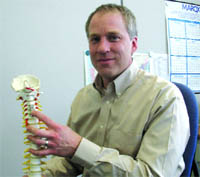
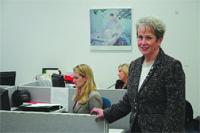
Bill Messner President, Holyoke Community College

Bill Messner President, Holyoke Community College

As part of the school’s 60th birthday party three years ago, Holyoke Community College officials commissioned an artist to create caricatures of the three men who have served as president of the institution.
In his, Bill Messner, who arrived in 2004 after the retirement of long-time corner-office-holder David Bartley, can be seen in his running clothes, high-stepping his way across campus, with students, faculty, and staff cheering him on. And it’s a fairly accurate portrayal of daily life for the rangy 65-year-old campus leader, who has competed in a number of marathons and half-marathons over the years in locales ranging from New York to Washington, D.C. to Cape Cod.
While at HCC, he runs on an almost-daily basis, sometimes with students and/or faculty and staff members joining him. “Although I seem to have run out of faculty and staff over the past year or so,” joked Messner, adding that, more often than not, he runs alone.
The routes and distances vary — “it all depends on what I have time for,” he said. Sometimes he’ll run on campus, while other times he’ll motor around the nearby McClean Reservoir or Mount Tom. He’ll do at least a few miles every time out, and sometimes logs six or more, as he did on the day he spoke with BusinessWest.
The runs are good stress-relievers, he said, and give him time to think and maybe solve some problems. And most often, he’s thinking about connections, and how the school, the oldest community college in the Commonwealth, can make more of them in the Greater Holyoke area.
Such connections include the school’s involvement in a learning center that will be a big part of a new intermodal transportation center to be created in an old fire station downtown, its participation in plans to create a high-performance computing center along the city’s famous canals, and work with Cisco on that company’s decision to choose Holyoke to host a pilot program called Smart + Connected Communities, which will experiment with ways to use data-networking technology to improve delivery of government services, health care, and education.
“You get some interesting thoughts out there around mile three or mile four,” he explained. “And usually, I’m thinking about where I want the college to go and what’s the next connection we can make.”
As president, Messner says it is his role to be the “door opener” for the institution, and by that he meant that he believes a big part of job description comes down to “creating pathways into and out of this place.” In other words, he and his team are working to make it easier to get to HCC, and then to take the big step from there to wherever the student wants to go, be it a four-year college or a job in the region.
Overall, Messner believes these are exciting, yet also challenging, times for both HCC and especially the city of Holyoke, which he sees emerging from a long period of dormancy as a reinvented manufacturing center on the cutting edge of technological advancements and economic-development policy.
“I recently gave a talk at the [Holyoke] chamber’s annual meeting, and I told the audience that they’re better off being in the city of Holyoke, given what I perceive to be its future, than any other community in the state,” he said. “Holyoke is the right size, it’s got the resources, it has the right people in place to make things happen. This is Holyoke’s time.”
For this, the latest installment of its Profiles in Business series, Messner talked about Holyoke, its community college, and his own career, all of which are stories with legs, in one way or another.

Jogging His Memory
From his office in Frost Hall, named after the school’s first president, George Frost, Messner has a panoramic view of the HCC campus, which was carved out of farmland off Homestead Avenue in the late 1960s. He referred to that view, in both a literal and figurative sense, a number of times as he discussed changes in higher education, technology, and society in general.
“If you were to look out that window once school begins in September, and look right down there, you’d see a dramatically different picture than what you would have seen 10 years ago — and 10 years from now, it’s going to be changed even more,” he said, that the numbers of Hispanic and African-American students, and even those with physical and mental disabilities, have risen dramatically, and will continue growing.
“We’ve been in business for more than 60 years, and we’ve got a really wonderful history of providing a solid general education and, for many of our students, transfer opportunities,” he continued. “Our challenge is to continue that tradition with a population that is dramatically changing.”
Messner has seen a good deal of change during a career in public higher education that spans more than 30 years. HCC is his third stop as a president, with his first coming at Orange County (N.Y.) Community College, where he served for 10 years, and his second at the University of Wisconsin Colleges, where he served as chancellor and was responsible for the management of a 13-campus institution that served as the transfer arm of the university system.
Desiring a return to a campus setting, as well as the Northeast, which both he and his wife, Eleanor, consider home, Messner accepted the challenge of succeeding a local institution in Bartley. And, while this might be his last career stop, Messner wouldn’t be at all surprised if it isn’t. “I have no notion of retiring any time soon,” he said.
He’s brought with him to Holyoke many lessons from his previous experiences — about everything from using technology to create learning opportunities to making connections within a community — as well as that passion for running, which he says started 30 years ago, when the activity was just coming into its own.
“I don’t go fast … I’m not a good runner, but I enjoy it,” he said while proudly displaying a picture of himself running in the Marine Corps Marathon in Washington 15 years ago. “I got started at Harvard, of all places. I went to a summer program there at the business school. In the afternoon, after classes, they ran a recreation program that had a lot of things they tried to introduce you to, and one of them was running.
“I started there and haven’t stopped,” he said, adding that, despite his height — he’s 6’ 7” — he has not had any knee problems or other physical ailments, and his running helps keep him healthy. “It keeps me away from lunches, for the most part, which is good, because they’re deadly for the waistline.”
Since arriving at HCC, Messner’s primary accomplishments include opening the Kittredge Business Center, a 55,000-square-foot facility that that houses workforce-development programs, several business-related agencies, and conference and meeting space; partnering with Peter Pan and the city of Holyoke on the learning center; and, in general, making more of those connections he spoke of.
He sees his primary role as that of facilitator.
“The president’s job, in some sense, is to make the contacts and rub shoulders with folks,” he explained, “and let people know we have programming and services available, and then to hand those folks off to the people who do the scut work of developing programs that meet needs. I’m the entry point for the institution.”

Running Theme
Returning to his thoughts on his role as door opener, Messner said he spends much of his time and energy creating and widening those pathways into and out of the HCC campus.
“In terms of getting into the place, we have a lot more students coming to us right out of high school — the student body gets younger all the time,” he said. “But beyond the traditional high-school student, we have students coming out of GED programs, home-schooled environments, jail, halfway houses … and we have international students coming to us from all sorts of backgrounds, as well as the whole array of adults returning after five, 10, 15, or 20 years.
“And they have such an array of backgrounds,” he continued. “We have an ESL (English as a Second Language) program here … you think you’re walking into the United Nations when you walk into a classroom.”
Easing the way into college for all these constituencies is one of the major challenges facing all community colleges and especially HCC, said Messner, adding that the learning center at the old downtown station, due to open late this summer, will play a key role in these efforts.
The center will have ESL programs, GED, and something called ‘transitions programming,’ which is designed to help prospective students who fall into that broad category of ‘non-traditional’ make the transition to college. “We’ll look at what kind of programming, support, and skills these people will need,” said Messner, adding that many are coming out of adult basic-education programs.
As for pathways out to four-year colleges, Messner said he and his team are working on those as well. Meetings have been staged between area community-college officials and administrators at UMass Amherst, for example, with the goal of developing strategies for making the transition from community college to the university easier, more comfortable, and more transparent for students.
“They’re considering an array of things to do at UMass,” he said, “some of it in the way of programming, some of it in support services, and some of it simply in the way of giving us better information about how our students fare.”
Meanwhile, HCC is working to strengthen already-solid transfer programs involving Mount Holyoke College and Smith College — several dozen women move on to those institutions annually — and an emerging initiative with Amherst College. “Transfer has always been our bread and butter,” he said, “and it will be going forward.”
As for Holyoke and its prospects, Messner believes the city is well on its way to reinventing itself, and he credits leadership in City Hall, from the City Council to the mayor’s office to Planning Director Kathy Anderson, for putting politics aside and pulling in the same direction on initiatives such as the computing center.
“I think the city’s been down for so long that its leaders learned that, if they’re going to get ahead, they’re going to have to work together,” he said. “And they are.”
The college has a stake, or role, in this reinvention process, he continued. When asked what it was, he said, “to simply do a good job living up to the mission of community colleges.”
By this, Messner meant providing needed programs and services to serve students, but also helping the business community by preparing a workforce that can thrive in the modern, technology-driven economy.
“Even though we’re a regional community college and only 15% of our students come from Holyoke, if we’re not doing our job in Holyoke in terms of meeting community needs, we’re not going to be doing it in Chicopee, West Springfield, Springfield, or anywhere else,” he said. “It starts right here, and we’ve made every effort to connect with the School Department, the city, the police, the Parks Department, and the nonprofit agencies in terms of collaborating and meeting needs.”

Miles to Go
When he isn’t working, Messner is often traveling with Eleanor. Destinations include places where their children now live — Washington D.C. and Wisconsin, for example — but also Europe and even China; they visited Beijing as it was ramping up for the 2008 Olympics.
Most of Messner’s traveling, however, is done on campus or along the reservoir, where he’s putting in a few miles and thinking — about all kinds of things.
But usually, it’s about connections, what the next one will be, and how it can move a college, a city, and a community forward.

George O’Brien can be reached at [email protected]
Agenda Departments

40 Under Forty Gala
June 24: BusinessWest will celebrate its 40 Under Forty Class of 2010 at the Log Cabin Banquet & Meeting House with a gala to begin at 5 p.m. The event, which has become a spring tradition in Western Mass., will feature fine food, entertainment, and special presentations of the Class of 2010. Tickets for the event are $60. To order tickets or for more information, call (413) 781-8600, ext. 10, or e-mail [email protected].

The Coming Demographic Storm
June 30: The 2010 census statistics will prove it out over the next few years, but Kenneth W. Gronbach already knows what the stats will mean to America. A demographic storm of epic proportions is upon us, and if America’s businesses, regardless of size, are ready, they can plan for amazing success. But if they are not ready, they could be washed away in the giant generational wave. Gronbach, a gifted public speaker and a nationally recognized expert in the field of demography and generational marketing, will be the keynote speaker at the noon luncheon for the Advertising Club of Western Mass. at Longmeadow Country Club. Gronbach makes the science of the census results and shifting demography come alive with real-life examples that make it relevant to today’s culture, business climate, and economy. His presentation is based on the effects of shifting demography. He is an accomplished author with a new, bestselling book, The Age Curve: How to Profit from the Coming Demographic Storm. The demographic landscape in the U.S. is made up a series of waves that are about 20 years in duration. It would follow that business will rise and fall according to the critical mass of customers heading toward it. What is different about this wave is the extraordinary amount of population it includes compared to the past two generations. Businesses will enjoy extraordinary success if they are prepared and in front of the wave. Ad Club members are invited to bring a business associate and join the Ad Club for this presentation and network with the top advertising, marketing, and design talents in Western Mass. To make a luncheon reservation, contact the Ad Club at (413) 736-2582, or online at www.adclubwm.org. The cost for the luncheon is $25 for members, $35 for future members, and $15 for students.

Construction Course
July 14: The Home Builders & Remodelers Assoc. of Western Mass. will sponsor a six-session course starting July 14 to help individuals prepare for the Massachusetts Construction Supervisor’s Licensing Exam. Sessions are planned at the Home Builders & Remodelers Assoc. headquarters at 240 Cadwell Dr. in Springfield for six Wednesdays from 5:30 to 8:30 p.m. The exam is authorized by the State Board of Building Regulations and Standards and administered by Thomson Prometric. Registration forms to enroll for the exam will be distributed at the first session of the program. The fee is $250 for members of the Home Builders Assoc. of Western Mass. and $350 for non-members. All course participants must bring the 7th edition of the One & Two Family Dwelling Building Code book and the 7th edition of the Basic Building Code book to each class and to the open-book examination. There is an additional charge to order the code books through the association. For more information or to register, contact Sandra Doucette at (413) 733-3126.

Advanced Manufacturing Competition & Conference
Sept. 23: The first highly concentrated, cluster-centric, regional manufacturing conference of its kind will be held at the MassMutual Center in Springfield. The event, called the Advanced Manufacturing and Innovation Competition & Conference (AMICCON), is being staged in response to growing recognition among area manufacturers and supply-chain members that there is an urgent need to find and meet one another. “AMICCON was formed to identify who’s here in manufacturing, expose them to OEMs (original equipment manufacturers) and procurement, and to make these introductions,” said co-founder Ellen Bemben. “The ultimate goal is to be the advanced-manufacturing region in the U.S., where exotic manufacturing, such as micro, nano, and precision, meet higher specifications and tighter tolerances, and short runs are the norm.” Industry sectors to be represented at the event will include plastics and advanced materials, precision machining, paper and packaging, electronics, ‘green’/clean technology, and medical devices. Business opportunities in defense and aerospace will also be highlighted at the event. OEMs and their supply chains are being invited personally to participate. “AMICCON is also a new consortium on innovation that also delivers manufacturers to innovators and new markets in order to cause new business,” said Gary Gasperack, vice president and general manager (retired) of the Spalding Division of Russell Corp. “We are very excited about introducing it to our region.” The Mass. Export Center has already produced two programs for AMICCON: an “Export Experts Panel,” and a seminar, “International Traffic in Arms Regulations for Defense and Aerospace Export.”

Departments

40 Under Forty Gala

June 24: BusinessWest will celebrate its 40 Under Forty Class of 2010 at the Log Cabin Banquet & Meeting House with a gala to begin at 5 p.m. The event, which has become a spring tradition in Western Mass., will feature fine food, entertainment, and special presentations of the Class of 2010. Tickets for the event are $60. To order tickets or for more information, call (413) 781-8600, ext. 10, or e-mail [email protected].

The Coming Demographic Storm

June 30: The 2010 census statistics will prove it out over the next few years, but Kenneth W. Gronbach already knows what the stats will mean to America. A demographic storm of epic proportions is upon us, and if America’s businesses, regardless of size, are ready, they can plan for amazing success. But if they are not ready, they could be washed away in the giant generational wave. Gronbach, a gifted public speaker and a nationally recognized expert in the field of demography and generational marketing, will be the keynote speaker at the noon luncheon for the Advertising Club of Western Mass. at Longmeadow Country Club. Gronbach makes the science of the census results and shifting demography come alive with real-life examples that make it relevant to today’s culture, business climate, and economy. His presentation is based on the effects of shifting demography. He is an accomplished author with a new, bestselling book, The Age Curve: How to Profit from the Coming Demographic Storm. The demographic landscape in the U.S. is made up a series of waves that are about 20 years in duration. It would follow that business will rise and fall according to the critical mass of customers heading toward it. What is different about this wave is the extraordinary amount of population it includes compared to the past two generations. Businesses will enjoy extraordinary success if they are prepared and in front of the wave. Ad Club members are invited to bring a business associate and join the Ad Club for this presentation and network with the top advertising, marketing, and design talents in Western Mass. To make a luncheon reservation, contact the Ad Club at (413) 736-2582, or online at www.adclubwm.org. The cost for the luncheon is $25 for members, $35 for future members, and $15 for students.

Construction Course

July 14: The Home Builders & Remodelers Assoc. of Western Mass. will sponsor a six-session course starting July 14 to help individuals prepare for the Massachusetts Construction Supervisor’s Licensing Exam. Sessions are planned at the Home Builders & Remodelers Assoc. headquarters at 240 Cadwell Dr. in Springfield for six Wednesdays from 5:30 to 8:30 p.m. The exam is authorized by the State Board of Building Regulations and Standards and administered by Thomson Prometric. Registration forms to enroll for the exam will be distributed at the first session of the program. The fee is $250 for members of the Home Builders Assoc. of Western Mass. and $350 for non-members. All course participants must bring the 7th edition of the One & Two Family Dwelling Building Code book and the 7th edition of the Basic Building Code book to each class and to the open-book examination. There is an additional charge to order the code books through the association. For more information or to register, contact Sandra Doucette at (413) 733-3126.

Advanced Manufacturing Competition & Conference

Sept. 23: The first highly concentrated, cluster-centric, regional manufacturing conference of its kind will be held at the MassMutual Center in Springfield. The event, called the Advanced Manufacturing and Innovation Competition & Conference (AMICCON), is being staged in response to growing recognition among area manufacturers and supply-chain members that there is an urgent need to find and meet one another. “AMICCON was formed to identify who’s here in manufacturing, expose them to OEMs (original equipment manufacturers) and procurement, and to make these introductions,” said co-founder Ellen Bemben. “The ultimate goal is to be the advanced-manufacturing region in the U.S., where exotic manufacturing, such as micro, nano, and precision, meet higher specifications and tighter tolerances, and short runs are the norm.” Industry sectors to be represented at the event will include plastics and advanced materials, precision machining, paper and packaging, electronics, ‘green’/clean technology, and medical devices. Business opportunities in defense and aerospace will also be highlighted at the event. OEMs and their supply chains are being invited personally to participate. “AMICCON is also a new consortium on innovation that also delivers manufacturers to innovators and new markets in order to cause new business,” said Gary Gasperack, vice president and general manager (retired) of the Spalding Division of Russell Corp. “We are very excited about introducing it to our region.” The Mass. Export Center has already produced two programs for AMICCON: an “Export Experts Panel,” and a seminar, “International Traffic in Arms Regulations for Defense and Aerospace Export.”

Departments

SPHS Lays Off 135

SPRINGFIELD — Citing severe economic challenges in the first several months of 2010, the Sisters of Providence Health System (SPHS) has eliminated 135 full-time-equivalent positions across the system. “Like most health systems and hospitals in the region, state, and nation, SPHS is experiencing a decline in patient volume and continuing challenges with reimbursement levels that, for some services, do not adequately cover the cost of providing care,” according to an SPHS statement. “Factors such as increased health insurance deductibles and co-pays, coupled with general concern regarding the economy, appear to be causing a delay of non-urgent medical care and health services that is influencing this downward trend in volume,” the statement continues. “Without proactive changes in operations, SPHS would incur a projected budget shortfall of $14 million for 2010. Specific to Mercy Medical Center, year-to-date volume reflects that discharges are 8% below budget, and outpatient volume is 7% below budget.” The most significant impact of the layoffs will be on inpatient support staffing responsibilities at Mercy, due to the elimination of 63 patient care technician positions. This change will allow the retention of bedside, licensed nursing staff and allow nurse-patient ratios to remain at current, planned levels, “but will not impact care quality or patient safety,” the health system asserts. In addition to the elimination of positions at Mercy and across SPHS, including administrative positions, several other cost-saving measures are being taken to help improve the health system’s financial performance. For example, the overall salary increase program for 2010 is being suspended, and the internal employee referral bonus program is being discontinued. Other initiatives to help improve the system’s fiscal outlook include the renegotiation of service and vendor contracts at lower rates, the sublease of unused space in off-campus locations, and revenue-enhancement opportunities such as an increase in grant funding. “We deeply regret that the reduction of jobs is necessary,” said Dr. William Bithoney, interim president and CEO of SPHS. “The decision to make these changes has been difficult and the subject of a lengthy discernment process. Several potential alternatives were evaluated. However, we believe the course of action selected is the best for patients, residents, and clients, and for continuity of the SPHS mission. These changes reflect good stewardship and prudent management that will focus resources on the most important aspects of high-quality patient care. Providing high-quality care remains our focus and primary concern. Our clinical and nursing standards remain unchanged, and we continue to provide those we serve with the highest-quality care.”

Survey: Hiring Outlook in U.S. Gains Momentum

MILWAUKEE — U.S. employers anticipate favorable hiring plans for the third quarter of 2010, marking three straight quarters of positive survey findings, according to the seasonally adjusted results of the latest Manpower Employment Outlook Survey, conducted quarterly by Manpower Inc. Employers provided a seasonally adjusted outlook of +6%, up from -2% during the same period last year. According to the survey, 98% of U.S. states have a positive hiring outlook, and 95 of the nation’s 100 largest metropolitan statistical areas have a positive outlook for the third quarter. Of the more than 18,000 employers surveyed, 18% anticipate an increase in staff levels in their third-quarter hiring plans, while 8% expect a decrease in payrolls, resulting in a net employment outlook of +10%. When seasonally adjusted, the net employment outlook becomes +6%. More than two-thirds of employers (70%) expect no change in their hiring plans. The final 4% of employers indicate that they are undecided about their hiring intentions. Employers in 11 of the 13 industry sectors surveyed have a positive outlook for the third quarter: leisure and hospitality, +20%; mining, +17%; professional and business services, +15%; wholesale and retail trade, +15%; nondurable goods manufacturing, +12%; financial activities, +11%; information, +10%; durable-goods manufacturing, +9%; transportation and utilities, +9%; construction, +8%; and other services, +8%. The July-September outlook is -2% for two of the surveyed sectors — education and health services and government. Compared to one year ago, surveyed employers in all four U.S. geographic regions anticipate hiring increases. Employers in the Northeast have the brightest hiring intentions, with a net employment outlook of +9%. When adjusting for seasonal variations, Midwest employers report the strongest shift for the third quarter of 2010, with a considerable increase in confidence year-over-year and a slight increase quarter-over-quarter. Compared to the second quarter of 2010, employment prospects are stable in the Northeast and South, while slightly slackening in the West. The net employment outlook is derived by taking the percentage of employers anticipating an increase in hiring activity and subtracting the percentage of employers expecting a decrease in hiring activity.

Federalization of SHA Sites Yields $15M Impact

SPRINGFIELD — The Springfield Housing Authority (SHA) recently announced the federalization of the Robinson Gardens, Reed Village, and Duggan Park developments, which will lead to more than $15 million in improvements to bring them up to HUD standards. Contracts have been bid and awarded to several local companies for design services, construction supervision, and physical improvements. Funding sources for the new construction include $1.8 million awarded to the SHA under the American Recovery and Reinvestment Act and $13.1 million awarded to the SHA by the Commonwealth of Massachusetts Division of Housing and Community Development. During a recent press conference, Richard A. Walega, HUD’s New England regional director, noted that Springfield led the commonwealth in converting state projects into federal developments. “That’s a win for today’s tenants and a win for preserving affordable housing for future generations,” said Walega. The SHA is the third-largest housing authority in Massachusetts, with more than 2,300 housing units spread over 27 sites.

National Jobless Claims Fall

WASHINGTON — In the week ending June 5, the advance figure for seasonally adjusted initial jobless claims nationwide was 456,000, a decrease of 3,000 from the previous week’s revised figure of 459,000. The four-week moving average was 463,000, an increase of 2,500 from the previous week’s revised average of 460,500. The advance seasonally adjusted insured unemployment rate was 3.5% for the week ending May 29, a decrease of 0.2% from the prior week’s revised rate of 3.7%. The advance number for seasonally adjusted insured unemployment during the week ending May 29 was 4,462,000, a decrease of 255,000 from the preceding week’s revised level of 4,717,000.

State: May Revenues Strong, but $70 Million Below Benchmark

BOSTON — The state Department of Revenue (DOR) recently released its May revenue report showing a monthly collection of $1.573 billion, which was $292 million better than a year ago but insufficient to make up for all of the revenue loss experienced in April due to the filing extension to May 11. As a result, with one month left before the close of the fiscal year June 30, year-to-date collections are $70 million below the benchmark. DOR Commissioner Navjeet K. Bal noted that personal income-tax withholding and 2010 estimated payments, as well as sales and use tax and corporate collections, all of which are good indicators of a continued economic turnaround, were above the benchmark. Bal added that shortfalls for the combined April/May period in payments with 2009 returns and extensions probably reflect a decline in capital gains due to past economic performance, which caused the overall year-to-date below-benchmark performance.

Departments

Travelers Recognizes Sumner & Toner Agency

LONGMEADOW — The Sumner & Toner Insurance Agency was recently recognized by Travelers as one of 20 agencies in the country to receive its prestigious Insurance Agency of the Year Award. Firms are chosen based on their goals for long-term profitable growth, dedication to high-quality customer service, and commitment to Travelers. “The Sumner & Toner Insurance Agency demonstrates the highest level of motivation and commitment,” said Greg Toczydlowski, president of personal insurance for Travelers, in a prepared statement. Toczydlowski added that Travelers “truly values” the partnership they’ve developed with the local firm. Established in 1933, Sumner & Toner Insurance Agency is an independent provider of comprehensive auto, home, professional liability, and life insurance. In 2008, partners Warren Sumner and Bill Toner created a dual father-and-son family business with sons Bud Sumner and Jack Toner. The next generation of Sumner & Toner, they say, serve as the company’s sales representatives and are helping to lead the company into the 21st century.

MMWEC Redesigns Public Web Site

LUDLOW — The Mass. Municipal Wholesale Electric Co. (MMWEC) has redesigned its public Web site with the goal of bringing greater efficiency to its Web-site management and improving content to online visitors. The Web site, www.mmwec.org, provides a “fresh and sophisticated look” at MMWEC’s history, programs, and services as well as recent news, financial reports, and information about energy assets and renewable-energy initiatives, according to MMWEC CEO Ronald C. DeCurzio. The site also features improved navigation and a search function, making it simpler for visitors to find specific information that is enhanced with graphic detail. The new site is updated using a customized content-management system, giving authorized individuals the ability to update and publish Web pages as needed from any location with Internet access. In addition, the site is search-engine-optimized to direct more users to the site based on their search-engine queries. MMWEC is a nonprofit, public corporation and political subdivision of the Commonwealth of Massachusetts that provides a variety of power-supply, financial, risk-management, and other services to the state’s consumer-owned, municipal utilities.

STCC, Balise Create Partnership for Students

SPRINGFIELD — Balise Motor Sales recently donated $25,000 toward the purchase of a state-of-the-art Hunter vehicle-alignment lift for the Automotive Technology Department at Springfield Technical Community College (STCC). The lift will introduce students to real-world diagnostic equipment to better prepare them for their careers in automotive technology, according to Raymond Sbriscia, chairman of the Automotive Technology Department. Sbriscia noted that the lift will be an integral part of the education and training students receive. The college also has a relationship with the Hunter Engineering Co., the manufacturer of the lift and other automotive-repair equipment. Hunter uses the STCC facility as a training and demonstration center for repair companies throughout the region and neighboring states. In return, STCC receives the latest, highest-quality equipment in the industry. Michael Balise, vice president, noted that Balise Motor Sales is always in need of talented automotive technicians who have computer and electronics training in addition to the traditional mechanical training. During the first year at STCC, students work mostly in the lab, diagnosing and fixing problems. At the end of the first year, students receive a certificate of completion. Students can then either join the workforce or continue on to the second year of study and receive an associate’s degree in automotive technology. Only 22 students are accepted into a new class, so the competition is “fierce,” according to STCC officials.

“Hackman” Retires after 48 Years

EAST LONGMEADOW — Lee “Hackman” Breton recently retired from LENOX after a 48-year career that started out on the manufacturing floor. In 1962, Breton was credited with manufacturing the first bi-metal reciprocating saw blade entirely by hand. His career took a dramatic change in 1981 when the LENOX sales team asked him if he thought he could cut a car in half with the new Hackmaster hacksaw blades to show off their superior strength and durability. He accepted and met this challenge, which turned out to be the first of hundreds of car cuts — earning him his nickname. From that day forward, being Hackman became his full-time job. Over the years, Breton traveled the world as Hackman, demonstrating the strength and durability of LENOX Tools by cutting more than 500 cars and other items, including an oil tank truck, cargo plane, boxcar, house, armored car, and even a bus at Super Bowl XXXIIII in 1999. Rich Mathews, vice president of marketing and new business for LENOX, noted that Breton exemplified the LENOX brand with his trademark car cuts, and was always willing and able to help out the company with anything and everything. “He will forever be considered a great employee as well as the best ambassador for the LENOX brand that we ever could ask for,” said Mathews. Breton’s last day at LENOX was May 28.

Café Lebanon Celebrates 10 Years in Business

SPRINGFIELD — Nadim Kashouh, owner of Café Lebanon, recently invited customers and friends to a complimentary 10-year celebration extravaganza at the 1390 Main St. restaurant to thank everyone for their patronage over the years. Kashouh serves Lebanese and Mediterranean cuisine in what he calls “an elegant, yet relaxed atmosphere.” Café Lebanon also offers catering for weddings; showers; anniversary, birthday, and graduation parties; bereavement gatherings; holiday events; business meetings; and corporate events. Kashouh maintains a second Café Lebanon restaurant in the center of East Longmeadow at 60 Shaker Road.

Departments

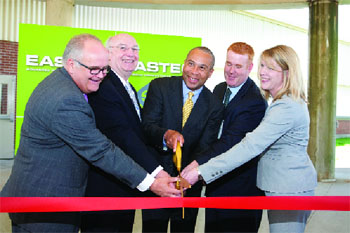
EASTEC 2010

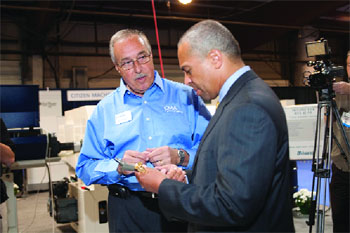
Key regional and national players from the manufacturing sector converged on West Springfield recently for EASTEC 2010. Top left: Gov. Deval Patrick (center) cuts the ribbon on the event along with, from left, Mark Tomlinson, executive director of the Society of Manufacturing Engineers; Wayne McCary, president of the Eastern States Exposition; state Rep. James Welch; and Debbie Holton, director of North America Events for the Society of Manufacturing Engineers. Top right: James Cepican, general manager at Citizens Machinery America Inc. in Agawam, explains his company’s offerings to Patrick. Bottom: Representatives from GenScope Inc. in East Longmeadow demonstrate their company’s technology.


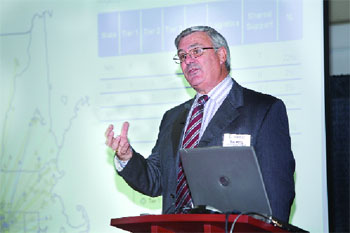
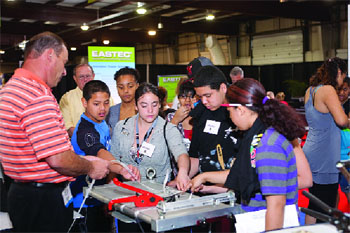
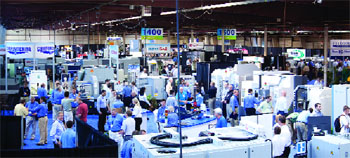
Clockwise from bottom: A wide view of one of the EASTEC display halls; Mike Fausti, service technician with Cordstrap USA Inc. of Hamilton, N.J., demonstrates equipment for students from the Peck Middle School in Holyoke; Gov. Deval Patrick addresses manufacturers at EASTEC; Mike Reopel, principal of Deloitte Consulting in Boston, discusses trends in manufacturing.

Sections Supplements
Manufacturers Seek to Forge Connections Through AMICCON

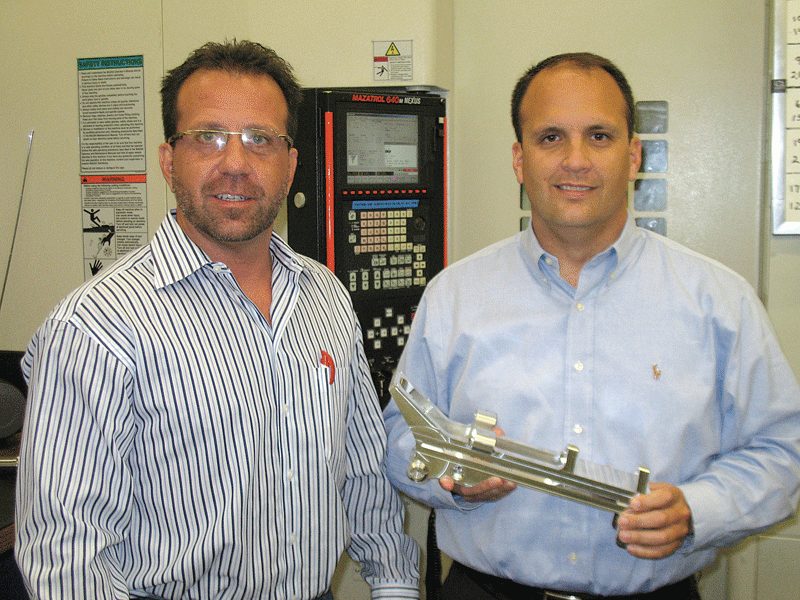
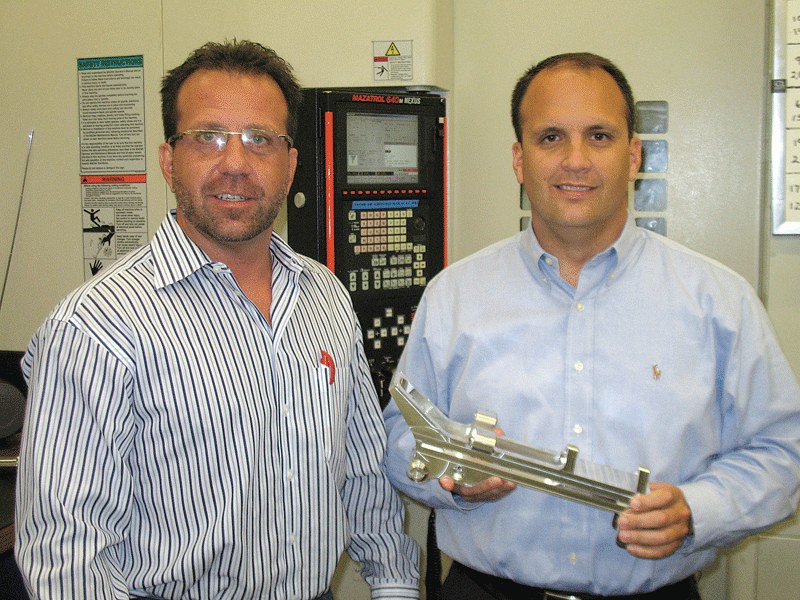
Eric Hagopian, right (with Douglas Hagopian, vice president and treasurer of Hoppe Tool), says AMICCON will benefit the area’s entire manufacturing sector.

Manufacturers in Western Mass. are skilled at putting the pieces together, so to speak, to create countless products. But they haven’t been as effective making connections amongst each other.
That’s the driving idea behind AMICCON, or the Advanced Manufacturing and Innovation Competition & Conference, which is, nominally, a regional event set for this fall in Springfield — and yet, its organizers say, much more.
“I feel it makes sense for us to get out there and have an event where we are aggregated together, all of us — metal processing, electronics, paper manufacturing, all the different manufacturing capabilities — in one place,” said Eric Hagopian, president of Hoppe Tool in Chicopee and a member of the AMICCON steering committee.
Why is that important? Hagopian and others on the committee say that, despite the richness and diversity of the region’s manufacturing sector — the showcase of which is one of the conference’s goals — many manufacturers and supply-chain members are not aware of all that is produced in the Springfield-Hartford corridor. As a result, they look outside this area — to other regions of the U.S. or even internationally — to supply goods that are actually being produced locally.
When that happens, Hagopian said, area manufacturers lose potential customers — and profits.
“For us, AMICCON is a chance to be in the room with companies that we didn’t know about,” he told BusinessWest. “Who knows — we may be making the same mistake some of our customers are making, looking outside our region because we don’t know who the manufacturers are, what their capabilities are, and how they can help us.”
The conference, slated for Sept. 23 at the MassMutual Center, will focus on six key manufacturing niches: plastics and advanced materials, precision machining, paper and packaging, electronics, ‘green’/clean technology, and medical devices. Business opportunities in defense and aerospace will also be highlighted. Original equipment manufacturers from around the country and members of their supply chains are being invited personally to participate.
Committee member Jeff Sattler, president of NUVO Bank, said that, while Western Mass. manufacturers must compete to survive, they also benefit when the entire sector is healthy, and to create that robustness, they need to show each other what they have to offer, along with attracting customers from outside the region.
“Manufacturers are tired of watching corporations shut down and move out,” he said. “If they had a better understanding of what their supply chain is around the marketplace, maybe they wouldn’t leave. That may be idealistic, but it’s necessary.”
Sattler said he’s dealt with many manufacturers in his portfolio of commercial lending at NUVO, and he has often tried to foster business connections between them. AMICCON, he said, is a way to do so on a larger scale.
But that event is only the first phase of AMICCON, said Ellen Bemben, one of the conference founders.
“We have an ultimate goal, within five years, to turn this region into the hub for exotic manufacturing — nano, micro, precision manufacturing,” Bemben said. “It’s here; all we have to do is identify it and market it.”
To do so will require making connections with colleges and universities to cultivate the next generation of manufacturers, by developing programs that promote what the sector has to offer, said committee member Gary Gasperack, vice president of the Spalding Division of Russell Corp.
“This is an effort by manufacturers for manufacturers,” he noted. “However, the intent is also to tap into and involve the academic community in a total way — the MITs and RPIs, UMass, UConn, that whole playing field will be phase two of what we do. The conference is phase one, and phase two will deal with the education area. Phase three deals with entrepreneurs and innovations.”
Part of that third phase will be something called the Advanced Manufacturing Innovation Competition, which is designed to promote the sort of innovation that has lent the Springfield area its manufacturing heritage. Companies participating in the Sept. 23 conference will help underwrite the $50,000 prize with their entry fees.
Gasperack touted the regional component of AMICCON, which seeks to forge connections across the Massachusetts border as well as within the Bay State, noting that a manufacturing region is not necessarily defined by state lines.
“In the political arena, the players tend to be more provincial, focused more on their state’s needs,” he said. “We have an opportunity — because of the mission and purpose of this organization — to look beyond the borders, go beyond local jurisdictions, and pull companies together, and we believe we can be successful in a broader sense by having that focus.”
Sattler agreed. “There’s nothing bad about this … if it’s done right,” he said. “This helps every business in the marketplace. Everyone benefits when a business comes into the region. That’s the key.”

Joseph Bednar can be reached
at [email protected]

Sections Supplements
NuCedar Mills Owner Hangs Out His Shingle — and His Clapboard

Tom Loper

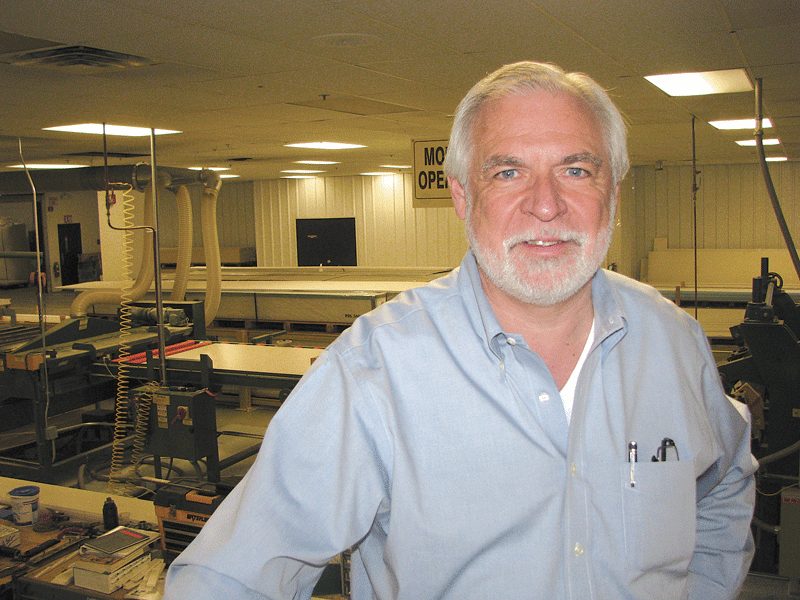
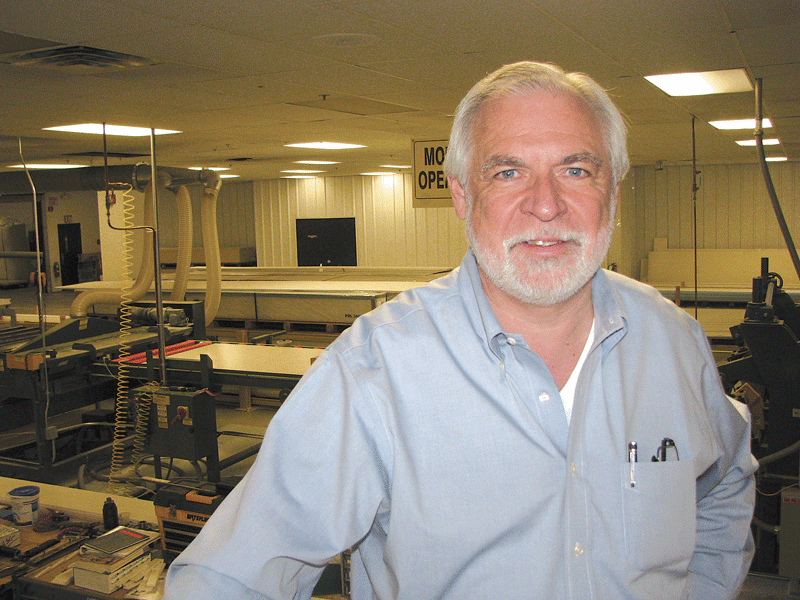
Tom Loper is confident that a rebounding economy and the growing popularity of ‘green’ products will spawn strong growth at NuCedar Mills.

Tom Loper says he looks upon 2010 as what he calls a “restart” for his company, Chicopee-based NuCedar Mills.
Elaborating, he said the official start came in late 2006, when Loper, one of the founders of the Westfield-based company Kleer Lumber, a maker of PVC trimboard, decided to commence another venture that would go where Kleer Lumber didn’t or couldn’t — into the making of a product that reproduces vertical-grain cedar clapboard siding.
The product was several years and considerable pain and anguish in the making, but, when it was finally ready, it was everything that Loper hoped it would be — beautiful, durable, low-maintenance, and ‘green’ (more on that later). But more important was something it wasn’t — recession-proof.
“Our timing at the start wasn’t exactly good,” said Loper with a discernable trace of sarcasm. “I don’t think it could have been worse.”
But Loper has long known that his product is a good one, and he has since developed several new ones as well, including a shingle that is catching the attention of the marketplace. These developments have allowed his investors to remain patient and actually give him more room and capital with which to work. All this, coupled with the fact that the housing market, and especially the high-end market to which he caters, is coming around, has the energetic and entrepreneurial Loper quite optimistic about his restart.
NuCedar is a story that touches many bases: manufacturing, because Loper has done some pioneering to get his products to market in terms of innovation and waste-reduction efforts; entrepreneurship — there were some sizable risks with this startup; ‘green building,’ because of the environmentally friendly aspects to this product; and even marketing, for the ways Loper has been able to put his products in the spotlight — some through creativity and others through determination and simply having a good story to tell.
These include exposure through last summer’s Extreme Makeover: Home Edition project (his siding was chosen for the home built in Suffield) to upcoming appearances on the show This New House (produced by the same people who put on The Old House and debuting later this year) to face time on something called Renovation Nation, hosted by long-time This Old House host Steve Thomas, on the Planet Green channel. Those latter two shows highlighted both the manufacturing innovations and the green qualities of the products.
“We had the This New House people out to tour the plant, and they spent the entire day here; they watched us make clapboard from beginning to end,” said Loper. “We just got the call last week … we’re going to be on the premier show. The producers liked us so much, we’re going to be a big part of that show.
“And we received a lot of time on Renovation Nation, which is great PR for us — people know those names and faces like Steve Thomas, and they respect him,” he continued. “And whenever we’re on one of those shows, the hits to our Web site increase significantly. That’s how we know people are watching.”
Loper is hoping that all this publicity will help in his restarting efforts, which are already off to a promising start with the introduction of the shingles and an apparent willingness on the part of consumers to spend on their homes again.
“We’re about two years behind schedule,” he said, referring to the timetable outlined in an original business plan that has seen a number of revisions and updates. “But we’ve got a really good chance to do some catching up.”
For this issue and its focus on green business, BusinessWest takes a look at a company that might have gotten off to a slow start, through no fault of its own, but certainly seems to have the right products at the right time.

House Money
Tracing the history of NuCedar, Loper said it came about through the simple observation that, if Kleer Lumber could make a high-quality PVC trimboard, then logic dictated that a similar product approximating traditional cedar siding could also be produced.
But Loper knew it wasn’t that simple. First, a system would have to be devised for making a product that looked like real cedar, was durable, could hold paint, could withstand the elements, and, most importantly from a business perspective, could be produced in a cost-effective manner. A supplier of the PVC material would have to found, and financing would have to be obtained.
The good news, said Loper, is that all those hurdles were eventually cleared, and the company was up and running at more or less full speed by the middle of 2007. The bad news is that it wasn’t at that speed for long, as the economy took its serious nosedive, and the bottom completely fell out of the new-home construction and remodeling markets.
Telling the story more slowly, Lopor said there was a considerable amount of research and development that went into NuCedar’s main product, the vertical grain cedar, which meets a real need within the building community — something that looks like cedar, specifically old growth trees, but isn’t.
That’s because, as Loper put it, when it comes to the real thing, “you can’t get it.”
Part of the reason is the spotted owl, he said, noting that it is partial to cedar trees and its presence has limited the number of trees that can be cut. And in areas where trees can be cut, there are other problems. “There are two things going on, fires and floods, and you take trees down, it makes both worse.”
New growth trees can be cut, said Loper, but that cedar doesn’t have the same look, and it often develops moisture problems that limit paint’s ability to stay on the board. “I have that on my house,” he explained. “It’s beautiful cedar, the best that was available, but I have to paint it every four or five years.”
Coming up with a cellular PVC product that had cedar’s looks but also much more durability and sustainability, were just some of the hurdles for Loper to overcome.
Indeed, innovative and cost-effective methods were found for everything from cutting the board to applying the paint; from devising and producing an interlocking system that allows each clapboard to support the one below it, to recycling the dust created in the production process.
The paint itself was a work in progress for many months. Working with supplier Sherwin Williams, Loper was able to secure a product that has a two-part coating that chemically hardens to form an impenetrable barrier. It also helps reduce energy costs and is available in more than 1,400 custom colors, five ‘historical colors,’ and 17 popular selections, including Watch Hill white, Chatham sand, Sunapee stone, Mohegan tan, and Suffield blue (the color chosen for the Extreme Makeover home).
The downturn in the economy certainly slowed the company’s development, but it didn’t stop it in its tracks, nor did it derail efforts to build on the original product line.
“We’ve been lucky … during the downturn, we went to our investors and said, ‘our timing really stunk getting started in the first place, based upon the way the housing market has gone. We’ve seen a lot of manufacturers shuttering their doors,’” he said. “We told them, ‘we’d like to go in the opposite direction. You can close the doors if you want to, but we’d actually like to get a little more money out of you and build a couple of other lines.’ And they let us go ahead and do it.”
So in addition to the traditional, or ‘smooth,’ cedar, the company has subsequently produced a few other offerings, including a roughsawn model that is proving to be quite popular with homeowners, said Loper, adding that it was this development that eventually brought the company into an entirely new product line: shingles.
“People looked at the roughsawn clapboard and said, ‘if you can do this, why don’t you just go ahead and make shingles?” he said, adding that the products are similar in looks and manufacturing techniques. “We did, and now it seems like we can’t make them fast enough, with the market coming back, especially on the high end.
“For a long time, people with money were reluctant to spend it, because they didn’t feel secure enough to,” he continued. “Now, they’ve gained the confidence to make the investments in their homes that they want to make and have probably put off for a long time.”

Board Meetings
But there are other elements leading to NuCedar’s success beyond the economy and a unique way to replicate cedar.
Indeed, beyond the good looks and durability of the company’s products are a number of ‘green’ attributes, said Loper, noting that these qualities have made NuCedar products popular among architects who want to incorporate green into their design, and also with consumers, who like being environmentally friendly — and saving money.
NuCedar’s offerings are 100% recyclable, said Loper, adding that they can yield 5% to 9% savings on energy bills, depending on location and wall insulation, due in large part to a solar-reflective coating that reduces heat transfer from the sun’s rays, reduces the energy required to heat a home, and permits dark colors to be used in warm climates. The company calls it “cool-wall technology.”
“The Department of Energy did a study — those are their numbers, not ours,” he said, referring to the potential savings rates. “And in the south, those percentages equate to big money on air-conditioning costs; we’re talking about thousands of dollars in some instances.”
One key to those savings is the use of ceramic-based pigments in the paint applied to the siding as well as the shingles, said Loper, noting that it is the same material used in what’s known as ‘cool-roof technology,’ now mandated in many parts of the South and West. It’s also used by the U.S. military on ground vehicles and aircraft.
“If you take a aircraft that’s made out of composite materials that goes from being in 100-plus-degree heat in the desert to 20 below when they’re high in the atmosphere — and they do that every day — the composite material expands and contracts at a furious rate,” he explained. “Our product also expands and contracts, but with this coating on it, there is less of that. More importantly, it’s solar-reflective.”
Moving forward, Loper says the pieces are falling into place for what is shaping up to be a very solid restart for his company. He noted that the high-end housing market is rebounding, with consumers now confident enough to move forward with renovations and new building. This confidence, coupled with the products’ increasingly popular green qualities, would seem to indicate that, this time around, the timing couldn’t be better for the company.
“The Wall Street people have gotten their bonuses, and a lot of them are spending them on their homes,” he said, citing just one example of consumer activity that is giving the company a needed lift as it looks to grow market share.
“All of the sudden, people who let the paint go and let the shingles go, they don’t want to let them go anymore, and we’re getting those jobs,” he said. “And we’re getting work all along the East Coast; Florida is still hurting, but many other areas are coming back.”
And then, there’s all that exposure through the media, which is prompting Web-site hits that lead to phone calls and, eventually, jobs to bid on. And once he has a chance to show what his products can do, Loper believes he has a solid chance of getting the work.

Through the Roof
As he talked about the strong start for his shingle products, Loper said they are opening the door to other types of business and bigger contracts. “People will look at them and how well they work and say, ‘what else do you have?’ This leads to people looking at the trimboard, and then eventually to the clapboard.
“We’ve seen that happen I don’t know how many times,” he said, adding that the diversity of product offerings and the chance to handle one or several aspects of a home-renovation project have led to opportunities as the market picks up.
This is just another of many factors that together indicate that, while this company didn’t get off to a good start, it may get off to a great restart.

George O’Brien can be reached at [email protected]
Features
When Experience Counts, This Firm Is a Lock

Stanley Bierowka

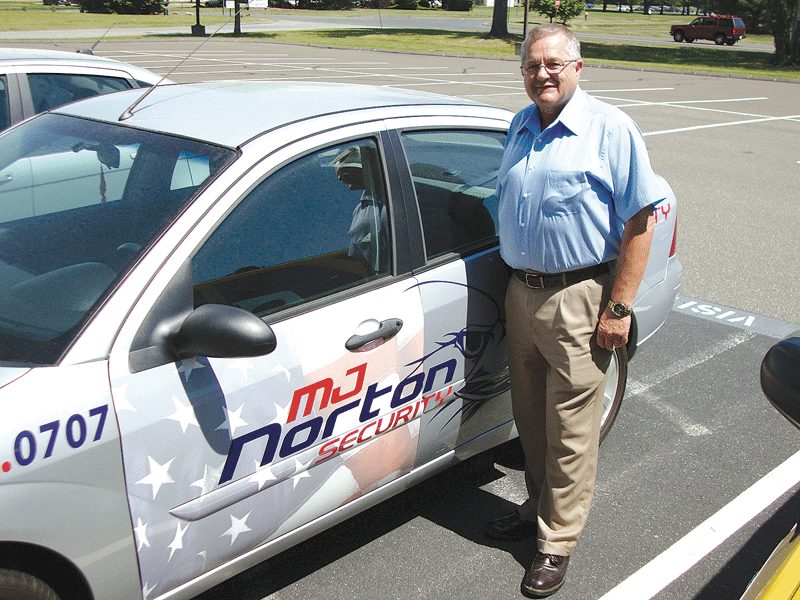
Stanley Bierowka says that, despite the sluggish economic climate, there are still plenty of opportunities for a security company to grow.

Stanley Bierowka can tell you firsthand that security companies are not created equal.
“Even though we all draw from the same pool of security professionals,” said the co-owner and general manager of MJ Norton Security in Chicopee, “the main thing is how you manage them and how you manage your accounts.”
After a lifetime of working in the industry, Bierowka said that he’s seen some shops out there throw uniforms on their staff and send them out into the field. “That,” he said with a smile, “is not how it’s done.”
He said that MJ Norton “steps it up a notch,” and offers specialized training to ready the staffers who wear his company’s name. The company has only been in business since January, but between Bierowka and his partner, Rob Allen, they have a lifetime’s worth of experience. “I started out at the bottom,” Bierowka said, “and worked my way to the top, from guard to supervisor to director of operations.”
At his last post, he was forced to take time off for a life-redefining moment. Major surgery put him off the roster for four months, and in that time, he knew that some changes were in order. Little did he know that the sick leave would turn into a silver lining.
“Allen sold his share in that company a few months earlier,” Bierowka said, “and while I was out, he asked me if I’d ever think about going into business with him.
“So I thought about it,” he continued, “and, really, I wasn’t going to go back to the other company anyway after so much time away. I was going to be out of a job and have to look for something else, and at my age, that’s not so easy. But I’m not ready to retire just yet!”
With an enviable rolodex filled with people who had admired their work in the past, the two found that one of the biggest challenges was to decide what this enterprise would be called.
“You can’t believe what we had to go through for a name,” he explained. “We must have proposed about 10 different names to the state, but were turned down for a variety of reasons. Someone either had the name, or there were patents on names.”
‘M.J.’ is the initials of Allen’s mother, and the two added that to a secure-sounding surname. “We felt it was a powerful name,” he said.
With some 15 different area outfits offering similar services, Bierowka said that his business sets itself apart in more ways than one. In addition to offering its guards specific training for their posts, he said without hesitation that their superior management is what puts this outfit ahead of the rest.
“We’re very on top of that here,” he said unequivocally.
“It might not look good for the owner to be at the job site in uniform on the first day,” he added, “but I’m not the type to sit back at the desk all the time. Until our guards are set in their schedules and shifts, we have supervisors on site, and sometimes that will be me.
“I’m out there every night checking on my people,” he continued. “And if you want to be the best, that’s what you have to do.”
By paying a rate higher than the prevailing wage for security, Bierowka said that his business hopes to maintain strong retention, not an easy feat in this industry. “We’re sacrificing our profit to make sure that the level of security guards we have is the absolute best that’s out there,” he said.
His industry gets a “bad rap,” as he calls it, stemming from poor performance to bad hires, and his business sets out to right that misperception. Because of historic problems in contract security, Bierowka said that many larger companies have decided to “go internal.”
“Your larger concerns just don’t hire out as much,” he said. “In the end that costs them a lot more, but really, it hurts our industry big time.”
And when businesses look to the bottom line, security is often one of the first line items to get cut. “It’s not directly adding to their profits,” he explained. “It’s pretty scary, because the crime hasn’t stopped.”
With Bierowka and Allen’s combined reputations, the firm is secure in its present scope, and handles assignments in a wide range of business sectors, including health care, manufacturing, retail, residential — “all commercial property,” Bierowka said. But as the company looks to the second half of its first year, he said that it is still possible to grow in the present economic climate.
“Car dealerships, condo complexes, elderly housing,” he said, listing possible avenues of growth for his venture. “There seem to be increases in those areas, and of course hospitals and clinics will always be hiring.”
Word of mouth continues to be the company’s best asset, and he said that is what drives successful operations in his field. “You’re not selling a commodity,” he said. “The person that’s interviewing you for a job is interviewing you as a person. It’s a tough sell.”
But as Bierowka got ready to head out to a new job that night, it was clear that, after a lifetime in the industry, he had the situation locked down.

—Dan Chase

Departments

The following business incorporations were recorded in Hampden, Hampshire, and Franklin counties and are the latest available. They are listed by community.

AMHERST

Jonathon Goldman Inc., 158 Flatt Hills Road, Amherst, MA 01002. Jonathon Goldman, same.
 
CHICOPEE

I K Transportation Inc., 96 Meadow St., Chicopee, MA 01013. Ilya Khotsin, same. Transportation of foods, commercial goods, vehicles, and other commodities via flatbed, container and heavy hauling trailers.
 
Prevalent Transport Inc., 43 Asinof Ave., Chicopee, MA 01013. Sergy Kucherenko, same. Passenger transportation via passenger vans, limousines and other passenger vehicles.
 
Ludlow Mills Redevelopment Corporation, 255 Padgette St., Chicopee, MA 01022-1308. Kenneth W. Delude, same. All activities related to the redevelopment of the Ludlow Mills property.

CUMMINGTON

Ocean Justice, Ltd., 20 West Main St., Cummington, MA 01026. Seth Pouliot, same. Ocean justice aims to free our oceans of garbage and foster a healthy relationship between people and the environment.
 
EAST LONGMEADOW

Little J. Inc., 20 Rollins Dr., East Longmeadow, MA 01028. Frances Marie Stote, 51 High Meadow Dr., West Springfield, MA 01089. Restaurant.
 
Nail Lounge and Spa Inc., 14 Maple St., East Longmeadow, MA 01028. Hyun Min Je, 1240 Jasmine Walk, Torrence, CA 90502. Nail Salon.
 
EASTHAMPTON

Rocktec Drills Inc., 19 Bayberry Dr., Easthampton, MA 01027. Patrick J. Jolicoeur, same. Selling of machinery.

S & D Vending Inc., One Adams St., Easthampton, MA 01027. William Hatzipetro, 41 Coleman Road, Southampton, MA 01027. Provides music from vending machines.
 
FLORENCE

Novotny Trucking Inc., 18 West Farm Road, Florence, MA 01062. Deborah A. Novotny, same.
 
HATFIELD

Pioneer Valley Young Democrats Inc., 59 Prospect St., Hatfield, MA 01038. Shawn Robinson, same. Regional organization of Democratic party activists.
 
HOLYOKE

Iglesia Pentecostal Subamos Al De Santidad Inc., 326 Appleton St., Holyoke, MA 01040. Carlos Cruz, 170 Hampshire St. #5, Holyoke, MA 01040.
 
The Parrot and Bird Emporium Inc., 18 Count Road, Holyoke, MA 01040. Janet Berube, 18 County Rd., Holyoke, MA 01040. Purchase, sell, market, care for, train, teach, feed, and house birds.
 
INDIAN ORCHARD

IHOP Restaurants LTD., 422 Main St., Indian Orchard, MA 01151. Iris Ferrara, 50 Moore St., Ludlow, MA 01056. Restaurant.
 
LONGMEADOW

Right Standing Ministries, 260 Longmeadow, St., Longmeadow, MA 01106. Rodney Woods Orourke Jr., same. Christian organization charitable and educational purposes.
 
OTIS

Rebecca Hansbrough Consulting Inc., 433 East Otis Road, Otis, MA 01253. Rebecca Hansbrough, same. Consulting services.
 
PITTSFIELD

Martin & Martin Enterprises Inc., 24 Greenings Ave., Pittsfield, MA 01201. Mark Martin, same. Restaurant.
 
SPRINGFIELD

IBEW 2324 Benevolent Fund Inc., 281 Cottage St., Springfield, MA 01114. Martin Feid, 64 Sunnyslope Ave., Agawam, MA 01001. Supporting and aiding individuals and families through fundraising activities.
 
La Base Xpress Incorporated, 1655 Main St., Springfield, MA 01103. Hector Ramirez, 860 Wyckoff, Ave., Brooklyn, NY 11237. Transportation services.
 
Live Wire New England Inc., 22 Rachel St., Springfield, MA 01129. Richard A Britt, same. Distributor of live wire energy chews.
 
WEST SPRINGFIELD

John Brames OSHA 10/30 Provider Incorporated,  203 Circuit Ave., West Springfield, MA 01089. John Brames, same.  OSHA training and consultation.
 
WESTFIELD

OMT Manufacturing Inc., 43 Daniel Ridge, Westfield, MA 01085. Alexander A. Trusiewicz, 16 Loomis Court, Chicopee, MA 01020. Manufacturing.
 
PATP Inc., 31 Franklin St., Westfield, MA 01085. Prathmesh I. Patel, 224 Peoples Way, Hockessin, DE 19707. Retail package store, sales of liquor.
 
RMB Transportation Inc., 49 Berkshire Ave., Westfield, MA 01085. Transportation services.
 
Roots Learning Center Inc., 217 Rood Road, Westfield, MA 01085. Education and learning center.

Features
Bing Restoration Project Takes a Major Step Forward
Work of Arts

Brian Hale says great strides have been made to breathe new life into the old Bing Theater.

Brian Hale remembers a time when a rainy Saturday would have packed all 900 seats in the Bing Theater on Sumner Avenue, near the city’s X.

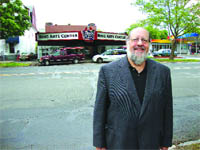
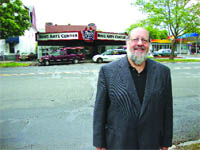
“My friend and I came to see Day of the Triffids and Fun in Acapulco, with Elvis, and it was so crowded we couldn’t get seats even near each other,” he said. It might not have been those two movies that led them back to the defunct theater years later, but both men are now board members of The X Main Street Corp. (XMSC), which owns the rechristened Bing Arts Center.

With the sounds of hammers and saws punctuating the conversation, Hale told the story of how the 1930s gas station known as Cossaboom’s Service Station on Sumner Avenue was transformed into Forest Park’s portal to Tinseltown, and became the place to be for the postwar Baby Boomer generation. The future of the Bing Arts Center, he said, has just as an important a role for arts and culture in the city.

The big theater space out back is still far from a return to celluloid spectacles, but for now, the front section of the building is completely refurbished and has been slowly but steadily hosting arts-education classes, movie screenings, and, very soon, its inaugural arts show.

With a soft opening planned for June 5, Hale, board president of the XMSC, plans to introduce the community to what the XMSC calls “a place which will enable our citizens of all ages, ethnic groups, genders, orientation, and economic status to gather, experience, and build the unifying bonds of civilization and community that active participation in the arts can and will provide.

“I live a couple miles away from the Bing, and almost every time my wife and I drive to go to see a show somewhere, we drive right by the Bing,” he added. “We are not alone in thinking how important it is to have something to keep people here.”

Hale took BusinessWest on a tour of the Bing and, with opening day just a short while away, projected his plans and hopes for the future of art and culture not only for Forest Park, but for Springfield and the surrounding area.

X Marks the Spot

In the freshly-painted room destined to be an arts classroom, Hale described the early history of the Bing. “They turned the front of the building into two storefronts, built the theater on the back, and named it after Bing Crosby. It showed films from 1950 through 1999, opening with Samson and Delilah, and ending with the remake of Psycho. How’s that for a programming arc?” he said with a smile.

After 50 years, the city took over the property for non-payment of taxes, and the neighborhood theater’s house lights dimmed for the last time. Suffering from neglect and lax security, the building was fortunately spared the fate of many other defunct urban theaters.

“Honestly, though, I think the city would have torn it down if it had the money,” Hale said.

However, Springfield put forth an RFP for redevelopment of the site, and one interested party intended to transform the theater into an arts center, but the scope of the project was just too great.

In 2002, the XMSC took control of the project. A nonprofit entity that Hale described as one of many Main Street-type redevelopment organizations around the country, the group immediately saw the importance of the history, location, and potential of the Bing Theater.

“The X used to be a fantastic urban retail district,” native son Hale explained. “More than 26,000 people live in Forest Park alone, with another 4,000 to 5,000 in East Forest Park. If you draw a five-mile radius around the Bing, I don’t even know … it’s probably 60,000 people. And completely diverse, too — from Section 8 to millionaires, all ethnic groups.

“We knew that, to have a true community arts center in Springfield,” he continued, “this is the place.”

And so the XMSC “sunk its teeth” into the project, he said, and in true community fashion with help from residents of that neighborhood.

One of those people, who happened to be painting the interior that day with his crew, was Mark Checkwicz, owner of a high-end commercial painting and restoration company in the city. He is one of the many people generously donating his time, resources, and manpower to see the BAC open on time.

“He lives just down the street,” Hale said, “and has been involved with the project from the beginning.”

Which was a project of titanic proportions.

“The first winter we took the building,” Hale said, “literally the lobby floor was covered in ice, and there was a frozen waterfall cascading from the ceiling, which encased the electric panel. In order to make handicapped-accessible bathrooms in the front, we had to jackhammer out the slab floor.”

After installing entirely new HVAC and electrical systems, gut-framing and re-insulating the front section of the building, and assessing the non-structural damage to the large theater in back, Hale joked that his day job owning and operating Design Workshop in Indian Orchard might be supplanted by his role as de facto general contractor for the Bing.

Getting the front section of the BAC in shape is what he calls ‘phase one,’ allowing for gallery space, art-education classrooms, and a modest performance space that will ultimately serve as the lobby for phase two, the larger theater.

The first exhibit, with work from three well-known area artists, is titled “Upcycled: Transforming the Unused into the Inspirational.” Featuring found-object sculptures, Hale said it is definitely fitting for the first show.

Some concerts have been staged in the lobby/entryway area, and that space is destined to be the ad hoc theater showing first-run arthouse films some time after the June opening.

Walking around the finished gallery and front section of the Bing, Hale said, “I’d say that the scope of the project has exceeded my expectations by a factor of three.

“Previously, I had been thinking, maybe $100,000 could get the front open,” he continued. “But then again, we were going to try to reuse a lot of the systems — the heating and such.

“Then I had a conversation with Dave Panagore,” he continued, referring to then-chief financial officer of the Springfield control board, “and he said, ‘you’re just not going to get there if you don’t do it right. People will recognize the difference.’”

Altogether, the BAC renovation has come to just under $300,000, and Hale said, “I think we’ve done very well with that.”

Go Ahead, Make My Day

Hale doesn’t mince words when he assesses the importance of a cultural center for the neighborhood. “Arts education really is pathetic right now,” he said.

While the theater component to phase two is important, providing a venue for film and performance that will easily compete for first-rate offerings, Hale is most thrilled by the possibility for art and culture to come to the city’s newest generations.

“We’ve started a collaborative partnership with the White Street School, two blocks down, which had no art programs for the kids,” he explained. “So we started two classes, a movie-production class, and an art-through-many-cultures program on Saturdays.

“Some people go, ‘well, until you get the theater open, who cares?’” he continued. “Regularly, though, there will be art on the walls, there will be all-ages educational programming going on, performance programming, neighborhood groups can use the space for meetings. We want to support the neighborhood economically with this presence.”

Citing an untapped cultural presence in the city, Hale said that there’s “no ‘scene’ per se; there’s no hub for people to make contacts. I know some amazing visual artists here in the city, some musicians also. But they are low-profile because they go to Boston, or New York.”

The benefits from an arts center transcend the immediate function of movies and a gallery, he said.

“It’s the creative economy that is our best hope as a city,” he explained, “and it doesn’t require a great deal of money to make it happen. We’re not going to get big retail in this neighborhood; we’re not going to get large-scale manufacturing in the city.

“I’ve often referred to this as the ‘cool neighborhood program,’” he continued. “If you make this area culturally attractive, then you’ll get people who want to come here, spend money here, and live here.”

The Show Must Go On

While phase one opens the doors this month, the theater out back will have to wait a bit.

“People keep asking about the big room in the rear,” Hale said, “because everyone is just dying to know when we’ll get that open.”

Like a seasoned GC, Hale added, “I tell people, it’s not when, it’s how much. It’s all about the dollars. If we had the money, we could have it open in about a year, but we’re working on the actual plans, thanks to the pro bono work of a well-known local architect. Hopefully by summer we can have those finished so we can put a budget to it.”

The XMSC hired a fund-development firm, the Hedgepeth Group, to assist with that capital campaign. Word will soon be out on the target figure for that project.

Hale estimates that the total bill will be anywhere from $3 million to $5 million, but that is a turnkey look at the theater, programming, and all expenses necessary to get the show back on the screen and on the stage.

For the more immediate future, the BAC is up and beginning to fill that expressed void as a catalyst for an increased art presence in the city.

“It’s a missing piece here in the city,” Hale said proudly, “but it’s finally falling into place.”

Departments Picture This

Me Time

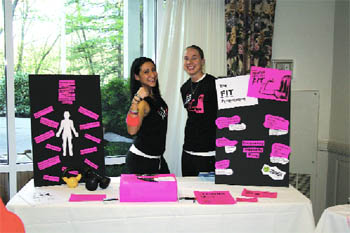
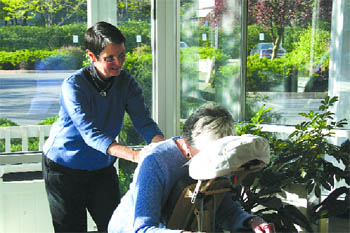
Reeds Landing, one of the Loomis Communities, staged an event called Me Time last month to provide “an evening of relaxation and rejuvenation for adult children of aging parents.” The event featured massages, live music, door prizes, and opportunities to connect with other caregivers. Clockwise, from left, Deborah Donaldson, co-owner of Heartfelt Elder Massage, provides a massage to one of the guests; representatives of the Alternative Health booth greet visitors; representatives of Tanya Gets You Fit are pumped up for the event.


Nuts, Bolts & Thingamajigs

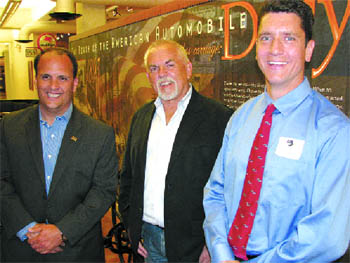
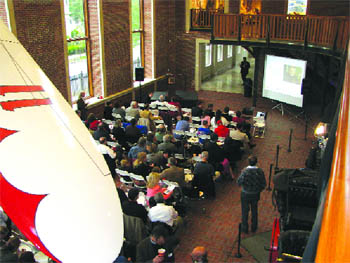
An Evening with John Ratzenberger, hosted by the Western Mass. National Tooling and Machining Assoc. (WMNTMA), was staged May 12 at the Museum of Springfield History. Attendees heard Ratzenberger (‘Cliff’ on the TV show Cheers) talk about Nuts, Bolts & Thingamajigs, a group he founded to address the urgent need to prepare young people for careers in manufacturing, and also about a summer-camp program designed to introduce middle-school students to such careers. A camp session will be conducted this summer at Springfield Technical Community College. At left, Ratzenber, center, is flanked by Eric Hagopian, left, president of the WMNTMA, and Chris Kielb, vice president of the organization. Above, the wing of a GeeBee aircraft, one of the prominent displays at the history museum, hovers above the gathering.

Features
AIC Becomes Preferred Developer for Mason Square Revitalization Effort
Landmark Decisions

An architect’s rendering of the potential re-use of the Mason Square fire house.

Springfield Mayor Domenic Sarno calls the architect’s rendering of the proposed redevelopment of the Mason Square fire station and adjoining structures “stunning.”

And he’s right.

Drafted by Centerbrook Architects in Centerbrook, Conn., the rendering depicts the fire station, vacant since the mid-’80s, as a center of activity and commerce. “It lights up the whole area,” Sarno said of the facility in the image, which will feature a cyber café; the American International College radio station, WAIC; and other campus facilities. “That fire station could become the iconic building that epitomizes continued redevelopment of the State Street corridor.”

Sarno, like other elected officials, knows it’s not wise to get carried away with slick renderings of redevelopment projects that may never materialize, but in this case, he’s apparently done exactly that. And he chalks it up to his excitement with what could happen in Mason Square now that AIC has been granted what’s known as preferred-developer status for a complex that includes the fire station and the adjacent former Indian Motocycle building.

The college now has 135 days to do some additional due diligence on the parcels in question and decide whether — and perhaps how — to proceed, said John Short, AIC’s vice president for Institutional Advancement, who acknowledged that it may be a while before anything remotely resembling what’s depicted in the rendering becomes reality. But he told BusinessWest that this scene could become reality if that assessment period ends with positive reports and the college is confident it can acquire the funding for the initiative.

“There’s a lot that we have to look at, and it could all come together,” he said. “We’re trying to continue what Congressman Neal has done [the federal courthouse project and extensive streetscape work along the corridor] and what the city has done in terms of revitalizing the area. I think this would be a huge step; this could be very exciting.”

The properties in question are known as Indian Motocycle A, Indian Motocycle B, and the Mason Square Fire Station, as designated in the request for proposals (RFP) issued late last fall. AIC’s was the only proposal submitted.

It calls for development of all three properties, meaning the undertaking of needed improvements to parcel A and bringing more housing units onto the market in the occupied portion of the former manufacturing complex; finding new uses for parcel B, which has some environmental issues; and brining new life to the long-dormant fire station.

MassHousing owns parcel A, while the city of Springfield controls B and the former fire station, said John Judge, chief economic development director for the city, adding that the two entities partnered in the RFP to present a larger, more-attractive development opportunity.

For AIC, the project represents an opportunity to expand and enhance its facilities, while also taking a lead role in revitalization efforts in Mason Square and the broader State Street corridor, said Short. Meanwhile, for the city, the project represents a chance to find a remedy for property that has been a source of continual frustration for nearly 30 years.

And if AIC does proceed as planned, it will represent only the latest example of how area colleges have become engines of economic development, as Sarno called them, in neighborhoods across the Valley.

“We’re playing to our strength, our colleges and universities,” said the mayor, noting that several schools, from UMass Amherst to Westfield State College to Springfield Technical Community College and others, have played pivotal roles in efforts to revitalize neighborhoods and create jobs.

Sarno said that, early in his first term (he was elected in 2007), he saw first-hand the impact Trinity College had on revitalization efforts in Hartford through public-private partnerships, and committed himself to duplicating such efforts in Springfield.

UMass Amherst’s plans to locate one of its departments in Court Square is an example of such redevelopment, he said, while AIC’s RFP submission could change the face of another neighborhood. And the real hope, expressed by all those involved, is that, if AIC’s proposal becomes reality, it spurs additional activity along the State Street corridor.

Plans are still quite preliminary, said Short, adding that they are likely to become more firm over the next few months.

Key elements of the proposal involve continuing the current mix of housing in parcel A (involving area residents and some overflow student housing) and bringing more units onto the market, especially market-rate units. In B, several options will be considered, said Judge, including more housing and perhaps incubator space that may complement existing startup space at STCC.

As for the fire station, plans for the cyber café are preliminary, said Short, citing the apparent need for such a facility — on the campus and in the community. The school’s radio station and other Communications Department programs could go on the second floor, while a host of options will be considered for the third, which features some dramatic views of of downtown Springfield and Mason Square.

Like parcel B, the fire station has some environmental issues, said Short, adding that, by the end of the due-diligence period, the school should know if they can be overcome.

Preliminary price tags are only guesstimates, Short continued, adding that the fire-station portion of the project alone could reach $4 million to $5 million.

The school will obviously need to tap into a number of funding sources to meet that cost and others associated with the project said Short, and finding those sources is part of the due-diligence process.

“What people have to remember is that we’re a college; we’re a nonprofit. We don’t have a lot of money, and we’re not a private real-estate developer,” he told BusinessWest. “One of the issues with parcel A has been companies coming in, taking large fees out on the front side of the deal, getting tax credits over a period of time, and then they stop taking care of the building; that’s happened several times over the past 25 years.

“We’re not in that position,” he continued, “so we have to do this in partnership with the city and with the state, and find sources of money that make it economically feasible for the college to do.”

In other words, no one can say with any certainty whether the architect’s rendering that has so intrigued the mayor will become reality, but it’s clear that it represents by far the best hope for the Mason Square area in some time.

Uncategorized
John Ratzenberger Brings His Summer-camp Initiative to STCC

John Ratzenberger says that, when he speaks to groups of manufacturers, which he does often, he likes to hang around after the microphone is shut off and listen to what his audience members have to say.

And he’s generally alarmed by what he hears.

Such was the case at a recent gathering of machining company executives in Chicago, where Ratzenberger, best known to most as Cliff, the postal carrier he portrayed for more than a decade on Cheers, spoke about the perilous state of the sector, which he says is seriously threatened because young people don’t want to get into it anymore.

“I stayed and talked to some of the people there,” he told BusinessWest in a phone interview from his hotel room in the Windy City. “Every single one of them was worried — really worried. I was talking to one guy with an aircraft-manufacturing company who said most kids coming out of high school can’t even read a simple ruler. You ask them to find 3/4 of an inch, and most can’t do it.”

Beyond their lack of ruler-reading skills, most young people simply don’t have an appreciation for how to make things, or, equally important, how making things can be an attractive career, said Ratzenberger, who has made enlightening them a passionate endeavor for the last seven years or so.

His vehicle for getting the word out is an organization he founded called Nuts, Bolts & Thingamajigs, or NBT. That agency is now partnering with the Foundation of the Fabricators & Manufacturers Assoc. Intl. and the National Assoc. for Community College Entrepreneurship to develop a national program that builds on a summer-camp initiative blueprinted by NBT.

At 16 community colleges nationwide, including Springfield Technical Community College, students at week-long summer camps will be exposed to math, science, engineering, and entrepreneurship principles, while having an opportunity to see the technology being used in industry today.

“Those shop classes that high schools had years ago … they’re gone, a thing of the past,” said Ratzenberger. “These camps will do what those shop classes used to; they’ll expose young people to vocational and technical trades. Many young people today have no role models when it comes to fixing things themselves or taking pride in building something useful, and they dismiss the idea of considering a career in one of the manual arts such as manufacturing, electrical, plumbing, carpentry, or welding.”

Ratzenberger will be in the Springfield area for a few days in May to promote NBT and, more specifically, the summer-camp program. He has a few speaking engagements booked, including one before the local chapter of the National Tooling & Machining Assoc. on May 12 at the Springfield History Museum.

Trade Partners

The community colleges hosting manufacturing camps this summer are located in such places as Blue Bell, Pa., Marysville, Calif., Tupelo, Miss., Fergas Falls, Minn., and Appleton, Wis. That geographic coverage helps explain that the pending shortage of people who can build things with their hands is truly national, said Ratzenberger, noting also that time is of the essence.

“In four years, this is a problem that everyone will be talking about,” he told BusinessWest. “And in six years … well, by then it will be too late.”

This is the consensus opinion he’s gathered from those talks with manufacturers after his speeches about NBT and its mission. Ratzenberger said the problem has been building for some time now, and there are many reasons for it.

They range from negative portrayals of craftspeople in movies and television — “see a plumber on TV and he’s always portrayed as a simpleton, a loser,” said Ratzenberger — to parents and guidance counselors who are steering people away from the trades and toward a college education, whether they’re suited for one or not.

“So with all that happening, why would anyone want to explore those fields?” he asked before answering his own question. “It’s simple: they’re not.”

The summer camps are designed to do what the old shop classes did, and that’s at least enlighten young people about the trades and inform them about career opportunities, said Ratzenberger. “They’ll learn what it’s like to weld, bend metal, punch holes in metal, and more,” he said. “And we need to do that, because we’re simply running out of people who can do those things.”

And the prospects for filling the voids created by retiring machinists and craftspeople don’t look positive, and won’t until some perceptions about this sector change, he said.

Citing a recent poll conducted by NBT, Ratzenberger said that a majority of teens (52%) have little or no interest in a manufacturing career, and another 21% are ambivalent. When asked why, nearly two-thirds of respondents said they seek a professional career, while others cited issues such as compensation, career growth, and physical work, or a desire to avoid it.

“It’s absolutely critical for this mindset to change because, when America recovers from its economic downturn, there will be a dire need for skilled manpower in the trades,” he continued. “Numerous surveys conducted by the manufacturing organizations predict a labor shortage if we don’t inform the nation’s youth about the available opportunities and enlist them to fill the sophisticated, high-tech jobs available in areas such as robotics and laser technologies.”

The summer camp at STCC, to be called “Manufacturing Your Future,” is designed to do just that and, in the process, help in the process of putting more people in the pipeline, said Adrienne Smith, dean of the School of Engineering Technologies at the college. She said participants, 13- and 14-year-old technology students from area schools, will use technology to create a product from start to finish, providing them practical manufacturing experience in 3D design, computer numerical control programming, welding, and other applications.

Meanwhile, students will also visit area manufacturers to get an up-close look at manufacturing processes, new technology, and, perhaps most importantly, the people doing such work.

Overall, she said, the camps are designed to enlighten, inform, and ultimately change some of the attitudes that young people and their parents have about manufacturing.

Something to Build On

When asked if he could quantify or qualify how much progress NBT has made with fueling interest in the trades since it was formed, Ratzenberger paused and then said it would be difficult to do so.

The anecdotal evidence, such as that provided by the manufacturing executives he spoke to in Chicago, would seem to indicate that, however much progress has been achieved, there is still a lot of work to be done.

The planned summer camps won’t solve the problem, but they may help move an industry closer to a solution — and enable more young people to read a ruler.

George O’Brien can be reached at[email protected]

Cover Story
How Best to Develop a Corporate Strategy That Generates Results
Cover May 10, 2010

Cover May 10, 2010

As you look around your office, is everyone just like you? Probably not.

The demographics of the American workforce have changed dramatically over the past 50 years. In the 1950s, more than 60% of the American workforce consisted of white males. They were typically the sole breadwinners in the household, expected to retire by age 65 and spend their retirement years in leisure activities. Today, the American workforce is a better reflection of the population, with a significant mix of genders, race, religion, age, and other background factors.

The long-term success of any business calls for a diverse body of talent that can bring fresh ideas, perspectives, and views to their work. The challenge that diversity poses, therefore, is enabling your managers to capitalize on the mixture of genders, cultural backgrounds, ages, and lifestyles to respond to business opportunities more rapidly and creatively.

Diversity is no longer just a black/white, male/female, old/young issue. It is much more complicated and interesting than that. In The Future of Diversity and the Work Ahead of Us, Harris Sussman says, “diversity is about our relatedness, our connectedness, our interactions, where the lines cross. Diversity is many things — a bridge between organizational life and the reality of people’s lives, building corporate capability, the framework for interrelationships between people, a learning exchange, a strategic lens on the world.”

A benefit of a diverse workforce is the ability to tap into the many talents which employees from different backgrounds, perspectives, abilities, and disabilities bring to the workplace. An impressive example of this is found on the business cards of employees at one Fortune 100 technology company. Employees at this company have business cards that appear normal at first glance. On closer inspection, the raised Braille characters of employee information are evident.

Many companies, however, still face challenges around building a diverse environment. Part of the reason is the tendency to pigeonhole employees, placing them in a certain silo based on their diversity profile. If an employee is male, over 50, English, and an atheist, under what diversity category does this employee fall? Gender, generational, global, or religious? In the real world, diversity cannot be easily categorized, and those organizations that respond to human complexity by leveraging the talents of a broad workforce will be the most effective in growing their businesses and their customer base.

So, how do you develop a diversity strategy that gets results? The companies with the most effective diversity programs take a holistic approach to diversity by following these guidelines:

Link diversity to the bottom line. When exploring ways to increase corporate profits, look to new markets or to partnering with your clients more strategically. Consider how a diverse workforce will enable your company to meet those goals. Think outside the box. At a Fortune 500 manufacturing company, Hispanics purchased many of the products. When the company hired a director of Hispanic markets, profits increased dramatically in less than one year because of the targeted marketing efforts. Your new customers may be people with disabilities or people over the age of 65. How can your employees help you reach new markets?

Walk the talk. If senior management advocates a diverse workforce, make diversity evident at all organizational levels. If you don’t, some employees will quickly conclude that there is no future for them in your company. Don’t be afraid to use words like black, white, gay, and lesbian. Show respect for diversity issues and promote clear and positive responses to them. How can you demonstrate your company’s commitment to diversity?

Broaden your efforts. Does diversity at your company refer only to race and gender? If so, expand your definition and your diversity efforts. As Baby Boomers age and more minorities enter the workplace, the shift in demographics means that managing a multigenerational and multicultural workforce will become a business norm. Also, there is a wealth of specialized equipment available to enable people with disabilities to contribute successfully to their work environments. If your organizational environment does not support diversity broadly, you risk losing talent to your competitors. How can your recruitment efforts reach out to all qualified candidates?

Remove artificial barriers to success. The style of interview — behavioral or functional — may be a disadvantage to some job candidates. Older employees, for example, are less familiar with behavioral interviews and may not perform as well unless your recruiters directly ask for the kind of experiences they are looking for. Employees from countries outside the U.S. and non-Caucasian populations may downplay their achievements or focus on describing, who they know rather than what they know. Train your recruiters to understand the cultural components of interviews. How can your human-resources processes give equal opportunity to all people?

Retain diversity at all levels. The definition of diversity goes beyond race and gender to encompass lifestyle issues. Programs that address work and family issues — alternative work schedules and child and elder care resources and referrals — make good business sense. How can you keep valuable employees?

Provide practical training. Using relevant examples to teach small groups of people how to resolve conflicts and value diverse opinions helps companies far more than large, abstract diversity lectures. Training needs to emphasize the importance of diverse ideas as well. Workers care more about whether or not their boss seems to value their ideas than whether they are part of a group of all white males or an ethnically diverse workforce. In addition, train leaders to move beyond their own cultural frame of reference to recognize and take full advantage of the productivity potential inherent in a diverse population. How can you provide diversity training at your company?

Mentor with others at your company whom you do not know well. Involve your managers in a mentoring program to coach and provide feedback to employees who are different from them. Some of your most influential mentors can be people with whom you have little in common. Find someone who doesn’t look just like you. Find someone from a different background, a different race, or a different gender. Find someone who thinks differently than you do. How can you find a mentor who is different from you?

Measure your results. Conduct regular organizational assessments on issues like pay, benefits, work environment, management, and promotional opportunities to assess your progress over the long term. Keep doing what is working, and stop doing what is not working. How do you measure the impact of diversity initiatives at your organization?

In the book Beyond Race and Gender, R. Roosevelt Thomas defines managing diversity as “a comprehensive managerial process for developing an environment that works for all employees.” Successful strategic diversity programs also lead to increased profits and lowered expenses.

The long-term success of any business calls for a diverse body of talent that can bring fresh ideas, perspectives and views and a corporate mindset that values those views. It’s also no secret that the lack of diversity can affect your ability to communicate effectively with diverse clients.

Link your diversity strategies to specific goals like morale, retention, performance, and the bottom line. Build your business with everything you’ve got, with the complex, multi-dimensional talents and personalities of your workforce, and make diversity work for you. n

Judith Lindenberger, principal of the Lindenberger Group, LLC, and Marian Stoltz-Loike, CEO of SeniorThinking, provide human-resources learning and consulting;www.lindenbergergroup.com;www.seniorthinking.com

Agenda Departments

Deliver Perfect Pitch

May 12: Learn concrete and easy-to-master tools to help you in every sales situation no matter what the environment or what you sell during “Deliver the Perfect Pitch,” 9 to 11 a.m., at the Scibelli Enterprise Center, 1 Federal St., Springfield. Sheldon Snodgrass of www.steadysales.com in Williamsburg will be the presenter. The program is sponsored by the Mass. Small Business Development Center Network. Cost is $40. For more information, call (413) 737-6712 or visit www.msbdc.org/wmass.

AIM Annual Meeting

May 14: John Ratzenberger, best known for his role as Cliff in the television comedy Cheers, will deliver the luncheon address at the Associated Industries of Massachusetts’ 95th annual meeting at the Westin Hotel in Waltham. Ratzenberger is a passionate advocate for the future of American manufacturing and the need to teach young people to work with their hands. He will discuss the foundation he started to help young people learn the rewards of fixing things themselves, building something useful, and inventing products that create economic opportunity. AIM’s annual meeting is planned from 10 a.m. to 2 p.m. and will bring together some of the brightest business and academic minds in Massachusetts to answer the pressing economic questions of the day. For more information, visit www.aimnet.org.

Wine Tasting and Auction

May 14: The Chicopee Chamber of Commerce will host its annual beer/wine tasting and auction at the Castle of Knights on Memorial Avenue in Chicopee from 6 to 9 p.m. The event, a fund-raiser to support the chamber and its many initiatives, is being sponsored by Chicopee Savings Bank. The event will feature fine food, a large variety of wines and beers to sample, and myriad auction items to bid on. Back by popular demand is the Collectibles Road Show. Representatives from Antiques Roadshow will be on hand to appraise attendees’ valuables. Those with items such as old coins, jewelry, or collectibles are encouraged to bring them to the show. Tickets are $20 each. To reserve tickets, call (413) 594-2101, or visit www.chicopeechamber.org.

Pancake Breakfast

May 15: The Spirit of Springfield will once again serve up what is reputed to the world’s largest pancake breakfast from 8 to 11 a.m. on Main Street in downtown Springfield. The event, marking Springfield’s 374th birthday, is the 25th edition of the annual pancake breakfast. It will also feature entertainment and activities. Tickets are $3 for adults and $1 for children. For more information, call (413) 733-3800 or visit www.spiritofspringfield.com.

13th Annual Rays of Hope Survivors’ Day

May 15: Breast-cancer survivors and their friends are invited to attend the 13th annual Rays of Hope Breast Cancer Survivors’ Day, from 8:30 a.m. to 2 p.m. at the Sheraton Monarch Place Hotel, One Monarch Place, Springfield. Breast cancer activist Geralyn Lucas, author of Why I Wore Lipstick to My Mastectomy, will serve as keynote speaker at the annual event, sponsored by the Comprehensive Breast Center at Baystate Medical Center and Rays of Hope. Lucas will discuss what it was like being diagnosed with breast cancer at the age of 27 just after landing her dream job as an editorial producer with ABC television’s 20/20 news program. A graduate of Columbia University School of Journalism, she later became director of public affairs at Lifetime Television and left the network in 2008 to work on the screenplay for Why I Wore Lipstick.  The television movie premiered on Lifetime in October, starring Sarah Chalke of the hit TV show Scrubs. In addition to the keynote address, participants will be able to select from two workshops on a number of topics, including ‘The Fat Factor,’ ‘Yoga and Healing,’ ‘Breast Cancer Therapy and the Heart,’ ‘Oncoplastic Surgery,’ ‘Fashion Do’s and Don’ts,’ ‘A Good Night’s Sleep,’ ‘Hooping Harmony,’ and ‘Acupuncture and Oncology.’  There will also be a special Creative Coping Art Workshop offered only in Spanish. Rays of Hope founder Lucy Giuggio-Carvalho and Dr. James Stewart, chief of the Division of Hematology/Oncology at Baystate Medical Center, who co-authored the recently published The Everything Guide to Living with Breast Cancer, will be on hand to sign their book, which will also be available for purchase at the event. Throughout the day, participants can visit with several exhibitors who will sell a variety of breast-related products, as well as vendors selling arts and crafts. A continental breakfast and buffet luncheon will be served. Registration is required. The cost is $25 per person, with the remaining cost underwritten by Rays of Hope. For those unable to afford the fee, scholarships are available through Sandy Hubbard at the Rays of Hope Community Outreach Office at (413) 794-2828. Parking will be validated. For more information or to request a registration form, call (413) 794-9556 or visit www.baystatehealth.org/raysofhope.

Business Plan Basics

May 20: The Mass. Small Business Development Center Network will host “Business Plan Basics” from 9:30 a.m. to 12:30 p.m. at the Amherst Town Hall, first-floor meeting room, 4 Boltwood Walk, Amherst. The workshop will focus on management fundamentals from start-up considerations through business-plan development. Topics will include financing, marketing, and business planning. The cost is $35. For more information, call (413) 737-6712 or visit www.msbdc.org/wmass.  

Food for Thought

May 25: Learn how social-media marketing can help grow a business at the next Food for Thought luncheon, sponsored by BusinessWest and The Healthcare News. The event will be held at Samuel’s at the Basketball Hall of Fame from 11:30 a.m. to 1 p.m. John Garvey, president of Garvey Communications Associates, and Mary Fallon, the agency’s media director, will present a talk about “Online Impact and Social Media for Small Business.” The $20 cost includes lunch. RSVP by May 21 with Melissa Hallock at (413) 781-8600, ext. 10, or [email protected].

Joomla! Workshop

May 26: Tamar Schanfeld of TnR Global Joomla! Services of Greenfield will present a daylong boot camp on creating an interactive Web site for small businesses. The workshop is planned from 9 a.m. to 4:30 p.m. at the Scibelli Enterprise Center, 1 Federal St., Springfield. Attendees will learn to plan a site, enter and edit content and menus, and install extensions. Comfort with Microsoft Word and an Internet browser is required. The workshop does not include e-commerce or shopping-cart features. Cost is $75. For more information, call (413) 737-6712 or visit www.msbdc.org/wmass.  

Green Remediation Conference

June 15-17: The Environmental Institute at UMass Amherst, the U.S. EPA Office of Superfund Remediation and Technology Innovation, U.S. EPA New England, and the Mass. Department of Environmental Protection will host the International Conference on Green Remediation: Environment – Energy – Economics, in the UMass Campus Center. The conference will address the full range of environmental, energy, and economic aspects of green and sustainable remediation, taking into account the energy requirements of treatment systems, air emissions, water-use requirements and impacts on water resources, land and ecosystem use and impacts, energy use and renewables, material composition, reuse, and waste generation. The conference is expected to attract more than 400 attendees, including a wide variety of representation from state and federal agencies, academia, various industries and utilities, and the environmental, engineering, and consulting community. Booths cost $1,000, and tables are $600. For more information or to register online, visit: www.teiconferences.com/greenremediation  ,  or call (413) 545-2842.

Hot Topics in Philanthropy

June 18: “Convergence: How Five Trends Will Reshape the Social Sector” is the focus of the upcoming Hot Topics in Philanthropy Breakfast hosted by Bay Path College. Nonprofit professionals are invited to attend the free event, which will examine a recently published study by La Piana Consulting, a national firm dedicated to strengthening nonprofits and foundations. The breakfast will be held in the Blake Student Commons from 7:30 to 10 a.m. From generational and other demographic shifts to the rise and impact of social media, there are several trends driving the future of the nonprofit sector. La Piana Consulting examined these various developments as part of its research initiative NonprofitNext, funded by the James Irvine Foundation. Written by Alex Hildebrand, David La Piana, Melissa Lendes Campos, and Heather Gowdy, the report describes the growing importance of networking as a means for effecting change, as well as the role of volunteerism and civic engagement in society, among other movements, and their impact on the nonprofit industry. The first to bring La Piana Consulting’s report to the region, Bay Path will feature Gowdy as the keynote speaker. A panel discussion will follow her address. The breakfast is free, but registration is required. To register, visit www.baypath.edu  or call (800) 782-7284, ext. 1056. The event is co-sponsored by the Graduate School at Bay Path College’s master’s in Nonprofit Management and Philanthropy program and its graduate certificate program in Fundraising Management and Nonprofit Management.

40 Under Forty Gala

June 24: BusinessWest will celebrate its 40 Under Forty Class of 2010 at the Log Cabin Banquet & Meeting House with a gala to begin at 5 p.m. The event, which has become a spring tradition in Western Mass., will feature fine food, entertainment, and special presentations of the Class of 2010. Tickets for the event are $60. To order tickets or for more information, call (413) 781-8600, ext. 10, or e-mail [email protected] .

Briefcase Departments

Advanced Manufacturing Conference, Continuum Coming to the Region

SPRINGFIELD — The first highly concentrated, cluster-centric, regional manufacturing conference of its kind will be held Sept. 23 at the MassMutual Center in Springfield. The event, called the Advanced Manufacturing and Innovation Competition & Conference (AMICCON), is being staged in response to growing recognition among area manufacturers and supply-chain members that there is an urgent need to find and meet one another. “AMICCON was formed to identify who’s here in manufacturing, expose them to OEMs [original equipment manufacturers] and procurement, and to make these introductions,” said co-founder Ellen Bemben. “The ultimate goal is to be the advanced manufacturing region in the U.S., where exotic manufacturing, such as micro, nano, and precision meet higher specifications and tighter tolerances, and short runs are the norm.” Industry sectors to be represented at the event will include plastics and advanced materials, precision machining, paper and packaging, electronics, ‘green’/clean technology, and medical devices. Business opportunities in defense and aerospace will also be highlighted at the event. OEMs and their supply chains are being invited personally to participate. “AMICCON is also a new consortium on innovation that also delivers manufacturers to innovators and new markets in order to cause new business,” said Gary Gasperack, vice president and general manager (retired) of the Spalding Division of Russell Corp. “We are very excited about introducing it to our region.” The Mass. Export Center has already produced two programs for AMICCON: an Export Experts Panel, and a seminar, “International Traffic in Arms Regulations for Defense and Aerospace Export.” Planning of the event has been ongoing since last fall among founding members that include Stan Kowolski, president of FloDesign Wind Turbine Corp.; Eric Hagopian, president of Hoppe Tool; Anne Paradis, president of MicroTek; Joe Peters, president of Universal Plastics; Ann Pieroway, president of the Mass. Export Center; and Jeff Sattler, president of NUVO Bank. More details on AMICCON and registration information will be announced in the coming weeks, said Bemben.

SPHS Announces Departure of President, CEO McCorkle

SPRINGFIELD — The Sisters of Providence Health System (SPHS) announced recently that Vincent McCorkle, president and CEO, will be leaving the organization to become president and CEO of Akron General Health System in Akron, Ohio, and will begin his new position on July 1. McCorkle has served as president and CEO for the SPHS since October 1997. Prior to being named to those positions, he served from 1996 to 1997 as executive vice resident of SPHS. He joined SPHS in September 1993 as president and CEO of the Acute and Ambulatory Care Network, the position he held until 1996. McCorkle has been an active community leader since moving to Springfield in 1993. He has served on the boards of numerous community agencies, such as the Economic Development Council, Business Friends of the Arts, the Springfield YMCA, United Way of the Pioneer Valley, the Springfield Urban League, and many others. In 2006, he was recognized with the Pynchon Award, the region’s most distinguished service award. “The decision to leave the Sisters of Providence Health System was incredibly difficult,” said McCorkle in a prepared statement. “It has been a privilege and an honor to have served the community through the healing ministry of the Sisters of Providence Health System. It has also been my privilege to serve with a team of the most talented and dedicated physicians, nurses, other professionals, and support staff that you will find anywhere in health care. Although my professional journey leads me to new challenges at Akron General, I am grateful for the time with SPHS and the Greater Springfield community. I will truly miss my SPHS colleagues and the many Western Mass. community and business leaders I have had the pleasure of working with.” Dr. David Chadbourne, chairman of the SPHS board of trustees, praised McCorkle for his work with the system and in the community. “Vince has provided the Sisters of Providence Health System with 17 years of dedicated and committed service and visionary leadership,” he said “He guided SPHS through some challenging financial times and led several innovative initiatives that have resulted in the expansion of SPHS’ programs and services. He has left an indelible mark on an organization that, thanks in large part to his hard work, is well-poised to continue the healing legacy of the Sisters of Providence well into the future.” The Board of Trustees has named Dr. William Bithoney, chief medical officer of the SPHS and chief operating officer of Mercy Medical Center, as the interim CEO. Bithoney will serve in this role until the conclusion of a national search for McCorkle’s permanent successor.

Poll Shows Casino Support, with Limitations

BOSTON — A recent survey conducted by Western New England College shows that most adults support casinos in the Bay State, but many don’t want one in their own community. The telephone poll of more than 500 adults conducted in mid-April, and partly during a floor debate on casinos on Beacon Hill, found that 58% support the approval of casinos for the state, while 35% are opposed. The poll also found that 53% in the state are opposed to a casino in their community, while 41% would support it.

UMass Entrepreneurship Initiative Stages Contest

AMHERST — The UMass Amherst Entrepreneurship Initiative (UMass EI) recently awarded seed capital to aspiring student entrepreneurs through its seventh Executive Summary Competition, which is sponsored by the National Collegiate Inventors and Innovators Alliance. The competition consisted of businesses ranging from ladies’ shoes to investment consulting in Haiti. A notable feature of this year’s competition was the very strong performance by students from Mount Holyoke College. This year’s top place was a tie between two teams. Filmix was awarded $750. The company enables independent filmmakers to post their work online, where customers may sample and download the films. The team consisted of Vladislav Yazhbin, a triple major at UMass (Mathematics, Computer Science, and individualized major in Human Computer Interaction) and Vennie Encheva, a triple major at Mount Holyoke College (Mathematics, Economics, and Politics). Also awarded $750 was Rocky Mountain Field Hockey, the company of UMass student Sarah Williams, a major in Landscape Architecture, a company dedicated to promoting advanced field-hockey training for high-school players in Colorado aspiring to play in college. Participating in the competition were three other teams. Foodcycle coordinates the collection and removal of food waste from commercial kitchens. The team consisted of two UMass students, Rose Weiss and Mauricio Abascal. The team received $500 from the judges and an additional $250 as the audience’s favorite. DisaporConex offered an investment platform through which Haitian immigrants can connect effectively to businesses and schools in Haiti. The company is led by UMass students Jean Arnaud and Adrien Tofighi. Three Mount Holyoke students — Alex Ivanova, Gergana Kostadinova, and Divisha Chumun — with a company called Vedette pitched their concept of an innovative ladies’ shoe with detachable high heels. Noting the prominence of Mount Holyoke students in the competition, EI co-organizer Dan Gordon, a professor of History, said, “these young ladies are each fluent in many academic disciplines and brought tremendous entrepreneurial spirit to the class. There were 75 applicants for the competition, and all the Mount Holyoke students made it to the finals.” The competition’s judges included nine distinguished bankers, investors, grant issuers, and entrepreneurs. The mission of the UMass EI is to help students turn ideas into businesses. The organization inspires students to explore the entrepreneurial career path, trains them in how to evaluate their ideas, and then connects them to the resources needed to take the first steps in starting their own business. Students participating in EI’s program have opportunities to earn academic credit, win prize money, and connect with experienced mentors.

Company Notebook Departments

Here’s the Scoop: Rondeau’s Marks 70 Years

PALMER — Alvin Rondeau’s Dairy Bar, a Quaboag region institution, is this month celebrating its 70th birthday. It was on May 18, 1940 that Alvin “Mike” Rondeau opened his ice-cream shop, which has endured and now has fourth and fifth-generation members of the family carrying on the tradition. Indeed, Dick Rondeau, Alvin’s grandson, now works alongside his son, Dick, and grandson, Michael. The establishment, located on Route 32, specializes in hot dogs, hamburgers, fresh seafood, and, of course, ice cream. As in past years, Rondeau’s will mark its birthday celebration with a special. From May 18 to May 20, ice-cream cones, hot dogs, fries, and soda will all be 70 cents each.

Hampden Bank Turns 158, Is Named Sponsor of Jazz & Art Festival

SPRINGFIELD — Hampden Bank recently celebrated its 158th anniversary, an occasion the institution’s president, Tom Burton, marked by looking forward, not back. “Reaching this milestone on my watch is indeed a privilege. I couldn’t be more proud of our people, who we are, and what we’ve accomplished on behalf of those we serve,” he said. “As we move toward the end of the first decade of the 21st century, we will not rest on our laurels; we will continue to vigorously support our communities, and we will work tirelessly to brighten the days of our customers.” In other news, the bank announced that it is the named sponsor of the fourth annual Hoop City Jazz & Art Festival, partnering with presenting sponsor MassMutual and a host of other businesses and organizations. The event, to be staged July 9-11, is being moved to downtown Springfield at Court Square and the City Hall Esplanade.

Tiger Press Adds New Color Production System

NORTHAMPTON — Tiger Press announced that it has installed a new Ricoh C900 color production system at its manufacturing facility in Northampton. The system can produce more than 5,000 color impressions per hour on a variety of coated and uncoated stocks. Digital files are handled using the newest Fiery controller with built-in color calibration and imposition. “This new digital press enables us to offer color reproduction of short-run orders for a fraction of what our competitors are charging,” said Reza Shafii, president of Tiger Press. The C900 has a unique square-saddle-stitch capability that allows a spine for larger books, a special feature for customers in need of high-quality, short-run booklets with limited budget, he continued. In addition, Tiger Press has developed an advanced proofing technique for projects that will be produced on uncoated stock. Printing on recycled, uncoated paper is becoming more popular as companies strive to become more eco-friendly.

Curran & Berger Adds Location in Springfield

SPRINGFIELD — Curran & Berger, LLP, the Northampton-based immigration-law firm, has opened a satellite office at 1145 Main St. in Springfield. The new location will provide a convenient meeting space for legal staff to meet with its clients, said partners Joseph Curran and Dan Berger.

Friendly’s Restaurants Introduce New Salads

WILBRAHAM — In response to a desire among many adult Americans to eat healthier, Friendly’s has introduced a new selection of freshly made salads. Beginning in late March, more than 500 Friendly’s restaurants began offering seven new salads, including Southwest Chipotle Chicken Salad, Bleu Moon Sirloin Salad, and Apple Harvest Chicken Salad. In addition, Friendly’s has partnered with Healthy Dining, an organization that recommends dietician-approved menu items at restaurants. As part of the partnership, healthydiningfinder.com will highlight several the healthier options that are available at Friendly’s restaurants. These choices will be highlighted in Friendly’s menus. For more information on the new offerings, visit www.friendlys.com.

Mercy Medical’s EEG Lab Achieves Accreditation

SPRINGFIELD —- The Electroencephalographic (EEG) Lab at Mercy Medical Center has been awarded accreditation by the EEG Laboratory Accreditation Board of the American Board of Registration of Electroencephalographic and Evoked Potential Technologists (ABRET), making it one of only two EEG labs in Massachusetts to achieve that distinction. The ABRET lab-accreditation process involves evaluation of technical standards, the quality of the laboratory’s output, and lab-management issues. According to ABRET, successful accreditation indicates that the EEG lab has met strict standards and is recognized for providing quality diagnostics. “The ABRET accreditation is another example of Mercy Medical Center’s success in providing outstanding patient care throughout our facility, and delivered daily by highly trained professionals using quality diagnostic tools,” said Sharon Adams, RN, vice president of Patient Care Services at Mercy Medical Center. “This independent, objective verification of quality management and policies also allows physicians and patients to choose the EEG Lab at Mercy with the confidence of knowing that they will receive quality diagnostics.” The EEG Lab at Mercy Medical Center provides testing for 540 patients each year, and the ABRET lab accreditation is effective through 2015. EEGs are used diagnostically for many neurological problems, including stroke, seizures, migraine headaches, tumors, headaches, and dizziness. With this accreditation, Mercy joins Children’s Hospital of Boston as one of only two facilities in Massachusetts with EEG labs that meet ABRET standards.

Mont Marie Scores Highest in Region in Survey

HOLYOKE — Family members rated the care that their loved ones receive at the Mont Marie Health Care Center as the best in Western Mass., according to a survey just released by the State Department of Public Health. The Mont Marie Health Care Center, a not-for-profit skilled-nursing facility owned and operated by the Sisters of St. Joseph of Springfield, was among 430 nursing homes surveyed by the state last fall. The center scored 4.79 in overall satisfaction, well above both the statewide average of 4.22 and the Western Mass average of 4.20 (on a scale of 1-5). When asked if they would recommend the Mont Marie Health Care Center to a friend or family member, 98% of the respondents said ‘yes.’ Commenting on the high score, center Administrator Sr. Elizabeth Sullivan said, “the numbers indicate the trust level and credibility that family members have in our staff, who respond to the needs of residents on a daily basis with compassion, respect, and diligence.” The survey collected detailed information about nursing-home staff, physical environment, activities, personal-care services, food and meals, and residents’ personal rights. It also asked respondents to rate overall satisfaction and ability to meet residents’ needs. Surveys were mailed to approximately 34,600 family members of nursing home residents across the state.

Sections Supplements
John Ratzenberger Brings His Summer-camp Initiative to STCC

John Ratzenberger

John Ratzenberger

John Ratzenberger says that, when he speaks to groups of manufacturers, which he does often, he likes to hang around after the microphone is shut off and listen to what his audience members have to say.
And he’s generally alarmed by what he hears.
Such was the case at a recent gathering of machining company executives in Chicago, where Ratzenberger, best known to most as Cliff, the postal carrier he portrayed for more than a decade on Cheers, spoke about the perilous state of the sector, which he says is seriously threatened because young people don’t want to get into it anymore.
“I stayed and talked to some of the people there,” he told BusinessWest in a phone interview from his hotel room in the Windy City. “Every single one of them was worried — really worried. I was talking to one guy with an aircraft-manufacturing company who said most kids coming out of high school can’t even read a simple ruler. You ask them to find 3/4 of an inch, and most can’t do it.”
Beyond their lack of ruler-reading skills, most young people simply don’t have an appreciation for how to make things, or, equally important, how making things can be an attractive career, said Ratzenberger, who has made enlightening them a passionate endeavor for the last seven years or so.
His vehicle for getting the word out is an organization he founded called Nuts, Bolts & Thingamajigs, or NBT. That agency is now partnering with the Foundation of the Fabricators & Manufacturers Assoc. Intl. and the National Assoc. for Community College Entrepreneurship to develop a national program that builds on a summer-camp initiative blueprinted by NBT.
At 16 community colleges nationwide, including Springfield Technical Community College, students at week-long summer camps will be exposed to math, science, engineering, and entrepreneurship principles, while having an opportunity to see the technology being used in industry today.
“Those shop classes that high schools had years ago … they’re gone, a thing of the past,” said Ratzenberger. “These camps will do what those shop classes used to; they’ll expose young people to vocational and technical trades. Many young people today have no role models when it comes to fixing things themselves or taking pride in building something useful, and they dismiss the idea of considering a career in one of the manual arts such as manufacturing, electrical, plumbing, carpentry, or welding.”
Ratzenberger will be in the Springfield area for a few days in May to promote NBT and, more specifically, the summer-camp program. He has a few speaking engagements booked, including one before the local chapter of the National Tooling & Machining Assoc. on May 12 at the Springfield History Museum.

Trade Partners
The community colleges hosting manufacturing camps this summer are located in such places as Blue Bell, Pa., Marysville, Calif., Tupelo, Miss., Fergas Falls, Minn., and Appleton, Wis. That geographic coverage helps explain that the pending shortage of people who can build things with their hands is truly national, said Ratzenberger, noting also that time is of the essence.
“In four years, this is a problem that everyone will be talking about,” he told BusinessWest. “And in six years … well, by then it will be too late.”
This is the consensus opinion he’s gathered from those talks with manufacturers after his speeches about NBT and its mission. Ratzenberger said the problem has been building for some time now, and there are many reasons for it.
They range from negative portrayals of craftspeople in movies and television — “see a plumber on TV and he’s always portrayed as a simpleton, a loser,” said Ratzenberger — to parents and guidance counselors who are steering people away from the trades and toward a college education, whether they’re suited for one or not.
“So with all that happening, why would anyone want to explore those fields?” he asked before answering his own question. “It’s simple: they’re not.”
The summer camps are designed to do what the old shop classes did, and that’s at least enlighten young people about the trades and inform them about career opportunities, said Ratzenberger. “They’ll learn what it’s like to weld, bend metal, punch holes in metal, and more,” he said. “And we need to do that, because we’re simply running out of people who can do those things.”
And the prospects for filling the voids created by retiring machinists and craftspeople don’t look positive, and won’t until some perceptions about this sector change, he said.
Citing a recent poll conducted by NBT, Ratzenberger said that a majority of teens (52%) have little or no interest in a manufacturing career, and another 21% are ambivalent. When asked why, nearly two-thirds of respondents said they seek a professional career, while others cited issues such as compensation, career growth, and physical work, or a desire to avoid it.
“It’s absolutely critical for this mindset to change because, when America recovers from its economic downturn, there will be a dire need for skilled manpower in the trades,” he continued. “Numerous surveys conducted by the manufacturing organizations predict a labor shortage if we don’t inform the nation’s youth about the available opportunities and enlist them to fill the sophisticated, high-tech jobs available in areas such as robotics and laser technologies.”
The summer camp at STCC, to be called “Manufacturing Your Future,” is designed to do just that and, in the process, help in the process of putting more people in the pipeline, said Adrienne Smith, dean of the School of Engineering Technologies at the college. She said participants, 13- and 14-year-old technology students from area schools, will use technology to create a product from start to finish, providing them practical manufacturing experience in 3D design, computer numerical control programming, welding, and other applications.
Meanwhile, students will also visit area manufacturers to get an up-close look at manufacturing processes, new technology, and, perhaps most importantly, the people doing such work.
Overall, she said, the camps are designed to enlighten, inform, and ultimately change some of the attitudes that young people and their parents have about manufacturing.

Something to Build On
When asked if he could quantify or qualify how much progress NBT has made with fueling interest in the trades since it was formed, Ratzenberger paused and then said it would be difficult to do so.
The anecdotal evidence, such as that provided by the manufacturing executives he spoke to in Chicago, would seem to indicate that, however much progress has been achieved, there is still a lot of work to be done.
The planned summer camps won’t solve the problem, but they may help move an industry closer to a solution — and enable more young people to read a ruler.

George O’Brien can be reached at [email protected]
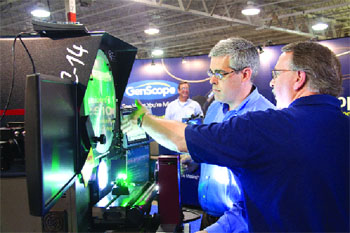
Sections Supplements
How Best to Develop a Corporate Strategy That Generates Results

As you look around your office, is everyone just like you? Probably not.
The demographics of the American workforce have changed dramatically over the past 50 years. In the 1950s, more than 60% of the American workforce consisted of white males. They were typically the sole breadwinners in the household, expected to retire by age 65 and spend their retirement years in leisure activities. Today, the American workforce is a better reflection of the population, with a significant mix of genders, race, religion, age, and other background factors.
The long-term success of any business calls for a diverse body of talent that can bring fresh ideas, perspectives, and views to their work. The challenge that diversity poses, therefore, is enabling your managers to capitalize on the mixture of genders, cultural backgrounds, ages, and lifestyles to respond to business opportunities more rapidly and creatively.
Diversity is no longer just a black/white, male/female, old/young issue. It is much more complicated and interesting than that. In The Future of Diversity and the Work Ahead of Us, Harris Sussman says, “diversity is about our relatedness, our connectedness, our interactions, where the lines cross. Diversity is many things — a bridge between organizational life and the reality of people’s lives, building corporate capability, the framework for interrelationships between people, a learning exchange, a strategic lens on the world.”
A benefit of a diverse workforce is the ability to tap into the many talents which employees from different backgrounds, perspectives, abilities, and disabilities bring to the workplace. An impressive example of this is found on the business cards of employees at one Fortune 100 technology company. Employees at this company have business cards that appear normal at first glance. On closer inspection, the raised Braille characters of employee information are evident.
Many companies, however, still face challenges around building a diverse environment. Part of the reason is the tendency to pigeonhole employees, placing them in a certain silo based on their diversity profile. If an employee is male, over 50, English, and an atheist, under what diversity category does this employee fall? Gender, generational, global, or religious? In the real world, diversity cannot be easily categorized, and those organizations that respond to human complexity by leveraging the talents of a broad workforce will be the most effective in growing their businesses and their customer base.
So, how do you develop a diversity strategy that gets results? The companies with the most effective diversity programs take a holistic approach to diversity by following these guidelines:

Link diversity to the bottom line. When exploring ways to increase corporate profits, look to new markets or to partnering with your clients more strategically. Consider how a diverse workforce will enable your company to meet those goals. Think outside the box. At a Fortune 500 manufacturing company, Hispanics purchased many of the products. When the company hired a director of Hispanic markets, profits increased dramatically in less than one year because of the targeted marketing efforts. Your new customers may be people with disabilities or people over the age of 65. How can your employees help you reach new markets?

Walk the talk. If senior management advocates a diverse workforce, make diversity evident at all organizational levels. If you don’t, some employees will quickly conclude that there is no future for them in your company. Don’t be afraid to use words like black, white, gay, and lesbian. Show respect for diversity issues and promote clear and positive responses to them. How can you demonstrate your company’s commitment to diversity?

Broaden your efforts. Does diversity at your company refer only to race and gender? If so, expand your definition and your diversity efforts. As Baby Boomers age and more minorities enter the workplace, the shift in demographics means that managing a multigenerational and multicultural workforce will become a business norm. Also, there is a wealth of specialized equipment available to enable people with disabilities to contribute successfully to their work environments. If your organizational environment does not support diversity broadly, you risk losing talent to your competitors. How can your recruitment efforts reach out to all qualified candidates?

Remove artificial barriers to success. The style of interview — behavioral or functional — may be a disadvantage to some job candidates. Older employees, for example, are less familiar with behavioral interviews and may not perform as well unless your recruiters directly ask for the kind of experiences they are looking for. Employees from countries outside the U.S. and non-Caucasian populations may downplay their achievements or focus on describing, who they know rather than what they know. Train your recruiters to understand the cultural components of interviews. How can your human-resources processes give equal opportunity to all people?

Retain diversity at all levels. The definition of diversity goes beyond race and gender to encompass lifestyle issues. Programs that address work and family issues — alternative work schedules and child and elder care resources and referrals — make good business sense. How can you keep valuable employees?

Provide practical training. Using relevant examples to teach small groups of people how to resolve conflicts and value diverse opinions helps companies far more than large, abstract diversity lectures. Training needs to emphasize the importance of diverse ideas as well. Workers care more about whether or not their boss seems to value their ideas than whether they are part of a group of all white males or an ethnically diverse workforce. In addition, train leaders to move beyond their own cultural frame of reference to recognize and take full advantage of the productivity potential inherent in a diverse population. How can you provide diversity training at your company?

Mentor with others at your company whom you do not know well. Involve your managers in a mentoring program to coach and provide feedback to employees who are different from them. Some of your most influential mentors can be people with whom you have little in common. Find someone who doesn’t look just like you. Find someone from a different background, a different race, or a different gender. Find someone who thinks differently than you do. How can you find a mentor who is different from you?

Measure your results. Conduct regular organizational assessments on issues like pay, benefits, work environment, management, and promotional opportunities to assess your progress over the long term. Keep doing what is working, and stop doing what is not working. How do you measure the impact of diversity initiatives at your organization?

In the book Beyond Race and Gender, R. Roosevelt Thomas defines managing diversity as “a comprehensive managerial process for developing an environment that works for all employees.” Successful strategic diversity programs also lead to increased profits and lowered expenses.
The long-term success of any business calls for a diverse body of talent that can bring fresh ideas, perspectives and views and a corporate mindset that values those views. It’s also no secret that the lack of diversity can affect your ability to communicate effectively with diverse clients.
Link your diversity strategies to specific goals like morale, retention, performance, and the bottom line. Build your business with everything you’ve got, with the complex, multi-dimensional talents and personalities of your workforce, and make diversity work for you.

Judith Lindenberger, principal of the Lindenberger Group, LLC, and Marian Stoltz-Loike, CEO of SeniorThinking, provide human-resources learning and consulting; www.lindenbergergroup.com; www.seniorthinking.com

Opinion
Showcasing Local Manufacturing Might

Details are still falling into place, but a planned conference to showcase the region’s manufacturing sector and resources that support it appears to be exactly what this region — and this all-important sector of the Knowledge Corridor’s economy — needs.
It’s called AMICCON, or the Advanced Manufacturing and Innovation Competition & Conference, and it is being designed as both a showcase of the region’s manufacturing might and diversity, and also a vehicle for possibly generating more business and economic development in the region.
Conference creators, or founders, including several area manufacturing executives, banking and finance leaders, and economic-development officials, say many manufacturers and supply-chain members in this region are simply not aware of all that is produced in the Springfield-Hartford corridor. As a result, companies are looking to makers in other time zones — and on other continents — to supply items that could supplied by companies in their own backyard.
But there is much more to this conference, planned for Sept. 23, than simply meeting and greeting, although that is certainly important. Indeed, the event is being crafted — as we said, it is still very much a work in progress — to not only spotlight manufacturers, but introduce them to innovators, venture capitalists, and support organizations that can make them more competitive globally.
In other words, this conference and continuum is about making important connections — with potential new customers, new markets, and new partners.
For example, the program is slated to include two programs to be staged by the Mass. Export Center, one an experts panel that will discuss a variety of issues, and the second a seminar called “International Traffic in Arms Regulations for Defense and Aerospace Export.” Together, they will help manufacturers understand the many nuances of exporting and grasp the many growth opportunities represented by selling products overseas.
There will be other educational programs that will make the day eventful and enlightening, but organizers don’t want this to be about one day.
Instead, they want to incorporate ongoing programs that would create a continual spotlight on the manufacturing sector and a year-round focus on ways to bolster that important economic engine. Thus, the word ‘continuum’ is part of the program and its acronym.
A key component of that continuum will be something called the Advanced Manufacturing Innovation Competition (AMIC), which, as the name suggests, is designed to not simply showcase talented precision manufacturing, but promote innovation that may lead to the kind of new-product development that gave the Springfield area its heritage.
When many people think of the term ‘economic development,’ thoughts turn to efforts to bring new companies and new jobs to a region. And while that is a big part of that equation, it is just a part. Another huge part is work to help existing companies to not simply stay in business and remain in the 413 area code, but grow their books of business and their workforces.
The manufacturing sector, specifically the precision-manufacturing component, has long been this region’s identity. The best days for that industry have long since past, but that doesn’t mean there can’t be a bright future.
The AMICCON conference and continuum should go a long way toward putting that sector not simply in the spotlight, but in a better position to achieve long-term health and vitality.

Features
As Key Votes Loom, Palmer Casino Backers Put Their Chips on the Table
Trying to Better Their Odds

Paul Brody says the state needs a casino ‘outpost’ in Western Mass.

For years now, casino backers, including those pushing for a resort operation in Palmer, have said it’s a question of when, not if, such gaming operations are approved. They’re saying it again this year, and with a House vote to support casinos already secured, and confidence that the Senate will follow suit, attention is now focused more than ever on where casinos will be located. Mohegan Sun, which would develop the $1 billion Palmer facility, believes it has a winning hand, because it maintains that the state needs what it calls a “Western Mass. outpost.”

The storefront has been open for just over a year now. In fact, an open house was recently staged to mark the anniversary.

It’s right in the middle of Main Street in Palmer, clearly visible to those approaching downtown from Route 32. The Mohegan Sun sign is large and prominent in the window.

Visitors to the former retail space — now decorated in the motif of the casino in Uncasville, Conn. operated by the Mohegan Tribal Gaming Authority, complete with a few seats from the arena where the WNBA’s Connecticut Sun play — have a few primary objectives, said Paul Brody, vice president of development for that organization.

Some want to pose questions about the potential impact on their homes or businesses from a proposed $1 billion casino complex on land just off the exit 8 interchange of the Turnpike. “They want to know about traffic and how that will be and how it will be mitigated,” he said. But most are inquiring about jobs and, more specifically, what kinds of opportunities will be created. Mohegan Sun isn’t taking job applications, but it is signing people up, with the intent of calling them back if the complex becomes reality.

“And some others … they just want to know what’s going on with this thing,” said Brody, one of four Mohegan employees who staff the storefront. “They want to know if this is going to happen, and when — whether it will be one year, two years, or more.”

And Brody says he tells them basically what he also told BusinessWest when it stopped by the office: that these are certainly critical times for those who support — and oppose — organized gaming in Massachusetts, and especially for those who have invested considerable time (several years), energy, and emotion in Mohegan Sun’s proposed complex, which would be built on a hill high above the pike and Route 32 and include a 164,000-square-foot casino, a 600-room hotel, 12 restaurants, and 100,000 square feet of retail space.

The state House of Representatives has passed a bill calling for two casinos and several slot operations at racetracks (called racinos by some), and the Senate is due to vote on its own version later this month. There is strong sentiment that the Senate will also vote to support some kind of gaming package, but the devil is in the details, and Brody acknowledged that, while he is not conceding anything regarding the broad vote to green-light casinos, he said the conversation is, in many ways, shifting to where they’ll be located, not if.

And thus, Brody also tells visitors, as he told BusinessWest, that, in response to a request for data that might help legislators determine where, Mohegan Sun commissioned a study that shows that a casino in Palmer, or “Greater Palmer,” as she called it, would benefit the state more than one built in another proposed location (Milford), assuming that the second casino is built at the Wonderland complex in Boston.

The study, conducted by Morowicz Gaming Advisors, LLC, concludes that a casino in Palmer, instead of Milford in Central Mass., would result in $43.8 million in additional gaming revenue annually to the state, and nearly $100 million more in out-of-state dollars coming to the Commonwealth, primarily because it would lure more New York State residents than one farther east.

The study — which, to no one’s surprise, is being questioned by the backers of a Milford casino, who have a different take — is one of many ways backers of the Palmer resort are trying to build momentum at a time that many consider critical to the town’s future.

They’re presenting the proposal as more than a casino, but also as a way for an economically beleaguered community to replace manufacturing jobs that have left over the past two decades and provide long-term stability, while also bringing other types of development to nearby vacant or underutilized real estate. Meanwhile, they’re presenting it as the state’s best bet for a secondary resort outside Boston.

“This is not just a singular project on the hill, but potentially other kinds of development that will blend with the flow of traffic,” said Leon Dragone, president of the Northeast Resort Group, which owns the proposed casino property and leases it to Mohegan Sun, and now also occupies the space two doors down from Mohegan on Main Street. “There are several other properties we’re looking at.”

The Hand That’s Been Dealt Them

There’s a cluster of signs greeting motorists getting off the exit 8 interchange, most of them directing them to businesses and attractions in Palmer, to the right down Route 32, or in Ware, a few miles to the left.

But there are three relatively new additions that, along with a smattering of lawn signs along Route 32 supporting the casino effort, tell of the sense of urgency in Palmer these days and the importance of the casino to the town’s fortunes.

There’s the ‘Mohegan Sun — A World at Play’ sign in bright yellow, flanked by two signs of support, one for each of two recently formed groups: Palmer Businesses for a Palmer Casino and Citizens for Jobs & Growth in Palmer.

Robert Young is a member of both groups. He owns a landscaping company and has lived in Palmer most of his life, or at least long enough to see most manufacturing jobs leave and nothing of any substance to fill the employment void. Indeed, as he listed the manufacturers that have departed, including Tambrands, Zero Corp., Pearson Industries, and others, he said efforts to attract different kinds of employers, including those in high tech and the biosciences, have not met with success.

He acknowledged that the former Tambrands complex, seeking new tenants for more than a decade now, has attracted some new businesses, but few if any that are large employers.

“Palmer is a town that’s dying, and it’s been dying for a long time,” he said, noting that the ease with which Mohegan Sun and Northeast found vacant storefronts in the middle of downtown says something about the deterioration of the central business district. “We’ve lost tons of manufacturing jobs and support jobs, and nothing has materialized to replace them.

“We have no more jobs for a lifetime,” he continued, noting that, in his view and in the opinion of those who undertook a study on the subject at UMass, casino jobs are the new factory jobs that can support families for decades.

But jobs are not the only component of the argument being proferred by the support groups and other Palmer-site backers, who say a casino could lead to other kinds of economic development in the community and, in the process, fill a number of vacant parcels in and around Palmer with everything from additional hotels and restaurants to golf courses.

“There are a number of sites that could potentially be developed,” said Dragone, citing a 30-acre parcel once proposed for a Lowe’s and a 95-acre parcel in Ware as just two examples.

He said a North Carolina-based firm is being considered to create a master plan for nearby undeveloped parcels. Speaking broadly, he said a casino in Palmer could do for the town and surrounding region what the resort in Uncasville has done for Mystic, Conn., about a half-hour down the road, known for attractions such as its aquarium and Mystic Seaport.

“It’s quite legendary what’s occurred there, which has been a direct result of the blossoming of the gaming industry in the southeastern part of Connecticut,” he said. “It’s become much more of a year-round tourist attraction, where before, it was mostly seasonal.”

Doubling Down

While the Palmer casino support groups present their arguments about the benefits of resort casinos in general and a Palmer facility in particular, Mohegan Sun is devoting most of its efforts now toward pressing the case for a Western Mass. casino, said Brody, who is now splitting his time between Palmer and Boston, where he and lobbyists hired by the firm are trying to gain the ear of lawmakers.

The Morowicz Gaming Advisors’ numbers already have the attention of many legislators. They show that if there was one casino in Boston and a second in Palmer, the total gross slot and table revenues for the state in 2014 would be $1.168 billion, as opposed to $1.124 million for a Boston/Milford mix. Meanwhile, total out-of-state money coming into the Commonwealth would be $216.4 million with a Boston/Palmer scenario, compared to $119.1 million with a Boston/Milford combination.

The former numbers result from a Central Mass. facility essentially “cannibalizing” (the report’s authors’ word) the Eastern Mass. casino and racinos, while the latter is due largely to Palmer’s proximity to New York, resulting in reduced drive time for New York residents traveling to Palmer, as opposed to Central Mass.

Those in the industry say individuals will generally drive no more than two hours to frequent a casino, said Brody, which puts a Palmer resort in reach for people in Albany, Schenectedy, and Troy, and a Milford facility less so.

While Milford-resort backers have questioned the study’s results, Brody said that, objectively speaking, they are hard to argue with.

“There’s no outpost in the western portion of the state to attract the gaming revenue from this area and the New York, Vermont, and New Hampshire area,” he explained, adding that, in addition to that geographical logic, it’s clear, to him at least, that a Central Mass. casino would be far more vulnerable to cannibalism from existing facilities and ones that could come on the drawing board.

“What happens if New Hampshire launches gaming in the next few years at Rockingham and Seabrook?” he asked rhetorically. “That will have a profound impact on that whole Central Mass./ Eastern Mass. area. There’s a huge concentration of either existing or proposed facilities, all in or near Eastern Mass., and that’s why the math from this study is so compelling.”

Time will tell if the numbers and words coming out of the Mohegan camp will sway the decision makers in Boston, but Brody remains cautiously confident, and conveys this to visitors to the company’s storefront.

He said the volume of traffic increases when “something happens” like the House vote or when a key player endorses casinos. And that means the facility is quite busy these days.

“People sense that this is closer to reality than ever before,” he said. “We see it in the community, and we see it right here. There is still a ways to go, but people are excited; they sense that this is real.”

Roll of the Dice

Brody told BusinessWest that Mohegan Sun opened its storefront on Main Street to provide a resource for those with questions, opinions, and desires to land one of the projected 3,000 jobs to be created at the proposed resort. Meanwhile, the company wanted to provide a highly visible way of showing that, in some ways, it was already part of the Palmer community.

Whether Mohegan eventually assumes an exponentially greater presence and occupies a hilltop rather than a 1,000-square-foot storefront remains to be seen. The Legislature still has to decide if it will give the go-ahead for casinos, and then, if it does take that step, where to put them.

The Palmer site’s backers think they have a good hand, but they’re working hard to improve their odds in any way they can.

And in only a few weeks, they should find out if that hand is a winner.

George O’Brien can be reached at[email protected]

Uncategorized

Details are still falling into place, but a planned conference to showcase the region’s manufacturing sector and resources that support it appears to be exactly what this region — and this all-important sector of the Knowledge Corridor’s economy — needs.

It’s called AMICCON, or the Advanced Manufacturing and Innovation Competition & Conference, and it is being designed as both a showcase of the region’s manufacturing might and diversity, and also a vehicle for possibly generating more business and economic development in the region.

Conference creators, or founders, including several area manufacturing executives, banking and finance leaders, and economic-development officials, say many manufacturers and supply-chain members in this region are simply not aware of all that is produced in the Springfield-Hartford corridor. As a result, companies are looking to makers in other time zones — and on other continents — to supply items that could supplied by companies in their own backyard.

But there is much more to this conference, planned for Sept. 23, than simply meeting and greeting, although that is certainly important. Indeed, the event is being crafted — as we said, it is still very much a work in progress — to not only spotlight manufacturers, but introduce them to innovators, venture capitalists, and support organizations that can make them more competitive globally.

In other words, this conference and continuum is about making important connections — with potential new customers, new markets, and new partners.

For example, the program is slated to include two programs to be staged by the Mass. Export Center, one an experts panel that will discuss a variety of issues, and the second a seminar called “International Traffic in Arms Regulations for Defense and Aerospace Export.” Together, they will help manufacturers understand the many nuances of exporting and grasp the many growth opportunities represented by selling products overseas.

There will be other educational programs that will make the day eventful and enlightening, but organizers don’t want this to be about one day.

Instead, they want to incorporate ongoing programs that would create a continual spotlight on the manufacturing sector and a year-round focus on ways to bolster that important economic engine. Thus, the word ‘continuum’ is part of the program and its acronym.

A key component of that continuum will be something called the Advanced Manufacturing Innovation Competition (AMIC), which, as the name suggests, is designed to not simply showcase talented precision manufacturing, but promote innovation that may lead to the kind of new-product development that gave the Springfield area its heritage.

When many people think of the term ‘economic development,’ thoughts turn to efforts to bring new companies and new jobs to a region. And while that is a big part of that equation, it is just a part. Another huge part is work to help existing companies to not simply stay in business and remain in the 413 area code, but grow their books of business and their workforces.

The manufacturing sector, specifically the precision-manufacturing component, has long been this region’s identity. The best days for that industry have long since past, but that doesn’t mean there can’t be a bright future.

The AMICCON conference and continuum should go a long way toward putting that sector not simply in the spotlight, but in a better position to achieve long-term health and vitality.

Agenda Departments

Architecture Exhibition

Through May 9: For the first time in the region, a landmark exhibition on sustainable, contemporary architecture and environmentally sensitive building practices will take place at the University Gallery, Fine Arts Center, UMass Amherst. The exhibition is designed to deepen the public’s understanding and use of ‘green’ design, while demonstrating that the key elements of sustainability can be accessible to all. Through models, photographs, and virtual tours, the exhibition unites diverse works from large-scale science buildings to private residences, low-income housing, and intimate gardens of natural inspiration. For more information, visit www.umass.edu/fac/universitygallery .

Deliver Perfect Pitch

May 12: Learn concrete and easy-to-master tools to help you in every sales situation no matter what the environment or what you sell during “Deliver the Perfect Pitch,” 9 to 11 a.m., at the Scibelli Enterprise Center, 1 Federal St., Springfield. Sheldon Snodgrass of www.steadysales.com in Williamsburg will be the presenter. The program is sponsored by the Mass. Small Business Development Center Network. Cost is $40. For more information, call (413) 737-6712 or visit www.msbdc.org/wmass .

AIM Annual Meeting

May 14: Actor John Ratzenberger, best known for his role as Cliff in the television comedy Cheers, will deliver the luncheon address at the Associated Industries of Massachusetts’ 95th annual meeting at the Westin Hotel in Waltham. Ratzenberger is a passionate advocate for the future of American manufacturing and the need to teach young people to work with their hands. He will discuss the foundation he started to help young people learn the rewards of fixing things themselves, building something useful, and inventing products that create economic opportunity. AIM’s annual meeting is planned from 10 a.m. to 2 p.m. For more information, visit www.aimnet.org .

Business Plan Basics

May 20: The Massachusetts Small Business Development Center Network will host “Business Plan Basics” from 9:30 to 12:30 p.m. at the Amherst Town Hall, 1st floor meeting room, 4 Boltwood Walk, Amherst. The workshop will focus on management fundamentals from start-up considerations through business plan development. Topics will include financing, marketing and business planning. The cost is $35. For more information, call (413) 737-6712 or visit www.msbdc.org/wmass .

Joomla! Workshop

May 26: Tamar Schanfeld of TnR Global Joomla! Services of Greenfield will present a daylong boot camp on creating an interactive Web site for small businesses. The workshop is planned from 9 a.m. to 4:30 p.m. at the Scibelli Enterprise Center, 1 Federal St., Springfield. Topics: learn to plan your site, enter and edit content and menus, and install extensions. Comfort with Microsoft Word and Internet browser required. The workshop does not include e-commerce or shopping cart features. Cost is $75. For more information, call (413) 737-6712 or visit www.msbdc.org/wmass .

Building Permits Departments

The following building permits were issued during the month of April 2010.

CHICOPEE

D&D Chicopee Realty, LLC
480 Grattan St.
$48,000 — Repair fire damage

Shawinigan Drive, LLC
645 Shawinigan Dr.
$675,000 — Interior renovations to make classrooms

EAST LONGMEADOW

Dr. James Freeman
265 Benton Dr.
$228,000 — Office fit out

Steven Schoenberg
14 Maple St.
$3,000 — Commercial build out

GREENFIELD

Fair Business, LLC
74 Fairview St.
$5,000 — Add addition on existing dock to provide additional interior space

Paul D. Viens
302 Main St.
$3,500 — Install rubber roofing

HADLEY

Edens & Avant
454-460 Russell St.
$8,200 — Interior renovations

Mary Ellen Salvani
322 Russell St.
$3,500 — Separation of tenant spaces

HOLYOKE

Adar Investments, LLC
366-372 High St.
$3,500 — Open wall & install header

LUDLOW

Town of Ludlow
167 Howard St.
$20,000 — Alterations to Whitney Park

NORTHAMPTON

Bowditch, LLC
129 Pleasant St.
$13,000 — Install HRV system for basement rooms

David Ruggles Center
225 Nonotuck St.
$7,000 — Interior renovations

Judith Dunaway
7 Pleasant St.
$12,000 — Install 18 replacement windows

Milton and Elizabeth Rice
45 Maple St.
$2,500 — Replace plastic with sheetrock to prevent further deterioration

Mody Tushar
48 Main St.
$170,000 — Renovate interior for a restaurant fit out

Smith College
83 Green St.
$10,000 — Construct non-bearing wall and door


SOUTH HADLEY

Center Redevelopment
19 College St.
$130,000 — Renovations to Johnny’s Bar & Grill

SOUTHWICK

Big Y
195 College Highway
$600,000 — Renovations

T. Peacock, Inc
627 College Highway
$20,000 — Remodel store

SPRINGFIELD

238 Union Street Realty
238-240 Union St.
$6,000 — Roof repair

Dask Partnership
140 Carando Dr.
$130,000 — Build out of new offices & production area for Oncore Manufacturing

George Abdow
109-111 Revere St.
$41,000 — New roof and renovations

Mark Siciliano
408 Main St.
$139,000 — Construction of retail area with office space and associated storage

Reeds Landing
807 Wilbraham Road
$314,000 — Strip and re-shingle roof

Roman Catholic Bishop of Springfield
1242 Parker St.
$8,000 — Construct modular block retaining wall

Springfield Public Schools
190 Surrey Road
$475,000 — New roof

Toys “R” Us
1686 Boston Road
$180,000 — Store modifications & entry facade

WESTFIELD

J&F Management
107 Court St.
$16,000 — Window replacement

Palm Tree Enterprises
407 Russell St.
$6,750 — Re-roof

WEST SPRINGFIELD

Balise Automotive Realty, L.P.
1385 Riverdale St.
$3,200,000 — Construction of automotive dealership

Center for Human Development
332 Birnie Ave.
$10,000 — Finish previous renovation

Eaglebrook Investments
31-33 Worcester St.
$60,000 — Renovation of building

Sections Supplements
Commercial-loan Market Remains Sluggish
Commercial Loan Market

Commercial Loan Market

The financial meltdown of 2008 and the recession that followed in its wake were a double punch to commercial lending nationally, as banks tightened up credit and businesses of all types retreated from capital investments. In Western Mass., banks say they still have plenty of money to lend, but demand is still stubbornly low as companies remain uncertain about their own growth. Overall, the picture is improving … but slowly.

Almost two years ago, the worldwide financial-services industry was rocked by a credit crisis that left many large, national banks reeling and awash in toxic assets.

The repercussions of that meltdown hit a faltering economy hard and contributed to what’s become known as the Great Recession — and also to a tightening of credit across the board, as banks that had facilitated reckless loans over the past decade focused on digging out from the wreckage. Meanwhile, the recession caused businesses in all industries to back off from further borrowing and capital investment.

Almost two years later, by many accounts, the economy may have hit bottom and started to rebound (see related story, page 6). But are banks still willing to open the commercial-loan window? And are businesses actively seeking those loans?

“Yes and no,” said Paul Scully, CEO of Country Bank. “We are totally prepared to lend money. This belief that money is not available for small businesses is just not true. In this region, there’s plenty of money to do that.

“However,” he added, “businesses are definitely being cautious. They’re not 100% comfortable because they don’t know where the economy is going. We are finding some real caution in terms of whether people want to leverage their organizations more.”

David Glidden, regional president of TD Bank, sees the same skittishness.

“There has clearly been a drop in demand from borrowers,” he told BusinessWest. “A lot of companies we’re dealing with are rightfully nervous about the economy and have been paying down debt instead of building up cash. They’re nervous about when they’re going to see the light at the end of the tunnel economically.”

These two trends — the repercussions of the credit crunch and a reluctance to borrow — could be starting to give way to more activity as businesses gain more confidence. But bankers say that, while they want to lend, they need to see healthy revenue streams and an ability to repay. And so far, the uptick in commercial loans has been sluggish at best.

Emerging from the Storm

According to Plunkett Research, a provider of financial-industry trend analysis and market research, greatly increased regulatory oversight has already begun to restrict lenders, and an era of much lower risk-taking by bankers has begun.

Yet, the executives we spoke with stressed that regional banks — and, in TD Bank’s case, a larger institution with a strong presence in Western Mass. — remained healthy throughout the crisis because they weren’t prone to taking unwise risks in the first place.

“Last year, from a market standpoint, statistics would certainly back up a contraction in commercial lending in the U.S.,” Glidden said. “But you have to understand that a lot of the larger, money-center banks were having financial issues with their own balance sheets.”

Regionally, however, “many of the banks, ourselves included, remained triple-A-rated institutions, and our lending outpaced the market,” he said. “There was a huge constriction just because the volume of lending capacity represented by the large players dropped.”

“Our health is fantastic,” Scully said, noting that Country Bank made close to $7 million last year and is well-capitalized to lend. “None of that is an issue. The marketplace has contracted, and businesses aren’t ready to take that next step and say, ‘I want to expand my organization.’

“That’s the way of the world right now,” he added. “I think caution is a good thing for a business, but I don’t expect any change for awhile; I think this caution will continue right through 2010. We may not start to see any pickup until businesses are at the point of increasing their employment base.”

Banks want to write loans, said Jeffrey Sattler, president of NUVO Bank, a recently established player in the regional lending market. “But there’s not enough incentive out there in the economy for businesses to take on undue risk. They’re not borrowing; there’s also too much uncertainty with issues like taxes and health insurance.”

The landscape is better than it was a year ago, he conceded. “I do think there’s a sense of optimism; on the other hand, we’re not out of the woods. We’re seeing very low appraisal values.”

M. Dale Janes, NUVO’s CEO, said New England-based banks “were good, sound lenders, for the most part, on commercial real-estate and residential mortgages. But the subprime market crashed so hard and had such a ripple effect; people lost jobs, businesses lost revenues.”

Many businesses are struggling with profits right now, with lease rates on property down and revenue streams curtailed. Sattler cited one loan applicant whose business brought in $1.5 million in sales one recent year, and $600,000 the next, with a net loss of about $125,000.

For such cases, Plunkett Research said alternative lending sources are on the rise, from peer-to-peer loans to angel investors. Janes said family-and-friends lending can fill the gap, as can agencies like MassDevelopment, “but we need more of these kinds of programs.”

Janes suggested that the real-estate market might be near the bottom, “because there are bottom fishers out there now, looking to purchase distressed real estate at rock-bottom prices. When the bottom fishers are coming in and starting to get active, that’s followed by more activity from people who are not necessarily looking for the lowest price.

“The problem is, some go get big buildings that are 15 or 20 years old, well-constructed, for an unbelievable price, but they may not have any tenants, or enough to provide the bank with cash-flow coverage to support the loan,” he said. “So there may be great real-estate deals, but they need to make sure they have their own money or lease it up first, then come to the bank. I don’t think any bank, with the way the regulatory environment is, can finance distressed real-estate properties that are not fully leased.”

On the Way Up?

In Western Mass., Glidden said, “there are a number of major industries that drive the regional economy. The state economy has obviously seen a transformation to much more of a service economy, but when you look at Western Mass., the areas that have stayed robust have been good areas to lend in — health care, higher education, even the manufacturing sector in Western Mass. and the Greater Connecticut River Valley has done surprisingly well throughout this economic recession.”

Still, the nervousness many feel about the economy has caused even thriving businesses to shy away from investing in their companies, choosing instead to pay down existing debt on an accelerated basis and build up cash reserves, he explained, adding that the pace of loans will pick up once it’s clear that the economy has indeed hit bottom and is on its way back — and employers are increasingly feeling that way.

“I’m starting to get the sense from business owners that their level of confidence is coming back, which is the first and most important thing,” Glidden said. “Many businesses have been doing well, but if they don’t have a lot of confidence in the economy, they’re not going to reinvest.”

Meanwhile, banks continue to say they’re ready to loan to companies that do get back in the market — and are financially stable enough to do so.

“We’re all at the mercy of where the markets are going,” Sattler said. “There aren’t many cranes in the air. Look at Springfield; there aren’t many buildings being created, while there’s a glut of buildings in industrial parks waiting for someone to fill them.

“We’re looking for those who want to reinvest, but we’ve got to find where the bottom is,” he added. “After that, we’ll see more people coming back to reinvest in their buildings.”

Janes said there will always be a bad real-estate deal or two, or an overly aggressive bank facilitating it, but that situation is the exception right now, not the rule, and banks will continue to be cautious.

“If a company has a decent track record over the past few years and a reputation for good management, banks will be lined up at their door. Everyone wants loan volume, but it’s got to be quality loans,” he said. “Banks are aggressive to get new business, but not aggressive like they were years ago, cutting rates and reducing collateral requirements. We’re all trying to sell our services, but we’re trying to bank responsibly, too.”

It’s a philosophy that kept regional banks afloat while national institutions were rocked by their own poor lending decisions — and has kept them prepared to do business as the economic picture improves.

“People feel, knock on wood, that the worst is behind us,” Glidden said, stressing, however, that no one thinks the economy will come racing back, only that it might have hit bottom. “Even though it’s not necessarily a robust environment, businesses are starting to feel better about looking at expansions and acquisitions and seeking capital. When they don’t have that level of confidence, they kind of hunker in.

“So we’re optimistic that we’ve turned a corner,” he continued. “But caution will continue to be the operative word for the next 12 to 18 months.

“It’s still very slow and very cautious, and there are still a lot of fragile pinnings to this economy that can go the wrong way. But as the businesses we deal with get more confidence, we’re hopeful that the worst is behind us, and we can start cautiously moving ahead again.”

Joseph Bednar can be reached at

[email protected]
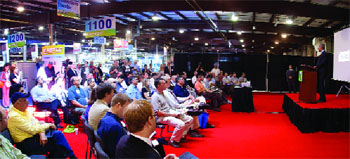
Sections Supplements
Women Presidents? Organization Provides a Forum for Growth
Sarah Morin

Sarah Morin says WPO has helped her work on her business, and not in her business.

Some members call it a support group, while others say it’s like having a board of directors. Some use both phrases interchangeably. They’re talking about the Springfield-area chapter of a group called the Women Presidents’ Organization, a three-year-old outfit that provides an effective forum for sharing ideas and helping businessiness — and individuals — grow.

Sarah Morin says she keeps pretty busy trekking between her two Buffalo Wild Wings Grill & Bar franchises — in Hadley and Windsor, Conn. But she has some ambitious plans that will tax her time, and her vehicle, much further.

Indeed, she wants to have several more operations going in Southern New England within a few years, and is aggressively searching for attractive sites for the sports- and family-oriented restaurants. Managing the two she has while also drawing an outline for explosive growth is challenging, and she says she often found herself looking for what she called, alternately, a support group or informal board of directors to bounce things off and gain valuable insight.

She’s found one in the local chapter of the Women Presidents’ Organization, or WPO, which, as the name suggests, brings women business owners together to share ideas, concerns, issues, hopes, dreams, and more. The local group, the Springfield-area chapter, was formed three years ago with the help of some women who were members of the Boston chapter and thought Western Mass. needed its own. The Springfield chapter reached its current number, 13, thanks to a recruiting drive that brought Morin and several others into the ranks, with the goal of getting to 20 and perhaps more.

The group meets once a month for 3 1/2 hours, said Morin, noting that this a serious time commitment for busy business owners, but one she is willing to make given what she takes home with her after each session and what the group is helping her focus on.

Specifically, this comes down to “working on your business, not in your business,” she said, adding that this is a problem common to many in growing companies. Most business owners spend most of their time putting out fires, meeting deadlines, and doing what’s necessary to keep a business going day to day, she continued, adding that she wants to spend much more time in what she called the next ‘quadrant’: doing planning, relationship-building, and staff development. “That’s where I want to live, and this group is helping me get there.”

Using a roundtable format, WPO puts aside time each meeting to dive into one member’s ‘issue,’ said Cathy Crosky, chapter chair and a principal with the Charter Oak Consulting Group in Williamsburg. That’s accomplished not by preaching or telling that individual what to do, she continued, but by sharing experiences and providing insight into matters ranging from succession issues to effective use of social media to finding alternative funding sources.

“We do something called a ‘peerspective,’” she said, referring to the process by the Edward Lowe Foundation. “It takes us through a structured process so that we can understand a situation deeply and help that person think it through in a different way and offer perspective.”

Lauren Wright, president of Ludlow-based CSW Inc., a provider of integrated services for packaging, was the beneficiary of one such ‘peerspective,’ this one involving what she called a desired culture shift, from production-focused to sales-and-service-focused.

“I was having some issues around that, so we brainstormed ways to get employees more involved and raise accountability,” she said. “They had some great suggestions, some of which I’ve already implemented. It has helped quite a bit; I love being able to get input from people with so much knowledge and experience.”

The women-only format, meanwhile, provides an environment featuring individuals with shared challenges and an understanding, and appreciation, of the many nuances (and headaches) of balancing life and work.

“This is a network of women who understand what it’s like every morning to go to your little laptop to see if there’s any money in the bank,” said Nancy Urbschat, owner of Springfield-based TSM Design and one of the first members of the Springfield chapter. “It’s important to have someone to talk to — someone who has that understanding — because owning a business is a lonely position.”

For this issue and its focus on women in business, BusinessWest takes an indepth look at WPO, its mission, and how it carries it out.

Meetings of the Minds

‘Reaching farther. Together.’

That’s the working slogan for WPO, and Crosky says those three words effectively convey what the organization is all about.

At a time when more women are becoming business owners, but also when many such women (especially those over 40) lack role models, WPO essentially provides a room full of them. But it goes much further; by bringing these women together, the group helps them meet career goals, set new ones, and, well, reach farther.

“Women being in leadership roles and owning their own businesses is still relatively new,” said Crosky. “A generation before us … most of us didn’t have mothers who do what we do. The group provides an opportunity to learn from one another and benefit from the wisdom of the other women in the group.

“People can learn best practices and hear about things that people have gone through that they haven’t gone through yet,” she continued. “In that way, it’s like a peer-advisory group or a board of directors. It’s a way to look at your business through many different lenses.”

And while some WPO members were admittedly skeptical about the need for — and value of — a women-only group, they have, though their experiences with the organization, come to the conclusion that there is a clear need for such an organization.

“For most of us, if not all of us, there was some initial apprehension about a group solely for women,” Urbschat said. “But this group provides the kind of opportunity that many men are afforded, to have that kind of peer group to bounce ideas of, to mentor, and to be supportive. This is an alternative for us, and even though many of us were reluctant at first, its value has been proven time and again.”

WPO, which was founded in 1997 and now has 83 chapters worldwide, is open to women who own their own companies or have a partnership stake, as in the case of a law firm or accounting firm. The companies involved must have at least $2 million in annual sales ($1 million for nonprofits), making them what Crosky called “second-stage” businesses, and not startups.

There is significant help available to new businesses, she said, noting such groups as the Mass. Small Business Center Network and other agencies, but not nearly as much for these second-stage outfits, and especially for those owned and managed by women.

“You have to lead differently when you’re a second-stage entrepreneur than you do when you’re a startup,” she explained. “And there’s just not a lot of support out there for the kinds of things business owners face when their businesses start to grow.”

There are 10 stated ‘primary objectives’ for the organization. Specifically, it strives to:

  • Increase the business and financial success of women presidents;

  • Develop innovative solutions to business challenges through discussions held in a confidential environment;
  • Provide continuing education in business and leadership;
  • Increase awareness of women’s issues and opportunities;
  • Provide a forum where women presidents can make strategic contacts and promote business development;
  • Increase the visibility of women presidents on the local, national, and international levels;
  • Provide business resources including monthly newsletters, a Web site, media referrals, an annual membership director, and an annual conference;
  • Advance the influence of women in the business community;
  • Re-energize and revitalize women presidents, leading to a more productive balance in work and life; and
  • Celebrate the success of women in business.
  • Not Winging It

    The current membership of the Springfield chapter conveys diversity (one of its oft-listed assets), with many professionals, including a lawyer, accountant, and business consultants, and many sectors represented, including manufacturing (Al’s Beverage), retail (Buffalo Wild Wings and Fran Johnson’s Golf & Tennis), and advertising and marketing.

    Morin, who noted that she is very much in the minority as a woman in the world of restaurant franchising, said her five-year plan is quite ambitious, calling for perhaps 15 franchises in Southern New England, with the third coming later this year. “A girl’s got to dream,” she told BusinessWest, noting that WPO is helping her do that, and will likely be a real force in making the dream come true.

    When asked how the group has helped her and others, Morin said it comes down to imparting wisdom and support, not through preachy lectures, but through queries aimed at helping an individual contrive their own solution.

    “The feedback, or ‘feed-forward,’ comes in the form of questions, so you don’t have that, ‘in my second year in business, I did this…’” she explained. “It’s less anecdotal. And when the probing comes in the form of a question, not only does the person with the problem or issue benefit, but we all do.

    “We turn it inward and think of how it’s applicable to our business,” she continued. “I find that incredibly helpful and unique to this group, as opposed to other professional organizations.”

    Urbschat said she joined WPO not long after long-time business partner Leslie Lawrence left TSM. It was a difficult time in her career, one when she was questioning what she wanted to do — and how to go about doing it.

    “I needed to think about whether I wanted to continue doing this or do something else,” she said. “I eventually concluded that I did want to keep doing this, but that I actually needed to figure out what would be an appropriate role for me in the business. My roles had to change.

    “I was inspired by the other members and their stories to think about growing the business,” she continued. “I had always been happy with it just being where it was, and it had been there for a a lot of years; we had been just sort of skidding along. Now, I actually have goals. I’ve been alive for 58 years, and this is the first time in a while I’ve actually had goals.”

    One element of WPO that Urbschat finds unique, as well as helpful, is the desire of members to hold others in the group accountable when it comes to issues they’re facing and steps they are taking.

    “If someone walks away with a solution and chooses to ignore it, there may well come a time when someone might say, ‘you know, what have you done about that thing you were concerned about?’” she explained. “That accountability is a really good thing for a small business because we don’t have boards of directors saying, ‘these are our expectations of you.’”

    Meghan Sullivan, a partner with the Springfield-based law firm Sullivan Hayes & Quinn, is another newcomer to the group. Crosky invited her to join after hearing her speak on her specialty, employment law.

    Sullivan said she’s learned a lot about business, and people, since joining, and especially about strategic planning and more-efficient use of time, energy, and resources “in ways that move the business forward and hopefully motivate people to follow you.

    “Other members have helped me become more cognizant of situations where you’re so caught up in the minutiae that you’re missing the mission of the organization,” she continued. “There’s really been some learning opportunities presented in ways that, while I was in some ways aware of the concepts, I hadn’t brought them to the forefront in my business.”

    Generous Share

    When asked for a qualitative perspective on the value provided by WPO, Urbschat found a rather uniue and insightful answer.

    “How many 3 1/2-hour meetings do you look forward to?” she asked, letting that question stand by itself, because it could.

    Others used different words and phrases, but expressed generally the same sentiment: this is time and energy well-spent, because, as Urbschat said, running a business is a lonely job.

    And with WPO, these women leaders never have to go it alone.

    George O’Brien can be reached at[email protected]

    40 Under 40 The Class of 2010

    Adam Epstein: 39

    Vice President of Research & Development, Dielectrics Inc.

    Adam Epstein can trace his career to a bet.

    When his father dropped him off at the University of Rochester, they came across an “ambiguously worded” ad on campus for a job at an organ bank. His father, who had been through medical school, bet him $10 he couldn’t get the job. Adam won the bet.

    “I was nucleating donated organs and skin from cadavers,” he said. “Frankly, I was fascinated by it, and I became interested in medicine. I was studying engineering, and I eventually got a business degree. So my career is an interesting combination of those three elements.”

    He’s referring to his role at Dielectrics in Chicopee, where for eight years he has led development and commercialization efforts for numerous breakthrough medical devices, from an automatic CPR unit that increases the survival rate of cardiac-arrest patients to a device used to prevent radiation damage to healthy tissue during treatment of prostate cancer. Two of Epstein’s products — employed in laparoscopic surgery and hernia repair — have actually been used on other Dielectrics employees.

    “I like solving problems, and that’s really what we do here,” he said of the contract development and manufacturing company. “We identify a clinical problem, and we try to solve it by the use of innovative technologies. When we get reports back from the field about how effective they have been for people, it gives me a great sense of satisfaction. I love it.”

    He’s addressed needs in his wife’s native Ecuador as well, helping to fund and build an infirmary and library for a chain of orphanages in the capital of Quito, as well as sponsoring an English teacher for the elementary-school children.

    “When we go back,” he said, “we see the benefits to the folks managing the orphanages and the children, and we appreciate being a part of that.”

    In short, Epstein is devoted to identifying and solving critical problems — and it’s a safe bet he’ll continue to do so.

    — Joseph Bednar

    <<Back

    Uncategorized

    Spring. Baseball returns, the golf pros head to Augusta, the days start getting longer … and another casino bill is taken up on Beacon Hill.

    It’s becoming a Bay State tradition, these gaming measures and the discussions that precede them. For the past several years, the talk has started in the dead of winter: ‘is this the year that casinos finally get over the hump?’ ‘Is this the year the stars align for passage of a gaming bill?’

    Usually, there is talk of pieces coming together and key players, such as Gov. Deval Patrick and House Speaker Robert DeLeo, forming alliances to get the job done. And in recent years, there’s has been some early momentum, such as last week’s 12-2 vote of the Joint Committee on Economic Development and Emerging Technologies to support a bill to establish two casino resorts and provide 750 slot machines for each of the state’s four racetracks.

    But in the end, casinos have always come up short, often well short, of the votes needed. This year, once again, like the return of baseball to Fenway, the talk is of how things will be different this time around.

    Let’s hope so.

    Casinos are not a panacea, and they are not going to magically take a near-10% unemployment rate in the Commonwealth and bring it down several points. And they’re not going to spur large volumes of economic development, no matter where they are put.

    But they will help Massachusetts gain a bit of economic stability at a time when the state’s struggles are really beginning to take their toll — on cities and towns, on sectors like health care, and on the public colleges and universities tasked with training future workers for businesses.

    We’ve said it many times before, but it bears repeating: a healthy state financially is crucial to the well-being of this and other regions in the Commonwealth. Two resort casinos and some slot machines are not going to solve the state’s fiscal woes, but it’s better to have that revenue here than see it go to Connecticut. Meanwhile, our state Legislature can’t seem to find ways to help the state’s bottom line that don’t include punishing consumers and small-business owners. Casinos wouldn’t do either, if they were placed properly.

    And a proposed location in Palmer is just such a location.

    Indeed, we wouldn’t want to see a casino in downtown Springfield or downtown Holyoke, where the negative impact on residents and surrounding businesses would be considerable, and where other types of economic development are possible and perhaps probable, even though both communities are still struggling to reinvent themselves.

    But a casino in the Quaboag region, which has been devastated by the loss of manufacturing jobs, and where is little hope for other types of job growth (that area is simply one or a few turnpike exits too far away from both Springfield and Boston), makes a good deal of sense.

    A resort facility would create jobs, bring people who previously couldn’t find Quaboag with a good map to that area, and perhaps spur other forms of tourist-related jobs.

    We’ve said all this before — seems like every spring for the past several years — but the common-sense arguments for resort casinos, one in Palmer and the other in the eastern part of the state, haven’t changed. What just might change this time is the opinion of many state legislators.

    This could be the year. Let’s hope it is.

    Uncategorized
    Aquadro & Cerruti Expands on a Foundation Built over 80 Years

    Years ago, general contractors had their own tradespeople who worked for them. But over the past 20 years, that has changed. Traditional general contractors are on the wane, and the trend has been to replace them with construction managers who oversee work on projects that they subcontract.

    “The industry has evolved,” said Richard (Rick) Aquadro, president of Aquadro & Cerrruti Inc. in Northampton and co-owner with his father, Dick Aquadro.

    Their firm is a third-generation business that remains true to its roots and still offers traditional general-contracting services. “There are not many companies like us anymore,” Aquadro said. “You are either a construction manager or a specialty contractor,” the latter of which includes painters, electricians, and other tradespeople, he explained.

    The majority of Aquadro & Cerruti’s key full-time field employees have been with them for more than 20 years and bring in tradespeople who take great pride in their work. Aquadro and Cerruti hire the workers directly from local trade unions.

    “We have a reputation for being fair. We pay on time, and the many business associates we work with have become personal friends,” Aquadro said. “The management and entire staff of this company is personally committed to the success of each and every project.”

    The history of the family-owned business, and the fact that it has remained a hands-on operation that offers general contracting as well as construction management services, sets it apart from companies that offer only construction management.

    “Our team of professionals can provide the same services of a larger company. We will accept responsibility, resolve issues, and meet and exceed the desired objectives in all situations. We can provide a local, hands-on commitment along with all the technology required to deliver pre-construction, estimating, construction, accounting, and post-construction services required in today’s construction market,” Aquadro said.

    “We do it all and can build anything under the sun — up to $60 million. We are flexible and can offer clients different approaches.”

    All of their work has been done in Western Mass. The firm has constructed medical facilities, parking garages, athletic facilities, houses of worship, manufacturing facilities, fire stations and other munipical buildings, dormitories at local colleges, and even work at Yankee Atomic. It also handles historic renovations.

    “We think the ability to self-employ tradespeople makes us more effective,” Aquadro says. “We can do demolition, masonry, carpentry, and concrete in-house, which tends to make us more competitive, and works especially well in large-scale renovation jobs.”

    Enterepreneurs at Heart

    The company’s roots can be traced back to Aquadro’s grandfather, Mario. He was a carpenter by trade, and although he had only an eighth-grade education, he was ambitious and committed to building a business, one house a time.

    In 1926, he formed a partnership with his nephew, Oscar Cerruti, who was put in charge of the venture’s finances, and Aquadro & Cerruti was born.

    The company incorporated in 1949, but its business remained focused solely on home building and light commercial building until Mario’s sons, Robert (Bob) and Richard (Dick), joined the firm in the 1950s. They were certified professional engineers, with experience at large construction firms in Boston, and were determined to take the business to another level.

    The brothers worked 15 hours a day, and by 1960, they had moved the headquarters of Aquadro & Cerruti from Main Street to its present location on Texas Road. Mario had started the business out of his home.

    “My father and uncle entered the commercial-building business slowly and with small jobs. They started to add employees and make connections,” said Aquadro, adding that he is grateful for his grandfather’s entrepreneurial spirit.

    Aquadro began loading trucks during his teenage years and worked his way up in the company. After graduating from high school, Aquadro spent his summers as a general laborer and also did layout and surveying.

    After graduating from UMass Amherst with a bachelor’s degree in Civil Engineering, Aquadro entered the business full-time at age 25. In the mid-’90s, he took over the helm of the company.

    Today, the contracting firm’s success is dependent on a team effort, but is still run by family. Aquadro is president, and his cousin, Frank Aquadro, is vice president.

    The family is proud of its traditions and relies on the expertise of tradespeople in the field to ensure that the attention to detail Mario demanded is still followed.

    “Every building starts as a dream or need of an owner,” Aquadro said. “We are a third-generation company, and we strive to do more each day than the day before.”

    Although he doesn’t put in continuous 15-hour days like his father and uncle once did, Aquadro & Cerruti continues to grow.

    “We are up to date with cutting-edge technology in terms of computer software systems, estimating systems, and project-management software,” Aquadro said. Some members of the management staff are LEED-certified (an internationally recognized green-building certification system), and others are in the process of becoming certified. In addition, the company is in the process of joining the U.S. Green Building Council.

    “We can do anything that is put on paper. We have the knowledge and knowhow,” Aquadro said.

    Their bread and butter comes from jobs that range from $10 million to $30 million, and although the downturn in the economy has made getting such jobs more difficult, the company’s principals are focused on the future. “We are looking at ways to redevelop ourselves through a joint venture with a larger company so we can develop a larger bonding capacity,” Aquadro said.

    The company has 10 office staff members, and the number of field workers it employs ranges from a dozen to 150, depending on the project.

    On the company’s 75th anniversary, they were contacted and told they had been selected to be profiled in a coffee-table-sized book titled Massachusetts: From Colony to Commonwealth – An Illustrated History, published by American Historical Press.

    Their history shows that the company is not averse to challenges and has taken on projects that other firms shied away from, such as repairing a waterproofing system — located beneath heavy granite steps and stones — that failed at the UMass Amherst campus’s center plaza.

    Other challenges included a three-stage addition to Neilson Library at Smith College. In order to complete it, they had to remove the middle of the building without interrupting the library’s operation.

    But opening the doors to opportunity and using their engineering expertise is on the continuum of the company’s history and growth, which includes work at all five colleges in the Amherst-Northampton area.

    In addition, Aquadro & Cerruti has a history of making generous donations to many of the institutions it has helped to build, such as Cooley Dickinson Hospital, UMass Amherst, the Northampton YMCA, Clarke School for the Deaf in Northampton, and many others.

    “We self-perform,” Aquadro said.

    It’s a philosophy that has stood the test of time and been a cornerstone of the company’s success.

    Uncategorized
    A Small Mistake That Can Cost Your Company Big Money

    For years, an oil-delivery company in North Carolina paid consistent workers’ compensation premiums. Then, suddenly, the premiums went up, though the job functions, number of employees, and incidents remained constant. An audit revealed that two employees were now classified as truck drivers, even though they were actually maintenance workers.

    In Colorado, an outpatient, long-term care provider that transports the elderly to day centers and provides in-house services saw its experience-modification factor go through the roof. The company discovered that its 512 employees were classified in eight different class codes, several of them at a higher risk level than expected. In fact, none of the employees were classified at the lower ‘office code,’ although 20% of the employees were strictly office personnel.

    What these two companies have in common is misclassification. This occurs when the clerical worker at a sawmill, using all 10 fingers to input data into a computer, is classified at the same job risk level as her co-worker at the buzzsaw who could lose a finger at any moment. And with more than 600 possible job classifications, and more being added all the time, it’s an all-too-common problem among employers.

    In 2007, the Workers’ Compensation Insurance Rating Bureau (WCIRB), a government entity that oversees job classifications in California, undertook a study to determine if there were classification errors among 219 large companies. These companies represented $26.4 billion in combined payroll, and their premiums were large enough to impact 10% of the workers’ compensation ratings.

    The final results were a wake-up call not just for California employers, but companies throughout the country. Of the 219 companies audited, 46 had payroll errors. All were because of misclassifications, and all of them could have possibly been avoided.

    The National Council on Compensation Insurance (NCCI), which acts as the insurance industry’s ratings bureau, determines most job classifications. Its bible is the Scopes Manual, which gives specific ratings and descriptions of all types of jobs, from miners (among the highest) to office workers (among the lowest). These ratings, based on an estimated level of risk, are the jumping-off point when determining how much workers’ compensation premiums a company will pay for each job classification.

    While businesses change constantly, the change often does not trigger a review of job codes. This was the case at a sawmill in North Carolina, a company with high-risk exposure and high premiums because of the work employees do. When the decision was made to close the mill and have the wood cut overseas so the business could be converted to a wholesale operation, it didn’t occur to the company to change its classifications.

    I’m willing to bet that the insurance agent never once walked through the facility to see that the operation had fundamentally changed, and to discover why the company continued to pay workers’ compensation premiums based on a higher manufacturing rate and not the lower service rate. Once the errant classification was discovered and changed, the company saved more than $400,000 in premiums.

    So the million-dollar question — or, in the case of that Colorado long-term care provider, the quarter-million-dollar question, since that is what it saved in premiums after getting its workers correctly classified — is how businesses can make sure they are being accurately classified for the work they are doing. Here are some simple steps you can take:

    Ask your insurance agent how jobs are being classified. But don’t be surprised if he doesn’t understand it himself. One of the biggest challenges is getting the insurance companies to understand the ratings and how they are applied. Don’t assume the job classifications are correct just because they haven’t changed. Once they are set, it is unusual for the ratings bureau to revisit them unless there is a dispute.

    Read your policy. It only takes five to 10 minutes, but that error you find could result in substantial savings. For instance, an outdoor sign company in Wisconsin had $80,000 in payroll tied up in an $8 class code, not realizing for years that it could split the payroll over two codes. Once it discovered this, the company was able to split the payroll into an $8 code and a $3 code, saving over $12,000 per year in premiums.

    Don’t let the insurance agent copy from an old policy from year to year. Things change; your business changes. As the employer, you are the steward of your business. You should know everyone’s job. Don’t wait for your premiums to skyrocket to discover something is off kilter.

    Do your own homework. If the agent is less than accommodating in getting you information on class codes, go to a library and do the research yourself (or get a new agent).

    Don’t take no for an answer. If you are sure of your facts and feel that some of your workers are improperly classified, be tenacious and demand that your business or plant be re-visited.

    Don’t feel like you’re in the fight all by yourself. By bringing a trained workers’ compensation advisor into the situation, someone who knows how to spot red flags and can offer solutions, you can greatly increase your chances of solving any problems and saving money.

    This is what Vicki Pullins did. As co-owner of LinguaCare Associates Inc., a privately owned practice of speech-language pathologists, she saw her premium shoot up, but felt she was ill-equipped to contest the increases.

    She enlisted the services of a certified workers’ compensation advisor, who did an extensive overview of what the company did, when they did it, where they did it, and what the risk was. It was discovered that the company was receiving an extremely high-risk classification for a relatively low-risk operation (visiting schools and hospitals to conduct speech therapy). The advisor further discovered that all 17 employees were classified as doing off-site work when, in reality, only two were actually traveling to various locations. The workers were reclassified, saving the company approximately $15,000 annually in workers’ compensation premiums.

    “When we were told it didn’t have to be this way, and when we had an option to change it, we were delighted,” recalls Pullins. “It couldn’t have come at a better time. We were coming off a lean year in 2009, and our margins were tight. But that change in our premiums gave us the opportunity to grow in what could have been a problem year for us.”

    Misclassifications are common, and you can pay dearly for the mistakes. However, by knowing what to look for, by being proactive and not accepting that every classification is correct, and by working with experts who know the workers’ compensation system inside and out, you can save significant dollars year after year.

    Kevin Ring is the director of Educational Programs for the Institute of WorkCompProfessionals, an Asheville, N.C.-based organization that trains insurance agents to help employers reduce workers’ compensation expenses. A licensed insurance agent, he leads workshops, analyzes workers’ compensation programs, and is the co-developer of a workers’ compensation software suite that helps insurance professionals work with employers; (828) 274-0959 begin_of_the_skype_highlighting              (828) 274-0959      end_of_the_skype_highlighting;[email protected]

    Departments

    EASTEC 2010 Focuses on Innovation

    WEST SPRINGFIELD — Innovation will be a key theme at EASTEC 2010, planned for May 25-27 at the Eastern States Exposition. The three-day event is the largest annual precision-manufacturing event on the East Coast, according to Kimberly Farrugia, EASTEC show manager. The event kicks off with an executive breakfast featuring speaker Chris Trimble, author of 10 Rules for Strategic Innovators. His presentation is titled “The Innovation Imperative and Revitalizing the U.S. Economy.” EASTEC will also launch Innovations Theater, featuring manufacturers introducing new products and services. EASTEC will also feature Lean and Green Resource Centers offering presentations, consultations, and opportunities to meet potential business partners.

    Study: WNEC Impacts Local, Regional Economies

    SPRINGFIELD — A new study compiled by Western New England College (WNEC) finds the institution contributes more than a quarter-billion dollars to the region’s economy each year, providing an engine of growth during good times and a steadying force during economic downturns. The recently released impact study is the first of its kind for Western New England, presenting a comprehensive look at the college’s impact on the economies of Springfield, Hampden County, and New England’s Knowledge Corridor of Franklin, Hampshire, Hampden, and Hartford counties. The study finds that WNEC’s annual impact on the Hampden County economy totals approximately $209 million. The figure rises to $260 million when the entire Knowledge Corridor is included. The report incorporates data on direct spending in the form of salaries and benefits, purchased goods, and student spending, along with indirect effects of college spending and contributions made by staff and students. The study also details, but does not quantify, contributions of time and talent by WNEC faculty, staff, and students, which impacts hundreds of local schools, charities, and businesses. The study was compiled by the Office of Institutional Planning in coordination with the Office of Marketing and External Affairs. The full report is available online at www1.wnec.edu/aboutus/index.cfm?selection=doc.8295

    MassMutual Sees Momentum in Nonprofit Market

    SPRINGFIELD — MassMutual’s Retirement Services Division has been selected by the Thames Valley Council for Community Action Inc. (TVCCA) as the new provider for the organization’s $5.2 million 401(a) and $4.4 million 403(b) retirement plans. TVCCA, based in Southeastern Conn., is a private, nonprofit corporation that has been providing social services to economically and otherwise disadvantaged citizens in New London County for more than 45 years. The TVCCA’s 28 programs currently reach approximately 24,000 eligible recipients annually.

    Stony Brook Power Plant Earns National Recognition

    LUDLOW — Accident-free operation of the Stony Brook Power Plant during 2009 has earned the Massachusetts Municipal Wholesale Electric Company (MMWEC) recognition in a national safety awards program. The plant is also approaching six years without a lost-time accident, a record that reflects the high priority placed on safety in operating and maintaining Stony Brook facilities, including approximately 527 megawatts of electric generation, a natural gas pipeline, oil storage tanks, electric transmission lines, and other facilities, according to MMWEC CEO Ronald DeCurzio. Recognition of the Stony Brook safety record came through the Safety Awards of Excellence program sponsored by the American Public Power Assoc. At a time when MMWEC is planning to build a new, 280-megawatt power plant at its Stony Brook site, and in light of a recent power-plant accident in Connecticut, the importance of safe operations rises to an even higher level, added DeCurzio. Stony Brook operators are certified in all aspects of plant operations, and their dedication to safety is reflected in the plant’s outstanding safety record, said DeCurzio. MMWEC is a nonprofit, public corporation and political subdivision of the Commonwealth of Massachusetts that provides a wide range of power-supply, financial, risk-management, and other services to the state’s consumer-owned municipal utilities.

    ReStore, Pecoy Work Together on Green Project

    WILBRAHAM — Deconstruction has begun on a home at 9 Peak Road on Wilbraham Mountain in a collaborative effort between Pecoy Signature Homes and ReStore, the nonprofit entity that specializes in reusing building materials. The 1,900-square-foot home is a wood-frame cape built originally as a ranch in 1953. A second floor was added in the 1980s. Pecoy acquired the home in 2008 from the previous owner, who undertook the building of a new, more energy- and space-efficient home at another location. Once cleared, the home site will be available for purchase and the building of a new home with spectacular views of the Pioneer Valley. This project represents the second deconstruction by Pecoy in the region and allows for most of the structure to be recycled and reused, and available at ReStore’s Springfield store. ReStore Director John Majercak notes that the use of this ‘green’ waste management will save and reuse upward of 80% of the materials from the home, putting less pressure on landfills and other waste-disposal methods and providing inexpensive building materials for do-it-yourselfers and small contractors. ReStore is an enterprise of the Center for Ecological Technology, a nonprofit community environmental organization with offices in Northampton and Pittsfield.

    Big Y Donates To Haiti Effort

    SPRINGFIELD — Through an in-store customer-donation program, Big Y World Class Markets recently made a donation of more than $108,000 to the American Red Cross International Response Fund – Haiti Relief and Development, as well as Florida-based Hope for Haiti. All 56 Big Y World Class Markets collected donations from customers and employees, and Big Y CEO Donald D’Amour and his wife, Michele, Big Y’s educational partnership administrator, personally added another $10,000 to Hope for Haiti. The funds are expected to bring a half-million dollars worth of medical supplies to that nation.

    Defense Department Recognizes Peter Pan for Safety

    SPRINGFIELD — Coaches for Peter Pan Bus Lines travel more than 25 million miles a year, and every day and every trip, drivers put safety first, the company says. Peter Pan recently announced that once again it achieved the highest safety rating from the U.S. Department of Defense. Peter Pan works on a contract basis with the department, moving troops to and from their annual training commitments, transporting recruits to training centers, and serving students, including the Coast Guard Academy in New London, Conn. Pentagon staffers inspect all bus carriers to ensure they are in compliance with the standards set by the Department of Defense.

    Features
    Depth, Diversification, Innovation Define the Region?s Manufacturing Sector

    Still Making It HereThe region’s proud manufacturing sector has lost some of its major players, as well as some of its broad influence on the region’s economy, in recent decades. But this sector remains a force, with many intriguing stories about companies undertaking exciting, often groundbreaking initiatives that are adding jobs and keeping a regional tradition alive. For this issue, BusinessWest tells three of those stories.

    • Meredith-Springfield: Breaking the Mold
    • Marox Corp.: Instruments of Progress
    • University Products: Preserving Its Reputation
    Uncategorized

    For the better part of 200 years, manufacturing was the foundation of the Pioneer Valley’s economy. The major cities — Springfield, Holyoke, Chicopee, and Westfield — gained their very identities from the production of rifles, paper, textiles, and buggy whips, respectively.

    That’s how prevalent, and important, manufacturing was to this region. Cities were known for what was produced inside their mills. Meanwhile, several generations from the same families worked in manufacturing, sometimes at the same plant, making those employers part of the very fabric of those communities. A city wasn’t just a place to live, it was ‘home to’ one or several major manufacturers.

    Now, however, most of the talk concerning this sector involves the past tense, as in people who used to work at the Springfield Armory, American Bosch, the Uniroyal plant in Chicopee, GE in Pittsfield, or any of several dozen paper and silk mills in Holyoke. Some of the mills are gone (the Bosch was destroyed by fire, for example, and the Uniroyal plant is coming down), while many have found new uses. The Armory is now home to Springfield Technical Community College, for example.

    Visit the new Springfield History Museum, and you’ll gain an appreciation for just how important manufacturing and innovation was — yes, that’s was — to the growth and development of this region.

    But while manufacturing is certainly not as prominent as it was a century or even a few decades ago, it’s still a big part of the local economy, as the stories in this issue of BusinessWest attest. The players are not as large, and many fly under the radar screen, but this region is still a center of innovation and precision.

    Take Meredith-Springfield, the Ludlow-based plastic-extrusion blow-molding manufacturing and engineering company, for example. Quietly, and we do mean quietly, it has achieved a reputation for handling difficult assignments within this realm of plastics, from the casing of a container used to grow bone-marrow cells to the glass-like plastic globes made specially for a giant chandelier in China. The company doesn’t employ thousands, but it does employ 50, and that number is growing.

    Consider also the case of Marox in Holyoke, a maker of implants and other small components used in joint replacements, spinal surgery, angioplasty procedures, and more. This is precision manufacturing at its finest, and the company works with original equipment manufacturers across the country and around the world to take concepts from the drafting table (or computer) to the operating room. Marox is a good example of the smaller manufacturing outfits, often specializing in one or two markets, that have given Holyoke a new identity when it comes to manufacturing.

    University Products is another example. This maker of archival products that preserve everything from books to photographs to the musical scores for Hollywood productions does business out of one of Holyoke’s old paper mills. Again, it doesn’t employ thousands of people, but it is one of many companies keeping Holyoke’s old mills thriving through innovation and constant reinvention.

    None of these companies — nor hundreds of others like them — are household names or part of a community’s identity. But they are vital contributors to the economy.

    It’s certainly fair to say that neither this region as a whole nor any of its cities and towns still owes its identity to manufacturing. We still call Holyoke the Paper City and Westfield the Whip City, and the Springfield Rifle remains an iconic symbol of the area’s largest municipality, but these monikers are now all part of the past.

    But manufacturing remains a big part of the region’s present — and, hopefully, its future.

    Features
    The Town of Seven Railways Rekindles the Past
    Doing Business in: PALMER

    Robin and Blake Lamothe, who own several businesses in Palmer, say the town has definite potential to thrive.

    Railways in Palmer are almost as old as the town itself. So ingrained is the town’s identity as the historic ‘town of seven railways’ that manhole covers along Main Street are cast with the relief of a locomotive.

    These days, Palmer appears in the news primarily as the hotly contested possible site for an outpost of the Mohegan Sun casino empire. But people in town are quick to say that, while it’s important to be prepared for such a development should casino gambling be legalized in the Commonwealth, until then the plans are just pie in the sky.

    “There’s a lot of talk about whether a casino would be positive or negative,” said Matt Streeter, town manager. “We need to have growth; that’s the bottom line. It’s an old mill town, and like many others there’s a depressed feel that has lingered.”

    The Quabog Chamber of Commerce represents Palmer and 14 other towns from Belchertown to East Brookfield. Chamber President Lenny Weake agreed that, like many other towns with a former manufacturing base, Palmer has seen that base erode considerably. But he is optimistic that the tide has been stemmed.

    Among many success stories, he referenced the former Tambrands factory in the Three Rivers section of town, what is now known as the Palmer Technology Center, as a good use of a defunct mill. And due to the town’s location at a Mass Pike exit, a high volume of traffic rolls through.

    “We have all the major intersections for this section of the Commonwealth,” he said. “The state highways, the pike — the access to get in and out of the area is phenomenal. That turnpike exit is very well-traveled. In July, I believe the number of transactions there was 275,000. That’s a tremendous amount of people. The key is to get those people to stop here.”

    Adding to the downtown’s Depot Village, named for the train station that supplied the town moniker, are a handful of new businesses within the last few months, Weake said. People in Palmer, he continued, are very community-minded, and proudly support local business. Along with the usual blend of mom-and-pop establishments and outposts of nationwide chains, there are businesses in town that are unique destinations.

    “Nancy Bryant’s gallery right along Main Street is like something out of a big city,” he said. “She has chosen Palmer as her home base, while she could be anywhere, really.”

    Photo Finish

    Bryant’s Giclée of New England Gallery, Studio and Frame Shop sits squarely at the enviable intersection of Main and Thorndike Streets in the heart of downtown.

    “This location is perfect,” she said, “because my customers come from all over to get here. If you tell someone to get off the highway and then drive another 30 minutes, well … as a business owner, it’s a lot easier to say, ‘turn right off the pike and drive straight for three minutes.’”

    Her gallery showcases the work of regional artists, and her giclée printing process, essentially a fine-art, high-resolution means of printing digital or digitalized images, has won her a wide fan base. “I work personally with the artists, they become part of the process, and that’s what makes us unique,” she said.

    At her location since 2003, Bryant has seen the town slowly but steadily gaining a foothold in rebuilding its economy. Like many in town, her thoughts are that Palmer can and should take advantage of its inherent strengths. “The whole atmosphere is bristling right now,” she said. “We can either go forward, or we can fall back. Palmer has been a depressed area for a long time.”

    One of those strengths lies in the steel tracks that put the city on the map in the 19th century. Although Streeter remains impartial on the conversation about casino possibilities as a boost for the town coffers, he expressed confidence in rail’s potential for his town.

    “Rail service is something more tangible,” he explained. “There are rails here already, the trains make stops here. There is a station that could easily be retrofitted to make it passenger-ready. Unfortunately, some prevailing plans don’t seem to include Palmer.”

    He refers to the proposal by the Pioneer Valley Planning Commission supporting the Vermonter rail service running north-south, currently stopping in Palmer to switch tracks, to be rerouted through Holyoke and Northampton, creating rail service along the ‘Knowledge Corridor.’ While the multi-million-dollar plans are still just that — plans — the future looks good for passenger rail in those two cities, and not so good for Palmer.

    “It’s part of the town’s identity,” said Streeter. “I’d say it was a slap in the face when they stopped passenger service, back in 1971 or ’72.”

    But there is hope for the legions that see Palmer as a natural for passenger railway inclusion. The Patrick administration has publicly supported Boston’s extensive commuter-rail network to extend past the current terminus in Worcester to head into Springfield. A stop in the town of seven railways is not out of the question.

    “Having a stop here would benefit us, but also all the surrounding communities that might not find it as easy to get to Springfield,” Streeter said.

    All Aboard

    While many in town ardently support the return of passenger rail service to Palmer, there are few more knowledgeable about that reality in Depot Village than the couple who own the depot itself.

    Since 1987, Robin and Blake Lamothe have owned the historic train station in town. After completely renovating the ghostly shell of a structure, a jewel designed by H.H. Richardson sited amidst landscaping by Frederick Law Olmsted, the beautifully restored building became home to their popular Steaming Tender Restaurant.

    In addition to the restaurant, the couple owns several businesses throughout Palmer, including active storefronts right along Main Street. The station is the couple’s first building, bought back when they were in their early 20s, but since then they have been active members of the town’s business community.

    “We believe in Palmer,” Robin said. “The potential is there.”

    As testament to that belief, among the many hats that Blake wears in Palmer — co-owner with Robin of several stores and host of a radio show, among others — he is chair of the town’s Redevelopment Authority. His knowledge of the history of trains in his town is matched by his thoughts on what he sees as opportunity for that past to become the future.

    “At one time, there wasn’t a railroad in the United States that didn’t want a presence here,” he said, counting off the names of a bygone era.

    These days, however, the reality is that Palmer faces stiff competition from the Vermont state lobby in its bid to reroute the Vermonter. What Blake has called the “Population Corridor,” referring not only to the bedroom communities near him but also to the vast student body in Amherst, has lost traction against the Knowledge Corridor.

    But that’s not the end of an era, Lamothe said. He’s been in talks with several other rail lines, with a variety of other options on how Palmer could be incorporated into their routes. Commuter rail from Boston is one option, as is New England Central’s line to connect Amherst and Southern Conn. to subsequent points beyond, and the Lake Shore Limited, an Amtrak route spanning Boston to Chicago. The rail lines exist, and outside of the Beacon Hill commuter extension, the trains already pass through town.

    The waiting game for passenger rail doesn’t slow down the Lamothes’ plans for other businesses in town, though. “We have purchased many vacant buildings and have tried to put some form of business in there,” Robin said. “We’re putting in a bed and breakfast at the top of the road, the Trainmaster’s Inn. There are a lot of people that come through, not just for the Brimfield Fair, but rail enthusiasts. A lot of them. And currently there’s inadequate accommodations in town.”

    Blake added that, ultimately, their goal is to restore Depot Village to what it once was — a thriving hub for the railway, but also for the surrounding community. “We have a great opportunity. The more businesses that we have, like antique stores and such, the more people we will have floating through,” he said.

    Currently the couple is in the beginning stages of restoring Olmsted Park in front of the train station. “People come to Palmer to see the trains,” Robin said. “For railroad buffs, this location is a big deal.”

    “I want to see things move forward,” Blake said, and by the looks of his and Robin’s business portfolio in Palmer, they are doing just that. Much like the trains that once brought wealth into town, the couple’s business endeavors are becoming another engine for town’s economy.

    Features
    Marox Corp. Brings Surgical Precision to Medical Manufacturing
    Instruments of Progress

    Brad Rosenkranz says innovation in spinal surgical components has increased at a rapid pace — as has competition among designers and manufacturers.

    Brad Rosenkranz keeps a model of the human spine in a corner of his office at Marox Corp. in Holyoke. If nothing else, it’s the best way to demonstrate exactly what the manufacturer’s products do.

    At one point, he held a cervical plate, formed from titanium, to the front of the spine, showing how it provides stability in the neck area when it’s used by surgeons in the treatment of traumas or degenerative spine conditions.

    He also produced a few titanium pedicle screws, which hold in place the rods used to repair and connect the vertebrae; and talked about an organic polymer thermoplastic called PEEK, a lightweight, biocompatible substance used as a spacer between vertebrae. It’s radiolucent, meaning X-rays can pass through it, which is a benefit to doctors.

    “Surgeons like it because they can see,” said Rosenkranz, Marox’s vice president of sales and marketing. “There are usually three titanium markers we assemble into PEEK, and on an X-ray they show up as three dots, showing surgeons how the implant is positioned.”

    Other Marox products include spinal hooks, components for the hip and knee joints, and even some dental products and small parts for endoscopes, all of which contribute to the 59-year-old company’s reputation among the region’s leading manufacturers of medical implants.

    Marox’s customers are OEMs, or original equipment manufacturers, which supply medical practitioners with surgical and other types of devices. “We work with large OEMs, medium-size OEMs, we even work with startups — the whole spectrum,” said Rosenkranz.

    “With spines, the industry has come out with more and more products that are vastly improved,” he noted. “The spine was a grossly underserved market, but now a lot of companies are entering the field, trying to take on the big spine companies, and now I think the industry has become saturated with OEMs.”

    Meanwhile, he said, the U.S. Food and Drug Administration has become more stringent about approving new medical devices, particularly for technology that is similar to anything already on the market. “It’s difficult,” he said of the increased competition to design products. “But it’s pretty good for patients now.”

    Testing Their Metal

    When Manfred Rosenkranz and his three sons acquired Marox in 1988, it manufactured a variety of items, ranging from small-arms components for Colt and Smith & Wesson to commercial hardware products.

    Soon thereafter, Marox started becoming heavily involved in the aerospace industry. Meanwhile, its production of an angioplasty product became its entry into medical manufacturing. One of those niches would not survive.

    “After years of seeing volatility taking place in aerospace,” Brad Rosenkranz said, “and having more and more opportunities presented with medical implants, we realized that, in order to capitalize on the opportunities in medical, we had to phase out all other industries, including aerospace. And the growth in the spinal-implant market worked out very well for us; we rode that wave.”

    He stressed that Marox isn’t a design firm, but does contribute in some ways to the design process — specifically, taking the design a customer has developed and providing input on manufacturability.

    “We might say, ‘if you change this component here, it will make it a lot easier to produce.’ They’ll say, ‘yes, we can make that change,’ or ‘no, we can’t; that’s a critical dimension.’ Ultimately, with our feedback and theirs, we agree on a design that works for them, that meets their needs and also meets our production needs.”

    Rosenkranz explained that the medical-machining industry is in many ways beholden to regulatory decisions. For example, a technology known as motion preservation, which allows joints to fully articulate instead of being fused together, wasn’t being covered by public payers, and the momentum of development in that area slowed down as a result. It’s now being overtaken by something known as dynamic stabilization.

    “It looks like the industry is moving more toward dynamic stabilization,” he said, explaining that the technique connects two sections of the spine and reduces the prevalence of adjacent level disease, which is a pathology that develops in a vertebra adjacent to a fused bone.

    “Dynamic stabilization allows some movement — not a lot, but a little bit,” he explained. “Kind of like a shock absorber, it allows the rod to bend and move, and allows adjacent bones a little movement. It’s better for bones to have that flexibility and movement because, if you don’t have that, you tend to have some negative effects. This dynamic stabilization creates the movement the bone needs and helps a lot with adjacent level disease.”

    Rosenkranz said it’s tough to predict where the next breakthroughs will come, a forecast partly clouded by uncertainty surrounding health care reform and how any change in the health care system will impact peripheral industries, like medical manufacturing.

    “Nobody really knows, with the current administration, where this is all going to end up,” he said, adding that he expects innovation to continue whatever the structure of health care. “This is a very progressive industry, and they’ve come a long way in terms of technology.”

    However, while components and tools for spinal surgery have consistently become more sophisticated over the years, he added, some products have stayed relatively unchanged over the past decade — notably certain components for major joint replacements — simply because they do their job so effectively.

    “The designs on hips and knees haven’t changed too much over the years,” he noted. “They work really well, so it’s the ‘if it ain’t broke, don’t fix it’ type of thing.”

    Room to Grow

    Marox — with its emphasis on lean, efficient manufacturing and its pristine facility — is, like many modern plants, a far cry from the old stereotype of the dirty, chaotic factory floor.

    But not everyone knows that, Rosenkranz said, and it’s a challenge to make sure people understand what today’s manufacturing floor is like, and to raise the prestige of what are often very high-tech jobs — which is why he conducts tours of the facility for trade-school students.

    “We want to show kids that, hey, there is something to manufacturing,” he said. “I think it may have gotten a bad rap, that it’s not glamorous, and people have jumped to computers, software, and IT because they’re the glamour jobs, and manufacturing got left in the dust.

    “But we’re showing kids that this is high-tech, precision work, making really sophisticated components — and, on top of that, for a good cause,” he continued. “Some people hear ‘manufacturing’ and think of a dirty foundry, a dark, gloomy, grungy place. But it is very clean and high-tech. We’ve been told our facility is reminiscent of a European facility, with lab coats, where everything is clean and neat.”

    Rosenkranz is excited not only about the work that Marox performs, but for the whole umbrella of burgeoning bioscience applications, from synthetic bones and stem-cell products to bone-growth stimulators and other technologies that fall outside Marox’s metal-machining specialty.

    Economic-development experts have long pegged Massachusetts as a hotbed for such cutting-edge industries, and Rosenkranz doesn’t doubt that this region could be a growth sector, at least for high-tech precision machining.

    “I think there’s good talent here in Western Mass.,” he said. “Finding skilled workers is a problem that everyone faces nationally, but here in Western Mass., I think we’re just as well-off if not better-off than anyone else in terms of a skilled workforce. Around here we have a lot of manufacturing, and a lot of colleges having more awareness in terms of what’s available in manufacturing.

    “We’ve seen a lot of growth over the past several years,” he added, “and it looks to be so in the future as well. It’s a great industry to be in.”

    For anyone, that is, with the spine to take on some high-tech challenges.

    Joseph Bednar can be reached at[email protected]

    Features
    How a Success Story Took Shape at Meredith-Springfield
    Breaking the Mold

    Mel O’Leary says Meredith-Springfield has earned a reputation as a go-to company for difficult projects using the blow-molding process.

    Mel O’Leary called it “the turning point.”

    He was referring to work with Reebok in the early ’90s to develop something called the “dynamic mid-sole crossover,” or DMX cushion for short. This was the athletic shoe maker’s answer to Nike’s famous ‘pump,’ and for Ludlow-based Meredith-Springfield, it was much more than a $1 million, 18-month development project.

    “It was the first time we really did something that wasn’t a plastic bottle that would hold shampoo or cleaner, but was blow-molded, which is our technology,” said O’Leary, the company’s founder, president, and CEO, referring to the plastic-converting process that will be explained in more detail later. “But it was more than that for us. That was when we started to develop our niche, when we became the go-to guys for non-bottle items like that, projects with a high degree of difficulty.”

    The Reebok project was in the early to mid-’90s, said O’Leary, founder of the business, but Meredith-Springfield has not only maintained that reputation for problem-solving, but enhanced it, with products ranging from the casing for a container in which bone marrow cells can be grown outside the body to fight cancer, to globes for a huge chandelier built for a casino in Macau, China.

    “The company intended to do it with glass globes, but that became cost-prohibitive, and the weight became prohibitive,” O’Leary said of the casino builders, adding that much-lighter-weight, fire-retardant plastic that looks like glass became the solution, and Meredith-Springfield the solution provider.

    “People come to us with ideas that are almost whimsical,” O’Leary continued. “And we figure out how to do them. That’s one of our main strengths, being a small, nimble company under entrepreneurial control; we’ll take a few risks and move fast to try and take care of a customer.”

    This track record for handling tough assignments, coupled with great diversity in terms of the industries served by the company — everything from the household industrial chemical (HIC) market to the medical industry; from landscaping (vinyl fencing) to the personal-care realm — has enabled Meredith-Springfield to thrive even in the worst recession in 80 years.

    “We’ve been busy, at full capacity, growing, and hiring through the downurn,” said O’Leary. “There’s no recession here.”

    And it has enabled the company to make huge investments in new technology that will allow it to comply with clients’ demands for ‘greener,’ more environmentally safe plastic products.

    The company recently added a $1 million machine (and another is on order) that will enable it to manufacture products with polyethelene terephthalate (PET), an improved barrier-technology, or non-leaching, thermoplastic polymer resin now demanded by clients such as B & G Foods in Parsippany, N.J., for which Meredith-Springfield has been making containers for Vermont Maid Maple Syrup and other products for years now.

    O’Leary’s venture is also expanding physically. It recently acquired the property at 321 Moody St. (it had been leasing roughly 40,000 square feet of space there) and will eventually absorb the 50,000 square feet once leased by Bassett Boat for warehousing.

    “It’s an exciting time for us,” said O’Leary. “We’ve planned well … we’ve positioned ourselves properly, and we’ve built a great reputation in the industry. We’re in a growth mode.”

    For this special section highlighting the diversity of the region’s manufacturing sector, BusinessWest takes an indepth look at Meredith-Springfield, a company that is breaking the mold in more ways than one.

    A Business Takes Shape

    As he talked about the bone-marrow-container project, O’Leary listed a number of elements that made this product quite complicated to manufacture.

    Michigan-based Aastrom Biosciences was (and is) the client, he said, and it wanted a container made out of special plastic that is very difficult to mold into a container of the desired size. “Gooey” was the word O’Leary used to describe this material, which represented just one of the challenging aspects to this project.

    “We needed to do two secondary operations, a routering operation and a drilling operation,” he continued, “and it also requires special packaging because it’s radiated for sterilization. And it’s a close-tolerance part.”

    Aastrom eventually sent a request for qualifications to the 30 top blow-molding companies in the country, said O’Leary. “Eight of them responded with ‘no quote,’ and the other 22 recommended Meredith-Springfield.”

    How this low-profile company achieved such problem-solver status is an intriguing story, and one that O’Leary admits he hasn’t had too much practice telling. This will change now that the company looking to raise that profile.

    O’Leary has spent much more time and energy explaining the company’s name — which is where the story begins, sort of.

    It turns out that O’Leary and a partner in a medical-equipment-leasing business they started in 1979 as a side venture were looking for a name for their business. They chose their hometowns; O’Leary was from Springfield, and his partner, with apparently enough oomph to put his town first, was from Meredith, N.H.

    This business, a franchise, was eventually sold, with the partners going their separate ways. O’Leary would hold onto the corporate name Meredith-Springfield, thinking that someday he would again do something entrepreneurial. He did, when his career with Aim Packaging, a plastics company that operated out of the former Gilbarco complex in West Springfield, ended a few years later.

    O’Leary worked his way up the ranks at AIM, eventually becoming plant manager and, along the way, starting two new operations in other cities. But a trend toward self-manufacturing in many industries served by plastics companies eventually prompted serious consolidation at AIM, and O’Leary was fired in late 1982.

    With obvious hindsight, he calls this the best thing that ever happened to him. That’s because he took his background and started a plastics-consulting business, for lack of a better term.

    “As soon as our client base found I was no longer working there, they started calling me at home and asking if I could help with their in-house operations,” he explained. “I didn’t really know how to spell ‘consultant,’ and the next day I was one.”

    Elaborating, O’Leary said he, and eventually some other partners he brought in, also from AIM, provided support for the technical aspects of plastic-packaging development.

    Much of the early work was with the so-called ‘soapers,’ which made everything from cleaning products to shampoo to mouthwash. And when the economics of self-manufacturing changed and companies started outsourcing that work, it helped Meredith-Springfield make a successful conversion from a venture that started as a development company and did a little manufacturing to a manufacturing company that still does some development.

    Technically, the company is a plastic extrusion blow molder. This means that it uses blow molding, a process by which tiny plastic pellets are converted into a hot plastic hose, said O’Leary, adding that a two-part mold is closed around the hose, and air is blown in to create everything from bottles (to hold everything from soda to motor oil) to the freezer packs used in lunch boxes to the so-called vapor-recovery boot (part of a car’s gas-tank assembly).

    The company has moved from O’Leary’s home to a plant on Cottage Street in Springfield to the present facilities in Ludlow, growing steadily over the years to where it now boasts 50 employees.

    PET Project

    The turning point, as O’Leary said, was the Reebok project.

    Until that time, Meredith-Springfield was enjoying ample success as a blow-molding manufacturing and engineering company, making products for Johnson & Johnson, Kraft, PepsiCo, and other clients, most all of them bottles — eventually to contain everything from witch hazel to maple syrup to toilet-bowl cleaner.

    Reebok was looking for a molder to develop and manufacture the DMX. Meredith-Springfield handled the former, and, because it couldn’t find a molder to take on the assignment on a production basis, it assumed that role as well until one could be found (overseas) to handle the volume.

    There have been other success stories along the way, ranging from the plastic fencing that has become a big part of the business (yet also the only one to see declining sales due to the collapse of the housing market) to the curved neck on toilet-bowl-cleaner bottles, for which Meredith-Springfield attained several patents.

    “Part of the art and science of our work is marrying up the right plastic with the right application,” O’Leary said, adding that the biggest development for the company has been its hard-earned reputation as a problem-solver, won through work on the casino chandelier, the bone-marrow container, and even large, plastic advertising tools called factices, developed for Elizabeth Arden to showcase a new product.

    “The company wanted one source that could figure out how to manufacture a giant tube-like-looking article that could be silver hot-stamped (decorated), gray silk-screened, and a have a metalized aluminum cap,” O’Leary explained, referring to the items eventually placed at thousands of cosmetics counters around the world. “Plus, they also wanted them in special packaging and shipped to 20,000 locations. That was a tall order, and one that was simply too complex for a large company to get its arms around.”

    Recently, Meredith-Springfield has had to solve a problem of its own, if it can be called that, in the recent shift toward use of PET in the production of many items used for the food industry.

    B&G Foods is one of the clients pushing for the change, said O’Leary, noting that the plastic long used in the making of bottles for products like Vermont Maid has fallen out of favor with large chains like Wal-Mart and Kmart. The new, preferred product is something called stretch-blow PET, or simply soda-bottle resin, as it’s known in the industry.

    Making the transition needed to keep B&G’s business has required a massive investment — again, in the middle of a recession, said O’Leary, adding quickly that the company is looking at this development more as an opportunity than a challenge, an investment more than an expense.

    Indeed, machines that had been devoted to Vermont Maid and similar products can now be put toward different business requiring extrusion methods — and there is plenty of it, O’Leary added — while the company has set out to be a leader in stretch-blow PET.

    “Because we’ve had a very healthy company and maintained excellent quality and service and on-time deliveries, we’ve actually been getting more business,” he explained. “That’s because many peer companies have been cutting back to the point where they can no longer react quickly, so they’re losing business to us.”

    Time in a Bottle

    When asked if his primary competitors were domestic or foreign, O’Leary paused for a minute to measure and prepare his response.

    “This is a rather bold statement,” he said, “but we don’t have very many direct competitors. There are very few companies that will take on the projects that we do.”

    This reputation for being able to think outside the box, to take the whimsical — like the glass-like globes for the chandelier in China — and make it reality, has enabled Meredith-Springfield to not only make the mold, but break the mold and move well beyond the plastic bottle.

    George O’Brien can be reached at[email protected]

    Features
    A Sagging Economy, Other Forces Push Some into Business Ownership

    Entrepreneurs of NecessityMaking the transition from employee to business owner is usually a scary proposition. What’s prompting more people to take such a plunge is the realization that the corporate world is no less scary and, in many ways, even less secure. But whether one chooses this route by choice or out of necessity, a challenging roller-coaster ride almost always awaits.

    Trisha Thompson called it “working for the Mouse,” as opposed to ‘the man.’

    That’s a phrase used by many of those who find themselves in the employ of the massive Disney Corp., which Thompson was, as executive editor of a Northampton-based monthly publication for parents called Wondertime.

    That’s was.

    Indeed, the corporation abruptly shut down the magazine roughly a year ago, despite what most all involved considered solid early success. “We made all our numbers,” said Thompson, referring to the start-up’s performance over its first several years. “We received some awards, we were on track with our circulation … we were a good magazine. We went from an original staff of seven to 32, but they decided to just shut it down.”

    Fast-forwarding things a little, Thompson said this sudden, completely unexpected turn of events provided the rather violent push she and her husband, Fred Levine, then a freelance writer and editor, needed to start their own business venture, called Small Batch Books. Operated out of their home in Amherst, this vanity-press operation specializes in personal memoirs, family histories, and commemorative books.

    It was launched last summer after some extensive job hunting and soul searching led the two to determine that this was the best, most practical route for them to take given their ages (Trisha was 49, Fred 52), their career aspirations, and the decidedly unsteady state of the print publishing industry.

    “It doesn’t feel safe anywhere anymore — there’s no place to go that’s really all that secure,” said Thompson as she explained why she turned down a few other opportunities in publishing, including one in Iowa, and then stopped looking, even if that meant entering the often-scary world of entrepreneurship. “I thought to myself, I’m going to uproot my family to go to Des Moines, and then in a year they’re going to shut that down? No, thank you.”

    And because no place is safe in most all sectors of the economy, many, like Thomson and Levine, have become what Dianne Fuller Doherty calls “entrepreneurs of necessity.”

    Elaborating, Doherty, director of the Mass. Small Business Development Center Network’s western regional office, said that most who go into business for themselves do so out of choice or opportunity. But all economic downturns, and especially the so-called Great Recession, have seemingly removed choice from the equation for some who have found themselves downsized and with few, if any, attractive job opportunities.

    “We’re seeing many people who are choosing this path out of necessity,” she said, “which isn’t always a good thing. Some people are cut out for this, and some people aren’t.”

    Sometimes, such entrepreneurial leaps are brought on by other factors, such as a company’s relocation, discontinuation of programs, changes in administration at a company or institution, or others. For Dan Touhey, the ‘push,’ as those who have made this transition call it, came when his long-time employer, Spalding, which he most recently served as vice president of marketing, announced it would be moving out of Springfield.

    The first announced destination was Atlanta, home to Russell Athletic, which bought Spalding several years ago, Touhey explained. But then, when Fruit of the Loom bought Russell, employees were told that if they wanted to stay in the organization they would have to relocate to Bowling Green, Ky.

    And Touhey never gave that mailing address any serious consideration.

    So after sifting through some offers from recruiters and rejecting them — none looked solid enough in these days of unrest and consolidation in corporate America — he decided to go out on his own last spring with DPT Consulting.

    There are two aspects to this business. The first, concerning his primary client, the Berkshire Opportunity Fund, involves channeling small businesses looking for funding to that venture-capital outfit. The second is centered on offering Touhey’s vast experience in business and marketing to small businesses that can use it. These include a cycling-apparel company in Northampton and a start-up that manufactures a product called the ‘bunt-down bat.’

    As in all cases when individuals mull the shift from being an employee to being self-employed, those who take this step out of necessity must still perform the needed due diligence, said Lyne Kendell, senior business advisor for the MSBDC, who has counseled many people weighing such a decision.

    In short, such individuals must have a solid business concept and a plan of attack, she explained, but also the needed skill sets to be an entrepreneur (not everyone has them), and a passion for what they want to do.

    “It can’t be something they just feel like they want to do or should do,” she explained. “And it shouldn’t be just a way to make money. It has to be something they’re passionate about. Without that, it won’t succeed.”

    By the Book

    This requisite passion was apparently missing the first time Thomson and Levine met with Kendell.

    That was seven years ago, when they were pondering a different kind of venture, one involving custom publishing in the corporate realm, or what Thompson described as “extended advertorials” for products and services.

    “Within about 10 minutes, she was giving us this weird eye, the stink-eye kind of thing,” Thompson recalled. “We were looking over our shoulders saying, ‘who’s she making this face at?’ It was us. She said, ‘do you really want to do this? I’m getting the feeling you don’t, but feel you could or should.’

    “We said, ‘well, of course we do,’” Thompson continued. “But shortly thereafter, we found out she was right, but by then, we had already rented office space and spent money unnecessarily.”

    Things were different when Levine and Thompson were again sitting across the MSBDC conference table from Kendell, this time explaining Small Batch Books. The two told Kendell (and BusinessWest) that they believed they had a somewhat unique concept — a soup-to-nuts vanity publishing operation — and something that they truly believed in.

    This time around, the body language conveyed the necessary confidence and passion, said Kendell, who said she gave Levine and Thompson a homework assignment of sorts, one they ultimately scored well on.

    “I gave them some tasks to do and things to think about, on both the personal side and the business side, and a few weeks later, they came back with those tasks completed and with the confidence that they could take the plunge,” she said. “On the personal side, they have to do what I call a personal retreat — do they have the personal wherewithal to do this? If they’re going to work together, what would the guidelines be for the home life and business life? On the business side, it’s more looking at skills, contacts, potential revenue streams, whether you really know the market, and whether you could, if necessary, live on a part-time job or savings for 12 to 18 months.”

    Kendell has been assigning lots of homework these days, as she and others at the MSBDC handle a larger portfolio of cases than would be considered normal, mostly due to the recession.

    Many of these cases involve businesses that are hurting, said Allen Kronick, senior business advisor for the MSBDC, noting that some wait too long to seek help. For these businesses he sometimes uses the term ‘dead on arrival’ to describe their condition, meaning that there is nothing he or anyone else can do for them. Many others can be helped, he said, adding that his own portfolio has many cases involving companies trying to find ways to hang on until the economy improves — and succeeding.

    Meanwhile, many other cases involve startups, with a good percentage of them blueprinted by individuals who have been downsized and can’t find another job, or at least one to their liking, or who could perhaps find a job similar to what they had before, but are tired of what Kendell called the “rat race.”

    Looking over his portfolio, Kronick said he has several clients that fit this description. They include everything from a former MSPCA employee — laid off when that agency shut down its Springfield facility — who is now making and selling cat scratch posts, to a laser engineer who knew his days were numbered with his now-former employer and started his own venture, to some other former executives at Spalding trying to figure what to do next.

    Tuohey’s situation involves both the recession and general uncertainty about corporate America. He told BusinessWest that, in this economy, even though things have improved somewhat since last spring, opportunities in marketing, and especially senior marketing positions, are few and far between. But recruiters did call, he continued, and upon listening to what they were saying, he became increasingly convinced that there were few, if any, situations that provided the real security and peace of mind he was seeking.

    “When I did find situations, they were less than ideal,” he explained. “They were too similar to what I had just left, and I knew how quickly things could change. I looked at a couple of situations, gave them serious consideration, and decided to decline.”

    Eventually, he said he simply grew tired of waiting for the ideal situation to come about and for the economy to rebound, and started his own venture. The work with the Berkshire Opportunity Fund has been steady and has given him a solid foundation, he explained, adding that he’s slowly but surely building a portfolio of clients in sports-related businesses that can tap into his marketing and brand-building expertise.

    VOmax, a Northampton-based cycling-apparel maker, is one such client. Tuohey said he recently helped the company secure licenses with the National Basketball Assoc., National Hockey League, and Major League Baseball, to make clothes with team logos and colors. Meanwhile, with the Bunt Down Bat venture, he is helping the owner build brand recognition and take manufacturing operations to a higher level.

    Gifted and Talented

    For Marge Slinski, the push into entrepreneurship didn’t come from the recession. Instead, it came first from a change of direction regarding the UMass program she had been involved with — one concerning youths at risk — and an informal policy at the school that acted as a career barrier.

    Elaborating, Slinski said she had a position of authority with a national program, one that won several million dollars in grants to create and replicate initiatives involving youths at risk. She eventually lost that position when the school opted for a different course, and found out rather quickly that, to attain a position with similar responsibilities, challenges, and opportunities to grow, she would need a doctoral degree, which she didn’t have and didn’t want to put her life on hold to earn.

    Instead, she went to the Smith College Career Center (she’s an alum) to get some counseling on what to do next. “I was essentially a person who lost a great job and had no way to replace it,” she explained, adding that those at Smith told her that she could take some of her strengths, specifically those in the arts, and what she called “collaboration building” and perhaps use them to start a business.

    She took that advice and started Choices, LLC, a venture run out of her home that is focused on helping companies find appropriate gifts for their corporate clients.

    Through collaborations with American artists such as Stephen Schlanser, Jennifer McCurdy, Geoffrey Smith, and others, she’s commissioned suitable, meaningful gifts for clients ranging from Fortune 100 companies to locally based banks. The recipients vary, from Mideast oil sheiks to Chinese businessmen to retiring employees, and the occasions vary as well, from celebrations of $1 billion sales (for those Fortune 100 companies, obviously) to employees’ 25th anniversaries.

    “I had a new mission,” said Slinski. “Instead of youth at risk, I’m getting corporations to value American arts and crafts as key corporate gifts for their VIPs.”

    Starting with a few leads given to her by her husband, who’s in business, Slinski has managed to steadily grow the company over the past few years, and is now looking to take on a partner and take it to the next level.

    Meanwhile, Levine and Thompson, who worked in Western Mass. several years ago, then relocated for other job opportunities before returning nearly a decade ago, told BusinessWest that they’ve pretty much understood for some time that they would likely have to go into business for themselves, given the rocky state of the publishing industry in recent years.

    “We knew when we moved back here that staying in publishing is not the best place to be, and that we’d probably have to come up with something on our own at some point,” said Levine. “We were lucky along the way in that we did find some staff jobs and we were able to cobble things together with freelance work. But after this last round, with Trisha getting let go, and with the economy taking a huge, huge bite out of print publishing in general, we knew we’d have to do something on our own that would be more stable.”

    Over the past several months, they’ve been able to approach stability through several projects involving personal or family histories or other legacy initiatives, most all of them for customers outside the 413 area code; one current work in progress is for a client in Australia.

    “There are many who won’t have fortunes to leave behind, but will have thoughts and memories and words,” said Thompson, noting, as one example, the remaining World War II veterans and Holocaust survivors, many of whom, as they approach or reach their ’90s, are thinking about putting their stories into something that can be preserved for future generations.

    “They have a legacy to leave behind,” she said, adding that this phenomenon certainly provides some growth potential for their fledgling business.

    Free Spirits

    When asked about making the transition from employee to employer, or sole proprietor, those we spoke with said there is a definite learning curve that is part and parcel to such a career shift.

    There are things to absorb, especially on the financial side of things, and there are some trade-offs. There is no steady paycheck anymore, said Thompson, stressing, as she did repeatedly, that there are no sure things in the corporate world either in this day and age. But there is freedom, more responsibility, and, in general, a pride in ownership that doesn’t come with working for someone.

    “It’s very freeing, but’s also a little scary when you’re not working for the mouse,” said Thompson, who noted that, without the strong push that came with the closing of Wondertime, she and Levine may have not made the leap. “It’s freeing because you have as much autonomy and decision-making power as you do responsibility, and that’s unusual. There’s no one else to blame if something doesn’t go right.”

    Said Levine, “on the days when it gets dicey for us and we start to get a little scared, we take a step back and look at the people we know from the long careers we’ve had who have stayed with a large publishing company and lost their jobs because the magazine got sold to some other huge conglomerate. It isn’t always better on the other side.

    “But maybe the biggest difference for me is realizing how much energy you spent in a
    taff job just dealing with personalities and the whole political machinery of it,” he continued. “Now, you can take all that energy and put it into building your business, and also on the creative side as well. Just think about all the time you lose sitting in meetings.”

    Roughly a year after he made the transition, Tuohey has no regrets and isn’t looking back, only ahead. He, too, likes the freedom and greater sense of satisfaction that comes with business ownership.

    “You definitely make your own breaks,” he said. “The thing about what I’m doing that’s so fulfilling for me is that I’ve earned every penny that I’ve made doing this, and I’ve become much more well-rounded of a professional. I think I’m more determined, and more confident in my abilities.

    “Those are the absolute positives,” he continued, “plus I don’t have to jump on a plane every week and fly off and not see my kids.”

    Slinski said her background has been in program development, not business management, so she has had to learn many of the basics, from balance sheets, which she’s still mastering, to pricing.

    “The hardest thing to learn was to ask for the money I deserved; I would tend to underprice, but I’m getting better at it,” she said. “Overall, I was never a business person; I was great at creating things and developing things systematically, but the business side was all new to me, and I had to learn.”

    All those who make the transition to business owner, whether by choice or out of necessity, should be prepared for what Tuohey called a “roller-coaster ride.”

    “There are a lot of ups and downs and emotional swings,” he explained. “Most of all, people have to be prepared to work hard and have some determination and some perseverance; it’s not an easy ride by any means.”

    The Bottom Line

    Touhey says he still hears from recruiters.

    “I get calls once in a while,” he said. “I tell them that I’ve stopped looking for a job, but if they want to talk to me, and there’s an ideal situation, I’ll certainly listen.

    “But I’m going to be the one dictating the terms; I’m not just going to jump back in,” he continued. “I’ve found something I think I can grow, and in the meantime, I’ve proven to myself and my family that I’m capable of providing for us with this, and there’s a certain amount of accomplishment in that.”

    In other words, a former entrepreneur of necessity is now one by choice — and he’s not alone.

    George O’Brien can be reached at[email protected]
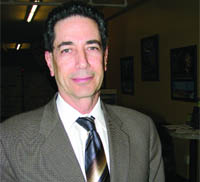
    Features
    At 25, United Personnel Focuses on Its Next Milestones
    Hire Purpose

    Mary Ellen Scott says the employment-services field is relatively easy to get into, but hard to master.

    Necessity is the mother of invention.

    That’s how Mary Ellen Scott described her beginnings in the temporary-employment industry. “It’s been the story of my life, really,” she told BusinessWest before explaining at length just what that means.

    Scott is the owner of United Personnel in Springfield, which is celebrating 25 years in business. With the industry changing dramatically in that quarter-century, that adage has been in use for much of the time, seeing Scott and company becoming one of the area’s leading placement firms. Looking back on her time in business, she explained how it has come together over the years.

    When Scott and her family moved to Springfield in the early 1980s, a chance encounter with a friend of her then-husband, John Canavan Jr., led to a new career.

    “It was a clothing manufacturer, the old William Carter Co.,” she said, “and it was the only unionized plant in the William Carter conglomerate. They wanted to get rid of it, so they sold it to a man who went to prep school with my husband.” That was Joel Gordon, who bought the factory and renamed it the Gemini Corp., and who contacted Scott at home one day.

    “Here I was unpacking boxes,” she said, “and this man called me up and said, ‘do you want a job?’ Well, I had been a stay-at-home mom for 10 years, so I said, ‘doing what?’ and he said ‘well, what can you do?’”

    Despite her modest assessment of that interaction, Scott became the human resources director for the plant of 400 employees. But the two-income household was soon to be cut back to one. In 1984, her husband lost his job. “He was 51 years old,” she said. “That was and is definitely an issue in the job-hunting market.”

    After looking for work for more than eight months, Gordon suggested to him to strike out on his own. With a brother in the temporary-help business in Boston, Canavan decided to give that field a shot. Scott explained why.

    “From an entrepreneur’s perspective, in concept, it’s not a very complicated business to get into,” she said. Smiling, she added, “but it is hard to do it well. In the grand scheme, though, you don’t need to know how to operate a lot of machines, and it doesn’t take a great deal of capital up front.”

    Starting the company in Hartford, Canavan drew upon the vast needs of that city’s many insurance firms to specialize in clerical temps. Scott laughed when she remembered her husband’s attempts for her to work with him.

    “It was critical to hire the right person for him to work with,” she said, “but would anyone be willing to jump at a job at a start-up operation, getting paid very little money, when they would have to work very hard, and quit a job that they enjoyed? That’s the question I was asking myself.”

    For two months, Canavan sought someone to oversee front-of-the-house operations —interviews, hiring, placements — while he handled marketing, sales, and the administrative details. As before, fate intervened in Scott’s decisions.

    “My job at this time was changing,” she explained. “Our friend had brought in this new manager, a graduate of MIT and West Point. He had a very different idea about how to treat people than I had.

    “One particularly bad Friday afternoon,” she continued, “I had to be in on a session with him and one of the employees, and I came home and I said to my husband, ‘I think God is trying to tell me something. If we’re going to do this staffing business, we’re going to do it together.’”

    After three months of commuting in separate cars to Hartford — “in case one of us needed to go back to the kids,” Scott said — the first order came in. But it didn’t take long for the pair to hit their stride, and within two years, they opened a branch office in Springfield, at the location still in use today, 1331 Main St.

    Along the way, the business shifted gears from a focus on clerical temps to a division that served the light-industrial sector. “That was a fortuitous decision,” Scott said. “The economy was changing at the end of the ’80s into the early ’90s. Insurance companies in Hartford were struggling with their real-estate deals gone bad. And the first thing a company does when times are hard is to cut back on new temps. So our business in Hartford went downhill.”

    But the Springfield office prospered, becoming one of Inc. magazine’s top 500 fastest-growing companies in 1993 and 1995. “The diverse client list we had here really pulled us through,” Scott said. Not only did they handle clerical and industrial clients, but MassMutual and BayBank were early customers as well. When Canavan passed away in 1999, Scott became the sole owner of the business.

    Does Not Compute

    “During the early years,” Scott said, “we had no computers at all. We had two electric typewriters, and everything was done on paper.”

    Personal computers, however, changed that — and changed the nature of her business. “Companies changed how many secretaries they used,” she said, “and some people don’t use secretaries at all anymore.

    “The clerical sector, which at one point was 100% of our business, became a much lower percentage,” she continued. “These days, we are primarily a light-industrial staffing company, about 70% in manufacturing.”

    Pointing to a stack of boxes waiting to be moved out of the office’s hallways, Scott said that the old-fashioned pen to paper is still necessary for many forms — I9s and W4s, and applications still filled out by hand — but digital communication has become the new tool of choice for United and nearly every other business in this sector. “While e-mailing certainly makes us more available for our clients,” she said, adding that someone in her office is on call around the clock every day, she motioned with a smile at that pile of boxes and said, “I don’t think computers have made less paperwork.”

    Still, Scott said her job is still done, in many ways, just like in the first days of the business. Describing the challenges of staffing in different sectors, she said that clerical candidates still need to be interviewed; “It’s a little more of a conversation to get those jobs filled.”

    Manufacturing often involves her clients requesting multiple orders. “We get calls for upwards of 40 orders,” she said of the number of employee needs. “It can be challenging to find that many people right for the job.”

    While pundits search for hope in the murky economic forecast, Scott said that business at United, and the sector as a whole, is definitely picking up, which is a good sign.

    “When the economy is on the way down, we’re the first to know it, and on the way back up we’re the first to know it also,” she explained.

    “Manufacturing clients are getting orders, and they need workers,” she continued. “We have all different kinds of businesses, and they all seem to be picking up, calling for temps.”

    Hiring Line

    Looking at the next milestone of her successful career, Scott said that the she is thinking about branching out into health-care staffing, acknowledging that it is one of the region’s growth industries.

    “Personally,” she laughed, “I don’t know anything about the licensing and laws involved in that sector. So I will have to hire some expertise in that field.”

    In other words, she’ll take the approach she has from the beginning: that necessity may be the mother of invention, but hard work and imagination are the secrets to success.

    And neither Scott nor her company have ever been lacking in those qualities.

    Departments

    The following is a compilation of recent lawsuits involving area businesses and organizations. These are strictly allegations that have yet to be proven in a court of law. Readers are advised to contact the parties listed, or the court, for more information concerning the individual claims.

    HAMPDEN SUPERIOR COURT

    Comcast Spotlight v. J & J Home Improvement
    Allegation: Non-payment of advertising services rendered: $36,605.70
    Filed: 12/11/09

    Hank J. Lane v. Big Y Foods Inc.
    Allegation: The plaintiff bit into a snowflake roll containing a razor, causing injury: $2,598
    Filed: 12/29/09

    Planned Furniture Promotions Inc. v. John M. Glover Agency
    Allegation: Negligent insurance services resulting in substantial pecuniary damages: $90,000
    Filed: 12/18/09

    TD BankNorth v. Ryan Mortgage Group Inc. and Timothy P. Ryan
    Allegation: Non-payment of two promissory notes: $315,025.85
    Filed: 12/28/09

    HAMPSHIRE SUPERIOR COURT

    Kenneth Malinowski v. National Industrial Portfolio, LLC and Westfield Development Associates and The Home Depot Inc.
    Allegation: Negligent maintenance of property, causing injury: $346,923.67
    Filed: 12/23/09

    HOLYOKE DISTRICT COURT

    Thomas M. Conway v. Russell’s Automotive and Small Engine Repair
    Allegation: Breach of contract to repair motor vehicle: $8,000
    Filed: 12/23/09

    NORTHAMPTON DISTRICT COURT

    Ford Motor Credit Co., LLC v. Eagle Window New England
    Allegation: Non-payment of money loaned on a retail installment sales agreement: $5,673.13
    Filed: 1/13/10

    Old Dominion Freight Line Inc. v. MJ Promotions, LLC
    Allegation: Breach of contract for non-payment of shipping services rendered: $12,291.67
    Filed: 1/14/10

    The H. Lawrence Foster Co. v. Diverse Concrete Services Inc. and Coolidge Northampton, LLC & PM Construction Inc.
    Allegation: Non-payment of materials and services and breach of contract: $10,155
    Filed: 12/28/09

    PALMER DISTRICT COURT

    Capital One Bank v. Ghedini Preferred Food Distributor
    Allegation: Non-payment of goods and services rendered on a credit-card account: $5,508.80
    Filed: 12/10/09

    NES Rentals v. Tetreault Masonry Inc.
    Allegation: Breach of contract for non-payment of rental equipment: $10,292.20
    Filed: 11/27/09

    SPRINGFIELD DISTRICT COURT

    Abide Inc. v. Superior Plumbing Inc.
    Allegation: Non-payment of asbestos-removal services: $5,306.61
    Filed: 12/11/09

    Comcast Spotlight Inc. v. Game Universe Inc.
    Allegation: Non-payment of advertising services rendered: $6,720.89
    Filed: 12/9/09

    Digi-Key Corp. v. Gibraltes Manufacturing Inc.
    Allegation: Non-payment of goods sold and delivered: $21,738.66
    Filed: 12/10/09

    John Deer Landscapes Inc. v. MC Growers
    Allegation: Non-payment of goods sold and delivered: $6,646.79
    Filed: 12/17/09

    Liberty Mutual Insurance Co. v. Arbor Construction Corp.
    Allegation: Non-payment of a workers’ compensation policy: $8,828.16
    Filed: 12/11/09

    Liberty Mutual Insurance Co. v. Nationwide Rock & Recycle Corp.
    Allegation: Non-payment of a workers’ compensation policy: $22,938.85
    Filed: 12/11/09

    USNE Inc. v. Pananas Grill & Bar Inc.
    Allegation: Non-payment of goods sold and delivered: $74,732.39
    Filed: 12/11/09

    WESTFIELD DISTRICT COURT

    Wheeler Oil Co. Inc. v. Timberland Trucking, LLC
    Allegation: Non-payment of diesel fuel sold: $9,986.98
    Filed: 12/14/09