Home Posts tagged Manufacturing (Page 21)
Sections Supplements
Texcel Sees Dramatic Growth in Medical Device Manufacturing
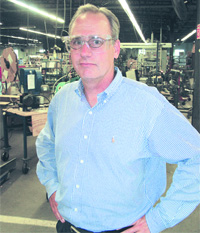
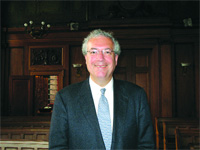
Keith Checca

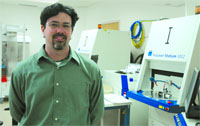
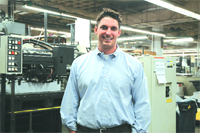
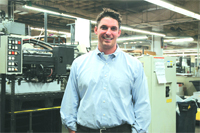
Keith Checca stands in Texcel’s manufacturing facility in East Longmeadow, where complicated, implantable medical devices are created.

In the 1990s, Texcel, a company that designs and constructs devices and components for some of the most highly regulated markets in the world, was working on some big things — literally. The company was a major player in the aerospace and defense industries, but gradually that started to change, and today Texcel works with international clients to devise some of the smallest, most intricate medical technologies ever seen. And this, the company has found, is where its heart lies.

Larry Derose, president of Texcel, a medical device manufacturer in East Longmeadow, said there’s story behind every tiny component his company creates that speaks volumes regarding the importance of this work.

“We’ve had clients come back to us with presentations that show how a device is working in its early stages,” he said. “We’ve seen stroke victims who’ve improved enough to use the telephone or change a diaper. When you’re working to develop theories that have that kind of promise, everyone feels connected to the process, and everyone sees how important their work is.”

Derose founded Texcel in 1987, and said it was always his passion to work with this type of technology. However, only recently has the company come into its own with the development of complex, implantable medical devices — some of which many within health care and technology fields see as the future of modern medicine.

“Our long-term goal was to use our expertise in the field of medical devices,” said Derose, noting that this expertise includes the use of precise, high-powered lasers, clean-room assembly, and product and process development. “It took a number of years to achieve that while we waited for the market to develop. But new information in this field is triggering a wave of new device design and development, and that’s creating a great number of opportunities for us.”

Bionic Biology

Texcel contracts with several different international companies to help them develop devices including pacemakers, endoscopic surgical instruments, spinal orthopaedic implants, total artificial hearts, and neurostimulators. More specifically, this line of work is dubbed ‘implantable device architecture and construction.’

Some in the industry refer to Texcel as an ‘integrator,’ because it joins technology with the necessary raw materials, both figuratively and literally.

Due in part to increased activity in the development of neurostimulating devices in particular, Texcel is now enjoying a major growth period in its history. Keith Checca, director of business development for the company, said several new employees with expertise in areas specific to the medical device market have joined the company over the past three years, nearly doubling its size.

“The last two years have been really explosive,” said Checca. “We’ve realized what we’re good at, and we know how to focus it — that’s really the key for a contract company like us. Our clients are everything.”

Checca said attention to this specific niche in the medical device market is important to working with these diverse clients, most of which are kept confidential by Texcel.

“We’re big enough to offer everything that’s needed, and small enough to remain a dynamic firm that’s easy to work with,” he said. “Clients don’t want to hear ‘we can’t do that’ — they want you to be an infinite well. That’s where our focus on that niche comes back in.”

Planes, Trains, and Biomanufacturing

But it also helps to underscore the company’s long-held mission to use its capabilities for the greater good, despite many years of building to this point and working in other fields. Medical manufacturing was not as brisk in the past as it is today, Checca explained, and over the years, this has opened the door to contracts in other highly regulated fields such as aerospace and defense.

“The medical device market was evolving, but aerospace and defense were already here,” he said, adding, however, that as global needs and trends began to shift, Texcel began taking on more medical device work, and today, that sector represents more than 95% of the company’s contracts.

A handful of aerospace- and defense-related partners remain, but with an FDA- and ISO-registered environment in which to work and a medical technology boom underway around the world, Checca said the company has long been primed and ready to become a strong player in this sector.

“Equipment-wise, we haven’t had to change much,” said Checca. “We are a laser-processing, controlled environment, and that’s technology that is being adopted by the medical community. This has been not so much a facility-changing event as it has been a culture-changing event.”

New partnerships have also emerged, including one forged in June with Microtest Labs of Agawam. The strategic alliance will capitalize on a particularly healthy aspect of medical manufacturing — combination products, which pair devices with pharmaceutical or biologic components like those Microtest works with. The market is expected to reach approximately $9.5 billion in 2009.

Checca added that the existing emphasis placed on quality of both work product and service has been another hallmark of Texcel’s foray into this arena.

“Perfect is barely good enough,” he said, borrowing a phrase he said he heard at a recent internal meeting. “We’re lucky to have built a culture focused on that very early, and it’s something of which we are constantly aware.”

Theories of Evolution

Still, Checca added, with such growth spurts come some requisite internal changes, including some to workforce development and process management. With potential openings for professionals ranging from engineers to manufacturing technicians and assembly operators, Texcel has forged relationships with several area colleges, including Springfield Technical Community College, Western New England College, UConn, and the University of Hartford, to create a sort of educational pipeline to its doors.

“It’s a little hard to find applicable experience in this area because there aren’t as many companies doing what we do,” he said. “But last year, the story would have been all about growth; we climbed that hill, and we’re still breathing heavy, but now we’re moving forward.”

Checca said Texcel is likely to continue expanding in size, both physically and in terms of staff, which now totals about 65 people.

“There will be further growth at a slower pace,” he said. “Now, we’re more focused on refining the mix. The life cycle of some of the products we manufacture is very long, often five or six years until they’re ready for use on humans, and until our client is ready to ask us for more than a few. To that end, we’re looking now to be even more efficient on the manufacturing side, and changing how we manufacture.”

One way the company is striving to do this is through ‘cellular manufacturing,’ which spreads work on a single item out more evenly throughout the facility. Checca calls it a “tried and true manufacturing principle” that can be applied to many different industries, and can especially help improve efficiency among growing businesses.

It’s also another system of checks and balances in this highly regulated environment, which also includes several clients (Checca estimates there are about four dozen) with varying development schedules.

“These companies don’t follow the old vertical-integration model,” he said. “Because the process of developing a medical device is a long one, they need suppliers that can cover the needs of an entire product, and that will remain strong partners for the long term.”

Part of Texcel’s business model is to actively seek out these types of companies, and educate the industry as a whole regarding its capabilities.

“But they’re out there searching for us, as well,” Checca said. “If we’re doing our job right, we find them before they find us.”

The Human Experience

Derose said that active recruiting, so to speak, leads to a greater number of opportunities to help in the creation of new, innovative, and potentially life-saving devices.

“It’s inspiring when a client approaches us with a product that hasn’t been recognized by the public or even the medical community yet,” he said. “Usually, when a client comes to us, they’re in the embryonic stage of development. We’re a high-tech manufacturer, but really, we act like a fulfillment agency.

“We help them convert a dream into a reality.”

Jaclyn Stevenson can be reached at[email protected]

Features

It’s Not Exactly Business as Usual in the Valley, but There’s No Panic, Either

‘Survival mode.’
That’s a term being seen and heard with increasing frequency these days as the media covers the ongoing economic downturn and how individuals, families, businesses, and municipalities are responding to life within it.

This phrase and others like it may accurately depict the current picture within some areas of the country, and even some parts of the Bay State, said Ken Albano — putting the accent on ‘may’ — but they’re a bit overblown for the Pioneer Valley, where, it seems, most companies seem intent on doing more than merely surviving.

“A lot of people are saying, ‘knock on wood, I’m doing OK,’” said Albano, a business law specialist with the Springfield-based firm Bacon and Wilson, who spoke about life for his clients, as well as for his law firm. “They’re just not saying it very loud because they’d prefer to fly under the radar screen and not say they’re doing OK, in case something happens.”

Others used different words and phrases to convey essentially the same thing — that the economic downturn (there still appears to be some debate over whether this is officially a recession) has business owners cautious and wary about what might happen. But no one is yet drawing up comparisons to 1991, the height of the last deep recession, when the phones simply stopped ringing at many companies.

It’s not exactly business as usual in this region, by most accounts, and there are some definite signs that times are tough. Indeed, the demise of low-cost carrier Skybus earlier this month brought the downturn home to the Valley and, specifically, to Westover Metropolitan Airport in Chicopee, with an exclamation point. Meanwhile, there are real concerns about the residential real-estate market and its fate. There is talk of large-scale cutbacks across the Commonwealth as state and municipal officials grapple with budget deficits and declining tax revenues, and most all businesses have been touched in some way by high gas prices and sky-high diesel fuel prices.

But many of those asked to give a quarter-pole analysis of 2008 and the state of the local economy were sounding mostly optimistic tones. Here are some observations:

• Laura Stevens, president of the regional offices of Keller Williams Realty, said that, contrary to popular opinion, houses are moving — if they’re priced right, that is. “The problem we have is that a lot of people simply don’t want to believe that their house has lost 10% of its value since last year, and they’re stubborn,” she said, referring to the average drop in the Valley, by most estimates, that she believes represents a market correction that was overdue. Stevens remains optimistic that sellers will come to grips with reality and that, likewise, buyers will realize that there is no real advantage to waiting, two prerequisites for reducing a bloated inventory that is keeping prices lower. The question is, when?

• Arlene Putnam, general manager of the Eastfield Mall in Springfield, said most retailers there enjoyed a fairly strong February — “why, no one is really sure.” Despite mostly gloom-and-doom headlines and sound bites locally and nationally, she expects this sector to hold its own amid a general decline in consumer confidence and capitalize on those economic-stimulus checks that people will be getting later this year.

• Kenneth Boutin, senior vice president and senior credit officer at Holyoke-based PeoplesBank, wasn’t projecting a strong first quarter for commercial lending activity last fall, but to his surprise the numbers are solid, with business owners in many sectors making investments in new equipment and facilities. Some industry groups are doing better than others, he acknowledged — hospitality is struggling somewhat, for example — but most are exercising caution, not hunkering down.

• Joe Ascioti, president of Reliable Temps in Agawam, said that, thus far, he’s seeing little evidence of companies cutting back or delaying planned hiring. He admits, though, that the picture is seriously clouded by the much-bigger story — ongoing struggles in many sectors to find enough good help. This is evidence, he said, that shortages in labor that many have projected for years down the road — when smaller generations are going to be asked, unrealistically, to fill the huge void left by retiring Baby Boomers — are already here.

In this issue, BusinessWest takes an in-depth look at the economy as the second quarter of ’08 begins, and the issues that will determine what happens short- and long-term.

House Money

Stevens told BusinessWest that, in response to one reporter’s question a few months ago, she said that “if there was a recession, her company was choosing not to participate in it.”

That was her way of saying that Keller Williams is having a solid start to ’08 and that, overall, the local housing market is not as depressed as many other areas of the country, nor is the picture as bad as most would believe.

She used the word “stable,” and went so far as to say that a long, bleak winter may have as much to do with the current conditions as any downturn in the economy, and that the picture will improve when the weather does.

“We’ve been ignoring the headlines and advising our clients to essentially do the same,” she said. “We tell them that if they put a reasonable price on their house, someone will buy it. I can sell anyone’s house in a day — you just have to price it right.”

It appears that not enough people in the Valley are heeding such advice, because the local housing market has declined to the point where firms such as Bacon Wilson, which handle large volumes of real estate closings, are certainly feeling an impact on the bottom line.

Albano said this is part of a broad trickle-down effect from a slow housing market that he and most others believe is perhaps the most important factor impacting the fate of the local economy short- and long-term. That’s because this trickle-down impacts businesses ranging from law firms to homebuilders to retailers, and it’s real, based on what he’s seen and heard anecdotally.

“It all starts with the real estate market, and right now, it’s slow,” he said, adding that he can qualify matters more easily than he can quantify them. “There were times during the boom three or four years ago when a deal would come in the door and you’d have to order a title exam from the local title examiner. The feedback you’d get was, ‘maybe next week at the earliest.’ That’s not happening now; people are sitting around waiting for the phone to ring because people aren’t buying and selling homes.

“I represent a few local developers who opted to get into the over-55-development concept,” he continued. “It still is a great concept … but for people to move into one of these complexes, they need to sell their house; there’s a big backlog of inventory at these over-55 developments because people have signed up to move in but they can’t until they close on their existing home.”

While he insists he’s a “glass-half-full person,” and sees plenty of positive signs regarding the economy, Albano says the residential market is the key, and there are real questions about when it will rebound. “I’m glad I’m not a mortgage broker right now, and I’m glad I’m not a Realtor.”

Stevens is a Realtor, and she expressed some cautious optimism that the market will improve, but included a number of caveats. Specifically, she said some attitudes will have to change if the big picture is to brighten considerably.

Elaborating, she said that both buyers and sellers should think through their strategic outlook and not respond to headlines, perceptions, or their what neighbor might be thinking or doing. For sellers, she said, most expectations on price are not realistic, and this is contributing to high inventory: “if a house is priced right, it will sell; if it’s not, it won’t.” As for buyers, if they wait to pull the trigger due to reasonable expectations that prices will go still lower, they will only see any benefit offset by rising interest rates.

When or how much they’ll rise is anyone’s guess, she continued, but logic dictates that they can’t go much, if any, lower. “Once the economy stabilizes, rates will rise, and buyers will be sorry.”

Overall, Stevens said sellers are only hurting matters by rushing to sell now, amid fears that conditions will only worsen. Such actions will simply turn those fears into reality, she explained, because a glut of homes with ‘for sale’ signs keeps prices down, while giving buyers more reason to hesitate, which just deepens the cycle.

“More people are trying to sell because they fear what’s coming — sellers are the ones panicking the market,” she said, noting that her firm currently has about 130 listings, when it normally would have roughly 90. “If they would just stay put, the inventory would go down, buyers wouldn’t have so much to choose from, and they’d bid against each other on houses.”

Banking on It

While the residential housing market bears watching, so too does the commercial-lending realm; when conditions worsen, some business owners will put off expansion plans or investments in new equipment and facilities until they feel more confident about the future.

But thus far in ’08, there has been little such hesitancy, said Boutin, who admits to being more than little surprised by the numbers recorded by the PeoplesBank commercial-lending department thus far this year.

“We’re ahead of the pace for the past few years,” he said, attributing this to, among other things, several strong sectors, including health care and education, as well as a manufacturing base that is considerably smaller than it was years ago, but still has many strong players that have flourished in niche markets.

“This market doesn’t see as the highs or the lows that other areas, like Boston, do,” he said, referring to the Valley’s traditional performance during economic declines and upswings. “We’re ‘steady Eddie.’”

Donna Bliznak, vice president of Commercial Loans at PeoplesBank, told BusinessWest that there isn’t much, if any, speculative borrowing at present, but companies are responding to what they need in terms of growth strategies. She cited one manufacturer that secured $1 million for new equipment and another that borrowed $2 million to invest in new technology. “There’s been a steady stream of business coming in the door.”

Mary Meehan, another vice president of commercial loans at PeoplesBank, said the commercial real-estate market remains fairly steady, with many clients and potential clients looking for investment opportunities.

Still, all three bankers noted that it’s early in ’08, and many business owners are still analyzing year-end accounting statements. The next few months will provide a good barometer of overall business confidence, said Bliznak, adding that some sectors are more vulnerable to worsening conditions than others.

One sector that would certainly appear to be in harm’s way is retail, and some components of this industry, especially restaurants, hotels, and other hospitality-related businesses, are being impacted as consumers tighten their belts.

Putnam acknowledged that seemingly non-stop gloom-and-doom coverage of the scene nationally tends to wear down consumers — “those headlines scare people” — but she is optimistic that the worse may be over, and some first-quarter numbers support her positive feelings.

Indeed, while most retailers did not enjoy a good holiday season and that trend continued into ’08, there was, at least at Eastfield Mall, a noticeable bounce in February.

“Many of our stores reported increases over last year’s numbers,” said Putnam, adding that some imaginative steps, such as a ‘summer in February’ program staged during school vacation week, succeeded in bringing people to the mall.

“And if you can get them to the mall, they will spend money in the stores and eat lunch here,” she said, adding that confidence among consumers remains generally high locally, and it should remain that way unless the situation changes for the worse in dramatic fashion.

And she doesn’t believe it will. A veteran of several economic cycles, Putnam said that, generally, when people start talking about definitely being in a recession (as many economists are with regard to the current conditions), the nation is already on its way out of recession.

“I think we’ve hit that magic point, and there’s no place to go but up,” she said, expressing confidence that a presidential election, which generally helps boost an economy, coupled with those economic-stimulus checks, should brighten the picture for retailers within a few months, and certainly by back-to-school sales time.

What the jobs picture will look like by then is anyone’s guess, said Ascioti, who admitted that he is having a hard time making complete sense of what’s going on now. In general, he said, businesses are not showing signs of cutting back or putting off hiring, and are proceeding as they would during better times.

But there is a problem, he continued, noting that businesses in many sectors continue to struggle in their search for qualified help. Many are turning to companies like Reliable Temps for help, he continued, which helps explain a strong Q4 in ’07 and a good start to ’08 for the firm.

“Companies are wanting us to find them good, quality people they can hire, and to me, that’s not indicative of a recession,” he said. “All of our seasonal people are starting to pick up, and our phones are ringing; we’re seeing a lot of people looking for work.”

But it leads to questions for the long term. “People were projecting that, down the road, there would be real shortages of people for many different jobs because the Boomers would be retiring and there wouldn’t be enough members of the younger generations willing to go into those fields,” he said. “Well, it’s starting to happen now.”

Summing things up, Albano said Bacon Wilson is responding to the current downtown as most responsible businesses would — with caution and what he called “smart spending.”

This strategic approach applies to everything from additional hiring to marketing to charitable giving, such as sponsorship of benefit golf tournaments. “We’re going to be prudent and spend when and how it makes sense to do so.”

That’s all most companies are doing for now, he said, displaying that ‘glass-half-full’ mentality. “I talk to a lot of people in business, and, for the most part, they are doing OK.”

Knock on wood.

Sections Supplements
The Movement Is Helping a Local Hand-dryer Manufacturer Make New Inroads
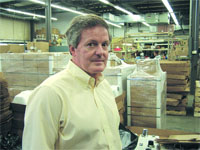
Denis Gagnon

Denis Gagnon says the ‘green’ movement has helped boost sales of his hand dryer, but its performance is what ultimately prompts businesses and institutions to ditch paper towels.

There are a number of factors that separate success from failure in business, and no entrepreneur would dare understate the importance of timing in that mix.

Not the owners of Skybus, and certainly not Denis Gagnon.

He launched what many observers consider to be a breakthrough product, the Xlerator, in the challenged but potential-laden hand-dryer market — only about 10% of the estimated 22 million public restrooms in this country are outfitted with such devices — and he did so at just about the time the nation and the business community were starting to toss around the phrase ‘going green.’

The potent combination of a product that is changing perceptions of the long-hated hand dryer and a growing desire to be more environmentally sensitive has fueled a 700% rise in sales for East Longmeadow-based Excel Dryer — the company Gagnon purchased in 1999 — since the Xlerator first hit the market in late 2001.

But he stressed repeatedly that the ‘green’ phenomenon is simply part of the equation, and that businesses and institutions need much more than green ambitions to ultimately remove the paper-towel dispenser. First, the hand dryer has to work in a way that it hasn’t historically (meaning it has to work, period) — and the Xlerator has that covered, as anyone who has used the facilities at the Basketball Hall of Fame can attest. Meanwhile, the numbers, meaning those referring to energy savings and overall cost reduction, also have to work.

And they do; the Xlerator, says Gagnon, is three times faster than competitors’ products, and it uses 80% less energy.

“I don’t think ‘green’ has changed people’s attitudes about hand dryers — the Xlerator has changed those attitudes,” he told BusinessWest. “A hand dryer that works can stay on the wall by itself, because people don’t mind using it.”

This combination of factors, as well as a weak U.S. dollar, have helped put the Xlerator in facilities like Heathrow Airport (there are some 800 of them in place there) and the new Wembley Stadium, both in London. It has also made it necessary for Gagnon to expand his plant in East Longmeadow — a 10,000-square-foot addition used for warehousing and distribution was recently christened — and also expand his workforce from roughly 30 to 42.

Add all this up, and it provides an effective lesson in the importance of timing, and equals one of the more intriguing and inspiring manufacturing-sector success stories being written in the Pioneer Valley.

“This goes to show that manufacturing can thrive in this region,” said Gagnon, “if you stay ahead of the curve. We invented the perfect product in the hand-dryer industry for the green movement; we’re now the standard.”

In this issue, BusinessWest reviews the latest chapters in the Excel story, complete with triumphs and some growing pains, and what is likely to come next for a company that is helping end-users ‘throw in the towel.’

Helping Hands

That phrase is one of many the company uses in its marketing, which is one realm that has been considerably altered by the ‘green’ movement, said Gagnon. Where once the focus was squarely on performance (and in many ways, it still is), there are some new pages to the script — several of them, in fact — focused on the environment and the prevalence of green building and design.

They detail all of the memberships, certifications, and testimonials that Excel and the Xlerator can now put on the resume. Here are some examples:

  • The Xlerator can help facilities earn coveted LEED (Leadership in Energy and Environmental Design) credits, as set by the U.S. Green Building Council, in two categories — ‘minimum energy performance’ and ‘optimizing energy performance.’ Gagnon noted that the council will be putting Xlerators in its new corporate headquarters building in Washington, and Excel will work to maximize exposure from that contract;
  • The dryer was voted one of the top 10 products of 2002 by the editors of Environmental Building News, a leading newsletter on environmentally responsible design and construction;
  • The Xlerator is endorsed by the Green Restaurant Assoc. as the best environmental solution in the hand dryer category for the restaurant industry;
  • Excel Dryer is an ally member and approved vendor of the Green Hotels Assoc., and the Xlerator is the recommended hand dryer for green hotels;
  • Excel is a registered supporter of the Green Building Initiative, which has as its mission the goal of accelerating the adoption of business practices that result in energy-efficient, healthier, and environmentally sustainable buildings, and is also a member of the Sustainable Buildings Industry Council, a national leader in defining the whole-building approach to design; and
  • The company also prints some statistics giving prospective clients and green- leaning businesses some food for thought. For example, 17 trees are consumed to make one ton of paper; one ton of paper production pollutes 20,000 gallons of water; and one ton of paper consumes three cubic yards of landfill.
  • Add up all those numbers, and it’s clear that Excel dryer has the right product at the right time — when businesses large and small are realizing that going green isn’t just the right thing to do, but is also becoming increasingly necessary to earn some clients’ business.

    Gagnon acknowledges that his company is in a good place, and that things are most likely to improve, because the ‘green’ wave will only grow in size and importance to business owners. But despite all this, the hand dryer remains a comparatively hard sell — it still fares best in facilities like airports, schools, stadiums, and schools, where there isn’t a premium on customer service — and there is considerable work for his company to do moving forward in this changing environment.

    This work comes in several areas, from physical expansion and new production strategies designed to reduce lead times and cycle times to ever-more-aggressive marketing; from continued R&D to make the Exelerator even faster, more germ-free, and perhaps even less noisy (although that’s proving to be an extreme challenge) to sales strategies aimed at positioning the company for new building projects and renovations. Excel is also expanding the product line by customizing models to match an institution’s color or include its logo.

    Gagnon is addressing all these issues simultaneously. He told BusinessWest that one of his growing pains was reducing a lead time (eight weeks) that was costing him some new customers down to three weeks, and he’s done it through his addition and some Kaizen projects that have brought some new efficiencies to the production process.

    Meanwhile, he has stepped up his marketing efforts and continues to find new ways to put the Xlerator front and center. The latest is a two-minute piece shot at the Hall of Fame that will be part of a series on environmentally friendly products that will be shown on public television this spring.

    The spot features Hall of Fame President John Doleva talking about how the shrine was focused on environmentally friendly building products and practices as it was preparing to open its new facility in 2003, and made the Xlerator part of that mix, said Gagnon, adding that he expects the message to resonate with institutions planning new construction or renovations.

    And while pursuing new and existing markets in the U.S., the company is also looking abroad, and the timing is right in that regard as well. The weakened U.S. dollar has helped most companies that export products, and Excel is no exception. The Wembley Stadium and Heathrow contracts, the latter of which includes the new T-5 terminal, have put export volume at roughly 30% of total sales, and Gagnon says that number could go higher still because ‘green’ building is an increasingly global phenomenon.

    “Our export business has grown dramatically,” said Gagnon, adding that the weakening dollar has been one of many converging factors that have produced 50% sales increases the past four years.

    As for customizing the Xlerator, Gagnon says the company can match a PMS color or a swatch to suit a college’s or corporation’s color schemes, and it can also put a company logo on dryers, as it has for Office Depot.

    Overall, Gagnon expects that his company probably can’t sustain its blistering pace of growth, but he does foresee continued improvement in sales figures here and abroad as the green movement swells, and also as more people come to like a product they have traditionally disdained.

    High and Dry

    As he surveys the situation, Gagnon sees a number of signs of success. The new addition is perhaps the most visible, but there’s also the growing sales numbers, press accounts that include such outlets as the Wall Street Journal, network television news, the Learning Channel, and more, and even a patent-infringement lawsuit against a company that produced knockoffs of the Xlerator.

    “They say imitation is the greatest form of flattery,” said Gagnon. “There’s a sure sign we’re doing something right.”

    Excel is doing a lot of things right, but challenges remain. There’s a reason why only 10% of the public bathrooms in this country don’t have hand dryers — many people still aren’t sold on them.

    The ‘green’ wave will help sell them, and that phenomenon is only part of the reason why — for Gagnon, Excel, and the Xlerator — the timing was perfect.

    George O’Brien can be reached at[email protected]

    Departments

    MassMutual Touts Breast Cancer Awareness Program

    SPRINGFIELD — MassMutual recently concluded its innovative, year-long 2007 breast cancer awareness program that featured a series of financial donations and seminars to benefit the cause. MassMutual donated close to $100,000 in sponsorships of breast cancer awareness-related events, including the Danskin Triathlon Series and American Cancer Society “Making Strides” events, and donated more than $80,000 in contributions to organizations supporting breast and other cancer causes in 25 states. Also, more than 1,500 women were educated at MassMutual-sponsored seminars that taught women about the importance of preparing financially for unexpected life events, such as breast cancer. MassMutual further supported awareness efforts by continuing to make available its informational brochure that informs women about financial preparedness, insurance, and breast cancer. For more information on the brochure, visit www.massmutual.com/women

    Peter Pan, Greyhound Launch BoltBus

    SPRINGFIELD — BoltBus, a division of Greyhound Lines affiliated with Peter Pan, was recently launched, offering inexpensive fares and free Wi-Fi Internet access and power outlets for laptops and other electronic devices. In addition to high frequency of departures and low fares, the new entry into the inter-city bus business will offer comfortable seats, with leather seating available on select coaches, extra leg room, and street-side service in New York City and Washington, D.C. Customers can board the street-side service in New York City at 33rd Street and 7th Avenue near Penn Station and also in South Manhattan at 6th Avenue and Canal Street. The street-side service is also available in Washington near the Metro Center Station at 11th and G Street. Service into and out of Boston will be at the South Station Bus Terminal. Tickets are available for purchase in advance by logging onto boltbus.com or from a driver before boarding. One-way fares between New York and Washington start at $1, plus a booking fee. The highest fare will adjust based on market demand. All tickets are non-refundable.

    Formal Affair Opens

    WEST SPRINGFIELD — Formal Affair, a new tuxedo and tailor shop, opened March 8 on Westfield Street. Owner Kevin Kousch, the former manager of the R.S.V.P. Formalwear Shop at Yale Genton, has more than 20 years of experience in retail, specifically men’s clothing. The new store carries “first-quality, top-name, designer tuxedos at discounted prices,” according to Kousch. He added that there are five distinct styles of designer tuxedos to choose from, and all are fresh and custom-tailored specifically for the customer. Kousch noted that Formal Affair has the largest on-site selection of men’s formalwear in New England. Store hours are weekdays, 10 a.m. to 6 p.m., and Saturdays from 10 a.m. to 4 p.m. For more information on the 581 Westfield St. site, call (413) 781-4889 or visit www.formalaffairtux.com

    Skybus Adds Florida Service

    CHICOPEE — Skybus Airlines recently announced new service beginning June 1 between Chicopee and St. Augustine, Fla., as well as Punta Gorda in Southwest Florida. Reservations for the new service, as well as for all Skybus flights from Aug. 1 to Sept. 2, are available at www.skybus.com. Skybus offers 10 seats at $10 on every flight, every day. Skybus officials noted that it will have to adjust its schedule to help deal with the unprecedented increase in the cost of fuel. The adjustments will include some flight reductions as Skybus focuses on improving customer service and meeting demand on its most profitable routes.

    Southworth Acquires Byron Weston

    AGAWAM — Southworth Company recently announced the acquisition of the Byron Weston Co. from Crane & Co. Inc. of Dalton. Byron Weston is the leading brand of cotton fiber archival paper in the U.S., according to Southworth President David Southworth. Its permanent record papers are used for recording deeds; land records; birth, marriage, and death certificates, as well as other government records. Southworth noted that the addition of Byron Weston brings another trusted brand and leadership in the permanent-papers market to the Southworth product line. Southworth Company produces premium paper products and specialty papers. Byron Weston’s manufacturing operations will be transferred to Southworth’s Turners Falls facility. Southworth said he does not expect an interruption in service to customers during the transition.

    Opinion

    There were a number of story lines and theories to consider in the wake of the state House’s resounding rejection (108-46) of Gov. Deval Patrick’s plans to locate three resort casinos across the Commonwealth — and most of them involved politics, not the real issue, which is job creation.

    While some analysts were speculating that the vote provided ample evidence of the decline in power wielded by organized labor, many others were saying that House Speaker Salvadore DiMasi essentially showed Patrick, and everyone else, who’s boss around here. Still others were commenting that Patrick still has a long way to go when it comes to leadership skills and working with the Legislature, not in spite of it, to achieve real progress.

    These individuals have a point, and we hope the governor learns from this setback; he basically contrived a casino plan, worked up some numbers on new jobs that didn’t stand up to scrutiny, and dared the Legislature to approve the plan or find some other way to generate revenues and close a $1.3 billion gap. That’s a textbook example of how not to get things done.

    In the wake of the House vote, casino backers vowed that they would be back (what else would they say?), and racetrack owners said they would continue their hard push to get slot machines in their facilities. They may succeed, but does anyone really care? There’s no real job creation in slots and nothing by way of benefits for Western Mass. Meanwhile, the Wampanoag tribe will likely proceed with its bid to gain approval from the federal government to locate a casino in Middleborough — a plan that helped inspire the governor to act and blueprint a plan that would generate the state some licensing fees.

    While all this talk goes on, we hope that there will be some real action to address the basic challenge facing this state, and that is to create some good jobs for people who don’t necessarily have the skills to compete in the so-called knowledge economy — or to get serious about helping those individuals acquire those skills. And we’re not sure that anything real will happen as long as the casino option — if we can call it that — is still out there.

    We’ve supported the resort casino plan because we view it as a way to bring jobs and vibrancy to places like the Quaboag region — one of the leading candidates for a site is a parcel off the turnpike exit in Palmer — that don’t appear to have many options amid the ongoing decline in the manufacturing sector and some geographic disadvantages.

    Maybe it’s time to refocus efforts on creating some options for Quaboag, and also New Bedford, Holyoke, Pittsfield, and Springfield, and this will be a stern challenge.

    Indeed, DiMasi and others in the House are soon going to find that rejecting casinos was the relatively easy part of this equation. Finding new sources of jobs and revenues (beyond hikes to cigarette and gas taxes) is going to be much more difficult. But this is priority one for Massachusetts, because this challenge — like casino supporters, apparently — won’t go away easily.

    Perhaps the biosciences and ‘green’ business development can help comprise an answer. The Legislature can start by priming this pump with research dollars and tax incentives and hope that, somehow, these sectors can produce tens of thousands of jobs that can be filled by the existing labor force. We have our doubts about whether this will happen.

    Beyond simple tax hikes and some wishful thinking about ‘green’ businesses, many in the Legislature are simply waiting for that proverbial ‘next big thing,’ and they’ve already been waiting for a long time. Instead of waiting, they need to act.

    DiMasi and others in the House are calling the casino vote a victory. Maybe it is, but unless the Legislature can manage to find some other ways to bolster this state’s economy and generate some real momentum and jobs, then it will be a hollow victory indeed.

    Opinion

    This is not your father’s — or your mother’s — field trip. Not by a long shot.

    It might start and end the same way as that visit to Mystic Seaport or the Boston Science Museum back in the ’60s or ’70s did — with a bus ride — but that may be the only thing a day spent as a participant in programs staged by The World Is Our Classroom has in common with those stops from a generation ago.

    The WIOC program, now in its sixth year, places a classroom, as well as a working laboratory, in a company, and in so doing, it opens students’ eyes to much more than an exhibit on dinosaurs or a whaling vessel. It provides learning-while-doing lessons in science and technology, while also exposing young people to the world of work and possible career opportunities.

    Thus, they present win-win-win (we need a lot of ‘wins’ here) scenarios for this region’s business community and individual companies. In short, this is a unique and special program that we can hope can be expanded to include students in more area communities, especially those with lower-income populations that need exposure to career opportunities and perhaps some inspiration to aspire to such careers.

    Overall, WIOC shows that the business community can play a key role in strengthening our region’s cities and towns by helping to educate young people and, in the process, create a larger, better workforce.

    The World Is Our Classroom was created in large part out of need. United Water, which manages water- and wastewater-treatment systems across the country, was mandated to provide some form of educational community outreach as a condition of a 20-year, $263 million contract it was awarded in 2000 to manage the Springfield Regional Wastewater Treatment Facility at Bondi’s Island.

    The company’s answer was to go beyond the ‘adopt-a-high-school’ strategy it had taken elsewhere, and instead implement a program that would take thousands of young people through the plant each year, providing valuable lessons carefully designed to help with performance on the MCAS exams along the way.

    Taking a good idea and making it even better, the company created a nonprofit group, The World Is Our Classroom, to expand on the concept and take it to more companies and communities. In recent years, Hazen Paper Company in Holyoke and Mestek Inc. in Westfield have signed on as participating companies.

    Each business, working in concert with WIOC instructors and officials at area colleges, including Springfield College, Holyoke Community College, and Springfield Technical Community College, has crafted its own ‘curriculum’ to engage and educate young people and then test them on what they’ve learned.

    The lessons come in many forms and on a number of levels, touching on everything from simple machinery to natural processes like evaporation to the value of teamwork in problem-solving and reaching shared goals. The programs are designed mostly for fifth-graders, but some are tailored for high-school students.

    Both constituencies learn about much more than why and how wastewater is treated at Bondi’s. They also learn about the world of work and gain exposure to job opportunities they might not have thought existed here — opportunities in manufacturing, but also in management, engineering, design, and quality control.

    These are important lessons to impart at a time when companies in many sectors are struggling to find enough qualified talent and when the so-called brain drain has reached the status of a serious economic-development challenge.

    A trip to Hazen and an exercise in making paper is not going to change a young person’s life. It’s also not going to solve that company’s workforce issues for the year 2020. But it will get a child thinking — about the planet and about possibilities.

    These are good things that we hope can inspire this region’s business community to step up and do things that can make a difference — things like putting a classroom in a company.

    Opinion
    The State Is Thinking Big on Energy

    Thinking big is not something new to Massachusetts. It was a president from here who declared his goal in 1961 to put someone on the moon, and less than a decade later the country did. In the 1970s, the government wanted a communications network that would survive a nuclear attack, and in Cambridge the Internet was born. When the demand for computers spread to private business, Digital Equipment invented the minicomputer here in 1964. And today, the state is at the leading edge of the biotech revolution. The list of big ideas that have been realized here is long and dramatic.

    Gov. Deval Patrick, who is often accused of being big-idea-happy, has touched the surface of an idea that could once again put us at the forefront of another technology revolution. The governor recently advanced a program that will provide incentives for the development and use of solar panels in this state and does so in a way that is economically feasible.

    The idea is so good that it encouraged a local company, Evergreen Solar, to stay and manufacture its product in this state rather than take it to Germany, which was its original intention.

    It’s funny how far a little government support can go to stimulate economic activity.

    Now imagine what would happen if Massachusetts became a haven for any company that produced new energy-saving technology.

    Susan Hockfield, the president of MIT, has taken a leadership role in addressing the energy issue and has met with political and industry leaders to look at what role research institutions can play in addressing these challenges.

    MIT has the Center for Energy and Environmental Policy Research, which focuses exclusively on issues related to energy and environmental policy in order to support both government and industry in decision-making. MIT is also organizing the MIT Clean Energy Entrepreneurship Prize, which will give a $200,000 award for commercially viable energy ideas. MIT is a resource that no other state in America has and gives Massachusetts instant credibility on this subject.

    But MIT cannot go it alone, and the opportunity before the state requires a full-court press from the governor’s office to create our equivalent of President Kennedy’s call to put a man on the moon.

    If the governor’s office, with support from U.S. Sens. Edward Kennedy and John Kerry, spearheads a sweeping initiative that sets a two-decade goal of producing enough new energy-saving products and technologies from Massachusetts to free the country from its addiction to fossil fuel, the impact would be global. It would also energize the state’s economy, which ranks 49th in job creation.

    Unlike the federal government, which is headed by a president from an oil-producing state, Massachusetts has no obvious conflicts of interest. Indeed, given the state’s climate, the need for creating economical solutions to the country’s energy problems is particularly acute.

    To find the precedent for individual states creating de facto national policy, one need only to look at California, which has driven the automobile emission standards for the rest of the country. Massachusetts can do the same for other energy issues.

    Though a combination of creative tax incentives, free utilization of surplus state land for energy-related manufacturing, streamlined approval processes, state grants, encouragement of university participation, commitments to purchase these new technologies for state use, incentives for Massachusetts residents to purchase home-grown technologies, rewards for products brought quickly to market, accelerated depreciation for venture investments, and incentives for technology companies to relocate to Massachusetts, the state could well become the nation’s center of energy technology. Massachusetts may also help change the world in the process.

    Bruce A. Percelay is chairman of the Mount Vernon Co. This article first appeared in the Boston Globe.

    Sections Supplements
    ‘Classroom’ Program Educates Children While Inspiring Tomorrow’s Workforce
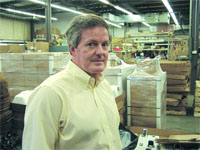
    Donald Goodroe

    Donald Goodroe leads Springfield fifth-graders in an experiment at Bondi’s Island.

    Launched in 2003, The World Is Our Classroom is a program that creates what are called ‘learning laboratories’ in area companies. These businesses provide different products and services — from wastewater treatment operations at Bondi’s Island to specialty paper converting at Holyoke’s Hazen Paper — but the lessons they impart on students have common themes and goals. In short, they involve science, technology — and possible career paths.

    Donald Goodroe knows it will be a while, maybe nine or 10 years at the earliest, but he wouldn’t be surprised if someday, one of “these kids” came to him inquiring about job opportunities.

    He used that term to reference the 24 students who were visiting the Springfield Regional Wastewater Treatment Facility at Bondi’s Island the day he spoke with BusinessWest. But in a larger sense, he was talking about the 16,000 or so young people from Springfield and Agawam who have partaken in the tour and accompanying learning exercises at the plant since 2003, or the start of an ambitious program called The World Is Our Classroom (WIOC).

    As project manager for United Water, which was given a 20-year, $263 million contract to manage the Bondi’s Island facilities in 2000, Goodroe now oversees his company’s involvement in The World Is Our Classroom, the nonprofit initiative that emerged from United Water’s unique strategy for meeting a commitment made by the company to give back to the Greater Springfield community.

    What the company created, in essence, was a learning laboratory, Goodroe explained, at which material being covered in the classroom can be reviewed and reinforced. This model has now been adapted at two other companies in the region, with perhaps more to come.

    “It’s one of the things that excited me about coming here,” said Goodroe, who joined the Springfield operation in 2003, not long after WIOC was started. “The program provides value in many different ways, and it shows how businesses can make contributions to the community.”

    Finding future employees wasn’t near the top of the stated list of goals for WIOC, Goodroe continued — although he acknowledged that interest in environmental science has been drying up recent years, and this is one way to spark some enthusiasm among young people — but it is one of the many positive aspects of an initiative that, according to executive director Nora Burke Patton, “puts a classroom within a company.”

    And in so doing, it introduces students to the world of work, while they also learn how wastewater is treated; how paper is made, coated, and eventually formed into the cover of a Super Bowl program; and how aluminum is fabricated into baseboard heating elements, among other things — and not just by listening, but by doing.

    Such learning-while-doing exercises will likely help students do better on their Mass. Comprehensive Assessment System (MCAS) tests, said Burke Patton, listing another of the many goals involving this program, which now involves three participating, or sponsoring, companies — United Water, Hazen Paper in Holyoke, and Mestek Inc. in Westfield, as well as the school systems in those cities, area colleges, and a host of sponsoring businesses.

    And further expansion is being carefully considered, said Kevin Maynard, chairman of the WIOC Board of Directors. He told BusinessWest that several communities, including Chicopee, are being eyed, but the board will be careful to continue a pattern of controlled growth.

    “The need is phenomenal out there, and our programs have been well-received by students and their teachers,” he said, “but we don’t want to grow too fast.”

    In this issue, BusinessWest looks at WIOC, which is opening students’ eyes to the marvels of science and technology — and the intriguing world of work.

    Liquid Assets

    Maynard called The World Is Our Classroom a “sneaky educational program,” and quickly explained what he meant.

    “Kids don’t realize just how much they’re learning as they go through their day at Bondi’s Island, for example,” he said, adding that lessons in matters ranging from pure science to organizational teamwork to quality control are often embedded in exercises — such as a dance choreographed to demonstrate how water molecules expand when heated — that are designed to be as much fun as they are educational. “They come out having learned something without knowing that they’ve learned it, which is a good way to teach.”

    Burke Patton, Goodroe, and John Hazen, president of Hazen Paper, didn’t use the same terminology, but they essentially made the same point.

    “Students are learning on a number of different levels,” said Hazen while waiting for a group of touring students to reach a classroom/lab area the company created, at considerable expense, out of old manufacturing space to accommodate the program. “They’re learning about science — how machines work and how paper is converted — but they’re also learning about the workplace and getting introduced to what could be career opportunities.”

    Said Burke Patton, “we’re educating today’s children and inspiring tomorrow’s workforce. Students get a chance to spark the imagination and see what the future could hold.”

    Goodroe, meanwhile, said the program provides what he called a framework for understanding and applying what is taught in the classroom, where most of the real learning takes place.

    “Something is going to go in one ear and out the other unless you have some kind of framework that you can hold onto,” he explained. “This programs helps create that framework within a context that’s fun, which tends to make things memorable.”

    All this this is precisely what United Water had in mind when it started contemplating ways to meet its obligation for community service back in 2000, said Goodroe, adding that the company, which manages plants across the country, traditionally adopts a high school or some similar venture as it undertakes education-oriented community outreach.

    In Springfield, it desired to go much further, and involve students at a host of schools in ways that would help with the MCAS. “We didn’t want to reach just a few students … we wanted to reach all the students.”

    This story starts in the summer of 2001, when 12 teachers from the Springfield school system met at Bondi’s Island with representatives from United Water and Springfield College to gauge the facility’s potential as a resource for teaching science, engineering, and technology — and found plenty.

    What eventually emerged was that learning laboratory, or classroom within a company, first tested in a pilot program involving a few classes, said Goodroe, and a curriculum that is designed to expose students to real-life work experiences while also providing lessons that will help improve performance in science.

    Students tour the expansive plant, starting with a scale model of the facility showing each component. During their five-hour stay, students learn about the physical, earth, and life sciences, specifically concepts such as the water cycle, properties and states of matter, and simple machines — as they relate to the theme of wastewater treatment.

    They do this while watching and listening to lab-coat-wearing technicians, but also via games and a hands-on experiment in which they create what amounts to their own wastewater treatment facility with a host of possible filters, said Goodroe. In one game, students become ‘water molecules’ that move from one station (such as the atmosphere, rivers, glaciers, groundwater, plants, and animals) to another. If they become polluted, which they will if they come in contact with humans and animals, they must have that pollution removed (through a wastewater treatment plant) before returning to the water cycle.

    This interactive exercise shows the importance of facilities like Bondi’s to the community, said Goodroe, adding that most students — not to mention their parents — don’t know what the facility does or how it does it. They mistakenly believe that it contributes to pollution rather than removes it.

    Once the program at Bondi’s was firmly established and the business model for the initiative honed, a 501 C3 nonprofit group — The World Is Our Classroom — was formed, with Burke Patton, who owns a marketing/PR firm and has handled public relations work for United Water, named executive director.

    Soon thereafter, the organization took the Bondi’s model and worked to take it to different companies and communities.

    Pulp Nonfiction

    “What we had was an entity with a critical mass behind it, an organization that could go out, get additional corporate sponsors, and expand on the concept,” said Goodroe, adding that this is what those who originally blueprinted the program thought could happen. “But it’s grown more than anyone could really have imagined.”

    WIOC first expanded into Holyoke and Hazen Paper, in a development that John Hazen, who was approached by Burke Patton about the program in 2004, called beneficial for students, his company, its employees, and the city itself.

    “I liked the idea of doing something in the community at a grassroots level,” said Hazen, who, like Burke Patton, attended E.N. White Elementary School in Holyoke. “We had an experience about a year before we were approached on this where a group of retirees came in for a tour. At first, I was a little cynical about it — it meant time out of the day and a disruption — but we did it, and I’m glad we did.

    “What I noticed was that my employees got a lot of gratification from doing that tour, and really enjoyed talking about Hazen Paper and the products we make,” he continued. “That was a turning point for me from an education perspective; when I was approached about The World Is Our Classroom, I liked the concept because I thought my employees would embrace it, and it gave us a chance to do something for Holyoke.”

    Many of the children who visit the plant live in that general neighborhood, by the canals, and some have relatives who work there, Hazen explained, but few if any have been inside and know what the company does and how its work touches their everyday lives.

    The educational program at Hazen is similar to the one at Bondi’s in that aligns with the Mass. Science and Technology/ Engineering Curriculum Framework and focuses on helping students prepare for the MCAS test, while also exposing students to potential career paths. There are several at the company, said Hazen, ranging from machine operator to salesperson, and many of them opened some eyes, which might bode well years down the road.

    “This is our future workforce,” he said, referring to the hundreds of classes that have gone through the plant. “Four years ago, when we started, it seemed like a very distant future workforce, but now, we’re perhaps only four or five years away from that first class of The World Is Our Classroom being ready to join the workplace; time really does fly.”

    Hazen said the paper-making exercise, which caps a four-hour day at the company, provides important lessons in teamwork and critical thinking.

    “You can’t miss a step,” he said, noting that there are several in the process. “That’s why people have to listen and then work together — and it’s great to see how well they do that.”

    Some Cool Ideas

    Don Pratt joked that the WIOC initiative at Mestek in Westfield has, at the very least, kept local pizza shops humming; pie is the lunch of choice for touring classes there and elsewhere within WIOC, and one of the highlights of the students’ day.

    But there is much more on the menu in terms of fun and learning, said Pratt, director of the Reed Institute at Mestek, which provides technical training for not only installers of equipment made by the company, but also contractors, sales representatives, wholesalers, and even custodians. “We want all the players to understand exactly what they’re selling,” he explained. “Things are always changing, and we need to constantly update people.”

    The institute, with its educational facilities, provides a perfect setting for WIOC, said Pratt, noting that, as a manufacturer and a company committed to the Greater Westfield community, Mestek seemed like a logical place for expansion of the program, and visits began in 2007.

    As he talked with BusinessWest, Pratt was ramping up for this year’s slate of tours — one a day for 24 days starting late last month. The visits are designed to show how individual pieces of heating and cooling equipment, such as thermostats, work, and also how units are made, said Pratt, adding that there are many lessons involving the environment, as well.

    The sum of the experience is greater than the traditional school field trip of decades ago, something that has become a vanishing breed with the MCAS tests and the need to teach to them, he said.

    “We’re connecting their education to the real world,” he said of Mestek’s participation with WIOC. “Any time you show people, especially young people, how the pieces fit together in their own life, they take it to heart. It’s a little easier to learn math or science or whatever you’re doing if you can relate it to something that you’ve experienced.”

    Maynard said that since it was launched, WIOC has practiced what he called “controlled expansion” — both geographically and with different age groups — and this policy will continue into the future. Indeed, while adding the communities of Westfield and Holyoke, the programs have been extended to include some high school students.

    Chicopee is one possible point of expansion, he continued, adding that preliminary work is being done to scout and then meet with companies that will likely make suitable partners. The pattern followed to date is to start a new program and, while it is being honed and made financially stable (meaning the initiative in question isn’t losing money), begin work to launch another partnership.

    “That’s what we’re going to continue to do,” said Maynard, adding that WIOC will also work to build upon its base of sponsoring businesses and organizations. This is a deep list that includes the state, which has awarded funding to help get individual programs started, as well as the Springfield Water and Sewer Commission, the Irene E. and George A. Davis Foundation, Eco/Springfield, a host of area banks, and companies large and small.

    Wherever and however WIOC expands, it will endeavor to create programs that expand minds, stir the imagination, and, in the meantime, show how area companies produce the things people see every day.

    “Kids who go through the Westfield program, for example, will never be able to walk by a thermostat again without saying, ‘I know how that works,’” said Maynard. “They take for granted that these things magically appear in their lives without realizing they go through a manufacturing process; when they see that, it’s very worthwhile.”

    Down to a Science

    After listening carefully to instructions for the exercise in simulated wastewater treatment at Bondi’s, one of the students asked the instructor, “are we going to get to wear one of those cool lab coats we saw?”

    He was informed that they wouldn’t, some disappointing news quickly tempered by word that they would get to wear gloves — if they weren’t allergic to latex — and protective goggles.

    This seemed to suffice, and the episode helped drive home the point about having fun while learning, which is the point of this program — that and giving Goodroe something to perhaps look forward to in about eight to 10 years.

    George O’Brien can be reached at[email protected]

    Departments

    The following Business Certificates and Trade Names were issued or renewed during the month of January 2008.

    AGAWAM

    Amgari-Com
    417 Springfield St.
    Cassandre Gagnon

    Michael P. Losito
    489 Shoemaker Lane
    Michael P. Losito

    The Garden
    1422 Main St.
    Kuldeep Sandhu

    AMHERST

    Amherst Landscape & Design
    256 Harkness Road
    Steven Prothers

    Andr-Meda Translations & Language Consulting
    232 Northeast St.
    Molly M. Lim

    Greenhorn Farm
    599 South Pleasant St.
    Marc D. Cesario

    Hangar Pub & Grill
    55 University Dr.
    Harold Tramazzo

    CHICOPEE

    Croppers Circle
    246 Montcalm St.
    Kimberly Chmura

    Custom Racing Hose
    130 Greenwood Ter.
    Barry J. Pasterczyk

    Debra’s Beauty Solutions
    591 Grattan St.
    Debra L. Watson

    Dollywood Inc.
    13 View St.
    Daniel J. Sypek

    J.W. Landscapes
    14 Clyde St.
    Lukasz J. Wolanczyk

    Winn Residential
    68 Eastern Dr.
    Winn Managed Properties

    EASTHAMPTON

    J.A.K. Enterprises
    37 East Green St.
    John A. Karakula Jr.

    Pioneer Valley Crossfit
    105 Pleasant St.
    Sean Manseau

    EAST LONGMEADOW

    Premier Realtors
    200 North Main St.
    Michael G. Robie

    Redstone Automotive
    174 Shaker Road
    Darrell Bosworth

    Runway 73
    60 Shaker Road
    Amy Dodd

    GREENFIELD

    Alternative Merchant Services
    13 Cedar St.
    John Michelson

    Bob’s Health Fitness & ACS
    154 Main St.
    Bob E. Uguccioni

    Dad’s Liquor’s
    402 Federal St.
    Andre L. Guilmet

    Genesis Massage
    207 Main St.
    Jennifer Schmidt

    Independent Administrative & Technical Support
    82 Sanderson St.
    Mary Ellen Calderwood

    Meadow’s Lawn Care
    49 Lunt Dr.
    Todd Wiles

    Rubicon Solutions
    41 Madison Circle
    Jorge Luiz Gonzalez

    V.O. Rell Enterprises
    332 Deerfield St.
    Dan Viorel Oros

    HADLEY

    CAV Motor
    129 Long Pond Road
    William Cavanaugh

    Mountainview Auto Sales
    71 Lawrence Plain Road
    John Mieczkowski

    HOLYOKE

    E & C Services
    19 Concord Ave.
    Edward J. Glica

    Friendly Variety Store
    1373 Dwight St.
    Olga Lopez

    NRL Service Group LLP
    50 Holyoke St.
    Maria Lepkowski

    Pearl Bridal Boutique
    1 Open Square Way
    Ryan Mainville

    Tan Factory
    512 Westfield Road
    Darlene Chalifoux

    NORTHAMPTON

    Kristy’s Nails
    137C Damon Road
    Orehid Nguyen

    Northern Light Studio
    221 Pine St.
    Phoebe Dent Weil

    PALMER

    Periera Landscaping
    P.O. Box 517
    John D. Perry

    The NR Group
    43 French Dr.
    Nathan R. Olson

    Wendy Deboise @ The Mane Attraction
    1020 Central St.
    Wendy Deboise


    SOUTH HADLEY

    DM Towing
    254 Old Lyman Road
    Darlene M. Forget

    KennRose
    4 Hunter Terrace
    Michael P. Dowd

    Mass Valley Plumbing
    14 McDowell Dr.
    Joel M. Rivera

    SOUTHWICK

    Wermon Enterprises
    642 College Highway
    Brian Drenen

    Zanto
    137 Sunnyside Road
    Lawrence Bannish

    SPRINGFIELD

    Nubians Beauty Supply
    874 State St.
    Regina S. Haines

    Oncore Manufacturing
    225 Carando Dr.
    Arthur James Jackson

    Ortiz Professional Services
    1593 Main St.
    Dianna R. Lefevre

    Papale Eye Center
    1515 Allen St.
    Center For Eye

    Precision Abrasive Jet
    395 Liberty St.
    Robert William Willis

    Precision Auto Repair
    70 Union St.
    James Stephenson

    RECAAT
    67 Northampton Ave.
    Miguel Velez

    Shamrock Home Improvement
    31 Chase Ave.
    Jason Clark Rebelo

    Sheehan Financial Group
    1365 Main St.
    Gregory R. Sheehan

    Shepherds Real Estate
    87 Fountain St.
    Neal Boyd

    Signature
    1232 Main St.
    Ik Joo Moon

    Strait Way Cuts
    6 Johnson St.
    Timothy Dwayne

    Talk of the Town Restaurant
    320 Wilbraham Road
    Cornel Forbes

    Tebaldi’s Line Right
    353 Page Blvd.
    Anthony J. Tebaldi

    Thomas Sanitizing Solutions
    120 Fargo St.
    Cynthia D. Thomas

    TMK
    15 Crestmont St.
    Tracy M. Kelly

    Undercutters Heating & Company
    72 Elijah St.
    Robert Luis Irizarry

    VIP Cuts
    445 Main St.
    Hector Gonzalez

    Veritek Manufacturing LLC
    225 Carando Dr.
    Arthur James Jackson

    Wheeler’s Convenience
    597 Dickinson St.
    Faiz Rabbani

    William’s Courier Service
    147 Rosemary Dr.
    Jerome Timothy

    Winn Residential
    769 Main St.
    Samuel Ross

    WESTFIELD

    Autos For Less
    300 Main St.
    Kenneth E. Scharmann

    Scott’s Handyman Services
    94 Pontoosic Road
    Scott Rines

    Speech Therapy Services
    30 Court St.
    Elizabeth Jury

    WEST SPRINGFIELD

    American Construction
    24 W. School St.
    Anatoly Kishko

    Cabot Creamery Cooperative
    958 Riverdale St.
    Agri-Mark Inc.

    Elite Paintball
    677 Westfield St.
    Marshall Royce

    Marjan Transportation
    79 Day St.
    Bakhtiyar S. Agayen

    MW Tux
    1321 Riverdale St.
    Men’s Wearhouse Inc.

    Peachy Massage
    81 Exposition Ave.
    Deborah Parker

    Polonez Parcel Service Inc.
    143 Doty Circle
    Jan A. Chrzan

    Departments

    Hasbro Games Set to Eliminate 200 Jobs

    EAST LONGMEADOW — As early as February, 200 local residents will lose their jobs at Hasbro Games as the company retools its manufacturing processes to remain competitive in the games business. The company is currently in negotiations with Local 224 of the Retail, Wholesale, and Department Store Union of the United Food and Commercial Workers to hammer out an agreement on changes to some work practices. The reduction in force includes 180 manufacturing jobs and approximately 20 non-union office jobs, according to Wayne S. Charness, senior vice president for communications at Pawtucket, R.I.-based Hasbro. At press time, Hasbro officials and union representatives were negotiating severance packages and ways to change work practices that are in the best interests of both the employees and Hasbro. If Hasbro can secure the changes it proposes, the company will invest $10 million immediately in the plant, and as much as $40 million over the next few years, added Charness. Hasbro and the union are currently operating under a three-year contract signed in 2007.

    WP Requests ‘Woman of the Year’ Nominations

    SPRINGFIELD — The Women’s Partnership, a division of the Affiliated Chambers of Commerce of Greater Springfield Inc., is seeking nominees for its annual Woman of the Year Award, given to a businesswoman in the Greater Springfield area. The nominee should best exemplify ideals of outstanding leadership, accomplishments, and service to the community. Services can be rendered over a lifetime or for more recent achievements. In either case, her leadership and accomplishments are regarded as a model for the Greater Springfield community. Nomination forms can be requested by calling (413) 543-8000, via E-mail at [email protected], or at the Affiliated Chambers of Commerce of Greater Springfield office, 1441 Main St. The deadline for nomination documents is Jan. 31.

    Picknelly Joins Development Team on Casino Proposals

    EAST LONGMEADOW — Peter A. Picknelly, president of Peter Pan Bus Lines, has joined the development team as an investor in the proposed development of a 150-acre tract in Palmer and a 35-acre waterfront site in New Bedford into destination sites, possibly to include resort casinos. Picknelly is investing in the proposed projects through the Northeast Group, owner of the land in Palmer off Exit 8 of the Massachusetts Turnpike and the entity that has site control of a waterfront tract in New Bedford off Exit 16 of Route 195. Both communities have passed local referenda in favor of legalized gaming, and both represent potential sites for a resort casino and retail complex. Should gaming be legalized by the Legislature, Commonwealth-approved resort casino operators could develop either or both sites. Gov. Deval Patrick has proposed the development of three resort casinos statewide as a means of stimulating economic development and raising revenue for the state. Northeast also recently announced it has hired the Suffolk Group LLC and lead lobbyist William F. Cass of Boston to represent their interests on Beacon Hill, and Paul Robbins Associates Inc. of Wilbraham to assist on communications regarding the real estate development and tourist potential for the Palmer and New Bedford properties.

    Survey: Workplaces Safer in 2006

    BOSTON — The state Division of Occupational Safety (DOS) recently announced that the rate of workplace-related non-fatal injuries and illnesses in Massachusetts dropped by more than 7% from 2005 to 2006, according to the annual Occupational Injury and Illness Survey of private-sector workers. The number of workplace fatalities dropped by more than 13% over the same period. The rate of workplace illness and injuries continues to be below the national average, and by far the lowest rate among all New England states, according to Secretary of Labor and Workforce Development Suzanne M. Bump, who oversees DOS. Bump added that under the Patrick administration, Massachusetts will survey public-sector workers for the first time this year. The state formerly collected data on private-sector employers only. The survey covers 10 ‘super sectors,’ ranging from manufacturing, education, and health services to natural resources and mining. The only super sector to show an increase in injuries and illnesses was natural resources and mining, where the number of injuries (300) remained unchanged while employment dropped. The entire report is available online at www.mass.gov/eolwd

    Survey: Spouse Remains Chief Career Advisor

    MENLO PARK, Calif. — Those considering a job change seek many resources of guidance, but the opinion they value most often comes from the person closest to them. Nearly half (46%) of executives polled said they turn first to spouses or significant others for advice when evaluating a potential job change, up from 42% in 2002.

    Opinion
    Working for the Union Label

    The Nevada caucuses are over, following on the heels of the Michigan primaries. This schedule calls to the mind the striking contrast between the way Detroit greets air travelers and the way Las Vegas does it. If you fly into Detroit Metro Airport and catch a ride east toward the city itself, you have to go a stretch before a gigantic tire welcomes you to the Motor City. But far be it from Las Vegas to show such reserve. At its airport, just after you exit the jetway, slot machines greet you in the terminal.

    As different as it is from Detroit, however, Vegas has imitated it in one respect: Detroit used to be a place where a person with little education could still get a good-paying job. With the contraction of the auto industry in Michigan, and the expansion of the gambling business in Nevada, Vegas has become the town that beckons with this opportunity.

    In Nevada, the average hourly wage of a worker with no more than a high school diploma is $23.30, the highest of the 50 states and the District of Columbia. On this count, Michigan is now 10th.

    Nevada isn’t on top by accident. It’s there because the vast majority of the state’s workers hold jobs in the Las Vegas area and, though Nevada is a right-to-work state, Las Vegas is nonetheless a union town. In fact, as Hal Rothman reports in Neon Metropolis, his insightful book on Vegas, it is now “the most unionized city in the United States.”

    Its largest local union is Culinary Workers Union Local 226. This is the 60,000-member local that endorsed Barack Obama last week. Caucuses aside, though, this union is also a possible model for the future.

    The typical hourly wage of a 2008 worker with at least a four-year degree is higher than the typical hourly wage of a 1973 worker with a four-year degree — but the typical wage of a 2008 worker without a degree is lower than the typical wage of a 1973 worker without a degree. Moreover, two of three of today’s workers do not have a degree.

    One reason why the non-college jobs of today don’t pay as well as the non-college jobs of 35 years ago, it has been claimed, is that a lot of the 1973 jobs were in manufacturing, and a lot of the 2008 jobs are in the service sector — and rank-and-file work in the service sector, unlike such work in the manufacturing sector, is inherently low-wage work.

    But the paychecks of the Culinary Workers Union members rebut this claim. As working stiffs in the gambling industry — hotel maids and fry cooks, busboys and cocktail waitresses, laundry workers and card dealers — they do menial work in the service sector. But they do not have to do it for menial pay. In part, this has to be because unionization has given them some leverage.

    To be sure, the pay levels for rank-and-file workers in manufacturing have been higher than those for such workers in the service sector. But this isn’t because there is something in the nature of manufacturing itself that makes for higher pay. It’s because it has been more unionized. An old issue of Life magazine tells the story of a steel worker whose pay jumped by 260% in 10 years. This was chiefly because, at the beginning of the 10-year-period, the steel workers across the country unionized.

    Much of the workforce can be divided into two groups. One group is the workers who can build a brand for themselves as individuals, such as the best-known real estate agent in a small town. Because such workers stand out from the crowd, they hold bargaining power as individuals, and get paid well.

    The other group is the crowd: the workers who are generic. They have little or no bargaining power as individuals. In the way of pay, they often must take what the job market offers to workers like them. If they want to earn more, they can try to brand themselves. Or they can bargain not as individuals, but en masse. It worked that way in Cadillac plants. It works that way in resort hotels.

    Ralph Whitehead Jr. is a professor of Journalism at UMass Amherst.

    Sections Supplements
    Wilbraham & Monson Academy Students Make Entrepreneurial Study Their Business
    From left: Jacki Yang, Jon Trusz, Kellsey Wuerthele, and advisor Melissa Donohue. Members of the Blocks Rock! Management team not pictured: Ian Carlin, Justin Campbell, Art Durongkapitaya, and Wilson Lau

    From left: Jacki Yang, Jon Trusz, Kellsey Wuerthele, and advisor Melissa Donohue. Members of the Blocks Rock! Management team not pictured: Ian Carlin, Justin Campbell, Art Durongkapitaya, and Wilson Lau

    When a group of students at Wilbraham & Monson Academy first played a game their classmates at Blake Middle School had created, they realized how fun and addicting it could be. Soon after, the students entered into a business venture to develop and market the game, Blocks Rock!, and as teenagers, have already added titles like ‘CFO’ and ‘manufacturing manager’ to their résumés.

    As Jonny Trusz sets up the pieces of Blocks Rock!, a children’s game he and a group of classmates have been developing and marketing for more than a year, the senior at Wilbraham & Monson Academy (WMA) in Wilbraham instinctively begins constructing a castle out of blocks — a key part of the game — and slaps a front-desk-style bell to signal he’s finished.

    “Sorry about that,” he jokes. “I had to. It’s impossible not to start playing once the game is in front of me.”

    That’s proof of how addicting the toy can be, and also of Trusz’s involvement in its development, a responsibility he took on as a junior, and one that has become a large part of his studies and life at the private college preparatory school.

    Blocks Rock! was originally devised three yeasr ago by students in the Blake Middle School, as part of ToyChallenge, a national toy- and game-development competition sponsored by Sally Ride Science and Hasbro that the school enters regularly.

    The concept of the game is relatively simple: two sets of multi-colored blocks in various shapes — rectangles, triangles, and squares — are divided between two players or teams of players. A bell is placed in the center of the play space, and a set of cards depicting different structures that can be built with the blocks moves the game forward.

    Players choose a card, and the first player or team to build the structure correctly — and ring the bell — is awarded the number of points displayed on that card. Once all of the cards have been used, the player or team with the most points wins.

    The game is designed to help young players learn on a number of levels, and, likewise, taking the game to the marketplace has provided lessons for WMA students in subjects ranging from marketing to responsible manufacturing; from simple accounting to global economics.

    In this issue, BusinessWest looks at how this game has become a business proposition, and what its ongoing development means to all those involved.

    Fun for All Ages

    Melissa Donohue, who served as director of WMA’s Center for Entrepreneurial and Global Studies (CEGS) until moving on to a new venture recently, said that as players improve, there’s a speed component that allows Blocks Rock! to stay relevant for players of all ages. It’s already become a key event in WMA’s annual ‘Dorm Olympics,’ for instance.

    “It’s geared toward ages 5 through 8,” said Donohue, “but the game’s simplicity also makes it great for families.”

    She said Blocks Rock! also garnered praise early on through ToyChallenge, and this had its young inventors, as well as some WMA faculty and parents, wondering how much further the team could take the concept.

    Glenn Hanson, a private investor and a parent of a WMA student, thought a little venture capital might help, and contributed $10,000 in seed funding to the school to help move the game’s development along. By this time, high school students enrolled in WMA’s CEGS program had caught wind of the unique invention as well, and approached their middle-school counterparts with the idea of turning Blocks Rock! into not just an innovative learning tool for children, but also a commercial endeavor and, in turn, a fundraising vehicle for the school.

    “CEGS breathed life into the idea,” said Donohue. “The program has always mixed theory with practice, but in the past the students had developed model businesses.”

    In this case, students enrolled in CEGS, which includes courses in economics, investing, financial markets, the Asian economy, and sustainable business practices, among others, added an independent study to their course load, focused solely on developing Blocks Rock! and introducing it to consumers.

    Divisions of labor were instated, including a CEO, CFO, and COO, as well as marketing, sales, manufacturing, and product-development teams, each with a manager.

    During last year’s spring semester, 27 students were part of the ‘company,’ and 10 were managers. Those 10 graduated last year, and now, seven seniors have taken on management roles, and each one is hoping to reach some specific goals in the development process, including increased visibility and sales, before commencement in the spring.

    Kellsey Wuerthele of Palmer, who manages sales for the company, said even with the pressures that face all high school seniors, including preparing college applications and studying for final exams, Blocks Rock! has yet to take a back seat in the team’s day-to-day activities.

    “We’re so excited about it,” she said. “I can’t see myself suddenly not being as involved; we’ve been working on this for two years.”

    Wuerthele added that she feels a particular responsibility for seeing Blocks Rock! succeed until her last day of coursework, if not beyond, because it was a challenge that CEGS students took on of their own volition, not as part of an existing school program.

    “It’s important to me to see this continue with a new group of students after we’re gone,” she said, noting that recruiting a new team to take over next year is another large part of the exercise. “We basically recruited ourselves, and getting other kids involved before we graduate means it can keep moving.”

    All Business

    And while the course was driven by students, it’s rooted in contemporary business theory and educational study. Donohue said the course teaches several practices with the added benefit of real-world experiences, allowing students to see firsthand how and why various decisions succeed or fail.

    “The independent study allowed the students to pair theory and practice in a whole new way,” said Donohue. “They read an article in a high-level business magazine such as the Harvard Business Review and incorporated the theory they learned into the sale of the game.

    “But they also learn about tenacity, responsibility, the importance of testing at all levels, and, in general, a lot more about what’s going on in the world and how it’s changing business globally and locally.”

    Donohue explained that positioning the game was the team’s first hurdle. Many toys on the market today feature sophisticated electronics and other technologies, and as such, a game consisting of colored blocks, playing cards, and a bell has a harder time getting noticed among all those bells and whistles. However, educational games have a specific audience that the CEGS group chose to target.

    “We positioned it as a higher-level learning game, geared toward the ‘Baby Mozart’ parents,” said Donohue. “The educational components of the game start with learning colors and geometric shapes, but each card also has a different amount of points, so there’s a strong math piece, too, as players add up their scores.”

    There were other challenges waiting for the student developers as well, said Donohue, but each stumbling block is a learning experience tied closely to modern business practices. Manufacturing the game, for example, prompted a number of questions that are familiar to any company doing business overseas.

    “It was made clear very early on that we wanted to practice ethical manufacturing and maintain a low profit margin,” said Donohue. “This was a big hurdle because we had to spend a lot of time researching to ensure we were working with a company that would meet those needs.”

    Donohue said there were other concerns. Would the blocks be made of wood or foam? And, later, does the product need to be tested for lead in the paint? (It was tested, and deemed safe).

    WMA eventually decided on a manufacturing firm in Hong Kong, and produced the smallest number of games they could through that relationship (500), neatly packed into muslin drawstring bags and including multi-colored wooden blocks, a silver bell, and a stack of playing cards.

    The next step for the team of students was to identify potential points of sale for Blocks Rock!, with its ‘edutainment’ model in mind.

    All For One

    Proceeds from sales of the game, which retails for $19.95, are returned to WMA, and as of last year, more than 50 games have been sold by hosting game nights, networking within the school’s community, and via the game’s Web site, blocksrock.com, also developed by WMA students. Through these channels, an additional $4,500 in investor funding has also been secured, but Wuerthele said there’s still work to be done.

    “We’re working on getting the game into local toy stores and schools by holding game nights at grammar schools and places in the community,” she said.

    Trusz added he hopes to make inroads in Springfield’s Eastfield Mall, perhaps by leasing a kiosk to sell Blocks Rock!, in order to increase the game’s name recognition in the region and boost sales.

    “It’s a fun game,” he said. “I think letting people see it and play with it themselves will help.”

    With that, members of the Blocks Rock! management team break into yet another spirited game, grouping shapes together and clamoring to ring the bell, signaling a win.

    Jaclyn Stevenson can be reached at[email protected]

    Departments

    The following Building Permits were issued during the month of December 2007.

    AGAWAM

    Charles A. Calabrese
    322 Meadow St.
    $500,000 — New commercial construction

    CHICOPEE

    City of Chicopee
    59 Jones Ferry Road
    14,300,000 — Construction of new public utility building

    Hawthorne Services, Inc.
    93 Main St.
    $20,000 — Re-roof

    Memorial Drive LLC
    650 Memorial Dr.
    $3,350 — Interior renovations at Mesirow Financial

    EASTHAMPTON

    Williston Northampton School
    194 Main St.
    $3,600,000 — Addition

    EAST LONGMEADOW

    Care One LLC
    135 Benton Dr.
    $260,000 — New roof

    Field, Eddy, & Buckley
    96 Shaker Road
    $217,000 – Interior Build Out

    GREENFIELD

    Franklin County Chamber of Commerce
    393 Main St.
    $34,250 — Re-roof

    WTE Recycling Inc.
    62 Montague City Road
    $80,000 — Construction of covered building for metal separation

    HOLYOKE

    Maverick Management Inc.
    275 High St.
    $7,550 — Repair existing parapet wall

    LUDLOW

    Gindom Realty
    82 Cady St.
    $50,000 — Interior alterations


    NORTHAMPTON

    Coolidge Northampton LLC
    243 King St.
    $30,000 — Interior alterations

    Gretna Green Development Corp.
    118 Conz St.
    $15,000 — Repair car damage to building

    Hospital Hill Development LLC
    209 Earle St.
    $1,525,000 – Construct 21,000-square-foot commercial building

    Northeast Enterprise
    19 Lyman Road
    $8,300 — Interior renovations

    SOUTH HADLEY

    Ebenezer Choo’s
    60 Bridge St.
    $20,000 — New fire sprinkler system

    SOUTHWICK

    Summer House
    552 College Hwy.
    $399,000 — Addition to restaurant

    SPRINGFIELD

    City of Springfield
    70 Tapley St.
    $17,500 — New mechanical room next to stockroom for garage masonry

    WESTFIELD

    Advance Manufacturing Company Inc.
    8 Turnpike Road
    $188,000 — Addition

    Domus Inc.
    330 Elm St.
    $3,223,000 — Commercial building renovation

    WEST SPRINGFIELD

    Dr. Swenson
    288 Westfield St.
    $22,000 — Change all doors and windows to newer

    Robyn C. Taylor LLC
    255 Interstate Dr.
    $55,000 — Interior renovations

    Departments

    The following business incorporations were recorded in Hampden, Hampshire, and Franklin Counties, and are the latest available. They are listed by community.

    AMHERST

    Black Arts Inc., The, 10 Pleasant Court, Amherst 01002. Theodor Black, same. Writing, illustration & design.

    CHICOPEE

    D and S Tax Associates Inc., 252 Columba St., Chicopee 01020. Susan Birkner, 1181 Amostown Road, West Springfield 01089. Tax-preparation services for individuals and businesses, etc.

    High Impact Cleaning Inc., 38 Dorrance St., Chicopee 01013. Eric Lebeau, same. Cleaning and janitorial services.

    Honeyman Inc., 78 Main St., Chicopee 01020. Andrew Caires, 23 Ashley Circle, Easthampton 01027. (Nonprofit) To provide housing facilities for very low-income adults with disabilities, provide supportive services to meet their needs, etc.

    Rachael’s Food Corp., 705 Meadow St., Chicopee 01013. Rachael Polep Kramer, 273 Deepwoods Dr., Longmeadow 01106. Food products manufacture and wholesale distribution.

    EASTHAMPTON

    Stevens Urethane Corp., 412 Main St., Easthampton 01037. Michael L. Fulbright, 55 Beattie Place, Suite 1510, Greeenville, SC 29601. Tony Burns, 412 Main St., Easthampton 01027, registered agent. (Foreign corp.; DE) Manufacturing.

    GREENFIELD

    Country Hyundai Inc., 45 Colrain Road, Greenfield 01301. Carla J. Cosenzi, same. New and used vehicles and related services.

    INDIAN ORCHARD

    Alsen Realty Corp., 176 Main St., 3 Front, Indian Orchard 01151. Lesly A. Ramirez, same. Real estate.


    SPRINGFIELD

    Calhoun Properties Inc., 108 Calhoun St., Springfield 01107. David V. Torres, same. Real estate investment and management.

    Felix’s Family Ristorante Inc., 214-216 Dickinson St., Springfield 01108. Nicola DeCesare, same. To operate a restaurant.

    Hampden Bancorp Inc., 19 Harrison Ave., Springfield 01102. Thomas R. Burton, same. (Foreign corp.; DE) Holding company for financial institution offering banking services.

    House Max Inc., 555 State St., Springfield 01109. Abdur R. Salimi, 46 Ravenwood Lane, West Springfield 01089. Retail variety merchandise.

    Spring Street Super Grocery & Variety Corp., 121 Spring St., Springfield 01108. Jose Miguel Rijo, 98 Blaine St., Springfield 01108. Retail, grocery.

    Vietnam Quoc Maul Linh Tu — Vietnamese National Mother Goddesses Temple Inc., 334 Saint James Ave., Springfield 01109. Thang Van Cao, same. (Nonprofit) To pay respect and gratitude to the ancestors, the heroes and heroines of Vietnam, etc.

    WESTFIELD

    Westfield Museum Inc., 176 Tannery Road, Westfield 01085. Robert Dewey, same. (Nonprofit) To provide a venue for the display of collected historical artifacts for the citizens of Greater Westfield, etc.

    WEST SPRINGFIELD

    Beech Hill Development Inc., 84 Cedar Woods Glen, West Springfield 01089. Kathleen H. Sweeney, same. Real estate development.

    Opinion

    Across Western Mass., we hear about the need for new business opportunities daily, and the pressures facing the region in this regard.

    There are a number of ideas on the table to strengthen the economy and the profile of Western Mass. as a player in the Commonwealth and even the nation, ranging from bringing the ‘hidden tech’ sector out of the shadows to entering the life sciences race.

    While the region has a long history in manufacturing of all types, it’s a piece of the economic landscape that is often buried under headlines touting new endeavors and tainted by stories of layoffs, company relocations, and plant closings. However, the manufacturing sector in Western Mass. is one in which we’ve noticed a steady undercurrent of progress lately.

    True, manufacturing is not exactly enjoying a new heyday; companies have continued to close or relocate to other parts of the globe in recent years.

    In the Pioneer Valley, American Pad and Paper Co., Ludlow Textiles, and Holyoke Card Co. have all disappeared. Danaher Tool, which manufactured wrenches in Springfield for more than 100 years, closed its doors in 2006 to relocate operations in Texas and Arkansas, and last year, Springfield Wire phased out its local operations and eliminated 180 jobs in the region.

    Berkshire County also said goodbye to some long-standing manufacturing operations in 2007: MeadWestvaco closed one of its two Lee mills, eliminating 70 jobs; Neenah Paper of Alpharetta, Ga., laid off 137 workers after it purchased the former Fox River Paper in Housatonic; and Schweitzer-Mauduit announced that it would begin to close four mills in Lee in 2008, eliminating 165 jobs.

    Adding insult to injury, there are still too few skilled workers to fill those positions that are available. Technology marches on, and appropriate training has become a dire necessity.

    But perhaps more than any other sector, the manufacturing industry of Western Mass. is one that quietly soldiers on. Just as there have been closings, there have been expansions — AM Lithography, for example, a printing and packaging outfit based in Chicopee, just opened a second location in Holyoke to accommodate its expanding operations.

    And Microtest Labs in Agawam, a medical testing and manufacturing facility, is currently seeking $7 million in funding to expand its ‘fill and finish’ division as it concurrently seeks new opportunities in stem cell research.

    New educational initiatives are also surfacing to train a new workforce, and innovative arrangements are being made in cities and towns to woo new businesses and keep them here.

    For example, five Western Mass. companies are benefiting from a $19.4 million financing program for expansions and renovations announced in November (bonds provided by MassDevelopment are being purchased by several area banks), aimed at strengthening the manufacturing base. Funding has been awarded to Hazen Paper of Holyoke, Argotec of Greenfield, Petricca Industries of Pittsfield, Universal Plastics of Holyoke, and VCA Incorporated of Northampton, and the project is expected to help create 84 new jobs.

    And just last month, the Hampden County Regional Employment Board announced the creation of the E. Herbert Burk Fund, established with a $600,000 gift from Burk’s family, to award scholarships and programs to increase interest and job training in the precision machine and tooling industry.

    Burk’s story was one of hard work and perseverance paying off, and one that his family, the REB, and others want to see replicated. But more importantly, they want people to understand that it can be replicated.

    Industry in Western Mass. is often looked at as the region’s legacy of years gone by. But a point often missed when discussing manufacturing is that it does not stand alone, but rather stands primed and ready to serve as a feeder to countless other promising industries, including biotechnology and life sciences, which received $1 billion worth of attention from Gov. Deval Patrick in 2007.

    As we enter a new year, it’s important to remember that manufacturing is not just a part of our past. It’s a key piece of the present, and of the future.

    Opinion
    Building a Better Springfield

    Thirty years ago, all of Massachusetts was caught in the economic maelstrom that followed the exodus of manufacturers from New England. Since then, Greater Boston’s economy of ideas has turned Massachusetts into America’s fifth-richest state, while some of our cities, like Springfield, remain mired in poverty.

    What should we do about the vast gulf that separates thriving Boston from faltering Springfield? Good urban policies put people ahead of place. The Springfield region has a chance for rebirth by focusing on the quality-of-life policies that attract smart, entrepreneurial people.

    But revitalization is far less important than a brighter future for Springfield’s children. If we can deliver that brighter future, even if those children eventually move far from Springfield, then we shouldn’t worry if the city itself keeps shrinking.

    Manufacturers once located in Springfield because of transportation advantages, including the Connecticut River and a junction of two major rail lines. Springfield’s edge in moving goods made it a center for rifles and Rolls-Royces, gas pumps and motorcycles. Urban clusters of smart people produce innovation; Springfield gave us basketball and America’s first gasoline-powered car.

    As the cost of moving goods plummeted, manufacturing left New England for cheaper climes, and Springfield fell into decline. While older, colder cities with a strong skill base switched from making goods to making ideas, only 16% of Springfield’s adults have a college degree. The city hasn’t reinvented itself. Today, one-fifth of Springfield’s families are poor.

    The most important response to such poverty is to invest in schools and safety. Unfortunately, most declining cities have neither the funds nor the leadership to revamp their schools.

    In a move that brings great credit to both men, Gov. Deval Patrick put former rival Chris Gabrieli in charge of Springfield’s external Finance Control Board. Gabrieli combines a passion for schools with a reputation for independent competence. Perhaps he can persuade others that more spending on such troubled school districts as Springfield can be a wise investment.

    Increased spending on Springfield’s schools should be tied to performance and innovation. Troubled school districts, like Springfield, must try new approaches, including embracing competition from charter schools and incentives for students and teachers.

    While good regional policies for Springfield can go beyond schools, they should still focus on the human capital that is the real engine of local economies. Some people see salvation in a light rail line between Hartford and Springfield. But the era in which rail can make a city is long past. Today, the Springfield region’s modest densities make new rail lines inappropriate. Can it possibly make sense to spend hundreds of millions of dollars — money that could go toward Springfield’s children — on a rail line?

    Good regional economic policy also shouldn’t try to micromanage industrial decisions. Neither I nor state officials can tell whether Springfield should invest in biotech or bikes. A better approach is to turn Springfield into a consumer city that will attract entrepreneurs who want to live there. It should follow the Providence model: attract well-educated people who are tired of high Boston prices.

    Springfield has a beautiful housing stock and a region crammed with great educational institutions. If Greater Boston persists in making its housing unaffordable, then Springfield can provide an alternative. Indeed, Springfield’s future looks almost bright when we consider how unlikely it is that Greater Boston will build enough housing to meet demand.

    I am rooting for Springfield, but there is no shame in decline. The region should try to revitalize itself by improving its quality of life. But it should also remember that taking good care of a smaller and smaller population is far better than chasing an unattainable return to former glory.

    Edward L. Glaeser, a professor of Economics at Harvard, is director of the Rappaport Institute for Greater Boston.

    Sections Supplements
    IBS Charges Ahead with a Unique Management Model Focused on the Future
    Innovative Business Systems

    The team at Innovative Business Systems; president Dave DelVecchio is fourth from left in the front row.

    ‘Five Guys.’

    That’s how the team at Innovative Business Systems (IBS), an information technology support and sales firm in Easthampton, refers to its owners.

    It’s an inauspicious term, perhaps, that is nevertheless part of a democratic culture at IBS that began when a group of employees — Dave DelVecchio, Brian Scanlon, Scott Seifel, Ben Scoble, and Sean Benoit — bought the company from founder Bill Tremblay in August 2003.

    It wasn’t a coup — DelVecchio, now the company’s president, said Tremblay’s reign was a benevolent dictatorship. And as the company moves forward, it carries with it Tremblay’s initial mission: to provide a high level of service, from both a technical and a human standpoint.

    But DelVecchio added that the structure also allows the owners to bring their collective experience in information technology to the management side of the business.

    “It allows us to continue Bill’s vision, with our own unique spin,” he said. “We’ve been a team since the day we signed the papers. The percentages of ownership vary, but only come into play two times a year, at annual meetings.”

    It’s also a management style that’s becoming increasingly notable as IBS nears the close of one of its busiest years to date; DelVecchio estimates that the company will end the year with the highest annual gross revenue figure in its 20-year history.

    Such growth is tempered by a few trends in the IT industry that can pose challenges — among them shrinking profit margins and a continuing need for appropriately trained staff, as technology changes — but it’s a good indicator, said DelVecchio, of the pace at which IBS is growing and how it’s achieving that growth: through an increased amount of “soup-to-nuts clients,” as he calls them.

    “The number of companies who know where they want to go in terms of technology is higher than ever before,” he said. “They’re looking at technology upgrades as an essential task, and budgeting accordingly. Plus, 70% to 80% of those businesses want regular service.

    “The writing on the wall is that IT firms can’t just sell products,” he continued, “and as technology continues to march forward with a focus on efficiency and the needs for the future, that beginning-to-end approach is typically smoother for us, and for the end user.”

    Strength in Numbers

    IBS began as a software-development outfit under Tremblay’s management in 1987, and maintains that aspect of the business. Tremblay, now dubbed ‘president emeritus,’ still serves as a consultant and field representative for the company from South Carolina, where he now lives and where one of IBS’s largest software clients, Carolina Eastern, an agricultural wholesaler, distributor, and retailer, is based.

    The firm also handles PC sales, data analysis, networking, hardware and software support, repair, and maintenance services for businesses of all sizes.

    DelVecchio said the majority of the small and medium-sized businesses IBS services are located in the 413 area code, while its growing presence in the financial-services sector covers about a three-hour radius, from Cape Cod to Connecticut. Additionally, its software-development arm has a national reach, with clients in New Mexico, Florida, Oklahoma, Illinois, Colorado, and several other states.

    About 60% of those annual gross revenues are derived from work with banks and credit unions — both those with their own existing IT departments and those without. DelVecchio explained that, due to the increasing need for a high level of security and well-planned disaster-recovery methods in the banking industry, even those institutions with well-heeled technology departments are seeking outside vendors to offer certain services or to perform audits of existing systems.

    “More than ever, banks and credit unions need to outsource because they need redundancies built in to support their environments,” he said.

    The remaining 40% of IBS’s client list is made up largely of small-to-medium-sized, privately owned businesses, many of which are not large enough to have their own IT departments but view the need for constantly updated technology as a growing necessity. These companies, both for-profit and nonprofit entities, span a wide range of sectors, from health care to manufacturing.

    “IT is the core of many day-to-day functions,” said DelVecchio, “and it’s becoming more cost-effective for even the smallest companies, when as recently as two or three years ago, it was not. These are, essentially, very powerful technologies being implemented behind the scenes that double as small business solutions, often available for companies with five employees or less.”

    Data, Data Everywhere

    DelVecchio said the biggest issue IBS is addressing of late is that of access to data: from various computers, company locations, or remotely, from virtually anywhere. This could translate into outfitting a financial institution’s loan officers with laptops and scanners, for instance, so they can bring the service directly to a client, or supplying home care nurses with tablet PCs, on which they can access and input up-to-date medical information on a patient.

    Data access is also an important consideration in terms of disaster recovery. No longer is it safe to store data in a static office environment; rather, DelVecchio said the trend is toward multiple back-up systems that protect the integrity of information, but also allow for that data to be retrieved from any computer.

    “Current technologies ensure access to information, and that a business will not be crippled by the inability to get at it,” he said, noting that this new attention being paid to data recovery resulted in part from lessons learned following 9/11. “There were some major financial institutions in the Twin Towers that never recovered. Some were located in the North Tower, and had their recovery systems located in the South Tower.

    “People have heeded that warning.”

    In general, said Delvecchio, business owners and managers across the board are recognizing the importance of technology to their daily operations.

    “They are asking themselves the big question: can they support their clients, even without a bricks-and-mortar facility,” he said. “People are getting more forward-thinking, even in those sectors that have historically been less proactive about technology for various reasons, such as nonprofits. They understand that they are a business first and a nonprofit second, and technology allows them to focus on what they know, and do it well.”

    In response, IBS has entered into a number of new vendor relationships in 2007 to continue addressing the myriad needs of its client base, signing on to sell and service such new industry standards as Citrix Solution Advisor, a secure remote-connectivity platform that can be integrated with virtually any existing IT environment.

    The company also became a ‘Symantec SMB (again, small to medium-sized business) Specialization’ partner in October, gaining access to a wide range of benefits including priority and advanced technical support access on behalf of clients, and a Microsoft Gold Certified Partner in August, the technology giant’s highest designation, demonstrating expertise in the installation and support of Windows servers and related technologies.

    The increased awareness has also widened the marketplace, and as such made the need for planned growth at IBS more pressing.

    “We need to be our own best customer,” said DelVecchio. “We’re expanding our own infrastructure along with our clients, improving remote access, taking care of our internal technology, and making sure the ever-important human aspect is being taken care of.”

    Expansions to staff are inevitable, he continued, and network engineers, particularly those with Microsoft certification, are in particular demand.

    This growth pattern also calls, however, for a longer look at retention as well as recruitment.

    “There is generally a very high burnout ratio connected to IT,” he said. “Technology recycles every five years, self-education is imperative, and clients’ needs are endless. Three years is a normal period of time for a staff member to be with a company — this affects that company, but also its clients, who are forever being transferred to new contacts to handle their issues.”

    But DelVecchio said he and his fellow owners have experienced these pressures first-hand, and treat them as a real but curable problem. They’ve put several safety nets in place, including assigning secondary contacts to every job, and approaching benefits packages creatively and in concert with employees when possible.

    The ownership team alone provides for a stable base, but half of IBS’ 20-person staff has been with the company for five years or longer. Over the past two years, there’s been no turnover at all.

    DelVecchio said that’s probably the best example he can give when explaining the collaborative environment at IBS, and how it is pushing the business through one of the most dynamic times in technological history.

    “We transitioned from one owner — a benevolent dictatorship — to an employee group through a careful succession plan,” he said. “With Bill’s vision intact, we’ve become a successful ongoing venture; the technology changes, but the concept stays the same.”

    As such, IBS’s mission persists — multiplied by five.

    Jaclyn Stevenson can be reached at[email protected]

    Sections Supplements
    The Jobs Outlook for the Year Ahead
    L.S. Starrett Co

    Potential applicants for jobs at the L.S. Starrett Co. learn about modern machining on a bus that had been converted into a mobile training center.

    The L.S. Starrett Co. in Athol, a maker of precision tools, needed an influx of talented workers. Plenty of folks living in or near the town on the border of Franklin and Worcester counties needed a job — but lacked the necessary skills.

    So they hopped a bus to a better future.

    Michael Truckey, director of the Franklin Hampshire Career Center in Greenfield, said his agency worked with the Mass. Manufacturing Enterprise Program to set up a training center on wheels — a converted bus, actually — and boarded nine people at a time for two-week training cycles to bring them up to speed on necessary manufacturing skills. The result? After two months, Starrett was able to hire 27 new workers.

    “It was about showing people what the opportunities are right there on ground level,” Truckey said. “A lot of machine shops have an aging workforce, so they’re trying to figure out creative ways to meet their employee needs.”

    It’s a story being told over and over across the Pioneer Valley: good jobs are available, but job seekers remain plentiful, in part because they lack the skills necessary to take on the work. It explains why many fret over the region’s employment outlook at the same time that others report positive signs.

    Consider Manpower Inc., for instance, which recently reported that Springfield-area businesses expect to hire at a bullish rate early in 2008, with 53% of the companies surveyed planning to hire more employees and only 7% looking to reduce payroll. But even those projections come with a caveat.

    “It seems positive, but when you dig into the results, it does show that most of these intentions are slight,” said Cathy Paige, a local spokesperson for Manpower. “So I don’t want to put an overly optimistic spin on this, like companies are planning to hire hundreds of people at a time. Some of this is replacement of attrition, not necessarily additional hiring.”

    Still, she said, the survey results show a more-positive outlook, particularly in the manufacturing sector, which, while not booming, is showing signs of life.

    “Even if it’s one head, I’ll take it, because it’s not a decrease,” Paige told BusinessWest. “Those [in manufacturing] are the best kind of jobs for an economy, because they spin off other jobs, like taking orders, shipping, and receiving. Studies have shown that 100 manufacturing jobs lead to 25 to 40 support jobs, in most cases.”

    Mixed Signals

    Still, on the ground in Springfield, reports remain mixed. “At the beginning of the year, we started off gangbusters, but it’s not ending the year that way,” said Mary Ellen Scott, president of United Personnel in Springfield, which works with employers to find administrative, warehouse/light industrial, and medical office support workers. “And I would say it’s like that across the board.”

    Scott attributed that trend to some anxiety among employers about a possible recession looming. “What I’ve heard is people predicting that 2008 will not be a booming year, and I think the more we hear the ‘r-word,’ the more we talk ourselves into it,” she said. “And any time there’s talk about a business outlook that’s not positive, people get very nervous about what they’re spending, and hiring is one of those things they look at.”

    Even strong pockets of hiring aren’t necessarily good news, Paige noted. “Most of the hiring activity has been in the service sector, which is typically not a great sign because service jobs don’t pay as much as, say, durable and non-durable goods.”

    But obscured in these trends is the fact that many employers, particularly in manufacturing, want to hire new workers, but continue to grapple with a skills gap in the Pioneer Valley — one that the region’s career centers are trying to close through training and awareness programs.

    “After the downsizing that happened in the 1980s and 1990s, when a lot of mass production moved elsewhere, you still have a hub of niche companies that survived — but you don’t just walk in without skills,” Truckey said. “Those companies don’t employ hundreds anymore; they might hire 15 or 50, so their margins are tighter. Their machines do more than they used to, and they need people with technical skills, a background in math, computers, or programming … it’s a specialty thing.”

    Truckey said his agency still has “eight or nine pages” of job postings — heavily weighted toward hospitality, service, and health care, but including some solid manufacturing jobs as well — and is working with employers on training programs.

    “We want to upgrade the skills of people presently employed, and we’re also looking at ways to train unemployed people for these types of jobs,” he said. “When you had larger machining companies, they used to bring trainers in and had their own apprentice programs. But that doesn’t happen as much now.”

    Part of the problem is simply attracting job seekers to the manufacturing field, because many of them hold outdated perceptions of what such jobs are like.

    “Machining is a clean industry now, and I don’t think the public knows how clean it is — and you can make some pretty good money working for these companies,” Truckey told BusinessWest. “At a recent legislative breakfast, we talked about trends over the past 25 years like green products and recycling. One owner of a machine company talked about how they used to use oils, and the toxicity of those products, and how it’s totally different today; his oils are of a non-toxic nature now. People don’t know that.”

    Rexene Picard, executive director of FutureWorks Career Center in Springfield, said manufacturers are taking the problem seriously.

    “Local employers are coming together and forming partnerships, saying, ‘we just can’t keep stealing people from each other; we’ve got to have a pipeline.’ So they’re partnering with trade and vocational schools, as well as offering training for their own incumbent workers to bring them up to the next level.”

    Picard noted that 26,000 new jobs were created in Massachusetts over the past year, but at the same time a similar number of job vacancies persist.

    “That’s a sign of a chronic skills gap,” she said, noting that FutureWorks plans multiple job fairs to raise awareness of the opportunities available in Western Mass., as well as launching some cross-border initiatives in Northern Conn.

    “These jobs have been out there for awhile, and the job seekers are out there too, but they don’t have the necessary skills to close the gap. Still, I’d say there’s more good news than bad.”

    Labor Daze

    The skills gap isn’t just a regional problem. Gov. Deval Patrick’s administration has made it a focus of its economic development efforts, attempting to get people trained for the most in-demand professions. Of particular interest in Boston is health care, which continues to be the state’s top-employing industry, encompassing 450,000 workers, or 15% of the state’s workforce — a trend not expected to let up in the coming years.

    “Closing the skills gap in Massachusetts is our top priority,” asserted Suzanne Bump, secretary of Labor and Workforce Development, in a statement last month. “It is important that we pursue sector training through programs such as the Workforce Competitiveness Trust Fund to bridge that gap. Additionally, we are working with the Board of Higher Education and regional workforce boards to increase post-secondary educational opportunities.”

    “Long-term investments in training and education go a long way toward easing the skills gap,” agreed Nancy Snyder, president of the Commonwealth Corp., a statewide workforce-development agency. “A strong economy requires a competitive business community and well-paying jobs for residents; upgrading workers’ skills in coordination with our employers serves both.”

    Picard said those goals can’t be met soon enough, with area employers reporting fewer hires at the moment than they did late in 2006, although health care, warehousing, education, government jobs, and — to some extent — manufacturing all show positive signs. FutureWorks has begun working with some larger employers, such as Big Y and the Sisters of Providence Health System, to assess their needs and help them meet their hiring and growth goals.

    Meanwhile, by using grant money for education and training programs, “we’re trying to get people to consider skilled manufacturing as a career path,” she said. “But things don’t turn around quickly; they take a little bit of time.”
    And sometimes a bus.

    Joseph Bednar can be reached at[email protected]

    Sections Supplements
    Economic-development Leaders Focus on ‘Building Blocks’
    Russell Denver

    Russell Denver says the region needs a comprehensive strategy to close the skills gap that is leaving many positions unfilled at area companies.

    Allan Blair calls it the “rush to the green.”

    That was his way of describing a regional and national thrust toward environmentally friendly technologies, products, and practices that made its presence known in Western Mass. in 2007, in terms of some new businesses and jobs, and may be a harbinger of an economic development niche for Western Mass.

    “It’s not a tsunami of growth that’s going to hit us, certainly,” said Blair, director of the Economic Development Council of Western Mass., in reference to this green wave. “But it’s a very encouraging segment that happens to have some national momentum around it, some state momentum, and some incentives that are being prepared on the state level to nurture it. And that’s exciting because it’s new, it’s fresh, and we have a chance to grab our share.”

    These ‘green’ advances, such as the emergence of SunEthanol, an Amherst-based venture that is trying to revolutionize the production of ethanol through the use of something called the Q-microbe, were some of the highlights of a year that Blair described as mostly “vanilla” from an economic-development standpoint. There were no big “hits,” as he called them, in terms of new employers or relocations, but, conversely, there were no big losses, either.

    “The economy is chugging along in medium gear,” he told BusinessWest, “and given some of the things happening nationally, that’s not such a bad thing.”

    Absent those large hits, the region essentially worked on what Blair called “building blocks,” the ‘green’ movement being just one of them. Others include ongoing efforts to retain and possibly grow the region’s precision manufacturing base; maintaining and bolstering the strong health care and higher education sectors; and continued progress in efforts to revitalize Springfield.

    There was also considerable movement on what would have to be called the transportation front, with a new direct flight from Bradley International Airport to Amsterdam, and the arrival of low-cost airline Skybus at Westover Municipal Airport. The carrier will soon have two arrivals and departures each day, with flights from and then to Columbus, Ohio and Greensboro, N.C.

    Taken together, these building-block-bolstering efforts have provided some momentum for 2008, said Russell Denver, president of the Affiliated Chambers of Commerce of Greater Springfield. He told BusinessWest that while the national economic picture might be quite fuzzy, and there are several factors that could impact things locally in terms of job growth, new business development, and continued progress in Springfield, he is optimistic about this region and its prospects for the short and long term.

    But cautiously so.

    He said that perhaps the biggest of those building blocks to improved economic health and well-being is workforce development, and in Greater Springfield, there is much work to be done in this regard. Specifically, the region has to mount an offensive to close the gap between the skills required by area employers and those possessed by most job seekers and the unemployed, and thus fill an alarmingly high number of vacancies and assure prospective new employers that the region can meet their workforce requirements.

    “The fact that we have so many jobs available is a good sign, but the fact that we don’t have enough qualified individuals to fill these jobs is a real negative; the high drop-out rates that we’ve seen recently in Springfield and Holyoke, especially, have come home to roost,” said Denver, who told BusinessWest that an action plan will be prepared early next year to map a strategy for improving the quality of the region’s workforce.

    Bill Ward, executive director of the Regional Employment Board of Hampden County, which will draft the report at the request of outgoing Springfield Mayor Charles Ryan, said it will go well beyond drop-out rates and focus on factors — ranging from early childhood education to English as a Second Language; from getting more people into area nursing schools to keeping college graduates in this market — that will eventually yield a better-qualified pool of workers.

    “There are some very challenging characteristics to the city of Springfield,” he said, “including a high drop-out rate, a low rate of college graduates within the workforce population, low MCAS scores … these are disturbing trends within the workforce and the population that need to be addressed.”

    Beyond these workforce issues, Denver sees many positive developments, from the emergence of greater fiscal stability in Springfield to the availability of permitted land in the city’s Memorial Industrial Park; from continued healthy growth in new small businesses to new opportunities in tourism.

    In this, our annual ‘Economic Outlook’ focus, BusinessWest looks at the prospects for 2008 and beyond, and the issues that will determine if, where, and how growth occurs.

    How Green Grows the Valley?

    Looking toward the year ahead, Blair acknowledged that the regional and national forecasts are punctuated by question marks and growing concern about a recession. Many of the issues that will determine what happens with the economy — from energy prices to the subprime lending crisis and credit crunch; from soaring construction costs to the strength of the dollar (or lack thereof) — are simply beyond this region’s control.

    “So we need to focus on the things that we can control,” he said, “and to try and be ready when opportunities do arise.”

    This theme of ‘being ready’ is a common thread with many of the region’s economic-development strategies, said Blair, including workforce quality-improvement efforts, readying parcels like the former York Street Jail and Chapman Valve site in Springfield for development, initiatives to put qualified machinists in the pipeline, and even casino gambling.

    “Everyone wants to get in that game,” he said, referring to several area communities that have passed referendums supporting casinos or are readying sites for facilities, “and we don’t even know what the game is yet.”

    And it is especially relevant with regard to the ‘green’ movement, said Ellen Bemben, director of the Regional Technology Council, which is developing a multi-faceted strategy for cultivating a green-related cluster in the Knowledge Corridor.

    Scientists and entrepreneurs will need facilities in which to incubate and grow new ventures, she said, and they will need a workforce that can help take ideas from the lab to the workplace. “Some of those just getting started are being urged to relocate to Worcester and Cambridge,” she said, noting two of the burgeoning centers for biotech-related businesses, “and we’re going to have to work hard to keep those people here in the Valley.”

    Bemben told BusinessWest that SunEthanol, which has garnered press across the country and is starting to amass needed capital, is easily the most visible of the green-related ventures taking root in the region. The company looks to use the Q-microbe, discovered in the soils off a hiking trail on the Quabbin Reservoir (hence the name) to create ethanol from a wide range of plant materials, rather than corn, thus speeding and facilitating production of the alternative fuel.

    But there are many others flying under the radar screen. And they encompass several different components of what is becoming a broad sector, including photovoltaic (solar power) businesses and installations, fuel-cell makers, alternative-fuel providers, and even windpower operations. And there is apparently great interest in further development.

    “We’re getting so many hits on the EDC’s Web site from companies offshore, in Europe, or on the West Coast that want to put something on the ground here, and a lot of it is photovoltaics,” she explained. “I’ve never seen so many inquiries, and there’s so many different ways to go in terms of the products necessary for these installations.”

    Both Bemben and Blair tend to group sustainable energy and biotech developments under the same (green) roof with regard to cluster development and jobs, and Bemben believes there may be anywhere from 3,000 to 5,000 people employed in this sector across Massachsetts and into Northern Conn., with vast potential for more, especially in sustainable energy because of a quicker path from the lab to the production plant.

    “If you look at biotech and the number of years it takes to come up with new products and delivery systems,” she said, “and compare it to fuel cells, photovoltaics, and biofuels, the latter has a better chance for a quick turnaround.”

    Blair agreed, but stressed repeatedly that virtually every region of this state and many other areas around the country are trying to get into this game, and the competition will be steep, meaning that the region has to put its best foot forward and be aggressive — and ready.

    Especially if Gov. Deval Patrick’s plan to pump $1 billion into the biosciences effort is passed by the Legislature — and most believe it will — and $100 million a year will be made available to players in that market for research and development.

    “This region has to be positioned to get some of that windfall,” said Blair. “As an economic developer, you try to identify trends early, rather than when they’re over; this is one that we should be paying attention to, and we will be paying attention to.”

    Getting to Work

    The emerging ‘green’ cluster is one of many that will need skilled workers, at a time when many already-developed sectors, including health care, precision machining, and financial services, are struggling mightily to fill vacancies.

    “I go on the Web sites of major employers once a week to see what they have for job openings,” said Denver, referring to the hospitals, colleges, and some major manufacturers in Springfield and across the Valley. “I’m hearing the same thing — there are jobs, just not enough qualified and educated people to fill those jobs.”

    This trend applies to not only the private sector, but also the public sector, he continued, noting, for example, that area communities have hundreds of openings for teachers every summer, and most struggle to fill them.

    “You start to ask the question, ‘where are we going to find all these workers?’ he said. “‘Why are the people we have here now not capable of filling these jobs?’”

    Filling existing vacancies and closing the sizable skills gap is of paramount importance to the region and its future, said Ward, and for obvious reasons.

    “There’s a very real connection between the ability to grow your labor force and your ability to grow your economy,” he explained. “If you don’t have labor force growth, you can’t get economic growth; so we have to grow some of our own, and we have to do a better job with the people we have here.”

    The workforce plan will identify strategies for doing just that, he said, noting that this will be a collaborative effort involving area employers, economic development agencies, colleges, and other groups. “This will be demand-driven — we’ll be focusing on employer needs — and we’ll be seeking additional resources, public and private,” he said. “And the backbone of this plan must involve across-the-board, new, and better ways to address the adult literacy problem, the English-as-a-second-language problem, and the missing soft skills that employers are complaining about.”

    When it comes to the precision machining sector, it’s hard skills, or the lack thereof, that is dogging those in that industry.

    Larry Maier, owner of Peerless Precision in Westfield and president of the local chapter of the National Machine Tooling Assoc. (NMTA), didn’t raise his name, but implied that shop owners are feeling a little like Sisyphus pushing that rock. Finding enough qualified machinists is certainly an uphill battle.

    A recent survey of area shops revealed vacancy numbers that project to somewhere between 400 and 500 job openings in the region, he said. Meanwhile, with a retirement rate of 3% to 4%, there are another 200 or so vacancies each year, and the six area vocational high schools are graduating perhaps 30 or 40 people a year that are qualified for only entry-level jobs.

    All this math provides ample evidence of the challenge facing area shops, most of which are either farming out work it can’t handle due to a shortage of workers (Peerless is in this category) or simply turning it down.

    “That’s 30 in and 200 out — so there’s a real disconnect,” said Maier. “We’re fighting two battles at the same time; first, we need people to replace retirees, and two, we need people so we can stop turning away work; it’s retention and growth simultaneously.”

    There has been some progress made toward putting more bodies in the pipeline, he continued, noting programs involving Springfield Technical Community College, Asnuntuck Community College, and the Mass. Career Development Institute to enhance the training of those already in the field or actively looking to entering it, and the resumption of the Manufacturing Technology program at Putnam Vocational High School in Springfield next month. But the sector must be diligent in pursuit of new avenues for gaining machinists, even if there is a downturn in the economy, because it takes several years for qualified help to come out of the pipeline.

    “Take the Putnam program, for example; it will be four years before an entry-level person graduates from it — that’s a long time,” said Maier. “To get a skilled machinist, one who could replace a retiree, that takes another five to 10 years.

    “That’s why, when we started this initiative, we said, ‘whatever you do, it will take a minimum of five years to really get the spigot flowing,’” he continued. “So anytime you back off because of a downturn in the economy, it’s going to take you five years to refill the pipeline.”

    Courting Growth

    Workforce issues comprise one of many challenges still facing Springfield in particular, said Denver, who, like Blair, noted that the city, through the Finance Control Board, has managed to put itself back on more-solid financial footing, and probably has the worst of its public relations problems behind it.

    In fact, it has started to pick up some positive press both locally — in the form of a coordinated marketing campaign built around the theme “Springfield’s Back” — and nationally, including a large spread in United Airways Magazine that was seen by an estimated 5 million people.

    But while the city is seeing progress in some areas, said Denver, considerable work remains to reduce both crime and fear, improve on those aforementioned drop-out rates, and put some abandoned or underutilized parcels — several of them identified in the Urban Land Institute report on Springfield — back to productive use.

    The York Street Jail is slated for demolition early next year, he said, and there is considerable interest in the site, including that of an unnamed developer who has forwarded a proposal to build an indoor basketball court complex that will attract youth tournaments and build on the riverfront’s basketball- and fitness-related development pattern.

    The Chapman Valve plant in Indian Orchard is also slated to be razed soon, said Denver, providing several different development prospects, and a request for qualifications will be issued shortly for 31 Elm St. in Court Square, which could be converted into a hotel or market-rate housing.

    The broad goal is to make Springfield a more attractive destination for tourists, professionals, and business owners, said Blair, noting that while many area communities are thriving despite Springfield’s recent problems, a healthier City of Homes benefits the region as a whole.

    “Springfield is three times larger than any other community in the region — it’s the center for a lot of things that are important to us as a region and define our region,” he said. “So we need to pay attention to the city, and we have to do everything we can to help it recover.”

    Airbus can help in this regard, he said, by making the city and its attractions more accessible. The carrier started flying
    n and out of Westover in mid-July, and five months later, Blair is still closely monitoring the passenger counts on the inbound and outbound Columbus flights.

    “There’s been a few dips, but overall, we’re still seeing about 100 people on the outbound flights and maybe 130 on the inbounds,” he said, noting that the numbers may change following a schedule shift from early evening to midday. Inbound flights now arrive in Chicopee at 11:30 a.m., and the outbound departs an hour later.

    “Some people like the change, and other people don’t,” said Blair, noting that some business travelers preferred getting in to Columbus at night, giving them a full day in the city the next day, while others like getting into Ohio earlier in the day and perhaps catching a connecting flight to another destination.

    Monitoring passenger volume is a big part of the effort to gauge the economic impact of Skybus, said Blair, noting that the service is providing a boost to several tourism- and hospitality-related businesses. It is hoped that the airline — and continued improvements to Springfield’s image and finances — will bolster the tourist sector and bring more business to the MassMutual Convention Center.

    “The arena is doing great, but the convention business is still rather anemic,” he said of the two-year-old facility. “There’s a lot of competition for those conventions, and we’re in there slugging it out. It takes some time to become a player in the market, and we’ll get there because this area has a lot to offer.”

    Overall, Blair said he believes Springfield, despite some lingering concerns about education and public safety, has turned some kind of corner.

    “I have a feeling of empowerment in Springfield that I didn’t sense two years ago,” he said. “I feel optimistic, and I think we all need to be optimistic — realistic, but optimistic.”

    Riding a Cycle

    Returning to the subject of the national economy and its impact on the Pioneer Valley, Blair said that even in down times there is “movement,” meaning job growth in the form of new ventures and relocations.

    “Looking back, I’d say that some of our better years have come during down cycles,” he said, citing some large-scale developments in the early ’90s, at the height of that recession, and others in the mid-’80s, during another downturn.

    If history can repeat itself, maybe the region can enjoy a more exotic flavor when it comes to economic development. Perhaps pistachio — it’s green.

    George O’Brien can be reached at[email protected]

    Features
    Federal Tax Credit Program May Help Build Some Momentum in the Valley
    Capital Ideas

    Capital Ideas

    They’re called New Market Tax Credits, a federally funded economic development vehicle designed to spur activity in low-income urban and suburban areas. Few developers and business owners in the region know they exist, and fewer still know (or want to know) how they work. But they’ve been used to bridge financing gaps needed to bring projects like the River Valley Market in Northampton (below) to fruition, and could be a useful tool in the broad effort to revitalize neighborhoods in Springfield and other area communities.

    Austin Miller has been involved with commercial and residential development for more than 30 years now. To bring various projects to fruition, he’s tapped clients into a number of government-funded programs, and through those experiences has come to one of those ‘death-and-taxes-like’ conclusions:

    “When you’re dealing with government programs, two things always get you in trouble,” he explained. “The first is trying to use logic, because the government never uses logic, and the second is to try to think simply, because nothing is ever simple. If you keep those two things in mind, you might get there.”

    All this goes double, maybe triple, for something called New Markets Tax Credits, a relatively new, U.S. Treasury-funded method for spurring development in lower-income, underserved areas across the country. This is a complex product, so much so that, when asked what language he uses to explain how they work, Miller said simply, “usually, I don’t even try.”

    Instead of focusing on what these tax credits are and exactly how they work, Miller, a principal with Springfield-based MBL Housing & Development, which has consulted on a number of area projects, prefers to talk about why developers might want to consider them as a viable option for closing gaps in project funding, and when and where they might be applied.

    Locally, this includes ventures like the Holyoke Health Center and, more recently, the River Valley Market now taking shape on King Street in Northampton, a unique venture described by those involved as a “locally grown food cooperative” that’s member-owned.

    The 17,000-square foot marketplace, which will sell locally produced foods and other products and is nearly ready to open its doors, has received nearly $7.5 million in funding from a variety of sources, both traditional and non-traditional. The former includes debt financing from Bank of Western Mass. and several subordinate, or secondary, lenders, including the Western Mass Enterprise Fund (WMEF), a nonprofit community loan fund, which made $300,000 available in working capital.

    The WMEF has also partnered with Portland, Maine-based Coastal Enterprises Inc. (CEI) and its associate, Trans Capital Investments, to bring $2.03 million in new markets tax credits to the project, a key development in making the venture possible, said Chris Sikes, executive director of the WMEF.

    Sikes and Miller, who served as a development consultant for the River Valley project, both told BusinessWest that NMTCs can help spur development efforts in Springfield — several sections of the city meet income guidelines spelled out by the Treasury Department for the program — and many other communities in the Pioneer Valley. The challenge, they say, is to make developers and nonprofit groups aware of the tax credits, the benefits they bring to borrowers, and how they make projects like the River Valley Market ultimately doable.

    “The tax credits provide about a 30% discount on a project,” said Sikes, noting that this is the percentage of the loan amount (roughly equal to the tax credit given the investor) that is essentially forgiven. “If you had a $1 million project, at the end of seven years, it’s down to roughly a $700,000 project, depending on how the deal is structured.

    “It’s a tremendous opportunity for this region,” he continued, “we now have access to these tax credits, and we need to take full advantage of that opportunity.”

    Taxing the Imagination

    To help explain how NMTCs may help with financing projects in Springfield, Sikes, in a presentation to city officials several months ago, offered a PowerPoint synopsis he called “New Markets Tax Credits Lite.”

    Like Miller, he found himself moving quickly through the math portions of the exercise that explain why the credits are an attractive option for investors — debt and equity investors earn a federal income tax credit, calculated on the amount provided, over seven years: 5% for each of the first three years and 6% for the next four years — and focusing instead on how they might help revitalize neighborhoods.

    “Our mission at the enterprise fund is to create economic opportunity for low- and moderate-income communities in Western Mass., and the way we do that is to bring capital into the region, whether it’s our own or others’,” he explained, noting that, while the WMEF provides loans ranging from $500 to $300,000 and other types of financing, the more important numbers concern the amount of capital its activities leverage. “What matters is that the right kinds of capital get into the region to help it grow.”

    And the NMTC has become a new and potentially powerful tool for meeting that mission.

    The program was created in 2000 by the Community Tax Relief Act of 2000, for the purpose of leveraging capital from investors to spur economic development in urban and rural low-income communities. Roughly $3 billion in tax credits are made available each year, and there is mounting competition for them, said Sikes.

    Language provided by the Treasury Department’s Community Affairs Division and its Insights publication provides ample evidence that Miller is right about government programs not being simple. In describing NMTCs, Insights serves up an alphabet soup of acronyms to describe who can use the tax credits and how.

    “With the Treasury Department, the Community Development Financial Institutions Fund (CDFI Fund) and the Internal Revenue Service (through Section 45D of the Internal Revenue Code) jointly administer the program,” it starts.

    “A prospective recipient of new markets tax credits must be certified by the CDFI Fund and a qualified community development entity (CDE) before submitting an application for a tax credit allocation. An NMTC application is evaluated by the CDFI Fund on the basis of the CDE’s business strategy, capitalization strategy, management capacity, and projected community impacts.

    “The NMTC process works as follows: The CDFI Fund allocates NMTCs to CDEs which, in turn, offer them to investors in return for equity capital. The proceeds from investors are referred to as Qualified Equity Investments (QEIs). CDE allocatees and other parties such as equity fund managers, market the availability of NMTCs to prospective investors at the institutional and individual level.

    “Using the QEI proceeds, a CDE makes its financial assistance available to eligible businesses known as Qualified Active Low-Income Community Businesses (QALICBs). ‘Substantially all’ of the QEIs, defined as 85%, must be deployed by the recipient CDE within one year in Qualified Low Income Community Investments (QLICs). The QLICs comprise a host of financial and technical assistance to eligible businesses: investing in or lending to these business enterprises; investing in or lending to CDEs; purchasing loans from CDEs; and providing financing counseling and other services (FCOS) by the CDE to organizations, including nonprofit and organizations, to assist with business plan development, financial analysis, financing, and similar activities.”

    That’s the simple explanation. There are another 20 pages of dizzying text outlining various models — ‘bank-operated’ and ‘third-party’ — as well as financing structures (leveraged and non-leveraged), key risks, regulatory issues, and other considerations.

    All developers and business owners really need to know, at least at the outset, is that the tax credits can be used to help support a wide array of ventures that share common challenges — especially the fact that many don’t easily qualify for traditional financing to cover all or part of their need.

    This was the case with the River Valley project, Sikes recalled, noting that discussions between backers of that venture, which eventually became a QALICB, and the WMEF began nearly three years ago.

    It took some time, he said, to piece together a complex financing collaborative that would eventually include seven lenders (led by the Bank of Western Mass.), one investor, and 26 guarantors.

    “This was not only a very complicated deal, but it involved the entire Northampton community to put it together,” he explained, noting that the NMTCs were pivotal, and the project became eligible because that one small area off King Street is the only one in Northampton that meets the definition of ‘low-income community’ or ‘New Markets Tax Credits Zone’ as set by the Census Bureau — a poverty rate of at least 20% or median income of up to 80% of the area or statewide median, whichever is greater.

    This was the first foray into the Pioneer Valley for Coastal Enterprises, said Sikes — the $30 million Holyoke Health Center project was supported by Boston-based Mass. Housing Investment Corp. — and it took some time to materialize. He expects that there will be many more, and that they will come together more quickly and easily.

    Developing Interest

    A look at CEI’s New Markets Tax Credits portfolio, assembled by its subsidiary, Capital Management LLC, shows the many diverse ways the credits can be put to use. CEI has been awarded nearly $250 million in credits to date and has put them to work in ways ranging from sustainable forestry initiatives to marine businesses; from tourism ventures to manufacturing companies. Projects include:

    • Katahdin Forest Management: $32.5 million of NMTC capacity to finance 300,000 acres of sustainable working timberlands in North Central Maine, part of the financing needed to reopen the Great Northern Paper Company mills, preserving or re-activating 620 jobs;

    • Gulf of Maine Research Institute: $4.1 million of NMTC capacity used to provide long-term debt financing for the institute’s marine research/education laboratory in Portland, Maine, with a principal mission of supporting the fishing industry in the Gulf of Maine;

    • Fralo Plastech Manufacturing: $6.2 million of NMTC capacity used to facilitate an equity investment in an early-stage manufacturer of engineered plastic septic tank systems located in Upstate New York and utilizing recycled plastic; and

    • Ingraham Community Services: $4 million of NMTC capacity to allow Ingraham, a community-based nonprofit that provides crisis response, residential, and support services to purchase a building in downtown Portland to consolidate disparate operations into one location so it can reduce its rental costs and take advantage of greater operational efficiencies.

    These examples show how NMTCs can be put to work in the Pioneer Valley, said Sikes, noting that, while there are limitations on how and where they may be applied — they cannot be used for affordable housing projects, for example — they can be a practical tool for economic development in this region.

    He pointed to Court Square in Springfield — where a boutique hotel was planned, then shelved, but still remains a viable option — and the so-called State Street Corridor, as examples of where they might be effectively utilized.
    “The State Street area was made for these tax credits,” he explained. “They could play a large role in generating investments in that corridor.”

    Overall, Coastal weighs requests for tax credits based on several criteria, the first being that a project must make economic sense, said Sikes, adding that there must also be tangible benefits for the community or specific neighborhood.

    “Coastal wants its projects to have an impact,” he explained. “They want the money to mean something. This isn’t about building a few McDonald’s; that’s not what this is for.”

    As the benefits to be derived from the tax credits — for both the investors and the borrowers — become known and understood and developers and business owners become more savvy with regard to them, competition for NMTCs continues to mount, said Sikes. “Coastal Enterprises has put out about $200 million of credits, and they probably have another billion-and-a-half in the pipeline, because as people find out this, they want to get involved.

    “That said, Coastal Enterprises wants to do more deals in this market,” he continued, adding that he projects that $50 million or $60 million could be brought into the region, as long as CEI continues to receive its current allotment.

    We need to get some projects together, and we can do that if more people become aware of the tax credits and what a great opportunity they represent.”

    The Bottom Line

    Like Sikes, Miller said more investors and borrowers are becoming more savvy about NMTCs, because they add up to attractive, relatively low-risk deals for both sides of the transaction.

    These deals are not simple, in keeping with Miller’s thoughts on government-funded programs, and sometimes the rules pertaining to them are not exactly logical. But in many ways, these deals make sense — and they make for intriguing possibilities for future economic development.

    George O’Brien can be reached at[email protected]

    Features
    Report Urges Action on Job Creation in the Commonwealth

    Dana Ansel says Massachusetts simply can’t be expected to be one of the leading states when it comes to job creation — and for several reasons.

    First, the Commonwealth has an older economy, and most of its square mileage has been developed, especially in the Eastern part of the state, thus limiting commercial and residential development. Meanwhile, businesses across many sectors, but especially manufacturing, are discovering how to do more with fewer or the same number of people — leading to strong gains in productivity, but not employment — and many other parts of this country and other nations are becoming more competitive in several of the fields that have generated job growth in the Bay State.

    “So it would be unrealistic to think that Massachusetts would be at or near the top of the chart,” said Ansel, research director for the Mass. Institute for a New Commonwealth, or MassINC, who added a quick ‘but…’
    “We can do better than 49th.”

    That’s exactly where the state sits, behind only Michigan, which has been devastated by ongoing cutbacks within the auto industry, in terms of jobs gained since the peak of the last economic boom in early 2001.

    The Bay State’s relatively poor showing in this statistical category is at the heart of a new MassINC report, undertaken in concert with the Center for Labor Market Studies at Northeastern University, titled “Mass. Jobs: Meeting the Challenges of a Shifting Economy.”

    This shift is toward something those at MassINC are calling a “boutique economy,” one that, according to MassINC President Gregory Torres, “rewards well-educated and skilled workers in knowledge-based sectors, but offers fewer options for everyone else.”

    Michael Meeropol, an Economics professor at Western New England College, calls it something else — the ‘winner-take-all economy.’

    “Instead of a solid middle class, we have a sliver of a very wealthy group driving the economy,” he said. “There has been an unbelievable skewing of income distribution and wealth.”

    Regardless of what it’s called, this shift has played a big part in the state’s sluggish job-growth performance, and MassINC officials are imploring civic and business leaders to recognize that the landscape has changed and make needed adjustments — and soon. That’s because, if the state stays on this track, revenues will be constrained, and out-migration will likely increase as residents seek opportunities elsewhere.

    Ansel told BusinessWest that MassINC issued the 110-page ‘Mass. Jobs’ report with the goals of drawing attention to the Commonwealth’s job-creation problem, prompting dialogue and then action to generate some improvement in that realm, and also providing a mix of opportunities for all workers.

    “There are two levels of jobs — there are quality jobs, and then there are just ‘jobs,’ and they’re both important, here and in any state,” she said. “We’ve done well, for the most part, on the quality side, but we still need plain old jobs; such jobs are a key piece of driving revenue for the state.”

    The report suggests several steps, including everything from growing the number of so-called export-based jobs, which bring dollars into Massachusetts, to filling the estimated 90,000 existing job vacancies in the state, which cross several sectors, to improving the business climate in the Bay State.

    In this issue, BusinessWest takes an indepth look at the report and what its findings mean for the long-term health of the Commonwealth.

    Work in Progress

    For the record, the top five states in the nation for job growth over the past six years, or since the peak before the last recession, are Nevada (a 27% gain), Arizona (17.9%), Wyoming (15.1%), Idaho (14%), and Florida (12.6%). Massachusetts (-3.7%), behind only Michigan (-6.3%), shouldn’t really be compared to most of those at the top, which are seeing huge growth in development and spikes in population, said Ansel.

    But it can be compared to other New England states and 10 so-called ‘competitor states’ — these include New York, New Jersey, Virginia, North Carolina, California, Texas, Colorado, Minnesota, and Florida — and it doesn’t compare well.

    Four New England states have added jobs over the past six years, while New Jersey has seen 2.3% growth, and New York has “just about broken even,” said Ansel, noting that the Bay State is one of only six states that have not recovered all those jobs lost during the last recession, when employment plunged more than 6%. In fact, Massachusetts remains 100,000 jobs below its peak employment level of 3.3 million in early 2001.

    There are several reasons for this, said Ansel, noting that when the recession hit, Massachusetts had a large number of jobs in the technology sector, which was extremely hard-hit by that downturn and has yet to fully recover.

    “At the peak of the boom in 2001, the Massachusetts economy was more dependent on high-tech jobs than most other states,” she said. “The recession wiped out high tech jobs here and everywhere; we had built a lot of our economic success on an industry that suffered some of the greatest losses.”

    But there were other factors as well, including a nationwide decline in manufacturing jobs, as well as mounting competition for jobs in the knowledge industries. Indeed, the Bay State’s share of high-tech jobs nationwide has declined, from 4.2% in 2000 to 3.9% in 2005, showing clearly that other states are becoming more competitive. Also, the high cost of doing business in the Commonwealth — when compared with other states and other nations — no doubt has played a role in the low rate of job growth, she said.

    Despite a net job loss, some sectors have added new positions, said Ansel, thus changing the composition of the state’s economy toward that ‘boutique’ characterization, manifested by a shift toward knowledge-based sectors, such as health care and biotech, that often require highly specialized employees who hold at least a bachelor’s degree.

    While suffering losses in manufacturing and high-tech, Massachusetts doubled the national rate in adding biotech jobs (15% vs. 7%) between 2000 and 2005. In that period, Massachusetts added 10,000 new biotech jobs, bringing the sector to about 75,000 jobs in Massachusetts, or 2.4% of the state’s payroll jobs. By comparison, manufacturing, despite large job losses, still accounts for about 9% of Massachusetts jobs, including some biotech manufacturing positions.

    And while Massachusetts trailed the nation in job creation, it was among the leaders in productivity, an important measure of economic health. The state’s level of labor productivity ranks seventh-highest, and since 2001, it has grown faster than the nation’s (11.5% versus 10.6%). In 2005, the productivity level of an employee in Massachusetts was $94,150 in real output per worker, compared with $83,920 nationally.

    These statistics and others point to a shift toward a ‘boutique economy,’ said Ansel, noting that this term was contrived by the report’s authors to describe what’s happening within the Commonwealth’s borders.

    “It captures a significant shift in the economy toward knowledge industries,” she explained. “While we do have an overall record of job loss, we are still creating jobs in some sectors; where we’re creating jobs and where we’re losing them is not the same place, and as a consequence, the economy is shifting.”

    Laboring State

    The MassINC report lays out four principles that could form an economic vision and agenda to be shared by the administration, Legislature, business community, and labor community, said Ansel, adding that the report recommends a long-term strategy that includes creation of export jobs, better workforce training to fill current vacancies, improvements to the business climate, and a regional approach to meet varying needs across the state.

    The report’s four main recommendations are:

    • Setting a target goal for the number of new export-based jobs created. “Because export jobs — those linked to selling goods and services out-of-state — bring revenue into the state and generally offer higher pay to workers, they embody the characteristics of ‘good jobs’ in the economy, said the report’s authors. “Export-based jobs and not specific sectors should be the emphasis of a long-term strategy.”
    • Filling the existing vacancies. A Massachusetts job vacancy survey in late 2006 revealed more than 90,000 openings. The vacancies indicate a willingness of employers to hire more workers, said Ansel, but may also show the need to better educate and train a workforce that has the required skills to fill the slots.
    • Creating a more favorable business climate that streamlines permitting for business expansion across Massachusetts and addresses expenses, such as energy costs and unemployment benefits and policies. “Economic policy should encourage and assist Massachusetts companies looking to grow here,” said the report’s authors.
    • Taking a regional approach. “Because economic conditions and needs vary across the state, efforts to develop strategies must focus on regional strengths,” the report concluded. “The specific strengths will determine what growth opportunities are best suited for a region. State leaders should also develop an urban strategy for cities outside Greater Boston that are lagging the rest of the state in job creation.”

    Ansel called the 90,000 job openings in the state “low-hanging fruit,” comparatively, because it is generally considered easier to fill positions that companies have open and desire to fill than to create new jobs.

    But the fact that the jobs remain open at a time when unemployment is relatively high indicates a mismatch between the skills needed for those positions and what the available labor market possesses. Thus, closing that gap is a priority for the state, said Ansel.

    “That number (90,000) is the highest since the state started doing the job-vacancy survey in 2002,” she said, adding that there were 75,000 openings reported in the previous survey, undertaken in 2006. “It’s significant, and it sends a mixed message in the sense that there is some appetite on the part of employers to hire people, which is good. But at the same time, if they’re not able to fill those positions, that’s a real problem; vacancies are increasing across the country, but the implications are greater here because of how slow our job creation has been.”

    Many of the openings are in health care and related sectors, said Ansel, and perhaps half of them could be handled with a year of college education. The challenge ahead, she said, is to create the right programs and motivate people to enter them.

    Ira Rubenzahl, president of Springfield Technical Community College, agreed. He said his school doing its part by focusing on health and technology programs, designed to assist area employers with vacancies they’re struggling to fill — and also on improving access to higher education.

    “This report clearly indicates that education is the key to the new economy,” he said, adding that he considers the findings sobering, but not at all surprising. “Our economy has shifted, it is knowledge-based, and we have to properly prepare people if they’re going to succeed in that economy.”

    Meerepol, while acknowledging that Massachusetts is struggling with job creation, said the problem exists nationwide, and it needs to be addressed. He said the trend toward greater productivity brings benefits to individual companies, but not to the country or individual states.

    “Over time, even in good times, really efficient companies are shedding workers like crazy, and when things pick up, they learn to produce more with the same number of people,” he said, noting reports showing that nationwide, there are fewer job losses and fewer gains. “One of the reasons why job growth is so slow in Massachusetts is because of this surge in productivity, and that’s also why we’re seeing the loss of so many manufacturing jobs across the country.

    “You want that growth in productivity, but you want it to benefit many people in terms of income; when that happens, you get the mass-market increases that lead to job growth,” he continued. “The reason why the economy experienced some significant job growth in the late 1990s was that, for the first time in 20 years, lower-income people were enjoying rather significant gains in income.”

    Solutions to the job-growth problem won’t come easily, said Meeropol, especially if elected officials resist what he fully understands is political kryptonite — raising taxes and putting the proceeds to work creating jobs, a strategy that has worked during several periods in the nation’s history, including World War II, the late ’60s, and the Reagan years.

    “There have been several times when we’ve seen a rise in total government revenue, a rise in taxes, and the percentage of total government spending rose, which is a rise in spending, and the economy boomed like crazy,” he said.

    It’s an obvious thing, but no one is willing to go that route; it’s good economics, but terrible politics.”

    Bust with No Boom

    Compounding matters for the Bay State is the national economy, and the very real possibility of another recession, said Ansel, noting that the state simply won’t recover all the jobs it lost during the last downturn before entering another one.

    This scenario puts even more emphasis on forging new and better job-creation strategies, she continued, because jobs are critical, and the competition for them is mounting.

    And this is just a part of life in a boutique economy.

    George O’Brien can be reached at[email protected]

    Departments

    The following business incorporations were recently recorded in Franklin, Hampden, and Hampshire counties and are the latest available. They are listed by community.

    AMHERST

    Avenues of Peace Inc., 409 Main St., Suite 123, Amherst 01002. Michaela Deangelis, 163 Buffam Road, Pelham 01002. (Nonprofit) To offer teaching, counseling, supporting, etc., to facilitate the sharing of physical, emotional, financial resources, etc. for needy people of all races and creeds, etc.

    ASHLAND

    Hardwickgate Inc., 14 Hardwick Road, Ashland 01721. William J. Ryan, same. Manufacturing representation and sales.

    GRANBY

    Carl’s Tree Service & Enterprises Inc., 155 Carver St., Granby 01033. Carl Anderson, same. Tree service.

    HADLEY

    Valley Building Company Inc., 10 Bayberry Lane, Hadley 01035. Peter A. Gelinas, same. To develop, renovate and sell real estate.

    HAMPDEN

    Min Chao Inc., 5B Allen St., Hampden 01036. Zeng Min Gao, same. The business of a restaurant.

    HATFIELD

    EK Onkar Inc., 60 Main St., Hatfield 01038. Amrik Singh, 440 Rocky Hill Road, Northampton 01060. Convenience store.

    HOLYOKE

    Max Salvage & Maintenance Inc., 20 Hadley Mills Road, Holyoke 01040. Maxwell Perez, 43 Park Slope, Holyoke 01040. Property salvage and maintenance.

    The Coffee Stop Inc., 50 Holyoke St., Holyoke 01040. Mohamed El Khashab, 64 Pierpont St., Waterbury CT 06708. Ayman El Khashab, 68A Biddle St., Springfield 01129, clerk. Coffee shop.


    LUDLOW

    Atlantic Crushing and Recycling Inc., 83 Carmelina Circle, Ludlow 01056. Paulo C. Baltazar, 308 Woodland Circle, Ludlow 01056. To operate a crushing and reclycing business.

    SPRINGFIELD

    A.H. Renaud Construction Inc., 18 Cherokee Dr., Springfield 01109. Adam H. Renaud, same. Residential construction.

    Dinapal Inc., 85 Braddock St., Springfield 01109. Nadine Pallazola, same. Customer service.

    DNA Photography Inc., 57 Florence St., Springfield 01105. Darnel Ali, same. Photographer development and public awareness.

    WESTFIELD

    Belles Enterprise Inc., 141 Old Stage Road, Westfield 01085. Terrie Belle Duval, same. To run a bar.

    WILBRAHAM

    Freeze Operations Holding Corp., 1855 Boston Road, Wilbraham 01095. George M. Condos, same. (Foreign corp; DE) Manufacturing representation and sales.

    Reen Motorsports Inc., 6 Maynard Road, Wilbraham 01095. Robert P. Reen, same. To deal in all types of vehicles, motorized or otherwise propelled.

    WEST SPRINGFIELD

    Flooring Dimensions Inc., 145 Quarry Road, West Springfield 01089. Mark M. Salamon, same. Flooring installation.

    Opinion
    A Winning Game Plan for Life Sciences

    A championship team is built by investing in a nucleus of talented people and focusing that talent on achieving a common goal. This approach has been the foundation of the success of the New England Patriots.

    We believe it is also the formula necessary to sustain Massachusetts’ leadership in the life sciences.

    A vision, a game plan, and prudent investment are necessary elements in assuring that the Commonwealth maintains its competitive edge in the life sciences. This is the reason that we support Gov. Deval Patrick’s Life Sciences Initiative.

    We have all the fundamentals in this region to elevate our position in the international life sciences community. We are home to the world’s best medical and research facilities and the best and brightest scientists, technicians, and medical practitioners. Many of the world’s leading biopharma and medical-device companies are based here. We have consistently led the nation in per-capita NIH funding, biomedical venture capital investments, and life science PhDs. This success also makes us a target — a target for every other state and international competitor for life-sciences business and talent.

    When the Patriots were at risk of leaving for St. Louis in the early 1990s, we made a significant but calculated investment to purchase the team and keep it in New England. Patrick has now stepped forward to do the same with our life-sciences supercluster. It comes at a critical time.

    California, New Jersey, North Carolina, Singapore, and others are aggressively investing billions of dollars to attract our top scientists and companies through lucrative grants, tax credits, and facilities. We remember how the high-tech industry all but disappeared in this region a couple of decades ago and the dramatic impact it had in terms of lost jobs and tax revenues. We cannot afford to let that happen with life sciences.

    Life-sciences research and industry have a major economic impact on the region. It is growing significantly faster than other sectors, providing millions in tax revenues and thousands of high-paying jobs. These jobs expand beyond research science and PhDs. The Kraft Group’s core businesses are in paper and packaging manufacturing and distribution. These industries and many others, like information technology, software, advanced materials, and construction, benefit significantly from the growth of life sciences companies and facilities.

    A recent study by the Milken Institute underscores this ripple effect, concluding that for every direct job in life sciences, 3.6 indirect jobs are created. Combine this economic activity with the fact that Patrick’s initiative also calls for life-sciences workforce and training programs, and we have a game plan that assures the best chance of success.

    Massachusetts is at the cutting edge of developing cures and therapies that save millions of lives throughout the world. Over the years we have been major supporters of the Dana Farber Cancer Institute, Children’s Hospital, Brigham and Women’s Hospital, Massachusetts General Hospital, and other institutions, and we have seen first-hand how the science developed has helped in the treatment of heart disease, cancer, diabetes, and Alzheimer’s.

    Whether it is addressing serious injuries from sports or aiding the recovery of children from cancer through breakthrough technologies, we are indebted to this research and cannot risk a loss of it to other regions of the nation or the world.

    A few years ago, we invested our resources in keeping the Patriots in Massachusetts. It is an investment that we believe will continue to benefit the New England community for generations to come.

    Now we must keep life sciences here, and we support the leadership and wise commitment of our friends in the Legislature, the business community, and the governor to maintain our excellence in scientific and medical research and industry and to maintain and grow our significant lead in the life sciences.

    Robert Kraft is chairman and chief executive of the Kraft Group. Jonathan Kraft is president and chief operating officer of the Kraft Group. This article first appeared in the Boston Globe.

    Sections Supplements
    AM Lithography Expands Its Operations in Holyoke
    Jamie Meadows

    Jamie Meadows says creating AM Packaging, AM Litho’s sister company, was one of the firm’s best moves.

    Print, die-cut, fold, glue.

    It’s a fairly simple process, and a set of procedures that is translating into new developments and strong annual growth at AM Lithography and its burgeoning sister company, AM Packaging.

    The printing company extended its reach into the packaging industry seven years ago, and this year, that move has necessitated an expansion into a new facility on Winter Street in Holyoke that has the company and the city chalking one up for the team.

    AM Lithography (‘AM Litho’ for short), based in Chicopee, was founded in 1985 by Allen Meadows, who remains the company’s president. Over the past 25 years, AM Litho has grown steadily, providing commercial sheet-fed printing services to a wide range of clients across the Northeast, particularly in the financial services and academic fields.

    Jamie Meadows, director of sales, said AM Litho was presented with the opportunity to diversify into the packaging market by addressing the needs of an existing customer at the start of the decade, and that request has since led to the creation of AM Packaging.

    Meadows said that, above all else, he sees that move as an achievement integral to the company’s identity and success.

    “It’s the best thing we’ve ever done,” he said. “We’ve doubled our sales almost every year, and last year, we grew more than 50%.”

    That pace signaled the possible need for expansion early on, said Meadows, and as orders continued to increase, the space required for these new products — boxes, folders, and other types of plastic and paper-based packages of all kinds — necessitated a move.

    “On the packaging side, we became a company with a national reach very quickly,” he said, noting that while AM Litho prefers to keeps its client list confidential, jobs can include virtually any kind of product packaging for both corporate and retail use.

    Like the printing sector in general, it’s a specialty that experiences both ups and downs. But lately, the arrow has been pointing upward at AM Packaging.

    “This is a business in which we have peaks and valleys regularly; it’s not uncommon to have a very busy time followed by a slow spot,” said Meadows. “But after launching AM Packaging, we had four or five months in a row when we were just slammed, and we were simply running out of room.”

    With plenty of orders lining up on the horizon as well, Meadows said he began touring manufacturing locations across the region, including in Chicopee, Agawam, and Holyoke.

    “But as soon as I walked into the Winter Street location, I knew that was home. It was modern and clean, and had everything we were looking for.”

    Making a Case

    The 59,000-square-foot facility was once owned and occupied by Laminated Paper, which sold the location to AM Litho in July of this year. AM Litho has committed to investing more than $6 million in the building, which includes the purchase price, updates to its infrastructure, new equipment, and staffing costs.

    Meadows said the benefits offered by the city of Holyoke were one draw toward the location, and a large aspect of the decision to not only purchase the Winter Street building, but also enter into a collaborative partnership with the city, aimed at fostering economic growth.

    “The incentive programs they offered were great,” he said, listing the willingness of the Office of Economic and Industrial Development and Holyoke Gas and Electric to work with the company on various issues, as well as a tax-increment financing, or TIF, arrangement.

    Kathleen Anderson, director of Holyoke’s Office of Planning and Industrial Development, said that collaborative approach between the city and AM Litho began very early in the process.

    “Originally, I believe they approached the mayor’s office,” she said, “and they wanted to learn more about the incentives that Holyoke could offer.”

    The process began, she continued, with a meeting between city officials, AM Litho’s management, and HG&E — and also a question: why Holyoke?

    “Whenever someone comes to us from another community, we always ask if they’ve approached their own community first,” she said. “We’re more interested in regionalism and helping all Western Mass. communities across the board, not taking business away from anyone. Others have done the same for us.”

    Anderson said AM Packaging’s need to expand necessitated an amount of space that wasn’t readily available in Chicopee, prompting a search in Holyoke. But the conversations also helped to address some of the company’s own questions and concerns, according to John Dyjach, assistant director of the Office of Economic and Industrial Development.

    “They wanted to get a feel for the future of the area they were considering,” said Dyjach. “They wanted to know if it was positioned for positive growth, and if the Winter Street corridor was an area that was up and coming in general. They didn’t want to be the only ones there.”

    Dyjach said Laminated Paper had taken exceptional care of the property, which was on the market for a little more than two years before AM Lithography completed its purchase.

    “It’s a great, modern building, and we had a lot of people interested,” he said, “but it was a particularly good fit for AM Litho’s operations.”

    In addition, the industrial section of the city also includes two properties appropriate for rehabilitation, the former Ampad manufacturing facility, and also a few parcels of land that are drawing interest from both local and out-of-state parties.

    Employer Benefits

    Beyond the potential for new growth on Winter Street, though, Dyjach said the city also offers industrial property owners many different levels of assistance that proved to be attractive to AM Litho.

    First, there’s the role of MIDAC, the Mayor’s Industrial Development Advisory Committee, which pairs city officials with business owners to form a group with the sole purpose of attracting and retaining industrial activity. One of MIDAC’s offerings is the opportunity for potential property owners to network with current property owners, and to get answers from objective sources to sometimes-tough questions about doing business in Holyoke.

    “People know it’s our job to pitch the city,” said Dyjach, “and fostering conversations with other business owners who aren’t being paid to do that allows for a level of trust to be developed.

    “It also allows business owners to network with each other and, hopefully, do business with one another,” he added. “We’re as proactive as we can be to find good matches for the city and its business community.”

    And on a more tangible level, the TIF, offered by the city in concert with the Commonwealth, is designed to give new industrial property owners the opportunity to save money in the early years of developing a new business venture.
    There is a 100% property tax exemption in the first year of ownership, 75% the following year, 50% the third, and 25% in the fourth year, said attribution. The program spans five years; in the final year, the property owner pays all taxes, but is eligible for additional benefits from the state.

    “It’s a substantial savings — tens of thousands of dollars,” said Dyjach, “and in the long run, it helps property owners increase the value of their facilities, by freeing up funds for renovation and other improvements.”

    Anderson said the program has been in place for several years, and reflects Holyoke’s standing as a regional economic target area in the state. Chicopee, Westfield, and Easthampton share the same distinction.

    “It creates a significant payback for the city by allowing for investments in new jobs and revenue gains,” she said. “The criteria for inclusion is a good-faith effort on the part of the company to hire people from within the city, particularly those in low- to moderate-income brackets.”

    Pulp Non-fiction

    Meadows said that part of the bargain has been a relatively easy task thus far, given the rapid growth of AM Packaging.

    “We’re committed to hiring at least two Holyoke residents in the first three months of operation,” he said. “We’ve been there four months now, and we’ve added eight employees.”

    The company, which now employs a total of about 150 employees in Chicopee and Holyoke, is also positioned for what Meadows said he expects will be rapid growth.

    “Our short-term, modest goal would be to grow 25% in the next year,” he said. “But that’s a goal we could blow out of the water. AM Packaging is becoming a serious player in the area and a major part of our business.”

    That said, Meadows, and also officials in Holyoke, hope the growing company will print, die-cut, fold, and glue its way to greatness — and, in the process, seal a positive fate for the Paper City.

    Jaclyn Stevenson can be reached at[email protected]

    Departments

    The following building permits were issued during the month of October 2007.

    AGAWAM

    Ken Vincunas
    806 Suffield St.
    $710,000 — Construction of new bank facility

    Polish American Club
    139 Southwick St.
    $41,000 — Install fire sprinkler system

    Town of Agawam
    57 Wright St.
    $3,000 — Build divider wall for conference room

    AMHERST

    South Congregational Church
    1066 South East St.
    $10,500 — Strip and re-roof

    Trustees of Hampshire College
    893 West St.
    $20,000 — Construction of pavilion

    CHICOPEE

    35 Center Street LLC
    35 Center St.
    $9,500 — Construction of handicap ramp

    All Care Dental
    601 Memorial Dr.
    $175,000 — Interior fit out

    Arkadia LTD Partnership
    265 New Ludlow Road
    $3,000 — Interior renovations to create office space

    Mass Mutual
    350 Memorial Dr.
    $196,000 — Strip and re-shingle

    EAST LONGMEADOW

    Springfield Mass Mutual Credit Union
    157 Shaker Road
    $115,000 — Commercial renovations

    GREENFIELD

    Donoghue Realty Inc.
    86-88 Lincoln St.
    $14,900 — Re-roof

    Lewis Becker
    4 Wilson Ave.
    $2,200 — Remove & replace rotted sills

    PDV Inc.
    278 Main St.
    $36,000 — Interior renovations

    Super 8 Motel
    21 Colrain Road
    $7,500 — Refinish existing EFIS on exterior wall of building

    HADLEY

    Gulmohar Realty Corporation
    237-239 Russell St.
    $26,000 — Addition

    Gulmohar Realty Corporation
    237-239 Russell St.
    $14,000 — Minor interior renovations to conference room

    Paul Zahradnik
    245 Russell St.
    $250 — Install door in non-structural wall

    Peter Grandonico
    108 Russell St.
    $3,000 — Renovations to windows

    Russell Street Realty
    191 Russell St.
    $181,000 — New retail business foundation only

    HOLYOKE

    Iglesia Bautista
    434-440 High St.
    $264,000 — Renovate existing space into church

    UPC North, LLC
    75 Whiting Farms Road
    $1,454,000 — Construct one-story manufacturing addition to existing building

    LUDLOW

    Ronald Chiasson
    564 Holyoke St.
    $15,000 — Minor alterations

    Rudolph H. Cira
    114 Rood St.
    $100,000 — New commercial construction

    The Pro’s Choice Inc.
    386 East St.
    $2,500 — Construction of a handicap ramp

    NORTHAMPTON

    Birch Hill LLC
    70 Riverside Dr.
    $22,000 — New roof

    Cooley Dickinson Hospital Inc.
    30 Locust St.
    $2,800 — Relocate break room to create new courtesy room


    Coolidge Northampton LLC
    241 King St. Suite 226
    $10,000 — Construct partition walls

    Edwards Church of Northampton
    297 Main St.
    $12,500 — New roof

    FJ Roberts Company
    3 Main St.
    $2,000 — Repair flat roof

    Forty Main St. Inc.
    40 Main St. Suite 103
    $12,000 — Construct walls for office space and conference room

    Herbert Ross III
    28 North Maple St.
    $3,500 — Construct partition walls

    PALMER

    Cumberland Farms Inc.
    1468 North Main St.
    $150,000 — New construction of service station

    Cumberland Farms Inc.
    1468 North Main St.
    $100,000 — Store renovations

    SOUTH HADLEY

    Hampden Eye Care
    470 Granby Road
    $35,000 — Renovations

    MHC Merrill House
    50 College St.
    $5,000 — Roof repair

    SPRINGFIELD

    Bee-Line Corporation
    85 Page Blvd.
    $19,000 — Commercial renovation

    City Cleaners
    1072 State St.
    $16,000 — Re-roof

    Community Music School of Springfield
    127 State St.
    $265,000 — Renovations to third floor and new entrance

    Hispanic Resources Inc.
    114 Calhoun St.
    $3,000 — Re-roof

    Lilly Enterprise
    622 Cottage St.
    $2,000 — Pour footing for radio base

    Logic Realty Group
    457 Sumner Ave.
    $5,000 — Frame partition walls for office space

    Mass Mutual
    1500Main St.
    $62,000 — Alterations to suite 900

    Springfield Lodge of Elks
    440 Tiffany St.
    $172,000 — Commercial renovations and fencing of entire compound

    Springfield Rescue Mission
    19 Bliss St.
    $3,600 — Exterior renovations

    Trak Realty LLC
    475 St. James Ave.
    $500,000 — Construction of new filling station

    WGGB
    1300 Liberty St.
    $28,000 — Installation of satellite dishes

    William Fallon
    1171 Main St.
    8,500 — Install exhaust hood for restaurant

    WESTFIELD

    Berkshire Industrial
    109 Apremont Way
    $724,000 — Commercial addition

    Frank DeMarinis
    Servicestar Industrial Way
    $28,500 — Commercial renovation

    WEST SPRINGFIELD

    Donald Obitz
    1340 Piper Road
    $45,000 — Renovate existing restaurant

    Fred Aaron
    1458 Riverdale St.
    $11,000 — Renovate existing retail space

    Departments

    UMass Amherst Connections to Springfield on the Table

    AMHERST — Daniel O’Connell, state secretary of the Executive Office of Housing and Economic Development, recently visited UMass Amherst to discuss the campus’s connections to Springfield, research and development in the life sciences, and the latest advances in clean energy development and technology. O’Connell met with university administrators and top faculty, toured campus laboratories, and met over lunch with regional mayors and legislative and business leaders. Among the research areas discussed were the wind energy laboratory run by James Manwell; the nanotechnology work conducted by James Watkins and his team; life sciences research underway in the laboratory of Lila Gierasch; and work on biomediation and microbial fuel cells being done by microbiologist Derek Lovley.

    HNE Earns Top-10 Spot in National Ranking

    SPRINGFIELD — Health New England (HNE) recently announced it placed among the top 10 health plans in the nation. HNE was ranked ninth among the 250 plans reviewed in the just-released U.S. News & World Report/NCQA America’s Best Health Plans 2007 ranking. Each year, U.S. News & World Report works with the National Committee for Quality Assurance (NCQA) to determine the rankings. Health plans are rated on a variety of measures including access to care and service, overall member satisfaction, preventative care, and overall quality. HNE is a managed-care organization serving more than 100,000 members and 5,000 employers in Western Mass.

    Hampden Bank Set to Open Indian Orchard Branch; Launches On-site Teller

    SPRINGFIELD — Hampden Bank recently announced plans to open its eighth full-service branch at 187 Main St., in the Indian Orchard section of the city, later this month. The 3,300-square-foot facility is currently undergoing renovations and upgrades that are designed to make both transactional and consultative services convenient for customers. Services will include drive-thru banking, a drive-up ATM, and a walk-up cash dispenser. Also, on-site parking for more than 20 vehicles will be available. In other news, Hampden Bank has launched “On-site Teller,” a banking deposit technology system that will allow business customers to make deposits from the convenience of their own office. In simple terms, the product lets customers make daily deposits of checks from their place of business. By electronically scanning each item, the paper transactions are converted to digital images for high-speed electronic processing, and then are immediately transmitted to Hampden Bank, thereby eliminating trips to the bank. For more information, visit www.hampdenbank.com.

    STCC Foundation Major Gifts Campaign Halfway to Goal

    SPRINGFIELD — The Springfield Technical Community College (STCC) Foundation recently announced that its first Major Gifts Campaign, The Best Return on Your Investment, has so far secured $2,394,906 in donations, 53.2% of its goal. Most recently, contributions to the campaign were made by TD Banknorth, pledging $50,000, and Hampden Bank, pledging $25,000. Additionally, the Springfield Medical Assoc. has pledged $10,000. The campaign is set to conclude on Dec. 31, according to Bill Kwolek, executive director, STCC Foundation.

    Webster Bank Opens in Longmeadow

    LONGMEADOW — Webster Bank recently opened its fourth de novo branch at 398 Longmeadow St. This is the 27th opening of a Webster de novo branch since 2002. During a ribbon-cutting ceremony on Oct. 19, Webster Bank officials presented a $1,500 corporate donation to Louis Abbate, executive director of the Willie Ross School for the Deaf Inc.

    Berkshire Hills Assets Climb to $2.5B Following Acquisition

    PITTSFIELD — Berkshire Hills Bancorp, parent of Berkshire Bank, recently reported 2007 third-quarter core income of $4.4 million. Core income increased by $0.01 per share before one-time items and Berkshire’s investment in new branches. Third-quarter core 2006 income was $4.7 million. Last year’s results included a $0.03-per-share one-time catch-up dividend received from the Federal Home Loan Bank of Boston. Berkshire’s investment in de novo branches increased expenses by $0.03 per share to $0.07 per share in this year’s third quarter, compared to $0.04 per share in 2006. Third-quarter highlights also included the completed acquisition of Factory Point Bancorp in Manchester Center, Vt., on Sept. 21, adding seven branches, and bringing the total offices to 48 locations in three states.

    NewAlliance Reports Third-quarter Earnings of $7.4M

    NEW HAVEN, Conn. — Net income at NewAlliance Bancshares Inc., for the third quarter was $7.4 million, lowered by two unusual items — the loss on a restructuring of its securities portfolio and a tax-reserve adjustment relating back to the prior establishment of the NewAlliance Foundation in 2004. Without the two events and merger and acquisition charges, core earnings were $13.8 million, up 24% from the prior quarter’s comparable earnings of $11.1 million, and down just $187,000 from the same quarter a year ago. NewAlliance also announced that its board of directors approved a quarterly dividend of 6.5 cents per share for the quarter ended Sept. 30, 2007, level with the dividend paid following the second quarter.

    Performance Food Group Opens Plant

    SPRINGFIELD — With an investment of $30 million, the Performance Food Group (PFG) recently unveiled its new plant in the Smith & Wesson Industrial Park. The 236,000-square-foot distribution facility, the first tenant of the industrial park off Roosevelt Avenue, is considered a milestone in the rebuilding of the city’s infrastructure. In addition to carrying nationally known labels, PFG has developed its own proprietary brand food and food-related products created to meet its customers’ specific needs.

    Frigo’s Plans Fall Opening

    EAST LONGMEADOW — Frigo’s Gourmet Foods will be bringing its selection of foods to its newest location at 159 Shaker Road in the coming weeks. The new store will carry the same array of prepared gourmet foods and imported groceries that customers have been able to purchase at the 90 William St., Springfield location for many years. The new location will also offer a fine selection of cheeses, specialty foods, as well as catering services and gift baskets.

    Easthampton Savings Assets at $742M

    EASTHAMPTON — Easthampton Savings Bank recently announced its total assets reached a record $742 million by the end of the third quarter. Assets rose by $47 million over the 12 months ending Sept. 30, a 7% increase. The bank also reported net income of $3.2 million in the third quarter, and its loan portfolio grew by $42 million. Additionally, deposits grew by $23 million, or 4%, to end the quarter at $550 million.

    Steve & Barry’s Set to Open

    AGAWAM — Steve & Barry’s, known for its high-quality products at affordable prices, will soon open a new store in the former Food Mart in the Agawam Towne Square. The 42,000-square-foot space boasts several exclusive lines, including the Starbury Collection, BITTEN, bubbagolf, and dear. In addition, Steve & Barry’s showcases the Big Ben Wallace Collection, an affordably priced line of sneakers and athletic apparel created by four-time NBA All-Star and four-time NBA Defensive Player of the Year Ben Wallace. The company boasts 200 super-stores in 33 states and plans to open approximately 70 stores before the end of the year.

    W.F. Young Inc. Marks 115 Years

    EAST LONGMEADOW — W.F. Young Inc., best known for its Absorbine product line for both human and horse health markets, celebrated 115 years in business this fall. The family-owned and -operated organization is now led by Tyler Young, president and CEO, the fourth generation of the Young family to lead the company. Though the company is one of the largest marketers of horse care products in the world, its philosophy remains the same as in 1892 — creating a partnership with consumers with innovative new offerings to add to its equine products portfolio. In addition to its equine brands, Absorbine Jr. is one of the best-selling liquid external analgesic products in the United States and is marketed worldwide.

    ElectroTerm/ Hollingsworth Moving Operations

    SPRINGFIELD — ElectroTerm/ Hollingsworth, a solderless terminal manufacturer and distributor, will move its operations from 90 Memorial Dr., across from Smith & Wesson, to the Cabotville Industrial Center on Front Street in Chicopee. The firm, which employs 56, will continue to maintain a manufacturing operation in Rhode Island.

    Opinion

    This issue, BusinessWest begins a series of articles on how other cities are faring with the challenges facing all urban centers in the 21st century, with the goal of identifying strategies and philosophies that may be incorporated in this region. We start with Lowell, a community similar to Springfield in many ways — it is a former manufacturing (textiles) hub, runs along a major river, pursued minor league baseball (successfully), and was managed by a finance control board during its darkest days — and also a community hailed by many as a model for urban revitalization.

    The comeback effort, waged over the past 30 years or so, was recently called into question by some academics and economic development experts, who say that Lowell hasn’t created enough new jobs and still has high rates of poverty. This may be true, but by most estimates, what Lowell has accomplished is worthy of praise and emulation. The city is vibrant, with perhaps 3,000 more residents living in its downtown (most all of them with disposable income) than just seven years ago, and it has re-invented itself as a cultural destination, and an attractive place to live and work.

    Springfield has those same goals, but it faces some handicaps that Lowell doesn’t. It is too far from Boston and the Route 128 beltway to gain appreciably from the strong economy there. Meanwhile, it doesn’t have the millions of square feet of vacant mill space that developers transformed into condos and apartments in Lowell’s downtown area.

    But there are plenty of lessons Springfield officials can take from Lowell, and we hope they do. Here are a few:

    • Embrace the Past: Lowell’s revitalization efforts started with the Lowell National Historic Park, which pays tribute to the city’s heritage as a planned industrial city, and it was moved forward by the fact that the city didn’t bulldoze all those old mills. Springfield can learn from this and try to create more cultural and historical attractions. The Armory museum is already here, and it can supplemented by facilities that recognize the city’s manufacturing heritage, the products made here, the many ‘firsts’ for which the city is known, and the entrepreneurs who started those ventures.
    • Focus on Market-rate Housing: Lowell found a way to add market-rate housing to its downtown without displacing poor residents and those in subsidized housing. Springfield can do the same, but it will have to be more creative. It doesn’t have mills, but it does have upper-floor spaces in many buildings downtown. And if the struggles to attract commercial tenants to One Financial Plaza continue, maybe, just maybe, several floors could be converted to market-rate (not subsidized) housing. It may be necessary to incentivize developers to build such projects, and if that’s the case then the city needs to find a way.
    • Embrace the Arts: The key to urban residential development in any city is to make that urban area attractive enough for people to want to live there. Thus, Springfield has a lot of work to do. Part of the success formula in Lowell was a full embrace of arts and culture. The city boasts a number of museums and galleries, and hosts several music and cultural festivals each year. These assets are complemented by restaurants and clubs that keep the downtown humming throughout the day. Springfield can and must do the same.
    • Foster Teamwork: Little of what has happened in Lowell could have been accomplished without teamwork and consensus-building. Creating the same type of working environment in Springfield will be an important assignment when — and even before — the control board eventually finishes its work here. One planning official in Lowell said a key to progress there was the ability to get officials to share in the responsibility for getting things done — and then share the credit. This may be the most important lesson Springfield can learn.
    • Be Positive: It would wrong to say that the “Lowell miracle,” as some call it, was made doable by a can-do attitude. But it certainly helped. At some point early in the revitalization process, Lowell started believing in itself. In Springfield, it seems, a ‘can’t-do’ attitude seems to prevail.
    Sections Supplements
    O.C. White’s Success Stems from 113 Years of Bright Ideas
    Richard May

    O.C. White’s owner, Richard May (left), and his son, Richard, stand near some of the company’s lighting offerings.

    Richard May, owner of The O.C. White Company in Thorndike, has a wide array of antique lights and magnifiers adorning his office.

    All of them are products made by his company, a lighting, audio, and magnification fixture manufacturer, at the start of its 113th year in business. May hopes to acquire several more, displaying them in a showroom now being devised in the six-story mill building in Thorndike, a village of the town of Palmer, into which he moved the company in March.

    “It’s going to be designed as a ‘walk through time,’” May explained, noting that the showroom will have a museum-like feel and display some of O.C. White’s earliest and latest contributions to the industrial world.

    Many of the items are collector’s items today, as they’ve been used through the years everywhere from textile mills to battleships. That’s a good thing for the O.C. White name, becoming more recognizable each year among antique dealers, but not for May himself, who, despite owning the company at which they were manufactured, must scour flea markets and online auctions regularly, paying top dollar for each and every piece. He purchased one lamp directly from the Edisonian Museum, a collection of antique electrics.

    “There are a great many variations,” said May. “Some I’ve never seen, even after 40 years with the company. I find most of them on eBay, where antique dealers don’t think twice about paying thousands. The original molds stamped that O.C. White name right onto the piece, and that’s what the collectors look for.”

    A Business with Bite

    O.C. White has an intriguing history that is still being written. The company was founded in Worcester in 1894 by Otis White, a dentist who, after failing to find such an instrument in the marketplace, invented a small reflector — illuminated by a flame — to peer at teeth from all angles.

    “Basically, he started this company out of need, but he was quite the inventor,” said May.

    Records from those times are sketchy — “in the early years, everything was just spoken, not written down,” May noted — but White is also rumored to have invented the first tilt-back dentistry chair, before moving on to create a long-armed, swiveling light that could be easily moved back and forth from a stand.

    This invention is documented, by four awards garnered by White at the 1901 Pan American Exposition, a precursor to the World’s Fair. The awards, a gold, silver, bronze, and honorable mention, hang in May’s office as a reminder of the company’s auspicious roots.

    Throughout the next 50 years, O.C. White diversified, and began to create a wide range of industrial-strength lighting fixtures, including some for battleships during World War II.

    By the 1950s, the company had also become the nation’s largest machine light supplier, working with nearly all machine builders in the country.

    May’s father, Robert May, was working as a sales representative in the lighting industry at that time, and in 1962, he purchased O.C. White from the White family. The machine lighting market had begun to decline by the 1960s as Japanese outfits positioned themselves as the world leaders in that realm, but O.C. White was able to shift with the times, developing and manufacturing new products that catered to the electronics industry — items like draftsman’s lights, spring-armed lights, and other work-oriented products designed for industrial use and abuse.

    “Our forte is offering products with a form, function, and fit that is superior to existing products on the market,” said May. “We’re not a retail outfit because we can’t outprice the lights and fixtures you’ll find at retail stores, so we make the best products that aren’t priced for normal, regular use.

    “That’s how our company is different – the quality,” May continued. “It’s possible for one of our products to hold up for years and withstand the greatest abuse.”

    Brick and Switch

    The company moved its headquarters from Worcester to Three Rivers, another village of Palmer, in the 1980s, and recently relocated to its new home — a 92,000-square-foot brick mill building once used by Thorndike Awning, and later by Federal Paperboard, among a handful of other manufacturers. O.C. White will use all but 20,000 square feet of the property, which May said will be leased. In addition, he’s taken on what he estimates will amount to about $600,000 in renovations.

    “The building is a great shell, but it needs several upgrades to bring it up to current levels for manufacturing today,” he said, noting that the historic showroom will be one aspect of those improvements, doubling as a conference room for clients and distributors, and a tutoring mechanism for new hires.

    The latter will instill the importance of the O.C. White name and story, but also introduce the newest products available to the company’s 250 distributors, and how and why they came to fruition.

    Today, the company still specializes in spring-arm light fixtures, as well as a suite of newer products that speak to the outfit’s ability to continuously shift gears along with the economy. It has a medical and life sciences division, for instance, that produces high-power microscopes, video monitors, and high-resolution video screens. Imaging firms such as Olympus and Leica use O.C. White components in their products. May said his company both designs and manufactures such items, sometimes contracting a portion of the manufacturing with other U.S. companies, but often completing every step in-house.

    Lights and magnifiers for microscopes have become core products, as have lights for video systems and heavy-duty microphone arms that are considered some of the best in the broadcast industry. The product lines may have diversified, but May said that devising sturdy, long-lasting products is still very much a part of the O.C. White mission.

    “Every day, you can see our microphone arms on television,” said May, who designs many of the products he sells himself along with O.C. White’s engineers. “They have the best functionality and hold far more weight, without jiggle or squeak. That means they won’t affect radio and television transmissions, and that’s made them the industry standard.”

    Moving ahead, May said LED, or light-emitting diode technology, is the future of the business — especially small fixtures used in detail work to view small items.

    LEDs form the numbers on a digital clock, assist in the transmission of data from a remote control, illuminate watches, and signal when a household device is on. They’re essentially tiny light bulbs that fit easily into an electrical circuit, but unlike ordinary incandescent bulbs, don’t have a filament that will burn out, and don’t get especially hot.

    “Electronics is dying,” he said, “so the key for us will be designing high-level, better-functioning LEDs.”

    Light Duty

    In the meantime, he’s on the lookout for a particular model of O.C. White lamps, one that hovered over seamstresses as they hunched over industrial sewing machines in the 19th and early 20th centuries.

    Finding one will help complete the showroom May is building, but, more importantly, it will help shed more light on why this company with the rich history has a seemingly bright future.

    Jaclyn Stevenson can be reached at[email protected]

    Departments

    Microtest Labs Wins State Award

    AGAWAM — Microtest Laboratories has been honored with a Massachusetts Economic Impact Award for its strong record of job creation and business expansion. The company was named the Silver Level Award recipient in the Western Mass. region by the Mass. Alliance for Economic Development (MAED). Microtest specializes in testing services and contract manufacturing for the medical device, pharmaceutical, and biotechnology industries. MAED is a private, nonprofit partnership of business, industry leaders, and government dedicated to the economic growth of Massachusetts. MAED will recognize its 2007 Team Massachusetts Economic Impact Award winners during a luncheon on Nov. 20. For more information, visit www.massecon.com.

    United Financial Bancorp Starts Second-step Conversion

    WEST SPRINGFIELD — United Financial Bancorp, Inc. recently announced it and United Mutual Holding Company, its mutual holding company, have received conditional approval from the Office of Thrift Supervision to commence its second-step conversion and offering. The company also announced that the registration statement relating to the sale of common stock by United Financial Bancorp Inc., its new Maryland corporation, was declared effective by the Securities and Exchange Commission. The subscription and community offering was expected to begin on or about Oct. 22, when offering and proxy materials were mailed to eligible depositors of United Bank, the savings bank subsidiary of the company. Proxy materials will be mailed to stockholders of the company eligible to vote on or about Oct. 22. A syndicated offering of unsubscribed shares to the general public is expected to begin at a later date. The Stock Information Center, which opened on Oct. 24, may be reached at (413) 788-3333.

    Easthampton Savings Opens Westfield Office

    WESTFIELD — Easthampton Savings Bank recently staged grand-opening ceremonies for its new branch on Broad Street in Westfield. Katrina Dziedzic, who has more than 20 years of banking experience, serves as branch manager. The new full-service branch includes a drive-up window, safe deposit boxes, a night depository, and a drive-up automated teller machine. Founded in 1869, Easthampton Savings also has branch locations in Easthampton, Southampton, Northampton, Hadley, South Hadley, and Belchertown.

    Bauzá & Associates Expands Client Portfolio

    HOLYOKE — Bauza & Associates recently announced it has greatly expanded its client portfolio during the second and third quarters of 2007. The new additions to its portfolio include Comcast, Northeast Utilities, Health New England, Eastern Connecticut State University, Stamford Hospital, Hartford Foundation for Public Giving, Well Done Productions, Eastern States Exposition, and the Mashantucket Pequot Tribal Nation. “We are proud to work with such incredible organizations who understand the value of the Hispanic market and are taking the right approach to building brand awareness and driving sales with Hispanic consumers,” said Hector Bauza, president. The firm also has offices in Boston and New Haven, Conn.

    Dave’s Gets OK to Expand Store

    AGAWAM — Dave’s Soda and Pet City has received permission from the Planning Board to eliminate 1,500 square feet of the former Ames department store on Springfield Street to make way for adequate parking requirements. David A. Ratner, owner of Dave’s, said he hopes to move his current operation from Ramah Circle to the new site by spring, which will also include a dog obedience facility and a grooming center. Ratner noted that the new site will feature 25,000 square feet of retail space and 10,000 square feet of warehouse space. With the additional space, Ratner plans to expand the Agway line.

    Breast Cancer Awareness Program Expected to Raise Donation to Local Groups

    SPRINGFIELD — Massachusetts Mutual Life Insurance Co. (MassMutual) recently kicked off an innovative breast cancer awareness program that will raise an estimated six-figure contribution for local cancer organizations across the country while also educating women about financial preparedness, especially when it comes to breast cancer and other unexpected life events. The program, part of a year-long effort by MassMutual to support breast cancer awareness efforts, will make charitable contributions of up to $3,000 to local cancer organizations in the name of each MassMutual agency that conducts a Pearls of Wisdom® financial education seminar in its local community in October. Additionally, as it does every year, MassMutual will undertake a variety of activities at its Springfield and Enfield, Conn., headquarters to involve and educate its own employees on the topic of breast cancer prevention. For more information, visit www.massmutual.com/women.

    Mercy Medical Center, Cancer Society Team Up To Help Cancer Patients

    SPRINGFIELD — Mercy Medical Center recently signed a collaboration agreement with the American Cancer Society which partners the two organizations in an effort to save lives and improve the quality of life for cancer patients and survivors in the Greater Springfield area. Each year, Mercy Medical Center serves more than 1,200 newly diagnosed cancer patients in Greater Springfield, offering a range of patient care services, including prevention, early detection, treatment, counseling and support, and patient education. The hospital collaboration agreement will ensure that all newly diagnosed cancer patients are informed of all resources, programs, and services provided by the American Cancer Society. Mercy also offers its cancer patients the only American Cancer Society cancer resource center in the area, staffed by well-trained volunteers, where patients can seek out additional cancer-related resources in the community.

    UMass Professors, Town Officials Launch Wireless Network

    AMHERST — In a distinctive town-gown electronic partnership, researchers from the University of Massachusetts Amherst and town officials have unveiled the first phase of a community wireless mesh network in the downtown area. This network allows the public and town workers access to a broad range of services from WiFi-equipped mobile devices including laptop computers, hand-held devices and smartphones. The new wireless network is the result of collaboration between Kristopher J. Pacunas, information technology director for the Town of Amherst, and Mark Corner and Brian Levine, professors in the UMass Amherst computer science department. The network has been in the testing phase for the last several months. UMass researchers are using the network to run a number of projects in mobile computing, networking for disaster management, and municipal sensor networks. The system will be managed and maintained by the town’s information technology department. Equipment and installation were funded through several grants to UMass Amherst from the National Science Foundation and the Defense Advanced Research Projects Agency. In addition to providing Internet access to the public, town officials have begun experimenting with operating some town services over the network, suggesting the potential to reduce costs for phone lines that the town leases for data from sewage and water sensors. In addition, town officials hope the network could greatly increase the monitoring of the town’s infrastructure, including traffic signals and pollution. For more information about the project, visit www.amherstma.gov/communitywireless.

    Enterprise Fund Provides Business Loans to Two Local Companies

    HOLYOKE — The Western Mass. Enterprise Fund announced it has provided small business loans recently to Cubit Wire & Cable Co. Inc. of Holyoke and Australis Aquaculture, a fish farm and processing company in Turners Falls. The small business loan to Cubit Wire in Holyoke will be used as working capital and will enable the company to capitalize on new opportunities and increase sales volume resulting in new job creation. Cubit focuses on manufacturing a special type of wiring for equipment such as ambulance track lights, railroad track lights, industrial air conditioning, aircraft instruments and pool vacuums. Cubit is a certified minority owned business and began operations after acquiring the former American Electric Cable Company in 2004. Australis will use the loan to purchase filleting and processing equipment needed to process its primary product Barramundi in house. The company has turned a previously unknown fish in the United States into a significant seafood trend. Australis has relationships with several of the country’s leading supermarket and restaurant chains. Australis grows its fish in an ecologically friendly indoor facility located in Turners Falls. According to Christopher Sikes, executive director of WMEF, “These loans highlight the diversity of our portfolio and the small businesses that operate in Western Mass. sometimes unnoticed. One company provides a unique and growing food product available throughout the country and another is a minority owned company with great potential for growth.”

    ECS Announces Stock Ownership Plan

    AGAWAM — Environmental Compliance Services, Inc. (ECS) announce the establishment of an Employee Stock Ownership Plan (ESOP). “The timing is right to continue our growth trajectory and to maintain the strong commitment of our dedicated and passionate employees,” said Mark Hellstein, Founder and President. “The employees have made this company what it is and they deserve the opportunity to control their destinies.” Currently celebrating its 25th year in business, ECS is a pioneering environmental consulting firm with more than 200 professionals. ECS’ full line of services includes site assessment, remediation and engineering, fuel system management, multi-media services, and cost-recovery services.

    Opinion

    It was with much fanfare that Gov. Deval Patrick announced a “partnership” between the Commonwealth and the city of Springfield earlier this month. He actually held a cabinet meeting in the City of Homes — no one can remember if or when that ever happened before — to mark the occasion, and spoke at length about how important the success of Springfield is to the state as a whole.

    He then listed several examples of how this partnership would manifest itself — everything from money to put more police officers on the street to plans for reopening the governor’s office in the State Office Building and naming it the Western Massachusetts Office. In a printed statement from his office, the governor said, “working with local leadership, legislators, businesses, and community groups, we can tap the considerable potential of Springfield and the region, and re-energize a vibrant hub for growth in Western Mass.”

    This sounds good, and we hope that’s what this partnership can actually do, but we admit to being a little skeptical. Many of the investments listed as being part of this so-called partnership have been on the books or in the planning stages for some time now, such as a commitment to renovate and expand the police training facility at Springfield Technical Community College and plans to site a Western Mass. fire training facility in Springfield.

    These and many other measures listed by the governor, including matching funds for a homeless shelter and an investment in state-assisted public housing units, amount to simply throwing money at some of Springfield’s problems, with no long-term benefits to be seen.

    Springfield isn’t going to be re-energized by the Worthington Street Shelter Housing Project, even if it does become a model for the rest of the state, or by more public housing, nor is it to become a vibrant hub of growth due to police and fire training facilities being located here. This city needs some good, old-fashioned economic development in the form of private-sector investments that will spur new jobs.

    Meanwhile, there must be some spark that will make Springfield, and especially its downtown, a place where people will want to live and work again. This is the formula that has worked for many other cities in this state and elsewhere, and it must be applied here as well; the city can’t move forward if public housing continues to be its most successful business enterprise.

    In fairness to the governor and his cabinet, they are at least trying to help the Finance Control Board with its next, and most challenging, assignment — bringing some real economic progress to a community that, like many others in the Northeast, is seeing its manufacturing base slowly deteriorate. Stabilizing the city’s finances and creating surpluses instead of deficits hasn’t been easy, but that job has a much lower degree of difficulty than the task of making Springfield vibrant again.

    Other cities have turned themselves around — Providence, Lowell, and, to a lesser extent, Worcester, have all been mentioned — but they have benefited greatly from geography and their proximity to Boston. Springfield doesn’t have that luxury and will need some help from the state that might fall into the category of extraordinary.

    State leaders can’t be expected to favor Springfield over other cities or regions of the Commonwealth that also need help, but it can and must provide assistance in ways that make redevelopment of the York Street Jail, the Chapman Valve site in Indian Orchard, and even Union Station real and not wishful thinking.

    The governor is right when he says that Springfield’s success is vital to the Commonwealth as a whole, and his administration is to be commended for recognizing that Springfield needs help, and then offering some. But the help must be substantive, not symbolic; it must provide long-term benefits, not short-term buzz.

    We hope that this is a real partnership, one that generates real progress in Springfield.

    Departments

    Webster Bank Plans More Branches

    LONGMEADOW — By the end of the year, Webster Bank will expand its presence by adding a branch in town and one in East Longmeadow. Currently, Webster Bank has locations in Springfield, West Springfield, and Westfield. Officials from the Waterbury, Conn.-based bank noted that adding branches is a continuing extension of growth in the I-91 corridor between Hartford and Springfield. In town, the branch at 408 Longmeadow St. is expected to be open by mid-October. The East Longmeadow branch will be located at the Center Village shops and is scheduled for a December opening.

    Hulmes Transportation Services Wins PVTA Contract

    SPRINGFIELD — Hulmes Transportation Services of Belchertown recently received a three-year, $15 million contract to provide dial-a-ride shuttle services in Hampden and Hampshire counties for the Pioneer Valley Transit Authority (PVTA). Almost two years ago, Hulmes was among the offices raided when the FBI probed into suspected bid-rigging by former PVTA Administrator Gary A. Shepard. Hulmes emerged from that criminal investigation unscathed.

    Microtest Labs Is Finalist for Economic Impact Award

    AGAWAM — Microtest Laboratories of Agawam has been named as a finalist for the 2007 Team Massachusetts Economic Impact Award by the Massachusetts Alliance For Economic Development (MAED). The Awards honor the companies that have made the strongest contributions over the past year to the Massachusetts economy through job creation and business expansion. Microtest is being considered for its impact and contributions in Western Mass. Microtest, a leader in testing services and contract manufacturing for the medical device, pharmaceutical, and biotechnology industries, employs more than 100 in Agawam. The company recently completed a $7.5 million expansion to its headquarters, adding new state-of-the art pharmaceutical testing laboratories and new aseptic fill/finish manufacturing facilities – along with new professional staff. The company has working partnerships with economic and business organizations throughout Western Mass. — and deep relationships with the region’s educational institutions. “Everyone at Microtest is extremely proud” of being named a finalist by MAED, said Steven Richter, Ph. D., President and Scientific Founder of Microtest. “Our mission is to become a long term economic driver in the valley.” MAED is a private, non-profit partnership of business, industry leaders, and government dedicated to the economic growth of Massachusetts. MAED will announce its 2007 Team Massachusetts Economic Impact Award winners during a special luncheon on Nov. 20. For more information, visit www.massecon.com.

    Mary E. Davis ICU Opens at Mercy Medical Center

    SPRINGFIELD — Mercy Medical Center has completed the first phase of an extensive construction and renovation project to improve patient care services and operational efficiency in both its Intensive Care Unit (ICU) and the Ambulatory Services Unit. A dedication and ribbon-cutting ceremony for the new Mary E. Davis Intensive Care Unit was staged Sept. 24. The program also featured a blessing by the Most Rev. Timothy A. McDonnell, Bishop of the Roman Catholic Diocese of Springfield. The new ICU, located on the third floor of Mercy Medical Center, features private rooms for each patient, direct access to windows or natural light, and 280 square feet of space within each room. Family members and visitors will also find additional space inside patient rooms and in common areas. With the completion of the ICU, construction efforts will now concentrate on renovations of the Ambulatory Services Unit, also located on the third floor. Plans call for the construction of separate pre-operative and post-operative areas, the addition of private recovery rooms, and the modification of walls to increase staff visibility to patients. Hospital operations will continue uninterrupted during the second phase of construction. The $16 million project is scheduled for completion during the summer of 2008.

    Berriman & Associates Inc. Changes Name

    EAST LONGMEADOW — Berriman & Associates, Inc., a local wealth management and retirement consulting firm, became ONE Source Financial Group Inc., effective Oct. 1. The firm has been serving the needs of local companies and investors for 20 years, and its new name reflects the growth of the company and the services offered, according to company officials.

    Vann Group Company Announces New Affiliation

    SPRINGFIELD — Client First Associates, a city based organizational development firm and a Vann Group company, announced a new affiliation with Ann Holland, currently an adjunct professor at Bay Path College in Longmeadow. The firm specializes in organizational conflict resolution, leadership development, strategic facilitation, organizational assessment and design, team building, hiring models, training and employee development, and compensation systems. Holland has an extensive business background in operations, marketing, training and development. She holds a Master’s degree in Organizational Management and has received her certification as a business and life coach through IPEC and the International Coaching Federation. Client First Associates is owned by the Vann Group, a Springfield-based business advisory firm specializing in helping companies in transition.

    Sections Supplements
    STCC at 40: A Case of Institutional Advancement
    Springfield Technical Community College

    Springfield Technical Community College

    Much has changed on the campus of Springfield Technical Community College since the school opened on the grounds of the Springfield Armory in 1967. But the school’s basic mission — preparing students for the workplace and thus improving the health and vitality of the region’s economy — hasn’t. As the school turns 40, it looks back on a proud track record of blending imagination and perseverance to meet that mission, but, as always, the focus is on the future.

    Faye-Marie Bartlett remembers that first semester.

    It was the fall of 1967, and the Springfield Technical Institute, to be known a year later as Springfield Technical Community College, was open for business — with open being the operative word.

    The school had assumed several of the buildings that comprised the Springfield Armory, the closing of which had been announced in 1964, but decommissioning was still in progress when classes started that September. Bartlett, who would go on to teach Nursing and other health programs at STCC for 22 years, remembers that classrooms were created “wherever they could put them,” which meant, in most cases, large, open spaces once used for gun manufacturing.

    “They put in new floors,” she recalled, “but there were no walls.”

    School staff, faculty, and administrators pitched in to erect partitions, she continued, but they certainly didn’t reach the 20-foot ceilings. Baffles were hung in an attempt to contain noise, but there was a sizable gap between the top of the partitions and the bottom of the baffles. All this made for some colorful anecdotes that live on 40 years later.

    “I was teaching Growth and Development,” Bartlett recalled. “The person next door was teaching Anatomy and Physiology. Across the hall, which wasn’t really a hall, just part of the room, someone was teaching Biology. You could hear it all; I like to say that you could get three classes for the price of one.”

    In Growth and Development, said Bartlett, students learn about the birth and early development of humans. Her tales from 1967 provide some first-hand insight into how this unique institution was born and how it developed. Then, and throughout its 40-year history, Bartlett and others told BusinessWest, the school has used imagination and determination to overcome challenges and meet its mission.

    Along the way, it has forged a reputation as one of the leaders among the state’s 15 community colleges in career programs. In recent years, the school has won national and even international acclaim for a technology park it created across the street from the main campus in former Armory buildings later used by General Electric and then Digital. The park, which has won national awards in the realm of economic development, is now home to more than a dozen businesses which together employ nearly 1,000 people.

    While there are many individuals who played key roles in the creation, growth, and evolution of the college, much of the credit is given to two visionaries: Edmond Garvey and Andrew Scibelli.

    It was Garvey, a former Naval officer who, as principal of the former Trade (now Putnam) High School, saw a need for a post-graduate program that would become STI, worked with local and state officials to relocate the program into the Armory, and led the college through its formative years.

    And it was Scibelli, who started at the school as a Biology teacher, who would eventually take it to the next level in terms of programs, facilities, reputation, visibility, and community involvement. “He opened up those gates,” said Brian Corridan, who served the school as trustee for 10 years (seven as chairman) and has led the organization administering the technology park for the past 11, referring to the massive iron fencing, crafted from melted-down cannons that surround the campus.

    Scibelli is credited not only with putting the college on the map, but also for fostering leadership and sense of entrepreneurship among those who worked beside him: four of his former vice presidents are now leading their own community colleges.

    That entrepreneurial spirit remains today, said current President Ira Rubenzahl, who told BusinessWest that the school remains diligent in its work to determine and then meet the needs of its students, the region, and the local business community, which is its true mission.

    Moving forward, the college — which has launched a major gifts campaign to mark its 40th anniversary and will celebrate the milestone with a gala for past and present trustees, faculty, and staff — is also taking part in national, multi-year initiative called Achieving the Dream. In simple terms, the program is focused on helping community college students meet their goals — whatever they may be, meaning specific courses, certificate programs, degrees, transfer, or job opportunities.

    “We want more people to finish what they start,” said Rubenzahl, noting that, nationally, too many students leave community colleges without meeting their goals, and in doing so, risk losing out on employment opportunities and also add to the challenges facing business sectors struggling to find qualified workers.

    “This isn’t a feel-good thing,” he said. “The foundations funding this believe that the American workforce is not going to be competitive if we don’t educate more individuals, because the jobs require education, and they see the community colleges as the place where that needs to happen.”

    In this issue, BusinessWest looks back at STCC’s first 40 years, and ahead, to what might come next for the college that is making history at an already historic site.

    Taking Their Best Shot

    Scibelli has his own stories from the college’s early years.

    He remembers teaching Microbiology in 1969 in the facility known then and now as Building 20. His classroom was carved out of space that was formerly a machine shop. There was plenty of room, but only 12 outlets for 33 microscopes. “So we shared — people worked in teams,” he recalled. “We just did whatever we had to do.”

    Like Bartlett, Scibelli said the exercises in overcoming adversity provided some good lessons for those first students in imagination and perseverance. They also created a sense of family among faculty and staff, one strong enough to compel many individuals, including Scibelli, to stay with the school for the balance of their professional careers.

    “There was a strong sense of unity that came from doing everything together,” he remembers. “There were many days when you would teach a class and then go help put up a wall someplace. We all felt we were building something special.”

    Tracing the history of the college, its creation was prompted by a blend of need and circumstance, specifically the decommissioning of the Armory, the location of which was chosen by George Washington. It was the Armory, which employed more than 13,000 people during World War II, that gave the region not only jobs, but the foundation upon which much of the precision manufacturing base that gave the region its industrial identity was built.

    Springfield Mayor Charles Ryan, who, remarkably, was also in the corner office when Secretary of Defense Robert McNamara announced that the Armory would close, told BusinessWest that he and others fought a spirited year-and-a-half-long fight to reverse that decision — and at one point thought they had the battle won.

    “But then, they changed the ground rules on us,” he said, noting that even after city leaders effectively stated a solid case for continued need for the Armory, McNamara stuck to his guns, figuratively speaking, and by early 1966 city and state leaders conceded that the closing was inevitable.

    It was then — or, by some accounts, years if not decades earlier — that people started thinking about creating a college at the site, especially the west side of Federal Street, with its long brick buildings and large courtyard, used for drilling and parades when the Armory was open.

    Among those doing such thinking were Ryan and Garvey, who both saw a need to expand STI — which was launched in 1964 and was soon being flooded with more applications than it could handle — and considered the Armory a natural fit.

    But that proposal didn’t appeal to everyone. Some thought the Armory buildings should be used for industry and to yield much-needed tax revenue — and the buildings on the east side of Federal Street would serve both purposes, first as home to General Electric facilities, then Milton Bradley operations, and later a manufacturing center for Digital Equipment Corp. Meanwhile, others believed there wasn’t need for another two-year college, what with Holyoke Community College only 10 miles away.

    Those advocating for the college eventually prevailed, and, from Ryan’s perspective, largely because of the strong case Garvey built for what would become the state’s first (and still only) technical community college.

    “Ed Garvey was a genius,” Ryan recalled. “He believed that if he could keep students for an extra year, he could guarantee that they’d get a job when they graduated. That’s how the post-graduate program that would become STI got started.”

    It was initially funded mostly by the city, the mayor continued, but it became clear that the community didn’t have the resources needed to take STI where Garvey wanted it to go. Working with state Rep. Anthony Scibelli, Gov. John Volpe, and industrialist Joseph Deliso Sr., Garvey and Ryan made STI a state institution, one with an historic street address.

    Both Bartlett and Scibelli credited Garvey with possessing the vision and leadership skills needed to guide the school through those early years and put it on a solid foundation.

    “He was a true visionary, and he was my mentor,” said Scibelli, who served Garvey as faculty member and registrar.

    Said Bartlett, “he (Garvey) was very visible and very much involved in what was happening. Some presidents rarely get out of their offices, but he was always out, talking with students and faculty, and listening to what they were saying.”

    Down to a Science

    Garvey retired in 1974, to be succeeded by Robert Geitz, an Engineering professor at the school who served until 1981. Leonard Collamore, a History professor at the college, served as interim during a prolonged search for a president that ended with Scibelli getting the nod.

    And it is Scibelli who is credited with making STCC a more respected name within academia, and especially the community it serves, and, in the process, increasing enrollment.

    “Some people called it the ‘high school on the hill,’ and I bristled whenever I heard that,” Scibelli recalled. “I was determined to make the school’s reputation worthy of what I knew was going on inside those gates.”

    He was able to do so, said Corridan, thanks to a combination of his own leadership skills, a strong board of trustees, and administrative teams that believed in the school and its role within the community, and wanted to expand that role.

    “We explored various relationships, not only with the community immediately around us as to how we could fill voids, but also with those in certain industries,” he explained. “We asked them to tell us what they needed, and we would devise programs around that.”

    He cited programs involving IBM, Ford Motor Co., and other major corporations to train potential employees as examples of how the school progressed during what he called its “transformative years.” Locally, the college worked (and continues to work) with health care providers to meet their needs in terms of both a pipeline of workers for several fields and making sure those workers have the requisite skills needed to succeed.

    “We made sure that the college was going in the direction it was intended to go,” Corridan explained, “but to continue to raise the bar constantly, both locally and nationally, to meet a mission and not just be a glorified technical high school.”

    Ray Di Pasquale, who served the college in a variety of positions, the last being vice president of Enrollment Management and Student Affairs, is one of the four who worked with and for Scibelli to move on to become a school’s president — in his case, the Community College of Rhode Island. He credited Scibelli with giving administrators opportunities to excel, thus enabling them to grow professionally while also taking the college to a higher plane.

    “He allowed all of us to do our jobs … he made us part of a team,” said Di Pasquale. “We all did our jobs well, whether it was getting enrollment up or getting the message out about the school. We did a lot of neat stuff, and we got very involved in the city, which is very important.”

    Elaborating, Di Pasquale said Scibelli opened the school’s gates and doors to the community, making it a resource, while also involving elected officials and business leaders on advisory boards and with decision-making.

    “Andy saw the wisdom of expanding our horizons and getting outsiders involved,” he continued. “That brought additional dollars to the school, and by opening those gates to others and welcoming new ideas, he made the college stronger.”

    This is a management style Di Pasquale said he is trying to emulate at CCRI, where he is building partnerships with business leaders and becoming heavily involved with economic development initiatives.

    Technically Speaking

    During Scibelli’s tenure, imagination was needed not to shape classrooms out of factory space, but to often continue programs and initiatives — and cultivate new ones — at a time of frequent budget turmoil and inconsistent support from the Commonwealth.

    There was one period of severe cutbacks and even budget remissions — when money is allocated and then actually pulled back — in the late ’80s, another in the early ’90s, and other, less severe episodes in the early ’80s and again this decade, said Scibelli, adding that the college responded by becoming, in his mind, entrepreneurial.

    “We started thinking like a business,” he said, adding that the school’s administrators began looking at new and different ways to find money, or generate revenue, rather than merely reduce expenses.

    One of these methods was a heightened focus on grant-writing, an initiative that would yield some high-profile awards from the National Science Foundation and other groups and, ultimately, less reliance on state funding for the college’s health and well-being.

    Among those grants is one from Verizon, now beyond $16 million, for the so-called Next Step Program, a New England-wide initiative to train the company’s workers through a curriculum of telecommunications technology. STCC serves as the lead school in a network of community colleges for five New England states to offer the training. Another is an NSF grant, now totaling more than $10 million, for the National Center for Telecommunications Technology (NCTT), which, as the name suggests, is an advanced technological education center to develop and pilot telecommunications and related science and math courses in high schools, community colleges, and baccalaureate-degree colleges.

    The entrepreneurial thinking took on an even more literal bent in the early ’90s, when, after Digital announced it would close its Springfield plant, the college let known its intention to purchase the property and create a business park. No community college had ever embarked on such an effort, and there were many in Springfield who didn’t want STCC to take that route.

    “It had never been done before, and it hasn’t been done since, at least by a community college,” said Corridan, who leads the assistance corporation that operates the park. “It was a bold step, and there was a lot of risk involved. The college didn’t have to take that step; it was already doing well and filling its role in the community, but it wanted to take that role to a much higher level.”

    The park, which would later include incubator space and entrepreneurial programming housed in a building to become known as the Andrew M. Scibelli Enterprise Center, opened in 1996. This was when the technology sector was witnessing
    rapid and profound expansion, and soon the facility was filled with regional and national technology-based companies.

    The bursting of the dot-com bubble earlier this decade and ongoing consolidation of many aspects of the tech sector have created some vacancies and a new set of challenges for park administrators, said Corridan, who told BusinessWest that the team is already exploring some imaginative options.

    Keeping the technology park filled — and vibrant — is one of the priorities for the school and the assistance corporation moving forward, said Rubenzahl, adding that a long-term strategic plan calls for ongoing partnerships with community and business leaders to ensure that students are graduating with the skills necessary to succeed in an increasingly technology-based economy.

    He cited an agreement signed just last month by the college, the local chapter of the National Tooling and Machining Assoc., and the Regional Employment Board of Hampden County as just one example. The memorandum of understanding includes new courses and a new certificate program, among other things, that are designed to draw more people into the field and increase the skill levels of those already in it.

    “It’s an important initiative,” said Rubenzahl, adding that there are hundreds of vacancies in the precision machining sector that are going unfilled, resulting in millions of dollars in work that must be turned down by area shops. Work to close that gap is just one of the steps the college is taking to help bolster the local economy.

    Involvement with Achieving the Dream, from a long-term perspective, is another.

    A privately funded initiative launched in 2004 that involves several local and national foundations, Achieving the Dream is the centerpiece of the school’s current strategic plan, he explained, and it has important implications for the college and the community.

    “We want to make sure that all of our students are successful in meeting their goals,” he said. “Their goal may not be to graduate; it may be to take some courses, or get a certificate, or to transfer. We know that, across the country, community colleges, because they’re open-admission, often see students struggle to be successful; this a long-term, in-depth program to improve community college success.”

    Elaborating, he said that in this, the first year of STCC’s involvement, there will be close examination of data concerning course-completion rates, retention, graduation rates, and other indices, with close attention paid to how various sub-groups — defined by gender, income, and ethnicity, for example — fare when compared to the whole.

    From there, the school will work to identify gaps and close them.

    “The key is to take a look at the data we’ve gathered and say, ‘where is there room for improvement, and how do we attack this issue?’” he explained, adding that, broadly speaking, this is what the school has been doing since the doors opened in 1967.

    A Class Act

    Bartlett remembers when the Nursing program got off the ground in 1969. There were 45 students enrolled in that first class, and they couldn’t all fit in a classroom created in a building, more like a house, that once served as officers’ quarters at the Armory.

    So program administrators improvised, and used space in another, nearby building, formerly the officers club. Bartlett remembers wheeling a blackboard back and forth between the two facilities countless times in those early days. Like other, often extraordinary steps taken to get the job done, she says the blackboard-rolling exploits helped build camaraderie and steel administrators and faculty members for the many challenges still to come.

    “We made a game out of it,” she recalled. “Any obstacle we faced we just took it on and found a way to overcome; we knew that someday, things would be better. It’s the same today, and everyone can see that things have gotten better.

    Much better.

    George O’Brien can be reached at[email protected]

    Departments

    The following is a compilation of recent lawsuits involving area businesses and organizations. These are strictly allegations and have yet to be proven in a court of law. Readers are advised to contact the parties listed, or the court, for more information concerning individual claims.

    CHICOPEE DISTRICT COURT

    Arnoldo Costa & Antonio Raimondo v. AN Construction Services Inc.
    Allegation: Recovery of unpaid wages: $20,000

    Evans, Mechwart, Hambleto, Tilton v. Miller Development Enterprise Inc.
    Allegation: Recovery of unpaid wages: $19,780.12

    FRANKLIN SUPERIOR COURT

    Giffin v. Charlene Manor Nursing Company, LLC
    Allegation: Personal injury: $56,000

    Nancy Ducat v. Bernardston Cemetery Corporation
    Allegation: Negligence: $40,000

    Thomas Sogard v. Echo Industries, Inc.
    Allegation: Breach of contract: $17,420

    Uwins Trade Company v. Montague Energy Group, LLC
    Allegation: Breach of contract and wrongful termination of lease: $100,000

    GREENFIELD DISTRICT COURT

    WEWS Television v. Hallmark Institute of Photography
    Allegation: Nonpayment of television advertising services: $2,925

    HAMPDEN SUPERIOR COURT

    The Vine Group Inc. v. JRL Enterprises
    Allegation: Breach of contract: $32,500

    Prima North America v. Spartan Aerospace LLC
    Allegation: Breach of contract: $50,000

    HAMPSHIRE SUPERIOR COURT

    Mara Lamb v. Keith Mortman, M.D.
    Allegation: Malpractice during surgery: $49,480

    NORTHAMPTON DISTRICT COURT

    Dorothy DeJesus v. Mass Northampton Limited Partnership
    Allegation: Negligence causing injury: $7,187.50

    Ungerman Electric Inc. v. 5K Mortgage Corporation
    Allegation: Recovery for unpaid services: $14,670.35

    SPRINGFIELD DISTRICT COURT

    Johnny Dickerson v. The Commerce Insurance Company
    Allegation: Breach of contract: $3,357

    New England Industrial Uniform Rental Services v. Olympic Manufacturing Group, Inc.
    Allegation: Breach of contract: $24,529

    WESTFIELD DISTRICT COURT

    Donna M. Veith v. Classic Conservatories Corporation
    Allegation: Damages due to negligence: $2,715

    Leo C. Bolduc v. Lou’s Fuel
    Allegation: Services not rendered: $380

    O’Connell Oil Associates of Northampton v. Five Star Transportation Inc.
    Allegation: Non-payment for goods and services rendered: $1,686.18

    Southwick Electric Inc. v. Luigi’s Auto Body & Sales, Inc.
    Allegation: Breach of contract: $680.40

    William S. Ashby d/b/a Penfield Production v. Warren James d/b/a Accurate Signs & Painting
    Allegation: Breach of contract: $950

    Sections Supplements
    That’s What Springfield Wire Waged Before Finally Conceding Defeat
    Bill Bradford

    Bill Bradford says Springfield Wire waged an unwinnable fight longer than most companies would have — and probably longer than it should have.

    Bill Bradford says impossible is a strong word — at least when it’s placed in the phrase ‘impossible to compete,’ and used to describe reality for an operation that’s been an integral part of the 85-year-old family business he’s managed for the past decade.

    “But it’s an absolutely accurate word,” said Bradford, who announced three months ago that he was shutting down Springfield Wire’s plant on Cottage Street in Springfield (probably by the end of 2008) and moving the manufacturing once done there to Mexico and China, where the company opened plants over the past few decades.

    This was a difficult decision for Brandford, whose great-grandfather was one of a small group of entrepreneurs who started the company in 1921 and eventually became sole owner, but a decision made fractionally easier by the knowledge that he had fought an unwinnable fight longer than most in his position would — and longer than he should have, by his estimation.

    “We would say to some customers, ‘no, we’re not going to make that part in Mexico,’” he told BusinessWest, adding that such requests (and sometimes they weren’t really requests) came with increasing frequency in recent years.

    And they would say, ‘fine, we’ll find someone who will.’ And they did.

    “This isn’t the most efficient manufacturing operation in the world,” he continued, referring to the 110,000-square-foot Springfield plant. “But even if it was the most efficient manufacturing operation in the world, that wouldn’t be enough.”

    Such is the disparity in the cost of manufacturing products such as heating elements and assemblies in Springfield and making them in China, Mexico, or other “low-cost countries,” said Bradford, who did some quick math and concluded that his company can hire perhaps as many as six people in China for the same cost ($10,000 to $12,000) that the company and an employee in Springfield would split to cover health insurance for a family.

    And that number would be closer to eight employees were it not for recent salary inflation in China prompted by industrialization that has made jobs plentiful and given workers more options.

    This is not a recent phenomenon, but rather an old story, said Bradford, who recently talked with BusinessWest about how he came to his decision and what lies ahead for the company. And it’s a recurring story, as businesses in his sector and many others are shutting down plants in this country because of an inability compete.

    Springfield Wire will continue to have a presence in Springfield and the Pioneer Valley — 20 to 25 employees handling duties ranging from sales to process engineering will continue to work here. But it isn’t the presence Bradford wants, and it pales in comparison to the company’s high-water mark for employment (about 500 people) in the early ’80s.

    But it is reality, and in this issue BusinessWest recounts the Springfield Wire saga to illustrate the extreme challenges — sometimes, as in this case, insurmountable — that face manufacturers in the Northeast today.

    Taking the Heat

    As he led BusinessWest on a tour of the Springfield plant at the start of a day’s second shift, Bradford pointed to several areas with little or no activity that would have been bustling years ago.

    The relative quiet spoke loudly to the trends in manufacturing today, and about how the decision Bradford reached a few months ago could — and probably should — have been made many years ago.

    “Over the past six months, I came to the conclusion that failing to do this [shut down the plant and move the operations elsewhere] really was failing to do my job,” he said, “and that I would put the entire business in jeopardy if I continued to be adamant about fighting global competition from a cost position that couldn’t be won.

    “We don’t have a viable competitor based in the United States anymore,” he continued, “and a publicly held company would have shut down operations here a long time ago.”

    The competitive landscape was much different in 1921, when Edward Bradford and several other partners started the venture. Bill Bradford said documented history of the company’s early days is scarce, and he isn’t exactly sure when his great-grandfather assumed ownership, nor is he really sure just what the company produced back then.

    He does know that it eventually became one of the leading manufacturers of heating elements and assemblies for the appliance, process heating, commercial refrigeration, food service, automotive, and air conditioning industries. Management of the venture passed to his grandfather, who died in 1957, thus commencing 28 years during which the company was owned by the Bradford family but not managed by it.

    That all changed in 1985, when family members sitting on the Board of Directors, including Bradford’s father, concluded that it was time for someone with that last name to get involved with day-to-day operations. That someone turned out to the Bill Bradford, who was teaching history in Delaware at the time, and admitted to be a somewhat reluctant recruit. “I got sucked in.”

    He said he spent his first few years, during which he took several different titles, getting up to speed on the company — and business in general. He earned an MBA, an experience he credited with enabling him to “think like a business person, not a teacher.”

    He became president in 1997, by which time he and others with the company and on its board could start to see the handwriting on the wall for the Springfield plant. It would be a few more years before it would become clear and, perhaps more importantly, undeniable.

    “We had to move our highest-volume product out of here,” he said, referring to a series of events that started in the mid-’90s. “We did it incrementally … we didn’t have to do it lock, stock, and barrel because the global pressures were not that great.”

    And the company could fairly easily backfill the product lines that were moved to Mexico, he said, adding, however, that before too long those global pressures, fueled by customers looking to take cost of their products, would increase, and it would become much more difficult to backfill.

    “The cycle just continued to accelerate,” he continued, meaning that more product lines were being moved out of Springfield and there were fewer replacements, which added up to less profitability and, eventually, the point at which the Springfield division was losing money for the business.

    And the cycle continued to accelerate.

    But despite the mounting evidence that the company may not be able to meet customer demands through ongoing production in Springfield, Bradford continued to fight the good fight.

    “I really believed that if we would become lean in terms of the Toyota production system, we could become world-class and take on anyone with the right product line, a limited product line,” he said. “But then, I realized that all anyone in a low-cost country would have to do is become lean themselves.

    “We would not have done this as the first in our industry,” he said of the decision to halt the fight. “Our competitors got to China long before we did, and we had new competitors coming out of China that we didn’t even know existed five years ago that are knocking on the doors of our customers.”

    It was over the course of several trips to China over the past few years that Bradford came to realize that the fate of the Springfield plant was essentially sealed, and that he was asking his employees here to do the impossible. “It had become a fight they didn’t have a chance to win.”

    Down to the Wire

    While Bradford was willing to recount the events of the past several years and especially the past few months for BusinessWest, his focus is clearly on the present and the future. There are perhaps eight to 10 major projects ongoing at the moment, he said, adding that much is involved with moving operations to China or Mexico, training individuals in those countries, finalizing the operations that will remain in Springfield, and disposing of the Cottage Street plant.

    When asked about what will likely happen to that facility and where the 20-25 employees who will continue to work in this area will be based, Bradford said there are several possible scenarios, but one he believes is likely.

    “In a perfect world, we would sell this building and lease back space for our operations,” he said, adding quickly, “but we all know the world isn’t perfect.”

    Certainly not. In a perfect world, operations like Springfield Wire would never find it impossible to compete.v

    George O’Brien can be reached at[email protected]

    Sections Supplements
    Groups Collaborate to Put More Machinists in the Pipeline
    Gary Masciadrelli and Mark DiLorenzo

    Gary Masciadrelli, left, and Mark DiLorenzo, say the new initiatives involving Springfield Technical Community College will put more machinists in the pipeline.

    Mark DiLorenzo calls it a “perfect storm.”

    By that, he was referring to a number of factors that have converged to create, by his estimate, 400 openings at machine shops across the region that cannot be filled.

    One of those factors is the aging of the current workforce and an historically high number of retirements, said DiLorenzo, president of Tell Tool Inc. in Westfield, a shop that is among those that can’t fill openings and has turned aside work, and thus revenue, as a result. Another is the large volume of work coming to shops like his, a phenomenon fueled by a spike in orders to airplane manufacturers like Boeing and Airbus, as well as instability in several corners of the world that has spawned a steady stream of defense work.

    There are other issues, too. Large manufacturers, including Hamilton Standard and Pratt & Whitney, that once had comprehensive apprenticeship programs that created a steady of flow of machinists have halted those initiatives or scaled them back. Meanwhile, the machining business still suffers from a public relations problem, stemming from lingering perceptions of dark, noisy, sometimes dangerous shops and hard memories of plants shutting down, impacting people, families, and entire communities.

    All that and more has whipped up the storm system currently settled over this sector, said DeLorenzo, and there is certainly no magic bullet that will quickly clear the skies. There are, however, many small steps that could add up to something big — steps like the memorandum of understanding recently inked by Springfield Technical Community College, the Regional Employment Board of Hampden County (REB), and the Western Mass. chapter of the National Tooling and Machining Assoc. (WMNTMA).

    The partnership culminates months of discussions between the three parties about the dilemma facing machine shops and ways to mitigate it, and is manifested in several new initiatives involving the college and NTMA members. They include:

    • A new one-year certificate program in mechanical engineering technology called CNC Operations and Control, which will include a two-credit internship program to be conducted in conjunction with selected NTMA members;
    • A similar internship program to be incorporated into the college’s associate’s degree program in Mechanical Engineering Technology; and
    • The re-offering of a course first offered in January of this year called ‘Metrology and Geometric Dimensioning and Tolerancing’ (the science of measuring), which is designed for incumbent machinists and will likely be attended by 20 or more individuals.

    These changes and additions, identified as industry-wide needs during a series of discussions between those at the college, REB, and WMNTMA, are designed to draw more people into the field and improve the skill sets of those already in it. These are the primary goals of a program called Regional Networks, or RENEW, said David Cruise, who is spearheading that effort.

    He told BusinessWest that RENEW, funded largely by the John Adams Innovation Institute, is a multi-faceted effort to essentially increase capacity with regard to machinists — meaning everything from the number of them to the facilities used to train them.

    The memorandum of understanding is just one cog in that effort, he said, but one with vast potential to generate momentum in what is now a global fight to produce more talented labor.

    Lathe of the Land

    When asked to calculate how much business is not coming to Western Mass. machine shops because of vacancies that can’t be filled, DiLorenzo and others gathered at a press conference to announce the partnership said there can be only intelligent guesses as to what that number would be.

    At shops that handle high-end precision work, each machinist can account for anywhere from $100,000 to $300,000 in annual revenues, said shop owners, meaning that the current labor shortage is costing the region perhaps $80 million or more each year. At Tell Tool, the number is at least $1 million, which DiLorenzo would obviously like on his books instead of someone else’s.

    He’s had to turn down business on several occasions — because of shortages across the board, meaning machinists, process engineers, programmers, quality assurance people, inspectors … “in every facet of the company” — and he’s getting frustrated by that pattern.

    Which is why he’s enthusiastic about the partnership, which is another in a series of initiatives designed to spark interest in the precision manufacturing sector, which knows that its future health and well-being rests with its ability to get young people interested in the field — and then get them trained.

    The new initiatives involving the college, WMNTMA, and REB are designed to help do just that, said Gary Masciadrelli, chair of the college’s Department of Mechanical Engineering Technology. He told BusinessWest that the new certificate program may help steer more recent high school graduates and also some of those not happy with their employment status and prospects to look at precision engineering. The internship program, meanwhile, will expose individuals to area companies and the job opportunities available at them.

    “It is hard to get kids interested in this field for some reason; we have more jobs than we have people to fill them, which means that we have to somehow change perceptions about this sector,” he said, adding that one way to do that is to get more people exposed to it.

    Once they get this exposure, the goal is to guide individuals through the process required to make them a qualified machinist. And Masciadrelli believes the internship program will play a key role in achieving that end.

    “We’re hoping that after one semester, we’re going to be able to introduce some of these students to area companies, have them interview at these places, and then possibly be taken on as an intern,” he said. “These shops can fill in some of the areas that we can’t get to, and create different learning experiences.”

    Overall, the academic program and internship component will serve as a form of apprenticeship, but one where the teaching process is shared by the college and a specific machine shop — a model that holds some intriguing possibilities. “We think this will be a great partnership.”

    DiLorenzo agreed, telling BusinessWest that the new course offerings and internships could help offset the loss of apprenticeship programs that existed in years past, and create another conduit, as he called it, for skilled machinists, complementing area vocational high schools.

    “We’re not going to close that gap of 400 people through a few new courses at STCC,” he explained. “But it is going to alleviate some of the strain, and it’s just one of many avenues that NTMA is working with REB on to fill the void.”

    Those in attendance to announce the memorandum of understanding spoke with one voice about how the shortage of machinists is not a local, regional, or even a national problem.

    “It’s international,” said William Ward, executive director of the REB, who referenced a recent published report indicating that shops in Europe are facing the same storm system as their American counterparts, meaning they are severely challenged to find adequate supplies of machinists.

    “Whoever solves the problem will take control of the global economy in that field,” he said, laying in simple yet powerful terms exactly what’s at stake here.

    He called the memorandum of understanding a “co-investment” among the three parties in what will be a comprehensive effort to find a solution locally. “This memorandum has some built-in accountability,” he said, “and because it does, we can build a better pipeline of machinists.”

    The Die Is Cast

    DiLorenzo told BusinessWest that, like any business owner in any sector, he simply hates to say ‘no’ to a customer trying to offer him business.

    “That’s because if you do, they will go somewhere else and you’ll probably never get another chance.”

    There are dozens of machine shop owners and managers in this region with an equal disdain for ‘no’ who are nonetheless forced to say it. But there is hope that through initiatives like the partnership between the college, REB, and WMNTMA, maybe someday soon they won’t have to.

    George O’Brien can be reached at[email protected]

    Departments

    The following business incorporations were recently recorded in Franklin, Hampden, and Hampshire counties and are the latest available. They are listed by community.

    AMHERST

    Metric Solutions Inc., 6 University Dr., Suite 206-260, Amherst 01002. Alan Tomasko, 16 Sunrise Ave., Deerfield 01342. Design, manufacture, and sale of test/measurement equipment.

    Mosaic Development Inc., 6 University Dr., Suite 206-200, Amherst 01002. Michael Helmstadter, same. Software engineering.

    Sugarloaf Specialty Foods Inc., 305 Middle Road, Amherst 01002. John Rae, same. Food.

    BELCHERTOWN

    Prism Associates Unlimited Inc., 11 Canal Dr., Belchertown 01007. Faith G. Utley, same. E Commerce.

    Sam Hicks Inc., 80 Shaw St., Belchertown 01007. Laura J. Hicks, same. E Commerce retail.

    Station Salon Inc., 107 Pondview Dr., Belchertown 01007. Deborah A. Lowe, same. Cosmetology, manicuring and aesthetics.

    BERNARDSTON

    Abazl Inc., 30 Deane Road, Bernardston 01337. Abaz Cecunjanin, same. Innkeeper.

    EASTHAMPTON

    Easthampton Community Access Television Inc., 200 Park St., Easthampton 01027. Glafyra Ennis-Yentsch, 11 Water St., Leeds 01053. (Nonprofit) To provide a means for any person or group in the community to use communications media, including cable TV, make available video equipment, etc.

    EAST LONGMEADOW

    Palmer-Greater Springfield Economic Development Coalition Inc., 46 Center Square, East Longmeadow 01028. Timothy J. Murphy, 303 Soule Road, Wilbraham 01095. (Nonprofit) To act as a leading advocate for existing and proposed major economic development projects within the Palmer and Greater Springfield area, etc.

    FEEDING HILLS

    DSR & AMR Inc., 186 Clover Hill Dr., Feeding Hills 01030. Dale Rhodes, same. (Foreign corp; NY) Brokerage services.

    FLORENCE

    Smooth Movers Inc., 221 Pine St., Suite 358, Florence 01062. Melinda Beth Shaw, same. Moving and storage services.

    The Fix: Restoration Inc., 320 Riverside Dr., Florence 01062. Krisen Day, 53 Clark Ave., #16, Northampton 01060. Athletic training and movement therapy.

    HOLYOKE

    Charity House Inc., 740 High St., Holyoke 01040. Gary Rehbein, 16 Jonathan Judd Circle, Southampton 01073. (Nonprofit) To raise funds for charity through the donation of appliances and old cars for auction/or resale.

    Transportation Options Inc., 256 Maple St., Holyoke 01040. John A. Flley, Jr., 1308 Northampton St., Holyoke 01040. School transportation services.

    HUBBARDSTON

    Rural Glen Cemetery Association Inc., 9 Evergreen Road, Hubbardston 01452. Merriellen Moroney, 633 Main St., Shrewsbury 01545. To hold, preserve and maintain burial grounds in Hubbardston in existence since 1875, purchased then by the Association for this purpose.


    INDIAN ORCHARD

    Bry Corp., 36 Parker St., Right Floor, Indian Orchard 01151. Bryan David St. Amand, same. Manufacturing and fabrication of metal products.

    PLAINFIELD

    Silk Rapture Inc., 4 South Central St., Plainfield 01070. Kelly Clady, same. Import, export, sales of textile and wearing apparel, clothing, etc.

    SOUTH DEERFIELD

    Jawk Inc., 29 Straits Road, South Deerfield 01373. John T. Wroblewski, same. Acquisition, development, and sale of real estate.

    SOUTHWICK

    Animal Shelter Renovation Inc., 110 North Longyard Road, Southwick 01077. Kenneth Frazer, same. (Nonprofit) To build, equip, and maintain a ‘no-kill’ animal shelter, rescue and rehabilitate abused and abandoned animals, etc.

    SPRINGFIELD

    427 Market Inc., 427 State St., Springfield 01105. Pharoah Smalls, same. Convenience market selling snacks and other items.

    Afffordable Tree Care Inc., 15 Ruthven St., Springfield 01128. Angel L. Munoz, same. A general tree service.

    Atlantic Productions Inc., 1389-1393 Liberty St., Springfield 01104. Samuel Garcia, 23 Healey St., Indian Orchard 01151. To conduct a restaurant and nightclub business, etc.

    National Association for Community College Entrepreneurship Inc., 1 Federal St., Springfield 01105. Thomas A. Goodrow, 33 Cynthia Place, Feeding Hills 01030. (Nonprofit) To foster economic vitality for local communities through education programs of community colleges nation-wide, etc.

    TURNER FALLS

    2nd Street Baking Co. Inc., 69 Second St., Turners Falls 01376. Laura J.
    Puchalski, 133 Federal St., Millers Falls 01349. Bakery/cafe retail and wholesale.

    WESTFIELD

    Autumn Land Solutions Inc., 60 Cardinal Lane, Westfield 01085. Richard A. Sypek, same. Real estate development and brokerage.

    Richard’s Deli Restaurant Inc., 220 Prospect St., Westfield 01085. Brian T. Cleland, same. Restaurant.

    WEST SPRINGFIELD

    Maniba Corp., 2041 Riverdale St., West Springfield 01089. Pravinbhai C. Patel, same. Ownership and operation of motels.

    R & B Solutions Inc., 55 North Boulevard, West Springfield 01089. Ronald J. Yergeau, same. To own and operate a Subway sandwich franchise.

    PEAJ Inc., 583 Birnie Ave., West Springfield 01089. Paul M. B’Shara, same. Restaurant, catering establishment.

    Opinion
    Culture and History — a Platform for Growth

    Springfield’s rich history, combined with the national surge in cultural tourism, can be a key element in the city’s economic renewal. Other Massachusetts cities using historical resources have successfully become tourist destinations: Salem explores its witchcraft trials; Lowell tells the human tale of its extensive mills.

    Based on the recognition that historical assets are valuable for the economic future of communities, a new concept has emerged — cultural heritage tourism. The National Trust for Historic Preservation defines cultural heritage tourism as “traveling to experience the places, artifacts, and activities that authentically represent the stories and people of the past and present,” and notes that “cultural heritage travelers stay longer and spend more money than other kinds of travelers. Good cultural heritage tourism improves the quality of life for residents, as well as serving visitors.”

    Springfield has many assets to support this kind of tourism — an abundance of architecturally and historically significant buildings, a wealth of famous individuals associated with the city, a rich storehouse of records and artifacts in museums and libraries. Moreover, many events from Springfield’s past illustrate major themes in American history:

    • Springfield, founded by puritans in 1636, was greatly damaged by the Wampanoag Confederation in 1675 during King Philip’s War;
    • Daniel Shays’ rebellion in 1787 demonstrated the need for a strong federal constitution, and propelled the convening of the Constitutional Convention;
    • The technological innovations developed at Springfield Armory spread in a precision manufacturing corridor from Vermont to Connecticut, and made possible the mass production of goods;
    • The courageous involvement of Springfield’s citizens in the anti-slavery movement made the city a significant stop for the Underground Railroad;
    • Automobiles, motorcycles, and airplanes were partially invented or popularized here;
    • Weapons developed at Springfield Armory contributed to the outcomes of the Civil War, World War I, and World War II.
    • Springfield has already made a solid start in burnishing and presenting its past, through discovery tours, the growing Museum of Springfield History and the Connecticut Valley Historical Museum, and other venues. However, more can and should be done to build Springfield into a major cultural destination.

    To develop heritage tourism, the National Trust recommends that communities follow these principles:

    • Collaborate: Much more can be accomplished by working together than by working alone. Successful programs bring together partners who may not have worked together in the past;
    • Find the fit: Balancing the needs of residents and visitors is important to ensure that cultural heritage tourism benefits everyone. It is important to understand the kind and amount of tourism that a community can handle;
    • Make sites and programs come alive: Competition for time is fierce. To attract visitors, a community or region must be sure that the destination is worth the drive;
    • Focus on quality and authenticity: Quality is an essential ingredient for all cultural heritage tourism, and authenticity is critical whenever heritage or history is involved; and
    • Preserve and protect: A community’s cultural, historic, and natural resources are valuable and often irreplaceable.
      So, what are the next steps for Springfield?
    • Call together stakeholders to discuss the future of cultural heritage tourism in Springfield. Participants should include major institutional representatives and city officials, as well as other interested parties;
    • Take an inventory of the cultural and historical assets of the city — an important step necessary for further action. This inventory should be sent to the individuals and organizations of step one;
    • Examine successful cultural heritage efforts in small cities similar to Springfield. Much can be learned from their experiences; and
    • Develop a plan for collaboration and further activity. A critical issue will be leadership: who will provide that important ingredient that will lead to further progress?

    Ira H. Rubenzahl is the president of Springfield Technical Community College;[email protected]; (413) 755-4424.

    Features
    New Control Board Chair Chris Gabrieli Assesses the Work Remaining
    Chris Gabrieli

    Chris Gabrieli says Springfield should be helped by the attention being paid nationally to the plight of struggling urban centers.

    Chris Gabrieli wouldn’t use the words ‘easy’ and ‘hard’ to describe the work already completed by the Finance Control Board in Springfield, and that which still remains to be done.

    “It’s all hard … very hard,” said Gabrieli, who was recently appointed chairman of the board by Gov. Deval Patrick. “But it’s hard in different ways.”

    Elaborating, he said the progress made to stabilize the city financially and gain new contractual agreements with most city unions was hard because the steps taken to achieve it were politically unpopular and impacted the lives of city workers and residents alike.

    “It’s hard to drive change when there is real sacrifice involved; there are people who have paid a real price for those changes,” he said.

    “It’s almost a zero-sum game. For the city to balance its budget means in large part it is spending less money on some things it was spending more money on before. And that ‘more money’ predominantly went to people.”

    As for the work ahead, “turning the tide,” as he put it, from a social and economic development standpoint, is politically easier — “we’re all for it” — but hard because the problems come with no simple, controllable solutions.

    “The next set of levers — deeply improving schools or trying to figure out an economic strategy that will lead to a healthy boom in high-paying jobs — those aren’t directly under the control of any government, especially local government,” he explained. “So that’s hard in a different way.”

    But these are issues and challenges being faced by dozens of cities across the country that, like Springfield, thrived in an industrial economy but have struggled to make the adjustment to a knowledge-based economy, he said, adding that the collective attention being paid to such intertwining issues as crime, education, housing, and finding new sources of jobs could help Springfield achieve real progress in those areas and others.

    “The 19th and 20th century economies built around factories were very decentralized; many, many cities boomed in that setting — there were mostly winners,” said Gabrieli, a successful businessman but unsuccessful gubernatorial candidate in 2006. “But the 21st-century economy tends to have winners and losers geographically.

    Putting Springfield in the latter category, where it has lots of company in the form of many Northeast urban centers, Gabrieli said the next (and probably last) two years of control board duties will be focused on advancing efforts to put Springfield in the ‘winners’ category.

    In this issue, BusinessWest talked with Gabrieli about his new role in Springfield and his current work to craft a business plan for the control board moving forward.

    City Limits

    Gabrieli said he has a personal attachment to Springfield and its plight — sort of.

    He was born and raised in Buffalo, N.Y., a city of some half a million people and not one but two control boards, one county and one city.

    Like Springfield, Buffalo thrived in the 19th and 20th centuries (or most of them) with jobs in steel, auto parts manufacturing, grain processing, and other sectors. “Now, they’re gone, or only tiny fractions of them remain,” he said, adding that he monitors progress, or a lack of it, in his hometown from afar. “The city is still struggling; these are hard problems it’s facing.”

    The same can certainly be said of the City of Homes, he said, adding that many city residents and officials mistakenly believe that the problems they face are ‘Springfield-specific,’ as he put it.

    “That’s a huge misunderstanding for people to think that way,” he said. “This is a national problem … there are dozens of cities struggling with the same issues.”

    This fact should help in that ‘tide-turning’ process he described, because many think tanks are now focusing on the plight of large urban centers in the 21st century. “The Brookings Institute has been on this for a while, and there are a number of groups studying what’s happening in our cities.”

    It was the opportunity to be part of what will certainly be a regional and national effort to revitalize struggling municipalities — and take a lead role in a community he came to know and understand during the ’06 campaign — that prompted Gabrieli to accept Patrick’s offer to chair the control board.

    “It’s important for Springfield and important for the state,” he said of the board’s assignment and the obvious need to succeed. “Before I said ‘yes,’ though, I had to take a look at Springfield’s situation and the control board’s situation to make sure that I could be useful.”

    Gabrieli brings to his assignment a resume replete with triumphs in business and considerable work with nonprofits and public policy, particularly in education and lengthening the school day. A co-founder of the health care software company GMIS, he later joined Bessemer Venture Partners, where he remains active as a senior partner focused on the biotech sector.

    From 1996 to 2002, Gabrieli served as chairman of MassINC, a non-partisan, independent policy think tank, and he currently serves as chairman of Massachusetts 2020, which leads the state’s first-in-the-nation initiative to redesign and expand learning time in public schools.

    Gabrieli admitted to being somewhat embarrassed that he couldn’t clearly recall his stance on the control board during the gubernatorial campaign — specifically whether it was still needed and for how long. But he is solid in his belief now that, while many, especially those within the business community, feel more secure with the control board in place, soon the city needs to take control of its own fortunes.

    “I think it’s important when you have a control board like this that there be a very clear path to restoring self-government,” he said. “It is efficient to have a control board, and there are some important things you can get done with the advantage of both the autonomy and amount of power invested in it.

    “But ultimately, messy though it can be,” he continued, “democracy and self-rule are the best things for local government.”

    Issues and Answers

    Before such self-rule can be restored, however, the Patrick administration has deemed more direction from the control board is necessary, and in areas that go well beyond restoring fiscal order.

    “I think the board has played a powerful role in re-setting Springfield’s financial system, its budget drivers, and other things, to the point where the city can be reasonably healthy from a financial standpoint on its current basis,” said Gabrieli. “That was difficult, and it took an autonomous, outside force to get it done. But the harder problem is to fundamentally turn the tide; what can be started in conjunction with the state and other, private forces beyond city government in Springfield to move Springfield forward?

    “Very little of what the control board did in its first three years was aimed at that, nor should it have been,” he continued. “They had to deal with a serious fiscal crisis, and that demanded all of the board’s attention.”

    Elaborating on the work still remaining for the control board, Gabrieli said it comes down to what he called “four streams that run together into a negative cycle that reinforces itself”:

    • The economy and the as-yet-unsuccessful quest for new sources of jobs;
    • Public safety, meaning crime and the perception of same;
    • Education, and, more specifically, high dropout rates and low percentages of college graduates within the city;
    • Springfield’s “demographic challenge,” meaning the flight of the middle class to the suburbs and the resulting preponderance of lower-income families in many neighborhoods.

    There is no clear ranking of these issues in terms of priority, he said, nor any need to do such an exercise, because they all need to be addressed simultaneously and with equal vigor.

    To tackle the remaining challenges, the control board will be developing a business plan, he said, and hiring a new CEO to carry it out. That individual is Stephen Lisauskas, who succeeds Phillip Puccia after serving as his primary assistant for the past two years, and was considered a logical choice by the board.

    Moving forward, Lisauskas, a soon-to-be-hired deputy director, and others will continue to focus on ways to restructure and institutionalize financial processes and policies, said Gabrieli, while also working on those societal and economic development-related issues that will ultimately determine the city’s ability to fully recover.

    “If you were to go forward 20 years from now, the things that the control board has done and will continue to do to provide strong fiscal systems now won’t make much of a difference in 20 years either way,” he said. “They will help a lot to make sure that, over the next five to 10 years, Springfield isn’t fighting fires on the fundamental fiscal issues, but if you were to ask, will the city be any healthier and stronger in 20 years, the answer is probably not.

    “I think long-term health rests on those other issues, like education and jobs,” he continued, “which are way beyond budgeting.”

    While he has focused much of his civic energy on education, with Mass. 2020 and other initiatives, Gabrieli has also been involved in job creation through Bessemer, and understands that tapping into new sources of employment is critical to the city’s chances for achieving a real turnaround.

    “The jobs that made Springfield great in the 19th and 20th centuries are vanishing; we’re still seeing significant job loss in manufacturing,” he explained. “We should do everything we can, obviously, to preserve what’s left, but manufacturing is not going to be the base for healthy growth in Springfield in the future.

    “Cities need an economic driver,” he continued. “What will Springfield’s be? That’s a question that still hasn’t been answered, and we need to answer it.”

    For some Bay State cities, answers have been found, but they center largely around geography, meaning they’re within commuting distance to Boston and other communities inside Route 128 that have thrived in the knowledge economy, he said. Lowell is perhaps the best and most noted success story, he told BusinessWest, but Worcester and other former manufacturing centers have also benefited.

    “Those cities have an edge that Springfield just doesn’t have and won’t ever have,” he explained. “That’s going to make it that much harder to find an economic driver.”

    On the Clock

    When asked how much the control board can accomplish over the next two years, Gabrieli said there are a number of variables that could impact that equation — from the level of state assistance to work nationally on the myriad issues impacting urban centers.

    One thing that is known is that progress won’t be achieved quickly or easily, in Springfield, Buffalo, or any of the other former industrial hubs now looking for the proverbial ‘next big thing.’

    That’s because, as Gabrieli said, all of this work is hard.

    George O’Brien can be reached at[email protected]
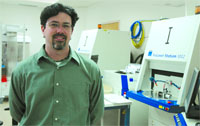
    Departments

    Pride Purchases Inland Oil Stations

    SPRINGFIELD — Pride Stations and Stores recently announced the purchase of three self-service gasoline stations in West Springfield, Westfield, and Southwick for an undisclosed amount. The Citgo-branded stations have been owned and operated by the Burek Oil Company, also known as Inland Oil, for more than 60 years. Plans include adding the sale of Massachusetts Lottery, and converting to the complete line of Pride renewable fuels. In other company news, Pride recently opened a station in Palmer, and has four sites under construction in Ludlow, Springfield, and Westfield.

    WCA Places 251st on VARBusiness Top 500 List

    SOUTHWICK — Whalley Computer Associates (WCA) was recently ranked by VARBusiness Magazine as the 251st largest computer reseller in North America. This designation places WCA in the top one-third of 1% of the more than 120,000 VARs throughout North America, according to Paul Whalley, vice president, WCA. “This year’s move for our company in ranking from 289th to 251st is a reflection of the investment we put this year into the number of customer service programs that we established,” he said.

    Fuss & O’Neill Acquires ProActive

    MANCHESTER, Conn. — ProActive, a New Haven-based network management firm, recently became part of Fuss & O’Neill Technologies, LLC of Manchester. ProActive provides managed services including IT infrastructure, security, and solutions. ProActive was founded by Brian Doyle and Frank Gesino, where they developed ProActive Management Services. Doyle will become vice president of business development, and Gesino will become vice president of professional services for Fuss & O’Neill Technologies. Fuss & O’Neill Technologies, LLC is part of the Fuss & O’Neill Inc. family. The firm’s practices include civil and environmental engineering, structural engineering, industrial plant services, building systems, manufacturing solutions, and design-build.

    Baystate Offers Incisionless Stapled Anastomosis

    SPRINGFIELD — A team of Baystate Medical Center physicians recently performed the world’s first reported stapled NOTES cyst-gastrostomy to successfully treat and save the life of a seriously ill patient who had been hospitalized for months with a chronic infected pancreatic pseudocyst — without the need of an abdominal incision. The emerging field of NOTES (natural orifice translumenal endoscopic surgery) is a cutting-edge surgical and gastroenterological approach which involves passing flexible surgical tools and a camera through the patient’s natural orifices to eliminate incisions, resulting in less pain and infection, and quicker recoveries. In addition, patients who are high-risk candidates for surgery may be able to be treated with this new, less-invasive surgical approach.

    New Family Restaurant Opens in Chicopee

    CHICOPEE — Cote’s Family Restaurant officially opened its second location in the city with a ribbon-cutting on July 25 at 582 Chicopee St., formerly LaCroix’s Market. The restaurant, boasting more booths and an ice cream counter, will offer a full menu including daily specials, homemade soups, homemade desserts, and monthly breakfast specials.

    LiftTruck Celebrates 20th Anniversary

    WEST SPRINGFIELD — LiftTruck Parts and Service Inc., a leader in the material handling industry, is celebrating its 20th year in business. The company is a full-service material-handling firm, with a wide range of specialties, including new and pre-owned fleet sales, service, parts, short- and long-term rentals, financing, on-site maintenance, and others. Founded by owner Mario Sotolotto, Lifttruck is an authoriuzed distributor for the material handling products of Mitsubishi Forklift Trucks and Komatsu Forklift USA Inc.

    MassMutual Invests In NovaStar Financial

    SPRINGFIELD — MassMutual Capital Partners, LLC, a subsidiary of Massachusetts Mutual Life Insurance Co., and Jefferies Capital Partners are investing $48.4 million into troubled NovaStar Financial. Based in Kansas City, Mo., NovaStar specializes in single-family mortgages for borrowers who may have difficulty qualifying for loans under conventional standards. The agreement includes NovaStar’s board of directors being expanded from six to eight.

    Features

    “Going green” is more than just a catchy slogan or marketing campaign.

    To truly “go green” is to comply with a series of state, federal, and international laws and directives. Whether complying with a local ordinance pertaining to recycling or a European Union directive restricting the use of heavy metals in electronics, there are many signposts that can lead a business down the road to green.

    While most companies turn to their marketing departments or consultants when they decide to go green, many are finding that their next call should be to their attorney or compliance department. With the world becoming a much smaller place thanks to the Internet and other technological breakthroughs, and the global marketplace becoming more and more accessible to small and medium-sized businesses, many are finding that it is not only U.S. laws that they need to concern themselves with, but also international treaties and directives.

    With the business of green becoming more and more lucrative, governments around the world have begun to catch up with this trend by passing laws and implementing directives aimed at protecting the environment. Compliance with these laws and directives may be as straightforward as not dumping waste into rivers and streams, or as complicated as which heavy metals may or may not be used in the production of electronic devices.

    In the U.S., most federal laws dealing with the environment date back to the 1970s. The Clean Air Act was passed in its original form in 1970 and amended in 1977 and 1990, while the original Clean Water Act was enacted in 1948 and took its current form in 1972. Most Americans take these laws for granted but do not understand the impact they have had on our environment.

    While public health is the primary goal of both these laws (clean air to breathe and water to drink), there is no doubt that each has had a major impact on our environment. Since the passage of the Clean Air Act, lead emissions have dropped 98%, while emissions from sulfur dioxide and carbon dioxide have been reduced by 35% and 32%, respectively.

    The standards set by and regulations created by the Clean Water Act have resulted in many local success stories, including the Connecticut River being named an American Heritage River and Boston Harbor being transformed from a virtual cesspool into a body of water where striped bass and herring thrive.

    U.S. laws should not be the only concern of businesses that wish to go green. Today, companies looking to capture a larger share of the market must look across the Atlantic Ocean when contemplating compliance with environmental standards. The European Union has adopted the Restriction of Hazardous Substances Directive (RoHS) and the Waste Electrical and Electronic Equipment Directive (WEEE).

    The RoHS restricts the use of six hazardous substances (lead, mercury, cadmium, hexavalent chromium, polybrominated biphenyls, and polybrominated diphenyl ether in the manufacturing of electrical and electronic equipment. The WEEE directive sets collection, recycling, and recovery standards for electrical goods.

    While these directives may seem far removed from the ordinary course of most small and medium-sized businesses in the U.S., if those businesses place goods into European markets, they are absolutely affected. Each European Union member country is scheduled to enact its own legislation using RoHS and WEEE as its guide, so U.S. businesses will have to be attuned to individual countries’ restrictions and regulations as well.

    The trend toward going green makes it likely that more and more states will adopt laws which promote recycling, waste reduction, and environmentally friendly products and services. For example, the Mass. Department of Environmental Protection is currently developing a Greenhouse Gas Registry in cooperation with other states across the country. This registry will create a uniform system for tracking and reporting emissions of greenhouse gases.

    In Connecticut, a state law passed in 2006 requires that all new buildings costing more than $5 million that are financed with state funds must be constructed and designed in conformance with the Leadership in Energy and Environmental Design (LEED) standards set forth by the United States Green Building Council. As a result, contractors who bid on public projects must adhere to the LEED standards.

    California’s Electronic Waste Recycling Act of 2003 prohibits the sale of liquid crystal displays (LCD) and cathode ray tubes (CRT) that contain the heavy metals prohibited under the European Union’s RoHS. Other states have similar bans on mercury and related heavy metals and are considering the adoption of laws similar to California’s.

    These laws and initiatives are just a handful of the local, federal, and international laws and directives with which companies must comply when placing their products and services into the local, national, and international stream of commerce. Companies large and small have found that mere compliance with these regulations is less profitable than implementing a company-wide philosophy of “green.”

    By committing to business plans that embrace environmental protection and sustainability, companies have found that the cost of compliance has decreased and new markets have opened. For example, Xerox has teamed with The Nature Conservancy to ensure that Xerox’s paper is produced from trees from responsibly managed forests. In addition, MTV and Wal-Mart have joined forces to form “Everyday Green,” which is designed to educate consumers as to how to introduce environmentally-friendly products into their everyday lives.

    As more and more states adopt laws that promote protection and sustainability of the environment, businesses will be forced to ensure that their processes and products comply with these laws, or risk losing out on market share.

    As a result, businesses that position themselves ahead of the ‘green’ wave will thrive in this new environmentally-friendly marketplace.

    Meanwhile, those who don’t look upon existing laws and regulations as a sign of what is to come may find themselves constantly playing catch-up, and as a result, unable to take advantage of the new opportunities such laws present.

    While these initiatives may sound costly and idealistic, all signs point to a time when they will become the norm. The question becomes, which businesses will embrace the changes and which will be dragged there kicking and screaming?

    Dennis G. Egan, Jr. is an associate with the regional law firm Bacon & Wilson, P.C, specializing in business and corporate law;[email protected]; 413-781-0560.