Home Posts tagged Technology (Page 28)
DBA Certificates Departments

The following Business Certificates and Trade Names were issued or renewed during the month of May 2010.

AGAWAM

Blanchard Landscaping
31 Simpson Circle
David Blanchard

Bloch Designs
119 Regency Park
John Bloch

Groundskeeper Landscaping
338 Silver St.
James Dupre

Hot Spot Phones
21 Joseph St.
Charissa Carr

AMHERST

DMO Construction
213 North East St.
Richard Misterka

Doolittle Construction
1352 West St.
Steven Doolittle

CHICOPEE

T.L.C. Cleaning Services
60 Whitman St.
Jill Allison Rehor

Topor Motor Mall
650 Memorial Dr.
Topor Motor Sales Inc.

Verizon Wireless
650 Memorial Dr.
Bell Atlantic Mobile of Massachusetts

GREENFIELD

Greenfield Tailors
239 Main St.
Muhammad Yasin

Magpie / Hole Pie Inc.
21-23 Bank Row
James Zaccara

McGuane Flooring
11 Abbott St.
Garrett McGuane

Pretty Nails
209 Main St.
Yen Nguyen

Ross Painting
25 Spring Terr.
Salvatore Ross Jr.

HOLYOKE

Bath & Body Works LLC
50 Holyoke St.
Patrick Hennessey

Café Whitney
361 Whitney Ave.
Alan Berrouard

LUDLOW

A Gig of Geek
407 Moore St.
Joel Padilla

BB Auto Transport
12 Lakeview Ave.
Bogdan Bragiel

Joel’s Towing
407 Moore St.
Joel Padilla

PLC Computers
51 Simond St.
Richard Calento

NORTHAMPTON

Dust Dancer
42 Fruit St.
Patricia Trant

Ibiza Tapas
5-7 Strong Ave.
Juan Suarez

MVP Fitness
320 Riverside Dr.
James Fitzgerald

Outside The Box Technology Solutions
17 Forest Glen Dr.
Charles Baranowski, Jr.

Race Day Custom Clothing
80 Damon Road
Seth Ryan

Tula
15 Lasell Ave.
Matreya Hughes

PALMER

AMC Building Construction, LLC
9 Harvey St.
Jocelyn Bolouc

BJC Realty Trust
2190 Palmer St.
Bernard Croteau Jr.

Palmer Co-Op & Dry Cleaner
1331 Main St.
Vi H. Nguyen

Palmer Heating Inc.
2099 Calkins Road
Alfred Bisnette

Sunny Nails & Spa
1331 Main St.
Khoa H. Nguyen

SOUTHWICK

Nails Studio & Spa
208 College Highway
Nga K. Thi

Webcast2u
7 Sterrett Dr.
Linda Hawley

SPRINGFIELD

Karoun Photography
122 Chestnut St.
Karoun Charkoudian

M & J Mobil Mechanic
48 Newhall St.
Mark Sheldon

Miquel’s Towing & Inspection
700 Berkshire Ave.
Miquel A. Santiago

Nice & Neat Interior Paint
337 South Branch Parkway
Curt M. Marcellin

Over the Rainbow Daycare
24 Harmon Ave.
Patricia Eileen

Rave Cinemas, LLC
1655 Boston Road
Arthur Starrs III

Rhino Lining of Springfield
50 Verge St.
Michael T. Dancy

Sally Beauty Supply
1079 Boston Road
Sally Beauty Supply

Sue’s Hair and Beauty
1111 Main St.
Sue Gavitt

T-Mobile
774 Boston Road
T-Mobile Northeast

The Perfect Touch
77 Skyridge Dr.
Tami Baumgardner

Top Shelf Promotions
253 Gillette Ave.
Cara-Anita

Western Mass Cleaning
107 Pine Acre Road
Kevin M. Latourelle

Williams & Williams
46 Clearbrook Dr.
Scott Williams

Williams Business Consult
147 Rosemary Dr.
Jerome Williams

WESTFIELD

Alarm Pro Security, LLC
26 Washington St.
John Bowen

Alice’s Piano Studio
159 Hillside Road
Alice M. Chaffee

Amalfi Pizzeria
280 Southampton Road
Benito Silvestri

Raw Dawg Customz
121 Summit Lock Road
Ryan Fuqua

WEST SPRINGFIELD

Affiance-Events
93 Charles Ave.
Angela Cooper

Aprotocall Inc.
1252 Elm St.
Angus Fox

Bear Spirit Design
42 Murray Place
Cindy S. White

City View Barber Shop
274 Westfield St.
Gregory Erbentraut

Maximum Pawn Co.
1164 Memorial Ave.
Maximino M. Salvador

Moreau Distributing
1583 Riverdale St.
Robert W. Moreau

Needle and Scissors
29 Worthen St.
Marina P. Dragun

Overcome
1538 Riverdale St.
Joellen Anderson

Showcase Cinemas & Rave Motion Pictures
864 Riverdale St.
Peter A. Nelson

Departments

The following Business Certificates and Trade Names were issued or renewed during the month of May 2010.

AGAWAM

Blanchard Landscaping
31 Simpson Circle
David Blanchard

Bloch Designs
119 Regency Park
John Bloch

Groundskeeper Landscaping
338 Silver St.
James Dupre

Hot Spot Phones
21 Joseph St.
Charissa Carr

AMHERST

DMO Construction
213 North East St.
Richard Misterka

Doolittle Construction
1352 West St.
Steven Doolittle

CHICOPEE

T.L.C. Cleaning Services
60 Whitman St.
Jill Allison Rehor

Topor Motor Mall
650 Memorial Dr.
Topor Motor Sales Inc.

Verizon Wireless
650 Memorial Dr.
Bell Atlantic Mobile of Massachusetts

GREENFIELD

Greenfield Tailors
239 Main St.
Muhammad Yasin

Magpie / Hole Pie Inc.
21-23 Bank Row
James Zaccara

McGuane Flooring
11 Abbott St.
Garrett McGuane

Pretty Nails
209 Main St.
Yen Nguyen

Ross Painting
25 Spring Terr.
Salvatore Ross Jr.

HOLYOKE

Bath & Body Works LLC
50 Holyoke St.
Patrick Hennessey

Café Whitney
361 Whitney Ave.
Alan Berrouard

LUDLOW

A Gig of Geek
407 Moore St.
Joel Padilla

BB Auto Transport
12 Lakeview Ave.
Bogdan Bragiel

Joel’s Towing
407 Moore St.
Joel Padilla

PLC Computers
51 Simond St.
Richard Calento

NORTHAMPTON

Dust Dancer
42 Fruit St.
Patricia Trant

Ibiza Tapas
5-7 Strong Ave.
Juan Suarez

MVP Fitness
320 Riverside Dr.
James Fitzgerald

Outside The Box Technology Solutions
17 Forest Glen Dr.
Charles Baranowski, Jr.

Race Day Custom Clothing
80 Damon Road
Seth Ryan

Tula
15 Lasell Ave.
Matreya Hughes

PALMER

AMC Building Construction, LLC
9 Harvey St.
Jocelyn Bolouc

BJC Realty Trust
2190 Palmer St.
Bernard Croteau Jr.

Palmer Co-Op & Dry Cleaner
1331 Main St.
Vi H. Nguyen

Palmer Heating Inc.
2099 Calkins Road
Alfred Bisnette


Sunny Nails & Spa
1331 Main St.
Khoa H. Nguyen

SOUTHWICK

Nails Studio & Spa
208 College Highway
Nga K. Thi

Webcast2u
7 Sterrett Dr.
Linda Hawley

SPRINGFIELD

Karoun Photography
122 Chestnut St.
Karoun Charkoudian

M & J Mobil Mechanic
48 Newhall St.
Mark Sheldon

Miquel’s Towing & Inspection
700 Berkshire Ave.
Miquel A. Santiago

Nice & Neat Interior Paint
337 South Branch Parkway
Curt M. Marcellin

Over the Rainbow Daycare
24 Harmon Ave.
Patricia Eileen

Rave Cinemas, LLC
1655 Boston Road
Arthur Starrs III

Rhino Lining of Springfield
50 Verge St.
Michael T. Dancy

Sally Beauty Supply
1079 Boston Road
Sally Beauty Supply

Sue’s Hair and Beauty
1111 Main St.
Sue Gavitt

T-Mobile
774 Boston Road
T-Mobile Northeast

The Perfect Touch
77 Skyridge Dr.
Tami Baumgardner

Top Shelf Promotions
253 Gillette Ave.
Cara-Anita

Western Mass Cleaning
107 Pine Acre Road
Kevin M. Latourelle

Williams & Williams
46 Clearbrook Dr.
Scott Williams

Williams Business Consult
147 Rosemary Dr.
Jerome Williams

WESTFIELD

Alarm Pro Security, LLC
26 Washington St.
John Bowen

Alice’s Piano Studio
159 Hillside Road
Alice M. Chaffee

Amalfi Pizzeria
280 Southampton Road
Benito Silvestri

Raw Dawg Customz
121 Summit Lock Road
Ryan Fuqua

WEST SPRINGFIELD

Affiance-Events
93 Charles Ave.
Angela Cooper

Aprotocall Inc.
1252 Elm St.
Angus Fox

Bear Spirit Design
42 Murray Place
Cindy S. White

City View Barber Shop
274 Westfield St.
Gregory Erbentraut

Maximum Pawn Co.
1164 Memorial Ave.
Maximino M. Salvador

Moreau Distributing
1583 Riverdale St.
Robert W. Moreau

Needle and Scissors
29 Worthen St.
Marina P. Dragun

Overcome
1538 Riverdale St.
Joellen Anderson

Showcase Cinemas & Rave Motion Pictures
864 Riverdale St.
Peter A. Nelson

Sections Supplements
You Don’t Need a Crystal Ball to Figure Out What They’re Thinking

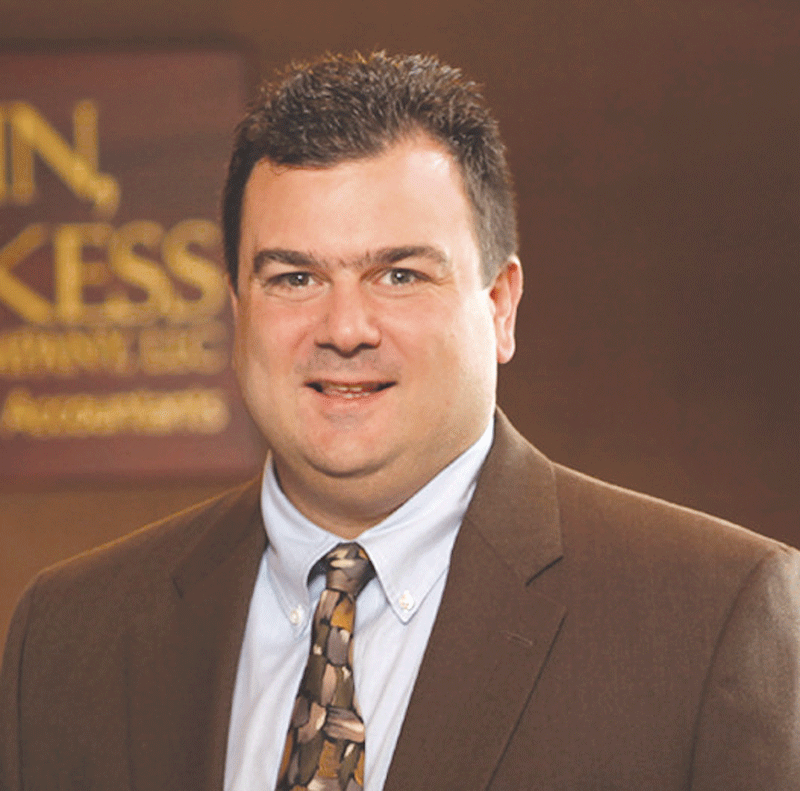
Joseph Spagnoletti

Joseph Spagnoletti

Construction companies need the support of their bonding company to sustain the growth of their business. As a result of the current economic realities of the construction industry, bonding companies are spending more time scrutinizing the viability of their clients’ financial future and operations before issuing a bond.
Here are the 10 topics you need to be prepared to address the next time you sit down with your surety agent.

1. Banking covenants. Bonding companies want to know that you are satisfying the covenants as outlined in your loan or line of credit documents. If you’re not meeting the covenants, you need to talk to your banker about rewriting the covenants or developing a strategy for meeting them. Bonding companies get concerned when they see that construction companies are not meeting their banking covenants.
In fact, this could result in an immediate end to a line of credit or an immediate call for repayment of a loan. Needless to say, without access to financing, some construction companies couldn’t afford to complete their work in progress. In the end, bonding companies want to see a positive working relationship with your lending institution.

2. Accounts receivable. Your accounts-receivable aging report will be examined throughout the year. What are bonding companies looking for? They want to make sure that you’re being paid for your work, and you have business systems, policies, and procedures in place to track and encourage timely payments. Before starting work for a customer, perform enough due diligence that would lead you and your bonding company to believe you’ll get paid for your work.

3. Accounts payable. Pay your bills in a timely fashion. Bonding companies assume that, if you’re not paying your bills in a timely fashion, you either don’t have the resources to do so, or you have weak internal business systems. Either way, that’s bad news.

4. Backlog. In construction, it’s all about the backlog. Really, whether you are an accounting firm, law office, or a construction company, a backlog of work secures the future of your business. The longer the backlog, the more confidence bonding companies will have in your business, and the more likely they are to insure the completion of your work. Keep in mind that bonding companies will look at more than the total number of jobs backlogged; they’ll look for the number of profitable jobs.

5. Strategic business plan. We all get distracted by today’s challenges, but taking the time to write a strategic business plan is good for the future of your business. And that’s just what bonding companies are concerned about — the future of your business. What are your short-term, mid-range and long-term goals, and what is your strategy for achieving them? Write them down. A good strategic business plan includes timelines and benchmarks to measure progress. If your bonding company comes in for a visit and asks to see your strategic business plan, be ready to share a thoroughly prepared document.

6. Profitable and cost-controlled work. Your bonding company wants to know that your jobs are profitable and that costs can be controlled as shifts in the market demand. So be prepared to show how you plan to profit from your work and control costs. In addition, if market conditions change, you need to have a plan in place to adjust. Take a proactive approach to challenges by implementing smart solutions on a timely basis.

7. Equipment. Equipment represents a major investment for most construction companies. The patterns of acquisition and disposition of equipment tell the bonding company a story. Be ready to discuss the reasons why you are either acquiring or disposing of equipment. If you’re stuck supporting debt for idle equipment, there may be creative ideas you could explore to turn idle equipment into a revenue source. Discuss strategies like this with your surety agent.

8. Loans from owners. As an owner of any business, when times are tough, you may have to loan your company money to help it through a temporarily challenging time. Don’t be surprised if loans you make to your company get subordinated to other obligations of the company and require approval from your surety before you get paid back. As an aside, be sure to consult with your accountant and attorney before loaning money to your company; there may be tax benefits or implications that deserve additional discussion.

9. Indemnity. Personal and spousal indemnity is becoming commonplace, especially if your surety agent considers a particular job to be a stretch for your company. Your bonding company sees more risk associated when you do work outside of your areas of expertise. With additional risk comes additional indemnity. If this sounds like you, be prepared to discuss why your company can meet its obligations even outside its areas of expertise.

10. Unexpected taxes. If your construction company (structured as a C-corporation) has adopted the completed contract basis of accounting for tax purposes, you may not be in a position to defer taxes to next year without a sizeable backlog. As backlogs at some construction companies aren’t so large, this could mean that those deferred taxes are payable now. Unanticipated, this could place significant strain on cash flow. Even if your deferred tax is at the individual level, as is the case with a flow-through entity, be prepared to discuss this issue with your surety agent.

Surety agents can be supportive in helping you grow your construction business. That being said, in higher-risk environments, they’ll need additional and more detailed information about you and your business.
Take a proactive approach in developing a positive working relationship with your surety agent. Get together throughout the year. Share your success stories and your challenges. Tell your surety agent what your company is doing to improve business processes and procedures, and what strategies you’ve put into place to control costs and become more profitable. When you and your surety agent are on the same page, that’s good for business.

Joseph Spagnoletti, CPA, CCIFP is partner in charge of the Construction Services Group at Kostin, Ruffkess & Co., LLC, a certified public-accounting and business-advisory firm with offices in Springfield as well as Farmington and New London, Conn. Beyond traditional accounting, auditing, and tax consulting, the firm also specializes in employee benefit-plan audits, litigation support, business valuation, succession-planning business consulting, forensic accounting, wealth management, estate planning, fraud prevention, and information technology assurance; www.kostin.com.

Opinion
Health Care Fails Small Businesses

Not long after President Nixon took the unprecedented step of imposing peacetime wage and price controls, the American people learned a basic economic lesson: artificial controls don’t work unless underlying costs are controlled.
Four decades later, the Patrick administration is imposing controls on small-business health-insurance rates. The move will prove to be little more than an election-year reprise of Nixon’s failed effort.
The Commonwealth’s 2006 health care reform was supposed to address rising health-insurance costs for small businesses. It hasn’t — and small businesses are paying the price.
The Commonwealth Connector, an independent authority acting as an insurance-plan clearinghouse, was established to provide real choices and information needed to evaluate options. In theory, an informed and robust marketplace would bend the cost curve and get more of the working poor and lower middle class insured. The theory is right, but the implementation has failed in two key ways.
First, the Connector focused all its energy on providing nearly free products to the indigent. Its board seemed uninterested in market-rate products for small-business employees.
The Connector revenues come from selling plans, and selling nearly free products was the path of least resistance. Unsurprisingly, 90% of the Connector’s operating revenue has come from the fee it earns for state-subsidized plans.
The lack of focus on small businesses is evident. The Connector took three years to make information about provider networks and participating primary-care providers for small businesses available on its Web site. It took over two years to launch a small-employer pilot program; in more than a year, it attracted just 65 businesses and has now been replaced by a new program that offers only seven plans.
Implementation also fell short when the Connector chose to build a top-down bureaucracy rather than leverage the broker and private-market community. The quasi-governmental Connector has a $40 million annual budget and 45 employees earning annual salaries that average $100,000. Its board is heavily weighted toward government officials and unions.
Paternalistic fears about confusing people have led the Connector to overregulate and minimize consumer choice. Instead of engaging the private market by providing unique products, it has rejected or failed to renew products, resulting in offerings that simply duplicate ones already privately available.
This bureaucratic setup cannot provide choices that contain costs to employees and owners of small businesses — nor help address double-digit increases in small-business rates.
There is another path forward. Utah’s Health Insurance Exchange was started with a $600,000 appropriation and has no board and just two employees. It provides a technology backbone that enables brokers and businesses to take advantage of consumer-based options.
As its mission is to promote small-business growth, the Exchange is part of the Governor’s Office of Economic Development. Private-sector partners provide unpaid policy advice on what businesses and employees need.
Fewer than 1,500 small business employees receive coverage through the Connector. In Utah, with a far smaller population, about 55,000 small-business employees have purchased health insurance through the Exchange. It offers 66 plans from a number of carriers, including the largest ones in the state.
The focus on business growth and input from the private market has helped promote other reforms. In its first year, the Exchange developed a database that compares the cost of care across all providers; four years after its creation, the Connector hasn’t developed a similar tool. Unlike Massachusetts, Utah has also passed tort and medical-malpractice reform.
We applaud the Connector’s success in insuring the indigent. But it has failed to give small businesses affordable, diverse choices.
Small-business owners cannot afford 25% annual hikes to already-astronomical health-insurance premiums, especially in this economic climate. Price controls will do nothing to control the underlying forces that drive health-insurance premium increases. And unless Massachusetts does the hard work of getting costs under control, Patrick could be remembered as the guy who tried to prop up the levy as the floodwaters surged in.

Jim Stergios is executive director, and Amy Lischko is senior fellow on health care, at Pioneer Institute.

Opinion
Region’s Colleges Are Economic Engines

Springfield Mayor Domenic Sarno calls it “playing to our strength.”
That was his way of conveying the manner in which area colleges, including all those that call his city home, are becoming more powerful forces in local economic-development efforts.
It’s not exactly a recent phenomenon — colleges have always played an important role in the region’s economic health and well-being, from their local purchases to their huge payrolls to seemingly constant new construction. But in recent years, and especially over the past 18 months or so, area schools have been front and center with initiatives that can, and probably will, have enormous benefits for area cities and towns.
Sarno was responding to news that American International College has been granted preferred-developer status for a project involving three key pieces of the Mason Square neighborhood — two sections of the massive former Indian Motocycle building and the long-vacant fire station next door. The college is looking at everything from a cyber café to a new home for its radio station in the fire station, and everything from housing options to incubator space in the Indian building.
The project is still very much in the due-diligence stage, and the college will move forward only if several funding sources can be tapped. But even if the vision for the properties doesn’t become reality, area colleges will clearly continue to be huge forces in economic-development efforts.
Start with the state university, which is playing a lead role in the efforts to bring a high-performance computing center to downtown Holyoke, a project that could change the face, and the fortunes, of the Paper City. UMass Amherst is also making its presence felt on Court Street in downtown Springfield. The university will be moving one of its departments into a building in that historic area — a project, conceived with generous amounts of encouragement and help from the city, that is expected to be the first of many that will increase the school’s visibility and impact there.
Meanwhile, Westfield State College is eyeing major investments in that city’s still-struggling downtown. WSC President Evan Dobelle helped change the landscape of some neighborhoods in Hartford when he was president of Trinity College through the creation of several public-private partnerships, and he is looking to do the same in the Whip City through a plan to put more student housing in the urban core, and thus boost existing businesses and attract new ones to the Elm Street corridor.
There are countless other examples:
• Springfield Technical Community College created a technology park in the former Digital Equipment Corp. complex across Federal Street from the campus, a gambit that has succeeded in bringing nearly 1,000 jobs to that complex of buildings. A few years later, the school opened a facility now known as the Scibelli Entreprise Center, that is both an incubator and home to agencies that help small businesses get off the ground and to the next level.
• Holyoke Community College is a partner in a project that will not only bring a learning center to a former fire station in the city’s downtown, one that will help give adults skills to succeed in the workforce, but also become another cornerstone in the revitalization of that city.
• Springfield College has, for many years, undertaken programs to improve quality of life in the neighborhoods surrounding the school, which are some of the poorest in the city, if not the state.
• Bay Path College has, for 15 years now, organized a women’s leadership conference that has imparted key lessons on life and business, and it has initiated a number of programs to help spur entrepreneurship.
• The Five Colleges in Hampshire Country have contributed in innumerable ways to the cultural and economic health of the Amherst and Northampton area.
The list goes on. Every school has stepped up, and the involvement is becoming deeper and more imaginative.
“Playing to our strength.” The mayor got it right. The area’s colleges represent perhaps its greatest strength, and cities and towns must collectively work to help find and nurture new ways to tap into that strength.

Sections Supplements
How Best to Develop a Corporate Strategy That Generates Results

As you look around your office, is everyone just like you? Probably not.
The demographics of the American workforce have changed dramatically over the past 50 years. In the 1950s, more than 60% of the American workforce consisted of white males. They were typically the sole breadwinners in the household, expected to retire by age 65 and spend their retirement years in leisure activities. Today, the American workforce is a better reflection of the population, with a significant mix of genders, race, religion, age, and other background factors.
The long-term success of any business calls for a diverse body of talent that can bring fresh ideas, perspectives, and views to their work. The challenge that diversity poses, therefore, is enabling your managers to capitalize on the mixture of genders, cultural backgrounds, ages, and lifestyles to respond to business opportunities more rapidly and creatively.
Diversity is no longer just a black/white, male/female, old/young issue. It is much more complicated and interesting than that. In The Future of Diversity and the Work Ahead of Us, Harris Sussman says, “diversity is about our relatedness, our connectedness, our interactions, where the lines cross. Diversity is many things — a bridge between organizational life and the reality of people’s lives, building corporate capability, the framework for interrelationships between people, a learning exchange, a strategic lens on the world.”
A benefit of a diverse workforce is the ability to tap into the many talents which employees from different backgrounds, perspectives, abilities, and disabilities bring to the workplace. An impressive example of this is found on the business cards of employees at one Fortune 100 technology company. Employees at this company have business cards that appear normal at first glance. On closer inspection, the raised Braille characters of employee information are evident.
Many companies, however, still face challenges around building a diverse environment. Part of the reason is the tendency to pigeonhole employees, placing them in a certain silo based on their diversity profile. If an employee is male, over 50, English, and an atheist, under what diversity category does this employee fall? Gender, generational, global, or religious? In the real world, diversity cannot be easily categorized, and those organizations that respond to human complexity by leveraging the talents of a broad workforce will be the most effective in growing their businesses and their customer base.
So, how do you develop a diversity strategy that gets results? The companies with the most effective diversity programs take a holistic approach to diversity by following these guidelines:

Link diversity to the bottom line. When exploring ways to increase corporate profits, look to new markets or to partnering with your clients more strategically. Consider how a diverse workforce will enable your company to meet those goals. Think outside the box. At a Fortune 500 manufacturing company, Hispanics purchased many of the products. When the company hired a director of Hispanic markets, profits increased dramatically in less than one year because of the targeted marketing efforts. Your new customers may be people with disabilities or people over the age of 65. How can your employees help you reach new markets?

Walk the talk. If senior management advocates a diverse workforce, make diversity evident at all organizational levels. If you don’t, some employees will quickly conclude that there is no future for them in your company. Don’t be afraid to use words like black, white, gay, and lesbian. Show respect for diversity issues and promote clear and positive responses to them. How can you demonstrate your company’s commitment to diversity?

Broaden your efforts. Does diversity at your company refer only to race and gender? If so, expand your definition and your diversity efforts. As Baby Boomers age and more minorities enter the workplace, the shift in demographics means that managing a multigenerational and multicultural workforce will become a business norm. Also, there is a wealth of specialized equipment available to enable people with disabilities to contribute successfully to their work environments. If your organizational environment does not support diversity broadly, you risk losing talent to your competitors. How can your recruitment efforts reach out to all qualified candidates?

Remove artificial barriers to success. The style of interview — behavioral or functional — may be a disadvantage to some job candidates. Older employees, for example, are less familiar with behavioral interviews and may not perform as well unless your recruiters directly ask for the kind of experiences they are looking for. Employees from countries outside the U.S. and non-Caucasian populations may downplay their achievements or focus on describing, who they know rather than what they know. Train your recruiters to understand the cultural components of interviews. How can your human-resources processes give equal opportunity to all people?

Retain diversity at all levels. The definition of diversity goes beyond race and gender to encompass lifestyle issues. Programs that address work and family issues — alternative work schedules and child and elder care resources and referrals — make good business sense. How can you keep valuable employees?

Provide practical training. Using relevant examples to teach small groups of people how to resolve conflicts and value diverse opinions helps companies far more than large, abstract diversity lectures. Training needs to emphasize the importance of diverse ideas as well. Workers care more about whether or not their boss seems to value their ideas than whether they are part of a group of all white males or an ethnically diverse workforce. In addition, train leaders to move beyond their own cultural frame of reference to recognize and take full advantage of the productivity potential inherent in a diverse population. How can you provide diversity training at your company?

Mentor with others at your company whom you do not know well. Involve your managers in a mentoring program to coach and provide feedback to employees who are different from them. Some of your most influential mentors can be people with whom you have little in common. Find someone who doesn’t look just like you. Find someone from a different background, a different race, or a different gender. Find someone who thinks differently than you do. How can you find a mentor who is different from you?

Measure your results. Conduct regular organizational assessments on issues like pay, benefits, work environment, management, and promotional opportunities to assess your progress over the long term. Keep doing what is working, and stop doing what is not working. How do you measure the impact of diversity initiatives at your organization?

In the book Beyond Race and Gender, R. Roosevelt Thomas defines managing diversity as “a comprehensive managerial process for developing an environment that works for all employees.” Successful strategic diversity programs also lead to increased profits and lowered expenses.
The long-term success of any business calls for a diverse body of talent that can bring fresh ideas, perspectives and views and a corporate mindset that values those views. It’s also no secret that the lack of diversity can affect your ability to communicate effectively with diverse clients.
Link your diversity strategies to specific goals like morale, retention, performance, and the bottom line. Build your business with everything you’ve got, with the complex, multi-dimensional talents and personalities of your workforce, and make diversity work for you.

Judith Lindenberger, principal of the Lindenberger Group, LLC, and Marian Stoltz-Loike, CEO of SeniorThinking, provide human-resources learning and consulting; www.lindenbergergroup.com; www.seniorthinking.com

Uncategorized
John Ratzenberger Brings His Summer-camp Initiative to STCC

John Ratzenberger says that, when he speaks to groups of manufacturers, which he does often, he likes to hang around after the microphone is shut off and listen to what his audience members have to say.

And he’s generally alarmed by what he hears.

Such was the case at a recent gathering of machining company executives in Chicago, where Ratzenberger, best known to most as Cliff, the postal carrier he portrayed for more than a decade on Cheers, spoke about the perilous state of the sector, which he says is seriously threatened because young people don’t want to get into it anymore.

“I stayed and talked to some of the people there,” he told BusinessWest in a phone interview from his hotel room in the Windy City. “Every single one of them was worried — really worried. I was talking to one guy with an aircraft-manufacturing company who said most kids coming out of high school can’t even read a simple ruler. You ask them to find 3/4 of an inch, and most can’t do it.”

Beyond their lack of ruler-reading skills, most young people simply don’t have an appreciation for how to make things, or, equally important, how making things can be an attractive career, said Ratzenberger, who has made enlightening them a passionate endeavor for the last seven years or so.

His vehicle for getting the word out is an organization he founded called Nuts, Bolts & Thingamajigs, or NBT. That agency is now partnering with the Foundation of the Fabricators & Manufacturers Assoc. Intl. and the National Assoc. for Community College Entrepreneurship to develop a national program that builds on a summer-camp initiative blueprinted by NBT.

At 16 community colleges nationwide, including Springfield Technical Community College, students at week-long summer camps will be exposed to math, science, engineering, and entrepreneurship principles, while having an opportunity to see the technology being used in industry today.

“Those shop classes that high schools had years ago … they’re gone, a thing of the past,” said Ratzenberger. “These camps will do what those shop classes used to; they’ll expose young people to vocational and technical trades. Many young people today have no role models when it comes to fixing things themselves or taking pride in building something useful, and they dismiss the idea of considering a career in one of the manual arts such as manufacturing, electrical, plumbing, carpentry, or welding.”

Ratzenberger will be in the Springfield area for a few days in May to promote NBT and, more specifically, the summer-camp program. He has a few speaking engagements booked, including one before the local chapter of the National Tooling & Machining Assoc. on May 12 at the Springfield History Museum.

Trade Partners

The community colleges hosting manufacturing camps this summer are located in such places as Blue Bell, Pa., Marysville, Calif., Tupelo, Miss., Fergas Falls, Minn., and Appleton, Wis. That geographic coverage helps explain that the pending shortage of people who can build things with their hands is truly national, said Ratzenberger, noting also that time is of the essence.

“In four years, this is a problem that everyone will be talking about,” he told BusinessWest. “And in six years … well, by then it will be too late.”

This is the consensus opinion he’s gathered from those talks with manufacturers after his speeches about NBT and its mission. Ratzenberger said the problem has been building for some time now, and there are many reasons for it.

They range from negative portrayals of craftspeople in movies and television — “see a plumber on TV and he’s always portrayed as a simpleton, a loser,” said Ratzenberger — to parents and guidance counselors who are steering people away from the trades and toward a college education, whether they’re suited for one or not.

“So with all that happening, why would anyone want to explore those fields?” he asked before answering his own question. “It’s simple: they’re not.”

The summer camps are designed to do what the old shop classes did, and that’s at least enlighten young people about the trades and inform them about career opportunities, said Ratzenberger. “They’ll learn what it’s like to weld, bend metal, punch holes in metal, and more,” he said. “And we need to do that, because we’re simply running out of people who can do those things.”

And the prospects for filling the voids created by retiring machinists and craftspeople don’t look positive, and won’t until some perceptions about this sector change, he said.

Citing a recent poll conducted by NBT, Ratzenberger said that a majority of teens (52%) have little or no interest in a manufacturing career, and another 21% are ambivalent. When asked why, nearly two-thirds of respondents said they seek a professional career, while others cited issues such as compensation, career growth, and physical work, or a desire to avoid it.

“It’s absolutely critical for this mindset to change because, when America recovers from its economic downturn, there will be a dire need for skilled manpower in the trades,” he continued. “Numerous surveys conducted by the manufacturing organizations predict a labor shortage if we don’t inform the nation’s youth about the available opportunities and enlist them to fill the sophisticated, high-tech jobs available in areas such as robotics and laser technologies.”

The summer camp at STCC, to be called “Manufacturing Your Future,” is designed to do just that and, in the process, help in the process of putting more people in the pipeline, said Adrienne Smith, dean of the School of Engineering Technologies at the college. She said participants, 13- and 14-year-old technology students from area schools, will use technology to create a product from start to finish, providing them practical manufacturing experience in 3D design, computer numerical control programming, welding, and other applications.

Meanwhile, students will also visit area manufacturers to get an up-close look at manufacturing processes, new technology, and, perhaps most importantly, the people doing such work.

Overall, she said, the camps are designed to enlighten, inform, and ultimately change some of the attitudes that young people and their parents have about manufacturing.

Something to Build On

When asked if he could quantify or qualify how much progress NBT has made with fueling interest in the trades since it was formed, Ratzenberger paused and then said it would be difficult to do so.

The anecdotal evidence, such as that provided by the manufacturing executives he spoke to in Chicago, would seem to indicate that, however much progress has been achieved, there is still a lot of work to be done.

The planned summer camps won’t solve the problem, but they may help move an industry closer to a solution — and enable more young people to read a ruler.

George O’Brien can be reached at[email protected]

Cover Story
How Best to Develop a Corporate Strategy That Generates Results
Cover May 10, 2010

Cover May 10, 2010

As you look around your office, is everyone just like you? Probably not.

The demographics of the American workforce have changed dramatically over the past 50 years. In the 1950s, more than 60% of the American workforce consisted of white males. They were typically the sole breadwinners in the household, expected to retire by age 65 and spend their retirement years in leisure activities. Today, the American workforce is a better reflection of the population, with a significant mix of genders, race, religion, age, and other background factors.

The long-term success of any business calls for a diverse body of talent that can bring fresh ideas, perspectives, and views to their work. The challenge that diversity poses, therefore, is enabling your managers to capitalize on the mixture of genders, cultural backgrounds, ages, and lifestyles to respond to business opportunities more rapidly and creatively.

Diversity is no longer just a black/white, male/female, old/young issue. It is much more complicated and interesting than that. In The Future of Diversity and the Work Ahead of Us, Harris Sussman says, “diversity is about our relatedness, our connectedness, our interactions, where the lines cross. Diversity is many things — a bridge between organizational life and the reality of people’s lives, building corporate capability, the framework for interrelationships between people, a learning exchange, a strategic lens on the world.”

A benefit of a diverse workforce is the ability to tap into the many talents which employees from different backgrounds, perspectives, abilities, and disabilities bring to the workplace. An impressive example of this is found on the business cards of employees at one Fortune 100 technology company. Employees at this company have business cards that appear normal at first glance. On closer inspection, the raised Braille characters of employee information are evident.

Many companies, however, still face challenges around building a diverse environment. Part of the reason is the tendency to pigeonhole employees, placing them in a certain silo based on their diversity profile. If an employee is male, over 50, English, and an atheist, under what diversity category does this employee fall? Gender, generational, global, or religious? In the real world, diversity cannot be easily categorized, and those organizations that respond to human complexity by leveraging the talents of a broad workforce will be the most effective in growing their businesses and their customer base.

So, how do you develop a diversity strategy that gets results? The companies with the most effective diversity programs take a holistic approach to diversity by following these guidelines:

Link diversity to the bottom line. When exploring ways to increase corporate profits, look to new markets or to partnering with your clients more strategically. Consider how a diverse workforce will enable your company to meet those goals. Think outside the box. At a Fortune 500 manufacturing company, Hispanics purchased many of the products. When the company hired a director of Hispanic markets, profits increased dramatically in less than one year because of the targeted marketing efforts. Your new customers may be people with disabilities or people over the age of 65. How can your employees help you reach new markets?

Walk the talk. If senior management advocates a diverse workforce, make diversity evident at all organizational levels. If you don’t, some employees will quickly conclude that there is no future for them in your company. Don’t be afraid to use words like black, white, gay, and lesbian. Show respect for diversity issues and promote clear and positive responses to them. How can you demonstrate your company’s commitment to diversity?

Broaden your efforts. Does diversity at your company refer only to race and gender? If so, expand your definition and your diversity efforts. As Baby Boomers age and more minorities enter the workplace, the shift in demographics means that managing a multigenerational and multicultural workforce will become a business norm. Also, there is a wealth of specialized equipment available to enable people with disabilities to contribute successfully to their work environments. If your organizational environment does not support diversity broadly, you risk losing talent to your competitors. How can your recruitment efforts reach out to all qualified candidates?

Remove artificial barriers to success. The style of interview — behavioral or functional — may be a disadvantage to some job candidates. Older employees, for example, are less familiar with behavioral interviews and may not perform as well unless your recruiters directly ask for the kind of experiences they are looking for. Employees from countries outside the U.S. and non-Caucasian populations may downplay their achievements or focus on describing, who they know rather than what they know. Train your recruiters to understand the cultural components of interviews. How can your human-resources processes give equal opportunity to all people?

Retain diversity at all levels. The definition of diversity goes beyond race and gender to encompass lifestyle issues. Programs that address work and family issues — alternative work schedules and child and elder care resources and referrals — make good business sense. How can you keep valuable employees?

Provide practical training. Using relevant examples to teach small groups of people how to resolve conflicts and value diverse opinions helps companies far more than large, abstract diversity lectures. Training needs to emphasize the importance of diverse ideas as well. Workers care more about whether or not their boss seems to value their ideas than whether they are part of a group of all white males or an ethnically diverse workforce. In addition, train leaders to move beyond their own cultural frame of reference to recognize and take full advantage of the productivity potential inherent in a diverse population. How can you provide diversity training at your company?

Mentor with others at your company whom you do not know well. Involve your managers in a mentoring program to coach and provide feedback to employees who are different from them. Some of your most influential mentors can be people with whom you have little in common. Find someone who doesn’t look just like you. Find someone from a different background, a different race, or a different gender. Find someone who thinks differently than you do. How can you find a mentor who is different from you?

Measure your results. Conduct regular organizational assessments on issues like pay, benefits, work environment, management, and promotional opportunities to assess your progress over the long term. Keep doing what is working, and stop doing what is not working. How do you measure the impact of diversity initiatives at your organization?

In the book Beyond Race and Gender, R. Roosevelt Thomas defines managing diversity as “a comprehensive managerial process for developing an environment that works for all employees.” Successful strategic diversity programs also lead to increased profits and lowered expenses.

The long-term success of any business calls for a diverse body of talent that can bring fresh ideas, perspectives and views and a corporate mindset that values those views. It’s also no secret that the lack of diversity can affect your ability to communicate effectively with diverse clients.

Link your diversity strategies to specific goals like morale, retention, performance, and the bottom line. Build your business with everything you’ve got, with the complex, multi-dimensional talents and personalities of your workforce, and make diversity work for you. n

Judith Lindenberger, principal of the Lindenberger Group, LLC, and Marian Stoltz-Loike, CEO of SeniorThinking, provide human-resources learning and consulting;www.lindenbergergroup.com;www.seniorthinking.com

Agenda Departments

Deliver Perfect Pitch

May 12: Learn concrete and easy-to-master tools to help you in every sales situation no matter what the environment or what you sell during “Deliver the Perfect Pitch,” 9 to 11 a.m., at the Scibelli Enterprise Center, 1 Federal St., Springfield. Sheldon Snodgrass of www.steadysales.com in Williamsburg will be the presenter. The program is sponsored by the Mass. Small Business Development Center Network. Cost is $40. For more information, call (413) 737-6712 or visit www.msbdc.org/wmass.

AIM Annual Meeting

May 14: John Ratzenberger, best known for his role as Cliff in the television comedy Cheers, will deliver the luncheon address at the Associated Industries of Massachusetts’ 95th annual meeting at the Westin Hotel in Waltham. Ratzenberger is a passionate advocate for the future of American manufacturing and the need to teach young people to work with their hands. He will discuss the foundation he started to help young people learn the rewards of fixing things themselves, building something useful, and inventing products that create economic opportunity. AIM’s annual meeting is planned from 10 a.m. to 2 p.m. and will bring together some of the brightest business and academic minds in Massachusetts to answer the pressing economic questions of the day. For more information, visit www.aimnet.org.

Wine Tasting and Auction

May 14: The Chicopee Chamber of Commerce will host its annual beer/wine tasting and auction at the Castle of Knights on Memorial Avenue in Chicopee from 6 to 9 p.m. The event, a fund-raiser to support the chamber and its many initiatives, is being sponsored by Chicopee Savings Bank. The event will feature fine food, a large variety of wines and beers to sample, and myriad auction items to bid on. Back by popular demand is the Collectibles Road Show. Representatives from Antiques Roadshow will be on hand to appraise attendees’ valuables. Those with items such as old coins, jewelry, or collectibles are encouraged to bring them to the show. Tickets are $20 each. To reserve tickets, call (413) 594-2101, or visit www.chicopeechamber.org.

Pancake Breakfast

May 15: The Spirit of Springfield will once again serve up what is reputed to the world’s largest pancake breakfast from 8 to 11 a.m. on Main Street in downtown Springfield. The event, marking Springfield’s 374th birthday, is the 25th edition of the annual pancake breakfast. It will also feature entertainment and activities. Tickets are $3 for adults and $1 for children. For more information, call (413) 733-3800 or visit www.spiritofspringfield.com.

13th Annual Rays of Hope Survivors’ Day

May 15: Breast-cancer survivors and their friends are invited to attend the 13th annual Rays of Hope Breast Cancer Survivors’ Day, from 8:30 a.m. to 2 p.m. at the Sheraton Monarch Place Hotel, One Monarch Place, Springfield. Breast cancer activist Geralyn Lucas, author of Why I Wore Lipstick to My Mastectomy, will serve as keynote speaker at the annual event, sponsored by the Comprehensive Breast Center at Baystate Medical Center and Rays of Hope. Lucas will discuss what it was like being diagnosed with breast cancer at the age of 27 just after landing her dream job as an editorial producer with ABC television’s 20/20 news program. A graduate of Columbia University School of Journalism, she later became director of public affairs at Lifetime Television and left the network in 2008 to work on the screenplay for Why I Wore Lipstick.  The television movie premiered on Lifetime in October, starring Sarah Chalke of the hit TV show Scrubs. In addition to the keynote address, participants will be able to select from two workshops on a number of topics, including ‘The Fat Factor,’ ‘Yoga and Healing,’ ‘Breast Cancer Therapy and the Heart,’ ‘Oncoplastic Surgery,’ ‘Fashion Do’s and Don’ts,’ ‘A Good Night’s Sleep,’ ‘Hooping Harmony,’ and ‘Acupuncture and Oncology.’  There will also be a special Creative Coping Art Workshop offered only in Spanish. Rays of Hope founder Lucy Giuggio-Carvalho and Dr. James Stewart, chief of the Division of Hematology/Oncology at Baystate Medical Center, who co-authored the recently published The Everything Guide to Living with Breast Cancer, will be on hand to sign their book, which will also be available for purchase at the event. Throughout the day, participants can visit with several exhibitors who will sell a variety of breast-related products, as well as vendors selling arts and crafts. A continental breakfast and buffet luncheon will be served. Registration is required. The cost is $25 per person, with the remaining cost underwritten by Rays of Hope. For those unable to afford the fee, scholarships are available through Sandy Hubbard at the Rays of Hope Community Outreach Office at (413) 794-2828. Parking will be validated. For more information or to request a registration form, call (413) 794-9556 or visit www.baystatehealth.org/raysofhope.

Business Plan Basics

May 20: The Mass. Small Business Development Center Network will host “Business Plan Basics” from 9:30 a.m. to 12:30 p.m. at the Amherst Town Hall, first-floor meeting room, 4 Boltwood Walk, Amherst. The workshop will focus on management fundamentals from start-up considerations through business-plan development. Topics will include financing, marketing, and business planning. The cost is $35. For more information, call (413) 737-6712 or visit www.msbdc.org/wmass.  

Food for Thought

May 25: Learn how social-media marketing can help grow a business at the next Food for Thought luncheon, sponsored by BusinessWest and The Healthcare News. The event will be held at Samuel’s at the Basketball Hall of Fame from 11:30 a.m. to 1 p.m. John Garvey, president of Garvey Communications Associates, and Mary Fallon, the agency’s media director, will present a talk about “Online Impact and Social Media for Small Business.” The $20 cost includes lunch. RSVP by May 21 with Melissa Hallock at (413) 781-8600, ext. 10, or [email protected].

Joomla! Workshop

May 26: Tamar Schanfeld of TnR Global Joomla! Services of Greenfield will present a daylong boot camp on creating an interactive Web site for small businesses. The workshop is planned from 9 a.m. to 4:30 p.m. at the Scibelli Enterprise Center, 1 Federal St., Springfield. Attendees will learn to plan a site, enter and edit content and menus, and install extensions. Comfort with Microsoft Word and an Internet browser is required. The workshop does not include e-commerce or shopping-cart features. Cost is $75. For more information, call (413) 737-6712 or visit www.msbdc.org/wmass.  

Green Remediation Conference

June 15-17: The Environmental Institute at UMass Amherst, the U.S. EPA Office of Superfund Remediation and Technology Innovation, U.S. EPA New England, and the Mass. Department of Environmental Protection will host the International Conference on Green Remediation: Environment – Energy – Economics, in the UMass Campus Center. The conference will address the full range of environmental, energy, and economic aspects of green and sustainable remediation, taking into account the energy requirements of treatment systems, air emissions, water-use requirements and impacts on water resources, land and ecosystem use and impacts, energy use and renewables, material composition, reuse, and waste generation. The conference is expected to attract more than 400 attendees, including a wide variety of representation from state and federal agencies, academia, various industries and utilities, and the environmental, engineering, and consulting community. Booths cost $1,000, and tables are $600. For more information or to register online, visit: www.teiconferences.com/greenremediation  ,  or call (413) 545-2842.

Hot Topics in Philanthropy

June 18: “Convergence: How Five Trends Will Reshape the Social Sector” is the focus of the upcoming Hot Topics in Philanthropy Breakfast hosted by Bay Path College. Nonprofit professionals are invited to attend the free event, which will examine a recently published study by La Piana Consulting, a national firm dedicated to strengthening nonprofits and foundations. The breakfast will be held in the Blake Student Commons from 7:30 to 10 a.m. From generational and other demographic shifts to the rise and impact of social media, there are several trends driving the future of the nonprofit sector. La Piana Consulting examined these various developments as part of its research initiative NonprofitNext, funded by the James Irvine Foundation. Written by Alex Hildebrand, David La Piana, Melissa Lendes Campos, and Heather Gowdy, the report describes the growing importance of networking as a means for effecting change, as well as the role of volunteerism and civic engagement in society, among other movements, and their impact on the nonprofit industry. The first to bring La Piana Consulting’s report to the region, Bay Path will feature Gowdy as the keynote speaker. A panel discussion will follow her address. The breakfast is free, but registration is required. To register, visit www.baypath.edu  or call (800) 782-7284, ext. 1056. The event is co-sponsored by the Graduate School at Bay Path College’s master’s in Nonprofit Management and Philanthropy program and its graduate certificate program in Fundraising Management and Nonprofit Management.

40 Under Forty Gala

June 24: BusinessWest will celebrate its 40 Under Forty Class of 2010 at the Log Cabin Banquet & Meeting House with a gala to begin at 5 p.m. The event, which has become a spring tradition in Western Mass., will feature fine food, entertainment, and special presentations of the Class of 2010. Tickets for the event are $60. To order tickets or for more information, call (413) 781-8600, ext. 10, or e-mail [email protected] .

Sections Supplements
John Ratzenberger Brings His Summer-camp Initiative to STCC

John Ratzenberger

John Ratzenberger

John Ratzenberger says that, when he speaks to groups of manufacturers, which he does often, he likes to hang around after the microphone is shut off and listen to what his audience members have to say.
And he’s generally alarmed by what he hears.
Such was the case at a recent gathering of machining company executives in Chicago, where Ratzenberger, best known to most as Cliff, the postal carrier he portrayed for more than a decade on Cheers, spoke about the perilous state of the sector, which he says is seriously threatened because young people don’t want to get into it anymore.
“I stayed and talked to some of the people there,” he told BusinessWest in a phone interview from his hotel room in the Windy City. “Every single one of them was worried — really worried. I was talking to one guy with an aircraft-manufacturing company who said most kids coming out of high school can’t even read a simple ruler. You ask them to find 3/4 of an inch, and most can’t do it.”
Beyond their lack of ruler-reading skills, most young people simply don’t have an appreciation for how to make things, or, equally important, how making things can be an attractive career, said Ratzenberger, who has made enlightening them a passionate endeavor for the last seven years or so.
His vehicle for getting the word out is an organization he founded called Nuts, Bolts & Thingamajigs, or NBT. That agency is now partnering with the Foundation of the Fabricators & Manufacturers Assoc. Intl. and the National Assoc. for Community College Entrepreneurship to develop a national program that builds on a summer-camp initiative blueprinted by NBT.
At 16 community colleges nationwide, including Springfield Technical Community College, students at week-long summer camps will be exposed to math, science, engineering, and entrepreneurship principles, while having an opportunity to see the technology being used in industry today.
“Those shop classes that high schools had years ago … they’re gone, a thing of the past,” said Ratzenberger. “These camps will do what those shop classes used to; they’ll expose young people to vocational and technical trades. Many young people today have no role models when it comes to fixing things themselves or taking pride in building something useful, and they dismiss the idea of considering a career in one of the manual arts such as manufacturing, electrical, plumbing, carpentry, or welding.”
Ratzenberger will be in the Springfield area for a few days in May to promote NBT and, more specifically, the summer-camp program. He has a few speaking engagements booked, including one before the local chapter of the National Tooling & Machining Assoc. on May 12 at the Springfield History Museum.

Trade Partners
The community colleges hosting manufacturing camps this summer are located in such places as Blue Bell, Pa., Marysville, Calif., Tupelo, Miss., Fergas Falls, Minn., and Appleton, Wis. That geographic coverage helps explain that the pending shortage of people who can build things with their hands is truly national, said Ratzenberger, noting also that time is of the essence.
“In four years, this is a problem that everyone will be talking about,” he told BusinessWest. “And in six years … well, by then it will be too late.”
This is the consensus opinion he’s gathered from those talks with manufacturers after his speeches about NBT and its mission. Ratzenberger said the problem has been building for some time now, and there are many reasons for it.
They range from negative portrayals of craftspeople in movies and television — “see a plumber on TV and he’s always portrayed as a simpleton, a loser,” said Ratzenberger — to parents and guidance counselors who are steering people away from the trades and toward a college education, whether they’re suited for one or not.
“So with all that happening, why would anyone want to explore those fields?” he asked before answering his own question. “It’s simple: they’re not.”
The summer camps are designed to do what the old shop classes did, and that’s at least enlighten young people about the trades and inform them about career opportunities, said Ratzenberger. “They’ll learn what it’s like to weld, bend metal, punch holes in metal, and more,” he said. “And we need to do that, because we’re simply running out of people who can do those things.”
And the prospects for filling the voids created by retiring machinists and craftspeople don’t look positive, and won’t until some perceptions about this sector change, he said.
Citing a recent poll conducted by NBT, Ratzenberger said that a majority of teens (52%) have little or no interest in a manufacturing career, and another 21% are ambivalent. When asked why, nearly two-thirds of respondents said they seek a professional career, while others cited issues such as compensation, career growth, and physical work, or a desire to avoid it.
“It’s absolutely critical for this mindset to change because, when America recovers from its economic downturn, there will be a dire need for skilled manpower in the trades,” he continued. “Numerous surveys conducted by the manufacturing organizations predict a labor shortage if we don’t inform the nation’s youth about the available opportunities and enlist them to fill the sophisticated, high-tech jobs available in areas such as robotics and laser technologies.”
The summer camp at STCC, to be called “Manufacturing Your Future,” is designed to do just that and, in the process, help in the process of putting more people in the pipeline, said Adrienne Smith, dean of the School of Engineering Technologies at the college. She said participants, 13- and 14-year-old technology students from area schools, will use technology to create a product from start to finish, providing them practical manufacturing experience in 3D design, computer numerical control programming, welding, and other applications.
Meanwhile, students will also visit area manufacturers to get an up-close look at manufacturing processes, new technology, and, perhaps most importantly, the people doing such work.
Overall, she said, the camps are designed to enlighten, inform, and ultimately change some of the attitudes that young people and their parents have about manufacturing.

Something to Build On
When asked if he could quantify or qualify how much progress NBT has made with fueling interest in the trades since it was formed, Ratzenberger paused and then said it would be difficult to do so.
The anecdotal evidence, such as that provided by the manufacturing executives he spoke to in Chicago, would seem to indicate that, however much progress has been achieved, there is still a lot of work to be done.
The planned summer camps won’t solve the problem, but they may help move an industry closer to a solution — and enable more young people to read a ruler.

George O’Brien can be reached at [email protected]

Opinion

When BusinessWest started its 40 Under Forty recognition program in 2007, there were some cynics who wondered out loud just how many good classes of winners this region had in it. Indeed, there were many who had doubts about just how deep the pool of talent is in the Pioneer Valley.

Maybe these individuals were reading too many stories about brain drains and how young people have to leave Western Mass. to find fulfillment professionally and personally. Or maybe that’s just another indicator of the Valley’s large and often-disruptive inferiority complex.

From out vantage point, there seems to be no shortage of young talent in this region, and the 40 Under Forty program serves as a way to communicate this fact to the region as a whole. Read the 40 profiles and, as with the first classes of winners, you should be impressed, and maybe a little surprised (still) at the core of young talent in the 413 area code.

That’s because the 40 winners are not simply successful in business, whether they are lawyers, accountants, technology-sector entrepreneurs, or managers of nonprofits, but because they are leaders who are also contributing to quality of life in this region, be it through work for Habitat for Humanity, serving as a Big Brother or Big Sister, being a mentor to one or more young students, or rescuing basset hounds.

It is this balance of work in the office (or plant) and in the community that makes the class of 2010, and the ones who came before it, worthy of much more than their day in the sun.

Some of the credit for this work within the community goes to the companies that members of this class are working for. Many, such as Big Y, PeoplesBank, Meyers Brothers Kalicka, and others, have long and impressive track records for urging employees at all levels to give back. But some of the credit should also go to the region’s two young-professional organizations, based in Springfield and Northampton.

Indeed, while networking has been a primary focus for these groups, they have also instilled in their memberships the need to be active within the community and to find ways to put their talents to use to improve quality for life for people in area cities and towns. This message is clearly resonating.

We’ve said this before, but it bears repeating. The 40 Under Forty initiative is not merely a recognition program designed to honor the top scorers with their pictures on the cover of BusinessWest, a plaque received at the June gala, and a line on a résumé that conveys excellence and accomplishment. No, the program was, and is, intended to shine a light on all the young talent in the region — not just those who won, but also those who were nominated, and even those who were not, and many fall into those latter categories.

The 40 members of the Class of 2010 are simply spokespeople, if you will, for the hundreds, make that thousands, of talented young professionals and entrepreneurs in this region.

Each year, those of us at BusinessWest tell those who judge the 40 Under Forty contestants to enjoy the process, and that the experience will, indeed, make them feel good, or at least better, about the Western Mass. region and its prospects for growth and prosperity. And they invariably tell us that we’re right.

And we think we’ll be saying that for many years to come.

40 Under 40 The Class of 2010

Thomas Galanis: 32

Portal Manager and Adjunct Professor, Westfield State College

Thomas Galanis says he’s a Renaissance man. “I have good skills, but am able to step outside the box and practice creative problem-solving through the use of technology and other disciplines such as organizational behavior, change management, and project management,” he said.



Galinas is a born educator, and, as a young boy, he loved taking things apart, putting them back together, and then telling his parents what he had done. “I have an intense need to learn about things and explain how they work,” he said. That need led him to earn a master’s degree in Public Administration. Galinas teaches Social Networking at Westfield State College and recently created a new course in Information Management that he will teach this summer.

“Although my job is technical, I have transformed it into being more about stewardship; I try to be a conduit and communicate with everyone,” he explained. “I was in private industry before taking this job and have seen all aspects of the way technology changes people’s behavior. It’s about doing things in different ways.”

Galanis is on the board of several community, state, and national organizations. He’s chair of the Westfield chapter of the Westfield State College Alumni Association, treasurer and membership coordinator for the local chapter of the Assoc. of Professional Adminstrators, a voting board member of Westfield State College’s graduate council, a technology blogger for MassLive, a member of the planning team and media and technical coordinator of PodCamp Western Mass 2, a volunteer Web designer for the Western Mass. Geneological Society, and a member of MENSA.

His wife, Kelly, a 40 Under Forty honoree in 2008, got him involved in community theater. He is an actor/player for Westfield on Weekends, and an actor/member of Westfield Theater Group. “I escape through the characters,” he said.

“I never know what the future will hold for me,” he continued, adding that he is on a continual quest to help educate people about technology as it continues to change.

—Kathleen Mitchell

<<Back

Uncategorized
Tighe & Bond Has Engineered a Century of Progress

Tighe & Bond has thrived in the fast-moving world of civil engineering for almost 100 years, and has done so by providing an impressive breadth of services and a commitment to staying atop industry trends. That has been even more important over the past decade, a time of ever-more-complex environmental rules and a flood of intriguing new growth areas, including alternative energy. In short, the next century seems promising indeed.

Any company preparing to mark 100 years in business has seen its share of industry changes.

But for Tighe & Bond, the Westfield-based civil-engineering firm that first put up a shingle in 1911, those changes have arrived more rapidly over the past decade, thanks to advancing technology, the rise of alternative energy as a growth market, and the ever-growing complexity of environmental regulations.

“Maybe 10 years ago,” said Francis Hoey III, senior vice president, “designing an access road to a remote location was really an engineering exercise, overcoming physical obstacles. Now it’s determining how the road’s going to snake around to have the least environmental impact. I didn’t know what a vernal pool was 10 years ago.”

According to President David Pinsky, a wide breadth of expertise on issues related to engineering has long been one of Tighe & Bond’s strengths, and has been evident in the way the firm has stayed current with changing environmental requirements.

“That’s one of our challenges, to stay out in front in recognizing where the demand for our services is coming from,” Pinsky said. “We’ve been around for a long time, and the same basic needs exist now that have always existed. But the way our skills are applied to projects is different every year, so we try to stay in front of the curve.”

“We need to stay abreast of all these regulations and show our clients how to navigate the various hurdles that exist for projects,” Hoey added. “That’s why the beginning of a project is so important; that’s when challenges and potential roadblocks are staring at you. Our staff is particularly well-skilled in all the permitting challenges we see in projects.”

Tighe & Bond has been out front in many high-profile projects recently, from tackling combined sewer overflow problems in Holyoke and Chicopee to designing a significant extension of Belchertown’s sewer system, to evaluating structures at the former Northampton State Hospital and designing new roads, water supplies, and a sewer system for a proposed new living community there.

“We’ve provided services to literally hundreds of clients in the public and private markets,” Pinsky said. “We’ve been around 99 years, so this is a pretty exciting time for us, and hopefully for our clients as well.”

For this issue, BusinessWest takes a look at the rapidly changing world of civil engineering and why Tighe & Bond’s excitement is justified.

Setting Their Sites

Tighe & Bond has grown from about 170 employees to 200 over the past four years, which Pinsky calls “a comfortable growth rate for us” — and evidence that the firm’s diversity of service has benefited it even during a deep recession. “The economy has certainly affected us, but I think we’ve seen it affect many competitors more than it has affected us,” he said.

Part of that resilience is due to the sheer diversity of the firm’s services. Tighe & Bond was founded in 1911 to consult on broad-based civil engineering projects. Over the years, it came to specialize in environmental engineering, focusing on water, wastewater, solid waste, and hazardous waste issues, and now boasts seven offices in Massachusetts, Connecticut, and New Hampshire.

Traditionally, about two-thirds of the company’s work has arisen from municipal needs, from engineering sewer lines and treatment plants to resolving issues involving drainage and landfills. In the past dozen years alone, the firm has:

  • Completed a multi-phase upgrade of Holyoke’s water system, including a six-mile, gravity-fed transmission main, treatment facility, storage tanks; and pumping stations;

  • Designed a cost-effective water-treatment plant for Chester that was selected by the American Public Works Assoc. as 1997’s national public works project of the year;
  • Oversaw brownfield remediation and demolition of 29 buildings on the six-acre site of the former H.B. Smith foundry in Westfield, including appropriate disposal of hazardous waste and 100-year-old underground storage tanks;
  • Completed a $15.5 million wastewater improvement project in Winchendon, including a treatment-plant upgrade designed to reduce ammonia and phosphorus, and an increase in capacity to eliminate combined sewer overflows and accommodate planned sewer extension projects;
  • Provided site planning, wetlands approvals, storm-water management, traffic studies, permitting, and design of wastewater-treatment-plant expansion to enable redevelopment by Georgetown Land Development Co. of the former Gilbert & Bennett wire-mill site in Redding, Conn., recipient of the 2005 EPA Award for Smart Growth Achievement; and
  • Won an Engineering Excellence Award, along with Yale-New Haven Hospital, from the American Council of Engineering Companies of Conn. for a roadway improvement project to Route 34. Tighe & Bond developed the improvement plans to support traffic generated by the new Smilow Cancer Center at the hospital, as well as addressing operational and safety deficiencies along the road.

    That diversity of expertise, Pinsky said, has been a buffer against downturns in any one area. Tighe & Bond has worked for municipalities and state government agencies throughout New England and New York, as well as private work for a diverse group of industries, including hospitals and other health care institutions, venture-capital investors, and utility companies.

    As municipalities and private developers have slowed down the volume of available work during the recession, however, another growth area — alternative energy — has helped the firm pick up the slack.

    The two major growth areas have been in solar (or photovoltaic) and wind power, due partly to government rebate programs and renewable-energy tax credits available to developers, Hoey said. “There’s a lot of financial incentive to develop renewable-energy sources that, in and of themselves, wouldn’t be financially viable.”

    Due to those incentives, he said, many communities are looking at large-scale solar projects, and landfills, being large, flat areas, are ideal spots for such projects. “They’re not going to develop that land going forward anyway, so why not make a buck generating power on it? So that’s a hotbed of activity right now — and early implementers are the ones who are going to make money.”

    Tighe & Bond has taken advantage of that growth by performing site assessment and remediation, among other services, for such projects. It has similarly put its skills to use in wind-power projects.

    “We can do all the civil site work, and we have to design access roads over generally rugged terrain,” he explained, in addition to tackling the challenges of geotechnology for the turbine foundations and the environmental permitting required on such sites.

    Engineering the Future

    To survive and thrive for 100 years, Pinsky said, an engineering firm has to stay vigilant in seeking new opportunities such as those in alternative energy — especially at such a fragile time for many industries struggling with an uncertain economy.

    “We do a lot of work for developers and architects, and not only have our competitors been hurt by this economy, but our clients in that sector have been killed,” Hoey said. “They’ve probably been hit the worst. There are a lot of developers out there with the wherewithal to do work, but they’re taking a wait-and-see approach. So we need to go where there’s more activity.”

    The speed with which all industries seem to be ‘going green’ makes for another rewarding challenge. Senior Vice President Thomas Couture noted one of the firm’s clients, which makes sales receipts for Wal-Mart.

    As part of going-green efforts, that chain is phasing out a carcinogenic chemical called bisphenol that had been used in its receipt paper, so the paper maker must look for substitute chemicals. “That’s all part of sustainability,” Couture said, “part of Wal-Mart’s determination to use ecologically friendly materials in its business.”

    “There’s such a great emphasis and importance placed on sustainability and high efficiency these days,” Pinsky said, noting that 10 of the firm’s engineers are accredited in Leadership in Energy and Environmental Design (LEED), the system that rates ‘green buildings’ for energy efficiency and environmental impact.

    Meanwhile, computer technology marches on. When BusinessWest spoke to Tighe & Bond four years ago, geographical information systems (GIS) — which take data (such as water quality or water and sewer rates) and relate it spacially to a physical map — was still fairly new to the industry, and now it’s standard equipment. Even videoconferencing, Pinsky said, has played an ever-larger role in connecting the engineers at the seven field offices.

    “That fits in with the sustainability mantra as well,” Hoey said, noting that different offices can share documents as well as face time across the distance. “You’re saving a lot of mileage not having to drive to headquarters for every meeting.”

    In general, the principals at Tighe & Bond are enthusiastic about the future of their field, and they’re doing what they can to make sure the flow of talent remains sufficient in Western Mass.

    “There have been so many more opportunities for students to get into this area, and there has been a general shortage of talent in engineering compared to 10, 15, 20 years ago,” Pinsky said. “So it’s important to continue to educate and encourage people to get into the profession.”

    To that end, “we have a very strong internship program that has paid huge dividends for students as well as the firm. We have an opportunity to give some people jobs over the summer; we try them out, and they try us out. In numerous cases, we have been able to hire those people when they graduated from school, and they’ve become great employees.”

    At the same time, Pinsky and his staff have strived to make Tighe & Bond a well-regarded employer. He cited the firm’s recent recognition by industry source CE News as one of the top 50 civil-engineering firms to work for, ranking 29th overall.

    “We put a lot of emphasis in the workplace and make sure Tighe & Bond is a great place to work,” Pinsky said. Meanwhile, the company received top marks in the ‘quality’ category of the first annual Premier Award for Client Satisfaction, sponsored by management-consulting firm PSMJ Resources Inc. Tighe & Bond outscored 42 other firms competing in that category.

    “It’s important for us to hear from independent groups and clients about how we’re doing,” Pinsky said, “and we’re trying to focus on continual improvement, striving to become better, stronger, and more efficient than we are today.”

    That’s a good attitude to begin another 100 years.

    Joseph Bednar can be reached

    at[email protected]

    Uncategorized
    Aquadro & Cerruti Expands on a Foundation Built over 80 Years

    Years ago, general contractors had their own tradespeople who worked for them. But over the past 20 years, that has changed. Traditional general contractors are on the wane, and the trend has been to replace them with construction managers who oversee work on projects that they subcontract.

    “The industry has evolved,” said Richard (Rick) Aquadro, president of Aquadro & Cerrruti Inc. in Northampton and co-owner with his father, Dick Aquadro.

    Their firm is a third-generation business that remains true to its roots and still offers traditional general-contracting services. “There are not many companies like us anymore,” Aquadro said. “You are either a construction manager or a specialty contractor,” the latter of which includes painters, electricians, and other tradespeople, he explained.

    The majority of Aquadro & Cerruti’s key full-time field employees have been with them for more than 20 years and bring in tradespeople who take great pride in their work. Aquadro and Cerruti hire the workers directly from local trade unions.

    “We have a reputation for being fair. We pay on time, and the many business associates we work with have become personal friends,” Aquadro said. “The management and entire staff of this company is personally committed to the success of each and every project.”

    The history of the family-owned business, and the fact that it has remained a hands-on operation that offers general contracting as well as construction management services, sets it apart from companies that offer only construction management.

    “Our team of professionals can provide the same services of a larger company. We will accept responsibility, resolve issues, and meet and exceed the desired objectives in all situations. We can provide a local, hands-on commitment along with all the technology required to deliver pre-construction, estimating, construction, accounting, and post-construction services required in today’s construction market,” Aquadro said.

    “We do it all and can build anything under the sun — up to $60 million. We are flexible and can offer clients different approaches.”

    All of their work has been done in Western Mass. The firm has constructed medical facilities, parking garages, athletic facilities, houses of worship, manufacturing facilities, fire stations and other munipical buildings, dormitories at local colleges, and even work at Yankee Atomic. It also handles historic renovations.

    “We think the ability to self-employ tradespeople makes us more effective,” Aquadro says. “We can do demolition, masonry, carpentry, and concrete in-house, which tends to make us more competitive, and works especially well in large-scale renovation jobs.”

    Enterepreneurs at Heart

    The company’s roots can be traced back to Aquadro’s grandfather, Mario. He was a carpenter by trade, and although he had only an eighth-grade education, he was ambitious and committed to building a business, one house a time.

    In 1926, he formed a partnership with his nephew, Oscar Cerruti, who was put in charge of the venture’s finances, and Aquadro & Cerruti was born.

    The company incorporated in 1949, but its business remained focused solely on home building and light commercial building until Mario’s sons, Robert (Bob) and Richard (Dick), joined the firm in the 1950s. They were certified professional engineers, with experience at large construction firms in Boston, and were determined to take the business to another level.

    The brothers worked 15 hours a day, and by 1960, they had moved the headquarters of Aquadro & Cerruti from Main Street to its present location on Texas Road. Mario had started the business out of his home.

    “My father and uncle entered the commercial-building business slowly and with small jobs. They started to add employees and make connections,” said Aquadro, adding that he is grateful for his grandfather’s entrepreneurial spirit.

    Aquadro began loading trucks during his teenage years and worked his way up in the company. After graduating from high school, Aquadro spent his summers as a general laborer and also did layout and surveying.

    After graduating from UMass Amherst with a bachelor’s degree in Civil Engineering, Aquadro entered the business full-time at age 25. In the mid-’90s, he took over the helm of the company.

    Today, the contracting firm’s success is dependent on a team effort, but is still run by family. Aquadro is president, and his cousin, Frank Aquadro, is vice president.

    The family is proud of its traditions and relies on the expertise of tradespeople in the field to ensure that the attention to detail Mario demanded is still followed.

    “Every building starts as a dream or need of an owner,” Aquadro said. “We are a third-generation company, and we strive to do more each day than the day before.”

    Although he doesn’t put in continuous 15-hour days like his father and uncle once did, Aquadro & Cerruti continues to grow.

    “We are up to date with cutting-edge technology in terms of computer software systems, estimating systems, and project-management software,” Aquadro said. Some members of the management staff are LEED-certified (an internationally recognized green-building certification system), and others are in the process of becoming certified. In addition, the company is in the process of joining the U.S. Green Building Council.

    “We can do anything that is put on paper. We have the knowledge and knowhow,” Aquadro said.

    Their bread and butter comes from jobs that range from $10 million to $30 million, and although the downturn in the economy has made getting such jobs more difficult, the company’s principals are focused on the future. “We are looking at ways to redevelop ourselves through a joint venture with a larger company so we can develop a larger bonding capacity,” Aquadro said.

    The company has 10 office staff members, and the number of field workers it employs ranges from a dozen to 150, depending on the project.

    On the company’s 75th anniversary, they were contacted and told they had been selected to be profiled in a coffee-table-sized book titled Massachusetts: From Colony to Commonwealth – An Illustrated History, published by American Historical Press.

    Their history shows that the company is not averse to challenges and has taken on projects that other firms shied away from, such as repairing a waterproofing system — located beneath heavy granite steps and stones — that failed at the UMass Amherst campus’s center plaza.

    Other challenges included a three-stage addition to Neilson Library at Smith College. In order to complete it, they had to remove the middle of the building without interrupting the library’s operation.

    But opening the doors to opportunity and using their engineering expertise is on the continuum of the company’s history and growth, which includes work at all five colleges in the Amherst-Northampton area.

    In addition, Aquadro & Cerruti has a history of making generous donations to many of the institutions it has helped to build, such as Cooley Dickinson Hospital, UMass Amherst, the Northampton YMCA, Clarke School for the Deaf in Northampton, and many others.

    “We self-perform,” Aquadro said.

    It’s a philosophy that has stood the test of time and been a cornerstone of the company’s success.

    Company Notebook Departments

    V-One Vodka Receives Top Honors in Competition

    HADLEY — Valley Vodka Inc.’s V-One Vodka was recently honored with the highest award, the Double Gold Medal, at the World Spirits Competition. The San Francisco World Spirits Competition is a weekend of blind taste tests conducted by an expert panel of judges who award medals based solely on taste. The competition was held at the Nikko Hotel on March 13-14, and included more than 1,050 spirits from 56 countries and six continents, making it the largest competition of its kind. For gaining top honors, V-One Vodka will be featured in the May issue of Tasting Panel magazine. Also, Paul Kozub, owner and founder of V-One, will be traveling with the other Double Gold Medal winners in other categories for a 12-city tour for trade and media promotions. Kozub noted that for V-One Vodka to be rated as the top vodka in the world is “mindblowing.” He is one of the youngest founders of a Double Gold medal-winning vodka. V-One is distributed throughout Massachusetts and Connecticut and is available in more than 1,000 bars, restaurants, and liquor stores.

    Pion Family Receives Reprieve from GM

    CHICOPEE — Within the next few weeks, Robert Pion and his son, Donald Pion, hope to increase their inventory of new Buicks and GMCs after they learned they had been reinstated as a Buick and GMC dealer by General Motors Corp. During a recent press conference, the Pion family thanked U.S. Rep. Richard Neal for his efforts on their behalf as he met with GM executives to review the car dealer’s sales statistics. The Pions had kept the business going with the service department and bought used cars at auction to sell. In addition to Pion’s dealership, six others have been reinstated across the state following arbitration with GM.

    Firms Expand into Brownfield Market

    ROBBINSVILLE, N.J. — Sovereign Consulting Inc. has announced a partnership with RE Invest Solutions LLC to offer real-estate developers, corporations, and municipalities creative solutions to finance, remediate, and redevelop distressed and underutilized industrial properties. RE Invest, in partnership with real-estate developers, finances environmental remediation projects in exchange for an equity position in the redevelopment project. RE Invest invests in brownfield properties throughout the U.S., helping corporations and municipalities monetize their surplus fixed assets and transfer environmental liability. Sovereign provides the technical resources and manpower needed to execute the site remediation to regulatory closure.

    Don Muller Gallery Attends Exclusive Jewelry Show

    NORTHAMPTON — Jewelry showcased at the Centurion Show, an invitation-only trade show in Tucson, Ariz. for prominent retailers, will soon be found in the Don Muller Gallery on Main Street. Retailers shopped with Centurion’s 110-plus award-winning designers and purchased collections in various price ranges. Muller noted that shopping at the Centurion allows him to see the “very best jewelry available.” Muller added that he enjoyed shopping the collections of Todd Reed, Alex Sepkus, and Sethi Couture, which are carried in his store.

    Friends of the Homeless Receives Grant

    SPRINGFIELD — The TD Charitable Foundation recently awarded a $10,000 grant to Friends of the Homeless (FOH) that will allow the organization to continue working with adults who are homeless in the Greater Springfield area. Bill Miller, executive director of FOH, thanked the TD Charitable Foundation and noted that the funds will provide services that help people access permanent housing.

    Impoco’s Poultry Market Celebrates 80 Years

    SPRINGFIELD — Impoco’s Poultry Market is celebrating 80 years of providing fresh, all-natural poultry products to the region with a move to a new location on Walnut Street. The new site is operated by Anthony Impoco, the third generation of the Impoco family to continue in the business. He has been involved in the poultry industry for more than 35 years. The company was founded by Joseph Impoco in 1929 at the original Six Corners site of 345 Walnut St., a quarter-mile from the new location. The new retail market offers freshly prepared, all-natural chicken and chicken parts, as well as fresh eggs obtained from local egg farms. In the near future, the company plans to expand the product line to include waterfowl and game birds.

    Normandeau Marks 20th Anniversary

    FLORENCE — Hard work, honesty and a commitment to others have been the driving forces behind Normandeau Communications, which was founded by Raymond Normandeau and is now run by his son, Brett Normandeau, and daughter, Kim Durand. The family-owned and operated business provides quality cabling services and professional installation of business telephone systems. Durand noted that they “stake their name and reputation” on providing all their customers with the right solutions for their communication needs, taking advantage of new technology and providing true value with continued support.

    Departments

    EASTEC 2010 Focuses on Innovation

    WEST SPRINGFIELD — Innovation will be a key theme at EASTEC 2010, planned for May 25-27 at the Eastern States Exposition. The three-day event is the largest annual precision-manufacturing event on the East Coast, according to Kimberly Farrugia, EASTEC show manager. The event kicks off with an executive breakfast featuring speaker Chris Trimble, author of 10 Rules for Strategic Innovators. His presentation is titled “The Innovation Imperative and Revitalizing the U.S. Economy.” EASTEC will also launch Innovations Theater, featuring manufacturers introducing new products and services. EASTEC will also feature Lean and Green Resource Centers offering presentations, consultations, and opportunities to meet potential business partners.

    Study: WNEC Impacts Local, Regional Economies

    SPRINGFIELD — A new study compiled by Western New England College (WNEC) finds the institution contributes more than a quarter-billion dollars to the region’s economy each year, providing an engine of growth during good times and a steadying force during economic downturns. The recently released impact study is the first of its kind for Western New England, presenting a comprehensive look at the college’s impact on the economies of Springfield, Hampden County, and New England’s Knowledge Corridor of Franklin, Hampshire, Hampden, and Hartford counties. The study finds that WNEC’s annual impact on the Hampden County economy totals approximately $209 million. The figure rises to $260 million when the entire Knowledge Corridor is included. The report incorporates data on direct spending in the form of salaries and benefits, purchased goods, and student spending, along with indirect effects of college spending and contributions made by staff and students. The study also details, but does not quantify, contributions of time and talent by WNEC faculty, staff, and students, which impacts hundreds of local schools, charities, and businesses. The study was compiled by the Office of Institutional Planning in coordination with the Office of Marketing and External Affairs. The full report is available online at www1.wnec.edu/aboutus/index.cfm?selection=doc.8295

    MassMutual Sees Momentum in Nonprofit Market

    SPRINGFIELD — MassMutual’s Retirement Services Division has been selected by the Thames Valley Council for Community Action Inc. (TVCCA) as the new provider for the organization’s $5.2 million 401(a) and $4.4 million 403(b) retirement plans. TVCCA, based in Southeastern Conn., is a private, nonprofit corporation that has been providing social services to economically and otherwise disadvantaged citizens in New London County for more than 45 years. The TVCCA’s 28 programs currently reach approximately 24,000 eligible recipients annually.

    Stony Brook Power Plant Earns National Recognition

    LUDLOW — Accident-free operation of the Stony Brook Power Plant during 2009 has earned the Massachusetts Municipal Wholesale Electric Company (MMWEC) recognition in a national safety awards program. The plant is also approaching six years without a lost-time accident, a record that reflects the high priority placed on safety in operating and maintaining Stony Brook facilities, including approximately 527 megawatts of electric generation, a natural gas pipeline, oil storage tanks, electric transmission lines, and other facilities, according to MMWEC CEO Ronald DeCurzio. Recognition of the Stony Brook safety record came through the Safety Awards of Excellence program sponsored by the American Public Power Assoc. At a time when MMWEC is planning to build a new, 280-megawatt power plant at its Stony Brook site, and in light of a recent power-plant accident in Connecticut, the importance of safe operations rises to an even higher level, added DeCurzio. Stony Brook operators are certified in all aspects of plant operations, and their dedication to safety is reflected in the plant’s outstanding safety record, said DeCurzio. MMWEC is a nonprofit, public corporation and political subdivision of the Commonwealth of Massachusetts that provides a wide range of power-supply, financial, risk-management, and other services to the state’s consumer-owned municipal utilities.

    ReStore, Pecoy Work Together on Green Project

    WILBRAHAM — Deconstruction has begun on a home at 9 Peak Road on Wilbraham Mountain in a collaborative effort between Pecoy Signature Homes and ReStore, the nonprofit entity that specializes in reusing building materials. The 1,900-square-foot home is a wood-frame cape built originally as a ranch in 1953. A second floor was added in the 1980s. Pecoy acquired the home in 2008 from the previous owner, who undertook the building of a new, more energy- and space-efficient home at another location. Once cleared, the home site will be available for purchase and the building of a new home with spectacular views of the Pioneer Valley. This project represents the second deconstruction by Pecoy in the region and allows for most of the structure to be recycled and reused, and available at ReStore’s Springfield store. ReStore Director John Majercak notes that the use of this ‘green’ waste management will save and reuse upward of 80% of the materials from the home, putting less pressure on landfills and other waste-disposal methods and providing inexpensive building materials for do-it-yourselfers and small contractors. ReStore is an enterprise of the Center for Ecological Technology, a nonprofit community environmental organization with offices in Northampton and Pittsfield.

    Big Y Donates To Haiti Effort

    SPRINGFIELD — Through an in-store customer-donation program, Big Y World Class Markets recently made a donation of more than $108,000 to the American Red Cross International Response Fund – Haiti Relief and Development, as well as Florida-based Hope for Haiti. All 56 Big Y World Class Markets collected donations from customers and employees, and Big Y CEO Donald D’Amour and his wife, Michele, Big Y’s educational partnership administrator, personally added another $10,000 to Hope for Haiti. The funds are expected to bring a half-million dollars worth of medical supplies to that nation.

    Defense Department Recognizes Peter Pan for Safety

    SPRINGFIELD — Coaches for Peter Pan Bus Lines travel more than 25 million miles a year, and every day and every trip, drivers put safety first, the company says. Peter Pan recently announced that once again it achieved the highest safety rating from the U.S. Department of Defense. Peter Pan works on a contract basis with the department, moving troops to and from their annual training commitments, transporting recruits to training centers, and serving students, including the Coast Guard Academy in New London, Conn. Pentagon staffers inspect all bus carriers to ensure they are in compliance with the standards set by the Department of Defense.

    Features
    Area Colleges Are Applying Imagination to Enrollment- building Efforts
    Numbers Game

    AIC’s Peter Miller says that colleges need to be more sophisticated than ever to reach enrollment targets.

    American International College is targeting young people in China, as well as individuals who simply can’t find a seat at a four-year school in California. Meanwhile, UMass Amherst is putting added focus on out-of-state students. These are just some of the strategies being applied as area colleges seek to bolster their enrollment numbers, which have been steadily rising over the past several years.

    This is the season that high-school seniors have been waiting for all year. Upcoming graduation? Guess again.

    By May 1, all students expecting to go on to college this fall will need to make their decisions regarding where they will go. It’s called Candidates’ Reply Date, and for the admissions departments at area four-year colleges, this time of year is critical.

    The word from local colleges is that application numbers are strong for the incoming freshman class of 2010, mirroring a trend in place for the last several years.

    It has been widely reported that, during the first months of the recession, students were returning to school in record numbers. But that trend toward higher application numbers, and resulting higher enrollment sizes, are the only constants in the admissions process. In Western Mass., colleges saw their class sizes swell, but in many cases the competition for those students has led to substantive changes in the admissions process.

    At American International College, Vice President for Admission Services Peter Miller said that the school is far more sophisticated than ever before in how it does its job. From national and international outreach all the way to use of social media, the role of admissions is more important than ever to secure those target numbers. Some schools go to great lengths in their use of contemporary technology, but Miller only half-jokingly said, “if I ever text-message for a prospective student, I’ve told my colleagues to shoot me!”

    The numbers game for student population has changed the admissions techniques, but it also has led some schools to focus on their brand image — the goods and services that can be sold to high-school prospects.

    In these highly competitive times, improved campus amenities make a big difference, said Mary DeAngelo, interim director of Enrollment Management at Springfield College. “We have recently opened two new facilities that help in making the college appealing to prospective students. We have a brand-new campus union that just opened in January. Students are thrilled with it. Last fall, 2008, we opened a new recreation and wellness facility, which is second to none.”

    UMass Amherst Chancellor Robert Holub has publicly stated his goals for gradual growth of the student body to better represent the school’s status as a state flagship university. His goal has a focus on attracting out-of-state students, whose tuition money stays on campus, rather than state students’ payments, which are filtered into the state revenue stream.

    There has been wide support of his initiative, but voices on campus have publicly criticized the cost of attracting such a population, and the means to make it happen. The numbers game of student enrollment has reached a critical stage for colleges attempting to keep up with years of record student populations, but some ask, when is not enough too much?

    Digital Readout

    DeAngelo said that the school year beginning in fall 2009 has been “very interesting.”

    “I think you’ll hear that from just about any private school,” she continued. “And it was because of the economy. We were very uncertain how enrollment would turn out, even though application numbers were good, and interest was high. But families were really anxious. When they are sitting at the kitchen table on April 27, they had to ask themselves, ‘can we afford a private college?’”

    Others echoed that sentiment. While the recession caused many families to take a sober look at their expenses for higher education, 2009 was a great year for the state’s flagship Amherst campus. “We set a record last year, and the year before,” said Ed Blaguszewski, director of the school’s News and Information Office.

    “We have been at over 30,000 applications for the last three years for incoming freshman,” he continued, “and we believe that continues to indicate a very strong interest in the value of a UMass education, at an affordable price.”

    Kathleen Wrobleski, director of Communications and Marketing at Bay Path College, called the economic downturn “a double-edged sword.” While students and families grapple with the cost of a college education, when times are tough, people historically head back to school.

    With finances as a potential pitfall to prospective students, she said that is one area where Bay Path stands out. “We recognized early on that people shouldn’t have finances as a barrier to going to college. We’ve made institutional changes to make that happen. For the undergraduate program, and the Saturday program, there are more scholarships. We have a very aggressive program.”

    She said that Bay Path’s method of admissions is different than most, with undergraduate, one-day, and graduate programs accepted on a rolling basis throughout the year. Every October, however, a snapshot of all three populations is offered for statistical analysis. From that perspective, Wrobleski said that Bay Path’s enrollment was at 2,000, the highest in the college’s history.

    Tools of the Trade

    By the time President Obama made a pledge last year that the U.S. will “have the highest proportion of college graduates in the world,” the numbers across the nation were already steadily edging toward that goal.

    Statistics from the U.S. Department of Education show that, over the past 10 years, the percentage of students who go on to college within 12 months of high-school graduation has increased significantly. In 2007, that number was at 67% of the nation’s youth. Competition for those best and brightest is at an all-time peak as well, college officials say.

    According to Wrobleski, Bay Path has something unique to offer as a means of driving students to their campus. “We develop programs that are very career-focused, and very responsive to the job market.”

    Elaborating, she said, in its graduate program, Bay Path “has an MBA in entrepreneurial thinking and innovative practices, the only one of its kind in the area. And then we have an MS in nonprofit management. These are closely linked to many of the job opportunities in this region.”

    DeAngelo said that her job is essentially the top of a pyramid that extends over the campus, with recruiting new students seen as “everyone’s job.”

    “And that comes from the top down,” she continued, “which it needs to, in order to be successful. Dr. Richard Flynn has been president for 11 years, and from his first day on this campus, every time he has a chance to speak to all members of the college community at one location, he says that recruiting students is everyone’s job. What that means is we enjoy great support from the faculty, other administrators, coaches — who are a great recruiting force for us — from students, and phenomenal support from our alumni base.”

    At AIC, Miller agreed that recruitment is a campus-wide endeavor. He, too, credits the school’s current administration as influential. “As our first new president in many, many years, Vincent Maniaci came in with a lot of enthusiasm and vision, and he wanted to move AIC forward.”

    What that has translated into is expansion of several programs and departments at the school, both locally and far afield. New departments and majors have been coupled with an increase in athletics, and the coaching staff has been given full-time status in order to take more than one for the team.

    “If we want to get to the number that we want to each year,” Miller explained, “we know that we need to rely on the football coach to recruit 75 students. We set goals for each coach, but we’ve added new teams. There’s been enormous success with a new track and field team in attracting students.”

    As full-time faculty, the coaching staff operates on several levels. In addition to their ability to recruit, they are also often closely linked to the students’ performance at school. Miller said that this is an enormous aid in student retention from year to year.

    “Those numbers, from freshman year on through graduation, have been improved,” he said, “by about 7% between the last years, and by 5% between the years prior.”

    Go East, Young Man

    Miller had just returned from a recruiting trip to China, which he said was the college’s newest focus for out-of-state students.

    Parallel to the college’s accreditation process a few years back, something revisited every 10 years, was a period of self-study for the vision of AIC.

    “We decided that we wanted to be more global in what we were doing,” he said. “We’ve created some pretty significant goals in internationalizing the campus, both for our current students and integrating into the classroom what international students can bring to the campus. China is a country that we’ve targeted, one obvious reason being the millions upon millions there. We wanted to be a player in that, so we set up a recruiting center there.”

    And prior to setting their sights overseas, AIC had established a presence in the beleaguered California state college system.

    While the Commonwealth has had its share of budget woes in the last couple of years, the California Department of Education has been faced with nothing short of a crisis: too many students, not enough vacancies, and, most importantly, not enough money. At the end of February, Jack Scott, chancellor of that state’s community colleges, said 200,000 students would be unable to return to campus this fall because there simply isn’t any space for them.

    Miller said that, because access to a four-year degree for those community-college students has been made so difficult, he and Maniaci spent a week building a beachhead for students to come to AIC.

    “How are we going to make ourselves attractive?” he asked. “Well, initially, we decided that we were going to offer a $10,000 scholarship to those students, anyone graduating from a community college in California. As a marketing tool, that really grabs you.

    “But,” he continued, “we can’t just drop in once a year and expect that we’re going to win people over. We need an ongoing presence on those campuses. We heard that from all the schools. So we’ve hired a transfer counselor to eventually be full-time out there.”

    State of Affairs

    The Bay State’s budget woes are nothing to sniff at, either.

    Between 2008 and 2010, Beacon Hill slashed 37% in state support for higher education, the largest percentage reduction in the country. As one means to address that, Blaguszewski said, “the state legislature has provided us an incentive over the last five or more years to work effectively in recruiting out-of-state students.

    “We want to maintain access for students in Massachusetts,” he continued, “and we’re not diminishing that. But the extra spaces we’re creating are targeted at out-of-state students. Not only will that add to the dynamic aspect on campus, but it will be a revenue generator. We get to keep out-of-state tuition on this campus, whereas state tuition goes back to the state coffers.”

    In a recent essay printed in the New York Times, Professor Nancy Folbre of UMass Amherst’s Economics Department likened the measure to students as “the new cash cows.”

    She said the intensified marketing campaign aimed at out-of-state students is a well-meaning strategy that could backfire for several reasons.

    “Administrators can feel pressure to invest in new facilities that look good on the glossy brochures … rather than improving student advising or course availability,” she wrote, and “if more students are added without increasing the number of faculty and staff, students get less individual attention and can’t get into the courses they need to graduate.

    “The percentage of students taught by full-time, tenure-track faculty members per student at state universities has steadily declined in recent years,” she added.

    A new plan to increase out-of-state expansion involves rewarding individual departments more adept at recruiting outside the state line, she noted. Given Massachusetts’ striking distance to the Empire State, Folbre humorously noted that a colleague “has offered to publicly renounce the Red Sox in favor of the Yankees.”

    At AIC, Miller said that, in his 35 years in college admissions, the industry might have evolved, but some things will always stay the same. “What will never change, as long as I’m in this role, is the notion of relationship marketing.”

    Technology, technique, and sometimes tactics might all be keeping pace with competition, but, he added, “there’s a fine balance in implementing all the things necessary for moving a student a certain way without losing sight of that student as a person.”

    Features
    All Eyes Are Focused Again on the Paper City
    Doing Business in: Holyoke

    Doris Ransford says she’s excited that private investment is driving Holyoke’s renaissance.

    Doris Ransford calls Holyoke “a city of contrasts.”

    As president of the Greater Holyoke Chamber of Commerce, she said the stark realities of poverty, unemployment, and urban blight should not be the focus at this point in the city’s history, a time when most would agree that the potential exists for progress on an historic level.

    “For years now,” she told BusinessWest, “people have had good ideas, and it’s not that those ideas weren’t good, it’s just that the time wasn’t right, the situation wasn’t right.”

    But all that is changing.

    Groundbreaking for a high-performance computing center (HPCC), scheduled for this fall, is arguably one of the most exciting current developments in any depressed urban location in the state, if not the entire nation. But Mayor Elaine Pluta emphasized that, while this investment will have a profound impact on the city, there are many other elements that are coming together to give Holyoke a foothold on 21st-century reinvention.

    She listed projects that, taken singularly, would be a boon for any city: the new multi-modal transportation center on Maple Street, the renovation of the Victory Theatre, commuter-rail expansion linking Holyoke to interstate transit, and the Canal Walk revitalization project.

    “The challenges are to try to get something jump-started, to bring people down here,” she explained, pointing out the window to the city center. “People are the economic engine of what needs to get things going for economic development. You need people walking around, shopping, living … that’s our hope for the downtown.”

    Open Square is John Aubin’s answer to that hope. For decades, it had been a mill property owned by his family, but in 1999 he returned to the area from New York and decided that the time had come for something more at the sprawling site.

    “We have developed the space for people to live and work in, as part of the growth of small urban areas,” he said. “And it’s going quite well. We’ve brought 50 businesses into the center of Holyoke without subsidy from government. We’ve done it based on the market demand for it.”

    Like most people in town, Aubin agreed that it is private investment that can act as the primary catalyst for significant revitalization in Holyoke, and that too is another unfolding chapter in the historic city. While the public and private entities — universities, Beacon Hill, and international computer firms — are all looking to invest the Paper City, it does seem that the city will continue to be one of contrasts, but also long-overdue good fortune.

    Put Your Money Where Your Mouth Is

    “What is most exciting now,” said Ransford, “is that private investment is going to drive the fortunes of the city. The HPCC isn’t a government handout; it’s not ‘you poor city, let’s help you,’ it’s about the resources and the opportunities. The city has proven to be worthy of smart investors.

    “We can no longer depend on huge influxes of public money,” she continued. “It’s not going to happen for a long time.”

    Agreeing with that sentiment, Pluta said the city is working actively to ensure that the public projects and the HPCC are united in their approach to solidifying the city’s unfolding ‘Innovation District.’ City Hall has formed an Innovation Task Force, which has met several times since the announcement of the HPCC. “We have to be prepared for the spinoff businesses,” she said.

    The mayor acknowledged that many questions are yet unanswered about specific details on the HPCC, and those will be addressed in the coming weeks.

    Until then, Ransford said, patience is key. “Everyone wants instant gratification nowadays. We know that development doesn’t happen that way. But there will be a shovel in the ground this fall for the HPCC. People are just grasping for information because they just want this to happen so badly.”

    As someone who has been involved in the city’s role for the HPCC from the earliest days, Brendan Ciecko knows firsthand the importance of the coming year. Speaking to BusinessWest from Poland, where some business has taken him temporarily away from the Paper City, Ciecko said that, in order to continue to attract those important resources from the private sector, Holyoke and the Commonwealth need to be as cooperative and aggressive as possible.

    “After the HPCC is up and running, if the city and its economic-development partners play their cards right, they should be able find success in promoting the city to the international market as a cost-effective location for intensive computing and green and clean tech,” he said. “Let’s think and dream as big as possible. Some cities only have one opportunity to reinvent themselves, and this is currently that time.”

    All signs augur an auspicious future for Holyoke, but Ciecko is not one to lock into a waiting game for what will be. He cited Donald Saunders of the Mass. International Festival of the Arts, and that group’s success in securing financing for the Victory Theatre, along with Open Square’s Aubin, as two perfect examples of what is being done right now to bolster the strength of Holyoke’s downtown.

    “They both have a clear and well-thought-out vision of what downtown can and should be,” he said, “but on top of that, they have the courage and perseverance to put time, money, and resources where their mouths are. Courageous fellows like them are worth listening to.”

    The Revolution Will Not Be Televised

    While Ciecko modestly excluded himself from that company, the reality is that he runs a parallel course toward a high-tech renaissance just up the road from those big names linked to the HPCC.

    At the corner of High and Suffolk streets, in a nondescript building formerly housing an accounting firm, is an incubator of sorts for young, tech-savvy entrepreneurs. There, Ciecko owns and offers space alongside his own successful operation, Ten Minute Media.

    Among the tenants there are the Dunn brothers, Sam and Zach, from Wilbraham. Zach mentioned that it was strangely fortuitous how their business, One Mighty Roar, came to be located in Holyoke.

    He and his brother learned of Ten Minute Media, during a class in high school. “We both greatly admired what he was doing, and knew that he, just a few years older than us, was doing exactly what we wanted to do. Randomly one day, I reached out to him through social media. I think I added him as a friend on Facebook.”

    Less than a year later, the company is designing Web sites and mobile applications, and maintaining a highly influential industry-related blog. “It has grown to over a half-million views per month,” said Sam. “It’s used, as we’ve come to find out, at a number of schools of higher education throughout the world. We’ve been published in several foreign magazines.

    “We reach more than 200 countries per month,” he continued, with Zach interjecting, “provinces, too! There are only 195 countries.”

    Having such an influential presence in their industry is proving to be an enormous success for the brothers, who have yet to finish their studies at the University of Hartford. Dollars aside, Zach said, “at this current pace of business, we’re all but certain that we’ll be able to work full-time by graduation. It’s sustainable and growing fast, which is an exciting combination to have.”

    As with Ciecko’s company across the hall, the Dunns can operate their business anywhere, as long as there’s an Internet connection. Echoing Ransford’s thoughts on the city, Zach said that, with all of the new media that they are helping to shape, there’s a stark contrast between what is happening in that address and the rest of the city … so far.

    Sam agreed. “Holyoke is a place for us that we want to see live up to its potential, in culture, in driving new business to us,” he said. “But right now, we are in a bubble. What’s happening with the computing center, that will open up possibilities.”

    And big business thinks so, too.

    Everything Old Is New Again

    One of the names attached to the HPCC, Cisco, announced this past February its plans to transform Holyoke into a ‘Smart+Connected Community’ between the next six to 12 months. Holyoke is the first existing city that Cisco has undertaken. Previous attempts have focused on developing urban centers in the Middle East and Asia.

    The implications are enormous. Cisco plans to build in a strong technology infrastructure, wireless and high-speed, but also to integrate software and hardware packages to make the city a paragon of efficiency. Aubin put the process into lay terms.

    “The simplest way to look at it,” he explained, “is, if you put in a digital thermostat at your home, you typically save 20% right off the bat. Think of a city doing that by putting in smart meters for electricity, for water and sewer. Think of the savings on that kind of a scale. Then think of the peripherals, like communications for emergency services. This is an enormous market for these companies. Cisco has identified it as a $30 billion market, and Holyoke is its test pilot for working with existing American cities.”

    Just up the road in their offices, the Dunn brothers agreed that the city is at an exciting time in its history. “We are at the point now, here, where we can shape what it is that we are doing, and what we can do,” Sam said.

    With so much coming into Holyoke, the possibilities for the city are impressive. But the men from One Mighty Roar, part of that foundation of new technology and private investment, keep their focus grounded on new clients, bigger clients … and graduation from college.

    Still, they have no immediate plans to leave town. “Our money means a lot more here than it would in Brooklyn or Boston,” Zach said. “And that is great for start-ups.”

    As he looked across his desk at his brother, the two nodded in agreement. “As for a place to do business,” Sam said, “I think it will be brilliant.”

    Departments

    Greening the Valley

    Through May 9: For the first time in the region, a landmark exhibition on sustainable, contemporary architecture and environmentally sensitive building practices will take place at the University Gallery, Fine Arts Center, UMass Amherst. “Greening the Valley” is designed to deepen the public’s understanding and use of ‘green’ design, while demonstrating that the key elements of sustainability can be accessible to all. Through models, photographs, and virtual tours, the exhibition unites diverse works from large-scale science buildings to private residences, low-income housing, and intimate gardens of natural inspiration. For more information, visit www.umass.edu/fac/universitygallery.

    Communication and Leadership Conference

    April 7: Local professionals and students will have the chance to network with and learn from leaders in business and media during Western New England College’s Communication and Leadership Conference from 7:30 a.m. to 4 p.m. on the main campus in Springfield. The conference features a variety of workshops that will help participants improve their leadership skills and better promote their messages. The conference kicks off with the Affiliated Chambers of Commerce of Greater Springfield’s April Breakfast Club meeting, featuring the results of a WNEC Polling Institute market survey on the image of Springfield. Following the breakfast, participants will choose from a range of workshops designed to sharpen skills, explore new technologies, and network with fellow professionals. Conference fees (including breakfast and lunch) are $140 for business professionals, $120 for members of nonprofits, and $70 for students. To register or for more information, call (413) 782-1249 or visit www.wnec.edu/communications.

    Marketing Basics

    April 7: The Mass. Small Business Development Center Network will host a workshop titled “Marketing Basics” from 9 to 11 a.m. in the TD Bank community room, 175 Main St., Northampton. The workshop will focus on the basic disciplines of marketing, beginning with research — primary, secondary, qualitative, and quantitative. The core focus will be on developing and keeping a customer. The cost is $35. For more information, call (413) 737-6712 or visit www.msbdc.org/wmass.  

    Shining Stars Awards Banquet

    April 9: The Chicopee Chamber of Commerce will honor the recipients of the prestigious Shining Stars Awards at its annual event at the Castle of Knights on Memorial Drive. This is the premier event of the year for the Chicopee business community. For more information on reservations and sponsorships, call (413) 594-2101 or visit www.chicopeechamber.org.

    Master of Management Program Day

    April 10: Cambridge College-Springfield will host a Master of Management Program Day beginning at 9 a.m. at 570 Cottage St., Springfield. Participants are invited to attend a Master of Management class and learn about the blended-learning format in which classroom attendance one weekend per month is supplemented with online discussions. The event is free and open to the public. To register or for more information, call (800) 829-4723, ext. 6623, or e-mail [email protected].   

    Social Media Plan

    April 15: “The Small Business Experience/Creating a Social Media Plan” is the theme of a morning workshop hosted by the Mass. Small Business Development Center Network. The workshop will be presented by Derek Allard of Gravity Switch in Northampton and Shalini Bahl of iAM Business Consulting of Amherst, and is planned from 9 a.m. to noon at the Scibelli Enterprise Center, 1 Federal St., Springfield.  Highlights of the day include developing a social-media plan based on one’s business purpose, social-media purpose, target audience, and resources. The cost is $40. For more information, call (413) 737-6712 or visit www.msbdc.org/wmass.   

    CloudCamp Western Mass.

    April 20: CloudCamp Western Mass. will be conducted at the National Science Foundation-funded ICT Center at Springfield Technical Community College from 2:30 to 7:30 p.m. Cloud computing is a new generation of technology that uses a shared pool of remote, configurable computing resources. The event provides a chance to meet, discuss, share ideas, and advance knowledge and understanding of cloud computing. Developers, decision makers, end users, and vendors from New England are invited to participate in the event. Show organizers are CloudCamp co-founder Dave Nielsen, the ICT Center, and TNR Global. For more information, visit www.ictcenter.org or www.stcc.edu.   

    Twitter & Blogs

    April 22: Derek Allard of Gravity Switch in Northampton will present a workshop titled “Twitter & Blogs” from 9 to 11 a.m. at the Scibelli Enterprise Center, 1 Federal St., Springfield. Allard will discuss the basics — what they are, why to use them, and how to get started. The cost is $40. For more information, call (413) 737-6712 or visit www.msbdc.org/wmass.  

    LinkedIn & Facebook

    April 29: Derek Allard of Gravity Switch in Northampton will present a workshop titled “LinkedIn & Facebook” from 9 to 11 a.m. at the Scibelli Enterprise Center, 1 Federal St., Springfield. Allard will discuss the basics — what they are, why to use them, and how to get started. The cost is $40. For more information, call (413) 737-6712 or visit www.msbdc.org/wmass.

    Women’s Leadership Conference

    April 30: “Community Matters” is the theme of Bay Path College’s 15th annual Women’s Leadership Conference at the MassMutual Center in downtown Springfield from 8:30 a.m. to 4:30 p.m.  Guest speakers will include Soledad O’Brien, television broadcast correspondent and host of CNN’s In America series; Leigh Anne and Collins Tuohy, inspirational mother and daughter from the Oscar-nominated film and book The Blind Side; Somaly Mam, human-rights advocate and author of The Road of Lost Innocence; and Nicholas Kristof, Pulitzer Prize-winning columnist for the New York Times and co-author of the bestselling book Half the Sky. For more information, call (413) 565-1000 or visit www.baypath.edu.  Early-bird registration is by April 10; the cost is $250 for the general public or $225 for Bay Path alumni.

    Evening of Hope Gala

    May 8: The American Cancer Society’s 2010 Evening of Hope Gala will be staged at the Sheraton Springfield Monarch Place Hotel from 6 p.m. to midnight. The black-tie affair will include a formal dinner, dancing, and silent auction. For more information, contact Regina Pattison at (802) 257-8908 or e-mail [email protected].

    Deliver Perfect Pitch

    May 12: Learn concrete and easy-to-master tools to help you in every sales situation no matter what the environment or what you sell during “Deliver the Perfect Pitch,” 9 to 11 a.m., at the Scibelli Enterprise Center, 1 Federal St., Springfield. Sheldon Snodgrass of www.steadysales.com, Williamsburg, will be the presenter. The program is sponsored by the Mass. Small Business Development Center Network. Cost is $40. For more information, call (413) 737-6712 or visit www.msbdc.org/wmass.

    Business Plan Basics

    May 20: The Mass. Small Business Development Center Network will host “Business Plan Basics” from 9:30 a.m. to 12:30 p.m. at the Amherst Town Hall, first-floor meeting room, 4 Boltwood Walk, Amherst. The workshop will focus on management fundamentals, from start-up considerations through business-plan development. Topics will include financing, marketing, and business planning. The cost is $35. For more information, call (413) 737-6712 or visit www.msbdc.org/wmass.  

    Joomla! Workshop

    May 26: Tamar Schanfeld of TnR Global Joomla! Services of Greenfield will present a daylong boot camp on creating an interactive Web site for small business. The workshop is planned from 9 a.m. to 4:30 p.m. at the Scibelli Enterprise Center, 1 Federal St., Springfield. Topics include ‘learn to plan your site,’ ‘enter and edit content and menus,’ and ‘install extensions.’ Comfort with Microsoft Word and an Internet browser is required. The workshop does not include e-commerce or shopping-cart features. The cost is $75. For more information, call (413) 737-6712 or visit www.msbdc.org/wmass.

    Departments

    ACCGS
    www.myonlinechamber.com
    (413) 787-1555

    Please see the chamber’s Web site for information about upcoming events.

    Young Professional Society of Greater Springfield
    www.springfieldyps.com

    Please see the chamber’s Web site for information about upcoming events.

    Amherst Area Chamber of Commerce
    www.amherstarea.com

    Please see the chamber’s Web site for information about upcoming events.

    Chicopee Chamber of Commerce
    www.chicopeechamber.org
    (413) 594-2101

    Please see the chamber’s Web site for information about upcoming events.

    Franklin County Chamber of Commerce
    www.franklincc.org
    (413) 773-5463

    March 19: Breakfast Series, 7:30 to 9 a.m., hosted by Deerfield Inn. Program speakers: John Fabel, inventor, educator, entrepreneur, and bike nut; innovative green-technology businesses including Sylvan Cycles, Qteros, and Ecotrek. Sponsored by Greenfield Savings Bank. Cost: members $12, non-members $14. To make reservations, call (413) 773-5463 or e-mail
    [email protected]  by March 16.

    Greater Easthampton Chamber of Commerce
    www.easthamptonchamber.org
    (413) 527-9414

    Please see the chamber’s Web site for information about upcoming events.

    Greater Holyoke Chamber of Commerce
    www.holycham.com
    (413) 534-3376

    March 17: St. Pat’s Salute Breakfast, 7:30 to 9 a.m., sponsored by PeoplesBank. Hosted by Log Cabin Banquet & Meeting House, Holyoke. Cost: $20. Call the chamber office at (413) 534-3376 for reservations.

    March 24: Table Top Expo, 4 to 7 p.m. (snow date March 30), presented by the Greater Holyoke, Chicopee, Easthampton, and Northampton chambers of commerce. Hosted by Log Cabin Banquet & Meeting House, Holyoke. The public is invited. Cost: $5; vendors $100 for a table. Call (413) 534-3376 or any of the chambers to reserve a table.

    Greater Northampton Chamber of Commerce
    www.explorenorthampton.com
    (413) 584-1900

    March 17: St. Patrick’s Day Breakfast, 7:30 to 9 a.m., hosted by Clarion Hotel & Conference Center.
    March 24: 16th Annual Table Top Expo, 4:30 to 7 p.m., hosted by the Log Cabin Banquet & Meeting House, Holyoke. Cost: $5 in advance, $10 at the door.

    Quaboag Hills Chamber of Commerce
    www.qvcc.biz
    (413) 283-2418

    Please see the chamber’s Web site for information about upcoming events.

    South Hadley/Granby Chamber of Commerce
    www.shchamber.com
    (413) 532-6451

    Please see the chamber’s Web site for information about upcoming events.

    Three Rivers Chamber of Commerce
    www.threeriverschamber.org
    413-283-6425

    Please see the chamber’s Web site for information about upcoming events.

    Greater Westfield Chamber of Commerce
    www.westfieldbiz.org
    (413) 568-1618

    Please see the chamber’s Web site for information about upcoming events.

    Departments

    ACCGS
    www.myonlinechamber.com
    (413) 787-1555

    Please see the chamber’s Web site for information about upcoming events.

    Young Professional Society of Greater Springfield
    www.springfieldyps.com

    Please see the chamber’s Web site for information about upcoming events.

    Amherst Area Chamber of Commerce
    www.amherstarea.com

    Please see the chamber’s Web site for information about upcoming events.

    Chicopee Chamber of Commerce
    www.chicopeechamber.org
    (413) 594-2101

    Please see the chamber’s Web site for information about upcoming events.

    Franklin County Chamber of Commerce
    www.franklincc.org
    (413) 773-5463

    March 19: Breakfast Series, 7:30 to 9 a.m., hosted by Deerfield Inn. Program speakers: John Fabel, inventor, educator, entrepreneur, and bike nut; innovative green-technology businesses including Sylvan Cycles, Qteros, and Ecotrek. Sponsored by Greenfield Savings Bank. Cost: members $12, non-members $14. To make reservations, call (413) 773-5463 or e-mail [email protected] by March 16.

    Greater Easthampton Chamber of Commerce
    www.easthamptonchamber.org
    (413) 527-9414

    Please see the chamber’s Web site for information about upcoming events.

    Greater Holyoke Chamber of Commerce
    www.holycham.com
    (413) 534-3376

    March 4: Leadership Holyoke Program, sponsored by PeoplesBank. Presented by the Greater Holyoke Chamber of Commerce in partnership with Holyoke Community College. Speakers, discussions, classroom time, and field trips are included in this 11-week session. Call the chamber at (413) 534-3376 for details.

    March 17: St. Pat’s Salute Breakfast, 7:30 to 9 a.m., sponsored by PeoplesBank. Hosted by Log Cabin Banquet & Meeting House, Holyoke. Cost: $20. Call the chamber office at (413) 534-3376 for reservations.

    March 24: Table Top Expo, 4 to 7 p.m. (snow date March 30), presented by the Greater Holyoke, Chicopee, Easthampton, and Northampton Chambers of Commerce. Hosted by Log Cabin Banquet & Meeting House, Holyoke. The public is invited. Cost: $5; vendors $100 for a table. Call (413) 534-3376 or any of the chambers to reserve a table.

    Greater Northampton Chamber of Commerce
    www.explorenorthampton.com
    (413) 584-1900

    March 3: Arrive@5, 5 to 7 p.m., hosted by Calvin Coolidge Nursing & Rehabilitation Center for Northampton. Cost: members $10, guests $15.

    March 17: St. Patrick’s Day Breakfast, 7:30 to 9 a.m., hosted by Clarion Hotel & Conference Center.

    March 24: 16th Annual Table Top Expo, 4:30 to 7 p.m., hosted by the Log Cabin Banquet & Meeting House, Holyoke. Cost: $5 in advance, $10 at the door.

    Quaboag Hills Chamber of Commerce
    www.qvcc.biz
    (413) 283-2418

    Please see the chamber’s Web site for information about upcoming events.

    South Hadley/Granby Chamber of Commerce
    www.shchamber.com
    (413) 532-6451

    Please see the chamber’s Web site for information about upcoming events.

    Three Rivers Chamber of Commerce
    www.threeriverschamber.org
    413-283-6425

    Please see the chamber’s Web site for information about upcoming events.

    Greater Westfield Chamber of Commerce
    www.westfieldbiz.org
    (413) 568-1618

    Please see the chamber’s Web site for information about upcoming events.

    Features
    Webber & Grinnell Agency Makes a Policy Statement
    Fine Lines and Fine Print

    At left: Rich Webber (left) and Bill Grinnell examine a policy in their newly designed conference room. At right: Bill Grinnell (left) trains salesman Matthew Geffin to cull policies for details that could present future problems.

    Bill Grinnell calls it “copy, quote, and pray.” That a phrase he’s contrived to describe how many insurance agencies conduct business. He says things are different at the agency he owns with partner Rich Webber. There, the focus is on being an effective and trusted advisor — and on making sure clients understand the details often buried in an 80-page business policy.

    Bill Grinnell was sitting at his desk and reading the motivational quote from the most recent edition of a national newsletter called the Business Digest, news and notes from which he shares with his clients. “If you’re not sure where you are going,” it reads, “it’s possible you’re on the right road.”

    Grinnell is a marathon runner and president of Northampton-based Webber & Grinnell Insurance. His partner, treasurer Rich Webber, is also a marathon runner and ironman triathlete. And although they are experts in the insurance field, they have chosen to take an uncharted road to success and to ensure that both they and their clients end up as winners.

    Their expertise lies in uncovering potential roadblocks in the technical and detailed aspects of insurance policies. But since their lifestyles are focused on fitness, they also take the business health of their clients seriously. To that end, they offer a plethora of seminars, informational programs, and other non-typical services, such as the faxed copy of Business Digest (sent, as part of the company’s subscription, to major clients), as well as hotlines established to circumvent problems and help clients move toward excellence in their fields of endeavor.

    “It’s not just about taking someone’s policy, photocopying it, and offering a quote that is less than what they were paying,” Grinnell said. “We want to become a trusted advisor to our clients and have relationships at deeper levels. We want to touch them in a valuable way and do more than just deliver a bill. It’s what I enjoy most about this job and what makes it fun.”

    But although that’s important, Grinnell, the unofficial spokesperson for the partnership, said it’s the inner workings of what this firm does that sets it apart from the pack. “We really consider ourselves students of the insurance business,” he told Business West. “We really understand and have a solid grasp of 80-page business policies. When the time comes for a claim, you need to be able to understand the fine print and pitfalls within the language. Most of our success is a result of examining the client’s current program and finding issues in their policies. There’s a lot that gets missed by agencies that are not as architecturally savvy as we are. The devil is in the details.”

    Inside View

    The partners’ skills at wading through the fine print were derived from their early training.

    After graduating from college in 1984 with a business degree, Grinnell landed a job with United States Fidelity and Guarantee Insurance in Boston. He received in-depth training there, which provided him with advanced knowledge of how policies are constructed.

    “Rich had a similar training experience at Aetna as an underwriter,” he said. “So we understand the other side of the fence, and that experience is invaluable. It really strengthens our negotiating position, as, having sat in that chair, we know how it works.”

    In fact, Grinnell attributes most of the company’s success to an ability to carefully examine policies. Although they expect clients to read their policies, “we don’t expect the average person to understand them,” he said.

    Grinnell took over his father’s agency in 1997, purchasing what was then known as Woodward and Grinnell. He teamed up with Webber, and they began taking steps to transform the way business was done. “I’ve always been in sales, and Rich is the inside guy who takes care of the office adminstration, technology, and relationships with our larger carriers,” Grinnell said.

    They take a different approach to what Grinnell sees his competitors doing, which he refers to as “copy, quote, and pray. They copy a policy, give a quote, and pray they get the business,” he said. “We really examine the fine line of the details coverage and look for gaps and errors. We are very technical, and 65% of the time we find significant mistakes.”

    One of their areas of expertise is workers’ compensation. “We find gaps in coverage that we are able to negotiate very effectively with companies,” Grinnell said. “Workman’s comp is one of the largest expenses a company faces, and many policies are fraught with mistakes and errors in classification or experience modification calculations.”

    Over the past two years, the partners have built a suite of additional services to help better serve clients. “We contracted with people to have an OSHA hotline and a human-resources hotline,” Grinnell said, adding that companies may need advice on matters such as how to handle the dismissal of an employee. They also introduced a workers’ compensation hotline manned by an attorney in that field, “so people can understand the often-contentious process of a claim or how to handle a situation where a worker is seeking additional damages or fraud is suspected,” Grinnell said. “Other agents we know don’t offer these services. But we are trying to reach above and beyond what is traditional, and we are having some great success.”

    Seminars are also on the company’s menu of services, ranging from the fundamentals of selling to a human-resource workshop on hiring rights. “We have held business-builder seminars and have a leadership seminar coming up, for owners or key management people, that will focus on the emotional intelligence of the leadership team,” Grinnell said.

    Faxing daily copies of Business Digest to clients is something Grinnell enjoys. “People love it. If we miss a day, we get phone calls about it,” he said. “Some of our clients read the motivational quote in it to their employees each day.”

    His firm also uses it as a marketing tool. “We send it out to prospective clients to try to get them hooked,” he said. “In this day and age, you definitely need to differentiate yourself, and we feel that what we are doing is a cut above our competitors. Plus, it’s fun to see people get fired up at seminars.”

    Inner Sanctum

    Employee attitude and appearance are important to Grinnell and Webber. The partners recently made improvements to their King Street office, which include paving the parking lot, new landscaping, new signage, and a newly designed conference room, where a timeline of photographs showcase their agency’s history from its beginnings in 1849.

    Continuing education for their employees is also a priority. “It’s something we have really focused on in the last 10 years,” Grinnell said. “They need to be efficient as they do the behind-the-scenes work. We have raised the bar many times over in what they are capable of doing and the type of questions they can answer.”

    Their commercial-line department meets weekly, and there is often an instructional component to those gatherings. “Everyone has to set educational goals, and we have a review process that everyone undergoes,” Grinnell said.

    The partners hired a consultant a few years ago who measured aspects of their business, and when a problem with communication was uncovered between Grinnell, Webber, and their employees, they initiated quarterly meetings with them.

    “Rich and I share financial information with our staff about where we are growing and shrinking and what is going on,” said Grinnell. “We talk about changes in staffing so they don’t open up a newspaper and see an ad for a job here in the paper. We don’t want people working in an environment where they don’t know what is going on.”

    Their beliefs in keeping healthy and informed also extend to the community, and they have sponsored golf tournaments, a room at Cooley Dickinson Hospital, and Northampton’s Hot Chocolate Run, which benefits Safe Passage, a shelter for battered women, in addition to involvement with the Employers Assoc. of the NorthEast.

    It’s just one more step on their road to success and what Grinnell describes as “a sense of real satisfaction.”

    Features
    The Town of Seven Railways Rekindles the Past
    Doing Business in: PALMER

    Robin and Blake Lamothe, who own several businesses in Palmer, say the town has definite potential to thrive.

    Railways in Palmer are almost as old as the town itself. So ingrained is the town’s identity as the historic ‘town of seven railways’ that manhole covers along Main Street are cast with the relief of a locomotive.

    These days, Palmer appears in the news primarily as the hotly contested possible site for an outpost of the Mohegan Sun casino empire. But people in town are quick to say that, while it’s important to be prepared for such a development should casino gambling be legalized in the Commonwealth, until then the plans are just pie in the sky.

    “There’s a lot of talk about whether a casino would be positive or negative,” said Matt Streeter, town manager. “We need to have growth; that’s the bottom line. It’s an old mill town, and like many others there’s a depressed feel that has lingered.”

    The Quabog Chamber of Commerce represents Palmer and 14 other towns from Belchertown to East Brookfield. Chamber President Lenny Weake agreed that, like many other towns with a former manufacturing base, Palmer has seen that base erode considerably. But he is optimistic that the tide has been stemmed.

    Among many success stories, he referenced the former Tambrands factory in the Three Rivers section of town, what is now known as the Palmer Technology Center, as a good use of a defunct mill. And due to the town’s location at a Mass Pike exit, a high volume of traffic rolls through.

    “We have all the major intersections for this section of the Commonwealth,” he said. “The state highways, the pike — the access to get in and out of the area is phenomenal. That turnpike exit is very well-traveled. In July, I believe the number of transactions there was 275,000. That’s a tremendous amount of people. The key is to get those people to stop here.”

    Adding to the downtown’s Depot Village, named for the train station that supplied the town moniker, are a handful of new businesses within the last few months, Weake said. People in Palmer, he continued, are very community-minded, and proudly support local business. Along with the usual blend of mom-and-pop establishments and outposts of nationwide chains, there are businesses in town that are unique destinations.

    “Nancy Bryant’s gallery right along Main Street is like something out of a big city,” he said. “She has chosen Palmer as her home base, while she could be anywhere, really.”

    Photo Finish

    Bryant’s Giclée of New England Gallery, Studio and Frame Shop sits squarely at the enviable intersection of Main and Thorndike Streets in the heart of downtown.

    “This location is perfect,” she said, “because my customers come from all over to get here. If you tell someone to get off the highway and then drive another 30 minutes, well … as a business owner, it’s a lot easier to say, ‘turn right off the pike and drive straight for three minutes.’”

    Her gallery showcases the work of regional artists, and her giclée printing process, essentially a fine-art, high-resolution means of printing digital or digitalized images, has won her a wide fan base. “I work personally with the artists, they become part of the process, and that’s what makes us unique,” she said.

    At her location since 2003, Bryant has seen the town slowly but steadily gaining a foothold in rebuilding its economy. Like many in town, her thoughts are that Palmer can and should take advantage of its inherent strengths. “The whole atmosphere is bristling right now,” she said. “We can either go forward, or we can fall back. Palmer has been a depressed area for a long time.”

    One of those strengths lies in the steel tracks that put the city on the map in the 19th century. Although Streeter remains impartial on the conversation about casino possibilities as a boost for the town coffers, he expressed confidence in rail’s potential for his town.

    “Rail service is something more tangible,” he explained. “There are rails here already, the trains make stops here. There is a station that could easily be retrofitted to make it passenger-ready. Unfortunately, some prevailing plans don’t seem to include Palmer.”

    He refers to the proposal by the Pioneer Valley Planning Commission supporting the Vermonter rail service running north-south, currently stopping in Palmer to switch tracks, to be rerouted through Holyoke and Northampton, creating rail service along the ‘Knowledge Corridor.’ While the multi-million-dollar plans are still just that — plans — the future looks good for passenger rail in those two cities, and not so good for Palmer.

    “It’s part of the town’s identity,” said Streeter. “I’d say it was a slap in the face when they stopped passenger service, back in 1971 or ’72.”

    But there is hope for the legions that see Palmer as a natural for passenger railway inclusion. The Patrick administration has publicly supported Boston’s extensive commuter-rail network to extend past the current terminus in Worcester to head into Springfield. A stop in the town of seven railways is not out of the question.

    “Having a stop here would benefit us, but also all the surrounding communities that might not find it as easy to get to Springfield,” Streeter said.

    All Aboard

    While many in town ardently support the return of passenger rail service to Palmer, there are few more knowledgeable about that reality in Depot Village than the couple who own the depot itself.

    Since 1987, Robin and Blake Lamothe have owned the historic train station in town. After completely renovating the ghostly shell of a structure, a jewel designed by H.H. Richardson sited amidst landscaping by Frederick Law Olmsted, the beautifully restored building became home to their popular Steaming Tender Restaurant.

    In addition to the restaurant, the couple owns several businesses throughout Palmer, including active storefronts right along Main Street. The station is the couple’s first building, bought back when they were in their early 20s, but since then they have been active members of the town’s business community.

    “We believe in Palmer,” Robin said. “The potential is there.”

    As testament to that belief, among the many hats that Blake wears in Palmer — co-owner with Robin of several stores and host of a radio show, among others — he is chair of the town’s Redevelopment Authority. His knowledge of the history of trains in his town is matched by his thoughts on what he sees as opportunity for that past to become the future.

    “At one time, there wasn’t a railroad in the United States that didn’t want a presence here,” he said, counting off the names of a bygone era.

    These days, however, the reality is that Palmer faces stiff competition from the Vermont state lobby in its bid to reroute the Vermonter. What Blake has called the “Population Corridor,” referring not only to the bedroom communities near him but also to the vast student body in Amherst, has lost traction against the Knowledge Corridor.

    But that’s not the end of an era, Lamothe said. He’s been in talks with several other rail lines, with a variety of other options on how Palmer could be incorporated into their routes. Commuter rail from Boston is one option, as is New England Central’s line to connect Amherst and Southern Conn. to subsequent points beyond, and the Lake Shore Limited, an Amtrak route spanning Boston to Chicago. The rail lines exist, and outside of the Beacon Hill commuter extension, the trains already pass through town.

    The waiting game for passenger rail doesn’t slow down the Lamothes’ plans for other businesses in town, though. “We have purchased many vacant buildings and have tried to put some form of business in there,” Robin said. “We’re putting in a bed and breakfast at the top of the road, the Trainmaster’s Inn. There are a lot of people that come through, not just for the Brimfield Fair, but rail enthusiasts. A lot of them. And currently there’s inadequate accommodations in town.”

    Blake added that, ultimately, their goal is to restore Depot Village to what it once was — a thriving hub for the railway, but also for the surrounding community. “We have a great opportunity. The more businesses that we have, like antique stores and such, the more people we will have floating through,” he said.

    Currently the couple is in the beginning stages of restoring Olmsted Park in front of the train station. “People come to Palmer to see the trains,” Robin said. “For railroad buffs, this location is a big deal.”

    “I want to see things move forward,” Blake said, and by the looks of his and Robin’s business portfolio in Palmer, they are doing just that. Much like the trains that once brought wealth into town, the couple’s business endeavors are becoming another engine for town’s economy.

    Features
    Taking Entrepreneurship to Another Dimension
    Companies to Watch: Accu-Vista

    Ed Wood says 3D scanning has caught on in Europe, but it is very much an unknown commodity in this country.

    Ed Wood has an advantage that most entrepreneurs can only dream about. When he says he has no competition, he means it. There is none. Zero.

    “At least on the East Coast, anyway,” he explained. “To the best of my knowledge, there’s no one else doing this.”

    But he has quite a disadvantage as well. Indeed, very few people know what this is and how they might be able to take advantage of it.

    The product is three-dimensional scanning technology. It’s been prevalent in Europe for many years now, but in this country it is a giant unknown, what Wood, a serial entrepreneur of sorts, calls a “solution looking for a problem — or, in this case, problems.”

    He says 3D scanning can be used for everything from helping candidates for plastic surgery find the right look — be it a new nose, chin, or their previous look following a mastectomy — to creating likenesses of a newborn’s face, or his or her entire body.

    And he’s confident enough that the general population will eventually grasp the concept that he’s made a substantial investment in new equipment and opened Accu-Vista 3D Scanning in a fourth-floor suite in the so-called Maplegate Building in downtown Springfield. Few customers have made it to that address thus far, but Wood is optimistic that his current awareness-building activities will eventually pay off.

    “I think there’s a great deal of potential in this technology,” he said. “People just have to understand all that it can do.”

    Wood brings a very diverse background to his current venture. He started out teaching art to high-school students in Wisconsin, and later coordinated all continuing education activities for a large medical center in that state. He later relocated to Beverly, Mass., and became a game designer for Parker Brothers (which was eventually acquired by Hasbro, requiring a move to Western Mass.), and led the group that successfully licensed the characters from the three most recent Star Wars movies.

    “Unfortunately, they weren’t as popular as the ones from the other three movies,” said Wood, noting that, when East Longmeadow-based Hasbro decided to transfer many designers to the Beverly facility, he opted not to go, and instead start his own company.

    He and two partners developed several concepts for game makers like Mattel and Hasbro, including the Yomega Yo Yo. This company eventually did work for Disney, and developed something called the Pal Mickey, an interactive plush toy that, through communication with hundreds of infrared transmitters in the Disney parks, could tell guests where they were and what they were going to experience next.

    The partners in that venture eventually went in different directions, and Wood found himself looking for a new challenge. He eventually found one in 3D scanning, a technology — and potential business opportunity — that he researched for nearly two years before deciding it had enough potential to warrant his investment.

    Explaining how the technology works, Wood took a picture of himself (his head, to be more specific) as he sat in a specially designed chair roughly three feet away from the scanning equipment.

    A projector essentially projects black-and-white lines, hundreds of thousands of them, that capture the contours of one’s face and comprise what’s known as a ‘point cloud.’ The image is much like a plaster cast, he explained, adding that it sometimes intimidates people because it captures every wrinkle and flaw.

    The technology has myriad uses, said Wood, most all of them still well outside anything that would be considered mainstream. The clothing industry, for example, has explored the use of 3D scanning to obtain images that could be used to create perfect-fitting items that account for every curve and bulge. And he expects this use to someday overcome current logistical challenges and become reality.

    As for his own business, Wood says a scan can be used to create jewelry featuring three-dimensional images of a newborn’s face. Using high-tech printers, such images can be placed on metal, plastic, and porcelain-like materials. Scans can also be used to make complete dolls that look like a newborn, a product called ‘reborn baby.’ Explaining the concept, Wood said his scans of an infant would be sent to a so-called ‘newborn artist’ — their work is considered a budding cottage industry — who would create a life-like doll.

    “Some people think this is a little creepy,” said Wood, “but others are giving it great reviews. I guess it’s up to the individual.”

    But the more lucrative uses for 3D scanning invariably lie in health care, said Wood, noting that he is hoping to work with plastic surgeons to better serve clients. He noted that the scanning technology can, for example, help those individuals considering rhinoplasty to find a new shape that appeals to them. A scan can be altered with a few mouse clicks, he explained, giving clients a chance to see a potential new nose, chin, or pair of breasts from every angle.

    For those facing a mastectomy, a pre-scan can help recreate a woman’s shape, he continued.

    “Many women facing a double mastectomy want to look as much like they did before as possible, because they’ve found that the psychological healing is as important as the physical healing,” he explained. “What I can do is scan them and even have a physical model printed for them, and it will be right there for the plastic surgeon to see.”

    Other uses include scans of burn victims to help create well-fitting protective masks that must be worn while new skin grows, said Wood, adding that those in high-risk professions, such as firefighters, police officers, and soliders, should be pre-scanned in case they are badly injured and require reconstructive surgery.

    For now, Wood spends most of his time talking about the potential of the technology that he has chosen for his next entrepreneurial venture. He ultimately believes that this potential will be realized, but he is realistic and knows that awareness — and acceptance — won’t happen overnight.

    When it does happen, he’ll be fully ready to capitalize on his huge competitive advantage. – George O’Brien

    Features
    Marox Corp. Brings Surgical Precision to Medical Manufacturing
    Instruments of Progress

    Brad Rosenkranz says innovation in spinal surgical components has increased at a rapid pace — as has competition among designers and manufacturers.

    Brad Rosenkranz keeps a model of the human spine in a corner of his office at Marox Corp. in Holyoke. If nothing else, it’s the best way to demonstrate exactly what the manufacturer’s products do.

    At one point, he held a cervical plate, formed from titanium, to the front of the spine, showing how it provides stability in the neck area when it’s used by surgeons in the treatment of traumas or degenerative spine conditions.

    He also produced a few titanium pedicle screws, which hold in place the rods used to repair and connect the vertebrae; and talked about an organic polymer thermoplastic called PEEK, a lightweight, biocompatible substance used as a spacer between vertebrae. It’s radiolucent, meaning X-rays can pass through it, which is a benefit to doctors.

    “Surgeons like it because they can see,” said Rosenkranz, Marox’s vice president of sales and marketing. “There are usually three titanium markers we assemble into PEEK, and on an X-ray they show up as three dots, showing surgeons how the implant is positioned.”

    Other Marox products include spinal hooks, components for the hip and knee joints, and even some dental products and small parts for endoscopes, all of which contribute to the 59-year-old company’s reputation among the region’s leading manufacturers of medical implants.

    Marox’s customers are OEMs, or original equipment manufacturers, which supply medical practitioners with surgical and other types of devices. “We work with large OEMs, medium-size OEMs, we even work with startups — the whole spectrum,” said Rosenkranz.

    “With spines, the industry has come out with more and more products that are vastly improved,” he noted. “The spine was a grossly underserved market, but now a lot of companies are entering the field, trying to take on the big spine companies, and now I think the industry has become saturated with OEMs.”

    Meanwhile, he said, the U.S. Food and Drug Administration has become more stringent about approving new medical devices, particularly for technology that is similar to anything already on the market. “It’s difficult,” he said of the increased competition to design products. “But it’s pretty good for patients now.”

    Testing Their Metal

    When Manfred Rosenkranz and his three sons acquired Marox in 1988, it manufactured a variety of items, ranging from small-arms components for Colt and Smith & Wesson to commercial hardware products.

    Soon thereafter, Marox started becoming heavily involved in the aerospace industry. Meanwhile, its production of an angioplasty product became its entry into medical manufacturing. One of those niches would not survive.

    “After years of seeing volatility taking place in aerospace,” Brad Rosenkranz said, “and having more and more opportunities presented with medical implants, we realized that, in order to capitalize on the opportunities in medical, we had to phase out all other industries, including aerospace. And the growth in the spinal-implant market worked out very well for us; we rode that wave.”

    He stressed that Marox isn’t a design firm, but does contribute in some ways to the design process — specifically, taking the design a customer has developed and providing input on manufacturability.

    “We might say, ‘if you change this component here, it will make it a lot easier to produce.’ They’ll say, ‘yes, we can make that change,’ or ‘no, we can’t; that’s a critical dimension.’ Ultimately, with our feedback and theirs, we agree on a design that works for them, that meets their needs and also meets our production needs.”

    Rosenkranz explained that the medical-machining industry is in many ways beholden to regulatory decisions. For example, a technology known as motion preservation, which allows joints to fully articulate instead of being fused together, wasn’t being covered by public payers, and the momentum of development in that area slowed down as a result. It’s now being overtaken by something known as dynamic stabilization.

    “It looks like the industry is moving more toward dynamic stabilization,” he said, explaining that the technique connects two sections of the spine and reduces the prevalence of adjacent level disease, which is a pathology that develops in a vertebra adjacent to a fused bone.

    “Dynamic stabilization allows some movement — not a lot, but a little bit,” he explained. “Kind of like a shock absorber, it allows the rod to bend and move, and allows adjacent bones a little movement. It’s better for bones to have that flexibility and movement because, if you don’t have that, you tend to have some negative effects. This dynamic stabilization creates the movement the bone needs and helps a lot with adjacent level disease.”

    Rosenkranz said it’s tough to predict where the next breakthroughs will come, a forecast partly clouded by uncertainty surrounding health care reform and how any change in the health care system will impact peripheral industries, like medical manufacturing.

    “Nobody really knows, with the current administration, where this is all going to end up,” he said, adding that he expects innovation to continue whatever the structure of health care. “This is a very progressive industry, and they’ve come a long way in terms of technology.”

    However, while components and tools for spinal surgery have consistently become more sophisticated over the years, he added, some products have stayed relatively unchanged over the past decade — notably certain components for major joint replacements — simply because they do their job so effectively.

    “The designs on hips and knees haven’t changed too much over the years,” he noted. “They work really well, so it’s the ‘if it ain’t broke, don’t fix it’ type of thing.”

    Room to Grow

    Marox — with its emphasis on lean, efficient manufacturing and its pristine facility — is, like many modern plants, a far cry from the old stereotype of the dirty, chaotic factory floor.

    But not everyone knows that, Rosenkranz said, and it’s a challenge to make sure people understand what today’s manufacturing floor is like, and to raise the prestige of what are often very high-tech jobs — which is why he conducts tours of the facility for trade-school students.

    “We want to show kids that, hey, there is something to manufacturing,” he said. “I think it may have gotten a bad rap, that it’s not glamorous, and people have jumped to computers, software, and IT because they’re the glamour jobs, and manufacturing got left in the dust.

    “But we’re showing kids that this is high-tech, precision work, making really sophisticated components — and, on top of that, for a good cause,” he continued. “Some people hear ‘manufacturing’ and think of a dirty foundry, a dark, gloomy, grungy place. But it is very clean and high-tech. We’ve been told our facility is reminiscent of a European facility, with lab coats, where everything is clean and neat.”

    Rosenkranz is excited not only about the work that Marox performs, but for the whole umbrella of burgeoning bioscience applications, from synthetic bones and stem-cell products to bone-growth stimulators and other technologies that fall outside Marox’s metal-machining specialty.

    Economic-development experts have long pegged Massachusetts as a hotbed for such cutting-edge industries, and Rosenkranz doesn’t doubt that this region could be a growth sector, at least for high-tech precision machining.

    “I think there’s good talent here in Western Mass.,” he said. “Finding skilled workers is a problem that everyone faces nationally, but here in Western Mass., I think we’re just as well-off if not better-off than anyone else in terms of a skilled workforce. Around here we have a lot of manufacturing, and a lot of colleges having more awareness in terms of what’s available in manufacturing.

    “We’ve seen a lot of growth over the past several years,” he added, “and it looks to be so in the future as well. It’s a great industry to be in.”

    For anyone, that is, with the spine to take on some high-tech challenges.

    Joseph Bednar can be reached at[email protected]

    Features
    How a Success Story Took Shape at Meredith-Springfield
    Breaking the Mold

    Mel O’Leary says Meredith-Springfield has earned a reputation as a go-to company for difficult projects using the blow-molding process.

    Mel O’Leary called it “the turning point.”

    He was referring to work with Reebok in the early ’90s to develop something called the “dynamic mid-sole crossover,” or DMX cushion for short. This was the athletic shoe maker’s answer to Nike’s famous ‘pump,’ and for Ludlow-based Meredith-Springfield, it was much more than a $1 million, 18-month development project.

    “It was the first time we really did something that wasn’t a plastic bottle that would hold shampoo or cleaner, but was blow-molded, which is our technology,” said O’Leary, the company’s founder, president, and CEO, referring to the plastic-converting process that will be explained in more detail later. “But it was more than that for us. That was when we started to develop our niche, when we became the go-to guys for non-bottle items like that, projects with a high degree of difficulty.”

    The Reebok project was in the early to mid-’90s, said O’Leary, founder of the business, but Meredith-Springfield has not only maintained that reputation for problem-solving, but enhanced it, with products ranging from the casing for a container in which bone marrow cells can be grown outside the body to fight cancer, to globes for a huge chandelier built for a casino in Macau, China.

    “The company intended to do it with glass globes, but that became cost-prohibitive, and the weight became prohibitive,” O’Leary said of the casino builders, adding that much-lighter-weight, fire-retardant plastic that looks like glass became the solution, and Meredith-Springfield the solution provider.

    “People come to us with ideas that are almost whimsical,” O’Leary continued. “And we figure out how to do them. That’s one of our main strengths, being a small, nimble company under entrepreneurial control; we’ll take a few risks and move fast to try and take care of a customer.”

    This track record for handling tough assignments, coupled with great diversity in terms of the industries served by the company — everything from the household industrial chemical (HIC) market to the medical industry; from landscaping (vinyl fencing) to the personal-care realm — has enabled Meredith-Springfield to thrive even in the worst recession in 80 years.

    “We’ve been busy, at full capacity, growing, and hiring through the downurn,” said O’Leary. “There’s no recession here.”

    And it has enabled the company to make huge investments in new technology that will allow it to comply with clients’ demands for ‘greener,’ more environmentally safe plastic products.

    The company recently added a $1 million machine (and another is on order) that will enable it to manufacture products with polyethelene terephthalate (PET), an improved barrier-technology, or non-leaching, thermoplastic polymer resin now demanded by clients such as B & G Foods in Parsippany, N.J., for which Meredith-Springfield has been making containers for Vermont Maid Maple Syrup and other products for years now.

    O’Leary’s venture is also expanding physically. It recently acquired the property at 321 Moody St. (it had been leasing roughly 40,000 square feet of space there) and will eventually absorb the 50,000 square feet once leased by Bassett Boat for warehousing.

    “It’s an exciting time for us,” said O’Leary. “We’ve planned well … we’ve positioned ourselves properly, and we’ve built a great reputation in the industry. We’re in a growth mode.”

    For this special section highlighting the diversity of the region’s manufacturing sector, BusinessWest takes an indepth look at Meredith-Springfield, a company that is breaking the mold in more ways than one.

    A Business Takes Shape

    As he talked about the bone-marrow-container project, O’Leary listed a number of elements that made this product quite complicated to manufacture.

    Michigan-based Aastrom Biosciences was (and is) the client, he said, and it wanted a container made out of special plastic that is very difficult to mold into a container of the desired size. “Gooey” was the word O’Leary used to describe this material, which represented just one of the challenging aspects to this project.

    “We needed to do two secondary operations, a routering operation and a drilling operation,” he continued, “and it also requires special packaging because it’s radiated for sterilization. And it’s a close-tolerance part.”

    Aastrom eventually sent a request for qualifications to the 30 top blow-molding companies in the country, said O’Leary. “Eight of them responded with ‘no quote,’ and the other 22 recommended Meredith-Springfield.”

    How this low-profile company achieved such problem-solver status is an intriguing story, and one that O’Leary admits he hasn’t had too much practice telling. This will change now that the company looking to raise that profile.

    O’Leary has spent much more time and energy explaining the company’s name — which is where the story begins, sort of.

    It turns out that O’Leary and a partner in a medical-equipment-leasing business they started in 1979 as a side venture were looking for a name for their business. They chose their hometowns; O’Leary was from Springfield, and his partner, with apparently enough oomph to put his town first, was from Meredith, N.H.

    This business, a franchise, was eventually sold, with the partners going their separate ways. O’Leary would hold onto the corporate name Meredith-Springfield, thinking that someday he would again do something entrepreneurial. He did, when his career with Aim Packaging, a plastics company that operated out of the former Gilbarco complex in West Springfield, ended a few years later.

    O’Leary worked his way up the ranks at AIM, eventually becoming plant manager and, along the way, starting two new operations in other cities. But a trend toward self-manufacturing in many industries served by plastics companies eventually prompted serious consolidation at AIM, and O’Leary was fired in late 1982.

    With obvious hindsight, he calls this the best thing that ever happened to him. That’s because he took his background and started a plastics-consulting business, for lack of a better term.

    “As soon as our client base found I was no longer working there, they started calling me at home and asking if I could help with their in-house operations,” he explained. “I didn’t really know how to spell ‘consultant,’ and the next day I was one.”

    Elaborating, O’Leary said he, and eventually some other partners he brought in, also from AIM, provided support for the technical aspects of plastic-packaging development.

    Much of the early work was with the so-called ‘soapers,’ which made everything from cleaning products to shampoo to mouthwash. And when the economics of self-manufacturing changed and companies started outsourcing that work, it helped Meredith-Springfield make a successful conversion from a venture that started as a development company and did a little manufacturing to a manufacturing company that still does some development.

    Technically, the company is a plastic extrusion blow molder. This means that it uses blow molding, a process by which tiny plastic pellets are converted into a hot plastic hose, said O’Leary, adding that a two-part mold is closed around the hose, and air is blown in to create everything from bottles (to hold everything from soda to motor oil) to the freezer packs used in lunch boxes to the so-called vapor-recovery boot (part of a car’s gas-tank assembly).

    The company has moved from O’Leary’s home to a plant on Cottage Street in Springfield to the present facilities in Ludlow, growing steadily over the years to where it now boasts 50 employees.

    PET Project

    The turning point, as O’Leary said, was the Reebok project.

    Until that time, Meredith-Springfield was enjoying ample success as a blow-molding manufacturing and engineering company, making products for Johnson & Johnson, Kraft, PepsiCo, and other clients, most all of them bottles — eventually to contain everything from witch hazel to maple syrup to toilet-bowl cleaner.

    Reebok was looking for a molder to develop and manufacture the DMX. Meredith-Springfield handled the former, and, because it couldn’t find a molder to take on the assignment on a production basis, it assumed that role as well until one could be found (overseas) to handle the volume.

    There have been other success stories along the way, ranging from the plastic fencing that has become a big part of the business (yet also the only one to see declining sales due to the collapse of the housing market) to the curved neck on toilet-bowl-cleaner bottles, for which Meredith-Springfield attained several patents.

    “Part of the art and science of our work is marrying up the right plastic with the right application,” O’Leary said, adding that the biggest development for the company has been its hard-earned reputation as a problem-solver, won through work on the casino chandelier, the bone-marrow container, and even large, plastic advertising tools called factices, developed for Elizabeth Arden to showcase a new product.

    “The company wanted one source that could figure out how to manufacture a giant tube-like-looking article that could be silver hot-stamped (decorated), gray silk-screened, and a have a metalized aluminum cap,” O’Leary explained, referring to the items eventually placed at thousands of cosmetics counters around the world. “Plus, they also wanted them in special packaging and shipped to 20,000 locations. That was a tall order, and one that was simply too complex for a large company to get its arms around.”

    Recently, Meredith-Springfield has had to solve a problem of its own, if it can be called that, in the recent shift toward use of PET in the production of many items used for the food industry.

    B&G Foods is one of the clients pushing for the change, said O’Leary, noting that the plastic long used in the making of bottles for products like Vermont Maid has fallen out of favor with large chains like Wal-Mart and Kmart. The new, preferred product is something called stretch-blow PET, or simply soda-bottle resin, as it’s known in the industry.

    Making the transition needed to keep B&G’s business has required a massive investment — again, in the middle of a recession, said O’Leary, adding quickly that the company is looking at this development more as an opportunity than a challenge, an investment more than an expense.

    Indeed, machines that had been devoted to Vermont Maid and similar products can now be put toward different business requiring extrusion methods — and there is plenty of it, O’Leary added — while the company has set out to be a leader in stretch-blow PET.

    “Because we’ve had a very healthy company and maintained excellent quality and service and on-time deliveries, we’ve actually been getting more business,” he explained. “That’s because many peer companies have been cutting back to the point where they can no longer react quickly, so they’re losing business to us.”

    Time in a Bottle

    When asked if his primary competitors were domestic or foreign, O’Leary paused for a minute to measure and prepare his response.

    “This is a rather bold statement,” he said, “but we don’t have very many direct competitors. There are very few companies that will take on the projects that we do.”

    This reputation for being able to think outside the box, to take the whimsical — like the glass-like globes for the chandelier in China — and make it reality, has enabled Meredith-Springfield to not only make the mold, but break the mold and move well beyond the plastic bottle.

    George O’Brien can be reached at[email protected]

    Departments

    ACCGS
    www.myonlinechamber.com
    (413) 787-1555

    Please see the chamber’s Web site for information about upcoming events.

    Young Professional Society of Greater Springfield
    www.springfieldyps.com

    Please see the chamber’s Web site for information about upcoming events.

    Amherst Area Chamber of Commerce
    www.amherstarea.com

    Please see the chamber’s Web site for information about upcoming events.

    Chicopee Chamber of Commerce
    www.chicopeechamber.org
    (413) 594-2101

    Please see the chamber’s Web site for information about upcoming events.

    Franklin County Chamber of Commerce
    www.franklincc.org
    (413) 773-5463

    March 19: Breakfast Series, 7:30 to 9 a.m., hosted by Deerfield Inn. Program speakers: John Fabel, inventor, educator, entrepreneur, and bike nut; innovative green-technology businesses including Sylvan Cycles, Qteros, and Ecotrek. Sponsored by Greenfield Savings Bank. Cost: members $12, non-members $14. To make reservations, call (413) 773-5463 or e-mail [email protected] by March 16.

    Greater Easthampton Chamber of Commerce
    www.easthamptonchamber.org
    (413) 527-9414

    Please see the chamber’s Web site for information about upcoming events.

    Greater Holyoke Chamber of Commerce
    www.holycham.com
    (413) 534-3376

    March 4: Leadership Holyoke Program, sponsored by PeoplesBank. Presented by the Greater Holyoke Chamber of Commerce in partnership with Holyoke Community College. Speakers, discussions, classroom time, and field trips are included in this 11-week session. Call the chamber at (413) 534-3376 for details.

    March 17: St. Pat’s Salute Breakfast, 7:30 to 9 a.m., sponsored by PeoplesBank. Hosted by Log Cabin Banquet & Meeting House, Holyoke. Cost: $20. Call the chamber office at (413) 534-3376 for reservations.

    March 24: Table Top Expo, 4 to 7 p.m. (snow date March 30), presented by the Greater Holyoke, Chicopee, Easthampton, and Northampton Chambers of Commerce. Hosted by Log Cabin Banquet & Meeting House, Holyoke. The public is invited. Cost: $5; vendors $100 for a table. Call (413) 534-3376 or any of the chambers to reserve a table.

    Greater Northampton Chamber of Commerce
    www.explorenorthampton.com
    (413) 584-1900

    March 3: Arrive@5, 5 to 7 p.m., hosted by Calvin Coolidge Nursing & Rehabilitation Center for Northampton. Cost: members $10, guests $15.

    March 17: St. Patrick’s Day Breakfast, 7:30 to 9 a.m., hosted by Clarion Hotel & Conference Center.

    March 24: 16th Annual Table Top Expo, 4:30 to 7 p.m., hosted by the Log Cabin Banquet & Meeting House, Holyoke. Cost: $5 in advance, $10 at the door.

    Quaboag Hills Chamber of Commerce
    www.qvcc.biz
    (413) 283-2418

    Please see the chamber’s Web site for information about upcoming events.

    South Hadley/Granby Chamber of Commerce
    www.shchamber.com
    (413) 532-6451

    Please see the chamber’s Web site for information about upcoming events.

    Three Rivers Chamber of Commerce
    www.threeriverschamber.org
    413-283-6425

    Please see the chamber’s Web site for information about upcoming events.

    Greater Westfield Chamber of Commerce
    www.westfieldbiz.org
    (413) 568-1618

    Please see the chamber’s Web site for information about upcoming events.

    Departments

    Hampden Bancorp Declares Dividend

    SPRINGFIELD — Hampden Bancorp Inc. recently announced a net loss for the three months ended Dec. 31 of $670,000 as compared to a net profit of $190,000 for the same period in 2008. The decrease in net income was primarily due to an increase in the provision for loan losses of $1.5 million for three months ended Dec. 31, compared to the three months ended Dec. 31, 2008. The increase in the provision for loan losses is due to increases in loan delinquencies, increases in non-accrual loans, increases in impaired loans, growth in the loan portfolio, and general economic conditions. The company’s total assets increased $7.2 million, or 1.3%, from $567.7 million on June 30, 2009 to $574.9 million on Dec. 31, 2009. Net loans, including loans held for sale, increased $21.7 million, or 5.6%, to $409.3 million on Dec. 31, 2009, and securities decreased 6.7% or $7.7 million, from $116.1 million to $108.4 million as of Dec. 31, 2009. Deposits increased $22.9 million, or 6.0%, to $404.4 million on Dec. 31, 2009 from $381.5 million on June 30, 2009. Thomas R. Burton, president and CEO, noted he was disappointed to be reporting a loss; however, he added that the bank’s strong capital position leaves it “well-postured” to weather the difficult economic storm and to capitalize on opportunities as they arise. In other news, the board of directors declared a quarterly cash dividend of $0.03 per common share, payable on Feb. 26, 2010, to shareholders of record at the close of business on Feb. 12.

    Mercy Offers Latest GE MRI Technology

    SPRINGFIELD — Mercy Medical Center now offers the Signa HDx 3.0T MR system, by GE Healthcare, delivering the most advanced detailed images of the human body with increased speed, better resolution, and unique applications. The 3.0T MR scanner is noted for delivering high field strength that provides higher-resolution imaging, according to Dr. Gregory E. Blackman of the Diagnostic Imaging Department. Blackman added that the scanner features allow for more-distinct margins in patients who present with breast tumors, provide more detailed and accurate images of the spine, and greatly facilitate liver and vascular exams. Dr. William Bithoney, chief medical officer for the Sisters of Providence Health System and chief operating officer of Mercy Medical Center, noted that the acquisition of the 3.0T MR scanner is another example of Mercy’s ongoing commitment to delivering outstanding health care through the use of state-of-the-art technology. The MR system provides MRI exams through a joint venture with Alliance Imaging Inc.

    Tighe & Bond Receives Award

    WESTFIELD — Tighe & Bond recently received an Engineering Excellence Award from the American Council of Engineering Companies of Connecticut (ACEC) for the Route 34 Roadway Improvement Project in New Haven, Conn. The award was presented Jan. 21 at ACEC’s annual awards banquet following a competition open to firms engaged in the practice of consulting engineering in Connecticut. Tighe & Bond developed roadway-improvement concept plans to support the traffic generated by the $467 million Smilow Cancer Hospital at Yale-New Haven, as well as to address existing operational and safety deficiencies along the Route 34 expressway and the frontage roads. The firm completed a comprehensive transportation engineering study required by the City of New Haven and the State Traffic Commission. Improvements to the adjacent roadway network were deemed necessary to mitigate the identified traffic issues. The centerpiece of Tighe & Bond’s design is a modern roundabout, unique in that it is located at the end of the Route 34 Expressway and provides access to a parking garage. Tighe & Bond also prepared the design for other roadway improvements, including highway ramp widening, geometric modifications along the Route 34 Expressway, widening North Frontage Road to provide additional turning lanes, and the design of a new, state-of-the-art traffic-control signal system involving 12 traffic signals operated and monitored by the City Traffic Management Center. Following the completion of the design and issuance of all permits, Tighe & Bond worked collaboratively with Yale-New Haven Hospital and Turner Construction Co. to administer the construction phase of the project. Construction of the $5 million project started in May 2008 and was substantially complete by October 2008, meeting an aggressive five-month construction schedule. Tighe & Bond shared the ACEC award with Yale-New Haven Hospital. In related news, the Route 34 Roadway Improvement Project also received a 2009 Achievement in Civil Engineering Award from the Connecticut Society of Civil Engineers.

    GCB Opens Branch in Shelburne Falls

    SHELBURNE FALLS — Greenfield Co-operative Bank (GCB) recently observed the grand opening of its newest office at 33 Bridge St. The new full-service office offers a full array of savings and checking services, safe-deposit boxes, residential mortgage loans and home-equity lines of credit, consumer loans, a coin-counting machine, a 24-hour ATM, and a night depository. Through its Web site at www.bestlocalbank.com, GCB also offers customers free 24-hour ‘E-Access,’ providing online banking and bill-paying services. The bank also offers free, 24-hour E-Z Access telephone banking. Additionally, through its GCB Financial Services division, the bank makes available a full line of non-deposit investments such as annuities and life-insurance products through its arrangement with MML Investor Services and Massachusetts Mutual Life Insurance Co. Registered representatives Michael Johnson, assistant vice president; and Sharon Connery, financial services professional, will be available to meet with customers by appointment at the Shelburne Falls office. The new office will also have a community room that the bank will make available at no charge on a reservation basis to nonprofit, civic, and educational groups in the community. GCB is a mutual, cooperative bank with five offices and more than $280 million in assets.

    Students Pass Photovoltaics Program

    SPRINGFIELD — All of the students who recently completed the Photovoltaic Practitioner Certificate Program at Springfield Technical Community College (STCC) passed the entry-level knowledge exam administered by the North American Board of Certified Energy Practitioners, according to Mary Breeding, assistant vice president at STCC. Breeding added that the program has also been awarded program accreditation by the Interstate Renewable Energy Council. Due to the popularity of this program, Mike Kocsmiersky of SolarWrights Inc. has begun teaching another course through the Center for Business and Technology this month. The Photovoltaic Practitioner Certificate Program is designed for architects, engineers, electricians, general contractors, and those interested in developing a career in photovoltaics. The course provides comprehensive coverage of stand-alone, utility-interactive, and dedicated-load applications for solar electricity. Curriculum development and acquisition of lab equipment is being supported by a $150,000 grant from the Massachusetts Clean Energy Center.

    Baystate Rug Receives Award

    CHICOPEE — Baystate Rug and Flooring was recently named Mohawk Floorscapes Northeast Flooring Store of the Year. Mohawk chose Baystate Rug based on sales, growth, marketing principles, and best practices. Baystate Rug is a family-owned business that has served both business and residential customers for more than 30 years.

    Chicopee Company Updates Its Name

    CHICOPEE — Time Plus Payroll Services has changed its name to Pioneer Payroll Services to better reflect the ever-growing list of services it provides to companies. The Time Plus name and brand is the payroll-software and corporate group that Pioneer Payroll Services uses to perform its various payroll and timekeeping services. Pioneer Payroll Services also provides workers’ compensation, an HR Support Center, Pay Card, and electronic timekeeping. The company is located at 21 Old Chicopee St., and early in 2010, it will update its Web site to www.pioneerpayroll.com. E-mail may be sent to [email protected].

    Life Laboratories Achieves Accreditation

    SPRINGFIELD — Life Laboratories has been awarded accreditation by the College of American Pathologists (CAP), based on a recent on-site inspection. The CAP Laboratory Accreditation Program is recognized by the federal government as being equal to or more stringent than the government’s own inspection program. During the CAP accreditation process, inspectors examine the laboratory’s records and quality control of procedures for the previous two years. Inspectors also examine the staff’s qualifications, lab equipment, facilities, safety program and record, as well as the overall management of the laboratory. The inspection program is designed to specifically ensure the highest standard of care for the laboratory patients.

    Life Laboratories employs 230 people and conducted over 2.7 million test results in the past year. In addition to the main laboratory, located at Mercy Medical Center at 299 Carew St., there are 16 patient service centers located throughout Western Massachusetts and Connecticut. An outreach program also services more than 50 long-term care facilities. CAP is a medical society serving nearly 17,000 physician members and the laboratory community throughout the world.

    Features
    Why Flexible Hours and Telecommuting Are on the Rise
    Beyond the 9-to-5

    Brenda Olesuk says the accounting industry has been smart about using flex time and telecommuting as a retention tool.

    In 2003, about 4.4 million Americans were telecommuting, to some extent, instead of showing up at the office. In 2010, that number is expected to surpass 100 million. At the same time, the trend toward allowing employees to work flexible or non-traditional hours has also risen sharply in recent years. Why the surges? As it turns out, even during a recession, companies still value their best talent and are increasingly willing to let them craft a workday around their personal and professional needs. Employers say they benefit because happy workers are productive workers.

    It’s no wonder accounting is such an attractive field for women, considering what a leader the industry has been in providing work-life benefits like flexible schedules and telecommuting.

    “It’s a retention tool,” said Brenda Olesuk, director of marketing for Meyers Brothers Kalicka, P.C. in Holyoke. “In fact, accounting firms, as a rule, have employed flex time, technology, and telecommuting as a both a recruiting tool and as a retention tool.”

    Part of the shift has to do with the rise of women in the accounting field; they make up more than 60% of all accountants nationwide.

    “That has changed the complexion of the industry over the past couple of decades,” Olesuk noted. “Women, of course, have families and often want to have the flexibility of being able to have a family and a career. These are highly educated, accomplished people, and the industry has been very smart about using technology and flex time to attract and retain talent, especially women.”

    But it’s not just accounting, and not only women who are reaping these benefits. Across the board, aided by advancements in communications technology, workers are increasingly being given the option of working at home, or coming into the office for only part of their workweek, otherwise staying connected by phone, e-mail, and Internet.

    The upward trend has been pronounced. In 2003, according to a report from the American Interactive Research Group, about 4.4 million Americans telecommuted from home. A year later, that number had almost doubled, and in 2010, it’s expected to surpass 100 million — almost a third of the country’s entire population, working or not.

    That’s a startling increase, but it doesn’t surprise Lorie Valle-Yanez, vice president and chief diversity officer at MassMutual. That’s because the Springfield-based financial-services firm has long been recognized as a leader in providing work-life benefits to its employees, even being named to Working Mother magazine’s 100-best-companies list 10 times.

    “I like to think we have a culture of flexibility here. If you walked through the halls and talked to people, you’d see it’s less of a formal program and more a part of the DNA of the company,” she explained. “We have a long history of supporting the work-life balance of employees, helping employees meet their obligations inside and outside of work.”

    It’s a trend that should continue as a perfect storm brews, with employers increasingly recognizing the benefits of keeping their top talent happy, and a generation of 20-somethings entering the work world expecting such treatment to a degree not seen before.

    But working from home and setting one’s own hours isn’t a right, say those who spoke with BusinessWest; it’s a privilege earned by the most valuable, productive workers. And used correctly, such flexibility is proving to be a classic win-win for companies and their employees.

    Doing Their Homework

    Employee retention is no small matter; depending on the industry and the position, the replacement cost of an entry-level staff position — including money spent on recruitment, hiring, training, and orienting a new employee — can top $10,000, and often much more. And that doesn’t include the lost time and energy that management must expend on such efforts.

    That’s why keeping top talent happy is critical, even during a recession.

    “Absolutely, it’s attractive for people who want to come work here,” Valle-Yanez said. “One of the selling points when you come to this company is its flexibility. It certainly demonstrates that this company cares about employees’ well-being, and it shows in increased productivity, improved morale, improved engagement, and improved loyalty across the board. People know they can come into this organization and be able to manage their work-life challenges.”

    Smaller companies are also starting to recognize the benefits of giving employees an alternative to the 9-to-5 cubicle shift.

    “Offering flex time and mixed telecommuting arrangements is something we’ve done for a number of years,” said Michelle van Schouwen, president of van Schouwen Associates, a Longmeadow-based advertising and marketing firm.

    “Back when we started, it was born of various necessities — so a valued employee moving to a different state could still do most of their work, or for a parent whose child care ended before our office hours did,” van Schouwen explained. “As we began to work with it, we realized it was a good fit with the type of staffing we had.”

    Specifically, she said, her firm typically hires people who have an independent streak and know how to manage themselves, rather than needing lots of hand-holding. “They tend to be the kind of people who would stay late and do the job at the office, people who know what they’re responsible for and want to get it done. They have that internal sense of professionalism that means they’re going to get their work done.”

    That’s an important factor, Valle-Yanez said, because not everyone has the discipline to stay focused on work when no one is looking.

    “I believe flexibility is not an entitlement; it’s an earned privilege,” she told BusinessWest. “It’s not one size fits all. Not everyone is able to work from home. If somebody is not performing, it’s probably less likely they’ll have the same flexibility as someone who performs very well.”

    The type of job someone has obviously makes a difference, too, she said, noting that a call-center representative would need to work largely on site during regular business hours. But those whose jobs allow them to work from home, on their own schedule, are likely to appreciate the privilege — and that’s good for productivity.

    “People who are good performers have earned the right and earned that flexibility. They value that flexibility a lot, and they’re very productive employees,” Valle-Yanez said. “If you think about it as an earned privilege, you don’t want that privilege to be taken away. So employees who have that privilege tend to be highly motivated.”

    Small World

    Olesuk noted that home offices and corporate offices are more connected by technology than ever before, and many tasks can be performed at night or on weekends, allowing employees who have children or other responsibilities to set their own schedule.

    “In our firm, we have all sorts of people, men and women alike, who are able to work from home or from their office equally well,” she said. “Technology is an enormous component allowing us to do our job from any location, and the flexibility of being able to manage our hours, whether it’s full-time or part-time, and still serve the client and meet the firm’s needs, is a very significant tool. If we were to go back to everyone doing 8 to 5 from this office, we’d have real retention issues.”

    Being an accounting and business-consulting firm, Meyers Brothers Kalicka (MBK) is able to observe this move toward flexibility outside its own walls, too.

    For example, James Calnan, partner and director of the firm’s Health Services Division, sees a definite increase in telecommuting in the medical field, especially for key staff hired for their specific skill set and judgment.

    One of his clients employs a director of finance who’s scheduled to work from home two days per week, with the company supplying the computer, cell phone, and other technology. Another client has field reps in multiple states, and staff meetings are conducted through a dial-in format. While it’s usually key personnel who have more ability to telecommute, Calnan said, most levels of administrative staff are utilizing flex scheduling — again, perhaps spurred by more women in the workforce having to juggle work and home responsibilities.

    Donna Roundy, MBK’s senior audit manager for its Not-for-Profit Division, says nonprofit organizations are increasingly allowing telecommunicating as a way to attract and retain skilled individuals in key roles. Outside of these key positions, she said, most clients typically want their staff on premises.

    Meanwhile, Kris Houghton, a partner and Director of the firm’s Tax Division, says the service sector most successfully utilizes technology for recruitment and retention, with fields such as accounting, law, engineering, medicine, human resources, and computers services best equipped to operate in that ‘virtual-office’ environment.

    Sales forces also benefit from technology and ability to telecommute, she added. While support-level staff may not always have telecommuting opportunities, Houghton said, there has definitely been an increase in flexible hours across the board.

    Telecommuting can also serve specific budgetary purposes, Houghton explained. For instance, instead of bringing a medical coder on board full-time, which a practice may not need, it can hire a coder part-time who does the practice’s work from home at night — a more efficient use of resources.

    Homeward Bound

    At MassMutual, Valle-Yanez said, while scheduling and workplace flexibility is built into the philosophy and culture, each decision on where and when someone works is typically made between that employee and his or her manager, taking into account both outside circumstances and the employee’s work habits and productivity. When the arrangement works, everyone is happy.

    “It’s a nice option,” she said. “You don’t have to face a snowstorm. You can do your work at home. In some cases, people are more productive at home; there are often less day-to-day interruptions, and they’re surprised how much they get done from their home office.”

    In terms of productivity and retention, van Schouwen had similar thoughts.

    “It’s all positive — again, when using the right people,” she said. “For example, among our employees, we have parents of younger children who likely stay with the job in part because it allows them a work-life balance. In addition, we’ve been able to keep people who have moved away with a spouse or made other life changes that would have made an ordinary commute inconvenient.

    “For a small company,” she concluded, “it’s a benefit that’s both affordable and valued, and that’s a precious thing.”

    Joseph Bednar can be reached

    at[email protected]

    Departments

    Foreclosure Petitions by Lenders Surge 28%

    BOSTON — The number of foreclosures initiated in Massachusetts jumped 28.1% in 2009 to 27,928 from 21,804 in 2008, but was 5.5% below the level in 2007, according to the latest report from the Warren Group, publisher of Banker & Tradesman. The number of completed foreclosures, meanwhile, declined 25.4% to 9,269 last year from 12,430 in 2008, but was still 21.1% ahead of the 7,653 foreclosures recorded two years earlier. Foreclosure petitions, the first step in the foreclosure process in Massachusetts, reached 2,060 in December, a 6.4% increase from 1,937 in November and 26.8% higher than the 1,625 petitions filed in December 2008. The number of foreclosure petitions exceeded 2,000 for most months in 2009, falling below that number only in January and November. In December, there were 857 foreclosure deeds, a 22% jump from November’s 702 deeds but an 8.4% drop from the 936 deeds recorded in December 2008. Foreclosure deeds represent completed foreclosures. Foreclosure deeds fluctuated throughout the year, peaking at 978 in January. The Warren Group also tracked slightly more auction announcements in 2009. A total of 19,441 auction announcements were tracked in 2009, a 0.9% increase from 19,270 in 2008. Auction announcements in December totaled 1,931, a 13.3% drop from 2,226 in November but a 60.1% jump from 1,206 during the same month in 2008.

    Firm Closes $34.5M Financing, Hires CEO

    WILBRAHAM — FloDesign Wind Turbine Corp. recently closed a $34.5 million Series B financing round and has hired a new chief executive officer. The Series A venture investor Kleiner, Perkins, Caufield and Byers has been joined by a syndicate of three major new investors in the Series B — a Goldman Sachs-managed investment fund, Technology Partners, and VantagePoint Venture Partners for the financing package. Following the closing of the Series B financing, Lars A. Andersen joined FloDesign as CEO, effective Jan. 4. Andersen will be responsible for managing FloDesign’s transition from a research-and-development organization to a leading renewable-technology-manufacturing company. FloDesign’s previous CEO and co-founder, Stanley Kowalski III, will remain with the company as vice president. FloDesign is developing high-efficiency shrouded wind turbines based on the application of mature aerospace technologies. In addition to the private financing raised by the company, it was also recently awarded an $8.3 million grant as part of the U.S. Department of Energy’s Advanced Research Projects Agency – Energy Program.

    Massachusetts Unemployment at 9.4%

    BOSTON — The Executive Office of Labor and Workforce Development recently reported that Massachusetts’ unemployment rate rose to 9.4% in December from the revised November rate of 8.7%. The state rate remains below the national unemployment rate, which was 10.0% in December, the same as the November rate. In Massachusetts, education and health services, government, other services, manufacturing, and financial activities added jobs in December, while trade, transportation and utilities, leisure and hospitality, construction, professional, scientific and business services, and information recorded job losses. Jobs were down 8,400 for December. At 3,164,000, jobs are down 66,200 or 2.0% from one year ago. The labor force declined by 22,000 in December, with 43,100 fewer state residents employed and 21,100 more residents unemployed. In December, 3,108,600 residents were employed, and 323,200 residents were unemployed. At 3,431,800, the labor force was down 800 from December 2008, with 104,300 fewer residents employed and 103,500 more residents unemployed. The unemployment rate is based on a monthly sample of households, while the job estimates are derived from a monthly sample survey of employers. As a result, the two statistics may exhibit different trends.

    Report: Small Businesses Still Struggling

    WASHINGTON, D.C. — The National Small Business Assoc. recently released its 2009 Year-End Economic Report, which shows that small businesses continue to struggle under the lagging economy and the ongoing credit crunch. The number of small businesses citing decreases in revenue over the past 12 months rose to its highest point since 1993, and 39% report that they are unable to get adequate financing for their business. Despite a dismal latter half of 2009, however, there is a small silver lining — a majority of small businesses (52%) expect growth opportunities in the coming 12 months. For the first time in two years, there was a slight increase in the number of small businesses who are confident in the future of their own business — up from 58% in July 2009 to 61% in December 2009. Although a positive shift, the downside is that more than one-third (39%) of small-business respondents have concerns about the ongoing viability of their business. According to the report, 64% of small-business owners reported decreases in revenues, up from 62% in July 2009. Job growth also continued to suffer. Despite a three-point increase in the number of small-business owners who created new jobs in the last 12 months, there was also an increase in the number who cut jobs — up from 41% in July 2009 to 44% in December 2009. Looking ahead to 2010, growth projections appear to be on an upswing. Small-business owners also are projecting a net increase in jobs for the first time in over a year, with 24% projecting job growth while 18% expect job cuts. The survey was conducted the last two weeks in December 2009 among 450 small-business owners from across the country in every industry.

    Venture Investment Declines in 2009

    WASHINGTON, D.C. — Venture capitalists invested $17.7 billion in 2,795 deals in 2009, marking the lowest level of dollar investment since 1997, according to the MoneyTree Report by Pricewaterhouse-Coopers and the National Venture Capital Assoc., based on data from Thomson Reuters. Venture investments in 2009 represented a 37% decrease in dollars and a 30% decrease in deal volume from 2008. It was the second consecutive year of annual deal and dollar declines. Investments in the fourth quarter of 2009 totaled $5.0 billion in 794 deals, a 2% decline in dollars but a 15% increase in deals from the third quarter of 2009, when $5.1 billion went into 689 deals. Double-digit declines in investments were spread across almost every industry, including clean technology, life sciences, and software. Investment dollars also fell across every stage of development category, with the exception of a 2% increase in seed-stage investments. First-time financings fell to the lowest dollar and deal level since the MoneyTree began reporting venture-capital investing in 1995. However, fourth-quarter investing did show increases in the number of first-time and early-stage deals completed, potentially marking the beginning of an uptick in investment levels for 2010.

    Goncalves, 21 Others Accused in Bribery Sting

    SPRINGFIELD — Following an undercover sting lasting almost two years, Amaro Goncalves, vice president of sales for Smith & Wesson, has been accused of bribing an African government in the hopes of securing a multi-million-dollar deal for its presidential guard. Additionally, 21 executives from a host of military and arms suppliers have been charged with conspiracy to launder money and violating the federal Foreign Corrupt Practices Act. Federal prosecutors allege that the defendants agreed to pay an illegal 20% commission to a sales agent they thought represented the defense minister of an unnamed African government. The arrests were made in Las Vegas while the defendants were attending the 2010 Shooting, Hunting & Outdoor Trade Show.

    Uncategorized
    An Inspiring Class of Difference Makers

    When BusinessWest launched its Difference Makers program a year ago, it did so with many goals in mind. The first, of course, was to recognize people and institutions making important contributions to the health and well-being of this region. Beyond that, through the telling of their stories, we wanted to inspire others to make a difference as well.

    The Class of 2009 made that second goal easily reachable, and the Class of 2010 (introduced in a special section starting on page 37) will do at least as well. Indeed, if there is one word that sums up this class, it is inspirational.

    Let’s start with the Davis Foundation. Over the past 40 years or so, it has awarded grants to countless local nonprofit agencies, helping them do everything from constructing new buildings to launching new programs to simply meeting the confines of a budget. These acts of philanthropy alone are enough to make the foundation a Difference Maker. But in recent years, the organization has gone far beyond the act of donating money.

    Perhaps its most important role now is to act as a convening power, bringing groups and individuals together to address issues like education and literacy. The word agenda often has a negative connotation to it, but not in this case. The Davis Foundation has a clear agenda — to focus energy, imagination, and, yes, money on the critical matter of young people, this region’s future.

    Serving on boards and committees doesn’t necessarily make one a Difference Maker. But going well beyond the monthly or weekly meetings and compelling those involved with various groups to reach higher and work harder, well, that would put someone in that category.

    And this pretty much sums up Ellen Freyman’s approach to her work. She’s not only tutoring and mentoring members of a Somali family, she’s working with Springfield school officials to improve their chances of succeeding in the classroom. She’s also starting to work with others to find new ways to bring more adult-literacy programs online, not merely to help the Somalis, but also the countless others who need such services. She’s even put a soccer team together for Somalis and arranged for donations of equipment.

    All this shows creativity and the ability to think outside the box — just some of the traits that make her a Difference Maker.

    Jim Goodwin has been at the helm of the Center of Human Development for more than 30 years now, and in that time he has helped create and expand dozens of programs that improve quality of life for society’s most challenged constituencies.

    These include the mentally and physically challenged, children with developmental issues, seniors, those with substance-abuse problems, those who have been incarcerated, and others. He’s a Difference Maker not simply because he works with those groups, but because he’s created an organization — and a team — committed to the CHD mission.

    Carol Katz, meanwhile, is also a Difference Maker on many levels. First, as CEO of Loomis Communities, she has orchestrated strong growth of that organization while also transforming the way in which care to seniors is provided.

    She also gives back to the community, and by setting that example, and that tone, she has created a culture of community involvement in each of the Loomis properties.

    Finally, UMass Amherst and its chancellor, Robert Holub, are making a difference in many ways, especially in Springfield, through a number of economic-development programs. Efforts include establishing a physical presence in downtown Springfield, partnering with area agencies to transfer technology from the university to area precision manufacturers, research projects, the Pioneer Valley Life Sciences Institute, work to create the High Performance Computing Center in Holyoke, and much more.

    This is an exceptional class of Difference Makers, individuals and institutions that can inspire positive change while also inspiring others to follow their lead.

    Kate Campiti is associate publisher and advertising manager of BusinessWest.

    Uncategorized
    Preventing Check, Wire-transfer, and ACH-debit Fraud

    Despite the predications of the demise of the paper check, check fraud is on the rise. Shockingly enough, the value of paper-check fraud this year alone is expected to exceed $50 billion.

    With the growing popularity of electronic payments and banking, how is it that paper-check fraud continues to be such a huge problem? Two reasons — technology and the lack of, or weak, internal controls. Technologically adept counterfeiters, armed with check stock and a high-quality color printer, can create close-to-perfect documents that pass for the real thing. When you combine a tech-savvy criminal with weak internal controls, your exposure to fraud skyrockets.

    You’re Not Responsible? Think Again

    Don’t assume that your bank will accept liability for counterfeit checks written against your bank accounts. The Uniform Commercial Code (UCC) changed more than a decade ago to make the liability for check fraud allocable based upon the negligence of each party. Therefore, it is critical to take precautions and insert controls to protect your company’s assets.

    Implementing payee-positive pay is the most effective way to prevent counterfeit- or altered-check fraud and protect your company from liability for these items. With payee-positive pay, your company sends your bank a file detailing all checks issued. The details include the check number, check date, check amount, and payee. When checks are presented to the bank for payment, the above attributes are compared to the file provided by your company. If any of the details do not match, the bank will contact the company to determine if the check is valid and should be paid. Even though implementing payee-positive pay may carry an additional service fee from your bank, the added protection is worthwhile.

    In short, it pays to understand your bank’s responsibilities regarding check fraud. Contact your bank to obtain a clear understanding of their policies and services available with respect to prevention.

    In addition to implementing payee-positive pay, it’s important to understand that the UCC put a significant amount of responsibility on business customer accounts regarding timely discovery of unauthorized transactions. Section 4-406 of the UCC subsection (c) states that the customer must exercise reasonable promptness in examining the statement provided by the bank for unauthorized transactions, and, if they are identified, they must promptly notify the bank.

    If the bank can prove that you failed in this responsibility, you’re precluded from making a claim against the bank unless you can prove that the bank failed to exercise ordinary care in paying the item. In this instance, the loss may be allocated between the customer and the bank. To protect your company, be sure to maintain proper control over check stock, use check stock with proper security features, and perform timely reconciliations.

    Check-stock security features are also important in deterring check fraud by making checks difficult to copy, alter, or counterfeit. Some of the more effective security measures include watermarks, copy-void pantograph, and chemical voids.

    Watermarks make subtle designs on the front and back of the checks via the printing process that are visible only if held up to the light at a 45-degree angle. This protects against photocopying as a counterfeit measure, since watermarks cannot be copied accurately.

    Copy-void pantographs are also protection against photocopying. When the check is photocopied, the pattern changes, and the word ‘VOID’ appears, making the copy non-negotiable.

    Finally, chemical voids involve the check stock being treated with a chemical that reacts only when a chemical is used to wash the check (to wash out the payee, amount, etc). When the chemicals are applied, the word ‘VOID’ appears, again, making the check non-negotiable.

    Wire-transfer Fraud

    Wire-transfer fraud presents another risk to your company’s most liquid asset. Like check fraud, the most effective way to prevent wire-transfer fraud is with proper internal controls. Some of the key controls that all businesses should have in place are:

    • Written wire-transfer procedures, which include who is authorized to initiate the transfer, who is authorized to verify the transfer, and the types of transactions that are authorized (list of vendors, banks, etc.);

    • Required verifications for all wire-transfer orders placed with a person independent of the employee requesting the transfer; and
    • Prompt review and reconciliation by someone independent of those who request transfers.
    • It’s important to note that wire-transfer information should never be provided to anyone via a telephone request. The company should require the bank to receive actual verbal confirmation/verification of transfers requested. Faxed instructions and/or authorized signatures should not be adequate authorization for the bank to initiate a transfer. For additional security, a code word or password should be required by the bank to verify the identity of the employee authorized to verify transfer requests.

      ACH-debit Internal Controls

      Finally, the company should also implement controls regarding automatic clearing house (ACH) debits. The ACH network has been around for some time now but is gaining more widespread use. Rules and regulations governing the ACH network are established by the Federal Reserve.

      Using ACH debits allows a company to schedule payments to be automatically debited to its account. The benefit of this type of service is the convenience of not having to take time to write the check and mail the bill, and the assurance that the bill will always be paid on time.

      The risks related to this convenience are that you must give the vendor your bank-account information, you may be billed the wrong amount, and you give up some of your ability to manage cash flow.

      There have been instances of ACH-debit fraud where unauthorized ACH debits are charged against a company’s bank account. In these cases, the perpetrator gained access to the company’s bank account information. It could have been as simple as obtaining it from one of the company’s checks.

      Again, if your company is using this type of service to make payments, timely reconciliations are a critical control to ensure that only authorized and proper amounts are deducted from your checking account.

      Finally, there are bank services that you can implement to help your company manage these risks, such as ACH blocking, which is a service from the bank that blocks all ACH debits, or ACH filtering, which allows only ACH debits that match the company’s instructions.

      Technology certainly makes business processes more efficient, but without the installation of proper internal controls as part of a larger fraud-prevention program, organizations risk exposing themselves to a higher incidence of fraud. A fraud-prevention program is good for the protection of your business.

      Joseph Centofanti is a member of the firm and the director of the Fraud Services Group at Kostin, Ruffkess & Co., LLC, a certified public-accounting and business-advisory firm with offices in Springfield as well as Farmington and New London, Conn. Beyond traditional accounting, auditing, and tax consulting, the firm also specializes in fraud investigation, fraud prevention, forensic accounting, employee-benefit-plan audits, litigation support, business valuation, succession planning, business consulting, wealth management, estate planning, and information technology assurance;www.kostin.com.

      Features
      Comcast Program Helps Low-income Students Become Computer-literate
      Bridging the Digital Divide

      From left, high-school students Esther Njeri, Shemron Ross, Melissa Philogene, and Tevin Jones work together on a community-service project.

      It’s called the Digital Connectors Program, and, as the name implies, it is designed to help connect young people, specifically those in low-income areas, to digital technology. In Springfield, the program is opening eyes — and also opening doors to opportunity.

      It’s 5 p.m. on a Wednesday afternoon, and several teenagers are intently focused on computer screens at the Urban League in Springfield.

      They are researching violence and its causes, studying the consequences of smoking tobacco, visiting college Web sites, and creating and editing public-service announcements and films.

      Several months ago, the majority of these teens used the computer only to network with friends via Facebook and MySpace accounts. But today, thanks to the Comcast Digital Connectors Program, they have become proficient in broadband technology and are using their newfound knowledge to pursue personal goals and make a difference in Springfield.

      The purpose of Comcast’s program is to help young people in low-income neighborhoods become computer- and broadband-literate and develop leadership skills that will allow them to become ambassadors and share their knowledge with their families and community.

      “My friends told me about this, and it sounded fun and interesting,” said 15-year-old Gladys Kibunyi. “I wanted to become involved in something that could help me build my future and help me figure out what I want to be when I grow up. This will help me get ready for college and choose what college I want to attend. In this program, I can do community service or do volunteer work, learn how to get scholarships or grants, and meet important people and make the right connections.”

      Kibunyi’s sentiments mirror those of other program participants. “I didn’t know much about computers before I became part of this program,” said 16-year-old Esther Njeri. “I want to become a computer engineer, and this will help me with my future. It has also taught me about teamwork and how to work well with others.”

      The group recently used flip video cameras donated by Comcast to film themselves passing out informational packets to people in the downtown area. The packets contained a list of community resources and were provided by the Shannon Foundation’s Anti-Youth Violence Campaign.

      They are also promoting the Urban League’s Tobacco Prevention and Cessation Program and developing a TV show, which they hope will air on Comcast’s Springfield access channel as well as the Digital Connection’s Web portal.

      “It’s a talk show about violence prevention,” said Leon Cosby, director of the Urban League of Springfield Digital Connectors Program. “We want to get them active in areas where they want to see change. We also hope to get some local radio stations to air their public-service announcements.”

      The program was set up for 25 students, but word of mouth has made it so popular that about 40 teens have become involved. Comcast provided the computers they work on as well as broadband service at the Urban League.

      “Each teen has their own Web page where they post videos and talk to students in other Comcast groups in the country,” said Cosby. “Leadership skills are built into the program. These teens could be anywhere, but they are here doing something constructive and building relationships with each other.”

      Classes began last April, but the program’s curriculum has expanded and was recently finalized. Cosby has adapted it to their needs, making sure to focus on the core areas of competency.

      The majority of program participants are from New Leadership Charter School. The Urban League was instrumental in its establishment in 1998 and continues to be involved with education and leadership and development programs there.

      “Our goal is to have these students become ambassador advocates,” Cosby said. “Once they have this knowledge they will be in a position to help others, and will also be on a level playing field with other teens.”

      National Initiative

      Comcast has made a national $1.2 million commitment to sponsor its Digital Connectors initiative for three years, beginning in 2009. The company plans to implement the program in 22 cities across the nation, but chose Springfield, Washington, D.C., and Houston to launch its pilot programs.

      “The Comcast Digital Connectors initiative began with our desire to promote the importance of digital-literacy skills that are necessary for students to realize their potential,” said Doug Guthrie, senior vice president of Comcast’s Western New England region. They took action by forming a partnership with One Economy Corp., which began a Digital Connectors program in 2002, which identifies talented young people, immerses them in technology training, and helps them build leadership and workplace skills.

      One Economy’s program is active in more than 20 rural and urban areas across the country. But since Comcast is the largest residential broadband provider in the country, combining resources will allow the program to grow quickly.

      Its new curriculum, which was just released, has expanded the subject matter to be mastered from four to 12 areas of competency. Participants will be educated in leadership and diversity, personal development, workforce development, financial literacy, community mapping, digital literacy, hardware and networks, software and programming, media production and civic journalism, the environment and sustainability, service and global engagement, and teaching and facilitation.

      The program, which contains testing to ensure that students are meeting benchmarks, is aimed at address what experts call the ‘digital divide.’

      “For cities like Springfield, the digital divide is not about access to broadband service. It’s about the adoption and the development of digital-literacy skills that will be necessary for these kids to realize their future potential,” said Guthrie.

      Henry Thomas, Urban League president, agrees.

      “Knowledge is power,” he said. “Being connected digitally is critically important to the quality of people’s lives and gives them an advantage. Although digital connectivity is almost essential for work or college, the digital divide is very substantial.”

      A recent national study showed that 80% of Caucasians have computers and are connected to the Internet, while 55% to 60% of Latinos have those resources, but only 46% of African-Americans have the same advantage. “We are the ethnic population that is the least connected,” Thomas said, adding that inner cities are heavily populated by African-Americans and Latinos, and 85% of Springfield’s Mason Square residents are African-American.

      Thomas cites two reasons for the digital divide. The first is affordability, while the second is that many people aren’t aware of the value computers and broadband can add to their lives. Unfortunately, childen in these families often fall behind.

      “Children in families who don’t have computers or haven’t adopted broadband lack a major source of information and technology that they need to be competitive in the academic arena,” he said.

      Local Partnership

      Thomas was delighted when Comcast approached him and proposed using the Urban League as the setting for its pilot program. Comcast has provided funding and support for the league’s programs in the past, including a computer-skills training program that took place about three years ago.

      “They were familiar with our mission and understand the impact we are having in the community,” he said, adding that Comcast has relationships with many of the 101 Urban Leagues across the country. “We were honored to be part of the initiative.”

      The students have done so well that Comcast made a DVD of their program for distribution to new markets. Thomas is proud of this and proud that students are sharing their new skills with others. “We will increase the collective functioning within the inner city to the extent that we can establish value in being digitally capable and proficient, so that people can be on even ground as it relates to educational and workforce-development issues,” he said.

      The students are very appreciative of the opportunity and growth they have experienced since signed on as Digital Connectors.

      “I haven’t seen any other programs like this,” said 17-year-old Ceeja Brice. “It’s been a very great learning experience and very valuable as our world is headed toward technology. I actually feel a lot smarter than I did before. Now I know what computers are capable of.”

      He has gained knowledge about how to utilize the Internet to search for jobs. “The One Economy Web site has job-search tools, and I have shown the site to several people, including my mother,” he said. “She used it, and it was a new resource for her.”

      Brice is editing a public-service announcement the teens are creating about violence. “It is never the answer to where you want to be,” he said. “People are being killed or sent to the hospital because of violence.”

      His life goal is to own a music business, and he has learned that the Internet can be a useful tool for conducting surveys about new musicians and music. “This is making a huge difference for me,” he said.

      Kibunyi is producing a public-service announcement about tobacco use. She has also taught her mother how to use the Internet and is excited about coming into contact with a whole world of new people and opportunities.

      “She’s building her network,” Cosby said.

      It’s a network that will continue to grow, city by city, across the nation as students in communities spread the word about the benefits of being a Comcast Digital Connector.

      Features
      Valley Communications Remains Focused on the Big Picture
      Sound Business Strategy

      Jim Tremble (right, with Bob Tremble, left, and Pat Parente) says Valley’s 65 years in the industry gives it a competitive advantage.

      Jim Tremble can tell you that the old adage, ‘the more things change, the more they stay the same’ easily applies to his business.

      As president of Valley Communications Systems Inc., he is one of six second-generation Trembles to carry on the company started by his parents in 1945. What began as a small retail photo shop has grown to become one of the pioneering distributors of communications equipment and services in New England.

      The business has stayed in the same location in Chicopee, just off I-291, for the past few decades, yet from that same location new products and services have been added to the Valley roster almost as soon as they’ve become available.

      Tremble said that, because of the company’s reputation, with 65 years in the industry, when manufacturers have something new to offer, it’s usually Valley who gets first crack at it. “Being in business as long as we have gives us an advantage,” he said. “And we have developed a relationship in each of our disciplines. We’ve represented the top manufacturers of each of them at one time or another. When a manufacturer has a new product and wants representation in the New England area, they come to us first. This isn’t bragging; it’s a fact.”

      While Tremble could easily brag about the strength of the family business, he joined his brother Bob — who, along with brother Mike, heads the video, A/V, and data/imaging department — to describe how the company that began with a spirited young couple became the successful enterprise it is today.

      Mother Knows Best

      When Rita and Ed Tremble first hung out their shingle on State Street in Springfield, the pair sold photographic equipment. Ed ran the front of the house, while Rita took care of both the bookkeeping and the nuts and bolts of the business. Jim and Bob credit her vision for the company that Valley Communications has become today.

      “She was the instrument of change,” Bob said. “She recognized technology and decided that it was something that we wanted to be a part of almost immediately. She called in manufacturers, and, lo and behold, we were suddenly part of the security business, or the telephone business.” Looking back, that foresight is nothing short of spectacular.

      Within four years, a new branch opened on Belmont Avenue in Springfield. From there, Jim counted off the services that his parents added to their portfolio, essentially adding up a roster of the history of the 20th century’s communications industry.

      First branching out as a holding facility for New England Telephone’s 16mm films for elementary classrooms, the pair segued into intercom systems for those schools. When Valley decided to add commercial sound systems to their roster in the late 1940s, it became the go-to resource for professional installation. The Eastern States Exposition’s Coliseum was outfitted by the Trembles, and later, they worked on both Springfield and Hartford’s Civic Centers. Jim estimates that 80% to 90% of all churches in Massachusetts and Connecticut have had Valley Communications install their sound systems.

      When Rita decided to add security to her portfolio, the company installed residential and commercial cameras and touch-tone entry pads. Within 10 years, the focus shifted to larger applications. “And we’ve been doing that for the last 40 years,” Jim noted.

      A landmark FCC deregulation decision in the late ’60s, known as the Carterfone Act, allowed non-AT&T phones to connect to that company’s communications grid. Jim said that this legislation was immediately embraced by Valley. “Because we were already doing work over lines like intercoms and such, it was a natural for us to get into that.”

      The company’s history tells of the challenges they faced in those early days taking on Ma Bell head to head. Valley contended with what it calls “mysterious” accidents, cut wires and cables, uncooperative operators, and many court cases, all without hindering its role as David to AT&T’s Goliath. From that contentious beginning, according to company records, Valley “is nationally recognized as one of the largest independent telephone interconnects in the communications industry.”

      Currently, the largest account for Valley is the Mass. State Lottery Commission. “If you’re familiar with Keno,” Jim said, “Valley installs at least one monitor in connection to the data computer in every restaurant, bar, and grocery store that sells and plays Keno. The new Daily Race Game, started about a year ago, is now an offshoot of that.”

      The beginnings of the company might be humble, but the current business, with more than $25 million in annual sales, is anything but. Jim is happy to mention that, of the 106 employees, many have been with Valley for decades.

      Securing Success

      Keeping abreast of technology in the highly competitive and constantly evolving field of communications can be a daunting challenge. But Jim said that Valley confidently keeps appraised of the latest and greatest, and described his simple yet secure methods.

      “We learn from what we see and read, and we keep up with the industry forecasters — looking three to five years down the road,” he explained. “We listen to the manufacturers that we align ourselves with. They are developing new products, and that affects them more than us. We get it from our salespeople; they are out there seeing what people want and need. We get it from our competitors. Sometimes that’s your best clue to what’s going on. If someone gets the jump on you, well, you’re going to find out what that is.

      “Those four key methods keep us tapped into the vein,” he said.

      Responding to comments about the economic conditions of the past year, Bob proudly stated that “the business part of it, from 1945 to now, can be summed up as easily as this — every single year we’ve made a profit. While some years might have been better than others, that has always been the case.”

      This past year’s performance was helped by solidification and expansion of a new division for the company, one focused on business security, something Valley has always done, but, until recently, on a relatively small scale.

      “About six months ago we decided to start a separate department to forge that division forward,” said Bob Tremble. “So in October of this past year, the division took off, and already we’ve had about $1 million in sales.”

      In addition to security at the former federal building at 1550 Main St. in Springfield, Valley is handling security systems at a county jail outside Boston, all of the WNEC campus, “and just this morning,” Bob added, “we got a job for a high school in Connecticut.”

      Jim explained how the new security division is an example of ongoing expansion and diversification, a trademark for his business. “Instead of saying, ‘how can we cut back?’ and ‘where do we have to cut jobs?’ we’ve said, ‘how do we increase the number of jobs, and increase our income?’”

      Bob agreed, adding that “we knew there was a lot of business out there; what we needed to do was to position ourselves, with the proper people, talent, and resources, to go out there and get that business. And it is working.”

      Back to School

      Another important product category for the company, one that’s really exploded over the past 10 years, is the SMART classroom, Bob explained, using the brand name for what is known in the industry as interactive white boards. Chalkboards are destined to become another academic relic of earlier centuries.

      The product looks like a white, dry-erase panel about six feet square, with a data projector mounted above. That white surface promises to be one of Valley’s next great contributions to its clients.

      “There are about 53,000 classrooms K through 12 in Massachusetts, and about 32,000 in Connecticut,” said Bob. “We have put smart classrooms in about 20% of them, so we look at about 80% to go. That’s a lot of boards.

      “When we started to put these into the classrooms,” he continued, “we thought, ‘what a great product.’ The teachers can link their computer up to it, and the board itself is touch-sensitive — you can write on it with your finger.”

      While the newer crop of tech-savvy teachers might be as familiar with computers as their students, earlier generations found the tools foreign, Bob said. “About three or four years into our putting these boards in, we went back to the schools to see how the teachers were using them. We thought it would be a good exercise. We found out that, in many cases, the boards were used simply as a white chalkboard, or a projection screen — not the purpose for them. It was an awakening for us.”

      In true entrepreneurial fashion, a need was identified, and a solution quickly addressed. A training program for the SMART boards was established, with courses offered in all the disciplines and educational levels that would be working with the equipment. The training became a division known as Valley Academy. Those same teachers who relied on their older lesson plans, perhaps resistant to this newfangled device, discovered how it could improve their lessons and better involve tech-oriented students.

      Because of the success of both Valley Academy and those teachers spreading the word out in the field, Bob said that there was an explosion of additional sales. Parochial schools in the Boston area have been programming a set number of boards to be installed in their schools every year until all classrooms are outfitted, and new construction often designates them. Smiling, Bob said his goal is to see those other 80% of classrooms with SMART boards.

      Local Heroes

      While Valley may have a geographic market all over New England, both Trembles emphasized that this company is, and will always be, a local business.

      “We’re a private institution, not a worldwide entity,” Jim said. “We know that New England is our territory, and we want to do the best possible job that we can in that area. In my lifetime, I don’t want to be a national company. I eat and sleep in the area that I sell my products. I run into the people that I do business with, and I want to continue to be proud of what I’ve done for them.”

      For Valley, he stressed, the relationship with the client begins after the product or service is sold. “It doesn’t take much magic to sell something,” Jim said. “Anyone can do that; you lower your price and get it out there. It does, however, take something to carry on after the sale.”

      Looking ahead, the third generation of Trembles is busy on the front lines, just like the generation before them. Both men have sons that work for Valley, both in the Chicopee facility and out in the field. While Ed passed away some time ago, Rita, at age 93, still comes in once a week to check up on her children. They laughed when the subject of succession to the next generation came up.

      “It’s a little early to tell what will happen,” Jim said. “But there are 48 grandchildren, so there’s a lot of good talent to pick from.”

      One thing is certain: the field of communications will be changing. But when Valley says that it too has evolved apace with technology, there’s 65 years of proof to the statement. The Trembles’ method of business might be old-fashioned in a rapidly changing world, but Jim summed up how it’s a success.

      “The same customer that bought a system from us in 1950 is still doing business with us today,” he said. “That, to me, is the key that keeps my blood running. It’s a great comfort that these people let us continue to do business the way we were taught to do it back in 1945.”

      Departments

      Security Summit

      Jan. 27: The Massachusetts Information Security Summit (MassISS) will be featured at the Sheraton Springfield. Sponsored by the Massachusetts Bar Assoc. and Associated Industries of Mass., the daylong program will highlight key aspects of the new state and federal information-security laws. Sten-Tel Transcription of Springfield and Peritus Security Partners of East Longmeadow are jointly hosting the summit. In addition, speakers and industry vendors will focus on providing objective information to help attendees develop a comprehensive compliance strategy. Breakout sessions will feature presentations by government and industry experts. For more information, visit www.massiss.org or call (888) 228-8646. For information on summit partners, visit www.sten-tel.com, www.peritussecurity.com, or www.massbar.org.

      Rick’s Place Benefit

      Feb. 6: The Wilbraham Country Club will be the setting for the second annual Heart to Heart fund-raiser to benefit Rick’s Place Inc. Established in memory of Rick Thorpe, who died in Tower Two of the World Trade Center on 9/11, Rick’s Place Inc. was created to provide a supportive, secure environment where families can remember their loved ones and avoid the sense of isolation that a loss can produce. Rick’s Place offers biweekly bereavement support at no cost for families with children ages 5 to 18. Tickets for the 6 to 11 p.m. fund-raiser are $50. A silent auction and raffle drawing are among the highlights of the evening. Underwriting and corporate sponsorship opportunities are also still available. For more information or to make a tax-deductible donation to Rick’s Place, call Shelly Bathe Lenn, executive director, at (413) 348-3120, or visit www.ricksplacema.org.

      Berkshire Job Summit

      Feb. 19: The Crowne Plaza in Pittsfield will be the setting for the first Berkshire Job Summit, a think tank of top employers in the region who will discuss a collaborative growth strategy, region-specific strengths and weaknesses, and potential action plans geared toward ending hiring freezes and steering Berkshire County toward a sustainable economic recovery. A letter to recruit employers to take part in the summit can be read at www.berkshirejobsummit.com. In addition to employers, members of local, regional, state, and federal government are invited to participate. For more information, send an e-mail to [email protected].

      Women’s Professional Development Conference

      April 30: Bay Path College will host its 15th annual Women’s Professional Development Conference at the MassMutual Center in downtown Springfield from 7:30 a.m. to 4:30 p.m. For more information, call (413) 565-1000 or visit www.baypath.edu.

      Chamber Delegation Trip

      May 17-19: The Mass. Chamber of Business & Industry is leading a delegation to the U.S. Chamber of Commerce Annual Small Business Summit in May. Seminars include ‘Government Policies and How Business is Responding,’ ‘TradeRoots,’ ‘Leveraging Social Media to Build New Relationships,’ ‘Temperature Check: Free Enterprise in the Current Political Climate,’ and ‘Economic Outlook.’ In addition to seminars, several networking events include breakfasts, cocktail receptions, and a Technology Center exhibition. Accommodations are planned at the Omni Shoreham Hotel in Washington, D.C. For more information, contact Debra Boronski-Burack at [email protected].

      Uncategorized

      It’s an acronym not likely to become part of the local lexicon anytime soon, if ever, except maybe among some economic-development leaders and professors at UMass Amherst.

      But PMRAP — that’s the Precision Manufacturing Regional Alliance Project — is worthy of gaining a place in the region’s vocabulary, because it’s already a good story and has the potential to become a great one.

      Why? Because it embodies many positive elements identified as critical to making this region more vibrant and able to compete in an increasingly global marketplace. First, it involves partnerships between area economic-development agencies, businesses, and colleges. Second, it takes the involvement of the UMass Amherst campus to an increasingly higher plane in terms of economic vibrancy and long-term prosperity. And third, it involves the region’s manufacturing sector, and specifically the precision-machining industry, which has enjoyed a long history of innovation and can still play a key role in the Pioneer Valley economy going forward.

      PMRAP, as the full name suggests, is all about an alliance — between area precision-manufacturing operations; the university; other schools, including STCC, Holyoke Community College, and several vocational technical high schools; and organizations like the Economic Development Council of Western Mass. and the Regional Employment Board of Hampden County. All these players have a common goal: to help bring research at UMass to the boardrooms and shop floors of area manufacturers, with the goal of driving innovation and, in the process, creating jobs.

      There are many elements to this equation, with one of the keys being something called technology-innovation forums, which, in a nutshell, will open the lines of communication between researchers and shop owners, lines that have mostly been closed, and to the detriment of all the players involved.

      There have already been four of these forums, with more scheduled for the months to come. Thus far, those involved say they’re doing exactly what they were designed to do: stimulate a dialogue between two groups that can definitely help one another.

      Area shop owners can provide researchers with problems to solve — which is what researchers live for. Meanwhile, researchers can solve the problems and, in the process, give shop owners new and better processes, new materials, and new ways to approach business.

      And with all that, these manufacturers can retain market share, grow market share, tap into new markets, expand, and add new, well-paying jobs in a region that remains desperate for some.

      Meanwhile, there’s something else: A region that once made its reputation for generating innovative products and processes can turn back the clock in that regard.

      No one can say with any degree of certainty how many jobs the PMRAP may create or retain. It’s much too early in the process for that, and there are, by most all accounts, no models of this kind of alliance to study anywhere in the country.

      But what is known is that this program certainly looks good on paper. Actually, it looks good in conference rooms at the university and in some area precision-manufacturing facilities — places where these technology-innovation forums have been staged since last fall.

      In those three sessions, participants could see that PMRAP isn’t just words, and it isn’t just an acronym. It’s a blueprint for progress.

      Features
      This Entrepreneur Is Getting the Bugs Out
      Companies to Watch: Graduate Pest Solutions

      Glenn Olesuk says his degree in Entomology gives him a competitive edge — and it also gave his company a name.

      Glenn Olesuk says he won’t easily forget his first professional assignment.

      That was as the technical director for a local pest-control company in Chicago. There were many elements to that job description, but at the top of the list was battling something the locals and the press had dubbed the “super rat.” This was a pest said to have amassed a resistance to all or most of the rodenticides in use at that time (1979).

      “There was evidence that some resistance had been built up,” said Olesuk, now the owner and entomologist with his own company, Hampden-based Graduate Pest Solutions, adding quickly that the super rat was, in his opinion, more myth than reality.

      But he did see plenty of rats, and he has some vivid memories from those days in the Windy City, including one that he and his wife, Brenda, often retell. Glenn, it appears, wanted to show Brenda just what he did for a living, specifically his work at some of the finer hotels to keep rats out of the view of guests.

      “Every major city has layers — downtown Chicago had what’s known as Wabash Avenue, which is the layer below the main streets, where the service vehicles would come in,” he explained. “And that’s where the real battle with rats took place. We would trap and kills rats by the hundreds. One night I took my wife to show her what I do every day; I was driving with my lights off, and pulled into an alleyway behind one of the major hotels. When I turned the lights on, it was like a Hollywood movie — there was just a mass of dark gray that moved from the street and ran into these inconceivable little holes and openings in the alleyway.”

      These days, Olesuk is doing battle with far-less-exotically named pests at a venture he named Graduate to call attention to something he says differentiates him from most all competition. That would be his bachelor’s degree in Entomology, the study of insects, that he earned at Syracuse.

      “Sometimes I have to explain it,” he said of his company’s name and the motivation behind it. “But by the time I’m done explaining, they get it.”

      Most in this huge, highly competitive industry don’t have such qualifications, he explained, adding that, from his studies in college — not to mention his 30 years in the field (and in attics and back alleys) — he can effectively answer most all questions people have about pests in their home or business.

      And informed answers are what clients and potential clients want most, said Olesuk, adding that he’s been providing them since his career path took a turn at Syracuse. “I was going to get into forestry,” he explained, “But then one of my professors said, ‘take pest-control technology, and you’ll always be employed.’ He was right.”

      Tracing his history in the pest-control business, Olesuk said he worked for both local and regional firms until becoming part-owner of a venture in 1998. That business partnership eventually dissolved in early 2007, he continued, adding that he launched Graduate Pest Solutions shortly thereafter, and has been building a book of business steadily since then.

      Moving forward, Olesak, who has his two sons, Paul and Scott, working with him in part-time capacities, said his primary goal — and challenge — is to get his company’s name and his résumé in front of people. If he does so, he believes he can take market share from a host of local, regional, and national competitors.

      And once he gets a customer, Olesuk says he keeps it. “I’ve always had 100% retention,” he explained. “I’ve never lost a client to service.”

      Olesuk says the majority of his clients are commercial, and while he’s working to continually build that portfolio, he also wants to greatly increase his residential customer base as well.

      In both realms, the key is exposure, he said, adding that he’s employing a number of marketing vehicles — from some direct mail to his service truck, outfitted with a new logo — to introduce people and businesses to his venture.

      Olesuk hasn’t encountered any super rats in his current service territory (Hartford north through the Pioneer Valley), but he is being kept busy with Asian lady beetles, mice, spiders, ants, and bees, each with their own season, except spiders, which are generally a year-round concern.

      He can talk at length about any and all of them, because he has not only experience, but that diploma that gives him a degree of separation — both figuratively and literally.

      Uncategorized
      Nominations Sought for the Class of 2010

      After three successful years of its 40 Under Forty recognition program, one might think BusinessWest is running out of stories to tell of young professionals making a difference in the Pioneer Valley.

      But that would be wrong. And we’re asking you, the readers, to prove us correct by nominating a new batch of fresh faces for the class of 2010.

      Since 2007, BusinessWest’s 40 Under Forty has captured the attention and respect of the region’s business community, bringing into focus what most already know: that Western Mass. is home to a creative, motivated, and successful group of young business leaders, entrepreneurs, and innovators — people who, even in tough economic times, are redefining what it means to grow successful businesses and serve their communities with whatever spare time they have left over.

      Michelle Sade, operations manager for United Personnel in Springfield, said she was honored to be part of last year’s 40 Under Forty class. As a founding member of the Young Professional Society of Greater Springfield — which placed several of its members in the class of 2009 — she has expressed a passion for cultivating young talent in the region, and said BusinessWest’s annual program bolsters that effort.

      “It definitely highlights the amount of talent throughout the Pioneer Valley,” Sade said. “The Young Professional Society has worked to allow those talented young professionals to come together and network, and what BusinessWest has done is to put the spotlight on some of the rising stars of that group.”

      That sort of sentiment is gratifying to hear, said Kate Campiti, associate publisher of the magazine, noting that the program was created to draw attention to not only the depth of young talent in the region, but also its diversity, both demographically and in the types of work they do.

      “We’re telling the story of young people doing some incredible things,” said Campiti, “but we’re also telling the stories of the ventures they’ve started, the established companies they work for, and the nonprofits they lead. Add it all up, and it paints a bright picture of the region and its future.”

      The 120 previous honorees have emerged from law, education, retail, health care, social services, finance, and many other fields — some forging completely new paths in computer technology, renewable energy, and ‘green’ business. In all cases, they have been successful in business and active in civic volunteerism, the latter being a critical consideration when judging applicants.

      As in the past three installments of Forty Under 40, the winners will be profiled in an upcoming issue of BusinessWest — always a must-read issue — and toasted at a gala reception in the spring.

      Without fail, the 40 Under Forty honorees say they’re impressed with the quality of the people they meet at this event, and consider it a springboard for long-term networking.

      “It was wonderful, and the exposure to such quality people was amazing,” said Renee Stolar, president of J. Stolar Insurance Co. in Palmer, another member of the class of 2009. “I’ve been able to keep in touch with many of them, so this opened the door to a whole realm of people I probably never would have met otherwise. I was very happy with the whole experience.”

      The nomination form can be found on page 22 of this issue. It will be reprinted in upcoming issues as well, and may also be printed from businesswest.com. The deadline for entry is Feb. 19.

      After the deadline passes, the nominations will be scored by an independent group of judges comprised of area business leaders and previous 40 Under Forty honorees. They will be tasked with carefully weighing the achievements and community commitment of those who are nominated by their peers over the next two months.

      “I don’t know how you can choose when so many people are doing such good things, and have such talents and passions and things they feel are important to the revitalization of the area,” Sade said. “Everyone has a different idea what that means; if you look at the 40 Under Forty, every one of them is trying to make a positive impact on their business, their community, a nonprofit — and in some ways that are quite remarkable.”

      She cited the example of Kathy LeMay, who received the highest scores in last year’s judging. LeMay’s Florence-based company, Raising Change, cultivates connections between philanthropists and nonprofit agencies, and she’s made a difference to the tune of hundreds of millions of dollars raised.

      “She’s amazing,” Sade said. “These are people doing some amazing things.” She added that the 40 Under Forty annually makes an example of young people who are not leaving the Valley, but are trying to make it a better place to live and work. “They’re just inspiring.”

      If you’ve been similarly inspired by a young professional making that kind of difference, don’t hesitate to fill out a nomination form. – Joseph Bednar

      Class of 2007

      Uncategorized
      Public Colleges and Universities See Enrollments Soar, Funding Decline

      State colleges and universities are facing serious challenges as two forces collide: an increase in enrollment prompted in large part by the economy and a sharp decline in state aid.

      Stimulus money helped many stay on track this year, but that safety net is unlikely to be there for 2011. Since the mission of state schools is to provide accessible and affordable education, officials are combing their budgets in an attempt to ensure they can provide quality education without having to lay off staff or cut classes, which would shortchange students.

      The gravity of the situation was revealed in a letter sent by UMass Amherst Chancellor Robert Holub to the university community. In it, he relayed a warning from the Obama administration that state and local agencies will face a “funding cliff” in 2010.

      “Here at UMass Amherst we are no different,” Holub wrote. “We estimate that our state allocation will be reduced by $50 million or more in the coming fiscal year — an enormous and potentially devastating cut.”

      As the new year begins, BusinessWest takes a look at how four area public colleges are managing the challenge, why they remain optimistic as they face deficits of up to $50 million, and how those losses will affect students.

      UMass Amherst

      UMass Amherst Executive Director of News and Media Relations Ed Blaguszewski said many adults are currently seeking additional education to enhance their net value or put themselves in line for a promotion. This has translated into a real surge this year in the university’s Division of Continuing and Professional Education, which saw a 5% to 8% increase in enrollment.

      Many students who had never completed their four-year degree enrolled in the University Without Walls program, he said, which handled the increase by adding courses to its online program, which has grown steadily over the past five years.

      Their university’s master’s programs in Business Administration and Public Health have grown, and an increasing number of nurses with associate’s degrees are pursuing an advanced nursing degree online. “It’s significant, compared to the national trend,” said Michael Grabscheid, director of Outreach Marketing and Technology. “Other colleges are seeing these type of enrollments hold steady, or they are dropping off. This growth is not pervasive across the country.”

      He attributes it to local job losses and people’s need to make themselves valuable to the workplace. “It’s an incremental cost to add these programs as they don’t need physical space,” he said. “They contribute to the college’s economy as a whole and are a net gain.”

      So far, the school has not had many layoffs. “We are in better shape than many other colleges,” Blaguszewski said. “Even private colleges have had major declines in their endowments.”

      But that doesn’t mean anticipated budgets won’t affect students or staff.

      Holub recently outlined the budget strategy via his online statement. “In this current fiscal year, the infusion of federal stimulus funds has enabled us to avoid the kinds of drastic cuts that would have resulted from the enormous reduction in our state allocation. We have, however, reduced our base budget by more than $10 million, much of it from administrative areas,” he said. “But because of stimulus funding we have not yet felt the pain of the major reduction in state support.”

      The FY 2010 budget for the Amherst campus is $824 million, and Holub said the loss of state funding is being handled by the Budget Planning Task Force, which has created a number of new initiatives. “The ideas range from new and innovative master’s degree programs, student-recruitment strategies, and summer initiatives to budget-reduction priorities and fee increases,” he said. “We will continue to work closely with all constituencies on ideas to generate revenues in new and inventive ways, cognizant of the fact that every new dollar we raise is one less dollar we must cut.”

      Administrators are also working to secure government funding. “We have worked to engage our students, alumni, and other supporters in an institutional-advocacy network to make the case in both Washington and Boston that support for UMass Amherst is a critical investment,” Holub said.

      Westfield State College

      Westfield State has seen a steady rise in applications for its day school for about three years. Two years ago, it received approximately 1,500 applications, while that number soared to 2,100 this year, and applications from high-school students are still arriving. However, the continuing-education enrollment, split between evening school and graduate school, has remained flat for three years.

      The state college had 4,300 full-time students in 2008, 4,500 in 2009, and expects to serve 4,700 undergraduates in the coming year.

      “We attribute our increase to the fact that we have the reputation of being a quality school with the feel of a private school at a public cost,” said Janet Garcia, director of Marketing.

      Vice President of Administration and Finance Gerald Hayes said Westfield State expects to see its population continue to grow. “Affordability is an issue for Massachusetts families, which has accelerated student interest in our school,” he said. “Westfield State is an attractively priced alternative to private higher education.”

      WSC’s annual operating budget is $72 million, and the state appropriation for 2009 was initially $23 million. But that amount declined to $19.4 million and is only expected to be $18 million in FY 2011, which begins July 1, 2010.

      This year’s budget decline was mitigated by federal stimulus dollars and employees have been asked to be more conservative about spending, Garcia said, adding that the board of directors is searching for methods to enhance revenues.

      Still, officials are also hoping more stimulus money will become available. “Last week, the Department of Education in Washington unleashed $50 billion for state and local governments to distribute to maintain employment levels,” Hayes said. “But that still has to go through the legislative process.”

      In the meantime, officials are focusing on ways to grow revenue while tightening their belts. “Continuing education and online education are good examples of where we might be able to grow,” Hayes said. “We may also look at a reduction in travel and the use of consultants.”

      Student fees have risen in the past few years, but Hayes said further increases would be a last resort. “Accessibility and affordability are two key issues,” he said. “But it’s too early to tell if we will have to raise fees in the next fiscal year. These are challenging times.”

      Adjunct faculty has been hired, but Hayes, like others we spoke with, said this is not a long-term solution. “At some point, something is going to have to give.”

      Springfield Technical Community College

      Springfield Technical Community College has seen an increase in enrollment of 12% in two years. “It is a trend that seems to be continuing and is very significant for us,” Rubenzahl said. “This area hasn’t had a population increase, so these numbers are substantial. It’s hard to absorb that and not be able to hire any new faculty and staff. It makes it really challenging.”

      The school has filled the gap with a large number of part-time faculty members, but it’s less than an ideal solution. “Our students deserve a full-time faculty. Every other educational facility from kindergarten to grade 12 has full-time staff members,” Rubenzahl said. “Community colleges are a forgotten segment. More than 50% of the students in public higher education attend community colleges, but we get 25% of state dollars. We were dramatically underfunded before we went into this recession. It has exacerbated a difficult situation.”

      STCC has adjusted by renegotiating contracts with vendors, using electronic communication to save money on postage, and downsizing by not replacing people lost through attrition.

      These strategies, along with a 6% increase in student fees this year, has allowed the college to maintain its ground. “Our fees are much greater than our tuition,” Rubenzahl said. “At one point, Massachusetts was one of the least expensive places to obtain higher education in the nation. Now we are in the top 10 or 15. But the value we provide to our students and to the community is very high, especially in this economy.”

      Many adults have returned to school to get advanced degrees or a degree in a field in which they can establish a new career. STCC’s Nursing program has increased enrollment by 25%, and its Computer Science program is in high demand.

      This summer, STCC had to close applications to its Mechanical Engineering Technology program for the first time due to high demand for seats. “It’s a bellwether that’s indicative of what is going on,” Rubenzahl said. “A few years ago, this program didn’t have a strong enrollment.”

      The school’s operating budget is $42 million. It lost about $5.6 million last year, but replaced it with federal stimulus money. However, that amount didn’t reflect the increase incurred due to state cuts in employee benefits, which brought the loss to about $7 million.

      “We have been able to deal with that, but the bigger problem is next year’s cuts,” Rubenzahl said. “The Board of Education is recommending a 22.5% cut to all colleges.”

      They are using that number to plan for the future. “But there’s only so much we can do. We have gotten some grants and are trying to reduce expenses, but all colleges are looking at a very significant increase in student fees,” Rubenzahl said. “We are all in the same situation, and we are very concerned about fiscal year 2011.”

      Holyoke Community College

      Holyoke Community College also suffered a dramatic decrease in state appropriations last year. But it was able to compensate as its enrollment increased by 14% and it raised fees. Students had paid $6 million in fees at the start of 2009, and today, that amount has risen to $19 million.

      “Students are now paying for 47% of our budget,” said HCC President William Messner. “We are operating more and more like a private institution that relies on student revenue and less and less like a state institution. The state is no longer picking up the lion’s share of the cost.”

      It is impossible for the college to continue with a growth rate of 14%, he explained. “We don’t have the room, so the growth is not sustainable. And if our students continue to be the major shareholders, we will have to continue with hefty fee increases, which is at odds with our mission. We are supposed to be affordable, and there is a high percentage of people who can’t afford the ever-increasing fee rates.”

      Still, HCC is one of the three least expensive community colleges in the state, and it has accommodated its increased population by adding four new faculty positions. “We hope to add four more next fall, and we have also done some very limited hiring in critical areas,” Messner said. “The Financial Aid office has been overwhelmed, so we have added a finanicial-aid officer.”

      Part-time faculty have also been hired to teach in the evening and online programs, he continued, “ but we do not want to continue that pattern.”

      Class offerings have also expanded, but, again, students have picked up the cost. The school received $3 million in stimulus funds, but Messner said the majority was used for strategic investments in infrastructure. “We installed more-efficient lighting and heating and tried not to backfill, because that money comes to an end this year,” he said. “If all we did was replace state dollars with stimulus dollars, there would be a bigger hole in our budget next year. Our student-support areas — admissions, advisors, and financial aid — are under real stress.”

      The enrollment spike is made up of students entering directly from high school. “It’s a pattern we have been seeing for the last three or four years as high-school students increasingly look to community colleges nationwide for their higher-education involvement,” Messner said.

      Their numbers have been supplemented by adults seeking more education or additional training. “The two have merged and blown the top off of enrollment,” Messner said, adding that he expects the increase to taper as the economy improves. “What will continue to drive our enrollment is younger students. Private colleges in this area cost $40,000 to $50,000 a year, while HCC costs $4,000,” Messner said.

      Although budget cuts have been sharp, HCC has no plans to lay off faculty or personnel in core areas. “We have done some small pruning around periphery operations,” he said.

      That includes cutting the World Institute for Economic Research program, which the college subsidized for six years. It sells information to businesses and organizations and has operated within the Kittredge Center for Business and Industry.

      It has also relocated staff to better serve students. “Given the circumstances, we have fared pretty well,” Messner said. “There have absolutely been stresses, and our staff has worked long and hard due to the increase in our growth. We have converted our tennis courts into parking lots and invested in parking-lot attendents at a cost of $50,000 to $100,000 a year to keep traffic flowing.’

      Although the times demand “extraordinary measures,” Messner believes the future is bright. “We will get through this and may even come out stronger,” he said, if state officials do their duty. “The state needs to take a long, hard look at how it supports higher education. The only real resource Massachusetts has is its people, as we are not rich in natural resources. But we are people-rich, and we need to mine that resource and develop it.”

      Departments

      Hot Topics in Philanthropy Breakfast

      Jan. 8: “Communicating in a Digital Age” is the focus of the next Hot Topics in Philanthrophy Breakfast at Bay Path College in Longmeadow. Nonprofit professionals are invited to the free event; however, registration is required. Keynote speaker Brian Reich, author of Media Rules! Mastering Today’s Technology to Connect with and Keep Your Audience, will provide a framework for understanding our technology-driven environment and how best to harness the appropriate digital tools to communicate an organization’s mission, vision, and purpose. In addition, panelists Suzi Craig, director of marketing at Fathom; and Megan Pete, director of development of the Food Bank of Western Massachusetts, will share their organizational challenges and successes related to this topic. The 7:30 to 10 a.m. event will be held in the Blake Student Commons. To register, visit www.baypath.edu  or call (800) 782-7284, ext. 1056.

      Security Summit

      Jan. 27: Catuogno Court Reporting will present its “Total Compliance Solution” at the Massachusetts Information Security Summit at the Sheraton Springfield. Sponsored by the Massachusetts Bar Assoc., the daylong program will highlight key aspects of the new state and federal information-security laws. In addition, speakers and industry vendors will focus on providing objective information to help attendees develop a comprehensive compliance strategy. Breakout sessions will feature presentations by government and industry experts. For more information, visit www.massiss.org.

      Rick’s Place Benefit

      Feb. 6: The Wilbraham Country Club will be the setting for the second annual Heart to Heart fundraiser to benefit Rick’s Place Inc. Established in memory of Rick Thorpe, who died in Tower Two of the World Trade Center on 9/11, Rick’s Place Inc. was created to provide a supportive, secure environment where families can remember their loved ones and avoid the sense of isolation that a loss can produce. Rick’s Place offers biweekly bereavement support for families with children ages 5 to 18 at no cost. Tickets for the 6 to 11 p.m. fundraiser cost $50. A silent auction and raffle drawing are among the highlights of the evening. Underwriting and corporate-sponsorship opportunities are also still available. For more information or to make a tax-deductible donation to Rick’s Place, call Shelly Bathe Lenn at (413) 348-3120, or visit www.ricksplacema.org.

      Women’s Professional Development Conference

      April 30, 2010: Bay Path College will host its 15th annual Women’s Professional Development Conference at the MassMutual Center in downtown Springfield from 7:30 a.m. to 4:30 p.m.  For more information, call (413) 565-1000 or visit www.baypath.edu.